Community Voice magazine is not responsible for the Kashrut or services provided by the advertisements. It is up to the consumer to verify the information.
Beyond the Headlines
A weekly glimpse into the Israel you won’t read about in the news
By Sivan Rahav Meir
Rise Up!
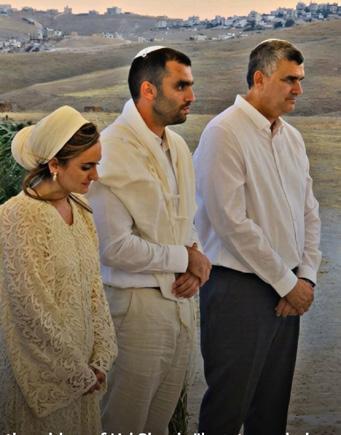
The wedding of Miriam Shani and Ofek Dotan took place at the Kedar sheep farm near Ma’ale Adumim last week. I met Miriam a short time after the tragic death of her husband, Captain Uri Shani, who fell on Simchat Torah. We will never know how many people’s lives were saved thanks to the resourcefulness and courage of Uri and his team, during valiant battles that lasted long hours.
Miriam came then with their baby, Ro’i, to an event held in Uri’s memory. “Ro’i is just starting to walk,” she told me. “When I see him falling and getting up, and then walking a few more steps and falling and getting up again, I think about myself. It’s a message for me and for all of us. We have to fall and get up, to carry on walking and growing.”
At the time, I shared her words,
which gave strength to many. Last week, I saw Miriam herself rise up. Little Ro’i has long since been walking, and he ran gleefully among the guests, while his mother built a new home in Israel with Ofek.
Anyone who was at that chuppah felt a special holiness that’s hard to put into words. Shuli Shani, Uri’s mother, welcomed the guests with hugs. “Since Simchat Torah I’ve been praying for this moment. I said to God: ‘We will cope, we will overcome, but Miriam — don’t leave her alone’.”
Uri’s father, Yehoshua Shani, heads the “Forum of Heroism,” which brings together hundreds of bereaved families. He has a great deal to say — about leadership, spirit and unity, but on this occasion his only words consisted of one of the Seven Blessings that the couple asked him to recite under the chuppah.
The Real School Year Begins Now
Mazal tov on the new school year which begins this week! According to Rabbi Yaakov Edelstein, the former chief rabbi of Ramat Hasharon, although summer vacation starts now, this is when kids’ education truly begins.
During the year, he explained, students are in a structured environment. There are classroom rules of conduct, bells and breaks between classes, and homework. But during summer vacation, students set their own schedule.
Rabbi Edelstein would tell young people that this is an opportunity to be who they really are particularly now, when there is no outside structure imposed on them, no teachers or exams. They can create their own daily schedule — when to go to sleep and when to wake up, when and how to spend time with parents, siblings, and friends. Most importantly, they can choose how to fill their extensive free time. This is not just a taste of what life is like as an adult, but an opportunity to get better acquainted with the person they are meant to be.
A Quiz That Went Beyond the Questions
“For the first time in Israel: a Bible Quiz for special education students. We are honored and delighted to invite you to share in this moving, first-of-its-kind event.”
That was the festive invitation to an event I was privileged to emcee last week at Kibbutz Ashdot Yaakov. For the past 18 years, the kibbutz has been home to the Life Skills College, founded by Yardena Amsalem for her son, Eran, who has special needs, and for other young people like him.
About a year ago, Yardena decided to do something revolutionary – to hold a Bible Quiz for young people with special needs. The enthusiasm was tremendous. AKIM centers, the network for students with disabilities, and other therapeutic frameworks joined the initiative and began preparing. And then the big day arrived.
Each institution sent a team of representatives. The event featured a roster of speakers as well as a distinguished panel of judges. And the questions were anything but easy!
I told the contestants that they may be called “people with disabilities,” but when it comes to the soul and its connection to Torah and to God, there is no such thing as disability. That connection rises above the limitations of the body.
Once the quiz began, they proved my point. Their command of the material, which was on sefer Bereshit, the Book of Genesis, was remarkable. They cited dates, years and facts, but also, the deeper messages and meaning.
One contestant stood out: Bat-
El Maimon from Kibbutz Mizra. She struggled to get the words out, fighting with real determination to give answer after answer.
At one point, I asked what is symbolized by the new name, Yisrael, given to our forefather Yaakov. Bat-El answered: “The ability to struggle and to withstand challenges.”
In that setting, her answer carried extraordinary meaning.
There was no single winner. At the end, everyone received the same certificate, and two participants went up to sing “Kanfei Ru’ach” — “Wings of Spirit.”
Rabbi Avraham Yitzchak Kook, who wrote the words to that song, set out on what became known as
the Journey to the Moshavot, visiting the kibbutzim and moshavim of northern Israel, which at the time were distant from Judaism, and often alienated from it.
About a hundred years later, in those very communities, a Bible Quiz like this was held, with contestants from Ashdot Yaakov and Mizra. And the contestants themselves sang Rabbi Kook’s words: “Human being, rise upward, rise; you have wings of spirit.”
Want to read more by Sivan Rahav Meir?
Google The Daily Thought or visit sivanrahavmeir.com
Translated by Yehoshua Siskin and Janine Muller Sherr
Landow Jewish Academy is a kiruv school dedicated to the belief that every Jewish child should have Elite Academics and a school that inspires a love for Judaism We are committed to ensuring that financial concerns, fears about academic quality, or inadequate facilities never hinder a Jewish neshema from receiving a Jewish education.
90% of LJA students previously attended public schools Why do they make the switch? At LJA, we provide an exceptional academic experience alongside a heartfelt love for Torah, Israel, and a deep pride in being Jewish.
K-5TH GRADE PASSING SCORES
AVERAGE OF READING AND MATH
Culture of Student Growth
We are committed to building students from their strengths and developing them through their weaknesses.
We discover the passions of our students and develop them as a partner Whether they are launching their own LLC, designing fashion lines, producing podcasts, creating original music or art, or participating in clubs, athletics, and extracurriculars, these experiences are not just an addition to their education they are the key element that enables our students to truly thrive
6TH GRADERS PASSING THE PERT COLLEGE ENTRANCE EXAM
Kiruv Mission:
Jewish Community Services of South Florida Announces New Board Chair and Board Leadership for
2026-2027
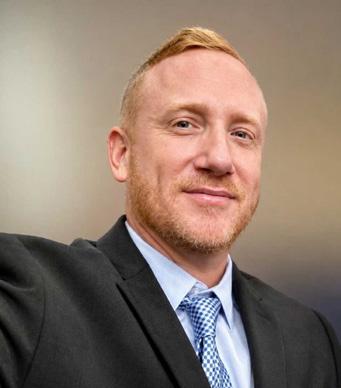
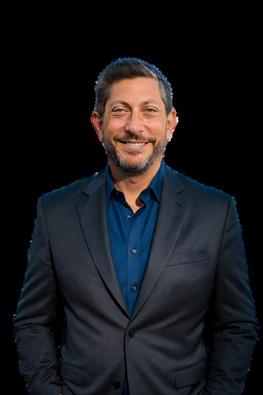
Mitchell Morris Elected Board Chair, Leading New Board of Directors and Executive Committee
MIAMI, Fla. June 24, 2026–Jewish Community Services of South Florida (JCS), one of Miami-Dade County’s longest-serving nonprofit social service agencies, today announced the appointment of Mitchell “Mitch” Morris as Chair of its Board of Directors, along with the appointment of its new Executive Committee, Board members, and AtLarge representatives.
Morris succeeds Vanessa Ressler, who will continue serving the organization as Immediate Past Chair. He brings more than eight years of service on the JCS Board of Directors and a deep commitment to the agency’s mission of improving the quality of life and self-sufficiency of the Jewish and broader communities throughout South Florida in accordance with Jewish values.
Throughout his tenure with JCS, Morris has demonstrated a steadfast commitment to bringing the JCS mission to life. He has served in several leadership positions, including Vice Chair, Treasurer, Audit Committee Chair, and as an active member of the Executive Committee.
“Mitch’s leadership, vision, and unwavering dedication to our mis-
sion make him the ideal thought partner in leading the Board during these challenging times for Jewish communal agencies and the non-profit sector,” said Miriam Singer, President and CEO of JCS. “His commitment to service and his extensive experience in finance and risk management will strengthen and amplify our impact.”
Professionally, Morris serves as Vice President of Internal Audit for Restaurant Brands International, one of the world’s largest quick-service restaurant companies, whose brands include Burger King, Tim Hortons, Popeyes, and Firehouse Subs. In this role, he oversees global audit and risk management initiatives. He previously held positions at EY and KPMG and brings decades of expertise in accounting, finance, auditing, and corporate governance.
“I am honored to serve as Board Chair of an organization that has continued to make such a profound impact on our community for more than 100 years,” said Morris. “JCS embodies the values of compassion, dignity, and responsibility for others. I look forward to working alongside our dedicated board members, staff, volunteers, and community partners to ensure we continue providing high-quality critical services to those who need them most.”
JCS also announced its 20262027 Executive Committee: Executive Committee
• Mitchell Morris, Board Chair
• Vanessa Ressler, Immediate Past Chair
• John Bussel, Vice Chair
• Michael Berman, Treasurer
• Yolanda Valencia, Secretary
At-Large Members
• Michele Burger
• Michael Levine
• Robert Newman
Ex-Officio Members
• Dr. Helen Sachs Chaset
• Jonathan Raiffe
In addition, JCS welcomed four new members to its Board of Directors:
• Ilene Kossman
• Bruce Libhaber
• Jill Swartz
COMMUNITY NEWS
• Dennis Kerbel
“Our volunteer leaders play a vital role in helping JCS fulfill its mission,” added Singer. “We are grateful for their service and look forward to the leadership and expertise they will bring as we continue strengthening programs that improve the lives of frail and vulnerable residents of all ages and backgrounds, based on Jewish values, across Miami-Dade County.”
For more than 106 years, JCS of South Florida has provided critical social services that help individuals and families achieve
greater stability, independence, and well-being. Through more than 25 programs and services, JCS supports older adults, Holocaust Survivors, children, families, and individuals facing mental health, food security, and other life challenges throughout the community. JCS also operates the 988 Suicide & Crisis Lifeline for Miami-Dade and Monroe counties, providing 24/7 confidential support, crisis intervention, and connection to essential behavioral health resources for individuals experiencing emotional distress, mental health crises, or thoughts of suicide.
For more information about JCS and its programs, visit www. jcsfl.org.
About Jewish Community Services of South Florida
Since 1920, Jewish Community Services of South Florida, based on Jewish values, has remained true to its mission in providing a resilient safety-net of health and social services through a broad array of programs that promote, health, safety, and self-sufficiency. By collaborating with community partners, funders, hundreds of volunteers, sister organizations and local leaders, our team continuously strengthens its engagement and impact. Our professional team continues to provide healing and hope in serving the many layered needs of residents in our diverse and vibrant community. JCS is here for you. Learn more at https://jcsfl.org/.
I Trust the Iranians
By Dr. Yeshayahu (Yishy) Bick
(Also published in Hebrew in ramatgannet.co.il, and in Givatayimnet.co.il newspaper in Israel)
I do not understand the transformation President Donald Trump is undergoing. Like many others, I assume that the eagerness of the President of the United States to reach an agreement with the Iranians stems from internal political pressures within the U.S.
Meanwhile, the Iranians are celebrating their “victory through survival,” convinced that they have defeated the greatest superpower in the world.
I trust the Iranians to blow up the agreement President Trump is offering them. Hubris causes people to lose rational judgment. The Iranians genuinely believe they have defeated the United States and the military armada it brought to the region.
President Trump once said that “the Iranians have never won a battle, but they have never lost a negotiation.” Facts prove he was right, even though he is now helping them be right.
Israel, having no choice, is recalculating its path after the diplomatic surprise that landed on it.
There is a sense of bitterness, but we must not forget Israel’s achievements:
Israel controls 70% of the Gaza Strip.
It occupies southern Lebanon and holds about 700 square kilometers, twice the size of Gaza.
Israel controls one-third of Syrian territory.
Israel dominates Iranian airspace through its air force and strikes factories and command
centers with daring Mossad operations.
In this recalculation, we are missing Ron Dermer, a gifted diplomat whose ties with the U.S. administration were invaluable. Sadly, an irresponsible mob that demonstrated outside his home and intimidated his wife and children pushed him to resign as Minister for Strategic Affairs and return to the U.S. Israel now feels his absence acutely.
Six months ago, Prime Minister Netanyahu announced a new policy of phasing out American aid. It is worth noting that all U.S. aid was used to purchase American military equipment, meaning the money ultimately returned to the American economy. I admit that I did not fully understand this move at the time. It now appears Netanyahu foresaw the future. He understands that Israel can-
not remain dependent on American goodwill or pray that the U.S. does not impose an embargo. It is clear to him that Israel must develop weapons industries capable of supplying all its needs without relying on the Americans.
Israel is a technological powerhouse. Fifty years ago, Israel began building fighter jets, the Kfir, the Lavi, and the Nesher. Production was halted due to American pressure, fearing Israeli competition. In my view, Israel must return to building fighter jets, leveraging the vast knowledge gained from upgrading the F35 and other aircraft. (In my opinion, these jets should be capable of vertical takeoff to prevent a scenario in which air force bases are attacked and runways disabled.) Israel produces the Merkava tank, one of the best in the world. It produces multilayered missiledefense systems
and active protection systems like Trophy for tanks.
In this recalculation, Israel still does not manufacture all types of munitions needed in wartime, forcing it to purchase them urgently during conflict. This is a vulnerability that cannot be ignored.
During the negotiations, “mediators” appear, nuclear Pakistan, criminal Qatar, and behind the scenes, China advising the negotiating teams. Qatar proposes “committees to reduce friction.” It is obvious these committees will direct their restrictions solely at the United States.
There are conflicting forces within the U.S. shaping policy. Unfortunately, Kushner and Witkoff conduct billiondollar business deals with Qatar. Qatar, in its wellknown fashion, buys loyalty from government officials with money and favors.
Vice President Vance promotes the idea that “we can give the Iranians money, and they will use it to buy wheat from American farmers.” And what will the Iranians do with the surplus money? Buy weapons and fund their proxies.
Senator Rubio is leading the negotiations between Lebanon and Israel. It is clear that not only Israel is being betrayed, but also Lebanon, which began taking steps toward peace with Israel, believing this was Trump’s desire. They believed Trump would remain consistent in his intention to destroy Hezbollah and free Lebanon from Iran’s grip.
I suspect there is a fierce struggle between Vance and Rubio, both contenders for the next U.S. presidency. Each is trying to craft a policy that will demonstrate his diplomatic capability. Each is pulling Trump in a different direction, and at the moment, Vance has the upper hand.
I also suspect this is an interim period in which President Trump wants to reach the U.S. midterm elections successfully. He fears that if the Democrats exploit the war and gain strength in the elections, they may demand his removal for dragging the U.S. into conflict.
Here I must pause and warn about the danger posed by Qatar. I have dedicated many articles to the need to dismantle the Qatari regime, a regime that meddles
in every global conflict, funds proPalestinian demonstrations, and injects Islamism into American universities. The immediate solution is to topple the Qatari regime and install an opposition that is not toxic to the world.
In conclusion: In these negotiations, there is only “take” and no “give.” The U.S. allows Iran to export $110 billion worth of oil annually, and the U.S. receives nothing in return.
The Iranians celebrate their “victory” in the war. They mock Trump. They continue marching in the streets, cursing the “Great Satan” (the U.S.) and the “Little Satan” (Israel).
The Iranians already have their eyes on conquering the UAE across the Strait of Hormuz, and perhaps Oman as well.
Their demands keep growing until they eventually take one step too far, and everything collapses on their heads.
And that is why I trust the Iranians.
Dr. Yeshayahu (Yishy) Bick yishybick@gmail. com Jun 22/2026
Support Available for Those Affected by the Venezuela Earthquakes
As Miami-Dade is home to one of the nation’s largest Venezuelan communities, many local residents are experiencing fear, uncertainty, grief, and anxiety following Wednesday’s devastating 7.2 and 7.5 magnitude earthquakes in Venezuela.
Jewish Community Services of South Florida (JCS) wants to ensure our community knows that help is available.
We would greatly appreciate your assistance in sharing these free local resources with your audience for anyone who may be struggling emotionally or in crisis as they await news from loved ones or cope with the tragedy’s impact.
Free Local Support Available
988 Suicide & Crisis Lifeline
Available 24 hours a day, 7 days a week, the JCS-operated 988 Lifeline provides free, confidential emotional support, crisis intervention, information, referrals, and connections to mental health and trauma counseling services. Dial 988 to speak with a trained crisis counselor.
JCS Access
Individuals seeking ongoing mental health counseling or behavioral health services can contact JCS Access at 305-576-6550, Monday through Friday from 8 a.m. to 5 p.m., to be connected with appropriate services.
While many residents are focused on loved ones overseas, it is equally important to care for the emotional well-being of those here at home. Even individuals who are not directly affected may experience heightened stress, anxiety, or trauma from events unfolding abroad.
If you are interested, we would be happy to connect you with a JCS expert to discuss the emotional impact disasters can have on local communities, signs that someone may need support, and available resources for Miami-Dade residents.
Thank you for helping us ensure our community knows they are not alone during this difficult time.
Core Qualities of Effective School Leadership: Are They All Achievable?
Highly effective schools, are almost always led and inspired by highly effective leaders; and, ineffective schools are mostly directed by those who are either ineffective or mediocre.
I use the term “almost” or “mostly” in both definitions in light of a variety of extraordinary circumstances.
As we know, there are literally thousands of books, articles and posts written about “leadership” – what it is; what it’s not, how it is developed, identified and achieved; and when it’s needed and consequences for when it’s missing. To be sure, the topic is probably the most written or talked about characteristic in industry, business, and education and in virtually every aspect of society. It is deeply embedded in our human condition dating back to time immemorial.
According to most acceptable definitions, “leadership” is the ability of an individual or a group to influence, inspire and guide others toward a shared goal. As such, in order to be a leader, one must have followership.
An example of true leadership is exemplified by descriptions of Moshe Rabeinu. Here we see a variety of characteristics and core attributes which truly define leadership and how one person, against all odds was chosen to successfully influence and lead the bnai yisrael out of mitzrayim to Eretz Yisrael.
Several of his core leadership
By Dr. Chaim Botwinick
attributes or characteristics included, but were not limited to: having a clear sense of purpose and direction; exhibiting empathy for the people he led; consistency, resilience and perseverance, having a keen sense of judgment, an unwavering sense of commitment, vision driven and goal oriented.
Yes there were times when Moshe was challenged by his followers in unimaginable ways. But he nevertheless was committed to staying the course, albeit with tremendous difficulty.
Unfortunately, towards the end of his life, he was forbidden to enter eretz yisrael. Indeed a very heavy price to pay for someone who spent his entire adult life focused on leading bnai yisrael.
So how is this aspect of leadership and its core values relevant our topic of educational leadership or to persons who are hired and charged with leading our community and its schools?
Characteristics of Effective School Leadership
Not unlike managing or leading a major business or nonprofit organization, leading a Jewish day school or yeshiva today requires the same basic fundamental skills, talent and attributes. But in addition, it also requires a sense of mission, and an unswerving passion and commitment to help guide and direct people on a particular path or in a specific direction which is anchored in Jewish standards and values
Having said that, it is imperative that our Jewish day schools and yeshivot engage senior educational leaders who not only possess these attributes but who also exhibit a sense of moral transparency and clarity. This is particularly the case when leading a Jewish day school or yeshiva which is guided by core Jewish values.
This is not to suggest that those who direct or lead our day schools or yeshivot possess the same leadership attributes as Moshe. But I am strongly suggesting that the fundamental values, beliefs and leadership skills of Moshe are those that should be emulated and modeled by leaders of our institutions, to the best of their ability.
As we know, Moshe was selected and ordained through the will of HaShem. Nevertheless many of his leadership skills, characteristics, attributes and traits can be emulated by all those who are charged with communal leadership roles and responsibilities.
In many of my senior executive leadership training sessions, I
COMMUNITY NEWS
differentiate between the characteristics of an effective leader vs. those of an effective manager.
My analogy, although somewhat simplistic is that an effective manager ensures that a train is running on schedule; but, an effective leader ensures that the train is moving in the right direction.
This analogy is one which is critical when describing the core qualities of school leaders.
There are many heads of school and principals who are excellent managers. They ensure that class schedules and report cards are distributed and issued in a timely manner, that all faculty submit lesson plans on time, the curricula being taught is age-appropriate content-rich, all faculty are observed and evaluated consistently throughout the year and that the school’s physical plant and image is impeccable.
These management responsibilities in addition to a continued requirement to communicate with parents at regularly scheduled times during the year are essential, but, they are not necessarily a reflection of a principal’s or head of school’s leadership.
Leaders ensure high quality. They motivate faculty to engage in their professional development and ensure that the curriculum being taught is rich and comprised of a confluence of well-developed instructional methodologies. They also ensure that grades are meaningful to parents and to students. Finally, they are continuously preoccupied with the quality of chinuch and how it’s transmitted to students as opposed to quantity.
It is important to note that when
directing a school, it is imperative that the head of school and principal manage and lead simultaneously. These two functions are critical. And, they more often than not become interdependent. Nevertheless, all management activity with zero leadership skills, and all leadership actions with no managerial know how leads to an imbalance of school leadership thereby effecting the quality and culture of the school.
The Torah and Talmud prioritizes responsibility, communal well-being and the leadership of influence over the leadership of power. It also prioritizes the importance of humility, modesty, middot tovot and ultimately accountability.
According to Rabbi Dr. Jonathan Saks, z”l, there are seven principles of leadership.
They include:
• leadership begins with taking responsibility;
• no one can lead alone;
• leadership is about the future;
• leaders always learn;
• leadership means believing in the people you lead;
• leadership involves having a sense of timing and pace; and
• leadership can be stressful
and emotionally draining.
Not all of these core leadership values, characteristics or principles come naturally or can be learned. This reality therefore begs the question…is it truly possible to train a person to become a leader or are there a specific set of characteristics which are innate or inherited, such as empathy, compassion and understanding.
Unlike decision-making, best practice and policy setting, these “soft leadership skills” are more difficult or challenging to develop or replicate.
Nevertheless, the opinions by many vary as to which skills, attributes or characteristics are in fact learned, inherited.
This reality sets in motion a host of challenges which our schools must face when recruiting and engaging a leader to “lead” the school. This is especially critical when schools conduct searches for either a principal or head of school or anyone in a senior school leadership capacity.
According to the Center for Creative Leadership, there are 12 characteristics of an effective leader.
They are:
• self-awareness
• respect
• compassion
• vision
• communication
• learning agility
• collaboration
• influence
• integrity
• courage
• gratitude
• resilience
It is virtually impossible for a school to identity a person who possess each of these characteristics. Nevertheless, it is essential that a school endeavor to identify as many of these attributes as possible.
In addition, each school must prioritize for itself those leadership characteristic or modalities which are bested suited for the school and most critical or essen-
tial for the school’s current and future vitality, viability, direction and effectiveness.
At the end of the day, all of our Jewish day schools and yeshivot require stellar leadership. The challenge must remain, what does that leadership look like, how is it identified and respected, and above all, is it sustainable through the test of time.
There are no shortcuts or compromises. We owe it to our students, our parents, teachers and community.
A true leader is one who knows the way, goes the way, and shows the way.……John Maxwell
ABOUT THE AUTHOR
Dr. Chaim Botwinick is a senior executive coach and an organizational consultant. He served as president and CEO of the central agency for Jewish education in Baltimore and in Miami; in addition to head of school and principal for several Jewish day schools and yeshivot. As an Influencer, he has published and lectured extensively on topics relating to education, resource development, strategic planning and leadership development. He is co-founder of LEV Consulting Associates and producer/host of the Chinuch Horizons podcast series. Dr. Botwinick is Author of “Think Excellence: Harnessing Your Power to Succeed Beyond Greatness”, Brown Books, 2011
Discipline & Freedom.
By Menachem Dahan, Psychotherapist - Bay Harbor Islands
There is a version of freedom that most people instinctively reach for. It is the freedom from constraint, from demand, from the weight of what life asks. The idea is that to be truly free is to be unencumbered, to move through the world without friction. But this version of freedom, appealing as it is, tends to hollow out over time. The person who chases it often finds themselves less anchored, not more alive.
A different understanding of freedom holds that the ability to live authentically, to act from one’s own center rather than be swept along by circumstance, requires something that looks almost like its opposite. It requires discipline. Not discipline in the punishing sense, not rigidity or self-denial for its own sake, but the practiced ability to hold oneself within a certain framework when life conspires to pull a person in every direction at once.
The case for this kind of discipline becomes clearer when one looks at what actually limits a person’s freedom. It is rarely the absence of options. More often, it is the absence of a stable internal ground from which to choose. Emotions spike. Circumstances press. A moment arrives with its own force and agenda, and before a person has fully registered what is happening, they are already responding, already moving in a direction that was never quite theirs. The discipline being described here is the practice of returning. Of finding, again and
again, the thread back to who one actually is beneath the noise of experience.
What follows are four such disciplines. Not prescriptions, but observations about the internal work that tends to make a person more capable of living from themselves.
Tolerance for Discomfort.
Among all the forces that determine what a person does and does not do, the desire to avoid discomfort is perhaps the most powerful, in part because it operates without announcing itself. A sensation arises, emotional or physical, and the body orients itself almost immediately toward relief. This is not a weakness. It is biology. But a life organized primarily around the avoidance of
discomfort is a life that becomes increasingly narrow. The range of what a person can do contracts to whatever falls within the circle of what does not hurt.
Pain tolerance, as a discipline, is not about suppression. It is not about pretending a sensation is not there or performing strength by ignoring what is real. It is something more honest than that. It is the practice of sitting with an impulse, a craving, a discomfort, or a fear without immediately acting on it. The space between the sensation and the response is where a person’s freedom lives. Most people spend very little time there. The discipline is to widen that space, deliberately and repeatedly, until it becomes habitable.
Over time, the person who develops this tolerance finds that life opens. Not because difficulty disappears, but because difficulty no longer fully dictates the terms. The moment still has its force. What shifts is that the person begins to have force too. And from that more balanced ground, what one does in a given moment begins to reflect who one actually is rather than what one is trying to escape.
Commitment to the Present
Every moment arrives already accompanied. A person steps into an experience carrying the weight of what they expected it to be, what it reminds them of, and and what it might mean for something further down the
road. These layers are not always wrong, but they are almost always louder than they should be. They position themselves between a person and what is actually in front of them, and without realizing it, a person ends up responding to the commentary rather than to the thing itself.
The discipline here is not about achieving some clear, meditative state. It is something more practical than that. It is the ongoing effort to recognize a narrative for what it is: a side voice. Not the moment, but a story about the moment. Not the person in front of them, but an interpretation of the person in front of them shaped by history, expectation, and anxiety. The moment life is actually happening rarely announces itself loudly. It tends to exist just underneath the noise of everything a person is projecting onto it.
When a person develops the habit of catching that distinction, something becomes available to them that was not before. They begin to respond to what is real rather than to what they feared or anticipated. Reactions become less automatic, less shaped by the accumulated weight of prior experience, and more genuinely connected to the present situation. This is a significant form of freedom, even if it rarely announces itself as such. Not freedom from thought or feeling, but freedom from the assumption that the narrative running in the background is the same thing
as the life unfolding in front of them.
Embracing Responsibility
Much of what limits a person’s sense of agency can be traced back to the avoidance of responsibility. This is understandable. Responsibility is a heavy thing. It means that what happens in a life is, in meaningful ways, connected to what a person does and does not do. That the outcomes are not entirely someone else’s problem. For many people, this recognition arrives relatively late, and even once it arrives, it can take years to feel natural rather than oppressive.
But the avoidance of responsibility, however instinctive, carries a cost that is easy to miss. When a person deflects ownership of their choices, they are also deflecting their own presence in their life. Life becomes something that is happening, a series of circumstances and outcomes, rather than something being built. There is a subtle but significant difference in how it feels to live that way. A kind of flatness, as though the stakes have been lowered to the point where nothing quite lands.
Embracing responsibility does not mean taking blame for everything or living under the pressure of impossible standards. It means recognizing that showing up fully, which is to say, showing up as someone who has a stake in what happens, requires a willingness to be the one who made
a choice. This is where freedom and responsibility turn out to be the same thing. The person who owns their choices is also the person who is most capable of making them deliberately. The weight and the freedom arrive together.
Knowing the Internal Landscape
Every person carries a set of patterns, thresholds, and sensitivities that are largely invisible until a moment arrives that activates them. A particular kind of pressure, a certain tone in someone’s voice, an unexpected disruption to a plan, and suddenly what the person does next has very little to do with what they actually want. Something older and more reflexive has taken over. The response that follows belongs less to the person as they understand themselves and more to a set of grooves worn in over time, often before they had the language to name what was happening.
The discipline of knowing one’s internal landscape is the ongoing practice of mapping this territory. It means paying attention not only to what one does but also to what preceded it. What kind of moment, internally or externally, tends to loosen a person’s grip on their own center? Where the thresholds are. What tends to trigger contraction, reactivity, or the impulse to disappear?
This is not an analysis for its own sake. As a person becomes more familiar with their own
patterns, something shifts. The patterns do not disappear entirely, but they become more visible, and visibility creates the possibility of choice. When a person recognizes, in real time, that they are moving toward a familiar kind of overwhelm, they have an opportunity that was not available before. They can pause. They can name what is happening. They can make a decision that reflects who they are rather than simply what the moment activates. This is perhaps the deepest form of the discipline being described here: not the suppression of the inner life, but an honest and ongoing acquaintance with it. Because a
person cannot be free in relation to what they cannot see.
None of this is simple work. The disciplines described above are not techniques to be applied and mastered in sequence. They are more like orientations, directions a person can face repeatedly, knowing they will be turned away again and again and will need to return. The honesty required, the willingness to sit with discomfort, to be present, to own one’s life, to know oneself clearly, can feel like a great deal to ask.
But the alternative is its own kind of difficulty. A life lived primarily in reaction, in avoidance, in the comfortable drift of letting
moments and circumstances be the ones in charge, is not easier in any meaningful sense. It is simply a different kind of hard, one that tends to leave a person with the feeling that their life is somehow happening elsewhere. That the most essential version of themselves is perpetually waiting for conditions that never quite arrive.
The discipline is what brings a person back to themselves. And from that place, the life they are living is actually theirs.
Menachem Dahan is a psychotherapist in South Florida. mdahanpsychotherapy.com
Nefesh B’Nefesh’s Shuk Olim Returns to Tel Aviv, Featuring Over 50 Olim-Owned Businesses
Thousands Gather to Support Olim Entrepreneurs During Tel Aviv’s Annual Layla Lavan Celebration
TEL AVIV (June 28, 2026):
Over 6,000 visitors gathered in the heart of Tel Aviv at Kikar Givon for Nefesh B’Nefesh’s annual Shuk Olim, a vibrant marketplace featuring over 50 Olim-owned businesses from across Israel. Held as part of Layla Lavan (White Night), Tel Aviv’s annual city-wide cultural celebration, the event showcased the creativity, innovation, and entrepreneurial spirit of Israel’s immigrant community.
Hosted by Nefesh B’Nefesh, in partnership with Israel’s Ministry of Aliyah and Integration, The Jewish Agency for Israel, Keren Kayemeth LeIsrael, and Jewish National Fund-USA, together with The Tel Aviv-Yafo Municipality’s Aliyah Promotion Authority and Business Development Authority, the event brought together Olim entrepreneurs from across Israel, offering a unique platform for small business owners to showcase their work while connecting with thousands of residents, tourists, and fellow Olim.
Visitors enjoyed a diverse selection of products, including handcrafted jewelry, fashion, home décor, artwork, wellness products, and more, while meeting the entrepreneurs behind the brands and learning about their unique Aliyah journeys.
“Every business at Shuk Olim
represents much more than a product or service, it represents someone who took the leap to build a life in Israel and is now contributing to the country in a meaningful way,” said Co-Founder and Executive Director of Nefesh B’Nefesh, Rabbi Yehoshua Fass.
“These events give Olim who are small business owners, the opportunity to share their stories, connect with the wider community, and showcase what they have built. Seeing so many people come out to support them during Layla Lavan was an incredible reminder of the important role Olim continue to play in shaping Israeli society and economy.”
The marketplace featured businesses founded by Olim from around the world who have transformed their passions into thriving Israeli enterprises. Among them were Julia Levine, who moved from Minneapolis in 2020
and handcrafts unique silver jewelry and embroidered accessories through her business, Sew Cute; Maria Margolev, who made Aliyah from Moscow in 2023 and creates original paintings inspired by her connection to Israel; and Salomé Maarek, originally from Paris, whose jewelry brand transforms stones collected throughout Israel into wearable works of art. Visitors also met Rose Kahn, a New York native who founded Brooklyn Sisters, a Tel Aviv vintage fashion boutique inspired by both her Brooklyn roots and Israeli culture; and Michal Goldschmidt, who made Aliyah from London and opened Bookhaus, an English-language bookstore in Tel Aviv. Together, these entrepreneurs demonstrate how Olim continue to contribute to Israel’s growth and cultural diversity while turning their passions into thriving enterprises.
COMMUNITY NEWS
Throughout the evening, visitors had the opportunity not only to shop local and support small businesses, but also to meet the people behind them. Shuk Olim in Tel Aviv brought together these small business owners and consumers in a way that celebrated both the Aliyah journey and the vibrant businesses that have grown from it.
Photo Credit: Shai Getzoff
For Media Contact: David Weissmann,davidw@gova10.com
About Nefesh B’Nefesh (www.nbn.org.il)
Founded in 2002, Nefesh B’Nefesh is dedicated to addressing the evolving national needs of the State of Israel through four key pillars: Aliyah, National Service, National Development, and Zionist Education. Each of these pillars is strengthened by expanded services designed to benefit the broader community. In partnership with Israel’s Ministry of Aliyah and Integration, The Jewish Agency for Israel, Keren Kayemeth LeIsrael, and JNFUSA, Nefesh B’Nefesh’s comprehensive support and social services have successfully empowered nearly 100,000 North American Olim to integrate into Israeli society, achieving an impressive 90% retention rate. This ensures their long-term commitment to building meaningful lives in Israel and contributing to the nation’s growth.
Sunday to Thursday: 12pm - 10pm Friday: 11am - 3:30pm OPENING HOURS Scan the code to order!
Operation Inspiration: Not For Nothing
When you do someone a favor, they often say “thank you.” (Hopefully, at least, they say “Thank You”!) How do you respond? The simplest response is, “You’re welcome.” When I once did something for R’ Mordecai Gifter z”l, and he said Thank You, I replied, “My pleasure.” He then told me that was a very American response. I’m not sure exactly why, but I’ll take his word for it.
In Yiddish, when someone thanks you, the response is, “nit doh farvoss,” basically meaning, “There is nothing to thank me for.” The concept there is that the little thing I did for you is not worth mentioning. It’s barely a thing. It appears to me, though, that we should not underestimate these things and consider them as “nothing.” That’s not to say we should be demanding great thanks from people. We can still be magnanimous and not need their expression of indebtedness, but we should not think nothing of these acts because they are actually quite powerful.
When you do something for someone else, even if it’s not a huge effort, you’ve taken note of another person. You’ve seen them, and acknowledged their existence. That’s no small thing. When I walk near the car, and it senses my presence and unlocks the doors, I feel like it’s greeting me. It isn’t, but it still feels good that your presence makes a difference.
Doing a favor for someone means you know they exist and you’ve asked yourself what you
By Rabbi Jonathan Gewirtz
can do for them. That’s big. It’s big because of how it makes them feel special, and it’s big because you’ve refined yourself into a person who is considerate of others and thinks about them for them, not for what they can do for you.
And you never know how grateful the person will be. I had a meeting. When I called an attorney to let her know when it would be, she remarked offhandedly, “Oh, that’s my birthday!” I made sure to stop
at the dollar store the afternoon of the meeting and pick up two happy birthday balloons, which I tied to her chair. When she came into the meeting, she was floored! She broke out in a huge smile, touched that anyone would think of it.
As this was a late evening meeting, when we finished, and we were all walking back to our cars, I asked her how she had celebrated that day. Still smiling, she replied, “Basically, these balloons were the only thing, I think.” I thought I was making a small gesture, a nothing, not worthy of mention, but in truth, this was a huge deal to her. Can you imagine that this woman (who is an elderly widow, I believe) would have had nothing to mark the passing of another year if I hadn’t spent $2 on balloons?
In Chazal there is an expression, “Derech arukha she’hee ketzara, a longer path which is a shortcut.” This was a small thing,
which was truly a big thing. It wasn’t hard for me, but meant the world to her.
Another time I was leaving the drug store. In the parking lot, I saw a young man of perhaps eighteen or nineteen years of age, standing next to a convertible, wearing his Tefillen. It seemed a bit odd at that time of day, but I’m not one to judge. Then I saw him attempting to balance his phone on the car’s hood. He seemed to be struggling and I finally realized what was happening. I backed up, and asked, “Would you like me to help you with your Telfie?” [Slang, contraction of Tefillen and Selfie, indicating pictures people take of themselves wearing Tefillen.] He was very appreciative. “I just got new Tefillen,” he said. I snapped a few photos as he posed next to the car with his hand over his eyes and touching his Tefillen. He thanked me, hugged me, and I knew he was grateful that someone had “seen” him. I didn’t ask why he was doing this, or what the pictures were for. I didn’t comment on his new Tefillen or the time and place. I just saw someone who could use a hand, and I helped out. It was clear he felt cared for, and that’s huge.
I train myself to see things, and people figure prominently in that. In a supermarket, I had a wagon with a few items. I saw a pregnant woman holding probably a few more items that she’d intended to purchase, and offered her my cart. “I can carry my items to the checkout,” I said. “It looks like you need this more than I do.” She was very appreciative, and seemed relieved as she put her items into the basket. I could have looked at her and said, “She should have taken a cart,” but I instead chose to say, “She should have taken a cart - so let me give her mine.”
We are able to see people’s greatness in the little things, but often, those little things are based on seeing the greatness in others. And that’s not nothing.
2026 – All Rights Reserved
Did you enjoy this column? Feedback is welcome and appreciated. E-mail info@JewishSpeechWriter.com to share your thoughts. You never know when you may be the lamp that enlightens someone else.
When Every Child Is Truly Seen
It usually begins quietly.
A child who once bounded out the door each morning now lingers a little longer before getting dressed. Homework that used to take twenty minutes stretches into an evening of frustration. The sparkle in his eyes begins to fade. He insists everything is “fine,” but his parents know otherwise.
They know their son is bright. They know he is kind. They know he is capable. Yet somewhere along the way, in the rush of crowded classrooms and busy schedules, he has begun to feel invisible.
For some children, the challenge isn’t a lack of ability. It’s that the environment around them has become overwhelming. Large classes, constant stimulation, and the pressure to keep up can quietly erode a child’s confidence. Anxiety begins to replace curiosity. A love of learning gives way to a fear of making mistakes.
Parents often spend sleepless nights asking themselves the same question:
“What does my child need in order to thrive?”
For many families, the answer has been Yeshivas Ufaratzta.
Founded on the belief that every child deserves to be seen, understood, and cherished, Yeshivas Ufaratzta offers something increasingly rare: a warm, child-centered environment where students are known not just by name, but by heart. Small class sizes allow teachers to meet each child where they are, helping them grow academically while nurturing their emotional well-being and love of
Torah, mitzvos, and Yiddishkeit. One family’s journey beautifully illustrates the difference that kind of environment can make.
After years in public school, Yosef’s parents decided they wanted him to receive a Jewish education. Their hopes were dashed when a new school they planned to enroll him in never opened. As they searched for alternatives, they en-
countered one disappointment after another.
“Yosef was rejected from a lot of schools because he was too far behind and too religious,” his mother recalls. For a time, he was homeschooled while the family continued searching for a school that would truly welcome him.
Then they found Yeshivas Ufaratzta.
After meeting with the school’s founders, Rabbi Levi and Mrs. Channie Kurinsky, everything changed.
“They opened their hands and hearts to him,” his mother says. “Within a month he was davening from a siddur, wanting to make Kiddush Friday nights, and so on.”
Today, Yosef has celebrated his Bar Mitzvah. Looking back on the journey, his mother reflects, “Without Levi and Channie, I do not know where Yosef would be. From the bottom of our hearts we would love to say a huge thank you to Levi and Channie Kurinsky for these last two years that you opened your doors and hearts to a boy who just wanted to fit in and belong to the beautiful family of Ufaratzta Academy.”
Another student, Menachem, came to Yeshivas Ufaratzta with a very different story—but arrived at the same destination.
Menachem is an exceptionally intelligent, thoughtful, and capable young boy. In a larger school setting, however, the constant activity, larger classes, and social pressures left him struggling with anxiety. Although he had every ability to succeed academically, anxiety often prevented him from demonstrating what he knew. School became exhausting instead of exciting, and his family watched as his confidence slowly diminished.
They knew the problem wasn’t his potential. He simply needed a place where he felt emotionally safe. At Yeshivas Ufaratzta, Menachem found that safety.
In small classes surrounded by caring teachers and kind classmates, he no longer felt like just another student. He felt known. He felt understood. As trust replaced anxiety, his confidence began to grow. He started participating more freely, developed meaningful friendships, and rediscovered the joy of learning. The same child who once felt overwhelmed now comes to school eager for the day ahead.
His parents share: “We are deeply grateful for Yeshiva Ufaratzta School. Baruch Hashem, our son is thriving in its warm, nurturing environment with dedicated teachers and kind students. He comes home happy every day, and the small class sizes ensure personalized care. The support from his principals and teachers is truly heartwarming, and the home cooked meals are a wonderful bonus. We feel so blessed to be part of this amazing school.”
While every child’s journey is unique, these stories share a common thread. When children feel safe, seen, and genuinely cared for, remarkable things happen. Confidence replaces fear. Curiosity overcomes anxiety.
5250Town Center Circle Suite 143
Premium Kosher Steakhouse serving top\-quality meats, unique chef\-crafted dishes, and a rich, diverse menu\.
Experience exceptional taste, quality, and service at Mamush Prime
Mamush Prime Kosher Grill
Kosher Grill.
COMMUNITY NEWS
Learning becomes joyful again. Students discover not only what they can achieve, but who they are.
Our Sages teach that every child is an olam malei—an entire world. True chinuch begins when we recognize that no two children are exactly alike, and that each one deserves to be educated according to his or her unique strengths, needs, and potential. The Lubavitcher Rebbe often emphasized that successful education is not achieved by treating every child the same, but by recognizing the unique mission and potential within each precious neshamah and educating them accordingly.
created with unique gifts and an irreplaceable contribution to make to Klal Yisrael. Our mission is not simply to prepare children for the next grade, but to help them discover a lifelong love of Torah, confidence in themselves, and the
knowledge that they are deeply valued.
Because when a child knows they belong, they begin to believe in themselves. And once a child believes in themselves, there is no limit to what they can become.
Hours
S: 10AM - 4PM
M-TH: 9:30AM - 7PM
F: 9:30AM - 2PM
At JNS International Policy Conference, Regavim Exposes False Reporting Behind the “Settler Violence” Narrative
Regavim International Director Naomi Kahn: “It is, in short, a modern blood libel.”
June 24, 2026 — At the JNS International Policy Conference this week, Naomi Kahn, director of Regavim’s International Division, participated in a panel discussion on the situation in Judea and Samaria.
The region, often referred to internationally as the West Bank, has received growing media attention amid reports of increasing violence by residents of Jewish communities against Palestinians. Responding to a question from the moderator during a panel discussion on Monday, June 22, Kahn challenged what she described as a deeply flawed narrative.
Speaking before a packed audience of hundreds of attendees, Kahn explained that Regavim had spent more than a year researching and analyzing the raw data that forms the basis of the international “settler violence” narrative. The research focused on data used by the United Nations Office for the Coordination of Humani-
tarian Affairs (OCHA), including information that has served as the basis for sanctions imposed by various governments against Israeli individuals, civil society organizations, military units, and organizations including Regavim.
“What we found was that the data was provided in a very, very particular fashion … and it is, in short, a modern blood libel,” Kahn stressed. “Ninety-five percent or more of the incidents that are reported as settler violence by the United Nations itself either didn’t involve settlers, didn’t involve violence, or didn’t happen in Judea and Samaria.”
As one example, Kahn noted that every time a non-Muslim visits the Temple Mount on a peaceful and legal visit, the United Nations categorizes the event as “storming Al-Aqsa” and includes it in its database of settler violence. As another example, she explained that when the State of Israel paves a road in Judea and Samaria for use by all residents, regardless of nationality, the action is recorded as trespass and expropriation.
“This is very clear manipulation of events, and the United Nations
will not tell you what they’re really reporting on,” Kahn said. “We have testimony from the head of the Judea and Samaria Division of the Israel National Police that the vast majority of cases that are reported actually never happened to begin with, but they are reported as cases of settler violence in order to keep the entire system busy. This is a system that’s been perfected by the Palestinian Authority over years.”
The findings and supporting evidence are detailed in Regavim’s report, False Flags and Real Agendas: ‘Settler Violence,’ a Modern-Day Blood Libel - https:// www.regavim.org/wp-content/ uploads/2025/06/RegavimSilufEng0406digital.pdf.
The JNS International Policy Conference ran from Sunday, June 21 through Tuesday, June 23, 2026, and featured senior policymakers, diplomats, journalists, academics, and security experts from Israel and abroad. Kahn was invited by JNS to participate as a featured speaker and presented Regavim’s findings on the conference stage.
Yoni Netanyahu: A Hero Before Entebbe
By Moshe Phillips
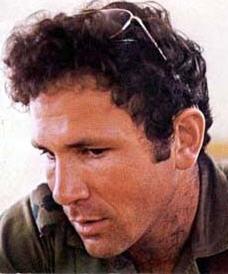
July 1976 was supposed to belong to celebration. America marked 200 years of independence beneath exploding fireworks and waving flags. But while the world watched the Bicentennial festivities, Israeli commandos were preparing for a midnight raid at Entebbe Airport in Uganda — a hostage rescue mission of impossible odds led by Yonatan “Yoni” Netanyahu, who would not survive the rescue he made legendary.
Jonathan Netanyahu, the famed hero of the Entebbe operation and older brother of Prime Minister Benjamin Netanyahu, was killed in action 50 years ago. Jonathan (Yonatan) is usually remembered as Yoni. He died fighting anti-Israel terrorists on July 4, 1976, just as the world’s oldest democracy celebrated its bicentennial. Yoni died in a heroic effort that successfully freed over a hundred hijacked Jewish hostages in Entebbe, Uganda. America’s commemoration of liberty shared the world’s headlines with Israel’s celebration of the liberation of the hostages.
The daring of Israel’s commandos captured the world’s imagination like no other anti-terrorist action in history. While many books and movies recall the Entebbe rescue, there’s much more to the story.
It is not widely known that Yoni Netanyahu was a hero long before he commanded the Entebbe operation. Some of his early heroic efforts are hinted at in the remarkable posthumously published book “Self-Portrait of a Hero: From the Letters of Jonathan Netanyahu, 1963-1976.” Netanyahu played a
key role in many other crucial Israeli security operations, exhibiting courage and valor in the most dangerous of circumstances. He was a living example to the world’s statesmen that terrorism can be beaten—if the nations of the world have the will to fight back.
Yoni was born in New York into a family of dedicated Jabotinsky Zionists who greeted the news of the establishment of Israel by packing up and moving there in 1948. He returned to the U.S. in 1963 where his father, a distinguished Jewish Studies scholar, Benzion Netanyahu (1910-2012), accepted a professorship in Philadelphia.
After graduating high school in a Philadelphia suburb in 1964, Yoni returned to Israel to join the army, and it was not long before he had worked his way up to the leadership of an elite paratrooper unit. The mid-1960s was a time of growing danger for Israel. The Palestine Liberation Organization, established in 1964 for the purpose of
“liberating” all of “Palestine” from the Israelis had begun mounting terrorist attacks across Israel’s borders—and those were precarious borders indeed. In those days, before the 1967 war, Israel was just 9 miles wide at its strategic midsection, and all of Israel’s major cities were within striking distance of Yasser Arafat’s terrorists.
Yoni did not fear the possibility of losing his life in the war to protect Israel from its enemies. “Death does not frighten me,” he wrote to a friend. “I do not fear it because I attribute little to a life without purpose. And if it is necessary for me to lay down my life to attain an important goal, I will do so willingly.”
The path that led to Yoni’s renown within Israel’s commando ranks may have begun in 1971 in the context of battling the Black September Organization, founded by Arafat’s Fatah faction. One of Black September’s first attacks was the assassination of Jordan’s Prime Minister Wasfi Tal. One of the assassins earned a permanent place in the history of savagery by drinking their victim’s blood in full view of photographers.
In 1972, a Black September unit carried out the murder of 11 Israeli athletes at Munich’s Olympic Village.
Yoni was a member of a commando unit sent the night of April 19,1973 to Beirut to attack the planners of the Munich Massacre.
Israeli commandos landed on a Lebanese beach and slipped into Beirut. Yoni and his unit made their way to the apartment of Black September leader Muhammad Youssef
Jonathan Netanyahu
COMMUNITY NEWS
Al-Najjar (Abu Youssef). Yoni had not been originally assigned to the mission—he had volunteered.
The last to leave the apartment, Yoni grabbed a satchel of papers just as Lebanese police jeeps arrived. The papers contained operational plans for the PLO’s terrorist network throughout Israel. Yoni’s discovery undoubtedly saved hundreds of lives.
Details of another example of Yoni’s heroism are to be found in Moshe Dayan’s autobiography “Story of My Life.” Dayan recalls how Yoni suffered a serious wound in the Six-Day War and still returned to his army unit and fought valiantly in the Yom Kippur War, despite his injuries that would cause him issues for the rest of his life.
Yoni and his unit “stalked and killed more than 40 Syrian com-
mandos who had landed behind our lines,” wrote Dayan.
After that Yoni was responsible for an extraordinary mission that rescued Lieutenant Colonel Yossi Ben Hanan from behind enemy lines. Again, Yoni volunteered. He had overheard a radio transmission about a severely injured tank officer and led his men on foot, braving a non-stop artillery barrage.
Recalling the Ben Hanan rescue, Dayan wrote: “I do not know how many young men there are like Oni. But, I am convinced there are enough to ensure that Israel can meet the grim tests which face her in the future.”
Dayan’s memoirs were published before the Entebbe mission. Yoni’s last name is not revealed by Dayan in the book. His portrayal of Yoni
now seems visionary in form the vantage point of history.
“Self Portrait of a Hero” is a must read; it contains Yoni’s letters to family and friends from 1963 when he first entered high school in the Philadelphia suburbs to just days before the rescue of hostages at Entebbe. His intellect, patriotism, compassion, dedication to duty, and leadership are all on full display, amplifying the loss of someone who had just turned 30. The book has had a profound effect on its readers for decades. If you have not yet read it, do yourself a favor and get a copy. You too will be forever changed by it.
Moshe Phillips is national chairman of Americans For A Safe Israel, AFSI (www. AFSI.org), a leading pro-Israel advocacy and education organization.
KIDS ZONE KIDS ZONE
FACTS ABOUT SOCCER DID YOU KNOW THAT...
1. Soccer is the world’s most popular sport, with more than 3.5 billion fans across the globe.
2. The first official soccer rules were written in 1863 in England, leading to the creation of modern soccer.
3. A standard soccer ball has 32 panels (20 hexagons and 12 pentagons), although newer designs may use fewer panels.
4. A professional soccer match lasts 90 minutes, divided into two 45-minute halves, plus stoppage time.
5. Goalkeepers are the only players allowed to use their hands, and only inside their own penalty area.
6. The fastest red card in professional soccer was given
just 2 seconds after kickoff when a player committed a dangerous tackle.
7. The FIFA World Cup is the mostwatched sporting event in the world, with billions of viewers tuning in during the tournament.
8. The fastest recorded soccer shot traveled at over 130 km/h (80+ mph), making it almost impossible for goalkeepers to stop.
9. Yellow and red cards were inspired by traffic lights. They were introduced at the 1970 World Cup to make referee decisions clear in every language.
10. A soccer field isn’t one fixed size. According to the Laws of the Game, fields can vary within specific length and width ranges, especially outside international matches.
KIDS ZONE KIDS ZONE
FIND THE CORRECT SHADOW
UNSCRAMBLE THE FOLLOWING WORDS RELATED TO SOCCER
LGOA
KCIK
ELWYOL
FEERERE
LBAL
META
VICROTY
DER DRAC
Red, White, & Blue Jicama Fruit Salad
By Jamie Geller
Bring a burst of patriotic color and crisp, refreshing flavor to your July 4th celebration with this Red, White, and Blue Jicama Fruit Salad. While many holiday side dishes can feel heavy in the summer heat, this recipe is a breath of fresh air.
Ingredients
• 3 cups fresh watermelon cubed (The Red)
• 1 cup fresh strawberries hulled and quartered (More Red!)
• 1 ½ cups fresh blueberries The Blue
• 1 ½ cups jicama peeled and diced into small cubes (The White)
The Dressing & Garnish:
• Juice of 1 large lime about 2 tablespoons
• 1 tablespoon agave nectar or maple syrup
• ¼ cup fresh mint leaves finely chopped
• Optional: A tiny pinch of chili powder or Tajín for a subtle kick that makes the watermelon pop
• Optional: ½ cup crumbled dairy-free feta served on the side for guests to add if they like
Preparation
1. Prep the Jicama: If you haven’t worked with jicama before, peel off the papery brown skin with a vegetable peeler. Slice it into thick rounds, then dice those rounds into bite-sized cubes roughly the same size as your watermelon pieces.
2. Combine: In a large, beautiful serving bowl, gently toss together the watermelon, strawberries, blueberries, and jicama.
3. Dress It: In a small glass or bowl, whisk together the lime juice and agave nectar. Drizzle it evenly over the fruit salad.
4. Finish: Toss in the chopped fresh mint and give everything one final, gentle stir to combine.
5. Serve: If you are using the optional dairy-free feta, place it in a small ramekin next to the salad bowl with a spoon so guests can sprinkle it on top of their individual portions.
Jamie Geller is the Chief Media and Marketing Officer at Aish. She is also a bestselling cookbook author, celebrity chef, television producer, and businesswoman. She’s the author of eight cookbooks and the founder of Kosher Media Network.
The Hidden Challenge for Business Owners: Keeping Your Best People
By Glen R. Golish
Most business owners spend a tremendous amount of time thinking about growth.
How do we attract more clients?
How do we increase revenue?
How do we expand the business?
But one of the most important questions is often overlooked:
How do we keep the people who helped us build it?
At G Wealth Strategies, we often tell business owners that their most valuable assets rarely appear on the balance sheet. They are the key employees, executives and future leaders whose experience, relationships and expertise help drive the company’s success.
The challenge is that great employees have options.
In today’s competitive environment, salary alone is often not enough to retain top talent for the long term.
Beyond Traditional Compensation
Many business owners want to reward their most valuable employees but quickly discover the limitations of traditional retirement plans.
Qualified plans are important, but they are designed to benefit broad groups of employees and are subject to contribution limits and participation requirements.
For key executives and highly compensated employees, those limitations may not provide enough incentive to remain with
the company for years or even decades.
This is where nonqualified deferred compensation strategies can become an effective planning tool.
Unlike traditional retirement plans, these arrangements allow employers to selectively reward key employees and create customized incentives designed around retention, performance and longterm commitment.
Solving the Three R’s
One way we describe these strategies is their ability to solve what many business owners call the “Three R Problem.”
Recruit.
Retain. Retire.
The right compensation structure can help attract top talent, encourage long-term loyalty and provide meaningful retirement benefits that employees may not receive elsewhere.
For closely held businesses, this can be particularly important.
Unlike publicly traded companies, many private businesses cannot offer stock options or large equity-based compensation packages. Deferred compensation arrangements can help bridge that gap while aligning employees with the long-term success of the company.
Creating Long-Term Align-
ment
One of the biggest risks facing successful businesses is losing a key employee at the wrong time.
When a top executive leaves, the impact extends far beyond replacing a position.
Relationships may leave.
Institutional knowledge may disappear.
Future leadership may become uncertain.
Deferred compensation strategies can help create alignment between the company’s goals and the employee’s future by encouraging long-term commitment and rewarding loyalty over time.
A Coordinated Approach
Like most planning opportunities, compensation planning should not happen in isolation.
It should be coordinated alongside succession planning, key person protection, buy-sell agreements, retirement planning and overall business strategy.
At G Wealth Strategies, we often serve as the quarterback of that conversation, helping business owners coordinate their advisors so that every decision supports the broader objective.
A Final Thought
Businesses do not succeed because of buildings, equipment or technology alone.
They succeed because of people.
The strongest business owners understand that retaining great employees is not an expense. It is an investment. Because in many cases, the future value of a business depends less on what it owns and more on who chooses to stay.
About the Author:
Glen R. Golish is the Founder and CEO of G Wealth Strategies and a Forbes-recognized Top Financial Security Professional. He works closely with families on comprehensive financial and estate planning, including cross-border considerations for those navigating U.S. and Israeli planning needs.
Important Disclaimer:
Please seek qualified legal and tax advice before implementing any planning strategies, in conjunction with guidance from G Wealth Strategies.
Contact Information:
3010 N. Military Trail, Suite 318, Boca Raton, FL 33431 Office: 561-869-4600 | Cell: 561-239-9400 | www.gwealthstrategies.com
A few years ago, I helped a friend and client lock in what most people would consider the mortgage rate of a lifetime: 1.99 percent. He talked about that rate the way some men talk about the mounted deer head hanging on their wall. The number itself had become a small trophy. Every time mortgage rates climbed, and we spoke, he’d gloat, knowing how great he had it. Then life happened.
First, they renovated the kitchen. Then, they finished the basement. They accumulated a few months of credit card balances they intended to pay off quickly, but didn’t. Eventually, they opened a home equity line of credit to consolidate the debt. Over time, that loan became substantially larger than the original mortgage, carrying an interest rate several times higher.
When he called me looking for financial advice, most of his suggestions and solutions were geared toward preserving his prized 1.99 percent mortgage. After several conversations, I finally told him something he wasn’t expecting. “You gotta let it go.” There was silence. Not because he didn’t understand the math. In my line of work, the numbers kind of speak for themselves. The truth is, by then the 1.99 percent loan had become almost irrelevant. Most of what he owed sat in the HELOC. Once he realized the math wasn’t the issue and that he had simply developed a blind spot, he agreed to consolidate it all and encouraged me to write this article. Our brains don’t always operate
You Gotta Let It Go
By Shmuel Shayowitz
mathematically or logically. They operate emotionally. Once something becomes part of our identity, we stop evaluating whether it still serves us. We simply protect it because it feels like a piece of ourselves. Psychologists have long understood that people experience the pain of loss much more intensely than the satisfaction of gain. That’s why investors refuse to sell losing stocks. It’s why people stay in careers they no longer enjoy. It’s why businesses continue throwing money at projects that should have ended years earlier. And it’s why my client was willing to spend thousands of dollars preserving the feeling of having won the mortgage lottery.
And I don’t think this is just about money. I think we all carry our own version of that magical 1.99 percent trophy. Real empowerment begins with establishing a baseline, and that baseline isn’t just financial. It’s emotional and psychological, too. There is mindset, and then there is mentality. Mindset shapes how you think. Mentality determines how you respond when life doesn’t cooperate. Both matter. You have to know who you are when things are going exceptionally well and when they are painfully difficult. You need to resist the temptation to dramatically inflate your lifestyle during the good seasons, while also resisting the urge to panic during the difficult ones.
Emotional stability is one of the greatest financial assets you’ll ever possess.
Life moves in seasons. There are
seasons to build, seasons to pause, seasons to recover, and seasons that simply test your spirit. The people who create lasting success aren’t necessarily the smartest people in the room. They are the ones who continually reassess, adapt, and have the courage to release what no longer serves them. They don’t confuse consistency with stubbornness, and they don’t mistake familiarity for wisdom.
Maybe we all owe ourselves an hour this week to take an honest inventory. Not just of our bank accounts, but of our thinking. What beliefs are we still carrying simply because they’ve always been there? What habits are you protecting because they served an older version of you, instead of the person you’re trying to become? What are you holding onto because it’s valuable, and what are you holding onto simply because it’s familiar? Sometimes the hardest thing to let go of isn’t the thing that failed us. It’s the thing that once served us... until it didn’t.
Shmuel Shayowitz (NMLS#19871) is a highly regarded Real Estate & Finance Executive, Writer, Speaker, Coach, and Advisor. He is President and Chief Lending Officer of Approved Funding, a privately held national mortgage banker and direct lender that has facilitated over $3 billion in mortgage funding. Shmuel has over twenty years of industry experience and holds numerous licenses and accreditations, including certified mortgage underwriter, licensed real estate agent, residential review appraiser, and accredited investor, to name a few. Shmuel has successfully navigated through many changing markets and business landscapes, making his market insights and experience well-coveted within the real estate industry. He can be reached via email at Shmuel@ approvedfunding.com.
BUILT ON CARE. STRENGTHENED BY STRUCTURE.
What is “Usual and Customary Rates”, and how would that affect care eligibility?
Eligible medical expenses are shared using usual, customary, & reasonable rates — generally based on 150% of published Medicare rates or other fair and typical pricing benchmarks for that service. This helps protect the sharing community from excessively inflated healthcare costs.
Members maintain flexibility to choose providers worldwide rather than being restricted to a network, and the vast majority of providers are comfortable accepting these pricing benchmarks. If a provider’s pricing exceeds the eligible sharing amount, United Refuah can still share up to the eligible amount for that service — unlike many insurance plans, where out-of-network services may receive little or no reimbursement.
With much Siyata D’shmaya , the balance of flexibility, member responsibility, and sustainable sharing is part of what helps keep the United Refuah strong for all members.