You were not placed in this world to remain the same. You are here on a mission.
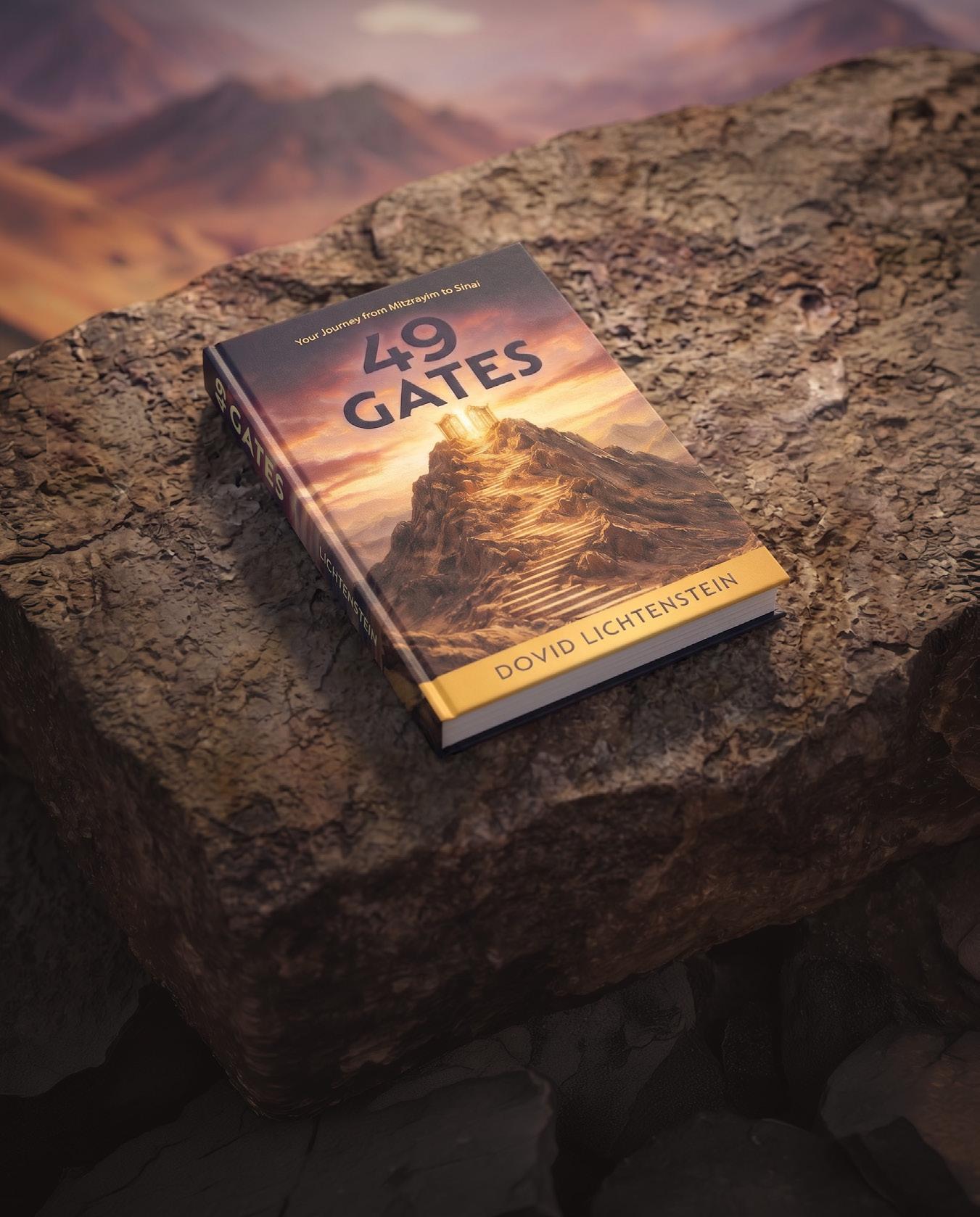
Between Mitzrayim and Sinai lie forty-nine gates of growth — forty-nine steps through which a person shapes character, deepens faith, and becomes who they were meant to be.
The Kabbalists revealed the secrets to these gates: Malchus shebeChesed, Yesod shebeGevurah, Tiferes shebeNetzach…
For generations we have recited these words each year during
This year, let us understand them. And open the gates. This ancient path has guided mevakshei Hashem for centuries.
49 Gates invites the reader to step onto that path — and begin the climb. Because the greatest journey in life is not
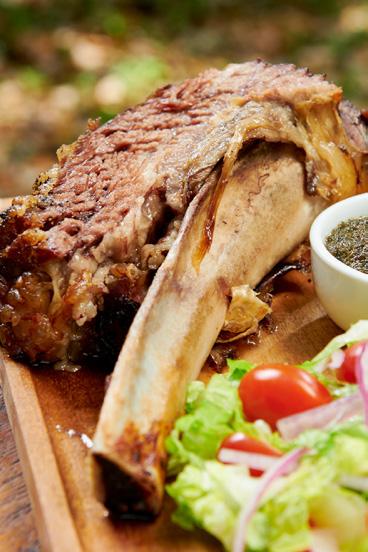
Cooked to perfection, seasoned well, served on our in house bakery mezonos buns
cholunt, kishke, kugel why choose? the way a hot dog should taste
Community Voice magazine is not responsible for the Kashrut or services provided by the advertisements. It is up to the consumer to verify the information.
Beyond the Headlines
A weekly glimpse into the Israel you won’t read about in the news
By Sivan Rahav Meir
Odelia’s Thank You List
Odelia Eliav is the mother of Adiel, a paratrooper who was moderately wounded in Lebanon and is now hospitalized at Rambam Medical Center. From there, she began sharing updates unlike any others.
At first, she simply kept people posted about the injury, the surgery, and the recovery. But by the next day, I saw a different kind of update from her: a list of thankyous, one after another. “Thank you for the conversation with Ayala, the social worker, a remarkable woman. Thank you that the children came from Jerusalem to visit. Thank you that Adiel was able to drink. Thank you that Adiel was able to sit up. Thank you for the flowers and food sent by Ehud’s workplace. Thank you for the room they gave us here at Chabad House. Thank you for the IDF Disabled Veterans Organization. Thank you that I am learning to accept help. Thank you that Adiel is not connected to machines.”
And it continued the next morning: “Thank you for a shower that brought me back to myself. Thank you for the friends who are sending love and encouragement. Thank you that our neighbor Smadar sent the children plenty of delicious food. Thank you that I am here and not at Mount Herzl cemetery. Thank you that the bathroom is so close and convenient. Thank you that Adiel was able to eat some of
Tehila’s pancake.”
Over the course of the week, thousands of women were exposed to these words of gratitude. Odelia told me that her mother has been keeping a personal gratitude journal for years, and that is where the idea came from. She has been receiving extraordinary responses, the kind that shift the way people see their own lives. “The way we speak is sacred. I begin every morning with a list of thank-yous, because we determine what story we are telling ourselves. There is always so much to be grateful for.”
Between Holocaust Remembrance Day and Memorial Day, Odelia reminds us that this is not only a private story. It is also a choice about how we tell our shared national story.
Just before publishing this piece, I took one more look at her latest update: “Thank you that I was able to pray. Thank you that
I cried and fell apart, and then got up again. Thank you that I went to the beach in Haifa. It was magical. Thank you that I have the wisdom to say thank you.”
So, thank you, Odelia. Wishing Adiel a complete recovery.
Israel’s Surprising Happiness Gap
This year as well, Israel ranked 8th out of 140 countries in the 2026 World Happiness Report. Compare that with another country at war, Ukraine, which ranked 111th.
It is a striking statistic, especially when it comes to young people. Israelis under 25 were ranked the happiest age group in the country and the third happiest worldwide. In the United States, by contrast, happiness among the same age group fell to 60th place.
Former Prisoner of Zion Natan Sharansky and historian Gil Troy offer three explanations, all of which we can see around us.
The first is birthrate. Faced with the murder of more than 1,800 Israelis on and after October 7, the response has not been only grief, but also life: a baby boom taking place — not after the war, but during it. While birthrates across the West continue to fall, Israelis still have a deep faith in life, in continuity, in the future.
The second explanation is tradition. Ninety-six percent of Jewish Israelis took part last week in the oldest ritual in
the Western world: the Pesach Seder. Jews do not merely remember their history. They live it. Through prayers, songs, food, and customs, they carry it forward from generation to generation, seeing themselves as if they personally had gone out of Egypt.
British historian Paul Johnson once put it well: “No people has ever insisted more firmly than the Jews that history has a purpose and humanity a destiny.” Despite all the political divisions, most Israelis still feel they are part of one large family, preserving its memory and its traditions.
The third explanation is optimism: hope, and the ability to look ahead. Various studies point to an epidemic of gloom among young Americans, who have lost their sense of national pride and purpose. Israelis, by contrast, still feel they are moving forward together. Sharansky and Troy point to the “Shoreshim” [Roots] initiative, where thousands come to comfort bereaved families they have never even met, and to the choice so many families make to commemorate their loved ones through acts that benefit society. Even the stickers bearing short, powerful quotations from those who fell, covering the country, are part of that spirit.
Sharansky recognizes here the same spirit he felt in Siberia, in prison, under communism. There too, he says, it was the prisoners who held on to identity, meaning,
and history who stood the strongest against their captors. They were the ones who survived. His message to the West is clear: strengthen community, patriotism, and tradition. Learn from the small Jewish state.
Jewish Victory
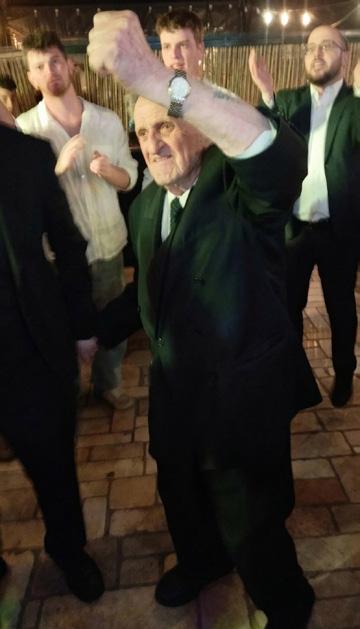
During this period of the Counting of the Omer, we do not hold weddings. But the accompanying photo, taken before Pesach, shows nonagenarian Dov Landau dancing at the wedding of his eighth great-grandson. Born in Poland, Dov survived Auschwitz and five other camps, as well as two death marches. He
was eventually liberated from Buchenwald. At seventeen, he came to Israel alone, the sole survivor of his family after the Holocaust. On the day the State of Israel was established, during the battles of Gush Etzion, he was taken captive by the Jordanians while fighting with the Haganah. Here was another former captive. (In our times, that phrase sounds painfully current. And like many of those who returned from Gaza, he was filled with faith.)
Dov went on to build a family, and for years he accompanied trips to Poland. He ends his lectures with the last words his father said to him before they were separated: “Remain a Jew.” But in truth, he does not end with words. He ends with song. The audience rises, then sings, and often dances with him.
At family weddings, Dov blesses the young couple under the chuppah and then dances with them. As is his custom, he rolls up his sleeve, revealing the number tattooed on his arm in the camps. At this wedding too, Dov danced with joy, lifting his arm for all to see and showing that his father’s final wish had indeed been fulfilled.
Translated by Yehoshua Siskin and Janine Muller Sherr
Want to read more by Sivan Rahav Meir? Google The Daily Thought or visit sivanrahavmeir.com
As Israel Marks Independence Day, Magen David Adom Highlights Its Role as a Core Pillar of Israeli Society
Magen David Adom reflects the diversity, resilience, and shared responsibility of Israeli society
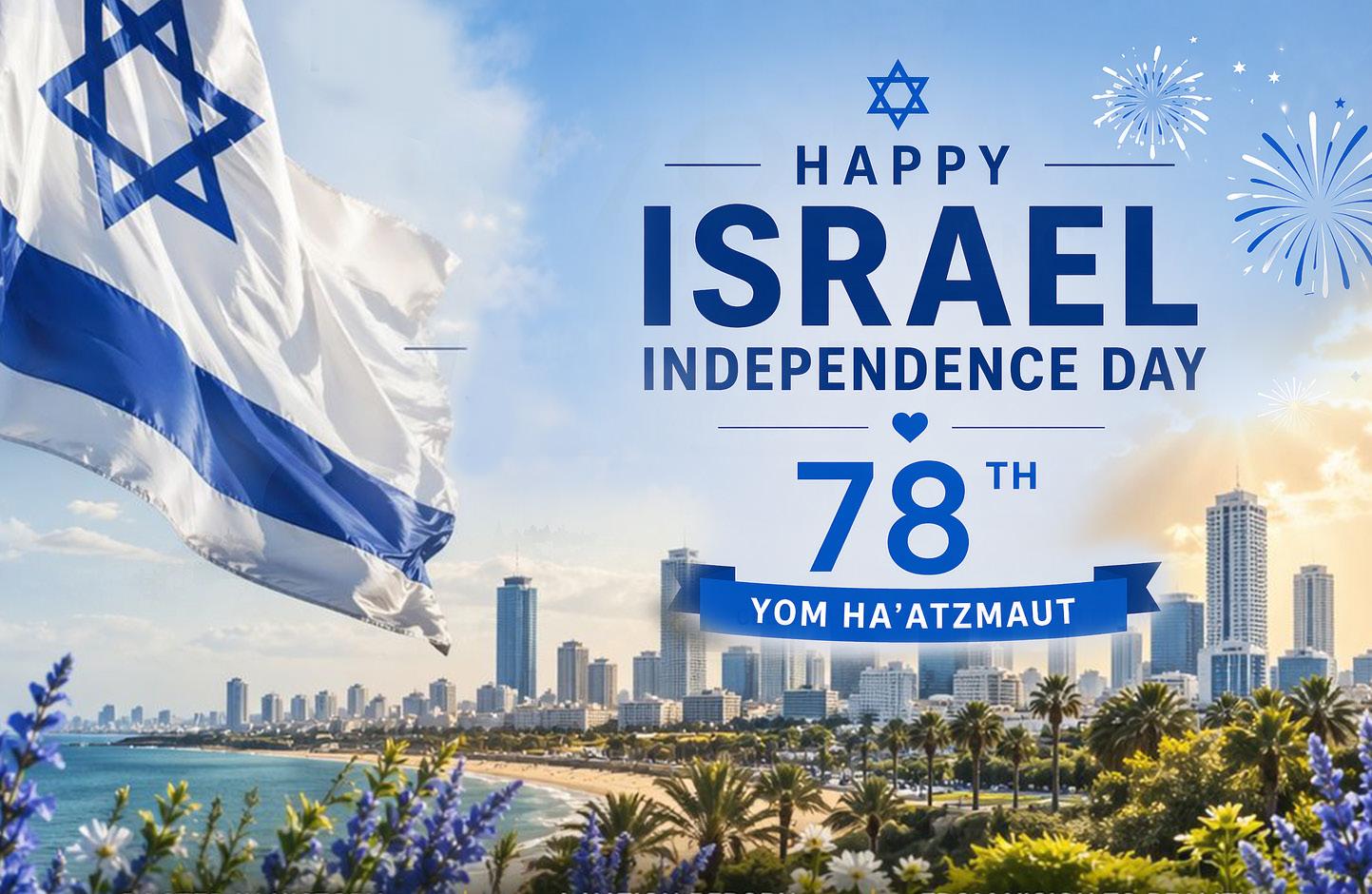
Israel, April 20, 2026 - As Israel marks its 78th independence day, (Yom Ha’atzmaut), amid a fragile ceasefire, Magen David Adom (MDA), Israel’s national EMS organization and one of the country’s most diverse workforces, is highlighting the role of its over 39,000 staff and volunteers in providing lifesaving medical care across every community in Israel and serving on the front lines throughout Operation Roaring Lion. Bringing together Jewish, Arab, Druze, and Bedouin Israelis, alongside religious and secular communities, new immigrants, and native-born citizens, MDA operated throughout the war with Iran under sustained national emergency conditions, responding to mass-casualty incidents, treating the injured, and maintaining nationwide readiness.
Today, MDA operates 211 stations across Israel, supported by thousands of ambulances, intensive care units, and rapid response vehicles. Its workforce and volunteer base reflect the full spectrum of Israeli society, with volunteers ranging in age from 14 to 92 and contributing more than 6.3 million volunteer hours annually.
“Growing up in Nazareth as an Arab-Christian, I joined Magen
David Adom as a teenager and it opened my eyes to what it means to work across communities,” said Yasmeen Mazzawi, an MDA volunteer paramedic who was honored with lighting a torch at Israel’s 72nd Independence Day Ceremony in 2020. “MDA is a great example of the beauty of Israel. Throughout my service over the last decade, I have met Jews, Muslims, Christians, Druze, people from every background, and I learned that beyond everything else, we are all human beings trying to save lives. Arabs and Jews work side by side in the same ambulances, in the same calls, under the same pressure, and what connects us is values, not labels. We are different and that is the
beauty of it - it is like a mosaic where each person brings something unique. And especially in times like these, that unity is not just important, it is essential.”
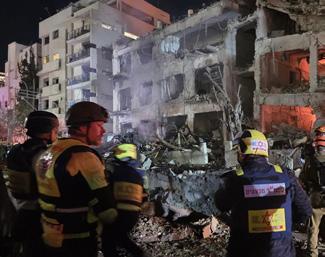
In recent months, MDA’s resilience has been on full display. During Operation “Roaring Lion,” MDA raised its alert level to the highest possible status, placing approximately 38,000 volunteers and staff on full readiness. At peak deployment, MDA operated around 2,000 ambulances and intensive care units, 800 emergency medicycles, and 700 rapid response vehicles. Teams were deployed nationwide, often arriving first on scene and providing immediate medical care under emergency conditions, treating
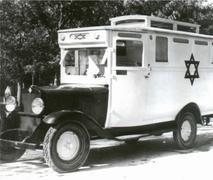
Magen David Adom’s First Ambulance
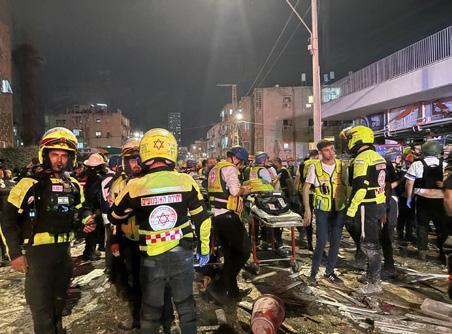
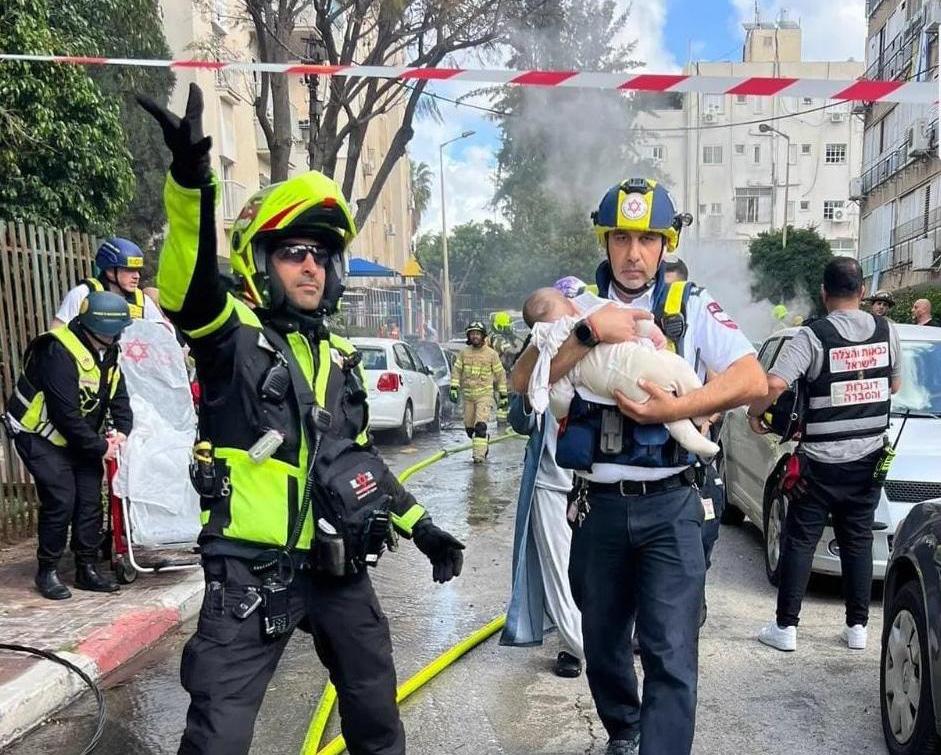
MDA First Responders at an Iranian Missile Impact Site
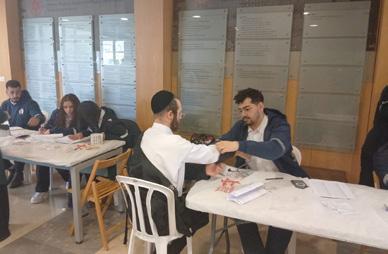
Ultra Orthodox Jew Donates Blood at MDA Station
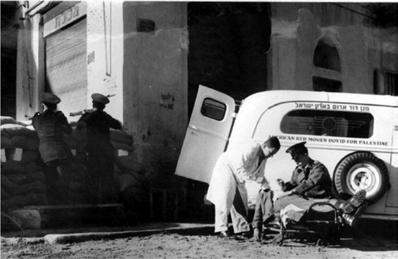
MDA Medic and Police Man Treat Patient in Jaffa During Israel’s independence war
COMMUNITY NEWS
2,503 casualties.
Founded in 1930, MDA has grown alongside the State of Israel into the national EMS system, serving as a cornerstone of national resilience through wars and security crises, terror attacks and masscasualty events, large-scale immigration waves, public health emergencies including COVID-19, and tens of millions of medical emergencies nationwide.
In addition to its emergency response role, MDA provides critical lifesaving care across everyday and extraordinary moments, including 15,446 pregnancies transported last year, with 1,014 babies delivered by MDA teams in ambulances and at home, and 263,945 blood units collected for hospitals and the Israel Defense Forces.
Across the past year, MDA teams were dispatched 1,383,026 times -an average of one emergency response every 22.8 seconds. The national 101 emergency hotline received a call every 7.3 seconds, with average response times of approximately 2 seconds.
“On Yom Ha’atzmaut, we are reminded that Israel’s strength lies not only in its ability to defend itself, but in its commitment to care for every life,” said Eli Bin, MDA Director General. “Our volunteers embody that commitment every day, a diverse society coming together with a shared sense of responsibility and purpose.”
About Magen David Adom
MDA is Israel’s emergency services system. A leader in mass-casualty response and in EMS technology, Magen David Adom treats and transports more than 1 million people to hospitals every year; collects, safety tests, and distributes nearly all the blood to Israel’s hospitals; and, through its affiliation with the Red Cross movement, responds to disasters around the world. For more information, visit afmda.org
Credit - Viri Acoca
MDA First Responders at Iranian Missile Scene
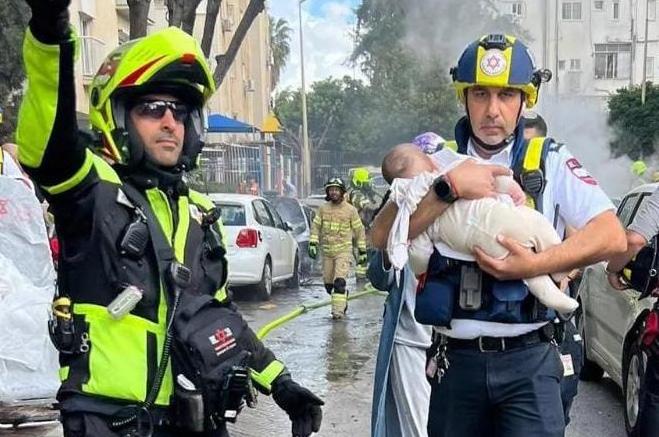
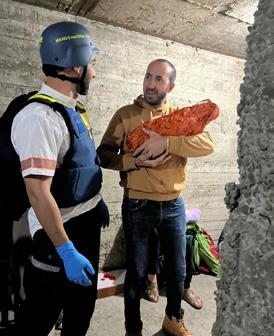
MDA Paramedic Carries Baby out of Missile Impact scene
The Israel-Iran Conflict: Post War Challenges
By Dr. Chaim Botwinick
As we follow the news from Israel, we hear mixed reports regarding the ceasefire.
Some officials report that the war will end in several days if all goes well; others say weeks or months. In the interim, suspicion on both sides continue to grow as Iranian and Hezbollah missiles and drones are poised to reign on Israeli population centers and as our IDF troops in Lebanon prepare to continue to engage in a relentless ground offensive. All the while, more and more innocent Israeli citizens and IDF troops are in harm’s way and the trauma of war continues unabated.
We ask ourselves, when will the war finally end, how will it end, and at what cost?
As Israel engages in an existential war, we all pray to HaShem that the war will end soon; and that Tehran and its proxies will be totally marginalized to the extent that their missiles and nuclear threats will be totally eliminated.
Last week, I heard a conversation between several news journalists and Israeli economists about a variety of theories and perspectives of what Israel and diaspora Jewish communities may experience once this war is over.
Although it was a fascinating theoretical conversation, it suggested daunting challenges unsurpassed in Israel’s history.
After listening to the conversation, I began thinking how insurmountable these challenges will be and how difficult it will be to rebuild our precious homeland to
a state or to a condition that existed just prior to the war. It was beyond sad, daunting and extremely frustrating.
Post-War Challenges
With HaShem’s oversight, the ceasefire will remain in effect and war will end soon. But with this reality, the State of Israel in partnership with diaspora friends and partners, will be faced with a monumental imperative to rebuild Israel’s social, industrial and economic infrastructure in ways never before required or imaginable.
As we know, this war has taken a tremendous toll on Israeli society. From Israeli families and IDF personnel in dire need of physical, medical and emotional rehabilitation due to shock, trauma and/or physical injury, let alone sheer exhaustion to major food markets unable to restock all of their goods or operate due to a lack of personnel and inventory; from apartment and office buildings requiring total physical re-
habilitation due to infrastructure damage or destruction to Israel’s major high-tech industries that are losing an estimated 25% of their philanthropic investors; including their biomedical research facilities which were forced to cease most of its operations.
These harsh realities do not include the impact schools, as well as the emotional and psychological impact of the war on the psychological and emotional wellbeing of families, children and community, especially those living in northern Israel.
Friends, these are just several of the daunting challenges and exigencies that Israel will be facing following the war.
Rebuilding, rehabilitation and recovery will take time, resources, patience and will-power. It will also require a major effort on the part of diaspora Jewish communities and their organizations to help raise desperately needed funds and to volunteer for Israel like never before in history. To be sure, it is not too soon to start planning for this daunting eventuality whether they be in the form of emergency fundraising campaigns, designated mega-gifs to Israeli institutions, or volunteering, if and when physically possible.
Although we are all currently preoccupied with the impact of war and with whether the pending ceasefire will actually hold for the long-term, we must at all cost begin planning for the “day after”. It is our obligation, it is our respon-
sibility and our duty. And, above all, it’s about our bond and sacred commitment to ensure a strong, vibrant and healthy eretz yisrael.
Educational Implications
It is important to note that most of our American school children currently attending Jewish day schools and yeshivot, never experienced a war in eretz yisrael of such intensity and magnitude. In fact, most of their parents and faculty never did as well.
As a result, it is imperative that our Jewish day schools and yeshivot engage in daily tefillot and tehilim, in support of acheinu bnai yisrael currently living in eretz yisrael in the midst of the war and for those requiring a re-
fuah shlaima.
It is also essential that our schools, shuls and Jewish communal institutions continue to engage in divrei chizuk and to move the current welfare of eretz yisrael to the top of their communal agenda. These critical moments must go hand-in-hand with increased Torah study, tzedaka and other chesed projects.
Reality dictates that Israel will eventual recover from the war, but, it may never be exactly the same after the war, not unlike the manner in which October 7th changed Israeli society. We are nevertheless hopeful and mitpallel to HaShem that we will all experience and witness a stronger, more vibrant and healthier Israel
WE BUY COINS
as it recovers from the war.
Moving Forward….
When the war finally ends, with HaShem’s oversight, Israel will be in dire need of the following seven challenges, to name a few.
They include:
1. High-tech refocusing, realignment and recalibration;
2. Increased extensive Mental Health and Social Services (responding to trauma and increased training)
3. The Reconstruction of Infrastructure
4. More extensive Fiscal Stability and Economic Recovery
5. Increased and More Sophisticated Geopolitical Global Security safeguards, and
partnerships; and Cyber-Security protocols;
6. Increasing Israeli Military Apparatus, Equipment Inventory as well as Intensifying IDF Recruitment and Training; and,
7. The creation of a more Sophisticated Communications and Public Information and Marketing effort in order to “present the true facts” regarding the Iranian threat to the world order and minimize false assumptions regarding the global Iranian threat in the future.
Critical to the success of rebuilding a stronger and more powerful, vibrant and resilient Israel will be its capacity to encourage, market and promote a new wave of aliya to Israel by diaspora Jewry – at least for those who are in a position to do so.
This war exacerbated by a significant rise of global anti-Semitism, offers an opportune moment in our history to seriously consider yishuv eretz yisrael.
Will it be easy? Absolutely not.
To be sure, it will be difficult, challenging and demanding,
But, when in our history has it ever been easy for acheinu bnai yisrael to fulfil the dream and vision of living or settling in Israel.
What better time to make aliya than at a time when Israel needs us the most.
This imperative is underscored as we witness a frightening firestorm of increased global anti-Semitism.
“Never again” meaning “never ever again” is a reality which world Jewry must confront head on.
The global support for Israel’s war with Iran and its proxies is just another example of how the pendulum swings both ways and how support Israel can change on a dime.
Friends, we all know that the existential war with Iran and Hezbollah has had a profoundly difficult and destructive impact on Am Yisrael as never before imaginable. It is indeed scary, daunting and frightening to say the least.
But, just as we have survived, flourished and lived through the
ebb and flow of wars and threats, throughout history, so to, with HaShem’s guidance and bracha, we will continue to be resilient, strong and robust following this war and for generations to come.
In the words of the great Lubavitcher Rebbe…..”If you think positive, it will be positive”.
There is no reason to think otherwise.
Am Yisrael Chai
About the Author:
Dr. Chaim Botwinick is a senior executive coach and an organizational consultant. He served as president and CEO of the central agency for Jewish education in Baltimore and in Miami; in addition to head of school and principal for several Jewish day schools and yeshivot. As an Influencer, he has published and lecture on topics relating to education, resource development, strategic planning and leadership development. Dr. Botwinick is co-founder of LEV Consulting Associates and producer/host of Chinuch Horizons podcast series. He is author of Think Excellence, Brown Books, 2011.
A Bar Mitzvah of True Vision
In a quiet neighborhood filled with warmth, there lived a remarkable boy named Shimi. From a young age, Shimi stood out—not because of anything unusual at first glance, but because of the way he carried himself. He was bright, quick-witted, and had a smile that could light up a room. His friends adored him, his neighbors spoke highly of him, and his teachers often remarked that he possessed a depth beyond his years.
Shimi’s family, too, was exceptional. They cared for him with endless devotion, ensuring that he lacked nothing. Their home was filled with laughter, patience, and a quiet strength that guided everything they did.
There was, however, one difference that accompanied Shimi throughout his life: he was blind.
But if you asked anyone who knew him, they would tell you that this detail never defined him. Shimi played, learned, joked, and connected just like any other boy his age. His friends didn’t see “a blind boy”; they saw Shimi.
As his bar mitzvah approached, the excitement in the home was palpable. Preparations were underway for weeks. His tefillin had been carefully purchased, his suit fitted just right, and yes—his peshetel had been practiced again and again until it flowed beautifully. The family felt a deep sense of gratitude as they watched Shimi prepare to enter the world of mitzvos.
Then, one evening, a simple question changed the tone of the
preparations.
“Tatty,” Shimi’s younger brother asked innocently, “will Shimi be leining his bar mitzvah parsha?”
There was a pause.
His father gently shook his head. “No,” he said softly. “Shimi can’t see the words, and we don’t rely on memorization alone for the leining.”
The room grew quiet for a moment. But the questions didn’t stop there.
“But if so,” the brother continued, “how will he even get an aliyah? And if he can’t see the words, how can he make the brachos?”
It was a sincere question—and not a simple one.
Wanting clarity, he reached out to the Refuah B’Halacha Center, where complex medical-halachic questions are handled with care and precision. He presented the situation, hoping for guidance.
The Rav listened carefully and responded with reassuring clarity.
“It is true,” he explained, “that the Shulchan Aruch (Orach Chaim 139:3) writes that a blind person should not receive an aliyah, since he cannot read along the Sefer Torah. However, the Rema there brings the opinion of the Maharil that nowadays, when a Baal Koreh reads on behalf of the oleh, even someone who cannot read may receive an aliyah.”
He continued, “The Mishnah Berurah (se’if katan 12 and 13) elaborates that this has become the accepted minhag in many communities. Therefore, Shimi can absolutely receive an aliyah and recite the brachos just like anyone else.”
There was a pause, and then the Rav added one important note.
“However, for Parshas Zachor or Parshas Parah, which some consider to have a higher level of obligation, it is preferable that the oleh be someone who can read along. Aside from that, there is no
concern.”
The family felt an enormous sense of relief. Not only was Shimi included—he was fully embraced by the halacha.
When the big day arrived, the shul was filled with an unusual sense of anticipation. As Shimi was called up for his aliyah, a hush fell over the crowd. With confidence and sincerity, he recited the brachos, his voice steady and full of meaning.
In that moment, it became clear to everyone present: Shimi may not have physical sight, but his inner vision was something truly extraordinary.
The bar mitzvah was beautiful. Not just because of the food or the dancing, but because it reminded everyone of a simple truth: some-
times, the deepest vision is not what we see with our eyes, but what we feel with our hearts.
At the Refuah B’Halacha Center, we are here to provide guidance for real-life challenges, big and small. Whether it’s a question about Shabbos, kashrus, or navigating difficult personal situations, our experienced Rabbunim are ready to listen and advise.
If you ever find yourself wondering about a medical halacha question — big or small, serious or just something that’s been on your mind — remember that you don’t have to figure it out alone.
The Refuah B’Halacha Center is here to help, with experienced rabbanim available to guide you through even the most sensitive or confusing situations.
Refuah B’Halacha Hotline: 732 755
0851 or email us at www.refuahbhalacha.org
Our Rabbanim; R’ Yaakov Forchheimer shlit”a
R’ Noach Isaac Oelbuam shlit”a
R’ Shmuel Fuerst shlit”a
R’ Uri Deutch shlit”a
R’ Micha Cohen shlit”a
R’ Moshe Zev Feldman shlit”a
R’ Baruch Hirshfeld shlit”a
R’ Daniel Neustadt shlit”a
R’ Avrohom Yaged shlit”a
We specialize in
• Mental health
• Shabbos
• Treatment issues
• Hospital stays
• Fertility
• Kashrus
We are here Sunday through Friday 8:00 am till 10:00 pm and erev Shabbos 10 minutes before candle lighting.
Israel at 78: A Nation Growing in Numbers, Strength, and Spirit
As Israel prepares to celebrate its 78th Independence Day, the story of the country is not only told through history and resilience—but through its people, its economy, and its unwavering momentum forward.
At a time when much of the world is facing uncertainty, Israel continues to stand out—not just for surviving challenges, but for growing through them.
A Nation of Over 10 Million
On the eve of Independence Day, Israel’s population has surpassed 10.2 million people, marking a historic milestone for the young nation. Over the past year alone, the population grew by roughly 1.1%–1.4%, continuing one of the fastest growth rates in the developed world.
The country’s demographic makeup reflects both diversity and stability:
• Approximately 76% Jewish and other groups
• Around 21% Arab
• Roughly 3% foreign residents
Even more striking is Israel’s youth. With a median age of just over 29, Israel remains one of the youngest societies among developed nations—a sharp contrast to aging populations across Europe and much of the West.
A Country Built on Life and Growth
At the heart of Israel’s demographic story is something simple
yet powerful: families.
Each year, Israel sees well over 180,000 births, far outpacing most developed countries.
This is reflected in its fertility rate—consistently above 2.7 children per woman, one of the highest in the OECD.
This isn’t just a statistic—it’s a defining feature of Israeli society.
While many countries are shrinking, Israel continues to grow from within. Every new generation is larger than the one before, fueling not only population growth but economic and cultural vitality.
An Economy That Keeps Moving Forward
Israel’s population growth is matched by its economic strength.
Today, Israel’s economy stands at roughly $600 billion, with GDP per capita approaching $60,000,
placing it firmly among advanced global economies.
Even after a challenging period during the war, the economy has rebounded impressively:
• Growth reached 3.1% in 2025, up from about 1% the year before
• Forecasts suggest growth could exceed 5% in 2026 if stability continues
This recovery has been driven
COMMUNITY NEWS
by strong exports, rising investment, and a rapid return of business activity.
Inflation has also remained relatively controlled, easing to around 1.8%–3%, helping maintain economic stability even during a period of conflict.
The Engine: Innovation and High-Tech
At the core of Israel’s economic success is its globally recognized innovation sector.
Often called the “Startup Nation,” Israel’s high-tech industry:
• Generates a significant share of GDP
• Accounts for over half of the country’s exports
• Continues attracting billions in global investment
Even during wartime, Israel’s technology sector remained active, adaptive, and globally competitive—powering growth when many economies would slow.
The Stock Market: Rising Even in Wartime
Perhaps one of the most remarkable—and unexpected—stories of the past year has been the performance of Israel’s stock market.
While wars typically shake investor confidence, Israel’s financial markets have told a different story: resilience turning into growth.
After an initial shock in late 2023, markets rebounded quickly—and continued climbing through 2024 and 2025. Key indices on the Tel Aviv Stock Exchange not only recovered losses but moved higher, reflecting renewed investor confidence.
This momentum aligns with broader economic recovery trends. As exports surged—rising sharply
toward the end of 2025—and business activity strengthened, financial markets followed.
Behind this growth are several key forces:
• Global demand for Israeli technology, especially in cybersecurity and AI
• Increased defense and strategic industry activity
• Strong foreign investment returning to Israeli markets
• Confidence in long-term economic fundamentals
In simple terms: while headlines focused on conflict, investors focused on the future.
More Than Numbers
At 78, Israel’s story is not just
about statistics—it is about momentum.
It is the story of a country that:
• Grows its population while others shrink
• Builds its economy while facing pressure
• Innovates while navigating uncertainty
The combination of a young population, strong families, and a dynamic economy creates something rare: sustained forward movement.
A Nation That Thrives
As Israel celebrates Independence Day, one truth stands out clearly:
This is not just a nation that endures challenges—it is a nation that continues to grow, build, and thrive because of them.
From over 10 million citizens to a rising economy and strengthening markets, Israel at 78 is a powerful example of what resilience looks like when paired with vision, innovation, and an unbreakable sense of purpose.
The future of Israel is not something distant—it is already unfolding, every day, in its people, its economy, and its continued rise.
Sunday to Thursday: 12pm - 10pm Friday: 11am - 3:30pm OPENING HOURS Scan the code to order!
Holding the Line: One Family’s Mission of Strength on Israel’s Northern Border
In the small northern Israeli town of Shlomi, near the Lebanese border and just minutes from Rosh HaNikra, daily life has long been shaped by proximity to conflict. For residents, the sounds of sirens and the sight of incoming rockets are not abstract realities—they are part of everyday experience.
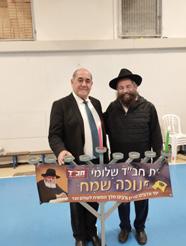
Rabbi Eliyahu Meir Nahum, a lifelong resident of the region, grew up in this environment. Raised in a home centered around constant giving and community responsibility, he describes a childhood marked not only by security challenges, but by a clear sense of purpose: to support others, even in times of uncertainty.
That mission has only intensified in recent years. During the most recent war, which displaced large portions of Israel’s northern population, Rabbi Nahum and his family were forced to leave their home. For nearly two years, they lived in temporary accommodations in hotels, part of a broader wave of evacuees from border communities.
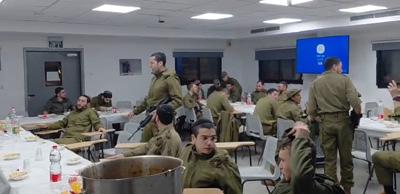
While displaced, Rabbi Nahum relocated to Jerusalem, where he became actively involved in supporting fellow evacuees. He delivered classes, facilitated discussions focused on resilience and faith, and helped distribute books intended to provide emotional and spiritual support. In addition, he organized programming for children and teenagers, bringing in speakers, artists, and educators to create a sense of normalcy and en-
gagement during a prolonged period of instability.
At the same time, his parents remained in the north—continuing their work under far more difficult conditions. Throughout ongoing rocket fire and heightened security tensions, they stayed close to the front lines, assisting soldiers stationed in the area and maintaining a presence within the local community.
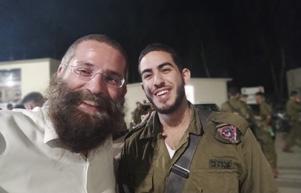
Even during the holiday periods, Rabbi Nahum made efforts to return to the region, visiting both residents and soldiers to provide encouragement and maintain community connection during times typically associated with family and stability.
Today, although some residents have begun returning, the situation in northern Israel remains complex. Many families continue to face economic hardship following extended displacement, and
support systems are stretched thin. In particular, assistance is being directed toward individuals whose livelihoods were disrupted, as well as families directly affected by the war, including widows and relatives of fallen soldiers.
Efforts led by local figures like Rabbi Nahum and his family continue to focus on practical and emotional support—ranging from organizing community activities to providing direct assistance where needed. These initiatives operate on an ongoing basis, reflecting the sustained nature of the challenges facing the region.
As northern communities work toward recovery, the combination of local leadership, volunteer efforts, and external support remains a critical component in rebuilding both infrastructure and morale along Israel’s border.
Rabbi Eliyahu Meir Nahum may be reached at 646-770-0404.
Rahm Emanuel gets aid to Israel all wrong
U.S. military assistance to Jerusalem is governed by agreements and legal frameworks that require much of that funding to be spent on American-made defense systems.
By Moshe Phillips
Moshe Phillips, a veteran pro-Israel activist and author, is the national chairman of Americans For a Safe Israel (AFSI). A former board member of the American Zionist Movement, he previously served as national director of the U.S. division of Herut and worked with CAMERA in Philadelphia. He was also a delegate to the 2020 World Zionist Congress and served as editor of The Challenger, the publication of the Tagar Zionist Youth Movement. His op-eds and letters have been widely published in the United States and Israel.
“Obviously, he’ll influence the president to be pro-Israel. Why wouldn’t he? What is he, an Arab? He’s not going to be mopping floors at the White House.” — Dr. Benjamin Emanuel, 2008.
The above remark made by the father of former Chicago mayor Rahm Emanuel was made to a reporter for the Israeli newspaper Haaretz just days after Barack Obama was first elected president.
Benjamin Emanuel, a pediatrician, was born in Jerusalem in 1927, more than two decades before Israel’s independence in May 1948, and his remark caused headlines. The subsequent embarrassment for the embryonic administration was so severe that Rahm called the president of the American-Arab Anti-Discrimi-
nation Committee to apologize in an act that generated additional headlines.
Now Rahm Emanuel’s own remarks about Israel are generating headlines.
On “Real Time with Bill Maher” on April 17, they included: “Israel’s a very wealthy nation ... ,” “There should be no more taxpayer support for what they want to do, and they get the same deal that any one of our allies does,” and “The United States should never spill any blood for the State of Israel’s security.”
The outright wrongheadedness inherent in each of these statements needs to be exposed. Not just for Israel’s well-being but for America’s.
We live in a time when synagogues and Jewish-sponsored events are under violent attack— Australia to England to Michigan. Emanuel’s decision to make comments about Israel and money at
this point in time is horrifically irresponsible. His remarks echo one of the most enduring antisemitic tropes from some of the darkest periods in recent Jewish history. It must be called out as both hateful and dangerous.
You’ll often hear that American aid to Israel is a “blank check.” It isn’t. U.S. military assistance to Jerusalem is governed by agreements and legal frameworks that require much of that funding to be spent on American-made defense systems. In practice, that means a significant share of the aid flows back into the U.S. economy—supporting domestic manufacturing, defense jobs and technological development.
You can debate the policy. But calling it a blank check is simply inaccurate. Yet the phrase persists because it fits a far too often preferred anti-Israel narrative. And it’s very hard to believe that Rahm Emanuel—a 66-year-old politician and diplomat—doesn’t know this. There is a huge difference in the strategic relationship that America has with Israel from any of its other allies. Israel offers the United States military support, intelligence and experience that are simply unparalleled.
The Iron Dome and David’s Sling—the key components of Israel’s multi-layered missile-defense system—are battle-proven
in Israel. America has reaped the benefit of this. No U.S. ally in any corner of the world has contributed to Washington’s defense in such an undeniable way.
It’s very hard to believe that Emanuel does not know this, too.
Consider that in “Operation Eagle Claw,” the failed April 1980 U.S. military mission to rescue 52 American hostages held in Tehran, eight U.S. servicemen were killed.
time, due to “concerns over the 600 U.S. medical students on the island.” Reagan didn’t want another hostage crisis in Grenada like President Jimmy Carter had in Iran. Nineteen American service members were killed and more than 100 wounded.
In the December 1989 invasion of Panama ordered by then-President George H. W. Bush, 23 servicemen were killed and 325 wounded.
number of American citizens living in the Jewish state has lowend estimates of 200,000; the actual figure could be more than twice as many.
Emanuel must know that an enormous number of American citizens live in Israel—possibly more than the entire population of Wyoming.
Estimates suggest that between 5,000 and 6,000 American college students attend study-abroad and gap-year programs in Israel every year. More than that, the
Many say he may be a Democratic presidential candidate. If that is the case, even more so, he knows that Israel’s security matters to America and is worth every dollar, no matter what he told Bill Maher’s audience.
Hours
S: 10AM - 4PM
M-TH: 9:30AM - 7PM F: 9:30AM - 2PM
Operation Inspiration: If Not Now, When?
During the weeks between Pesach and Shavuos, there is a widely held custom to learn Pirkei Avos, Ethics of the Fathers, on Shabbos afternoons. Some continue throughout the summer. One of the most famous quotes from this section of the Mishna comes from Hillel.
In Chapter 1, he is quoted as often saying, “If I am not for me, who will be? If I am only for myself, what am I? And if not now, when?” These phrases frame one’s thoughts and empower him to make proper and powerful decisions in life; the kind we make every day, many times a day, when we are faced with a choice of some sort.
I wanted to focus on one of these phrases, based on an experience I just had. I send out a weekly Parsha sheet, with original content not found anywhere else. I refuse to just copy a prior year’s Torah, and push myself each week to find something new in the Torah portion. [If you’re interested, e-mail info@jewishspeechwriter.com and ask about it.] It’s something I’ve been doing for the better part of my life.
Well, I use an e-mailing service to send it out, based on a mailing list of subscribers. When I prepare to send it out each week, they ask me who I wish to send it to. Invariably, I send to all current subscribers – those who unsubscribed for whatever reason would probably not appreciate a surprise e-mail. Today, though, I noticed a question posed by the software: “Would you like to ex-
By Rabbi Jonathan Gewirtz
clude people who have not interacted in the past three months?”
I assume the idea is that people who are sending e-mails for their businesses want to focus on the hot leads that will make them money, and not waste time and resources reaching out to people who are clearly not interested. So, if someone hasn’t opened my e-mails in three months, they’re probably unlikely to start now, and maybe I want to just skip it.
Of course, I did NOT accept that option. I said no. Why? Because I know that just because someone hasn’t acted on the e-mails until now doesn’t mean they won’t suddenly open it one day. Maybe they will be stuck in line at the drive-through pharmacy and my e-mail will pop up. Not having anything better to do, they’ll figure, “Why not?” and open it. Maybe they like what they read, and maybe in the future they will open the e-mail again. I have nothing to lose by just reaching out and being there when they need me.
And that’s when Hillel’s expression jumped into my brain. “If not now, when?” We can look at it in different ways. On the one hand, it can mean that we shouldn’t procrastinate from doing the right thing because who’s to say we will have the opportunity in the future? Maybe it will not come again.
Then again, we can consider, as I did, that even if now isn’t an option, there may come a time in the future when the person will have the opportunity or the incentive to take that proper action. I don’t know if someone will read my e-mails weekly, monthly, or once every few years, but even one time in the future is worth sending that opportunity over and over again. It costs me nothing (based on the plan I have, anyway) to put it out there and hope that someone will pick it up.
I’ve heard people tell me, “I really needed to hear that today!” The words I sent touched their hearts in a way that comforted or strengthened them. I once heard a Rabbi explain that when that happens, it wasn’t the fact that my words touched them. Rather, they needed to hear it, so Hashem put it in my mind for me to send them the message they were supposed to receive from Him. It’s not that my words are so special, but that they are Hashem’s words, and when that message is sent, it’s my job to deliver it.
That’s another reason I won’t decide not to send to someone who hasn’t interacted in some time. Who knows if they were on
my list simply because one day, at one moment, this will be the medium Hashem chooses to contact them through? Why would I be silly enough to interfere with that?
We all have our moments, the times when we suddenly feel an urge to connect with Hashem. Our ringers may be off; in silent mode. But there’s a spiritual vibration we feel, telling us Hashem is calling. None of us know when that moment will come, but we should be ready to answer. More than that, we should try, and want to try, to initiate some of those calls whenever possible. Maybe, as Hillel suggests, one day someone will feel they want to connect and will open my e-mail to find Hashem’s message.
I’m sure it could happen someday. It may not be now, and I don’t know when, but I’ll keep the lines of communication open, just in case.
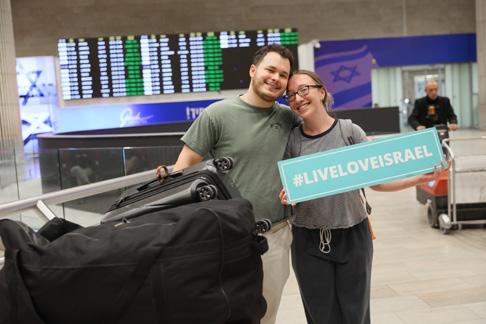
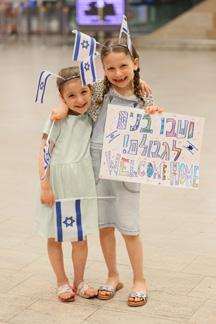
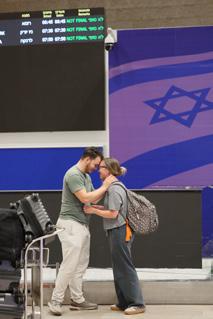
Nearly 50 North Americans Set to Make Aliyah as Israel Celebrates Independence Day
Newcomers will commemorate Israel’s 78th Year of Independence for the first time as Israeli citizens
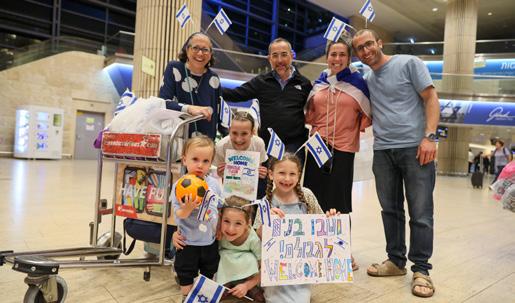
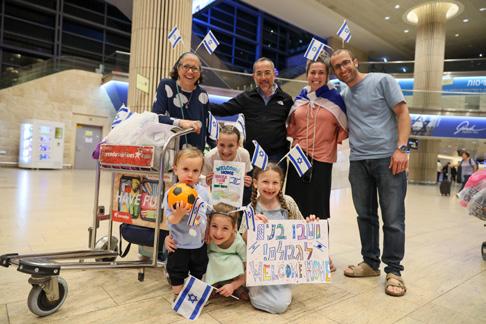
Nearly 50 new immigrants from North America are expected to become Israeli citizens, just ahead of Yom Ha’Atzmaut, Israel’s 78th Independence Day. Twenty Olim arrived in Israel Wednesday evening, while additional individuals already in the country officially completed their Aliyah process. With more arrivals expected to arrive just ahead of Yom HaAtzmaut, through the assistance of Nefesh B’Nefesh, in cooperation with the Ministry of Aliyah and Integration, The Jewish Agency for Israel, Keren Kayemeth LeIsrael, and Jewish National Fund–USA.
Amid the ceasefire and recent security tensions, these new arrivals demonstrated that the evolving situation did not deter them; rather, it reinforced their commitment to building their futures in Israel during a pivotal national moment.
“The thousands of immigrants who chose to come to Israel, over the past year, are a reminder of the deep belief in our mission and a strong desire among many Jews to be part of the State of Israel now,” said Minister of Aliyah and Integration, Ofir Sofer. “We remain committed to strengthening Aliyah, and over the past year we’ve continued to make the Aliyah process easier through reforms in professional licensing,
offering tax exemptions for new immigrants, providing rental assistance, and more. I wish the new immigrants and all the people of Israel a Happy Independence Day.”
According to data from Nefesh B’Nefesh, since the beginning of the war with Iran, about 180 new immigrants have arrived from North America. Since the start of 2026, approximately 550 North American Olim have made Aliyah. Additionally, since the beginning of Operation “Roaring Lion,” over 1,300 Aliyah files have been opened by Jewish North Americans.
“Welcoming nearly 50 new
Olim just before Yom Ha’Atzmaut carries special significance, underscoring the strength and enduring spirit of our nation,” said Co-Founder and Executive Director of Nefesh B’Nefesh, Rabbi Yehoshua Fass. “These are days poised between memory and miracle, days of gratitude for the Jewish State we are privileged to call home, for the ingathering of our people, and for a return to an ancient promise. The entire staff at Nefesh B’Nefesh feels privileged each day to be part of the lives of Olim, playing even a small role in helping write this chapter in Israel’s history.”
The group of new Olim that
COMMUNITY NEWS
landed yesterday includes individuals and families from across the United States and Canada, spanning a wide range of ages and backgrounds. The youngest Oleh is 1 year old and the oldest is 72. They will establish their homes in communities across Israel, including Tel Aviv–Yafo, Jerusalem, Haifa, Nahariyya, Afula, Rehovot, and more.
“Olim who choose to come to Israel, even in challenging times, are an inseparable part of Israel’s story of independence,” said Chairman of the Jewish Agency for Israel, Major General (Res.) Doron Almog. “They are not just joining the country, they are building it, every single day, even now. Each oleh is a beacon of hope, a living reminder that the Zionist dream has not only
survived, but continues to come to life. They are proof that the State of Israel is not something to be taken for granted, but a singular miracle, renewed in every generation through the courageous choice to come, belong, and build.”
As the nation prepares to honor its 78th year of independence, these Olim, who will be celebrating for the first time as Israeli citizens, stand as a testament to Israel’s continued growth and strength, reinforcing the message that even in the face of adversity, Aliyah endures.
Photo Credit: Sivan Shachor
For Media Contact: David Weissmann, Gova10 for NBN, davidw@gova10.com
About Nefesh B’Nefesh (www.nbn. org.il)
Founded in 2002, Nefesh B’Nefesh is dedicated to addressing the evolving national needs of the State of Israel through four key pillars: Aliyah, National Service, National Development, and Zionist Education. Each of these pillars is strengthened by expanded services designed to benefit the broader community. In partnership with Israel’s Ministry of Aliyah and Integration, The Jewish Agency for Israel, Keren Kayemeth LeIsrael, and JNF-USA, Nefesh B’Nefesh’s comprehensive support and social services have successfully empowered over 95,000 North American Olim to integrate into Israeli society, achieving an impressive 90% retention rate. This ensures their long-term commitment to building meaningful lives in Israel and contributing to the nation’s growth.
• DINE-IN
• SUSHI PLATTERS
10% DISCOUNTIF YOU BRING IN THE COMMUNITY VOICE MAGAZINE
• CATERING SETUP • LIVE SUSHI STATION • DELIVERY & PICKUP
A New Way to Teach Jewish History Is Taking Shape —
And It Starts in South Florida
In South Florida, we pride ourselves on building strong Jewish communities — in our schools, our synagogues, and our homes. We invest in education, we tell our stories, and we work hard to ensure the next generation feels connected to Jewish history and identity.
But there’s a growing gap we can’t ignore.
Today’s kids are not just reading about the world — they are experiencing it through screens. They spend hours building, exploring, and interacting inside digital environments that are dynamic, social, and immersive. Meanwhile, much of Jewish education still relies on methods that haven’t meaningfully evolved in decades.
If we want our children to feel connected to Jewish history, we need to rethink how we bring that history to life.
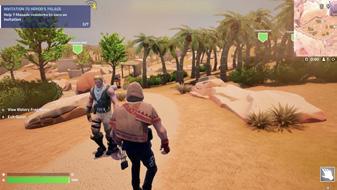
That’s exactly what Lost Tribe is doing with Herod’s Masada — a free, fully immersive educational game built on the same technology used by Fortnite.
Instead of reading about Masada, students can now walk through it.
Set in 10 BCE, the game allows players to explore a full-scale digital reconstruction of Masada — including Herod’s palace, bathhouses, storerooms, and desert gardens — as they would have appeared nearly 2,000 years ago. Guided by the ancient historian Josephus, students uncover artifacts, meet members of Herod’s court, and begin to understand the complexity of one of the most fascinating fig-
ures in Jewish history.
This isn’t about replacing teachers or classrooms. It’s about enhancing them.
Herod’s Masada is designed as a launchpad for deeper learning, complete with a teachers’ guide that helps educators connect gameplay to meaningful discussions about leadership, Jewish identity, and the historical roots of Israel. It gives students the opportunity to ask questions, explore different perspectives, and engage with history in a way that feels relevant to their lives.
And importantly for our community, it’s accessible.
The game is completely free
and works on devices students already use — tablets, smartphones, and gaming consoles. That means schools, synagogues, and families across South Florida can integrate it without the burden of new infrastructure or major cost.
For educators navigating tight budgets and increasing demands, this matters. For parents looking for meaningful ways to connect their children to Jewish identity, it matters even more.
We often talk about the challenge of keeping Jewish education engaging and relevant. Here is a clear, tangible example of what that future can look like: interactive, high-quality, and built for the way our kids actually learn today.
But Herod’s Masada is just the beginning.
Lost Tribe’s broader vision is to continue developing immersive experiences that bring Jewish history to life across different eras and stories — giving students the ability to explore, question, and connect with their heritage in ways that were never before possible.
South Florida has always been a community that shows up — for our institutions, our schools, and our future. Embracing innovation like this is not about abandoning tradition. It’s about ensuring that our tradition continues to live and breathe in the next generation.
If we want our children to care about Jewish history, we need to give them ways to experience it — not just study it.
And for the first time, that future is already here.
300+ Gather In North Miami Beach For Yom Hashoah Remembrance
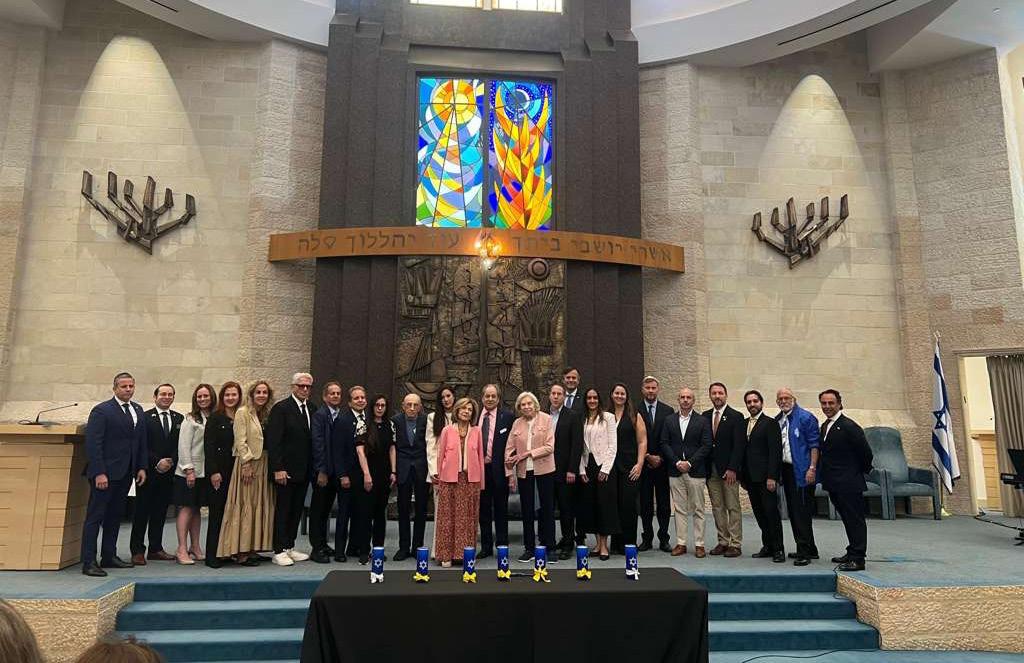
More than 300 people gathered at Beth Torah Benny Rok Campus for a Yom HaShoah, Holocaust Remembrance ceremony honoring the six million Jews killed during the Holocaust and reinforcing a commitment to remembrance and education.
Hosted by the Yad Vashem USA Foundation’s South Florida Committee, in partnership with Beth Torah and the Aventura Turnberry Jewish Center, the event brought together Holocaust survivors, students, elected officials and community leaders.
Holocaust survivor Regina Behar shared her testimony, while survivor Jack Waksal participated in a candle-lighting ceremony and offered prayers. Students from across South Florida contributed readings and musical tributes.
Officials, including Miami Beach Mayor Steven Meiner and Florida Rep. Fabian Basabe delivered remarks, alongside international representatives and faith leaders.
The ceremony featured a seven-candle memorial honoring victims and survivors, and concluded with prayers and a moment of silence.
“‘Never Again’ is not a slogan, it is a commitment to stand against hatred,” said Judith Osers Muller, chair of the Yad Vashem USA Foundation South Florida Committee.
Among the participants were Miami-Dade County Tax Collector Dariel Fernandez; Daniel Zuniga, special assistant and outreach coordinator in the office of U.S. Sen. Ashley Moody; Beth Katznelson, national deputy director of
the Yad Vashem USA Foundation; Brenda Kuhns Neuman, chief integrity officer in the office of Miami-Dade Mayor Daniella Levine Cava; Diana Rodriguez, director of outreach and local affairs in the office of the clerk of the court and comptroller of Miami-Dade County; Aventura commissioners Gustavo Blachman, Paul Kruss and Clifford Ain; Miami-Dade County Commissioner Micky Steinberg; Holocaust survivors Jack Waksal, Regina Behar and Ibi Schneider; Judith Osers Muller, South Florida committee chair of the Yad Vashem USA Foundation; Rodolfo Osers and Sasha Kulka, South Florida committee members of the Yad Vashem USA Foundation; Daniel Frank, Florida regional director of the Anti-Defamation League; Nino Schramm, deputy consul of Germany in Miami; Jessica Mishaan Abbo, director of Shiranit; Martin Romero, deputy consul general of Argentina in Miami; Ivo Facianof,
regional council member for IAC Florida South; Plantation Councilman Louis Reinstein; Cantor Roger Rosenthal of Aventura Turnberry Jewish Center; Rabbi Emeritus Edwin Farber of Beth Torah Benny Rok Campus; and Robert Garson, president of the American Association of Jewish Lawyers and Jurists and a presidential appointee to the United States Holocaust Memorial Museum Council.
ABOUT YAD VASHEM USA FOUNDATION:
Yad Vashem USA Foundation supports Yad Vashem, the World Holocaust Remembrance Center in Jerusalem, advancing Holocaust education, research and remembrance. The Foundation helps preserve survivor testimony, document the history of the six million Jews murdered and combat rising antisemitism and Holocaust distortion. Through American philanthropic support, it ensures that the lessons of the Holocaust endure with accuracy, urgency and global impact.
‘Never Again’ In Focus As Global Law Enforcement Leaders Gather At Auschwitz For Intense Training Program
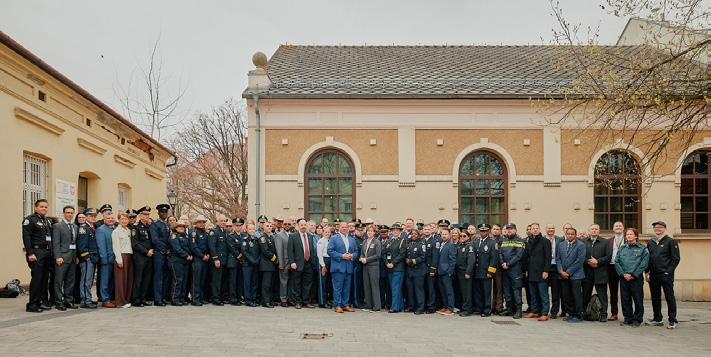
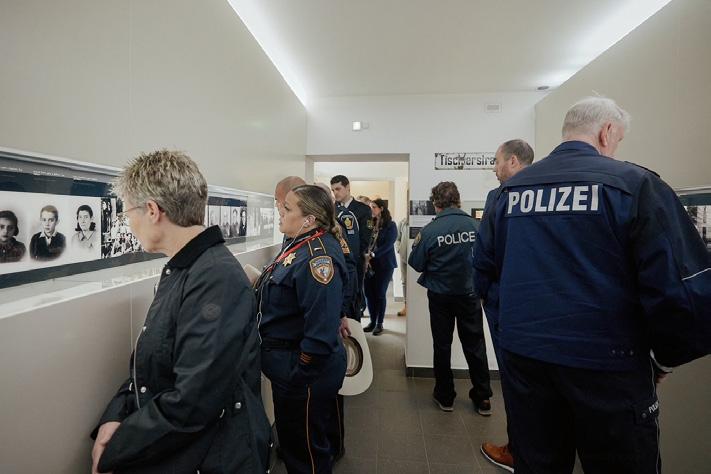
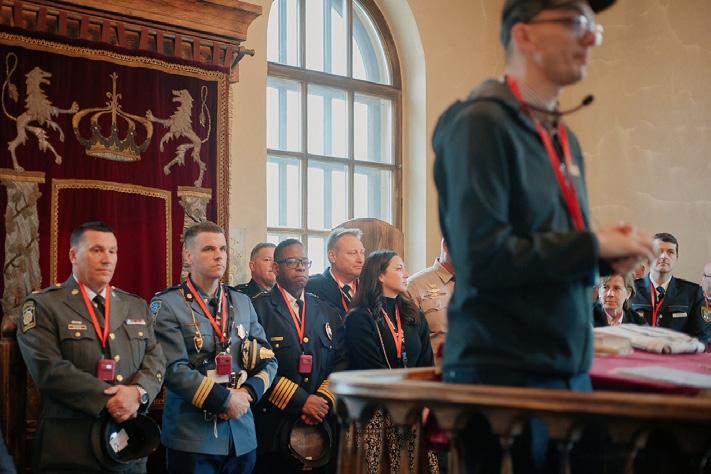
OŚWIĘCIM, Poland – In the shadow of one of history’s darkest sites, more than 120 senior law enforcement leaders gathered this week in Poland for a program with an urgent mandate to translate memory into action.
The seminar, titled “Operationalizing Never Again Not On Our Watch 2026,” was hosted at the Auschwitz Jewish Center Foundation in Oświęcim, adjacent to the former Nazi death camp Auschwitz. Organized in partnership with the Rutgers University Miller Center on Policing and Community Resilience and the University of Virginia, the program brought together police leaders, policymakers and security officials from across the United States, Europe and beyond for an intensive period of study and discussion.
Among the highest-ranking participants were New Jersey State Police Acting Superintendent Jeanne Hengemuhle, New York Police Department Executive Director Amy E. Bishop, Washington DC Metropolitan Police Department Assistant Chief Tasha Bryant and Royal Canadian Mounted Police Superintendent Sanjaya Wijayakoon, alongside senior European leadership including German Police Union Federal Chairman Jochen Kopelke. Their presence underscored the program’s reach into the upper ranks of global policing at a moment of heightened concern over extremism, antisemitism and other forms of hate.
For the Auschwitz Jewish Center Foundation, the convening reflects
a broader educational mission that has, over the past decade, engaged tens of thousands of diplomats, military personnel, law enforcement officials and educators in Holocaust based training programs focused on tolerance, human rights and ethical leadership.
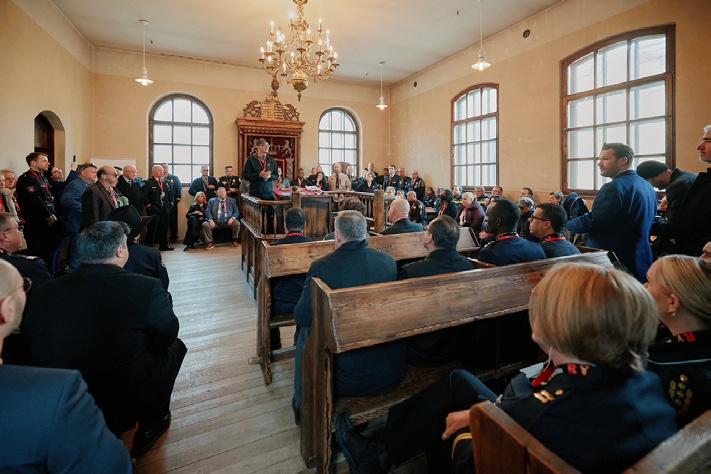
Participants spent time in Oświęcim combining historical study with professional dialogue. They toured the remains of the
Auschwitz Birkenau camp complex, engaged in seminars on the role of state institutions in enabling atrocities and took part in discussions designed to connect those lessons to contemporary policing.
“Law enforcement officers hold immense authority and responsibility,” said Auschwitz Jewish Center Foundation Director General Jack Simony. “Our responsibility
COMMUNITY NEWS
is to ensure that the lessons of the Holocaust are not confined to history but are actively shaping how today’s leaders confront bigotry, hatred and the dehumanization of others.”
The program’s structure reflects a growing emphasis on professional audiences particularly those entrusted with public authority. While Holocaust education has long focused on students and the general public, institutions like the Auschwitz Jewish Center have increasingly tailored their work to judges, diplomats and law enforcement officials, arguing that such groups play a decisive role in preventing hate and protecting vulnerable communities.
“Never Again is not a slogan it is a responsibility,” said Auschwitz Jewish Center Foundation Chairman Simon Bergson. “By bringing together leaders from across countries and disciplines we are building a community committed to recognizing warning signs and acting before prejudice and hatred escalate into violence.”
The delegation reflected that international scope. In addition to senior American officials, participants included police leaders and union representatives from Germany, Belgium, the Netherlands and Estonia as well as officials from Canada, Kenya and Australia. Many hold positions that shape training standards, departmental policy and national policing strategy.
The program was led by Paul Goldenberg, chair of the initiative, alongside colleagues from Rutgers and the University of Virginia and featured a mix of lectures, site visits and small group discussions.
For many, the setting itself a short distance from the barracks and crematoria of Auschwitz served as a stark reminder of how ordinary institutions including police forces were once drawn into systems of persecution and mass murder.
“In Oświęcim, where the consequences of hatred were carried out with the participation of ordinary institutions, we are consistently reminded that the line between protection and persecution is defined by human choices,” said Tomasz Kuncewicz. “Programs like this are about equipping today’s leaders with the awareness and moral clarity to ensure that authority is always used to defend human dignity, never to erode it.”
Sessions focused on the incremental nature of authoritarianism, the normalization of bias and the ethical obligations of officers when confronted with unlawful or discriminatory directives.
The delegation included senior law enforcement officials from across the United States and
abroad. including:
From Arizona: Cochise County Sheriff’s Office Captain Tim Williams.
From California: San Mateo Police Department Chief Ed Barberini.
From Colorado: Denver Sheriff’s Department Major Keri Adcock; Boulder Police Department Deputy Chief Ron Gosage; Colorado State Patrol Captain Wesley Kartus; Colorado State Patrol Lieutenant Colonel Joshua Downing.
From the District of Columbia: Metropolitan Police Department Assistant Chief Tasha Bryant; Metropolitan Police Department Captain Gavin Nelson.
From Florida: Aventura Police Department Chief Michael Bentolila; St Lucie County Sheriff’s Office Reservist Adam Dobrin.
From Maryland: Montgomery County Department of Police Captain Kathy M. Estrada; Hyattsville Police Department Deputy Chief Laura Lanham.
From Massachusetts: Massachusetts State Police Lieutenant Colo-
nel Daniel Tucker; Wellfleet Police Department Reserve Officer Marc Spigel.
From Minnesota: Minneapolis Police Department Bureau Chief Ganesha Martin.
From New Jersey: New Jersey State Police Acting Superintendent Jeanne Hengemuhle; South Brunswick Police Department Captain Jeffrey Russo; Monmouth Junction Police Department Chief Raymond J. Hayducka; Cinnaminson Police Department Chief William Obuchowski; New Jersey State Association of Chiefs of Police Executive Director Mitchell Sklar.
From New York: New York Police Department Executive Director Amy E. Bishop; Suffolk County Police Department Assistant Commissioner Elizabeth Daitz.
From North Dakota: North Dakota Bureau of Criminal Investigation Chief Agent Casey Miller.
From Tennessee: Knoxville Police Department Captain Tracy Hunter; Tennessee Bureau of Investigation Director David Rausch.
From Texas: Harris County Sheriff’s Office Sergeant Joseph Saavedra; Collin County Sheriff’s Office Sheriff AJ Skinner.
From Virginia: Virginia State Police Lieutenant Colonel Norman Gray; Loudoun County Sheriff’s Office Major David Hill; Louisa County Fire and EMS Deputy Chief Chris Lee.
From Washington: Seattle Police Department Lieutenant Dorothy Kim.
From Australia: Queensland Police Service Assistant Commissioner Virginia Nelson.
From Belgium: Antwerp Police Department Chief External Relations Karl Hereen; Antwerp Police Department Commissioner Bob
Davits; Local Police Antwerp First Inspector Van Bogaert Koen.
From Canada: Royal Canadian Mounted Police Superintendent Sanjaya Wijayakoon.
From Estonia: Estonian Police and Border Guard Prefecture Head Vaiko Vaher.
From Germany: German Police Union Federal Chairman Jochen Kopelke; German Police Union Deputy Chairman Sven Hüber; Bavarian State Police Colonel Bernd Bürger; Lower Saxony Police Detective Superintendent Damian Janitzki.
From Kenya: Anti-Terrorism Police Unit Chief Inspector Alvince Osura.
From Netherlands: Dutch Police Union Strategic Advisor Michel Öz; National Police Superintendent Koen Simmers; Dutch Police Union President Vanessa van den Berg.
From Portugal: Public Security Police Superintendent Rui Paulo Domingues Neves.
As the program concluded, participants departed Oświęcim with a shared charge to carry forward
the lessons of a place synonymous with human destruction into institutions tasked with protecting life and liberty.
For the Auschwitz Jewish Center Foundation, the hope is that such efforts will ensure that remembrance is not passive but operational embedded in the daily decisions of those who wield authority in societies around the world.
The Auschwitz Jewish Center Foundation is a nonprofit organization dedicated to harnessing the lessons learned from the Holocaust to combat hatred and bigotry through educational programs and by providing direct humanitarian aid to victims of mass atrocities. It supports survivors of genocides and other tragedies, including Ukrainian refugees and those impacted by Hamas’s October 7 attacks. The Foundation maintains the Auschwitz Jewish Center, the last remaining synagogue in Oświęcim (Auschwitz) and serves as the primary institution dedicated to preserving the memory of the town’s Jewish community while addressing hate. To date, over a million people have visited the center, more than 300,000 students participated in its educational programs and tens of thousands of diplomats, military and law enforcement personnel and educators, have taken part in its educational initiatives on tolerance and the Holocaust. For more information, visit: https://ajcfus.org/.
ON VULNERABILITY A self buried beneath its choices.
By Menachem Dahan, Psychotherapist - Bay Harbor Islands
A person arrives in the world equipped with remarkable abilities: the capacity to reason, to create, to adapt, and to grow. And yet, the most meaningful parts of life remain beyond their reach. They are accessed by something else entirely, the willingness to set those tools down.
This points to a distinction that shapes much of human experience, the difference between a primary encounter with life and a secondary one.
A primary experience is unfiltered. It is contact with what is real, other people, the weight of failure, and the openness of not knowing what comes next. A secondary experience, by contrast, is built for safety. It is life arranged around what a person can handle, cushioned by expectations, shaped by agendas, and designed to protect. On the surface, it looks like the real thing. But it is experience with the depth cut out from under it.
What is striking is how clearly people tend to know, somewhere just below the surface, when they have settled for the secondary version. There is a particular flatness to it, a sense that something genuine was available and a safer option was chosen instead.
Mental health work offers a clear window into this. The struggles that bring many people into a therapist’s office, however different they look, tend to come back to one underlying theme: not wanting to open up to a painful feeling that is outside of their control.
Consider a cycle that many people recognize in themselves. It starts with a failure or a moment of falling short. What usually follows is a sharp internal attack. Self-criticism, harsh judgment, and going over everything that went wrong. That self-criticism brings its own pain, which sends a person looking for something that will feel good, at least for a moment. And when that wears off, the original failure is still sitting there, now with the added weight of everything that followed. The cycle starts again.
It is easy to read the self-criticism as a sign of caring, of holding oneself to a high standard. And there is often some of that in it. But the deeper function is usually something else. When a person falls short, they are left open to a feeling they did not ask for. A quiet shame, a fear that this failure says something fixed about who they are, and a worry that the story they tell about themselves just got another bad chapter. That feeling comes from somewhere outside them, from the gap between who they hoped to be and what actually happened. It cannot be controlled.
Self-criticism can. The moment a person turns on themselves with anger or judgment, they have quietly taken back the wheel. The pain is now something they are doing to themselves. It may be sharp, but it is chosen. They are no longer at the mercy of what life handed them. They have swapped a wound they received for one they gave themselves.
This is a secondary experience in motion.
The real cost of this is what it closes off. Behind the shame a person is working so hard to keep out, behind the fear that a failure might just be a final word on who they are, there is something solid. A self that can look honestly at its own failures and not fall apart. A person capable of real accountability, which is a very different thing from self-punishment. A steadiness that does not depend on having gotten everything right.
That self only becomes available through a willingness to feel what a primary experience actually brings. The self that shows up when everything is managed and accounted for is not the full self; it is the performance of one. It is only when the outcome is genuinely uncertain, when the feeling is real and unscripted and not yet made sense of, that something deeper has a chance to respond. That response, the part of a person that meets the uncontrolled moment and finds it can be lived through, is where real selfhood lives.
In a way, consistently choosing the secondary experience is a kind of emotional agoraphobia. Many people move through the world while staying, in effect, inside. They show up in their lives but from behind a kind of glass, surrounded by expectations and ready-made interpretations that keep incoming experiences within a manageable range. They are in relationships at work, taking risks, but always with
just enough distance to make sure nothing truly uncontrolled gets through. Life becomes something that happens slightly away from the person living it.
What breaks this open is not dramatic courage. It is the willingness to feel what is actually there. The determination to bring as much of yourself as possible to every moment.
This is not only a psychological matter. In some sense, it is the basic shape of what it means to be a human being in the world.
Everything in nature tends to stay within itself, to remain what it already is. What sets a human being apart is the capacity and the calling to open toward something outside. Toward another person. Toward a truth larger than what one already holds. Toward G-d.
It is worth being clear about what vulnerability does and does not mean here. A person does not show up to any real encounter empty-handed. They bring desires, values, and things that matter to them, and that is not a problem. Having things you care about is not the obstacle. The question is what a person does when reality does not line up with those things. Whether they can hold their hopes loosely enough to let the actual encounter land, or whether those expectations become a way of forcing the pieces into a shape they can live with before the full picture has had a chance to come together.
The more a person needs to control the terms of an encounter before it has even begun, the more it signals that they do not yet trust themselves to sit with what they
cannot yet make sense of. That is the secondary experience at its root, not the having of hopes and preferences, but the inability to put them down long enough to find out what is actually there.
To truly connect to another person, to reality as it is, to G-d, means arriving without conditions on how it ends. Not knowing in advance what will be asked of you, what you will feel, or how the encounter will leave you. There is no formula for this. There is only the willingness to be present without the safety net of knowing the outcome.
That is what vulnerability actually is. Not weakness, and not the absence of tools. It is the thread that runs through every moment that has ever mattered.
Menachem Dahan is a psychotherapist in South Florida. mdahanpsychotherapy.com
KIDS ZONE KIDS ZONE
FACTS ABOUT ISRAEL DID YOU KNOW THAT...
Did you know? In the Dead Sea, you can float like a rubber duck without even trying!
Did you know? Yerushalayim is one of the oldest cities in the world—people have lived there for thousands of years!
Did you know? Tel Aviv is full of dogs—there are tons of pets walking around every day!
Did you know? Israel is small, but you can find beaches, deserts, and mountains all in one place.
Did you know? The Negev Desert covers more than half the country—and it’s full of cool animals and craters!
Did you know? Israel is called the “Startup Nation” because people there invent lots of new and exciting things.
Did you know? At the kotel, people write wishes and prayers on little notes and place them between the stones.
Did you know? Kids in Israel often learn to speak more than one language—like Hebrew and English!
Did you know? On Mount Hermon, you can play in the snow in winter—and then go to the beach later the same day!
Did you know? Israel is amazing at saving water and reusing it to help plants grow.
KIDS ZONE KIDS ZONE
Draw the other half of the picture and color it in.
UNSCRAMBLE THE FOLLOWING WORDS RELATED TO
ISRAEL
LIREAS
RNEEVG
AEDSDAE
Sweet Potato Soup with Sweet Potato Chips
By Jamie Geller
This sweet potato soup can be served in smaller portions as a dinner appetizer or used as a meal in itself (think soup and sandwich) on a cool autumn or cold winter day. The sweet potato chips are the added bonus. Be sure to make enough – extra chips are a must!
Ingredients
• 1 tablespoon extra virgin olive oil
• 2 large yellow onions chopped
• 4 cloves garlic minced
• 3 medium sweet potatoes peeled and cubed
• 4 medium carrots peeled and sliced
• 7 cups vegetable broth
• Kosher salt and black pepper to taste
• ¼ cup pure maple syrup
• 1 teaspoon pumpkin pie spice
• 1 sweet potato peeled
• Cinnamon and sugar for sprinkling
• Extra virgin olive oil
Preparation
SOUP
1. Heat evoo in a large pot over medium heat. Add onions and garlic and cook until onions are soft, about 8-10 minutes.
2. Add sweet potatoes, carrots, broth, salt and pepper, and bring to a boil. Lower heat and simmer about 20 minutes, or until potatoes are soft.
3. Using an immersion blender, puree soup, or transfer in batches to a blender.
1. Preheat oven to 350°F. Line a baking sheet with a parchment paper.
2. Using a vegetable peeler, create thin strips of sweet potato. Continue peeling until the entire sweet potato is used.
3. Lay strips on the baking sheet. Brush with evoo and sprinkle with cinnamon and sugar. Bake about 8 minutes until chips are crunchy, watching carefully so chips don’t burn.
4. Add maple syrup and pumpkin pie spice if desired and stir to combine. Serve warm with Sweet Potato Chips. CHIPS
Jamie Geller is the Chief Media and Marketing Officer at Aish. She is also a bestselling cookbook author, celebrity chef, television producer, and businesswoman. She’s the author of eight cookbooks and the founder of Kosher Media Network.
An Interview with Nina Pludwinski-Aiken, Pesach Coordinator at Tomchei Shabbos of Florida
There’s a lot people see when they think of Tomchei Shabbos. Boxes, deliveries, numbers. But behind it is something much more personal. We spoke with Nina Pludwinski-Aiken, Pesach Coordinator at Tomchei Shabbos of Florida. She recently completed overseeing the organization’s large-scale Pesach distribution, helping ensure that hundreds of families in South Florida were able to prepare for the holiday with dignity.
Currently based in Tel Aviv, Israel, Nina shared what it means to stay connected to this work across continents and what continues to drive her commitment to the community.
How did you first get involved with Tomchei Shabbos?
“It actually started very simply,” Nina says.
“I moved back to Florida from Israel after Covid. I was working in television there, in marketing for Channel 12, doing campaigns for shows both in Israel and internationally.”
“When I came back, I opened my own business, and at the same time I started volunteering. It began as something small, helping out with the boxes, doing deliveries, being involved once a week.”
“But once you’re there, and you see the families, you see what people are going through, it changes you.”
“The more I got involved, the more I saw the direct impact. You realize that by showing up, even
just one day a week, you’re actually helping real people in your community.”
“And it just grew from there. What started as volunteering turned into something much more involved.”
What made you take on a larger role?
“I think once you see how needed it is, you can’t really step back,” she explains.
“You see how many families are depending on this, how grateful they are, how much this program is needed, and you feel a responsibility.”
“You feel the weight of it, in a good way. You want to make sure everything gets done.”
“Especially around Pesach, when we’re helping over 700 families, it’s a big responsibility. But it’s also something you feel proud to be part of.”
“I felt like this was my role. Just like everyone has their role, this is something I could do for my community.”
What did your day-to-day involvement look like?
“I was in constant communication with vendors, coordinating orders for food and supplies and making sure everything was in place for packing.”
“A lot of it was managing logistics, from ordering to organizing to working with the team on the ground so that distribution would run smoothly.”
“At the end of the day, it was really just doing whatever needed to get done to make sure everything worked and that families were taken care of.”
What was it like staying involved even during wartime in Israel?
“I live in a duplex, so every time there was a siren, I was literally running up and down the stairs to the shelter. And at the same time, I’d still be on calls, still working, just going back and forth.” Nina says.
“That was just my reality at the time. You just keep going.”
“And honestly, it put things into perspective for me. Everyone has their role. There are soldiers protecting Israel, and I felt like my role was to make sure families in South
Florida had what they needed.”
“When you realize how much this program is needed, how many families are depending on it, you feel that responsibility.”
“You feel the weight of making sure over 700 families are taken
care of for Pesach. And once you feel that, things like time differences don’t really matter.”
“You just do what needs to be done.”
Is there a specific moment that shaped the way you see this work?
“It’s not really one moment. It’s the people,” Nina says.
“You don’t stop thinking about these families. You don’t stop thinking about their stories. Any of us could be in their situation. That’s how common and how relatable these stories really are.”
“You hear what people are going through, and it’s very real. It’s very relatable. It’s not something far away. You realize it could be you, it could be anyone.”
“You don’t stop thinking about them. Even after time passes, you still think about the families, you still feel connected to them.”
What moments stand out the most?
“The most powerful moments are when someone calls and says, ‘I don’t need help anymore,’” she shares.
“That’s the most satisfying feeling. It really is.”
“I remember a single mom who had been receiving help for a while. She told me that during a very difficult time, Tomchei Shabbos took away the financial burden of Shabbos. It took away that constant stress of how she was going to afford food for her children.”
“That gave her the ability to focus on her life again, to move forward, to grow, to rebuild. And when she called, she didn’t just say she was okay. She said she wanted
to give back.”
“That kind of moment, it stays with you.”
What does that kind of support really do for families?
“When you remove that financial stress around putting food on the table for Shabbos, people can finally breathe again,” Nina explains.
“They’re not constantly thinking, how am I going to afford this, how am I going to manage this.”
“And once that’s lifted, in many cases, they’re able to focus on their work, grow professionally, and rebuild stability.”
“Not everyone is in the same situation, but for a lot of people, this is what helps them get through a difficult time and move forward.”
“That’s really what this is all about. We help take care of the foundation so people can build again, grow, and move forward.”
What’s something about Tomchei Shabbos that most people wouldn’t know?
“Dignity is everything,” Nina says.
“We don’t give out leftovers. We don’t give expired food. Everything is fresh, high-quality food, the same kind of food you would want in your own home.”
“And a big part of that is the children. We think about that a lot.”
“You don’t want children to feel the struggle that their parents are going through. You want them to feel normal. You want them to have what every other child has at the Shabbos table.”
“The food looks normal. It’s produce you would buy yourself,
it’s proper brands, it’s real Shabbos food. It’s not leftover.”
“So the kids don’t feel like something is different. They can just experience Shabbos the way it’s meant to be.”
What does this work mean to you personally?
“For me, it really hits on Shabbos,” Nina shares.
“Sitting at my own Shabbos table and knowing that because of this work, hundreds of other families are able to sit at theirs too, you feel that.”
“You really feel that.”
“It makes Shabbos feel different. There’s a sense of peace in knowing you helped create that for someone else.”
How do you view this work overall?
“In a lot of ways, this is what it means to live Jewish values,” she says.
“It’s about living in the way of Torah and fulfilling the mitzvah of loving your neighbor as you love yourself.”
“It’s about taking care of each other, being there for each other, and making sure no one is carrying that burden alone.”
Each week, Tomchei Shabbos of Florida supports hundreds of families, and even more during times like the holidays. But more than anything, it’s about preserving dignity and making sure no one in the community has to go through these moments alone.
To be part of this effort email volunteer@tomcheishabbosflorida.org. To donate, visit TomcheiShabbosFlorida. org
4 bedrooms, 3 baths, 1,851sf
$7,800/M
4 bdrms, 2 full baths, 1,754sf
$799K
The Olympus- 1-2 bdrms, 1.5-2 baths, 1000-1400sf
Multiple Units available Starting at $199K
2 bdrms, 2 full baths, 1,000sf
$239K
Premium Financing for Life Insurance
A Strategic Tool for Real Estate Families
In Jewish tradition, we are taught to think beyond the present moment. Wealth is not only something to build but something to protect, preserve and pass on l’dor v’dor from generation to generation. For many families, especially those deeply rooted in real estate, this responsibility is both a privilege and a challenge.
Real estate can create tremendous wealth over time. Properties appreciate, generate income and often become the foundation of a family legacy. But that same wealth is often concentrated and illiquid, creating challenges when it comes to estate planning, liquidity and long-term wealth transfer.
This is where premium financing for life insurance becomes a powerful and strategic tool.
What Is Premium Financing?
Premium financing is a strategy where individuals or businesses leverage borrowed funds to pay for life insurance premiums, rather than using their own capital.
Instead of allocating large amounts of cash toward premiums, clients can preserve their capital, often allowing them to pursue additional real estate opportunities or investments, while still securing substantial life insurance coverage. In essence, it allows families to protect their legacy without slowing down the growth of it.
Why It Matters for Real Estate Families and Hedge Fund Manag-
ers
Real estate families often face a
By Glen R. Golish
familiar dynamic: significant net worth but limited liquidity.
Their wealth is tied up in properties. Apartment buildings, commercial real estate, development projects, assets that are valuable but not easily converted into cash without disrupting long-term plans.
Premium financing offers flexibility. It allows families to:
Preserve liquidity for new acquisitions or investments
Avoid selling or refinancing properties to fund premiums
Maintain momentum in their real estate strategy while implementing estate planning
Instead of choosing between growth and protection, families can achieve both.
Creating Liquidity When It Matters Most
One of the most important roles life insurance plays is creating immediate liquidity at death.
Estate taxes, debts and administrative expenses often arise quickly and must be paid in 9 months. Without proper planning, families may be forced to sell properties, sometimes under pressure and at unfavorable market conditions. Unfortunately we see this too often. Joe Robbiee Stadium was sold due to no planning.
Premium financed life insurance
provides a tax-efficient death benefit that can be used to cover these obligations without disrupting the portfolio.
For real estate families, this is not just financial planning. It is preservation of legacy.
Efficiency, Stewardship, and Responsibility
Premium financing is not about excess or complexity. It is about efficient stewardship. It allows families to use leverage thoughtfully, keeping capital invested and productive while still securing longterm protection.
It reflects a balanced approach: continuing to build while also preparing for the future.
The Importance of Proper Structure
Like any advanced strategy, premium financing must be structured carefully.
Key considerations include loan terms, interest rate exposure, collateral requirements and long-term exit strategies. When done improperly, it can introduce risk. When designed and managed correctly, it can be a highly effective component of a comprehensive plan.
A Coordinated Approach
Premium financing does not stand alone. It works best when integrated with tax planning, estate structures, and investment strategy.
At G Wealth Strategies, we view our role as coordinating these moving parts, ensuring that insurance, investments and estate planning work together as one cohesive system.
A Final Thought
For families who have built meaningful wealth, particularly through real estate, the next phase is not just accumulation. It is preservation.
Premium financing provides a way to protect that wealth without interrupting growth. It allows families to maintain control, create liquidity and transfer assets intentionally.
Because true wealth is not measured only by what is built.
It is measured by what is preserved, protected and passed on for generations to come.
About the Author:
Glen R. Golish is the Founder and CEO of G Wealth Strategies and a Forbes-recognized Top Financial Security Professional. He works closely with families on comprehensive financial and estate planning, including cross-border considerations for those navigating U.S. and Israeli planning needs.
Important Disclaimer:
Please seek qualified legal and tax advice before implementing any planning strategies, in conjunction with guidance from G Wealth Strategies.
Contact Information:
3010 N. Military Trail, Suite 318, Boca Raton, FL 33431 Office: 561-869-4600 | Cell: 561-239-9400 | www.gwealthstrategies.com
Legal guidance for international buyers from contract to keys in your hand
20+
Years in real estate law
Represents international and Israeli clients
LL.B. in Law & Economics + MBA
Deputy Chair, Israeli Bar Association (Corporate Law)
Lecturer in legal and director programs
THINKING ABOUT BUYING IN ISRAEL?
Adv. Keren Kepel Shmueli
Real Estate & Commercial Law Expert
With over 20 years of experience, Keren represents private buyers, investors, and developers in real estate transactions across Israel.
She specializes in guiding foreign residents through the full process of purchasing property in Israel, whether for relocation or investment.
You’re stepping into a new legal system. Do it right from day one.
We ensures:
Your rights are protected
Your risks are minimized
Your deal is structured correctly from the start
The Market is Nuts – Are You a Loaner or an Owner?
By Shmuel Shayowitz
After my recent article, “The Market is Nuts - and You Are to Blame,” I received more feedback than I expected. There were many calls, emails, and candid conversations. What stood out was that there was no real pushback to my views. All were in agreement about the realities of the market, even if it was uncomfortable to acknowledge.
The response was consistent: “You’re right… but what are we supposed to actually do?” Unfortunately, that’s the harder conversation to have. Recognizing the problem is easy, but changing behavior in the middle of a heated market is not.
I’ll start with what I tell many of my clients, and it’s not always something they want to hear. Before you look at a single house, you need to define two numbers: what you can get approved for, and what you can afford. It’s simply what you are qualified for and what you can live with. Those are not the same numbers, and confusing them is where most problems begin. The approval is math. The affordability is life-altering.
If your home purchase leaves no room for error with no savings cushion, no flexibility with expenses, and no margin for life’s unpredictability, then you didn’t buy a home, you bought heartache. And this pressure has a way of showing up at the worst possible times.
The next step is learning how to slow yourself down in a fast-paced market. That sounds simple, but it’s not. When you walk into an open house and hear there are already multiple offers, your instincts take over. You start justifying instead of evaluating. One practical rule I sug-
gest is that buyers shouldn’t make financial decisions in emotional environments. If you’re in the middle of a bidding situation, step outside - literally and figuratively. Go back to your numbers. If the deal only works when you stretch yourself, then it doesn’t work, period.
Another reality that many people don’t want to confront is location. There is nothing inherently sacred about a specific area. Yes, communities matter. A lot. Yes, schools, shuls, and infrastructure are important. But when demand becomes concentrated in a handful of areas, prices detach from logic. We’ve seen this before in multiple markets. The people who were willing to look slightly outside the “prime” areas ended up with more sustainable purchases, less stress, and in many cases, just as much long-term upside.
There’s also a conversation that needs to happen at the community level. We don’t talk about this enough. The constant discussion of who bought what, for how much, and how fast it appreciated is not harmless. It fuels urgency, and urgency leads to poor decisions. Why does this need to be Shabbos table discussion?
While we are at it, let’s also address the quiet support system that’s becoming more common in far too many circumstances. I mentioned it in my previous article and its worth repeating again about the family contributions, gifts, and ongoing help. (Let’s not even talk about how parents are being pressured to match what their children’s in-laws are giving) There’s nothing wrong with support, but it should
enhance a good decision, not rescue a bad one. If a home purchase only works because multiple people are stretching to hold it together, that’s not a sound deal at all. That’s a transaction built on instability. You are doing your children a longterm disservice.
And finally, there are tools and resources (and people) that can help with these discussions. For example, we just revamped our website to include highly sophisticated calculators to help every type of aspiring buyer or existing homeowner analyze their needs best. Use these tools. Do more research. Ask an unrelated party for advice. These issues are not going away, we need to learn how to live with them. The market will remain competitive this summer, but that doesn’t remove personal accountability from the equation. In fact, it makes it more necessary. The advantage right now shouldn’t belong to the fastest buyer, it belongs to the most disciplined one.
Shmuel Shayowitz (NMLS#19871) is a highly regarded Real Estate & Finance Executive, Writer, Speaker, Coach, and Advisor. He is President and Chief Lending Officer of Approved Funding, a privately held national mortgage banker and direct lender that has facilitated over $3 billion in mortgage funding. Shmuel has over twenty years of industry experience and holds numerous licenses and accreditations, including certified mortgage underwriter, licensed real estate agent, residential review appraiser, and accredited investor, to name a few. Shmuel has successfully navigated through many changing markets and business landscapes, making his market insights and experience well-coveted within the real estate industry. He can be reached via email at Shmuel@approvedfunding.com.
Consolidation
Renovation Loans
Second Homes • Credit Issues • Limited Income • Foreign Nationals • Credit Issues • Limited Income • Foreign Nationals • Fixed Rate Seconds • Adjustable Rate Loans
Second Homes
Fixed Rate Seconds • Adjustable Rate Loans
Financing in Israel • Investment Properties • Bridge Loans
Financing in Israel • Investment Properties • Bridge Loans