Community Voice magazine is not responsible for the Kashrut or services provided by the advertisements. It is up to the consumer to verify the information.
A
Beyond the Headlines
weekly glimpse into the Israel you won’t read about in the news
By Sivan Rahav Meir
Implications of a Matzah
Shortage
Many in Israel encountered a matzah shortage on Pesach. “There’s no matzah in the supermarket.” “Does anyone have extra matzah?” “I checked every branch and couldn’t find any.” These messages and more spread through large numbers of WhatsApp groups. In some neighborhoods they even opened dedicated groups specifically for people giving away or looking for matzah. According to all the surveys, the people of Israel, especially the younger generation, are returning to their identity, and so it seems that this Pesach was observed more than ever.
Hearing about the matzah shortage, acclaimed Israeli writer Racheli Moskowitz wrote the following:
“I was happy to hear about all this searching for matzah. It shows that we are not giving up on tradition, and in so many homes people want to feel that connection. It made me think about the hostages who refused to eat chametz on Pesach while in captivity; about Agam Berger, who made it clear to the terrorists that she would not touch pita for an entire week, and how she and her friends recreated a Haggadah from memory. That spiritual heroism surely leaves a mark on the world and ripples outward.
“A year ago, we left an empty chair at the Seder table, waiting for the hostages. This was the first Seder after they emerged from
darkness into light. Together with them, we have all received another layer in the story of our national freedom. Have we paused enough to give thanks, to reflect? We are in the midst of a deep national reckoning: Who are we? Why are we here, and where do we belong?
“So yes, there may be a shortage of matzah in the stores, but among us there is no shortage of identity or belonging, and that is the sweetest freedom of all.”
Happy Birthday, Bar
I saw what Racheli wrote come alive on Chol Hamo’ed Pesach. Like so many others, we went to the Old City. Since the Kotel was closed due to the security situation, we simply looked toward the empty Kotel plaza and prayed from a distance. On the way out, in the square at the center of the Jewish Quarter, I saw a birthday celebration, with people lifting someone onto their shoulders.
It looked from afar like a noisy American bar mitzvah, and I tried to make my way around the circle of dancers. But then I recognized the birthday boy: released captive Bar Kuperstein.
In that very square, Bar’s mother, Julie, had marked his twenty-second and twenty-third birthdays, with prayers, while he was deep inside a tunnel in Gaza. And now she was celebrating his twenty-fourth birthday there with him. Friends and family were there, and of course his father, Tal, who has become a symbol of perseverance and arrived in a specially adapted vehicle with his wheelchair.
The children of the Jewish Quarter brought out refreshments from their homes. Many passersby stopped to hug them, take pictures, offer blessings, and even join the group photo, as if they were family. And really, they were.
Julie summed it up: “It is unbelievable where Bar was on the previous Festival of Freedom, and how he is celebrating this one, which is also his Hebrew birthday. May we merit to see all our hopes fulfilled before our eyes like this.”
Typing Hope with His Nose
Chaim Elchanan Idan lives with cerebral palsy. He cannot walk, eat, or speak on his own. A few years ago, when he tried typing on a computer as usual, he felt once again that his fingers weren’t responding quickly enough. His nose, on the other hand, tapped out letters in rapid succession.
“Right now I’m typing to you with my nose,” he wrote when I reached out to him on WhatsApp. Then he sent me his weekly newsletter on the Torah portion, called Ohr HaTorah (“The Light of the Torah”), which he began publishing back in seventh grade. He sends the texts and printing instructions to the print shop himself, and also distributes the newsletters through the streets of Jerusalem in his motorized wheelchair, dropping them off at shul. “I have to stay busy,” he explained, “otherwise I get depressed.”
Throughout Pesach, the Kotel plaza was nearly empty because of the war; only 50 people were permitted to enter at one time, and Chaim was one of them. He wrote: “Thank you for the special privilege of being your messenger and praying here. My advice to everyone is to pray, to speak with Hashem always —not only from the siddur, not only in Hebrew, but even in your own words. I speak with Him a lot, and I highly recommend it. He is there, He is listening. And you don’t need to type to Him with your nose…”
Bar
Mizvah
in Israel, No Matter What
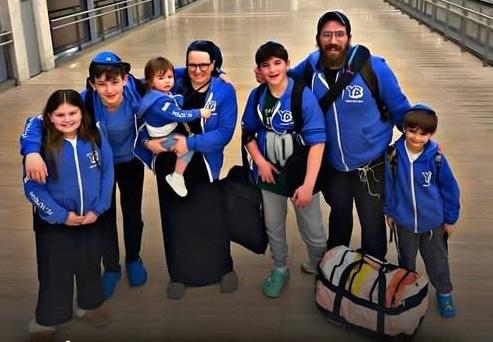
Ahuva Schorr is a party planner living here in Israel. She wrote to me that all her events from March through June had been canceled, with the exception of one: the bar mitzvah of Yehudah Buxbein of New York, that took place on Chol Hamo’ed Pesach.
The parents, Ilana and Aryeh, came with the family to Israel in the middle of the war, determined
to celebrate Yehuda’s bar mitzvah in Israel, no matter what.
“The family of five flew in from New York two weeks ago, at the height of the war, and celebrated Pesach here as well,” Ahuva related.
“I updated them before their arrival that their return flight home had been canceled, but despite everything, they chose to come on a one-way ticket. They didn’t know how or when they would get back. The main thing, for them, was to be in Israel. And the smiles never left their faces.
“So on Sunday night of Chol Hamo’ed, while everyone was talking about Trump’s ultimatum, I had the rare privilege of producing Yehuda’s bar mitzvah celebration in Gush Etzion, in full accordance with the Home Front guidelines. To me, this is a deeply inspiring story. Mazal tov, Yehuda. You have joined the Jewish people at a very special time.”
Sunday to Thursday: 12pm - 10pm Friday: 11am - 3:30pm OPENING HOURS Scan the code to order!
The Raw End of The Deal A Comeback for Commitment
The conventional approach to change treats it as a process of deep introspection: examining patterns, understanding motivations, and gradually working through internal resistance. The assumption is that profound shifts require digging into where a person currently is, understanding why they are the way they are, and slowly building toward something new.
Introspection has its place. It helps a person understand where they are and why they got here. That kind of work is real and valuable.
However, instead of starting with what a person has experienced or felt, there’s something more fundamental to begin with: who they are beneath all of that. That’s what commitment is. And it can reach places that introspection alone can’t.
Commitment accesses something in a person that exists beyond their current feelings and circumstances. It’s the decision to live as who one actually is at the core, whether or not it’s felt yet. This is who I am, and I’m going to start from there.
This isn’t a way around the inner work. The feelings, the habits, the parts that aren’t yet aligned, they all matter, and the goal is to bring them all along. Commitment and inner experience aren’t in competition. They’re both necessary. The only real question is which one comes first.
Commitment belongs first, not as a strategy, but because of what it actually is. There are two drives inside a person: the drive to do and the drive to be. The drive to do is
responsive. It waits for the right feelings, the right circumstances, the right moment. The drive to be doesn’t wait for any of that. It already knows what’s true. Commitment is living from that deeper place. Starting from commitment isn’t being clever about the order of operations. It’s reaching for the more honest place inside oneself.
That said, it’s not about holding a decision and hoping it sticks. The goal was never to sustain momentum indefinitely. It’s about fully integrating commitment and inner experience, and that kind of integration takes time, involves setbacks, and asks a person to keep returning to the same starting point again and again. The real gift of commitment is that it makes returning possible. When a person anchors to who they actually are, they start to know what it feels like to live from that place. That familiarity is what makes everything else catchable, the feelings, the habits, the automatic responses. They need a landing point. Commitment gives them one.
From there, the internal work becomes possible in a different way. Not figuring out who one is, but knowing it, and working to bring the rest along.
It won’t always be clean. There will be gaps between commitment and feeling, setbacks, moments of distance. But starting from commitment means a person always knows where they stand, even in those moments.
Macro-Commitment
Commitment doesn’t just exist on the personal level; it also has a macro version. Kabbalah teaches
that creation isn’t just one world. There are many spiritual realities existing right here, in the same space, each more refined than the next, each closer to G-d in His truest form.
These different realities reflect a core tension: immersion versus commitment.
In the higher realms, there’s no need for commitment because there’s no alternative to immersion. The reality of G-d is so present, so overwhelming, that connection happens automatically. Service comes naturally. It feels undeniable.
Here, that’s not the case. Awareness of G-d, of truth, is not the default. It takes effort just to feel a little of it.
The connection Jews have with G-d isn’t built on spiritual overwhelm. It’s built on commitment. And commitment reaches somewhere that immersion can’t, because it doesn’t come from the drive to do, which responds to what can be felt and experienced. It comes from the drive to be, from something that precedes experience altogether, something that simply is. That’s what allows it to reach G-d at a level that no amount of spiritual feeling can.
Commitment doesn’t ask whether it’s being sensed right now. It chooses truth regardless. No other reality functions this way. No other plane has to reach that deeply within itself to find G-d. In the higher realms, the relationship is more like an exchange. They experience G-dliness and respond to it. That’s real, but it’s transactional.
COMMUNITY NEWS
The relationship Jews have with G-d is different. It’s not a business relationship. It’s a family one. It’s baked into who they are, spiritually and physically. Which means it doesn’t express itself primarily through feeling. It expresses itself through commitment. Through fact.
And there’s nothing deeper than a relationship built on fact. It might not feel like good news at first. Of course, there’s a connection; there’s no choice. But that’s actually the point. The connection doesn’t depend on whether the experience is overwhelming or whether it’s felt in any given moment. It simply is. And from that foundation, everything else can grow. A spiritual high comes and goes. This doesn’t.
Being Jewish means living from that place. Anchoring to the com-
mitment, and then doing the honest work of bringing every other part of oneself into alignment with it.
The goal is to integrate the two. The deepest connection to G-d runs through commitment, but it reaches its fullest expression when that commitment is felt through every level of who a person is. When one has anchored to the truth and worked through the resistance, they have brought all of themselves along.
In practical terms, a person anchors to who they actually are, then works, honestly and patiently, to bring their thoughts, feelings, and habits to that place. They notice what’s in the way. They notice what’s resisting. Those parts don’t get dismissed. They get addressed from a place of clarity, from knowing what’s true.
It won’t be steady. There will be
moments of alignment and moments of real distance. But the starting point holds. And when a person loses the feeling of it, which they will, the commitment is what they return to. Not because the inner experience doesn’t matter, but because commitment is what keeps the door open for it to come back.
This is what Moshiach represents. A person, and at a larger scale, the world, is fully anchored to truth and fully integrated at every level. G-d’s children, who don’t have constant spiritual clarity, who feel pulls in different directions, who have to work for it, still come home. That’s something that has never existed anywhere else. Commitment carries lived human reality into a relationship with G-d that no other part of creation has ever had.
A Mideast poll of Americans shows a turn of the tide
By Farley Weiss
Still, U.S. foreign policy has never been better for Israel.
(Apr. 11, 2026/JNS) A Gallup poll in February found that 41% of Americans sympathize more with the Palestinians, compared to 36% for the Israelis, marking the first time in the history of its polling that more Americans favor the Palestinians. That is a five-point margin. Democratic voters overwhelmingly support Palestinian Arabs by a 65-17 margin, and even independents favor them right now.
At the same time, the poll shows overwhelming support for Israel by Republican voters by a 70-13 margin. As a result, many Democratic candidates, including potential presidential candidates, have publicly declared their support for Palestinians in the face of such statistics.
What is lost in the media propaganda that has helped lead to these numbers is the absurdity that American voters would actually favor Palestinian Arabs over Israelis as it relates to U.S. interests.
For example, despite ranking No. 92 in the world by population, Israel has, according to U.S. Secretary of State Rubio, one of the two best air forces in the world. It also has one of the best missile-defense systems in the world. Israel is a top military power with one of the best intelligence services in the world. It is a stalwart American ally. It has a thriving economy with around 100 Is-
raeli companies on the NASDAQ U.S. stock exchange. It is a stalwart American ally.
As for Palestinian Arabs, they were found in a poll conducted by the Anti-Defamation League to be the most antisemitic people in the world, with more than 90% expressing antisemitic views—and this was before the Hamas-led terrorist attacks in southern Israel on Oct. 7, 2023. In polls, the majority of Palestinian Arabs are found to have supported the Oct. 7 slaughter of 1,200 people (including 40-plus Americans) and the kidnapping of 251 others. It’s not surprising since the Palestinian Authority, led by 86-year-old Holocaust-denier Mahmoud Abbas, continues a program encouraging martyrdom called “pay for slay,” which rewards terrorists who target and kill Jews. These terrorists and their families are rewarded financially.
The 1964 founding document of the precursor to the Palestinian Authority, the Palestinian Liberation Organization, under Article 24, made it clear that the Palestinian Arabs made no claim to the West Bank (which included eastern Jerusalem) and Gaza. The reason they cared (and still care) about territory is its aim to destroy Israel. It is therefore obvious that militarily and economically, the best interests of the United States would be served by being aligned with Israel and not the Palestinian Arabs. Those who side with the Palestinians tend to
base their view on the idea that somehow there is an injustice going on and that the land of Israel really belongs to the Palestinian Arabs.
However, the historical facts tell a completely different story. David was the king of Jerusalem 3,000 years ago. To try to claim the Palestinian Arabs were indigenous to the land before the Jews, Abbas absurdly claims they are descendants of the Canaanites, even though the Bible itself delineates the land of the Canaanites outside of the State of Israel. The fact is that the Jews have been in Israel for the past 2,000 years, and their forefather Abraham was a direct descendant of Noah, who owned the world after the flood. Noah gave Israel to his son Shem, who gave it to his direct descendant Abraham, and Abraham gave it to Isaac, who gave it to Jacob and then to the 12 tribes of the Jewish people as delineated in the Bible.
After the Ottoman Empire gave up its claim to Israel after World War I, the Allied powers met at San Remo and heard claims from different parties, and gave the Arabs Iraq, Syria, etc., and gave the Jews Israel. They codified that decision on July 24, 1922, by the League of Nations, which adopted the Articles of the Mandate for the administrative and political management of what was then called Palestine. They included the United States in that decision as part of the 1925
COMMUNITY NEWS
Anglo-American Treaty, ratified by the U.S. Senate and signed by President Calvin Coolidge. There was strong bipartisan support for a Jewish state, including sovereignty over Jerusalem, with presidents Teddy Roosevelt, Woodrow Wilson, Warren Harding and Herbert Hoover all supporting the Jewish right to Israel. The 1922 League of Nations decisions were maintained by the United Nations under Article 80 of its charter. A U.N vote on partition for an independent Jewish state and an independent Arab state was made on Nov. 29, 1947. It won by a vote of 33-13, with 10 abstentions.
After Israeli Prime Minister
David Ben-Gurion proclaimed a Jewish state on May 14, 1948, regional Arab armies attacked Israel in an attempt to destroy it and failed. They tried again in 1967 and 1973. The Palestinian Arabs are now leaders in these attempts to destroy Israel with vast support from the Palestinians for the events of Oct. 7.
Whether it is militarily, economically, legally or historically, supporting Israel is in America’s military, economic and political interests. It’s not difficult to get the right answer. The case just needs to be made, and the antisemitic propaganda needs to be attacked.
Even though the numbers
have been getting worse, the fact is that the United States has never had a more pro-Israel president in U.S. history or a more pro-Israel secretary of state and secretary of defense. Even if poll numbers are not moving in the right direction, U.S. foreign policy has never been better for Israel. At least America’s top leaders understand that.
Farley Weiss is the co-author, with Leonard Grunstein, of Because It’s Just and Right: The Untold Backstory of the U.S. Recognition of Jerusalem as the Capital of Israel and Moving the U.S. Embassy to Jerusalem, and a past president of the National Council of Young Israel.
10% DISCOUNTIF YOU BRING IN THE COMMUNITY VOICE MAGAZINE
• LIVE SUSHI STATION
• DELIVERY & PICKUP
There’s no good reason for any Jew who is pro-Israel to resist using the term to describe themselves.
During Passover, a friend asked me to recommend one book that explains why someone should be a Zionist. The nuance of the question can easily be missed: There are many very good books I could recommend to someone who wants to understand Israeli history or to get advice on how to defend against lies about the Jewish state and people.
No one in our time is going to become a Zionist by reading Theodor Herzl, construed as the modern-day movement’s founding father. So the question is an important one, as Zionism is increasingly misunderstood.
In fact, a survey conducted by the Jewish Federations of North America revealed that just 37% of American Jews stated that they identified as Zionists. Another 15% said that they were anti-Zionist/nonZionist. A huge 48% of those surveyed, it can be surmised, are pro-Israel but not Zionists, and I would argue that a big reason for this is that we have allowed Zionism to become a dirty word.
There’s no good reason for any Jew who is pro-Israel to resist using the term Zionist to describe themselves. Zionism is a team sport, and the object of the game remains what it has always been: the saving of Jewish lives.
But what recent book conveys that? One published in 2025 came
Zionism Explained
By Moshe Phillips
to mind right away, and unfortunately, it has caught the attention of far too few American Jews. Rabbi Tuly Weisz wrote Universal Zionism: The Movement Powering Today’s Jewish-Christian Alliance.
Born and raised in Ohio, he later served as the rabbi of an Orthodox synagogue there. He and his young family moved to Israel in 2011. His viewpoint is at once fresh and original, yet anchored in Jewish tradition and traditional Zionism.
The book is divided into four specific parts. In his substantial introduction, Weisz shares his personal story and prepares his readers for what is to come later by grounding his ideas with his thoughts about what happened after the Hamas-led terrorist attacks in southern Israel on Oct. 7, 2023. Here, Weisz writes, “What proved even more shocking than the Oct. 7 attacks was the global response that began on Oct. 8.” But even in that section of the book, he displays an amazing faith and positivity that “God has made an eternal promise never to abandon Israel.”
The two middle sections of the book lead me to recommend the work so strongly. In “Political Zionism” and “Religious Zionism,” Weisz provides a very solid review of these two wings that comprise mainstream Zionism. From Herzl to Rav Kook, from the Balfour Declaration to the 1967 SixDay War—and nearly every other important event and figure—he
introduces his readers to the basics of Zionism.
In the final section, Weisz explains his conception of “Universal Zionism.” He invites Christians into the Zionist movement and writes, “At the heart of Universal Zionism lies a simple but radical proposition: the Bible still means what it says about the Land of Israel. Jews and Christians who take Scripture seriously must support complete Jewish sovereignty over the ... biblical heartland of Judea and Samaria ... .” He goes further, writing, “Imagine churches and synagogues in every city becoming centers for Israel education ... .”
Weisz seems to see his “Universal Zionism” idea as especially necessary after Oct. 7 and writes, “over time it became painfully clear: to Hamas, the real battlefield is in the global court of opinion.” On this point, it is hard to argue with Weisz. When nearly half of American Jews must be more than just a little mystified by the word Zionism, there’s something wrong. Very wrong.
Far too many American Jews have a strong emotional attachment to Israel, but don’t want to call themselves Zionist or be labeled by the term. The longing by Jews for the Land of Israel was found through the dispersion for nearly 2,000 years. It drew Jews from every corner of the world to resettle our ancient homeland. This includes a common religion, a shared history and a consciousness of a bitter exile, filled with
violence and oppression.
And yet, this is what makes the Zionist movement so polarizing and makes many American Jews uncomfortable. The task of the hour is to better explain the movement’s history and link to the present day—and to be proud of it and exhibit that pride to the world.
Moshe Phillips, a veteran pro-Israel activist and author, is the national chairman of Americans For a Safe Israel (AFSI). A former board member of the American Zionist Movement, he previously served as national director of the U.S. division of Herut and worked with CAMERA in Philadelphia. He was also a delegate to the 2020 World Zionist Congress and served as editor of The Challenger, the publication of the Tagar Zionist Youth Movement. His op-eds TRaEnNdDlIeNtGters Ohapveerabteen widely published in the United States and Israel. https://www.jns.org/opinion/column/zionism-explained
New OU Kosher Podcast Offers an Inside Look Into the World of Kashrus
“Keeping It Kosher” explores minhagim, halachot, and stories from the field, and offers behindthe-scenes insights into kosher certification
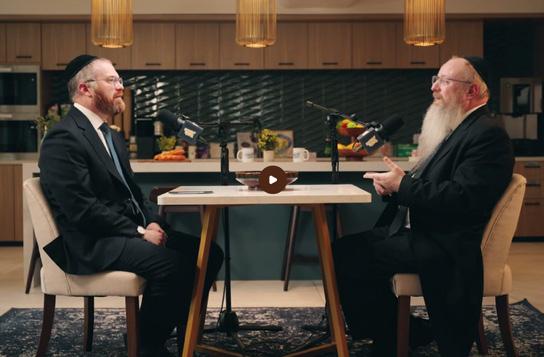
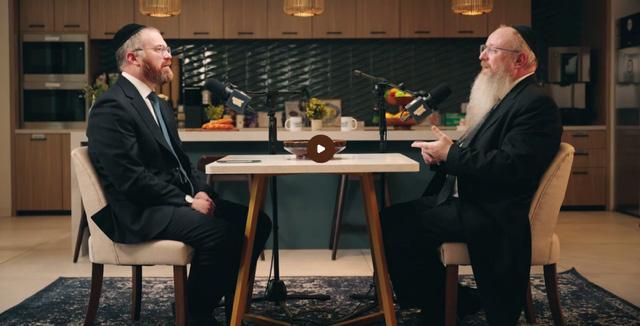
Podcast host Rabbi Ezra Sarna, OU Director of Torah and Halacha Initiatives, interviews Rabbi Nachum Rabinowitz, OU Kosher Senior Rabbinic Coordinator, in Keeping It Kosher’s second episode.
From household-name foods to restaurants, simcha venues, and hotels, it’s easy to take the remarkable range of kosher options for granted. Rarely do we stop to consider the meticulous supervision, time, and effort required to ensure that each product and establishment meets the highest
standards of kashrus.
OU Kosher’s new Keeping It Kosher podcast takes listeners behind the scenes of the world of hashgachot, revealing what it truly takes to certify food and facilities as kosher and highlighting the dedicated people who make it all happen.
Geared toward everyone from seasoned to new kosher consumers, the podcast, with the tagline Kashrus Conversations for the Curious, features firsthand insights from mashgichim, poskim, and global kashrus experts.
“Beyond certifying food and establishments as kosher, a key part of our mission is educating people about kashrus, something we find very fulfilling,” says OU
Kosher Chief Operating Officer
Rabbi Moshe Elefant, who oversees roughly 15,000 plants in 105 countries and was the podcast’s first guest.
“Keeping It Kosher is a wonderful opportunity to enlighten people about kashrus in a serious yet engaging way,” he says. “Kosher food doesn’t happen automatically, or because a rabbi blesses it. It takes tremendous effort, world travel, research, and care. Understanding what goes into kashrus certification adds a deeper dimension to keeping the mitzvah.”
Available on YouTube, Spotify, Apple Podcasts, 24Six, and Naki Radio, Keeping It Kosher emphasizes transparency and explores the intersection of technology
and culture. Episodes highlight fascinating stories behind the OU symbol, relationships between mashgichim and companies, and the reasoning behind kashrus halachot and minhagim.
Ahead of Pesach, the first episode, Gebrokts Unpacked: Origins of the Minhag and Its Applications, explored navigating situations where some family members eat gebrokts while others do not; why people in chutz la’aretz stop eating it on the eighth day of Pesach; and the thousands of Pesach questions OU Kosher fields each year. It reached close to 30,000 views since launch.
OU Kosher Director of Education and Community Relations Rabbi Eli Eleff hopes the podcast will highlight the challenges kashrus professionals face and show their human side.
“I think people will gain a greater appreciation for kashrus professionals, who work tirelessly on behalf of the community,” he says.
OU Director of Torah and Halacha Initiatives Rabbi Ezra Sarna hosts the podcast, and is eager to learn about OU Kosher’s inner workings alongside podcast viewers and listeners.
“The easiest part of hosting this podcast is looking genuinely interested and curious about what my esteemed guests are saying,” he says. “It’s all new to me too. Their experience and knowledge are staggering. I’m excited for the Torah world to meet the giants that work at OU Kosher — seri-
ous talmidei chachamim, experts in the practical and modern application of halacha, food scientists, and business-minded individuals with rock-solid integrity and yirat shamayim. More than just appreciating their work, you’ll hear about their lives. It’s powerful.”
New episodes are released monthly on Motzei Shabbos. The second episode will explore alcohol and the halachic considerations of wine. The third episode ahead of Shavuot, will focus on cheese, including varieties that require waiting six hours before eating meat. The fourth, summer-themed episode, will cover kashrus considerations while traveling.
During his 37 years at OU Kosher, Rabbi Elefant has seen a significant shift in consumers’ interest in kashrus certification.
“In the past, people were satisfied with a limited selection of kosher food,” he reflects. “Today, kosher consumers want everything, including a different exotic wine for each of the four kosot. More than that, they are educated and genuinely care about what makes something kosher.”
The community’s fascination with every detail of kashrus is remarkable, he says.
“People are thirsty for knowledge. We see it in the volume of calls and emails we receive constantly. They are careful about what they eat and do not take anything for granted. An educated consumer is the best consumer. When consumers understand
kashrus, they become true partners in maintaining its highest standards.”
Rabbi Eli Eleff
Managing Director
of Marketing and Community Relations
OU Kosher
212-613-8352
eleffe@ou.org
About OU Kosher
OU (Orthodox Union) Kosher is the world’s largest and most widely recognized international kosher certification agency, certifying 1.5 million products produced in more than 15,000 plants located in 108 countries around the world. The agency certifies two-thirds of all kosher-certified foods in the United States.
About the Orthodox Union
Founded in 1898, the Orthodox Union (OU), or Union of Orthodox Jewish Congregations of America, serves as the voice of American Orthodox Jewry, with over 400 congregations in its synagogue network. As the umbrella organization for American Orthodox Jewry, the OU is at the forefront of advocacy work on both state and federal levels, outreach to Jewish teens and young professionals through NCSY, Israel Free Spirit Birthright, Yachad and OU Press, among many other divisions and programs.
To watch or listen to Keeping It Kosher: Kashrus Conversations for the Curious, visit https://keepingitkosher.org.
The Shanghai Shaila
Mrs. Friedman had been the secretary of the organization for several years. If anyone understood how a chesed medical organization runs, it was her. Her desk was the control center. Phones rang constantly, volunteers came in and out, and the mail pile never seemed to get smaller.
Every morning she had the same routine: coffee on the right side of the desk, letters on the left, and a letter opener in the middle. Most envelopes were familiar — small donations, thank-you notes, and occasionally a heartfelt letter from someone the organization had helped.
One Tuesday morning, however, something very different arrived.
Mrs. Friedman opened an envelope and pulled out a check.
She looked at it quickly, then paused.
She looked again.
Her eyes widened.
$100,000.
For a moment she simply stared at the paper in her hand. In the world of chesed organizations, donations came in many sizes, but this was the kind of check that makes a secretary sit up straight.
“Did I read that right?” she murmured to herself.
She turned the check over and looked at the name of the donor.
Xi Pen Yam.
Mrs. Friedman tilted her head.
“That doesn’t sound like Yankel from Boro Park,” she muttered quietly.
It sounded Chinese.
Her first thought was that it must be a mistake. Perhaps the check was meant for a different organization with a similar name. She checked again carefully. No — the organization’s full name was written clearly.
Still puzzled, she immediately called Rabbi Cohen, the head of the organization.
“Rabbi Cohen,” she began, “we just received a very large check in the mail.”
“How large?” he asked.
“One hundred thousand dollars.”
There was a short silence on the line.
Then Rabbi Cohen said slowly, “Are you sure it’s not one thousand?”
Mrs. Friedman smiled. “I checked twice.”
“But there’s something unusual,” she continued. “The name on the check doesn’t sound Jewish at all. It’s from someone named Xi Pen Yam.”
Rabbi Cohen happened to be in the middle of a very important meeting and couldn’t talk long.
“Please try to find out who this person is,” he said. “Look him up and see if you can find any information about him.”
Mrs. Friedman got to work. Within a short time she managed to track down a phone number associated with the name and texted it to Rabbi Cohen.
A little while later, when Rabbi Cohen finished his meeting, he checked his phone and saw the message.
He took a deep breath and dialed the number.
After a few rings, someone answered.
“Hello?”
“Hello,” Rabbi Cohen said politely. “My name is Rabbi Cohen. I’m calling from a medical chesed organization. We received a very generous donation from you today, and I wanted to personally thank you.”
The man on the other end immediately understood.
“Yes, yes,” he said with a noticeable accent. “My name is Xi Pen Yam.”
Then he explained.
“Several years ago, my mother was very sick and staying in the hospital. Her neighbor in the room was a Jewish woman. Your organization came often to help that woman. They brought food, checked on her, helped with many things.”
He paused briefly.
“But they also helped my mother,” he continued. “They spoke to her, asked how she was feeling, and made sure she was comfortable. They treated her with kindness.”
Rabbi Cohen listened quietly.
“My mother later passed away,” Mr. Xi said softly. “But I never forgot how kind your people were to her. After she passed away, I decided that one day I would make a donation to your organization.”
Rabbi Cohen was deeply moved.
He thanked Mr. Xi sincerely for his generosity and for remembering the kindness that had been
shown to his mother.
When he hung up the phone, he sat back in his chair for a moment.
Then another thought suddenly crossed his mind.
There is a halacha about accepting charity from non-Jews. Was the organization allowed to keep this money?
Rabbi Cohen wasn’t sure. When he had complicated halachic questions — especially involving medical situations — there was one place he always turned to: the Refuah B’Halacha Center.
He called and explained the entire story to the Rav on the hotline.
The Rav listened carefully and then responded.
“Generally speaking,” the Rav said, “you are correct. The Shulchan Aruch writes that one should not accept tzedakah from a nonJew because it can create a chilul Hashem (Yoreh Deah 254:1). Additionally, the Shulchan Aruch in Choshen Mishpat (34:18) notes that someone who regularly accepts charity from a non-Jew can become invalid as a witness.”
Rabbi Cohen nodded as he listened.
“However,” the Rav continued, “there are important qualifications. Some authorities explain that if a Jewish cause truly needs the funds and cannot obtain them elsewhere, there may be room for leniency.”
He added that some opinions suggest that the concern of chilul Hashem may apply primarily when the charity is accepted pub-
licly in front of ten people. If it is done privately, the concern may be less severe. However, the Beis Hillel and the Rishon L’Tzion debate this point.
“The Aruch HaShulchan,” the Rav added, “also writes that during times of real need, there is greater room to rely on lenient opinions.”
Rabbi Cohen sighed slightly.
“Well,” he admitted, “right now we could definitely use the help. Donations have not been what they used to be.”
The Rav then mentioned another important source.
“The Minchas Chen (chelek 3, Yoreh Deah siman 55) discusses medical chesed organizations specifically. He writes that since helping the sick is such a critical need, he permits accepting donations from non-Jews in order to support these efforts.”
The Rav concluded warmly.
“In a case like yours — where the donation was given out of sincere gratitude and will be used to help the sick — the organization may keep the money.”
He added with a smile in his voice, “Use it for good things — gezuntheit.”
Rabbi Cohen thanked the Rav sincerely and hung up the phone.
Later that afternoon he walked past Mrs. Friedman’s desk.
“Well?” she asked eagerly.
Rabbi Cohen smiled.
“We can keep the check.”
Mrs. Friedman grinned.
Sometimes, a small act of kindness in a hospital room — even
one meant for someone else — travels much farther than anyone could ever imagine. And sometimes, years later, it returns in ways no one expects.
At the Refuah B’Halacha Center, we are here to provide guidance for real-life challenges, big and small. Whether it’s a question about Shabbos, kashrus, or navigating difficult personal situations, our experienced Rabbunim are ready to listen and advise.
If you ever find yourself wondering about a medical halacha question — big or small, serious or just something that’s been on your mind — remember that you don’t have to figure it out alone.
The Refuah B’Halacha Center is here to help, with experienced rabbanim available to guide you through even the most sensitive or confusing situations.
Refuah B’Halacha Hotline: 732 755 0851 or email us at www.refuahbhalacha.org
Our Rabbanim;
R’ Yaakov Forchheimer shlit”a
R’ Noach Isaac Oelbuam shlit”a
R’ Shmuel Fuerst shlit”a
R’ Uri Deutch shlit”a
R’ Micha Cohen shlit”a
R’ Moshe Zev Feldman shlit”a
R’ Baruch Hirshfeld shlit”a
R’ Daniel Neustadt shlit”a
R’ Avrohom Yaged shlit”a
We specialize in Mental health
Shabbos
Treatment issues
Hospital stays
Fertility
Kashrus
We are here Sunday through Friday 8:00 am till 10:00 pm and erev Shabbos 10 minutes before candle lighting.
The Man Who Chose Israel Again and Again
From a Jewish childhood in France to the front lines of Gaza, Mike Driquez has spent a lifetime answering one calling.
There is a certain kind of person who does not wait to be asked. When war breaks out, they buy a plane ticket. When their country calls, they go — not out of obligation, not out of pressure, but out of something so deeply rooted that hesitation never enters the equation. Mike Driquez is that kind of person.
His story is not a straight line. It is a mosaic — made of France and Israel, of circuit boards and diplomatic cables, of sniper scopes and cocktail receptions — but every piece of it points in the same direction: toward a life entirely dedicated to the Jewish state.
A French Boy Who Knew He Belonged Elsewhere
Mike Driquez was born in France, into what he describes as a warm, modest, and traditional Jewish family. From his earliest years, antisemitism was not an abstraction. It was the texture of daily life — present, persistent, and clarifying in its own way.
By the time he was fifteen, he had made a decision that most adults would struggle to make at twice that age. He would make Aliyah. Alone.
“I decided when I was fifteen to make Aliyah by myself,” he says simply. He arrived in Israel at six-
teen, finished high school, and never looked back.
What might have been a wrenching uprooting for another teenager was, for Driquez, a homecoming. He had chosen Israel before Israel had had the chance to choose him — and that distinction would define everything that followed.
Engineer, Soldier, Builder
After high school came the military, and after the military came university — electrical and
computing engineering. Driquez threw himself into the technical world with the same single-mindedness that had carried him across the Mediterranean as a teenager.
His first job was at Israel Aerospace Industries, within the Ministry of Defense, where he worked as an engineer developing defense systems. For eleven years, he moved through the world of Israeli technology and defense — accumulating expertise, launching a startup in the
medical industry, and building a career that many would have considered complete in itself.
But something, he says, was missing.
An Unlikely Diplomat
At thirty-seven, with a full engineering career behind him and no formal background in international relations, Mike Driquez applied to the Israeli Ministry of Foreign Affairs.
He did not expect to get in.
“I was thirty-seven years old. I already had a career. I didn’t have any experience in international relations,” he recalls. “But after one year of exams, I was accepted into the cadet program.”
What followed was more than seven years of diplomatic service — first in Central America, where he served as Deputy Ambassador and Consul in Costa Rica, with responsibilities extending to Nicaragua and El Salvador, and then in the United States, where he became Deputy Consul General of Israel in Miami.
Miami: Where the Diaspora Comes Alive
Driquez arrived in Miami in September 2021, and what he encountered was something he had not fully anticipated — a city where being Jewish felt not like an exception, but like a natural state of being.
“Miami is a very warm place for Jewish communities, for Israel,” he says. “If you don’t live in
Israel, the only proper place to be a Jew and to feel like a Jew — with this love from everywhere — is Miami and South Florida.”
His work spanned political engagement, economic partnerships, and deep community building. He connected with Jewish communities from across Latin America, French-speaking communities, and evangelical Christian leaders who demonstrated strong support for Israel.
“You understand what the relationship really is — the deep dependence between Jews from the diaspora and Israel,” he says.
October 7th and Everything After
Then came October 7th.
The Hamas attacks on southern Israel transformed everything. The communities Driquez had worked with mobilized with urgency and unity at a scale he had never witnessed.
“After October 7th, everything shifted towards the survival of Israel,” he says.
By then, he had moved into a new role as Director of Strategic Fundraising and Community Relations in the Southeast for Magen David Adom. The mission remained the same: serving Israel by strengthening the bridge between the state and its global supporters.
Going Back — Without Hesitation
A few weeks ago, Mike Driquez
received a call-up to serve in the IDF reserves.
He did not hesitate.
“I didn’t even hesitate,” he says.
With the support of his American employer, he booked a flight and landed in Israel just hours before renewed military operations.
Today, he serves in a special reserve unit composed largely of volunteers over forty. Driquez is a sharpshooter — a sniper.
It is a striking image: a man who once stood in diplomatic receptions and fundraising events now positioned on the front lines. But for those who understand his story, it is not surprising. It is consistent.
A Life That Points One Way
Mike Driquez does not speak in abstractions. His message is simple and grounded:
“Every Jewish person on earth depends on each other. Israel exists because of the diaspora, and the diaspora exists because of Israel.”
He pauses.
“We are living very biblical and historical times… and since October 7th, we understood the importance of being together — united.”
From a teenage boy stepping off a plane alone, to a soldier once again on the front lines — Mike Driquez has made the same choice over and over again.
Not the easier one.
The meaningful one.
Operation Inspiration: That Feeling Inside
By Rabbi Jonathan Gewirtz
And we’re back! Pesach is over and we’re working on getting back to normal. One of the questions I got from people when I came back was, “What did you do over Chol HaMoed?” Now, usually, you answer things like, “We went to the zoo,” or “We went to the Amusement Park,” or maybe, “We went on an overland safari across the heart of Africa, followed by a barbecue with the Cape Town Philharmonic.”
Well, if you’d seen me on one day of Chol HaMoed, you’d have seen me leisurely sprawled on my bed, covers tucked tightly around me, looking like I was enjoying a well-deserved nap. In fact, it might seem like I was taking advantage, as others in my family were preparing for the second days of Yom Tov. But you know what? That wasn’t the case.
You see, as I lay there in bed that day, I was actually quite ill. A nasty virus overtook me and I was feeling weak and dizzy. I was laying down so I didn’t fall down, hoping the rest would make me feel better and get the nausea and dizziness to go away. I did get up a few times to help, but would be forced to go back to bed shortly thereafter as I simply didn’t feel well.
I didn’t have measurable fever, I don’t think, nor was my face pale or my skin blotchy. For all outward appearances, I was simply lounging in bed, enjoying a nap. And that got me to thinking. Anyone looking at me would think I was enjoying myself; that I was
indulging in a guilty pleasure of lounging away an afternoon. But they wouldn’t know that inside I was feeling awful. They wouldn’t be able to tell the pain I was in or how I simply couldn’t pull myself up and go about my daily life.
It made me realize how we think we understand the situations around us by looking at them with the limited knowledge we have. In truth, there is so much more beneath the surface that we have no way of knowing, so that judgment call is premature.
It could be in relation to the people around us, or even larger world events. When you see someone who seems to have everything going for them, you don’t know what emotional or even physical challenges they may be dealing with. I, myself, have often seen people parking in handicapped parking spaces and merrily walking to the store with ease, and judged them. But do I know what they’ve got going on? Not at all. I could be doing them
a gross injustice.
To take a page from the parsha, when Nadav and Avihu died in Parshas Shmini, there are many differing reasons given for why they died. Some say it was because they ruled in front of Moshe, or else because they didn’t get married, or because, as the Torah says explicitly, “they offered a foreign fire,” whatever that means.
Perhaps our Sages weren’t trying to pinpoint the actual reason, but rather give a variety of potential reasons, underscoring the fact that what we see on the surface doesn’t tell us the underlying truth. We have to be able to imagine different scenarios in order to properly judge a situation, and still know that we don’t have all the information. I’ve heard that the phrase “vayidom Aharon,” doesn’t only mean that he was silent, but that he used his imagination, his “koach hadimyon.” In this way, he didn’t feel he understood, and then blame Hashem for wronging him.
Perhaps that person making a left turn at two miles an hour through a busy intersection doesn’t know how to drive, but perhaps they are carrying very fragile cargo in their trunk which needs not to be shifted around by their driving. If we imagined this second scenario, we might not get annoyed and honk our horns so quickly.
When we see decisions made by world leaders, we don’t have all the intelligence and secret infor-
mation at our disposal that they do at theirs. Who are we to criticize them as if we are all-knowing? Maybe if we knew what they knew, we’d make exactly the same decisions, or even worse ones.
And, of course, there is no greater world leader than Hashem. When He sends things our way, and does things we don’t understand, or DOESN’T do them, does it make sense for us to question Him? We don’t know enough. Hopefully, we know enough to know we don’t know. So, we use our imaginations and try to find reasons why the things around us make sense, and still, we with-
hold judgment because we know we don’t see the whole picture. And it just may pay off for us to realize we don’t know what’s going on inside, as it did for one Chasidishe master:
R’ Shimon of Yaroslav lived to a ripe old age. When asked the secret of his longevity he replied:
“Everything that Hashem does is good. However, when things happen to people that they consider bad, they question Him and say that it was unfair, or should not have happened. He therefore has to take them to the Olam HaEmes, the World of Truth of the next world, to show them why
what He did was not only just, but good and necessary.
I, on the other hand, am content with whatever Hashem does to me, because I know that all He does is for good. Since He has nothing to prove to me, He has no need to bring me to the next world just yet.”
2026 – All Rights Reserved
Did you enjoy this column? Feedback is welcome and appreciated. E-mail info@JewishSpeechWriter.com to share your thoughts. You never know when you may be the lamp that enlightens someone else.
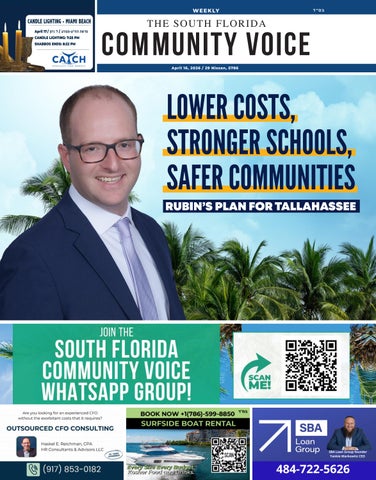
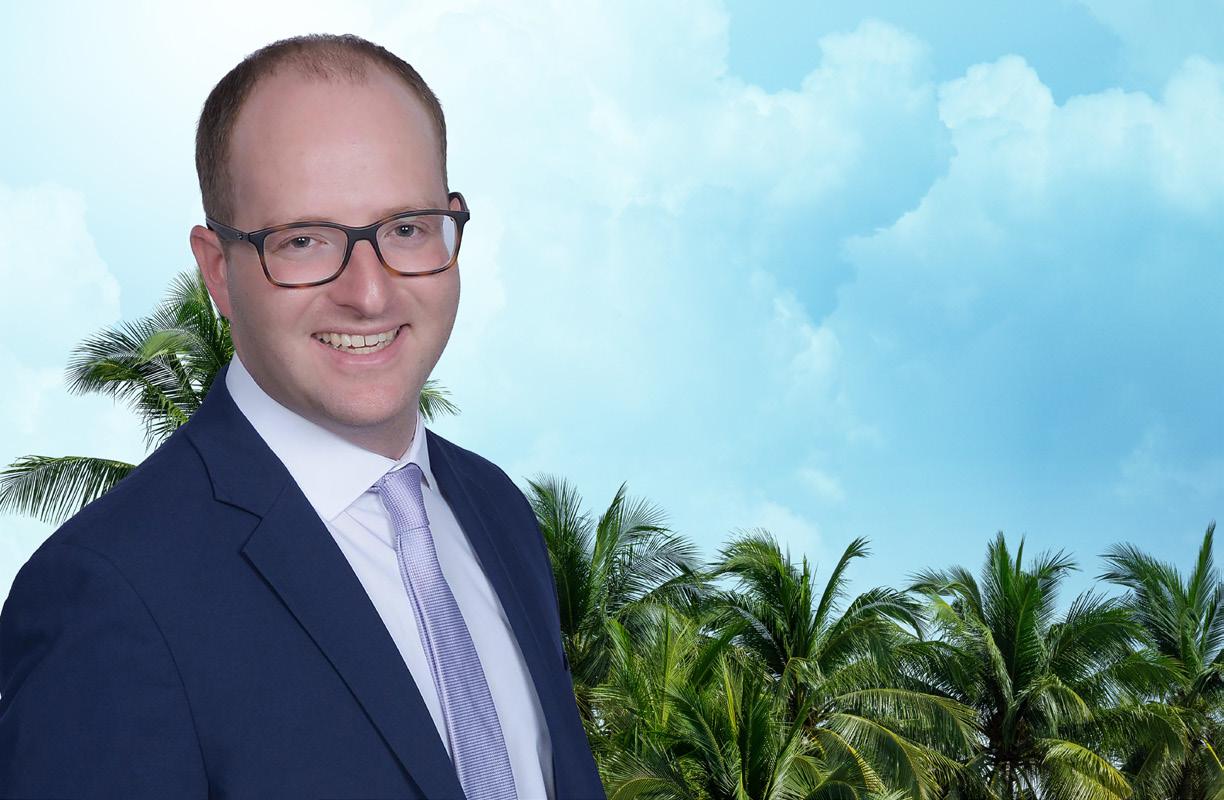
A: Hi, my name is Jonathan Rubin. I was born and raised in Palm Beach County and a lifelong member of Boca Raton Synagogue. I am the Executive Director of Clean Earth Initiative and a small business owner. I’m running to ensure our community and district have a strong voice in Tallahassee. My priorities include lowering taxes, strengthening education, improving public health, and enhancing safety. I’m especially motivated by my wife, Michal, and our newborn son, Charlie.
Q: Why are you running for State House?
A: Florida is at a crossroads. In the coming months, we’ll elect a new governor, face budget challenges, and continue managing rapid growth—over 1,000 people move to Florida every day. With all this change, we need someone with experience and a lifelong connection to the community advocating for our needs.
Q: What are your top priorities?
A: My priorities include lowering costs for families, supporting law enforcement, fighting antisemitism, promoting quality education, strengthening public health systems, and investing in infrastructure to reduce flooding and improve long term coastal protection.
Plan for Tallahassee ties
Q: What experience do you bring?
A: My public service journey began as a college intern for Congressman Ron DeSantis. I later served as Grassroots Director for Teach Florida, where I helped mobilize the Jewish community to increase voter participation. Those efforts contributed to the passage of the Universal School Choice Bill, which provides over $8,000+ annually per child for private education.
More recently, as Executive Director of the Clean Earth Initiative, I helped pass three bills in Tallahassee focused on shoreline protection, preventing toxic forever chemicals from entering our drinking water, and supported measures to decrease flooding by protecting conservation lands.
I believe that investing in community infrastructure today will help lower taxes and insurance costs in the future.
Recently, I led a Jewish-Civic roundtable at Boca Raton Synagogue with more than 40 county-level elected officials and Rabbis from across Palm Beach County. I look forward to continuing this work in the State House.
Q: How will you support families in District 87?
A: As someone raising a young family, I understand the challenges people are facing. The rising cost of food, gas, and housing has made it increasingly difficult to live in the communities we grew up in. I will focus on lowering the cost of living, improving
quality of life, expanding job opportunities, and strengthening education.
Q: How did growing up in the Palm Beach Jewish community affect your decision to be involved in politics?
A: Since a young age, our community has hosted all types of leaders that use the wisdom of the Torah and lessons from Tanach to help navigate their decisions. Today more than ever, whether it be in Congress, Israel’s frontlines or Tallahassee, we can see the difference our community can make when we work together. When God presents us with an opportunity, it is our responsibility to take it.
Q: Many are concerned with increasing tuition costs and growing antisemitism on both the right and the left – what can be done on the State level?
A: For the past years, I have worked closely with State Representatives, members of Congress, county officials, and community leaders to help draft policies that address safety concerns related to antisemitism. One of the best ways to fight antisemitism, is to support our local police department. Most recently, Palm Beach County Sheriff Ric Bradshaw spoke at a Boca Raton Synagogue during our Jewish-Civic Roundtable, where he expressed strong support for the Jewish community. He also thanked County Clerk Mike Caruso, County Mayor Sara Baxter and Commissioners Marci Woodward and Gregg Weiss for their continued leadership and
partnership.
I am also working closely with private schools and nonprofit organizations to develop solutions that lower the cost of opening and operating private schools, while ensuring that school voucher programs remain protected for families. As a strong supporter of Israel, I am encouraging deeper economic partnerships between the State of Florida, Palm Beach County, and Israeli communities. Palm Beach County alone has invested over $1 billion in bonds supporting Israel, reflecting a strong and enduring relationship.
Q: What is the future of School Choice in Florida?
A: School choice is an incredible program that I was proud to advocate for alongside Teach Florida. It has opened doors for thousands of families and expanded educational opportunities across our state. However, recent reports of nearly 30,000 students unaccounted for and $270 million in missing funds are deeply concerning and must be addressed with transparency and accountability.
At a time when Florida is facing budget pressures, a new governor, and growing concerns about fraud, it is critical that we both protect and strengthen the programs that so many families and private schools rely on. Many of the original champions of school choice in the Legislature have since moved on, which makes it even more important that we elect leaders who will prioritize and defend these programs.
I am committed to ensuring
school choice remains a top priority—while also improving oversight, restoring public trust, and expanding access so every family has the opportunity to choose the best education for their child.
Q: Can you tell us about House District 87?
A: District 87 is home to many beautiful communities, including Palm Beach Gardens, Palm Beach Island, North Palm Beach, Lantana, Singer Island, West Palm Beach, Manalapan, Jupiter, and Juno Beach. It features over 20 miles of coastline, including a state park.
The region is experiencing rapid growth, which has placed strain on infrastructure such as roads, utilities, and schools. For example, parts of the Turnpike in this district remain only two lanes. I will prioritize smart infrastructure expansion to keep up with our growing community.
The seat was previously held by Representative Mike Caruso, who was appointed by Governor Ron DeSantis as Palm Beach County Clerk. In his last election, he won by 19 points. Recently, Democrats flipped the seat by over 20 points, highlighting how competitive the district has become.
Q: How can people get involved in your campaign?
A: People can volunteer, donate, and help spread the word. This campaign is about the community, and we welcome everyone who wants to be part of building a better future for District 87 and Florida. To get involved, please visit VoteRubin.com.
COMMUNITY SNAPS
CHABAD CHAYIL
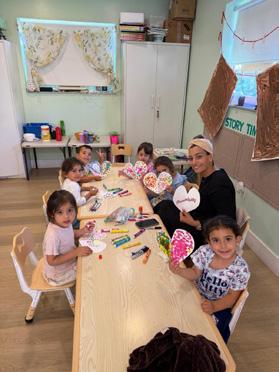
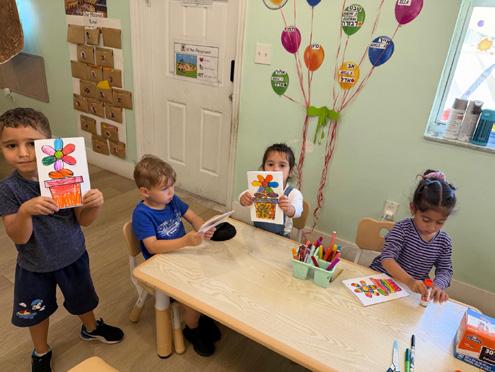
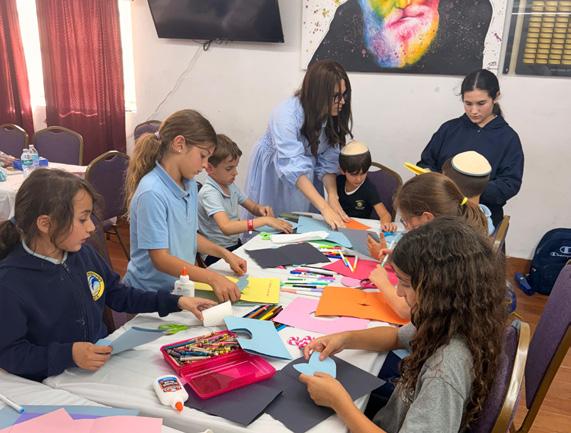
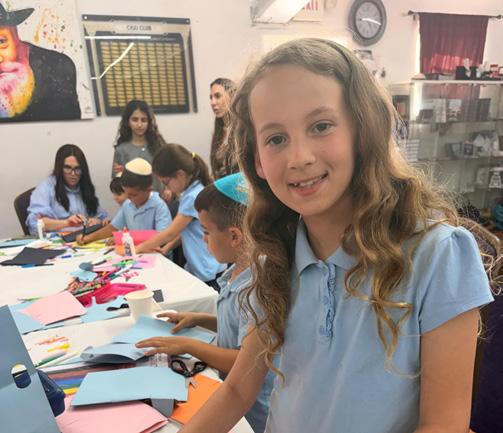
Children from Gan Chabad Preschool and the CHAP Afterschool programs for Jewish children in Public Schools design Get Well cards to be dis
tributed to patients in hospitals and nursing homes in honor of Good Deeds Day. This time of year when we mourn the students of Rabbi
Local Congregation Donates Fire Truck in Honor of Rabbi’s Decades of Service
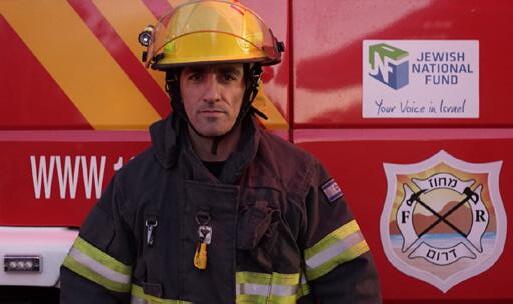
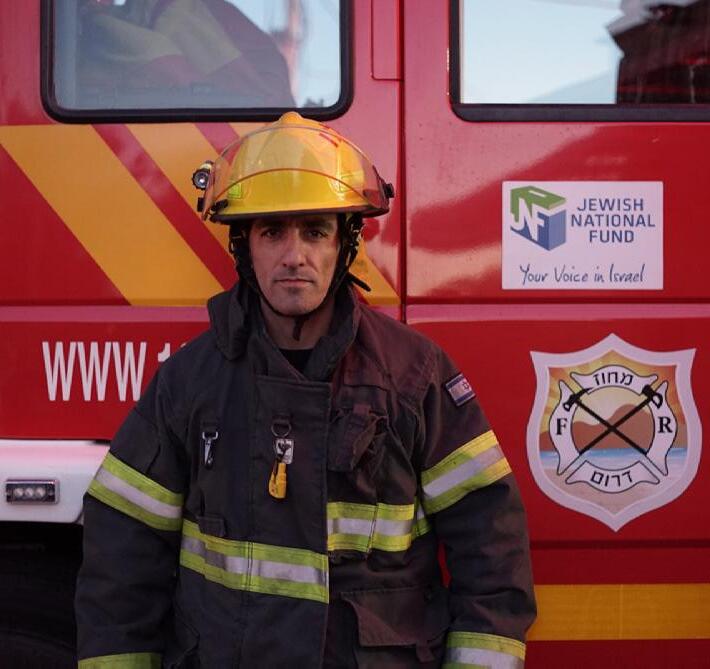
Congregants of Temple Menorah in Miami Beach and other community members partnered with Jewish National Fund-USA at “Shabbat of Strength, United for Israel” to donate a fire truck to a community in Israel in honor of Rabbi Eliot Pearlson’s decades-long tenure.
As the only official U.S. partner of the Israel Fire and Rescue Authority, Jewish National FundUSA equips Israel’s firefighters with fire trucks, protective gear, life-saving equipment, and modern fire stations. The contributions will go towards Israel’s Fire and Rescue Authority, which is mobilizing to support Israel’s home front during the current crisis with Iran.
“Jewish National Fund-USA has provided more than half of all the fire trucks in Israel,” said Ron Kriss, a member of both the organization’s Fire and Rescue Task Force and Temple Menorah. “The relationship with Israel Fire and Rescue Authority goes back decades. We are the exclusive nonprofit organization that raises money for Fire and Rescue.”
The fire truck fundraiser, which was chaired by Rabbi Pearlson and his wife Judy, kicked off on Friday, February 6, 2026, at Jewish National Fund-USA’s annual Unity Shabbat event at Temple Menorah. This year, Rabbi Pearlson suggested the philanthropic funds raised should go towards the deployment of a fire truck in Israel’s underpopulated North or
South, and be dedicated in memory of Elad Riven, an Israeli teen who lost his life fighting the biggest fire in the country’s history.
Once the funds are raised, the Temple Menorah community will receive continuous updates on when the truck will be deployed on its lifesaving missions.
“It’s a great honor,” Rabbi Pearlson expressed. “Some communities would tell their rabbis, ‘No, we’re not going to raise funds for another Jewish nonprofit. Our priority must be only our synagogue,’ but here at Temple Menorah, we know that we become
stronger when we participate in making the land and people of Israel stronger.”
Nearly 200 community members attended the Unity Shabbat, which featured Pulitzer Prize-winning New York Times columnist and editor-in-chief of SAPIR Bret Stephens, who offers a powerful voice on Jewish life, democracy, and Israel.
The former editor of The Jerusalem Post also shared his personal connection to Jewish National Fund-USA, and how his family planted a forest in Israel after his father passed away. “I
A Jewish National Fund-USA-supported fire truck. Courtesy of Jewish National Fund-USA
know that everyone at JNF-USA will want to tell you that they’re more than just about trees, which is true,” said Stephens. “But I like the trees, and I’m grateful to Jewish National Fund-USA for giving me the opportunity to honor my father in the country that he loved so much.”
Representatives from Jewish National Fund-USA and members of Temple Menorah also presented Rabbi Pearlson with a Golden Certificate that reads: ‘Presented to Rabbi Eliot Pearlson as a tribute to your decades of inspiring leadership and pioneering spirit for Israel. Shabbat of Strength, United for Israel, February 6, 2026.’
About Jewish National FundUSA
Jewish National Fund-USA is
building a strong and vibrant future for the land and people of Israel. Through its One Million
WE BUY COINS
Voices for Israel campaign, the organization unites supporters nationwide around its holistic approach to supporting individuals, families, communities, and regions in Israel’s North and South, known as circles of impact. Leveraging its 125 years of impact, Jewish National Fund-USA is developing the most livable towns and cities in frontier communities to attract 800,000 new residents; creating a lifelong continuum of Zionist education through travel, learning, and leadership; and establishing the World Zionist Village in Be’er Sheva, a global hub for connection and peoplehood. With donor recognition and legacy giving at its core, supporters ensure their values and impact endure—yesterday, today, and tomorrow. Learn more at jnf.org.
Amid the turmoil of the war against Iran, we tend to forget Qatar. Qatar is still alive and striking with the venom of a snake. We must not forget or ignore the danger Qatar poses.
Qatar is currently being attacked by Iranian missiles, but at a low intensity (only about 0.5% of the missiles Iran has launched), and all its efforts to mediate between Iran and the United States have not made it immune to Iranian aggression.
The Iranian missiles destroyed the gas-liquefaction facilities in Ras Laffan (Qatar produces 20% of the world’s natural gas), and repairs will take about five years. Qatar has lost an income source of 20 billion dollars per year, and its economy has likely been damaged.
The American base in Qatar, the largest in the world, does not protect Qatar and has become a broken reed. Qatar is learning the hard and costly way that all its trust placed in Iran has evaporated, leaving it exposed and defenseless. I would not be surprised if Saudi Arabia takes advantage of the opportunity and conquers the small and defiant emirate.
Let us remind our readers that Qatar is a small emirate with only 350,000 citizens, and its oil revenues far exceed its domestic needs. Qatar has a sovereign wealth fund of 600 billion dollars designated for investments.
Qatar purchases assets worldwide. It invests in universities in
the United States with the aim of influencing the younger generation who will become tomorrow’s leaders.
Qatar owns the television network Al-Jazeera, broadcast globally in multiple languages, serving as a propaganda and mind-engineering tool. Recently, “the creature has risen against its creator,” and commentators on the channel have begun supporting Iran in contradiction to Qatar’s official line.
Qatar, small and militarily weak, intervenes in every international conflict as a mediator in order to preserve and protect its international standing. Today it is clear that Qatar has no protector or savior.
Despite being hit by Iranian missiles, Qatar continues to host Hamas leaders. Qatar holds in its banks billions of dollars belong-
ing to corrupt Iranian leaders who smuggled their money there. Qatar belongs to the Muslim Brotherhood stream within Islam. The Muslim Brotherhood forms the basis of government in Turkey, Iraq, Syria, and much of Egypt (President Sisi is waging an all-out war against them).
Qatar and Turkey are considered the leaders of the Muslim Brotherhood’s axis of evil, yet Turkey has not come to Qatar’s aid (even though Turkey has a military base with thousands of soldiers in Qatar).
Qatar operates and funds vicious propaganda against the State of Israel. Qatar organizes Muslim demonstrations worldwide against Israel under the well-known slogan.
. “From the river to the sea, Palestine will be free”
Qatar tends to build business
COMMUNITY NEWS
partnerships with citizens of various countries in order to secure their political loyalty. Qatar has American partners, including President Trump, and even Israeli partners , former IDF generals and senior Shin Bet and Mossad officials.
On July 9, 2025, I published an article titled “Qatar Holds the Hostages,” in which I recommended threatening Qatar with missile strikes on its oil facilities to pressure it to use its influence on Hamas to release the hostages. Two months later, Israeli Air Force jets fired missiles toward Doha, and three weeks afterward, all the hostages were released.
I do not presume that the attack occurred because of my article, but rather to show that I correctly identified the quickest path to freeing the hostages
Israel is struggling against Qatari propaganda with counter-propaganda that is difficult to win. The cost of counter-propaganda makes it hard to implement, as Israel has more important priorities with higher financial urgency.
Israel, the new regional power, must once again threaten Qatar with missile strikes and damage to its remaining oil assets in order to stop its malicious propaganda. Such a threat is cheap, fast, and highly effective.
Israel must demand the expulsion or extradition of Hamas leaders.
Israel and the United States must demand that Qatar transfer Iranian funds to them to cover war expenses.
The Qatari emirate is not democratic but an absolute monarchy
that has canceled elections. It is likely that Qatar will be forced to recognize Israel’s power and join the Abraham Accords.
Qatar has a strong opposition that seeks to replace the regime and establish diplomatic relations with Israel.
Israel should support the op-
position and organize a regime change in Qatar. Regime change is a simple and inexpensive way to eliminate Qatar’s harmful propaganda.
Such a change may create new relations and lead to Qatari capital investment in Israel in exchange for the protection umbrella of the regional power — Israel. What the Gulf states such as Dubai understand, the Qatari emirate will also understand.
And again, like the Roman senator Cato the Elder, who ended every speech with a call to destroy Carthage, the enemy of Rome, I call to destroy Qatar’s power (the modern Carthage, or “Qatargo,” metaphorically) if it continues to harm Israel.
Dr. yeshayahu (Yishy) Bick yishybick@gmail.com
Remembering Rabbi Dovid Bryn: A South Florida Legend
Thursday, 6 Iyar - April 23, 5786 (2026), marks the 24th Yohrtzeit (anniversary of passing) of South Florida Legend, the beloved Rabbi Dovid Bryn zt”l, founder of Chabad Chayil & the California Club Shul. Mostly known for his unending acts of kindness and genuine love for every human being, he is truly missed by all who knew him.
Some rabbis are known for their gigantic shuls and temples, but Rabbi Bryn had a much bigger Shul, one not bound by walls. His shul was in the flea markets, soccer fields of the JCC & in people’s homes. His Sunday afternoon would be spent in a teenager’s living room with a pair of Teffillin and a group of friends. His Shul was in the community’s hearts.
Rabbi Bryn was a Chabad rabbi and Shliach emissary of The Rebbe to North Miami-Dade, whose life was tragically cut short at age 40 by Marfan syndrome, a condition that affects the body’s connective tissue. For over a quarter of a century, Rabbi Bryn – the son of Holocaust survivors - courageously battled the fatal disease that decimated his heart, yet managed to minister to, counsel and inspire tens of thousands of Jews and nonJews alike.
Rabbi Bryn fed the hungry and poor, counseled the sick and the troubled - all with great courage, fortitude and self-sacrifice. He arranged marriages, taught Torah and ethics to thousands, bridged the interfaith gap by working closely with people and clergymen of all faiths … he was the living embodiment of kindness and bravery. Some might be troubled by the
By Rabbi Moishe Kievman | Chabad Chayil
precariousness of constantly living on the edge of existence, but the rabbi’s overflowing concern for others left no room for worry over his own well-being. He lived the equivalent of 120 years of good in a third of the time.
One friend commented on RabbiDovidBryn.org, which was created to remember the legendary Chassid, ‘If he could breathe, then he would talk to others about G-d’s good, the beauty of a Mitzvah, or life’s bright spots. If he could walk, then he would go to share life with others and show positive perspective as it should be seen. If he could drink, then he would toast L’Chaim to all things positive and constructive. If he could sing, then he would. If he could do, then he did. He showed strength not owned by men who appear stronger. He showed love that is only written about. He lived a full life of treating others as one would treat themselves. When I need an example of the unrelenting power of love, I think of him.’
For the past 24 years, we’ve been getting together for an annual Farbrengen, to say a l’chaim, reminisce about the good times shared together and, most important, to talk about how his chesed - his loving kindness for every human being could be emulated.
Please join us Thursday, April 23, 2026, at 8:30pm, for an hourlong Farbrengen & inspiration. There will be Yohrtzeit Services at 7:30pm, followed by the Farbrengen both taking place at Chabad Chayil, 2601 NE 211 Ter, in the Highland Lakes section of West Aventura. The entrance is on NE
26th Ave, in the temporary location behind the new building. The Farbrengen will also be broadcasted on Facebook Live as well as YouTube Live. It will also be shown live at RabbiDovidBryn.org.
That morning Shacharit Services will be at 9:00am, followed by a quick trip to Mt Sinai Cemetery on Opa Lo a to say Tehillim at his resting place.
To view or share photos or experiences of this remarkable man, please visit RabbiDovidBryn.org. You can also learn about the new Chabad Chayil center being built in his honor, by calling 305-7701919 or visiting the website. To dedicate a part of the new building or even 1 square foot for $180 visit ChabadChayil.org/Build.
Please dedicate this day to doing an extra Mitzvah, by going out of your way to doing someone a favor. You can be his hands and feet, in making this world a better place. Think global, but act local! Don’t push it off for tomorrow, do something today! And you will have a tremendous part of bringing healing to a wounded world; making it a better place for all, one good deed at a time, until the world reaches perfection, with the coming of Moshiach. May that happen today!
About the author:
Rabbi Kievman together with his wife are the ambassadors of The Rebbe to Highland Lakes and West Aventura, FL. They are the founders of Gan Chabad Preschool, your local CTeen & CKids chapters, CHAP - an afterschool program for Jewish children in Public Schools and direct Chabad Chayil. He’s the rabbi at The Family Shul and can be reached at (305) 770-1919 or rabbi@ ChabadChayil.org. You can also support the community with your partnership at ChabadChayil.org/Partner.
Israeli Hot Pockets – Bourekas
By Jamie Geller
Everyone will love these Israeli hot pockets. Perfect as an hors d’oeuvres or snack, you can store un-baked bourekas in the freezer for up to 3 months. No need to thaw. Brush with egg wash and bake about 45 minutes or until brown and crispy.
Ingredients
• Extra virgin olive oil
• 1 medium Spanish onion diced small
• 1 pound cremini mushrooms thinly sliced
• 3 garlic cloves minced
• 1 teaspoon paprika
• Pinch crushed red pepper flakes or more to taste
• Kosher salt
• Freshly ground black pepper
• 1 pound puff pastry thawed
• 1 egg
• GARNISH: Sesame or poppy seeds
Preparation
1. Heat a large saute pan, lightly coated with evoo, over medium heat. Caramelize onion until golden brown. Add mushrooms to pan and saute until golden brown.
2. Add garlic, paprika, and crushed red pepper flakes and continue sauteing for just a minute until garlic is fragrant. Season to taste with salt and pepper. Cool filling before proceeding.
3. Roll out dough just a bit to an even thickness. Cut 3-inch squares.
4. Place 1 tablespoon of filling in the center of each square. Fold square over to form a triangle. Crimp edges with a fork.
5. Chill bourekas for 30 minutes.
6. Preheat oven to 350°F. Line 2 baking sheets with parchment.
7. Whisk egg with 2 tablespoons of water. Brush each boureka with egg wash and sprinkle with sesame or poppy seeds.
8. Bake at 350°F for 25 to 30 minutes or until crispy and brown.
Jamie Geller is the Chief Media and Marketing Officer at Aish. She is also a bestselling cookbook author, celebrity chef, television producer, and businesswoman. She’s the author of eight cookbooks and the founder of Kosher Media Network.
KIDS ZONE KIDS ZONE
DID YOU KNOW THAT...
DID
YOU KNOW?
Did you know? Miami gets hit by more lightning than almost any other U.S. city.
Did you know? In Fort Lauderdale, some people literally commute by boat instead of car
Did you know? St. Augustine is considered one of the most haunted cities in America
Did you know? Tampa once produced more cigars than anywhere else in the world
Did you know? Under Walt Disney World in Orlando is a hidden tunnel system for staff to move unseen
Did you know? In Cape Canaveral, you can casually watch real rocket launches from the beach
Did you know? Jacksonville is so large it feels like multiple cities combined
Did you know? Wild chickens freely roam the streets of Key West—and they’re protected
Did you know? In Naples, seeing dolphins at the pier is almost guaranteed
Did you know? Boca Raton strictly controls building heights and colors to keep its look consistent
KIDS ZONE KIDS ZONE
Follow
the animals in the correct order
UNSCRAMBLE THE FOLLOWING WORDS RELATED TO
FLORIDA
IIMAM
TROF AEDLADUREL
ECPA CAVARENAL
AODRLON
KEY WSET
S U R F S I D E
4 bedrooms, 3 baths, 1,851sf
$7,800/M
H O L L Y W O O D
Open House! 600 Three Islands Blvd unit B406 & 301 Sunday, March 16th, 11-12:30 pm RENTED
The Olympus- 1-2 bdrms, 1.5-2 baths, 1000-1400sf Multiple Units available Starting at $199K
3 bdrms, 2 full baths, Pool, 1,905sf
$4,750/M
H O L L Y W O O D SOLD
2 bdrms, 2 full baths, 1,000sf $239K
6 bdrms, 3.5 baths, 4,200sf, lot size 14,736sf
$1.995M
RENTED
The Spiaggia- 1 bdrms, 2 full baths, 927sf
$3,500/M
REAL ESTATE & FINANCE
Financial Planning Is About Clarity, Not Complexity
By Glen R. Golish
When people hear the term “financial planning,” they often think of something complicated. Spreadsheets, projections, products and constant market updates.
In reality, good financial planning is much simpler. It’s about clarity.
Clarity around where you are today.
Clarity around where you want to go.
And clarity around how to get there in a way that is intentional, not reactive.
Too often, families accumulate financial pieces over time. Investment accounts in one place, insurance policies somewhere else, retirement plans set up years ago and estate documents that haven’t been reviewed in a long time. Each piece may be valuable on its own, but without coordination, the overall picture becomes unclear.
In many cases, what people really have is a financial “junk drawer.”
Individually, everything inside may serve a purpose. A good insurance policy. A solid investment account. A retirement plan that made sense years ago. But when everything is scattered and uncoordinated, it becomes difficult to understand how it all fits together.
And more importantly, whether it actually works.
A strong financial plan brings
everything together.
It answers fundamental questions:
Are we protected if something unexpected happens?
Are we growing our assets in a way that aligns with our goals? Are we positioned for retirement with confidence?
And ultimately, are we prepared to transfer what we’ve built in a thoughtful and efficient way? planning is not about chasing the highest return or reacting to short-term market movements. It’s about building a structure that works in different environments and across different stages of life.
That structure typically includes several key elements working together:
Income protection, to ensure stability if life takes an unexpected turn. Investments, to grow wealth over time.
Liquidity, to provide flexibility when needed.
And estate planning, to ensure that everything transitions smoothly to the next generation.
Individually, each piece matters.
Together, they create strength. One of the most common issues we see is not a lack of planning but a lack of alignment. Decisions are made in isolation, often with good intentions but without considering how they impact the broader picture.
The result is a plan that looks complete but doesn’t function cohesively.
At G Wealth Strategies, we view our role as a macro manager of our clients’ financial lives. We are not just focused on one product or one piece of the puzzle. We focus on how everything works together.
Think of it as a financial symphony.
Each instrument matters. Investments, insurance, tax planning and estate strategy all play a role. But without coordination, even great instruments can produce noise instead of harmony.
Our goal is to bring structure, alignment and clarity so that every piece is working toward the same objective.
REAL ESTATE & FINANCE
True financial planning is about bringing order to complexity. It’s about making sure every decision supports a larger strategy and that nothing is left to chance.
At the end of the day, financial planning is not just about numbers.
It’s about creating confidence.
It’s about reducing uncertainty.
And it’s about making sure that the life you’re working so hard to build is supported, protected and ultimately enjoyed.
Because success isn’t just measured by what you accumulate.
It’s measured by how well it all works together.
About the Author:
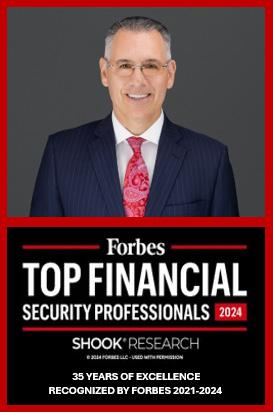
Glen R. Golish is the Founder and CEO of G Wealth Strategies and a Forbes-recognized Top Financial Security Professional. He works closely with families on comprehensive financial and estate planning, including cross-border considerations for those navigating U.S. and Israeli planning needs.
Important Disclaimer:
Please seek qualified legal and tax advice before implementing any planning strategies, in conjunction with guidance from G Wealth Strategies.
Contact Information:
3010 N. Military Trail, Suite 318, Boca Raton, FL 33431
Legal guidance for international buyers from contract to keys in your hand
20+
Years in real estate law
Represents international and Israeli clients
LL.B. in Law & Economics + MBA
Deputy Chair, Israeli Bar Association (Corporate Law)
Lecturer in legal and director programs
THINKING ABOUT BUYING IN ISRAEL?
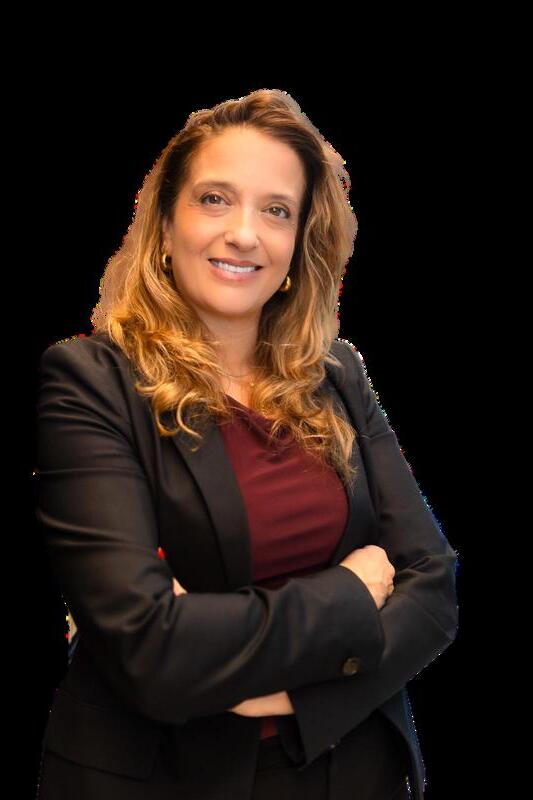
Adv. Keren Kepel Shmueli
Real Estate & Commercial Law Expert
With over 20 years of experience, Keren represents private buyers, investors, and developers in real estate transactions across Israel.
She specializes in guiding foreign residents through the full process of purchasing property in Israel, whether for relocation or investment.
You’re stepping into a new legal system. Do it right from day one.
We ensures:
Your rights are protected
Your risks are minimized
Your deal is structured correctly from the start
The Market is Nuts – and You are to Blame
By Shmuel Shayowitz
A few weeks ago, I sat across from a young couple who had done everything right. They saved diligently, kept their credit strong, avoided unnecessary debt, and came to me with a fair sense of what they could responsibly handle. We reviewed their income, their obligations, and their goals and came up with a number they could legitimately live with, not just qualify for. It felt like a good day.
Then they pulled out their phone and showed me the house they were eyeing…
I didn’t need a calculator. The gap between what made sense and what they were showing me was not a stretch, it was a different universe. When I asked how they arrived at that property, the answer was something I have heard many times over the past year plus: “If we don’t buy it now, next year it’ll cost even more.”
That sentence is the whole story. That one sentiment explains why so many people feel like the market has gone off the rails. And here is the truth that doesn’t get said enough: we are all to blame. All of us.
I’ve watched buyers waive contingencies they shouldn’t waive, push debt-to-income ratios past reasonable limits, and quietly lean on parents and siblings who really didn’t have the extra cash themselves. The question has shifted from “Can I afford this?” to “How can I get this?”
To me, that’s far from a normal financial strategy and far from a healthy housing market.
Sellers aren’t innocent either. Many are anchored to peak home
valuations while complaining about what they will have to pay on the other side. The thinking becomes circular: if I have to pay more, I deserve to get more. That logic compounds across every transaction.
And then there are the realtors. Not all, but enough that it matters drastically. Intentionally underpricing a listing to manufacture a bidding frenzy has become standard practice in too many communities. What gets called “generating interest” is often just engineering urgency. When buyers walk into an open house and feel the pressures of competing offers, judgment goes out the window. Realtors carry a fiduciary responsibility to the people they represent, and using artificial scarcity to drive emotional decisions crosses a line the industry rarely acknowledges.
A higher sale price benefits everyone in the room except the buyer carrying that mortgage for the next thirty years.
The social pressures in communities like Bergen County, the Five Towns, and parts of South Florida (to name a few) make everything worse. The Shabbos table conversations, the block group chats, and the open discussions of who bought where and for how much, are causing more harm than can be imagined.
Nobody wants to be the person who hesitated and missed out. So everyone moves faster than they should, and that urgency feeds itself. What worries me is not only that home prices are ridiculous-
ly high. What also worries me is how and why we are getting here. When affordability gets replaced by justification, households end up stressed, overextended, and without breathing room for when life does what it always eventually does.
The discipline I talk about with clients isn’t about being passive. It’s about being intentional. Knowing the difference between a smart stretch and a desperate one. Patience in a market fueled by panic is not weakness, it’s control. Ultimately, the buyers who win in this environment won’t be the ones who chased the hardest. They’ll be the ones who stayed grounded when everyone around them couldn’t. That kind of clarity is rare right now. As you can imagine, I have plenty of suggestions and solutions, and am more than happy to share them with anyone who is interested.
Shmuel Shayowitz (NMLS#19871) is a highly regarded Real Estate & Finance Executive, Writer, Speaker, Coach, and Advisor. He is President and Chief Lending Officer of Approved Funding, a privately held national mortgage banker and direct lender that has facilitated over $3 billion in mortgage funding. Shmuel has over twenty years of industry experience and holds numerous licenses and accreditations, including certified mortgage underwriter, licensed real estate agent, residential review appraiser, and accredited investor, to name a few. Shmuel has successfully navigated through many changing markets and business landscapes, making his market insights and experience well-coveted within the real estate industry. He can be reached via email at Shmuel@approvedfunding.com.
Consolidation
Renovation Loans
Second Homes • Credit Issues • Limited Income • Foreign Nationals • Credit Issues • Limited Income • Foreign Nationals • Fixed Rate Seconds • Adjustable Rate Loans
Second Homes
Fixed Rate Seconds • Adjustable Rate Loans
Financing in Israel • Investment Properties • Bridge Loans
Financing in Israel • Investment Properties • Bridge Loans