Community Voice magazine is not responsible for the Kashrut or services provided by the advertisements. It is up to the consumer to verify the information.
Beyond the Headlines
A weekly glimpse into the Israel you won’t read about in the news
By Sivan Rahav Meir
And You Lifted Us Up
The 23rd of Iyar marks four years since the passing of Rabbi Simcha Kook, the longtime chief rabbi of Rechovot, who served in many other important roles as well. Here is one small lesson we can learn from his great personality:
He was a man of romemut, of elevation. Whenever he saw something positive, he tried to enlarge it, to lift it higher. Every good deed, every mitzvah was precious, the most important thing in the world at that moment, and we were all part of it. That is how we felt in his presence.
When he studied and taught Torah, that was, of course, the essence. That is what the world stands on. But he carried that same sense of importance and elevation into everything he did: when he served as sandek at a brit milah, blessing the newborn baby and explaining the meaning of the mitzvah taking place; when he welcomed a family of new immigrants who had arrived in Rechovot from Russia; when he married a couple beginning to build a home and spoke beneath the chuppah. We ourselves merited that Rabbi Simcha officiated at our wedding. He was moved when a new community was established in Eretz Yisrael. He brought that same spirit when affixing a mezuzah at a new store in Rechovot, and also when he led sharp public struggles, speaking and protesting with force.
Everything was of supreme importance. Everything was the fulfillment of ancient prophecies coming back to life. Even the smallest details: a security guard at the entrance to a school he was visiting would receive from him a dose of elevation. “You are guarding here, and because of that the children can learn. Fortunate are you.” With a smile and with gentleness, he simply gave every person a wonderful feeling. He tried to connect everything to holiness, to purpose.
We are invited to try to live a little more with this awareness: to find elevation and greatness in our own lives, and to uplift those around us as well.
Five Thoughts on Yom Yerushalayim
1. This Friday, the 28th of Iyar is Yom Yerushalayim, 59 years since the liberation of Jerusalem in the Six-Day War. In 1967, the 19-year-old Jewish state faced an existential crisis, the
threat of utter annihilation by its enemies. Would it continue to exist or would it be destroyed? Ultimately, the answer was — we would endure, baruch Hashem.
2. The Jewish state not only survived, but grew to three times its size. Tiny Israel recaptured the Golan Heights, Sinai, Judea and Samaria, and, of course, Jerusalem. We returned to the areas where our matriarchs and patriarchs lived and where our prophets communicated their divine messages.
3. As Israel stood on the brink of war, a popular phrase circulated in the country: “The last one to leave Ben Gurion (airport) should shut off the lights.” But in the end, no one shut off the lights; on the contrary, the light
Cotton Stretch Boys’ and Mens’ Shirts Stretch Shirts
COMMUNITY NEWS
stayed on. An older couple from New York once told me that before the outbreak of the SixDay War, they advised their relatives to leave Israel and seek refuge with them, but that after the war, most of their children made aliyah. The tide of history had turned for the better.
4. All these extraordinary achievements were the result of a war that lasted only six days! The Arabs refer to this war as the “June War” in order to conceal the shame of their devastating defeat. Six Arab armies, including those of Iraq and Saudi Arabia, were routed within less than a week.
5. At the time, the joy in the Jewish world was unprecedented. Unfortunately, today’s newspapers may take a different perspective, but these are the words that appeared in the left-leaning Ha’aretz newspaper after the liberation of Jerusalem: “There are no words to adequately express the feelings of exhilaration in our hearts today. Even the concept of our holy Temple seems to be more tangible than ever before.” May we merit to continue our
path forward. Happy Yom Yerushalayim!
Parashat Bamidbar: The Most Important Moment
Are you on your way somewhere? Are you waiting to get married, finish your degree, find work, pay off your mortgage, move to a new place?
This week we begin to read the Book of Bamidbar, which centers around “the time in between.” The book describes the travels of our ancestors in the desert en route to the land of Israel. At first glance, one might conclude that perhaps it would be best to ignore this period entirely and to focus instead on the beginning of our journey and the arrival at our destination. Whatever happens along the way is of secondary importance and of lesser significance. Yet there are commentators who maintain that Bamidbar is, in fact, the most important book in the Torah.
Why? Because if you think about it, most of our life takes place in the “in-between,” or as it says in Shema, “u’velechtecha baderech”—when you travel on the way.
Therefore, it is important to
ponder how we relate to the period “along the way.” Do we consider it important or do we wait impatiently for it to be over already? Do we take advantage of the times when we find ourselves “in between” (even in the small things, like when waiting in line or stuck in a traffic jam)? Do we know how to invest in transition periods, or are we simply waiting until we finally arrive at our destination.
Often when great people were asked to identify the most important moment of their lives they replied: “This very moment!” If we could teach ourselves to stop feeling as if we’re waiting for our “real life” to begin but focus, instead, on what is happening here and now, not only will we, with God’s help, eventually reach our destination, but we will also benefit from all the gifts that await us along the way.
This is the way to approach the Book of Bamidbar as well as the many journeys of our lives.
Want to read more by Sivan Rahav Meir?
Google The Daily Thought or visit sivanrahavmeir.com
Translated by Yehoshua Siskin and Janine Muller Sherr
The Tortoise and the Hare.
A TALE OF UNNECESSARY URGENCY.
By Menachem Dahan, Psychotherapist - Bay Harbor Islands
The Tortoise and the Hare is usually read as a lesson about persistence. Slow and steady wins the race. But the more interesting part of the story is not the tortoise’s patience. It is his relationship to the race itself. The hare is constantly reacting to how far ahead he is, to how much time he has, and to whether he can afford to stop. The tortoise does not seem to be in a race at all. And that, more than anything else, is why he gets to the finish line.
What undoes the hare is not laziness or arrogance, at least not primarily. It is that he lives entirely inside the sensation of the race. When it feels safe, he stops; when it feels urgent, he runs, and at no point does he have any real relationship with what is actually happening. He only has access to how it feels right now. He has become so familiar with the world of sensations that he has not stopped to properly examine what is really going on.
Sensations vs. Feelings
A sensation is the immediate impact of an experience as it enters the system. It arrives before the mind has had time to process anything. Fear at the sound of something unexpected. The rush of excitement when something good happens. The sting of embarrassment the instant it lands. It is the first moment of a feeling, the part that hits hardest and says the least.
Sensations are powerful and
immediate, and they are supposed to be. They are the first signal that something worth paying attention to is happening. The problem is not that they exist. The problem is what happens when a person mistakes them for the whole story.
Potency is not the same as depth. In many ways, sensations are the most deceptive part of a feeling, precisely because they are overwhelmed by first impression and shape how everything that follows gets interpreted. A person who is in the grip of a powerful sensation is not in the best position to evaluate what is actually happening inside them. The sensation has already done its work. It has created a version of the experience that is intense, immediate, and convincing, and it is very easy to mistake that version for the whole thing.
A feeling goes deeper than that. It is not the first wave but what re-
mains once the wave passes. And what remains is less dramatic, less overwhelming, but considerably more informative. A feeling is not tailored for effect the way a sensation is. It is not trying to get a person’s attention or make an impression. It is simply the self, expressing something true about what is happening and where it is coming from. It is quieter precisely because it is not performing. It is just there, and a person has to be willing to move toward it rather than wait for it to announce itself. This is why feelings tend to carry more direction in them. They are not just intensity; they are meaning. They are pointing somewhere. A sensation tells a person that something is happening right now. A feeling, when a person stays with it long enough to actually feel it, tends to say something more specific about who that person is, what they value, what they need,
COMMUNITY NEWS
and what is actually going on beneath the surface of the moment. There is a reason the deeper layer of experience tends to be more subtle. Anything with real substance takes time to absorb. A pop song is easier to enjoy on first listen than a symphony. A photograph lands faster than a painting that rewards an hour in front of it. This is not a flaw in the symphony or the painting. It is just that things with more in them ask more of the person receiving them. A sensation works the same way a pop song does. It is designed to land immediately, and it does. A feeling is more like the symphony. It does not announce itself. It has to be moved toward. Because the more real and genuine something is, the less it panders to an audience. When a person is willing to do
that, to slow down, to stay with discomfort or even with pleasure past the first wave, to not immediately interpret or explain or manage what is being felt, they often find something underneath that is more complex, more directional, and more connected to who they actually are.
A life organized almost entirely around sensations develops a particular kind of urgency. There is always something to secure or something to avoid, and neither task ever fully resolves. A good sensation has to be found, and once found, it has to be maintained, and once it fades, something has to replace it. A difficult sensation has to be neutralized before it gets too loud. Over time this becomes the primary project of a person’s inner life, and it is an
exhausting one, not because the person is doing anything wrong but because the project itself has no natural endpoint.
The clearest version of this shows up in the way people talk about happiness. What gets described when someone says they want to be happy sounds, on closer inspection, more like pleasure. Pleasure is a sensation. It is real, it is enjoyable, and there is nothing wrong with it. But it is not happiness. It is the initial impact of something good, the first moment of it, the part that is easy to feel and hard to hold onto. Happiness is something else. It is not an event that arrives and then has to be chased again once it fades. It is more like an orientation, a relationship a person develops with their own life over time, one that
includes difficulty and uncertainty and still maintains some integrity.
The gap between pursuing pleasure and pursuing happiness is not just semantic. It shows up in the choices a person makes, the things they find themselves chasing, the things they find themselves avoiding, and the particular kind of exhaustion that sets in when the pursuit never quite delivers what was promised.
The same gap exists on the difficult side of experience. Most of what gets avoided is not the feeling beneath a hard emotion but the sensation of it. The first wave of anxiety, the initial sting of shame, the immediate jolt of anger. These are powerful, and the impulse to push them away is natural. But pushing them away before they
settle means never getting to what the feeling underneath was actually trying to say. The emotion had direction in it. It had information. It was the self trying to express something real. But if a person is out the door before any of that can surface, they only ever know the impact, never the meaning.
This creates a particular kind of relationship with emotional life. On the surface, it can look like someone who is in control, someone who does not get too caught up in feelings. But underneath it is often someone who is running, and running takes energy. When every difficult sensation is a threat to be neutralized, and every good sensation is a resource to be secured, there is always something at stake. Decisions carry more weight than they need to. Other people’s reac-
tions carry more weight than they need to. Anything that promises relief feels worth pursuing, and anything that threatens discomfort feels worth avoiding, regardless of what either one actually leads to.
Living from sensation to sensation creates a pressure that does not go away. External validation starts to feel necessary rather than optional, because if sensation is the primary currency, then what other people reflect becomes enormously important. The narrative a person carries about whether they are liked, whether they are succeeding, or whether this moment is going well carries an outsized weight. Not because those things do not matter, but because from the surface of experience, they feel like everything.
Slowing it Down
What changes things is not learning to feel more dramatically but learning to stay a little longer. To let the first wave pass and notice what is underneath it. To not immediately interpret, manage, or explain away what is present. This does not require a particular practice or a particular vocabulary. It requires something simpler, which is a willingness to be curious about what is actually there rather than immediately reacting to the first version of it that arrives. To familiarize oneself with life beneath the surface.
When a person begins to do that, they tend to find something different from what they expected. The inner life beneath the sensation layer is not a place of overwhelming intensity. It is more textured than that, more specific, and considerably less absolute. There is good and bad, confidence and doubt, happiness and sadness, and it moves. It is not fixed. A difficult feeling, once the initial wave has passed, is usually something that can be sat with. It is not nothing, but it is also not as total as it felt in the first moment. And a good feeling, when it is not immediately chased or clutched at, often turns out to have more substance to it than the sensation alone suggested.
The pain is still pain at that level, and the joy is still joy. But both become livable in a way they are not when a person is stuck on the surface. There is more of the self available, and because there is more room, there is more capacity to move through difficulty without being defined by it and more capacity to actually receive the good things when they arrive rather than clutching at them before they disappear.
A life running purely on sensation is not without its moments. But it tends to leave a person feeling like they are constantly working to keep something good in reach or something bad at bay and never quite landing anywhere. Recognizing whether what is being pursued is a feeling or a sensation, whether what is being avoided is a feeling or a sensation, is the beginning of something different. Not a life without sensation but a life where the sensation is understood for what it is: the entrance, not the destination.
Menachem Dahan is a psychotherapist in South Florida. mdahanpsychotherapy.com
The Doctor’s Cabinet
In many neighborhoods, there is always that one person everyone quietly relies on when something goes wrong.
For the families in Dr. Weiss’s community, that person was Dr. Weiss himself.
Officially, he worked during the week at a busy pediatric practice.
Unofficially, his living room often turned into a small urgent care clinic on Shabbos.
Late Friday night knocks. Shabbos morning fevers.
Children crying with ear infections.
Sore throats. Coughs.
Worried parents standing at the door.
Dr. Weiss never complained.
He would calmly walk to a cabinet he had set up in his home with basic medical supplies and common medications. He checked ears, examined throats, reassured anxious parents, and when needed, provided medication so families would not face unnecessary halachic or practical complications on Shabbos.
Over time, word spread quickly.
“Go to Dr. Weiss, he helps everyone, he even has medicine in his house.”
One Shabbos afternoon, a mother arrived with a very uncomfortable child who had a high fever. After examining him, Dr. Weiss opened his cabinet to take out amoxicillin.
He paused.
Looked again. The shelf was almost empty. Actually, more than almost—he was running low on
several essential medications. After Shabbos, Dr. Weiss sat at the kitchen table reviewing his supplies. His wife noticed his concerned expression. “What happened?” she asked. He sighed. “So many people are coming now every Shabbos. The word has spread everywhere.” She smiled gently. “That’s because you help everyone.” “Yes,” he said, “but I’m going through medications very quickly. Antibiotics, pain relief, basic supplies—I keep having to restock everything.”
His wife thought for a moment.
“So why don’t you charge insurance for the visits? What’s the difference? You’re doing real medical work. At least that way you won’t be paying out of pocket for all the medications.”
She added, half joking: “And don’t forget two weeks ago when that woman came with six children.”
Dr. Weiss smiled.
“That was basically a full clinic in my hallway.”
“But seriously,” she contin-
ued, “you’re doing a tremendous chesed. The payments could simply go toward restocking so you can continue helping people.”
Dr. Weiss nodded slowly.
“I want to make sure there is no issue of schar Shabbos.”
So, he called the Refuah B’Halacha Center.
After hearing the full story, the Rav immediately thanked him.
“What you are doing is a tremendous act of kindness for Klal Yisrael.”
Then he addressed the question.
“You are allowed to receive payment after Shabbos for these medical services.”
Dr. Weiss hesitated.
“But isn’t that considered schar Shabbos? I thought one cannot receive payment for work done on Shabbos.”
The Rav explained:
“Normally, there is an issue of earning wages specifically for Shabbos-related work. However, healing the sick is different, because it is a mitzvah.”
“The Mishnah Berurah simin 306 sef 23 and 24 explains that when a person is performing a mitzvah, there is no prohibition of schar Shabbos in the usual sense.”
The Rav continued:
“In addition, Shemiras Shabbos Kehilchasa perek 28 halacha 67 writes that payment arrangements should not be discussed on Shabbos itself, but can be handled afterward in a permissible way.”
Then the Rav added warmly: “And in your case, you are not doing this for profit at all. You simply want to continue helping more Jews by restocking medications. That itself is something very special.”
Dr. Weiss felt a deep sense of clarity and encouragement. He thanked the Rav for his halachic help and most of all for his Chizuk.
The following Shabbos, there was another knock on the door.
Dr. Weiss stood up calmly, already knowing what awaited him.
Somewhere in the neighborhood, another parent had already reassured themselves:
“Don’t worry. Just go to Dr. Weiss.”
At the Refuah B’Halacha Center, we are here to provide guidance for real-life challenges, big and small. Whether it’s a question about Shabbos, kashrus, or navigating difficult personal situations, our experienced Rabbunim are ready to listen and advise.
If you ever find yourself wondering about a medical halacha question — big or small, serious or just something that’s been on your mind — remember that you don’t have to figure it out alone. The Refuah B’Halacha Center is here to help, with experienced rabbanim available to guide you through even the most sensitive or confusing situations.
Our Rabbanim;
R’ Yaakov Forchheimer shlit”a | R’ Noach Isaac Oelbuam shlit”a
We are here Sunday through Friday 8:00 am till 10:00 pm and erev Shabbos 10 minutes before candle lighting. Refuah B’Halacha Hotline: 732 755 0851 or email us at www.refuahbhalachacenter.org
Operation Inspiration: Peripheral Vision
One of the things Hashem has blessed us with, in the miraculous workings of our body, is peripheral vision. This references the ability to detect motion and movement outside the main focus area of our sight. It enables us to detect potential danger when walking or driving as well as gauge our position and avoid bumping into things.
Sometimes, people have lost some of that ability and develop what is known as “tunnel vision.” In some cases, the peripheral view is, in fact, so limited that it appears they are looking through a tunnel. In other instances, it may just be that these areas are fuzzy and they are not able to recognize the things they’re not directly looking at.
To me, as a Jew, I feel this is one of our most important faculties. Not in a physical sense, but in a broader humanistic and spiritual sense. You see, when we are focused on one thing, to the exclusion of all else, we are exhibiting signs of a disease. While on the physical level, it may be glaucoma, a retinal issue, or a brain injury, on a spiritual level, it can be much worse.
We are supposed to be aware of others in our periphery or environment, and take notice of them. There is a famous story of the person who asked the Brisker Rav if he could use milk for the 4 cups at the Seder. The Rav said it was not allowed, and gave the person a large amount of money to purchase the wine needed.
When a family member asked
By Rabbi Jonathan Gewirtz
why he gave the man so much, many times more than the wine would’ve cost, he replied, “If he asked to use milk, then clearly he does not have enough money for meat either. I therefore gave him enough to buy whatever he needed.”
Not simply focused on the actual question, the rabbi was keenly aware of the entire person to whom he was speaking. He was concerned for his benefit and was able to infer a bigger issue. This is a form of spiritual, peripheral vision.
I was in a shul and a person sat in a spot where a pillar blocks part of the access. When the fellow pulled the chair out and sat down, he did not move his chair forward under him, sitting at the edge. Because of this, there was not enough room for people to walk past. A fellow behind him, who did take note of what happened, moved his own table to make room for those people rather than embarrass the fellow by asking him to move. The person who sat down could certainly not be faulted for not seeing behind himself as he doesn’t have eyes in the back of his head.
However, had his spiritual peripheral vision been keen, this man would have taken note of the placement of his chair and worried that perhaps he would block the aisle. He would have made sure that other people would not be inconvenienced by his choice of seat. Similarly, when I thought I saw an empty parking space at a store, I was dismayed to see that someone had parked his motorbike at the end of the space so it
looked open, but was not really.
Why was I so dismayed? Surely, he has a right for a parking space as well? It was because the spot right next to where he parked his bike has a large cement pillar in it, supporting a light post, and it’s less than suitable for parking cars. Had our young friend’s peripheral vision been working to spiritual capacity, he would have intuited that by parking in the other spot, he could leave this one for someone driving a car.
When we discuss our lives, the people with peripheral vision take note of who’s listening. They won’t go on and on about their lavish vacation when they see someone who works hard to make ends meet and can’t afford to take a break, or bring their kids to fancy amusement parks or foreign destinations. Maybe they won’t focus on the cute things their children did when there is someone not yet blessed with children in the room. If someone rambles on without being aware of who he might run into with his words, then perhaps there is some sort of disconnect in his brain.
But there is good news! This condition can be treated. It takes exercise of the mind, to imagine others and their feelings. Think about the next person who will come along, or the person who is already there, and consider their feelings and situation. With mental conditioning and spiritual stretching, we can start to grow our outward awareness, just as the Brisker Rav did.
A good trick to jumpstarting this visual acuity improvement is by focusing on loving other people and wanting the best for them. When you do that, you will start to pick up the clues that you’re on a collision course with their feelings or best interests, and you will be able to avoid those painful mishaps. Your focus will expand and you’ll start to see others in a whole new light.
2026 – All Rights Reserved
Did you enjoy this column? Feedback is welcome and appreciated. E-mail info@JewishSpeechWriter.com to share your thoughts. You never know when you may be the lamp that enlightens someone else.
Makom Lalev: The grassroots Jerusalem initiative bringing hope to those on the streets
Less than a year ago, Makom Lalev (A place for the heart) did not exist.
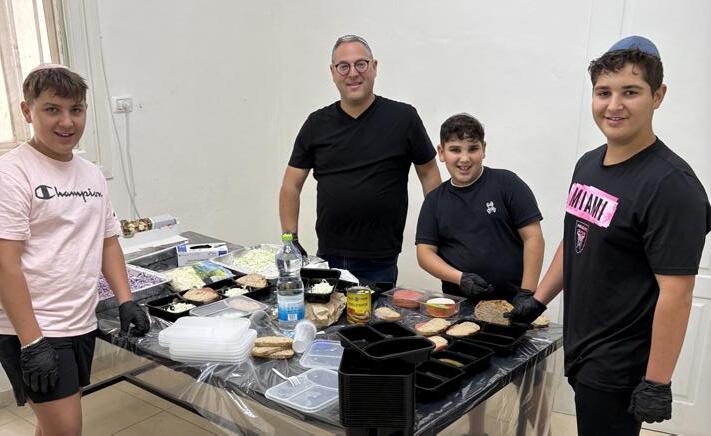
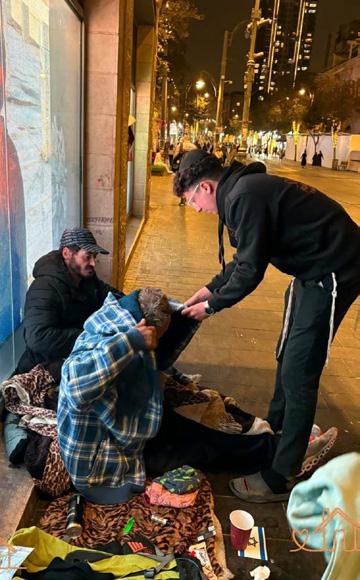
Today, the grassroots initiative operates from a bustling volunteer center in Rehavia, Jerusalem, preparing hundreds of meals each week while also providing clothing, hygiene supplies, peer support, and recovery meetings for people struggling with homelessness, addiction, and mental health challenges.
The organization’s rapid growth still surprises founder Shmuel Russell, who made aliyah from the United States several years ago.
“Exactly eight months ago, we were originally out of my small little apartment at the Shuk and with the grace of God in eight months, we’re here,” Russell said. “The idea that we’re in here now [at the new venue] is a miracle because grassroots organizations in seven to eight months do not just find the place. It’s crazy in a good way.”
The project began in Russell’s small apartment near the Mahane Yehuda Market, where the living room doubled as a kitchen, office, storage facility, and volunteer center.
What began as a personal effort quickly evolved into something much larger. As word spread, volunteers began showing up to help cook and distribute meals, and the space soon became too small to handle the growing activity.
The new headquarters now houses storage for food and cloth-
ing, freezers for prepared meals, volunteer workspaces, and a small meeting room where recovery groups gather. One of the meetings hosted there is called Emotions Anonymous, which forms part of a broader network of 12step programs supporting emotional recovery.
Today, Makom Lalev prepares between 300 and 400 meals each week, distributing them along with clothing and hygiene sup-
plies to people living on the streets of Jerusalem. The organization also operates a 24/7 peer-support hotline and hosts recovery meetings in its new space.
The initiative is powered by roughly 30 active volunteers, including students from the Hebrew University of Jerusalem, Bat Sherut girls, young men studying at Aish HaTorah, and young married couples.
A turning point
Sunday to Thursday: 12pm - 10pm Friday: 11am - 3:30pm OPENING HOURS Scan the code to order!
Russell, who is himself in recovery, said the idea for Makom Lalev emerged after a devastating phone call he received from a young man whose brother had just died from an overdose.
“It was 10:30 at night. He called me to tell me that he found his brother overdosed and passed away,” Russell recalled. “After that, I knew that I had to do something.”
Inspired by the teaching of the Lubavitcher Rebbe, Chabad Rabbi Menachem Mendel Schneerson, - that inspiration must be acted upon - Russell began reaching out to friends in the United States. Within a short time, they raised nearly $15,000 to help people access detox treatment.
Several individuals entered recovery through those initial efforts.
For Russell, that early success confirmed the importance of acting quickly when people are in crisis, as well as the impact even small interventions can have.
“If you save one person, one soul, it’s like you saved the entire world,” he said. “You never know from one generation where they’re going to go, who they’re going to help next.”
After helping individuals access detox programs, Russell began looking for additional ways to assist those struggling on the margins of society.
The next step was food distribution.
At first, Russell cooked 75 meals each week alone in his apartment. As word spread and more people joined the effort, the operation ex-
panded rapidly.
More than meals
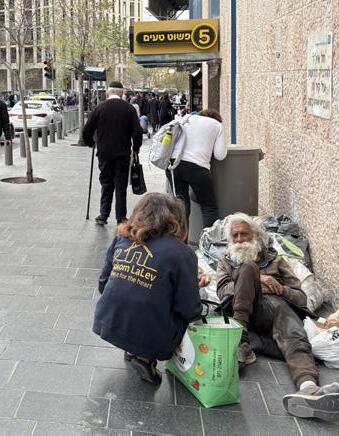
Today, Makom Lalev volunteers pack meals alongside clothing and basic hygiene kits that are distributed to people living on the streets or visiting drop-in centers.
The people they encounter often struggle with addiction, trauma, or severe mental health challenges.
“We’re giving out food to those on the streets of Jerusalem who are struggling with mental health, addiction, and homelessness,” Russell said. “These are the people that no one’s recognizing.”
The work, he said, also exposes a problem that many prefer not to acknowledge.
“There’s a huge denial that there’s an issue of mental health and addiction in Jerusalem, a
huge denial,” Russell said.
According to Russell, the challenges have intensified since the trauma following the October 7 attacks.
“We are currently in a place of a full country of PTSD,” he said.
In the months since the outbreak of the war with Iran, volunteers say they have seen a growing demand for assistance, with more people turning to the organization for food, emotional support, and basic necessities. The ongoing security situation and uncertainty have deepened economic strain and psychological distress, particularly among vulnerable populations already living on the margins.
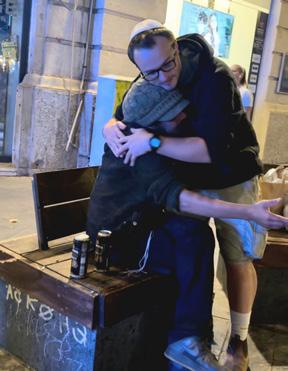
The organization’s volunteers regularly encounter people dealing with addiction, trauma, and homelessness across the city, including young immigrants and former soldiers.
Volunteers at the center
Russell credits the group of dedicated volunteers for making the organization’s work possible.
Many come to help out after long days of working or studying, such as yeshiva students who spend full days in religious study, as well as Bat Sherut girls who volunteer for other organizations all week, and still come and give of themselves when they could rather take time to relax after a long week.
Bluma Wormeli, a young Bat Sherut, is the coordinator of the Thursday women’s volunteer group and has taken it upon herself to turn the group into a com-
COMMUNITY NEWS
munity.
Eli and Ahuva Birnbaum from Fort Lauderdale, Florida, recently joined those efforts under unexpected circumstances. The family had come to Jerusalem to celebrate their son’s bar mitzvah but found themselves unable to return home due to the war with Iran. Russell met them while walking on Jaffa Street in Jerusalem, and invited them to volunteer at Makom Lalev.
The family helped package and deliver food to those in need in central Jerusalem.
Asked what he enjoyed the most about the experience, the bar mitzvah boy said, “giving out food to the homeless.”
Asked what inspired them the most, Ahuva said, “I love all the love that you exude to the people in need. It’s not just about what you’re giving them. It’s also about what you’re making them feel. I think that’s really special about you and your beautiful organization.”
Reflecting on the experience and a message he would share with others, Eli added: “Be very appreciative of what you have, because there’s a lot of people out there who don’t have nearly as much as you do, and don’t take anything for granted.”
Russell said supporting volunteers themselves is a core part of Makom Lalev’s mission.
“Volunteers are often forgotten about because they put in so much work and then people just forget about it and take them for granted,” he said. “If you don’t have volunteers, you don’t have an organization.”
To build community, Makom Lalev hosts volunteer events in-
cluding art nights, movie nights, and shared meals.
The goal, Russell said, is to create a supportive environment not only for those being helped, but also for those doing the helping.
Unconditional support
Russell says the organization’s philosophy goes far beyond providing meals. Its ethos is based on the guidance he received from his mentors, Sony Pearlman and Eli Erenthal, the directors of “The Village” Community in Monsey, New York, and Avi Fishoff from Twisted Parenting.
“It’s not about the food, it’s not about the clothing or the toiletries,” he said. “The number one thing was taught to me by mentors… we’re going to love you until you can love yourself.”
That principle recently came full circle during a volunteer gathering.
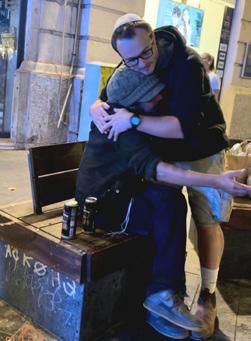
A man who had once been homeless and struggled with severe addiction - someone the volunteers had regularly helped - returned after completing detox treatment. He surprised the
volunteers by helping pack meals that would later be distributed to people in situations similar to the one he had experienced.
“The beauty was he then packed the food that we used to give out to him,” Russell said.
For the volunteers, the moment was powerful evidence that their efforts can make a difference.
Looking ahead
Makom Lalev is currently working to formalize its legal status as a nonprofit organization in Israel. The step will allow the initiative to expand its services and raise larger funds.
Russell hopes the organization will eventually broaden its outreach programs, strengthen its peer-support network, and build partnerships with institutions that work with vulnerable populations.
For now, however, the focus remains on the immediate needs on Jerusalem’s streets.
“We need you so we can help others,” Russell said, appealing to the public for support. “We need your partnership.”
Despite the challenges, Russell believes the rapid growth of Makom Lalev shows what can happen when people act on a moment of inspiration.
In less than a year, an idea born in a small apartment has become a growing community effort bringing compassion, dignity, and support to those who need it most.
To learn more about or support Makom Lalev, visit their website: https://makomlalev.org/
Ramon Crater reveals a new secret as a 1,700-Year-old
An 8-year-old boy discovered this rare find during a family trip, reflecting the encounter between Nabataean culture and the Roman world
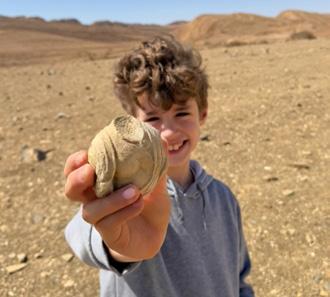
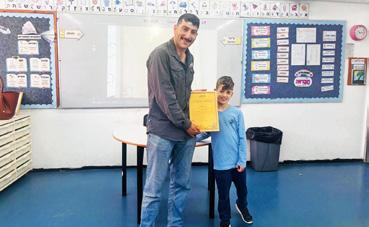
During a paratrooper reserve team family weekend in the Ramon Crater area, 8-year-old Dor Wolynitz from Rehovot discovered a spectacular ancient statuette fragment over 1,700 years old.
“I was looking for special things on the ground that I could show in class. Suddenly, I noticed an interesting stone with stripes lying on the ground, and picked it up. It seemed like an unusual object to me, so I showed it to Akiva, an archaeologist and my Dad’s friend, who was with us on our trip.”
“At first I thought it was a fossil,” said Akiva Goldenhersh, A Suprevisor at the Israel Antiquities Authority’s Antiquities Theft Prevention Unit, “but then I noticed the sculpted folds of the garment – and I was very excited!”
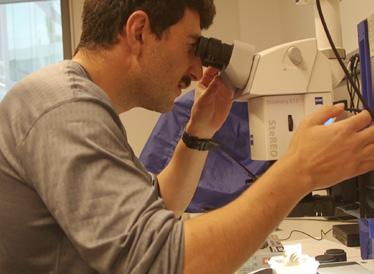
This is a small statuette fragment, measuring approximately 6×6 cm, depicting part of a human figure with carefully sculpted folds of fabric, creating the appearance of a cloak wrapping the body in soft, flowing lines. An examination of its material in the Israel Antiquities Authority laboratories by geologist Dr. Nimrod Wieler revealed it to be a light mineral of the phosphorite type, common to the Negev region.
“Being made of local material reasonably indicates the statuette was made in Israel and not imported,” says Akiva, who continued the
statuette fragment is discovered
investigation. “The style of clothing and sculpture is appropriate for the Roman period. The figure is depicted wearing a type of heavy mantle called a himation, with no visible chiton, or undergarment.
The manner of sculpting the folds and the choice of such a delicate material indicate a very high level of skill on the part of the artist,” he adds. “The absence of characteristic markings on the fragment make identification difficult, but stylistically, it might be of the god Jupiter, or Zeus-Dushara – a Nabatean god who was identified and merged with Zeus in the context of the encounter between the Nabatean culture that was widespread in the Negev region, and the Hellenistic-Roman world; it is also found in Petra. This tiny find thus reflects the combination of local traditions with influences from the classical world.”
The international Spice Route from the Far East to Mediterranean ports passes through the Ramon Crater area, and served as a major traffic artery during the Roman and Nabatean periods. The statuette fragment joins the evidence of human activity that took place along this desert route.
Young Dor handed over the intriguing find to the National Treasures Department and received a certificate from the Israel Antiquities Authority for his good citizenship. “Every archaeological find is part of our joint heritage in this land. Handing it over to the National Treasures allows us to study it, preserve it, and make the knowledge accessible to the general public,” says Goldenhersh. “The responsible conduct of Dor and his family is an example of proper civic responsibility and the preservation of our country’s cultural assets. Dor is a role model for us all.”
Kiruv Mission:
Landow Jewish Academy is a kiruv school dedicated to the belief that every Jewish child should have Elite Academics and a school that inspires a love for Judaism We are committed to ensuring that financial concerns, fears about academic quality, or inadequate facilities never hinder a Jewish neshema from receiving a Jewish education
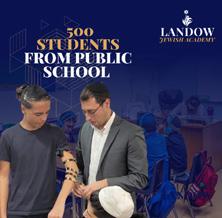
90% of LJA students previously attended public schools. Why do they make the switch? At LJA, we provide an exceptional academic experience alongside a heartfelt love for Torah, Israel, and a deep pride in being Jewish
K-5TH GRADE PASSING SCORES
AVERAGE OF READING AND MATH
Culture of Student Growth
We are committed to building students from their strengths and developing them through their weaknesses
We discover the passions of our students and develop them as a partner. Whether they are launching their own LLC, designing fashion lines, producing podcasts, creating original music or art, or participating in clubs, athletics, and extracurriculars, these experiences are not just an addition to their education they are the key element that enables our students to truly thrive
6TH GRADERS PASSING THE PERT COLLEGE ENTRANCE EXAM
Commemorating Yom Yerushalayim with Courage, Inspiration, Resilience and Promise
“Im eshkachech Yerushalayim, tishkach yemini” – “if I forget Jerusalem, may my right hand lose its skill”
Yom Yerushalayim (Jerusalem Day) takes place on the 28th of Iyar (Hebrew date) which falls out this year on the evening of May 14th and on the 15th.
Unlike other chagim, Yom Yerushalayim is not referenced in our Torah nor is it a date of significance prior to 1967.
Yom Yerushalayim is an Israeli national holiday which commemorates the “reunification” of Jerusalem following the Six Day War in June, 1967.
Jerusalem was reunited under Israeli control on June 7, 1967 – during the Six Day War. Prior to the war, Jerusalem was a divided city. The western part of the city was controlled by Israel and the eastern parts, including the Old City and its holy sites including the Har Habayit were under Jordanian rule.
Due to the heroic efforts of the IDF who battled tirelessly to overtake the Jordanian enemy, the entire city of Yerushalayim was once again reunited and eventually it became recognized as the official capital of the State of Israel.
Although King David considered Yerushalayim the Capital of the Jewish nation, it wasn’t until decades later (December, 2017) did the world recognize the city as such. Indeed a very long time for Jerusalem to become the official sovereign capital of Israel.
By Dr. Chaim Botwinick
As the holiest ancient city known to acheinu bnai yisrael, Jerusalem’s rich history is inspired and imbued with a level of kedusha due to its physical location including the two Batei Midrash that were destroyed.
Yerushalayim is indeed the spiritual and religious epicenter of our Jewish world – having weathered very difficult and harsh wars, destruction as well as occupation by our enemies in order to survive, and thrive.
The daunting, emotional, moving and at times heartbreaking history of Yerushalayim and its historical and religious significance are undeniable as reflected in the Torah and evidenced by archeological finds.
Yerushalayim is in fact mentioned 600 times in TaNach and the city was besieged 23 times and captured 44 times. This is in addition to the brutal wars and conflicts we endured in order to retain and maintain Jerusalem as our spiritual capital. This reality is
truly undeniable from a historical perspective.
It is for this very reason that Jerusalem represents the most precious, respected, honored and cherished city for our Jewish people throughout the globe.
No matter where we live, or where we stand, we all pray in the direction of the holy city of Yerushalayim.
Our tefillot which include the hope and promise of shana haba b’yerushalayim habinuya – “next year in a rebuilt Jerusalem” is an aspirational expression of hope and promise that has been dreamt about for generations ….. that one day, we will all be blessed to live together in Yerushalayim in peace and in tranquility as we witness and experience the rebuilding of the holy Beit HaMikdash.
In an amazing book entitled “A Stone Speaks: The Voice of the Kotel” authored by Israel Rubin, (Mosaica Press, 2014), we begin to truly understand and appreciate the rich history of Jerusalem throughout the ages and the outpouring of passion, love and emotion we have for the city and in particular for the Kotel.
The book is a highly recommended read for the entire Jewish community. To be sure, it would be impossible for me to do justice to the book by detailing the facts, dates, emotions and passion expressed in this book, given the limited space allotted in this blog. I do however urge everyone to please read it. I promise that it
COMMUNITY NEWS
will provide all readers with a very meaningful perspective regarding the historical significance of Yerushalayim, and more significantly, the Kotel in the old city of Yerushalayim.
A Personal Reflection
Whenever my family and I have the tremendous opportunity and good fortune to visit Israel, our very first stop is the Kotel. In fact, I cannot even imagine a trip or visit to Israel without first visiting the Kotel where we are joined by hundreds and thousands of Jews who are reciting tehillim as well as communal and personal tefillot. It is an experience like no other.
As I commemorate and celebrate Yom Yerushalayim this year in the diaspora, my mind wanders off into space and I begin to
imagine the spiritual and physical wonderment of Yerushalayim.
As I think about Yerushalayim, I am swept into a magical headspace and world of imagery, sights and sounds which can only reflect the beauty, splendor and significance of our beloved holy city of Yerushalayim the Golden.
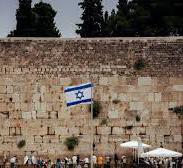
When I imagine walking through the streets, alleyways and neighborhoods of Yerushalayim – whether it be in the Rova, or throughout the old Jewish Quarter, I feel a profound level of privilege and kedusha like no other. This is particularly the case when I stand at the entrance to the Kotel with breathtaking splendor and astonishment.
For centuries, our ancestors and families cried and prayed to HaShem to be privileged to
see, feel, and witness the wonderment and awe of Yerushalayim and the Kotel. And, today, we are just a mere 12 hour plane trip away.
Truly a dream come true.
As I sit at home on the eve of Yom Yerushalayim, I envision myself approaching the Kotel and eventually touching and kissing the wall while reciting special tefillot. I imagine feeling and experiencing a very special and profoundly unique spiritual connection when praying for the good health and welfare of my family, friends and for klal yisrael.
With every step I take, I imagine feeling the ancient sands of history and antiquity moving beneath my feet; I imagine the rich golden reflective brilliance of the special
COMMUNITY NEWS
stones and walls which are very unique to Yerushalayim; and, I imagine the centuries of sacrifice, war, destruction and celebration that Yerushalayim and its inhabitants experienced throughout the ages.
Yerushalayim shel zahav is indeed a bright and shiny beacon of illuminating light, hope and promise for our future.
As the sun rises and sets over the beautiful city of Yerushalayim, we are blinded by its beauty and golden hue of hope and promise. We pray to HaShem for the future of Yerushalayim and for the Jewish nation throughout the world.
for geula are overtaken and overshadowed by the beautiful melodic sounds of birds flying in circles and chirping above us at the Kotel. It is as if they were singing the beautiful praises of HaShem in unison
bollah will soon end in victory. With warm wishes for a Chag Sameach, and a beautiful and peaceful Shavuot as we hope and pray for a Shana Ha-Ba B’Yerushalayim Habinuya.
B’sorot Tovot
ABOUT THE AUTHOR
So, as we commemorate the significance of Yom Yerushalayim, we will continue to hope and pray that the current war with Iran and Hez-
Dr. Chaim Botwinick is a senior executive coach and an organizational consultant. He served as president and CEO of the central agency for Jewish education in Baltimore and in Miami; in addition to head of school and principal for several Jewish day schools and yeshivot. As an Influencer in education, he has published and lectured extensively on topics relating to education, resource development, strategic planning and leadership development. He is cofounder of LEV Consulting Associates and creator/ host of Chinuch Horizons. Dr. Botwinick is Author of “Think Excellence: Harnessing Your Power to Succeed Beyond Greatness”, Brown Books, 2011. Hours S: 10AM - 4PM
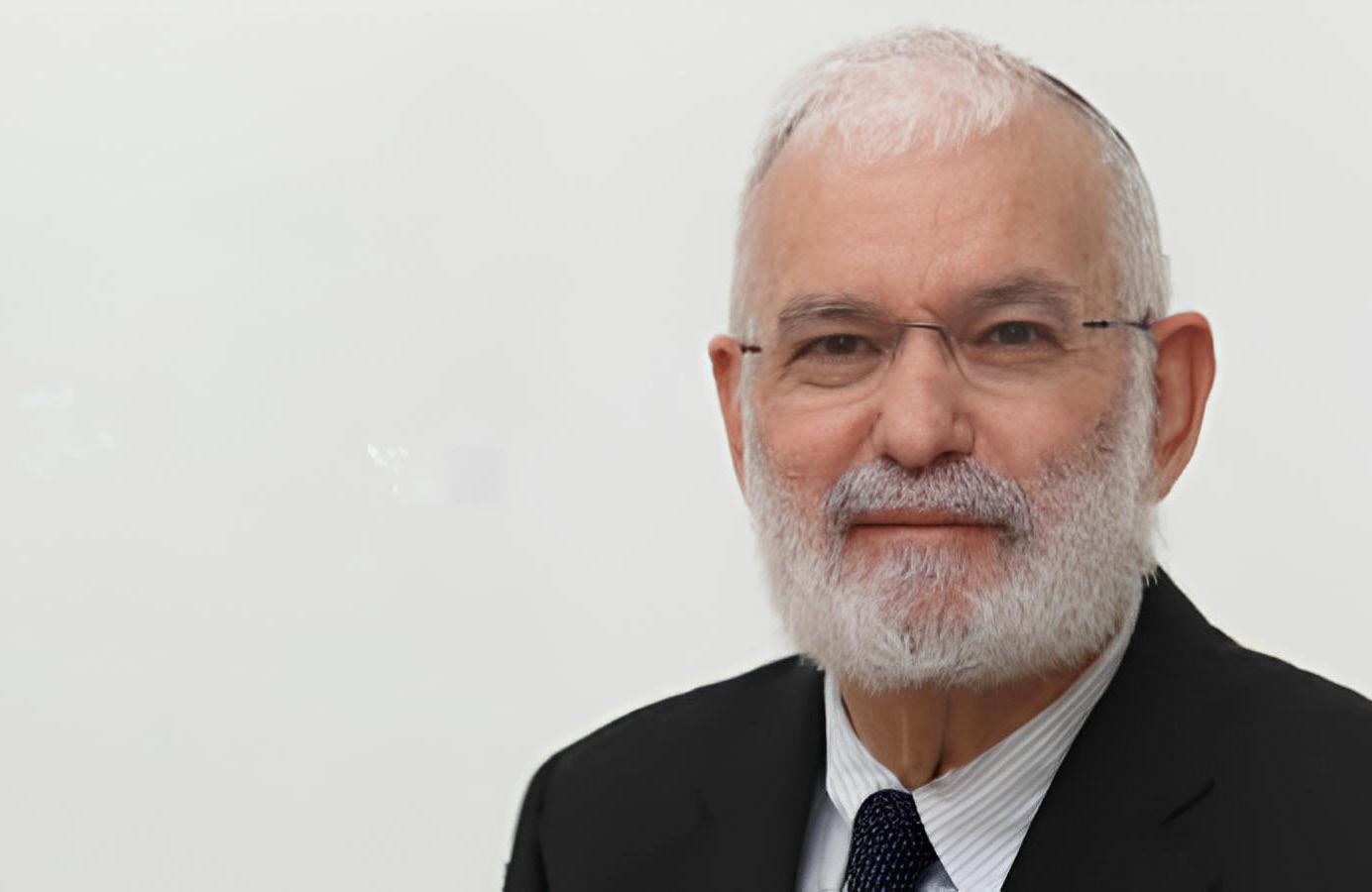
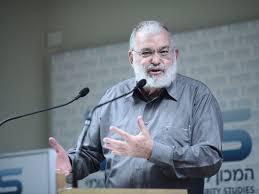
Inside Israel’s Security Mindset: Yaakov Amidror on Iran, October 7, and the Future of the Middle East
By South Florida Community Voice
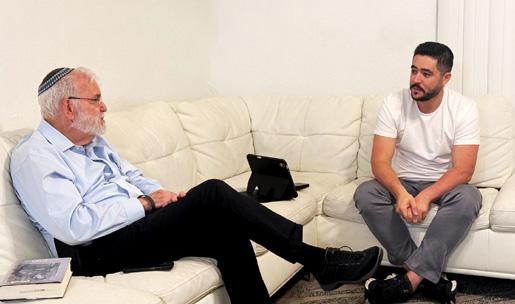
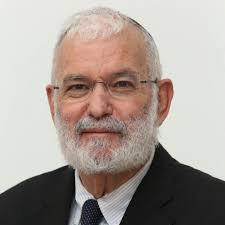
A former Major General in the IDF and Israel’s National Security Advisor under Prime Minister Benjamin Netanyahu from 2011 to 2013, Amidror spent decades at the center of Israel’s intelligence and defense establishment. From Lebanon and Gaza to Iran and the country’s shifting regional alliances, he helped shape Israeli strategic thinking during some of the most consequential years in the nation’s history.
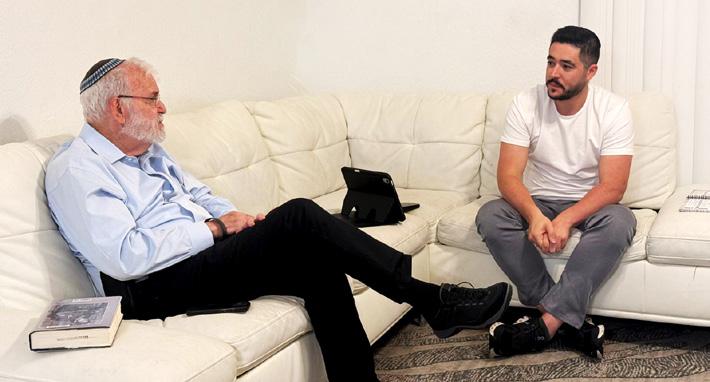
In an exclusive interview with South Florida Community Voice, Amidror offered a rare inside look into Israel’s security mindset, explaining how Israeli leaders view Iran, the aftermath of October 7, Hezbollah, Turkey, and the increasingly complicated relationship between Israel and the United States.
A Career Inside Israel’s Security Establishment
Amidror joined the IDF in 1966 and rose steadily through the ranks of military intelligence. Over the years, he held a series of senior intelligence posts, including head of the Assessment Division of IDF Intelligence, before later serving as secretary to the Minister of Defense and commander of the National Defense College.
But according to Amidror, it was his role as National Security Advisor that gave him the clearest understanding of Israel’s challenges.
“When you work in intelli-
gence, you think intelligence is everything,” he said. “When you work in the Defense Ministry, you focus on military planning and budgets. But when you sit beside the Prime Minister, you suddenly see how everything connects — diplomacy, intelligence, military operations, America, the Arab world, and global politics.”
He stressed that outsiders often underestimate just how difficult Israeli decision-making really is.
“It’s very easy to criticize leaders when you don’t have all the in-
formation,” he explained. “When you do have all the details, you understand how cautious you need to be, because the situation changes constantly.”
Netanyahu Behind the Scenes
Amidror has known Netanyahu since 1969, when the two served together during military training in Tel Aviv.
“We used to run together,” Amidror recalled. “He was in better shape than me back then — and honestly, he probably still is.”
Asked whether being openly religious played a role in his appointment, Amidror dismissed the idea.
“I was probably the first twostar general who wore a kippah,” he said. “But I don’t think that had anything to do with Netanyahu’s decision.”
Instead, he emphasized that their relationship had been built over decades of trust and familiarity within Israel’s security establishment.
Iran: The Core Threat
Throughout the interview, Amidror returned again and again to one central theme: Iran. In his view, nearly every major regional conflict Israel faces today ultimately traces back to Tehran.
He described Iran’s strategy as a decades-long project built around three pillars:
• A nuclear program
• A massive long-range missile arsenal
• A “ring of fire” of proxy forces surrounding Israel
That ring, he explained, includes Hezbollah in Lebanon, Hamas and Islamic Jihad in Gaza, the Houthis in Yemen, and Iranian-backed militias in Syria and Iraq.
“The Iranian strategy was very smart,” Amidror said. “The idea was that when the moment came, all these forces would attack Israel together, while Iran provided missile support and, eventually, nuclear protection.”
Amidror was especially critical of the Obama-era nuclear agreement, the JCPOA, which he believes fundamentally altered the trajectory of the Iranian threat.
“The Americans moved from trying to dismantle Iran’s nuclear project to simply postponing and monitoring it,” he said. “From our point of view, that was a huge mistake.”
October 7 Changed Everything
Amidror admitted he was shocked by the October 7 Hamas attacks, but he says that within days he came to see that the as-
sault had unintentionally exposed an opportunity for Israel.
“I understood three or four days later that this was not just a Hamas attack,” he said. “This was an opportunity to dismantle the broader Iranian project.”
According to Amidror, Hamas leader Yahya Sinwar had expected the entire Iranian-led axis to join the war immediately and in full force. Instead, Hezbollah entered gradually and cautiously — a hesitation Amidror believes ultimately weakened the organization strategically.
For months, Israel and Hezbollah exchanged limited fire along the northern border while, according to Amidror, Israel quietly prepared for a much larger confrontation.
“We carried out more than seventy special forces operations inside Lebanon before the official ground invasion even began,” he
revealed.
Those operations, he said, helped push Hezbollah’s elite Radwan forces farther north and degraded key infrastructure ahead of larger military action.
Why Israel Didn’t Immediately Open a Northern Front
One of the most debated questions in Israel during the war was why the government did not immediately launch a full-scale assault on Hezbollah while northern Israel remained under attack.
Amidror defended the decision firmly, crediting Netanyahu with resisting enormous pressure in the early months of the war.
“The strategy was to fight piece by piece,” he explained. “You concentrate your forces on one front first. You don’t spread yourself everywhere at once.”
Many Israelis, he argued, failed to grasp the military limitations
the country was operating under.
“People don’t understand that the IDF needed more divisions,” he said. “People also don’t understand the importance of munitions, logistics, and coordination with the United States.”
Leadership, he insisted, had to think strategically rather than emotionally.
“Sometimes you delay an operation because the larger relationship with America matters more,” he said. “There are no free lunches.”
Hamas, Hezbollah, and the Current Reality
Despite the ongoing war, Amidror argued that Hamas no longer represents a major strategic threat to Israel.
“Hamas still exists inside Gaza,” he said, “but as a strategic threat to Israel, it is no longer relevant.”
Hezbollah, however, remains a far more serious concern. According to Amidror, the group still retains meaningful capabilities despite suffering major losses.
“It may only be twenty percent of what they once had,” he said, “but it is still dangerous.”
As for Iran itself, Amidror described the regime as “a wounded animal” — still dangerous, still ambitious, and still determined to reshape the Middle East. He suggested that long-term stability may ultimately require internal regime change within Iran, while acknowledging that such an outcome cannot simply be imposed from the outside.
Turkey: A Different Kind of Challenge
Amidror also addressed Turkey’s growing regional ambitions, describing them as a different kind of strategic problem than Iran’s.
“Turkey does not wake up every morning trying to destroy Israel,” he explained. “But it would absolutely prefer to see a weaker Israel.”
He pointed to Turkey’s expanding influence in Syria, its tensions with Greece, and its ambitions in the Eastern Mediterranean as potential future friction points.
“We need much better intelligence and long-term strategic thinking regarding Turkey,” he warned.
Still, he emphasized that Turkey’s goals remain fundamentally different from Iran’s ideological mission against Israel.
Why America Should Care
One of Amidror’s strongest messages was directed not at Israelis, but at Americans. In his view, stopping Iran is not only Israel’s battle — it is a critical American interest as well.
“If America retreats, its credibility around the world will be damaged,” he warned.
Iran’s ideological ambitions, he argued, extend far beyond Israel and the Middle East.
“The Iranian regime believes the current world order is wrong,” he said. “They believe Western democratic values should be replaced.”
He also cautioned that if Iran’s missile program continues unchecked, Iranian missiles could eventually threaten the United States directly.
“If the missile project is not stopped,” he said, “within a decade their missiles could potentially reach America.”
Beyond the military threat, Amidror believes an American retreat from the Middle East would dramatically shift the regional balance of power toward Iran, Russia, and China.
“If countries in the Middle East conclude that America cannot be trusted,” he said, “they will begin adjusting themselves to Iran instead.”
Looking Ahead
As the interview drew to a close, Amidror reflected on the future of the U.S.-Israel relationship. Despite growing political polarization in America, he expressed hope that support for Israel could eventually return to being bipartisan.
“I hope Israel can once again become a bipartisan issue in America,” he said. “Israel will need to do whatever it can to make that happen.”
For Amidror, the current war is not simply another round of fighting in the Middle East. In his eyes, it is part of a much larger battle over the future balance of power in the region — and potentially far beyond it.
The PR Veteran Who Couldn’t Stop Saying No — And
the AI He Built to Fix That
An interview with Warren H. Cohn, founder of TAIPR and CEO of RocketshipPR
By the time Warren H. Cohn finishes describing the founders, rabbis, and small-nonprofit executive directors he has had to turn away over the years, you begin to understand why he has been spending his nights and weekends building software instead of sleeping.
“There’s a particular kind of phone call I’ve taken too many times,” says Cohn, who has run RocketshipPR — a boutique strategic communications firm based in Hollywood, Florida — for more than fifteen years. “It’s a founder, or a shul, or a small Israel advocacy group with maybe one paid staff member. They have a story the world should hear. They have a mission that genuinely matters. And they can’t afford anybody who knows how to get them into the news.”
Cohn’s client roster reads like a who’s-who of the Jewish communal world: NCSY, Chai Lifeline, Boundless Israel, the European Jewish Association, Pansophic Learning’s ACCEL Schools, the American Friends of Leket Israel — where he sits on the board — and AMEPA, where he serves as Media Advisor. He is a contributing columnist at JNS, a member of the Forbes Business Council, and the kind of operator who, when a Jewish institution finds itself in crisis at three in the morning, gets the call.
But behind the marquee accounts, Cohn says, is a quieter ledger.
“For every retainer we sign, I’ve
probably said no to five organizations who deserved a yes,” he says. “Sometimes I’d cut my rate. Sometimes I’d take on a cause for less than our firm minimum because I put my heart in this work and I couldn’t help myself. But you can’t run a firm on tzedakah alone, and the math always caught up with me.”
That math, he believes, is about to change.
Enter TAIPR
TAIPR is Cohn’s new venture: an AI-native public relations platform designed, in his words, “for the founder, the nonprofit director, the small business owner who has something to say and no idea how to say it to a reporter.”
Cohn describes the product less as software and more as a senior publicist who happens to live inside your laptop. “Most PR platforms today are databases with a search bar on top. They’ll sell you a list of journalists and wish you luck. TAIPR is different. It actually thinks alongside you. It learns what’s newsworthy about your organization. It writes the pitch. It identifies the right reporters — not just by beat, but by what those reporters have recently written and what they are likely to care about this week. And it does all of it in minutes, not weeks.”
The price point is, by industry standards, almost provocative. A single-user TAIPR subscription will run $500 a month — roughly
a tenth of what a comparable boutique agency engagement typically costs.
For now, even that is free.
“We’re in a closed testing phase,” Cohn explains. “I would rather build a product that genuinely serves the founders and nonprofits we’re building this for than rush to market and disappoint them. So we’re inviting users in at no cost, in exchange for honest feedback. If you’re a small business, a nonprofit, a Jewish communal organization, an Israel advocacy group, a mission-driven startup — please write to me. The address is warren@taipr. com. I read every one personally.”
A team built in unlikely places Cohn did not build TAIPR alone, and he is careful to deflect credit toward his co-founders.
His partner, Jeremy Pink, spent more than a decade inside CNBC — running CNBC Asia as its president, serving as senior vice president for business news in New York, and creating the network’s morning franchise Worldwide Exchange. After CNBC, Pink ran a private equity-backed sports broadcasting company through a successful exit, and now runs Pink Ventures. “Jeremy has been on the other side of the desk for decades,” Cohn says. “Most people in PR are guessing at what makes news. He has actually decided what becomes news.”
Then there is the team’s senior engineering leader — a man Cohn
introduces with a particular grin.
“He used to run chaos engineering at Amazon Web Services,” Cohn says. “Which means his entire job, professionally, for years, was to break things on purpose to make sure the rest of Amazon’s infrastructure could survive it. He is also, somewhat relevantly, my father-in-law.”
He lets the line sit for a beat.
“I know plenty of guys in the neighborhood who can’t have their father-in-law over for a single Shabbat weekend without an incident,” he continues, deadpan. “We’ve been building a company together for months now. Long hours. Real pressure. Code reviews. And — baruch Hashem — we have both kept our cool the entire time. I consider that, in itself, a small miracle. Possibly the proof of concept.”
The joke lands because, in the room, it has the ring of truth — the affection of a son-in-law who plainly admires the elder man’s mind, and the relief of someone who knows exactly how unusual the arrangement is.
Disruption, the Jewish way
When you press Cohn on his ambition for TAIPR, the comparison he gently resists is the one that nevertheless keeps surfacing: that he intends to do for public relations what a handful of Silicon Valley founders have done for cars, rockets, and payments — collapse the cost curve, dismantle the gatekeepers, and rebuild the industry from the studs.
“I’m not interested in being the loudest person in the room,” he says. “I’m interested in being the most useful. But yes — the PR industry has been protecting an old
business model for thirty years. It charges enormous retainers for work that, in 2026, a well-designed system can perform in a fraction of the time at a fraction of the cost. Someone is going to break that open. I would like it to be us. And I would like the people who benefit first to be the people the industry has historically priced out.”
Pressed on what he means by priced out, Cohn lists them without hesitation. The day school trying to fill seats. The Israel advocacy nonprofit fighting a defamation campaign with three staff members. The kosher food entrepreneur with a national-quality product and a local-only budget. The small shul that wants the broader community to know about its programs. The founder of a mission-driven startup who cannot afford a single junior account executive at a midtown agency.
“These are the people I built this for,” he says. “If we get TAIPR right, a founder with a $500 monthly budget should be able to compete for media attention with the organizations spending fifty thousand. That is the world I would like to live in. That is the world I believe we are a few months from.”
Why now
Asked why he did not build this company five years ago, Cohn is direct.
“Because the technology wasn’t good enough five years ago. It wasn’t even good enough two years ago. I’m not somebody who chases hype — I’ve watched a lot of bright objects pass through our industry. But sometime in the last eighteen months, the underlying AI crossed a real threshold. It became possible
to build a system that does not just imitate a publicist but actually performs the craft. Once I saw that, I couldn’t unsee it. I told my wife I was going to give up my weekends for a while. She has been extraordinarily patient.”
There is, he adds, a values dimension to the timing.
“Our tradition takes very seriously the obligation to lift others up — kol Yisrael areivim zeh bazeh, all of Israel is responsible for one another. I spent fifteen years building a firm that does that for the organizations that could write the check. TAIPR is my attempt to extend the same obligation to the ones who couldn’t.”
How to get involved
TAIPR is currently accepting applications to its free testing cohort. Cohn says priority is being given to mission-driven organizations, nonprofits, Jewish communal institutions, Israel advocacy groups, and small businesses and founders who have historically been unable to afford strategic communications support.
Interested participants are invited to email Cohn directly at warren@taipr.com. He has asked that prospective testers include a brief paragraph describing their organization and what they would hope to accomplish with the platform.
“I don’t want this product to be impressive,” he says — in what may be the most unusual line a founder will utter this year. “I want it to be useful. If we get useful right, impressive will take care of itself.”
Warren H. Cohn is the founder of TAIPR and the CEO of RocketshipPR. He lives in Hollywood, Florida, with his wife and children. He can be reached at warren@taipr.com.
SAY CHEESE - Shavuot Holiday 101
by Rabbi Moishe Kievman | Chabad Chayil
At a unique crossroads between religion and cuisine, the Holiday of Shavuot, celebrating the Giving of the Torah at Mount Sinai some 3,338 years ago, has become a celebration of fine dairy cuisine as well. Shavuot is celebrated for two days, this year beginning at sundown on Thursday, May 21, 2026 and ending at nightfall on Saturday, May 23.
50 days after leaving Egypt on Passover, the Jewish people received the Torah from G-d at Mount Sinai on the holiday of Shavuot. Shavuot literally means “weeks” and marks the completion of the seven-week counting period between Passover and Shavuot. Shavuot customs include all-night Torah study, listening to the recitation of the Ten Commandments, the reading of the Book of Ruth, eating dairy products and adorning the home with flowers.
With the giving of the Torah, the Jews became obligated to observe the kosher laws. As the Torah was given on Shabbat, no cattle or poultry could be slaughtered, nor could we make sure that the animal’s insides were healthy and then properly cleaned out as is required in order for the meat to be kosher. In addition, utensils could not be koshered, and as such we ate dairy. Exquisite cheesecakes, pesto pastas, lasagna, souffles, eggplant parmesan and of course, cheese blintzes all take center stage during this ancient celebration.
When thinking Jewish Holi-
days, Passover, Chanukah and Yom Kippur usually come to mind first. Nevertheless, Shavuot is considered one of Judaism’s main holidays and was in fact a “pilgrimage” when all of Israel would travel to Jerusalem to celebrate in the Temple in Jerusalem.
No, it isn’t all about the food. Especially in lieu of what’s been happening around the world with all the antisemetic rhetoric, what is important is that the community is joining together, hearing the Ten Commandments and cel-
ebrating the Torah. But the good food certainly helps.
The tradition to learn all night has been practiced ever since we received the Torah. On the very night before G-d gave the Torah, we went to sleep, waking late in the morning. As a symbolic rectification for this, Jews customarily stay awake studying Torah until the morning, on the first night of Shavuot, this year on Thursday night.
Since we all stood at Mount Sinai, we must all reaffirm our com-
• DINE-IN
• SUSHI PLATTERS • CATERING SETUP
• LIVE SUSHI STATION • DELIVERY & PICKUP
COINS
COMMUNITY NEWS
mitment. On Friday, May 22nd, the Ten Commandments will be read aloud from the Torah. Special emphasis is placed on including the entire Jewish family, including little babies, the way the Torah’s giving was attended by every Jewish man, woman and child.
The word Torah means “instruction” or “guide.” The Torah guides our every step and move through its 613 mitzvahs. The word mitzvah means both “commandment” and “connection.” Through the study of Torah and fulfillment of mitzvahs, we reconnect ourselves and our environment to G-d. G-d’s purpose in creating the world was that all of creation be sanctified, imbuing it with holiness and spirituality.
Since Shavuot is also called the “Harvest Festival,” it is customary to adorn the home with fruits, flowers and greens.
Most of us are, thank G-d, able to get out and celebrate the way we have for over three thousand years. But for those that are for whatever reason staying home, that should in no way stop you from celebrating the holiday, since most of the holiday is super easy to celebrate even while at home alone. Not going to work ✓ Eating dairy ✓ Praying the special holiday prayers ✓ Studying Torah all night ✓ Decorating the home with flowers ✓ The only things that we can’t do without a quorum, are hearing the Ten Commandments read from the Torah and praying with a minyan. But you can still study the Ten Commandments from a Torah Book, known as a Chumash (which you can download before the holiday at ChabadChayil.org/Chumash) and pray from a Siddur prayer book
(downloadable at ChabadChayil. org/Siddur)✓. And you can still read Yizkor, even without a minyan (ChabadChayil.org/Yizkor)✓
To learn more about Shavuot and the many customs associated with it, visit www.ChabadChayil. org/Shavuot. There you can also get delicious dairy & dairy-like recipes, send free holiday greeting cards, download the prayers & suggested all night Torah study.
If you are able to go out, then you should certainly make sure to attend services this holiday, at least to hear the Ten Commandments read from the Torah on Friday morning. As always, you are welcome to join me at the Family Shul in West Aventura. For the full schedule call (305) 770-1919 or
visit TheFamilyShul.com, where you can rsvp for holiday meals and download many great articles.
ABOUT THE AUTHOR
Rabbi Kievman together with his wife are the ambassadors of The Rebbe to Highland Lakes, FL. They are the founders of Gan Chabad Preschool, your local CTeen & CKids chapters, CHAP - an afterschool program for Jewish children in Public Schools and direct Chabad Chayil. He’s the rabbi at The Family Shul and can be reached at (305) 770-1919 or rabbi@ChabadChayil.org. You can also support the community with your partnership at ChabadChayil.org/Donate.
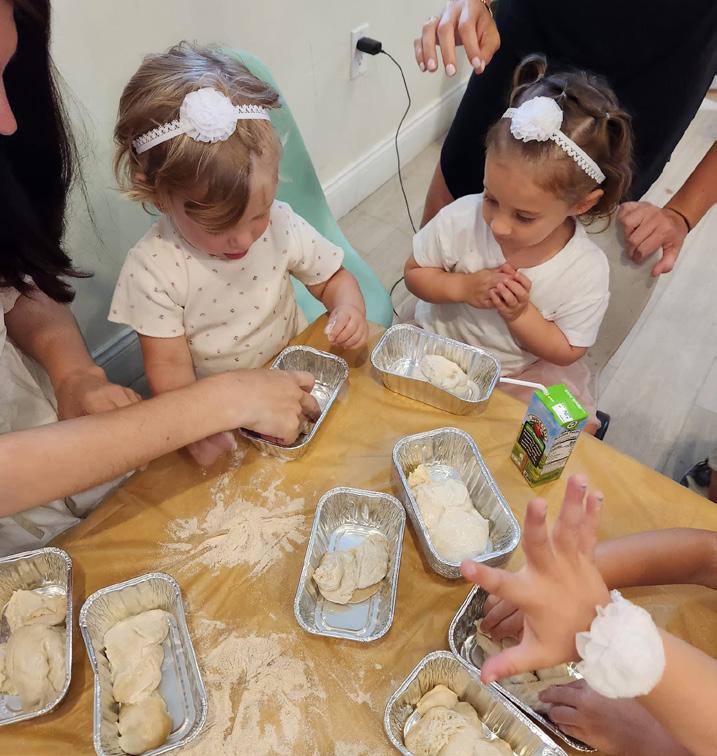
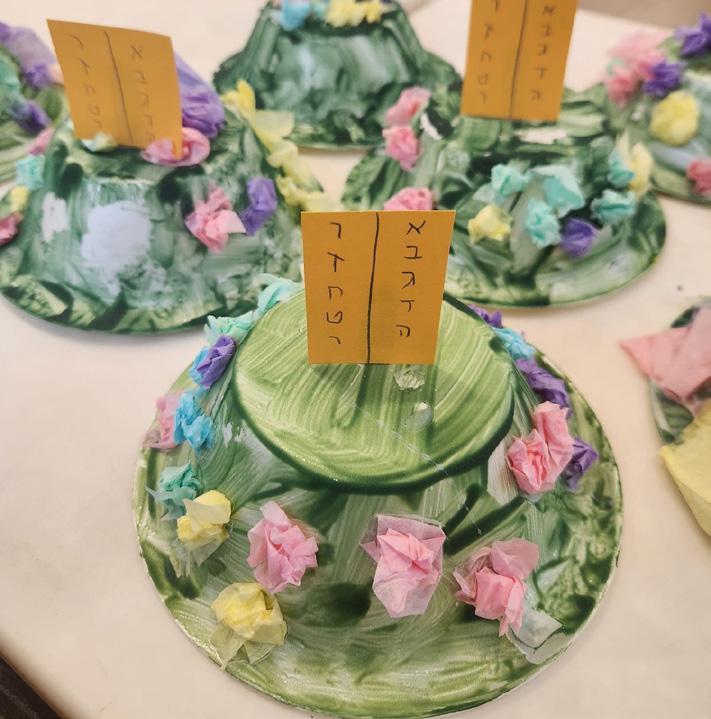
Photo: Gan Chabad Preschool design their own Shavuot treats & crafts. Credits: ChabadChayil.org/Preschool
KIDS ZONE KIDS ZONE
KNOW THAT...
FACTS ABOUT THE OCEAN DID YOU
1. The Ocean Covers Most of Earth. The ocean covers about 71% of our planet. That means if you looked at Earth from space, you would mostly see blue water instead of land!
2. Most of the Ocean Is Still Unexplored Scientists believe more than 80% of the ocean has never been fully explored. There are still hidden animals, underwater mountains, and mysteries waiting to be discovered.
3. Octopuses Have Three Hearts
An octopus has three hearts! Two hearts pump blood to the gills, and one pumps blood to the rest of the body. Their blood is also blue because it uses copper instead of iron.
4. The Blue Whale Is the Largest Animal Ever. Blue whales can grow up to 100 feet long — longer than a school bus! Their hearts can weigh as much as a small car.
5. Sea Turtles Always Return Home. Sea turtles travel thousands of miles across the ocean, but many return to the exact beach where they were born to lay their eggs. Scientists believe they use Earth’s magnetic field like a natural GPS to find their way!
6. Dolphins Use “Names”. Dolphins make special whistles that act like names. They can call to each other and recognize friends and family by sound.
7. Seahorse Dads Carry the Babies. In seahorses, the father carries the eggs in a pouch on his belly until the babies are ready to be born. This is very unusual in the animal world!
8. Some Ocean Animals Glow in the Dark. Deep-sea creatures like jellyfish and anglerfish can glow using a natural light called bioluminescence. They use it to attract food, scare predators, or communicate underwater.
9. Coral Reefs Are Underwater Cities. Coral reefs are home to thousands of sea animals. The Great Barrier Reef in Australia is so huge that it can even be seen from space.
10. The Pacific Ocean Is Huge. The Pacific Ocean is the biggest ocean on Earth. It covers more area than all the continents combined!
KIDS ZONE KIDS ZONE
Find the missing piece
UNSCRAMBLE THE FOLLOWING WORDS RELATED TO THE OCEAN
1. NAEOC 2. SOPCTOU
KSRHA 3. AELHW
NIDPHOL
ESOHRASE
ALCOR
FSHJYELIL
CIFPCAI
Sumac White Chocolate Bark
By Jamie Geller
This simple white chocolate bark is the perfect light treat after a heavy meal. The unique combo of nuts, orange zest and citrusy sumac will make everyone say WOW!
Tip: For extra flavor toast and salt the almonds before using.
Ingredients
• 12 ounces white chocolate broken into chunks
• 1 cup almonds roughly chopped
• Zest of 1 orange
• Pinch Jamie Geller Sumac
Preparation
1. Line an 8×8-inch sheet pan with parchment paper and set aside.
2. Heat chocolate in a small saucepan over low heat, stirring constantly with a
spatula until melted and smooth. Pour melted chocolate onto sheet pan and smooth with spatula to create an even layer.
3. Sprinkle with almonds, orange zest and sumac.
4. Chill 20 minutes or until set. Break or cut into large chunks. Serve slightly chilled. Keeps in the refrigerator for up to 1 week.
Jamie Geller is the Chief Media and Marketing Officer at Aish. She is also a bestselling cookbook author, celebrity chef, television producer, and businesswoman. She’s the author of eight cookbooks and the founder of Kosher Media Network.
Most affordable housing in the entire state Esformes Hebrew Academy of Ormond Beach NOW HIRING
• Elementary teacher • Office manager • School Event Coordinator • Drama & Music, Coach Part-time and full-time positions
Quiet suburb School and shul community
EsformesHebrewAcademy.org
Email resume to chanidaytona@gmail.com UptownGirlHeadwear.com
Sweat In Style!!
Quality Headscarves • Sun Visor Scarves • Cotton Caps • Snoods • Pre Tied Bandanas & Tichels For Fashion • For Frum • For Hair Loss Made in USA (718) 614 9604
To place a Business Directory/Classified Listing contact: andrea@tsfcommunityvoice.com
BUSINESS DIRECTORY & CLASSIFIED
List your local business, services available, real estate opportunities, Help Wanted, & more!
Basic listing: $10/week -
Name, number and email address
Enhanced listing: $25/weekUp to 25 words (additional words $1/each)
Deadline: Tuesday at 4pm for next week's issue
Contact: andrea@tsfcommunityvoice.com
The Gift That Can Last a Lifetime
By Glen R. Golish
In Jewish tradition, one of the greatest responsibilities we have is preparing the next generation not only spiritually and emotionally but financially as well. We teach our children values, discipline and responsibility. Yet one of the most overlooked ways to create longterm stability for future generations is through intentional financial planning early in life.
For many families, life insurance is viewed only as protection against the unexpected. But when structured properly, whole life insurance can also become a longterm financial asset that grows alongside a child and provides flexibility for decades to come.
Starting Early Creates LongTerm Advantages
One of the greatest advantages of purchasing life insurance for a child or grandchild is insurability. Children are generally young and healthy, which often allows coverage to be obtained at significantly lower costs.
More importantly, the coverage is designed to remain in place for life.
As time passes, health conditions may change and future coverage may become more expensive or unavailable altogether. Planning early creates certainty and preserves options for the future.
For many parents and grandparents, this is not simply about insurance. It is about creating a financial head start.
More Than Protection
Properly designed whole life insurance policies can accumulate cash value over time which may later be accessed for important life events.
Over the years, policy values may help support:
• College tuition
• A first home purchase
• Starting a business
• Wedding expenses
• Supplemental retirement income
The key is flexibility. Unlike many traditional assets, properly structured policies can create a pool of capital that grows steadily and may be accessed strategically throughout life.
In many ways, this reflects the Jewish concept of hachana preparation. The strongest financial foundations are often built years
before they are ever needed.
Protecting Future Generations
One of the most powerful aspects of this strategy is that it can extend beyond one generation.
Certain policies may include riders that allow children to purchase additional life insurance later in life regardless of future health changes. This can help protect not only children but eventually grandchildren and future generations as well.
At its core, this is about stewardship.
The goal is not simply to transfer wealth. It is to transfer stability, opportunity and financial discipline.
Coordinating the Bigger Picture
Like any planning strategy, whole life insurance should not exist in isolation. Ownership structures, gifting strategies and long-term funding approaches all matter.
At G Wealth Strategies, we believe the most effective financial plans are coordinated holistically. Insurance, investments, tax planning and estate planning should work together as one cohesive system.
Because generational planning is not about one product. It is about creating intentional structure around the people and values that matter most.
A Final Thought
Children eventually outgrow toys, clothes and many of the gifts
they receive.
But a thoughtfully structured financial foundation may benefit them for the rest of their lives.
True wealth is not only measured by what we leave behind. It is measured by the opportunities, security and confidence we help create for future generations.
A Final Thought
Building wealth is important. Preserving it is even more important.
The strongest financial plans are not built around one product or one investment. They are built around coordination, clarity and long term intentionality.
Because ultimately, true wealth is not measured only by account balances.
It is measured by the security we provide, the opportunities we create for future generations and the legacy that remains long after we are gone.
About the Author:
Glen R. Golish is the Founder and CEO of G Wealth Strategies and a Forbes-recognized Top Financial Security Professional. He works closely with families on comprehensive financial and estate planning, including cross-border considerations for those navigating U.S. and Israeli planning needs.
Important Disclaimer:
Please seek qualified legal and tax advice before implementing any planning strategies, in conjunction with guidance from G Wealth Strategies.
Contact Information:
3010 N. Military Trail, Suite 318, Boca Raton, FL 33431 Office: 561-869-4600 | Cell: 561-239-9400 | www.gwealthstrategies.com
A young boy once asked his parents a question that, on the surface, sounds almost comical. “What will happen when I’m big and need to get married? How can I get engaged to a complete stranger?” His father smiled and tried to reassure him. “Once you marry her, she won’t be strange anymore.” But the boy wasn’t comforted. “It’s not fair,” he protested. “You got to marry Mommy, Grandpa got to marry Grandma, and only I have to marry someone I don’t know?”
It’s an innocent enough thought, but if we’re being honest, it captures something most adults never fully outgrow. We all want the reward of familiarity without enduring the discomfort of unfamiliarity. We want confidence before commitment. We want certainty before action. We want the life, marriage, business, investment, or future we admire… but without first stepping into what feels unknown.
The irony, of course, is that almost everything meaningful in life begins exactly that way. Before she was Mommy, she was a stranger. Before that dream home felt like home, it was just an intimidating mortgage. Before financial discipline became second nature, it felt restrictive. Before success became obvious, it certainly looked doubtful.
That’s where most people get stuck. They confuse unfamiliar with risky. They assume discomfort is a warning sign, when often it’s simply the price of growth. In my world, whether I’m helping someone navigate real estate, lending, or
financial strategy, I see it frequently. People hesitate not because the opportunity is wrong, but because they haven’t yet become the person who knows how to handle it. They wait for clarity before action, when in reality, clarity usually comes because of action.
The first investment property feels risky… until it doesn’t. The first budget feels limiting… until it becomes independence. The first hard conversation, career pivot, or major life decision often feels unnatural… until experience transforms it into wisdom. Confidence is rarely something you start with. More often, it’s something you earn by staying in the process long enough for what once felt foreign to become familiar.
And that process, more than anything, is where transformation actually happens.
Most people overestimate dramatic changes and underestimate compounding. They think they need to lose twenty pounds this month instead of making one better food decision today. They think they need to become wealthy overnight instead of cutting one unnecessary expense, making one smarter investment, or building one better habit that compounds over time.
The same is true in nearly every part of life. Small, consistent choices shape identity far more than occasional bursts of intensity. Just as importantly, real growth begins when you stop obsessing over changing everyone else and start focusing on changing your-
self. You cannot force your spouse, your market, your children, or your circumstances to evolve first. But when your target becomes your own discipline, mindset, and decision-making, something remarkable happens: your environment often improves alongside you.
Change your lens, and much of what you’re looking at begins to change too.
The truth is, life rarely provides guarantees before growth. What it does offer is the opportunity to step into something unfamiliar and trust that with wisdom, patience, and consistency, you can grow into it. Every meaningful chapter begins with something you do not fully know yet. The marriage. The investment. The career. The healthier version of yourself. The people who build extraordinary lives are not the ones who avoid strangers, they are the ones who learn how to turn distress into success.
Shmuel Shayowitz (NMLS#19871) is a highly regarded Real Estate & Finance Executive, Writer, Speaker, Coach, and Advisor. He is President and Chief Lending Officer of Approved Funding, a privately held national mortgage banker and direct lender that has facilitated over $3 billion in mortgage funding. Shmuel has over twenty years of industry experience and holds numerous licenses and accreditations, including certified mortgage underwriter, licensed real estate agent, residential review appraiser, and accredited investor, to name a few. Shmuel has successfully navigated through many changing markets and business landscapes, making his market insights and experience well-coveted within the real estate industry. He can be reached via email at Shmuel@approvedfunding.com.