



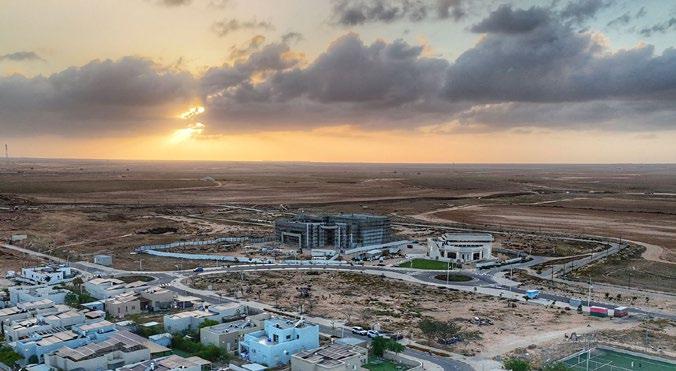









Be on top of the world at our breathtaking luxury estate in the Swiss Alps.
This exclusive full-hotel rental offers complete privacy for your group, with uninterrupted access to a fully serviced mountain retreat designed for unforgettable stays. Enjoy beautiful accommodations, elegant lounge areas, a sauna and hot tub, and a commercial kitchen; everything your group needs for a private, unforgettable
So much to explore.
Trotti Scooters: Rent Trotti scooters at Hannig and fly down the mountain paths.
Feeblitz Rodelbahn (Mountain Coaster): Zoom down one of the steepest toboggan lifts in the Alps, located right near the village.
The Metro Alpin: Ride the world’s highest underground funicular to Mittelallalin (3,500m) for year-round snow and panoramic views of the Matterhorn.
Book your Alpine getaway today.
Wildistrasse 101, 3906 Saas-Fee, Switzerland
Call/WhatsApp/Text 802.210.0018 | mark@fletschhorn.ch
Summer Skiing: Saas-Fee is one of the few places in Europe where you can ski on the glacier even in July and August.

Rabbi Eliyahu Segal Publisher, CEO

Dear Rabbi Draiman,
As Shavuos approaches, and both Yom Tov and Ahavas HaTorah are at the forefront of our minds, the question arises: with the pressures and demands of Yomim Tovim and daily life, how do we help our children develop a mindset of joy, warmth, and pleasure in Mitzvos and Avodas Hashem rather than viewing Yiddishkeit as pressure or burden?
Sincerely, Preparing for Yom Tov
Dear Preparing,
One of the great goals of chinuch is not merely teaching our children what to do, but helping them feel what it means to live as a Torah Jew. In “Spare the Child,” Rabbi Yaakovson defines chinuch as, “to cause our children to experience joy and pleasure in serving Hashem, desire it, and learn how to achieve it.” We hope to raise children who experience Torah not as a burden or something they simply do, but as the greatest privilege and source of meaning in their lives.
That perspective is not formed simply through speeches or lessons. It is primarily built quietly through the atmosphere of our homes, the tone of our reactions, and the way we ourselves speak about mitzvos, Yom Tov, learning, parenting, responsibilities, and challenges in our daily lives as Torah Jews.
As Shavuos approaches, this becomes especially important. Shavuos is not only about receiving the Torah; it is about how Torah is received. Is Torah experienced as heaviness, stress, and pressure, or as purpose, privilege, and joy?
Rav Moshe’s Warning - Transform “Have to” to “Get to”
Rav Moshe Feinstein zt”l often spoke about a painful mistake made by many well-meaning Jews at the turn of the 20th century. They sacrificed enormously to remain committed to Torah and mitzvos under difficult circumstances, yet many children absorbed one underlying message often expressed: “Shver tzu zein a Yid” — it is hard to be a Jew.
Rav Moshe explained that although the sacrifices themselves were noble and inspiring, children who constantly heard Yiddishkeit framed primarily through hardship naturally wondered: if this life is so painful, why would I want it for myself?
Instead, Rav Moshe emphasized that our children must feel that being a Yid is the greatest joy and privilege imaginable. Challenges may exist, but they should never become the defining emotional identity of Torah life.
Children are extraordinarily sensitive to emotional tone. A child who hears: “This is impossible,” “Yom Tov is exhausting,” “I feel so much pressure,” or “I can’t wait for it to end,” may start to associate
mitzvos with tension rather than connection. By contrast, a child who hears: “What a zechus,” “How special this is,” “We get to do this,” or “Let’s make this beautiful together,” begins to internalize an entirely different relationship with Avodas Hashem.
When we transform "have to" into "get to," we create a mindset that reframes obligations as opportunities. This shift replaces feelings of being forced or burdened with gratitude and motivation to pursue tasks with joy. Rabbi Dovid Orlofsky once said, “How do I make my kids stay at the Shabbos table? The same way I make them eat ice cream. I don’t, but if it is sweet enough they will want it on their own!” The trick is to work on what our table looks like.
“Gadol
The Mesilas Yesharim explains that the key to zerizus and enthusiasm in mitzvos is recognizing Gadol Erech HaMitzvos — the immense value and privilege contained within every mitzvah opportunity.
When something feels precious, effort no longer feels like burden. People willingly invest energy into what they truly value.
A parent may stay up all night for a sick child and never resent it, because love transforms effort into privilege. The same principle applies spiritually. When mitzvos feel meaningful and treasured, even demanding moments become elevated.
Rav Moshe offers a beautiful insight along these lines regarding the opening of Parshas Emor, which we read recently. The Torah introduces
the laws of the Kohanim with the word “Emor,” a softer expression of speech, rather than the firmer “Daber.” Rav Moshe explains that the Kohanim show us that when we greatly appreciate the profound privilege and honor to serve Hashem, no complexity or challenge would feel difficult or too hard; it was all easy and gentle for them, because it was so welcome and valued!
It took almost four years before my wife and I were blessed with our first children. Those early years of waiting gave us a profound appreciation for the gift of parenthood. Sleepless nights, diapers, expenses, and constant demands certainly still existed, but they were framed differently because we understood deeply what a blessing these children were.
What if we could appreciate all the blessings in our lives with this perspective? If we could value even more what blessings we have that we did not have to suffer before attaining, how great would our perspective be?
Perspective changes how we experience challenge. The challenge itself may remain the same, but appreciation can completely transform how we carry it.
Rav Shach zt”l once responded similarly to a young father debating whether he should spend money on a proper kiddush after the birth of a daughter. Rav Shach asked him: “If you had waited ten years for this child, would you ask such a question?” Then he added powerfully: “If Hashem spared you ten years of pain, is that not itself
reason to celebrate?”
Similarly, Reb Yaakov Kamenetzky zt”l once responded to a parent complaining about the exhaustion of raising children by saying, “That is not tzaar gidul bonim — that is simply gidul bonim.” Parenting naturally includes effort, sacrifice, interruptions, and fatigue. Those are not signs something is wrong; they are part of the privilege.
This perspective applies equally to Yom Tov preparation, chinuch, and daily Avodas Hashem. When our homes constantly frame responsibilities only as stress, children absorb resentment. When responsibilities are framed as meaningful investments, children absorb gratitude.
A powerful story is told of a Jew in America many decades ago who repeatedly lost jobs because he refused to work on Shabbos. Before Sukkos, with little money for decorations, he hung something unusual throughout his sukkah: his termination letters.
Those pink slips represented sacrifice for Shabbos, loyalty to Torah, and pride in serving Hashem. To him, they were not symbols of misery; they were decorations of honor.
Imagine the atmosphere such a perspective created for his family. The message was not, “Look what Torah cost us.” The message was, “Look what we were privileged to stand for.” Children who grow up around that kind of emotional framing develop resilience, pride, and love for Yiddishkeit.
As we approach Shavuos, we can also help our children understand a deeper truth: Torah is not meant to constrict life; it is meant to elevate it. Chazal teach: “Ein lecha ben chorin ela mi she’osek baTorah” (Avos 6:2) - true freedom belongs to one immersed in Torah.
The world often defines freedom as the removal of boundaries. Torah teaches that true freedom comes from purpose, meaning, and connection to Hashem. We can help our children recognize that the Torah provides us with a framework to live a life of meaning and fulfillment, and the ultimate achievement of true freedom and joy through Avodas Hashem.
Rav Aharon Kotler zt”l, Rosh Yeshiva and founder of Lakewood, once beautifully illustrated this idea. A wealthy supporter once audaciously asked him: “If Zevulun receives equal reward alongside Yissochor, and I share equally in the yeshiva’s accomplishments, what is the difference between us?” Rav Aharon replied: “Perhaps in Olam Haba. But who can compare our Olam Hazeh?”
A life of Torah is not merely about future reward. Torah itself creates richness, depth, joy, meaning, and fulfillment in this world as well. Torah learning and a life of Ruchniyus and spirituality itself can bring us incomparable joy.
Practically speaking, when we involve our children in the process of preparing for Yom Tov, ranging
from cooking or cleaning to learning activities or discussions at the table, we can remember how special we can make this Olam Hazeh together. Let’s work to approach these moments with excitement and enthusiasm, rather than as sources of pressure or tension that may be a withdrawal instead of a deposit in our relationships with each other and Hashem.
Create Emotional AssociationsChildren remember atmosphere more than lectures. Work to ensure mitzvos, Shabbos, and Yom Tov are associated with warmth, calm, connection, singing, humor, and togetherness rather than constant tension and criticism.
Express Privilege, Not Burden - Be mindful of how responsibilities are framed aloud:
Change “Have to” into “Get to” “We have so much to do” feels very different from “We’re getting ready for something special.”
Let Children Participate - Children connect more deeply when they help prepare:
Cooking, cleaning, setting the table, decorating, learning together, preparing divrei Torah, choosing songs, helping younger siblings, etc. Participation creates ownership.
Avoid Turning Every Mitzvah Into Pressure - Not every moment must become a battle over perfection. Sometimes preserving warmth and connection accomplishes more longterm chinuch than winning every small conflict.
Speak Positively About Torah Life - Children absorb how we speak about: davening, learning, guests, parenting, giving tzedakah, helping
others, preparing for Yom Tov. Model Simcha in Avodas Hashem - Children rarely become what we merely instruct them to become. More often, they become what they consistently observe. If they see parents who genuinely value Torah, appreciate mitzvos, and live with warmth and gratitude, those impressions remain for life.
To be most effective in our chinuch and imbue our children with a perspective of joy rather than challenge, we can work to more effectively convey these concepts in our homes and with our children: the precious power and value of each mitzvah, appreciation for the gifts in our lives, and the beauty of Torah and its impact on our lives. When children experience Yiddishkeit as meaningful, warm, and life-giving, we help create a Mesorah that they will not merely preserve, but cherish and enthusiastically pass forward to future generations.
May we all be zocheh to a meaningful and lasting Kabbalas HaTorah filled with simcha, appreciation, and renewed connection to Hashem and His Torah.
Sincerely,
Rabbi Rafi Draiman
Rabbi Rafi Draiman has been working in the field of chinuch for over 25 years and currently serves as Headmaster at Mizrahi Family Torah Academy, a unique, vision-driven Yeshiva Day School near Hollywood, Florida, serving boys and girls from PreK through 8th grade. Helping children and families grow in Torah, confidence, and connection is both a passion and a labor of love. He can be contacted at chinuch@draiman.com.

By JBuzz
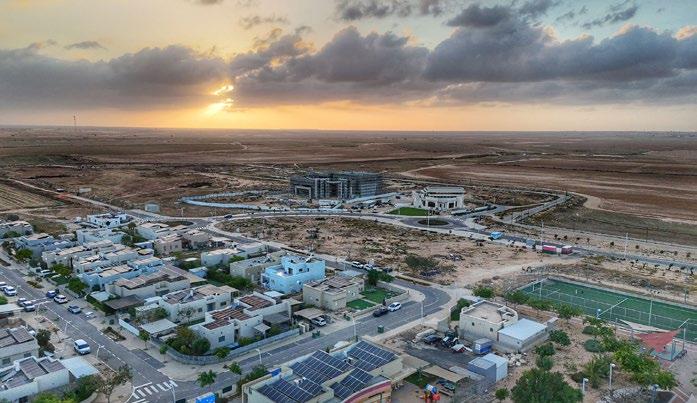
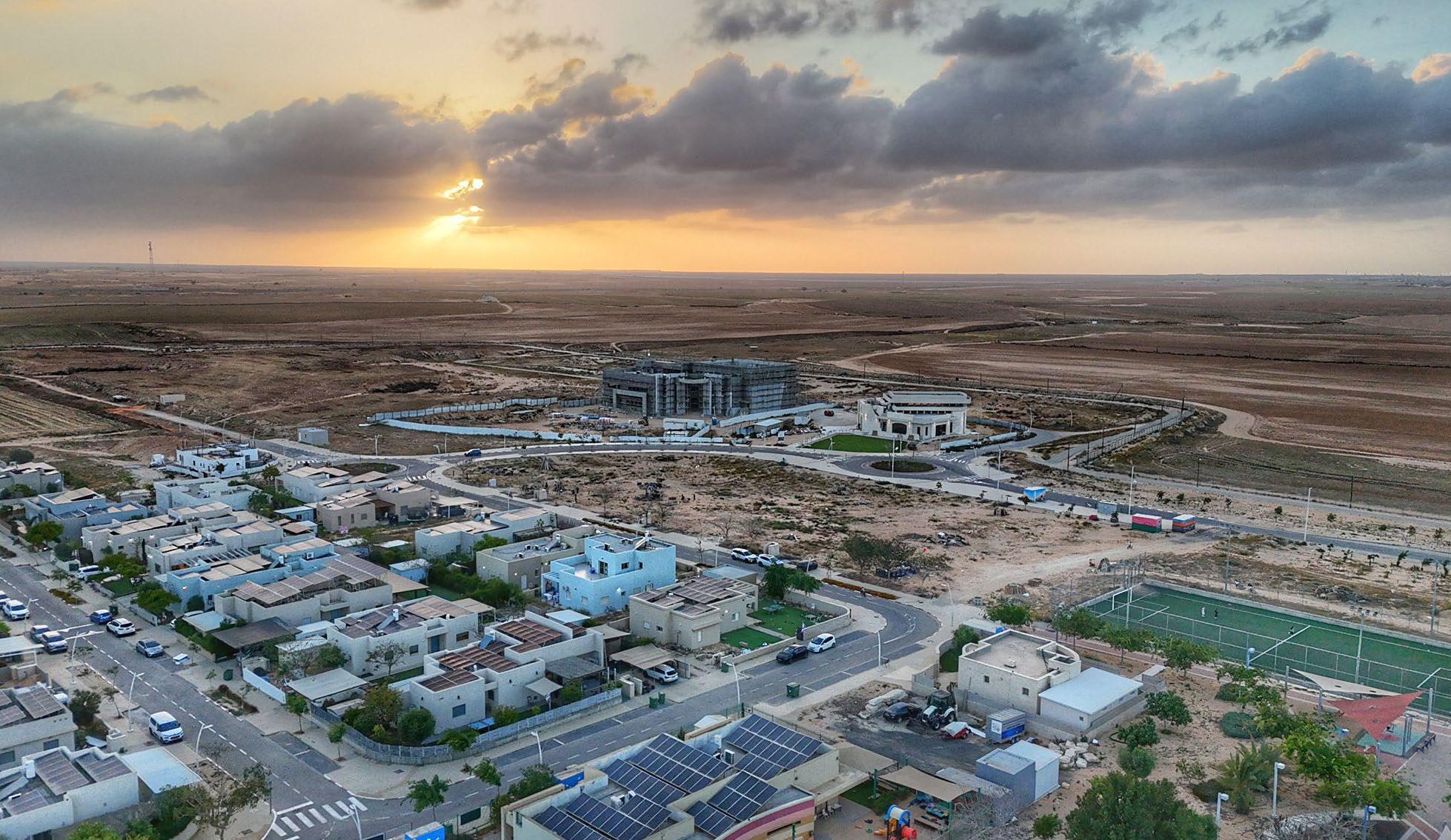
On the sandy frontier near Israel’s borders with Gaza and Egypt, a quiet but powerful story has been unfolding for nearly two decades — a story of displacement, rebuilding, loss, heroism, and unwavering faith. For the residents of Shlomit and the surrounding Halutza communities, October 7 was not the beginning of their story. It was another chapter in a mission that began long before, when families uprooted from Gush Katif chose not to disappear, but to rebuild.
We sat down with Yididya Harush for a deeply emotional conversation about the legacy of Gush Katif, the horrors of October 7, and why, despite everything, the people of Shlomit chose to return home stronger than ever.
“The Entire Community Began With Families From Gush Katif”
“My name is Yididya Harush,” he begins. “I’m a resident and part of the leadership of the Halutza communities on the borders with Egypt and Gaza. I’ve been involved since 2011.”
The story of Shlomit cannot be understood without understanding Gush Katif.
Following Israel’s 2005 disengagement from Gaza, thousands of Jewish residents were forced to leave the communities they had spent years building. Entire neighborhoods vanished almost overnight.
For Harush, it was personal.
“It was actually my 17th birthday when Ariel Sharon announced the disengagement,” he recalls. “My
family had just finished renovating our dream home. We only got to live there for two months before we had to leave.”
His family lived in the southern Gush Katif community of Slav, near Rafah.
“The Halutza communities were essentially built as a continuation of Gush Katif,” he explains. “The first fifteen families who came here were evacuated families from Gush Katif who decided they still wanted to help build the South and continue Ben-Gurion’s vision.”
What began as a small group of determined families slowly turned into multiple thriving communities in one of Israel’s most remote and strategically sensitive regions.
“There was nothing here in the beginning,” Harush says. “No infrastructure. No services. Just sand and a mission.”
That mission was not only ideological. It was strategic.
“The presence of communities here helps secure the border,” he explains. “There were constant issues with smuggling through the Egyptian border — weapons, drugs, and other threats. Building strong communities here became part of protecting the region.”
Over the years, residents learned to live with isolation, security concerns, and the emotional burden of raising children under constant threat.
But nothing could prepare them for what happened on October 7.
“Nobody Imagined This Scale”
“We’re only about two and a half miles from the border,” Harush says.
Like many Israelis living near Gaza, residents understood there was always risk.
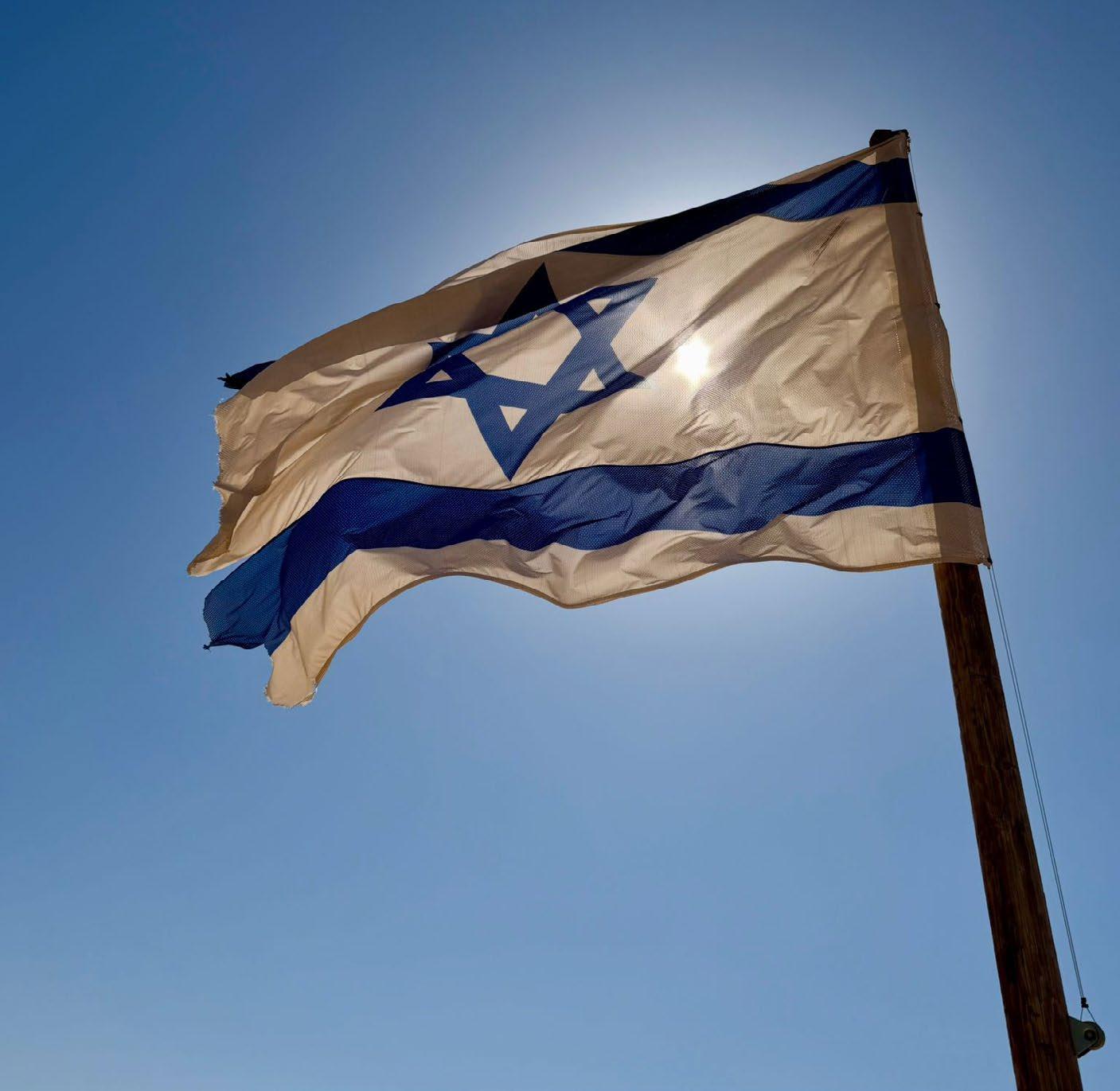
“In theory, everyone thought some kind of infiltration could happen,” he says. “But nobody imagined anything like this.”
The attack unfolded with terrifying speed.
“The army’s worst-case scenario had been maybe twenty terrorists entering a community,” he explains. “Here we faced thousands.”
According to Harush, more than 6,000 terrorists and approximately 3,000 rockets overwhelmed southern Israel within the first hours of the attack.
Missiles exploded dangerously close to homes throughout the region.
Then came a desperate call from the nearby community of Pri Gan. “Terrorists were trying to enter the community, and they needed immediate help.”
What happened next became one of the defining moments in Shlomit’s history.
“Our emergency response team made a heroic decision,” Harush says. “They left our own community and drove to defend Pri Gan.”
The battle lasted nearly two hours.
“There were very few of our people against many terrorists,” he says. “But they managed to push them back and save the entire community.”
The victory came with heartbreaking loss.
“Out of eighty-five families in our community at the time, four heroes were killed and four more were injured.”
In percentage terms, the impact was staggering.
“That’s nearly ten percent of the
community,” he says.
For a small town, the grief touched virtually every family.
“We Knew We Had To Stay Together”
The following morning, October 8, the IDF ordered the evacuation of the area.
Almost immediately, the community leadership gathered to discuss what came next.
“One thing became clear right away,” Harush says. “We could not allow the community to scatter.”
He points to lessons learned from earlier conflicts.
“After the 2014 war, some communities evacuated family by family into different hotels and cities,” he explains. “In the end, many of those communities never truly recovered together.”
The leadership feared the same outcome.
“We understood that if we separated, people might never come back,” he says.
In the middle of national chaos, Harush reached out to Jewish National Fund-USA.
“I called the CEO of JNF and explained the situation,” he recalls.
“Within minutes, they were already working to help us.”
An initial solution was found in the Arava region, but the community requested something closer to Jerusalem.
“Our fallen heroes were being buried near Jerusalem, and their families were sitting shiva there,” Harush explains. “We wanted to stay close.”
Soon afterward, housing was arranged in Gush Etzion.
Within hours, the evacuation began.
“We left together as one convoy,” he says.
Later, the entire community relocated together to the Kramim Hotel, where they remained for six months.
“People Were Just Sitting And Crying”
The first weeks after evacuation were emotionally devastating.
“People were broken,” Harush says. “Men, women, children — everyone was sitting and crying.”
He quickly realized the community needed structure and purpose.
“I started assigning responsibilities and tasks,” he explains. “People needed to stay active. They needed to feel they still had meaning and responsibility.”
Soon afterward, many of the men — including Harush himself — entered reserve duty and fought in Gaza.
“I was barely at the hotel after the first few weeks,” he says. “Most of us were serving.”
Despite the trauma, the decision to remain together proved critical.
“It helped preserve the soul of the community,” he says.
“We Came Back Proud”
After six months, Shlomit made
another extraordinary decision: to return home.
“At the time, most evacuated communities still didn’t feel ready,” Harush says. “But we believed returning was the healthiest thing for our families.”
The decision was made only after extensive consultations with the IDF and after receiving agreement from the widows of the fallen heroes.
“It was incredibly emotional,” he says.
When the community evacuated in October, residents left devastated and broken.
“When we returned, we decided we would come back differently,” he explains. “We came back proudly.”
Residents drove together in a long convoy filled with Israeli flags.
“There were tears everywhere,” he recalls. “But there was also pride.”
Before anyone even entered their homes, the community stopped at the site of a future daycare center.
“There, together with JNF, we laid the cornerstone for a brand-new daycare building.”
The symbolism mattered deeply.
“We wanted to send a message,” Harush says. “Our answer to terror is more life.”
He pauses before adding:
“You can break our homes. You can break our hearts. But you cannot break our spirit.”
“Today There Isn’t One Empty Home”
Incredibly, the story did not end with survival.
It became a story of growth.
“Since October 7, we’ve seen tremendous interest from families
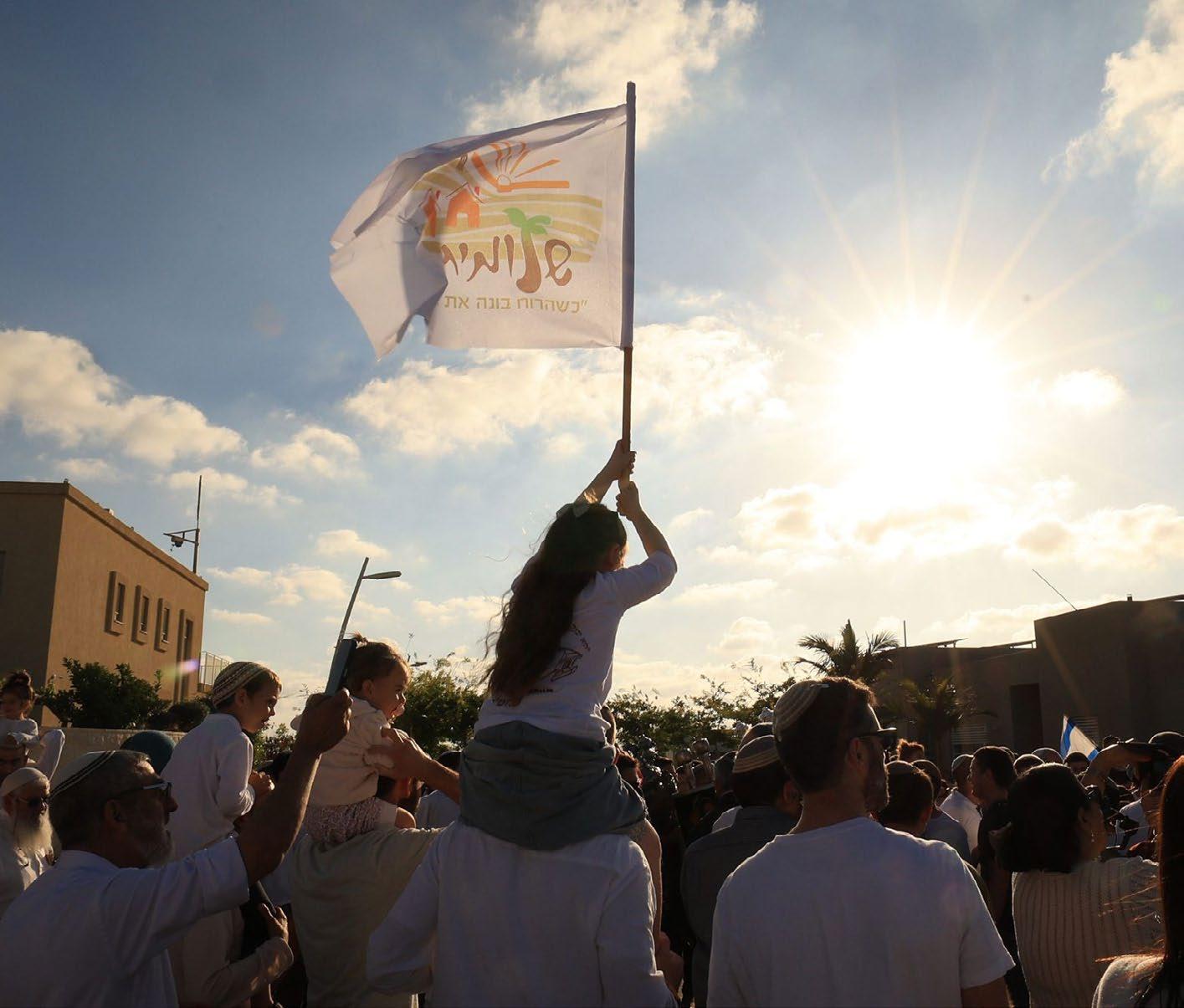
wanting to join the community,” Harush says.
Today, there are no available homes in Shlomit.
“A lot of people heard the story of the community and said, ‘We want to be part of something like this.’”
Construction continues throughout the area as new families prepare to move in.
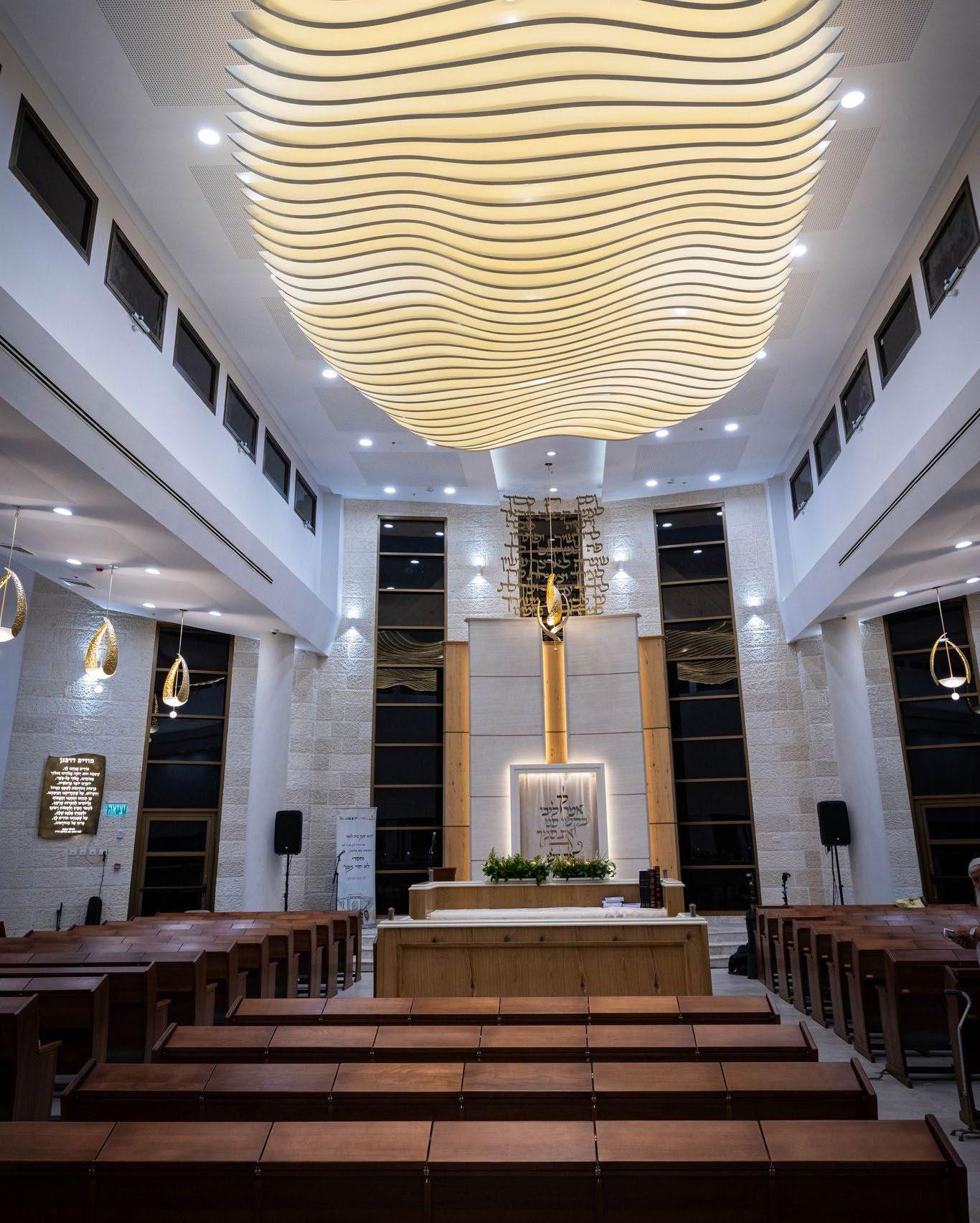
Just days before traveling to Boca Raton for community events, Harush attended another historic milestone: the inauguration of Shlomit’s first permanent synagogue.
“We dedicated it in memory of the four heroes we lost,” he says.
Support for the project came from around the world — particularly from supporters in the United States.
“Florida Feels Like Family”
Over the years, Harush has built close relationships with Jewish
communities throughout South Florida, especially in Boca Raton.
“The relationship feels like family,” he says warmly.
He describes the community as deeply supportive, caring, and personally invested in the future of Israel’s South.
“These are not just donors,” he says. “These are partners.”
As the conversation comes to a close, Harush reflects on the unlikely journey from the destruction of Gush Katif to the rebuilding of Shlomit.
For many communities, displacement could have been the end.
For Shlomit, it became the beginning of something even stronger.
“Without the support of these incredible friends,” he says, “we would never have been able to build what we built.”
Healing Hearts Bikur Cholim
South Florida
R. Yochanan Klein: 305-450-8287
Hollywood Medical Supplies
Hollywood Eldad: 954-478-7490
MB Medical Supplies
Miami Beach
Rabbi Stern: 305-318-2366
NMB Medical Supplies
North Miami Beach
Barry: 305-479-7745
Miscellaneous
Everything Virtual Gemach
Online
Orit Sabo: 917-359-5818
Jewish Library Gemach
South Florida
Tamar: 305-721-5880
Pack N Play Gemach
Miami Beach
Avrumy: 631-575-4177
Tzitzis Gemach
Boca/Global
Eliezer Cohn: 913-832-8032
Money/Loans
Free Loan Gemach
South Florida
Rina: 347-628-0394
Hebrew Free Loan Association
South Florida
305-933-1187
Loan Gemach North
Miami Beach
305-332-3572
The Helping Hands Lending
South Florida
Aharon Greenberg: 305-534-7050
Purim Costumes
Boca Raton Costume Gemach
Boca Raton
Dafna: 917-831-6654
Costume Gemach (NMB)
North Miami Beach 773-983-9704
Costume Gemach (Risa)
South Florida
305-308-2174
Queen Esty's Purim Gemach
Boca Raton
848-525-2958
Appointment only
Services
Notary Gemach
South Florida
Shoshana: 305-775-9354
Shaimos Gemach
South Florida Avi: 347-531-6057
Sheital Sheital Gemach (Kallahs Only)
South Florida
305-490-5471|Requires approval.
Sheital Gemach (NMB) North Miami Beach 972-836-2432|Accepting donations.
Costume Jewelry Gemach
South Florida
Sarah Tabakin: 917-620-5874
Gemach S'machot
South Florida
Paola Leonoff: 786-281-1133
Hollywood Simcha Gemach
Hollywood 954-609-1864
Decor & centerpieces.
Tablecloth Gemach
Boca Raton
Michal: 917-804-6924
Tablecloth Gemach (NMB)
North Miami Beach
347-848-5638
Yad David Tablecloth Gemach
North Miami Beach
Alli Jeger: 917-972-7695
Support Groups
Chizuk South Florida
South Florida
917-673-6123
Infertility support.
Shalom Task Force
South Florida
888-883-2323 |Domestic abuse.
Sharsheret
South Florida
954-416-0087| Cancer support.
Yacholet-Ikann
Hollywood 786-992-5036
Mental health assistance.
Wedding
Achnasos Kallah Gemach
South Florida
Marci: 786-877-2887
Bridal Gemach
Hollywood Visit: jeanettelevinebridalgemach
Chasde Chashie L'Kallah
South Florida
347-620-4145
Beds & dinette sets.
Jeanette Levine Bridal
Hollywood/NMB 954-588-7600 | Kallah dresses.
Leeba Gabriella Wedding
Boca Raton
Michal: 917-804-6924
Wedding Shtick Gemach
South Florida
305-781-8357|Props and decor.
Yad L'Kallah South FL
South Florida
347-371-1932
Baby Equipment Gemach
Miami/Hollywood
Mrs. Rinat Zelenko: 718-419-0215
Baby Gemach
North Miami Beach 917-359-5818
Orit Sabo.
Boca Children's & Ladies Coat Gemach
Boca Raton
Adina Moses: 718-854-2327
Bris Gemach
South Florida
Dina: 718-854-2327
Bris Outfits Gemach
South Florida
917-412-0713
Also collecting pillow donations.
Brit Gemach
North Miami Beach
305-409-2536
Pack N Play Gemach
Miami Beach
Avrumy: 631-575-4177
The Bris Box
Hollywood/Boca 917-902-5537
All bris supplies at no cost.
Bais Avel
Bais Avel Meals
South Florida
347-324-4039
Meals for families in Shiva.
Chesed Shel Emes
South Florida
305-359-5700
Burial, transport, Shiva equipment.
Bais Yaakov Uniform Gemachs
South Florida
Esther: 786-422-2602
Coat Gemach
North Miami Beach
305-761-1648
Goodman Jewish Family Services
South Florida 954-909-0810
Uniform Gemachs
South Florida
Esta. 786-390-2767
Counseling/Advice
Free Private Counseling
South Florida
845-721-7062
Breast cancer support (MSW).
Ruth & Norman Rales JFS
Boca Raton jaclynt@ralesjfs.org
Infertility support for couples.
Seniors Support
South Florida
347-324-4039
For seniors needing to talk.
Food
Challah Gemach
South Florida
347-324-4039
Free Challah for familie in need.
Craig's Pantry
South Florida 954-648-6359.
JCS Food Bank
South Florida
305-947-8093
Shifra & Puah
South Florida
310-866-8261
Postpartum assistance.
The Cupboard (JFS)
Broward
954-530-7555
Broward residents; appointment only.
Tomchei Shabbos
Miami Rabbi Mendy Cheruty: 305-219-3353
South Florida 786-202-3344
Yetiv Lev Food Assistance
South Florida 786-202-3344
Meals for new mothers and sick.
Household
Air Mattress Gemach
North Miami Beach 561-271-3518
Free Mezuzahs
Online/Global myzuzah.org
Mezuzah Gemach
South Florida
R. Yochanan Klein 305-450-8287
Medical
Bikur Cholim
Medical supplies. Hollywood: 954-478-7490
North Miami Beach: 305-690-8949
Palm Beach: bikurcholimspbc.org
Chesed Houses
Miami 305-450-8287
Near Jackson Memorial.
By Jamie Geller
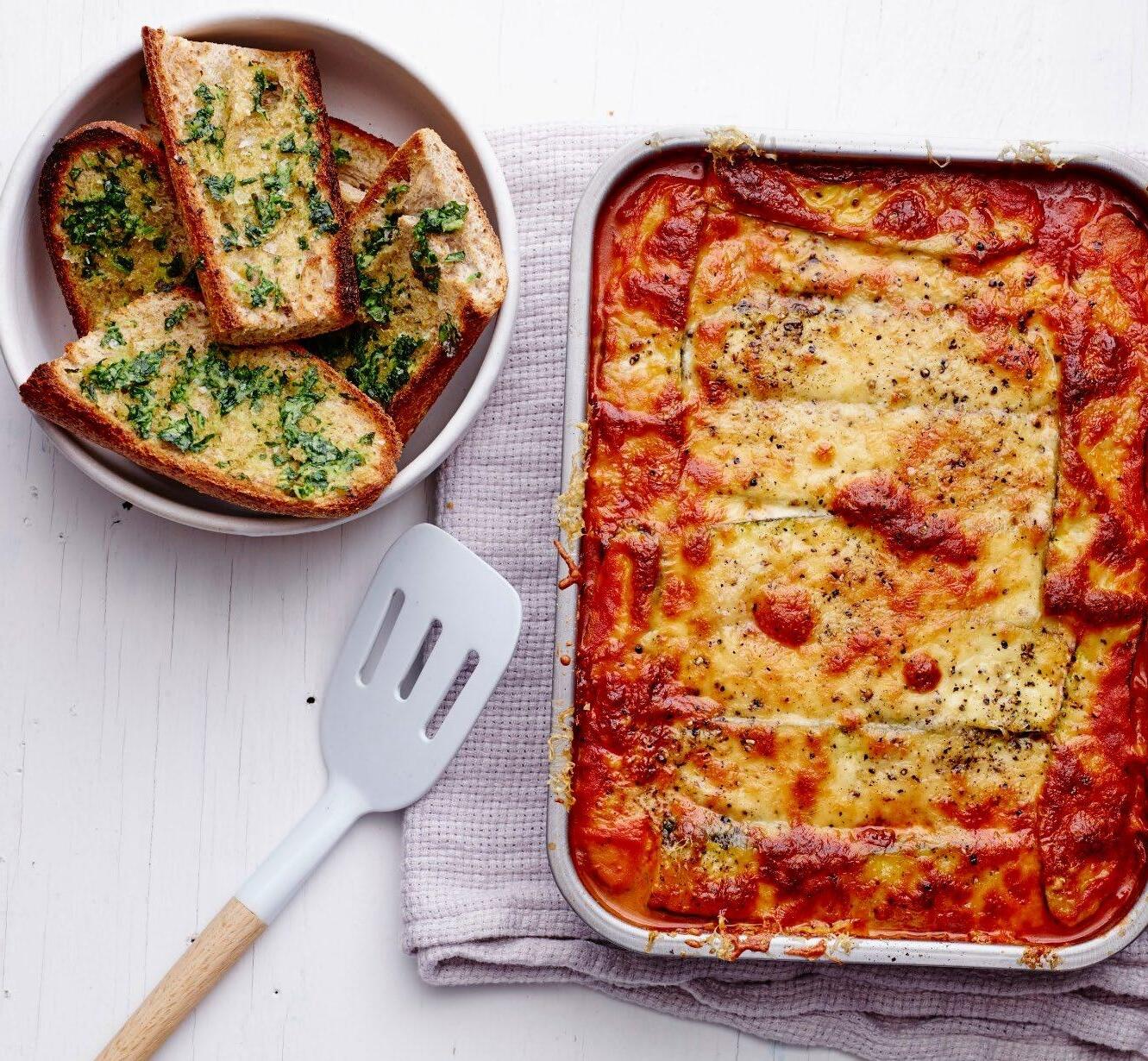
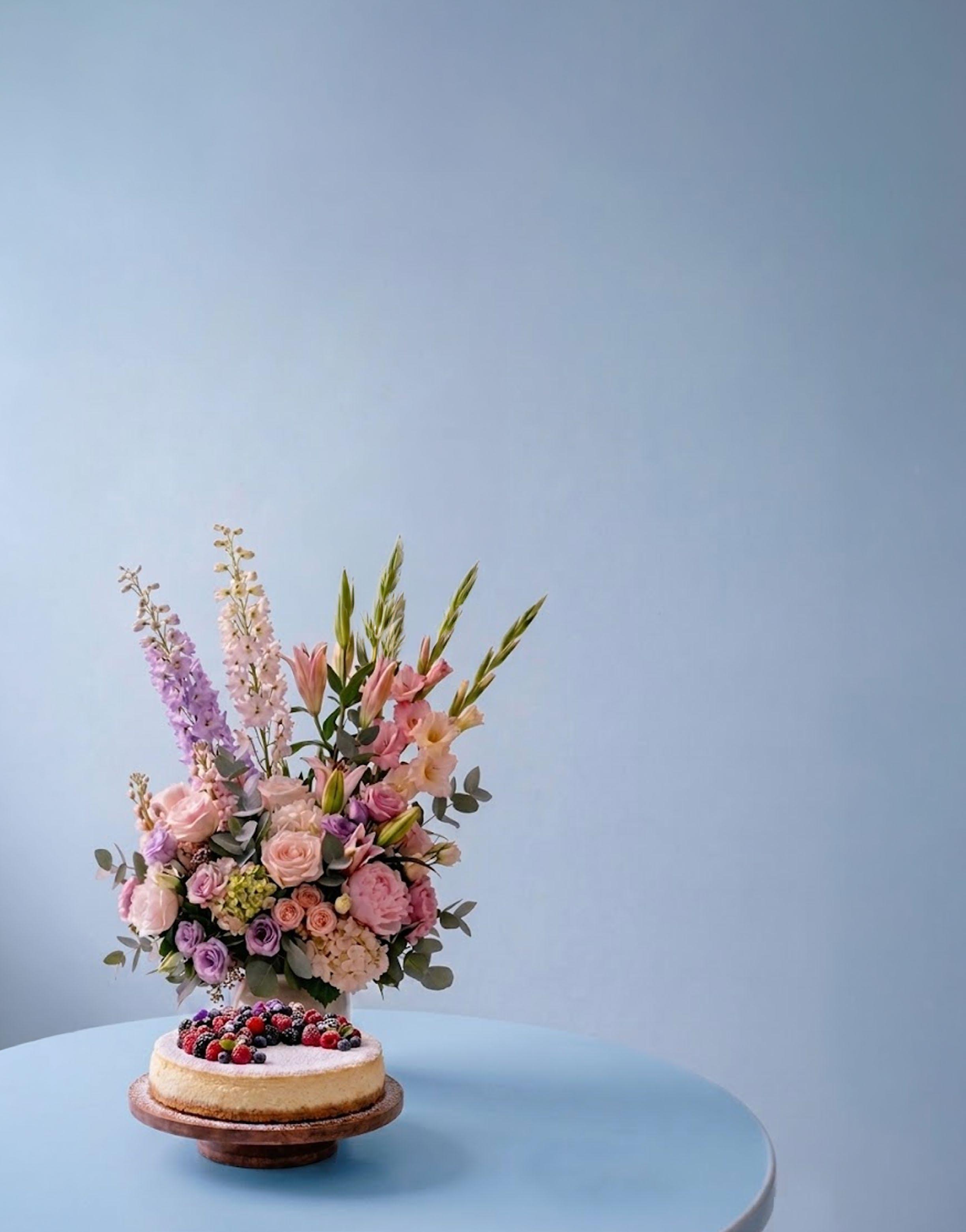
Perfect for a dairy Friday night (or your Shavuot table!), this menu features a clever “no-noodle” Zucchini Lasagna packed with vegetables. Serve it with Whole Wheat Garlic Bread and finish with crunchy, classic Mandel Bread.
jamiegeller.com

PREP TIME
5 minutes
Ingredients
4 tablespoons extra virgin olive oil such as Colavita
4 cloves garlic minced
¼ cup chopped fresh parsley
¼ teaspoon kosher salt
1½ whole-wheat baguettes halved, lengthwise
Instructions
Preheat the oven to 400°F. Line a baking sheet with baking paper. Whisk together evoo, garlic, parsley, and salt.
Brush garlic mixture over cut side of baguettes and place on the prepared baking sheet.
Bake at 400°F for 12 to 15 minutes or until just toasted and golden around the edges.
Courtesy of the 28 Day JOY of KOSHER Challenge by Jamie Geller and Tamar Genger MA, RD.
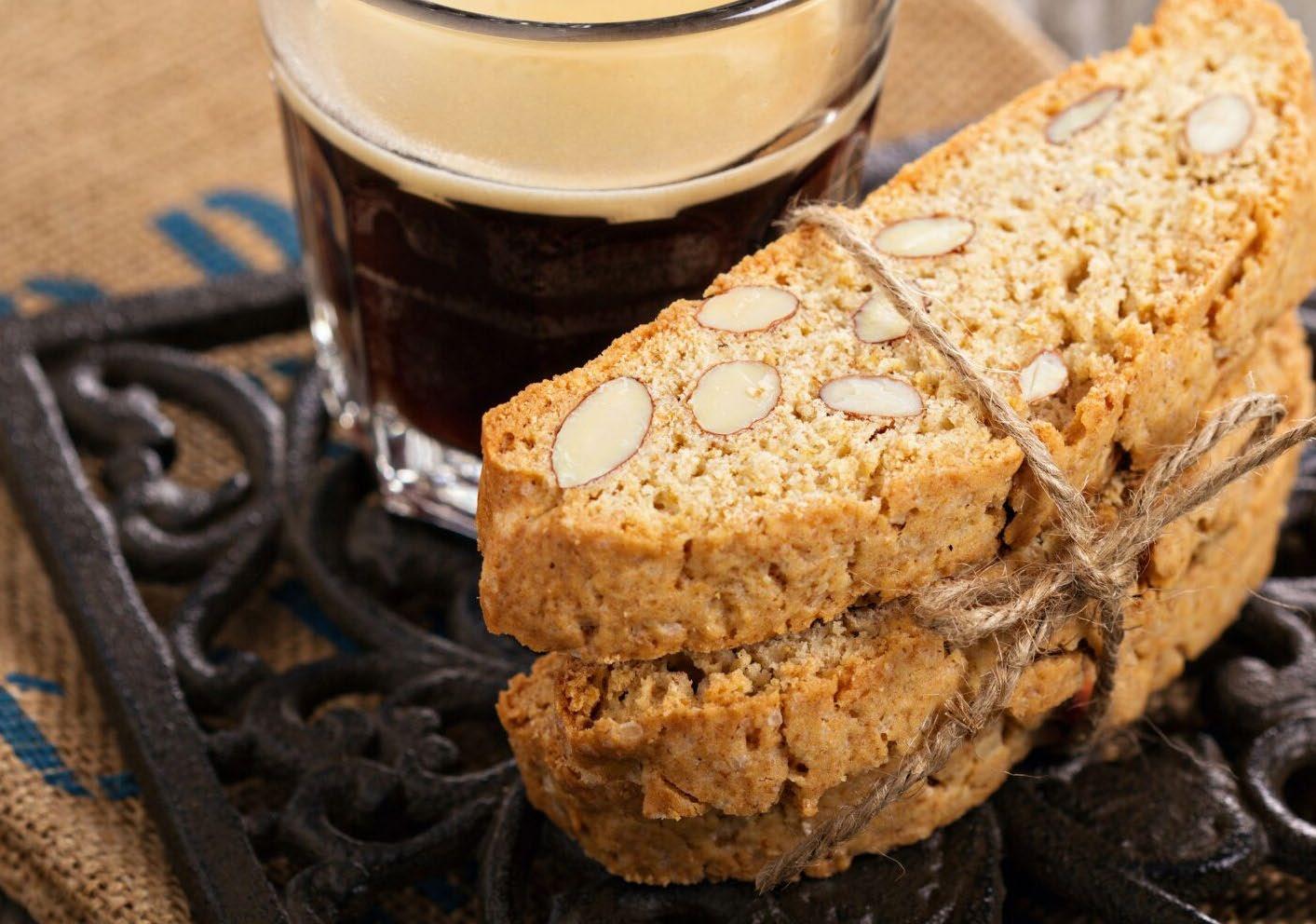
PREP TIME
15 minutes
Ingredients
3 ½ cups whole wheat or spelt flour
½ teaspoon baking powder
¼ teaspoon baking soda
½ teaspoon kosher salt
½ cup extra virgin olive oil or grapeseed oil
2 eggs
½ cup silan or honey
Instructions
Preheat the oven to 350°F. Line two baking sheets with parchment paper. Adjust oven rack to middle and upper positions and in a medium bowl, combine flour, baking powder, baking soda, and salt.
Make a well in the center whisk oil, eggs and silan. Add lemon zest and vanilla extract. Combine with dry ingredients until just mixed. Stir in almonds.
Divide dough into four equal parts. Shape each part into 3-inch wide log. Bake until golden, about 20 minutes. Take cookies out of oven and reduce heat to 300°F.
2 packed teaspoons lemon zest from about 1 large lemon
1 ½ teaspoons vanilla extract
1 cup sliced almonds
When cool enough to handle, cut each log on the bias to form 1-inch wide cookies.
Place cookies cut side down on baking sheet and bake until toasted, 15 minutes more, flip and cook another 10 minutes. Let cool for 5 minutes then transfer for a wire rack to finish cooling. Cookies will keep, stored in an airtight container, for up to 1 week or for a few months in the freezer.
PREP TIME
10 minutes
COOK TIME 1 hour 20 minutes TOTAL TIME 1 hour 35 minutes
Ingredients
Cooking spray
2½ tablespoons extra virgin olive oil divided
1 small onion finely chopped
½ teaspoon red pepper flakes
4 portobello mushrooms chopped
1 28-ounce can diced tomatoes (about 3 cups)
3 tablespoons chopped fresh basil
2 teaspoons kosher salt
2 medium zucchini sliced, lengthwise, into ⅛-inch thick “lasagna” style noodles
2 cups part-skim ricotta cheese divided
¼ teaspoon freshly ground black pepper
½ cup grated Parmesan cheese
1½ cups shredded mozzarella cheese
Instructions
Preheat the oven to 375°F. Grease a 9- x 13-inch baking dish with cooking spray.
Heat a large sauté pan over medium heat.
Add 2 tablespoons oil, onions, and red pepper flakes and cook, stirring occasionally, until onions are tender, about 8 minutes.
Add remaining half tablespoon oil and mushrooms and cook, until brown, about 4 minutes.
Add tomatoes and bring mixture to a boil. Reduce heat to medium and simmer, uncovered until it thickened, about 20 minutes.
Stir in basil and salt. Let cool.
Put a third of zucchini noodles on the bottom of the prepared dish, overlapping slightly. Top with half sauce and half ricotta. Repeat layers.
Top with last third zucchini. Sprinkle black pepper, parmesan, and mozzarella.
Bake at 375°F for 50 to 60 minutes or until golden brown.
The world’s largest cheese wheel weighed over 57,000 pounds.
There are more than 2,000 different kinds of cheese around the world.
Parmesan cheese is so hard that special knives are used to cut it. 1 2 3 4 5 6 7 8 9 10 11 12 13
Some cheeses are aged for more than 10 years before being eaten.
Swiss cheese doesn’t always come from Switzerland — it’s a style of cheese with holes.
String cheese is usually made from mozzarella cheese.
Some of the most expensive cheeses in the world are carefully aged for years.
Cheddar cheese gets its name from the village of Cheddar in England.
Cheese was discovered over 4,000 years ago by accident.
The holes in Swiss cheese are called “eyes.”
Cheese can glow under black light because of natural proteins inside it.
Americans eat billions of pounds of cheese every year.
Blue cheese gets its color from safe, special mold.

Pizza cheese stretches because mozzarella melts differently than most cheeses.
Cheese contains protein and calcium that help build strong bones.
Ancient Romans loved cheese so much they had special cheese kitchens. Some cheeses are made from goat milk or sheep milk.
Cottage cheese got its name because it was often made in small cottages on farms.
The smellier a cheese is, the more flavorful it often tastes!
A grilled cheese sandwich becomes extra crispy because of the fats in the cheese and butter.

I can be sliced, shredded, melted, or spread.
What am I?
I have holes that are called “eyes.”
What am I?
I am creamy, sweet, and popular on Shavuot.
What am I?
I can be pulled apart into long, yummy strips.
What am I?
I stretch on pizza and make every bite gooey.
What am I?
I am named after a village in England.
What am I?
I am hard, salty, and often grated on pasta.
What am I?
What am I? 1 2 3 4 5 6 7 8
I am white, soft, and often eaten with fruit or crackers.

I turn bread into a crispy, melty sandwich. What am I?
I am made from milk and come in more than 2,000 kinds. What am I? 9 10
:




(Also published in Hebrew in ramatgannet.co.il, and in Givatayimnet. co.il newspaper in Israel)
The following article was written on March 10, 2024. Two years have passed since then, and nothing has changed. The situation is only worsening.
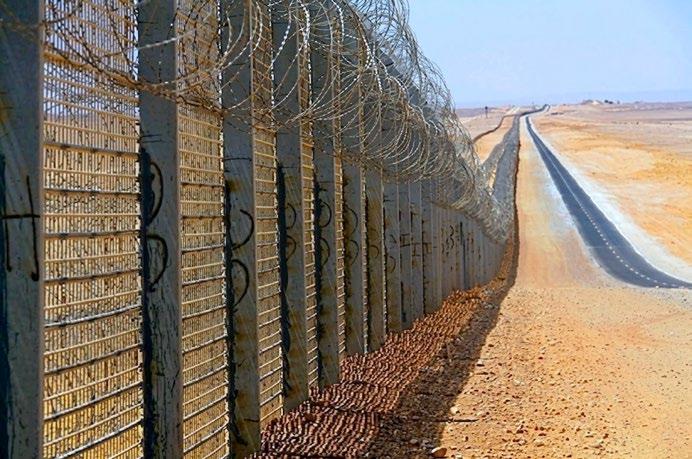
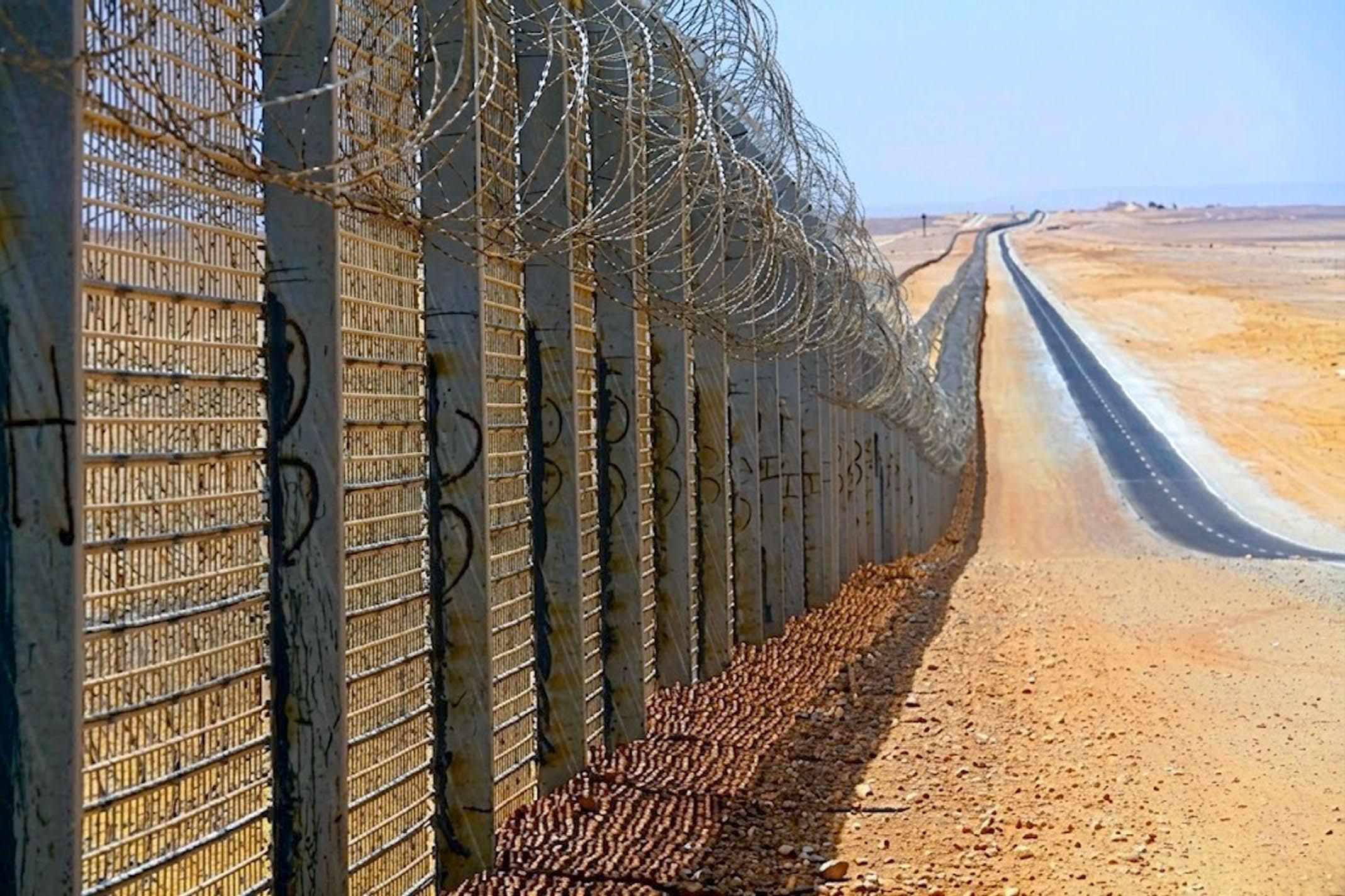
Background: Israel and Egypt have had a peace agreement since 1980 (effective January). The Sinai Peninsula was divided into three longitudinal zones from north to south:
Zone A (western): Allows Egyptian military presence up to 22,000 soldiers.
Zone B (middle): Allows Egyptian military presence up to 4 battalions.
Zone C (eastern, near Israel): Allows only police forces.
A multinational military force was meant to supervise compliance with these restrictions. That force no
longer exists, and no one monitors the agreement. The U.S. promised to establish a monitoring station at Umm Hashiba to secure peace, but it was never built.
Politically and militarily, the agreement was considered a major success for Prime Minister Menachem Begin. Religiously, however, many Muslims regard the treaty as invalid, since
Islamic law forbids signing contracts with non-Muslims. In practice, it is seen as a long-term ceasefire. Egyptian society has not internalized the peace; Israel is still boycotted by academic and social organizations.
Egypt borders Libya to the west and Sudan to the south. It also has a severe dispute with Ethiopia, which built a dam on the Nile threatening Egypt’s and Sudan’s water supply (water is considered casus belli). Yet Egypt has not reinforced those borders with troops, while Sinai is heavily militarized.
ISIS forces entrenched themselves in Sinai and threatened Egypt’s regime. Egypt requested, and Israel agreed, to temporarily allow additional Egyptian troops into Sinai. Two years ago, Egypt declared ISIS defeated and asked Israel to resume tourist flights to Sinai resorts. Why, then, has Egypt not reduced its military presence there?
Current situation (March 10, 2024): Egypt’s army has grown significantly. It is the largest among Arab states, equipped with modern aircraft, tanks, submarines, and more. Egypt built about 60 bridges across and under the Suez Canal, linking African Egypt with Asian Egypt (Sinai). Highways were paved in Sinai for rapid troop and equipment movement. Modern airfields and mountain bunkers protect vast military stockpiles, possibly including missile storage. Egyptian forces in Sinai are up to three times the permitted size under the treaty,an enormous financial burden given Egypt’s 40% annual inflation.
All this violates the peace agreement’s ban on such military buildup.
• Maj. Gen. Yitzhak Brik warns that if Egypt’s regime changes, a new ruler might attack Israel. War with Egypt’s army would be on a completely different scale.
• Eli Dekel (former Military Intelligence, now INSS researcher): Egypt still has motivation to conquer Israel. Its army has 2,300 tanks in Sinai, including 700 new American Abrams 1M tanks recently deployed there. Egypt has 13 heavy divisions in Sinai, each battalion with 41 tanks (compared to 30 in Israel). Egyptian intelligence is wellnetworked in Gaza and likely knew of Hamas’s October 7, 2023 attack plans. Egypt claimed it did not know and gave no warning. Dekel criticizes the IDF’s decision to attack Gaza north-to-south instead of first seizing the Philadelphi Corridor to cut Hamas off from Egypt.
• Newspaper “Makor Rishon”: Published a special supplement on Egypt’s military buildup and the dangers it poses to Israel.
Conclusion: What is seen from Egypt is not seen from Israel.
Updates for nowadays (April 30, 2026)
Recently, Egypt’s army began military drills just 100 meters from Israel’s border. These exercises have political motives: Egypt promised Gulf states its army would defend them if attacked, in exchange for tens of billions of dollars. Iranian strikes on the Gulf exposed Egypt as a “paper tiger.” The Gulf states stopped payments, deepening Egypt’s economic crisis.
Egypt now stages showy drills on Israel’s border to signal military capability to the Gulf and to show it does not fear Israel. The Egyptian
army still views Israel as a potential threat, “the next war.” The regime may use this external threat to unify the public and distract from worsening economic hardship.
The Egyptian military itself is a vast economic empire, owning factories, construction firms, farms, and even ports. The army is wealthy, while ordinary Egyptians are poor. Egypt buys weapons abroad but also manufactures its own. It has advanced intelligence capabilities, including satellites and sensors in Sinai.
Surveys show most Egyptians still see Israel as an enemy, not a partner. Education has not changed its narrative since Nasser’s era.
Egyptian media remains saturated with anti-Israel propaganda, and cultural/social boycotts persist.
Conclusion: This is a peace between governments, not between peoples.
Egypt is now in deep economic crisis. The Suez Canal loses $10 billion annually. Energy prices rise due to the Hormuz Strait blockade. Egypt consumes Israeli gas and depends on Israel, this dependence prevents confrontation.
But what if Egypt’s crisis deepens? What if the regime changes? What if the army seeks to restore its honor after the 1973 war?
This is no longer “cold peace” but a cold war.
Dr. Yeshayahu (Yishy) Bick – April 30, 2026 yishybick@gmail.com

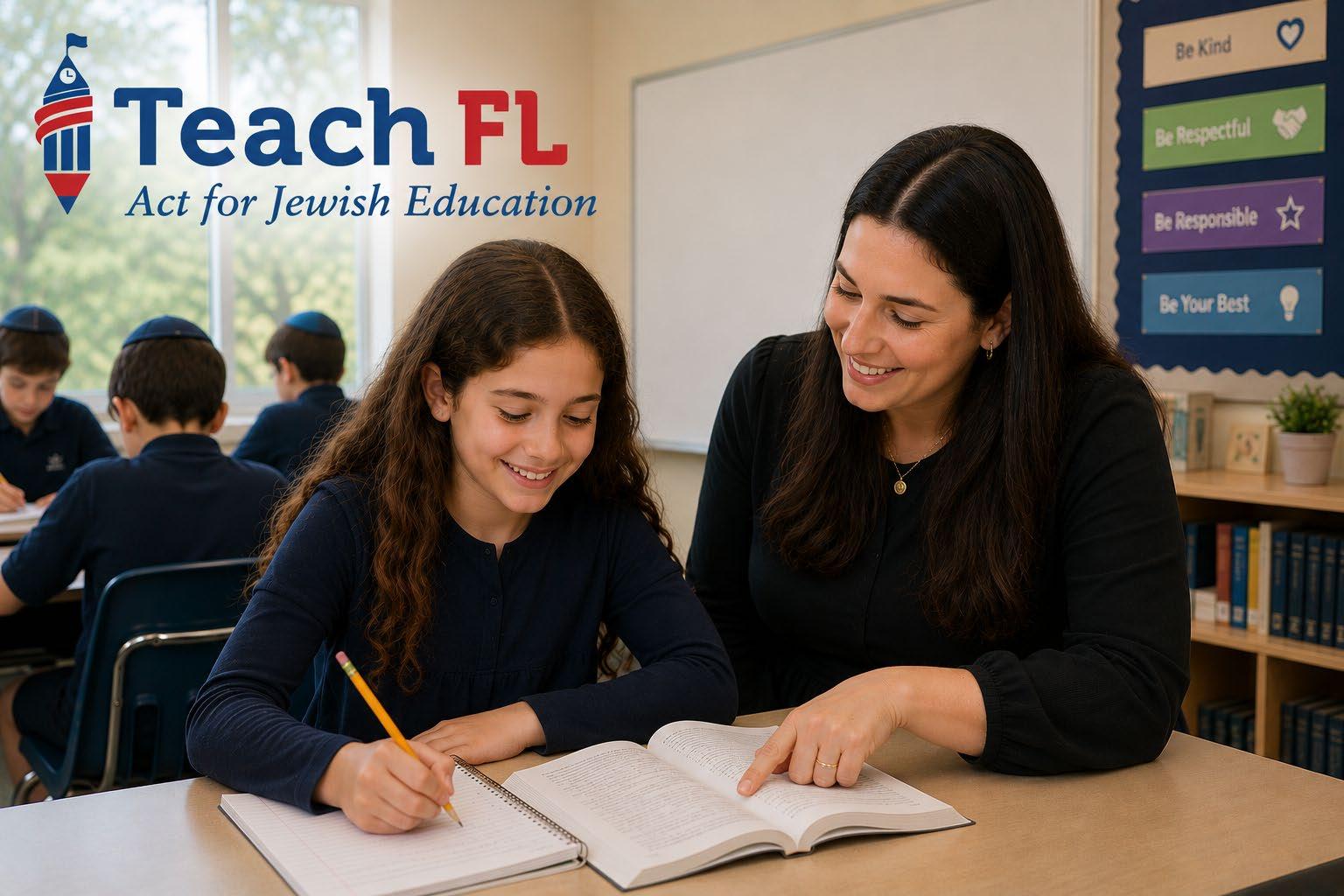
By Malka Kownat, Director of Government Programs Teach Florida
For years, families of private school students in Florida had very limited access to special education services. Under the IDEA federal program these children were entitled to a free evaluation and support services through their local school district. However, even when children clearly needed support, many districts only offered reading or math services. The evaluation process was often
complicated and slow, causing many parents to feel overwhelmed and give up. As a result, children who needed services were left without the help they needed.
That is now beginning to change.
Through strong advocacy by Teach Florida’s Services for All program, the organization closely monitored district practices and uncovered serious issues, including barriers
in the evaluation process and the misuse of funds meant for special education services for private school students. After filing complaints at both the state and federal levels, the Florida Department of Education required the district to return millions of dollars that had not been properly used.
With those funds restored and greater accountability in place,
services have expanded in a meaningful way. Today, students can access a broader range of support, including:
+ Reading and Math (K–12)
+ Counseling (PreK–12)
+ Pre-academic skills (PK3–PK4)
+ Speech and Language Services (PreK–12)
+ Occupational and Physical Therapy (PreK–12)
+ Paraprofessional support for qualifying schools
Policy changes matter. But they only mean something when they reach a child.
Miriam is nine years old. For most of her life, reading felt like something that happened to other
kids. Her confidence faded a little more each day as she struggled to keep pace with her peers, despite her best efforts. Her family spent years trying to get her the right support. With our help, she was eventually found eligible for services through Broward County. When they relocated and her case moved to Miami-Dade, we stayed with them, pushing through delays, escalating when necessary, making sure that what was promised was actually delivered. By January 2026, Miriam was receiving speech and language therapy.
A few weeks later, her teacher told me she had raised her hand and volunteered to read out loud in class. For many children, that is a small moment. For Miriam, it was everything.
Her story is one of many. There are children across South Florida whose families don't yet know that help is available, that their child may qualify for free services regardless of where they go to school. These services exist. What families often need is someone to walk them through the process and stay with them until the support is actually in place.
There are many more children out there who are ready for their moment. We are here to help them find it. When we unlock these services, we aren't just changing a landscape, we are changing a life.
The student's name has been changed to protect her privacy.
https://teachcoalition.org/fl/

In an era when more parents than ever are asking difficult questions about education, one South Florida educator believes the conversation needs to go deeper.
Not simply: Which school is best?
But rather: What kind of childhood are we creating for our children?
For Rabbi Yoel Lax, an experienced educator who has taught across the United States and Europe, those
questions eventually led to the creation of Hineini — a new Home Education Instructional Program (HEIP) for Orthodox Jewish boys ages five through seven opening in Hollywood, Florida in September 2026.
And while the legal structure may fall under Florida’s home education framework, Rabbi Lax says the vision behind Hineini is far bigger than labels or technical definitions.
“This is not a supplement or an after-school program,” Rabbi Lax explains. “This is a complete educational environment built around the idea that children learn best when Torah, creativity, practical skills, curiosity, and personal responsibility are woven together.”
The name itself reflects that philosophy.
Hineini — “Here I am.”
“It’s the word Avraham Avinu says when Hashem calls to him,” Rabbi Lax says. “Presence. Readiness. Responsibility. That’s the culture we want to create — both for educators and for students.”
Rabbi Lax is careful not to frame Hineini as a rejection of traditional schools. In fact, he repeatedly emphasizes his respect for many existing yeshivos and educators.
But after more than a decade teaching in schools and educational settings in France, London, Texas, Chicago, Pennsylvania, and Florida, he noticed a recurring pattern.
“There are so many bright, curious, energetic boys who slowly disengage from learning,” he says. “Not because they lack ability — but because the structure around them doesn’t fit the way they naturally learn.”
According to Rabbi Lax, many children — especially young boys — thrive through movement, hands-on experiences, creativity, ownership, and active participation.
“We’ve normalized the idea that a child should sit still for seven hours a day absorbing information passively,” he says. “But for many children, that environment slowly shuts something off inside them.”
Hineini was designed to reimagine that experience from the ground up.
Every day begins with meaningful tefilla and Torah learning, but the educational model extends far beyond textbooks and lectures.
“If the boys are learning about
Sukkos, they’ll build a sukkah,” Rabbi Lax explains. “If they’re learning about the 39 melachos, they’ll experience them hands-on. If they’re learning Hilchos Kashrus, they’ll apply it practically in the kitchen.”
The goal, he says, is for Torah to become something children live — not simply information they memorize.
Alongside Limudei Kodesh, Hineini places significant emphasis on general studies taught through practical, immersive experiences.
Math is connected to budgeting, construction, and real-world problem solving.
Science emerges through gardening, cooking, experimentation, and building projects.
Hebrew immersion is woven naturally throughout the day.
Students also participate in project-based learning “sprints,” allowing them to pursue areas of genuine interest while developing independence and creativity.
The program eventually plans to incorporate woodworking, coding, plumbing, entrepreneurship, and additional practical disciplines often absent from conventional education models.
Rabbi Lax believes this type of experiential learning helps children retain information more deeply while simultaneously building confidence.
“A child should know what it
feels like to become capable,” he says. “Not only academically, but practically.”
One of the most unique aspects of Hineini’s model is its daily music program beginning at age five.
Students receive regular instruction in piano and music theory as part of the core curriculum — not as an extracurricular activity.
Rabbi Lax believes music plays a critical role in cognitive, emotional, and spiritual development.
“Music develops discipline, creativity, emotional intelligence, coordination — all at once,” he says. “And within Jewish life specifically, music is deeply connected to Yiddishkeit. Niggunim, davening, zemiros — music shapes how we experience Torah emotionally.”
The program’s music curriculum will be led by an experienced educator who shares the school’s broader educational vision.
Building Independence Through the “Skill Zone”
Another major component of Hineini is something called the “Skill Zone.”
During this dedicated time, students independently pursue an area of interest with guidance from teachers and outside mentors.
One child may focus on languages. Another may choose design, electronics, woodworking, or another craft.
“The experience of choosing something yourself, improving over time, and becoming genuinely
good at it builds confidence in a completely different way,” Rabbi Lax says.
“It teaches children how to learn independently — which may be one of the most important life skills of all.”
Orthodox, Torah-Centered, and Broadly Welcoming
Although Hineini introduces a nontraditional educational structure, Rabbi Lax is clear that the school’s Torah values are uncompromising.
“Hineini is unapologetically Orthodox,” he says. “Our atmosphere, standards, values, and culture are deeply rooted in authentic Torah Judaism.”
At the same time, the program welcomes families from across the Orthodox spectrum — including Yeshivish, Heimish, Sephardic, Litvish, and Modern Orthodox backgrounds.
“What matters most to us is not labels,” Rabbi Lax explains. “It’s whether Torah is truly central in the home.”
The curriculum itself is also designed to maintain strong academic rigor and alignment with recognized standards in both General Studies and Limudei Kodesh.
“We want parents to understand that they do not have to choose between ‘different’ and ‘rigorous,’” he says. “We are committed to both.”
Why South Florida — and Why Now?
Rabbi Lax believes South Florida’s
rapidly growing Orthodox community makes this the right place and the right time for a program like Hineini.
“There are more thoughtful conversations happening around education right now than perhaps ever before,” he says.
He also believes the post-pandemic world shifted the way many families think about childhood and schooling.
“Parents are asking deeper questions now,” he says. “Is my child genuinely engaged? Is he excited to learn? Is school helping him become the person we hope he’ll become?”
For Rabbi Lax, Hineini is intended to answer those questions through a model centered on intentionality, warmth, Torah values, and
meaningful engagement.
And ultimately, he says, the success of the program will not be measured only by academic benchmarks.
“I want parents to see their son walk through the door excited about what he learned,” he says. “I want them to hear him bentch with feeling. I want them to see curiosity, confidence, kindness, and genuine excitement about Torah and the world around him.”
“That,” Rabbi Lax says, “is what we’re trying to build.”
Hineini is a Home Education Instructional Program (HEIP) opening in Hollywood, Florida in September 2026 for Orthodox Jewish boys ages 5–7. For more information, visit www.hineini.me or email info@hineini.me.


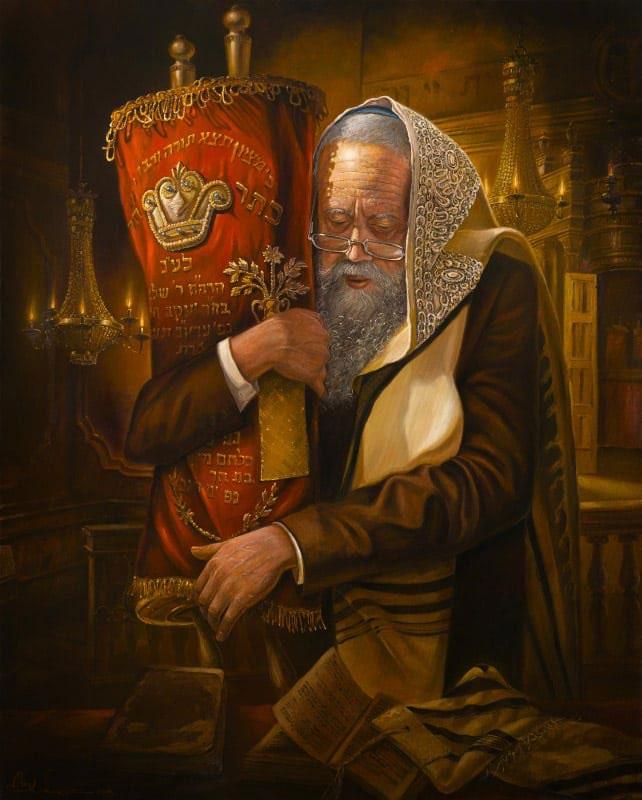
A relationship at its strongest moment. Menachem Dahan, Psychotherapist - Bay Harbor Islands In many relationships, there is a feeling that having to communicate needs and desires directly is already a sign that something has gone wrong. If it were really working, the other person would simply know. The organic moments, the ones that feel effortless and unspoken, seem to be where the real connection lives.
The stated request, the explicit conversation about what one person needs from another, can feel like evidence of a gap rather than an expression of depth.
But when you look at what actually holds relationships together over time, something different emerges. Every relationship operates on two levels. The first is the level of experience. This is the warmth that builds from witnessing someone’s
qualities, the feeling of being genuinely seen, the shared moments that seem to confirm that two people belong in each other’s lives. This part of a relationship is real, and it matters. But it is also, by its nature, curated. What is being experienced is not the other person in full. It is the version of them that translates, that comes through cleanly, that arrives in a form the other person can actually receive. A person in their most unfiltered form is not always shaped for someone else. The more seamless an experience of another person feels, the more it has already been filtered on its way over.
The second level is a part of the relationship that holds independently of how it feels in any given moment. This is where commitment lives, where two people remain bound to one another not because everything is going well but because something deeper than circumstance has been established between them. And here is the thing about this level: it does not always feel like a connection.
There are moments within the deepest relationships that feel effortful or simply quiet, moments where the warmth is not present, and the other person does not feel particularly close. Those moments can seem like the relationship is at its weakest. In reality, they are often when it is expressing itself most honestly. Because what is holding at that point is not the experience. It is the thing underneath the experience. It is the relationship in its actual form, stripped of everything that makes it feel good, and it is still there.
The clearest expression of that deeper level is the moment one
person tells the other what they actually need. Not a performance, not a hint dropped and hoped for, but a direct expression: This is what matters to me, this is where I actually live, and this is how you reach me.
That moment, which can feel vulnerable or even clumsy, is not a sign that the relationship is struggling. It is the relationship arriving at its most honest place. When the other person receives that and shows up for it, something passes between them that no beautiful shared experience could replicate. Not because it feels better, but because it is not happening at the level of feeling at all. It is two people meeting underneath the curated version of each other at the place where the real thing lives. Reality over experience. The relationship has stopped performing itself and started simply being itself.
This is why the moments that feel the least romantic, the least electric, the least like what a relationship is supposed to feel like, are often the ones that carry the most weight when looked back on. They are the moments when two people are not brought together by feeling. They were just together.
The ultimate goal is to integrate the two. To feel and to be able to experience beneath that feeling. But having to express a person’s needs and desires is a feature of the relationship, not a flaw.
G-d is in a relationship with this world. With us. And like any relationship, some moments feel like natural expressions of that bond. Creation itself. The covenant with Avraham. Being taken out of Egypt. Each of these was real and carried enormous weight. Each one
deepened something. But none of them were there the moment the relationship arrived at its fullest depth. Because none of them yet involved G-d saying directly, "Here is what matters to Me." Here is what actually reaches Me. Here is how you find Me.
That is what happened on Shavuos. There is a well-known account of the angels objecting when the Torah was about to be given to us. Their argument had logic to it. Human beings are distractible and inconsistent, capable of pettiness and self-interest in ways the angels simply are not. The angels exist in a state of continuous closeness to G-d, enveloped in the experience of ultimate Truth. From where they stood, giving something so essential to people who could so readily lose sight of it seemed almost incoherent.
But what the angels did not account for was that their very closeness was its own kind of limitation. They were experiencing G-d, the version of Him that arrives fully, that fits, and that is receivable. That is a real connection. But it is a connection at the level of experience, shaped and softened for its recipient. The angels were not receiving the thing itself. They were receiving the version of it that could land for them. And by the nature of that, they were always going to be one step removed from the real thing.
We are different. Our connection to G-d does not depend on continuous experience to remain true. We can go long stretches without feeling it, can be distracted and pulled in entirely other directions, and the connection remains exactly what it was. Nothing changes. That is not a flaw in the relationship. It is
actually the clearest sign of how deep it runs. A connection that holds without needing to be felt is not a weaker connection. It is a connection that has moved past the level of experience entirely and is operating at the level of reality. We are bound in a way that simply is, whether or not it is felt in any given moment, more like children than admirers, connected not because of what we experience but because of what we are.
The moments where that connection is felt least clearly are not the moments where we are farthest from G-d. They are the moments where the relationship is most plainly itself, holding without the full dependency on feeling.
On Shavuos, G-d cemented our relationship with Him. He told us what matters to Him. He took us into the reality of who He is, not the filtered version, not the version shaped to arrive comfortably, but the real thing. And He gave us something concrete, a set of ways to live, to think, to act, and to speak that would allow us to keep reaching that reality. Not just once, not just on the days it feels alive and obvious, but constantly. Every day, through the texture of ordinary life, through the moments that feel significant and the many more that do not, we are given a way to stay in contact with what is actually true. He showed us where He lives. He asked something of us.
We said yes.
Menachem Dahan is a psychotherapist in South Florida. mdahanpsychotherapy.com