







Rabbi Eliyahu Segal Publisher, CEO


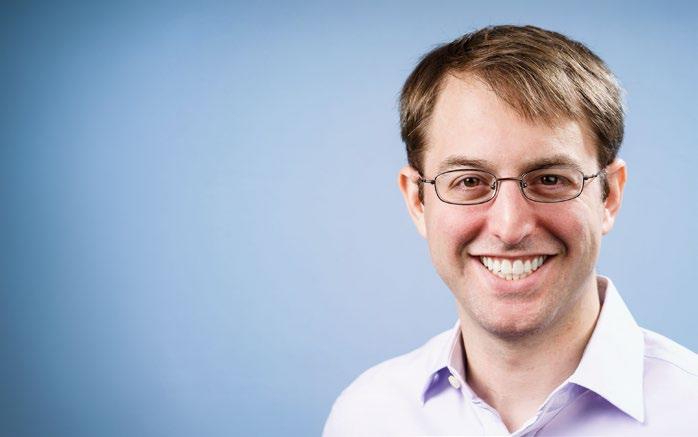

Rabbi Eliyahu Segal Publisher, CEO
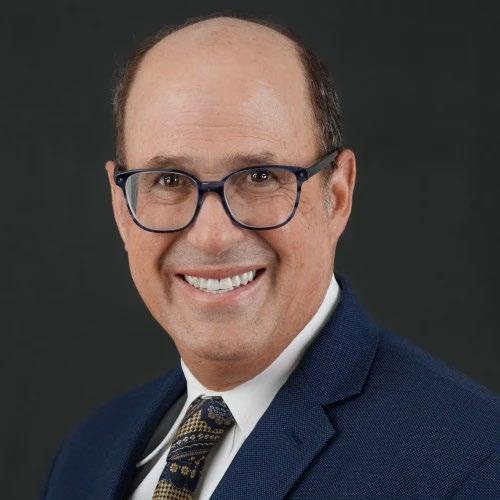
Farley Weiss
The rise of Jew-hatred in America can be reversed, but only if it is fought differently. The hate-mongers have been successful in obtaining legitimacy for their absurd argument that being anti-Zionist and supporting the eradication of the State of Israel does not make them antisemites.
Even antisemites like far-left political commentator and streamer Hasan Piker, who referred to hundreds of thousands of Orthodox Jews as “inbred” and who supports Hamas over Israel, are legitimized within
mainstream publications and mainstream politicians on the left. The reason that he and others are legitimized is the polling that shows that Democratic voters support Palestinian Arabs over Israelis by a 3-1 margin, and the Democrats want to appeal to those voters. Once public opinion changes back, people like Piker and others will no longer be legitimized by the Democratic Party members.
The fact is that in order to argue that anti-Zionism is not antisemitism, the haters have to do
two false things. The first is that they need to argue that Judaism has nothing to do with Zionism. They attempt to prove that with Neturei Karta demonstrators and assimilated self-hating Jews with no knowledge of Judaism. The fact that the Neturei Karta represents a tiny, insignificant group that doesn’t even represent Orthodox Jews—no matter their traditional dress—is ignored in the media.
The second false narrative is to deny Jewish history and Jewish connections to the land of Israel. Everyone would agree that if you deny that the Holocaust happened, you are an antisemite. If you deny that King David ruled over Jerusalem, you are an antisemite. If you deny the fact that Jewish prophets and others have been buried at the Mount of Olives in Jerusalem for more than 2,000 years, then you are also an antisemite. (It’s important to note that the oldest Muslim cemetery in Israel dates from the 11th century.)
If you believe in the rights of indigenous people to their land, except when it comes to the indigenous Jewish people of Israel, you are antisemitic. If you ignore the historical legal right of the Jewish people to the land of Israel because you deliberately ignore that under the League of Nations decision of 1922, the AngloAmerican Treaty ratified in 1925 and under Article 80 of the U.N. charter, international law recognizes the Jewish right to the land of Israel, you are antisemitic. If you try to claim some random time in history when Jews were not the majority and not go back to who was first in Israel—namely, the Jews—or who is a majority in Israel today—namely, the Jews—then you are antisemitic.
The Jews were militarily forced from their homeland by the Romans in the year 70 C.E. and then in the Bar Kokhba revolt in the years 132 to 136, in which the Jews, except for a few, were forcibly evicted from their ancestral homeland and never allowed freely to move back in big numbers until the modern-day Jewish state was re-established in 1948. The land of Israel was mostly empty, as American essayist Mark Twain described during his visit in 1867.
I asked Thomas Nides, the former U.S. ambassador to Israel, to name a Palestinian Arab leader from before 1867. He could not because those who were called Palestinian in 1867 were Jewish residents, not Arab residents. Even the Muslim Waqf, in its 1925 tourist guide to the Temple Mount, wrote that it was the site of the Temple of King Solomon. It acknowledged that Muslims occupied the site in the seventh century when they built the
Dome of the Rock and the Al-Aqsa mosque.
Despite the League of Nations decision of 1922, Jews were limited by the British from moving back to the land of Israel, despite the fact that there were still 600,000 Jews in Israel by the year 1948. After being forcibly removed, the Jewish people never gave up their claim to Israel. That is why Jews face toward Jerusalem when they pray, and why returning to Jerusalem is in the main Amidah prayer of the Jewish service. Now, more than 7.5 million Jews live in Israel.
Those who advocate for the establishment of a Palestinian Arab state to replace the indigenous Jewish state are the advocates for apartheid, since a majority of the people living in the land of Israel are Jews. If they support the physical murder of this Jewish population, then they are supporters of the real definition of genocide.

We need to fight the falsehoods with historical facts, as the antisemites have mainstreamed the denial of Jewish history. This can work with many of the 40 Democratic senators who opposed selling arms to Israel last month, while the tiny nation is still fighting a war against multiple enemies that are trying to destroy Israel. Less than five years ago, almost all of these individuals supported arms sales to Israel, and it can be reversed.
The point is this: The United States has no better ally than Israel, with its air force, intelligence and other strategic know-how. Israel is a military and technological power, with around 100 companies on Nasdaq. Compare this to a country more than 10 times its size, like Egypt, which has one company on Nasdaq.
Moreover, the joint war with Iran has shown the United States the great value that Israel brings at a time when European countries won’t lift a finger to battle Islamic extremism. They refuse to even let their bases be used to help take down a regime that aims to overpower the West.
The bottom line is that the Jewish people and Israel have the winning argument. They can overcome the antisemites. They do, however, need to change tactics in how to fight back because the current tactics aren’t working in America.
Farley Weiss is the co-author, with Leonard Grunstein, of Because It’s Just and Right: The Untold Backstory of the U.S. Recognition of Jerusalem as the Capital of Israel and Moving the U.S. Embassy to Jerusalem, and a past president of the National Council of Young Israel.

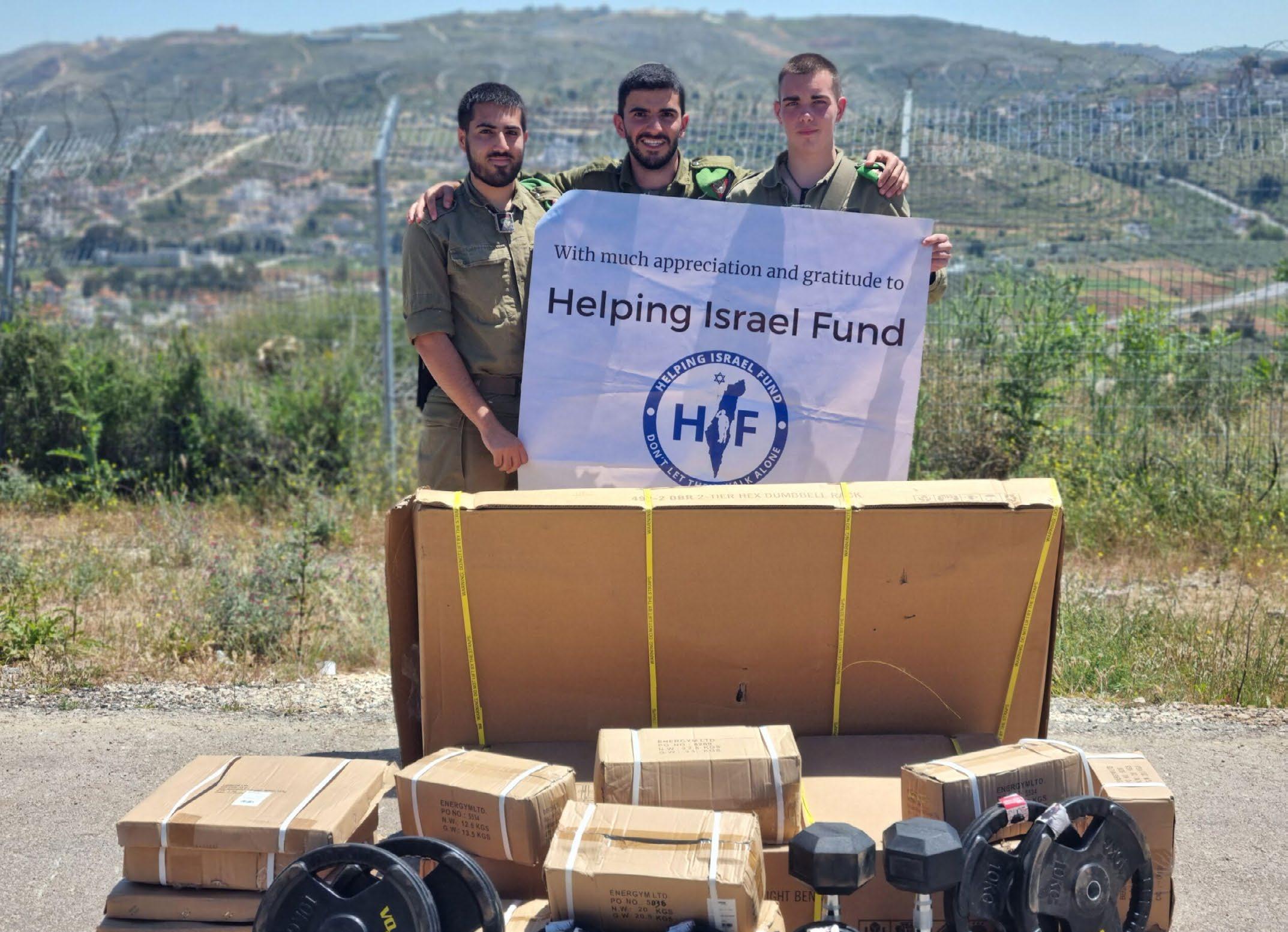
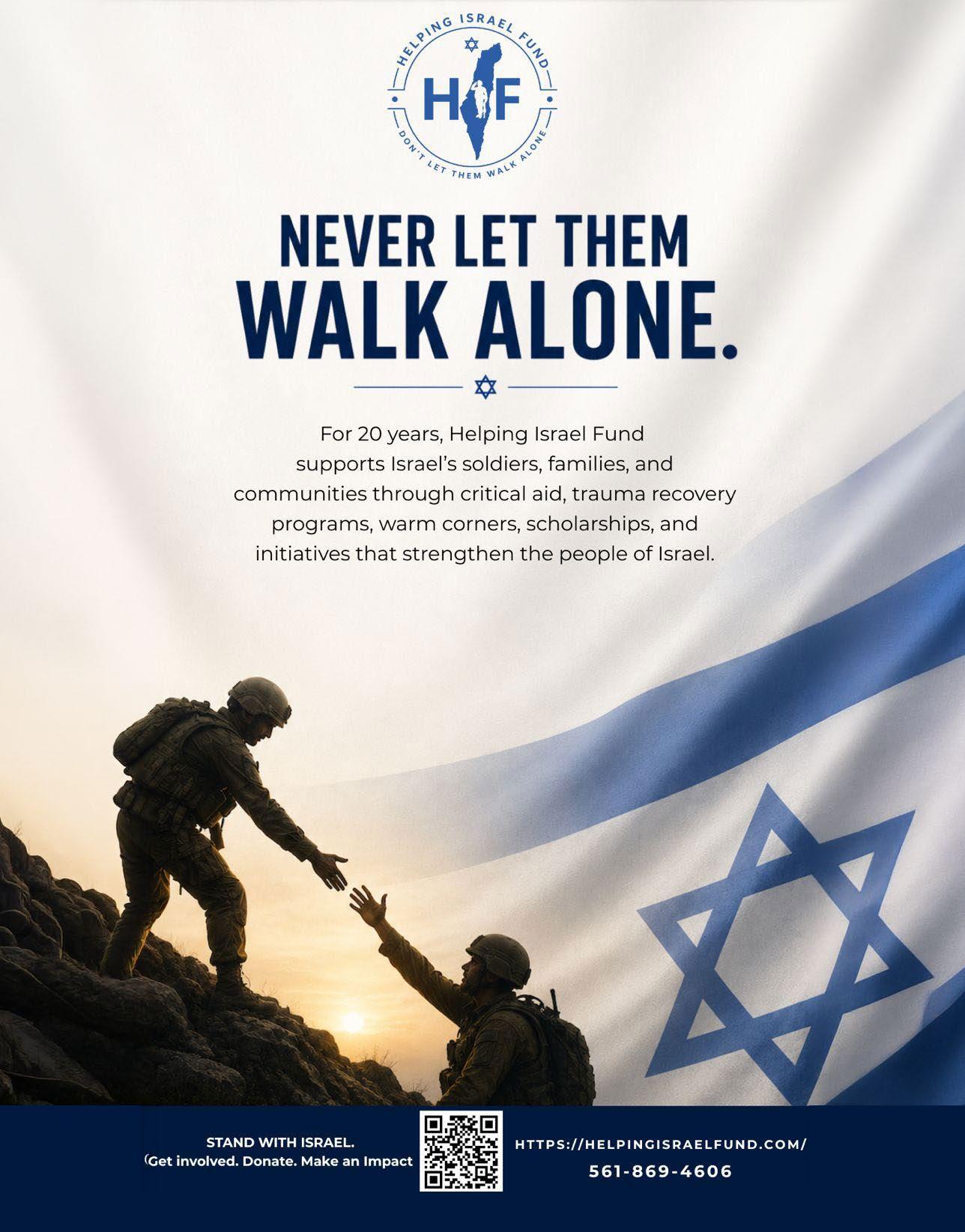
In Jewish tradition, there is a concept called Kol Yisrael Arevim Zeh Bazeh all of Israel is responsible for one another. Especially during moments of challenge and uncertainty.
That belief inspired the creation of the Helping Israel Fund, founded in 2006 to support IDF soldiers and communities throughout Israel.
One of the most unique aspects of the organization is that it operates with virtually no overhead expense.
Administrative costs are covered by the board itself, allowing every dollar donated to go directly toward helping people in Israel.
What began as support for soldiers evolved dramatically after October 7th. As the war intensified, the organization expanded its efforts to help soldiers, displaced families and communities devastated by tragedy.
One of the most impactful initiatives became the creation of “Warm Corners” throughout Israel.
Originally designed as places where soldiers could rest, recharge and receive supplies, many of these locations unexpectedly became operational command centers during the war.
One experience captured the importance of this work in a deeply personal way.
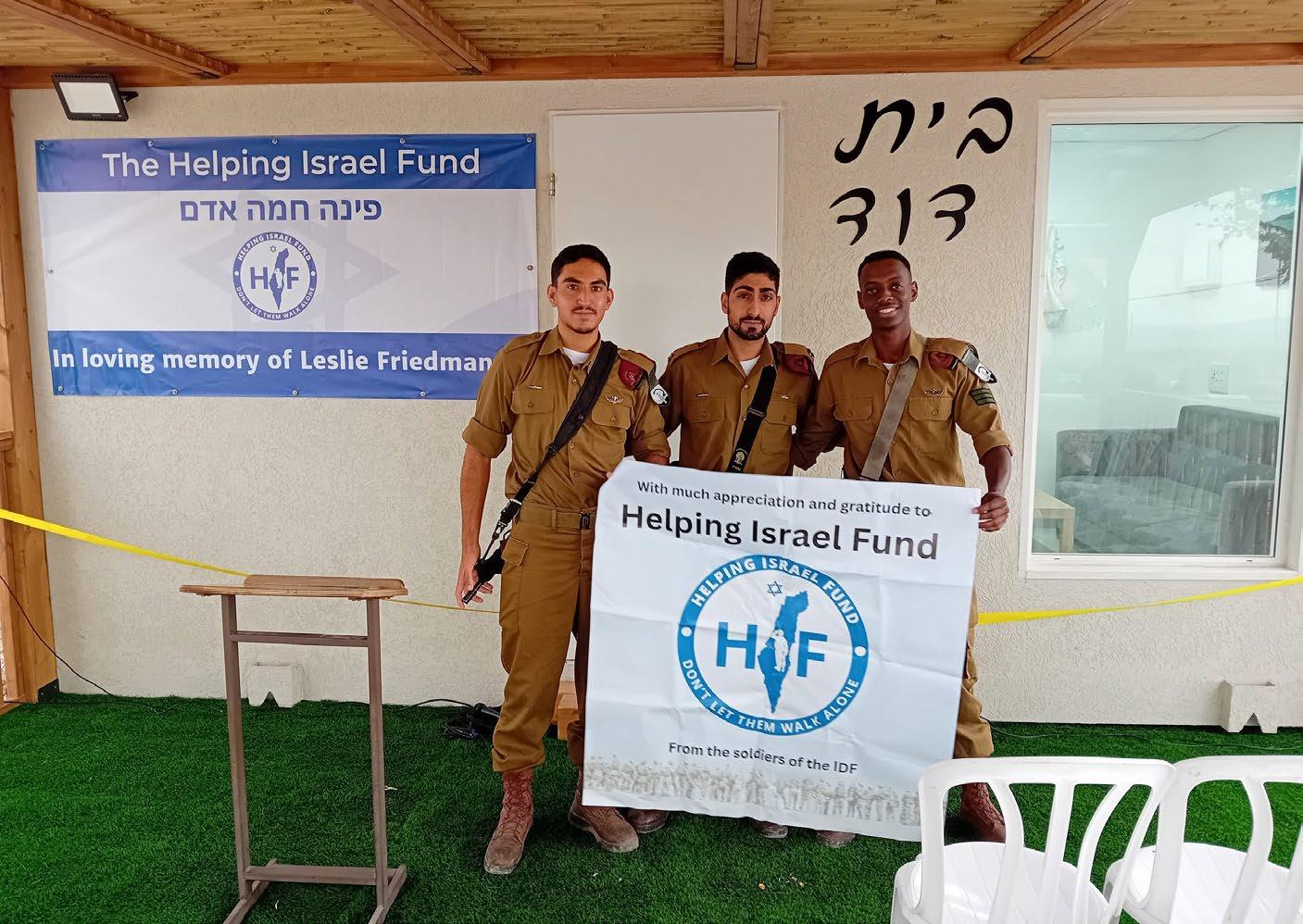
While traveling in Germany for a meeting, I was approached by an Israeli soldier who noticed the Helping Israel Fund logo on my
yarmulke. He asked about it, and I explained that it was a charity I had started with several friends years ago.
The soldier immediately became emotional.
“You have no idea what you guys did for us,” he said. “You saved our lives.” – Glen Golish, Board Chairman
I was surprised and asked him what he meant.
He explained that during the war, his unit had nowhere safe to stay. Twenty soldiers crowded into one of our Warm Corners while four guards stood outside protecting them through the night. For the first time in days, they were finally able to sleep safely. He also told me some crazy guy came and delivered dried beef with our logo on it.
Moments like that remind us that support is not always measured financially. Sometimes it is measured in safety, dignity and human connection.
Another unforgettable moment occurred while we were hosting a barbecue for soldiers near the Gaza border. An officer approached us and said something that stayed with me:
“I can’t believe you’re the only people who came out here to visit us.”
In the middle of war, sometimes simply showing up matters more than people realize.
The Helping Israel Fund continues to provide:
+ Warm Corners for soldiers across Israel
+ Food, clothing and protective supplies
+ Support for lone soldiers and
displaced families
+ Assistance for communities affected by the war
+ Holiday packages and emergency aid
At its core, this organization reflects the Jewish values of chesed, compassion and responsibility.
After October 7th, many people asked how they could help Israel. The answer is not always complicated. Sometimes it begins with simply standing beside our people when they need us most.
Because supporting Israel is not only about celebrating during times of peace.
It is about showing up during times of war.
Please consider any monthly reoccurring donation.
Contact Information:
3010 N. Military Trail, Suite 318, Boca Raton, FL 33431
Phone: 561-239-9400
https://helpingisraelfund.com/

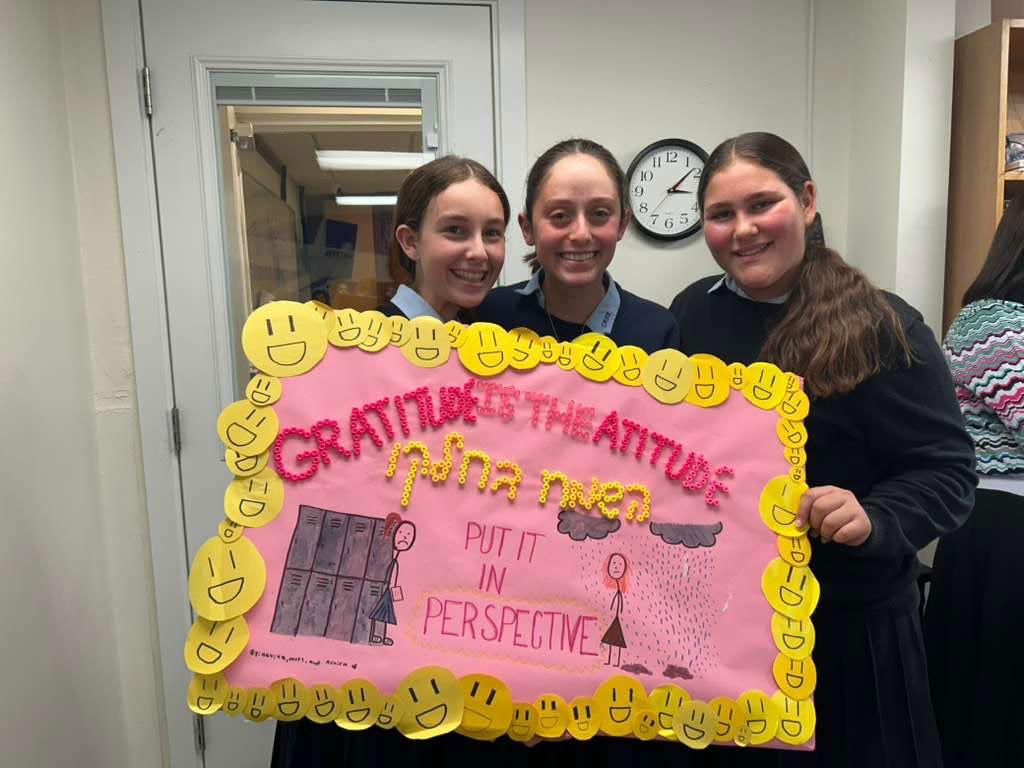
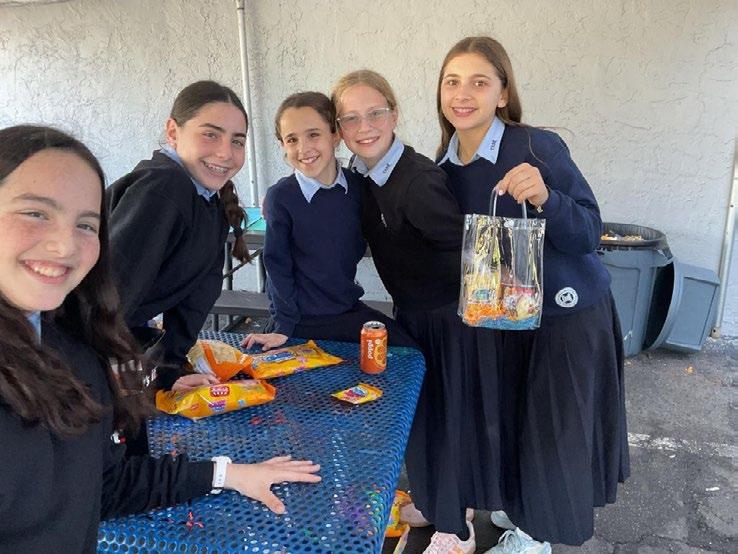
Something truly special took hold in Torah Academy of Boca Raton’s Girls Middle School this Sefiras HaOmer. Under the vision and guidance of Mrs. Yael Goldberg, GMS guidance counselor and 8th grade Morah, every class participated in SPARK — Spreading Positivity and Radiating Kindness — a school-wide initiative
rooted in the Darcheinu program that turned the avodah of Sefira into something personal, creative, and deeply meaningful.
The idea behind SPARK is as thoughtful as it is powerful. Each class collaboratively chose a specific middah in bein adam l'chaveiro that felt personally relevant to them and then committed to working
on it together. One class took on the inspiring concept of Sameach Bechelko, with each girl choosing her own angle, whether hakaras hatov, positivity or confidence. Another committed to being more selective about what they sing during morning recess, creating an environment where every girl feels comfortable and valued. By
framing each goal as a specific and measurable commitment, rather than a sweeping resolution, the program made growth feel genuinely achievable.
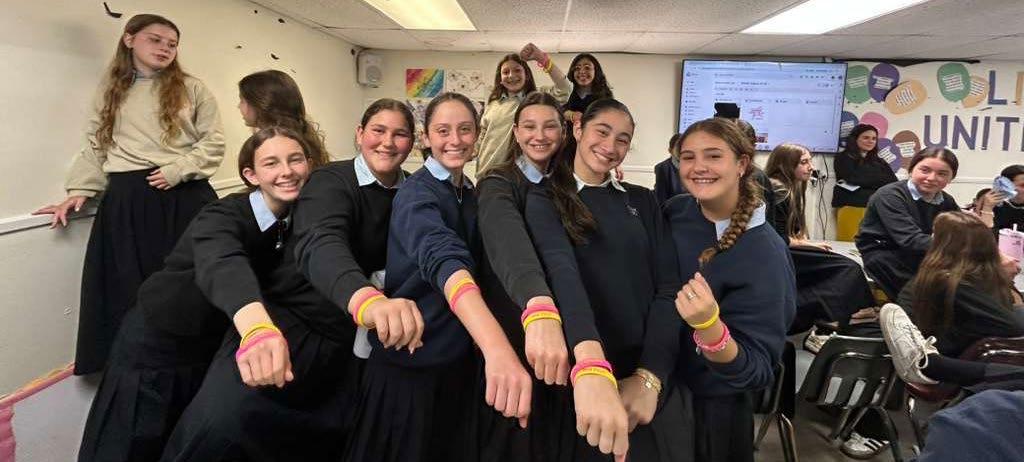
But SPARK was far more than a personal pledge. Within each class, five groups channeled their unique kochos to bring the initiative to life. One group designed beautiful cheshbon hanefesh reflection charts on Canva, complete with an original tagline, now hanging inside every girl's locker. Another group worked on personalized swag items, including hair bows, baseball caps, bracelets, and bags, each one uniquely customized by the girls themselves. A third group created eye-catching bulletin boards that now hang proudly throughout the school. A fourth group wrote original lyrics set to a well-known Jewish song and, with the help of Ms. Homnick, recorded a full a cappella track. The fifth group brought it all together in a music video that captured the heart of their class goal on screen.
The program culminated in the electrifying SPARK-OFF, where every class presented their work to
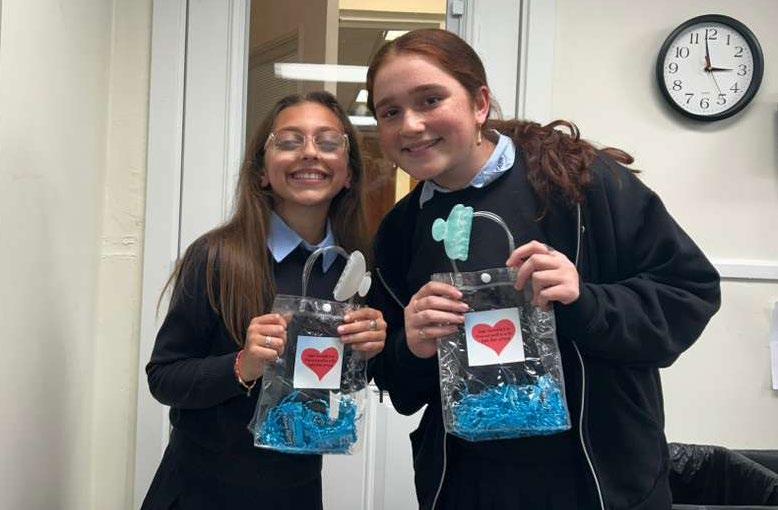
the entire school. GMS Principal Mrs. Gita Guttman, described what makes the program so powerful: "When girls work together as a team, with positive peer pressure and exciting, specific goals, there is real movement and real headway." The girls themselves felt it too. "It brought us all together to work on our middos," reflected 7th grader Aliza Seidel. "It helped me improve my middos and made me a better person," added 7th grader Aliza Goldenberg.
Mrs. Goldberg summed it up best: “This was a program the girls truly owned, and the growth that came from it is something they will carry long beyond Sefira. Yasher koach to the entire GMS for letting their spark shine!”
Torah Academy of Boca Raton is a Yeshiva with preschool, elementary, and separate boys’ and girls’ middle school divisions, serving 900 students this year.
For more information, visit www. torahacademybr.org or call 561-4652200

By JBuzz
On the sandy frontier near Israel’s borders with Gaza and Egypt, a quiet but powerful story has been unfolding for nearly two decades — a story of displacement, rebuilding, loss, heroism, and unwavering faith. For the residents of Shlomit and the surrounding Halutza communities, October 7 was not the beginning of their story. It was another chapter in a mission that began long before, when families uprooted from Gush Katif chose not to disappear, but to rebuild.
We sat down with Yididya Harush for a deeply emotional conversation about the legacy of Gush Katif, the horrors of October 7, and why, despite everything, the people of Shlomit chose to return home stronger than ever.
“The Entire Community Began With Families From Gush Katif”
“My name is Yididya Harush,” he begins. “I’m a resident and part of the leadership of the Halutza communities on the borders with Egypt and Gaza. I’ve been involved since 2011.”
The story of Shlomit cannot be understood without understanding Gush Katif.
Following Israel’s 2005 disengagement from Gaza, thousands of Jewish residents were forced to leave the communities they had spent years building. Entire neighborhoods vanished almost overnight.
For Harush, it was personal.
“It was actually my 17th birthday when Ariel Sharon announced the disengagement,” he recalls. “My
family had just finished renovating our dream home. We only got to live there for two months before we had to leave.”
His family lived in the southern Gush Katif community of Slav, near Rafah.
“The Halutza communities were essentially built as a continuation of Gush Katif,” he explains. “The first fifteen families who came here were evacuated families from Gush Katif who decided they still wanted to help build the South and continue Ben-Gurion’s vision.”
What began as a small group of determined families slowly turned into multiple thriving communities in one of Israel’s most remote and strategically sensitive regions.
“There was nothing here in the beginning,” Harush says. “No infrastructure. No services. Just sand and a mission.”
That mission was not only ideological. It was strategic.
“The presence of communities here helps secure the border,” he explains. “There were constant issues with smuggling through the Egyptian border — weapons, drugs, and other threats. Building strong communities here became part of protecting the region.”
Over the years, residents learned to live with isolation, security concerns, and the emotional burden of raising children under constant threat.
But nothing could prepare them for what happened on October 7.
“Nobody Imagined This Scale”
“We’re only about two and a half miles from the border,” Harush says.
Like many Israelis living near Gaza, residents understood there was always risk.

“In theory, everyone thought some kind of infiltration could happen,” he says. “But nobody imagined anything like this.”
The attack unfolded with terrifying speed.
“The army’s worst-case scenario had been maybe twenty terrorists entering a community,” he explains. “Here we faced thousands.”
According to Harush, more than 6,000 terrorists and approximately 3,000 rockets overwhelmed southern Israel within the first hours of the attack.
Missiles exploded dangerously close to homes throughout the region.
Then came a desperate call from the nearby community of Pri Gan. “Terrorists were trying to enter the community, and they needed immediate help.”
What happened next became one of the defining moments in Shlomit’s history.
“Our emergency response team made a heroic decision,” Harush says. “They left our own community and drove to defend Pri Gan.”
The battle lasted nearly two hours.
“There were very few of our people against many terrorists,” he says. “But they managed to push them back and save the entire community.”
The victory came with heartbreaking loss.
“Out of eighty-five families in our community at the time, four heroes were killed and four more were injured.”
In percentage terms, the impact was staggering.
“That’s nearly ten percent of the
community,” he says.
For a small town, the grief touched virtually every family.
“We Knew We Had To Stay Together”
The following morning, October 8, the IDF ordered the evacuation of the area.
Almost immediately, the community leadership gathered to discuss what came next.
“One thing became clear right away,” Harush says. “We could not allow the community to scatter.”
He points to lessons learned from earlier conflicts.
“After the 2014 war, some communities evacuated family by family into different hotels and cities,” he explains. “In the end, many of those communities never truly recovered together.”
The leadership feared the same outcome.
“We understood that if we separated, people might never come back,” he says.
In the middle of national chaos, Harush reached out to Jewish National Fund-USA.
“I called the CEO of JNF and explained the situation,” he recalls.
“Within minutes, they were already working to help us.”
An initial solution was found in the Arava region, but the community requested something closer to Jerusalem.
“Our fallen heroes were being buried near Jerusalem, and their families were sitting shiva there,” Harush explains. “We wanted to stay close.”
Soon afterward, housing was arranged in Gush Etzion.
Within hours, the evacuation began.
“We left together as one convoy,” he says.
Later, the entire community relocated together to the Kramim Hotel, where they remained for six months.
“People Were Just Sitting And Crying”
The first weeks after evacuation were emotionally devastating.
“People were broken,” Harush says. “Men, women, children — everyone was sitting and crying.”
He quickly realized the community needed structure and purpose.
“I started assigning responsibilities and tasks,” he explains. “People needed to stay active. They needed to feel they still had meaning and responsibility.”
Soon afterward, many of the men — including Harush himself — entered reserve duty and fought in Gaza.
“I was barely at the hotel after the first few weeks,” he says. “Most of us were serving.”
Despite the trauma, the decision to remain together proved critical.
“It helped preserve the soul of the community,” he says.
“We Came Back Proud”
After six months, Shlomit made
another extraordinary decision: to return home.
“At the time, most evacuated communities still didn’t feel ready,” Harush says. “But we believed returning was the healthiest thing for our families.”
The decision was made only after extensive consultations with the IDF and after receiving agreement from the widows of the fallen heroes.
“It was incredibly emotional,” he says.
When the community evacuated in October, residents left devastated and broken.
“When we returned, we decided we would come back differently,” he explains. “We came back proudly.”
Residents drove together in a long convoy filled with Israeli flags.
“There were tears everywhere,” he recalls. “But there was also pride.”
Before anyone even entered their homes, the community stopped at the site of a future daycare center.
“There, together with JNF, we laid the cornerstone for a brand-new daycare building.”
The symbolism mattered deeply.
“We wanted to send a message,” Harush says. “Our answer to terror is more life.”
He pauses before adding:
“You can break our homes. You can break our hearts. But you cannot break our spirit.”
“Today There Isn’t One Empty Home”
Incredibly, the story did not end with survival.
It became a story of growth.
“Since October 7, we’ve seen tremendous interest from families

wanting to join the community,” Harush says.
Today, there are no available homes in Shlomit.
“A lot of people heard the story of the community and said, ‘We want to be part of something like this.’”
Construction continues throughout the area as new families prepare to move in.
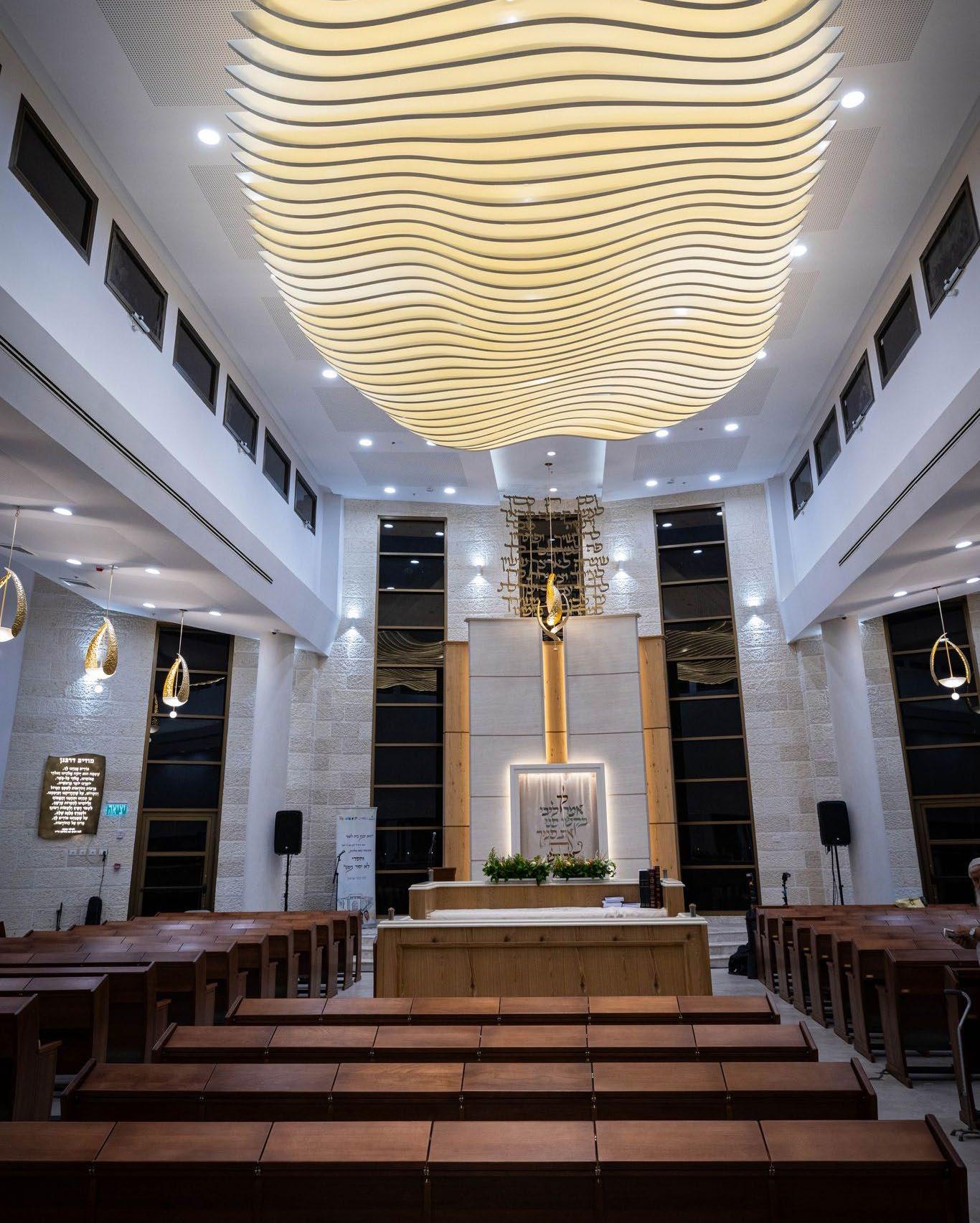
Just days before traveling to Boca Raton for community events, Harush attended another historic milestone: the inauguration of Shlomit’s first permanent synagogue.
“We dedicated it in memory of the four heroes we lost,” he says.
Support for the project came from around the world — particularly from supporters in the United States.
“Florida Feels Like Family”
Over the years, Harush has built close relationships with Jewish
communities throughout South Florida, especially in Boca Raton.
“The relationship feels like family,” he says warmly.
He describes the community as deeply supportive, caring, and personally invested in the future of Israel’s South.
“These are not just donors,” he says. “These are partners.”
As the conversation comes to a close, Harush reflects on the unlikely journey from the destruction of Gush Katif to the rebuilding of Shlomit.
For many communities, displacement could have been the end.
For Shlomit, it became the beginning of something even stronger.
“Without the support of these incredible friends,” he says, “we would never have been able to build what we built.”
Baby Equipment Gemach
Miami/Hollywood
Mrs. Rinat Zelenko: 718-419-0215
Baby Gemach
North Miami Beach 917-359-5818
Orit Sabo.
Boca Children's & Ladies Coat Gemach
Boca Raton
Adina Moses: 718-854-2327
Bris Gemach
South Florida
Dina: 718-854-2327
Bris Outfits Gemach
South Florida
917-412-0713
Also collecting pillow donations.
Brit Gemach
North Miami Beach
305-409-2536
Pack N Play Gemach
Miami Beach
Avrumy: 631-575-4177
The Bris Box
Hollywood/Boca 917-902-5537
All bris supplies at no cost.
Bais Avel
Bais Avel Meals
South Florida
347-324-4039
Meals for families in Shiva.
Chesed Shel Emes
South Florida
305-359-5700
Burial, transport, Shiva equipment.
Bais Yaakov Uniform Gemachs
South Florida
Esther: 786-422-2602
Coat Gemach
North Miami Beach
305-761-1648
Goodman Jewish Family Services
South Florida 954-909-0810
Uniform Gemachs
South Florida
Esta. 786-390-2767
Counseling/Advice
Free Private Counseling
South Florida
845-721-7062
Breast cancer support (MSW).
Ruth & Norman Rales JFS
Boca Raton jaclynt@ralesjfs.org
Infertility support for couples.
Seniors Support
South Florida
347-324-4039
For seniors needing to talk.
Food
Challah Gemach
South Florida
347-324-4039
Free Challah for familie in need.
Craig's Pantry
South Florida 954-648-6359.
JCS Food Bank
South Florida
305-947-8093
Shifra & Puah
South Florida
310-866-8261
Postpartum assistance.
The Cupboard (JFS)
Broward
954-530-7555
Broward residents; appointment only.
Tomchei Shabbos
Miami Rabbi Mendy Cheruty: 305-219-3353
South Florida 786-202-3344
Yetiv Lev Food Assistance
South Florida 786-202-3344
Meals for new mothers and sick.
Air Mattress Gemach
North Miami Beach 561-271-3518
Free Mezuzahs
Online/Global myzuzah.org
Mezuzah Gemach
South Florida
R. Yochanan Klein 305-450-8287
Medical
Bikur Cholim
Medical supplies. Hollywood: 954-478-7490
North Miami Beach: 305-690-8949
Palm Beach: bikurcholimspbc.org
Chesed Houses
Miami 305-450-8287
Near Jackson Memorial.
Healing Hearts Bikur Cholim
South Florida
R. Yochanan Klein: 305-450-8287
Hollywood Medical Supplies
Hollywood Eldad: 954-478-7490
MB Medical Supplies
Miami Beach
Rabbi Stern: 305-318-2366
NMB Medical Supplies
North Miami Beach
Barry: 305-479-7745
Miscellaneous
Everything Virtual Gemach
Online
Orit Sabo: 917-359-5818
Jewish Library Gemach
South Florida
Tamar: 305-721-5880
Pack N Play Gemach
Miami Beach
Avrumy: 631-575-4177
Tzitzis Gemach
Boca/Global
Eliezer Cohn: 913-832-8032
Money/Loans
Free Loan Gemach
South Florida
Rina: 347-628-0394
Hebrew Free Loan Association
South Florida
305-933-1187
Loan Gemach North
Miami Beach
305-332-3572
The Helping Hands Lending
South Florida
Aharon Greenberg: 305-534-7050
Purim Costumes
Boca Raton Costume Gemach
Boca Raton
Dafna: 917-831-6654
Costume Gemach (NMB)
North Miami Beach 773-983-9704
Costume Gemach (Risa)
South Florida
305-308-2174
Queen Esty's Purim Gemach
Boca Raton
848-525-2958
Appointment only
Services
Notary Gemach
South Florida
Shoshana: 305-775-9354
Shaimos Gemach
South Florida Avi: 347-531-6057
Sheital Sheital Gemach (Kallahs Only)
South Florida
305-490-5471|Requires approval.
Sheital Gemach (NMB) North Miami Beach 972-836-2432|Accepting donations.
Costume Jewelry Gemach
South Florida
Sarah Tabakin: 917-620-5874
Gemach S'machot
South Florida
Paola Leonoff: 786-281-1133
Hollywood Simcha Gemach
Hollywood 954-609-1864
Decor & centerpieces.
Tablecloth Gemach
Boca Raton
Michal: 917-804-6924
Tablecloth Gemach (NMB)
North Miami Beach
347-848-5638
Yad David Tablecloth Gemach
North Miami Beach
Alli Jeger: 917-972-7695
Support Groups
Chizuk South Florida
South Florida
917-673-6123
Infertility support.
Shalom Task Force
South Florida
888-883-2323 |Domestic abuse.
Sharsheret
South Florida
954-416-0087| Cancer support.
Yacholet-Ikann
Hollywood 786-992-5036
Mental health assistance.
Wedding
Achnasos Kallah Gemach
South Florida
Marci: 786-877-2887
Bridal Gemach
Hollywood Visit: jeanettelevinebridalgemach
Chasde Chashie L'Kallah
South Florida
347-620-4145
Beds & dinette sets.
Jeanette Levine Bridal
Hollywood/NMB 954-588-7600 | Kallah dresses.
Leeba Gabriella Wedding
Boca Raton
Michal: 917-804-6924
Wedding Shtick Gemach
South Florida
305-781-8357|Props and decor.
Yad L'Kallah South FL
South Florida
347-371-1932
By Jamie Geller
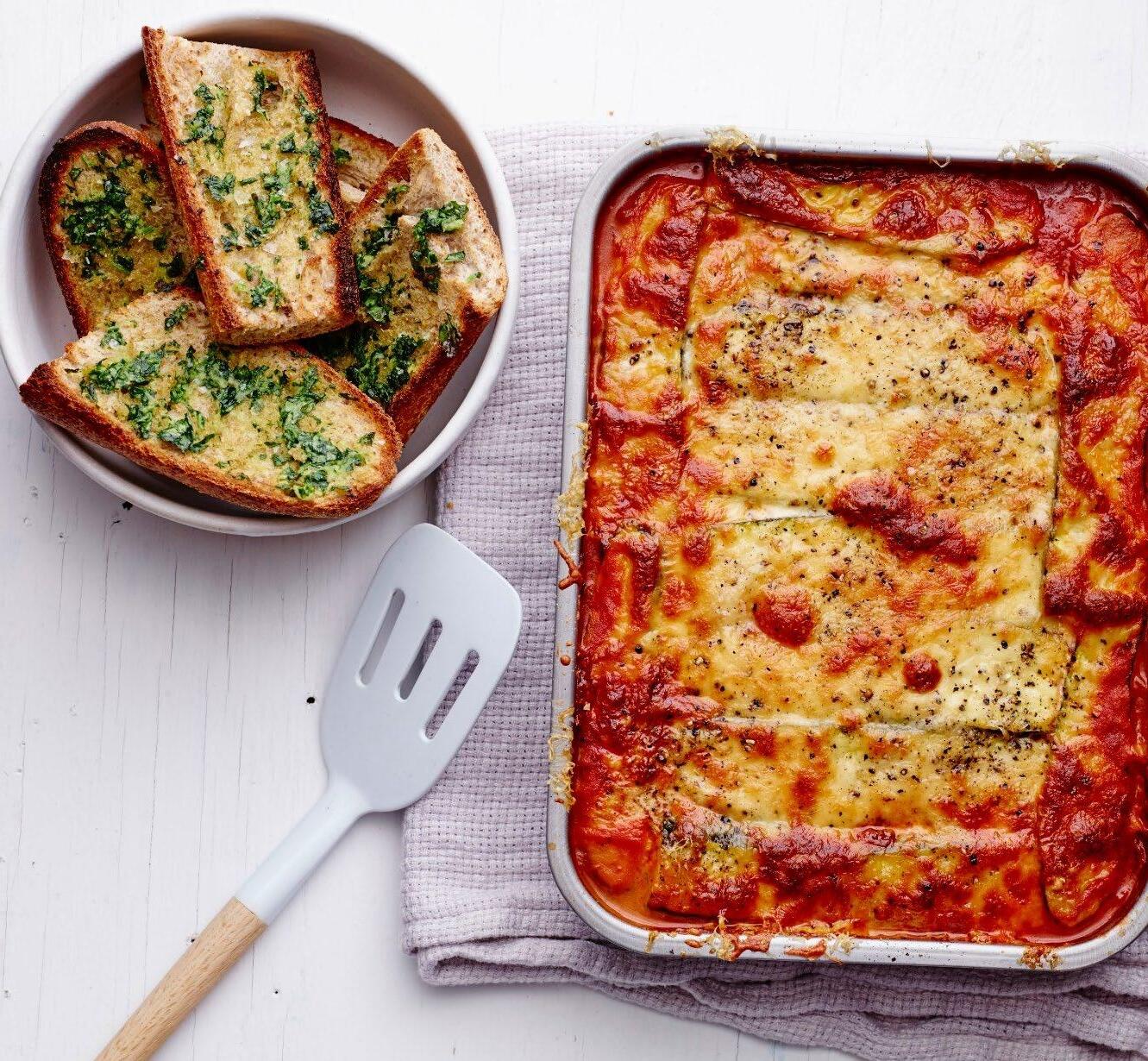
Perfect for a dairy Friday night (or your Shavuot table!), this menu features a clever “no-noodle” Zucchini Lasagna packed with vegetables. Serve it with Whole Wheat Garlic Bread and finish with crunchy, classic Mandel Bread.
jamiegeller.com
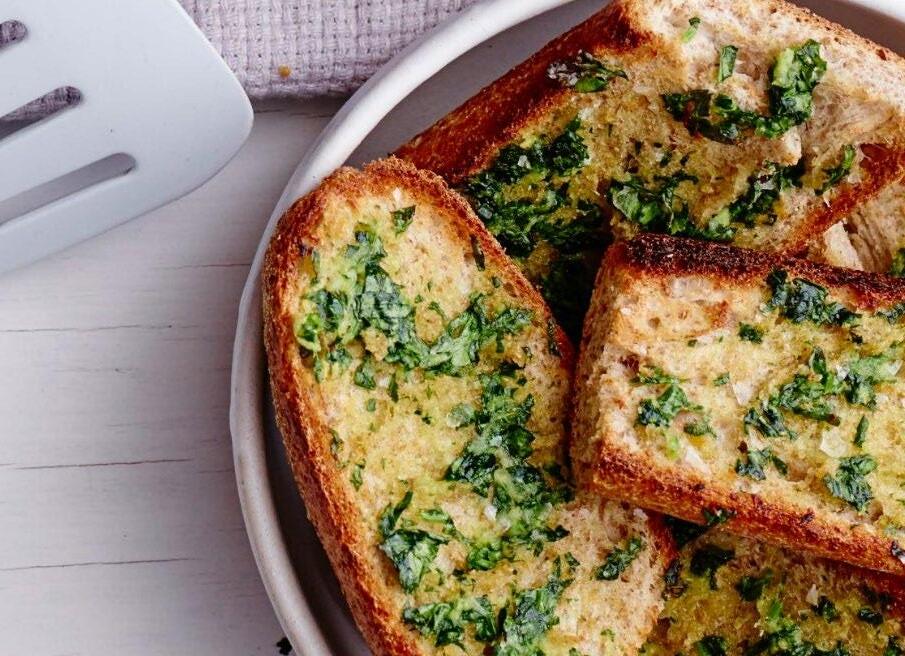
PREP TIME
5 minutes
Ingredients
4 tablespoons extra virgin olive oil such as Colavita
4 cloves garlic minced
¼ cup chopped fresh parsley
¼ teaspoon kosher salt
1½ whole-wheat baguettes halved, lengthwise
Instructions
Preheat the oven to 400°F. Line a baking sheet with baking paper. Whisk together evoo, garlic, parsley, and salt.
Brush garlic mixture over cut side of baguettes and place on the prepared baking sheet.
Bake at 400°F for 12 to 15 minutes or until just toasted and golden around the edges.
Courtesy of the 28 Day JOY of KOSHER Challenge by Jamie Geller and Tamar Genger MA, RD.
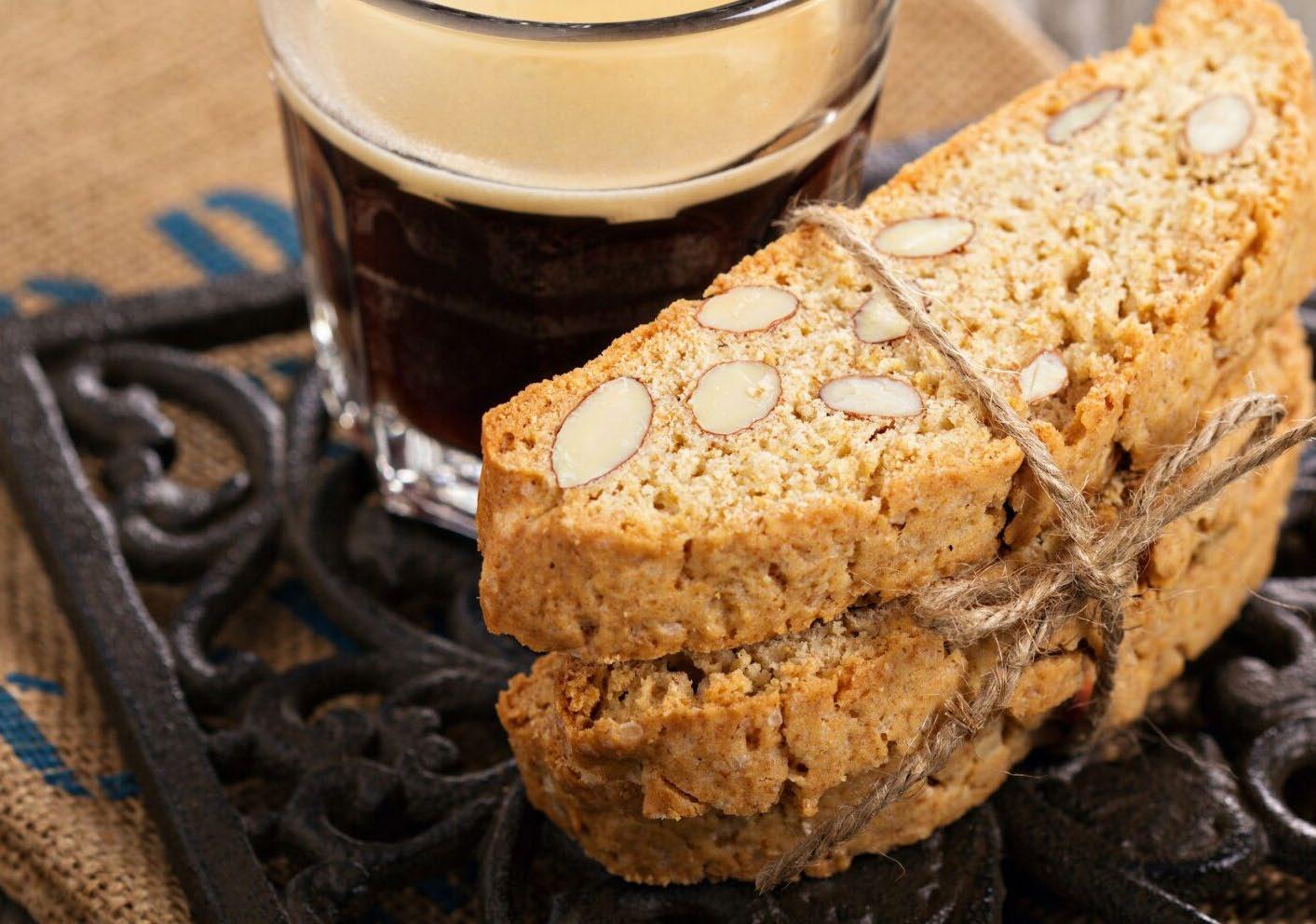
PREP TIME
15 minutes
Ingredients
3 ½ cups whole wheat or spelt flour
½ teaspoon baking powder
¼ teaspoon baking soda
½ teaspoon kosher salt
½ cup extra virgin olive oil or grapeseed oil
2 eggs
½ cup silan or honey
Instructions
Preheat the oven to 350°F. Line two baking sheets with parchment paper. Adjust oven rack to middle and upper positions and in a medium bowl, combine flour, baking powder, baking soda, and salt.
Make a well in the center whisk oil, eggs and silan. Add lemon zest and vanilla extract. Combine with dry ingredients until just mixed. Stir in almonds.
Divide dough into four equal parts. Shape each part into 3-inch wide log. Bake until golden, about 20 minutes. Take cookies out of oven and reduce heat to 300°F.
2 packed teaspoons lemon zest from about 1 large lemon
1 ½ teaspoons vanilla extract
1 cup sliced almonds
When cool enough to handle, cut each log on the bias to form 1-inch wide cookies.
Place cookies cut side down on baking sheet and bake until toasted, 15 minutes more, flip and cook another 10 minutes. Let cool for 5 minutes then transfer for a wire rack to finish cooling. Cookies will keep, stored in an airtight container, for up to 1 week or for a few months in the freezer.
PREP TIME
10 minutes
COOK TIME 1 hour 20 minutes
TOTAL TIME 1 hour 35 minutes
CALORIES 320 kcal
Ingredients
Cooking spray
2½ tablespoons extra virgin olive oil divided
1 small onion finely chopped
½ teaspoon red pepper flakes
4 portobello mushrooms chopped
1 28-ounce can diced tomatoes (about 3 cups)
3 tablespoons chopped fresh basil
2 teaspoons kosher salt
2 medium zucchini sliced, lengthwise, into ⅛-inch thick “lasagna” style noodles
2 cups part-skim ricotta cheese divided
¼ teaspoon freshly ground black pepper
½ cup grated Parmesan cheese
1½ cups shredded mozzarella cheese
Instructions
Preheat the oven to 375°F. Grease a 9- x 13-inch baking dish with cooking spray.
Heat a large sauté pan over medium heat.
Add 2 tablespoons oil, onions, and red pepper flakes and cook, stirring occasionally, until onions are tender, about 8 minutes.
Add remaining half tablespoon oil and mushrooms and cook, until brown, about 4 minutes.
Add tomatoes and bring mixture to a boil. Reduce heat to medium and simmer, uncovered until it thickened, about 20 minutes.
Stir in basil and salt. Let cool.
Put a third of zucchini noodles on the bottom of the prepared dish, overlapping slightly. Top with half sauce and half ricotta. Repeat layers.
Top with last third zucchini. Sprinkle black pepper, parmesan, and mozzarella.
Bake at 375°F for 50 to 60 minutes or until golden brown.
The world’s largest cheese wheel weighed over 57,000 pounds.
There are more than 2,000 different kinds of cheese around the world.
Parmesan cheese is so hard that special knives are used to cut it. 1 2 3 4 5 6 7 8 9 10 11 12 13
Some cheeses are aged for more than 10 years before being eaten.
Swiss cheese doesn’t always come from Switzerland — it’s a style of cheese with holes.
String cheese is usually made from mozzarella cheese.
Some of the most expensive cheeses in the world are carefully aged for years.
Cheddar cheese gets its name from the village of Cheddar in England.
Cheese was discovered over 4,000 years ago by accident.
The holes in Swiss cheese are called “eyes.”
Cheese can glow under black light because of natural proteins inside it.
Americans eat billions of pounds of cheese every year.
Blue cheese gets its color from safe, special mold.


Pizza cheese stretches because mozzarella melts differently than most cheeses.
Cheese contains protein and calcium that help build strong bones.
Ancient Romans loved cheese so much they had special cheese kitchens. Some cheeses are made from goat milk or sheep milk.
Cottage cheese got its name because it was often made in small cottages on farms.
The smellier a cheese is, the more flavorful it often tastes!
A grilled cheese sandwich becomes extra crispy because of the fats in the cheese and butter.

I can be sliced, shredded, melted, or spread.
What am I?
I have holes that are called “eyes.”
What am I?
I am creamy, sweet, and popular on Shavuot.
What am I?
I can be pulled apart into long, yummy strips.
What am I?
I stretch on pizza and make every bite gooey.
What am I?
I am named after a village in England.
What am I?
I am hard, salty, and often grated on pasta.
What am I?
What am I? 1 2 3 4 5 6 7 8
I am white, soft, and often eaten with fruit or crackers.

I turn bread into a crispy, melty sandwich. What am I?
I am made from milk and come in more than 2,000 kinds. What am I? 9 10
:





By South Florida Community Voice
For many entrepreneurs, business begins with a market opportunity. For Mark Blum, a Boca Raton resident, business began with a personal mission: helping people live healthier lives in a world increasingly filled with processed food, stress, and overmedication.
Originally from upstate New York, Blum relocated to South Florida several years ago and spent years working in the technology sector before entering the wellness
industry in 2024. What started as the purchase of a small supplement manufacturer has since grown into a rapidly expanding operation now based in Hollywood, Florida.
“We wanted to create products that genuinely help people,” Blum explained. “Not just another brand on the shelf, but supplements people can trust.”
The company specializes primarily in contract manufacturing, producing supplements for a large
number of kosher and mainstream wellness brands, including many sold throughout the Jewish market and on Amazon. Today, the facility manufactures millions of capsules monthly and continues to expand into tablet production as demand grows.
Part of Blum’s passion for the
Growing up, he struggled with ADHD and remembers being encouraged at a young age to begin taking prescription stimulants. That experience later inspired him to explore more natural approaches to focus, nutrition, and cognitive support.
“I’m not here to criticize medicine,” he said. “But I do believe there are many natural nutrients and supplements that can support people’s health and improve quality of life.”
He also pointed to the growing popularity of GLP-1 weight-loss medications, such as Ozempic, as another example of why nutritional support has become increasingly important.
“These medications can help people lose weight, but many people also end up nutritionally depleted because they’re eating much less,” he explained. “If people are reducing their food intake dramatically, they still need proper vitamins and nutrients.”
That philosophy became part of the company’s broader mission: developing high-quality supplements focused on nutrition, wellness, and overall health support.
The company first operated in Pompano Beach before relocating to larger facilities in Hollywood as production expanded. Along the way, it invested heavily in certifications and compliance standards.
The facility maintains multiple kosher certifications, including OU
and CRC supervision, while also adhering to stringent third-party manufacturing standards.
One of the company’s most significant recent milestones was passing an intensive NSF certification inspection — a rigorous multi-day review process that examines everything from production systems and sanitation protocols to temperature monitoring, traceability, and ingredient documentation.
“People think supplements are simple — just putting ingredients into a capsule,” Blum said. “But there are thousands of details involved if you want to do it correctly.”
The inspection process evaluates every stage of production, including:
+ Ingredient sourcing
+ Batch tracking
+ Lab testing
+ Air filtration systems
+ Sanitation procedures
+ Label compliance
+ Product stability and safety records
“It’s about creating a product people can consume confidently,” he explained. “If someone takes a supplement to improve their health, then quality can’t be optional.”
According to Blum, the Jewish supplement market has unique priorities compared to mainstream wellness trends.
While much of the general supplement industry focuses
heavily on fitness performance and bodybuilding, the Jewish market often places greater emphasis on family wellness, prenatal health, probiotics, and nutritional support.
“There’s a strong focus on health for families, pregnant women, nursing mothers, and overall wellness,” he explained. “People want products they can trust.”
The company says maintaining kosher production standards while also meeting vegan, organic, and clean-label expectations has helped it stand out in a crowded industry.
Even products manufactured without a formal kosher logo are still produced in the same koshercertified facility using kosher ingredients and processes.
Although the company’s primary business remains contract manufacturing, it is also preparing to launch its own in-house supplement line under the name “Natural Florida.”
The upcoming products are expected to focus on nutritional support for energy, focus, and wellness — areas Blum believes are increasingly important in modern life.
“We live in a world where people are overwhelmed, stressed, distracted, and often not eating properly,” he said. “Our goal is simple: create products that help people feel healthier and function better.”
For Blum, the business is ultimately about more than supplements.
“If we can do something that makes people’s lives even a little better,” he said, “then that’s meaningful.”

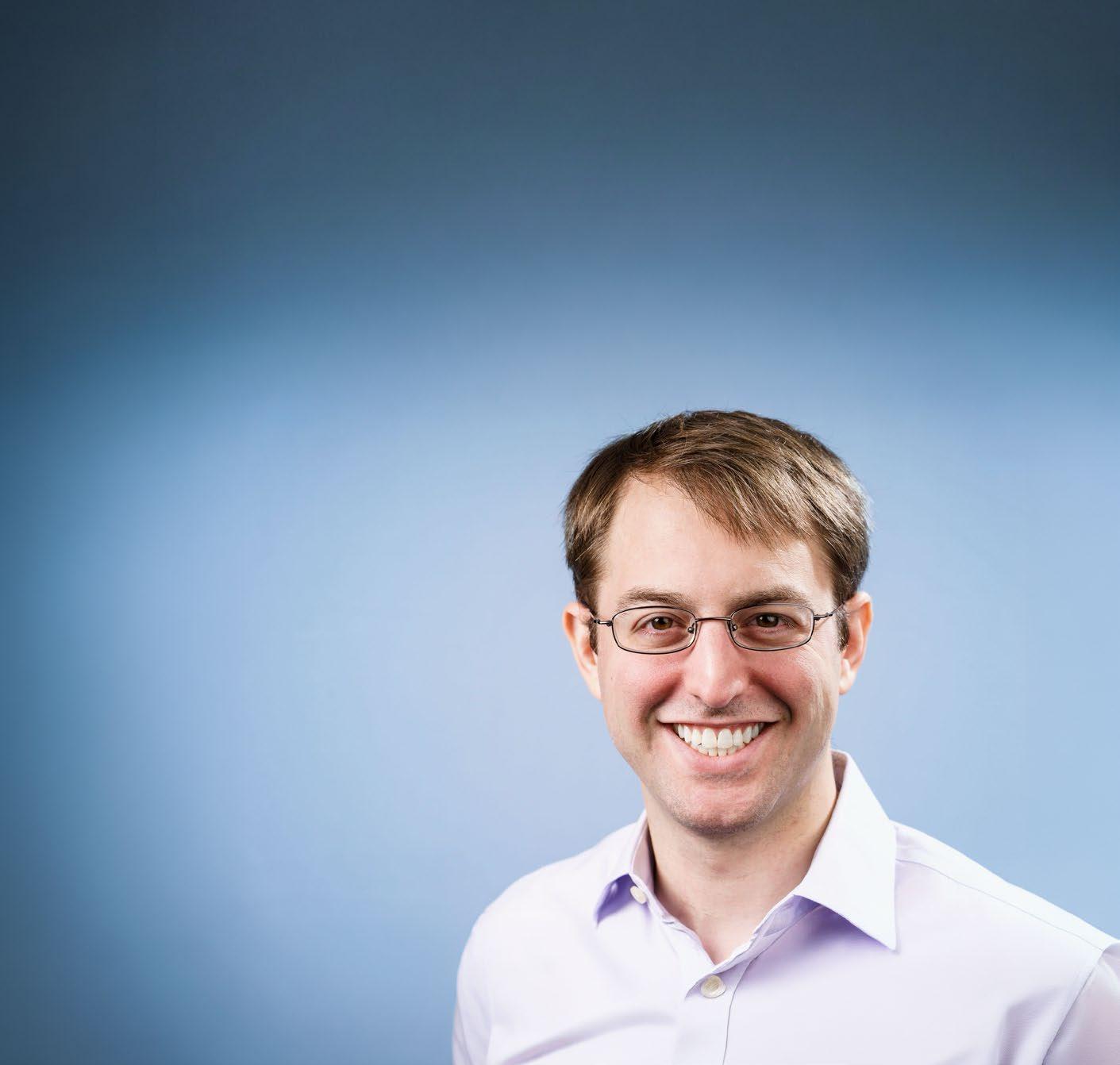
By J-Buzz Team
For Jeremy Gilbert, the story of BeeperMD begins with a simple question: if so many services can now come directly to your home, why not healthcare?
Gilbert, who grew up in Boca Raton and has spent most of his life in South Florida, has watched the local Jewish community grow dramatically over the years. As
the community expanded, he saw firsthand the need for convenient, accessible healthcare — especially for families, schools, shuls, and seniors.
“I grew up here in Boca and have seen how much the community has grown and changed,” Gilbert shared. “South Florida has become a thriving center of Jewish life, and
I always thought about how I could help the community in a meaningful way.”
BeeperMD began about a year into COVID, when the need for reliable testing was urgent. Schools, shuls, and families throughout South Florida needed a way to test safely and efficiently.
Gilbert and his longtime business partner connected with a lab and began offering COVID testing, first at schools and community locations.
“At the beginning, it was really not about building a business,” Gilbert explained. “We were doing it because there was a need. We wanted to help keep the schools open and support the community.”
Then came the idea that changed everything.
During one large COVID testing event at a South Florida school, Gilbert’s partner suggested offering COVID tests at home. They printed simple business cards with a phone number for at-home testing — and the response was immediate.
“It was an instant hit,” Gilbert said. “We grew very quickly because people needed it.”
That early success led to a bigger idea: if at-home testing worked, why couldn’t urgent care, primary care, and pediatrics work the same way?
As services like Instacart, Uber Eats, and other on-demand platforms became part of everyday life, Gilbert saw an opportunity to bring

the same level of convenience to healthcare.
“We asked ourselves: can we make a system that is efficient, affordable, and accessible so people can be seen at home?” he said.
Over the past several years, BeeperMD has grown into a full on-demand healthcare platform, offering at-home urgent care, primary care, pediatrics, and related services throughout South Florida, Central Florida, Orlando, Tampa, and much of the state.
Gilbert says the model was built with families in mind.
“I have four young kids,” he said. “Someone is always sick every few weeks. I saw how much easier it was when my wife could order BeeperMD to the house instead of packing up a sick child, going to urgent care, waiting, and dealing with the whole family.”
But the service is not only for young families. BeeperMD also serves elderly patients, homebound individuals, and anyone who needs medical care brought directly to them.
While BeeperMD became known for at-home healthcare, Gilbert says the company also recognized the importance of in-person care.
“Some things are better done in person,” he explained. “We realized there was a need to combine the convenience of at-home care with physical clinics.”
This year, BeeperMD opened clinic locations in Hollywood, Boca Raton, Boynton, and Orlando,
including locations close to Jewish communities.
The goal, Gilbert says, is to give patients options: receive care at home when it makes sense, or visit a clinic when an in-person appointment is needed.
One of the most important messages Gilbert wants the community to know is that BeeperMD is not a luxury concierge service.
Many people assume that at-home care must come with a premium price. Gilbert says that is not the case.
“Our home visits are the same cost, the same co-pay or co-insurance, as an in-person clinic visit,” he said. “People often expect this to be a concierge service that costs more, but we wanted it to be fully accessible.”
BeeperMD accepts most major insurance plans, including commercial insurance, marketplace plans, Medicaid plans, and United Refuah, with whom the company recently partnered as United Refuah expands into Florida.
Services include pediatrics, adult primary care, and urgent care.
Gilbert credits much of his entrepreneurial outlook to his father, Tony Gilbert, who built successful businesses and emphasized using business as a way to create positive impact.
“I’ve always had an entrepreneurial spirit,” Gilbert said. “But the goal has always been to build businesses
that are good for the community and that solve a real need.”
That mindset began early. One of Gilbert’s first ventures in college was called Altrinsic, a platform designed to motivate students to improve their grades. The concept was to use external motivation to build an internal love of knowledge.
“It was about helping people do something good,” Gilbert said. “That idea has carried through everything I’ve worked on.”
For Gilbert, BeeperMD reflects that same mission: build a successful company by solving a real problem and helping people in a practical way.
“The most successful businesses have a real impact on society,” he said. “That’s what we are trying to do with BeeperMD.”
BeeperMD is now active throughout much of Florida and is continuing to grow its clinic network. The company has also begun the process of expanding beyond Florida, with plans underway for the Atlanta, Georgia market.
For Gilbert, the mission remains the same: make healthcare easier, faster, and more accessible for families and communities.
“What we built is really designed to serve people,” he said. “Whether it’s a family with young kids, an elderly person at home, or someone who needs urgent care quickly, we want to make healthcare more convenient and accessible for everyone.”


We have all heard of the “fivesecond rule,” the old adage that if you drop food on the floor but pick it up within five seconds, it’s okay to eat it. Indeed, some are machmir and apply a threesecond rule, some are meikil and use a tensecond rule, but we have all heard of the dropped food rule. The New York Times had an article a few weeks ago quoting a scientific paper from Clemson University that was both pioneering and hilarious. Accompanied by six graphs, two tables and equations whose terms
include bologna and carpet, the paper is a thorough microbiological study of the five-second rule. The researchers found that on surfaces that had been contaminated eight hours earlier, slices of bologna and bread left for five seconds took up from 150 to 8,000 bacteria. Left for a full minute, slices collected about 10 times more. T he article concludes that if you drop a piece of food, you should pick it up quickly, take five seconds to recall that just a few bacteria can make you sick, then take a few more to think about
where you dropped it and whether or not it’s worth eating.
While the legitimacy of some rules like the five second rule are debated and subject to scientific scrutiny, other rules, like those of the Torah that we celebrate this morning, are nothing short of divine and immutable. Nevertheless, to regard the Torah as simply a book of rules, laws and legislation, and to view the holiday of Shavuos as the celebration of such, is to miss the true profundity and greatness of

our sacred gift from Hashem. T he Torah is much more than rules and its central role in our lives is more significant than a book.
This morning, we have all recited the Birchos HaTorah, the blessings on learning Torah. We followed up by reading from Torah, Mishna and Gemara to fulfill the mitzvah we just made a beracha on. Normally, when it comes to a beracha on a mitzvah, if I interrupt and go back to the mitzvah later, I must make a new beracha. If I eat a meal in the sukkah, and then I leave the sukka, when I return and begin another meal, I make a new beracha.
Yet, when it comes to the mitzvah and beracha of learning torah, even if I interrupt my day with some other activity and return to learning later in the day, I don’t make a new beracha. Why not? Tosafos explain (Berachos 11b) “she’eino miya’eish mida’ato, shekol sha’ah chayav lilmod — because it is never lost from his thought, because at all times he is obligated to learn.” Rav Hutner adds that Tosafos don’t just mean that the obligation is constant. Rather, part of learning Torah is “lilmod al menas la’asos — learning in order to do”. Thus, a life lived according to the Torah is not a break in talmud Torah, but part of the fulfillment of the obligation.
The Halacha is that if someone forgot to say Birchas HaTorah but did say Ahavah Rabbah before Shema, he needn’t say Birchas HaTorah. Ahavah Rabbah qualifies as Birchas HaTorah. How? The beracha of Ahava Rabba seems too broad, since it refers not only to learning Torah, but also to fulfilling mitzvos.
Again Rav Hutner explains that other mitzvos are not a break
from talmud Torah, but rather are a fulfillment of lilmod al menas la’asos.
Rav Hutner’s tendency toward breadth goes much further than that. In his Igeros (pg. 84), he answers a student who felt like he was split, living a double life — a life of Torah and a secular life centered around a career — and was seeking guidance. Rav Hutner answered with a metaphor: If a person has a home, and in addition he takes up residence in a hotel, he is living a double life. But if the person has a home that has two rooms, he is not living a double life, he is living a broad life. By placing it all under only one roof, there is a broad unity, not a split. “Bekhol derakhakha da’eihu — know Him in all your ways.”
A life of Torah must include reshus, placing one’s second room under the same roof, without which even the mitzvah of talmud Torah is itself incomplete. This is why that student’s pursuit of a career did not necessitate his making a second Birchas HaTorah. Rav Hutner told this student who is now a professional not to consider his career a distraction. Quite the contrary! Someone who lives a Torah life, and does so as broadly as possible, has the beracha of earning a long life.
In many ways, this is the message of Shavuos. When we re-experience the acceptance of the Torah, we aren’t only committing to embrace the scholarship and academic components of Torah. We aren’t only dedicating ourselves to study, to learning and to limud HaTorah, though this is a critical pre-requisite. On Shavuos, we are recommitting ourselves each year to living our
lives, every aspect and component of it under the guidance and direction of Torah. On Shavuos we acknowledge that our lives are not compartmentalized into sacred and mundane, Torah and secular, but rather we live in many rooms under one roof. T he Gemara in Pesachim (68b) discusses how a person should spend his Yamim Tovim. Rabbi Eliezer maintains that a person should spend his entire day doing the same thing, either “LaHashem” - in spiritual endeavors (Torah study), or “Lochem” (for you) - eating and drinking. Rabbi Yehoshua differs, and holds that a person should divide his day evenly between the two.
The Gemara concludes, “All agree that on Shavuos you need also “Lachem,” for you, since this is the day that the Torah was given to Yisrael.”
The question commonly asked is that logic seemingly would dictate the opposite. On the day the Torah was given, shouldn’t all agree that it must be spent with spiritual endeavors?
Rav Moshe explains that the day the Torah was given, one must instill in his heart that Torah is not only relegated to spiritual concerns. Rather, Torah rules over all of a person’s dealings. A person must put all physical, mundane and secular matters such as eating and drinking under the domain of the Torah.
Whether or not we accept the five-second rule, may we all successfully accept not only the rules of Torah, but its infinite wisdom in informing and guiding every aspect of our lives.

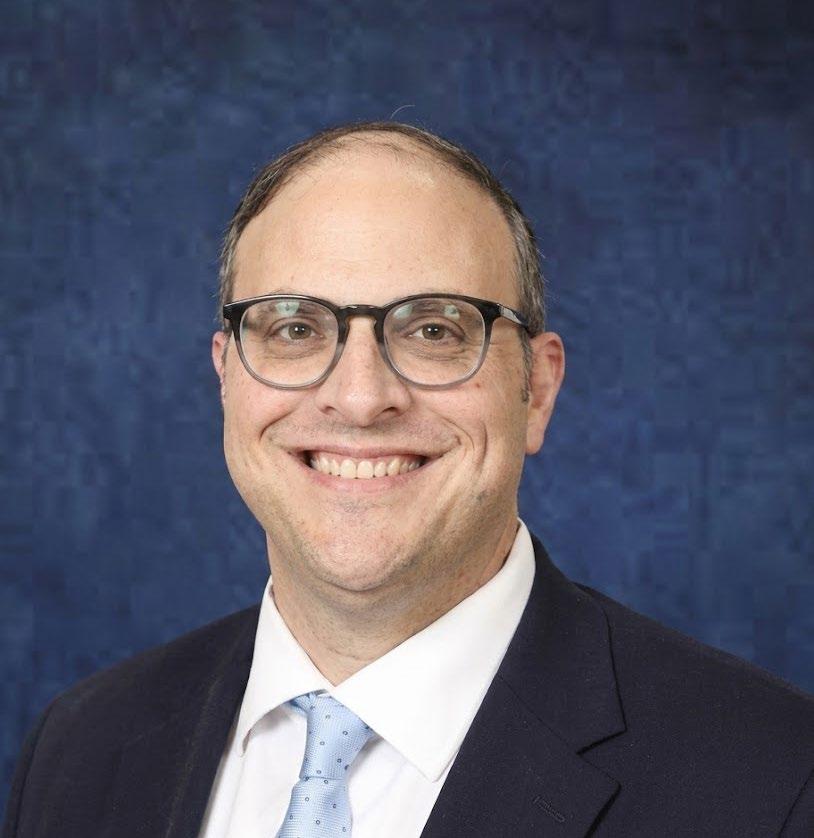
Dear Rabbi Draiman,
As Shavuos approaches, and both Yom Tov and Ahavas HaTorah are at the forefront of our minds, the question arises: with the pressures and demands of Yomim Tovim and daily life, how do we help our children develop a mindset of joy, warmth, and pleasure in Mitzvos and Avodas Hashem rather than viewing Yiddishkeit as pressure or burden?
Sincerely, Preparing for Yom Tov
Dear Preparing,
One of the great goals of chinuch is not merely teaching our children what to do, but helping them feel what it means to live as a Torah Jew. In “Spare the Child,” Rabbi Yaakovson defines chinuch as, “to cause our children to experience joy and pleasure in serving Hashem, desire it, and learn how to achieve it.” We hope to raise children who experience Torah not as a burden or something they simply do, but as the greatest privilege and source of meaning in their lives.
That perspective is not formed simply through speeches or lessons. It is primarily built quietly through the atmosphere of our homes, the tone of our reactions, and the way we ourselves speak about mitzvos, Yom Tov, learning, parenting, responsibilities, and challenges in our daily lives as Torah Jews.
As Shavuos approaches, this becomes especially important. Shavuos is not only about receiving the Torah; it is about how Torah is received. Is Torah experienced as heaviness, stress, and pressure, or as purpose, privilege, and joy?
Rav Moshe’s Warning - Transform “Have to” to “Get to”
Rav Moshe Feinstein zt”l often spoke about a painful mistake made by many well-meaning Jews at the turn of the 20th century. They sacrificed enormously to remain committed to Torah and mitzvos under difficult circumstances, yet many children absorbed one underlying message often expressed: “Shver tzu zein a Yid” — it is hard to be a Jew.
Rav Moshe explained that although the sacrifices themselves were noble and inspiring, children who constantly heard Yiddishkeit framed primarily through hardship naturally wondered: if this life is so painful, why would I want it for myself?
Instead, Rav Moshe emphasized that our children must feel that being a Yid is the greatest joy and privilege imaginable. Challenges may exist, but they should never become the defining emotional identity of Torah life.
Children are extraordinarily sensitive to emotional tone. A child who hears: “This is impossible,” “Yom Tov is exhausting,” “I feel so much pressure,” or “I can’t wait for it to end,” may start to associate
mitzvos with tension rather than connection. By contrast, a child who hears: “What a zechus,” “How special this is,” “We get to do this,” or “Let’s make this beautiful together,” begins to internalize an entirely different relationship with Avodas Hashem.
When we transform "have to" into "get to," we create a mindset that reframes obligations as opportunities. This shift replaces feelings of being forced or burdened with gratitude and motivation to pursue tasks with joy. Rabbi Dovid Orlofsky once said, “How do I make my kids stay at the Shabbos table? The same way I make them eat ice cream. I don’t, but if it is sweet enough they will want it on their own!” The trick is to work on what our table looks like.
“Gadol
The Mesilas Yesharim explains that the key to zerizus and enthusiasm in mitzvos is recognizing Gadol Erech HaMitzvos — the immense value and privilege contained within every mitzvah opportunity.
When something feels precious, effort no longer feels like burden. People willingly invest energy into what they truly value.
A parent may stay up all night for a sick child and never resent it, because love transforms effort into privilege. The same principle applies spiritually. When mitzvos feel meaningful and treasured, even demanding moments become elevated.
Rav Moshe offers a beautiful insight along these lines regarding the opening of Parshas Emor, which we read recently. The Torah introduces
the laws of the Kohanim with the word “Emor,” a softer expression of speech, rather than the firmer “Daber.” Rav Moshe explains that the Kohanim show us that when we greatly appreciate the profound privilege and honor to serve Hashem, no complexity or challenge would feel difficult or too hard; it was all easy and gentle for them, because it was so welcome and valued!
It took almost four years before my wife and I were blessed with our first children. Those early years of waiting gave us a profound appreciation for the gift of parenthood. Sleepless nights, diapers, expenses, and constant demands certainly still existed, but they were framed differently because we understood deeply what a blessing these children were.
What if we could appreciate all the blessings in our lives with this perspective? If we could value even more what blessings we have that we did not have to suffer before attaining, how great would our perspective be?
Perspective changes how we experience challenge. The challenge itself may remain the same, but appreciation can completely transform how we carry it.
Rav Shach zt”l once responded similarly to a young father debating whether he should spend money on a proper kiddush after the birth of a daughter. Rav Shach asked him: “If you had waited ten years for this child, would you ask such a question?” Then he added powerfully: “If Hashem spared you ten years of pain, is that not itself
reason to celebrate?”
Similarly, Reb Yaakov Kamenetzky zt”l once responded to a parent complaining about the exhaustion of raising children by saying, “That is not tzaar gidul bonim — that is simply gidul bonim.” Parenting naturally includes effort, sacrifice, interruptions, and fatigue. Those are not signs something is wrong; they are part of the privilege.
This perspective applies equally to Yom Tov preparation, chinuch, and daily Avodas Hashem. When our homes constantly frame responsibilities only as stress, children absorb resentment. When responsibilities are framed as meaningful investments, children absorb gratitude.
A powerful story is told of a Jew in America many decades ago who repeatedly lost jobs because he refused to work on Shabbos. Before Sukkos, with little money for decorations, he hung something unusual throughout his sukkah: his termination letters.
Those pink slips represented sacrifice for Shabbos, loyalty to Torah, and pride in serving Hashem. To him, they were not symbols of misery; they were decorations of honor.
Imagine the atmosphere such a perspective created for his family. The message was not, “Look what Torah cost us.” The message was, “Look what we were privileged to stand for.” Children who grow up around that kind of emotional framing develop resilience, pride, and love for Yiddishkeit.
As we approach Shavuos, we can also help our children understand a deeper truth: Torah is not meant to constrict life; it is meant to elevate it. Chazal teach: “Ein lecha ben chorin ela mi she’osek baTorah” (Avos 6:2) - true freedom belongs to one immersed in Torah.
The world often defines freedom as the removal of boundaries. Torah teaches that true freedom comes from purpose, meaning, and connection to Hashem. We can help our children recognize that the Torah provides us with a framework to live a life of meaning and fulfillment, and the ultimate achievement of true freedom and joy through Avodas Hashem.
Rav Aharon Kotler zt”l, Rosh Yeshiva and founder of Lakewood, once beautifully illustrated this idea. A wealthy supporter once audaciously asked him: “If Zevulun receives equal reward alongside Yissochor, and I share equally in the yeshiva’s accomplishments, what is the difference between us?” Rav Aharon replied: “Perhaps in Olam Haba. But who can compare our Olam Hazeh?”
A life of Torah is not merely about future reward. Torah itself creates richness, depth, joy, meaning, and fulfillment in this world as well. Torah learning and a life of Ruchniyus and spirituality itself can bring us incomparable joy.
Practically speaking, when we involve our children in the process of preparing for Yom Tov, ranging
from cooking or cleaning to learning activities or discussions at the table, we can remember how special we can make this Olam Hazeh together. Let’s work to approach these moments with excitement and enthusiasm, rather than as sources of pressure or tension that may be a withdrawal instead of a deposit in our relationships with each other and Hashem.
Create Emotional AssociationsChildren remember atmosphere more than lectures. Work to ensure mitzvos, Shabbos, and Yom Tov are associated with warmth, calm, connection, singing, humor, and togetherness rather than constant tension and criticism.
Express Privilege, Not Burden - Be mindful of how responsibilities are framed aloud:
Change “Have to” into “Get to” “We have so much to do” feels very different from “We’re getting ready for something special.”
Let Children Participate - Children connect more deeply when they help prepare:
Cooking, cleaning, setting the table, decorating, learning together, preparing divrei Torah, choosing songs, helping younger siblings, etc. Participation creates ownership.
Avoid Turning Every Mitzvah Into Pressure - Not every moment must become a battle over perfection. Sometimes preserving warmth and connection accomplishes more longterm chinuch than winning every small conflict.
Speak Positively About Torah Life - Children absorb how we speak about: davening, learning, guests, parenting, giving tzedakah, helping
others, preparing for Yom Tov. Model Simcha in Avodas Hashem - Children rarely become what we merely instruct them to become. More often, they become what they consistently observe. If they see parents who genuinely value Torah, appreciate mitzvos, and live with warmth and gratitude, those impressions remain for life.
To be most effective in our chinuch and imbue our children with a perspective of joy rather than challenge, we can work to more effectively convey these concepts in our homes and with our children: the precious power and value of each mitzvah, appreciation for the gifts in our lives, and the beauty of Torah and its impact on our lives. When children experience Yiddishkeit as meaningful, warm, and life-giving, we help create a Mesorah that they will not merely preserve, but cherish and enthusiastically pass forward to future generations.
May we all be zocheh to a meaningful and lasting Kabbalas HaTorah filled with simcha, appreciation, and renewed connection to Hashem and His Torah.
Sincerely,
Rabbi Rafi Draiman
Rabbi Rafi Draiman has been working in the field of chinuch for over 25 years and currently serves as Headmaster at Mizrahi Family Torah Academy, a unique, vision-driven Yeshiva Day School near Hollywood, Florida, serving boys and girls from PreK through 8th grade. Helping children and families grow in Torah, confidence, and connection is both a passion and a labor of love. He can be contacted at chinuch@draiman.com.


United Refuah HealthShare was created to meet the need for affordable healthcare built around the values and sensitivities of Torah life. As the first Jewish HealthShare, it gives Klal Yisroel a healthcare option that doesn’t compromise the principles that shape our lives and faith.