Jason Breadcrumbs 24.oz Prigat Juice mango flavored & Grape
Mehadrin Krispy Vanilla Yogurt Assorted
J&J whipped Cottage Cheese
Bartenura Moscato or Malvasia
chateau La Vie en Rose
Rimapere Sauvignon Blanc Shiloh Legend All Varietals
Bartenura Sparkling Rose
Choose the Program That Fits Your Goals
ACCOUNTING & BUSINESS ADMINISTRATION
Fully live-online Accounting and Business degrees that can be completed in under two years, combining practical training in finance, manage–ment, and accounting with CPA-track preparation.
LEGAL STUDIES
120-credit BS in Legal Studies preparing students for careers in paralegal, compliance, and legal professions, while also serving as a pathway to law school and graduate programs.
SPECIAL EDUCATION
Graduate Education and ABA programs combining evidence-based instructional methods, behavioral training, and supervised fieldwork designed to prepare students for certification and licensure.
Community Voice magazine is not responsible for the Kashrut or services provided by the advertisements. It is up to the consumer to verify the information.
Beyond the Headlines
A weekly glimpse into the Israel you won’t read about in the news
By Sivan Rahav Meir
What Is Your Mission?
Moriah Chen from the Hidabroot website published the following questionnaire for anyone who wants to gain a clearer picture of themselves and of their mission in the world:
1. What would you do for free? Think about the activities you do without noticing the passage of time. What makes you forget to eat or sleep? What subject can you talk about for hours without stopping? Sometimes your profession or direction in life is hidden in the things you would do even without being paid.
2. In what areas do people turn to you for help ? In what field do your friends and family already see you as an expert? Sometimes our natural talent is already obvious to others, even when we don’t notice it ourselves.
3. Ask people close to you what they find unique about you. Ask them to describe your singular strengths and the contribution you make to the world. Often, others see us more clearly than we see ourselves.
4. What makes you angry or sparks a desire for change? Which challenges and problems awaken in you a strong desire to make a difference? It is worth exploring, because working on these very issues may bring you special fulfillment.
5. How would you like to be remembered? What would you want people to write about you after 120 years, regarding
your family, your devotion to Torah, your values and accomplishments? How you aspire to influence the world and the people around you may be an important clue to your own special mission in the world.
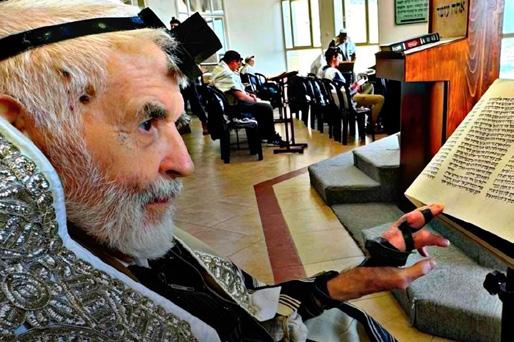
From the Apple in the Holocaust to Space Holocaust survivor Dr. Avraham Peter passed away this week, two months before his 100th birthday. Most of us never heard of him during his lifetime, and many may not have heard of him even after his passing. That’s a shame. Here is a small attempt to correct that.
As a senior engineer, Dr. Peter helped establish the Israeli Air Force in the early years of the state. He then went on to an international scientific career in the field of astrophysics. Here is just one remarkable achievement: for years he worked at NASA.
During the Apollo 13 crisis, he was called into the American space agency’s situation room. The spacecraft had launched toward the moon, but an explosion in an oxygen tank threatened the lives of the astronauts. Operating with complete composure, Peter improvised complex and creative engineering solutions, and ultimately the astronauts returned safely to Earth.
When the media asked him about those moments, he always returned to one small story, which he told countless times throughout his life. In all his lectures and articles, he said those moments shaped him and gave him strength:
Peter was born in Poland. His family was sent to the Lodz Ghetto, to years of harsh hunger, illness, and forced labor. One day, young Avraham was sent to work beyond the ghetto walls, and at enormous risk managed to obtain an apple. Had he been caught, the punishment would have of course been immediate death. He hid the apple, managed to get it past the strict guards, and brought it to his father inside the camp. His father had not seen fresh fruit in years. He was sick and weak. When his son handed him the apple, tears streamed from his eyes.
But here comes the lifechanging moment: instead of rushing to eat the apple out of an almost inhuman hunger, young Avraham was moved to see his
father holding the apple in his hand, lifting it upward and reciting slowly and aloud the blessing over fruit: “Blessed are You, Lord our God, King of the universe, Creator of the fruit of the tree.” Then he added the “Shehecheyanu” blessing: “Blessed are You, Lord our God, King of the universe, who has granted us life, sustained us, and brought us to this moment.”
Young Avraham was stunned. His father had not lunged at the apple but had paused to give thanks, to bless, to give this moment Jewish meaning. Then he took a bite of the apple — and shared the pieces among the family.
“That made me a proud Jew,” his son said.
“It made me understand that it is not our instincts that lead us. I saw my father rise above everything, and that was the spiritual anchor that accompanied me all my life. Father died in the ghetto, like most of the family. But I survived, and the memory of him reciting the blessing over the apple gave me the resilience to succeed. I understood that even under extreme pressure, even in scarcity, even in the ghetto and even in NASA’s situation room — you can be in control, you can function. We are
Dr. Avraham Peter
COMMUNITY NEWS
much more than a body; we are a soul.
My father thanked God for an apple, and I was privileged to explore the wonders of creation in depth, to dive into the world of science, and to see the Creator there too — just as in the apple.”
For more than eighty years, that apple gave strength to Dr. Peter. Last week he was laid to rest in Jerusalem.
Parashat Shelach: Let Us Not Be Grasshoppers
A verse in this week’s Torah portion, Shelach, reveals a great secret.
Ten of the twelve spies sent
to the Land of Israel return to the people in the desert filled with despair. According to them, there is no point in continuing the journey to the Land of Israel. As they describe their encounter with the inhabitants of the land, they say:
“We were in our own eyes like grasshoppers, and so we were in their eyes.”
In other words: We saw ourselves as grasshoppers, and therefore that is how we appeared to the people living there as well. We lacked self-confidence. We thought we were small and weak, with no chance of success, and that is how the people we met in
the Land perceived us too. Our self-perception is the foundation. It radiates outward. If we see ourselves as people of worth and meaning, if we go out into the world with optimism, vision, and faith, that is how others will look back at us as well. This is true with our children. It is true in the workplace, in society, and also on the national level, as a people and as a state.
Want to read more by Sivan
Meir? Google The Daily Thought or visit sivanrahavmeir.com
Translated by Yehoshua Siskin and Janine Muller Sherr
Rahav
Standing Strong and Proud with Israel
By Dr. Chaim Botwinick
Since last week’s Israel Day Parade in Manhattan, there has been a tremendous proliferation and flurry of articles, social media posts and opinion pieces regarding the Parade’s overwhelming success. In fact, with over 50,000 participants, it was the largest Israel Day Parade in its sixtythree year history.
These positive reactions and responses are true indicators of our Jewish community’s unwavering pride and support for Israel.
There were those in our community who chose not to support or attend the Parade. These outliers were unfortunately noticeably absent from the celebration. This was disappointing, but not a surprise.
The Parade attracted close to 50,000 people, many of whom were from out of town. Considering that the Greater New York Jewish population is an estimated 1.4 million Jews, it does beg the question - where was everyone else from our community on that bright beautiful Sunday morning? In light of Israel’s current situation, I would have preferred to have seen several hundred thousand marching strong.
Nevertheless, the Parade attracted many high ranking elected personalities as well a contingent of Israeli Knesset members who flew to the States from Israel for the sole purpose of attending the Parade. This was truly inspiring and heartwarming.
I will not opine as to why so many segments of our local Jewish
community did not participate in the Parade, and why others proudly and boldly did. That reality requires its own post or article.
On a positive note, I and my family enjoyed watching the Parade via a live-stream station
from our home. We observed the beautiful ocean of blue and white colored Israeli flags blanketing Fifth Avenue. I was truly moved by the tremendous number of people of all ages who were smiling, singing, dancing, and waving Israeli and American flags while
COMMUNITY NEWS
walking in the Parade, and up 5th Avenue with visible pride.
This Parade was about life, resilience, hope and promise. It was also a stark reminder that no matter how small our numbers, our support for Israel continues to grow and flourish as we roar like lions in spirit and in deed.
Looking at the bright smiling faces of our Jewish day school children parading proudly, I felt reassured that our future as a Jewish community is one that embraces and celebrates achdut and continuity as well as a bright positive and optimistic tomorrow.
Yes, living in the diaspora has its challenges and deep concerns. This is especially the case as we continue to witness
and experience the metastasizing growth of anti-Semitism and Jewhatred. But irrespective of this concern, as a Jewish community we choose by design to live our lives through a glass that is half full as opposed to one that is half empty.
As we know it would be far easier and ironically safer to live in Eretz Yisrael, our homeland and birthright. But as long as we live in galut, and for whatever reason, we must make the best of it, until we are prepared to make that ultimate sacrifice and relocate to Israel.
When observing the Parade, I was beyond moved by one particular image which stood out the most. It was the beautifully
decorated float sponsored by the Claims Conference.
On that float were sitting a group of Holocaust survivors. With bright beautiful smiles on their faces, they were all singing and waving miniature Israeli and American flags. What an amazing sight of resilience, defiance, hope and promise.
As I looked carefully at their faces, several of whom had walkers and aides by their sides, I tried to imagine the horrors, struggles, heartbreak and pain each of them experienced at the hands of the Nazis. And here they are today, almost eight decades later celebrating the dream and promise of Israel with thousands of their Jewish brothers and
sisters in the heart of Manhattan. Truly an amazing reality of unimaginable proportion.
This image is an undeniable slice of Jewish life and history which will be seared in my heart, soul and mind.
Who knows how many of these precious survivors sitting proudly on that float, will parade in next year’s Parade, or ever again. The only certainty is that these remarkable heroes will be fewer every year.
Friends, the Israel Day Parade is much more than Jewish pride and unswerving support for Israel. It’s a testimony to our fortitude, unswerving commitment and resilience. Above all, it is about our ability to survive and flourish against all odds in order to fulfill our assurance and legacy as an ohr lagoyim, and a mamlechet kohanim, created bzelem elokim.
Finally, when observing young Jewish elementary and high school children marching in the Parade with their classmates, teachers and parent volunteers, I ask myself, will these children one day truly understand and appreciate their profound role in helping create and support a strong and vibrant Israel.
I am very confident that one day they will appreciate and remember their support and advocacy on behalf of our Jewish homeland, in the same manner I recall my experience of 50 years ago when I too marched in the Parade with my young children in the heart New York City. To be sure, we talk about that beautiful
experience until this very day.
But, as we know, the current matzav in Israel and for world Jewry has changed significantly. We now confront a world that no longer hides its face in its open and vile anti-Jewish and antiIsrael hatred.
Today, for many of us living in diaspora Jewish communities, we continuously feel that we are all walking on egg-shells, just waiting for the next shoe to drop. But, thankfully, we gravitate towards events like the Israel Day Parade which help us adjust and recalibrate our emotions (at least psychologically) as we look forward the day we can live freely without Jew hatred or racial discrimination.
Celebrating and supporting our precious homeland Israel by participating in the Parade and other similar venues in support of Israel, including our continued tefillot, mitzvot and chesed provides us with a sense of achdut, purpose and renewal. It gives us hope for the future and confidence that one day soon, we will all witness the geula as we enjoy peace, calm and serenity.
As I write this article, Israel still faces a harsh reality of monumental proportion.
With continued threats now looming with Iran while protecting Northern Israel from Hezbollah attacks and bombardments, Israel, and by extension all of us, continue to live with these existential precarious threats and dangers.
But my friends, if there is one
major lesson or take-away from the images of last week’s Parade and it it should be abundantly clear…..
If these amazing precious souls who experienced so much pain and sorrow during the shoa can parade on a float with a deep sense of honor and pride, than we too can surely elevate ourselves with the same Jewish pride, tenacity and resolve.
One final note. As the Parade was winding down, I couldn’t help but think about how these young day school and yeshiva students will one day be our next generation of proud Jewish leaders. This is a thought which inspires while creating a positive sense and direction for the future. It is our hope and prayer that they together with achienu throughout the world we will be blessed with excellent health, safety and achdut as we continue to proudly celebrate the critical importance of Eretz Yisrael, Medinat Yisrael and Torat Yisrael for generations.
Am Yisrael Chai
Dr. Chaim Botwinick is an organizational consultant, master teacher and executive coach. He served as ceo of the central agency for Jewish education in Baltimore and Miami; and head of school/principal for a variety of Jewish day schools and yeshivot. As a prolific writer, lecturer and influencer, Dr. Botwinick specialized strategic planning, organizational development and school leadership. He is co-founder of LEV Consulting Associates and producer of the Chinuch Horizons podcast series.
Landow Jewish Academy Leadership Celebration
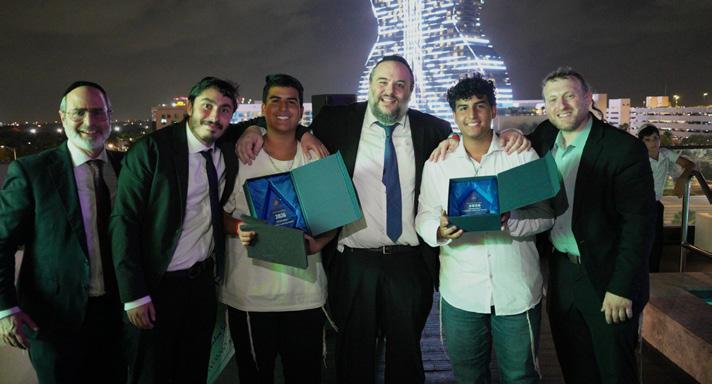
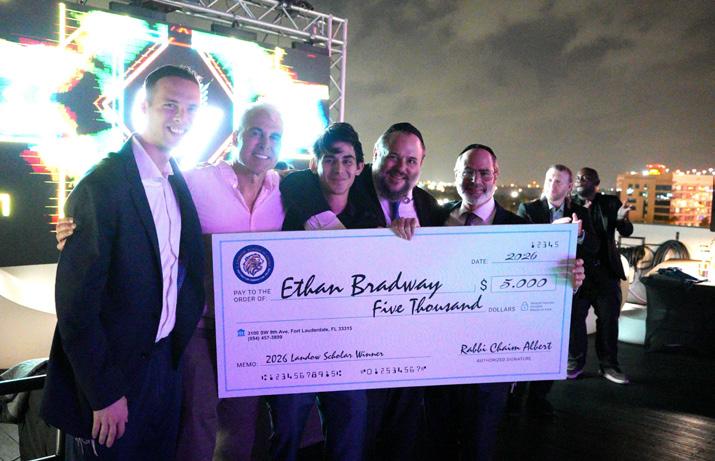
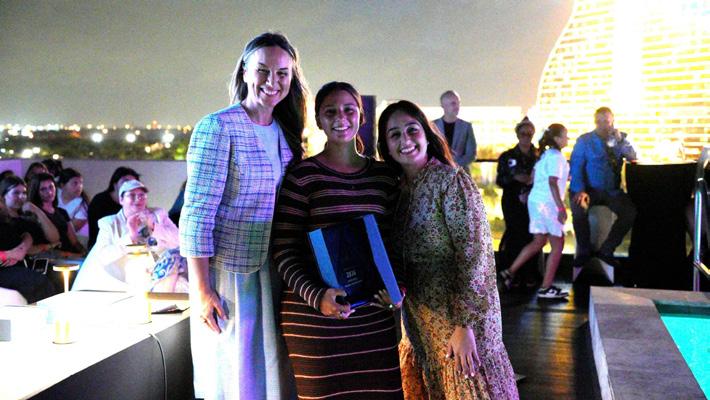
Landow Jewish Academy hosted its Annual Leadership Celebration this past Tuesday evening at the G7 Rooftop, bringing together students, parents, faculty members, and community supporters for an inspiring evening of recognition and celebration.
The atmosphere throughout the evening was filled with emotion and pride as parents watched their children receive awards recognizing outstanding achievement, leadership, character, and commitment to Jewish values. Awards presented included the Torah Award, Character Development Award, Chesed and Bein Adam L’Chaveiro Award, Athletic Awards, Lion Pride Award, Academic Excellence Award, and the newly established Landow Scholar Award.
Head of School Rabbi Chaim Albert addressed the crowd and spoke passionately about leadership, perseverance, and determination. In his remarks, Rabbi Albert referenced Moshe Rabbeinu, who despite being “kavad peh” rose to become one of the greatest leaders in Jewish history. He emphasized that true leadership is not determined by perfection, but by the willingness to overcome challenges and answer a greater calling.
Rabbi Albert also spoke about the Imahos — Sarah, Rivka, and Rachel — who faced personal struggles with barrenness, yet through faith, tefillah, and perseverance became the mothers of the Jewish nation. Their determination and unwavering belief, he
noted, continue to inspire future generations.
He connected these Torah lessons to the growth of Landow Jewish Academy itself, noting that the school’s establishment and expansion were driven by the same spirit of determination. From purchasing and renovating a building to continually expanding programs and facilities, the academy has remained committed to providing strong Jewish
and academic education for families seeking a meaningful Jewish future for their children.
A highlight of the evening was the inauguration of the prestigious Landow Scholar Award, established in memory of Gloria and Irwin Landow. The award recognizes a student who exemplifies academic excellence, leadership, character, and devotion to Torah values.
The first-ever recipient of the
Kiruv Mission:
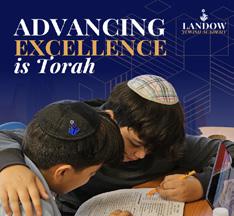
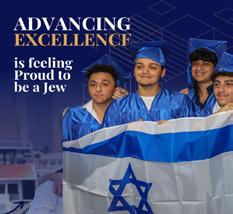
Landow Jewish Academy is a kiruv school dedicated to the belief that every Jewish child should have Elite Academics and a school that inspires a love for Judaism We are committed to ensuring that financial concerns, fears about academic quality, or inadequate facilities never hinder a Jewish neshema from receiving a Jewish education
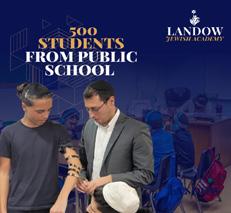
90% of LJA students previously attended public schools Why do they make the switch? At LJA, we provide an exceptional academic experience alongside a heartfelt love for Torah, Israel, and a deep pride in being Jewish
K-5TH GRADE PASSING SCORES
Culture of Student Growth
We are committed to building students from their strengths and developing them through their weaknesses
We discover the passions of our students and develop them as a partner Whether they are launching their own LLC, designing fashion lines, producing podcasts, creating original music or art, or participating in clubs, athletics, and extracurriculars, these experiences are not just an addition to their education they are the key element that enables our students to truly thrive
6TH GRADERS PASSING THE PERT COLLEGE
COMMUNITY HEALTH
Landow Scholar Award was Ethan Bradway, who received a $5,000 scholarship toward his future higher education. Ethan was recognized for his outstanding academic achievement, strong character, leadership, and dedication to both secular and Jewish studies.
Rabbi Anton presented the inaugural Landow Scholar Award to Ethan Bradway and reflected on the legacy of Gloria and Irwin Landow. He spoke about their belief in opening doors and creating opportunities for others. “Gloria and Irwin understood that true greatness is not measured by what we achieve for ourselves, but by what we do for others and inspire in others,” Rabbi Anton said. “That is the heart of this award, and that is the mark of a true leader.”
Dr. Jonathan Landow attended the event on behalf of the Landow family and participated in the launch of what is expected to become one of the school’s most prestigious honors.
Mrs. Vera Perkovich, English Principal, also addressed the audience with pride and admiration for the students and their accomplishments. She praised the students for their academic rigor, growth, and commitment to excellence throughout the school year. Mrs. Perkovich continues to play a central role in maintaining the school’s strong academic standards while expanding elective offerings and dual enrollment opportunities.
The evening was emceed by Rabbi Avi Warman, who guided
the program with warmth and inspiration. Throughout the night, rabbeim and moros introduced award recipients and spoke passionately about their students’ dedication to Torah and mitzvot, strong middos, and the pride with which they carry themselves both inside and outside the classroom.
The celebration also showcased the school’s vibrant student life. Students in the pre-med elective program were recognized with certificates honoring their accomplishments, and attendees enjoyed a spirited dance performance by sixth-grade students.
Landow Jewish Academy currently serves more than 500 students and 200 families through its K–12 educational program. The school’s mission is to provide strong Jewish and academic education to students and families who may otherwise attend public school, helping strengthen Jewish identity, values, and connection to Torah and tradition.
This past year, the academy
graduated 28 seniors, many of whom will continue their studies in Israel in yeshivot and seminaries before pursuing higher education.
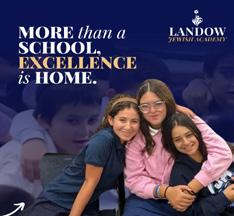
For many families, Landow Jewish Academy has become far more than a school. It has served as a transformative force, deepening students’ connection to their Jewish roots, strengthening their relationship with Hashem, and helping cultivate the next generation of committed Jewish leaders.
The evening concluded with a powerful sense of gratitude, celebration, and optimism for the future as families gathered to honor not only academic success, but the development of young men and women who represent the future of the Jewish people.
Landow Jewish Academy is located in Ft. Lauderdale on a 5-acre campus with state-of-the-art facilities. For a tour of the school, please contact admissions@ljaonline.com or call 954457-3899.
Operation Inspiration: Take It Literally
Why is it no fun to tell jokes to kleptomaniacs? They take everything, literally.
If you didn’t understand the joke, you have my apologies, but sometimes, when we say things, there’s a lot more to the words than meets the eye. I recently found this out in a most unusual fashion.
Every time I got into my car last week, I was disturbed by the debris on the car mats. I know, it’s my own fault, as it was leaves and twigs and various muckery which came from my shoes. Then there was the dust on the dashboard, not to mention the glowing layer of pollen coating the vehicle in a light green powder. It was time to get a carwash.
Now, since these places have so many cars to do, they don’t act very deliberately, gingerly lifting then replacing the sunglasses in your cupholder or the lottery ticket from six weeks ago whose numbers you haven’t checked yet. They come in with a vengeance, vacuum cleaners screaming, with spray bottles unleashing their liquid fury. Therefore, before you go to a carwash, you have to clean out the car so they can clean it. (It’s kind of like straightening up the house before the housekeeper arrives.)
So, as I was putting the various items in safe places, and removing any larger trash from the car, I found a small rubber band and a lollipop stick in the cupholder. I picked them up, untending to throw them out. As I did, I noted an empty cup, some papers, and
By Rabbi Jonathan Gewirtz
other random pieces of flotsam and jetsam (not used in the technical terms) to bring inside to the garbage can. But there was a problem.
As my fingers were already in use holding the small stick and rubber band, I was unable to open my hand more to grasp other items. I ended up having to go throw those away, and then go back to the car to get the other items. I had managed to take
a few other pieces with me, but they were in a precarious grip, and I was nervous I’d drop them. I was simply amazed by how preoccupied my hand was that it became basically useless for other things.
And that’s when I thought of a phrase of Chazal which had never had as much meaning as at that moment. “Mitzvah haba l’yadcha, al tachmitzena – a mitzvah which has come to your hand, don’t let it become chametz.” While mitzvos can’t become chametz, the idea of tarrying too long to do them, to the point where they are spoiled, makes a lot of sense. But what does it mean, “came to your hand”?
It struck me that once the lollipop stick came to my hand, and I had to hold it a certain way, if I tried to pick up something else, I wouldn’t be able to without dropping the stick. My hand was too invested in holding the small item
COMMUNITY NEWS
to open wider for other things. I simply couldn’t do both.
If you think of the mitzvos in that light, then you have an entirely new perspective on things. First of all, mitzvos can be small and dainty and need all your focus. If you try to do too many things at once, you may lose some of them. Ever try davening and your cell phone buzzes from your Talis bag, or the table in front of you? How much concentration do you have then? You can easily lose the mitzva of meaningful tefilla when the thought about who’s calling or what was texted invades your brain.
Maybe you’re learning some Torah, and your peripheral vision
picks up someone walking down the street. You look out the window to figure out who it is, and BAM. You’re no longer holding the Torah idea the way you were.
If we try to do anything in life, but let ourselves get distracted, and start taking care of others things at the same time, we often find that nothing gets done, or at least, not well.
The lesson I took that day was that something in the hand is worth two, three, or more, in the bush, because if you open your hand to get the other things, you will lose what you already have. Yes, that’s a similar phrase from our Sages, “Tofasta meruba, lo tofasta – if you grasp at too many
things you won’t grasp any.” But grasp is exactly what I did to that concept when I was faced with the possibility of dropping the trash on the floor or the ground while trying to clean up.
I learned to slow down and focus, and not try to do too much at once. And all those colorful phrases the holy men of Shas and Midrash came up with? Well, I’d say they’re pretty spot-on; I’ve gotta hand it to them.
2026 – All Rights Reserved
Did you enjoy this column? Feedback is welcome and appreciated. E-mail info@ JewishSpeechWriter.com to share your thoughts. You never know when you may be the lamp that enlightens someone else.
The Flames
Are
Rising:
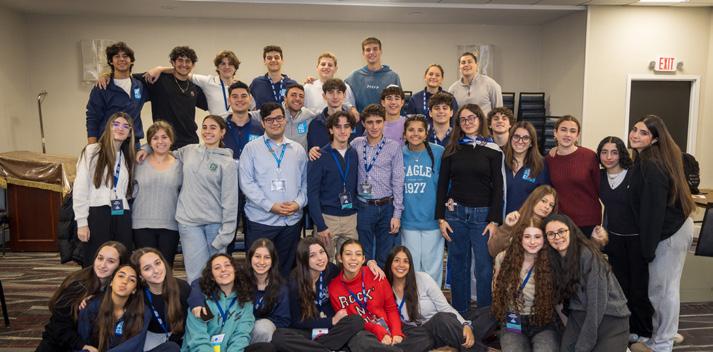
Looking Back on a Transformational Year for Southern NCSY
There’s a moment at every end-of-year event when you look around the room and think: this is why we do it.
For Southern NCSY, that moment came again and again this year. It came at Spring Regional in Melbourne, where hundreds of teens spent Shabbat together, laughing, learning, and growing in ways that surprised even themselves. It came aboard a yacht overlooking the Miami skyline, where students who began the year as strangers celebrated as a genuine community. And it came when another group of Southern Florida teens boarded a plane to Israel for TJJ, carrying with them friendships, confidence, and a Jewish identity that had become entirely their own.
This was a year of real, lasting growth.
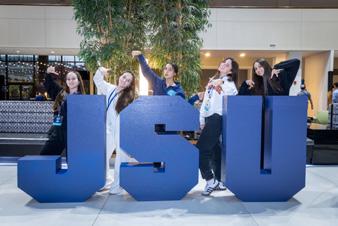
Southern NCSY closed the school year with some of its strongest engagement in recent memory. Attendance was up. Teen leadership expanded. And the young people who walked into their first Jewish Student Union (JSU) club meeting in September were not the same people who embraced one another at year’s end.
“Joining JSU gave me friendships, memories, and experiences I’ll never forget,” shares Mayane Ayache, an 11th grader. “It’s become so much more than just a club, teaching me so many new things, and I’m thankful to have been a part of it.”
For many, the impact went far beyond just having a place to hang
out. As one student reflected on their experience:
“Having JSU at my school has given me a stronger sense of purpose and helped me better understand what it means to be Jewish.”
That kind of transformation doesn’t come from a single inspiring moment. It comes from ten months of consistency, relationship-building, and creating spaces where Judaism feels personal and empowering.
The Exclamation Point on the Year: Spring Regional 2026
Spring Regional 2026 in Melbourne was the exclamation point on all of it. From Holy Grounds Coffee Co. drinks crafted by our own Regional Board, to Southern Games, the Senior Tisch, a royal-themed Gala Brunch, and a keynote from the incredible Tessa Veksler. Every moment was designed to tell every teen in the room: you matter, you belong, and this community is yours.
Teen speeches moved the room. Shabbat brought it all together. The energy of that weekend was built across an entire year.
“JSU has impacted me greatly and allowed me to have an amazing and special community!” says Leann Abou, 11th grade. “It has welcomed me with open arms and supports me in many ways! All the club meetings, shabbatons, and events make it all worth it! JSU works hard to create a fun experience for everyone to enjoy.”
Celebrating on the Water
Before Regional, students gathered for an end-of-year celebration
on the water, and what looked like a party from the outside was really something more. It was the visible proof of months of friendship, mentorship, and showing up. That laughter wasn’t manufactured. It was earned.
Lighting the Match
Perhaps the clearest measure of a successful year is what teens choose to do next. This summer, Southern Florida is sending a strong cohort to TJJ. The Jerusalem Journey, not because anyone pushed them, but because a year of community made them ready.
The Lubavitcher Rebbe once said: “I have given you the match. Only you can light your own candle.” This year, Southern Florida’s teens lit theirs.
Looking Ahead: The Flames Keep Burning
The school year is ending. The relationships are not. JSU in Summer will keep teens connected through events, trips, and programming all season long, because the community built this year is worth protecting.
Reflecting on the incredible momentum built over the past ten months, Rabbi Mark Rose, Regional Director of Southern NCSY, emphasizes the weight of this milestone:
“The future will be shaped by the choices teens make today.”
Those choices are already creating something bigger. Across South Florida, more Jewish teens than ever are looking for meaningful connection, authentic community, and opportunities to explore their Jewish identity. The growth we’ve experienced this year is not the finish line, it is the foundation.
In the coming years, Southern NCSY and JSU will embark on an ambitious expansion effort to bring these opportunities to thousands more Jewish teens throughout South Florida. By opening new clubs, strengthening existing communities, and building partnerships with schools, families, and community organizations, we aim to ensure that every Jewish teen who is searching for connection can find a place to belong.
Because every club starts with one conversation. Every community starts with one relationship. And every Jewish future starts with one teen discovering that Judaism has something meaningful to say about their life.
To every teen, family, advisor, staff member, and supporter who made this year what it was: thank you. South Florida showed up. The flames are rising. And together, we’re just getting started.
Bringing Kosher Food and Jewish Spirit to the World Cup
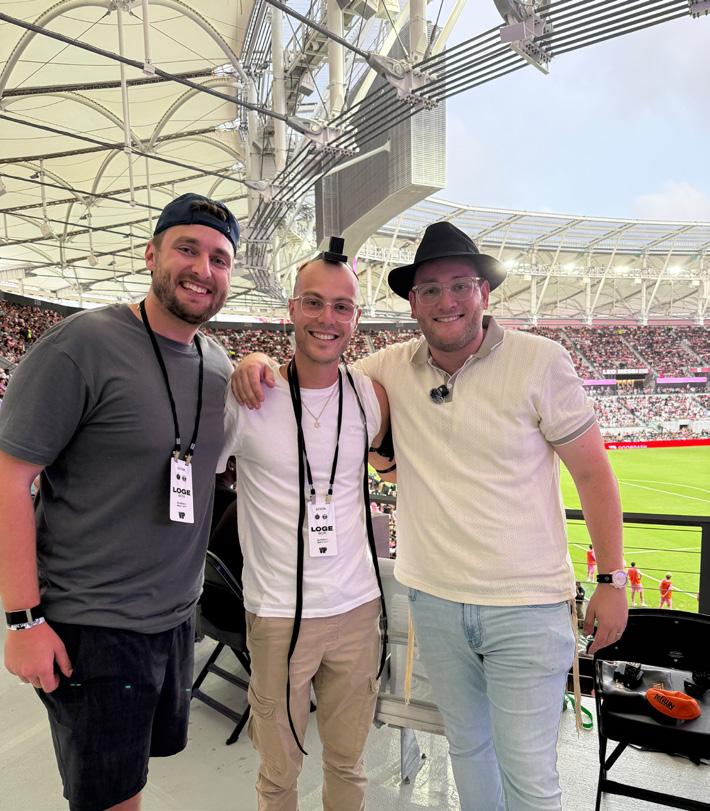
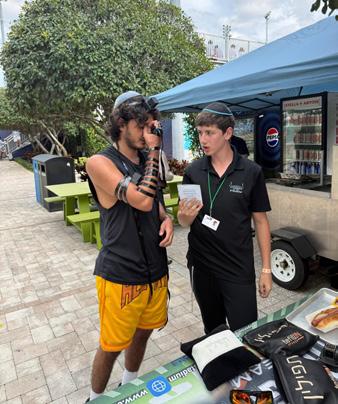
As Miami prepares to welcome soccer fans from around the world for the 2026 FIFA World Cup, Chabad of the Stadium and La Mishpacha are preparing for something historic: bringing kosher food, tefillin, and Jewish warmth directly into the stadium experience.
We spoke with Chabad of the Stadium about what Jewish visitors can expect, the behind-the-scenes work involved, and why this moment is so meaningful for the Jewish community. From kosher food inside the stadium to tefillin, Jewish connection, and support for visitors from around the world, Chabad of the Stadium is preparing to welcome Jewish fans during one of the biggest sporting events in history.
Can you explain for our readers what makes the 2026 FIFA World Cup so special?
The FIFA World Cup is the biggest sporting event in the world. It happens every four years, and the last World Cup was in 2022 in Qatar, where Argentina won.
The 2026 World Cup is going to be historic because it is being hosted across North America — in the United States, Canada, and Mexico. It is also the first World Cup with 48 teams, compared to 32 teams in the past. There will be countries represented from all over the world, including Africa, South America, Asia, Australia, New Zealand, and Europe.
It is truly going to be a global event.
What does the schedule look like here in Miami?
Miami is scheduled to host seven World Cup games. There will be several weekday games, a few games on Shab-
bos, and one Round of 16 knockout game on Friday, July 3, at 6:00 p.m.
Chabad of the Stadium and La Mishpacha plan to be present at every game that is not on Shabbos. That includes the Monday, June 15 game between Saudi Arabia and Uruguay, the June 21 game between Uruguay and Cabo Verde, and the June 24 game between Scotland and Brazil.
For the Friday, July 3 knockout game, we obviously do not yet know which teams will be playing. Since the game starts at 6:00 p.m., Chabad of the Stadium plans to offer kosher food up until about an hour before Shabbos begins.
What will Jewish visitors be able to find at the stadium?
Chabad of the Stadium will be offering kosher food, including hot dogs, and will also be there to provide Jewish support and connection.
For them, it is not only about food. It is about being there for Jewish fans from all over the world. They will be helping people put on tefillin, meeting fans, answering questions, and making sure Jewish visitors know they have a place to turn.
The plan is to be near the fan zone, by the fountains, where many people gather before the games.
Are people already reaching out?
Yes. Chabad of the Stadium has already been hearing from people every single day.
Visitors are asking, “Where can I get kosher food?” “Will you be there?” “Can I buy tickets?” and “Which games will you be at?”
COMMUNITY NEWS
They have heard from Jewish fans from Argentina, Uruguay, Mexico, Israel, England, France, Australia, New Zealand, and many other places. The World Cup brings people from every corner of the world, and Jewish fans are no exception.
Why is this moment so meaningful for the Jewish community?
The World Cup is watched by billions of people and is one of the largest events in the world. Jewish fans will be coming to Miami from many different countries, and for Chabad of the Stadium to be there inside the stadium as a kosher vendor is very special.
They are not simply attending the games. They are there to serve the Jewish community — with kosher food, tefillin, and Jewish connection.
The last time the World Cup was held in the United States was in 1994. Now, more than 30 years later, the World Cup is returning to the United States, and this time there is an opportunity to be there in a much bigger way for Jewish fans.
How did Chabad of the Stadium get involved?
This effort started years ago.
As soon as the World Cup was announced for North America, Rabbi Yakov Menaker began working toward this goal. He went to the stadium and started asking how Chabad could be part of it.
Over time, Chabad of the Stadium built a relationship with the stadium and the catering company. They have already worked events such as Formula One, the Miami Open, the FIFA Club World
Cup, college football events, and Dolphins-related events. It took years of relation-
ship-building, paperwork, security checks, credentials, and planning. Being part of an event like the World Cup is not simple. FIFA is very strict, and everything has to be done properly.
But for Chabad of the Stadium, it is all worth it. If even one person puts on tefillin, or one Jew feels connected because they were there, then all the hard work is worth it.
Are you looking for volunteers?
A lot of people have asked about volunteering, but FIFA is very strict with credentials.
Chabad of the Stadium has a core team of about 10 to 12 people who regularly help at events and are prepared to serve the community. These are people who know the work, understand the environment, and are ready to be there for the fans.
Will Chabad of the Stadium expand to other World Cup cities?
Right now, the focus is South Florida.
There are many major stadiums and sporting events here, and the goal is to make sure the South Florida Jewish community and Jewish visitors are covered. Chabad of the Stadium is already involved with the Marlins, Miami events, and other stadium opportunities.
For now, the main focus is making sure the Miami World Cup games are done properly.
What message would you like to share with the community?
The Rebbe often spoke about the importance of increasing in acts of goodness and kindness. That is really what this is about.
Yes, it is the World Cup. Yes, it is exciting. But for Chabad of the Stadium, the real goal is to bring more mitzvos, more Jewish pride, and more kindness into the world.
They are excited to welcome Jewish fans from all over the world and look forward to seeing everyone at the games.
A Year of Impact on Campuses in Florida
By Valeria Chazin
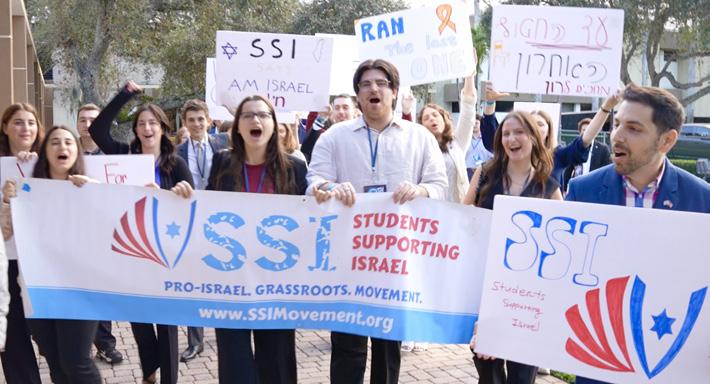
Out of more than 900 events hosted by the Students Supporting Israel (SSI) campus movement across the country during this academic year, nearly 100 took place in Florida. As the academic year comes to an end, we are proud to reflect on what has been an extraordinary year of advocacy, education, and student leadership across our state’s institutions of higher education.
Sharing these accomplishments should bring a sense of pride to our community. Despite reports of rising antisemitism and declining support for Israel among younger generations, a ray of hope can be found in our own youth, who are standing tall and ready to speak up for our values and identities.
A wide range of initiatives took place throughout the state, organized by SSI student members. These young leaders took it upon themselves to advance the organization’s mission: to be a clear and confident pro-Israel movement on campus and support students in grassroots advocacy. At SSI, we believe that grassroots work is essential to creating meaningful change. We put “boots on the ground” and do everything we can to deliver visible messages and foster dialogue in the places where tomorrow’s leaders are forming their views of the world.
Among the year’s notable initiatives was the SSI Van Campaign, in which activists traveled from campus to campus to challenge false narratives and create opportunities for meaningful engagement
on issues affecting the Jewish community. The campaign stretched from the Panhandle to Miami and engaged hundreds of students with messages supporting Israel and the Jewish people. It provided opportunities to explain Zionism and current events to students who receive much of their information on these issues through social media.
Another major initiative brought IDF soldiers to 20 events across Florida. Young combat veterans who had served hundreds of days in reserve duty shared their experiences, explained the threats Israel faces, and discussed what they described as the “front of public opinion” on which we must also engage. Former hostage Sagev Kalfon and Mosab Hassan Yousef, known as the “Son of Hamas,” spoke to large audiences in Miami, each sharing a compelling personal story.
It is important to note that these events, along with dozens of other programs, rallies, and displays organized by SSI on a variety of topics, engaged not only Jewish students
but the broader campus community as well. Many non-Jewish students attended these events. Some came in support, while others arrived with opposing perspectives. When participants were willing to engage in good faith, meaningful and productive conversations often followed.
At the same time, the year was not without its challenges. Students encountered difficult situations that tested their resolve and underscored the importance of our work. Whether facing university refusals to host certain speakers, difficulties registering SSI chapters because administrations viewed them as political (issues that were ultimately resolved through advocacy efforts), confrontations while tabling, or anti-Israel protests and radical speakers welcomed on campus, our members rose to the occasion with courage, professionalism, and determination.
These challenges serve as a reminder that progress cannot be taken for granted and that
activism must remain persistent. The need for education, advocacy, and relationship-building continues to be urgent. Florida may be one of the best places in the country to be openly Jewish and pro-Israel at this moment, but nothing should be taken for granted. Even in places where few issues exist today, we must lay the groundwork to help prevent future challenges from arising.
Yet through the thousands of conversations we had with students from diverse backgrounds this year, we learned that organized and proactive student leadership can make a measurable difference. When students are equipped with a strong understanding of their values and identity, confidence in their beliefs, accurate information, and meaningful support, they
become effective advocates not only for themselves and the Jewish people but also for a healthier campus environment for everyone.
The proud moments in Florida far outshined the challenges this year. We have seen firsthand that investing in student leadership produces real results. Whether through SSI student members running for positions in student government or through programs highlighting Israeli technology and humanitarian aid - both of which served as themes for our speaking tours - misconceptions were challenged and relationships were built.
The proudest moment of all in Florida this year was SSI’s annual international student conference, which brought together more than 150 participants not only from across Florida and the United
States but also from Canada, England, Ireland, Australia, and Israel. The energy and enthusiasm of this gathering provided every reason for hope. Our young leaders remain vibrant, resilient, and deeply invested in the future of the Jewish people, Zionism, and Israel.
We at SSI are grateful to everyone who supported our efforts this year, and we look forward to building on this momentum in the year ahead. We are also grateful that our work has been recognized by the broader community, most recently through a leadership award presented by the Palm Beach Federation to SSI’s national President Ilan Sinelnikov.
Together, we are making a real impact at the grassroots level: one student, one conversation, and one campus at a time.
• DINE-IN
• SUSHI PLATTERS
• CATERING SETUP
10% DISCOUNTIF YOU BRING IN THE COMMUNITY VOICE MAGAZINE
• LIVE SUSHI STATION
• DELIVERY & PICKUP
Iran’s Nuclear Ambitions, Terrorism, and the Failure of Appeasement
By Farley Weiss
Iran’s Regime and Its Record
Since Nazi Germany, there has arguably been no regime more focused on persecuting Jews and suppressing its own citizens than the current government of Iran. The regime has reportedly killed tens of thousands of its own people and injured hundreds of thousands more in response to peaceful demonstrations and political dissent.
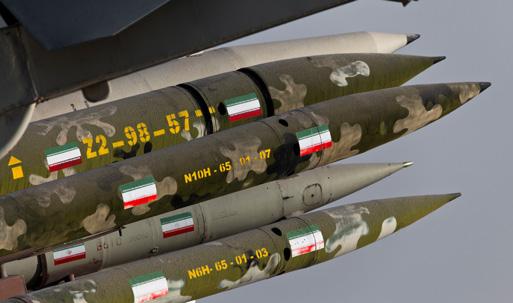
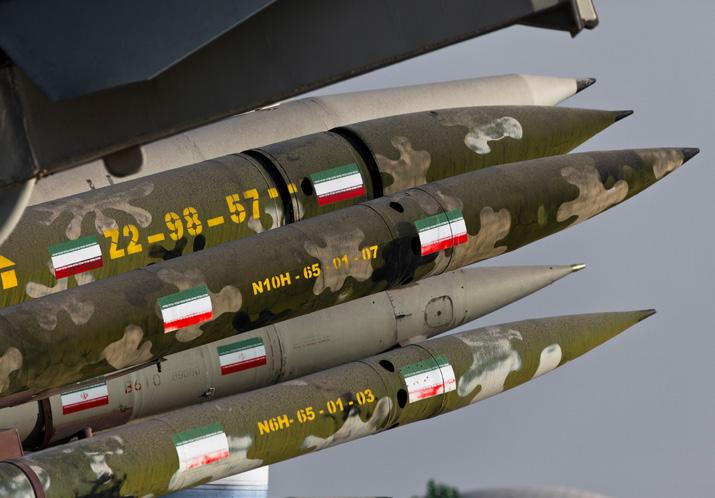
At the same time, Iran has devoted enormous resources toward its long-standing objective of destroying the State of Israel, the world’s only Jewish state. Iran provides the overwhelming majority of Hezbollah’s funding and remains the primary financial backer of Hamas, the Houthis, and other proxy groups whose stated goal is the elimination of Israel.
Iran’s Nuclear Program Poses a Global Threat
Iran’s nuclear ambitions threaten not only Israel but also the United States and the broader international community.
Iran remains the only non-nuclear weapons state actively enriching uranium on its own soil to levels that far exceed ordinary civilian requirements. Current estimates indicate that Iran possesses approximately 440–460 kilograms of uranium enriched to 60 percent purity. Uranium enriched to this level has little practical civilian purpose and significantly shortens the path to weapons-grade material.
During negotiations prior to the conflict, U.S. envoy Steve Witkoff publicly stated that Iranian officials refused to surrender their uranium stockpile. According to Witkoff, Iranian representatives acknowledged that the stockpile could potentially enable the production of approximately nine to eleven nuclear weapons.
Supporters of the Iranian regime frequently point to Iran’s religious fatwa against nuclear weapons. However, Iran’s actual conduct raises obvious questions. If Iran has no intention of developing nuclear weapons, why enrich uranium domestically? Why enrich it to levels with limited civilian application? Why construct enrichment facilities deep underground and beneath mountains?
Why Military Action Became Necessary
Former FBI Deputy Director Dan Bongino stated that U.S. intelligence assessments made clear that President Trump faced a narrowing window to prevent Iran from obtaining nuclear weapons.
Secretary of State Marco Rubio similarly noted that Iran was producing roughly 100 ballistic missiles per month while defensive interceptor production lagged far behind. Under those circumstances, proponents of military action argued that the cost of waiting continued to rise.
The Results of the Campaign Against Iran
According to Israeli Chief of Staff Lt. Gen. Eyal Zamir: “Its leaders are being hunted,
Sunday to Thursday: 12pm - 10pm Friday: 11am - 3:30pm OPENING HOURS Scan the code to order!
COMMUNITY NEWS
most of its military capabilities have been destroyed, its nuclear program has been set back by years. Its economy is collapsing, and its citizens have yet to grasp the scale of the disaster their extremist leaders have brought upon them.”
Supporters of the military campaign argue that Iran is significantly less dangerous today than it was before the conflict. They contend that the world is safer as a result and note that critics have largely failed to offer a realistic alternative for stopping Iran’s nuclear program.
The Failure of the ObamaBiden Approach
The Obama and Biden administrations pursued a strategy centered on negotiations, sanctions relief, and diplomatic engagement with Iran.
Critics argue that these policies ultimately strengthened the regime economically and militarily while bringing Iran closer to nuclear capability. Rather than directing newfound resources toward improving the lives of ordinary Iranians, the regime expanded military spending and increased support for regional proxy organizations including Hezbollah and Hamas. According to this view, the policies of sanctions relief and accommodation failed to moderate Iran’s behavior and instead emboldened its regional ambitions.
Iran’s Global Terror Network
Iran’s hostility extends well beyond Israel.
The U.S. government has publicly stated that Iran was involved in plots targeting President Donald Trump. Reports have also linked
Iranian-backed operatives to plans targeting members of the Trump family.
Federal prosecutors in Germany charged a Danish national accused of acting on behalf of Iran’s Islamic Revolutionary Guard Corps (IRGC). Prosecutors alleged that, with support from the IRGC’s Quds Force, he planned attacks targeting leaders of Germany’s Jewish community and Jewish-owned businesses in Berlin.
In Australia, intelligence officials traced the command structure behind major antisemitic attacks, including the firebombing of Melbourne’s Adass Israel Synagogue and an attack on a kosher restaurant in Sydney, back to Iranian-linked actors.
These incidents reinforce concerns that Iran’s campaign against Israel is part of a broader effort targeting Jewish communities around the world.
Iran’s Role in Attacks Against Jews Worldwide
Iran frequently claims that it is anti-Zionist rather than antisemitic. However, critics argue that its actions tell a different story.
The regime has repeatedly been linked to attacks against Jewish institutions and individuals across multiple continents. Ahmad Vahidi, who became commander-in-chief of the IRGC in 2026, remains internationally wanted for his alleged role in the 1994 bombing of the AMIA Jewish community center in Buenos Aires, which killed 85 people.
Taken together, these actions have led many observers to conclude that Iran has played a central role in the modern global wave
of antisemitic violence and terrorism.
Iran’s History of Attacking Americans
Iran’s actions have not been limited to Israel and Jewish communities.
Iranian-backed groups were responsible for the deaths of more than 600 American service members in Iraq. Iran has also long been associated with the 1983 Marine Barracks bombing in Beirut, which killed 241 U.S. Marines.
These attacks demonstrate that Iran’s hostility extends directly to American interests and personnel.
The Choice Going Forward
Opponents of military action often advocate renewed negotiations and engagement. Supporters of the campaign against Iran argue that such policies have already been tried and have repeatedly failed.
They contend that standing aside while Iran advances its nuclear program, funds terrorist organizations, and suppresses its own citizens is not a viable strategy.
The ultimate outcome remains uncertain. However, supporters of President Trump’s decision argue that the actions taken against Iran significantly reduced the threat posed by the regime and made both the region and the broader world safer than they were before the conflict.
Farley Weiss is the co-author, with Leonard Grunstein, of Because It’s Just and Right: The Untold Backstory of the U.S. Recognition of Jerusalem as the Capital of Israel and Moving the U.S. Embassy to Jerusalem, and a past president of the National Council of Young Israel.
The Tactic, Exposed: How the Palestinian Authority Seizes State Land
and Destroys Antiquities at an Ancient Talmudic-Era Village in Northern Samaria
Urgent Regavim letter exposes illegal construction and agricultural takeover at a Second Temple-era archaeological site. Shomron Regional Council’s Yossi Dagan: “The physical testament to our history is being erased. Israel must take a stand – and take responsibility.”
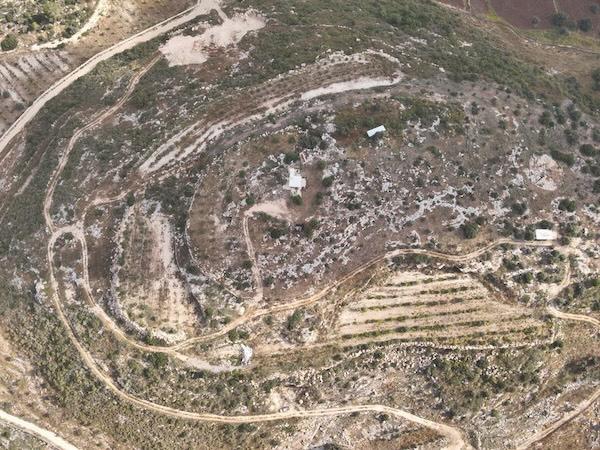
The Regavim Movement has sent an urgent letter to the relevant authorities demanding an immediate halt of extensive agricultural encroachments being carried out at the ancient archaeological site of Khirbet Farsin, located on state land approximately one kilometer from the community of Hermesh in northern Samaria.
According to data and field observations collected by Regavim’s regional coordinators, the takeover encompasses four adjacent plots within the important historical site, which contains antiquities and remains dating back some 2,000 years to the Second Temple period. The site preserves both the biblical name Peresh—a descendant of Manasseh—and the Talmudic-era name Kfar Parshai. Archaeological finds at the site include a ritual bath (mikveh), burial caves and a network of underground catacombs and passages, and impressive Ottoman-period structures.
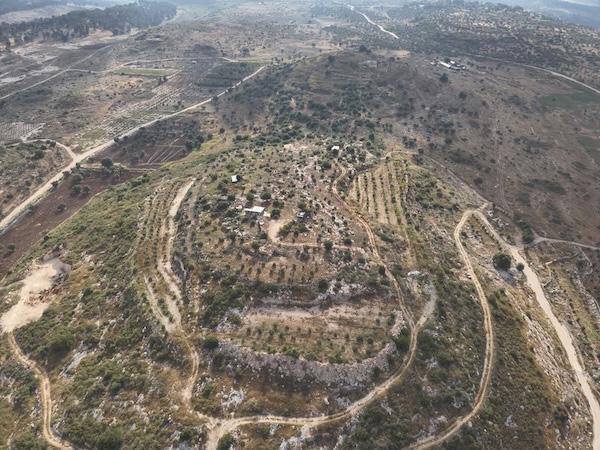
Regavim attached aerial photographs to its letter demonstrating that encroachment, through “development” including land clear-
ing and road construction, began in 2021. However, over the past two years, the pace has accelerated dramatically. The entire area has been transformed into agricultural land with plowing, planting, and large-scale fencing operations still underway. Alongside the agricultural encroachment, illegal structures have been erected in the surrounding area.
The work is being carried out using heavy mechanical equipment without any archaeological supervision, causing irreversible damage to historical layers and deliberately destroying national heritage assets.
Yossi Dagan, Head of the Samaria Regional Council: “The
heritage and archaeological sites of Samaria are a national treasure that tell the story of the Jewish People’s presence in the Land of Israel over thousands of years. Khirbet Farsin is a site of exceptional historical and archaeological significance, and every effort must be made to preserve and protect it.”
“I call upon all responsible authorities to mobilize in defense of this site, safeguard its antiquities and the surrounding Israeli state land, and ensure that future generations will be able to learn from and connect with the rich heritage embedded in the soil of Samaria. An living history book is being erased before our eyes. The authorities must step up and take
Aerial view of agricultural plots on the archaeological tel (Credit: Regavim)
COMMUNITY NEWS
immediate action.”
Roi Drucker, Regavim’s Field Corrdinator for Judea and Samaria, added: “This is one more example of a widespread and destructive phenomenon in which historical heritage sites throughout Judea and Samaria are being trampled and destroyed. Israel must act immediately to stop the erasure of our historical legacy and prevent the hostile takeover of dozens of dunams of crucial land assets in this area. The authorities must intervene without delay and put an end to this lawlessness.”
Aerial view of agricultural plots on the archaeological tel (Credit: Regavim)
A Sixth Grader Just Found a 1,500-Year-Old Luxury Gemstone
and Archaeologists Are Stunned
The rare Nicolo stone was found just minutes before the excavation ended, offering a glimpse into a world of ornamentation and luxury in ancient Korazim
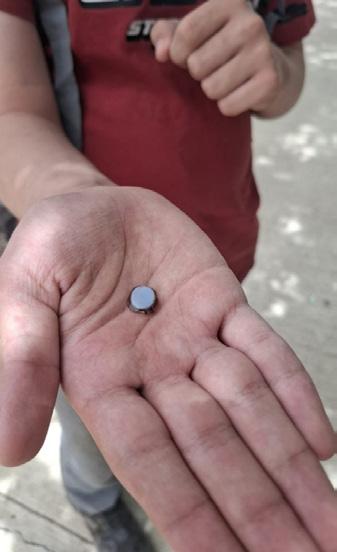
During an educational excavation at Korazim National Park, operated by the Israel Nature and Parks Authority, a rare deep-blue Nicolo gemstone was discovered, dating back to the Roman or Byzantine period — approximately 1,500 years ago.
The stone was found by Alon Horowitz, a sixth-grade student at the Ramat Korazim Regional Elementary School of the Mevo’ot Hahermon Regional Council, on the final day of the excavation. He uncovered the find just minutes before the activity concluded. The excavation took place as part of an annual educational-community initiative led by the Israel Nature and Parks Authority, in collaboration with Ariel University. As part of the program, local students take an active role in uncovering the past, participate in guided tours, learn about life in antiquity, and experience ancient techniques such as extracting dyes from natural stones and minerals.
A 1,500-year-old luxury gem According to excavation director Dr. Achia Kohn-Tavor, the stone is a Nicolo, a prestigious type of agate widely used in the Roman world for jewelry and signet rings. In antiquity, such stones were considered a clear status symbol, reflecting wealth, luxury, and high social standing. The find provides direct evidence that alongside ag-
riculture and daily life, ancient Korazim also had a culture of ornamentation, trade, and luxury.
Researchers: “A rare moment in excavation” Dr. Dror Ben-Yosef, archaeologist and Heritage Coordinator for the Northern District of the Israel Nature and Parks Authority, said: “Finding a gemstone used for jewelry is an exceptional and particularly exciting event in the archaeology of the Land of Israel. The educational excavations we lead at national parks and heritage sites are not only scientific workthey are a central educational pillar aimed at creating a direct and meaningful connection between the younger generation and the history and roots that belong to all of us. Alon’s encounter with a personal object left behind by some-
one who lived here 1,500 years ago is exactly the kind of moment when heritage becomes a living, connecting experience.”
Dr. Achia Kohn-Tavor, excavation director on behalf of Ariel University, added: “Small finds like this open a broad window into the personal lives of ancient Korazim’s residents, not only into buildings and streets, but also into worlds of beauty, status, and human connection. The partnership between the Israel Nature and Parks Authority, Ariel University, and the local community creates archaeology that is both meaningful and relevant.”
“I saw something blue, round, and special” Alon Horowitz, the student who made the discovery, shared his excitement: “After three days of digging, about ten minutes before we finished, I was digging with my trowel and suddenly saw something blue, round, and special. I picked it up and showed it to the archaeologist. When I understood it was something rare, I felt really happy and proud. I received a lot of appreciation from my friends, teachers, and family.”
Korazim National Park is located on a basalt hill on the Korazim Plateau in the Upper Galilee, a few kilometers north of the Sea of Galilee, overlooking the Jordan Valley. The site preserves impressive remains of an ancient Jewish village that existed for around a thousand years, from the Second Temple period (about 2,000 years ago) through the 11th century CE.
COMMUNITY NEWS
“It’s amazing to see a young student uncover something so meaningful,” said Lorin Maugery, Consul Director for the Southern United States, Israel Ministry of Tourism. “It’s discoveries like this that show why experiencing Israel for yourself is so powerful. You’re not just learning history,
you’re encountering it firsthand.” Visitors to the park can explore spacious residential buildings made of local basalt stone, ritual baths, agricultural installations, and an ancient olive press — all reflecting a well-established and prosperous community. The highlight of the site is a unique syna-
gogue from the 4th–5th centuries CE, known for its richly carved stone decorations and the basalt “Seat of Moses” discovered there. Over the years, coins and pottery fragments have been uncovered at the site, but the discovery of such a luxury gemstone during a youth excavation is highly unusual.
MOVE TO NORTH FLORIDA
Most affordable housing in the entire state Esformes Hebrew Academy of Ormond Beach NOW HIRING
• Elementary teacher • Office manager • School Event Coordinator • Drama & Music, Coach
Part-time and full-time positions
Quiet suburb School and shul community
EsformesHebrewAcademy.org
Email resume to chanidaytona@gmail.com UptownGirlHeadwear.com
Sweat In Style!!
Quality Headscarves • Sun Visor Scarves • Cotton Caps • Snoods • Pre Tied Bandanas & Tichels For Fashion • For Frum • For Hair Loss Made in USA (718) 614 9604
To place a Business Directory/Classified Listing contact: andrea@tsfcommunityvoice.com
BUSINESS DIRECTORY & CLASSIFIED
List your local business, services available, real estate opportunities, Help Wanted, & more!
Basic listing: $10/week -
Name, number and email address
Enhanced listing: $25/weekUp to 25 words (additional words $1/each)
Deadline: Tuesday at 4pm for next week's issue
Contact: andrea@tsfcommunityvoice.com
KIDS ZONE KIDS ZONE
DID YOU KNOW THAT...
FACTS ABOUT THE WORLD CUP
1. The FIFA World Cup is the biggest soccer tournament in the world. It happens every four years.
2. The first World Cup was played in 1930 in Uruguay. Uruguay won the first World Cup.
3. Brazil has won the World Cup more times than any other country. The World Cup trophy is made of gold.
4. Millions of fans around the world watch the World Cup. The
tournament brings together countries from every continent.
5. Some World Cup games are played in huge stadiums with over 80,000 fans. The 2026 World Cup will be hosted by the United States, Canada, and Mexico in 16 cities: Atlanta, Boston, Dallas, Houston, Kansas City, Los Angeles, Miami, New York/New Jersey, Philadelphia, San Francisco Bay Area, Seattle, Toronto, Vancouver, Guadalajara, Mexico City, and Monterrey.
KIDS ZONE KIDS ZONE
UNSCRAMBLE THE FOLLOWING WORDS RELATED TO THE WORLD CUP Spot 10 differences
• 1 cup plain bagel chips broken into bite-sized pieces
• 5 small sprigs fresh dill, torn into pieces
• 1 cup grape tomatoes halved
• 1 small red onion cut in half and thinly sliced
• 3 tablespoons capers drained
• ¼ cup olive oil
• 3 tablespoons red wine vinegar
• 1 teaspoon kosher salt
• Freshly ground black pepper
Preparation
In a large bowl, combine the arugula, salmon, bagel chips, dill, tomatoes, onions, and capers and toss lightly. 2. In a small bowl, whisk together olive oil, vinegar, salt and pepper. Pour over salad and toss to coat evenly with dressing. Divide between 6 plates or bowls and serve immediately
Jamie Geller is the Chief Media and Marketing Officer at Aish. She is also a bestselling cookbook author, celebrity chef, television producer, and businesswoman. She’s the author of eight cookbooks and the founder of Kosher Media Network.
Five More Questions Every Business Owner Should Be Asking
By Glen R. Golish
Last week we discussed the first five questions every business owner should consider. This week we continue with five additional questions that often determine whether a successful business becomes a lasting legacy.
6. Have I Communicated My Succession Plan?
Many business owners have a succession plan in their head.
The problem is that key employees and family members often do not.
A successful transition requires communication. Potential successors should understand expectations, responsibilities and future roles long before a transition occurs.
Surprises rarely create successful outcomes.
7. Will I Have Retirement Income Beyond the Sale of My Business?
Many owners assume their business will fund retirement.
While the business may be a significant asset, relying entirely on a future sale introduces uncertainty. Will the right buyer exist? Will market conditions cooperate? Will the valuation meet expectations?
A strong retirement plan includes multiple sources of income and does not depend solely on a future transaction.
8. Have I Taken Steps to Minimize Taxes?
Tax planning is one of the most overlooked opportunities available to business owners.
Business structure, retirement plans, deductions and estate planning strategies can all impact long-term outcomes.
The goal is not avoiding taxes. The goal is making informed decisions that improve efficiency and preserve more of what you earn for your family and future generations.
9. Do I Have a Coordinated Team of Advisors?
One of the most common problems we encounter is lack of coordination.
The CPA focuses on taxes.
The attorney focuses on legal documents.
The investment advisor focuses on investments.
Each professional may be excellent at what they do, but without coordination, important opportunities can be missed.
At G Wealth Strategies, we often serve as the quarterback of the advisory team, helping ensure all planning decisions work toward the same objective.
10. Am I Working With the Right Financial Professional?
A financial advisor should do more than recommend products.
They should understand your business, your family, your goals and your long-term vision.
The best advisors help simplify complexity and create alignment between investments, insurance, tax planning and estate planning.
A Final Thought
Business planning is ultimately about stewardship.
It is about protecting employees, serving family members and creating a framework that allows what you have built to continue beyond your involvement.
In Jewish tradition, we often speak about l’dor v’dor, from generation to generation.
For business owners, that principle applies not only to values but also to the businesses and op-
portunities we leave behind.
Because true success is not simply building a business. It is building one that can endure.
About the Author:
Glen R. Golish is the Founder and CEO of G Wealth Strategies and a Forbes-recognized Top Financial Security Professional. He works closely with families on comprehensive financial and estate planning, including cross-border considerations for those navigating U.S. and Israeli planning needs.
Important Disclaimer: Please seek qualified legal and tax advice before implementing any planning strategies, in conjunction with guidance from G Wealth Strategies.
Contact Information: 3010 N. Military Trail, Suite 318, Boca Raton, FL 33431
This week, I closed a very difficult loan for a client. I am deliberately going to be as vague as possible, as this is someone in the community who is well known. In all of my years of real estate and mortgage banking, by far, this was the most challenging of them all. If I say that there were setbacks and hurdles at every corner of the transaction, that would be the understatement of the year. We have done many deals together in the past, and I knew going in there would be some challenges, but I truly didn’t expect all that we had to deal with. From income limitations to credit snags, to documentation of funds – literally every item submitted to me had to be scrutinized, analyzed, and redone. Throughout the process, the client was truly gracious and apologetic, and thanked me many times, not only for my hard work, but also for my calm demeanor and my staunch optimism from start to finish. While I do find myself to be extremely confident and encouraging, to be fair, he was also very positive – almost a naïve confidence - and if not for that, this would have ended in a nightmare many times over.
I was reminded of the wellknown Chasidic idea, “Tracht gut vet zein gut” … think good, and it will be good. To some, that sounds overly simplistic, almost foolish. Just think positively, and life magically works out? Of course not. That is definitely not the case. The deeper message is that the way we
think shapes the way we act, and the way we act shapes the way we show up. Mindset is not fantasy. It is direction. In many ways, modern neuroscience is finally catching up to what Kabbalah understood centuries ago.
Your brain’s Reticular Activating System, the RAS, acts like an internal filter. It processes millions of bits of information daily, but only highlights what you consistently tell it matters. In simple terms, your brain works a lot like a social media algorithm. Search for negativity, fear, and limitation, and suddenly that’s all you will see. But if you train your brain to identify opportunity, growth, and possibility, your awareness begins to shift accordingly.
And that doesn’t mean ignoring reality. It means reframing it. Reframing is one of the most powerful tools we have. The person who says, “I’ll never afford a house,” trains their mind to shut down. The person who asks, “What would need to change for me to buy my first investment property?” activates problem-solving. One thought pattern creates paralysis. The other creates possibility. Same market. Same economy. Different prompt. Different outcome. And maybe it’s not perfect. But they move and take action. And movement creates momentum.
We are constantly programming ourselves by the questions we ask and the beliefs we reinforce. That’s why “think good,
and it will be good” is not passive positivity. It is mental conditioning. It is teaching yourself to focus on possibilities without becoming disconnected from reality. It is understanding that your thoughts influence your actions, your actions influence your habits, and your habits eventually shape your financial future.
For my client, there was not only a lot of positivity but also trust in my team and me. I would say that is probably the second most important piece of this puzzle. That is, to surround yourself with a fantastic team and support systempeople who are like-minded and determined to help you achieve your goals and ambitions. It matters a lot. Find a great team, and get your mind aligned. When you have those two components, you will get very far. One final thing to remember is that your mind is always filtering. The question is, what are you teaching it to find?
Shmuel Shayowitz (NMLS#19871) is a highly regarded Real Estate & Finance Executive, Writer, Speaker, Coach, and Advisor. He is President and Chief Lending Officer of Approved Funding, a privately held national mortgage banker and direct lender that has facilitated over $3 billion in mortgage funding. Shmuel has over twenty years of industry experience and holds numerous licenses and accreditations, including certified mortgage underwriter, licensed real estate agent, residential review appraiser, and accredited investor, to name a few. Shmuel has successfully navigated through many changing markets and business landscapes, making his market insights and experience well-coveted within the real estate industry. He can be reached via email at Shmuel@ approvedfunding.com.