Expert advice on succession planning and generational transfer.
Direct to Consumer
Three operations share their experiences marketing beef.


Expert advice on succession planning and generational transfer.
Three operations share their experiences marketing beef.

Jason Griffin Atok a, OK (580) 271-1333 Ty Grimsley Nazareth, TX (806) 685-5406 Cole Johnson Dallas, TX (214) 384-2653
McCauley Seymour, TX (940) 256-8353 Wes Miller Independence, KS (928) 245-6560

The redesigned John Deere 6R makes every job easier. From morning cleanouts to evening field work, the CommandView™ 4 Cab delivers comfort and keeps you in control with models up to 260 HP. Handle everything from sorting and loading bales to pulling planters with ease. Perfect for farmers and ranchers who rely on one tractor to handle it all. Say goodbye to tough days.
JOHNDEERE.COM/6R JOHNDEERE.CA/6R
A guide to generational transfer, financial planning and transition strategy.
By Kayla Jennings

Market-savvy ranchers diversify income through direct-toconsumer beef businesses.
By Jena McRell


For ranchers, the strongest operations are not built on tradition alone. They are rooted in sound business decisions, responsible stewardship and families committed to preserving something larger than themselves.
We must be willing to ask hard questions, evaluate new opportunities and make decisions protecting both the land and the business behind it. We explore this theme in the latest edition of The Cattleman. From succession planning to new marketing models, the stories in these pages challenge us to think beyond the day-to-day and consider what it takes to keep ranching viable for the next generation.
Oklahoma State University’s Shannon Ferrell brought that point home in his discussion on estate planning during Cattle Raisers Convention & Expo. Too often, ranch families spend decades turning debt into equity, only for the next generation to face difficult decisions because a clear plan was never put in place. As Ferrell said, dividing assets equally does not always mean preserving a working ranch. Sometimes, the most important business decision a family can make is having the honest conversation before it is needed.
We also look at direct-to-consumer beef, a topic continuing to spark valuable discussion across the industry. While each operation featured takes a different approach, their stories reveal common threads to success: understanding the customer and choosing a model that fits the operation.
This issue also includes a look at the Endangered Species Act and the regulatory decisions that can affect landowners, property rights and long-term planning. Flip to page 26 to learn more.
As we celebrate our nation’s independence and 250th birthday this July, I hope you have time to think strategically about the future of your operation, your family and the legacy you hope to leave behind in the country and state we are blessed to steward. T C
Jaclyn Roberts Parrish Executive Director of Communications, Marketing & Partnerships/Editor-in-Chief, The Cattleman jaclyn@tscra.org
• 817-916-1794
95% of parasites aren’t



July 2026 / / Vol. CXIII, No. 2
Published by Texas & Southwestern Cattle Raisers Association
P.O. Box 101988, Fort Worth, Texas 76185 Phone: 817.332.7064 • Fax: 817.394.1864 tscra.org
EDITORIAL
Editor-in-Chief Jaclyn Roberts Parrish
Managing Editor Jena McRell
Associate Editor
Shelby Kirton
Copy Editors Kayla Jennings, Elyssa Foshee Sanders
Graphic Designer Ryan Barten
EXECUTIVE DIRECTORS
Executive Vice President/CEO Jason Skaggs
Communications, Marketing & Partnerships Jaclyn Roberts Parrish
Events, Education & Leadership Development Emily Lochner
Finance & Human Resources Megan Wills
Government Relations Peyton Schumann
Law Enforcement, Brand & Inspection Services Clay McKinney
Membership & Operations Lisa Walker
OFFICE LOCATIONS
Fort Worth
2813 S. Hulen St., Suite 150 Fort Worth, Texas 76109
Austin 919 Congress Ave., Suite 750 Austin, Texas 78701
Subscription Inquiries: tscra@tscra.org or 800-242-7820
Advertising Sales: sales@tscra.org or 817-332-7064
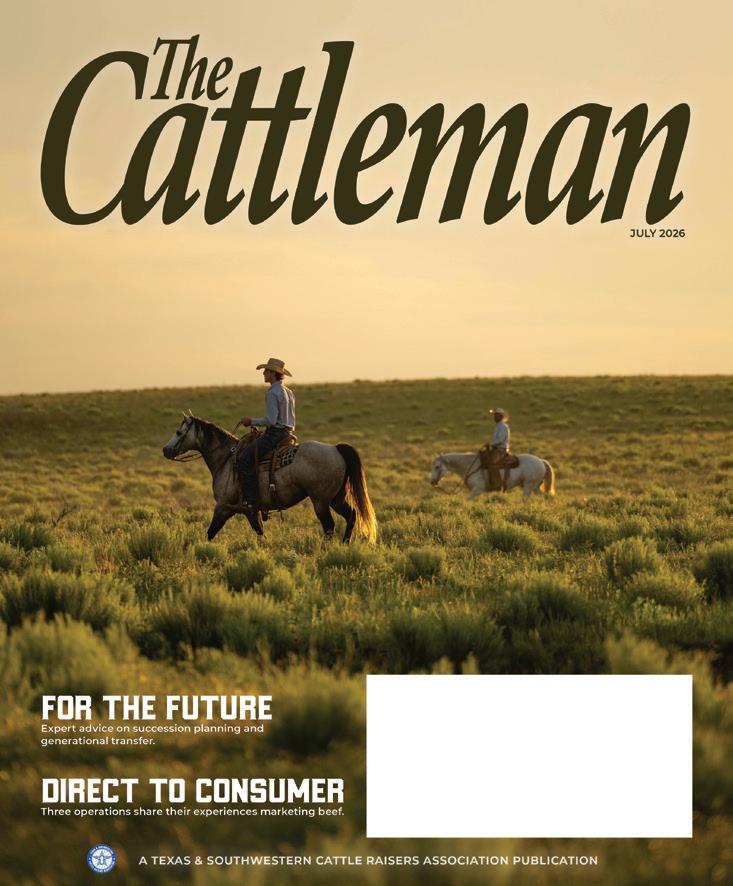
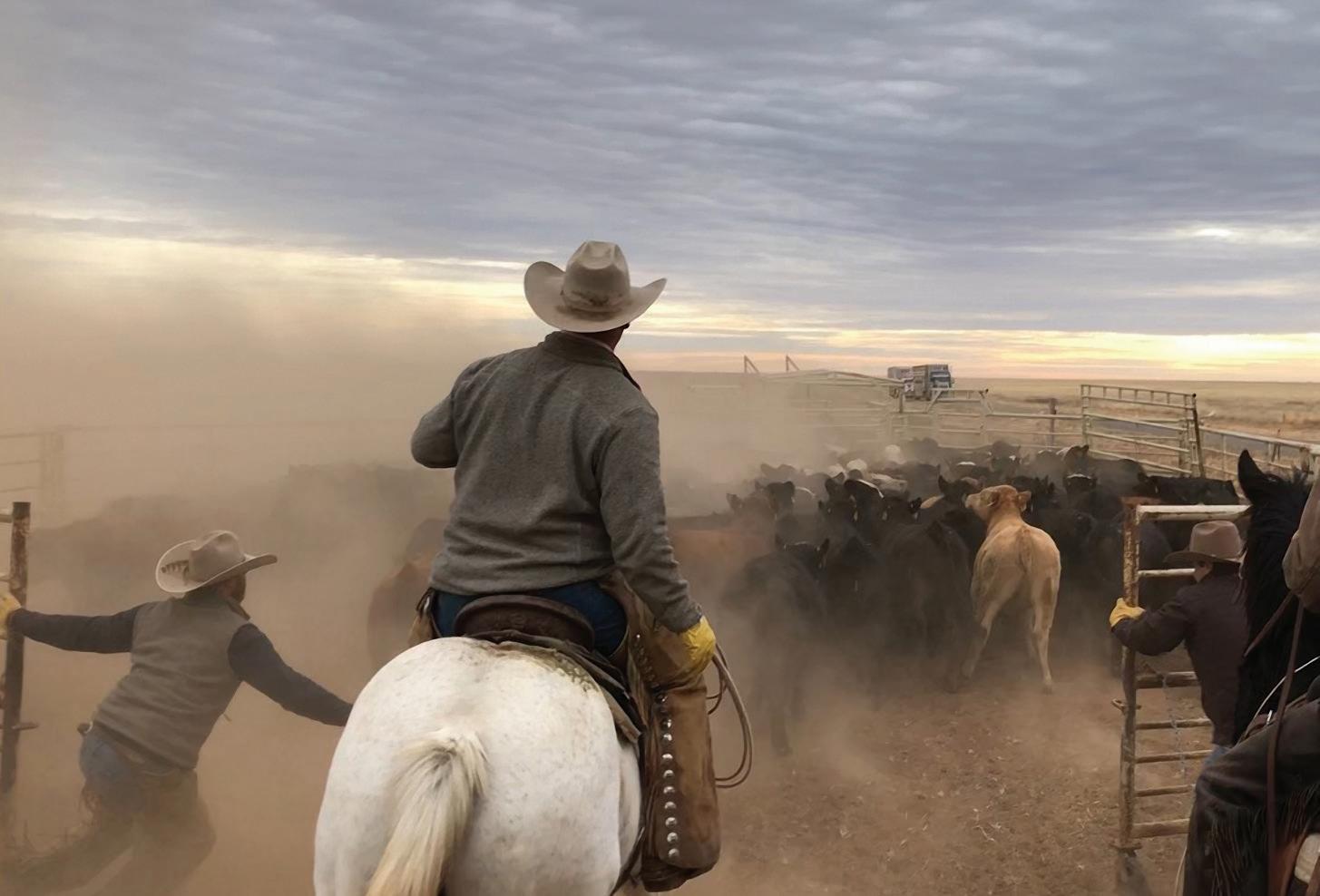
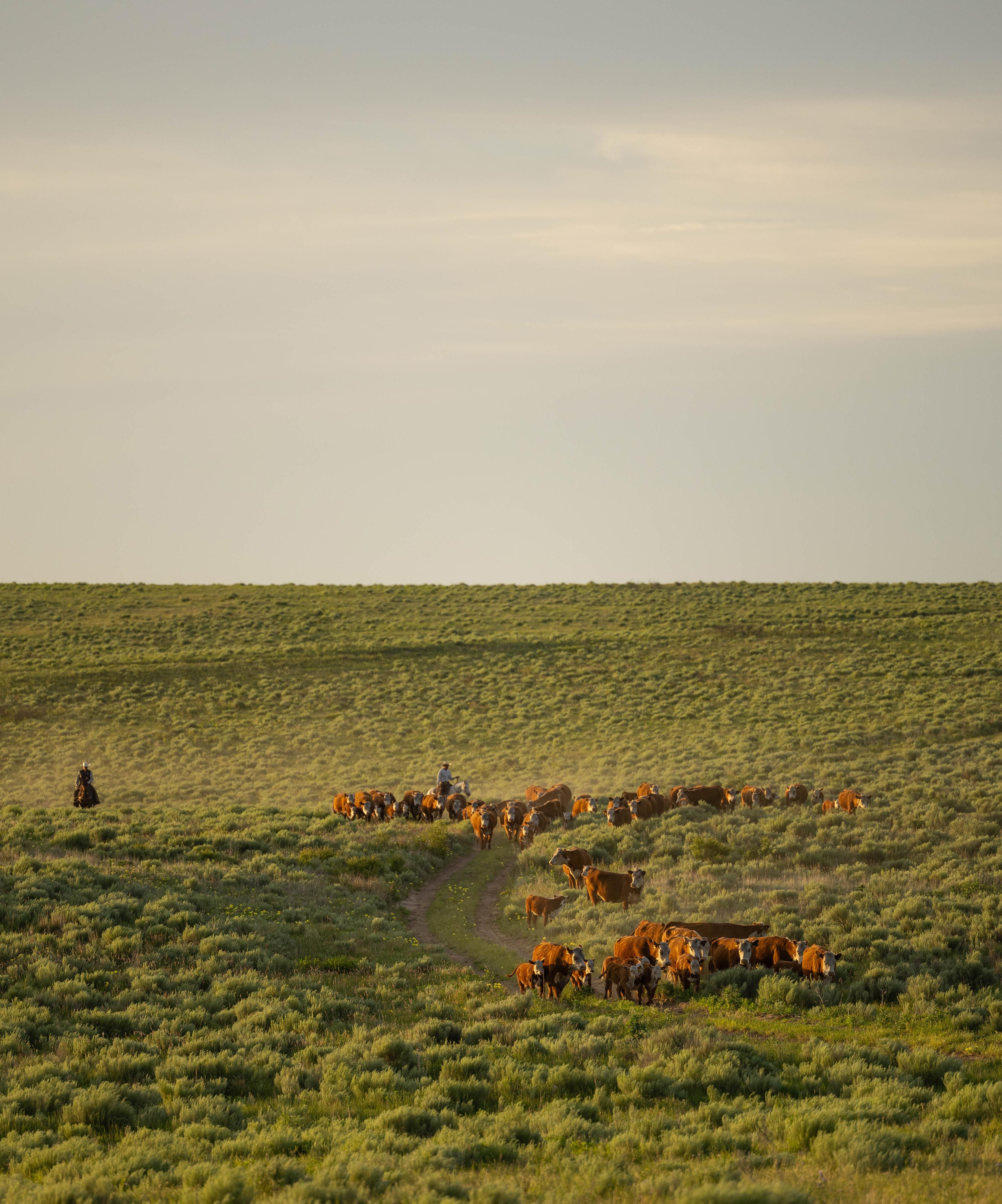
Cowboys near Canadian gather cattle at sunrise on Indian Mound Ranch, Texas & Southwestern Cattle Raisers Association members.
Photo by Emma Miller
High-quality hay doesn’t happen by accident. It takes dedication — all season long. Rezilon® herbicide gives you the residual foundation to start your season clean, while Cimarron® Plus and Pastora® herbicides give you broad-spectrum control that keeps mid-season weeds from compromising the quality of your hay. It’s a full suite of products dedicated to full-season protection — so you can control weeds and keep your hay quality high all season long.

Discover a smarter, season-long approach to weed control.
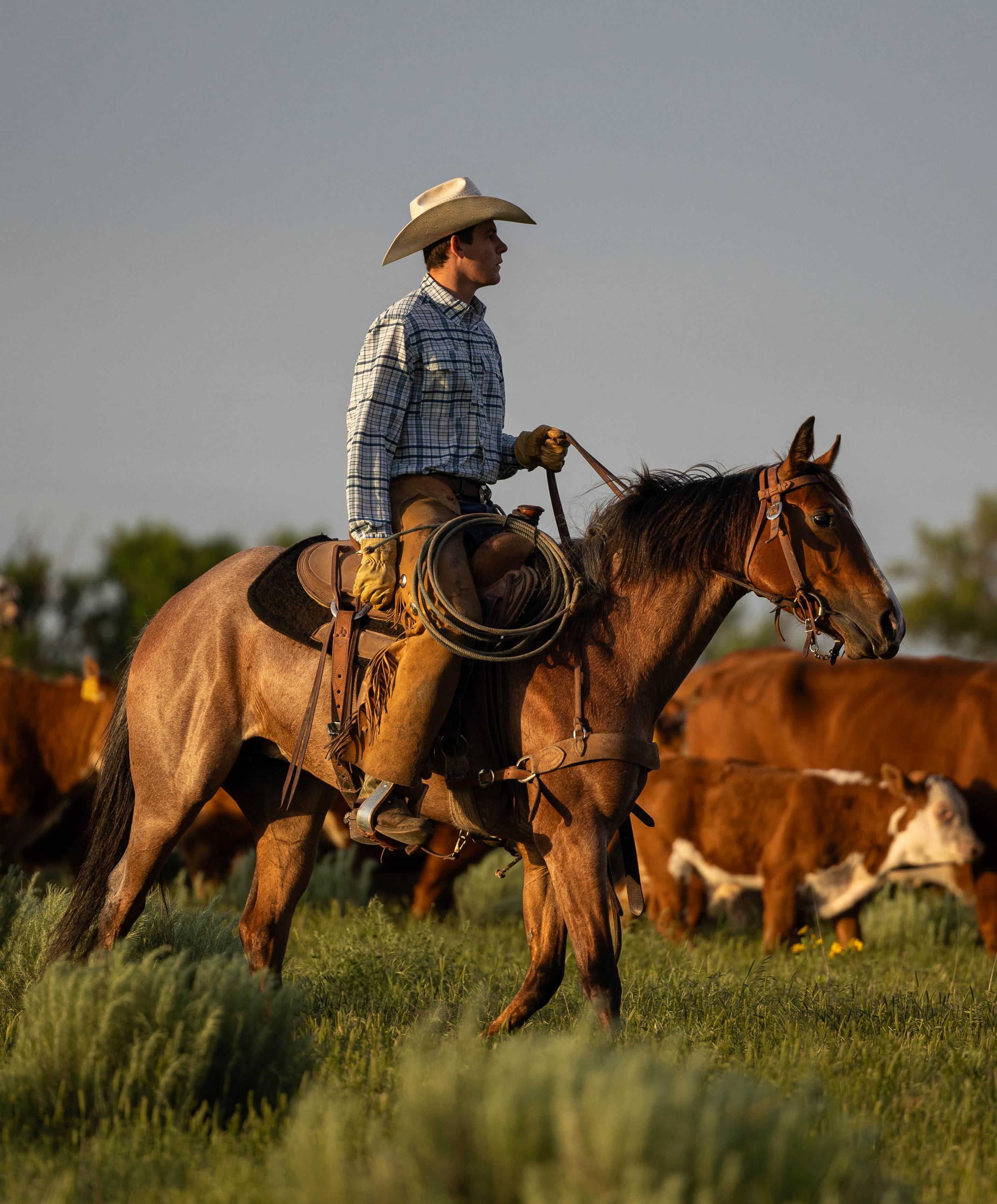

A guide to generational transfer, financial planning and transition strategy.
By Kayla Jennings
It is a story all too familiar.
On an otherwise ordinary fall day in Oklahoma — Oct. 26, 2015 — tragedy struck. At 2 p.m., Oklahoma State University professor Shannon Ferrell received a phone call that would change his family forever.
“‘I don’t know how to tell you this, so I’m just going to tell you,” his mother said. “There’s been an accident on the ranch and Adam’s gone.”
More than a decade later, standing before a captivated audience March 27 during the 2026 Cattle Raisers Convention & Expo in Fort Worth, Ferrell reflected on the loss of his brother, Adam, and the lasting impact it had on both his family and their ranching operation.
“We didn’t just lose a son and a brother. We lost 50% of our labor and management right there,” Ferrell said. “I tell you that story because we all know stories like this.”
Ferrell’s day job in the university’s department of agricultural economics, where he specializes in agricultural law, has given him a front-row seat to these scenarios with families nationwide. Because succession is inevitable, he said, planning for a smooth transition is vital to the family and the ranching business. However, he admitted the process can be complex.
“I don’t operate under any kind of illusion that this is easy,” he said. “And at its very fundamental level, the assets that we deal with in ranching are just different than everybody else’s.”
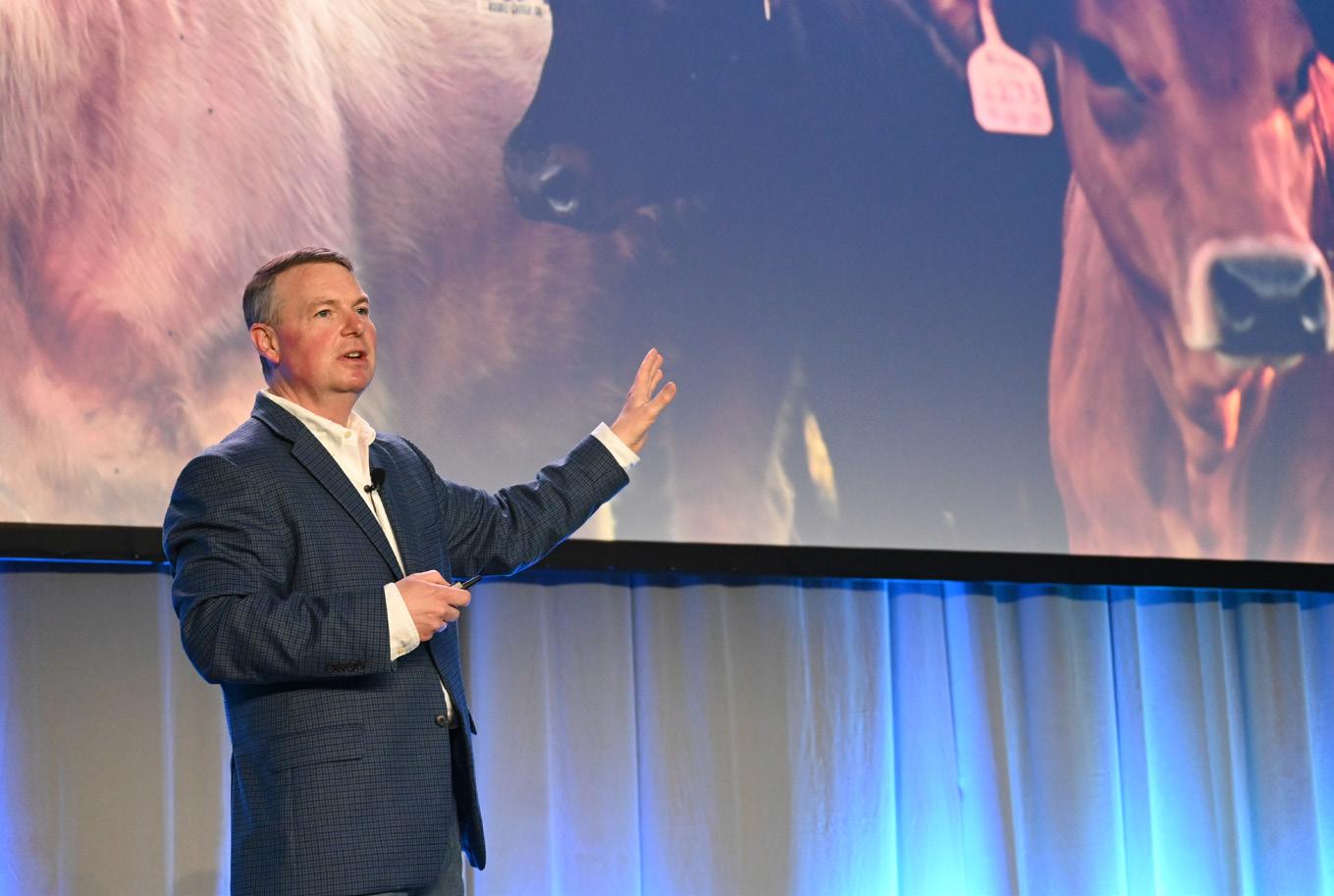
Ferrell referenced two hypothetical families to illustrate how dividing ranch assets can threaten the future of an operation. The assets of the first family — a traditional, non-farming estate — could be divided evenly without losing value. But ranching operations, he explained, tend to work differently.
“If we divide those assets up, we no longer have a viable ranch,” he said. “It’s not a continuing operating ranch if we split that stuff down the middle.”
Ferrell said dividing assets can make the ranch a target for investors looking to develop and subdivide the land. In his research, he ran simulations using data from the hypothetical ranching family. In 10,000 simulations factoring actual ranch income with the same level of variability, the outcome never resulted in the operation staying in business.
Why? He pointed to the land asset as a key reason for the negative outcome. In this example, about 70% of the asset value was tied up in land, which is difficult to acquire, preserve and liquidate.
In short, the land is worth more monetarily if sold, so if there is an off-farm heir, Ferrell said they almost always sell it eventually. As a result, the ranch doesn’t generate enough cash flow to buy half of itself back.
“People will have all sorts of principles until a dollar figure is involved, and then all of a sudden they become rational economists,” he added.
Ultimately, buying and selling land within the family doesn’t make financial sense. That is where Ferrell encouraged the audience to think outside the box.
“If we change how we view things and don’t treat everybody equally but treat them fairly, look at how much more affordable it becomes,” he said, pointing to strategies like land trusts to manage the high-value asset.
Many ranch families have spent years turning debt into equity, only for the next generation to be forced back into the same cycle because no succession plan exists.
“What I want you to take away is that over two-thirds of us choose what has a 0% chance of keeping the ranch together,” Ferrell said. “And I can tell you confidently that 64% of us are choosing this, because 64% of farmers and ranchers have no estate plan in place whatsoever.”
“People will have all sorts of principles until a dollar figure is involved, and then all of a sudden they become rational economists.”
— Shannon Ferrell, Oklahoma State University
That is the reality facing much of agriculture as a major generational transition approaches. Fortunately, Ferrell said families can take practical steps now to navigate this season. The process begins with a full inventory of assets, finances, people, goals and values.
A clear understanding of the ranch’s financial performance offers the family a realistic picture of what is possible moving forward.
“Objectively evaluate how you’re performing financially,” Ferrell said. “Know what condition you’re transferring this ranch in. Be transparent about that. I know it’s tough, but it’s also vital.”
The more difficult conversations, he explained, often involve people rather than finances. Ferrell encouraged the audience to think deeply about their personal values and the purpose behind the operation.
“Why do you ranch?” he asked. “Write that down and communicate that with your family. There’s huge value in answering that question for yourself and answering it for the next generation. And the next thing you’re going to do is communicate.”
Drawing from personal experience, Ferrell said to be intentional about expressing love and appreciation for family members — something many might assume is already understood.
“I’m an attorney,” he said. “I think lots of times farmers and ranchers just hope that if they’re put on trial for loving their family, they can be convicted on circumstantial evidence.”
Strong relationships, Ferrell explained, create the foundation necessary for difficult succession conversations. He recommended families hold dedicated planning meetings separate from holidays or routine gatherings.
Begin by addressing any lingering family issues first, Ferrell advised the audience, and then with a clean slate, go around the room and have everyone answer two questions: What is your vision of the future of this ranch? What role do you see for yourself in that future?
“You will be shocked at the power of asking those questions and honestly listening to the answers,” he said. “People will feel engaged. They’ll feel respected. They’ll feel seen and heard. And I can show you study after study that tells you if that’s the feeling those
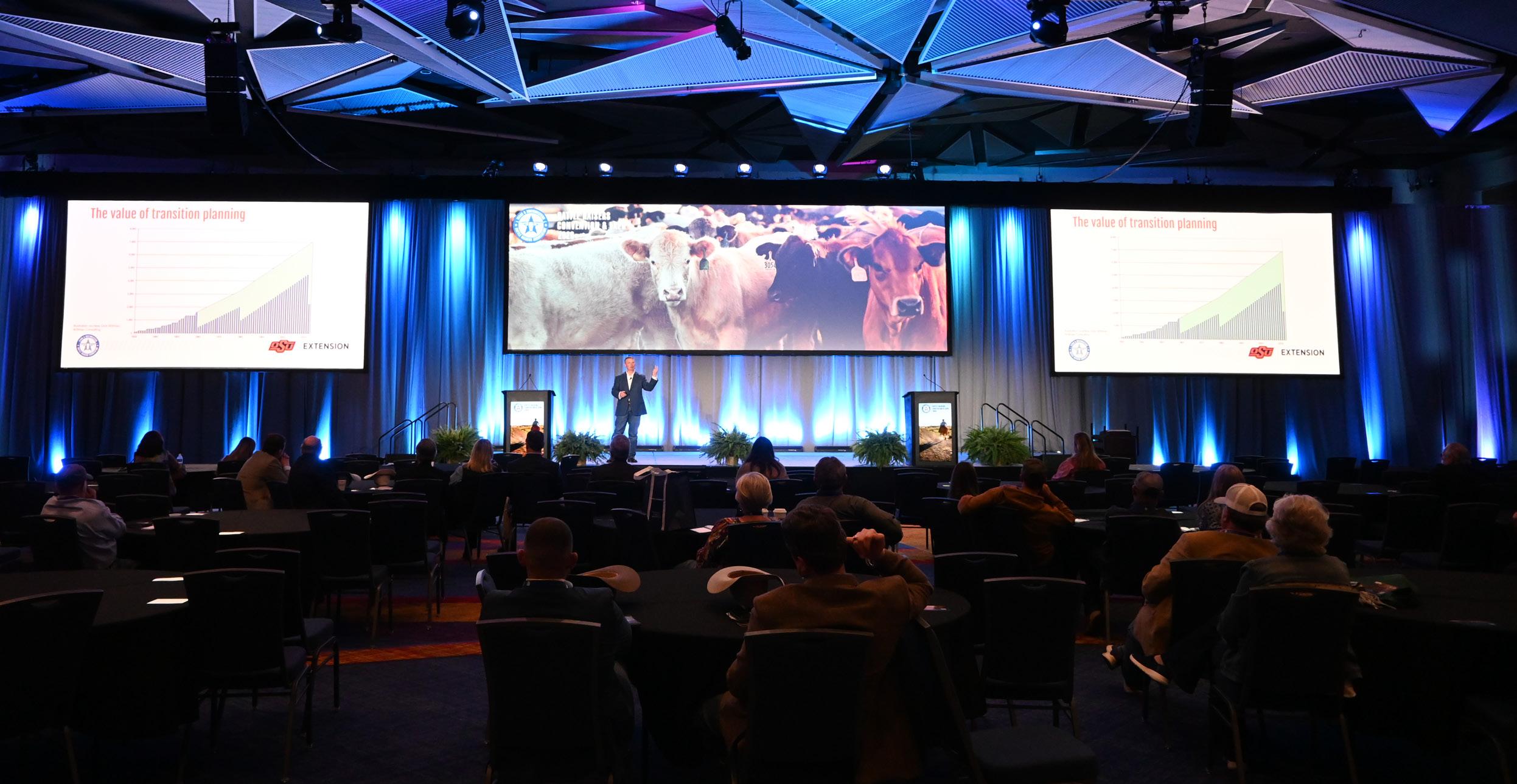
encouraged the audience to ask two questions of their family members: What is your vision of the future of this ranch? What role do you see for yourself in that future?
people have, they are way more likely to buy into the solutions that you come up with than if they hadn’t been engaged.”
Ferrell said engaging the next generation is necessary if the expectation is for them to come back to the ranch. To keep things in perspective, he said to remember succession is not a transition out of a job, but a transition into the next position on the organizational chart.
“You’re afraid that you’re not going to be the CEO,” he said. “Did you know there’s somebody above CEO? It’s chairman of the board.”
Ferrell described the position as offering strategic guidance, sharing wisdom and experience, enjoying more freedom and still remaining connected to the ranch and family legacy. “I want you to be chairman of the board,” he said.
Over time, that transition is a way to usher the heirs into their new roles. As the conversation continues, there are guiding principles and other considerations to keep top of mind — especially regarding on-farm heirs and sweat equity.
“Something that’s earned by you working here, that’s yours,” he said. “That’s not a gift. If we give you something, that is an act of love and generosity — that is not earned. Keep those two things separate.”
On stage, Ferrell explained the importance of succession planning with a simple analogy involving a rare and valuable vase. He presented the audience with two options: carefully preparing someone to receive the vase and placing it gently in their hands — or unexpectedly throwing it across the room.
“Which path do you think preserves the vase the best? I’m going to argue it’s path one,” he said with a laugh.
Ferrell said too many ranch families follow the second approach, holding tightly to control of the operation until a death or crisis forces an abrupt transition with little time for the next generation to prepare. Instead, he offered the idea of passing the ranch down over time, very deliberately, to make sure it is in a good place for the handoff.
That process, he explained, combines the shared goals discussed during succession conversations with the practical nuts and bolts of estate planning.
As families put pen to paper, Ferrell said they should keep in mind details like buy-sell agreements — complete with involuntary triggers like death, disability, divorce and debt — guardians for children, beneficiaries for investment accounts and advance directives. He said advance directives usually include three primary components: wishes for end-of-life care, a durable power of attorney, and decisions involving organ and tissue donation.
“Those are not fun things to think about,” he said. “I don’t care. They’re absolutely vital.”
He urged families to make difficult choices ahead of time rather than leaving loved ones to guess during moments of crisis.
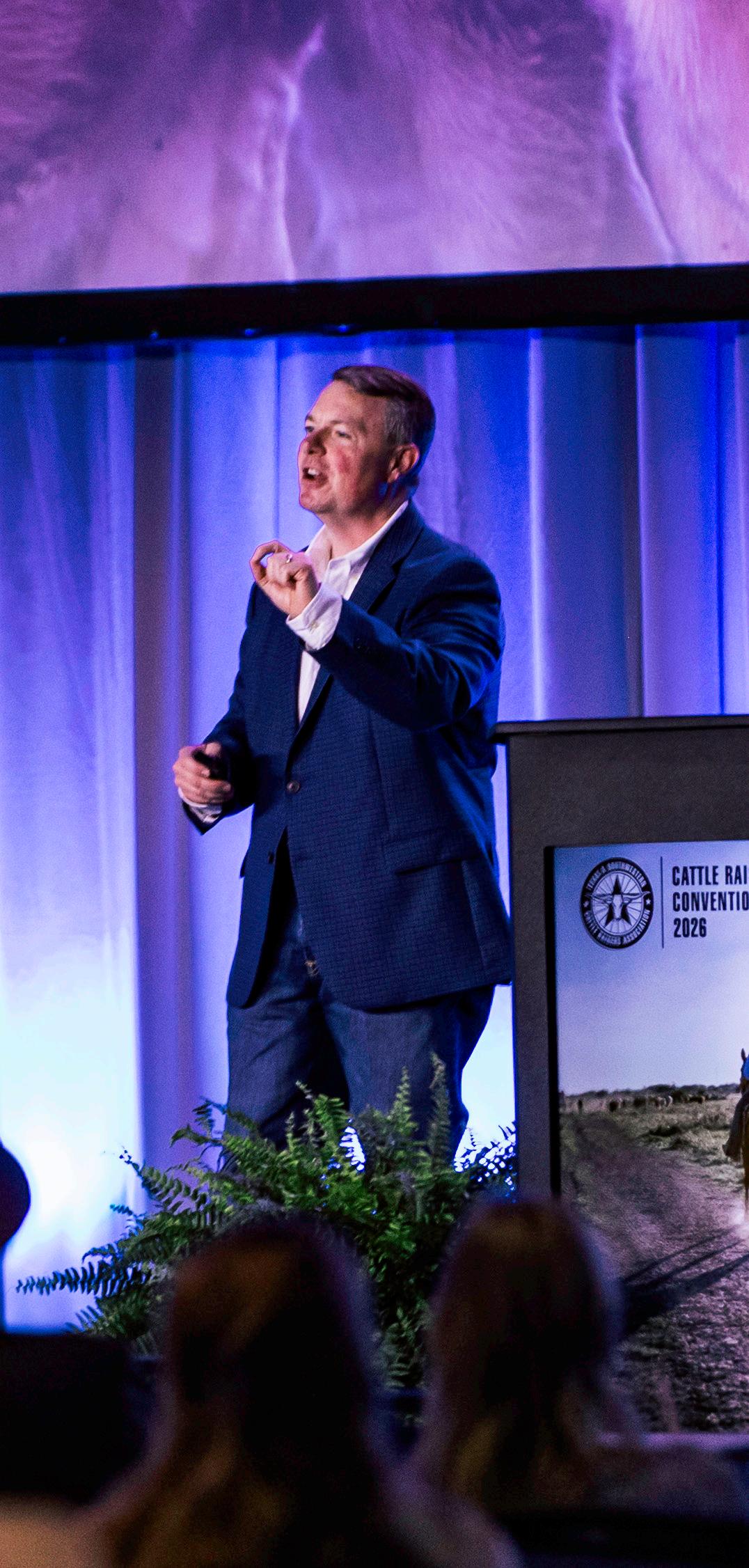
“You need an advance directive to make things easier for your family when they’re put in a very difficult place of having to ask themselves, ‘What would Mom or Dad want us to do here?’” he said. “Make those decisions for them and communicate them.”
As the succession and estate plan develops, Ferrell said the process requires a team of trusted professionals for advice and guidance. He pointed to an accountant, an attorney, a lender, an investment advisor and perhaps even a mediator as examples.
“I’m saying this with all the love in my heart,” Ferrell explained. “Responsible adults have this stuff. If you don’t,
1. Inventory: Determine where you are now.
2. Talk: Communicate with stakeholders.
3. Plan: Develop a business succession plan.
4. Will: Develop a plan for your estate/gifts.
5. Don’t stop: Deploy, evaluate and revise. Source: Shannon Ferrell, Oklahoma State University
you are looking your spouse and family right in the eyes and saying, ‘You’re not worth the time or effort.’ This stuff is vital, not only to your family, but to your ranch as well. Get it done.”
Every family’s situation is different, but Ferrell stressed the importance of simply taking the first steps toward a succession plan. The process can be difficult, but he said it is also a gift to see the next generation put into practice what they’ve been taught from a lifetime on the ranch. He likened it to an experience ranchers know well — the joy of a new calf hitting the ground.
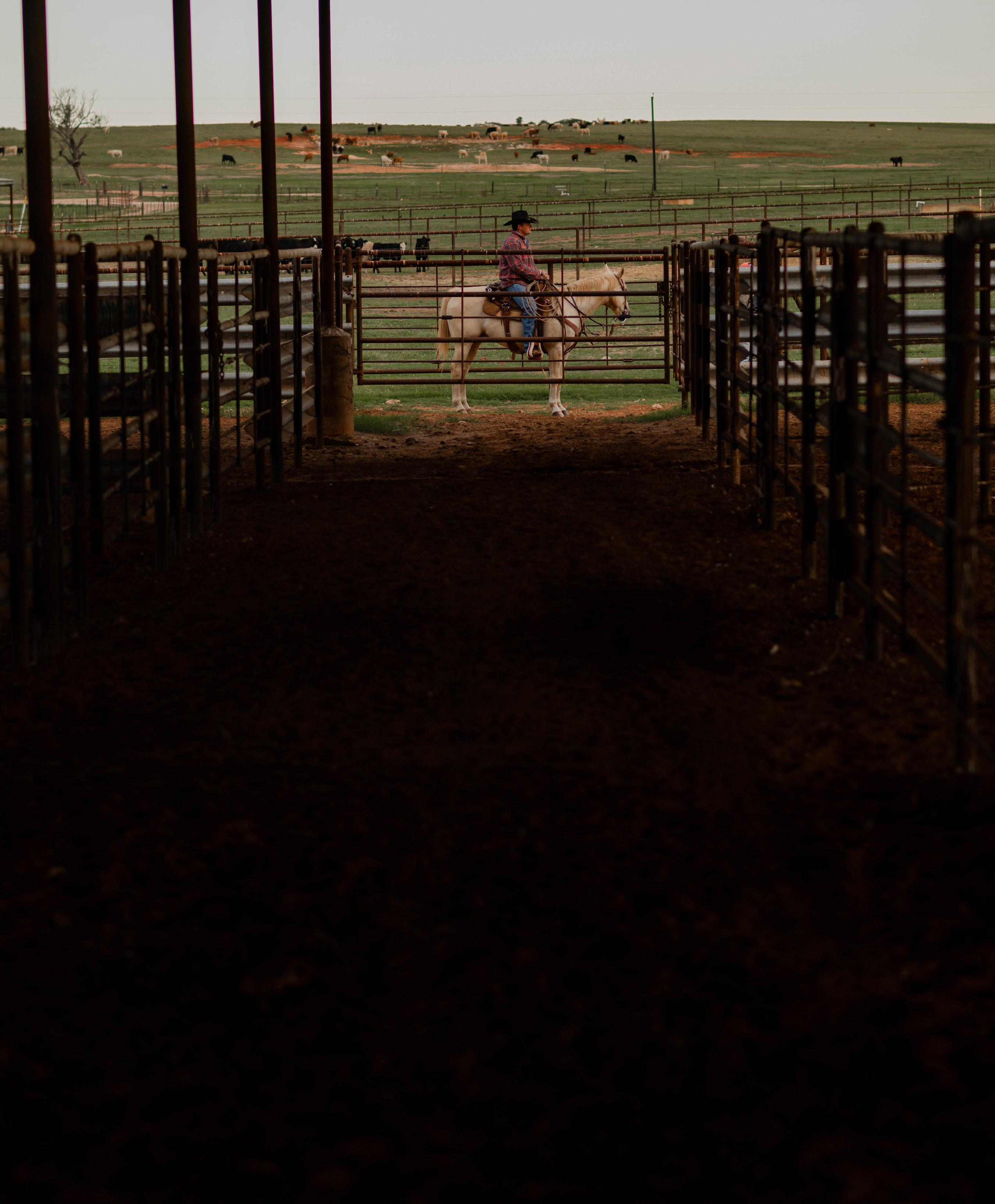
“Mama takes care of it, and the calf takes those first wobbly attempts at standing up,” he said. “It is knock-kneed trying to get its footing. But eventually it’s good, it’s sound, and it takes off. And that’s when you know it’s going to be OK.”
Then, Ferrell connected the image back to succession planning. “You watch that cycle and you say, ‘I was part of that,’” he said.
“That’s the joy you experience as ranchers because you are in the growth business. Don’t deny yourself that joy with the next generation. Let them have the reins gradually over time as they build their confidence. Watch them take those first steps and then feel the pride as you watch them take off and run with the heritage that they have earned and that you’ve entrusted to them.” T C


HELD AT 11:00 a.m.
Monday – Mason Thursday – San Saba
Formoreinfoonabove salesoronlineviewing andbidding,pleasecall orvisitourwebsite.
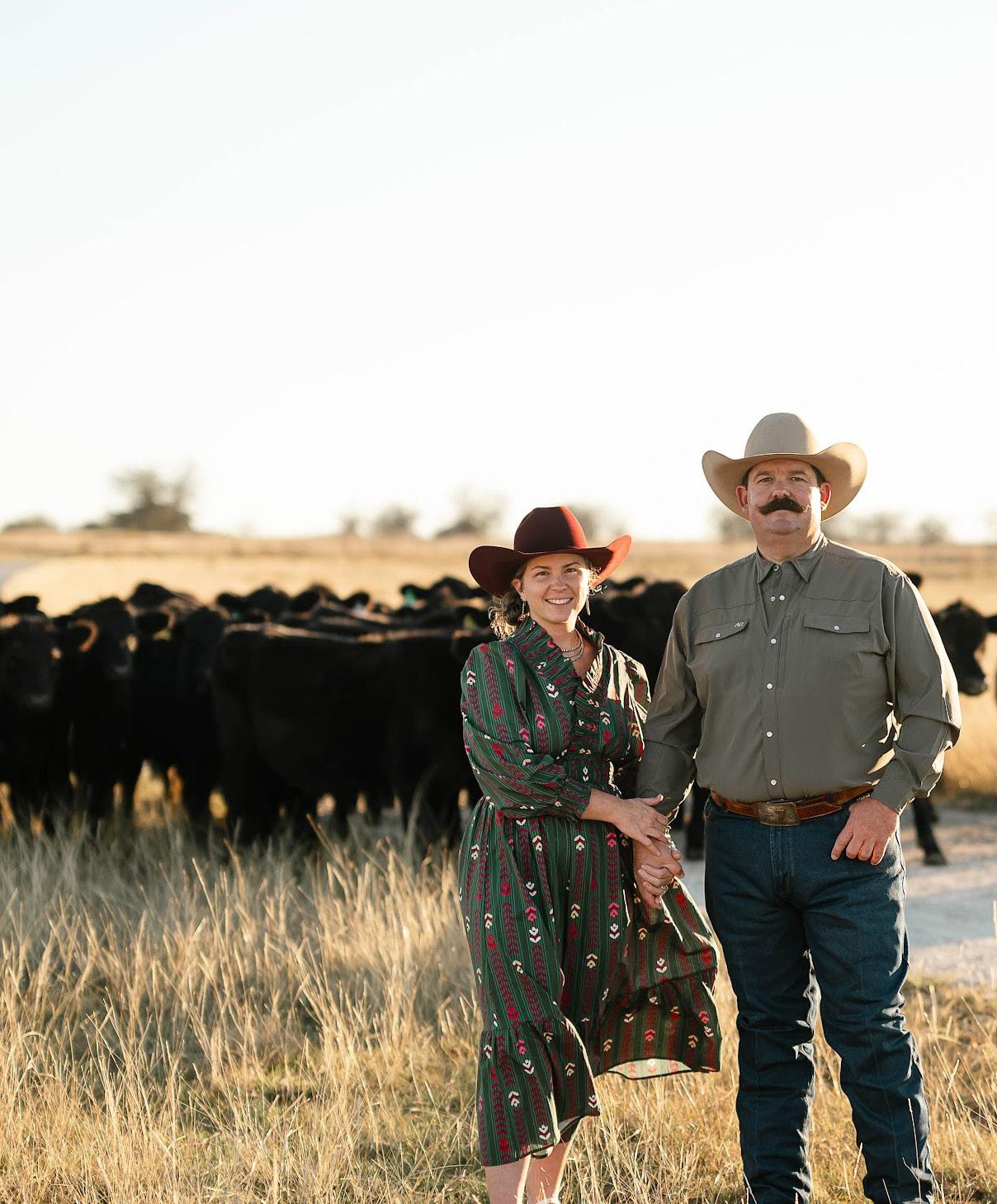
Market-savvy ranchers diversify income through direct-to-consumer beef businesses.
By Jena McRell
Cody and Erika Archie, of Bar 7 Ranch near Gatesville, never set out to sell beef directly to consumers. Instead, the market came to them.
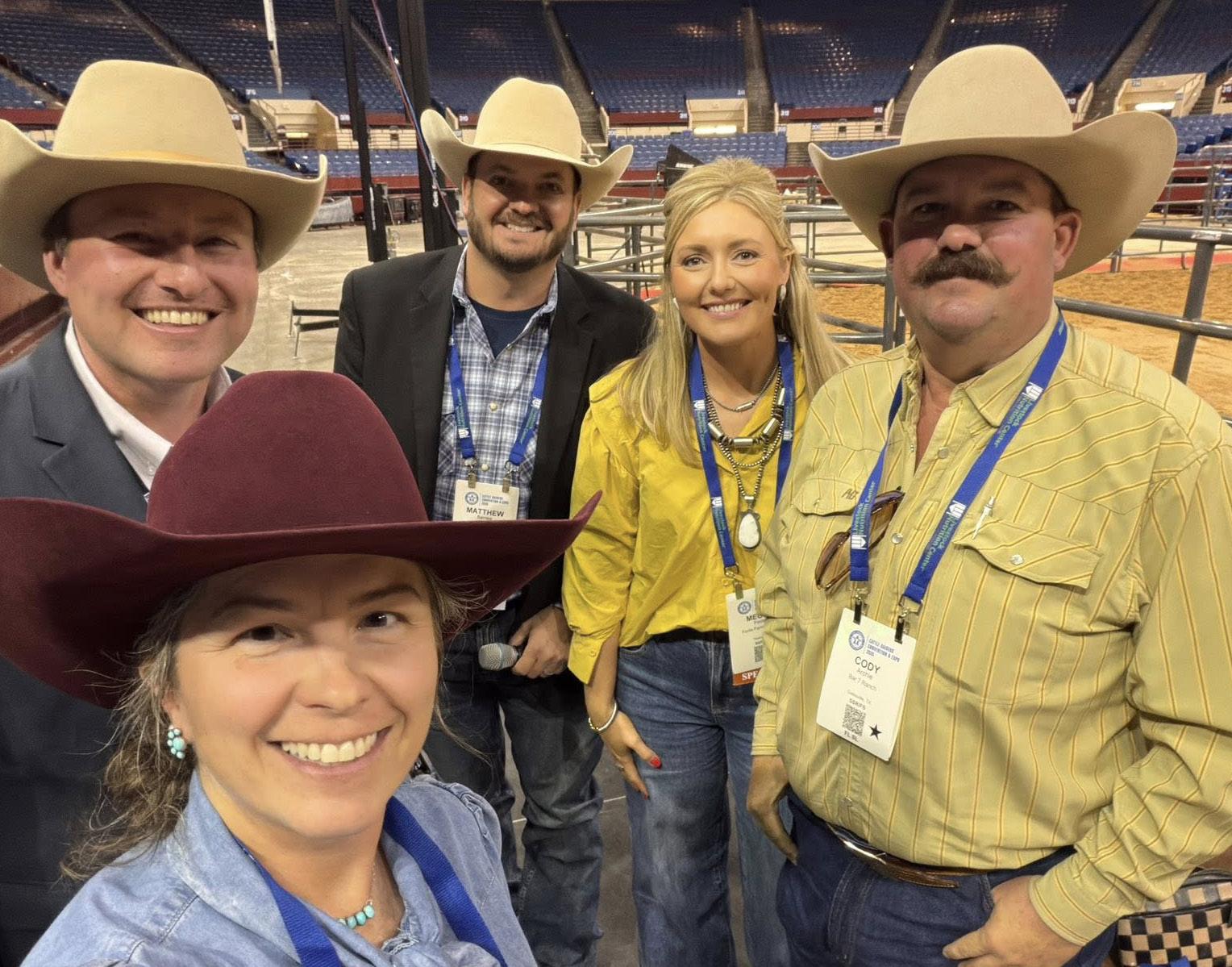
The couple participated in a panel discussion March 27 during the 2026 Cattle Raisers Convention & Expo in Fort Worth. Alongside two other operations — Rock Iron Cattle Company and Foote Family Meats — they shared insights into growing and maintaining a successful direct-to-consumer beef business. The conversation was moderated by Kaleb McLaurin, producer relations director for Texas Beef Council.
Like any enterprise, each ranch took a different path toward where they are today.
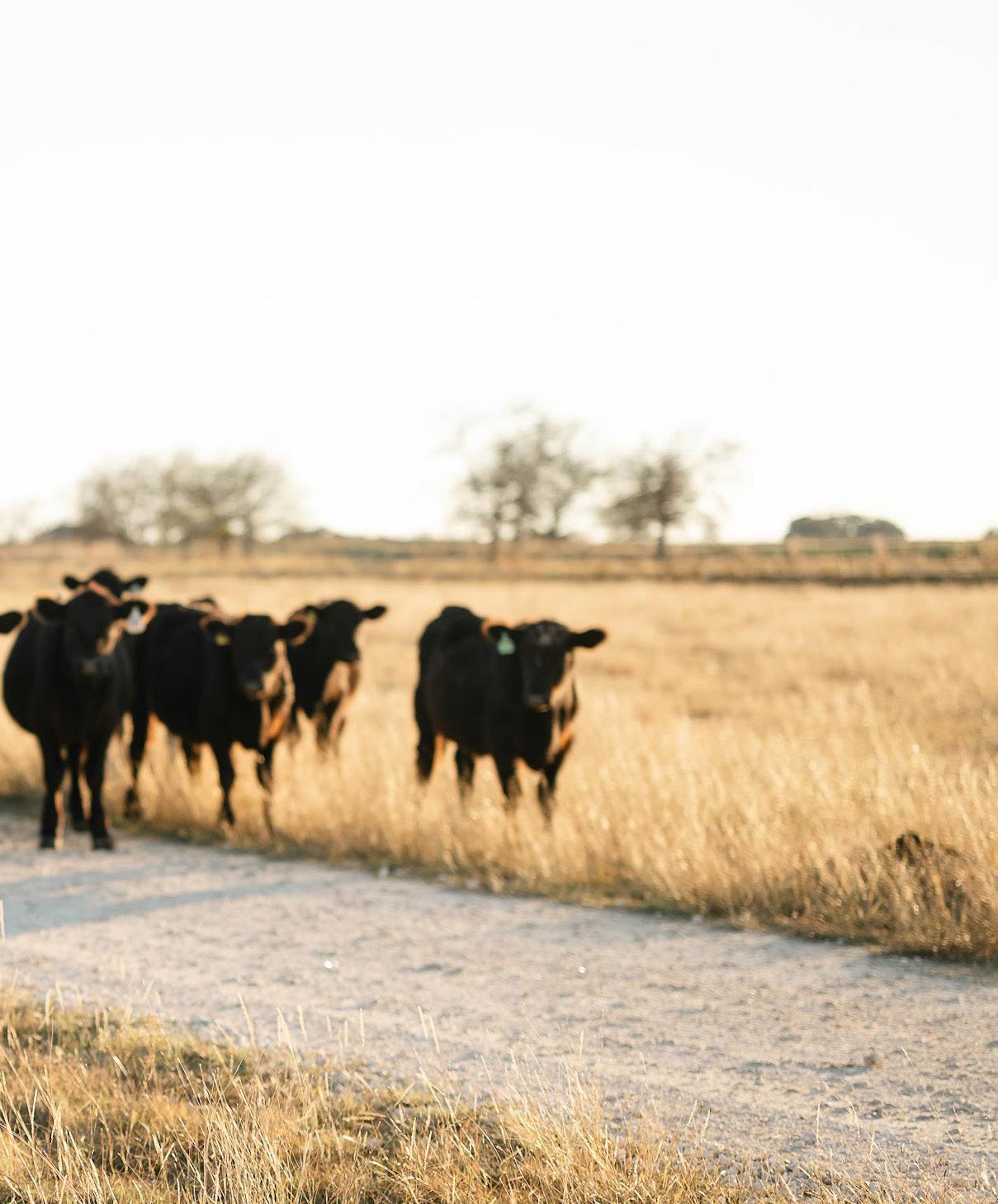
The Archies built a customer base largely through social media and focused primarily on selling beef by the whole or half. Matthew Barnes, of Rock Iron Cattle Company, expanded from stocker cattle into retail beef sales and storefront marketing after launching direct sales during the uncertainty of the COVID-19 pandemic. Meanwhile, Megan Foote and her family transformed a small online beef store into a fullservice meat market in eastern New Mexico offering fresh beef cuts, specialty proteins and custom service.
Though their business models vary, the panelists emphasized several common themes when it comes to marketing beef directly: know the costs, protect product quality, understand the customer base and choose a model suited to the operation.
Customization of beef products is another major selling point. “We want them to have that experience of buying a steer and get to 100% decide how it’s going to be processed for their family,” Cody said.
That includes providing cut sheets, instructional videos and detailed explanations about hanging weight pricing paid directly to Bar 7, along with separate processing costs from the locker plant.
The Archies also said they intentionally keep the process simple for themselves by focusing on halves and wholes rather than maintaining freezer inventory or handling shipping logistics.
“This model works best for us also because we’re not having to invest in freezers,” Erika said. “We’re not having to try to ship beef, taking the time to do that, which would be another full-time job.”
“We want them to have that experience of buying a steer and get to 100% decide how it’s going to be processed for their family.”
— Cody Archie, Bar 7 Ranch

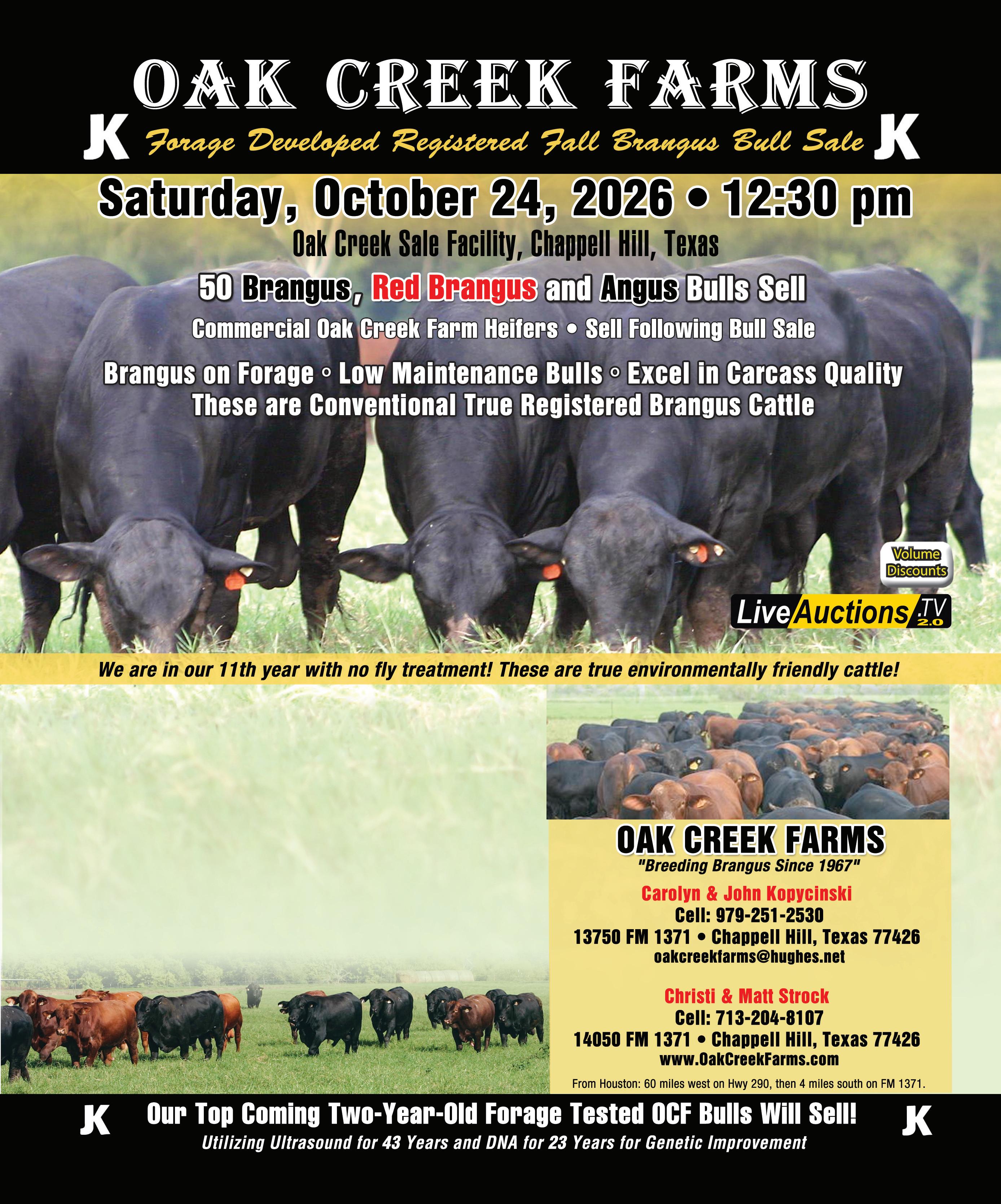
Brangus was developed 75 years ago to capture the "hybrid vigor" of two elite breeds. Unlike EPDs, heterosis isn’t naturally inherited; it diminishes over generations unless maintained through a stable, disciplined breeding program—the famed hallmark of Oak Creek Farms (OCF).
Heterosis provides the biggest boost to "environmental" traits: adaptability, longevity, fertility, and disease resistance. By utilizing OCF’s True Brangus genetics, you lock in these advantages, ensuring superior performance across diverse climates. Our repeat buyers are the ultimate proof of the OCF difference.
Owner: John Kopycinski 979-251-2530
Consultants: Gary Bruns 830-391-0766 • Kent Smith 979-540-8338
Mike Arnold 979-732-7679 • Charlie Tiner 713-252-4662
Auctioneer: Troy Robinett 817-995-7509
For Matthew, direct-to-consumer beef sales through Rock Iron Cattle Company began during a difficult cattle market.
He was running stocker cattle on wheat and cover crops in the Texas Panhandle when COVID-19 disrupted markets and created uncertainty about where cattle prices were headed. A friend who owned a processing plant suggested Matthew feed a few cattle and sell them directly instead.
“Well, I put them on Facebook and we sold out in two days,” Matthew said. The quick response encouraged him to try again. In the first year, they sold 20 head, and many of those customers wanted to buy again the following year.
“We started putting cattle aside, getting scheduled on feed and then feeding cattle to the point where we feed almost year-round now,” he said.
As demand grew, he expanded beyond halves and wholes into frozen retail cuts sold through a trailer setup, farmers markets and eventually a storefront in East Texas.
“The retail store was kind of an accident,” Matthew said with a smile. He and his partner initially rented a small office space to house a freezer and market packaged beef locally, but the operation steadily expanded as customers began stopping in regularly.
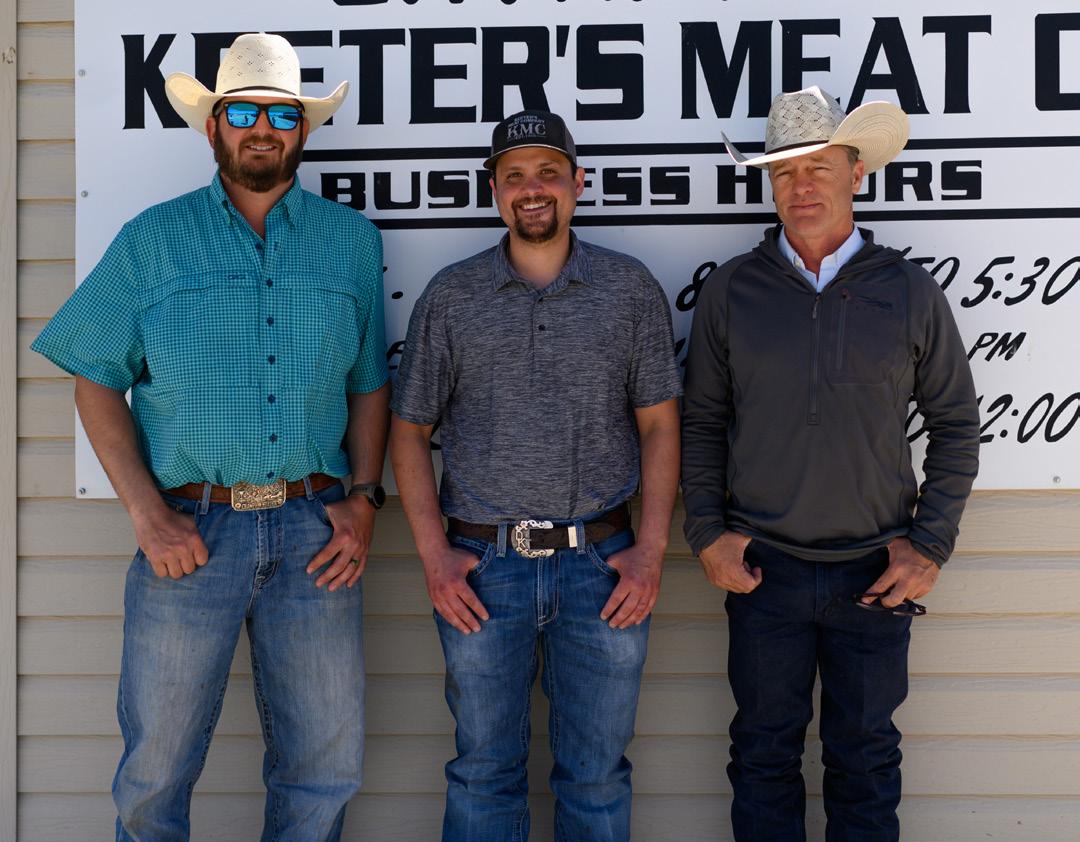
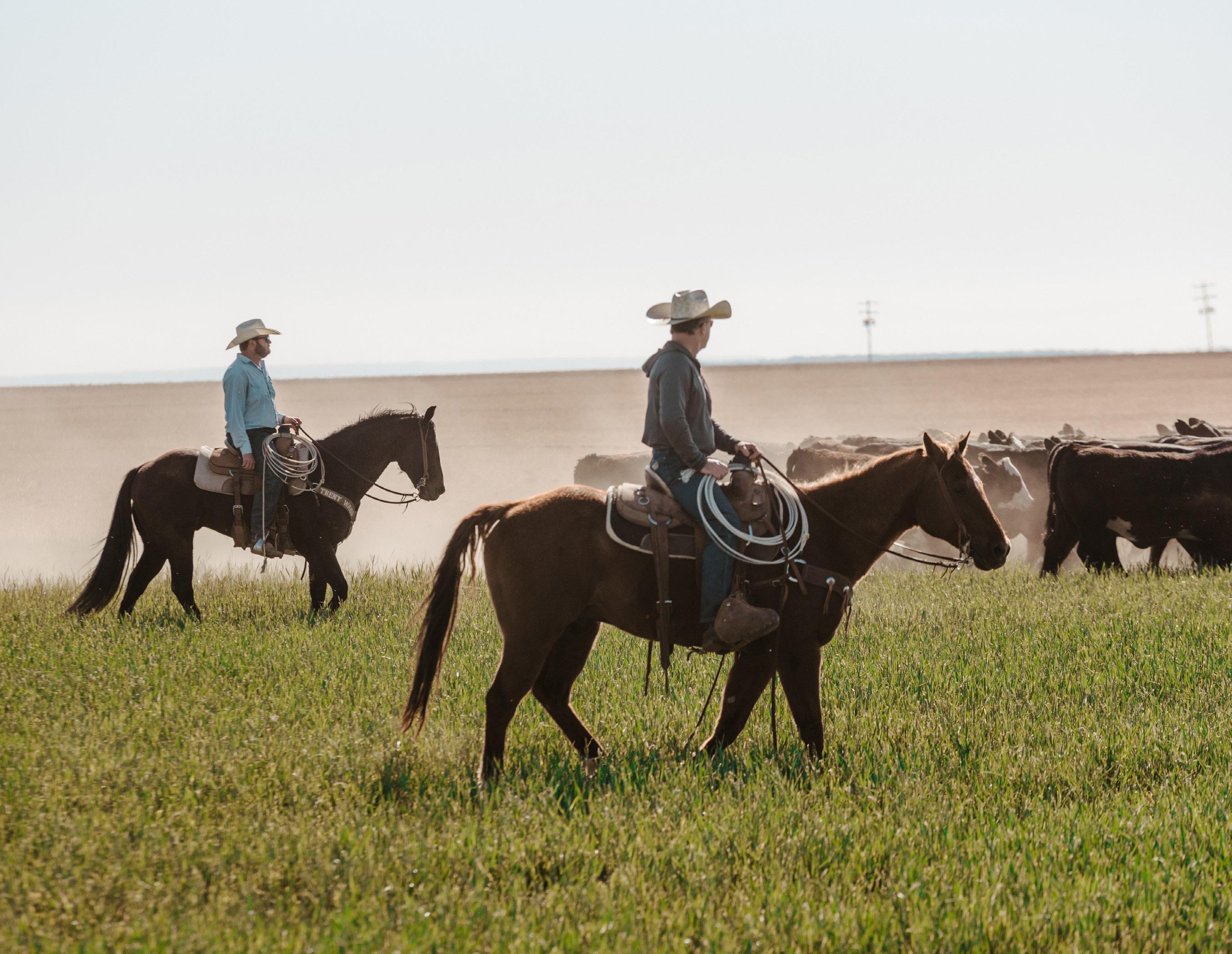
Retail cuts allowed the business to reach customers who were interested in local beef but could not afford the upfront cost of purchasing a whole or half animal. “So that retail cut gave you a little more flexibility to be able to reach a broader market and group of people with good quality ranch-to-table beef,” Matthew said.
Rock Iron Cattle Company markets natural, dry-aged Angus beef and sources cattle through verified natural programs. He emphasized that the business is not built around criticizing conventional beef production.
“We are not saying that grocery store beef is unhealthy,” Matthew said. “We’re saying that we’re providing a niche product to a consumer who wants to buy from a ranch.”
He also stressed that ranchers considering direct sales need to stay realistic about the risks involved, particularly when it comes to inventory management.
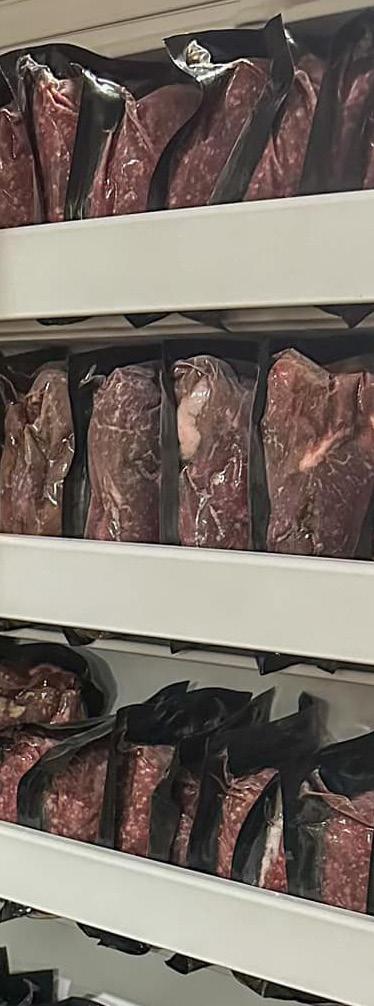
“If you’re going to do retail cuts, you’re going to face some of those challenges on stockpiling ground beef,” he said.
Restaurant partnerships can also create additional marketing opportunities, but they carry risk when markets shift or competitors undercut pricing.
For Matthew, maintaining a high-quality product remains the most important factor in long-term success. “We try to manage our prices and expectations of providing a consumer with a quality product at an affordable price,” he said.
“We try to manage our prices and expectations of providing a consumer with a quality product at an affordable price.”
— Matthew Barnes, Rock Iron Cattle Company
In mid-2019, Megan and Garrett Foote, who were young professionals living in Amarillo, decided the time was right for them to return to Garrett’s family cattle operation in eastern New Mexico. After the move, they began looking for ways to diversify income beyond the traditional beef cattle production.
The COVID-19 pandemic accelerated those plans. Almost immediately, the phone started ringing with people interested in purchasing beef. The family had sold beef by the whole or halves for years, so they were known for supplying a quality product.
“What we found was for every 10 calls that they would field, they may sell one or two wholes or halves,” Megan said. “A lot of people would’ve been interested in buying 10, 15, 20 pounds of assorted cuts.”
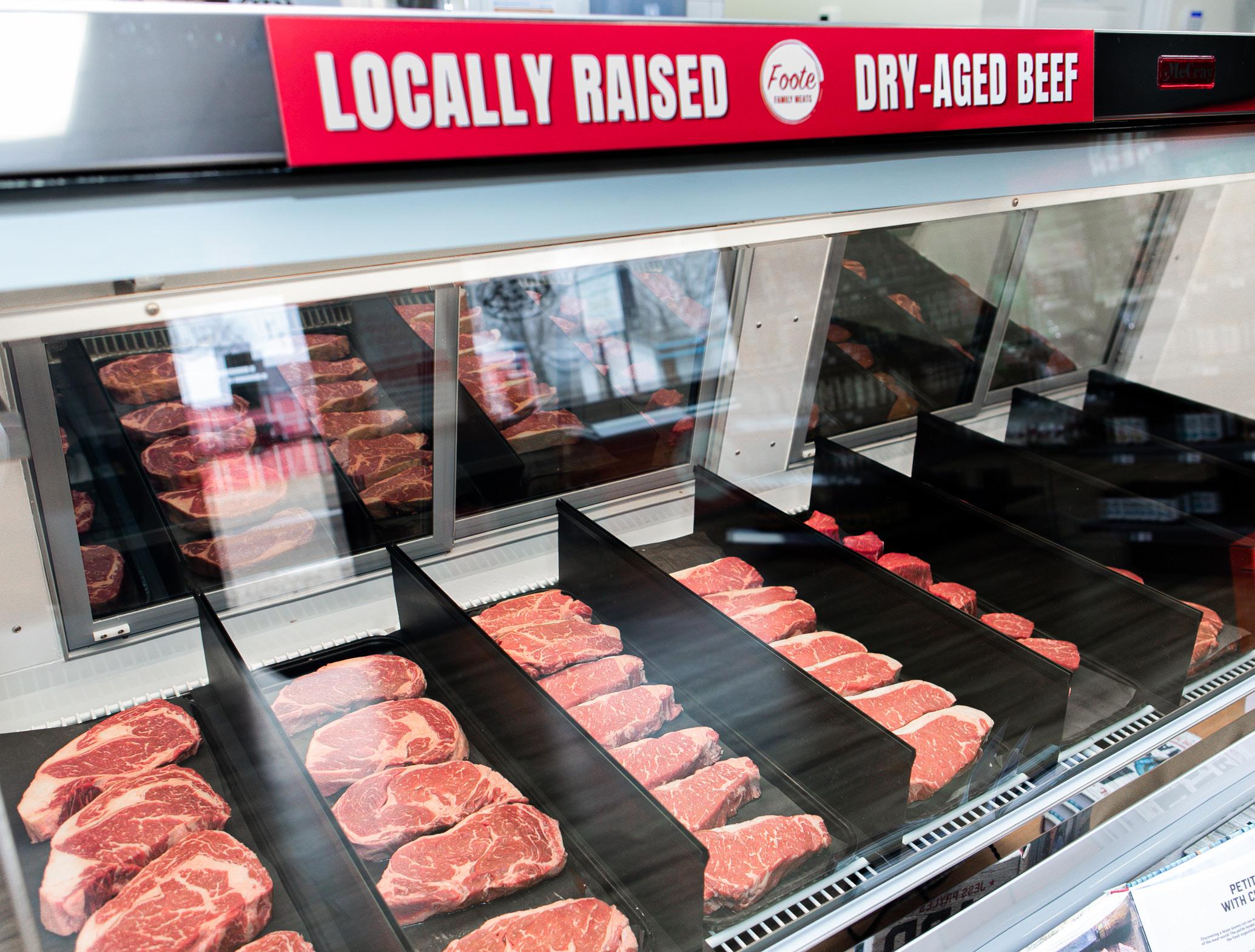

That realization led the family to launch an online beef store selling individual retail cuts nationwide. The business later expanded into a mobile freezer trailer before eventually opening a brick-and-mortar meat market in Clovis, New Mexico. Today, the store offers fresh beef cuts and specialty products alongside custom butcher services.
Megan said customer experience has become one of the operation’s biggest advantages. They discovered their older customer base missed going up to the meat case and talking with the butcher, and the younger generation has appreciated that service aspect, too.
“We offer a good product, but the experience that we’ve created has been the big selling point that’s allowed it to work for us,” she said.
Like the other panelists, Megan said inventory management remains one of the biggest challenges in direct beef sales. This is especially true for ground beef, which can quickly inhibit cash flow when oversupplied. The operation has worked to diversify marketing channels by supplying schools and food banks through the New Mexico Grown program, while also expanding wholesale restaurant accounts and retail offerings.
Megan also noted that moving into fresh meat sales introduced a new level of complexity and risk. “When we made the shift to bringing subprimals into our store and my guys are having to trim fat and bone, we really had to be on top of what our yields were,” she said.
Managing aging, shrink, inventory turnover and quality control became critical to maintaining profitability. They rely on sophisticated software and detailed records to stay on top of it all. Megan said another important aspect has been developing relationships within the meat business and learning as much as possible.

“We offer a good product, but the experience that we’ve created has been the big selling point that’s allowed it to work for us.”
— Megan Foote, Foote Family Meats
For Bar 7 Ranch’s Cody Archie, profitability starts long before the beef is sold.
He said one of the biggest mistakes ranchers can make in direct-to-consumer beef sales is failing to understand production costs before pricing cattle.
“Know what you’ve got in them before you get ready to sell them,” Cody said. “Because you aren’t doing it for practice. You want to make some money while you are doing it.”
At Bar 7 Ranch near Gatesville, Cody said he backs into his pricing model by first calculating the total investment in each steer — including purchase price, feed, processing risk and death loss.
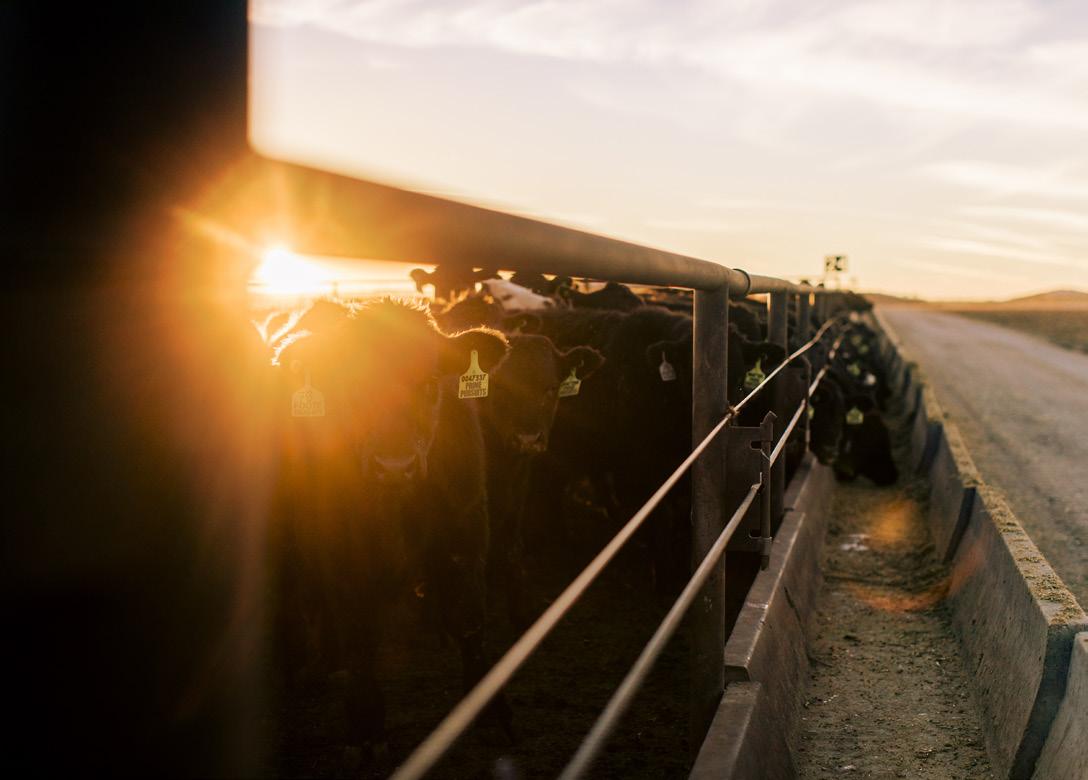
Their cattle are typically fed for around 180 days on a ration of whole corn, hay and supplement. During that period, Archie estimates each animal consumes roughly 4,000 pounds of feed and gains about 4.5 pounds per day.
“It costs the same amount to feed a really good calf as it does to feed a really sorry calf,” he said.
Cody said producers should also account for unexpected losses and hidden expenses when pricing cattle. “You’re the one that’s investing all that money up front,” he said. “You deserve to get paid for that.”

“We are cattle people, and the meat side of this is very new,” Megan said. “But we lean on people in the industry who have been really helpful for us learning how to navigate what we’ve encountered on the fresh retail side.”
At the close of the discussion, each panelist returned to the same core message: There is no single blueprint for success in direct-to-consumer beef sales. Ranchers must determine what works best for their resources, customer base and longterm goals.
“Know your cost,” Cody said. “Because you won’t be able to make a profit if you don’t know what your costs are.”
“Do what works best for you,” Erika said. “You heard many different models up here — choose a model that works best for your operation.”
Matthew encouraged producers to focus first on consistency and product quality before trying to scale too quickly. Megan urged cattle raisers to carefully evaluate their customer base and potential market channels before entering the space.
Together, the three operations demonstrated that direct-to-consumer beef can take many forms — from social media-driven beef to retail storefronts and full-service butcher markets. The panelists agreed there is room in the beef industry for operations of all sizes and business models.
“Every one of us who raises cattle could start a beef business and you cannot touch every table in your county or town,” Matthew said. “There are plenty of dinner tables to go around.” T C
By Jason Sawyer
Across Texas and the Southwest, generations of land stewards have recognized the mutual benefits of sustaining healthy rangelands that support livestock production and provide wildlife habitat.
Cattle raisers and private landowners live out a public trust doctrine, where native wildlife is not owned by any single landowner but conserved in trust for all citizens. Managing for continuous improvement of their land supports healthy cattle and thriving wildlife populations. This is one example of the ecosystem services delivered by cattle raisers — where stewardship provides not only highquality protein to sustain a growing population, but also supports wildlife and open space amenities, all of which help to sustain our rural communities and economies. None of these prosper without responsible, generational stewardship of land.
Ranching is truly a lesson in conservation — the wise use of precious resources to meet the needs of current and future generations. This is closely related to sustainability, which is the likelihood of persistence, because the wise use of land resources helps ensure we will continue meeting these needs in the future. Ranchers have spent decades improving grazing practices, protecting and enhancing water resources, managing and sculpting brush, preventing erosion and preserving open spaces benefitting both livestock and wildlife.
For those who make their living with the land, sustainable operations are those that can be passed on to the next generation; and conservation and stewardship are not slogans or buzzwords, they are responsibilities. Long before environmental policies became federal mandates, cattle raisers were already practicing conservation because their livelihoods — and their ability to pass it on — depended on it.
Because of the responsibility to future generations, private landowners are often the best stewards of land and natural resources. We take pride in seeing the fruits of our efforts in a healthy calf crop, and in the diversity and abundance of wildlife. In many cases, even rare species
thrive on private ranches, because successful ranches are more likely to stay intact. The open spaces maintained by cattle producers are among the last strongholds for many of these species, because of ranching and not in spite of it.
That is why so many ranchers are concerned about the approaches and implementation of federal action under the Endangered Species Act of 1973. While the intent of protecting threatened species is understandable and important, the implementation of the act often exceeds the expressed original intent of Congress and creates substantial risk and unnecessary burdens on the very people already caring for the land. This can result in disincentives for private landowners — in the opposite direction of the act’s goals.
The Endangered Species Act of 1973, as it has been interpreted and implemented in many cases, has had far-reaching implications for agricultural operators and private property rights in areas where endangered or threatened species exist. Regulations and decisions may be created with limited information or sound science, and without practical input from landowners, because the act does not overtly require consideration or adequate economic impact studies.
Even when direct action isn’t immediately taken, ranchers are threatened by the uncertainty of how a future mandate could impact their operations, families and communities. This uncertainty isn’t just because of the whim of an agency — the act allows private individuals and organizations to file lawsuits with the government to enforce certain actions. These can trigger listings or restrictions that negatively affect landowners, even limiting their right to pursue normal operations or otherwise legal activities.
When regulations have the potential to inadvertently punish good stewardship or create fear that the discovery of a species on private land will lead to government restrictions, the system discourages cooperation instead of encouraging it.
Texas & Southwestern Cattle Raisers Association has long maintained that before any new regulations or restrictions are implemented, they should have a firm foundation in reliable science and realistic economic analysis. Ranchers who know their land best should be part of developing innovative and functional response plans. Conservation efforts work best when they are collaborative, voluntary and rooted in local knowledge.
Texas & Southwestern Cattle Raisers Association supports voluntary, incentive-based programs that encourage private landowners to participate in conservation efforts while remaining eligible to participate in other projects, programs and, especially, sustain their operations. These types of partnerships recognize an important truth: Lasting conservation cannot happen without the cooperation of private landowners.
At the same time, stronger legal protections for landowners are necessary. Incentive programs should provide regulatory assurances for landowners, and if their freedom to operate — and thus the value of their
land — is impaired by a required action taken under the Endangered Species Act of 1973, fair compensation should be provided. Information shared by landowners regarding species presence, participation in voluntary conservation programs or any data collected on private land should remain confidential and protected from misuse. Stronger standards of evidence should be required before species are listed as threatened or endangered; and where insufficient information exists, it should be developed before decisions are made.
Ranchers and landowners are not obstacles to conservation, they are essential for conservation to succeed. The relationship between land stewardship, cattle and wildlife demonstrates that agriculture and wildlife conservation work well together when balance and common sense prevail. T C
Jason Sawyer, Ph.D., chief science officer for East Foundation, is vice chair of Texas & Southwestern Cattle Raisers Association’s natural resources and wildlife committee.
Kelly Hancock assumed the duties of Acting Texas Comptroller of Public Accounts July 1, 2025. As the state’s chief financial officer, the Comptroller oversees the state treasury, collects taxes and provides accurate revenue estimates to guide the biennial budgeting process.
The office also manages a broad range of initiatives, including the state’s new education savings account program; broadband expansion; opioid abatement funding; unclaimed property; rural law enforcement grants; economic development; transparency in government spending; and support for border security efforts through management of key appropriations.
A strong advocate for the conservative values of limited government and lower taxes, Hancock believes the Comptroller’s office plays a critical role in sustaining the state’s economic success by safeguarding tax dollars, implementing forward-thinking initiatives and ensuring transparency in state spending. He draws on a long history of public service to fulfill this statewide role and serve every Texas taxpayer.
Senate, where he helped shape sound financial policy and authored conservative state spending cap legislation.
Throughout his legislative career, he proved to be a champion for issues in rural Texas, specifically wildfire prevention, mitigation and response. During the 89th Texas Legislature, he authored Senate Bills 2980 and 2984 and sponsored House Bill 143, all of which supported landowners in taking preventative measures for wildfires. He also coauthored S.B. 261, which imposes a two-year ban on the sale and marketing of cell-cultured protein in Texas for human consumption.
He has passed more than 300 pieces of legislation focused on taxpayer protection; fiscal responsibility; energy independence; transportation innovation; border security; healthcare price transparency; and veterans’ benefits. Texas & Southwestern Cattle Raisers Association is appreciative of Hancock’s time spent serving Texas and its citizens.
Hancock served in the Texas Legislature for nearly 20 years, first in the House and then in the
Hancock holds a bachelor’s degree in business administration from Baylor University. He and his wife, Robin, have three children and are proud grandparents to seven young Texans. T C
By Derrell Peel
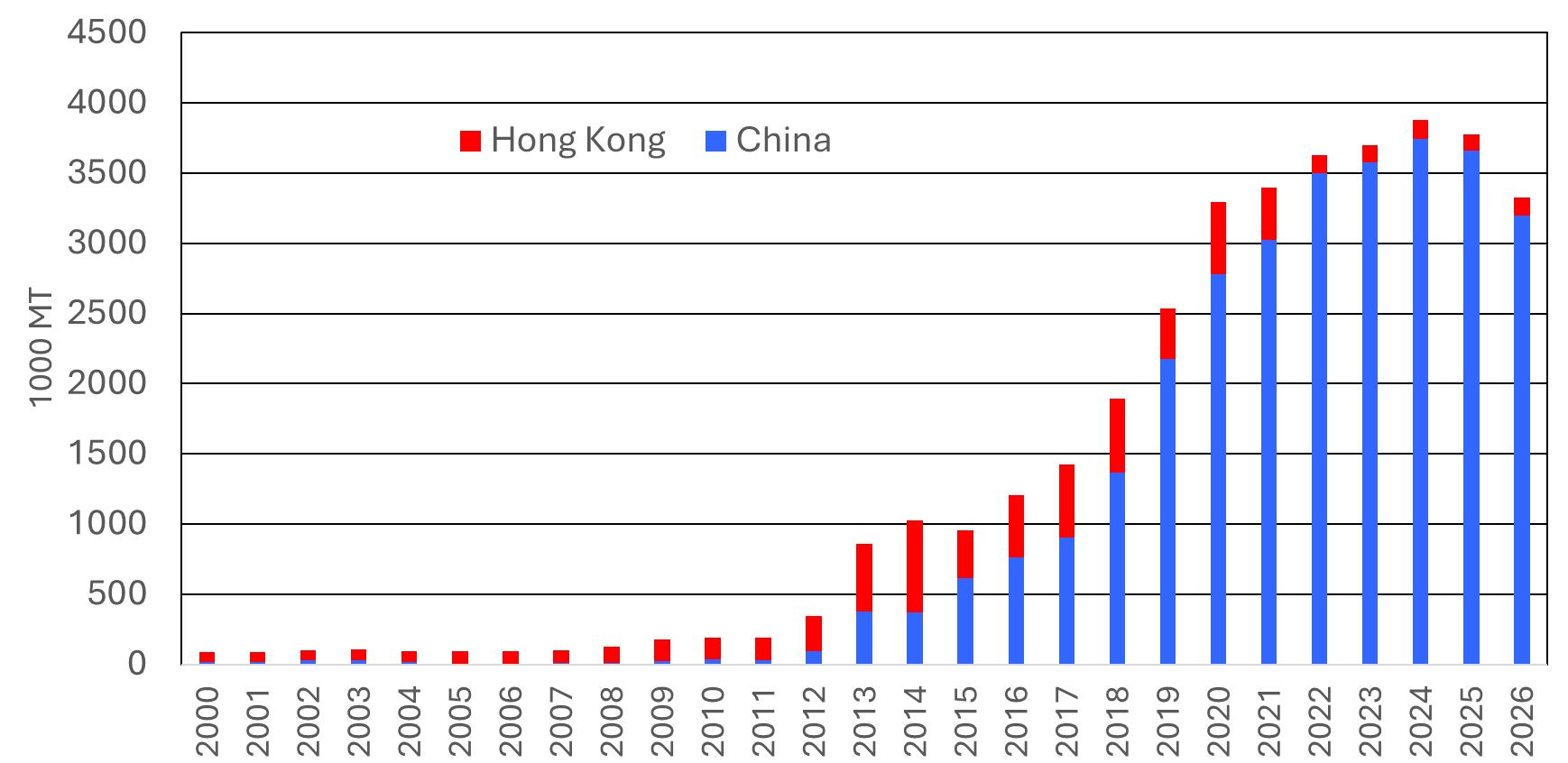
The role of China in global beef markets has changed rapidly in the past two decades. China, including Hong Kong, was not a player at all in global beef markets as little as 15 years ago, but has risen rapidly to become the largest beef importer in the last decade.
For many years, China was a large beef-producing and beef-consuming country but had almost no presence in global beef markets. Starting about 2013, rising beef consumption in China began to exceed domestic beef production, leading for the first time to significant beef imports.
Although per-capita beef consumption in China remains relatively low — roughly 13 pounds compared to 59 pounds in the U.S. — the large population means that small increases in beef consumption represent large amounts of total beef. As a result, China/Hong Kong quickly became the largest beef-importing country, surpassing the U.S. by 2017. As recently as
2022, the country accounted for more than 35% of global beef imports.
Part of the growth in beef imports in China/Hong Kong included increased exports of U.S. beef to China. Hong Kong was a significant beef export market in the 2010s, representing as much as 16% of total U.S. beef exports, and was the number three export market. It was generally recognized that a portion of exports to Hong Kong were subsequently transshipped into China. After the U.S. gained official access to China, beef exports began to grow, with exports to Hong Kong decreasing as expected. For this reason, data from China and Hong Kong are combined, although still reported separately.
In 2025, with tariffs in place and U.S. access to China revoked, exports to China/Hong Kong decreased sharply, although beef exports to Hong Kong increased to slightly offset the total decrease, which was due to different political responses in Hong Kong. The China/Hong Kong share of U.S. beef exports dropped from 18.7%, the third
Jan-16 Jul-16Jan-17Jul-17Jan-18Jul-18Jan-19Jul-19Jan-20Jul-20Jan-21 Jul-21Jan-22Jul-22Jan-23Jul-23Jan-24Jul-24Jan-25Jul-26Jan-26
largest, to 10.4% of total beef exports and fourth place among beef export destinations.
While China/Hong Kong quickly grew to be a major U.S. beef export market after 2020, the U.S. share of the country’s total beef imports has been relatively small. The U.S. share of total beef imports in China/Hong Kong peaked at 8.8% in 2022 and dropped to 3.7% in 2025. There is no doubt that China/Hong Kong generally represents significant beef export potential for the U.S. in the absence of political barriers.
Figure 1 shows the dramatic loss of China/Hong Kong beef exports in 2025 relative to other major beef export markets. Decreased beef exports to China/Hong Kong accounted for 68% of the total decrease in U.S. beef exports in 2025. The impact of this loss in the U.S. beef market was largely unrecognized simply because the domestic U.S. market was so strong and trending higher. Under different market circumstances, the impact would be much more evident. Part of the prospects for herd rebuilding and increased beef production in the U.S. will depend on maintaining and building robust beef export markets — and China/Hong Kong will certainly be a key component. T C
figure 3: china/hong kong beef imports
Source: All tables courtesy of Derrell Peel, Oklahoma State University Extension
In mid-May, China’s General Administration of Customs granted a five-year registration extension to 425 overdue U.S. beef establishments in China’s Food Import Food Establishment system. Additionally, 77 new U.S. beef establishment registrations have been added to China’s system with an effective date of May 15. Registrations are valid for five years. There are 38 beef establishments which remain suspended. Of the suspended facilities, 25 were also expired and are now renewed, but remain ineligible for export.
“USMEF greatly appreciates U.S. beef access being prioritized at the summit meeting between President Trump and President Xi,” said U.S. Meat Export Federation President and CEO Dan Halstrom. “Renewal of U.S. beef establishment registrations is a critical step forward for U.S. beef exports to China. We await more details and a further readout from USTR’s engagements with China and note, with appreciation, Ambassador Greer’s optimism for U.S. agricultural trade with China.
“China’s renewal of U.S. beef establishments is excellent news for the U.S. beef industry and for the customers in China who are anxious to resume purchases.”
Source: U.S. Meat Export Federation
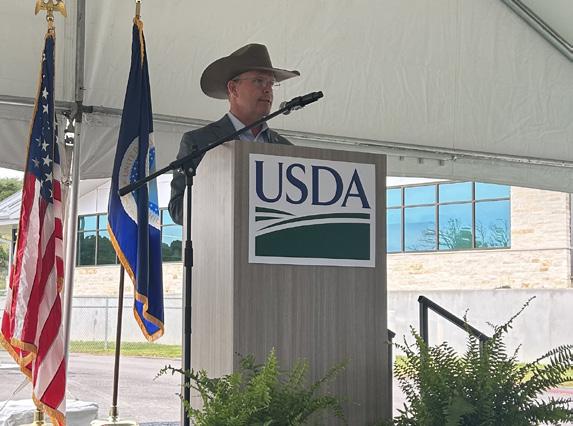
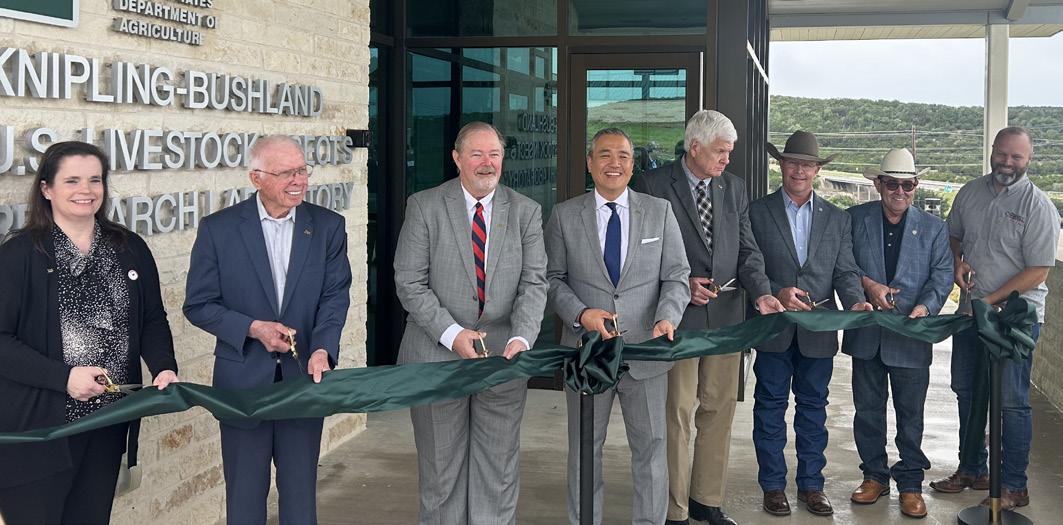
On May 27, Texas & Southwestern Cattle Raisers Association President Stephen Diebel attended the grand opening and 80th anniversary of the Knipling-Bushland U.S. Livestock Insects Research Laboratory operated by the Agricultural Research Service.
Texas & Southwestern Cattle Raisers Association was well-represented at the grand opening and communicated the association’s support of the valuable research conducted at the Kerrville facility focused on protecting livestock from pests, such as the New World screwworm.
“The Kerrville facility has a rich history in the New World screwworm fight,” Diebel said. “The groundbreaking work that took place 70 years ago continues to serve as an investment in pest management for our livestock industries.”
This new laboratory will provide the U.S. cattle industry and public with innovative ways to control and eliminate invasive arthropod pests of veterinary importance.
“We are grateful for the work the scientists, researchers and staff continue conducting at this historic site,” Diebel said. “For cattle producers, this facility sends an important message. Animal health and continued investment in agricultural research matters.”
Operating at the Kerrville site in 1950,
Dr. Raymond C. Bushland successfully demonstrated that viable sterile male screwworms could be produced. Today, the facility is utilized to develop novel, integrated management techniques to control or mitigate livestock arthropod pests, including tools that extend well beyond the use of traditional pesticides.
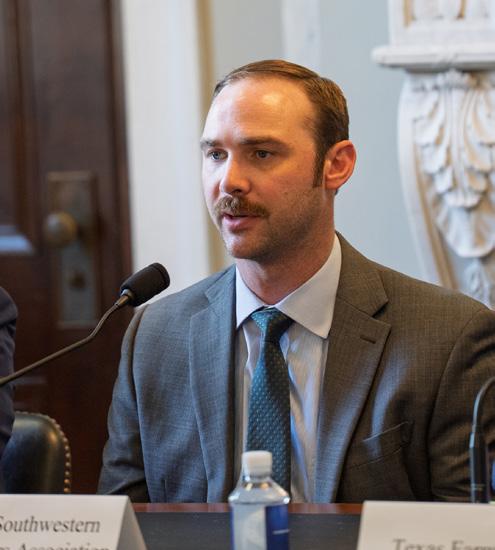
On April 23, Peyton Schumann, Texas & Southwestern Cattle Raisers Association executive director of government relations, visited Washington, D.C., and served on a panel hosted by the Senate Agriculture, Nutrition and Forestry Committee to educate Senate staff on the New World screwworm threat and its implications for the livestock industry. Schumann, alongside other livestock trade associations, spoke on livestock producer preparation for a screwworm incursion and answered questions from Senate staff.
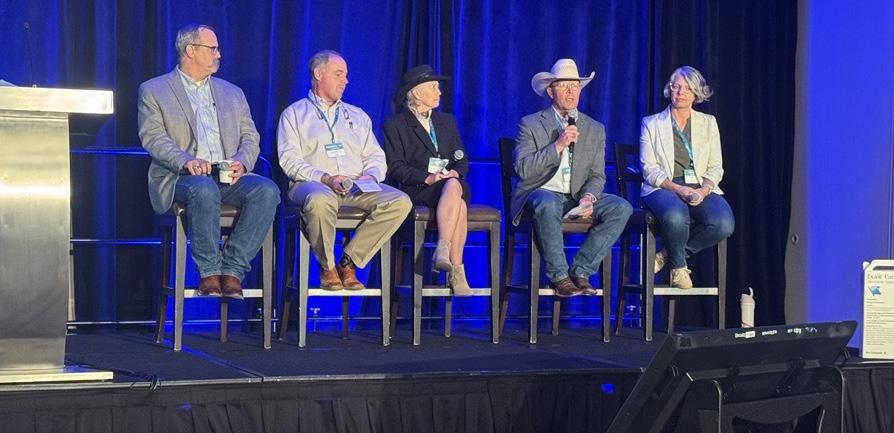
Texas & Southwestern Cattle Raisers Association President Stephen Diebel and Second Vice President Wayne Cockrell attended The Breakthrough Symposium: NWS Preparedness, hosted by Merck Animal Health April 23 in San Antonio.
Diebel participated in a panel discussion on implementing New World screwworm protocols, sharing real-world insights on ranch-level preparedness and emphasizing the importance of collaboration across agencies and producers to mitigate potential impacts.
Jake Valdez joined Texas & Southwestern Cattle Raisers Association in May as the director of sales.
Valdez brings nearly a decade of experience in ranch management and commercial cattle production, where he developed expertise in grazing strategies, herd development and operational efficiency.
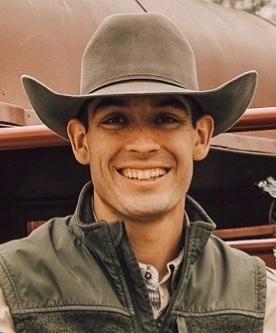
He earned a bachelor’s degree in animal science from Tarleton State University and a certificate in ranch management from Texas Christian University.
Prior to joining Texas & Southwestern Cattle Raisers Association, Valdez worked for Bonnell Ranch Beef.
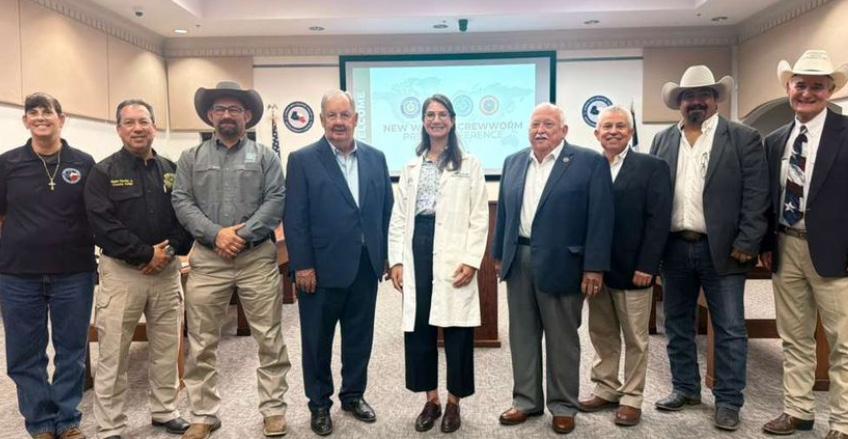
Freddie Nieto, Texas & Southwestern Cattle Raisers Association director and parasite subcommittee chairman, joined Valley County judges and industry leaders in the Rio Grande Valley May 18 to discuss the growing threat of New World screwworm and the importance of proactive prevention and preparedness efforts across Texas. The association remains committed to protecting the livestock industry through education, advocacy and collaboration with local, state and federal partners.
Originally from the Texas Panhandle, Bob McBryde grew up on the back of a horse and turned his passion into a profession when he began to train, show and sell cutting horses. As an open rider, he was often found in a barn full of show horses, or at the Cutting Horse Futurity in Fort Worth.
As McBryde’s career progressed, his journey across Texas unlocked various opportunities, leading him to
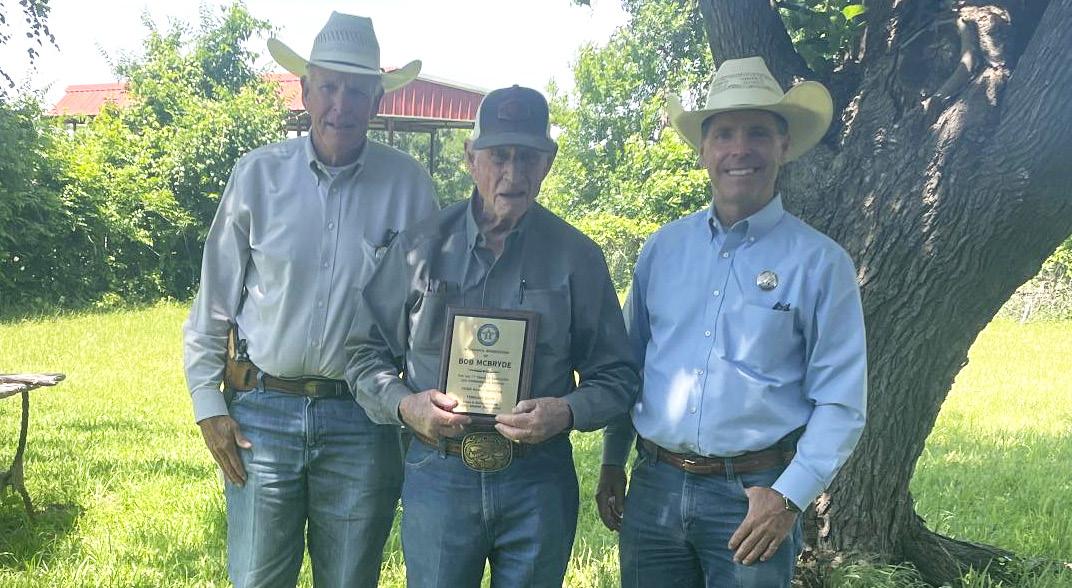
build a sale barn near Mineral Wells, where he spent decades in the horse business and became acquainted with Texas & Southwestern Cattle Raisers Association.
After McBryde sold his barn, a friend encouraged him to consider working for the association. He was hired as a market inspector soon after. He began his inspections at the Hamilton Livestock Commission and gradually added Erath County Dairy Sale, Hubbard Livestock Market and Stephenville Cattle Co. to his weekly rounds.
McBryde recently retired after 17 years of dedicated service to cattle raisers.
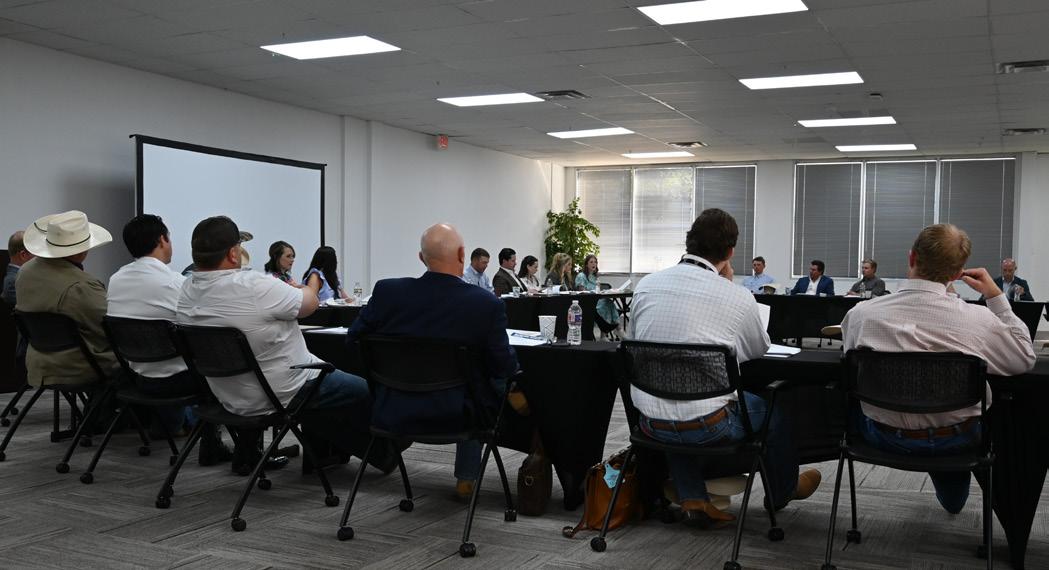
Texas & Southwestern Cattle Raisers Association leaders gathered in Fort Worth for the 2026 May Meetings, which included program committee discussions, strategic planning and new director orientation activities. Throughout the meetings, association leadership and committee members collaborated on association priorities, outreach efforts and long-term initiatives focused on strengthening the organization and supporting cattle raisers and landowners across the Southwest. T C
In March, Gov. Greg Abbott reappointed Joe L. Leathers, a Texas & Southwestern Cattle Raisers Association director, Jimmie Ruth Evans, Barret J. Klein and Thomas E. “Tommy” Oates, and appointed Benedict L. “Ben” Scholz to the Texas Animal Health Commission for a term ending Sept. 6, 2031.
Leathers, of Clarendon, is also on the board of directors of the 6666 Ranch and U.S. CattleTrace, and is a member of the National Ranching Heritage Association. He attended Clarendon College. Commissioner Leathers represents the equine industry on the Texas Animal Health Commission.
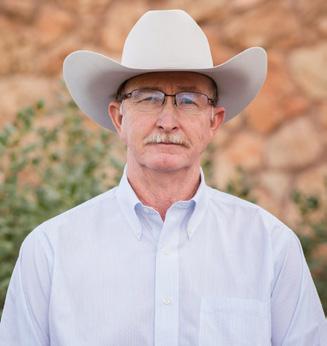
Evans, of San Antonio, is a rancher and partner of Wittenburg Ranch. She is a member and past president of the San Antonio Livestock and Rodeo, and the honorary chair of the Young Women’s Leadership Academy. She received a bachelor’s degree in Elementary Education from Texas Tech University. Commissioner Evans represents the sheep and goat industry.
Klein, of Boerne, is owner of Klein Farms and Klein Smoked Meats LLC. He is a member and former president of the Texas Pork Producers Association, National Spotted Swine Association, Texas Association of Meat Processors, and the Kendall County Economic Development Corporation. He received a bachelor’s degree in animal science from Texas A&M University. Commissioner Klein represents the swine industry.
Oates, of Huntsville, is a rancher and former owner of Huntsville Livestock. He is a past president of the Exotic Wildlife Association. He attended Sam Houston State University. Commissioner Oates represents the exotic livestock and fowl industry.
Scholz, of Lavon, is the owner and operator of B. Scholz Farms. He is a board member and past chairman for the Texas Wheat Producers Board and is the secretary and treasurer of the National Wheat Foundation. He received a bachelor’s degree in agribusiness from East Texas A&M University. Commissioner Scholz represents the general public.
Jeff Goodwin, Ph.D., director of the Texas A&M Center for Grazinglands and Ranch Management and Texas A&M AgriLife Research assistant professor in the Texas A&M department of rangeland, wildlife and fisheries management, was appointed 2026 chair-elect of the U.S. Roundtable for Sustainable Beef during the organization’s general assembly meeting held in Tampa, Florida.
Goodwin, who also holds the Thomas M. O’Connor Endowed Directorship in Rangeland and Wildlife Management, will serve in the position one year before becoming chair in 2027.
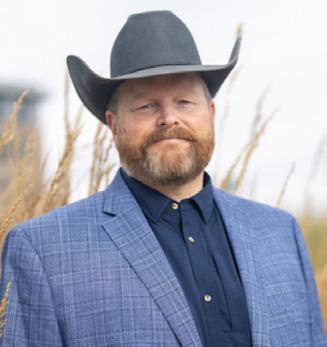
“USRSB provides a unique opportunity for collaboration within the beef industry,” Goodwin said. “Working closely with each sector of the beef value chain allows us to collectively advance research, strengthen education efforts and support sustainable beef production.”
U.S. Roundtable for Sustainable Beef is a national, multi-stakeholder initiative developed to advance and support the sustainability of the U.S. beef value chain. This is one of the first times an academic institution will lead the roundtable, which has historically been chaired by ranchers or industry representatives.
Goodwin said he aims to further AgriLife Research’s collaborative leadership impact within the beef community and strengthen the agency’s pioneering contributions to sustainable production systems. Specifically, he is committed to advancing AgriLife Research’s ongoing role in the roundtable’s sustainable beef research roadmap, which is focused on providing a clear, science-based path forward for continuous improvement across U.S. beef production.
Leaders from Texas A&M AgriLife and the Texas A&M University System gathered May 4 to break ground on the new Meat Science and Technology Center, a $133.36 million project designed to modernize applied agricultural research, teaching and extension services. The ceremony, held at 3844 Finfeather Road, marked the beginning of construction for an 85,600-squarefoot facility, which will serve as the anchor for a future agriculture district on West Campus. The project follows a decision in March by the Texas A&M University System Board of Regents to keep the Meat Science and Technology Center on the main campus.
The new center will feature modern laboratories, classrooms and processing spaces for beef, swine, poultry, sheep and goats. Designed to address global food solutions, the facility will incorporate emerging technologies such as robotics and artificial intelligence to enhance food safety and processing.
The center’s expanded footprint and infrastructure will support long-term growth on the university campus. The new center will house an array of key programs and initiatives of the Texas A&M department of animal science and the Texas A&M department of poultry science.
Construction is expected to be completed in 2028.
As grills fire up across Texas, consumers will see a mixed picture at the meat counter. Beef prices remain well above last year’s levels, while pork and chicken continue to offer more affordable options, according to Texas A&M AgriLife Extension Service economists.
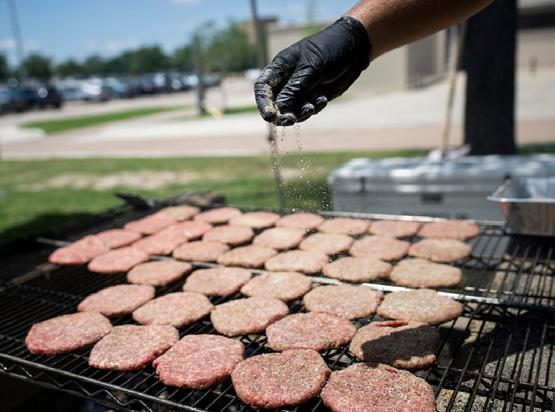
Beef remains the most expensive protein heading into grilling season, said David Anderson, Ph.D., AgriLife Extension agricultural economist and professor in the Texas A&M College of Agriculture and Life Sciences Department of Agricultural Economics.
Consumer price index data from March showed choice beef averaging more than $10 per pound across a range of cuts, up from roughly $8.75 a year ago, Anderson said. He attributed the higher prices to the nation’s cattle herd shrinking to its smallest size since 1961, limiting lean beef supplies.
“Fundamentally, nothing’s changing the fact that beef is going to be expensive and more costly than it was last year,” Anderson added. “Tighter supplies, good demand, that’s driving prices.”
However, some prices at wholesale levels have improved, he said. Ribeye prices recently averaged about $11.50 per pound, down from about $13 a year ago, while New York strip prices remained steady near $10.45 per pound. Tenderloin prices were slightly higher than last year.
Ground beef also continues to climb. Wholesale prices for 90% lean ground beef reached $4.52 per pound last week, compared to $3.75 a year ago.
Pork prices remain relatively stable, Anderson said. Retail pork averaged $4.87 per pound in March, slightly
below the $4.95 recorded a year ago, while retail chicken prices averaged $2.41 per pound in March, slightly below last year’s prices.
Higher fuel and fertilizer prices continue to pressure livestock producers and the broader food supply chain. Anderson said fertilizer costs raise feed prices by increasing the cost of corn and soybeans. Diesel prices also affect transportation costs across the industry, from hauling livestock to delivering meat products to grocery stores.
“I don’t think we’ve seen the full effect of that through our food system yet,” Anderson said. “That’s going to affect everything.”
Despite those challenges, he said consumers may still find opportunities to save this summer: “I would expect some special features around the holidays on a lot of items, including beef.”
While March beef exports were below last year, the value of beef variety meat shipments reached a new monthly high, surpassing the previous record from January. That’s according to data released by USDA and compiled by U.S. Meat Export Federation.
March beef exports totaled 97,731 metric tons, down 11% from a year ago, while value fell 8% to $844.7 million. Shipments increased year-over-year to Mexico, Central and South America, the Caribbean and Indonesia, and were steady to Korea and Taiwan. But these results were offset by minimal exports to China, and exports to Japan and the Middle East were also below last year. Excluding China, March exports were 4% above last year’s volume and increased 8% in value.
The March export results included 29,062 metric tons of beef variety meat, up 24% from a year ago and the largest since 2017. Variety meat export value increased 50% to $135.6 million, the highest on record.
March was a very robust month for per-head export value, which equated to $456.56 per head of fed slaughter.
Through the first quarter, beef and beef variety meat exports totaled 275,355 metric tons, down 11% from a year ago, while value fell 7% to $2.35 million. Excluding China from these results, exports were 3% higher than a year ago in volume and increased 9% in value.
“On the beef side, while China has been absent for more than year, the U.S. industry is making strides in other markets,” said U.S. Meat Export Federation President and CEO Dan Halstrom. “The supply situation makes it difficult to grow export volumes, but exports are commanding strong prices. Expanding beef variety meat demand is especially critical, as this makes such a key contribution to the value of every animal.” T C
Join or renew your membership today. Membership supports TSCRA Special Rangers, government relations advocacy, educational programs, member-only discounts, networking and social events, The Cattleman magazine and insurance services.
To learn more about membership, scan the code below or visit TSCRA.org.


T SCRA’s new business membership categories are designed for businesses that support ranchers and landowners. Whether operating in one county or across multiple states, TSCRA business memberships help businesses increase visibility, strengthen customer relationships and engage directly with the people shaping the future of the cattle industry.

Annual print or digital advertising credit
Annual event or sponsorship credit
Business Directory listing
Use of TSCRA business member logo
Business member display sign
Eligibility for the TSCRA Partner Program
Eligibility for the TSCRA Gilly Rojas Memorial Internship Placement Program
Eligibility to serve on TSCRA committees
Priority booth selection for Cattle Raisers
Convention & Expo
Enhanced visibility and engagement opportunities with TSCRA leadership
Access to aggregated member trends and industry intelligence


Ranching
Join Texas & Southwestern Cattle Raisers Association at 1 p.m. Tuesday, July 21, for the next Ranching 101 session. The hour-long Zoom webinar will explore practical drought strategies and water management solutions to help ranchers navigate challenging environmental conditions, while maintaining herd productivity and operational sustainability. Interested members can scan the QR code to the right to register. Participants will gain valuable insights into drought preparedness, water conservation practices, forage and grazing management, and strategies to support herd health during periods of limited resources. Whether facing ongoing dry conditions or planning for future weather challenges, this Ranching 101 webinar will provide practical tools and management ideas to incorporate right away.
Ranching 101 webinars provide participants with practical, sound guidance on the tools and equipment needed to get started in ranching or land ownership. The webinars are available online on the third Tuesday of every month.
Registration is complimentary for any association member. Visit tscra.org to learn more. T C

Ranching 101 is presented by:
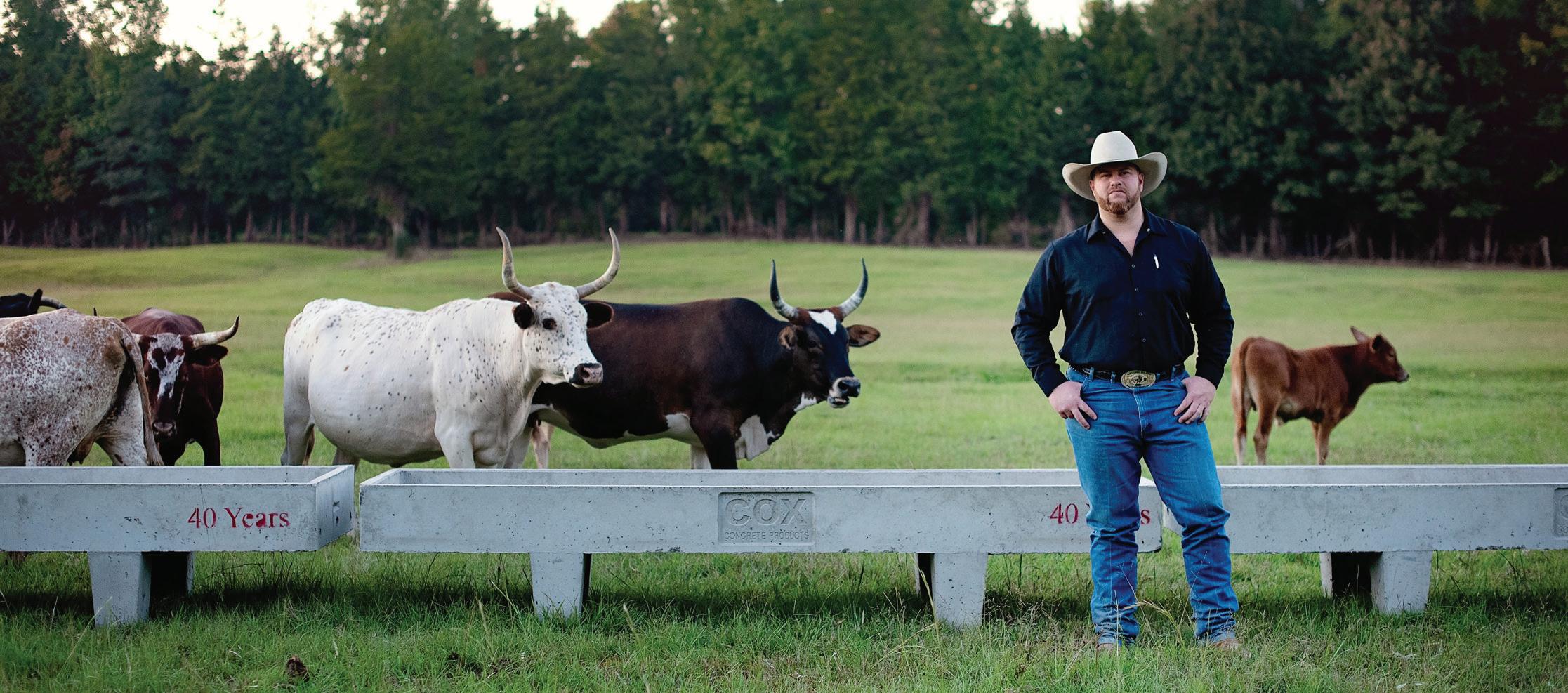

PEGGY DONNELL BROWN, 89, of Throckmorton, died April 21.
Peggy was raised near Eliasville on her family’s ranch, which the Donnell family established in 1876. Growing up, she raised and showed Hereford steers. At the time, girls were not allowed to participate in the youth stock shows. So young Peggy, sporting her pigtails, competed against grown men in the open division.
She met R.A. “Rob” Brown Jr. when she was 14 years old. She graduated from Breckenridge High School in 1955 and attended Texas Tech University from 1955-1958.
Rob and Peggy were married June 14, 1957. In 1958, they returned to R.A. Brown Ranch in Throckmorton. Born the daughter, granddaughter and great-
granddaughter of ranchers, she went on to raise children, grandchildren and great-grandchildren on the ranch.
The couple’s hard work and vision earned the ranch many honors throughout the years, including the Texas Family Land Heritage Award, National Cattlemen’s Beef Association’s Cattle Business of the Century and Vision awards, and American Quarter Horse Association Best Remuda Award.
She is survived by her children, Betsy (Jody) Bellah, Rob A. (Talley) Brown, Marianne (Todd) McCartney and Donnell (Kelli) Brown. She is also survived by 17 grandchildren, 26 great-grandchildren, her brother George Donnell, and many nieces, nephews and friends. T C




$31,629.75 Jan. 9, to a livestock auction in Northeast Texas. Johnson failed to remit payment after receiving a formal demand.
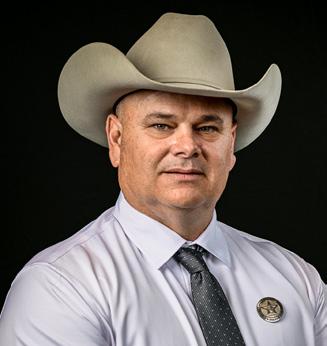
A Texas & Southwestern Cattle Raisers Association Special Rangers investigation, in coordination with the Colorado County Sheriff’s Office, resulted in the arrest of Cody Chance Moore, also known as Cody Perry, 34. Moore turned himself in April 29 on outstanding warrants for theft of livestock and theft, both second-degree felonies.
Authorities allege Moore sold stolen cattle and was involved in the theft of a check related to cattle sales. During the investigation, Texas & Southwestern Cattle Raisers Association Special Ranger Nathan Hale and investigator R. Mican with the Colorado County Sheriff’s Office gathered evidence indicating the cattle were unlawfully sold and proceeds improperly obtained.
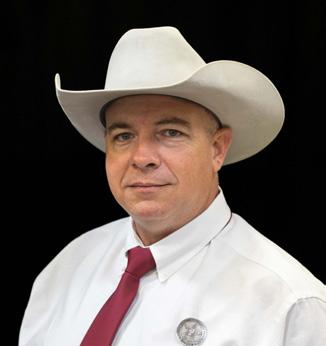
Moore surrendered to authorities in Colorado County and was taken into custody on the outstanding warrants. The investigation remains ongoing.
Texas & Southwestern Cattle Raisers Association Special Rangers would like to thank the Colorado County Sheriff’s Office for their assistance in this case.
Ben Lee Johnson, 65, of Montalba, was arrested on felony charges following investigations by Texas & Southwestern Cattle Raisers Association Special Rangers into livestock theft and issuance of a non-sufficient funds check.
The case began in August 2025, when Texas & Southwestern Cattle Raisers Association Special Ranger Mike Boone received a report that Johnson failed to pay for cattle purchases totaling $221,730.20 at a local auction barn. Johnson was arrested in November 2025. Following the arrest, a Jasper County grand jury indicted him for theft of livestock March 16.
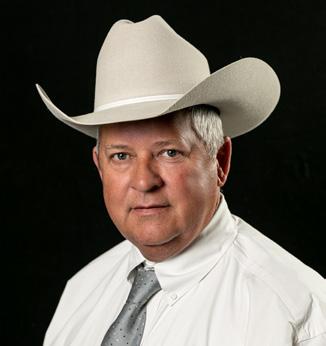
A second investigation was initiated in early 2026 by Texas & Southwestern Cattle Raisers Association Special Ranger Robert Pemberton. Authorities allege Johnson issued a non-sufficient funds check for
Investigators determined Johnson continued to buy and sell cattle at other auction barns while failing to pay outstanding debts. Based on the investigation, a warrant was issued April 7 and Johnson was arrested April 9 in Limestone County. The case has been submitted to the district attorney’s office and remains under investigation.
Texas & Southwestern Cattle Raisers Association Special Rangers worked with the Jasper County District Attorney’s Office, Rains County District Attorney’s Office, and sheriff’s offices in Rains, Limestone and Jasper counties.
A Texas & Southwestern Cattle Raisers Association Special Rangers investigation has resulted in the arrest of Edward A. Schwartz, 49, of Sanford, Colorado, on livestock theft charges connected to the purchase of a registered Quarter Horse.
The investigation began in January 2026 after TSCRA Special Ranger Bo Fox received a report from a Hopkins County resident alleging Schwartz failed to pay for a 2024 American Quarter Horse Association palomino stallion purchased Nov. 29, 2025, for $8,000.
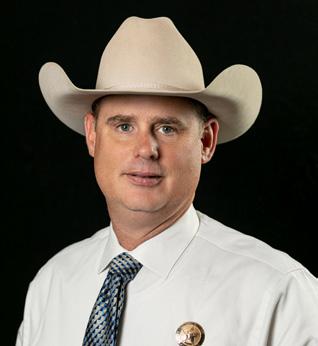
Authorities allege Schwartz took possession of the horse and provided two checks totaling $8,000, both of which were later returned for insufficient funds. Despite receiving a formal demand letter, Schwartz allegedly failed to remit payment or return the horse.
The case was presented to the 8th Judicial District Attorney’s Office, and a Hopkins County grand jury returned an indictment May 1 for theft of livestock, a second-degree felony enhanced because the victim was older than 65. A capias warrant was subsequently issued with a $50,000 bond.
Schwartz was arrested May 17 by the Wagner Police Department in Wagner, South Dakota. He is currently being held at the Charles Mix County Sheriff’s Office awaiting extradition to Texas.
The investigation remains ongoing.
Texas & Southwestern Cattle Raisers Association Special Rangers would like to thank the Hopkins County District Attorney’s Office, Hopkins County Sheriff’s Office, Wagner Police Department, South Dakota Brand Board and Charles Mix County Sheriff’s Office for their assistance in the investigation. T C
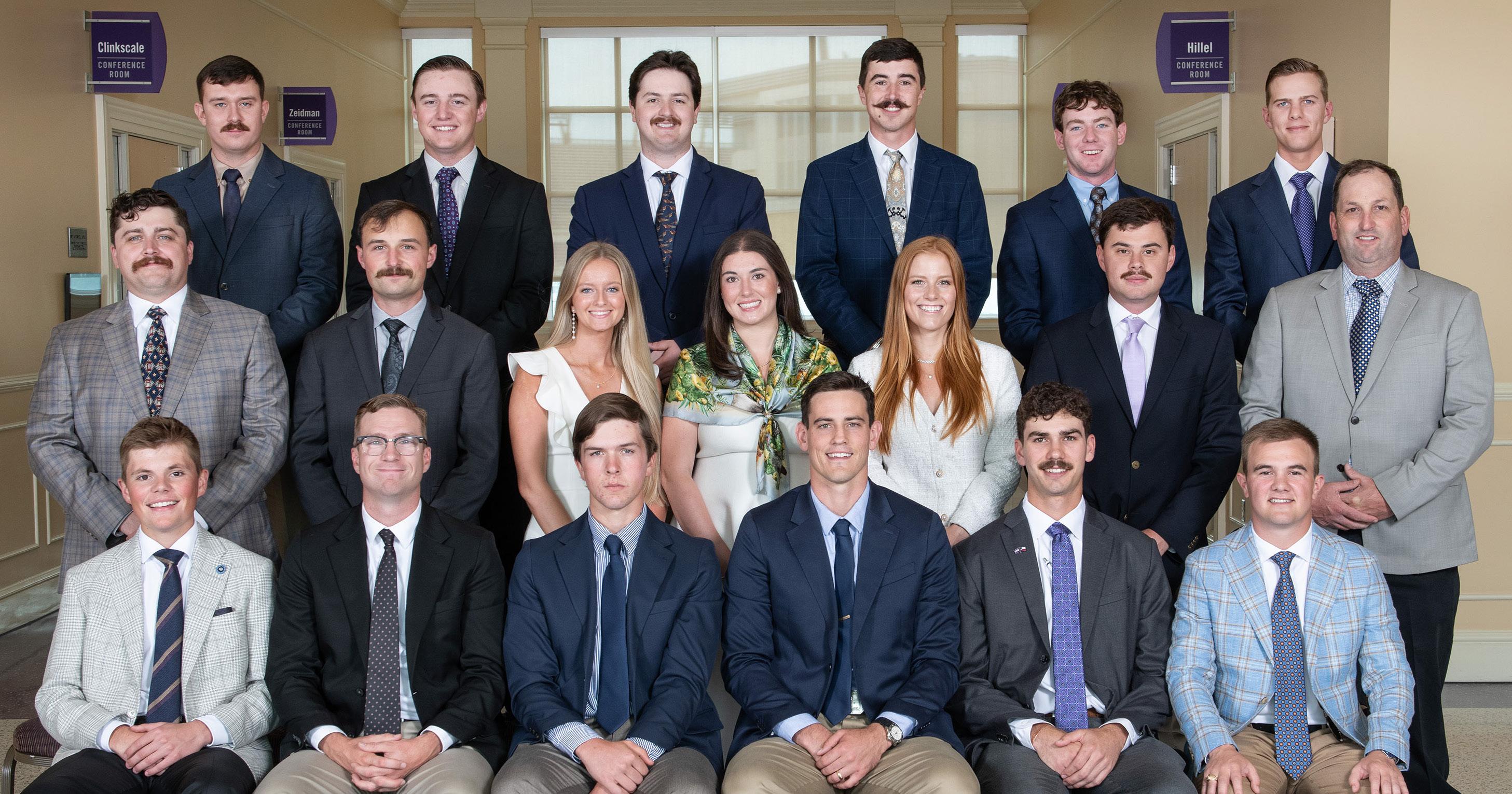
These 19 young women and men graduated from TCU Ranch Management in May after successful completion of the comprehensive curriculum of the program, which carefully covers every aspect that affects the profitability of the ranching business. Intensive classroom study of ranching practices is reinforced in 9,000 miles of travel for onsite case studies of ranches, farms, feedlots, processing plants, market facilities, and research centers. They benefit from years of operating experience with some of the very top people in the ranching profession.
Custom bit and bridle stolen in Amarillo.
Texas & Southwestern Cattle Raisers Association Special Ranger Chris Ward reports a custom bit and bridle stolen from the Tri-State Fair Grounds in Amarillo. The bit is a Klapper #27-style bit with “JULY” on both shanks and two to three silver bars above and below the lettering. It was crafted by Jesse Cassingham of Benjamin and valued at approximately $2,000. The bit and bridle were attached to braided blue paracord reins with pineapple knots. The item was last seen April 25 around 11:30 p.m. at the Tri-State Fairgrounds in Amarillo, discovered missing April 26 around 9:30 a.m. and may have been taken from the fairgrounds or the Westerner Extended Stay Hotel parking lot. Anyone with information regarding this case is urged to contact Ward at 806-205-0119.
Steers missing in Lipscomb County.
Texas & Southwestern Cattle Raisers Association Special Ranger Lynn Mays reports six head of steers missing from a pasture west of County Road 10 and south of County Road W northeast of Glazier. Last seen May 6, the steers weigh approximately 675 pounds and are mixed colors, including black, black baldy, red and Charolais. The cattle are branded high on the left hip with one of four half-circle brands facing up, down, forward or backward. Some of the steers may also have white ear tags in the left ear with handwritten numbers ranging from 300 to 500. Anyone with information regarding this case is urged to contact Mays at 806-683-8320.
Cattle missing in Rogers County, Oklahoma.
Texas & Southwestern Cattle Raisers Association Special Ranger Gavin Gatrell reports 12 head of cattle missing from a property near E 300 and S 4270 Road in Chelsea, Oklahoma. The cattle are described as mixed-breed, including Brahman-cross, black, red, roan and Braunviehtype cattle. All cattle are branded with a “coat hanger”
brand located on either the right hip or left rib. The cattle were last seen around Feb. 12. Anyone with information regarding this case is urged to contact Gatrell at 918-809-3331.
Murray Grey bull missing in Lamb County.
Texas & Southwestern Cattle Raisers Association
Special Ranger Michael Looney reports a Murray Grey bull missing from a property off FM 37 and County Road 247. The 18-month-old bull was last seen April 12. Anyone with information on this case is urged to contact Looney at 806-778-2585.
Cattle missing in Montague County.
Texas & Southwestern Cattle Raisers Association Special Ranger Cliff Swofford reports 6 to 8 head of cattle missing from a property on the west side of FM 103, east of Crow Road. The cattle are described as black or brindle, some with nubs and 1 to 2 head with horns. Most, if not all, are heavy bred. All cattle are branded with a “winged U” high on the left hip. They were last seen Dec. 23.
Cattle missing in Throckmorton County.
Swofford also reports 44 black or black baldy steers missing from a pasture on County Road 190, east of Munday. The steers weigh approximately 800 to 900 pounds and are branded with an “NL bar” on the left side or left hip. The cattle were last seen March 1. Seven head have been recovered, while 37 remain missing.
Cows missing in Young County.
The special ranger reports two muley cows missing from a property on FM 2652 near Graham. The missing cattle are one black muley cow branded with “LOR” merged as one letter low on the left hip, and one red muley cow branded with the same “LOR” mark low on the left hip along with a running “W” brand on the left hip. The cows were last seen April 15.
Cattle missing in Parker County.
Swofford also reports a black Angus steer and heifer missing from a property off Peaceful Lane in Springtown. Last seen April 15, the missing cattle weigh approximately 600 to 700 pounds. The heifer has a No. 95 orange ear tag, and the steer has a No. 48 blue ear tag.
Tiger-striped heifers missing in Montague County. The special ranger reports two tiger-striped red heifers missing from a property off Montague Road. Last seen April 17, the heifers weigh approximately 700 to 800 pounds and have yellow ear tags marked 16 and 17.
Cattle missing in Throckmorton County.
Swofford also reports five black cow-calf pairs and one black bull missing from a property off County Road 195 in Throckmorton. The cows are branded with either a running “JM” or “7L” on their left hips. The bull is branded with a running “JM” on his left hip and a connected “MA” brand on the lower left hind leg, with the “M” positioned above the “A.” The calves weigh approximately 700 pounds, are branded with a “7L” on the left hip and have a swallow-fork ear notch in the left ear. The cattle were last seen March 1. Anyone with information regarding these cases is urged to contact Swofford at 817-343-8804.
Six head of black Angus cow-calf pairs and donkey stolen in Callahan County.
Texas & Southwestern Cattle Raisers Association Special Ranger Zach Havens reports six head of black Angus cow-calf pairs stolen from a property off County Road 105 near Abilene. The cows are 3 to 8 years old and are branded with a “7 over bar” on the left rib. The right ear is split, and the left ear is cropped. The calves, weighing approximately 400 to 650 pounds, are branded and earnotched the same as the cows. Also believed to be stolen is a full-sized, 18- to 20-year-old light gray female donkey with a cross marking on her back. The cow-calf pairs and donkey were last seen March 10. Anyone with information on this case is urged to contact Havens at 254-396-1747.
Cattle missing in Trinity County.
Texas & Southwestern Cattle Raisers Association Special Ranger Darrel Bobbitt reports four cow-calf pairs missing from a property at the dead end of County Line Road. The missing cattle are a black Maine cow-calf pair; a black Brangus cow-calf pair branded with a “Rocking M” on the left rib; a Red Angus cow-calf pair with tattoo No. 1CTS420 in the ear; and a red baldy cow-calf pair. The cattle were last seen April 19. The owner discovered the cattle missing April 27 and found a fence had been cut, allowing the cattle to be moved through the opening.
Cattle missing from Trinity County. Bobbitt also reports several cattle missing from a
property off Hogg Road near Nogalus Prairie. The missing cattle are three gray Brahman heifers weighing 700 to 800 pounds; a brown cow-calf pair with a “77” brand on the left shoulder, a pink ear tag and a red white-face calf; two tiger-striped heifers weighing approximately 600 pounds; and one black Brangus cow with a black-white-face calf. The cattle were last seen March 30 and were part of a larger herd that strayed from the property before being recovered. Anyone with information regarding these cases is urged to contact Bobbitt at 936-222-2144.
Cattle missing in Tom Green County. Texas & Southwestern Cattle Raisers Association Special Ranger H.D. Brittain reports three black or black baldy cows missing from a property on the north side of San Angelo near the dump grounds. The cows are 5 to 7 years old and have ear tags with the owner’s name and phone number. The cattle were last seen May 2. Anyone with information regarding this case is urged to contact Brittain at 325-340-2268.
Crossbred dairy calves missing in Milam County.
Texas & Southwestern Cattle Raisers Association
Special Ranger Brent Mast reports three crossbred dairy calves missing from a property on County Road 412 near Rockdale. The calves are described as: one yellow calf weighing approximately 200 pounds with yellow ear tag No. 72; one red calf weighing approximately 120 pounds with yellow ear tag No. 22; and one black calf weighing approximately 200 pounds with ear tag No. 105. The calves were last seen May 3 at approximately 1 p.m. and were discovered missing around 6 p.m. Anyone with information regarding this case is urged to contact Mast at 936-714-6619.
Cow-calf pairs stolen in Jim Wells County.
Texas & Southwestern Cattle Raisers Association
Special Ranger Duane Cottrell reports seven to eight Angus-cross cow-calf pairs stolen from a property off County Road 425 near Premont. The cows are described as black or red, have a “JR” branded on their left hip and yellow numbered ear tags in their left ear. The calves are black or red, a couple months old and have no brands or ear marks. The cattle were taken some time between April 27 and the morning of April 29 after unknown suspect(s) cut a chain securing the property gate. Anyone with information regarding this case is urged to contact Cottrell at 956-562-4637. T C
TSCRA offers a cash reward for information leading to the arrest and/or grand jury indictment of individuals for theft of livestock or related property. Anonymity is guaranteed. To provide information, call the Operation Cow Thief tip line at 817-916-1775.
By Sarah Fuller
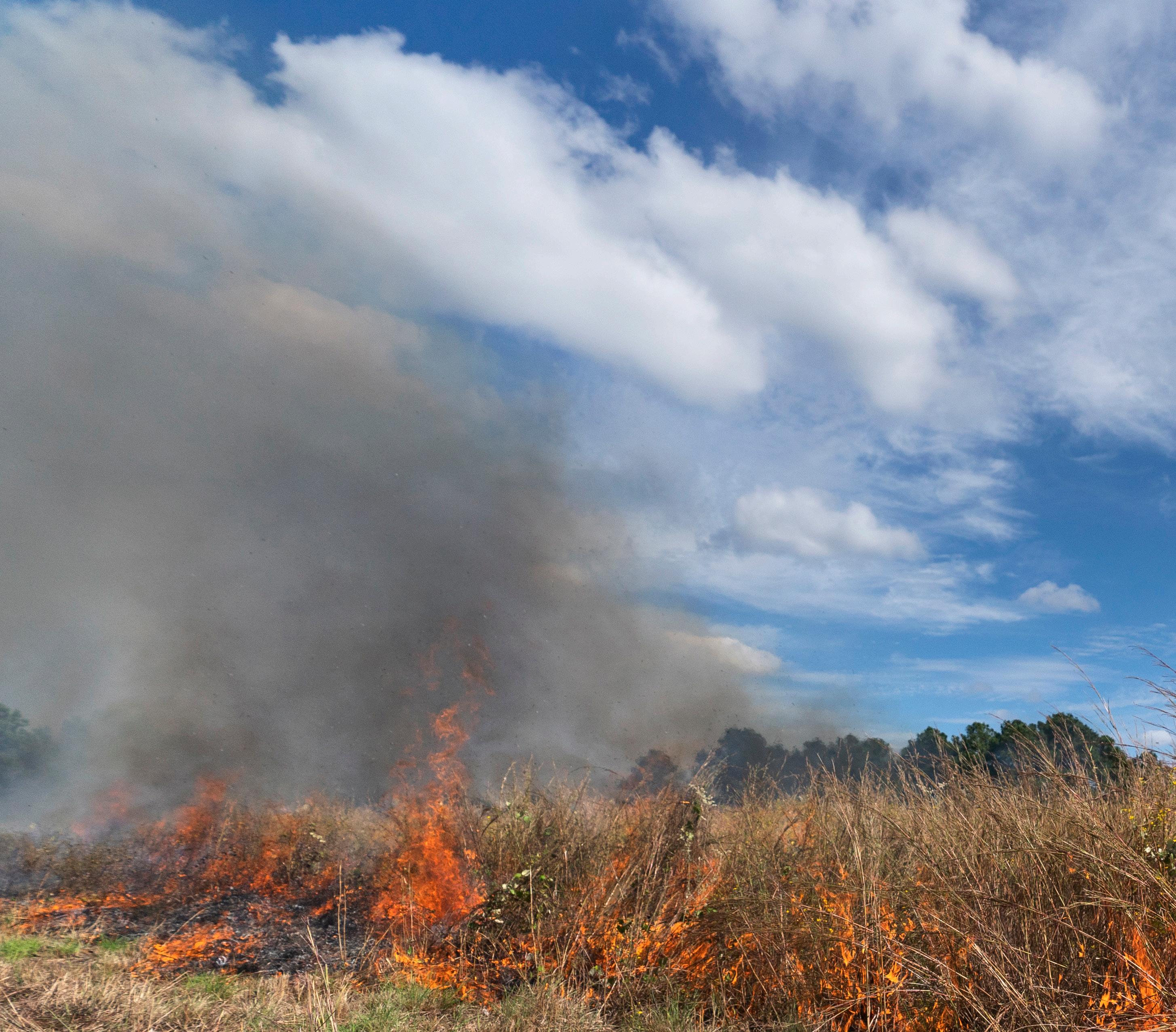
When Texans think about land management, fire may not be the first tool that comes to mind. But carefully planned, low-intensity fire is an extremely effective and naturally occurring tool that has been used throughout history to maintain healthy ecosystems.
Known as a prescribed fire or prescribed burn, the practice uses the highly coordinated application of fire under specific weather and safety conditions to reach defined land management goals ranging from wildlife habitat improvement to wildfire fuel reduction.
“Texas’ diverse landscapes evolved alongside fire, which shaped plant communities and maintained habitat conditions that many of our native wildlife species rely on,” said David Brooke, Texas A&M AgriLife Extension Service statewide prescribed fire coordinator in the Texas A&M department of rangeland, wildlife and
fisheries management. He is based in the Texas A&M AgriLife Research and Extension Center at San Angelo.
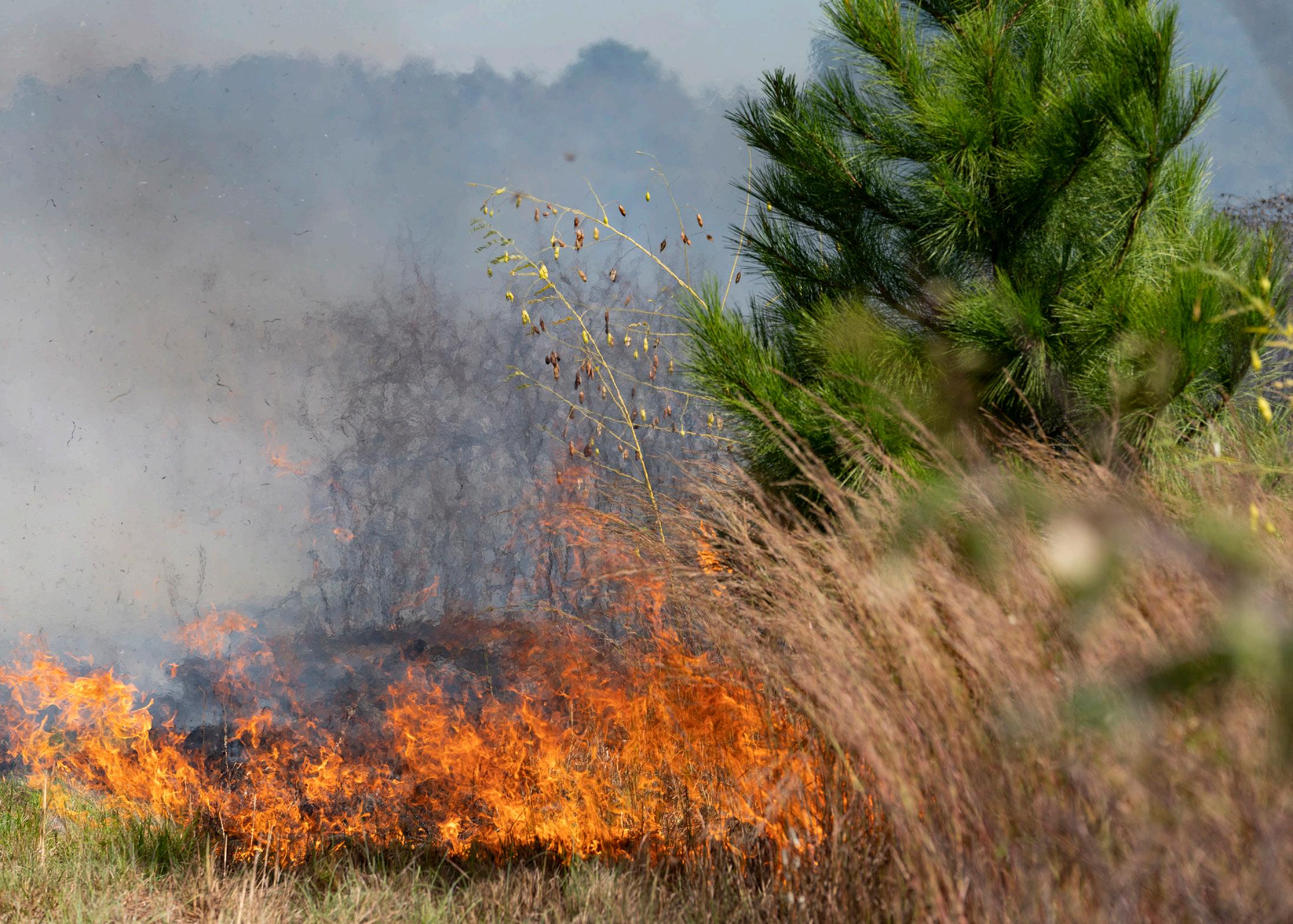
Using prescribed fire, land managers can mimic its natural role in a planned and regulated way. Burns can improve livestock forage quality, control invasive plant species like cedar, and enhance browse for white-tailed deer and cover for quail, Brooke said.
But before Texans can adopt this tool, they must understand it and the role it plays in the landscape. Brooke said an effective prescribed fire begins long before a flame is ever ignited.
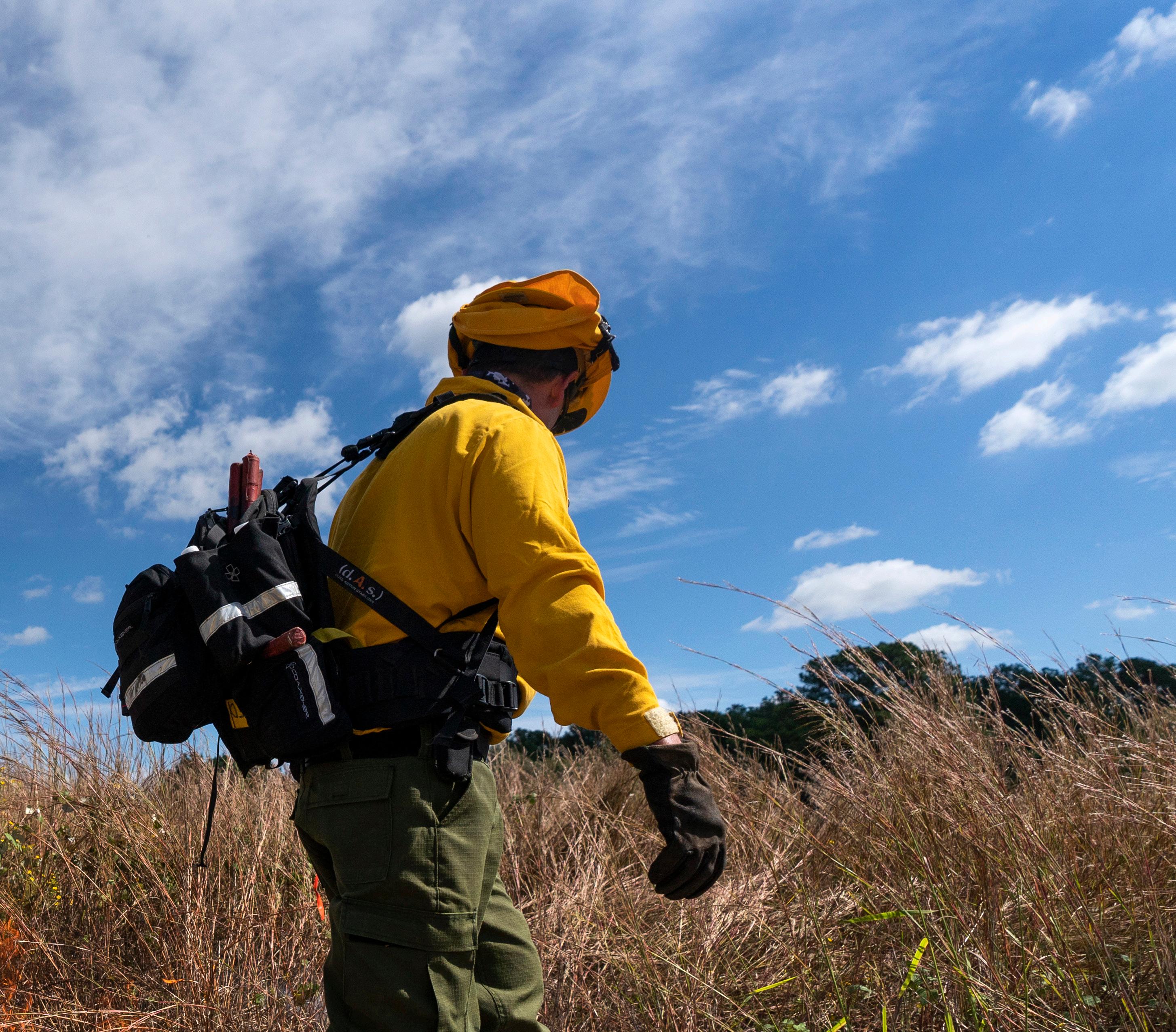
“First and foremost, prescribed fires operate under a written burn plan outlining specific management objectives,” Brooke said. “Everything is intentional and planned out ahead of time.”
Components of a prescribed burn plan include:
• Specific goals, such as habitat improvement or fuel reduction.
• A notification list, including neighbors, emergency dispatchers or other agencies that may be needed or affected.
• Weather parameters such as humidity, wind speed and direction, and fuel moisture.
• Safety hazards or considerations, as well as vegetation and surface fuel information.
• Equipment and personnel.
• Safety and contingency plans, as well as post-burn monitoring tasks.
• Maps of the project area.
Fire and weather conditions, like humidity and wind speed, are closely monitored by fire and fuel specialists leading up to prescribed fire ignition. If conditions shift outside the plan, the burn should be postponed or canceled, Brooke said.
Ongoing research confirms that both natural and anthropogenic, or human-caused, fires helped shape the ecology of the Southern U.S. over millennia.
“These regular intervals of low-intensity fire shaped iconic plant communities, like tallgrass prairies, and maintained the habitat conditions many native wildlife species, such as bobwhite quail, rely on,” Brooke said.
Thanks to historic records, fire scars and mathematical models, fire ecologists can estimate the frequency of these fires. With this knowledge, land managers can plan and implement prescribed fires on the landscape, mimicking a natural event that improves its health and resilience. New research continues to refine parameters to maximize burn efficiency and achieve specific results.
Brooke said the reintroduction of this natural process:
• Aids in soil nutrient cycling, improving soil health.
• Helps control non-native plant species, pests like ticks and woody plant encroachment.
• Improves forage production and quality.
• Enhances wildlife habitat.
• Removes hazardous fuel loads, reducing the threat of intense wildfires.
As more homes are built near undeveloped land, Brooke said some communities in Texas are beginning to incorporate prescribed fire plans to prevent and mitigate wildfire threats to life and property.
“We’re seeing the wildland-urban interface expand across the state, placing homes and communities within previously undeveloped landscapes,” he said.
“Low-intensity prescribed fires can be used as one strategy to control fuel buildup and reduce the wildfire threat to communities and families.”
Through statewide workshops, training events and community outreach, Brooke and experts from
multiple agencies, including Texas A&M Forest Service, are teaching landowners to safely utilize prescribed fire.
“Prescribed fire is an effective and highly costefficient land management tool that supports resilient ecosystems and communities,” Brooke said. “My goal is to provide landowners and land managers with the knowledge and resources to add this to their stewardship toolkit.”
Brooke works closely with the Prescribed Burn Alliance of Texas and its member associations as a part of this effort.
“The more that land managers and the general public understand prescribed fire, the greater opportunity we have to see its safe implementation and advance resource stewardship,” Brooke said. T C

2026 Campaign Goal: Raise $350,000 to place six new trucks into service.
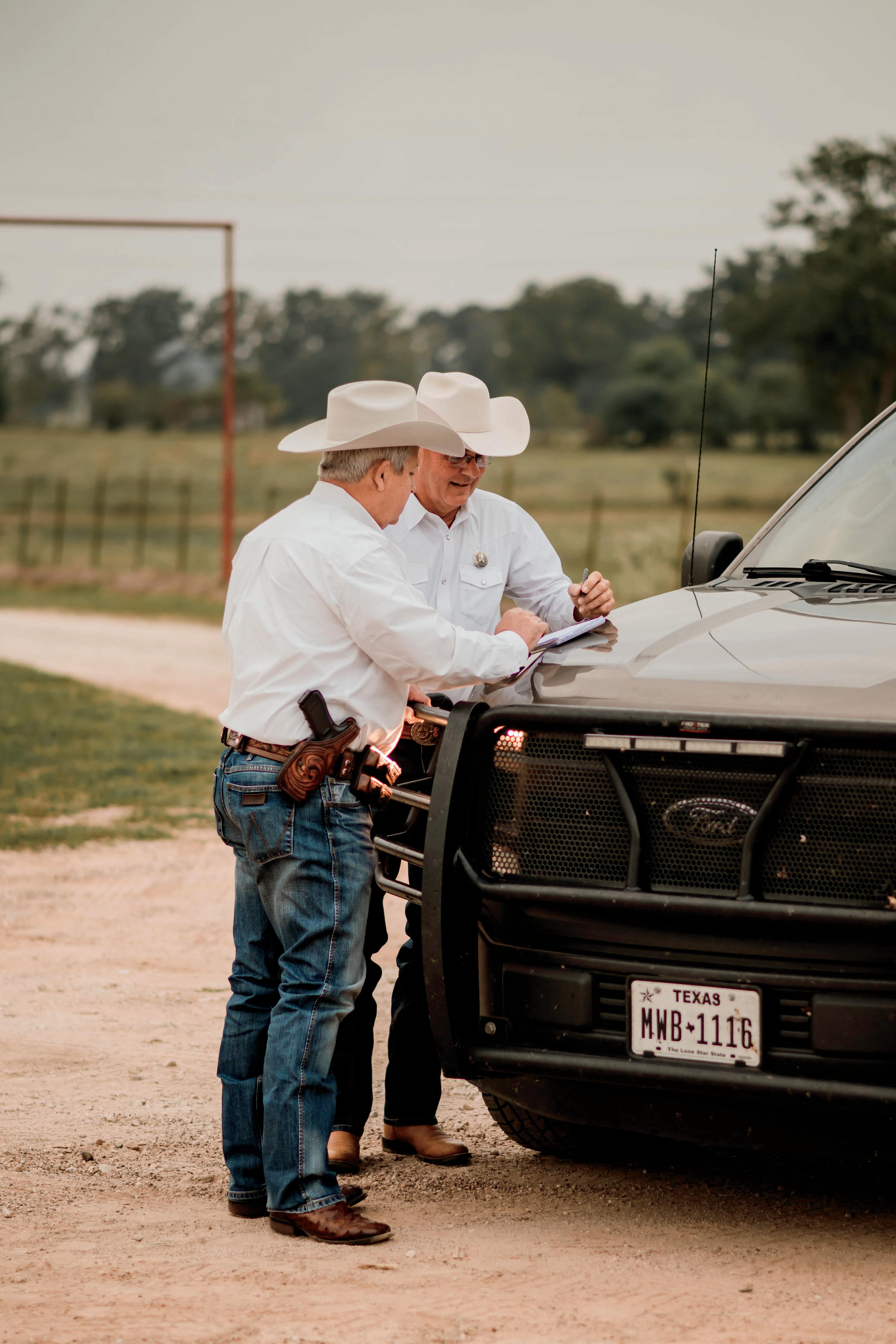
Your support helps put six dependable vehicles in the field where


by
By Paul Beck
Throughout the past 60 years, mature cow weight has increased at an annual average of 7.7 pounds per year, but it has not increased at a constant rate.
Figure 1 shows the average annual estimated cow live weight from USDA reports for monthly cow carcass weights. When looking at the annual average live weight data, there is a major structural shift in cow size beginning in the mid-1960s when selection for larger-framed, growthier cattle became popular.
Prior to that, mature cow weight was relatively stable and even slightly declining. After 1965, cow size began a steady upward climb increasing by approximately 6.5 pounds per year until 1995. However, the growth rate in cow size has not been uniform throughout the years.
During the 1960s and 1970s, cow size changed very little. The increase in mature cow size began with the introduction of larger frame Continental genetics into the U.S. cow herd in the 1980s. This resulted in the rapid acceleration in cow weights by nearly 19 pounds per year from 1995 to 2005.
During the ’80s, mature cow weight increased roughly 8 pounds per year and 80 pounds in 10 years. Along with the widespread adoption of larger-framed genetics and
ACCELERATION IN MATURE COW BODY WEIGHT GROWTH
Continental breed influence across commercial herds, the increased emphasis on growth EPDs has grown mature cow size. This shift is important to modern increases in post-weaning beef production and efficiency. Selection pressure for growth, heavier weaning weights and changing market signals all contributed to that trend.
Since 2005, cow weights have shown moderate increases of around 4 pounds per year, which is essentially a plateau relative to the acceleration decade from 1995 to 2005. The recent moderation in cow size indicates efforts to improve maternal efficiency have been fruitful. Still, cow size remains substantially larger than in the 1960s. Throughout the six decades, that translates to more than 450 additional pounds per cow.
That increase in cow size has consequences for ranch sustainability and risk tolerance. If stocking rates are not adjusted for the increased cow size, long-term rangeland productivity will suffer from overgrazing and weather disruptions, such as drought, will have greater impacts.
Bigger cows require more forage and greater maintenance energy, which influences stocking rates. While larger cows can wean heavier calves, they are often not as efficient. The cow efficiency question remains critical: Are we adding pounds where they generate greater returns?
Understanding how cow size has changed can help producers evaluate whether their current cowherd aligns with their forage resources and profitability goals. Bigger cows are not inherently good or bad — but cows must fit
the production environment, or ranchers will be required to fit the environment to the cow by providing more supplemental feed.
As always, the most efficient cow is the one that matches her environment and pays her own way. T C
Paul Beck is a beef cattle nutrition specialist for Oklahoma State University Extension.
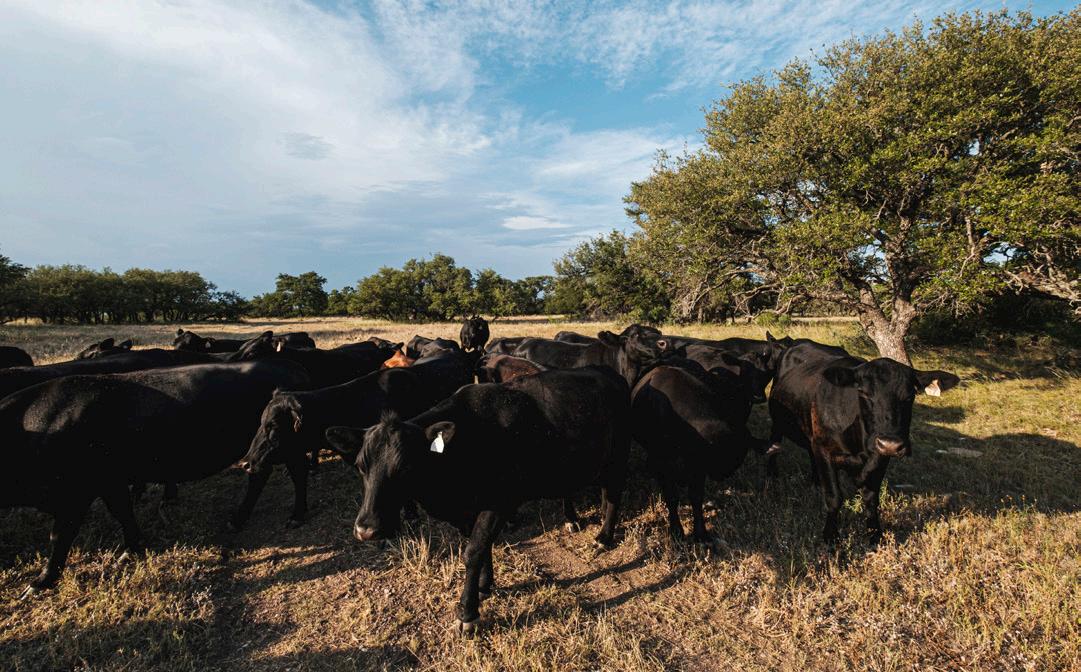
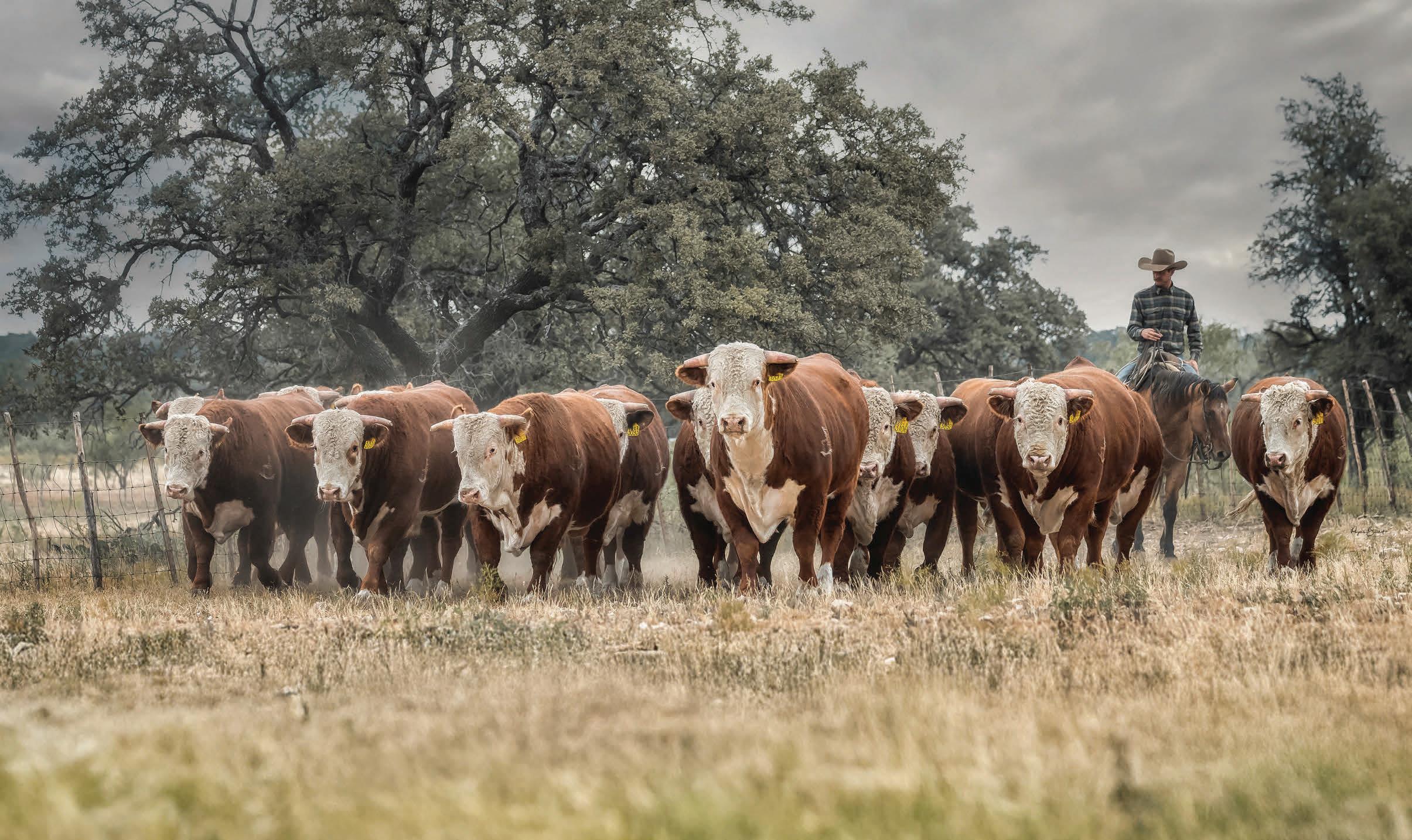


The Texas and Southwestern Cattle Raisers Foundation awarded four $5,000 Large Animal Veterinary Scholarships to students nearing completion of a Doctor of Veterinary Medicine degree from Texas A&M University.

Growing up on a commercial cow–calf ranch near an expanding urban area, Lauren developed a strong commitment to livestock health, reproductive efficiency, and land stewardship. She plans to pursue a career as a rural mixedanimal veterinarian, with a focus on beef cattle medicine.
Guided by a mentor who was both a mixed-animal veterinarian and conservationist, Jack developed a deep appreciation for land stewardship and the rural way of life. He aims to serve a rural community as a food-animal veterinarian, with a focus on herd health for large-animal producers.

Christopher developed both grit and independence working on his family’s ranches near Thorndale and Hamilton, and also a deep appreciation for the vital role rural veterinarians play in agricultural communities. He plans to open a private veterinary practice in South Texas focused on cow-calf, small ruminant, and feedlot production systems.

Kailee grew up in a small community where cattle outnumbered people, highlighting the need for greater veterinary care resources for producers. Her goal is to open a large-animal veterinary practice in a rural community, with an emphasis on bovine reproduction.

These scholarships are made possible by private donations. If you would like to make a contribution to the TSCRF scholarship program, please contact Gabrielle Harris at gharris@cowgirl.net or 817-332-8551.

Blue Funnel-lily (Androstephium coeruleum)
By Kent Ferguson
Photo by Joseph A. Marcus, Lady Bird Johnson Wildflower Center
Blue Funnel-lily is a native perennial, cool-season plant that is a member of the lily family. It is a monocot, which is identified by a parallel vein structure in the leaves.
The plant:
• Has 12- to 18-inch-long leaves that start at the base and bend over as it matures.
• Produces a 7- to 8-inch-long stem with one to six flowers in an umbel-shaped cluster.
• Has about two lavender, light blue or white flowers blooming at a time, which are a half-inch long and surround the corolla tube.
Blue Funnel-lily is a sought-after plant for whitetailed deer. If it is not growing in protected areas, deer will graze it out quickly. Quail and other birds will consume the seed, as well.
Blue Funnel-lily will survive if proper harvesting of deer and proper grazing management is practiced, providing sufficient cover to protect the plant. It is most often found growing close to cactus, thorny shrubs and yucca where grazers cannot access. T C
Kent Ferguson, a retired rangeland management specialist from the USDA Natural Resources Conservation Service, provides plant identification photo stories to help ranchers.
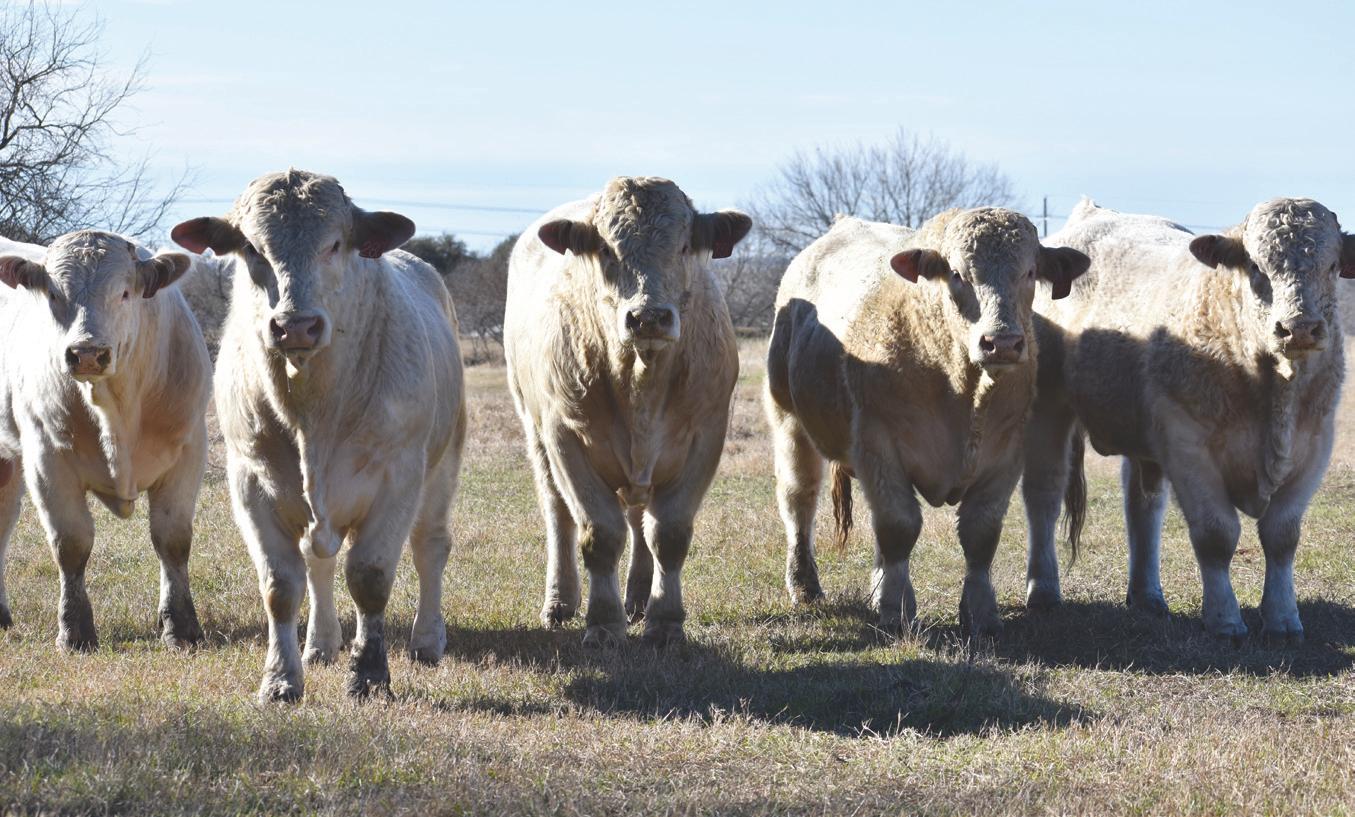
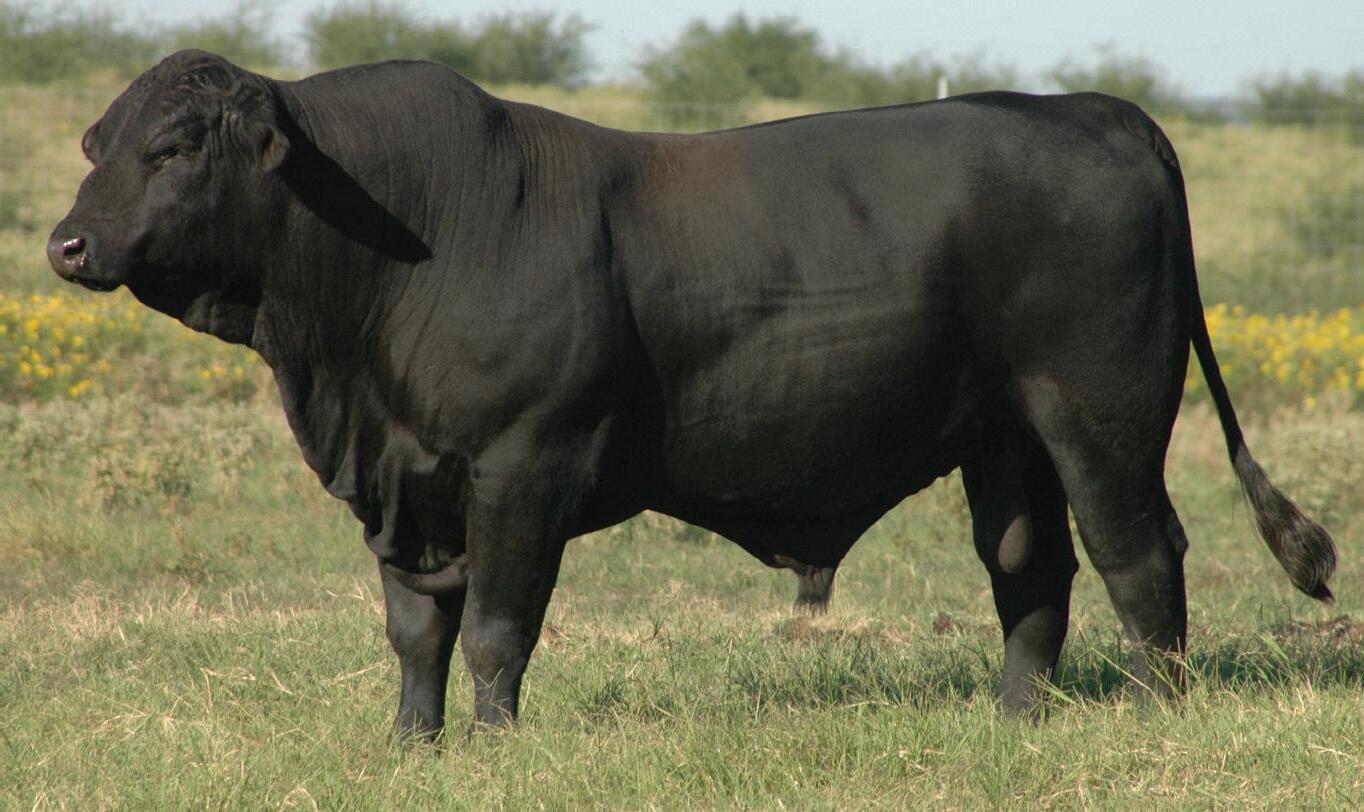
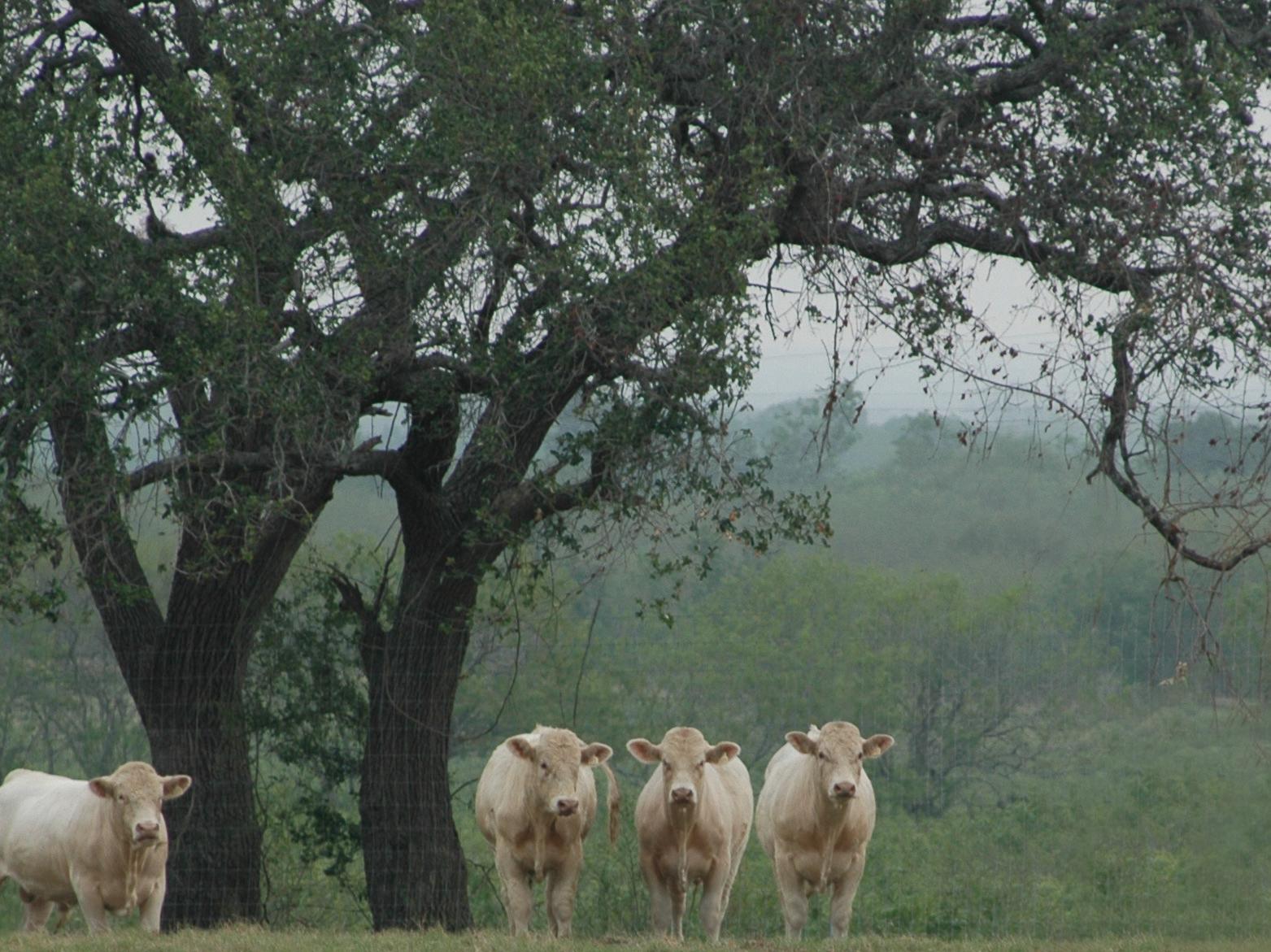
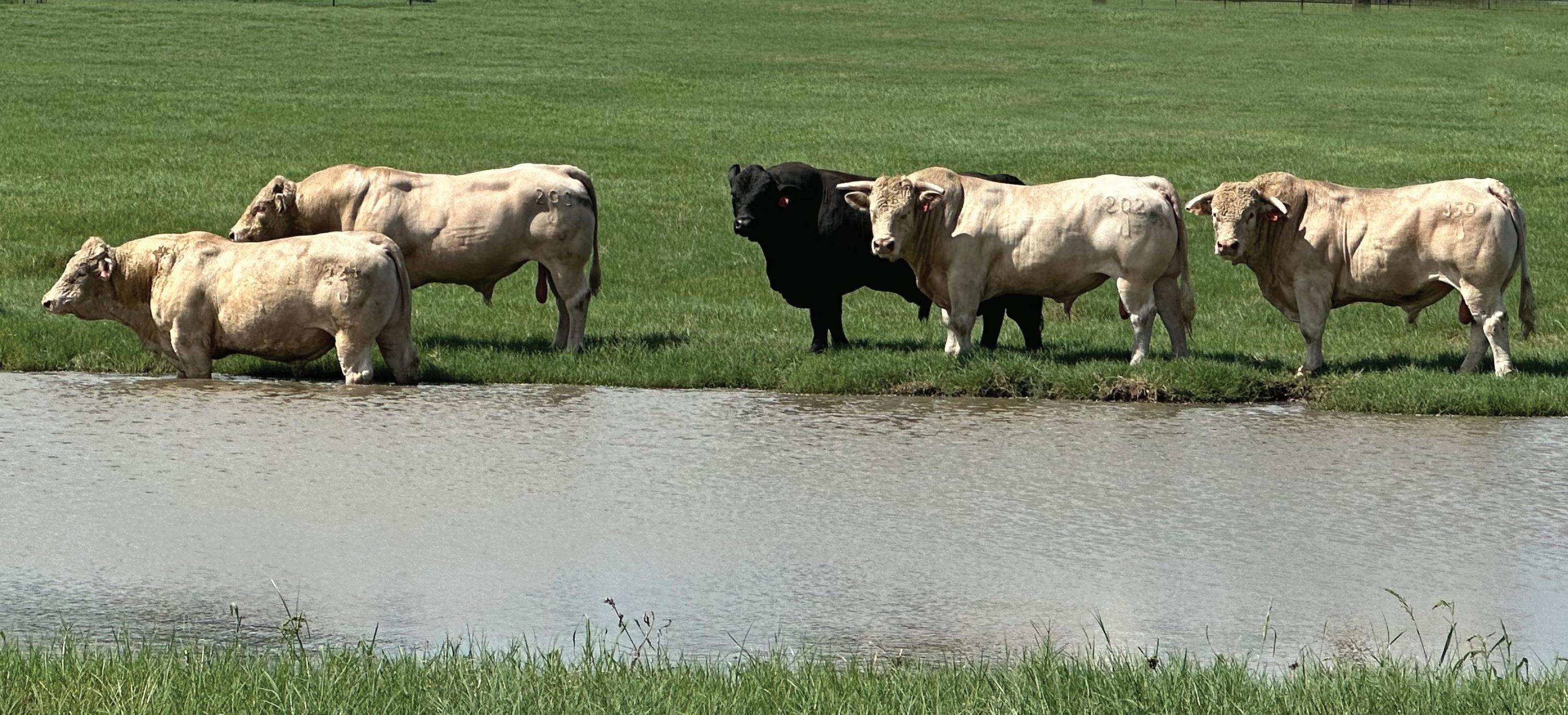
In the southern U.S., animal performance typically decreases during summer months. For grazing animals, this production decline is often the result of lower feed intake and lower quality forage.
Providing animals with access to shade helps reduce the decrease in feed intake seen during hot weather. Shade can come from trees, barns and other sources. Areas providing both shade and airflow are especially beneficial, allowing cattle to dissipate excess body heat.
It’s also important to note that the lignin concentration of most forages increases during hot weather. Lignin reduces forage digestibility, which leads to a reduction in animal performance. T C



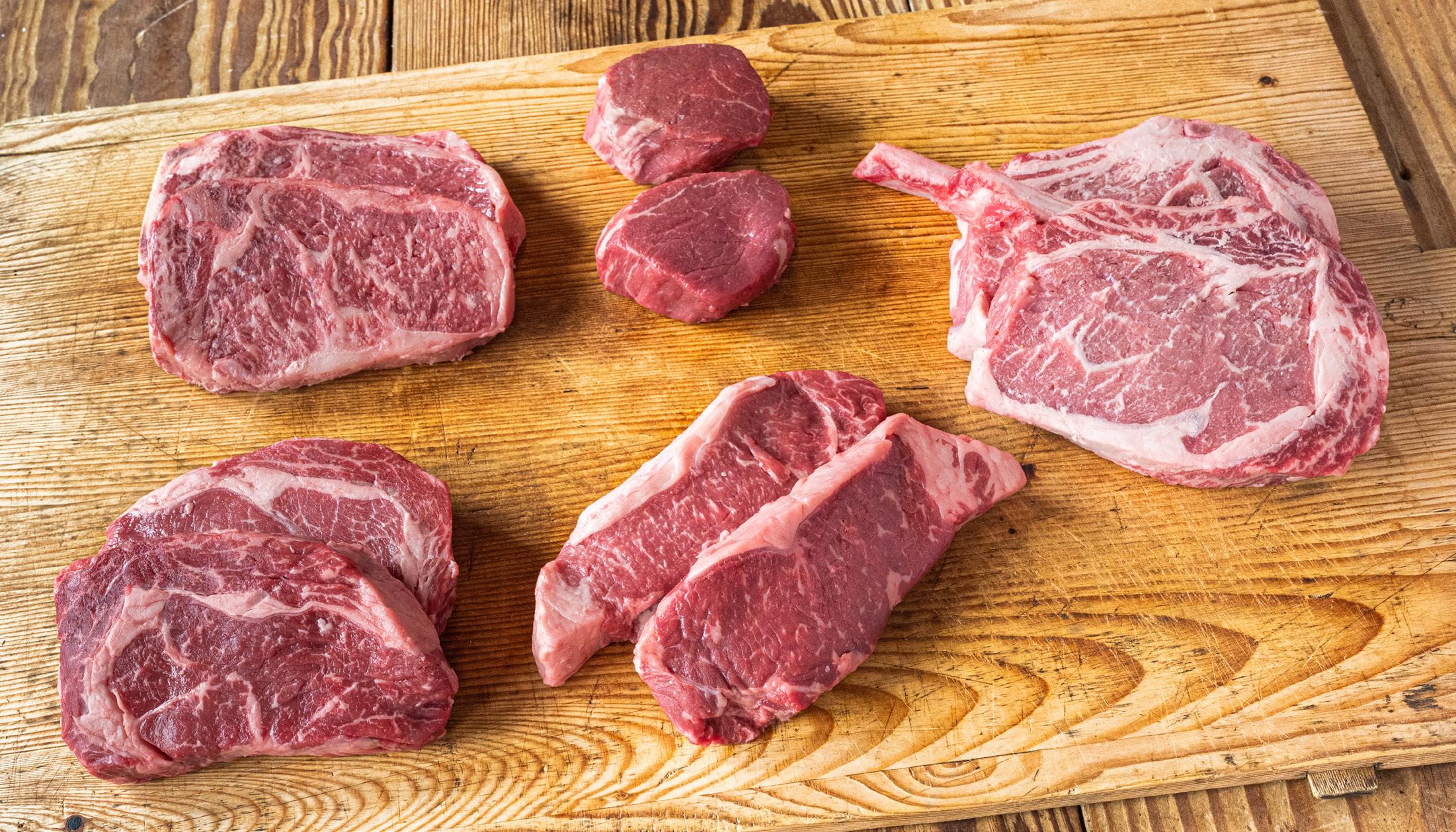
Despite higher prices at the meat case, consumer demand remains strong for the high-quality protein.
How beef is winning with consumers.
From the meat case to the dinner table, today’s consumer choices are shaping the future of beef demand. The latest Power of Meat study sends a clear signal: consumers are still showing up for beef despite higher prices.
And why they’re buying beef is just as important as how much they’re buying.
Beef continues to lead the meat case in both dollars and volume. Retail beef sales reached $45 billion in 2025, up 12.4% from the previous year. Volume also increased by more than 4%, and nearly 88% of U.S. households purchased beef. Across the store, beef was responsible for 70% of total dollar growth and more than half of the pound growth.
What’s even more telling is that buying habits are getting stronger. More households are buying beef more often and spending more on each trip. Even as prices have climbed, consumers aren’t pulling back — they’re making beef a priority in their grocery carts.
Health and nutrition continue to reinforce beef’s role in the diet. The number of consumers who say meat and poultry are part of a healthy, balanced diet has risen to 77% compared to 64% in 2020. At the same time, 70% of Americans are actively trying to increase protein intake.
Several trends are accelerating beef’s position in the nutrition conversation. The latest Dietary Guidelines for Americans place greater emphasis on protein and whole foods. GLP-1 users are also prioritizing protein in their diets, and healthcare professionals and dietitians remain the most trusted voices in food decisions.
Beef is well-positioned, but it must stay part of ongoing health discussions.
Efforts like the Beef Checkoff-funded Medical Office Outreach program help ensure beef is represented accurately in recommendations given by healthcare providers to patients.
Cattle Raisers
Higginbotham

Higginbotham for a quote at 844-765-4222 or email tscra@eb.higginbotham.net .

RANKED NO. 1 IN ABSOLUTE DOLLAR GROWTH IN 2025
Today’s consumer is balancing two things: their schedule and budget. Time-saving meals are important to 85% of consumers when preparing meat. That demand is being led by Millennials, who are often cooking for families but looking for efficiency.
Ground beef sits right at the intersection of convenience and value. It accounts for 85% of total grind sales and was the No. 1 category for dollar growth across the entire store in 2025. Versatility and ease matter more than ever, and ground beef delivers both.
Younger consumers aren’t just participating in the market, they’re shaping it. Millennials and Gen Z accounted for 67% of total unit growth in meat sales, and beef dollar growth among Millennials is outpacing chicken at twice the rate.
These younger consumers shop and cook with different priorities. They are more likely to look online for recipes and inspiration, value convenience while still demanding quality and flavor, and are currently forming the longterm purchasing habits that will shape future demand.
Reaching younger generations is critical to sustaining demand. Beef Loving Texans is the way producers can bring more of these consumers to the table through social media. Meeting these important demographics online, where they are, keeps beef relevant in their everyday meals. Recipe and meal inspiration continues to be one of the top ways consumers engage with content on beeflovingtexans.com.
For producers, these are encouraging signals, but also a reminder that maintaining demand means staying aligned with what matters most to consumers. That’s where the Beef Checkoff works on behalf of ranchers, tracking these shifts, investing in research, and translating insights into marketing and nutrition outreach that keeps beef relevant in a changing marketplace T C
















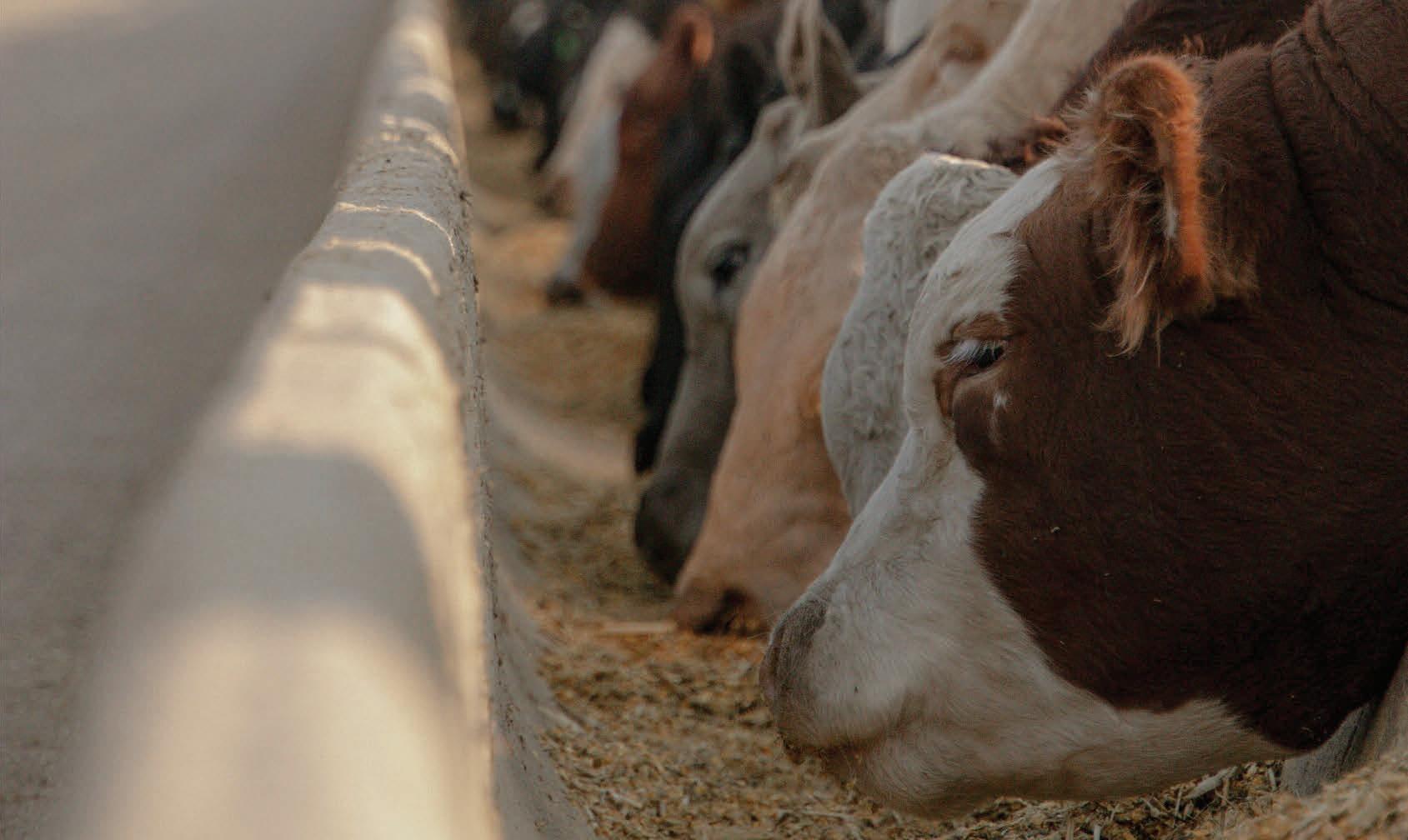
Study quantifies how red meat exports boost domestic feed demand.
Red meat exports delivered significant returns to corn and soybean producers in 2025, according to an independent study conducted by the Juday Group and released by U.S. Meat Export Federation.
Nationally, U.S. beef and pork exports accounted for $2.18 billion in market value to corn producers in 2025, $375 million to distiller’s dried grains with solubles, and $1 billion to soybean producers, according to the study. U.S. beef and pork exports contributed an estimated total economic impact of 13.5% per bushel to the value of corn and 10.3% per bushel to soybeans in 2025.
“Red meat exports bring significant value to corn and soybean producers by driving demand for feed,” says U.S. Meat Export Federation Chair-Elect Dave Bruntz, who raises corn, soybeans and cattle in southcentral Nebraska. “This study shows that red meat exports accounted for more than 500 million bushels of corn usage and nearly 100 million bushels of soybeans in 2025.”
Corn and soybean growers support the promotion of U.S. beef, pork and lamb by investing a portion of their checkoff dollars in market development efforts conducted by U.S. Meat Export Federation.
In 2025, the market value of beef and pork exports to TEXAS DDGS=
(corn consumed by beef and pork exports at average DDGS price) 62,382 tons x $139.79 per ton
8.63 million
In 2025, beef and pork exports contributed
13.5% OF BUSHEL VALUE = $0.58 (at an average price of $4.27 per bushel)
In 2025, beef and pork exports accounted for BUSHELS OF TEXAS CORN USAGE $37.02 million
In 2025, the market value of beef and pork exports to
(corn consumed by beef and pork exports at average corn price) 8.63 million bushels x $4.29 per bushel $8.72 million
In 2025, the market value of beef and pork exports to U.S. DDGS = $374.71 MILLION (corn consumed by beef and pork exports at average DDGS price)
Source: U.S. Meat Export Federation
2.68 million tons x $139.79 per ton TEXAS CORN=
“We initiate this study every year because it quantifies the value that beef and pork exports bring to the red meat supply chain,” says U.S. Meat Export Federation Senior Vice President John Hinners. “This added value is why a diverse range of ag industry sectors work together through USMEF to build global demand for U.S. red meat.”
Key findings from the study, which utilized 2025 statistics provided by USDA’s National Agricultural Statistics Service and data compiled by the Juday Group indicate beef and pork exports accounted for 508.4 million bushels of U.S. corn usage, which equated to a market value of $2.18 billion — at an average 2025 corn price of $4.29 per bushel. Beef and pork exports also accounted for 2.68 million tons of DDGS usage, equating to $374.7 million — at an average price of $139.82 per ton in 2025.
Nationwide, beef and pork exports contributed an estimated total economic impact of 13.5%, or $0.58, of bushel value at an average price of $4.29 per bushel in 2025. T C
Story and visuals courtesy of U.S. Meat Export Federation.
U,S, BEEF AND PORK EXPORTS
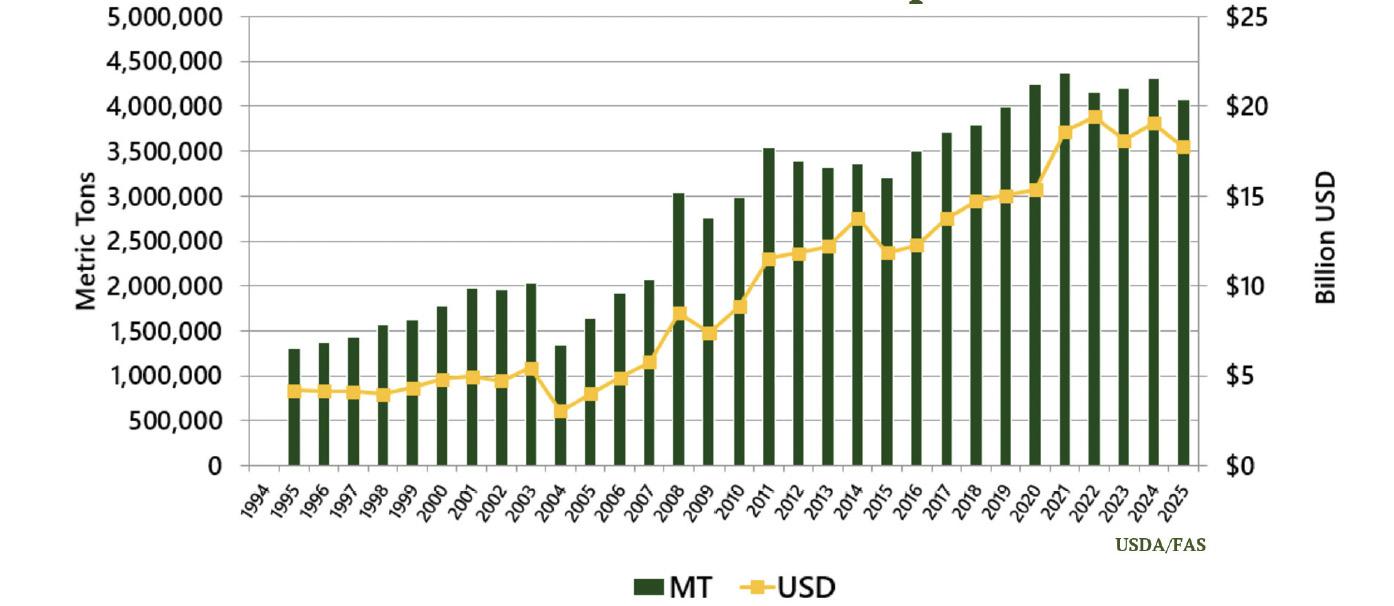
“Red meat exports bring significant value to corn and soybean producers by driving demand for feed.”
— Dave Bruntz, U.S. Meat Export Federation chair-elect
Ross Thompson brings both ranching and veterinary experience to his role as TSCRA director.
By Shelby Kirton
Ross Thompson sees the cattle industry from both sides of the chute.
The Texas & Southwestern Cattle Raisers Association director splits his time between his family’s ranch near Breckenridge with a veterinary career that takes him to operations across North Texas. This combination has deepened both his understanding of producers and commitment to ranching.
“Growing up, one of my favorite things was going out to the ranch and helping with branding and cattle work,” Thompson says. “I always enjoyed being around it.”
A fifth-generation rancher, Thompson comes from a family deeply rooted in Texas & Southwestern Cattle Raisers Association and the cattle industry. His grandfather served as the association’s president in 1995, and Thompson says attending conventions and meetings became part of life at an early age. “I’ve been going to Cattle Raisers meetings since I could walk,” he says.
After graduating from Oklahoma State University College of Veterinary Medicine in 2018, Thompson joined Simmons and Harlan Veterinary Clinic in Wichita Falls, where he practices mixed animal medicine focused primarily on cattle and horses.
“Everybody has their own way of doing things,” Thompson says. “I think that’s a neat aspect of my job
— getting to see different operations and how people manage their land and herd.”
A willingness to learn is also what sparked his interest in becoming more involved with Texas & Southwestern Cattle Raisers Association.
“I’ve seen what the organization meant to my granddad,” he says. “As I got older, I found the same passion for it and really grew to love what the organization stands for.”
Through the Cattle Raisers Convention & Expo, meetings and leadership opportunities, Thompson says the association has helped him build relationships across the region, while also giving him a broader understanding of industry issues.
“Cattle raisers has introduced me to people all across Texas,” he says. “It’s also given me a greater appreciation for how important it is for producers to stay engaged and have a voice.”
As both a veterinarian and rancher, Thompson sees the challenges facing agriculture from multiple perspectives. From the New World screwworm threat to the growing loss of agricultural land, he believes protecting the future of ranching will require continued involvement from producers and industry leaders alike.
“We’re starting to lose some operations to data centers around Wichita Falls,” Thompson says. “You worry about what that could look like years down the road.”
Still, Thompson remains optimistic about the future of the cattle industry — especially when it comes to younger generations becoming involved. “I hope to see more young people take an interest in ranching and agriculture,” Thompson says. “That’s critical to the future of the industry.”
Whether working with veterinary students or firstgeneration ranchers, Thompson encourages young people to visit different operations, ask questions and never be afraid to jump in and help. “If you want to get involved, show up,” he says. “People notice that.”
Thompson credits several mentors throughout his own life and career, including his grandfather, uncle and veterinarians who helped shape him as a young professional. “When you get out of vet school, you know the science of it,” Thompson says. “It takes a couple years of experience to learn the art of it.”
Away from the clinic and cattle work, Thompson most enjoys spending time on the ranch with his daughter, Hadley, who has already developed a love for ranch life.
He says ranching continues to teach the same lessons it always has.
“Nothing we do is easy,” Thompson says. “But if you work hard, it’s pretty rewarding when you get where you want to be.” T C
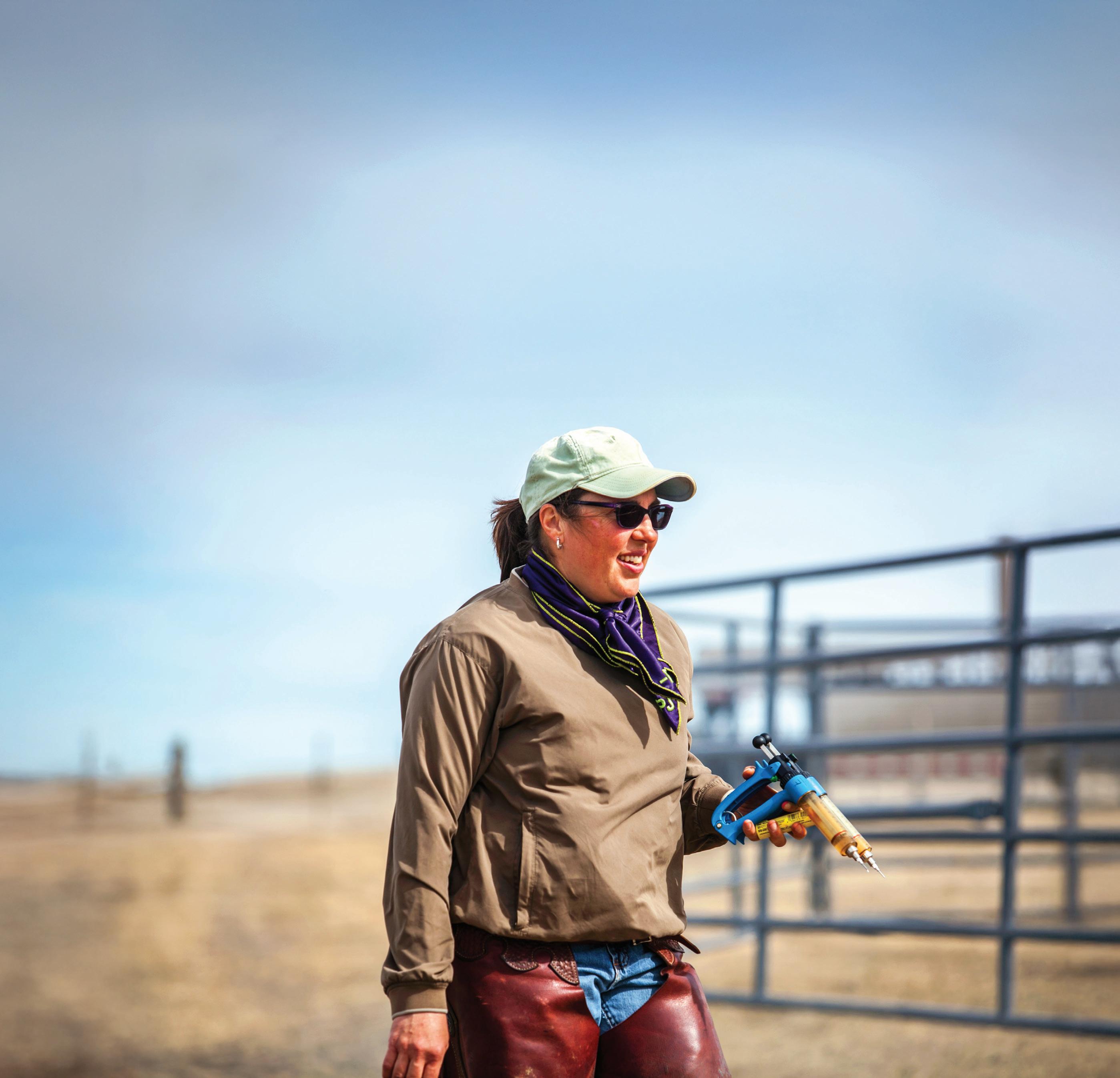


STEPHEN DIEBEL President
3907 Salem Rd. Victoria, Texas 77904
James L. Powell
San Angelo, 1988-1990
Tom Beard Alpine, 1994-1995
C. Coney Burgess Amarillo, 1997-1999
J. Mark McLaughlin San Angelo, 1999-2001
John E. Dudley Comanche, 2001-2003
Joe M. “Jody” Bellah, Throckmorton
Blake Birdwell, Canyon
E. S. F. “Swasey” Brainard II, Pampa
J. K. “Rooter” Brite Jr., Bowie
Donnell Brown, Throckmorton
Campbell Burgess, Amarillo
Deborah Clark, Henrietta
Lynn Cowden, Skellytown
Jake Cowen, Benjamin
J. B. Daniel, Crowell
James Henderson, Memphis
DAN GATTIS
First Vice President 213B W. 8th St. Georgetown, Texas 78626
WAYNE COCKRELL
Second Vice President and Secretary/Treasurer
3003 Coronado Dr. College Station, Texas 77845
Bob McCan Victoria, 2003-2005
C.R. “Dick” Sherron, MD Beaumont, 2005-2007
Jon Means Van Horn, 2007-2009
G. Dave Scott Richmond, 2009-2011
Joe J. Parker Jr. Byers, 2011-2013
Pete Bonds Saginaw, 2013-2016
Clayton Henry, Wichita Falls
Brooks Hodges, Guthrie
Joe Leathers, Guthrie
Frank McLelland, Tahoka
Jeff Mitchell, Amarillo
Gage Moorhouse, Benjamin
Diaz W. Murray, Wichita Falls
Dale A. Smith, Amarillo
Jim Thompson, Breckenridge
Ross Thompson, Iowa Park
Wesley Welch, Lubbock
Richard Thorpe III, MD Winters, 2016-2018
Robert E. McKnight Jr. Fort Davis, 2018-2020
G. Hughes Abell Austin, 2020-2022
Arthur G. Uhl III San Antonio, 2022-2024
Carl Ray Polk Jr. Lufkin, 2024-2026
Kevin Busher, Winters
Charles M. “Charley” Christensen Jr., San Angelo
C.A. “Chili” Cole IV, San Angelo
Alan F. Curry, San Angelo
James H. Dudley IV, Horseshoe Bay
Amanda Dyer, Fort Davis
Johnny Ferguson, Big Lake
DA Harral, Fort Stockton
Ron Helm, Van Horn
Heath Hemphill, Coleman
Shelby W. Horn, Fredericksburg
Larry R. Horwood, Sterling City
Grant Jones, Rochelle
Mark W. Jones, Brady
W. Clay Jones, Brady
Ty Keeling, Boerne
Lorenzo Lasater, San Angelo
Brian T. McLaughlin, Midland
David L. Neal, San Angelo
James Oliver, Ozona
Wade Perks, San Angelo
Jessica Tate, Marfa
James Uhl, Fort McKavett
Cody Webb, Barnhart
C. Clark Welder, Fredricksburg
Ray W. Willoughby III, Eldorado
Ford Drummond, Pawhuska, Oklahoma
Edward Bordovsky Jr., Riviera
Austin Brown III, Beeville
Foster Burchett, Jourdanton
W. Christopher Bush, Refugio
James Clement lll, Kingsville
Matthew Crow, Corpus Christi
Dustin Dean, Floresville
David DeLaney, Kingsville
Robert “Bobby” Dobson, Birmingham, Alabama
James L. “Jamie” Donnell Jr., Fowlerton
J. David Eppright, Cost
Benjamin Eshleman III, Corpus Christi
Sarah Franklin, Pleasanton
Robert “Robbie” Graff, D’Hanis
Parke Greeson, Goliad
Bret Griffith, Del Rio
Heath Grigg, Kingsville
Marty R. Harris, Tilden
Anson Howard, San Antonio
William Whitby Jones III, Hebbronville
Leslie Kinsel, Cotulla
Claude Koontz, San Antonio
Steven J. Mafrige, Tilden
Richard Marbach, Victoria
August “Augie” McCan, Victoria
Federico “Freddy” Nieto, Raymondville
T. Michael O’Connor, Victoria
Jason Peeler, Floresville
J.R. Ramirez, La Pryor
Joey Ramirez, Armstrong
Martha Santos, Laredo
Michael Sasser, Corpus Christi
Lew Thompson, Pearsall
John E. Zacek, Victoria
Bill Cawley, Crockett
Herff Cornelius Jr., Wadsworth
Carlos Detering III, Houston
Gardner H. Dudley, Houston
Lloyd French IV, Houston
Cody Fry, College Station
Kelley Sullivan Georgiades, College Station
George Harrison, Bay City
Robert Hodgen, Houston
Colt Hoffmann, Marlin
Clay Kenley, Crockett
John Malazzo, Caldwell
Andrew Polk, Lufkin
Clive Runnells III, Austin
John Sumner Runnells III, Bay City
Tony Spears, Rosanky
John “Rocky” Sullivan, Galveston
Fay Fitzsimons Walker, Houston
Claudia Scott Wright, Richmond
April Bonds, Saginaw
Missy Bonds, Saginaw
John L. Cantrell, Cresson
Ian Chapman, Madill, Oklahoma
Hunter Crow, Dallas
James A. Dangelmayr, Muenster
Jared Dangelmayr, Muenster
Seth Denbow, Weatherford
Crawford Edwards, Fort Worth
John Greer, Henrietta
Jason Harlow, Dallas
Pete Hudgins, Sherman
Tom Johnson, Wortham
Ken Leiber, Fort Worth
Stefan Marchman, Fort Worth
William H. McCall, Fort Worth
Dan Nance, Haslet
Stephen S. “Steve” Sikes, Fort Worth
Bragg Smith III, Dallas


Texas & Southwestern Cattle Raisers Association directors represent six geographical regions across Texas and Oklahoma. Reference the special rangers page for a link to an interactive online map.


William M. “Buck” Arrington, Pampa
Van Baize, Nocona
Bradford S. “Brad” Barnes, Fort Worth
Steve G. Beever, Pearsall
George Beggs IV, Fort Worth
Richard H. Bennett, San Antonio
Emry Birdwell, Henrietta
Mary Lou Bradley-Henderson, Childress
Chip Briscoe, Carrizo Springs
J.D. Cage, Muleshoe
Presnall Cage, Falfurrias
John W. Carpenter III, Dallas
Barrett D. Clark, Breckenridge
Martin W. Clement II, Kingsville
Thurman S. Clements Jr., Victoria
C.A. “Chip” Cole III, San Angelo
David S. Crow, Corpus Christi
James T. Dangelmayr, Muenster
Nixon Dillard, Pleasanton
William C. “Billito” Donnell Jr., Alpine
Bob Drake, Davis, Oklahoma
James H. “Jim” Dudley, Comanche
Jay C. Evans, Dripping Springs
Trainor Evans, Mercedes
Leroy Ezer, Anahuac
Joseph B.C. Fitzsimons, Carrizo Springs
Jim L. Gates, Pearsall
Richard Gates, Marfa
Mike Gibson, Paducah
Ronald J. “Ron” Gill, Chico
Frank Green, Liberty
W. H. “Billy” Green III, Albany
Milton S. Greeson Jr., Victoria
Thomas J. “Tommy” Haegelin, Concan
Dr. Philip C. Hardee, Beatrice, Alabama
Rafe Hargrove, Rotan
Tom J. Haynie, Navasota
Dr. Joe Pat Hemphill, Coleman
Jack Hunt, San Juan Capistrano, California
Ken Jordan, San Saba
Don Keeling, Fredericksburg
David W. Killam, Laredo
John Z. Kimberlin Jr., Dallas
Dan W. Kinsel III, Cotulla
Chris Lacy, Fort Davis
Harriett Lamm, George West
Steve C. Lewis, San Antonio
James E. “Jim” Link, Crowley
Coleman H. Locke, Hungerford
Ben Love, Marathon
Katharine Armstrong Love, Austin
Richard M. Lucas Jr., Houston
Robert B. Mansfield, Amarillo
Jon David Mayfield, Dublin
Jim McAdams, Seguin
James A. McAllen, Linn
William “Alan” McNeill, Beaumont
Len P. Mertz, San Angelo
Evalyn Moore, Richmond
Raymond E. Moore IV, Richmond
Bob Moorhouse, Weatherford
Tom Moorhouse, Benjamin
Beth Knolle Naiser, Sandia
Russell Noble, Ardmore, Oklahoma
Gerald Nobles Jr., Brady
Les Nunn, Pauls Valley, Oklahoma
Boots O’Neal, Guthrie
James Palmer, Roaring Springs
Rick Peebles, Baytown
Tim Pennell, Westhoff
Tom Perini, Buffalo Gap
Jim Peters, Quemado
Scott Petty Jr., San Antonio
Bill Phinizy, Gail
Frank Price, Sterling City
Gary Price, Blooming Grove
Mary Joe Reynolds-Montgomery, Fort Worth
Susan Roach, Fort Worth
Tom L. Roach III, Bozeman, Montana
Charles R. “Butch” Robinson, Navasota
Nolan Ryan, Round Rock
M. Stuart Sasser, Corpus Christi
Gordon E. Sauer, Fredericksburg
Wilson Scaling, Henrietta
Chris Scharbauer, Amarillo
Frates Seeligson Jr., San Antonio
J. Malcolm Shelton IV, Amarillo
Ed Small, Austin
Danny B. Stewart, Sterling City
Gerald Sullivan, Galveston
Stephen T. “Steve” Swenson, Dallas
Rick Tate, Marfa
Cliff Teinert, Albany
Richard Traylor, Batesville
Robert J. Underbrink, Houston
Tom Watson, Muleshoe
Dennis W. Webb, Barnhart
John Welch, Wolfforth
Ken Welch, Baird
Roger F. Welder, Victoria
A.B. Wharton, Vernon
W.C. “Billy” Williams, Mertzon
David W. Winters, Del Rio
Dr. M. R. “Mike” Wirtz, Brenham
Tom Woodward, Decatur
Richard Wortham, Leander
Bart Wulff, Dallas
Curtis A. Younts Jr., Belton
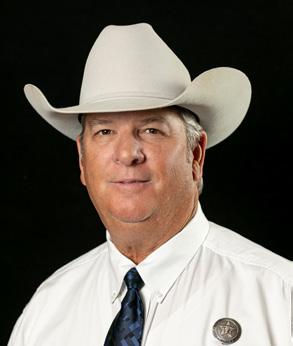
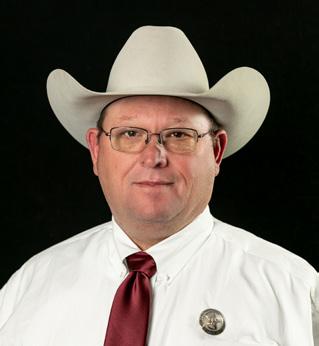
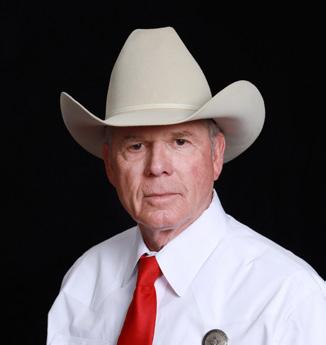

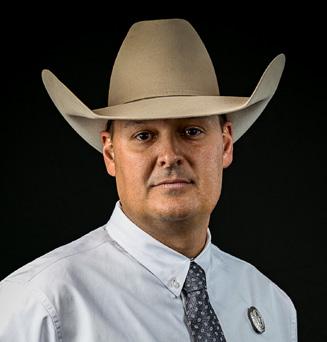
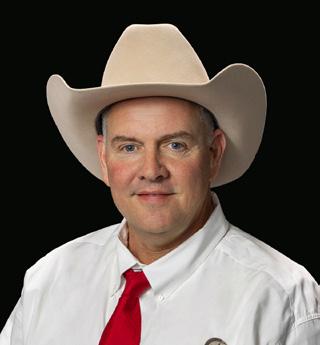
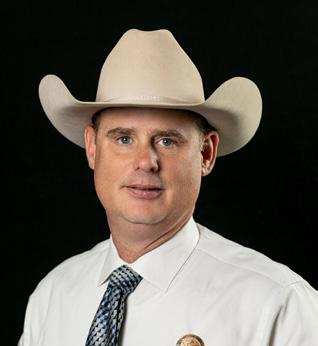
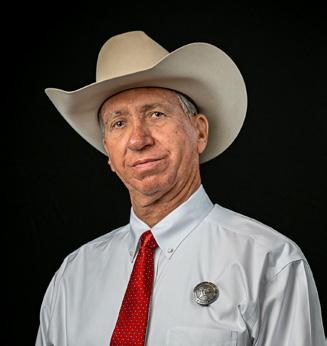
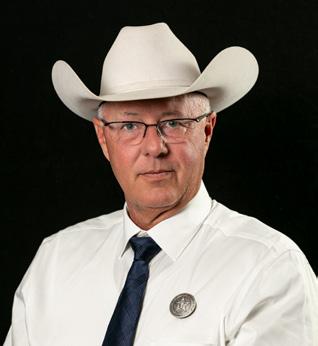
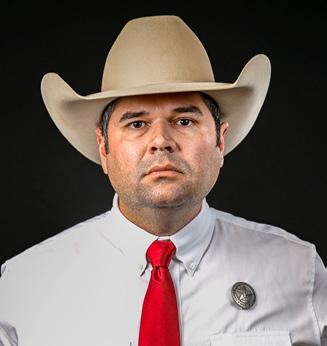
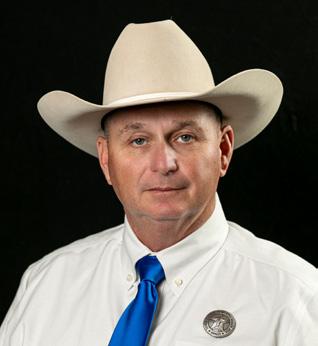
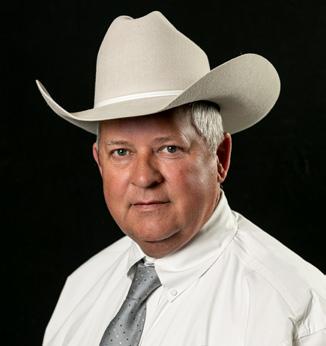
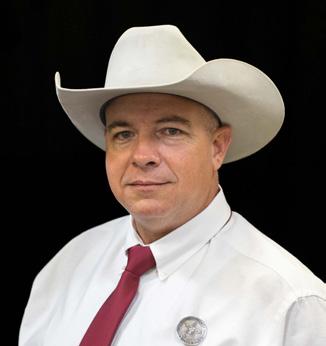
112nd Avenue Reserve LLC Jupiter, Florida
1988 Farm & Ranch Van
2 Bar S Brenham
5M Farms Moscow
77 Ranch Meridian
Ancelet Red Rock Ranch Atlanta
Shane L. Baker Eustace
Big Bend Banks Marfa
BLMT Ranch Athens
Judith Bowman Mangum, Oklahoma
Brauer Farm Breckenridge
Brock Farm Evant
Caffey Cattle Co. Milano
Barrett Campbell Sherman
Carr Ranch Leakey
Sophia Crescini Stillwater, Oklahoma
Custom Security Integrated Weatherford
Dean Cattle Co. Jones, Oklahoma
Double Z Ranch Seminole, Oklahoma
Ellis Farm Onalaska
Holly & Terry Fain Fort Worth
The First State Bank Abernathy
Ainsley Fischer Amarillo
Michael Franklin Bellville
G3 Performance Horses Vanderpool
Diana Gallegos Huntsville
Barry Gillingwater Austin
Goats Bluff Farms Keller
Lila Goodner Weatherford
Grassy Lake Cattle Co. Conroe
Grigsby Farms Angleton
Hailey Ranch Oakhurst
Samantha Hall Tatum
Jack Hansen Katy
Andrew C. Hass Kremmling, Colorado
Hodge Ranch Anna
Horse Prairie Ranch Giddings
JL Family LLC Clarendon
Mark Jochen Richmond
KA Cattle Co. Waynoka, Oklahoma
The KickBACK Ranch Odessa
Koether Ranch Livingston
Dick Lee Cleburne
Manana Ranch Management Mountain Brook, Alabama
Mathison Cattle Co. Hallettsville
McCabe Cattle Co. Robert Lee
Medina Farm & Ranch McAllen
Herman Meers Briscoe
Justin Mitchell Pleasanton
Doug Montgomery Lipan
Madison Moore Franklin MTZ Ranch Klondike
Charles A. Northcutt Colorado City
O’Brien Cinco Cattle Co. Houston
Peach Creek Land & Cattle Fredericksburg
Kelton Poe Azle
Leonel Pulido Mission
Rafter W Ranches Sonora
Rock’n Diamond Ranch Horseshoe Bay
Christian Rodriguez New Braunfels
Todd Roemer Fredericksburg
RTJ Cross Ranch Robert Lee
Rusco-Morris Jennings, Oklahoma


Invite your family, neighbors and friends and join TSCRA for a free beef meal alongside fellow cattle raisers and landowners.



Ranch Gatherings held 5:30 - 7:30 p.m.
July 30 Lometa, Artemis Ranch & Retreat
Aug. 6 Albany, Lambshead Ranch
Aug. 20 Mount Pleasant, Priefert Headquarters
Aug. 27 Jacksboro, Jack County Fairgrounds

Sept. 3 Huntsville, Sam Houston State University
Sept. 8 Comanche, Dudley Bros.
Sept. 17 Damon, Live Oak Haven
Sept. 22 Navasota, Navasota Livestock Auction
Sept. 24
Sept. 29
Childress, Mashburn Event Center
Mabank, The Pavilion
Oct. 1 Buffalo, DeCordova Sale Barn
Oct. 6 Van Alstyne, WHR Shorthorns
Oct. 8 Uvalde, Oasis Outback
Oct. 13 Morgan, W4 Ranch
Oct. 15 Fredericksburg, Gillespie County Fairgrounds
Oct. 20 Victoria, McFaddin Ranch
Oct. 22 San Angelo, First Financial Pavilion
Oct. 29 Carthage, Texas Country Music Hall of Fame
Nov. 5 Dalhart, Porter Angus

Nov. 11 La Grange, Knights of Colombus

More events coming soon: Cameron

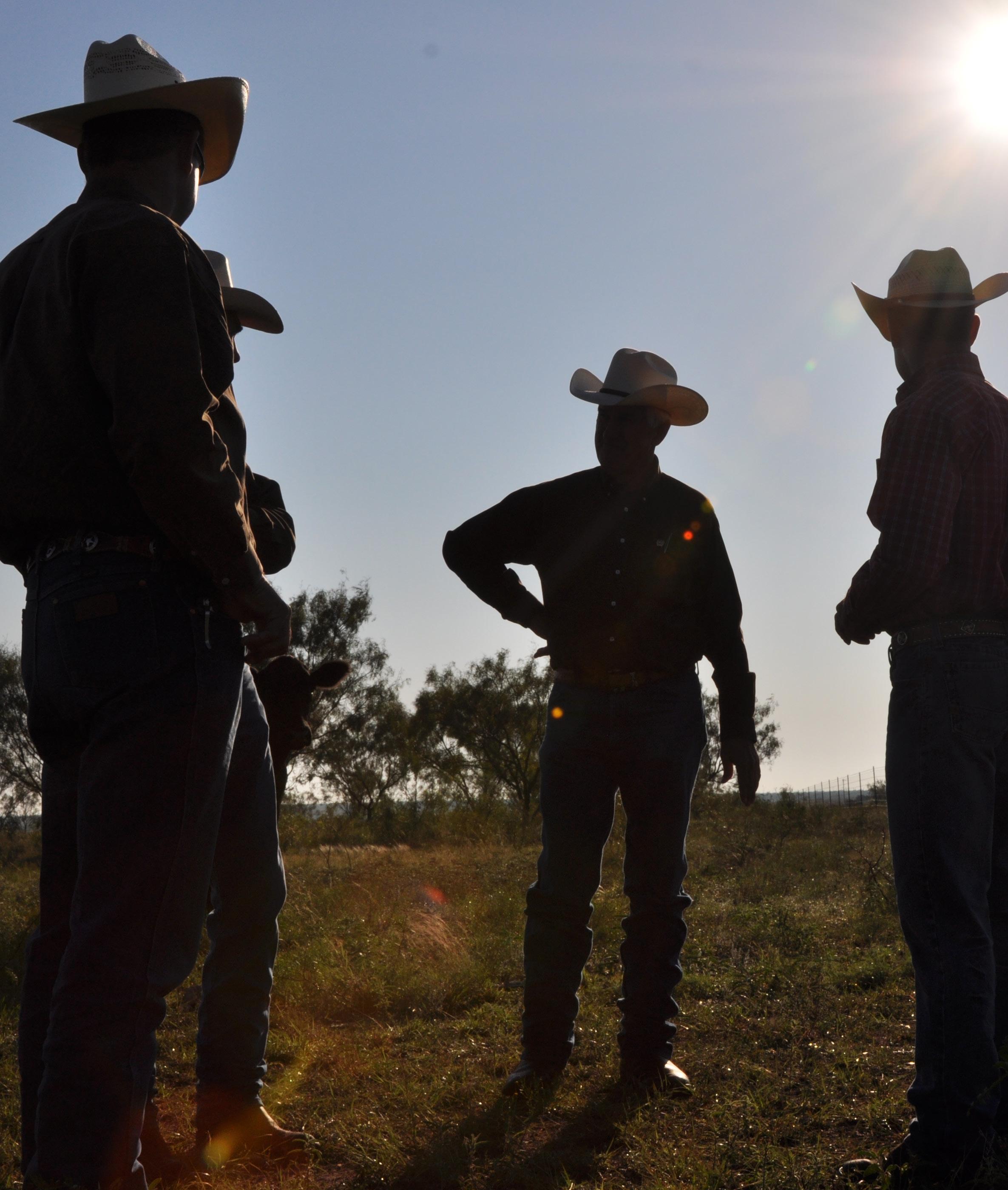
Charles Russell
San Antonio
Sabine Creek Cattle
Spring
Jacob Snowden
Bowie
Sheldon Snyder Dalhart
Star Ranch
Grand Saline
Tanner Houk Ranch Hamilton Trip-B Farms Brownfield
Vilamor Holdings Spicewood
Watson Ranch
Shepherd
West Texas State Bank Lubbock
Tucker White Gause
Whitestone Ranch D’Hanis
Will & Ken Gill Cattle Co. Miami
Winter Farms Ovalo
Woods Creek Ranch Livingston
Dawn Zaiontz Converse


If lack of options has been weighing you down, this will set you free. Instead of being locked in with Safe-Guard® (fenbendazole) oral suspension, you can break free and choose Defendazole™ (fenbendazole), the first FDA-approved bioequivalent. With Defendazole™ (fenbendazole), you can expect the same safety, efficacy and performance advantages as Safe-Guard®
Important Safety Information: Do not use in beef calves less than 2 months old, dairy calves and veal calves. A withdrawal period has not been established for this product in pre-ruminating calves. Additionally, the following meat withdrawal and milk discard times apply: Cattle must not be slaughtered for human consumption for 8 days following last treatment with this drug product. Goats must not be slaughtered for human consumption within 6 days following last treatment with this drug product. For dairy cattle, the milk discard time is 48 hours following last treatment with this drug product. Do not use in lactating goats as no milk discard time has been established.
Elkhart Horse Auction
Where: Elkhart
Phone: 903-764-1495
Sale Day: Saturday
Contact: Tiffany Patterson, 903-388-7288
Atascosa Livestock Exchange
Where: Pleasanton
Phone: 830-281-2516
Sale Day: Tuesday
Contact: Brandon Armstrong, 210-259-1780
Four County Auction
Where: Industry Phone: 979-357-2545
Sale Day: Tuesday
Contact: Lisa Sebastian, 979-270-3041
Muleshoe Livestock Auction
Where: Muleshoe
Phone: 806-272-4201
Sale Day: Friday
Contact: Leo Aviles, 956-437-3899
Beeville Livestock Comm.
Where: Beeville
Phone: 361-358-1727
Sale Day: Friday
Contact: Daniel Keese, 361-449-7942
Clifton Livestock Comm. LLC
Where: Clifton
Phone: 254-675-7717
Sale Day: Wednesday
Contact: Ray Davis, 254-718-5512
Meridian L/S Comm. Co.
Where: Meridian Phone: 254-435-2988
Sale Day: Monday
Contact: Larry Brown, 254-265-1920
BOWIE
J & J Livestock Auction
Where: Texarkana
Phone: 903-832-3576
Sale Day: Saturday
Contact: Cheri Beal, 903-280-4554
BRAZOS
Brazos Valley Livestock Comm.
Where: Bryan
Phone: 979-778-0904
Sale Day: Tuesday
Contact: Nina Nygard, 512-281-6753
Caldwell Livestock Comm.
Where: Caldwell
Phone: 979-567-4119
Sale Day: Wednesday
Contact: Mark Nygard, 512-281-6330
Lockhart Auction
Where: Lockhart
Phone: 512-398-3476
Sale Day: Thursday
Contact: Nina Nygard, 512-281-6753
Bruce Overstreet Livestock
Where: Pittsburg
Phone: 903-856-3440
Sale Day: Monday
Contact: Larry Hand, 903-571-3488
Tri County Livestock Market
Where: New Summerfield
Phone: 903-322-4940
Sale Day: Saturday
Contact: Jerry Boulware, 936-465-1597
Coleman Livestock Auction
Where: Coleman
Phone: 325-625-4191
Sale Day: Wednesday Contact: Dave Williams, 325-669-2030
Cattleman’s Columbus Livestock Auction
Where: Columbus Phone: 979-732-2622
Sale Day: Thursday
Contact: Wes Martin, 281-782-4412
Comanche Livestock Exchange
Where: Comanche
Phone: 325-356-5231
Sale Day: Saturday
Contact: Michael Davis, 254-879-3121
The New Gainesville Livestock Auction
Where: Gainesville
Phone: 940-665-4367
Sale Day: Friday
Contact: Robin Gibbs, 903-227-0791
Coryell County Comm.
Where: Gatesville Phone: 254-865-9121
Sale Day: Wednesday
Contact: Larry Brown, 254-265-1920
Cattleman’s Livestock Comm.
Where: Dalhart
Phone: 806-249-5505
Sale Day: Thursday
Contact: Clifton Miller, 806-570-7439
Hereford Livestock Auction
Where: Hereford
Phone: 806-240-3082
Sale Day: Tuesday
Contact: Joe Porter, 806-290-5316
Cuero Livestock Comm.
Where: Cuero
Phone: 361-275-2329
Sale Day: Friday
Contact: Kaylee Malatek, 979-942-0323
Texas Cattle Exchange
Where: Eastland
Phone: 254-629-2288
Sale Day: Tuesday
Contact: Shondra Davis, 325-642-5542
Dublin Livestock Auction
Where: Dublin Phone: 254-445-1734
Sale Day: Friday
Contact: Mike Heck, 806-886-6554
Erath County Dairy Sale
Where: Dublin Phone: 254-968-7253
Sale Day: Friday Contact: Shondra Davis, 325-642-5542
Stephenville Cattle Co.
Where: Stephenville Phone: 254-968-4844
Sale Day: Wednesday Contact: Mike Heck, 806-886-6554
Flatonia Livestock Comm.
Where: Flatonia Phone: 361-865-3538
Sale Day: Monday Contact: Vance Weltner, 210-473-9099
Schulenburg Livestock Auction
Where: Schulenburg Phone: 979-743-6566
Sale Day: Saturday
Contact: Vance Weltner, 210-473-9099
Floydada Livestock Sales
Where: Floydada Phone: 806-983-2153
Sale Day: Wednesday Contact: JE Stone, 806-777-4396
Pearsall Livestock Auction
Where: Pearsall
Phone: 830-334-3653
Sale Day: Wednesday
Contact: Clarence Stevens, 210-415-0441
Gillespie Livestock Co.
Where: Fredericksburg Phone: 830-997-4394
Sale Day: Wednesday Contact: Larry Bowden, 210-846-0380
Gonzales Livestock Market
Where: Gonzales
Phone: 830-672-2845
Sale Day: Saturday
Contact: Doug Brunet, 830-708-6537
Nixon Livestock Comm.
Where: Nixon
Phone: 830-582-1561
Sale Day: Monday
Contact: Landyn Maguglin, 361-492-9484
Longview Livestock
Where: Longview
Phone: 903-235-6385
Sale Day: Thursday
Contact: Paul Pruitt, 903-725-6200
Mid-Tex Livestock Auction
Where: Anderson
Phone: 936-825-3970
Sale Day: Thursday
Contact: Rick Faught, 936-442-1039
Navasota Livestock Auction
Where: Navasota
Phone: 936-825-6545
Sale Day: Saturday
Contact: Rick Faught, 936-442-1039
Seguin Cattle Co.
Where: Seguin
Phone: 830-379-9955
Sale Day: Wednesday
Contact: Elizabeth Cortez, 830-857-1945
Hamilton Livestock Comm.
Where: Hamilton
Phone: 254-386-3185
Sale Day: Tuesday
Contact: Larry Brown, 254-265-1920
Gore Family Auction Center
Where: Silsbee
Phone: 409-782-0612
Sale Day: Saturday
Contact: Christy McCoy, 409-782-0612
Athens Comm. Co.
Where: Athens
Phone: 903-675-3333
Sale Day: Friday
Contact: Brandy Baughman, 903-440-4382
Edinburg Livestock Auction
Where: Edinburg
Phone: 956-383-5671
Sale Day: Saturday
Contact: Coney Alvarez Jr., 956-437-3899
Hubbard Livestock Market
Where: Hubbard
Phone: 254-576-2584
Sale Day: Monday
Contact: Ray Davis, 254-718-5512
Sulphur Springs Livestock Comm.
Where: Sulphur Springs
Phone: 903-885-2455
Sale Day: Monday
Contact: Paul Pruitt, 903-725-6200
East Texas Livestock Auction
Where: Crockett
Phone: 936-544-2246
Sale Day: Tuesday
Contact: Cheyenne London, 936-222-3689
Big Spring Livestock Auction
Where: Big Spring
Phone: 432-267-5881
Sale Day: Wednesday
Contact: Bruce Brandenberger, 254-977-5763
Edna Livestock Auction
Where: Edna
Phone: 361-782-7666
Sale Day: Monday
Contact: Galynn Mazoch, 979-578-1823
Kirbyville Auction Barn
Where: Kirbyville
Phone: 409-423-2612
Sale Day: Saturday
Contact: Erica Morgan, 409-509-1946
Gulf Coast Livestock Market
Where: Alice
Phone: 361-664-4395
Sale Day: Tuesday
Contact: Ramiro Garcia, 361-460-0008
Johnson County Cattle Auction
Where: Cleburne
Phone: 817-556-9090
Sale Day: Saturday
Contact: Reed Durham, 817-723-8220
Karnes City Auction
Where: Karnes City
Phone: 830-780-3382
Sale Day: Wednesday
Contact: Douglas Brunet, 830-708-6537
Karnes County Livestock Exchange
Where: Kenedy
Phone: 830-583-2574
Sale Day: Thursday
Contact: Elizabeth Cortez, 830-857-1945
Cattlemen’s Livestock Comm.
Where: Paris Phone: 903-784-2238
Sale Day: Saturday Contact: Karsyn Sallee, 936-204-9780
Paris Livestock Auction
Where: Paris Phone: 903-739-2575
Sale Day: Wednesday
Contact: Robin Gibbs, 903-227-0791
Hallettsville Livestock Comm.
Where: Hallettsville Phone: 361-798-4336
Sale Day: Tuesday
Contact: Kaylee Malatek, 979-942-0323
Giddings Livestock Comm.
Where: Giddings Phone: 979-542-2274
Sale Day: Monday
Contact: Nina Nygard, 512-281-6753
Lexington Livestock Comm.
Where: Lexington Phone: 979-773-2922
Sale Day: Saturday
Contact: Nina Nygard, 512-281-6753
Buffalo Livestock Comm.
Where: Buffalo Phone: 903-322-4940
Sale Day: Saturday Contact: Cheyenne London, 936-222-3689
Raywood Livestock Market
Where: Raywood
Phone: 936-587-4941
Sale Day: Monday
Contact: Harvey Williamson, 936-334-5325
Groesbeck Auction & Livestock
Where: Groesbeck Phone: 254-729-3277
Sale Day: Thursday
Contact: Mallory Steen, 903-390-0594
Live Oak Livestock Auction
Where: Three Rivers
Phone: 361-786-2553
Sale Day: Monday
Contact: Brandon Armstrong, 210-259-1780
Jordan Cattle Auction
Where: Mason
Phone: 325-347-6361
Sale Day: Monday
Contact: Warren Ottmers, 830-669-2262
West Auction
Where: West
Phone: 254-826-3725
Sale Day: Thursday
Contact: Ray Davis, 254-718-5512
Union Comm.
Where: Hondo
Phone: 830-741-8061
Sale Day: Monday
Contact: Clarence Stevens, 210-415-0441
Milam County Livestock Auction
Where: Cameron Phone: 254-697-6697
Sale Day: Friday
Contact: Rick Faught, 936-442-1039
Nacogdoches Livestock Exchange
Where: Nacogdoches
Phone: 936-564-8661
Sale Day: Thursday
Contact: Michael Witcher, 936-556-0992
Corsicana Livestock Market
Where: Corsicana
Phone: 903-872-1631
Sale Day: Tuesday
Contact: Katy Webb, 903-388-4390
Carthage Livestock Auction LLC
Where: Carthage
Phone: 903-693-6361
Sale Day: Tuesday
Contact: Lori Blankenship, 936-234-3441
Livingston Livestock Exchange
Where: Livingston Phone: 936-327-4917
Sale Day: Saturday
Contact: Harvey Williamson, 936-334-5325
Lonestar Stockyards
Where: Amarillo
Phone: 806-677-0777
Sale Day: Tuesday
Contact: Gary McClellan, 806-334-0517
Emory Livestock Auction
Where: Emory
Phone: 903-473-2512
Sale Days: Tuesday & Saturday
Contact: Brandy Baughman, 903-440-4382
Calvert Livestock Co.
Where: Calvert
Phone: 979-364-2829
Sale Day: Friday
Contact: Ray Davis, 254-718-5512
Hunt Livestock Exchange
Where: Henderson
Phone: 903-657-2690
Sale Day: Monday
Contact: Fernando Santiago, 254-285-1724
Jordan Cattle Auction
Where: San Saba
Phone: 325-372-5159
Sale Day: Thursday
Contact: David Munden, 325-456-7253
Center Auction Co.
Where: Center
Phone: 936-598-4395
Sale Day: Wednesday
Contact: Michael Witcher, 936-556-0992
Triple G Livestock Auction LLC
Where: Rio Grande City
Phone: 956-437-1988
Sale Day: Friday
Contact: Coney Alvarez Jr., 956-437-3899
Tulia Livestock Auction
Where: Tulia Phone: 806-995-4184
Sale Day: Thursday
Contact: Tommy Thompson, 806-690-4080
Abilene Auction
Where: Abilene
Phone: 325-673-7865
Sale Day: Tuesday
Contact: Dave Williams, 325-669-2030
Stone Livestock Comm.
Where: Mount Pleasant
Phone: 903-575-9099
Sale Day: Tuesday
Contact: Paul Pruitt, 903-725-6200
Producers Livestock Auction
Where: San Angelo
Phone: 325-653-3371
Sale Day: Thursday
Contact: Bruce Halfmann, 325-315-5972
Southwest Livestock Exchange
Where: Uvalde
Phone: 830-278-5621
Sale Day: Thursday
Contact: Richard Collins, 210-265-9061
Mort Livestock Exchange
Where: Canton Phone: 903-287-6386
Sale Day: Special Sales Only
Contact: Paul Pruitt, 903-725-6200
Brenham Livestock Auction
Where: Brenham
Phone: 979-836-3621
Sale Day: Friday
Contact: Lisa Sebastian, 979-270-3041
El Campo Livestock Exchange LLC
Where: El Campo
Phone: 979-543-2703
Sale Day: Tuesday
Contact: Galynn Mazoch, 979-578-1823
Wharton Livestock Auction
Where: Wharton
Phone: 979-532-3660
Sale Day: Wednesday
Contact: Megan Stavena, 979-320-4228
Wichita Livestock Sales
Where: Wichita Falls Phone: 940-541-2222
Sale Day: Wednesday Contact: R.C. Langford, 832-330-7279
Decatur Livestock Market
Where: Decatur Phone: 940-627-5599
Sale Day: Monday
Contact: Rebecca Benson, 940-389-6382
Winnsboro Livestock Auction
Where: Winnsboro
Phone: 903-365-2201
Sale Day: Friday
Contact: Alan Pruitt, 903-725-6200
Graham Livestock Comm. LLC
Where: Graham Phone: 940-549-0078
Sale Day: Monday
Contact: Ronnie Ober, 817-371-7071

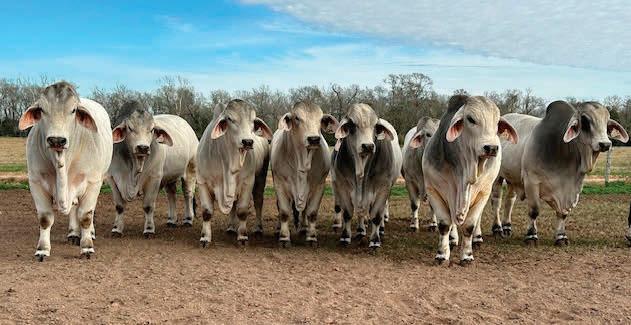


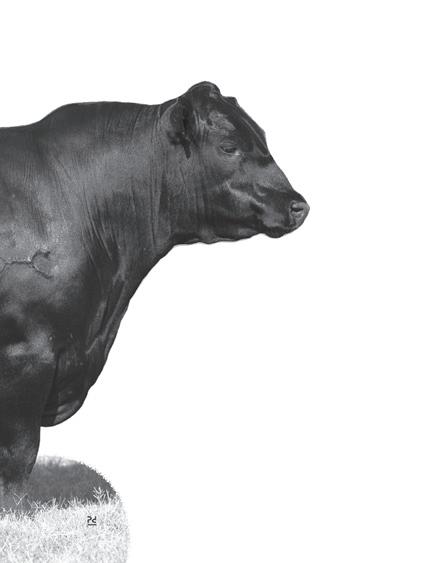



RANC H Janet, Steve and Carlton Partin 3159 FM 837 • Montalba, Texas 75853 903-549-3000 • partin.partin@aol.com Janet Partin: 903-922-3689 Carlton Partin: 407-709-0297 www.heartbarranch.com Quality

Since 1948
Watt M . C asey/ Watt J r. 325-66 8-1373 Alb any, Texas 764 30 www.CaseyBeef masters.co m Bill Carr
Hilltop Ranch Beefmasters
Quality Beefmaster Cattle Ranches in Webb, Wilson and Kendall counties Mailing Address: P.O. Box 2947 Laredo, Texas 78044 Phone: 361/586-5067
Registered Black Angus
Robert L. Hogue M.D. • Judy Hogue
6 Spring Hollow, Brownwood, Texas 76801
Ranch: 10108 CR 237 • Phone: 325-643-2225 Cell: 325-647-9168 • Fax: 326-643-6235 Email: rlhmd@familymedical.us

Brahman Ranch Ltd P O Box 27, Campbellton, Texas USA 78008
979-877-4239
Sartwelle J. D. Sartwelle III 361-500-5792 Email: sartwellej@gmail.com



Pollok, Texas
Brian Moore • 936-465-2040
www.mooreangus.com


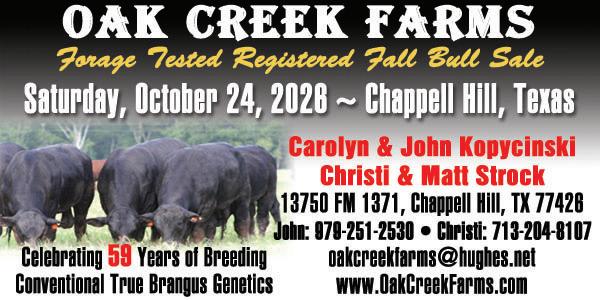





Registered Black Herefords bacicafarms.com


Mike & Carla Bacica 11707 FM 2868 Flint, TX 75762
Mike: 903-520-0390 mbpga@aol.com
Carla: 903-530-8551 wtnca@aol.com


















Stratford Feedyard
Trevor Christian, Manager Stratford, TX of ce: (806) 396-5501 cell: (806) 390-9035


Cactus Feedyard
Trice Connally, Manager
Cactus, TX
o ce: (806) 966-5151
cell: (361) 571-7177
Ulysses Feedyard
Adam Gerrond, Manager Ulysses, KS
o ce: (620) 356-1750 cell: (806) 390-9034
Frontier Feedyard
Jon Vanwey, Manager
Spearman, TX
o ce: (806) 882-4251
cell: (719) 251-2381
Hale Center Feedyard
Rusty Jackson, Manager Hale Center, TX
o ce: (806)590-4141 cell: (806) 773-9457
Burlington Feedyard
Logan Hardin, Manager Burlington, CO
o ce: (719)346-8532 cell: (620) 575-6702
Southwest Feedyard
Troy Keller, Manager Hereford, TX
o ce: (806) 364-0693 cell: (806) 679-6330
Adam Gerrond, Manager
Ulysses, KS
o ce: (620) 356-2010 cell: (806) 390-9034
Wolf Creek Feedyard
Keith Brinson, Manager Perryton, TX
o ce: (806) 435-5697 cell: (806) 282-7588

Wrangler Feedyard
Randy Shields, Manager Tulia, TX
o ce: (806) 583-2131 cell: (806) 290-0559
Syracuse Feedyard
Phil Moreman, Manager
Syracuse, KS
o ce: (620) 384-7431
cell: (806) 340-4790

MONDAY, JULY 6FRIDAY, JULY 10
Texas FFA Convention Where: Fort Worth
THURSDAY, JULY 9
Wichita Falls Luncheon Where: McBride’s Steakhouse, Wichita Falls When: 11:30 a.m.
SUNDAY, JULY 12TUESDAY, JULY 14
NCBA Summer Business Meeting Where: Denver, Colorado
TUESDAY, JULY 21
Ranching 101: Drought Strategies and Water Management Where: Online When: 1 p.m.
SUNDAY, JULY 19FRIDAY, JULY 24
TSCRA Cattle Raisers Roundup Where: West Texas
SATURDAY, JULY 25
Jordan Cattle Auction: Special Replacement Female Sale Where: San Saba When: 10 a.m.
THURSDAY, JULY 30
TSCRA Ranch Gathering Where: Artemis Ranch & Retreat, Lometa When: 5:30 p.m.
SATURDAY, AUG. 1
TSCRA Spring Internship Applications Open
MONDAY, AUG. 3WEDNESDAY, AUG. 15
72nd Annual Texas A&M Beef Cattle Short Course Where: College Station
THURSDAY, AUG. 6
TSCRA Ranch Gathering Where: Lambshead Ranch, Albany When: 5:30 p.m.
WEDNESDAY, AUG. 12THURSDAY, AUG. 13
Noble Profitability Essentials Where: Huntsville
TUESDAY, AUG. 18
Ranching 101: Marketing Calves and Cull Cows Where: Online When: 1 p.m.
THURSDAY, AUG. 20
TSCRA Ranch Gathering
Where: Priefert Headquarters, Mount Pleasant When: 5:30 p.m.
SATURDAY, AUG. 22
Jordan Cattle Auction: Special Replacement Female Sale Where: San Saba When: 10 a.m.
THURSDAY, AUG. 27
TSCRA Ranch Gathering Where: Jack County Fairgrounds, Jacksboro When: 5:30 p.m.
TUESDAY, SEPT. 1
TSCRA Spring Internship Applications Close
THURSDAY, SEPT. 3
TSCRA Ranch Gathering
Where: Sam Houston State University, Huntsville When: 5:30 p.m.
TUESDAY, SEPT. 8
TSCRA Ranch Gathering Where: Dudley Bros., Comanche When: 5:30 p.m.
THURSDAY, SEPT. 10
Wichita Falls Luncheon
Where: McBride’s Steakhouse, Wichita Falls When: 11:30 a.m.
TUESDAY, SEPT. 15
Ranching 101: Management of Hunting Leases: What You Need to Know Where: Online When: 1 p.m.
THURSDAY, SEPT. 17
TSCRA Ranch Gathering Where: Live Oak Haven, Damon When: 5:30 p.m.
THURSDAY, SEPT. 17SUNDAY, SEPT. 27
Oklahoma State Fair Where: Oklahoma City
TUESDAY, SEPT. 22
TSCRA Ranch Gathering
Where: Navasota Livestock Auction, Navasota When: 5:30 p.m.
THURSDAY, SEPT. 24
TSCRA Ranch Gathering Where: Mashburn Event Center, Childress When: 5:30 p.m.
FRIDAY, SEPT. 25SUNDAY, OCT. 18
State Fair of Texas Where: Dallas
SATURDAY, SEPT. 26
Jordan Cattle Auction: Special Replacement Female Sale Where: San Saba When: 10 a.m.
MONDAY, SEPT. 28
Gardiner Angus Ranch: 22nd Annual Fall Production Sale Where: Ashland, Kansas
TUESDAY, SEPT. 29
TSCRA Ranch Gathering Where: The Pavilion, Mabank When: 5:30 p.m.






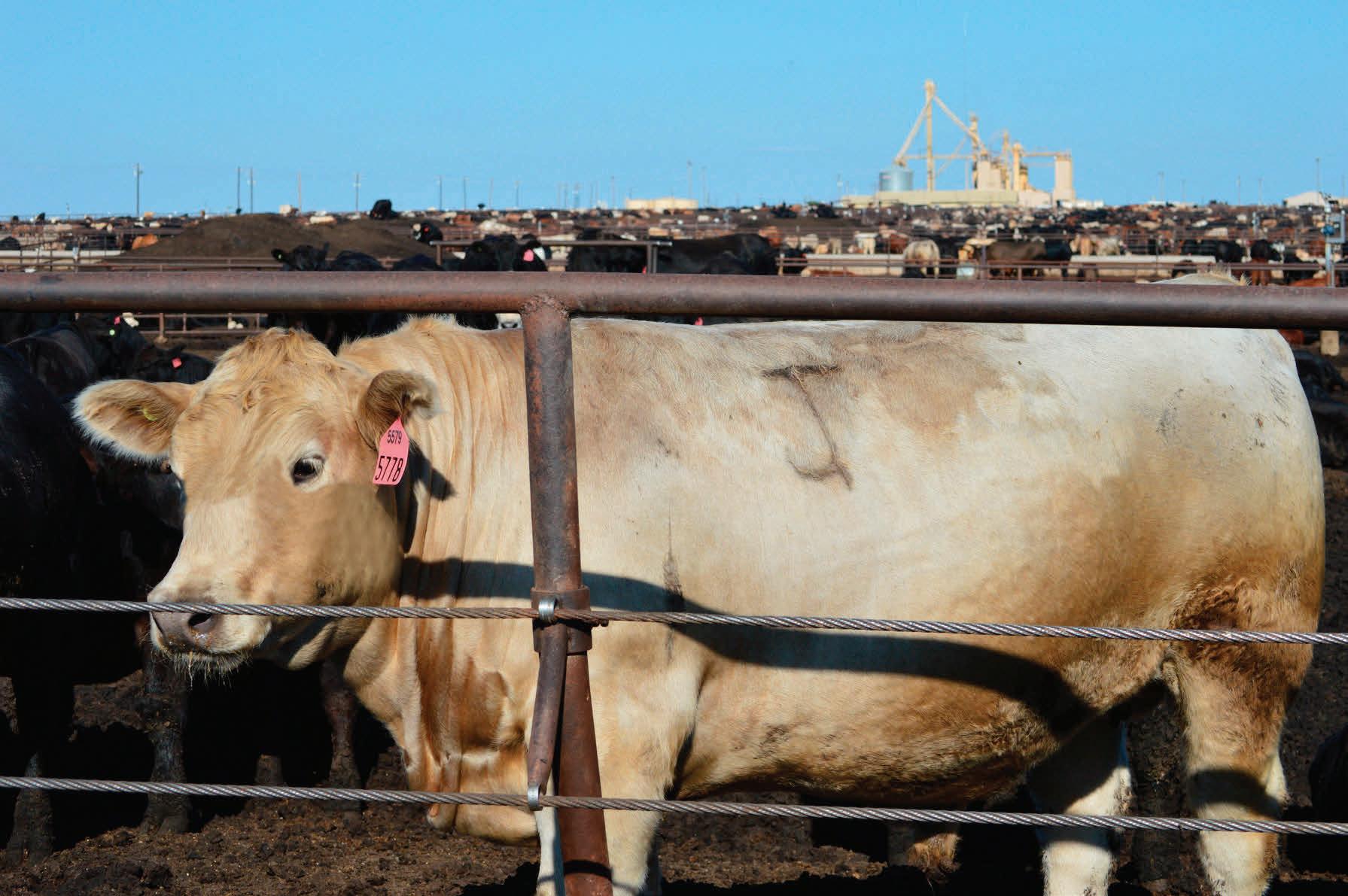





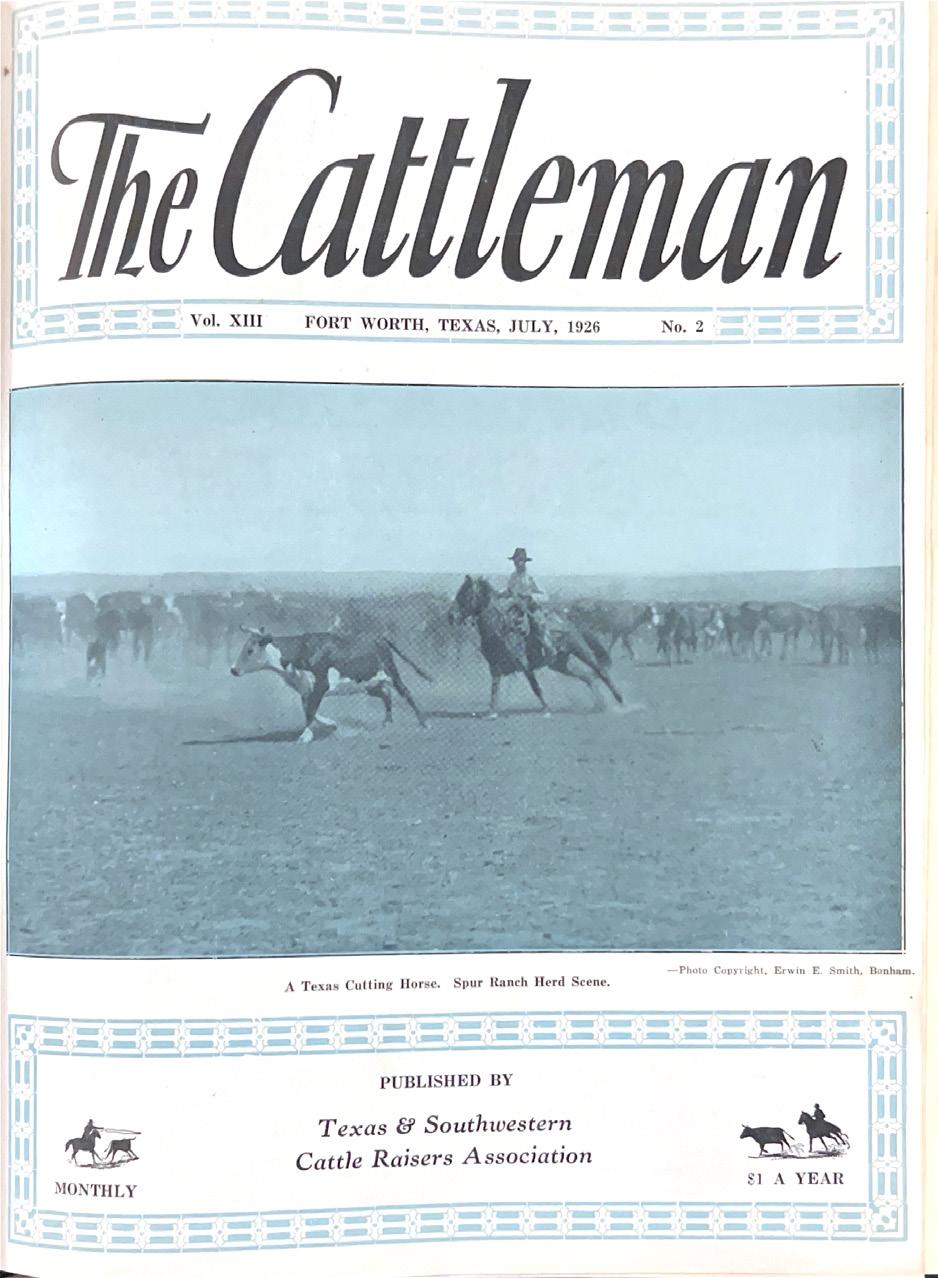
The beauty of a Texas cutting horse on Spur Ranch was captured by Erwin E. Smith, a notable sculptor, photographer and cowboy from Bonham. This cover photo was one of 10,000 negatives of ranch subjects Smith captured in his journey to document Western America.
Times were good in the cattle business a century ago, the magazine reported. Texas ranchers had greater hope of prosperity than they had in many seasons of heat and cold, an author wrote. Grass was abundant and tall; cattle were growing and strong.
“And so all over the state and in the cattle country particularly, July Fourth will witness high carnival and a season of jollification.” T C

shape not just today, but seasons to come. Out here, nothing stays the same for long. Weather shi s. Markets turn. Operations grow. And with every change comes a new frontier. At Capital Farm Credit, we understand that kind of work. We don’t step back when it gets hard. We stay beside you, ready to help you move forward with confidence, grit, and a partner you can trust. Wherever the land leads next, we’ll be there. To learn more, visit CapitalFarmCredit.com. Where dust and