Fision fiber-powered communities. Board tested. Resident approved.

Hotwire Communications partners with HOAs to deliver futureproof technology, transparent contracts, and concierge-level customer service that keeps residents connected and boards confident.
Choosing a telecom provider is one of the most important decisions a board can make. With a 99% renewal rate nationwide, communities trust Hotwire to deliver unmatched performance and white-glove support year after year.

Our 100% fiber-to-the-home network ensures symmetrical speeds, guaranteed reliability, and no data caps—while our dedicated account managers provide the concierge-level customer service boards and residents deserve. Independent rankings by PCMag and Consumer Reports confirm what our partners already know: Hotwire is the fastest and most trusted ISP in the market.
Let’s Build Something Better, Together.



BECKER’S COMMUNITY CLASSROOM
OUR ONGOING CONTINUING EDUCATION PROGRAM
FEATURED CLASS
As leaders in Community Association Law, we not only helped write the law –we also teach it.
Did you know Becker provides over 200 educational classes per year throughout the State of Florida on a variety of topics ranging from board member certification to compliance, and everything in between?

As a service to the community and industry, we are pleased to offer some of our most popular classes online for you to participate in from the comfort of your own home! 1
Certificate of Completion
Provider #0000811
Course #9630156

To view our entire class roster, visit www.beckerlawyers.com/classes
Pioneers in Community Association Law
The preparation and adoption of a budget is one of the most important Board responsibilities and technical legal requirements have become more complicated in the last few years. Join Becker attorneys as they discuss the steps it takes to create and maintain a successful budget and reserve plan.
Becker grew out of its pioneering role creating the law pertaining to the operation of common ownership housing, with many of the leading cases in the field bearing the firm’s name. In keeping with our committment to our clients and the industry, Becker attorneys provide over 200 educational classes per year for board members and managers, and also advocate on behalf of clients through the firm’s lobbying arm, the Community Association Leadership Lobby (CALL).
Becker has more certified attorneys in Business Litigation, Construction, Real Estate, and Condominium & Planned Development Law combined than any other law firm in the state. Board certification demands rigorous testing and is in recognition of having the highest standards of skill, specialty knowledge, proficiency, professionalism, and ethics in community association law.



Community
Products and Services Directory
Display Advertisers’ Index
Legal Update: House Bill 797—Modernizing Chapter 617 of the Florida Statutes
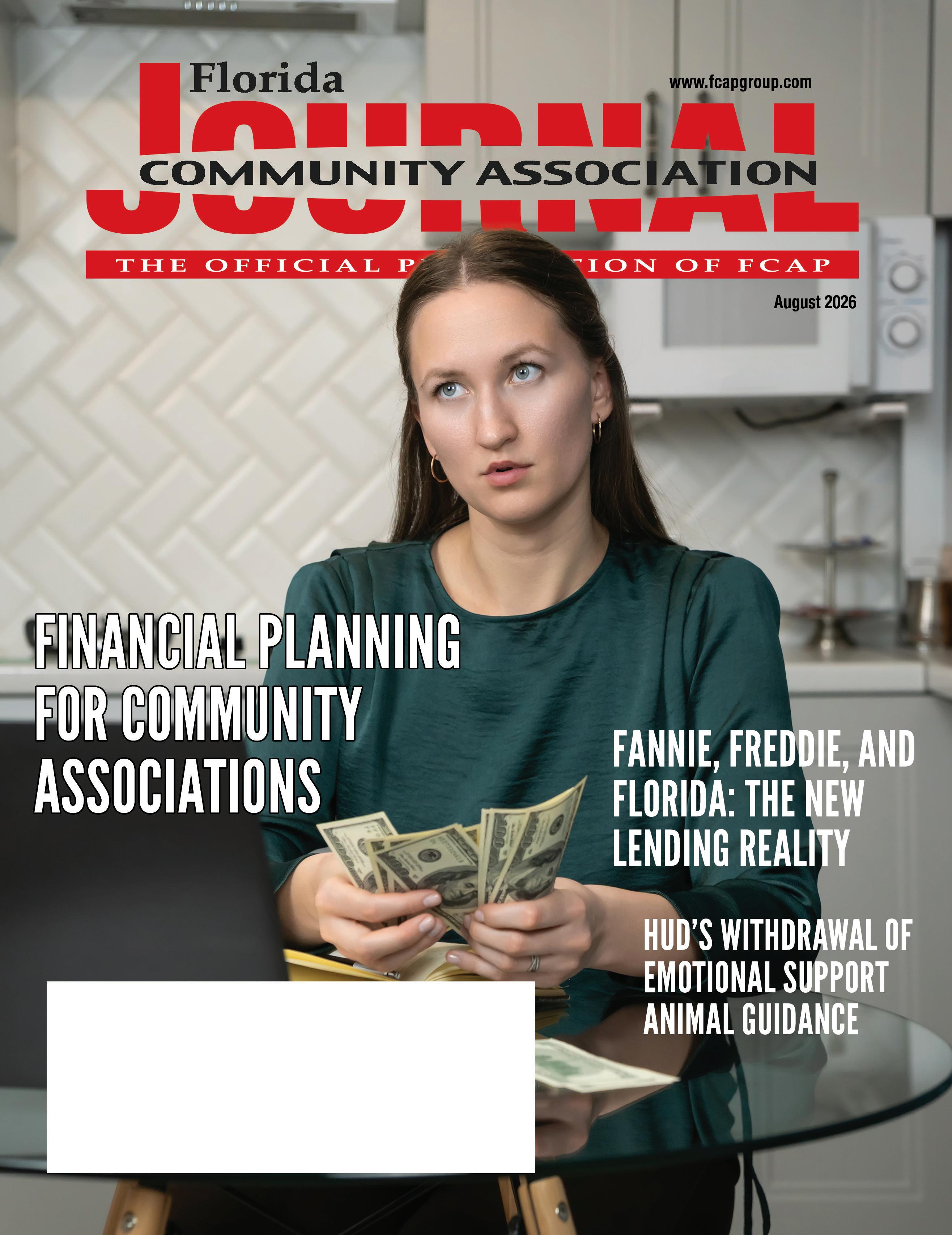
Rembaum’s Association Roundup HUD’s Withdrawal of Emotional Support Animal Guidance
New Florida Law Requires Contractors to Pay Subcontractors Within Set Timeframe
Your AI Queries Are Not Confidential




Journal Notes
This August issue is concerned with helping the men and women who voluntarily give of their time to serve on the board of directors of their community associations to be good stewards of the association’s money. Starting on page 8 multiple service providers have provided their best financial planning practices.
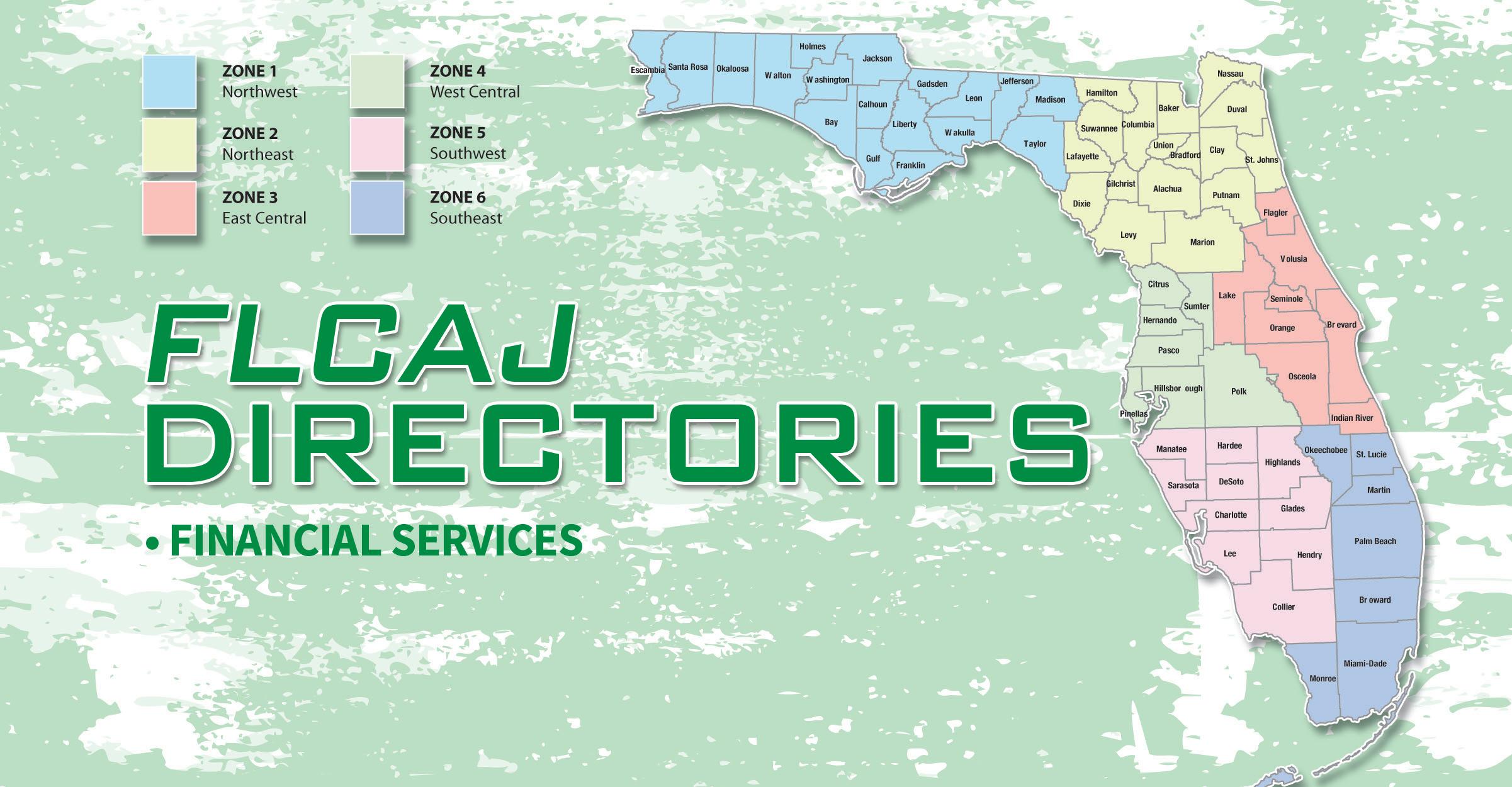
Turn to page 22 to see a zone map of Florida that provides the company names, contact information, and the regions in Florida where the various financial services providers offer their services.
Will Simons is with Association Reserves, and on page 24 he discusses the new lending reality facing Florida’s community associations. He says, “…A community’s reserve plan is no longer just an internal budgeting document. It is a credit document, too—one that lenders now read, and one that can affect whether units in your community remain easily financeable.”
Flip to page 34 to read the article from Matt Kuisle with Reserve Advisors. He shares how community associations can effectively incorporate a reserve study into financial planning in the following ways: “Review and update the study regularly; align budgeting with reserve contribution recommendations; and forecast beyond the current year.” He adds, “Effective and proactive financial management is the backbone of any thriving community association.”
On page 44 Anna Rogers with Cogent Bank points out the benefits of financing and says, “The key is understanding when financing makes sense and how it can support the community’s long-term goals.” She details how financing is an alternative to large special assessments, a way to avoid project delays, and a tool of long-term financial planning.
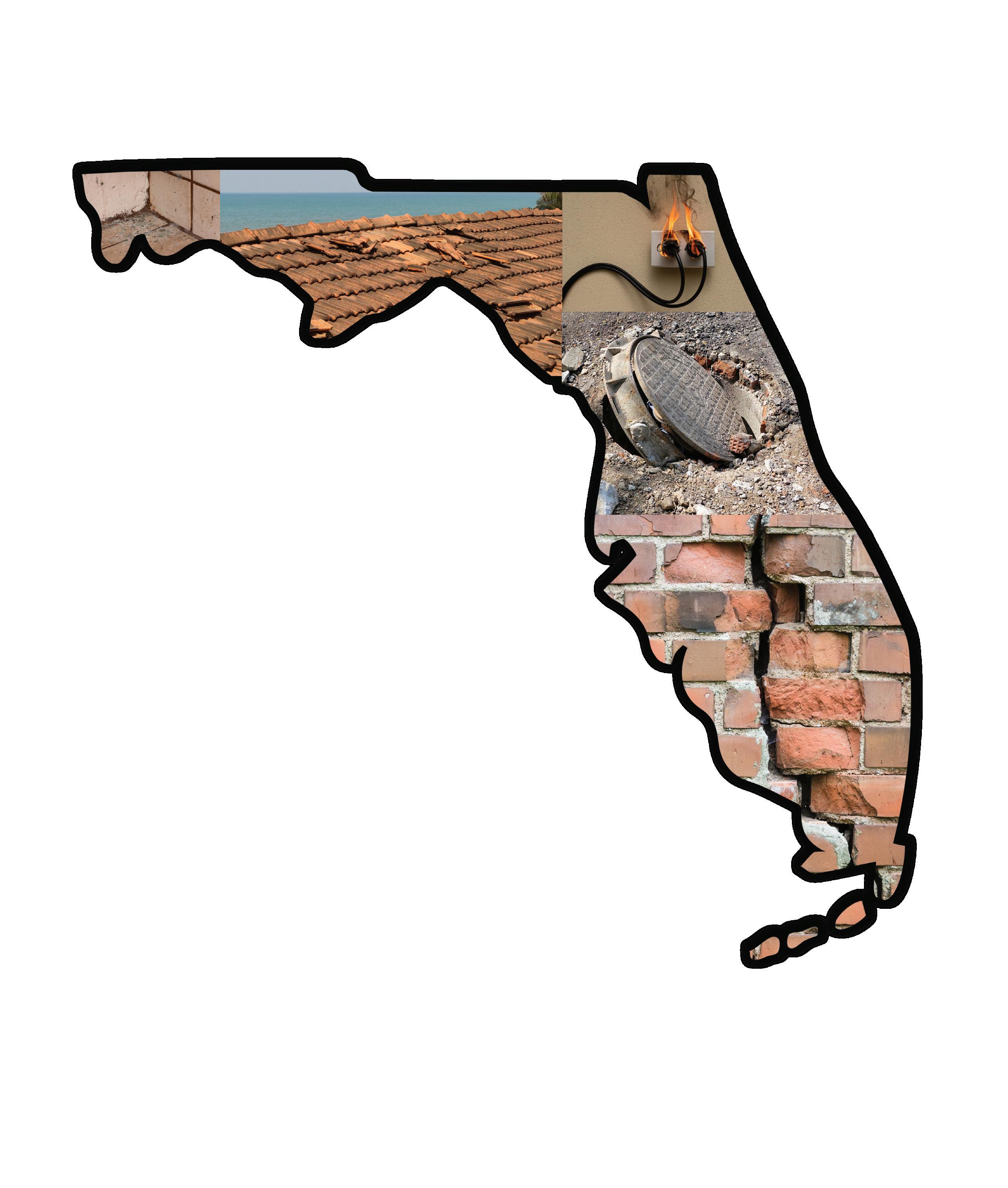
Other articles address hidden cost drivers for association budgets, tile roof preservation pointers, common governance misconceptions, and the replacement of copper phone lines with cellular monitoring solutions.
FLCAJ wishes everyone success in establishing a good financial plan as your community heads into the latter part of 2026.
Editor
Publishers Richard Johns Dana Johns
Editor Michael Hamline
Art Director Nick Walker
Advertising Sales Phone: (800) 443-3433 Email: info@fcapgroup.com
Circulation/Accounting Tammy Hanner
Phone: (800) 443-3433 Fax: (501) 280-9233
Editorial Phone: (800) 443-3433 Fax: (501) 280-9233
Florida Community Association Journal is published monthly by True Source Publishing LLC 1000 Nix Road Little Rock, AR 72211-3235
Email: info@fcapgroup.com Website: FCAPgroup.com
Copyrighted by Florida Community Association Journal. Reproductions of any part of this publication without written permission of the publisher are prohibited.
Subscription Rates
$24 for one year, $48 for three years. Back issues are $5 each plus postage. Group rates for 3 or more people are available at $12 per person.
The publisher and editor(s) of this magazine do not accept responsibility for the content of any advertisement, including statements made by advertisers herein, or for the opinions expressed by authors of by-lined articles. The publisher and editor(s) also reserve the right to reject any ad or article for objectionable content in verbiage or images. The intent of this publication is to provide general information only and is not intended to provide specific advice or recommendations. Appropriate legal, financial, or engineering advice or other expert assistance should always be sought from professionals.
Postage paid at Little Rock, AR and additional offices (permit #1085).
Postmaster
Send address changes to: Florida Community Association Journal 1000 Nix Road Little Rock, AR 72211-3235 or email info@fcapgroup.com



CORAL GABLES!


Ansbacher Law, with board certified partners, 12 attorneys and over 0 professionals, is available to serve your community throughout
•Full service law firm for your Condominium or Homeowners Association.
•Florida’s leading construction defect team - Full contingency available, no fees or costs unless you win.
•Collections handled on deferred and contingency fee arrangement.


Hannah Rullo
Zach Roth
Barry Ansbacher
Emily Dominguez
Alejandra Gonzales

Financial Planning for Community Associations
Editor’s Note: Boards of directors have a fiduciary duty to the community associations they serve. The following tips are provided as a starting place for directors to begin to carry out these duties responsibly.
Why Reserve Studies Matter for Condominium and Homeowners’ Associations
By Anastasia Kolodzik, CAM, RS, PRA
A reserve study is one of the most important financial planning tools available to a condominium or homeowners’ association. It provides a long-term roadmap for the repair and replacement of major common-area components such as roofs, paving, painting, elevators, pools, structural elements, and mechanical systems.
Without a properly prepared reserve study, associations risk underfunding future capital projects, which can lead to special assessments, deferred maintenance,
and unexpected financial burdens on owners. A professionally prepared study helps boards make informed decisions, establish appropriate reserve contributions, and maintain the community’s physical assets.
In Florida, reserve planning has become even more critical due to evolving legislation and increased focus on structural integrity and building safety. Regularly updating reserve studies allows associations to adapt to changing costs, component conditions, and regulatory requirements.
Ultimately, a reserve study protects property values, promotes financial stability, and provides owners with confidence that their community is prepared for the future.
Anastasia Kolodzik is president of Alliance Reserve Services. For more information call 386-259-7027 or visit AllianceReserveServices.com.
Photo by iStockphoto.com/Bussarin Rinchumrus
Asphalt and Budget Season
By Connie Lorenz
There is nothing worse than the fear of the unknown, and I feel like “budget season” is a bag of “unknowns” that can stress a board out while they wait for their new budgets to arrive. Well, to increase the fear and remove any doubt, you can guarantee that you will be seeing price increases in your asphalt maintenance and roadway categories due to the crisis overseas.
The stalled tankers have played a huge part in the price increases as supply and demand have forced people to either accept the new pricing, alter their formulas, or get out of the industry. There is no safe ground. Last week alone I was hit with a $1.93 per gallon fuel surcharge on top of a material increase! It’s hard to keep up during times
ASSOCIATION RESERVES FINANCIAL PROFILE
Association Reserves was established in 1986 as a professional consulting firm serving community associations and other clients
throughout the United States and abroad. To date our firm has completed over 100,000 reserve studies for a wide range of property types, including over 1,000 structural integrity reserve studies (SIRS) completed by our Florida team.
Our clients enjoy access to industry-leading tools and technology, including uPlanIt, our interactive online tool that is provided free with each professional reserve study we complete. Our team of experts represents a wide range of technical backgrounds, including engineering, architecture, construction management, and accounting and includes ten CAI-credentialed reserve specialists.
We don’t take a one-size-fits-all approach to our work because we know that every property is different, and we take the time and care to ensure our results will help you to make wise decisions regarding the long-term care of your physical and financial assets. From our first phone call to final delivery of your study, we hold ourselves to the highest standards of professionalism.
For more information about Association Reserves, call 954-210-7925, email wsimons@reservestudy.com, or visit www.ReserveStudy.com.
like these! Adding a bit on top of your budget numbers never hurts when it comes to something like your roofs, asphalt, paving, or any natural commodity. Being prepared is far better than being scared! Let us know how we can help!
Connie Lorenz is president of Asphalt Restoration Technology Systems. For more information call 800-2544732 or visit www.asphaltnews.com
The Rise of Cyber Liability and Its Growing Impact on Community Associations
By Dillon Marksbury, MBA

Cyberliability is becoming a growing concern for community associations as daily operations become more digital. Associations manage sensitive data such as personal information, financial records, and internal communications, making them attractive targets for cybercriminals. As attacks increase in frequency and sophistication, the financial and legal consequences of a breach continue to rise.
Community associations are legally responsible for protecting the data they own even when using management companies or third-party vendors. A single incident can result in notification costs, legal expenses, regulatory penalties, and reputational damage within the community.
As a result, cyberliability insurance is quickly becoming a necessary part of an association’s risk management strategy, helping cover breach-related expenses and financial losses. However, insurance alone is not enough. Boards must also implement proactive cybersecurity measures, including regular system updates, annual training, and vendor oversight. Addressing cyberliability early helps protect both financial stability and resident trust.
Dillon Marksbury, MBA, is commercial producer at Atlas Insurance. For more information email dmarksbury@ atlasinsuranceagency.com, call 941-552-4121, or visit atlasinsuranceagency.com.
Navigating Budget Season: A Guide for Florida HOAs and Condominiums
By Ashley Dietz
Budget season is one of the most important times of the year for Florida community associations. Starting early helps boards make informed decisions, meet legal requirements, and maintain the financial
health of the community.
Work with your management company to develop a budget plan, assign responsibilities, gather financial data, and establish key deadlines. Be sure to include operating expenses, reserve contributions, insurance costs, and contingency funding. Reviewing contracts, vendor agreements, and reserve studies can help ensure your budget reflects the community’s current and future needs.
To promote transparency, consider holding budget workshop meetings before the official budget meeting. These sessions allow owners to better understand the budget, ask questions, and provide feedback before adoption. Open communication helps owners understand financial decisions and builds trust between the board and residents.
Proactive planning today helps avoid surprises tomorrow, supports property values, and positions your association for long-term financial stability and success.
Ashley Dietz is VP of marketing for Campbell Property Management. For more information call 954-427-8770.
Budgeting and Financial Best Practices for Condominium Concrete Restoration Projects
By Gabriella Bianchini
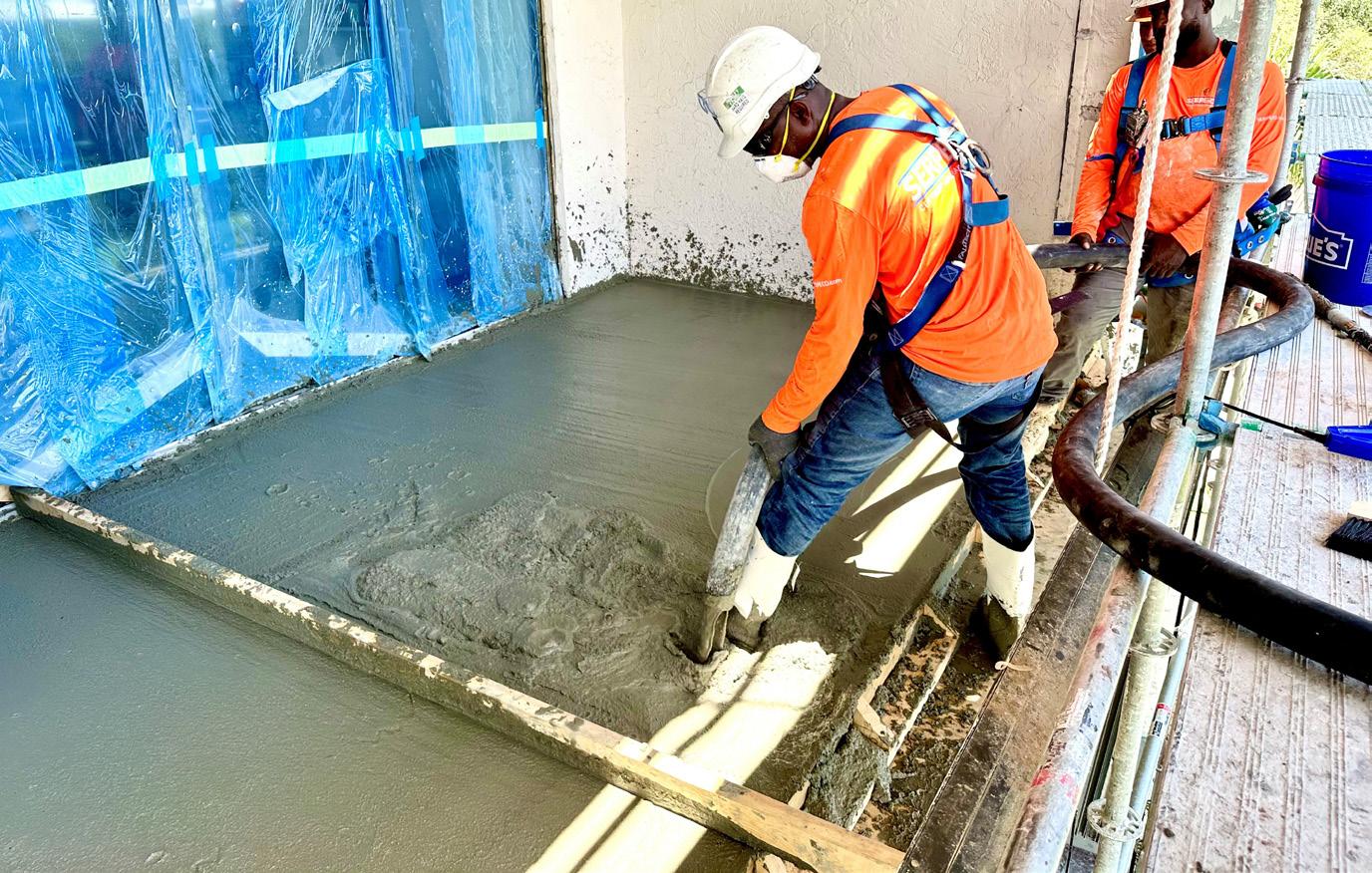
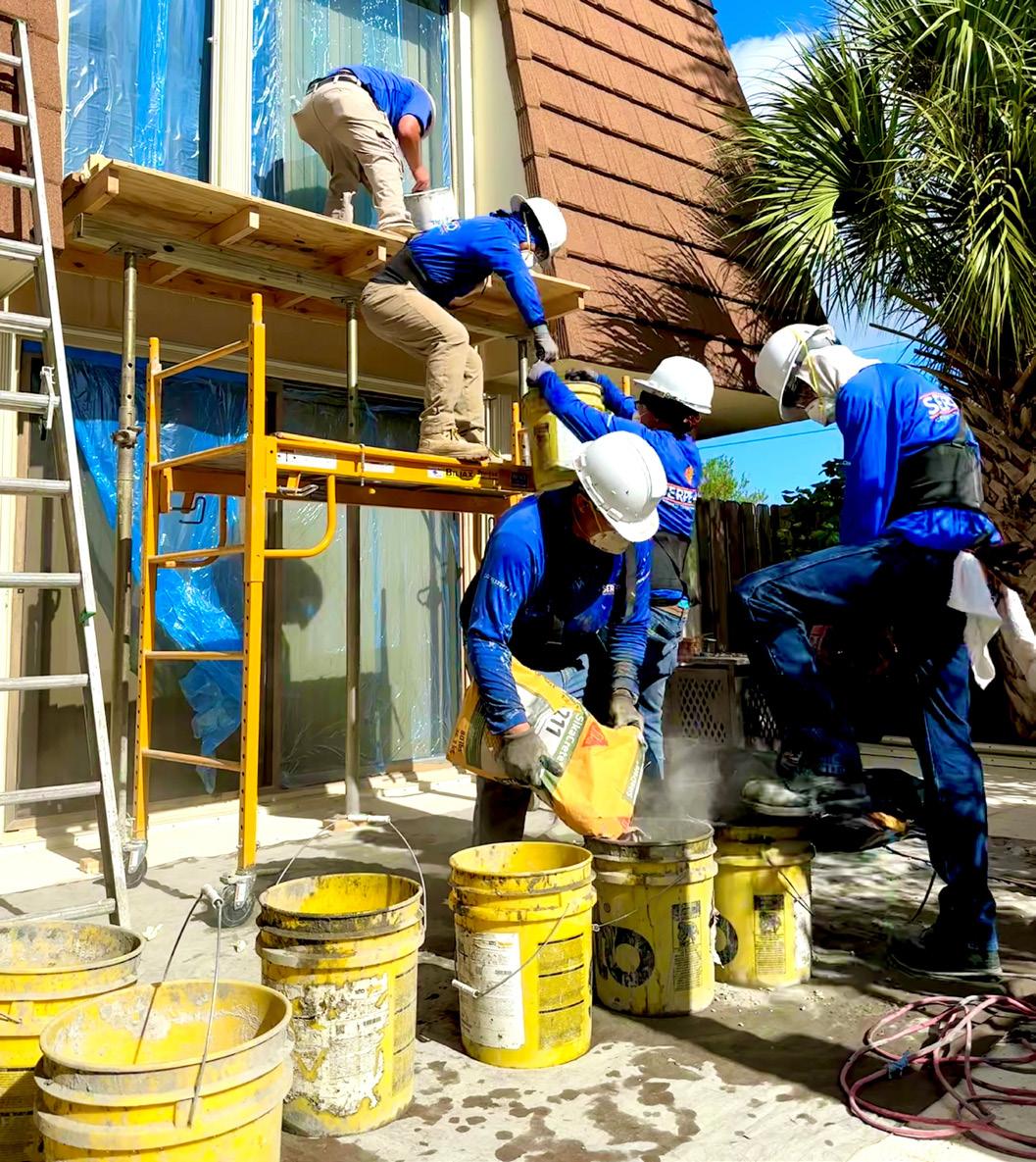
Condominium associations face unique financial pressures when undertaking concrete restoration projects. Aging buildings often require repairs to balconies, parking garages, structural elements, and facades due to spalling, corrosion, and weathering— issues exacerbated in coastal areas like Florida. These projects can cost millions and strain reserves, leading to special assessments that burden homeowners. Proactive budgeting and sound financial practices are critical to managing costs and ensuring compliance.
Understanding the Financial Challenges
Concrete restoration frequently exceeds initial budgets due to incomplete inspections, underestimated repair quantities, and hidden damage like rebar corrosion. Rushed planning under deadlines (e.g., hurricane season or regulatory timelines) compounds these problems.
Best Practices for Effective Budgeting
• Conduct thorough inspections and reserve studies— Start with detailed engineering assessments.

The di erence between a great provider and a frustrating one is in the details. Here are some questions worth asking before you decide:
Can they guarantee speeds and service levels for every home?
Do they o er whole-home WiFi and cybersecurity at no extra charge?
Is their network infrastructure 100% fiber-to-the-home?
Where is their customer service team based?
How long is the typical wait time for phone support?
What is the all-in price, INCLUDING all taxes and fees?
Is their price locked-in — or just a short term promo rate?
With 45+ years working with boards just like yours, Blue Stream Fiber can help ensure your community gets the best possible experience, while saving up to 50% on services. Contact us today for a FREE network evaluation and see how much your community could save.
• Update or commission a professional reserve study to project costs and set aside funds annually based on remaining useful life and replacement estimates.
Develop a Comprehensive, Phased Budget
• Break the project into phases with clear cost allocations.
• Include direct costs (materials, labor, patching, coatings) and indirect ones (engineering, permits, temporary measures).
Secure Multiple Bids and Strong Contracts
• Solicit multiple bids from qualified, licensed contractors experienced in concrete restoration for high-rise condominium work.
Funding Strategies
• Implement special assessments spread over time if needed.
• Explore financing options cautiously (loans add interest and are less common).
• Maintain transparent communication with owners about necessity and costs to build support.
Ongoing Monitoring and Controls:
• Track expenditures against the budget with regular reports.
• Review financials quarterly and adjust as needed.
• Prioritize preventive maintenance to extend intervals between major restorations.
For condominium boards, concrete restoration is both a safety necessity and a major financial undertaking. By investing in expert inspections, data-driven reserve planning, realistic budgeting, and proactive risk management, associations can control costs, comply with regulations, minimize homeowner impact, and preserve property values. Boards should treat these projects as strategic investments in the building’s longevity. Consulting experienced professionals including engineers, financial advisors, and legal experts familiar with condo governance ensures a smoother, more efficient process, leading to better outcomes for all stakeholders.
Gabriella Bianchini is director of safety & marketing at Carousel Development & Restoration Inc. For more information visit www.CDRI.net
The Five Best Practices for Effective Budget Preparedness
By Castle Group
Effective budget preparedness helps community associations maintain financial stability, support daily operations, and plan responsibly for the future. A strong process begins early, giving boards and managers time to review financial history, gather

vendor proposals, and align priorities before the fiscal year begins. Historical data provides a practical foundation for forecasting recurring costs, spotting spending trends, and improving accuracy. Early conversations with service providers can also clarify pricing changes, contract terms, and opportunities to manage expenses. Just as importantly, associations should prioritize reserve funding and capital planning so they are better prepared for major repairs, replacements, and statutory requirements.
Transparent communication with residents helps explain how the budget supports the community, why assessments may change, and what improvements are ahead. With a thoughtful, informed approach, budgeting becomes a strategic tool for protecting property values and strengthening long-term community success.
To learn more about how Castle Group can support your community this budget season, request a proposal at www. castlegroup.com/request-a-proposal.
Budget for the Year-End Report
By R. Scott Grissom, CPA, MBA
During the annual budget process, boards usually focus on assessments, insurance, landscaping, and reserves. Do not overlook the required year-end financial report. In Florida the level of reporting generally follows total annual revenue: smaller associations may prepare a cash receipts and expenditures report while larger associations may need a compilation, review, or audit.
Before the budget is adopted, boards should pause long enough to answer a simple question: “What yearend report are we budgeting for?”
Answer that question before the budget is adopted. Build the expected fee into the budget and allow time for the work that supports it: reconciled bank accounts, organized reserve activity, and board review. When the financial report is planned as part of the budget, it is less likely to become a year-end scramble or surprise expense. Good financial reporting starts before the fiscal year is over.
R. Scott Grissom, CPA, is the founder of Coastal Clarity Assurance, a Florida CPA firm focused exclusively on audits, reviews, and compilations for HOAs and condominium associations. For more information visit coastalclarityassurance.com or call 754-354-3231.
Building Stronger Financial Safeguards for Your Association
By Anna Rogers

As fraud schemes become more sophisticated, community associations should implement multiple safeguards to protect their assets. Start by requiring dual authorization for wire transfers, ACH payments, and large disbursements while regularly reviewing financial responsibilities and reconciling bank accounts to catch issues early.
Board members and staff should receive training to recognize phishing attempts, email scams, and other fraud tactics. Strong password policies, multifactor authentication, and regular reviews of user access rights are also essential safeguards.
In 2026 NACHA risk-management requirements emphasize monitoring of ACH transactions and verification of payment instruction changes. Associations should verify any request to update vendor banking information using a trusted contact method and maintain documented fraudresponse procedures.
COGENT BANK FINANCIAL PROFILE
Cogent Bank is a Florida-based financial institution built on a relationship-driven approach to banking. Since its formation in 2018, the bank has grown to more than $2.4 billion in assets and operates multiple full-service banking centers across North, Central, and Southwest Florida, delivering personalized service and responsive financial solutions.
Its comprehensive range of financial offerings includes commercial and personal lending, treasury management, competitive deposit products, and frictionfree digital banking tools designed to simplify everyday financial management. Cogent combines deep financial expertise with a concierge-style approach, helping businesses, professionals, and families navigate complex financial goals.
Cogent differentiates itself through local decisionmaking, fast credit decisions, and a commitment to building long-term client relationships. The bank also offers a specialized Association Banking division, providing integrated payment platforms, treasury management tools, property management software integration compatibility, and FDIC-insured deposit solutions tailored to community associations throughout Florida.
For more information about Cogent Bank, call 888-5770404 or visit www.cogentbank.com.

Tools such as Positive Pay, ACH Positive Pay, debit blocks, and account alerts provide protection by identifying unauthorized transactions before funds are released. Combined with internal and external audits, these practices help strengthen accountability and significantly reduce fraud risk.
Anna Rogers is SVP, community association relationship manager for Cogent Bank. For more information call 727-477-3182, email arogers@cogentbank.com, or visit www.cogentbank.com.
Four Smart Insurance Moves
By John Lee
For Florida condominium boards insurance remains one of the most important budgeting and financial planning considerations. With carriers increasingly rewarding boards that proactively invest in preventive maintenance and upkeep, preparation can play an important role in securing favorable terms and pricing.
Stay compliant. Ensure your association is meeting
Florida’s building safety requirements, including milestone inspections and structural integrity reserve studies.
Keep appraisals and permit records updated. These documents provide insurers with proof of completed improvements and current property valuations, supporting more informed underwriting decisions.
Engage qualified experts. Engineers, architects, and other licensed professionals can help identify issues early and support compliance efforts.
Select the right broker. An experienced broker can effectively represent your community, navigate a complex market, and help secure the most appropriate coverage.
Many boards also rely on trusted advisors, including property management partners such as FirstService Residential, to help coordinate professionals and support informed decision-making.
John Lee is senior vice president of FirstService Financial, the financial management arm of FirstService Residential, offering insurance, cash management, and lending services to FirstService Residential-managed communities and high-rises. For more information visit learn.fsresidential.com/condo-insurance.
Deadline to notify mem ers a copy, or free-on-request notice. 1,000+
Why the Best Financial Decisions Happen Before There’s a Problem
By Mike Mitson
Community association management has a funny way of becoming interesting the moment something stops working. The gate won’t open. The landscaping looks tired. The budget gets complicated. Suddenly, everyone has questions. That’s where GRS comes in.
We partner with HOA and condominium boards to keep communities running smoothly, finances on track, vendors coordinated, and residents informed, without requiring volunteer board members to become part-time accountants, project managers, and emergency response teams.
At GRS we believe great communities are built through proactive planning, clear communication, strong financial stewardship, and attention to the little things that make a big difference, the things residents may never notice until they stop working.
Our job is to help boards stay ahead of problems, make confident decisions, and keep communities looking great, functioning well, and feeling like home. Because when community management is done right, life gets easier for everyone.
Mike Mitson is vice president of business development. For more information email sales@grsmgt.com.
When Projects Begin, Paper Trails Matter
By Marnie Dale Ragan

While this time of year is typically reserved for hurricane protection discussions, we are seeing a rise in community projects and restoration. With these projects come opportunities for associations to safeguard their finances and ensure that all accounting is complete and clear. Owners are increasingly making records requests relating to the economics of their associations, mainly as a result of the increase in assessments or the levying of special assessments relating to recertification and restoration projects. Associations can and should take this opportunity to make sure that their project plans are clearly defined with the engaged professionals and that all recordkeeping and documentation is accurate. This is especially important with special assessment accounting. Associations can also take measures to safeguard financial operations by
implementing fraud protection plans and requiring multiple layers of approval and authorization for expenditures. While these practices may seem tedious, the system of checks and balances will provide comfort and protection to all parties, including board members, the management team, and owners.
Marnie Dale Ragan is equity partner at Haber Law. For more information visit www.haber.law, call 305-379-2400, or email mragan@haber.law.
Is Your HOA Budgeting for What’s Buried Below?
By Hinterland Group
Most HOA boards budget carefully for roofs, landscaping, and amenities—but the infrastructure underground often goes unplanned for until something fails. For Florida communities that can mean flooded yards, backedup sewer laterals, and emergency repair bills that devastate reserves.
Hinterland Group’s PRIME Maintenance Plan gives associations a proactive path forward. Routine CCTV inspection identifies pipe conditions before failures occur, and hydro-jetting cleaning keeps systems flowing. That inspection data becomes your roadmap— allowing boards to phase rehabilitation projects across multiple budget cycles rather than absorbing one catastrophic cost.
When repairs are needed, Hinterland’s trenchless CIPP technology restores pipes from the inside—no excavation, no torn-up landscaping, and no disruption to residents. It protects your community’s aesthetics and your board’s credibility.
Know what you own. Plan what it costs. Protect your reserves.
For more information about Hinterland Group, visit hinterlandgroup.com, call 561-640-3503, or email infrastructurerepair@hinterlandgroup.com.
A Threshold Engineer Is a Critical Ally
By Dylan O’Berry

A threshold inspector—a specialized licensed engineer—is a critical ally for a condominium’s financial health. By conducting mandatory structural integrity reserve studies (SIRS), these experts bridge the gap between building safety and rigorous fiscal management. Their precise engineering reports dictate exact capital
reserve requirements, allowing boards to establish accurate annual budgets and realistic collections programs. This data-driven forecasting protects associations from sudden special assessments, serving as a powerful economic safeguard for owners’ property values.
Furthermore, transparent third-party structural certifications mitigate fraud risks by eliminating the manipulation of maintenance funds. Historically, poor structural data led to catastrophic financial shortfalls; today an inspector’s objective analysis provides the verifiable documentation required by underwriters. This directly aids the board in securing competitive windstorm and flood insurance premiums. Ultimately, the threshold inspector transforms building code compliance into a vital blueprint for long-term financial best practices.
Dylan O’Berry, PE, is president of Howard J. Miller Consulting Engineers. For more information call 561-3922326 or visit www.howardjmiller.net
The Financial Impact of Inadequate Reserve Funding
By Sundeep Jay, RS, PRA
Proper reserve planning is one of the most important financial responsibilities of any condominium or homeowners’ association. When reserves are under-
funded or reserve studies are not performed and updated regularly, associations may face significant financial challenges. Deferred funding often results in special assessments, bank loans, or unexpected increases in owner assessments when major components such as roofs, painting, pavement, elevators, plumbing systems, or structural elements require replacement.
Insufficient reserves can also negatively impact property values, reduce buyer confidence, and make budgeting more difficult for both owners and the association. In addition, emergency repairs are often more expensive than planned replacements, further increasing financial strain.
A professionally prepared and regularly updated reserve study helps associations anticipate future expenses, develop stable funding plans, and reduce the likelihood of financial surprises, ultimately protecting both the association’s assets and the long-term value of the community.
Sundeep Jay, RS, PRA, is president of J.R. Frazer Inc. For more information call 561-488-3012, email sundeep@ JRFrazer.com, or visit www.JRFrazer.com.



A Window of Opportunity: Reviewing Your Association’s Wind and Flood Coverage
By Oscar Borras
For the first time in years, Florida’s property insurance market may be creating an opportunity for community associations.
Dozens of private insurers have filed for rate decreases while new insurance companies have entered Florida since legislative reforms were approved. For community association managers and boards, this shift creates a real opportunity to shop the market and potentially reduce costs without sacrificing coverage. That said, lower pricing should never come at the expense of coverage clarity.
Boards have a fiduciary duty to protect association assets, and what is often misunderstood are the key differences between windstorm and flood coverage, even though both could arise from the same storm event. Windstorm covers direct wind damage; flood covers rising water, including storm surge. Associations need both.
Before you kick off budget season, now is the time to request quotes to allow time to compare options because the savings gap between carriers can be substantial. Also, if wind mitigation improvements have been made to the property, a new inspection could qualify the association for significant premium discounts.
The market is moving. Boards that act now are best positioned to benefit.
Oscar Borras is executive vice president of operations of KW PROPERTY MANAGEMENT & CONSULTING, one of Florida’s largest residential property management companies, with more than 3,000 employees and more than 100,000 units under management. Its portfolio includes upscale high-rise towers, townhome communities, and homeowners’ associations. Visit kwpmc.com for more information.
A Proper Budget
By Ryan Clifton, CMCA
Creating a master project list for your non-reserve related projects (such as landscaping or preventive maintenance) will prove to be a crucial resource for organizing the scheduling and funding of each project. Further, you will have an estimated timeline for the completion of each project.
Obtaining and updating your reserve study will ensure your very expensive reserve projects are being adequately funded. This will help avoid future spikes in assessments due to a deficit in reserve funding and/ or special assessments.
If now is not the time to have a proper budget, then when will that time be?
Ryan Clifton, CMCA, is vice president of accounting at Leland Management. For more information call 407-7811187, rclifton@lelandmanagement.com, or visit www.LelandMgt.com.
Smart HOA Financial Management: Balancing Compliance, Transparency, and Security
By Paula Pieroni
Managing a condominium or homeowners’ association budget in Florida has never been more complex. Today’s boards and property managers must balance rising daily operational costs with stringent state mandates for longterm community health. Successful association leadership relies on precise planning, strict statutory compliance, and proactive security to protect community assets.
Strategic Budgeting & Florida Reserve Mandates
As the 2027 budget season begins, there is no better time to ensure you have a proper budget. A proper budget is one that provides adequate funding for all annual operational expenses while fully funding reserves.
Ensure your scope of services in each vendor contract is sufficiently covering the demands of your association.
A robust budget starts with a clear division between operational expenses (landscaping, routine maintenance, and utilities) and reserve funds (roofing, paving, and structural components). In Florida, keeping up with reserves is no longer just a best practice—it’s a legal necessity. With heightened state regulations surrounding structural integrity reserve studies (SIRS) for condominiums and strict financial reporting guidelines for HOAs, boards must prioritize regular, professional reserve studies. Proactive funding ensures the association can handle major future repairs compliance-wise, completely avoiding the need for sudden, stressful special assessments that strain homeowner relationships. Furthermore, transparency is key to community buy-in. Keeping members informed through open budget meetings and easily accessible financial reports builds trust and ensures everyone understands exactly where their assessment dollars are going.
Safeguarding Against Fraud
Because Florida condominiums and HOAs handle large sums of community money, strong internal controls are vital for risk mitigation. To protect association assets and maintain fiduciary responsibility, boards should implement strict financial guardrails.
Dual Signatures—Require two board signatures (or a formal electronic approval process) for any check or withdrawal over a set threshold.
Segregation of Duties—Never allow the same individual to log invoices, cut checks, and reconcile bank statements. Separate the accounting functions to ensure accountability.
Independent Audits—Hire an outside, independent Florida CPA to conduct annual financial reviews
Pooling Resources: A Smart Financial Strategy for Condominium Owners
By Nate Yoder

When condominium governing documents designate windows and doors as an individual owner
responsibility, unit owners often replace these components independently. While this approach satisfies maintenance obligations, it may not be the most costeffective solution.
A better financial strategy is for homeowners


standards and product selections can also enhance the building’s appearance and preserve property values.
By working together, condominium owners can achieve significant savings, improve project efficiency, and maximize the value of their maintenance investments while fulfilling their responsibilities under the association’s governing documents.
Nate Yoder is vice president of Mullet’s Aluminum Products. For more information call 941-371-3502, email nate@mulletsaluminium.com, or visit www.mulletsaluminium.com
Protecting Reserve Budgets Through CostEffective Façade Restoration
By Alexandra Freeman

For condominium and homeowners’ associations, unexpected
building envelope repairs can place significant strain on reserve funds and annual budgets. One often-overlooked strategy is extending the service life of existing exterior wall coatings rather than pursuing costly removal and replacement projects.
Pecora® SilcoPrime® helps associations maximize maintenance dollars by allowing high-performance architectural wall coatings to be applied over existing silicone-coated surfaces that would otherwise require expensive remediation. Acting as a specialized adhesion-promoting primer, SilcoPrime creates a durable bond between aging silicone coatings and new protective finishes, enabling restoration without the labor, disposal, and disruption associated with complete coating removal.
An additional benefit is flexibility. Once SilcoPrime is applied, a wide variety of architectural wall coatings can be installed over it, allowing owners to select the finish that best meets their performance, aesthetic, and budget goals.
When paired with a quality wall coating system, SilcoPrime can help extend façade service life, reduce maintenance costs, and support more predictable capital planning.
Alexandra Freeman is social media and content specialist for Pecora Corporation. For more information visit pecora.com.
Temporary Reserve Relief for Florida Condominium Associations
By Keith F. Backer, Esq.
The Condominium Act requires that Florida condominium associations fund reserves and prohibits asso-
ciations from waiving or underfunding reserves required by a structural integrity reserve study (SIRS). However, Section 718.112(2)(f), Florida Statutes, provides some associations with temporary relief from the requirement to fully fund those reserves. For a budget adopted on or before December 31, 2028, if an association has completed a milestone inspection pursuant to Section 553.899, Fla. Stat., within the previous two calendar years, then the board, upon the approval of a majority of the total voting interests of the association, may temporarily pause (for a period of no more than two consecutive annual budgets) reserve fund contributions or reduce the amount of reserve funding for the purpose of funding repairs recommended by the milestone inspection.
Note that the purpose of this relief is narrow: the money must be used to help pay for repairs recommended by the milestone inspection. It is not simply a way to save money. The statute also requires associations that take advantage of this relief to obtain a SIRS to determine future reserve needs and recommend a funding plan before reserve contributions resume.
Keith Backer is managing partner at Poliakoff Backer, LLP. The firm is located at Peninsula Plaza Suite 462, 2424 North Federal Highway, in Boca Raton, FL 33431. For more information visit www.PBAttorneys.com or email kbacker@ pbattorneys.com.
Why Accurate Financial Reporting Matters in High-Rise Communities
By Jason Taic
In high-rise communities accurate financial reporting is essential to protecting the association’s long-term stability. High-rises often carry significant operating costs tied to elevators, staffing, security, utilities, insurance, mechanical systems, and shared amenities. Clear, timely financial reports give board members the visibility they need to monitor spending, compare actual expenses against the approved budget, and identify potential issues before they become costly surprises.
Reliable reporting also supports stronger reserve planning. Major building components can require substantial investment, and boards need accurate financial data to make
informed decisions about repairs, replacements, and funding strategies. That is why RealManage is proud to be the only management company that provides financial reports on time, every time.
For high-rise associations, strong financial reporting is more than an administrative task. It is a key tool for responsible governance and long-term community success.
Jason Taic is vice president of high-rise sales for RealManage. For more information visit www.realmanage.com.
Fannie Mae Tightens Condo Lending Rules: What Boards Need to Know
By Matt Kuisle, PE, PRA, RS
Fannie Mae is overhauling its condominium lending standards, and associations that aren’t prepared could find themselves sidelined from a large portion of the mortgage market.
Starting August 3, 2026, the streamlined “limited review” process, historically used for roughly 60 percent of condominium loan approvals, will be eliminated. All projects must now undergo full review,
RESERVE ADVISORS FINANCIAL PROFILE
As the nation’s leading reserve study provider, Reserve Advisors helped develop the national standards that all reserve study providers follow today. Founded in 1991 we make sure you and your neighbors have what you need to protect your property today and prevent costly and avoidable repairs tomorrow.
As your long-term partner, we help associations thrive by providing comprehensive reserve study and SIRS services, giving you an accurate plan for the future that meets both the true demands of ownership and legislative requirements. We pride ourselves on delivering unbiased recommendations that give communities the power to address the following:
• Updated lending requirements, such as increased reserve funding requirements and the retirement of the limited review process
• Infrastructure priorities that can be challenging with limited resources
• Friction between homeowners and the board, which can be alleviated through clarity regarding financial matters Maintaining a community association physically and financially can be complicated, but planning for the future doesn’t have to be.
For more information on how Reserve Advisors can help your community thrive, visit reserveadvisors.com or call 800-980-9881.








meaning lenders will scrutinize association budgets, reserve funding levels, deferred maintenance, and insurance in far greater detail.
Reserve requirements are tightening, too. Beginning January 4, 2027, associations must fund reserves equal to at least 15 percent of their annual budget, up from 10 percent. The low-cost “baseline” funding method, which allowed reserves to approach zero, will no longer be accepted.
For condominium boards and managers, the message is clear: act now. Commissioning an up-todate reserve study and reviewing your association’s financial health before these deadlines could make the difference between buyer-eligible and buyerblocked.
Matt Kuisle, PE, PRA, RS, is the regional executive director—southeast for Reserve Advisors. For more information call 800-980-9881, email matt@reserveadvisors.com, or visit www.reserveadvisors.com
Understanding Responsibilities During Budgeting Season
By Chris Anderson

As associations work through the annual budget process, it’s important to understand the respective roles of your community manager and the board. While budgeting is a collaborative effort, each party should have distinct responsibilities that can help keep the process efficient and effective.
Community Manager’s Role—Your manager serves as the operational lead during budgeting season, preparing the initial budget based on historical data and current financial performance. He or she gathers vendor proposals, reviews contracts, identifies upcoming expenses and reserve funding needs, and provides recommendations based on industry trends, market conditions, and similar communities.
The Board’s Role—The board holds fiduciary responsibility for the association’s financial well-being and has final say on budget approval. Board members review the proposed budget, provide feedback, ensure
it aligns with the community’s goals and obligations, make funding decisions for reserves and projects, and formally approve the final budget.
Remember that working together ensures an informed budgeting process that supports the association’s long-term financial health and success.
Chris Anderson is the division president of Sentry Management’s Orlando division. For more information visit sentrymgt.com
Smart Financial Steps for Budget Season
By Holly Paxton
Review Current Spending
Community finances work best when boards plan early, ask good questions, and keep residents informed. Budgeting is not just about balancing numbers. It is about protecting the association’s future and preparing for everyday needs and unexpected costs.
Start with year-to-date expenses, vendor contracts, insurance, utilities, maintenance needs, and any areas where costs are trending higher.
Strengthen Safeguards
Clear approval processes, regular financial reports, and strong payment controls can help reduce risk and protect association funds.
Plan Beyond the Budget
Reserve funding, collections, storm-related expenses, and insurance deductibles should all be part of the same financial conversation.
Communicate the Why
When residents understand the reasons behind financial decisions, it builds trust and reduces confusion. With the right practices in place, budget season becomes less stressful and more useful for the whole community. It also gives boards a clearer path for explaining priorities before questions or concerns come up.
Holly Paxton is a marketing intern at Vesta Property Services. Request a proposal today at VestaPropertyServices.com. n
Coastal Clarity Assurance
Serving HOAs & condos across all of Florida 754-354-3231
info@coastalclaritygroup.com coastalclarityassurance.com
Devin & Associates 360 Central Avenue, Suite 800 Saint Petersburg, Florida 33701 727-290-2578
jjaram@devinandco.com devinandco.com




12485 28th Street N St. Petersburg, FL 33716 727-549-1202 or 888-722-6669 www.Truist.com/ AssociationServices



125 SE Tesoro, Ste. 107 Port St. Lucie, FL 34984 772-461-6040 www.Acentria.com Atlas Insurance 7120 Beneva Road Sarasota, FL 34238 941-552-4113 atlasinsuranceagency.com

Serving Our Community Since 1962 Unit Owners, Policies, Life and Health (954) 943-5050 • npridemore@acrisure.com Gene Pridemore • www.acrisure.com/southeast
fcapgroup.com/nl-sd


400 N. Ponce de Leon Boulevard St. Augustine, Florida 32084 800-997-1961 www.herbiewiles.com Insuring over 100 FL condo associations and HOAs.
2121 NE Coachman Road Clearwater, Florida 33765 www.turnergroupfl.com
Frazer, Inc.

Photo by iStockphoto.com/krblokhin
Fannie, Freddie, and Florida:
The New Lending Reality
BY WILL SIMONS, RS, EBP
M
ost of us in the community association industry have spent the past few years adjusting to a moving target. Florida’s SB 4-D and SB 154 (along with subsequent legislation changes) reshaped how associations handle structural inspections and reserve funding, and more recently Fannie Mae and Freddie Mac revised their condominium project review standards in ways that associations must also take into account. Together these changes have created a new reality worth talking about: a community’s reserve plan is no longer just an internal budgeting document. It is a credit document, too—one that lenders now read, and one that can affect whether units in your community remain easily financeable.
TWO SETS OF RULES, TALKING PAST EACH OTHER
Much has been written about Florida’s structural integrity reserve study (SIRS) and milestone inspection requirements, which require proper estimation of life
expectancies and replacement costs for critical building components and provide associations with appropriate financial roadmaps for how to deal with these inevitable costs. Unlike prior years, most condominiums and cooperatives can no longer waive annual funding for these components. Having a current, credible SIRS and following its recommendations is vital not only for statutory compliance, but also increasingly to satisfy insurance companies and lenders who are using these documents as a part of their own private underwriting standards.
Nationally Fannie Mae and Freddie Mac also look critically at condominiums, imposing their own requirements for compliance with internal lending standards. For a unit in a condominium project to qualify for a conforming mortgage through the GSEs—and therefore for a potential buyer to access the most favorable lending rates—the condominium project itself must pass review. There are many criteria involved, but two recent updates to these requirements involving reserve funding deserve particular attention.

WILL SIMONS, RS, EBP, PRESIDENT, FLORIDA REGIONAL OFFICE OF ASSOCIATION RESERVES
Will Simons, RS, EBP, is a credentialed reserve specialist and president of the Florida regional office of Association Reserves, a national provider of reserve study services. For more information, visit www.ReserveStudy.com
First, effective January 4, 2027, the minimum reserve funding standard is moving from 10 percent of the annual budget to 15 percent. How the percentage is calculated is spelled out in the Fannie Mae Selling Guide, Section B4-2.2-02, which can be accessed at https://selling-guide. fanniemae.com/sel/b4-2.2-02/full-review-process#P11911; but it should be noted that Fannie Mae does not distinguish between “SIRS” reserves and other types—it is the combined total that must satisfy the threshold. Second, for associations seeking the long-recognized exception to the percentage-of-budget rule by submitting a reserve study that demonstrates a lower funding level is sufficient, the standards have tightened. As of August 3, 2026, a study pursuing a “baseline funding” objective (i.e., letting the cash balance on hand drop as close to zero as possible without going negative) will no longer be accepted as a viable option. The association must instead be funding toward the highest objective identified in its study. The principle is straightforward: lenders are unwilling to accept bare-minimum funding when the collateral they are lending against is at stake.
The juxtaposition of these different requirements (Florida’s SIRS laws and national lending guidelines) may leave some associations caught in the middle: it will be simultaneously possible to satisfy all of Florida’s statutory provisions (which do specifically allow baseline funding as an approved objective) while not complying with Fannie Mae’s more conservative demands.
Home Auto Business Flood



WHERE BOARDS CAN GET AHEAD OF THIS
In our opinion the most useful step a board of directors can take is to commission a comprehensive reserve study engagement (including separate analyses of the SIRS and “non-SIRS” components alike) designed to satisfy both sets of requirements at once. The two should be produced together as a coordinated package, and the provider can work with the client to ensure that the financial recommendations meet all the key criteria at stake. Those associations who initially sought only to comply with the SIRS requirements without also developing a financial plan for their other major components (such as elevators, HVAC systems, amenities, and building interiors) are only getting half the picture, and the new national lending standards will expose the shortfall.
The fact of the matter is that associations owe it to themselves to embrace the financial realities they face and plan accordingly. Government and industry requirements are there to enforce accountability; but even if they didn’t exist, proper reserve planning would still mandate an accurate, comprehensive schedule of all relevant components, paired with a financial plan designed to provide appropriate levels of reserve cash at all times. That will remain true regardless of any further changes yet to come.
PUTTING THE NEW STANDARDS IN PERSPECTIVE
It is worth pausing on what the 10 to 15 percent change actually means in practice. To keep pace with the steady deterioration of a typical condominium’s common elements, we have generally observed that most associations need to transfer somewhere between 15 percent and 45 percent of their total annual budget into reserves on an ongoing basis. An association legitimately funding its reserves should already be at or above the new 15 percent threshold, so for those communities these new changes are essentially a nonissue. For the associations that have been funding insufficiently, the change is really an invitation to take an honest look at the plan. The broader direction is, in our view, the right one. For a long time condominium reserve practice in Florida tolerated a gap between what buildings should have allocated and what they actually set aside. The new rules have brought that gap into the open, and closing it is well within reach for any board willing to take the first step. n


• Unmatched reliability, redundancy and uptime with two dedicated fiber lines installed at your property.
• 100% U.S.-based support that answers calls in under 40 seconds.
• Seamless integration of smart property services. Solutions


The Hidden Cost Drivers in High-Rise Associations
A look at what’s driving fees in Florida’s high-rise condominium buildings
BY JASON TAIC
If your maintenance fees jumped this year and the budget meeting didn’t explain why, you’re not alone. This overview is for you. Florida’s high-rises are living through the largest financial reset in their history. The laws passed after the Surfside collapse rewrote how buildings are inspected, how reserves are funded, and how much documentation an association keeps current after the transition periods have ended. Most of these costs never appear as a single budget line. They arrive as a higher monthly number, a special assessment, or a loan payment. They come from four places, and each makes sense once you see it.
Photo by iStockphoto.com/PhonlamaiPhoto
THE RESERVE CATCH-UP
For most of Florida’s condominium history, reserves were flexible. When a budget got tight, owners could vote to waive them or fund them lightly; and plenty of communities did, understandably, year after year. That option is gone for the parts of a building that keep everyone safe. Every highrise now has to carry a structural integrity reserve study, or SIRS. The study covers eight categories: the roof, the load-bearing structure, fireproofing and fire protection, plumbing, electrical, waterproofing and exterior painting, windows and exterior doors, and any other structural item over $25,000 to replace or maintain. Reserves for those items must be funded to the amount the study says.
The hidden cost isn’t the study itself. It’s the gap the

JASON TAIC, VICE PRESIDENT OF HIGHRISE SALES, REALMANAGE
Jason Taic is vice president of high-rise sales for RealManage. If your high-rise community is preparing for capital work or mapping out future needs, RealManage would welcome the chance to talk through how the right partnership can help your board move forward with clarity. For more information contact us today at www.realmanage.com/proposal-request/ to learn more!
study reveals. An engineer calculates how much life each component has left and what it will cost to replace a roof, restore concrete, or repipe a tower in today’s dollars and then sets a savings schedule so the money’s ready on time. Construction costs have climbed steeply in recent years, so the numbers can be eye-opening. And the years a building spent waiving reserves don’t reduce the bill—they only delayed it. Today’s owners absorb the catch-up, which is why fees in older buildings have moved the most.
The gap reaches your statement in a few ways. Some boards raise the monthly fee and rebuild savings gradually. Some levy a special assessment, a one-time charge that closes the gap faster. Others borrow and spread the repayment across future budgets. The delivery differs, but the underlying math is the same, so two similar towers
can carry very different fees. One saved steadily for decades. The other is catching up now, and no vote can make the obligation disappear.
REPAIRS ON SOMEONE ELSE’S SCHEDULE
Alongside the reserve rules sits the milestone inspection, a structural review by a licensed engineer or architect once a building reaches the 25-to-30-year mark, then on a fixed cycle. The review happens in stages. The first phase is visual. If the engineer finds meaningful structural deterioration, a second phase follows with deeper testing, and required repairs must begin on a government-set timeline rather than one the board chooses.
There’s a good reason the state watches these buildings closely. Salt air works into concrete over decades, reaches the steel reinforcement inside, and corrodes it. The rusting steel expands and cracks the concrete around it, a process called spalling, familiar to anyone who’s seen exposed rebar on a balcony edge. It’s slow and predictable, which is what the inspections exist to catch early.
The cost hiding here is the loss of leverage. A board once could wait out a hot construction market and schedule concrete work when contractors were hungry, but a mandated repair clock takes away that room to maneuver for better pricing. Contractors know every aging coastal tower is on a similar schedule, and bids reflect it. Competitive bidding still matters, but the option to walk away and wait, often a board’s strongest negotiating tool, is largely gone for structural work.

THE RUSTING
STEEL
EXPANDS AND CRACKS THE CONCRETE AROUND IT, A PROCESS CALLED SPALLING, FAMILIAR TO ANYONE WHO’S SEEN EXPOSED REBAR ON A BALCONY EDGE. IT’S SLOW AND PREDICTABLE, WHICH IS WHAT THE INSPECTIONS EXIST TO CATCH EARLY.

COMPLIANCE IS NOW A WORKLOAD
Less visible is the paperwork the new rules created. An association now maintains inspection reports, reserve studies, state filings, insurance appraisals, owner records, and disclosures on overlapping schedules, with consequences for missing a deadline: fines, personal exposure for directors, and public noncompliance flags that lenders and insurers can see.
Those records also follow the building into every sale. Buyers and their lenders routinely ask for inspection reports, reserve details, and budgets before a closing, and a missing or messy file can slow a sale or scare a buyer off A community with a clean, current file is protecting its owners’ unit values.
That workload is itself a cost, and it’s nobody’s fault. Some communities absorb it with volunteer hours, some with expanded management contracts, and some with attorneys and consultants. However it’s handled, the time and expertise needed to keep a high-rise compliant have grown substantially, and that expense lands in the budget whether or not anything breaks.
INSURANCE FOLLOWS THE PAPERWORK
Insurance is where the other three converge. Carriers now underwrite the paperwork along with the building. Before quoting, most want the inspection reports, the reserve study, and a credible plan for funding repairs, and Citizens; the state’s insurer of last resort, can’t cover buildings that haven’t met the structural requirements.



Raul Delgado Vice President




sdyer@westernalliancebank.com
AN AWARD-WINNING & INNOVATIVE LEGAL TEAM








There’s a quieter driver inside the premium. Associations must insure the building at its full replacement cost, a value set by independent appraisals. Because construction costs have risen sharply, insured values have risen with them, and the premium can climb even in a year when the insurer doesn’t change its rates. And there’s good news: the market has improved. After the rough years of 2022 and 2023, new carriers have entered Florida, and many associations are seeing more modest renewal increases. That relief is selective, though. It flows to buildings with clean inspections and funded reserves. A building behind on either can face steep premiums or get pushed into surplus coverage that costs more and covers less, draining the dollars needed for the very repairs insurers want to see. Compliance has quietly become an insurance strategy.
WHERE THIS LEAVES BOARDS AND OWNERS
None of this means your building is in trouble. It means the definition of well-run has changed. A healthy high-rise in 2026 has its inspections current, its reserves funded to a real study, its records in order, and its insurance placed without a scramble. Its fees reflect all of that.
For owners, the most useful move is to ask informed questions rather than assume the worst. Is the reserve study current? Are we funding to it? Are the inspections and filings up to date? What’s the plan for anything the engineer flagged? A board that can answer those plainly is doing its job well. For


boards the strongest position is transparency: showing owners the study, the schedule, and the math behind tration fills The higher statement strain it puts But in most money is buying specific: a insurable, Understanding that shrink the cost, the mystery out






Community Financial Management: Integrating Reserve Studies for Long-Term Success
BY MATT KUISLE, P.E., RS, PRA
M
anaging the finances and reserve funds of a condominium or homeowners’ association involves more than just paying bills and collecting dues; it also entails maintaining a comprehensive financial plan to ensure long-term stability and protect property values. Effective financial management helps Florida associations plan for routine expenses, unexpected repairs or replacements, and future improvements while keeping pace with evolving state law. One of the most powerful tools boards can use is integrating reserve studies into financial planning.
WHAT IS A RESERVE STUDY?
A reserve study is a detailed analysis of a community’s common elements and their expected lifespan. From roofs and elevators to HVAC systems and amenities, reserve studies estimate the cost of repairing or replacing common elements and recommend how much to set aside in reserves each year.
By providing a roadmap for when capital-intensive projects will come due and how
Photo by iStockphoto.com/Iryna Melnyk
much they will cost, reserve studies support accurate budgeting and help associations avoid special assessments, emergency loans, or project deferrals.
WHAT IS THE DIFFERENCE BETWEEN RESERVE STUDIES AND SIRS?
Structural integrity reserve studies (SIRS) serve the same purpose as traditional reserve studies but are mandated for residential condominiums with three or more habitable stories and more than four-family dwellings. SIRS focus on eight key structural reserve components, and legislation requires full funding for them.
Nonstructural components, while not legally required to be included in a SIRS, still pose a significant financial impact on your association, with many associations spending more than 50 percent of their overall reserves on nonstruc-
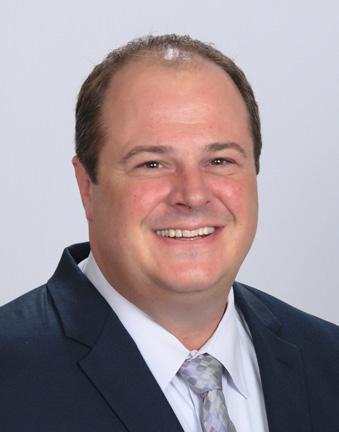
MATT KUISLE, P.E., RS, PRA, REGIONAL EXECUTIVE DIRECTOR, RESERVE ADVISORS
Matt Kuisle, P.E., RS, PRA, is the regional executive director for Reserve Advisors, leading the firm’s operations in Florida, Georgia, and the Carolinas. Matt has been conducting reserve studies for 24 years and is a frequent speaker and author. He is a licensed continuing education provider for Florida CAMs and serves on the Community Associations Institute National Board of Trustees and as a delegate with the Florida Legislative Alliance. Reserve Advisors is a leading provider of reserve study consulting services, having conducted reserve studies for more than 3,000 Florida communities.
tural items. Because of the financial implications of nonstructural items, boards should ask SIRS providers how these components can also be included in their funding plans.
INTEGRATING RESERVE STUDIES INTO FINANCIAL PLANNING
To make reserve studies truly effective, they must be woven into the association’s financial strategy. This begins with understanding which parts of the reserve study report should be used to solidify a sound budget and establishing a baseline for all reserve expenditures.
Upon receiving a new reserve study, boards should review the near-term and capital-intensive reserve expenditures. While the reserve expenditures



table presents all reserve components, their remaining useful lives, and future reserve expenditures over the next 30 years, the initial focus should be on projects due in the next five years. After reviewing near-term expenses, the board should review the capital-intensive projects that take place from years six to thirty.
After reviewing the expenditure timelines, it’s time to look at the reserve funding plan recommendations. These recommendations outline annual reserve contributions required to maintain the expenditure schedule. The reserve funding plan delves deeper into these recommendations, providing a table that details each year’s starting reserve balance, reserve contributions, interest earned, expenditures, and end-of-year reserve balance.
After reviewing this information, it’s time to consider the options available for funding the reserve expenditures and creating a budget. While SIRS associations must fund reserves for SIRS components, it’s ideal for any association to implement and adhere to the recommended reserve contributions for all components.

For condominium associations that are not required to have a SIRS, or for nonstructural components in other condominiums, the board is still responsible for proposing a budget that provides adequate reserves. However, for non-SIRS reserves, the board can still give owners the option to waive or partially fund reserves. While this is not advisable, some associations consider loans and/or special assessments when developing their longterm financial plan.
Maintaining adequate reserves provides numerous benefits:
• Predictable cash flow
• Reduced financial stress for owners
• Enhanced property value through proactive maintenance
• Compliance with legislation and applicable SIRS requirements
• A more attractive community in the eyes of prospective buyers and mortgage lenders
To effectively incorporate a reserve study into financial planning, condominium boards should keep the following steps in mind:
Review and update the study regularly—While SIRS are required to be updated every 10 years, CAI’s best practices recommend that any reserve study be updated every three years to reflect current component conditions and repair or replacement costs.
Align budgeting with reserve contribution recommendations—Use the reserve study to guide annual budgeting, allocating sufficient funds based on the study’s projections. This is now a mandate for SIRS components but a best practice for all associations, including HOAs that are not required to fund reserves.
Forecast beyond the current year—Incorporate the reserve study timelines for future capital projects into multiyear financial forecasts so the board can plan for large expenditures without disrupting the operating budget. This long-term planning can also allow for more strategic investment options for your reserve savings.
Incorporating a reserve study into community financial management is not only a best practice but also essential for sustainable community management. By treating the study as a dynamic tool and integrating its recommendations into the budgeting process, the board can effectively prepare for its association’s future.
BUDGETING BEST PRACTICES
Effective budgeting and forecasting are essential for the physical and financial health of any community association. A fact-based, well-structured budget ensures that operating









Garfinkel Marcell is well versed in all matters concerning General Association Representation, as well as Construction Defect, Insurance Claims and Complex Litigation. We represent communities regarding their day to day concerns, as well as their multi-million-dollar projects. Collections • Contract Reviews • Covenant Enforcement • Legal Opinions • General and Complex Litigation

reserves unexpected stability following practices: Start with historical data— statements mainte This projections while avoiding underestimation of


We help associations maintain physical and financial health through education, ongoing support, and reserve studies tailored to your community’s unique priorities. Contact us at reserveadvisors.com or (800) 980-9881. Planning for the future is complicated. Your reserve study shouldn’t be.

Include all operating costs— administra include or
Account for SIRS and milestone nonnego Florida long-term
Regularly review and adjust— associations performance quarterly and adjust forecasts as Keep reserve studies up to date and utilize them frequently— proactive boards and main


THE PATH TO LONG-TERM
backbone associa current study into planning, and property surprises, the to consistency: aligning financial




MIKE MCGILVARY

President | Mike McGilvary Roofing, Inc.
Florida Certified Roofing Contractor – CCC1331721
Mike McGilvary is President of Mike McGilvary Roofing, Inc., a Florida Certified Roofing Contractor specializing in tile roof preservation, remaining useful life evaluations, roof certifications, forensic roof inspections, and condition-based roof assessments throughout South Florida.
His work focuses on helping homeowners, condominium associations, homeowner associations, community association managers, engineers, reserve specialists, and property professionals make informed roofing decisions through documented inspections, technical evaluations, and evidence-based recommendations centered on actual roof condition rather than chronological age alone.

Through thousands of roof inspections, published educational articles, technical presentations, and documented preservation projects, Mike has dedicated his work to advancing industry education surrounding Florida's Roof Age Law, remaining useful life evaluations, roof certification documentation, and responsible tile roof preservation strategies.
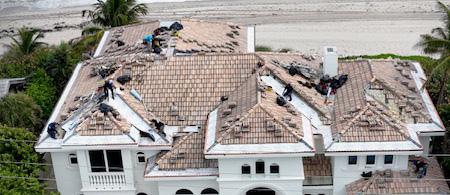



BEFORE YOU BUDGET FOR ROOF REPLACEMENT
Across Florida, condominium associations and HOAs are facing increasingly complex roofing decisions. Rising construction costs, insurance market changes, reserve funding obligations, and aging roofing systems have made roof replacement one of the largest capital expenditures many communities will undertake.
As a result, boards are increasingly challenged to answer an important question:
Is the roof truly at the end of its service life, or is there documented evidence that it remains structurally serviceable with isolated areas requiring targeted rebuilding?
That distinction is becoming increasingly important.
Florida Statute §627.7011 reflects the importance of evaluating roof condition—not simply chronological age—in certain insurance contexts. For qualifying roofs, documented inspections and remaining useful life evaluations can provide important information regarding the roof's current condition. Beyond insurance considerations, that same condition-based approach can help associations make more informed decisions regarding reserve planning, maintenance prioritization, capital budgeting, and long-term asset management.

Tile roofing systems rarely deteriorate uniformly. In our field experience, failures commonly develop first in high-water-flow areas such as valleys, flashing transitions, penetrations, wall tie-ins, drainage concentrations, and other critical details, while substantial portions of the remaining roof system may continue performing satisfactorily.



Understanding where deterioration is occurring—and whether it is localized or systemic—helps boards make decisions based on documented roof condition rather than assumptions based solely on age.
Our hope is that this article encourages readers to begin every major roofing decision with one fundamental question:
"What is the documented condition of the roof system, and what solution best serves the long-term interests of the community?"
We believe that question represents responsible stewardship of association assets and aligns with sound engineering, maintenance, and financial planning principles.




Educational resources, technical articles, documented case studies, and additional information are available at:


Before You Budget for Roof Replacement: What Florida Associations Should Know About Tile Roof Preservation
BY MIKE MCGILVARY
Florida condominium associations and homeowner associations are facing increasingly difficult decisions regarding aging roofing systems. Rising insurance costs, reserve requirements, material costs, and special assessment concerns have made roof replacement one of the most significant financial decisions many boards will make.
For years many roofing decisions have been driven primarily by age. However, Florida law, insurance requirements, and real-world roofing performance all point toward a different question: what is the actual condition of the roof? This distinction is especially important throughout
Photo by iStockphoto.com/Bilanol
Southeast Florida, where tile roofing systems dominate many condominium communities, HOA developments, townhome communities, and luxury residential properties.
Florida Statute 627.7011 addresses this issue directly. The statute provides important protections regarding roof age and insurability and recognizes that roof age alone should not be the sole determining factor when evaluating a roofing system.
The law allows for inspection and documentation of remaining useful life rather than relying solely upon chronological age. In practical terms, this means that a roof should be evaluated based upon its actual condition, performance, and remaining service life rather than simply the number of years since installation. For associations this distinction can have
MIKE MCGILVARY, PRESIDENT, MIKE MCGILVARY ROOFING INC.

Mike McGilvary is president of Mike McGilvary Roofing Inc., Florida-certified roofing contractor CCC1331721, serving South Florida property owners, condominium associations, homeowner associations, and property managers.
Recognized as Florida’s roof age law and tile roof preservation experts, Mike and his team specialize in roof certifications, remaining useful life evaluations, condition-based roofing assessments, and tile roof preservation strategies for homeowners, condominium associations, homeowner associations, and property managers throughout Florida. For more information visit FloridaRoofAgeLaw.com and MMRoofRepair.com.
evaluating tile roof systems throughout South Florida, many roofs do not fail uniformly across the entire roofing system. Instead, deterioration commonly occurs in concentrated high-water-flow areas such as valleys, penetrations, flashing transitions, wall tie-ins, dead valleys, drainage concentration points, and other areas subjected to increased water movement.
These areas often age significantly faster than the general field of the roof. As a result, many communities are presented with a choice: replace the entire roofing system at significant cost, or properly evaluate whether targeted rebuilding and preservation of specific failing sections can safely extend the service life of the roof.
This is where condition-based roof preservation becomes an impor-

actual failure points, removing tile in affected sections, inspecting the roof deck, replacing compromised sheathing where necessary, installing new underlayment systems, rebuilding critical flashing details, and restoring the affected roofing areas back to a structurally sound condition.
When performed correctly, targeted rebuilding can extend service life while providing meaningful documentation for boards, managers, reserve professionals, insurance-related reviews, and property owners.
The financial impact of these decisions can be substantial. We have performed this evaluation process on luxury residential properties with valuations exceeding $50 million where preservation and targeted rebuilding allowed ownership to avoid unnecessary full replacement recommendations while maintaining a safe and functional roofing system.
We have also evaluated large association properties approaching 300 units where boards were facing potential roofing expenditures in the range of $1.5 million to $2 million. Through proper condition assessment, documentation, and identification of actual failure areas, boards were able to evaluate alternatives focused on rebuilding high-failure sections rather than automatically assuming complete replacement was required.
For community associations these decisions are not simply maintenance decisions. They are fiduciary decisions. Boards must balance property protection, reserve planning, owner interests, insurance considerations, and long-term budgeting
THROUGH PROPER CONDITION ASSESSMENT, DOCUMENTATION, AND IDENTIFICATION OF ACTUAL FAILURE AREAS, BOARDS WERE ABLE TO EVALUATE ALTERNATIVES FOCUSED ON REBUILDING HIGHFAILURE SECTIONS RATHER THAN AUTOMATICALLY ASSUMING COMPLETE REPLACEMENT WAS REQUIRED.

responsibilities. That requires accurate information.
A proper roofing evaluation should include the following:
• Comprehensive roof inspection
• Documentation of active failure areas
• Evaluation of valleys, flashings, penetrations, transitions, and drainage points
• Assessment of overall roof condition versus isolated deterioration
• Photographic
• Remaining ysis where appropriate
• Clear tions actions Most tions and condition thing. legitimately Others vation, ongoing proper extends allowing resources The preserve The goal informed actual assumptions age. As reserve construction evolve condition-based tions important seeking asset Before replacement, ensure condition
where failures occur and whether those failures are isolated or system wide.
The question should not simply be, “How old is the roof?” but rather, “What is the actual condition of the roof, and what is the most responsible solution for the community?”
At Mike McGilvary Roofing Inc. we have dedicated significant resources toward educating property owners, boards, managers, and industry professionals regarding Florida’s Roof Age Law, roof certifications, remaining useful life evaluations, and tile roof preservation strategies. Additional educational resources, documented case studies, roof certification examples, and condition-based roof preservation projects are available at FloridaRoofAgeLaw.com. n

RELIABLE COMMUNICATION THAT’S SENTRY
Sentry’s community managers respond promptly and accurately to association queries. We understand that you need an acknowledgment that we heard you and that a solution is in progress.

When Does Financing Make Sense? Lending Strategies for Community Associations
BY ANNA ROGERS
C
ommunity associations across Florida are facing growing financial challenges. Rising insurance costs, increasing construction expenses, aging buildings and infrastructure, and greater attention to reserve funding have made financial planning more important than ever. For board members these challenges go beyond balancing a budget. They require making decisions that protect the community today while planning for its future.
While reserve funds and special assessments remain important tools, they may not always be the best solution for every situation. Financing can help associations complete important projects, maintain financial stability, and reduce the burden on homeowners. The key is understanding when financing makes sense and how it can support the community’s long-term goals.
Photo by iStockphoto.com/boonstudio
One common lending strategy is to use financing to help preserve reserve funds. Even associations with healthy reserves can face unexpected repairs or projects that cost more than originally planned. Rather than using all the available reserve funds for a single project, some communities choose to finance a portion of the cost. This allows them to complete needed improvements while maintaining reserves for future repairs and unexpected expenses. For board members, preserving reserves can provide greater financial flexibility and help avoid future funding challenges.
Financing can also be a useful alternative to large special assessments. A special assessment is an additional fee charged to homeowners when an association needs to cover
ANNA ROGERS, SVP, COMMUNITY ASSOCIATION RELATIONSHIP MANAGER, COGENT BANK
Anna Rogers is SVP, community association relationship manager, at Cogent Bank, with over 30 years in banking and deep expertise in the HOA industry.
A licensed CAM since 2001, Anna is passionate about advocating for volunteer boards, helping them navigate certifications, lending needs, and industry changes with confidence.
She is a trusted mentor, empowering associations with solutions that reduce stress and support long-term success. Dedicated to community, Anna serves on the Executive Board of Seminole Country Club Estates and is an active member of the Suncoast CAI, extending her passion for mentoring and advocacy beyond banking.
For more information call 727-477-3182 or 727-452-5265, email arogers@cogentbank. com, or visit www.cogentbank.com
expenses that exceed its regular budget or available reserves. While special assessments are sometimes necessary, they often require homeowners to make significant payments within a short period of time. This can create financial stress for residents and may lead to collection issues for the association. Financing allows project costs to be spread out over time, making it easier for homeowners to absorb the expense while still allowing the association to move forward with important repairs or improvements.
Another reason associations consider financing is to avoid delaying
projects. Waiting several years to save enough money for a repair may seem like a good financial decision, but postponing maintenance often leads to higher costs in the future. Small problems can become larger ones, and rising labor and material costs can make projects significantly more expensive over time. Financing can give boards the ability to address issues when they arise rather than waiting until they become emergencies.
Many successful boards also view financing as part of their longterm financial planning. Instead of only considering loans when a problem occurs, they evaluate future projects and discuss funding options well in advance. Looking ahead allows associations to make more informed decisions, communicate effectively with homeowners, and better prepare for upcoming expenses. When financing is part of a larger financial strategy, it can help communities stay ahead of major challenges instead of reacting to them.
An often-overlooked lending strategy is choosing the right financial partner. Community associations have unique financial needs that differ from those of traditional businesses. Reserve studies, assessment income, governing documents, and board approval processes all play a role in financial decision-making. Working with a financial institution that understands community associations can help boards evaluate options, structure financing appropriately, and make decisions that support the community’s long-term financial health.
Through its Association Banking vertical, Cogent Bank works with homeowners’ associations, condominium associations, and property management companies throughout Florida, providing banking, treasury
management, and lending solutions designed specifically for community associations. Having access to experienced financial professionals can help boards navigate complex decisions and better understand the options available to them.
There is no single solution for funding community improvements. Every association has different needs, priorities, and financial circumstances. The most effective boards take the time to evaluate all available options and choose the approach that best supports the community’s longterm goals. Whether it involves preserving reserves, reducing the impact of special assessments, completing projects sooner, or working with an experienced financial partner, thoughtful financing strategies can help communities remain financially strong for years to come. n

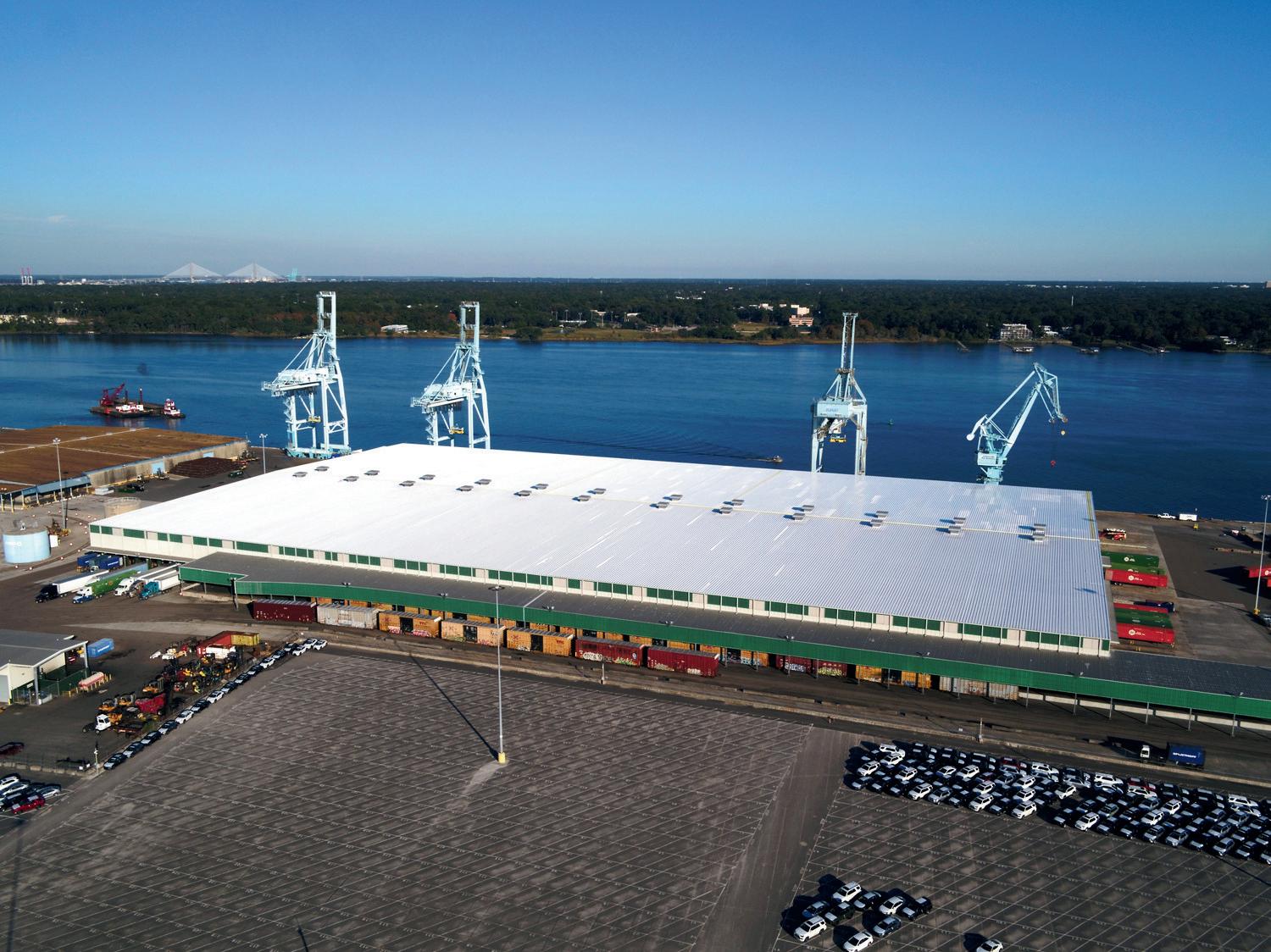
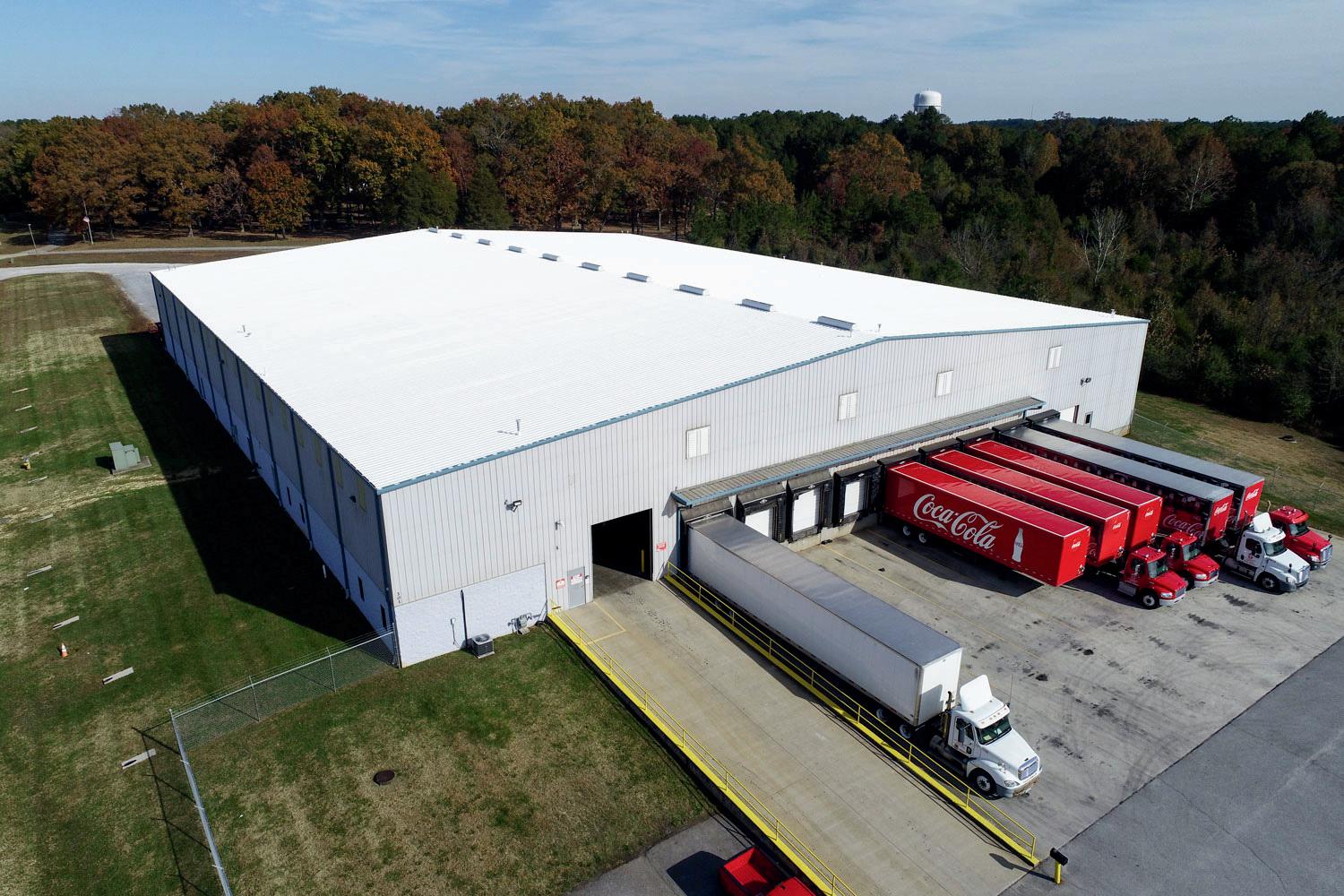






Common Governance Misconceptions
in Florida Condominiums
BY KORIANN TASNADY, LCAM, CMCA
W
hen one considers the most important aspects of a successful condominium association, what comes to mind? Governance. It is the foundation upon which boards and community association managers operate, yet it is often one of the most complex aspects of community living. Balancing the ever-changing statutory requirements, governing documents, fiduciary responsibilities, and owner expectations can feel like walking a tightrope, making misconceptions easy to develop.
These misunderstandings often create unnecessary conflict and frustration for both residents and leadership. Left unaddressed, they can slow decision-making, strain relationships, and expose the association to unnecessary risk.
This article highlights three common governance misconceptions and offers practical guidance to help boards and managers avoid conflict while building stronger, more transparent communities.
Photo by iStockphoto.com/Ahmad Bilal
GOVERNANCE MYTH #1— BOARD BUSINESS CAN BE CONDUCTED OUTSIDE OF PROPERLY NOTICED MEETINGS
I have found this to be one of the most common misconceptions encountered in condominium associations. Many of us have been there; directors discussing association business through email, text, or informal gatherings where a quorum is present.
“It’s not a board meeting, and no decisions are being made, so it’s fine.”
While the intent may be harmless, important board deliberations should occur during properly noticed meetings where owners are able to observe, listen, and speak. Save for limited exceptions, Florida condominium law continues to be widely built around the principle of transparency.
When discussions occur in private, it can create a perception that decisions are being made behind closed doors. That often leads to spec-

KORIANN TASNADY, LCAM, CMCA®, FIRSTSERVICE RESIDENTIAL
Koriann (Kori) Tasnady, LCAM, CMCA®, is a community association manager with more than a decade of experience. A graduate of Rutgers University, she currently manages Vista del Mar, the first beachfront condominium built on Jacksonville Beach, Florida.
Throughout her career Kori has developed a strong interest in board governance, best practices, emergency preparedness, and professional education. She is actively involved with Community Associations Institute, serving on the Northeast FL Chapter board of directors. She has also contributed to educational initiatives such as co-authoring content related to risk management for the CAMICB.
Kori is passionate about sharing practical knowledge gained from day-to-day management experience and enjoys helping board members, community leaders, and fellow managers better understand the challenges and opportunities facing today’s associations.
ulation, frustration, and mistrust, which over time can become more disruptive than the topics being discussed.
One of the most effective ways to build confidence within a community is to ensure board business is conducted properly, openly, and consistently. Managers play an important role in helping directors understand meeting requirements and encouraging discussions to take place in the appropriate forum. This reduces conflict and confusion and keeps the members informed, thus strengthening the relationship with leadership and benefiting the community as a whole.
I once worked with an association where directors openly acknowledged that rule changes had already been discussed outside of a noticed meeting.


Although no final decision had been made, many owners believed the outcome had already been predetermined. The discussion quickly shifted away from the proposed rule itself and toward concerns about transparency and trust. By returning substantive discussions to properly noticed meetings and maintaining a consistent meeting schedule, the board gradually rebuilt owner confidence and participation.

Covenant enforcement
Covenant amendments
Contract review/negotiation
Collection of assessments
Meeting package preparation
Attendance at meetings
Legal counsel on all day-to-day operational decisions
Review and negotiation of loan/line of credit documents
General litigation
And more!
TURNOVER & CONSTRUCTION DEFECT SERVICES:
Turnover meetings
Review of turnover documents
Assisting in the selection and hiring of turnover auditors, engineers and other consultants
5
Chapter 558 inspections and procedures
Negotiating repair protocols
All aspects of state/federal litigation for construction warranty claims, from settlement negotiations through trial
GOVERNANCE MYTH #2— RESERVE FUNDS ARE SIMPLY SAVINGS ACCOUNTS THAT CAN BE REDIRECTED AND WAIVED
This is a big one, largely due to a confusion between operating and reserve funds and an under-appreciation of long-term capital planning.
Many board members view reserve funds as discretionary savings that can easily be redirected to operating expenses whenever budgets become tight. While owners historically had the ability to waive certain reserve funding requirements, recent legislative changes have significantly restricted that option for many Florida condominiums. More importantly, reserve funding is not an accounting exercise. It is a longterm financial planning tool prepared by an expert and designed to ensure future capital projects are funded and funds are used properly.
While Florida law permits the use of reserve funds for other purposes only under specific circumstances and with the appropriate membership approval, recent legislative changes have significantly restricted the ability of many condominiums to waive or reduce reserve funding requirements.
When reserves are underfunded or treated as an
afterthought, associations often find themselves facing difficult choices. Deferred maintenance, special assessments, and unexpected financial burdens can quickly become sources of frustration and conflict within a community. What may appear to be shortterm savings today can create significant financial challenges in the future.
The most effective solution proactive planning and consistent financial review. Boards should obtain updated reserve studies on a regular basis, review funding annually with their reserve special ists and financial professionals, and focus on the long-term needs of community rather than day-to-day budget pressures. Associations that prioritize reserve planning are generally better positioned to maintain property values, complete necessary projects, and avoid costly surprises.
GOVERNANCE
MYTH #3—
INDIVIDUAL DIRECTORS HAVE AUTHORITY TO ACT ON BEHALF OF THE BOARD
This misconception can create significant operational challenges within a community association. is not uncommon for an individual director to believe he or she has the authority to direct vendors, assign work to management or staff, approve expenditures, or make commitments on behalf of the association.

Take our quick reader survey and enjoy a free subscription to the


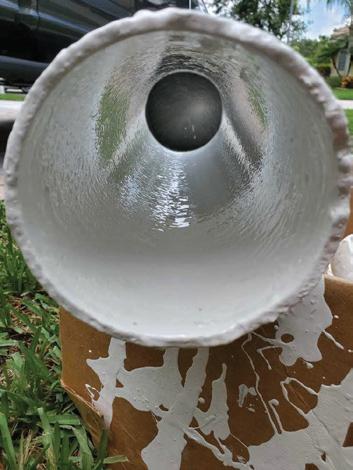
In reality, the authority to make decisions rests with the board acting as a whole during a properly noticed meeting unless specific authority has been delegated. Individual directors play an important role in the governance of the association, but they do not possess independent decisionmaking authority.
When multiple directors
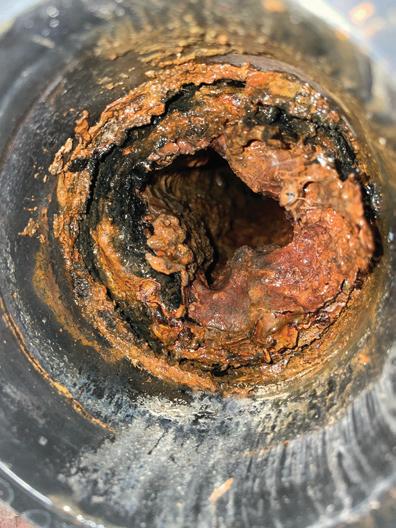





provide conflicting instructions, vendors become confused, managers are placed in difficult positions, and board relationships can quickly become strained. What often begins as an effort to “help” the association can unintentionally lead to inefficiencies, miscommunication, and frustration for everyone involved.
Establishing clear roles and communication protocols is one of the most effective ways to avoid these situations. Boards should understand that while every director has an equal voice during board deliberations, decisions are generally made collectively rather than individually. Once a decision has been made, managers can confidently implement the board’s direction while maintaining consistency in communications with vendors, staff, and residents.
A board functions best when it speaks with one voice. By respecting defined roles and allowing decisions to be made collectively, associations can avoid confusion, improve efficiency, and strengthen the working relationship between the board, management, and the community.
CONCLUSION
Governance challenges rarely arise because board members have bad intentions. More often they stem from misunderstandings, outdated practices, or a lack of education. By embracing transparency, long-term planning, and clearly defined roles, boards and managers can reduce conflict, strengthen owner confidence, and foster healthier communities.
Good governance is not simply about complying with statutes and governing documents. It is about earning trust. When boards operate openly, communicate effectively, and remain committed to best practices, everyone benefits. n

Resilience First SM
Supporting Florida boards with expertise, scale, and readiness
When you serve on a Florida condo or HOA board, resilience is not theoretical. It’s a responsibility.
Resilience FirstSM helps boards prepare for disruptive weather events, from hurricanes, flooding, and fires to the unexpected day-to-day incidents that can impact community operations. Through proactive inspections, expert guidance, and coordinated support, we help communities reduce risk, maintain continuity, and recover more quickly when losses occur. Because when something happens, your community deserves more than a reaction; it deserves a plan.



Why Condominium Communities Are Replacing Copper Phone Lines with Cellular Monitoring Solutions
BY JOHN HELMIG
For decades traditional copper phone lines were considered the standard for elevator emergency phones, fire alarm systems, gate entry systems, and other life safety communications within condominium communities. However, the telecommunications industry has changed dramatically over the past several years, and many condominium associations are now facing a critical reality: copper phone lines are being phased out.
As telephone providers continue to reduce support for aging copper infrastructure, condominium boards and property managers are experiencing rising monthly costs, increased service interruptions, and difficulty obtaining repairs. Communities that continue relying on outdated phone lines may eventually find themselves dealing with unreliable systems for communications that residents depend on every day.
Photo by iStockphoto.com/Petra Richli
This shift has created an opportunity for condominium associations to modernize their communication infrastructure while significantly reducing operating expenses. Solutions such as Elevate Monitoring’s cellular gateway and monitoring services provide a reliable alternative to traditional POTS (plain old telephone service) lines while helping communities prepare for the future.
THE REALITY OF COPPER LINE PHASE-OUTS
Major telecom providers across the country have been actively transitioning away from copper infrastructure in favor of fiber and wireless technologies. In many areas providers no longer prioritize repairs to copper networks, and replacement parts are becoming
JOHN HELMIG, PRESIDENT, ELEVATE MONITORING
John Helmig is president of Elevate Monitoring, a company established to meet the growing demand for reliable, code-compliant elevator monitoring solutions. It is led by a team of experienced professionals specializing in life safety communication and monitoring services. We serve community associations and properties nationwide, providing services such as elevator monitoring, cellular gateway solutions, emergency dispatch, and system testing support. Our business philosophy centers on reliability, transparency, and helping clients generate recurring revenue while improving safety and reducing costs.
For further inquiries, Elevate Monitoring can be contacted directly through our sales team by phone at 877-990-9191, or visit www.elevatemonitoring.com to discuss customized solutions tailored to your property or portfolio.
increasingly difficult to source.
For condominium communities, this creates several of the following concerns:
• Increased monthly phone line costs
• Delayed repairs and service outages
• Reduced reliability during storms or infrastructure failures
• Difficulty maintaining compliance for life safety systems
• Limited support for older analog communication equipment
Many boards are surprised to learn how many copper lines their property still uses. Elevator emergency phones, fire alarm panels, pool
phones, entry systems, fax lines, and security systems are often all operating on separate analog lines, each generating recurring monthly charges. Over time, these costs add up substantially.
THE FINANCIAL IMPACT ON CONDOMINIUM ASSOCIATIONS
One of the biggest advantages of transitioning to a cellular monitoring solution is cost savings. Traditional copper phone lines can cost condominium associations hundreds—and sometimes thousands—of dollars per month depending on the number of active lines across the property.
When multiple elevators, fire panels, gates, and common area phones are involved, the annual expense becomes significant.
By replacing traditional analog lines with a cellular gateway solution, communities can often reap the following benefits:
• Eliminate multiple monthly phone bills
• Reduce recurring telecom expenses
• Lower maintenance costs
• Avoid expensive emergency copper repairs
• Simplify communication infrastructure
In many cases associations see immediate monthly savings after converting from legacy POTS lines to cellular technology.
For condominium boards trying to manage rising insurance costs, reserve requirements, and inflation-related operating expenses, reducing unnecessary telecom spending can make a meaningful difference to the annual budget.
RELIABILITY MATTERS FOR LIFE SAFETY SYSTEMS
While cost savings are important, reliability is equally critical. Elevator emergency phones and fire alarm communication systems are not optional conveniences—they are essential life safety systems. When a resident presses an elevator emergency button, the communication must work immediately and consistently. Unfortunately, aging copper infrastructure is becoming less dependable every year. Water intrusion, storm damage, corrosion, and deteriorating underground wiring can all cause failures or intermittent service issues.
Modern cellular communication solutions provide several
Continued on page 62

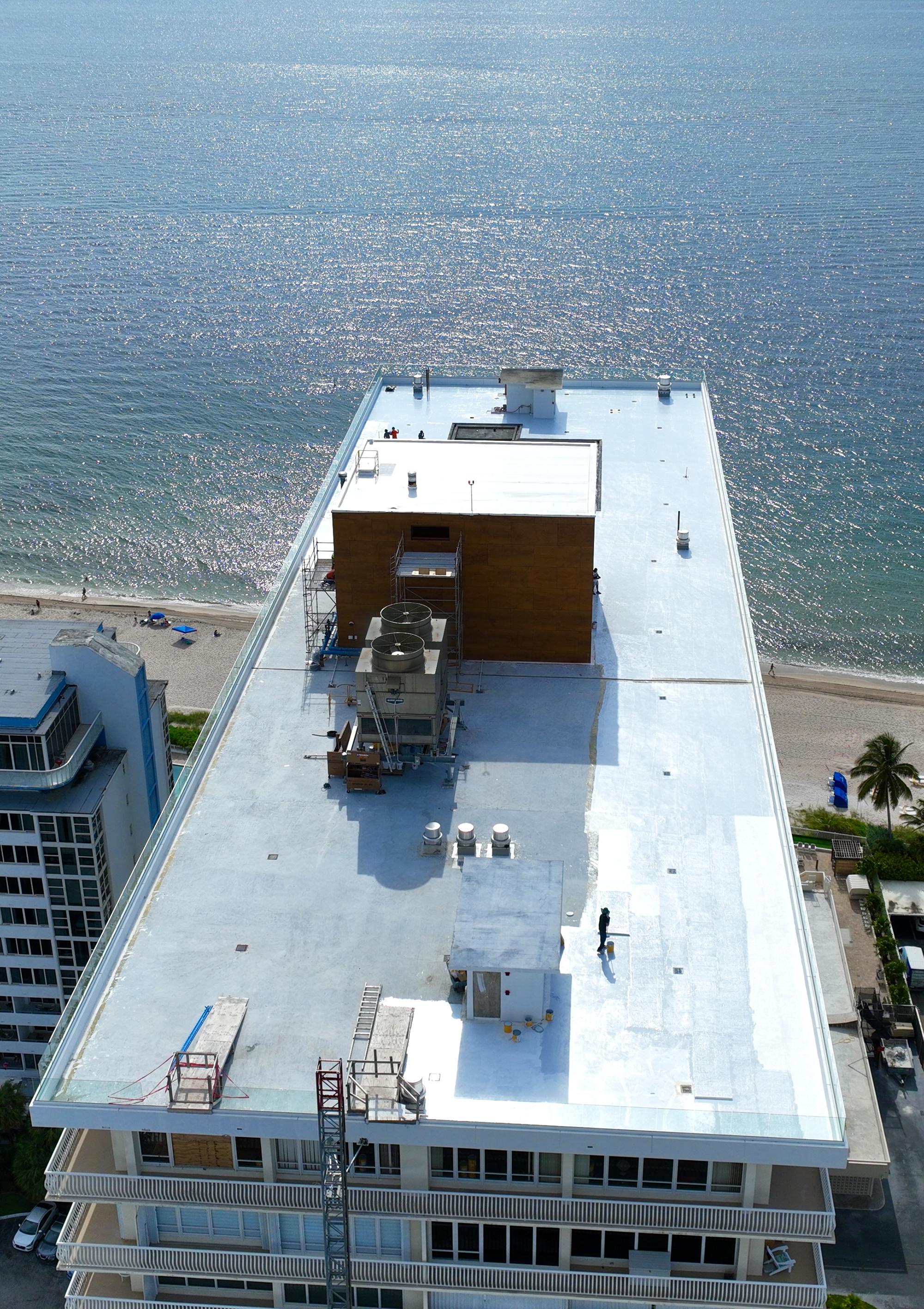




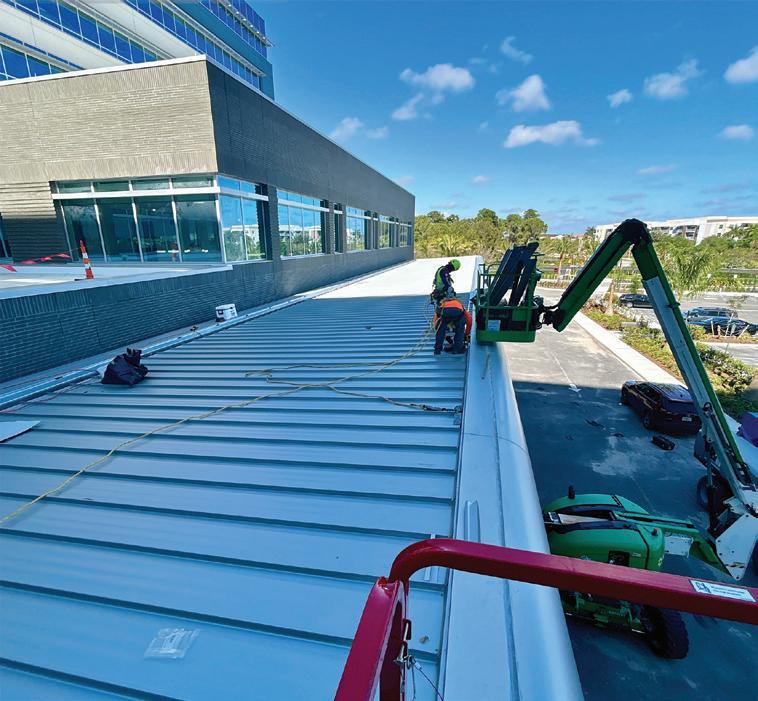




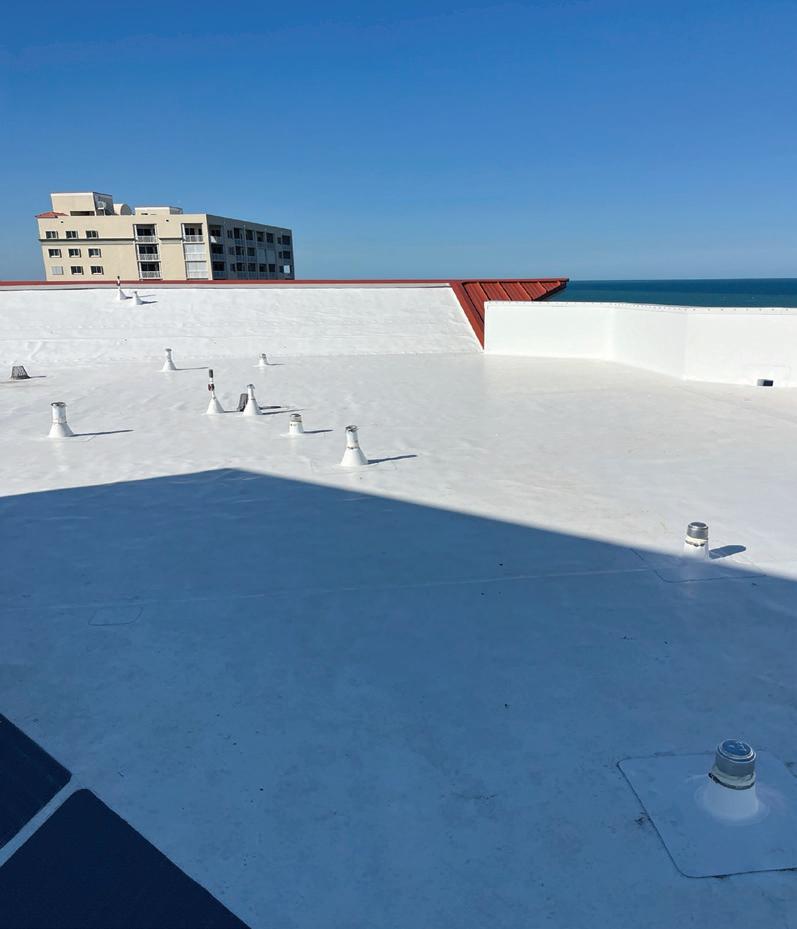
Leland Management
The Management Company You Don't Have to Manage
BEST PLACES TO WORK SURVEY RESULTS
95% OF EMPLOYEES FEEL SENIOR LEADERS VALUE PEOPLE AS THE MOST IMPORTANT RESOURCE
95% OF EMPLOYEES FEEL THE COMPANY CULTURE SUPPORTS HEALTH AND WELLBEING
96% OF EMPLOYEES TRUST SENIOR LEADERS TO LEAD THE COMPANY TO FUTURE SUCCESS
97% OF EMPLOYEES FEEL THEY HAVE THE MATERIALS AND EQUIPMENT NEEDED TO PERFORM THEIR JOBS
97% OF EMPLOYEES FEEL EVERYONE IS TREATED FAIRLY REGARDLESS OF RACE, GENDER, DISABILITY, OR OTHER DIFFERENCES
97% OF EMPLOYEES FEEL THEY ARE TREATED WITH RESPECT
94.6% OF TEAM MEMBERS COMPLETED THE SURVEY… THAT’S 475 TEAM MEMBERS PROVIDING FEEDBACK!


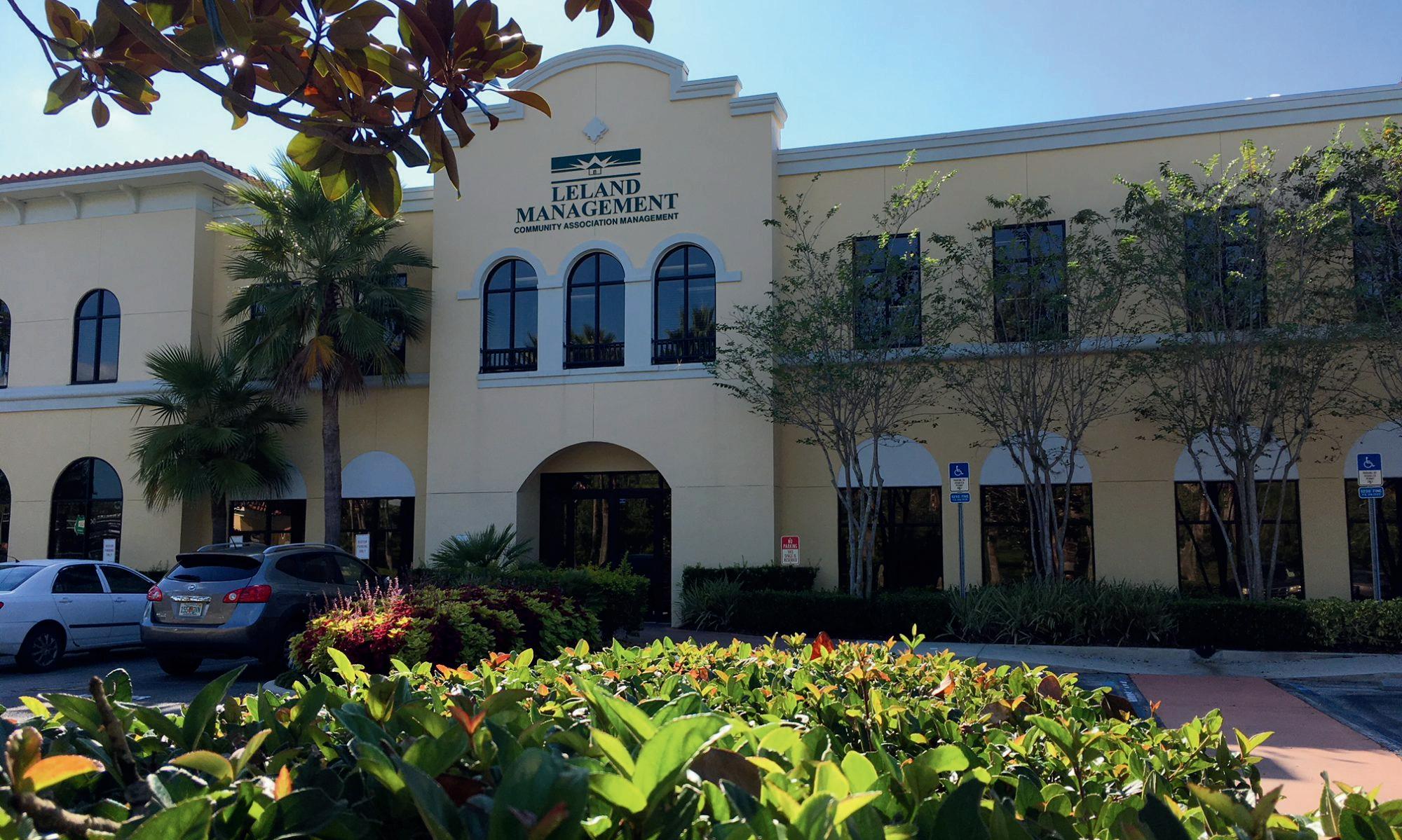
The "Leland Team" is once again honored to receive the Diamond Level Readers' Choice Award from the Florida Community Association Journal. We are delighted to know that our service continues to inspire confidence from our clients and FLCAJ readers.
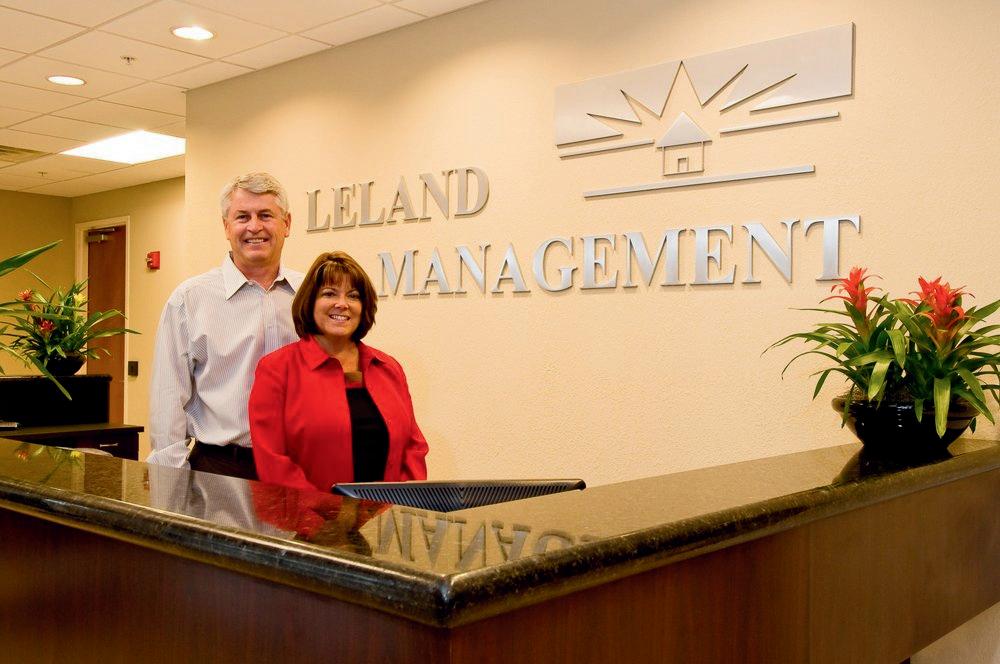
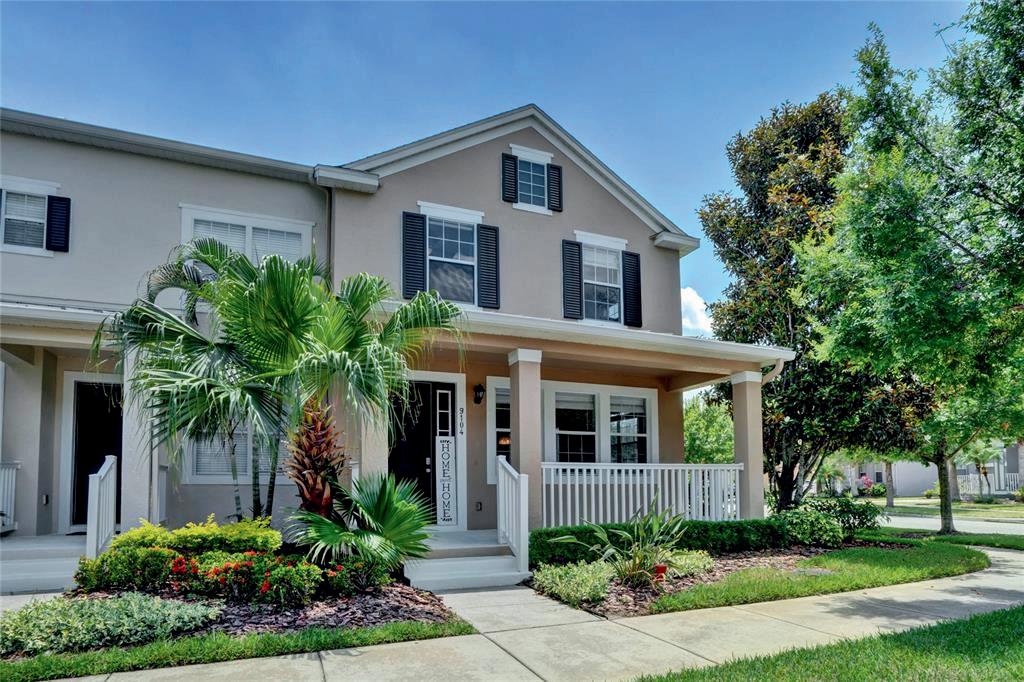

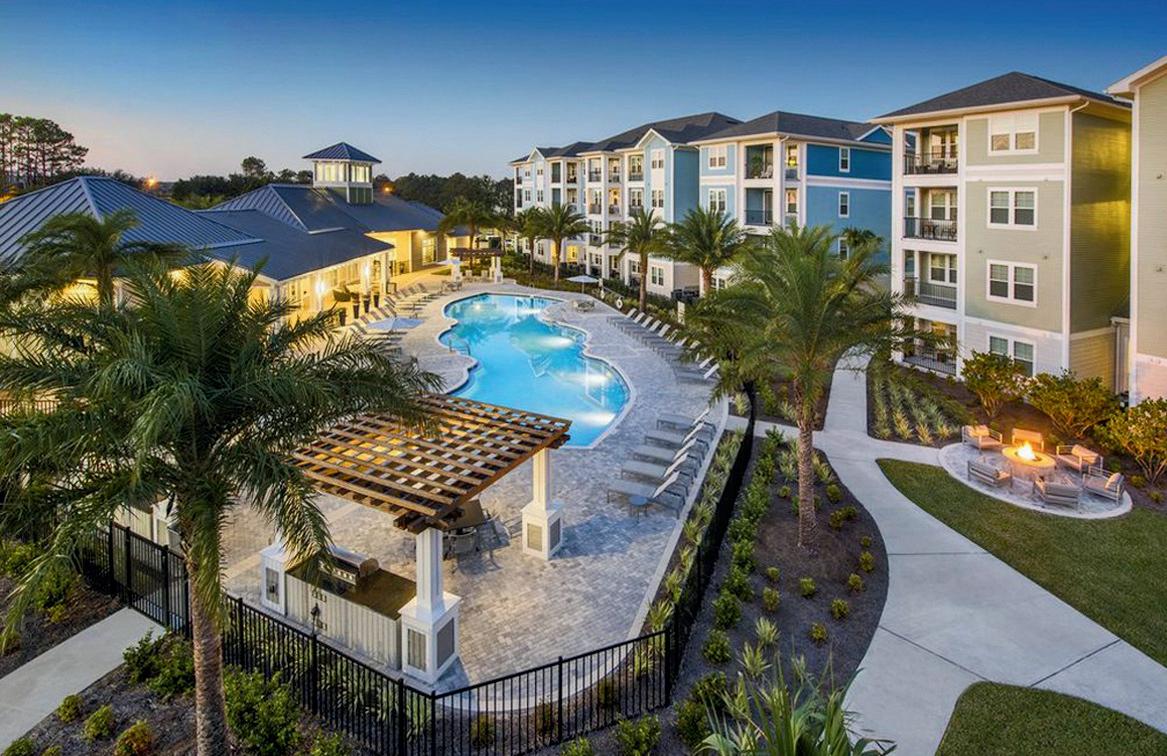

advantages over traditional copper infrastructure:
• No dependence on deteriorating underground phone lines
• Faster deployment and installation
• Improved communication reliability
• Remote monitoring capabilities
• Backup battery options
• Simplified troubleshooting and diagnostics
Many condominium communities are discovering that cellular technology provides not only cost savings but also greater confidence that critical systems will function when needed most.
WHY CONDOMINIUM BOARDS ARE ACTING NOW
Across Florida and throughout the country, condominium associations are becoming more proactive about infrastructure modernization. Boards are recognizing that waiting until copper lines fail completely can create unnecessary emergencies, resident complaints, and rushed decision-making.
A planned transition allows associations to budget appropriately, evaluate technology options carefully, avoid emergency replacement costs, coordinate upgrades with vendors and inspectors, and minimize disruptions to residents
Communities that act early also position themselves ahead of future telecom changes. As copper infrastructure continues disappearing, service providers may eventually increase pricing further or discontinue support entirely in certain areas.
Forward-thinking condominium boards are choosing to modernize
before they are forced into reactive decisions.
UNDERSTANDING THE ROLE OF ELEVATOR MONITORING
One area receiving increased attention is elevator emergency monitoring. Elevator codes and communication requirements continue evolving, and many older systems were originally designed around traditional analog phone service.
Modern cellular elevator monitoring solutions can help condominium communities maintain reliable emergency communications while reducing dependency on outdated infrastructure.
Additionally, centralized monitoring services can provide property managers and boards with peace of mind knowing that Continued from page 58

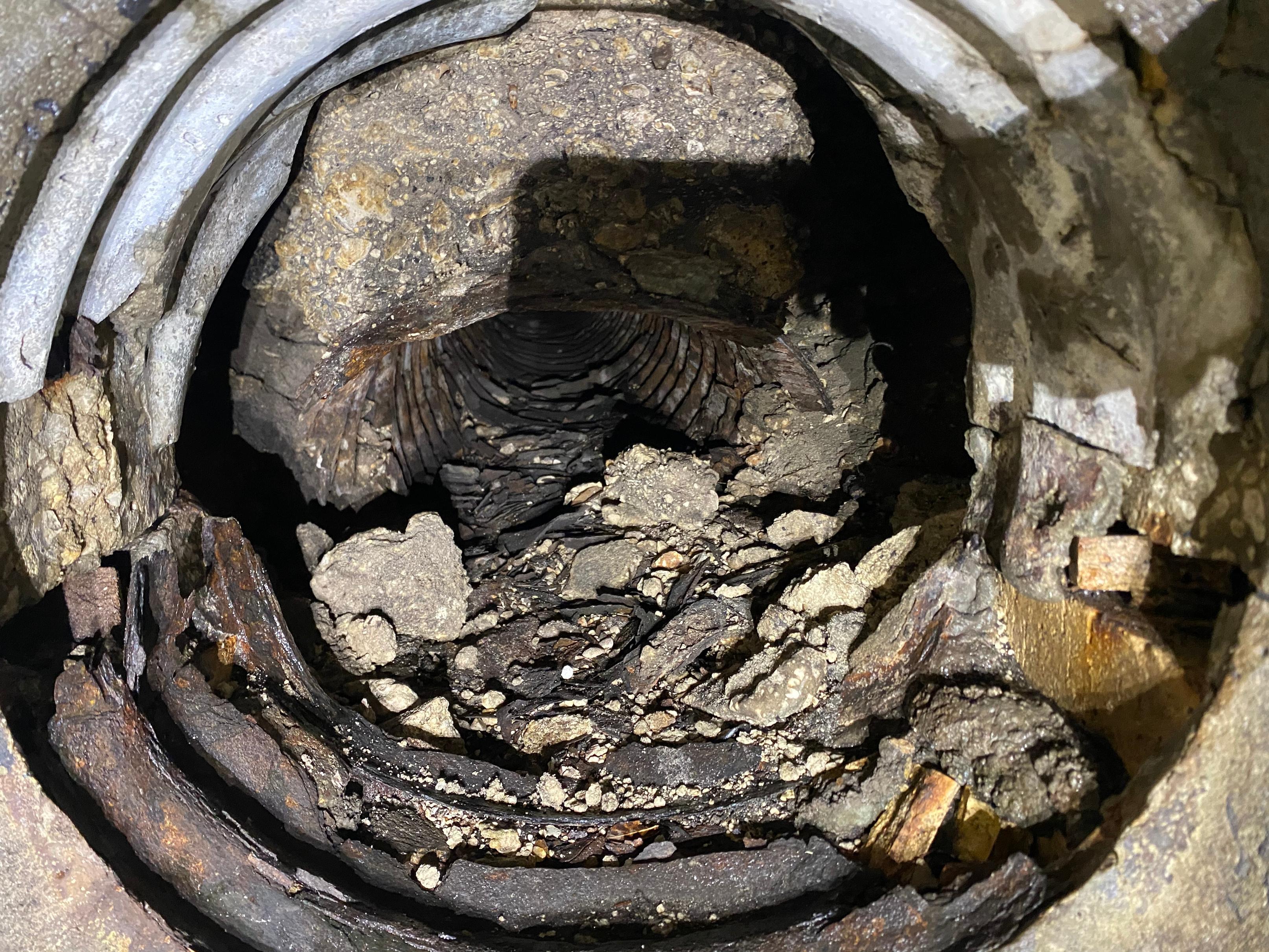

Invisible Problems lead to Visible Disasters
Protect your community's investment with our non-disruptive trenchless solutions that cost less than traditional repairs, extend inf rastructure lifespan, and prevent the catastrophic failures that lead to emergency assessments and resident complaints.
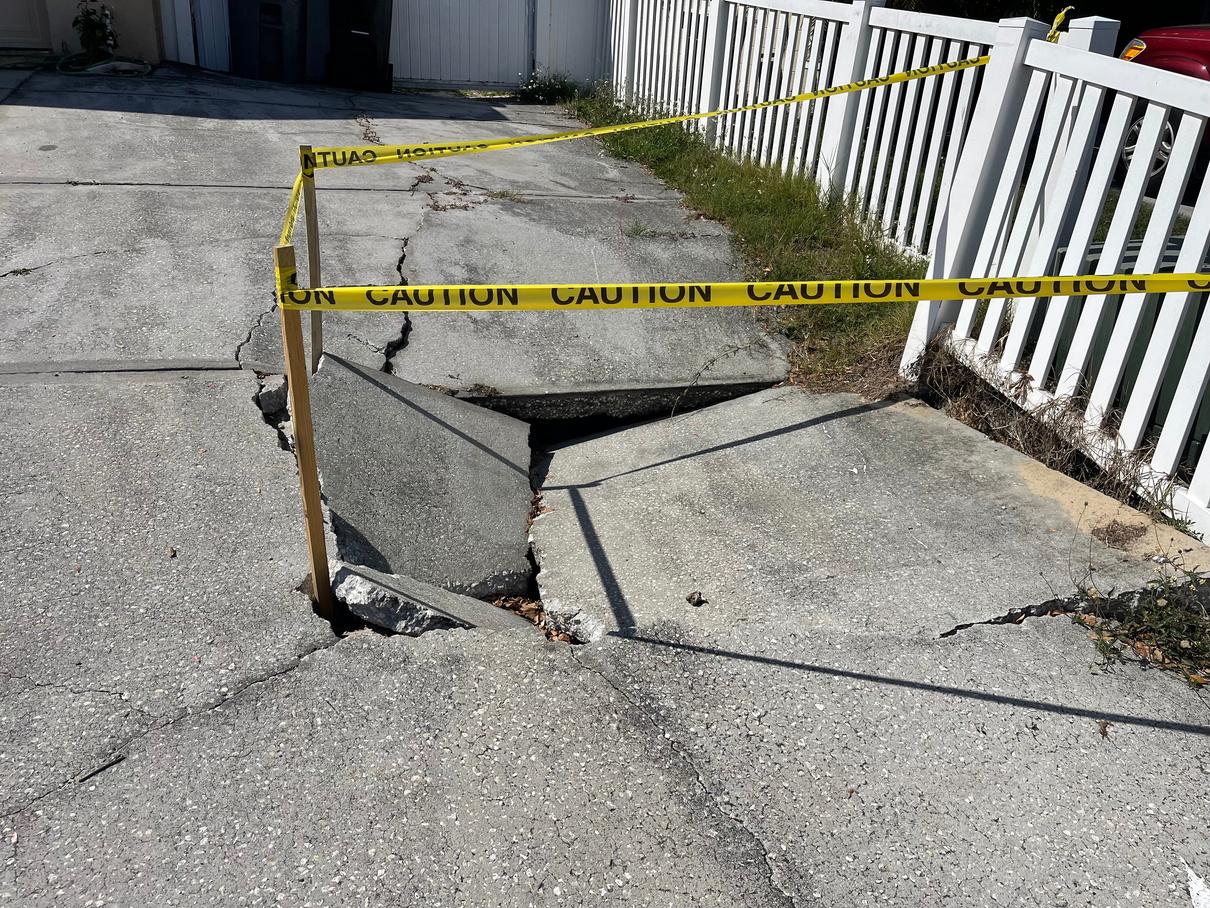
emergency communication systems are being professionally supervised.
This becomes especially important in larger condominium communities where multiple elevators and life safety systems must remain operational at all times.
CHOOSING THE RIGHT PARTNER
Not all cellular solutions are the same. Condominium associations should work with providers that understand the unique requirements of elevators, fire alarm systems, and life safety communications.
When evaluating providers, boards should consider the following:
• Experience with condo
• Understanding of elevator and fire code requirements
• Monitoring capabilities
• Technical support responsiveness
• Equipment reliability
• Installation expertise
• Long-term service stability
A properly designed cellular replacement solution should be dependable, code-conscious, scalable, and easy for property managers to oversee.
PREPARING FOR THE FUTURE
The transition away from copper phone lines is no longer a future possibility—it is already happening. Condominium associations that continue relying on aging analog infrastructure may face rising costs, increased outages, and greater operational risks over time.
By implementing modern cellular communication and monitoring solutions, communities can reduce recurring expenses, improve reliability, and better prepare their properties for the future.
Elevate Monitoring helps condominium communities navigate this transition with solutions specifically designed for elevator monitoring, life safety communications, and POTS line replacement. As boards continue looking for ways to improve operations while controlling costs, replacing outdated copper infrastructure has become one of the most

BUDGET SEASON IS HEATING













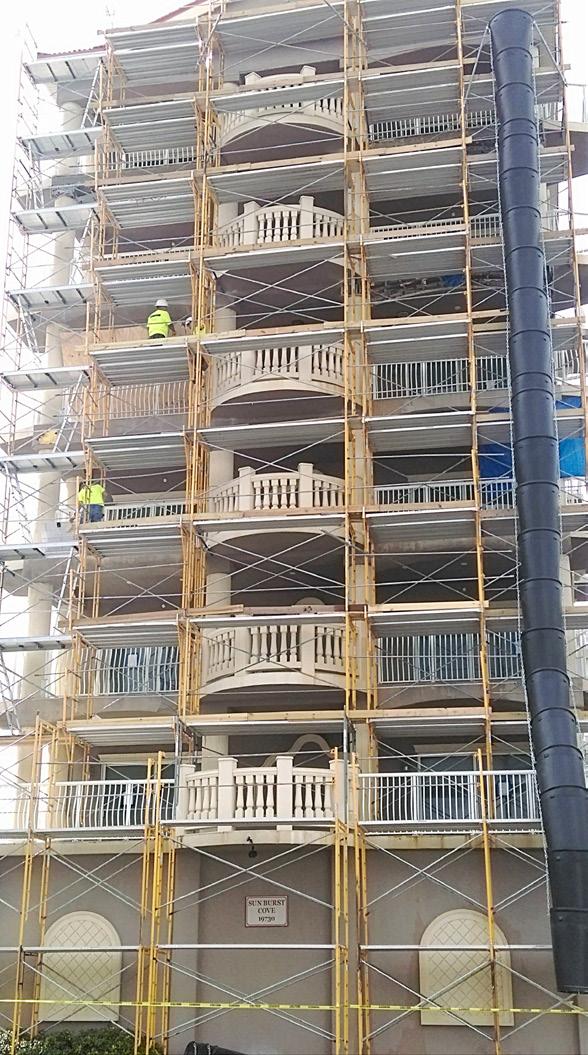


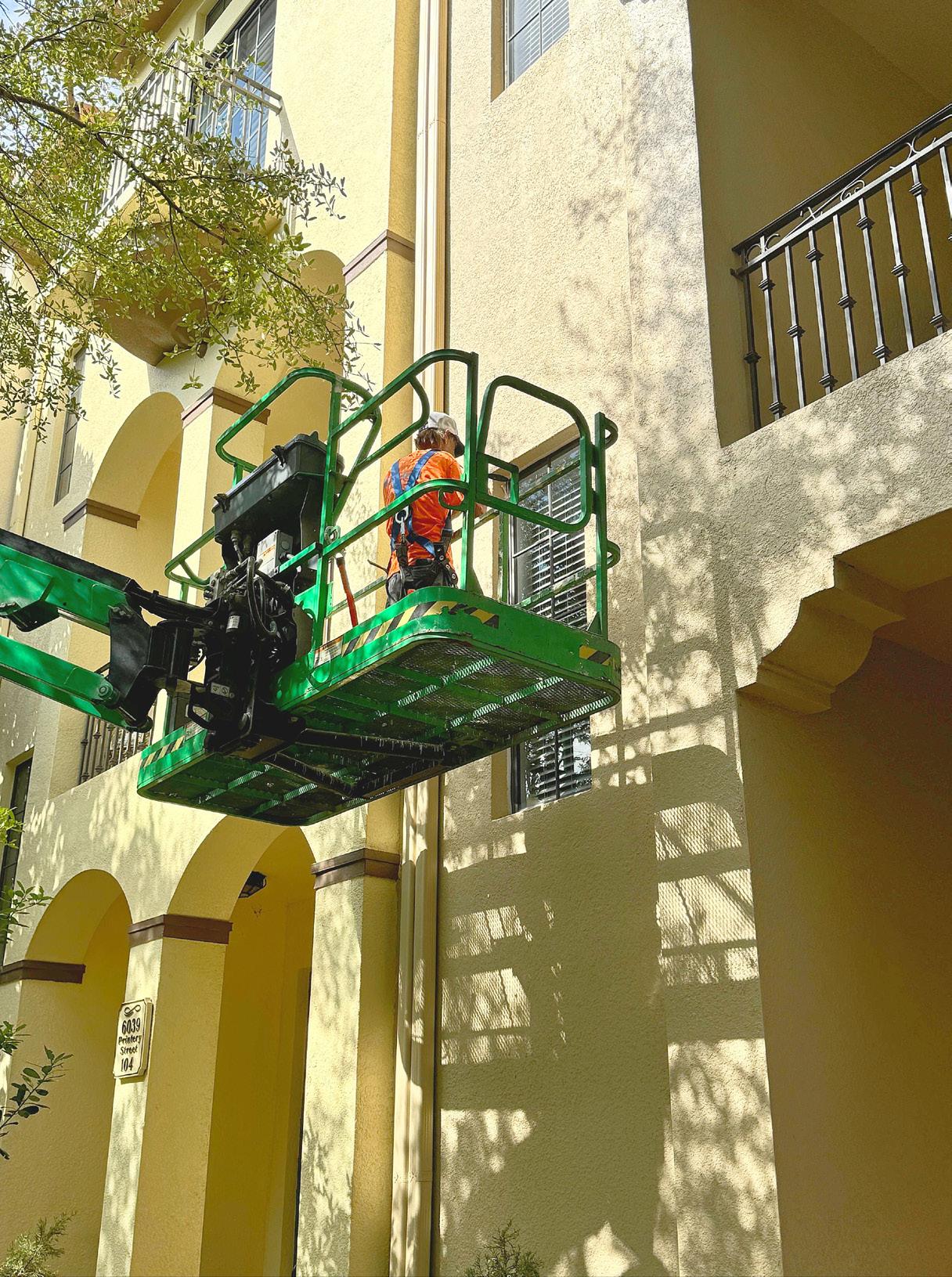


BY ACCESS MANAGEMENT
A Building Better Budgets Through Strong Management Leadership
community association’s budget is one of the most important tools available to its board of directors. More than a financial document, it is a strategic roadmap that guides daily operations, preserves property values, funds future capital needs, and ensures the community’s long-term stability. In today’s environment of rising insurance costs, inflationary pressure, aging infrastructure, and increasing homeowner expectations, developing a comprehensive and realistic budget has become more challenging—and more critical—than ever. While boards hold the fiduciary responsibility to adopt and oversee the budget, the most successful associations understand that creating an
Photo by iStockphoto.com/VCTStyle
effective one requires a collaborative partnership with an experienced management company.
START EARLY— BUDGETING AS A YEARROUND DISCIPLINE
Too often associations treat budgeting as an annual exercise to be completed before a deadline. The most financially healthy communities treat it as an ongoing planning process. Professional managers lead by helping boards set timelines, gather financial data, review contracts, evaluate reserve requirements, and identify anticipated expenses months before adoption. Starting early lets associations make informed decisions rather than react to financial surprises at the last minute.
DATA OVER GUESSWORK AND AUDIT-READY BOOKS
One of the greatest values a management company brings is data-driven financial analysis. Rather than applying arbi -
ACCESS MANAGEMENT
Access Management partners with community associations across Florida to deliver in-house accounting, reserve and capital planning, and transparent financial leadership. Learn more at accessdifference.com.
trary percentage increases across the board, management professionals evaluate historical spending, vendor performance, utility consumption, insurance forecasts, and reserve study recommendations. Just as important, disciplined in-house accounting keeps the books clean and audit-ready so the association’s annual audit or review with its CPA is smooth and so the numbers underlying the budget can be trusted. Accurate forecasting improves budget reliability and builds confidence among board members and residents alike.
RESERVES, INSURANCE, AND RISK
Reserve funding remains one of the most significant components of any budget. Across Florida, communities face growing challenges from deferred maintenance and aging infrastructure, and underfunded reserves lead to difficult choices—special assessments, delayed repairs, and added strain on homeowners. An experienced team helps boards weigh current affordability against future obligations using reserve studies and long-range capital planning. This is also where insurance and financing intersect the budget: current insurance appraisals keep replacement values—and premiums—realistic; when a covered loss occurs, a qualified public adjuster can help the association maximize its recovery; and bank reserve loans or lines of credit can fund major capital work as an alternative to a one-time special assessment. Building these realities into the budget protects assets while minimizing surprises.
THE STRONGEST BUDGETS ARE REFINED THROUGHOUT THE YEAR, NOT FILED AWAY AFTER ADOPTION.
TRANSPARENCY BUILDS TRUST
Financial discussions can be complex, especially when assessment increases are necessary. Managers serve as trusted advisors by presenting information clearly—budget comparisons, variance analyses, reserve projections, and assessment-impact scenarios— that let boards evaluate options and decide with confidence. When financial information is communicated well, boards fulfill their responsibilities more effectively and homeowners gain greater trust in the association’s leadership.
VENDOR MANAGEMENT AND VALUE
Strong management leader-
ship improves budget outcomes through vendor oversight, maintaining contractor relationships, monitoring market conditions, negotiating pricing, and seeking competitive bids. Successful budgeting is not about selecting the lowest-priced vendor; it is about securing the highest level of service and value for the association’s investment, maintaining quality standards while maximizing every dollar.
COMMUNICATING WITH RESIDENTS
Homeowners often focus on assessment increases without understanding what drives them. Managers help boards provide context around rising insurance premiums, inflation, reserve requirements, infrastructure improvements, and operating costs. When residents understand how budget decisions support the long-term health of the community, they are far more likely to support responsible financial planning.
CONTINUOUS MONITORING
The strongest budgets are refined throughout the year, not filed away after adoption. Monthly financial reviews, cash-flow analysis, reserve tracking, and ongoing forecasting let boards and managers spot trends early and adjust as needed, reducing surprises and positioning the association to respond to changing circumstances.
THE PARTNERSHIP ADVANTAGE
Ultimately, budgeting is not solely about balancing revenues and expenses. It is about responsible stewardship, strategic planning, and protecting the investment homeowners have made in their community. When boards and management companies work together as true partners—through professional guidance, thoughtful planning, and transparent communication—the budget becomes more than an annual requirement. It becomes a powerful tool for long-term financial stability and operational excellence.
Effective community budgets protect property values. Early planning, reserve funding, and transparent communication turn budgeting from a burden into a strategic tool for long-term stability. n

Building a Stronger Community Through Involvement
BY CORRIE VERNICK, CMCA, CAM, AMS
Finding volunteers in a community association can be difficult, really difficult. In today’s fast-paced world, many people struggle to find extra time in their schedules, especially for work that is unpaid and often goes unrecognized by fellow community members. Between careers, family responsibilities, and personal commitments, volunteering for an association board or committee can feel like just another obligation added to an already busy life. However, strong volunteer involvement is essential to building a successful and connected community. Volunteers help shape policies, bolster events, support neighborhood initiatives, and create a sense of pride and belonging among residents. Without active participation, the responsibility of maintaining and improving the community often falls on a small group of individuals, leading to burnout and frustration.
Photo by iStockphoto.com/Sabrina Bracher
The challenge for many associations is not only finding volunteers but also encouraging residents to see the value and impact of their involvement. However, despite the challenges, community associations must continue making the effort to recruit and encourage volunteers.
One effective way to find volunteers is by engaging with community members who frequently call or visit the office to share feedback, whether it is praise for the association or concerns about how things are currently being handled. Often the residents who are the most vocal are also the most invested in the community. You know the type—the homeowner with endless suggestions about how the association should operate, even when some of those ideas may conflict with the governing documents. Surprisingly, those individuals can become some of your best volunteers. Their passion and willingness to speak up often reflect a genuine desire to improve the community, making them excellent candidates for committee work or other volunteer opportunities. Encourage them to get involved! Inviting outspoken or highly engaged residents to volunteer can help channel their energy and ideas into productive contributions for the community. Once they gain a better understanding of how the association operates and the responsibilities involved, they often develop a greater appreciation for the work being done and can become valuable assets to the association.
Another approach is to provide opportunities for resi-

CORRIE VERNICK, ASSISTANT MANAGER, CAM,
CMCA®, AMS®, SOUTHWOOD/CCMC
Corrinne (Corrie) Vernick began her career in event management and hospitality before transitioning into the community association industry in 2018. She started as a Covenants Coordinator for a large-scale homeowners’ association and, through dedication and professional growth, advanced to the role of Assistant Community Manager. Corrie holds her Florida CAM license as well as the CMCA® and AMS® designations through Community Associations Institute, and she is currently working towards her PCAM® designation. She is passionate about helping communities thrive and believes strong communication, education, and collaboration are key to successful community management. This past year she received the Rising Star award from the CAI North Gulf Coast Chapter. For more information call 850-900-5294, email cvernick@ccmcnet. com, or visit CCMCnet.com .
dents to contribute in smaller, more manageable ways. Creating ad hoc committees focused on specific projects or short-term goals allows community members to become involved without feeling overwhelmed by a longterm commitment. By lowering the time and responsibility requirements, associations can make volunteering more accessible and appealing. This also provides residents the opportunity to “test the waters” and experience volunteering before deciding whether they would like to take on a larger or more permanent role within the community.
Communicating volunteer needs is essential for raising awareness and encouraging participation. Associations can share these opportunities through social media platforms, the community’s website, or targeted email communications directed to residents or groups who may be interested. In addition, having direct conversations with community members can be an effective way to highlight needs and invite involvement. Existing volunteers can also be a valuable resource by recommending neighbors who may be well-suited for specific roles or committees.
Having an open-door policy promotes transparency and accessibility within the community. It encourages residents to call or stop by to share concerns, ideas, and feedback, cultivating open communication between the association and its members. This approach helps build trust and strengthen relationships throughout the community.
When residents feel seen, heard, and valued, they are more likely to become engaged and participate in community efforts. Strong relationships also help reduce conflict by encouraging mutual understanding and respectful dialogue. Over time this foundation of trust and connection supports long-term success by creating dependable partnerships between residents and the association.
Finding volunteers can be challenging and often involves twists and turns as well as successes and setbacks along the way. The key is to remain consistent in your efforts and continue moving forward. A steady and reliable approach helps maintain momentum and increases the likelihood of successfully engaging community members and achieving your volunteer goals. n


Community Community
Florida Community Association Professionals’ (FCAP) training is offered on two levels. Level one consists of courses meeting Florida’s continuing education requirements for CAMs, and level two is the Florida Advanced CAM Studies (FACS) course. For further information about the more than 31 online continuing education classes available or to pursue the Certified Florida Community Association Manager (CFCAM) designation, please visit www.fcapgroup.com/membership/education-training/ .
BECAUSE YOU ASKED
By Betsy Barbieux, CAM, CFCAM, CMCA
Betsy,
Can you assist me in checking if my CE hours are current? I plan to join you in August for the YES Summit, but I can’t see my current hour status online with DBPR.
Each county has its own set of “pool rules for the signs,” and they are not the same from county to county. Also, the legislators have decided to call our community association swimming pools public pools, so don’t be confused when you read the statutes and rules.
Betsy
Betsy,
I don’t have access to anybody’s DBPR account. Use your computer (not the DBPR app) and go to your DBPR account. Click on your license, and you get a screen with several options. Then click on “View My Continuing Education.”
That next screen should show you all your continuing ed. If you’ve been licensed more than 10 years, it will show how many hours you’ve taken but that zero are due.
Betsy
Betsy,
Quick question, please. I’m ordering replacement pool rules sign for a Marion County HOA and noticed there is no language about “No Lifeguard on Duty” and no age requirement (12 and under supervised). The health inspector I spoke with said that language is not required on the sign, so now I’m wondering if there are different rules that apply after turnover for a COA or an HOA. No one with my company seems to know, unfortunately.
Can you please shed some light on this for us?
Jake
Jake,
To my knowledge the lifeguard language is not required on our pool signs, and I am not aware of any differences for COAs or HOAs. There may be an issue with FHA by stating an age on the sign, so check with your attorney. Besides the information in your CAM pre-licensing book, be sure to read Chapter 514 and Rule 64E-9, F.A.C. Be sure to read Section 514.0115, Florida Statutes, on exemptions from supervision.
Over the past couple of weeks, we have had numerous issues with younger residents being in the pool after dusk, running and jumping to the pool as well as diving. They are holding the gate open so they can get a longer running start before jumping into the pool. I want to write a letter to the owners reminding them that the behavior at the pool is being caught on camera, so we know what they are doing. Besides being dangerous, it is annoying to anyone else trying to enjoy the pool and pool deck. What do you think about my letter?
Taylor
Taylor,
I like the letter. It seems like a “liability CYA” in advance of an incident. It acknowledges the possibility of injury because of certain behaviors at the pool and warns against it. I can’t see that it violates anyone’s rights to use the pool, but check with your attorney before sending. Also, the law doesn’t say dusk to dawn. It says one half hour before sunset to one half hour after sunrise, which means most of our pool rule signs are incorrect!
Betsy,
Betsy
If an appointed board member rents
Betsy Barbieux
their unit out short term while they are not here, could the unit owner still run for the board if the unit is not occupied by them at the time?
Geri
Geri,
Yes. My understanding is you cannot require residency for a board member or else half the state would not have board members.
—Betsy
Betsy,
Did something change? The law used to be that continuing board members do not need to renew the certification as long as there is no gap in the status. Did that change? If so, when?
—Michael
Michael,
The law changed in 2024, requiring mandatory board certification and adding required CE hours for condominium and HOA board members.
So far they have left co-op board members alone, and they may take a class OR sign the fiduciary statement. No CE hours are required yet for them.
This law is full of contradictions, to say the least. And “what ifs….”
Condominium and HOA board members serving prior to July 1, 2024, had until June 30, 2025, to take the required basic course, a condominium four-hour initial basic course and an HOA initial basic course of unspecified number or hours.
In 2024 they also added required CE classes for condominium and HOA board members that they have just now determined to be due between July 1, 2025, and June 30, 2026. That statute says the CE courses are to be taken “annually,” which left most of to believe the CE courses had to be taken within one year of the original certification date. This is not true. The requirements are as follows:
Condominium—1 hour CE
HOA if less than 2,500 parcels—4 hours CE HOA if 2500 lots or more—8 hours CE.
I do offer the basic and CE hours for each.
—Betsy
Betsy,
I am confused. Do board members have to go to class every year and this year by June 30?
—Dave
Dave,
Right now, the board member CE requirement says “annually.” Apparently the Division has just now determined annually means by June 30, 2026. I suppose that means that next year board members must complete their CE hours by June 30, 2027. This is too much, and the law really needs to be repealed.
—Betsy
BUDGETING AND FINANCE: THE DISCIPLINE THAT DEFINES A COMMUNITY’S FUTURE
By Marcy Kravit, CMCA, AMS, PCAM, CFCAM, CSM
Vice
President,
HOA Regional Account Executive smartstreet, powered by Banc of California
A budget is not a spreadsheet. It is a leadership statement that reveals what a board values, exposes where a community is vulnerable, and determines whether an association is prepared for what is coming or blindsided by it. In my years as both a licensed manager and a board member, I have drafted, defended, and delivered budgets in every type of financial climate. I have sat across the table from frustrated residents, skeptical board members, and anxious owners. And I have learned something that no certification teaches you: people do not fear increases. They fear surprises. That is the insight that changed how I approach every budget conversation, and it is the message I continue to carry through my books, Common Sense Community Leadership and Common Sense Community Management. Financial clarity is not achieved by hope or habit. It is achieved through structure, communication, and consistent leadership.
BUDGETING IS GOVERNANCE, NOT ARITHMETIC
A strong budget is not created by plugging numbers into a template and calling it a day. It is created by leaders
Marcy L. Kravit
who understand the community’s needs, risks, and long-term obligations and who are willing to make necessary decisions even when those decisions are hard.
Boards that treat budgeting as a once-a-year task fall behind. Boards that treat it as a yearround discipline stay ahead.
Effective budgeting requires clear priorities, honest risk assessment, transparent communication, consistent financial policies, and the kind of leadership that does not flinch when the numbers are uncomfortable.
THE NEW FINANCIAL REALITY FOR FLORIDA COMMUNITIES
Florida associations are navigating one of the most financially pressured environments in recent memory. The numbers are not subtle:
• More than 70 percent of associations nationwide are under-reserved.
• Florida communities are experiencing double-digit increases in operating expenses.
• Insurance premiums have risen dramatically and show no signs of stabilizing.
• Deferred maintenance is no longer tolerated by regulators, lenders, or residents. A budget built on outdated assumptions is not a budget. It is a liability. And in today’s environment, the cost of wishful thinking is measured in special assessments, failed loans, and eroded trust.
BUILDING BUDGETS RESIDENTS CAN TRUST
In my experience realistic budgets rest on three pillars, and none of them are optional.
1. Data, Not Assumptions
I start with actuals, trends, and verified vendor proposals—no plugged-in numbers, no guesswork, and no optimism that is not supported by evidence. Residents deserve numbers they can stand behind, and boards deserve a budget that holds up under scrutiny.
2. Transparency with Residents
When you explain the “why” behind every line item, you replace resistance with understanding. Silence creates suspicion. Transparency creates stability. I have watched contentious budget meetings transform into collaborative conversations simply because someone took the time to explain what changed and why it matters.
3. Education as a Leadership Tool
I walk residents through the numbers line by line and show yearover-year changes. I explain what is within the board’s control and what is not. I connect every dollar to a real-world impact—safety, maintenance, property values, and legal compliance. When people understand the math, they support the mission.
HOW I EXPLAIN THE NUMBERS SO RESIDENTS ACTUALLY UNDERSTAND
Residents are not accountants, and they should not have to be. My approach is plain language, real context, and zero defensiveness.
I start with the big picture—insurance, utilities, staffing, and reserves—and then drill down into specifics. I show what changed. I explain what is driven by statewide market forces versus local decisions. I answer every question openly, and I reinforce the long-term plan, not just the current year snapshot.
The goal is not to get approval but to build informed confidence. When residents understand the purpose behind the numbers, they support the decisions behind the budget.
RESERVES—THE LINE BETWEEN PREPARED AND EXPOSED
Let me be direct: reserves are not optional.
They are the financial backbone of a responsible community association. A strong reserve strategy protects property values, reduces the likelihood of special assessments, supports lender approval, ensures compliance with Florida law, and signals to every owner and prospective buyer that this board governs with discipline.
A weak reserve strategy leaves communities exposed and residents blindsided. With Florida’s reserve legislation continuing to evolve, there is no longer any grace period for associations that have been kicking this can down the road.
FINANCIAL POLICIES—THE GUARDRAILS THAT KEEP COMMUNITIES SAFE
Budgets are only as strong as the policies behind them. Every community should have written, board-adopted policies that govern the following:
• Reserve funding
• Purchasing and contracting
• Financial controls and dual approvals
• Collections
• Long-term capital planning
• Financial communications to owners
Policies protect boards from accusations of favoritism or mismanagement. They also protect the community from the kind of financial exposure that happens when decisions are made by habit rather than by design.
TECHNOLOGY—THE MODERN FINANCIAL SAFETY NET
Today’s financial tools do more than streamline operations; they strengthen accountability and reduce risk.
Purpose-built community association software, combined with smart banking integrations, gives boards real-time visibility into every dollar, from automated reconciliation and digital invoice approvals to dualcontrol payment authorization and transparent owner-facing reporting portals.
Technology does not replace financial leadership. It supports it, strengthens it, and protects it. Boards that leverage these tools are not just more efficient. They are more defensible.
THE 2026 FINANCIAL REALITY CHECK FOR FLORIDA BOARDS
If you want a financially stable and future-ready community, start by asking these questions honestly:
Are we budgeting based on real data or outdated assumptions?
Do we have adequate reserves to avoid a special assessment?
Are we communicating financial decisions clearly, consistently, and proactively?
Do we have written financial policies that guide every decision?
Are we using technology to strengthen accuracy, transparency, and internal controls?
Are we using community association software to manage financials, streamline operations, and provide owners with real-time access?
Are we planning for long-term capital needs or reacting to emergencies?
Do our numbers reflect leadership or avoidance?
Are we protecting residents from financial surprises or setting them up for one?
If the answer is not a confident yes, then the community is not financially prepared, and the board has work to do.
services reduces safety, maintenance standards, and compliance and creates far greater costs down the road.
Why do we need reserves?
Reserves prevent special assessments, protect property values, and ensure compliance with Florida law. They are a governance obligation, not a contingency fund.
How do we know the numbers are accurate?
We use historical actual costs, verified vendor proposals, industry benchmarks, and year-over-year trend data. These are not just estimates—they are evidence-based projections.
Where can residents see the details?
All supporting documents, proposals, and financials are available for owner review. Transparency is not a courtesy; it is a commitment.
How does this budget protect the community?
BE
BUDGET FAQ—THE QUESTIONS EVERY BOARD SHOULD
READY TO ANSWER
Why are assessments increasing?
Costs have increased. Insurance, utilities, staffing, and maintenance are all rising statewide, and a responsible board funds those realities rather than defers them.
Why can’t we just cut expenses?
We can and should eliminate waste, but cutting essential
It funds safety, maintenance, reserves, and long-term planning. It reduces risk, increases stability, and protects every owner’s investment.
A FINAL WORD
Smart financial leadership requires courage, clarity, and consistency. When boards commit to transparent budgeting, disciplined reserve funding, and common-sense financial policies, they create communities that are stable, resilient, and ready for whatever comes next.
This is the foundation of everything I teach. Strong systems protect communities. Strong leadership protects people. When both are present, the budget becomes more than a document. It becomes a roadmap to a stronger, safer, more confident community. Always consult with your association’s CPA and attorney to ensure you are in compliance. n

BY BRYONY G. SWIFT, ESQ.
O Legal Update House Bill 797—Modernizing Chapter 617 of the Florida Statutes
n Thursday, June 25, 2026, the governor signed House Bill 797 (HB 797) completely overhauling Chapter 617 of the Florida Statutes, formerly known as the Florida Not For Profit Corporation Act. Chapter 617 became the Florida Nonprofit Corporation Act on July 1, 2026. Many of the statutory changes in this bill impact Florida condominium associations, cooperative associations, and homeowners’ associations. Note that most community associations in Florida are Chapter 617 corporations, but not every provision within Chapter 617 applies to every community association. Herein I address a few key changes.
The Florida Nonprofit Corporation Act now includes new Sections 617.0741 through 617.0747, which establish a comprehensive statutory framework for derivative actions. A derivative action is a lawsuit brought by a member of a corporation
Photo by iStockphoto.com/tumsasedgars
on behalf of the corporation to remedy alleged harm to the corporation. In the association context, a member may bring a derivative action against one or more directors, officers, or other persons whose conduct allegedly harmed the association. A derivative action allows a member to seek enforcement of the association’s rights when the member believes those in control of the association have failed or refused to do so. The new statutory framework establishes requirements for standing, new demand procedures, and requirements for both investigations and settlement of claims.
Section 617.0832 has been significantly revised to clarify the rules governing director conflict-of-interest transactions and to establish new procedures for the approval of such transactions. Sections 718.3027(2) and 720.3033(2)(a), Florida Statutes, specifically require condominium boards and homeowners’ association boards, respectively, to comply with the requirements of Florida Statute 617.0832. Under the revised
BRYONY G. SWIFT, SHAREHOLDER, BECKER
Bryony (Brian-ee) Swift is a shareholder in the firm’s community association practice group. She focuses her practice in the areas of general representation and dispute resolution for condominium and homeowner associations. With a focus in community association general counsel work, Bryony assists her clients in navigating corporate governance issues, regulatory compliance issues, owner compliance issues, governing document revisions, and dayto-day operations. As a former litigator, she has significant practical experience with the legal process, from intake to post-trial motions and has experience in handling class action litigation. Her courtroom experience helps her respond to violations within a community with practical solutions while also helping her guide her clients to the best possible outcomes. For more information, call 941-957-2991, email bswift@beckerlawyers.com, or visit www.beckerlawyers.com
statute an interested transaction must be fair to the corporation at the time the transaction is authorized. The statute provides a framework for validating interested transactions with approval by disinterested directors or members. If a conflict is properly disclosed and a majority of disinterested directors approve the transaction, then the transaction is presumed to be valid. In a legal challenge to the transaction, the party challenging the transaction would then bear the burden of proof to show the presumptively valid transaction was unfair to the corporation. But, if the board fails to comply with the statutory procedures for approval of an interested transaction, then the burden of proof would shift to the interested director to prove the transaction was fair to the corporation at the time the transaction was authorized.
New section 617.0844 codifies a standard of conduct specifically for officers. These standards supplement the fiduciary standards for directors set forth in Florida Statutes 718.111, 719.104, and 720.303. A







significant new addition is the officer’s duty to inform. Under the new section an officer must inform a superior officer, or the board of directors, of any material information known to the officer concerning the corporation as well as any material violation of the law involving the corporation, its board of directors, or a committee of the board. In addition, the statute requires an officer to report any material breach of duty of an officer, employee, or agent of the corporation that has occurred as well as any such breach that the officer reasonably believes is likely to occur.
HB 797 establishes a mechanism for judicial removal of directors if certain misconduct is proven and the court determines removal is in the best interests of the corporation. A corporation may bring an action seeking removal of a director, or a member can pursue such a claim derivatively on behalf of the corporation. A court may remove a director if it finds a director has engaged in fraudulent conduct, grossly abused the position of director, or intentionally harmed the corporation. In addition to removing the director from the board, the court may also bar the director from seeking reelection for a period determined by the court.
Additionally, Section 617.0502, Florida Statutes, establishes the duties of a corporation’s registered agent and provides default procedures for changing, replacing, or resigning a registered agent. Section 617.1002 substantially revises the statutory default process for amending a corporation’s Articles of Incorporation including the notice requirements and minimum voting thresholds appliable when member approval is required. Section 617.01201 modifies the process for filing documents with the Department of State, Division of Corporations; and Section 617.0124 revises the process for correcting errors in filed documents.
HB 797 represents a significant modernization of Florida’s Nonprofit Corporation Act, and it will have important implications for community associations. While this article addresses only a limited portion of the 327-page legislation, the creation of a comprehensive framework for derivative actions, the revisions to conflict-of-interest transactions, the new statutory standards of conduct for corporate officers, and the changes affecting registered agents and filing procedures all reflect a continuation of the legislative effort to improve transparency and accountability in corporate governance. n
A COURT MAY REMOVE A DIRECTOR IF IT FINDS A DIRECTOR HAS ENGAGED IN FRAUDULENT CONDUCT, GROSSLY ABUSED THE POSITION OF DIRECTOR, OR INTENTIONALLY HARMED THE CORPORATION.


Follow Us on Facebook
We’ve Got You – And Your Car –COVERED.
Protect your vehicles from Florida’s harsh environment with Mullet’s Aluminum’s award-winning carports. Ideal for condominium, apartment and commercial properties, our structurally superior, site-specific systems are engineered for long-term performance, reducing vehicle heat and enhancing interior comfort.
With over 45 years of experience in manufacturing and installation, Mullet’s Aluminum is one of the largest architectural aluminum manufacturers in Florida - so don’t worry, we’ve got you covered. .
Call for a free quote or visit our website.
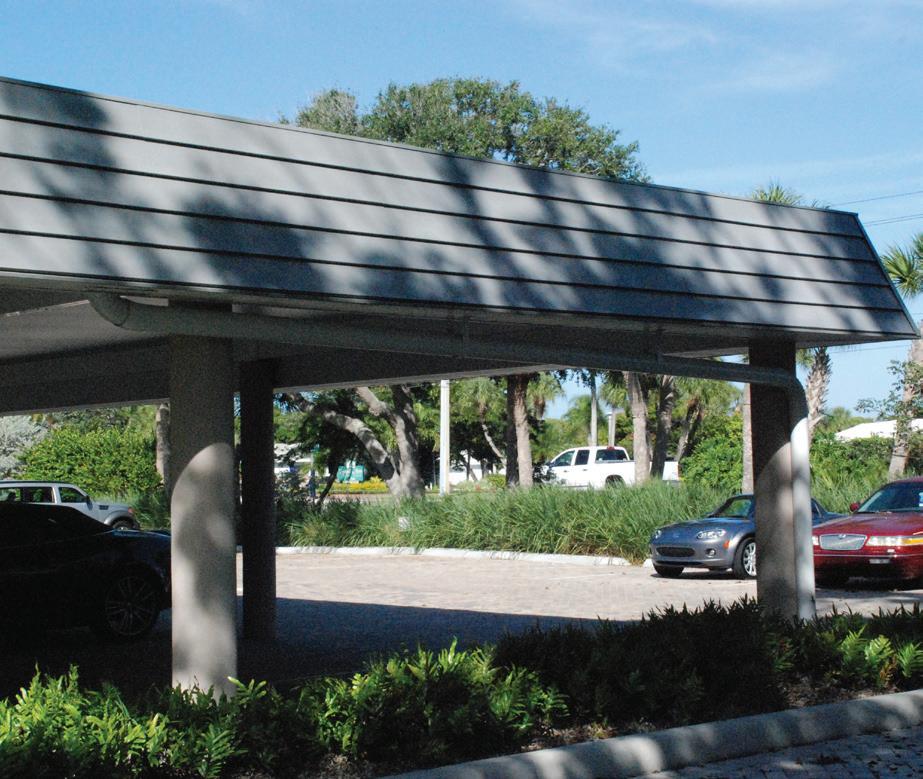
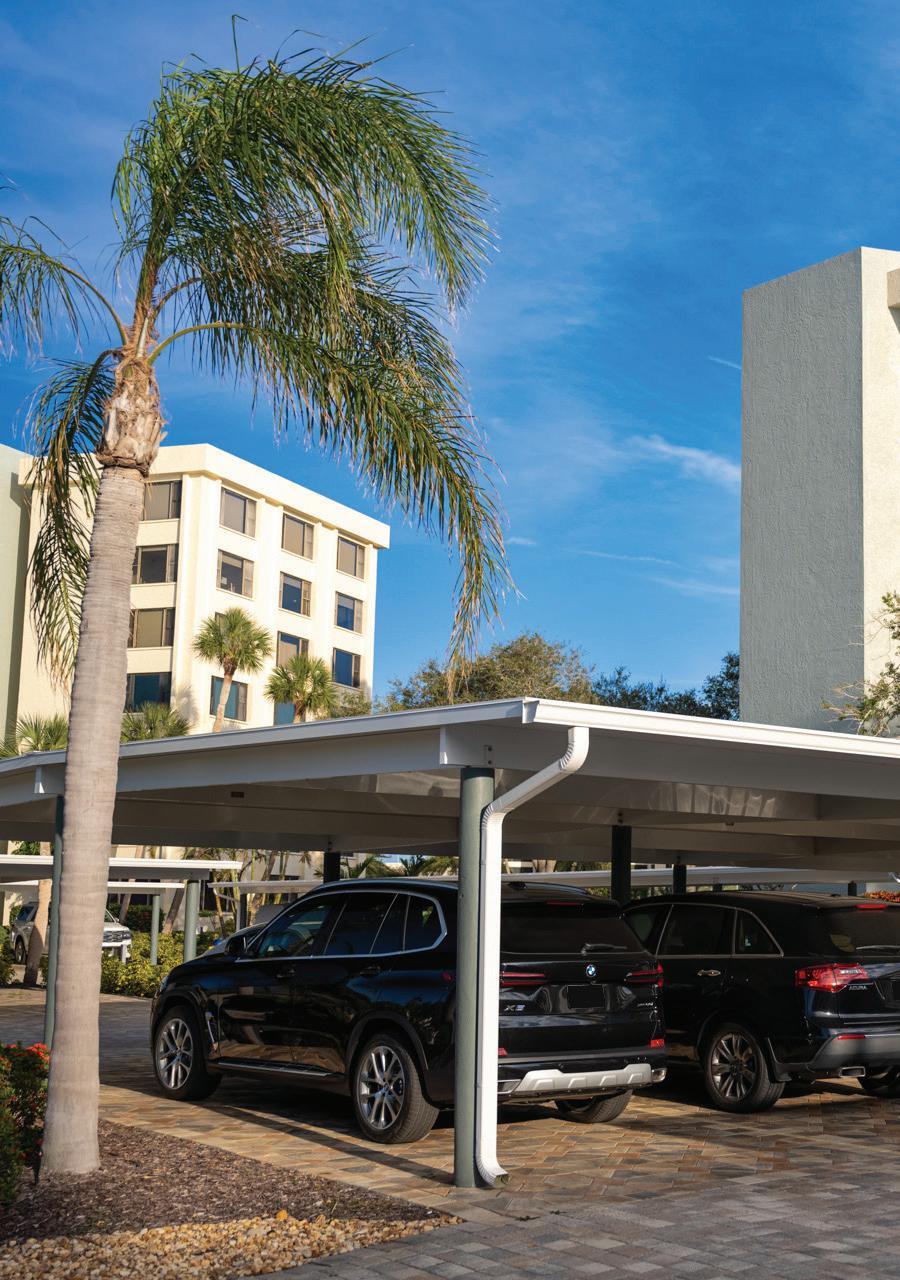

REMBAUM'S ASSOCIATION
HUD’s Withdrawal of Emotional Support Animal Guidance: What It Means for Florida Community Associations
BY JEFFREY A. REMBAUM, ESQ.
For years condominium and homeowners’ associations confronting requests for emotional support animals (ESAs) operated under a relatively welldefined framework established by the U.S. Department of Housing and Urban Development (HUD). The agency’s 2020 guidance, Assessing a Person’s Request to Have an Animal as a Reasonable Accommodation Under the Fair Housing Act, became the primary roadmap for evaluating ESA requests and was frequently cited by attorneys, housing providers, administrative agencies, and courts.
That landscape changed dramatically in May 2026 when HUD’s Office of Fair Housing and Equal Opportunity (FHEO) formally withdrew the 2020 guidance and announced a significant shift in enforcement priorities. At roughly the same time, HUD withdrew numerous prior guidance documents and advisory materials, explaining that guidance documents should not be treated as binding law and should not impose compliance
Photo courtesy of Kaye Bender Rembaum
ROUNDUP
obligations beyond those found in statutes, regulations, and binding judicial precedent.
The obvious question for condominium and homeowners’ associations is, does HUD’s action effectively eliminate the emotional support animal category altogether or merely place it in legal limbo? The answer, at least for now, appears to be somewhere in the middle.
FHEO’s stated rationale for why it withdrew its prior guidance is important because it sheds light on how the agency intends to approach future enforcement. The withdrawal memorandum repeatedly emphasizes that guidance documents do not carry the force of law and should not be used to create obligations beyond what Congress enacted in the Fair Housing Act or what HUD formally adopted through rulemaking. FHEO specifically expressed concern that prior guidance had effectively expanded fair housing obligations through informal agency interpretations rather than through regulations adopted under the Administrative Procedure Act.
FHEO also explained that it
JEFFREY REMBAUM, PARTNER, KAYE BENDER REMBAUM
Attorney Jeffrey Rembaum has considerable experience representing countless community associations that include condominium, homeowner, commercial, and cooperative associations throughout Florida. He is a board-certified specialist in condominium and planned development law and is a Florida Supreme Court circuit civil mediator. Every year since 2012 Mr. Rembaum has been inducted into the Florida Super Lawyers. He was twice awarded as a member of Florida Trend’s Legal Elite. Kaye Bender Rembaum P.L. is devoted to the representation of community and commercial associations throughout Florida with offices in Palm Beach, Broward, Hillsborough, and Orange Counties (and Miami-Dade by appointment). For more information, visit kbrlegal.com
is reviewing its enforcement practices in light of a broader federal policy favoring strict adherence to statutory text and limiting reliance on nonbinding agency guidance. In a separate withdrawal notice, HUD stated that guidance documents should be issued only when they are necessary and when they reduce compliance burdens rather than increase them. Significantly, HUD announced that the withdrawn guidance should not be relied upon by the FHEO or stakeholders while the review process remains ongoing. The agency further stated that withdrawn guidance documents had been removed from HUD’s website and should no longer be treated as authoritative. For associations that have spent years hearing that HUD guidance effectively governed ESA requests, this is a substantial development.
The most consequential portion of HUD’s May 2026 memorandum is its discussion of service animals under the Americans with Disabilities Act (ADA). The memorandum notes that the Fair Housing Act itself contains only a limited regulatory example involving a trained service animal—a seeing-eye dog for a visually impaired resident. FHEO then
EVERY ISSUE OF THE
FLORIDA COMMUNITY ASSOCIATION JOURNAL


As a community association manager or board member, you make crucial decisions for your community. Don't miss out on the insights and updates that can help you make informed choices. Subscribe now to the Florida Community Association Journal and receive every issue delivered directly to your mailbox.
Visit www.fcapgroup.com/flcaj/subscribe/ to secure your subscription and never miss an issue.

observes that, over time, agency guidance and judicial deference to that guidance expanded the concept of reasonable accommodations to include untrained emotional support animals. HUD now appears to be moving away from that approach.
The memorandum specifically points to ADA regulations defining a service animal as one that is individually trained to perform work or tasks directly related to a disability. FHEO highlights the ADA’s distinction between trained service animals and animals that merely provide emotional comfort, companionship, or a sense of well-being. Most notably, FHEO states that as an enforcement priority FHEO will generally find reasonable cause for failure to provide an animal-related accommodation involving a waiver of a pet restriction only where the animal has been individually trained to perform work or tasks directly related to the complainant’s disability. That language has understandably generated considerable attention. For the first time in many years, HUD appears to be signaling that its enforcement resources will be focused primarily on trained assistance animals (such as service animals) rather than traditional ESAs.
At this point you may be asking yourself whether the withdrawal of the prior advisory memorandums eliminates the ESA category. Simply put, not necessarily. The withdrawal of guidance is not the same as an amendment to the Fair Housing Act. Congress has not amended the statute. HUD has not adopted a new regulation eliminating ESAs. No court has held that ESAs are categorically excluded from reasonable accommodation protections. Instead, HUD has withdrawn guidance documents and announced a change in enforcement priorities. That is a distinction that matters.
The Fair Housing Act still requires housing providers to make
reasonable accommodations when necessary to afford a person with a disability an equal opportunity to use and enjoy a dwelling. The statutory language remains unchanged. As a result, attorneys representing residents seeking ESAs will undoubtedly continue to argue that an ESA may qualify as a reasonable accommodation under the Fair Housing Act even without the 2020 guidance. Some courts may continue to accept those arguments based on prior judicial decisions interpreting the statute independently of HUD’s guidance.
What has changed is that applicants can no longer point to HUD’s 2020 guidance as authoritative agency direction establishing detailed procedures, documentation standards, and presumptions favoring ESAs. In that sense the ESA category has not disappeared, but its legal foundation has become significantly less certain.
The situation becomes even more interesting in Florida. Section 760.27 of the Florida Statutes specifically addresses ESAs in housing. The statute defines an ESA and establishes procedures for evaluating accommodation requests. Among other things, the statute permits housing providers to request reliable information supporting both the existence of a disability and the disabilityrelated need for the specific ESA when those matters are not readily apparent. The statute also authorizes denial of requests when the animal poses a direct threat to persons or property that cannot be eliminated through another reasonable accommodation.
When Florida enacted this statute, much of the statutory
Photo by iStockphoto.com/atikinka2
framework reflected concepts that appeared in HUD guidance and federal fair housing interpretations. Consequently, many practitioners viewed the statute as largely codifying existing federal principles. The question now is whether Florida’s statute remains fully viable after HUD’s withdrawal of its guidance and related advisory opinions. There are arguments on both sides.
On one hand, Florida’s statute remains valid law. The Florida legislature has not repealed it, and nothing in HUD’s withdrawal memorandum expressly invalidates the Florida statute. On the other hand, the Florida statute repeatedly references federal fair housing concepts and contemplates evaluating information in accordance with the Fair Housing Act and Section 504 of the Rehabilitation Act. To the extent Florida’s statute was built upon assumptions derived from HUD guidance that no longer exists, courts may eventually be required to determine how much weight should be given to those statutory provisions. Quite obviously, this creates uncertainty for associations attempting to reconcile state law with a federal agency that has now withdrawn the very guidance that previously established the basis for much of the analysis.
For condominium and homeowners’ associations, several practical observations emerge.
Community associations should recognize that the withdrawal of HUD’s 2020 guidance removes one of the most frequently cited authorities supporting ESA requests. Applicants and their representatives can no longer rely on that guidance as current HUD policy.
Community associations may have greater flexibility to scrutinize ESA requests than they had under the withdrawn guidance. HUD’s memorandum expressly criticizes prior interpretations that discouraged housing providers from asking reasonable follow-up questions and suggests that greater scrutiny may be appropriate.
Trained service animals remain on much firmer legal footing. HUD’s memorandum repeatedly references animals individually trained to perform disability-related tasks and identifies such animals as the primary focus of future enforcement efforts.
Community associations should continue to evaluate requests individually rather than adopting blanket policies rejecting ESAs. Although HUD’s enforcement priorities have shifted, the Fair Housing Act itself has not been amended, and courts may continue to recognize certain ESA-related accommodation claims.
As always, community associations should ensure that any denial is supported by a careful factual analysis and competent legal advice. A denial based solely on the assumption that ESAs no longer exist as a legal category would be premature.
Perhaps the most important takeaway from all of this is that currently this area of law remains unsettled. HUD’s withdrawal of its prior guidance unquestionably represents a major policy shift. It weakens the administrative foundation upon which many ESA claims have been built and signals that federal enforcement resources will be directed primarily toward accommodations involving trained assistance animals. Yet at the same time, the Fair Housing Act remains unchanged. Section 760.27 of the Florida Statutes remains on the books. Prior judicial decisions recognizing ESA accommodations have not automatically vanished. In addition, courts have not yet had sufficient time to determine the full legal impact of HUD’s actions. Also, as of the writing of this article, it is our understanding that local fair housing agencies are still processing discrimination complaints concerning ESAs. Accordingly, community associations should view the current situation as one involving substantial uncertainty rather than definitive answers.
What can be said with confidence is that the 2020 HUD guidance is no longer available as authority. The detailed framework that many housing providers relied upon for evaluating ESA requests has been withdrawn. Likewise, HUD has indicated that withdrawn guidance documents should not be relied upon while the agency’s review is ongoing. Whether ESAs ultimately survive as a recognized category under the Fair Housing Act will likely be determined through future litigation, regulatory action, or congressional intervention. Until that occurs, associations should understand that the legal landscape is shifting and is anything but fully settled.
For now, ESAs appear to occupy a legal middle ground: no longer supported by HUD’s prior guidance yet not entirely eliminated from fair housing law. That reality creates both opportunities and risks for community associations. With all of this in mind, community associations should discuss the implications, both good and bad, of what appears to be an ever-changing playing field regarding ESAs with their association’s attorney and should continue to treat requests for ESAs on a case-by-case basis. Indeed, for the time being, how a community association may respond to a request for an ESA may largely depend upon the association’s own risk tolerance. n

New Florida Law Requires Contractors to Pay Subcontractors Within Set Timeframe
BY DYLAN GOLDBERG
New legislation that the Florida lawmakers passed and Governor Ron DeSantis approved earlier this year addresses payments by contractors to their subcontractors. The law, which took effect on July 1, 2026, establishes prohibitions against nonpayment.
Florida Statutes Section 489.1295 now reads as follows:
(1) A licensed contractor must compensate a subcontractor or supplier, unless there is a bona fide dispute regarding the amount due, if any, for services, labor, or materials:
(a) Within 45 days after receiving payment for the services performed or materials supplied by the subcontractor or supplier; or
(b) In accordance with the terms of the contract for such services, labor, or materials.
Photo by iStockphoto.com/Nataliya Dmytrenko
(2) A licensed contractor who knowingly or willfully violates this section is subject to disciplinary proceedings as provided in s. 489.129.
Section 489.1295 directly affects the pay-when-paid provisions in subcontract agreements for private construction projects. Such pay-when-paid provisions require the contractor to pay the subcontractor within a certain number of days from the receipt of payment from the owner. This new law establishes that if the subcontract is silent on the timing for payment to the subcontractor, then the 45-day period will govern. As a result, contractors and subcontractors should review current pay-when-paid provisions in their subcontract agreements to ensure compliance with Section 489.1295 and include a specific timing aspect.
In addition, Chapter 489 does not define what constitutes a bona fide dispute. For the parties to protect their financial
DYLAN GOLDBERG, ATTORNEY, SIEGFRIED RIVERA
Dylan Goldberg is an attorney with the South Florida law firm of Siegfried Rivera who focuses on construction law. He is based at the firm’s Coral Gables offices and is a regular contributor to its Newsroom blog at www.SiegfriedRivera.com/blog The firm also maintains offices in Broward and Palm Beach counties, and its 49 attorneys focus on community association, construction, real estate, and insurance law. For more information vist www.SiegfriedRivera.com, email DGoldberg@SiegfriedRivera.com, or call 305-442-3334.
interests and avoid litigation and claims of lien, the parties should define bona fide dispute in the subcontract agreement and include formal written notice procedures to such effect as well as specific actions to cure the bona fide dispute. Grounds for a bona fide dispute may include defective work not remedied by the subcontractor or failure of the subcontractor to make payment to suppliers for labor, materials, or equipment. Notwithstanding the foregoing, the contractor should continue to pay all undisputed amounts due to the subcontractor.
In conclusion, Section 489.1295 establishes new express statutory rights protecting subcontractors. Accordingly, Section 489.1295 should reduce the number of claims of lien recorded by subcontractors. Overall, the Florida legislature has extended the protections of prompt payment to subcontractors for private construction projects similar to its actions codified in Chapter 218 for government construction projects.
Our firm’s South Florida community association attorneys at www.siegfried.com/practice-areas/community-association write about important matters for associations and other property owners in our Miami Herald column, which appears every two weeks on Sundays, and our Newsroom blog at www.SiegfriedRivera.com/blog. We encourage association directors, members, and property managers as well as all property owners to visit www.siegfried.com/contact/#newsletter and subscribe to our newsletter to receive our future articles. n

Stay informed with trusted articles, expert advice, and resources tailored for Florida’s community association managers and board members.
And while you’re there, sign up for our free monthly email newsletters.

BY MICHAEL J. GELFAND, ESQ.
Y Your AI Queries Are Not Confidential
IKES! YOUR SEARCHES ON DISPLAY IN COURT, IN PUBLIC!
“Want to see it quoted on the front page of the New York Times?” Many Florida community association leaders, members, and managers have found to their chagrin that this adage applies to many of their texts and emails in addition to their verbal comments and written letters.
Now there is a new breach in the walls of personal privacy. A new embarrassment, if not outright legal danger, has arisen from what used to be good old-fashioned problem solving or sleuthing.
Of course, the seed of this danger is new technology. The explosive
Photo by iStockphoto.com/Tero Vesalainen
growth of “artificial intelligence” encourages more use by not just Floridians generally but also community association leaders.
Jumping on the bandwagon of AI, litigants face dangers even before they get to the headline grabbing “hallucinations,” which are really basic failures or grievous mistakes.
Court proceedings now abound with a new type of AI-related documentation. This is triggered by a user (that means you, the reader) typing a search request on open use or open LLM (large language model systems), which is now open for discovery by opposing litigation parties.
Yes, this means that the query that you type into an open AI search window to “help” may be sought and used against you in court. Yes, that query that quoted your attorney’s confidential conclusions may be open to the other side’s attorney! This is just as if you told your neighbor of your attorney’s opinions and your neighbor was subpoenaed to testify what you said your attorney said to you.
This is not conjecture or a Chicken Little “the sky is falling” concern. Recently a federal court ruled that an AI user’s communications are not protected by traditional walls against disclosure, regardless of the attorney-client privilege or the work product doctrine against discovery. A federal court incorporated traditional analyses and concluded that the AI query was not confidential when a user types into a publicly available AI platform in connection with a pending criminal investigation.
The facts in United States v. Heppner (S.D.N.Y. February 17, 2026) reveal that Heppner was
MICHAEL J. GELFAND, ESQ., SENIOR PARTNER, GELFAND & ARPE, P.A.
Michael J. Gelfand, Esq., the senior partner of Gelfand & Arpe, P.A., emphasizes a community association law practice, counseling associations and owners how to set legitimate goals and effectively achieve those goals. Gelfand is a dual Florida Bar board-certified lawyer in condominium and planned development law and in real estate law, a certified circuit and county civil court mediator, a homeowners’ association mediator, an arbitrator, and parliamentarian. He is a past chair of the Real Property Division of the Florida Bar’s Real Property, Probate & Trust Law Section, and a Fellow of the American College of Real Estate Lawyers. Contact him at ga@gelfandarpe.com or 561-655-6224.
charged with securities fraud in a New York federal court. As part of an investigation, the federal government executed a search warrant at Heppner’s home and seized numerous documents and electronic devices, which included 31 documents memorializing communications Heppner had with the AI platform “Claude,” which is operated by the private company Anthropic. Heppner’s counsel argued that these documents were privileged because Heppner prepared reports which outlined various defense strategies.
The federal court explained that the attorney-client privilege protects from disclosure communications between a client and his or her attorney. The AI documents were not communications between Heppner and his attorney because “Claude” is not an attorney.
“[T]he communications between Heppner and Claude were not privileged at the time they took place,” the court stated. “Moreover, even assuming that Heppner intended to share these communications with his counsel and eventually did so, it is black-letter law that nonprivileged communications are not somehow alchemically changed into privileged once upon being shared with counsel.”
Similarly, the so-called work product doctrine exception from discovery did not protect these documents because the reports were not prepared at the instruction of Heppner’s attorney; rather, Heppner acted on his own in preparing these documents. The court concluded:
Generative artificial intelligence presents a new frontier in the ongoing dialogue between technology and the law. Time will tell whether, as in the case of other technological advances, generative artificial intelligence will fulfill its promise to revolutionize the way we process information. But AI’s novelty does not mean that its use is not subject to longstanding legal principles, such as those governing the attorney-client privilege and the work product doctrine. Because Heppner’s use of Claude fails to satisfy either of these rules, the AI Documents do not merit the protections Heppner has claimed.
This case highlights one of the potential unintended consequences triggered by seemingly innocent, everyday use of AI. When an indi-

vidual accesses AI on his own initiative, any documents created may end up as discoverable in a future lawsuit. This may include phone records, emails, and reports. Thus, as a warning to association officers, directors, and employees, though your AI searches might not be an official record subject to a Condominium Act or Homeowners’ Association Act official records access request, court subpoenas and discovery can be much broader than official records boundaries, especially when focused on individuals, not associations! Take care, especially when there are litigation issues, before you access AI.
NOT SO FAST: NEIGHBOR V. NEIGHBOR, WHO CAN SUE OVER UGLY?
Florida homeowners’ associations have been grappling with a recent state law allowing boats, recreational vehicles, and other vehicles to be parked without restriction if on an owner’s property so long as they are not visible from the street in front, an adjacent parcel, an adjacent common area, or a community golf course. Many Florida communities have had restrictions, if not absolute prohibitions, regarding boats, trucks, and recreational vehicles.
But having a restriction or even a law is just one thing. The time has arrived for determining whether the enforcement baton can be handed off, if not tossed, from the association to an individual owner. Specifically, can one owner sue another owner for parking a recreational vehicle in their driveway?
“Not so fast…”, was the quote found in a recent Florida appellate court. That appellate court tossed out a lawsuit filed by one owner against another owner claiming that a recreational vehicle which was visible lowered the value of the homes in the community.
The facts recited in Mineo v. Do, 51 Fla. L. Weekly D 929 (Fla. 4th DCA, May 6, 2026), indicate that the Mineos sued neighbors who were not living on the Mineo’s street but who lived on another street. The Mineo’s’ lawsuit claimed that their neighbors were not in compliance
THIS CASE HIGHLIGHTS ONE OF THE POTENTIAL UNINTENDED CONSEQUENCES TRIGGERED BY SEEMINGLY INNOCENT, EVERYDAY USE OF AI. WHEN AN INDIVIDUAL ACCESSES AI ON HIS OWN INITIATIVE, ANY DOCUMENTS CREATED MAY END UP AS DISCOVERABLE IN A FUTURE LAWSUIT.
Photo by iStockphoto.com/Robert Way

with the homeowner association rules because the neighbors parked their RV in a place that was visible from the street.
The trial court granted summary judgment for the defendants, finding that the Mineos lacked standing to file the lawsuit. You may well ask, what is “standing”? Standing is a judicial concept limiting lawsuits to those who have suffered damage. The concept is that courts usually do not allow one person to “stand” and file suit for a damage suffered by others—thus, the concept of “standing” to sue.
The fatal weakness appears to be the lawsuit’s assertion that the damage, a loss of property value, was suffered by the Mineos and their neighbors. The appellate court recognized that under Florida law a member of a homeowner’s association can sue another member for violating the association’s declaration when the injury is personal, or just to them, instead of impacting the association. Apparently, the lawsuit did not sufficiently differentiate any loss suffered by the Mineos from that of the other neighbors.
Is this a dead end for the suing owner? No, not at all! The dismissal does not mean that an owner has no recourse against a neighbor violating restrictions.
First, the appellate court left open a path, if the owner has specific losses that are different from other owners. A word of caution: sometimes determining, not to say proving, different losses can be difficult, especially if the loss is not a direct, computable, monetary loss.
Second, another path was discussed by the appellate court, a “derivative action.” The Florida Not for Profit Corporation Act allows one member of a Florida not-for-profit corporate association to bring a lawsuit on behalf of that association when the association refuses to bring the claim. The claim must be in the “best interests” of the association. The title of the law recognizes that the claim of one owner derives from the right, or standing, of the association. One member might be able to sue for all members.
Why have you likely not heard of many association-based derivative lawsuits? They are usually difficult to prove and expensive. The appellate court explained that before a derivative action lawsuit is filed, the claimant must provide a written demand upon the association’s board of directors followed by a 90-day waiting period for an investigation to determine if the lawsuit is actually in the association’s best interests. Because the appellate court found that the claimed injury was derivative, the court concluded that the Mineos did not comply with the pre-suit requirements of Section 617.07401. Thus, the dismissal was affirmed. A lesson to be learned is that an association does not always have to get involved between two disputing owners. Nevertheless, though not always applicable, consider what you can do to facilitate the owners working it out directly and peacefully before stepping back to let them duke it out themselves! n
Photo by iStockphoto.com/welcomia

C elebr ating 2 5
Ye a rs!

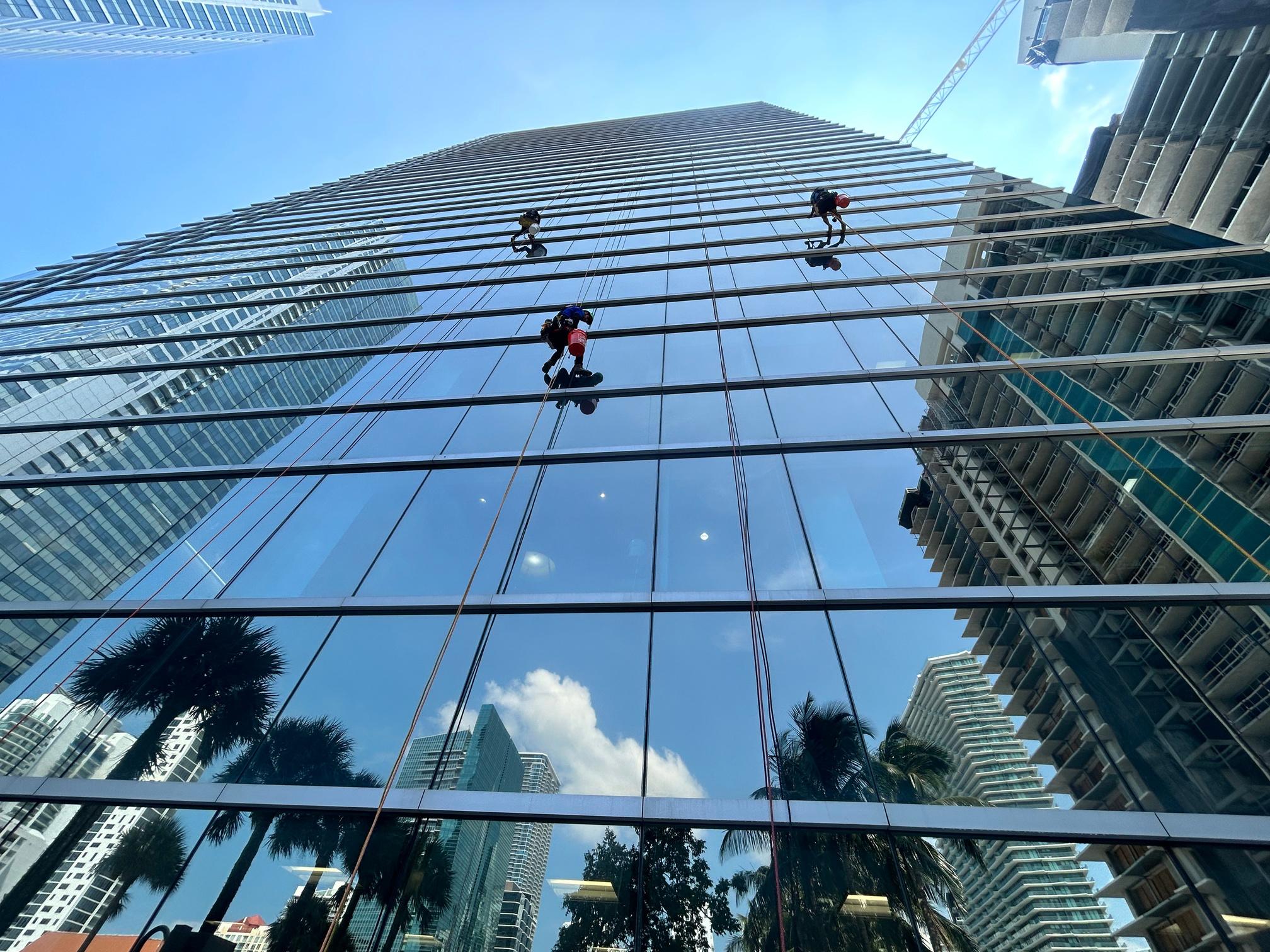
W i n d o w C l e a n i n g
S Q U E E G E E S Q U A D . C O M
H O A ' s A r e O u r S p e c i a l t y !
C o m m e r c i a l H i g h r i s e
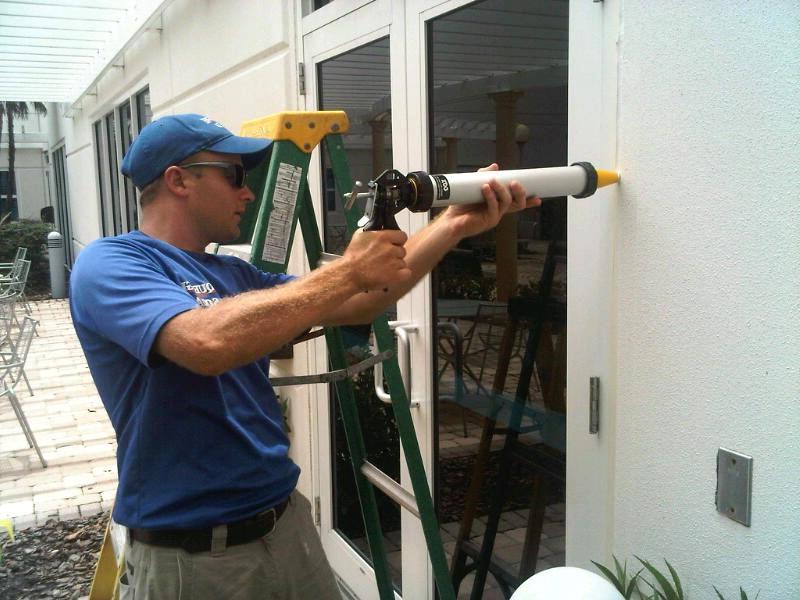
B u i l d i n g R e s t o r a t i o n / C a u l k i n g
C O M M E R C I A L
,
W i n d o w C l e a n i n g - P r e s
B u i l d i n g R e s t o r a t i
C O N T A C T
S Q U E E G E E S Q U A D T O D A Y !
P r o u d l y S e r v i n g A l l o f
G r e a t e r F l o r i d a
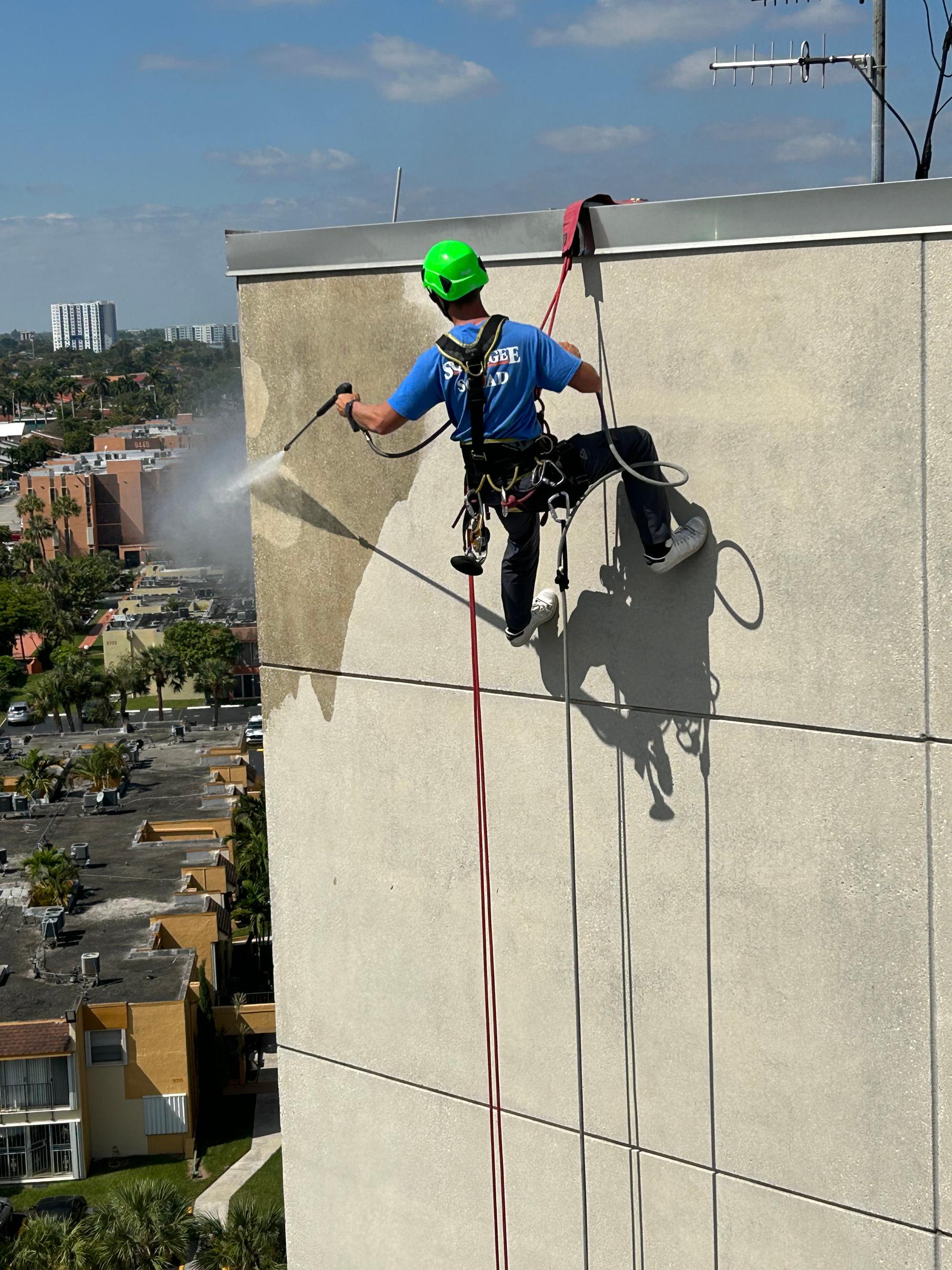
P r e s s u r e W a s h / S o f t W a s h
M o r e t h a n 1 1 5 , 0 0 0
c u s t o m e r s s e r v e d !

S Q U E E G E E S Q U A D
8 0 0 - 7 8 3 - 5 8 1 2
F l o r i d a @ S q u e e g e e S q u a d . c o m

BY BETSY BARBIEUX, CAM, CFCAM, CMCA
T They Did It Again
hey were supposed to change the name to “common interest” corporation. Now more problems have been created than solved despite the points of frustration that industry professionals and board members have been voicing throughout this drafting process. Who are “they”? Our Florida legislators. The idea to create a separate “Common Interest Development Act” or rename Chapter 617 to a “Common Interest Corporation” has been a heavily discussed concept among
Photo by iStockphoto.com/Olivier Le Moal
community association advocates for years. But the Florida Bar Business Law Section task force decided to model HB 797 strictly after the American Bar Association’s Model Nonprofit Corporation Act. That model was applied to all non-stock entities in Florida—which includes churches, private clubs, and trade associations alongside our community associations.
The concern that renaming it the “Florida Nonprofit Corporation Act” will lead to widespread confusion is incredibly valid. For decades the average person has confused the words “not for profit” and “nonprofit.” The first refers to Chapter 617, which is the Florida corporate statute for groups of people who have a common interest, like the band parents who want to incorporate so they can sell cokes and hot

BETSY BARBIEUX, CAM, CFCAM, CMCA, FLORIDA CAM SCHOOLS
Betsy Barbieux, CAM, CFCAM, CMCA, guides managers, board members, and service providers in handling daily operations of their communities while dealing with different communication styles, difficult personalities, and conflict. Effective communication and efficient management are her goals. Since 1999 Betsy has educated thousands of managers, directors, and service providers. She is your trainer for life! Betsy is the author of Boardmanship, a columnist in the Florida Community Association Journal, and a former member of the Regulatory Council for Community Association Managers. Subscribe to CAM MattersTM at www.youtube.com/c/cammatters. For more information, contact Betsy@ FloridaCAMSchools.com, call 352-326-8365, or visit www.FloridaCAMSchools.com.
dogs at the ball games to raise money for the band uniforms. The latter refers to charitable organizations that are organized under IRS 501(c)(3). They are exempt from federal income taxes and can receive tax-deductible donations. They also have strict federal reporting and recordkeeping requirements
Many of us have explained thousands of times the differences between a nonprofit corporation under Section 501(c)(3) of the Internal Revenue Code and our Florida not-for-profit corporations. Board members, managers, and owners alike are always confused about the terminology. Now the terminology is even more confusing. Now the explanation will be, “Yes, you are still a Florida ‘not for profit corporation,’ but now you are called a ‘nonprofit.’”

This change in terminology will create endless debates at board meetings and the wrong assumptions of what this change means. Ultimately, board members will be paying their attorneys for legal opinions to explain the terminology.
As a result, managers and attorneys (and licensed instructors) should be bracing for a wave of homeowners who will wrongly assume the following:
• Their community association is suddenly tax-exempt.
• They don’t pay sales tax.
• They can deduct their monthly assessment fees on their federal tax returns.
• The board is legally required to operate like a public charity rather than a private residential corporation.
Charitable nonprofit organizations produce detailed compensation information for officers and directors. Our communities obviously will not.
Neither will our community associations provide in a narrative text format an explanation of their governance policies, corrections, or expansive program descriptions. And there will be no published reports open to the general public.
Because the task force focused on a broad corporate rewrite rather than a community-association-specific overhaul, community associations got swept under the new “nonprofit” umbrella name.
The bill does state that if there is any conflict between the general corporate provisions of the new rewrite of Chapter 617 and the specific community association statutes—Chapter 718, Chapter 719, or Chapter 720—the specific association laws will override Chapter 617.
And as a reminder, the Florida legislature officially changed the name of Chapter 607, the Florida For Profit Corporate Act, to the Florida Business Corporation Act during the 1989 legislative session. This too was a major overhaul of that corporate statute based on the American Bar Association’s 1984 Revised Model Business Corporation Act. It was again revised in 2019 but is still known as the Florida Business Corporation Act.
Legislators could have spent their time revising/repealing the language in several laws passed last year, such as the following:
Section 718.112(2)(c) requiring quarterly meetings of the board and permitting owners to ask questions rather than stick to agenda items. This section needs to be repealed.
Section 718.112(2)(d) requiring board members to be physically present at a membership meeting. Clearly legislators do not know the difference between a board meeting and a membership meeting. The board members have no collective role or duty at a membership meeting—they are members like everyone else. They don’t even sit together like they do in a board meeting. The officers obviously have roles to play. The president will chair the meeting. The secretary will read the previous meeting minutes and take the notes for the current meeting. The treasurer will give a financial report. This section needs to be repealed.
Section 718.112(2)(e)(2) requiring the board to propose two budgets if the preferred budget exceeds 115 percent of the previous year’s assessment. The complicated sequence of board meetings and notices and special membership meetings and notices and affidavits is almost impossible to accomplish. Imbedded in this statute when referring to the
substitute budget is the phrase “does not include discretionary expenditures.” What community’s budget has discretionary expenditures? This section should be repealed and the previous language reinstated.
Section 718.128(7) permitting voting in elections via email should be repealed. This language has no safeguards for ensuring receipt of the email or that it will not be deleted, nor does it make clear who monitors the email account or the timing of receipt of the ballots prior to the start of the annual meeting. While the legal name change of Chapter 617 will be a major headache, the actual day-to-day operations and maintenance will remain the same as will meetings and records requirements. It is highly likely that CAMs and association attorneys will spend the rest of the year issuing heavy disclosures to boards and owners clarifying that: “Yes, we are legally called a ‘nonprofit corporation’ now, but no, you still cannot deduct your assessments.” n



Outdated emergency systems leave your community vulnerable—we're here with solutions. Kings III delivers cutting-edge technology with options that meets evolving elevator codes with two-way messaging and video capabilities. Our turnkey cellular technology eliminates unreliable landlines and simplifies compliance. Beyond equipment, we provide 24/7 monitoring by trained professionals who ensure every resident feels secure. Reduce risk, minimize liability, and enhance safety with emergency communications designed for today's challenges—and tomorrow's.
Readers' Choice Award Spotlight

Editor’s Note: FLCAJ would like to congratulate these six outstanding 2026 Readers’ Choice Awards winners! (For a full list of 2026 RCA winners, please read the March 2026 issue or visit www.fcapgroup.com/flcaj/readers-choice/.

Breezeline
Diamond Level Winner—Technology and Communications (Winner 2026 and three previous RCA wins)


Starting as Atlantic Broadband in Miami Beach, we’ve been a trusted Florida partner delivering connectivity and community. Now as Breezeline we continue that legacy, proudly serving HOAs, condominiums, and apartment buildings across South Florida.
Half-Century of Service
Formerly Atlantic Broadband, Breezeline has served Miami-Dade for over 50 years, building expertise and trust.
Fiber-Powered Connectivity
Breezeline proudly serves Palm Beach Gardens to south Miami with premier fiber-powered internet, TV streaming, home service, and mobile phone products.
Superior, Redundant Network
Our 100 percent-owned redundant fiber network, supported by 26 data centers, ensures exceptional reliability
throughout South Florida.
Dedicated Focus and Financial Strength
Part of a publicly traded telecommunications company, our strong financial backing ensures connectivity services remain our sole focus.
Local Experience
Expert local teams of technicians, engineers, and service personnel provide the ultimate experience, one customer at a time.
Support for Communities
Dedicated account managers provide tailored solutions and ongoing support.
Modern living requires seamless service. Our robust fiber network delivers the multi-gig speed and reliability your community deserves, backed by expert local teams and custom solutions.
We are deeply honored and truly grateful that the readers have named Breezeline a Diamond Level Readers’ Choice Award winner. This is a testament to our dedication to providing reliable, top-quality internet, TV, phone, and—most importantly—truly caring customer support to the Florida communities we serve.
Experience the white-glove service you deserve. Let us help your community stay connected, entertained, and ready for the future.
For more information about Breezeline, email Lars Lofas at Llofas@Breezeline.com or visit www.Breezeline.com/Communities.
C&S Community Management
Diamond Level Winner—Management Companies (Winner 2026 and 11 previous RCA wins)

C&S Community Management is locally owned, serving HOA and condominium associations since 1985. Maintaining an accredited A+ Better Business Bureau rating along with accreditation (AAMC) from the Community Associations Institute, C&S is equipped to exceed community expectations.
C&S has four offices to serve you on Florida’s West Coast—in Bradenton, Sarasota, St. Petersburg, and Venice. Our staff is knowledgeable, friendly, and here to serve you in all areas of community management. In addition to the State CAM license, many of our managers are nationally board certified, and four managers are PCAMs (Professional Community Association Manager).
C&S utilizes industry-leading technology; and when coupled with a passion for helping others, the result is a happy, healthy, welcoming community along with award-winning service. From finance and compliance to maintenance, payroll, and legal matters, we are here to help. At C&S it is our goal to improve your satisfaction as an owner and board member. Our years of experience allow us to offer you a guaranteed positive change in your association management so that you may relax and enjoy your community.
For more information on C&S, visit www.cscmsi.com.
Castle Group
Diamond Level Winner—Management Companies (Winner 2026 and 12 previous RCA wins)
Castle Group is the premier choice for property management; we specialize in serving the finest residential communities. With 3,000-plus dedicated team members, we are the preferred service provider for more than 600 associations. Our philosophy stays the same no matter where we are—putting the resident first. At Castle, we call it Royal Service®.
Our focus is to provide our clients with a powerful combination of incredible people, streamlined systems, and advanced technology to deliver the best service to our communities. Since no two properties are identical, we’ve created a menu of services that allows our customers to tailor a solution that fits their needs.

At Castle Group we believe informed boards lead to successful communities. That’s why we offer a robust library of resources designed to support board members in every aspect of governance, budgeting, and more. Explore our expert-led webinars for best practices that make decision-making simpler and more effective. Browse our latest resources at www.castlegroup.com/webinars.
To learn more about how Castle Group can serve your community, request a proposal at www.castlegroup.com/request-a-proposal.
FirstService Residential
Diamond Level Winner—Management Companies (Winner 2026 and 11 previous RCA wins)


Property management is a balancing act. When you lead your community on a path to change, every decision is an important one. With competing priorities, juggling it all as a community leader can seem complex, but it doesn’t have to be.
At FirstService Residential we’re simplifying property management. Our hospitalityminded teams serve residential communities across the United States and Canada. We partner with boards, owners, and developers to enhance the value of every property and the life of every resident.
We have the expertise and depth of resources to anticipate needs and respond. Residents can count on 24/7 customer care and tailored lifestyle programming, amenity activation, and technology for their community’s specific needs. Market-leading programs with FirstService Financial and FirstService Energy deliver additional levels of support.
Boards and developers select FirstService Residential to realize their vision and drive positive change in the communities in their trusted care. With our professional scale, we’re big enough to make your budget go further, and our service-first philosophy means we don’t stop until what’s complicated becomes uncomplicated—to make life simplified.
For more information about FirstService Residential, visit LifeSimplified.com today! n
LEGAL SERVICES
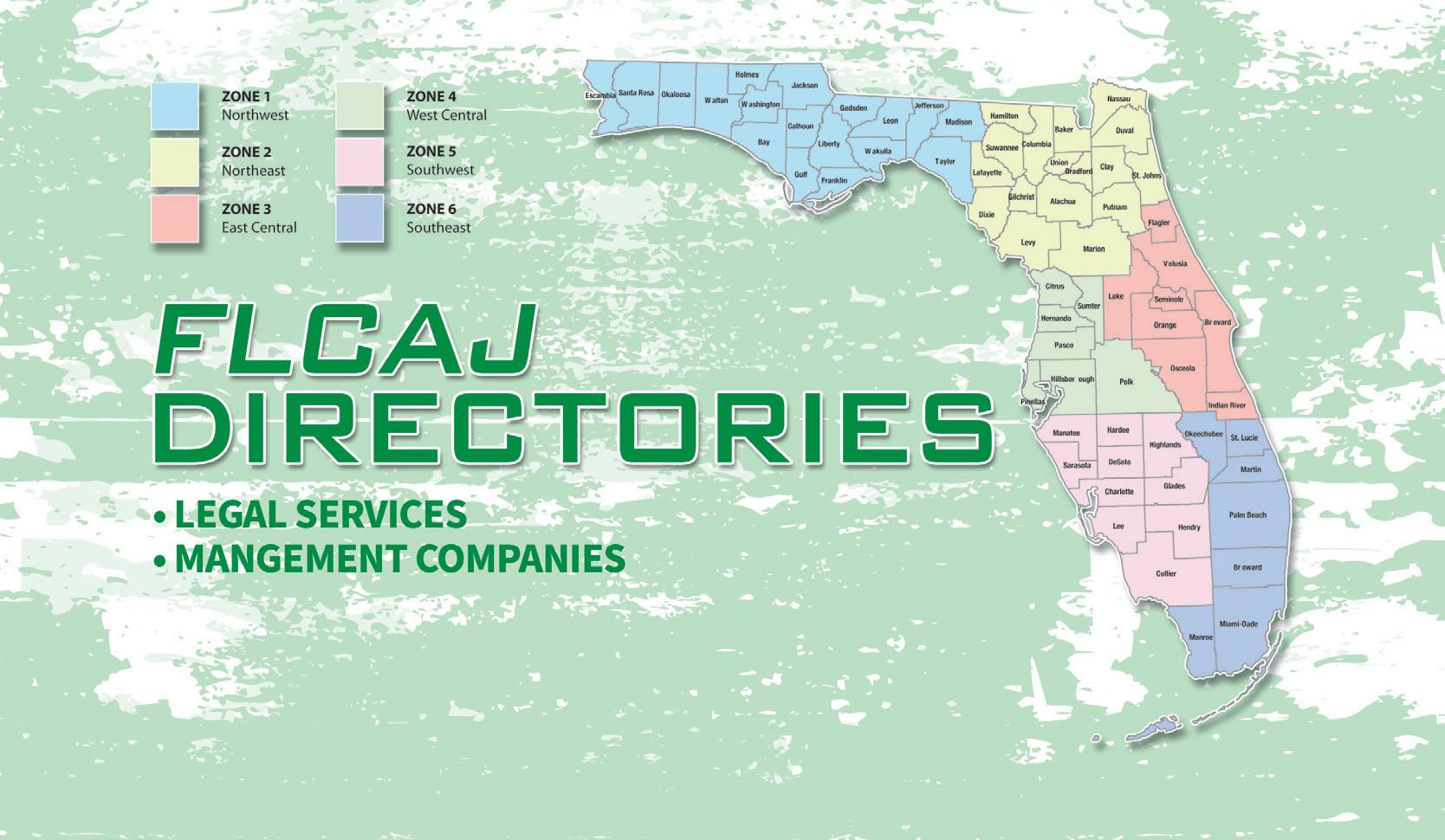




Siegfried Rivera 201 Alhambra Circle, 11th Floor Coral Gables, Florida 33134 800-737-1390 www.siegfriedrivera.com Experience Personalized Professionalism.
Tripp Scott Law Firm 110 SE 6 Street Fort Lauderdale, Florida 33301 954-525-7500
www.trippscott.com For over 50 years, Tripp Scott has served our community.

MANAGEMENT CO. DIRECTORY
Allied Property Group Inc.
12350 SW 132 Court, Suite 114 Miami, Florida 33186
305-232-1579; 239-241-6499 www.alliedpropertygroup.net
Providing service to South Florida since 2003.
America's Community Management
4733 W. Atlantic Avenue, Suite C-22
Delray Beach, Florida 33445
833-628-8288 americascommunitymgmt.com

FirstService Residential 1601 SW 80th Terrace Plantation, Florida 33324 877-278-6468 www.fsresidential.com Life, Simplified
GRS Community Management 900 Woodlake Boulevard, Ste. 309 Lake Worth, Florida 33463
561-641-8554 sales@grsmgt.com www.grsmgt.com
HOA Amplified by Jilsa; www.hoaamplified.com
KW PROPERTY MANAGEMENT & CONSULTING, LLC 8200 NW 33rd Street, Suite 300 Miami, Florida 33122 305-476-9188 www.kwproperty management.com A Professional and Independent Approach to Management.

Sign up for our Newsletter fcapgroup.com/nl-sd

MAY Management Services, Inc. 5455 A1A South St. Augustine, Florida 32080
904-461-9708
www.maymgt.com
Over 20 years in Northeast Florida!
Sign up for our Newsletter fcapgroup.com/nl-sd
Miami-Dade, Broward and Palm Beach Counties Contact Kristin Dumornay at 954-845-6102 or kdumornay@miamimanagement.com www.miamimanagement.com
Premier Association Management 1064 Greenwood Boulevard, Suite 480 Lake Mary, Florida 32746 407-333-7787 www.Premiermgmtcfl.com
Qualified Property Management 5901 US Highway 19, Suite 7 New Port Richey, Florida 34652 877-869-9700
www.QualifiedProperty.com
Proudly Serving HOA, COA, Co-ops, Master Planned Comm. Assoc.

5523 W. Cypress Street, Suite 102 Tampa, Florida 33607 866-403-1588 www.RealManage.com Serving Orlando and Tampa Communities.
Orlando, FL 32807
407-730-9872
www.towerspropertymgmt.com
Sign up for our Newsletter fcapgroup.com/nl-sd





Products and Services Directory
AIR DUCT CLEANING
Air Duct Aseptics
Certified Air Duct Cleaning, Dryer Exhaust Cleaning repair & replacement. Mold testing 888-707-7763 www.adaflorida.com
ALARM MONITORING

ALUMINUM RAILING
Mullets Aluminum: 941-371-3502; nate@mulletsaluminum.com; www.mulletsaluminum.com
ASPHALT REPAIR/ REJUVENATION
Asphalt Restoration Technology: 800-254-4PDC (4732); www.asphaltnews.com.
BALCONY INSPECTIONS
Howard J. Miller Consulting Engineers: 561-392-2326; www.HowardJMiller.net
COMMUNITY SECURITY


Promar Building Services LLC: Alfredo Amador; 561-598-4549; info@promarbuilding.com
CONCRETE RESTORATION PROJECT MANAGEMENT
Daniello Companies: 888-370-4333; www.concreterepairing.net. EDUCATION
ELECTRIC
Hypower Electrical & Utility Contractor 888-978-9300; www.hypowerinc.com
ELEVATOR SERVICE/REPAIRS
Connections Elevator: Elevator maintenance agreements, repairs and modernizations; 954-792-1234; www. ConnectionsElevator.com.
Elevate Monitoring: 877-990-9191; elevatemonitoring.com
ENGINEERS
Consult Engineering, Inc: 941-206-3000; www.consultengineering.com.
Howard J. Miller Consulting Engineers: 561-392-2326; www.HowardJMiller.net
NV5: 954-495-2112; nv5.com
PEGroup Consulting Engineers, Inc.: 800-698-2818; 305-655-1115; www.pegroup.com.
Swaysland Professional Engineering Consultants (SPEC): 954-473-0043; 888-264-7732.
FENCING AND GATES

FIRE ALARM SYSTEMS
Bass United Fire & Security Systems, Inc.: 954-785-7800; www.bassunited.com.
GENERAL CONTRACTORS
SERPE-CO: 954-718-3094; info@ serpeco.com; serpeco.com

Blue Stream Fiber 888-960-2855
www.bluestreamfiber.com

INTERNET/TELEVISION/ VOICE SERVICES JANITORIAL

AND




Promar Building Services LLC: Alfredo Amador; 561-598-4549; info@promarbuilding.com
PEST/ANIMAL CONTROL

PIPELINING
USA Pipelining LLC: 954-9149966; usa-pipelining.com
ROOF COATINGS
Polo International: 954-7825851; www.polo14.com
ROOF MANAGEMENT & CONSULTING

Florida Roofing and Sheet Metal: Built for Florida; Built to Last; 561-448-0425 and 954787-8714; Commercial Roofing and Waterproofing Parking Decks and Garages
Mike McGilvary Roofing: 561-856-5060; mmroofingpro@ gmail.com; mmroofrepair.com
SPF Systems, Inc.: (866) 5613626; HurricaneProofRoof.com.
Sutter Roofing: 800-741-0090 or 941-377-1000; sutterroofing.com

Pecora Corporation: 800-5236688; freemana@pecora.com

Security
David.Fambrini@garda.com (561) 698-1014 | garda.com
Ramco Protective: 888-3989700; www.ramcoprotective.com.
SIRS REPORT
Howard J. Miller Consulting Engineers: 561-392-2326; www.HowardJMiller.net
SWIMMING POOLS TRASH

WATER, SEWER AND DRAINAGE—INSPECTION AND REPAIRS

Hinterland Group: 561-6403503; hinterlandgroup.com
WINDOW CLEANING
Squeegee Squad: 305-897-1310; marcellomagno@squeegeesquad. com; squeegeesquad.com
Sign up for our Newsletter fcapgroup.com/nl-sd