




Equipment
Equipment

With the arrival of June, we have reached the halfway point of the calendar year. How has the year gone for you so far? Are you able to meet the goals you set for your business at the beginning of the year? Are you pursuing any new business opportunities or establishing a niche in a certain sector of the pressure washing industry? What material are you feeding yourself so that you can be better educated for your work in the industry? Do you have any plans to build your network of relationships? So many questions to consider, and the pages of this issue of Cleaner Times will assist you in providing answers to some of these questions, so don’t hesitate to plunge ahead.
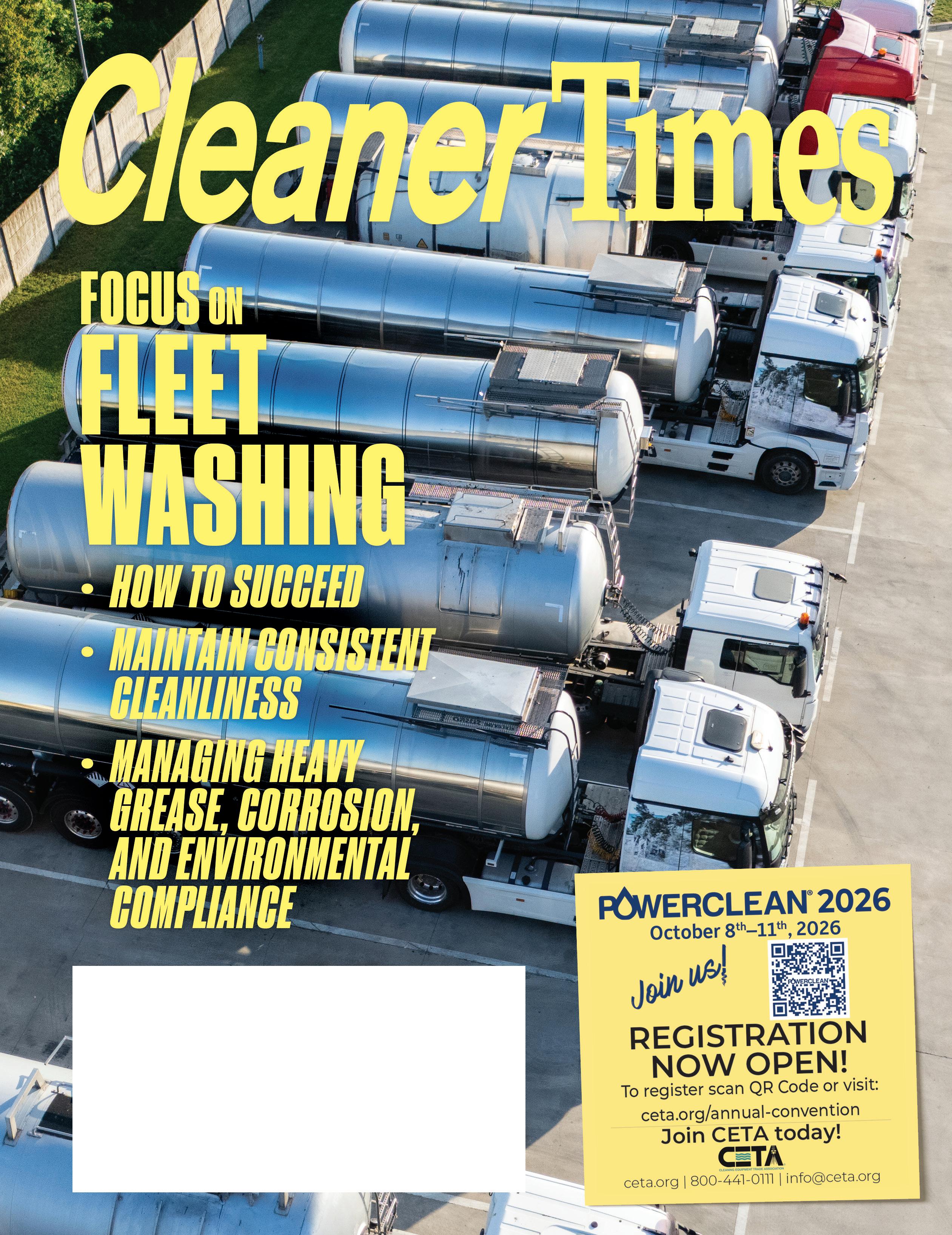
On page 6 is an informative article, “How to Succeed in Fleet Washing.” Automation and efficient practices are encouraged, and Diane Calabrese writes, “Success in fleet washing derives from a commitment to ongoing review of the components of the business…” as well as tough cleaning in demanding environments. This tough cleaning is highlighted with two case studies.
Turn to page 16 to read the first of these case studies by Nik Bibic of Ultimate Power Wash which addresses the challenge in fleet washing of maintaining cleanliness and vehicle presentation on fleet operations in demanding environments. Bibic shares, “An effective fleet washing program today focuses on using the right method at the right time rather than relying on a single approach for all conditions.”
On page 28 Heath King of Quality Pressure Washing and Cleaning Services and Paul Laramee of Exquisite Finishes Power Washing share about the challenges in fleet washing caused when removing heavy grease buildup while staying within environmental guidelines. They share their approach to cleaning 75 tractor-trailers with heavy grease buildup and give details of their approach, results, and key insights.
CETA shares important issues that are affecting the industry on page 12. CETA President Gus Alexander shares, “Education, training, and technical updates are critical for our members, keeping in mind participation is very important.” Plan to attend PowerClean 2026 in Orlando, FL, this October 8–11 to benefit from these opportunities.
Cleaner Times wishes you the best and hopes June is a month of many accomplishments.
Michael Hamline mhamline@cleanertimes.com
800-525-7038
Tammy Hanner accounting@fcapgroup.com Cleaner Times (ISSN #1073-9602) is published monthly by True Source Publishing, LLC 1000 Nix Rd, Little Rock, AR 72211 (800) 525-7038 • (501) 280-0007 Fax: (501) 280-9233 www.cleanertimes.com © Copyright 2026
The publisher and editor(s) of this magazine do not accept responsibility for the content of any advertisement, including statements made by advertisers herein, or the opinions expressed by authors of by-lined articles. The publisher and editor(s) also reserve the right to reject any ad or article for objectionable content in verbiage or images. The intent of this publication is to provide general information only and is not intended to provide specific advice or recom-mendations. Appropriate legal, financial, or engineering advice or other expert assistance should always be sought from professionals. HOW TO REACH US
Times 1000 Nix Road Little Rock, AR 72211 www.cleanertimes.com
SUBSCRIPTION RATES
One Year, $24 U.S. and $75 Canada. Back issues are available for $8 each. Reproductions of any part of this publication without the written consent of the publisher is prohibited.


Cars, 18-wheelers, or both?
Mobile or stationary service? Choices must be made when fleet washers launch and then refine their businesses. Fleet washers succeed because they are never static. Like the vehicles they clean, they keep moving.
Linda Chambers is a brand and sales manager at GCE/Soap Warehouse in Norcross, GA, a company that supplies fleet washers with chemicals. She gives us an overview and says automation is all-important to companies that operate from a fixed location.
“If they are still hand-washing in bays with teams of washers, they may benefit greatly by spending the money to automate,” says Chambers. “With tunnel systems using arches to deliver chemicals, there can be savings in labor costs, in chemicals due to proper metering and delivery to prevent waste, and in the time taken for each vehicle to be cleaned— allowing for a higher volume of vehicles to be cleaned in a day.”
What boosts a mobile company? “Becoming more efficient in every aspect of their business but especially when cleaning,” says Chambers. “Have enough staff so no repetitive steps need to be taken per vehicle.”
Then, support efficient practices. “Have chemicals already mixed or set correctly so application of chemicals and follow-up rinsing can be performed in a one-pass process to maximize the number of vehicles they can clean in a day or at one time,” says Chambers.
“The number of times a crew has to stop to refill, mix chemicals, and move from truck to truck is what cuts into the per-truck profits,” explains Chambers. Even in the most streamlined operation, there are ways to become more efficient.
Thus, success in fleet washing derives from a commitment to ongoing review of the components of the business—the logistics, chemicals, uniformity of approach,

etc. Of course, fleet washing almost always entails tackling some tough cleaning.
As for that tough cleaning, there’s nothing like a case study from those who have met a specific challenge to motivate others irrespective of how difficult a job is. And in this issue, there are two case studies that do just that.
Industry member Heath King in collaboration with Paul M. Laramee presents a case study in handling heavy grease (and related residues) while being fully engaged with meeting environmental guidelines. And Nikola Bibic presents a case study in washing in a demanding environment, such as southern Ontario where a lot of road salt mixes with mud and construction debris (and more) in winter.
Be sure to read each case study. Given the mention of environmental regulations here, always remember that compliance is an integral part of operating a successful fleet washing business.
Douglas R. Latimer, the president of Latimat 2.0 in Innisfil, ON, Canada, is passionate about finding the most efficient and reliable way to capture wastewater. His company was the first to introduce to markets worldwide a patented, portable wash pad and accessories, and that was more than 35 years ago.
Latimer continues to bring innovations to the fore that make wastewater collection easier and more reliable (i.e., nothing escapes). For example, a wash pad heated for winter prevents effluent from freezing on the pad. Yet that’s just one of many design features that keep emerging from his company.
Great efficiencies will be attained by fleet washers when they can both effectively collect and recycle all wastewater, says Latimer. One of the big problems he has seen in the effective cleaning (and reuse) of wastewater involves the lack of precision by end-users who deploy the wrong detergents, thereby contributing to emulsification of hydrocarbons.
Latimer is confident that seamless melding of wastewater capture and recycling for reuse will eventually become the norm. He himself plans to continue with a focus on perfecting the collection component. Consider the new grated wash pad for cars.
“Vehicles are above the floor, allowing effluent to run to a sump pump or the included drain valve,” explains Latimer. He continues, “The configuration keeps the wheels out of the dirty wastewater. Ramps are included.”
Wastewater collection and recycling become more sophisticated each day. So does the use of chemicals, especially use in ways that reduce chemicals present in water (and the environment).
Companies such as BioClean System & Supply in Blaine, MN, aim to make wastewater easier to treat by reducing the chemicals used in cleaning. We name it because the heads of two fleet washing companies who use its products, Nate Farrier and Eric Trice, rely on it for supplies, and each man tells us something about what goes into success.
“I think the most important thing for us has been approaching everything from the perspective of duplication,” says Nate Farrier, owner of Northern Lightning Wash LLC in Travere City, MI. “For example, choosing chemistry that will have the same results and training in a way that even new hires can duplicate quickly.”
Keeping things as simple as possible works well. “On many occasions if a process is too complicated, it can’t be repeated, so we try to simplify everything,” explains Farrier. “Even choosing fleet washing as our niche
in the industry resulted from it being the most reproducible service we could offer.”
Eric Trice, CEO of Absolute Fleet Washing in Cordova, MD, also points to constancy as a significant criterion in success. “If I had to pick one thing, I’d say uniformity of approach has been the biggest driver of our success,” he explains.
“In our business, customers want to know they’re going to get the same level of service every time,” says Trice. “They want a company that shows up when it says it will and handles problems the right way. That consistency builds trust.”
Trice says chemicals, equipment, and logistics all matter, along with good people, and are all needed to make a fleet washing business work. “But what’s really helped us grow is having a standard and sticking to it.”
There’s a mindset that has helped his company stand out and turn customers into long-term partners, says
Trice. “We do what we say we’re going to do, no matter how hard it is.”
Not only vital but potentially filled with genuine opportunities…that’s fleet washing. But it’s not glamorous.
“The fleet washing industry is certainly not as glorified or commercialized as residential soft washing,” says Chad Reiffer, distribution program manager at Hydro-Chem Systems in Caledonia, MI. “However, the number of potential customers and residual income is unmatched in the pressure cleaning industry.”
For those considering an entry into fleet washing, Reiffer suggests that they “be prepared” for some tough realities. “There are plenty of nights, weekends, and time spent working in harsh elements.”
In addition to the elements, there are the less-than-pleasant contaminants. “Certain types of fleets involved with waste, garbage, farming, or food

transportation can be great accounts, but that can be challenging to wash, be hard to clean, and have some unpleasant sights and smells,” says Reiffer.
Always appraise regional needs before leaping in because competing with larger fleet washing corporations can be difficult. “Know your area and the types of customers and revenue targets that match your business model,” says Reiffer.
Success inevitably involves meeting customer expectations. So it is with fleet washing.
“You wouldn’t want to sell a perfect ‘white-glove’ type of wash to a customer that is only expecting a ’55-mph clean,’” explains Reiffer. Costs, outputs, and desired revenue targets must all align.
To be sure, fleet washers succeed by adhering to best practices. “Maintain proper insurance for your wash vehicles as well as additional coverage if you are moving vehicles at customer facilities,” says Reiffer.
In addition to meeting insurance needs, comply with all relevant regulations, says Reiffer. Regulations include those from the EPA, such as control of wastewater, and from OSHA, such as proper use of PPE [personal protective equipment].
And, of course, chemical safety, which falls under the purview of more than one regulator, must be given the highest priority. That means following transportation guidelines for hazardous materials, including availability of safety data sheets (SDS).
Successful fleet washing companies do not find a workable configuration and stay with it. They modify as needed and as opportunities arise.
In addition to careful review of logistics (travel time and distance, etc.) operations management (dependable inventory, preventive maintenance, etc.), and uniformity of approach (standardization of procedures to the extent possible), fleet washers should evaluate their use of
chemicals, says Reiffer. Chemicals must match the demands of customers, the type of wash, and the process used for the wash.
“There are a number of different types of soaps, raw material blends, and specialty cleaners that ensure optimal performance and efficiency while also accounting for the safety of your employees and equipment,” says Reiffer. “Blend detergents with soft water to ensure the highest quality, consistency, and shelf life.”
Also consider scaling detergents as business grows, says Reiffer. “Purchase in bulk or seek out mixing kits that can increase your batch yield, lower your overall cost, or consolidate the need for multiple orders, shipments, or repeat blending and filling.”
Changes will happen to your customers, work flow and volume, regulations, job costs, available products, your company, and other factors. Adjust to these promptly to keep fleet washing a profitable endeavor. CT

by Diane M. Calabrese

The A-to-Z list of industry issues is easy to make. It probably starts with AI and likely ends with zero emissions—no matter who writes it.
A lot more difficult than making the list of issues is dealing with each one. Regulations, on-and-off tariffs, state-by-state differences in rules, and all the other issues may vex business owners.
But complicated issues do not put a stop to business for members of CETA [Cleaning Equipment Trade Association]. Members find both assistance and camaraderie in dealing with the myriad matters that affect their businesses.
Although California may have put the full force of state government behind net zero, states across the nation have joined the effort. Just determining which regulations apply in which jurisdiction can be difficult.
In spring 2026, many members of CETA began to ask about possible changes to requirements for transporting hazardous materials. The queries prompted the CETA Technical Committee to form a Regulatory Affairs Subcommittee, which is charged with monitoring changes in federal requirements from the U.S. Department of Transportation (DOT) and other federal agencies that have authority over activities in our industry.
For instance, the technical committee has alerted CETA members to the impending reporting EPA rule (beginning July 1, 2027) for release of sodium perfluorohexane sulfonate and related compounds (generally called PFAS). In short, new issues continue to emerge.
[N.B. At the CETA.org website, the technical committee posts updates on issues such as PFAS. Raj Trivedi with Comet Pump in Paynesville, MN, currently serves as the chair of the committee.]
Gus Alexander, the CEO of the FNA Group in Pleasant Prairie, WI, serves as president of CETA in 2026. He has some thoughts about the top challenges for most CETA members—acknowledging the variation by location and focus—as we approach the halfway mark of the year.
“From my perspective the top issues are navigating regulatory changes and shifting market technology demand,” says Alexander. He adds that the two issues are tightly linked.

Members must be certain that they and their customers comply with regulations. Any new technology supplied to buyers must be compliant with all rules (e.g., Prop 65 labeling).
As regulatory complexity increases, CETA members benefit from the information their association gathers and disseminates. “New rules like California Proposition 65 labeling changes and small off-road engine (SORE) regulations directly affect equipment, labeling, and operations,” explains Alexander.
“Our members must adjust products, documentation, and practices to remain compliant, often across multiple jurisdictions,” says Alexander, “in addition to keeping up with rapid industry change based on technology, efficiency, and sustainability.”
Environmental considerations loom over the many industry issues. “Members face pressure to adopt new equipment and innovations highlighting more efficient and environmentally responsible practices,” says Alexander.
There is robust help available with the demands that association members strive to meet each day, available at the CETA website and by phone, email, and text. Moreover, the CETA leadership team highlights innovation, sustainability, and performance improvements as key priorities for 2026.
What’s the rationale behind the three priorities? Alexander explains the leadership team is focused on helping members maintain profitability amid so much change.
“Distributors and contractors must adapt while still growing revenue and margins, which is difficult in a changing regulatory and competitive landscape,” explains Alexander. “Put simply, the top shared issue is adapting to regulatory and industry change without hurting business performance.”
With the focus on melding compliance and business performance as easily as possible, the association always keeps in sight recurring industry issues. Meeting new challenges is made easier by the strong foundation CETA has.
“Education, training, and technical updates are critical for our members, keeping in mind participation is very important,” says Alexander. “Events like PowerClean® provide seminars on regulations such as CARB/SORE updates as well as training on new techniques and technologies.”
[Reminder: PowerClean 2026 takes place in Orlando, FL, October 8–11, at the Rosen Shingle Creek.]
Keeping pace with the accelerating changes in technology and techniques informed by technological breakthroughs requires much from our industry members, who are already fully engaged in running their companies. “CETA is expanding education programs and learning resources to keep members current,” says Alexander.
Ongoing education enables members to understand and implement changes faster, explains Alexander. And leadership views industry benchmarking and business guidance as essential components of the assistance the association provides to members.
Benchmarking data yield financial insights crucial to members eager to compare performance and improve profitability strategies. Such data analyses directly address pressures on profitability.
Networking and peer collaboration have long joined to form the cornerstone of what CETA accomplishes, says Alexander. They are therefore deeply embedded in the foundation of the association.
“Conferences and trade shows connect our member manufacturers, distributors, and contractors,” says Alexander. “Members share how they’re handling day-today challenges and regulatory changes.”
The willingness of CETA members to share experiences— positive and negative—serves to move everyone toward solutions. “It reduces trial and error and spreads best practices quickly,” says Alexander.
And Alexander explains the new annual Innovation Award, which was established in 2025 and encourages the development of more efficient equipment and better cleaning technologies. “CETA leadership is prioritizing innovation and sustainability improvements that help our members adapt” to whatever challenges arise.
For example, CETA works on industry benchmarks and standards to improve safety, quality, and reliability. “This gives members clearer direction in a complex regulatory environment,” says Alexander.
“The bottom line is that CETA acts as a central hub for education and regulatory updates, business benchmarking, networking and shared solutions, and innovation and standards development,” says Alexander. “In
effect, CETA helps members keep up, stay compliant, and remain competitive at the same time.”
As for meeting and formulating strategies for dealing with industry issues as they arise, CETA has a strong record of success. The responses the association provides to requests for comments that come from rule makers at all levels of government carry the weight of an entire professional group representing an essential industry.
By providing technical feedback on feasibility, safety, and real-world usage to regulators as they make rules, CETA helps to ensure the final rules are workable, explains Alexander. Workable meaning the rules can be met without disruption to actual cleaning operations.
Alexander cites just one significant example of the efforts of the association in the policy realm. In 2025–2026, CETA filed an amicus brief supporting a legal challenge to rules concerning zero-emission equipment.
The brief highlighted technical limitations of current zero-emission equipment, especially the economic and supply chain impacts on the industry. The intervention by CETA (along with other professional groups) helped to secure more realistic timelines for new standards.
“We are focused on giving our industry more time to develop workable solutions instead of facing immediate disruption” when new issues arise, explains Alexander. “CETA is the voice to allow our members to adapt strategically instead of reacting too late.”
It’s all about a unified voice. Make that a strong, unified voice—a unified voice energized by the assumption that ultimately there is a solution to every problem. The solution simply must be found. It’s out there, as all solutions are.
With more solution seekers—individuals joining forces to compare, collaborate, and commit to doing what it takes— even the A and Z on the list of issues can be handled. CT
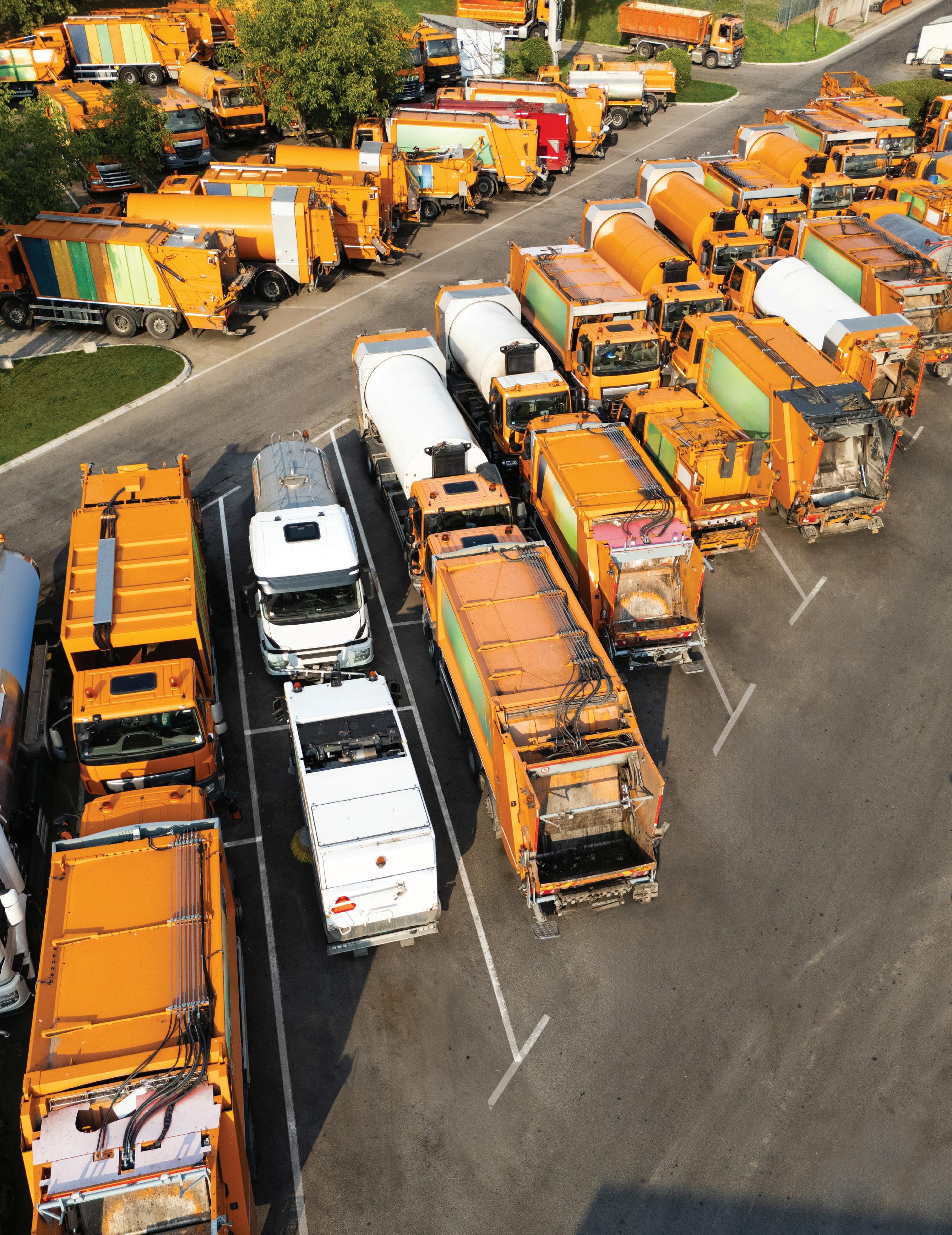
One of the most common challenges in fleet washing is maintaining consistent cleanliness and vehicle presentation across large, high-use fleets operating in demanding environments.
1. GEOGRAPHICAL RANGE
This challenge is particularly relevant in regions such as Southern Ontario, where fleets are exposed to a wide range of conditions including winter road salt, mud, construction debris, and industrial fallout.
2. PREVALENCE / COMMONALITY
Fleet operators across industries, logistics, waste management, and transportation frequently struggle to maintain a balance between cleanliness, cost, and operational uptime. As fleets grow in size, maintaining consistency becomes increasingly difficult without a structured and efficient approach.
The issue is typically driven by the following:
• Environmental exposure—Rapid accumulation of salt, grime, grease, and road film, especially in winter conditions
• Irregular wash schedules—Reactive cleaning instead of preventive maintenance
• Overcomplicating or underutilizing cleaning methods—Not matching the cleaning approach to the level of contamination
• Operational constraints Limited time windows to service active fleets In many cases, either insufficient cleaning methods are used for heavy buildup, or overly aggressive methods are applied unnecessarily, leading to inefficiencies.
Without a proper fleet washing strategy, the following occurs:
• Corrosion accelerates due to salt and contaminant buildup
• Vehicle appearance declines, affecting company image
• Maintenance and repair costs increase
• Asset lifespan is reduced
• Safety concerns may arise due to obscured lights and markings
HISTORICAL APPROACHES
Fleet washing has traditionally relied on single-step soap applications, manual brushing, and inconsistent or infrequent wash intervals. While effective in lighter conditions, these methods often fall short when contamination becomes more severe or when consistency is lacking.
An effective fleet washing program today focuses on using the right method at the right time rather than relying on a single approach for all conditions. For the majority of fleet washing applications, a single-step wash provides sufficient cleaning results. In situations involving heavy road film or entrenched contaminants, a two-step process may be required. This method uses a low-pH acid presoak followed by a high-pH alkaline application to effectively loosen and remove stubborn buildup.
WHY THIS APPROACH WORKS
• Efficiency—Single-step washing handles routine cleaning quickly and cost-effectively.

• Flexibility—Two-step processes are reserved for heavier buildup, avoiding unnecessary chemical use.
• Improved results—Matching the method to the contamination ensures better overall cleaning outcomes.
• Scalability It works effectively across small and large fleets.
Initial Situation
Our company was contracted to service a fleet of approximately 60
• Limited drainage infrastructure
• Tight operational windows
• Previous cleaning methods not adjusted based on buildup levels
Step 1—Structured Wash Schedule
We introduced a weekly wash program to stay ahead of buildup rather than reacting to it. This consistency significantly reduced the accumulation of heavy contaminants over time.
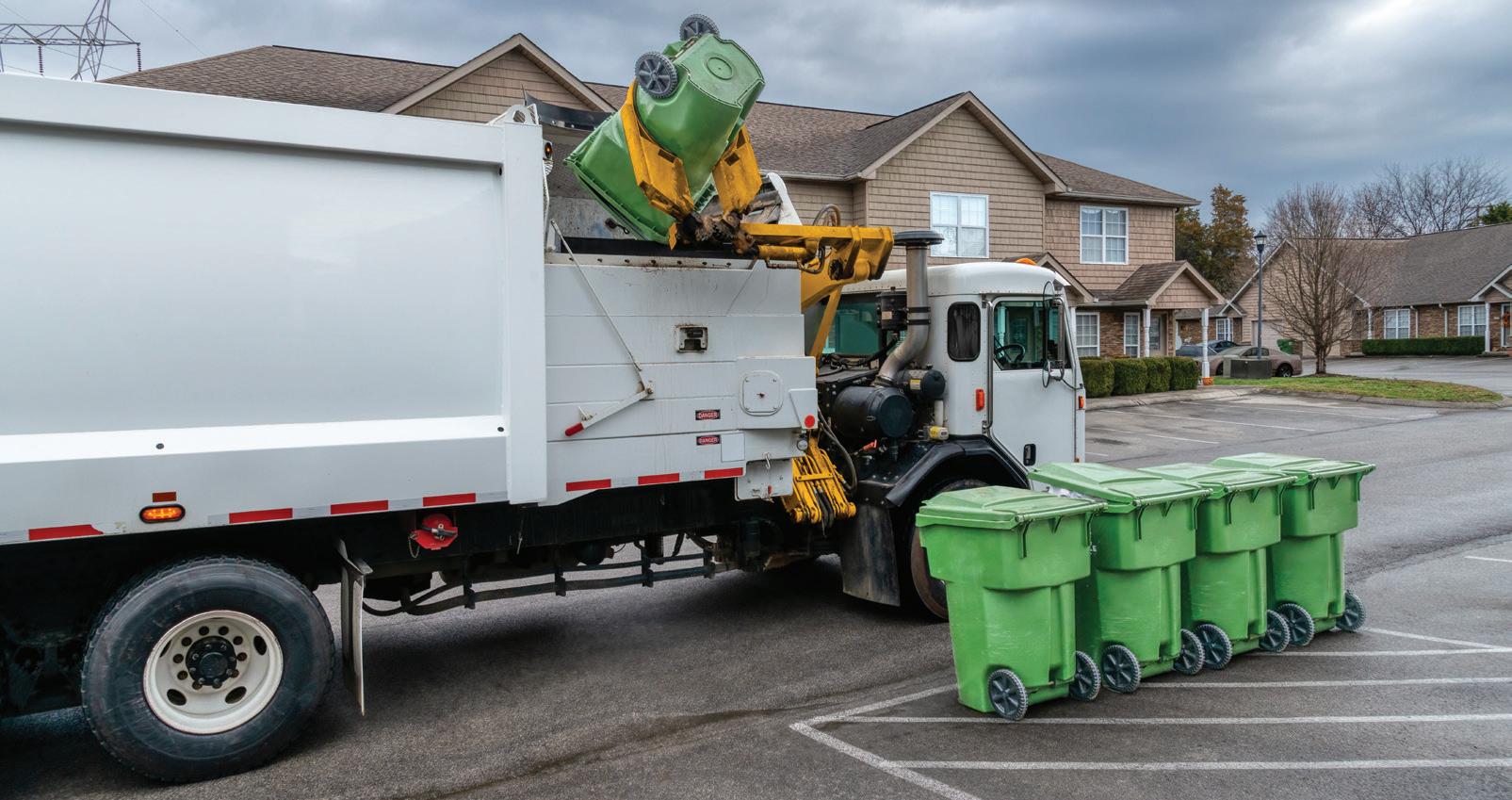
garbage trucks operating out of a temporary gravel yard. The fleet was consistently exposed to mud, salt, and waste-related contaminants.
At the time of engagement, the following was in evidence:
• Washes were being performed inconsistently.
• Heavy buildup was visible on lower panels and rear-loading areas.
• Aluminum components showed early signs of oxidation.
• The gravel yard contributed to continuous recontamination.
The client’s goals were to improve appearance, maintain equipment condition, and establish a consistent wash routine.
• Ongoing contamination from site conditions
Instead of applying a single method across all washes, we implemented a tiered system.
• Routine washes—Single-step cleaning used for the majority of weekly maintenance
• Targeted deep cleaning—Twostep process applied only when heavy road film or buildup was present This ensured efficiency without sacrificing cleaning quality.
• Crews were trained to identify when escalation to a two-step process was necessary.
• Washes were scheduled during low-impact operational periods.
• Chemical usage was optimized to reduce waste and cost.
Maintaining a reliable schedule allowed the fleet to remain in a manageable condition, reducing the need for aggressive cleaning over time.
• Immediate improvement in fleet appearance
• Reduction in heavy buildup after the first few service cycles
• Lower long-term cleaning time due to maintained condition
• Improved efficiency through proper method selection
• Increased client satisfaction with both results and reliability
The client noted that the consistent service schedule, combined with the adaptable cleaning approach, resulted in a better overall fleet condition and reduced operational disruption.
Fleet washing is most effective when approached with consistency and adaptability.
Rather than relying on a single cleaning method, success comes from the following:
• Maintaining a regular wash schedule
• Using single-step washing for routine maintenance
• Applying two-step cleaning strategically for heavier buildup This balanced approach reduces costs, improves efficiency, and extends the lifespan of fleet assets while maintaining a professional appearance.
Nik Bibic is the owner of Ultimate Power Wash Inc., a mobile power washing and steam-cleaning company based in Hamilton, Ontario. Specializing in fleet washing, industrial cleaning, and de-icing services, his company services transportation, logistics, and industrial clients across Southern Ontario. With a focus on efficient processes and practical cleaning solutions, Nik helps clients maintain clean, professional fleets while maximizing equipment longevity CT



Dear CETA Members and Manufacturing Partners,
I am writing to address an important development affecting our industry and to reaffirm the critical role that each of you plays in maintaining the highest standards of safety and compliance.
As you are aware, recent recalls of certain electric pressure washers sold through online marketplaces have brought increased scrutiny to product safety particularly regarding compliance with established standards such as CETA CPC 100, UL 1776, and the National Electrical Code (NEC). These recalls were driven in large part by serious safety deficiencies, most notably the absence of required ground fault circuit interrupter (GFCI) protection, which is essential to prevent electrical shock hazards in wet-use environments.
This situation underscores the importance of CETA CPC 100 certification as a benchmark for safety, performance, and regulatory compliance within our industry. CETA CPC 100 is not simply a guideline; it is a comprehensive framework developed to ensure that equipment meets rigorous operational and electrical safety requirements. Adherence to this certification helps protect end users, strengthens confidence in our products, and preserves the integrity of the professional cleaning equipment market.
CETA has been actively engaged with the U.S. Consumer Product Safety Commission (CPSC) throughout this process. By providing technical expertise, sharing industry data, and reinforcing the importance of recognized safety standards, CETA played a constructive role in helping to identify non-compliant products and support the actions that led to these recalls. Our collaboration with the CPSC reflects our ongoing commitment to consumer safety and to fair, standards-based competition in the marketplace.
We want to be clear: products that do not meet CETA CPC 100, UL 1776, and NEC requirements not only pose safety risks but also create significant liability exposure and reputational harm for manufacturers, distributors, and the industry as a whole. Accordingly, we strongly urge all members and manufacturing partners to ensure all applicable products are fully compliant with CETA CPC 100 and related standards. Review current product lines and supply chains for any potential compliance gaps. Work only with reputable suppliers and certification bodies that adhere to recognized testing and verification protocols. Support ongoing education and transparency regarding safety and compliance requirements. CETA remains committed to supporting our members through guidance, certification resources, and advocacy efforts. We will continue to work closely with regulatory authorities

and industry stakeholders to uphold the standards that define our profession.
Your diligence and leadership are essential to ensuring the safety of our customers and the continued success of our industry.
If you have questions or need assistance regarding certification or compliance, please do not hesitate to contact us.
Sincerely,
Gus Alexander CETA President
Recalled pressure washers linked below as follows:
https://www.cpsc.gov/ Warnings/2026/CPSCWarns-Consumers-toStop-Using-SEN-QIIPressure-WashersImmediately-Due-toSerious-Shock-andElectrocution-HazardsRisk-of-Serious-Injuryor-Death
https://www.cpsc.gov/ Warnings/2026/CPSCWarns-Consumers-toStop-Using-VlaseoPressure-WashersImmediately-Due-toSerious-Shock-andElectrocution-HazardsRisk-of-Serious-Injuryor-Death CT

by Diane M. Calabrese

The good, the bad, or the ugly may apply to a preventive maintenance plan.
A formal plan is subject to the same perils as any agreement. (There should be a document if it’s a formal plan.)
But let’s pause regarding liabilities of plans and emphasize the positive. Begin with all that’s good about preventive maintenance plans.
In our industry a plan may cover equipment. End users of equipment may also offer plans to the customers to whom they provide services (e.g., exterior cleaning).
Consequently, some members of our industry, such as contractors, may be evaluating the utility of two types of maintenance plans. There is the one they may obtain for their own equipment. And then there’s the one they may offer to their residential and commercial customers in conjunction with recurring maintenance.
Recurring maintenance that’s scheduled in advance and sealed with a contract can be a good way for contractors to keep their workflow smooth. And the preventive maintenance contract they hold on equipment can ensure they minimize their downtime.
Still, there can be problems with preventive maintenance plans, so much so that one vendor told us off the record that he simply gave up offering them.
But back to all that’s good about such plans, whether on equipment or property. To evaluate the good, think as a pragmatist, not a Pollyanna.
For a perspective on a balanced look at the preventive maintenance plan, we put a few questions to Bruce Tassone, president of HydraMotion Cleaning Systems in Pottstown, PA.
CT: Does your company offer any type of preventive maintenance plan to customers?
Tassone: The SideWinder is built to take a significant amount of abuse. The cover is virtually indestructible,
and the swivel can nearly always be repaired instead of replaced. That being said, we do recommend visual inspections of the swivel weep holes and spray bar.
Inspecting the swivel for leaks will let a contractor know he is likely losing pressure at the nozzles, and this could impact cleaning effectiveness. This indicates it is time to replace his seals. Similarly, we recommend inspecting the nozzles monthly and at the start of every cleaning season. Our goal with our preventive maintenance recommendations is for the contractor to periodically check wear items and to ensure he does not go down unexpectedly. If these parts are in an end-user’s tool kit, they can be repaired in minutes, and the job can be finished on time and within budget.
CT: What is the benefit of a preventive maintenance plan for equipment?
Tassone: The benefit of preventive maintenance or inspection is two-fold: first, to avoid a premature failure and downtime; and second, to make sure there is not secondary damage to good components.
An unexpected equipment failure in the middle of any job is costly. There is the lost production time along with the negative impact of not completing a client’s project on time.
The second benefit is to avoid collateral damage to parts that are in perfect condition. As an example, worn or clogged nozzles in a surface cleaner create an imbalance in the spray bar. This imbalance generates excessive force and associated wear on a highpressure swivel. So, in many cases a contractor can save the cost of an expensive swivel repair by checking the nozzles in their spray bars periodically for proper spray pattern and alignment.
CT: What is the benefit of a preventive maintenance plan for structures or components of structures (e.g., exteriors)?
Tassone: This is not in our core skill set, but the same factors are associated with structures. Avoidance of a problem is less time consuming and less costly because it can be performed on
a scheduled basis when time allows. Unexpected repairs are more costly and in many cases must be expedited. Again, like equipment, secondary damage to components is always a key element to preventive maintenance.
CT: Is there a general kind of evaluation that the prospective purchaser of a preventive maintenance plan can use to weigh cost and benefit?
Tassone: It is hard to share a general rule for preventive maintenance cost versus benefit for all equipment and structures. However, customers can weigh the cost of the preventive program versus the potential cost of downtime.
Additionally, through a comprehensive program, a contractor can extend the life of all their equipment and save on their yearly cost of use. Take a pressure washer as a specific example. If it has a four-year life, and we can extend that to five years, we have lowered our cost of use from 25 percent to 20 percent. Over the life of a business, those savings
can be tremendous when a company has a fleet of machines in operation.
Taking a practical approach to maintenance plans by providing customers with recommendations instead of a specific agreement can be a good thing. Such an approach encourages the owner of equipment or property to be engaged.
True, if an equipment seller or a service provider enters into a formal agreement regarding when and how maintenance will be done, and the buyer who agrees to the plan follows it scrupulously, that can be a beautiful thing.
But the adage to never let the perfect be the enemy of the good persists for a reason. Perfection is rare, and one or more buyers holding a formal maintenance plan inevitably will fail to comply.
Noncompliance with a formal agreement could mean not bringing a machine in for routine service or
waiting too long to clean an exterior. Neither sort of transgression is a tragedy, but it is an example of something that effectively voids a formal agreement.
The problem is to prove it. And does a business owner who offers formal maintenance plans really want to spend time haggling about something that has gone wrong because the formal maintenance plan was not followed?
A recommendation that’s not followed can be lamentable, but an agreed-to requirement that’s not met can be actionable.
Going back to our unnamed source who is no longer enthusiastic about formal maintenance plans, we can ask, what diminished the enthusiasm? Quite simply, it dimmed because owners of plans were not meeting their obligations—one of which was to abstain from do-it-yourself modification to equipment or property covered by the plan.
A recommended maintenance plan is good. It keeps owners on track, and it frees the seller from potential hassles.
Engineers and mathematicians both involve themselves in theoretical analyses regarding service contracts. The theoreticians try to develop models that allow the maintenance contract provider to promise the most (thus winning customers) while taking the least risk.
The modelers consider variables like reliability of equipment and usage of equipment. (The analog of this on structures would be things like exposure to harsh elements.)
An important variable to modelers is the age of the equipment or structure that will be covered by the maintenance plan. A plan for something new ought to be different than that for the not-sonew or older.
If offering a formal service plan, the provider of the plan must determine how things will be made right if there’s a problem. Will the owner of a pressure washer that fails and cannot be repaired get a new pressure washer if the machine has been in service for only
a short time? What amount of time?
Sellers based in our industry can and do develop maintenance plans based on qualitative information. But theoreticians note the optimal plans are developed from quantitative information on usage, environment, etc.
Industrial users of high-pressure and ultra-high-pressure equipment do develop maintenance plans by using quantitative data, including performance over time. Moreover, many industrial users tap the expertise of third parties to develop maintenance plans and follow through on executing the plans for them.
In fact, maintenance subcontractors will want a formal maintenance plan agreement to be in place. Thus, in many ways the scale of the maintenance to be done will dictate the formality of the preventive plan.
Large industrial users of equipment often outsource preventive maintenance and restrict corrective maintenance to in-house staff. There are several reasons
for this approach, but security, access, and cost are three of the biggest.
Preventive maintenance plans in large industries differ in another significant way from the plans offered by sellers who operate at a smaller scale. Some industries may offer a bonus to contractors who provide preventive maintenance plans when those plans result in consistent performance of equipment.
When writing a formal maintenance plan, don’t overpromise. The concept of “inevitable decay” (derived from the second law of thermodynamics) tells us that the best constructed and maintained equipment and structures will deteriorate as time passes.
Be candid (practical) when recommending a preventive maintenance plan or offering a formal plan. Keep the expectations of the buyer in check so that the buyer remains satisfied. Nothing lasts forever, and a seller does not want a buyer to get the idea it will . CT

R.W. Beckett Corporation recently announced the acquisition of Wayne Combustion Systems, reinforcing its long term commitment to the combustion industry.
Wayne Combustion Systems is a respected brand with deep application presence and longstanding customer relationships. R.W. Beckett views Wayne as a strong strategic fit within its combustion portfolio and will approach the business with the same principles that have guided Beckett as a family-owned company for generations.
“Wayne is a business we know well and respect deeply,” said Kevin Beckett, president and CEO of R.W. Beckett Corporation. “Its reputation has been earned through engineering excellence, application knowledge, and a strong sense of responsibility to customers. We are committed to protecting what has been built, supporting the customers who rely on it, and investing with discipline and care for the long term.”
“Combustion is foundational infrastructure,” Beckett added. “Customers depend on reliability, consistency, and expertise over long product lifecycles. Those expectations align closely with how we operate and how we think about stewardship of the businesses we integrate into our family of companies.”
R.W. Beckett Corporation is a privately held, thirdgeneration family company with more than 85 years of experience in the combustion industry. Beckett has built an enduring legacy based on its core values of integrity, excellence, and profound respect for the individual, serving OEMs and channel partners worldwide with a focus on safety, performance, and long term value.
Wayne Combustion Systems designs and manufactures oil and gas burners for commercial, food service, and other process applications, serving customers with application-driven solutions and a long history in the combustion industry.

Kleen-Rite Corp., the nation’s top wholesale supplier to professional car wash businesses, recently moved Megan Donnelly into a new chief people officer


(CPO) role at the company. The position prepares Kleen-Rite for future growth, with key focal points being successful hiring and retention, expanded industry training, and support through professional development opportunities. As part of the new role, Donnelly is now a member of Kleen-Rite’s executive leadership team.
Donnelly has held several roles in her nearly 20 years at Kleen-Rite, starting in sales and customer service before progressing to human resources. More recently, she served as the human resources director for six years.
Kleen-Rite Vice President Keith Lutz states, “Megan has played a key role in strengthening our people, culture, and leadership foundation since 2016. What began as a single part-time HR function has developed into a dedicated team supporting our employees through human resources, training, and development. She has also been an integral connector across our sister companies, building consistency, relationships, and trust through the organization.”
Kleen-Rite remains committed to being people-focused, even when steadily scaling up as a company. The newly created CPO role is an important part of that responsibility.
“The chief people officer reflects how essential our people, culture, and values are to our long-term success. This role helps ensure we continue to lead with our values—not just in words, but in how we operate every day. As a third generation in the business, Megan understands who we are, where we’ve been, and that ultimately, it’s our people who make the difference,” said Lutz CT


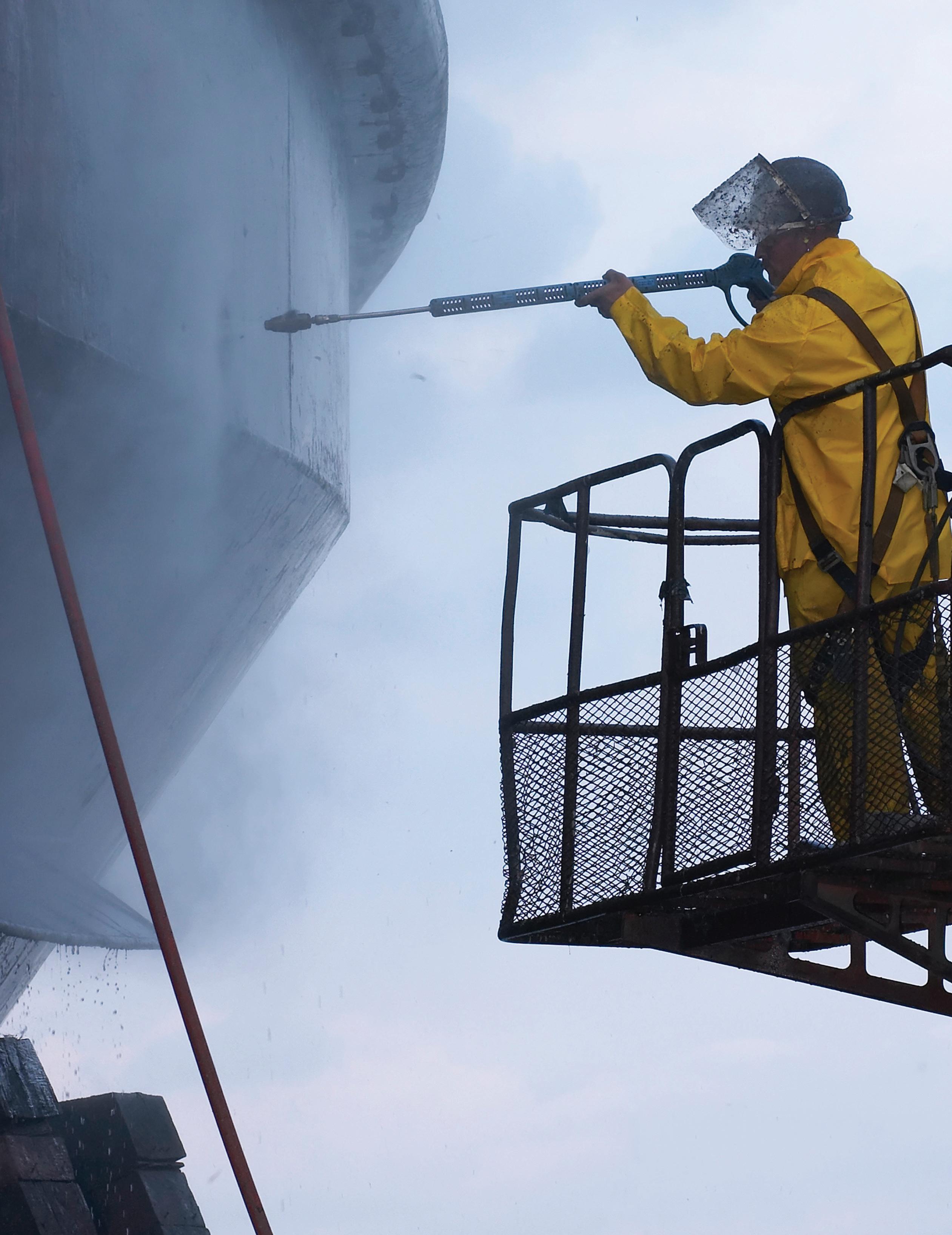
One of the biggest challenges in fleet washing— especially across eastern North Carolina and similar regions— is removing heavy grease buildup while staying within environmental guidelines.
Through my work and in collaboration with Paul Laramee of Exquisite Finishes Power Washing in Rhode Island, we’ve seen this same issue show up across different regions and fleet types.
Whether it’s tractor-trailers, service trucks, or equipment haulers, these units are exposed daily to the following:
• Diesel soot
• Road film
• Hydraulic oils
Over time that buildup reaches a point where a basic wash process won’t get the job done.
At the same time, increasing attention on runoff and wastewater control means contractors have to be more intentional in how they approach these jobs.
In more aggressive climates like the Northeast, fleets face an additional challenge—salt-induced corrosion.
Winter road treatments include such as the following:
• Sodium chloride
• Calcium chloride
• Magnesium chloride
When these are combined with moisture and freeze/thaw cycles, they create one of the most aggressive corrosion environments in the United States.
This leads to the following:
• Rapid rust formation on steel components
• Oxidation on aluminum
• Salt buildup in undercarriages and hydraulic systems
• Increased maintenance costs and reduced equipment lifespan

Salt residues remain active long after application, continuously attracting moisture and accelerating corrosion if not properly neutralized.
From both field experience in North Carolina and long-term operations in the Northeast, the root issues typically come down to the following:
• The types of contaminants fleets are exposed to daily
• Inconsistent or outdated washing methods
Many fleets are maintained using the following:
• Single-step detergents
• Cold water systems
This may improve appearance temporarily, but it doesn’t remove deeper contamination.
Once grease and salt residues bond to the surface, you’re no longer cleaning—you’re just rinsing.
We’ve consistently seen fleets fall into a pattern where the following occur:
• Trucks are washed regularly but never fully cleaned.
• Contaminants continue to build over time.
King and Paul Laramee
• Each wash becomes less effective and more time-consuming.
• Corrosion begins to accelerate beneath the surface.
• Environmental risks increase if runoff isn’t controlled. At that point, the process turns into constant recovery instead of routine maintenance.
OLDER METHODS
Historically, fleet washing relied on the following:
• Single-step detergents
• Cold water by Heath
• Minimal attention to runoff
This approach doesn’t hold up under heavy grease or salt exposure.
Through combined field experience, a more structured system delivers consistent results:
• Two-step chemical application (acid followed by alkaline)
• Hot-water washing
• Controlled water flow and runoff awareness
• Salt neutralization where applicable
The two-step process is the biggest difference-maker. It allows multiple contaminant types to be broken down effectively instead of relying on a single product.
We were brought in on a fleet of approximately 75 tractor-trailers experiencing heavy grease buildup and inconsistent cleaning results.
• Heavy buildup along lower panels and trailers
• Black streaking that wouldn’t come off
• Previous cleaning efforts producing inconsistent results
• Concerns around wash water management
Instead of just washing, we focused on correcting the entire process:
1. Site and Fleet Evaluation
• Identified problem areas
• Evaluated water flow and runoff across the property
2. Two-Step Cleaning Process
• Low pH presoak
• Second step with high pH detergent
• Effective breakdown of grease and road film
3. Hot Water Application
• Increased cleaning efficiency
• Reduced overall wash time
4. Corrosion & Salt Treatment (When Applicable)
• Application of salt neutralizers
• Focus on undercarriages, joints, and hidden areas
• Optional rust inhibitor for highrisk equipment
5. Controlled Washing Technique
• Adjusted methods to manage runoff
• Reduced unnecessary spread of contaminants
6. Ongoing Maintenance Plan
• Established a routine schedule
• Prevented buildup from returning
After initial cleaning and several maintenance cycles, the following were evident:
• Cleaning time per truck decreased
• Grease buildup stopped compounding
• Visible rust formation reduced (where applicable)
• Fleet appearance improved across the board
• Reduced long-term maintenance risks
• Increased customer confidence in fleet reliability What started as a recovery job became a manageable, repeatable maintenance system.
• Biweekly washing can outperform monthly cleaning in highcontamination environments.
• Neutralization is critical—water alone is not sufficient for salt removal.
• Hot water and proper chemistry significantly improve efficiency.
• Preventive maintenance is far more cost-effective than repairs.
• Consistency in process delivers consistency in results.
The biggest feedback from the customer was consistency. Instead of mixed results, they knew exactly what to expect every time their fleet was washed.
Fleet washing has evolved. It’s no longer just about rinsing trucks—it’s about the following:
• Matching the process to the level of contamination
• Addressing both cleanliness and corrosion prevention
• Operating in a way that holds up over time and meets environmental expectations
If your process doesn’t match the problem, you’ll keep chasing the same results.
Heath King is the founder of Quality Pressure Washing and Cleaning Services LLC, established in March 1997. Starting with a $450 Sears Craftsman pressure washer mounted on a 5x10 trailer and pulled by a Chevrolet Lumina, Heath built his business while working through college, balancing residential washing and janitorial services. He is now a fleet washing contractor based in eastern North Carolina and serves on the board of the PWNA. Working alongside professionals like Paul Laramee, he focuses on practical, field-tested cleaning
methods, environmental responsibility, and long-term customer relationships.
Paul M. Laramee is the founder and owner of Exquisite Finishes Power Washing, established in 1988 in Warwick, Rhode Island. A lifelong resident of the area, Paul has decades of hands-on experience in exterior cleaning and property maintenance.
Over the years, he has built Exquisite Finishes into a trusted company serving
both residential and commercial clients, with a strong reputation for quality workmanship, reliability, and attention to detail. His long-standing presence in the industry reflects not only his technical expertise, but also his commitment to maintaining high standards across every project.
Beyond his professional work, Paul is a proud father of three and grandfather of three. He continues to live in Warwick, where he remains actively involved in both his business and family life CT
by PWNA
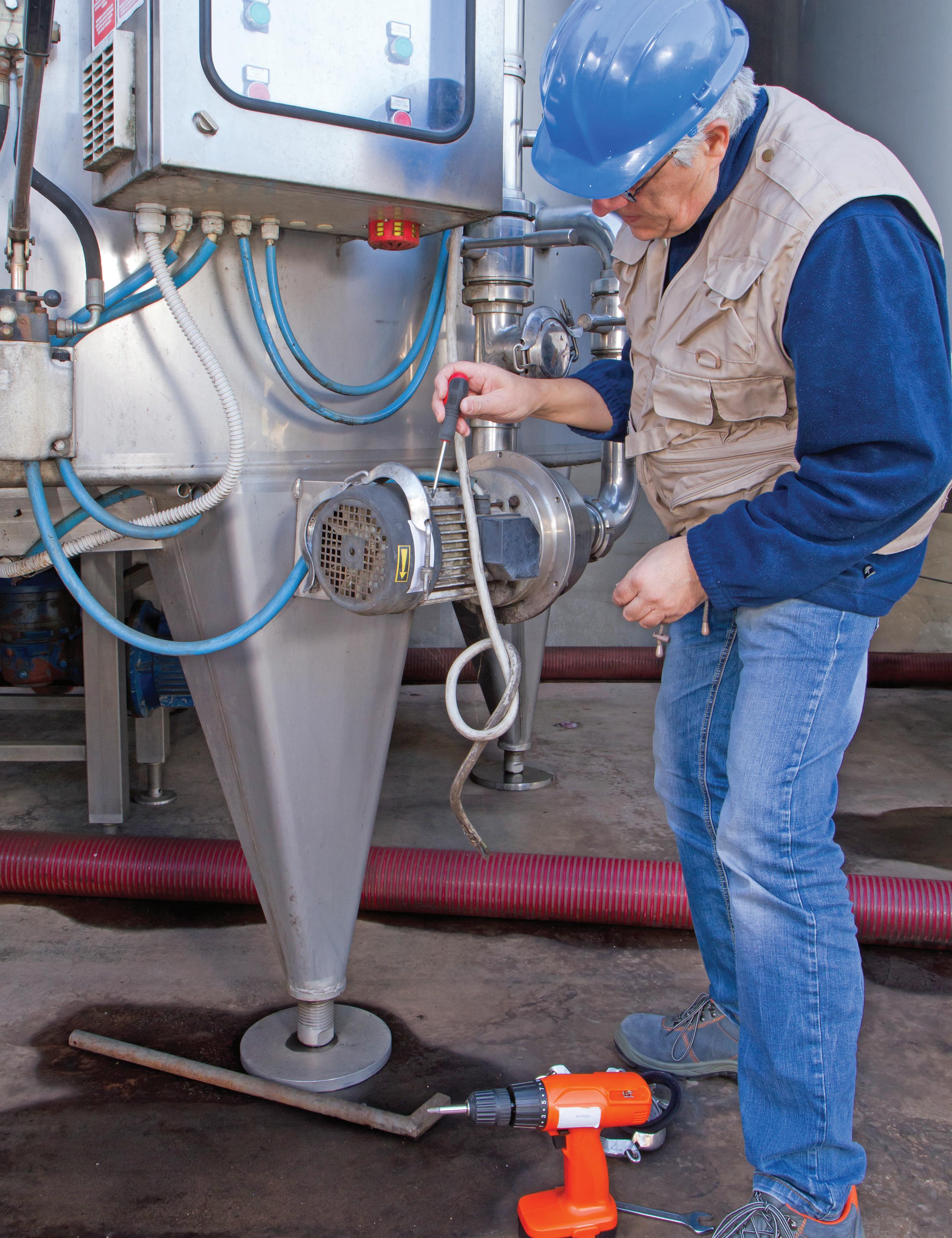
In the pressure washing industry, equipment care is one of those things everybody knows is important, but it can still get overlooked when things get busy. Crews are focused on the next job, customers need a quick turnaround, and there is always something competing for attention. Still, taking care of equipment is not just one more task on the list; it is part of running a dependable business.
Our equipment is more than a business expense. It is what keeps us moving. When a machine goes down, it usually does not happen at a convenient time. It means delays, frustration, lost production, and sometimes a ripple effect that impacts the whole day. Most contractors have dealt with that at one point or another, and it is a good reminder that maintenance is not just about the machine itself. It is about protecting your time, your schedule, and your reputation.
That is why equipment care matters. It is not just about keeping things looking clean. It is about reliability, safety, professionalism, and getting the most out of the investment you have made in your business.
One of the biggest mistakes a company can make is waiting until something breaks before paying attention to it. In reality, the small habits are usually what make the biggest difference. Rinsing equipment down, checking hoses and fittings, looking for leaks, and paying attention to wear can prevent much bigger problems later. A weak hose, a worn connection, or a pump that starts sounding a little different may not seem urgent in the moment, but those are often the issues that turn into downtime if they are ignored.
A simple maintenance routine can go a long way toward preventing breakdowns, reducing downtime, and extending the life of your equipment.
Check hoses, fittings, nozzles, filters, and fluid levels. Look for leaks, wear, or anything unusual in pump or engine performance. Rinse off chemical residue, dirt, and debris.
Inspect belts, batteries, wiring, reels, swivels, spray guns, pump seals, and unloaders. On hot water units, check burner components and fuel filters. Inspect trailers, tires, lights, and wheel bearings. Flush tanks and chemical lines as needed.
Use a checklist, track service by hours of use, train crews to report issues right away, keep common replacement parts on hand, and follow manufacturer service intervals.
The contractors who stay ahead of maintenance are usually the ones who avoid the most downtime.
Clean equipment also tends to last longer and perform better. Dirt, chemical residue, and buildup do not just affect appearance. Over time they can contribute to corrosion, wear down components, and make it harder to notice problems before they become expensive ones. Keeping equipment clean helps crews spot issues earlier and helps machines hold up better in the field. There is also a professionalism factor that should not be underestimated.
When a company shows up with equipment that is well maintained and organized, it sends a message. It shows pride in the work and attention to detail. Customers may not know the technical part of your work, but they can usually tell when a company is prepared and operates with care.
Equipment care also ties directly into safety. Worn hoses, damaged fittings, leaks, and neglected parts can create real risks on the job. What starts

with poor maintenance can quickly become a preventable safety issue for technicians and others on the property. That is one reason regular checks should never be treated as optional. They need to be built into the normal routine of the company.
For owners, another important piece is accountability. As companies grow, more people are using the same tools and systems; and without clear expectations, things can get missed. Training crews to inspect equipment, report problems, and take ownership of the tools they use helps build consistency. Even something as simple as a checklist at the beginning or end of the day can make a big difference.
The good news is that equipment care does not have to be complicated. Most companies do not need a perfect maintenance system. They just need one that is realistic and consistent. Daily checks, weekly reviews, and routine service schedules can go a long way toward improving performance and reducing interruptions. What matters most is building habits that people will actually follow.
This is also an area where PWNA can help. Through training, safety resources, and industry education, PWNA provides practical support that contractors can use in the field and in their day-to-day operations. Strong equipment care habits support safer crews, better jobsite performance, and a more professional industry overall.
In this line of work, equipment takes a beating. That comes with the territory. But how a company cares for that equipment says a lot about how it runs the rest of its business. Companies that stay on top of the basics are not just protecting machines. They are protecting uptime, efficiency, safety, and the trust they have worked hard to build.
In the end, equipment care is really about stewardship. It is about respecting the tools that make the work possible and recognizing that the small things done consistently often make the biggest difference.
For more information about training, safety resources, and industry support, visit pwna.org CT


by Diane M. Calabrese
Reliability is great. Yet it’s also too often the catalyst for benign neglect.
Wands and spray guns are highly reliable, but they should not be taken for granted.
To stimulate some thought—and encourage everyone to give wands and guns the attention they deserve—we put some questions to experts on the ancillaries.
Respondents to the questions are Ryan Lindaman, vice president of sales at Barens Inc. in Seneca, PA (who explains that he crafted his answers in collaboration with his colleague Mike Grindle, vice president of marketing); and Dirk Niesen, Germany director of sales and innovation with Suttner America Company, Dubuque, IA.
Cleaner Times (CT): Which is a part of wand care that is too often neglected?
Lindaman: A standard pressure washing wand is typically the longestlasting component and requires the least amount of care. An exception to this would be dual lances, allowing for low-pressure chemical injections.
By introducing anything other than water to any system, the risk of corrosion increases exponentially, which will then deteriorate the lance, typically beginning at connection points or valves. The best standard care for any lance (standard or dual) is a quick flush with clean water after use.
Niesen: A critical point frequently underestimated in the field is the progression of micro-corrosion. Many operators choose coated carbon steel wands due to lower initial costs. However, as soon as the protective chrome or zinc coating is slightly damaged by outside impact—such as being placed on concrete or hitting an edge—the oxidation process begins beneath the coating.
The maintenance of quick-connect couplings at the end of the lance is often neglected. Since professional systems today almost exclusively use
interchangeable nozzles or foam lances via couplings, the O-rings are permanently exposed to abrasion and chemicals. Regularly greasing these seals not only prevents leaks but also ensures the smooth operation of the quick-change system, saving time and physical effort during a demanding workday.
CT: Which is a part of gun care that is too often neglected?
Lindaman: As with any actionable component, a spray gun should always be flushed after use and depressurized once the job is complete. This is especially true if using chemicals as corrosion can build up in the valve causing the ball to not sit properly on the seat and eventually begin to leak.
Niesen: The trigger gun is the heart of operational safety, yet internal cleaning after chemical application rarely takes place. Residues from cleaning or disinfecting agents can crystallize inside the gun or attack the seals. Simply wiping the exterior is insufficient.
Particularly critical is the proactive draining of the equipment before storage in cold environments. This addresses the physical anomaly of water: if residual amounts remain in the gun, they can freeze and block the shut-off valve. In the worst-case scenario, the gun will fail to close automatically when work begins—a massive safety risk, as the high-pressure stream would exit uncontrollably. Additionally, a visual inspection for housing cracks or sharp edges should be standard to ensure ergonomics and prevent injury.
CT: Is there any scenario in which a power washing contractor can take a one-size-fits -all approach to choice of a wand and in doing so ensure the wand is not mistreated?
Niesen: The answer depends heavily on the definition of a “standard lance.” In the professional sector, stainless steel is the technical benchmark. A stainless-steel lance can be used in almost any situation as it is resistant to most chemicals and is significantly less affected by moisture and residue.
However, if a carbon-steel lance is used, it may be pressure-resistant but
is susceptible to chemical erosion and internal corrosion from residual water. Furthermore, the ergonomics factor is decisive: a galvanized tube rated for 6000 psi is approximately 17 percent heavier than the stainless-steel version. With long wands or dual wands, the center of gravity shifts so far forward that the leverage effect puts unnecessary strain on the operator’s joints. Thus, stainless steel is not just a matter of durability but of occupational safety and ergonomics.
CT: Is there any scenario in which a power washing contractor can make a one-size-fits-all choice of spray gun/ lance and in doing so ensure the gun/ lance is not mistreated?
Lindaman: Just like selecting the right pressure washer, identifying the proper components allows a contractor to perform the job as quickly and safely as possible. In doing so, they will maximize component life while increasing the number of jobs they can perform per week and month.

Contractors should be picky when it comes to selecting components and should never be afraid to explore their component options. Manufacturers and developers are constantly innovating to improve cleaning time and efficiency and in doing so are setting their products apart from the field, ultimately making a contractor stand out to their clients.
Next time you walk into your dealer of choice, ask them to show you something new; odds are, you’ll
see something you didn’t know existed and ultimately make or save you money on a daily basis.
CT: Is there any scenario in which a power washing contractor can take a one-size-fits-all approach to choice of a spray gun and in so doing ensure the gun is not mistreated?
Niesen: A high-quality professional gun is designed to cover a wide range of applications. The key factor here is the material pairing within the
valve. Standard guns with basic seals quickly reach their limits when exposed to hot water above 195°F (90°C) or aggressive media.
Truly “damage-free” and permanently safe operation is only possible if the valve is designed for the specific load. High-performance combinations of ceramics and stainless steel offer the advantage of closing perfectly at both high and low pressure (e.g., when drawing chemicals). A “standard gun” from the semi-professional sector would fail within a very short time under the stresses of professional service applications due to seal or valve failure.
CT: What should have been asked?
Lindaman: More important than maintenance for guns and lances is what you should never do.
The summary of what to never do begins with not using the lance for any purpose other than that for which it’s intended. It’s not for prying, scraping, or stabbing when the proper tool is out of reach. And the summary continues with a quick flushing with clean water after each use of chemical, not running over spray guns and lances with vehicles, and never “ever, ever” (emphasizes Lindaman) leaving water in a system in a cold climate—always winterize.
Niesen: Proactive maintenance management makes more economic sense than repairing equipment after a failure.
And Niesen explains that under standard operating conditions, his company recommends that valve parts (valve seat, balls, O-ring) be replaced after 1000 operating hours or annually. Under extreme operating conditions (hot water, chemicals) the recommendation is to replace valve parts at 500 hours or six months.
CT: And perhaps we should have asked something about the interaction between the operator and the tool—an important consideration to optimal outcomes. Indeed, we get a reminder about that.
Niesen: A final tip on ergonomics: ensure that the insulation or side handle on a wand is securely fastened. Loose grips can cause operator fatigue due to them compensating for the
movement with their muscles, which can cause fatigue.
The information provided by our experts feeds into a picture that’s bigger than wands (lances) and spray guns. That picture is how to accomplish the maximum with minimum downtime.
Stopping to make a repair or stopping because of fatigue caused by a bad fit ultimately translates to a negative on the bottom line.
Every type of gun, wand (lance), and nozzle cannot be stocked and carried by a contractor. Experience helps guide the selection. But as Lindaman notes, take advantage of the expertise of distributors.
Distributors have helped others with similar approaches. They also know the array of options available, options that focus on precision cleaning as well as ergonomics.
A weary operator is a less efficient operator. And in a fatigued state, an operator may reduce safety despite all the safety features built into equipment in 2026.
A tired operator with the best equipment will be less efficient, so ergonomic considerations rank high in the design of new ancillaries.
Proper care of wands and guns begins with a commitment to provide the care, irrespective of how well the ancillaries are working. Don’t push the maintenance schedule beyond the recommended limits.
If valve parts should be replaced at 500 hours because chemicals or hot water are in regular use, as Niesen’s company recommends, take the time to complete that task.
Gaining advantage among competitors depends in large part on the reliability of equipment. So, keep all equipment—including wands and guns—at the peak of performance.
And try to match the ancillaries to the task as precisely as possible. It saves time and energy; and in the current economic climate, the energy savings can give a significant boost to a business CT


by Diane M. Calabrese

Whether in use, in transit, or in storage, a pressure washer must be handled properly. There should be no using a hose or an electric cord as a tug pull—not even just once—and no using the flat surface as a place to set an energy drink.
We all know the basics of care. We also know they are violated in the quest for expediency, in the heat of summer, and for a hundred other reasons.
Thus, the first tenet of pressure washer care is to treat the machine with the respect it requires. That means doing all the little things, such as securing the pressure washer in the pickup bed or van even if the distance from one jobsite to another is short.
No distance is so short that a weather-cratered road or a fast stop cannot damage the pressure washer. Or, in the worst instance, turn the pressure washer into a projectile that damages it and more.
Common sense is the foundation for the care of a pressure washer. And common sense is simply a polite way of advising that nothing stupid be done. Beyond acting with forethought when using, moving, or storing a pressure washer, there are the basics of care that meld with routine maintenance. The day-to-day care and routine maintenance will not keep a pressure washer running forever, but they will allow it to reach the lifespan that was built into it.
Manufacturers provide guides for proper use of their machines. Follow the machine-specific guide. Some guides include common sense reminders, but others assume the owner will not do anything foolish.
For a pressure washer in use, care taken means it has a kink-free hose of an appropriate length for the machine, and the hose connections are tight.
Integrity of a hose depends upon proper storage, frequent checks for wear (with replacement when indicated), and no mistreatment. Running over a hose, even with the wheels of a pressure washer, is not good. Running over a hose with a vehicle is very bad.
Care hinges on situational awareness, which is common sense again. The type of pressure washer in use will dictate to some extent where prudence ought to be exercised.
The ground-fault circuit interrupter (GFCI) on an electric washer should not be ignored. If the GFCI trips, it could signal any number of issues, from a faulty socket to the use of an ill-advised extension cord.
Do not keep resetting the GFCI. Figure out why it’s tripping. The GFCI is there to shut things down if there is a voltage issue or a socket is faulty because there is a potential safety hazard.
While risks attached to electric pressure washers include electrocution, both electric and combustionengine pressure washers can pose fire hazards. Combustion engines also pose the risk of asphyxiation if used in a closed space.
Pressure washer care enhances the safety of operators, passersby, and equipment. (So does routine maintenance.)
Although the first objective on any type of job site is to make certain it’s a safe work area, a pressure washer owner has two other big objectives. One is to ensure that a machine performs as it was designed. The other is to realize the full lifespan for which the machine was designed.
Again, the best source of information for the care of a particular pressure washer is the manufacturer of the machine. There’s a certain reticence among manufacturers and others to provide general advice on care, as in “do these three things” before use, and “do these three things after use.” (More about the caution that prevails today in the next section.)
Yes, many manufacturers and distributors still provide advice that will be valuable beyond a particular machine. Alkota Cleaning Systems (Alkota.com) offers a primer “Critical New Machine Maintenance” at its website.
The Alkota primer deals with the “50-hour rule” applied to a commercial hot water pressure washer. After the first 50 hours of use, the company recommends the replacement of pump oil and engine oil, as well as a new fuel filter.
Mi-T-M Corporation offers detailed instructions for winterizing equipment ( https://www.mitm.com/ support/product-tips/winterizeand-store/winterizing-pressurewasher/). Winterizing to prevent ice from forming in machines is not just a procedure for winter storage but also a procedure that must be followed when a machine is going to be transported at ambient conditions below 32 F.
Distributor partners of power washing contractors will have good suggestions about proper care of the machines they sell. And the distributor’s advice will be tailored to what they know about the way the machine will be used (type of setting, weather conditions, service hours, etc.)
The more a distributor knows about the way a pressure washer will be used, the more precise will be the suggested schedule for flushing out pump (every use, likely), replacing O-rings before they fail, and preventing absolutely preventable problems, such as from gasoline left in a tank for an extended period of time.
There’s a cost attached to the hours it takes to do repairs, and it almost always exceeds the time needed to properly care for a machine. There’s a dimension of cost that has become more apparent in the early months of 2026, and that is the cost of fuel.
A machine that’s not performing at peak efficiency will consume more fuel (or electric energy) because it must be run a bit longer. Over time, the longer runtime and increased consumption of fuel or energy can add significantly to the cost of an operation.
Commenting for an article about preventive maintenance, Bruce Tassone, president of HydraMotion Cleaning Systems in Pottstown, PA, gave us an important numerical appraisal to consider. Therein he says that despite the difficulty of putting forth a general rule about cost of proper maintenance versus benefit, there is a useful shorthand.
Consider a pressure washer. “If it has a four-year life, and we can extend that to five years; we have lowered our cost of use from 25 percent to 20 percent,” says Tassone in the article on preventive maintenance. “Over the life of a business, those savings can be tremendous over time, when a company has a fleet of machines in operation.”
Lowering the cost of operating a business helps compensate for the increases in cost (e.g., energy) foisted on owners. And it begins with proper care of core equipment, which in the case of our industry is often a pressure washer.
Are manufacturers becoming more cautious when providing advice about care of equipment? It began to seem so, which caused us to put the question to Google’s Gemini AI.
True, before we put the question out to an AI assistant, we considered the time interval in which we were working—Easter, Passover, K–12 and college spring breaks, tax deadlines— but still, we asked. It’s worth being aware that information retrieved by Gemini indicates manufacturers are increasingly worried about “failure to warn” litigation.
We have all opened a plastic bag to find it imprinted with the warning that it should never be used as a headcover (or something very close). Ridiculous as the warning is, it speaks to the concern manufacturers have about someone doing something stupid with their product.
And it speaks to the general lack of common sense—a lack that could
explain the reluctance of manufacturers to provide too much information.
In fact, the disclaimers that come with equipment (and plastic bags) are meant to protect the manufacturer from liability. Thus, the purchaser of a pressure washer will more likely receive instructions to not target people or animals with the spray than how to keep a spray gun working optimally.
Distributors and manufacturers in our industry want end users to care for their pressure washer by doing the basics. But there’s often concern about the dividing line because basic care and repair.
One need not talk long to a service center technician to hear accounts of the bad outcomes they have seen among customers who tried a do-ityourself (DIY) fix and then ended up bringing the machine to the service center. On the other hand, there are DIYers with the knowledge and skill and tools to handle repairs.
Without an easy way to determine who will use information, manufacturers are guarded about disseminating it. If used by the unskilled or used incorrectly and something goes wrong, the information provided as a service could make a manufacturer liable for damage or injury. Discouraging certain repairs has been a form of protection for manufacturers. But now certain states (e.g., California) have pushed right-to-repair legislation. Part of right-to-repair in the Golden State dictates that even if a DIYer bungles a repair and voids a warranty by ever starting the repair, the company still must service the equipment.
For now, the California legislation, which dates to July 2024, does not seem to cover commercial pressure washers. And it excludes trade secrets from information that must be provided to third parties. But the proliferation of similar laws across states and additions to the scope of the law are factors for industry members to monitor. CT

by Mark E. Battersby

Employee Stock Ownership Plans, or ESOPs, are a great option for many pressure cleaning businesses and their owner/shareholders. Although controversial and somewhat complicated, as of 2026 the National Center for Employee Ownership (NCEO), using the latest data available, estimated there are 6,609 ESOPs at 6,411 businesses covering 15.1 million participants and holding over $2.1 trillion in assets.
About two-thirds of today’s ESOPs are used to provide a market for the shares of a departing owner of a profitable, closely held buisness. Most of the remaining plans are used as either a supplemental employee benefit plan or as a means to borrow funds in a taxfavored manner. Less than 10 percent of ESOPs are in publicly traded businesses.
While ESOPs are not for everyone, they are a viable strategy for owners who sell their businesses to employees. ESOPs motivate employees, increase productivity, improve worker retention, contribute to a business’s longevity, and provide much more.
Overseen by both the IRS and the U.S. Department of Labor (DOL), ESOPs are usually funded by employer contributions of stock in the incorporated business. As an alternative, employees are allowed to buy shares of stock as part of an investment program.
With an ESOP, employee participants take part ownership of the pressure washing business through a retirement savings arrangement. At the same time, the business and its existing owner(s) benefit from a
number of tax breaks, an extramotivated workforce, and potentially an effective succession plan.
When an ESOP is established, a trust fund is created to which owners contribute shares of stock or money to buy the stock. Or, funds are borrowed to buy the stock initially after which cash is contributed to enable it to repay the borrowed funds.
The shares in the trust are allocated to individual employees’ accounts, often using a formula based on their respective compensation. Naturally, the pressure cleaning business must formally adopt the plan and submit plan documents to the IRS.
Dividends paid on the ESOP stock are passed through to employees or used to repay an ESOP loan. So long as they are reasonable, those dividends may be deductible for an incorporated

business. Dividends reinvested by employees in the ESOP are also usully deductible by the business although employees should review the individual tax implications of those dividends.
Like pass-through businesses, S corporation ESOPs are not subject to federal income taxes. The ESOP trust is an S corporation shareholder, which is not subject to income taxes as an “exempt entity.” After all, S corporations are pass-through entities that pass through their income to shareholders to be included on their personal state and federal tax returns.
Shareholders in an ESOP each report the flow-through income on their personal tax returns. Obviously, this is a powerful tax advantage that provides the cash flow for an ESOP to purchase
the pressure washing business from the selling shareholder(s).
Once the stock puchase has been completely funded, the additional cash flowing from the tax savings provides the business with a cash flow competitive advantage over its non-ESOP counterparts.
The stock’s price when purchased by the ESOP’s trustee, or the tax-deductible amount the incorporated pressure cleanng business can claim for stock contributed to the ESOP, cannot exceed the stock’s value as determined by an independent professional appraiser. What’s more, stock must be valued at least annually with participants informed about the value of the shares allocated to their accounts.
Generally it is the employer who makes most of the contributions to
the ESOP. In some situations employee contributions may be required with voluntary contributions often permitted. Annual filing of the IRS’s Form 5500, Annual Return/Report of Employee Benefit Plan, is required.
An enrolled actuary must sign the Schedule B of that Form 5500.
As employee ownership vehicles, as with most qualified retirement plans, the following are true:
• Contributions to the ESOP are tax deductible.
• Employees pay no tax on the contributions until they receive the stock when they leave the pressure cleaning business or retire.
• They can then either sell it (if it is publicly traded or if there is a market for it) or sell it back to the business.
The benefits offered by ESOPs include, as mentioned, taxes, cash flow, productivity, and revenue benefits.
Consider the following:
• ESOPs allow a business owner to sell his or her pressure washing business in 60–90 days with a built-in buyer, providing diversification and liquidity. And, at the same time, the business owner can maintain control of the business.
• ESOPs increase the after-tax proceeds of the sale for the seller, providing greater overall return than with many private sales
• The cost of the sale is usually offset by tax benefits. ESOPs eliminate many of the business’s tax obligations
• Employers can contribute (and deduct) more than under other retirement plans.

And, don’t forget the benefits of an ESOP for the operation’s employees, including the following:
• ESOPs increase employee wealth and wages.
• ESOP businesses provide more sustainable employment.
• S corporation ESOP businesses, as mentioned, have been shown to be more stable and to lead to greater job satisfaction and higher commitment to the organization than those without ESOPs.
• ESOPs outperform 401(k) plans by almost 20 percent according to one study, making it a preferred retirement option.
Although a tax-advantaged ESOP is easy to create, its cost and the loss of operational control can make it unappealing.
See the following examples:
• A pressure cleaning business creating an ESOP usually faces high start-up costs as well as significant annual costs. Plus, in order to reap the substantial tax savings, pressure washers selling to a tax-advantaged ESOP face rigid tax laws.
• ESOPs must comply with all requirements imposed on other types of defined-contribution plans and cannot be integrated with Social Security. What’s more, an ESOP that owns stock in an S corporation cannot deduct any accrued expenses for any participant, including retirement plan contributions based on accrued compensation.
• Not only do ESOP transactions face the IRS’s complex rules, but also they are subject to the regulatory scrutiny of the DOL.
Thus, if an ESOP holds an S corporation’s stock, that ESOP’s participants indirectly own stock in the S corporation. These participants do not include accrued compensation in their income until the year in which they receive it, and therefore the S corporation cannot deduct any compensation (including bonus or vacation pay) incurred to those participants. Naturally, the S
corporation cannot deduct any plan contributions for those participants that are based on accrued compensation.
• Owners using debt to cash themselves out are adding excessive financial risk to the pressure cleaning business.
• Owners selling to an ESOP rarely get the highest price because by law ESOPs cannot pay more than the fair market value of the operation’s stock.
Potential pitfalls aside, a pressure cleaning business that trusts its employees as partners should consider an ESOP. Study after study has shown workers have more incentive to drive the operation’s long-term results when involved in an ESOP. Thus, a business with an ESOP often substantially improves its competitive edge.
A recently completed study by the DOL showed, “There is strong reason to believe that having an ESOP in place prior to the worst of the (COVID-19) crisis helped businesses not just survive but, for many, take advantage of growth opportunities more so than their conventional counterpoints.”
The notable ESOP successes reported by the DOL have drawn attention to employee participation and the limited use of debt. Other well-publicized ESOPs show businesses in a variety of industries enjoying a more natural evolution from some form of profit sharing to an ESOP funded by the increased profits of the business. These reports all illustrate that when an ESOP works, everyone benefits—owners, employees, and customers.
ESOPs are particularly attractive to the owners of family-owned or small businesses who want to ensure that their pressure washing operation remains intact and its employees are able to keep their jobs while building up a decent retirement account.
ESOPs can be a great option for any business facing an imminent transition of ownership. They offer several tax benefits while allowing for an effective
succession that also motivates employees and drives performance. But an ESOP can also be complicated.
Ongoing threats by lawmakers to significantly raise income tax rates and capital gains rates on businesses and business owners have rekindled an interest in businesses of all sizes being sold to their employees. With those higher tax rates almost a certainty, selling the pressure cleaning business through an ESOP makes even more sense.
While the advantages of ESOPs are numerous, it is important to understand that an ESOP is not a good fit for every pressure washing business or every situation.
The regulations governing ESOPs are complex, and the cost of establishing and maintaining a plan may be greater than other types of retirement plans or financing options. Thus, knowledgeble legal, accounting, and tax advice is critical CT
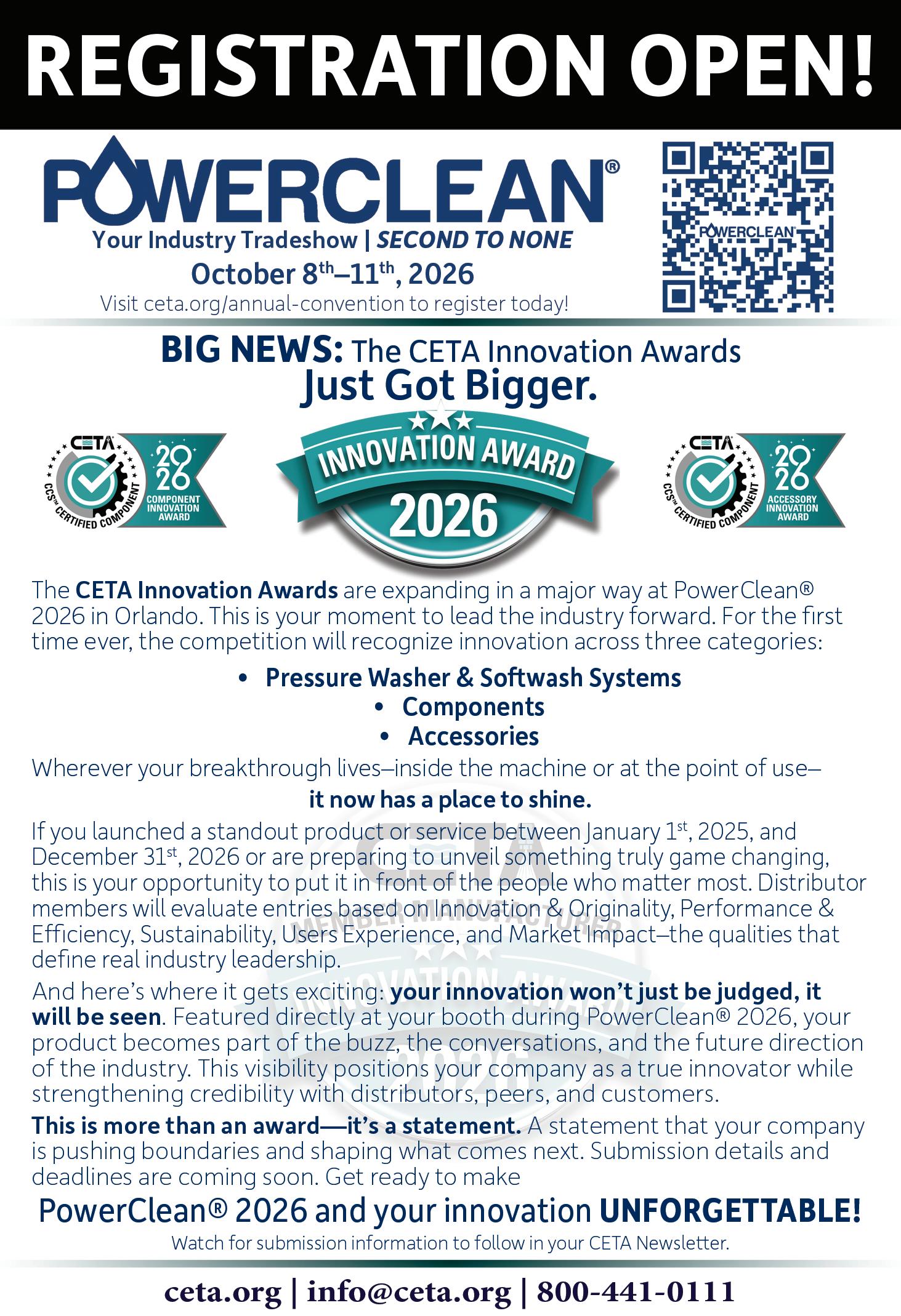
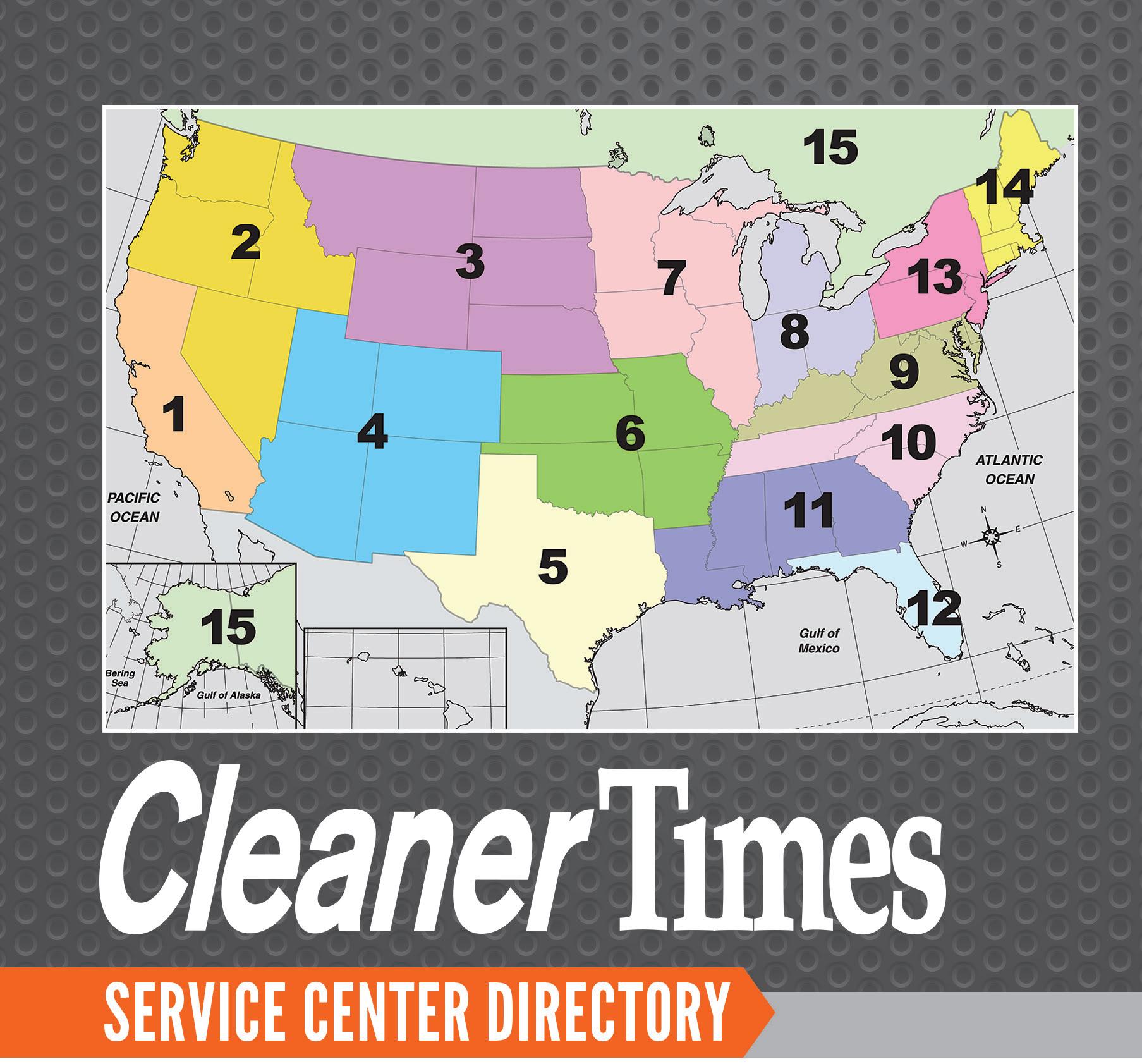
ZONE 1
American Waterworks, Inc. 13250 Weidner St. Pacoima, CA 91331 818-252-0706
www.americanwaterworks.net
Custom trailer system sales & service.
Nor Cal Pressure Washer Equipment
250-G S. Maple Ave. S. San Francisco, CA 94080 (866) 554-6601
www.norcalpressurewash.com
Hydro Tek Sales & Service, Industrial/Commercial.
Pacific Bay Equipment 609 G Street Modesto, CA 95354 (209) 578-3925/fax (209) 578-3120 www.pacificbayequipment.com
SF Bay area: 28301 Industrial Blvd. Hayward, CA 94545
ZONE 4
Pressure Systems, Inc.
1646 E. Jefferson Street Phoenix, AZ 85034 (602) 253-9579
www.pressuresystemsinc.com
Experience Makes a Difference. Working With Water & Finding Solutions Since 1965.
Superior Cleaning Equipment
4422 E. University Dr. Phoenix, AZ 85034 602-257-1357 sceclean.com
ZONE 5
American Cleaning Systems 5261 W. 42nd St. Odessa, TX 79764 (800) 205-7797
www.amcleaning.net
Pressure Washers, Soaps, Degreasers, Hot Shot
Alklean Industries, Inc. 2111 Catalina Dr. Pasadena, TX 77503 (281) 479-5966 www.alklean.com
Hotsy, Mi-T-M, Hydro Tek, Alkota, KEW, Alto, plus many more. POWERWASH.COM 2313 Cold Springs Rd. Fort Worth, TX 76106 (800) 433-2113 www.Powerwash.com
Pressure Washer Sales & Service, Parts, Chemicals. River City Pressure Cleaning Equipment 7306 NE Loop 410 San Antonio, TX 78219
(888) 889-WASH (9274) www.rcpce.com
Industrial Pressure Washer Sales, Service, Parts, Detergents, & Diesel-Powered Equip. Available.
Sellers Sales Co. Inc. Pumps & Equip 1904 So. Loop Drive Waco, Texas 76704 (254) 754-5761
info@sellerspump.com
Cat Pumps dist for 50 years. Pump Sls/Parts/Repairs/Cstm Built Pump Pkgs
ZONE 6
AaLadin Central Pressure Washers & Supplies 2339 East Front Street Kansas City, MO 64120 (816) 221-1007
www.aaladincentral.com
Aaladin Elite Dist. Sales, Service, Parts, Soap for all brands. Chappell Supply & Equipment
• CETA Certified Distributor 6509 W. Reno Ave. Oklahoma City, OK 73127 (405) 495-1722
service@chappellsupply.com
1-Stop-Shop for Industrial Cleaning Equip. Needs.
KO Pressure Supply 2950 E. Division
Springfield, MO 65803 (888) 301-3005
www.kopressuresupply.com
Quality Parts, Equipment, Chemicals, and Service.
ZONE 7
Omega Industries, Inc. 11317 W 47th St. Minnetonka, MN 55343 (952) 988-8345
http://omegaindustriesinc.com
Sayers Wash Systems 21020 Cambodia Ave. Farmington, MN 55024 (800) 456-9840
www.SayersWashSystems.com
Servicing Virtually All Brands of Pressure Washers.
ZONE 8
Michigan Power Cleaning 2101 Palmer Avenue Kalamazoo, MI 49001 (269) 349-3656
MichiganPowerCleaning.com 35y+ Parts/Service Cat General Hydrotek and Other Brands.
ZONE 9
Pressure Washer Supply Center 480 Hylton Rd. Suite D Richmond, VA 23238 804-708-9851
pressurewashersupplycenter.com Commercial Pressure Washer Sales, Service, Parts, Chemicals & Repair.
ZONE 10
American Water Works East 3000 Nuzzo Ln. Conway, SC 29526 843-399-1055
www.americanwaterworks.net
Delco of Knoxville 6675 Clinton Hwy Knoxville, TN 37912 (865) 938-4486 Sales. Parts. Service. Rentals. Etowah Chemical Sales & Service
• CETA Certified Distributor 1706 Rossville Ave. Chattanooga, TN 37408 (423) 756-5763
www.etowahchemicals.com
Quality Chemical & Equipment Solutions Since 1980. Etowah Chemical Sales & Service
• CETA Certified Distributor 5720 A Middlebrook Pike Knoxville, TN 37921 (865) 584-7477
www.etowahchemicals.com
Quality Chemical & Equipment Solutions Since 1980.
Etowah Chemical Sales & Service
• CETA Certified Distributor 878 Davis Dr. (Atlanta) Conyers, GA 30094 (770) 760-7031
www.etowahchemicals.com
Quality Chemical & Equipment Solutions Since 1980.
Etowah Chemical Sales & Service
• CETA Certified Distributor 206 5th Ave. SW Cullman, AL 35055 (256) 734-1208
www.etowahchemicals.com
Quality Chemical & Equipment Solutions Since 1980.
Etowah Chemical Sales & Service
• CETA Certified Distributor 7688 Spanish Fort Blvd. (Mobile) Spanish Fort, AL 36527 (251) 621-1901
www.etowahchemicals.com
Quality Chemical & Equipment Solutions Since 1980.
Etowah Chemical Sales & Service
• CETA Certified Distributor 3521 Richard Arrington Blvd. Birmingham, AL 35234 (205) 323-6441
www.etowahchemicals.com
Quality Chemical & Equipment Solutions Since 1980.
Etowah Chemical Sales & Service
• CETA Certified Distributor
2618 Forrest Ave. Gadsden, AL 35904 (256) 547-7527
www.etowahchemicals.com
Quality Chemical & Equipment Solutions Since 1980.
Etowah Chemical Sales & Service
• CETA Certified Distributor 1624 ½ Hamilton Road LaGrange, GA 30240 (770) 668-6319
www.etowahchemicals.com
Quality Chemical & Equipment Solutions Since 1980.
GCE, Georgia Chemical Equipment 1580 Beaver Ruin Road Norcross, GA 30093 (770) 921-0397; (800)762-7911
https://georgiachemical.com
Sales, Service, Chems, Rentals Repairs on Nat Brands.
North Georgia Airless 2126 Hilton Drive Gainesville, GA 30501 (770) 532-4442
www.NorthGeorgiaAirless.com
Trusted Sales, Rental, Parts and Repair Center.
Power Cleaning Equipment, Inc. 5020 Hwy 157 Florence, AL 35633 (800) 423-8605
joe@power-cleaning.net
Full-service P.W. Dist & Chem. Mfg. (TN also)
ZONE 12
Faitella Enterprises
• CETA Certified Distributor
Ft. Pierce, FL (800) 874-0607
www.faitellaenterprises.com
Since 1976, Sales & Service at Your Location or Ours.
Florida Pressure Washing Equipment & Supplies 671 Progress Way Sanford, FL 32771 (407) 688-4532
www.floridapressurewashing equipment.com
Mi-T-M Dist. Seal´nLock, PW Sales, Service, Parts.
ZONE 13
ETS, Equipment Trade Service Co. Inc. 20 East Winona Ave. Norwood PA. 19074 (610) 583-7657
www.etscompany.com
All PW’s! Sales, Repairs, Rental, Parts, Chems, Since 1970.
Hydro-Spray
2928 Washington Avenue Clearfield, PA 16830 (800) 528-5733
www.hydrospray.com
A full-service car wash & pressure wash equip provider.
Kepner Equipment, Inc. 2365 Firehall Rd. Canandaigua, NY 14424
888-895-2632
www.kepnerequipment.com
Helping You Clean Up Your Act Since ‘92! Sales, Service, Detergents Portage Power Wash 814 736-6288
217 Main St. Portage, PA 15946
www.portagepowerwash.com
We are a family-owned business that has over 40 years of experience.
ZONE 14
New England Cleaning Equipment (formerly Cape Cod Cleaning Systems) 49 North Main Carver, MA 02330 96 Moore Road Weymouth, MA 02189 508-947-0570
rnissi@registeredchemicals.com
Since 1948 now covering all of New England. Sales, Parts & Service Center. Also extensive Chemical offering.
ZONE 15
PSC Pressure Systems Company, Inc. 3300 Steeles Ave. W Concord, ON, L4K 2Y4 www.pscclean.com (800) 246-9689
Manufacturing, Sales, Parts and Service, since 1969.

Accessories: Schedule 80 Aluminum Wands, cut & threaded. Call for price, 800-874-0607.
PA SpA: +39 0522 623 611; www.pa-etl.it.
Steel Eagle: 800-447-3924; www.steeleagle.com.
Barens, Inc.: 800-676-0607; www.barens.com.
CETA: 800-441-0111; www.ceta. org.
PWNA: 800-393-7962; www. pwna.org.
R.W. Beckett: 440-327-1060; www.beckettcorp.com.
Kleen-Rite: 877.602.6709; www. kleen-ritecorp.com.
Etowah Chemical Sales & Service: 800-848-8541.
Hydrus Detergents: 712-765-1060; www.hydrusdetergents.com.
ITD Chemical: 800-472-1233; www.itdinc.biz.
Coils-R-Us: 479-549-3880; www. coils-r-us.com.
AhatTek: 508-459-9420; www. ahattek.com.
Aaladin Industries: 605-356-3325; www.aaladin.com.
American Washall: 833-645-4275; AmericanWashall.com.
BE Pressure Supply, Inc.: 800663-8331; www.bepressure.com.
Cam Spray: 800-648-5011; www.camspray.com.
Dultmeier Sales: 402-333-1444; www.dultmeier.com.
Epps Products: 888-826-9191; www.eppsproducts.com.
Mi-T-M Corporation: 800-5539053; www.mitm.com.
PowerJet Pressure Cleaning Systems: 877-765-9211; www. powerjetpressure.com. Powerwash.com: 800-433-2113; www.powerwash.com.
Suttner America Company: 563556-3212; https://suttner.com.
EQUIPMENT— EXPLOSION-PROOF
Midland Industries: 800-8215725; www.midlandmetal.com.
FLEET WASHING
Bioclean Systems: 888-786-9131; https://biocleansystems.com.
Hydro-Chem Systems: 616-5316420; https://hydrochemsystems.com. GRAFFITI
Equipment Trade Service Co.: 877-824-7763; www.taginator.com.

Graffiti Solutions: 651-777-0849; www.graffitisolutions.com.
JTI Trade, Inc.: 360-226-3637; www.val6.com.
Hannay Reels: 518-797-3791; www.hannay.com/en-US.
CSC Insurance: 724-929-2300; cscinsurance.com.
Pressure Systems Inc.: 602-2539579; www.pressuresystems inc.com.
Arthur Products Co.: 800-3220510; www.arthurproducts.com. Suttner America, Inc.: 563-5563212; https://suttner.com.

Chappell Supply & Equipment Company: 405-495-1722; www. chappellsupply.com. PRESSURE
Alkota: 800-255-6823; https:// alkota.com.
Dyne Power Packs: 772-332-1662.
Pressure Systems Innovations: 561-249-2830; https://pressure systemsinnovations.com.
PSC Cleaning Systems: 800246-9689; www.pscclean.com.
Ramteq: 713-983-6000; www. ramteq.com/en.
Spraymart: 800-752-0177; www. spraymart.com.
VPW Enterprises LLC: 540-8792180; vapressurewasher.com.
Valley Industries/Comet USA: 800-864-1649; www.comet pump.com.
PUMPS
AR North America: 763-3982008; www.arnorthamerica.com.
Steamericas: 844-877-8326; https://steamericas.com.
Whisper Wash: 727-577-1292; www.whisper-wash.com.
Cotherm North America: www. cotherm.com.
Universal Trailer: 818-252-0706; www.americanwaterworks.net.
TRAINING
VALVES
Midland Industries: 800-8215725; www.midlandmetal.com.

WASTEWATER CAPTURE SYSTEMS

WASTEWATER CAPTURE RECLAIM SYSTEMS
Vacu-Boom | Spartan Mfg. Corp.: 336-996-5585; www.smcwashers.com.
WATER TREATMENT
Scaltrol, Inc: 800-868-0629; https://scaltrolinc.com.
WOOD STAINING
Wood Defender: 817-658-KOTE (5683); wooddefender.com.
ASSOCIATIONS
WJTA-IMCA: 314-241-1445; www. wjta.org.
WATER BLASTING