


























Photo: Kyle Schaefer



Our




Board of Trustees
Chair of the Board
John Burns, needham, mass
President/Chief Executive Officer
Chris Wood, Washington, d.C.
Secretary
Jeff Witten, ColumBia, mo / elkins, W.Va
Treasurer
Stewart Alsop, santa Fe, n.m.
Chair of the National Leadership Council
Rich Thomas, starlight, Pa
Secretary of the National Leadership Council
Paul McKay, Wheeling, W.Va
Trustees
Linn Beck, oshkosh, WisC
Tony Brookfield, Park City, utah
John Burns, needham, mass
Josh Crumpton, WimBerley, texas
Mac Cunningham, Basalt, Colo
R. Joseph De Briyn, los angeles, CaliF
Paul Doscher, Weare, n h,
Larry Finch, Wilson, Wyo
Susan Geer, gilBert, ariz.
Peter Grua, Boston, mass
Chris Hill, Washington, d.C. / haines, alaska
Terry Hyman, Washington, d.C.
Steve Loranger, FlagstaFF, ariz / santa BarBara, CaliF
Mick McCorcle, FrederiCksBurg, texas
Steve Miller, sammamish, Wash
Phoebe Muzzy, houston, texas
H. Stewart Parker, ChaPel hill, n.C.
Al Perkinson, neW smyrna BeaCh, Fla
Greg Placone, greenVille, s.C.
Candice Price, kansas City, mo
Judi Sittler, State College, Pa
Gene Slusher, lexington, ky
Joseph Swedish, silVerthorne, Colo
Blain Tomlinson, long BeaCh, CaliF
John Ulrich, san antonio, texas
Leslie Weldon, Bend, ore
Geofrey Wyatt, santa BarBara, CaliF
Chair Rich Thomas Secretary
Paul McKay
arizona, Tom Goodwin
arkansas, Ron Blackwelder
CaliFornia, Trevor Fagerskog
Colorado, John Egan
georgia, Steve Westmoreland
idaho, M.E. Sorci
illinois, Hans Hintzen
ioWa, Ronda Long
maine, Tammy Packie
massaChussetts, Fred Jennings
miChigan, Greg Walz
mid-atlantiC, Noel Gollehon
minnesota, Steve Carlton
montana, Mark Peterson
neW hamPshire, Phil Donovan
neW Jersey, Peter Tovar
neW mexiCo, Harris Klein
neW york, Jeff Plackis
north Carolina, Mike Mihalas
ohio, Matt Misicka
oklahoma, Levi Poe
oregon, Peter Gray
ozark (ks/mo) Jeff Holzem
PennsylVania, Eric Lewis
south Carolina, Mike Waddell
tennessee, Danny Sells
texas, Joe Filer
utah, Lynn Sheldon
Vermont, TJ Dezotell
Virginia, Tom Benzing
Washington, Andrew Kenefick
West Virginia, Paul D. McKay
WisConsin, Scott Allen
Wyoming, Jim Hissong
State Council Chairs
arizona, Neal Young
arkansas, Michael Wingo
CaliFornia, Shana Bagley
Colorado, Barbara Luneau
ConneCtiCut, Richard Mette
georgia, Rodney Tumlin
idaho, Tyler Hallquist
illinois, Dan Postelnick
ioWa, Dave Klemme
Coldwater Conservation Fund Board of Directors 2026
President
Stephen Moss, rye, n y
Executive Committee
Joseph Anscher, Port Washington, n y
Stephen Bridgman, WestField, n.J.
Stephan Kiratsous, neW york, n y
Michael Maroni, BainBridge island, Wash
Margaret Taylor, sheridan, Wyo
Directors
Peter and Lisa Baichtal, saCramento, CaliF
Gay Barclay, PotomaC, md
Bill Bell, atlanta, ga.
Philip Belling, neWPort BeaCh, CaliF
Scott Blackley, leesBurg, Va
Douglas Bland, ChesaPeake City, md
Mark Carlquist, los gatos, CaliF
Gregory Case, PhiladelPhia, Pa
Benjamin Clauss, greenVille, s.C.
James Connelly, neWPort BeaCh, CaliF
Jeremy Croucher, oVerland Park, kan
Rick Elefant and Diana Jacobs, Berkeley, CaliF
Glenn Erikson, glorieta, n m
Renee Faltings, ketChum, idaho
John Fraser, norWalk, Conn
Matthew Fremont-Smith, neW york, n y
Bruce Gottlieb, Brooklyn, n.y.
John Griffin, old lyme, Conn
Robert Halmi, Jr., neW york, n y
Lawrence Heim, denVer, Colo
William Heth, eau Claire, Wis
Kent and Theresa Heyborne, denVer, Colo.
Kent Hoffman, oklahoma City, okla
Frank Holleman, greenVille, s.C.
Timothy Hong, seattle, Wash
James Jackson, houston, texas
Tony James, neW york, n y
Jeffrey Johnsrud, neWPort BeaCh, CaliF
Matthew Kane, Boulder, Colo
Peter Kellogg, neW york, n y
Andrew Kenefick seattle, Wash
Steven King, Wayzata, minn
Lori Langston, seattle Wash
Lee Lewis, PhiladelPhia, Pa
Cargill MacMillan, III, Boulder, Colo
Ivan & Donna Marcotte, asheVille, n.C.
Jeffrey Marshall, sCottsdale, ariz
Tim Martin, henderson, neV
Paul McCreadie, ann arBor, miCh
Gregory McCrickard, toWson, md
J. Thomas McMurray, Boulder, Colo
maine, Jeff Bush
massaChusetts, C. Josh Rownd
miChigan, Gabe Schneider
mid-atlantiC, Randy Dwyer
minnesota, Mike Madigan
montana, Lyle Courtnage
neW hamPshire, Michael Croteau
neW Jersey, Marsha Benovengo
neW mexiCo, Marc Space
neW york, Cal Curtice
north Carolina, Brian Esque
ohio, Scott Saluga
oklahoma, Mike Dahlstrom
oregon, Mike Dahlstrom
ozark (ks/mo) Bill Lamberson
PennsylVania, Russ Thrall
south Carolina, Walter Moody
tennessee, Ryan Turgeon
texas, Chris Johnson
utah, Jason Eborn
Vermont, Jared Carpenter
Virginia, Tom Sadler
Washington, Penny Mabie
West Virginia, Eugene Thorn
WisConsin, Myk Hranicka
Wyoming, Samantha Beard
Vern Meyer, Fort PierCe, Fla
Jeffrey Morgan, West CornWall, Conn
Robert & Teresa Oden, Jr., hanoVer, n h
Kenneth Olivier, sCottsdale, ariz.
H. Stewart Parker, ChaPel hill, n.C.
Michael Polemis, old Chatham, n y
Adam Raleigh, neW york, n y
Margaret Reckling, houston, tx
John Redpath, austin, texas
William Reed, kentField, CaliF
Brian Regan, neW Canaan, Conn
Steven Ryan, Wilson, Wyo
Leigh Seippel, neW york, n y
Daniel Seymour, stamFord, Conn
Paul Skydell, Bath, maine
Gary Smith, st louis, mo
Robert Strawbridge, III, Wilson, Wyo
Paul & Sandy Strong, lakemont, ga.
Robert Teufel, emmaus, Pa
Andrew Tucker, larChmont, n y
Andrew Tucker, Vero BeaCh, Fla
Deacon Turner, denVer, Colo
Jeff Walters, sCottsdale, ariz
Maud and Jeff Welles, neW york, n y
Tyler Wick, Boston, mass
Geofrey & Laura Wyatt, santa BarBara, CaliF











[ CHRIS WOO D ]
April is a month of renewal and reconnection for me. In the mid-Atlantic, the shad and every other associated finned and winged predator return to the Potomac. The redbuds pop on the hillsides. Easter emerges from Lent.
My family and I revel in seeing the egg masses of lizards and frogs in vernal pools at our place in West Virginia. The boys still chide me about the time I scared a hapless frog out of the mouth of a black snake that was emerging from its winter hibernaculum. “Dad, that was the first meal in months for that snake!” “Cycle of life, Dad. Remember?”
April brings the shad back to the Potomac—my home water. These herring-like fish migrate from Maine to Florida before returning to spawn in the streams they were born. Shad are severely depleted throughout their eastern range, but they generally thrive in the Potomac, thanks to the efforts of a few visionaries such as Jim Cummins, a biologist from D.C. and Maryland who worked with students and volunteers to recover American shad.
Every year, I take agency leaders, political appointees and TU leaders out on the Potomac, ostensibly for shad (and we also catch stripers, catfish and if you’re lucky a quillback carpsucker, a super cool native fish with an unfortunate name). I do it to form a connection with people and because I love showing them my home waters.
I convinced, for example, the Republican and Democratic leads of our successful Good Samaritan law to co-sponsor the bill while fishing on the Potomac. TU staff call this “rowboat diplomacy.” To me, it is just common sense.
April is often a time when the TU family gathers, too.
At a regional meeting in Missoula several weeks ago, I was energized to see a passel of TU staff, and even a guest appearance by Matt Woodard, who retired from TU a few years back, but not before helping to pioneer our home rivers restoration initiatives on the South Fork of the Snake and the Blackfoot in Idaho. The audience’s appreciation for keeping public lands in public hands and protecting roadless areas was palpable.
The next day, walking over a bridge in Thermopolis, Wyoming, I and the trout below me gulped clouds of blue winged olives. They, intentionally; me, not so much. One hundred and forty people in a town of 2,700 showed up for the banquet. We celebrated a new state law that allows landowners to leave their water instream for conservation purposes (in the portion of the state that drains to the Colorado River Basin). The state legislature also validated that multiple use public lands should remain in public hands. TU staff and volunteers should take a bow for the years of patient relationship building that made these real.
Two evenings later, the development team gathered us with dozens of TU’s donors in New York City to learn how TU deploys science to drive community engagement and conservation gains. I joked that Thermopolis would out-perform the Big Apple unless another 500,000 people showed up. The important thing was that old friends reconnected and made plans to get together on the water.
I finished the month where it all began for Trout Unlimited—at another regional gathering in Michigan. I recounted how, months before his passing at 99, one of our founders, Art Neumann, punched me on the leg and asked, “what are you going to do to keep up the fight for trout, boy?”
That question still animates and rejuvenates me. To be certain, sometimes, keeping up the fight is a quiet few hours of fishing together; sometimes it is an impassioned defense of public lands; sometimes it involves taking out disadvantaged kids on the water. What are you going to do to keep up the fight for trout?


EDITOR
Kirk Deeter
DEPUTY EDITOR
Samantha Baldensperger
EDITOR-AT-LARGE
Erin Block
Trout Unlimited 1700 N Moore Street Suite 2005
Arlington, VA 22209-2793
Ph: (800) 834-2419
trout@tu.org www.tu.org
DESIGN grayHouse design jim@grayhousedesign.com
DISPLAY ADVERTISING
Nick Halle nick.halle@tu.org (703) 284-9425
Trout Unlimited’s Mission: To conserve, protect and restore North America’s coldwater fisheries and their watersheds.
TROUT (ISSN 0041-3364) is published four times a year in March, July, September and December by Trout Unlimited as a service to its members. Annual individual membership for U.S. residents is $35 Join or renew online at www.tu.org.
TU does occasionally make street addresses available to like-minded organizations. Please contact us at 1-800-834-2419, trout@tu.org or PO Box 98166, Washington, DC 20090 if you would like your name withheld, would like to change your address, renew your membership or make a donation.
Postmaster send address changes to:
TROUT Magazine
Trout Unlimited 1700 N Moore Street Suite 2005 Arlington, VA 22209-2793


[ KIRK DEETER ]
A couple years ago, I gave a keynote talk at the Aquifer Club of Michigan TU. Michigan is a “home game” for me (it’s where I grew up and learned to fish). The talk went well (no tomatoes thrown from the crowd), and I made an off-the-cuff remark that if anyone were planning a visit to Colorado (where I have lived for the past 30 years) they might look me up. Lo and behold, Hank Milius did! So, we made a trade. I floated him down the Colorado in my drift boat a few weeks later and promised to return to Michigan to fish the Holy Waters in an Au Sable River boat. We closed that loop before the Midwest Regional Rendezvous this spring as Hank hosted a float with the legendary Josh Greenberg. Truth be told, the fishing wasn’t all that good on either end of the bargain. We tried our best, but the Colorado was stingy, and the Au Sable was just as fickle months later. But something special happened late in the day on the Holy Waters: the clouds parted for a brief spell, and the Hennies popped a bit, just enough for me to hook a little trout on a dry. Thing is, it happened not far from the cabin that once belonged to George Griffith—where TU was created in 1959. It was a perfect reminder (perhaps even sent from above) that trout fishing and the reason we’re tied to TU and keeping rivers healthy has almost nothing to do with pulling on trout, and pretty much everything to do with friendships and the sacred places we share. I suppose Mr. Griffith wouldn’t have wanted it any other way.



BY JAMES FRAKES & JACKSON BIRRELL OF THE SALMONFLY PROJECT
Fly anglers are a different breed. Our love of trout often leads us to spend more time watching the water than casting—reading currents, scanning for rises and waiting for that moment when the bugs start to come off. That connection isn’t just about catching fish; it’s about understanding the rhythm of a trout stream. Trout live and die by insects, and so do our days on the water. When hatches are strong, everything clicks. But when the hatches start to become less prolific or more sporadic, anglers notice, blow the proverbial whistle and do what this amazing community has always done… stand together to protect the resource.
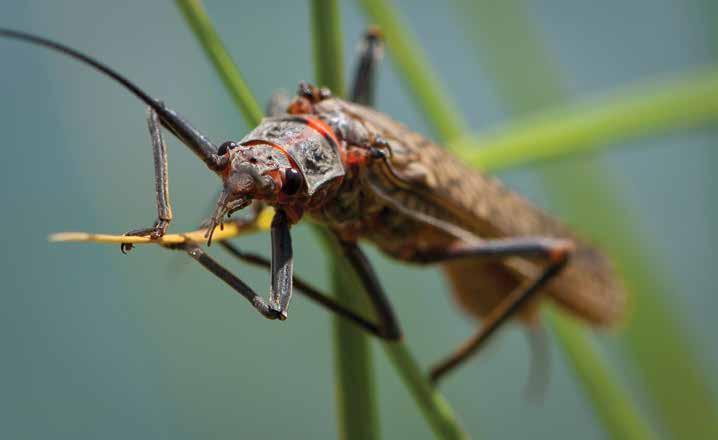
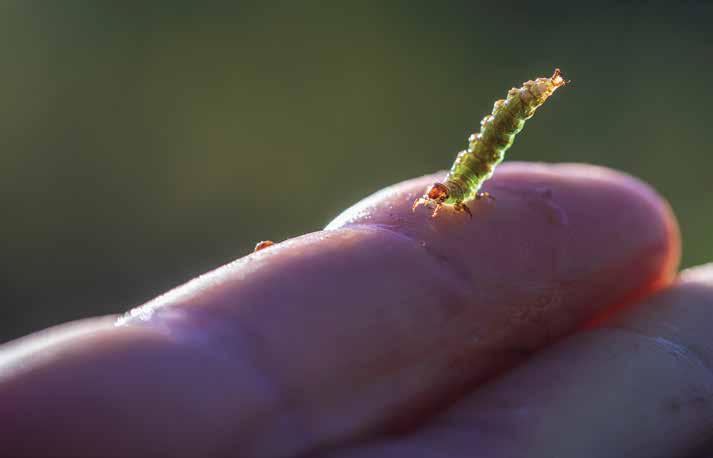
Aquatic insects are the foundation of trout fisheries. Of course, they feed the trout we love to catch, along with birds and many other animals. However, their role goes far beyond that. They are the river’s workforce, shredding leaves, scraping algae, filtering fine organic matter and cycling
nutrients—processes that keep our streams healthy and functional. Because many aquatic insects are extremely sensitive to environmental changes, they have long been used as bioindicators of water quality. A stream rich in mayflies, stoneflies and caddisflies, or what biologists call ‘EPT,’
is t ypically a healthy one. Low EPT abundance, on the other hand, often signals stress: warming water, sedimentation, altered flows or pollution.
Aqu atic insects matter beyond their ecological importance too. Iconic events like the salmonfly hatch not only represent the vast majority of a trout’s diet during that timeframe, these huge bugs are also economic engines. They draw anglers from around the world, supporting guides, fly shops and smalltown economies.
Despite the importance of aquatic insects, many anglers have been voicing concerns that key hatches on important fisheries appear to be fading—and only recently has the scientific
community begun to evaluate these trends at scale. For terrestrial insects, the story is already well-established. A widely cited study by Hallmann et al. (2017) documented more than a 70 percent decline in flying insect biomass over just 27 years in protected areas in Germany, with similar patterns emerging from other regions around the world. In rivers, the picture is more complex but still concerning. A 2023 synthesis by Rumschlag and colleagues found that stream insect densities have declined by roughly 23 percent across the U.S. since the mid-1990s—a significant drop in just a few decades. And when we zoom in on individual systems, the signals can be even more alarming. For example, Illinois has lost nearly 25 percent of its historical stonefly species (DeWalt et al. 2005), while iconic mayflies like Hexagenia have declined by roughly 50 percent in the Upper Mississippi River (Stepanian et al. 2020). That said, not all streams show the same pattern, and there’s no single smoking gun. While declines appear to be widespread, hatches are stable or even improving in some areas. This is because each watershed reflects a complex mix of stressors—warming temperatures, altered hydrology, land use change, sedimentation and pollution— that vary from river to river.
That complexity makes understanding and solving the problem harder but not impossible. What’s clear is that if we want to protect aquatic insects, we need better data, especially within our individual watersheds, especially within our individual watersheds. And surprisingly, that’s where we’re falling short.
Despite how crucial insects are to trout fisheries, we lack robust information on the status, trends and threats o f aquatic insects on most rivers. Specifically, we don’t have consistent, quantitative records of insect abundance over time. The data that does exist is often collected for water quality
assessments, not for tracking insect populations. Many agency protocols rely on semi-quantitative methods, which are great for detecting impairment, but insufficient for measuring trends in abundance or biomass.
Think about it this way: fisheries managers routinely estimate fish populations and often report on fish per mile. That allows them to track trends, set regulations and manage resources effectively. In most places,
we don’t have an equivalent program for the insects. Without that baseline data, insect-specific conservation is a shot in the dark.
At the same time, we need to better understand the environmental drivers of insect declines. Agencies like the USGS and state fish and wildlife programs collect extensive data on stream t emperature, flow regimes and water chemistry. But these datasets are rarely integrated directly with insect population
For example, Illinois has lost nearly 25 percent of its historical stonefly species (DeWalt et al. 2005), while iconic mayflies like Hexagenia have declined by roughly 50 percent in the Upper Mississippi River (Stepanian et al. 2020).
monitoring at the scales needed to diagnose problems and guide solutions.
So, who’s stepping in?
State and federal agencies are beginning to recognize the need for improved insect conservation. For the first time, some states now have biologists focused specifically on invertebrate conservation. Programs like State Wildlife Action Plans are also evolving to include aquatic insects, opening the door for formal conservation status rankings. That shift is significant. In Utah for example, The Salmonfly Project documented an 82 percent decline in salmonflies, which recently designated them as a Species of Greatest Conservation Need: a first step toward prioritizing their protection. Universities continue to be the backbone of aquatic insect research. From life history studies to cutting-edge genomics, the depth of knowledge being generated
is impressive. But academic research doesn’t always translate directly into onthe-ground conservation. There’s often a missing link between understanding insects and actively protecting them.
That’s where nonprofits are making a difference.
Organizations like Trout Unlimited, local watershed groups and fishing clubs are working hard to generate river specific conservation outcomes, and many are focusing more and more on protecting hatches. In particular, The Salmonfly Project (SFP)—the only nonprofit in the U.S. dedicated solely to aquatic insect conservation—is leading the charge. Together, with an amazing group of collaborators, SFP is building monitoring programs that generate the information we’ve been missing: standardized, repeatable surveys capable of tracking aquatic insect populations
There’s a real opportunity here for fly anglers. We are skilled observers. We track hatch timing, abundance and behavior of insects as part of our sport. That awareness can be a powerful tool.
over time, and quantitative datasets to turn it into meaningful conservation and management action.
There’s a real opportunity here for fly anglers. We are skilled observers. We track hatch timing, abundance and behavior of insects as part of our sport. That awareness can be a powerful tool. Supporting monitoring efforts, reporting observations and advocating for insectfocused conservation can all make a difference. In many ways, anglers are the front line and have brought this problem to light.
The story of aquatic insect decline is still in the early chapters. We still need to better understand the scope of the problem and identify solutions. But one thing is clear: if we want to protect the future of our fisheries, we need to pay as much attention to the bugs as we do to the fish.
BY ANDY WEINER
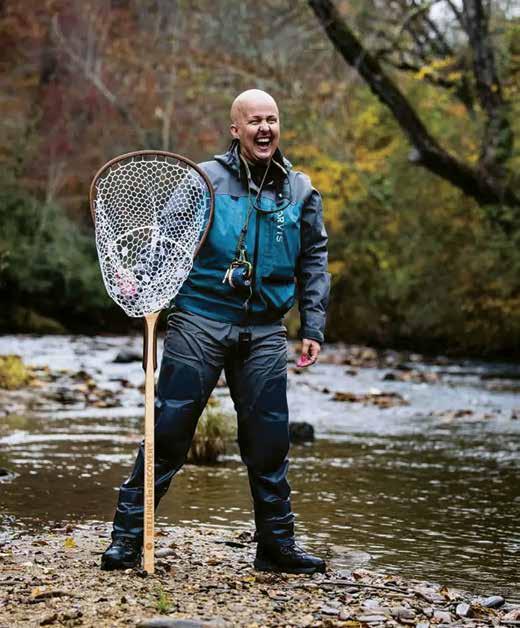
Let me tell you about Becca Sue Klein. She passed away January 21, 2025, some months short of her 43rd birthday.
Back in 2017, I was laying the groundwork for my forthcoming children’s flyfishing book, Down by the River. I set out to connect with as many fly-fishing influencers as possible, and Becca Sue Klein popped up in my search. She was on staff at Chattahoochee Riverkeeper and she accepted my invitation to connect.
She immediately asked me to donate two signed copies of the book for a fundraising auction. After the auction she
told me she had whipped the bidders into a frenzy and got them to step up for the river. She sold the two books for $5,000.
That spoke to Becca’s power—engaging folks in her mission and making them feel great about spending an insane amount of money for a children’s book to support the work of a great organization.
“The first review of that book was in Jen Ripple’s wonderful, Dun Magazine. Though primarily directed to women fly anglers, the articles were great for any reader and I subscribed. In one issue, I came across an article entitled “Reeling: A life spiraling out of control is brought back to stability through days spent on the water.” The author was, A Grateful Recovering Alcoholic.
My father was my lifelong fishing buddy from the time I was six in 1963 until his death in 2017. He was also a serious alcoholic, who nearly died from his addiction. Thankfully he embraced a life of sobriety and began attending regular AA meetings. He wrote an autobiographical novel about his alcoholism called The Morning After. A television movie was made from it starring Dick Van Dyke. He began a career writing anonymous books for those in recovery. Though all had impact, the most important one was A Day at a Time. Millions of people have found help from this book. Reading the article, I was stunned to see a photograph of a woman holding an open copy of that book in front of her face to maintain her anonymity. It brought tears to my eyes as I thought about the continuing impact my dad’s work was doing even after his death. I took a photo and posted it on social media. A short time later I received a message from Becca.
It read: “I am okay outing myself to you privately, but will stay anonymous in the public eye...but that’s me holding that book. I wrote that story. Been in recovery for a little over three years now. It’s been SO HARD to see all the response to my article and not be able to respond to it. So I’m glad you reached out. That book saved my life.”
Becca’s message created a bond between us and deepened our already budding friendship.
A few months later I received another message from Becca. The experience she had described in her article was now the beginning of a non-profit. Those of us who love our sport know that fly fishing is a healing activity. There are many great non-profits that address issues like men and women with cancer, posttraumatic stress suffered by veterans and first responders, foster kids and
many more. Becca’s vision, along with several friends in sobriety, was to create an organization that would help those working their sobriety after dealing with substance abuse disorder. That vision became Reeling in Serenity. Becca asked me if I would be willing to join the board as the organization took shape. I quickly said yes. A few weeks later she asked me if I would be willing to be the founding President of the Board. It was an honor to be considered for the position and I realized that it was likely no
She also collaborated with her great friend, Heather Hodson, to create another non-profit, I Fish I Belong, whose mission is to create a diverse, inclusive fishing community where everyone feels welcome.
one else would want the responsibility, so I agreed. The other founding board members voted me into the position because I was right—no one else wanted to do it. We began the building of the organization with all the hard work it takes to create a non-profit.
There is much more to Becca’s story. As she describes in the short film, "Becca K. Powell: Water Is Life" (Powell was her married name), Becca was diagnosed in 2015 with breast cancer and underwent a double mastectomy in 2016. Over the next several years the disease returned and spread. Her illness began her relationship with Casting for Recovery, the amazing organization that provides healing outdoor r e treats for women with breast cancer. She turned her misfortune into an opportunity to help others.
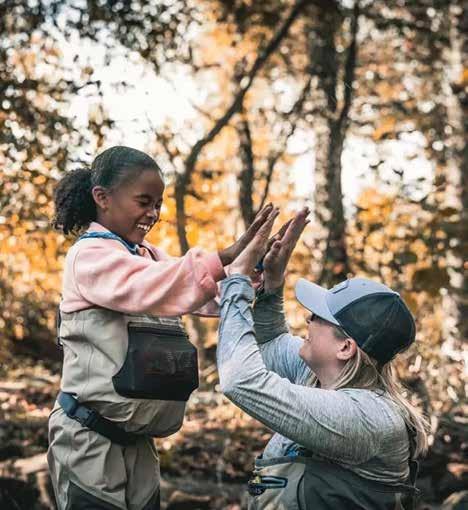
In 2023 Reeling in Serenity hosted its first free retreats. The number of retreats has increased each year. Our national visibility and recognition of our work continued to grow. But creating one non-profit was not enough for Becca. In association with Chattahoochee Riverkeeper, she created a new program called Becca Sue Klein’s All Girls Fish, which has evolved into All Kids Fish. She also collaborated with her great friend, Heather Hodson, to create another nonprofit, I Fish I Belong, whose mission is to create a diverse, inclusive fishing community where everyone feels welcome. I had thought that Heather had created the organization, but we learned from Heather that in fact it was Becca who said, “You’ve got this hashtag, #ifishibelong. Let’s actually start that organization.” And so they did.
As Reeling in Serenity’s program grew, Becca’s role evolved. Her ongoing treatments for her cancer were debilitating, physically and mentally. It
was impossible that it wouldn’t impact her work and relationships, and she made the decision to step back from her position as Executive Director, followed so ably by co-founder Sylvia Huron, and became a board member. She did her best to participate at the highest level, temporarily overcoming the horrors of cancer treatment, and continuing to be a key member of the organization. It was an inspiring and heartbreaking thing to witness.
possible, caring for her around the clock, manifesting the love we all felt for her.
On January 21, 2025, I received the inevitable call I was dreading. Sylvia Huron told me that we had lost Becca.

Becca’s superpower was her refusal to give in and give up. As her health deteriorated, she continued to check off items from her bucket list. She swam with dolphins and continued to pursue her favorite pastime, fly fishing. Her community and family rallied a round her, making those adventures
On October 19, 2025, friends and family gathered in Helen, Georgia, for a celebration of Becca’s life. Though I’d worked with the Reeling in Serenity team since 2022 I had only met four team members in person.
The celebration provided the opportunity to meet so many more, as well as her family members and people who were true friends who I just hadn’t yet met in person. Over the course of an hour or so, we heard from her mother and father, her aunts, cousins, friends from the non-profit community, more than a dozen people. I spoke as well.
It was truly one of the most difficult things I’ve ever done, knowing that I would be speaking through tears. But I did it because I loved Becca, was privileged to be her friend and colleague, a nd I knew I would regret it if I didn’t put aside my pride and speak about her to others who loved her as well.
I’m glad I did. At the conclusion of the testimonials to Becca we made our way to Jimmy Harris’s great fly shop, Unicoi Outfitters, where a beautiful bench was unveiled that will forever honor Becca.
A simple Google search of “Becca Sue Klein” will return dozens of articles and tributes to her.
The conclusion of what I said at the celebration of Becca’s life is, “If ever there were a person who truly believed in and worked for diversity, equity and inclusion in a sport that needs more of it, it was Becca. Let’s all be more like Becca.”
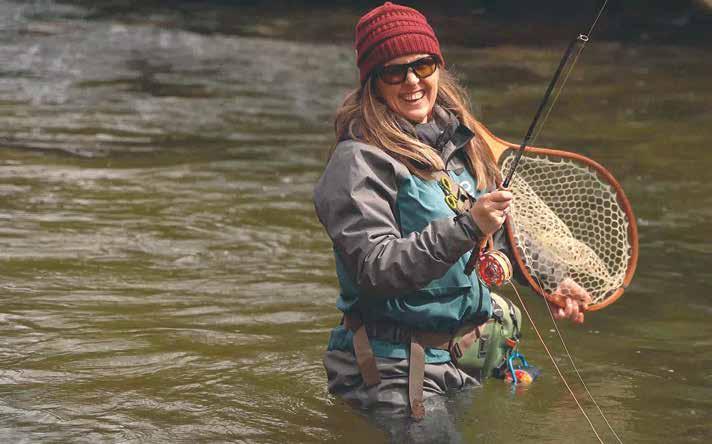
If ever there were a person who truly believed in and worked for diversity, equity and inclusion in a sport that needs more of it, it was Becca. Let’s all be more like Becca.

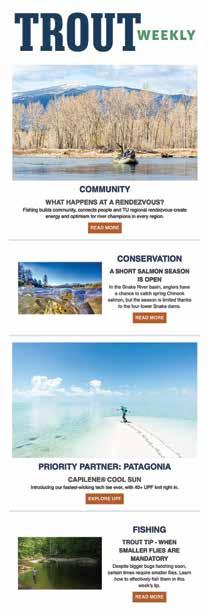









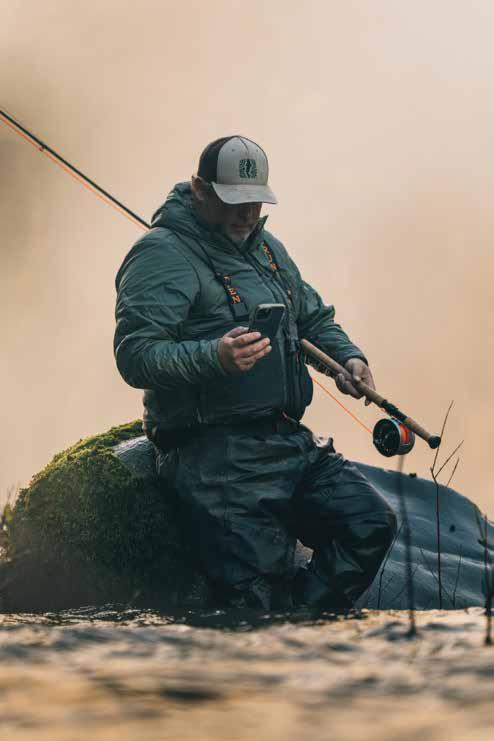



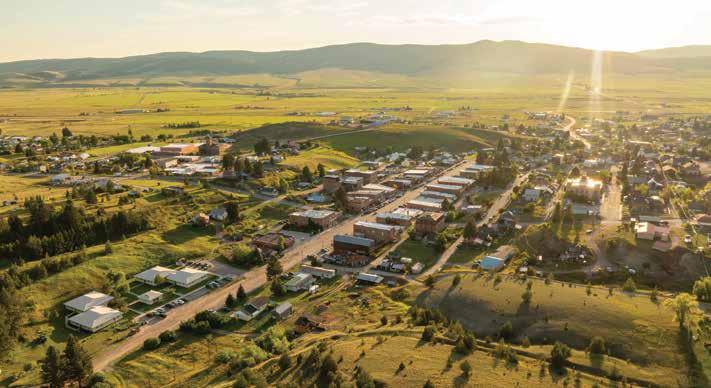
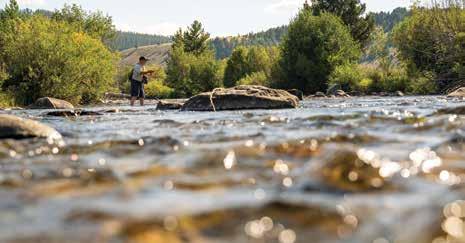
In America’s “Conservation Towns,” rural communities that survived the past century’s boom-and-bust cycles are building new blueprints for economic success by tapping into their most important assets: the rivers and streams, public la nds and wild landscapes that have always sustained them.
TU is spotlighting communities at the heart of the work we do to care for and recover rivers and streams, because the leaders in these communities embody the conservation spirit, and model what it means to be a champion for your rivers, communities and fisheries.
The inaugural 2026 list of America’s Best Conservation Towns:
Champion: Philipsburg, Mont.
Honorable Mention: Gunnison, Colo.; Florence, Wis.; Fort Bragg, Calif.; Rockland, N.Y.
About Philipsburg Nestled along the Continental Divide in southwest Montana, Philipsburg has approximately 800 residents and serves as the seat of Granite County, which encompasses more than 1,700 square miles of Blue Ribbon fishing, Beaverhead-Deerlodge and Lolo Na tional Forests, the AnacondaPintler Wilderness, Georgetown Lake, Discovery Ski Area, Bureau of Land Management grazing lands, among other notable recreation opportunities. Native Americans inhabited this area for thousands of years prior to European colonization. Tools, arrowheads, bison
skulls and religious sites have all been found near this valley.
Over the past 175 years, however, the Philipsburg valley’s economy traditionally stood on three legs: ranching, timber a nd mining.
Following the same boom and bust cycles as many other mountain towns in the Rockies, the area experienced great demand for silver, manganese, lead, zinc and other minerals. The same could be said of logging in the region.
All of this came to a head towards the end of the 20th century when the final bust cycle laid this part of Philipsburg’s history to rest.
What remained were dozens of abandoned mines scattered across the national forests, ghost towns and a worry for the future. Down the road near Anaconda, the Upper Clark Fork’s tributaries were particularly impacted,
being named as part of the largest geographic complex of superfund sites in the country.
But in recent years, Philipsburg has made a dramatic comeback.
Thanks to a band of dreamers and proud locals, Philipsburg saw what others couldn’t: opportunity. Amidst the degrees of gray, they saw painted colors and realized they had unique and historic architecture.
Neighbors began helping neighbors renovate and paint these historic buildings, bootstrapping progress over nights and weekends. An affordable ski resort— which faced the same boom and bust cycles in its beginning—was built near Georgetown Lake, which began building its own reputation as a destination.
The town bank, realizing its fate was tied with that of the community, offered affordable credit lines to those looking
to make a difference in the community. Small businesses started appearing in vacant storefronts, offering unique experiences ranging from homemade candy to family-friendly sapphire mining.
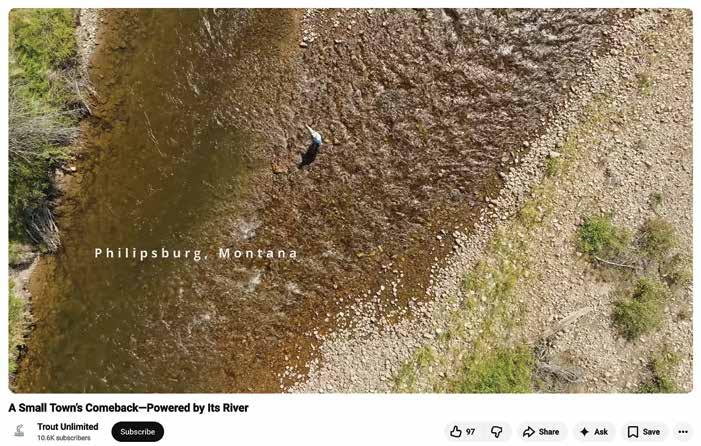
You can learn much more about Conservation Towns by visiting tu.org/ conservation-towns, or use this QR Code to view a film by TU’s Josh Duplechian.

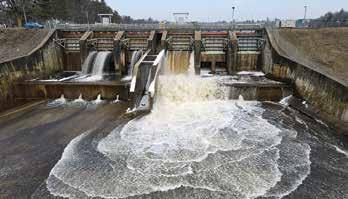
Consumers Energy plans to sell 13 outdated hydroelectric dams (a fleet that produces only 50 MW, or less than one percent of Consumers’ total generation) to Confluence Hydro, a Maryland-based subsidiary of private equity firm Hull Street Energy. Michigan TU strongly opposes this because of dam safety risks (we just saw serious flooding in Michigan), water quality and relicensing challenges, risk of land sell-off (read access), cost burdens on ratepayers and taxpayers, and more. The sale requires approval from both the Michigan Public Service Commission and the Federal Energy Regulatory Commission, with a decision expected by September. Your voice matters! See www.stopthedamsale.org for more information.


Pursuant to the provisions of Trout Unlimited’s bylaws, the 67th Annual Meeting of the members will be held in-person on Saturday, September 26, 2026 at 9:00am Central at The Intercontinental Saint Paul Riverfront to elect and re-elect trustees and to take up any other business that comes up properly before the meeting. Accordingly, voting at the annual meeting will be restricted to active TU members only. The form to vote by proxy and the meeting agenda will be available at tu.org/annualmeeting26 at least 45 days in advance of the meeting.
By TROUT magazine editor, Kirk Deeter, and chef, restauranteur, guide and author, Matthew Supinski,
with a foreword by Tom
Rosenbauer.
From crystal-chalk streams to saltwater flats, untamed jungles, and cascading mountain streams, this collection literally offers up the “tastes” of the most epic fly-fishing adventures in the world… 384 pages with great stories, hundreds of stunning photos and dozens of authentic recipes.
For an autographed copy (you can specify a custom inscription for yourself or a gift recipient), visit www.kirkdeeter.com.

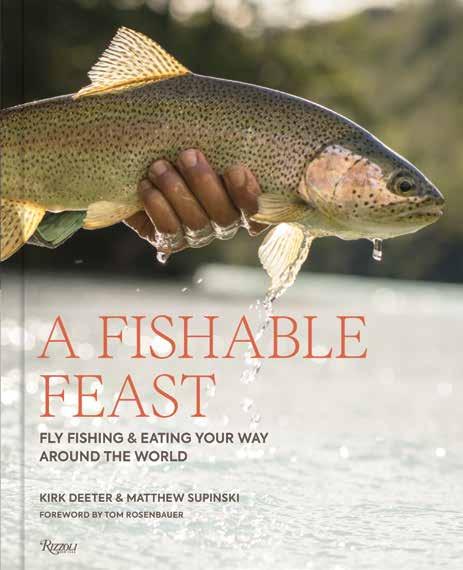
“That the best fly fishing happens in the most beautiful places is a well-documented truism. That these also happen to be the most delicious places on earth, full of local foods and regional cooking techniques, is a fact that has been sorely neglected in the fly-fishing literature—until now. With vivid storytelling, gorgeous photography and mouth-watering recipes, A Fishable Feast is a sensory overload that closes the distance between arm-chair and arm-length trout like few other travelogues can. Glut yourself, dear reader, upon these pages. This is a delicious idea deliciously executed.”
—Dave Karczynski,
author of Calling After Water
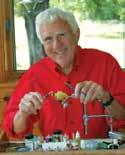
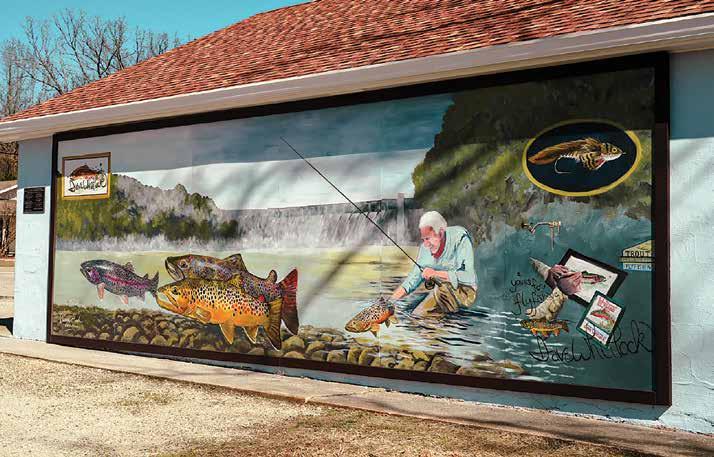
With the support of TU and other groups and individuals, artist Duane Hada created a wonderful mural that celebrates the life and legacy of Dave Whitlock, which can be found on the side of Wishes & Fishes Fly Shop in Bull Shoals, Arkansas. Whitlock, as you know, was one of the foremost teachers, authors, artists and fly creators the sport of fly fishing has ever known. And we were blessed to have had him as a decades-long contributor to TROUT magazine.
RECOMMENDED READING…
$15.95 at Barnes & Noble
These days, you cannot “dabble” with guidebooks. With the sheer abundance of information available via the Internet, to make something special that offers real value, you need to know your stuff.
Captain Michael Mullaney clearly knows his stuff. His Traveling Angler Guide Books, now encompassing six regions—Cape Cod, the Carolina Coast, The Jersey Shore, the Delaware River, Chesapeake Bay and Rhode Island—offer soup to nuts insider info on not only the fishing, but also some pointers on what can be found off the water.
If you are a diehard trout angler who wants to dabble in the salt, specifically on the East Coast, I could not possibly recommend a better place to start. —K. Deeter

Please support Trout Unlimited and make a positive difference for our shared rivers.
BY ANDREW J. PEGMAN
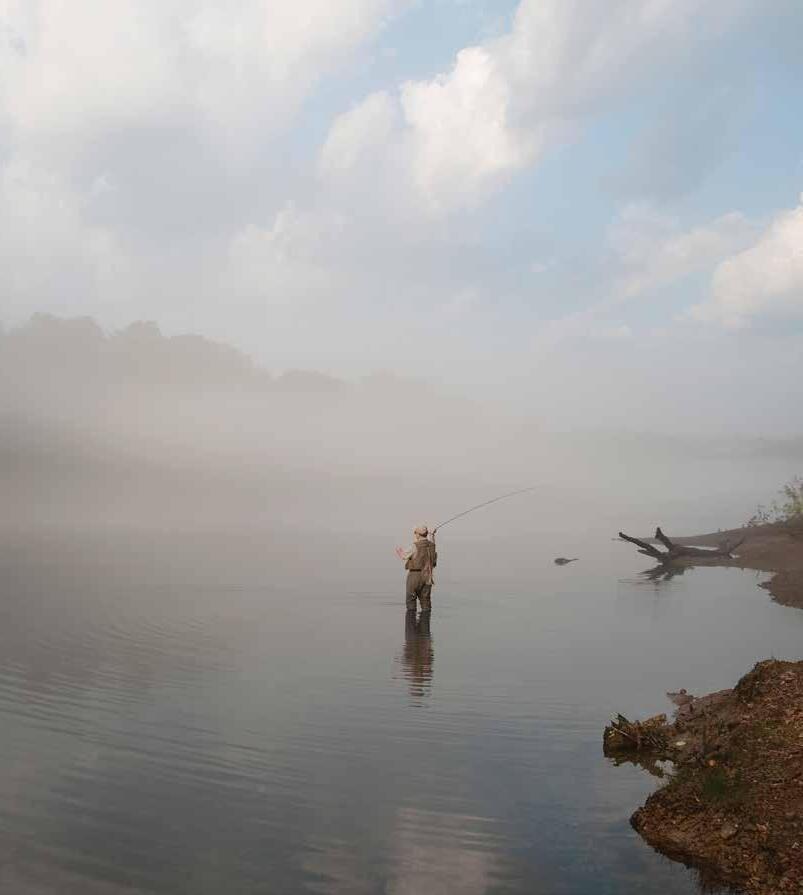
FFishing is a pursuit that can be approached in many ways, from a loud and raucous boat party to a quiet and reflective solitary experience. Anglers find joy in all kinds of fishing, and each approach has its merits.
Fishing alone stands out, though. Over the years, it may have become more difficult to find true solitude on a river, but there is something about fishing alone that is healing and restorative. In a busy and chaotic world, peace and solitude are among the most precious gifts, and they can both be found while fishing alone.
It’s no secret that throughout history, and in literature, time by the water was prescribed as a healing cure for many ailments, both mental and physical. The sea was the place to restore health and regain vitality, to be reborn in the symbolic sense.
As readers, we can recall many literary protagonists fishing in solitude, walking thoughtfully along a river, untangling complex emotions. In Hemingway’s 1925 short story, “Big Two-Hearted River,” when Nick Adams reaches the river, he scans it for trout and deems them “very satisfactory.” For Adams, the river held not only hope for trout but hope from despair.
The beauty of fishing alone is in simplicity and solitude, an underrated necessity in our modern world. Solitude in nature is enough, if approached that way, but is also made magical by catching fish. Standing in light rain on a mountain stream, casting a small fly to native brook trout otherworldly in their beauty, is overwhelmingly good for the spirit.
I have used fishing to heal. In the river where I like to fish, there is no cell service. It’s me and the river. It’s the place I go to think as I make each cast. While I am working my way through a specific stretch of water, I am simultaneously working my way through a specific issue occupying my mind. I’ve solved a lot of problems that way because like Pat McManus used to write, I am rarely interrupted by catching fish.
But there is more to fishing alone than solving problems. It is a vivid experience for all the senses, an immersion in the sights and sounds that create memories that last. Beyond the pursuit of fish are multiple pleasant
distractions, myriad species of wildlife that provide the setting and cast for a solitary fishing adventure.
Take the time to notice the water bugs, the bees, butterflies and moths, and even the antagonistic bugs that seem to go out of their way to sting and bite. They all have their roles in this complex natural ecosystem, though anyone who has fished through a cloud of biting flies and mosquitoes knows that’s not the most enjoyable way to connect with nature.
But not all the winged creatures cause us trouble, some bring us additional joy. For me, second to fish is my love for birds.
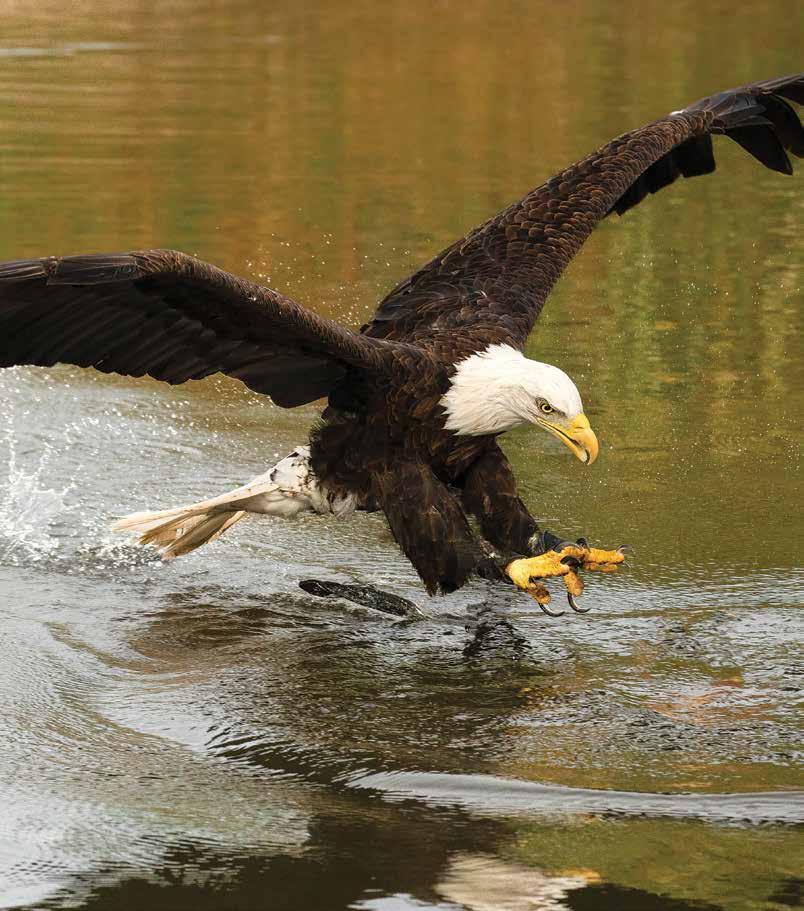
In addition to being an avid angler, I am an enthusiastic birder, so it is an extra thrill while fishing to be treated to warbler activity during spring migration or to hear the distinct cry of a kingfisher. Great blue herons and green herons also stand nearby, stalking their prey in stillness and silence. Perched high above the river on bare branches sit eagles, hawks and osprey, which have the power and scope of vision we could only imagine. A guide once told me if you want to learn about fishing, watch the eagles.
Another benefit to fishing alone is the enhanced sensory experience. Gently wafting across the air may be the scents of blooming flowers or fresh pine, depending on the season. The lush sights and smells of spring differ from the crisp scents of an autumn day on the water.
I used to fish the Chagrin River in northeast Ohio for steelhead almost every day in the ‘90s. I would load up my old 1984 Jeep Cherokee Pioneer with gear, and when my college classes were done for the day, I’d hit the river. I was fairly obsessed with catching a steelhead, which was much more difficult in those days, particularly for me. But I kept trying, relentlessly, and I never minded this dose of humility served up daily in the dogged pursuit of my goal. Well, perhaps I minded a little. But I always knew that somehow the next time, conditions would be better, I’d find the perfect spot and I’d finally get that beautiful and elusive fish.
My personal goal, my ideal scenario, was to catch a steelhead when I was completely alone on the water. I just wanted to look at it and admire it. It didn’t matter if the fish was big or small. I wanted one fish hooked cleanly and correctly in the right way. I swore I would let it go, and when it finally happened, I did. It was one of the most amazing experiences of my life. It was
PERCHED HIGH ABOVE THE RIVER ON BARE BRANCHES SIT EAGLES, HAWKS AND OSPREY, WHICH HAVE THE POWER AND SCOPE OF VISION WE COULD ONLY IMAGINE. A GUIDE ONCE TOLD ME IF YOU WANT TO LEARN ABOUT FISHING, WATCH THE EAGLES.
the kind of moment that could happen at any time, but when it finally did it was almost surreal.
To be completely present and immersed in one’s endeavor is truly a magnificent thing. To experience something with all five senses without interruption is a great gift. The light breeze through the tops of the conifers, the juxtaposition of light and dark on an overcast day. These sensory images create the experience of fishing.
In the 1998 film, Dirty Work, Norm MacDonald composes a “note to self,” saying, “Remember, no matter how bad life gets, there is always beer.” Along the same lines, as bad as things can get, there is always fishing. It’s something a person can do alone to untangle complex emotions and grief and reconnect with nature. Each cast represents hope, and the water is there as a trusted friend and ally, there to listen and there to heal.
When I was a young guide in Alaska, it was unusual to fish with a woman— particularly one visiting the lodge by herself or with a female friend. Wives and daughters occasionally joined their husbands and fathers, however, and whenever I had the opportunity to guide women, I took it. In my experience, they were easier—and more enjoyable—to spend the day with.
For one thing, it’s much easier to teach women how to cast a fly rod than their male counterparts. H.H. Williams once said, “Furious activity is no substitute for understanding,” and teaching some men to cast a fly rod is a perfect example of this axiom.
As young boys, we’re often taught that a lack of experience can be compensated for with speed and strength. If something is new or difficult, just do it faster and harder—but that’s never the prescription for a good cast. Women, on the other hand, seem to intuitively understand that timing and finesse matter more.
Women are also easier to guide. For the most part, they’re better listeners and bring less ego to the river. They tend to be more process-oriented and less focused on the size and number of fish they catch. It’s also fair to say they are often less demanding and more appreciative.
The subject of this painting was new to fly fishing when she arrived with her parents. She had never cast a fly rod or spent time on the water. After a few days of learning the basics, she developed a passable cast and was presenting dry flies to rising fish, hooking them more often than not. One day, I invited her to the bow of my boat, where she could fish without guidance. It was time for her to go solo.
We drifted through a long riffle and into the pool below, where I held the boat off to the side so Annie and her mother could cast to a pod of rising grayling.
“What about the other side of the boat?” Annie asked after releasing her second fish. “Along the bank?”
“It’s pretty shallow,” I replied, without taking the time to look.
“I think I see a good fish,” she said. “It looks like a rainbow.”
“Give it a try,” I said. “You never know.” My inner dialogue, however, said something very different: There’s no way a good rainbow would be holding in just a few inches of water so close to shore, with this much food drifting through the pool in front of us.
She made the cast, hesitated, and I saw her mend once out of the corner of my eye.
“Fish on!” she said, with more satisfaction than surprise, as her rod lifted into a perfect hook set.
Her mother chuckled, and I shook my head, having just relearned a lesson in intuition.
By the end of the week, she had earned the moniker “One-Cast Annie” among the guides.
It seems that with each passing year, the number of women fly fishers and guides increases—much to the benefit of the sport.
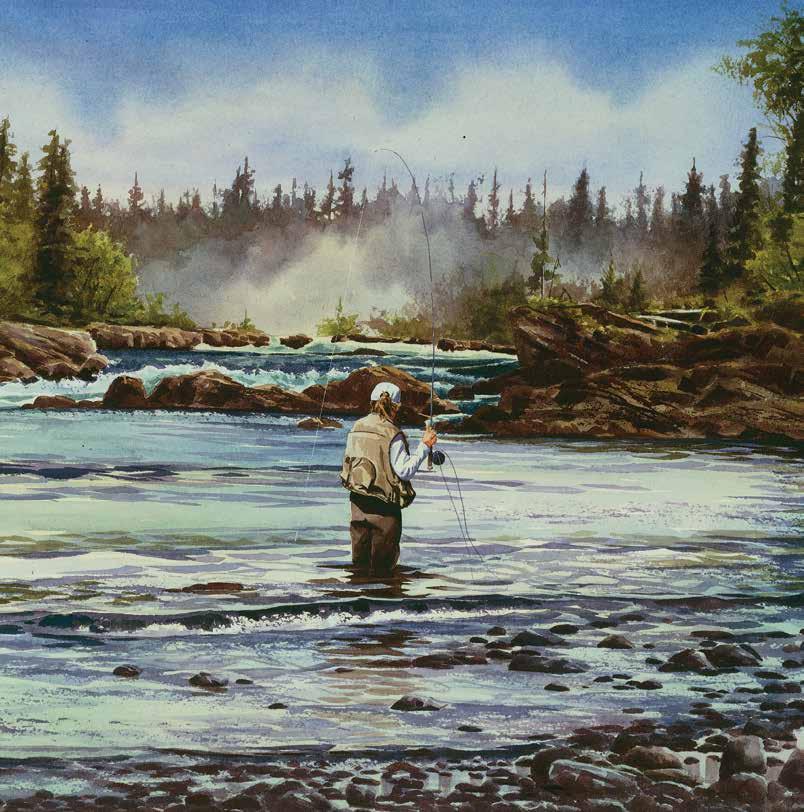
She made the cast, hesitated, and I saw her mend once out of the corner of my eye. “Fish on!”
BY MAGGIE HEUMANN
Most anglers learn early to “match the hatch,” but the deeper truth is far more interesting: trout aren’t just eating insects—they’re responding to specific behaviors, many of which are largely invisible from above the water.
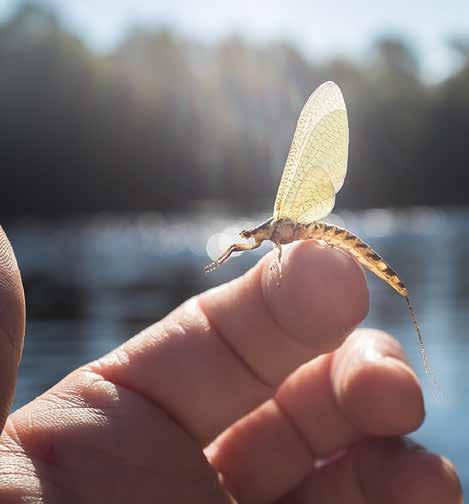
When aquatic insects molt—scientifically known as ecdysis—they become especially vulnerable. Their new exoskeleton is soft, pale (white in many cases) and flexible, and may take hours to fully harden in a process called sclerotization. During this window, the insect is essentially defenseless. It’s one reason why a nymph pattern in the same size but a lighter, more translucent shade, can suddenly outperform everything else when nothing is happening on the surface. Trout aren’t just seeing species—they’re seeing condition.
Another commonly misunderstood idea is that hatches “move upstream.” In reality, temperature moves upstream, not insects. Emergence happens wherever conditions are right, which can mean all at once, in patches or even out of sequence depending on the system. While headwaters generally warm more slowly, groundwater inputs, spring creeks, tailwaters, side channels and even deep pools create microclimates that break any simple rule. To an insect, the river is not one uniform system, but a mosaic of localized microclimates.
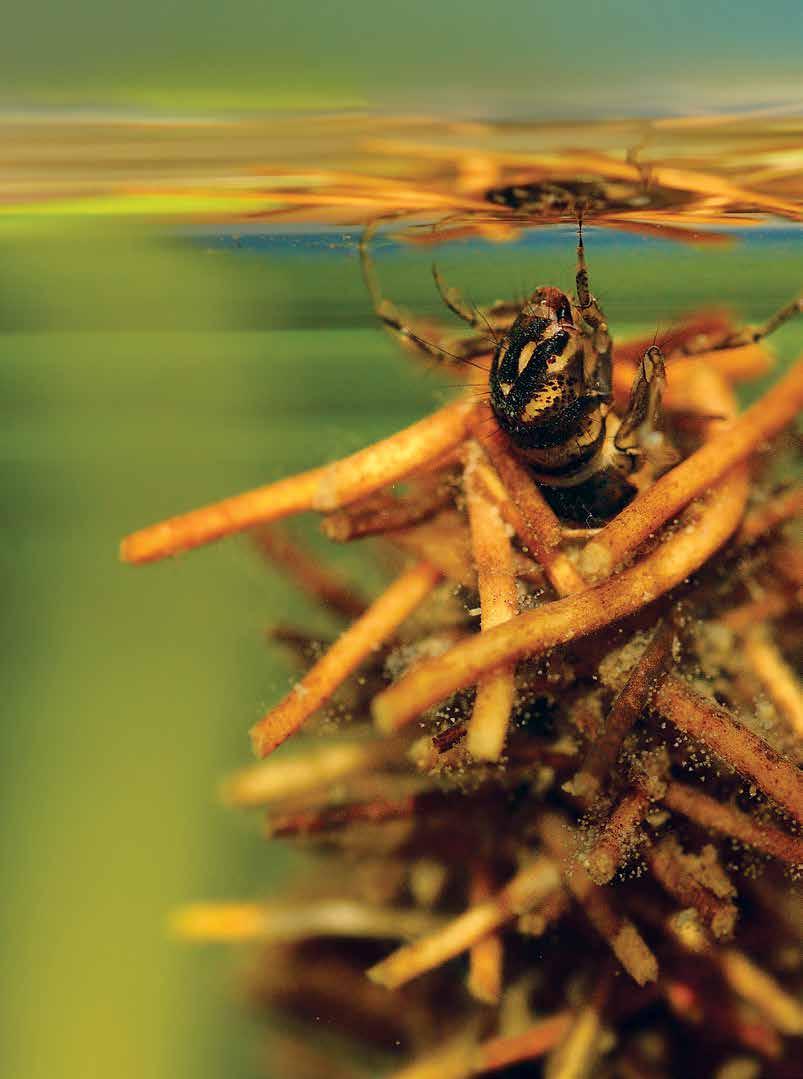
Drift is central to how trout feed, but not all insects drift passively. Take caddisflies, one of the most important food sources nationwide. Net-spinning species l i ke Hydropsyche actually swim toward the surface in short, darting bursts, often emerging mid-column before reaching the film. This is precisely the behavior imitated by classic soft hackles. When swung or lifted
at the end of a drift, their sparse, mobile fibers mimic the pulsing movement of a real insect far better than a dead-drifted fly. Their effectiveness over centuries isn’t accidental—they replicate motion, not just appearance.

Even more surprising, species like Brachycentrus (Mother’s Day caddis), Glossosoma (Saddle-case Makers), and Rhyacophila (Green Rock Worm) don’t just touch the water to lay eggs—they dive completely underwater, sometimes repeatedly, crawling along the bottom before returning to the surface. This creates a second, often overlooked feeding event after the visible hatch fades.
Ga ry LaFontaine’s Diving Caddis was designed specifically to imitate this behavior, and anglers who continue fishing subsurface during this phase often find trout feeding more confidently than they were during the hatch itself. Because adult caddis have hair on their wings (Trichoptera literally means hair-wing), soft hackles make another valuable imitation to have in your box.
Some caddis don’t behave like typical prey at all. Rhyacophila, the bright green “rock worm,” is a free-living predator that actively hunts other insects rather than drifting. Trout recognize this dif-
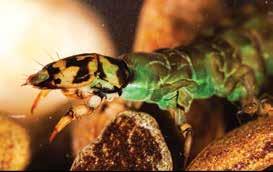
ference. Patterns that incorporate subtle movement—whether through current, rod tip or swing—tend to outperform perfect dead drifts because the real insect isn’t passive. It moves with intent.
Mayflies add another layer of complexity. Blue-winged olives (Baetis) are famous for hatching in poor weather, but many emerge below the surface and never fully break through the film. Trout
key on these failed or struggling insects rather than the adults that escape. This observation led directly to patterns like the RS2 and Barr’s Emerger, which imitate insects caught midtransition—arguably the most vulnerable moment in their life cycle. Similarly, PMDs (Ephemerella) often become trapped in the surface film, which is why lowriding patterns like the Sparkle Dun, with its trailing shuck, frequently outperform high-floating dry flies.
Not all insects follow the current. Isonychia nymphs are strong swimmers that move laterally across currents, forcing trout to intercept them rather than simply sip them from the drift. This helps explain why swung flies can be highly effective even during mayfly activity.
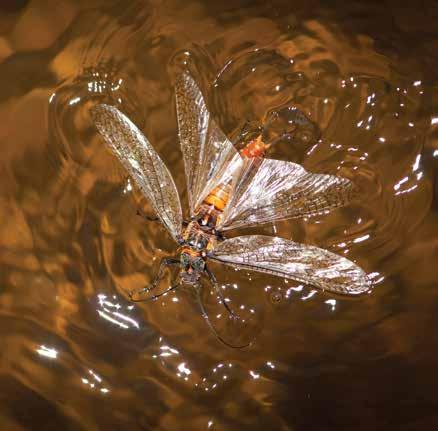
Stoneflies challenge another assumption. Salmonflies (P teronarcys) don’t emerge in the water—they crawl onto shore to hatch. For trout, this shifts the key feeding windows to the pre-hatch migration of nymphs toward the banks and the later egg-laying flights of adults that return to the water. Fishing tight to shore before a hatch can be far more productive than casting mid-river, even when no adults are visible. Fishing a few days before a hatch can be even more productive—another great reason to keep your own notes or log on hatch timing.
Even the smallest insects reveal overlooked behaviors. Midge pupae often stall mid-water column during ascent, suspended by tiny gas bubbles. Trout may ignore both bottom and surface, feeding instead within a narrow band of water only inches thick. Without recognizing this, it’s easy to fish above or below actively feeding fish. Depth matters!
Perception matters too. Larry Solomon’s Delta Wing Caddis was developed after recognizing that adult caddis don’t present a flat silhouette from below. Their wings form a tentlike, triangular profile that alters how light passes through them. Trout see that silhouette—not the detailed wing

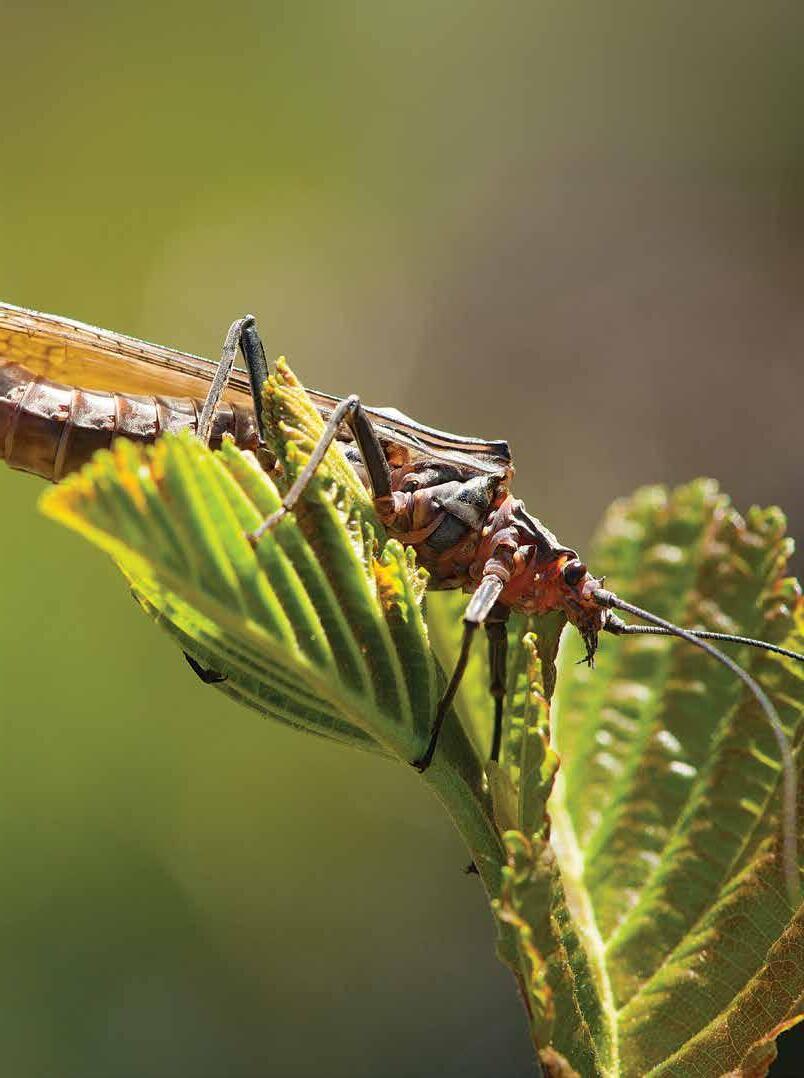
SALMONFLIES ( P TERONARCYS ) DON’T EMERGE IN THE WATER— THEY CRAWL ONTO SHORE TO HATCH. FOR TROUT, THIS SHIFTS
THE KEY FEEDING WINDOWS TO THE PRE-HATCH MIGRATION OF NYMPHS TOWARD THE BANKS AND THE LATER EGG-LAYING FLIGHTS OF ADULTS THAT RETURN TO THE WATER.
WHETHER IT’S A CADDIS SWIMMING UPWARD, A FEMALE DIVING TO LAY EGGS, A MAYFLY FAILING TO EMERGE OR A NYMPH CROSSING THE CURRENT, TROUT ARE KEYED NOT JUST TO FORM, BUT TO BEHAVIOR.
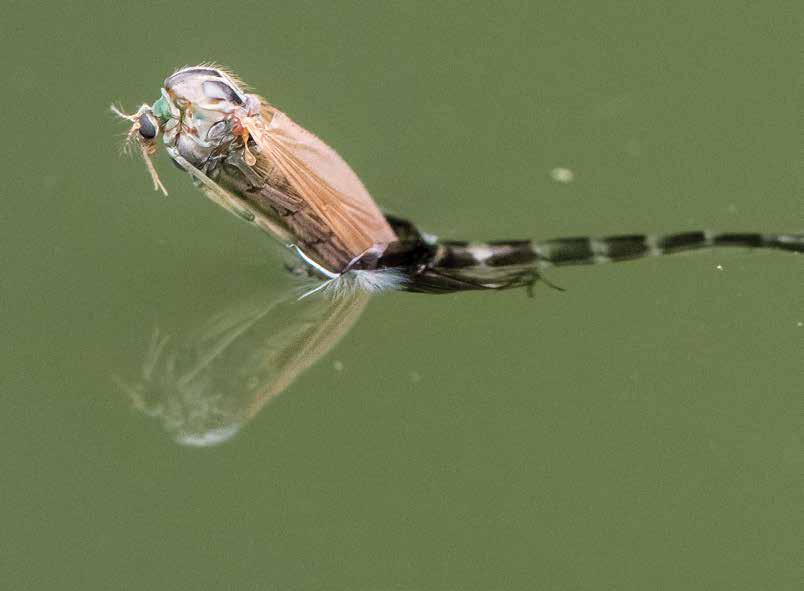
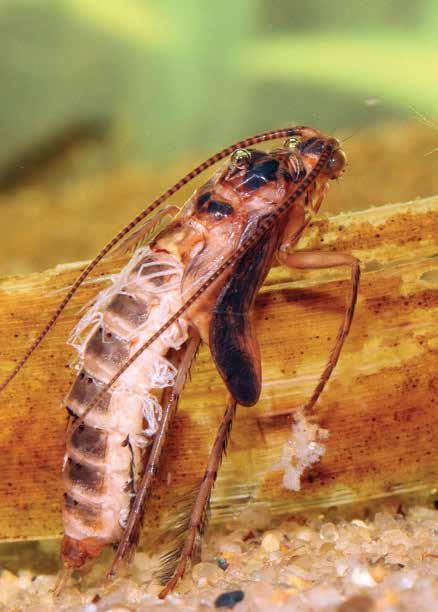
structure anglers tend to emphasize. By matching shape rather than ornamentation, the Delta Wing reflects a broader shift in fly design: imitating what trout actually perceive.
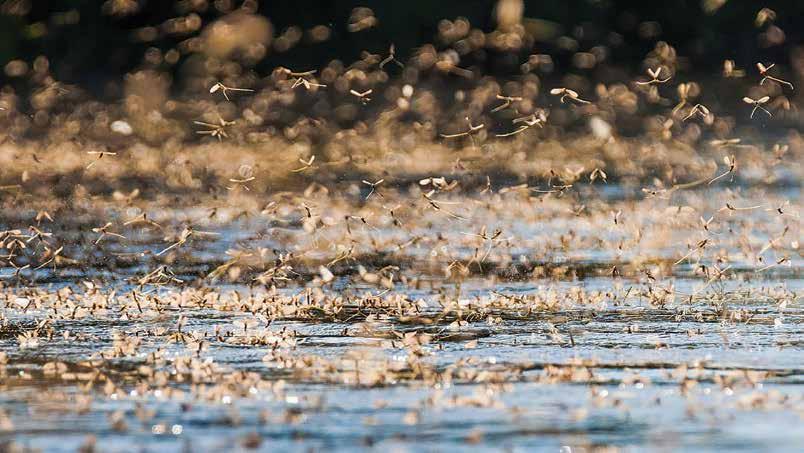
Perhaps most surprising is how dynamic insect populations really are. Many mayflies and caddis intentionally enter the drift as a form of migration, especially in low light. Others disperse widely as adults—Hexagenia mayflies have been documented flying over a mile before returning to lay eggs. In practical terms, a trout may be feeding on insects that originated far upstream—or even outside the immediate reach.
In many species, females fly upstream to lay eggs after drifting downstream as larvae, helping repopulate headwaters. Some even select sites that act as biological refuges, ensuring persistence after catastrophes like floods or drought. Eggs may remain dormant or protected in substrate, a process known as colonization compensation. It’s also why you find healthy insect populations in ephemeral streams.
The idea is simple but profound: the most effective flies don’t imitate insects—they imitate what insects are doing, especially when they’re vulnerable. Whether it’s a caddis swimming upward, a female diving to lay eggs, a mayfly failing to emerge or a nymph crossing the current, trout are keyed not just to form, but to behavior. Understanding that shift—from imitation to interpretation—is what turns observation into consistent success on the water.
Join me and The Salmonfly Project by sharing your observations or participating in community surveys—turning your time on the water into meaningful conservation and restoration across the West.
Learn more about The Salmonfly Projectat salmonflyproject.org/

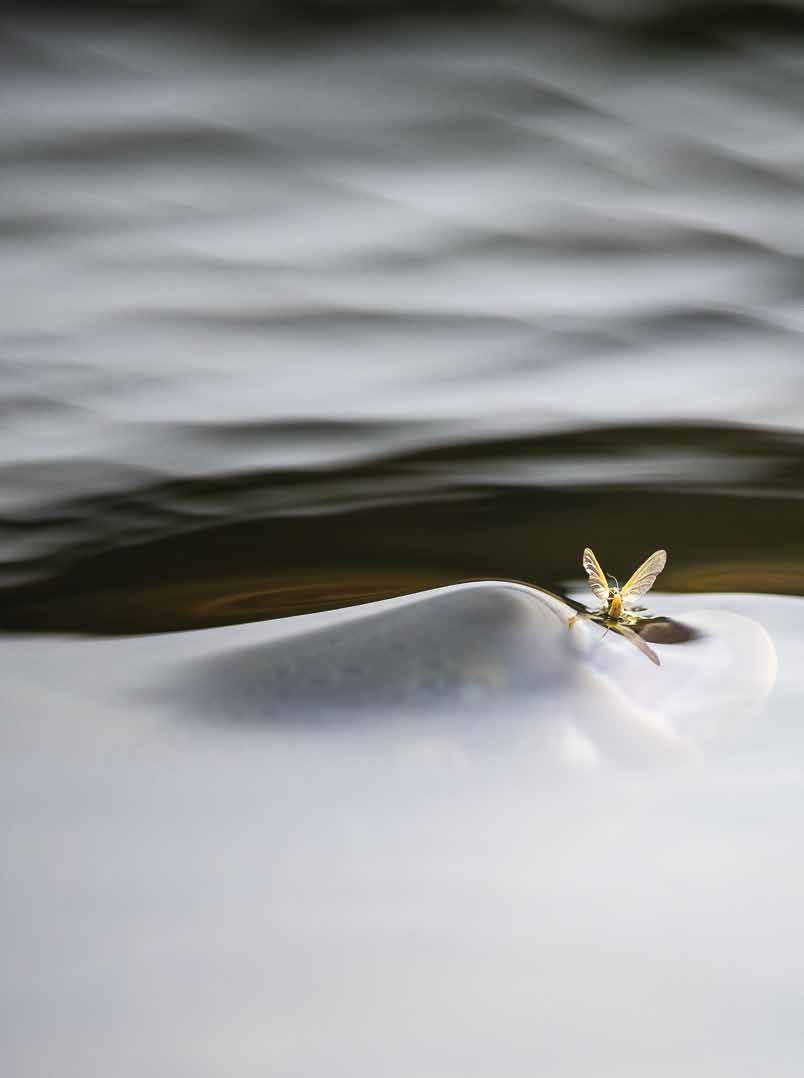
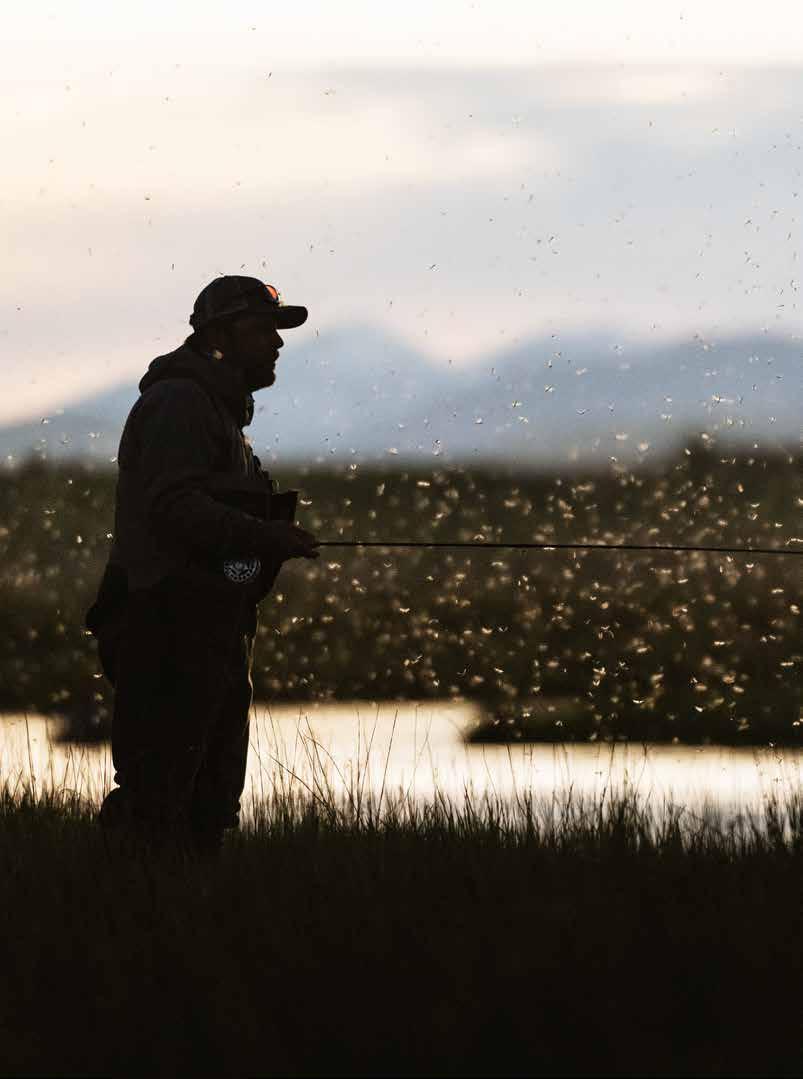
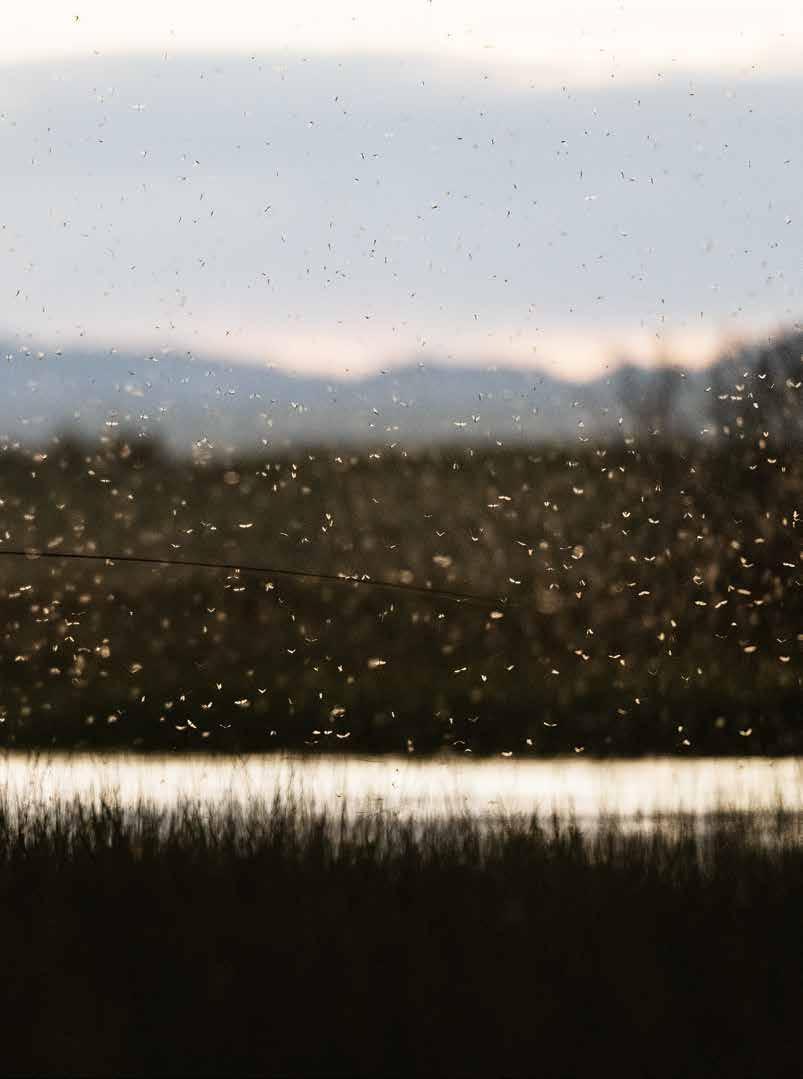
(love ‘em while they last)
BY KIRK DEETER

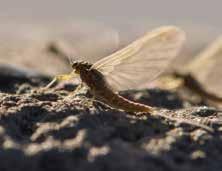

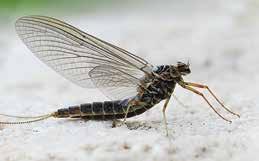

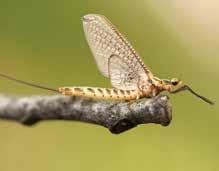
There’s something in fly fishing for everyone. Pick your flavor.
Streamer fishing brings out the predator in trout. Nymph fishing— particularly Euro nymphing—is often described as three-dimensional chess.
I’ve always found it fascinating to watch trout eat flies off the surface. To me, dry-fly fishing is biology-based trickery at its best. It makes me feel in sync with an ecosystem.
Of course, that all starts with being in the right place at the right time. Then it’s about knowing the bugs, a.k.a. matching the hatch, sometimes right down to size, color and profile. Of course, you must make the cast, which isn’t always easy when the heads are popping and your knees start knocking. And last, maybe the most underappreciated part of the equation, you must make that bug look like a bug. Whether that means skittering on the surface or drifting at the mercy of the current, presentation is what usually seals the deal.
The thing is, when it all lines up perfectly, the memories you’re left with are less about the casts you make or the fish you catch. It’s about the event itself. The happening. They say, “the tug is the drug.” I would humbly add that “the hatch is the happening.”
I once got so fixated on hatch happenings that I started chasing them, like storm chasers race after tornadoes, or surfers might chase the optimal beach break in an “endless summer.”
I remember many of them as if they happened yesterday. Sadly, in some cases I have yet to re-experience hatches of the same mindblowing scale that I remember. But some, fortunately, are steady like Old Faithful… you can almost set your calendar by them.
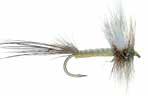
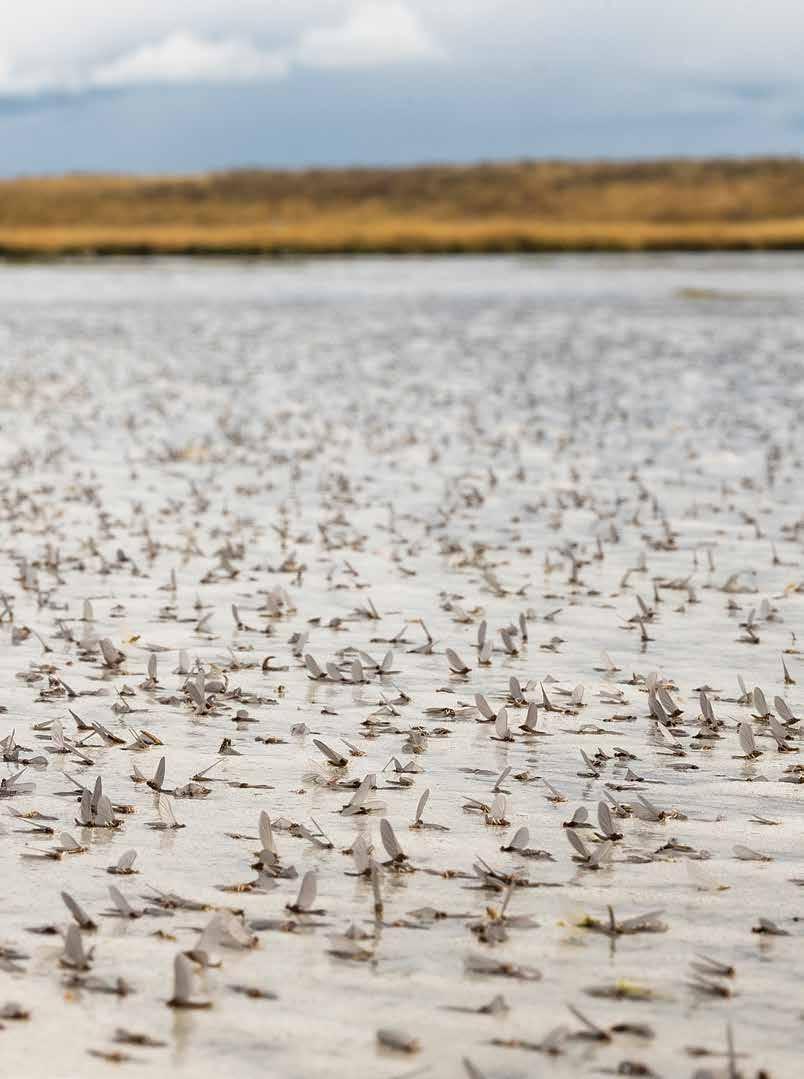
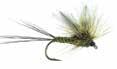
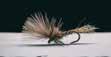
Midges on the Bighorn. Mats of tiny bugs so thick, you could float a bottle cap on them (or so it seemed). Rather than mess with tiny single-bug fly imitations that would only frustrate the average angler, guide Dan Stein had a trick up his sleeve. Tie on a size #14 Blue Dun and cast it a few feet farther upstream from the target fish. Let the naturals raft up on the fly as it drifted, and by the time it was in range, it was a meatball of bugs—an offer the average trout could not refuse.
Blue-Winged Olives at Deckers, Colorado, on the South Platte River. That river is so pressured and the fish are so smart you’d think it impossible to catch them on anything but a tiny nymph you bonk them on the head with. But in the autumn, that first wet snowfall with silver-dollar-sized snowflakes dipping into the river still elicits a hatch of BWOs that will bring the river to life. Just when you think there aren’t many fish, or they won’t eat dry flies, the river literally starts to bubble.
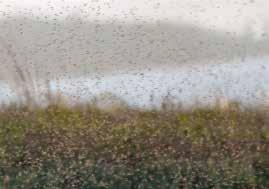
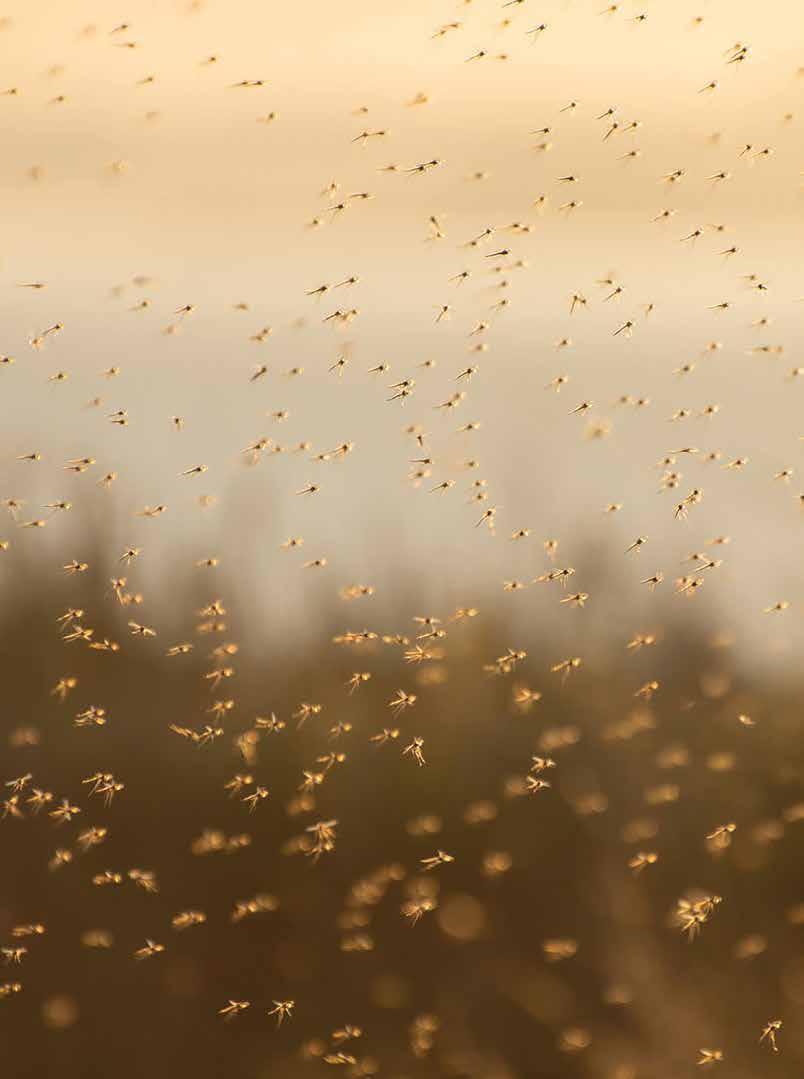
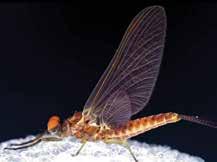
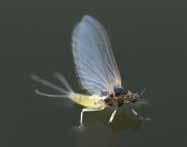
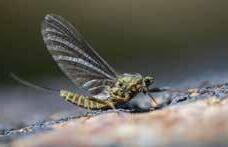
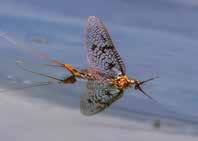
Gray Drakes and Hexes on the Pere Marquette in Michigan (and many places in the Great Lakes region). This is usually a June thing. The Hexes are often the main course, and the happen late in the evening, often after dark. Hexes can be so thick, Doppler radar picked up a cloud of bugs on the Minnesota-Wisconsin border that looked like a line of rain showers. Fishing to slurp sounds is fun, but watching a Gray Drake spinner fall might be even better, just because it’s more visual.
T h e y s a y, “t h e t u g i s t h e d r u g.” I w o u l d h u m bl y a d d t h a t
“t h e h a t ch i s t h e h a p p e n i n g. ”
W h a t e v e r y o u r f a v o r i t e h a t c h,
u n d e r s t a n d t h a t t h o se a r e
f r a g i l e p h e n o m e n a n o t o n l y
w o r t h a p p r e c i a t i o n b u t a l s o
w o r t h p r o t e c t i n g a s m u c h
a s w e p o s s i b l y c a n.
Keep looking up! But I haven’t seen Gray Drakes on my home river in Michigan in at least 10 years now. I keep hoping and remembering.
Hendricksons on the Upper Delaware River (April). This is another hatch event that brings rivers to life and surprises the angler who doubts there are many fish at all. I’ve found that when the Hendricksons are really going, the larger trout are actually selective about the bugs they choose to eat—like picking morsels off a platter. I think they like the vulnerable bugs best, so I usually lead with a cripple or emerger pattern.
Mother’s Day Caddis on the Arkansas River around Salida, Colorado. Although in recent years it seems like more of a “Tax Day Caddis” event that happens in mid-April, and if you wait until mid-May you might miss it. This is one hatch where I do better fishing upstreamdown and casting dry flies at angles toward the banks. Caddis flies often naturally face upstream, and a little skitter here and there also helps.
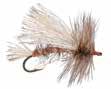
Tricos in August on the Missouri in Montana. Those dog days of summer can be hot and lend themselves to hopper fishing most afternoons. But if you get on the water early those big plumes you see rising like smoke tendrils from the eddies at the riverbank are Tricos (Tricorythodes mayflies). While they are little buggers, guide Pete Cardinal once taught me that a size #18 H&L Variant will do the trick if you get the right drift on it, and better yet, time your casts to match when the foam lines in the run form hard seams that collect the bugs.
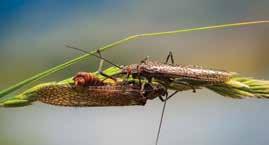
Salmonflies… Stoneflies… Whatever, wherever, whenever. Rock Creek, Montana. The Madison. Gunnison River Gorge, Colorado. Deschutes River, Oregon. Usually, a late May into mid-June thing, and fishability very much depends on the runoff situation and water levels. But when you’re throwing floating flies as long as your pinky finger and watching ambitious trout slam them off the surface, it’s hard to argue it gets any better than that.
Unless, of course, you’re talking about drakes. Brown Drakes or Green Drakes on the Henry’s Fork, Green Drakes on the Taylor or Frying Pan in Colorado. A nice soupy, rainy day will often trigger an armada of flies that literally look like little sailboats as they wash downstream before lifting off the river surface. Wherever you find a drake hatch, you find dry-fly heaven. (The best drake hatch I’ve ever seen, interestingly, didn’t happen in the U.S. at all. It was a hatch of Ephemera Danica mayflies on the River Test, the famous chalk stream in southern England.)
The list goes on, and on. Sulphers in the Driftless Area… Pale Morning Duns on any number of western tailwaters or freestones… Callibaetis on the Madison Arm of Hebgen Lake or the South Park Lakes in Colorado (Spinney, Elevenmile, etc.)… Mahogany Duns late summer and early fall… October caddis…
Whatever your favorite hatch, understand that those are fragile phenomena not only worth appreciation but also worth protecting as much as we possibly can.
May we all chance upon at least one wonderful hatch happening in the weeks and months ahead.

BY NICHOLAS BLIXT
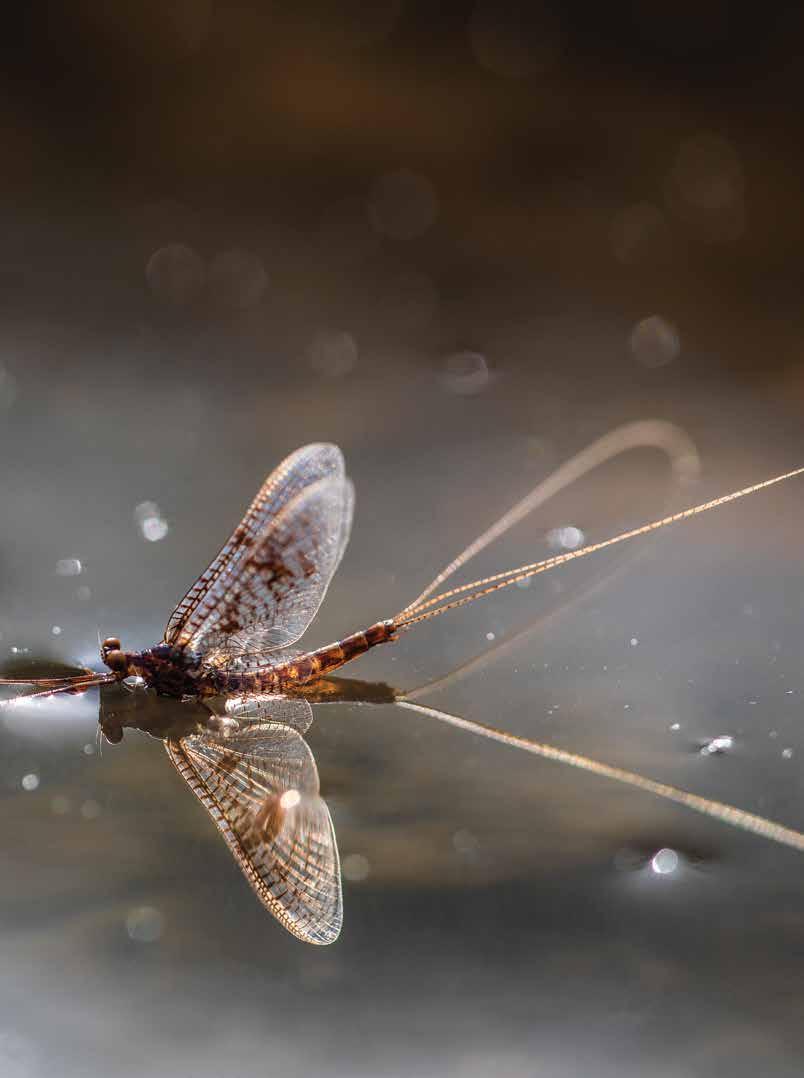
In July 2024, I called journalist and author, Robert O’Harrow Jr., to introduce myself. I expected a short, straightforward conversation—Bob was working on a book for Patagonia titled The Message of the Mayflies, and in my role at the company, I would support the launch and roll-out. I carved out a half-hour and walked outside, only to return two hours later and far more concerned than when I had left.
As anglers, we’re used to existential threats to wild fish and clean water. Dams are easy to visualize, as are the threats they pose—obstacles to fish passage, accumulation of sediment and toxins, unnatural blemishes on a landscape where an otherwise free-flowing river should run. The systematic decline of bugs, on the other hand, was a quieter form of sinister, and Bob couldn’t have painted a clearer portrait of it.
I didn’t have much of an excuse for ignorance. I had read articles, even worked on them, such as Stephen Sautner’s 2023 piece for Patagonia, “Dude, Where’s My Hatch?” that clearly spelled out the widespread decline in global insect populations. But when the baselines are either unknown or hard to measure, when the culprits are amorphous, it’s easy to see Green Drakes return in June and subconsciously trick yourself into thinking that it all might be OK.
My conversation with Bob didn’t leave room for self-assurances. With each question I asked him about the book and his research, he responded

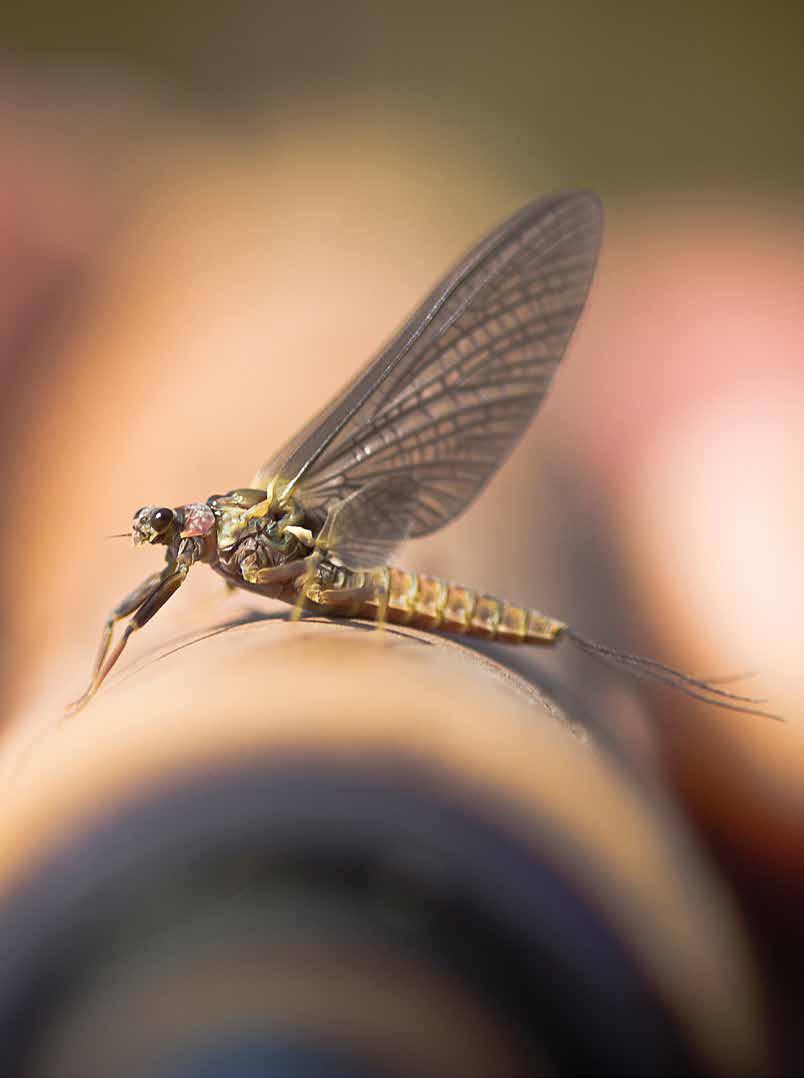
But when the baselines are either unknown or hard to measure, when the culprits are amorphous, it’s easy to see Green Drakes return in June and subconsciously trick yourself into thinking that it all might be OK.
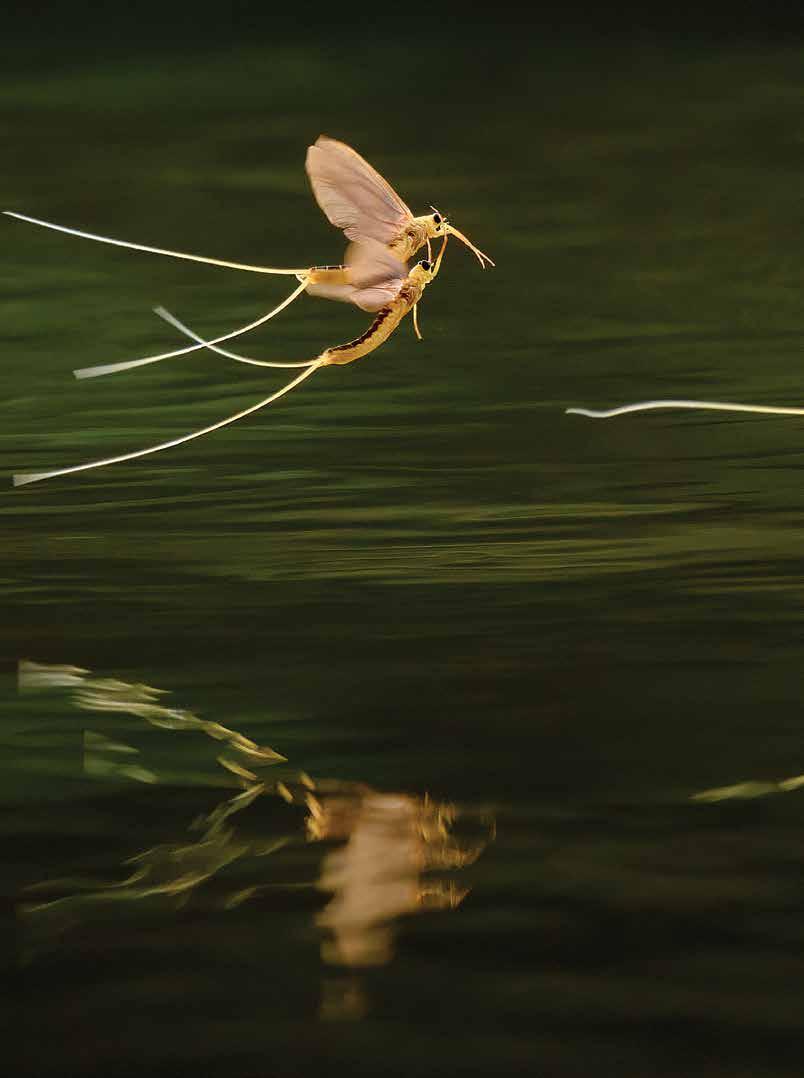
He chuckled when I told him I had always wondered how a mayfly in Argentina could look so similar to one in Montana. To think that these species could remain largely unchanged for hundreds of millions of years, only to be undone in the last hundred years by us.
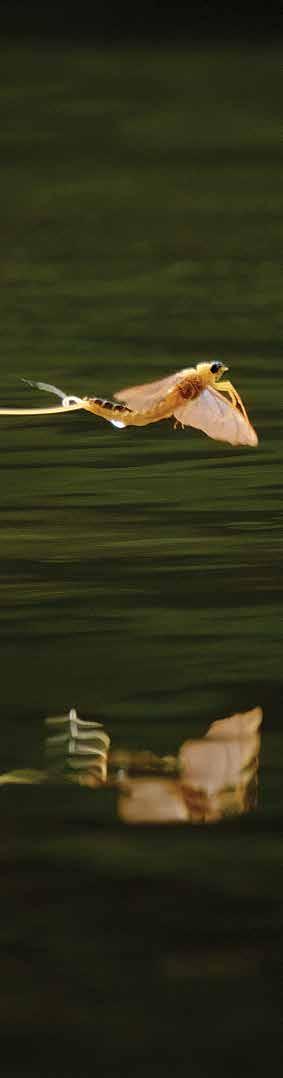
in the way only a veteran investigative journalist could—thoughtfully, confidently and primed with both data and sources. His innate curiosity came through as both a seasoned angler and a lifelong student, and we veered naturally between discussing the mutual places we loved to fish and the plight of the delicate mayfly species that made those places so special.
We talked about the ugly things: neonicotinoids, a form of neurotoxin widely known to impair bug life, and a primary target in Bob’s book. But we talked about the beautiful things, too: Pangaea and the central origin of the oldest winged insects on Earth over 300 million years ago. He chuckled when I told him I had always wondered how a mayfly in Argentina could look so similar to one in Montana. To think that these species could remain largely unchanged for hundreds of millions of years, only to be undone in the last hundred years by us.
After apologizing to Bob for the umpteenth time for taking up so much of his afternoon, I said goodbye. I spoke to him again later that fall as he continued to work through the project, but just a little over a month later, I received news that he had passed away from cancer at the age of 64. The community felt his loss profoundly, as did I and every individual I spoke with who had known him. And the book, though well underway, remained incomplete without a clear next step forward, marooned without an incredibly specific individual who could pick up the torch and do justice to Bob’s legacy.
Fortunately, that “incredibly specific individual” not only existed—he could not have been closer to home. Andy Becker is a lifelong writer and journalist living in Utah, and you’ve probably read his work both inside and outside of the angling world. But just as importantly, he was a longtime colleague, mentee and close friend of Bob’s. He traveled around Utah with Bob during the early research for the book, fishing the Provo and the Green River, and he acted as a sounding board as Bob worked through early drafts of several chapters. Before I heard about Andy, I wondered if this important story would or could ever be fully realized. Now, I can’t imagine anyone else taking it across the finish line, much less in a way that honors Bob and pays tribute to the foundation he has already laid.
The Message of the Mayflies likely still has a few years before publishing. But it gives me solace that it will in fact come to life and that Andy will bring Bob’s final, important message to a world that often forgets the little things, let alone the mayflies. The call to action could not be more urgent, as Andy puts it best himself: “Responsibility, for many of us, may trigger a reflex to find an easier path. But it’s the soul searching, hard work and collective action that needs to happen if we’re to turn course for our home, our planet. Bob was not one to wag his finger or decree musts, but the tragedy of the commons simply cannot be our default setting. We need to do our part, make the investment and use our voice, individually and collectively. The hour is getting late.”
BY KEN ANDRASKO
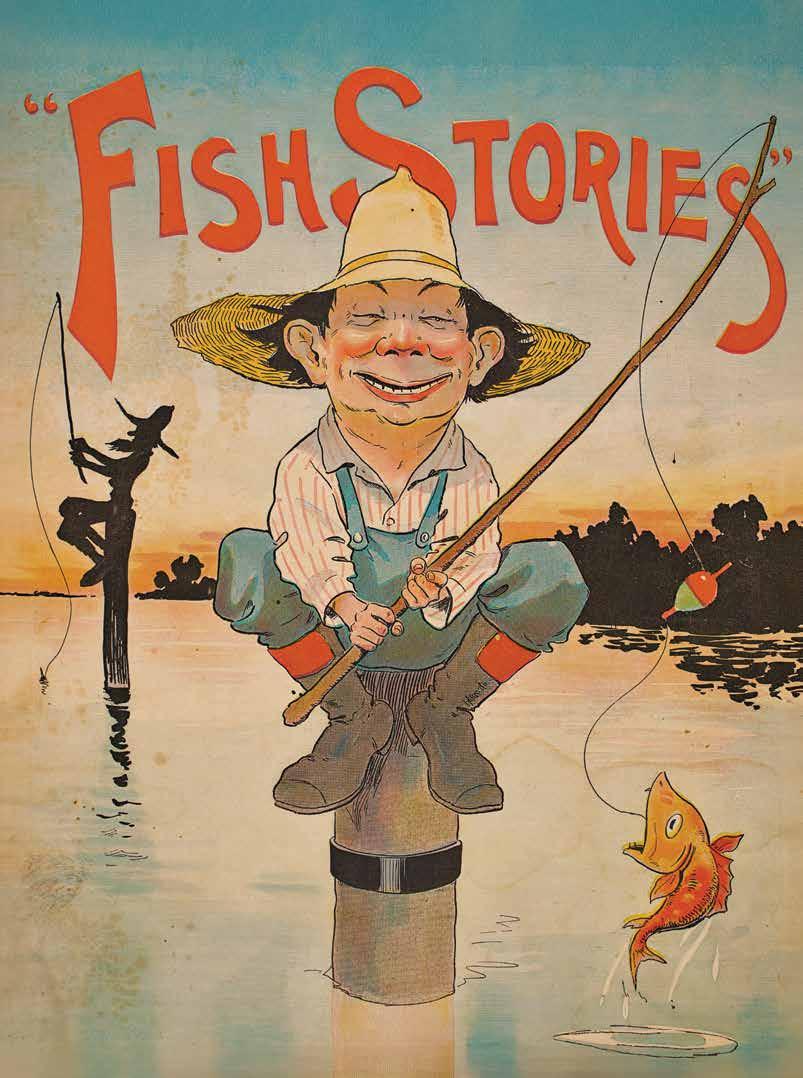
“Good evening to our radio audience!
People call me Rich “Too Tall” Teller, broadcasting live on WFLY radio out of Ely, Minnesota. This is a big night—the candidate selection competition for Ely’s famed Elysian Waters Home for Broken-Down Anglers. WFLY is waiting for the crowd to gather here in the Elysian Home’s dining room, to call the play-by-play as the Home’s members select a few anglers to join this unique assisted living community. And I’m honored once again to perform the Master of Ceremonies duties when the event commences.
“For you listeners out in radioland, you may recall from my prior broadcasts for WFLY, that yes, I competed and qualified for a bedroom and tying-bench package in the Home during the 2019 competition. I still live in this classic North Woods lodge filled with angler friendships and a small number of working wheelchairs. Stories are as old as language, naturally, and may have sparked its very invention. But I want to clarify right up front a question I’m often asked: no, I cannot certify the veracity of each tale told here. Each speaker is left to grapple with that moral challenge on their own.
“It’s a shame you can’t observe some of the pageantry in the room, the slow parade of white-haired anglers limping into the Home’s dining hall, holding raffle tickets, paper plates of pepperoni pizza and cans of Schell’s beer. All members of the Home sport gaudy digital-camo ribbons pinned onto their matching azure fishing shirts. Alright, it’s about time for me to switch over into my Master of Ceremonies role for the assembled audience.
“A big Minnesota hello, members and friends, as we kick things off! Once a year our elected leaders solicit new candidates to join the Elysian Waters Home—and that’s tonight! We have a stellar class of applicants ready to compete in the entrance rituals we’ve used for 40 years to find folks with outstanding credentials in both the craft of fly fishing and the art of storytelling.
“Let’s wade right in. Candidates must succeed in three challenges. The traditional first challenge is our January Dark and Rainy Northern Ohio Steelheading Test. Each candidate will climb into the safety-glass former telephone booth, then
we turn on the cold shower rigged in it and dim the light way down. When our starter, Duncan Caddis, well known for his dry-fly tying recipes that never seem to float properly, shouts ‘Go!’ each contestant will try to thread a fly line through the rod’s ferrules and tie a leader and a fly on to it, both with a Perfection Loop Knot—cramped in the freezing rain and dark just like steelheading! You’ll be able to watch the fun through the special one-way night-vision glass we installed, as each contestant tries to get the knots right, and then holds them up to where they think the judges can see them.
“Our second challenge is our Fly Spec Test. Each contestant will see the name of an obscure dry fly flash on our screen, and then has five minutes to find two of those flies in our cluttered 1940s fly box crammed with vintage dried-out flies—without magnifying glasses. Candidates need to tie two of that exact fly onto three feet of fresh 6X tippet, then tie those tippets onto the two leaders provided, all using Blood Knots.
“The third challenge is the crowd favorite—the Convince Us It Happened Storytelling Contest. Tell us your best tale of ‘The Time I Barely Landed a Big One’ or ‘How I Saved a River.’ This year, we are starting with storytelling, since last year the winter steelhead test induced such severe hypothermia that candidates slurred their stories incoherently. Five experienced judges will do the scoring, and Price, Waterhouse will audit the proceedings.
“Let’s start with three candidates. Please welcome our first, Whyte Pesca, who some of us call, ‘Tippet.’ Tell us the title of your story, then let it rip.
“For the radio audience, I’ll quietly note that ‘Tippet’ exudes grace and fitness for his age, but is walking to the podium with a rolling gait—probably some insult from years on the waters. He appears ready to begin.”
“Hullo, I’m Whyte Pesca, but everyone calls me ‘Tippet’ or sometimes ‘7X,’ ‘cause I tend to knock things over a lot, and love to fish with lightweight line. My story is ‘The Man Who Forgot How to Cast.’
“Me and my pal, Budd, followed sketchy deer trails past Wilderness Bay last season ‘til Budd settled at the first pond.
I edged west, threaded my fly rod near a pine tree, and noticed a glint in a coffin-like channel that might be a nice fish. Then I stood there, motionless, considering it. For minutes. Then stared some more. Time continued passing. I observed my right hand holding the rod, was able to focus on the fly in my left hand attached to it, then back at the fish in the channel. But absolutely nothing occurred to me—I drew a total blank, and couldn’t figure out what to do next!
“Well, eventually a tiny brainwave fluttered, hinting something about the rod. I peered at the rod and line quite a while, though nothing else came to mind. After a while I noticed I was here, the rod was there, and the pond with the fish was in front of me, so something needed to happen to connect these geographies. Tentatively, I adjusted my rod backwards with a lurch and promptly wrapped the entire leader and line around a young pine tree.
“Paralyzed, needing help, I realized Budd was nowhere to be seen. Unquestionably the fly and leader had spun a spider’s web round the tree, but no cognitive sparks occurred hinting what to do about it. Finally, I began dragging my rod back toward the tree, thus entangling the entire fly line among scratchy blueberry bushes. Later, the brain fog cleared enough for it to dawn on me to do something, so I cut off the whole leader.
“Juggling rod and leader and tippet spools back to the bank, I noticed that miraculously the fish was still holding place in the channel, and watched it shift slightly to stare... right... at... me. Absolutely no other movement. Not breaking eye contact. Immobilizing me. Suddenly a dog started barking furiously, coming closer. An intense gray-haired woman appeared, toting an aggressive wolf-dog wedged into her backpack which spat tooth-bared growls on cue from his mistress. Weirdly, she walked right up to me, hurled several large rocks into the pool in spite, and howled, ‘I never liked fishermen and neither does my dog, so I brought him over to see you!’ Totally startled, I punched the freshly sharpened fly hook into the fatty part of my left hand. Reflexively yanking back, a ridiculous amount of bright scarlet blood spurted all over the fly, then liberally sprinkled my new Simms shirt—converting it into a proud second-grader’s art project.
“That darn fish kept didn’t even blink and was gawking straight at me, until it gradually turned downstream. Seeing that movement, I did the only thing any self-respecting angler who forgot how to cast and had grievously injured himself would do—I instinctively catapulted off the bank in my best Olympic swimming start, left hand outstretched and rod flailing in right, and seized that fish as I landed in the pool!
“After crawling out and collapsing among the blueberries, my previous leader decorating that pine tree like Christmas ribbon and a fish in my hand, I realized I forgot something utterly fundamental to what we do—I forgot how to cast. Gradually a thought somehow crystalized out of the air just above me like a cartoon bubble, which seemed to say what I really forgot was why I fish and love rivers—they are always full of surprises.”
“Whoa there, Tippet—all this audience hooting ‘n hollering is celebrating what a whopper of a North Woods tale that was. It had a little of everything except Paul Bunyan! As you folks out there calm down a bit, I’d like to note that humans have been storytellers since prehistoric times. The Lascaux Caves in France are decorated with 20,000-year-old paintings of bison hunts that say we were there, and this is what we did. OK, next up is a Ms. Reine Bowe. What is the title of your story?
“For the radio folks listening out there, this is ‘Too Tall’ again. The audience here is watching an elderly woman wearing what looks like a faded Cabela’s shirt, gray braids and quiet confidence approach the podium.”
“‘I Always Wanted to Be a Nun.’ That is a simple statement of truth. And it’s also the title of my story. I’m Reine Bowe.
My father was a deacon in the church, so every Sunday afternoon we tramped the dark hemlock forests of the Youghiogheny R iver near the western Maryland-Pennsylvania state line. I planned to give something back to the hills and people there by serving the church. But one day paddling through mountain laurels on the upper Yough, we met a father, mother and son trout fishing together at an isolated limestone pool. Observing their silent unity, I realized there could be many ways to nurture nature. Eventually I discovered a network of riparian restoration activists and converted to the rewards of conservation.
“I devoted my long professional life to slowing the decline of our fisheries. My hair continues to gray, my hands hurt from decades of dragging coarse woody debris into streams to slow the current, but it’s been a salvation.
“Over time, I trained as a fishing guide. One trip the river gauge was too high, and we smashed the raft into a house-sized rock midriver on the Yough, throwing me out of the boat midair onto the riverbank, where I fell into the mouth of a limestone grotto. Dazed, collecting myself, I realized the entire grotto was bathed in amber candlelight, reflecting off stalactites and pools of water across the floor of a vast interior landscape, like Renaissance paintings of Biblical miracles. Transfixed, deep in the cavern, I am almost certain I encountered, for just a moment, an image of Jesus wavering on an infinite wall of dripping calcium pillars. It glowed only an instant but was transformational for me.
“Maybe catching brookies and rainbows is not the point. Helping them survive can be a way to give meaning to your own existence, though I don’t recommend falling into any grottoes. While we did catch a few of those beauties, the rest are still out there.”
“Well, Reine, I’m supposed to MC this thing, but frankly don’t know what to say. I’ve still absorbing your experience. Let’s wave our last storyteller in this round up to the podium. I think it should be Sven, that big man in a Carhartt tobacco-colored field jacket over there—can an usher bring him up?”

“Hello anglers! I call my story ‘No mas! The Big One That Got Away.’ I am Sven Johannson. Some try to call me ‘Lutefisk,’ but only my best fishing partners get away with that. I’ve always wanted to fish the Alaskan wilds. A year ago, two Minneapolis pals and I hired a floatplane to fly into remote Lake Iliamna, west of Anchorage. The bush pilot strapped our inflatable kayak carry bags onto the pontoons, which amazingly survived our crash landing into the willow bushes and cobble sandbar of the Kvichak River.
“On the second day, I was thrilled to hook a monster sockeye salmon from my kayak. But almost immediately I became very concerned that salmon’s power could haul me off into the deep à la Moby Dick. By standing up in the kayak I could slow the beast and see ahead—though I was water skiing behind a salmonid jet ski in a narrow glacier-fed river.
“Suddenly a moose crashed out of alders, terrifying both me and the sockeye, which desperately thrashed three laps around a rocky isle as I kneeled, grabbing the kayak’s cockpit, melding my right hand into the rod’s cork handle so tightly the finger grooves are still there. Just after smacking the kayak on the shoreline beneath a spruce tree, a disorienting splash! deposited a grizzly bear cub right next to my kayak, who was now wildly doggy paddling off towards its infuriated mother on shore, who had already cannonballed into the river towards her cub, shocking the salmon into hyperdrive right into a beaver dam of mud and peeled sticks poking out like a porcupine greeting a fox.
“The commotion roused a very angry beaver which promptly sallied out, smacked its leather tail with a crack so astonishing
Maybe what we are hearing tonight is the universal need to celebrate and share our struggle. Otherwise, any magical constellation of people and events simply fades away.
the exhausted fish threw itself up onto the beaver lodge and collapsed on its side hyperventilating just as I arrived, entangled in fishing line and dragging a ruptured kayak. Mr. fish’s glassy concussed eyes could barely focus, but it croaked out what I swear I heard as: No Mas!—no more!
“Well, that fish and I sat there until we both realized big bad Momma Grizz and junior were bounding aggressively towards us. In a panic I clipped the tippet and threw that salmon off into the rapids just below the beaver dam, cut three or four twists of bright-yellow salmon line wrapped around my leg, and took off sprinting towards the fishing lodge—practicing spontaneous catch and release ethics by instantaneously ditching my salmon, my deflated kayak and my pride back into the Kvichak River.”
“Whoa, Sven! That humdinger was as big as Alaska, and just about as tall as you are! Our judges will struggle all night scoring it! Before we take a break, I’d like to share a personal view. Listening to these stories reminds me that the key element of adventure is the unknown—what is it like out there? What obstacles will we be forced to face on any given journey? Maybe what we are hearing tonight is the universal need to celebrate and share our struggle. Otherwise, any magical constellation of people and events simply fades away. If no one tells their clan what it was like when with the river gauge hit nine feet and the wind came up hard, it simply never happened.
“Let’s take a break now, and let the audience debate how they would score the first three tales.
Hurry back, though—10 more stories are waiting to be told.”
of my childhood home. My dad joked that when he stopped smoking, he used the money he otherwise would have spent on cigarettes to buy books.
He quit before I was born, so I can’t attest to how much he spent on nicotine, but judging by the home library he and my mother built, it must have been a small fortune.
Nonfiction about political theory and history filled some shelves. Science fiction others. Conservation, religion and travel adventure lined yet more.
Our old TV spent most of its time in a closet covered by a black plastic bag, so if anyone wanted any entertainment, they could read. And so we did. Just like he can trace the inspiration for some of his most formative life events to books he read, so I can trace mine, books like West with the Night, by Beryl Markham, which told me to go see the world, jump first and ask for permission later.
It was the books he ultimately gave me that led me to a career in writing about the outdoors. So many of us can trace our beginnings to a book, a story or an article.
I wanted to know the storytellers who inspired anglers I respect. Some answers came as little surprise, voices like Thomas McGuane and Ernest Hemingway. Others are much less known, yet just as important.


Anglers break down the writers who gave them refuge, solace and inspiration
BY CHRISTINE PETERSON
“I don’t remember a time in my life I wasn’t reading a book.”
Walt Gasson grew up half on the back of a horse and half on the side of a river in the high desert and mountains of southwest Wyoming. It’s a harsh stretch of land, sparsely populated with humans but densely populated with plenty of other life.
His grandfather settled there generations before, and the elder Gasson’s stories, along with the people that came after him, shaped young Walt as much as the books his mother kept on every surface.
“I had a father who was incredibly passionate about wild things and wild places and a mother who was incredibly passionate about books and learning,” Gasson said. “I don’t remember a time in my life I wasn’t reading a book.”
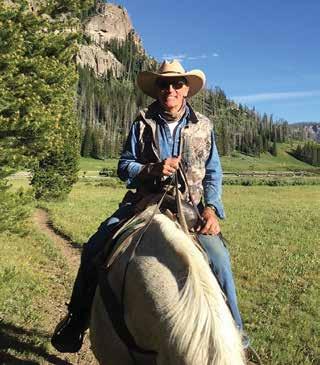
Plenty of those authors offered him inspiration: voices like Zane Grey, Joe Brooks, Sigurd Olson and Charlie Meyers, the famed Denver Post journalist and columnist.
But just as much, he drew stories from the people in his life, his father’s friends and his grandfather’s friends.
“I got to listen to the old guys telling stories about fishing in the old days,” he said. “Stories about being teenagers setting lines on the Green River to catch suckers and the occasional pike minnow to sell to restaurant owners long before Flaming Gorge Reservoir was a flicker in the water developer’s eyes.”
Those storytellers—on paper and in real life— became guiding voices in his life, including one critical crossroads.
As college kids in the early ’70s, Gasson and his new wife, Kim, were spending their summers working in booming trona mines that paid as much as $50 an hour. The couple often considered dropping out of college and making as much money as possible. He would abandon his degree in wildlife management. She could set aside her path toward a degree in social work.
But the voices of those storytellers reminded him of what he wanted: They reminded him of wild things and wild spaces. So he and Kim listened, and they stayed the course.

Gasson ultimately served with the Wyoming Game and Fish Department as a wildlife manager, biologist and administrator for 32 years before leading the Wyoming Wildlife Federation and then spending 11 years working for Trout Unlimited.
And he’s still fighting for those spaces. He writes monthly columns and recently penned a book, Craven Creek. The listener became the storyteller.
Steph Albano finished college in 3.5 years. She had goals and a career to pursue.
Sure, she had side hobbies. She fished with her dad and brother growing up on streams in the West. But her focus had been on her career, her future. Then, the summer before her last semester in college, she spent a week in Alaska fishing with her dad. They caught silver salmon and rainbow trout on the fly. They soaked in the beauty and remoteness. She realized she didn’t want the outdoors to be backburnered anymore. She wanted f ly fishing to be a bigger part of her future. And then for Christmas that year, she received a book that detailed the history of women in fly fishing.
“It was inspirational for me to see there were role models doing something way different than anyone else in their time”

Reel Women: The World of Women Who Fish, by Lisa Foggia, showed her that even if most anglers had historically been men, fishing was never just for boys. In fact, she learned, “modern sportfishing began in 1495 with the definitive Treatyse of Fysshynge with an Angle, attributed to English noblewoman and nun, Dame Juliana Berners,” the book reads.
With that book in her hands, she finished college and moved to Denver, Colorado, for a new job. She visited her local fly shop often to buy supplies to tie flies, ask for advice, get a lay of the land. There she met other female anglers and was asked to be one of the first board members of the Colorado Women Flyfishers. The group met on the weekends and traveled together into the Rockies, finding fish and building friendships. “That book really played a part in it,” she said.
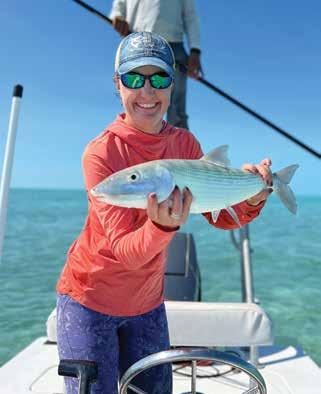
Not long after, she started traveling to fish in international locations, but found most fishing trips required double occupancy. Men traveling alone were fine bunking with other men they may not have known. If she was the only woman on the trip, though, she ended up paying double for her own room.
So she filled that niche, starting a company she called Finatical Flyfishing that organizes flyfishing trips for women to places like Argentina, Brazil, Mongolia and Idaho.
The book didn’t change the course of her life, but it did offer the right message at just the right time.
“It was inspirational for me to see there were role models doing something way different than anyone else in their time,” she said. “It was a great example of people being true to themselves.”

Writing about fly-fishing and actually flyfishing remain inseparable to angler, says writer and college professor Dave Zoby. But it didn’t start that way.
Zoby grew up in Newport News, Va., an industrial region with a naval base, polluted rivers and no shortage of people. Once a year, Zoby’s uncle took him on a fishing trip. The rest of the year, he spent weekends in bleachers watching his siblings swim competitively.
Sustaining him through those fishing droughts were copies of Field & Stream magazine. There he read stories of public lands, of fishing in lakes where no one told you to get lost, and of streams where you could eat the fish you caught.
With his head full of those stories and a graduate degree in his pocket, he left Virginia for the West.
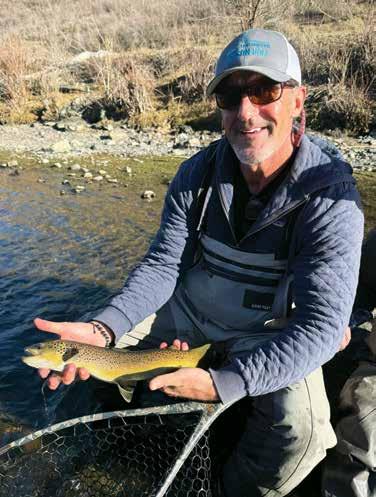
And there he found a job in a little southeast Wyoming town where he found hungry, abundant fish in plains lakes and little mountain streams.
He kept reading and fishing. He devoured the writing of authors like Thomas McGuane and Jim Harrison, who taught him that a story could be about so much more than fly fishing. He never cared for technique books, the ones that told him how to fish. He wanted to read about why.
Several decades later, he’s an accomplished writer and angler, splitting his time between a small place he bought in Homer, Alaska, his job in Wyoming and the calm waters of the Sea of Cortez lining Baja Mexico.

And he keeps reading, finding new storytellers to inspire him, writers like Steve Duda and Monte Burke.
“Reading let me see beyond when I would get to go fishing with my uncle next,” he said. “It gave me something to hold onto.”
Stories that shaped a life
“Reading let me see beyond when I would get to go fishing with my uncle next. It gave me something to hold onto.”
bimonthly
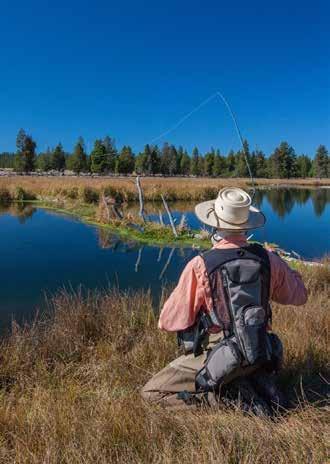
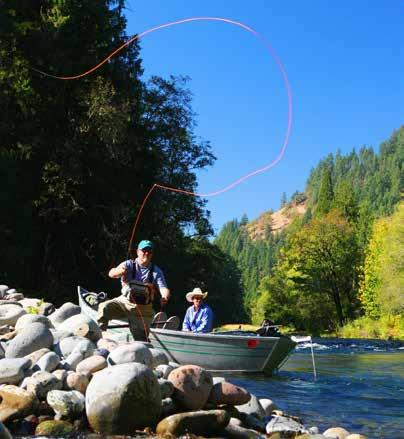
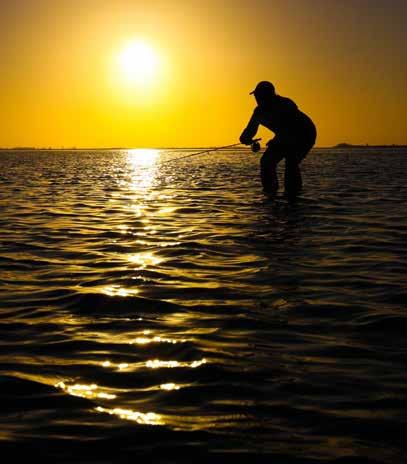




Born in Jackson, WY and instructed by professional guides worldwide, Fish Camp delivers expert-led masterclasses for all levels of fly fishing, along with exclusive member-only benefits to elevate your angling.
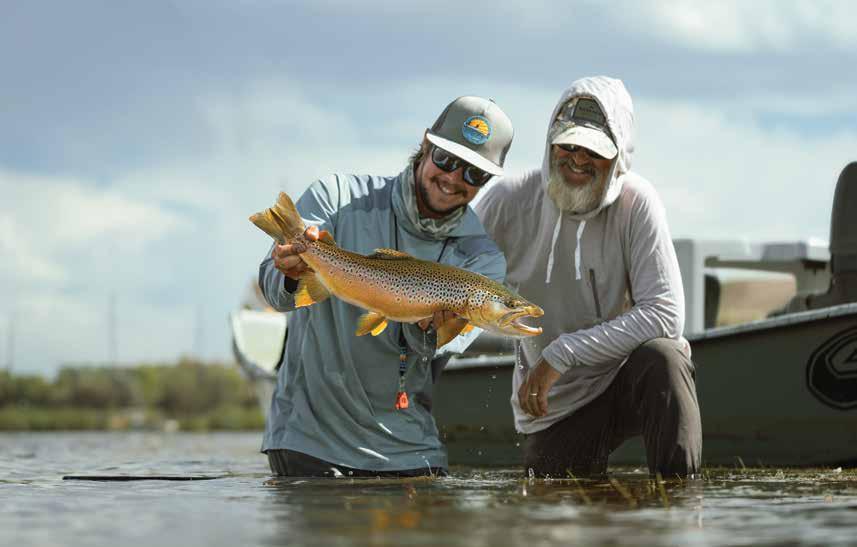
Beginner, intermediate, and expert level courses
• Over 160 instructional videos from how to improve your cast to what flies and gear to use
• Prepare for your next trip with destination and species specific courses

• Learn more https://fishcamp.life
• Exclusive member only gear discounts and giveaways
As an official Trout Unlimited Business Member, our courses are rooted in conservation, etiquette, and preserving the waters that sustain our passion. Use code TROUTMAG25 for 25% off an annual subscription at fishcamp.life
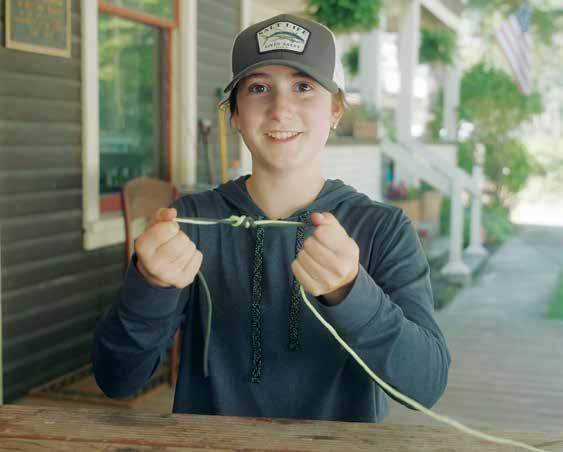
Kids Teaching Kids Trout Tips video playlist for all things beginner fly fishing. pg 64
Restoration of a Brook India Brook Restoration Project in N.J. pg 65
Stream Champion Rick Takahashi. pg 66
Tools & Tips
Shout for Trout, local chapter activities, CX3 and more. pg 68
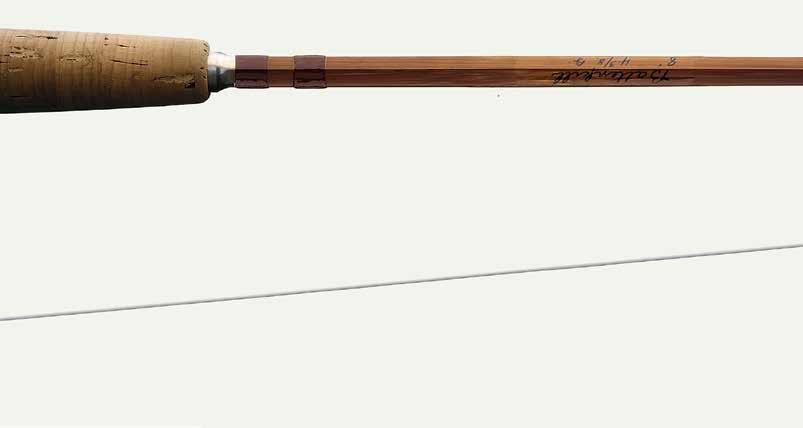
Whether you’re introducing a new angler to fly fishing or thinking about picking up a fly rod for the first time yourself, Trout Tips: Kids Teaching Kids is the perfect resource to up your basic fly-fishing knowledge. With video topics ranging from casting technique to reading the water, the Trout Tips video playlist is a great one-stop shop for all things beginner fly fishing. Videos made by Trout Unlimited in partnership with Yot Full Circle Foundation, Fly Fishers International and Michigan TU. Just use the QR code to see all of the great videos available.

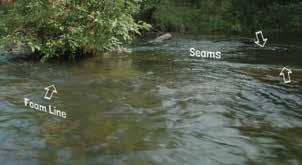
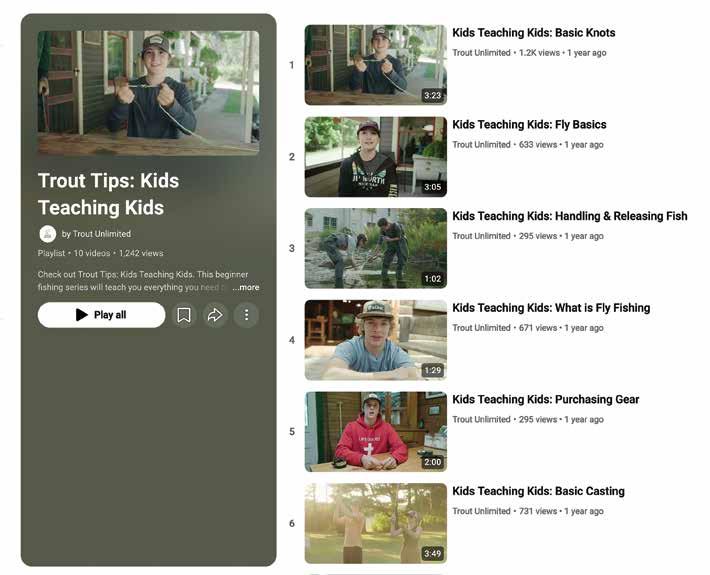
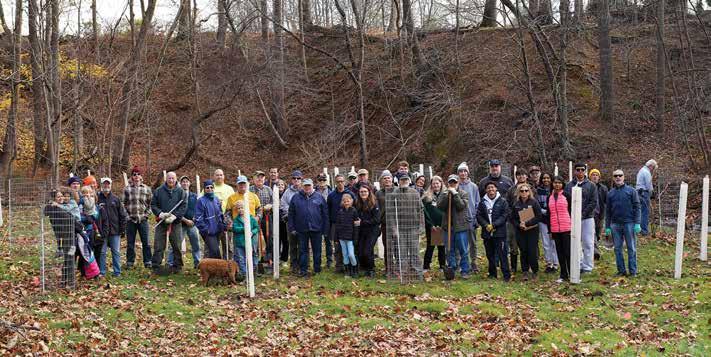
It may not be the biggest stream in New Jersey, but India Brook holds an outsized place in our conservation efforts and in the hearts of the people who protect it. Nestled in the New Jersey Highlands, India Brook forms part of the headwaters of the Raritan River system, making its health essential not only to local wildlife but to the broader watershed that serves millions.
India Brook may seem unassuming, but it plays a vital role as a coldwater habitat for wild and stocked trout and as a living classroom for conservation. Protecting this unique stream requires more than individual effort—it takes committed partners, each willing to champion its restoration.
It takes Hacklebarney Trout Unlimited (TU), the Borough of Mendham, a college, a vocational school, a headwaters NGO and local residents championing the stream. Together, these groups have launched the India Brook Restoration Project, a multiphase initiative that restores the brook’s ecological health while fostering stewardship, education and a culture of conservation.
At the heart of the project is the leadership of the Hacklebarney TU board, which recognized the urgent need to protect a Highlands stream home to native trout
and other aquatic life. Guided by Trout Unlimited’s Blue Line Initiative, the chapter is championing this headwater while implementing a comprehensive conservation plan. This initiative focuses on preserving headwaters, engaging communities and empowering local “stream champions” to lead restoration, monitor progress and inspire long-term stewardship.
The project spans 1,800 feet of India Brook Park, focusing on stabilizing streambanks, removing invasive plants and replanting native trees and shrubs along the riparian buffer. These actions protect water quality, reduce sedimentation and provide shade to maintain the coldwater environment trout need to thrive. By enhancing habitat and connectivity, the project supports biodiversity and strengthens ecosystem resilience.
Education is a cornerstone of the project. Students from the Morris County Vocational School District and the Community College of Morris participate in hands-on restoration, learning stream ecology, habitat management and conservation practices. By planting, monitoring and recording data, these students experience firsthand the impact of championing a stream and develop the skills and values
needed to become the next generation of conservation stewards.
Local residents volunteer alongside students and TU members, helping maintain the brook and participating directly in the restoration process. Families, neighbors and conservation enthusiasts work together to champion the stream, strengthening the community’s connection to the environment and reinforcing a culture of stewardship across generations.
The Borough of Mendham and the Raritan Headwaters Association provide essential support. The Borough coordinates land access and public safety, while RHA provides technical guidance, volunteer mobilization and water-quality monitoring. A grant from the New Jersey Corporate Wetlands Restoration Partnership funded native plantings and reinforced the collaborative effort to champion India Brook’s restoration.
The India Brook Restoration Project is a model for other communities—proof of what can be achieved when diverse stakeholders unite around a shared vision. In Mendham, a small stream is making a big difference—not just for trout and wildlife, but for the people committed to championing it.
Rick Takahashi
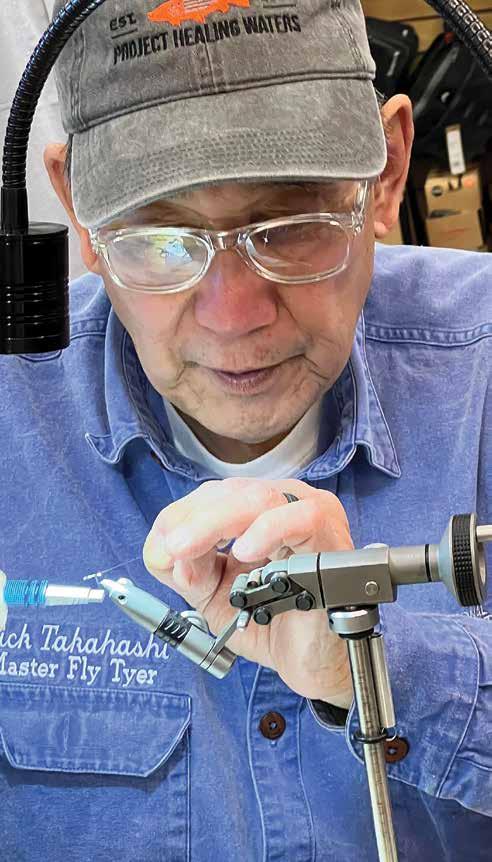
BY JOSEPH TARDIF
There is a river champion anywhere you look—and Emerging, the TU Costa 5 Rivers podcast—exists to find them. At its core, Emerging is a collection of river champions. Each guest is shaping the future of conservation in their own way, and this podcast exists as a resource for young anglers to learn, connect and become inspired by diverse stories.
When I first stepped into the role of host, I never could have imagined how each season or episode would connect. I do my research before hitting record and feel like I have a plan, but most conversations stray far from what I expected. Emerging has a way of opening people up and allowing them to share how they truly feel. Often, these conversations lead back to a shared passion for the environment. The more episodes I record, the clearer my role becomes. My job is to let each person shine by providing the platform.
Every guest on Emerging brings a unique story and perspective. There’s a level of openness in these conversations that’s hard to fake, and it’s where the most meaningful moments come from. These are the river champions of our time, and I walk away feeling like I gained more than I gave.
One of the best examples of a river champion comes from a close friend of mine, Rick Takahashi, a trout fishing and fly-tying legend here in Colorado. After serving in the U.S. military, Rick struggled returning to civilian life. He found healing through the outdoors, and now he dedicates himself to helping others do the same. He writes books, teaches classes
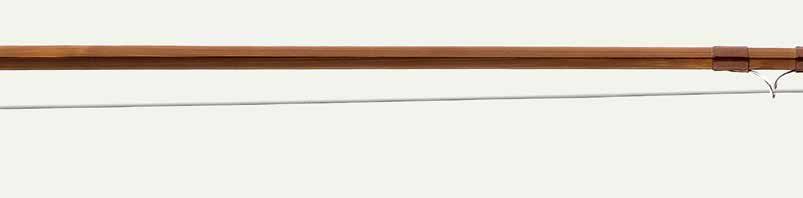
and has donated thousands of flies to Project Healing Waters. When I first sat down with Rick, I wasn’t sure where the conversation would take us. His story didn’t fit neatly into the outline I had prepared, but it became one of the most powerful reminders of what this podcast is about. Rick’s commitment to giving back is exactly what it means to be a river champion: using your passion and experience to make a difference beyond yourself. What makes Emerging meaningful isn’t the platform, it’s people like Rick who bring it to life. Every conversation, every story carries the energy,
Rick’s commitment to giving back is exactly what it means to be a river champion: using your passion and experience to make a difference beyond yourself.
insight and honesty of the guests themselves. It’s because of them that people across the country and around the world tune in, not just to learn, but to feel inspired and connected. The podcast has been an outlet where voices that might otherwise go unheard reach the 5 Rivers community. It’s their words, their journeys and their willingness to share openly that make Emerging an invitation to listen, to care and to step into the community they help create.
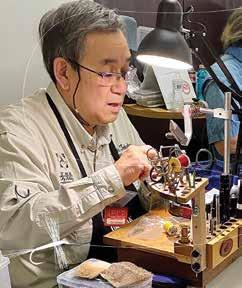
One of the most rewarding parts of hosting is seeing the ripple effects of these stories. Friends of Emerging often reach out to share how a guest’s journey inspired them to take action, learn something new or simply look at their local rivers differently. Knowing that a conversation recorded in one moment can have such an impact on local communities is powerful. Emerging isn’t just a podcast. It is a bridge between people, rivers and ideas, connecting communities that might never have met otherwise.
Across episodes, I am reminded that there is a river champion anywhere you look. They are the people who show up, act with intention and use their experiences to inspire, educate and protect. These are the stories that stay with us, the moments that move us and the people who remind us why conservation, community and connection matter now more than ever.
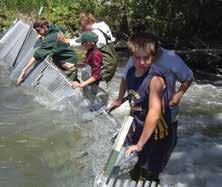
Send us a 300-500 word write up on your projects and events along with a photo or two and you could see your chapter in the pages of TROUT. Send your submission to Samantha. Baldensperger@tu.org.
BY JEFF YATES
Director of Volunteer Operations

Whether you want to protect millions of acres of public lands across the country, or oppose a local development threatening your favorite wild trout stream, conservation advocacy makes an impact—and so can you.
Take advantage of TU's decades of experience leading advocacy efforts by raising your voice in support of the rivers you love and growing your advocacy skills.
You'll find people who share your passion for protecting the places that matter most and are
gearing up to fight the proposals that threaten these places and the cold, clean rivers and streams that depend on them.
You can also learn more about the important Advocacy Coordinator role for local chapters or state councils and how you can get more involved and connected to our powerful grassroots advocacy community.
Register for an online training, review our grassroots advocacy resources and more at www. tu.org/shoutfortrout.



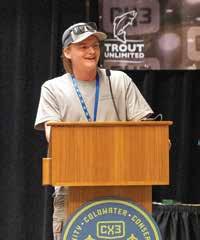
Join us at CX3 Twin Cities, TU's national meeting—this year in St. Paul, Minn. from Sept. 23-27, 2026.
TU’s biggest in-person gathering features great fishing in the Driftless region, conservation tours to impactful project sites, inspiring talks, powerful networking opportunities, and more. You don't want to miss out and now is the best time to connect with your friends, fishing buddies and fellow river lovers and plan to join us this fall.
Chapters and councils should plan—and budget now—to send a contingent of active volunteers to represent your state this year.
Details and tickets at cx3.tu.org.
Looking to get more involved in TU but not sure where to start?
Check out our online training resources designed to help you make a difference. You'll find video tutorials, how-to’s and step-by-step guides to get your started.
Find them at www.tu.org/ tacklebox.
Nothing is more satisfying than working side-by-side with fellow anglers and conservationists to make a local river just a little bit better.
Whether rolling rocks to build habitat, planting trees to stabilize streambanks, picking up trash to keep our waters clean or cutting invasive vines and trees to protect riparian biodiversity—even small acts of volunteer conservation add up to a big difference.
There are so many ways you can bring your time and talent to TU, and summer is a great time to start. All you need to do is find a volunteer event—or reach out and offer to lead one—and jump right in to get your hands dirty and waders wet on a stream you love to fish.
Find your local chapter and get active today at www.tu.org/chapters.
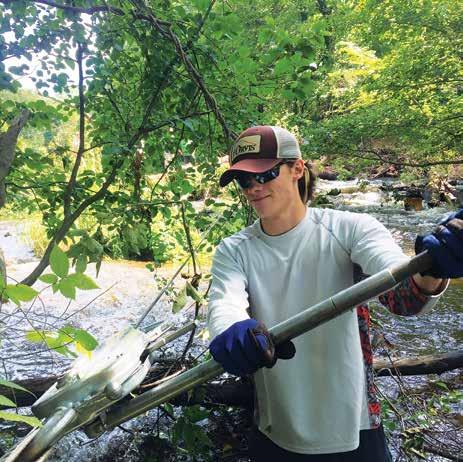
BY CHRISTINE PETERSON
Last winter was the hottest and driest in recorded history. Hotter and drier even than the Dust Bowl years of 1933 and 1934 when 60-mile-perhour winds stirred up walls of dirt so impenetrable people couldn’t see their hands in front of their faces, houses filled with dusty topsoil and tens of thousands of farmers abandoned their homesteads and communities in hopes of something better somewhere else.
We’re not in another Dust Bowl, not yet. But it might have felt a little like it in early March when my phone screamed with an emergency alert, warning people to stay off roads because of dangerous dust storms.
The sky in our southeast Wyoming town, known for its vivid blues, turned a dirty brown. It felt like a physical manifestation of the grief so many of us have felt, like a sorrow enveloping us.
We only ice fished once, on a lake on a mountain outside town. Few lakes at lower elevations froze much at all. This one held safe enough ice for a bit though, on the north side where cliffs kept the sun at bay. But even then, in early February at nearly 9,000 feet, slush and water covered the surface by early afternoon. We caught a couple of white suckers, then agreed it was best to head for land. We knew we wouldn’t return this year.
I fear what this heat means for summer, for our trout that rely on cold, clean water. For all of us that rely on cold, clean water.
I worry a lot these days, not just about water and dust storms and
rollbacks of bedrock environmental laws. I worry about your future and this planet, your true inheritance. Will trout still navigate these warming waters? Will your kids feel the sandpaper mouths of a catfish or stare into the prehistoric eyes of a sturgeon?
I don’t know. And it’s hard some days to find hope. It’s easy to dwell on the heat and the parched earth, on the thought of a summer filled with fish floating belly up and toxic algae blooms. But my worry won’t move the needle. An outfitter told me recently that worry is a lot like a rocking chair, it gives you something to do but won’t get you anywhere.
Cliches aside, he’s right.
And so, as I paced the house one day wound as tightly as a spring, listing every ailment facing the planet, your dad told me calmly what he always tells me: We do what we can, we have faith it will be ok and we adapt to whatever comes.
Your dad and I do what we can. We write letters and we vote. We belong to organizations doing good work, and we talk to our friends and family about the threats we see. And maybe most importantly, we find joy in the beauty that remains, in the rainbow trout that rise to early morning caddis hatches and in the way our Labrador works his nose through the grass glowing gold with the setting sun.
We learn about the species that still remain, and we try and understand what they need. Then we enjoy what we can with what we have.
Which is why, one early March day, we abandoned hopes of usual winter activities like skiing or ice fishing and instead drove over a mountain pass to Wyoming’s capitol city where we found a community fishing pond nestled next to a botanical gardens and Kiwanis Club. We sat in our camp chairs, pulled out our picnic lunches, jammed worms on our hooks and cast out into the depths.
You practiced cartwheels in the mowed grass as temperatures reached the 60s. We shared fishing tips with a couple of teenage boys who high fived when they caught a spawning rainbow trout and recounted the story over and over. We watched two little boys grin as they held two big rainbow trout up for a picture. Their grandpa taught them to fish, and in taking those trout home, would teach them another lesson about food and sustainability. We learned from another man that if we wanted to catch catfish, we should return with chicken livers.
I don’t know what the future will bring. None of us do. It will likely include more instability, bigger fires, deeper droughts, more destructive floods and longer dust storms.
But I also know the future will bring us beauty, in the call of a loon, the soft underbelly of a cutthroat trout and the bright pinks of sunrises and sunsets.
This is your real inheritance. We will keep fighting for it.
And together we’ll find joy.
Love, Mom
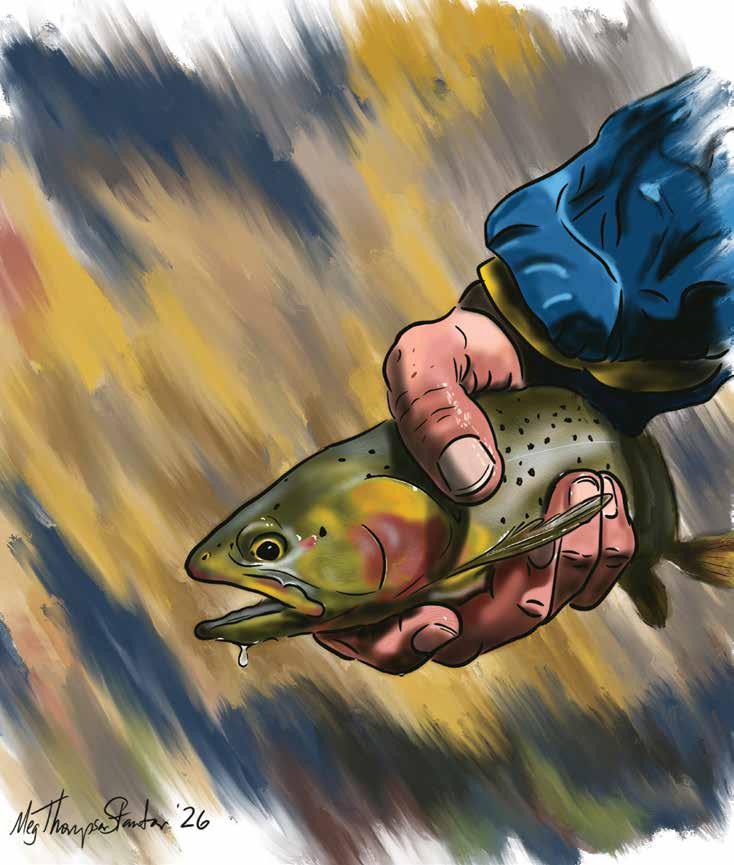
But I also know the future will bring us beauty, in the call of a loon, the soft underbelly of a cutthroat trout and the bright pinks of sunrises and sunsets.
Guided day trips near Denali National Park for Arctic Grayling in the heart of the Alaska Range. www.denaliangler.com.
Turn Key Fly Fishing Vacations In Missoula Montana. Trip includes all food and drink, ground transportation, accommodations and 3 days guided Float Trips on Blackfoot, Clark Fork, Bitterroot and Rock Creek. 2026 dates are June 15-19 & June 22-26. $3000 per angler. Discounts available for multiple anglers. www.mmtroutadventures.com Call for details 602-448-4834
Exclusive Fly Fishing Club for you and your guest. Enjoy a mile of wild, trophy trout stream in western N.C. www.armstrongflycasters.com
The Wily Trout in Sunriver, Oregon is a luxury 4 bd/3.5 ba home for rent located minutes away from the Deschutes and Fall Rivers and the Cascade Lakes with year-round angling options. For more information visit: thewilytrout.com.
Pennsylvania Guide Service , Sky Blue Outfitters, ½ day, full day and overnight trips available. Penns, Spring, Letort, Little Juniata, Pine and many more. Call 610-987-0073 or visit www.skyblueoutfitters.com for details.
WEST VIRGINIA: GO TROUT FISHING by TU Life Members. WV is home to some of the most wild and wonderful trout streams in the US! Find your next trout fishing destination at GoTroutFishing.com
Home for sale. One-of-a-kind home for sale on Trophy Trout Stream in the Missouri Ozarks https:// youtu.be/76FjhnlfWFg
Antique Bamboo Fly Rods 8-foot, four-piece Hardy Palakona and 9-ft. Montague-Redwing rods, rarely used, good condition with cloth wrappers and aluminum tubes. $200, will pay shipping. Jeff at marshwj17@gmail.com.
Reel display cases and rod tube storage racks. Handcrafted fine wood accessories for anglers and tyers. Saltcreekstudio.etsy.com
Custom made wooden fly boxes, no two are alike. Contact Jim at jimwhip@q.com for details
EZ-P Waterproof Wader Zipper - $80 Installed in any brand. Guaranteed for the life of your waders. Pressure tested for dry suit SCUBA. Contact: bjuniata@verizon.net or 814 569 8843
BAMBOO RODS Buy Sell Consign www.coldwatercollectibles.com (616) 884-5626
No Touch Hook Release™. This tool saves fish, flies and cold hands. Easy to use, it releases fish quickly, even for #22 hooks and bead heads. Learn more and buy: NoTouchTrout.com ($20 ppd)
FLY ROD RULER Measure your catch with a Rodrule. The micro-thin Rodrule adheres to your rods without hampering the action or finish. Guide approved! Order at: www.rodrule.com
Inherited brand new bamboo: Thomas & Thomas #3, four tips; Cachela Poudre #4-5, two tips; Beaty #6, 2 tips. $1,250 per/$3,000 for three gklingener@gmail.com 619-733-3995 Durango, Colo.
Tributaries: Fly-fishing Sojourns to the Less Traveled Streams: Listed by Lattitudes Outfitting Company of Montana as one of their ‘Ten Best Books About Fly Fishing.’ Rated 4.8 out of 5 Stars on Amazon. Visit www.coastforkpress.com.
Reach more than 150,000 anglers for just $2.25/word ($2.05/word for members). Send text of ad and payment to:
TROUT Classifieds
1700 N Moore Street Suite 2005
Arlington, Virginia 22209-2793
Ads may be faxed to (703)284-9400 or e-mailed to Samantha.Baldensperger@tu.org
Classifieds must be prepaid. Count phone number, fax number, ZIP code, street number, abbreviations and email or website address as one word each.
September deadline: June 30, 2026. To request a media kit for display advertising, call (703)284-9422

+ SNAG THIS SHIRT!
ALASKA
Trout Unlimited Business members are TU ambassadors in protecting, restoring, reconnecting and sustaining North America’s coldwater fisheries. To become a TU Business Member, contact Maggie Heumann at (256) 996-2241 or maggie.heumann@tu.org.
Expedition Broker Haines, AK 99827 travel@expeditionbroker.com
Family Air Tours and the Hook Up Fly Shop Ketchikan, AK 99901 info@familyairtours.com
Lakeview Outfitters Cooper Landing, AK 99572 info@lakeviewoutfitters.com
Outer Coast Charters Sitka, AK 99835 contact@outercoastcharters.com
ARIZONA
Arizona Flycasters Phoenix, AZ 85068 ghechler@outlook.com
ARKANSAS
Peglar Real Estate Group Mountain Home, AR 72653 matt@peglarrealestate.com
White River Trout Lodge Cotter, AR 72626 info@whiteriverlodge.com
CALIFORNIA
Catch America San Rafael, CA 94901 abdul@catchamerica.com
Confluence Outfitters Red Bluff, CA 96080 andrew@confluenceoutfitters.com Fishmammoth Mammoth Lakes, CA 93546 jim@fishmammoth.com
Heritage Systems Inc Napa, CA 94558 grant@heritagesystemsinc.com
Merriam Vineyards Healdsburg, CA 95448 peter@merriamvineyards.com
COLORADO
Discount Flies GOLD LEVEL Castle Pines, CO 80108 support@discountflies.com
Mayfly Outdoors (Ross Reels) GOLD LEVEL Montrose, CO 81401 jeff@abelreels.com
8200 Mountain Sports South Fork, CO 81154 info@8200sports.com
Black Canyon Anglers Austin, CO 81410 info@blackcanyonanglers.com
Budges Wilderness Lodge Littleton, CO 80120 ryan@budgeslodge.com
C. Gualdoni Bamboo Rods LLC Highlands Ranch, CO 80126 chuck-g@comcast.net
CORVUS Environmental Consulting Centennial, CO 80122 info@corvusenv.com
Durango Fly Fishing Durango, CO 81301 info@dgoflyfishing.com
Home Team Builders LLC Telluride, CO 81435 matt@hometeambuilderstelluride. com
JHL Constructors Englewood, CO 80112 cbisbee@jhlconstructors.com
RIGS Fly Shop & Guide Service Ridgway, CO 81432 info@fishrigs.com
She’s Fly Fort Collins, CO 80524 info@shesfly.com
St Peter’s Fly Shop Fort Collins, CO 80524 shop@stpetes.com
TRUE NORTH Surveying and Mapping, LLC Littleton, CO 80125 billb@truenorthsurvey.com
Western Anglers Grand Junction, CO 81501 orders@westernanglers.com
Zen Tenkara / Zen Fly Fishing Gear, LLC Fort Collins, CO 80525 karin@zenflyfishinggear.com
F. F. Hitchcock Company, Inc. Cheshire, CT 06410 john@ffhitchcock.com
GEORGIA
Redd’s Flies GOLD LEVEL Atlanta, GA 30305 jordanredd590@gmail.com
Hulsey Fly Fishing LLC Blue Ridge, GA 30513 info@hulseyflyfishing.com
Nantahala River Lodge Richmond Hill, GA 31324 mickey.youmans@gmail.com
Unicoi Outfitters Helen, GA 30545 flyfish@unicoioutfitters.com
IDAHO
Helfrich River Outfitters GOLD LEVEL Salmon, ID 83467 ken@helfrichoutfitter.com
Reel Deal Deck GOLD LEVEL Eagle, ID kenergy@protonmail.com
South Fork Lodge GOLD LEVEL Swan Valley, ID 83449 fish@southforklodge.com
Worldcast Anglers GOLD LEVEL Victor, ID 83455 gofish@worldcastanglers.com
Bear Lake County Soil & Water Conservation Distr. Montpelier, ID 83254 bl.swcd@gmail.com
River Retreat Lodge Irwin, ID 83428 liz.douville@riverretreatlodge.com
Solitude River Trips Salmon, ID 83467 solitude@rivertrips.com
KANSAS
Great Blue Heron, Inc. Lawrence, KS 66044 info@gbh-outdoors.com
KENTUCKY
Creel Lodge at Middle Creek Paris, KY 40361 keith@creellodge.com
MAINE
Appalachian Mountain Club Greenville, ME 04441 jward@outdoors.org
Chandler Lake Camps and Lodge Ashland, ME 04732 info@chandlerlakecamps.com
Eldredge Bros Fly Shop & Guide Service Cape Neddick, ME 03902 info@eldredgeflyshop.com
Mayfly Net Co. Scarborough, ME 04074 mayflylandingnets@gmail.com
New England Fly Company Raymond, ME 04071 info@newenglandfly.com
Sam Lambert Keller Williams Realty Bath, ME 04530 samlambertrealestate@gmail.com
The Wooden Fly Easthampton, MA 01027 bartestes42@yahoo.com
Au Sable River Guide Service Lake Orion, MI 48360 ausableriberguideservice@gmail. com
Big Lake Brewing Holland, MI 49423 travis@biglakebrewing.com
CastBack Saline, MI 48176 support@castback.com
Scientific Anglers LLC Midland, MI 48642 befusb@scientificanglers.com
MINNESOTA
Namebini Duluth, MN 55804 info@namebini.com
Jim Rogers Fly Fishing School Lebanon, MO 65536 bennettspring@aol.com
Gallatin River Lodge GOLD LEVEL Bozeman, MT 59718 info@grlodge.com
Glacier Excavating GOLD LEVEL Eureka, MT 59917 glacierexcavating@hotmail.com
Linehan Outfitting Company GOLD LEVEL Troy, MT 59935 info@fishmontana.com
Simms Fishing GOLD LEVEL Bozeman, MT www.simmsfishing.com SKWALA Fishing GOLD LEVEL Bozeman, MT 59715 www.skwalafishing.com
Sullivan Fly Rods GOLD LEVEL Livingston, MT 59047 lads@sullivanflyrods.com
Casting for Recovery, Inc Bozeman, MT 59715 info@castingforrecovery.org
Cling Fishing, LLC Bozeman, MT 59718 jared.may@clingfishing.com
CrossCurrents Fly Shop Helena, MT 59601 crosscurrentsflyshop@gmail.com
DONALDSON BROTHERS READY-MIX Hamilton, MT 59840 charles@donaldsonbros.com
Fay Ranches Bozeman, MT 59715 amiles@fayranches.com Fishing With Tom LLC Clancy, MT 59634 fishingwithtom406@gmail.com
Hubbard’s Yellowstone Lodge Emigrant, MT 59027 nancy@hubya.com
Madison Valley Ranch, LLC Ennis, MT 59729 fishing@madisonvalleyranch.com
Missoula Fly Fishing Outfitters Missoula, MT 59801 russell@ missoulaflyfishingoutfitters.com
Montana Angler Fly Fishing Bozeman, MT 59718 brian@montanaangler.com
Montana Fly Fishing Guides, LLC Livingston, MT 59407 eric@montanaflyfishingguides. com
Montana Whiskey Co. Missoula, MT 59801 todd@montanawhiskeyco.com
Mountain Prairie Outfitters Helena, MT 59624 taylor@mountainprairieoutfitters. com
Osprey Contracting Bozeman, MT 59718 ospreycontractingmt@gmail.com
Perigon Outdoors ,LLC Bozeman, MT 59771 aw@perigonoutdoors.com
Realty ONE Group Peak Bozeman, MT 59715 bryan@bryanatwell.com
Revitalize Construction, Inc Helena, MT 59601 neil@revitalizeconstruction.com School of Trout Bigfork, MT 59911 finn@schooloftrout.com
Stillwater Anglers L.L.C. Nye, MT 59061 chris@stillwateranglers.com
Trail Head & Trail Head River Sports Missoula, MT 59807 tfrank@trailheadmontana.net
Trout on the Fly, LLC Bozeman, MT 59718 nate@montanatroutonthofly.com
Trout Scapes River Restoration Bozeman, MT 59715 bcowden@troutscapes.com
Yellowstone Fly Fishing Co. Livingston, MT 59047 yellowstonefishingco@gmail.com
NEW JERSEY
Ramsey Outdoor Ramsey, NJ 07446 customerservice@ramseyoutdoor. com
A. Rubey Rod Co. Corrales, NM 87048 andy@rubeyrods.com
Gregg Flores Films Albuquerque, NM 87105 greggjflores@gmail.com
NEW YORK
FlyEnthusiast.com Rochester, NY 14610 robsflyshop@gmail.com
NORTH CAROLINA
Coastal Cottages LLC Kitty Hawk, NC 27949 mark@coastalcottages.com
Primavera Leathers Blowing Rock, NC 28605 evenlighteagles@gmail.com
Whitetail Fly Tieing Supplies Chapel Hill, NC 27516 nancy.richardson55@gmail.com
Cramer Fish Sciences Portland, OR 97220 ap@fishsciences.net
Minam Store Outfitters Wallowa, OR 97885 grant.minam@gmail.com
SnapHatch app Grants Pass, OR 97526 snaphatchapp@gmail.com
PENNSYLVANIA
KS Outfitter GOLD LEVEL Ridley Park, PA 19078 ksoutfitter@gmail.com
Gorski Engineering Collegeville, PA 19426 jgorski@gorskiengineering.com
Innovative Angling Bellefonte, PA 16823 mikekomara@innovativeangling. com
John W Gleim Jr Inc Carlisle, PA 17013 srider@jwgleim.com
Marine Innovations LLC Lancaster, PA 17603 marineinnovationsusa@gmail.com
Papillon & Moyer Excavating & Paving LLC Stroudsburg, PA 18360 dave.moyer@papillon-moyer.com
Perfect Hatch Fly Fishing Lansdale, PA 19446 tony@rayrumpf.com
The Forest Lake Club Hawley, PA 18428 gm@forestlakeclub.net
SOUTH CAROLINA
Free Fly Apparel GOLD LEVEL Charleston, SC 29403 www.freeflyapparel.com
TEXAS
Turtlebox Audio GOLD LEVEL Houston, TX 77043 www.turleboxaudio.com
HB Systems Inc Plano, TX 75023 corey@hbsystemsinc.com
UTAH
Utah Whitewater Gear GOLD LEVEL Midvale, UT 84047 info@utahwhitewatergear.com
VERMONT
Patagonia Outfitters Waitsfield, VT 05673 john@patagonia-outfitters.com
Three Rivers Equine Veterinary Service Saint Johnsbury, VT 05819 info@threeriversequinevet.com
VIRGINIA
Atlantic Bulk Carrier Corporation Providence Forge, VA 23140 mshort@atlanticbulk.com
Happy Camper Equipment Company Sperryville, VA 22740 happycamper@happycamperva.com
WASHINGTON
Crow Creek Fly Shop and Guide Service Roslyn, WA 98941 crowcreekguide@gmail.com
Riffle Report Redmond, WA 98052 hello@rifflereport.com
WISCONSIN
Trout Buddy Driftless Guides Madison, WI 53719 mike@troutbuddy.com
Trout Lines Travel Company Oshkosh, WI 54901 jboehme@troutlinestravel.com
JD High Country Outfitters GOLD LEVEL Jackson, WY 83001 Howard@jdhcoutfitters.com
Bighorn Drifters Lander, WY 82520 booking@bighorndrifters.com
Dunoir Fishing Adventures Lander, WY 82520 jlprine@gmail.com
Fish the Fly Guide Service Jackson, WY 83001 info@fishthefly.com
Live Water Properties, LLC Jackson, WY 83002 macye@livewaterproperties.com
Park County Glass Cody, WY 82414 pcg@bresnan.net
Sweetwater Fishing Expeditions, LLC Lander, WY 82520 george@sweetwaterfishing.com
Thermopolis Fly Shop Thermopolis, WY 82443 thermopolisflyshop@gmail.com Westbank Anglers Wilson, WY 83014 info@westbankanglers.com
WALES
Llyn Guides Wales, LL53 6LF llynguides@dnetw.co.uk
Join hundreds of conservationists, anglers, supporters and partners at CX3 Twin Cities in St. Paul, Minn. From Sept. 23-27, 2026.

TU’S BIGGEST IN-PERSON gathering has something for everyone. From epic hosted fishing on fabled waters of the Driftless, an inspiring conservation tour of restoration sites across the region, renowned speakers, informative panels and presentations and more. You won’t want to miss seeing the State of TU address in person or skip a night celebrating our most dedicated and passionate volunteers and partners. Special youth and family activities are on the docket as well. Start planning now, and connect with fellow TU members and volunteers to plan a group trip to CX3 this year.

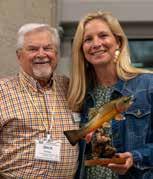
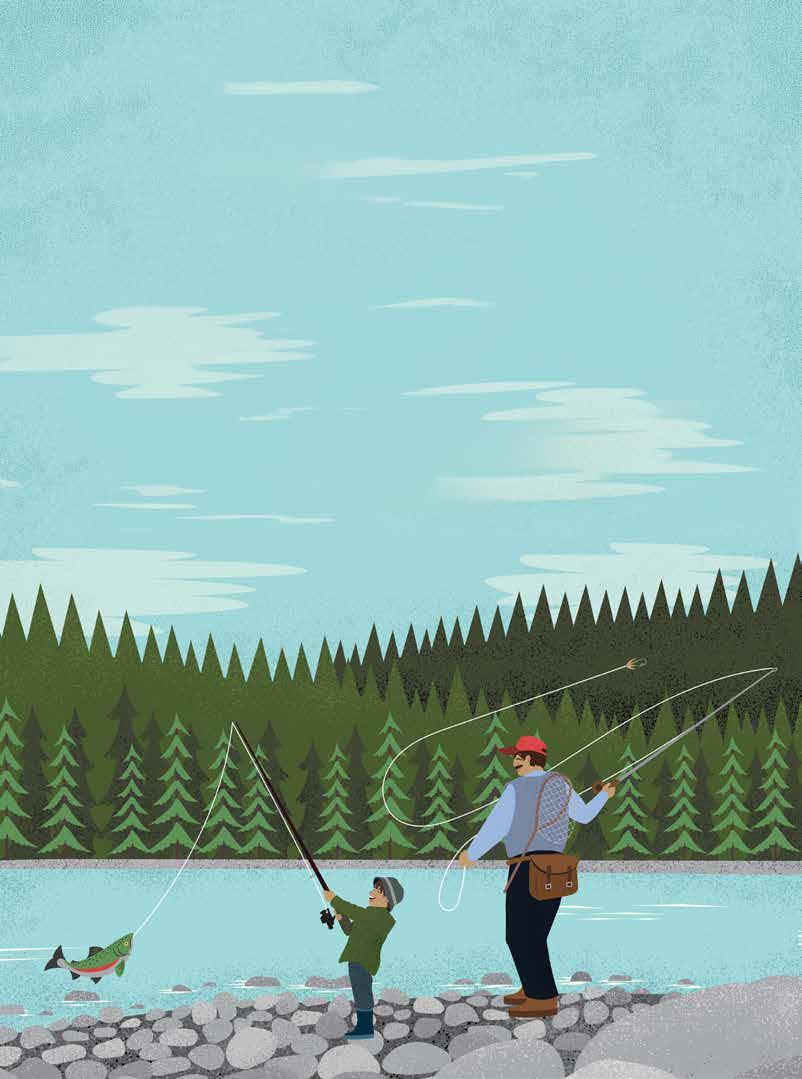
and tickets at

BY PAUL BRUUN
The Liggett Rexall soda fountain mom liked for lunch while shopping was beside the fishing gear aisle. Swiveling in my fountain chair I could watch the Creek Chub Injured Minnow lure I longed to own. In the 1950s, the adjacent Woolworth’s made the Liggett’s corner of Lincoln Road and Collins Avenue into Miami Beach’s busiest shopping location.
After devouring my grilled cheese I’d scout the fishing shelves. That was where I made THE DISCOVERY—a cellophane protected card of trout flies—exactly like their color pictures in fishing magazines!
I loved the names… Royal Coachman, McGinty, Professor, Silver Doctor, Light Cahill, Black Gnat, Hendrickson, Leadwing Coachman, Montreal and Quill Gordon. I was hooked! Nightly I dreamt of fly fishing icy trout rivers.
Surprised that I can name the flies on that gray card? I was infatuated with the bright Royal Coachman and Silver Doctor as well as the black and yellow McGinty and the delicate Quill Gordon. With its dark quill wings, the Black Gnat was the only fly I felt resembled a real insect. I fretted at not understanding if these were officially dries or wets!
Classics has visited Royal Coachman, Parmachenee Belle and Mickey Finn attractors. I’m pleased to report the Black Gnat reaches back into the early fly-fishing history. Dame Juliana herself, writing in 1496, explained the use of quill wings in creating English wet flies that resembled the natural insects she studied. Swarms of black gnats, midges and mosquitoes emerged from lakes, marshes and slower flowing rivers and were known fish foods.
Halford to learn fly habits of the new trout. The result also included introducing the Englishman’s dry fly concepts throughout the Catskill region.
Looking back, I think my first Black Gnat’s thick body, red hackle fiber tail, dark quill wings and wispy hackle must have identified as a wet fly. For years every fly display I examined had similarly appearing Black Gnats that floated after treatment.
I enjoyed a mid-1970s job selling sporting goods to locals and a constant Wyoming visitor parade. Hearing their stories later was a bonus.
Two fishermen I’d previously helped returned to brag about fantastic fly fishing the night before. “Got a trout rise on every cast,” they enthused.
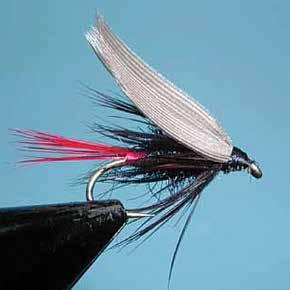
“Best fishing ever… until we lost the fly in a tree. Nothing else worked, and we don’t know the name of that great fly.”
I encouraged them to examine our adequate fly bin.
“Got it!” they exclaimed, waving a size 12 Black Ant. “We’ll take this one,” the leader said, handing over a dollar.
“Guys, I don’t want to spend your money but they’re only 65 cents. Why not get a spare or two? What if you break off or snag a tree?”
“Oh, we’ll come back and get another one if that happens,” they grinned.
Two summers ago, my wife was floating us along a favorite river section when the action slowed. “Let me re-rig your leader,” she offered. Jean’s miniature fly pattern menagerie regularly ends trout doldrums.
We were still anchored when I flopped a halfhearted cast to straighten the leader and new flies.
Dry-fly proponent Frederick Halford adopted a much sparser floating Black Gnat for England’s famous South Country chalk streams. The U.S. imported brown trout to restock the Northeast’s rivers after industrial pollution extirpated native brook trout. Theodore Gordon contacted
Baluush! The hefty cutthroat that crashed the new dropper refused to return it without a tussle.
“Just what is that new fly?” I asked.
“It’s so old I don’t see them anymore. It’s a little Black Gnat. I just love that fly,” she laughed.
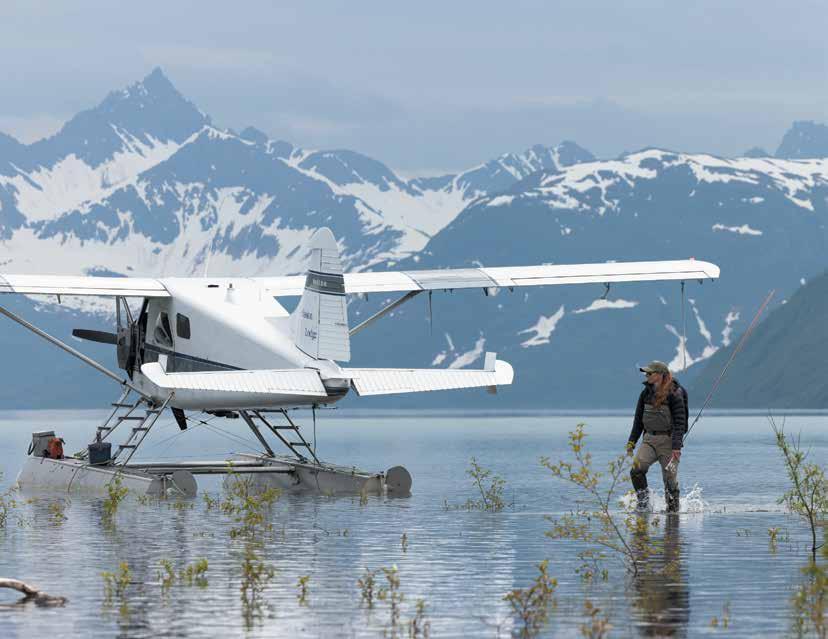
For over 80 years, we have been at the forefront of innovation. Sharpened by experience. Pushing the boundaries of material science to make our lines stronger and more durable. Then testing in the most demanding environments with the world’s best anglers. Those who demand the best choose Scientific Anglers.