This issue is packed with the music, stories, and artists continuing to shape the soundtrack to the year so far. Alongside all the regular features, reviews, and new music discoveries, we’re excited to bring you interviews with Tight Fit, Marty Wilde, and Rozalla—three acts whose music and stories continue to connect with audiences across generations. If you like what we are doing, be sure to like and share our socials and help us spread the word. As always, we’re building this with you, for you. Enjoy the music,
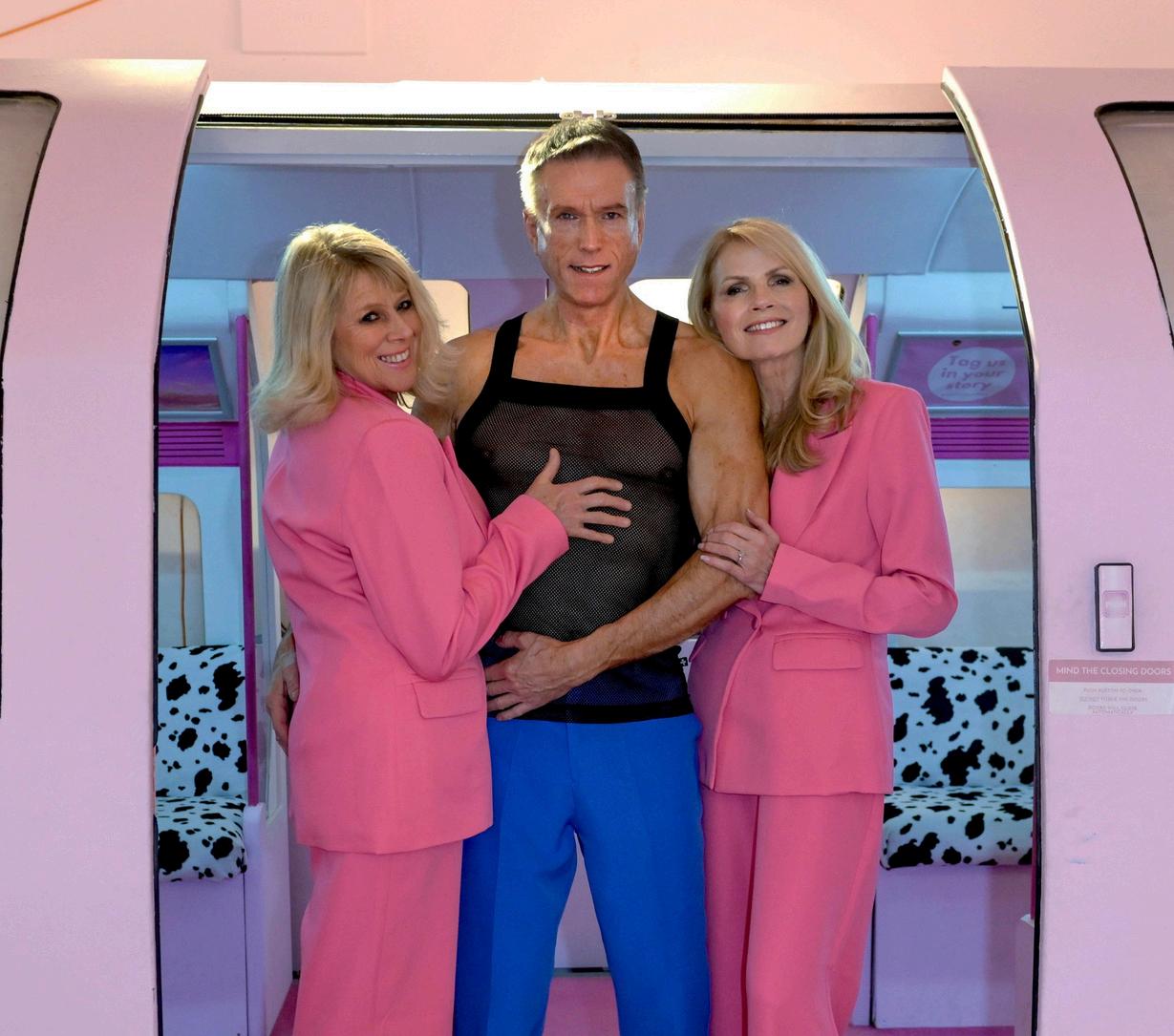
When they said I'll be talking to Tight Fit I said, “No Wimber way!”. Sorry No more childish jokes from here on in! Where does this all start the Tight Fit story?
STEVE: We all had the same agent, Tommy Tucker, and the record company came to him, to get people to audition for the group. We were all doing separate, different things. I was doing a musical in the West End, and Jules you were singing with the band, Lips?
JULIE: Yeah and I was in Zoo on Top of the Pops!
STEVE: Denise was doing lots of TV work, Benny Hill and that kind of thing And we were all doing our own things, and then we all met at the audition for the band. It took, like a day Everyone from the agency went to the audition, and it kind of started from there We were young things And we were all like 19, 20, 21 We were very young It was a real kind of whirlwind start to our careers, because we'd been doing other things. But then all of a sudden, within a few months, we were very famous
You're famous, and you've got this fantastic single out that the world adores All age groups adore it and it's never gone away, has it?
DENISE: It’s been a hit every 10 years for the last 40 years! The Lion King has helped as well
DENISE: What was funny about the audition was there were about 20 guys and about 40 women. Throughout the day, they matched people up to find out what combination worked Having been there all day long, there were four girls left and two guys, and they matched people up just to get the right look And the other guy would have been my brother!
STEVE: Denise’s brother went on to have a really good career, and he sang in West End shows And he was a very talented guy.
STEVE: Wherever we do it at a gig, I always get people to sing along, there's not very many words in it. You can't forget the words And so everybody in the audience sings along, and they're reliving their youth and so are we
The band's going strong in the 80s You've got Fantasy Island, and then it sort of disappears a little bit You're still working, but you're not having the hit singles to the same extent.
STEVE: We have a single called ‘Secret Heart’
And then after that, things kind of all went wrong. We had lots of people pulling us in lots of different directions around us An, it was really that was quite a difficult time
But now it's like Tight Fit to ‘Re-Fit’, because all that knowledge, all that experience, you’ve packaged it up in a way that, how can I put this? I was listening to the album, I was hearing 70s, I was hearing 80s, hearing 90s, in the same album, production values were really good, and at the same time you were hitting so many different marketplaces as well
STEVE: That's a big thank you note from us to Energise Records, because they came along for us. We'd been gigging for probably over 10 years, and we had done an album, but it was just a covers album, and then they came to us with all these amazing songs, and I played them to the girls, and we all agreed, we had to go with it How many opportunities come along like this? Do you remember guys when I play
the songs? How nice were they?
DENISE: Yeah, amazing, amazing songs. I'm really thrilled with the album
STEVE: I think every generation you know has its own music, and that's how it has to be. But the 80s are such an iconic era for music. I'm really proud of this album. We worked really hard to get this together, and it's been a labour of love
DENISE: I defy anybody that was just listening to those songs rather than seeing who was behind it, to even have any idea that we're all in our 60s, because songs actually sell themselves as brilliant songs, regardless of the fact that it's us But obviously, if you put our picture on it, then it's obvious that we're older people, but if we went out as white labels, we could be number one. But also, if you'd have asked us 40 years ago, “what do you think you guys will be doing in 40 years time?”, I don't think there's one of us that would have said, “Oh, we'll be in the studio making a brand new album, new songs”. We'd have probably said “on our way to the old people's home!”
You are a threesome,aren’t you? You are a team. Dare I use the word family, you know, you're looking after each other, watching each other's backs, respecting each other's capabilities, and know that you've got a value in the collective rather than the individual
DENISE: Well, Steve’s got two wives that boss him around basically.
STEVE: That's truer than you will ever know! When we work together, it's just like we've never stopped working together When we're on stage and we kind of look at each other, it's like we're back in the good old days again because nothing's changed We're older, but we still love what we're doing. We love working together
TRiTHIS Music
READMOREONLINE
interview by Martin Shaw
Our Spotlight on Street Cred!
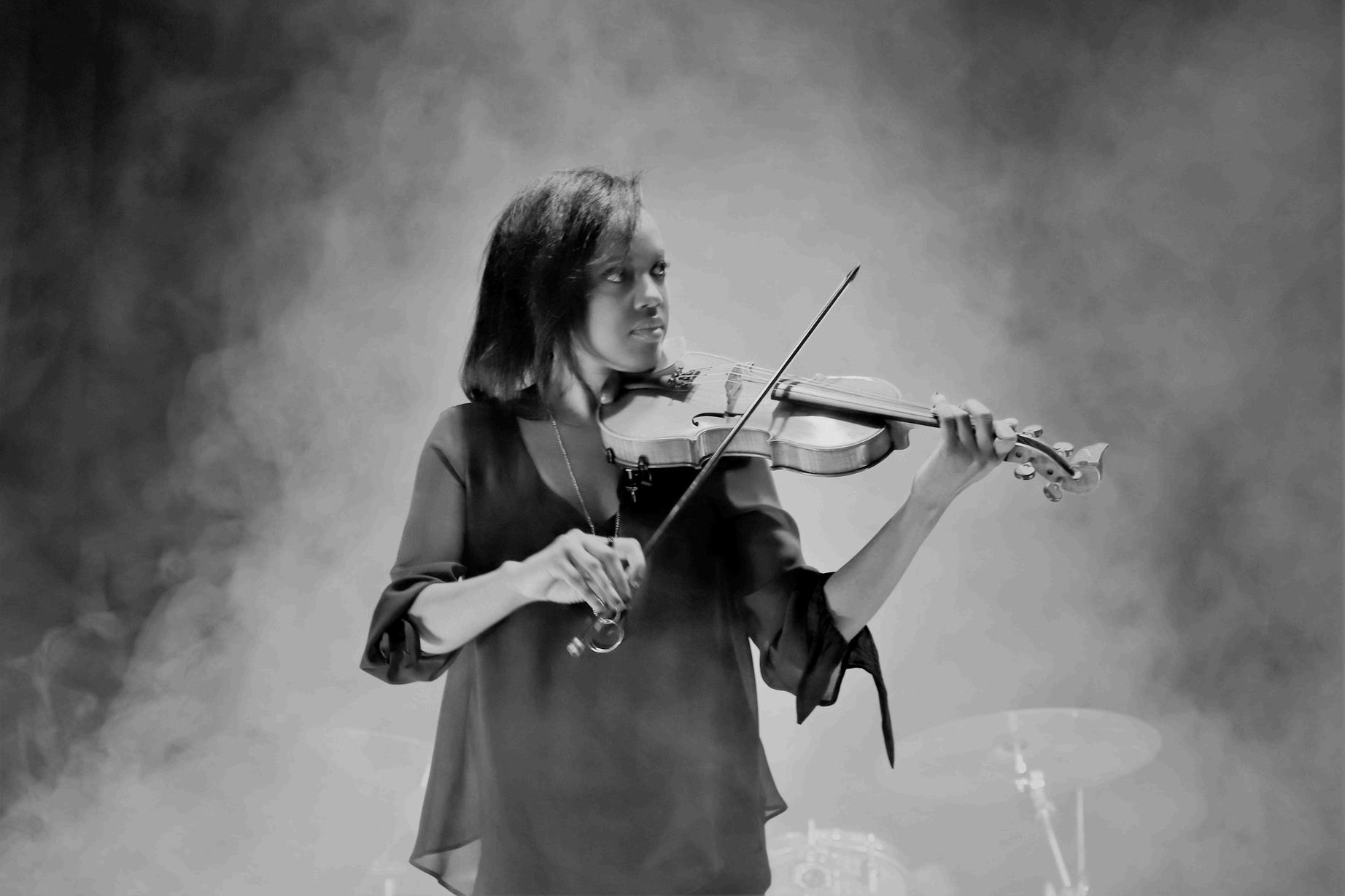
Serena Smith is a British-American violinist and fiddle player based in Lincolnshire, whose energetic mix of Irish folk, Celtic fusion, and contemporary covers has made her a standout presence on the UK live music scene Originally trained in classical violin, she later fell in love with traditional Irish music and has spent years developing a style that blends technical precision with lively, crowdfriendly performance
Busking has played a huge part in Serena’s journey as a musician. Performing regularly on streets and at festivals across Lincolnshire and beyond helped shape her confident, high-energy approach and introduced her music to audiences from all walks of life Whether playing traditional reels, pop favourites, or improvised solos, she brings warmth, humour, and spontaneity to every set
Alongside her solo work, Serena performs with her Celtic fusion group Serena Smith & Friends and collaborates with a range of bands and artists throughout the UK Her albums Fiddle Me This and Fiddle Me That reflect her love of musical variety, mixing folk traditions with modern influences and a strong sense of fun
We actually recorded the whole album. It s all mastered. It s all ready to go. And it's very frustrating, because ‘Living Proof’, which is the album that ‘When I Lost You’ came off. There's loads of people who have been trying to get in touch, “Can we release it? Can we get it out there?” I've been so out of the loop, but it is literally there. I just love music and I love being artistic, it's just nice that people are grabbing onto it this far down the line” What do you think of “Automatic”?
What would you say looking back is your proudest moment so far?
My kids, absolutely, the moment they were both born, I think that is the best thing, that's probably my proudest moment.
@sarah_whatmore_
@stephenjamesfox artist & director interview by ross
Stephen Fox is a seasoned artist, with plenty of experience throughout the music industry In this interview Fox takes us through his journey from music to film and back, influenced by his father and collaborations with bands like Bucks Fizz and Dollar; he also shares the personal inspiration behind "A River to Cross," detailing his experiences with limerence and unrequited love.
What is the writing process like for you? And how did this single come about?
My writing process has always been the same since I was 18 or so. I have a piano and I just sit and play, I use a pen and paper and write the lyrics down Usually the lyrics come first 99% of the time and then I'll kind of come up with a chord structure When I feel like the song is complete, that's when I'll start thinking, “Well, is it a fast song? Is it a slow song?” So there's no hard fast rule and then it will evolve into whatever it evolves into.
I did a stint in Bucks Fizz Now I’m in Dollar. So that is especially working with Thereza Bazar, because she's an amazing songwriter. I've learned a lot from Thereza in the sense of song structure and things
What are the inspirations that went into “A River To Cross”?I it's quite deep in its writing style, and it flows so naturally
When I was younger, it wasn't accepted to be gay It wasn't illegal or anything. I'm not that old, but it just wasn't With gay people, especially of my generation, you never knew if somebody else was gay You didn't know the answers and you didn't dare say to people So you would have these feelings bubbling inside, but you wouldn't be able to say it, you wouldn't be able to tell them how you felt You would have these feelings bubbling inside, but you wouldn't be able to say it, you wouldn't be able to tell them how you felt.
And the song, really, it's basically what I have dealt with all my life, where I will get quite close with someone, and then I usually will mistake those close feelings for something that it isn't usually with a straight guy. And the condition is called limerence And if anybody goes through this, you should definitely go look at it, because once I understood it everything changed for me. It can drive you insane, like utterly insane “A River To Cross” is literally that story. It's not necessarily just about being gay Obviously anybody can relate to it There's nothing harder than loving somebody who doesn't love you back
What was it that first got you started in music?
My dad was a performer, quite successful, so my early childhood was going around in a camper van with my dad, my mom and my sister, and we would sometimes sneak in to the venue at the end and watch my dad's show and he was just like a rockstar to me, and I just wanted a piece of that I loved it.
What would you say is the moment in your career that you're most proud of?
Cheryl Baker called me up and she said, we're doing our 25th anniversary at the London Palladium. Now the London Palladium is for me, the most iconic theatre venue in the world, not just in the UK, in the world I've said for years, if I could play anywhere, one dream, it would be to play the London Palladium I was proud to do a good job, and I sang “Somewhere Over the Rainbow” That was the last song, because I love Judy Garland I'm gay. It's a prerequisite, I love the Wizard of Oz, love Judy Garland, and the fact that I stood on that stage and sang that song, and I remember I stood there and I just it was sending shivers down my own spine It was so weird, because it was like an out of body experience.
VINYLJUNKIE
"As long as you got that burning fire inside you, and you feel yes I can sing, or yes I can act, or yes I can be, whatever it is you want to be in your life. You got that fire, believe it, and seek guidance and listen to constructive criticism, and just keep putting one foot in front of the other, because sometimes you'lltake 10 steps back, it doesn't mean it's over, just keep walking!”
@rozallab 90s & club legend
zimbabwe
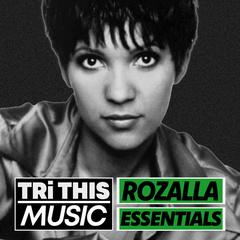
The 90s singer, Zambian-born Zimbabwean electronic music performer, Rozalla, is celebrated and dubbed the “Queen of Rave”. She is most known for her 1991 international, and revolutionary dance anthem, "Everybody's Free (To Feel Good)". It could be argued that she should be dubbed “Queen of the Dancefloor”, because shes never left. she dominated the early 90s, with further club hits, "Faith (In the Power of Love)" and "Are You Ready to Fly". She is not only an artist recognised and respected by her fans, but also her peers In 1992 she toured with Michael Jackson for his iconic Dangerous World Tour, and today she joins TRi THIS Music in an exclusive interview detailing her career and latest releases
interview by ross ferguson
How was the latest single, putting it together and then getting it out there? And what's the reaction been to “Believe In Yourself”?
It's been great. The reaction has been great When I compare to when we used to release brand new singles back in the early 90s to now, it's changed, and you can release a single now, and it could be gone within a week or two, and you just don't hear anything. Fortunately, because I've been around that long, I've got the DJs who have become such firm supporters, and I'm so grateful They love the track They send back these reports, and it's wonderful. I find the profile has been kept because also, “Everybody's Free To Feel Good”, it's 35 years old this year. So I guess there's also an interest in “Who's this lady?” So I guess all that helps as well But it's still a very tough industry.
So how does it feel for you as a person to be able to look back at that body of work that you've created over these decades It must be the most magical feeling for you You must be so proud of it
It absolutely is. My husband says to me, “Your genre of music from the early 90s through to now has just been incredible” “You've got a wonderful library of music”. When we went out for lunch with our next door neighbours yesterday, they were asking me questions like, “Who's the most famous person you met?” They didn't realise I supported Michael Jackson, so they almost fell over on their backs! And they kept on asking me, “And what else have you done? Have you met Whitney Houston?” I said, “No, I haven't, but I presented an award for her at the BRIT Awards, for The Bodyguard”. “You mean, you did the Brit Awards, and did you ever appear on Top of the Pops?” I said, “Yeah, I had the fortune of appearing on Top of the Pops eight times!”
What was your “I made it” moment?
I would say different elements I think, when I think about it truthfully, I would say supporting Michael Jackson would be the peak At that time, 1991, early 90s, he was the biggest artist ever in the whole world And to have had the opportunity to support him I spent three and a half months with him. That's about 43 days across practically the whole of Europe And it started as the first month with him, and he had Kriss Kross as well. So we were both doing 30 minute sets, and then Kriss Kross they wereI think, 14? They had to go back to America to go to school And so instead of choosing another artist, Michael said,
“Ask Rozalla to extend her set” I ended up being the only support act for him. And I was doing a 45 minute set So that was the whole of the “Everybody's Free ” album that I was doing with my small piece band And I carried on like that for the next two and a half months So that was just mind blowing. That was mind blowing And then, of course there's other elements, like having the opportunity to appear on Top of the Pops, which was it's an institution to have been on that And I supported Billy Ocean as well, which was incredible, and then meeting all these other artists in my walk of life and the career that I've had has just been wonderful, wonderful
What would you tell your audience to go listen to, maybe something they’ve missed or haven't heard before?
It's not a dance track, it's a ballad that was written for me by the great Diane Warren If you look at Diane Warren's discography, her work, she's worked and has co-written for singers like Celine Dion, like these rock stars, and her genre is just from ballads to rock I mean, this woman is something else. And I got the opportunity to work with her when I got signed to Sony, and they flew me to LA, which was like something else in its own right And I got to meet Diane Warren, and she grew to like me instantly, she invited me over to her house for Christmas lunch It was just wonderful So just working with this great artist and doing the song, which happens to be the title of the album that I did for Sony called “Look No Further. I just think whenever I listen to that song, I'm so proud of that song, and it's a ballad, and it just lends my vocals so differently, and hopefully tells people, not only can I do dance music, I can also do ballads. And my husband says, “That's just one of your best songs ever, and that should have been a hit”
Can you imagine if that album started coming alive now? Because fans do that, fans make things happen. And like you just mentioned, the great Frankie Knuckles, he's not with us anymore To work with him was an absolute dream. We did “Baby” together We co-wrote some songs together that didn't make it, having the opportunity to do “I Love Music” with Jelly Bean Benitez, and I just remember thinking when I was in the studio, he was Madonna's boyfriend!
With music, you're going to get people who are going to try and put you off, who are naysayers They are people who want to hold you back. But if you believe in your heart that you are, you can do what you're setting out to do, never give up.
Yacht Rock: Smooth Sounds for Easy Living
Sun’s out, stress down—welcome to the laid-back world of Yacht Rock, where smooth grooves, polished vocals, and effortless cool come together It’s the kind of music that feels like a breeze off the water: relaxed, melodic, and quietly confident without trying too hard
The term “Yacht Rock” was popularised in the mid-2000s by the web series Yacht Rock, which humorously grouped together a wave of late ’70s and early ’80s soft rock But the sound itself is what’s kept it going tight musicianship, catchy hooks, and a focus on feel-good listening that still connects with modern audiences.
What defines Yacht Rock is its balance. The songs are clean and wellproduced, but never overbearing; emotional, but never heavy. There’s a sense of escape built into the music—whether it’s about love, freedom, or just taking things easy It’s easy to see why it’s found a second life on streaming playlists and social media, where listeners are constantly looking for something smooth and reliable
Today, Yacht Rock isn’t just a throwback it’s a vibe You’ll hear its influence in contemporary pop and indie tracks that favour warmth, groove, and understated emotion over intensity It’s music that doesn’t demand your attention but rewards it, perfect for long drives, sunny afternoons, or switching off after a long day
So whether you’re actually near the water or just wishing you were, Yacht Rock proves that sometimes the best music is the kind that simply lets you drift.
Prince played 27 different instruments on his debut album For You when he was just 20 years old.
ABBA got their name by combining the first letters of the members’ first names: Agnetha, Björn, Benny, and Anni-Frid.
Yesterday by The Beatles is one of the most-covered songs in music history, with thousands of recorded versions by other artists.
David Bowie once turned down a knightship from the British monarchy, saying he didn’t know what he would do with the title.
What Do DJs Actually Talk About?
Every now and then, the job gives you a rare night off that feels almost illegal Not because you’ve done anything wrong, but because you’ve actually been told not to take a booking That happened to me recently at a fellow DJ’s birthday party. A proper one-off night where a handful of us who are usually working weekends all ended up in the same room at the same time No decks to set up, no soundcheck, no “what time are you on till?” messages Just a night to actually enjoy it
And strangely, that’s when you realise how often DJs don’t really get to talk to each other. People always assume we must spend our time swapping secret tricks or arguing about track selection The truth is much more everyday A lot of it starts with music, of course – what’s working, what’s not, what tune is suddenly everywhere again Someone will mention a track that’s just popped off in their wedding sets, someone else will complain about it already being overplayed, and that’s usually where the debate begins
There’s always a bit of gear talk too, but not in the way people expect It’s rarely technical deep dives It’s more like: “Have you tried that new controller?” or “That speaker saved me at a terrible venue last week.” Real-world problem solving, not spec sheet competition
But once the night gets going, the conversation shifts away from work faster than you’d think Because when you finally put a group of DJs in a room without pressure, you start talking about everything around the job instead of the job itself.
We end up swapping stories Worst load-ins Tightest venue spaces The wedding where the first dance didn’t play properly and you had to recover it on the fly The corporate event where someone requested something completely unplayable, but you somehow made it work anyway. These stories get retold a lot, but never in the same way twice
There’s also a lot of laughing about the small things only DJs really notice The exact moment a dancefloor turns. The one guest who always tries to take over the request list. The bride who says “just play anything, we love everything” and then has very specific opinions at 11:30pm
But what stood out most that night was how little it was actually about competition Outside of the occasional “where are you playing next?” conversation, there’s a surprising amount of support. Advice gets shared without hesitation New DJs get pointed in the right direction Someone mentions a problem, and three others immediately offer solutions
Maybe that’s the thing people don’t see from the outside. It looks like a lone job – one person in a booth, making all the decisions – but behind it there’s a whole network of people doing the same thing, dealing with the same crowds, the same challenges, the same late nights
So when you do get everyone in the same place, you don’t really talk about “DJing” as much as you just talk like people who happen to share the same unusual job And maybe that’s what it really is
If you have your own DJ story to tell we’d love to hear from you Get in touch at trithismusic com