Interview with our Director of Choral Music. Girlsʼ Sport / Page 20
Building strong foundations.
Sustainability Matters / Page 32
Looking after the world around us. A look inside
Trinity School
Tuki Rounds Senior Deputy Head
A note from the Editor...
Responsibility is the theme of our latest issue of In Trinity and as Al Kennedy outlines in his piece, we like to see this value as a call to action for students, a call to respond to all the opportunities on offer here, and a call to respond to others. As ever, this issue is packed with stories that apply to both.
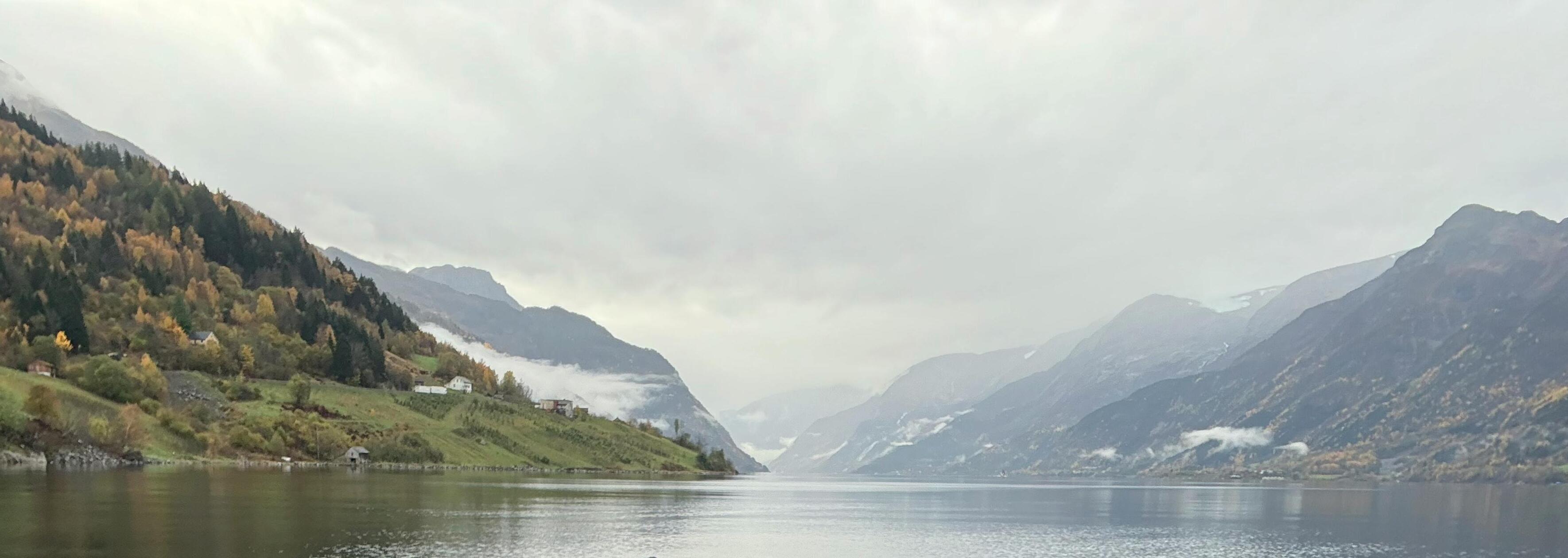
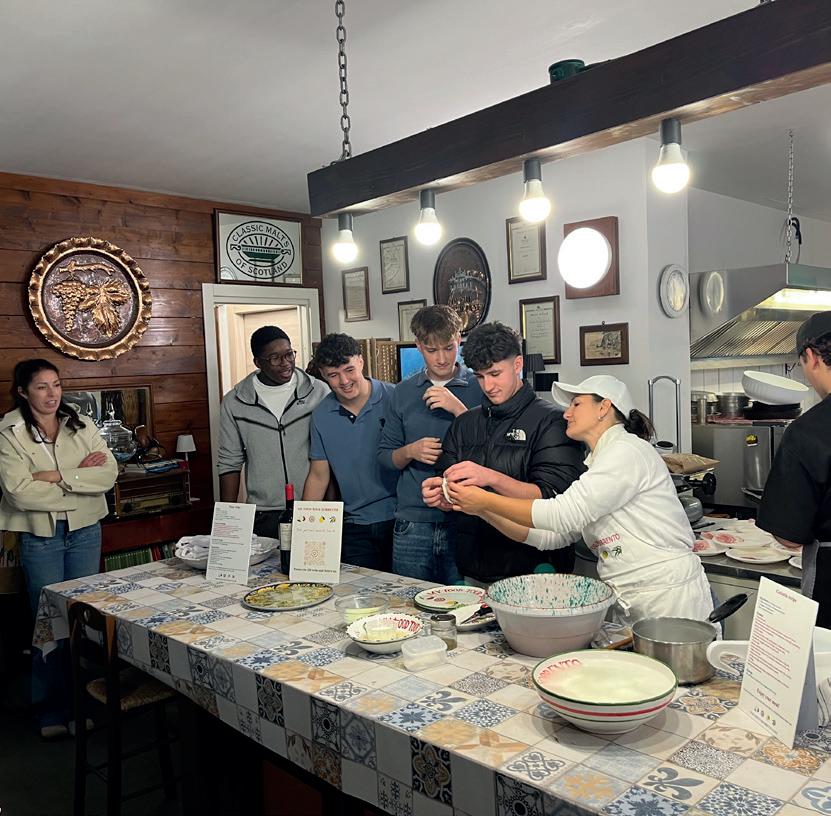
Some of that response is global. Our students keenly feel our collective responsibility to our environment, and you can find some impressive stats about how we are trying to do our bit, in our own way, for our global good. The importance of climate change was seen first-hand by our Second- and Third- Year on their trip to Norway, where they visited fjords, waterfalls and a sustainable hydro-electric dam. All things electric were at the heart of our Computer Science trip to Japan, and you can read about other Asian adventures in China and the art of al dente pasta in Sorrento!
Some responsibility is met more locally. It is always a pleasure to share some of the partnership work we undertake with our Trinity Partner Primary Schools, and the feature in this edition gives a small window in the depth and impact of this work. One of the highlights of our partner schools’ year is our whole school drama production and this year’s was no different. Guys and Dolls was a triumph, with some of the stars of that stage taking on the responsibility of major roles for their first time, to great success.
The school is at an exciting juncture in our history, and it has brought our responsibilities to our past, present and future into focus. Our new Director of Choral Music outlines the privilege of taking the reins of our successful choral heritage and the plans for expanding our offering in the coming years. In sport, this year marks 100 years of rugby tradition, and you can also read about how 15 years of girls’ sport is creating a legacy all its own. You can also read about the much anticipated, much requested return of our House system.
The rebirth of the House system is the perfect example of how our current students’ voices are heard, and this edition gives you a window into some of the areas of responsibility that they own with such distinction. We are pleased to share an insight into how our current student body responds to poetry, portraiture and prefectship. Our school councils also feature, and they play a central part in school life, feeding into our present and our plans for our future.
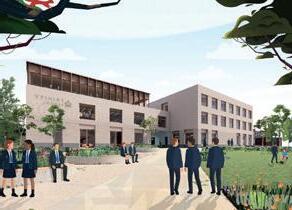
On the topic of our future, this edition also shares an update on our exciting move to a larger, fully co-educational school. It is with a real sense of responsibility that our plans for this development preserve the best of our past, with the involvement of our present, and for the success of our future. I hope you enjoy the read.
Music: Interview with Nick Mulroy, Director of Choral Music
Being responsible
As a value to nurture in young people, responsibility probably gets a bad press. Everyone is up for some curiosity and adventure, or can readily embrace creativity and ambition – values which we have taken as the focus of previous editions of this magazine. But who wants to be ‘responsibleʼ? It can easily be associated with being a barrier to fun, a burden to bear, or worse, simply part of accepting life as a grown-up.
I would rather reframe what we mean by it. As the root of the word suggests, it is about response. How do our students respond to the opportunities they are given at school? If we believe that students are the most important agents in their education, how do we help them to recognise and value that education in the fullest sense? And, more broadly, what is our response as a school to the wider context of the economic, social and cultural changes we see around us?
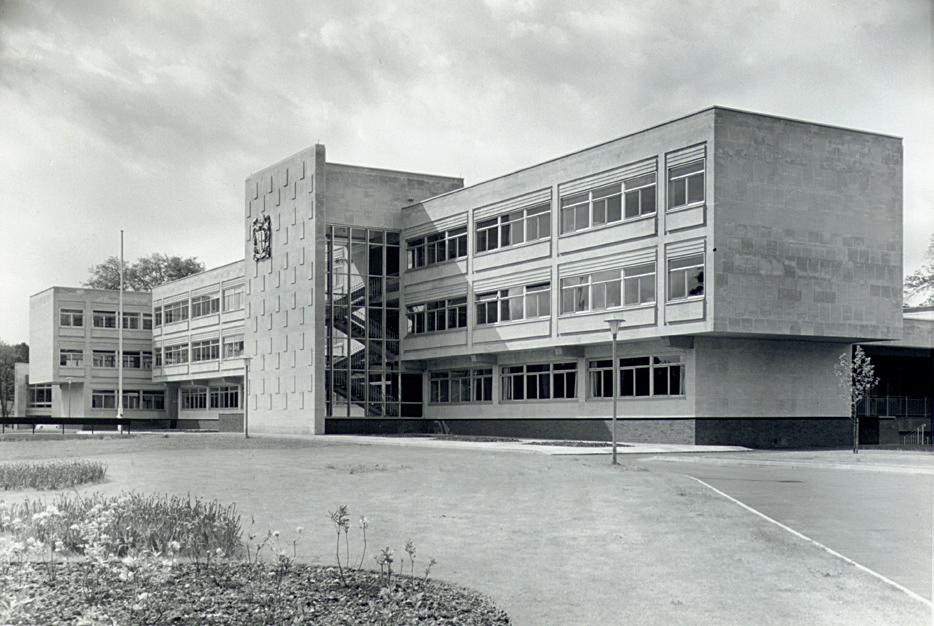
The 60th anniversary of the school’s move from the centre of Croydon to our current site has offered a moment to reflect on these questions and what matters most in our school community. A consistent theme emerges from this, which resonates across our student, staff and parent body: the breadth of backgrounds and perspectives among our students profoundly shapes everyone’s experience of school, and the people they become.
We have seen this borne out in the impact on our sixth formers of 15 years of coeducation so far. They are undoubtedly better prepared for study and work beyond school as a result, and this has been part of our decision to move to full coeducation from September 2027. As larger year groups of boys and girls are phased into the school, we will also grow from 1,050 to around 1,400 students in total by 2031.
We have also seen, over many years, the impact of bursaries not just on individual students but on the student body as a whole. It is widely recognised that the broader the range of backgrounds and perspectives represented in a community, the richer the learning and the stronger the outcomes for everyone. Young people growing up and rubbing shoulders dayto-day with those from different socioeconomic backgrounds, as well as with the opposite sex and the different racial backgrounds that make up South London, experience that richness of learning firsthand here.
Beyond any diversity statistic, it is the sense of belonging that makes the difference. As one new Sixth Former said to me in my first year as Headmaster, nearly ten years ago: ‘I came from a state school. Private schools have a reputation for being a closed club, but I was immediately made to feel welcome by students and teachers.’ That simple comment has stayed with me ever since.
As the school moves forward, we believe it is a central part of our responsibility to maintain, and increase as best we can, the diversity of our student body and to nurture an ethos that genuinely welcomes all. In this environment, our young people can truly belong and thrive.
The power of words
Trinity’s first
Keaden did not set out to become a poet. His first poem was written in the final minutes of an English lesson.
“We had to write something for the Benjamin Zephaniah Poetry Prize during Diversity Week,” he says. “But I didn’t start until the last ten minutes. I was just thinking, ‘What should I write?’”
Then the words came.
“What I wrote in those ten minutes is what I read at the competition. If I changed it, it wouldn’t be what I felt in that moment.”
That instinct still shapes how he writes. “I can’t force myself to write a poem,” he says. “It happens when I feel something strongly.”
Sometimes inspiration appears in unexpected places. The poem he performed during the Black History Month assembly came to him in the shower. “I was just rhyming the words naturally,” he says. “Before I even got dressed, I wrote it down.”
A space to be heard
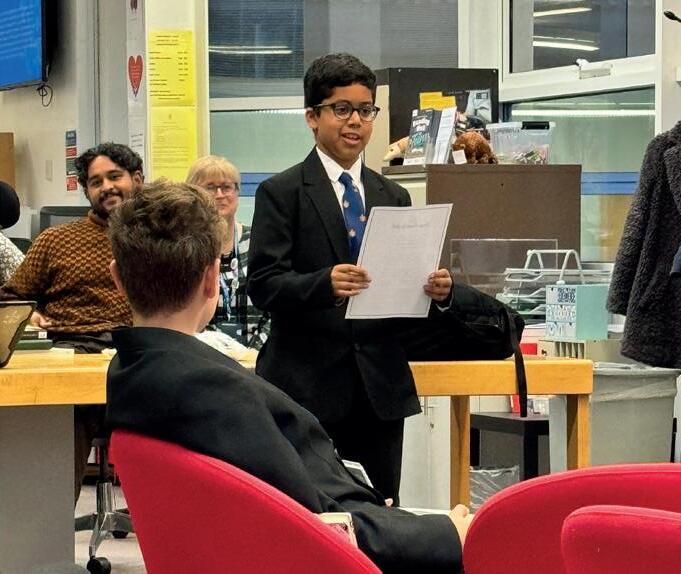
Over the past few years, poetry events in the Library have become a regular part of school life. Organised by Teacher of English Ben Goode, they give students a welcoming space to share their work.
“It’s about giving students a space to say the words they’ve written,” he explains. “There’s no sense of good or bad poetry. It’s about expression.”
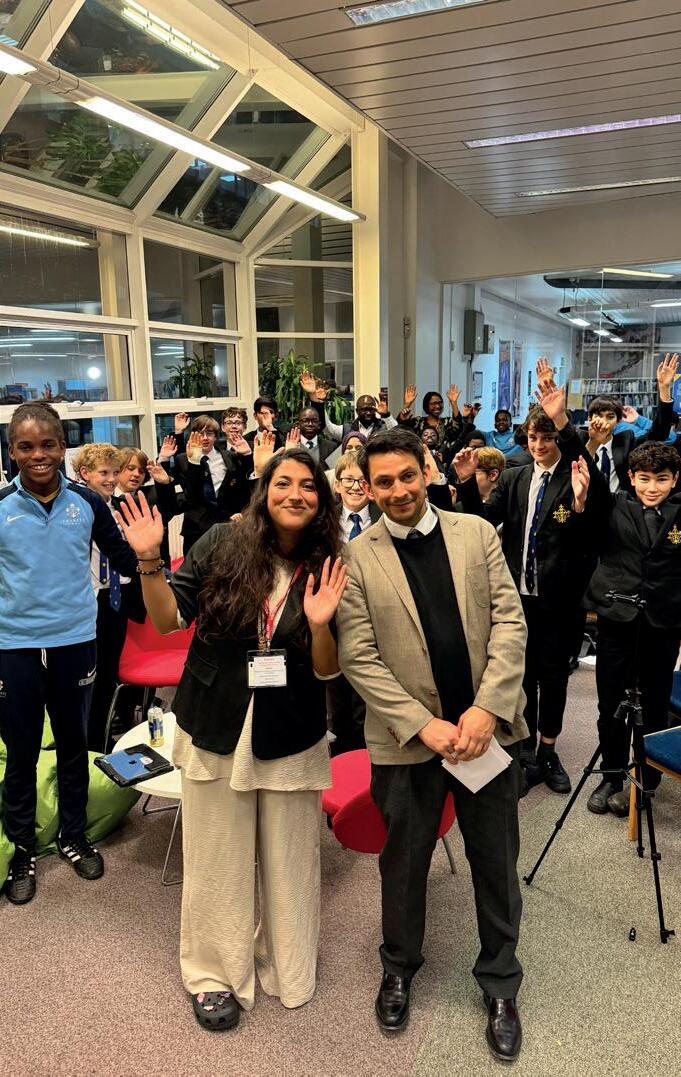
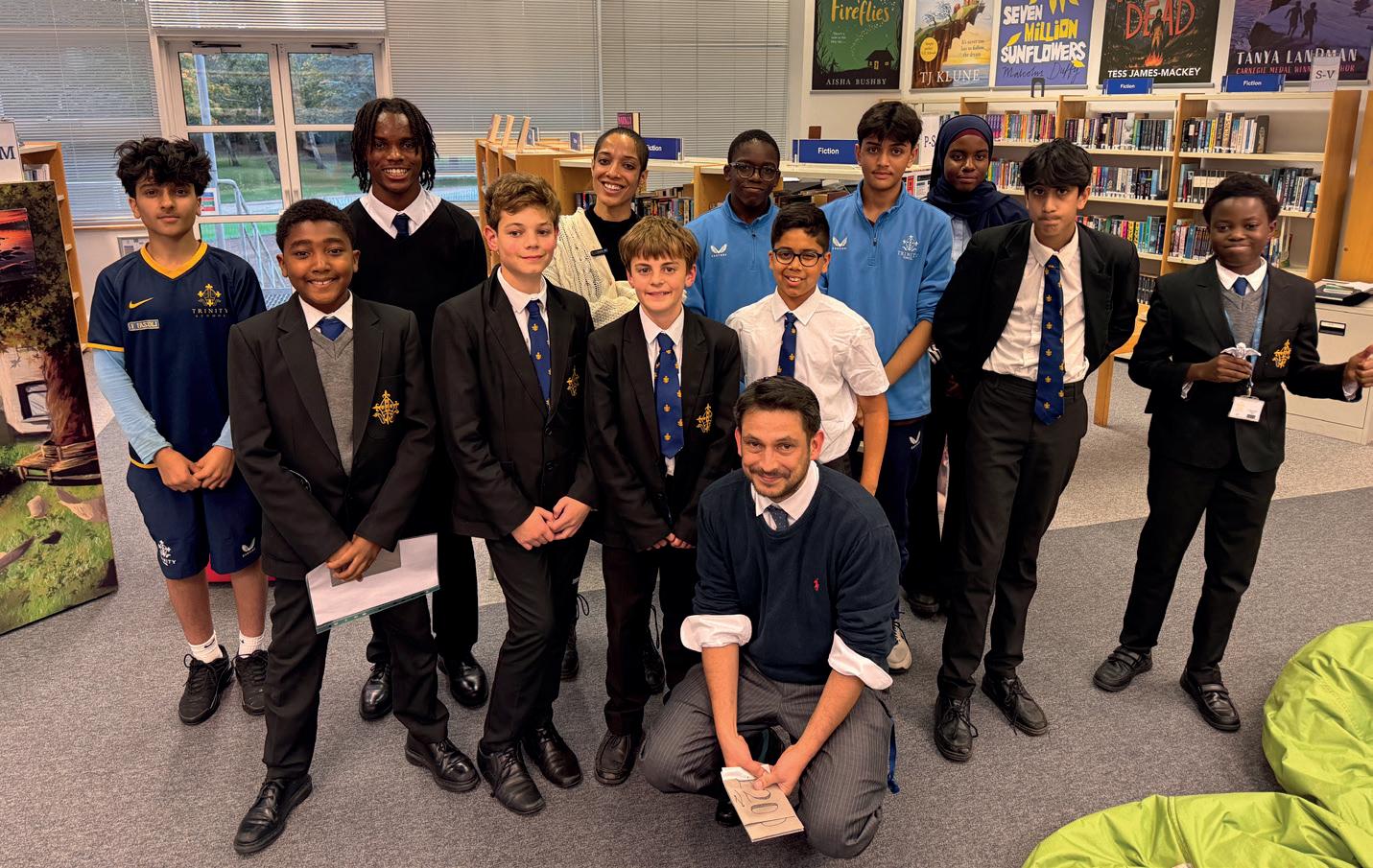
Students from across the school gather after school, often alongside parents. Guest poets also perform, sharing their craft and encouraging students to develop their voices. Many leave inspired by what they hear.
During performances, students hold small clickers. When they hear a line that resonates, a quiet chorus of clicks spreads through the room.
Standing up to read a poem can take courage. “The first time I read my poem, I was literally shaking,” Keaden remembers. “But as I kept reading, I calmed down.”
Now the events are one of his favourite parts of the year. “I enjoy seeing the bravery of students as young as Year 6 delivering poems,” he says. “Their voices are raw and passionate. I’ve seen students come along to support their friends, and the next time I see them, they’re performing.”
Mr Goode agrees. “When you give young people the opportunity to use their voice and express complex feelings through a creative form, they take it.”
Inspiration and influence
Music has also helped shape Keaden’s voice. Artists such as Stormzy and Dave have influenced the way he thinks about rhythm and storytelling.
But when asked about his biggest inspiration, his answer is immediate. “Forget Stormzy and Dave,” he says. “My biggest influence is Mr Goode. I wouldn’t have started writing poetry without him.”
Their conversations about writing have become a regular part of his week.
“He tells me how it is,” Keaden says. “What’s best for me and how I should approach things. He always encourages me to keep writing.”
Standing on stage
Performing in front of the whole school was a different challenge. The Black History Month assembly, led by students sharing their own poems, was the first time Keaden had read to such a large audience.
“I know my friends,” he says. “When they saw me on stage they were going to laugh. They told me afterwards they were ready to laugh. But when they heard what I said, they appreciated it.
“I was happy that I didn’t let fear stop me,” he says. “I read it with confidence.”
Poet Laureate
A wider platform Keaden’s commitment to the poetry events led to him becoming Trinity’s first Poet Laureate.
“I was honoured,” he says. “At first I wasn’t quite sure what the role would be.” After some conversations with Mr Goode and doing a quick Google search, he began to understand the significance.
“Being Poet Laureate means I now have a bigger platform. My words can reach more people.”
The role will also involve encouraging other students and gathering poems from across the school. “I’d love to work with younger students and hear what matters to them,” he says. “What matters to them might not be what matters to me.”
For Keaden, that variety of perspectives is exactly what poetry is about. “Poetry has no laws,” he says. “You write how you feel. Poetry gives a voice to the voiceless.”
Mr Goode
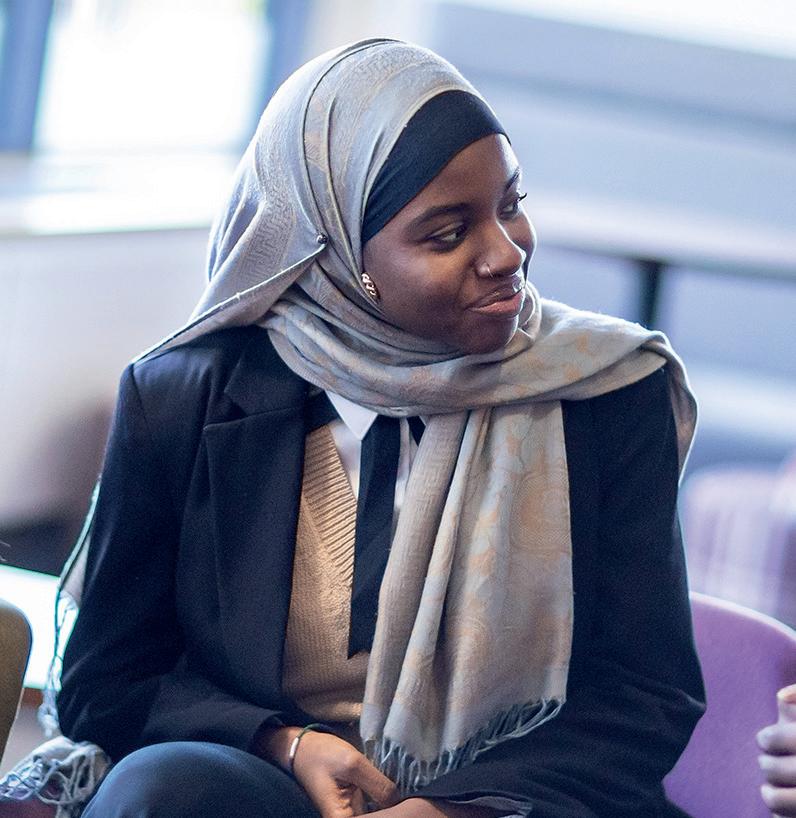
Poetry on the stage Upper Sixth student Madinah was the driving force behind making Trinity’s Black History Month assembly student-led. Writing has always been a creative outlet for her, “Poetry makes it easier to express strong emotions.”
“I felt that assemblies for Black History Month sometimes relied on pre-made presentation materials that didn’t resonate strongly with students,” she explains. “I wanted students’ voices to be at the centre.”
Instead of slides or speeches, students shared their own work. “The theme was Standing Firm in Power and Pride, and poetry gave us the opportunity to amplify our voices.”
Madinah, Keaden and Fourth Year Dami each read original poems.
“There was potential for the assembly to be nerve-wracking,” she says. “But seeing the effect our words had, not only on the audience but on each other, was powerful.”
“It showed that we can create history in the present day.”
Madinah
The art of being seen
Mr James Robertson, Director of Art “Portraiture is one of the most fascinating and challenging areas of art we explore at Trinity. Capturing a likeness is incredibly difficult. With a landscape there is room for interpretation, but when we draw or paint a person, our eye instantly recognises when something feels right or wrong. That challenge is exactly what makes portraiture such a rewarding skill for our students to develop.
We begin introducing portraiture in the Second Year, where students learn how to observe the face carefully, studying the proportions and structure before building a full portrait. They experiment with techniques such as the grid method and create their own self-portraits, discovering how small details can transform a drawing. Later, in the Lower Sixth, students explore portraiture in three dimensions through life-size clay heads, learning again to construct the face piece by piece before bringing everything together.
What makes portraiture particularly compelling is that it goes far beyond appearance. Every portrait raises questions: how do we see ourselves, how do others see us, and how do we represent someone with honesty and care? As our students develop their own projects, portraiture often becomes a way to explore identity, relationships and personal experiences.
That also brings an important sense of responsibility. When we create a portrait of another person, we are not simply recording what they look like. We are interpreting who they are. Our students think carefully about how they represent their subjects and the stories behind them, balancing artistic expression with respect for the individuals they depict.”
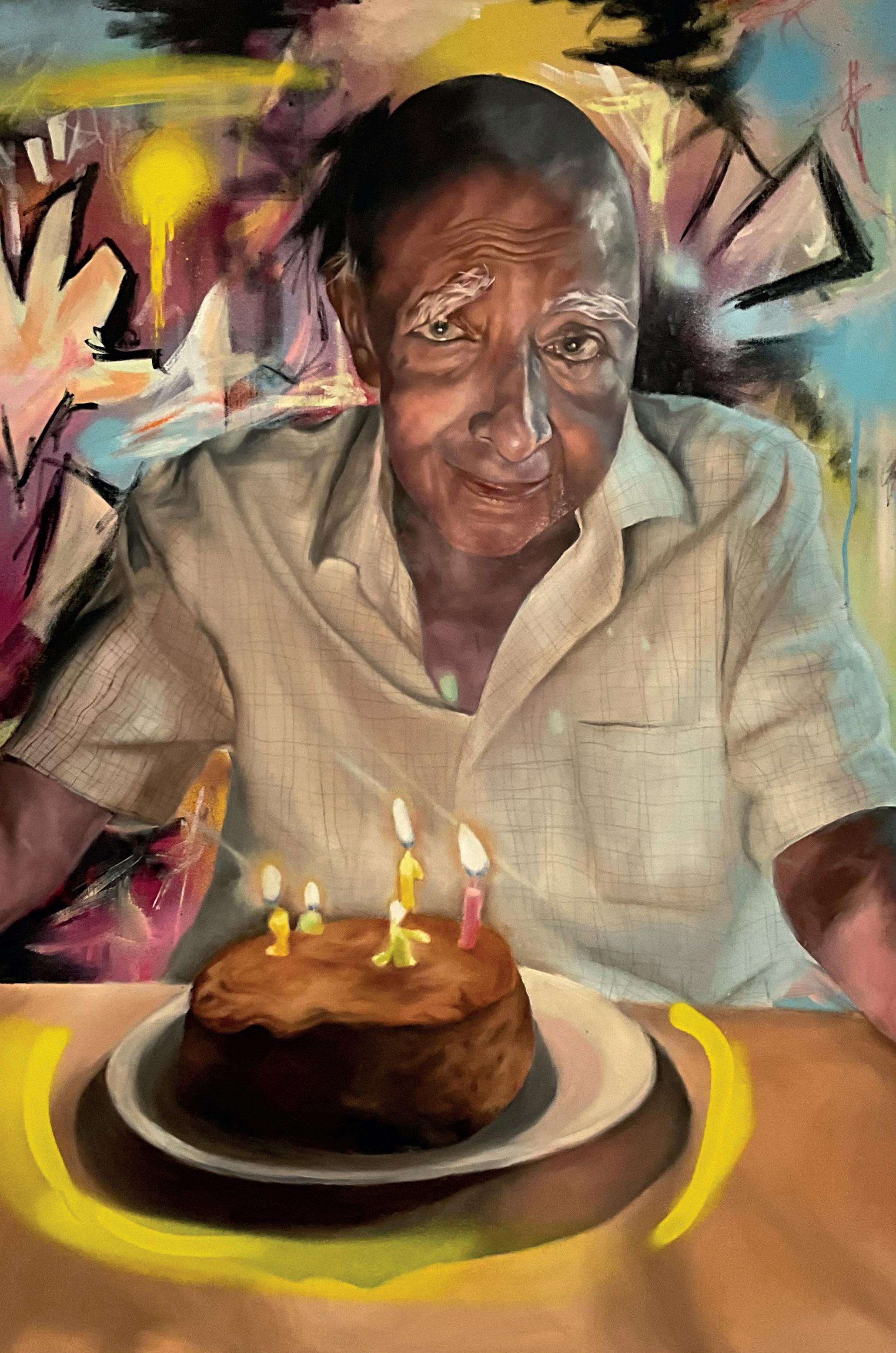
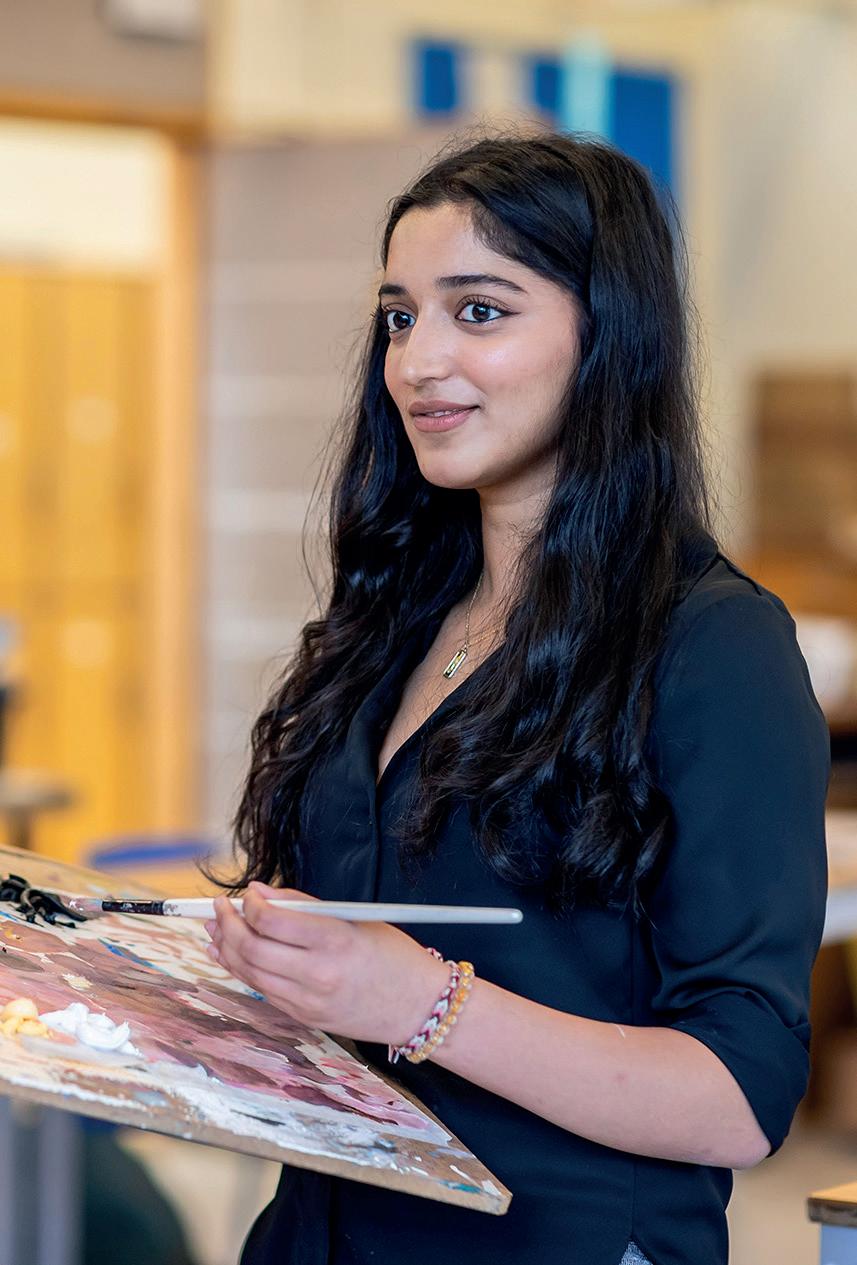
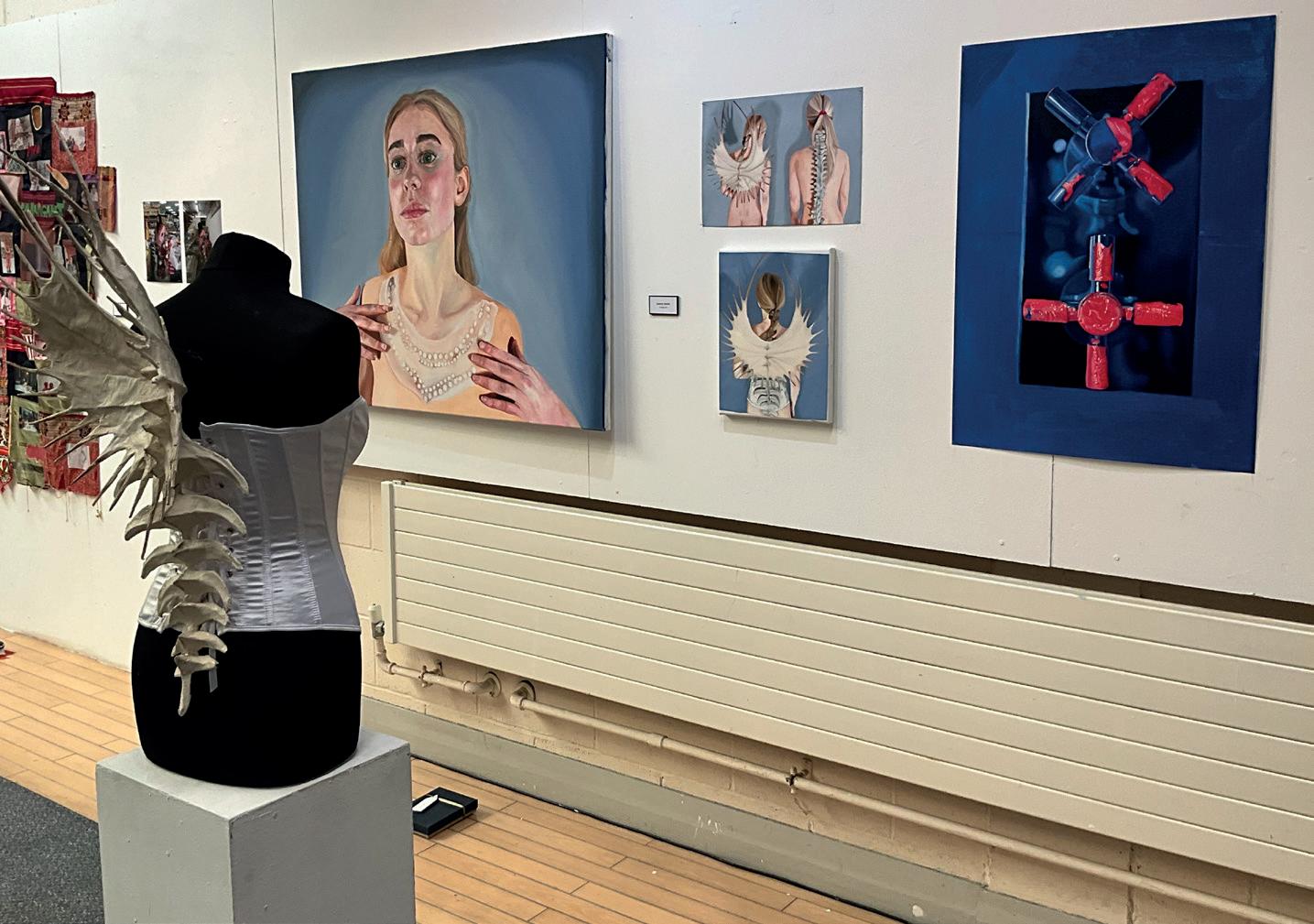
In this feature, we are delighted to showcase several examples of portraiture from across the school, from an awardwinning younger artist to A Level students whose work demonstrates the depth, skill and thought that portraiture can inspire.
Ananya Rammohan (Class of 2025)
For her A Level coursework, Ananya produced a portrait of her grandfather. She says, “The portrait was inspired by the metaphorical ‘gap’ between generations. I wanted to capture a moment where this distance, despite age, felt at its smallest, focusing on the idea of birthdays and how they take on greater meaning later in life. At the time, my grandfather was ailing, and his 83rd birthday became the subject of my piece. It marked an important moment for our family as we celebrated another year with him.
Creating the painting felt emotional, but also very special. I was able to preserve that moment in time and now, after his passing, having this painting as a memory of him is something I will always be thankful for. It means even more to me that he was able to see the finished piece.
I have always been interested in portraits, from sketching characters on book covers to working more seriously with oil paints. I especially enjoy discovering the subtle colours within skin tones, although capturing emotion remains one of the most challenging and rewarding aspects of portraiture.”
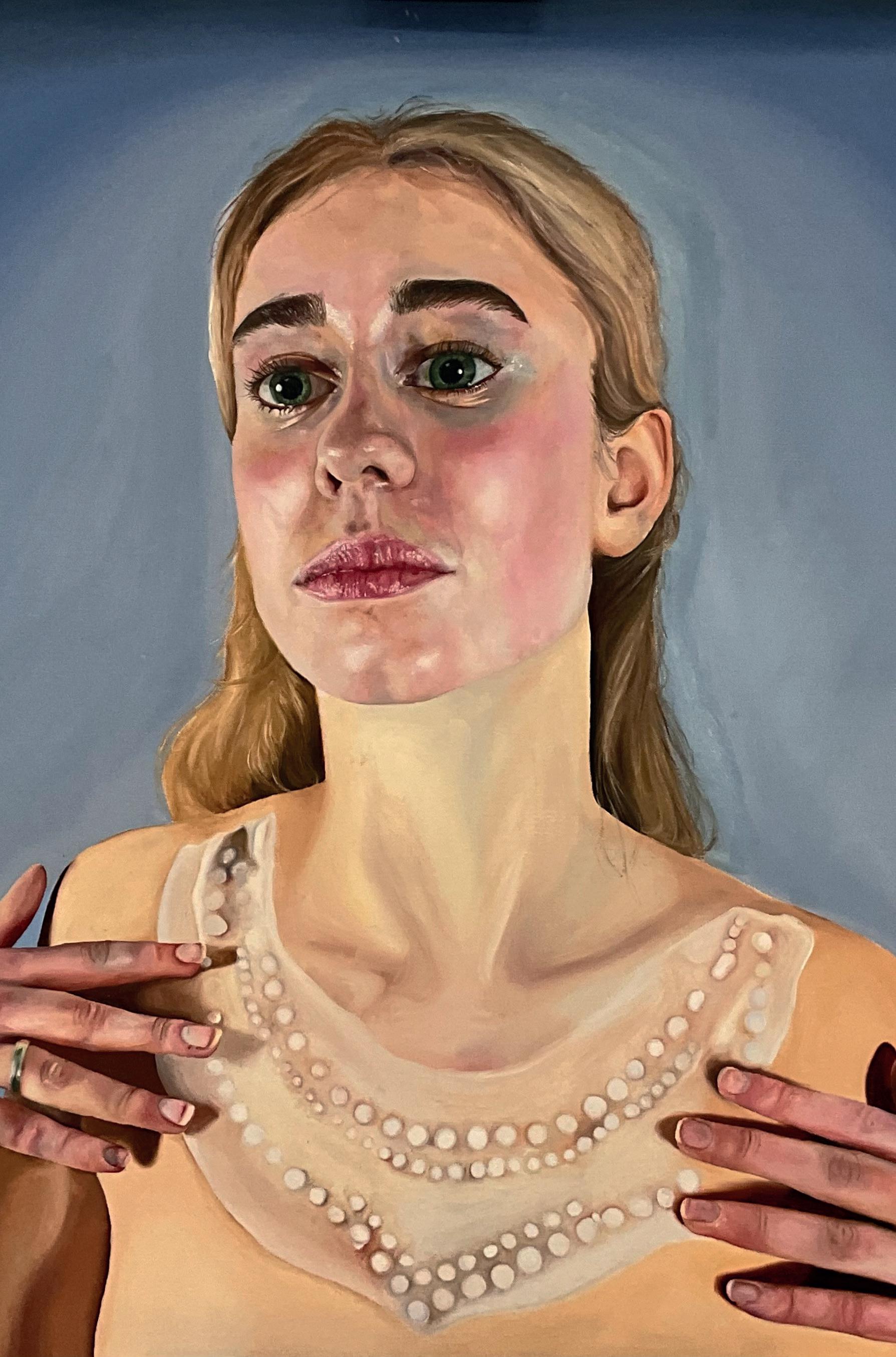
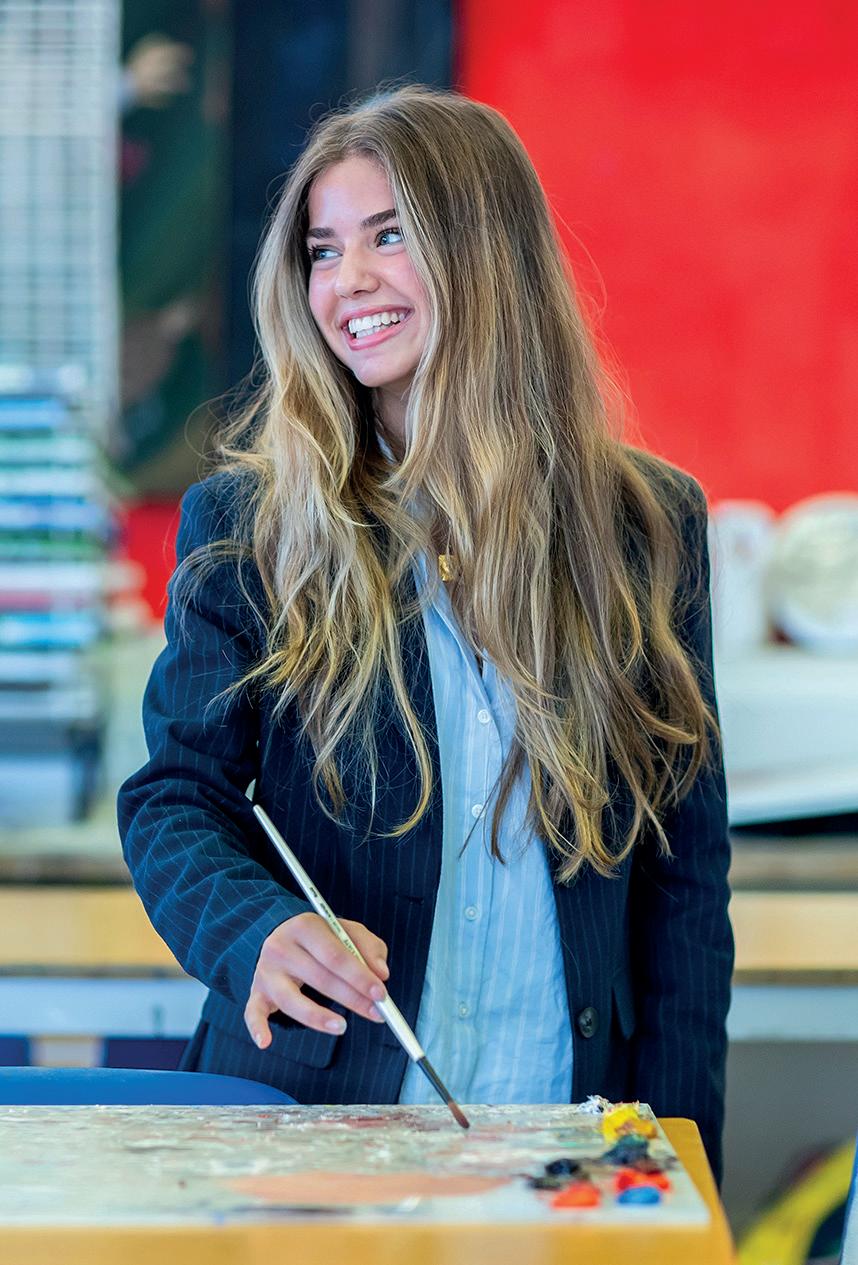
Lauren Izbicki (Class of 2025)
Lauren studied Art A Level and a key piece of her coursework was a large portrait of her friend Annabel.
“It is based on the female gaze. I wanted to create a piece that challenged the male gaze, instead controlling how the viewer sees the woman in the painting. I did this by working on a large scale, inspired by Jenny Saville. The beaded skin on her chest represents spots and boils, but they appear as a pearl necklace, bringing power to our imperfections and showing how they can be seen as beautiful.
This was my first portrait and was a big challenge, as I usually paint in minuscule detail. I had to enhance the colour to capture the life and beauty within natural skin, which I found difficult but rewarding. I enjoyed the process, although I would probably approach it differently next time.
I loved my time studying Art A Level; it was my favourite part of the day. I have always had ambitious ideas for my work, and my teachers were amazing at helping me realise them. Whilst I haven’t applied for an art degree, I may return to study art in the future, and I will definitely continue painting. Art is a nice escape and a joyful skill I hope to never lose.”
Art Scholar Jamie
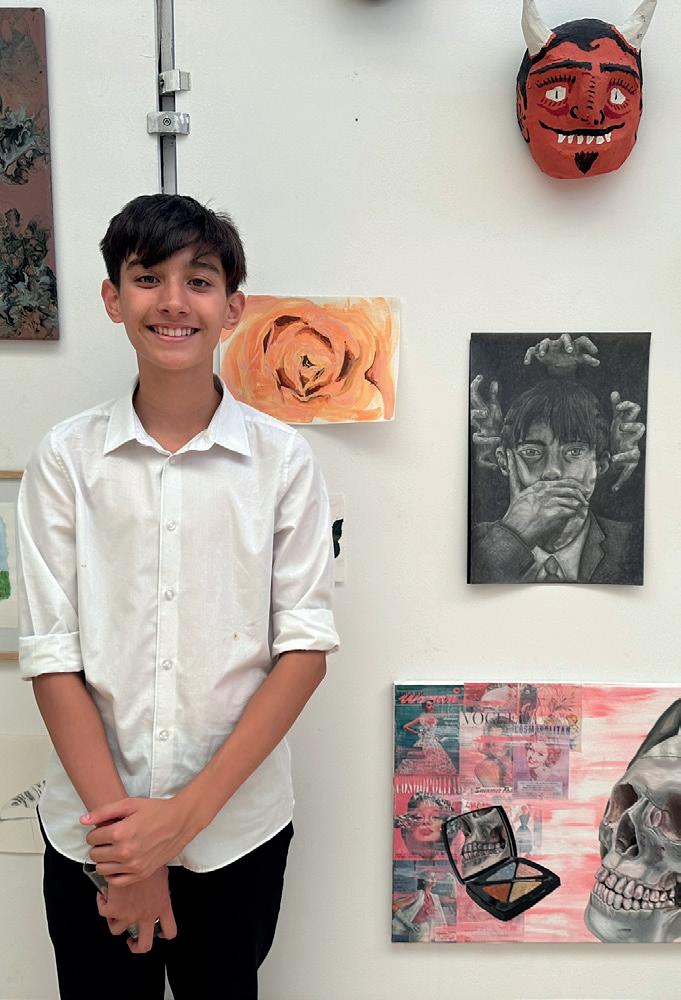
Third Year Jamie is an Art Scholar and was the overall winner of last year’s Open Art Awards. He submitted a striking pencildrawn self-portrait, exploring the theme of anxiety around exams.
Talking about his self-portrait he said, “Although I’d started this piece earlier in the year, it wasn’t until we started doing portraiture in our Art lessons that I really developed it. During this time, it was end of year exams and there was a lot of anxiety around them, so I decided to incorporate that theme into my art to shed light on how intense this pressure can be.
“I enjoy portraiture as it does not always require deeper meaning or complex themes; when you get it right, portraits can really capture the essence of a person and their emotions. Most of my portraits are of people that I admire, like the one I did in Year 6 of David Attenborough.”
Workshop with Francis C. Kelleher
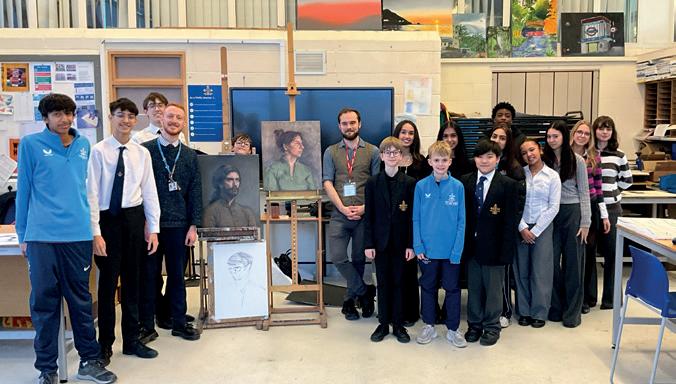
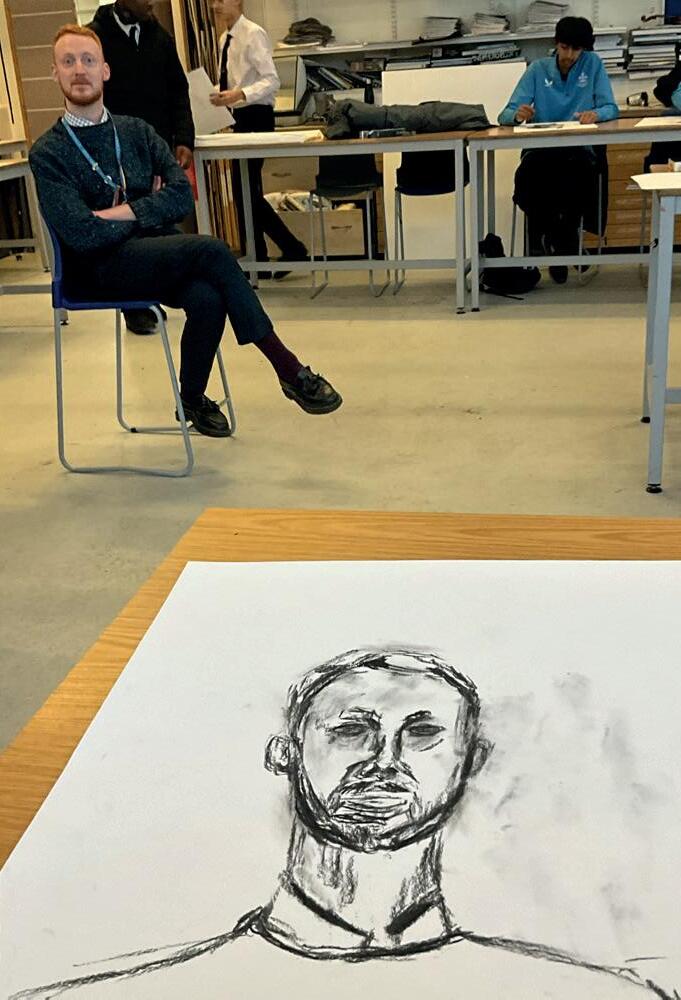
We connect our students with professional artists wherever possible to mentor and inspire. Recently, we welcomed fine artist and alumnus Francis C. Kelleher (Class of 2007) to run a portrait workshop with our Art Scholars from across the school. Jamie said, “It was really helpful to understand Francis Kelleher’s process for creating his artwork; he showed us that to capture a person in a painting you need to draw them as a whole rather than focusing on a part of their face or body.
The students were tasked with drawing their teacher Mr Coma, which for some was a challenging task. Jamie said, “Mr Coma is someone we see all the time, so we know his face already very well. However, this made it harder to draw him as you notice all the details of his face, his personality, or his demeanour that you haven’t quite got. There was, of course, also a desire to ensure that Mr Coma was done justice in the picture, but Mr Kelleher did really help guide us in what to focus on.”
Bringing Broadway to Shirley Park
"GUYS AND "GUYS AND
Trinityʼs whole school production of...
“What an amazing show. Those leading actors could go and work in the West End. Our children absolutely loved the singing and dancing which was just so professional.”
St John’s Primary School
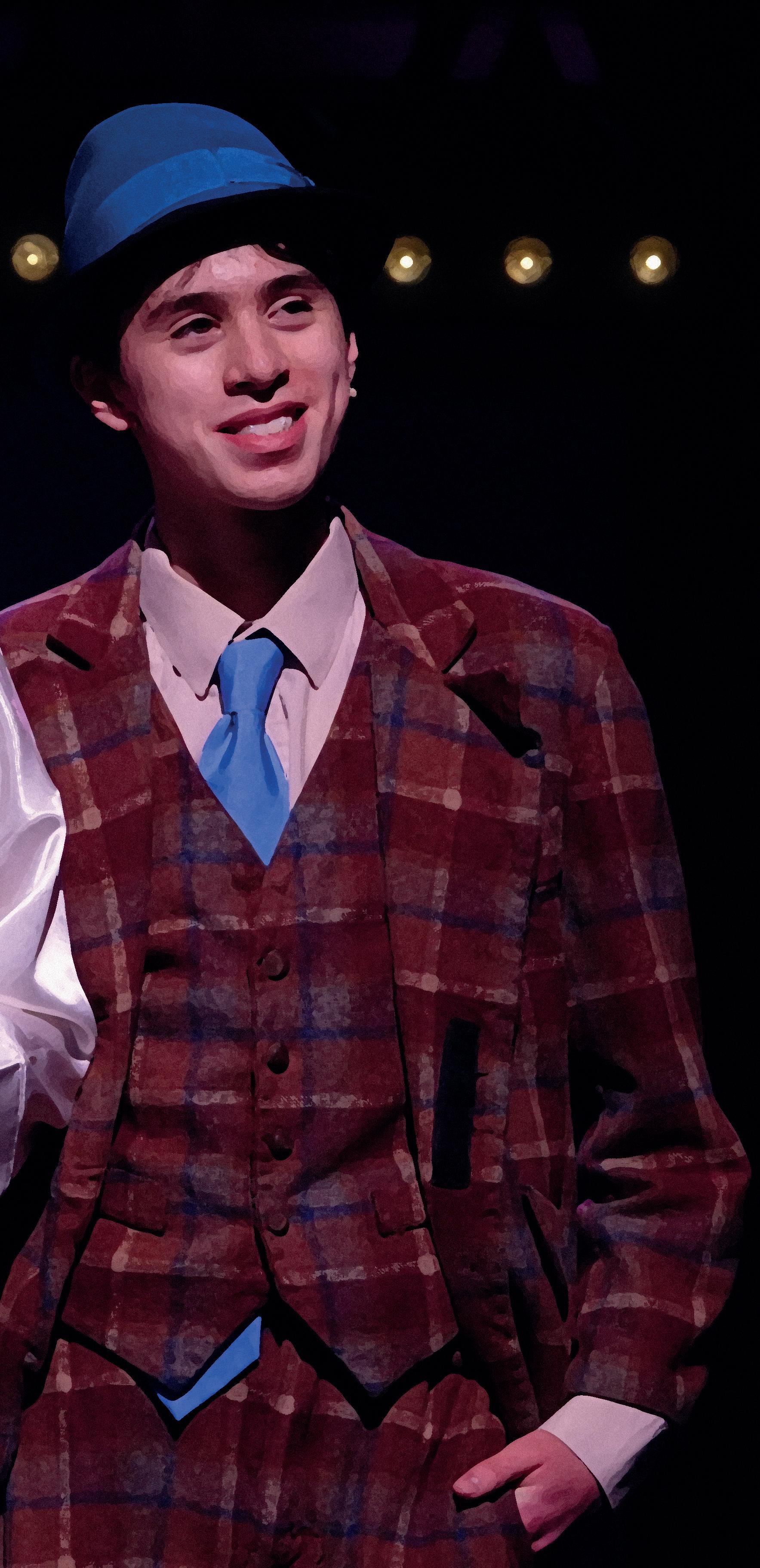
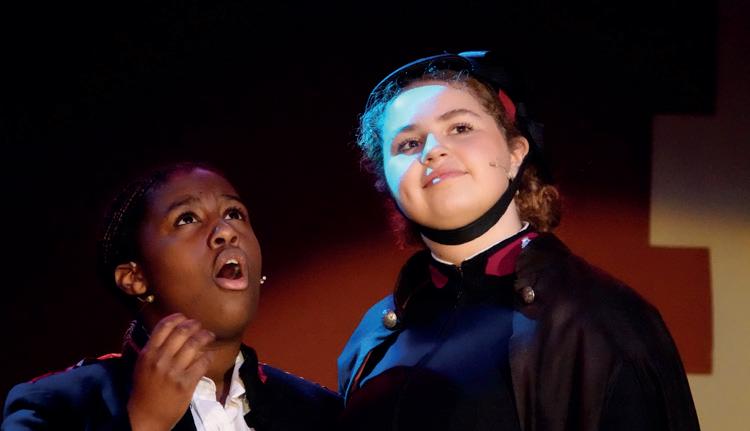
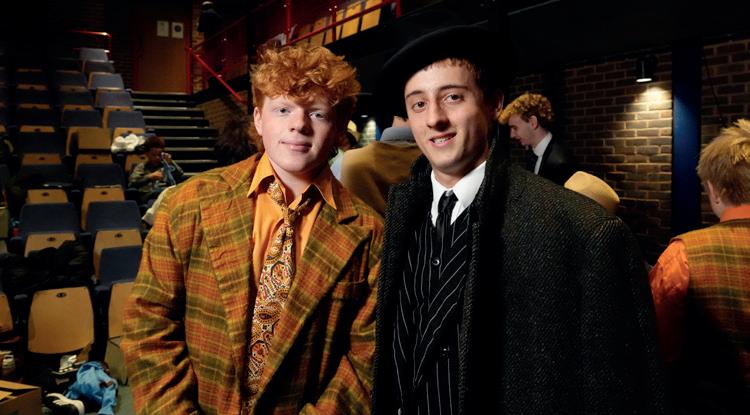
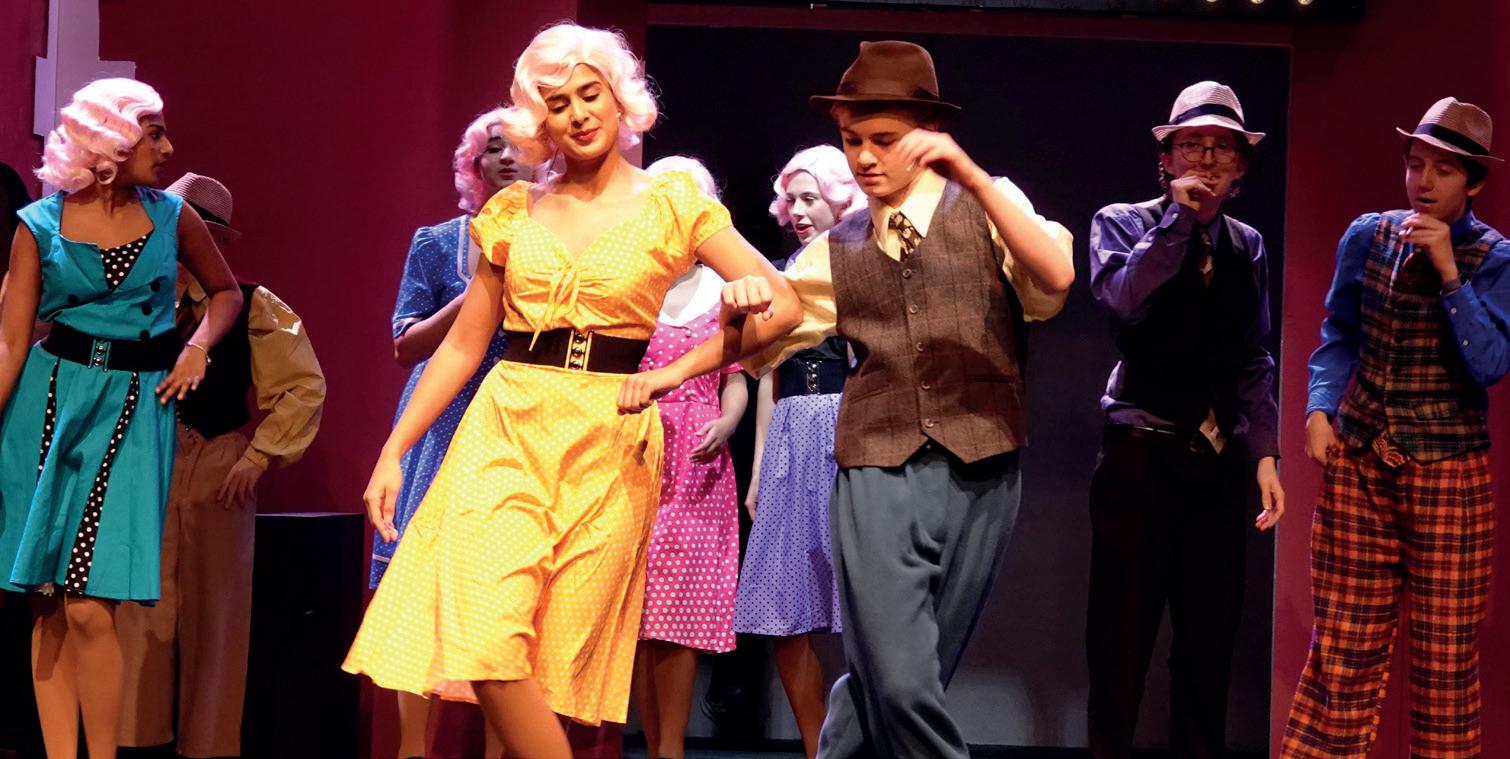
In December, the Trinity Concert Hall was transformed into a bustling 1950s New York for our whole school production of Guys and Dolls.
For Mr Chris Chambers, Head of Drama Productions, the idea began with a simple spark.
“Seeing Guys and Dolls at the Bridge Theatre in London with students was a great night out and perhaps planted the seed that maybe we could put our own version on. It was also the first large-scale musical Trinity put on after girls joined in 2011.
DOLLS" DOLLS"
The well-loved musical demands larger than life characters, great comic timing and the dynamic delivery of classic songs. It also relies on dance, which was something I was keen to develop further. As a performer, it gives you the chance to be exuberant in an ensemble that relies on individual characterisation, so it felt like a perfect choice for our students.
There were many joyful and humbling moments throughout the process, but one that stands out was making sure that when the cast turned their briefcases around in the opening number, they spelled out Guys and Dolls and not ‘Doys and Gulls’. You may not believe that it took many hours of practice, but the result was great fun to watch.
Whole school productions take monumental effort from all involved: on stage, behind the scenes, building sets and designing costumes. In a busy school, it is fantastic to see the students’ sustained commitment and enthusiasm to making our autumn term production as entertaining and professional as it can be.
As one audience member said to me afterwards, ‘You’ve got a problem now.’ I asked why. They said, ‘Well, you can’t beat that.’”
“We were very impressed with the talent of your students and loved the
choreographed routines.”
Gresham School
Ed (Nathan Detroit)
For Fifth Year Ed, this was his first lead role in a whole school production, though he has plenty of stage experience singing with Trinity Boys Choir, National Youth Choir and theatre outside of school.
The first thing I did was watch other productions and the original film with Frank Sinatra and Marlon Brando. Then before going on, I’d put my costume on and say my first line in a New York accent. That really helped. The accent made all the difference.
The first time we did Sit Down, You’re Rockin’ the Boat with the full ensemble, that was the moment I thought this is going to be something special. When we performed it on opening night, the audience went crazy. That was a great moment.
The Havana sequence was so much fun. We spent hours rehearsing it, but it paid off. The cast loved doing it and the audience loved watching it.
Working with Beni was great. When you are performing with someone who is that strong, it makes you raise your own game.
Beni (Adelaide)
Upper Sixth student Beni is a member of the National Youth Musical Theatre and sings with the Trinity Girls Choir. She played the very different role of Jadis the White Witch in last year’s whole school production.
It has been really fun to create something alongside a team who are equally excited and who embrace the dazzle of musicals. Choreographing a lot of the Hot Box Girls’ dances, we were able to add our own twists to the numbers, which made us feel more connected to the show.
I have loved being a part of this production, performing has increased my confidence, my creativity and my ability to work as a team and I will cherish the memories I’ve made through Drama at Trinity.
Jinmi (Nicely-Nicely Johnson)
A break-out star, Third Year student Jinmi had only taken on small roles before.
Usually, I can find it hard to talk to other people, but during rehearsals I was able to step out of my comfort zone and talk to others more. Taking on the role really boosted my confidence, and I really enjoyed watching the whole play come together and seeing the progress from the first rehearsal to the final performances.
Ines (Sarah Brown)
Lower Sixth student Ines is an experienced singer and is this year’s National Children’s Choir of Great Britain Scholar. Although she had not been involved in Drama since her Third Year, Ines was excited to audition for the show, and now also sings with the Trinity Girls Choir.
Being new to the school, I was slightly worried about balancing rehearsals with my A Level workload, but I was excited to try out for the part. Being part of the production has been such a lovely way to meet people across different year groups and my fellow cast members and teachers were all wonderful.
Rory (Harry the Horse)
Lower Sixth student Rory is a rugby player and had always thought about getting involved in Drama productions but had not taken the leap before. Since Guys and Dolls, Rory has gone on to star in the Sixth Form production of Blue Stockings and has developed a love for theatre!
Starting Sixth Form felt like a good opportunity to get involved and a good way to make new friends with the new students. Nowhere else in the school do you get to mix with so many different year groups. It has been a great way to get to know people and although it was intense, it was really fun and the audience reaction made it all worthwhile.
Elliot (ensemble)
Guys and Dolls is First Year Elliot’s second whole school production, as he caught the bug with last year’s The Lion, the Witch and the Wardrobe.
The first time of being on stage, performing, was probably one of the best experiences of my life and it’s really motivated me to do other things. The atmosphere of every rehearsal and every show is something else, and you get to know so many cool, different and funny people.
Whether you are in the ensemble or playing a main role, everyone is treated the same. Everyone worked unbelievably hard to make the show possible and it all looked amazing. I am so happy to have had the opportunity to do that.
James (Student Assistant Director)
Lower Sixth student has been assisting directing Drama productions for many years.
The main challenge with taking on such an acclaimed production was creating something engaging while still making it distinctly our own. Every detail had to feel purposeful, even the smallest things.
My highlight across the entire process was without question opening night. Having been so pressed for time throughout the week leading up to the show, being able to sit back and watch the hard work that not only every cast member had put in, but also everyone else working off the stage, was truly special.
The most meaningful part is the community that forms, the new people you meet and the experiences you share along the way.
Fin Fin
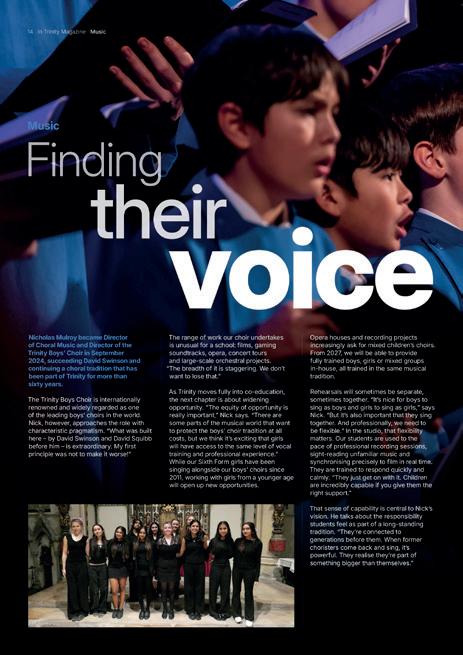
Finding theirvoice
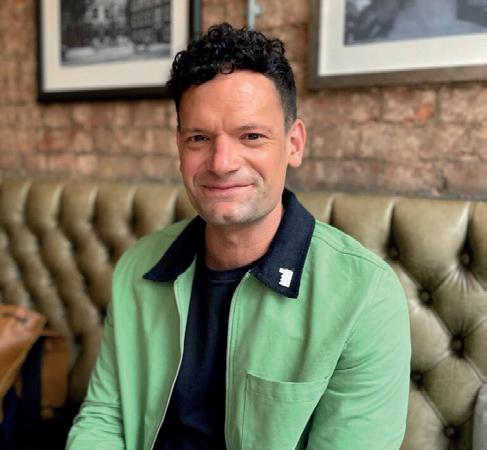
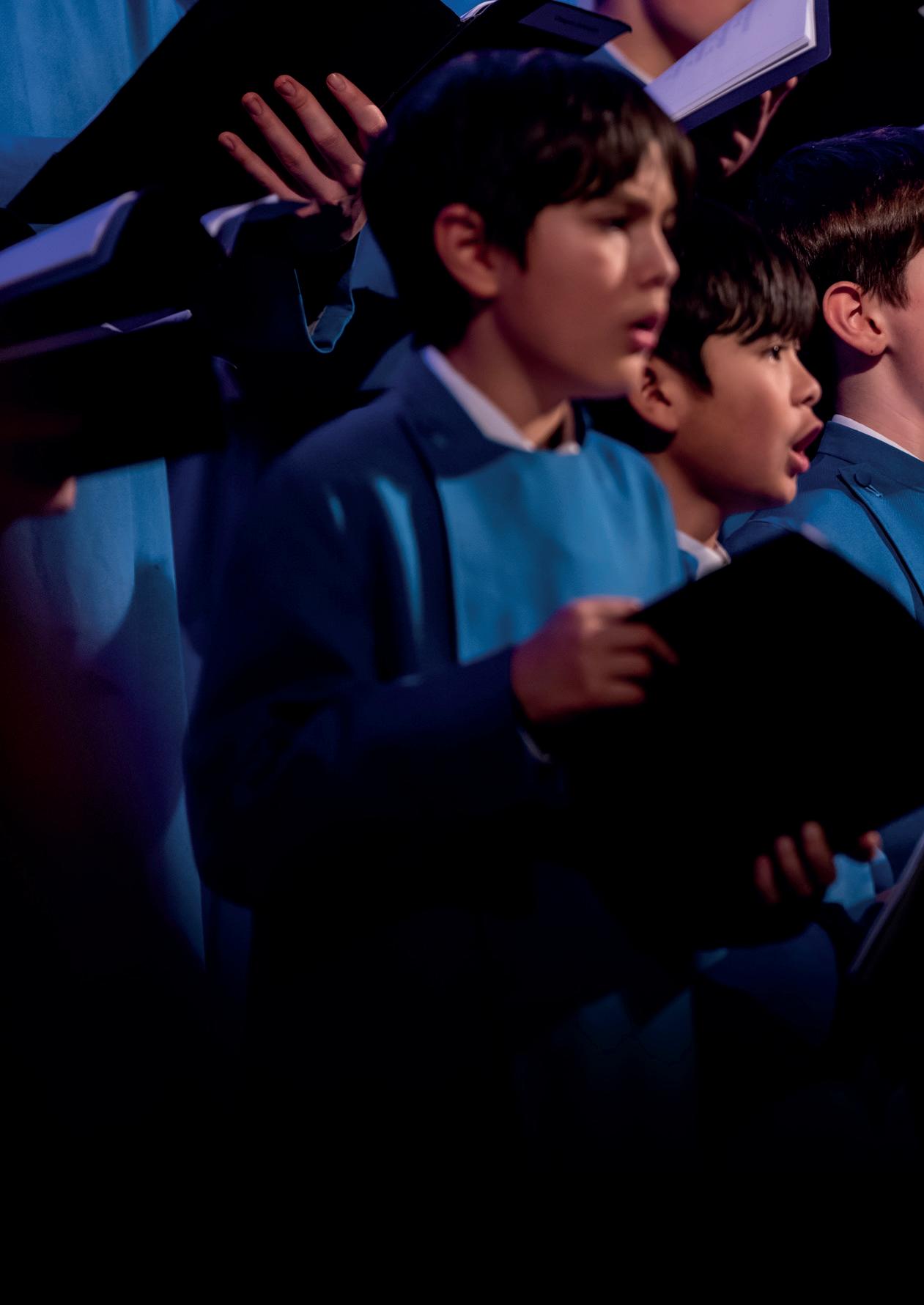
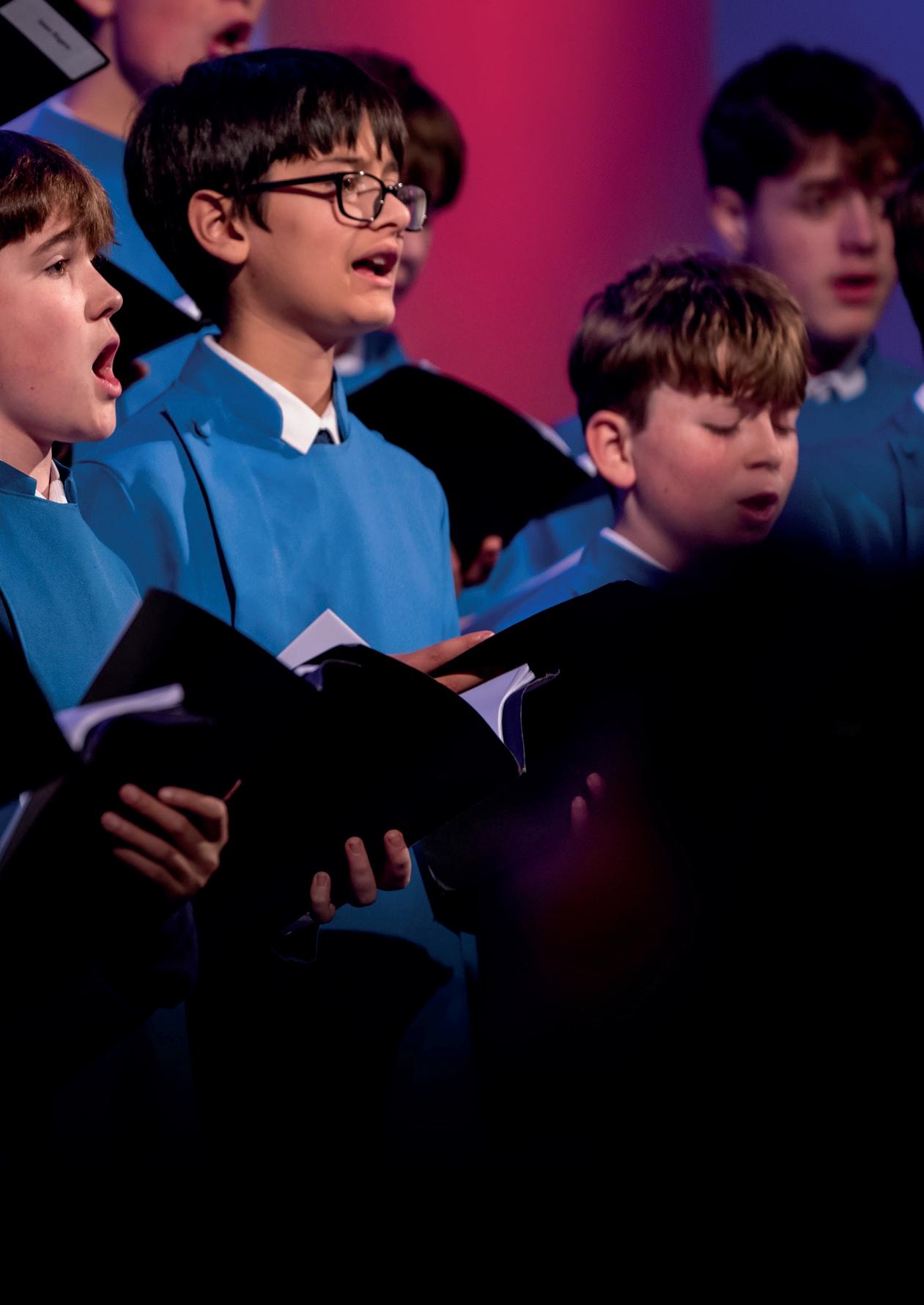
Nicholas Mulroy became Director of Choral Music and Director of the Trinity Boysʼ Choir in September 2024, succeeding David Swinson and continuing a choral tradition that has been part of Trinity for more than sixty years.
The Trinity Boys Choir is internationally renowned and widely regarded as one of the leading boys’ choirs in the world. Nick, however, approaches the role with characteristic pragmatism. “What was built here – by David Swinson and David Squibb before him – is extraordinary. My first principle was not to make it worse!”
The range of work our choir undertakes is unusual for a school: films, gaming soundtracks, opera, concert tours and large-scale orchestral projects.
“The breadth of it is staggering. We don’t want to lose that.”
As Trinity moves fully into co-education, the next chapter is about widening opportunity. “The equity of opportunity is really important,” Nick says. “There are some parts of the musical world that want to protect the boys’ choir tradition at all costs, but we think it’s exciting that girls will have access to the same level of vocal training and professional experience.”
While our Sixth Form girls have been singing alongside our boys’ choirs since 2011, working with girls from a younger age will open up new opportunities.
Opera houses and recording projects increasingly ask for mixed children’s choirs. From 2027, we will be able to provide fully trained boys, girls or mixed groups in-house, all trained in the same musical tradition.
Rehearsals will sometimes be separate, sometimes together. “It’s nice for boys to sing as boys and girls to sing as girls,” says Nick. “But it’s also important that they sing together. And professionally, we need to be flexible.” In the studio, that flexibility matters. Our students are used to the pace of professional recording sessions, sight-reading unfamiliar music and synchronising precisely to film in real time. They are trained to respond quickly and calmly. “They just get on with it. Children are incredibly capable if you give them the right support.”
That sense of capability is central to Nick’s vision. He talks about the responsibility students feel as part of a long-standing tradition. “They’re connected to generations before them. When former choristers come back and sing, it’s powerful. They realise they’re part of something bigger than themselves.”
Becoming fully co-educational adds another dimension to that legacy.
“I’m really keen to build further musical leadership opportunities lower down the school too, so that we generate the next generation of female conductors and female composers.”
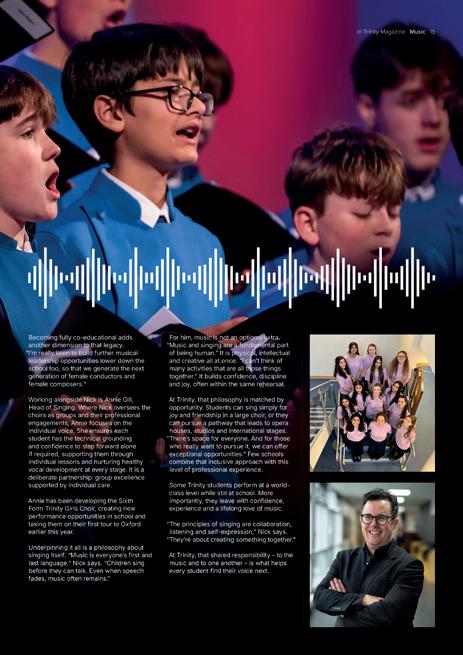
Working alongside Nick is Annie Gill, Head of Singing. Where Nick oversees the choirs as groups and their professional engagements, Annie focuses on the individual voice. She ensures each student has the technical grounding and confidence to step forward alone if required, supporting them through individual lessons and nurturing healthy vocal development at every stage. It is a deliberate partnership: group excellence supported by individual care.
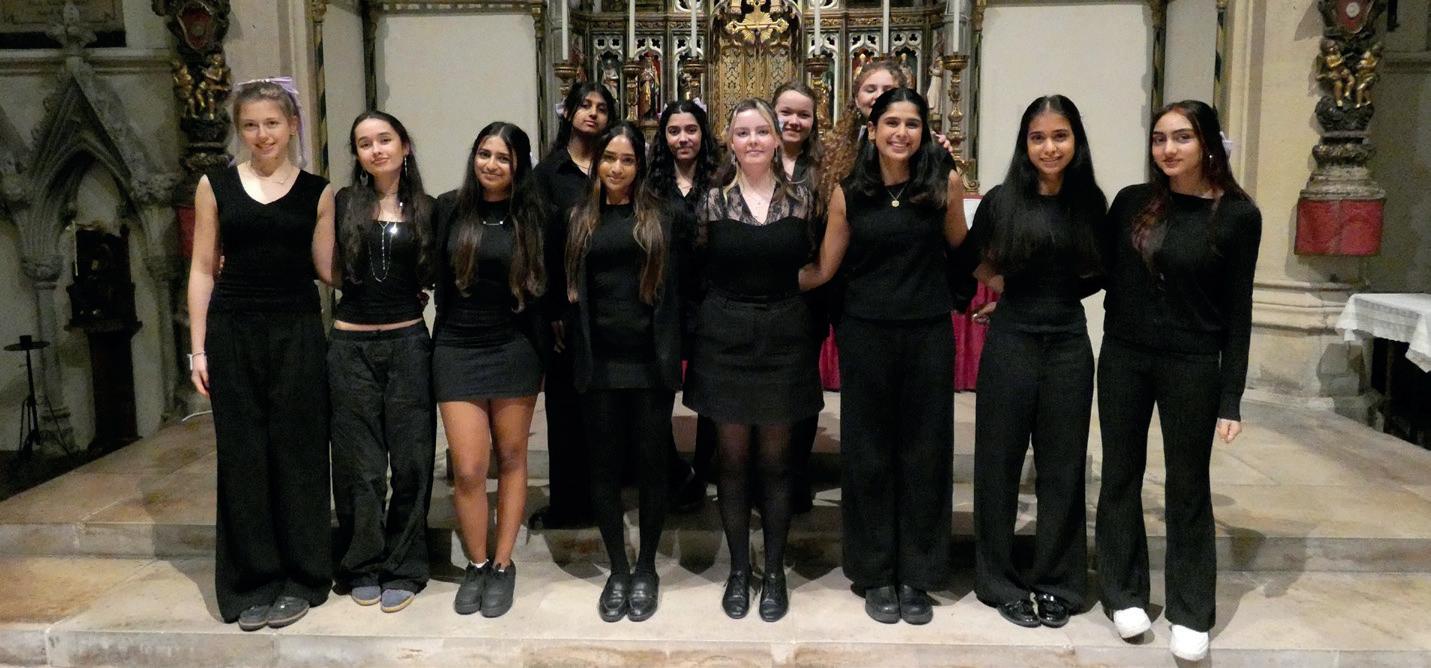
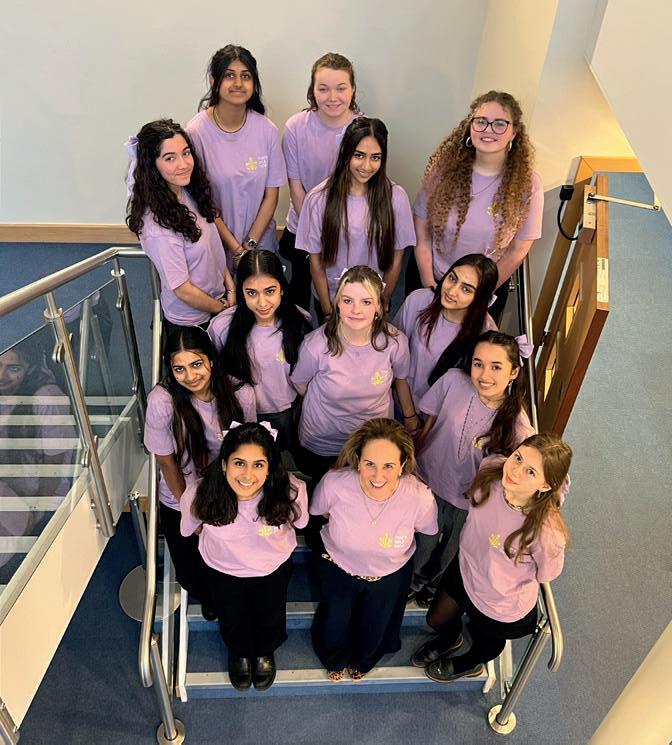
Annie has been developing the Sixth Form Trinity Girls Choir, creating new performance opportunities in school and taking them on their first tour to Oxford earlier this year.
Underpinning it all is a philosophy about singing itself. “Music is everyone’s first and last language,” Nick says. “Children sing before they can talk. Even when speech fades, music often remains.”
For him, music is not an optional extra. “Music and singing are a fundamental part of being human.” It is physical, intellectual and creative all at once. “I can’t think of many activities that are all those things together.” It builds confidence, discipline and joy, often within the same rehearsal.
At Trinity, that philosophy is matched by opportunity. Students can sing simply for joy and friendship in a large choir, or they can pursue a pathway that leads to opera houses, studios and international stages. “There’s space for everyone. And for those who really want to pursue it, we can offer exceptional opportunities.” Few schools combine that inclusive approach with this level of professional experience.
Some Trinity students perform at a worldclass level while still at school. More importantly, they leave with confidence, experience and a lifelong love of music.
“The principles of singing are collaboration, listening and self-expression,” Nick says. “They’re about creating something together.”
At Trinity, that shared responsibility – to the music and to one another – is what helps every student find their voice.
Rugby at Trinity Sport Foundations 1925–1965
A century of spirit
1925
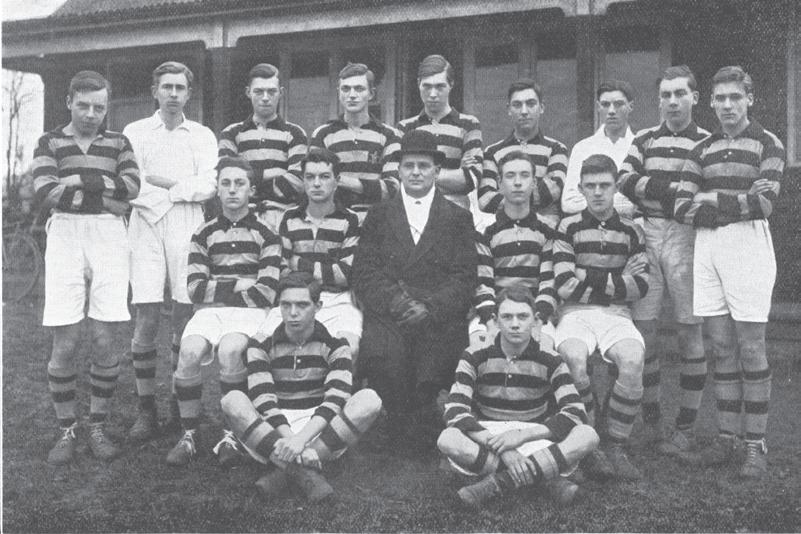
First rugby season at Trinity Rugby begins at Trinity School (then Whitgift Middle School).
1930s–1940s
Rugby continues through challenging times
Despite wartime disruption, rugby remains a central winter sport, with fixtures resuming strongly after the war.
1926–1927
Old Mid-Whitgiftians Rugby Club formed Former Trinity students help establish the club, linking school rugby to the wider rugby community.
1950s–1960s
1955
First Trinity Sevens team established 1960s
Growth in coaching and standards
A stronger cohort of players begins to emerge, feeding into successful Old Mid-Whitgiftians teams.
1965
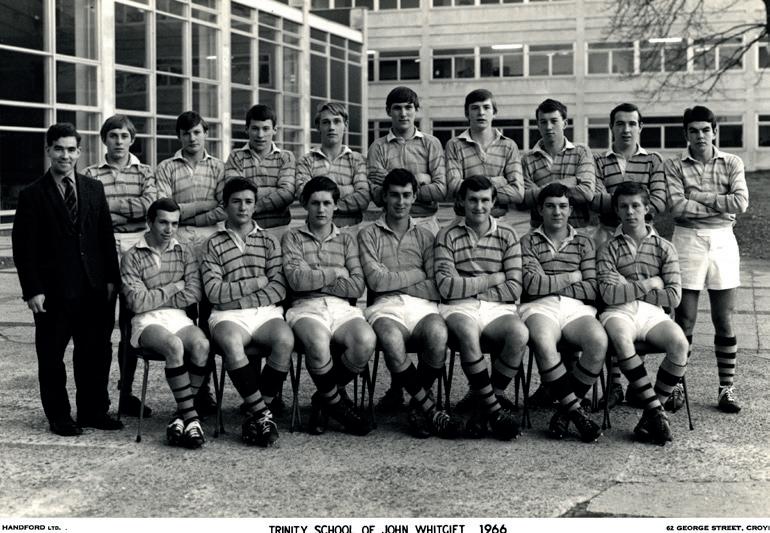
Trinity rugby kit established Cambridge blue shirts with chocolate brown stripes become the distinctive Trinity colours (brought back in 2025 for the 60th anniversary).
Move to Shirley Park First match at the new grounds played against an invitation XV featuring players from Harlequins and Wasps.
Shirley Park
and skill
Raising standards 1965–2000s
1985
First international tour Rugby tour to California marks the school’s growing profile.
2000s
Alumni reach professional and international levels
Notable former students include George Chuter (England), Alex Codling (England and coach), Shane Roiser and Kieran Roche (Premiership).
1976
Coaching development under Mike Alexander
Structured training and fitness introduced, raising physical preparation and standards. 1978 was the most successful year of Trinity rugby to date with 74% of games won.
1990
National recognition
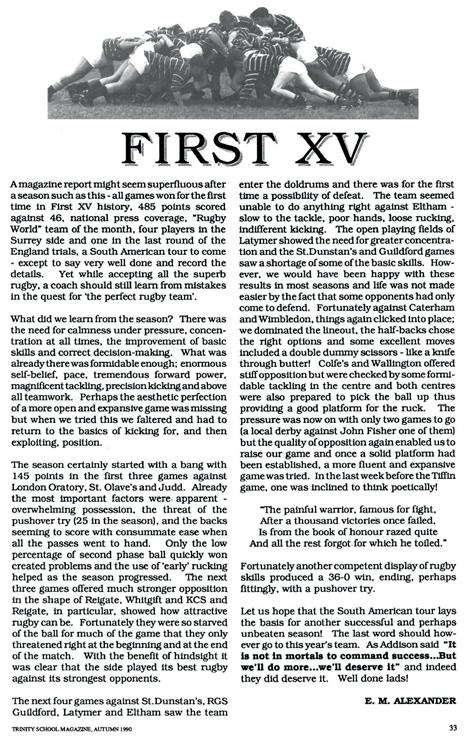
1st XV ft. Alex Codling and Shane Roiser named “School Team of the Year” after an unbeaten season. They also tour South America.
1985 California tour
The modern programme 2000s–today
2011
Girls join Trinity Sixth Form
The first Girls XV is fielded in 2019, expanding opportunities for female players.
2022
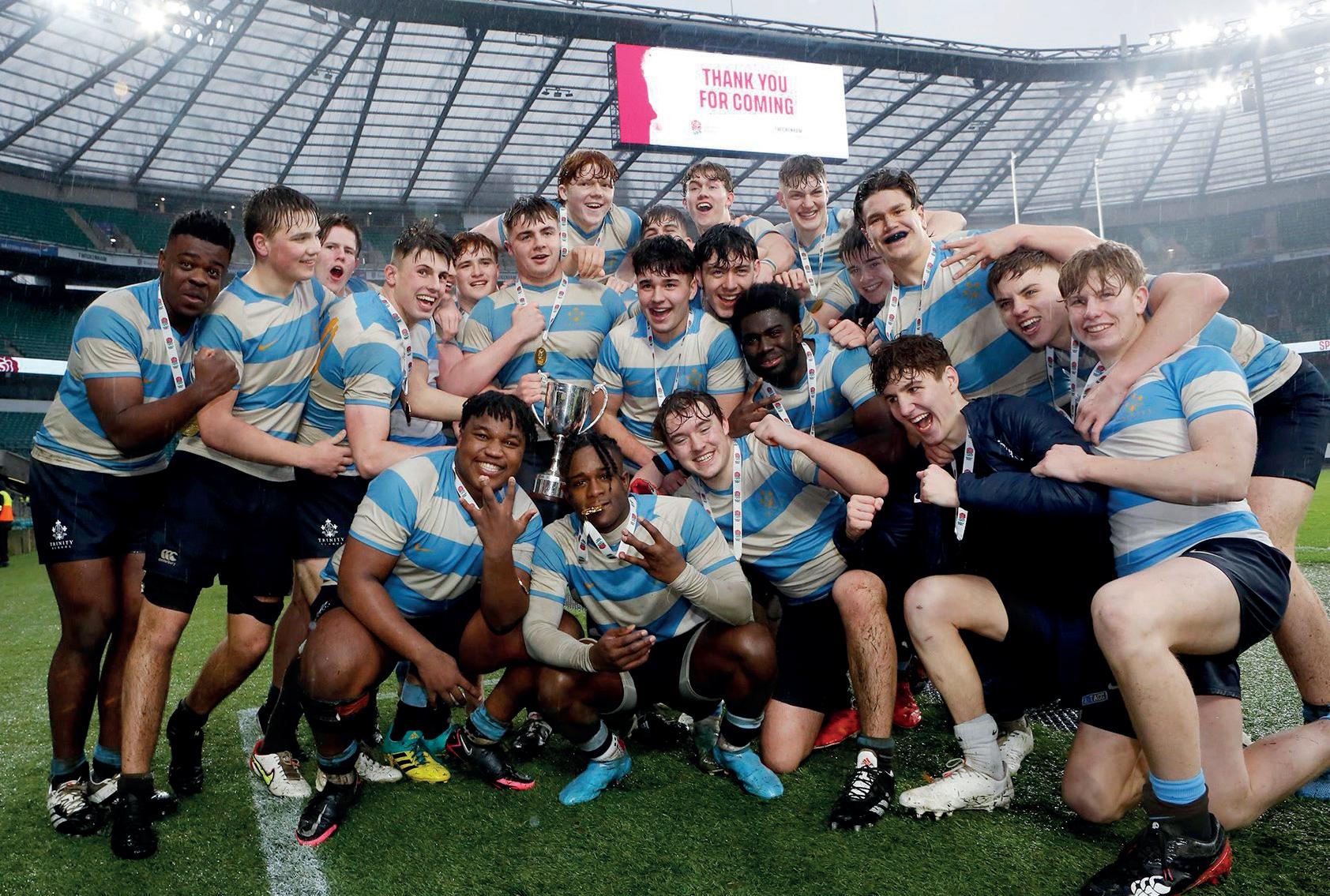
National Cup at Twickenham
Trinity 1st XV triumph at Twickenham, beating Kirkham Grammar School 15-10.
2024
U16s reach the final of the Rosslyn Park 7s
2025/26
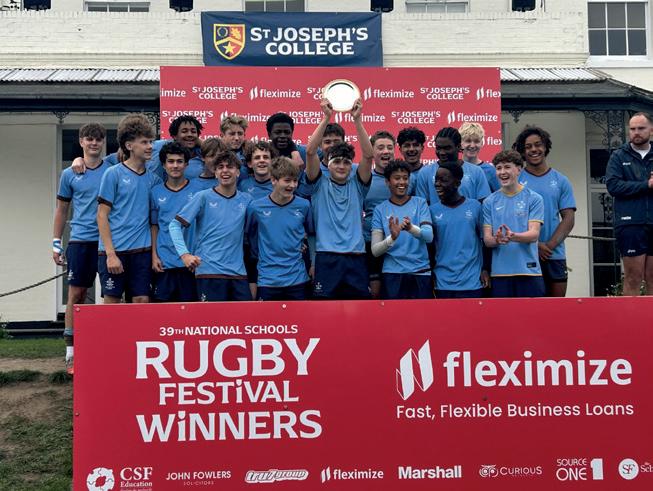
U15s success Wins at St Joseph’s Plate, Surrey 7s and London Oratory 7; participation at a high, with 25 teams playing regularly.
2015
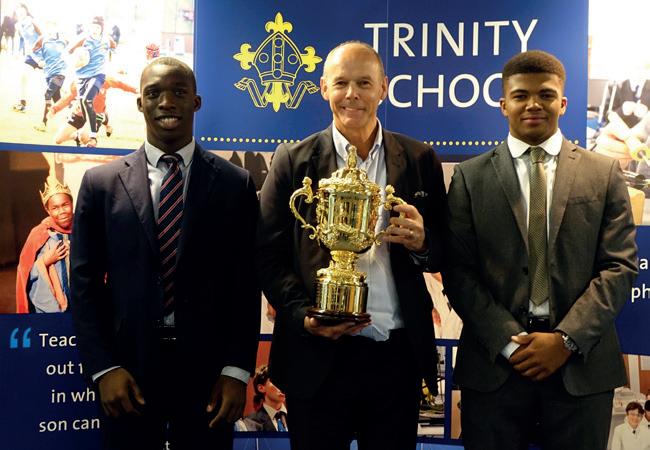
Hosting the French National Rugby team for the World Cup Clive Woodward visits with the Webb Ellis Cup to open the Strength and Conditioning Suite ahead of the French team’s arrival. At the time, 1st XV players Gabriel Ibitoye and Charlie Fatoma captained the England U18 team.
2023
National Cup Finalists Trinity returns to Twickenham for the final.
2025
Girls achieve top-12 finish at Rosslyn Park 7s
2025 Rosslyn Park 7s
2015 Clive Woodward, Charlie Fatima and Gabriel Ibitoye
2022 National Cup winners
Recent professional pathway graduates
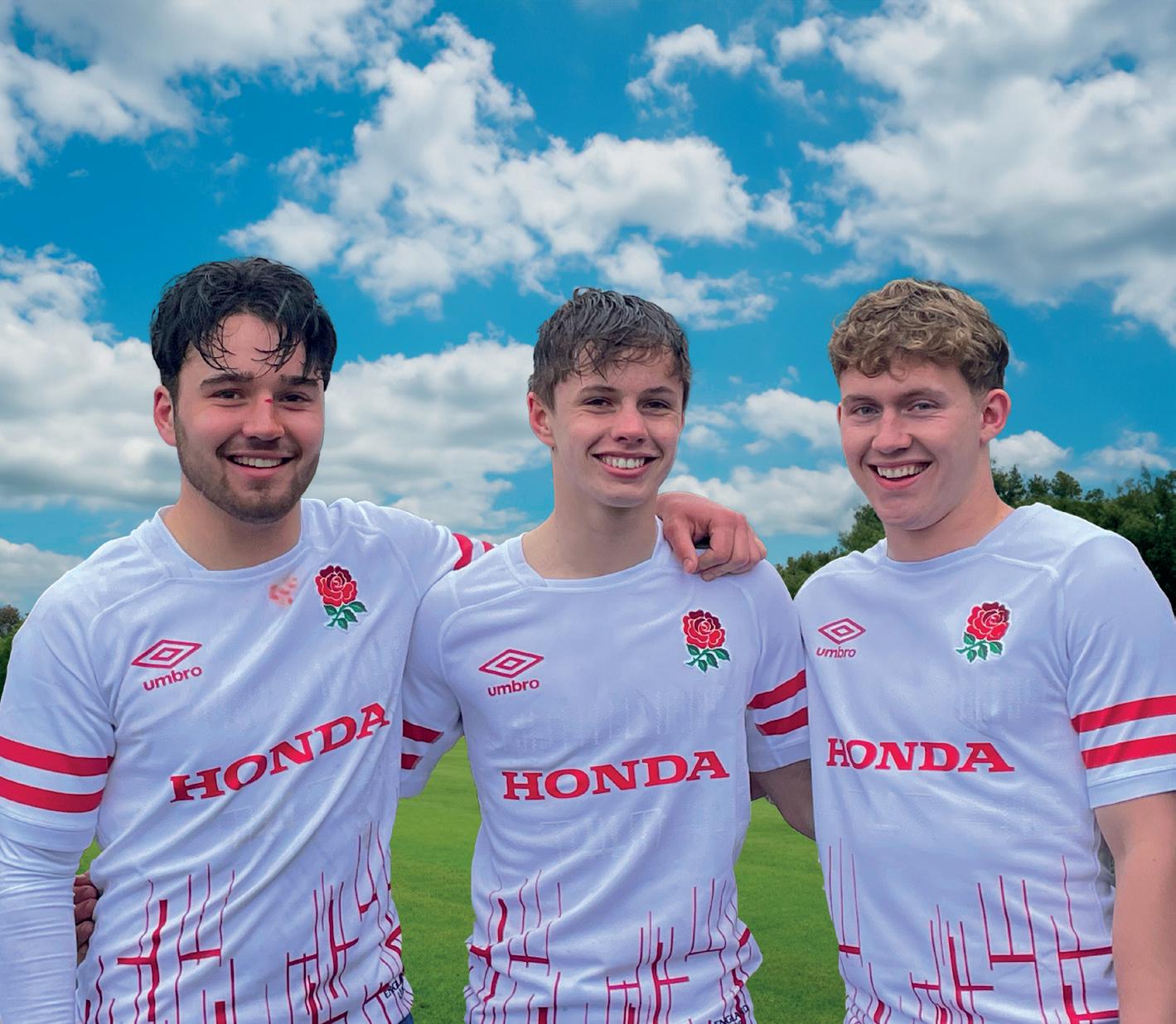
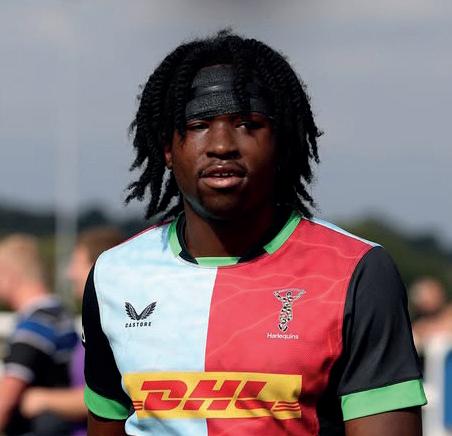
During their time at Trinity our students our able to develop and get themselves involved in elite, professional pathways, we have many students in the Harlequins Academy pathway, in the last four years we have had 14 students represent Harlequins U18s and five students called up to the England U18s with 6 students signing contracts upon leaving the school: Conor Byrne (Harlequins and England U18), Josh Bellamy (Harlequins and England U18/U20), Lucas Friday (Harlequins and England U18/U20), Jack Vas (Toulouse), Kaiden Watson (Harlequins) and Henry Laidlow (Harlequins and England U18).
We also regularly have boys playing for the England Lambs which is a pathway for those not currently in professional set ups. In the last 4 years we have had 7 boys represent the Lambs U18 side.
Recent history
Rugby has been part of Trinity’s story for a century, evolving from its early beginnings into a high-participation modern programme celebrated for both excellence and character.
Stand-out coaches such as Phil KeithRoach, Ian Cheyne, Mike Alexander, and more recently Alex Codling, Aaron Lifchak and Ian Kench have been instrumental in honing both rugby skills and characterbuilding ethos.
Assistant Director of Sport Grant
Beresford-Miller recalls a turning point when former student and England international Alex Codling returned as Director of Sport. “Alex wanted to bring more professionalism to the way we coached. We spent on kit, raised standards, and shifted the mindset,” he says. Codling also appointed Aaron Lifchak, a professional player from Saracens, who introduced a culture of strength and conditioning, and high-level coaching.
This professional approach developed homegrown talent and combined with careful recruitment; it transformed the programme. “We sought potential rather than ready-made players,” Grant explains. “Students like Gabriel Ibitoye and Mofe Wilkey became leaders on and off the pitch, inspiring younger teams as they progressed through the school.”
Trinity has also produced players who have progressed to the professional and international game. Alumni include George Chuter (England), Premiership players such as Kieran Roche and Shane Roiser, and more recent graduates including Joshua Bellamy, Conor Byrne and Lucas Friday (England U20s). Their achievements illustrate the pathway from school rugby to the elite level and continue to inspire younger Trinity players.
Paul Roberts, current Head of Rugby, highlights that Trinity rugby has always been about more than results. “We want to be great at rugby, but we also use it to develop character. Whether you play rugby or not, you’ll be fine if you’re a decent person – that matters more than whether you can catch a ball,” he says.
“This season the highlights have been the overall engagement with rugby,” says Paul. “We had 25 teams play one Saturday, which is quite cool.”
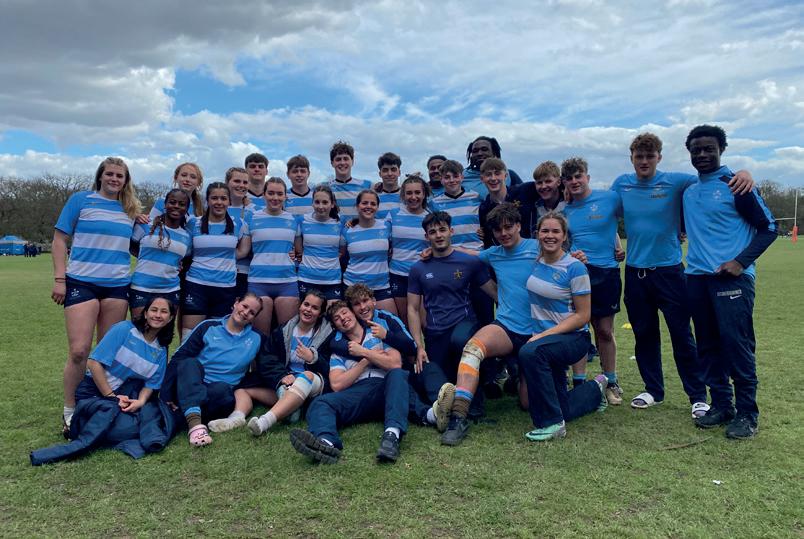
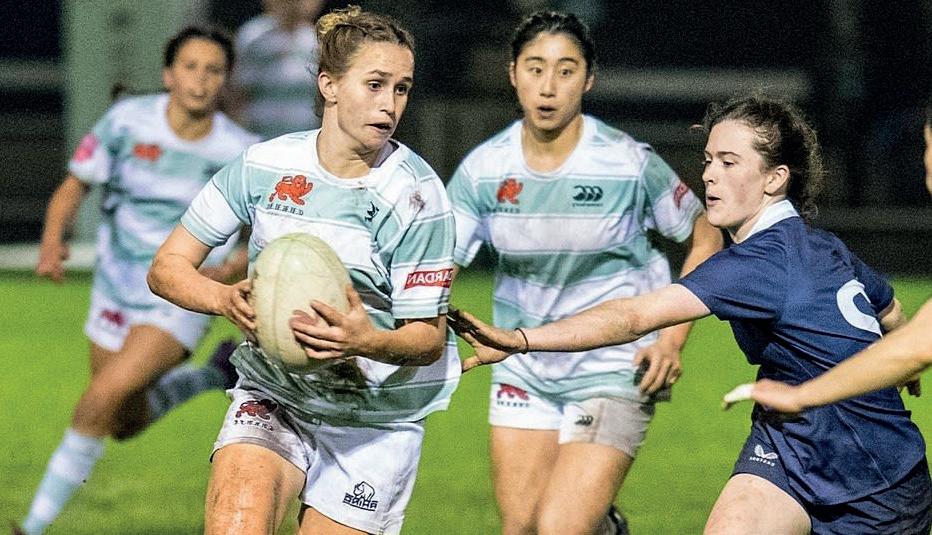
Girls’ rugby is also thriving, with recent leaders like ‘Quins player Beth (Class of 2025) and Cara (Class of 2023) – who had never played rugby before joining Trinity and now plays for Cambridge Universityinspiring others to discover the game.
From early foundations to modern successes, Trinity rugby combines tradition, teamwork, and commitment. As the school approaches a century of the sport, the legacy is measured not just in cups or fixtures, but in the values passed down: toughness, camaraderie, and the pride of being part of something bigger than oneself.
Joshua Bellamy, Conor Byrne and Lucas Friday
Kaiden Watson
Caragh Haspel
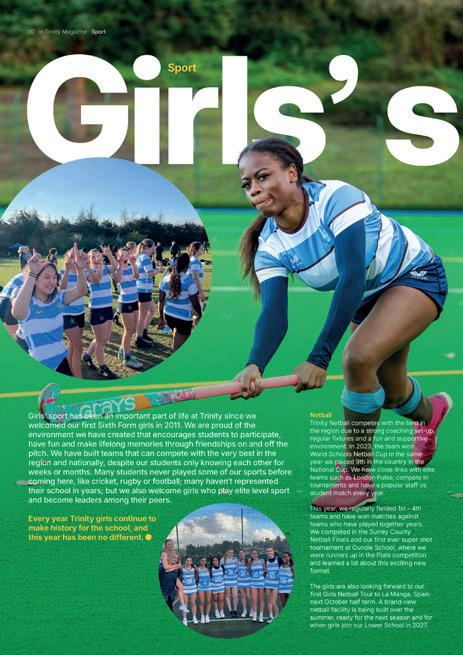
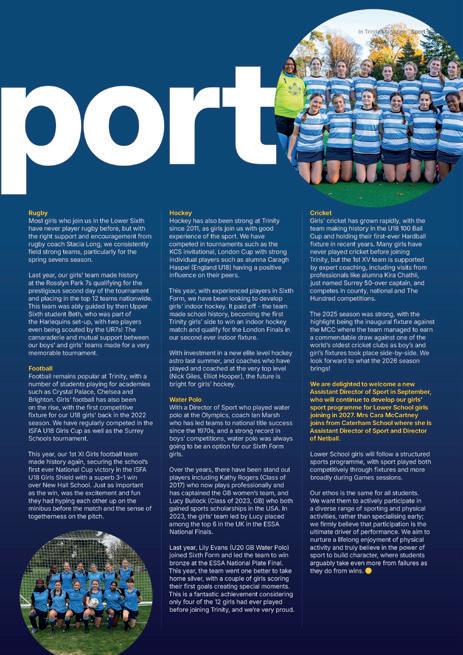
Girlsʼ sport
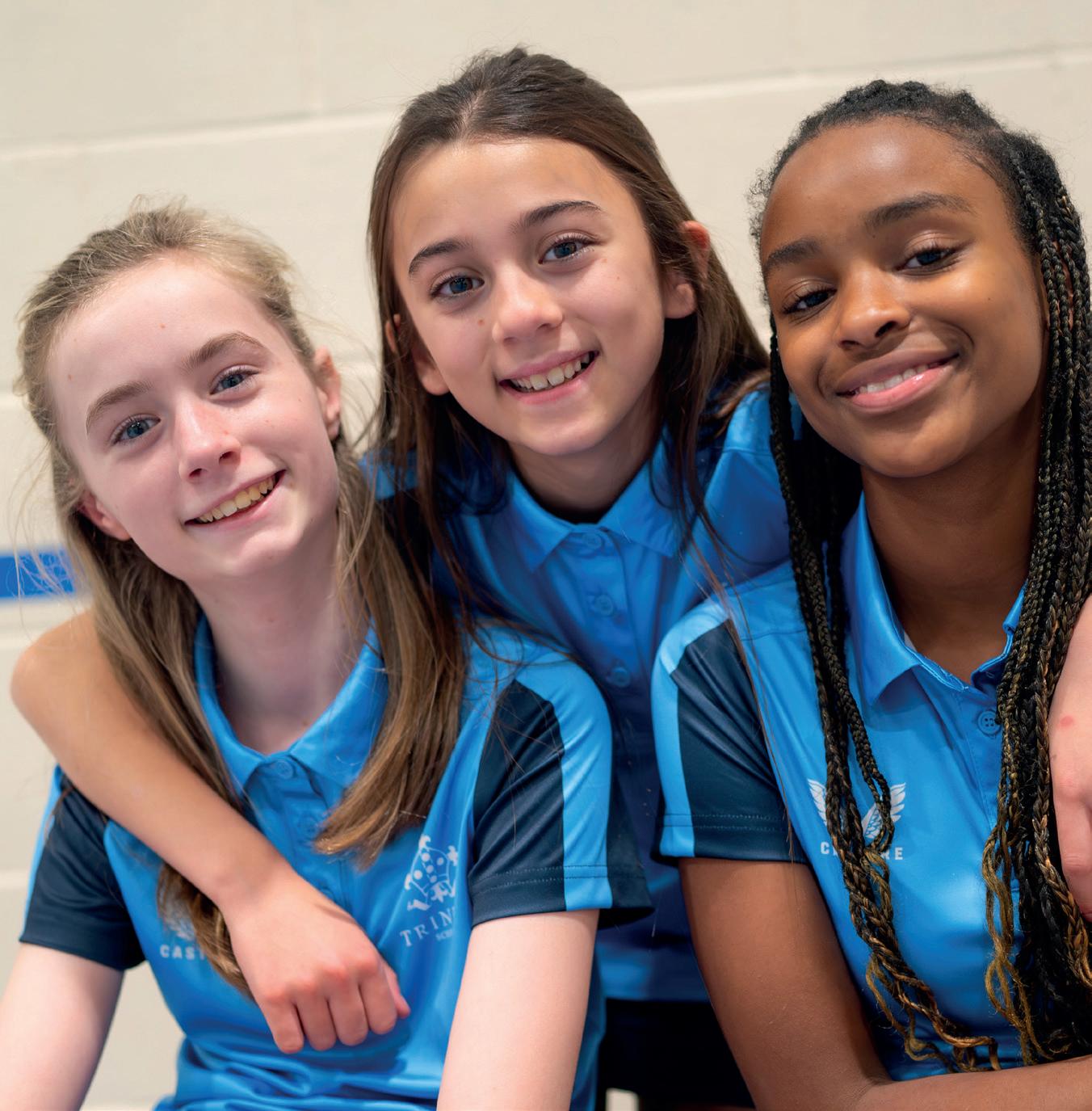
Girlsʼ sport has been an important part of life at Trinity since we welcomed our first Sixth Form girls in 2011. We are proud of the environment we have created that encourages students to participate, have fun and make lifelong memories through friendships on and off the pitch. We have built teams that can compete with the very best in the region and nationally, despite our students only knowing each other for weeks or months. Many students never played some of our sports before coming here, like cricket, rugby or football; many havenʼt represented their school in years; but we also welcome girls who play elite level sport and become leaders among their peers.
Every year Trinity girls continue to make history for the school, and this year has been no different.
Netball
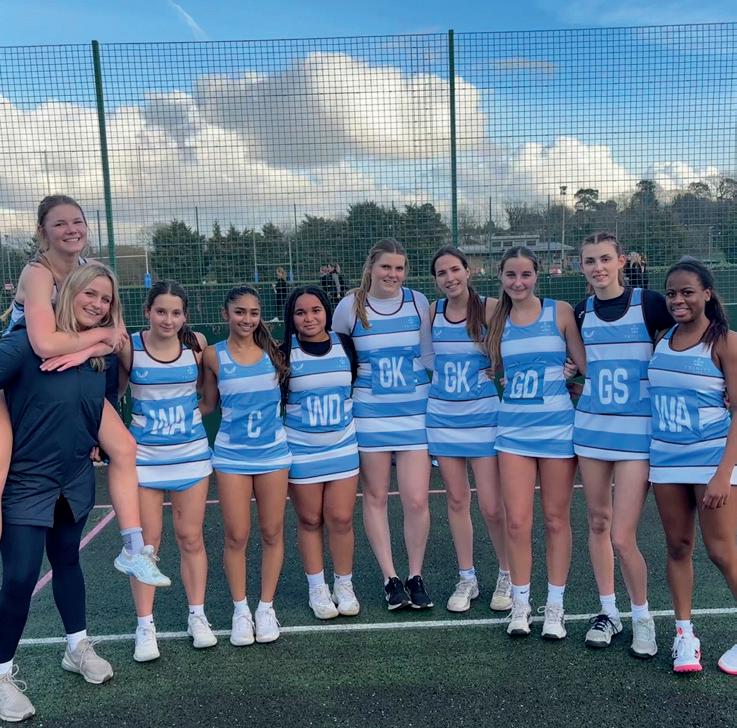
Trinity Netball competes with the best in the region due to a strong coaching set-up, regular fixtures and a fun and supportive environment. In 2023, the team won World Schools Netball Cup in the same year we placed 9th in the country in the National Cup. We have close links with elite teams such as London Pulse, compete in tournaments and have a popular staff vs student match every year.
This year, we regularly fielded 1st – 4th teams and have won matches against teams who have played together years. We competed in the Surrey County Netball Finals and our first ever super shot tournament at Oundle School, where we were runners up in the Plate competition and learned a lot about this exciting new format.
The girls are also looking forward to our first Girls Netball Tour to La Manga, Spain next October half term. A brand-new netball facility is being built over the summer, ready for the next season and for when girls join our Lower School in 2027.
sport
Rugby
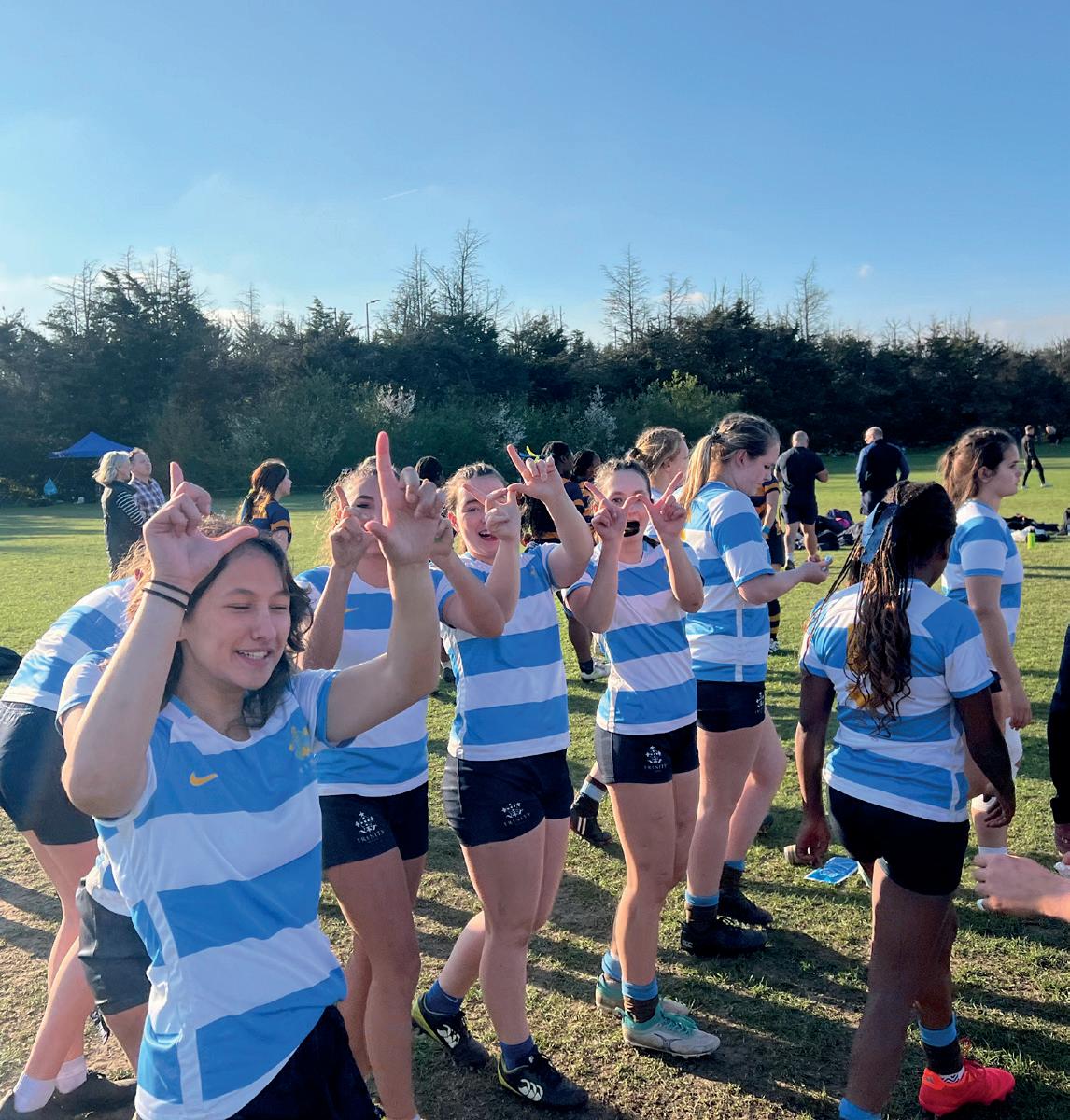
Most girls who join us in the Lower Sixth have never player rugby before, but with the right support and encouragement from rugby coach Stacia Long, we consistently field strong teams, particularly for the spring sevens season.
Last year, our girls’ team made history at the Rosslyn Park 7s qualifying for the prestigious second day of the tournament and placing in the top 12 teams nationwide. This team was ably guided by then Upper Sixth student Beth, who was part of the Harlequins set-up, with two players even being scouted by the UR7s! The camaraderie and mutual support between our boys’ and girls' teams made for a very memorable tournament.
Football
Football remains popular at Trinity, with a number of students playing for academies such as Crystal Palace, Chelsea and Brighton. Girls’ football has also been on the rise, with the first competitive fixture for our U18 girls’ back in the 2022 season. We have regularly competed in the ISFA U18 Girls Cup as well as the Surrey Schools tournament.
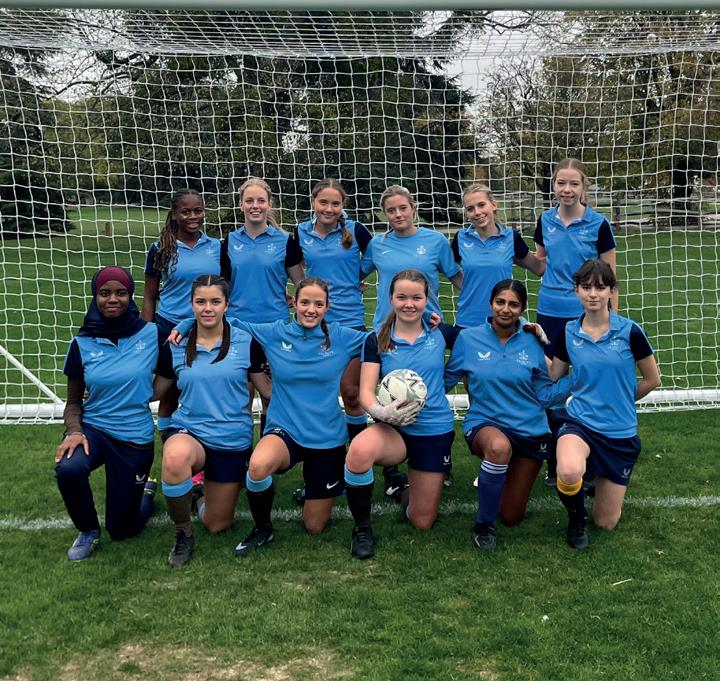
This year, our 1st XI Girls football team made history again, securing the school’s first ever National Cup victory in the ISFA U18 Girls Shield with a superb 3–1 win over New Hall School. Just as important as the win, was the excitement and fun they had hyping each other up on the minibus before the match and the sense of togetherness on the pitch.
Hockey
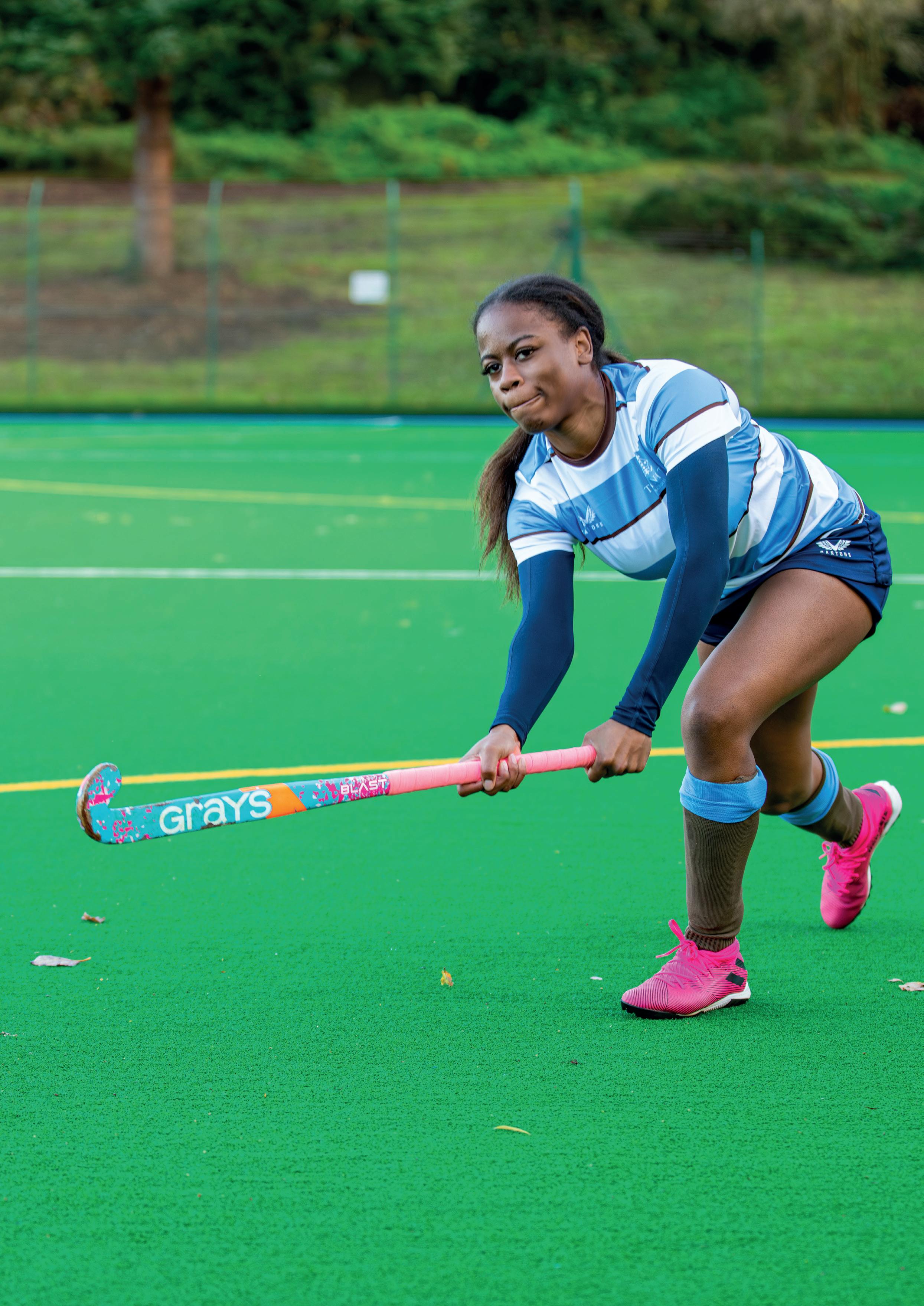
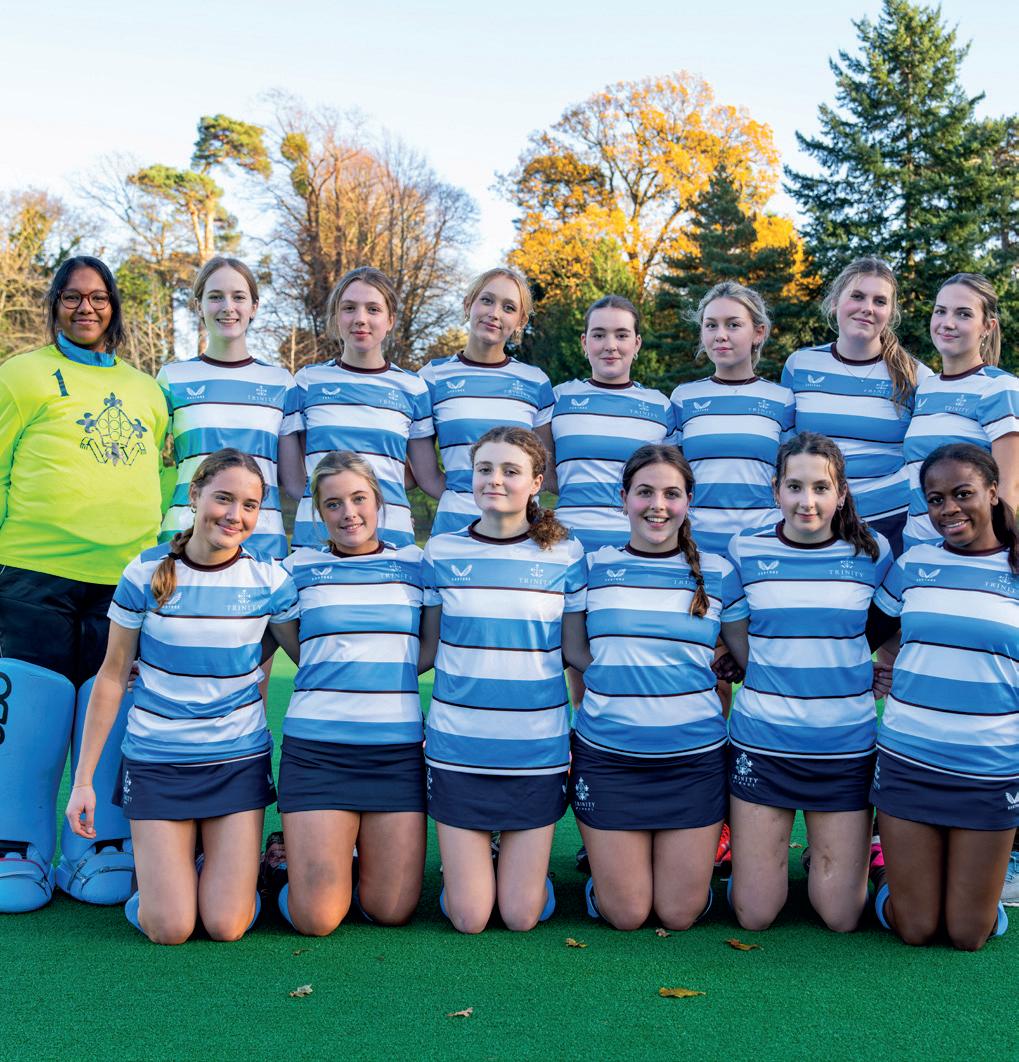
Hockey has also been strong at Trinity since 2011, as girls join us with good experience of the sport. We have competed in tournaments such as the KCS invitational, London Cup with strong individual players such as alumna Caragh Haspel (England U18) having a positive influence on their peers.
This year, with experienced players in Sixth Form, we have been looking to develop girls’ indoor hockey. It paid off - the team made school history, becoming the first Trinity girls’ side to win an indoor hockey match and qualify for the London Finals in our second ever indoor fixture.
With investment in a new elite level hockey astro last summer, and coaches who have played and coached at the very top level (Nick Giles, Elliot Hooper), the future is bright for girls’ hockey.
Water Polo
With a Director of Sport who played water polo at the Olympics, coach Ian Marsh who has led teams to national title success since the 1970s, and a strong record in boys’ competitions, water polo was always going to be an option for our Sixth Form girls.
Over the years, there have been stand out players including Kathy Rogers (Class of 2017) who now plays professionally and has captained the GB women’s team, and Lucy Bullock (Class of 2023, GB) who both gained sports scholarships in the USA. In 2023, the girls’ team led by Lucy placed among the top 6 in the UK in the ESSA National Finals.
Last year, Lily Evans (U20 GB Water Polo) joined Sixth Form and led the team to win bronze at the ESSA National Plate Final. This year, the team went one better to take home silver, with a couple of girls scoring their first goals creating special moments. This is a fantastic achievement considering only four of the 12 girls had ever played before joining Trinity, and we’re very proud.
Cricket
Girls' cricket has grown rapidly, with the team making history in the U18 100 Ball Cup and holding their first-ever Hardball fixture in recent years. Many girls have never played cricket before joining Trinity, but the 1st XV team is supported by expert coaching, including visits from professionals like alumna Kira Chathli, just named Surrey 50-over captain, and competes in county, national and The Hundred competitions.
The 2025 season was strong, with the highlight being the inaugural fixture against the MCC where the team managed to earn a commendable draw against one of the world’s oldest cricket clubs as boy’s and girl’s fixtures took place side-by-side.
We look forward to what the 2026 season brings!
We are delighted to welcome a new Assistant Director of Sport in September, who will continue to develop our girlsʼ sport programme for Lower School girls joining in 2027. Mrs Cara McCartney joins from Caterham School where she is Assistant Director of Sport and Director of Netball.
Lower School girls will follow a structured sports programme, with sport played both competitively through fixtures and more broadly during Games sessions.
Our ethos is the same for all students. We want them to actively participate in a diverse range of sporting and physical activities, rather than specialising early; we firmly believe that participation is the ultimate driver of performance. We aim to nurture a lifelong enjoyment of physical activity and truly believe in the power of sport to build character, where students arguably take even more from failures as they do from wins.
Listening, leading and taking responsibility
School
councils
Student voice is an important part of life at Trinity. Across Lower School, Middle School and the Sixth Form, School Councils give students the opportunity to share ideas, raise concerns and help shape the school around them. While the structure and focus evolves as students move through the school, the principle remains the same: students are listened to and their ideas matter.
Lower School: Learning to share ideas In Lower School, School Council introduces students to the idea that their views can make a difference. Each form nominates two representatives who gather ideas from their classmates before attending a meeting once each half term, creating an ongoing dialogue between students and staff.
Head of Lower School describes the council as an important way of hearing directly from students about their experiences of school. Discussions range from catering and outdoor spaces to clubs, charity initiatives and how we celebrate diversity as a community.
Students are also involved in shaping aspects of school life. As we look forward to welcoming girls into Year 6 and 7, we have talked about the importance of play spaces and the Lower School induction experience for new students. Junior Year students democratically created a play equipment wishlist (including some grander ideas such as an ice rink and a dry ski slope!). After discussions around the practicality of all ideas, the students are happy that some of their ideas are being implemented later this year for all to enjoy.
Junior Year council rep. Zaki said, “It has been an amazing opportunity, and I have really enjoyed discussing ideas with teachers and other students. I believe it is important for everyone to have a say about what they would like and not just the teachers. The School Council is a great way to make sure the school is enjoyable for everyone.”
Middle School: Developing perspective By Middle School, School Council becomes a forum where students begin to engage more thoughtfully with the day-today life of the school. Representatives from each form meet once each half term with their Head of Year to discuss topics such as co-curricular opportunities, uniform, facilities and wider developments across
Rosabelle Latteryexplains that the council provides a safe space for students to share ideas, reflect on changes and raise questions
Sixth Form: Shaping the bigger picture In the Sixth Form, School Council takes on a slightly different form. Participation is voluntary and students meet regularly to discuss issues that matter to the wider student body.
Deputy Head of Sixth Form Victoria Boorman explains that the aim is to ensure students genuinely feel listened to and can see the impact of their ideas. This year over 40 students have been actively involved and are taking real responsibility for shaping the Sixth Form experience.
Discussions range from everyday aspects of school life such as catering and facilities to wider conversations about uniform, curriculum and the future development of the school. Students have recently given feedback on new uniform designs for when younger girls join the school and shared ideas about the future new Sixth Form Centre.
Meetings often include staff from across the school, allowing students to raise questions directly and see how their feedback helps shape decisions.
Joint President of the Sixth Form Council, Beni, says, “I initially joined School Council in the hope it would integrate me into the school better and help understand how things worked. Since then, I've engaged in all kinds of conversations about day-today issues, catering, co-ed and more. I suggested dividing the group up into focus groups to really propel progress, simply because there was so much to addresseveryone was so keen!
I suggested dividing the group up into focus groups to really propel progress, simply because there was so much to addresseveryone was so keen!”
Students are often asked for their views on potential initiatives before they are introduced. Recent discussions have included plans for the school grounds and ways to broaden co-curricular opportunities and engagement for ThirdYear students. As the school becomes fully co-educational, councils have also provided an opportunity for students to share their perspectives and feel part of the conversation about the school’s exciting next steps
“My favourite bits have been having ‘guest speakers’ in (members of the school community who we wouldn't otherwise interact with) to gain deeper understanding and align their work with student voice directly. Catering, Marketing and Mr Rounds (the Senior Deputy Head) have all attended to address specific questions we had for them. It feels as though every opinion is considered, and we also get to have fun with our suggestions as well as see the progress.”
Across every stage of the school, School Councils show students that being part of a community means listening, contributing and taking responsibility for making things better for everyone.
Responsibility Stepping up Community
What does it mean to be a prefect at Trinity?
For many years, the role was a familiar one. Prefects supported events, took on duties around the school and acted as visible role models for younger students. But feedback from Sixth Form students suggested something important. While they valued the responsibility, many felt the role could offer more opportunities to shape the life of the school.
This feedback prompted a rethink, led by Head of Lower Sixth Sam Hodge.
Following consultations with staff and students, and drawing on ideas from other schools, a refreshed prefect system has been introduced, built around four core values: leadership, endeavour, community and upstanding. Rather than applying to be a prefect in general, students now take on specific roles within key areas of school life, aligned to these values.
The aim is to give prefects greater ownership and a more meaningful voice in shaping the Trinity community.
Prefects now work within committees linked to four pillars of the school: academic, community, co-curricular and EDI. Working closely with members of the Senior Management Team, they help lead initiatives, develop ideas and represent student voice.
The role is no longer defined by duties alone. Prefects still support the day-today life of the school, but they are now encouraged to contribute ideas, champion causes and take real ownership of projects that matter to them and to the wider community, bringing a renewed sense of energy to the role.
Co-curricular
Both Piran and Fatima were keen to get involved in the co-curricular committee, bringing their enthusiasm for sport and drama to the role. Together with other prefects, they have explored how events can be adapted to bring students together more effectively, particularly through the development of the House system.
“Itʼs been great working with others who share the same ambitions and thinking about how co-curricular activities can evolve,” says Piran. “Weʼve talked a lot about how events can be adapted through the House system.”
For Fatima, this is about creating opportunities for connection across the school:
“Co-curricular activities are a great way to bring different year groups together. Weʼve discussed how events like Sports Day could involve more interaction across year groups, rather than staying within them.”
Academic
For Georgina, the academic strand offered a natural fit. Drawing on her experience as a scholar, she has contributed to discussions around the curriculum, the structure of the school day and how academic life can evolve alongside coeducation.
The committee has also explored how the House system might support academic engagement, ensuring there are opportunities for all students to get involved.
“Weʼve discussed ideas like house quizzes or debates, so everyone can contribute, not just through sport. Smaller committees also make a big difference, as discussions are more focused and everyone has the chance to contribute.”
Responsibility in action
Community
For Jess, the community strand is centred on building a sense of belonging across the school. From supporting younger students to helping create a welcoming environment through induction days, her focus has been on strengthening connections between year groups.
“I enjoy supporting younger students and contributing to a positive, welcoming environment where everyone feels included. Especially as a female member of the Sixth Form, I wanted to help bridge the gap between the main school and Sixth Form.”
Aadam has also played an active role in the committee, particularly in his work with the Lower School. Alongside organising events such as the House cross-country run, he has helped lead conversations that encourage younger students to think more openly.
“The prefects delivered an assembly tackling the idea that ‘boys donʼt cryʼ, which had a positive impact on how younger students thought about it.”
EDI
Within the EDI strand, the focus is on ensuring that inclusion is part of everyday school life. For Ruby, this is about leading by example and recognising the influence Sixth Form students can have on younger year groups.
“Demonstrating inclusive values as a Sixth Form student can have a real influence on younger students. When we openly respect different cultures and perspectives, it sets a positive example.”
She hopes to see this work continue to grow across the school, saying, “An EDI ambassador group across the school would help raise awareness from an earlier age and involve more students.”
Together, they show how responsibility at Trinity is not just about supporting the school, but helping to shape it.
がくしゅう uten
[without]
[Learning]
[borders]
From fjords to megacities, students discover the world beyond the classroom
There is something powerful about learning in a place you have never been before. Standing beside a roaring Norwegian waterfall makes hydropower far more real than any diagram in a textbook. Watching thousands of people surge across a crossing in Tokyo shows you what a truly global city feels like. Sharing tea with students on the other side of the world reminds you how much we have in common.
Travel has long been an important part of life at Trinity. In a typical year, students take part in dozens of residential and day trips across more than ten countries, alongside regular excursions with different departments, Field Day and co-curricular activities. October half term, with its two-week break, has become a particularly exciting window for many of the school’s international adventures.
Trips like these deepen subject knowledge, strengthen friendships and help students grow in confidence as they navigate new places together. They also encourage a wider perspective on the world and the responsibility we share as global citizens. Along the way, students have enormous fun and create memories that will stay with them long after they return home.
Tokyo, Japan
Technology, culture and bullet trains in Japan
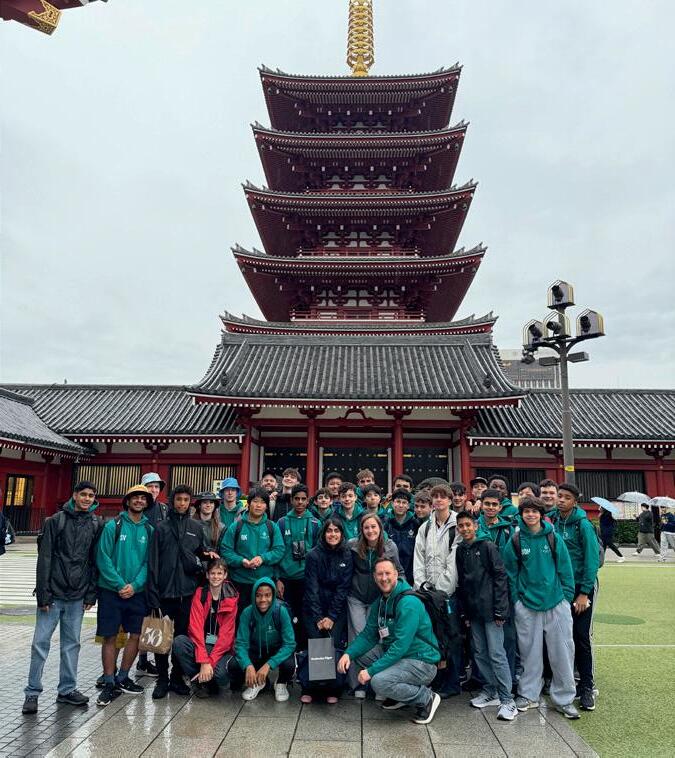
In October half term, thirty Trinity computer science students set off on the school’s first ever Computer Science trip to Japan – a country where centuries-old tradition sits alongside some of the world’s most advanced technology.
Their adventure began in the dazzling city of Tokyo, where towering screens, neon lights and endless energy offered a glimpse of the future. At the immersive digital art museum teamLab Borderless, students stepped inside a world where technology becomes art: flowers bloomed beneath their feet, waterfalls flowed across walls and entire rooms transformed with light and motion.
But Japan’s story is not only about innovation. A visit to the historic streets surrounding Sensoji Temple revealed another side of the country, where centuries-old traditions continue to shape everyday life.
A ride on Japan’s famous bullet train carried the group to Shizuoka at remarkable speed. There, students were warmly welcomed by their counterparts at Shizuoka Seiko High School, sharing cultural activities and even taking part in a traditional tea ceremony. It proved a powerful reminder that technology may connect the world, but it is people who bring those connections to life.
Lower Sixth student Alix said the journey itself was unforgettable. “I loved being on the bullet train and seeing Mount Fuji getting bigger throughout the journey. The speed was incredible, and seeing the scale of the mountain in real life was amazing.”
Back in Tokyo, the group explored the electric streets of Akihabara Electric Town – a paradise for gamers, anime fans and gadget lovers. They also visited cuttingedge technology centres where robotics, programming and innovation are shaping the future.
Fifth Year Hugo particularly loved the energy of the city. “Walking around Akihabara with all the arcade games and huge buildings was brilliant. Seeing Shibuya Crossing in person was amazing –it really made me feel immersed in the city.”
By the end of the week, students had experienced everything from temples and tea ceremonies to robotics and space technology – a journey that captured the remarkable balance of heritage and innovation that makes Japan so fascinating.
Waterfalls, fjords and adventure in Norway
For our Second- and Third-Year geographers, October half term meant swapping classrooms for mountains.
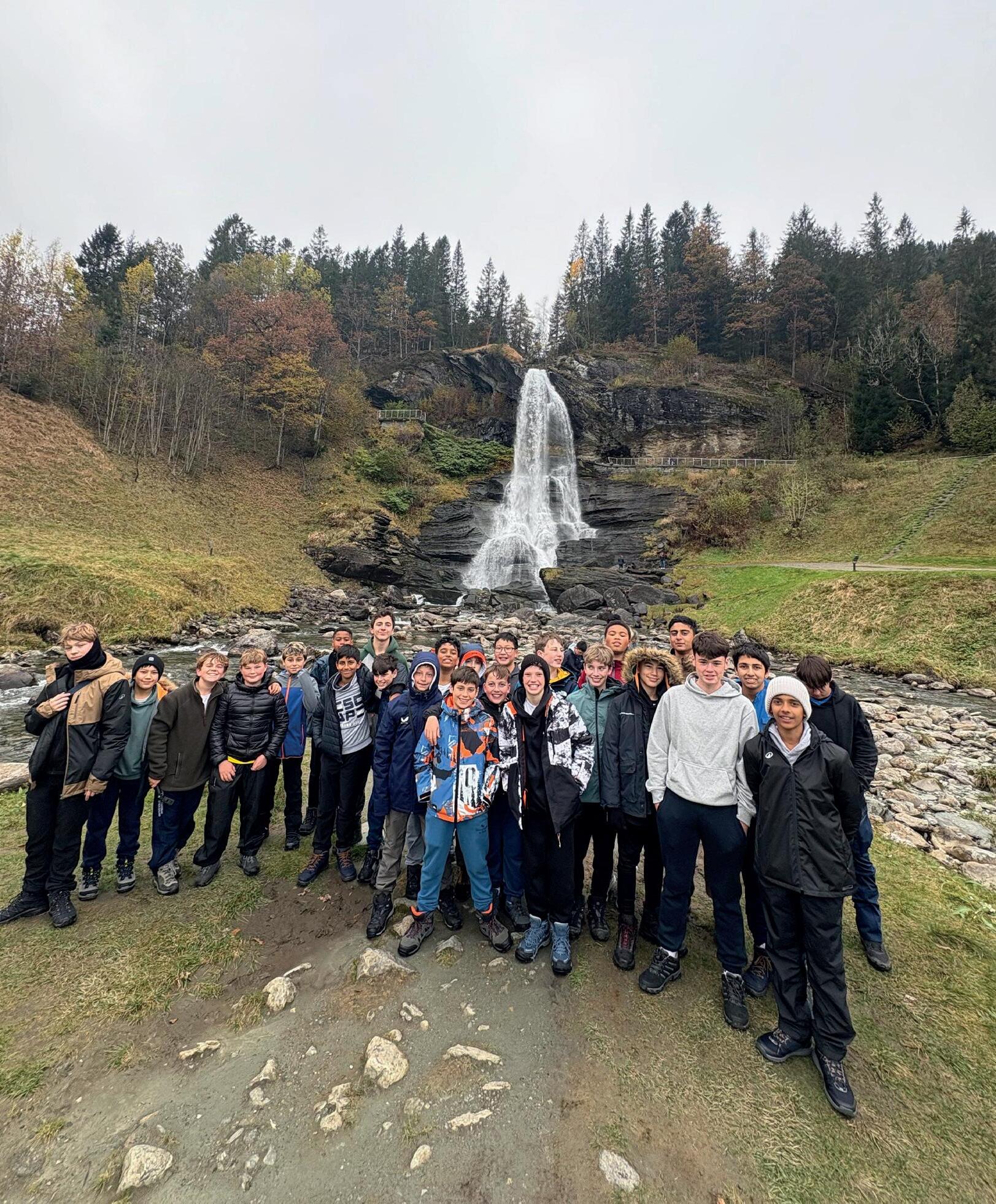
A five-day expedition to western Norway brought students face to face with some of Europe’s most dramatic landscapes, beginning with a trek through the spectacular Husedalen Valley, home to four immense waterfalls.
Second Year Teddy described the moment perfectly, “Being able to see waterfalls in the mountains and climb beside one was something I will never forget.”
Learning came naturally alongside the adventure. Students visited a historic hydroelectric power station in Odda, exploring how Norway harnesses its powerful natural environment to generate renewable energy.
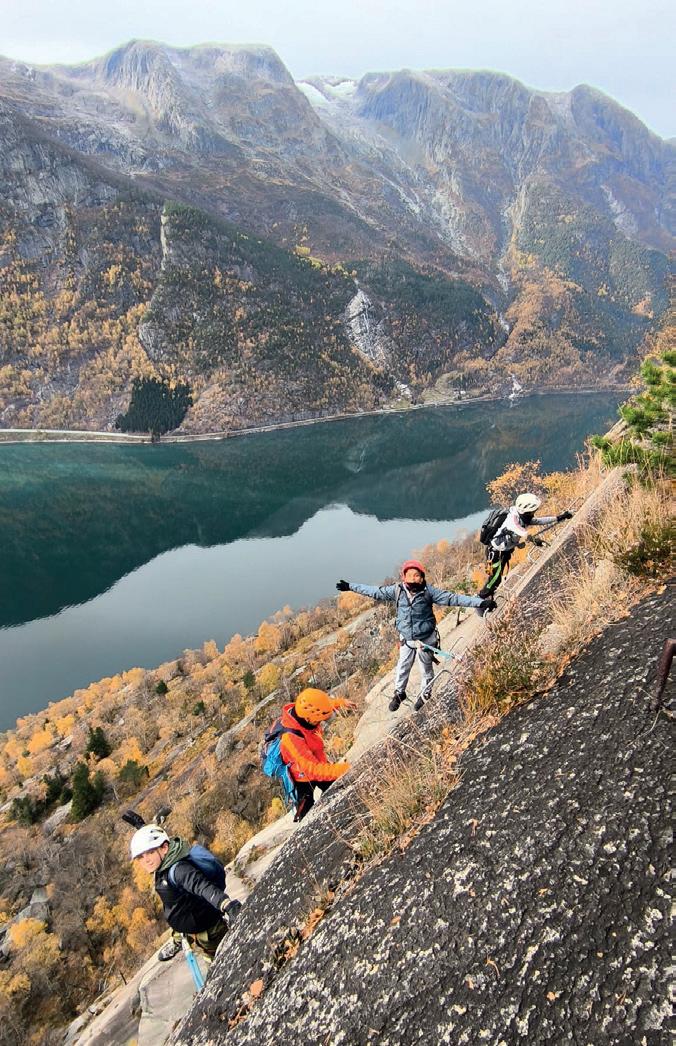
There were also plenty of opportunities for adrenaline. One highlight was the Via Ferrata climbing route above Tyssedal, where students scaled the mountainside using metal rungs and safety cables.
Third Year Jacob admitted the experience was both thrilling and slightly nerveracking.
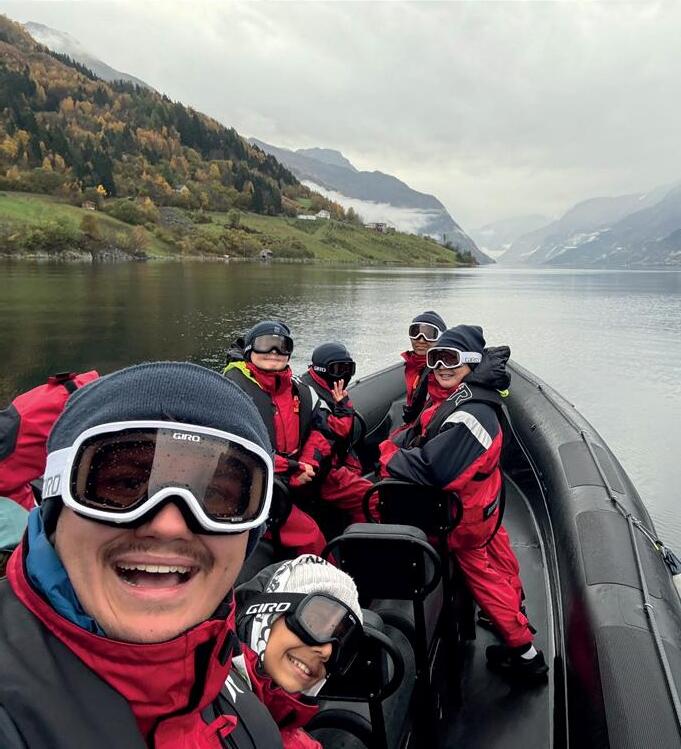
“Even though you were protected every step of the way, I held onto the rails so tightly my knuckles went white.” Back at the fjord, the group kayaked across still water and set off on a highspeed RIB boat safari before finishing the trip in the colourful harbour city of Bergen.
“Norway is stunning,” Jacob said afterwards. “I hope to go there again one day.”
Trips in numbers
40 Residential trips in a typical year.
75 Day trips.
11+ countries
Visited by students this year, from Norway and Japan to Spain, Italy and Malawi.
1,000s of memories
From Science visits to CERN in Geneva to Geography expeditions in Iceland, choir tours across Europe and sports tours to South Africa and the United Arab Emirates, Trinity trips open the door to learning far beyond the classroom.
Husedalen Valley, Norway
Culture, pandas and skyscrapers in China
Another group travelled thousands of miles east to explore the culture, cuisine and contrasts of modern China.
Their journey took them through three very different cities: historic Chengdu, picturesque Hangzhou and futuristic Shanghai.
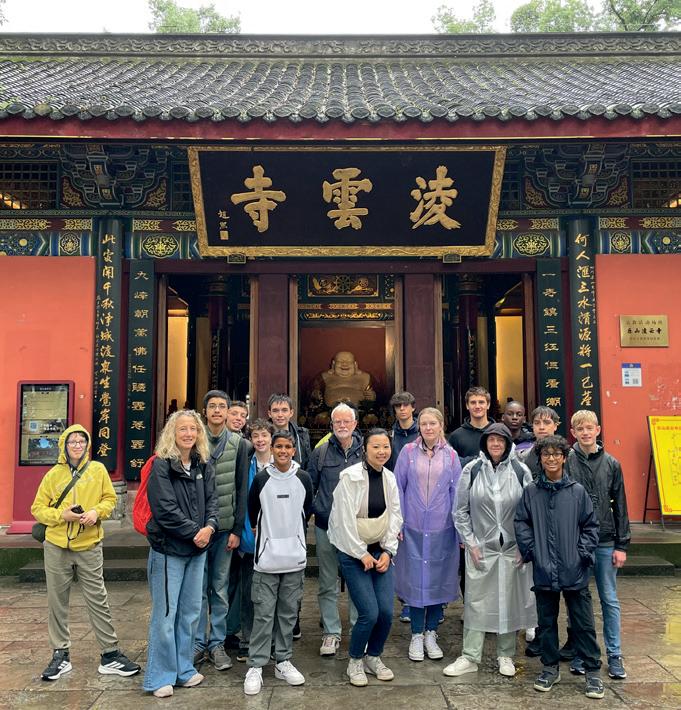
In Chengdu, students visited the Dujiangyan Panda Base, where they even helped prepare panda cakes.
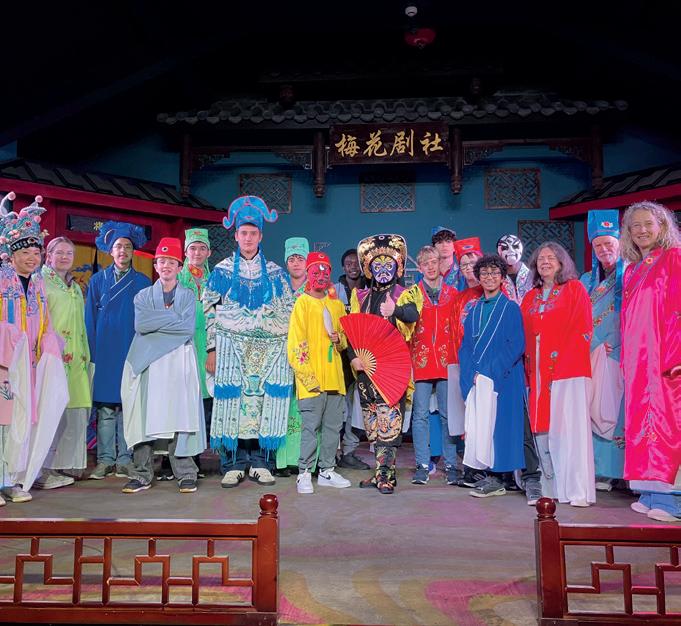
Upper Sixth students Alfred and Adrian said the hands-on experiences made the trip especially memorable. “Seeing the giant pandas up close was incredible. We also loved painting Sichuan opera masks and learning about the culture behind them.”
In Hangzhou, a boat ride across West Lake and a traditional tea ceremony offered a peaceful contrast to the energy of the larger cities.
Meeting students at WAS School Hangzhou proved another highlight.
“Seeing the differences between our schools and yet making friends so quickly was eye-opening,” Adrian said.
The final stop was Shanghai, where the modern skyline left a lasting impression. Students explored historic water towns, enjoyed a night cruise along the river and took in panoramic views from the top of the Shanghai Tower.
Third Year students Eshan and Micah perhaps captured the spirit of the trip best in their enthusiastic travel diary.
“Day 3: PANDAS. Best part of the trip. Day 6: City skyline. Cruise was cool.”
Sometimes that says it all.
Business, food and enterprise in Sorrento
Sixth Form students studying Business and Economics travelled to southern Italy to explore the industries and traditions that shape the economy of the Bay of Naples.
The trip combined academic insight with hands-on experiences, beginning with a visit to a pasta factory where students learned how a family-run business has grown while preserving traditional methods.
Lower Sixth student Tomi said the highlight for many was sampling the results.
“The homemade pasta was amazing, and most of us went back for seconds!”
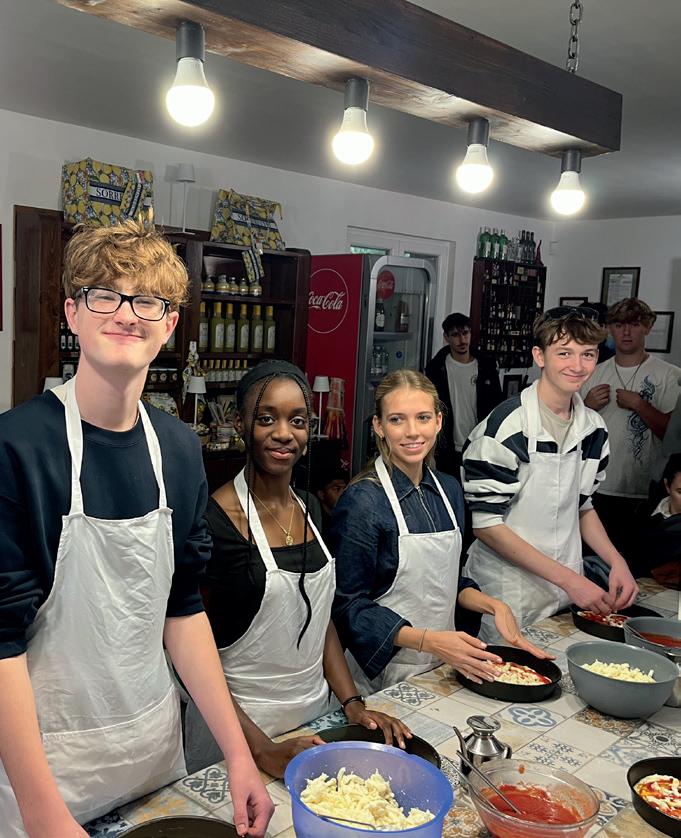
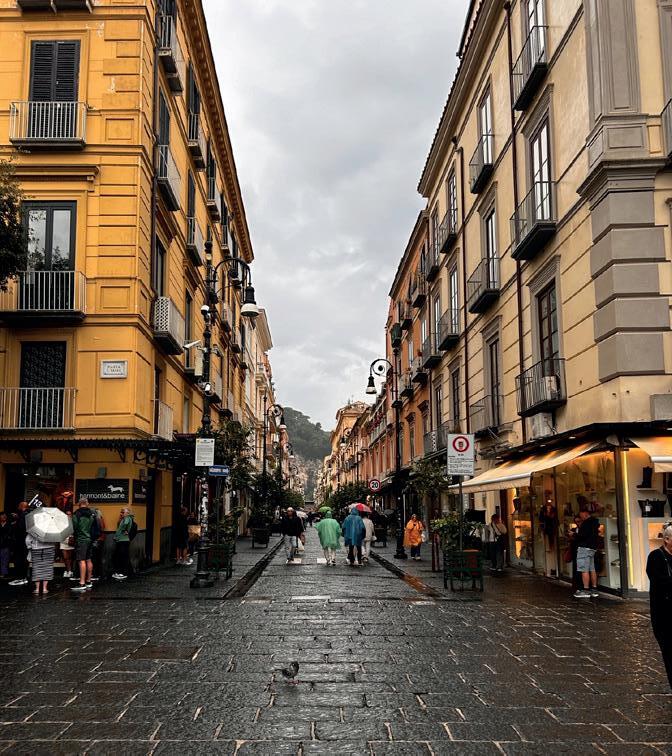
Students also visited a lemon farm and olive oil producer, learning how local businesses maximise resources and reduce waste. They then tried their own hand at pizza making and mozzarella production before exploring the historic streets and coastal views of Sorrento.
A day trip to the island of Capri offered spectacular scenery, including a boat tour around the island’s famous caves and bright blue waters.
The trip finished on a sweet note with a gelato-making workshop where students created their own lemon gelato.
“It was a great mix of learning and exploring,” Tomi said. “And coming back to England’s rain after the sunshine definitely reminded us how lucky we’d been.”
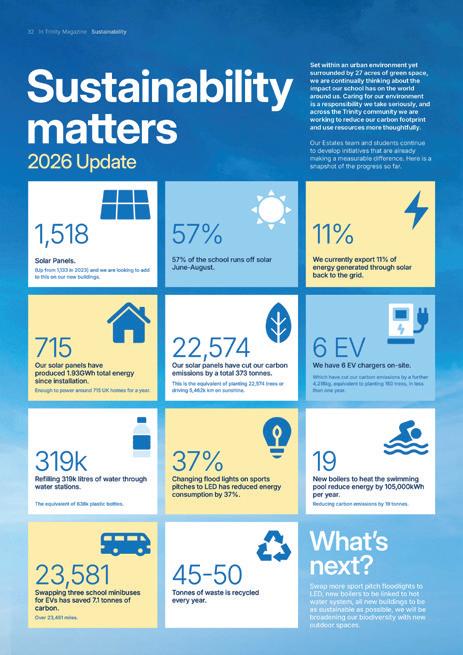
Sustainability matters
Set within an urban environment yet surrounded by 27 acres of green space, we are continually thinking about the impact our school has on the world around us. Caring for our environment is a responsibility we take seriously, and across the Trinity community we are working to reduce our carbon footprint and use resources more thoughtfully.
Our Estates team and students continue to develop initiatives that are already making a measurable difference. Here is a snapshot of the progress so far.
Solar Panels.
(Up from 1,133 in 2023) and we are looking to add to this on our new buildings.
Our solar panels have produced 1.93GWh total energy since installation.
Enough to power around 715 UK homes for a year.
Refilling 319k litres of water through water stations.
The equivalent of 638k plastic bottles.
1,518 715 319k 23,581 22,574 37% 45-50
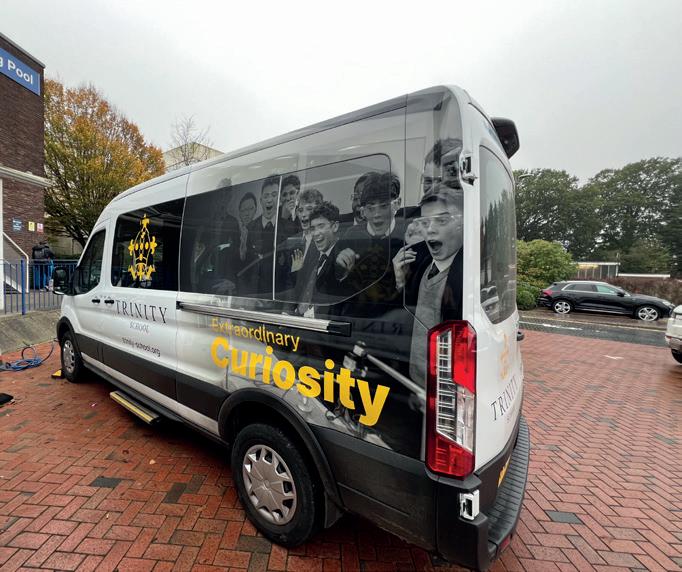
Swapping three school minibuses for EVs has saved 7.1 tonnes of carbon.
Over 23,481 miles.
57% of the school runs off solar June-August.
Our solar panels have cut our carbon emissions by a total 373 tonnes.
This is the equivalent of planting 22,574 trees or driving 5,462k km on sunshine.
Changing flood lights on sports pitches to LED has reduced energy consumption by 37%.
Whatʼs next? 6 EV 19 57% 11%
Tonnes of waste is recycled every year.
We currently export 11% of energy generated through solar back to the grid.
We have 6 EV chargers on-site.
Which have cut our carbon emissions by a further 4,218kg, equivalent to planting 160 trees, in less than one year.
New boilers to heat the swimming pool reduce energy by 105,000kWh per year.
Reducing carbon emissions by 19 tonnes.
Swap more sport pitch floodlights to LED, new boilers to be linked to hot water system, all new buildings to be as sustainable as possible, we will be broadening our biodiversity with new outdoor spaces.
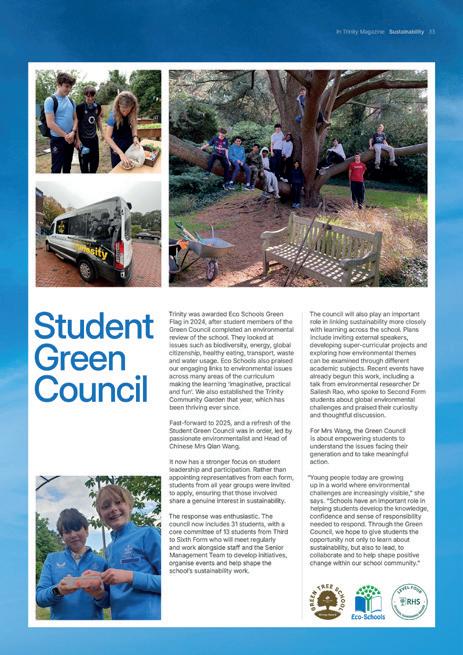
Student Green Council
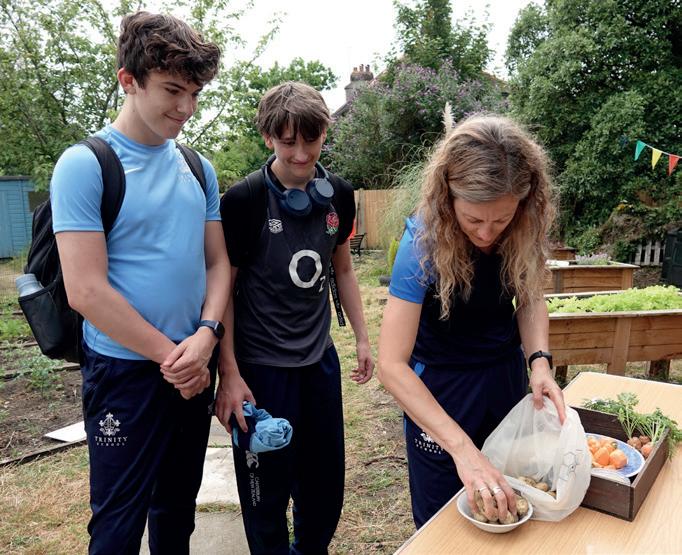
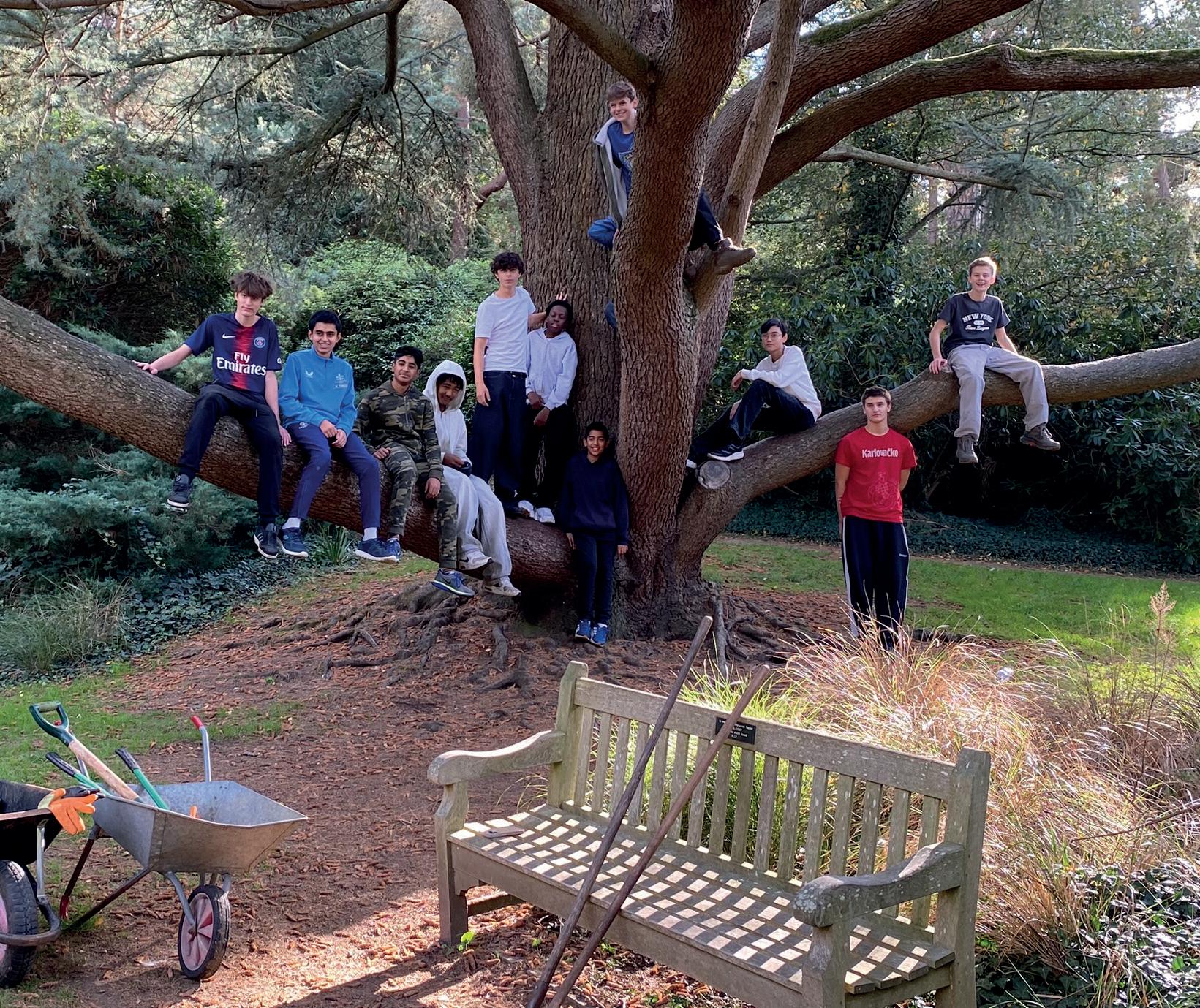
Trinity was awarded Eco Schools Green Flag in 2024, after student members of the Green Council completed an environmental review of the school. They looked at issues such as biodiversity, energy, global citizenship, healthy eating, transport, waste and water usage. Eco Schools also praised our engaging links to environmental issues across many areas of the curriculum making the learning ‘imaginative, practical and fun’. We also established the Trinity Community Garden that year, which has been thriving ever since.
Fast-forward to 2025, and a refresh of the Student Green Council was in order, led by passionate environmentalist and Head of Chinese Mrs Qian Wang.
It now has a stronger focus on student leadership and participation. Rather than appointing representatives from each form, students from all year groups were invited to apply, ensuring that those involved share a genuine interest in sustainability.
The response was enthusiastic. The council now includes 31 students, with a core committee of 13 students from Third to Sixth Form who will meet regularly and work alongside staff and the Senior Management Team to develop initiatives, organise events and help shape the school’s sustainability work.
The council will also play an important role in linking sustainability more closely with learning across the school. Plans include inviting external speakers, developing super-curricular projects and exploring how environmental themes can be examined through different academic subjects. Recent events have already begun this work, including a talk from environmental researcher Dr Sailesh Rao, who spoke to Second Form students about global environmental challenges and praised their curiosity and thoughtful discussion.
For Mrs Wang, the Green Council is about empowering students to understand the issues facing their generation and to take meaningful action.
“Young people today are growing up in a world where environmental challenges are increasingly visible,” she says. “Schools have an important role in helping students develop the knowledge, confidence and sense of responsibility needed to respond. Through the Green Council, we hope to give students the opportunity not only to learn about sustainability, but also to lead, to collaborate and to help shape positive change within our school community.”
Growing together Community
Trinity Partner Primary Schools
Trinity has long been part of the Croydon community, and one of the most enjoyable ways that connection comes to life is through our Trinity Partner Primary Schools (TPPS) programme.
Across the year, our students and staff work with sixteen local primary schools, sharing experiences in classrooms, sports halls, theatres and playing fields. Although we connect with even more primaries, these sixteen partnerships are built on familiarity and continuity. The same schools visit us regularly, and our students often find themselves returning to the classrooms where their own journeys began.
“Trinity run extremely ambitious and exciting sessions where pupils get to use the very best technology and equipment to explore concepts to challenge their minds.”
“Pupils have benefitted from experiences that otherwise would simply not be available in primary schools.”
Jenny Ryan, Deputy Head, Woodfield Primary School
Opening doors to new experiences
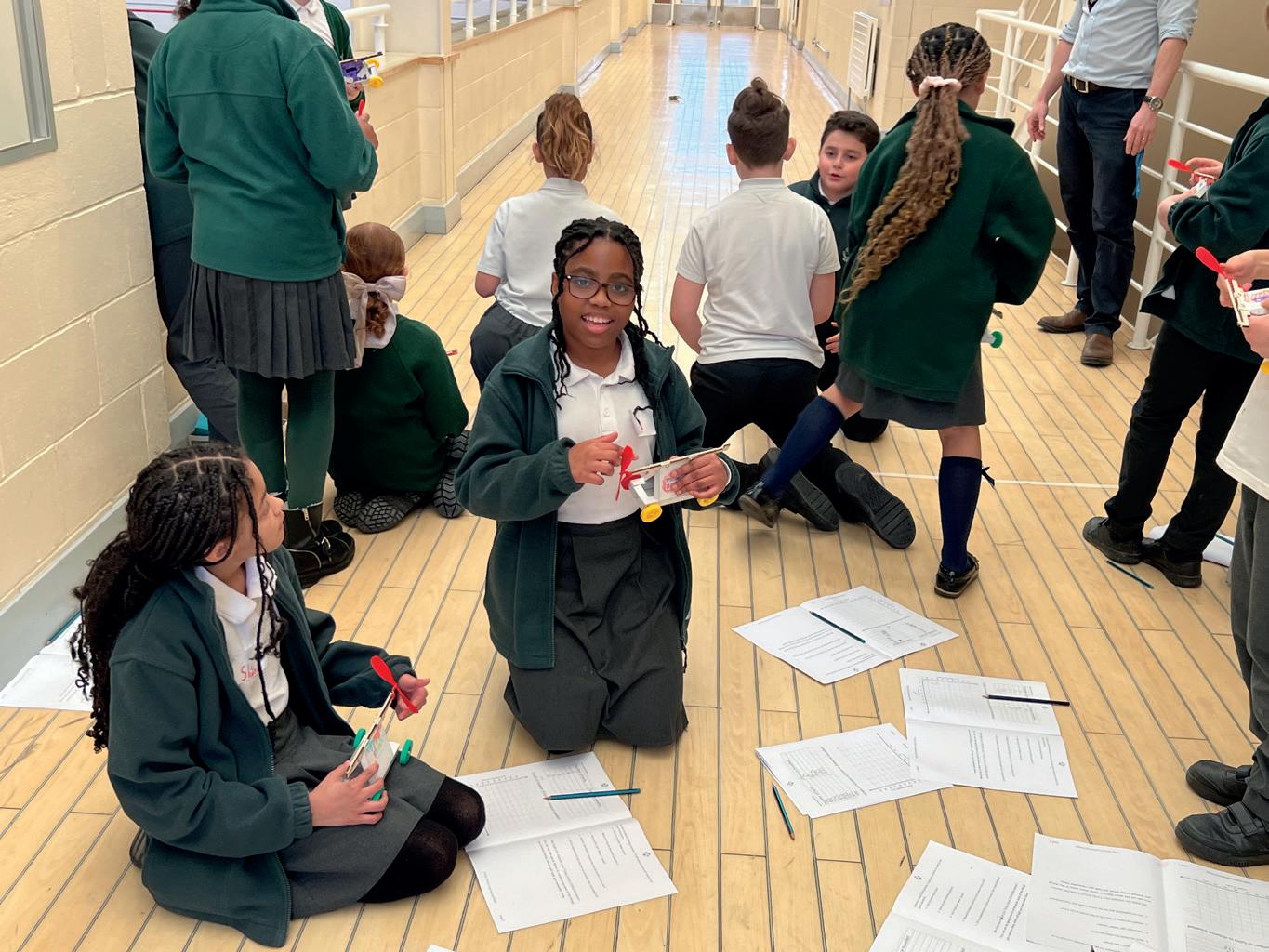
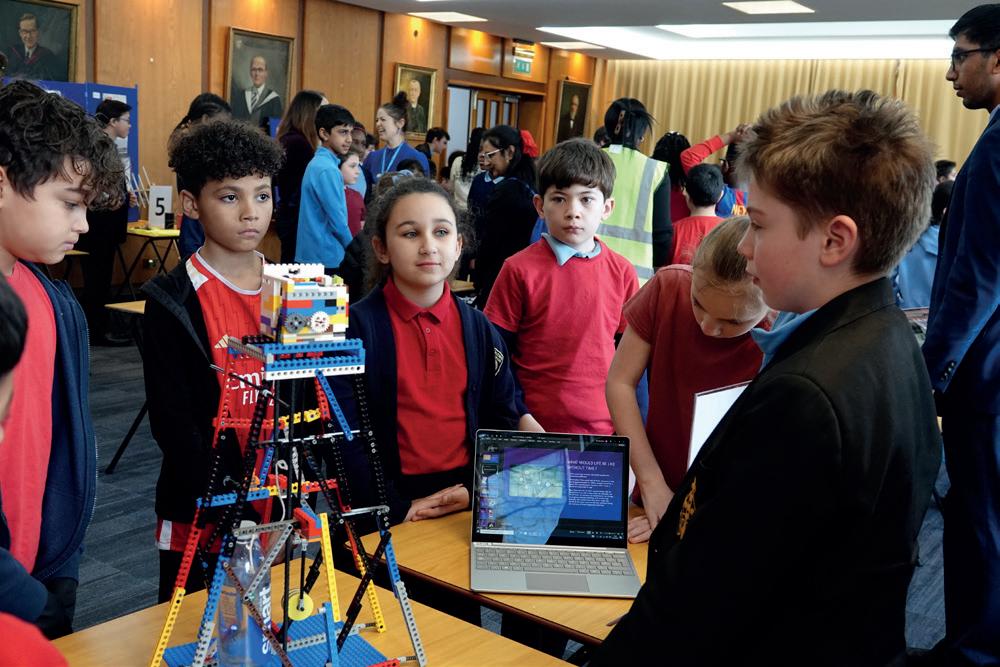
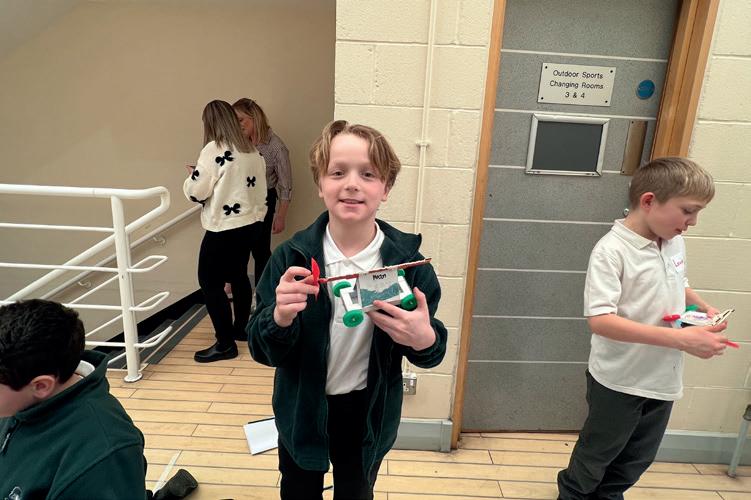
On any given week, you might find a gaggle of primary pupils marching into a science laboratory for the first time, exploring experiments alongside our staff and students. On another day, the sound of the Travelling Band fills a primary school assembly hall, as our talented young musicians perform and talk about their instrument and love of music. Sport, Art, Drama and Design Technology all play their part too, offering younger pupils the chance to explore subjects in new ways.
The programme has a wonderfully varied rhythm to it. Large events such as the ever-popular Science Spectaculars held in March for British Science Week bring hundreds of pupils together for lively demonstrations and hands-on activities. Elsewhere, smaller groups visit Trinity to take part in workshops or competitions, including the Art on a Postcard exhibition, where primary pupils and their families proudly see their work displayed in our Shaw Gallery.
Sometimes the experiences are taken out into the community. Trinity staff and students visit partner schools to run sports festivals, lead music performances or support curriculum activities. Our Lessonsin-a-Box resources are another popular part of the programme, providing creative, ready-to-use lessons across subjects such as Science, Art, Religious Studies, Maths and Computing.
“It has broadened our childrenʼs experiences and inspired them to think differently about their futures.”
“We have loved hosting Trinity students at our school during their Field Days. They have been role-models, and our teachers often comment on their effort and professionalism during their time with us.”
Martina Martin, Head Teacher, St John’s Primary School
Trinity students as role models
For our students, these partnerships offer a chance to step into leadership roles and share their interests with younger learners. Many are matched to their own former primary schools to run sports tournaments, help with activities or go back to their schools to perform during assemblies. It is often a special moment, both for the younger children seeing someone who once sat in their classroom, and for our students reflecting on how far they have come.
Alongside these experiences, the partnerships also bring opportunities for primary teachers to work with Trinity staff through subject training and shared professional development. As with the work with pupils, the emphasis is on collaboration and the chance to learn from one another.
A partnership that grows over time At the heart of the programme is a simple idea. By bringing schools together regularly, students become familiar with new places, new subjects and new possibilities. For younger pupils, visiting Trinity can open the door to interests they may not yet have discovered. For our own students, working with local schools builds confidence, empathy and a sense of responsibility to the community around them.
Across the year thousands of primary pupils take part in these shared experiences. Some may one day join Trinity, while others will go on to thrive in schools across the borough and beyond. What matters most is that the partnership leaves them with new ideas, ambitions and memories of learning that felt exciting.
For our students and staff alike, it is a reminder that education is not only about what happens within our own classrooms, but also about the connections we build beyond them.
16
Local state primary schools in partnership with Trinity
32
Events from science shows and sports festivals to music performances and art exhibitions
750
Staff benefitting from shared training, CPD and professional collaboration
230+
Hours of shared activity delivered in the past year
6,400+
Primary pupils engaging with Trinity through visits, workshops and performances
435
Trinity students developing leadership and communication skills through the programme
When I joined Trinity seven years ago, I was a little surprised, as many people are, that the school didnʼt have a House System. For all seven of my years here, I have been asked by successive cohorts whether it could be brought back. So, it was with a great sense of excitement, and relief, that in the autumn term I announced the House Systemʼs return.
1908
The first record of Houses at Trinity goes back to the autumn of 1908, and at the time the Houses were simply named after their colours: Red, Green, Yellow and Blue. Not perhaps the most creative output from the teaching staff at the time, but it was warmly adopted and records remain of competitions in football, cricket and athletics. In 1925, House rugby arrived and in 1954 House hockey followed.
1957
In the autumn term of 1957, the then Headmaster decided the time had come for some House names with a little more creativity and heritage. Red became Trinity (known colloquially as School), Yellow became Pembroke, Green became Canterbury and Blue became Worcester. The former two names stem from John Whitgift’s positions as the Master of two Cambridge colleges, the latter two from his positions as a bishop and archbishop respectively.
Reviving the House Spirit
A tradition to carry forward Community
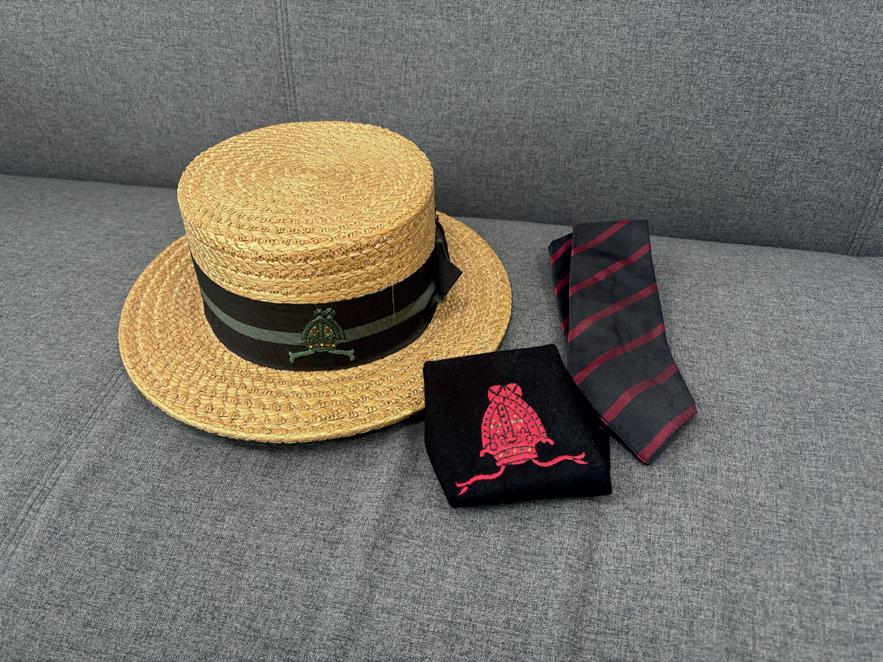
A dive into the school archives unearthed a history of Worcester faring well in House drama, Canterbury in rugby and School in cricket and Pembroke in hockey. Until the 1960s, a student’s House was indicated by the colour of the school crest on their blazer and, in the summer, by the sash around their boater hat, something the students were pleased to hear we will not be bringing back! In the summer of 1995, however, the House system was consigned to history, owing to a school calendar that was already straining at the seams.
Today, the school stands at a new pivotal point in its history, on the verge of full co-education and expansion. It felt like the right time to bring a much loved and frequently requested part of our history back to life. The sorting hat, Microsoft Excel, allocated every current student and staff member a House, and House sport is up and running again with every intention of expanding the calendar to its previous breadth. We hope that in time it will provide an additional layer of belonging, creating communities within our community, a place
for additional student leadership roles, opportunities for cross-year collaboration, and somewhere for all students to shine.
The school’s Book of Remembrance is on display every November as we approach Remembrance Day, and every year I stop to read some of the entries. Listed alongside those names is their House: Red, Green, Yellow or Blue.
It is a real pleasure to be giving the newest generation the opportunity to be part of a tradition that stretches back nearly 120 years; a chance for them to take on the responsibility of their House’s history and write its next page.
Tuki Rounds Senior Deputy Head
Trinity / School
Canterbury
Worcester
Pembroke
Trinity: The next chapter Community
Throughout this issue of In Trinity, coeducation can be seen across many aspects of school life: from the Sixth Form to co-curricular activities and student leadership. As we prepare to welcome girls into Year 6 and Year 7, this next stage is being shaped carefully, as a community.
Co-education in the Sixth Form has provided a strong foundation for a wholeschool transition, with boys and girls already working together in a community defined by diversity, learning through values and a huge range of opportunities.
As the school looks ahead to 2027, this experience is informing how the next stage is approached. Developments in pastoral care, co-curricular provision and the use of space across the site are all being considered with a clear aim: to ensure that every student feels fully part of the life of the school.
Rather than changing what makes Trinity distinctive, this process is about extending it - building on existing strengths while ensuring that the school continues to evolve in a thoughtful way.
As Trinity moves to our next stage, we are focussed on extending and maintaining:
Belonging and community
• Maintaining our strong sense of belonging for all students
• The reintroduction of the House system this year
• Expanding our award-winning mentoring programme
• Strengthening our comprehensive induction experience for all students
• Planning for balanced year groups of 24 boys and 24 girls in Year 6 and 100 girls and 100 boys in Year 7 from 2027.
Pastoral care
• Evolving our pastoral systems to reflect a fully co-educational community
• Training our teaching staff and form tutors to maintain our highly regarded pastoral support.
• Maintaining our female representation across senior pastoral leadership including Heads of Year and Heads of School.
Opportunities beyond the classroom
• Continuing growth in our sport and cocurricular provision
• Enhancing the leadership of girls’ sport and fixtures under our new Assistant Director of Sport, Cara McCartney
• Investing in our facilities to support our team sports, training and performance to realise our ambition of being one of the strongest co-ed schools for sport.
Spaces and day-to-day experience
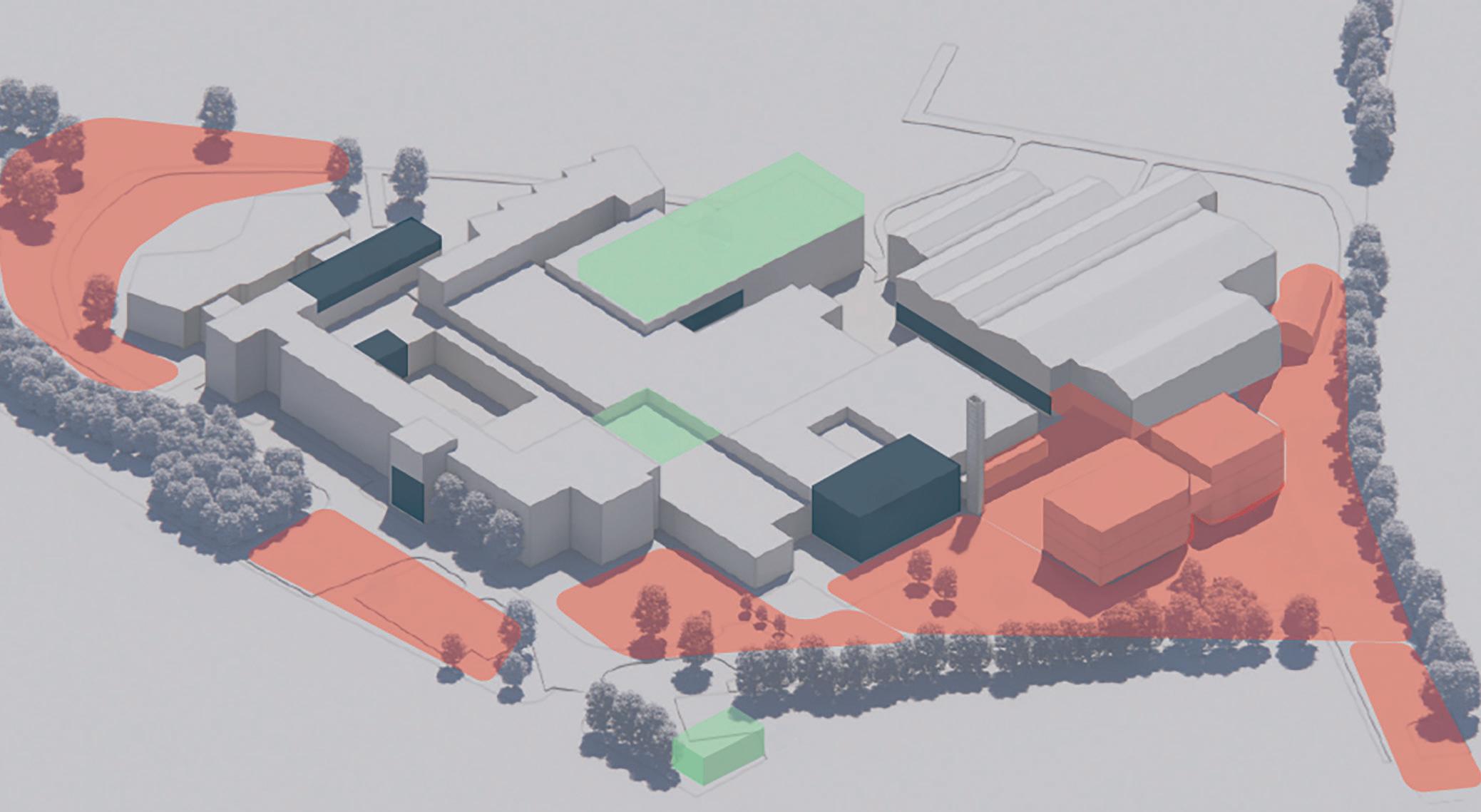
• Developing our social and year-group spaces across the site
• Enhancements to outdoor seating and play areas used during the school day
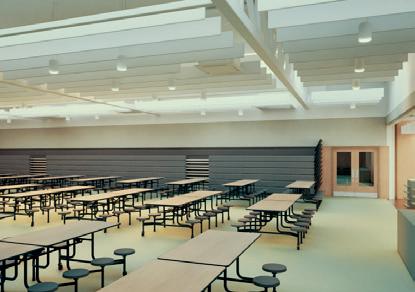
• Expanding our dining facilities
• Progressing with our ambitious plans for a new Sixth Form Centre, Sports Studio, Drama Facilities, and more.
Across the school
As Trinity evolves, spaces across the school are being adapted and developed to support day-to-day life for all students.
Sport and fitness
Sport will continue to expand across the school, with growing provision for younger girls alongside established programmes.
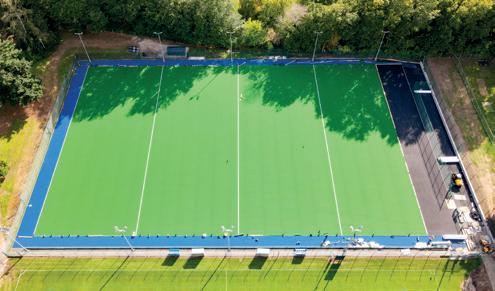
• Newly refurbished elite level hockey astro and netball facility (PIC 1)
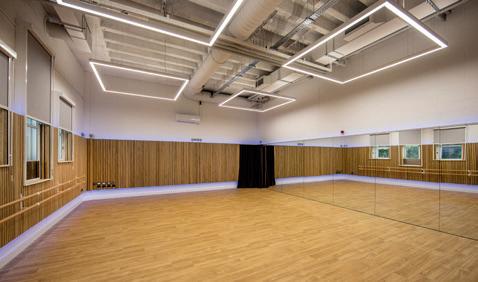
• A new mirrored studio supporting dance, spin, fitness, yoga and training (PIC 2)
• Fully refurbished changing facilities for day-to-day sport.
Shared spaces and school life
Shared spaces at the heart of the school continue to evolve, supporting everyday routines and larger events
• An expanded dining space used throughout the day (PIC 3)
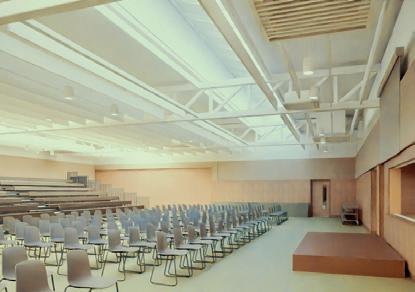
• A new flexible area for talks, performances and year group or House events (PIC 4)
Learning and year group spaces
Spaces across the school are being developed to support a growing community and a strong sense of belonging within each year group.
• New classroom spaces supporting the gradual growth of the school (PIC 5)
• Dedicated areas for different year groups.
Social and outdoor spaces
Outdoor spaces are a central part of daily life at Trinity, with students spending time across the grounds at break or lunchtime. These social spaces provide opportunities for students to play, relax, meet friends and spend time between lessons.
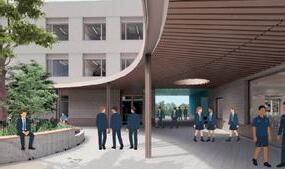
• New social spaces and seating areas, both covered and open (PIC 6)
• Outdoor spaces used throughout the day.
The Dell
Hockey astro
Table tennis area
Netball facilities Picnic benches
Picnic benches
Dining room
(PIC 1)
(PIC 2)
(PIC 6)
(PIC 4)
(PIC 3)
(PIC 5)
A shared journey
Co-education at Trinity will continue to develop over the coming years, with 2027 marking the next stage in this process.
As the school evolves, the focus remains the same: a strong sense of community, wide range of opportunities, and a welcoming and inclusive environment where every student thrives.
This development is already being shaped by students across the school, from younger year groups contributing ideas for play and social spaces to Sixth Form students helping to develop mentoring, leadership and shared areas.
Current students will play a central role in this next stage – whether as future Sixth Form leaders, through the House system, or as part of a fully co-educational school community. For some, this will include welcoming younger sisters into the school.
For those joining in 2027, it represents an opportunity to be part of that shared journey, helping to shape the next chapter of a fully co-educational Trinity as it continues to evolve.
80%
50%
43%
On the cover
This issue of In Trinity explores responsibility. The cover reflects our belief that students grow through ownership, contribution and understanding their impact on others.
Thank you
Thank you for reading this issue of In Trinity magazine, it has been compiled by Nicky Blunt with the help of staff and students to give you further insight into the life and culture of the school. We would like to thank Simon Stacpoole and Dan Fearon for their photography, and Onthree for the design.