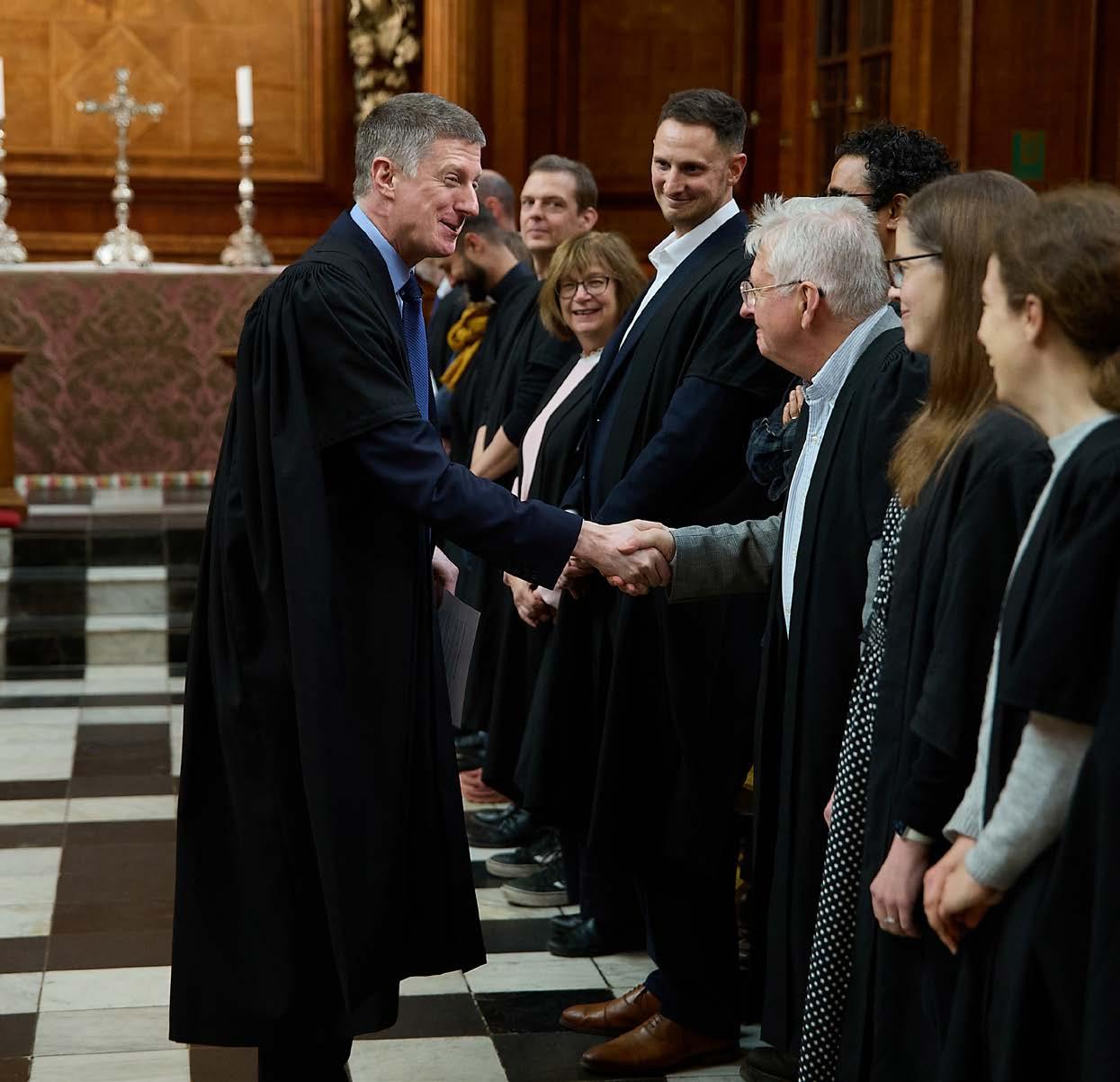
Trinity’s new President
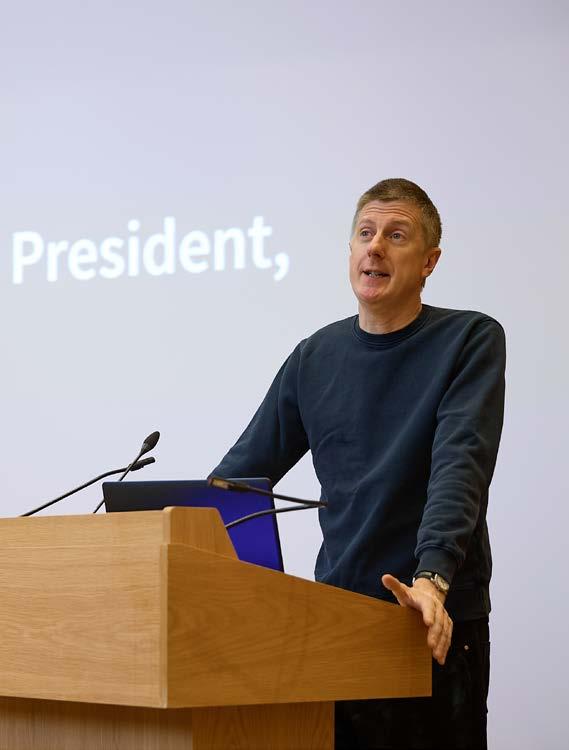
Sir Robert Chote has been formally admitted as the college’s 29th President
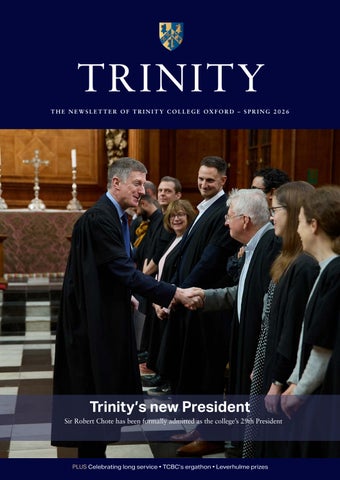
Sir Robert Chote has been formally admitted as the college’s 29th President
Iam now a little over five months into my term as President of Trinity, and have hugely enjoyed getting to know this wonderful institution. All that I had heard in advance about the friendly, supportive spirit of the community and its rich academic, intellectual, cultural, sporting and social life has been more than confirmed.
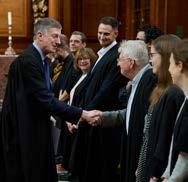
As this is Oxford, the formalities of taking office as President are inevitably a process rather than an event. Over several weeks I was presented to a bishop, witnessed the handing over of a letter, shaken hands with each of the Fellows, signed a register, made a public declaration to abide by the statutes ‘for the time being’, and have been prayed for by the same bishop a second time and led to my stall in the chapel. It feels as though I have been installed and reinstalled more times than Windows 11.
Highlights so far
There have been many highlights of my time in office so far, as I have engaged with regular events in the college calendar for the first time, as well as the serendipities of daily life. In addition to learning about the fascinating research and impressive teaching undertaken by the fellowship and lecturers, these include the various opportunities I have had to meet Old Members, for example at the Benefactors’ Lunches. I have been struck by the affection and gratitude that so many alumni express for their time at Trinity and the pleasure they derive from supporting and enriching the college experience for successor generations. We are hugely grateful for that support and please be assured that there will always be a warm welcome for Old Members at your college home.
Meeting and engaging with today’s generation of students has of course been an immense pleasure and privilege of coming here, as well as a source of inspiration. The one-on-one President’s Collections (which were not a feature of undergraduate life when I attended ‘the other place’) are a great opportunity to hear about students’ work and their involvement in all the other aspects of college and Oxford life. And unexpected patterns emerge—who knew that badminton was so popular these days?
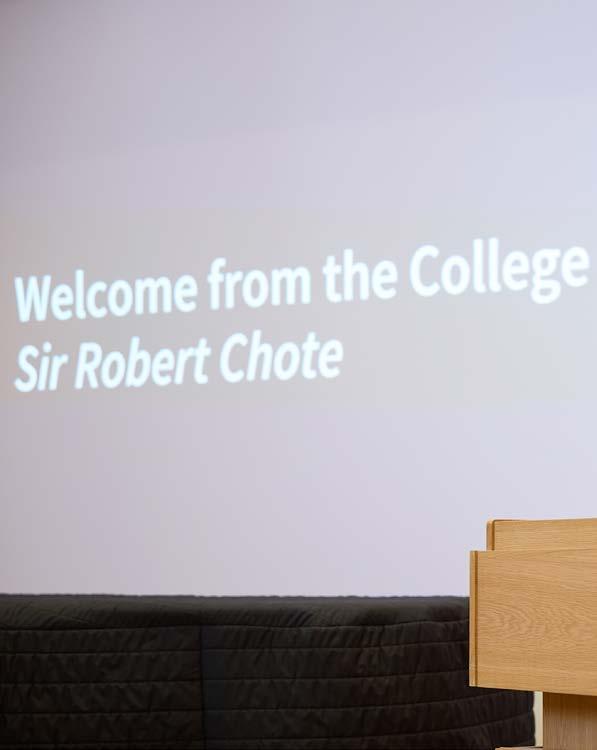
‘There have been many highlights of my time in office so far, as I have engaged with regular events in the college calendar for the first time, as well as the serendipities of daily life. ...I have been struck by the affection and gratitude that so many alumni express for their time at Trinity.’
Trinity’s cultural life
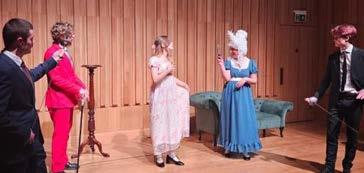
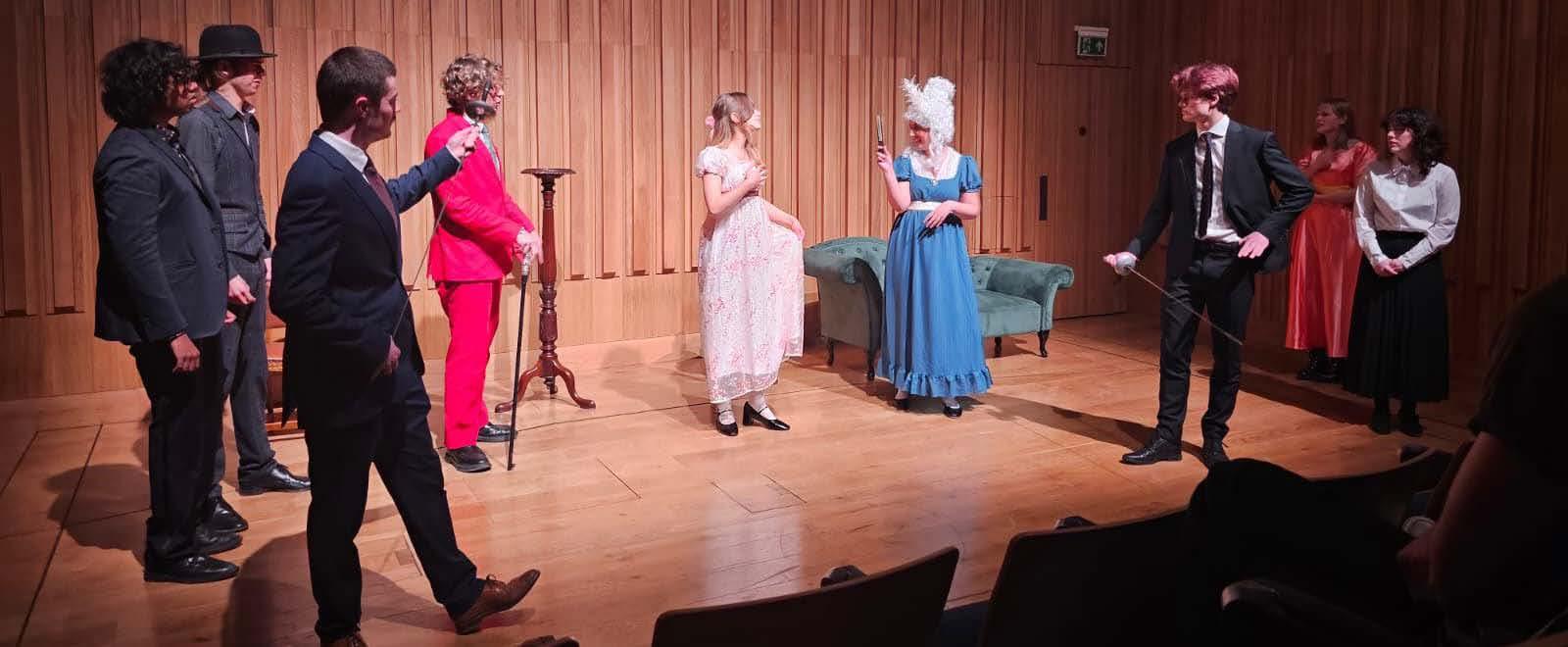
As regards cultural life, I have taken particular pleasure in attending the various musical and theatrical events that students produce, perform and promote in college and across the University. The Trinity Players put on a fantastic production of Sheridan’s The Rivals in February (and are now preparing The Picture of Dorian Gray for their summer production). The termly President’s Concerts showcase the depth and breadth of Trinity’s
musical talent across all genres. The Chapel Choir is flourishing and performing to a very high standard. And beyond the college gates, Trinity students have been involved in productions ranging from a Puccini opera to a Stephen Sondheim musical, from newly unearthed early music, to The Little Shop of Horrors
It has been a delight to attend them all and I look forward to seeing and hearing much more in the months to come.
Trinity is delighted to have received a Highly Commended award from the Oxford Preservation Trust (OPT) for the recent rebuilding and refurbishment works to the Hall, kitchen, and SCR rooms.
The OPT Awards celebrate the contribution that projects make to Oxford’s character and communities. Trinity’s refurbishment of its Grade I listed buildings was nominated in the ‘adaptive re-use’ category, for projects that adapt existing buildings for modern life, while retaining their historic character and significance.
The judges praised the project for its ‘considerate design approach, respecting the historic fabric’, and were
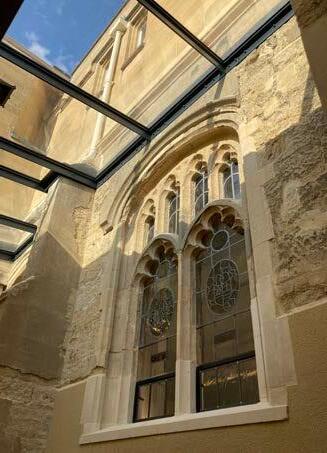
particularly impressed by the integration of the lift, which provides disabled access to all floors.
The project has enhanced the experience of members of College and visitors, with brand new kitchen facilities, a new, more spacious servery, and enhanced acoustics in the Hall, while the addition of a lift has made the Beer Cellar, lower and upper SCR rooms, and Old Bursary accessible.
The award is a fitting recognition of the team involved in designing and successfully delivering such an ambitious scheme, overcoming a number of complex engineering challenges in a way that was sympathetic to the historic, listed buildings.
This year marks the 400th birthday of the biographer and antiquary John Aubrey, who came up to Trinity in 1642, just as the Civil War was about to break out, and left a vivid account of life in the college at that chaotic time.
Aubrey loved Trinity, kept in touch all his life, and is buried amongst other Trinity men in the south aisle of St Mary Magdalen’s church. At a cost of 3 shillings, he bought an original Durham College manuscript, a medieval book of hours that had belonged to the prior of Durham College (the buildings of which became Trinity’s first quadrangle), and then to Margaret Pope, the Founder’s second wife. (It is now in the Bodleian and partly digitised— search ‘Aubrey MS.31’ at digital.bodleian.ox.ac.uk).
Marking the anniversary
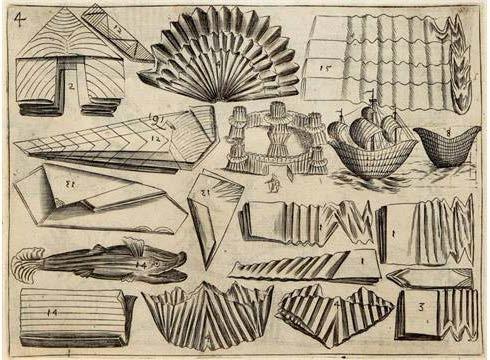
An illustration from John Aubrey’s beloved ‘Italian book of folding napkins’, one of the exhibits at Chippenham Museum’s exhibition
To mark Aubrey’s anniversary, there will be a conference at New College in September, and Chippenham Museum is holding an exhibition, ‘Wiltshire and the world: John Aubrey and the quest for knowledge’, from 12 June to 19 September, with significant loans including manuscripts and books from the Bodleian, Oxford college libraries, and the Royal Society. Dr Kate Bennett, of Magdalen College, who published a prizewinning Oxford edition of Aubrey’s Brief Lives in 2015, is working on a new biography to be published by Penguin Allen Lane in 2029. She, Professor Peter Davidson
(Campion Hall), and Dr Kelsey Jackson Williams (University of Stirling) recently published Aubrey’s Villa (Hobnob Press), a facsimile of Aubrey’s poignant album of watercolour paintings of the buildings, views and fields around his Wiltshire home, along with his ambitious (and expensive) plans to rebuild it as a Palladian villa (hobnobpress.co.uk/ books).
Aubrey’s Villa was launched at a wonderfully memorable party on the 400th anniversary itself, 12 March, in the printing loft of the Sheldonian Theatre, complete with a birthday cake and a chance to enjoy the view from the cupola across Broad Street to Trinity. Other projects include a multi-volume complete Correspondence to be published by Dr William Poole and Dr Jack Avery (both of New College), with Dr Bennett as consultant editor, while the London Review of Books is planning performances of Aubrey-related plays in Oxford, to take place next year.
The anniversary will be marked at Trinity with a ‘Trinity Treasures’ talk given by Kate Bennett on 12 November, which will consider Aubrey and his relationship to his college, and an archive exhibition by archivist Clare Hopkins, revealing details about Trinity in Aubrey’s time. More details will be publicised nearer the time.
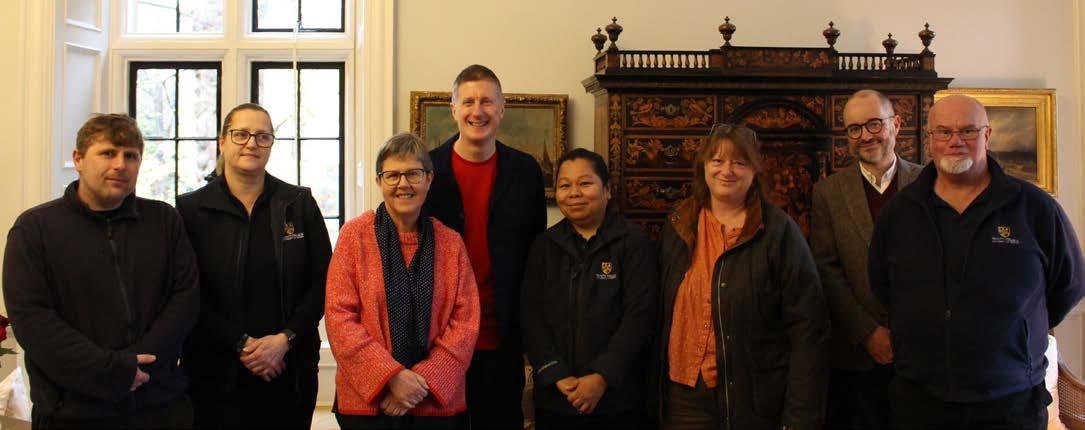
In December, Trinity’s recently arrived President held a coffee and cake party to thank the longest-serving members of staff for their commitment to Trinity. Sir Robert congratulated the 10 members of staff, who have each given 20 or more years’ service, on their contributions to College over the decades—or perhaps that should be ‘centuries’, as between them, at the time of the party, they had a combined service to the college of 258.67 years!
Departures and arrival
Michael Belcher has joined Trinity as the new Head of Communications. Michael most recently served as Head of Communications at St Hilda’s and previously worked in marketing and communications in the publishing world.
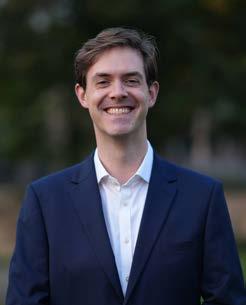
Michael Belcher
Michael has succeeded Julia Paolitto, who was the first person to hold this role and who, as reported in the last Newsletter, left in September for a new role in the University. The college is very grateful to Jane Hunt, who covered the main communications work part-time between Julia’s departure, and Michael’s arrival in December.
In October, the Library team bid farewell to Library Assistant Clara Oxley, who had provided sterling support to acting Librarian Sarah Cox while Emma Sillett was on maternity leave.
Andrei Stefanescu left in December, planning to seek other adventures around the world, after 15 years working in the SCR, originally as the SCR Assistant and for the last nine years as SCR Butler. His cheerfulness and attentive helpfulness in the SCR, and at dinner and events in Hall, are very much missed.
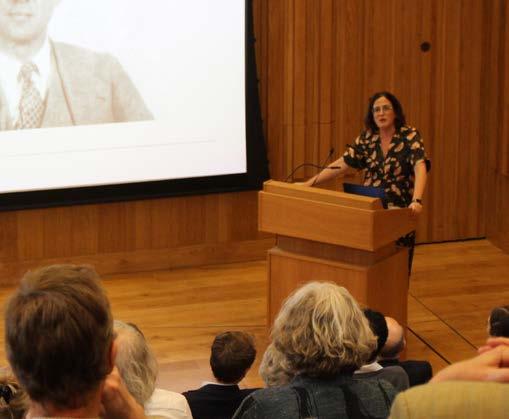
We are delighted to report that the appeal for the scholarship in Dame Hilary’s name has reached £1 million and is now two-thirds of the way to its £1,546,000 target. This is a significant milestone, and we cannot thank enough the 644 benefactors who have contributed so far.
At Hilary’s request, the scholarship will support graduates working in the Humanities, with a preference, where possible, for those studying Music. The level of support it can offer will depend on how much is raised. The aim is to create a lasting endowment that will cover, in perpetuity, the fees and living costs of a DPhil student from anywhere
in the world. To help achieve this, the University has promised £580,000 in matched funding but only if we can reach the £1.5 million target by the end of July. Raising the balance of £546,000 continues, therefore, to be a matter of some urgency.
Every donation that is made to the scholarship by 31 July will count towards the matched funding total. If you can, and would like to, support the appeal, please consider doing so now, and help to secure Hilary’s legacy and give generations of exceptional graduate students an opportunity to use their talents to make a positive impact on the world.
Like most charities, Trinity relies on legacies from its members and friends. Wherever you look, their impact can be seen in the funding of buildings and scholarships and gifts from legators have greatly enhanced the college’s collections.
One of the most generous legators is recognised in the naming of the Danson Library, while the Cumberbatch bequests of furniture and silver are among the finest of the college’s collections.
More recently, legacy income has funded named scholarships, such as the Montgomery Scholarship, a DPhil scholarship in Engineering/Material Sciences in memory of Christopher Montgomery (1970) and the Pattisson Scholarship, funded by a legacy from John Pattisson (1952), while unrestricted legacies have made a vital contribution to the funding of the Levine Building and the restoration of the Hall and kitchen. Some rooms in the Levine Building now house pictures of Trinity from a collection amassed by Ian Senior (1958) and bequeathed to the college.
William Pitt Society
Twenty years ago, we created the William Pitt Society to honour, in their lifetimes, all those who have included a legacy to Trinity in their wills. The Society, which has more than 130 members, has an annual lunch, which is a great opportunity for Trinitarians from across the generations to meet each other and current Fellows.
If you would like to find out more about leaving a legacy, please go to trinity.ox.ac.uk/make-gift or email me at sue.broers@trinity.ox.ac.uk
We would not expect you to divulge financial details unless you wished to do so. However, the college has only limited physical space, so anyone thinking of leaving books or artefacts is encouraged to discuss this with us first, as it is sad when relatives
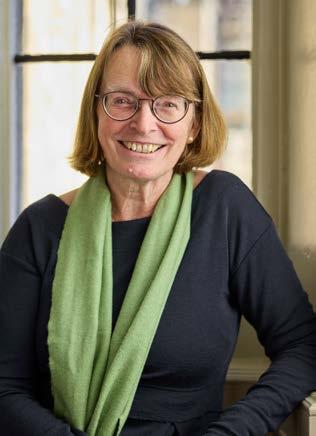
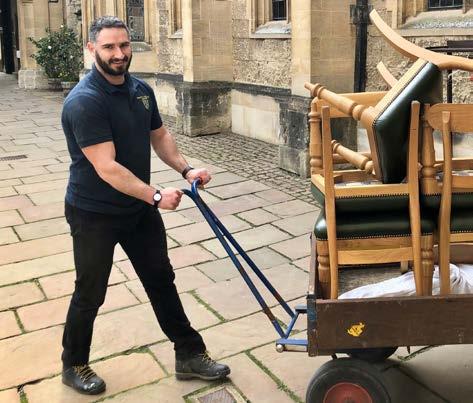
find we are unable to accept items that have been intended for Trinity.
Thank you once again to all those who have already included a bequest to Trinity in their wills and I look forward to hearing from anyone who is considering doing so.
Sue Broers, Director of Development
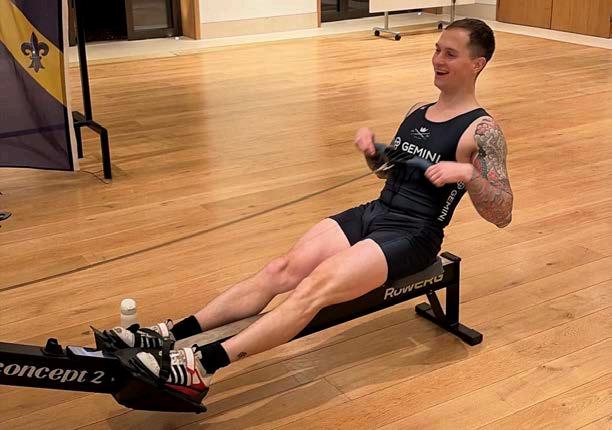
Ivan Tolkachev, president of the Boat Club, reports on TCBC’s latest fundraising efforts, and the special partnership with a rowing charity in London.
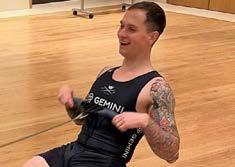
On the weekend of 21 and 22 February, members of the Boat Club completed a charity ‘ergathon’, rowing non-stop for 488km on an ergometer (rowing machine). The distance was chosen as it is the ‘as-the-crow-flies’ distance between the Trinity colleges of Oxford, Cambridge and Dublin—a trinity of Trinities!
The target distance was achieved in 35 hours, 46 minutes, and 10.3 seconds, much faster than originally anticipated and a testament to the fitness of our members. We would also like to thank Leigh Large (1995), Charlie Hammon (1987), and Charlie’s son Will, for coming to give their support and taking turns on the erg, which got us ever closer to our target. A special mention must also go to the President, who came to give us some much-needed support on the Saturday morning.
Fulham Reach Boat Club
The aim of the Ergathon was to raise money for TCBC to cover everincreasing running costs and to advance our objectives in areas such as the renewal of our ergs, redevelopment of the erg room, and the possibility of training camps abroad. Furthermore, we partnered with Fulham Reach Boat Club (FRBC), an award-winning charity and Sport for Good Centre of Excellence, dividing the money raised equally between the two clubs.
Situated just below Hammersmith Bridge in London, FRBC provides rowing opportunities for individuals who wouldn’t ordinarily get the opportunity to try rowing, focusing on three key impact areas: youth development, reducing reoffending (‘Boats not Bars’) and accessible rowing. Every ergathon donation will support fully funded junior bursary places for young people at Fulham Reach. The club’s youth squad provides year-round training, with bursaries ensuring a continuous pathway for young people at FRBC and meaning that no young person is excluded due to household income.
Including Gift Aid, we have so far raised more than £2,770, which is a fantastic result! I would like to thank everyone who donated, and I hope you know how truly grateful we are for your support.
With our half of the donations alone, we can cover our British Rowing affiliation costs, and rack multiple boats at Godstow during Trinity term in preparation for Summer Eights. Any money left over will go towards purchasing new erg machines and subsidising external races for our members.
Without the backing of alumni, friends and family, TCBC would not be able to function and it is through your support that we can continue giving students the opportunity to push themselves, build lifelong friendships, and represent their college on the water, whilst also giving back to an excellent charity in Fulham Reach Boat Club.
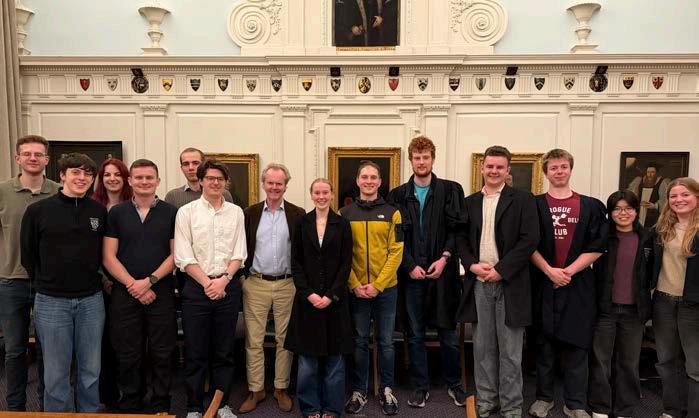
Prestigious Leverhulme awards have been won by two of Trinity’s Fellows.
Leverhulme major research fellowship
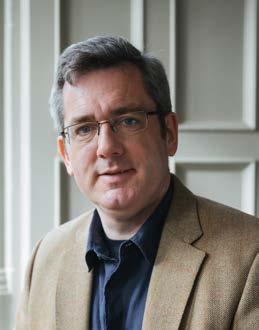
Professor Nicholas Barber, Wyatt Rushton Fellow and Tutor in Law, has been awarded £167,880 by the Leverhulme Trust to support a major new research project, titled ‘Reason and Emotion in the Formation of Constitutional Identity’.
The award, made under the prestigious Leverhulme Major Research Fellowship scheme, will fund a three-year programme of interdisciplinary research examining how states build and sustain constitutional identity, and the roles that both rational argument and emotional attachment play in shaping citizenship.
The research seeks to understand how constitutional systems can foster meaningful connections between citizens and the state without undermining democratic values. Drawing on constitutional law, political theory, social psychology and sociology, it will explore how states deploy narratives, symbols, rituals and legal structures to create a sense of belonging, and where the moral limits of these strategies lie. Central to the research is the idea that law alone cannot repair the weakening bonds between citizens and democratic institutions, and that a deeper understanding of identity and emotion is essential to the future health of constitutional government.
The fellowship will allow Professor Barber to produce two major books; ‘The State and its People’, for OUP, will offer a comprehensive theoretical account of state membership and constitutional identity, while ‘How to Save Your Constitution’, will be aimed at a wider public and translate these ideas into an accessible discussion of citizenship, democracy, and civic responsibility.
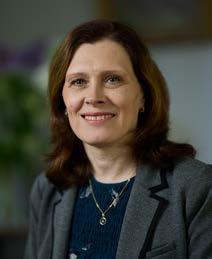
Dr Natalia Gromak, Fellow and Tutor in Medicine, is among five Oxford researchers awarded funding through the FA Alliance Innovation Fund to advance the discovery of new therapies for Friedreich’s Ataxia (FA), a rare, debilitating and life-shortening neurodegenerative disease.
Philip Leverhulme prize
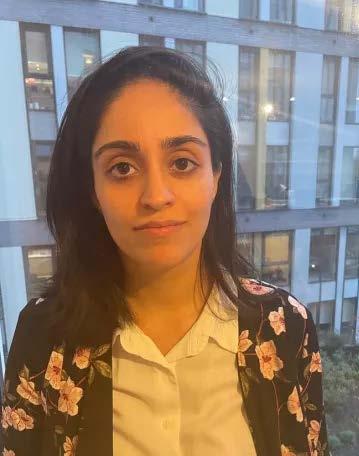
Dr Meera Mehta, Fellow and Tutor in Inorganic Chemistry, is one of four Oxford University researchers selected from over 350 nominations who received a 2025 Philip Leverhulme Prize.
Dr Mehta was awarded a chemistry prize for her work on the fundamental chemistry of earth-abundant nontoxic elements and their application in synthetic and materials science. Her research spans a broad range across fundamental chemical science, including the synthesis of molecules and catalysis.
The prizes recognise and celebrate the achievements of outstanding researchers whose work has already attracted international recognition and whose future careers are exceptionally promising. Each prize winner receives £100,000 to be used for any purpose that advances their research. The Leverhulme Trust awarded five prizes in each of the following: archaeology, chemistry, economics, engineering, geography, and languages and literatures.
The awards are coordinated by the OxfordHarrington Rare Disease Centre (OHC), a partnership between the University and the Harrington Discovery Institute in the USA, and are supported by charitable funding dedicated to accelerating rare disease therapeutics. Each researcher receives
£100,000 alongside specialist translational support.
Dr Gromak’s project, ‘Design of GAA-repeat proteomics to identify factors interacting with expanded repeats in Friedreich’s Ataxia’, will investigate the molecular mechanisms underlying gene silencing in FA. Her research focuses on how abnormal DNA and RNA structures contribute to disease, with the aim of identifying new targets for therapeutic intervention.
The FA Alliance Innovation Fund supports highrisk, high-reward research across Oxford, bringing together experts in basic science, translational research and clinical practice.
Friedreich’s Ataxia affects approximately 1 in 50,000 people in the UK and USA and currently has no cure.
A world-first study led by Professor Felix Hofmann (2003), Lecturer in Engineering Science, has revealed how hydrogen atoms dynamically alter the internal structure of stainless steel, with important implications for the development of safe hydrogen-based technologies.
Researchers at the University of Oxford and Brookhaven National Laboratory used an advanced X-ray imaging technique to capture three-dimensional, real-time images of how internal defects, known as dislocations, respond to hydrogen exposure. The findings help explain hydrogen embrittlement, which is a major challenge for pipelines, storage vessels, and components in hydrogen-powered systems.
The team used Bragg Coherent Diffraction Imaging at the Advanced Photon Source in the United States to observe a single stainless-steel grain approximately 700 nanometres in diameter.
The findings will help inform the design of new alloys and improve predictive models for materials operating in hydrogen-rich environments, supporting the transition to low-carbon energy systems. The research paper, ‘Direct Imaging of Hydrogen-Driven Dislocation and Strain Field Evolution in a Stainless Steel Grain’, is published in Advanced Materials
Dr Lucy Powell, Lecturer in English, joined leading Austen scholar Professor John Mullan of UCL, and producer and writer John Yorke for two BBC Radio 4 programmes exploring Jane Austen’s Pride and Prejudice
The broadcasts form part of BBC Radio’s season marking last year’s 250th anniversary of Austen’s birth, celebrating the life and legacy, of one of Britain’s most popular authors.
In the programmes, the contributors examine how Austen’s most popular novel—described by the author herself as ‘too light, and bright, and sparkling’—has maintained its special place in the history of English literature.
The programmes, part of the Opening Lines series, are available to listen to on BBC Sounds.
Read more on these and other news stories—including Gail Trimble on Radio 4, and Luke Rostill’s research being used by the Canadian supreme court—on the website: trinity.ox.ac.uk/trinity-news
In 1955, the year of Trinity’s quatercentenary, the History of Art was established as a new department within Oxford University’s History Faculty, and the department’s head was ‘allocated’ to membership of Trinity.
The Chair’s 70th anniversary in December witnessed a unique celebration, when Trinity’s three living professors were photographed with images of their two predecessors. The breadth of their collective expertise and distinguished legacy of scholarship is remarkable.
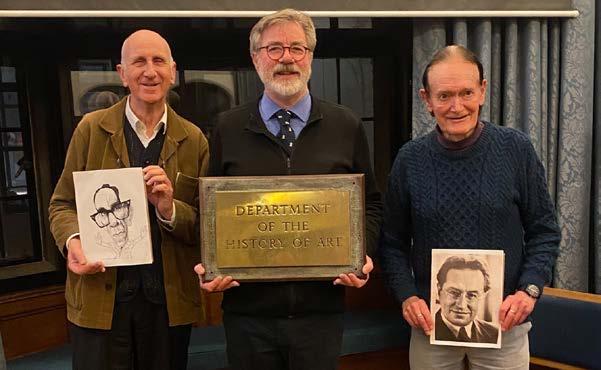
Professor Clunas holds David Levine’s drawing of Francis Haskell (Professor 1967-95), author of ground-breaking research on the social history and patronage of art.
Geoffrey Batchen (current Professor, from 2020), whose work encompasses all aspects of the creation, dissemination and influence of photography as art.
Professor Batchen is holding the brass plaque saved from the entrance of the original History of Art building on Beaumont Street.
Martin Kemp (Professor 1995-2007), one of the world’s leading authorities on the life and work of Leonardo da Vinci.
Professor Kemp is holding a photograph of Edgar Wind (Professor 1955-67), whose charismatic lectures on Renaissance iconography were so popular they had to be given at the Playhouse.
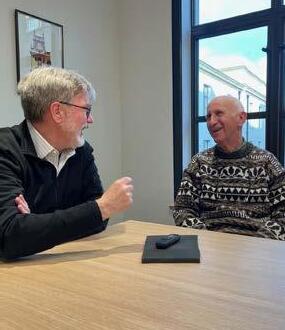
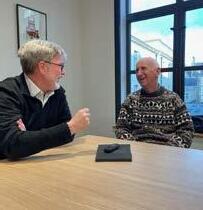
An invaluable archival resource for the future history of the History of Art at Oxford has been created by Geoff through a series of recorded interviews with Martin and Craig (pictured left), discussing their careers and preserving their experiences of building up the department and bringing it to its present location within the University’s new Humanities Centre.
Professor Dame Frances Ashcroft has been appointed to the Council of the Royal Society. With Marta Kwiatkowska, Professor of Computing Systems, already a member of the council, two of the council’s 24 members are Fellows of Trinity.
The Royal Society was founded in 1660; it counts many of the world’s most eminent scientists among its members and is the oldest scientific academy in continuous existence. The council is the governing body; its members are elected by and from the fellowship and are responsible collectively for the policy and management of the society
Michael Poyntz, Domestic Bursar 1986-2001, has written with the news that he and his wife Tina have moved to Manly, New South Wales, where their daughter lives
The Hon Michael Beloff KC, President 1996-2006, has published Four Faces of the Law, a new collection of his published writings, covering advocacy, judging, recent legal history, and sports law. This volume follows his memoir MJBQC – A Life Within and Without the Law, published in 2022
The book will be launched at an event in Trinity later in May, when Michael will be interviewed by Dinah Rose KC, President of Magdalen College, and Kate O’Regan, Emeritus Professor of Human Rights Law, and a former judge of the Constitutional Court of South Africa, will speak about Michael’s role in the development of sports law.
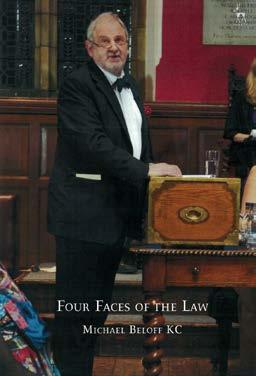
Lord Pannick KC, in the foreword, writes, ‘Michael has supplemented his career as a highly successful barrister and much respected arbitrator by continuing to moonlight as an author and lecturer. [This book] demonstrates his knowledge, wit and wisdom on the topics which interest him most and on which he has great expertise.... [It] confirms the depth of learning, the breadth of interest and the sheer originality of his thinking. Michael says that his aim “is to entertain as much as to educate”. An aim which this book fulfils.’
To coincide with the launch, copies of the book can be purchased with a 20% discount at bloomsbury.com using the offer code GLR BD8.
Professor Valerie Worth, Senior Tutor 2009-2021 and Tutor for Graduates to 2024, has enjoyed a busy 18 months following her retirement. With a Leverhulme Emeritus grant (2024-2026) to complete her monograph on ‘Women and Translation in Early Modern France’, she has made several research trips to Paris, and presented her work on polyglot dictionaries, bibles, and emblem books at a conference at the Sorbonne.
Following her discussion of practices and beliefs around pregnancy, childbirth, and infertility from the early modern period through to today, on Radio 4’s Women’s Hour in November (available to listen to BBC Sounds, episode of 11/11/25, clip from 46:33), the Leverhulme Trust invited Professor Worth to write a feature on her current research for their Media page, media.leverhulme.ac.uk/feature/vworth
The continuing series of Trinity Talks has included distinguished speakers and a varied range of topics over the past few months.
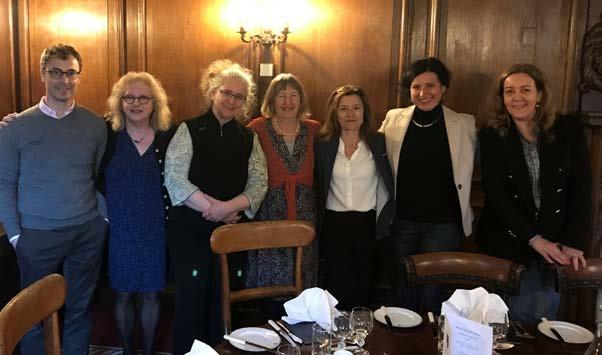
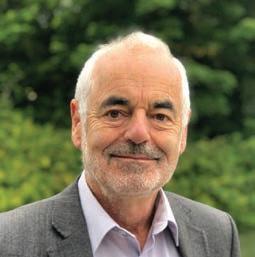
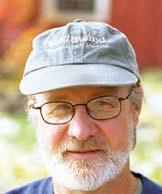
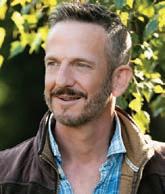
Eminent statistician Sir David Spiegelhalter, who spoke about living in an age of uncertainty, was followed by Dr Gus CaselyHayford, founding director of V&A East, and Professor Laura van Broekhoven, director of Oxford’s Pitt Rivers Museum, who together explored the tensions between traditional collecting practices and the need to engage new, often marginalised, audiences.
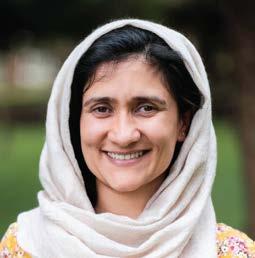
In January, we welcomed Shabana Basij-Rasikh, cofounded of SOLA, which would become the only boarding school for girls in Afghanistan, and then Dame Melanie Dawes, chief executive of the media regulator Ofcom, who spoke on regulating digital platforms. Professor Sir Lawrence Freedman,
historian and strategist, considered Europe’s need to look after its own security, while Hannah White, CEO of the Institute for Government, was joined by Simon Case, former Cabinet Secretary and
Join the Events at Trinity mailing list to receive advance information and reminders about Trinity’s public programmes. Sign up at trinity.ox.ac.uk/eventsat-trinity
with the Senior Tutor, Dr Rebecca Bullard, and read from his recently published collection of poems.
That event and some of the Trinity Talks are available to watch on Trinity’s YouTube channel, www.youtube.com/@ trinitycollegeoxford1555.
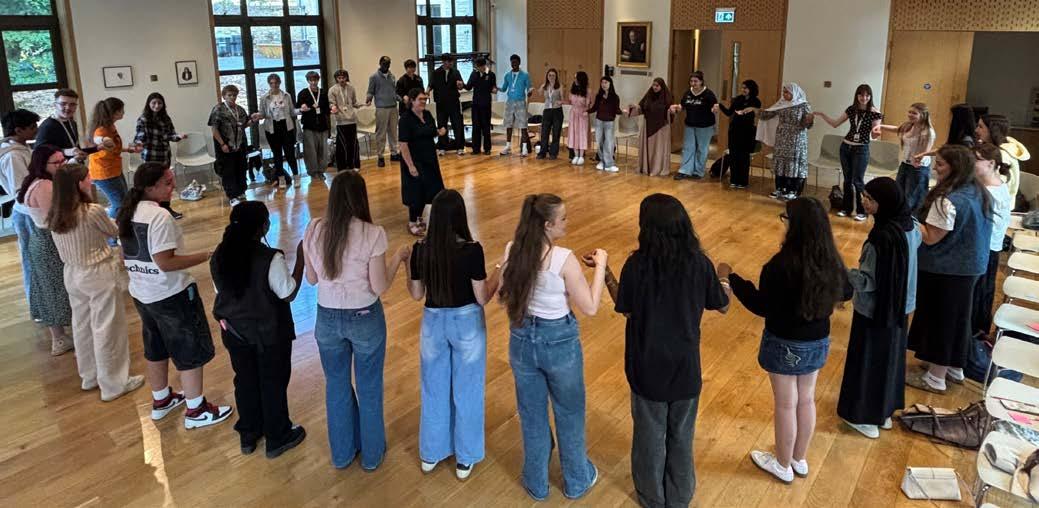
The music programme saw the return of the Oxford International Song Festival, which attracts artists and audiences from across the world, holding a number of the Festival performances in the de Jager Auditorium.
Permanent Secretary to the Prime Minister, to reflect on the last decade of British government.
As an additional event for Holocaust Memorial Day, Judge Ted Meron, Honorary Fellow, was in discussion
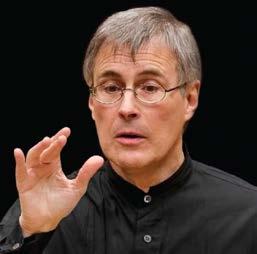
The ‘Trinity Recitals’ began in December with works for piano trio from Schubert’s last great creative period, while in February James Ehnes (violin) and Andrew Armstong (piano) gave a recital of violin sonatas, followed, in March, by a visit from conductor, pianist and musical thinker, Christian Zacharias.
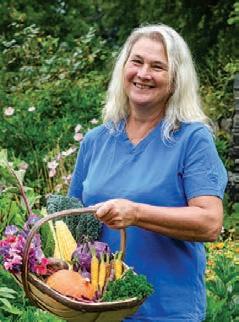
The popular Gardens in Bloom series returned in March, with a captivating talk by American writer, nurseryman and designer Roy Diblik, owner of Northwind Perennial Farm in Wisconsin.
Roy spoke about his schemes for perennial plantings using fresh contemporary styles and plant diversity, combined with responsible stewardship. In a very engaging talk, with enticing illustrations of projects in the USA and Europe, he explained the partnership between the gardener, the plants, and nature. Particularly compelling were examples of civic schemes that were not only beautiful and sustainable, but cost saving for local authorities.
Although Roy referenced British gardens and several well-known British designers and gardeners he has worked with, this was his first visit to Britain, and Trinity was delighted to host his UK debut.
This year’s series continues on 26 May, when Stephanie Hafferty, awardwinning garden and food writer, will give practical advice on gardening for natural resilience and pest-control. On 9 June, Nick Bailey, author and Gardeners’ World presenter, will share his ideas and advice on taking on a new garden or tackling an old one. Meanwhile, the popular garden tours, led by members of the gardens team, continue until September.
Building on award-winning success
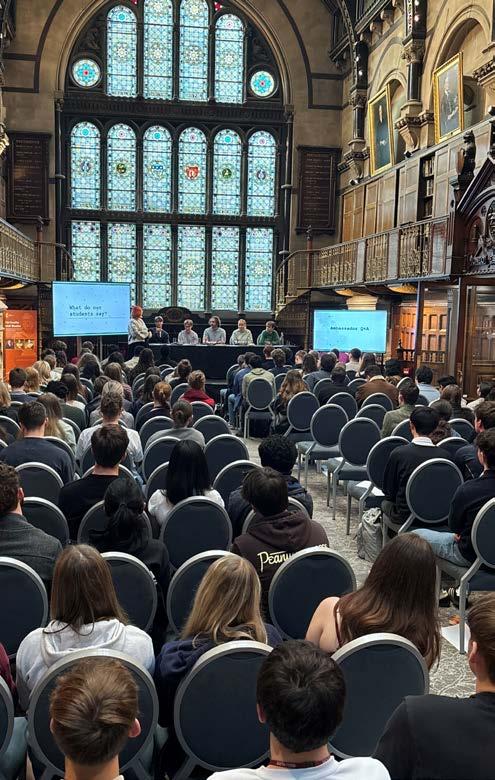
The Access & Outreach team embarked on some exciting new programmes in 2025, and we developed various aspects of our work to build on the outreach that was recognised last year with a Vice-Chancellor’s Award for Local Community Engagement.
Trinity’s Beyond the Classroom programme of online enrichment has seen more than a thousand applicants registering for each of the 2025 and 2026 programmes. The 2026 programme opened in March with 383 school students joining us virtually after school for the first session; this programme enables us to offer thoughtprovoking academic taster talks to young people around the country, beyond Trinity’s core partner regions of Oxfordshire, Milton Keynes and North East England.
One outstanding development of the programme has been to enable us to invite a small proportion of attendees to come to meet us in person. Last year 22 Year 12 students joined us at a three-day residential, and a further 57 registered for a one-day programme; it is such a pleasure to bring high-calibre prospective applicants to the college to meet us in person, after the have participated in our online academic enrichment.
Hannah Rolley, Head of Access
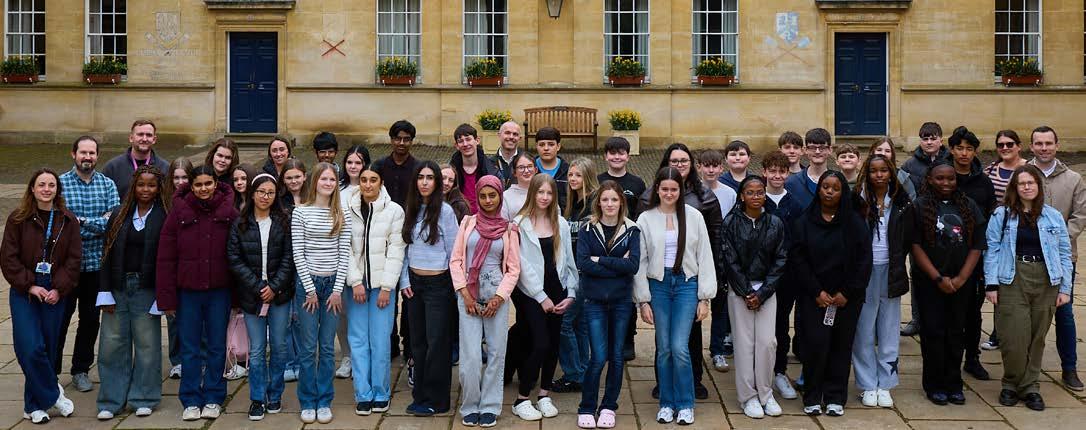
Year 9 and 10 students from three state schools in the North East who joined an oracy programme residential (to develop key skills around communication) at Trinity in March, pictured with their teachers, and Richard Petty (back, centre) from the Access & Outreach team
In Trinity’s North East England link region, the Oxford for North East team (Trinity working in partnership with Christ Church and St Anne’s) has worked with colleagues at Cambridge to launch an in-region Oxford-Cambridge conference. More than 100 highly-qualified prospective applicants met staff and, crucially, current Oxford and Cambridge students from the North East.
One area of our work in the North East we would like to share in a little more detail is the Aim for Oxford programme. Working with our Oxford for North East colleagues, this annual programme is delivered with around 80 Year 12 school students in the region, from January of Year 12 through to the university application stage, autumn of Year 13. Each year, from a pool of around 260 young people who apply for the programme, we select students with GCSE attainment in the range that would make for a competitive application to a top tier university. Alongside academic attainment, we also shortlist using a range of metrics, based on measures of socio-economic deprivation and prior academic achievement, as well as measures of personal disadvantage, including any qualitative factors disclosed in their application.
Applicants come from a variety of more than 40 state schools in the region, and those selected join us for four study days in Durham and Newcastle, taking place between January and April. These take the participants through aspects of university admissions guidance: super-curricular enrichment, UCAS applications, admissions tests, and welfare and finance.
To present the programme, outreach staff from the three Oxford for North East colleges are joined by academic colleagues, who take the participants through a choice of academic taster sessions, and undergraduate access ambassadors, who are themselves from the North East.
‘Participants have daily tutorials around subject groupings according to courses they are potentially applying for…they also present in groups on a topic that they have spent the week researching.’
Taster session topics in 2025 and 2026 have included ‘An introduction to medical diagnostics’, ‘The politics of housework’, ‘Analysing Victorian poetry’, and ‘What can we do with engineering?’
The programme’s focus then switches to one-to-one review and support calls made with each Aim for Oxford participant, checking in on progress towards university applications, and answering any questions arising. In August there is a residential for the whole cohort at one of the Oxford for North East colleges. Participants have daily tutorials around subject groupings according to courses they are potentially applying for, and as well as looking at departments, colleges and gaining a feel for life as a student in Oxford, they also present in groups on a topic that they have spent the week researching.
There is a favourable rate of success in applications to Oxford for students on the Aim for Oxford programme. In the latest round of applications for entry in 2026, of students applying from the cohort, the university awarded eight with offers, a relatively high rate of success compared to the general cohort.
Richard Petty, Senior Access Officer
Trinity is very grateful to all those donors who have generously supported the work of the Aim for Oxford initiative.
Thanks to Trinity’s donors, generous grants are available to students to support their studies, providing opportunities regardless of financial circumstances.
The college is pleased to be able to provide non-means tested academic grants to fund the purchase of essential books and equipment, and additional funds to support conference attendance, medical electives, year abroad placements and research internships. There are also several travel grants, including some open to students at other colleges. These grants have funded a wide range of activities in recent years.
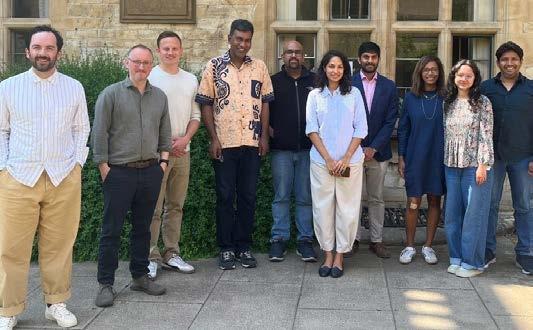
global health projects from both academic and industry perspectives.
Bhadrajee Hewage, DPhil History, took on the role of chief organiser of a conference in Oxford on ‘Pre-Modern/Modern Sri Lankan History’ last year, assisted by a Conference Grant. The event brought together early-career researchers and senior scholars from Oxford, Cambridge and SOAS, and succeeded in advancing new conversations around Sri Lankan history and historiography, and laying the foundation for future collaborations The grant ensured the conference’s success, contributing to the costs of hospitality and travel reimbursements.
Among some of the recent awards, Jo Helme, DPhil Law, used her Academic Grant to attend the International Society for Labour and Social Security Law Conference in Venice, the Labour Law Research Network gathering in Warsaw, the biggest, biennial conference of labour law scholars across the world, and the United National ILO Regulating Decent Work conference in Geneva, at which Jo presented her paper on the ‘Humanisation of Work’ principle.
Oraya Srimokla, DPhil Clinical Medicine, attended the annual Oxford Tropical Network Conference in Kenya to present her DPhil work on methods to model the prevalence of antimicrobial resistance. Support from her grant also allowed her to extend her stay to complete her DPhil viva online, and to travel to the Science Summit held alongside the UN General Assembly, giving her insights into current
Other recent grants have enabled Olivia Endacott, MSt English, to travel to the Thomas Hardy Archive in Dorset, to research the role of railways in Hardy’s writing, while an Academic Travel Grant funded a place for Alec Dakin, MEng Materials Science, on a departmental industrial tour trip to the Czech Republic, visiting companies involved in the Czech materials science industry. A Caistron-Calgary Award supported a summer internship for Ayush Sinha, BCh Medicine, at Bosch’s HealthTech division, providing invaluable insights into the healthcare technology industry, and among the travel grants, a Britton Travel Grant enabled Jun Shin, BA History, to extend his travels after the chapel choir’s summer tour to France, with a visit to Avignon, the seat of the Avignon papacy, his interest piqued by studies for the FHS paper on the central Middle Ages, 1000-1330.
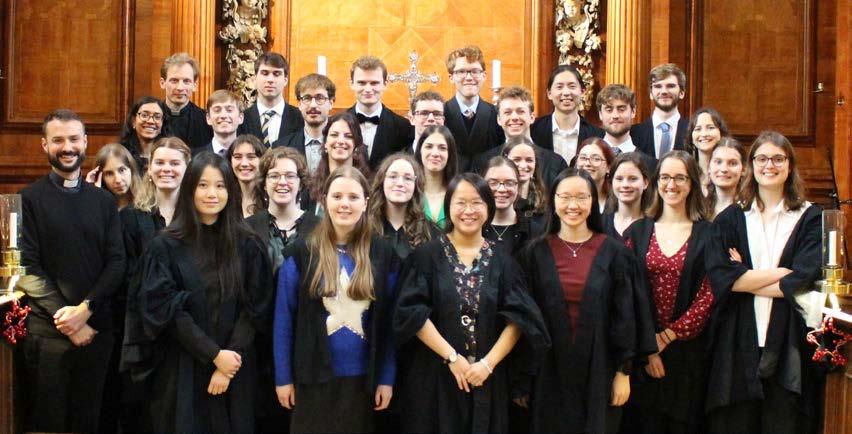
The Chaplain and chapel choir photographed before the carol services at the end of Michaelmas term. This year, there will also be a carol service for Old Members and Friends in central London in December, details will be given in the summer Newsletter.
Having emerged from wintry darkness, the JCR enjoyed the increasing sunlight on the lawns in Hilary term. We celebrated and marked cultural and other events, ranging from Pride month to Ramadan, while in 5th week, we had a very animalfilled ‘welfare week’, with visits from Fellows’ dogs and local alpacas.
The Boat Club has been busy and organised an ‘ergathon’ in collaboration with Fulham Reach Boat Club, to raise funds for both clubs. As reported on page 7, they rowed an impressive 488km on the erg in an uninterrupted 35 hours, 46 minutes, and 10 seconds. Unfortunately, they missed out on Torpids, which was cancelled due to
inclement weather, but they competed in a Heads race, ‘Torpheads’, instead.
The arts continues to flourish; numerous karaoke nights have been held in the ever-busier Beer Cellar, and the Trinity Players staged a witty production of Sheridan’s The Rivals at the beginning of term.
Looking ahead, Trinity term will start with our annual sports day with our sister college in Cambridge, Churchill, which promises to be an enjoyable day outdoors, with a joint formal dinner to cap it off. Of course, Trinity term brings important exams for many, but also fairer weather, for which we are all grateful.
Sahil Grover, JCR President

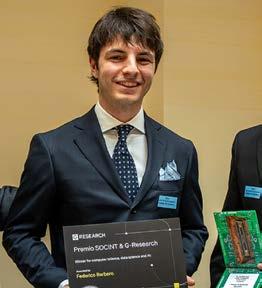
Federico Barbero, DPhil Student in Computer Science, has been awarded an Italian national award for his thesis, being one of just three winners (one each in maths, physics, and informatics) out of 216 candidates. Federico received the award at a ceremony in the Italian senate in January, for the best informatics PhD thesis.
Federico’s work addresses one of the central issues of artificial intelligence: understanding when and why large language models fail, and was commended for its originality, and for providing diagnoses as well as concrete and theoretically grounded solutions.
The prize was created by the Italian Intelligence Society (SOCINT) to recognise talent in mathematics, theoretical physics, and computer science, disciplines that constitute the profound language of complex systems, and comes with a monetary prize of €10,000 for each recipient.
All editions of the Report and Newsletter, from the earliest Reports in the late 19th century, have been made available to view and search online.
The Alumni & Development office has been working with digital archives specialist, SDS, to make past editions of both the Report and the Newsletter available online.
Visitors to the site can now browse though the catalogue of publications and images, and also search the collection. We hope that members of all generations will enjoy looking back at the publications, whether editions from your own years, or to learn about Trinity life at other times. Find links to the site at trinity.ox.ac.uk/publications-old-members
What is there to discover from the Reports of 50, or 100 years ago? The 1926 Report, at only seven pages, gives only a brief account of goings on in College a century ago. Perhaps the most momentous news is the development of the new library: The fitting up of the War Memorial Library was delayed by the illness of the architect, but is now being dealt with by Messrs Parnell & Co., who have, completed the building itself and laid out the ground and the paved way between it and the New Buildings... It is probable that the books will be brought over during the winter; if so, the room will be ready for use at the latest after the Long Vacation. The five long tables for readers, which have been made and presented by Mr. H. C. Moffatt, are now delivered. The subscriptions outstanding still amount to about £200; but there have during the year been several new contributions, as well as some important gifts of single books, &c.
Rather more detail was given 50 years ago, as the 1976 Report, though covering only Hilary and Trinity terms (before a change to cover academic years), ran to 27 pages. Among the listings and news, it’s reported that only three Firsts were achieved in Finals, but the proportion of Thirds had risen to ‘too high a figure’. That year’s Ball had proved a great success, and had even made a small profit, and there are reports from a number of student societies, and of Colonel Danson’s bequest of his library.
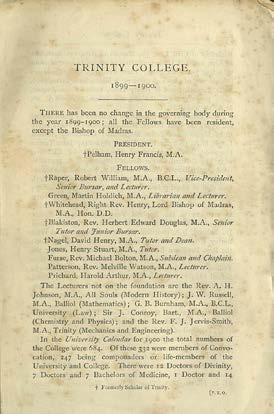
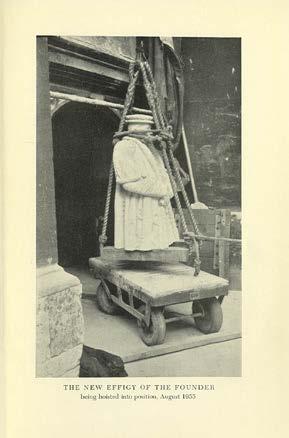
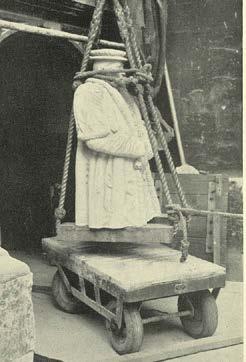
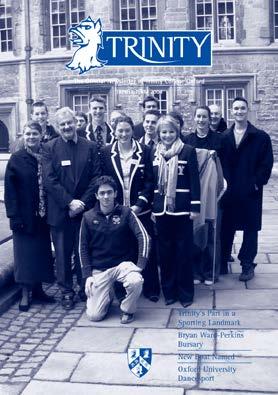
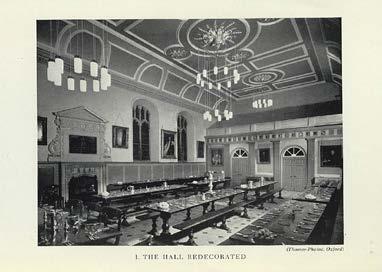
Clockwise from top left: cover of the Newsletter from 2004; the 1899 Report; a new statue of the founder, in the 1952-56 Report; the Hall redecorated, in the 1960 Report
It was a time of change, on many fronts, and in his introduction President Ogston observed that, Past, particularly older, members of the College, will realise that a gradual change has occurred in its composition, the indirect result of the greatly increased…part that finance from public funds plays in the economy of the University. This has morally forbidden eclecticism in the choice of entrants, resulting in a relative decrease in our intake from the Public Schools, and a relative increase in that from a wide range of other secondary, now including Comprehensive, schools. Socially I regard this change as a clear gain. The College, while maintaining its intimate character, is now a more satisfactory social ‘mix’ in which people from all back-grounds can and do quickly find themselves at home.
Broken glass and giving up on a fountain
There is, too, news of the buildings and grounds 50 years ago. Following the discovery that the recently installed fire alarm system had failed to wake undergraduates from their slumbers, additional bells were being fitted to every student set, while the broken glass embedded in the top of the wall between Front Quad and Balliol had been removed, though it had been felt prudent for the revolving spikes to remain. It was also reported that, More recent members who recall with affection the simple pleasure of testing the efficiency of their favourite brand of soap powder by sprinkling it into the fountain outside staircase 2 will no doubt be sad to learn that the Bursar has given up the struggle and had it planted with bulbs.
Trinity has joined the College Store, an online shop that offers Oxford- and college-branded merchandise. Trinitybranded items range from T-shirts, sweatshirts and bodywarmers, to tote bags, holdalls and backpacks, from bucket hats and beanies, to ties and cufflinks. Follow the links or the QR code below.
Launch discount: To mark the launch of the Trinity page, a 10% discount using the code TRIN10 will run until 1 June—a link will be included in the eNewsletter mailing in the second half of May.

AmessagefromtheOxfordUnion:
IfyouwereeveramemberoftheUnion—whetheryouspokein theChamber,attendeddebatesfromthebackbenches,orsimply studiedinourbeautifullibraries—wewouldbedelightedto reconnectwithyou.
Aswepreparetoupgradeourdatabase,wearerefreshingour alumnirecordstoensurethattheUnion’shistoryispreservedand itscommunitycontinued.Overtheyears,manymembershave understandablylosttouch,andsomemayhaveforgottenthatthey oncejoined.Ifyoubelieveyouwereamember,wewarmlyinviteyou togetbackintouch.TheUnion’sstoryisshapedbyitsmembers, andwehopetoremainintouchwiththosewhohavebeenpartofit. Ifyouarewilling,pleasefilloutthisformwithanyofthedetailsyou canprovideandwewillgetbackintouchwithyou.
Ifyouknowyouarenotamemberbutwouldliketobenow, pleasevisitoxford-union.orgformoredetails.

Jacari is celebrating 70 years in Oxford! Were you involved in Jacari during your time at Oxford? If so, the current committee would love to hear from you and invite you to the charity’s 70th anniversary celebrations in Oxford in early June. To find out more, please get in touch with Eleanor Tomlinson at eleanor.tomlinson@jacari.org.
Beginning as the Joint Action Committee Against Racial Intolerance, Jacari was founded by University of Oxford students back in 1956, making it Oxford’s oldest studentfounded charity. It is now a registered charity, supporting disadvantaged children and young people, from sanctuaryseeking and migrant backgrounds in Oxford, to develop their language skills and confidence and fulfill their potential.
Following a break for the summer, events in September saw another full Hall for the Trinity Society dinner on the Saturday of the Trinity Weekend, and then the following day, a very pleasant gathering of Old Members and friends, from across the years, at the Family Garden Party. Although the weather was not wonderful, thankfully it was dry, so everyone could enjoy the delights of the new long border. While it was a relatively smaller number of members returning for the Gaudy for those who matriculated up to 1965, the evening was greatly enjoyed. Some of the oldest attendees particularly enjoyed the use of the lift to get down to the Beer Cellar and relive their student days.
In Michaelmas term, we had regular annual events: the William Pitt Society Lunch, to thank those who have left a bequest to Trinity in their will, the
Details of events in the coming months and the downloadable 2025-26 Programme of Events can be found on the inside back cover and at trinity.ox.ac.uk/events. The 2026-27 Programme of Events will be online in the summer.
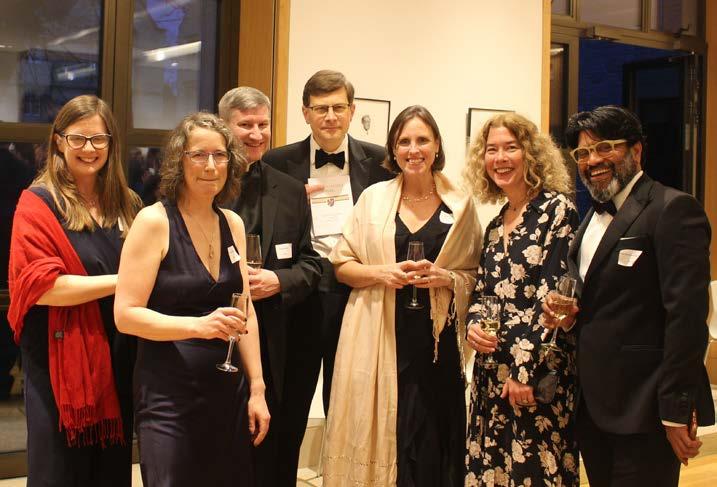
Benefactors Lunch, the Biochemistry Dinner, and the carol services at the end of term, with Sir Robert having the chance to meet Old Members at the Benefactors Lunch and the carol services. For this year, Sir Robert has suggested we hold a carol service in London, at All Saints, Margaret Street—look out for details on that in future communications.
Hilary term always seems a little quieter, with the second Benefactors Lunch in February and, this year, the Medical Society Dinner taking place at the end of term. The speaker at both Benefactors Lunches was Professor Stephen Fisher, Fellow and Tutor in Politics, who spoke on the subject ‘Elections and Climate Politics’. His presentation, among a wealth of interesting detail, included an enjoyable image of the plaque outside Walthamstow Tesco to the lettuce that famously survived longer than Liz Truss as prime minister.
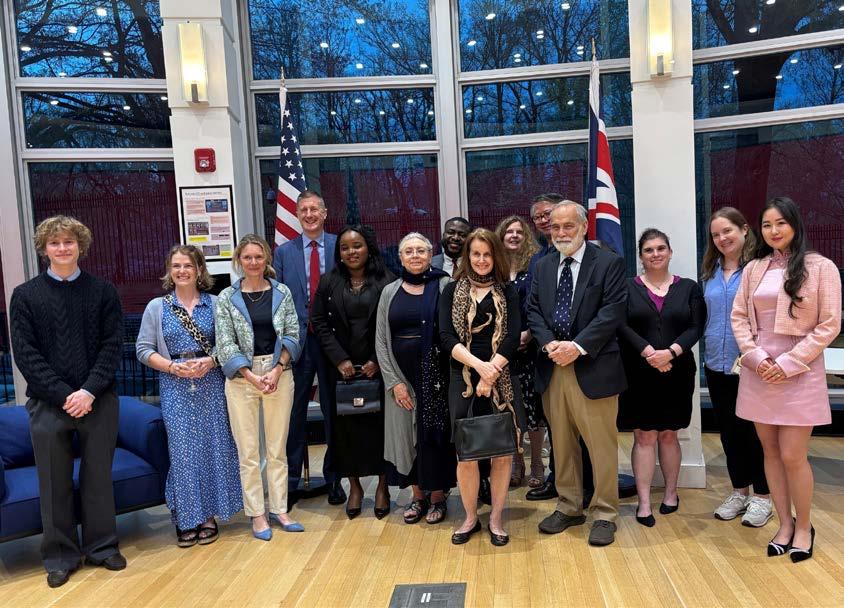
Top: the Washington DC reception in March Left: the Gaudy for 1992-1995 in March
Michael Jones (1960) has published Les comptes de Jean IV, duc de Bretagne (13641399), (Paris, Academie des Inscriptions et Belles Lettres, Recueils des historiens de la France, serie Documents financiers et administratifs, t. XII, 2025).
Huon Mallalieu (1965) has published The Ear of the Beholder, which explores how European painters across the centuries have suggested sound—music, voices and silence itself—through purely visual means. Huon writes, ‘Many artists painted with an ear as much as with an eye. We’ve spent
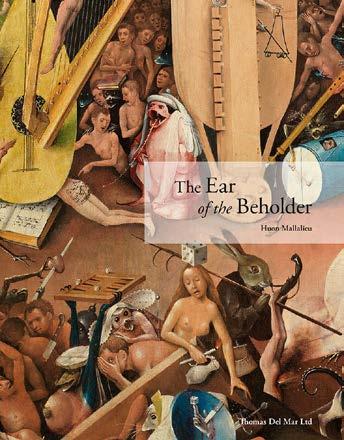
centuries looking at paintings, but rarely have we tried to hear them. I set out to examine how the visual arts have often been more than just visual, intended to make canvases hum, murmur, or scream and engage the senses fully.’
A memoir by the late C J ‘Jonty’ Driver (1965) has been published. Dayspring (Batis Books, 2026), edited and including a foreword by Nobel Prize-winning author J M Coetzee, recounts Jonty’s youth in South Africa and the years of his anti-apartheid activist that led to his detention
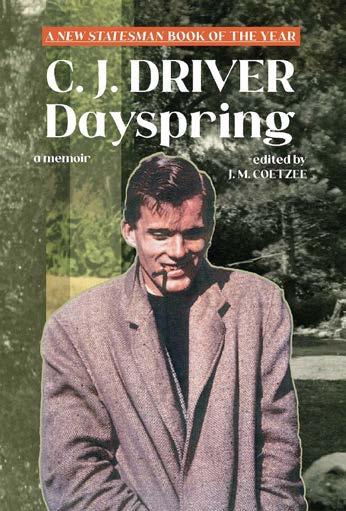
and torture by the apartheid security police, reflecting on what it means to resist political tyranny and at what personal cost. After fleeing to England and reading for a BPhil in English at Trinity, his professional life was spent in education, including serving as headmaster of the Island School in Hong Kong, Berkhamsted School, and Wellington College. He wrote and published several novels and collections of poetry—Dayspring also includes a selection of his poems chosen by Coetzee.
For Dick
John Whelpton (1968), last July, received the Itihas Shiromani Baburam Acharya Award in Kathmandu for his work on Nepali history. This is conferred jointly by the government of Nepal and by a private foundation set up in memory of Baburam Acharya (1888–1971), whose own work was recognised by the award of the title Itihas Shiromani (‘Crest Jewel of History’).
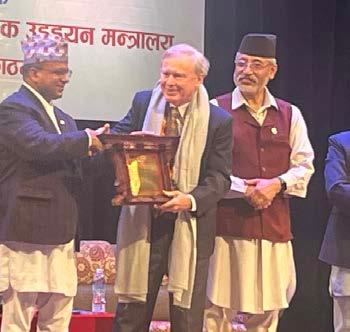
John Whelpton receiving the Itihas Shiromani Baburam Acharya Award
Harry Ricketts (1969) has published his 13th collection of poems, Bonfires On The Ice (Te Herenga Waka University Press). He writes, ‘Among other more personal and occasional poems, one section is devoted to a version in 18 limericks of Sir Gawain and the Green Knight, a poem I studied at Trinity with Dorothy Horgan and have loved ever since.’ Harry is Emeritus Professor at Te Herenga Waka Victoria University of Wellington.
‘That’s weaker than dogshit,’ you’d say with your smoker’s chuckle. You were the only one of us whose ‘Far Out!’ and ‘Outta sight!’ sounded remotely plausible. In your darkened room, you’d play In-a-Garda-da-Vida, Surrealistic Pillow, Astral Weeks, spinning a lighted candle in a suspended coconut shell, throwing shadow bars on walls and ceiling. You’d been at Woodstock; we took the milk train, caught the première in Leicester Square, couldn’t see you anywhere. You were Petey in The Birthday Party, Aufidias, Faustus, couldn’t be broken in that new cellmate theatre game. You had a car, were good at extravaganzas (that lake at dawn), always up for burning the moment to the wick.
Taking your bow as Theseus/Oberon on Keble College lawn, forty plus years back, it was, it seemed, all magnificently about to begin.
Harry Ricketts
Having seen in the 2024-25 Report the obituary of the late Dick Goodall (1969), who died last year, Harry sent his poem about Dick (reprinted left), written about 12 years ago, and published in his 10th collection of poems, Half Dark (Victoria University Press, 2015). A keen actor at Trinity, Dick didn’t go on to become the great actor that some friends had anticipated.
Seshadri'Vasan'Vasan(1998) hasbeenawardedtheinaugural TaylorMedalforpatientcare, innovationandleadershipbythe RoyalCollegeofPhysiciansand SurgeonsofGlasgow(RCPSG).The medal,whichhonoursthecollege’s firstfemalepresident,Professor JackieTaylor,recognises individualswithademonstrable positiveimpactinpatientcareand leadership.Theawardwaslaunched lastyeartomark425yearsof innovationatthecollegeandthe medalwaspresentedatadiploma ceremonyattheRCPSGinMarch.
Vasan’sresearchand commitmenttoknowledge exchangehaveplayedanimportant roleinthefightagainstdangerous pathogens,includingCovid-19, Dengue,EbolaandZika.Asthe
Tim Holman (1977) writes, ‘Due to a diagnosis of (mild—so far) prostate cancer, I have had to give up donating blood and platelets after 41 years (19842025). More happily, royalties from my book An Oxford Diary now total £75; retirement beckons!’
Paul Williamson (1980) has been appointed as a nonexecutive director for the Tour de France when the Grand Depart races around the UK in 2027. He remains a director at Two Circles, working on World Cups and Olympic Games across the world.
Raj Bhala (1985) was awarded a University Distinguished Professorship (UDP) at the University of Kansas School of Law, where he teaches international trade law, and law and literature. Raj is the first UDP in the history of Kansas Law. He
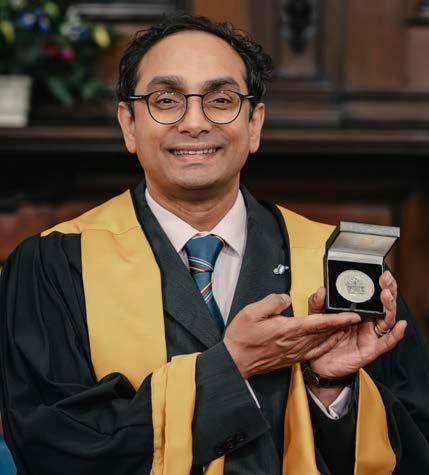
will be a Visiting Fellow at Trinity in June, working on articles and a book on law, literature, and Shakespeare.
Raj’s wife, Kara Tan Bhala (1984), whom he met at Trinity (they were married at the United Nations Chapel in New York in 1989), will be an Associate Member of the Senior Common Room in June. She is a participant in the Science Fiction Writers Camp at Kansas. Her project at Trinity will be writing additional short sciencefiction stories. Raj and Kara feel privileged to get to return to Trinity in these capacities. They would love to meet old friends, and make new ones, during their month-long stay.
Andrew Millard (1985) was promoted to Professor of Archaeology at Durham University from 1 July 2025.
inauguraldirectoroftheGrampian CommercialResearchDelivery Centre(CRDC),heco-leadson researchinclusion,skills,training andworkforcedevelopmentforthe CRDCUKNetwork,whichpioneers clinicaltrials,creatingopportunities totestnewtreatmentsandaddress unmetneeds.
In2024,Vasanreceivedthe RCPSG’sTriennialTravelMedicine ResearchFellowshipAwardfor hisworkon‘DiseaseX’,furthering researchintoapotentialpandemic andglobalpreparedness.Heisalso chairoftheRCPSG’ssustainability steeringgroup,whichishelpingboth thecollegeandits15,000fellows andmembersworldwideplaytheir partinaddressingclimatechange andhealthcaresustainability.
Damian Hinds (1988) is one of the two 2025-26 visiting parliamentary fellows to St Antony’s College, a programme hosted jointly with the Department of Politics and International Relations. The programme included a series of eight seminars in Hilary term, with guest speakers on the theme of ‘19th century institutions, 21st century problems’.
Huw van Steenis (1988) was delighted to be interviewed by Nathaniel Read and the team at the Radcliffe Magazine, Oxford’s new student-run business magazine. The interview can be read at radcliffemagazine.co.uk
There is an additional Trinity link to the Radcliffe Magazine, as Izzy Moore, a current third year undergraduate, is part of the creative team.
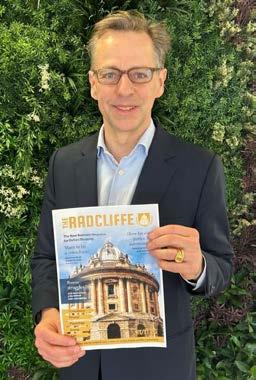
Huw van Steenis was interviewed by the Radcliffe Magazine for its first edition
James Steward (1988), Director of the Princeton University Art Museum writes that, ‘The project of making an entirely new museum building for Princeton University was completed in autumn last year, with the opening of a new facility designed by Sir David Adjaye,
featuring 150,000 square feet of space and 80,000 square feet of galleries. Greeted with nearly universal critical acclaim, TIME magazine named the museum one of the world’s great places for 2026, and visitor numbers reached some 300,000 in just the first six months.’ The project being completed, James plans to spend the first half of 2027 on sabbatical in Europe.
Hannah Fox (1990) writes, ‘Last summer I said goodbye to Harrow School after seven very happy years there, as I moved to become Head of St George’s School, Ascot.’
Alexa Parr (1992) has written of how, as an old conference interpreter PPE alumna, she is recycling herself by way of a pluridisciplinary passion for ‘sound & music’, composing between her professions’ ‘prophesied-by-AI slow and gradual extinction and a quest for harmonious intelligence’. She has recently translated into English and French The B.A.C.H. Model (2.0): Beauty, Art and Community Harmony, by Franco Marzo, which is now available on Amazon.
Sarah Leavesley (James, 1993) has published her tenth poetry collection, Darling Blue (Indigo
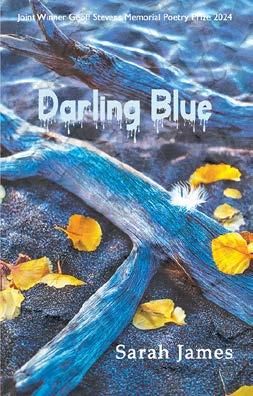
Dreams, 2025). Joint Winner of the Geoff Stevens Memorial Poetry Prize 2024, Darling Blue ‘interweaves ekphrastic poems inspired by Pre-Raphaelite art with a book-length fictional poetry narrative of love, lust and letting go.’ These ekphrastic poems include QR codes, which readers can scan to view the art. This year also marked Sarah’s 10th anniversary as a publisher running V. Press poetry and flash fiction imprint.
Ruth Smith (Beresford, 1998) is a full-time physics and chemistry teacher at an 11-18 comprehensive school. She has been leader of Witney Town Council since 2023. Sitting on the town and district councils, the most notable moments for her have been writing the motion that prompted West Oxfordshire District Council to become an Local Authority of Sanctuary, commissioning the introduction of detached youth work in Witney, and establishing 20mph speed limits and better walking and cycling infrastructure in the town.
George Macpherson (2004) writes, ‘I was selected as the Scottish Conservative and Unionist MSP candidate for Na h’Eileanan an Iar (the Western Isles) for the Holyrood election in May. Juggling baby (see p. 23), a job, and an election campaign is not for the fainthearted, but it is certainly quite exciting. Any Trinity members interested in my campaign, will find me on Facebook, X, and my Crowdfunder page.’
Cosima Gillhammer (2015), Lecturer 2017-24, has recently published Light on Darkness—The Untold Story of the Liturgy (Reaktion 2025), an introduction to the history of religious rituals and their cultural influence in Western Europe,
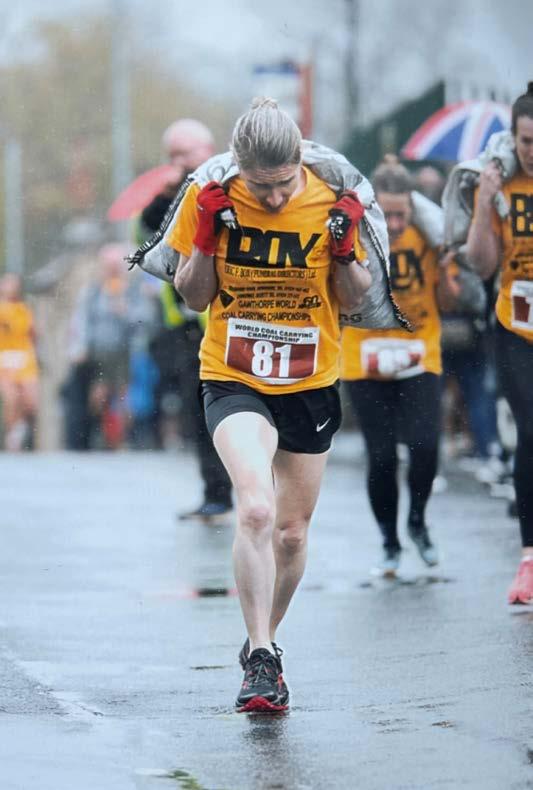
Last year Verity Rees (2002) became the 2025 Women’s World Coal Carrying Champion in Gawthorpe, West Yorkshire. A race has taken place annually for over 60 years and involves running approximately 1,100 metres, mainly uphill, carrying a 45lb sack of coal. Verity writes, ‘My grandfather was a coal miner, so I thought this would be a unique way to pay tribute to him. The torrential rain added to the fun!’
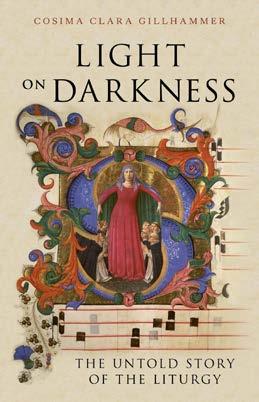
aimed at a general readership, and Medieval Commentary and Exegesis – Interdisciplinary Perspectives (Boydell & Brewer 2026), a collection of essays on the medieval commentary tradition, co-edited with Audrey Southgate.

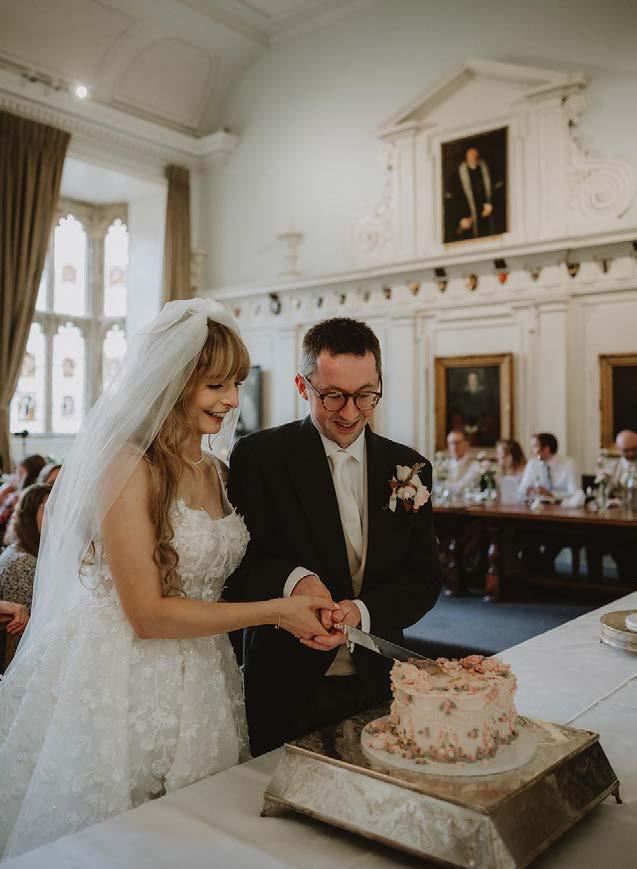
Gracie Bradley (2008) to Harry James Foster, in December 2025 (pictured left), at Leicester Registry Office.
Laura Cox (2017) to Conor Keogh (2019) on 12 July 2025 (below left), in Trinity Chapel. The wedding was attended by a number of Trinity members, including Ben de Jager, Eilidh Macfarlane (both 2013), Bethany White (2014), Michael Garstka (2017), Rowan Curtis, Neil Lewis (both 2018), Rowan Anderson, and Sophie Clarke (both 2019).
Hamish Pottinger (2021) to Lydia Higginson, on 31 August 2025 (below), in a barn on a hill between Bristol and Bath. Lydia, a textile artist, designed and made the decor and clothing. Previously, a small ceremony with family was held on the summer solstice, in Bristol.
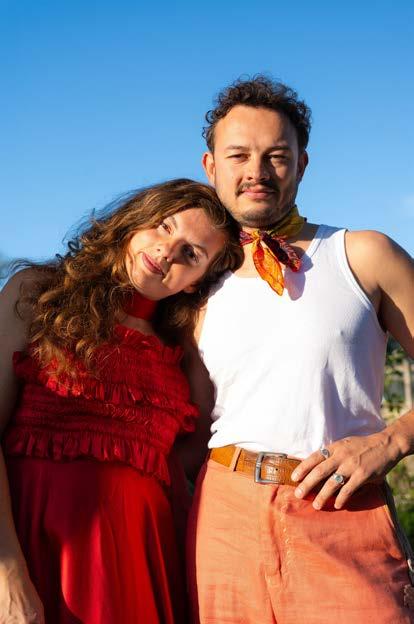
To George Macpherson (2004) and Evgenia, in July 2025, a daughter, Alexandra Athena Stewart.
The college has learned, with sadness, of the following deaths:
Judge (William Llewellyn) Monro Davies CC (1945), on 30 December 2024
David Thomas Hallchurch TD (1949), on 11 October 2025
(William Michael) James Milligan (1949), in November 2025
John Francis Duke (1950), on 2 November 2025
Richard Edward (Ric) Mavor (1951), on 7 March 2026
Dr Christopher Raymond Topley (Chris) Hughes (1953), in December 2025
Michael Anthony Smith (1955), on 16 February 2026
Peter James Fowler (1957), on 3 December 2025
Michael St John Wright (1957), on 27 February2026
Adrian John Williams (1958), on 30 December 2025
Patrick Francis John Macrory (1959), on 3 November 2024
Dr Peter James Burrows (1960), on 14 January 2026
Brigadier General Robert Henry (Bob) Baxter (1962) on 28 October 2025
David Peter Jones (1965), on 4 March 2026
Merle Steven McClung (1965), on 5 March 2026
Offers to contribute obituaries (up to 300 words) for the Report, or assist with information, would be very welcome: please email report@trinity.ox.ac.uk
Trinity College, Oxford, OX1 3BH
Alumni & Development Office
+44 (0)1865 279 933
development@trinity.ox.ac.uk
Director of Development
sue.broers@trinity.ox.ac.uk
+44 (0)1865 279 889
Development Officer
miriam.hallatt@trinity.ox.ac.uk
+44 (0)1865 279 941
alumni@trinity.ox.ac.uk
Alumni Relations Officer
thomas.knollys@trinity.ox.ac.uk
+44 (0)1865 279 887
Alumni & Events Officer
sarah.jenkinson@trinity.ox.ac.uk
+44 (0)1865 279 942
The full Programme of Events (PDF) and more information and booking details for each event, as they become available, can be found on the website at trinity.ox.ac.uk/events. Please email Sarah Jenkinson (contact details below) with any event enquiries.
Fifty Plus Years on Lunch
Sunday 17 May
Boat Club Dinner
Saturday 30 May
Ralph Bathurst Society Dinner
Saturday 20 June
Gaudy 2014–2016
Saturday 5 September
Trinity Weekend
Friday 18 to Sunday 20 September
2027 Gaudies
Gaudy 2017–2019
Saturday 20 March
Gaudy 1988–1991
Saturday 26 June
Gaudy 1984–1987
Saturday 11 September
Porters Lodge
+44 (0)1865 279 900
Academic Office
academic.administrator @trinity.ox.ac.uk
+44 (0)1865 279 910
Conferences, Dinners & Functions
conference@trinity.ox.ac.uk
+44 (0)1865 279 888
Website www.trinity.ox.ac.uk
f TrinityOxfordAlumni b @trinityoxford i trinitycollegeox
This Newsletter is produced by the Alumni & Development Office. Feedback and suggestions for articles for future editions are very welcome.