LOOKING BACK, MOVING FORWARD
Education giant Tim Miller ’93, M’94, M’98 helped Uvalde community rebuild
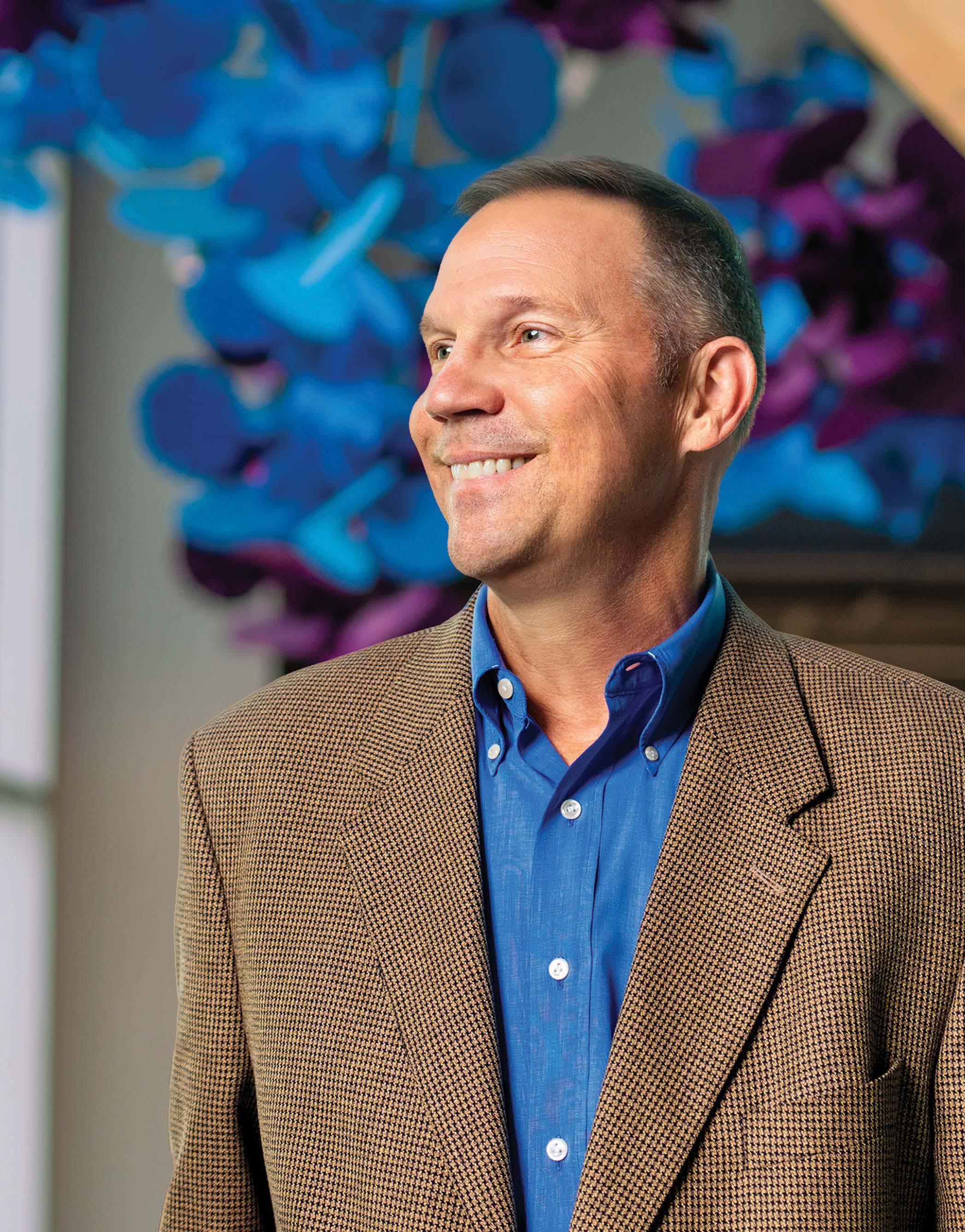
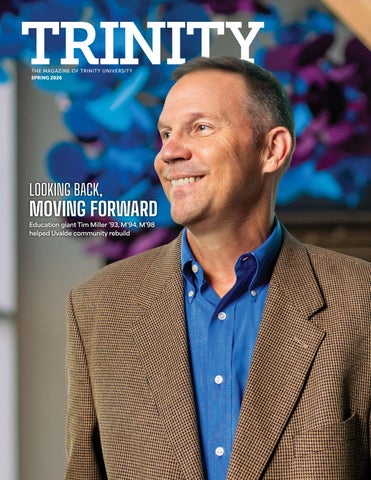
Education giant Tim Miller ’93, M’94, M’98 helped Uvalde community rebuild
Dear friends,
As I write this on a Sunday afternoon, we’re enjoying spring showers and sweatshirt temperatures with the Texas mountain laurels in full bloom. In a few weeks, San Antonio will celebrate Fiesta, then we’ll be in a full sprint to commencement to send another class of exceptional students into the world.
Trinity University has many reasons to celebrate this spring; among them is $50 million designated for new scholarships. Half of those funds came from generous donors who recognized the potential of our remarkable students, many of whom simply need financial support to open the door to a life-changing journey that begins on Trinity’s campus. Our Board of Trustees matched the donors’ $25 million with funds from our endowment to optimize the gifts, unlock affordability and, with it, a pathway to success.
We expected this matching challenge, which we called the Trinity Commitment, to take many years. Our donors met the challenge in 18 months. If you were one of the many who responded to this call, we thank you.
Due to this success, the Board has approved an additional $10 million in matching funds from our endowment to be used for creating even more new scholarships to make a Trinity education more affordable for future students.
If you would like to be part of the Trinity Commitment, please consider doing so soon. (Read more on p. 52.) The matching funds will last only as long as they last before closing the door on this historic fundraising effort. Then, when the larger effort, Our Time: The Campaign for Trinity University, concludes next year, which we hope will set a new record for philanthropic support of our University, I will very much look forward to celebrating with you and the students we serve.
Warmly,
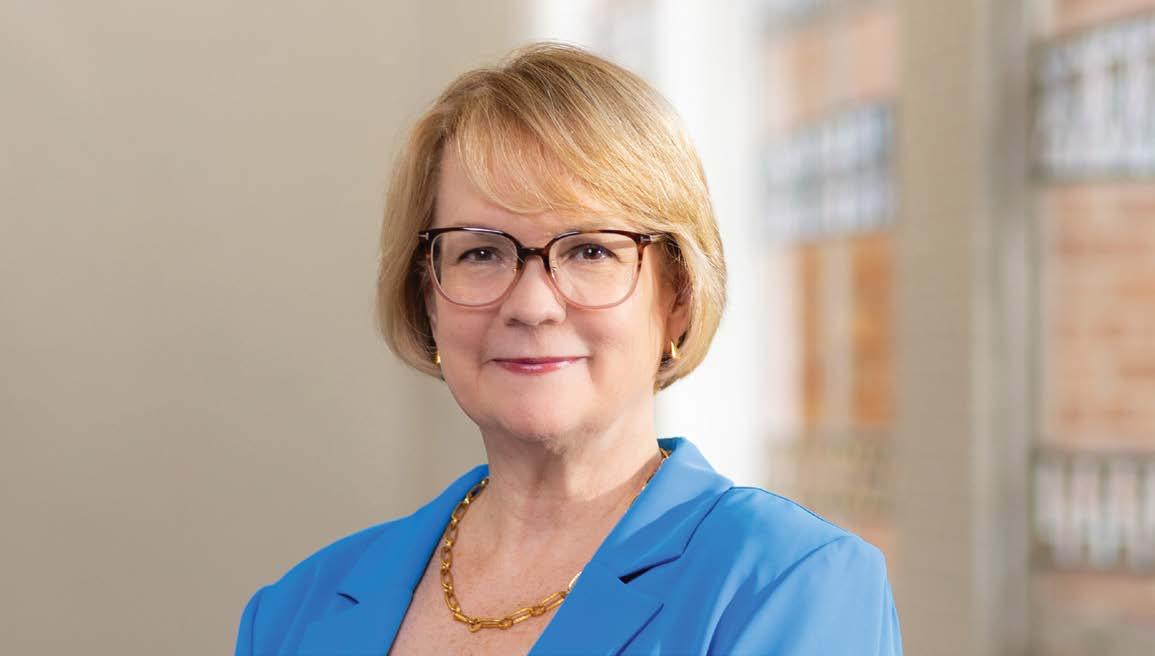
Vanessa B. Beasley, Ph.D. President, Trinity University
TRINITY Spring 2026
Editor Kennice Leisk ’22
Copy Editor
Molly Bruni
Magazine Staff
Gloriana Cardenas
Clinton Colmenares
Anh-Viet Dinh ’15
Tom Evelyn
Interns
Luke Banfield ’28
Odalys Caballero ’26
Kassandra Falcon ’27
Contributors
Kenneth Caruthers ’15
Ryan Finnelly
James Hill ’76
Reign Kingsberry
Elseke Membreño-Zenteno
Sarah Moser
Justin Parker ’99
Joannah Pickett
Art Director
Laura Rodriguez
Jeremy Gerlach
Mason McLerran
Lucero Salinas
Cal Siewert ’22
Layal Khalil ’27
Fredric Marmolejo ’26
Anais Moreno-John ’29
Aimee Rowse
Abra Schnur
Carla Sierra
Blair Smith ’10
Peyton Thibault
Amanda Wise ’06, M’08
Bria Woods ’16
Trinity is published by the Office of Strategic Communications and Marketing and is sent to alumni, faculty, staff, and friends of the University who remain engaged with Trinity.
Editorial Office
Trinity University | Strategic Communications and Marketing 1 Trinity Place, San Antonio, TX 78212-7200 marketing@trinity.edu | 210-999-8406 trinity.edu/trinity-magazine
President
Vanessa B. Beasley
Board of Trustees
Ruth K. Agather P’18
Shari Becker Albright ’83, M’86
April Ancira ’02
Erin M. Baker ’99
Annell R. Bay ’77, P’13
Ted W. Beneski P’11, P’14
John Brozovich
Miles C. Cortez ’64, P’91
Sally Deitch M’03, P’29
Janet St. Clair Dicke ’68, P’93
Cydney C. Donnell
Marshall A. Hess ’88
Gen. James T. Hill (Ret.) ’68
Jelynne L. Jamison M’88
The Rev. Richard R. Kannwischer ’95, P’27
Christopher M. Kinsey ’79
John C. Korbell
Michael J. Lynd Jr. ’95, P’24
Steven P. Mach ’92, P’25
Melody B. Meyer ’79, P’04, P’06
Jeffrey W. Mueller ’00
Carey A. O’Connor ’93
William Scanlan Jr.
Thomas Schluter ’85, P’16, P’18
Pat Semmes
Nicholas A. Severino ’88
Darsh Preet Singh ’08
Jessica W. Thorne ’91
Scott W. Tinker ’82, P’14, P’20
John Tobola ’94
Paul Hensley ‘87
Trinity University Alumni Association Board President
The Rev. James D. Freeman ‘83
Synod of the Sun Representative
Dear reader,
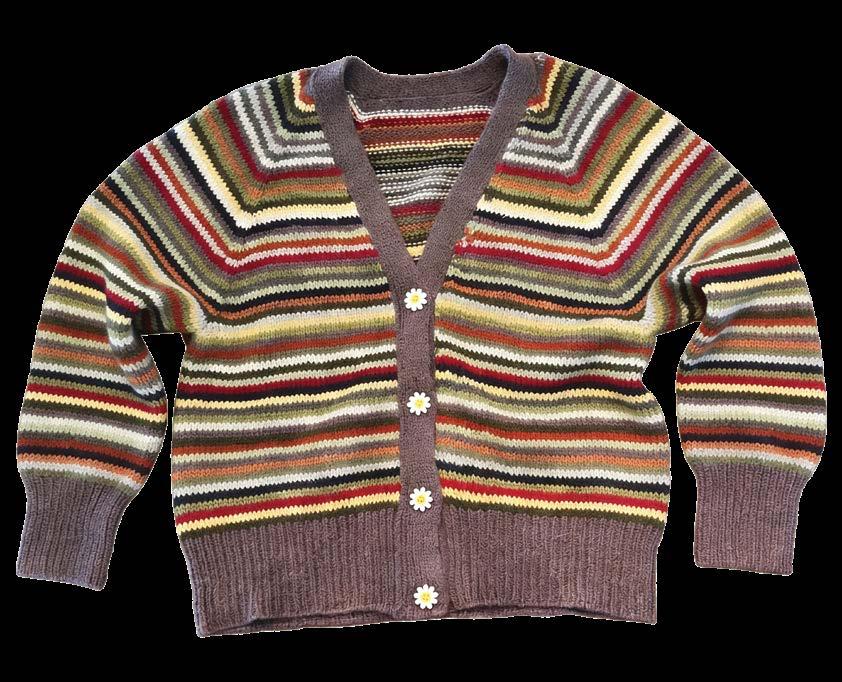
I made this striped cardigan using scraps of yarn left over from a bunch of my previous projects. It was a challenging project that I had to restart multiple times and almost gave up on. After several months, I finally finished, right in time for summer!
The best things you create are those that have been through many revisions. I learned this lesson as an English major, as an avid knitter and crocheter, and as someone who writes and edits for a living. Understanding the lesson and accepting it, though, are two different feats. When I’m starting a draft from scratch because I realize my initial narrative structure wasn’t working, when I’m trying to figure out how to relay my feedback on someone’s work in a clear and constructive manner, and especially when I have that sinking realization that I need to frog (yes, this is the official term … rip it, rip it) a whole week’s worth of stitches, it’s hard to feel like revision is worth the stress. Yet, every time I read that final published story or slip on that finished sweater that fits perfectly, I’m grateful that I went back and made the changes. (I promise you this note you’re reading wasn’t the first version either.)
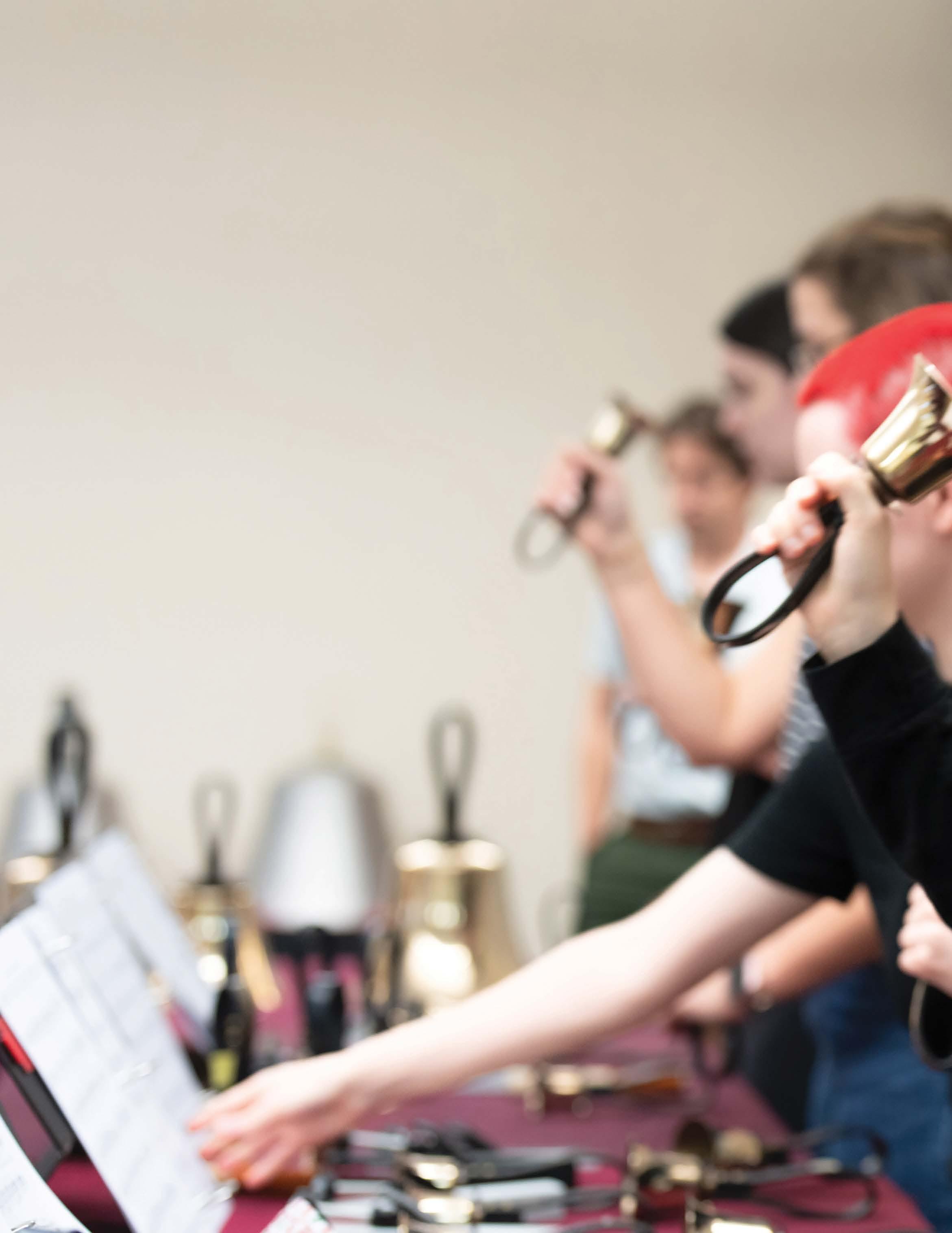
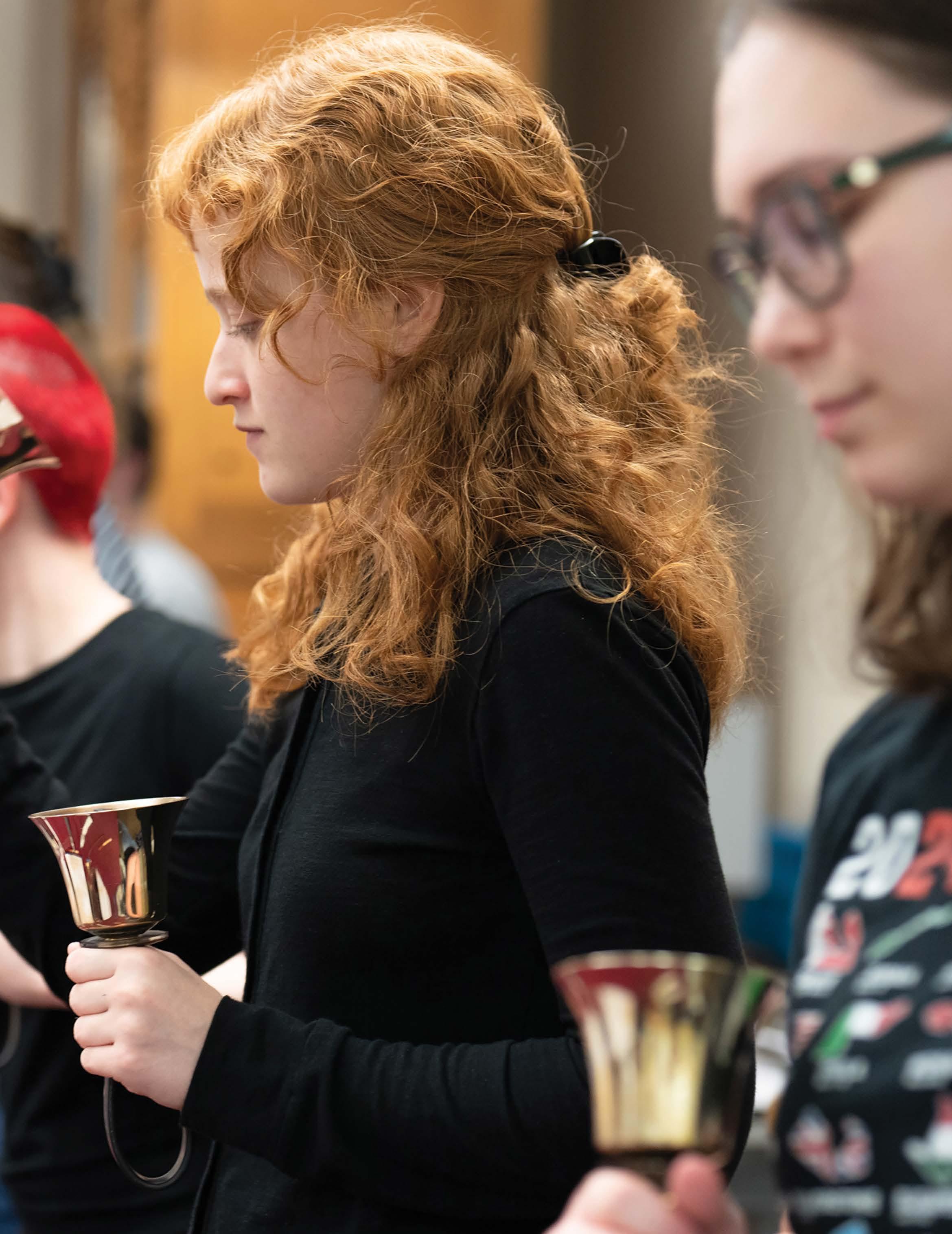
The word “revision” evokes the literal motion of looking back to move forward. This juxtaposition is a concept I see across features in this issue and Trinity University as a whole. In “Standing Tall,” we see how Tim Miller ’93, M’94, M’98 drew on his Trinity education to rise as a leader who helped the Uvalde community move forward to design a school that honored the lives of those tragically taken from them. In “Ringing On,” we reminisce about the history of Trinity’s Handbell Ensemble to celebrate its 50th anniversary, its current tight-knit community, and its innovative spirit that has continued across generations. Finally, in “The Liberal Arts, in Our Own Words,” we meet students who have reflected on how the breadth of their Trinity experiences allows them to stand out as well-rounded individuals in the ever-evolving postgrad world.
Together, these stories from our community reveal that Trinity University is a place where revision is encouraged at all stages and in all areas of life. We can’t move forward into our bright future without reflecting on and learning from our past. Rather than see that first draft or dropped stitch as an error, view it as a lesson woven into the tapestry that tells the final story.
As you read this issue, I invite you to look back on your own moments of revision. How did they help you move forward? How is your current path smoother or more beautiful because you weren’t afraid to remap it?
Sincerely,
Kennice Leisk ’22 Editor, Trinity Magazine
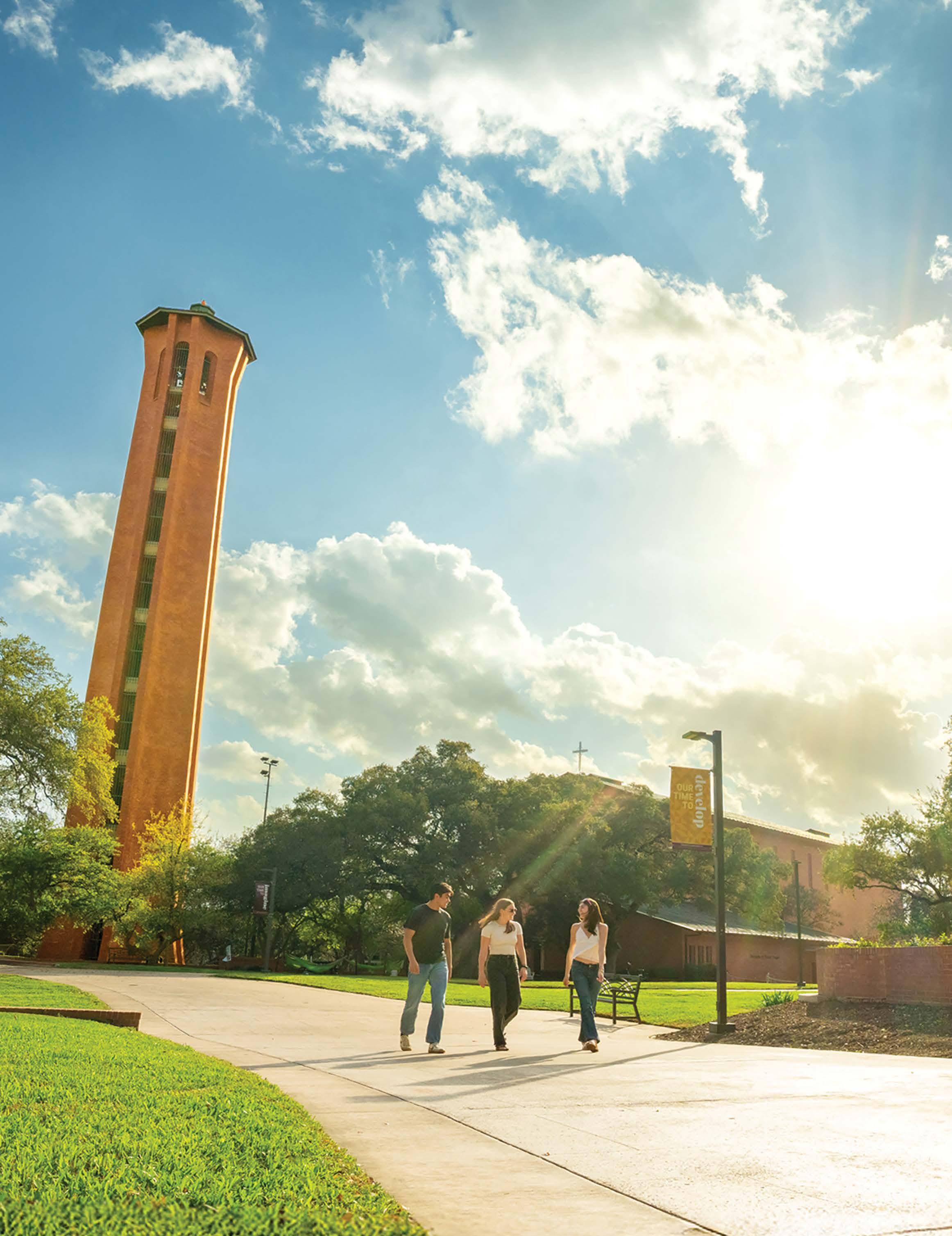
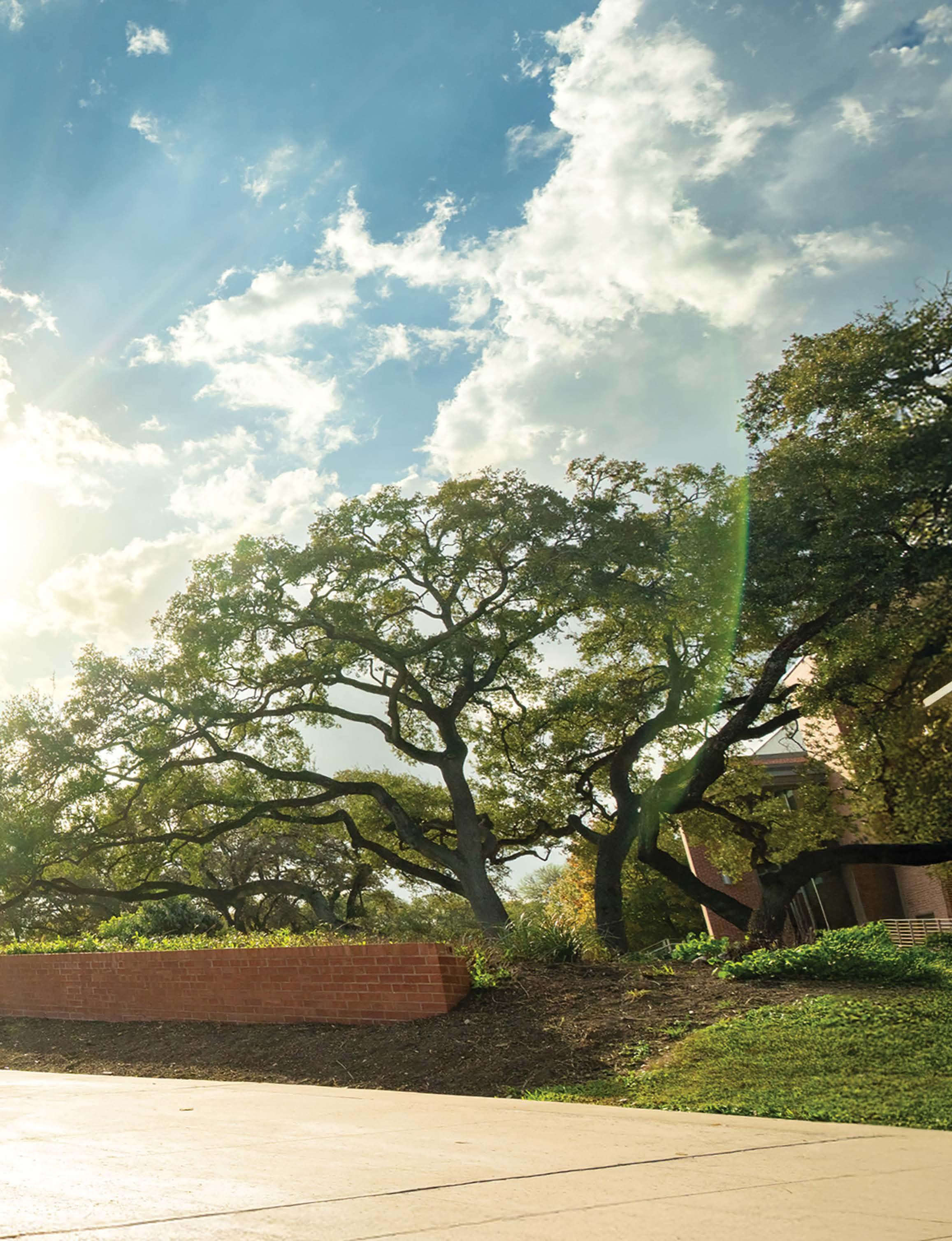
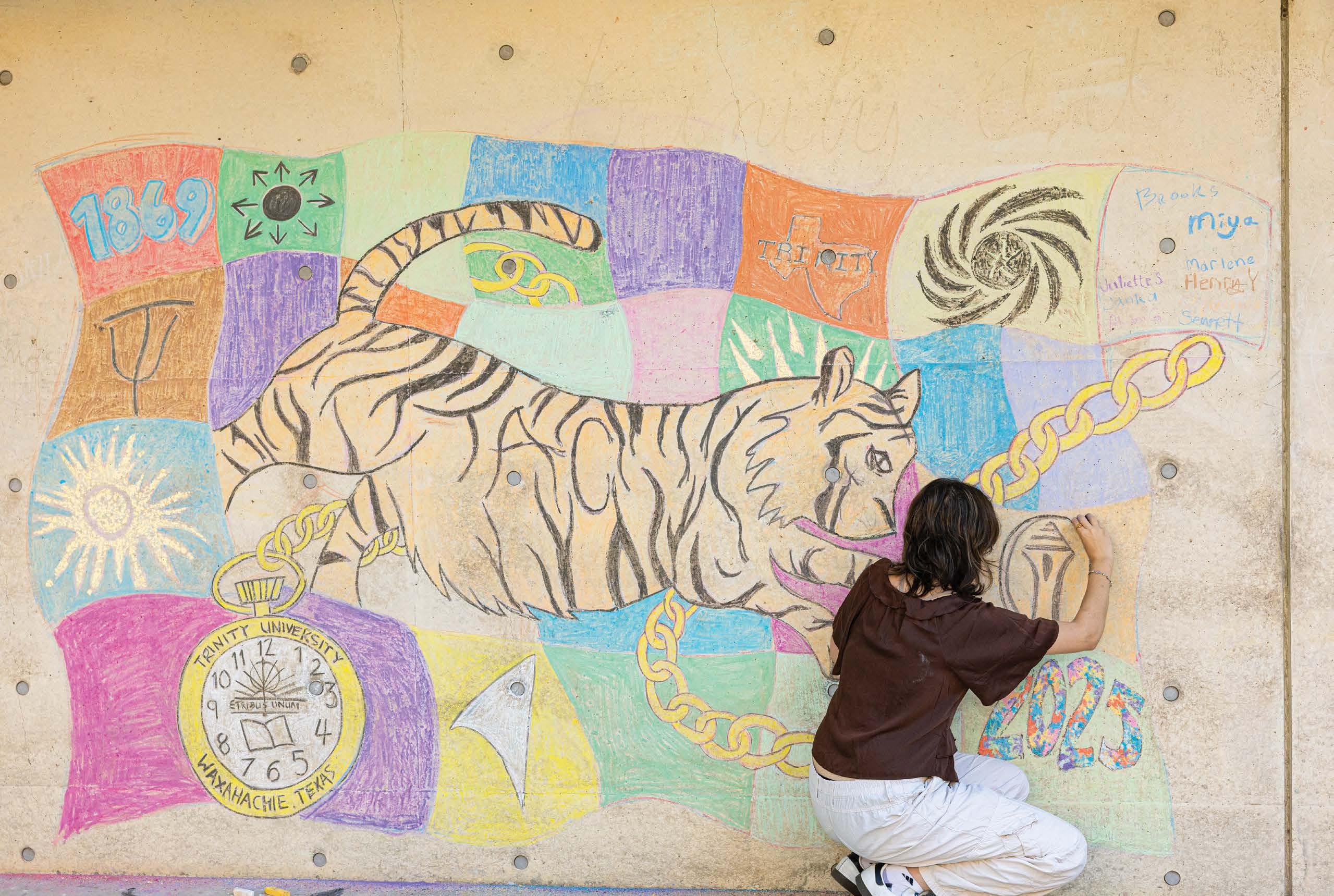
With summer on its way, Trinity University—known for many years as the “University in the Sun”—and its students are ready to shine. Students will conduct research across disciplines, intern with local businesses, or make global connections while studying abroad.
photo by Lucero Salinas
University celebrates the naming of the Carlos Alvarez School of Arts and Humanities
by Jeremy Gerlach
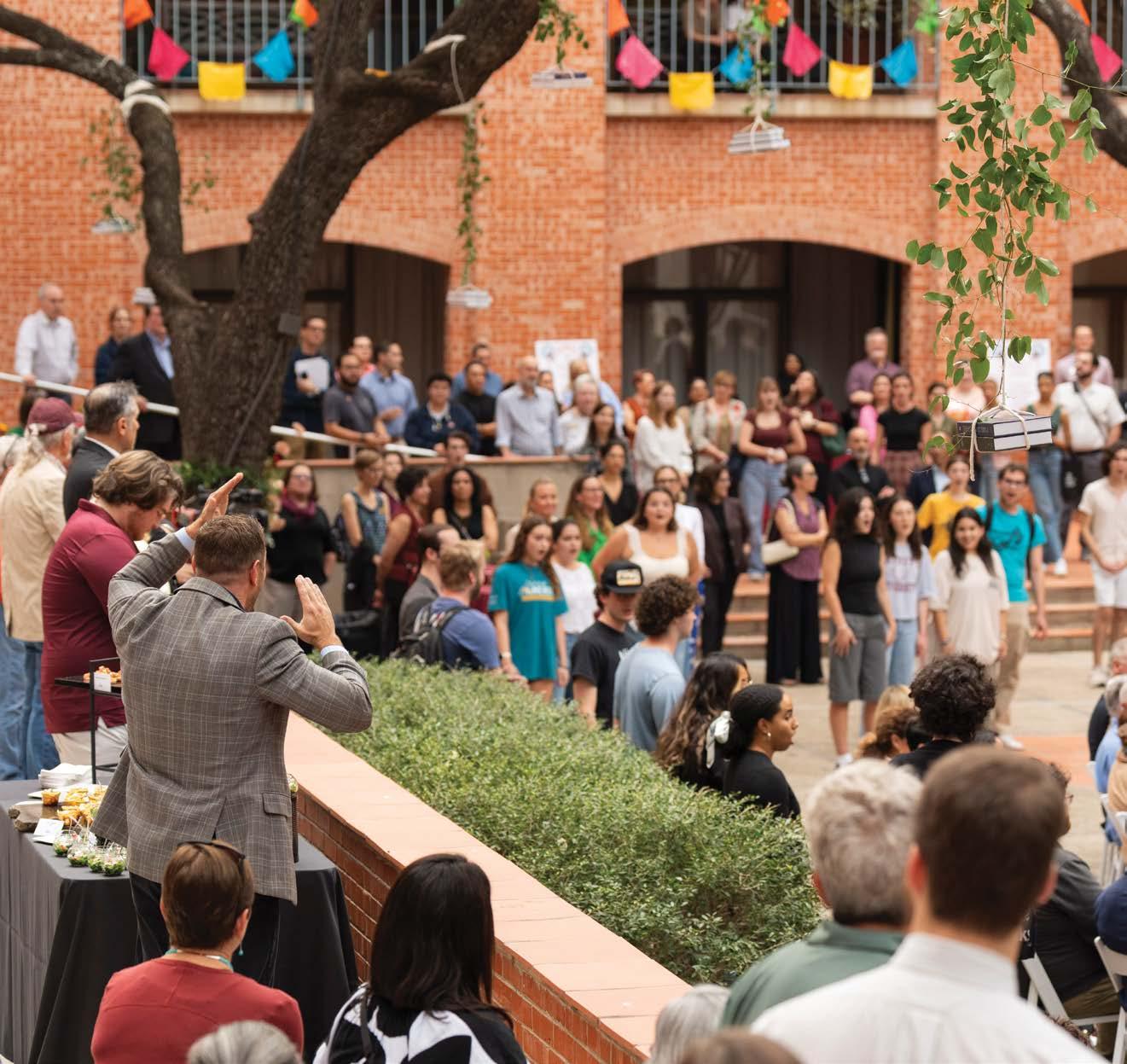
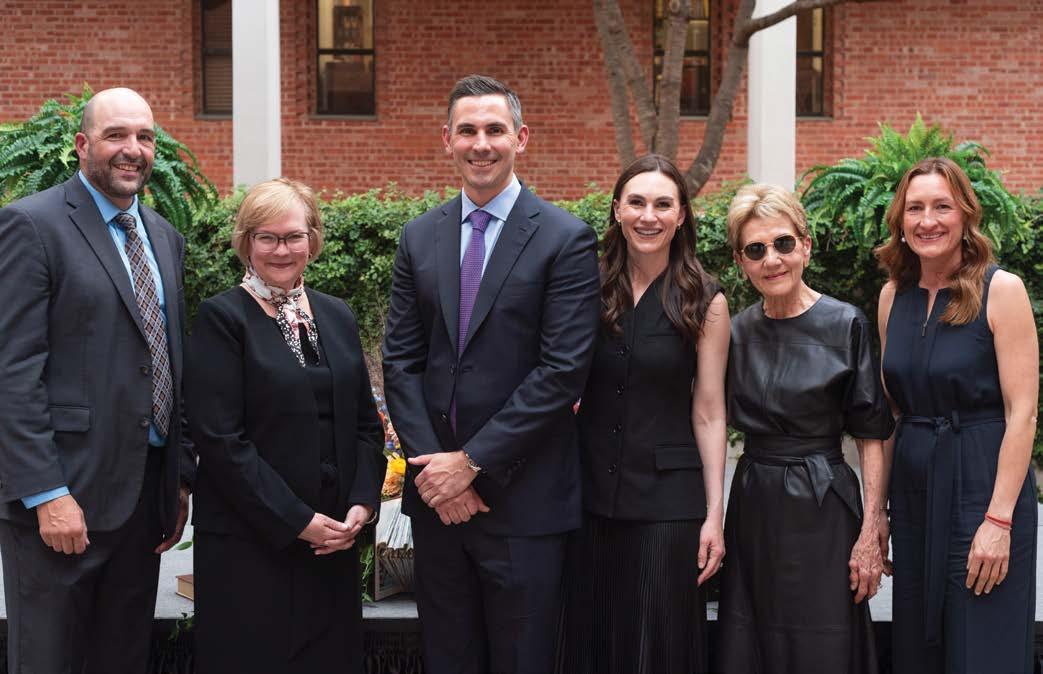
In the filtered light of the Ruth Taylor Courtyard on a fall afternoon last November, voices rang out in song as Trinity University celebrated a $25 million gift from the Malú and Carlos Alvarez family, a historic investment that established the Carlos Alvarez School of Arts and Humanities.
Trinity’s choir, scattered among guests, faculty, students, and alumni, launched a joyful flash mob to celebrate the newly named school. The celebration unfolded like a montage across the arts and humanities. Readers shared poems in multiple
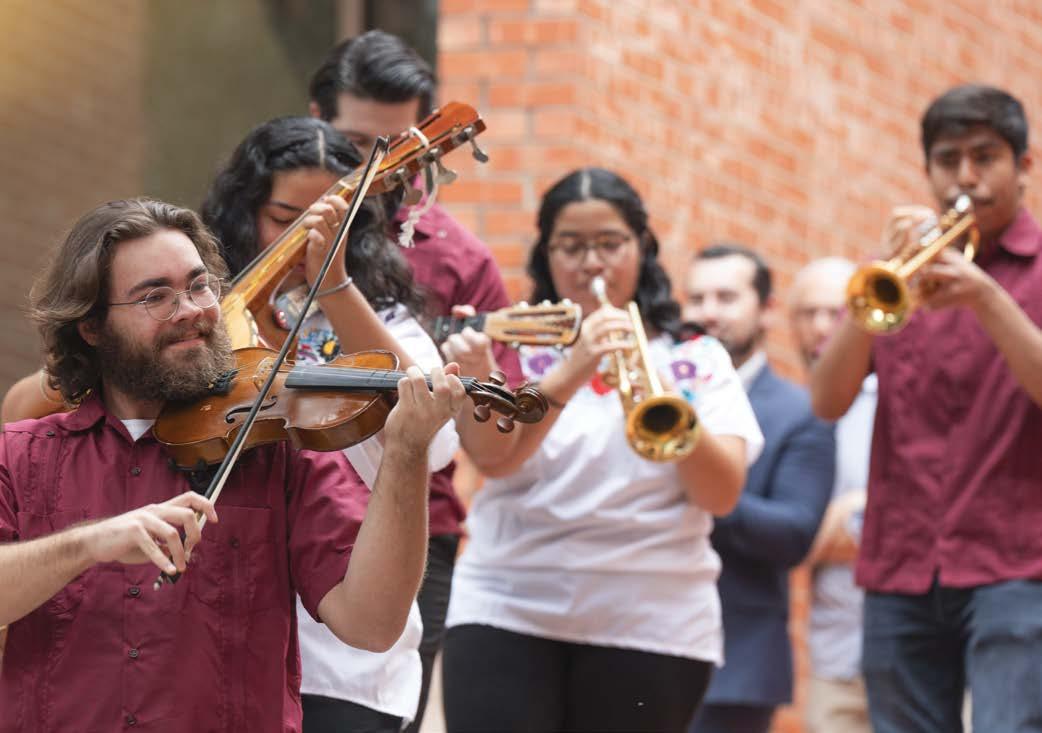
languages and from lived experiences. A mariachi ensemble energized the courtyard with a celebration of cultural heritage. Guests stepped into the Dicke Art Gallery to see student artists’ original work. Trinity Folklorico closed with soaring movement, colorful skirts, and rhythmic footwork.
On that November afternoon, Trinity celebrated more than a new name: The University celebrated the arts and humanities as essential to how we learn, live, and lead.
Beloved campus landmark will be revitalized to support reflection, belonging, and interfaith connection
For generations, the Margarite B. Parker Chapel has stood as one of Trinity University’s most iconic and beloved spaces—a timeless landmark where students, faculty, staff, and alumni have gathered to reflect, celebrate, and find connection. Now, this cherished chapel is preparing for its next chapter.
Beginning this summer, Trinity will embark on a transformative renovation of the formation wing of Parker Chapel, revitalizing it into a dynamic and flexible gathering space designed to meet the evolving needs of today’s students and community members. The back of the building will reopen as the Judd Center for Spiritual Life and Formation, honoring the legacy of the late Chaplain Emeritus Rev. Raymond Judd ’56 and his wife, Mary Jane ’57, who together served the Trinity community for more than 30 years. Construction is expected to begin shortly after commencement this May and conclude in 2027.
The initiative to name the new center in honor of the Judds was sparked by a $1 million lead gift from
Phil ’73 and Linda Stoddard Wetz ’72, P’11. Their leadership inspired further support from the Dovetail Impact Foundation, the La Brasada Foundation, and a $600,000 challenge grant from the J.E. and L.E. Mabee Foundation.
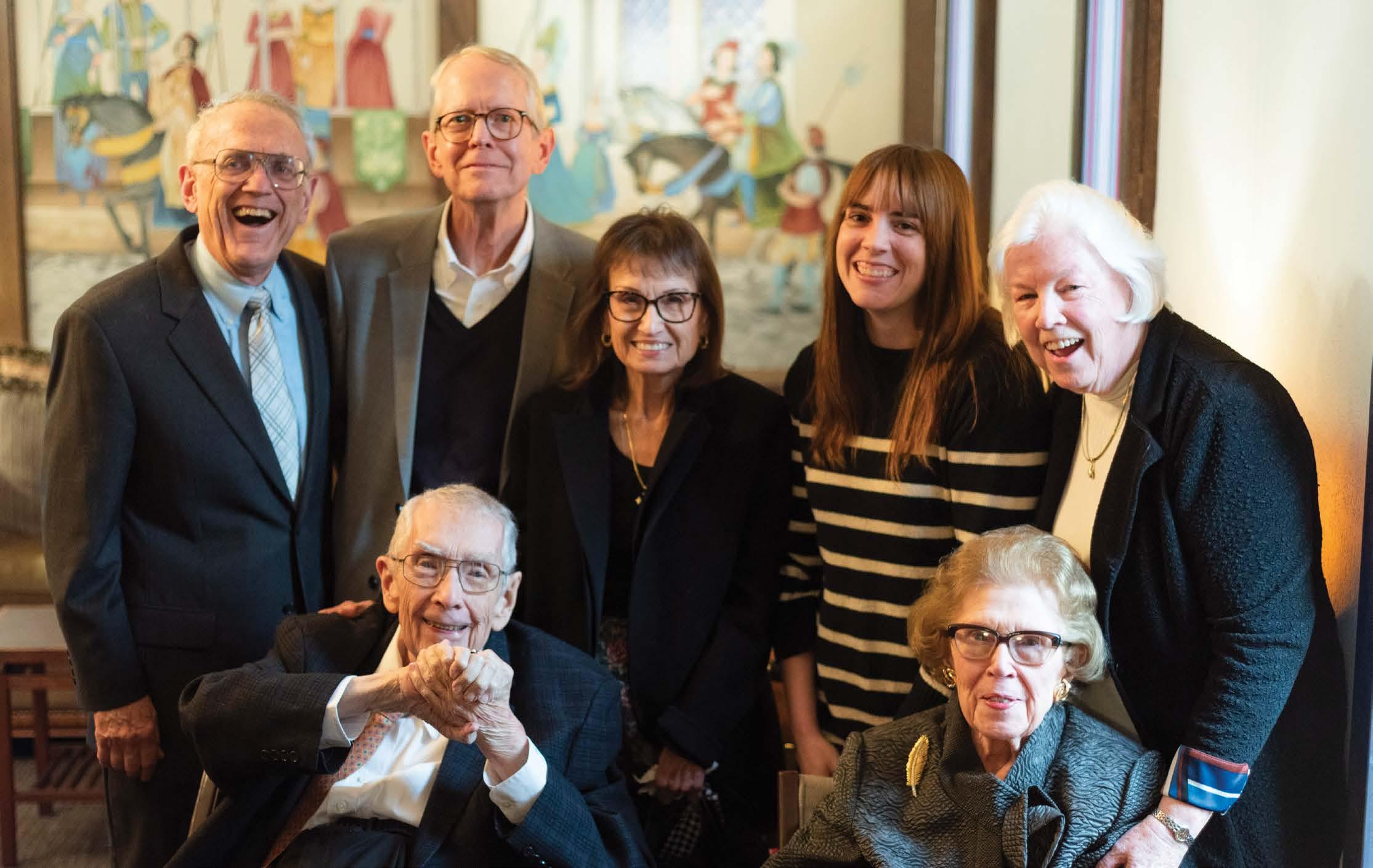
In January, the Trinity community gathered with the Judd family, friends, and the donors whose generosity brought this vision to life for a special blessing ceremony led by University Chaplain Alex Serna-Wallender ’08, M’09. Rev. Judd passed in February. (Read his obituary on p. 33.)
Fundraising for the Judd Center continues, with naming opportunities still available. Make a gift to help bring this transformative space to life. Donors of $1,000 or more will be permanently recognized on a plaque in the Judd Center upon completion. Give now at bit.ly/JuddCenter
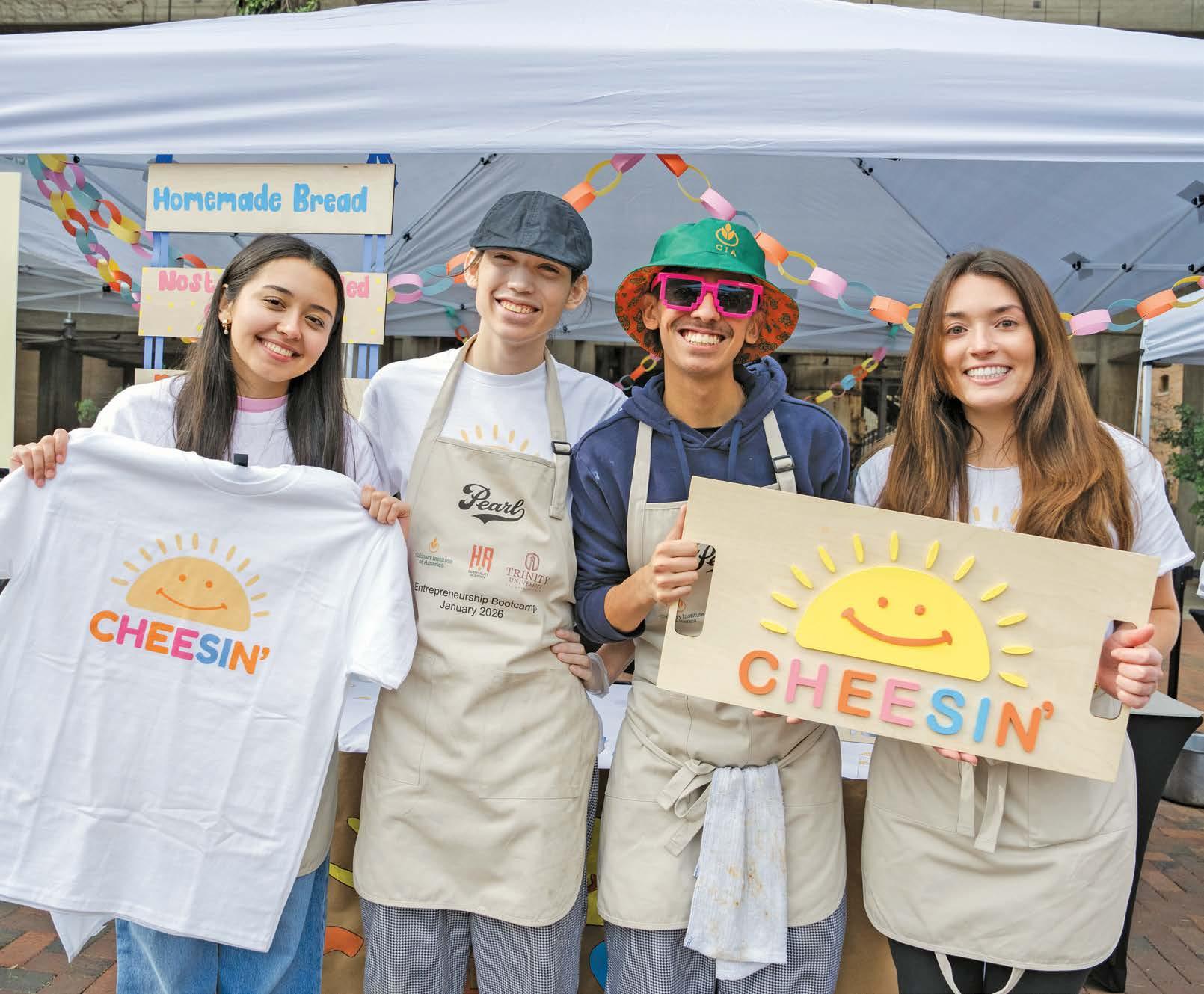
The CIA boot camp ... showed me how Trinity has prepared me for real-world learning experiences that demand initiative and adaptability.”
Trinity and the Culinary Institute of America host a joint entrepreneurial boot camp
by Clinton Colmenares
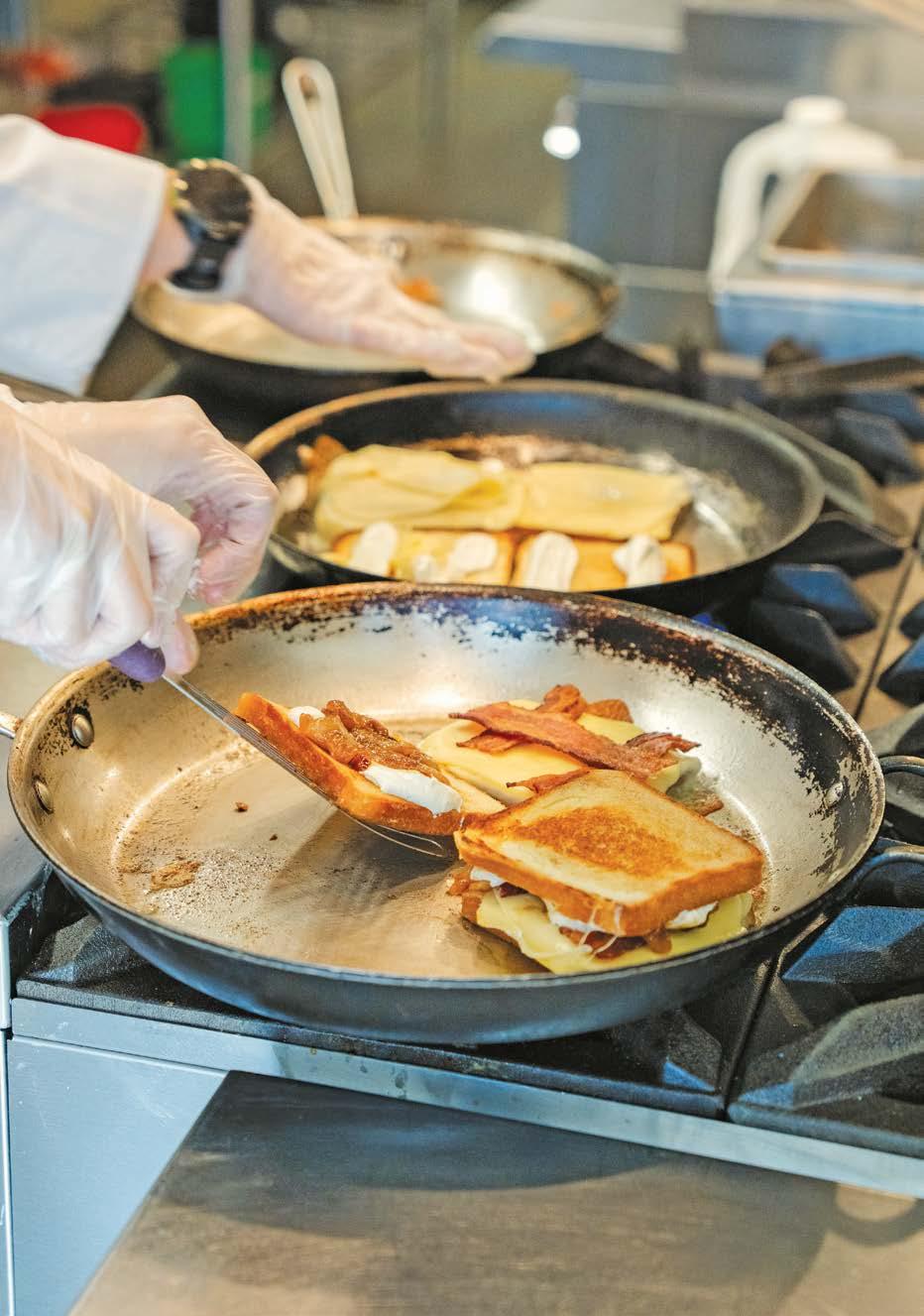
Before the spring semester began, 10 Trinity University students joined 10 students from the San Antonio campus of the Culinary Institute of America (CIA) in the first entrepreneurial boot camp, a program that blended creativity and real-world product development and ended in a competition for the best grilled cheese sandwich.
Students were divided into five teams, with two students from each school on each team, that worked together throughout the week to bring to life a top-secret product— an innovative take on a grilled cheese.
Mentors led workshops on the Trinity and CIA campuses with lessons in marketing, finance, and inspirational storytelling to help students connect classroom insights to industry practice.
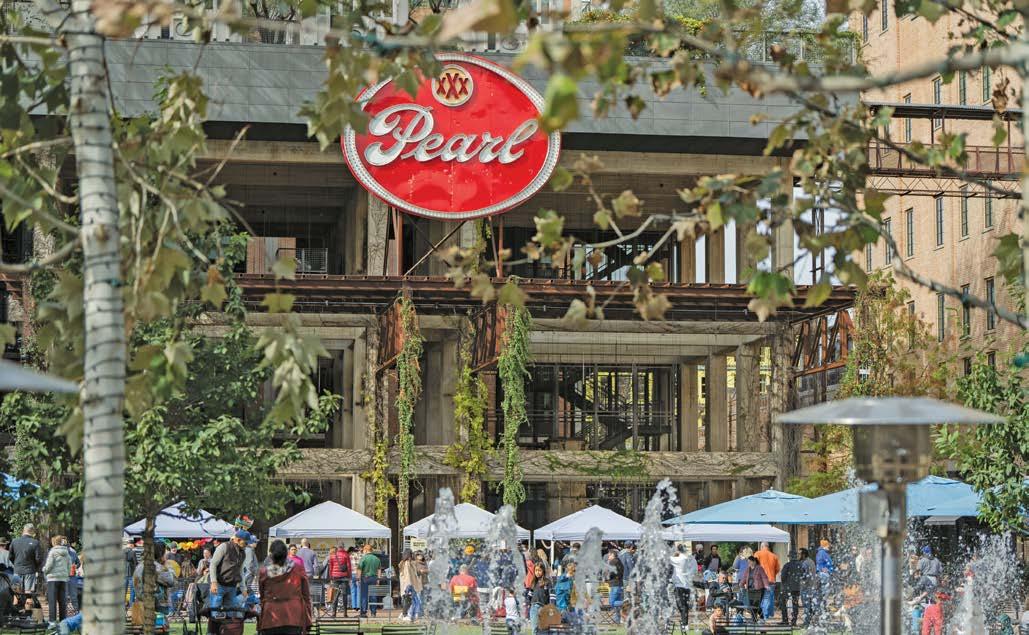
The boot camp culminated in a Sunday morning taste test at The Pearl, a culinary and cultural district on San Antonio’s River Walk, with hundreds of market shoppers tasting the teams’ variations and voting for their favorites.
“It was a whirlwind, very fast-paced week for our students,” says Senior Director
of Academic Success Mar-y-Sol SalinasMcCoy, Ph.D., who helped coordinate the boot camp. “It was great to see them dive in and challenge themselves in many ways. To see them in action with real customers brought it all together.”
After reviewing the teams’ business plans and tasting samples, a panel of Trinity judges awarded first place to Team Cheesin’, which included Kate Klein ’26 and Leslie Rodriguez-Ortegon ’28 from Trinity. Their winning sandwich was made with homemade milk bread, goat and Havarti cheeses, bacon, and caramelized onion jam. They also provided tomato chutney dip, a cardamom lemonade, and a whipped creampeanut butter pup cup.
“I have always wanted to take a class at the CIA ever since I first visited The Pearl freshman year,” says Kate Klein ’26, one of the winners. “The CIA boot camp not only brought that dream to life but also showed me how Trinity has prepared me for realworld learning experiences that demand initiative and adaptability.”
The popular vote went to Loco Flamma, which included Trinity students Apple Garcia ’29 and Julie Navarro ’27, for a spicy French-Mexican croque with roast beef, Oaxaca cheese, queso fresco, queso blanco, and a chipotle aioli, paired with elote and a watermelon-prickly pear agua fresca. Trinity students Drew Norris ’28, JR Law ’28, Laurel Miller ’27, Leah Dooling ’26, Miguel Otero ’26, and Orion Tyree ’29 also participated in the boot camp and the grilled cheese competition.
Trinity and CIA look forward to cooking up the next entrepreneurial boot camp.
Students in the “MAS Leadership Development” course travel to D.C. to network and visit national historic sites by Elseke Membreño-Zenteno
In January, 10 Trinity University students from the “Mexico, the Americas, and Spain (MAS) Leadership Development” course traveled to Washington, D.C., to put into action what they learned during the Fall 2025 semester.
Upon arrival, their days were filled with continuous activity, touring the U.S. Capitol and visiting national museums, memorials, and landmarks. Students met with members of the Washington, D.C., Alumni Club, attended a dinner hosted by the Hispanic Heritage Foundation with students from universities across the D.C. area, and networked with professionals in fields ranging from health policy and congressional labor policy to international education.
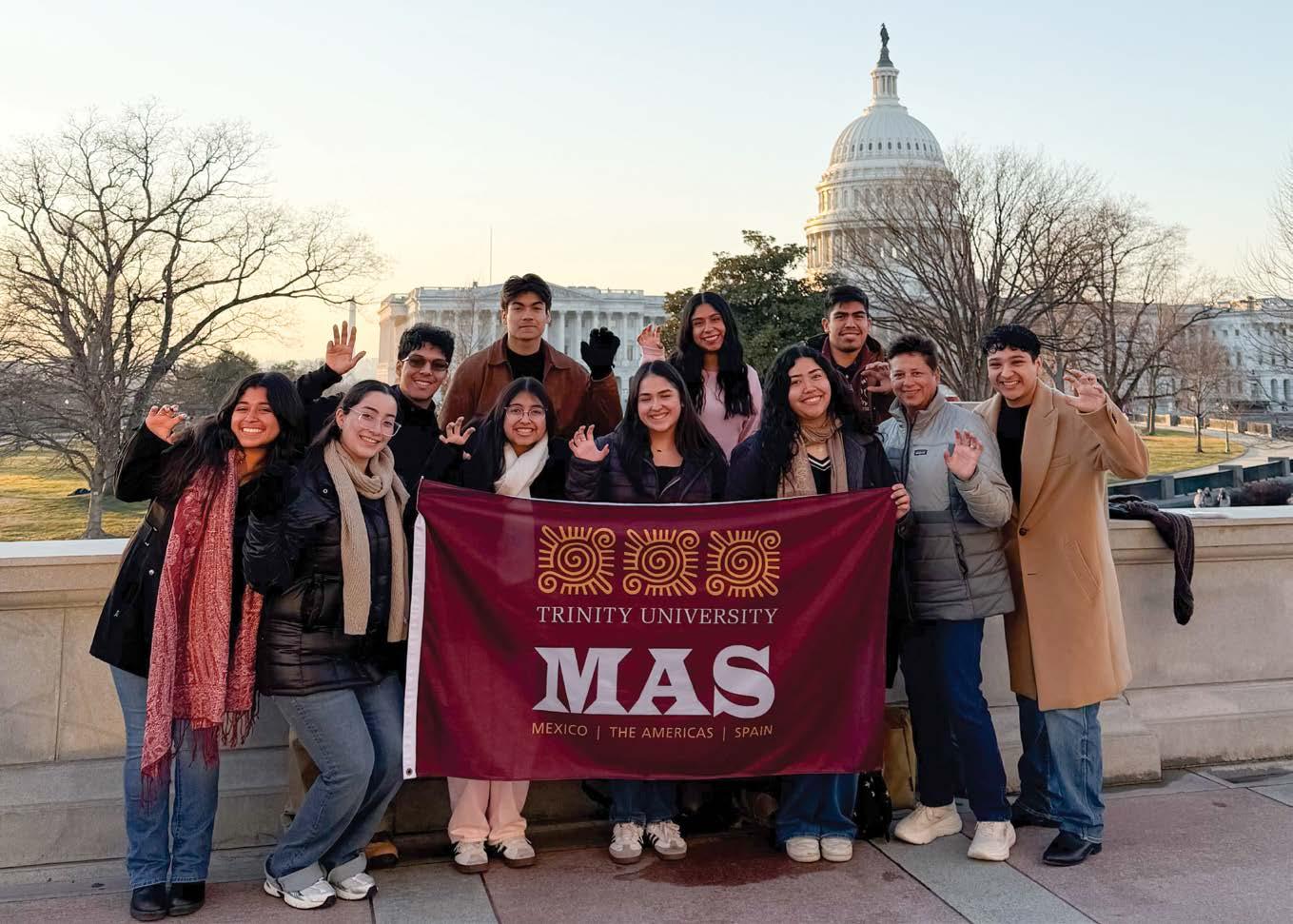
This trip exposed me to the variety of opportunities available to me once I graduate from Trinity. Speaking to Trinity alumni ranging from engineers to writers gave me excitement for what the future holds.”
–Danna Ramirez Jimenez ’26
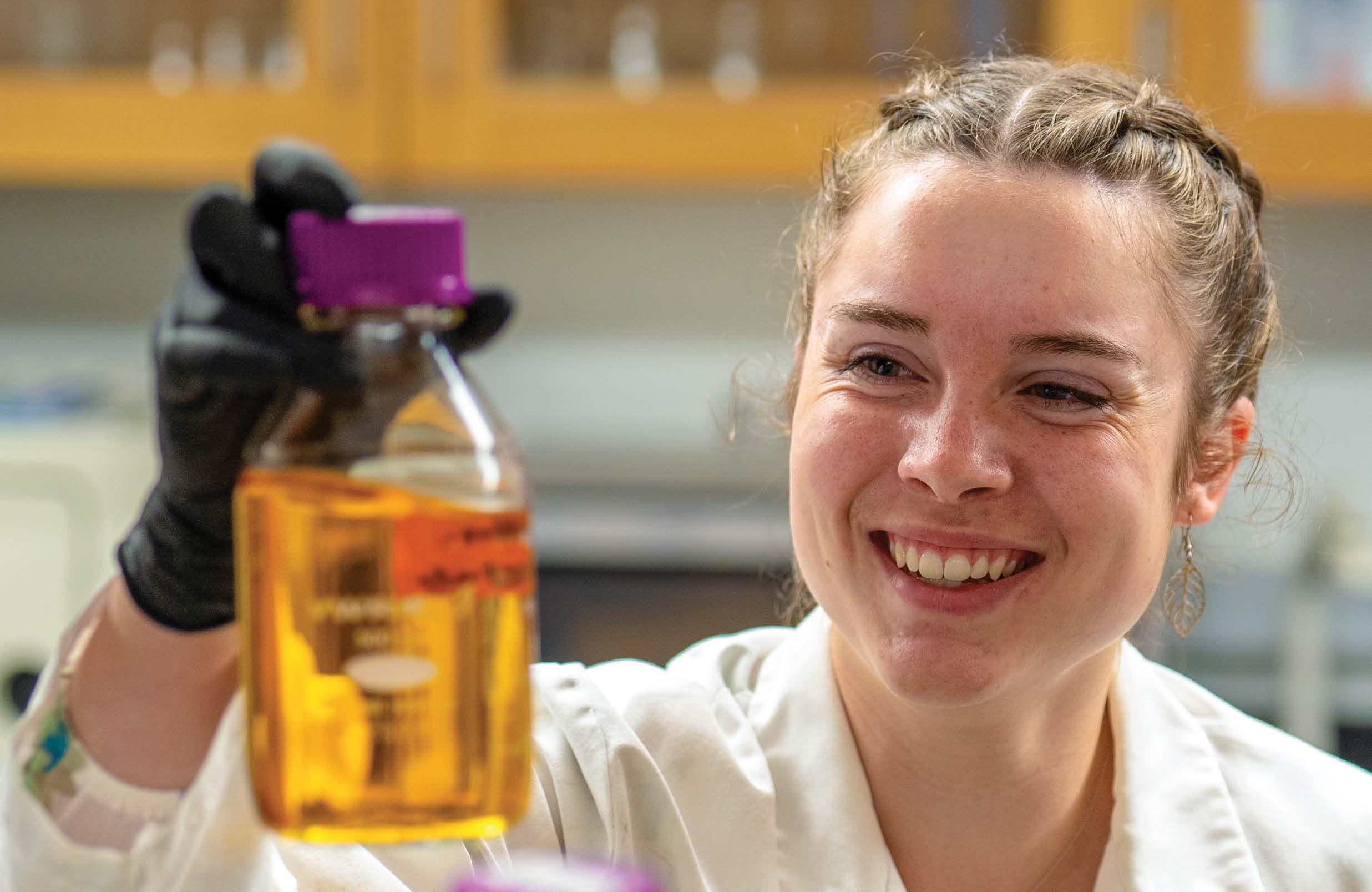
Two years after the historic $26.5 million gift, explore the impact of the Semmes Foundation’s investment in Trinity science
by Gloriana Cardenas
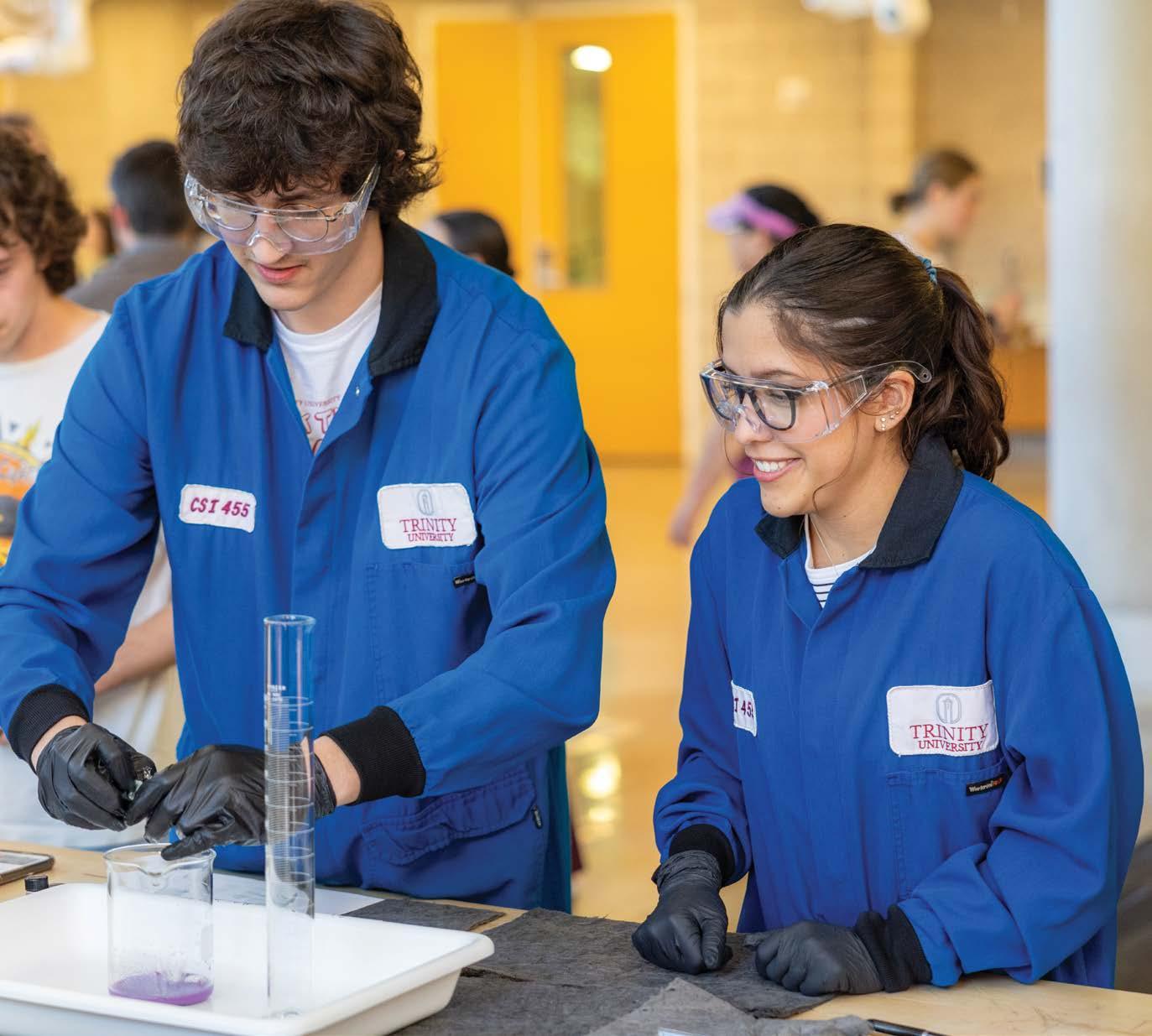
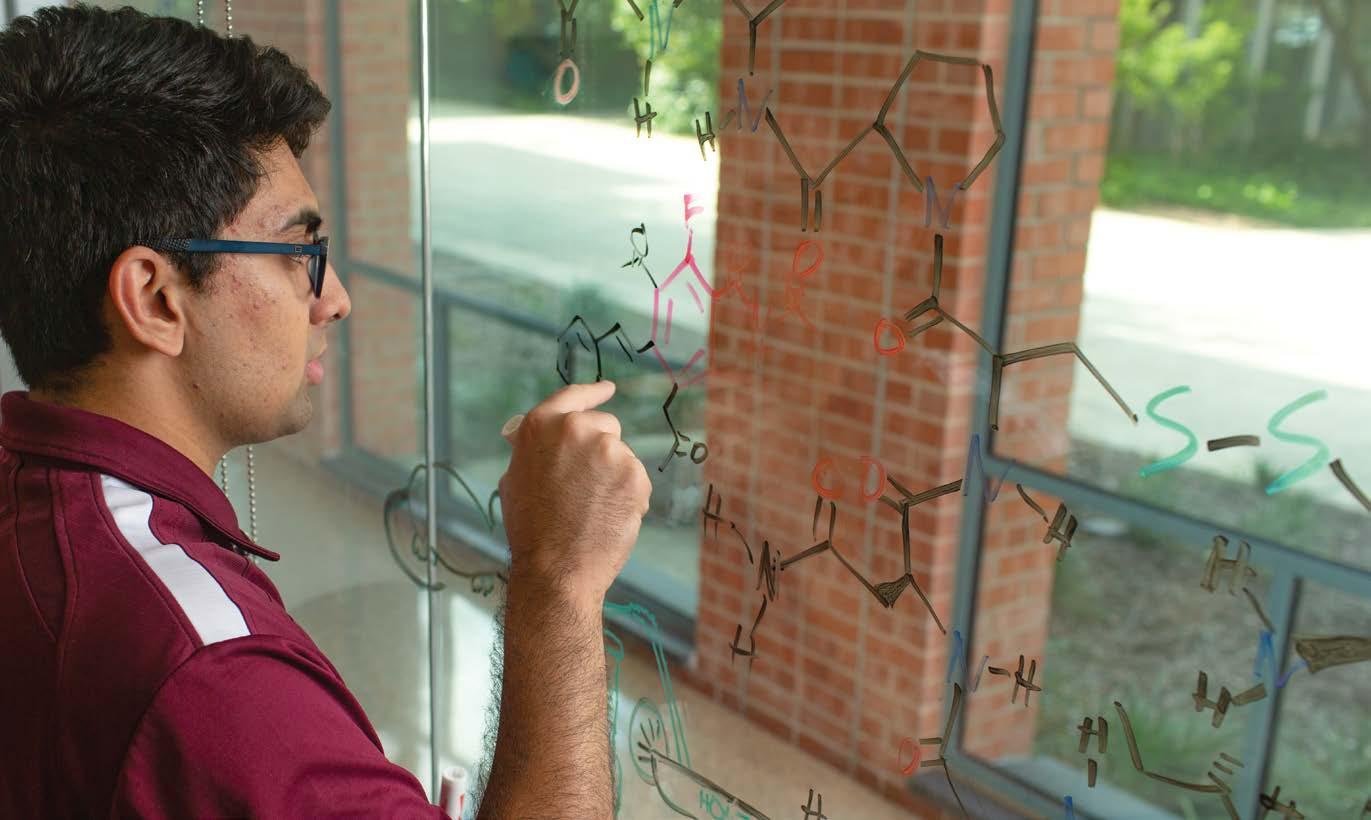
Inside the Center for the Sciences and Innovation, a student steadies a pipette over a vial while another sketches equations across a glass wall. Down the hall, undergraduates debate data collected just hours earlier. Half a world away, on a faculty-led study abroad trip to Costa Rica, Trinity students collect environmental samples and observe geologic processes firsthand, carrying inquiry beyond the classroom and lab.
This is everyday science at Trinity University: hands-on and collaborative, reflecting Trinity’s commitment to providing the best undergraduate liberal arts science education in the country. Over the past two years, Trinity has expanded these moments and opened research opportunities to more students earlier than ever before, thanks to the Semmes Foundation.
In 2024, the Foundation, led by Trinity Trustee Emeritus Tom Semmes and Trinity Trustee Pat Semmes, Ph.D., made a $26.5 million gift, the largest in Trinity’s history. The gift established the D. R. Semmes School of Science and created an endowed
This targeted investment accelerates discovery and helps cultivate the next generation of researchers, clinicians, and scientific leaders.”
dean position to ensure sustained leadership in support of the School’s mission. Today, that investment is shaping how research and teaching intersect across the sciences by sustaining faculty
Designing a research project from ground zero with my lab partner, being the main drivers of that happening … I don’t think that would necessarily happen for undergrads at an R1 research institution.”
–Bethany Bass ’26, a Semmes Distinguished Scholars in Science Scholarship recipient
scholarship, launching new lines of inquiry, and maintaining momentum between grant cycles. It also supports Summer Undergraduate Research Fellowships that allow students to work closely with faculty mentors and develop the skills that turn curiosity into evidence.
“We are already witnessing this gift’s transformative impact,” says David Ribble ’82, Ph.D., dean of the D. R. Semmes School of Science. “Survey results from Semmes students show how this targeted investment accelerates discovery and helps cultivate the next generation of researchers, clinicians, and scientific leaders.”
First-Generation Tigers Program supports students from arrival to graduation
by Gloriana Cardenas
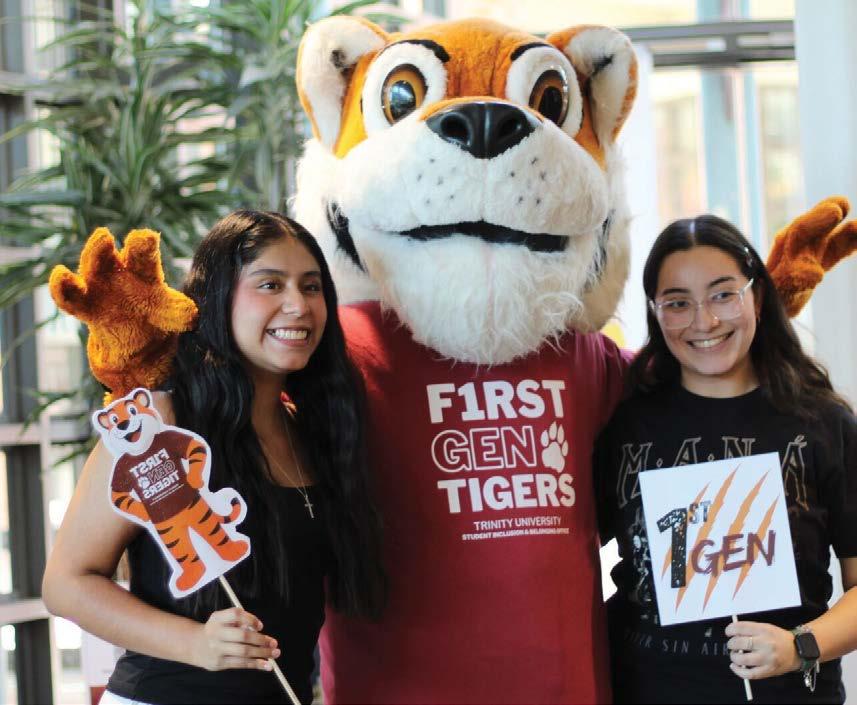
Housed in Student Inclusion and Belonging, Trinity University’s FirstGeneration Tigers Program celebrates and uplifts first-generation identity while providing practical support for student success.
Initially created and soft-launched in Fall 2024, the program was approved this spring as a pilot of Trinity’s Ready. Set. Rise. strategic plan, creating new momentum and capacity to expand its reach. What started with four students has grown to 55.
The program’s first year focused on building relationships through community events and offering workshops on topics students identified as most relevant, including scholarships, résumés, and internships, as well as providing opportunities to learn from first-generation alumni and local professionals navigating the college-to-career transition.
Trinity’s consolidated Office of Research and Sponsored Programs fuels student success
by Clinton Colmenares
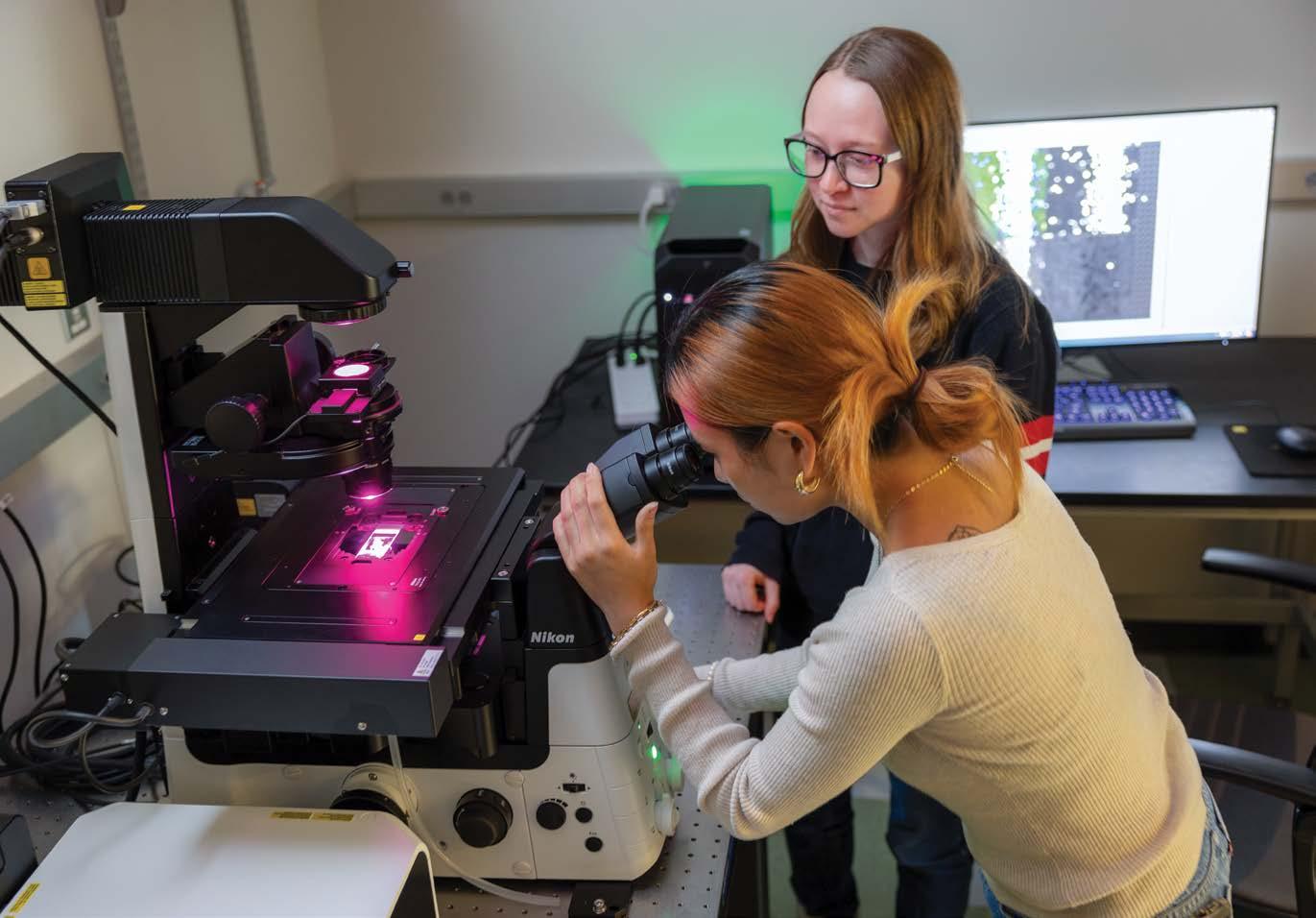
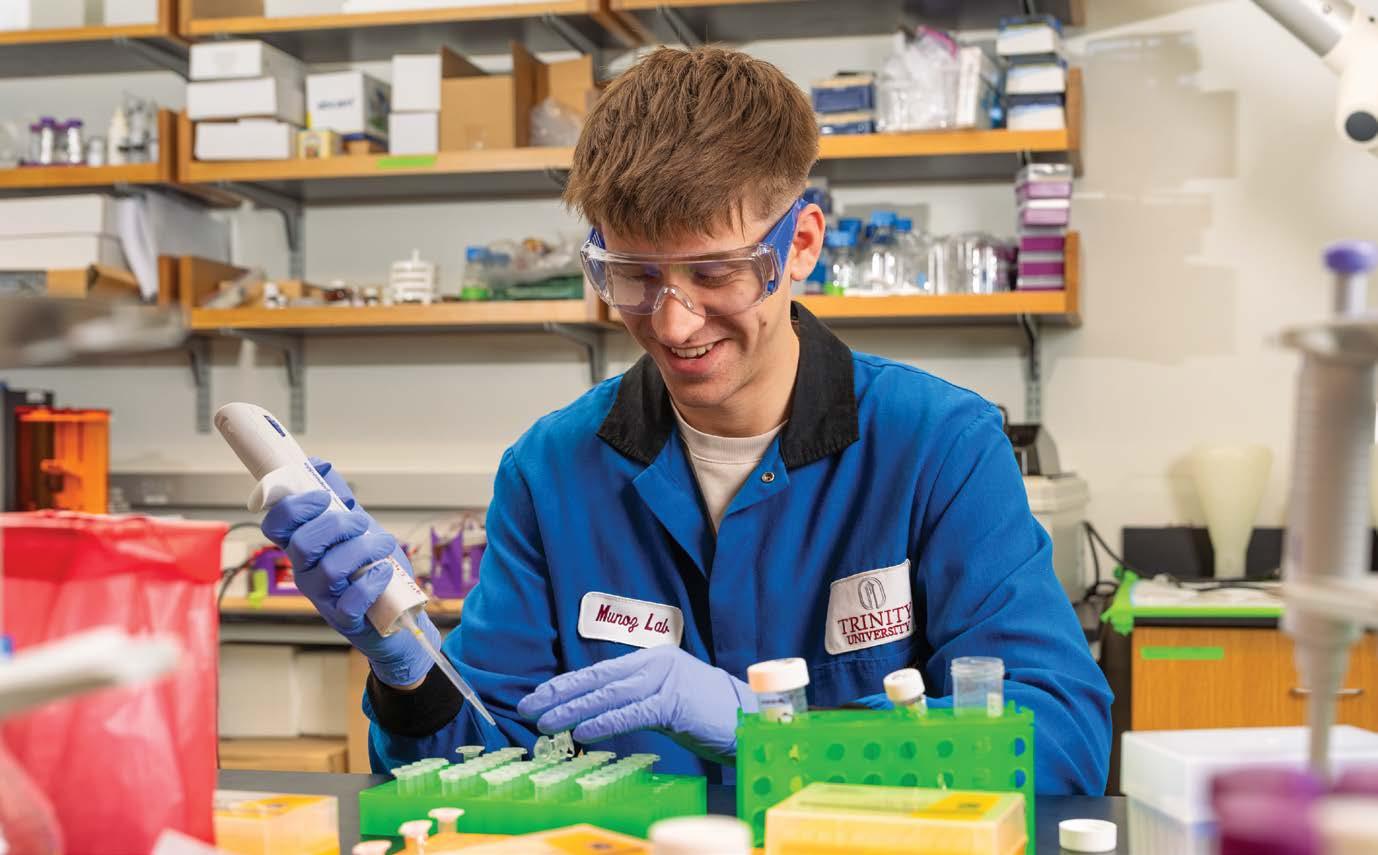
When Luke Chandler ’26 conducts research in the lab of Engineering Science Professor Dany Munoz-Pinto, Ph.D., he’s not just performing experiments; Chandler’s trying to understand why his grandmother developed dementia and passed away the year before he started at Trinity University.
Getting to conduct research as an undergraduate “is what separates Trinity for me as an undergrad program,” says Chandler, a neuroscience major and a Trinity soccer player from Glasgow, Scotland.
Recently, Trinity moved its undergraduate research administration, which had been divided between the Center for Experiential Learning and Career Success and the Office of Academic Affairs, under the Research and Sponsored Programs Office.
Research and Sponsored Programs convenes research-focused committees to monitor and recommend improvements to the University’s research ecosystem. They’re starting to capture a fuller picture of the research environment at Trinity, and this fall, they’ll have results of a faculty survey to help inform strategies and tactics.
Under the leadership of Senior Director Armando Saliba, the office has streamlined and simplified processes, such as the application for the Summer Undergraduate Research Fellowship (SURF) program, and has made student travel funds available—changes that have directly impacted Chandler.
Thanks to his SURF award and additional travel funds, Chandler presented his research at an annual science meeting in San Francisco in February. Chandler’s experiences in Munoz-Pinto’s lab have set him on a path to further discovery. Fueled by his recent $10,000 NCAA Postgraduate Scholarship, Chandler will pursue a master’s in neuroscience at University College London this fall.
Trinity’s Chamber Singers harmonize at choral directors’ conference in Albuquerque
by Kennice Leisk ’22
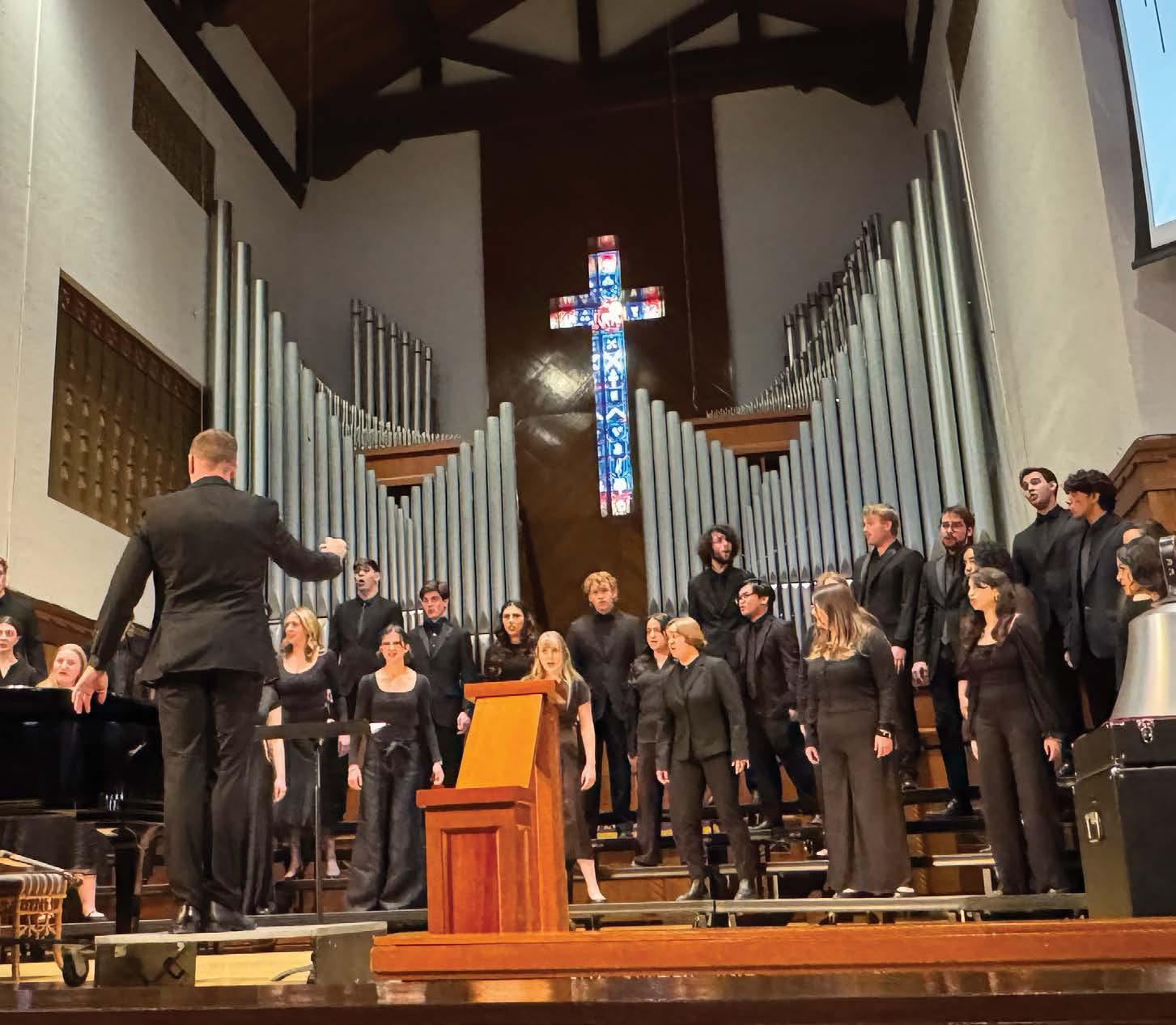
Although they come from 34 different majors, when the 44-member Trinity University Chamber Singers perform together, music is their common discipline, and their practice is among the best in the nation.
In early March, the Chamber Singers harmonized at the Southwestern American Choral Directors Association in Albuquerque, New Mexico, led by Director of Choral Activities Gary Seighman, D.M.A., and assisted by Music Professor Anna Osterman. The group was selected to perform through a blind, fiercely competitive process that draws submissions from universities in seven states, including major conservatories and music schools with graduate programs. This conference joins the extensive list of prestigious national and international venues where the Trinity choir has performed, including its 2022 Carnegie Hall performance.
The Chamber Singers’ performance resonated with the harmony of students from different majors and wove together
the voices of soloists Matthew Payton ’26, Isabel Elsisi ’26, and Jose Aguirre ’26, with the instrumentals of pianist Clara Rabago ’29, violinist Elanna Weber ’28, and handbell player Camila Rodriguez ’26.
The performance closed with a poignant song written by award-winning composer Dale Trumbore, who visited Trinity in February and worked with the choir on her piece. For this final song, Seighman joined the audience, and the choir performed without a conductor. Seighman says the audience watched on, hushed in surprise, before giving the choir a rousing standing ovation at the end of its program.
“Performing in front of some of the most influential musicians in America reinforced my decision to attend Trinity, as not many choir directors would allow freshmen to sing at such an important event,” says choral music education major Lukas Bauerkemper ’29. “Dr. Seighman believes in all of us, and that means the world to me.”
The University is one of seven recognized out of 780+ SACSCOC member institutions
by Carla Sierra
Trinity University has received an inaugural Torch Award for Post-College Success by the Southern Association of Colleges and Schools Commission on Colleges (SACSCOC). The award considered factors such as how well alumni are repaying student loans, their typical earnings 10 years after enrolling, and overall debt levels.
For the past five years, Trinity’s graduating classes have posted impressive positive outcome rates. The Class of 2025 has a 98% positive outcomes rate, meaning 98% of the class were either employed, in graduate school, or pursuing other postgraduate pathways six months after graduation.
“These outcomes reflect sustained institutional investment and infrastructure, ensuring students have access to the resources they need to launch successfully after graduation,” says Katie Ramirez, director for Trinity’s Center for Experiential Learning and Career Success. “This is important for prospective students and families evaluating the return on their investment in a college education.”
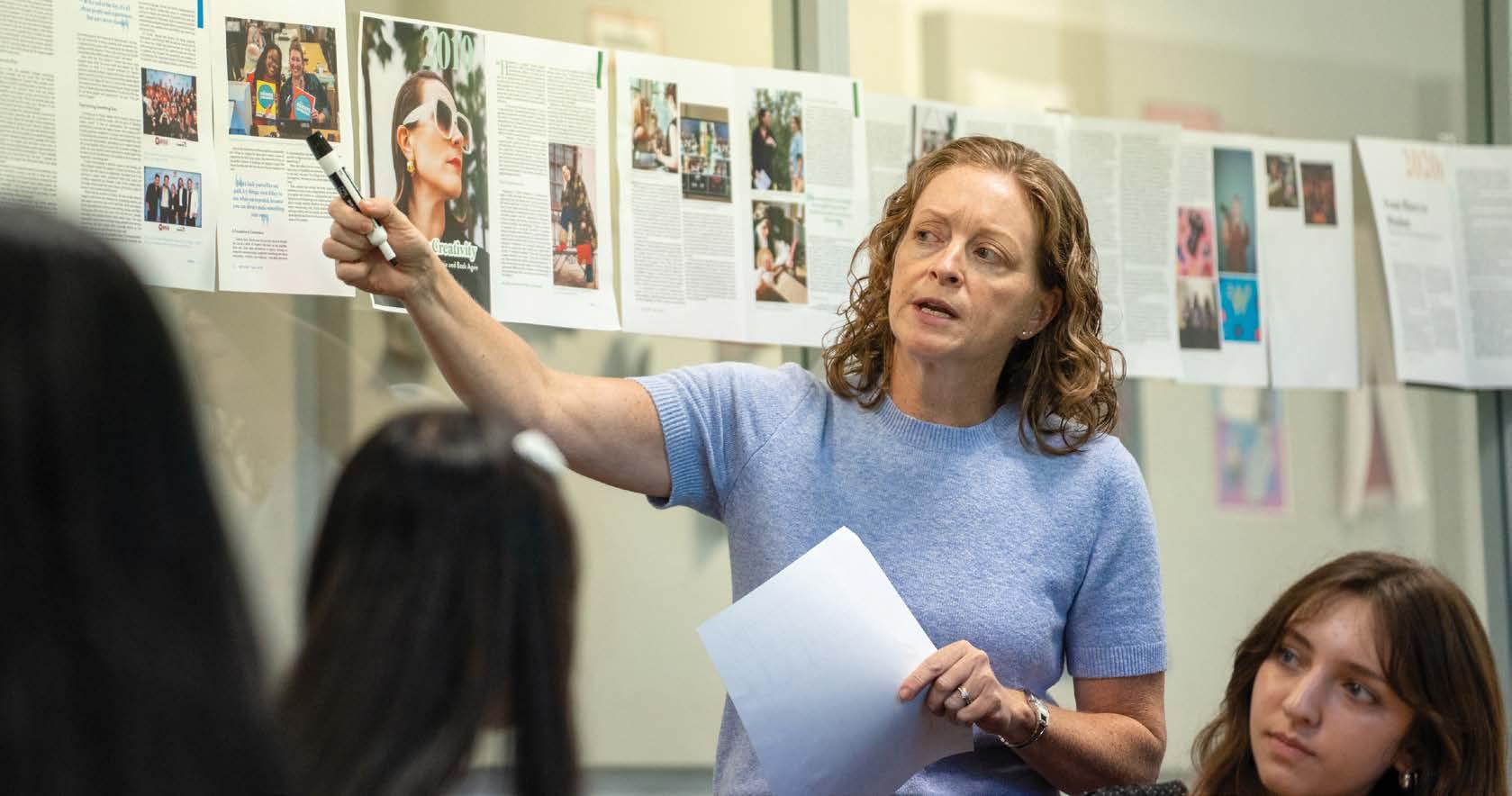
“Skyline Magazine” course gives students a glimpse into the world of magazine writing and design
by Layal Khalil ’27
Have you ever opened a print publication and wondered about all the work that had to happen before you could hold it in your hands?
If so, “Skyline Magazine” might be the course for you!
Taught by Trinity University Communication Professor Melissa McMullen, Ph.D., “Skyline Magazine” is a hands-on, collaborative course where students produce their own magazine.
Students in this course learn fundamental magazine production principles and skills related to writing articles, copyediting, photo editing, graphic design, and page layout. They also learn to use Adobe software, such as InDesign and Photoshop, to create designs and layouts.
McMullen’s favorite part of this class is giving students the space to see what they’re capable of. “I offer them my guidance and feedback. But ultimately, the magazine is written, edited, and designed by the students,” she says. “It is a testament to their creativity, enthusiasm, and hard work. As a professor, it’s so rewarding to see that!”
Every issue of Skyline has a different theme, and the 2025 issue featured 11 profile articles of alumni and students working in communication professions across multiple decades—from the
earliest alum who graduated in 1991 to a current student about to graduate this year.
While all students in “Skyline Magazine” discuss their goals and provide feedback ranging from an article’s focus and organization to colors, layout, photography, text placement, and more, some students also take on leadership roles throughout the magazine production process.
(This magazine) is a testament to their creativity, enthusiasm, and hard work. As a professor, it’s so rewarding to see that!”
“In this course, I’ve seen firsthand how compressed the magazine production timeline becomes when everything must happen within a single semester. It’s a tight, disciplined process that forces you to make decisions and make adjustments quickly,” says Art Director Jailyn Martin ’26, one of these student leaders. “The work produced here directly strengthens my résumé and portfolio, especially as I prepare for a career in sports media and communications.”

Trinity’s CSI MakerSpace pairs advanced machinery with fresh perspectives
by Jeremy Gerlach
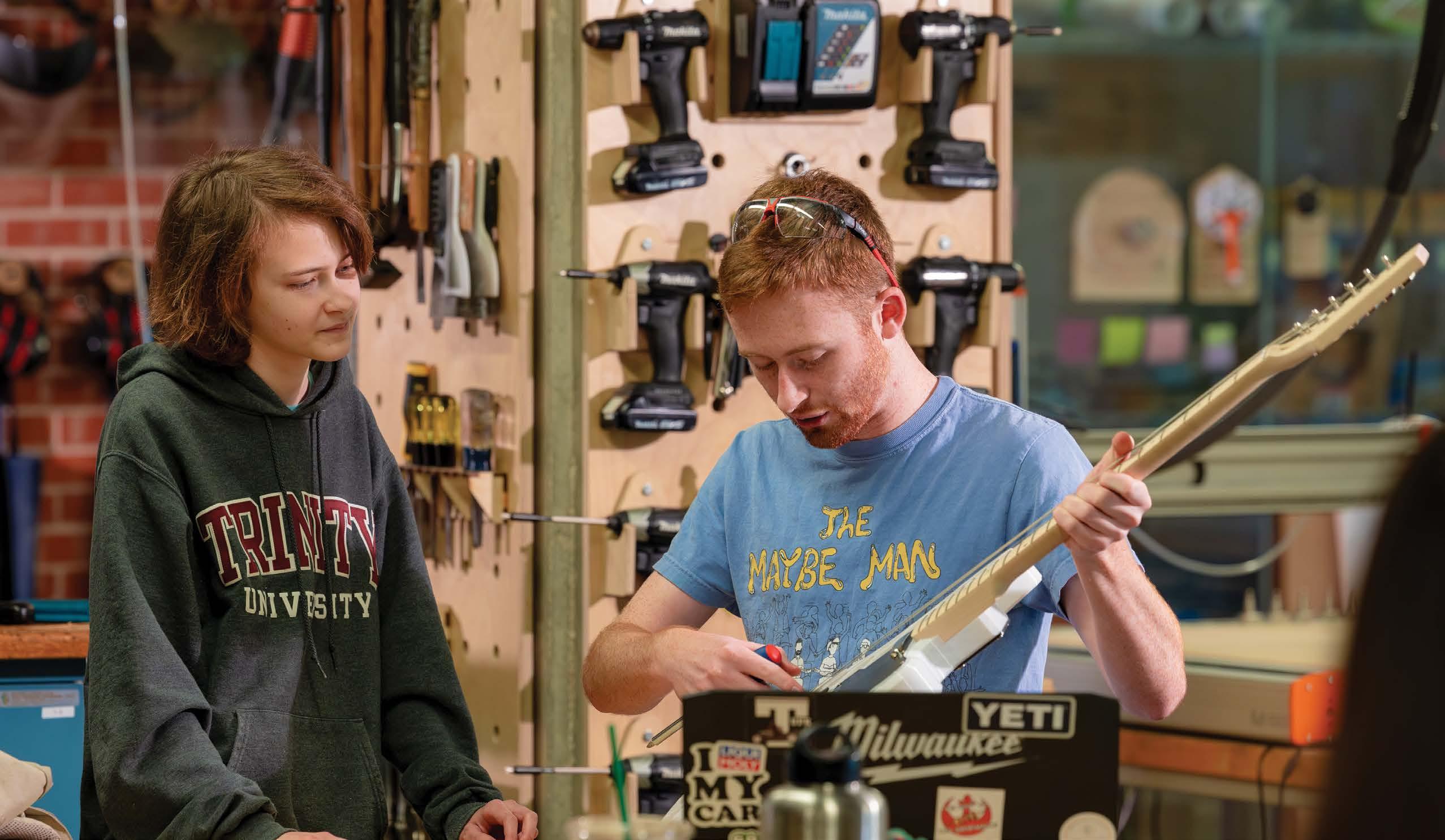
In Trinity University’s CSI MakerSpace, engineering science majors weld functional race cars while theatre students create a life-size replica of a Waffle House sign for a backdrop.
Shop Technician Ryan Hodge says the draw of the space is the combination of cutting-edge tools (laser cutters, 3D printers, CNC routers, and welding equipment, for example) with collaboration across multiple interests and disciplines. “Anyone can make anything here,” Hodge says. “You never know what to expect to see.”
The one constant, Hodge says, is that the shop operates safely and productively thanks to Trinity’s caliber of students. “This shop is becoming almost self-sufficient,” he says. “The students are creating this culture where everyone helps out, and everyone does their research on the equipment before starting a project.”
Many students who participate in the shop go on to top engineering Ph.D. programs, where
their MakerSpace experience gives them an edge over fellow applicants. The space also supports research labs across disciplines from geosciences to neuroscience.
Anyone can make anything here; you never know what to expect to see.”
Leslie Bleamaster III ’98, Ph.D., director of operations for the D. R. Semmes School of Science, says this unique space allows the University to balance serving both high-level science department needs and curious minds from every major. “The MakerSpace is available for whoever wants to come in and create,” he explains. “That’s the way Ryan runs it, and that’s what makes it special.”
30 productionquality machines
$500,000 invested in machinery over the past seven years
200 users per year
10 classes with dedicated MakerSpace components
8 research labs supported across five departments
8 student workers who help manage the space
3 dedicated “maker” classes, from intro to advanced
Trinity University celebrates the scholarship, creativity, community engagement, and accomplishments of our faculty and staff. Read some of the most recent highlights below.
KENNETH CARUTHERS ’15 (Alumni Relations and Development) won two awards in the Council for Advancement and Support of Education Best of District IV Awards for his “LeeRoy’s Training Montage for Move-In Day” video and his “Crossing the Finish Line” web story.
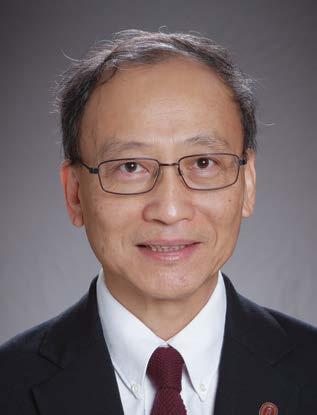
KWAN CHENG, Ph.D. (Physics and Astronomy), received a $200,000 grant from the San Antonio Medical Foundation to support the research of new potential therapies for Alzheimer’s disease in collaboration with the University of the Incarnate Word and UT Health San Antonio. This is the third year in a row that Trinity has received this award, which is highly competitive and only awarded to five out of more than 40 applicants.
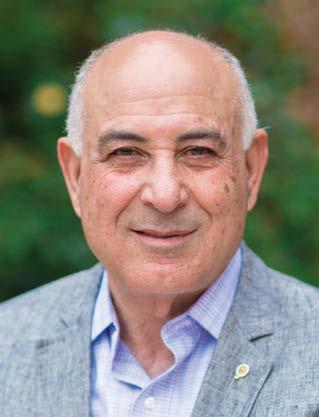
SABER ELAYDI, Ph.D. (Mathematics), was elected to serve a two-year term as the president of the International Society of Difference Equations.
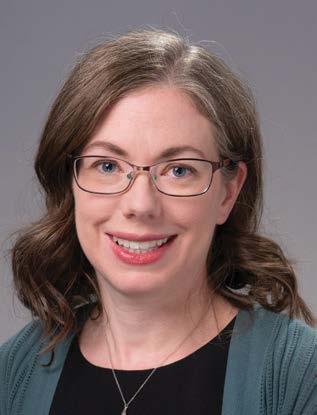
COLLEEN HOELSCHER, MLS (Coates Library), contributed the chapter “Supporting Neurodivergent Students in Archives and Special Collections” to Supporting Neurodiverse Students in Academic Libraries
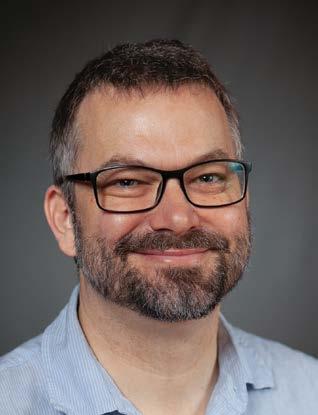
ANDREW KANIA, Ph.D. (Philosophy), was interviewed on “The Value of Music” for an episode of Philosophy Talk, a podcast and nationally syndicated radio show.
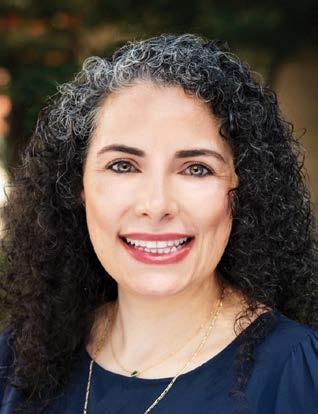
ELAINE PENAGOS, Ph.D. (Religion), was interviewed by the Atlanta Interfaith Broadcasters Network for a two-part docuseries called Exploring Faith: Santería. Penagos was called upon as a scholar of African heritage religions, especially Regla de Ocha, known popularly as Santería. The docuseries explores the rich spiritual world and deep history of Santería and how saints became symbolic bridges between cultures.
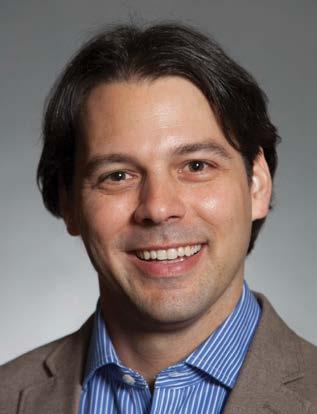
DAVID POOLEY, Ph.D. (Physics and Astronomy), presented at the national American Astronomical Society conference and had his work featured in Sky & Telescope Additionally, Pooley co-authored “25 years of groundbreaking discoveries with Chandra,” an article that made it to the front page of the October 2025 edition of Nature Astronomy
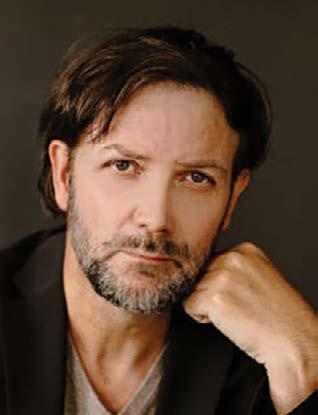
ANDREW PORTER, MFA (English), was selected by the City of San Antonio’s Department of Arts & Culture to receive one of its Artist Grants for fiscal year 2026. The grant supports his current book project, The Letters, a collection of short stories set in San Antonio and linked by the theme of letter writing or correspondence.
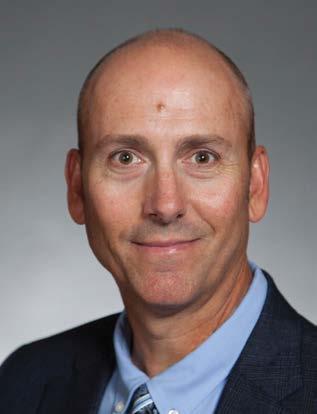
RICHARD SILVER (Center for the Sciences and Innovation) was named the 2025 Champion of Risk by Trinity’s Risk Management Office. Silver was recognized for his attention to risk management in the sciences, including field trips, release forms, authorized drivers, fleet vehicle maintenance, and more.
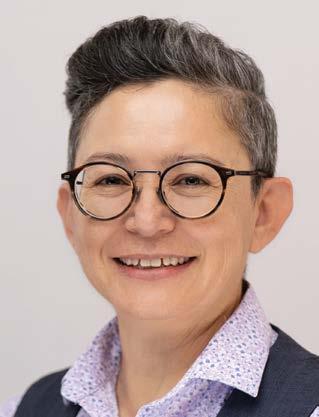
RITA E. URQUIJORUIZ, Ph.D. (Modern Languages and Literatures), received an honorable mention at the International Latino Book Awards 2025 in the category “Best Academic Themed Book, College Level” for her coauthored book, Writing that Matters: A Handbook for Chicanx and Latinx Studies, published in 2024 with the University of Arizona Press.
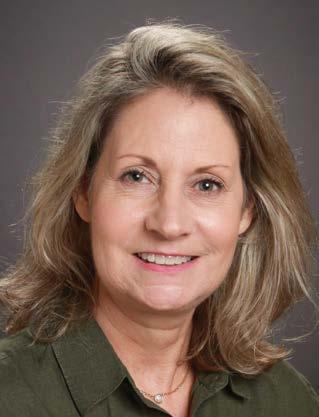
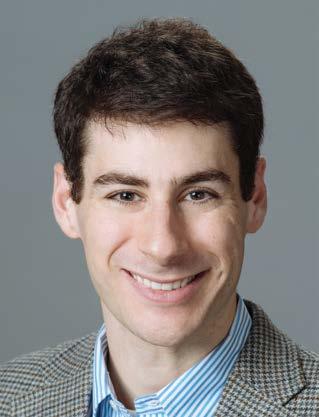
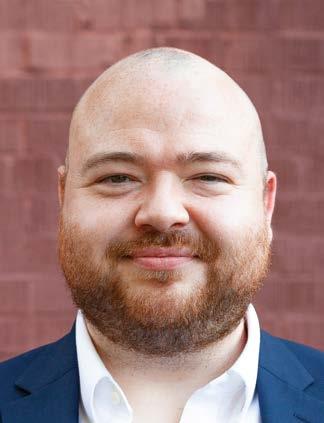
LAURA ALLEN, Ph.D. (Education); ELLEN BARNETT, Ph.D. (Education); COURTNEY CRIM ’93, M’94, Ed.D. (Education); JONATHAN KING, Ph.D. (Biology); and BENJAMIN SOSNAUD, Ph.D. (Sociology and Anthropology), recently published an article, “Heightening Ecological Connection Through Course-Based Approaches to Well-Being and the Natural Environment,” in Ecopsychology
BENJAMIN HARRELL, Ph.D. (Economics), and NICOLE JONES, Ph.D. (Sociology and Anthropology), are leading a new national study that highlights a historic shift in health insurance for same-sex couples while also underscoring inequities across income levels and regions. Published in JAMA Network Open, a peer-reviewed journal of the American Medical Association, the study found that for the first time, married same-sex couples are now slightly more likely to have health insurance than their married, straight counterparts.
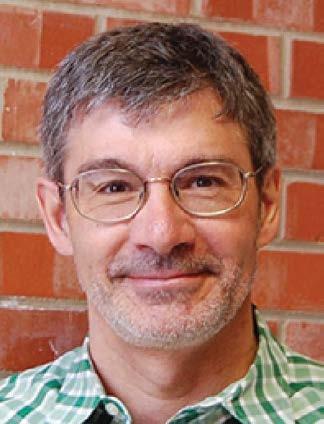
DANIEL LEHRMANN, Ph.D. (Earth and Environmental Geosciences), along with geosciences alumnus HEATH HOPSON ’13 and a team of researchers, published the article “Controls on the evolution of large Upper Cambrian microbial buildups in Mason County, Texas, USA” in the Geological Society of America Bulletin, and their photo made the cover of the November/December 2025 issue. The cover photo was taken near the Llano River in Mason, Texas, where the research project was conducted.
OFFICE OF STRATEGIC COMMUNICATIONS AND MARKETING won two Best of District IV Awards from the Council for Advancement and Support of Education. “Admitted Student Branding” was recognized in the Design: Specialty Pieces category for its creative approach to admitted student engagement, and “Trinity University Is On the Rise” was honored in the Video: Promotional (Short) category for the cinematic storytelling behind the video that celebrated Trinity’s rise in national rankings.
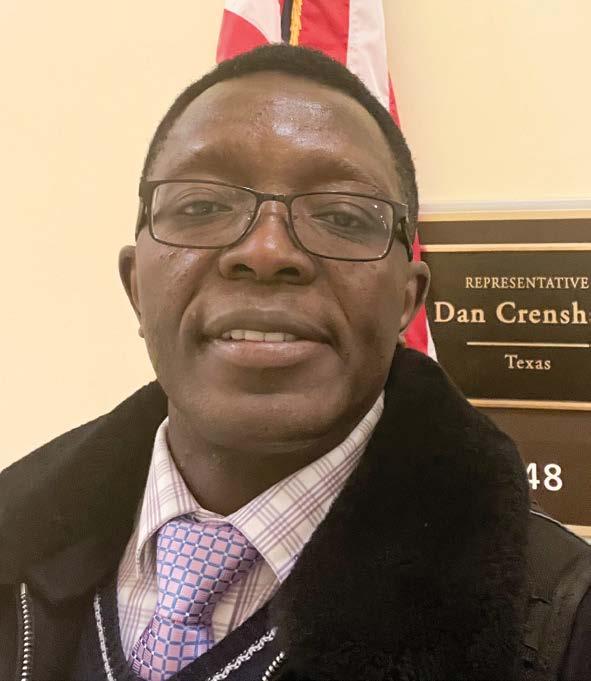
Eddy Kwessi traveled to Capitol Hill to advocate for funding in mathematical sciences education and research
by Cal Siewert ’22
Trinity University Mathematics Professor Eddy Kwessi, Ph.D., along with nearly two dozen other Texas math professors, joined forces in January with nearly 300 mathematical scientists from 47 states and 176 political districts to advocate for science and math funding.
Kwessi’s group first met with staff at the offices of Senators John Cornyn and Ted Cruz, then split up by congressional district to see representatives. They visited the offices of Representatives Ronny Jackson, Lloyd Doggett, Dan Crenshaw, and Chip Roy, discussing the importance of science funding and sharing the direct impact of funding freezes or cuts on their research and teaching.
In just one day, the group conducted more than 270 conversations with representatives and their staff, filling the halls with dialogue and sharing their values and needs.
“Investing in the sciences means investing in students’ futures and the nation’s future,” Kwessi says. “It was a great experience meeting others who were as passionate as I am about science, education, and learning.”
Amy Foshee Holmes named a Poets&Quants 2025 Best Undergraduate Professor for her commitment to student success
by Gloriana Cardenas
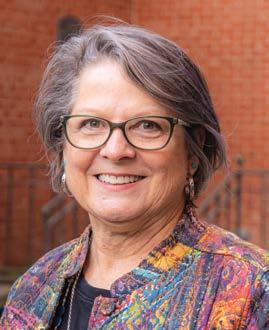
Nearly every student who interacts with Trinity University Accounting Professor Amy Foshee Holmes, Ph.D., walks away certain they can count on her as a professor, adviser, and person.
And it’s not just Trinity students who are recognizing Holmes’ innovative teaching and attentive mentorship. Late last year, Holmes was recognized by Poets&Quants as one of the 50 Best Undergraduate Business Professors. She stood out among more than 1,000 nominations for professors across 45 different institutions (including six international schools) for her research, teaching excellence, and impact on her industry and the University.
This Poets&Quants recognition comes on the heels of numerous accolades, including Holmes’ 2024 Outstanding Accounting Educator Award from the Texas Society of CPAs (TXCPA) and 2023 TXCPA San Antonio Distinguished Service Award.
Awards aside, Holmes says she’s grateful for how she can “create opportunities for our students to find meaning and purpose in their lives.” For example, accounting major Emmy Batnasan ’27 credits Holmes’ managerial accounting course for “deepening (her) understanding of internal accounting systems, strengthening (her) public speaking, and sparking (her) interest in accounting regulations.”
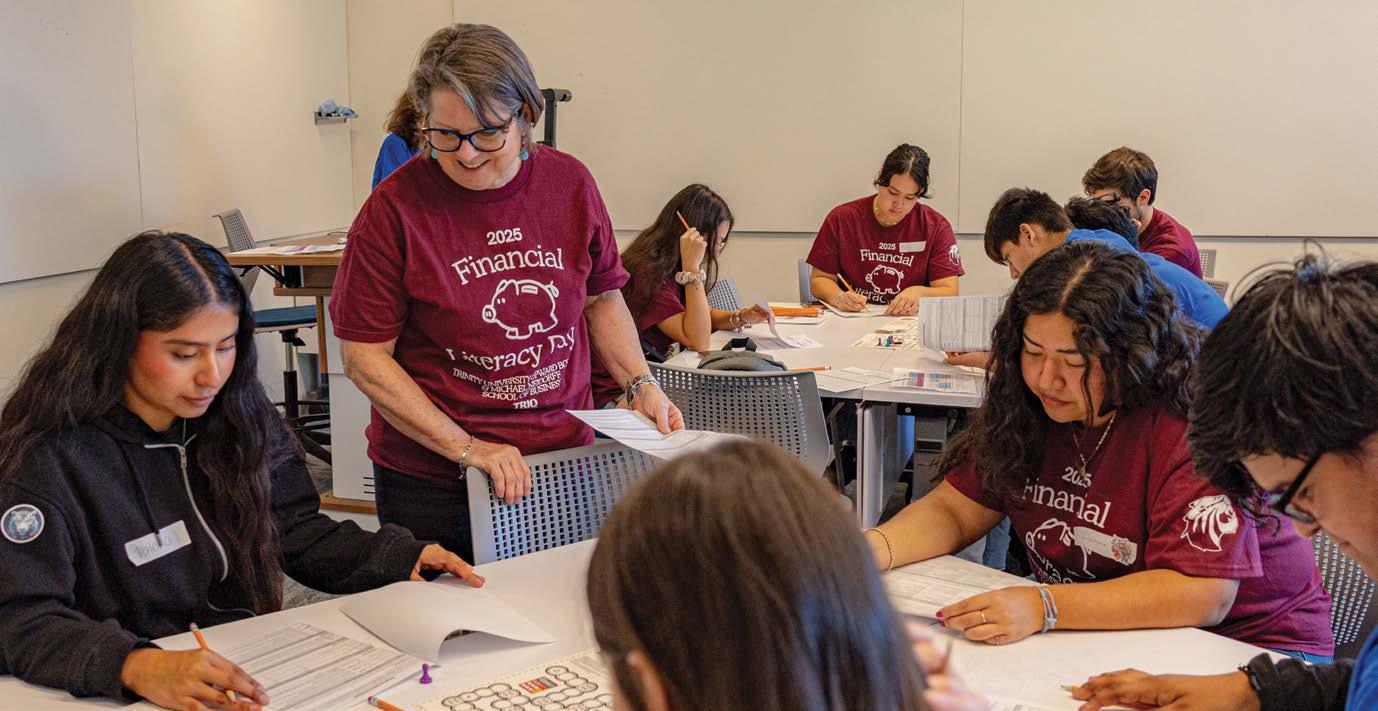
Accounting Professor Amy Foshee Holmes (standing) connected with local high school first-generation students during Financial Literacy Day 2025.
Dr. Holmes is an inspiring professor and role model whose dedication to sustainability, community engagement, and student success truly stands out. I always enjoy seeing her around campus, as she makes every interaction feel meaningful.”
–Emmy Batnasan ’27
Abubakr Ayesh studies how Rwandan cookstoves could reshape energy use and the environment
by Jeremy Gerlach
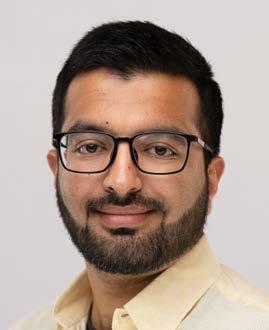
Working alongside two fellow economists from other institutions,
Trinity University
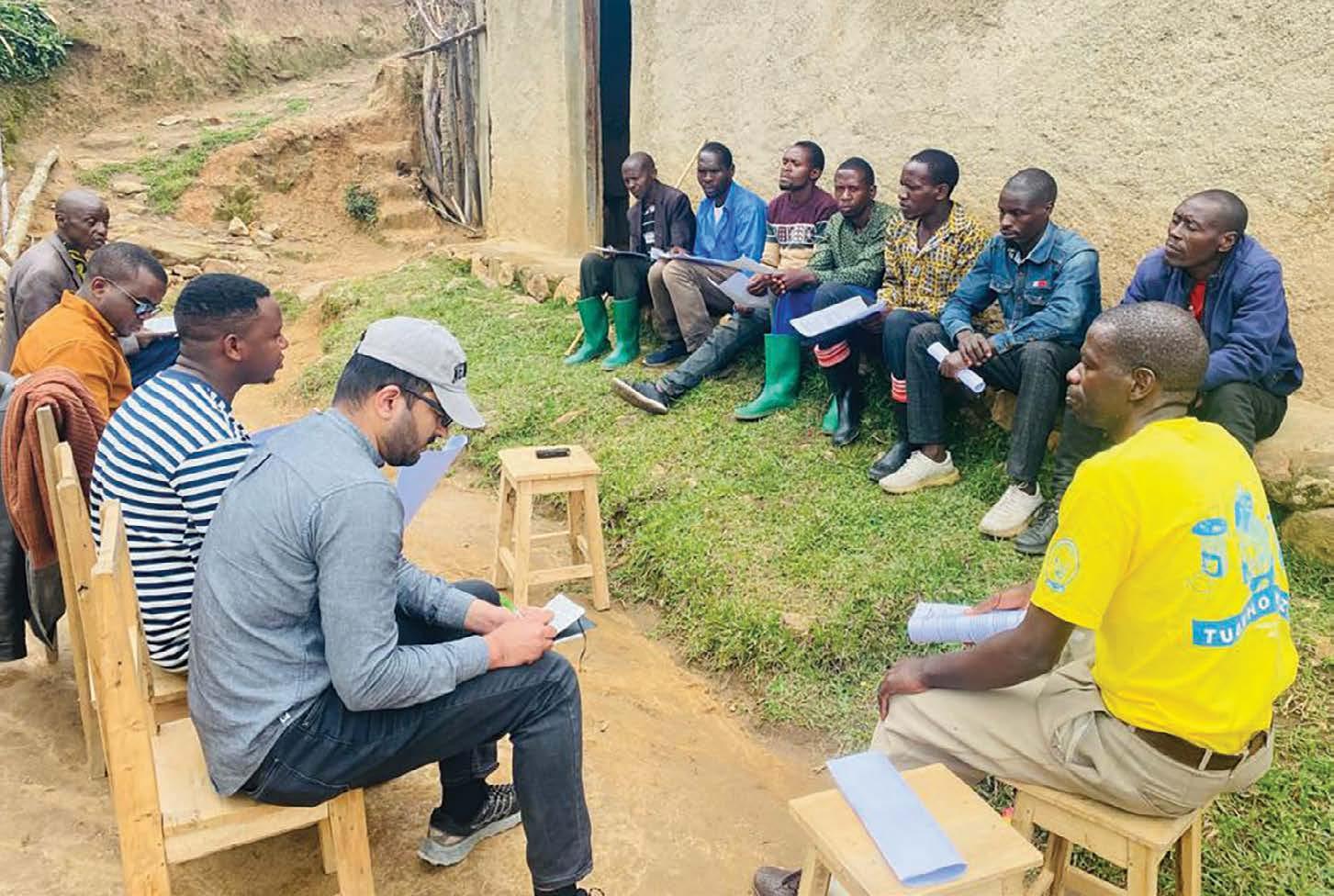
Economics Professor Abubakr Ayesh, Ph.D., spent last summer conducting focus group discussions in 10 rural Rwandan villages, gathering firsthand insights from residents about their stove use, forest conditions, and perceived benefits. The team combined this local perspective with satellite data from Google Earth Engine to quantify real changes in forest cover. While their preliminary results suggest a meaningful reduction in deforestation, this may be dependent on the area’s geographical and economic characteristics.
We asked Ayesh to share some recent updates on his research.
WHAT HAS BEEN A CHALLENGE IN YOUR RESEARCH PROCESS, AND HOW DID YOU OVERCOME IT?
An academic challenge we faced was obtaining deforestation data/maps that
were customized to Rwanda. Most spatial data is satellite-based and aggregate, using machine learning techniques that don’t incorporate characteristics specific to Africa. To overcome this, we worked with two geospatial experts to produce customized/bespoke vegetation cover maps for Rwanda.
HOW HAS THIS PROJECT INFORMED COURSES YOU TEACH AT TRINITY?
I include this project’s work in my “Economic Development” and “Principles of Microeconomics” courses through lecture slides and case study questions on problem sets. Rwanda is one of those unique countries where communities sometimes have their own forest management practices. It gives a natural opportunity to teach about externalities, public goods, and property rights.
This semester, a Trinity student is enrolled in a one-credit-hour independent study with me to help summarize the focus group discussions my team conducted over the summer in Rwanda and write policy briefs and blog posts.
Angela Tarango shares an update on her role as an editor for Church History
by Cal Siewert ’22
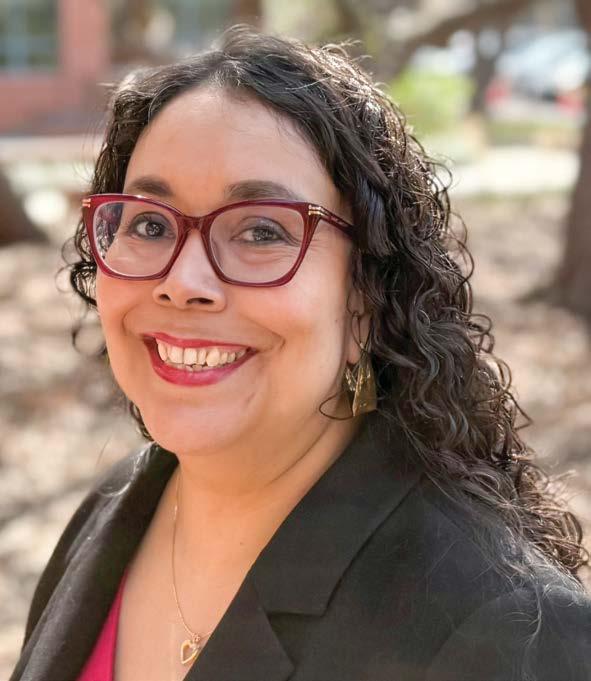
Last October, Trinity University Religion Professor Angela Tarango, Ph.D., was selected to be an editor for Cambridge University Press’s Church History: Studies in Christianity and Culture, the leading journal in the field of the history of Christianity. Tarango oversees the “Christianity in the Americas” section alongside her colleague Brandon Bayne from the University of North Carolina at Chapel Hill.
Now several months into her role, Tarango says she has enjoyed how the role keeps her on the front lines of innovative scholarship in her field, especially work in different areas of expertise than her own. While Tarango and Bayne decide what is ultimately shared in “Christianity in the Americas,” part of their role involves tapping other experts to determine who could peer review a piece before it is officially accepted.
Through this position, Tarango has learned that good writing “has verve.”
“The best writing is when you can ‘hear’ the author’s unmistakable voice,” Tarango says. “This work is now gently forcing me to rediscover my own writerly voice and how that voice is distinctive to my own work.”
Dania Abreu-Torres declares her mission as associate dean
by Layal Khalil ’27
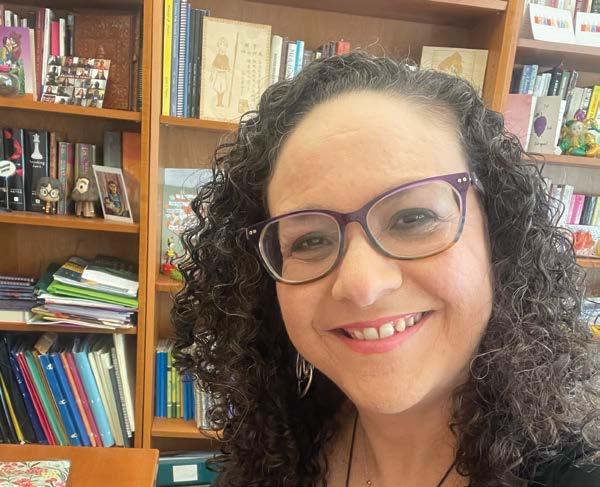
Dania Abreu-Torres’ love for the humanities began when she was growing up in Puerto Rico. “I didn’t realize it at the time, but being surrounded by my parents’ books, visiting bookshops, participating in tertulias (informal intellectual gatherings), and reading in both English and Spanish was the start of my humanities education,” she says. “It opened my eyes to new experiences and to countless different worlds.”
As a junior faculty member and director of the Mexico, the Americas, and Spain program, Abreu-Torres, Ph.D., helped open Trinity University students’ eyes to countless worlds by organizing events and hands-on opportunities that deepened their knowledge and connection with these regions.
Now, as the inaugural associate dean of the Carlos Alvarez School of Arts and Humanities, Abreu-Torres says her mission has expanded: “It’s about weaving the arts and humanities into the fabric of students’ lives and supporting faculty as they grow and innovate.”
Through collaboration with the Office of Academic Advising and the Center for Experiential Learning and Career Success, Abreu-Torres wants students to see how their education in the arts and humanities equips them with essential skills for any path students pursue after graduation. “At Trinity and beyond, the arts and humanities provide a space where students can relate, dialogue, and imagine a new, inclusive world—one that is always ready for change,” she says.
Trinity’s ¡Hola, San Antonio! program helps make cultural offerings and arts events accessible to students
by Anais Moreno-John ’29
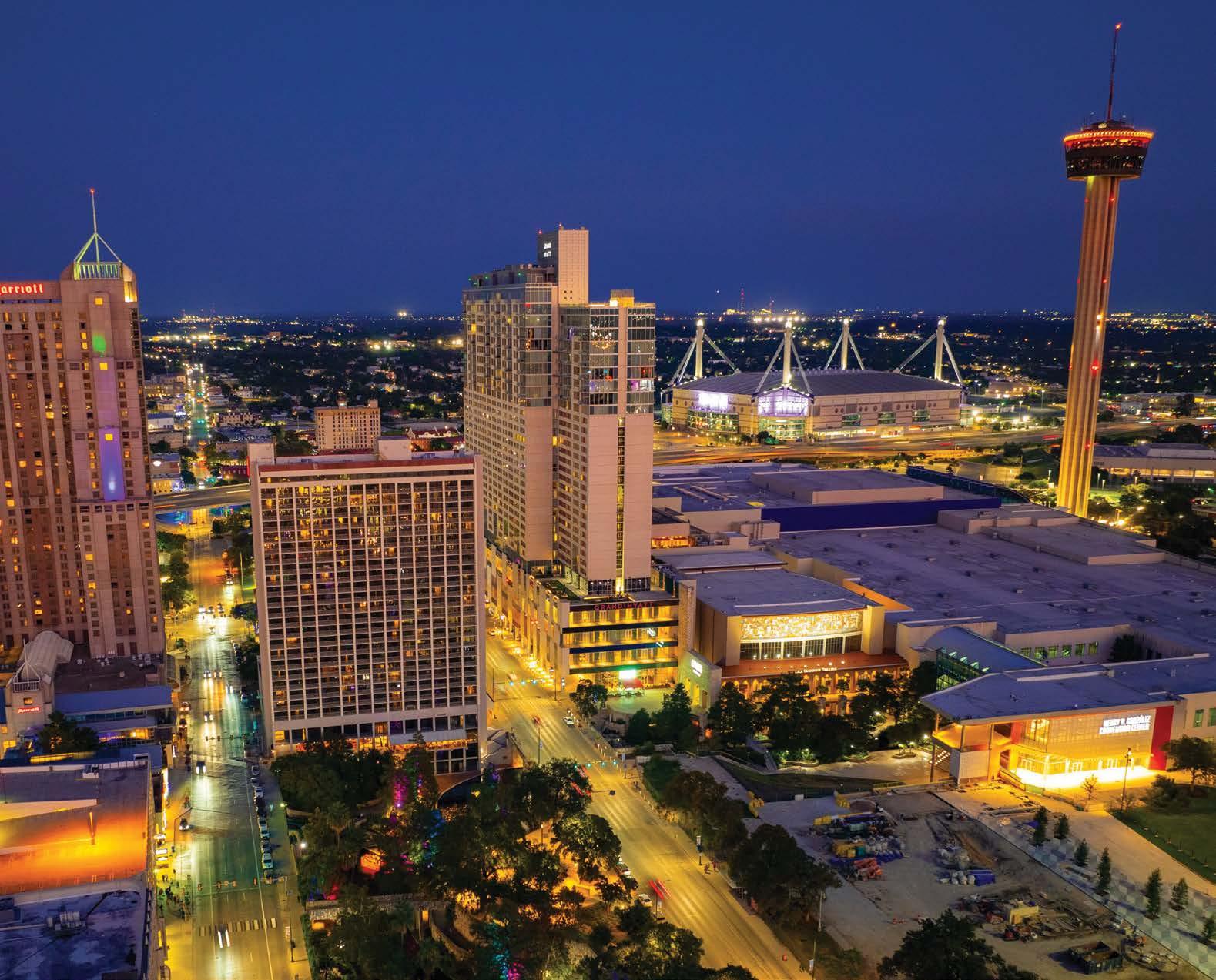
Trinity University’s ¡Hola, San Antonio! program is making it possible for Trinity students to explore the culture and arts scene of the city they call home.
Sponsored by the Carlos Alvarez School of Arts and Humanities, ¡Hola, San Antonio! brings students to art exhibits, films, dance performances, orchestra concerts, theatrical shows, and more throughout the year.
“Trinity is unusual in that it’s a small liberal arts college in a big city. The program helps take advantage of the sorts of events that a city provides,” says Classical Studies Professor Thomas Jenkins, Ph.D., who first pitched the concept for this program. “It also helps pop the ‘Trinity bubble’ and encourages undergrads to start a lifelong journey of appreciating the arts in their communities.”
Since Jenkins’ initial pitch, Dania Abreu-Torres, Ph.D., associate dean of the Carlos Alvarez School of Arts and Humanities, has helped expand the program as its new director. Additionally, thanks to a $25 million gift from Carlos Alvarez and his family to name the Carlos Alvarez School of Arts and Humanities this past fall, ¡Hola, San Antonio! will gain new funding that allows the program to cover even more ticket prices and transportation costs.
Tickets can be really expensive, so I was really excited to see that ¡Hola San Antonio! was covering the costs of these events, especially transportation costs, because I do not have a car on campus.”
–Eva Cheng ’26
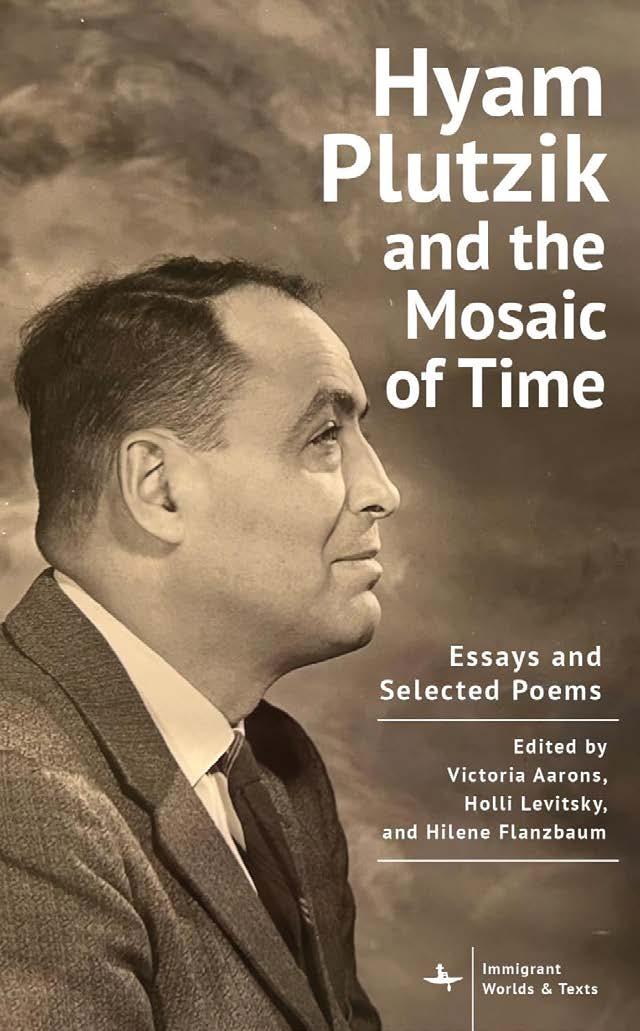


Welcome to the space dedicated to celebrating books authored, edited, or translated by Trinity University faculty. The selections for this issue were published between September 2025 and February 2026.
co-edited by VICTORIA AARONS, Ph.D.
English
Hyam Plutzik and the Mosaic of Time: Essays and Selected Poems
Academic Studies Press
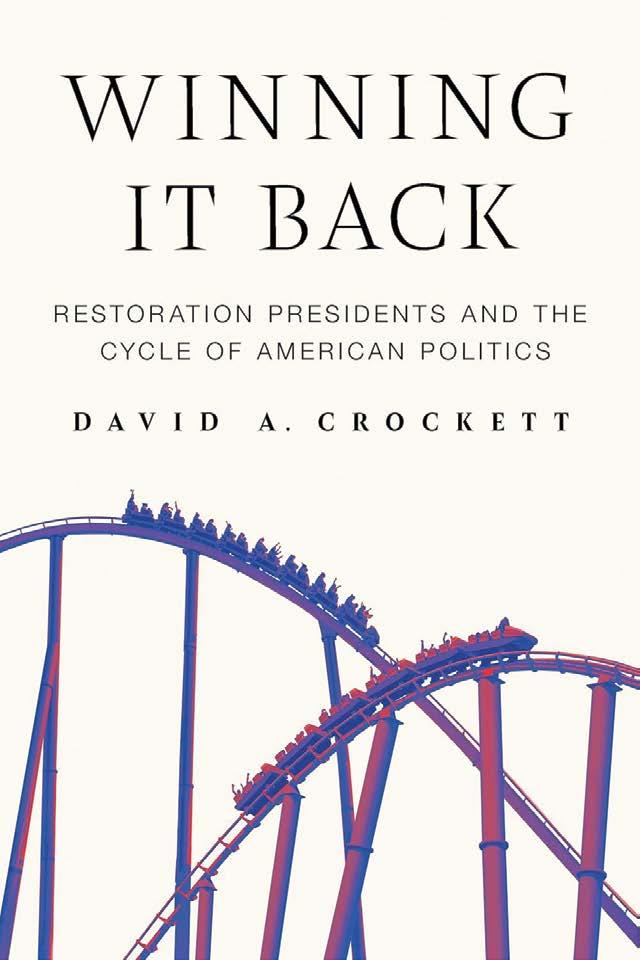
DAVID CROCKETT, Ph.D.
Political Science
Winning It Back: Restoration Presidents and the Cycle of American Politics Cornell University Press
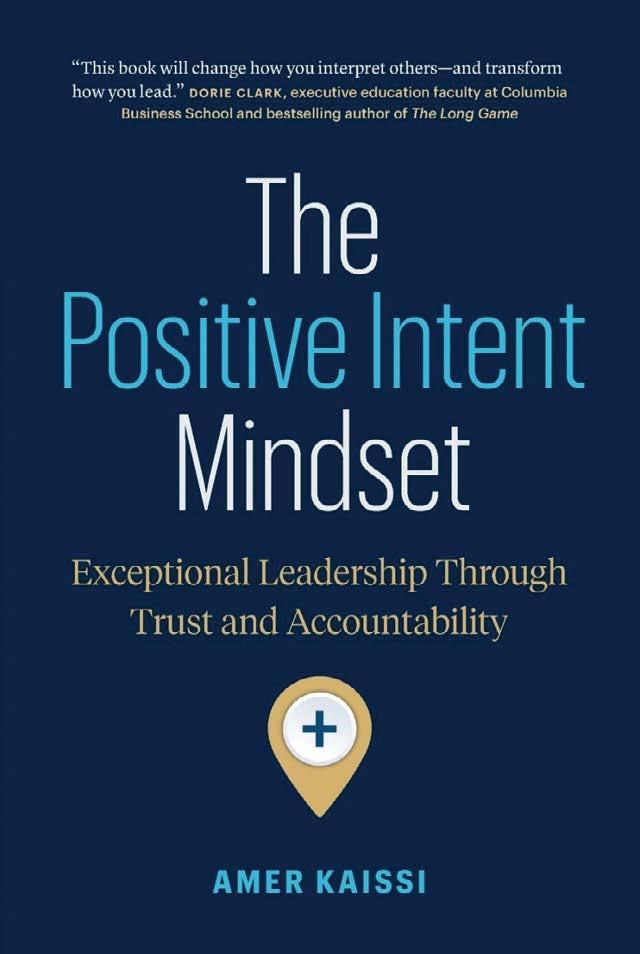
AMER KAISSI, Ph.D.
Health Care Administration
The Positive Intent Mindset: Exceptional Leadership Through Trust and Accountability Page Two
DAVID RANDO, Ph.D.
English
Artificial Fiction: Imagining Literary Possibility Beyond the Human Edinburgh University Press
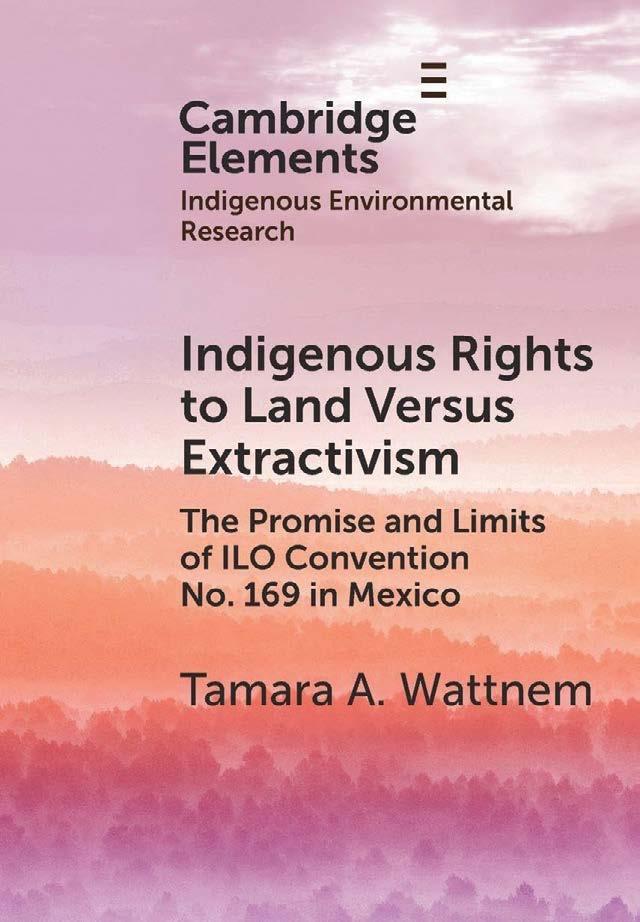
TAMARA WATTNEM, Ph.D.
Political Science
Indigenous Rights to Land Versus Extractivism: The Promise and Limits of ILO Convention No. 169 in Mexico
Cambridge University Press
co-translated by JIE ZHANG, Ph.D.
Modern Languages and Literatures
Time Tunnel: Stories and Essays by Eileen Chang
New York Review Books
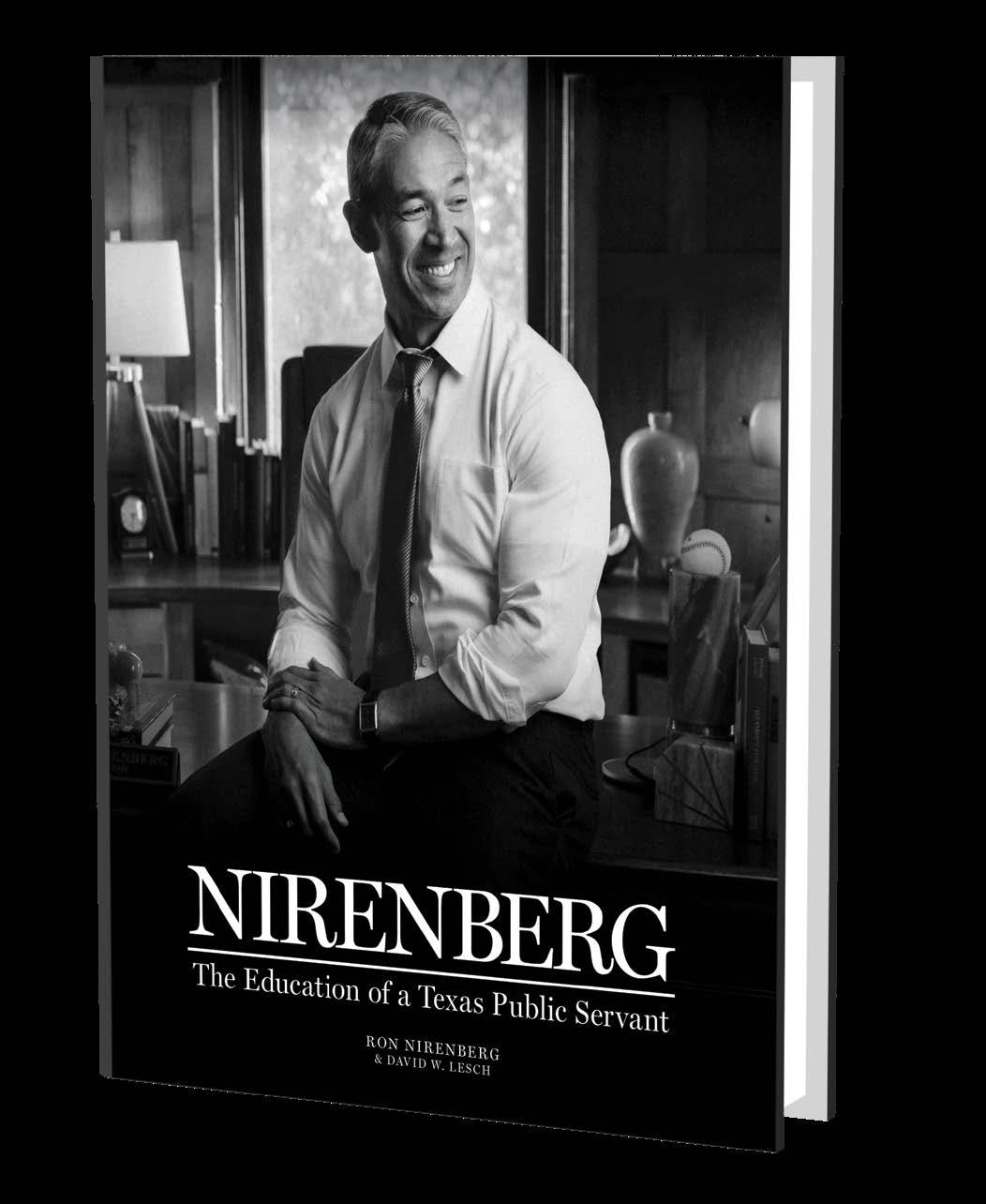
Trinity faculty Ron Nirenberg ’99 and David W. Lesch team up to tell the story of leading San Antonio
Trinity University Press’s new release , Nirenberg: The Education of a Texas Public Servant, offers a compelling portrait of Ron Nirenberg’s eight-year tenure as mayor of San Antonio, the seventh-largest city in the United States. In this candid memoir, Nirenberg ’99 reflects on the formative moments that shaped his path to public service and reveals how principled leadership and compassionate governance can unite communities and navigate any crisis.
Nirenberg joined Trinity University this academic year as the Calgaard Distinguished Professor of Practice in the Department of Communication. David W. Lesch, Ph.D., is the Ewing Halsell Distinguished Professor of History at Trinity and has published 18 books, including A History of the Middle East Since the Rise of Islam, Syria: A Modern History, and The Arab-Israeli Conflict: A History To craft Nirenberg: The Education of a Texas Public Servant, Lesch conducted interviews with Nirenberg, and the two worked together to refine the text and bring the story to life.
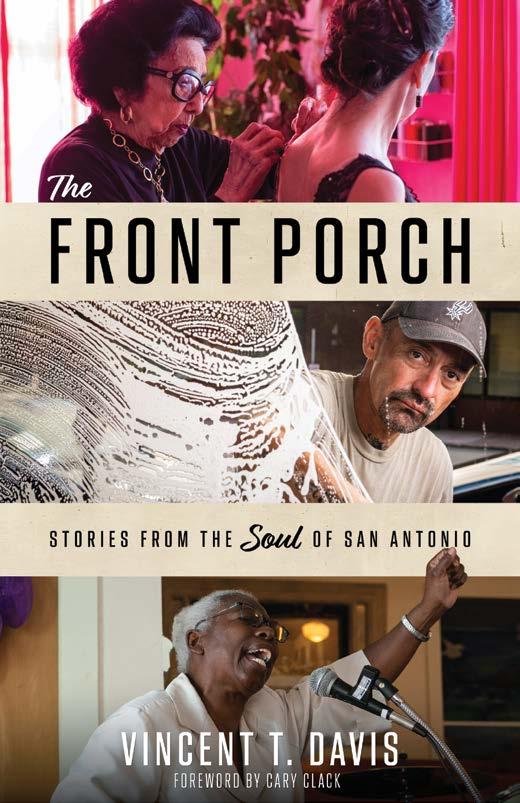
The Front Porch: Stories from the Soul of San Antonio by
Vincent T. Davis
This collection takes readers through San Antonio’s neighborhoods to trace the cultural and human legacy of a city built on the margins.
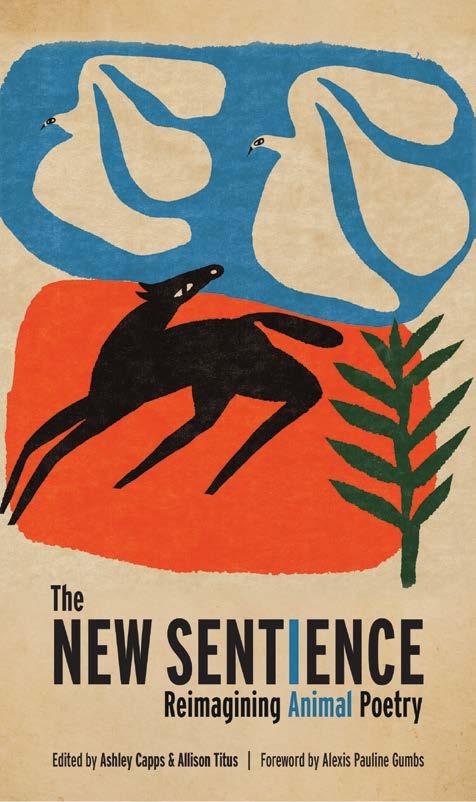
The New Sentience: Reimagining Animal Poetry edited by
Ashley Capps and Allison Titus
This poetry anthology highlights animal sentience and subjectivity, compelling an earnest reexamination of what humans owe our more-than-human kin.
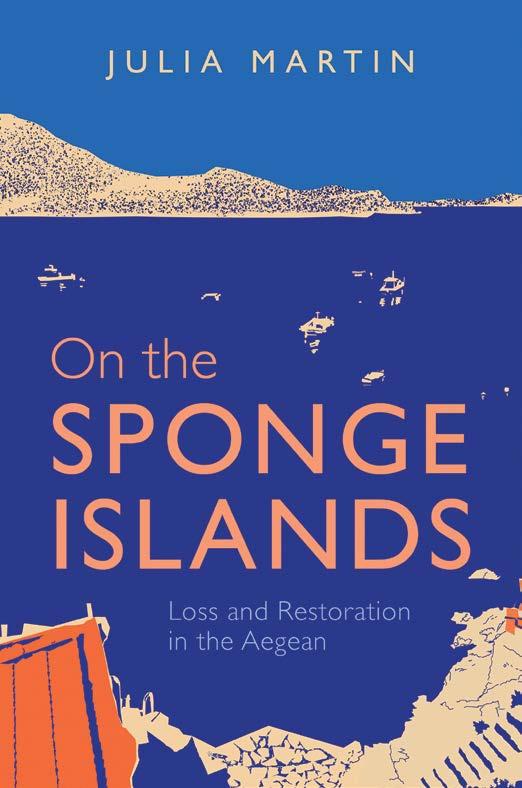
On the Sponge Islands: Loss and Restoration in the Aegean by
Julia Martin
Martin explores the history and culture of Rhodes, Symi, Halki, Kalymnos, and Patmos as she weaves together natural history, personal recovery, and environmental reckoning.
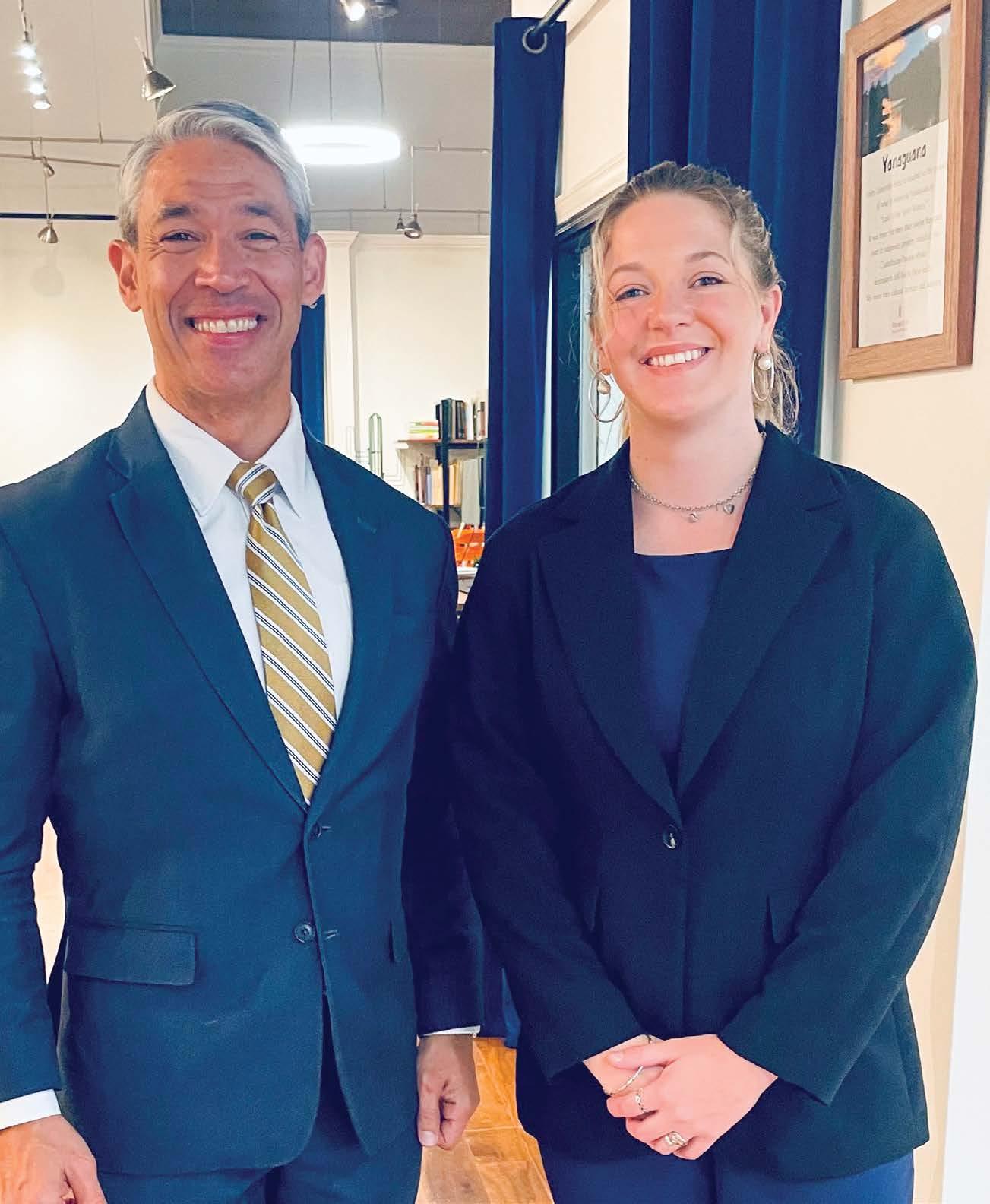

Earlier this spring, Ron Nirenberg ’99 sat down with Lily Brennan ’25 (right), the executive producer of Trinity University Press’s Tripod podcast, to discuss his new book and the importance of learning about and connecting with your local community.
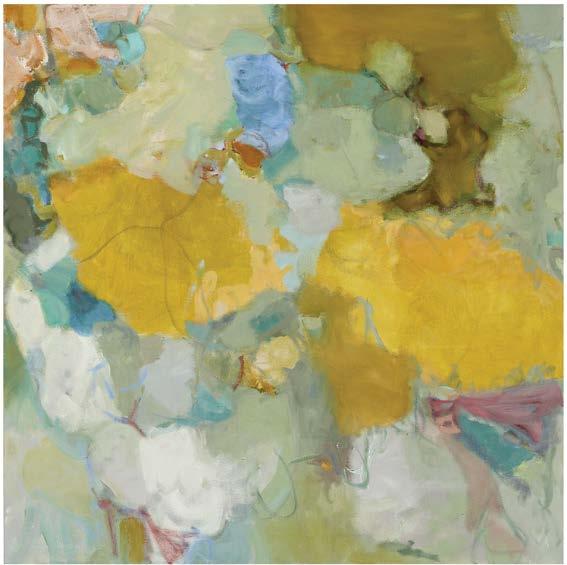
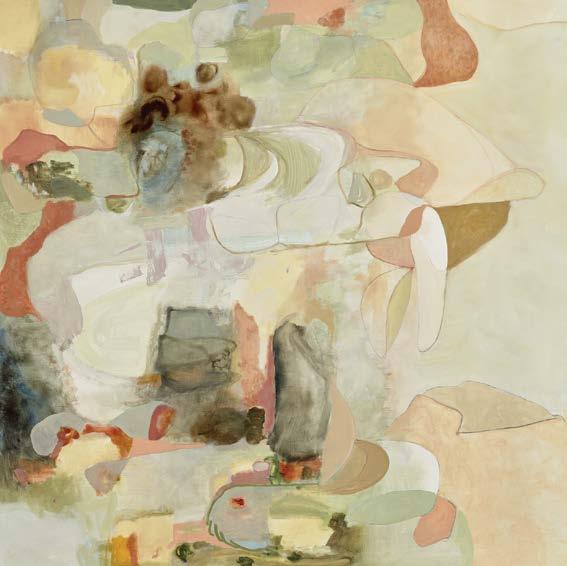
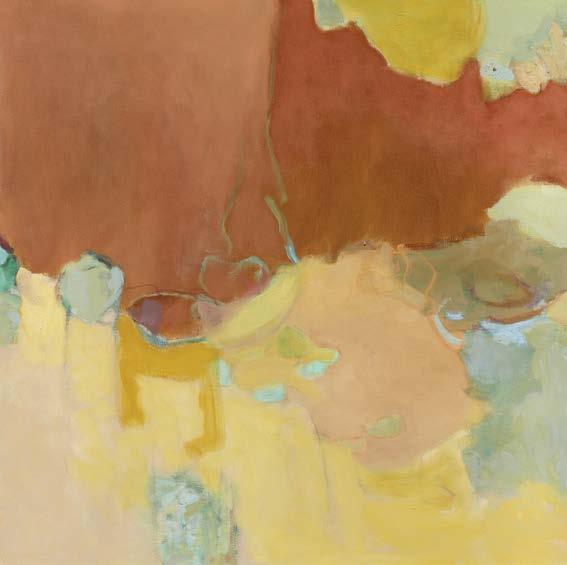
MARCH 16-MAY 29
LIBROS/ARTE GALLERY 2500 N. Main Ave.
Artist Terrell James and poet Barbara Ras unite for an exhibit in striking creative dialogue. Lines from Ras’ reflective poem, “You Can’t Have It All,” pair with paintings by James, forming a series of visual-poetic combinations that deepen and echo each other.
Writing has long been a tool to understand the world—and ourselves. Tripod, the podcast from Trinity University Press, brings together authors, activists, publishers, and more to explore how we find, understand, and protect our sense of place, here on Earth and beyond.
To me, the essence of both journalism and public policy is to believe in and appreciate the dignity of other people regardless of how different they are from you … Difference is what makes us strong. It’s what makes life worth living.” – Ron Nirenberg ’99 on Trinity University Press’s Tripod podcast Tune in to Tripod at tripodcast.org

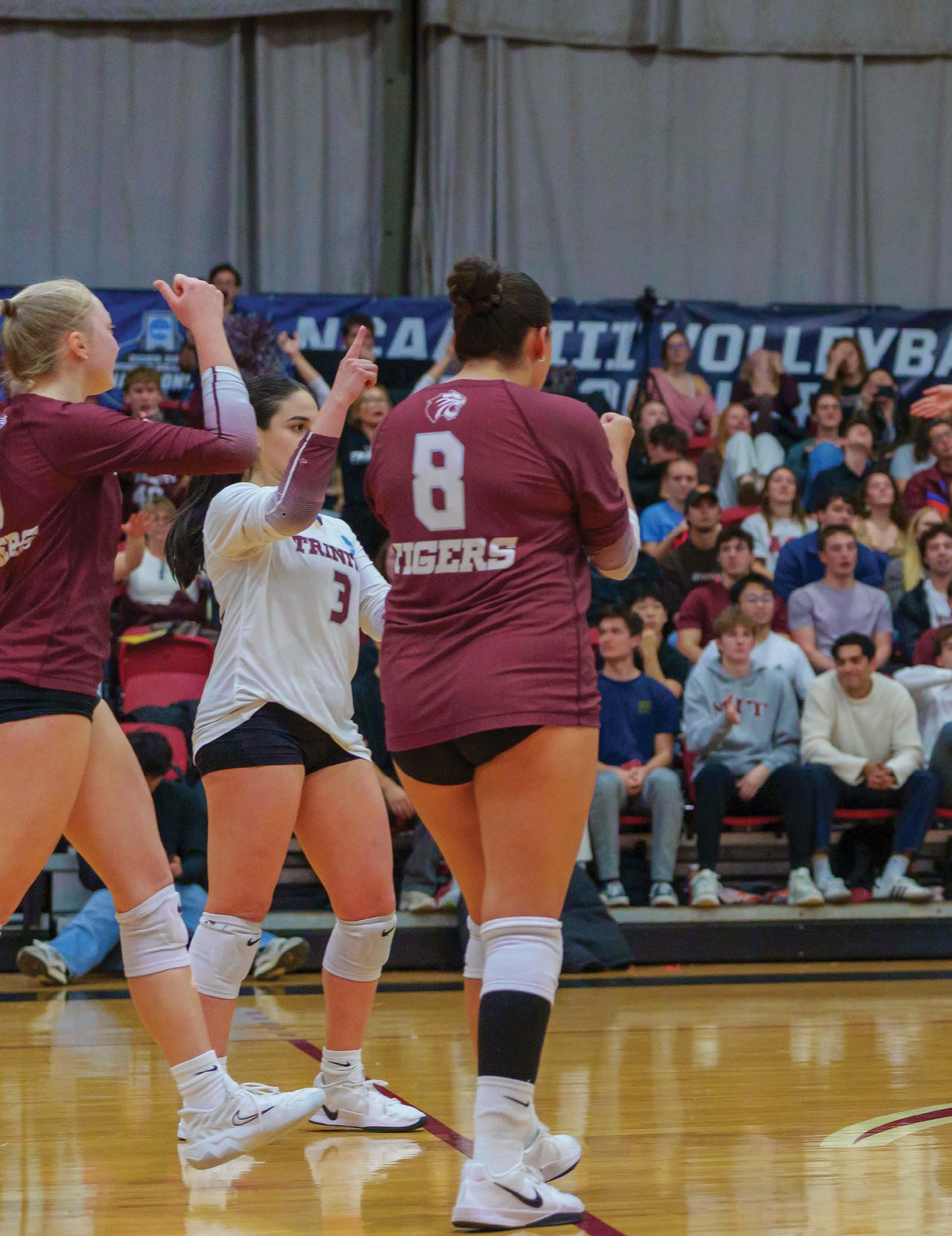
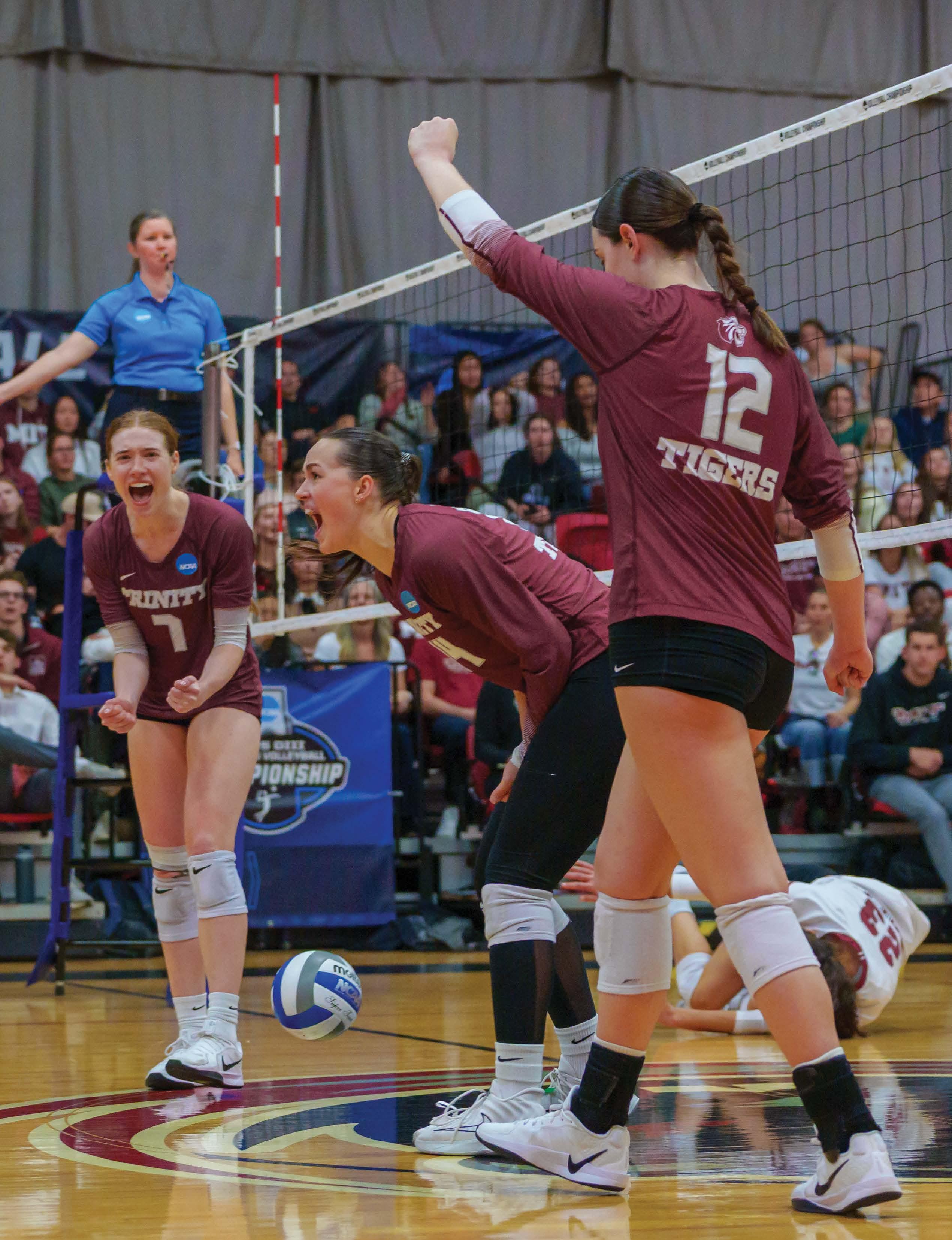
Scan to relive the energy of the gamewinning point!

Meet Trinity Athletics’ team physician, Hector Lopez ’00, M.D.
by Kenneth Caruthers
’15
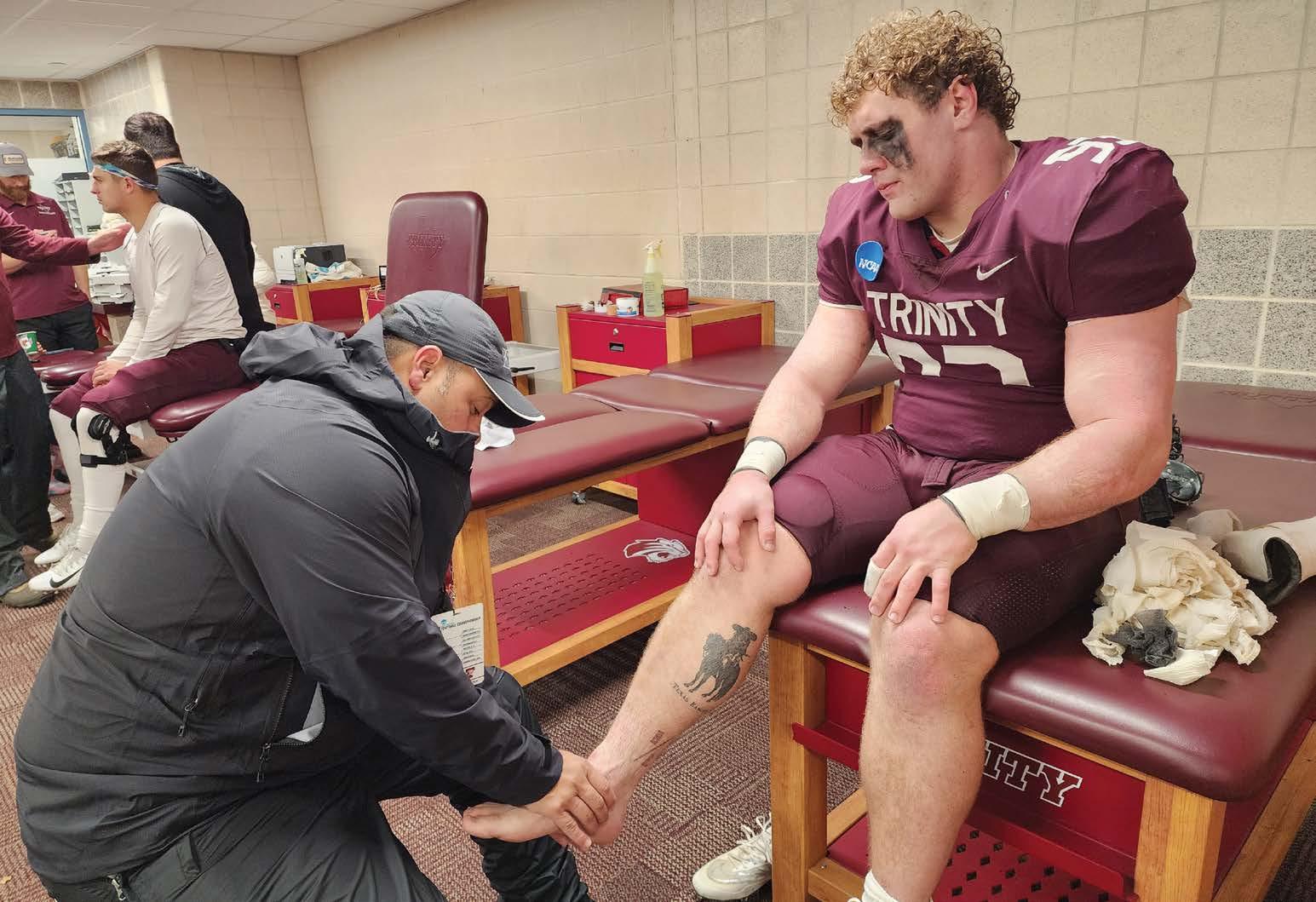
While the Tigers are playing hard on the field, Hector Lopez ’00, M.D., is there to support them on the sidelines. Board-certified in family medicine with a Certificate of Added Qualifications in sports medicine, Lopez has volunteered as a team physician for Trinity University Athletics since 2014. He treats student-athletes from each of Trinity’s teams at the Bell Athletic Center every week, and he is on the sidelines at several football games throughout the season.
In addition to serving Trinity, Lopez is a partner at his private practice, Sports Medicine Associates of San Antonio. He has served on the medical staff for San Antonio FC, the San Antonio Spurs, the San Antonio Brahmas, Texas A&M University-San Antonio, UT San Antonio, the Valero Open, Ballet San Antonio, and the San Antonio Marathon.
You don’t get very far without a helping hand, and I’ve always made it a point to pay it forward.”
Beyond the sidelines, Lopez has mentored several Trinity student-athletes and has connected with Elseke Membreño-Zenteno, program associate for the Mexico, the Americas, and Spain (MAS) program, to sit in on some of the MAS student gatherings to lend alumni support and guidance.
“I enjoy working with the Trinity students because I can serve as a sounding board for them and be a mentor like the ones I had,” Lopez says. “You don’t get very far without a helping hand, and I’ve always made it a point to pay it forward.”
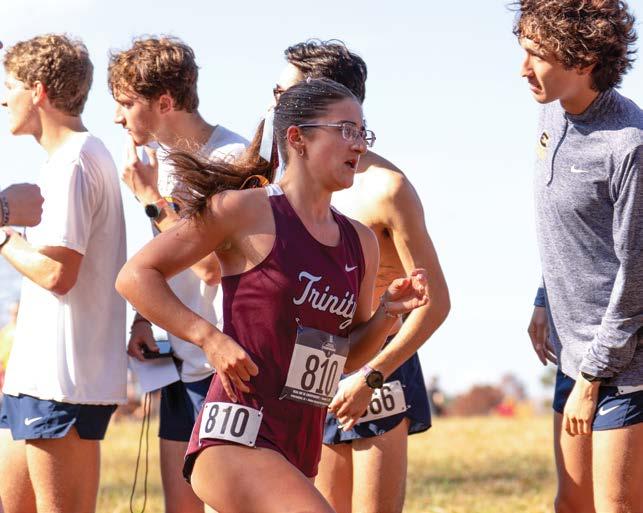
In her 12th season as head coach, Emily Daum ’09 guided the Trinity cross country teams to a triumphant return to the Southern Athletic Association (SAA). The men’s team won the conference championship and placed eighth at the NCAA West Regional, while the women’s team also swept the SAA title but finished fourth at the regional meet to secure a team berth at the National Championships for the first time since 2017, where they placed 27th overall. The Tigers combined for 10 All-SAA selections and saw five athletes—Gianna Keena ’26, Sophia Munoz ’27, Kate Boone ’28, and Emerson Voldan ’28 from the women’s squad and Nathaniel Trevino ’26 from the men’s squad—earn U.S. Track & Field and Cross Country Coaches Association (USTFCCCA) All-Region honors. Both programs were also recognized for their academic excellence as USTFCCCA All-Academic Teams, with six individuals, Munoz, Voldan, Elijah Bliss ’29, Logan Nasky ’26, Cali Good ’27, and Anne Snider ’28, receiving All-Academic awards.
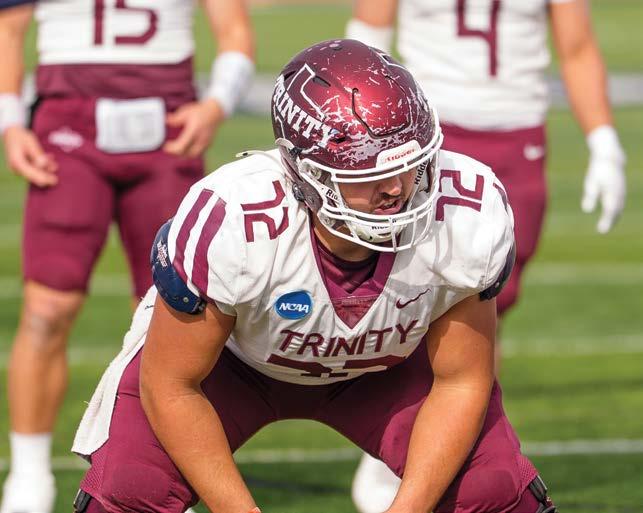
Head Coach Jerheme Urban ’03 led the 2025 Tigers to a 10-2 overall record, including a 6-1 mark in SAA play, and an NCAA Tournament berth for the fifth consecutive season. After narrowly missing out on the SAA Championship, the Tigers earned an at-large bid to the national tournament and a first-round bye. In the second round, Trinity defeated local Texas rival Hardin-Simmons University, 34-24, to advance to the third round, where they suffered a hard-fought 31-23 loss to fellow SAA opponent Berry University, finishing the season ranked No. 16. Trinity placed 20 players on the All-SAA team and produced five D3football.com All-Region selections. Three Tigers earned AP AllAmerican honors, with T.J. Scannell ’26 and Alejandro Tavarez ’27 being named to the third team and Caleb Bayer ’26 earning first-team recognition. Bayer’s standout season also included D3football.com and American Football Coaches Association (AFCA) First Team All-American honors, and he was named to Dave Campbell’s Texas Football NonFBS All-Texas Team alongside Tavarez. Capping an extraordinary career, Bayer was awarded the NCAA Division III Rimington Trophy, recognizing the nation’s top center. Academically, the Tigers were equally impressive, earning seven College Sports Communicators (CSC) Academic All-District honors and two CSC Academic First Team All-American selections, awarded to seniors Scannell and Bayer.
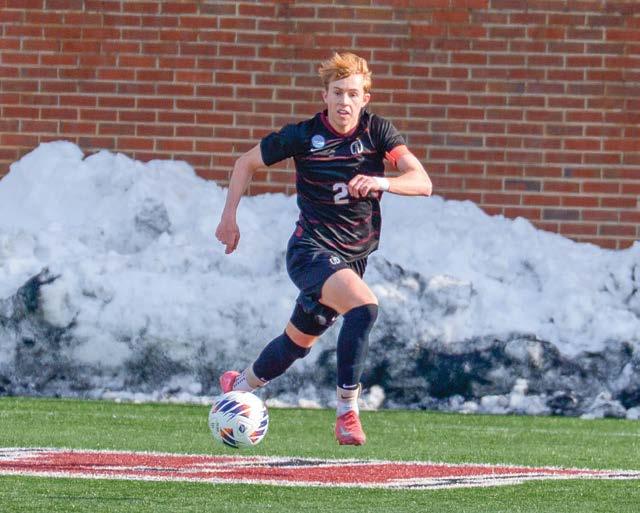
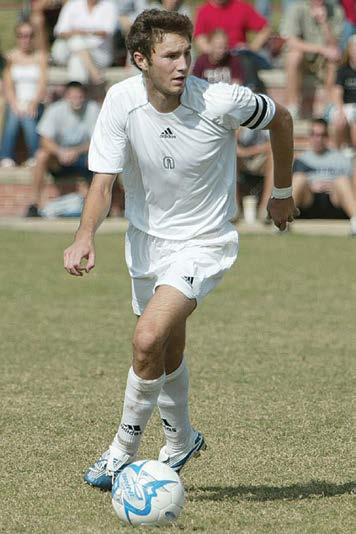
Head Coach Paul McGinlay led the Trinity men’s soccer team to a 20-2-1 overall record, highlighted by a perfect 7-0 conference mark. After capturing the SAA Regular Season title, the Tigers earned an at-large bid to the NCAA Tournament and made a historic run to the NCAA Division III National Championship match for the first time since 2007. The postseason featured marquee victories over No. 12 Washington University in St. Louis, No. 2 Augsburg University, and No. 6 Emory University in a 1-0 semifinal triumph. Trinity’s season concluded in dramatic fashion with a 2-1 overtime loss to No. 1 Tufts University in the national final. The Tigers’ remarkable season produced 13 All-SAA selections, including Adam Knutson ’26 as SAA Offensive Player of the Year and Max Salinas ’29 as SAA Rookie of the Year. Trinity also earned five United Soccer Coaches (USC) All-Region honorees and two USC All-Region Scholar selections. Luke Chandler ’26 was named a USC Second Team Scholar All-American and received a $10,000 NCAA Postgraduate Scholarship. Additional standouts Samuel Theiss ’26 and Knutson garnered USC First Team All-American honors, with Theiss also earning USC First Team Scholar All-American and CSC Second Team Academic All-American recognition. Knutson capped his stellar campaign by being named the 2025 USC Division III Player of the Year, becoming just the second player in program history to receive the prestigious honor.
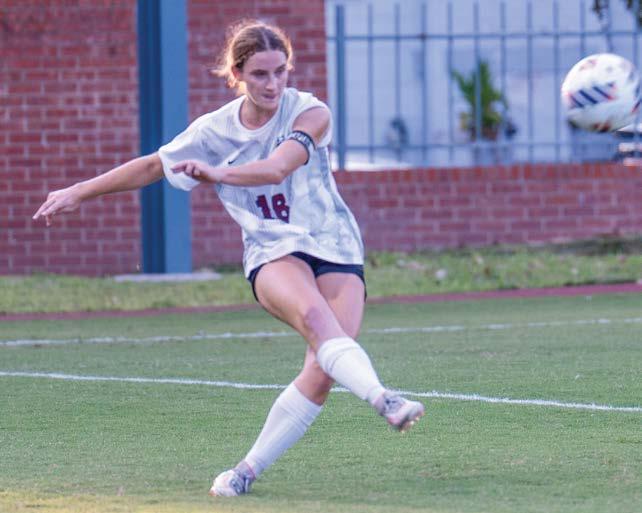
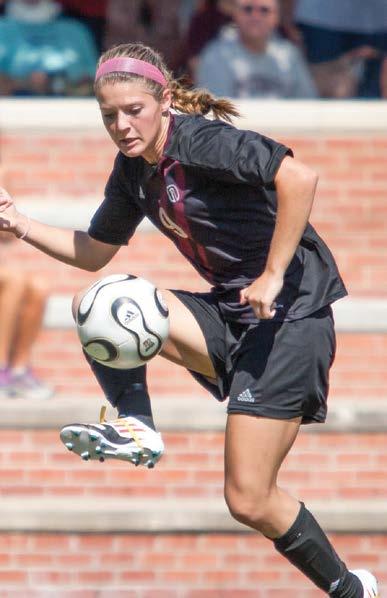
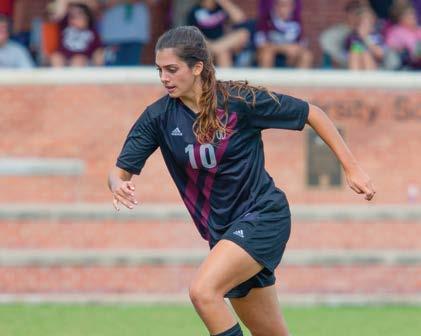
In his ninth season as head coach, Dylan Harrison ’02 led the Trinity women's soccer team to the second round of the NCAA National Tournament. The Tigers posted a 14-2-4 overall record, including a dominant 5-0-2 mark in SAA play in their first season competing in the conference. Trinity captured both the SAA Regular Season and SAA Tournament titles, punctuating the championship run with a 3-0 victory over host Rhodes College in the tournament final. The titles earned the Tigers an automatic bid to the NCAA Tournament, where they hosted the opening round of matches. Trinity opened postseason play with a 2-0 win over Hardin-Simmons University before suffering a narrow 2-1 overtime loss to No. 17 California Lutheran University in the second round. The Tigers’ season produced 10 All-SAA selections, including Alex Doran ’28 as SAA Offensive Player of the Year, Ilsa Newland ’26 as SAA Defensive Player of the Year, and Lila Brackin ’29 as SAA Rookie of the Year. Trinity also earned five USC All-Region honors. On the academic side, Hanna Khan ’26 was named USC Second Team Scholar All-Region, while Newland and Bri Werner ’26 received USC First Team Scholar All-American and USC Third Team Scholar All-American recognition, respectively. Newland capped an exceptional season by earning USC Second Team All-American honors and a $10,000 NCAA Postgraduate Scholarship.
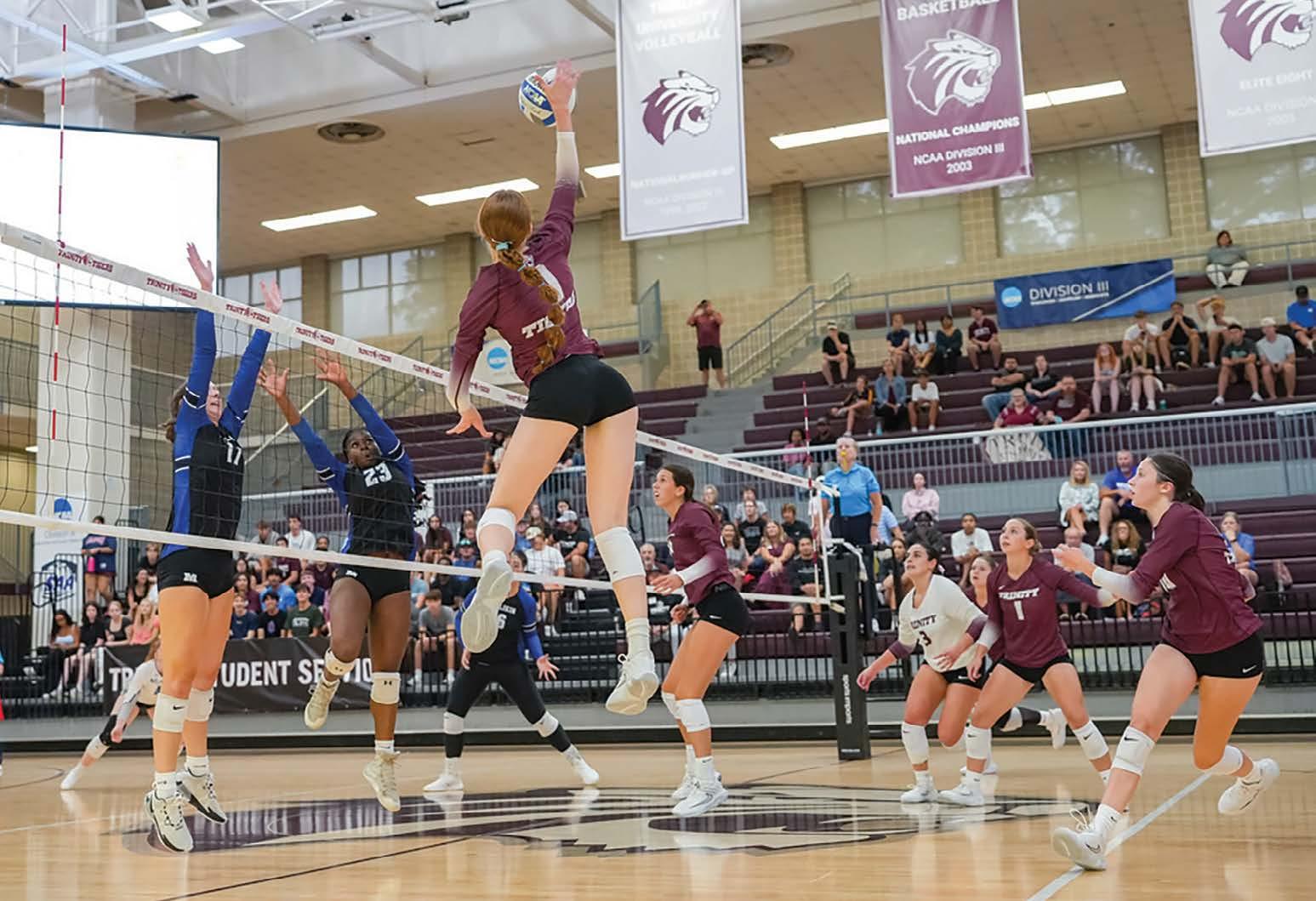
Reagan Whatley ’26 bumps, sets, spikes Trinity Volleyball to success as team captain
by Kassandra Falcon ’27
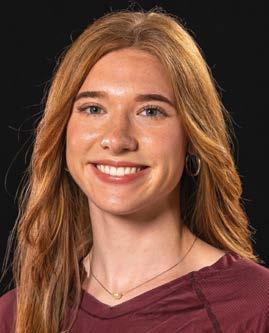
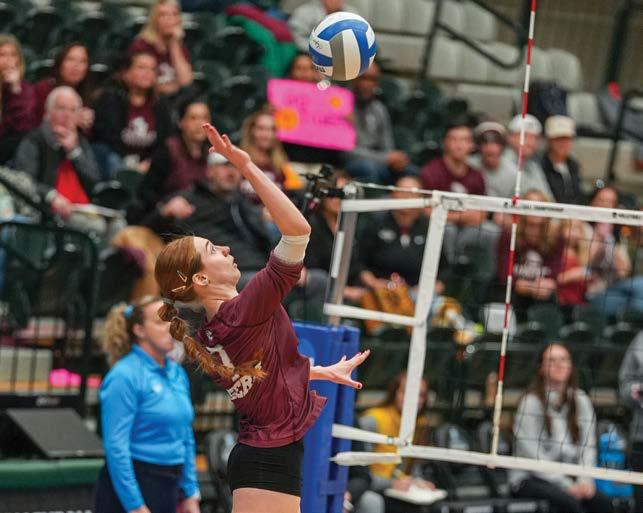
For three years, neuroscience major and outside hitter Reagan Whatley ’26 has led Trinity University Volleyball with grit, heart, and dedication as team captain. This season, she helped her team win the Southern Athletic Association (SAA) Regular Season Championship and advance to the NCAA Semifinals for the fifth time in school history.
“Trinity’s volleyball team is consistently ranked among the top in the nation. While highly competitive, it’s also incredibly supportive,” Whatley says. “Everyone is your biggest cheerleader, always pushing you to improve while celebrating your successes.”
Being a captain has shaped me as a teammate, a leader, and a person.”
This season, Whatley made history as the first Tiger volleyball athlete to be selected as a Second Team Academic All-American by the College Sports Communicators. She was also named an American Volleyball Coaches Association First Team All-American and First Team All-Region player, as well as the SAA Athlete of the Year and a First Team All-SAA performer. Whatley is also one of three Trinity students from the fall season to receive a $10,000 NCAA Postgraduate Scholarship. Whatley calls being a captain a “wonderful experience” because she’s been able to help the team grow while learning a lot about herself in the process.
“Being a captain has shaped me as a teammate, a leader, and a person,” she says. “I’ve learned how to communicate effectively, stay calm under pressure, and adapt to challenging situations.”
In her 41st season as head coach, Julie Jenkins led the Tiger volleyball team to a 26-6 overall record, including a dominant 13-1 mark in SAA play. After falling just short in the SAA Tournament final, the Tigers earned an at-large bid to the NCAA Tournament, where they made an impressive run to the NCAA Division III Quarterfinals for the fifth time in seven years. The postseason featured marquee victories over No. 9 MIT and No. 7 Colby College, with their postseason run ending in the semifinals with a narrow loss to the eventual national champion, the University of Wisconsin-Oshkosh. Trinity featured six All-SAA performers and five CSC Academic All-District honorees. Among the standouts were Courtney Pope ’27 and Reagan Whatley ’26. Both earned American Volleyball Coaches Association (AVCA) All-Region First Team honors, with Pope also receiving AVCA All-American Honorable Mention recognition. Whatley added CSC Second Team Academic All-American and AVCA First Team All-American honors.
9
This October, Trinity Athletics will induct seven individuals and two teams to its Hall of Fame
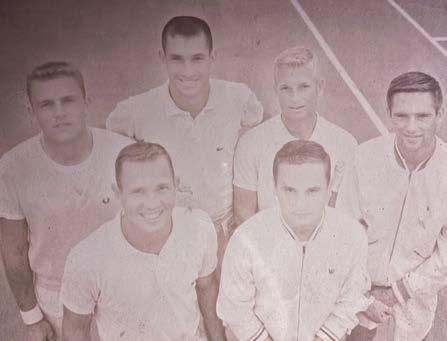
1. 1963 MEN’S TENNIS TEAM
Recognized by Inside Tennis Magazine as one of the greatest teams in college tennis history
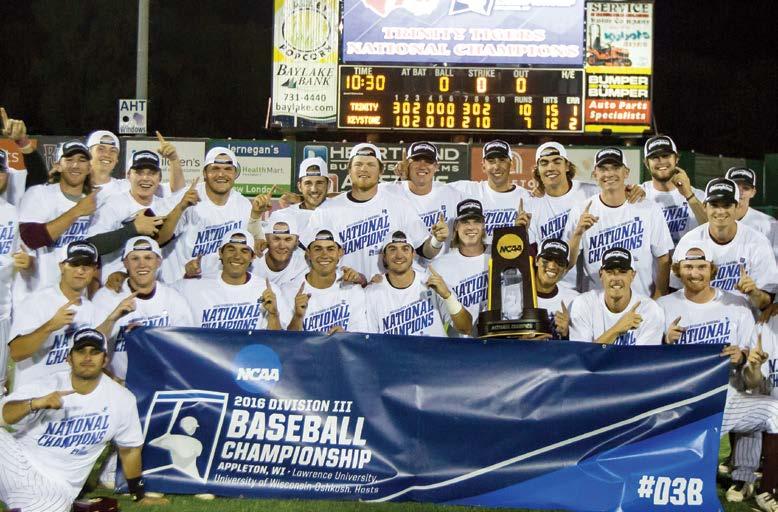
2. 2016 BASEBALL TEAM
Won the program’s first NCAA Division III Championship, going 44-7 and winning its final 17 games to sweep the postseason
3. KYLE ALTMAN ’09
Men’s Soccer
Two-time All-American who led the Tigers to the NCAA Championship game in 2007, where they finished as the national runner-up (Read more about Altman on p. 66.)
4. EMILY JORGENS CARDONE ’15
Women’s Soccer
Two-time All-American and two-time Academic All-American who led Trinity to the national title game in 2013 and still holds numerous school records (Read more about Jorgens Cardone on p. 67.)
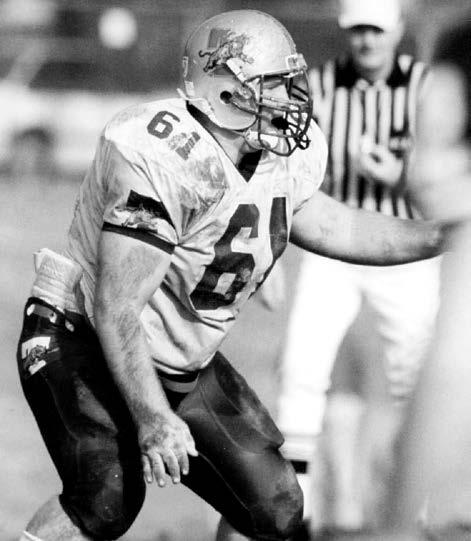
5. DAVID CONEY ’00
Football
Two-time All-American and 1998 Division III
Offensive Lineman of the Year who led Trinity to back-to-back appearances in the NCAA Semifinals
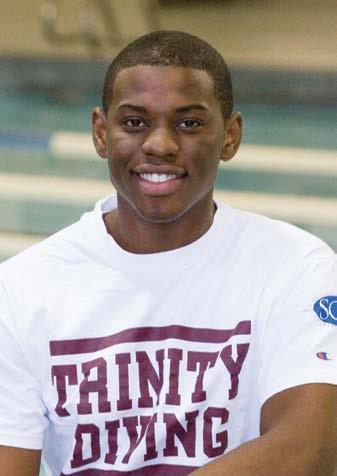
6. RYAN COOK ’08, M’09
Men’s Diving
Won seven All-American awards over four years competing at NCAA Championships, highlighted by finishing third in 3-meter and ninth in 1-meter in 2005
7. KELSEY FALCONE ’15
Women’s Soccer
Two-time All-American and 2014 SCAC Offensive Player of the Year who led Trinity to a second-place finish in the NCAA Playoffs in 2013
8. BETSY GERHARDT PASLEY ’77
Multi-Sport/Contributor
Pioneer of women’s sports as a student-athlete and recently wrote a groundbreaking book about the history of Trinity women’s sports
9. LINDSAY SMITH ’03
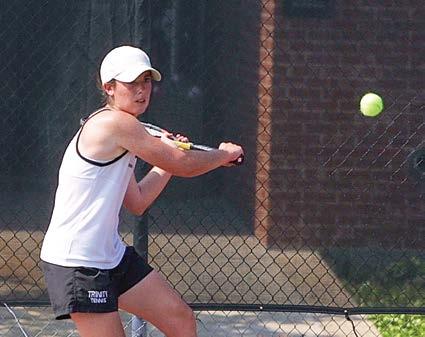
Women’s Tennis
Four-time All-American who led Trinity to the 2000 NCAA III Championship and three appearances in the NCAA Semifinals, while also qualifying for the NCAA Singles Championships all four years
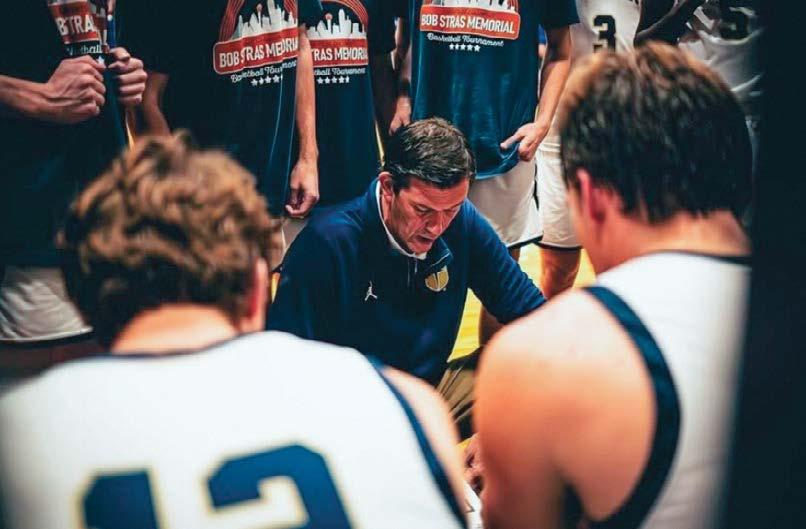
Explore the Hill family’s enduring impact on Trinity Basketball and beyond
by James Hill ’76
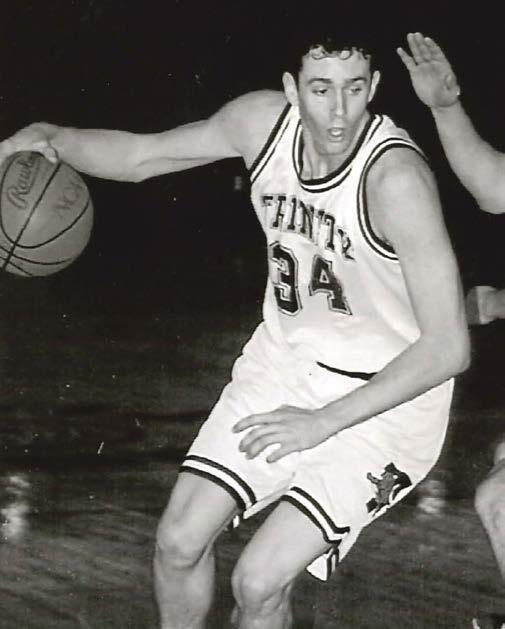
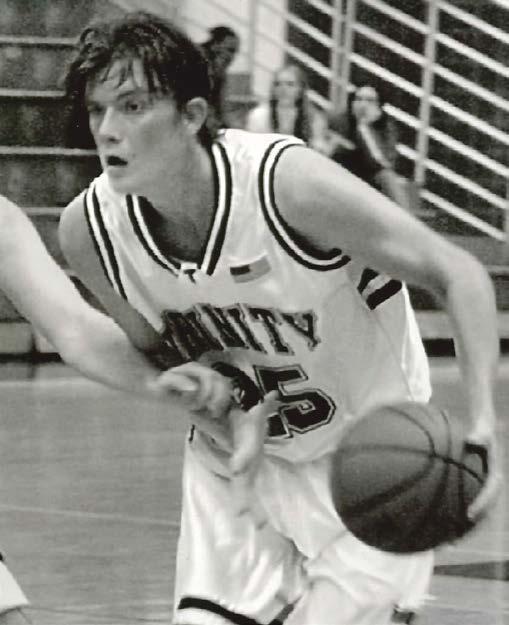
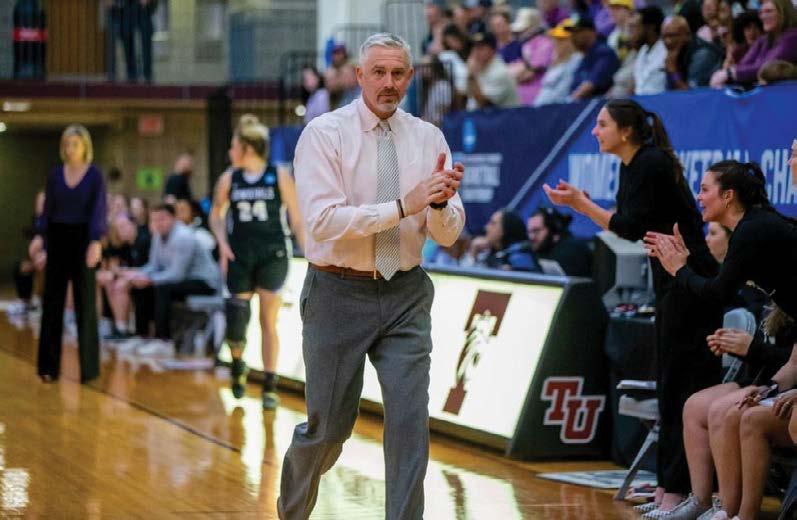
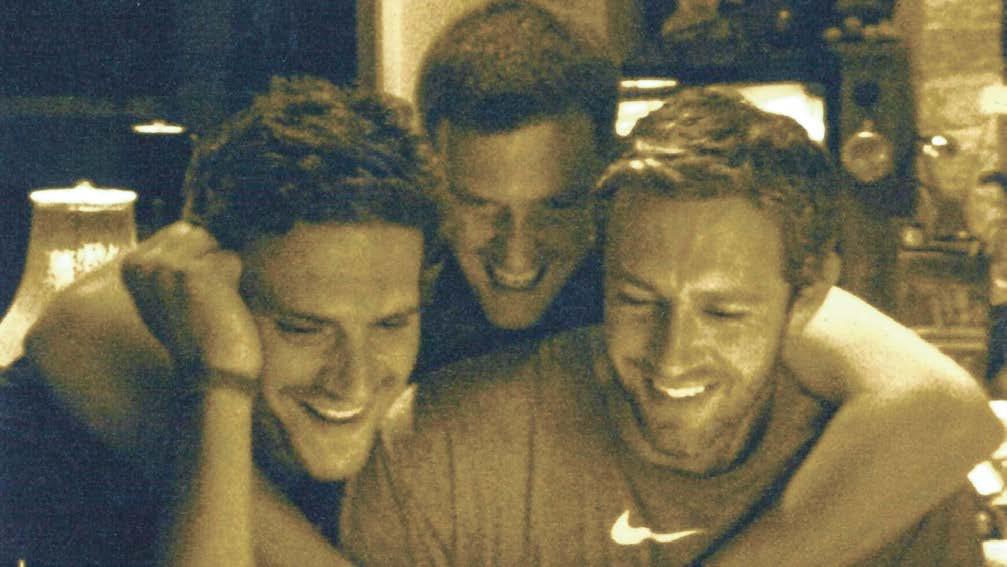
The Hill brothers—Cameron ’99, Chris ’02, and Casey ’07—are part of a basketball dynasty rooted firmly in Trinity University.
In his 14th campaign as Trinity's women’s basketball head coach, Cameron is the program’s alltime leader in career victories. His winning mark of 81.3% ranks him third in NCAA Division III history among coaches with 10 or more years of experience. Cameron’s teams have produced 13 All-Americans and made eight NCAA appearances, advancing to the quarterfinals during the 2021-22 season.
After transferring to Trinity, Cameron became a Tiger standout, earning All-SCAC honors twice and helping Trinity reach its first-ever NCAA Tournament in 1998. He graduated in 1999 with a bachelor’s degree in speech communication.
“Graduating from Trinity gave me a huge advantage in my current position,” Cameron says. “Having a frame of reference to this place is an absolute cheat code.”
While Cameron leads at the collegiate level, Chris is a high school powerhouse now in his 18th season as head coach at Jesuit College Preparatory School of Dallas. Chris began his coaching career at the University of Dallas. He returned to Trinity as an assistant men’s basketball coach from 2005-08 and helped guide the Tigers to a pair of NCAA Tournament appearances. He even had the opportunity to coach his younger brother, Casey, during his senior year.
Trinity is a great place that will set you up well for life.”
Chris graduated from Trinity with a bachelor’s degree in communication in 2002. Along the way, he was a major contributor to the Tigers, who won a SCAC title during his playing days and also made an NCAA Tournament appearance.
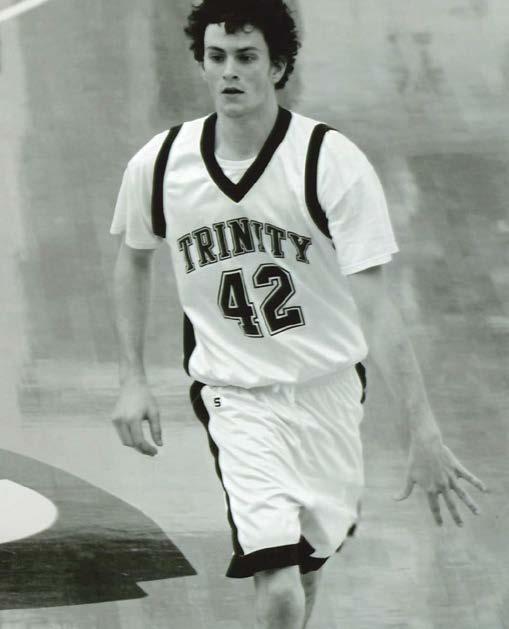
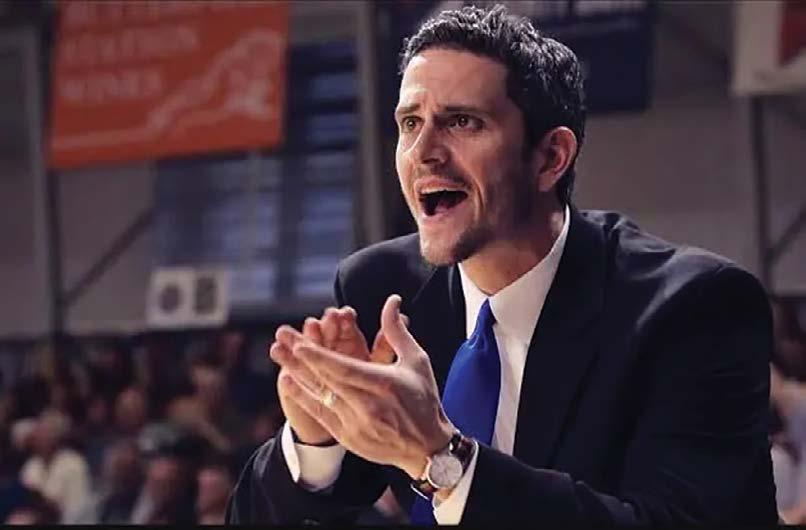
“Trinity is a great place that will set you up well for life,” Chris says. “Coaching is definitely a labor of love. It’s a great way to spend your time, but you had better love the sport and love working with teams!”
The youngest Hill brother, Casey, has carved out a career at the professional level. Since November 2020, he has served as an assistant coach with the NBA’s New Orleans Pelicans, following a previous assistant role with the Los Angeles Clippers from 2018-20. Casey was an assistant with the Santa Cruz Warriors (affiliated with Golden State) in 2011-12 and served as the head coach from 2013-17. He led Santa Cruz to the 2015 D-League Championship.
Casey earned a bachelor’s degree in communication from Trinity in 2007. During his time as a Tiger standout player, Trinity advanced to the NCAA Division III Playoffs
three times. The 2004-05 squad advanced to the NCAA Elite Eight round. Trinity also captured two SCAC Championships with Casey as a contributor.
“Anyone who attends Trinity will be prepared for the real world,” Casey says. “I have certainly applied what I learned at Trinity to my current position.”
From NCAA gyms to NBA arenas, from Texas high school courts to international leagues, the Hill brothers have followed different paths, but all lead back to the same foundation. Built on family, preparation, and a deep connection to Trinity University, the Hill legacy continues to shape the game, one generation at a time.
Top-five ranking marks the highest standing for Trinity Athletics in more than a decade
Following one of its most successful fall seasons, Trinity University Athletics landed in fifth place out of more than 400 NCAA Division III schools in the Learfield Directors’ Cup. The Learfield Directors’ Cup, established by the National Association of Collegiate Directors of Athletics and USA Today, recognizes the nation’s top collegiate athletic programs based on their performances in NCAA Championships. The fifth-place standing after the fall is the best for the Tiger Athletics program since the 2013-14 school year.
This fall was one of the most successful sports seasons in recent memory, injecting a boost of energy and excitement into Trinity student-athletes and coaches as well as supporters both on and off campus. Two teams advanced to the NCAA Semifinals, and five fall sports teams scored points for the first time since 2017.
Trinity scored points in Women’s Cross Country, Football, Men’s Soccer, Women’s Soccer, and Volleyball during the fall, totaling 334 points. This point total is the second-highest for the fall sports teams in school history, trailing only the 339 points earned in the fall of 2002.
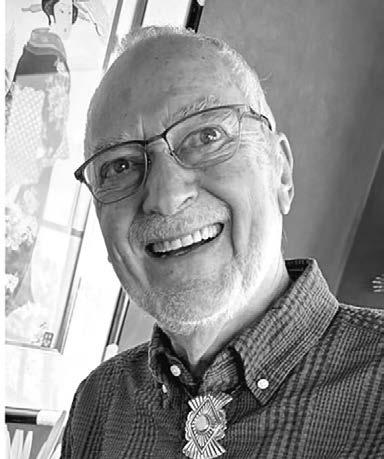
Karl H. Kregor, Ph.D., professor emeritus of English literature, died on October 20, 2025. He was 87.
Kregor spent more than 25 years inspiring students as a professor of English literature at Trinity University, where he helped shape the interdisciplinary course “The Human Quest.” He also developed the innovative course “Literature and the Senses,” using a workshop approach that invited students to explore different literary texts through the lens of their senses, rather than just their words.
After retiring, he served as a train conductor on the New Mexico tour route from Santa Fe to Lamy, volunteered as a lecturer, and eventually became president of the RENESAN Institute for Lifelong Learning in Santa Fe, New Mexico. Through the RENESAN Institute, Kregor continued to teach and explore new ideas, sharing his enthusiasm for art and history. In 2022, his passion for discovery led him to write James Sicner’s “Eternal Vigilance”: An Illustrated Narrative to the World’s Largest Photo-Collage Mural, a reflection of his deep belief in the power of creativity and knowledge to connect generations.
Kregor is survived by his wife, Ellen; his sister; his brother; his two children and their spouses; and his two grandchildren.
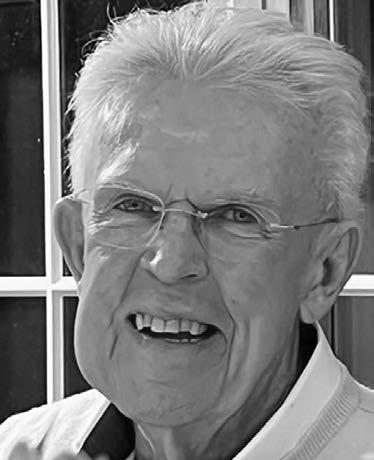
Paul William Kelleher, Ed.D., Norine R. Murchison Distinguished Professor Emeritus of Education, died on December 24, 2025. He was 82.
After principalships and superintendencies in the Northeast, Kelleher came to Trinity, where he served as the Norine R. Murchison Distinguished Professor and chair of the Department of Education from 2001 to 2011.
Throughout his tenure, Kelleher served as the director for the Center for Educational Leadership, during which he helped strengthen the Trinity Principals’ Center. With funding from three National Science Foundation grants (one in 2003 and two in 2009) and in collaboration with STEM faculty at Trinity, Kelleher helped create the Robert Noyce Scholarships and the Noyce Teaching Fellows programs. These programs supported university students in STEM to become teachers, career-changing candidates to participate in Trinity’s Master of Arts in Teaching program, and partnerships with the San Antonio Independent School District for STEM teachers’ professional development.
Kelleher is survived by his wife, Peggy; their son; Kelleher’s three children; his five grandchildren; and four great-grandchildren.
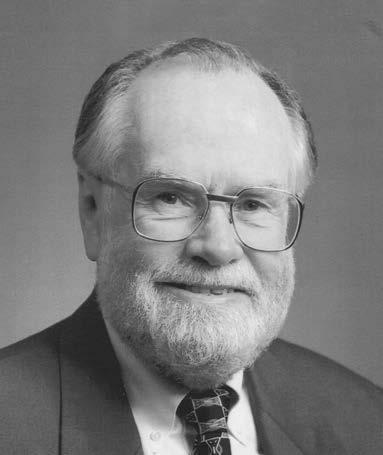
William Oliver Walker Jr., Ph.D., Trinity’s Jennie Farris Railey King Professor Emeritus of Religion, died on February 23. He was 95. Walker joined Trinity in 1962, and he was named the first Jennie Farris Railey King Professor of Religion in 2000. During his time at Trinity, he served as chair of the Department of Religion, dean of the Division of Humanities and Arts, and interim chair of the Department of Psychology. He was also involved in Trinity’s faculty governance.
Walker received Trinity’s 1982-83 Outstanding Educator Award, and upon his retirement in 2002, he received the University’s first annual Award for Distinguished University and Community Service. Walker was named a Distinguished Alumnus by Austin College in 2009 and was recognized for distinguished service by Austin Presbyterian Theological Seminary in 2016.
Walker was a founder and the first chair of the San Antonio Chapter of the United Nations Association, a longtime member of the American Civil Liberties Union (ACLU), and co-founder of the ACLU San Antonio Chapter.
He is survived by his three children and their spouses; his four grandchildren; his sister; and numerous cousins, nieces, and nephews.
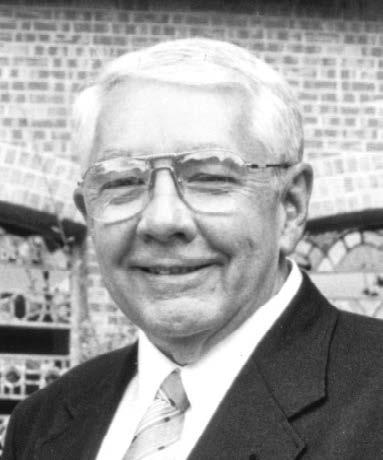
The Rev. Raymond Earl Judd Jr. ’56, Trinity’s chaplain emeritus, died on February 21. He was 91.
A Trinity alumnus, Judd returned to San Antonio in 1967 at the invitation of President James W. Laurie, D.D., to serve as the first minister-in-charge of the newly built Margarite B. Parker Chapel. Judd’s title would soon transition to university chaplain.
For more than three decades, the light in Parker Chapel became a beacon, and Judd its steady keeper. From Sunday morning worship, retreats, discussion groups, and pastoral counseling to officiating the marriages of more than 2,000 couples, encouraging future ministers, and quietly counseling Trinity community members, Judd was more than a chaplain; he was a friend.
Christmas Vespers, now a cherished Trinity tradition, took shape under Judd’s leadership. He and his wife, Mary Jane ’57, opened their home continually, hosting gatherings, meals, and conversations that blurred the line between campus and family.
Upon his retirement in 1999, the Board of Trustees named Judd Trinity’s first chaplain emeritus, and he received the Distinguished Alumni Award, the University’s highest alumni honor.
Trinity students still feel Judd’s support through the Raymond Judd Student Emergency Fund, created in his honor to assist students facing urgent financial hardship, including food, medical expenses, and emergency travel. To commemorate the Judds’ lasting impact, Trinity named what will become the Rev. Raymond and Mary Jane Judd Center for Spiritual Life and Formation in Parker Chapel. (Read more about Parker Chapel's renovations on p. 7.) Memorial gifts may be made to the Emergency Fund at bit.ly/juddfund or the Center at bit.ly/JuddCenter
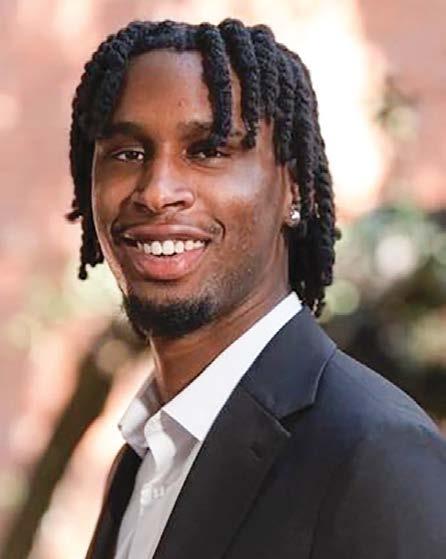
Craig Braxton Barry ’25, M’26, a Trinity undergraduate alumnus and current graduate student, died on January 10. He was 22.
A gifted athlete, Braxton played on a state championship basketball team in high school and continued his athletic journey at Trinity, where he was admired for his talent, perseverance, and leadership on and off the court. In 2023, he traveled to China as a proud member of Team USA to compete in the FIBA 3x3 U21 Nations League Asia-Pacific Conference.
Braxton graduated from Trinity with a bachelor’s degree in accounting, and he was pursuing a master’s degree in accounting at Trinity with an expected graduation date of May 2026. Upon graduation, Braxton planned to join EY’s Houston office as an associate, beginning a promising career in finance and accounting.
As a first-year, Braxton launched an urban apparel brand called Conquer the Majority, showcasing his remarkable drive, creativity, and entrepreneurial potential and offering just a glimpse of the limitless possibilities he embodied.
Whether on the basketball court, in the classroom, in the workplace, or among friends, Braxton inspired those around him to strive for excellence. He was a natural connector, creating a community of friends and colleagues that spanned interests, cultures, and geographies. His ability to bring people together and make them feel valued was one of his most enduring qualities.
Braxton is survived by his parents, Craig and Nada Barry; his sister, Amber; his forever girlfriend, Ava; a host of extended family; and an extraordinary circle of friends who were like brothers and sisters to him.
HOW
production assistance from ODALYS
The kindergarten boys and girls sitting in a circle in their Nathaniel Hawthorne Elementary School classroom looked up at the nearly 7-foot young man who came to visit them, their eyes wide, their mouths open. One little boy summoned his courage and asked what they all were thinking.
“Are you a giant?”
“Yes, I am,” said the giant.
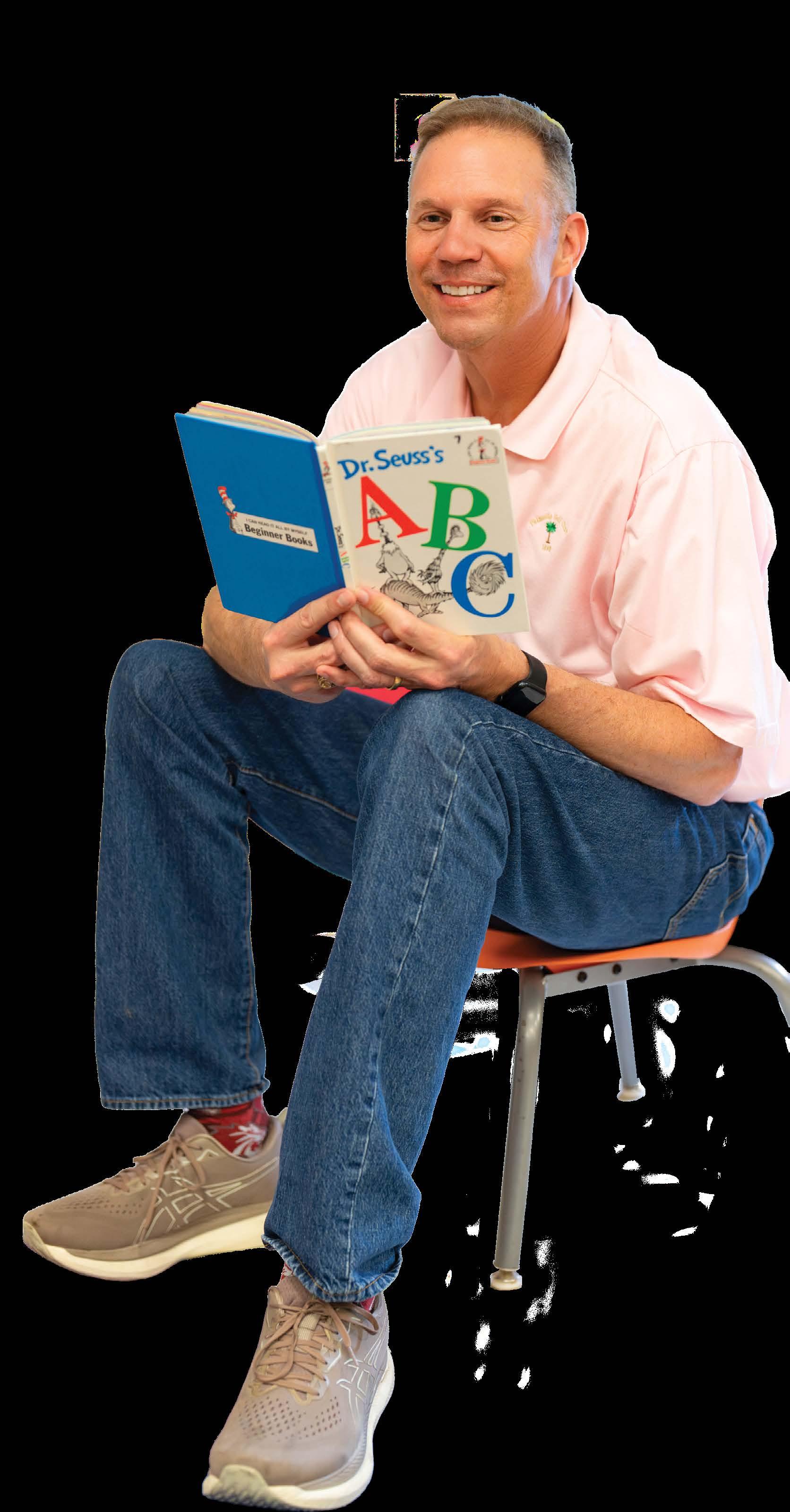
hen the giant, Tim Miller ’93, M’94, M’98, P’25, Ed.D., visiting the class as a teaching intern from Trinity University, carefully folded his lanky frame into a miniature chair and read to the students.
It was the early ’90s. Miller, a teaching intern, a humanities major, and a center on Trinity’s basketball team, was already establishing himself as a gifted educator and leader. And the giant part? He couldn’t have known how prophetic he was. Many years later, it took a giant like Miller, and everything he’d learned at Trinity, in life, and in his career, to help Uvalde, Texas, heal and rebuild after one of the state’s most harrowing tragedies.
Miller’s road to Trinity had many stops. His father, who worked in sporting goods sales, moved the family from Maryland, where Miller was born, to the Midwest and into the Deep South, and finally to San Antonio, where Miller graduated from Churchill High School.
Education dazzled Miller, and he started down that path early, tutoring classmates and coaching swimming. By middle school, he knew he wanted to be a teacher. After graduating from high school, he knew Trinity would help him become a great one. Trinity’s reputation as a school that produced excellent teachers drew Miller in. To lead a classroom, the education department required students to complete a bachelor’s degree, then a one-year master’s.
The department had, and still has, close relations with many San Antonio schools
that gave students opportunities to be in the classroom, and there was a Saturday morning program that brought a small group of elementary students from diverse backgrounds to Trinity’s campus. Miller worked with them over a semester, leading educational activities and helping them expand their view of themselves and the world.
“It was a great way to put together things I learned about in the classroom,” he says.
Miller, always the tallest kid in his class, grew to 6 feet 8 inches. He put his height to use on Trinity’s basketball team. In his four-year career as a Tiger, he snatched 112 rebounds, giving his best on a team that won 33 games and lost 67. His 41 blocks in the 1992-93 campaign still rank among the top 10 all-time for a single season at Trinity.
Miller pledged Omega Phi, joined the Student Programming Board, and befriended Christine Supak ’95, who played on the tennis team. After graduation, Miller and Supak dated, then married. (Their daughter, Sam, graduated from Trinity in 2025; their son, Zach, will graduate this spring from
Texas A&M.) Miller also joined service projects that helped the community, an ethos his parents instilled in him at every city they moved to.
“Empathy is a big part of the work I’ve done and continue to do.”
Miller initially planned to combine his love for hoops and teaching as a high school coach. The late John Moore III ’60, Ed.D., who chaired the education department at the time, and for nearly 30 years, had a different idea. He convinced Miller to intern at Cambridge Elementary in Alamo Heights, where Miller fell in love with teaching elementary-age children.
“Young children are sponges,” Miller says. “They soak up knowledge and take risks to learn more academically, emotionally, and socially. It’s an opportune time to build character, encourage curiosity.”
Next, Karen Waldron, Ph.D., professor emerita of education, encouraged Miller to work with children with special needs. For
his first official job, Miller served as a special education elementary teacher at Nathaniel Hawthorne Academy near downtown San Antonio, where all of the students were eligible for free lunches.
“Every time I went to Uvalde, I would learn something new or meet someone new or hear a different story about the tragedy. It changes you. Thankfully, it’s changed me for the better.”
“Trinity does a great job of making sure that people understand the diversity we have in the San Antonio area, which is a very good example of the diversity we have throughout the state of Texas,” Miller says. “We got to work with English learners, we got to work with students with special needs, a variety of children and learning styles.”
And Miller’s education professors Waldron, Moore, and Shari Albright ’83, M’86, Ed.D., a former professor and chair of the department, invested time and interest in developing their students.
“I felt very prepared stepping into my first, second, and third years (as a teacher) because of all the work that had been done to develop me as a professional educator,” Miller says.
Albright, now a Trinity trustee, says kids found Miller “magical.”
While Miller’s size and gender helped squelch bad behaviors, Albright says, “you still
have to be an engaging teacher who knows your stuff and has planned your lessons. Tim had all of those skills and talents and knowledge bases to bring to bear on teaching.”
While teaching, Miller returned to Trinity for a master’s in educational leadership and a principal certificate. Then he got a doctorate from The University of Texas at Austin and was on the road to becoming a superintendent.
After two years as principal at Eisenhower Middle School in San Antonio's North East ISD, Miller was selected to be the assistant superintendent at Cleburne ISD, south of Fort Worth, Texas, and became superintendent there the next year, turning a low-performing school into a model of excellence. Five school years later, he took a job with the Texas Education Agency, directing teacher preparation across the state.
When asked if he missed the classroom, Miller said he did—when he left the school grounds. But while he was principal or superintendent, he could still walk the halls and visit classrooms and students.
You can imagine Miller in a requisite blazer and tie, walking the halls of his schools, twice as tall as some of his charges, willing to be a giant for anyone who asks.
In 2018, Miller learned that Albright had been named president of the Charles Butt Foundation, which focuses on improving public K-12 education across Texas. Albright and Miller had been principals at different North East ISD schools at the same time, and they worked together when Miller was
with the state. “I sent her a congratulatory text, and she texted back, ‘Do you want to come work for me?’”
And he did. For three and a half years, Miller reported to his former professor, supporting programming, research, advocacy efforts, and partnerships with Texas universities to improve teacher preparation across the state. In 2021, he began steering a leadership development program, taking principals from across the state to Harvard University for weeklong sessions during the summer to support their professional development.
Then, on May 24, 2022, tragedy struck South Texas. Nineteen children and two teachers were shot to death at Robb Elementary School in Uvalde, Texas.
“That day in May, it was a horrible shock,” Miller says. Other school shootings, in Columbine and Sandy Hook, were troubling, but distant. To hit close to San
Antonio, close to Miller’s heart, “It really shakes you.”
Charles Butt, whose mother had taught in a one-room schoolhouse near Uvalde, wanted to help the community 90 minutes west of San Antonio. The Charles Butt Family and H-E-B Grocery Company donated $10 million to jump-start the construction of a new elementary school there. Charlie Clines, the then CEO of the Charles Butt Foundation, needed a point person to help the community raise more funds and oversee the construction. He and Albright turned to Miller, the former elementary school teacher, turned principal, turned superintendent.
Clines, who’s now retired, expected Miller to serve a limited role. Instead, he says, “Tim took over, just embraced the whole community.”
Miller’s collective experiences—as a Trinity student and an educator—came
together in a new role: executive director of the Uvalde CISD Moving Forward Foundation, a coalition of school and community members dedicated to raising funds for a new school. It was a volunteer position, yet Miller worked it like a full-time job, on top of his other full-time job with the Charles Butt Foundation.
Miller drove the 200 miles from his home in Georgetown, Texas, to Uvalde countless times to coordinate with contractors, something he’d done as a superintendent, and meet with the community. He worked with others in the Uvalde foundation to convince suppliers to donate building materials and cash. The fund grew to $60 million, but more important than what Miller did was how he did it.
as possible the intended and unintended consequences do not do harm but are to the benefit of the people we work for.”
And the people embraced him. “Every time I went to Uvalde, I would learn something new or meet someone new or hear a different story about the tragedy,” Miller says. “It changes you. Thankfully, it’s changed me for the better. Hopefully, the work that we’ve done in Uvalde, with building the school, will help heal the community as well.”
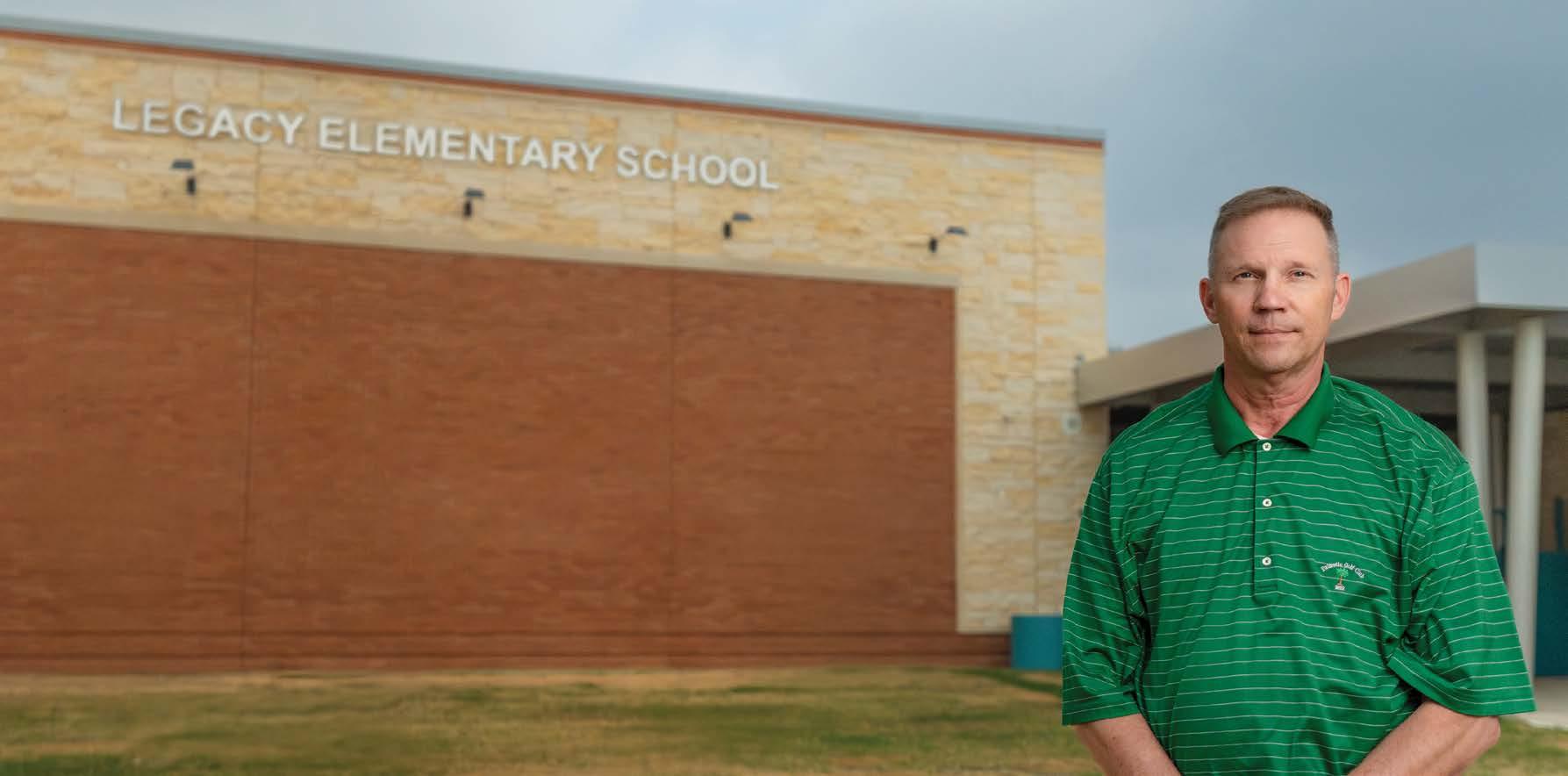
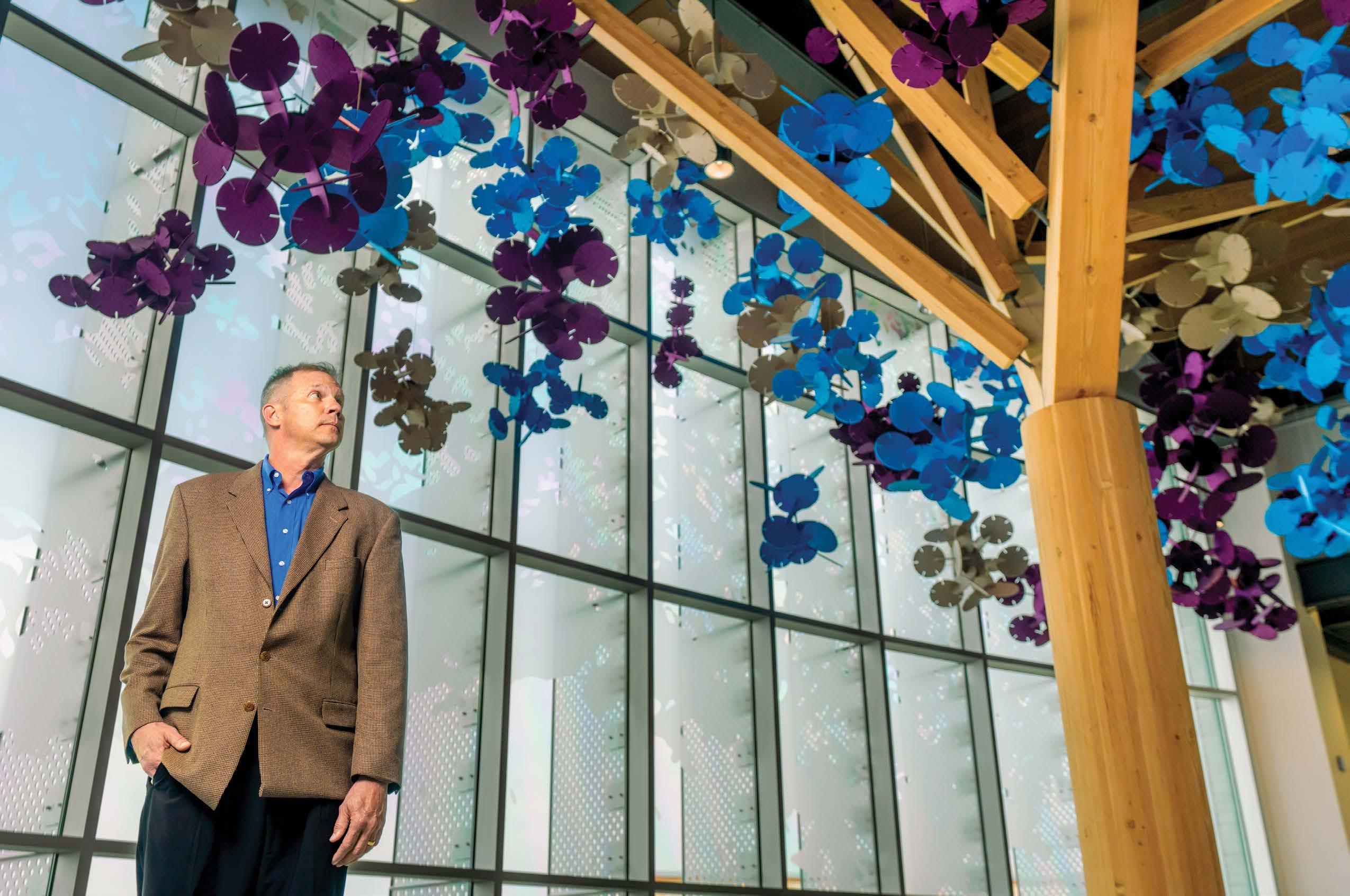
When the new school, Legacy Elementary, opened in October 2025 and Miller saw the children streaming in, oohing and aahing, smiles on their faces and on those of the teachers and principals, he knew his work had paid off.
“Tim is a gentle giant. He put the work on his shoulders and contributed so much. He’s been a giant in the community, just holding us up.”
Clines, who was also the president of the Uvalde CISD Moving Forward Foundation, says Miller led the Uvalde foundation by consensus, meeting with community members, educating them about the possibilities, and building trust and hope. “Tim is just a calming presence wherever he is,” Clines says. “He’s thoughtful, engaging, and has a very high emotional quotient.”
Miller would meet with parents and ask what they wanted and what their children wanted in an elementary school. Since this was the first new elementary school being built in the area since the ’50s, Miller took Uvalde community members on field trips to other cities to visit recently built elementary schools so they could understand what the new industry standards had to offer.
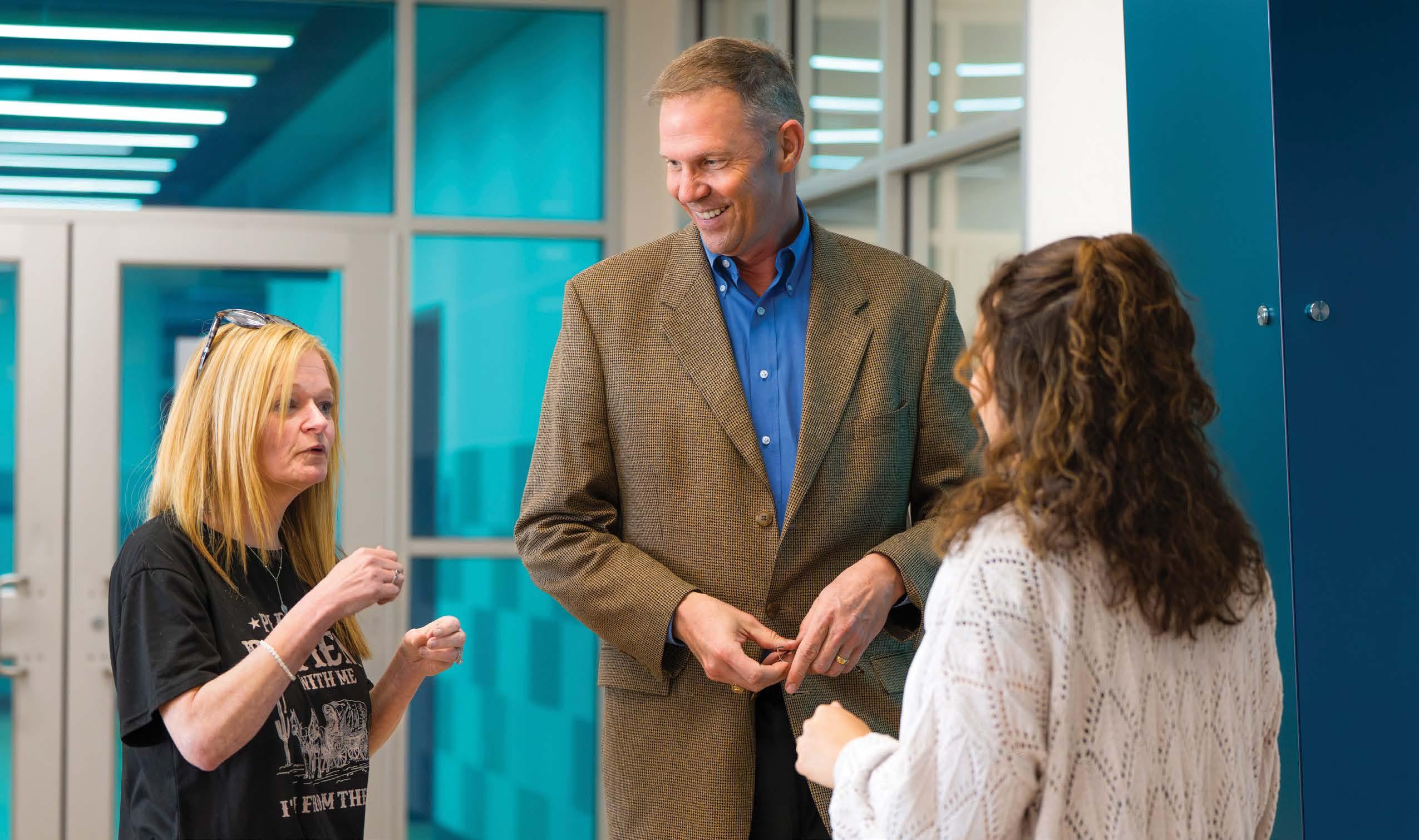
Miller doesn’t do bombast. He stands out in crowds but doesn’t draw attention to himself, and he leans in when he listens. He persuades with a gentle smile. It’s easy to see why little kids love him. When he spoke with survivors and victims’ families, he led with empathy, Clines says.
“Empathy is a big part of the work I’ve done and continue to do,” Miller says. He listens to understand, “so that as many times
On a recent trip to Uvalde, Miller too wore a smile as he described how purposeful the community was in choosing Legacy Elementary’s colors, designs, and motifs. He greeted teachers with side hugs and contractors with handshakes and gave the school counselor an update on playground equipment that’d been ordered.
A wooden sculpture of a tree stretches up from the middle of an atrium on the school’s second floor. From the sturdy trunk grows two large limbs, and from them 19 smaller limbs, representing the two staff members and 19 children who were killed in 2022.
The tree—and the school itself—is more than a physical structure. Legacy Elementary’s motto is about letting hope bloom. The tree with its vibrant leaves stands tall, supporting the space where future students will flourish beneath its shade. To build this new school, Miller, like the tree, stood tall to guide this community toward a path of healing.
Ashley Chohlis, former superintendent of Uvalde CISD, quickly buys into the giant metaphor. “Tim is a gentle giant,” she says. “He put the work on his shoulders and contributed so much. He’s been a giant in the community, just holding us up.”
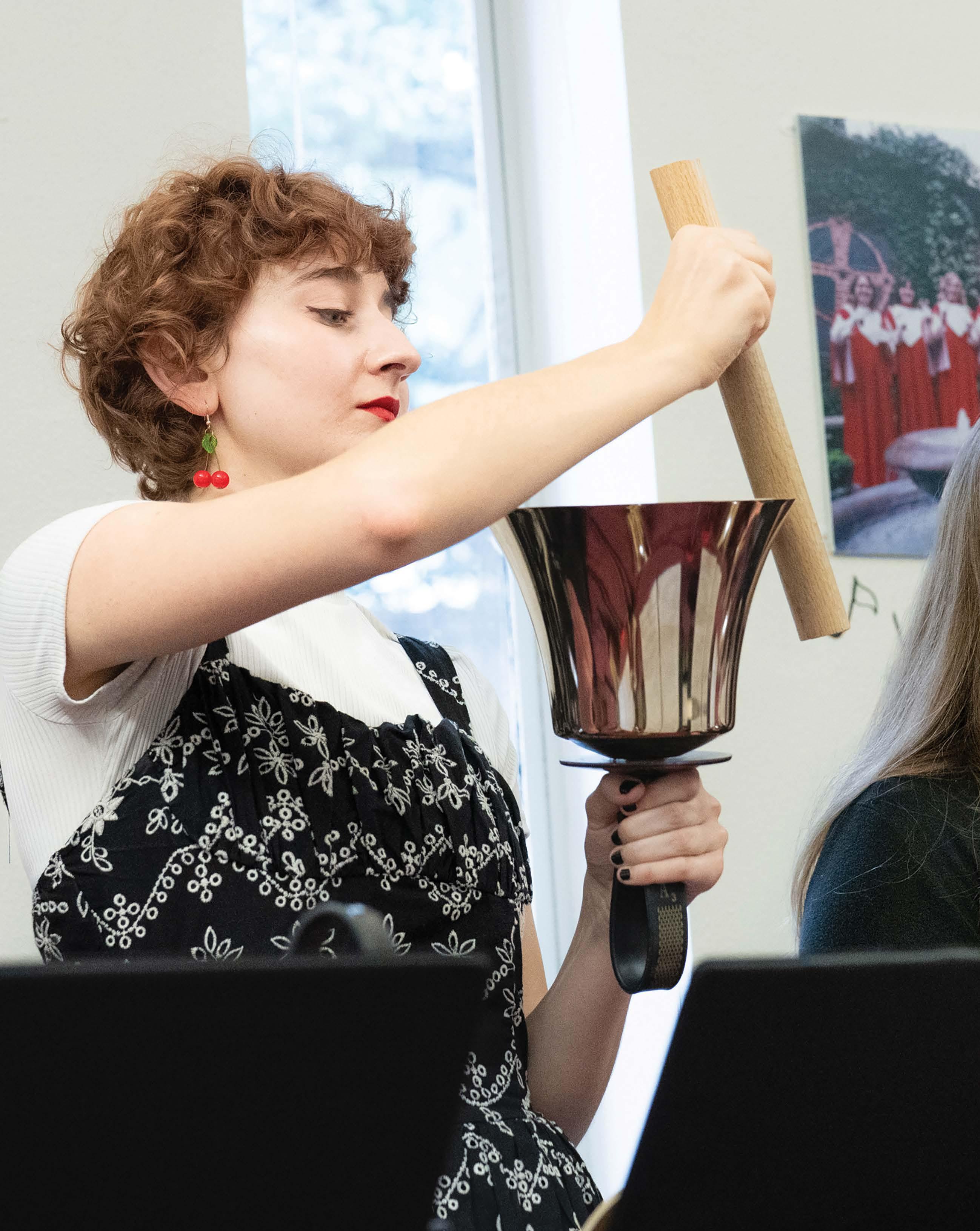
OnTrinity’s Handbell Ensemble, turning 50, embraces all things “weird,” creative, and timeless
words by Jeremy Gerlach photos by Lucero Salinas with production assistance from Fredric Marmolejo ’26 archival photos collected by University Archivist Abra Schnur
One by one, members of Trinity University’s Handbell Ensemble sound off in their small rehearsal room on the aft end of Parker Chapel, with soft chimes and low-rippling clangs. On cresting high Cs, the group rehearses “Bound for South Australia,” a spirited sea shanty that combines bellringing with percussion and singing.
Like any good crew, each member of the ensemble, called a ringer, is indispensable. Miss a note, miss a beat, and the whole performance sinks.
For 50 years, Trinity ringers have breathed life into an art form typically associated with holidays and church choirs by pushing the potential of the instrument itself. In rehearsal, you’ll hear bells ringing a full seven octaves, and you’ll also see dramatic experimentation in sound design to produce new tones.
The bells have origin stories from across the world. Many were manufactured in foundries in the U.S., though some came from an old Dutch foundry that’s been out of commission for 50 years. Ranging in weight from mere ounces to 15-plus pounds, the bells reflect light in brilliant brass and silver tones, gleaming in the careful hands of Trinity’s ringers.
They ring a distinct tone, a warm vibration that echoes across Trinity’s campus, sounding from a place of curiosity and creativity, a sense of connection between disciplines, demographics, and generations of Tigers.
“If you feel lonely, ever, find a bell ensemble,” says Trinity University Handbell Director Stephanie Berryman P’27. “This is a connection that doesn’t end with the semester, because ringers ring for life.”
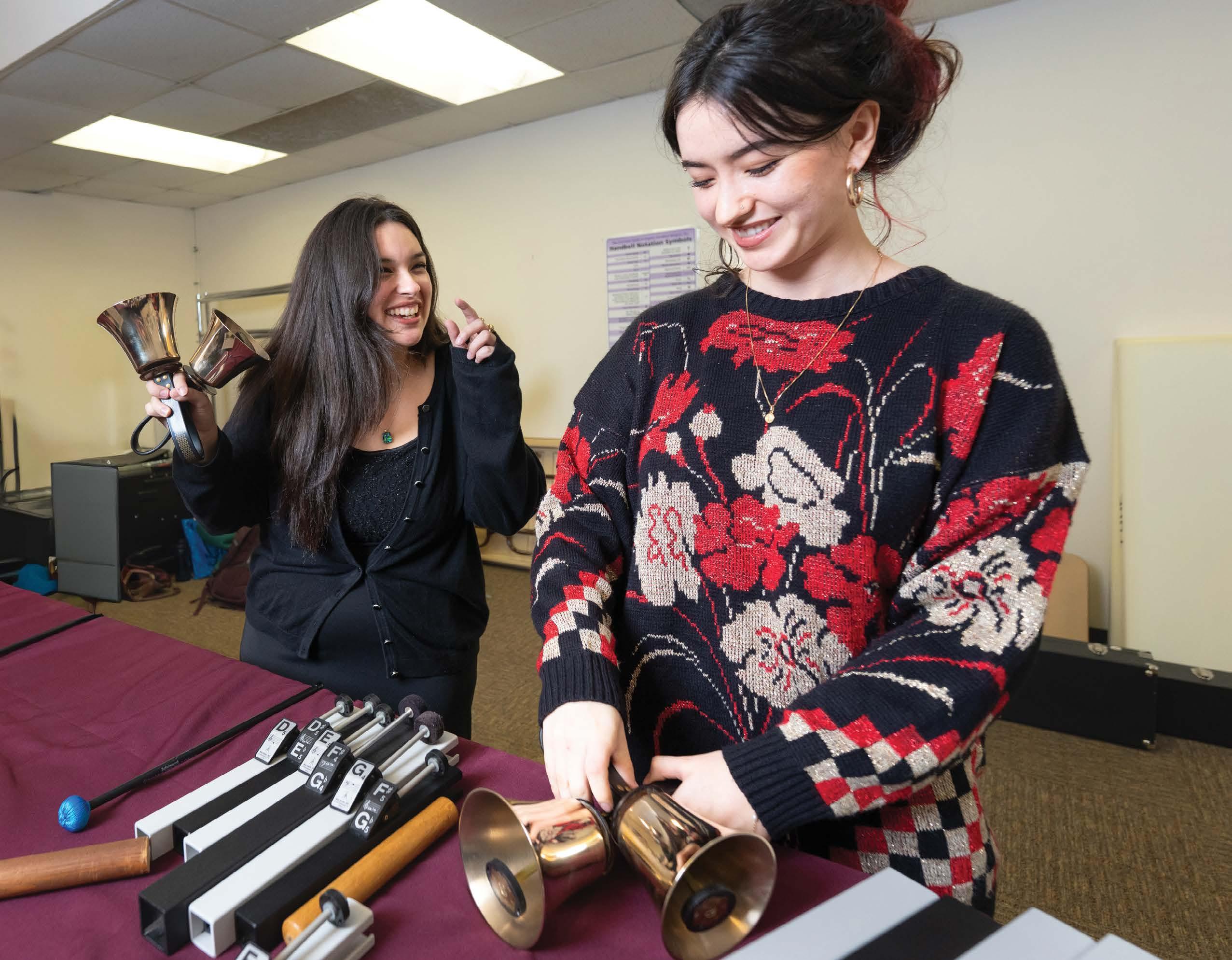
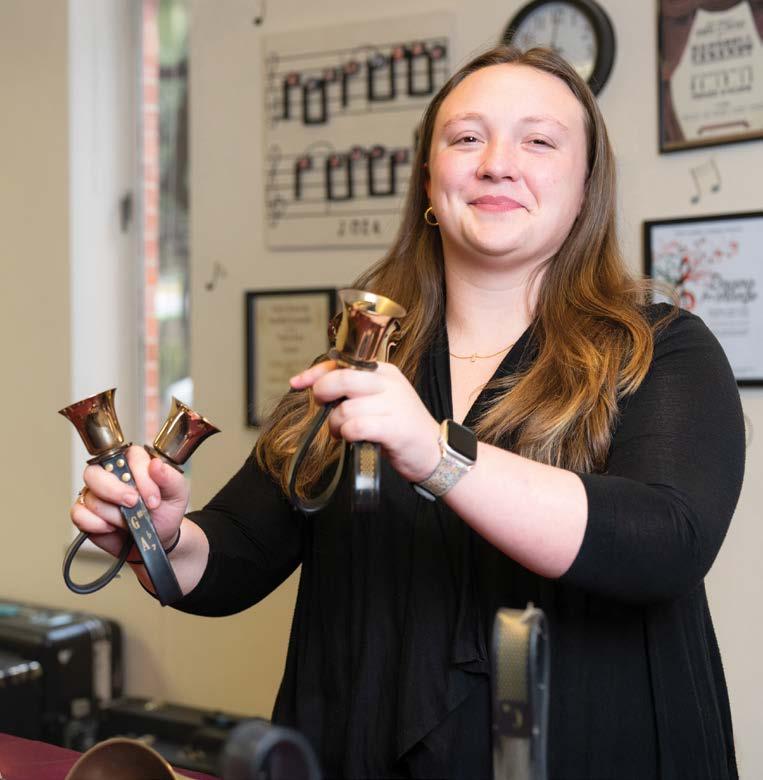
top Between songs, ringers share a laugh during rehearsal. bottom Hope Paschall ’26 has been ringing with the Handbell Ensemble since her first year at Trinity.
Berryman tells every ringer that the Handbell Ensemble is not a cult, but it comes close. “Ringers need each other. This is a collaborative instrument, and it attracts collaborative-natured people,” she says.
These instruments are accessible because historically they’ve been a “bridge between serious music and, well … juggling,” Berryman says. Yet, the true appeal of the bells is in their versatility. The group can switch from rhythmic seafaring tunes to Bach in the blink of an eye, from Christmas carols to experimental music, and … Bach again.
Ringers can get addicted. Hope Paschall ’26, an English, Spanish, and communication triple major, has played handbells since she was five. To Paschall, the chiming of Trinity’s handbells creates a ring with an almost
gravitational pull of its own, impossible for any member to escape.
Rehearsals start with seemingly unrelated warmups like juggling or tossing small bouncy balls, and occasionally yoga, Paschall notes.
This type of curiosity is a pre-req, not an oddity. “We’re all weird in some way, shape, or form, and that is what draws us to handbells. We are a group of very eclectic people,” Paschall says.
That type of belonging is contagious for ringers. “We’re all friends here,” says ringer Portia Berryman ’27, the director’s daughter. “And we rope our friends into joining, or we pester them until they join.”
Growth has been tangible for the group. “We have 18 students this semester. We had eight last semester, but I didn’t let
them shrink their music down,” Berryman says. “And I think that motivated them to go recruit a lot of people because now, that (rehearsal) room is really, really full.”
what else do you need ?
The very first Trinity ringer didn’t want to spend time in chapel at all.
Meet Clifford Whittle ’79, a music major from Chattanooga, Tennessee. “The bells are quite special to me because I started the bell choir,” he says, laughing. He attended a private military school in Tennessee with a bell choir of its own.
“My mother was livid that, with all the good schools in Tennessee, I was going 1,100 miles away to school,” he says. “I was all set to go to Samford, but when they told me chapel was mandatory, I told (her), ‘I ain’t going!’”
Whittle ended up spending most of his time in Trinity’s chapel anyway, making music with the chapel and chamber choirs. He was also determined for Trinity to start a handbell ensemble of its own and pleaded the case to then Trinity Choir Director Claude Zetty and then Chaplain Raymond Judd ’56.
An initial donation from Whittle’s father provided the first three octaves of bells, and the group struck it lucky on one of their first performances, suiting up and playing at a ladies’ party hosted by former Trinity Trustee Margarite B. Parker in her house in Olmos Park. Whittle remembers how, "Parker told us, ‘This is just beautiful. Is there anything else that you need?’”
“We would really love to have five octaves of bells,” Whittle replied. Next, Whittle recalls, Parker called Judd and said, “Get them those bells, and I’ll write the check.”
innovation across generations
The Handbell Ensemble spent its early years playing mostly classical and religious music while experimenting with original works by innovative composers like Donald Allured.
The ensemble found a powerful, steadying hand in beloved director Diane Persellin, Ph.D. She was hired in 1982 and took generations of ringers to new heights.
Under Persellin, the ensemble became well-regarded for its warm, treasured Christmas concerts, a tradition she started in 1994. Her students were her pride and joy, and she became known for setting high expectations for her Tigers in a supportive environment.

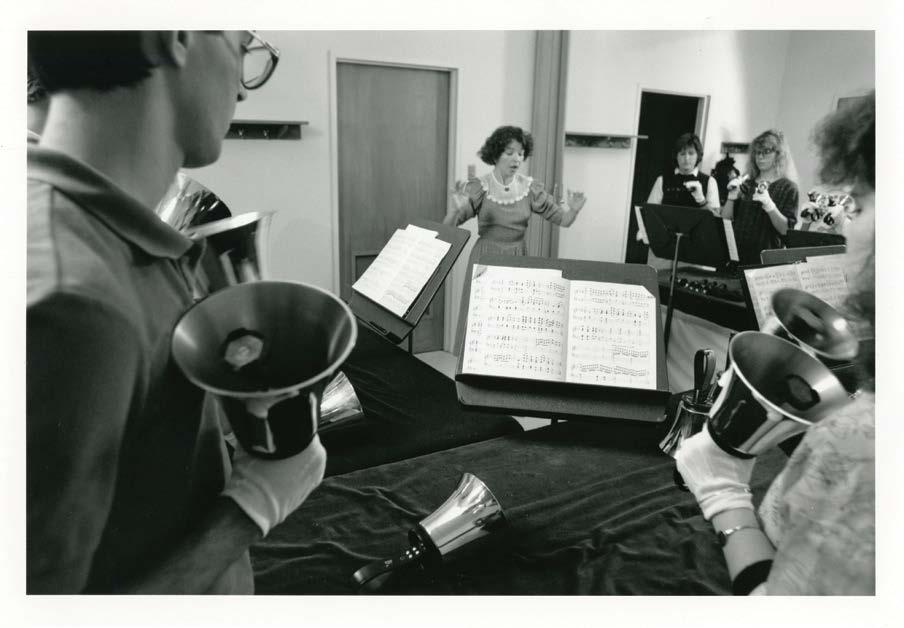
As a teacher-scholar, Persellin brought her scholarship of learning and teaching into the classroom and community, authoring more than 100 publications on music while leading the Handbell Ensemble to national and international stages. Persellin helped the bells sound outside Trinity’s campus, too: The group has dazzled from the Caribbean to Carnegie Hall; from cruise ships and cathedrals to recital rooms and Radio City Music Hall. Berryman, now in her fourth semester as director, recently jetted off to serve as a guest clinician in Singapore, continuing Persellin’s tradition of helping the Trinity name echo across time zones and continents.
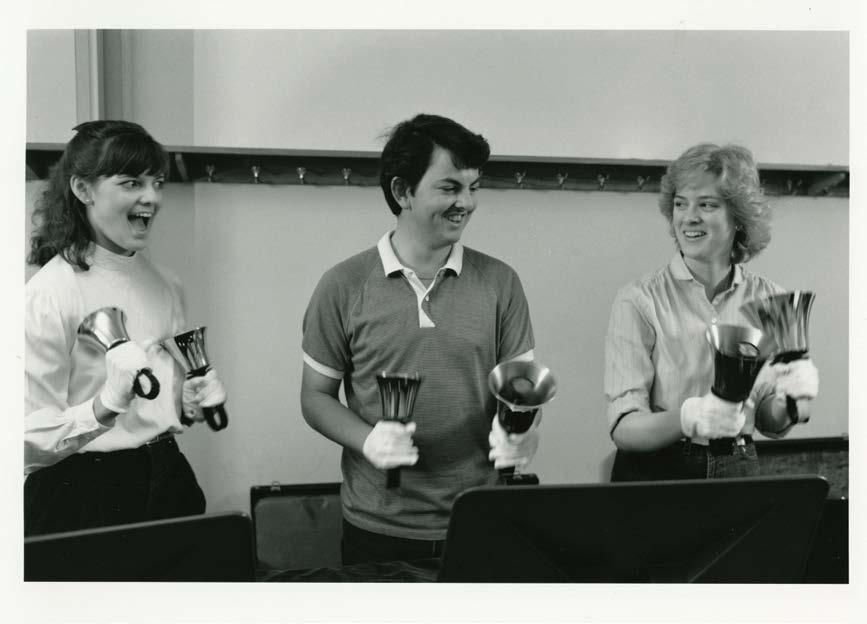

The spirit of camaraderie among Trinity ringers is just as strong now as it was in the ’80s.
Before she passed away in December 2024, Persellin convinced Berryman to take up the mantle of director. As the group turns 50, Berryman says she remains inspired by Persellin’s legacy and in awe of the handbell’s timelessness.
“Ringers need each other. This is a collaborative instrument, and it attracts collaborative-natured people.”
“Diane was the force that elevated this program into a national name,” Berryman says. “And she put Trinity in the position where we can now be one of the programs at the center of such a transitional point in the history of the instrument.”
There’s a wave of “amazing new music” being written, Berryman says, driven by “so many creative new ways of performing and techniques for performing. We’re right in the thick of a really strong, evolving era of the instrument.”
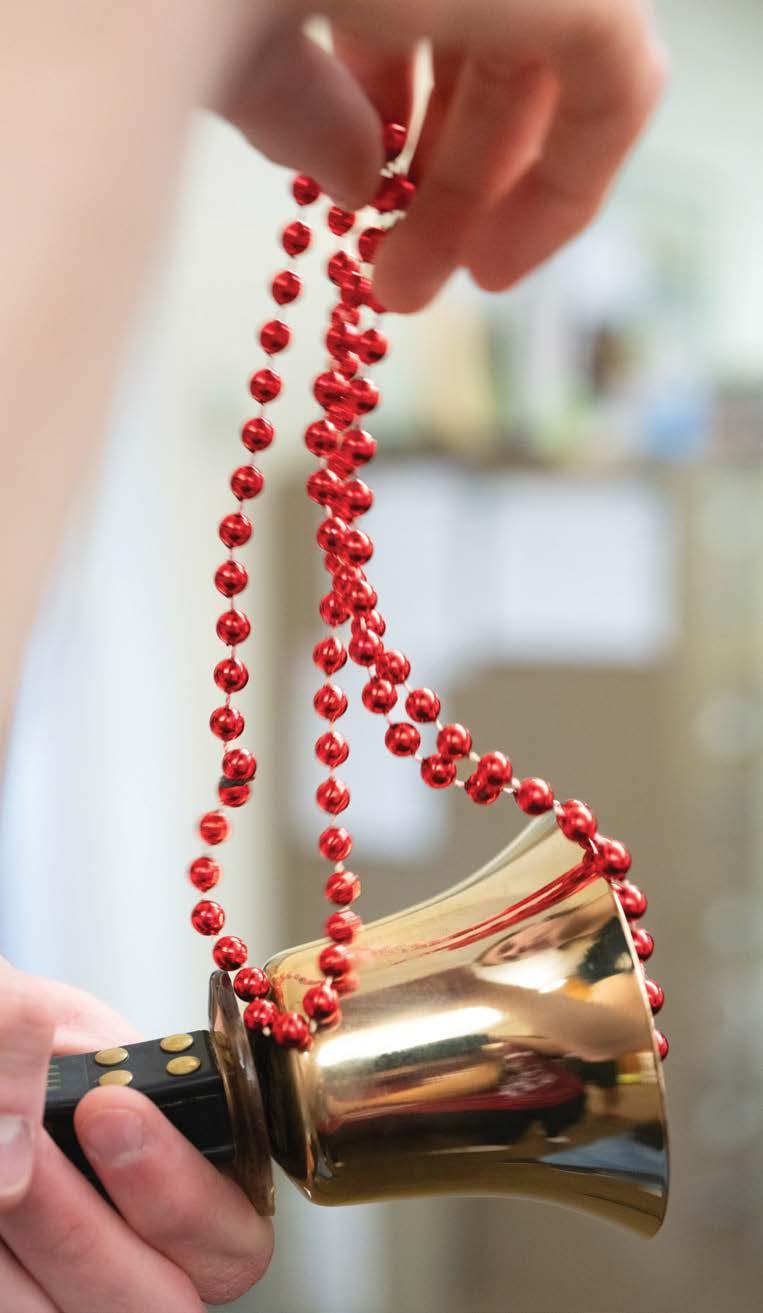
Trinity ringers do more than play music; they’re invited to find new ways to play the handbells. “I’ll ask the students, ‘If you think there’s a better way, show me what you want to do with this instrument,’” Berryman says.
For Paschall, that mindset turns a rehearsal space into a limitless laboratory. “This is a place for us to just start talking about ‘what if?’” she says. “What if we drop rice around the bells? What happens if you put a bell in a glass in water? What about Mardi Gras beads? Wooden beads, plastic beads, what size of beads, how many beads? All the different ways that we can distort sound are really fun.”
The group’s most recent breakthrough has been a new ringing technique, “Twinkling,” featured in industry magazine Overtones. Ringers use Mardi Gras beads to create a soft yet sustained percussive effect.
For discoveries like these, Trinity’s ringers regularly draw on a diverse set of backgrounds in proposing new experimental ways to approach the bells.
“We’ve got (every major) from STEM to political science and education,” Paschall says. “We have people who’ve gone on to Yale School of Music for organ performance, and we have people in there right now who have no idea how to read music.”
“We have people who’ve gone on to Yale School of Music for organ performance, and we have people in there right now who have no idea how to read music.”
That’s the draw, Berryman says, of the breadth of a liberal arts environment like Trinity. “This rehearsal room, and this campus, are places where a mix of experiences helps us all learn from each other.”
The Handbell Ensemble’s spring 50th anniversary concert, titled I’m On a Boat, leaned fully into the joy of creative mixture.
“We played something from the church tradition because we played ‘I Saw Three Ships,’ which is traditionally a Christmas
carol,” Berryman says. “But we also played ‘Sail Away,’ which was an old hit from back in the ’90s. We even played movie score themes from Pirates of the Caribbean.”
Berryman says her students light up when the music is recognizable and contemporary and have fun exploring centuries-old pirate shanties, too.
“‘Bound for South Australia,’” Portia Berryman adds, “is an absolute hoot.”
Paschall says ringing is about collaboration and problem-solving, and bringing people together. But there’s also something more important to her: “This really is about the joy. Here, you’re not thinking about your worries, about stress. You are focused directly on what’s in front of you. The joy of creating something to create it, and for no other purpose than to create it. That’s incredible.”
The echoing legacy of the Handbell Ensemble resonates with a simple, human need: finding a close ring of people you can count on.
Whittle, who is back in Tennessee but has made the occasional trip to campus for a reunion concert or two, says he admires the determination of the generations of ringers who’ve followed the first echoes of his bells.
“I’m really impressed that handbell still exists at Trinity. There are lots of bells in churches gathering dust in cases and closets. People don’t play them, so I’m so impressed that students today want to do it,” Whittle says. “And I think that Trinity’s leadership has a lot to do with it, because they inspire and motivate people. I think Diane (Persellin) really did that, and I’ve seen that from Stephanie (Berryman), too.”
Paschall says, “Ringing under both (Berryman and Persellin) has been one of the greatest joys of my Trinity career,” and she is thrilled to see Trinity preserve its traditions while finding new ways to sustain excitement about the ensemble across generations. “Mrs. Berryman has a great thumb on what’s new, what’s trendy, and what’s fun,” Paschall says. “She really wants to challenge us as well.”
And as director, Berryman says the reward of that challenge is watching students realize that the group can only achieve true harmony when each individual locks in,
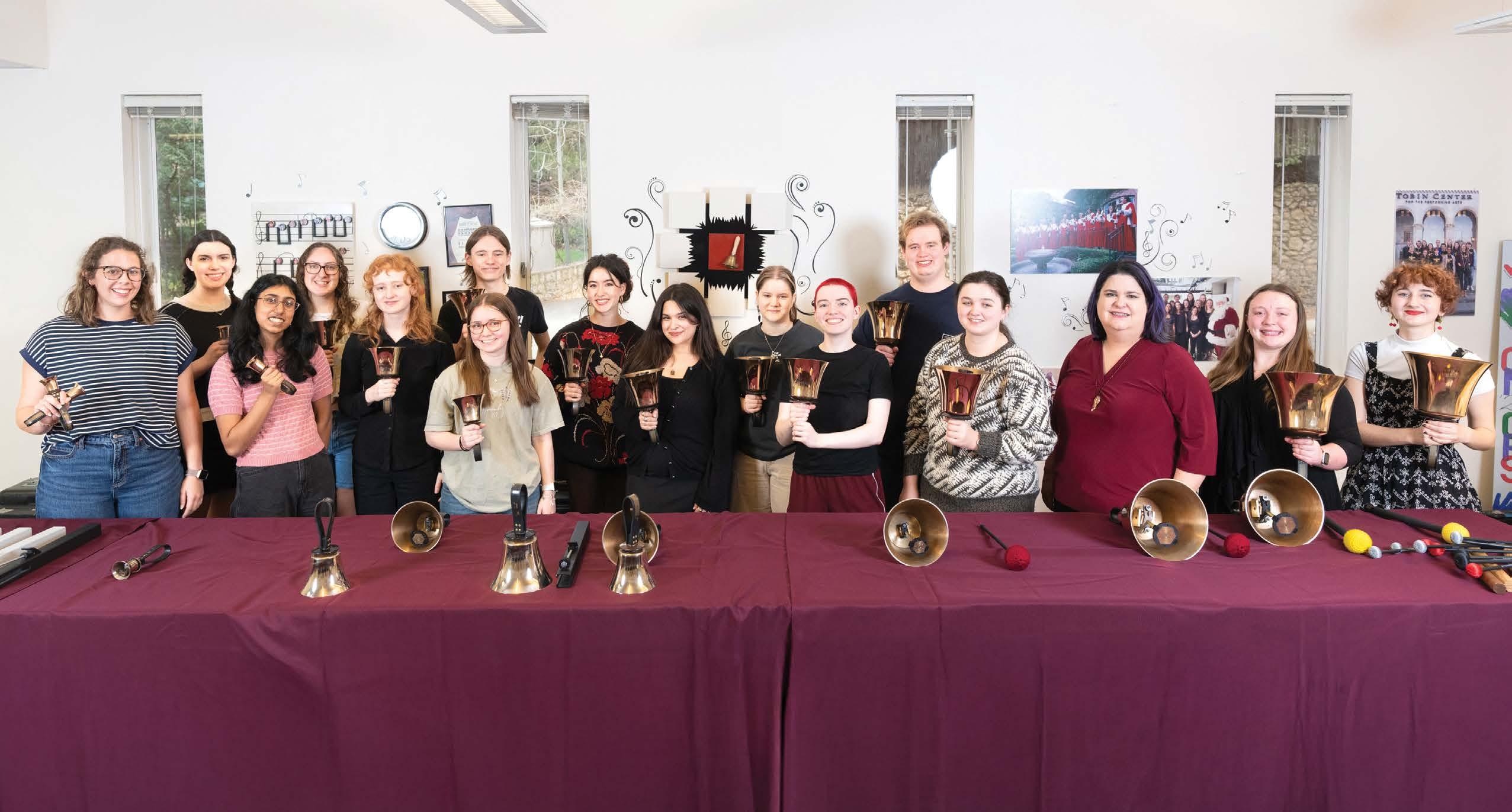
usually for life. “We are all one instrument,” she says of the crew she captains. “We count on you when you’re here, and when you leave, we can’t wait for you to come back and ring with us again as alumni.”
Both Berryman and her students enjoyed ringing with alumni at the spring concert, held April 21, when they continued a tradition of drawing alumni back on stage to play “Eye of the Tiger” at the close of the performance.
Fifty years in, Trinity’s handbells continue to ring. Once you’re part of that sound, it never fades.
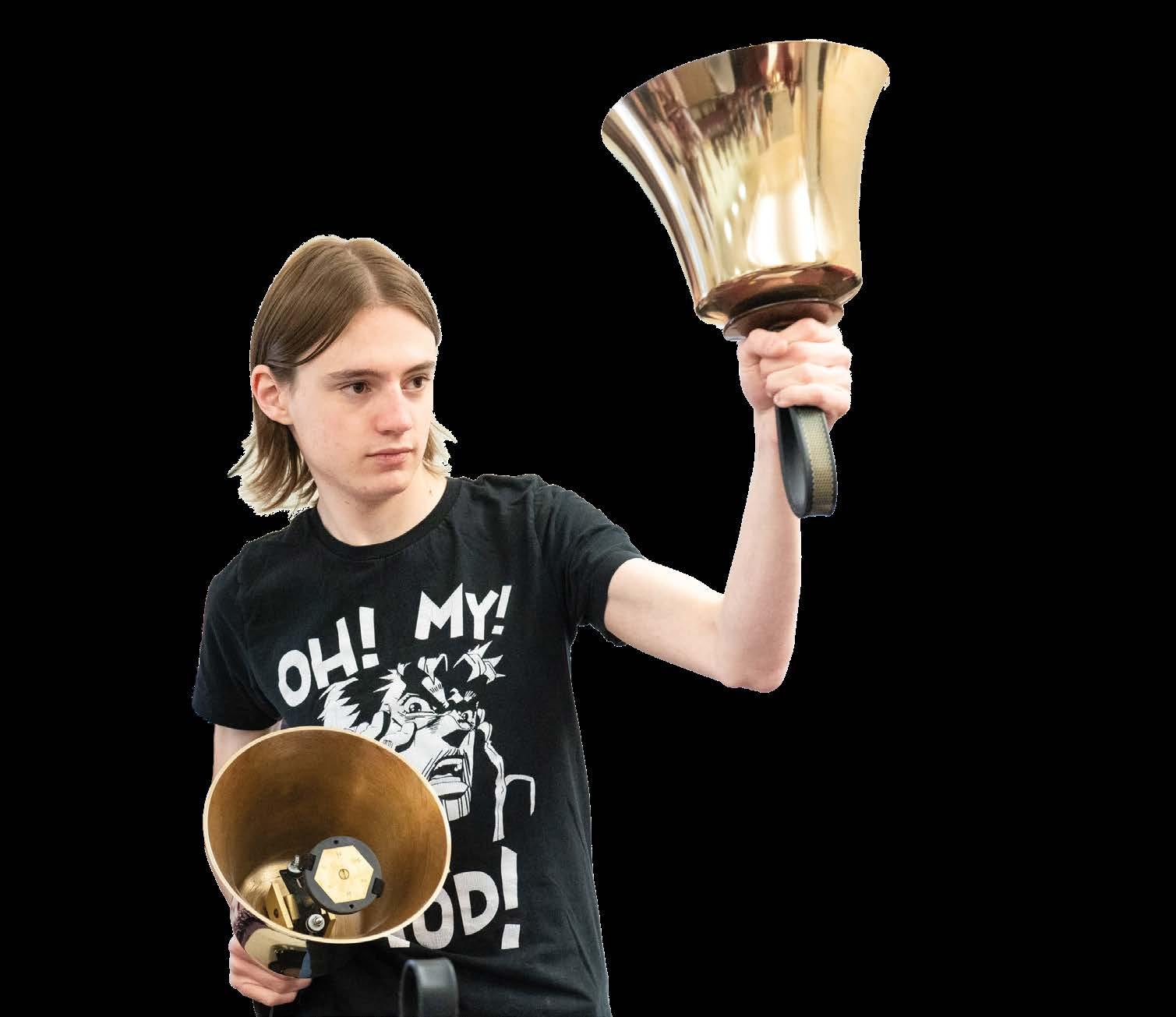
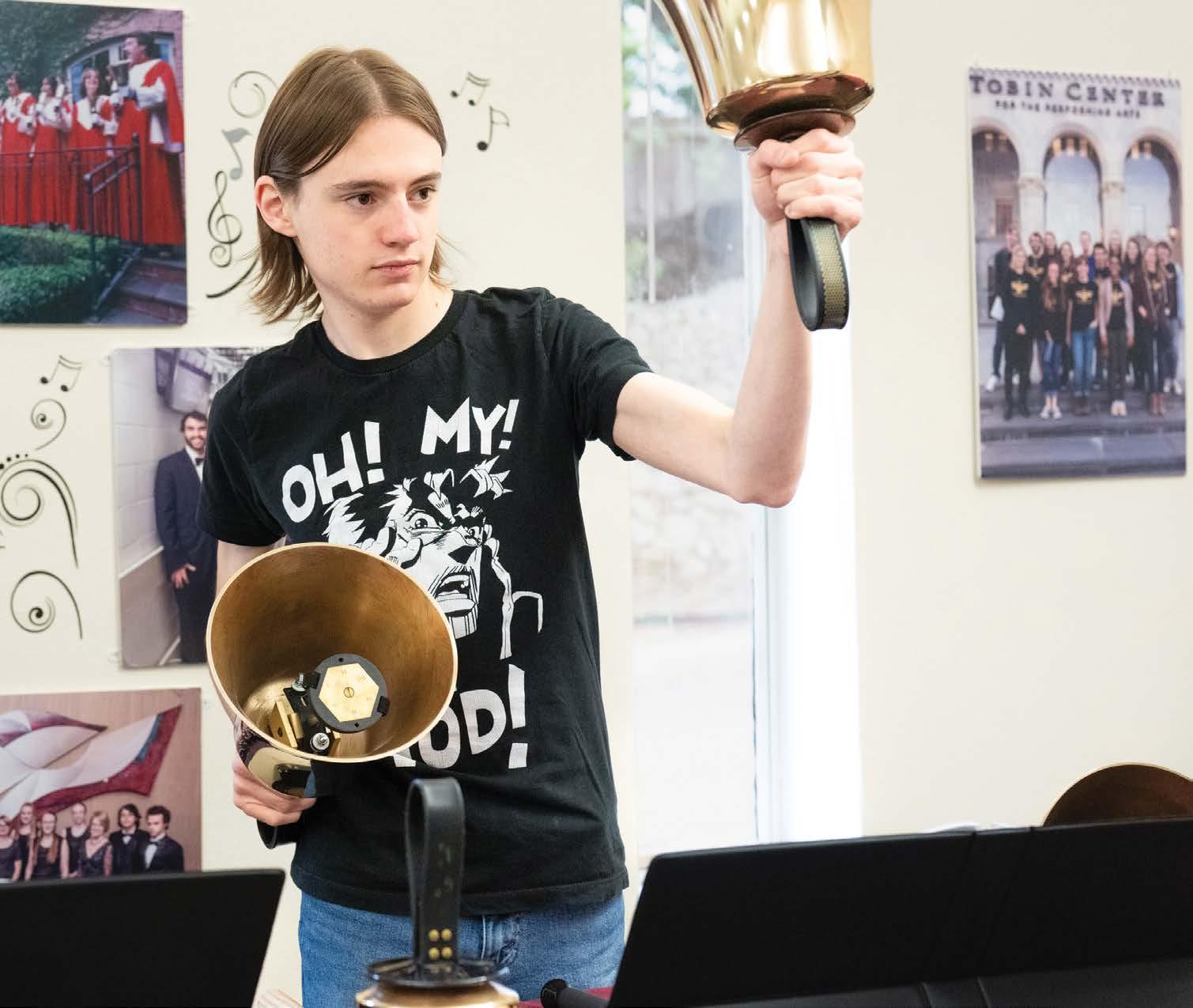
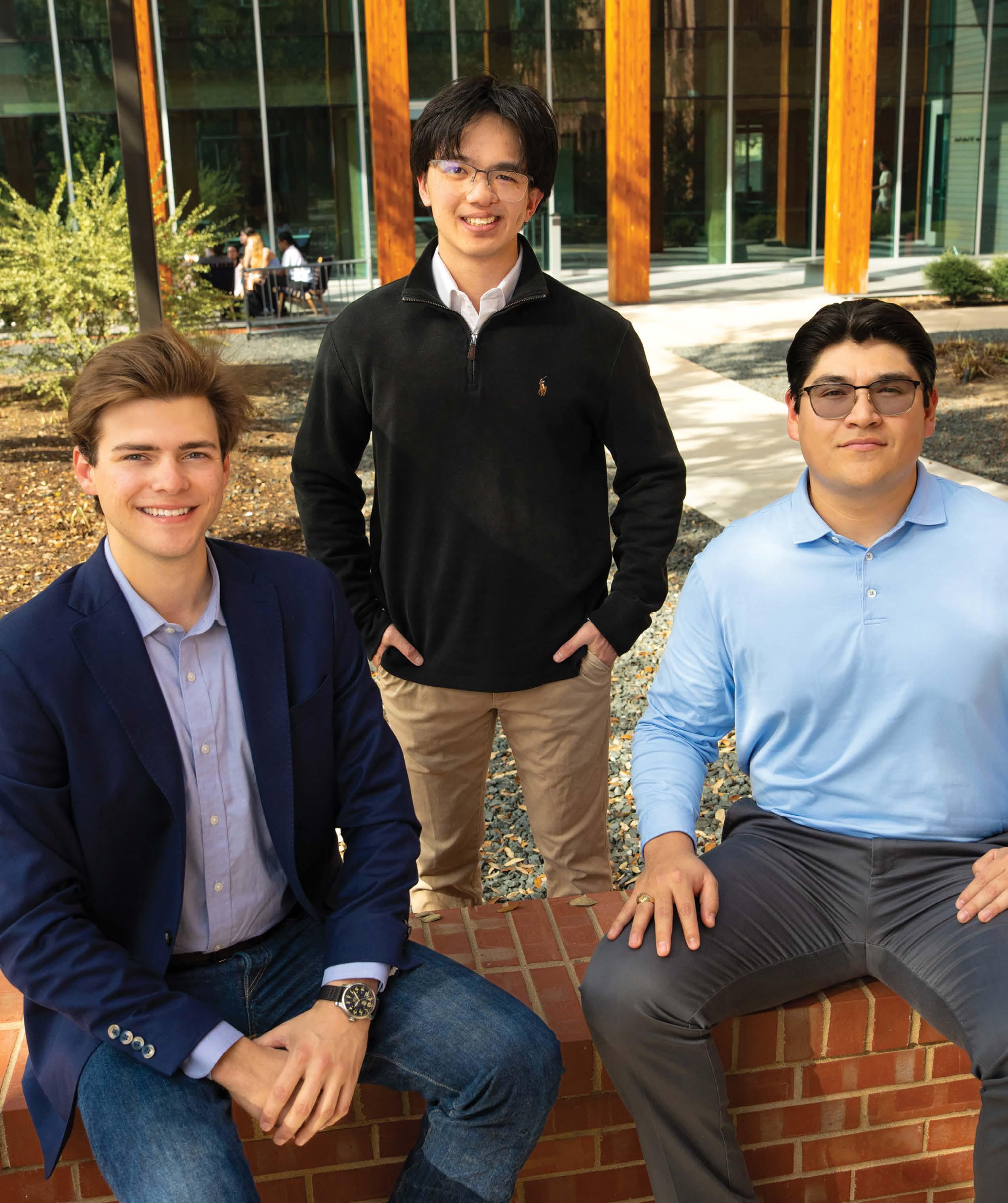
Three recent Trinity graduates define how the liberal arts helped them stand out in crowded career fields
words by Jeremy Gerlach | photos by Lucero Salinas
One word on a résumé can be the difference between landing a dream job or a rejection letter.
Trinity University’s liberal arts are helping students land jobs in fields like medicine, finance, and private banking.
“The liberal arts give our students the creative flair and critical thinking needed to make compelling pitches in C-suites across the country,” says Raquel Alexander, Ph.D., dean of the Michael Neidorff School of Business, “and we’re placing our grads into incredibly selective positions as a result.”
We interviewed Trinity students whose resilience and liberal arts backgrounds are giving them a competitive edge in today’s job market. One rethought the way they pitched their diverse experiences. Another manages
millions in stock portfolios by learning how to ask better questions, and a third fought through the tears of tough midterms to keep their med school dreams alive.
“The sciences are great at Trinity, but the act of combining them with the arts and humanities is a true differentiator for our students,” says David Ribble ’82, Ph.D., dean of the D. R. Semmes School of Science. “Graduate deans and employers tell me constantly that our graduates not only know their science, but they communicate well, and they’re interesting.”
Each student we interviewed picked one word that defines how Trinity’s approach to the liberal arts bolsters the human story behind the résumé. Hear why those words are making a difference.
“I’ve had so many types of experiences, and now I know how they all fit together.”
Josiah Kusnadi ’26 is heading to San Francisco this fall to join consulting giant Bain & Company, where he’ll be pitching creative concepts to Fortune 500 CEOs.
But pitching himself for the role took two attempts.
The first application, an unsuccessful bid for an internship, showcased Kusnadi as a sharp problem solver with strong quantitative skills who needed to show more creative range. The second, successful bid for a fulltime position, revealed something different: a well-rounded candidate with confidence shaped by Trinity’s liberal arts.
Kusnadi grew up in San Jose, homeschooled by his mother for most of his life while his father worked in big tech. Kusnadi found a passion for extracurriculars like playing piano and gravitated toward smaller schools that emphasized breadth and exploration as a result.
“I was really looking for a liberal arts college that gave me an opportunity to explore anything that I wanted to do,” he says.
Kusnadi was drawn to the University’s rising national profile and earned a piano scholarship that paved his way to campus. Yet, the range of his academic, experiential, and personal experiences ended up making the biggest impact on his success.
For his first two years out of high school, Kusnadi worked as an analyst, taught public speech and debate, and served as a data conversion analyst for the IRS.
He figured he was well-prepared for Bain’s interview process.
Bain’s rejection hit hard, but Kusnadi learned from the experience that he needed to round out his experience to be someone with technical know-how and the personality to present to CEOs in a boardroom.
Kusnadi reinvented his approach. He took a chance on Trinity’s Arts, Letters, and Enterprise program, which connects students with nonprofits and helps them translate liberal arts skills into a professional context.
He analyzed environmental data collected from Texas preserves, including
the Bracken Bat Caves, for The Nature Conservancy—an experience unique to San Antonio that gave him a new appreciation for conservation.
The result: “My mindset was totally different the second time around,” Kusnadi says. “I took more time to prepare for the case interview, but I also saw how my whole story, my whole set of skills, gave me the confidence to really communicate what I brought to the table.”
This time, Bain said yes. And Kusnadi credits the word “diversification” with helping him stand out. “I’ve had so many types of experiences, and now I know how they all fit together.”
As a kid selling poinsettias for Boy Scouts or fidget spinners he made from bike chains, John Ferretti ’26 displayed an instinct to look past the obvious, to ask what else is possible.
At Trinity, a hands-on series of opportunities within a liberal arts environment gave Ferretti the chance to get so good at asking questions that banking giant J.P. Morgan is about to employ him to do it as a financial analyst.
“One of the things I feel Trinity taught me was to be able to ask, ‘Why do we do certain things this way?’” Ferretti says.
At Trinity, senior finance majors like Ferretti get the chance to make real-world
financial decisions through a special resource called the Student Managed Fund (SMF). Representing $18 million of Trinity’s endowment, Dean Alexander says this represents “the largest on-campus, undergraduate class-managed fund of its kind in the entire United States.”
Ferretti says he and his SMF team made weekly moves that were driven by asking the right questions. Why is buying this stock a risky move? Why is this the right move? How do I get my teammates on board with the same confidence I have?
That last one is important, Ferretti says, because the group acts as a team to make decisions.
“We all have a vote and say in managing a portion of the endowment,” Ferretti says. “All of our experience matters, and we’re all finance majors, but we all have this super varied set of perspectives that we get to explore through the liberal arts.”
Ferretti, for his part, enjoyed building out his Trinity résumé with experiences beyond the SMF. He developed confidence through classes outside his finance major, such as a first-year public speaking class that he says helped him to better communicate his ideas. That confidence helped him approach one of his toughest questions yet: Can I tag along on an intensive biology excursion to Costa Rica despite not having taken any high-level biology courses?
“One of the things I feel Trinity taught me was to be able to ask, ‘Why do we do certain things this way?’”
“What Trinity gave me through the liberal arts was the ability to talk to anyone.”
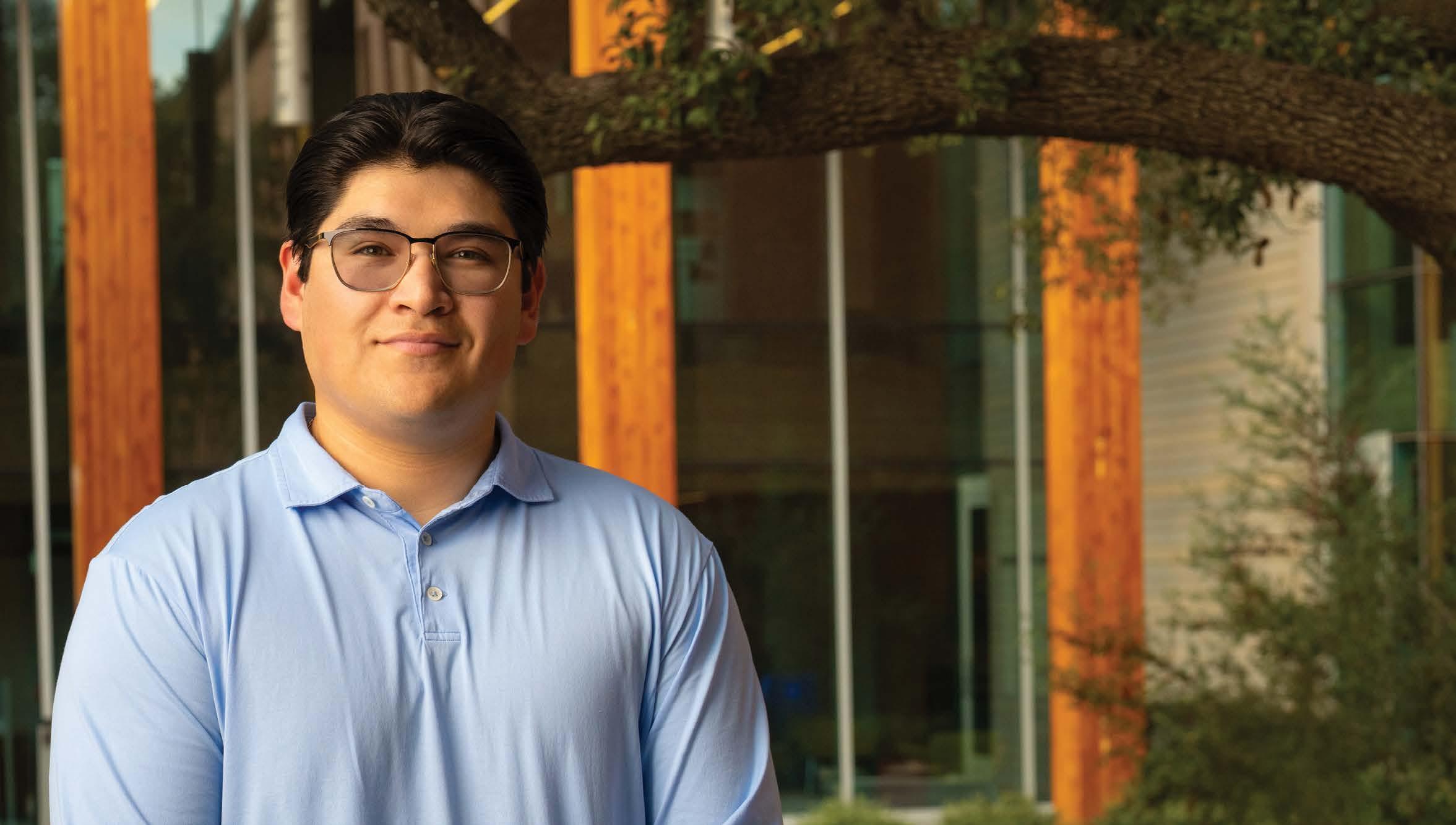
“I went to Dr. Ribble and just basically said, ‘Hey, I’m not a bio or a chem major, but I do love the outdoors. I’m an Eagle Scout. I’m someone who loves hiking and would love to be a part of this course,” Ferretti says. And Ribble said yes.
Ferretti channeled this same confidence— and his ability to turn questions into informed decisions—into his sophomore-junior internship with J.P. Morgan. Now, he’s got a full-time offer.
“I think probably the biggest thing that helped me was that I just stayed curious the whole time. I felt like I asked a lot of questions over my internship,” he says.
That, Ferretti says, is the return on investment of Trinity’s liberal arts education.
“Our education is phenomenal for learning financial systems, but it’s really more than
that. You learn the ability to question,” Ferretti says. “Joe Smith at ‘insert bigger school here’ is going to be a cog in the wheel, and he’s not going to be able to ask those questions.”
David Padron ’20 is preparing to be a family physician by harnessing the power of gratitude to stay hungry for knowledge.
“I would have taken 20 credit hours a semester at Trinity if I could have,” Padron says. “Your job (as a student) is to ask questions, to think creatively, to keep learning your whole life. That’s what made a difference for me at Trinity.”
Padron has never stopped being grateful for the first person who inspired him to become a doctor: his own childhood physician. Padron, the oldest of three Trinity brothers (Rob ’22 and Cesar ’28), is from Pharr, Texas. Padron says Pharr, near the U.S.-Mexico border, can be a challenging type of place to practice medicine.
Padron saw how doctors helped members of his community, his family, learn to prioritize their own health, even with limited
resources. “We were blessed with a primary care physician who told us, ‘Hey, you don’t have money, but come over anyway. We’ll see what we can do for you.’ I’m still inspired by that approach to medicine.”
Padron needed a place to transform into that same type of lifesaver. “Basically, everyone I talked to about Trinity said, ‘Hey, this place is tough, but get out of here on the pre-med track, and you’re guaranteed to have a higher level of thinking.’”
Padron majored in biology but says the power of the liberal arts was variety. “I took philosophy, I took music, I took PE classes, I took art classes, I took economics. And so honestly, I just really fell in love with being able to take a bite out of all of the fields that I was interested in,” he says.
Not every step of Padron’s journey was joyful. From genes and phenotypes to organic chemistry, he stressed about his grades to the point of almost giving up on his dream. “There were entire semesters I cried,” he says.
Struggling, Padron turned to Biology Professor Jonathan King, Ph.D. (now head of Trinity’s pre-med track). “I told him, ‘There are geniuses here, and they’re doing way better than me,’” Padron recalls. “But Dr. King told me, ‘Hey, you have a story. Everybody’s different. If this is something you really want to do, you pursue it to the fullest because failure only comes from you giving up.’ And so his words really carried deeply with me, and that was what really pushed me to keep pursuing medicine.”
Padron went on to attend Universidad Autónoma de Guadalajara, a private medical school in Mexico. After two years there, plus a clinical rotation in Las Vegas, where he rotated through pediatrics, surgery, internal, family, OB-GYN, psychology, and emergency medicine, he’s now preparing for residency.
Padron is carrying one word with him: gratitude. Gratitude for his first doctor. For the lessons he learned from struggling. For the chance to keep learning—and to one day offer the same care to others. Thanks to the liberal arts, Padron says he’ll be able to create the same type of connection that inspired him as a young kid in Pharr.
“What Trinity gave me through the liberal arts was the ability to talk to anyone.” In family medicine, he says, “that’s everything.”
Students like Padron, Ferretti, and Kusnadi are part of a larger success story for Trinity and the liberal arts.
The numbers speak for themselves: More than 20% of our graduates are emerging with two or more majors. In the Class of 2025, 68% of students participated in at least one research or internship opportunity. These experiences are creating well-rounded people employers are eager to hire.
“Trinity students are leaving campus as resourceful, experienced leaders, truly ready to change the world, not just to react to it.”
That’s why Trinity’s positive outcomes rate has remained stellar for five straight years. From the Class of 2021 through the Class of 2025, outcomes have consistently hovered around 97% to 98%, meaning these percentages of graduates were either employed, in graduate school, or pursuing other postgraduate pathways six months after graduation.
And Tigers are using their liberal arts skills to make a difference in their fields. TIME magazine recognized Trinity in 2025 as one of the best colleges for producing future leaders by cultivating critical thinkers.
“Trinity students are leaving campus as resourceful, experienced leaders, truly ready to change the world, not just to react to it,” says Megan Mustain, Ph.D., provost and vice president for Academic Affairs. “And that’s because Trinity—and the liberal arts—lets you expand your world.”
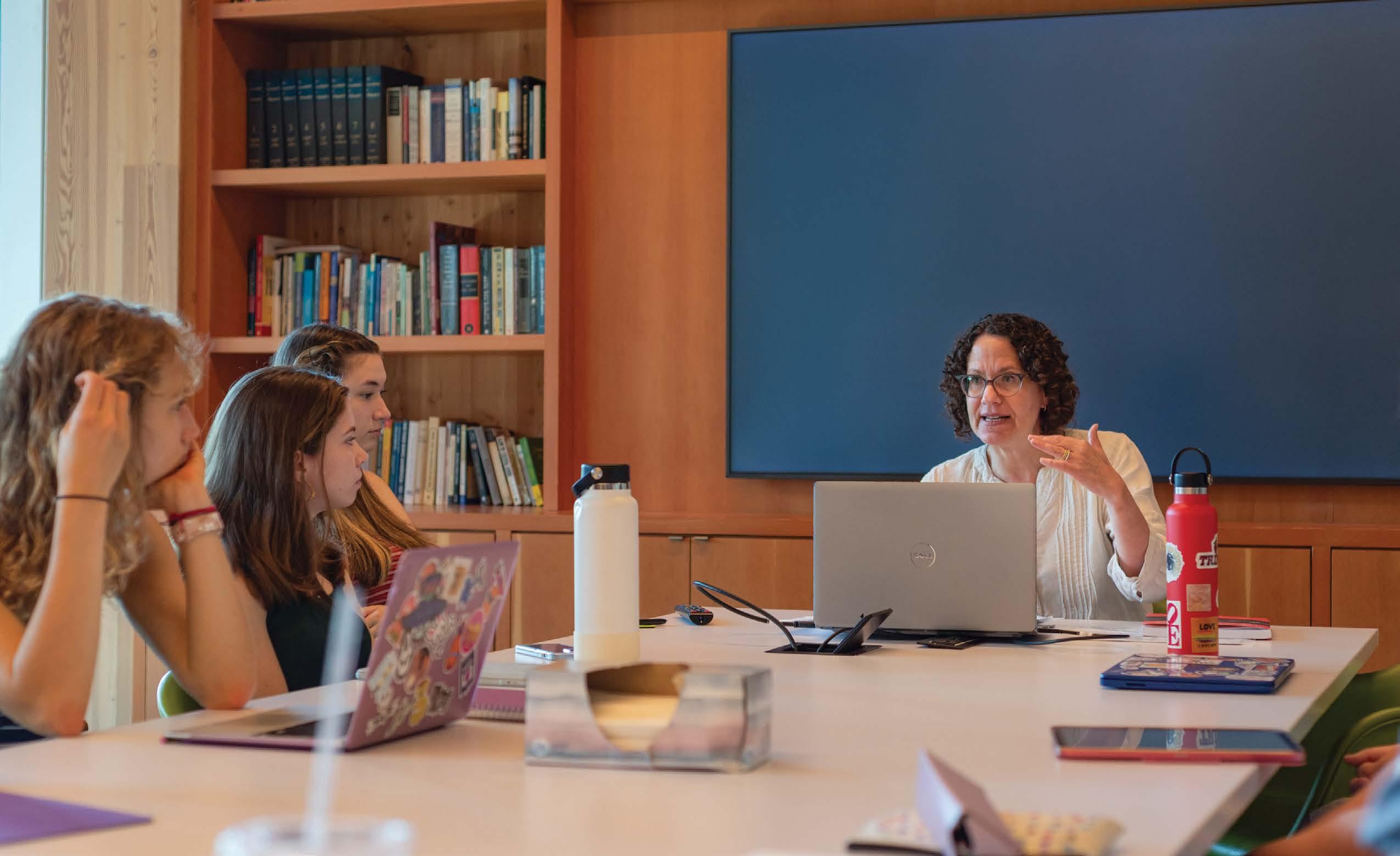
Dollar-for-dollar matching initiative supports student success through graduation
Between early morning classes, long afternoons in the lab, and late-night study sessions, some college students have to balance their studies with extra jobs to make their education possible.
Two years ago, Trinity University’s Board of Trustees took steps to address these challenges, aiming to increase donor-supported endowed scholarships by $50 million through a combination of giving and endowment investments while building a permanent foundation of community support for future generations of students. The result, the Trinity Commitment, has been an overwhelming success. Now, the trustees are extending it.
The Trinity Commitment offered a clear invitation: When donors give $50,000 or more to create or strengthen an endowed scholarship, Trinity would match it dollar-for-dollar from the University’s unrestricted endowment funds. The University expected the fundraising to last through the end of Our Time: The Campaign for Trinity University in 2027.
The community responded quickly. In less than two years, $25 million was raised and doubled with matching funds, creating 500 new donor-endowed scholarships for Trinity students.
To keep the momentum going, Trinity’s trustees have offered an additional $10 million in matching

Thanks to the leadership of our trustees and the generosity of our community, we have made tremendous progress toward reducing (students' financial) burden.”
–Trinity
University President Vanessa B. Beasley
funds to extend the Trinity Commitment through the end of the campaign. The terms are the same: Each donor gift of $50,000 or more to create or strengthen an endowed scholarship fund will be matched dollar-fordollar up to $10 million, creating another $20 million for scholarships.
“Trinity recognizes the financial challenge that many families face,” says Trinity University President Vanessa B. Beasley, Ph.D. “Thanks to the leadership of our trustees and the generosity of our community, we have made tremendous progress toward reducing that burden.”
“We were very excited by the support we received toward the first Trinity Commitment goal of $25 million,” says Ted Beneski, P’11, P’14, chair of the Board and CEO and managing partner of Insight Equity in Southlake, Texas. “Extending the commitment for another $10 million was an easy decision for the Board.”
“By increasing the number of donor-funded scholarships,” Beneski added, “Trinity is sending a clear message to future students and families that if they work hard and earn the opportunity to attend Trinity, the University will help make sure they can afford it.”
“Scholarships impact more than a tuition bill,” Beasley says. “I want our students to have the time and encouragement to explore the wide range of possibilities a Trinity education offers, aware they are supported by donors who also want to help them follow their dreams on our campus and beyond.”
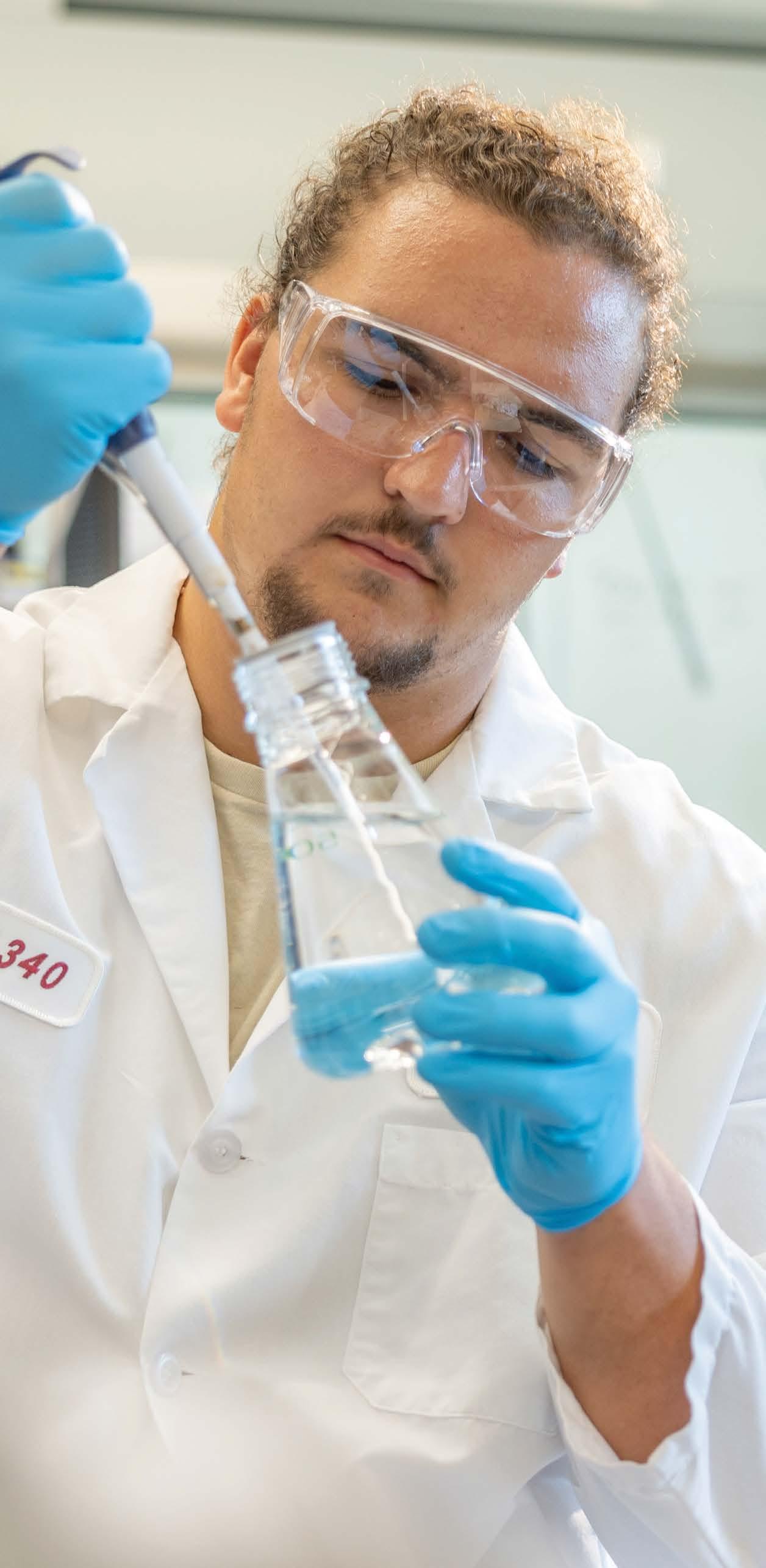
Find out what these seven Trinity leaders enjoy when they’re not advancing the University’s goals
Our Time: The Campaign for Trinity University marks its one-year milestone by recognizing the volunteer leaders who help drive its momentum forward. In addition to our Honorary Campaign Co-Chairs James Dicke II ’68, P’93 and Steven Mach ’92, P’25, our Campaign Executive Committee is a dedicated group of alumni who champion Our Time across the country, sharing Trinity’s story, providing feedback and direction to the University, inspiring participation, and connecting donors with the campaign’s priorities. When they aren’t helping the University make great strides toward its future goals, they’re enjoying life as individuals with niche interests and experiences.
JIM DICKE III ’93
National Campaign Chair President, Crown Equipment Corporation
WHAT DID YOU STUDY AT TRINITY?
Business
CURRENTLY WATCHING: Rewatching old The Love Boat episodes I NEVER LEAVE THE HOUSE WITHOUT MY: I never thought I’d say it, but here it is ... my phone
FAVORITE WAY TO UNPLUG/UNWIND: Time with friends
HOW HAS YOUR RELATIONSHIP WITH TRINITY EVOLVED SINCE YOU GRADUATED? Strangely enough, it still feels like home.
CEO, Southern Newspapers, Inc.
ZOE LAINSON THOMPSON MCDANIEL ’93, P’25, P’28
Inaugural Executive in Residence, Michael Neidorff School of Business
WHAT DID YOU STUDY AT TRINITY?
Religion and economics
arrow pointing to:
SOUNDTRACK TO YOUR TRINITY YEARS: Depeche Mode, Erasure, The Stone Roses
ONE WORD THAT SUMS UP YOUR TRINITY EXPERIENCE: Unlimited
FUN NEW YEAR’S RESOLUTION: Finish writing my book
A SMALL JOY RIGHT NOW: Running into my kids on campus
WHAT DID YOU STUDY AT TRINITY? Sociology
SOUNDTRACK TO YOUR TRINITY YEARS: Doobie Brothers, The Marshall Tucker Band, Steely Dan
FUN NEW YEAR’S RESOLUTION: Learn to play Mahjong
A SMALL JOY RIGHT NOW: Desert rain
I NEVER LEAVE THE HOUSE WITHOUT MY: Sunglasses and water
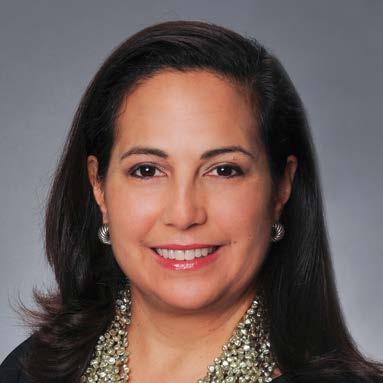
Managing Director, Masterson Advisors LLC
WHAT DID YOU STUDY AT TRINITY?
Business
ONE WORD THAT SUMS UP YOUR TRINITY EXPERIENCE:
Belonging
CURRENTLY READING:
Charles Sumner: Conscience of a Nation by Zaakir Tameez
TEXT, EMAIL, OR HANDWRITTEN NOTE?
Handwritten note
WORD FOR THE YEAR:
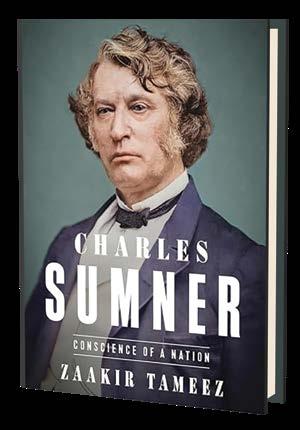
Instead of a resolution, our family chooses a word for the year. The word for 2026 is “both.” Instead of making a choice between two good alternatives, we choose “both!”
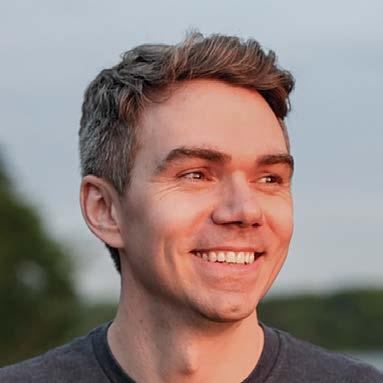
COLE WOLLAK ’11
CTO, Scratch Based LLC
WHAT DID YOU STUDY AT TRINITY?
Engineering science
FAVORITE CLASS WHILE AT TRINITY: Dance
CURRENTLY READING:
The Teachings of Bhagavan
Sri Ramana Maharshi in His Own Words by Arthur Osborne
TEXT, EMAIL, OR HANDWRITTEN NOTE?
Text—I have 11,000 unread emails
I NEVER LEAVE THE HOUSE WITHOUT MY: Positive intention
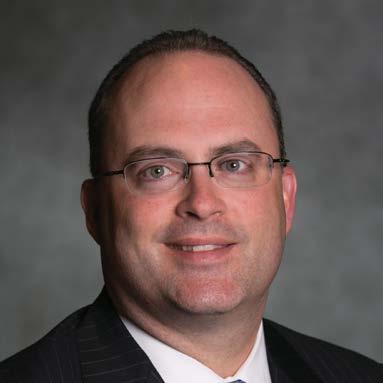
BRAD LITTLE ’93, P’26
CEO, Coalfire
WHAT DID YOU STUDY AT TRINITY?
Communication, history, and political science
WHEN I WAS A STUDENT ON CAMPUS, MY GO-TO LATE-NIGHT SNACK WAS:
Taco Cabana bean and cheese tacos
FAVORITE WAY TO UNPLUG/ UNWIND:
Spending time at the ranch
EARLY BIRD OR NIGHT OWL? Night owl
ONE WORD THAT SUMS UP YOUR TRINITY EXPERIENCE: Friendship
DAN GEDDES ’96
CFO, Frost Bank
WHAT DID YOU STUDY AT TRINITY?
Accounting and finance
SOUNDTRACK TO YOUR TRINITY YEARS: “December, 1963 (Oh, What a Night)” by The Four Seasons
FUN NEW YEAR’S RESOLUTION: Play more golf
I NEVER LEAVE THE HOUSE WITHOUT MY: Spurs Stanley cup
FAVORITE WAY TO UNPLUG/UNWIND: Sitting on the porch with a view of the Hill Country

Experiential learning—internships, research, and study abroad—is not an add-on. It is the critical bridge between classroom knowledge and career success.
90% of alumni say study abroad influenced future education or career choices
–IES Abroad, 2018
84% credit it with providing valuable job skills
–IES Abroad, 2018
83% say research clarified or strengthened career goals
–SURE, 2019
68% report it made them more likely to pursue graduate or professional study
–SURE, 2019
93% of students in work-based learning say it improved their career readiness
–Gallup-Strada, 2023
32% more job offers for graduates with internships
–NACE, 2025
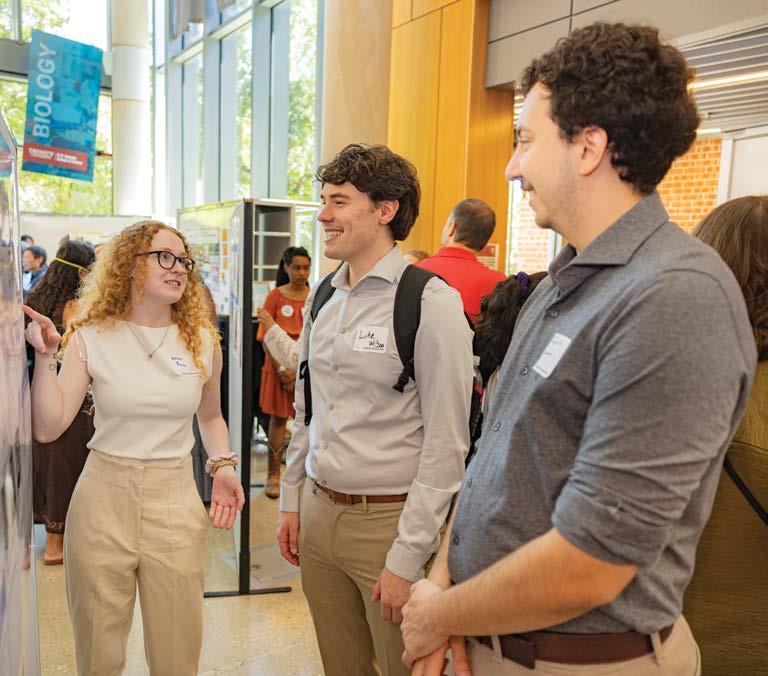
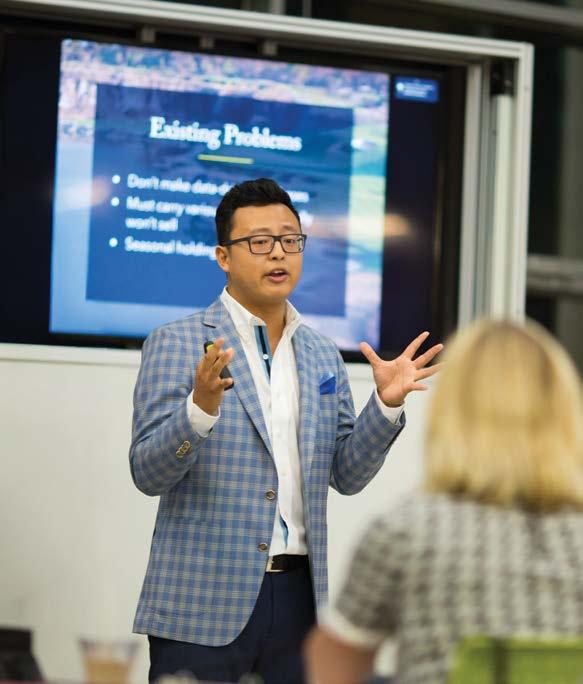
$1 Million Moody Opportunity Match to create life-changing experiences for Trinity students
Trinity University students will benefit from an expansion of donor-supported internships, undergraduate research, study abroad, and career-preparation experiences, thanks to a $1 million gift from the Moody Foundation. This important gift launches the Trinity University Moody Opportunity Match, a $1 million matching initiative designed to build a permanent, endowed base of support for undergraduate hands-on learning.
“By removing financial barriers to internships, research, global study, and career preparation, the match and related gifts help ensure that every Trinity student, regardless of financial background, can participate fully in the experiences that define a Trinity education,” says Trinity President Vanessa B. Beasley, Ph.D. “We are deeply grateful to the Moody Foundation for its extraordinary leadership and its longstanding commitment to expanding educational opportunity across Texas.”
Through this November, the Moody Foundation will match 1:1 gifts of $25,000 or more to create endowed Opportunity Funds. Donors may direct their support to study abroad, undergraduate research, or internship experiences, creating named funds that will benefit Trinity students in perpetuity.
• We will ensure that every student connects academic rigor to realworld impact. Experiential learning bridges coursework with lived experience—deepening understanding, sharpening analytical thinking, and strengthening the skills that employers value most.
• We will create student experiences that prime them for their futures. We will equip students to tell compelling stories in interviews and stand out in competitive job markets and graduate school admissions.
• We will immerse our students in San Antonio, our nation, and the world. Trinity students bring energy and creativity to every project they join. While partner organizations benefit from their skills, perspectives, and drive, our students gain confidence and professional clarity.
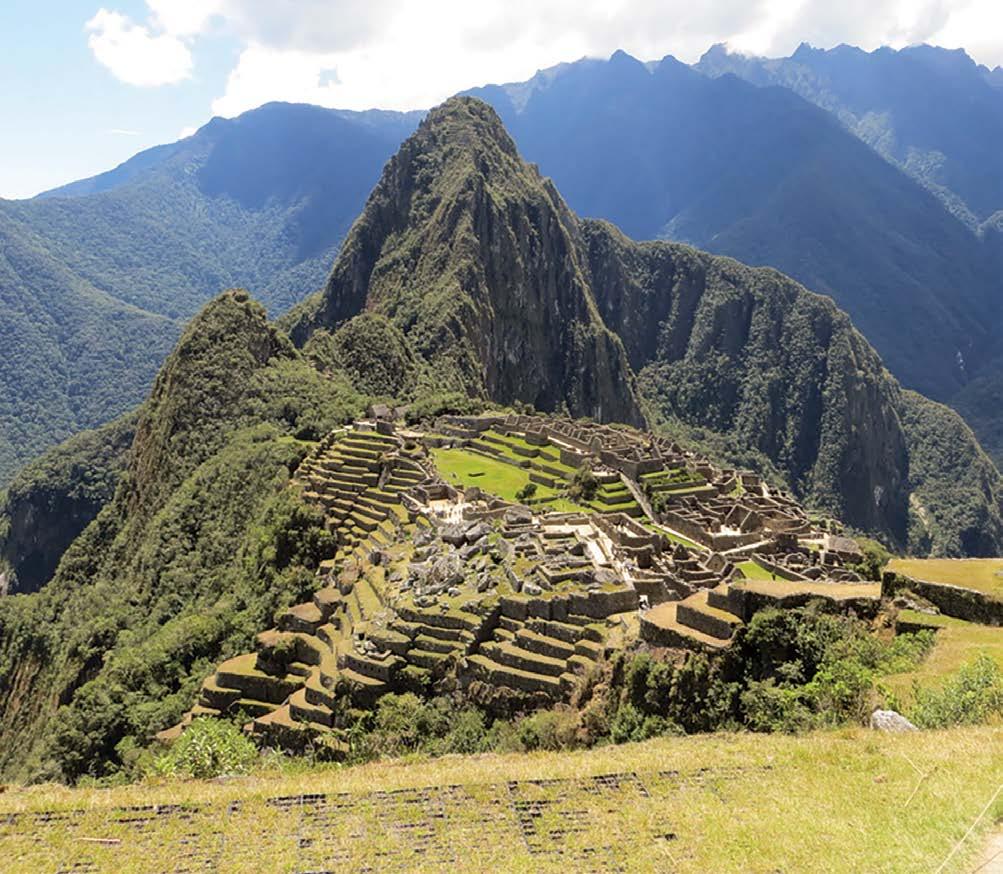

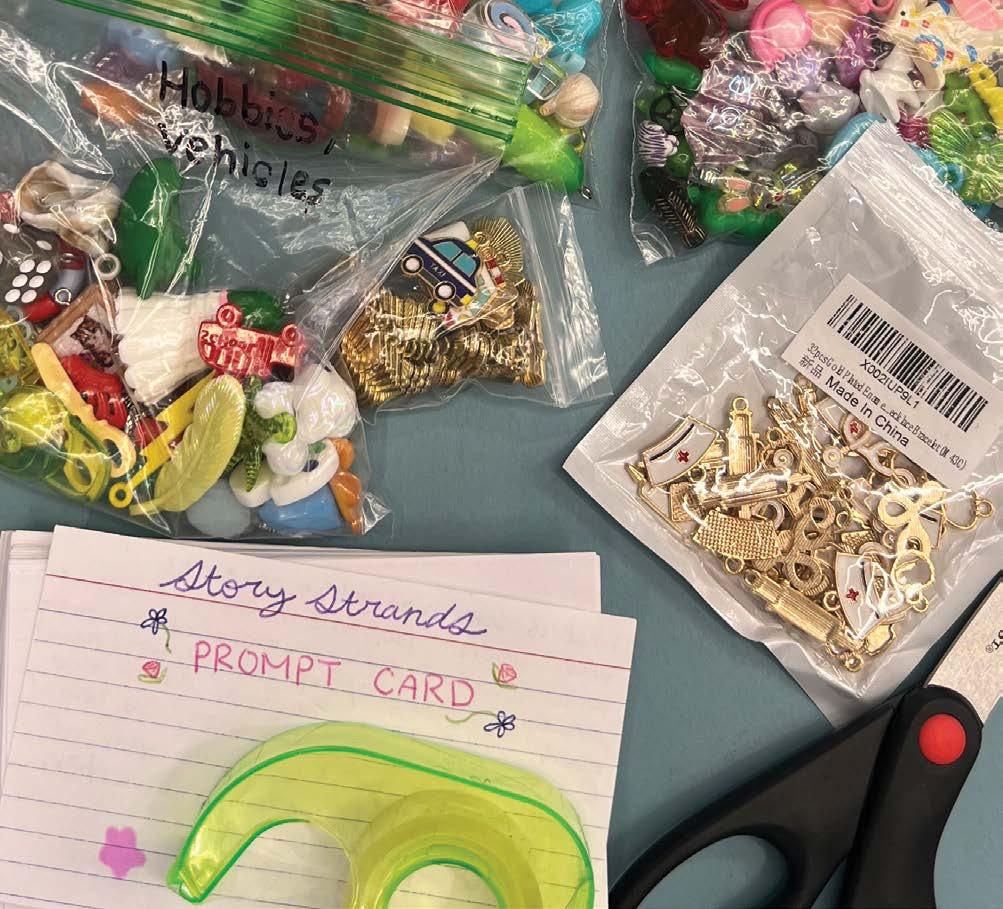
Spent Fall 2025 semester abroad in Peru through the SIT Indigenous Peoples and Globalization program
When I wasn’t visiting Indigenous communities, I’d start my day with a huge breakfast and a walk to class through historic Cuzco, once the capital of the Incan Empire. My courses explored the vibrant traditions and modern challenges of Indigenous groups across the Andes and Amazon.”
Conducted neuroscience research with custom-built equipment in a lab with Biology Professor Gerard Beaudoin III ’99
The opportunities that I have had, the research that I did here, you can’t really do at many other undergraduate schools in the world. This experience has been life-changing, and it has definitely made my chances of getting into a more competitive Ph.D. program a lot higher, just for the fact that I’m an undergrad who’s going to publish.”
Spent Summer 2025 interning with the DoSeum through Trinity’s Arts, Letters, and Enterprise program
My goal is to become a pediatric psychooncologist. This internship helped me build skills in community outreach, program development, and working with kids—skills I could apply in future research projects, leadership roles, and classes at Trinity. It helped me connect my academic knowledge to realworld impact.”
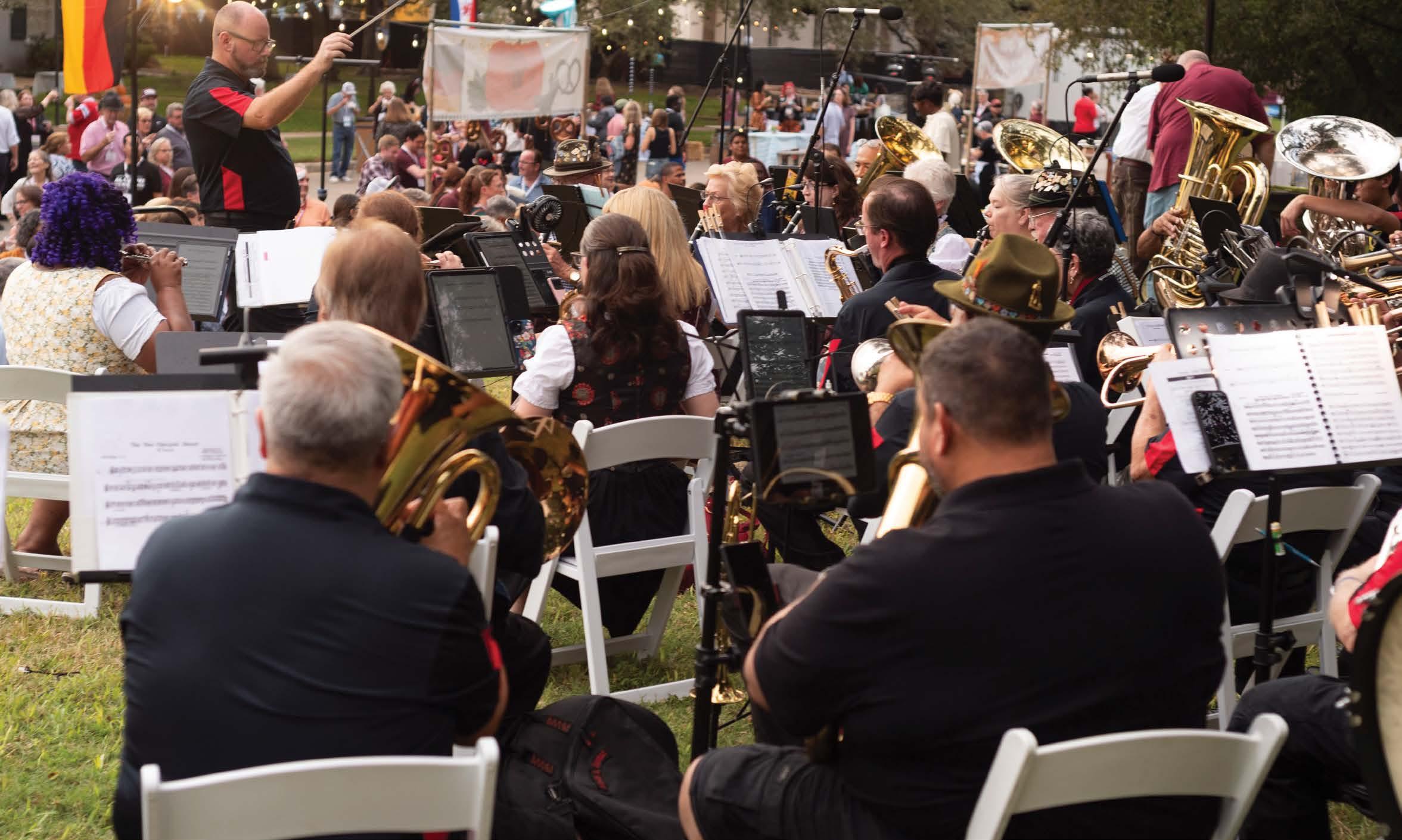
Alumni celebrate renewed connections and shared memories
Alumni from across the decades came together October 23-26, 2025, for a spirited celebration of Tiger Pride, the rekindling of old friendships, and the creation of new memories at a series of events showcasing Trinity University’s vibrant community. From thrilling athletic competitions to nostalgic campus tours, this year’s Alumni Weekend was packed with moments that forged new connections and affirmed the lifelong bonds that define the Trinity experience.
This year’s Block Party (pictured above) transformed Oakmont into Oaktoberfest, a Bavarian-inspired celebration filled with food, games, music, and tradition.
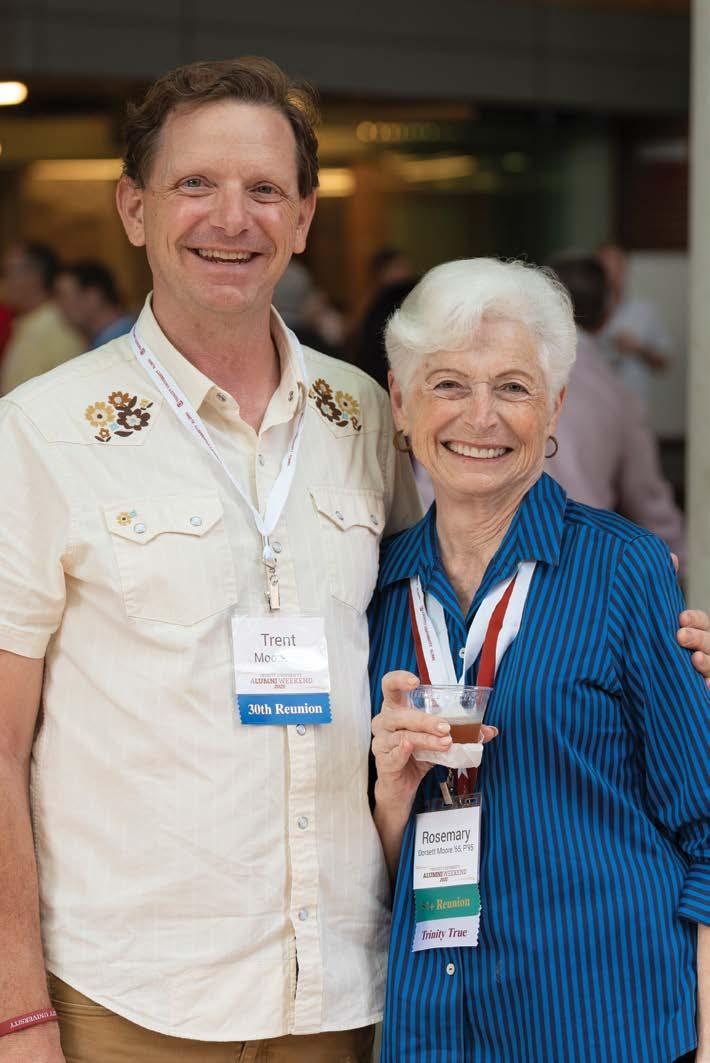
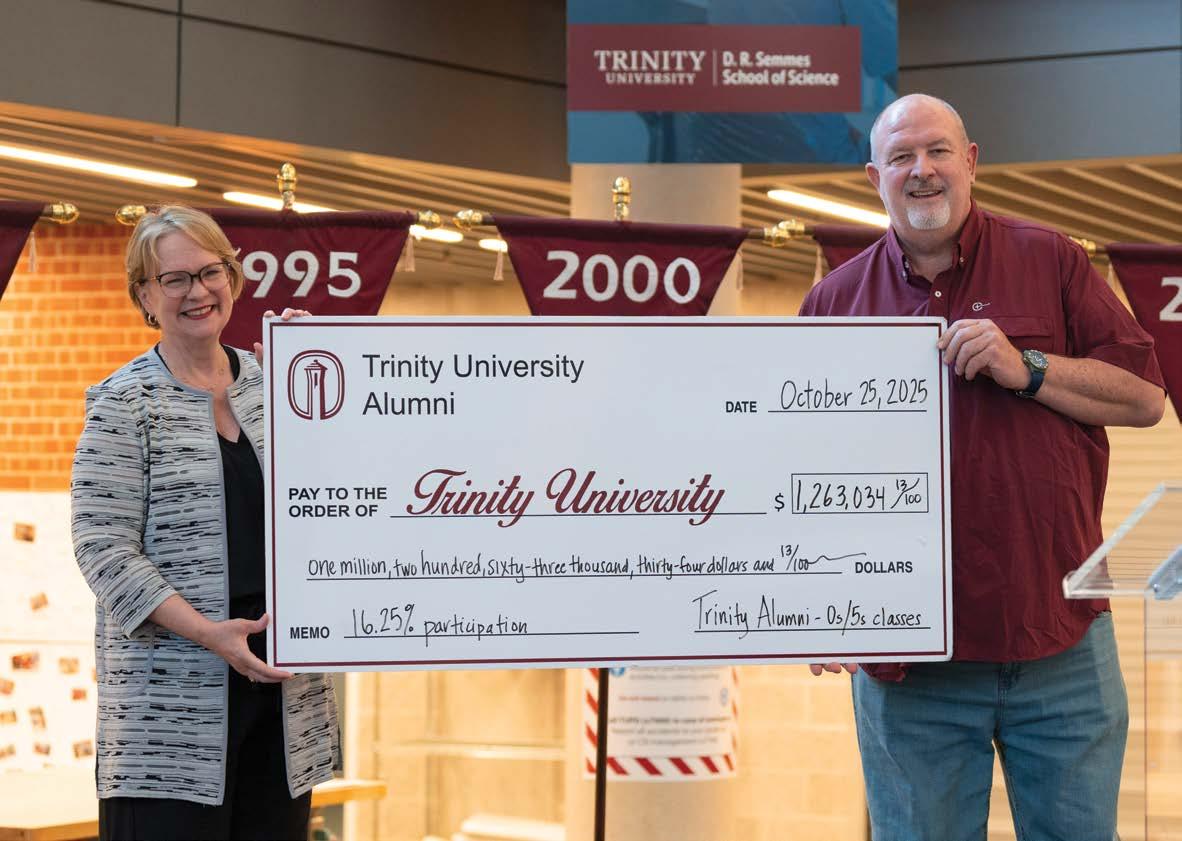
above and left At the President’s Reception, Paul Hensley ’87, president of the Trinity University Alumni Association Board, presented Trinity President Vanessa B. Beasley with a check for $1,263,034.13, the amount raised by all of the 2025 reunion classes.
This was the first reunion I’ve been to since my 25th. Everything changes, as it should … it was a trip down memory lane for me.”
P’95,
her
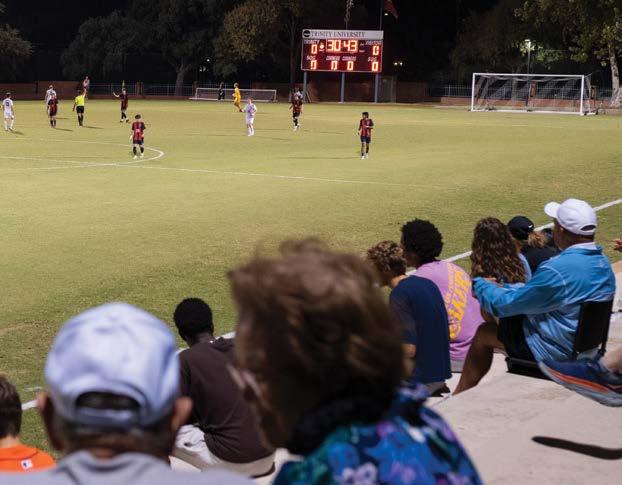
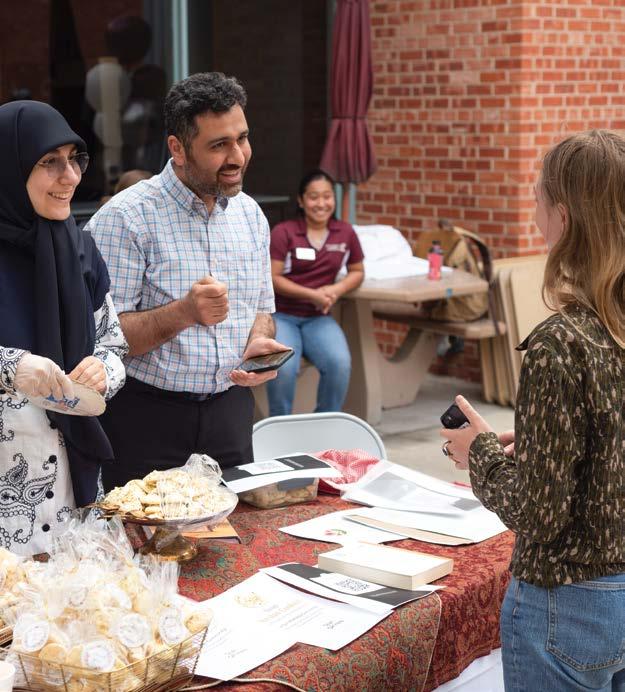
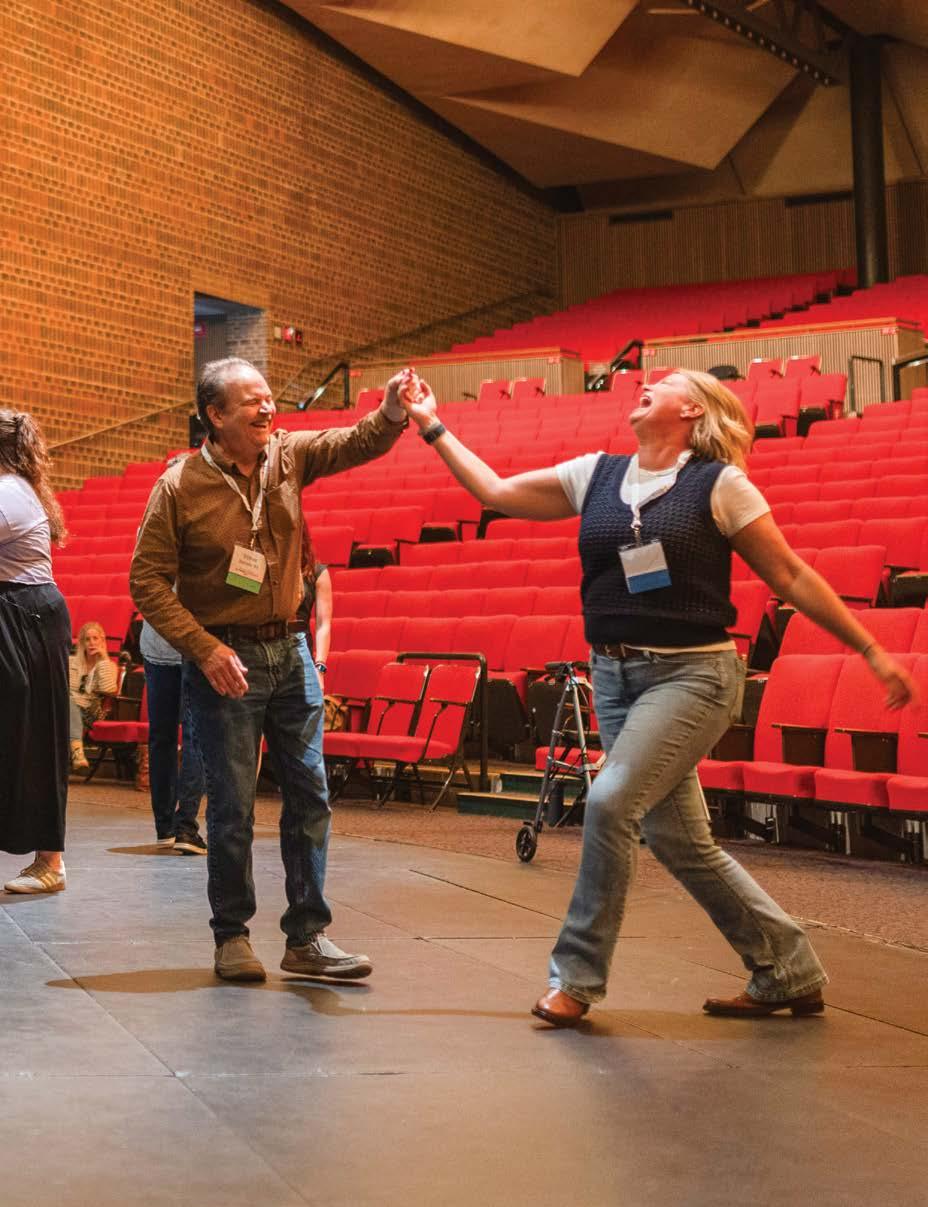
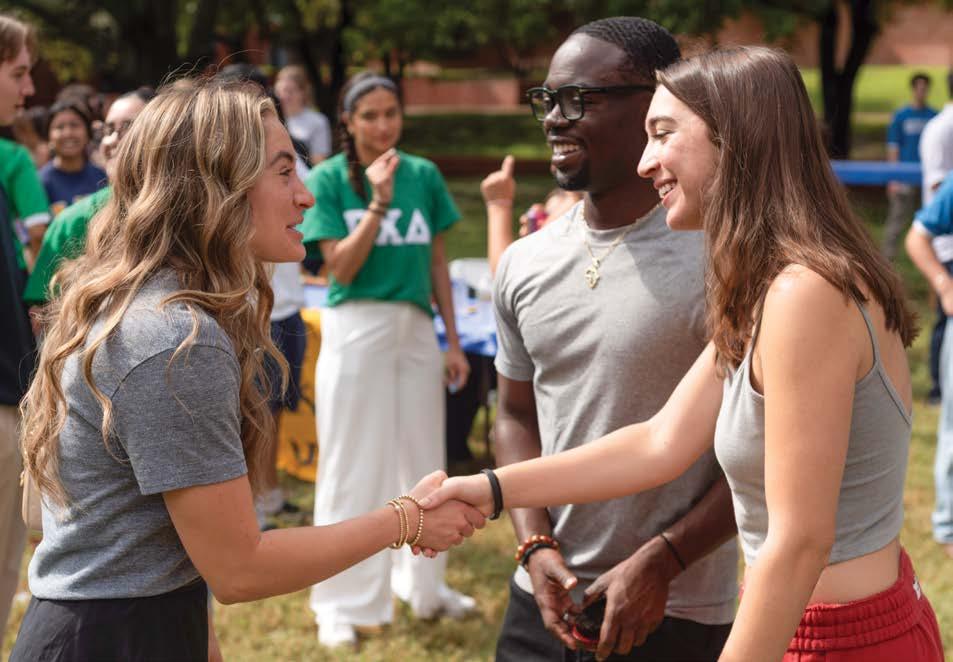
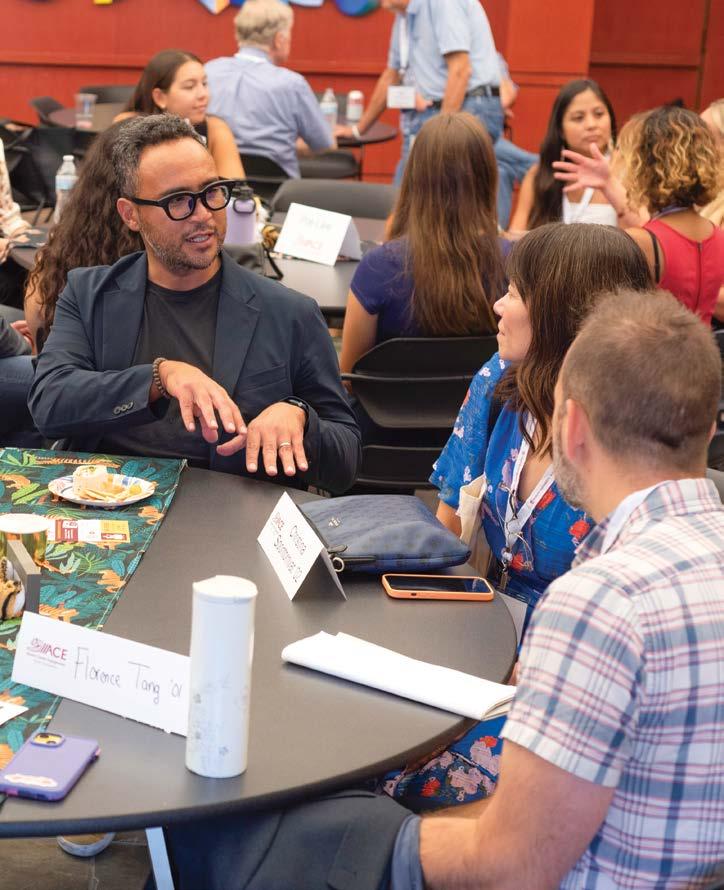
1. The Soccer Soiree gave alumni a front-row seat to two very close, exciting games that resulted in wins for Trinity.
2. Tigers enjoyed delicious bites, offerings from Trinity vendors, and the welcoming energy that makes Trinity feel like home at the Friday Fiesta and Trinity Market.
3. Brushes, backhands, and ballroom moves! Alumni embraced lifelong learning through Alumni College: Creative Classrooms with lessons in art, pickleball, and swing dancing.
4. The Tiger Football Tailgate and Affinity Picnic brought the Trinity community together with good food, great company, live music, and game day excitement.
5. Fourteen alumni mentors connected with more than 50 students and peers to discuss lessons learned after graduating from Trinity at a mixer hosted by Alumni Career Engagement.
6. The 2025 Alumni Award recipients were honored by the Trinity community for their extraordinary accomplishments and service to their alma mater.
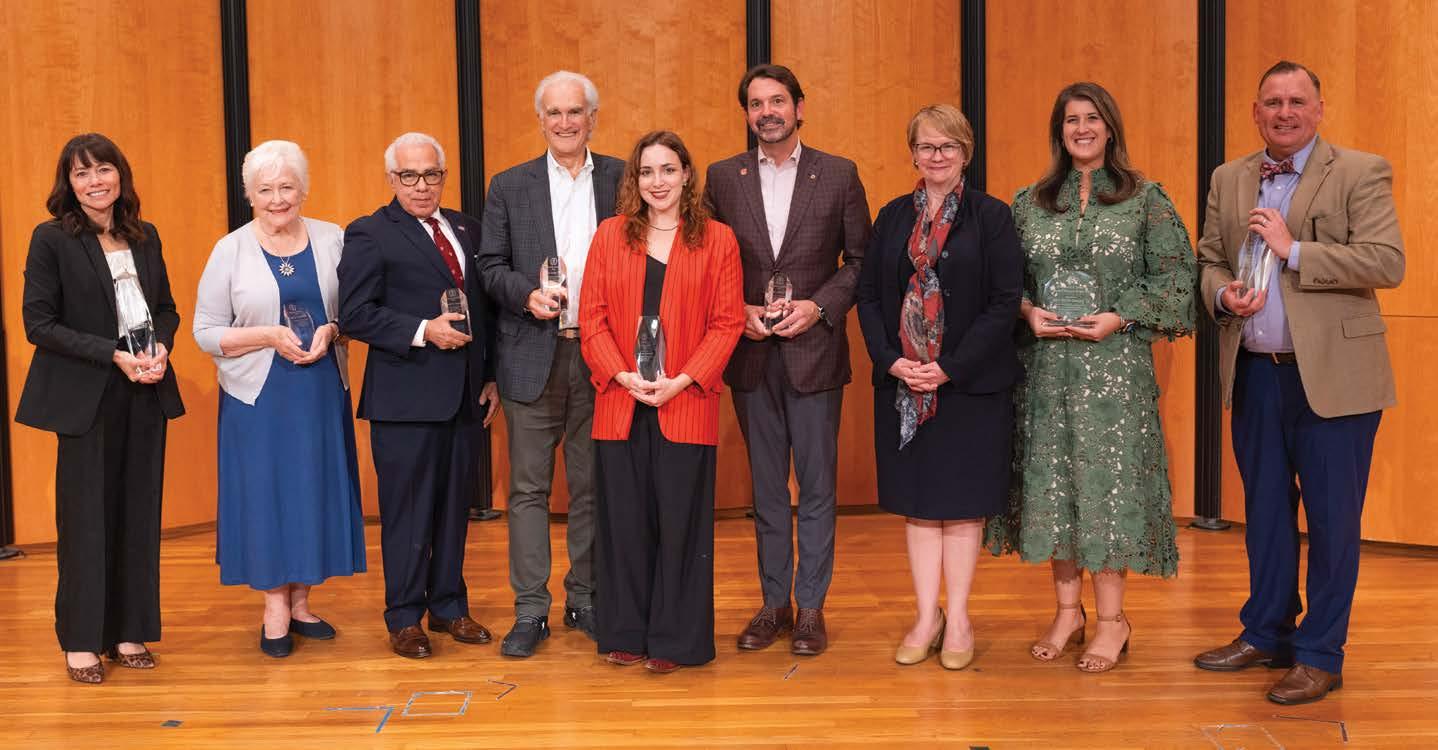
Trinity University’s Alumni Career Engagement (ACE) is committed to creating spaces for alumni to connect across generations, where they can seek and give advice on how to navigate their professional journeys after graduation.
That commitment to storytelling and shared experience comes to life through ACE’s latest initiative: the What Makes a Tiger Roar podcast. Each episode dives into the pivotal moments that shaped the personal and professional paths of Trinity alumni, from career shifts to leadership milestones. Hosted and edited by alumni Kristin Fraser ’91 and Diego Flores ’25, the podcast highlights how the Trinity experience continues to echo long after graduation. New episodes of What Makes a Tiger Roar drop at the end of each month, offering listeners a chance to stay inspired and connected to the community that helped shape them.
Podcast guests have included Assistant District Attorney Lauren Zamora ’00, Geekdom’s Senior Director for Revenue
Nick Honegger ’13, and Trinity’s Associate Director of Alumni Regional Programs Amanda Wise ’06, M’08, to name a few. Each alum has shared their own story of growth, purpose, and perseverance.
“I meditate on KPIs (key performance indicators) for life, and one of my big things is how many humans I’ve impacted.”
–Nick
Honegger ’13 in “Mind Over Matter” episode
Listen to What Makes a Tiger Roar wherever you get your podcasts.
• Kick-start career conversations with more than 150 other Tigers by filling out the intake form at gotu.us/careersace
• Join more than 7,700 alumni on LinkedIn at gotu.us/alumnigroup
• Sign up for AlumNet, Trinity’s e-newsletter just for alumni, by emailing alumni@trinity.edu to subscribe.
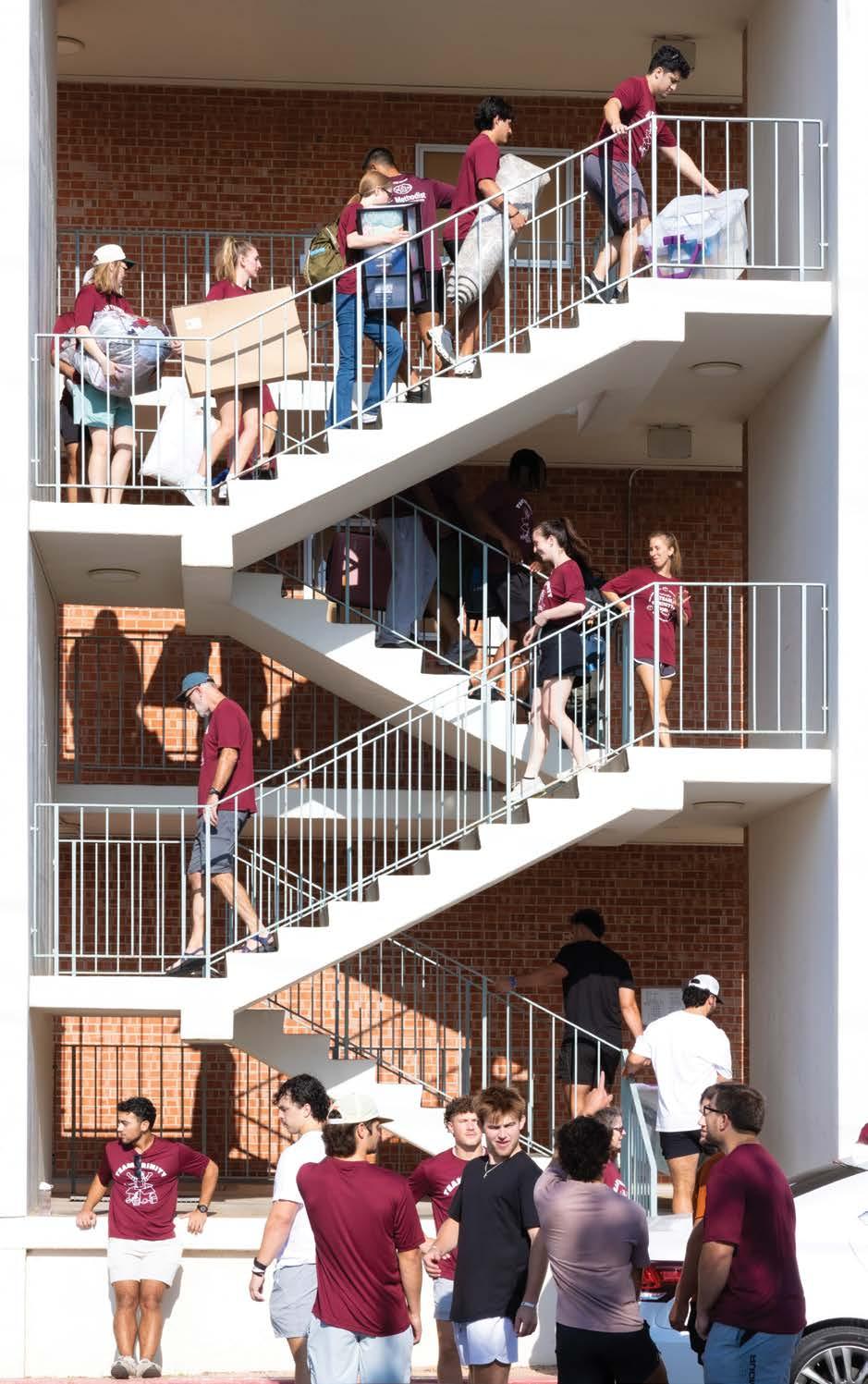
Whether it’s moving first-years into their new home or moving campuses, Team Trinity lifts items up flights of stairs or through windows with Tiger Spirit.

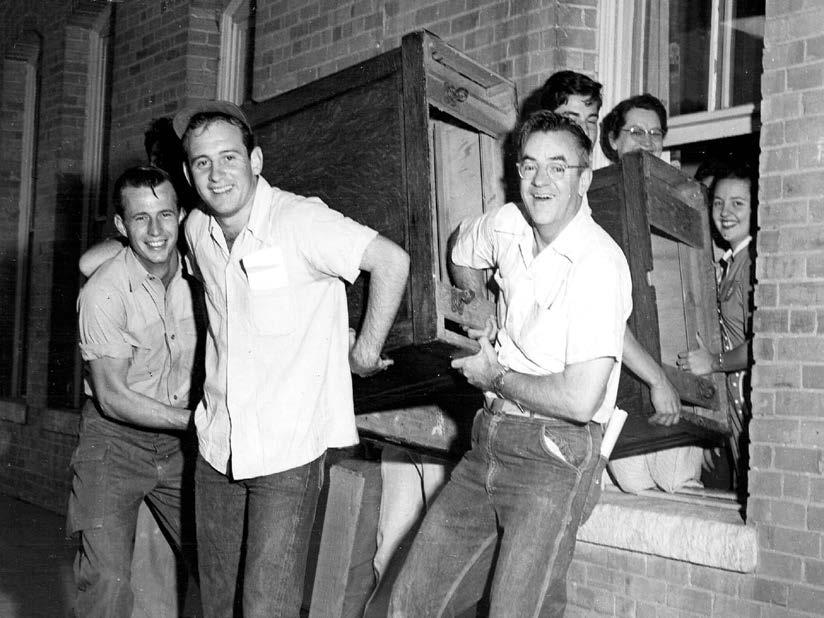
At Trinity University, alumni engagement is more than tradition—it’s the heartbeat of our community. Explore how you can give back:
Volunteer in the Alumni Community
• Serve on your Class Reunion committee.
• Provide career support for fellow alumni through informational interviews, career coaching, and mentoring.
• Share your expertise/stories as a speaker for podcasts, webinars, and the classroom.
• Be a featured author or artisan during Alumni Weekend.
• Join the Alumni Tunnel of Celebration at May or December commencement.
• Take up leadership roles in academic advisory boards and councils, regional alumni clubs, the Board of Visitors, the Trinity University Alumni Association Board, or the Health Care Administration Alumni Association Board.
Volunteer with Prospective and Current Students
• Work with the Center for Experiential Learning and Career Success for shadow days, informational interviews, mock interviews, and résumé reviews.
• Join the Recruitment Network to inform prospective students of what Trinity has to offer through college fairs, receptions, contact campaigns, and more
• Host a meal for students on “Tiger Breaks” who are doing service around the country.
• Help Tigers settle into their new home at Move-In Days.
• Volunteer as the LeeRoy mascot at an event.
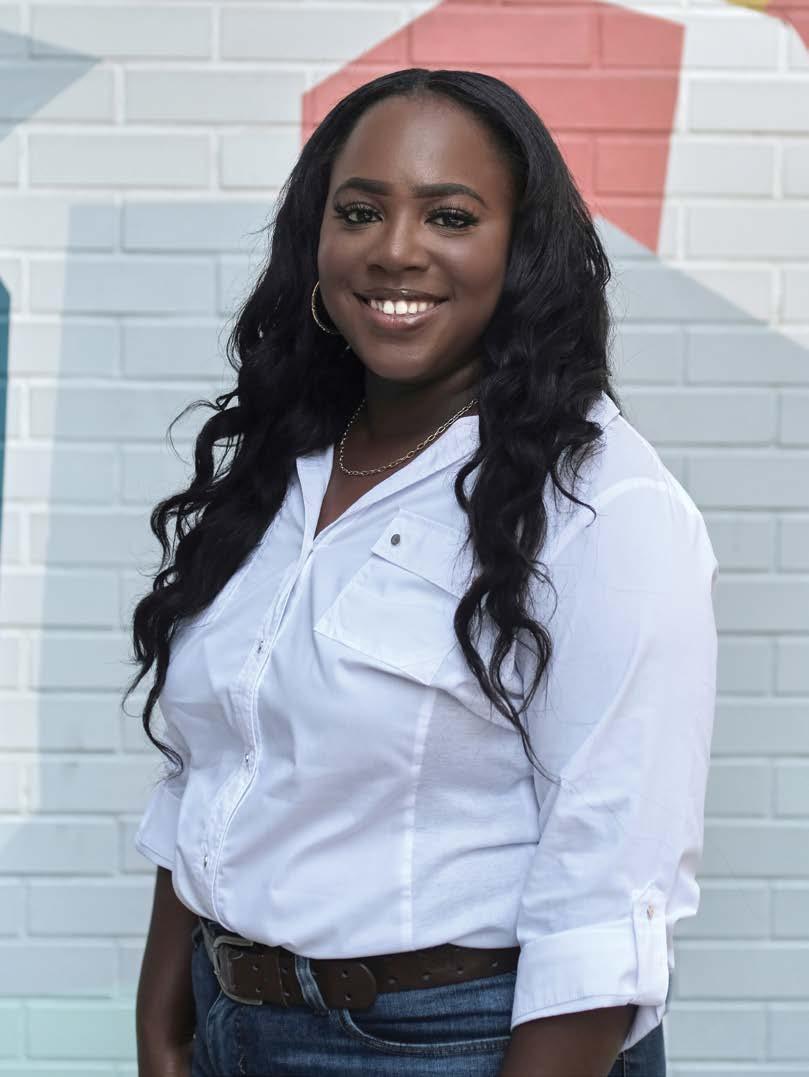
Whether I am volunteering at
events, serving on committees, interviewing prospective students, or attending Alumni Weekend, it’s a joy to give back to the
people and
place
that gave
so
much to
me.” –Tahlar Rowe ’18, chair of the Alumni to University Committee of the Trinity University Alumni Association Board
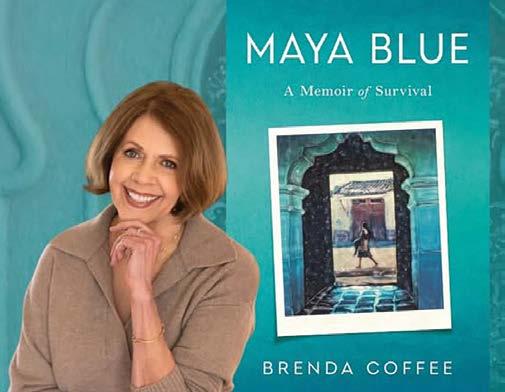
Brenda Coffee published Maya Blue: A Memoir of Survival with She Writes Press/ Simon & Schuster. Her memoir was nominated for the prestigious 2025 Kirkus Prize and named one of Kirkus Reviews’ 100 Best Books of 2025. The book was also selected by Maria Shriver as one of her 2025 Best Summer Reads, and it has attracted interest from Hollywood for a potential film adaptation. Maya Blue is a memoir that
reads like a thriller: a true story of love, cocaine, Big Tobacco, abduction, and survival. It’s Working Girl meets Taken, and in the end, Brenda Coffee is the last one standing.
Annette Nevins, a print journalist with more than three decades of experience, now serves as a professor of practice in journalism at Southern Methodist University in Dallas.
Michael S. Ward published Benedetto Varchi’s L’ Ercolano: A Focused and Annotated Translation with Cambridge Scholars Publishing.
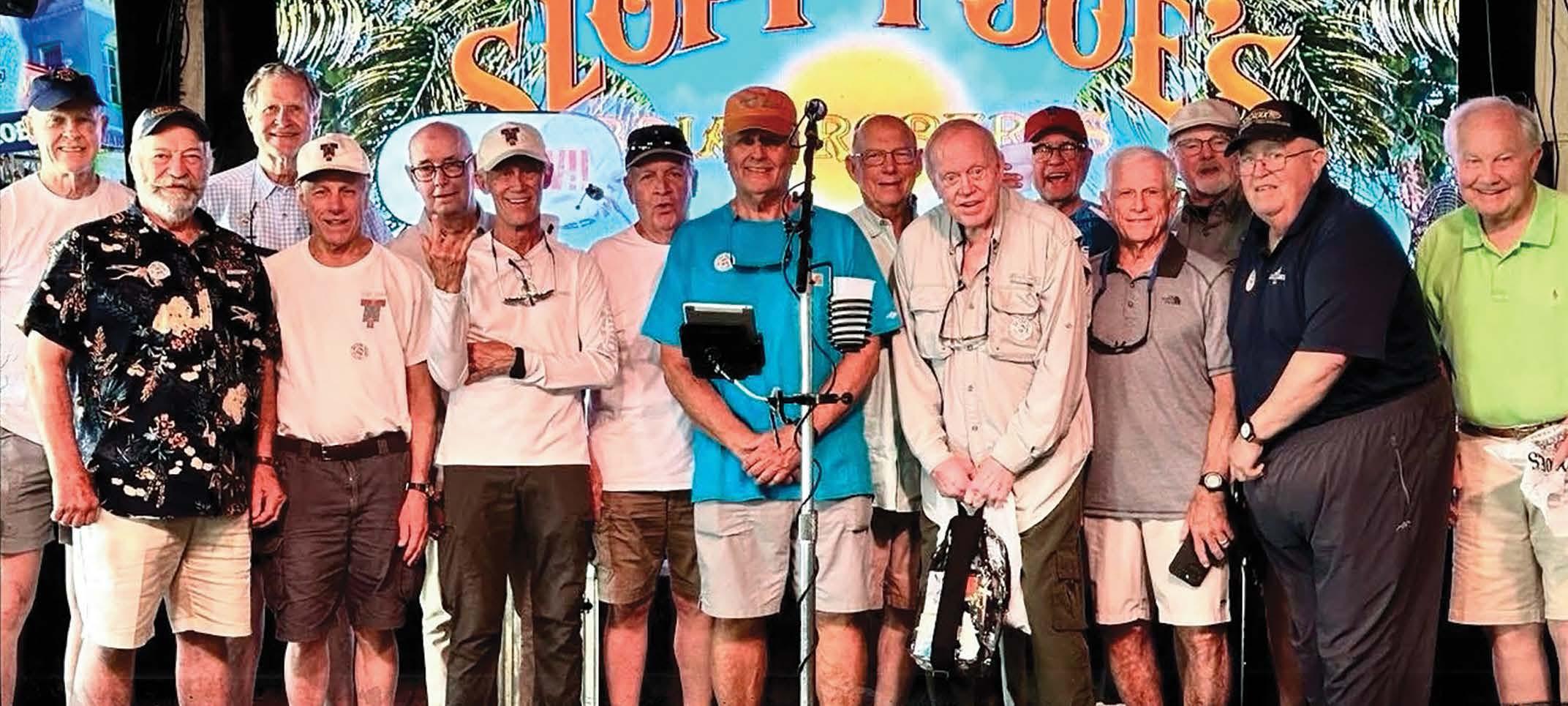
Last May, former Trinity Trustee Doug Hawthorne ’69, M’72 and 15 of his fraternity brothers celebrated the 50th anniversary of their annual Triniteer Let’s Go Fishing trip at a bar in Key West, Florida. Their first trip together took place in 1975 on the Colorado River in Bend, Texas.
We have been together every year since 1975, enjoying our friendships and telling lots of Trinity stories.”
–Doug Hawthorne ’69, M’72
Erick Blackwelder sold his company in Northern Virginia and moved to Wilmington, North Carolina, to enjoy a warmer climate and to be near the beach. Blackwelder has two daughters and two granddaughters who live in Northern Virginia.
Ken Goetzke recently retired from NASA, where he served as deputy chief counsel at the NASA Langley Research Center.
Susan Masinter Riley has found teaching piano sincerely rewarding for many years. She says, “What could be better than bringing music into a child’s life!”
Tracey Timpanaro started a professional organizing business, Zen Organizing, in January 2025 and had a very successful first year of business. She truly is changing lives by reducing stress and helping busy clients live more streamlined lives.
In mid-2025, Maribeth Bruno Davis transitioned from fulltime corporate communications to freelance strategic consulting, writing, and editing for aerospace, defense, and manufacturing companies. Davis is making the most of her more flexible schedule by raising a service dog in training for a veterans’ organization.
Douglas Smith began working at JPMorganChase (JPMC) in New York City in finance as managing director, leading U.S. CCAR and capital regulatory reporting, after completing a nine-year stint in risk at Wells Fargo. Smith rejoined JPMC after having previously worked there for 17 years through 2013. He and his wife recently celebrated 24 years of marriage. He says, “While I have not made it to reunions, I recall many fond memories at Trinity!”
Mark Moody is in his 28th year in the college admission and counseling professions. He is three years into running his own college admission counseling and high school admission consulting practice. Moody and
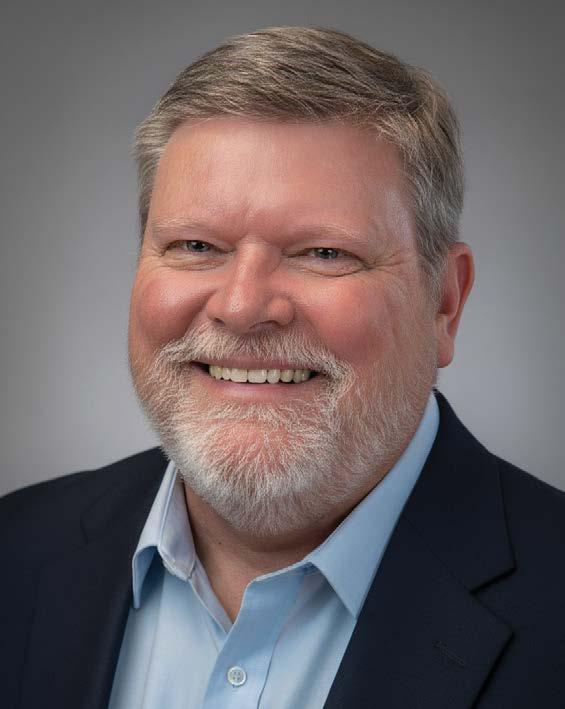
From a childhood love of movie monsters to a résumé boasting more than 50 film and television credits, Colin Campbell ’84 has been a reliable force behind Hollywood’s biggest hits, such as Harry Potter and the Prisoner of Azkaban, Avengers: Infinity War, and Star Wars: Episode IIIRevenge of the Sith
Last November, Campbell was named a fellow in the Visual Effects Society (VES), the only global professional honorary society that represents the full breadth of visual effects practitioners. Based in Texas, Campbell has served 12 years on the VES Global Board of Directors and played a key role in establishing the Texas VES section in 2024, where he currently serves as chair.
I want to raise awareness of our work so that by the time I retire, hopefully I will have created in Texas someplace where these young people can get a job in visual effects without having to fly halfway around the world to do what they want to do.”
–Colin Campbell ’84
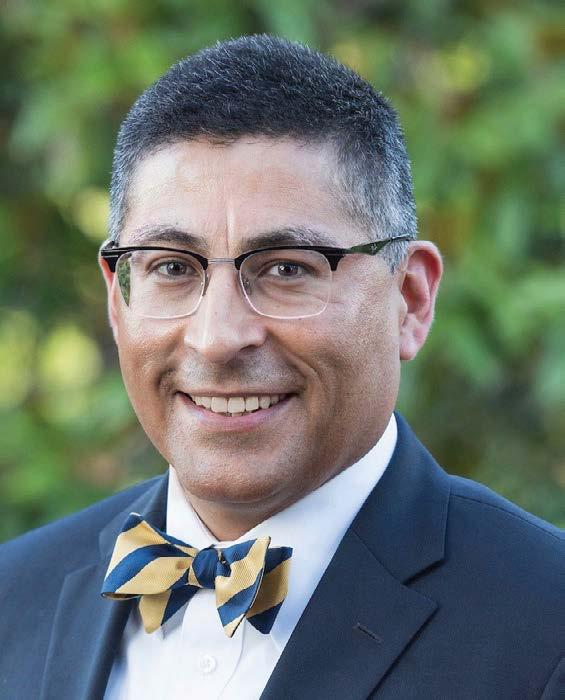
Frank Alfaro ’94, Ed.D., may hold only one official title with the Alamo Heights Independent School District (AHISD), but his impact is felt in nearly every corner of the district. As the assistant superintendent for administrative services, Alfaro supports various AHISD offices, serves as the district’s point of contact for legal matters and administrative items, and has a hand in the curriculum.
A former standout Tiger shortstop and current adjunct professor in Trinity’s education department, Alfaro credits the University with shaping his leadership and critical thinking skills. Grounded in his core values of usefulness and grace, Alfaro’s career reflects a deep commitment to education, service, and developing future leaders.
Remember the important teachers you had growing up, the ones who made a profound impact on you. You could be that person for countless children. Regardless of the age of the children you teach, you will make a life-changing impact on young people.”
–Frank Alfaro ’94
his partner, Mindy Rose, are getting married this summer with just her two great kids in attendance. They live in Saratoga Springs, New York, and both work remotely, helping students in higher education admission. Moody welcomes hearing from Trinity alumni seeking guidance for their own children, having recently advised the children of three classmates a meaningful full-circle experience. Contact Moody at www.msquaredcounseling.com
Richard Johnson coauthored with Peter MacLeod Democracy’s Second Act: Why Politics Needs the Public, which was published by University of Toronto Press in February. The book explores why frustration and polarization are on the rise and how reclaiming the power of the public can lead to a more hopeful future for democratic societies.
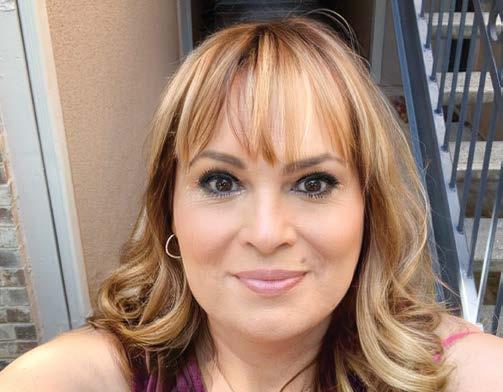
Amber Puga has begun a new role with the City of Dallas, joining its Budget & Management Services Department as a grant strategic program analyst.
Laura Gilbreath Green published her debut novel, titled Sister Creatures, under the pen name Laura Venita Green in October 2025. Named an “Indie Next Pick,” the book received the following review from Shelf Awareness: “From rural Louisiana to locations around the globe, the same problems and secrets follow a quartet of girls-become-women in this arresting, unnerving, and wise debut novel.”
Felicia (Leo) Kemp was featured in Sactown Magazine’s Best of the City 2025 as Best Inclusive Trail Angel for her inclusive approach to sharing hiking tips and trails on social media and as co-author of Moon Northern California Hiking
Brent Morgan was appointed by Governor Greg Abbott as the presiding judge for the 318th Judicial District Court in Midland County, Texas.
Juliana Robles, M.D., a pediatrician, has spent nearly 11 years with CentroMed, providing compassionate care to underserved children on San Antonio’s Southside.
Allyson Weaver Bunker has been appointed historian and a member of the Executive Committee of the Women’s Board of the prestigious Lincoln Park Zoo. The Lincoln Park Zoo is a historic zoo in Chicago, known for its free admission and central location in Lincoln Park. It is one of the oldest zoos in the U.S., founded in 1868, and features a wide variety of animals in naturalistic habitats alongside extensive gardens and conservation programs. The photo above shows Bunker with her husband, Brian, at the 48th annual Zoo Ball, which raised a record $1.8 million for the Lincoln Park Zoo.
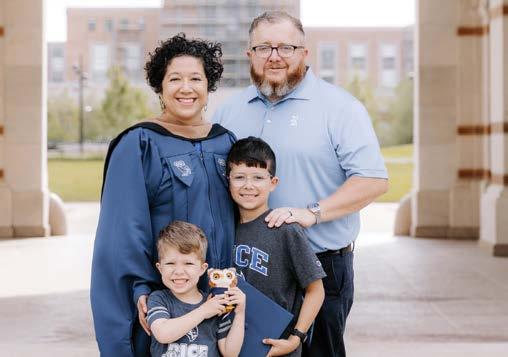
Sarah Castro Nash earned her MBA from the Jones Graduate School of Business at Rice University and joined Goldman Sachs Private Wealth Management.
Todd Thames, M.D., assumed a full-time role as professor of practice in the Trinity Health Care Administration Department in September 2024. He is teaching a variety of topics, including health care policy and law, bioethics, and clinical operations.
Thomas Bell published The Constitution of Conflict: How the Supreme Court Undermines the Separation of Powers in 2025 with the University Press of Kansas.
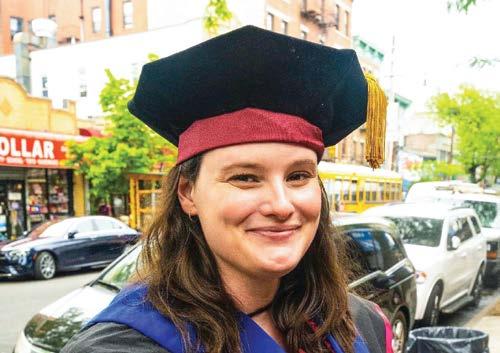
Rachel Podd earned her master’s degree in history from York University and her doctorate from Fordham University after graduating from Trinity. Her research has been published in the academic journal Continuity and Change, and within the past year, her work was cited in an exhibit on medieval English women at the British Library. She is currently in her third year at St. John’s School in Houston, where she teaches ninth- and 10th-grade history spanning the fall of Rome to the present day.
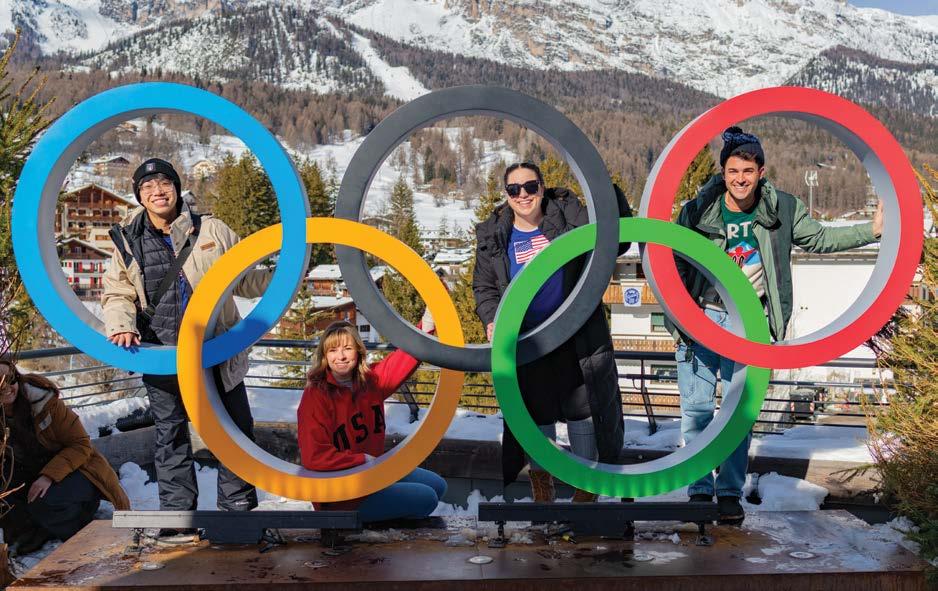
Anh-Viet Dinh ’15, Jacob Hall ’15, Lauren Krummel Hall ’15, and McKenzie Quinn ’15 attended the 2026 Winter Olympics in Milano Cortina. Their friendship began at Trinity and has been shaped by a shared love of travel and adventure. After attending the Paris Olympics in 2024, the group continued the tradition by reuniting in Italy, marking more than 15 years of friendship and global exploration rooted in their Trinity connection.

Alumni Career Engagement (ACE) now offers monthly virtual group coaching sessions for alumni across all professional backgrounds! This new offering is a convenient opportunity for alumni to learn from expert coaches while connecting, sharing ideas, and building community with fellow alumni.
✓ Get real-time, interactive career support.
✓ Ask questions and receive tailored advice.
✓ Learn from the experiences of others navigating similar career journeys.
Each session will take place on Zoom and will include a short presentation followed by a group discussion. All group coaching sessions are FREE to attend.
Keep a lookout at gotu.us/ace for upcoming dates and more details.
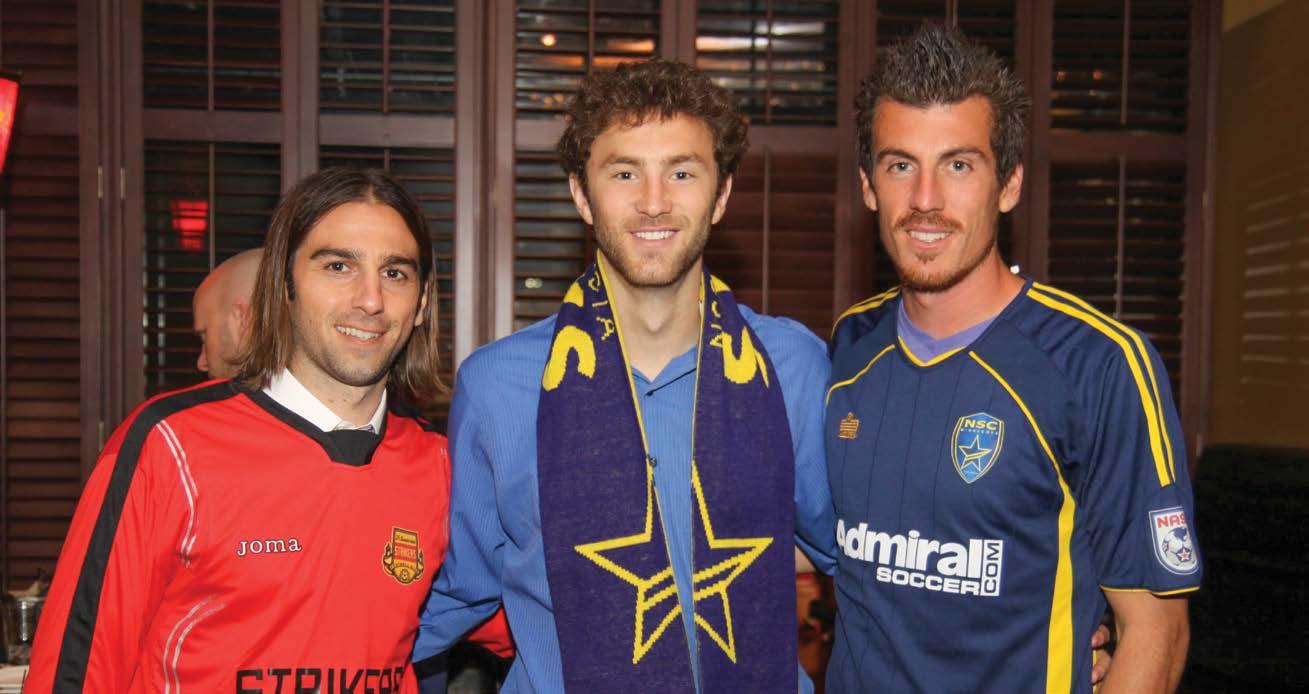
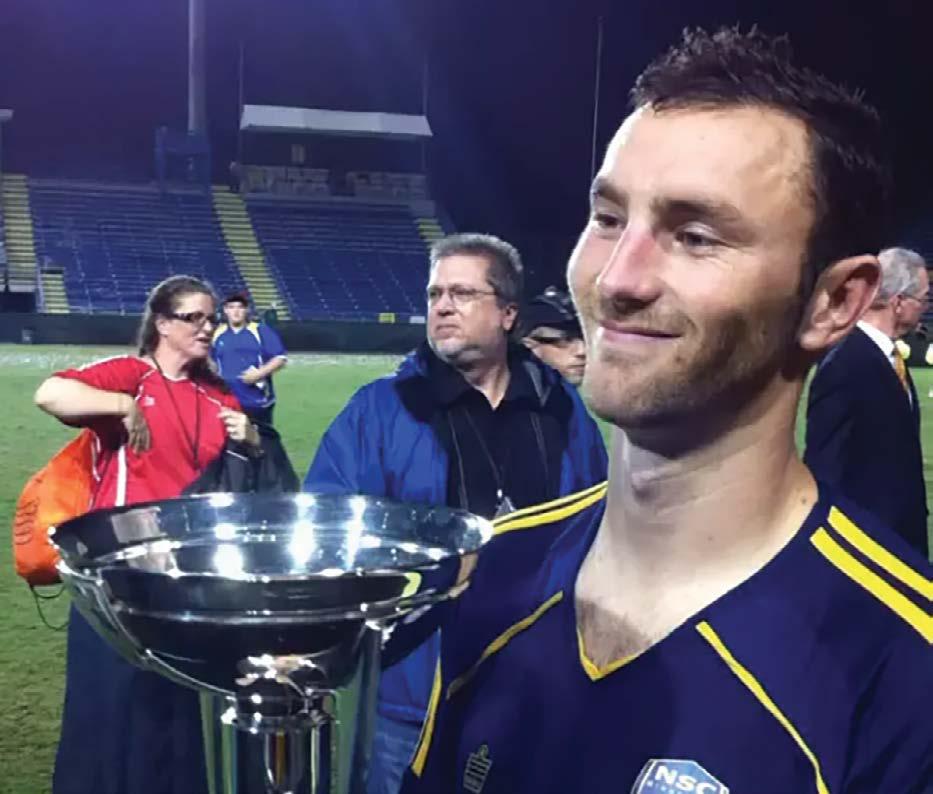
Kyle Altman ’09 went from being a dominant midfielder on Trinity’s field and leading a professional soccer career to serving other athletes as an orthopedic surgeon with Sports Medicine Associates of San Antonio.
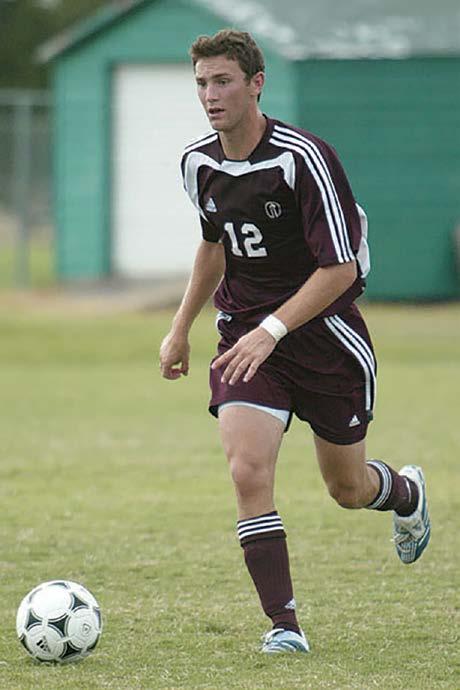
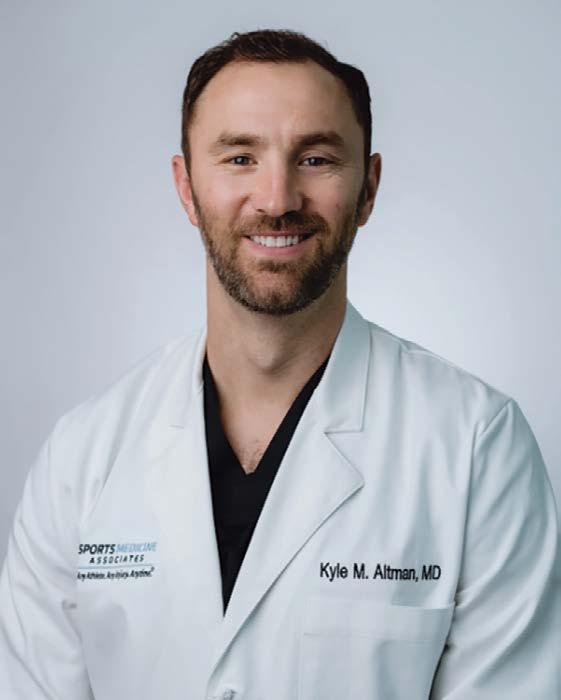
Three Trinity soccer alumni went from leading on the soccer field to leading their professional fields
by James Hill ’76
Kyle Altman ’09, M.D., was a dominant defender and midfielder at Trinity University, earning All-America honors in 2006 and 2007 and also being named the Southern Collegiate Athletic Conference Defensive Player of the Year in both seasons. Although Altman was drafted by Major League Soccer’s New England Revolution in 2008, a preseason injury delayed his pro soccer journey until he joined the Minnesota Thunder of the United Soccer League’s First Division. Throughout his career, Altman also played for the Minnesota Stars FC of the North American Soccer League, competed in the Maccabiah Games, and won gold and silver medals at the 2007 and 2011 Pan American Games, respectively.
Altman announced his soccer retirement in 2013 to attend UT Health San Antonio. He now supports
the dreams of other athletes as an orthopedic surgeon at Sports Medicine Associates of San Antonio. Last year, the San Antonio Business Journal named him a 2025 Health Care Hero, a recognition reserved for professionals whose talent, dedication, and humanity elevate the entire health care community.
“Orthopedics provides the opportunity to make a substantial impact on someone’s life. Someone comes to you with a problem, you fix it, and, hopefully, their life is better,” Altman says. “In that respect, orthopedics can be very simple and immensely rewarding.”
Emily Jorgens Cardone ’15 and Matt Cardone ’15 were soccer stars at Trinity. Now these Tiger sweethearts are making their mark on the legal field.
Emily, a midfielder, was a four-time All-American from 2011-14 and was elected the Academic
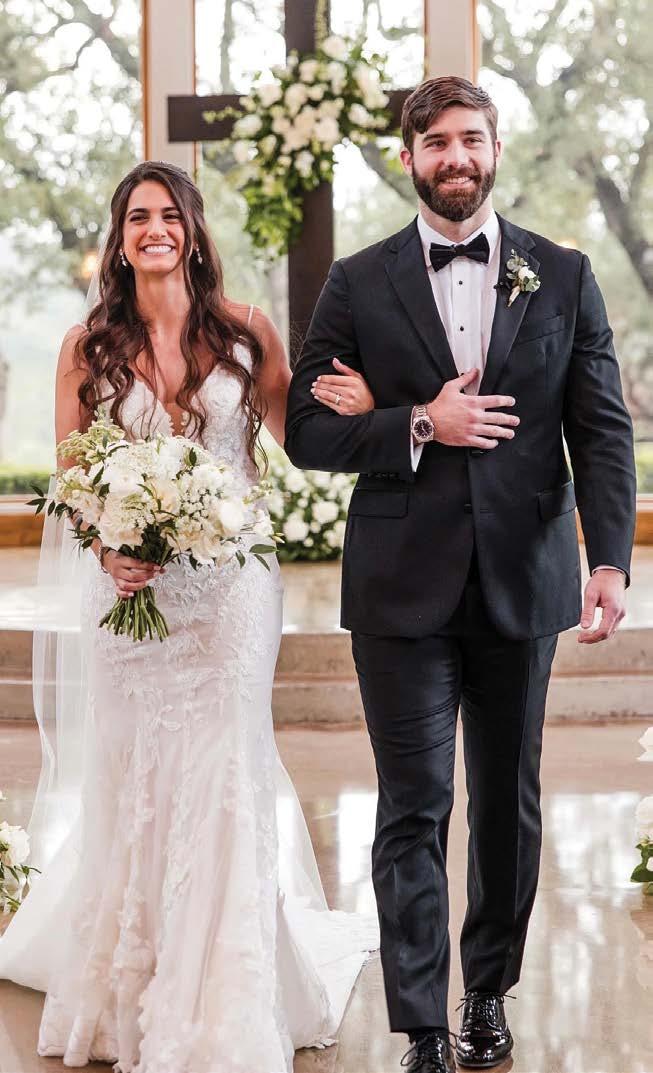
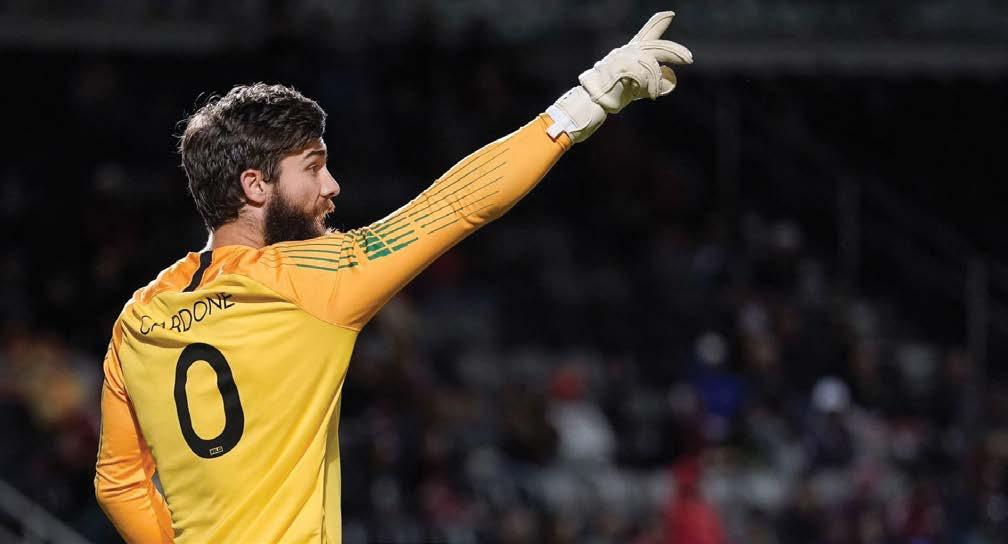
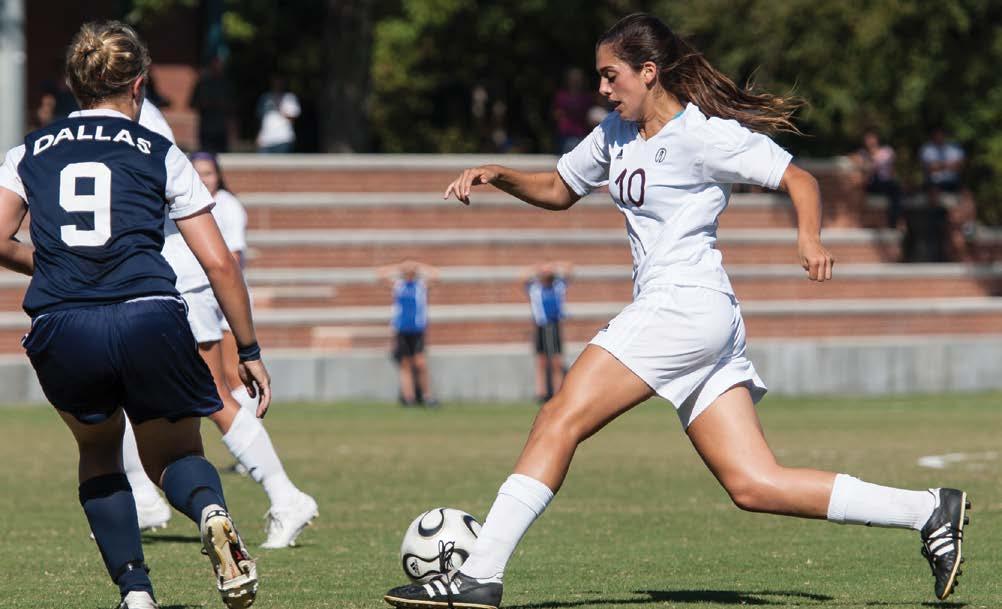
All-American of the Year in 2013 and 2014. During her final semester, she was awarded a prestigious NCAA Postgraduate Scholarship.
After graduating from Trinity, Emily earned her master’s degree in professional accounting from The University of Texas at Austin and her Juris Doctor from UT’s School of Law. She has been an attorney at Gibson Dunn in Dallas for the last five years, specializing in commercial litigation. Emily finds her law career rewarding because she is able to advocate for others and solve complex problems.
“My dad is a lawyer, so I was interested in law school from a young age. The business law class at Trinity solidified my desire to go to law school,” Emily says. “I enjoy practicing law because the work challenges me to think critically, communicate clearly, and approach issues from multiple perspectives.”
Matt, a goalkeeper, earned All-America honors in 2012 and 2014. After Trinity, he began a professional
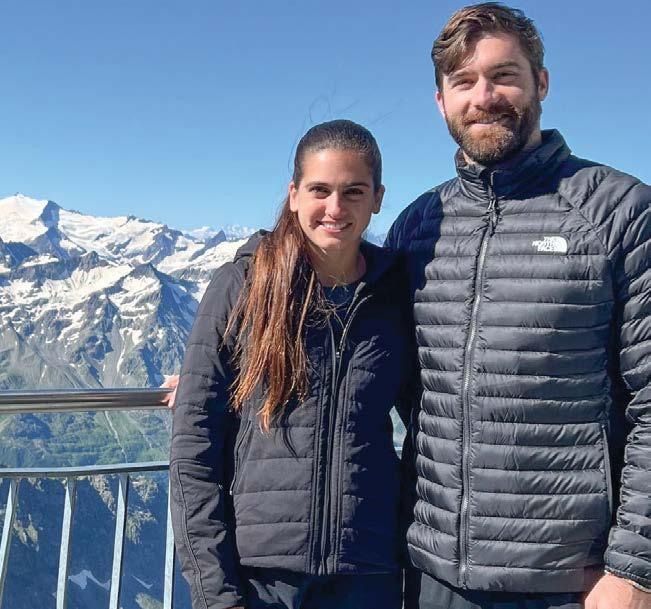
soccer career that spanned eight seasons from 2015 to 2022. He started out with the San Antonio Scorpions of the North American Soccer League and then became the goalkeeper for San Antonio FC in 2016 in the team’s inaugural season in the United Soccer League.
After retiring from pro soccer, Matt attended the Dedman School of Law at Southern Methodist University, where he received his Juris Doctor.
“I enjoyed every minute of playing professional soccer. It was nice to be close to home and represent San Antonio,” Matt says. “Now, I’m excited to tackle a new challenge in the legal profession. There are many skills that certainly carry over, such as teamwork and attention to detail.”
Emily Jorgens Cardone ’15 and Matt Cardone ’15 are now pursuing careers in the legal field.
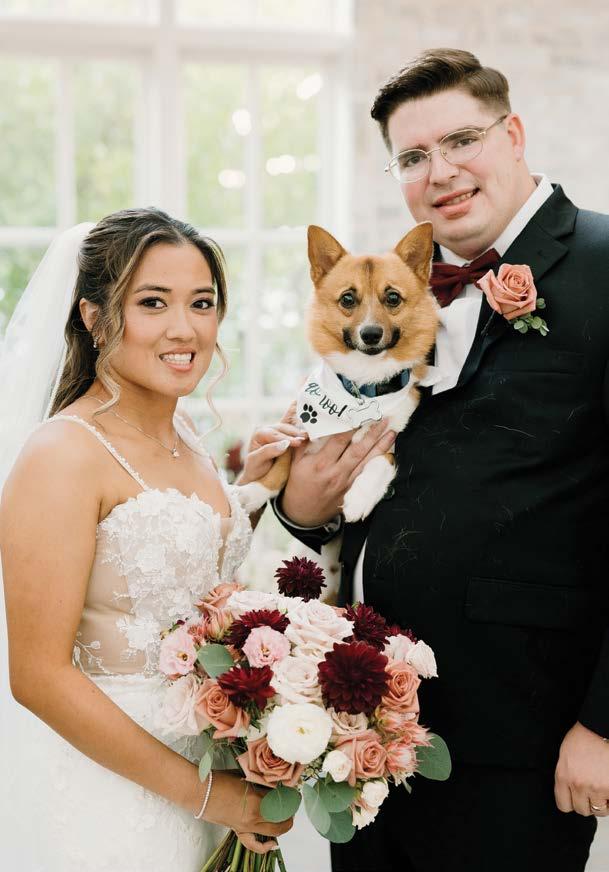
Van-Quyen Mai ’19 to Chance O’Sullivan September 6, 2025
Nithya Balasekaran and Arush Dutt ’15 first met at Mabee Dining Hall during Balasekaran’s first year. Their connection grew during rehearsals for Trinity’s annual Diwali program, where Balasekaran danced in the show, and Dutt ran the lights backstage. Sparks flew, and they have been inseparable ever since. This year, the couple is celebrating 12 years together and three years married. They currently live in Austin with their beloved dog, Shamu.
Lauren Jaramillo Eureste graduated from Trinity with a degree in business marketing, unsure of where the field would take her. She worked at ExxonMobil from 2016 to 2021 as a procurement specialist while cultivating a photography side business and hobby informed by her marketing degree expertise. In July 2022, she left corporate America to launch Imagine Lauren Photography. In October 2024, Eureste purchased her first commercial property and transformed it into her own photography studio, where she now specializes
in newborn, maternity, cake smash, family, and other portrait sessions.
Hayley Sayrs’ passion for service work deepened at Trinity and has only grown since. A few years ago, Sayrs launched her own consulting firm and now offers resources and workshops through the firm’s Social Startups initiative, supporting social enterprises from seed stage to strategic partnerships. At Trinity, she launched a public-private partnership through the Trinity Market and learned what it takes to turn ideas into sustainable community change. From farmers markets to policy implementation, Trinity gave Sayrs the skills and confidence to bring visions to life alongside a group of dreamers and weavers.
Gabriel Levine started a doctorate in chemistry at the University of Chicago. This move follows his stints advancing new kinds of scientific funding models at the National Science Foundation and working to scale manufacturing of lithiumion batteries at a startup.
Steven Drake recently began his doctorate program in educational leadership and policy at The University of Texas at Austin after earning an M.Ed. in 2024 from the same program. His research focuses on LGBTQIA+ policy in education. He is in his second year of doctoral studies and is planning to be a professor after graduating.
Madeliene Scarborough has started her master’s degree in art history at the University of Houston.
Caleb Manifold began serving as a liaison officer with the Bexar County Office of Emergency Management in October 2025.
Don Olsen ’51
September 7, 2025
Robert Fox ’54
October 15, 2025
Raymond Earl Judd Jr. ’56
February 21, 2026
Anthony Constanzo ’57
July 16, 2025
Gerald Watson ’57
July 2, 2025
Kenneth Peck ’58
September 5, 2025
Owene Menger Caruth ’59
July 4, 2025
Charlotte Ritcheson Brown ’60
August 18, 2025
Vicki Savola Davis ’60
May 12, 2025
Victor Sahm Jr. ’60
July 23, 2025
Lila Hayes Cantwell ’61
September 7, 2025
Linda Ann Northington Webb ’61
November 15, 2025
Edgar Niemeyer ’63
June 24, 2025
Randall E. Ruppart ’63
November 17, 2025
Frederick Dearborn ’64
September 21, 2025
Bruce Leonard Jr. ’64
August 16, 2025
Larry Mentzer ’64
October 8, 2025
Mary Barnebey Bond ’65
November 26, 2025
Dennis Schmidt ’65
October 14, 2025
Virginia Yee Wong ’65
October 17, 2025
Will Rogers ’66
June 30, 2025
Coral Marie Migoni-Ryan ’67
December 1, 2025
John Wilmot ’67
September 30, 2025
Carolyn Johnston ’69
February 5, 2025
Shalmir Scoggins Benner ’70
August 20, 2025
James Newman ’70
October 4, 2025
Gerald Reamey ’70
November 3, 2025
Claude De Winborn Jr. ’71
November 29, 2025
Evert Hermes Jr. ’72
August 13, 2025
Arthur Mercer III ’72
October 2, 2025
Thomas Guggolz ’73
September 28, 2025
James Branaum ’74
June 9, 2025
Mollie Nethery Campbell ’74
September 15, 2025
David Dameron ’74
January 20, 2026
Margaret Corning Boldrick ’75
August 26, 2025
Margery Henry Erp ’75
July 29, 2025
Thomas Austin ’76
September 10, 2025
John Smothers ’76
October 22, 2025
Susan Rosenthal Oppenheimer ’77
August 17, 2025
Shirley Melenyzer ’78
July 9, 2025
Claude “Tres” Nicholson III ’79
October 25, 2025
Charisse Pappas ’81
August 3, 2025
Karen Vargo Rodriguez ’82 March 17, 2025
John Allen Jr. ’83 September 17, 2025
Elizabeth Wilson ’83 July 11, 2025
William Sugg ’84 May 9, 2025
Shannon Bradford ’89 September 18, 2025
Amy Schneider Moon ’91
March 30, 2025
Garth Bond ’94
July 9, 2025
Jennifer Forster McNichols ’95
November 4, 2025
Jerron Lowe ’02
February 15, 2026
Chelsey Werchan ’08
November 12, 2025
Cynthia Campos Cardenas M’13
October 9, 2025
Erich de Zoeten ’14
May 29, 2025
Craig Braxton Barry ’25, M’26
January 10, 2026
Trinity University spirit travels wherever the Tigers compete. This academic year, regional alumni clubs across the country showed their Tiger Pride by cheering on student-athletes and rallying behind Athletics. From tailgates to watch parties, alumni clubs continue to play a vital role in supporting Trinity Athletics—near and far.
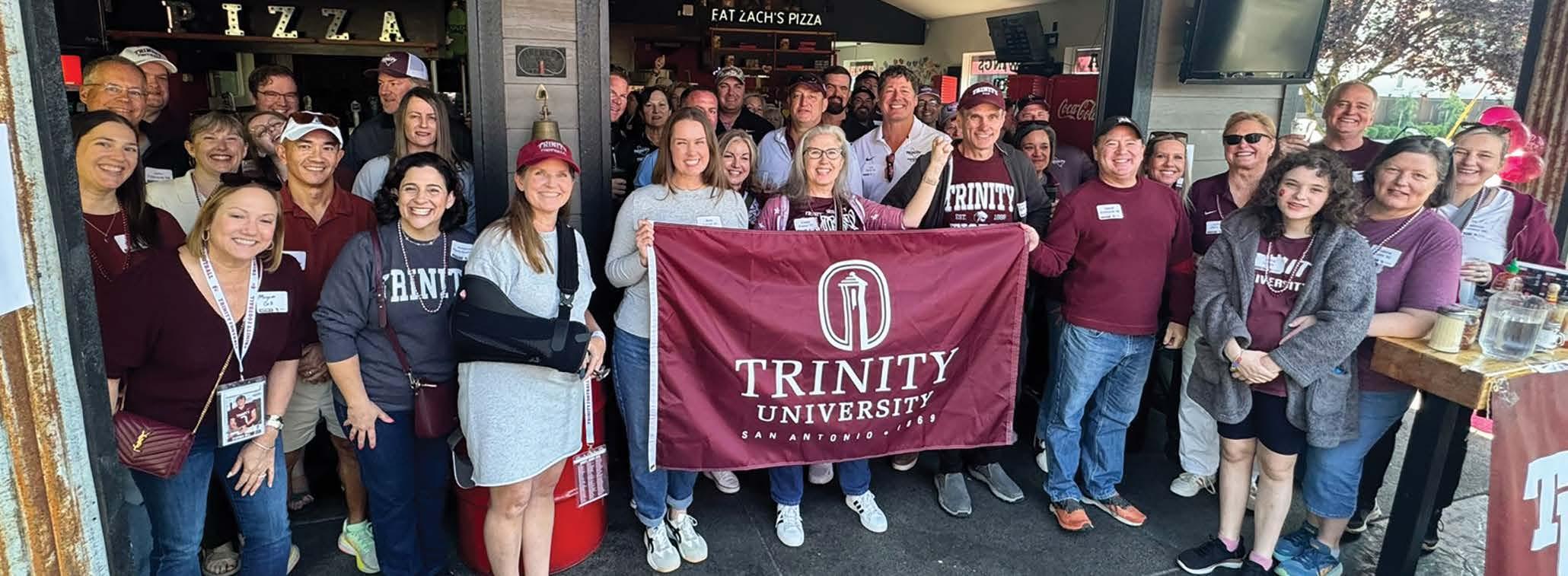
Regional Alumni Clubs partnered with Alumni Career Engagement to host Career Readiness and Networking Clinics in Houston, San Antonio, and Austin (pictured), bringing career enrichment assistance directly to Tigers on the road. Alumni of all ages and career stages received coaching, networking support, and résumé reviews right in their own cities.
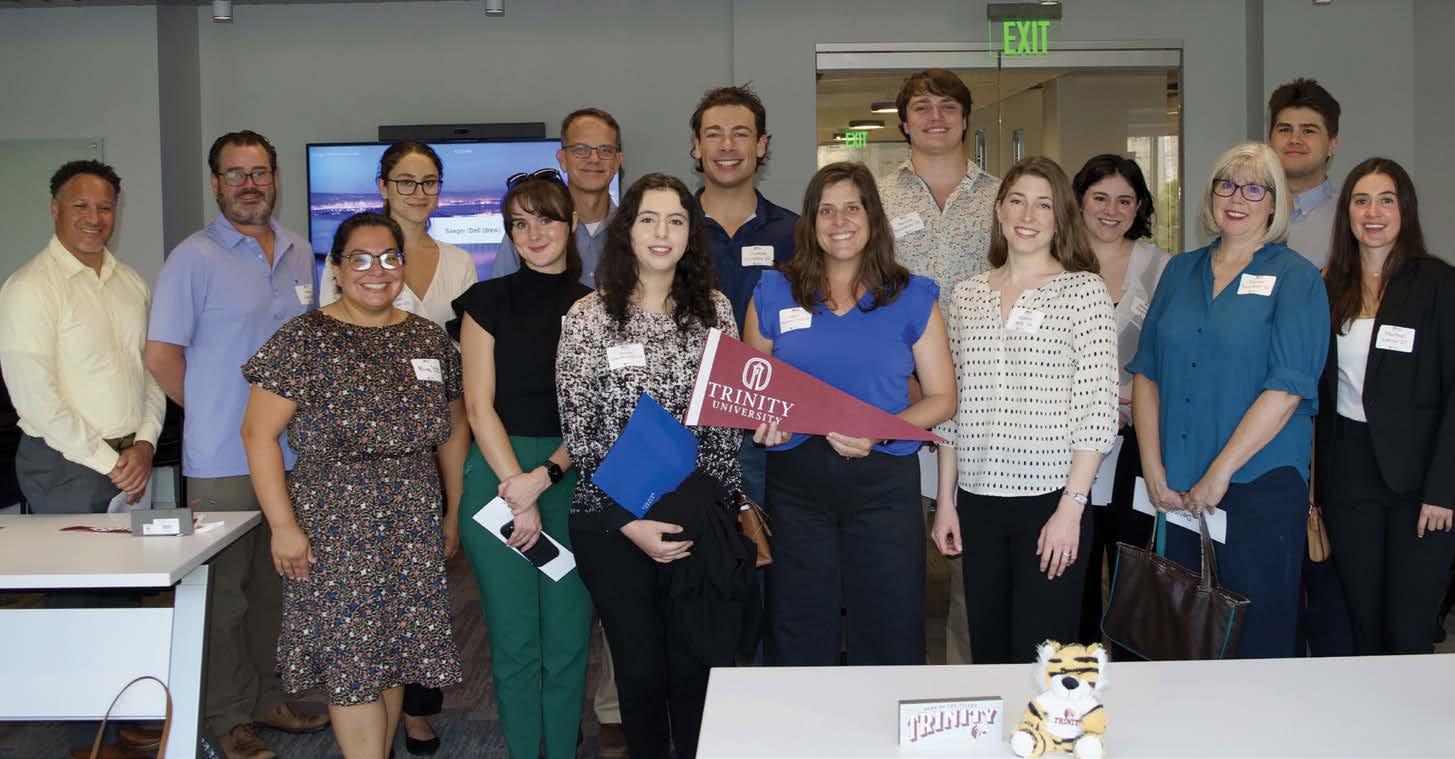
A big thank you to all the alumni who helped plan our regional club events as well as those who came out in support! There are a variety of ways to get involved and make an impact. If you’d like to join a club near you, reach out to Amanda Wise ’06, M’08, at amartin1@trinity.edu or 210-999-7235
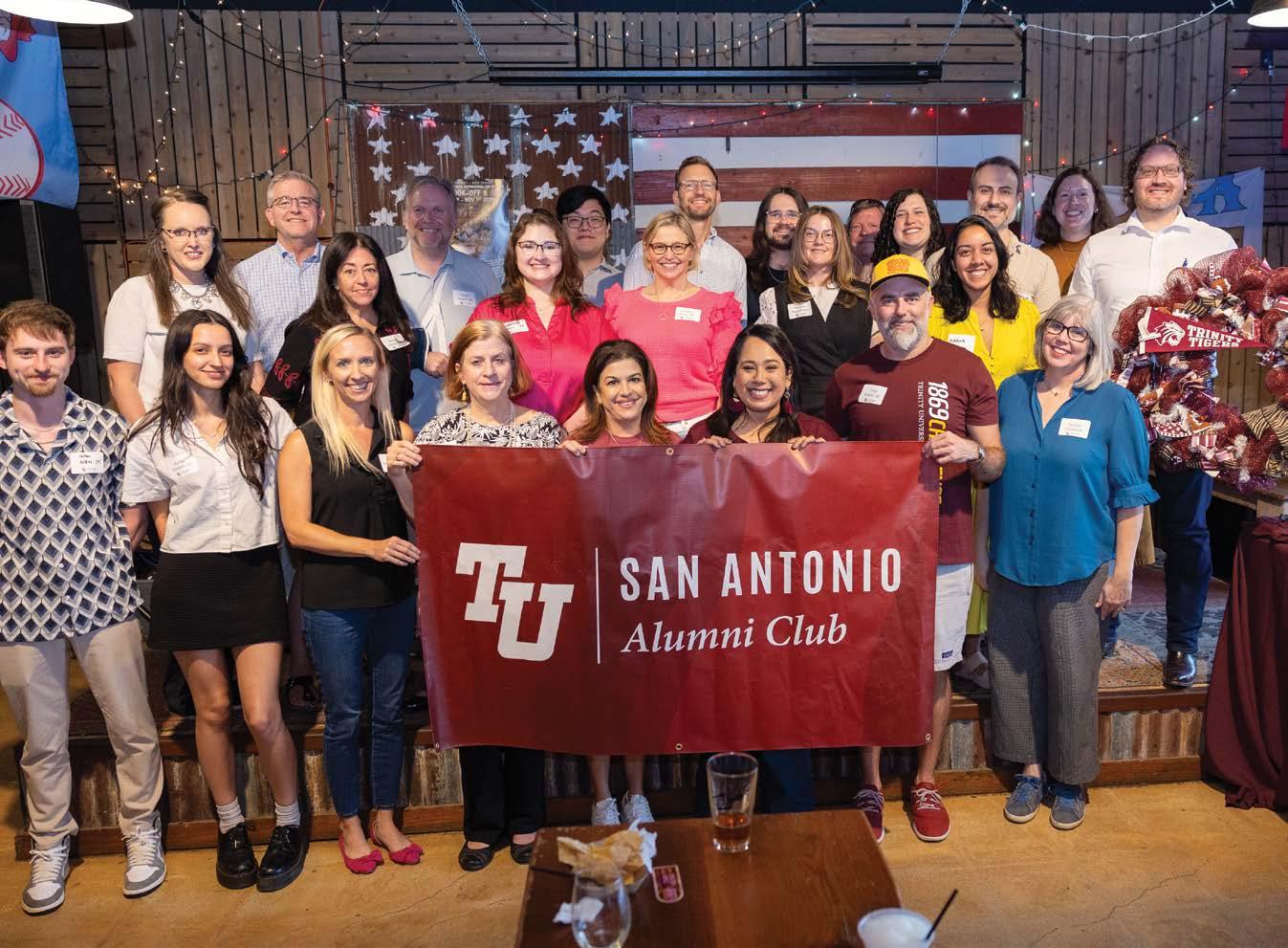
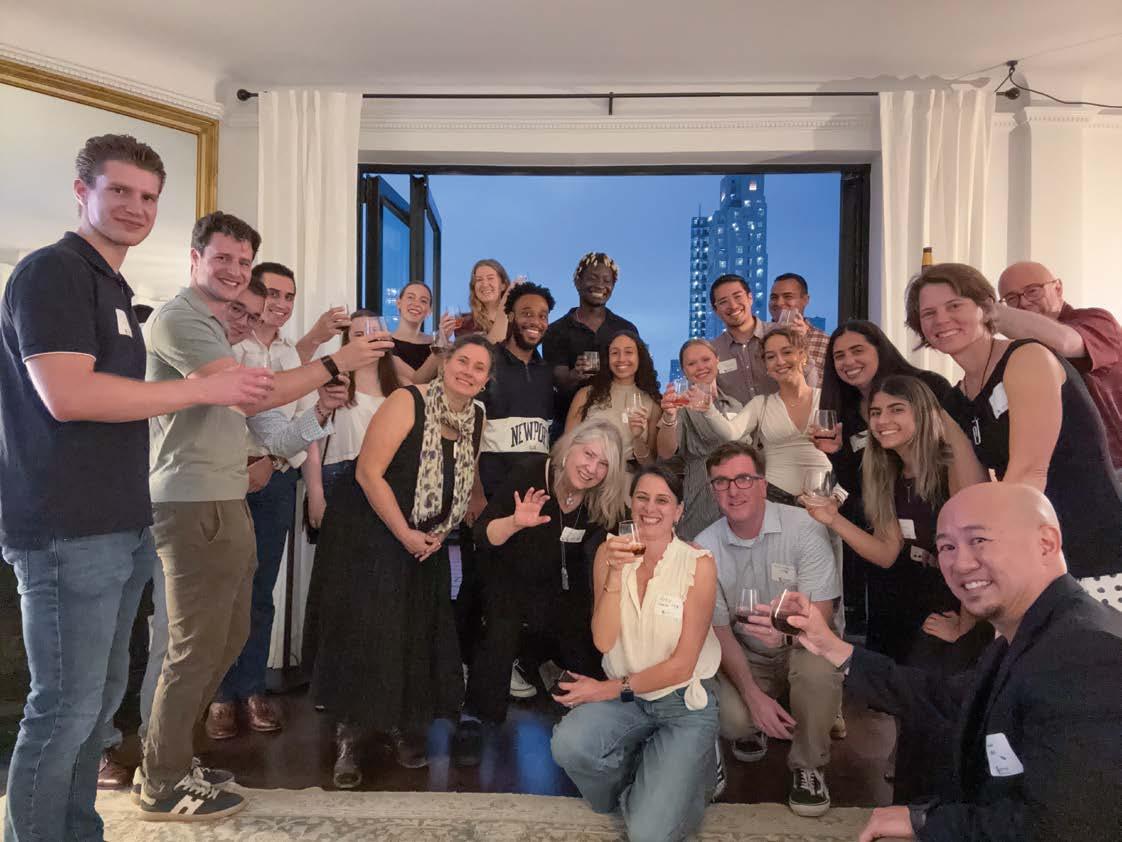
During the second annual Regional Alumni Club Showdown, alumni clubs across the country teamed up to support Trinity through the 1869 Challenge. In a friendly competition, clubs went head-to-head to generate the highest number of donors, supporting the University during its biggest day of giving. We extend a special thank you to the following clubs that hosted 1869 Challenge events: Denver, Houston, San Antonio, New York, Washington, D.C., and North Texas. Congratulations to the San Antonio Alumni Club, winner of the “Inside Texas” category, and to the Denver and New York Alumni Clubs, who tied for first place in the “Outside Texas” category. We are deeply grateful to our alumni clubs for their creativity, leadership, and commitment. The success of this friendly competition would not have been possible without their support.
Through the San Antonio Alumni Club, Taylor Koftas ’23 is giving back and having fun
As a young alumna, Taylor Koftas ’23 found herself missing the passion, drive, and spirit of Trinity University. To help continue this energy post-graduation, Koftas began participating in the San Antonio Alumni Club, where she has helped plan a football tailgate and supported the club’s Reading Days student goody bag distribution. For Koftas, being part of the San Antonio Alumni Club has allowed her to give back to a community that has given her so much. Driving engagement at alumni events and working with a team of inspiring people have helped Koftas build relationships, create opportunities, and, of course, have fun!
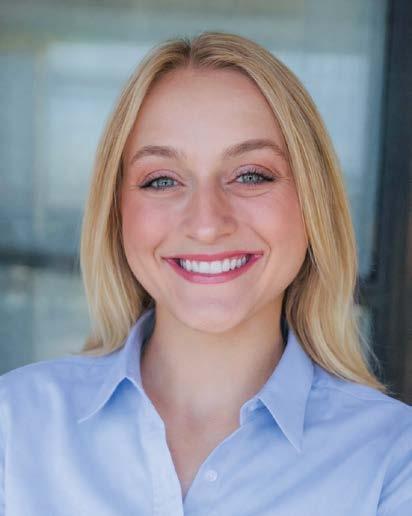
Special things happen when Trinity alumni come together, and I am so thankful to have joined a group of people dedicated to preserving the Trinity experience from the second you graduate!”
–Taylor Koftas ’23
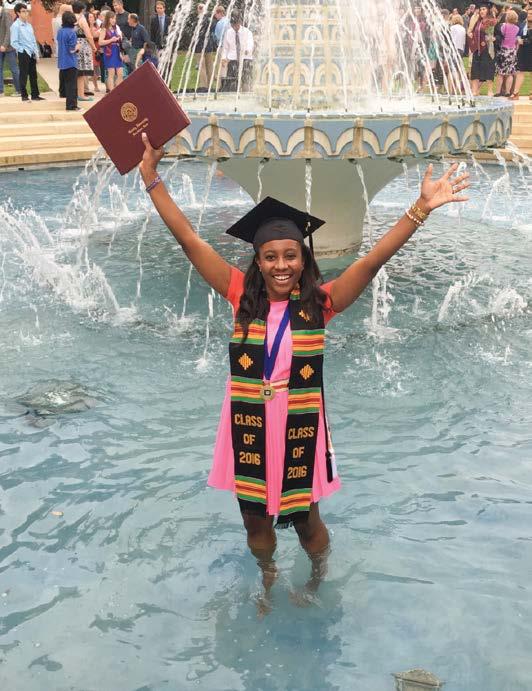

KRTU’s content director traces her journey back to Trinity
by Bria Woods ‘16
Pivoting is very Trinity. Let me tell you a story about how pivoting has brought me to where I am today.
Let’s hop in the time machine to 2012: I came bounding onto campus ready to spend the next four years studying to become a neuroscientist, continuing an enriching educational experience I was afforded during my years participating in the UT Health San Antonio Voelcker Biomedical Research Academy. “This is it,” I resolved to myself. “The rest of my life starts now, and my entire future will be determined by the choices I make in these next four years.” I had a narrow view of what career options were available to me. My imagination was limited to the box of 10 crayons. Then, Trinity plopped the 120-count box of crayons on the table, showing me that, actually, these are all of my options.
Turns out, I was particularly drawn to the media production hues. By my sophomore year, I became engrossed in Tiger TV, KRTU 91.7 FM, and film studies classes. This set the stage for my first big pivot: changing my major. *GASP!* (Cue the lightning, thunder, dark shadows, and dramatic music.)
Or at least that’s how changing my major felt at the time; it felt like I was being fickle and noncommittal. What about my neuroscience scholarship? What about all the people at church who said they were waiting for me to become a famous brain surgeon? Am I letting them down?
This pivot only led to more: from becoming a semi-finalist in the Stumberg Competition in my last semester and jetting off to London to earn my master’s to exploring positions in fields not even related to my degree, which led me back to San Antonio to work as a photojournalist.
And you know the funny part?! I pivoted so much, now I’m back to where it all began. Nearly a decade wiser and with a heap of transformative experiences in tow, I came bounding back onto campus to pursue a career in public media and broadcasting at
KRTU, fulfilling my mom’s long-held prediction that one day I’d work for my beloved alma mater.
Now that I’ve survived the roller coaster that was my 20s, I see the truth: The years between graduation and turning 30 were another necessary development arc that started at graduation. I wish I could go back to that moment backstage on graduation day and tell young Bria, “Don’t worry, girl. The arc will become a full circle. Just be patient and keep showing up.”
Since then, showing up has looked like giving—time, funds, advice, efforts—to ensure that more curious students get to experience their pivotal moments at Trinity. It’s not lost on me that an institution like ours is built with more than just that gorgeous “Trinity red brick.” Over the last decade, I’ve encountered new ways to support the mission of this special place. Volunteering with the Board of Visitors and as a mentor in the Legacy of Excellence program for Black students gave me the opportunity to listen, understand, and share my time as a thought partner and advocate for Trinity students. I’ve been a volunteer host with KRTU for 12 years, and I’ve had the opportunity to give guest lectures. And of course, I give consecutively to help fund important programs and initiatives on campus.
If you’re reading this and reminiscing about your own memories on this beautiful campus, ask yourself, “How can I be a river, not a reservoir?” Reservoirs hold, whereas rivers give. Trinity afforded us a competitive education and social and professional connections to people who continue to open doors. Why wouldn’t we want to help these opportunities flow to students following in our footsteps? Volunteering and being involved both as a student and as a graduate have helped me see how much it takes to run an operation like Trinity’s. The Trinity experience comes at a price beyond just the cost of tuition. And that’s why I continue to give. Will you do the same?

Your gift, no matter the size, creates opportunity.
Giving back each year to the University that shaped you opens new paths for Trinity students and paves the way for others to follow your example of generosity. That commitment makes you ...
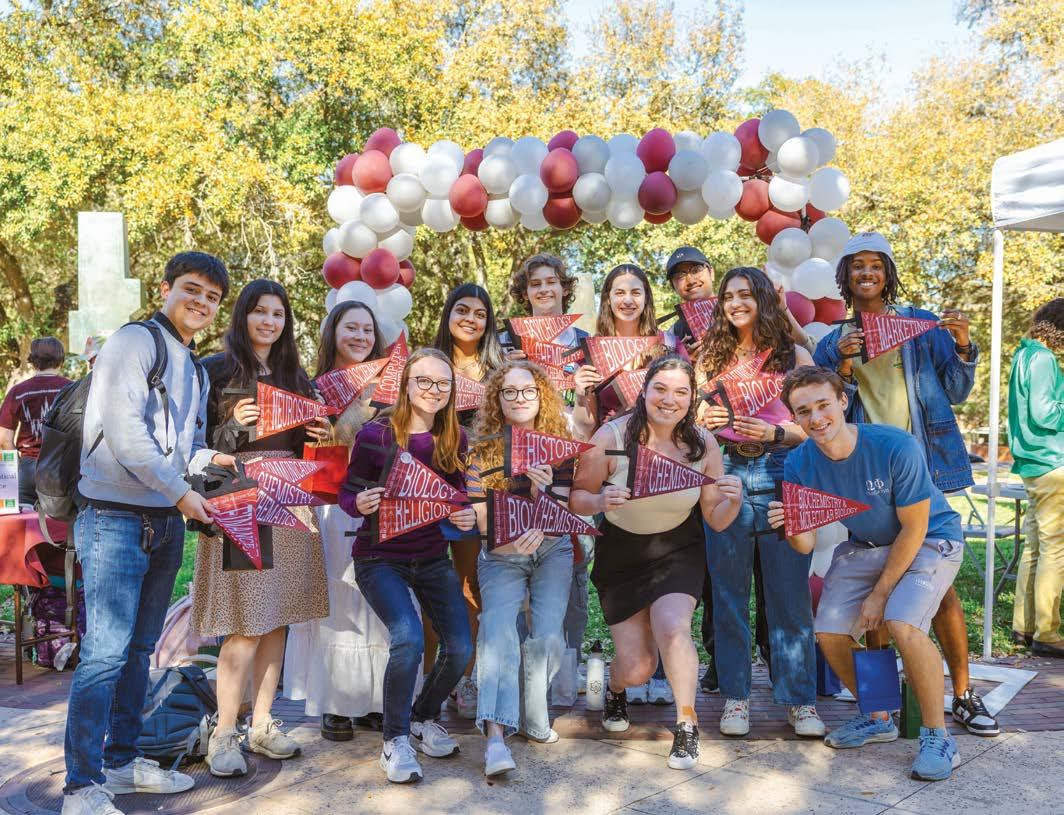

Trinity True honors loyal alumni, faculty, staff, and students who give any amount to any area of campus consecutively each fiscal year (from June 1 to May 31). And while your Trinity True status unlocks opportunities for students, it also unlocks benefits for you.
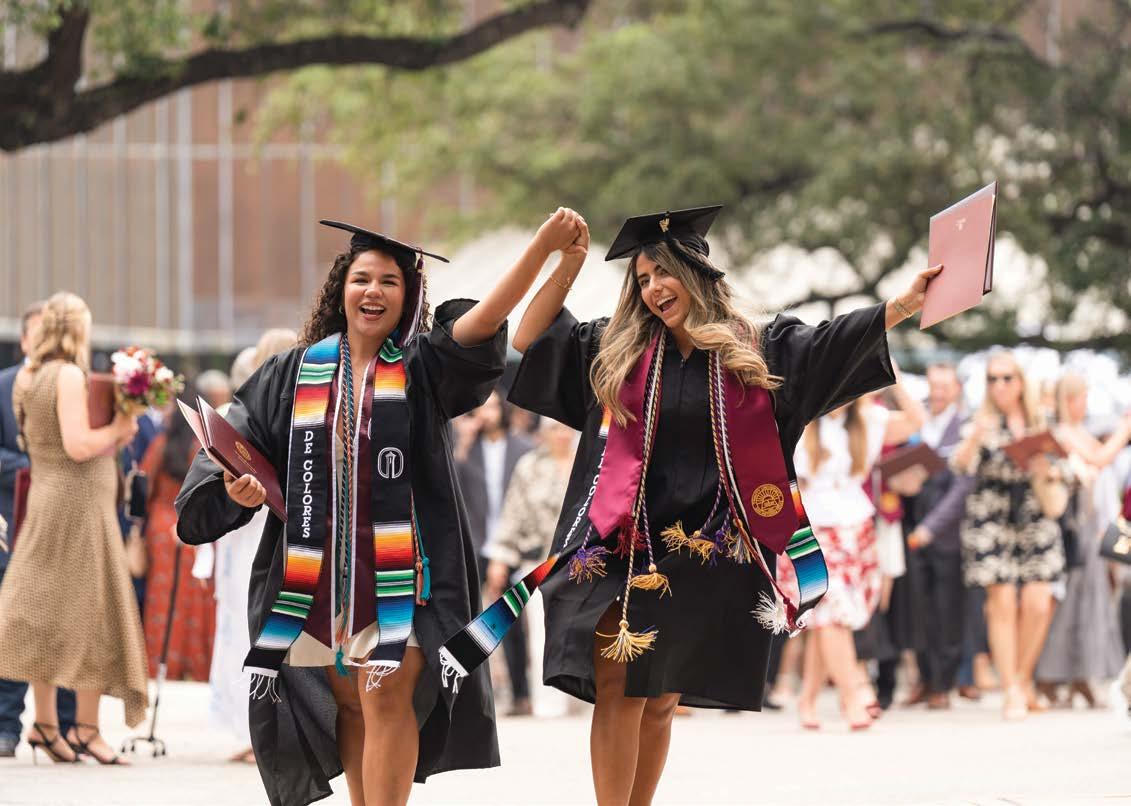

Start your Trinity True journey today at gotu.us/trinitytrue

1 Trinity Place
San Antonio, TX 78212-7200
CHANGE SERVICE REQUESTED
Armed with buckets of chalk, the Trinity Art Collective (TAC) turned a plain wall into a vivid tapestry of Trinity University symbols for Artpace San Antonio’s Chalk It Up event this past November. “The tiger is leaping forward in time toward the additional square (with all the contributing artists’ names on it), showing that we are moving forward and continuing to add to our Trinity community,” says TAC’s Vice President Rory McCarthy ’26. The design also incorporates motifs reflecting Trinity’s decades-long description as “The University in the Sun” and enduring themes of intellect, knowledge, and enlightenment.
photo by Fredric Marmolejo ’26