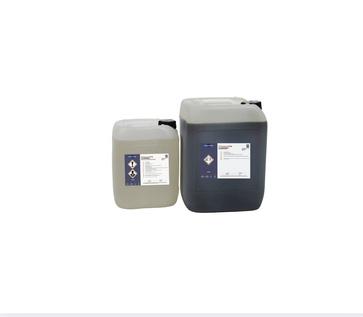
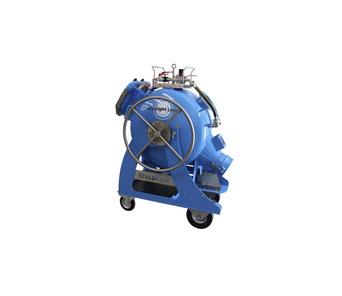
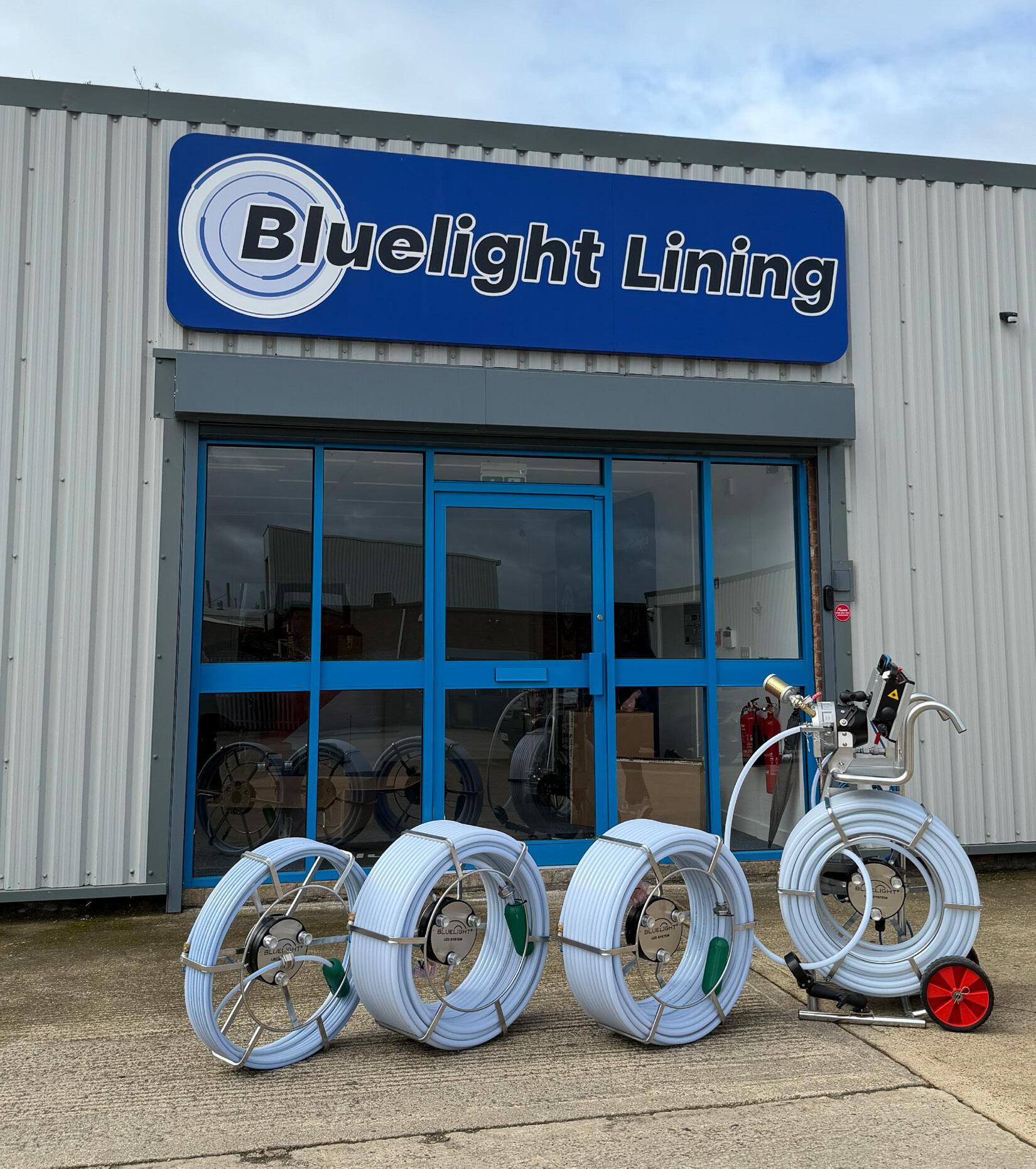
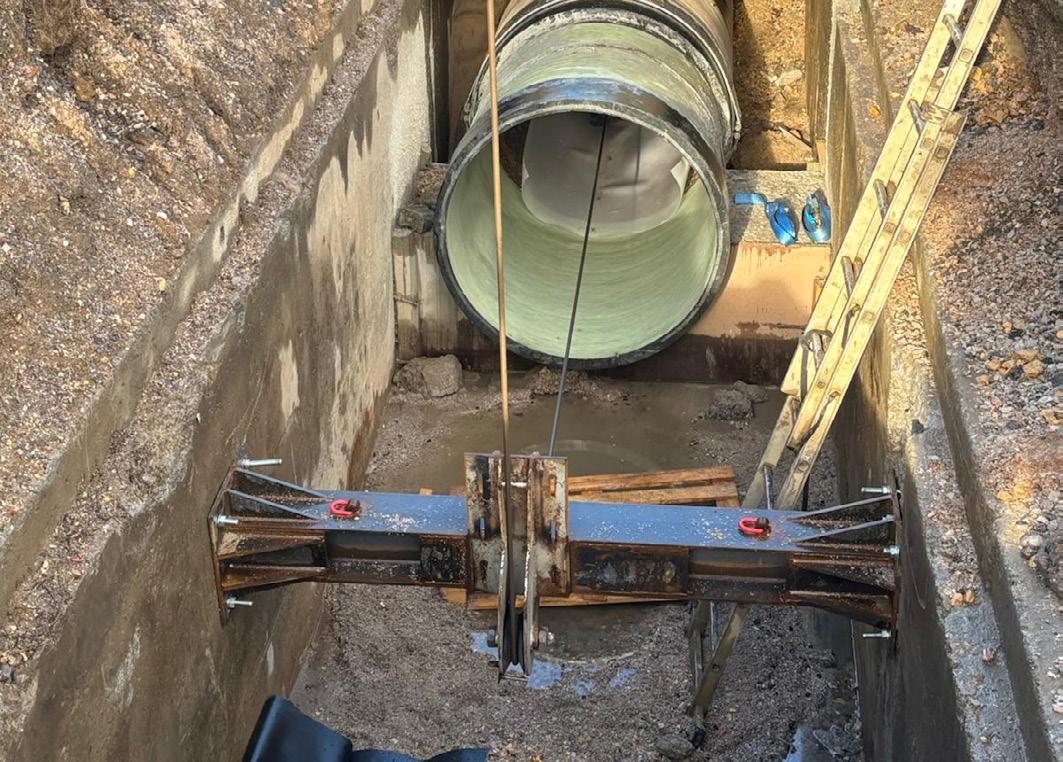
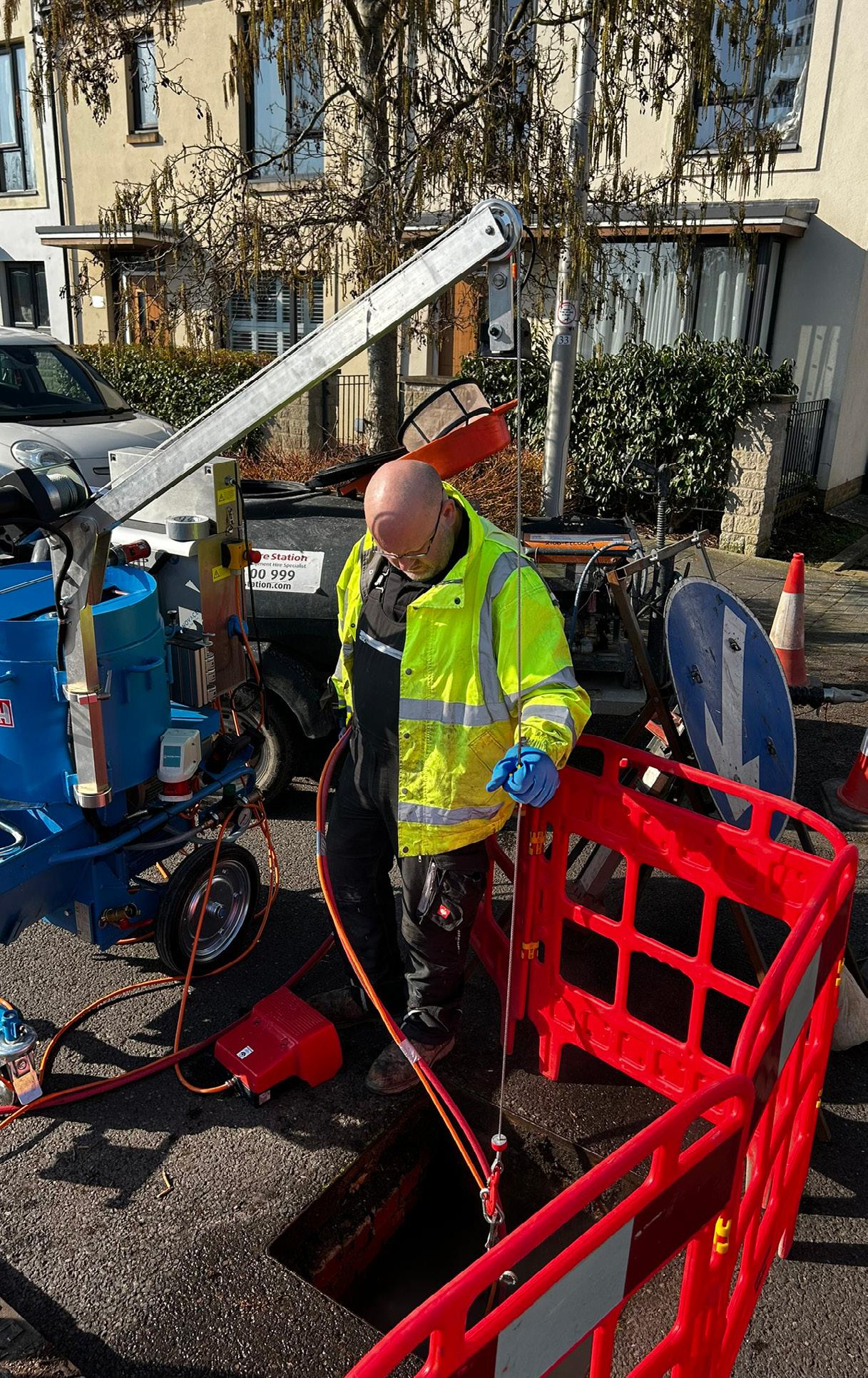
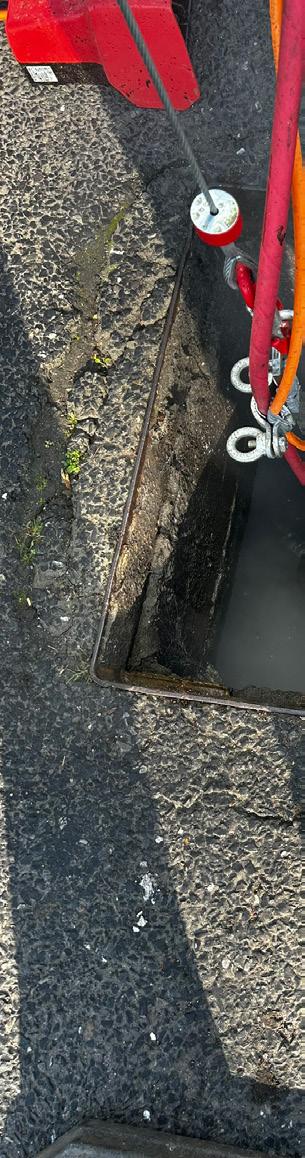
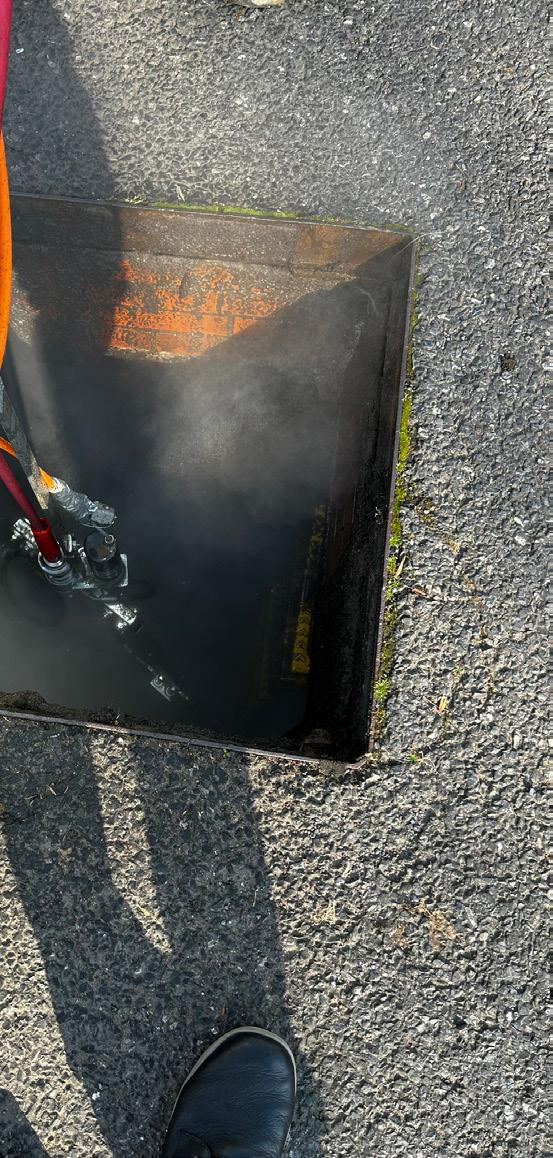
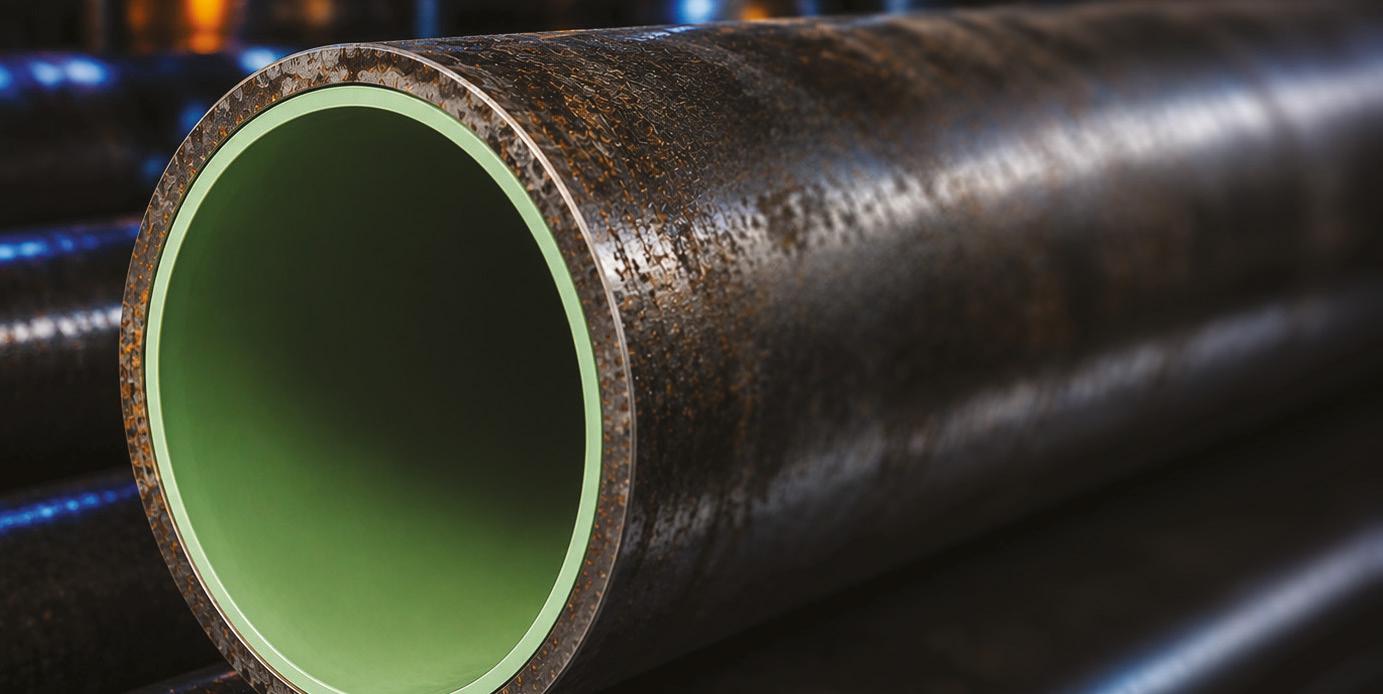
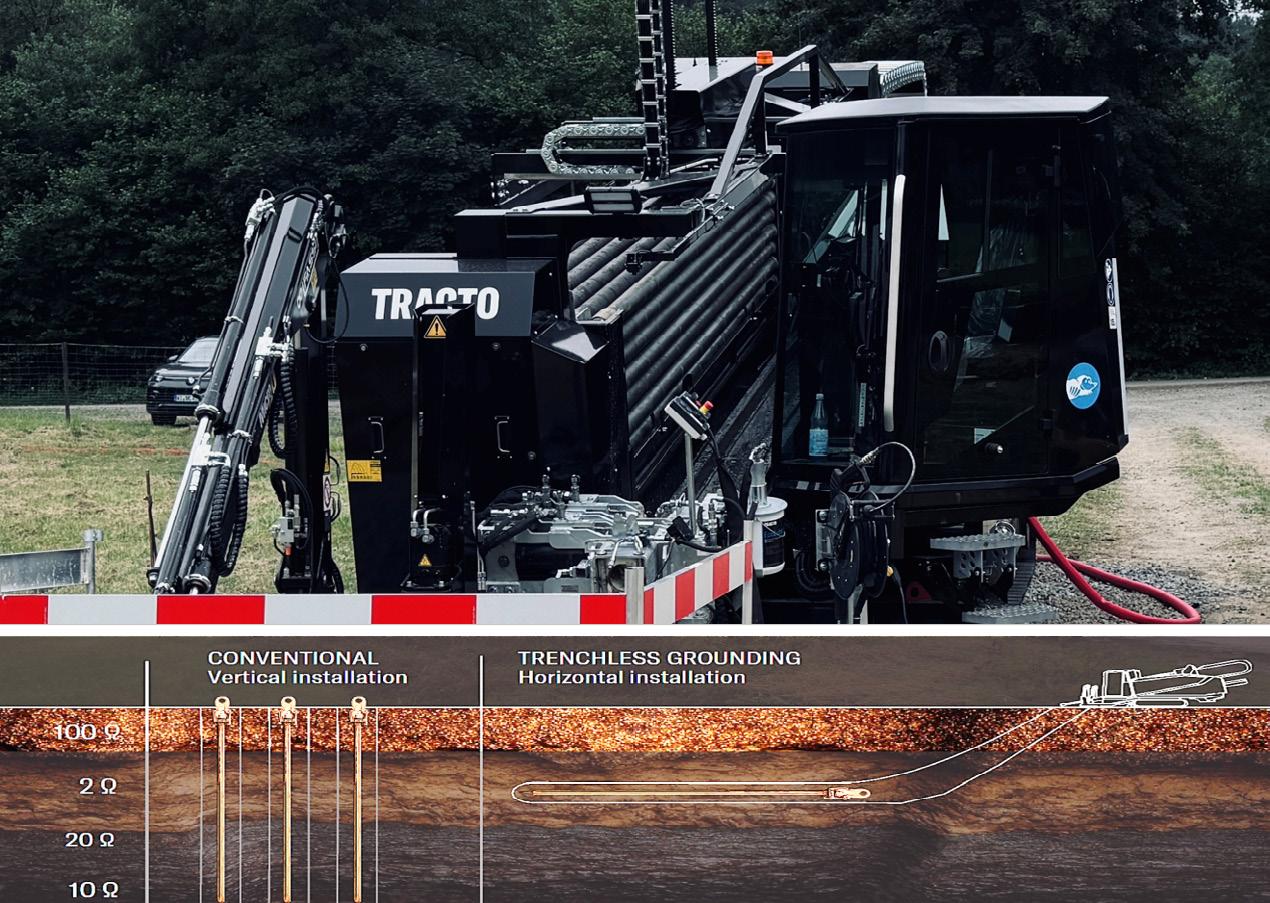
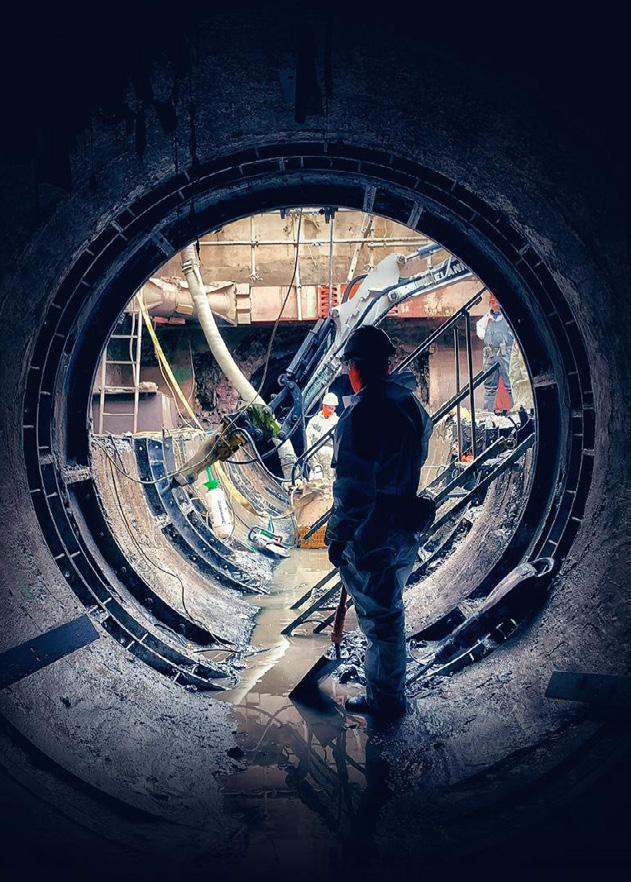
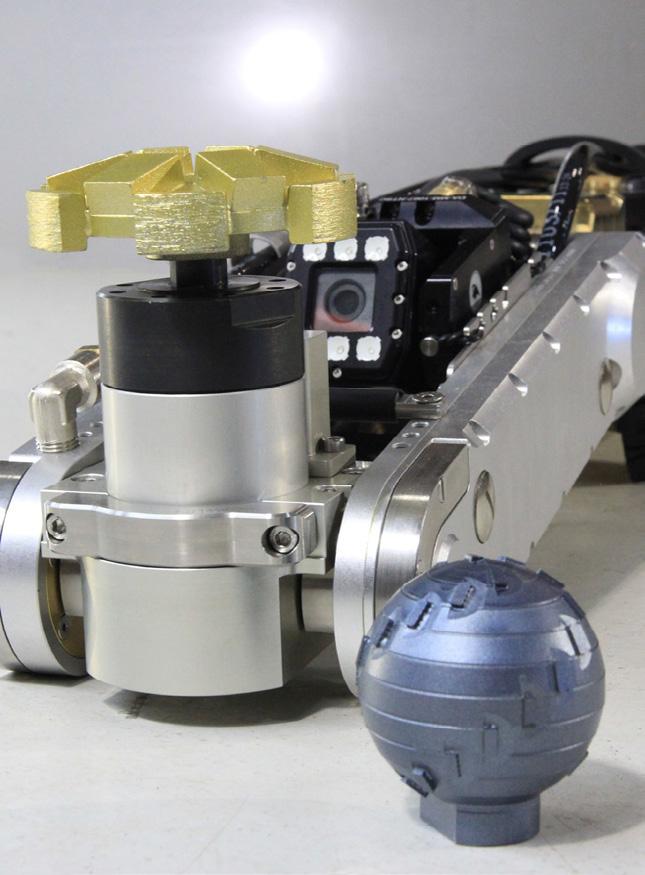
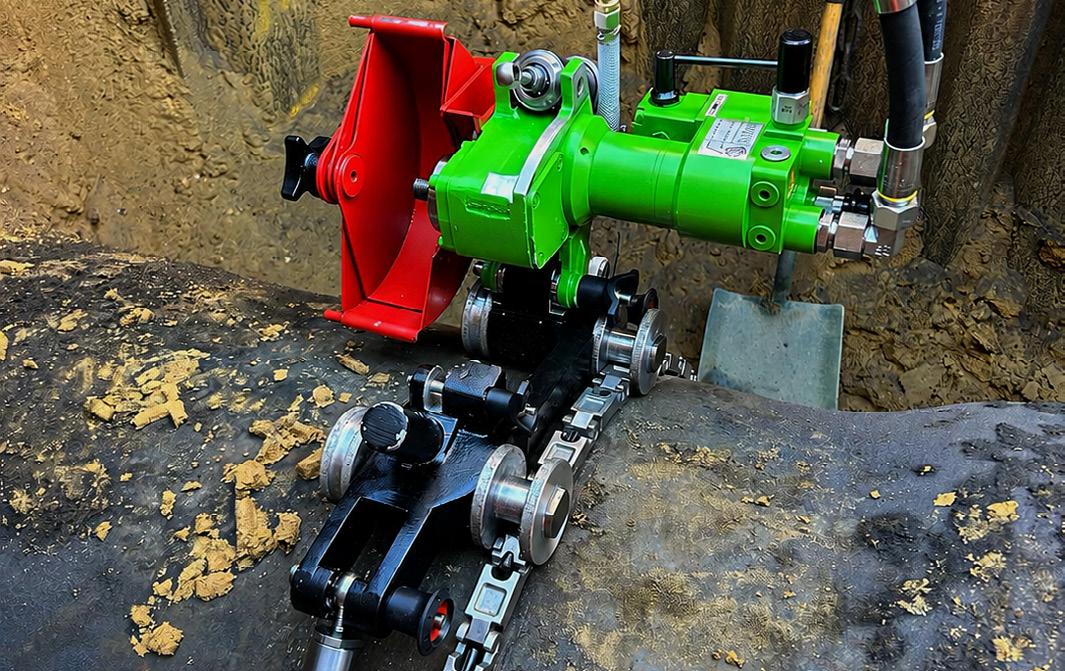
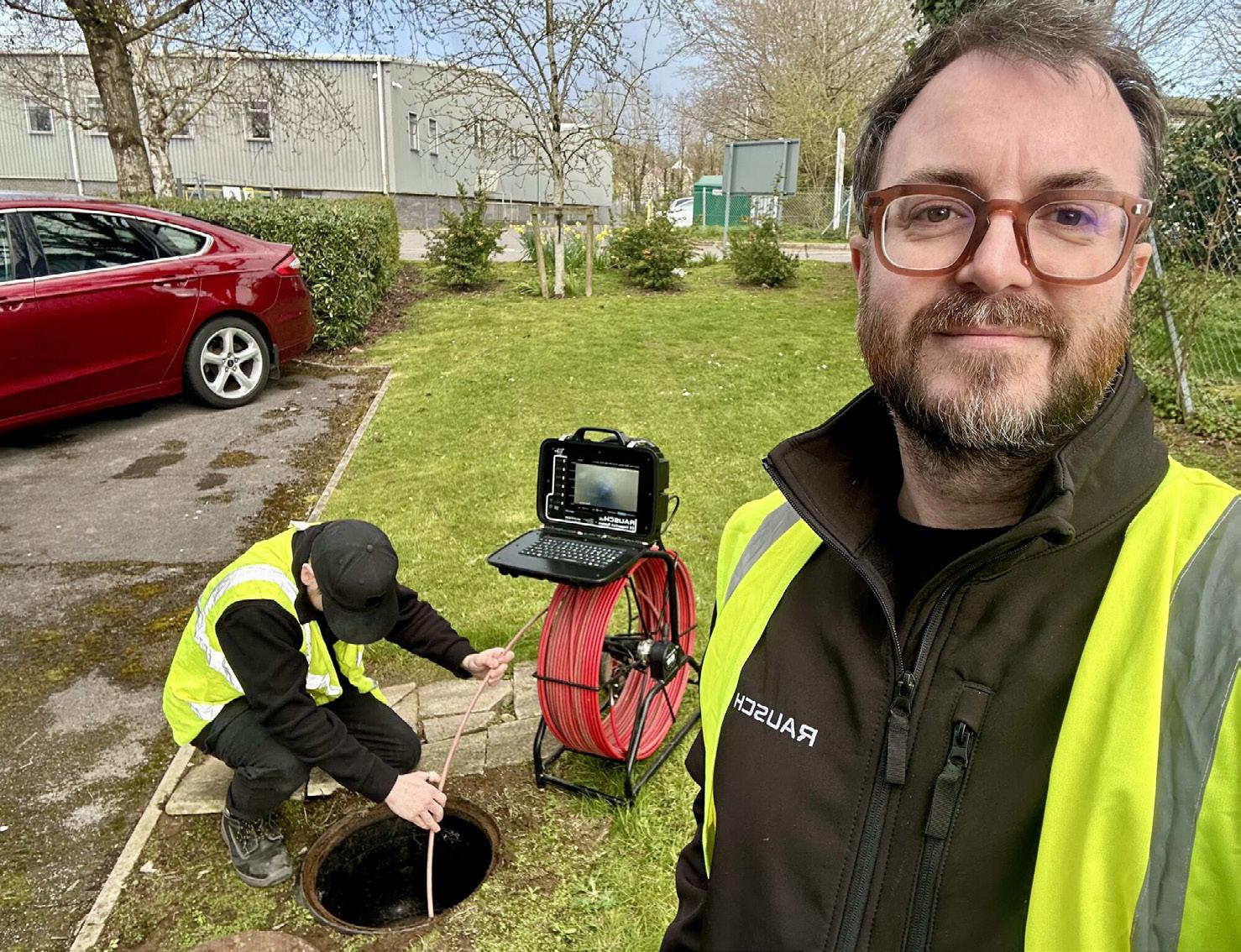
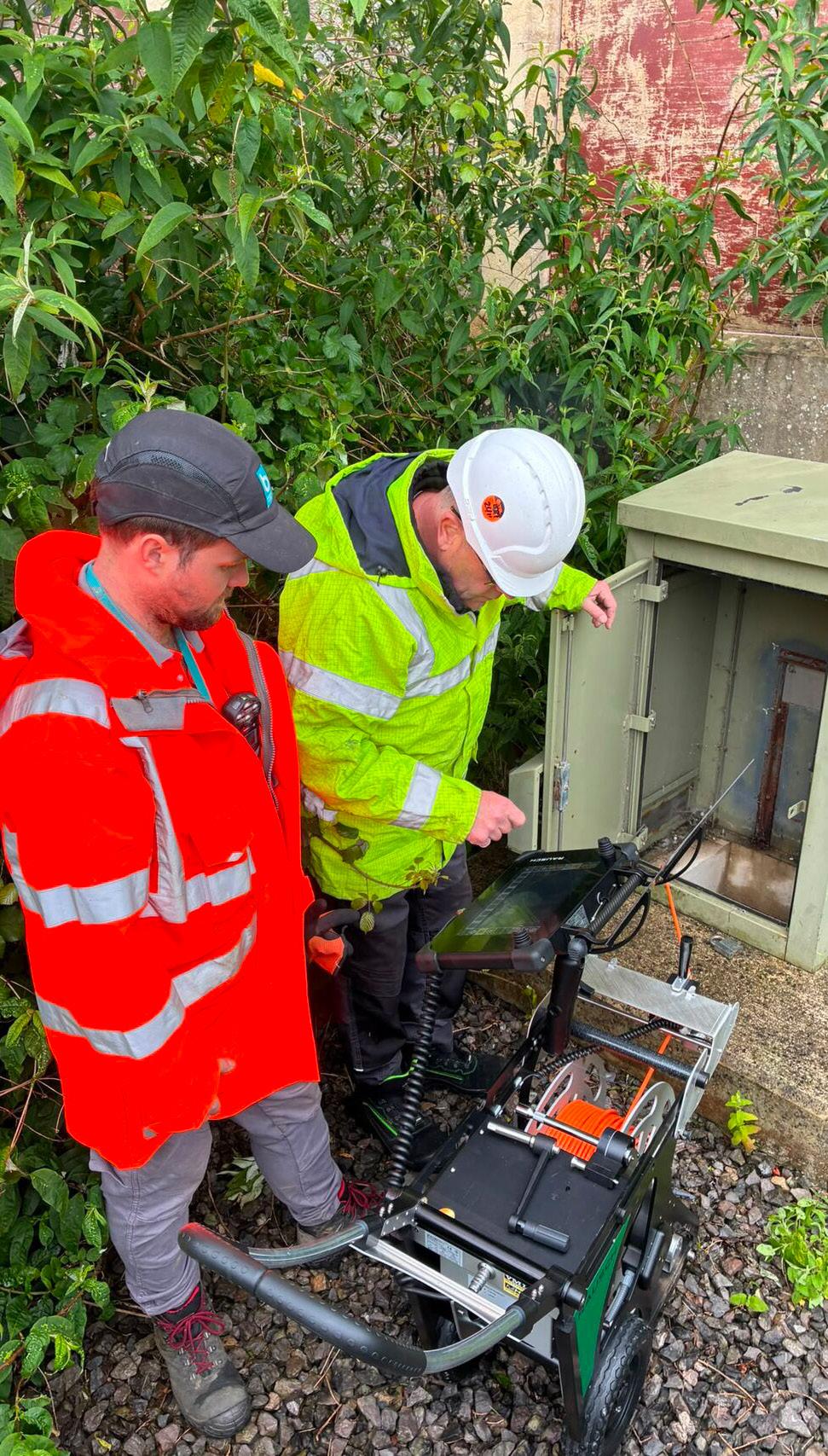
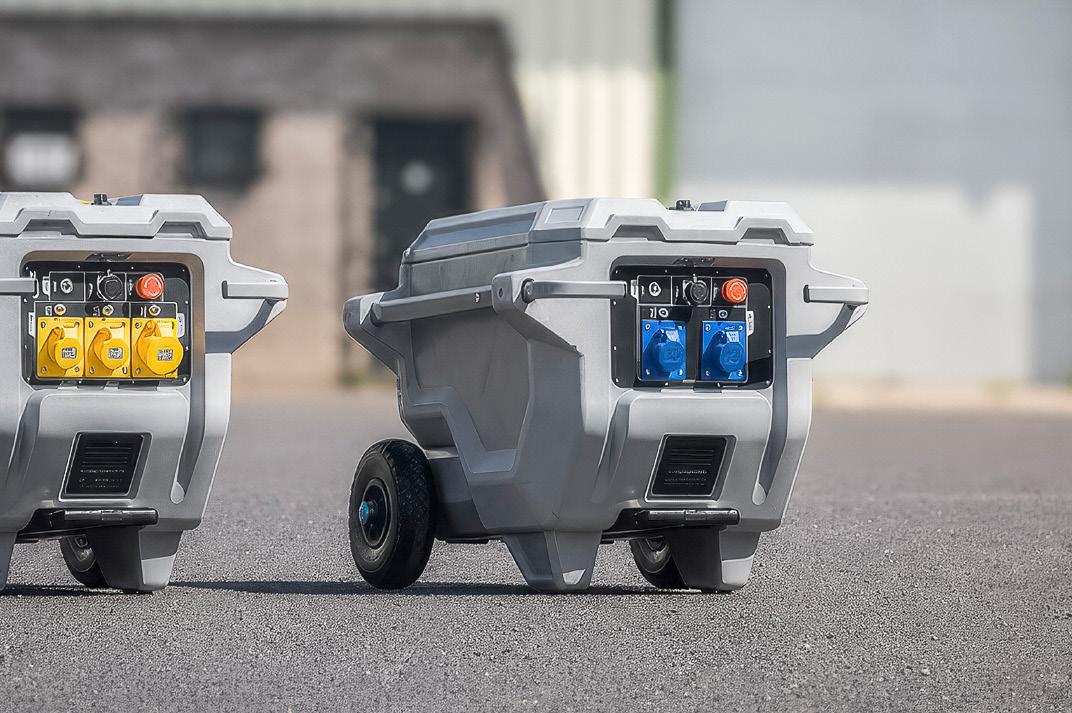
Start your lining journey today! Get equipped with all the essentials...
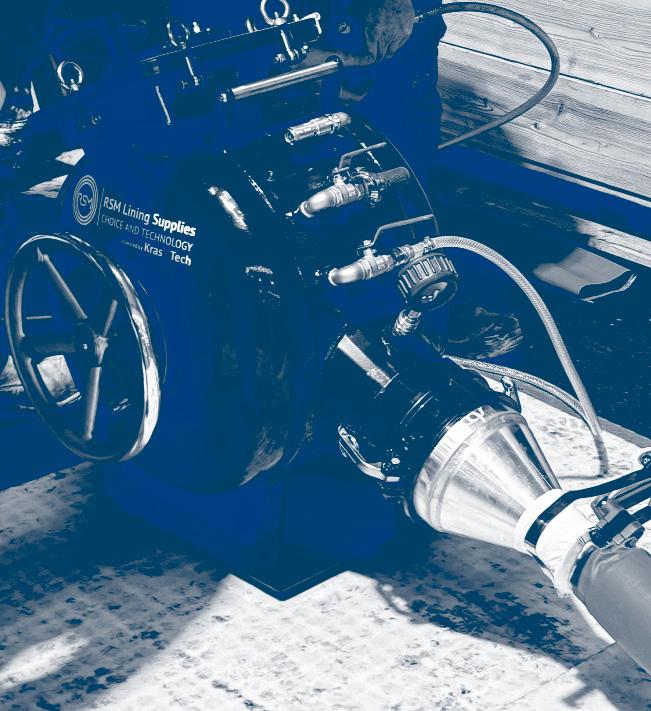
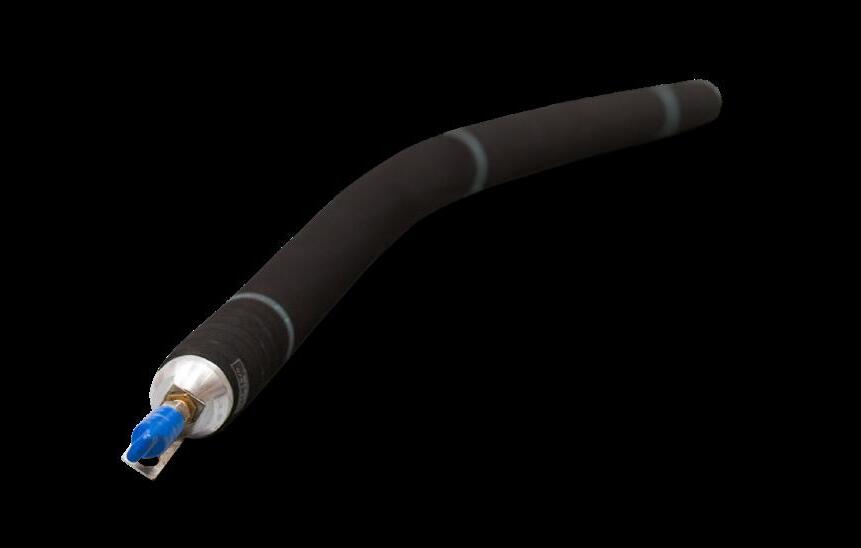
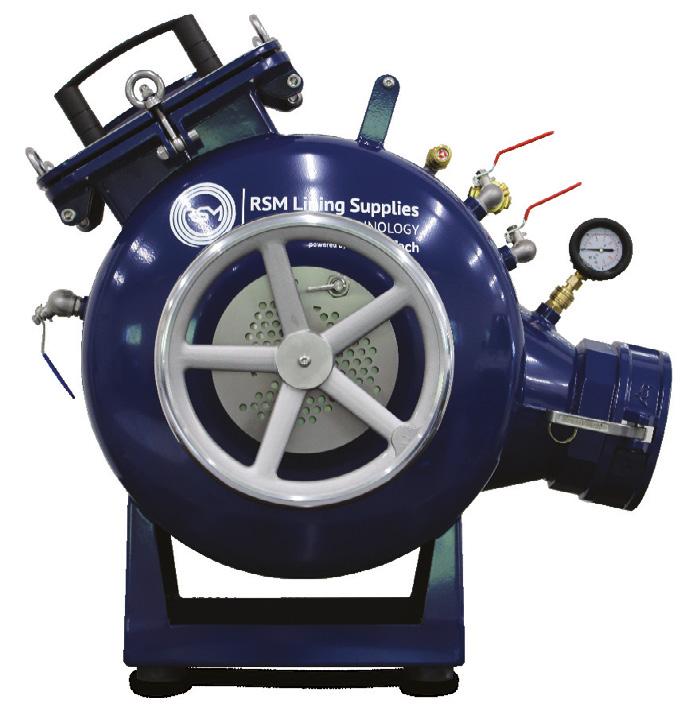
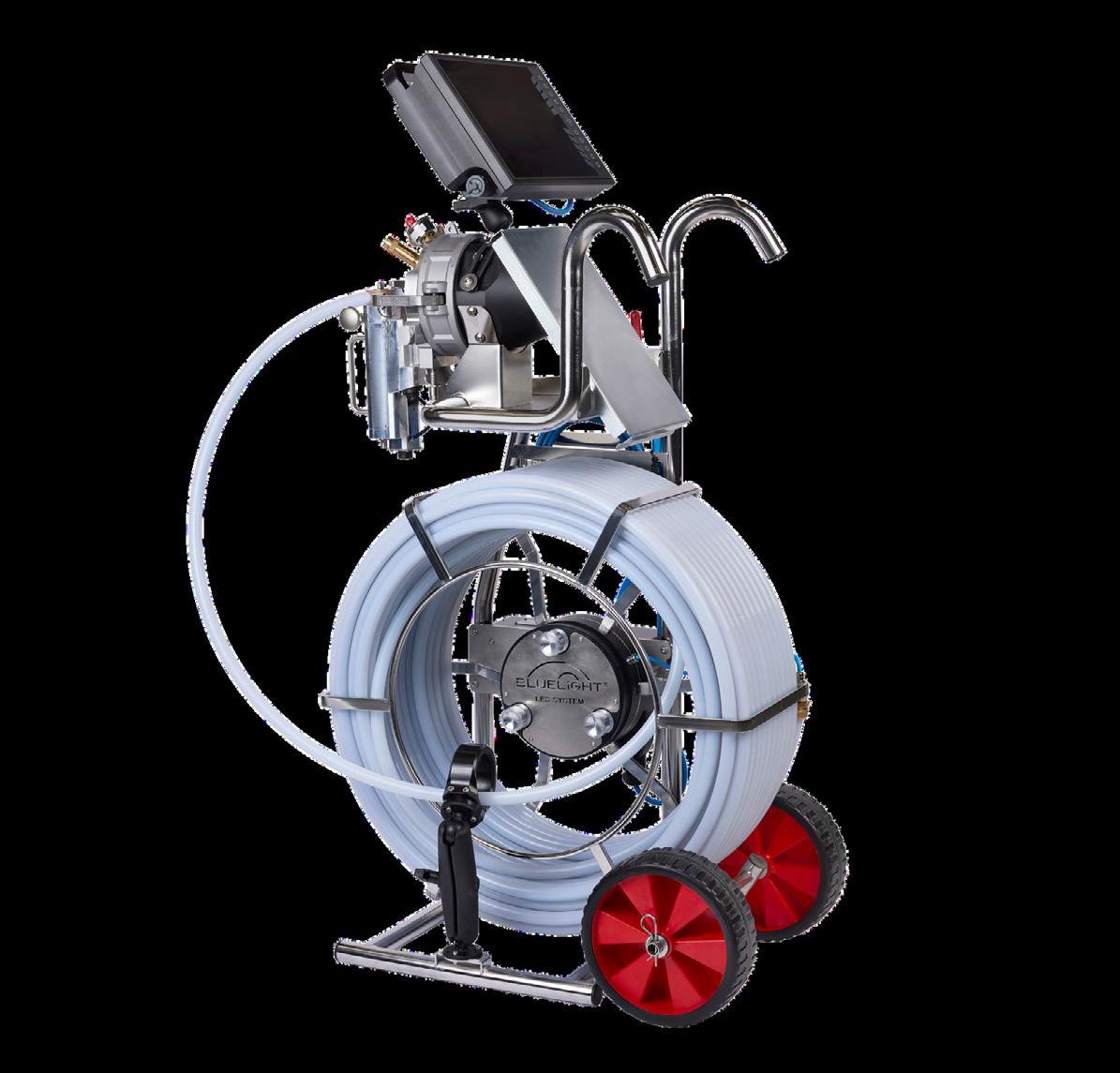
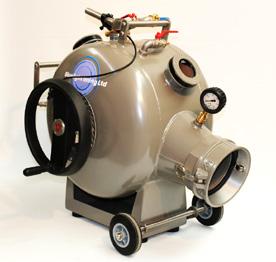
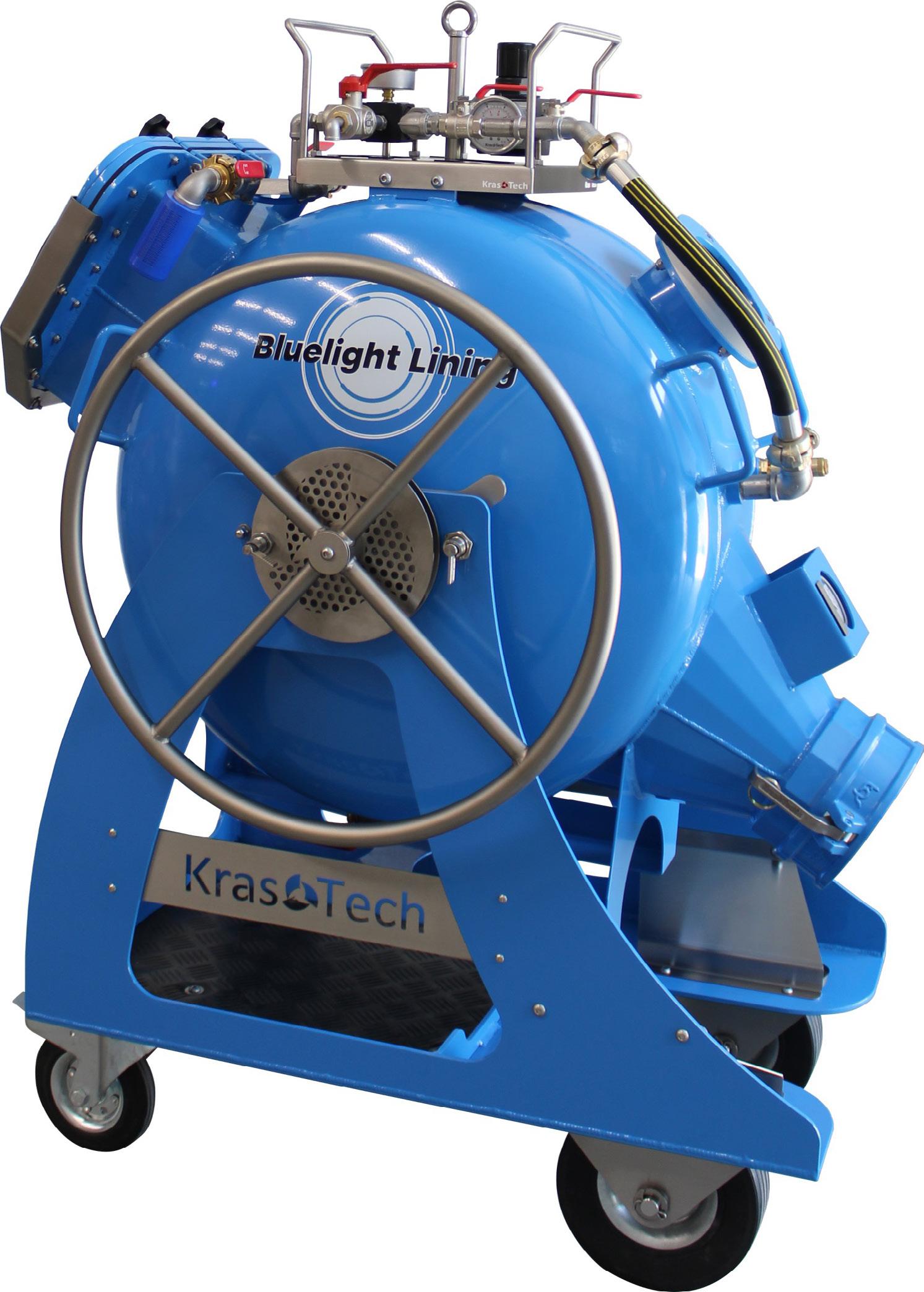
ӹ Kraso Inversion Drum 500
ӹ Mixer
ӹ Vacuum Unit
ӹ Hand-held Pinch Rollers
ӹ Band-It Tool
ӹ Band-It Strap & Buckles
ӹ Liner Funnel Stand
PATCHING OFFERS:
Are you ready for unbeatable value on a patching set-up? We’re offering...
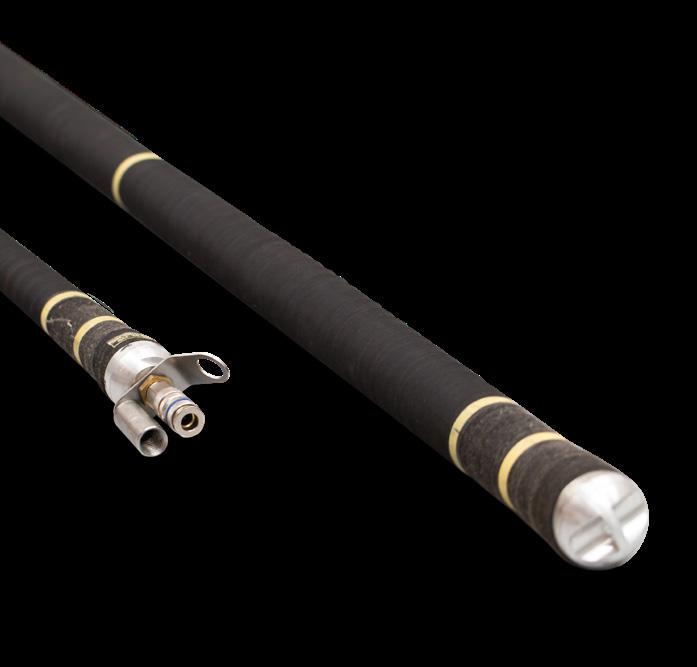
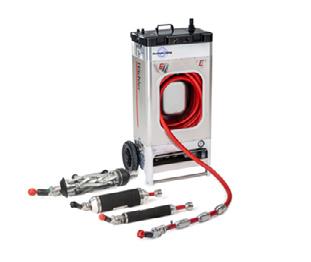
ӹ Packer (Straight & Radial varieties available)
ӹ Flexi Adaptors
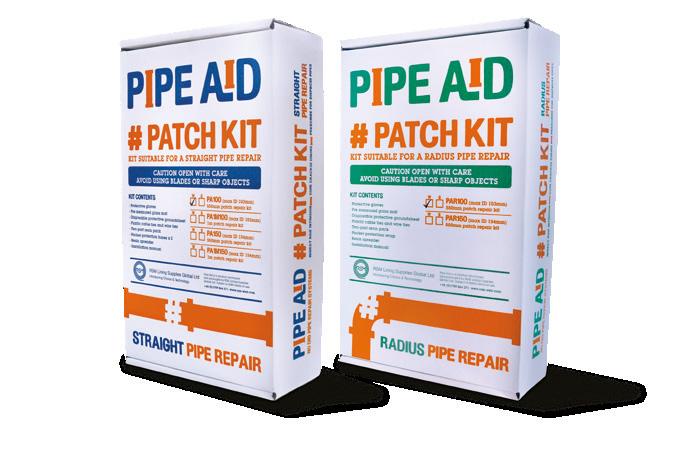
ӹ Pipe Aid kits to suit
ӹ Airline
ӹ Compressor
ӹ Pressure Regulator
£5,470
sales@rsm-web.com www.rsm-web.com
PUBLISHER
Paul Harwood pharwood@westrade.co.uk
EDITOR
Austen Lees editorial@trenchless-works.com
MANAGING EDITOR
Leigh Abbott labbott@westrade.co.uk
SALES DIRECTOR
Trevor Dorrell tdorrell@westrade.co.uk
DESIGN & PRODUCTION
Julie Harris julie@julieharriscreative.co.uk
CHINESE AGENT
Lexi Di lexi.di@bestexpo.cn
COPYRIGHT
Trenchless Works is published 12 times a year by Westrade Group Ltd I Carotino House| Bury Lane I Rickmansworth I WD3 1ED I UK
Contributions: Contributions are invited and articles should be emailed to editorial@ trenchless-works.com. No responsibility can be taken for drawings, photographs or written contributions during delivery, transmission or when with the magazine. In the absence of an agreement, the copyright of all contributions, regardless of format, belongs to the publisher. The publishers accept no responsibility in respect of advertisements appearing in the magazine and the opinions expressed in editorial material or otherwise do not necessarily represent the views of the publishers. The publishers accept no responsibility for actions taken on the basis of any information contained within this magazine. The publishers cannot accept liability for any loss arising from the late appearance or non-publication of any advertisement for any reason whatsoever. ISSN 2049-3401
Subscribe for free:
www.trenchless-works.com
Editor’s Welcome
Austen Lees
This month’s cover feature looks at how Bluelight Lining has expanded its offering ahead of AMP8, bringing together LED curing systems, robotic cutting technology, surveying equipment and fully integrated installation vehicles to provide contractors with a more complete trenchless rehabilitation solution.
With No-Dig Live now just over two months away, this issue also includes our About Our Exhibitors section. The feature introduces some of the companies exhibiting at Stoneleigh Park, the technologies they will be bringing and the new products and live demonstrations already planned. It provides a useful starting point for visitors planning their time at the show while recognising the exhibitors whose continued support makes the event possible.
Explore our exhibitors →
Elsewhere, we examine the role HDD is expected to play in United Infrastructure’s National Grid framework delivery, how trenchless installation can help reduce environmental disruption and how digital quality assurance can prevent pipeline failures before assets enter service. We also feature a range of rehabilitation projects demonstrating the versatility of No-Dig methods in demanding environments.
I hope you enjoy the issue.
Thank you
Austen
To submit editorial for Trenchless Works next issue please email copy and images to: editorial@trenchless-works.com by the 12th of the month.
Submissions arriving after this date cannot be guaranteed inclusion in that month’s issue. For Trenchless Works sponsorship and advertising rates please email: tdorrell@westrade.co.uk
CONTENTS
ARTICLE
Editor’s Welcome
INDUSTRY NEWS
Solutions Provider United Infrastructure to use Trenchless Technology in 640M
National Grid Framework Delivery
Barhale wins UU better rivers project at stockport
AECOM appointed design partner for £340 million Oxford sewage works upgrade
VAC-EX celebrates King’s Award recognition for excavation innovation
Ipsum Group strengthens water offering with twoH and ExcelCS acquisitions
PIPELINE REHABILITATION
Bluelight expands its one-stop trenchless offering for AMP8
Inside the walls
RELINE Alphaliner PN rehabilitates saltwater pressure pipeline in Spain
Five manholes restored in two days using M-Coating technology
TUNNELLING
Barhale wins contract to reline Ashford Common WTW abstraction tunnel
HDD
A new TRACTO ‘Rockstar’ in town
How HDD helps minimise environmental disruption on infrastructure projects
ASSEST MANAGEMENT
Preventing pipeline failures at the point of installation
ABOUT OUR EXHIBITORS
Foreword from Paul Harwood
Bluelight Lining to showcase purpose-built CIPP vehicles and robotic cutting technology at No-Dig Live
CLAD Trenchless Grounding brings a new application for HDD to No-Dig Live
EC Hopkins: A specialist partner for utility pipe cutting
IMPREG highlights large-diameter CIPP capability at No-Dig Live 2026
iTouch Systems to launch next-generation CCTV inspection platform at No-Dig Live 2026
Beyond the catalogue: JBP develops tailor-made UV-CIPP installation solutions
Superjet to launch three new water jetting units at No-Dig Live 2026
Complex drainage rehabilitation delivered using UV XAIR LED-cured lining technology
Neo Air Systems to showcase battery-powered compressed air technology at No-Dig Live 2026
Built around the job, not the brochure
Powering the utility sector’s net zero transition with Renset®
Testing… testing… A smarter approach to WIS-compliant pressure testing
TRACTO UK to unveil new trenchless equipment at No-Dig Live 2026
Innovation shaped by the challenges of utility delivery
FOCUS ON TRAINING
The Anatomy of a Course
ISTT NEWS
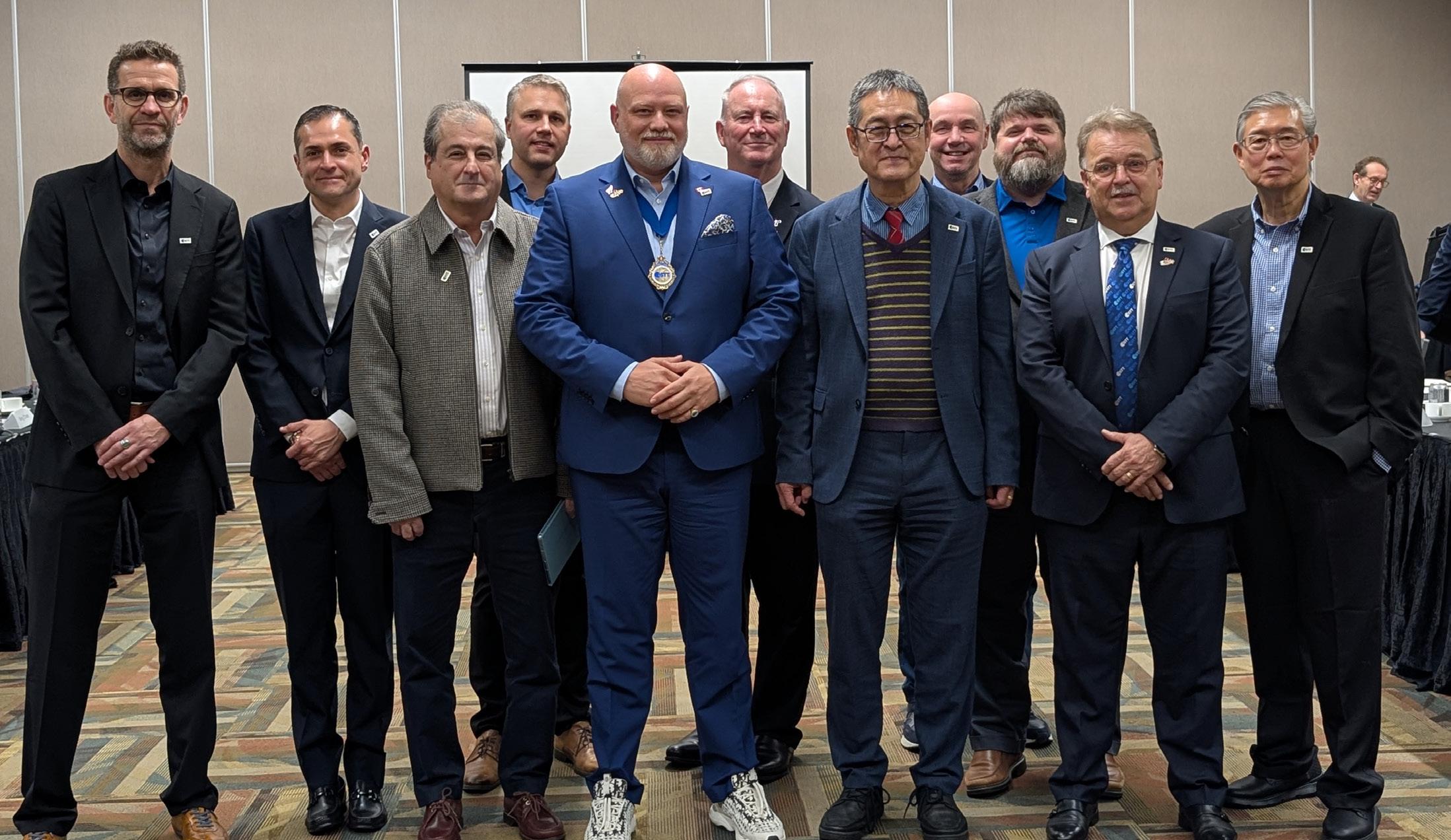
Supporting sustainable growth through sound governance
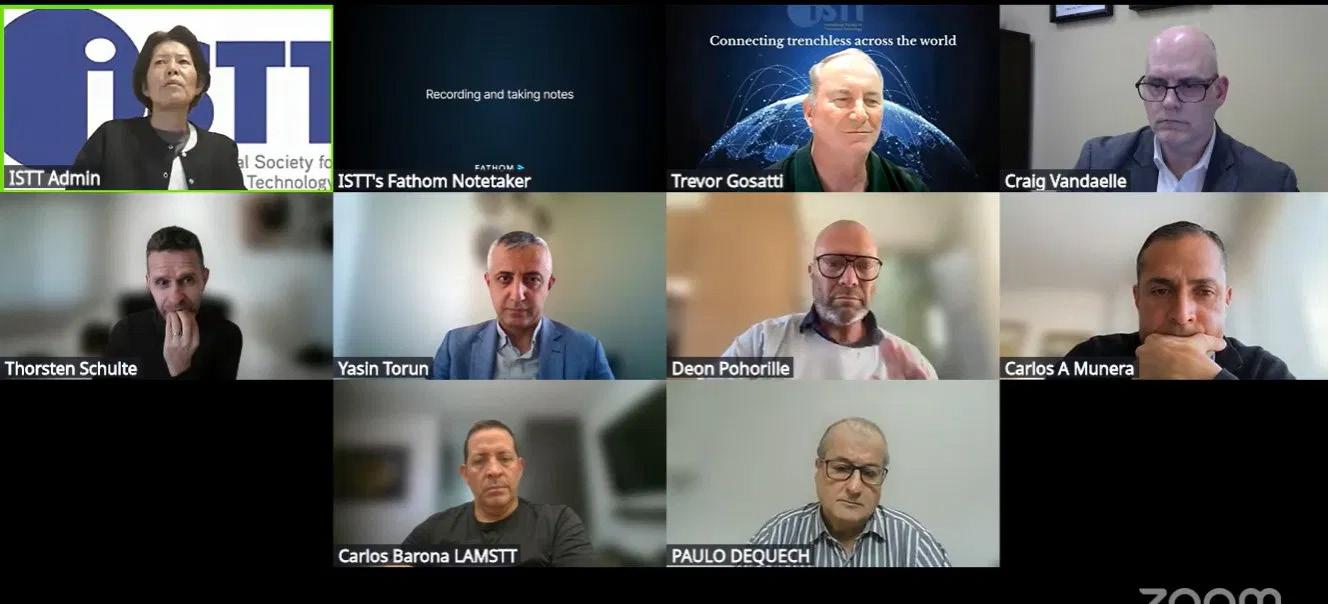
Connecting ISTT’s global network
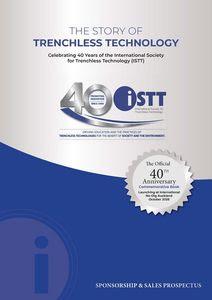
ISTT opens advertising and sponsorship opportunities for 40th Anniversary Book
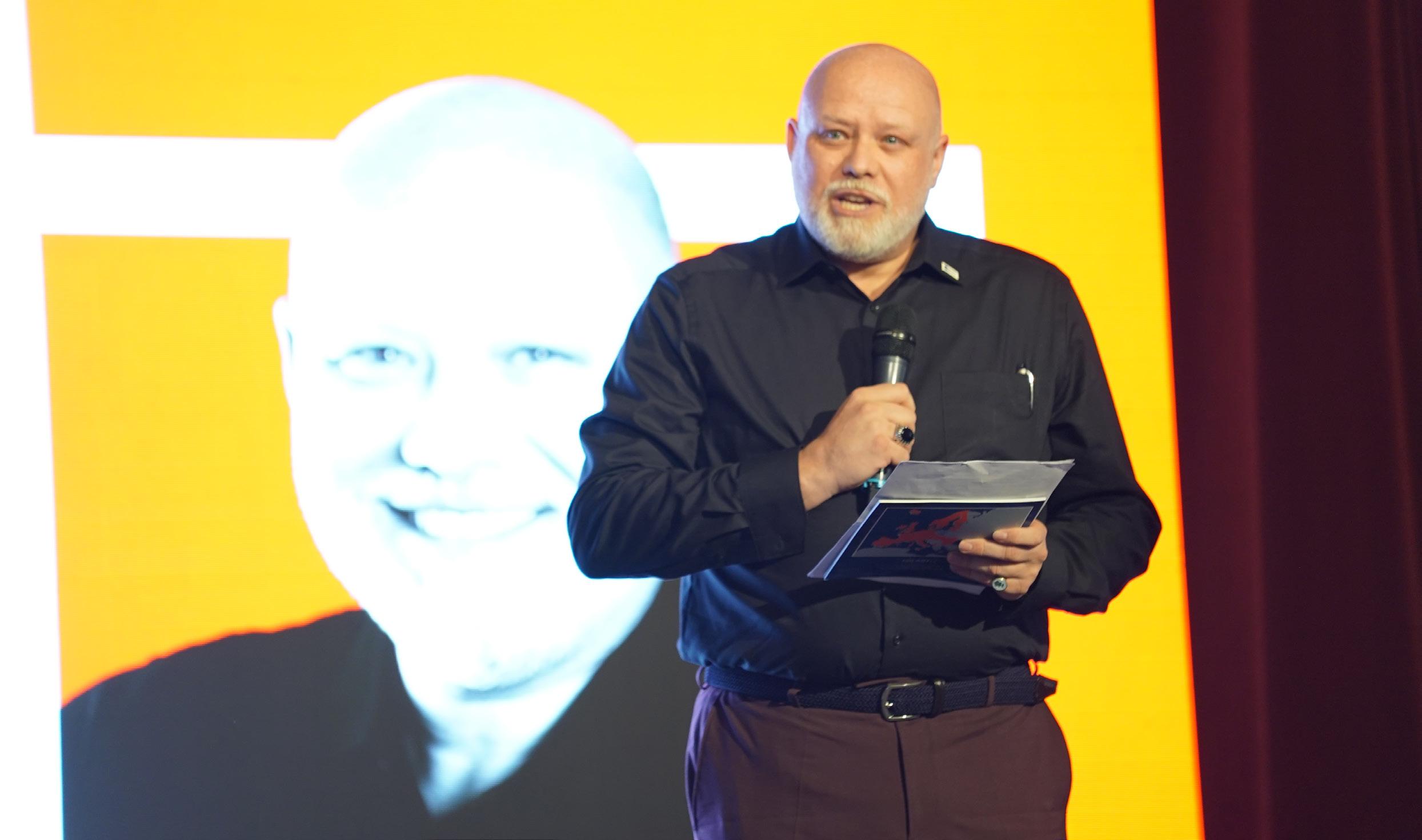
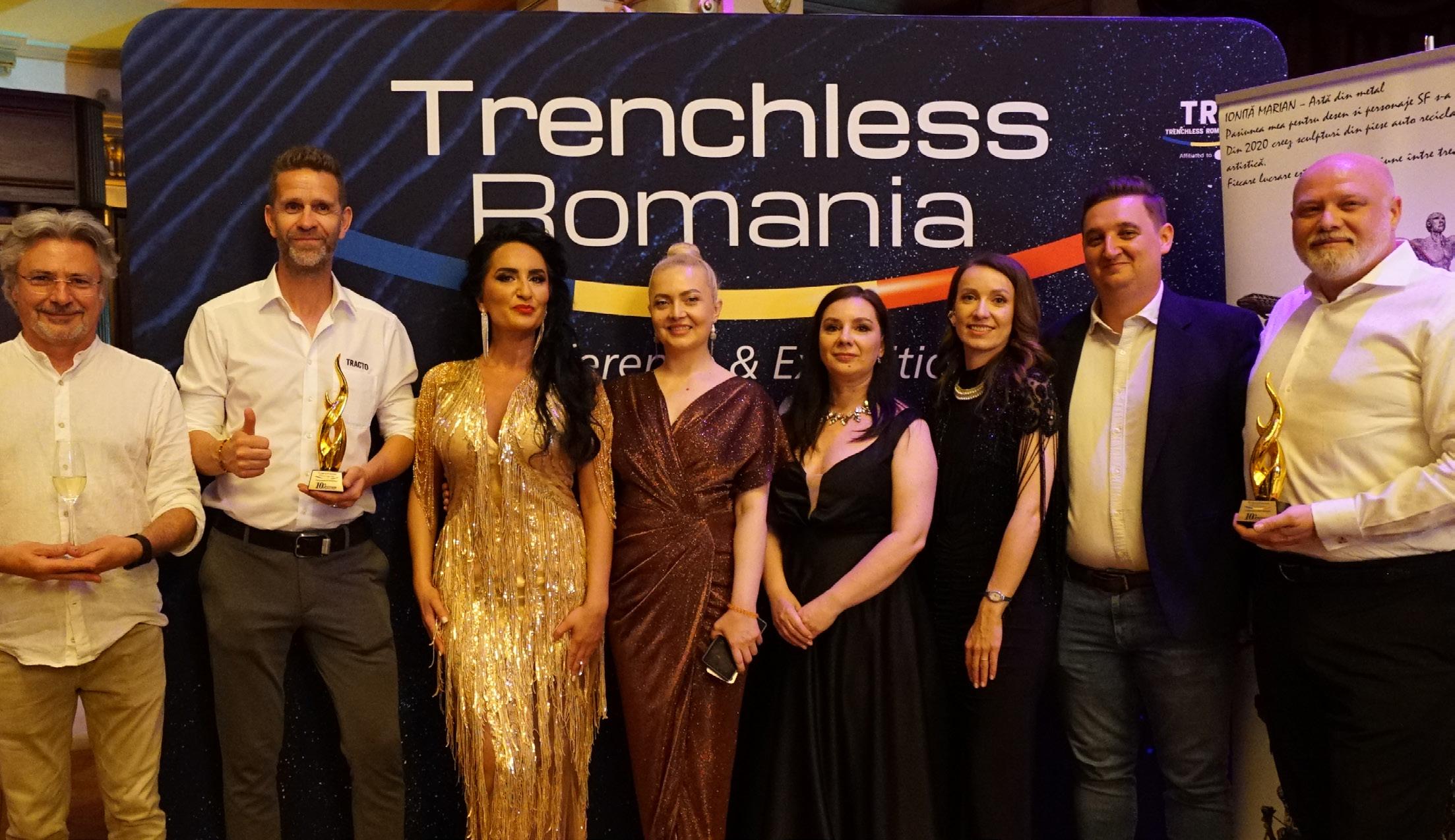
ISTT Chair marks a decade of Trenchless Romania
Solutions Provider United Infrastructure to use Trenchless Technology in 640M National Grid Framework Delivery
United Infrastructure has been appointed as one of eight key solution providers to National Grid UK’s new cable installation framework, with trenchless methods expected to play a role in the delivery of complex road, rail and river crossings.
“
We’re delighted to have been appointed to National Grid’s new cable installation framework and to continue our long-standing relationship with NGED as one of their trusted delivery partners. We look forward to continuing to invest in our people and capability as we help strengthen the UK’s electricity network for years to come.
The framework, which has a total potential value of up to £640 million, will support the delivery of electricity infrastructure projects across National Grid’s UK operations. United Infrastructure will deliver cable installation works for 66kV, 132kV and lower-voltage circuits across National Grid Electricity Distribution projects, alongside associated jointing, testing and commissioning activities. The framework is also available for use by other National Grid group companies, including National Grid Electricity Transmission and National Grid Ventures, as well as distribution operations across the East Midlands, West Midlands, South West and South Wales.
A significant proportion of the work will involve underground cable installation in locations where conventional excavation may create challenges around traffic management, access, reinstatement and environmental disruption.
United Infrastructure has confirmed that Horizontal Directional Drilling (HDD) is one of the methods used within its cable installation operations, particularly where routes need to cross carriageways, rivers, railway infrastructure or other physical obstacles. By installing ducts and cables beneath the surface, HDD can help complete complex crossings without the need for continuous open-cut excavation.
This can help reduce disruption to road users and surrounding communities, while also limiting the extent of excavation and reinstatement required. On river and rail crossings, trenchless installation can provide a practical means of navigating sensitive or operationally critical infrastructure while maintaining the required cable alignment.
A recent example includes HDD works undertaken by United Infrastructure at Staythorpe Power Station, where the method was used to complete a road crossing.
The installation involved a 40 m bore with a 630 mm diameter, demonstrating how trenchless techniques can be used to negotiate existing infrastructure while helping to avoid road closures and reduce disruption.
United Infrastructure said HDD is used predominantly across its trenchless installation work, with the method selected according to the conditions and technical requirements of each individual project. The company also remains open to adopting other installation techniques, including cable ploughing, where a project’s location, ground conditions and delivery requirements make these methods appropriate.
A Senior Project Manager at United Infrastructure said: “HDD provides a valuable process in helping overcome existing, new and historic assets that need to be avoided. It allows critical underground infrastructure to be installed while reducing the disruption and constraints that can be associated with open-cut excavation.”
The framework appointment follows the continued expansion of United Infrastructure’s power business since early 2025. Its capabilities now extend across low-voltage, high-voltage, transmission and distribution infrastructure, positioning the company to support a broad range of electricity network projects.
Campbell Crawford, Managing Director Power T&D at United Infrastructure, said:
“We’re delighted to have been appointed to National Grid’s new cable installation framework and to continue our long-standing relationship with NGED as one of their trusted delivery partners. We look forward to continuing to invest in our people and capability as we help strengthen the UK’s electricity network for years to come.”
The appointment further strengthens United Infrastructure’s position within the UK power sector, creating new opportunities to provide infrastructure solutions across National Grid’s future programme of works. As projects continue to involve complex road, rail and river crossings, HDD will remain an important method for delivering critical cable infrastructure while helping to reduce surface disruption and avoid unnecessary open-cut excavation.
BARHALE WINS UU BETTER RIVERS PROJECT AT STOCKPORT
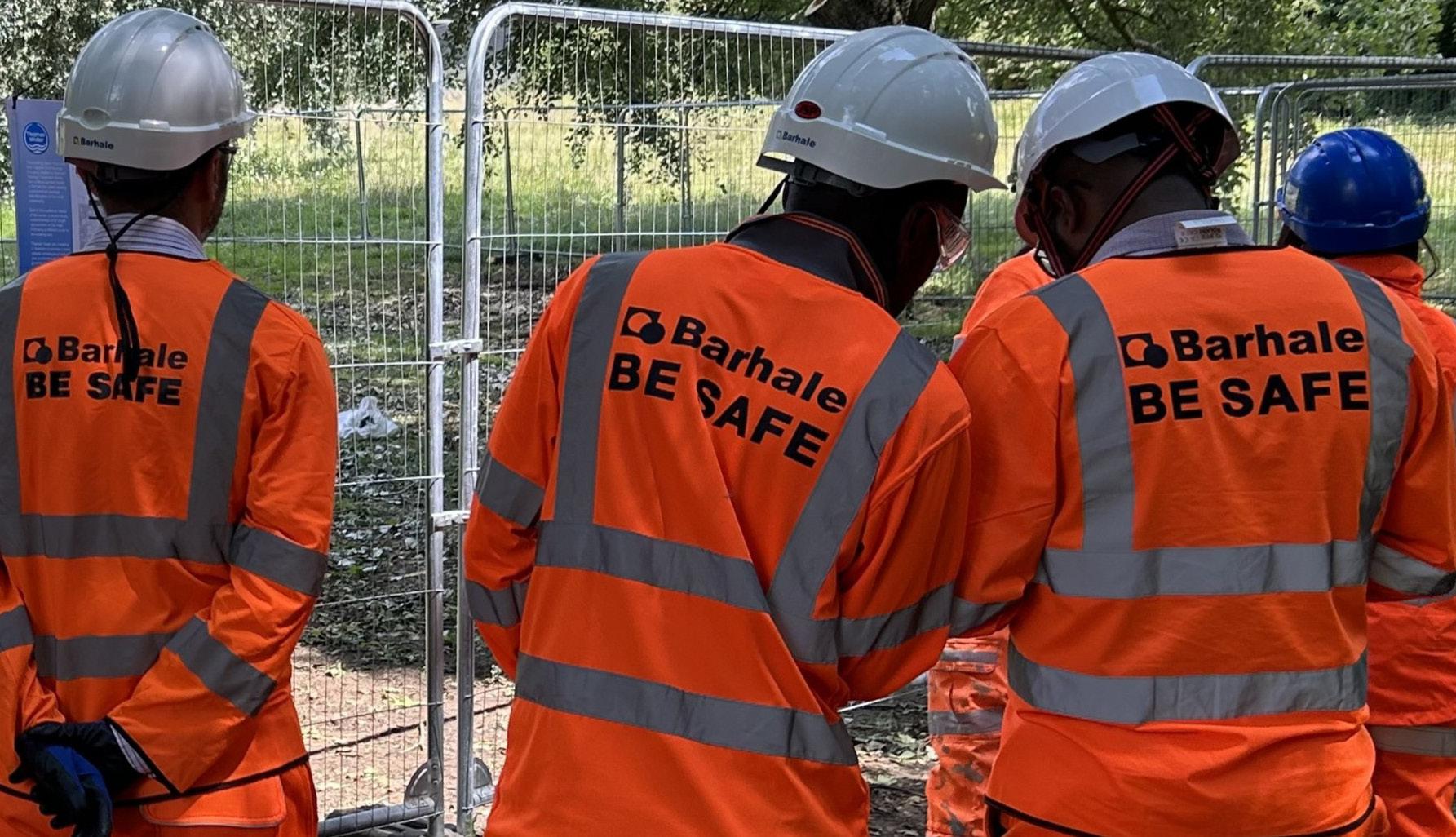
United Utilities has appointed Barhale to deliver a key project to improve water quality in the Micker Brook at Bramhall, Stockport.
The civil engineering, infrastructure and tunnelling specialist will construct a new detention tank at Bramhall Precinct car park to reduce the number of times the storm overflow operates into the brook, a tributary of the River Mersey. The shaft tank will intercept a sewer running into the existing Briarlands Combined Storm Overflow (CSO).
The contract has been awarded as part of the largest investment in wastewater infrastructure in the North West for a century. United Utilities is investing £13bn to protect and enhance over 500km of rivers, lakes and bathing waters whilst safeguarding drinking water supplies for millions of customers.
The site sits within an area with a high-water table so Barhale and UU have collaborated closely to identify a suitable design solution. It includes diverting an 825mm diameter sewer running at 4m depth to allow construction of a 1,000m3 shaft tank using a 12.5m diameter segmented caisson sunk to an invert depth of 13.3m.
Barhale will also carry out the MEICA fit out including new pumps in the shaft, control equipment kiosks, control panels, telemetry systems and incoming power supplies. A dual rising main will be connected to the network upstream of the CSO chamber.
Nick Curtis, Regional Director – Northern Region, Barhale said: “The project presents some significant technical
“The investment is aiming to reduce spill rates to fewer than one-in-ten-year events. The completion of the Briarlands CSO programme will be an important step towards meeting United Utilities’ target of reducing spills from storm overflows by 60% before 2030.
Nick Curtis, Regional Director – Northern Region, Barhale
challenges because of the location and site conditions and we are pleased to continue supporting United Utilities as part of their wide reaching AMP8 investment programme.
“We are already active across several aspects of the programme which are reinforcing the network’s ability to withstand storm events. They include constructing another smaller storm tank near this one in Cheadle and two more in Merseyside.
“The investment is aiming to reduce spill rates to fewer than one-in-ten-year events. The completion of the Briarlands CSO programme will be an important step towards meeting United Utilities’ target of reducing spills from storm overflows by 60% before 2030.”
Completion is scheduled for early summer 2027.
Barhale secures UU
Better Rivers project
AECOM appointed design partner for £340 million Oxford sewage works upgrade
AECOM has been appointed by Murphy as the exclusive multidisciplinary design partner for Thames Water’s £340 million upgrade of Oxford Sewage Treatment Works.
The project forms part of Thames Water’s AMP8 capital investment programme and will increase treatment capacity at the site by approximately 40%, helping to accommodate future population growth across Oxfordshire. The scheme is also intended to improve the quality of treated effluent discharged into the River Thames and reduce the frequency of storm overflows.
The wider upgrade will include improvements to power supplies, increased storm tank capacity and higher sewage treatment flows, strengthening the long-term resilience and environmental performance of the treatment works.
Dr Beverley Stinson, chief executive of AECOM’s global Water business, said: “Upgrading these major sewage treatment works is critical for facilitating growth and protecting the environment for communities in Oxfordshire.
“We are proud to bring our global technical excellence to support Thames Water in providing a significant increase in treatment capacity. Key to success is harnessing our technology and AI-enabled solutions to deliver more efficient, resilient and sustainable infrastructure for the future.”
The appointment builds on AECOM’s existing relationships with Thames Water and Murphy. The company previously worked alongside Murphy and Kier on the upgrade of Thames Water’s Deephams Sewage Treatment Works and has also secured a number of
appointments linked to the AMP8 investment period, including positions on Thames Water’s professional services framework and Southern Water’s capital delivery programme. Richard Whitehead, chief executive of AECOM’s Europe and India region, said the award further strengthened the company’s position in the UK water market.
“AECOM continues to strengthen its position in the UK water market, and we look forward to helping deliver cleaner waterways for communities in Oxfordshire and beyond,” he said.
“Building on our legacy as a trusted partner to the industry, this award reinforces our longstanding relationship with Thames Water. By continuing our collaboration with Murphy, we are bringing together the skills and expertise needed to help Thames Water enhance its services for customers.”
David Mayfield, senior project manager at Thames Water, said the upgrade represented a significant investment in the long-term resilience and environmental performance of the wastewater network.
“By working closely with AECOM and our delivery partner Murphy, we’re ensuring that Oxfordshire’s growing communities benefit from an upgraded, futureready treatment facility that safeguards our waterways, enhances capacity and provides a resilient wastewater service, with fewer storm overflows for years to come,” he said.
VAC-EX celebrates King’s Award recognition for excavation innovation
Doncaster-based VAC-EX Ltd is celebrating a landmark moment in its development after receiving a King’s Award for Enterprise, recognising the company’s contribution to British manufacturing, innovation and safer excavation around critical underground infrastructure.
Established in South Yorkshire in 2008, VAC-EX has built its reputation by developing non-destructive excavation equipment designed to reduce the risks associated with working around buried utilities. The award recognises the company’s continued focus on engineering solutions that improve safety, access and operational efficiency on construction and infrastructure sites.
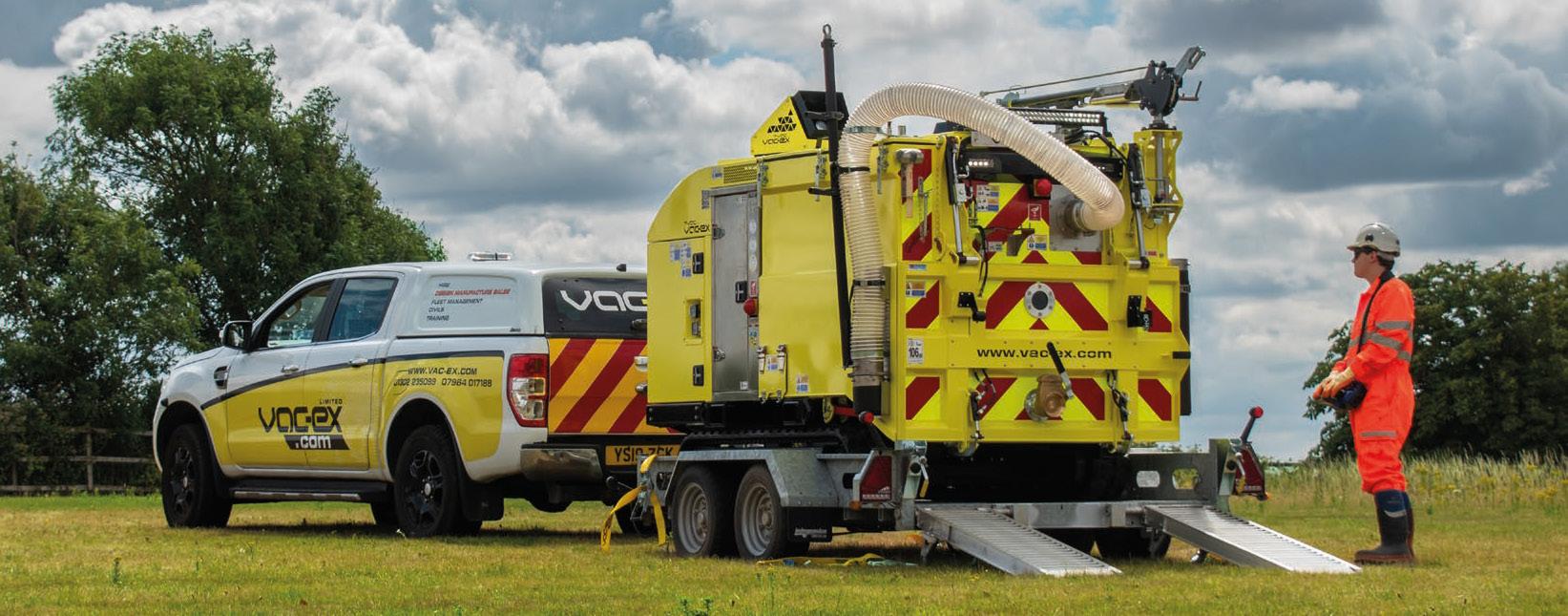
At the heart of the achievement is the T-VAC 2, VAC-EX’s compact tracked vacuum excavator. The machine was developed in response to growing demand for safer excavation in confined, sensitive and difficult-to-reach environments.
While conventional truck-mounted vacuum excavators can be restricted by their size and access requirements, the T-VAC 2 has been engineered to operate in tight urban spaces, rail corridors and challenging off-road locations. Its compact design also allows it to reach areas where traditional machinery and hand-dig excavation methods may be impractical or present increased risks.
Award-winning innovation
The T-VAC 2 combines high-pressure air excavation with powerful vacuum extraction on a fully remote-operated tracked platform. This allows the operator to work from a position offering improved visibility and control while remaining away from the immediate excavation area.
Designed around real-world site requirements, the system enables precise, non-destructive excavation around buried services. By loosening the ground using compressed air before extracting the resulting spoil, the machine can expose utilities while reducing the likelihood of damage compared with more aggressive mechanical excavation methods.
Its compact footprint and manoeuvrability also make vacuum excavation available in locations that may previously have been inaccessible to conventional truck-mounted equipment.
Field testing and live project deployment have demonstrated the potential operational benefits of the system. According to VAC-EX, the T-VAC 2 has delivered a 65 per cent reduction in excavation time in confined
A
spaces, a 90 per cent decrease in utility strike incidents and a 25 per cent reduction in overall project costs.
The company says these results demonstrate the measurable value the technology can offer contractors, utility providers and infrastructure projects in the UK and international markets.
Engineering for future worksites
Powered by a Stage V low-emission Kubota engine and protected by UK and international patents, the T-VAC 2 reflects VAC-EX’s focus on combining performance with environmental responsibility.
Each element of the machine has been developed to meet the changing requirements of construction and utility work, where improved safety, greater productivity and reduced environmental impact are becoming increasingly important.
VAC-EX’s wider equipment portfolio follows the same approach. Its AIR-VAC 2, AIR-VAC 4 and VE-32-8 Truck systems support a variety of excavation applications, while the AIR-EX lance range provides tools for controlled air excavation around underground services.
“ Winning The
King’s Award for Enterprise not only elevates our profile within the vacuum excavation industry, but also supports our continued growth, creating new employment opportunities, strengthening local supply chains and driving our commitment to sustainability.
The development of the electrically powered AIR-VAC 2 Electric also signals the company’s move towards equipment capable of supporting lower-emission construction sites and infrastructure projects.
Designed and built in Britain
From its beginnings in Doncaster, VAC-EX has developed into an internationally recognised vacuum excavation equipment manufacturer, supplying industries in which safety, precision and reliability are essential.
The King’s Award marks an important milestone for the business and provides further recognition of the engineering and manufacturing expertise behind its products.
“Winning The King’s Award for Enterprise not only elevates our profile within the vacuum excavation industry, but also supports our continued growth, creating new employment opportunities, strengthening local supply chains and driving our commitment to sustainability,” said John Patrick Mee, managing director of VAC-EX.
John Patrick Mee, managing director of VAC-EX
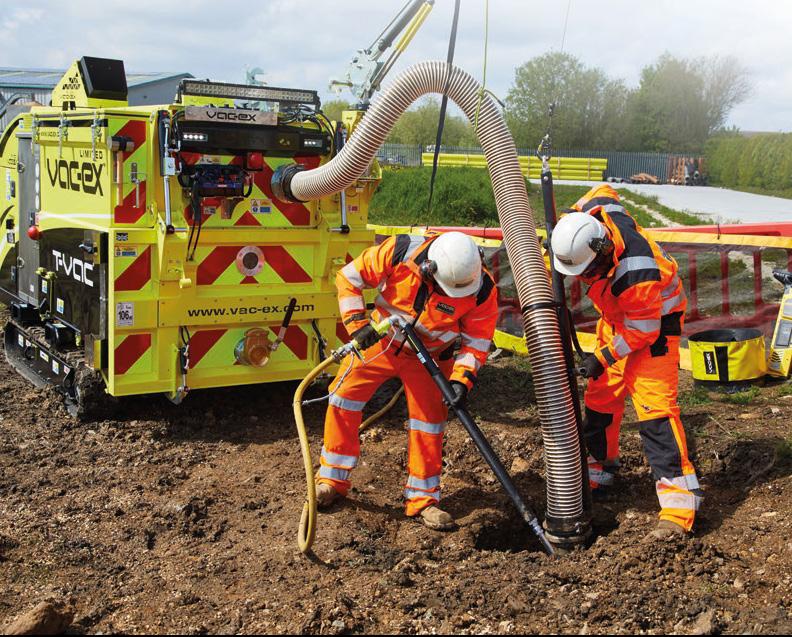
The T-VAC 2 enables efficient live excavation, with one operator handling the AIR-EX lance and the other controlling the dig hose.
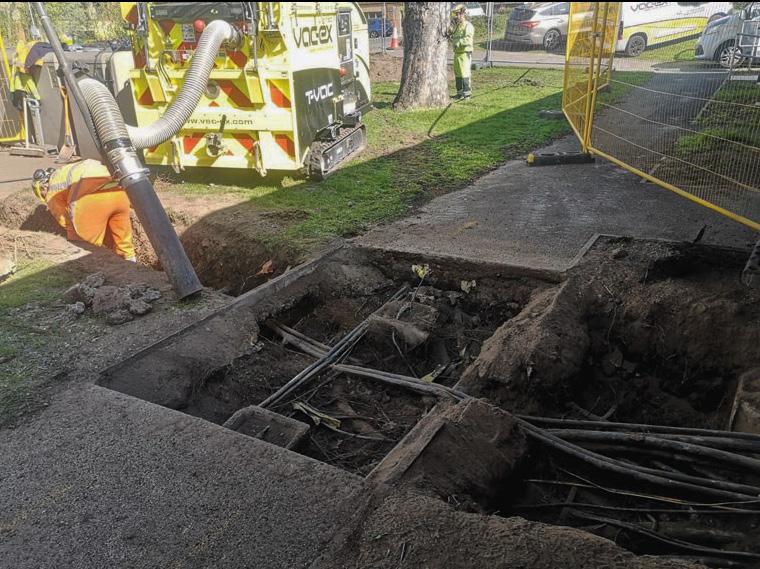
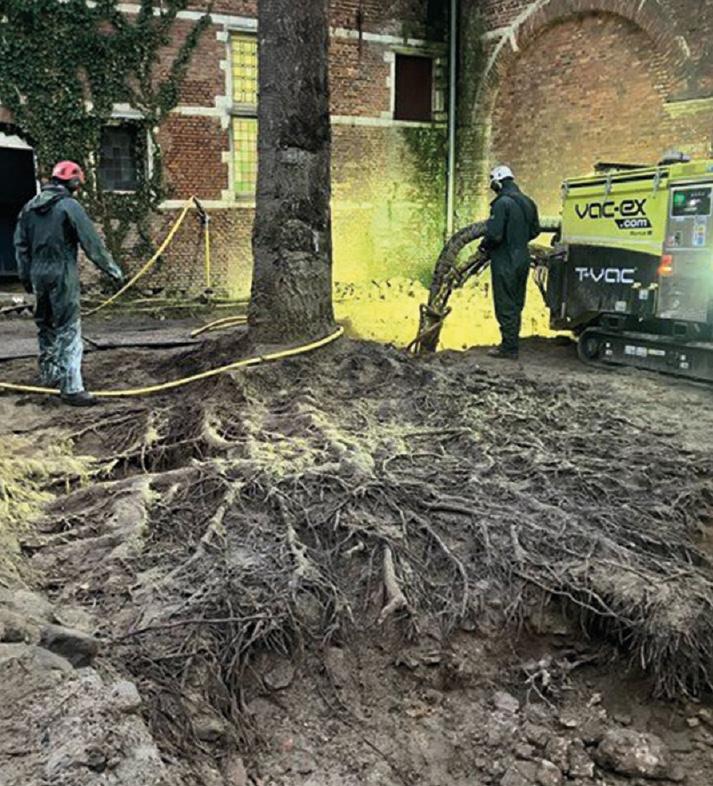
A T-VAC 2 safely exposing underground utilities with vacuum excavation, removing soil without damaging existing cables or pipes.
A T-VAC 2 delicately excavates and exposes tree roots and live services buried underground.
Ipsum Group strengthens water offering with twoH and ExcelCS acquisitions
Ipsum Group has expanded its specialist capabilities across the UK water and infrastructure sectors through the acquisition of North Wales-based businesses twoH and ExcelCS. The deal strengthens the group’s Water & Infrastructure division by adding clean water commissioning, pipelaying, specialist equipment, digital technology and technical training to its existing wastewater expertise.
The acquisition forms part of Ipsum’s continued growth strategy and is intended to broaden the range of services available to water companies across the lifecycle of their assets. By bringing together complementary expertise across clean and wastewater infrastructure, the group will be able to provide support spanning installation, testing and commissioning through to ongoing operation and maintenance.
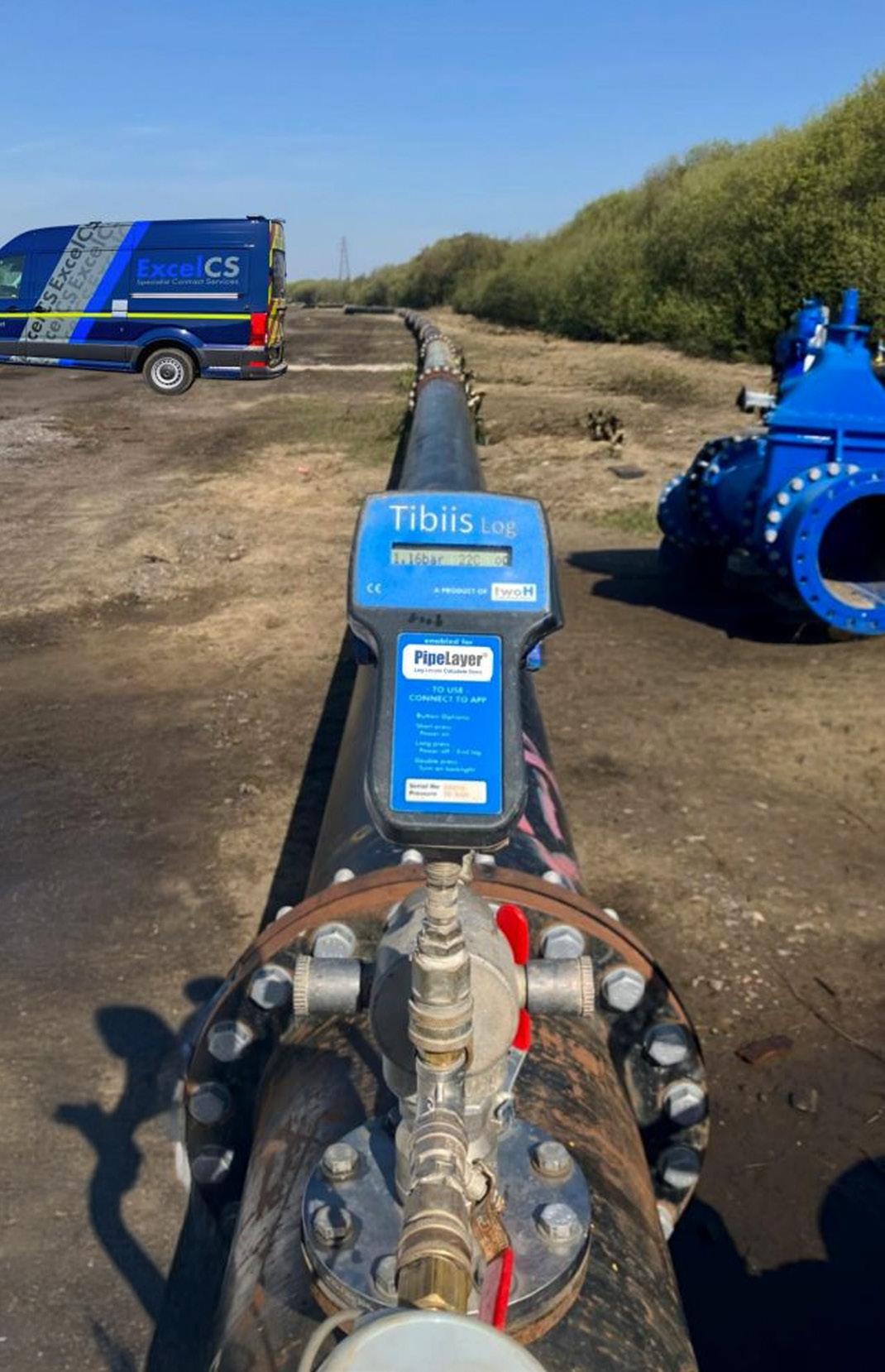
ExcelCS delivers clean water commissioning and pipelaying services, supporting the installation, testing and commissioning of critical water assets. twoH provides specialist commissioning equipment for hire and sale, including pressure-testing pumps, chlorination units and related products. The business also owns and operates the Pipelayer App and Tibiis data-logging technology, which is used by ExcelCS and external customers to support field-based delivery and coordination.
Alongside its equipment and technology offering, twoH is an Energy & Utility Skills Register-approved training provider, delivering courses relating to commissioning and pipelaying. The combination of ExcelCS’s field expertise with twoH’s equipment, digital platforms and training capabilities creates an integrated clean water offering that Ipsum plans to develop further through its national footprint.
Andrew Cowan, chief executive officer of Ipsum Group, said the acquisition represented an important step in the development of the company’s Water & Infrastructure division. “This further enhances our specialist capabilities, complementing our
established wastewater expertise and strengthening our offering across the water sector,” he said. “By bringing together complementary capabilities across clean and wastewater infrastructure, we can offer customers an even broader range of services that are critical to the safe, efficient and reliable operation of their assets.”
Ian McDonald, managing director of twoH and ExcelCS, said joining Ipsum Group would allow both businesses to expand their clean water capabilities and extend the reach of their technical expertise. “Both businesses have built strong reputations for technical delivery and customer service, and this partnership enables further investment in people, capability and growth,” he said. “The combination of ExcelCS’s field expertise with twoH’s equipment and digital platforms, alongside Ipsum’s scale, creates a strong platform for continued development in the water sector.”
twoH and ExcelCS will now operate within Ipsum’s Water & Infrastructure division. Ipsum also works across the power, infrastructure, and control and automation sectors, delivering engineering services designed to improve asset performance, strengthen operational resilience and support critical infrastructure delivery.
Hydrohire Ltd trades as twoH, while Excel Pipelines Ltd trades as ExcelCS.
Bluelight Lining’s LED light curing CIPP lining system is engineered to deliver reliable results, first time, every time. With all equipment and liners sourced from one place, everything works seamlessly together, reducing downtime, minimising errors, and keeping projects on schedule.
Up to 5x more efficient than traditional systems
Environmentally friendly resin with up to 99% CO2 savings
Technology and materials sourced from a single supplier
Technology approved by the WRC, DIBt and the CSTB Your Go-To System for Laterals and Mains up to 600mm
KrasoTech
Robotic
Inversion Drums
Cutting Equipment
asoTech
Measuring Equipment
version Drums
KrasoTech
Inversion Drums
Vehicle Builds
soTech
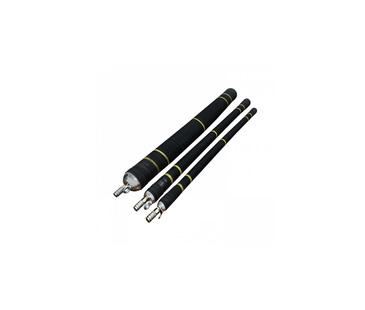
Repair Packers
ersion Drums
asoTech
Silicate Resins
version Drums asoTech ersion Drums
Inversion Drums
Trusted across the UK and Europe, Bluelight Lining is the go-to solution for efficient, high quality pipe rehabilitation. With Bluelight Lining, you can do it right, first time, every time.
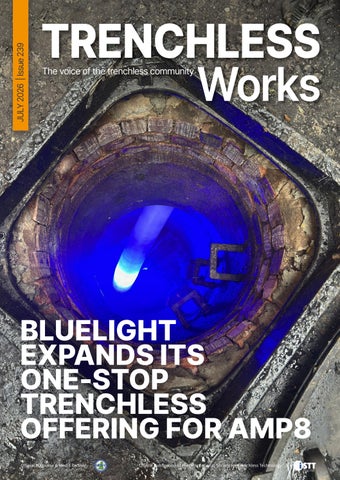
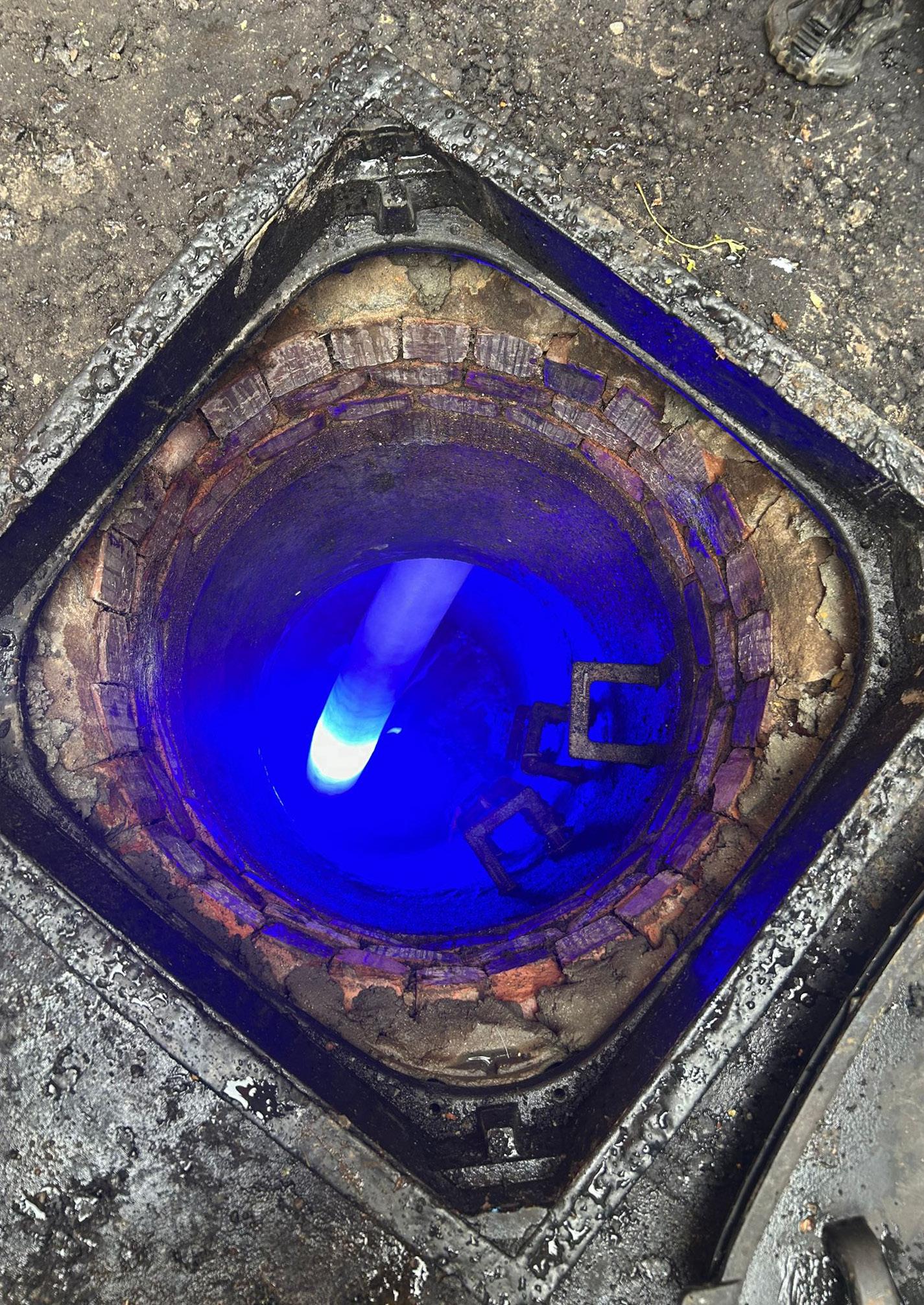
Bluelight expands its one-stop trenchless offering for AMP8
By Austen Lees, Editor Trenchless Works
When I visited Bluelight Lining last year, much of our conversation focused on the company’s pioneering LED curing technology and its determination to raise standards across the trenchless rehabilitation sector.
Twelve months on, the business has continued to evolve. As AMP8 activity begins to gather momentum, Bluelight has significantly expanded its product offering and is increasingly positioning itself as a one-stop technology partner for trenchless contractors, supplying everything from LED lining systems and consumables through to robotic cutters, integrated installation vehicles and surveying technology.
New addition strengthens portfolio
Speaking to Stuart Lineham during my latest visit, it quickly became apparent that the biggest recent
development has been Bluelight’s appointment as UK supplier for the Climbolino®E lateral cutter from German manufacturer Hächler.
Developed from decades of robotic milling expertise, the compact electric cutter is designed for sewer rehabilitation applications from DN60 to DN300 and offers contractors a lightweight, battery-powered alternative to more traditional systems.
The latest addition reflects Bluelight’s ambition to support contractors through every stage of a rehabilitation project, from initial survey and preparation through to lining, curing and final reinstatement.
“The key is getting people to use it,” Stuart explains. “Once contractors see it working, they quickly realise it does exactly what it says on the tin.”
“
We work very closely with our German development team because we’re trying to raise standards, there are now so many different combinations of liners, resins and curing systems available that it’s becoming increasingly important for customers and asset owners to understand exactly which products are appropriate for each application.”
Jim Scholes, Delivery Manager, United Utilities
That philosophy is perhaps best demonstrated by Bluelight’s fully integrated installation vehicles.
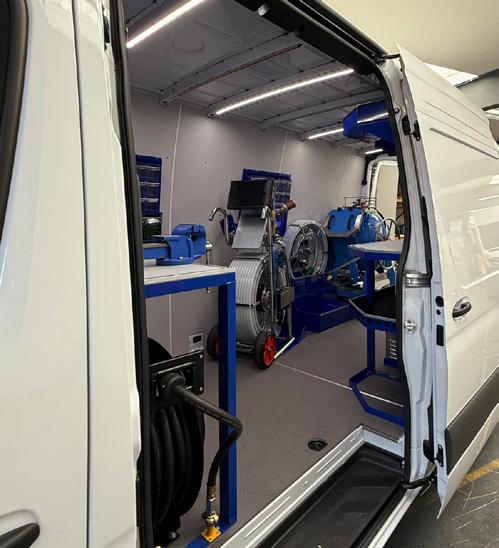
The company has supplied three complete vans already this year, with another two currently under construction, one of which has already been sold.
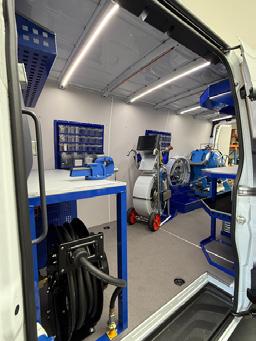
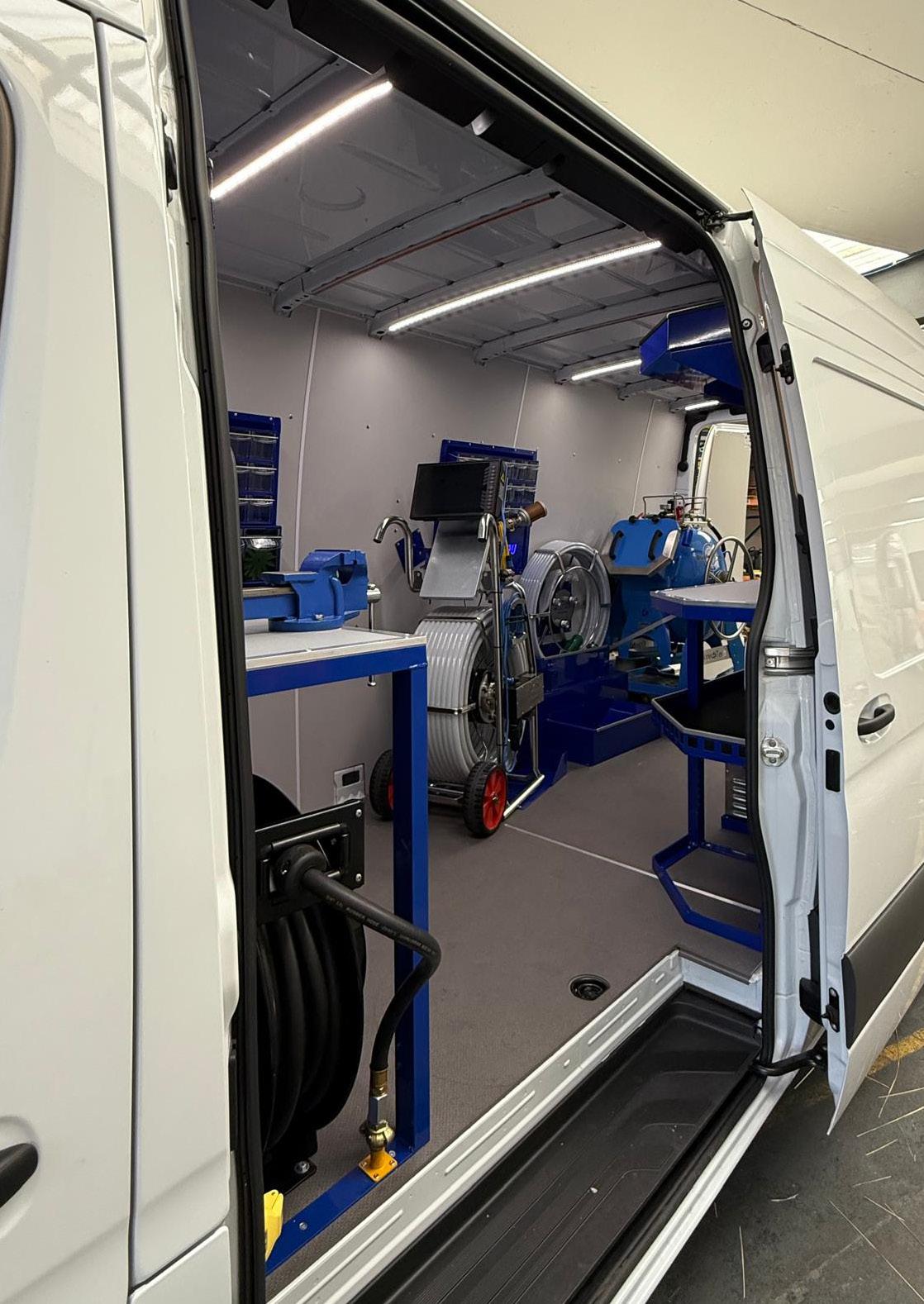
Rather than leaving customers to configure their own vehicles, Bluelight integrates generators, compressors and auxiliary systems beneath the vehicle floor, freeing valuable internal space for storage, inversion drums and lining equipment while creating a cleaner, safer and more practical working environment.
“Many customers have built their own vans over the years and they work well,” Stuart says. “But by integrating everything underneath the vehicle we’ve been able to create a layout that’s more organised, easier to use and leaves much more working space inside.”
The approach also removes the need for trailers in many applications, reduces mobilisation time and allows contractors to maximise the available payload while arriving on site with a complete rehabilitation system ready to work.
Driving higher standards
While the company’s product portfolio continues to grow, Bluelight’s core LED lining systems remain central to the business.
The modular design allows customers to invest in a system that suits their current workload before expanding capability as requirements grow. Bluelight has already supplied its first complete system to Elliotts Environmental, together with a fully equipped installation vehicle, while the cutter has also joined the company’s hire fleet, allowing contractors to experience the technology before making a capital investment.
A one-stop solution for contractors
Rather than simply supplying LED lining equipment, Bluelight is steadily expanding its offering to help contractors source more of the products they need from a single supplier.
Alongside its comprehensive lining systems, the company now supplies patching materials, resins and robotic cutting equipment, while continuing to invest in practical solutions that improve productivity on site.
Covering applications from laterals through to mains up to DN600, the systems combine styrene-free vinyl ester resins with flexible felt and glass fibre liners to deliver rapid curing speeds and a significantly reduced site footprint. Development also continues on a new folded glass liner that combines high structural performance with a significantly reduced manufacturing time, enabling shorter lead times while retaining the flexibility to negotiate changes in pipe diameter.
Certification remains another important area of focus.
Bluelight expects WRC CP655 certification for both its flexible felt and glass liners in the near future. However, Stuart believes certification should be about more than simply achieving compliance.
“We work very closely with our German development team because we’re trying to raise standards,” he says. “There are now so many different combinations of liners, resins and curing systems available that it’s becoming increasingly important for customers and asset owners to understand exactly which products are appropriate for each application.”
Education, he believes, remains one of the biggest opportunities facing the industry.
“There are still people who don’t realise you can repair a pipe without digging,” he says. “We need to help people understand the full benefits of trenchless rehabilitation, whether that’s cost, programme, environmental impact or reducing disruption. A repair that takes a few hours rather than several days can deliver significant benefits beyond the construction cost alone.”
That message is equally relevant to the clean water sector, where Stuart believes suitable rehabilitation technologies already exist but awareness among network owners remains relatively limited.
“There are products available, but many organisations are understandably cautious about being first to adopt
“ We’re
growing, but we’re doing it in a controlled way. Our aim is to provide customers with more of the products and support they need while maintaining the personal service we’re known for. We still spend a lot of time on site because that’s where we can make the biggest difference.
Stuart Lineham, general manager, Bluelight Lining
them,” he says. “Often asset owners only know about the solutions their existing contractors present to them. Increasing awareness is still one of the biggest challenges.”
Smarter surveying without confined space entry
Alongside its rehabilitation technologies, Bluelight is also introducing products that help contractors improve survey quality while reducing risk on site.
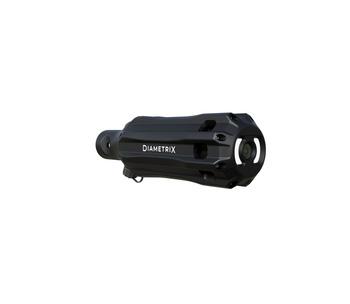
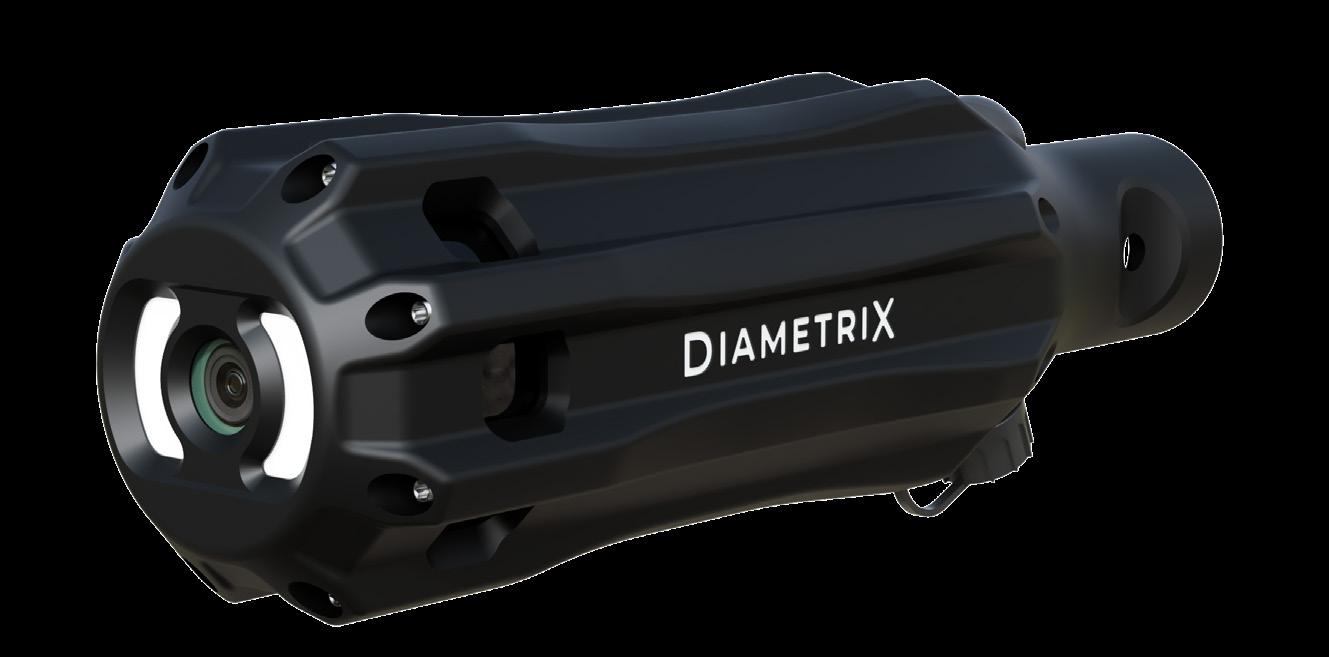
One of the most interesting is DiametriX, an innovative surveying device that enables operators to measure pipe diameter, circumference and geometric shape directly from ground level, eliminating the need for confined space entry in many applications.
Using an infrared laser and companion app, the lightweight system can be deployed in minutes with virtually no training, providing fast and accurate measurements on pipes from DN100 up to DN1000, and even larger concrete structures. The result is quicker surveys, reduced manpower requirements and, most importantly, improved safety by keeping personnel out of live sewer environments wherever possible.
“It’s another example of technology helping contractors work smarter,” Stuart says. “Anything that reduces time on site while improving safety is going to be valuable for both contractors and their clients.”
Visitors to No-Dig Live will have the opportunity to see DiametriX demonstrated alongside the new Climbolino®E cutter and one of Bluelight’s fully integrated installation vehicles, providing a practical insight into the company’s increasingly comprehensive trenchless offering.
Looking ahead
With AMP8 investment now beginning to build after a slower-than-expected start, Stuart says demand across the market is becoming increasingly encouraging. Importantly, the company’s broad customer base and
expanding product portfolio have enabled it to maintain steady, controlled growth throughout the quieter period.
“We’re growing, but we’re doing it in a controlled way,” he concludes. “Our aim is to provide customers with more of the products and support they need while maintaining the personal service we’re known for. We still spend a lot of time on site because that’s where we can make the biggest difference.”
As the industry prepares for one of its busiest investment periods in recent years, Bluelight’s continued focus on innovation, practical support and raising technical standards appears to be positioning the company strongly for the opportunities ahead.
INSIDE THE WALLS
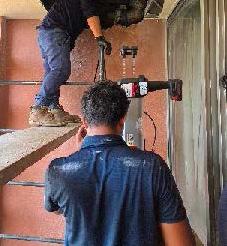
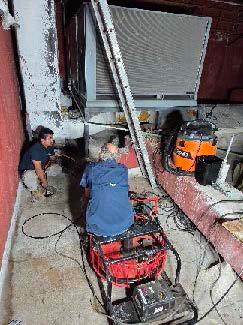
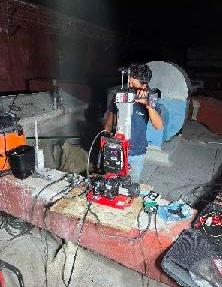
No-Dig technology is most commonly associated with buried pipelines, but the same principles can also be applied to pipework concealed within occupied buildings. At a 15-storey hotel in Mexico, controlled cleaning, air drying, CCTV inspection and brush coating enabled 64 m of leaking rainwater pipework to be rehabilitated without the extensive disruption associated with conventional replacement. When underground pipes fail, trenchless technology can provide an alternative to excavation and replacement. However, some of the most difficult pipes to access are not buried underground at all. Within hotels, apartment blocks and other multistorey buildings, drainage and rainwater systems are often concealed behind walls, above ceilings or within structural voids. Replacing them conventionally can require extensive opening-up work, reinstatement and disruption to occupants.
That was the challenge facing a hotel in Mexico at the beginning of 2026. Its internal rainwater pipes were blocked and leaking, creating problems within bedrooms throughout the building. The main vertical stack ran from the roof towards the basement through 15 floors, with surface-water gullies on each balcony connecting into the pipework. Because the pipes were located within the walls, conventional replacement would have required access through multiple areas of the occupied hotel.
The client therefore began investigating whether the system could be rehabilitated using a less intrusive method. Richard Swan Associates Ltd was contacted in January 2026 and, over the following months, worked with a team of specialist companies to assess the cleaning and rehabilitation options.
Pipeline Inspection and Services undertook CCTV surveys and site inspections and liaised with the hotel
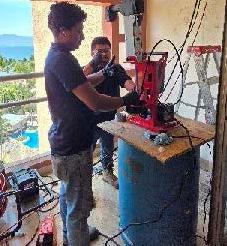
management team throughout the project. Richard Swan Associates developed the final rehabilitation method, calculated resin quantities and equipment requirements and provided technical support and training. Hallo Techni SA de CV was appointed as the main contractor responsible for cleaning and coating the pipes, while IRR Trenchless supplied the Picote equipment and materials used on site.
A carefully planned approach
Initial information suggested that the rainwater system contained a combination of 4 in and 6 in cast pipes. Further site investigations established that the principal vertical pipework was 6 in in diameter and that access could be created approximately every three floors.
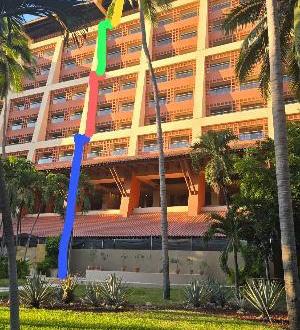
This allowed the 64 m stack to be divided into four manageable working sections: 17 m from the roof to floor 11, 15 m from floor 11 to floor eight, a further 15 m from floor eight to floor five and approximately 17 m extending downwards from floor five.
Section 1 (Yellow) – Roof down to 11th Floor (17 metres)
Section 2 (Green) – Floor 11 down to 8th Floor (15 metres)
Section 3 (Pink) – Floor 8 down to Floor 5 (15 metres)
Section 4 (Blue) – Floor 5 down as far as 17 metres
The section lengths were influenced by the 23 m working length and operating range of the Picote Midi Cleaner. However, the precise internal condition of the pipes remained uncertain, and the hotel was understandably concerned about the possibility of damaging the existing system during cleaning.
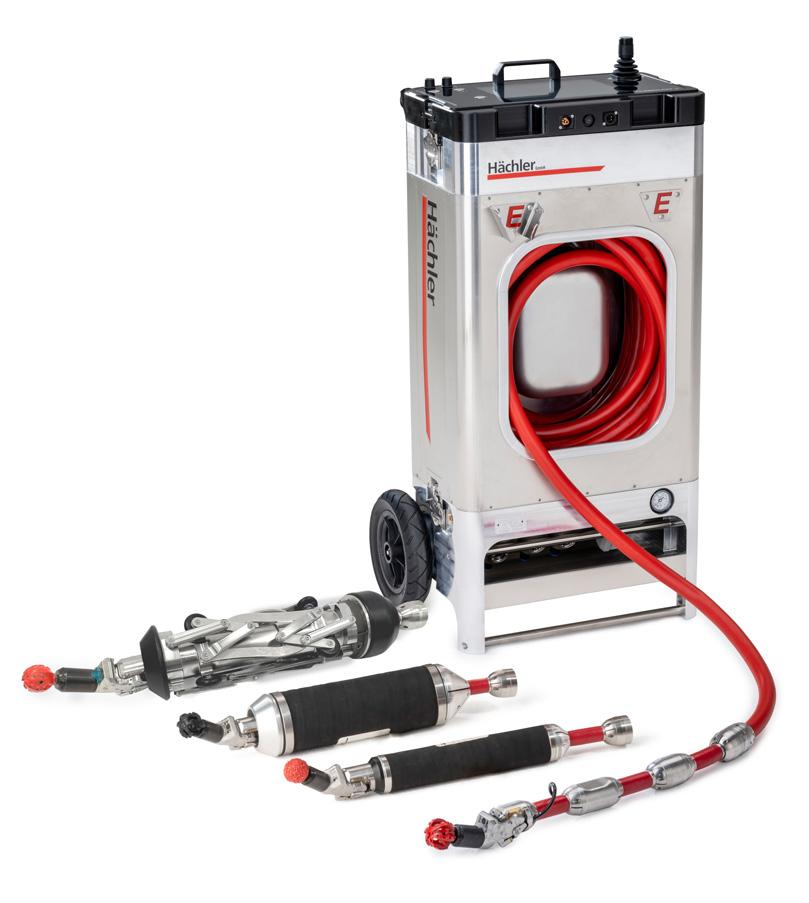
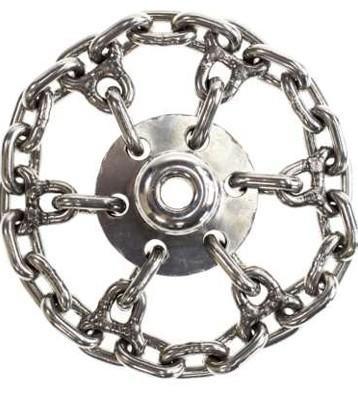
The team therefore developed a controlled approach using a combination of PVC Cyclone Chains, Picote Smart Cutters, cleaning brushes and a special drill head. These tools could be selected and adapted according to the condition of each section and the type of material encountered.
As with any pipe-coating system, preparation would be critical. The pipe surfaces needed to be fully cleaned and descaled, with all debris removed and no standing water remaining before resin could be applied.
More than a simple blockage
Work commenced on Monday 18 May, with the team initially operating from the hotel roof. Temperatures at roof level were approximately 37°C, so sunshades were erected to protect the working area and equipment.
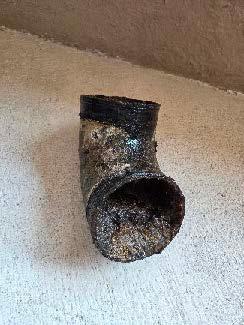
The first priority was to remove a steel bar that had become lodged inside a 90-degree bend. Access was created through a ceiling on floor 12, allowing the bend to be removed. The obstruction was extracted and the fitting reinstated before mechanical cleaning began.
The upper section, running from the roof to floor 11, was cleaned using 6 in PVC Cyclone Chains and a Smart Cutter fitted with standard grinding panels. A subsequent CCTV inspection revealed that part of the pipe between floors 12 and 11 had a negative fall and was holding water.
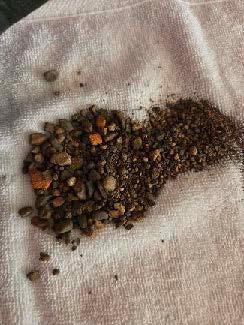
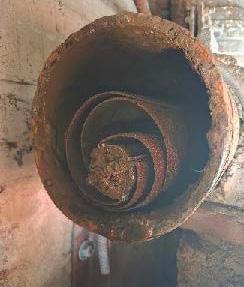
Further down the system, the team encountered significant quantities of fine soil, stones and other debris. In one section, the soil had mixed with water to form a liquid solution that coated the internal pipe wall and prevented effective cleaning.
Equipment was moved to the next access point, where handfuls of fine soil and debris were removed from a bend. Visual inspections showed no obvious signs of corrosion, and the accessible pipework appeared to remain structurally sound.
Drying and preparing the pipe
The presence of water forced the team to reconsider its approach. An air blower was positioned at an upper access point and used to force air through the pipe towards the floor below.
As the section began to dry, the liquid soil became a thick, sticky mud. Although this material remained difficult to remove, the change in consistency meant it could be broken down and extracted using mechanical cleaning tools.
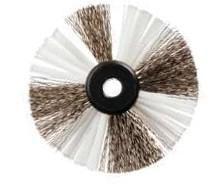
The team continued working with Smart Cutters, PVC Cyclone Chains and combinations of steel, nylon and coating brushes. Grinding panels repeatedly emerged wet and dirty, confirming that further preparation was needed. Other material removed from the system included stones and a large piece of timber.
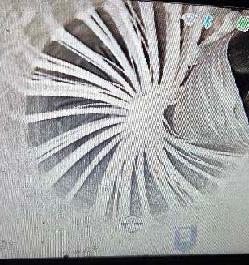
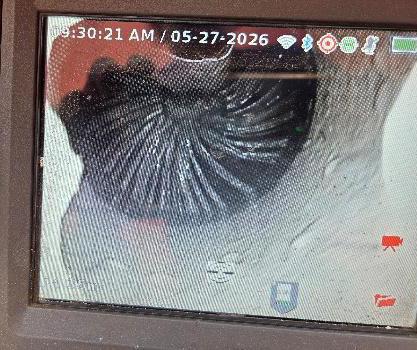
Once the heavier debris had been extracted, cleaning and coating brushes were passed through the pipe several times to remove remaining dust and fine deposits. CCTV was used throughout the process rather than being limited to initial and final surveys. The camera allowed the team to determine whether material remained on the pipe wall, whether water was still present and whether a section was ready to receive resin.
On one occasion, an inspection showed that debris remained within the final 10 m to 11 m of a section that had already undergone extensive cleaning. Additional passes were therefore completed before a further CCTV survey confirmed that the pipe was suitable for coating.
By day five, sections of the system were still wet despite repeated cleaning and the high external temperatures. The surface temperature on the roof reached approximately 50°C, while the ambient temperature was around 32°C, but water remained trapped within parts of the stack.
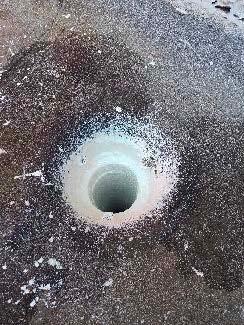
At the lower access point, CCTV encountered standing water approximately 3 m into the pipe. A special drill head was fitted to the Midi Cleaner and carefully advanced through the section for approximately 17 m. This was followed by PVC Cyclone Chains and the Smart Cutter. A 10 m extension was then added to increase the operating reach and allow the team to clean as far down the vertical stack as possible.
Bend removed in room 1216 6” PVC Cyclone Chain
Debris removed from the pipe Picote Smart Cutter
Further inspection from the access point above confirmed that another section remained wet and was still holding water. The team continued cleaning with the Smart Cutter, followed by a steel and nylon brush and an oversized nylon coating brush. Eventually, the pipe was found to be damp but free from standing water.
Five full days of the 11-day programme were devoted to cleaning and preparing the system before the first resin coat could be applied. This proved to be one of the most important lessons from the project. Although coating was the core rehabilitation method, its effectiveness depended entirely on the condition of the prepared host pipe.
Coating the vertical stack
The first coating operation began on day six from the access point on floor 11. The coating brushes and resindelivery hoses were pushed through the pipe to the far end of the section on floor eight.
Mixed resin was then pumped through the hose towards the brush assembly. The room temperature was approximately 27°C, while the resin temperature ranged from 21°C to 22°C.
After around 15 minutes, the resin reached the brushes and coating could begin. The operative slowly retrieved the rotating brushes through the pipe while monitoring the application using CCTV. It took just over an hour to coat the internal surface of the 15 m section. The equipment was then stripped down and cleaned in preparation for the next run.
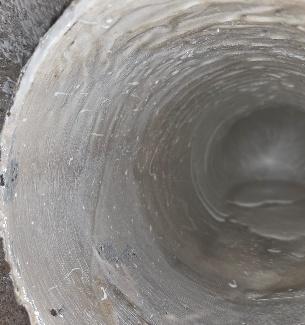
Each section received three coats of resin in alternating colours of white, grey and white. The contrasting layers provided a useful visual reference, helping the team assess coverage as each subsequent coat was applied.
Cleaning and coating continued in parallel as individual sections reached the required condition. Where CCTV showed that the pipework remained wet or dirty, resin application was postponed until further preparation had been completed.
Adapting as work progressed
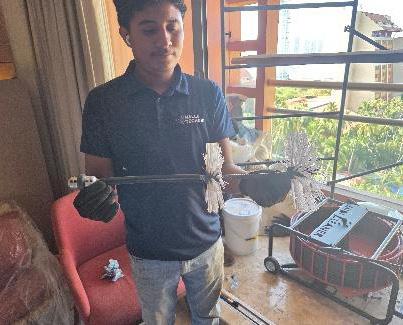
The project did not proceed as a simple linear operation. Equipment had to be moved repeatedly between the roof, hotel rooms, balconies and intermediate access points as different sections became available for cleaning or coating.
During cleaning of the upper run, a metal panel became detached from one of the tools inside the pipe, although it was later recovered.
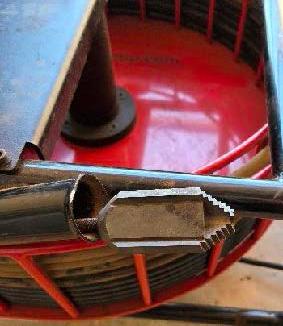
Nylon/Wire Cleaning Brush Picote Special Drill Head
At another location, repeated attempts to remove the final debris using brushes and a wet-and-dry vacuum proved unsuccessful. CCTV subsequently revealed a short damaged section of pipe. The affected area was removed and replaced by the hotel’s engineering team before the rehabilitation work continued.
Once the replacement section had been installed, the remaining debris and dust could be removed and the pipe reinstated. The upper bend was then reconnected, enabling the team to coat continuously from the roof to floor 11.
By the end of day nine, all cleaning work had been completed and only the remaining resin applications were required.
Testing the result
On day ten, the second and third coats were completed across the final sections. The following day, all removed pipe sections and bends were reinstated and a waterflow test was carried out from the roof through the complete system.
The test confirmed that the rehabilitated rainwater stack was fully watertight and functioning correctly.
In total, 64 m of 6 in pipe was cleaned, with three resin coats applied to each section, representing 192 m of coating application. The overall programme was completed in 11 days, comprising five days of cleaning, three days combining cleaning and brush coating, two days of coating and a final day of CCTV surveys and testing.
The team had initially expected the resin application to take longer than the cleaning. In practice, approximately 70% of the project time was spent moving equipment through the hotel, gaining access to the pipework and cleaning and preparing the internal surfaces.
Before leaving the site, the team was asked to address an additional blockage in a 4 in waste pipe serving the
restaurant near the hotel pool. The pipe between the final manhole and the external grease trap was blocked. Using the Midi Cleaner with a special drill head and 4 in PVC Cyclone Chains, the team cleared the obstruction and restored flow.
The additional task demonstrated that the equipment brought to site for rehabilitation preparation could also be adapted for conventional blockage removal. More importantly, the principal project showed how no-dig methods can be used beyond buried utility networks.
By working through carefully selected access points, the project team was able to rehabilitate pipework concealed throughout an occupied 15-storey building, avoiding the extensive disruption, openingup work and reinstatement that would have accompanied full replacement.
Applying 1st coat from the roof (floor 15) down to Room 1116 Applying 2nd Coat (Grey)
3rd and Final Coat (White) on Roof
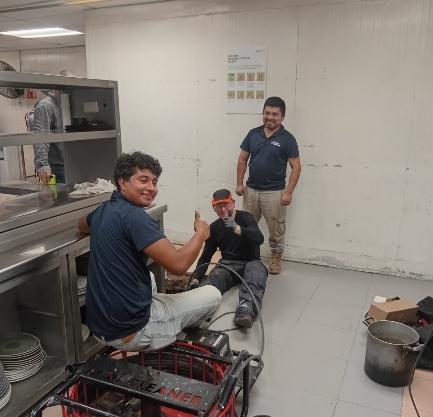
Cleaning the 4” pipe in the kitchen
RELINE Alphaliner PN rehabilitates saltwater pressure pipeline in Spain
DN 1200 pressure liner installation completed during a restricted industrial shutdown
Alarge-diameter saltwater pressure pipeline serving an industrial facility in Asturias, Spain, has been rehabilitated using the RELINE Alphaliner PN. The project combined a 165 m installation length and five-bar operating pressure with a restricted shutdown period, challenging internal pipe conditions and the presence of asbestos cement.
A reliable cooling water supply from the sea is essential to the operation of the Asturian industrial plants, making the sustainable rehabilitation of the pipeline a priority. After several decades in service, the existing asbestos cement piping system was showing clear signs of deterioration and no longer met current structural requirements. There was also concern that further damage could allow harmful asbestos fibres to enter parts of the plant or the surrounding environment. However, the full condition of the pressure pipeline could only be assessed once it had been taken out of service. The subsequent inspection revealed a further complication: extensive marine growth had developed inside the pipeline over many years of operation.
Preparing the host pipe
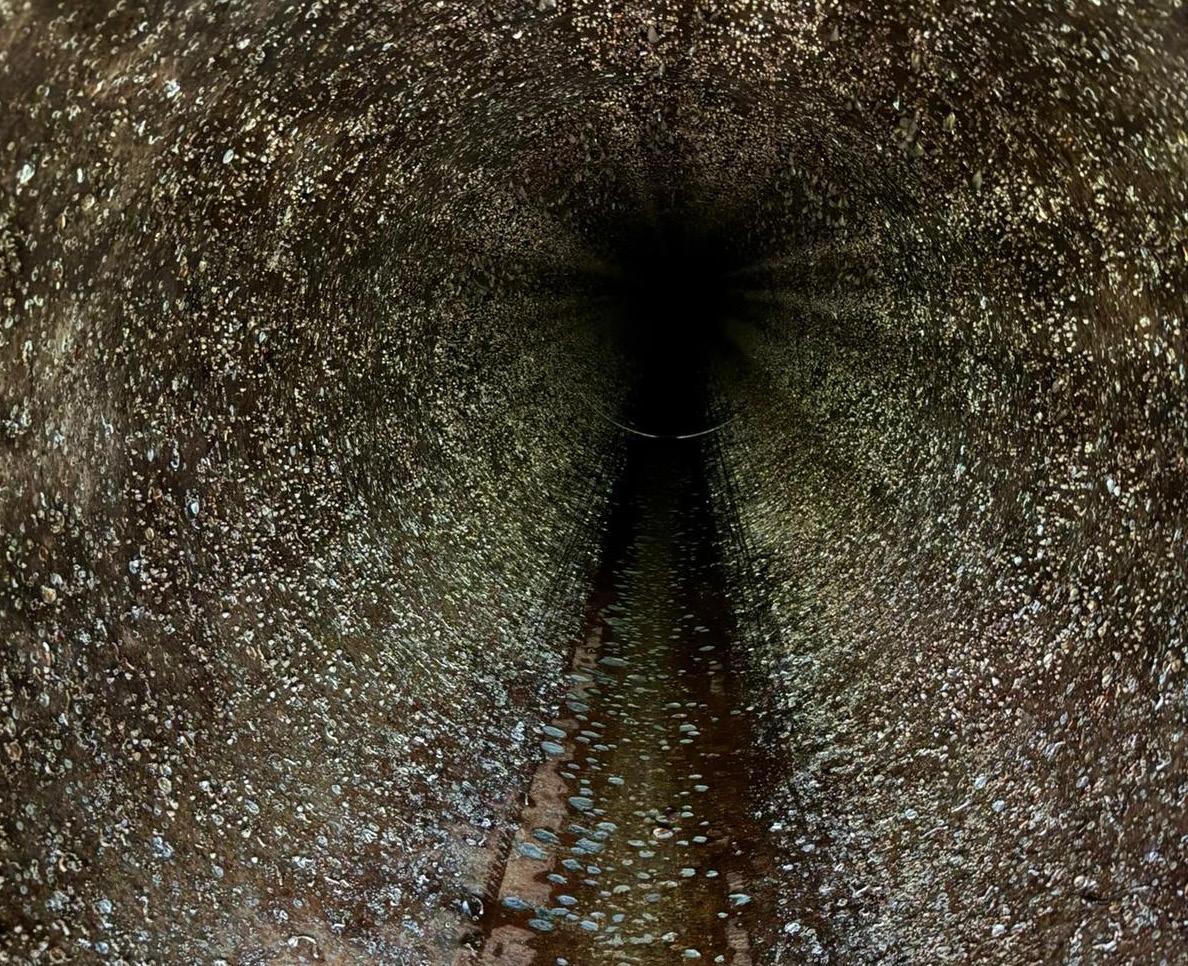
Sharp-edged mussels and other deposits were protruding several centimetres into the pipe crosssection, creating a risk of damage to the liner’s external protection during installation. At the same time, the asbestos cement construction significantly restricted the cleaning methods that could safely be used.
Aggressive high-pressure cleaning techniques were ruled out because of the risk of disturbing the asbestos material. Following a detailed assessment, the project partners therefore selected a mechanical cleaning process, allowing the host pipe to be prepared in a controlled manner while protecting the existing structure and the personnel working on site.
Once the preparatory work had been completed, the rehabilitation was carried out through close cooperation between RELINE’s application and service technicians and installation partner AST Grupo. The team rehabilitated a 165 m section of the DN 1200 saltwater pressure pipeline, which operates at a pressure of five bar.
Pipe inner surface prior to cleaning
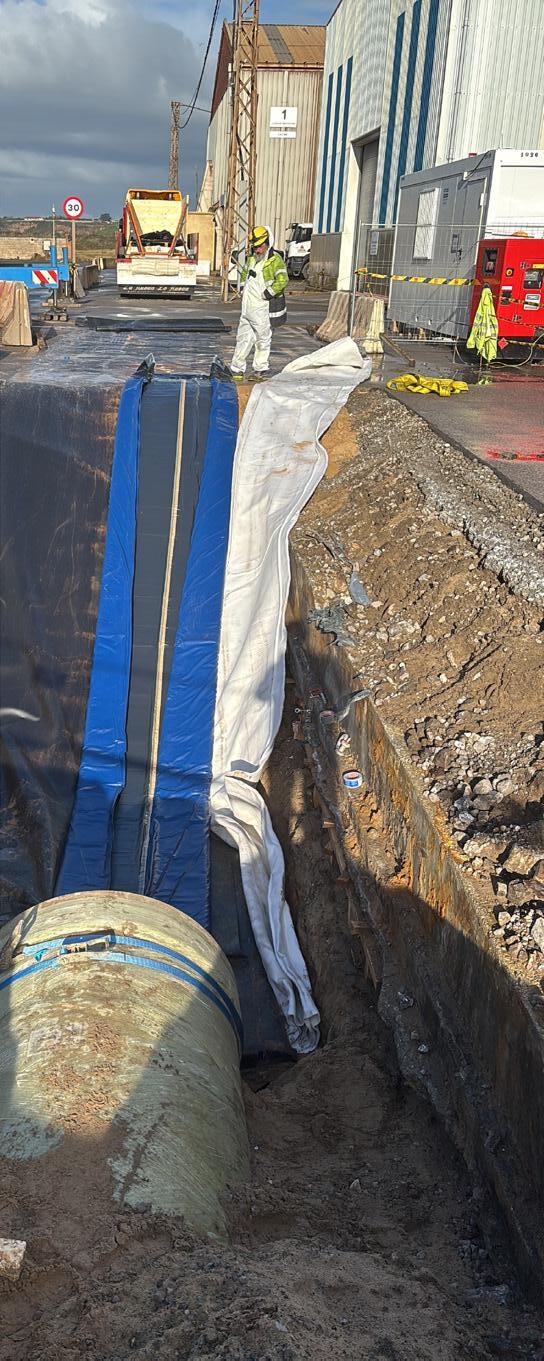
Pulling in the
The Alphaliner PN was pulled into the prepared host pipe before being gradually calibrated with compressed air and cured in place. Particular attention was given to the finishing and sealing of the liner ends, creating a durable transition between the new liner and the existing pipeline. The sealing systems were selected to meet the specific requirements of both the operating pressure and the saltwater medium.
“The Alphaliner PN is specially designed for industrial applications,” said Firmino Barbosa, head of application technology and Global Academy at RELINE. “It is ideal for use in salty conditions and offers an additional advantage thanks to its smooth inner film: infestation by mussels or other fouling is significantly more difficult.”
Successful return to service
Following completion of the installation and end connections, the rehabilitated pipeline successfully passed its pressure test and was returned to service within the agreed shutdown period. Normal plant operations were therefore able to resume as planned.
According to RELINE, the DN 1200 installation is the largest pressure CIPP liner project of its kind completed in Europe to date. The project demonstrated both the technical performance of the Alphaliner PN and its practical suitability for use within a demanding industrial plant environment.
The operator was satisfied with the completed rehabilitation and is now planning to use the same process for further sections of the cooling water pressure pipeline during future planned shutdowns.
About RELINE
Founded in 2009, RelineEurope GmbH manufactures glass fibre-reinforced plastic liners and the associated UV curing technology at its headquarters in Rohrbach, Rhineland-Palatinate, Germany.
RELINE is the only manufacturer worldwide to offer both GFRP liners and the associated curing equipment from a single source. The company also produces its glass fibre mats in-house.
the Alphaliner PN
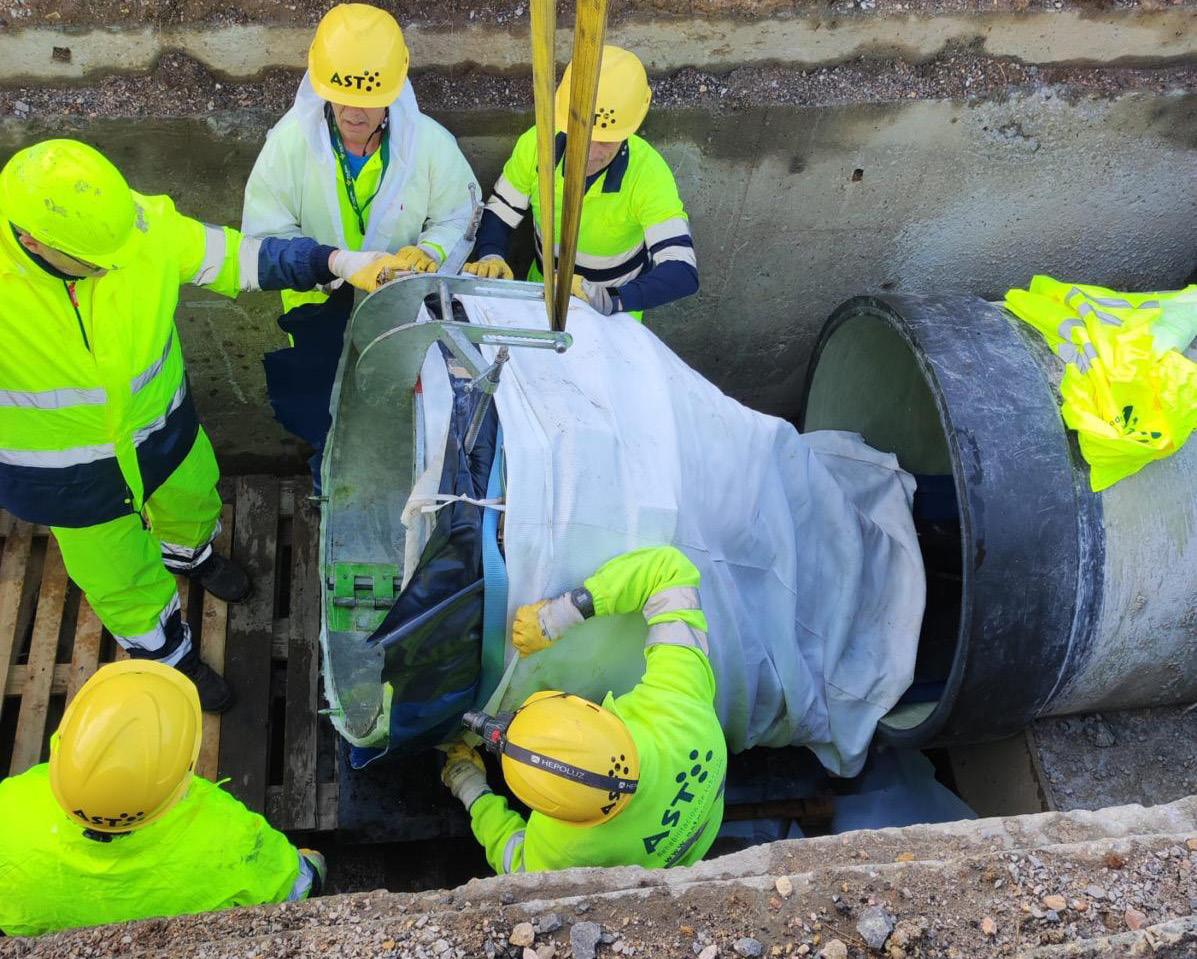
Installation of the end can
New GRP pipe connector and pulling in the Alphaliner PN
Five manholes restored in two days using M-Coating technology
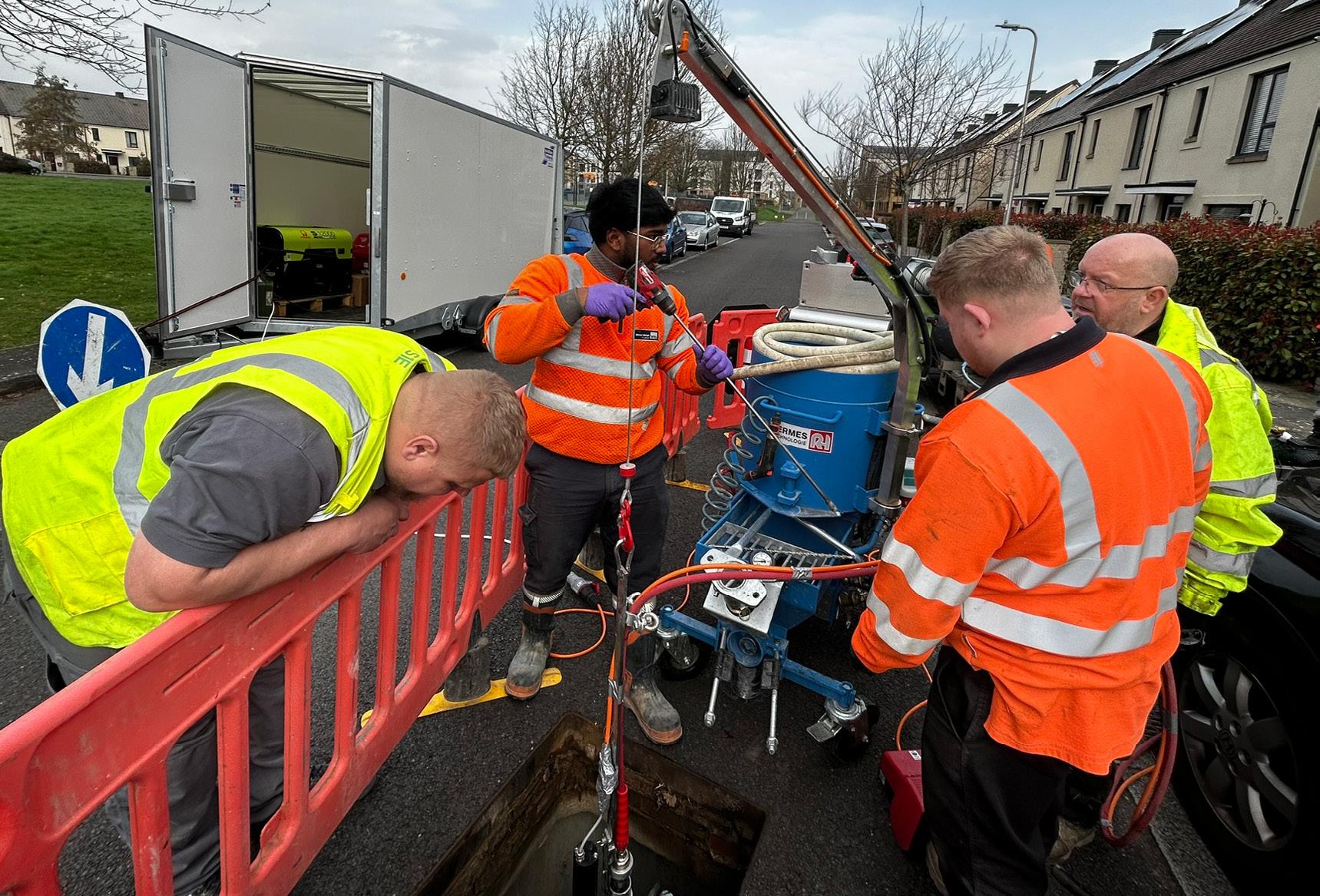
S1E Ltd and HERMES Technologie have demonstrated the use of M-Coating technology to rehabilitate five wastewater manholes in just two days during a recent project with Wessex Water.
Ageing wastewater infrastructure remains a significant challenge for water companies and contractors, with groundwater infiltration, chemical exposure and general deterioration all contributing to the need for timely asset rehabilitation.
On the Wessex Water project, several manholes had developed signs of water infiltration and surface deterioration, requiring refurbishment to restore structural integrity and extend asset life. Some of the sites also presented restricted access and limited working space, making conventional rehabilitation methods more challenging.
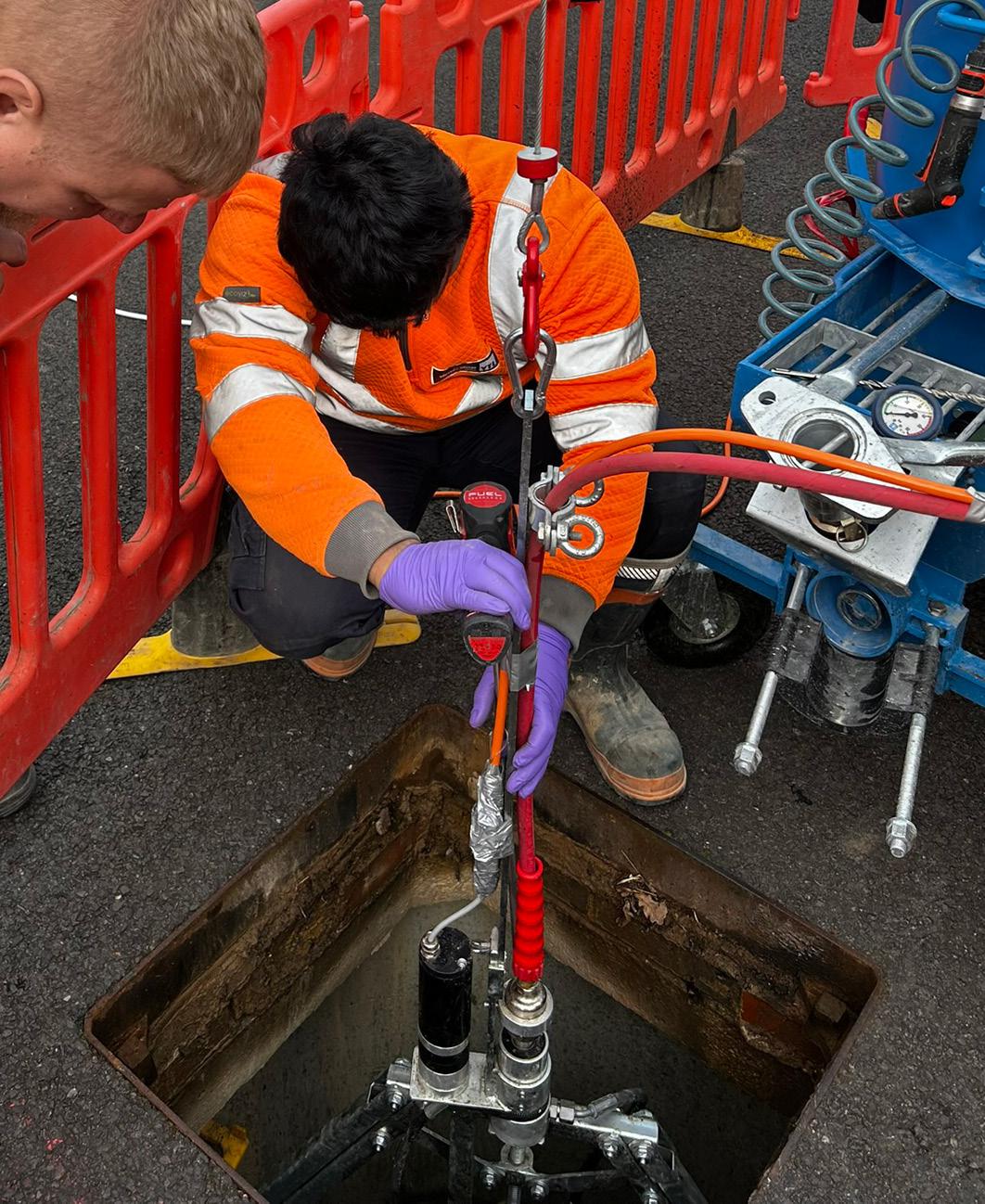
To address these conditions, S1E worked alongside HERMES Technologie to demonstrate the capabilities of the M-Coating system, an all-in-one solution for manhole rehabilitation. The system combines surface preparation and mortar coating within a compact, mechanised process designed to support consistent application, even in confined or difficult-to-access locations.
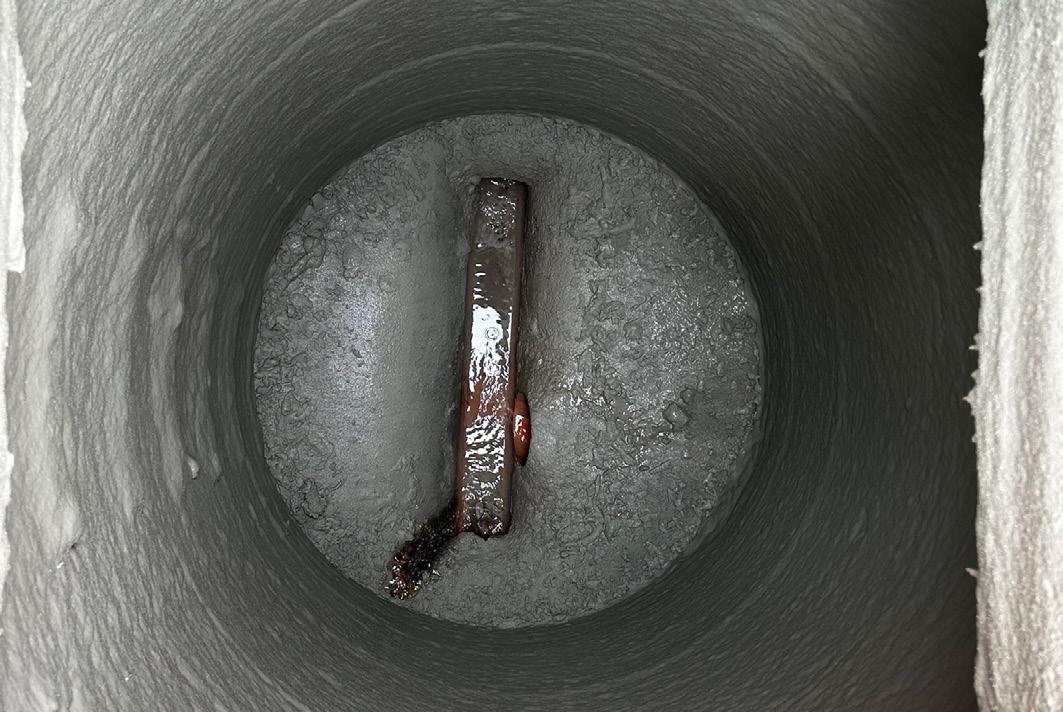
The existing manhole surfaces were first prepared using high-pressure water jetting to remove loose material and create a suitable substrate. A specialised mortar coating was then mechanically applied to produce a uniform protective layer, helping to restore and protect the manhole structure.
Over the course of two days, the project team successfully rehabilitated five manholes. The mechanised approach enabled both preparation and coating to be completed efficiently, while reducing the need for manual access inside the chamber.
The demonstration highlighted the potential for compact, mechanised rehabilitation systems to improve productivity, coating consistency and site safety, particularly where access is restricted or assets have experienced significant deterioration.
As the exclusive UK partner for HERMES Technologie, S1E supports the introduction of the M-Coating system to the UK market, providing demonstrations, operator training and technical guidance for contractors.
“ It was a great couple of days on site with the team demonstrating the M-Coating system in real conditions. Completing five manholes in two days shows how efficient the system can be, even in restricted locations.
Terry Ingleby, Director at S1E Ltd
Terry Ingleby, Director at S1E Ltd, said: “It was a great couple of days on site with the team demonstrating the M-Coating system in real conditions. Completing five manholes in two days shows how efficient the system can be, even in restricted locations.”
S1E said the introduction of advanced systems such as M-Coating can help the industry deliver faster, safer and more reliable rehabilitation of wastewater infrastructure.
Underground Infrastructure & No-Dig Solutions
2-3rd February 2027
Hilton Garden Inn,
Casablanca, Morocco
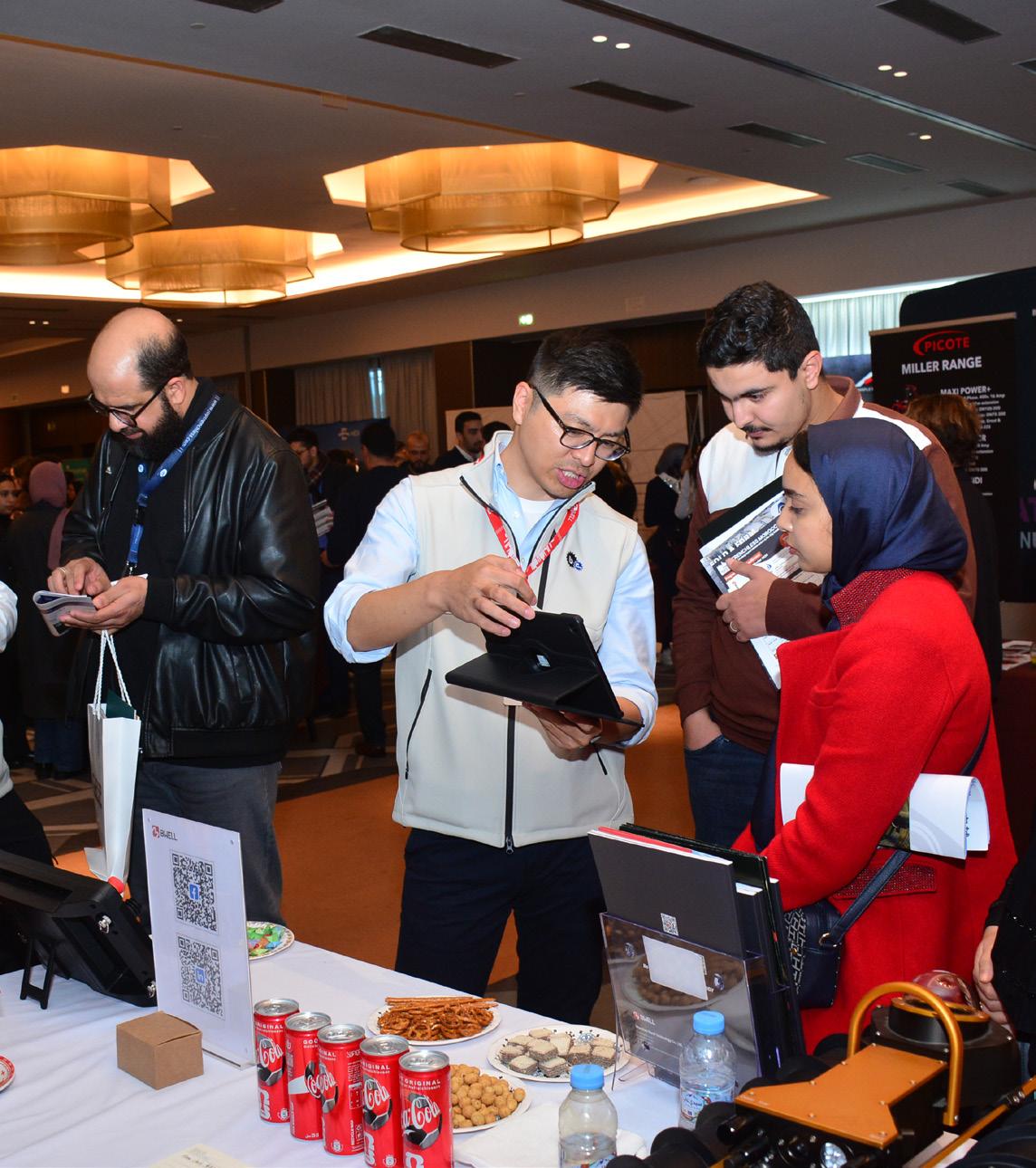
Trenchless Morocco returns in 2027 following its successful launch in Rabat in 2026. The next edition will be hosted in Casablanca, Morocco’s economic capital and largest city, at a time of significant urban development and accelerated infrastructure investment.
BOOK YOUR STAND
To find out more about our Exhibitor showcase or to discuss sponsorship options please contact Trevor Dorrell tdorrell@westrade.co.uk
THE SAFE CHOICE FOR DOMESTIC AND INDUSTRIAL PRESSURE PIPE REHABILITATION
Rely on a sustainable, economical and environmentally friendly solution for the rehabilitation of your pressurised pipelines. The Alphaliner PN offers outstanding efficiency and resistance for pipes made of concrete, steel, cast iron and many other materials, while protecting both people and the environment.
Barhale wins contract to reline Ashford Common WTW abstraction tunnel
Civil engineering, infrastructure and tunnelling specialist Barhale has been awarded a contract by Thames Water to reline a section of abstraction tunnel at Ashford Common Water Treatment Works (WTW) in Surrey. The treatment works is fed by the reservoirs which form part of the West London Abstraction area (WLA).
Mandatory five-year inspections carried out by Barhale’s Tunnels & Aqueducts team identified inconsistencies in the Southern Inlet tunnel’s existing GRP liner. They presented a risk of damage to the underlying wedgeblock tunnel. Under the new contract, Barhale will reline the affected section, safeguarding London’s drinking water supply.
The award follows completion of an Early Contractor Involvement (ECI) phase. Barhale worked closely with Thames Water to finalise designs and address the access constraints presented by the congested underground infrastructure of layered tunnels. Work will begin with excavation to a depth of 3m to expose the chimney and riser for initial access.
Segments of the riser will then be demolished to allow safe descent to the 19.5m tunnel invert level. From there, scaffolding will be installed to enable access along the tunnel, allowing the team to remove the GRP liner. Once this is complete, they will break out the grout and concrete and construct a new reinforced concrete liner to restore long-term structural integrity.
Florin Edu, Regional Manager at Barhale, explained the importance of the project to secure Ashford
“We have collaborated with Thames Water through the ECI phase to shape our approach. It will be carefully managed to ensure at least a minimum flow rate from the other WLA area reservoirs into the works is maintained to sustain the treatment process and prevent the treatment beds from deteriorating Florin Edu, Regional Manager at Barhale
Common WTW’s water inflow and protect a significant proportion of London’s clean water supply.
“The works will ensure the resilience and reliability of this strategic asset for the long term,” he said. “We have collaborated with Thames Water through the ECI phase to shape our approach. It will be carefully managed to ensure at least a minimum flow rate from the other WLA area reservoirs into the works is maintained to sustain the treatment process and prevent the treatment beds from deteriorating.”
The WLA consists of ten large, raised storage reservoirs filled by abstraction from the River Thames and linked by a network of tunnels and large mains to four WTWs supplying the London area via the Thames Water Ring Main (TWRM).
Barhale has previously completed a local repair in the Northern tunnel at Ashford Common WTW, which was identified during routine proactive inspections. Full relining of the section is earmarked for a later project.
JT32 JT32 JT32
The power you want. The size the job demands. Bursting at the seams with power, the JT32 is the next generation of drilling, packing performance and strength into a sleek package. Plus, operator-focused innovations allow for easier system operation and the ability to always finish the job - no matter what might stand in your way.
POWERFUL PERFORMANCE PRECISION CONTROL BUILT TO LAST MAXIMUM PROUCTIVITY
LEARN MORE ABOUT THE JT32
A new TRACTO ‘Rockstar’ in town
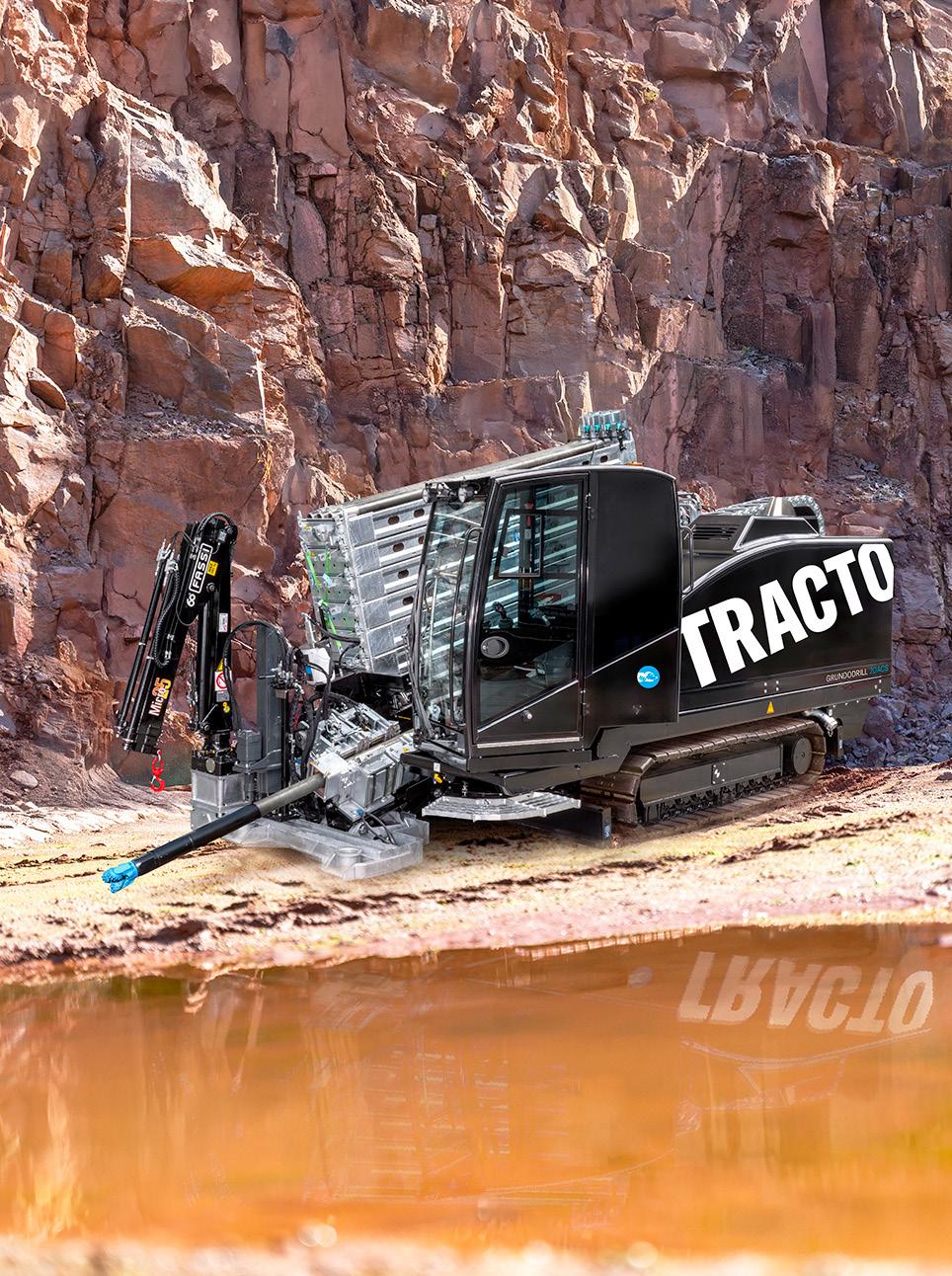
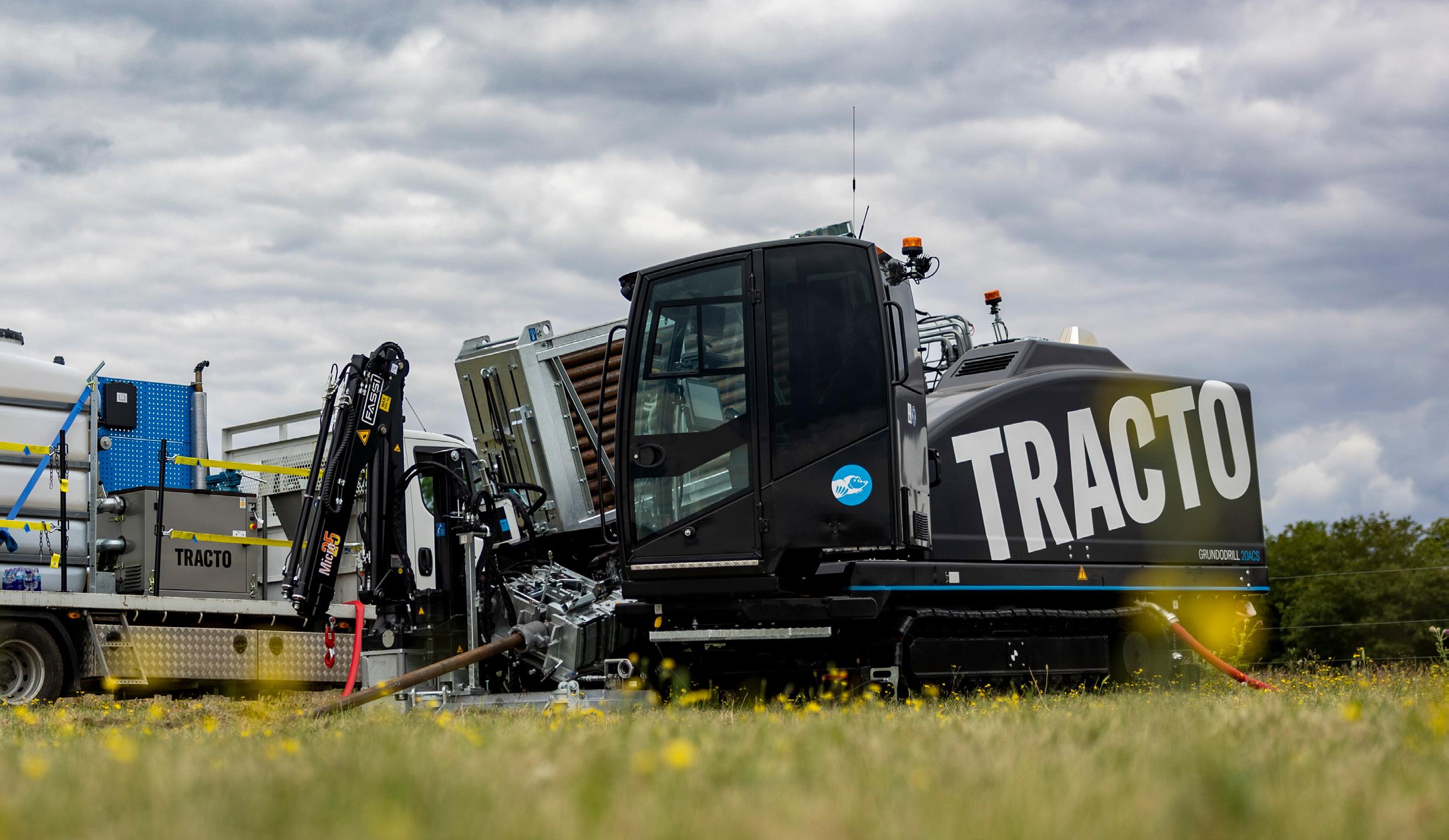
Trenchless technology specialist TRACTO has expanded its horizontal directional drilling portfolio with the launch of the GRUNDODRILL 20ACS, a new all-condition rig developed for demanding installations through mixed and hard ground.
Building on the success of the GRUNDODRILL 18ACS, widely known as the ‘King of Rock’, the new machine combines rock and conventional jet drilling capabilities within a single highly automated platform. It has been designed to give contractors greater flexibility when ground conditions are difficult to predict, while improving drilling efficiency, machine stability, operator safety and overall productivity.
The GRUNDODRILL 20ACS delivers 200 kN of thrust and pullback force, with up to 9,000 Nm of torque at the outer drill rods. A 123 kW diesel engine and high-capacity bentonite pump provide the power and fluid performance required for challenging bores, helping to support spoil removal, borehole stability and cooling during drilling.
At the heart of the machine is TRACTO’s All Condition System, which enables contractors to switch between jet and rock drilling without changing rigs. The system uses ELICON twin-tube rods, with the outer rod responsible for steering and advancing the drill head while the inner rod independently transfers torque to the cutting tool. This arrangement allows the rig to maintain accurate steering through mixed, abrasive and hard ground while reducing wear and improving flushing performance.
The machine can carry up to 144 metres of ELICON rods on board, increasing the distance that can be drilled before additional rods are required. Rod types can be selected and changed through the operating interface, allowing the drilling set-up to be adapted more easily as ground conditions or project requirements change. Cableguided drilling is also available for particularly difficult installations where depth, interference or site conditions may make conventional locating more challenging.
Automation plays a central role in the design of the 20ACS, with drilling, rod changing and rod lubrication functions carried out automatically. This reduces repetitive manual handling around the machine
and allows the operator to concentrate on steering, bore progress and drilling performance. The rig can also be controlled remotely, giving the operator greater freedom to work outside the cab when closer visibility of the machine or working area is required.
A robust undercarriage and optional anchoring systems have been introduced to improve stability and help transfer the machine’s thrust and pullback forces effectively into the bore. Operator comfort has also been addressed through a redesigned swivelling cab, improved ergonomics and better visibility of the drilling operation, helping to reduce fatigue during longer or more technically demanding projects.
Digital tools are integrated into the machine through TRACTO’s BORE DATA and COMMANDER systems. BORE DATA allows drilling information to be recorded and documented throughout the installation, while COMMANDER provides fleet owners with access to equipment utilisation, operating and performance data. Together, the systems can support project reporting, maintenance planning, fleet management and the identification of opportunities to improve productivity and reduce downtime.
TRACTO has played a significant role in the development of steerable drilling technology and introduced the ACS concept to allow both jet and rock drilling with a single machine. The combination of twin-tube rods, automated handling and adaptable drilling methods has since made the ACS range a proven option for contractors working in ground conditions that cannot always be managed effectively using conventional jet drilling alone.
With greater power, onboard rod capacity, automation and digital functionality, the GRUNDODRILL 20ACS has been developed to help contractors maintain performance across difficult bores while improving reliability, uptime and control.
The first GRUNDODRILL 20ACS arrived in the UK in June and will be on display at No-Dig Live 2026, taking place at Stoneleigh Park, Warwickshire, from 29 September to 1 October.
More flexibility, productivity, safety and operator comfort for your drilling projects. That’s the GRUNDODRILL 20ACS from TRACTO.
Combining the proven ‘All Condition System’ concept with the latest in automation and top-of-the-range ergonomics, this 200 kN drilling
rig can handle even the most complex drilling projects in changing ground conditions, including rock.
To find out more about the 20ACS and our customised financing and service solutions, please get in touch: T +44 1234 342 56 sales.uk@tracto.com
How HDD helps minimise environmental disruption on infrastructure projects
As infrastructure projects become increasingly complex, contractors are under growing pressure to install essential utilities while limiting their impact on the surrounding environment. Whether a route crosses roads, waterways, agricultural land or environmentally sensitive areas, project teams must balance productivity with responsible construction practices.
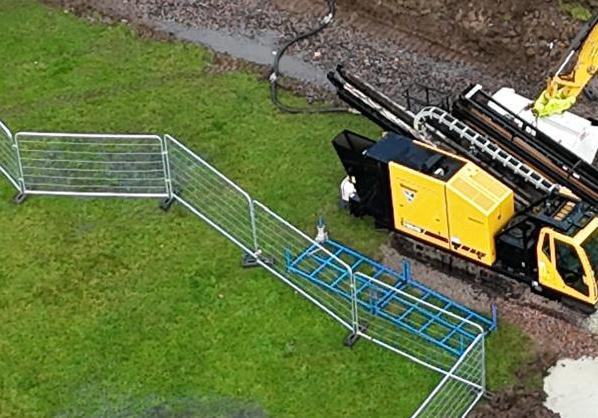
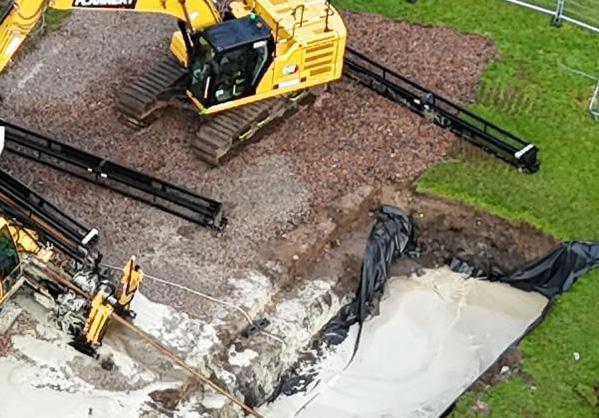
Horizontal directional drilling has become an important installation method because it allows pipes and ducts to be installed underground with considerably less surface disruption than traditional open-cut excavation. Rather than excavating a continuous trench along the full route, HDD generally requires defined entry and exit areas, helping to reduce the amount of land, vegetation and existing infrastructure affected by the works.
This smaller construction footprint can be particularly valuable in urban environments, where extensive excavation may require road closures, footpath diversions and disruption to public spaces. By installing infrastructure beneath roads and other developed areas, HDD can help contractors maintain access, reduce traffic management requirements and limit the extent of reinstatement once the work is complete.
The method can also offer significant advantages when installations pass beneath rivers, wetlands, agricultural land and protected habitats. Because the bore is completed below the surface, project teams can often avoid directly disturbing the feature being crossed. This may reduce vegetation clearance, habitat disruption and the need to create temporary access routes through sensitive locations.
River and watercourse crossings are a common application, allowing utility infrastructure to be installed without excavating an open trench through the channel. Although each project requires detailed environmental assessment and appropriate controls, HDD can provide a practical alternative where conventional excavation would create greater disruption to the surface environment.
Reduced excavation may also contribute to lower vehicle movements, waste volumes and reinstatement requirements. Open-cut installation can generate substantial quantities of spoil that must be stored, transported or disposed of before the trench is backfilled. It may also require imported materials and extensive reconstruction of roads, footpaths or landscaped areas.
By limiting the amount of ground opened, HDD can reduce many of these activities. The precise benefits will depend on the length and diameter of the bore, the ground conditions, the utility being installed and the layout of the site, but the method can contribute to a more efficient overall construction process when selected for suitable applications.
The environmental benefits of HDD are closely connected to its ability to reduce disruption to surrounding communities. Trenchless installations may require fewer road closures and less extensive traffic management than equivalent open-cut projects, helping to maintain access for residents, businesses, road users and emergency services.
Noise, dust and construction activity can also be concentrated within smaller working areas rather than extending along the entire installation route. For infrastructure projects in busy urban locations, this reduced community impact can be an important consideration when deciding how the work should be delivered.
However, the successful delivery of an HDD project depends on careful planning and execution. Accurate bore design, ground investigation and utility identification are essential before drilling begins, while equipment and tooling must be selected to suit the anticipated conditions.
Drilling fluid management also requires particular attention, especially when working close to waterways or environmentally sensitive land. Monitoring, containment
measures and an appropriate response plan should form part of the project methodology to manage the risk of inadvertent drilling fluid returns.
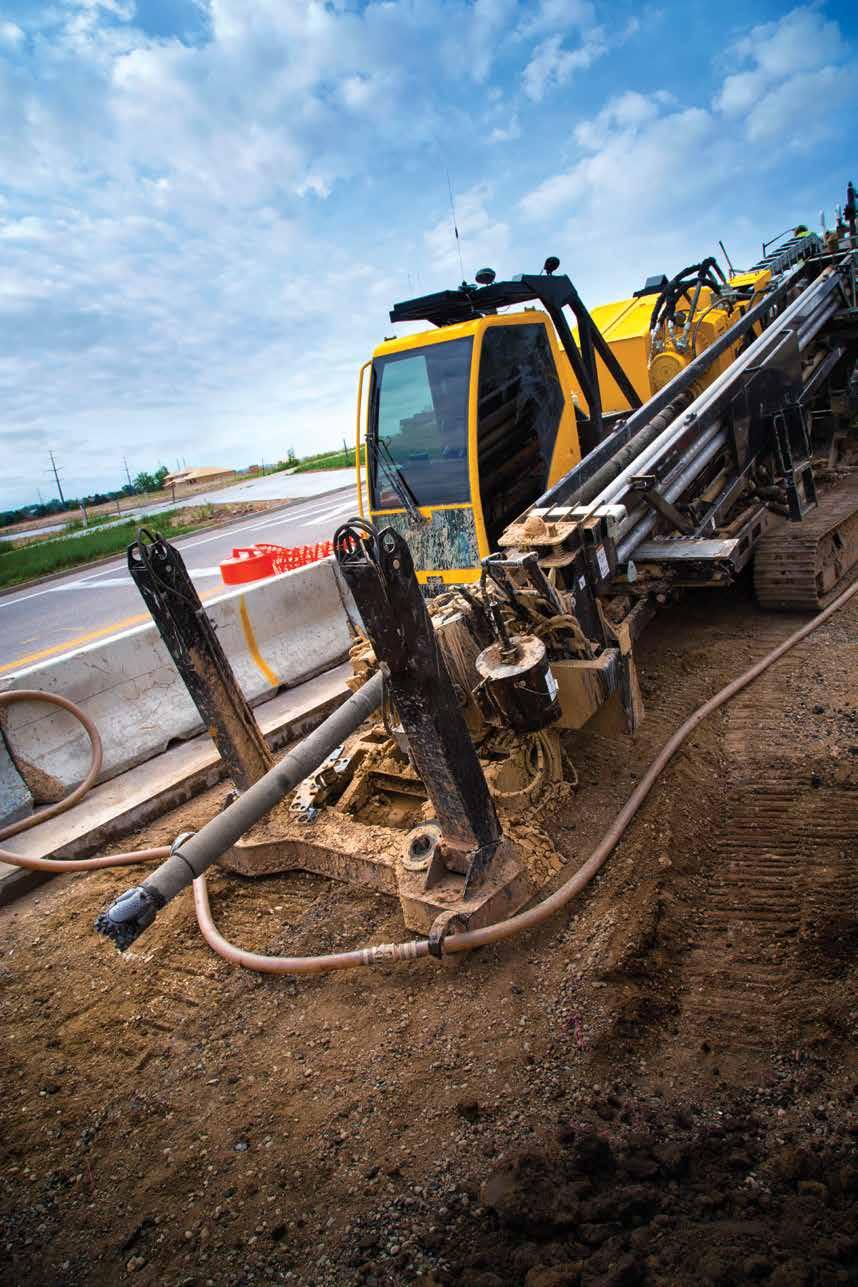
Modern HDD equipment, including Vermeer’s Navigator® range of horizontal directional drills, has been developed to support accurate and efficient installations across a wide range of utility and infrastructure applications. Equipment capability must, however, be combined with experienced operators, appropriate tooling and a detailed understanding of the ground and site conditions.
As demand for water, energy, telecommunications and wider utility infrastructure continues to grow, HDD will remain an important option for contractors seeking to balance productivity with environmental and community considerations. By reducing surface excavation, vehicle movements and reinstatement requirements, the method can help deliver essential infrastructure while limiting disruption to the places through which it passes.
For further information about Vermeer HDD equipment and applications, contact Vermeer UK.
STILL IN A LEAGUE OF ITS OWN
THE D100X140 S3 NAVIGATOR®
HORIZONTAL DIRECTIONAL DRILL
The D100x140 S3 is a unique machine in the HDD market. It’s not only used for oil, gas or other large pipeline projects — but utility projects as well due to the machine’s small footprint.
Preventing pipeline failures at the point of installation
Pipeline failures do not always begin with ageing infrastructure. Many originate during installation, where errors in jointing, testing and quality assurance can create weaknesses that remain hidden until a pipe is buried and placed under pressure. Ben Crabtree, global product line director at Ovarro, explains how digital quality assurance is helping utilities and contractors improve installation quality and prevent leaks before they occur.
Construction defects account for a significant proportion of pipeline incidents, highlighting the importance of greater precision, consistency and traceability during installation. Faults introduced at this stage may not become apparent until pressure testing takes place or, in some cases, until the pipeline has entered service. Once infrastructure has been buried, locating and repairing those defects becomes significantly more complex and costly.
As water companies progress mains replacement and network renewal programmes, installation quality is therefore becoming an increasingly important part of leakage reduction. Preventing defects before a pipeline is commissioned can reduce rework, improve asset reliability and help extend the operational life of newly installed infrastructure.
The need for stronger leakage reduction was also highlighted in a recent report from the UK’s Climate Change Committee. The report identified accelerated action on leakage as one measure required to address increasing pressure on water resources, while recognising the role of technology in providing more timely and accurate network information.
Real-time monitoring is already widely used to help utilities identify leaks across operational networks. However, digital technologies are also beginning to play a greater role much earlier
in the asset lifecycle by improving the quality and traceability of pipeline installation.
Improving jointing quality
New water main installations must typically pass a pressure test before they can be commissioned. However, a proportion of pipelines fail their initial test, often because of leaks or weeps around joints and flange connections.
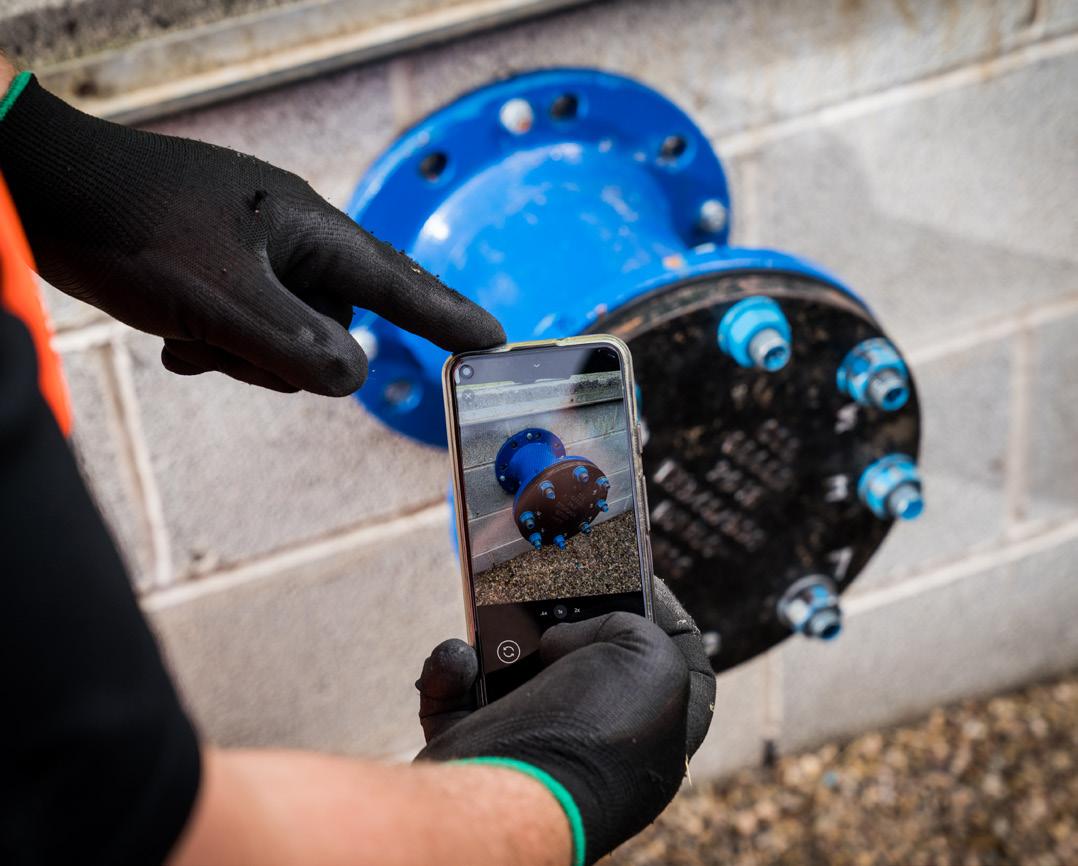
ControlPoint, which became part of Ovarro five years ago, provides digital quality assurance tools designed to support the correct installation of pipe jointing systems, including electrofusion, flanged and mechanical connections. The technology allows installation data to be captured and reviewed remotely, providing evidence that work has been completed in accordance with the required procedures. This creates
an additional quality control layer during construction and can help identify potential non-conformities before the pipeline is buried or commissioned.
By recording how individual joints have been completed, contractors and asset owners gain a clearer and more consistent record of installation quality. This can reduce reliance on manual paperwork while improving accountability across the project.
Supporting operatives onsite
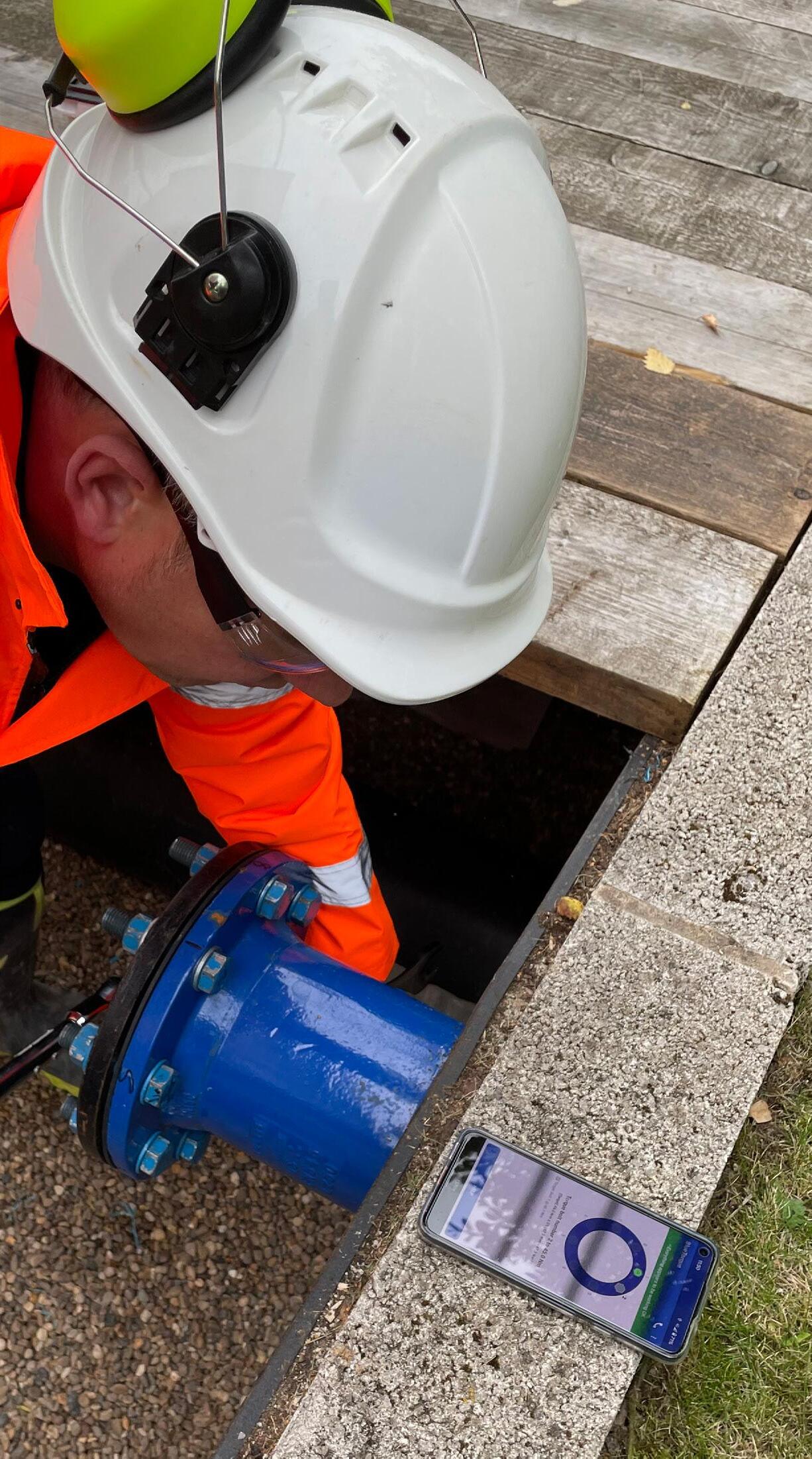
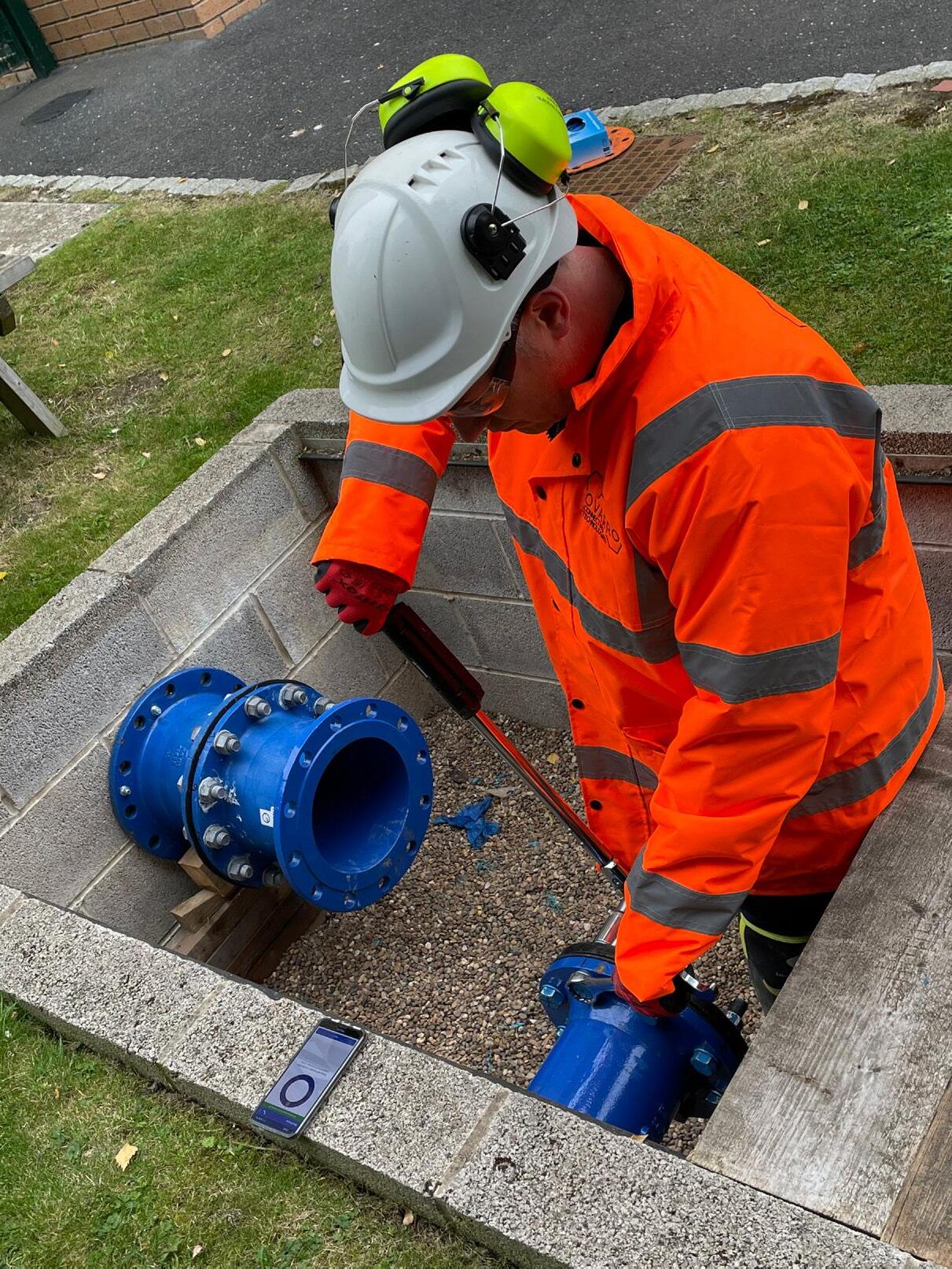
Digital quality assurance can also support workforce behaviour by guiding operatives through critical installation processes. One example is TorqueAssist, a mobile quality assurance application designed for flange and mechanical joint assemblies completed using a torque wrench.
The system captures information from Bluetoothenabled torque equipment, alongside details such as gasket type, bolt type, location and weather conditions. Operatives are guided through a series of questions and prompts on a mobile device, helping ensure that the correct tightening sequence and installation procedure are followed. A digital record is then created, providing evidence of compliance and a traceable record of the work completed. The captured data can also support future asset
management by providing information about how and where individual connections were installed.
A similar approach is used for electrofusion jointing. JointAssist guides operatives through the fusion process and flags potential nonconformities before the joint is commissioned.
Electrofusion relies on careful pipe preparation, alignment and process control. Small errors during scraping, clamping or welding can compromise the joint, even where the finished connection appears visually acceptable. By embedding installation procedures within a digital workflow, quality assurance tools can help ensure that critical steps are completed consistently and that joints are installed correctly first time.
Moving from reactive to preventative management
Much of the technology used across water networks has traditionally focused on identifying problems once they have occurred. While leak detection and network monitoring remain essential, utilities and contractors are increasingly looking at how technology can prevent failures from being introduced during construction.
Digital quality assurance provides greater visibility at the point of installation, allowing organisations to identify poor practice, improve consistency and build a more complete record of asset construction. For utilities investing heavily in mains replacement and network resilience, this approach can help reduce repeat visits, failed pressure tests and avoidable leakage.
As the sector moves towards more proactive asset management, the ability to demonstrate that pipelines have been installed correctly from the outset will become an increasingly important part of delivering reliable and resilient water networks.
Swedish-engineered UV-cured GRP liner systems, manufactured since 1986.
As a Swedish manufacturer of UV-cured GRP liners, we develop and manufacture liner systems for demanding rehabilitation projects – from urban infrastructure to complex pipeline conditions.
Inversion & Winch-in-Place
WRc-approved system
REFINED THROUGH DECADES OF ENGINEERING EXPERIENCE
This is not a collection of products assembled for the market. It is a complete trenchless system built on decades of manufacturing expertise, field experience and continuous innovation.
DISCUSS YOUR NEXT
Martyn Hopkinson
UK Market Representative
+44 7597 089014
martyn.hopkinson@inpipe.se
Built in Sweden. Proven underground.
Secure your FREE place today and join the UK’s leading trenchless technology exhibition and conference.
See live equipment, compare solutions, discuss upcoming projects and stay ahead of the trends transforming the underground infrastructure sector.
29 September – 1 October 2026 NAEC Stoneleigh Park, Warwickshire
NO-DIG LIVE BRINGS THE TRENCHLESS INDUSTRY TOGETHER TO SEE TECHNOLOGY IN ACTION
Connect with technical experts and discover practical solutions for underground infrastructure.
WHY ATTEND?
✓ Meet 200+ leading exhibitors showcasing the latest trenchless technology
✓ Discover innovative solutions for water, wastewater, gas, electricity, telecoms, highways and renewable energy
✓ Watch live equipment demonstrations and product launches
✓ Learn from industry experts and real project case studies
✓ Meet utilities, contractors, consultants and asset owners from across the UK
✓ Find new suppliers, technologies and business partners
✓ Explore solutions that reduce disruption, cut carbon and improve project delivery
✓ Network with thousands of infrastructure professionals
“
No-Dig Live 2026 will bring together the entire supply chain, from utilities, contractors and consultants through to manufacturers and technology providers, for three days of networking, learning and innovation at NAEC Stoneleigh Park.
Every No-Dig Live is built on the innovation, expertise and commitment of our exhibitors and sponsors. Their continued investment in the event, together with the time, creativity and effort that goes into every stand, live demonstration, sponsorship and product launch, is what makes No-Dig Live the world’s largest event dedicated to sustainable solutions for underground utilities infrastructure through trenchless technology.
As the industry prepares to deliver AMP8 and one of the most significant infrastructure investment programmes in UK history, there has never been a more exciting or important time for the trenchless sector. No-Dig Live 2026 will bring together the entire supply chain, from utilities, contractors and consultants through to manufacturers and technology providers, for three days of networking, learning and innovation at NAEC Stoneleigh Park. With well over 150 exhibiting companies and a substantial audience expected to attend from over 25 countries, the event continues to strengthen its position as the world’s leading gathering for the trenchless technology industry.
The following pages provide an excellent opportunity to learn more about many of the companies exhibiting at this year’s event. They offer a valuable insight into the products, services and expertise on display; while helping you plan the stands you want to visit when the doors open in September.
It’s particularly pleasing to see so many exhibitors once again choosing No-Dig Live as the platform to launch new products and services, showcase the latest technologies and demonstrate the innovation that’s helping transform underground infrastructure delivery. That continued commitment is what keeps the exhibition fresh, relevant and valuable for every visitor. Just as importantly, No-Dig Live provides an unrivalled opportunity to meet customers, strengthen relationships, share best practice and exchange ideas with colleagues from across the industry.
I’d like to thank every one of our exhibitors and sponsors for the continued support they give to No-Dig Live. Quite simply, the exhibition wouldn’t be the outstanding international event it is today without you. I hope this feature gives you a flavour of what to expect and helps you plan your visit. I look forward to welcoming you to No-Dig Live 2026.
Paul Harwood Managing Director, Westrade Group
Bluelight Lining to showcase purpose-built CIPP vehicles and robotic cutting technology at No-Dig Live
The company will demonstrate its latest Bluelight installation vehicle, Hächler ClimbolinoE cutting system and wider range of trenchless rehabilitation equipment. Bluelight Lining Ltd will use No-Dig Live 2026 to showcase its growing range of trenchless rehabilitation equipment, with a particular focus on its purpose-built CIPP installation vehicles and the new Hächler ClimbolinoE robotic cutting system.
The exhibition follows a strong year for the company, which has supplied several new Bluelight systems to customers and completed three new vehicle builds during 2026.
Designed for contractors with an existing or developing lining division, the purpose-built vehicles bring together the equipment required to install and cure Bluelight’s PAA-F flexible felt liners in diameters from DN70 to DN400. Each vehicle can be configured with a PTO-driven compressor, generator, internal workbenches, storage, shelving, electrical outlets, air outlets and dedicated securing points for the Bluelight curing system.
The aim is to create a compact and organised mobile working environment that supports efficient installation, straightforward operation and a professional appearance on site.
At No-Dig Live, Bluelight Lining will exhibit its latest demonstration vehicle, giving visitors the opportunity to explore the internal layout and see how the equipment has been integrated within the available space.
A flexible approach to CIPP installation
The Bluelight system is designed to cure both flexible felt and glass-reinforced liners, allowing contractors to work across lateral connections and mainline rehabilitation projects.
Its flexible felt liners are pre-impregnated using Bluelight’s patented resin systems, helping to provide consistency during installation and curing.
For larger diameters, the company also supplies high-strength pull-in-place glass liners. These can be impregnated using either styrene-odour-free resin or a styrene-containing polyester resin, providing contractors with different options according to the technical and commercial requirements of the project.
The equipment is designed around portability and scalability. Contractors can begin with the core curing equipment and add further components as their CIPP operation develops.
Bluelight Lining says this modular approach enables businesses to invest at a level that reflects their immediate requirements while retaining the option to expand the system over time. The company’s liners and systems hold several industry certifications, including DIBt, WRc and CSTB approvals, supporting their use across a range of rehabilitation applications and markets.
Introducing the Hächler ClimbolinoE
Alongside its Bluelight systems, the company will present the Hächler ClimbolinoE robotic cutting system, following a new sales agreement for the equipment. Designed for work in small-diameter pipelines from DN60 to DN300, the ClimbolinoE is a lightweight, portable and modular cutting unit intended for use within drainage and sewer networks.
The system can be used to remove concrete and intruding connections, reopen lateral connections following lining, cut roots and address other obstructions within the pipe.
Its compact footprint allows it to be carried within a conventional drainage vehicle without occupying a large amount of operational or storage space. Hächler has designed the unit to support straightforward maintenance in the field. Key components, including the lift motor, cameras and rotation motor, can be replaced on site, helping contractors reduce downtime.
The system also incorporates a large LCD display, joystick controls and a high-powered electric cutting motor designed to support accurate and efficient operation.
Visitors to the Bluelight Lining stand will be able to operate a demonstration ClimbolinoE within a dedicated cutting box and experience the system’s controls and cutting performance first-hand.
A wider trenchless equipment range
Bluelight Lining will also showcase its wider range of KrasoTech equipment, inflatable packers, bungs and Bluelight curing systems. The company supports contractors working across projects of very different scales, from individual domestic repairs through to major infrastructure programmes.
This experience informs its approach to equipment supply and technical support. Rather than promoting a single repair method for every application, Bluelight Lining works with customers to identify the most appropriate combination of materials, installation methods and equipment for the condition and requirements of each pipeline.
With new vehicle builds, an expanded equipment range and live demonstrations planned for the exhibition, No-Dig Live will provide visitors with an opportunity to explore how Bluelight Lining is supporting contractors across both lateral and mainline rehabilitation.
CLAD Trenchless Grounding brings a new application for HDD to No-Dig Live
A live demonstration will show how horizontal directional drilling can be used to install grounding systems for power and communications infrastructure
CLAD Trenchless Grounding will showcase a new application for horizontal directional drilling at No-Dig Live 2026, demonstrating how HDD can be used to install grounding electrodes for electrical grid operators and communications networks.
Developed initially in Australia to address difficult ground conditions around utility substations, the system has since expanded into markets including the United States, Europe and the United Kingdom. Potential applications include power poles, transformers, transmission towers, data centres, renewable energy sites, battery storage facilities and power stations. The technology can also be used for extensions and maintenance work on existing grounding systems.
Responding to difficult ground conditions
Traditional grounding installations commonly rely on vertical electrodes driven into the ground to reach layers with suitable electrical characteristics. However, local geology can make this difficult. Rock, sandy loam and layered ground with high electrical resistance can limit installation options and make it more challenging to achieve the required performance.
CLAD’s trenchless system uses horizontal directional drilling to target more favourable geological layers below ground. During drilling, the system measures resistance to earth as the installation progresses. This provides the project team with information about ground conditions and helps determine where the electrode should be positioned.
By directing the installation towards lower-resistance layers, the system is intended to improve placement accuracy and reduce the uncertainty associated with conventional vertical installations.
Greater flexibility for planners
The use of HDD also creates opportunities to install grounding systems within restricted corridors and beneath existing infrastructure. Installations can potentially be designed within utility easements or routed beneath power lines and existing earth grids, reducing the need for extensive surface disturbance.
The bore path can also be planned to avoid environmentally sensitive areas, vegetation, established trees and agricultural land. This flexibility may help reduce environmental impacts and support the permitting process, particularly on sites where conventional excavation or widespread surface access would be difficult.
Live installation at No-Dig Live
CLAD Trenchless Grounding will demonstrate the system live at No-Dig Live 2026 using directional drilling equipment and specialist grounding tooling.
The company says this will be the first live UK demonstration of the technology. Visitors will be able to see how the installation process works, explore the equipment involved and discuss how the system could provide an additional application for existing HDD fleets.
The CLAD team will also be available to discuss grounding requirements across power, communications, renewable energy and wider infrastructure projects.
For further information, contact tim@trenchlessgrounding.com or info@trenchlessgrounding.com.
Developed in close collaboration with our global network of distributors and clients, Brewis Engineering combines proven industry knowledge, engineering expertise and more than four decades of experience
Our precision-engineered towing heads and trenchless tooling are built to perform in demanding underground environments - delivering the strength, reliability and innovation professionals around the world have trusted since 1984
PROVEN PEDIGREE ENGINEERED TO LAST PARTNER-LED APPROACH FAST, RESPONSIVE SUPPORT INNOVATION WITHOUT COMPROMISE
Every project is different. That’s why we built Vortex to bring together the industry’s leading people, services, products and technologies — so you have one trusted partner for every stage of infrastructure rehabilitation.
• We listen first. Solutions tailored to your project.
• Everything under one roof. Products, technologies, services, and expertise.
• Built for the long-term. Sustainable solutions with proven performance.
• Support at every step. Engineering, training, and technical service.
• One company. Total solutions. Your trusted infrastructure partner. Products. Services. Solutions.
EC Hopkins: A specialist partner for utility pipe cutting
In utility work, the difference between an efficient job and a costly delay often comes down to having the right specialist equipment, backed by people who understand the application. EC Hopkins has built its reputation on exactly that combination, supplying professional cutting tools, practical technical advice and after-sales support to demanding industries including construction, underwater operations, manufacturing and utilities.
For water, gas and civil engineering contractors, utility pipe cutting is rarely straightforward. Crews may be working with ductile iron, cast iron, steel, concrete, clay, PVC, PE or HDPE pipe, often in restricted access conditions where speed, safety and accuracy are critical. A poor cut can slow repairs, compromise fittings, increase reinstatement time and add avoidable cost. Specialist pipe cutting equipment is therefore not a luxury; it is an essential part of completing the job properly.
EC Hopkins’ strength lies in its focus on proven solutions for real site conditions. As a master distributor for PowerGrit utility chainsaws, the company supports cutting systems designed for ductile iron, cast iron and HDPE pipe in the water utility sector. These tools provide contractors with a practical alternative to more cumbersome methods, helping teams make controlled cuts on difficult materials while reducing unnecessary disruption.
The company’s pipe cutting range also includes specialist systems such as the Spitznas pipe cutting and bevelling machine, a modular solution for larger diameter pipes.
Its flexibility is particularly valuable, allowing equipment to be configured for different pipe sizes and materials. This gives utilities and contractors greater control when working on legacy networks, emergency repairs and planned infrastructure projects. The ability to cut and chamfer pipe cleanly can also support more reliable downstream installation and jointing.
EC Hopkins also supplies additional pipe cutting solutions, including reciprocating saws with clamp systems and automatic feed units, giving contractors further options for challenging cutting applications. A range of band saws is also available, extending the company’s offer across different site requirements and working environments.
However, what sets EC Hopkins apart is not simply its catalogue of products. Utility contractors need confidence before equipment reaches the trench, and that confidence comes from knowledgeable advice, demonstrations, training and responsive servicing. EC Hopkins provides this practical layer of support, helping customers select the right saw, power pack, blade or accessory for the material, diameter and working environment involved.
In an industry where downtime is expensive and site conditions can change quickly, utility pipe cutting demands more than general-purpose tooling. It requires application knowledge, robust equipment and dependable backup. EC Hopkins occupies an important position in that space as a long-established specialist supplier, connecting utility professionals with the cutting solutions they need to work faster, safer and with greater precision.
IMPREG highlights large-diameter CIPP capability at No-Dig Live 2026
The GRP liner manufacturer will present its approach to complex rehabilitation projects, special profiles and large-diameter sewer renewal
As ageing sewer and pipeline networks come under increasing pressure, asset owners are looking for rehabilitation methods that can extend service life without the disruption associated with conventional excavation. Cured-in-place pipe technology has become an established option for the structural renewal of damaged pipelines, particularly in urban areas where traffic, access, environmental impact and programme constraints can make open-cut replacement difficult.
IMPREG has worked within this market for more than 25 years, developing and manufacturing glass-reinforced plastic liners for municipal and industrial rehabilitation projects. At No-Dig Live 2026, the company will highlight its experience in large-diameter installations, unusual pipe geometries and technically demanding schemes, as well as the engineering and curing technology required to support them.
Manufacturing across three regions
IMPREG manufactures its liners at facilities in Germany, the United States and China, supplying customers across more than 45 countries. This international production network enables the company to serve projects throughout Europe, the Americas and Asia while responding to different regional standards, specifications and delivery requirements.
For contractors, the reliability of the material supply chain can be particularly important on major lining schemes, where installation dates, curing equipment and site resources must be coordinated carefully. Regional manufacturing also allows liners and resin systems to be produced around the technical requirements of individual projects rather than relying solely on a standard product specification.
GRP liners for structural rehabilitation
The IMPREGLiner is manufactured using glassreinforced plastic and is designed to form a new structural pipe within the existing host pipeline. GRP liners can provide a high flexural modulus and structural strength, allowing the liner thickness to be designed according to the condition of the host pipe, groundwater loading, traffic loads and other projectspecific requirements.
Once cured, the liner creates a smooth internal surface that can improve hydraulic performance compared with a deteriorated, corroded or heavily deposited host
“
IMPREG supports projects through its engineering and technical teams, working with contractors to determine the most appropriate liner construction and installation approach.
pipe. The technology can also be adapted to a variety of pipe profiles. In addition to conventional circular sewers, IMPREG manufactures liners for egg-shaped, rectangular and other non-standard geometries, providing an option for older urban sewer networks where historic construction methods have resulted in a wide range of dimensions and profiles.
Engineering around the project
Successful CIPP rehabilitation depends on more than the liner material alone. Large or complex installations require careful consideration of structural design, transport, site access, installation forces, curing requirements and the condition of the existing pipeline.
IMPREG supports projects through its engineering and technical teams, working with contractors to determine the most appropriate liner construction and installation approach. This may include the development of projectspecific dimensions, resin systems or structural designs for pipelines exposed to challenging chemical or operational environments.
The company can also provide installation accessories and equipment for more complex schemes, including modular end cans and other installation aids. By considering the complete installation process, the aim is to reduce risk and ensure that the liner, equipment and working method are compatible with the conditions encountered on site.
Experience in large diameters
Large-diameter sewer rehabilitation remains one of the most demanding areas of the CIPP market. The weight and scale of the liner increase significantly as diameter and wall thickness grow, while transportation, insertion and curing become more complex. Small variations in site preparation or installation planning can therefore have a substantial effect on the outcome.
IMPREG has developed a significant portfolio of large-diameter reference projects, including what the company describes as the first successful rehabilitation of a DN 2000 sewer in Italy. Projects of this scale require detailed engineering and close coordination between the liner manufacturer, installation contractor, equipment provider and client.
For IMPREG, these references are important not simply because of their size, but because they demonstrate the level of planning, manufacturing control and installation management required to complete complex schemes successfully. The experience gained from previous installations can then be applied to future projects, helping teams identify and address potential challenges before work begins on site.
UV curing for complex installations
IMPREG also supplies UV curing technology for use with its GRP liner systems. UV curing provides installation teams with a controlled method of curing the liner after it has been positioned within the host pipe, while allowing data on lamp speed, temperature and curing performance to be monitored throughout the process.
For larger diameters, sufficient curing power and accurate process control are essential. The greater liner thickness and circumference place additional demands on the curing system, making equipment selection an important part of the overall project design.
IMPREG’s large-diameter UV equipment has been developed to support these more demanding installations and can be supplied alongside the liner and associated installation components. This combined approach allows the liner design, curing equipment and installation methodology to be considered as part of a single engineered system.
Supporting international rehabilitation projects
Over more than two decades, IMPREG liners have been used in municipal, industrial, wastewater and stormwater applications across a wide range of markets. Projects have included installations in historic city centres, industrial networks and major trunk sewers, each presenting different operational, logistical and technical challenges.
The company’s international manufacturing presence and engineering support allow it to respond to projects requiring unusual dimensions, challenging profiles or specialist resin performance. As pipeline owners place greater emphasis on extending asset life while reducing excavation, traffic disruption and environmental impact, demand for engineered rehabilitation systems is expected to continue.
Visitors to No-Dig Live 2026 will be able to meet the IMPREG team and discuss GRP liner design, UV curing, large-diameter rehabilitation and the planning of complex CIPP projects.
IMPREGLiner up to DN 2200. ANY SIZE. ANY SHAPE. ANY PIPE. Actions speak louder than words. See a 45.2 tonnes heavy and 159 m long GRP UV-liner DN 2000 which was installed in Belgium. Your supplier of choice.
iPEK Camera Systems will demonstrate how advanced CCTV technology can support more accurate assessment of underground infrastructure at No-Dig Live 2026
Effective pipeline rehabilitation begins with a clear understanding of asset condition.
Before a repair method can be selected, contractors and asset owners need reliable information about the location, extent and nature of defects within the network. High-quality CCTV inspection therefore plays an important role not only in routine maintenance, but also in planning rehabilitation programmes and verifying completed work.
At No-Dig Live 2026, iPEK Camera Systems will showcase a range of inspection technologies designed for use across water, wastewater and drainage networks.
Designed and manufactured in Germany, iPEK’s equipment is used by contractors, utilities and municipal authorities to inspect underground infrastructure and capture the data needed to support maintenance and rehabilitation decisions.
Inspection across different pipe environments
Pipeline networks vary significantly in diameter, condition, accessibility and operational requirements.
For this reason, inspection equipment needs to be flexible enough to support a wide range of applications.
iPEK’s product portfolio includes robotic crawler systems for larger-diameter pipelines, push-rod cameras for smaller drainage networks, manhole inspection equipment and software for recording, managing and reporting inspection data.
Crawler systems allow operators to examine larger pipelines remotely, reducing the need for personnel to enter confined or hazardous environments.
Pan-and-tilt camera heads and integrated LED lighting provide detailed views of pipe walls, joints, connections and defects.
For smaller-diameter and domestic drainage applications, portable push-rod systems provide a more compact inspection option. These systems can be deployed quickly and are intended to help operators identify blockages, displaced joints, cracks, root intrusion and other defects that may influence the choice of repair method.
From images to usable asset information
The value of a pipeline inspection extends beyond the quality of the camera image alone.
Inspection footage needs to be captured, recorded and presented in a way that enables engineers, contractors and asset managers to assess defects and make informed decisions.
iPEK therefore combines its camera systems with software for inspection recording, reporting and asset data management. This enables operators to document pipeline condition, retain inspection records and produce consistent reports for customers and project teams.
Accurate inspection data can help determine whether a pipeline requires cleaning, localised repair, lining or more extensive intervention. It can also support prioritisation across larger maintenance programmes by helping asset owners identify the sections of network presenting the greatest operational risk.
Following rehabilitation, CCTV inspection can be used to verify the completed installation, confirm that connections have been reopened correctly and provide a visual record of the finished work.
Equipment designed for site conditions
Pipeline inspection equipment is routinely used in wet, contaminated and physically demanding environments, where reliability and ease of operation are essential.
iPEK systems are designed with modularity in mind, allowing cameras, crawlers, cables and accessories to be configured for different inspection tasks. This modular approach can help contractors adapt their equipment as project requirements change, rather than relying on a single fixed configuration.
Operator usability is another important consideration. Clear controls, strong illumination and accessible reporting tools can help inspection teams work efficiently while reducing the likelihood of incomplete or inconsistent data capture. Accessories and specialist components are also available to support different pipeline environments and improve the deployment and handling of the equipment on site.
Supporting informed trenchless intervention
Inspection and rehabilitation are closely connected. Without accurate condition data, contractors risk selecting an inappropriate repair method, underestimating the scale of a defect or overlooking issues that may affect installation.
By providing a more detailed view of the pipe before work begins, CCTV systems can support better planning, more accurate costing and a more targeted rehabilitation strategy. The same technology can then be used after installation to confirm the quality of the completed work and provide evidence for the contractor, client and asset owner.
Visitors to the iPEK stand at No-Dig Live will be able to explore the company’s crawler, push-rod and manhole inspection systems, view equipment demonstrations and discuss how CCTV inspection can support sewer maintenance, drainage operations, pipeline rehabilitation and wider asset management.
iTouch Systems to launch next-generation CCTV inspection platform at No-Dig Live 2026
The new iTouch 7 combines HD inspection, field-based reporting, remote connectivity and equipment tracking in a rugged mobile system
iTouch Systems will launch the iTouch 7, its latest CCTV inspection and reporting platform, at No-Dig Live 2026. Building on a product range first introduced in 2005, the new system has been developed for contractors carrying out push-camera inspections and producing coded reports directly from site.
At the centre of the iTouch 7 is a new processing unit designed to run the company’s WRc-approved iTouch Reporting Software while supporting highdefinition camera inspection in demanding working environments. Alongside the new platform, visitors will be able to preview iTouch Systems’ forthcoming artificial intelligence software and learn more about its WRc-approved CCTV coding training course.
Designed for field-based inspection
CCTV inspection teams frequently work in exposed locations and under changing weather conditions, making equipment reliability, screen visibility and ease of operation particularly important. The iTouch 7 is housed within an IP54-rated chassis and incorporates a touchscreen designed to remain visible and responsive in sunlight and rain, as well as when viewed from different angles.
Battery-powered operation allows the system to be used throughout the working day without relying on a permanent external power source. The unit also incorporates instrument-class electronics intended to support consistent image quality from compatible HD cameras, helping operators capture clearer footage of pipe condition, defects and connections.
This level of image clarity can be particularly important where inspection findings will be used to determine maintenance priorities, recommend rehabilitation work or verify the condition of a completed repair. By improving the quality and accessibility of the footage captured on site, the system is intended to support more informed decision-making throughout the inspection and rehabilitation process.
Completing reports at the manhole
The iTouch 7 has been designed to allow operators to complete a fully coded inspection report while they are still on site. Using the iTouch Reporting Software, users can combine inspection footage with site plans, photographs, STC25 manhole cards, recommendations and quotations within a single reporting process.
Producing this information at the point of inspection can reduce the administrative work that needs to be completed later while minimising the risk of site details being missed or recorded inaccurately. It can also give contractors the ability to provide clients with faster access to inspection findings and proposed next steps.
For drainage and rehabilitation businesses, moving directly from inspection to reporting and quotation can create a more efficient workflow between site teams, office-based staff and customers. Rather than transferring information between separate systems after the inspection has been completed, the platform is designed to keep the relevant footage, observations and supporting documentation within a connected process.
Improved remote connectivity
The iTouch 7 also incorporates the latest version of the iTouch Live connection, allowing completed reports and inspection information to be transferred automatically from site to the contractor’s office and customer.
According to iTouch Systems, the updated connection is faster and more robust than previous versions and has been developed to maintain communication in more challenging operating environments. Reliable data transfer can be particularly valuable for businesses managing several inspection teams across different locations, enabling office-based staff to receive, review and distribute reports without waiting for equipment or paperwork to return from site.
The system can also support more consistent record keeping by reducing reliance on manual file transfer. For contractors handling a high volume of inspections, this can help create a clearer and more traceable route from the initial site visit through to reporting, quotation and any subsequent rehabilitation work.
Protecting mobile inspection equipment
CCTV systems are frequently transported between sites and may be stored in vehicles, making equipment security an important concern for contractors. The iTouch 7 includes an integrated tracker designed to help users locate the system if it is moved or stolen.
The tracking function provides an additional level of protection for equipment that may contain both highvalue hardware and commercially sensitive inspection data. For businesses operating multiple mobile inspection units, the ability to monitor the location of equipment can also support fleet management and improve visibility across day-to-day operations.
Previewing the role of AI
Alongside the new hardware, iTouch Systems will provide visitors with an early look at its forthcoming artificial intelligence software. AI is becoming an increasingly significant area of development within pipeline inspection, with potential applications including defect recognition, coding assistance, footage review and report preparation.
Although the company has not yet released full details of the software, the No-Dig Live preview will give visitors an opportunity to see how it may be incorporated into future inspection and reporting workflows. The technology is intended to support rather than replace the judgement of trained operators, helping them review footage and process inspection data more efficiently.
The development reflects a wider shift towards more connected inspection systems in which footage, coding,
“ The technology is intended to support rather than replace the judgement of trained operators, helping them review footage and process inspection data more efficiently.
reporting and data analysis are increasingly managed as part of a single workflow. For contractors and asset owners, this could make it easier to review larger volumes of inspection information while maintaining appropriate operator oversight.
Training and consistent coding
iTouch Systems will also present its WRc-approved training course for CCTV coding. Consistent defect identification and coding are essential if inspection reports are to provide reliable information for contractors, clients and asset managers, particularly where the findings will be used to prioritise maintenance or specify rehabilitation work.
Training helps operators understand how to identify defects, apply the correct coding standards and produce reports that can be used with confidence when assessing pipeline condition. By combining inspection equipment, reporting software and operator training, iTouch Systems is positioning the iTouch 7 as part of a wider inspection and data-management workflow rather than as a standalone camera system.
The iTouch 7, the AI software preview and the CCTV coding training course will be presented at No-Dig Live from 29 September to 1 October on Stand 74.
NO-DIG EVENTS
International No-Dig events brought to you by the industry’s world experts
NO-DIG LIVE 2026
29 September – 1 October 2026
NAEC Stoneleigh Park, Warwickshire www.nodiglive.co.uk
TRENCHLESS MIDDLE EAST 2026
2 - 3 December 2026
Riyadh Marriott Hotel, Riyadh Kingdom of Saudi Arabia www.trenchlessmiddleeast.com
From complete installation trucks to modular container systems, JBP is engineering mobile UV-CIPP workspaces around contractors’ operational requirements
As trenchless rehabilitation projects become more technically demanding, contractors increasingly require more than individual pieces of equipment. They need integrated systems that support efficient, safe and reliable installation on site.
This approach is central to JBP’s work. Rather than beginning with a standard product or vehicle configuration, the company starts by examining the contractor’s operational requirements, working practices and project constraints.
The resulting solution may use equipment already available within JBP’s portfolio, combine technologies from several manufacturers or involve the design of a completely bespoke system. For JBP, the customer’s operational challenge comes before the product.
Engineering mobile UV-CIPP workspaces
This approach has led the company to expand beyond the supply of trenchless machinery into the design and integration of complete UV-CIPP installation vehicles and mobile workstations.
The layout of an installation unit can have a direct effect on site productivity. Equipment access, storage, power generation, ventilation, operator safety and the movement of personnel all need to be considered. Installation teams and project requirements differ, a standard vehicle layout will not always provide the most practical solution. JBP therefore develops each unit around the contractor’s equipment, working methods, available vehicle and investment priorities.
Over the past three years, the company has delivered three different concepts: a new purposebuilt installation truck, a refurbished vehicle and a modular hook-lift container.
2024: A complete UV-CIPP installation truck
The first project began with a new, empty truck chassis. JBP designed and constructed the complete internal installation before integrating the equipment required for UV-CIPP rehabilitation. This included the UV curing system, electrical generator, blower, storage areas and a dedicated operator workstation.
The objective was to create more than a vehicle capable of transporting equipment. The truck needed to function as an organised and ergonomic mobile workplace that could support demanding rehabilitation projects. The completed vehicle was delivered as a turnkey installation unit, ready to begin operating immediately.
2025: Refurbishing an existing vehicle
The second project demonstrated how an existing vehicle could be adapted to meet modern UV-CIPP installation requirements. JBP refurbished and modified a used truck, redesigning the available internal space and integrating new rehabilitation equipment.
By combining structural alterations with modern technology, the company was able to provide the contractor with a high-performance installation unit without the cost of purchasing an entirely new vehicle. The project also showed how bespoke engineering can respond to both technical and financial requirements, extending the working life of an existing asset while improving its operational capability.
2026: Developing a modular installation container
JBP’s latest project takes a different approach to mobile UV-CIPP installation.
Instead of permanently installing the equipment within a dedicated truck, the customer required a hook-lift container that could be transported using different compatible vehicles. JBP designed an insulated container built on a structural steel hook-lift chassis.
“By combining in-house engineering, practical trenchless experience, JBP-manufactured equipment and technology from international manufacturers, the company develops integrated systems intended to improve workflows, protect equipment and support more efficient UV-CIPP installation.
The unit incorporates reinforced flooring, technical compartments, ventilation systems, roller-shutter access, rear double doors and dedicated areas for the generator and installation equipment.
The container provides a protected and organised working environment while giving the contractor greater flexibility over how the equipment is deployed. The installation system is not permanently tied to one vehicle, the contractor can improve fleet utilisation and potentially reduce operating and capital costs.
Designed around the contractor
Although the three projects differ in format, each reflects the same principle: installation systems should be designed around the way contractors work. By combining in-house engineering, practical trenchless experience, JBP-manufactured equipment and technology from international manufacturers, the company develops integrated systems intended to improve workflows, protect equipment and support more efficient UV-CIPP installation.
As demand for UV-CIPP rehabilitation continues to grow, JBP expects contractors to place increasing emphasis on complete installation environments rather than individual products alone.
Visitors to No-Dig Live 2026 will be able to meet the JBP team and discuss its equipment and tailor-made solutions for trenchless rehabilitation.
Superjet to launch three new water jetting units at No-Dig Live 2026
New trailer-mounted and van-mounted systems will expand the company’s range for drainage, industrial cleaning and specialist applications
Superjet will launch three new high-pressure water jetting units at No-Dig Live 2026, including two additions to its Sprint trailer range and a new lightweight van-mounted model.
The new equipment builds on Superjet’s existing portfolio and has been developed to give contractors greater flexibility across drainage, industrial cleaning and specialist jetting applications.
Visitors to Stand H42 will be able to see a new hot-water Sprint trailer jetter, a standard coldwater Sprint model and a compact van-mounted unit based on the company’s VP35P system.
Expanding the Sprint trailer range
The two new Sprint trailer jetters have been designed for operators requiring a mobile unit that can be deployed across different vehicles and locations.
For contractors who do not want to dedicate a van permanently to jetting equipment, a trailermounted system can offer a more flexible and cost-effective alternative. It also allows the same unit to be shared across a wider fleet. The Sprint range can be used for conventional
drain clearance and surface preparation, as well as specialist activities including duct cleaning, fibreoptic cable installation and hydraulic winching.
Both new trailer units provide a water-tank capacity of 650 litres, which Superjet says is greater than other models within the same class.
Hot-water jetting for demanding deposits
The new hot-water Sprint model combines highpressure pumping with heated water to tackle grease, hardened deposits and other difficult materials.
Hot-water jetting can be particularly effective where cold water alone may not be sufficient, including the removal of fats, oils and grease from drainage systems and food-processing environments.
The system can also be used for industrial degreasing, cleaning wet wells and grease traps, thawing frozen pipework and removing materials such as chewing gum, tar, weeds and graffiti from hard surfaces. By softening and breaking down deposits, heated water can help contractors clean the full internal diameter of a pipe without relying as heavily on chemical cleaning products.
Potential applications include scheduled maintenance in restaurants, commercial kitchens and foodproduction sites, where regular cleaning can help prevent hardened deposits from accumulating within grease traps and drainage lines.
A lighter van-mounted option
Superjet will also launch a new variation of its VP35P van-mounted jetter, which has become one of the company’s main drainage units.
The new model delivers the same performance as the existing VP35P, providing 210 bar at 55 litres per minute, equivalent to 3,000 psi at 12 gallons per minute.
However, the revised unit uses a more minimal framework, reducing its dry weight to approximately 350kg.
The lighter and more compact design is intended to give operators additional payload capacity for tools, hoses and other equipment. It also makes the unit more suitable for installation within smaller commercial vehicles, including models such as the Ford Transit Custom.
“
The new equipment builds on Superjet’s existing portfolio and has been developed to give contractors greater flexibility across drainage, industrial cleaning and specialist jetting applications.
The standard configuration includes a hydraulic reel, unloader and 400-litre water tank. Optional additions include jump jet, micro jet and remote-control operation, with larger water-tank capacities also available.
Wider equipment demonstrations
Alongside the three product launches, Superjet will display equipment from several of its partner brands. The stand will include Picote Miller machines and accessories, Ridgid inspection, locating and drain-cleaning equipment, and the Ratgate rodentprevention device. A selection of nozzles and ancillary equipment will also be on display, with live demonstrations available during the exhibition.
The expanded range reflects Superjet’s focus on supplying equipment for domestic, commercial and industrial drainage and cleaning operations.
Visitors to Stand H42 will be able to inspect the new jetting units, compare different configurations and discuss the most appropriate equipment for their operational requirements.
2–3 December 2026
Riyadh Marriott Hotel, Saudi Arabia
CONNECT with the companies building the future of underground infrastructure across the Middle East
For over 20 years Trenchless Middle East has brought together the region’s leading utilities, government authorities, contractors, consultants and technology providers - all under one roof.
SPONSORSHIP OPPORTUNITIES AVAILABLE
Put your brand centre stage with high-impact sponsorship packages designed to maximise visibility before, during and after the event.
WHY EXHIBIT?
✓ The Middle East’s largest and only dedicated trenchless event
✓ Meet key buyers and decision-makers
✓ Generate quality sales leads
✓ Showcase your latest products and innovations
✓ Connect with utilities, contractors, consultants and government
✓ Capitalise on Saudi Arabia’s Vision 2030 infrastructure investment
✓ Grow your business across the GCC and Middle East
Complex drainage rehabilitation delivered using UV XAIR LED-cured lining technology
As infrastructure owners increasingly look for solutions that minimise disruption, reduce environmental impact and extend asset life, trenchless rehabilitation technologies are enabling projects that would previously have required extensive excavation and replacement.
McBreen Enviro UK will be exhibiting at No-Dig Live 2026, where the company will highlight its expertise in delivering trenchless rehabilitation solutions for complex drainage infrastructure across the UK.
Following a detailed CCTV condition survey, McBreen Enviro UK was appointed to restore an ageing internal process drainage network comprising main headers, sub-headers, P-traps and pipe diameters ranging from 70 mm to 350 mm. The survey identified deterioration throughout the network and confirmed the need for a solution that would restore structural integrity while allowing manufacturing operations to continue uninterrupted.
Conventional excavation and replacement were not considered viable due to restricted access, multiple bends, vertical drops and the complex geometry of the drainage system.
McBreen Enviro UK selected the UV XAIR LED-cured lining system for its ability to rehabilitate smalldiameter pipework while negotiating tight bends and complex configurations. The project was delivered in collaboration with specialist trenchless technology consultants S1E, who provided technical support throughout the rehabilitation programme.
The compact LED curing equipment enabled installation through existing access points, while rapid curing helped minimise operational impact and maintain programme efficiency.
Delivered over a nine-week programme between March and May 2026, approximately 1,100 m of drainage infrastructure was successfully rehabilitated through 85 UV XAIR LED-cured liner installations. The system was installed through multiple bends, vertical drops
and P-trap configurations without excavation, allowing manufacturing activities to continue with minimal interruption.
Beyond the practical benefits, the project also delivered significant sustainability advantages. Rehabilitating the existing assets in situ avoided excavation and replacement pipe installation, significantly reducing waste generation, material consumption and transport requirements while extending the service life of the drainage network.
The project highlights how LED-cured lining systems can be applied to increasingly demanding drainage networks where traditional replacement would be impractical. Systems that were once considered too complex for nodig solutions can now be rehabilitated efficiently, costeffectively and with minimal impact on site operations.
As infrastructure owners continue to prioritise sustainability, resilience and operational efficiency, projects such as this illustrate the growing role of trenchless rehabilitation in extending asset life while reducing disruption, environmental impact and whole-life costs.
McBreen Enviro UK will be exhibiting on Stand 24 at NoDig Live 2026, where visitors can learn more about the company’s specialist capabilities in CCTV inspection, condition assessment and trenchless drainage rehabilitation.
Neo Air Systems to showcase battery-powered compressed air technology at No-Dig Live 2026
Compressed air plays an essential role across the trenchless, utilities and excavation sectors, supporting everything from air-lancing and vacuum excavation to site preparation and specialist access work. Traditionally, this capability has relied heavily on dieselpowered compressors. However, as contractors face increasing pressure to reduce emissions, noise, fuel use and maintenance costs, the demand for cleaner and more practical alternatives is continuing to grow.
Urban and residential worksites are becoming more challenging environments for diesel-powered equipment. Emissions restrictions, low-emission zones, ESG obligations and tighter noise limits are all influencing how and when contractors can operate. At the same time, the cost of running, fuelling and maintaining diesel compressors continues to place pressure on project margins. For many utility and trenchless contractors, the question is no longer whether change is coming, but how quickly the industry can adopt equipment that meets modern site requirements without compromising performance.
Neo Air Systems has been established to support that transition. The UK-based company brings together engineers and industry specialists with a focus on battery-powered, oil-free mobile air products designed for demanding site applications. Its equipment has been developed to provide the performance operators need, while reducing the exhaust emissions, noise and maintenance requirements associated with conventional diesel units.
At No-Dig Live 2026, Neo Air Systems will showcase nForce, its compact, battery-powered air lance unit developed for trenchless and excavation work. Emission-free at point of use, oil-free and significantly quieter than diesel alternatives, nForce is designed for
environments where traditional units are becoming increasingly restricted or impractical.
The system has been developed to provide a quick and easy-to-use method of carrying out small excavations safely with an air lance. Its compact design allows it to be operated from the back of a vehicle or moved through tight corridors, doorways and restricted access areas, giving contractors greater flexibility when working in urban, residential, internal or hard-to-reach locations.
For trenchless contractors, this type of equipment offers clear practical advantages. Reduced noise can help support work in sensitive environments, while battery-powered operation removes the need for diesel fuel on site and reduces routine maintenance requirements. The oil-free design also supports cleaner operation, making the system suitable for applications where contamination, emissions or access limitations are key considerations.
Neo Air Systems sees nForce as part of the next generation of mobile compressed air equipment for the trenchless and utilities sectors. Rather than simply replacing diesel compressors like-for-like, the company is focused on developing equipment that reflects the changing demands of modern worksites: cleaner, quieter, more flexible and easier to deploy.
Visitors to No-Dig Live 2026 will be able to meet the Neo Air Systems team and learn more about how nForce can support trenchless and excavation applications. The company will be inviting contractors, utility operators and site teams to discuss the limitations of their current equipment and explore what they need from the next generation of mobile compressed air technology.
Be part of the UK's leading trenchless technology exhibition and conference and put your business at the centre of the conversations that matter.
29 September – 1 October 2026 NAEC Stoneleigh Park, Warwickshire
Meet. Network. Influence.
As the UK enters AMP8, investment in water, wastewater and underground infrastructure is set to reach unprecedented levels. No-Dig Live brings together the contractors, utilities, engineers, consultants and technology providers driving this new era of project delivery.
Whether you're launching new products, strengthening customer relationships or positioning your business for upcoming opportunities, there's no better place to engage with the people shaping the future of the industry.
WHY EXHIBIT?
✓ Connect with key decision-makers
✓ Capitalise on AMP8 investment opportunities
✓ Showcase innovation to a targeted audience
✓ Strengthen your market presence
✓ Build valuable industry partnerships
Built around the job, not the brochure
At No-Dig Live 2026, Rausch UK will arrive with a new demo van. For Managing Director Thomas Baxter, however, the conversation he wants to have with visitors starts long before the equipment ever leaves the garage.
“Most of our customers haven’t bought from us because of a spec sheet,” says Baxter. “They’ve bought from us because somebody they trust told them the kit works, the support is there when it matters, and they won’t be left waiting on a Monday morning with a job they can’t finish.”
That summary is, in many ways, the company in a sentence. Based in Radstock and part of the Rausch International Group, headquartered in Germany, Rausch UK has built its reputation in the UK market through the confidence of operators, contractors and inspection teams. It is a reputation that often lives in conversations between people on site, rather than in marketing campaigns.
The pipeline and drainage inspection sector is unforgiving in a way that does not always come through in product literature. Crews are working to tight windows, often at night, in difficult weather and with
traffic management already in place. A camera that fails an hour into a job is not a minor frustration. It can mean a second visit, a rescheduled closure and a difficult conversation with a customer who expected the work to be completed first time.
“Time is money, and nobody wants to go back to the same site twice,” Baxter says. “That’s the test everything we sell has to pass. The kit has to work where the job happens, not just on a demo day.”
That principle runs through Rausch UK’s work across drainage, industrial inspection and security. Whether it is a crawler system operating in a sewer, a videoscope inside an engine component or a specialist camera being used in a law enforcement application, the standard is the same: the equipment must work first time, in real conditions, with proper support behind it.
At No-Dig Live 2026, that approach will take physical form in Rausch UK’s new demo van, which has been developed to show equipment in the kind of working set-up customers actually use. The van is not intended to be a showroom on wheels, but a practical demonstration space where visitors can get close to
“ What we’re trying to be is the company that’s still on the end of the phone when something needs sorting out, and that designs and supports its kit on that basis. Come and see us at No-Dig Live and judge for yourselves.
the technology, ask detailed questions and understand how systems perform in the field.
“We wanted somewhere visitors could climb in, ask the awkward questions, run the kit themselves, and talk to people who know the answers,” Baxter says. “That matters more to us than a polished stand.”
Rausch UK will also use No-Dig Live 2026 as an opportunity to discuss the issues shaping the inspection sector. Tightening environmental requirements, pressure on contractor margins, the growing importance of measurement and reporting alongside inspection, and the continuing need to reduce repeat visits are all influencing how contractors select and use inspection technology.
Beneath these challenges sits a persistent practical question: how do you make sure the survey carried out today is not one that has to be repeated next week?
For Baxter, that is where the conversation has to start.
“The industry has plenty of people willing to sell you a camera,” he says. “What we’re trying to be is the company that’s still on the end of the phone when something needs sorting out, and that designs and supports its kit on that basis. Come and see us at NoDig Live and judge for yourselves.”
Visitors can meet Rausch UK at No-Dig Live 2026 to see the new demo van, explore the company’s inspection technology and speak directly with the team about practical equipment support for real site conditions.
Powering the utility sector’s net zero transition with Renset®
At No-Dig
Live
2026, Steve Vick International will showcase Renset® , a portable power station designed to provide high-performance, emission-free electricity for utility and construction applications.
As utility companies and contractors work towards ambitious net zero targets, one challenge continues to affect projects across the sector: how to provide reliable site power without relying on petrol or diesel generators. Whether operating in busy urban environments, remote locations or environmentally sensitive areas, organisations need practical alternatives that deliver performance without compromising sustainability.
Developed to meet the demands of modern site operations, Renset® combines robust engineering with innovative battery technology to offer a cleaner, quieter and more sustainable alternative to traditional generators. With a rated output of up to 5 kW and peak power of up to 10 kW, the system can power everything from handheld tools to higher-demand site applications.
As the utility sector continues to reduce its environmental impact, the need for practical lowcarbon technologies has never been greater. Renset® has been developed specifically to address this requirement, delivering portable renewable electricity with zero on-site emissions of carbon dioxide or nitrogen oxides. By removing the need for fossil fuels during operation, the system can help organisations reduce their carbon footprint while supporting wider environmental and corporate sustainability objectives.
One of Renset®’s most important features is its interchangeable battery system. Unlike conventional battery-powered equipment that can require lengthy charging periods, Renset® incorporates swappable LiFePO4 battery modules. The battery exchange process takes only seconds, allowing users to replace depleted modules with fully charged units and continue working immediately.
This approach effectively provides extended operational capacity, making Renset® particularly well suited to utility and construction projects where reliable power is critical. Operators can maintain power throughout the working day, helping to reduce downtime and improve productivity on site.
The financial benefits are also significant. Rising fuel costs, generator maintenance requirements and increasingly stringent environmental regulations have made traditional site power solutions more expensive to operate. Renset® can help organisations reduce fuel consumption and maintenance requirements, supporting long-term operational savings while providing a strong return on investment.
In addition to its environmental and financial advantages, Renset® has been engineered to withstand the realities of challenging site conditions. Its IP54-rated
protection and all-weather operating range support reliable performance in rain, mud and rough handling, making it suitable for deployment on active job sites.
Operating at less than 30 dB, Renset® also offers a significantly quieter alternative to diesel and petrolpowered generators. This can help improve working conditions for operatives while minimising disturbance in residential, urban and noise-sensitive locations.
Portability has also been a key consideration in the design. Despite its power output, Renset® remains compact and easy to transport, allowing teams to deploy reliable power wherever it is needed. The system is available in both 110 V and 240 V configurations, making it suitable for a broad range of utility, civil engineering and construction applications.
Steve Vick International is the sole UK distributor for Renset® and is working closely with the manufacturer to support the adoption of cleaner energy solutions across the utility sector. The technology aligns closely with the industry’s commitment to reducing emissions while maintaining the operational performance required to deliver essential infrastructure projects safely and efficiently.
Visitors to the Steve Vick International stand at No-Dig Live 2026 will have the opportunity to see Renset® first hand and learn how its approach to portable power can help organisations reduce emissions, improve productivity and accelerate their journey towards net zero.
As the industry continues to evolve, solutions such as Renset® demonstrate that sustainability and performance can go hand in hand, delivering practical benefits for businesses, operatives and the environment alike.
Visit Steve Vick International on Stand G20 at No-Dig Live 2026.
Testing… testing…
A smarter approach to WIS-compliant pressure testing
Jon Sparkes, Director of Utilities at Sunbelt Rentals UK & Ireland, explains how digital testing technology can help project teams achieve WIS-compliant pipeline pressure tests first time.
As AMP8 gathers pace, water companies are under pressure to deliver demanding resilience, leakage-reduction and environmental targets, including those set out in the Water Industry National Environment Programme (WINEP), while keeping disruption to customers to a minimum.
This is placing greater emphasis on the data generated during pipeline commissioning. Live test information, automated analysis and digital certification give project teams visibility of site conditions throughout the test, supporting informed decisions while work is still under way.
The cost of getting testing wrong
Pipeline pressure testing remains fundamental to demonstrating the integrity of newly installed water infrastructure. With larger programmes and tighter delivery schedules, the impact of a failed test now extends beyond commissioning, affecting project timescales, labour, water consumption and subsequent site activities.
Many failures arise from issues that can be identified early, including trapped air, leakage from mechanical
joints and fittings, and unsuitable pump flow rates. While relatively straightforward to resolve, these factors can significantly influence test outcomes.
Early engagement between contractors, testing specialists and project teams helps to select the right equipment for the job and identify potential risks before testing begins.
A data-led approach to testing
As AMP8 drives investment in water infrastructure, the ability to capture, interpret and act on site information will be central to delivering resilient networks, reducing leakage and demonstrating compliance.
Digital technology is changing how pressure testing is managed. Access to live pressure data, air content, pump performance and decay curves gives site teams a clearer understanding of pipeline behaviour throughout the test.
This supports timely decision-making, reduces unnecessary retesting and creates a complete digital record that can be used for quality assurance, compliance and asset adoption.
Digital tools such as SmartSite.live are helping to drive this approach. Working with a Bluetooth-enabled data logger and mobile device, the app highlights factors that affect test results, including missed pipeline swabbing, trapped air and incorrect pump flow rates.
This enables better-informed decisions from the outset and provides greater confidence in achieving a firsttime WIS-compliant pass. The result is fewer repeat tests, lower water consumption and more efficient use of resources.
Alongside the app sits SMART Pump, a rechargeable, battery-powered unit combining a data logger and water pump in one portable package.
Sunbelt Rentals says it is currently the only product on the market able to run WIS-compliant pipeline pressure tests without a separate pump. When paired with SmartSite.live, it gives teams live visibility of test data from a single, simplified set-up.
As AMP8 progresses and the water sector invests in new infrastructure, the projects that stay on programme will be those where pipeline testing is treated as an engineering decision from the outset.
“Early planning, supported by accurate digital data and integrated technology, can help reduce repeat work, improve project efficiency and provide the evidence required to demonstrate compliance.
Early planning, supported by accurate digital data and integrated technology, can help reduce repeat work, improve project efficiency and provide the evidence required to demonstrate compliance.
Sunbelt Rentals will showcase SmartSite.live and SMART Pump at No-Dig Live in September, where visitors will be able to meet the team and learn more about the technology.
TRACTO UK to unveil new trenchless equipment at No-Dig Live 2026
New GRUNDODRILL, GRUNDOTIP and compact GRUNDOMAT models will headline the company’s display at Stoneleigh
TRACTO UK will present a broad range of trenchless installation and rehabilitation equipment at No-Dig Live 2026, including several new products making their first public appearance.
From 29 September to 1 October, the company will welcome visitors to Stand G10 in the grass demonstration area, where equipment for moling, horizontal directional drilling, pipe bursting, pipe renewal and steel pipe ramming will be on display. Among the highlights will be the new GRUNDOMAT Extra Short moles, an upgraded GRUNDOMAT P+ range, a 20-tonne GRUNDODRILL, the new GRUNDOTIP pipe renewal system and a selection of compact and heavy-duty trenchless machines.
Compact moling for restricted sites
Visitors will be able to see the new GRUNDOMAT 45 and 75 Extra Short models, developed for work in restricted-access locations and compact operating spaces. With diameters of 45mm and 75mm respectively, both units are just 800mm long. The head and chisel can be replaced individually when worn, while the heads are interchangeable with those used on standard GRUNDOMAT models.
TRACTO will also display machines from the upgraded GRUNDOMAT P+ range.
The revised design includes redesigned internal components for easier servicing, increased wear resistance, longer service intervals, improved
operator handling and enhanced operational safety. The patented movable head design, known for steering accuracy and efficient impact transfer, remains a key feature across the range.
New 20-tonne GRUNDODRILL makes public debut
One of TRACTO’s new 20-tonne GRUNDODRILL rigs will make its first public appearance at the exhibition. The debut follows the sale of the first GRUNDODRILL 20ACS to Tier 1 contractor Clancy Group for water pipe renewal work in the South West.
It will be one of two TRACTO horizontal directional drilling rigs on display at the show.
The exhibition will also feature the compact GRUNDOPIT PS60, which sits between a conventional impact mole and a full-size HDD rig. The PS60 provides the steering capability and versatility associated with HDD while remaining compact enough to operate from launch pits measuring approximately 1.45m by 1.2m. Despite weighing around 490kg, the machine delivers 60kN of push and pull force and 1,500Nm of torque, making it suitable for installations where working space is limited.
Renewed interest in pipe bursting
TRACTO will also highlight the GRUNDOBURST 400G, which the company says is experiencing renewed market interest.
The introduction of AMP8 and Ofwat’s emphasis
on less disruptive methods for mains replacement have brought greater attention to trenchless renewal techniques, including pipe bursting.
As a result, TRACTO has seen increased interest in its purpose-designed GRUNDOBURST equipment from both utility companies and specialist contractors. The system is intended to replace existing pipelines while reducing the need for extensive open-cut excavation. TRACTO’s team will be available to discuss how pipe bursting can support faster installation, reduced disruption and more sustainable mains renewal.
GRUNDOTIP takes centre stage
The centrepiece of TRACTO UK’s display will be the new GRUNDOTIP, a hydraulic pipe renewal system designed for the rehabilitation of damaged sewer pipelines using the Tight-In-Pipe method.
The system is suitable for renewing pipelines from DN200 to DN500. Three dedicated cylinder configurations are available: the Pipe Cylinder, Manhole Cylinder and New Pipe Cylinder. These configurations allow the system to operate in standard pipelines, confined manholes and restricted-access installations, giving contractors greater flexibility across different rehabilitation environments.
The system has been developed to support fast, efficient and less disruptive sewer renewal while making use of existing pipeline alignments.
Pipe ramming for challenging crossings
Two GRUNDORAM machines will also be included in the display. The GRUNDORAM range provides a trenchless method for installing steel casing pipes beneath roads, railways and other obstacles, including in difficult ground conditions, with 13 models available, the range can be used to install pipes from DN50 up to approximately 4m in diameter.
Although pipe ramming can receive less attention than HDD or impact moling, it remains a proven solution for crossings where ground conditions or project constraints make other installation methods less suitable.
A full-range trenchless display
TRACTO is recognised as a full-range provider of trenchless technology, with equipment covering installation, renewal and rehabilitation applications.
Its No-Dig Live display will bring together compact machines for service connections, HDD rigs for guided installation, pipe bursting systems for mains replacement, sewer renewal technology and heavy-duty pipe ramming equipment.
The TRACTO UK team will be on hand throughout the exhibition to discuss the capabilities of each system and the applications for which they are best suited.
Visitors can meet the team and explore the equipment on Stand G10 at No-Dig Live 2026.
Innovation shaped by the challenges of utility delivery
UIS Tooling & Technologies will showcase new pipe-handling equipment, safety systems, asset-management technology and ground-access solutions at No-Dig Live 2026
For UIS Tooling & Technologies, product development begins with the practical challenges faced by utility companies and contractors on site.
Rather than developing equipment in isolation, the company works closely with operational teams across the gas, water and wider infrastructure sectors to understand where existing methods create safety risks, delays, unnecessary manual handling or additional project costs.
This approach has driven a significant expansion of the UIS portfolio since No-Dig Live 2024. Over the past two years, the company has continued to develop specialist tooling, connected safety technology, asset-management systems and ground-protection solutions intended to make utility work safer, faster and more efficient.
At No-Dig Live 2026, visitors to Stand G32 will be able to see many of these developments first-hand and discuss how they are being applied across live infrastructure projects.
Improving polyethylene pipe installation
One of the principal products on display will be the latest Power Push range, developed to support the installation of polyethylene pipe using an excavator already available on site.
The system is designed to help contractors move and position pipe in a controlled manner while reducing the level of manual handling required during installation. Following the introduction of the larger 1,200mm model, the range has been expanded to cover a broader selection of pipe diameters and project requirements.
6in Ductile Iron Cutter
For contractors, the ability to use existing site plant can help simplify the installation process and reduce the need to bring in additional specialist equipment. It can also improve productivity by allowing pipe to be pushed and positioned more consistently.
The Power Push range reflects a wider UIS focus on designing tools around the realities of utility construction, where space, available plant, site conditions and programme pressures all influence how efficiently work can be delivered.
Greater control during pipe handling
Alongside Power Push, UIS will exhibit its Power Handler pipe-lifting system.
The equipment allows operators to rotate pipe through 360 degrees and maintain controlled handling during lifting, positioning and installation.
Pipe handling can present a significant challenge on utility projects, particularly where large or heavy sections need to be manoeuvred accurately within restricted work areas. Systems that provide greater control can help reduce reliance on manual intervention while supporting safer and more predictable movement.
The Power Handler has been developed with ease of operation and site safety as central considerations. UIS says the system is continuing to gain traction across major utility and infrastructure programmes as contractors seek to improve the way pipe is moved and positioned.
Together, Power Push and Power Handler demonstrate how specialist attachments can be used to make greater use of existing site machinery while reducing some of the physical demands placed on operatives.
A safer approach to cutting ductile iron
Visitors will also be able to see the recently approved 6in and 8in Ductile Iron Cutter, designed specifically for use within the gas sector.
The tool has completed an extensive programme of product approval and operational trials and has been developed as an alternative to more traditional cutting methods.
Cutting ductile iron can expose operatives to vibration, sparks, noise, dust and the risk of uncontrolled movement. UIS designed the system to provide a faster and more controlled cutting process while reducing the time operators are directly exposed to the task. By improving both the speed and consistency of the cut, the equipment is intended to help contractors reduce disruption and complete interventions more safely.
The cutter is another example of UIS working with industry partners to identify a specific operational problem and then developing a product around the requirements of those carrying out the work.
Building better records for buried assets
UIS is also continuing to expand its range of connected technologies for utility operations.
Its Valve Trak system has been developed to improve the way buried valves are located, inspected and maintained.
Underground assets can become difficult to identify over time, particularly where records are incomplete, sites have changed or physical markers have been lost. This can create delays during maintenance and emergency work and may lead to repeated site investigations.
1400mm Power Handler
Valve Trak provides operators with a method of locating buried valves while also creating a digital record of inspections, maintenance activity and asset history.
By combining location information with a structured maintenance record, the platform is intended to give operational teams a clearer understanding of asset condition and previous interventions. The system is now being adopted across a growing number of utility organisations as digital asset management becomes more important to network planning, maintenance and compliance.
For UIS, the development of Valve Trak reflects a broader shift within the utility sector. Tools are no longer judged solely by what they achieve during a single site operation; increasingly, they are also expected to generate useful information that supports future decision-making.
Connected protection for lone workers
The company’s People Protect solution applies the same connected approach to workforce safety.
Developed in collaboration with operational teams, the system combines lone-worker protection, GPS location, emergency response functions and digital reporting within a single platform.
Lone workers may operate across large geographical areas and in environments where risks can change quickly. Providing a simple means of raising an alert, confirming location and recording incidents can therefore play an important role in wider duty-of-care arrangements.
UIS continues to evolve the platform in response to feedback from the people using it in the field.
This direct collaboration is central to the company’s development process. By working with operational teams, UIS aims to ensure that new functions are practical, intuitive and relevant to the conditions in which they will be used.
Protecting the ground while maintaining access
Ground and access solutions form another growing area of the UIS portfolio.
The range includes the Rolling Road modular access system, developed to create temporary routes across sensitive or difficult ground while supporting heavy construction traffic.
Utility, civil engineering and renewable energy projects frequently need access across farmland, landscaped areas, soft ground or environmentally sensitive locations. Without suitable protection, the movement of vehicles and equipment can cause rutting, compaction and significant surface damage.
Rolling Road is designed to be deployed quickly and moved as work progresses, providing a temporary route while reducing the impact on the ground beneath it.
The modular format allows the system to be adapted to different site layouts and access requirements. It can also help contractors maintain progress in locations where conventional haul roads would be impractical, too disruptive or too expensive to install.
UIS says the system is being used increasingly across utility, civils and renewable energy projects where ground preservation, load capacity and rapid deployment are key considerations.
Developing solutions with the industry
Although the products on display at No-Dig Live cover very different areas, they are linked by a common development philosophy.
Each begins with a site-based challenge: how to handle pipe more safely, reduce operator exposure, locate a buried asset, protect a lone worker or create access without damaging the ground.
UIS then works with utility companies, contractors and operational teams to understand the problem before designing a practical response.
This process allows the company to test products against real working conditions and refine them in line with industry feedback.
At No-Dig Live 2026, visitors to Stand G32 will be able to see live product demonstrations, meet the UIS team and discuss the operational challenges affecting their own projects.
The display will bring together tooling, digital systems, worker protection and ground-access technology, giving visitors a broad view of how practical innovation can support safer and more productive utility and infrastructure delivery.
Valve Trak
The Anatomy of a Course
Frank Reilly Director JBP’s Trenchless, Training Programme
Not all training courses are equal. In a sector where the stakes are high — where decisions made in the field directly affect the performance and longevity of underground water and wastewater infrastructure — choosing the right course matters. Yet many professionals select training based on little more than cost, convenience or familiarity. Understanding what a good course actually looks like, and how to evaluate one before committing to it, is a practical skill in itself.
Start with the objectives
The first question to ask of any course is straightforward: what will I be able to do differently afterwards? A well-constructed course defines its learning objectives clearly and specifically. Generic descriptions such as “gain an understanding of trenchless technologies” are a warning sign. Effective objectives are precise — specifying the competencies, decisions or tasks that a participant will be better equipped to handle on completion. If a course cannot answer that question clearly, it is unlikely to deliver targeted value.
Who is it designed for?
Context matters as much as content. A course aimed at site technicians learning to operate lining equipment has fundamentally different requirements from one designed for project engineers selecting rehabilitation methods, or for asset managers building long-term pipeline investment strategies. The right course is one calibrated to the participant’s role, experience level and operational responsibilities. Attending a course pitched at the wrong level — too basic or too advanced — wastes time and rarely translates into improved practice.
Content, credibility and currency
Once objectives and audience are confirmed, scrutinise the content itself. Is it grounded in current industry standards and recognised codes of practice? Does it reflect the actual technologies and methods in use, rather than outdated approaches? In trenchless rehabilitation, where materials, systems and best practice continue to evolve, currency matters. Equally important is the credibility of those delivering it — instructors should bring demonstrable field experience, not just academic knowledge.
Online or in-person?
The growth of online training has expanded access significantly, and there is genuine value in well-designed digital courses for building foundational knowledge, familiarising participants with
standards and coding systems, and supporting flexible self-paced learning. However, for trenchless practitioners working with physical systems, inspection data and site environments, online delivery has clear limitations. Classroom and workshop-based training enables discussion, scenario-based problem solving and the kind of applied, hands-on engagement that translates directly into better field performance. The most effective training programmes use both — online modules to establish knowledge, and in-person delivery to embed it.
The JBP Trenchless Training approach
JBP’s Trenchless Training programme is structured around exactly these principles. Courses are designed for specific audiences — from site technicians and contractors through to project engineers and strategic asset managers — with content drawn from project experience, current standards and real inspection and rehabilitation case studies. Delivery combines structured instruction with, ensuring that learning is practical, relevant and immediately transferable to the workplace.
Before selecting any course, ask the hard questions. The anatomy of a good course is visible — if you know what to look for.
UKSTT Annual Awards Masquerade Dinner 2026
Join us for the UKSTT Annual Awards Dinner at No-Dig Live on the evening of Wednesday 30 September in partnership with Westrade Group Ltd.
Venue: NAEC Stoneleigh Park, Kenilworth, Warwickshire, CV8 2LZ
Dress Code: Black Tie & Masquerade mask
Date: Wednesday 30 September 2026
Time: 7.00pm till late with after dinner DJ
Carriages: by 2.00am
Tickets:
Tables will seat 10 guests
CLICK TO BOOK TICKETS NOW
Member Early Bird Rate £220 + VAT
Non-Member Early Bird Rate £240 + VAT
Early bird tickets must be booked and paid for by 31 June 2026
Member Standard Rate £250 + VAT
Non-Member Standard Rate £260 + VAT
On arrival, guests will enjoy a champagne reception before sitting down to enjoy a delicious 3 course meal. The dinner is attended by over 400 people and will showcase and recognise this year’s best performing and most innovative trenchless technologies from across the world.
For further details about our Awards Sponsorship opportunities, please contact Trevor Dorrell at tdorrell@westrade.co.uk or +44(0)1923 723 990
Supporting sustainable growth through sound governance
An interview with Börje Persson, Board Director of the International Society for Trenchless Technology (ISTT), Chair of the Finance Committee and Chair of the Membership Fee Committee.
Could you briefly introduce yourself and tell us about your background in the trenchless industry?
I have worked in the trenchless technology industry for more than 35 years across Europe, the Middle East and Asia, supporting contractors, utilities and municipalities with rehabilitation technologies, professional training and sustainable infrastructure solutions.
An important milestone in my career was becoming, as a young engineer, a shareholder in one of Sweden’s pioneering companies and one of the first commercial producers of UV-cured CIPP liners. It was an exciting period that taught me the importance of innovation, teamwork and international collaboration. I had the privilege of working alongside pioneers who helped shape today’s trenchless industry.
Throughout my career, I have believed that our responsibility extends beyond supplying products. Education, technical competence and the willingness to share knowledge are essential for sustainable growth. Being elected an ISTT Fellow and serving on the ISTT Board of Directors has been a great honour and an opportunity to give something back to an industry that has given me so much.
What is your current role within ISTT?
I currently serve on the ISTT Board of Directors and Chair the Finance Committee. I also chair the
Membership Fee Committee, a subcommittee of the Finance Committee, and serve as a member of the Technical & Education Committee.
These roles allow me to contribute to ISTT’s strategic development while helping ensure the Society remains financially strong enough to support education, technical excellence and international collaboration.
What are the current priorities for your committee?
The Finance Committee provides strategic oversight of ISTT’s financial planning, operations and administration. Working closely with our Executive Director, we focus on governance, long-term planning and ensuring the Society’s financial sustainability.
A key priority is ensuring that the approved Strategic Plan and Marketing Plan are supported by the financial resources needed to achieve their objectives. Together with the Executive Director, we prepare the annual budget for approval by the Board of Directors and later the International Council, monitor financial performance and provide recommendations that support sound financial decision-making.
Maintaining transparency, accountability and responsible financial governance is fundamental to ensuring ISTT remains well positioned to support its members and future initiatives.
What key projects is your committee currently working on, and what do they aim to deliver?
One of our important projects has been reviewing and modernising ISTT’s membership fee structure through the Membership Fee Committee.
Our objective has been to develop a transparent, fair and sustainable model that reflects the diversity of our member societies while supporting the Society’s longterm financial stability. A modern fee structure should encourage growth, strengthen engagement and ensure that every member society contributes in an equitable manner.
Alongside this work, we continue improving financial reporting, budgeting and long-term planning so ISTT can continue investing in education, technical programmes and strategic initiatives.
What outcomes are you hoping to achieve, particularly in terms of supporting the wider adoption of trenchless technologies?
Everything we do should contribute to one common objective: increasing the adoption of trenchless technologies worldwide.
Ageing infrastructure, urbanisation and increasing environmental expectations demand more sustainable solutions. Trenchless technology delivers significant environmental, social and economic benefits, but
Börje Persson
Board Director of the International Society for Trenchless Technology (ISTT), Chair of the Finance Committee and Chair of the Membership Fee Committee
successful implementation depends on confidence, competence and the sharing of knowledge.
ISTT plays an important role by providing independent technical guidance, professional education and an international platform for collaboration. By promoting best practice and encouraging knowledge exchange between member societies, we can help accelerate the global adoption of trenchless technologies.
How do you see the work of your committee evolving in the future?
The role of the Finance Committee will continue to evolve alongside the Society itself.
Our ambition is to ensure that ISTT remains financially resilient while retaining the flexibility needed to support innovation, education, young professionals and the continued development of member societies worldwide.
How does this relate to developments within your region and local society?
One of ISTT’s greatest strengths is the diversity of its international membership.
Having worked extensively throughout Europe, the Middle East and Southeast Asia, I have seen that every region has different priorities and levels of market maturity. This diversity creates valuable opportunities for learning and cooperation.
“ I firmly believe this spirit of voluntary commitment and international collaboration will continue to drive the future success of our industry and contribute
to
building more sustainable infrastructure for generations to come.
Börje Persson
By sharing practical experience, technical expertise and best practice through our member societies, we can accelerate the adoption of trenchless technologies worldwide. My involvement with the Malaysia Association for Trenchless Technology and the country’s utilities has demonstrated how education, collaboration and long-term commitment can successfully strengthen an emerging market.
How does your role within JBP Composites connect with your work in ISTT?
I am the founder and CEO of JBP Composites in Spain and the JBP Group of companies.
Our companies provide trenchless solutions through technical consultancy, professional training, rehabilitation materials and specialised equipment, working with contractors, consultants and utilities in more than 20 countries.
Our philosophy is simple: technology creates opportunities, but education, training and competence create successful projects.
The practical experience we gain every day helps inform discussions within ISTT, while the knowledge shared through ISTT strengthens the support we provide to our customers and partners.
Is there one key message you would like readers to understand about ISTT’s work?
The International Society for Trenchless Technology is far more than an industry association.
It is a global community of professionals united by a shared commitment to advancing trenchless technology through education, technical excellence, collaboration and the exchange of knowledge.
What many people may not realise is that the work carried out by the ISTT Board of Directors and its committees is undertaken almost entirely on a voluntary basis. Experienced professionals from around the world generously contribute their own time, expertise and passion—not because they have to, but because they believe in giving back to the industry and helping shape its future. I find that truly remarkable and one of ISTT’s greatest strengths.
The challenges facing underground infrastructure are global, and so are the opportunities. By working together across national boundaries, sharing knowledge and supporting one another, we continue to raise professional standards, encourage innovation and increase confidence in trenchless technologies. I firmly believe this spirit of voluntary commitment and international collaboration will continue to drive the future success of our industry and contribute to building more sustainable infrastructure for generations to come.
The global stage for trenchless innovation
Bringing the latest trenchless advancements and industry knowledge to Auckland
New Zealand International Convention Centre, Auckland 28 – 29 October 2026
GET TICKETS
Connecting ISTT’s global network
The work of the Affiliated Societies Committee
Thorsten Schulte Chair, German Society for Trenchless Technology, GATT
The International Society for Trenchless Technology’s network of more than 20 Affiliated Societies is one of the organisation’s greatest strengths. Maintaining those relationships, supporting established societies and encouraging the formation of new ones is the responsibility of ISTT’s Affiliated Societies Committee.
Formerly known as the Membership and Regional Support Committee, the group provides an important link between ISTT and the national and regional organisations representing the trenchless industry around the world.
Its formal objective is to manage relations with ISTT’s existing members, including Affiliated Societies and individual members, while also recruiting and considering applications from prospective new societies.
Chaired by Thorsten Schulte of the German Society for Trenchless Technology, GATT, the committee brings together representatives from across ISTT’s international network.
Wing Chan of CHKSTT in China Hong Kong serves as vice chair, alongside committee members Deon Pohorille of SASTT in Southern Africa, Silke Cubert of Austria’s AATT, Carlos Munera and Carlos J. Barona of LAMTT in Latin America, Craig Vandaelle of NASTT in North America, Huo Yuxiang of CSTT in China, Paulo Dequech of Brazil’s ABRATT and Yasin Torun of TSITT in Turkey.
The committee meets regularly online, enabling Affiliated Society leaders from different regions to share developments, discuss common challenges and identify opportunities for closer international collaboration.
Sharing developments across the regions
Regional updates form a standing part of each committee meeting, with representatives from Europe, Asia-Pacific, the Americas and Southern Africa reporting on current activity.
Recent European discussions have included work surrounding an EU water-loss reduction target and closer engagement with drinking water regulation. These developments are particularly relevant to the trenchless sector as governments and utilities look for more effective ways to improve network performance and reduce leakage.
Within Asia-Pacific, the committee monitors regional events, the development of existing societies and growing interest in trenchless technology within emerging markets.
Updates from the Americas cover cooperation between societies in North and South America, as well as the individual programmes, events and initiatives being delivered by national affiliates.
SASTT also regularly reports on its work to grow membership in Southern Africa and extend trenchless knowledge into neighbouring countries through masterclasses, education and training.
By making regional reporting a consistent part of its agenda, the committee ensures that activity across the entire ISTT network remains visible. It also gives societies an opportunity to learn from one another, exchange successful ideas and identify where experience from one region could support development elsewhere.
Supporting prospective societies
Another important part of the committee’s work is assessing interest from countries seeking to establish a new ISTT Affiliated Society.
Recent expressions of interest have come from Hungary, Croatia, the Philippines, Indonesia, the Middle East, Morocco, Korea and Thailand, demonstrating the continued growth of trenchless technology and professional collaboration internationally.
Each prospective society must be evaluated against the requirements set out in ISTT’s bylaws. These include the long-standing requirement for a new organisation to have at least 20 members before it can become formally affiliated.
The membership threshold is intended to ensure that a society represents a sufficiently broad cross-section of its national or regional trenchless industry. It also helps prevent any one business or organisation from exercising excessive control over the society.
Establishing a new professional society can, however, take time. Prospective groups may need to recruit members, agree a formal structure and complete registration requirements within their own countries before submitting a full application to ISTT.
To help maintain progress, the committee has discussed ways of making the affiliation process more efficient. These include the possible appointment of a dedicated affiliation coordinator who could guide applicants through each stage, answer questions and provide continuity while a new society is being formed.
Protecting existing relationships
Not every matter considered by the committee involves the creation of a new society. Its responsibilities also include supporting ISTT’s established affiliates and protecting the integrity of existing relationships.
Complexities can arise when a second organisation is formed in a country that already has an ISTT Affiliated Society. In these circumstances, the committee’s role is to listen to the parties involved, recognise ISTT’s existing commitments and apply the organisation’s affiliation policies consistently.
Rather than responding differently to each situation, the committee aims to maintain a fair and predictable process. This helps give existing societies confidence in their relationship with ISTT while ensuring that any new applications are considered transparently and in accordance with the same principles.
Through this continuing cycle of regional engagement, practical support and careful review, the Affiliated Societies Committee plays a central role in keeping ISTT’s international community connected.
Its work allows local experience and expertise to be shared across borders, supports the growth of trenchless organisations in new markets and strengthens ISTT’s position as a genuinely global network for the trenchless technology industry.
ISTT opens advertising and sponsorship opportunities for 40th Anniversary Book
The International Society for Trenchless Technology is inviting companies to take part in a premium commemorative publication marking the Society’s 40th anniversary.
Produced in collaboration with ISTT’s publishing partner, Westrade, the hardback ISTT 40th Anniversary Commemorative Book will celebrate four decades of progress, innovation and international collaboration within the trenchless technology industry.
The publication will be launched as part of ISTT’s anniversary celebrations at International No-Dig Auckland, taking place in October 2026, and will provide a permanent historical record of the Society, its Affiliated Societies and the development of trenchless technology around the world.
Copies will be distributed internationally to governments, utilities, universities and industry organisations. The publication will also be promoted to a digital audience of more than 60,000 trenchless and underground infrastructure professionals, providing participating companies with extensive visibility across the global sector.
Company feature packages
A limited number of company feature packages are available at a cost of US$1,500.
Each package includes a premium double-page company profile, which can be used entirely for editorial content or divided between editorial coverage and corporate advertising. The feature provides companies with an
opportunity to document their history, expertise, technologies and contribution to the development of the trenchless industry as part of the official anniversary publication.
Premium sponsorship opportunities
A strictly limited selection of premium sponsorship packages is also available, including prominent placements such as the front cover, back cover, inside covers and individual section sponsorships.
Premium packages include a double-page company feature, with investments ranging from US$2,500 to US$4,000, depending on the selected position. These opportunities will be allocated on a first-come, firstserved basis.
The deadline for securing advertising, company feature and sponsorship opportunities is 28 August 2026.
Further information is available at: https://istt.com/announcements/40thbook
The full brochure can be viewed at: https://panel.istt.com/assets/b907bc98-f6c7-447d-b783ffb79268376e.pdf
For advertising and sponsorship enquiries, contact Trevor Dorrell at tdorrell@westrade.co.uk.
Figures from 2025 Event
1262 NATIONAL PARTICIPANTS
33
264
72
The MOST POPULAR Trenchless Event in the intersection of EUROPE, ASIA and MIDDLE EAST
“This year, we allocated more than 1 Trillion Liras (33 Billion USD) from the central government budget to heal the earthquake wounds and build more resilient cities in the Türkiye Century.”
Cevdet Yılmaz, Deputy President
of Türkiye, 05 February 2024
ISTT Chair marks a decade of Trenchless Romania
ISTT celebrates ten years of an event that has helped build Romania’s trenchless community
Mark André Haebler, Chair of the International Society for Trenchless Technology, joined industry leaders, government representatives and international partners in Bucharest for the tenth anniversary of the Trenchless Romania Conference & Exhibition.
Held on 27 May 2026 under the theme A Decade of the Trenchless Community: Innovation, People, Impact, the anniversary edition celebrated the people, organisations and technologies that have contributed to the development of Romania’s trenchless sector. The milestone also provided an opportunity for ISTT to reaffirm a relationship that dates back to the inaugural Trenchless Romania event in 2016.
Over the past decade, the conference has developed into a leading national platform for trenchless technology, bringing together local and international specialists, contractors, government decision-makers and technical experts from across the public and private sectors.
For ISTT, the event represents the type of collaborative, nationally focused trenchless community that the Society and its international network of Affiliated Societies seek to support.
“Watching Trenchless Romania grow from its first edition into the reference event it is today has been one of the real pleasures of my time as ISTT Chair,” said Haebler.
“It is a clear example of what a national Society can achieve when technical expertise, industry commitment and public authorities come together around a shared goal: safer, smarter underground infrastructure. “ISTT is proud to have stood alongside this community for the past ten years, and we look forward to the next ten.”
Supporting Romania’s infrastructure development
The anniversary programme included two major panel discussions examining the future of underground infrastructure and the investment, expertise and cooperation required to modernise Romania’s networks.
One session, The Future of Romanian Underground Infrastructure: Financing, Safety and Execution, explored how European funding, national investment programmes and increasing public demand for resilient infrastructure are influencing the sector.
Speakers included Thorsten Schulte of TRACTO, State Secretary Ionel Irinel Scrioșteanu of Romania’s Ministry of Transport and Infrastructure, and representatives of the European Bank for Reconstruction and Development and the Pro Infrastructura Association.
The discussion highlighted the need for closer cooperation between public authorities, contractors, consultants and technology providers to accelerate infrastructure improvements and ensure that projects are delivered safely and effectively.
It also demonstrated the increasingly important role that trenchless methods can play in addressing the challenges associated with renewing, installing and maintaining critical underground networks.
Recognising a strategic supporter
The anniversary edition concluded with the Trenchless Romania Awards 2026 Gala, held under the theme The Man Behind the Machine.
The gala placed the focus on the people whose knowledge, commitment and practical work continue to move the trenchless industry forward.
During the ceremony, Haebler received the Strategic Supporter award in recognition of his sustained involvement in connecting Romania’s trenchless community with the wider international industry over the past decade. He used the occasion to recognise the collective contribution of the people and organisations that have helped establish and grow the event.
“
This recognition belongs just as much to everyone in Romania who has built this community year after year,” he said. “ISTT’s role is to support that work, not to take credit for it.
Mark
André Haebler, Chair of the International Society for Trenchless Technology
“This recognition belongs just as much to everyone in Romania who has built this community year after year,” he said. “ISTT’s role is to support that work, not to take credit for it.”
ISTT congratulated the organisers of Trenchless Romania and, in particular, conference initiator Thorsten Schulte on the successful delivery of ten editions. The Society also thanked the participants, speakers, sponsors and partners who contributed to the anniversary event and confirmed its intention to continue supporting the Romanian trenchless community as the conference enters its second decade.
About ISTT
The International Society for Trenchless Technology is a UK-registered charity that promotes the advancement of trenchless technologies worldwide through its network of 27 Affiliated Societies. The organisation marks its 40th anniversary in 2026.
For further information, contact Kyoko Kondo, Manager – Membership & Programs, at info@istt.com.
AFFILIATED SOCIETIES ISTT Affiliated Societies around the world
China Hong Kong Society for Trenchless Technology (CHKSTT)
Tsimshatsui Post Office 91499 Kowloon
Hong Kong
Austrian Association for Trenchless Technology (AATT)
c/o TU Wien Resselgasse 5, 1040 Wien, Austria
Phone: +43 664 5184084
Email: office@grabenlos.at Web: www.grabenlos.at
Brazilian Association for Trenchless Technology (ABRATT)
Alameda Santos, 1773 – Jardim Paulista Sao Paulo 01419-002 Brazil