JOINS AZURIA WATER SOLUTIONS
A stronger future for trenchless technology, driven by innovation and collaboration



PUBLISHER
Paul Harwood pharwood@westrade.co.uk
EDITOR
Austen Lees editorial@trenchless-works.com
MANAGING EDITOR
Leigh Abbott labbott@westrade.co.uk
SALES DIRECTOR
Trevor Dorrell tdorrell@westrade.co.uk
DESIGN & PRODUCTION
Julie Harris julie@julieharriscreative.co.uk
CHINESE AGENT
Lexi Di lexi.di@bestexpo.cn
COPYRIGHT
Trenchless Works is published 12 times a year by Westrade Group Ltd I Carotino House| Bury Lane I Rickmansworth I WD3 1ED I UK
Contributions: Contributions are invited and articles should be emailed to editorial@ trenchless-works.com. No responsibility can be taken for drawings, photographs or written contributions during delivery, transmission or when with the magazine. In the absence of an agreement, the copyright of all contributions, regardless of format, belongs to the publisher. The publishers accept no responsibility in respect of advertisements appearing in the magazine and the opinions expressed in editorial material or otherwise do not necessarily represent the views of the publishers. The publishers accept no responsibility for actions taken on the basis of any information contained within this magazine. The publishers cannot accept liability for any loss arising from the late appearance or non-publication of any advertisement for any reason whatsoever. ISSN 2049-3401
Subscribe for free:
www.trenchless-works.com
Editor’s Welcome
Austen Lees
This month’s cover story focuses on RSM Lining Supplies joining Azuria Water Solutions a significant move for the UK rehabilitation market and a clear example of how specialist trenchless businesses are scaling through stronger supply chains, wider technical support and international backing.
Across the issue, the same theme continues, practical trenchless delivery at scale. We look at Severn Trent’s investment in GRUNDOBURST pipebursting units, United Utilities’ microtunnelling milestone in Salford, and Barhale’s tunnel inspection and maintenance programme for Thames Water. Each project shows how trenchless methods are now central to improving network resilience, reducing disruption and extending the life of critical buried assets.
Events also feature strongly this month. Trenchless Asia 2026 returned to Bangkok with strong regional and international participation, while Trenchless Middle East 2026 has now been announced for Riyadh, on 2-3 December, reflecting the growing importance of trenchless technology across two of the industry’s most active infrastructure markets.
We also cover HDD bore planning, wastewater rising main access, tunnelling in Switzerland, and the latest ISTT updates, including the launch of its first Young Trenchless Professionals Committee and new resources promoting the wider benefits of trenchless technology.
Trenchless is no longer a specialist alternative. It is becoming an essential part of how utilities, contractors and infrastructure owners plan, maintain and renew underground networks.
Thank you to our contributors, advertisers and readers for your continued support.
Thank you
Austen
To submit editorial for Trenchless Works next issue please email copy and images to: editorial@trenchless-works.com by the 12th of the month. Submissions arriving after this date cannot be guaranteed inclusion in that month’s issue. For Trenchless Works sponsorship and advertising rates please email: tdorrell@westrade.co.uk
ARTICLE
Editor’s Welcome
FEATURED NEWS
Severn Trent awards Barhale £9.5M Stoke resilience project
Vortex Companies appoints Tom O’Neill as Senior Vice President of Sales Brewis Engineering Strengthens North American Presence with Texas Relocation United Utilities reaches Salford Microtunnelling milestone IMS Trenchless appoints Dominik Berchtold as CEO
PIPELINE REHABILITATION
RSM Lining Supplies Joins Azuria Water Solutions VIP-WECO Connect supports Shoreham Port pipeline rehabilitation
PIPE BURSTING
Severn Trent invests in four GRUNDOBURST pipe bursting units
TUNNELLING
Barhale secures £12.5M tunnel inspection and maintenance programme Beneath the Alps: How Switzerland’s tunnels are driving the shift from road to rail
HDD
Why effective bore planning is critical to HDD project success
TECHNICAL FOCUS
Manhole and access chambers vs Quick-Pig pigging stations
EVENTS NEWS
Herrenknecht marks 30 years in Thailand at Trenchless Asia
Trenchless Asia 2026 cements its position as Asia’s leading trenchless event Trenchless Morocco returns as infrastructure investment gathers pace Riyadh to host Trenchless Middle East 2026
FOCUS ON TRAINING
The true cost of training and the far greater cost of not training
ISTT NEWS
Building the next generation of trenchless professionals Guillaume Lanfranchi appointed President of the FSTT
A new chapter for ISTT: Young Trenchless Professionals Committee launches ISTT webinar to showcase award-winning Snowy 2.0 HDD project International No-Dig Auckland 2026 event schedule now available ISTT launches Trenchless Advantages webpage

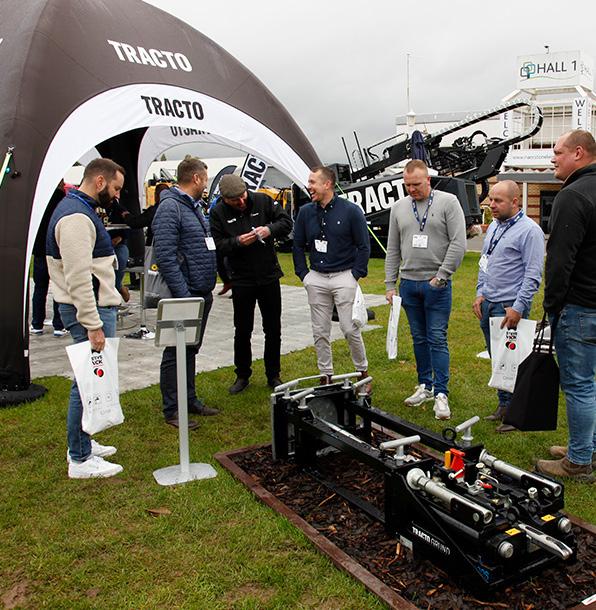
Secure your FREE place today and join the UK’s leading trenchless technology exhibition and conference.
THE UK’S MUST-ATTEND EVENT FOR TRENCHLESS TECHNOLOGY & UNDERGROUND INFRASTRUCTURE
Prepare for AMP8. Discover the latest innovations. Connect with the industry. See live





WHY ATTEND?
✓ Meet 200+ leading exhibitors showcasing the latest trenchless technology
✓ Discover innovative solutions for water, wastewater, gas, electricity, telecoms, highways and renewable energy
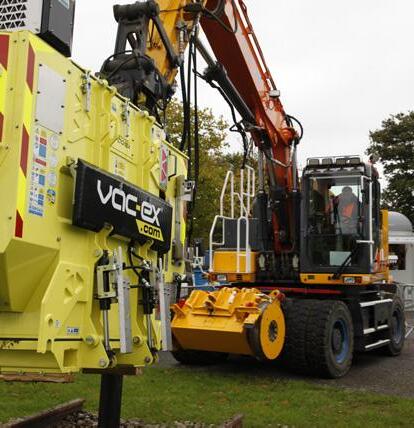
✓ Watch live equipment demonstrations and product launches
✓ Learn from industry experts and real project case studies
✓ Meet utilities, contractors, consultants and asset owners from across the UK
✓ Find new suppliers, technologies and business partners
✓ Explore solutions that reduce disruption, cut carbon and improve project delivery
✓ Network with thousands of infrastructure professionals











SEVERN TRENT AWARDS
BARHALE £9.5M STOKE
RESILIENCE PROJECT
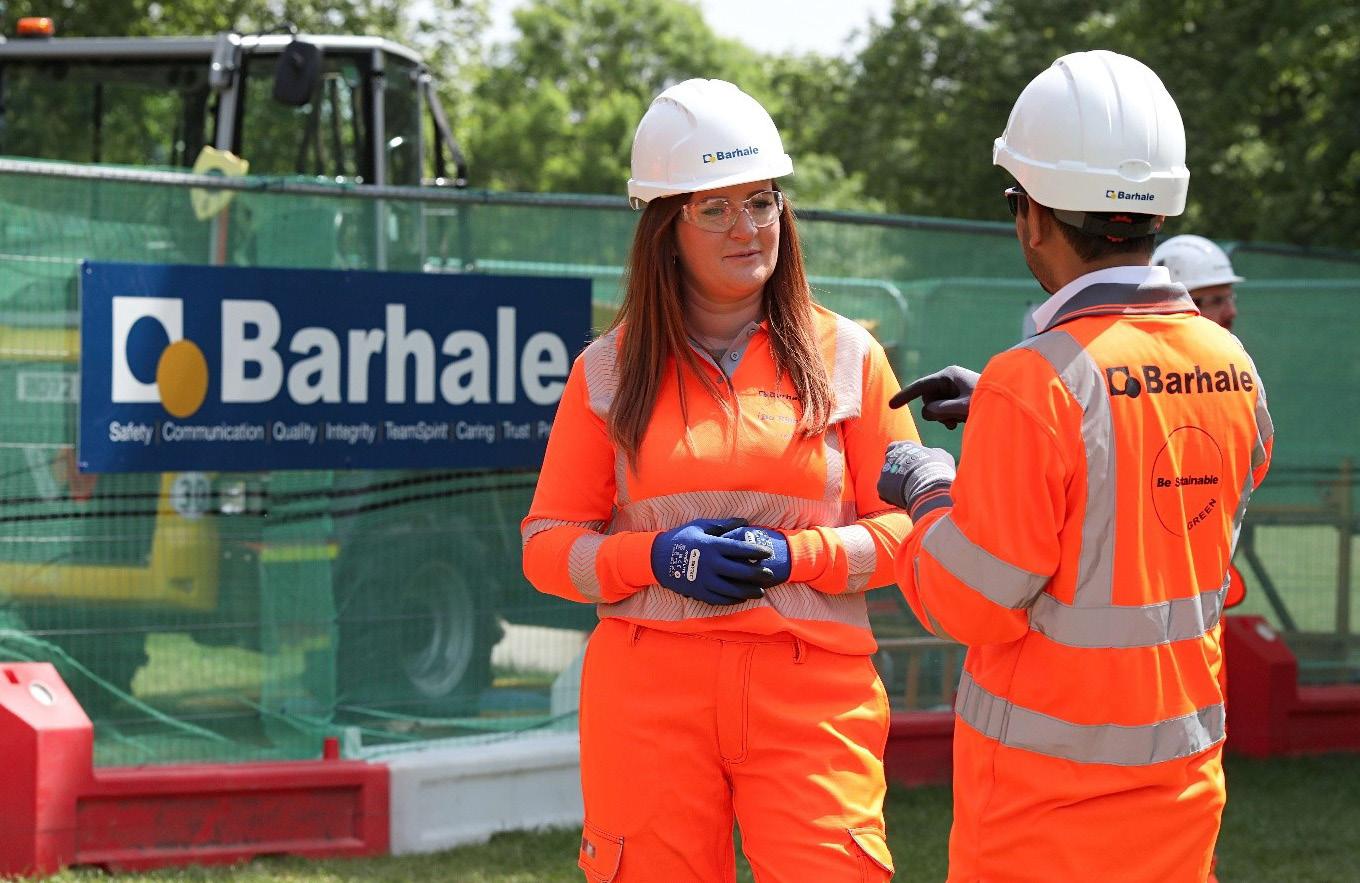
Barhale has been appointed by Severn Trent Water to deliver a £9.5M scheme in Stoke-on-Trent that will strengthen the network and help improve water quality in local watercourses.
The project, at Silverdale in Newcastle-under-Lyme, will provide additional stormwater storage and upgraded pumping capacity, reducing intermittent discharges from the combined sewer network during periods of heavy rainfall.
Barhale will construct a 10.5m diameter, 16m deep shaft providing 770m³ of additional storage. The shaft will be constructed within a cofferdam and underpinned to manage high perched water levels and loose ground.
Barhale will also upgrade the existing pumping station, construct a new pumping station and deliver full MEICA works. New access to the site from the main road will be completed as Section 278 works.
The Silverdale project is part of an extensive multi-site water infrastructure improvement programme taking place across Stoke which includes new shafts to provide additional stormwater overflow capacity at Etruria Vale and Lower Oxford Road.
The works are being delivered within Severn Trent’s WINEP programme – an initiative focused on reducing intermittent discharges from Combined Sewer Overflows (CSOs) and improving the health of local watercourses.
“The additional storage and upgraded infrastructure will help reduce pressure on the system and support better environmental outcomes for local communities.
Rob Chattoe, Contracts Manager, Barhale
According to Rob Chattoe, Contracts Manager at Barhale, the scheme will make a substantial difference to how the network performs during storm conditions.
“The additional storage and upgraded infrastructure will help reduce pressure on the system and support better environmental outcomes for local communities,” he said.
“We are pleased to be extending our remit with Severn Trent across Stoke and we look forward to working closely together to deliver another positive outcome.”
Completion is expected in early 2028.
Barhale to deliver Stoke resilience project
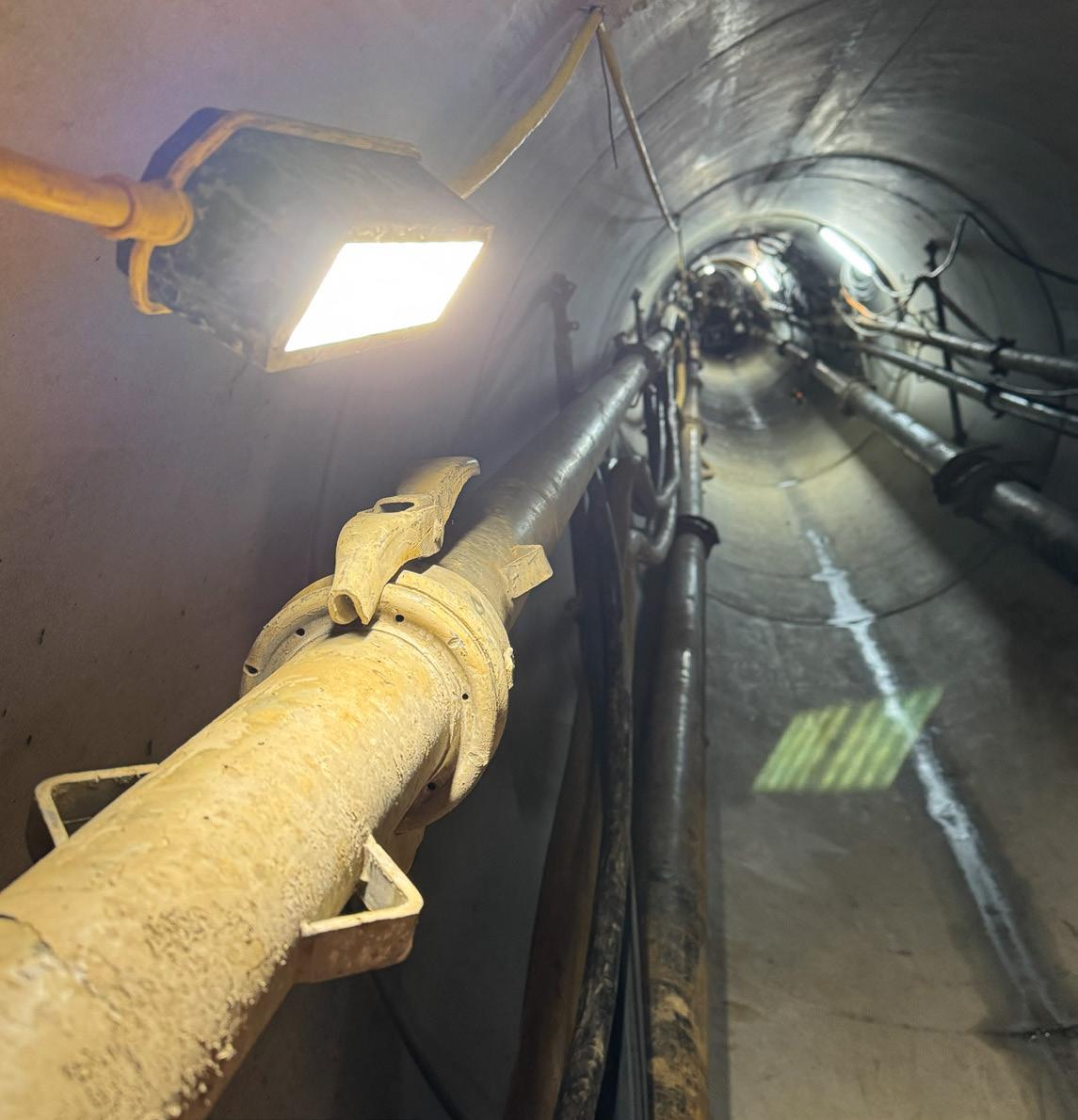
Installed in minutes. Lighting
TunnelHub sets itself up – and brings light into the tunnel with fully integrated LED and emergency lighting. Fast to install. Focused on safety. Made for microtunnelling.

Vortex Companies appoints Tom O’Neill as Senior Vice President of Sales
Vortex Companies has appointed Tom O’Neill as Senior Vice President of Sales, strengthening its senior leadership team as the business continues to expand its trenchless infrastructure rehabilitation portfolio and market presence.
In his new role, O’Neill will lead the company’s sales organisation across its growing family of businesses, with responsibility for strategic alignment, revenue growth, commercial performance, customer engagement and the continued development of its sales teams.
“Tom is exactly the type of leader we need as Vortex continues its rapid growth trajectory,” said Mike Vellano, Chief Executive Officer of Vortex Companies. “Our business has evolved into a highly integrated platform of products, services and technologies serving customers across the infrastructure rehabilitation market.
“Tom’s extensive experience building scalable sales organisations, integrating acquisitions, driving commercial excellence and leading global teams makes him uniquely qualified to help us capitalise on the opportunities ahead. Just as importantly, his leadership style aligns with our culture and our commitment to delivering exceptional value to our customers.”
O’Neill brings more than 25 years of leadership experience across sales, marketing, operations and business development. He has a strong track record in driving growth, building commercial organisations and leading transformational initiatives across industrial and infrastructure-focused businesses.
Prior to joining Vortex, he served as Vice President of Global Sales and Marketing for K.A. Group, where he oversaw multiple international brands and supported revenue growth and market expansion across domestic and global markets.

Before that, O’Neill spent more than two decades with ISCO Industries, progressing through a series of leadership roles before being appointed Chief Sales Officer. In that role, he led global sales and marketing operations across North and South America, Australia, India, South Korea, China and the United Arab Emirates.
During his time at ISCO, O’Neill helped transform the company from a regional distributor into a diversified global solutions provider. He also led strategic acquisitions, implemented pricing and commercial initiatives, and built a sales organisation that delivered sustained growth across multiple markets.
“What stands out about Tom is his ability to build alignment, accountability and growth within complex organisations,” said Pete Dannenberg, Chief Revenue Officer of Vortex Companies. “Throughout his career, he has consistently delivered results by developing strong teams, creating disciplined sales processes and executing growth strategies at scale.
“As Vortex continues to expand, Tom brings the leadership, experience and commercial expertise needed to unite our sales organisation, strengthen customer relationships and drive performance across our global platform.”
O’Neill said: “I am excited to be joining Vortex at such an important time in the company’s evolution. The organisation has built an impressive portfolio of industry-leading brands and solutions, backed by a strong culture and an unwavering commitment to customer success.
“I look forward to working alongside the talented teams across the company to build on that momentum, strengthen our commercial capabilities and help drive the next chapter of growth.”

Trenchless Infrastructure Rehabilitation Built for the Toughest Challenges
VORTEX DELIVERS ADVANCED TRENCHLESS SOLUTIONS THAT RESTORE, PROTECT, AND EXTEND THE LIFE OF CRITICAL MUNICIPAL AND INDUSTRIAL INFRASTRUCTURE.
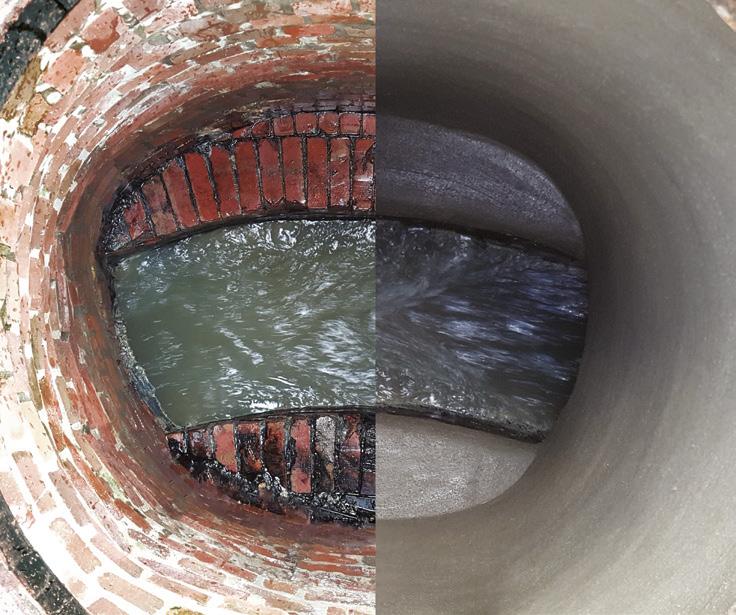
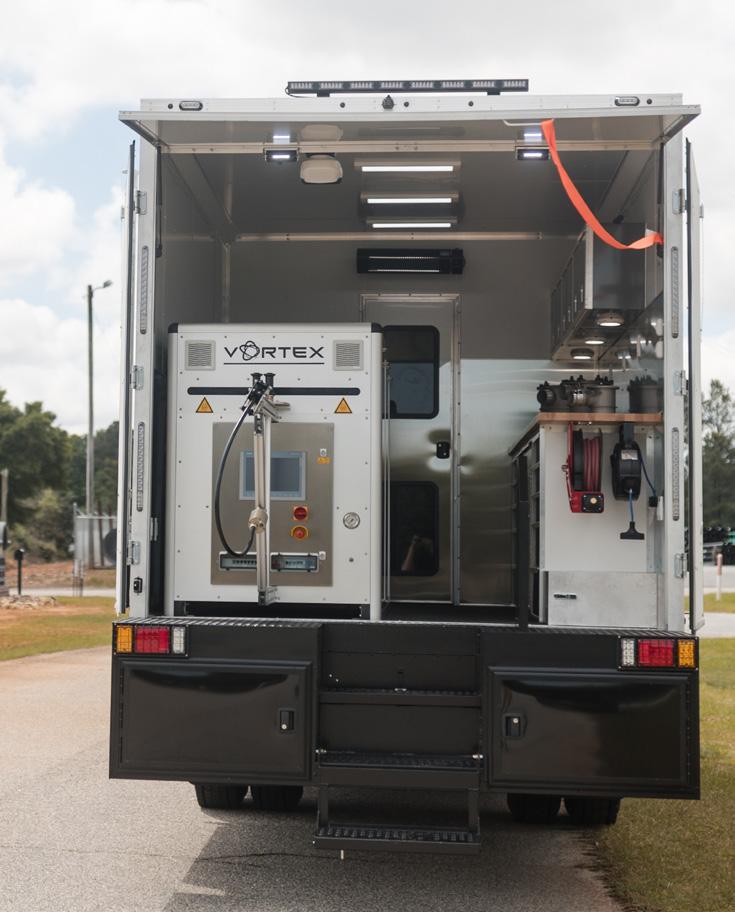
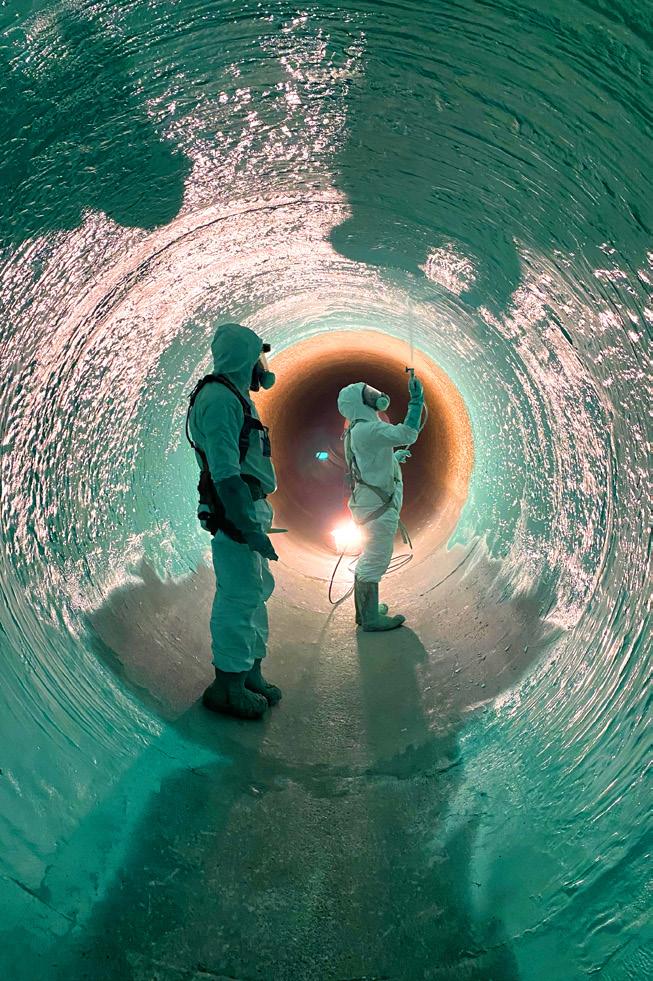

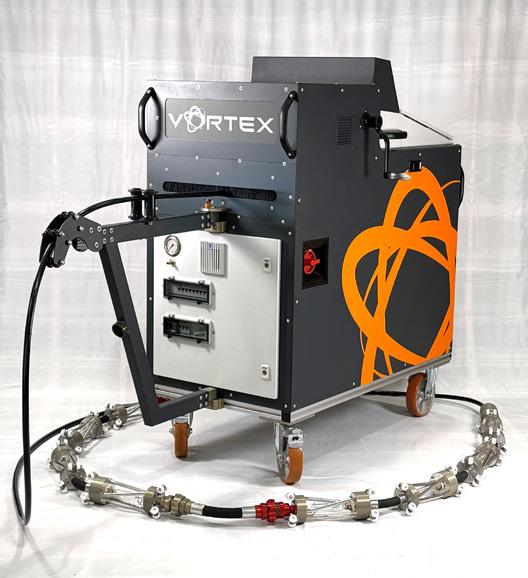
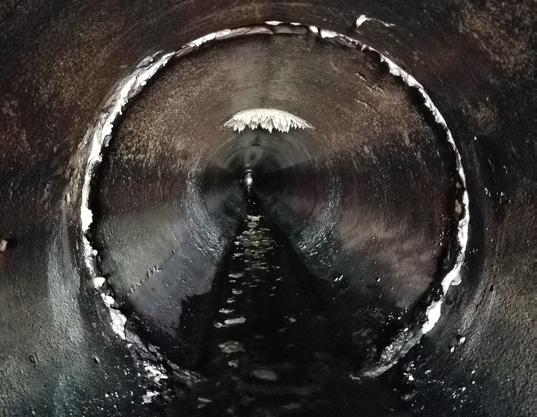
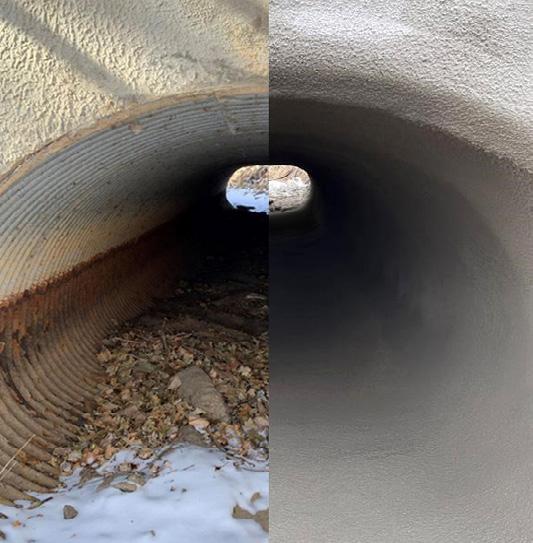
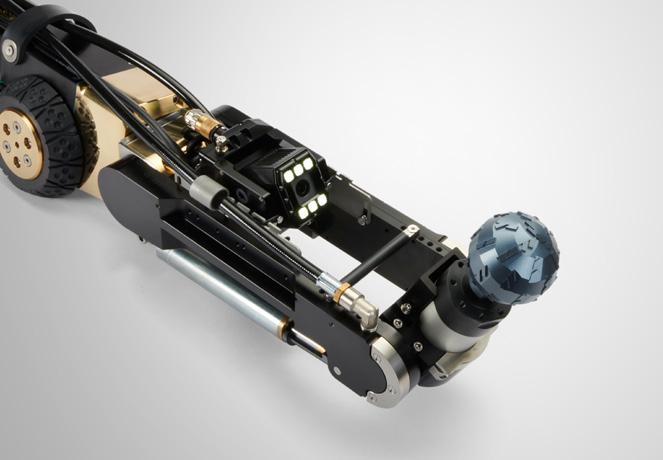
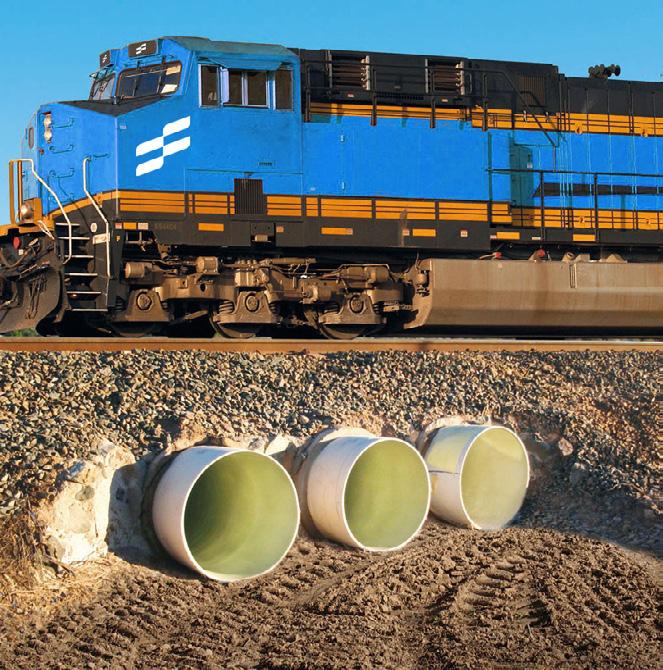
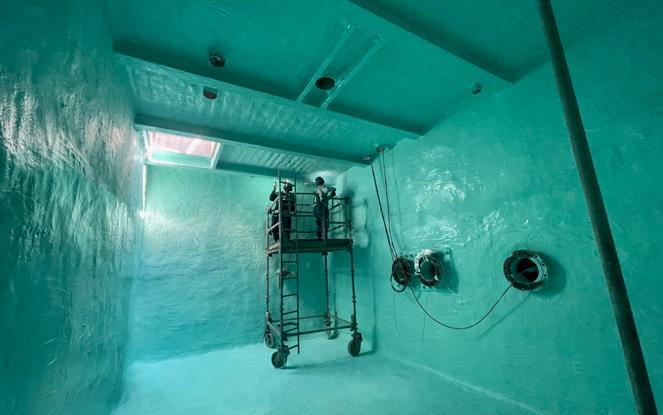
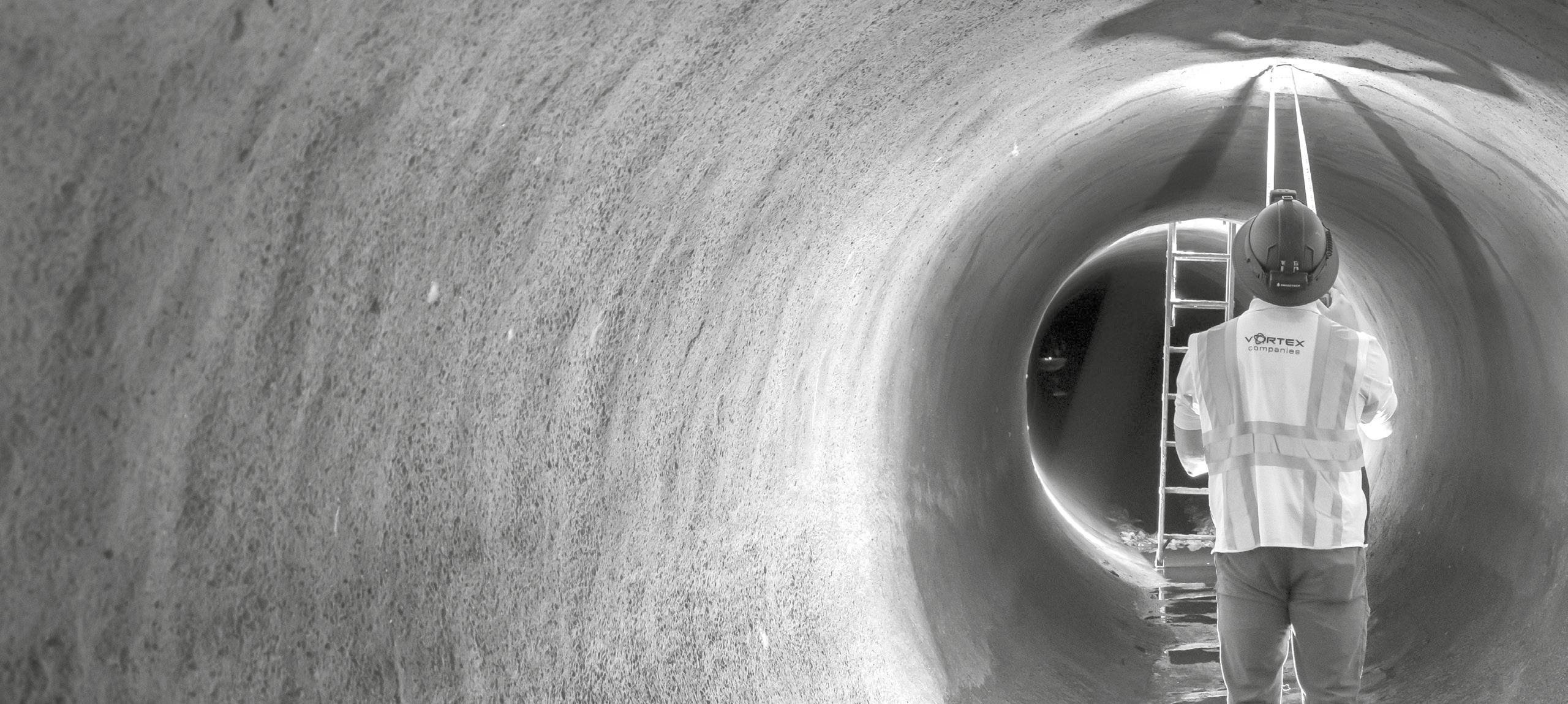
A trusted leader in trenchless infrastructure rehabilitation, Vortex delivers solutions to tackle the most demanding municipal infrastructure rehabilitation projects. Our comprehensive solutions help you rehabilitate aging infrastructure faster, safer, and more cost-effectively — without disruptive excavation.

Vortex.
FEATURED SOLUTIONS
• GeoKrete® Geopolymer: Fully structural, WRc approved, rehabilitation for large diameter infrastructure.
• Structure Guard® Epoxy: Advanced corrosion protection for infrastructure exposed to aggressive environments.
• Schwalm Robotics: High-performance robotic cutting and cleaning of pipes.
• UV-Cured Liners & Technology: Fast, efficient, and precise pipe relining solutions.
Partner with Vortex to maximize asset performance, reduce lifecycle costs, and keep critical infrastructure operating for decades to come.
Brewis Engineering strengthens North American presence with Texas relocation

Brewis Engineering has reinforced its commitment to the North American market with the relocation of Commercial Director and co-owner Pat Farrell to Conroe, Texas.
The move marks a strategic step in the company’s continued expansion into the United States, where Brewis has already established stock availability and operational capability to support contractors directly in-market.
Founded in the UK in 1984 by Rod Brewis, the company is the originator of the Brewis towing head and remains a recognised name in trenchless engineering. Its products continue to be specified and used globally across major infrastructure projects, with a reputation built on strength, reliability and consistent performance under load.
By positioning senior leadership in Texas, Brewis is moving closer to one of the world’s most active HDD and pipeline markets. The region provides a strategic base for supporting contractors, distributors and project delivery across North America.
Pat Farrell will lead commercial activity in the US, working directly with clients and partners while strengthening supply capability and responsiveness. His relocation will enable Brewis to offer both product availability and technical support locally, helping to reduce lead times and improve service for ongoing and future projects.
Commenting on the move, Pat Farrell said:
“This is a massive step for me and my family. Experiencing life in the US has always been a personal ambition, and to be able to do it through the business
makes it even more significant. Brewis has built its reputation over decades, and now we are in a position to bring that same level of engineering and reliability directly to the US market.
Being on the ground as we establish ourselves in the market means we can support contractors properly, respond faster, and continue building the relationships that have always been at the core of what we do.”
The development builds on Brewis Engineering’s established global footprint. The company’s equipment is trusted by leading contractors worldwide and has been deployed on some of the industry’s most demanding installations, including record-breaking HDD projects.
The expansion into the United States reflects a broader strategy to maintain Brewis Engineering’s UK manufacturing heritage and engineering standards while increasing accessibility and support in key international markets.
Brewis Engineering continues to invest in product development, in-house manufacturing capability and global distribution, ensuring its equipment remains fit for purpose in high-load, high-risk trenchless operations.
With stock in place and senior leadership now based in Texas, the company is well positioned to support the next phase of infrastructure delivery across North America.




United Utilities reaches Salford Microtunnelling milestone
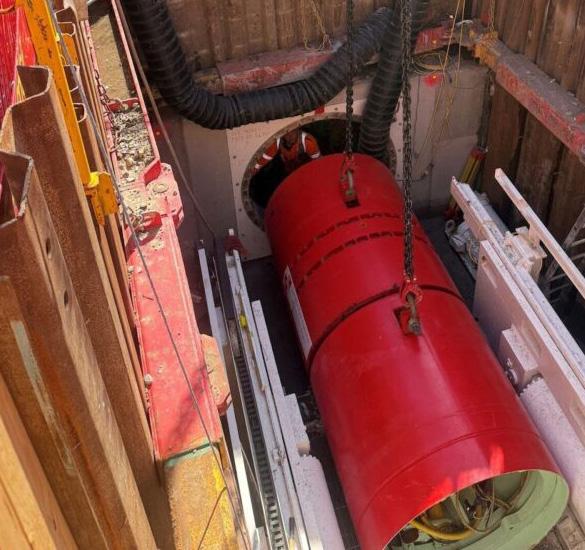
United Utilities has completed a key phase of sewer upgrade works in Eccles, Salford, following the successful completion of microtunnelling beneath Peel Green Road.
The works form part of a wider investment programme designed to increase sewer capacity, reduce flood risk and improve wastewater resilience across the local network.
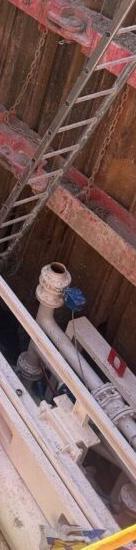
Using microtunnelling equipment, United Utilities has installed a new, larger sewer beneath Peel Green Road. The trenchless approach has enabled the company to progress the upgrade while limiting disruption in a busy local area.
With tunnelling now complete, Peel Green Road has reopened, marking an important milestone for the project. The next phase will focus on connecting the
new sewer into the existing network and bringing it into operation. These works are expected to take place under lane closures later in the summer.
The Peel Green Road scheme forms part of United Utilities’ wider programme of investment across Salford. Over the next four years, the company is investing more than £525 million to improve sewer network resilience and water quality through a series of projects.
These include upgrades to wastewater treatment works in Salford and Eccles, additional sewer storage off Liverpool Road, and a rainwater management scheme in Adelphi Village.
“The work on Peel Green Road is an important part of our wider work at Eccles wastewater treatment works. The completion of tunnelling activities is a big milestone for the area as we look to reduce the flooding risk to the local community. ntal outcomes for local communities.
Jim Scholes, Delivery Manager, United Utilities
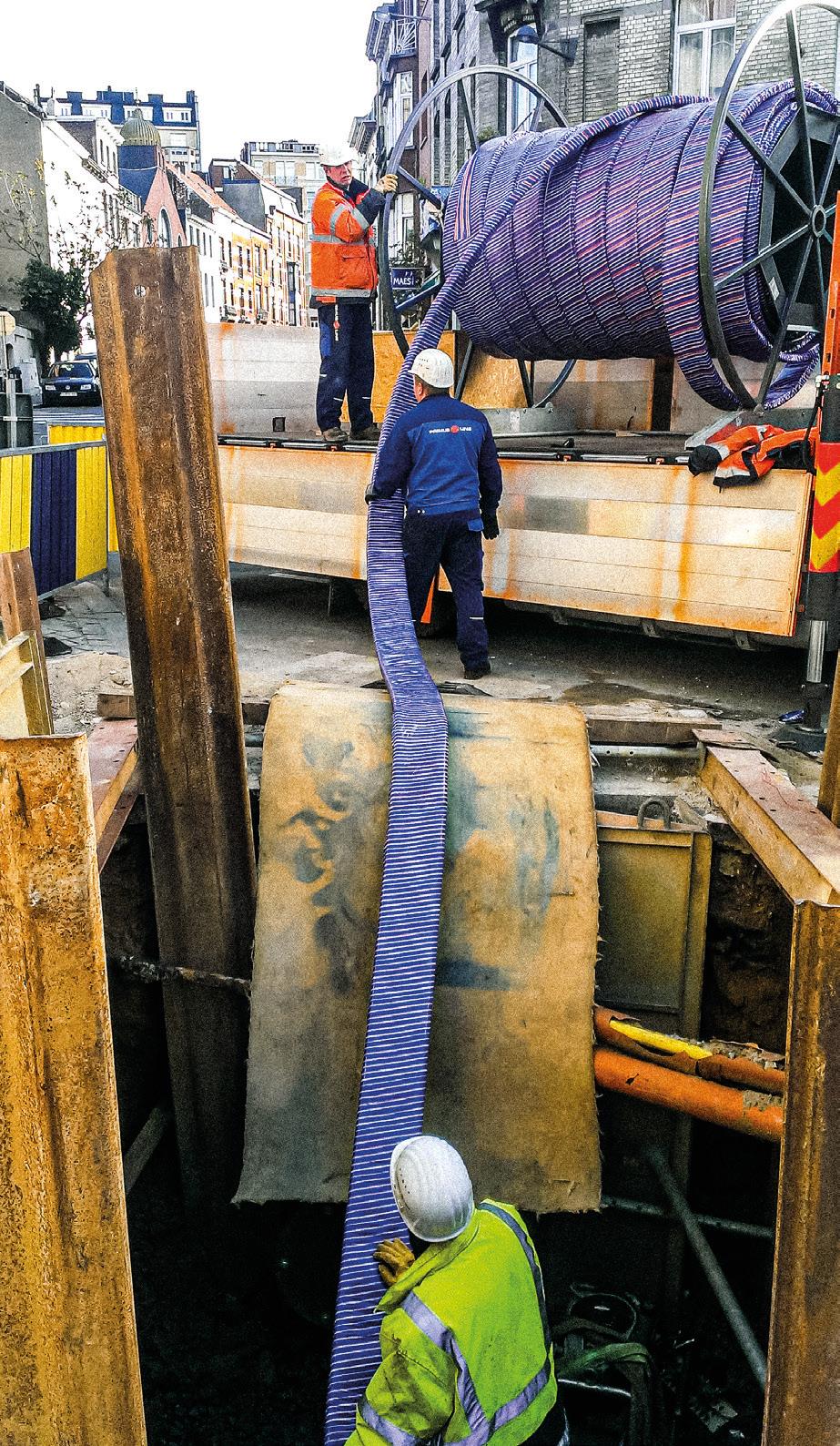
PRIMUS LINE® FLEXIBLE REHAB PIPE

Solving underground challenges.

Jim Scholes, Delivery Manager for United Utilities, said: “The work on Peel Green Road is an important part of our wider work at Eccles wastewater treatment works.
“The completion of tunnelling activities is a big milestone for the area as we look to reduce the flooding risk to the local community. We’d like to thank them for their patience whilst this essential work has been taking place.”
United Utilities is currently delivering a major programme of investment across its region, including more than £13 billion to protect and enhance rivers, lakes and bathing waters, while safeguarding drinking water supplies for millions of customers.
IMS Trenchless appoints Dominik Berchtold as CEO

IMS Trenchless has appointed Dominik Berchtold as Chief Executive Officer as the group prepares for its next phase of international growth in trenchless pipe and sewer rehabilitation.
The company, known for the development and manufacture of robotic systems and UV curing equipment, said the appointment forms part of a wider move to strengthen its global platform and bring its group businesses more closely together. Berchtold joins IMS Trenchless with international leadership experience across the aviation and HVAC sectors. He previously held a senior vice president role at Carrier and has worked across Europe, the Americas and Asia.
His background combines experience in large-scale operational leadership with a focus on installer- and service-led industries, which IMS Trenchless said aligns closely with the group’s customer base and growth strategy.
Alongside the appointment, the group is establishing its headquarters in Zug, Switzerland. The new base is intended to
support closer coordination across the platform and provide a stronger operational foundation for international expansion.
The IMS Trenchless group brings together a number of specialist rehabilitation businesses, including IMS, Resinnovation, Polypipe, Amex Sanivar, Lateral Repairs, Kardiam, Hurricane and APEX CIPP Solutions.
Together, the companies focus on trenchless rehabilitation solutions designed to protect drinking water, safeguard groundwater and extend the life of critical infrastructure.
In a company statement, IMS Trenchless said the new headquarters and leadership appointment would help strengthen alignment across the group, unlock synergies and accelerate international growth.
Berchtold said the focus would be on bringing the businesses together into one platform and
“The new headquarters and leadership appointment would help strengthen alignment across the group, unlock synergies and accelerate international growth.
Company statement, IMS Trenchless
scaling the group from its new headquarters in Zug, working alongside its entrepreneurs and long-term partner Apheon.
He said the company’s ambition is to become a global leader in trenchless pipe rehabilitation, with installers and contractors remaining central to the group’s future direction.
Berchtold added that the next phase would be focused on growth, team development and supporting the entrepreneurial culture across the group.
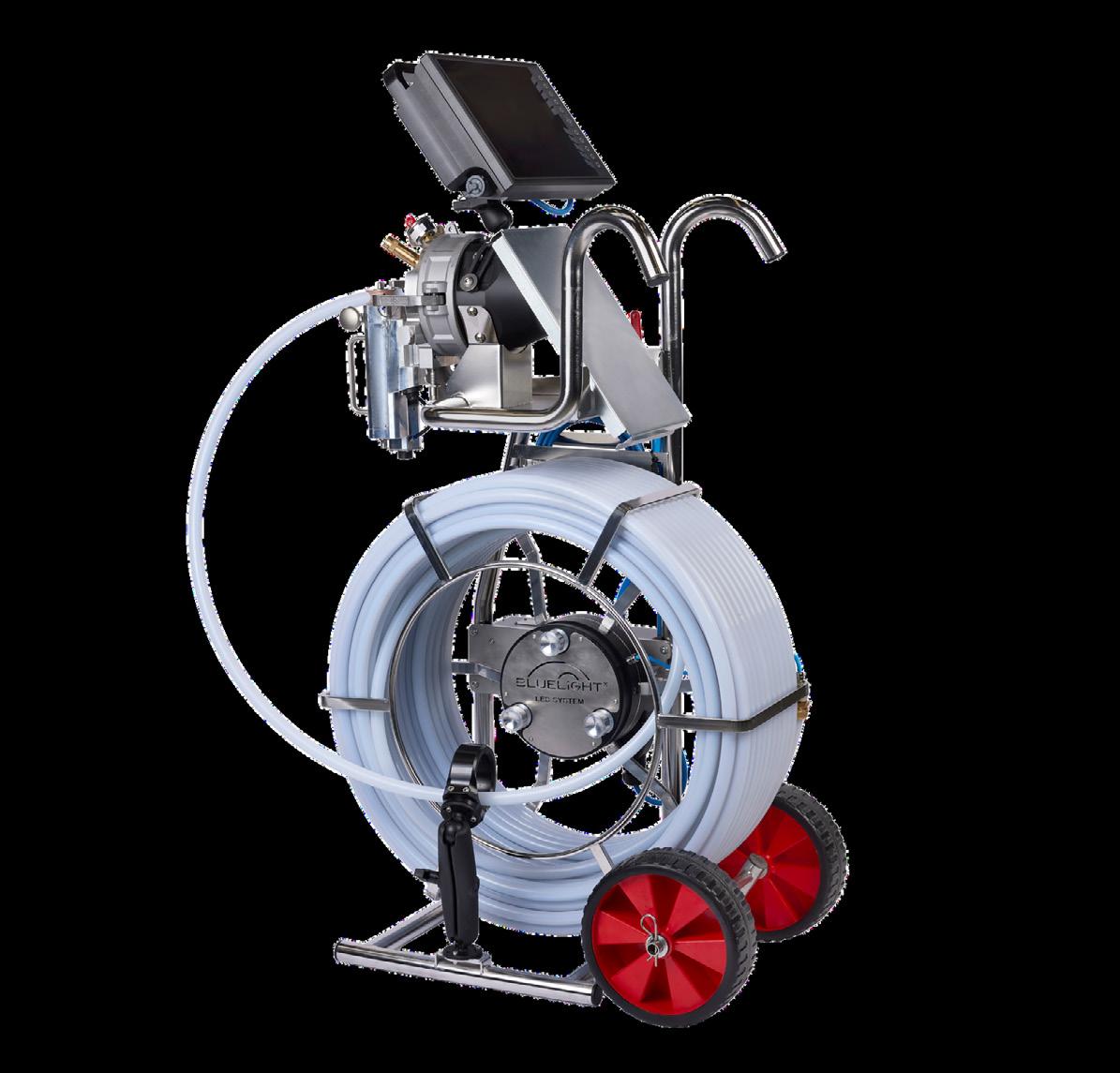
Bluelight Lining’s LED light curing CIPP lining system is engineered to deliver reliable results, first time, every time. With all equipment and liners sourced from one place, everything works seamlessly together, reducing downtime, minimising errors, and keeping projects on schedule.
Up to 5x more efficient than traditional systems
Environmentally friendly resin with up to 99% CO2 savings
Technology and materials sourced from a single supplier
Technology approved by the WRC, DIBt and the CSTB Your Go-To System for Laterals and Mains up to 600mm

KrasoTech
Robotic
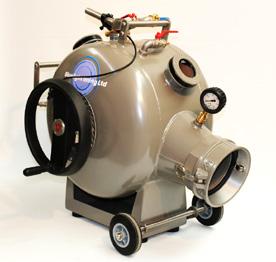
Inversion Drums
Cutting Equipment
asoTech
Measuring Equipment
version Drums
KrasoTech
Inversion Drums
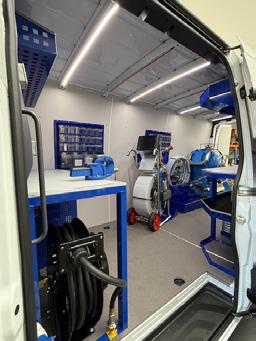
Vehicle Builds
soTech
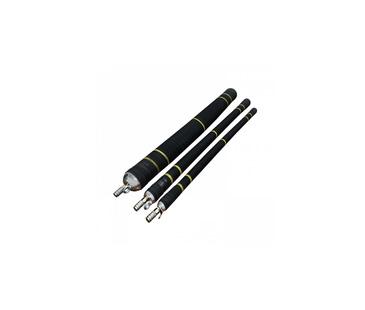
Repair Packers
ersion Drums
asoTech
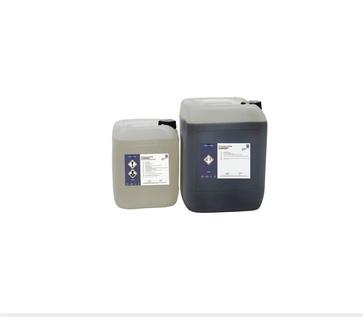
Silicate Resins
version Drums asoTech ersion Drums
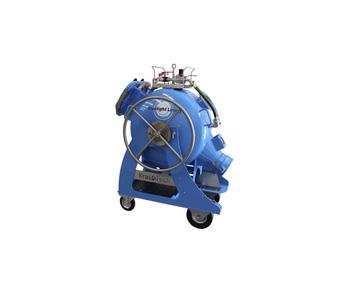
Inversion Drums
Trusted across the UK and Europe, Bluelight Lining is the go-to solution for efficient, high quality pipe rehabilitation. With Bluelight Lining, you can do it right, first time, every time.
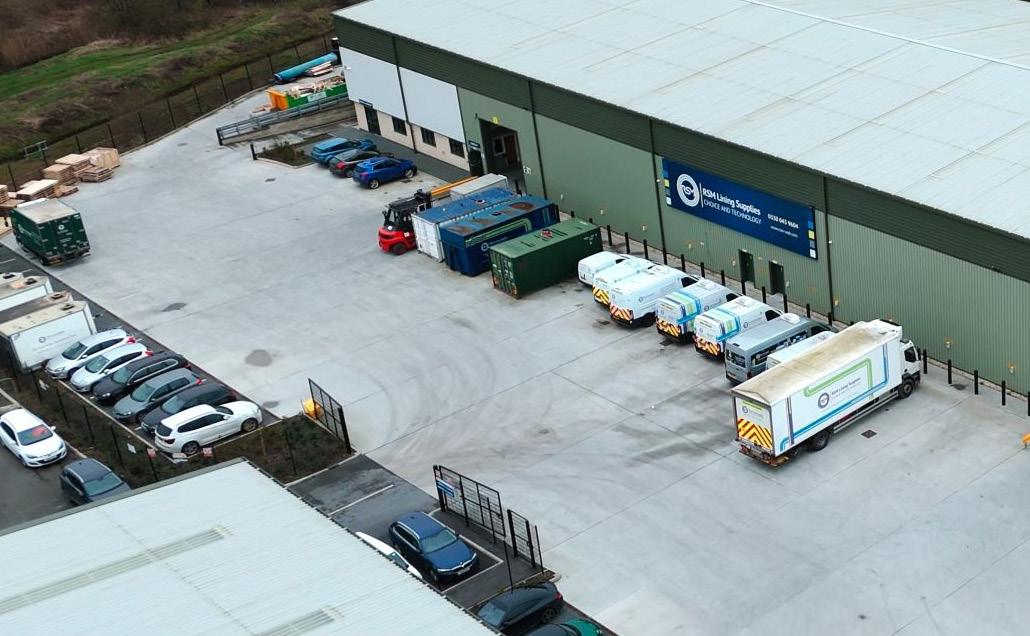
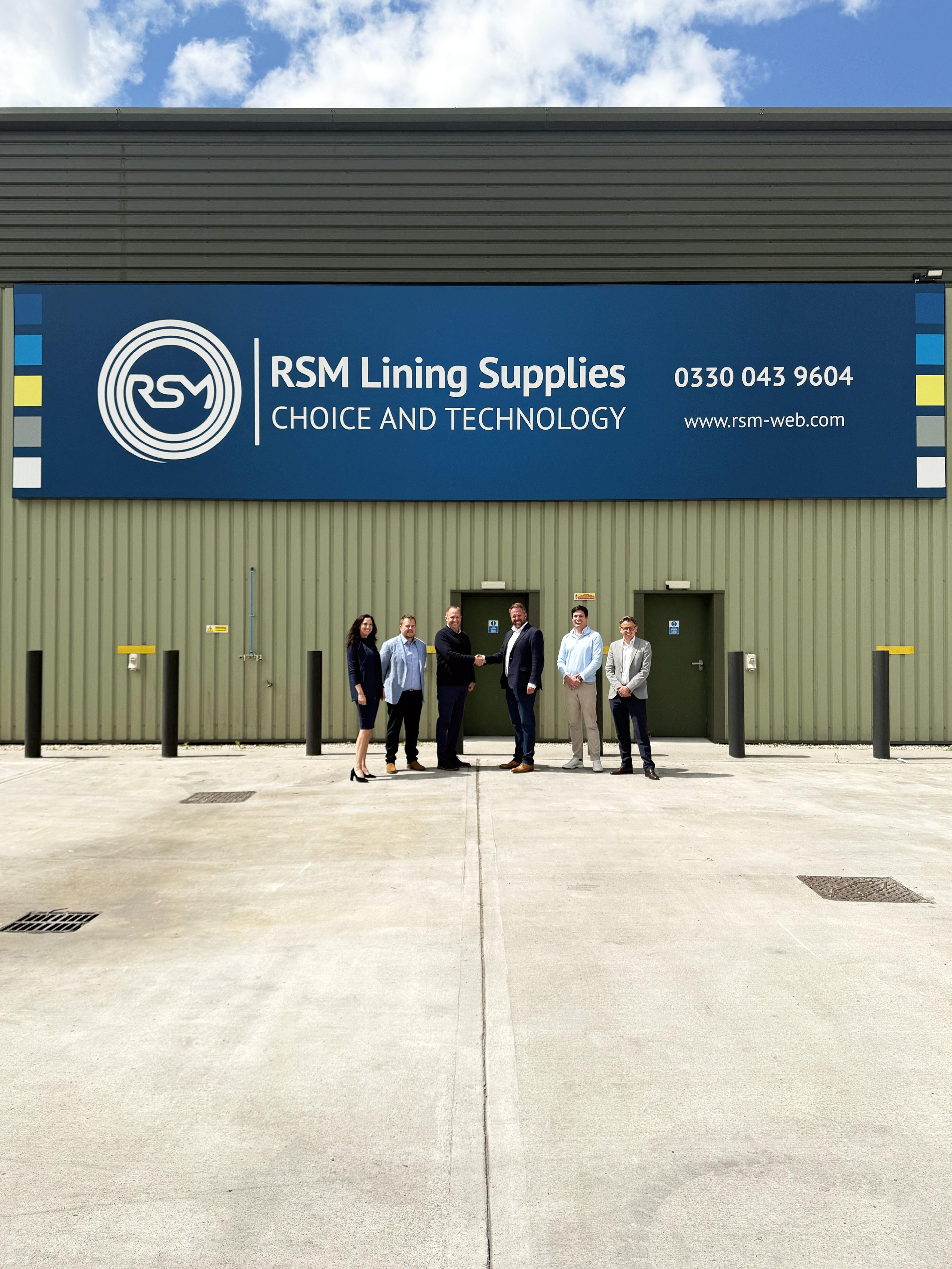
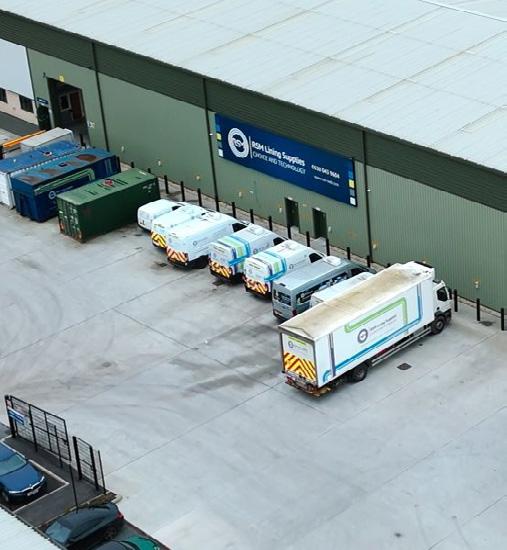
RSM LINING SUPPLIES JOINS AZURIA WATER SOLUTIONS
A stronger future for trenchless technology, driven by innovation and collaboration
Founded by Richard Davis back in 2003, RSM is one of the world’s largest global suppliers of cured in place pipe (CIPP) materials, equipment & services. From its beginning as a specialist supplier supporting the emerging CIPP market, the company has evolved into a trusted partner to contractors, utilities, and infrastructure owners across wastewater and pressure pipe sectors across the globe.
Now, the business is entering its next chapter following its acquisition by Azuria Water Solutions, the rapidly expanding leader in technology enabled water solutions that has been reshaping the global trenchless market through a series of strategic acquisitions.
From specialist supplier to industry leader
Founded to support a growing trenchless rehabilitation market, RSM quickly earned a reputation for delivering quality products, technical expertise, and a customerfirst approach. As industry demands increased, so did RSM’ s capabilities.
Over the years the company has expanded its product portfolio, strengthened relationships with leading manufacturers, and developed a level of technical knowledge that made it far more than simply a materials supplier. Today, RSM plays a critical role in assisting customers in delivering successful rehabilitation projects, providing everything from
materials to specialist equipment, training, and technical support.
This strategic growth has enabled RSM to remain at the forefront of a market that has transformed dramatically over the past three decades. As ageing infrastructure, environmental pressures, and investment in water networks continues to drive demand for trenchless solutions, RSM has continuously adapted to meet the needs of an evolving industry.
The company’s ability to grow with the market has made it a natural fit for Azuria’s vision.
Joining a global infrastructure powerhouse
Over the last five years, Azuria Water Solutions has become one of the most influential names in water rehabilitation, bringing together a collection of industry-leading businesses under one umbrella.
The company’s acquisition strategy has focused on creating a comprehensive portfolio of technologies, products and services that support the rehabilitation of water, wastewater, and stormwater infrastructure.
RSM’s addition to the group strengthens Azuria’s position within the UK market whilst giving RSM access to a global network of expertise, innovation, and resources. For a company that has built its success on delivering value to customers, the opportunities are substantial.
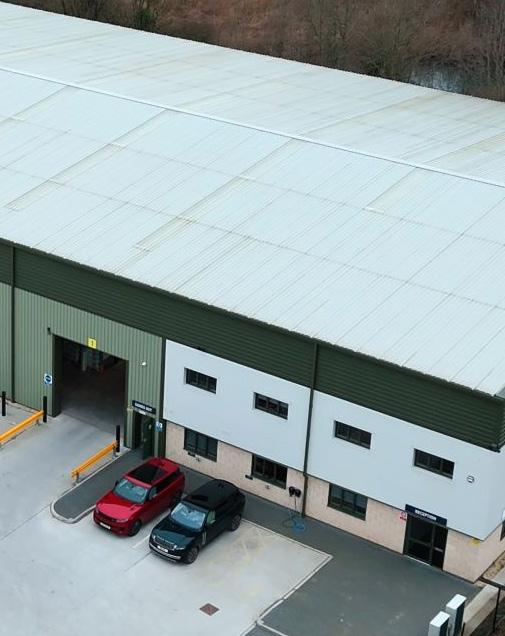
Being part of a larger international organisation provides access to wider technical knowledge, greater investment potential, and the ability to introduce new products and technologies that can help customers tackle increasingly complex infrastructure challenges.
Rob Tullman, Azuria President & CEO, commented, “This is our first European acquisition since rebranding to Azuria in 2024, and we couldn’t be more excited about the RSM team. Combined with Insituform’s 50+ years of manufacturing CIPP liners in the UK, we’re excited to further enable RSM’s growth.”
The Insituform Advantage
Perhaps one of the most exciting aspects of the acquisition is the closer connection it creates between RSM and Insituform, one of the most recognised and pioneering brands in the history of trenchless rehabilitation.
As one of the most influential companies in the development of CIPP technology, Insituform has helped shape industry standards and drive advancements in rehabilitation techniques around the world for decades.
With Insituform operating within the wider Azuria family, RSM is now uniquely positioned to strengthen its supply chain and provide customers with enhanced access to globally recognised technologies and expertise.
The alignment creates opportunities to improve product availability, streamline supply channels, and introduce customers to innovations developed through decades of practical installation experience.
For contractors and utilities, that means access to an even stronger support network backed by some of the most experienced organisations in the trenchless sector.
Focused on the future
Richard Davis, founder of RSM & now CEO, commented “Despite the scale of the acquisition, the foundations that have made RSM successful remain unchanged. Our reputation has been built on long-term relationships, technical excellence and a genuine understanding of the challenges that our customers face. These principles will continue to guide the business as it enters this new phase.”
With the backing of Azuria, access to global expertise, and the strength of an expanded supply chain that includes industry leaders such as Insituform, RSM is better positioned than ever to support future infrastructure rehabilitation in the UK and beyond. The company that started as a specialist supplier has become part of one of the world’s leading rehabilitation groups. For RSM Lining Supplies, the journey so far has been one of steady growth and continuous evolution. Joining Azuria represents not the end of that journey, but the beginning of its most ambitious chapter yet.
“
This is our first European acquisition since rebranding to Azuria in 2024, and we couldn’t be more excited about the RSM team.
Combined with Insituform’s 50+ years of manufacturing CIPP liners in the UK, we’re excited to further enable RSM’s growth.
Rob Tullman, Azuria President & CEO
VIP-WECO CONNECT SUPPORTS SHOREHAM PORT PIPELINE REHABILITATION
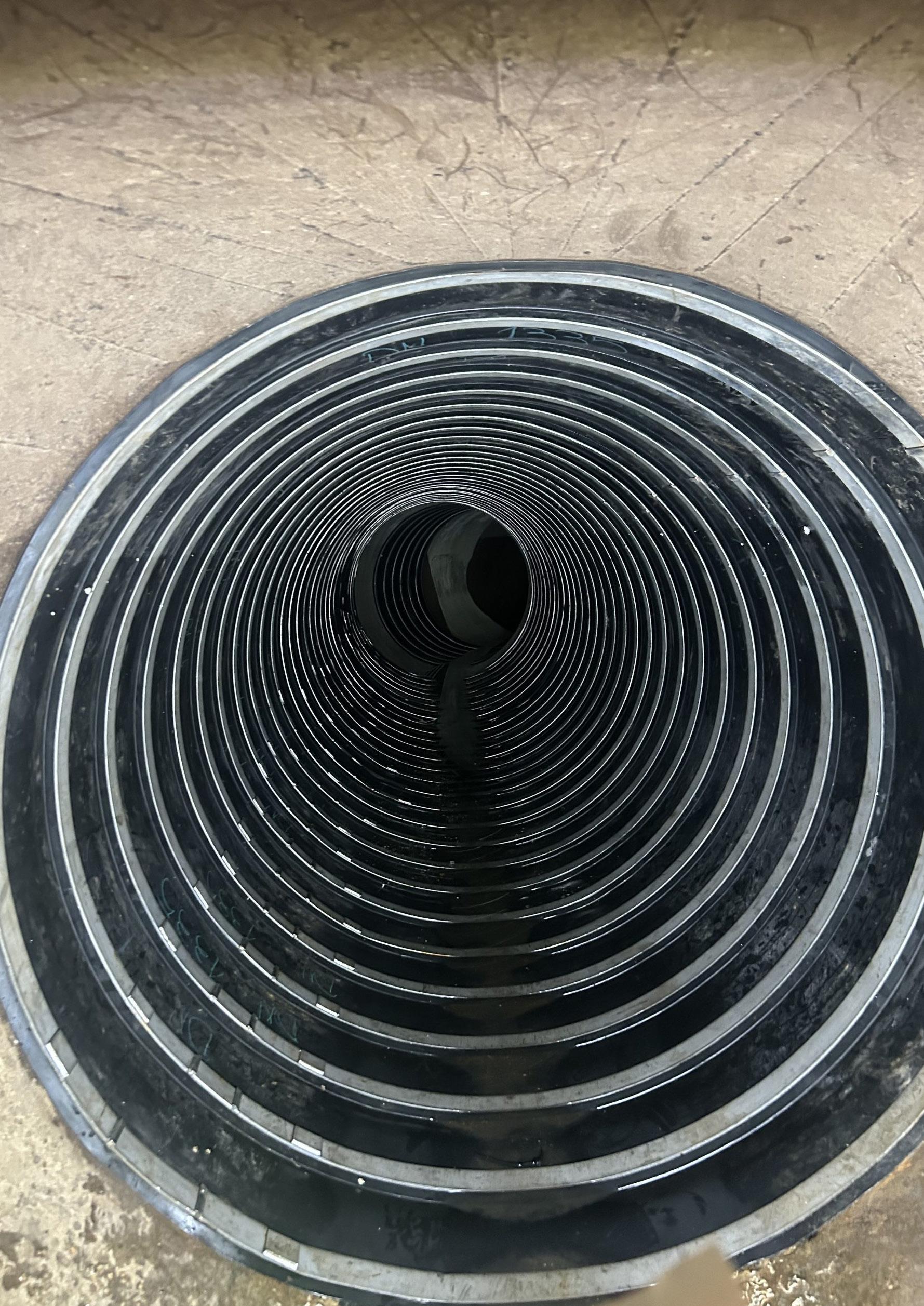
A bespoke trenchless sealing solution has been used to rehabilitate four largediameter cast-iron pump lines at Shoreham Port, helping to safeguard a critical seawater transfer system while keeping the port operational.
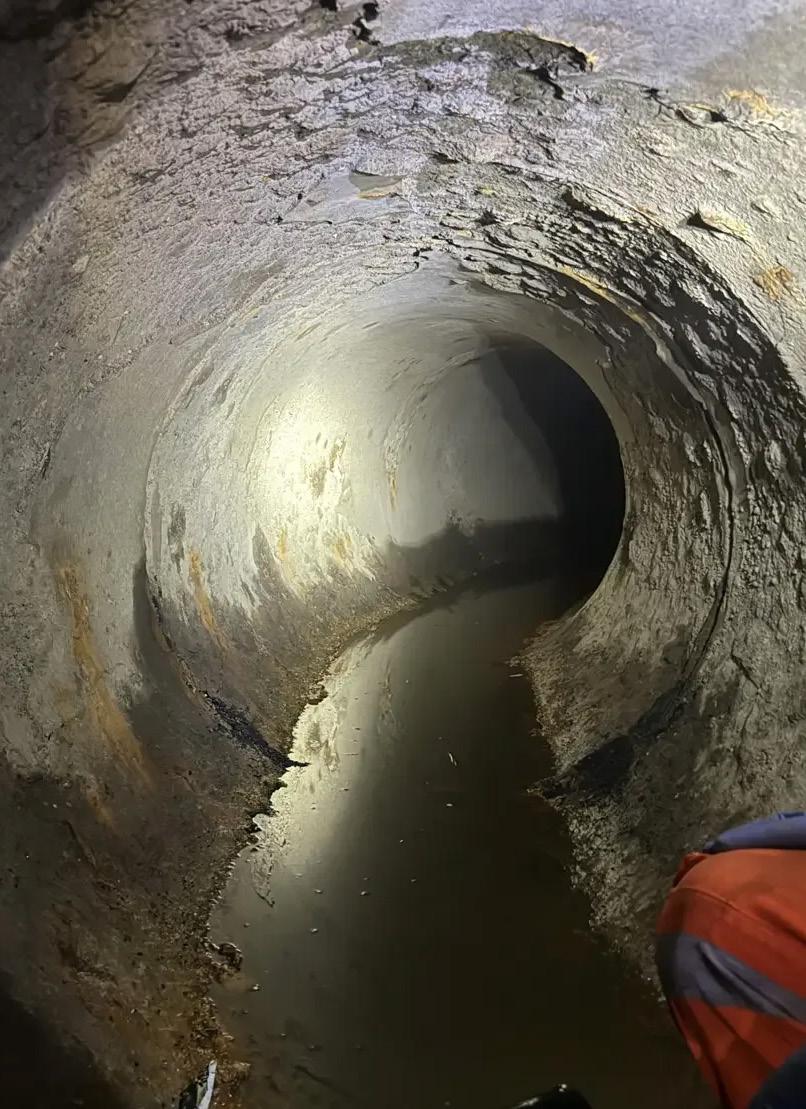
The works were delivered at Shoreham Port in Southwick, Brighton, for client Lanes Group, in partnership with RSM Lining Supplies and VIP-Polymers.
Shoreham Port relies on four large-diameter pump lines to transfer seawater from a dockside pump house into the dock basin, replenishing water lost during lock operations. Each pipe can convey up to 8,500 tonnes of seawater per hour, making the system essential to the port’s day-to-day operation.
Condition surveys had identified leakage and deterioration within the pipes, increasing pumping costs and raising concerns over the long-term integrity of the system. Full replacement was not considered viable due to access restrictions, sharp bends, confined working conditions and the need to maintain port operations throughout the programme.
Conventional CIPP lining methods, including hot water and UV systems, were also ruled out because of limited space within the pump house, multiple 20-degree bends and tidal constraints. To address these challenges, Lanes Group, RSM Lining Supplies and VIP-Polymers developed a bespoke trenchless rehabilitation approach using the newly launched VIP-WECO Connect system.
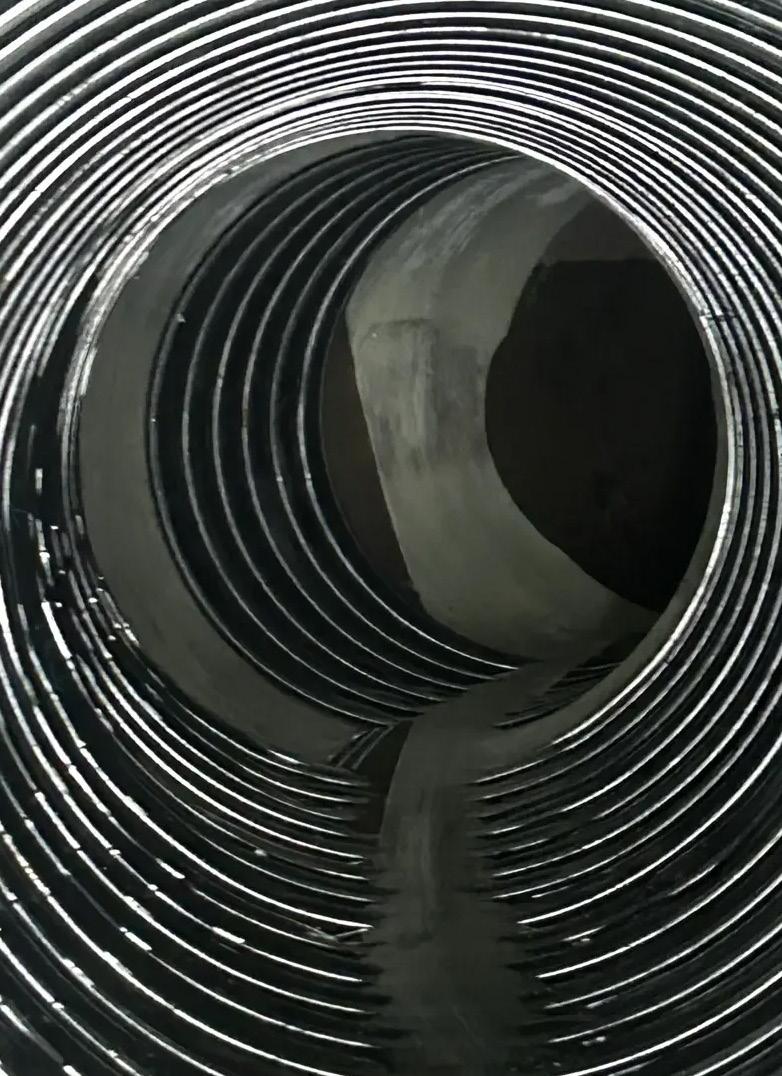
“Despite the constraints, the full rehabilitation programme was completed in six weeks, meeting the port’s operational deadline and allowing cargo movements to continue uninterrupted. The completed solution provides Shoreham Port with a long-term rehabilitation system designed to extend the service life of the assets by more than 50 years.
VIP-WECO Connect is based on the proven VIPWECO mechanical seal design and enables multiple rubber sealing elements to be connected to form a continuous liner. The system was combined with short CIPP patch liners to accommodate tight bends and changes in pipe geometry. In total, more than 500 interconnected VIP-WECO Connect seals were installed across four pipes ranging from 20 to 42 m in length. The completed works achieved a total rehabilitated length of 126 m.
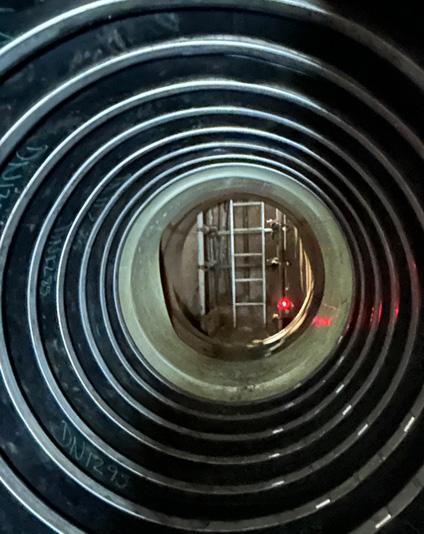
During cleaning works, the project team identified a further challenge. Each pipe reduced in diameter by approximately 125mm over a 10-metre section as it exited the pump house. In response, VIP-Polymers designed and manufactured a bespoke stepped sealing arrangement, with nine incremental diameter reductions per pipe, allowing the liner to adapt to the changing geometry.
To support installation in confined, low-visibility conditions, VIP-Polymers also enhanced the VIP-WECO Connect design with an integrated locating tab feature. Developed in response to site constraints and installer feedback, the locating tab provides a tactile indication that each seal has been correctly engaged and aligned.
This allowed operatives to confirm installation by touch, rather than relying solely on visual checks, improving quality control and installation efficiency in restricted spaces. The feature has since been incorporated into the ongoing development of the VIP-WECO Connect system.
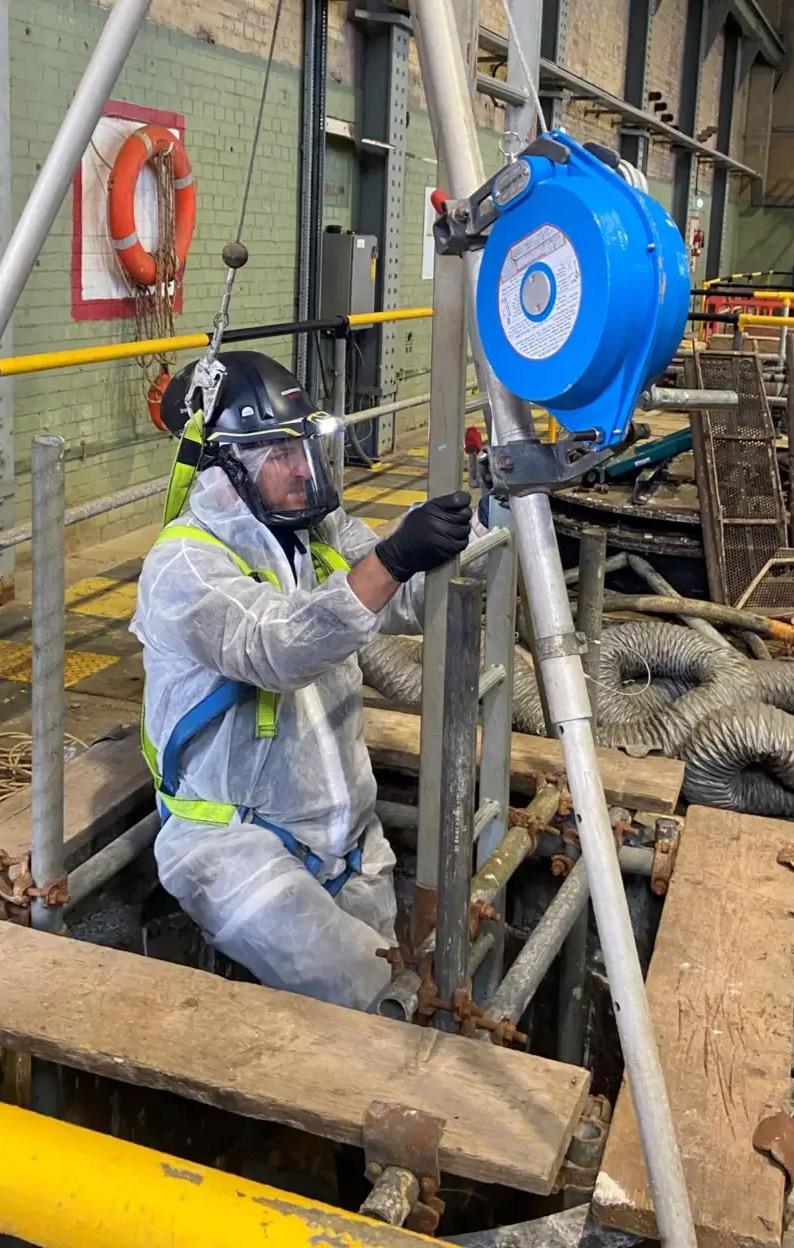
Installation was carried out by a four-person lining team, supported throughout by a dedicated confined space rescue crew. Two of the four pipes had to remain operational during the works, with the programme carefully sequenced around tidal movements and live pumping requirements.
Despite the constraints, the full rehabilitation programme was completed in six weeks, meeting the port’s operational deadline and allowing cargo movements to continue uninterrupted. The completed solution provides Shoreham Port with a long-term rehabilitation system designed to extend the service life of the assets by more than 50 years.
The project demonstrates how mechanical sealing systems can provide an alternative approach where access restrictions, live operational demands, changes in geometry or confined working conditions make traditional lining or replacement methods difficult to deliver.
It also highlights the value of early collaboration between client, contractor, lining specialist and manufacturer in developing site-specific trenchless solutions for challenging pipeline environments.
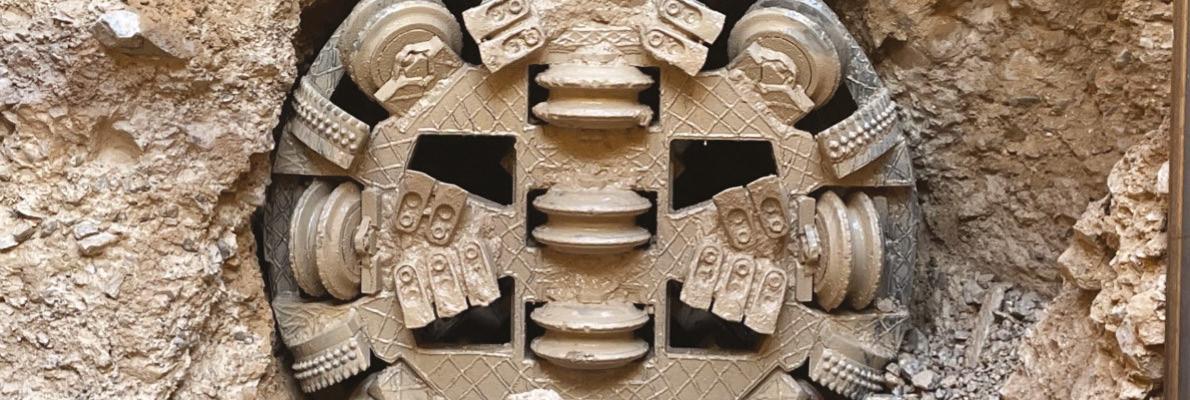
Akkerman slurry microtunneling systems combine American horsepower with cutting-edge precision to conquer ground conditions other systems aren’t built for. With enhanced guidance, pinpoint lubrication, and smart control systems, Akkerman is purpose-built for North America’s toughest underground challenges.

Severn Trent invests in four GRUNDOBURST pipe bursting units
Pipe bursting is a well-established trenchless renewal method that is seeing renewed interest across the UK water sector, supported by AMP8’s focus on reducing disruption, improving network resilience and using trenchless techniques wherever practical.
Severn Trent Water was already preparing for this shift. In 2024, the company established a dedicated Trenchless Division to support the maintenance and upgrade of its buried infrastructure across the Midlands and surrounding areas.
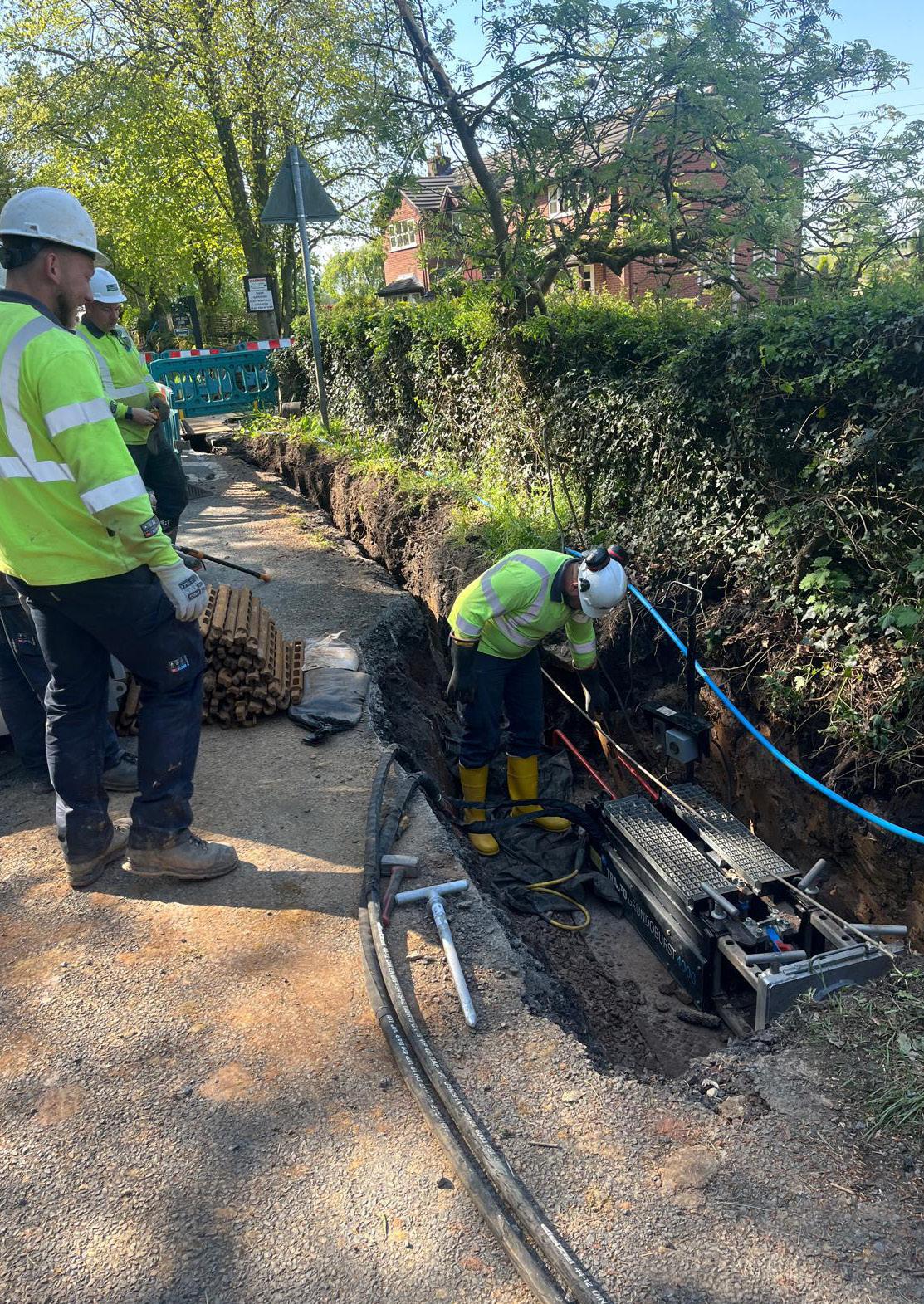
As part of its evaluation of suitable trenchless renewal options, a team from Severn Trent attended a pipe bursting course at TRACTO’s UK headquarters in Bedford. Following the training and assessment process, the company ordered four GRUNDOBURST 400G pipe bursting units, which are now being shared across eight Severn Trent Water regions.
The units were selected for a number of reasons, including their flexibility across a range of pipe sizes, machine quality, productivity, safety features, overall value and the level of training, site support, parts and service provided by TRACTO.
In preparation for the replacement of 29 km of pipe over the AMP8 period, 150 operators were trained by TRACTO throughout 2025. TRACTO pipe bursting operator Arnie Bailey, a highly qualified trainer, demonstrator and trenchless consultant, has also supported Severn Trent teams on site during their initial bursting projects.
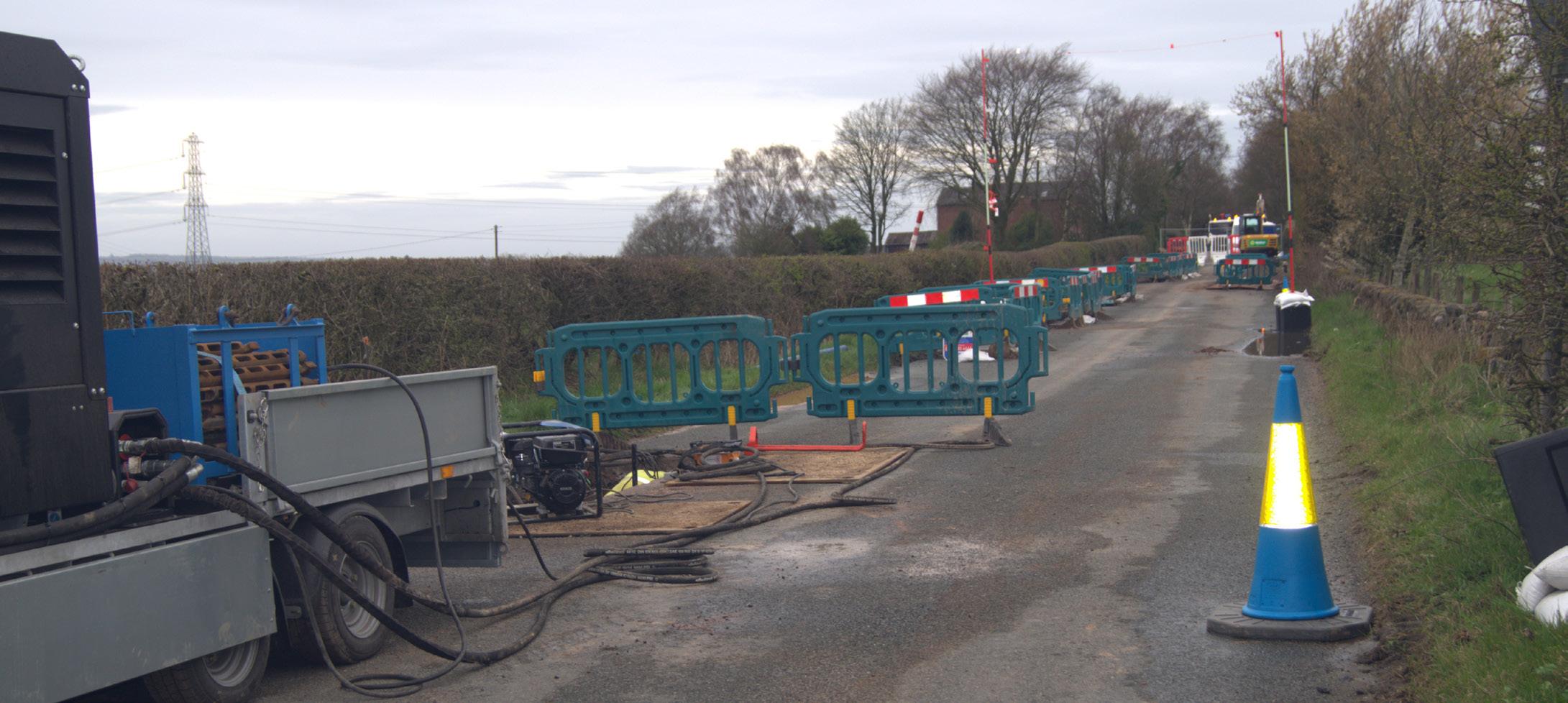
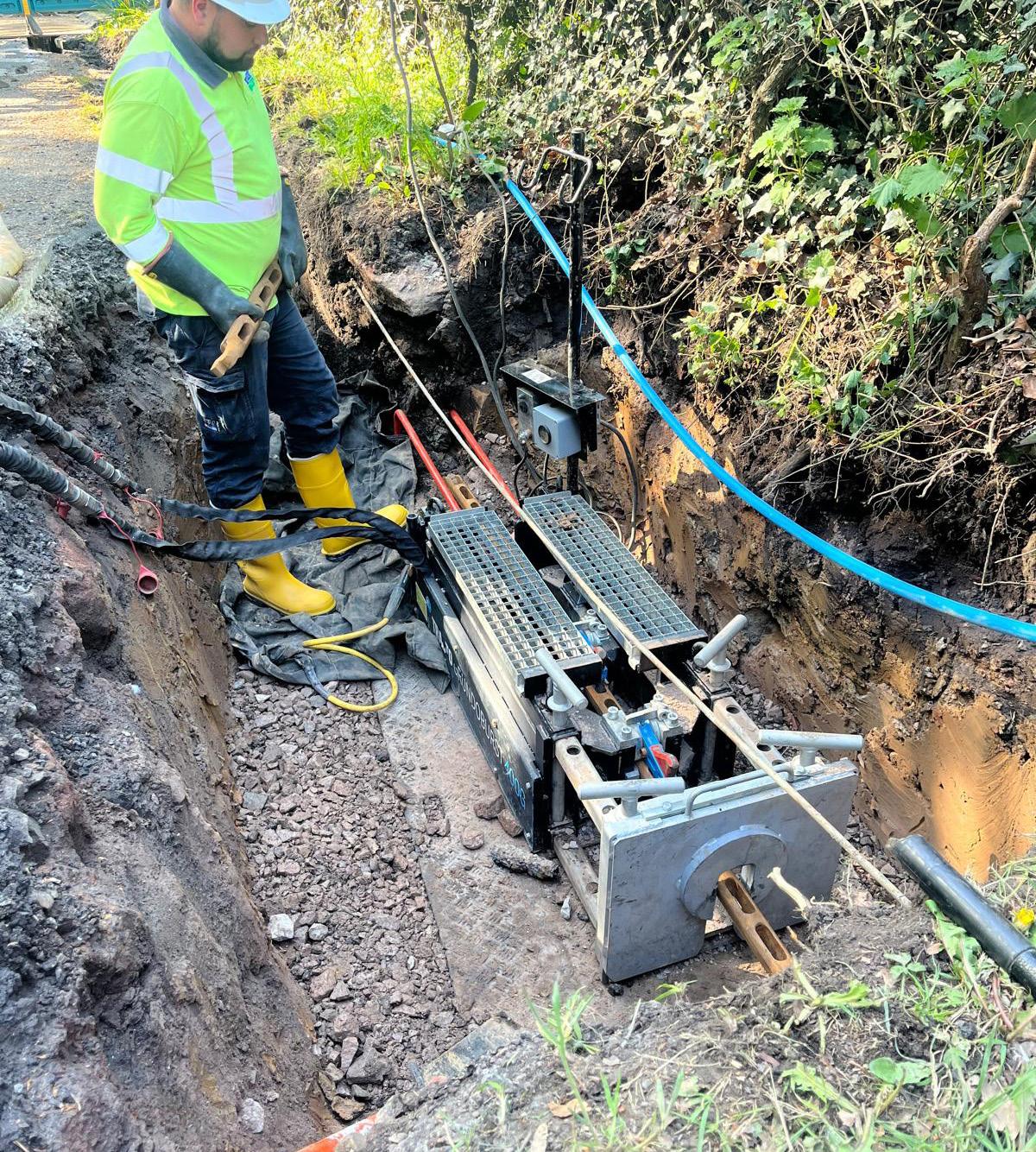
One of the new machines has already completed 950 m of pipe renewal work at Bagnall, Stokeon-Trent, where ageing infrastructure had been affected by repeated burst pipe issues.
Lawrence Twiddy, Network Construction Manager for Staffordshire at Severn Trent, attended the machine training and also arranged practical support for the first burst.
“Arnie was very knowledgeable and competent and was really helpful in assisting us with the first burst in Bagnall,” he said. “The team has successfully burst the whole job now and are extremely happy with the kit. This technique and rig will be a revelation for us over the coming four years left in AMP8.”
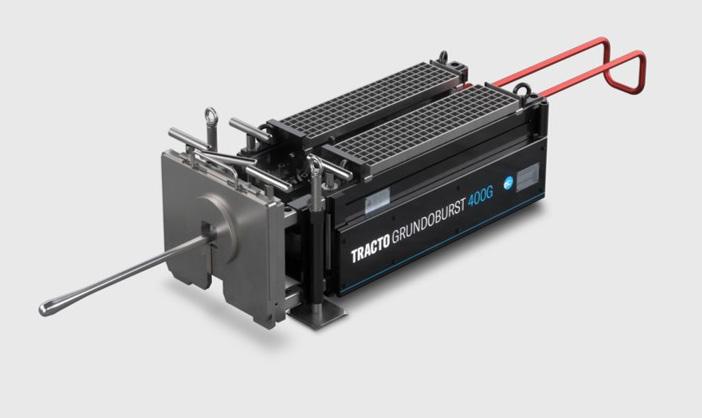
GRUNDOBURST 400G
The GRUNDOBURST 400G is a compact, hydraulic, static pipe bursting rig designed for underground pipe renewal. Operating from compact pits, the system significantly reduces the need for open-cut trenching, helping to minimise surface disruption and reinstatement requirements.
“ The team has successfully burst the whole job now and are extremely happy with the kit. This technique and rig will be a revelation for us over the coming four years left in AMP8.
Lawrence Twiddy, Network Construction Manager for Staffordshire, Severn Trent
By reducing excavation, pipe bursting can help works progress more quickly and with less disruption to local communities. In many cases, it can also allow one carriageway to remain open during works, supporting safer and more efficient traffic management.
Operator safety is also central to the system’s design. The GRUNDOBURST uses TRACTO’s ladder rod system, which connects using a quick-lock mechanism rather than a traditional screw thread. This reduces the amount of time operators spend handling heavy rods and tools, while also avoiding repetitive tightening of threaded connections under load.
The coupling design helps prevent rods from slipping back during bursts, reducing the risk of sudden machine movement. Rod insertion is straightforward, while the linked rod design provides flexibility to help the system negotiate mild bends within the existing pipeline.
For Severn Trent, the investment marks a significant step in scaling up in-house trenchless capability during AMP8, supporting faster, safer and less disruptive renewal of ageing buried infrastructure.
NEED A LONG-LASTING PIPE REHAB SOLUTION?
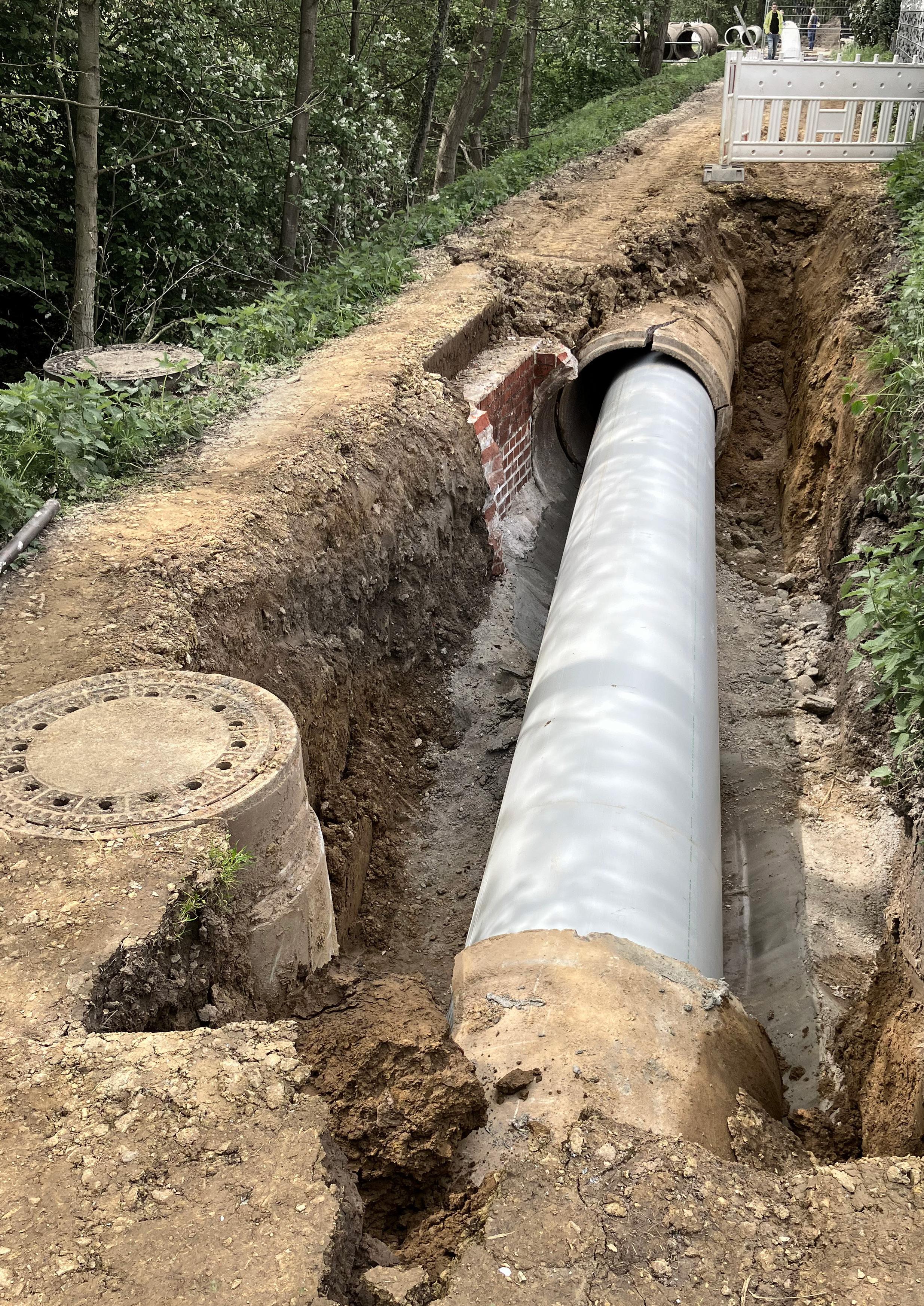
TRACTO’s pipe bursting technology is the ideal solution for replacing defective pipes quickly and gently, without compromising their hydraulic performance - if required, you can even increase the flow cpapacity by pulling in larger diameters.
Want to know more about the long-term solutions for intact infrastructure? The experts at our Pipe Bursting Center provide individual project consultancy and hands-on training to contractors and decision-makers: thorsten.schulte@tracto.com | +49 160 8455638
More on pipe rehab solutions:
Barhale secures £12.5M tunnel inspection and maintenance programme
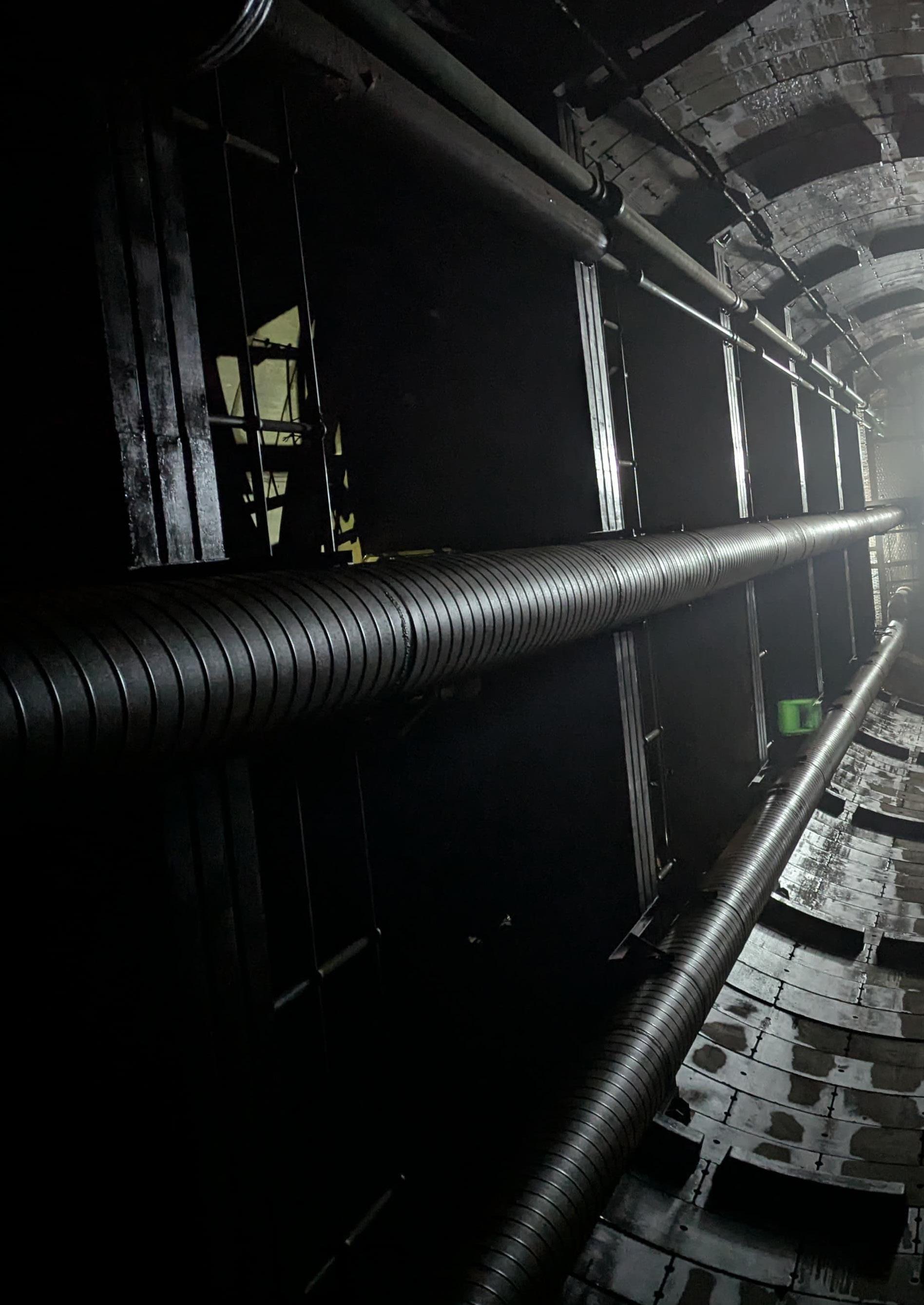
Thames Water has appointed Barhale to deliver a £12.5M programme of statutory tunnel inspection and maintenance across key infrastructure including the Thames Water Ring Main (TWRM) and North London Abstraction and New River Zone raw water assets.
The projects, awarded under the AMP8 Tunnels and Aqueducts programme, will also include the production tunnels within Thames Water’s treatment works, bringing the total length of tunnels under inspection to almost 48 kilometres.
On the TWRM, civil engineering, infrastructure and tunnelling specialist Barhale will use mainly man entry with some limited Remotely Operated Vehicles (ROV) to inspect 12 sections of the tunnel at depths of up to 65m, representing around 20% of the asset’s extent.
At the North London Abstraction and New River Zone, Barhale will carry out 24 inspections concentrated around the Lee Valley reservoir complex. The varying diameter tunnels are buried up to 50m deep and range from 30m to 5,450m in length. The overall length to be inspected in the Lee Valley area is 24.9km.
ROV, CCTV and sonar surveys will be conducted where in person inspection of the tunnels is not possible.
The tunnels will be accessed from existing shafts. Works will be carried out under Confined Space Working conditions and will include clearing sludge, silt, stones and invasive species – particularly mussel concentrations which impact flows. It is estimated that 3,120 tonnes of waste will be removed.
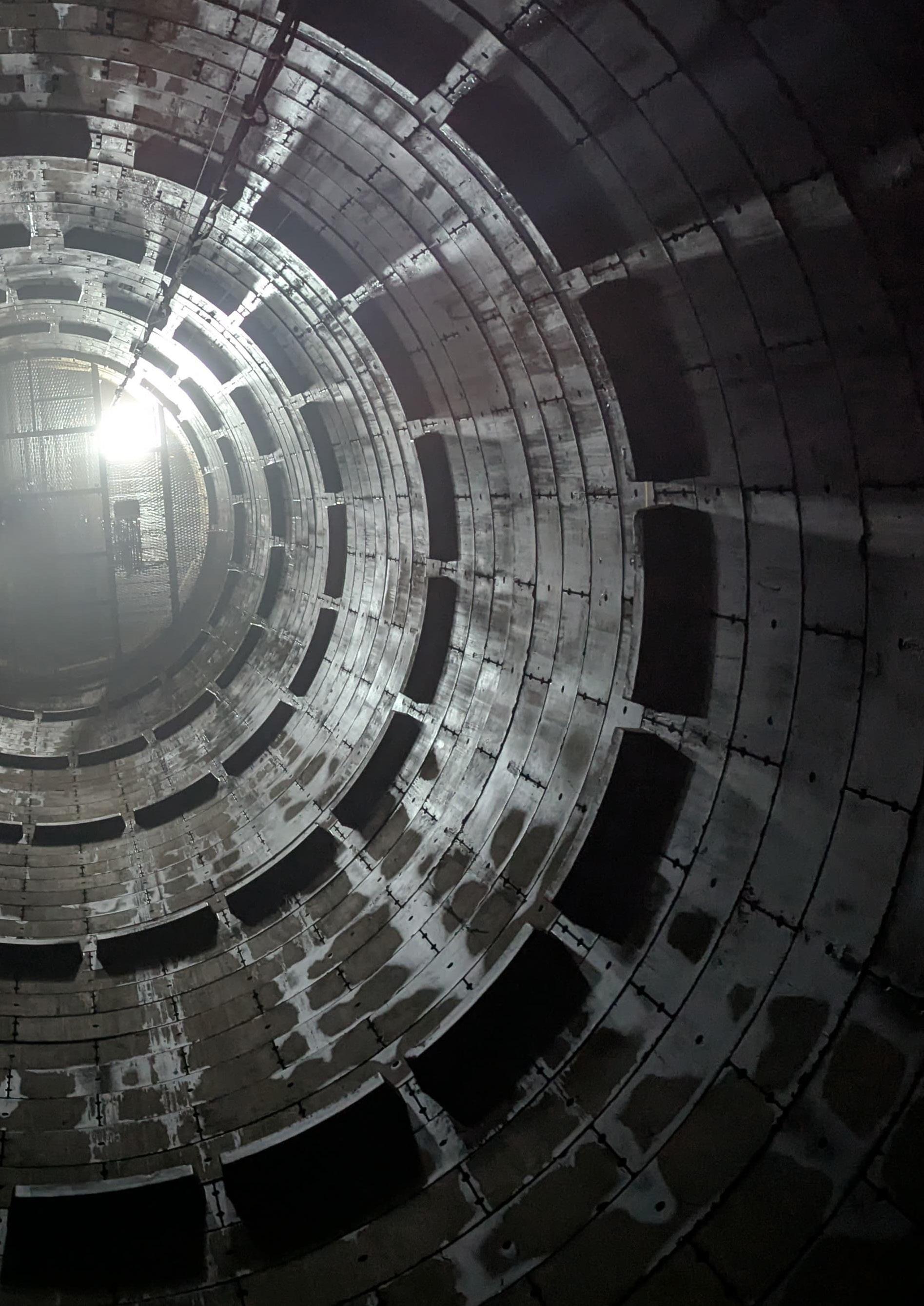
Barhale’s inspection and maintenance programme will include Stanwell shaft
“ We are proud of our safety record and continue to improve how we manage risk through the introduction of a new confined space working training regime. It imposes new site entry controls and will see all operatives qualified to the highest level.
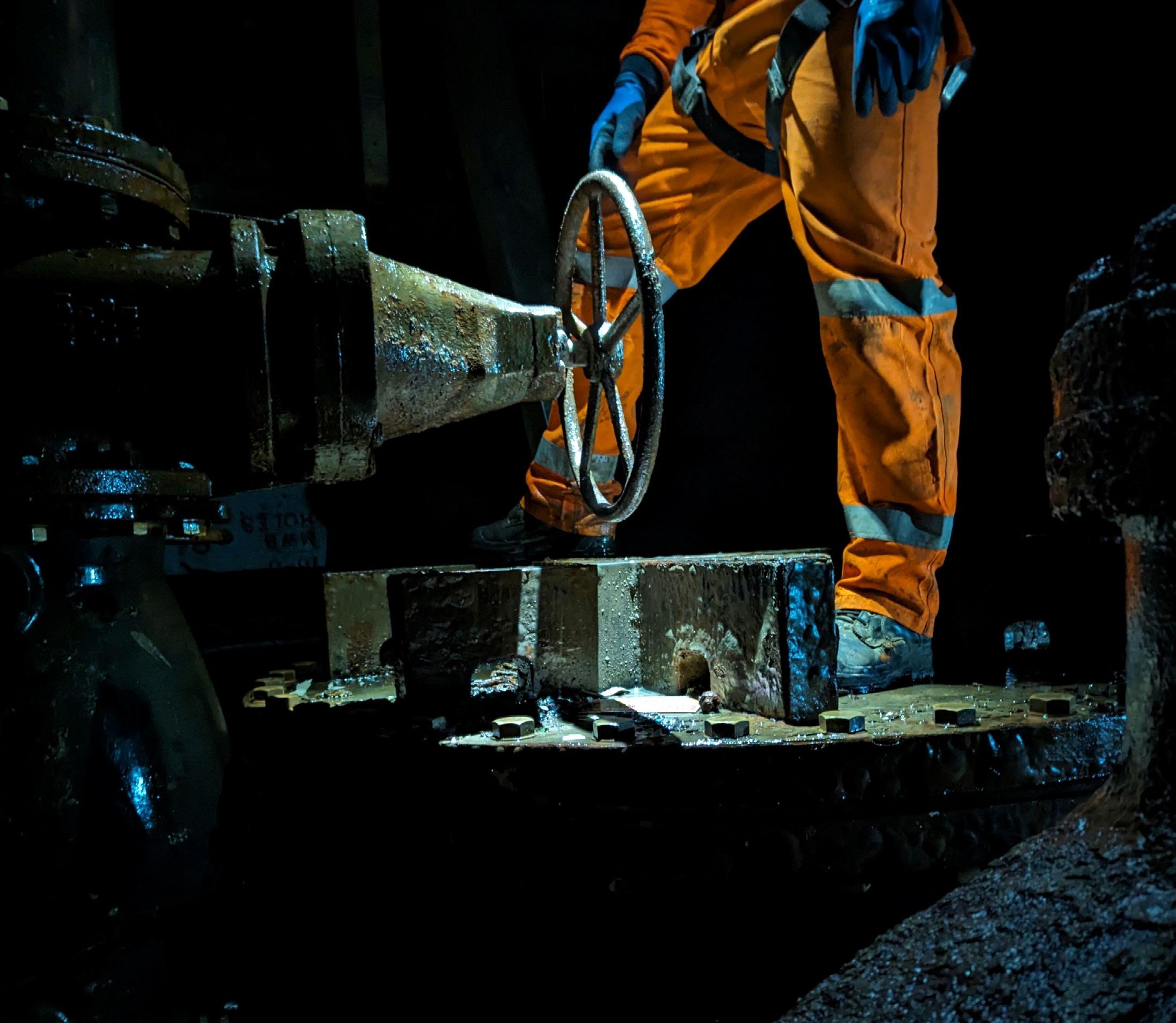
Barhale will complete minor repairs, including mortar repairs, leak sealing and resin injection and replace or repair access furniture such as ladders, landing platforms and covers. Specialist diving teams will complete repairs to inlet screens, eel screens and carry out external shaft repairs. Major repair requirements will be identified and taken forward for appropriate action.
The final inspections will be conducted by Thames Water Reservoir Engineering teams.
Barhale will also replace nine large diameter valves under the programme.
The programme presents numerous environmental considerations with several of the Lee Valley projects located in Sites of Special Scientific Interest (SSSI) and Ramsar-designated locations. Walthamstow Wetlands is a conservation area accessible to the public and work is planned to protect existing bat and newt populations in the tunnels.
“This programme involves complex work in confined spaces and live water environments,” said Steve Best, Senior Project Manager at Barhale. “We have developed inspection and isolation processes with Thames Water over more than 20 years, and they are designed to keep our teams safe while maintaining reliable operation of the network.
“We are proud of our safety record and continue to improve how we manage risk through the introduction of a new confined space working training regime. It imposes new site entry controls and will see all operatives qualified to the highest level.
“Our double isolation protocol, developed with Thames Water, also ensures that there is an additional layer of protection for teams working near live tunnel sections.”
JT32 JT32 JT32

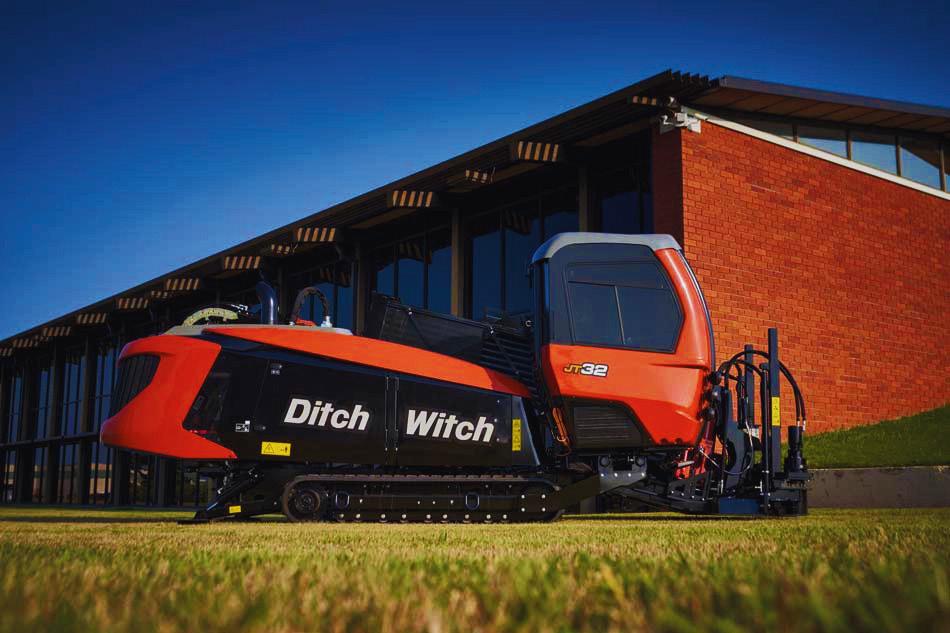

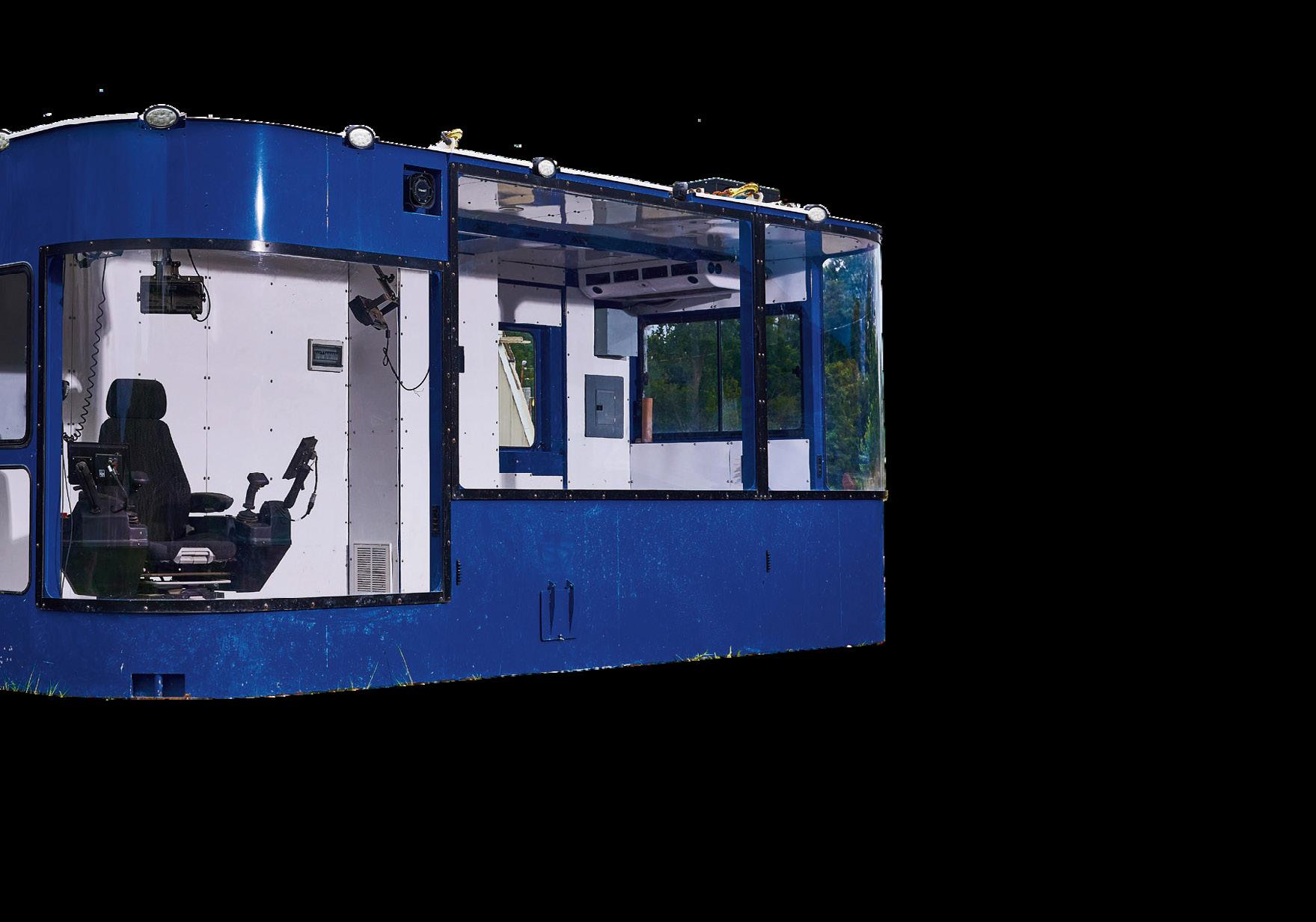
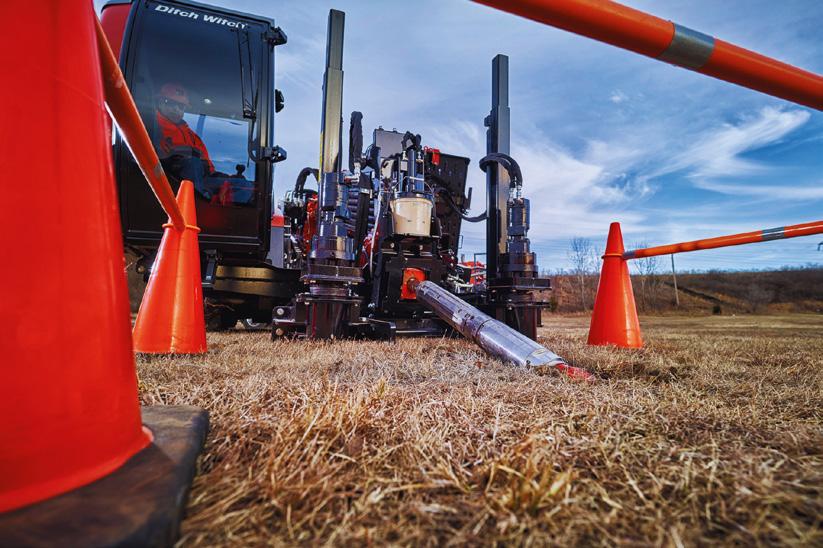
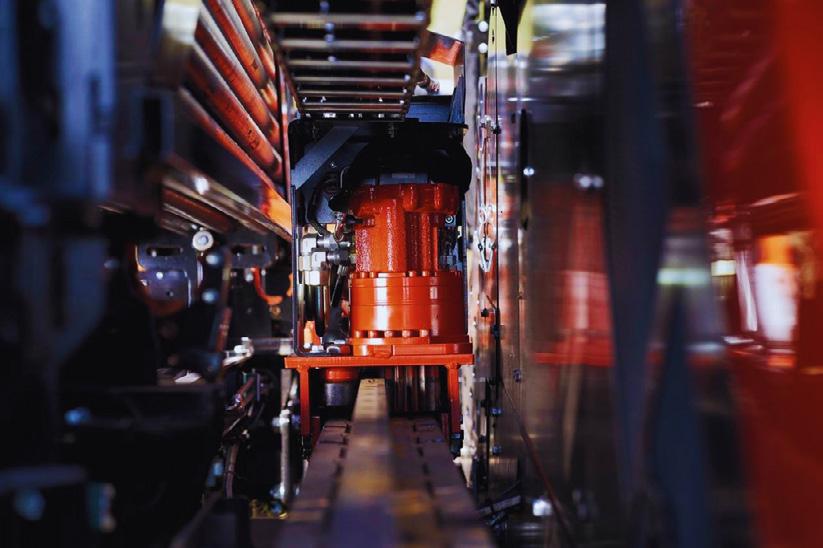
The power you want. The size the job demands. Bursting at the seams with power, the JT32 is the next generation of drilling, packing performance and strength into a sleek package. Plus, operator-focused innovations allow for easier system operation and the ability to always finish the job - no matter what might stand in your way.
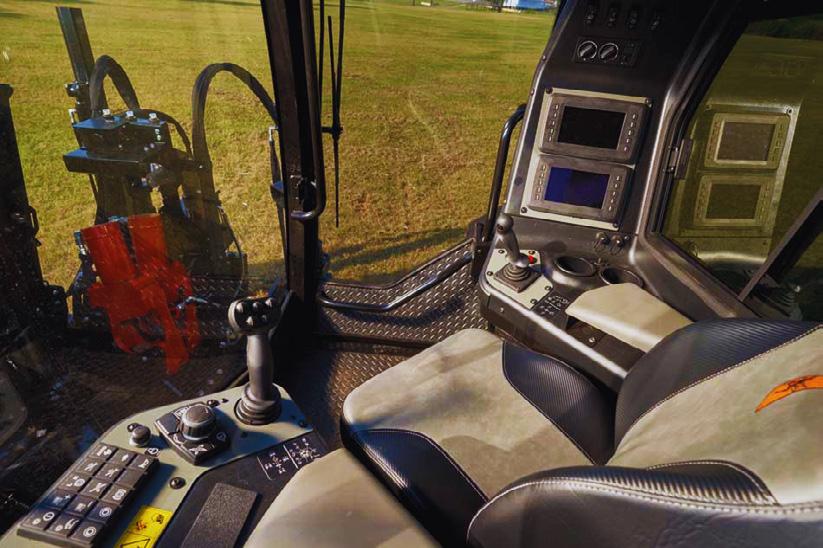

POWERFUL PERFORMANCE PRECISION CONTROL BUILT TO LAST MAXIMUM PROUCTIVITY



LEARN MORE ABOUT THE JT32
BENEATH THE ALPS
How Switzerland’s tunnels are driving the shift from road to rail
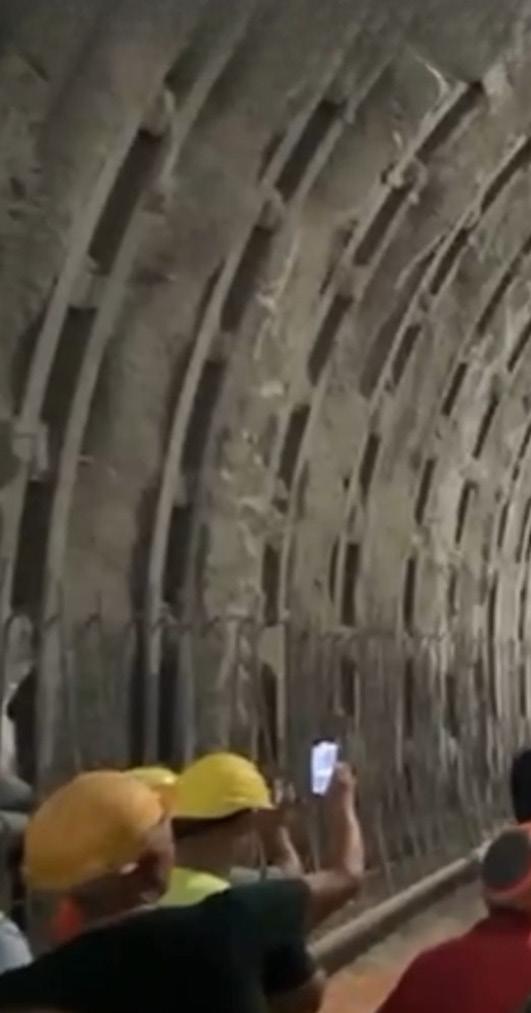
Switzerland’s tunnel network is often described as one of the most advanced in the world. Beneath its mountains, roads, railways, hydropower schemes and utility galleries form an extensive underground system that has helped shape the country’s transport, energy and infrastructure strategy for generations.
But in recent decades, Switzerland’s most significant tunnelling achievements have carried an additional purpose. They have become central to a national policy designed to move freight away from roads and onto rail, reducing pressure on Alpine valleys and supporting a more sustainable transport system.
At the heart of this strategy is the New Rail Link through the Alps, known as the NRLA. The project brings together the Lötschberg, Gotthard and Ceneri base tunnels to create a flatter, faster north-south railway corridor beneath the Alps. Rather than forcing trains to climb steep mountain routes, the base tunnels allow passenger and freight services to pass through the rock at lower gradients and with greater efficiency.
The best-known section is the Gotthard Base Tunnel. At 57 km, it remains the longest railway tunnel in the world. Running between Erstfeld in the canton of Uri and Bodio in Ticino, the tunnel consists of two single-track tubes connected by cross passages. Its total underground system, including shafts, passages and associated tunnels, extends to 152 km.
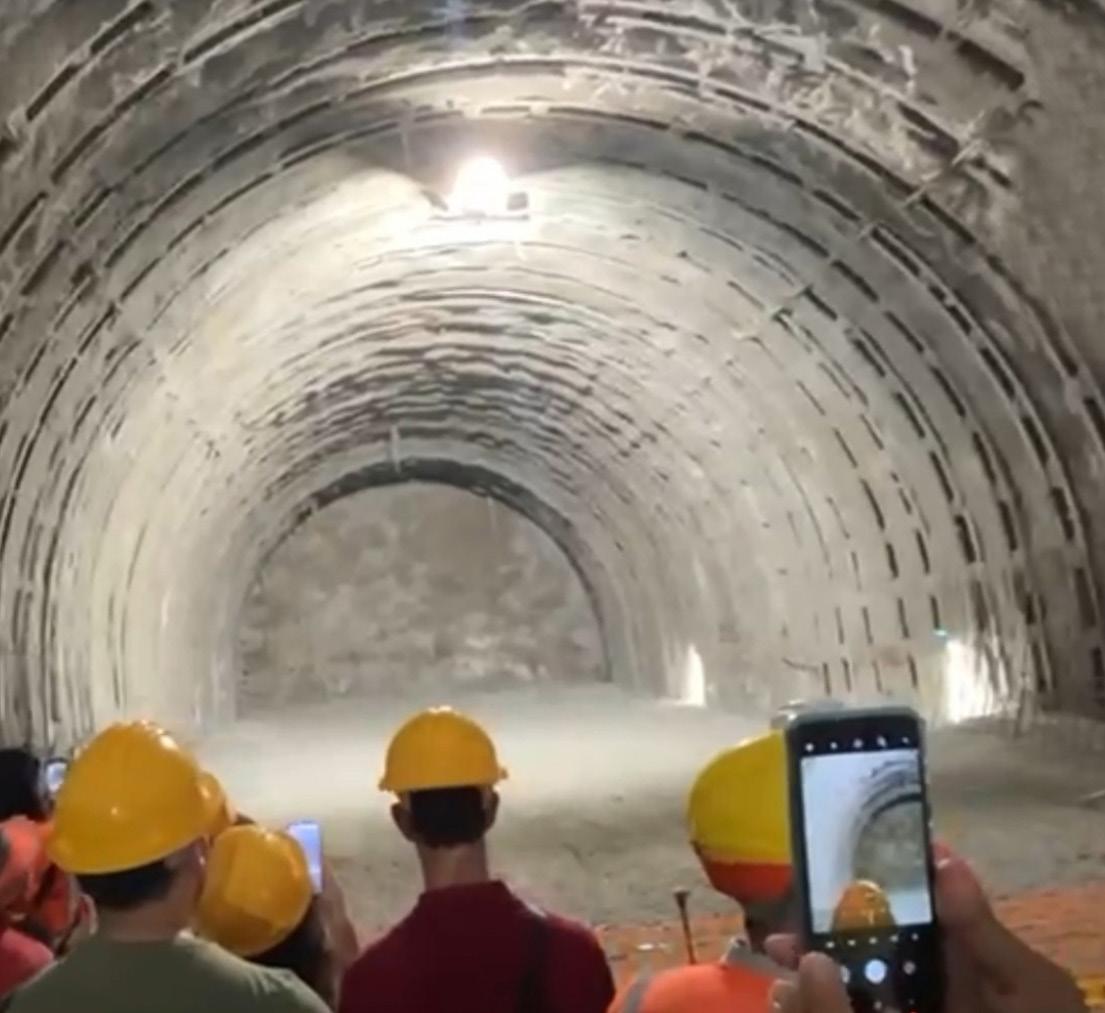
The scale of construction was immense. Around 28.2 million tonnes of excavated material were removed during the works, with tunnel boring machines used for the majority of the main drives. The tunnel opened in 2016 after 17 years of main construction work and now forms a key part of one of Europe’s most important freight corridors.
For passengers, the benefits are easy to understand. Journeys between northern and southern Switzerland are faster and more reliable. The same infrastructure, however, has a deeper strategic role for freight. A flatter rail route allows longer and heavier freight trains to move through the Alps with lower energy demand than traditional mountain routes. It also improves capacity and makes rail a more practical competitor to road haulage.
That matters because Switzerland’s Alpine valleys have long carried the burden of transalpine road freight. Heavy goods vehicles travelling through narrow mountain corridors bring noise, emissions, congestion and safety risks. In steep valleys, air pollution can be trapped close to communities, while mountain roads remain exposed to weather, rockfall and other natural hazards.
Switzerland’s response has been unusually consistent. Since voters approved the Alpine Initiative in 1994, the country has pursued a constitutional commitment to transfer freight traffic crossing the Alps from road to rail. The policy target is to reduce heavy goods vehicle journeys through the Swiss Alps to 650,000 per year.
“ Swiss planners placed considerable emphasis on managing the local impacts of construction. Excavated material was reused where possible, site logistics were carefully planned, and measures were taken to reduce noise, dust, wastewater impacts and disruption to surrounding communities. In a country where the landscape is both economically vital and environmentally sensitive, such mitigation was not a secondary consideration.
The tunnels are only one part of that policy. Switzerland has also introduced a heavy goods vehicle charge based on distance, weight and emissions. A significant portion of this revenue has supported rail infrastructure investment, including the NRLA. The country has also backed combined transport, rail market reform and agreements with neighbouring countries to improve the wider European freight corridor.
This combination of infrastructure and policy has made Switzerland one of Europe’s strongest examples of modal shift. Rail now carries around 70% of freight traffic through the Swiss Alps, far higher than comparable Alpine routes in neighbouring countries. Heavy goods vehicle crossings have fallen below one million a year, although the long-term 650,000 target has not yet been fully achieved.
The Swiss example is important because it shows that tunnelling alone does not create environmental benefit. A tunnel can shorten a route, increase capacity or improve resilience, but its wider impact depends on how it is used. In Switzerland, underground infrastructure has been embedded in a wider transport strategy, supported by pricing, regulation, long-term funding and public approval.
The environmental balance is also more complex than simple slogans suggest. Large tunnels carry significant construction impacts. Excavation, concrete, logistics, spoil handling and energy use all have to be considered. The Gotthard Base Tunnel was a massive engineering project, and its embodied carbon footprint cannot be ignored.
However, Swiss planners placed considerable emphasis on managing the local impacts of construction. Excavated material was reused where possible, site logistics were carefully planned,
and measures were taken to reduce noise, dust, wastewater impacts and disruption to surrounding communities. In a country where the landscape is both economically vital and environmentally sensitive, such mitigation was not a secondary consideration.
For the tunnelling sector, the lesson is highly relevant. Underground infrastructure is increasingly being asked to do more than provide access through difficult ground. It is being used to support decarbonisation, resilience, flood management, urban mobility, energy storage and the protection of sensitive surface environments.
Switzerland’s approach demonstrates how tunnels can become part of long-term environmental infrastructure when they are planned as components of a wider system. The NRLA was not simply an engineering response to a mountain barrier. It was part of a national decision about how goods should move, how Alpine communities should be protected and how transport capacity should be built for the future.
For passengers travelling through the Gotthard Base Tunnel, the experience may feel uneventful. A train enters the darkness, moves beneath the rock and emerges into daylight on the other side. Yet that quiet reliability is exactly the point. Beneath the Alps, Switzerland has created an underground transport system that is not only about speed and connectivity, but about reshaping freight movement above ground.
As other countries consider how to reduce congestion, cut transport emissions and improve infrastructure resilience, Switzerland offers a clear message: tunnels are most powerful when they are not treated as isolated megaprojects, but as part of a long-term strategy linking engineering, policy and environmental protection.















Why effective bore planning is critical to HDD project success
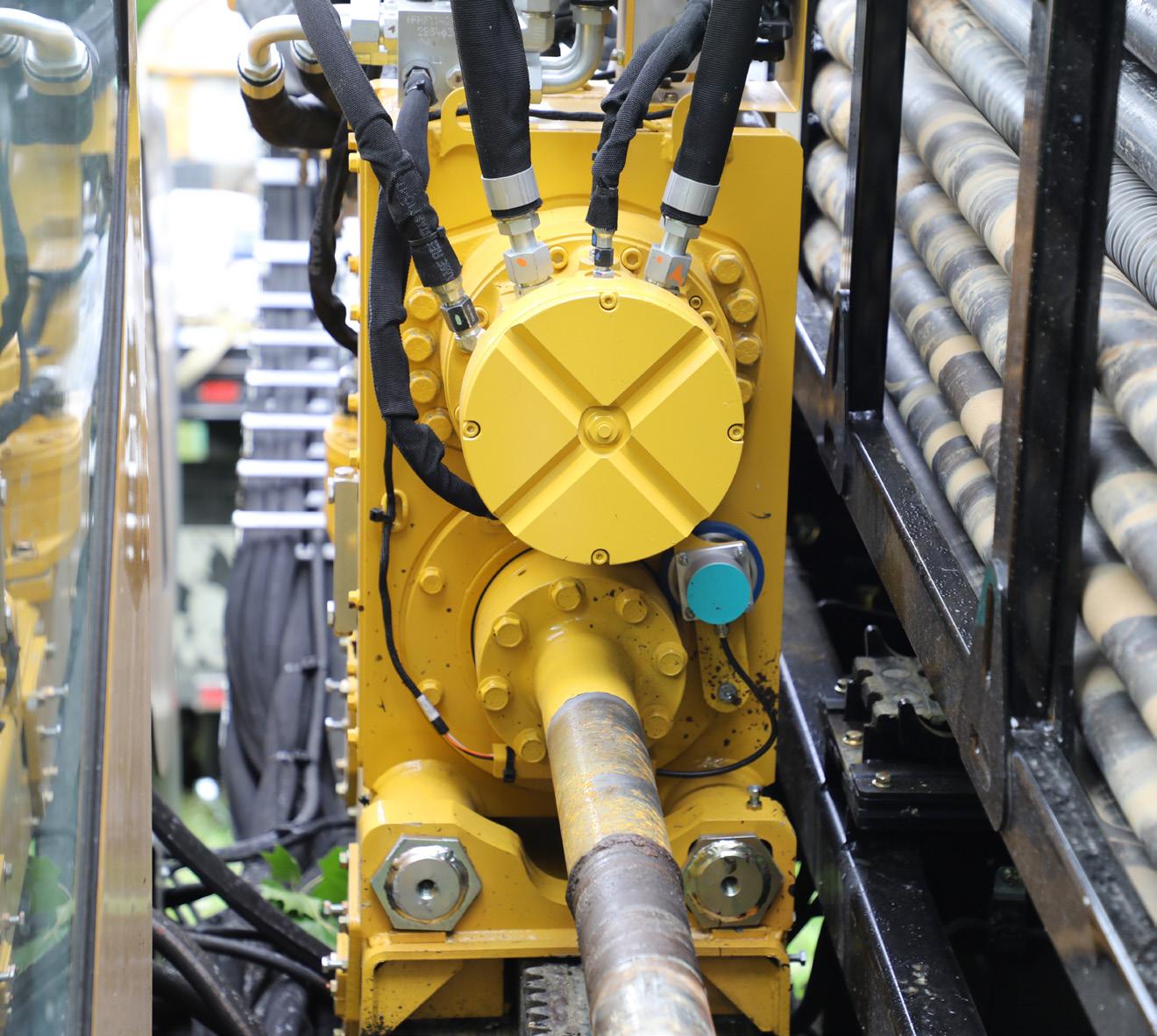
As horizontal directional drilling projects become more technically demanding, bore planning is playing an increasingly important role in project delivery, safety and commercial performance. What was once treated mainly as a pre-construction task is now a key part of managing risk across the full HDD process. Inadequate planning can lead to utility strikes, delays, failed pullbacks, equipment damage and increased project costs.
For contractors, these issues can place significant pressure on programmes, crews and margins. In many cases, the cost of poor planning far exceeds the time required to prepare a clear, accurate and coordinated bore plan at the start of a project.
the bore. In more challenging ground conditions, these risks can escalate quickly and may result in failed installations or damage to equipment.
Delays can also begin long before drilling starts. Missing information, unclear records and poor communication between office-based teams and site crews can slow mobilisation, increase rework and reduce productivity.
Digital bore planning tools are helping to address these challenges by allowing bore paths, utility crossings and project information to be mapped, shared and updated more efficiently. Improved visibility across the project lifecycle can support better decision-making and help reduce avoidable delays.
One of the main causes of disruption during HDD works is a limited understanding of existing underground services. Congested utility corridors, incomplete records and changing site conditions can all increase the risk of clashes during drilling. Accurate utility locating, potholing and route verification are therefore essential. Without this information, crews may encounter unexpected crossings, clearance issues or asset conflicts once works are already underway. This can result in stoppages, redesign, repair costs and potential reputational or regulatory consequences.
Bore design also has a direct impact on operational performance. Entry and exit angles, bend radius, product pipe diameter, reamer sizing and ground conditions all need to be considered together during the planning stage.
If these factors are not properly assessed, contractors may face increased pullback forces, excessive stress on the product pipe or instability within
Clear documentation is also becoming more important. Many clients, local authorities and municipalities now expect detailed bore plans and accurate as-built records as part of project delivery. Contractors that can provide consistent, reliable documentation are often better placed to meet these requirements and demonstrate good practice.
Ultimately, effective bore planning is about reducing uncertainty before drilling begins. By investing time in planning, verification and coordination, HDD contractors can improve productivity, manage risk more effectively and deliver more consistent project outcomes.
Vermeer UK continues to support HDD contractors across the UK and Ireland with bore planning technologies, operational guidance and practical expertise designed to help crews plan and deliver projects with greater accuracy and confidence.
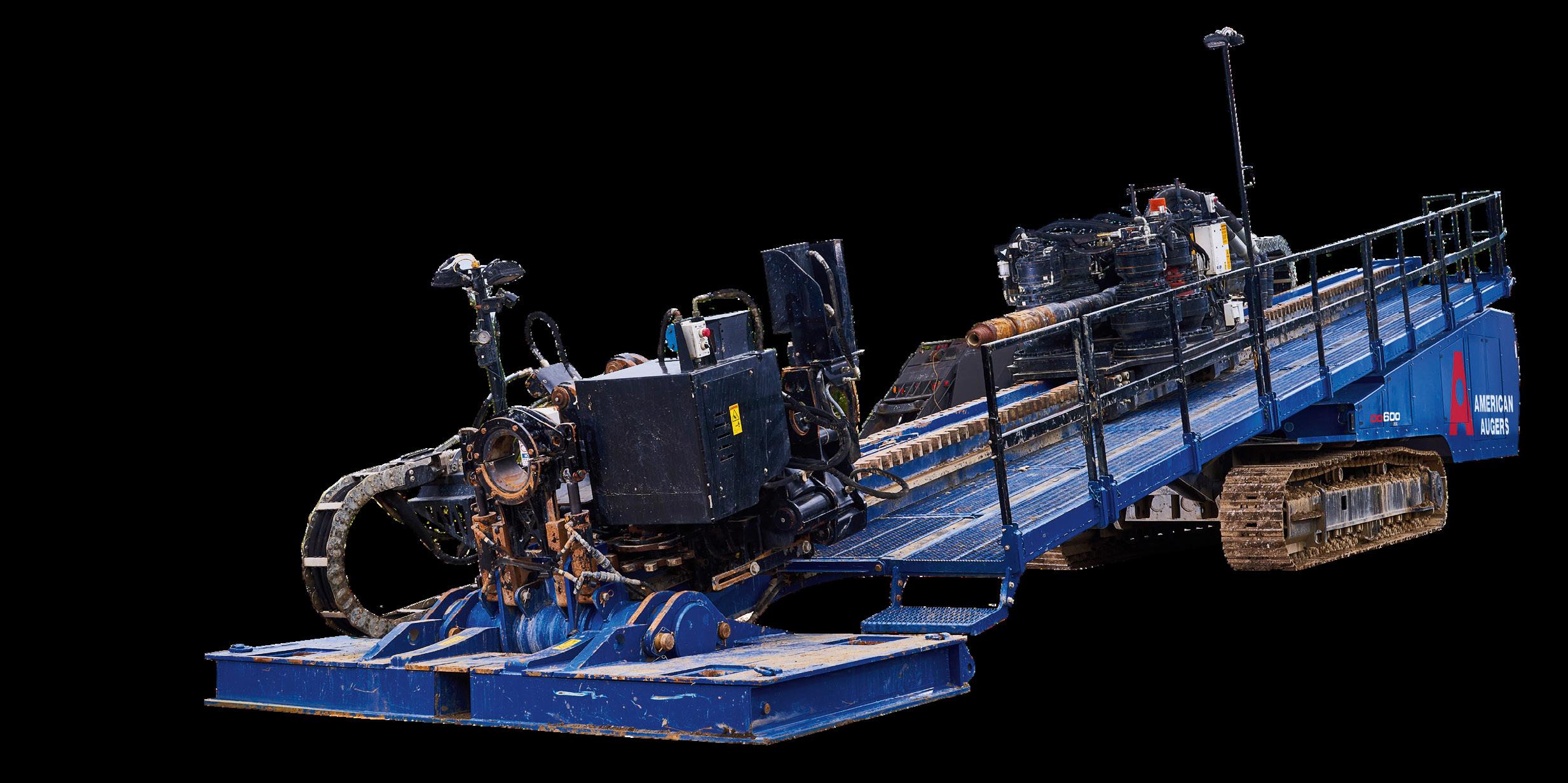
STILL IN A LEAGUE OF ITS OWN
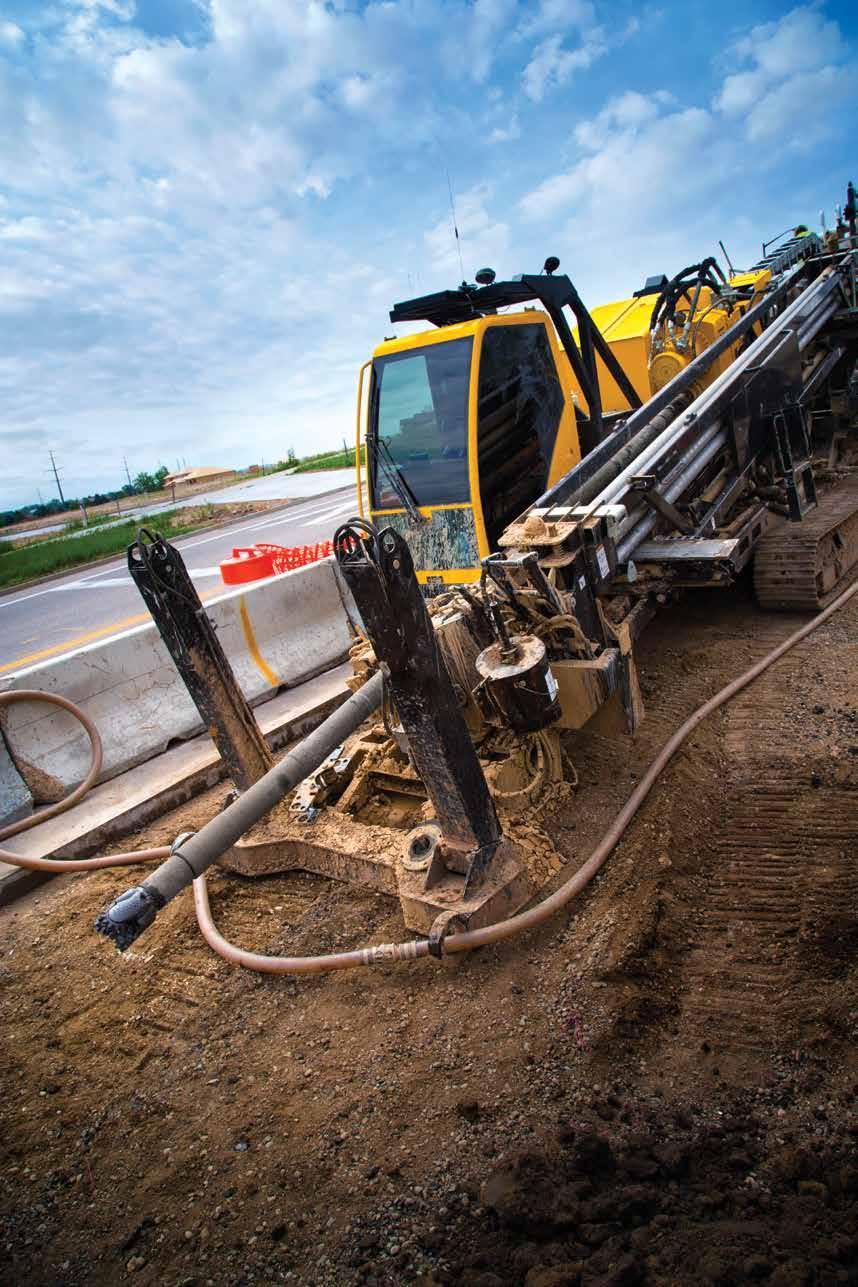
THE D100X140 S3 NAVIGATOR®
HORIZONTAL DIRECTIONAL DRILL
The D100x140 S3 is a unique machine in the HDD market. It’s not only used for oil, gas or other large pipeline projects — but utility projects as well due to the machine’s small footprint.
Manhole and access chambers vs Quick-Pig pigging stations
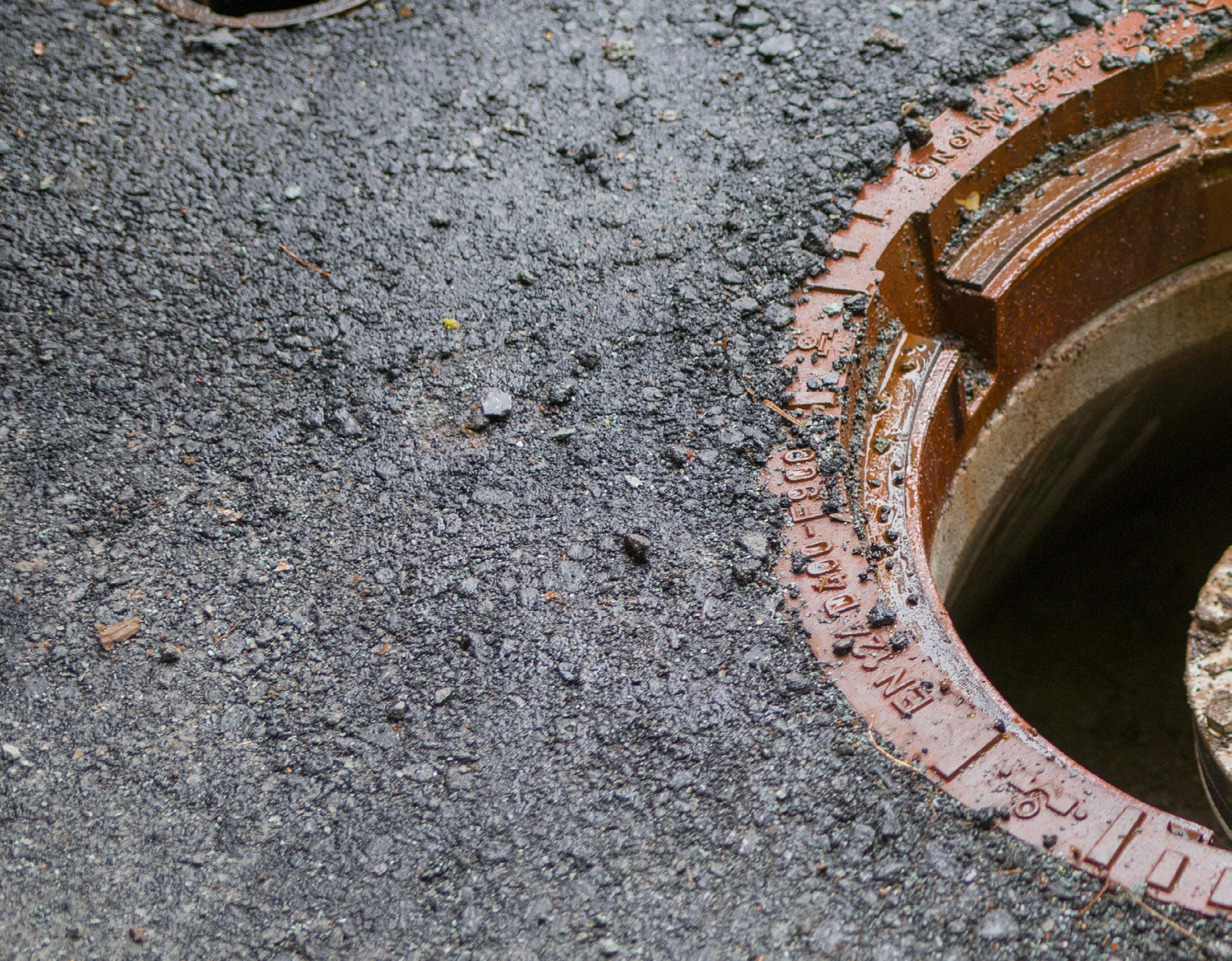
Wastewater rising mains and pressure pipelines require regular maintenance to ensure reliable operation, minimise blockages and maintain hydraulic performance.
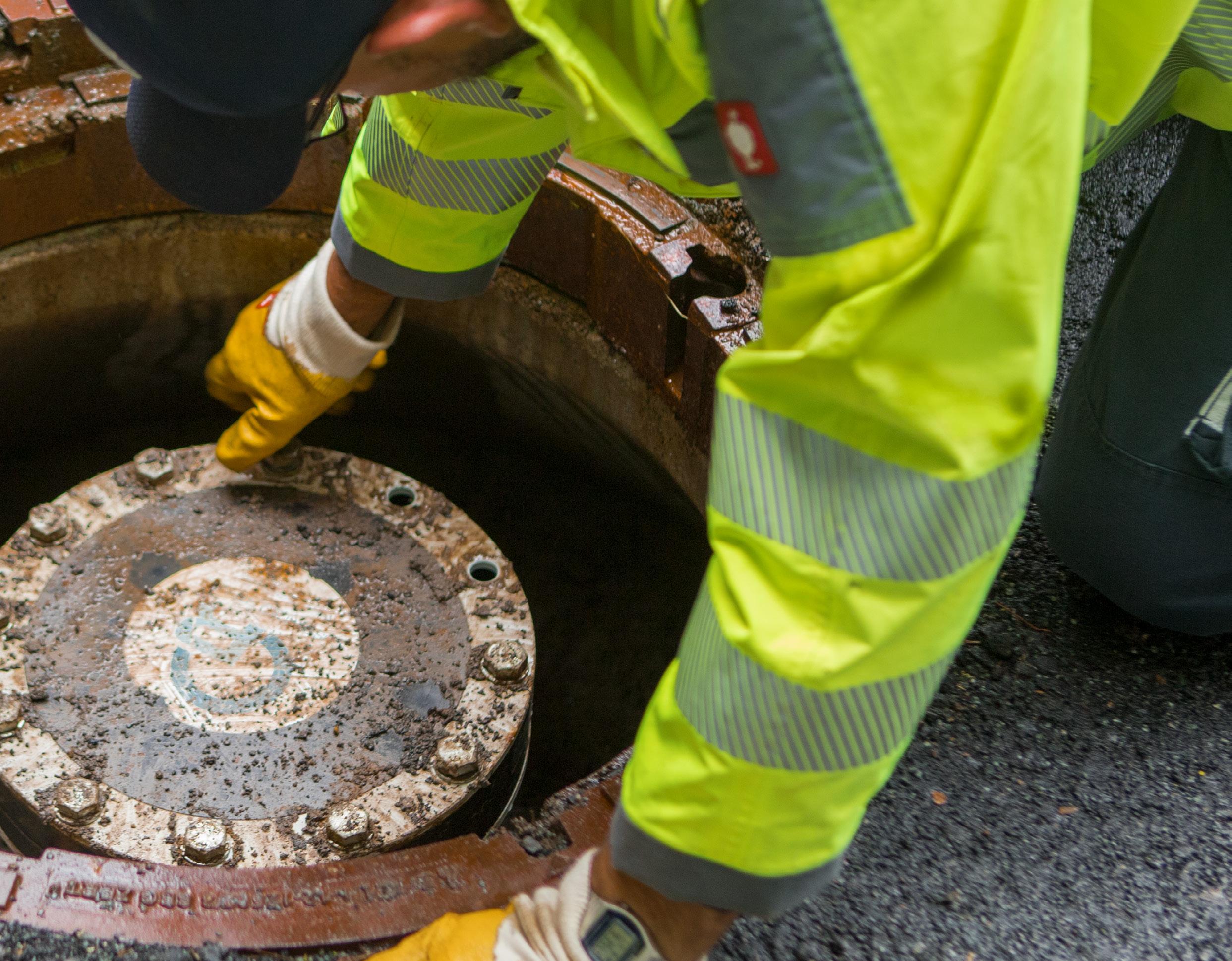
Traditionally, manholes and access chambers have been used to provide entry points for inspection, cleaning and maintenance. However, compact pigging stations such as Quick-Pig offer an alternative approach, allowing key maintenance activities to be carried out from ground level without the need for personnel to enter confined spaces.
This article compares traditional manhole and access chamber solutions with the Quick-Pig pigging station system, looking at functionality, safety, installation requirements and longterm maintenance considerations.
Maintenance access for wastewater rising mains
Access points on wastewater rising mains can support a range of operational activities, including flushing, deaeration, pigging, inspection and flow monitoring.
Flushing is commonly used to remove accumulated fats, sediment, debris and other deposits that can reduce hydraulic capacity. High-pressure water flushing can help restore flow performance, although it may need to be supported by other cleaning methods depending on pipeline condition and deposit type.
Ventilation and deaeration can also play an important role in wastewater networks. Effective venting helps manage air build-up and can reduce the formation of hydrogen sulphide, which is associated with odour, corrosion and operational issues.
Pigging is another established cleaning method. A pig is inserted into the pipeline and propelled through the system using existing flow or water pressure. As it travels, it dislodges accumulated material and helps restore hydraulic performance. Following cleaning, CCTV inspection can be used to assess the internal condition of the pipeline and identify defects such as cracks, corrosion or structural deterioration.
Other methods, including Ice Pigging and compressed air cleaning systems such as air scouring, may also be used in some applications. However, these approaches can require temporary isolation, specialist equipment or carefully controlled operating conditions. In pressurised pipelines, the introduction of air should be assessed carefully, as it can create additional operational risks.
Traditional manholes and access chambers
Manholes and access chambers can provide access to wastewater infrastructure for a variety of maintenance and inspection activities. They can also support additional equipment, such as flow monitoring devices, valves or other operational fittings.
However, chamber-based access normally requires significant civil engineering works. Site selection must consider vehicle and equipment access, nearby watercourses, environmental constraints, underground services and the surrounding infrastructure.
The chamber design must also take account of ground conditions, traffic loading, groundwater levels, pipeline diameter, material specification, internal working space, corrosion resistance and long-term durability.
In many cases, construction will require structural calculations, permits, approvals and coordination between designers, contractors, suppliers and asset owners. This can increase both the complexity and duration of the programme. There are also operational considerations. Where personnel entry is required, chambers are classified as confined spaces and strict health and safety procedures must be followed. These can include confined space permits, gas monitoring, ventilation, personal protective equipment, trained personnel and rescue arrangements.
Only once all safety requirements have been satisfied can entry be permitted.
Quick-Pig pigging stations
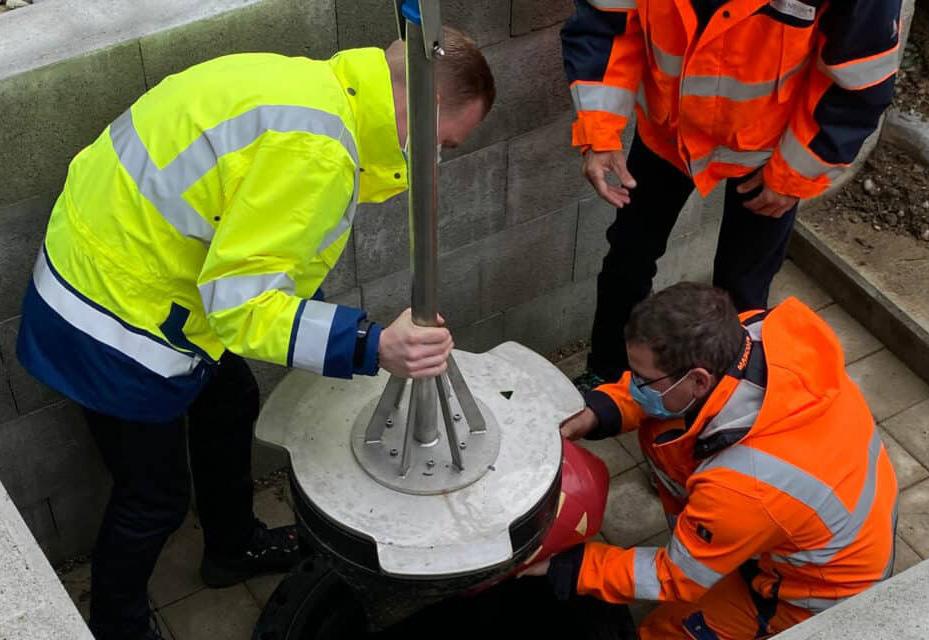
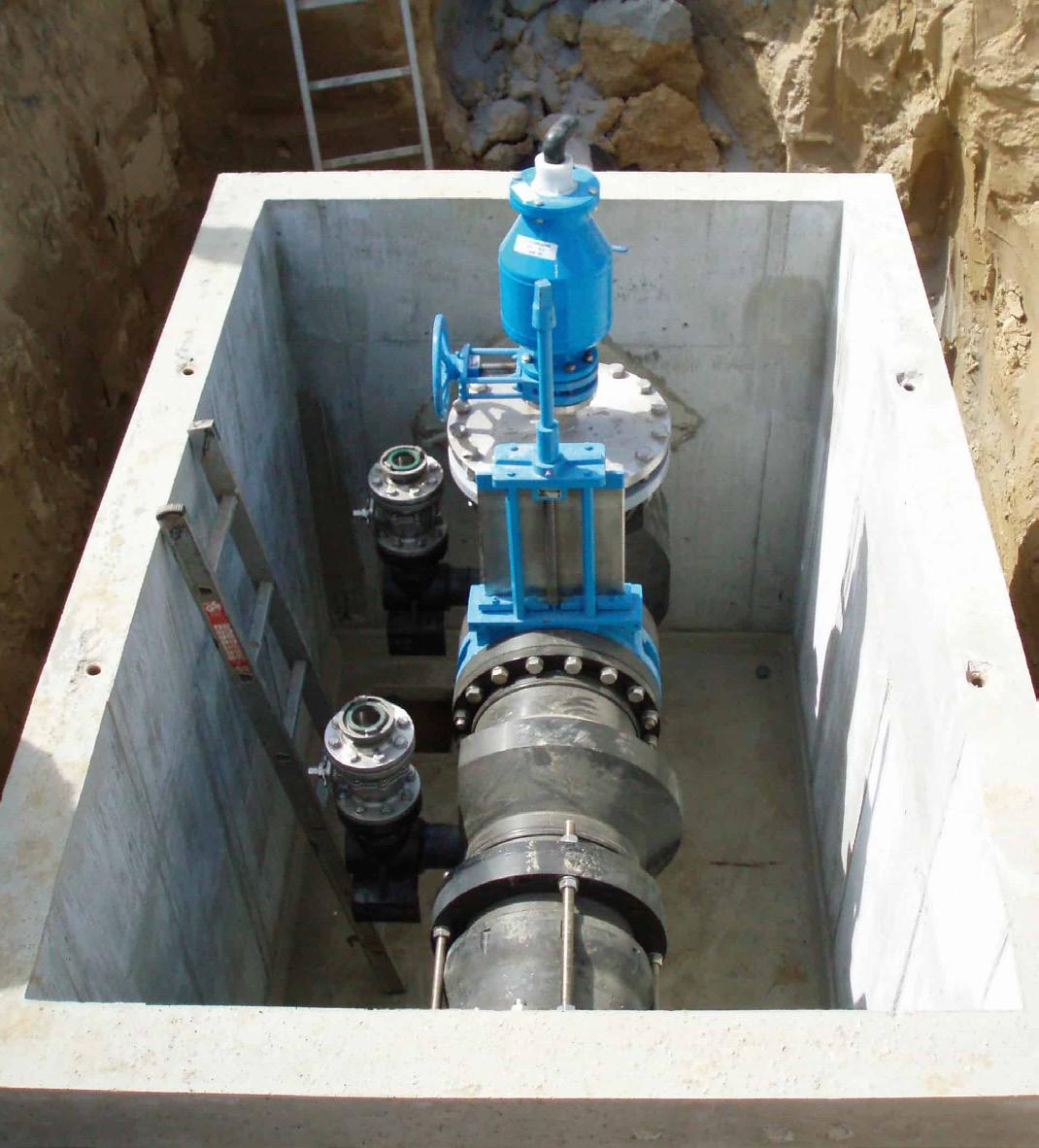
Quick-Pig pigging stations are designed to provide pipeline access without the need for a traditional chamber structure. The system is installed as a component within the pipeline and operated from ground level through purpose-designed access risers.
This approach can reduce excavation requirements, simplify installation and avoid the need for personnel to enter confined spaces during routine pigging operations.
The compact design means pigging stations can often be installed directly within the normal pipe trench, reducing the footprint of the works. This can provide greater flexibility when selecting installation locations along a rising main.
As a general arrangement, the launch station is typically installed downstream of the pumping station, while the receiving station is located near the wastewater treatment works or another suitable discharge point.
Quick-Pig stations can support a range of maintenance activities, including pigging, flushing, CCTV inspection, draining, suction extraction and optional venting
or deaeration. This enables several functions to be carried out through a single installation.
The system can be integrated into both new and existing rising mains and is engineered to maintain uninterrupted wastewater flow during normal operation.
Safety and operational benefits
One of the key advantages of a pigging station is that maintenance activities can be handled from ground level. This significantly reduces the need for confined space entry and can improve operator safety.
The system also reduces the number of components required compared with a traditional chamber arrangement, which may help minimise potential points of failure.
Quick-Pig units are manufactured from PE100 RC and stainless steel, providing corrosion resistance and long-term durability in wastewater environments. Because no concrete chamber structure is required, issues such as chamber corrosion, regular chamber rehabilitation and internal access maintenance can also be reduced.
From a planning perspective, location changes or configuration adjustments can often be accommodated more easily than with a chamberbased solution. Coordination is generally limited to the pipeline contractor and system supplier, reducing project management complexity.
Training and commissioning support are also important. Operators must be familiar with the correct pigging procedure, system operation and site-specific maintenance requirements before routine use.
Design limitations and considerations
While Quick-Pig offers several operational and safety benefits, it is not suitable for every application.
For larger units, lifting equipment may be required. From OD 225, suitable lifting arrangements could include a permanently installed crane, a construction vehicle with a crane or a mobile tripod system.
Camera inspection is generally possible from DN/OD 125 upwards. Installation depth is also a consideration, with a recommended depth of approximately 2.5 m unless otherwise agreed following technical consultation.
Traditional chambers may still be preferred where unrestricted installation depth is required, where larger internal working space is necessary or where additional equipment such as magnetic-inductive flow meters must be incorporated into the chamber structure.
The correct solution should therefore be assessed on a project-by-project basis, taking account of pipeline diameter, depth, location, access requirements, operational needs and whole-life cost.
Cost comparison
An indicative cost comparison prepared in 2019 by engineering office Wiese in Germany compared a concrete chamber solution with a QuickPig pigging station for a DN 150 pipeline.
The comparison included procurement and installation costs such as site barriers, chamber or pigging station components, covers, couplers, valves, excavation-related works and reinstatement items.
In the example provided, total costs for the revision chamber were €26,475, compared with €20,880 for the Quick-Pig pigging station.
While costs will vary by country, site conditions, depth, specification and project requirements, the comparison demonstrates how a compact chamberless system can reduce installation complexity and potentially lower both capital and long-term maintenance costs.
“
Quick-Pig pigging stations offer a compact alternative for wastewater rising mains, enabling pigging, flushing, inspection, draining and suction extraction to be carried out from ground level without routine confined space entry.
Summary
Traditional manholes and access chambers provide established access for a wide range of wastewater maintenance activities. However, they can involve significant civil engineering works, confined space procedures, approval requirements, traffic management and ongoing chamber maintenance.
Quick-Pig pigging stations offer a compact alternative for wastewater rising mains, enabling pigging, flushing, inspection, draining and suction extraction to be carried out from ground level without routine confined space entry.
For water companies and contractors seeking to improve asset performance while reducing installation complexity, programme duration and operational safety risks, pigging stations can provide a practical and less disruptive option for modern wastewater networks.
Herrenknecht marks 30 years in Thailand at Trenchless Asia
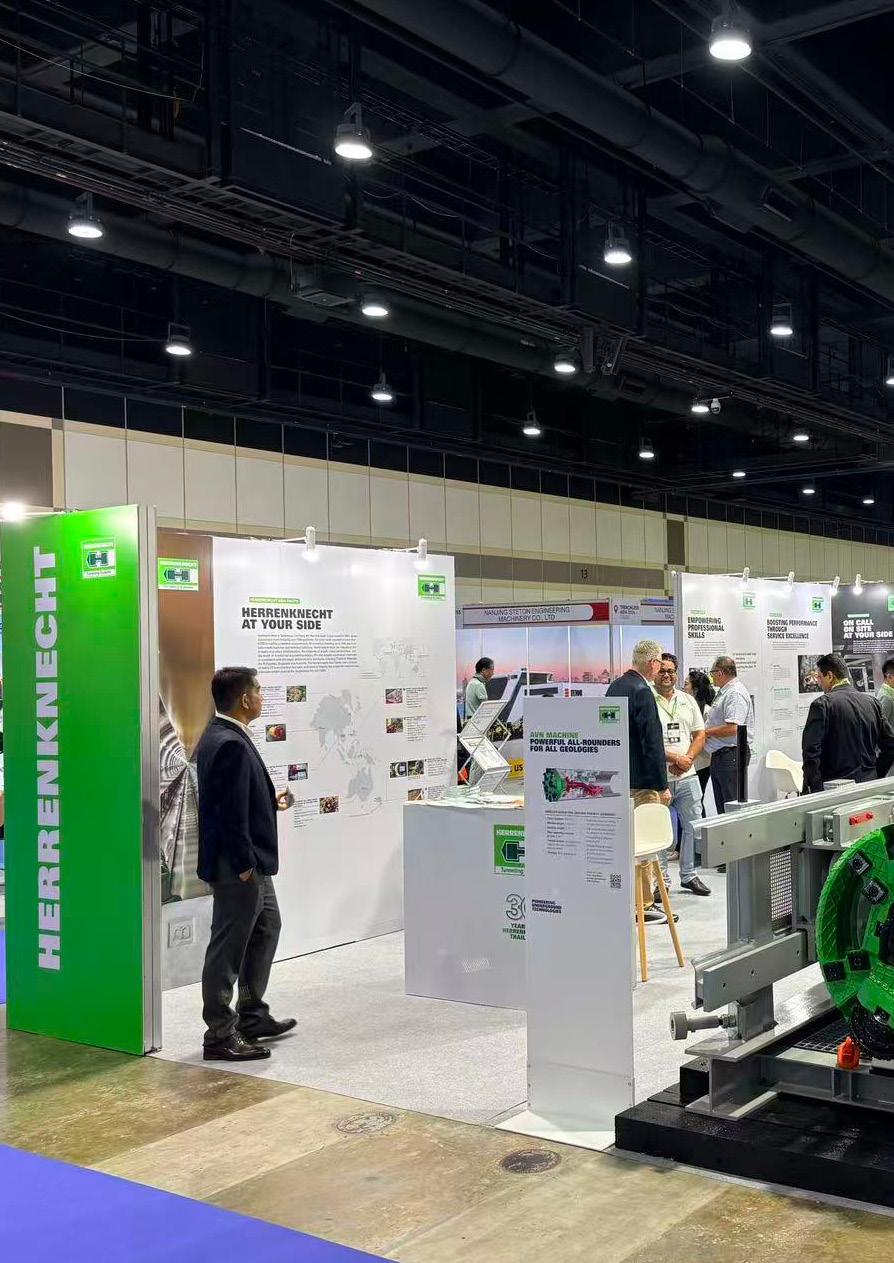
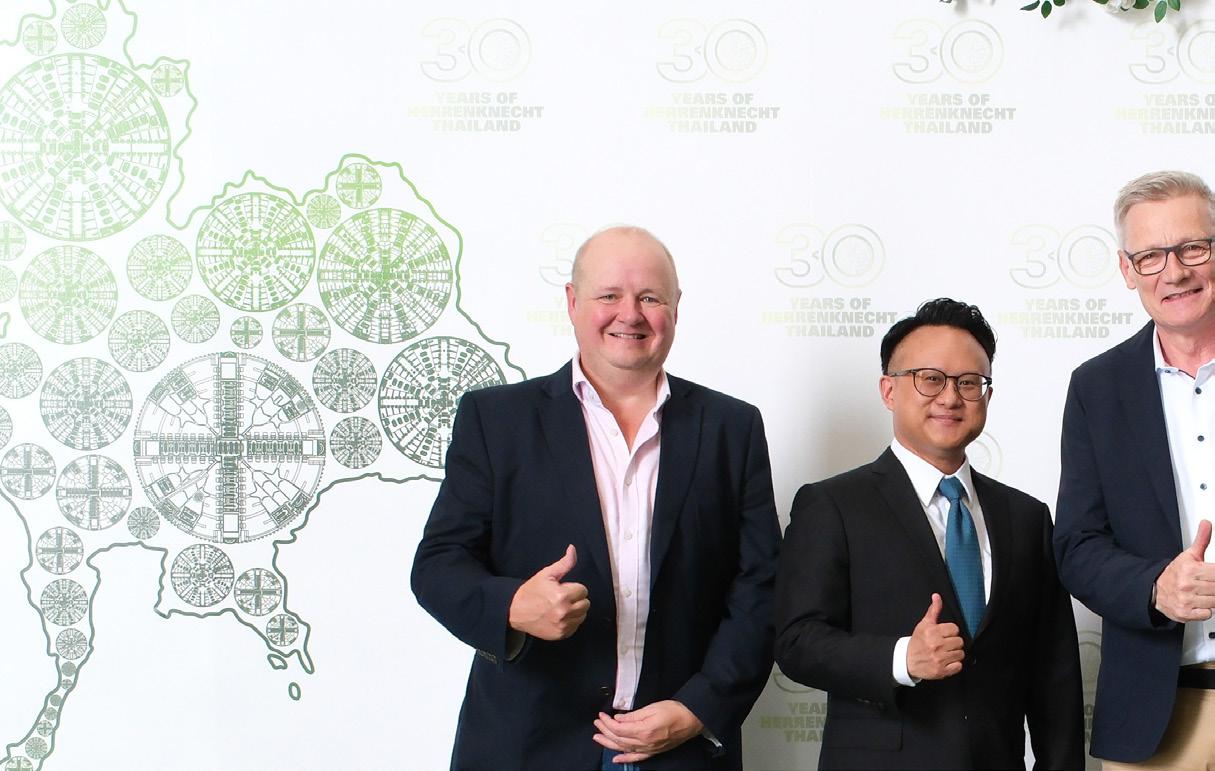
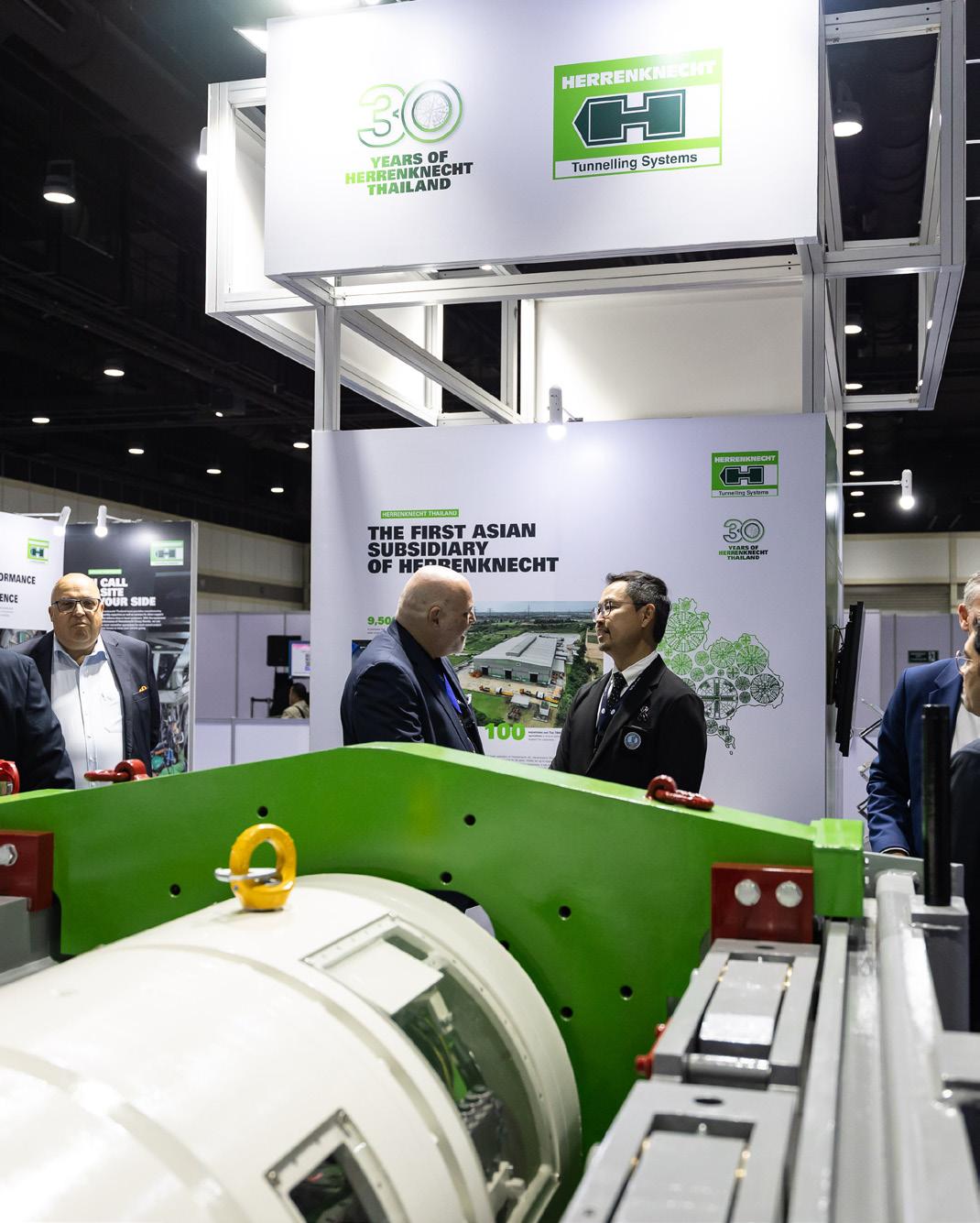
Herrenknecht Thailand marked 30 years of operations in June with a strong presence at Trenchless Asia 2026, followed by anniversary celebrations at its manufacturing and service facility in Rayong. Together, the events highlighted the company’s evolution into a key manufacturing and support hub for customers across Southeast Asia.
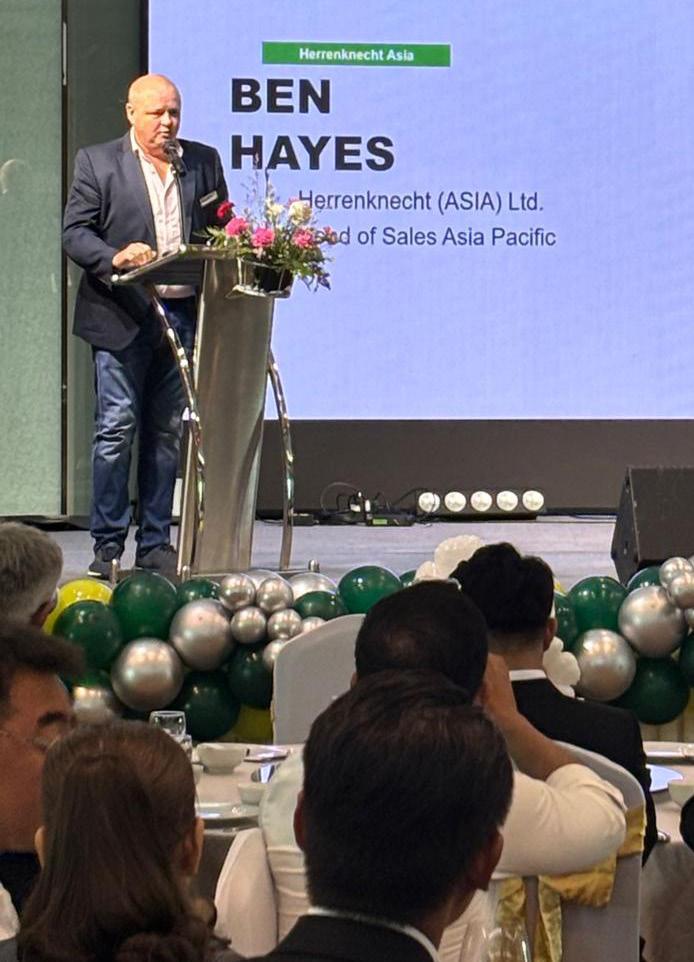
“We’ve been in Thailand for 30 years and have been producing machines locally for the last five, so we’re really pleased to be able to show it off.
Ben Hayes, Head of Sales APAC, Herrenknecht
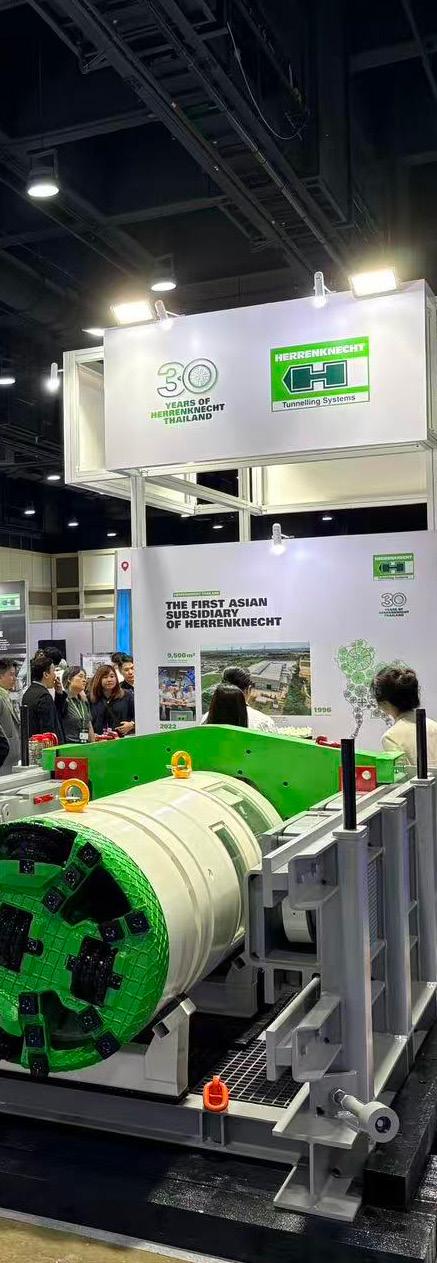
Held at Bangkok’s Queen Sirikit National Convention Center on 10-11 June, Trenchless Asia 2026 saw Herrenknecht exhibit an AVN 600 slurry microtunnelling machine complete with a compact jacking frame for use in small-diameter shafts.
Manufactured entirely at the company’s Rayong facility, the machine underlined the capabilities of Herrenknecht’s Thai operation, which has been producing equipment locally for the past five years. The stand remained busy throughout the two-day exhibition, attracting contractors, consultants, utilities and infrastructure owners from across the region.
Ben Hayes, Head of Sales APAC, said: “We’ve been in Thailand for 30 years and have been producing machines locally for the last five, so we’re really pleased to be able to show it off.”
Among those visiting the stand was a delegation from the Bangkok Metropolitan Waterworks Authority (MWA), led by Deputy Governor Supichete Tavorntaveevong. The delegation was welcomed by Ulrich Schaffhauser, Member of the Herrenknecht Board of Management, and Ben Hayes. Herrenknecht has supplied six EPB shields for major MWA water infrastructure projects in Thailand.
The celebrations then moved to Herrenknecht Thailand’s manufacturing and service facility in Rayong on 12 June, where around 150 customers, partners, employees and invited guests gathered to mark the anniversary.
Guests toured the facility before attending an official ceremony featuring addresses from Ulrich Schaffhauser, Joerg Schwietale, Managing Director of Herrenknecht Thailand, and Ben Hayes. Speakers reflected on the company’s development in Thailand, long-term customer relationships and the opportunities presented by continued infrastructure investment across the region.
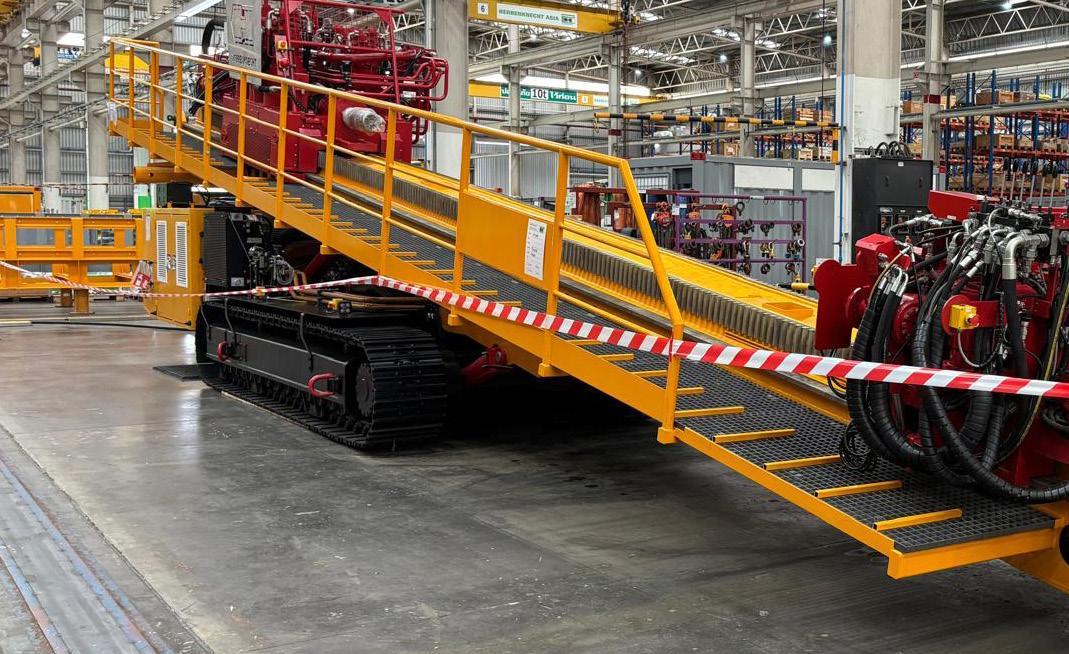
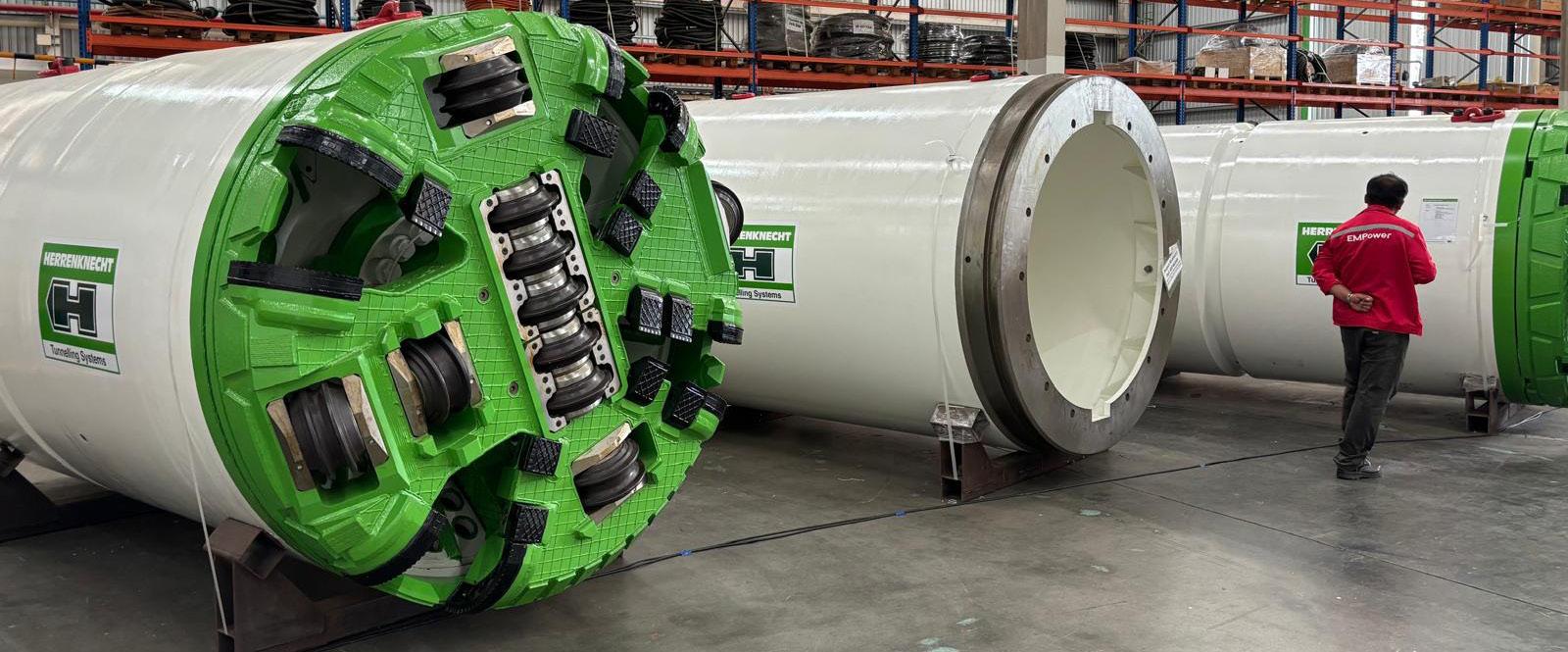
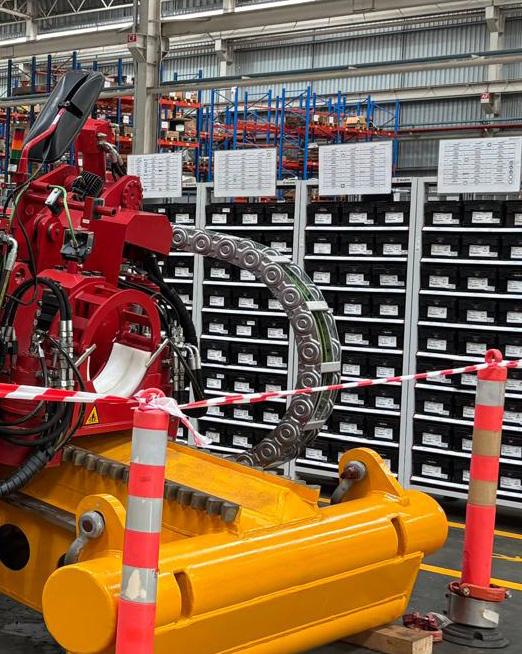
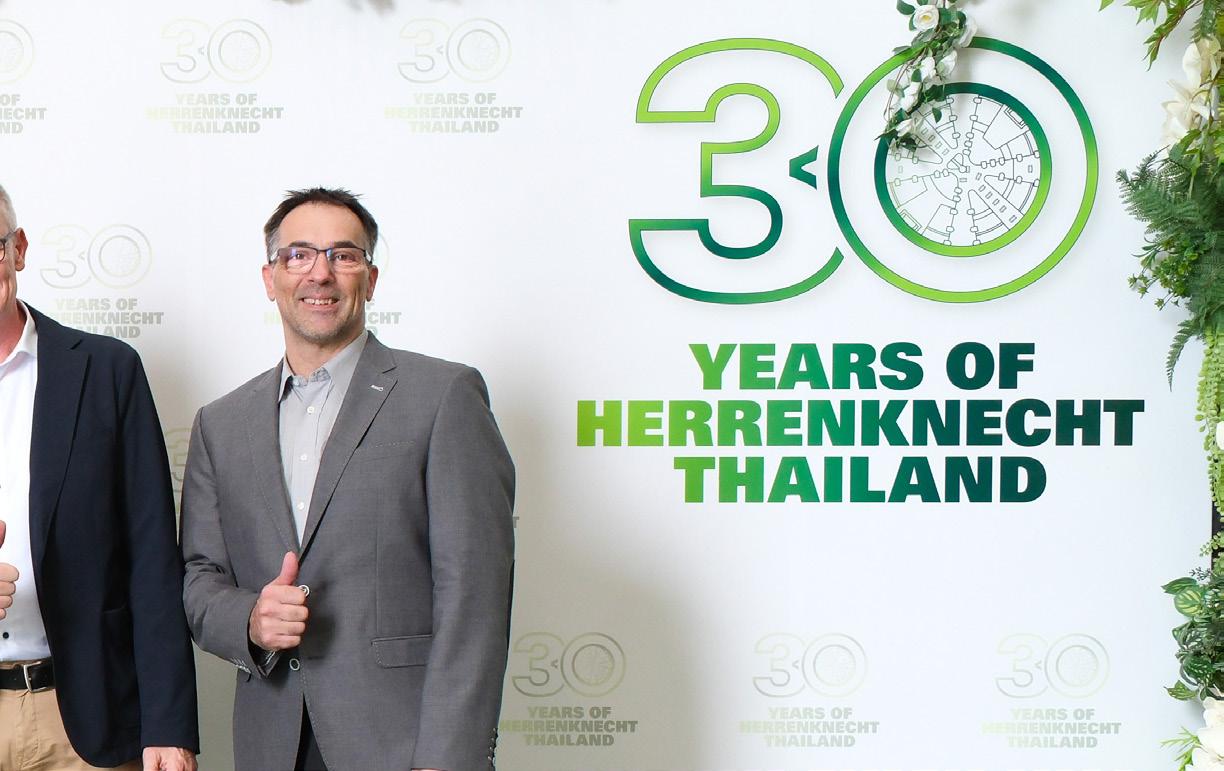
Visitors also saw first-hand the manufacturing operation behind the AVN 600 displayed at Trenchless Asia, together with the wider range of equipment and services provided from the Rayong facility.
Established in Thailand in 1996, the Rayong operation has grown into one of Herrenknecht’s principal regional hubs, providing manufacturing, equipment servicing, technical support and training for customers throughout Southeast Asia.
A recorded message from founder and Chairman Martin Herrenknecht reflected on the company’s history and thanked employees and customers for their continued support. Additional greetings from members of the Board of Management in Germany highlighted the
“It was a privilege to join the Herrenknecht team for this milestone celebration. The visit highlighted the scale of the company’s investment in Thailand and its long-standing commitment to customers across the region.
Paul Harwood, Managing Director, Westrade Group
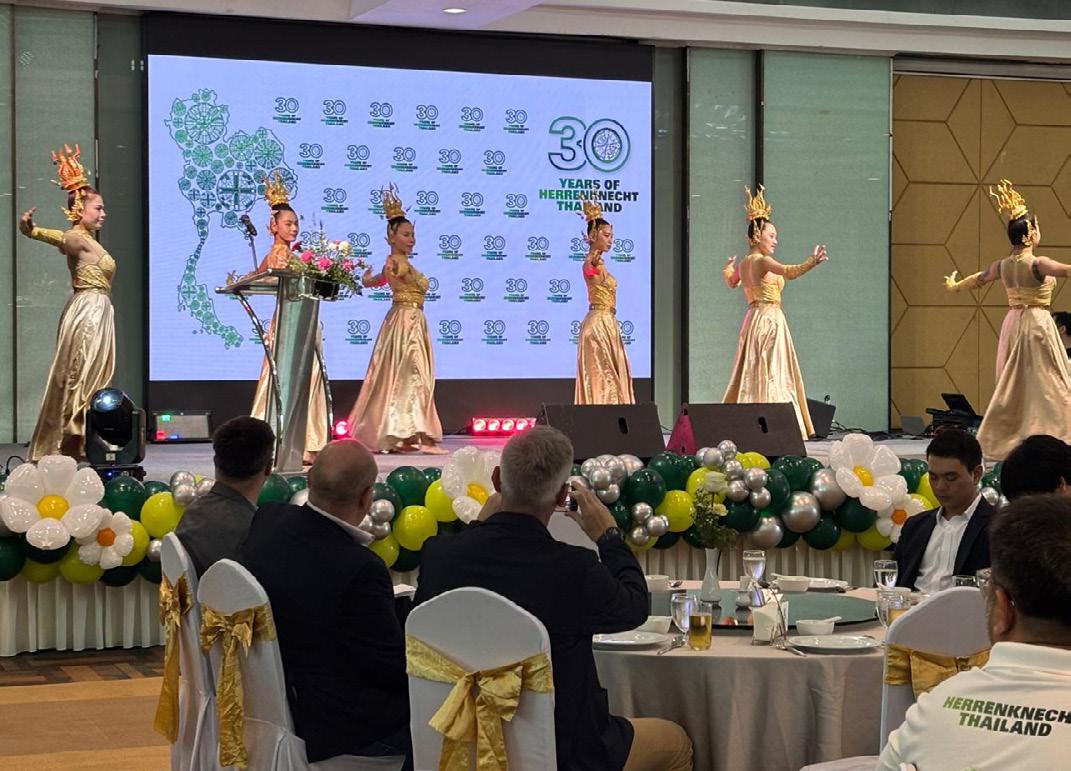
importance of the Thailand operation within the wider Herrenknecht Group.
The programme concluded with traditional Thai cultural performances, local cuisine and an evening reception.
Paul Harwood, Managing Director of Westrade Group, said:
“It was a privilege to join the Herrenknecht team for this milestone celebration. The visit highlighted the scale of the company’s investment in Thailand and its longstanding commitment to customers across the region. Thirty years of continuous operations is a significant achievement and, on behalf of Westrade Group, I congratulate everyone at Herrenknecht Thailand on reaching this milestone.”
Trenchless Asia 2026 cements its position as Asia’s leading trenchless event
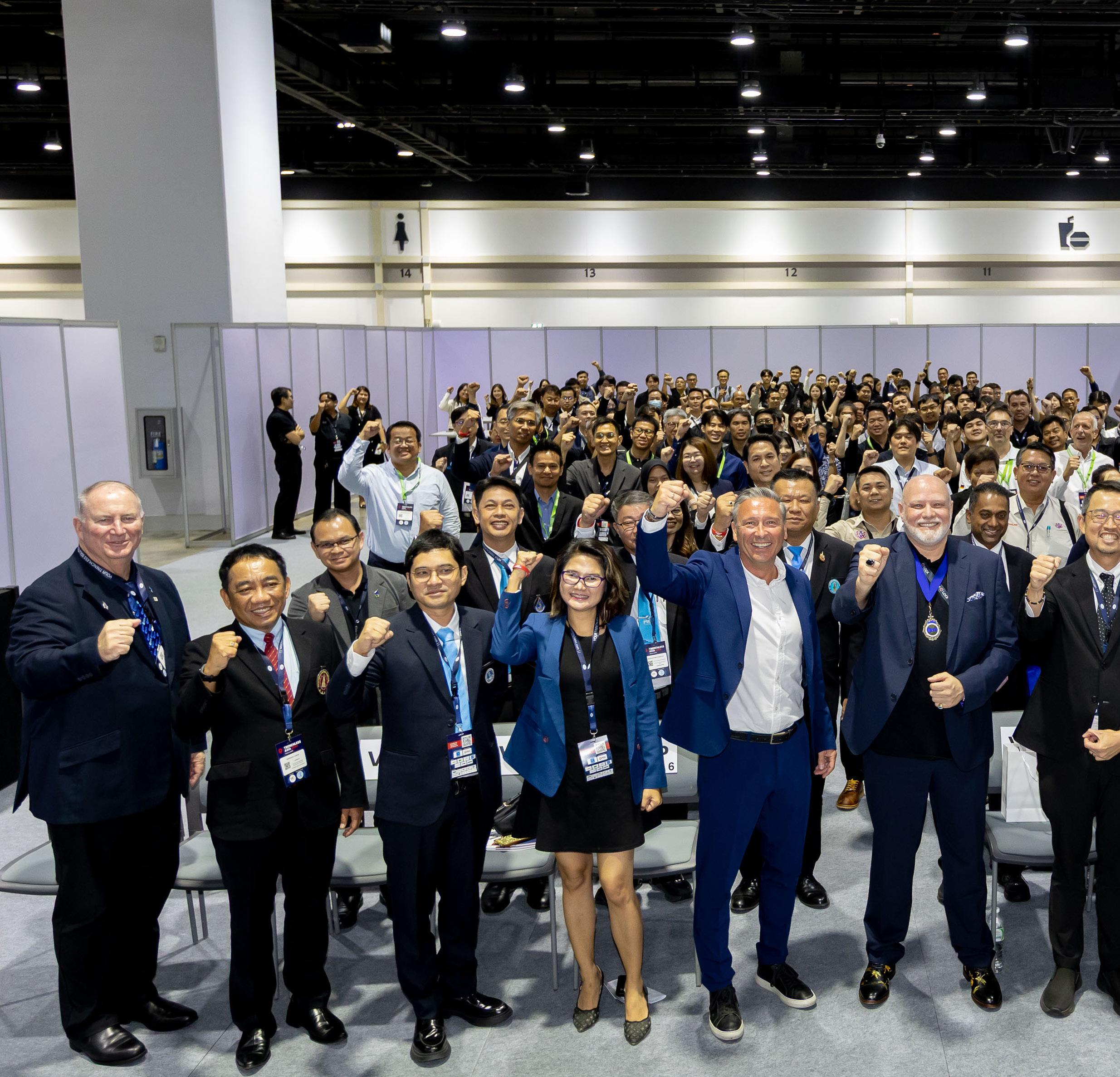
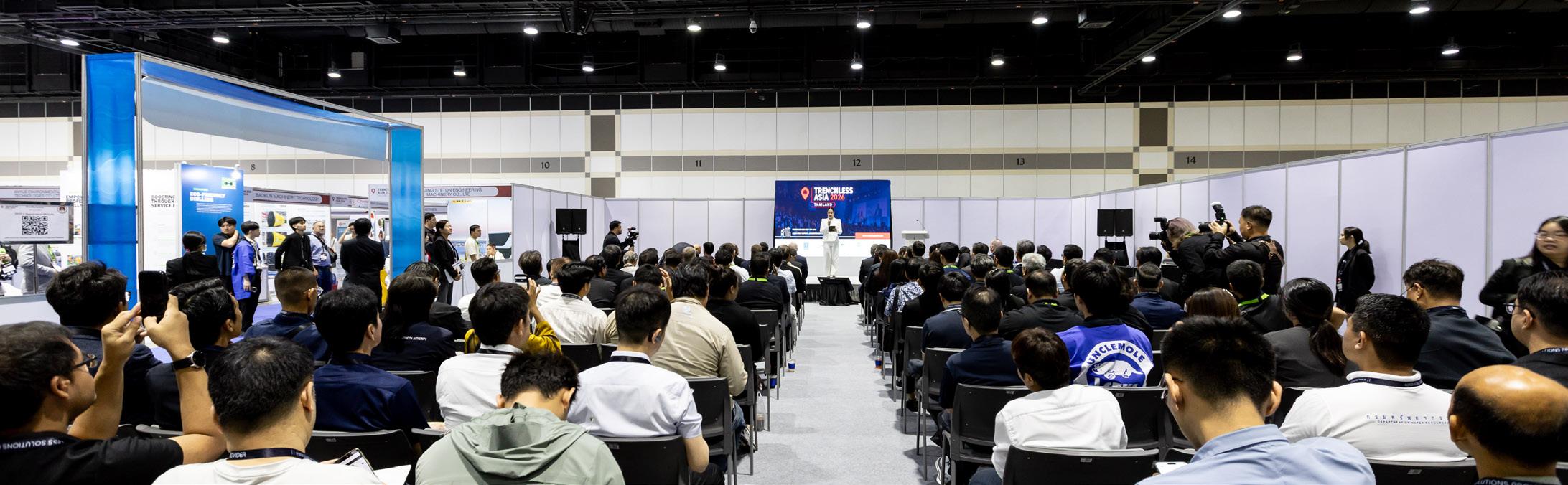
As governments and utilities across Asia accelerate investment in more sustainable and resilient underground infrastructure, Trenchless Asia 2026 demonstrated why collaboration, innovation and technical knowledge sharing have never been more important.
High-level backing from Thailand’s leading infrastructure authorities, a world-class technical programme and strong international participation combined to make Trenchless Asia 2026 another landmark event for the region’s underground infrastructure sector.
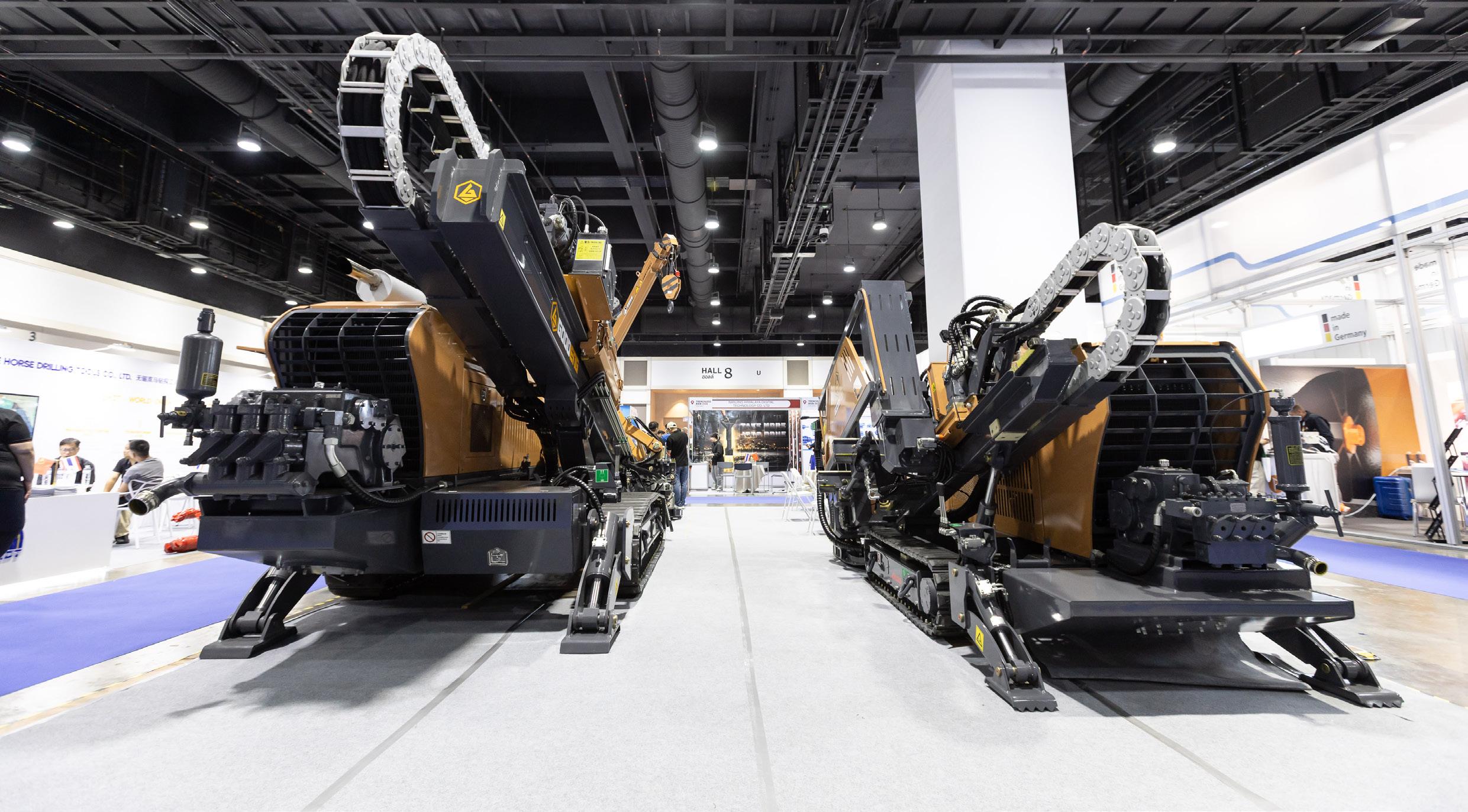
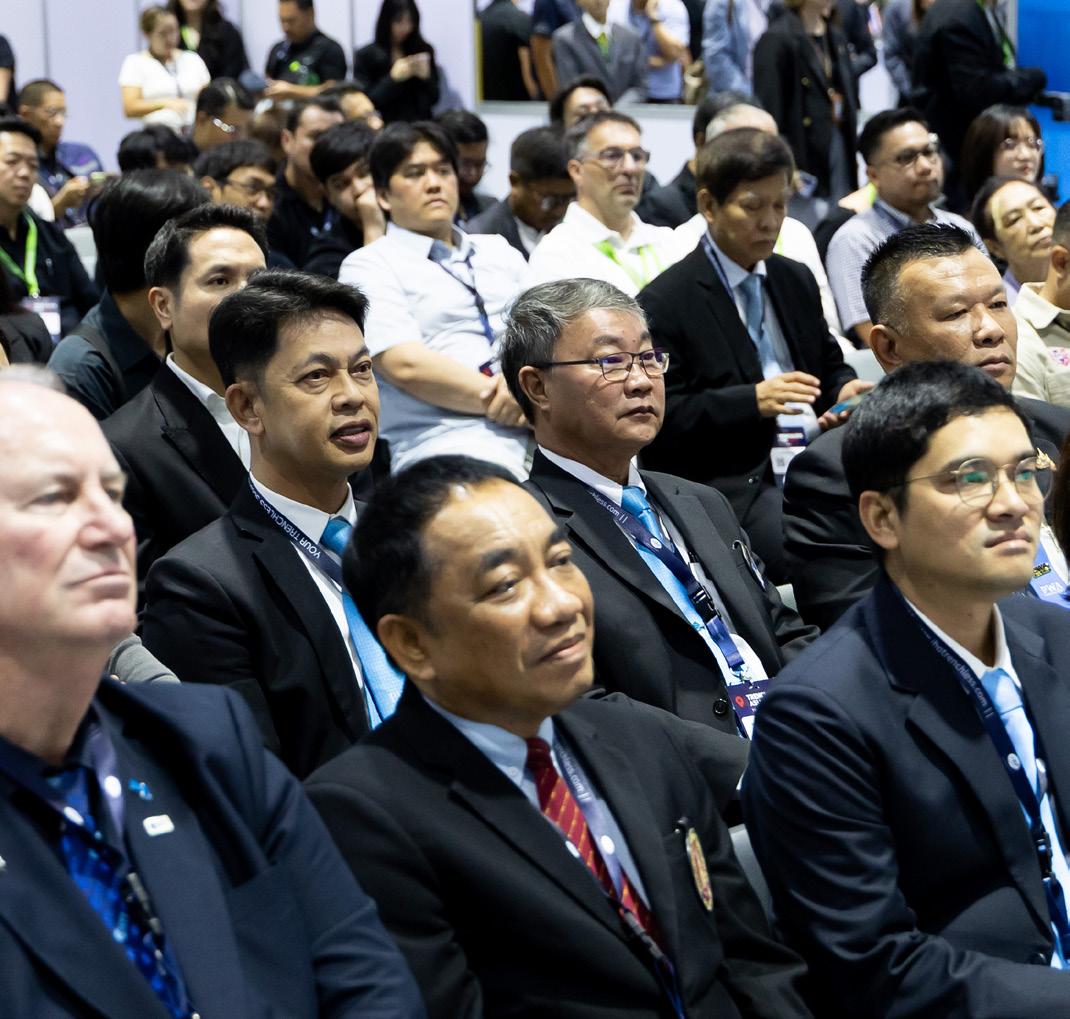
Held on 10–11 June at the Queen Sirikit National Convention Center in Bangkok, the exhibition and conference welcomed more than 2,500 visitors from over 40 countries, with 150 exhibiting companies showcasing the latest trenchless technologies and solutions for the installation, maintenance and rehabilitation of underground infrastructure.
Organised by Westrade Group, Trenchless Asia once again demonstrated why it is recognised as Asia’s leading exhibition and conference dedicated to trenchless technology, bringing together government authorities, utilities, engineers, contractors, manufacturers and technology specialists to share knowledge, strengthen partnerships and drive innovation.
The event received exceptional support from Thailand’s leading utility and engineering organisations, underlining the increasingly important role trenchless technology is playing in delivering more sustainable, resilient and less disruptive infrastructure projects across the region.
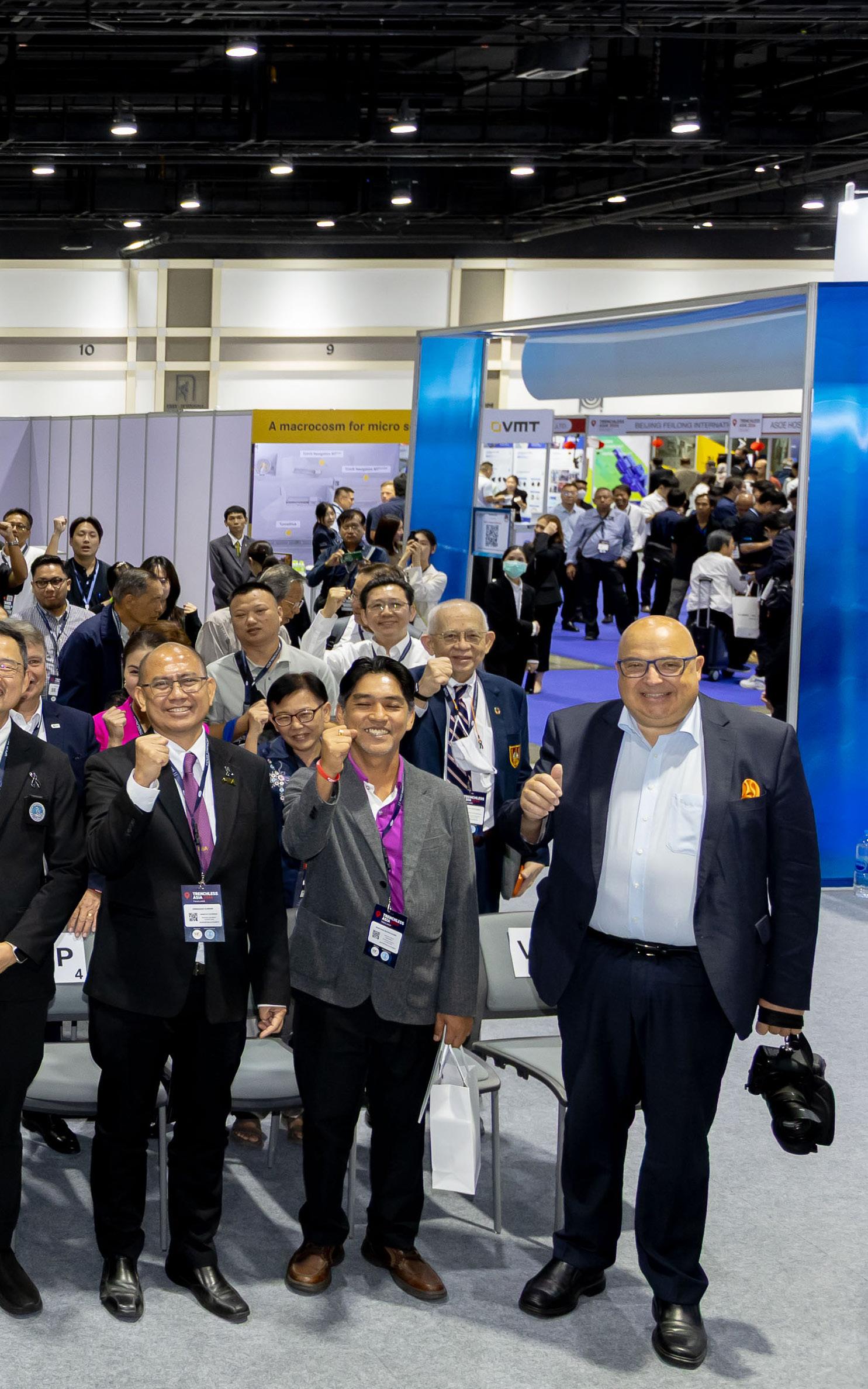
The Metropolitan Waterworks Authority (MWA) served as Official Host Authority, with the Provincial Waterworks Authority (PWA) supporting the event as Official Supporting Authority and the Provincial Electricity Authority (PEA) participating as Supporting Authority. The event also welcomed the continued support of the International Society for Trenchless Technology (ISTT), the Council of Engineers Thailand (CoET), the Thailand Underground and Tunnelling Group (TUTG) and the Thailand Convention and Exhibition Bureau (TCEB).
Among the senior representatives attending were Mr. Supichete Tavorntaveevong, Deputy Governor (Eastern Services), Metropolitan Waterworks Authority, who
“Trenchless Asia 2026 is a reflection of what can be achieved when the global trenchless community comes together with a shared commitment to innovation, collaboration and sustainable infrastructure delivery.
Paul Harwood, Managing Director,Westrade Group Ltd Owner and Publisher, Trenchless Works
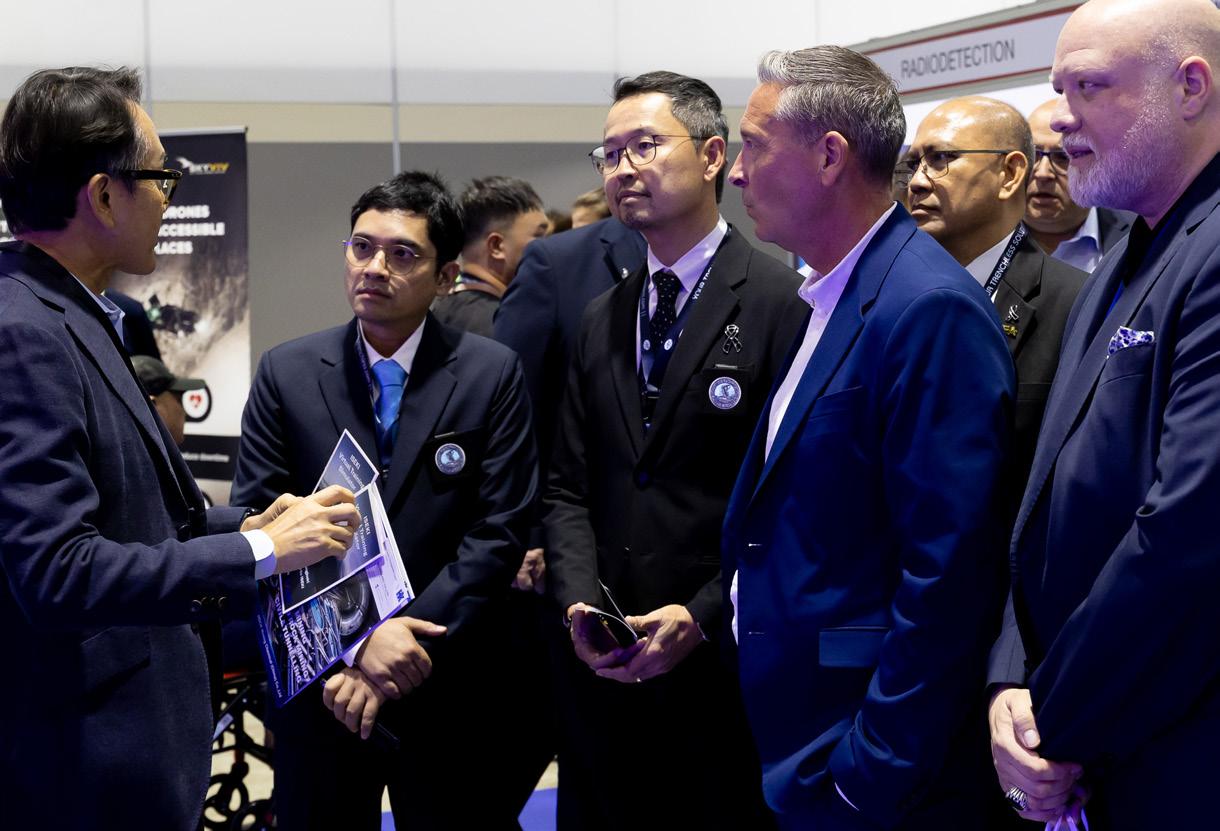
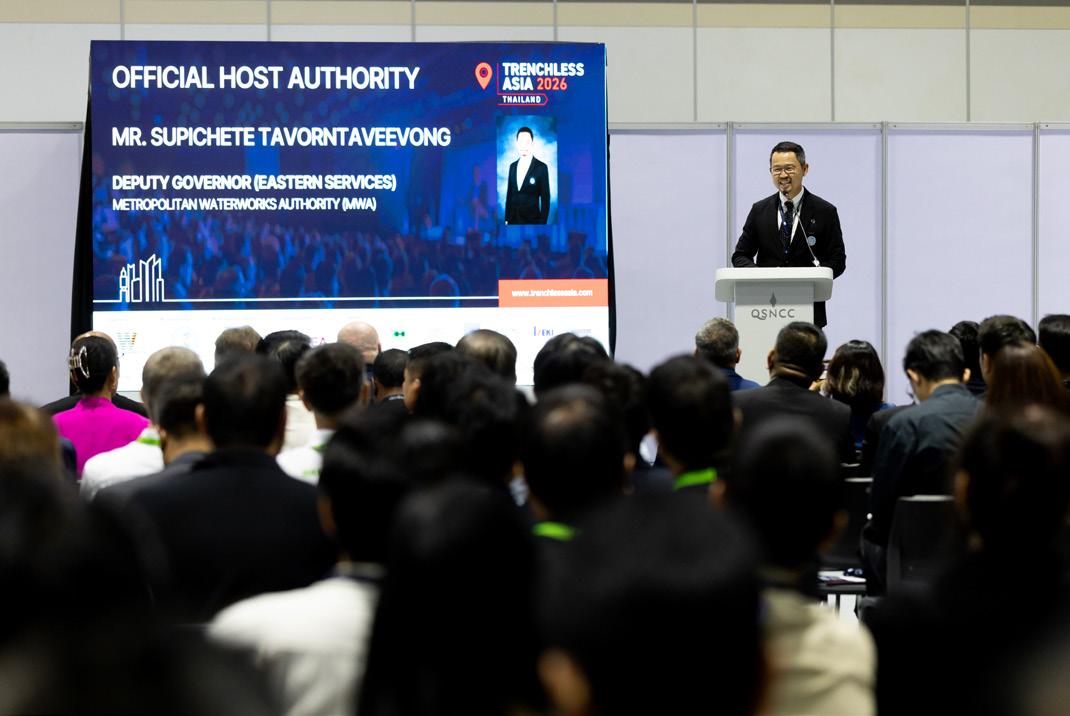
delivered the Official Host Authority Welcome Address, together with Mr. Prateep Kusolwattana, Deputy Governor of the Provincial Waterworks Authority, highlighting the commitment of Thailand’s major infrastructure organisations to advancing trenchless technologies.
The conference programme reflected both the international standing of the event and the growing importance of technical knowledge sharing. Delegates heard a keynote presentation from Mr. Natthapong Suwannarat of the Metropolitan Waterworks Authority, who shared MWA’s experience and strategic vision for trenchless technology and its application across Thailand’s water infrastructure network.
International perspectives were provided by Professor Samuel Ariaratnam of Arizona State University, whose keynote presentation, Trenchless Technologies for a Resilient Future, explored the role of innovation in building more sustainable infrastructure networks, while Alia C. Johnson of the DeKalb County Department of Watershed Management shared lessons learned from trenchless technology projects in the United States. Together with presentations from leading manufacturers, contractors and industry specialists, the conference provided delegates with valuable insight into the technologies and techniques shaping the future of underground infrastructure.
Beyond the conference theatre, the exhibition floor remained busy throughout both days as infrastructure owners, utilities, contractors and technology providers explored new solutions, discussed emerging projects and strengthened business relationships. The event highlighted the growing role trenchless technologies are playing in helping cities reduce disruption, improve asset resilience and deliver infrastructure more sustainably.
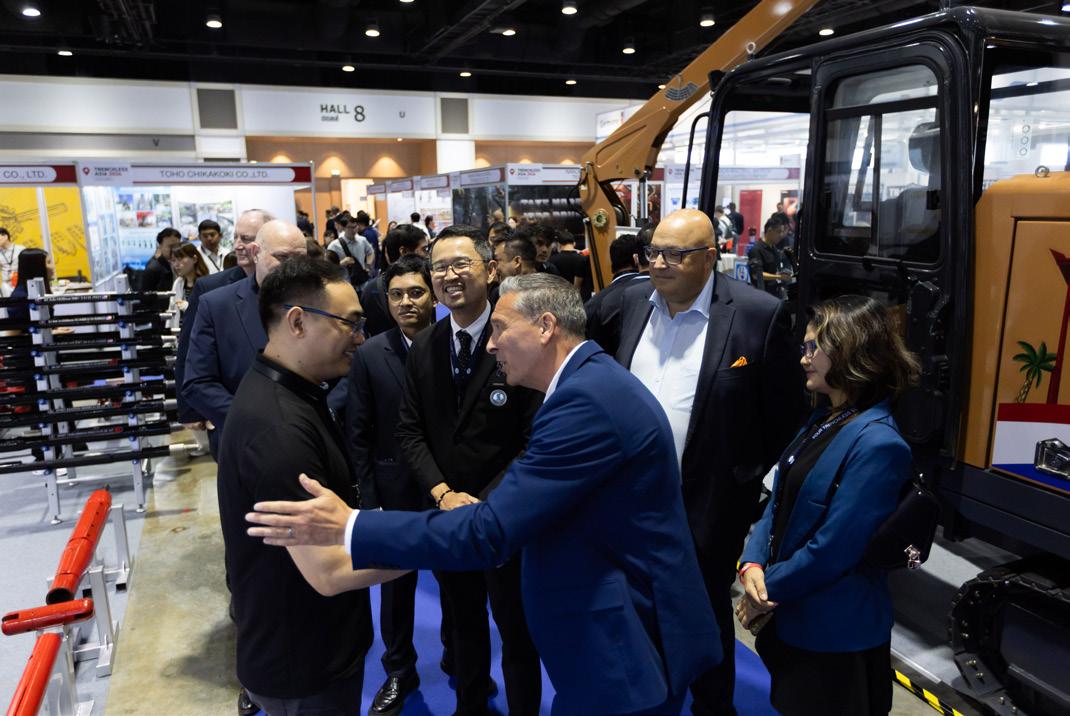
Commenting on the success of the event, Paul Harwood, Managing Director of Westrade Group, said: “Trenchless Asia 2026 is a reflection of what can be achieved when the global trenchless community comes together with a shared commitment to innovation, collaboration and sustainable infrastructure delivery. I’d like to thank our Official Host Authority, the Metropolitan Waterworks Authority, together with the Provincial Waterworks Authority, the Provincial Electricity Authority, the Council of Engineers Thailand and the International Society for Trenchless Technology for their invaluable support in helping deliver such an outstanding event.
“My sincere thanks also go to our Platinum Sponsors, Goodeng and Herrenknecht, whose continued commitment to Trenchless Asia and the wider industry is greatly appreciated, along with every exhibitor, speaker and delegate who helped cement Trenchless Asia’s reputation as Asia’s leading trenchless event.
“Over the course of two exceptional days we saw first-hand how trenchless technology is becoming central to the way infrastructure is delivered and maintained across Asia. The quality of discussion, the willingness to share knowledge and the level of engagement from governments, utilities and industry have been outstanding. That gives us tremendous confidence for the future of both the event and the industry it serves.”
The success of Trenchless Asia 2026 further reinforces the event’s position as Asia’s leading platform for advancing trenchless technology. As it continues its journey across the region— with Kuala Lumpur, Malaysia, hosting in 2027, Ho Chi Minh City, Vietnam, in 2028 and Bangkok welcoming the event back in 2029—Trenchless Asia will continue to drive innovation, foster international collaboration and accelerate the adoption of more sustainable approaches to underground infrastructure delivery across Asia.
“Over the course of two exceptional days we saw first-hand how trenchless technology is becoming central to the way infrastructure is delivered and maintained across Asia.
Paul Harwood,
Managing Director,Westrade Group Ltd Owner and Publisher, Trenchless Works
Trenchless Morocco returns as infrastructure investment gathers pace
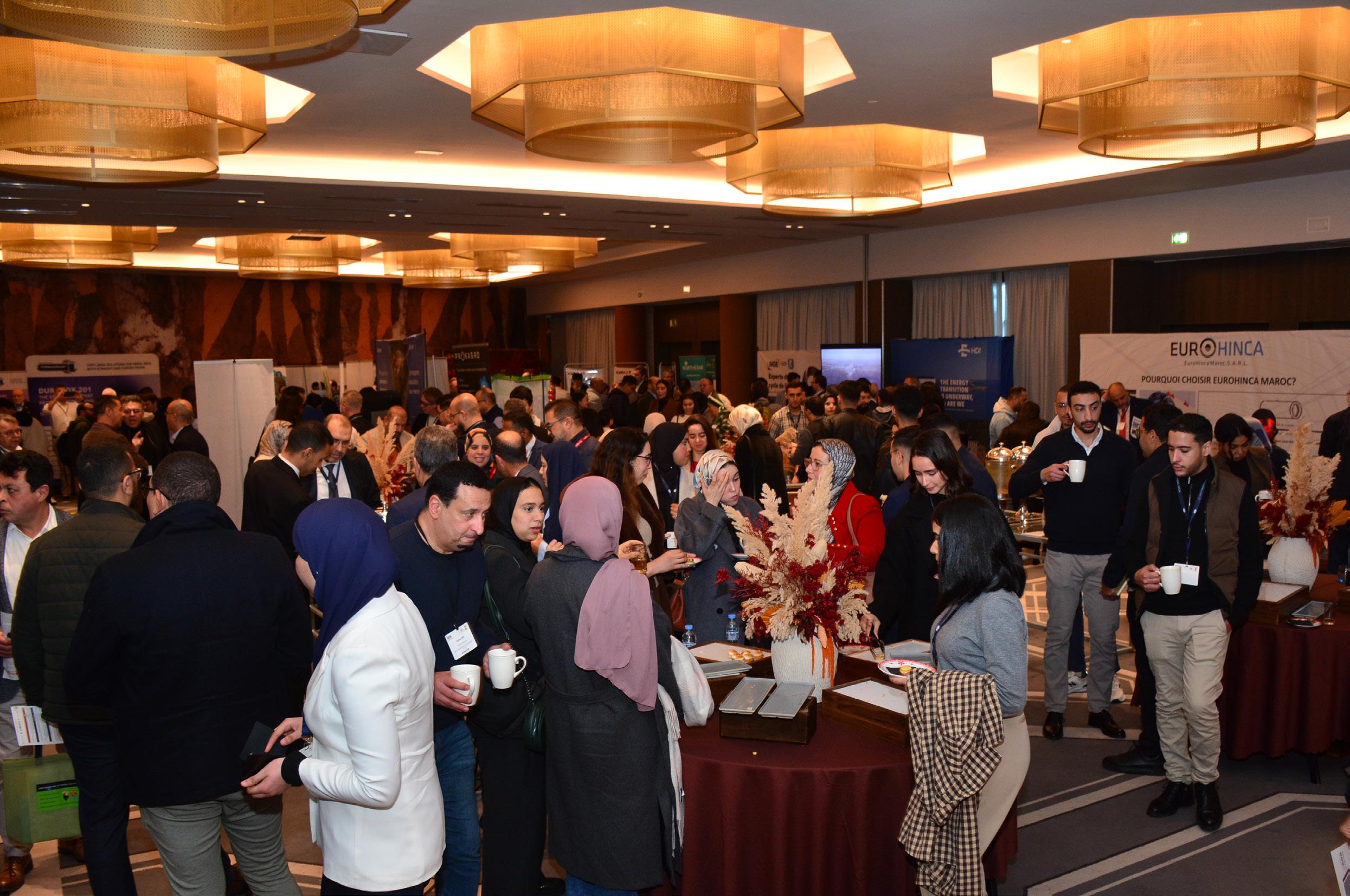
Morocco’s growing commitment to sustainable underground infrastructure will once again take centre stage when Trenchless Morocco returns in 2027, with organisers Westrade Group confirming that the second edition of the conference and exhibition will take place in Casablanca on 2–3 February.
Building on the success of the inaugural event in Rabat, Trenchless Morocco 2027 comes at a pivotal time for the country’s infrastructure sector. Morocco is investing heavily in water security, modern utility networks and resilient underground infrastructure as it responds to rapid urbanisation, climate pressures and growing demand for reliable water supplies. Major projects, including the Greater Casablanca desalination plant and wider national programmes to expand desalination capacity, improve water distribution networks and increase wastewater reuse, are creating significant opportunities for trenchless technologies across the country. Preparations for the 2030 FIFA World Cup are providing an additional catalyst for investment in transport and urban infrastructure, further reinforcing the need for sustainable, low-disruption construction methods.
The move to Casablanca reflects the city’s position as Morocco’s economic capital and one of North Africa’s leading engineering centres. As the focus of major investment in water, wastewater, transport and utility infrastructure, the city provides an ideal setting to bring together the engineers, utilities, contractors, consultants and technology providers delivering Morocco’s next generation of underground infrastructure projects.
Trenchless Morocco 2027 will once again provide a platform for engineers, asset owners, contractors, consultants, municipalities, utility operators and technology providers to exchange knowledge, share practical experience and explore the latest advances in trenchless construction, inspection, rehabilitation and asset management. The conference programme will also examine topics including digitalisation, fibre optic installation, smart cities, inspection technologies and workforce development, reflecting the changing needs of Morocco’s underground infrastructure sector.
A defining feature of the event continues to be its emphasis on international collaboration. Building on the strong foundations established during the inaugural conference, Trenchless Morocco will once again bring together experts from across North Africa, Europe and the wider international trenchless community to share experience, promote best practice and support the wider adoption of sustainable underground construction techniques.
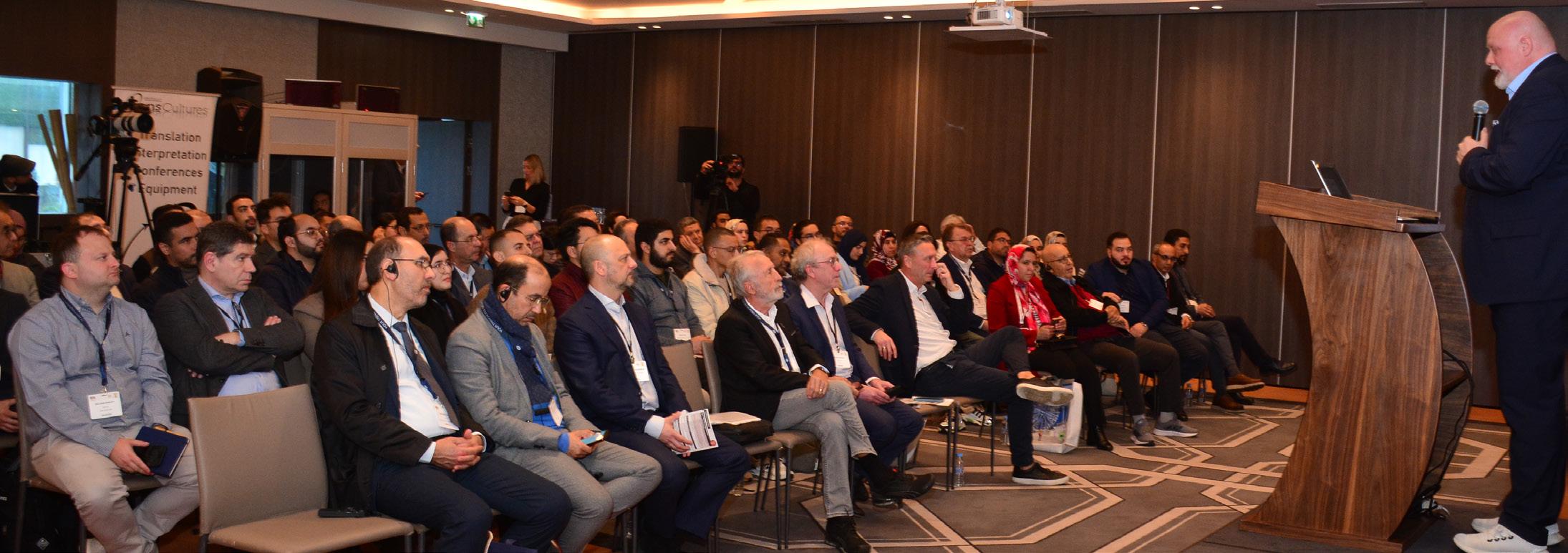
The event continues to benefit from the support of leading industry organisations, including the International Society for Trenchless Technology (ISTT), the French Society for Trenchless Technology (FSTT), the UK Society for Trenchless Technology (UKSTT) and the Indian Society for Trenchless Technology (IndSTT), underlining its growing importance as a meeting place for the international trenchless sector.
Commenting on the launch of the 2027 event, Paul Harwood, Managing Director of Westrade Group, said: “The enthusiasm and level of engagement we experienced at the inaugural Trenchless Morocco
supporting the country’s infrastructure ambitions. Casablanca provides an outstanding venue for the next stage in the event’s development, bringing together expertise from Morocco and across the international trenchless community.”
As Morocco continues to strengthen the resilience of its water and utility networks while investing in the infrastructure needed to support long-term economic growth, Trenchless Morocco 2027 is set to build on the momentum of its successful debut, providing an important forum for innovation, collaboration and technical excellence across North Africa’s rapidly

THE SAFE CHOICE FOR DOMESTIC AND INDUSTRIAL PRESSURE PIPE REHABILITATION
Rely on a sustainable, economical and environmentally friendly solution for the rehabilitation of your pressurised pipelines. The Alphaliner PN offers outstanding efficiency and resistance for pipes made of concrete, steel, cast iron and many other materials, while protecting both people and the environment.
Contact us for tailored advice!
RelineEurope GmbH Große Ahlmühle 31 76865 Rohrbach | Germany
Tel.: +49 6349 93934-0 info@relineeurope.com www.relineeurope.com
ALPHALINER PN
NO-DIG EVENTS
International No-Dig events brought to you by the industry’s world experts



TRENCHLESS ASIA 2026
10 -11 June 2026
Queen Sirikit National Convention Centre Bangkok, Thailand www.trenchlessasia.com
NO-DIG LIVE 2026
29 September – 1 October 2026
NAEC Stoneleigh Park, Warwickshire www.nodiglive.co.uk
TRENCHLESS MIDDLE EAST 2026
2 - 3 December 2026
Riyadh Marriott Hotel, Riyadh Kingdom of Saudi Arabia www.trenchlessmiddleeast.com
TRENCHLESS MOROCCO
2 - 3 February 2027
Hilton Garden Inn, Casablanca, www.trenchlessmorocco.com
NO-DIG ROADSHOW 2027
23 March 2026
Glasgow Westerwood Hotel
TRENCHLESS ASIA 2027
May 2027
Kuala Lumpur
NO-DIG ROADSHOW 2027
30 September 2027
Tortworth Court - Bristol
ISTT INTERNATIONAL NO-DIG BOLOGNA
11 - 13 October 2027
Italy
TRENCHLESS MIDDLE EAST 2027
TBC 2027
Dubai
SOUTH AFRICA | VIETNAM | INDIA
Riyadh to host Trenchless Middle East 2026

Following the outstanding success of Trenchless Middle East 2025 in Jeddah, organisers Westrade Group have officially launched Trenchless Middle East 2026, with the region’s leading trenchless technology exhibition and conference set to take place at the Riyadh Marriott Hotel, Kingdom of Saudi Arabia, on 2–3 December 2026.
The move to Riyadh reflects the Kingdom’s rapidly evolving infrastructure landscape. As the centre of Saudi Arabia’s Vision 2030 transformation programme, the capital is home to many of the country’s largest transport, utility, water, energy and underground infrastructure projects. The Kingdom’s portfolio of Vision 2030 projects— including NEOM, Qiddiya and New Murabba—alongside ongoing investment in Riyadh’s metro, water and utility infrastructure, is creating one of the world’s largest infrastructure development programmes, driving demand for underground construction and trenchless technology. With major investment continuing across metro, rail, tunnelling, utilities and smart city developments, Riyadh is the natural meeting place for the government bodies, infrastructure owners, Tier One contractors, consultants and technology providers shaping the next generation of underground infrastructure across the Middle East.
Building on the momentum created by last year’s highly successful event in Jeddah, Trenchless Middle East 2026 is expected to attract senior representatives from government ministries, municipalities, utility owners, infrastructure developers, consultants and Tier One contractors responsible for delivering many of the Kingdom’s flagship projects. For technology providers and contractors, it offers a rare opportunity to engage directly with the organisations driving one of the world’s most ambitious infrastructure programmes.
The exhibition will once again be supported by a highlevel conference programme and the popular JBP Training Masterclasses, bringing together international experts to share technical knowledge, practical experience and the latest developments in trenchless technology.
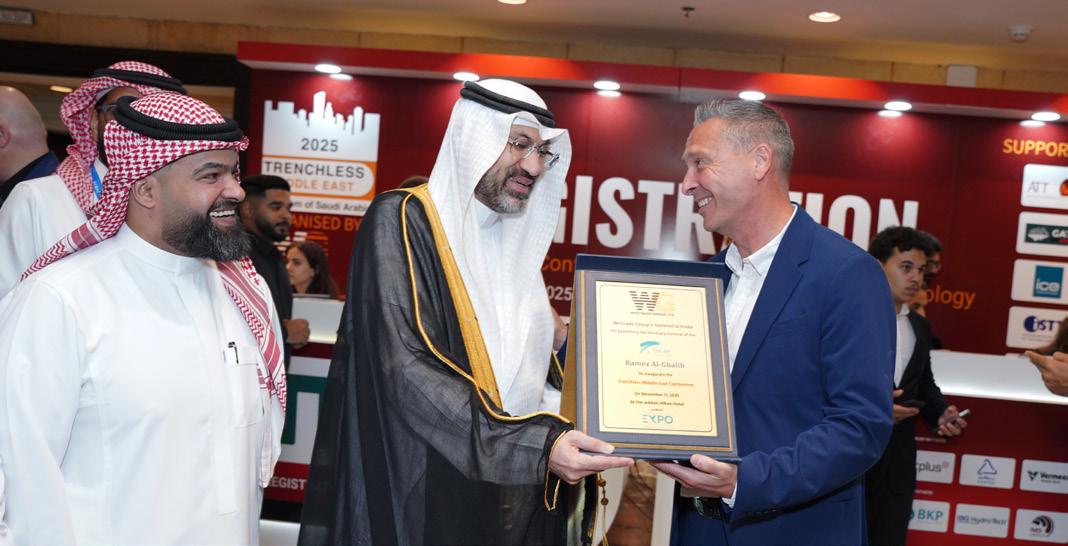
Industry support remains a cornerstone of the event. Trenchless Middle East continues to enjoy the backing of the Association of Trenchless Technology Middle East (ATTME), which has played an important role in promoting trenchless best practice throughout the region, together with the International Society for Trenchless Technology (ISTT), reinforcing the event’s position as the Middle East’s leading international gathering dedicated to no-dig technology and underground infrastructure.
The exhibition will showcase the latest products, technologies and services across trenchless construction, underground utilities, pipeline rehabilitation, tunnelling and geotechnical engineering, while providing valuable networking opportunities for manufacturers, suppliers, consultants, contractors and infrastructure owners from across the region and beyond.
Commenting on the launch of the 2026 event, Paul Harwood, Managing Director of Westrade Group, said: “The success of our first event in Saudi Arabia demonstrated both the strength of the market and the appetite for a dedicated trenchless event in the Kingdom. Moving to Riyadh brings us even closer to the organisations delivering Vision 2030 and provides the ideal platform for the industry to collaborate, share innovation and develop new business opportunities.”
With Saudi Arabia continuing to accelerate investment in underground infrastructure, Trenchless Middle East 2026 looks set to become one of the region’s most significant industry gatherings, providing a timely forum for sharing expertise, showcasing innovation and supporting the delivery of the Kingdom’s infrastructure ambitions.
The true cost of training and the far greater cost of not training

Frank Reilly Director JBP’s Trenchless, Training Programme
The trenchless sector cannot afford to overlook the investment in professional development. But understanding what that investment really means changes the conversation entirely.
What training actually costs
For any engineer or contractor considering professional development in trenchless technologies, UV CIPP, pipe bursting, horizontal directional drilling, or any of the methods now reshaping pipeline rehabilitation the first question is usually the most visible one: What are the fees?
Structured technical training for trenchless professionals varies widely. Short online courses and webinars can run from a few hundred dollars, while multi-day certified programmes delivered by industry bodies, equipment manufacturers, or specialist training partners typically range from USD $1,500 to $5,000 or more per delegate, depending on depth, duration, and whether formal accreditation is included. In emerging markets such as Malaysia and the wider ASEAN region, where international trainers are brought in and courses may be delivered in
conjunction with industry events like Trenchless Asia, the cost per delegate can appear significant when set against local salary benchmarks.
But course fees are only part of the picture.
The hidden cost: Time away from the job
The second and often underestimated dimension of training cost is time. Sending an engineer on a two or three-day course means two or three days away from live projects, client meetings, and site responsibilities. For smaller contractors and consultancies operating with lean teams, that absence is felt immediately.
This is why the format of training matters. Blended learning combining online modules with focused in-person practical sessions is increasingly the model of choice for trenchless professionals. It compresses classroom time, allows delegates to engage with foundational content at their own pace, and reserves face-to-face sessions for the hands-on and scenario-based learning that genuinely requires physical presence. When training is well-designed, the time cost can be substantially reduced without sacrificing quality.
The cost nobody budgets for: The price of not training
Here is where the true accounting must be done. The direct costs of training, fees, travel, time, are measurable and predictable. The costs of not training are neither, but they are frequently far higher.
An engineer without current knowledge of UV CIPP installation
procedures may specify an incorrect liner thickness, misjudge cure times, or fail to identify site conditions that require a modified approach. The consequences range from a failed installation requiring costly remediation, to contractual disputes, to reputational damage that takes years to repair. In a sector where projects routinely involve critical public infrastructure sewers beneath highways, pipes under residential streets the stakes of poor technical knowledge are not abstract. They are real, measurable, and expensive.
Poor qualifications or training also carry a market cost. As clients and utility operators in many markets become more sophisticated, they are increasingly specifying minimum competency standards for contractors tendering on rehabilitation work. Teams without recognised training credentials are simply not in contention.
Conclusion: Reframing the investment
When the three dimensions of training cost are considered together course fees, time away, and the consequences of under-investment the calculation shifts decisively. Training is not a cost to be minimised. It is a risk management tool, a competitive differentiator, and the foundation on which a sustainable trenchless business is built.
The question is not whether your team can afford to train. It is whether your business can afford the alternative.


UKSTT Annual Awards Masquerade Dinner 2026
Join us for the UKSTT Annual Awards Dinner at No-Dig Live on the evening of Wednesday 30 September in partnership with Westrade Group Ltd.

Venue: NAEC Stoneleigh Park, Kenilworth, Warwickshire, CV8 2LZ
Dress Code: Black Tie & Masquerade mask
Date: Wednesday 30 September 2026
Time: 7.00pm till late with after dinner DJ
Carriages: by 2.00am
Tickets:
Tables will seat 10 guests
CLICK TO BOOK TICKETS NOW
Member Early Bird Rate £220 + VAT
Non-Member Early Bird Rate £240 + VAT
Early bird tickets must be booked and paid for by 31 June 2026
Member Standard Rate £250 + VAT
Non-Member Standard Rate £260 + VAT
On arrival, guests will enjoy a champagne reception before sitting down to enjoy a delicious 3 course meal. The dinner is attended by over 400 people and will showcase and recognise this year’s best performing and most innovative trenchless technologies from across the world.
For further details about our Awards Sponsorship opportunities, please contact Trevor Dorrell at tdorrell@westrade.co.uk or +44(0)1923 723 990



Building the next generation of trenchless professionals
An interview with Pertti Leppänen, Chair of the International Society for Trenchless Technology’s Young Trenchless Professionals (YTP) Committee.
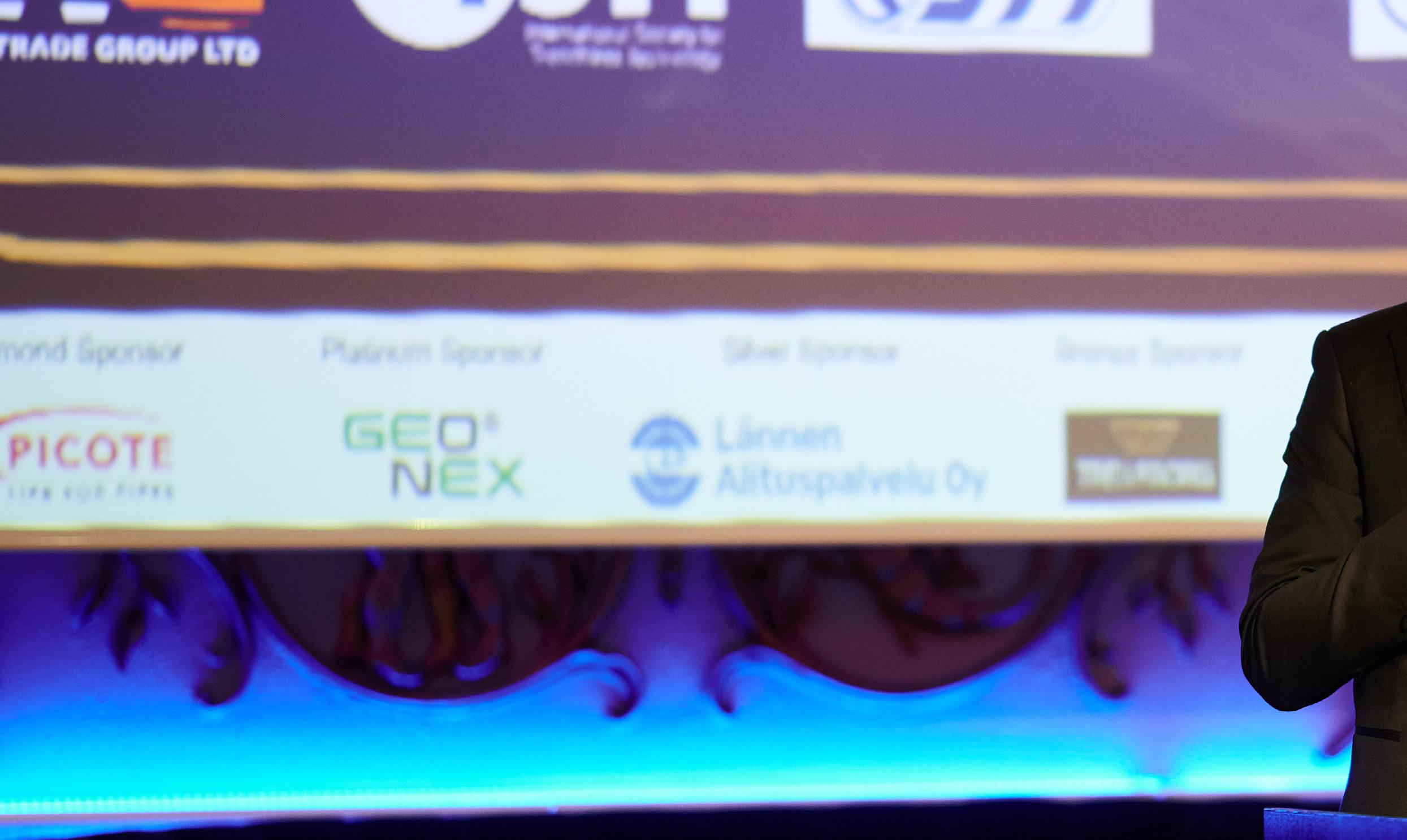
Can you start by introducing yourself and your background in the trenchless industry?
I have worked in water services, infrastructure construction and trenchless technologies for almost 20 years, gaining experience across infrastructure planning, project management, construction supervision and client representative roles.
What has always attracted me to the No-Dig industry is the opportunity to solve technical challenges. Many projects take place in demanding environments where traditional construction methods are either impractical or simply not possible. Trenchless technologies combine innovation, practical problem-solving and sustainability in a way that has kept me engaged throughout my career.
Alongside my professional work, I have been actively involved in promoting the wider adoption of No-Dig technologies in Finland, working with municipalities, designers, contractors and other industry stakeholders. I have also contributed to the national development of trenchless technologies and industry best practice.
Throughout my career, professional networks have provided invaluable knowledge and support. I believe it is important to give something back by helping develop the industry. It is rewarding to see collaboration leading to new ideas, stronger expertise and wider adoption of trenchless technologies.
Can you tell us about your role within ISTT and the scope of your committee?
I joined the International Society for Trenchless Technology (ISTT) as a member of the International NoDig Committee in November 2023 before being elected to the ISTT Board of Directors in November 2024. Earlier this year, I had the honour of becoming Chair of the newly established Young Trenchless Professionals (YTP) Committee.
The YTP Committee is the first of its kind in ISTT’s history. It brings together nine members from eight countries across four continents with the aim of connecting young professionals, strengthening international collaboration and building a global network of future industry leaders.
What are the current priorities and key projects your committee is focusing on?
As a newly established committee, our immediate priority is to develop both an annual action plan and a long-term strategy.
Our focus is on engaging young professionals and strengthening international networking. We want to encourage more students and early-career professionals to see trenchless technology as an exciting and rewarding career, while supporting national trenchless societies in creating their own young professional networks.

Ultimately, our role is to serve our members, ISTT and the wider trenchless industry. Our sector needs new talent, fresh ideas and stronger international collaboration. If we can successfully engage the next generation, I believe the industry will continue to grow and evolve for decades to come.
What outcomes are you aiming to achieve, particularly in terms of supporting wider adoption of trenchless technologies?
Our long-term ambition is to strengthen the global talent base within the trenchless industry. As more skilled and motivated professionals enter the sector, the adoption of trenchless technologies will naturally continue to increase.
We also want to raise awareness that trenchless solutions often provide a safer, more sustainable and less disruptive alternative to traditional construction methods. Greater technical expertise leads to better planning, more efficient project delivery and increased confidence in innovative approaches.
Looking ahead, how do you see the work of your committee evolving?
I believe the YTP Committee will become an important part of ISTT’s future.
Its direction will continue to be shaped by the ideas and ambitions of its members while supporting the wider

Pertti Leppänen
Chair of the International Society for Trenchless Technology’s Young Trenchless Professionals (YTP) Committee
objectives of ISTT and the international trenchless community.
One of our long-term goals is to create a clear pathway that allows young professionals to progress from involvement in their national societies to international expert roles and, ultimately, leadership positions within the industry.
How does this tie in with developments in your region?
I have been involved with the Finnish Society for Trenchless Technology (FiSTT) for many years in a variety of roles and have served as Chair of the Board for the past four and a half years.
During that time, Finland has seen growing awareness and wider acceptance of trenchless technologies, with FiSTT playing an active role in supporting that progress.
Our close relationship with ISTT enables us to bring international expertise, new ideas and technical innovation into Finland, while also sharing Finnish experience with the wider industry. Finland has developed considerable expertise in working in northern conditions and rehabilitation technologies, particularly building pipeline rehabilitation, and there is much we can contribute internationally.
I see this as a genuine two-way exchange of knowledge that benefits both FiSTT and the global trenchless community.
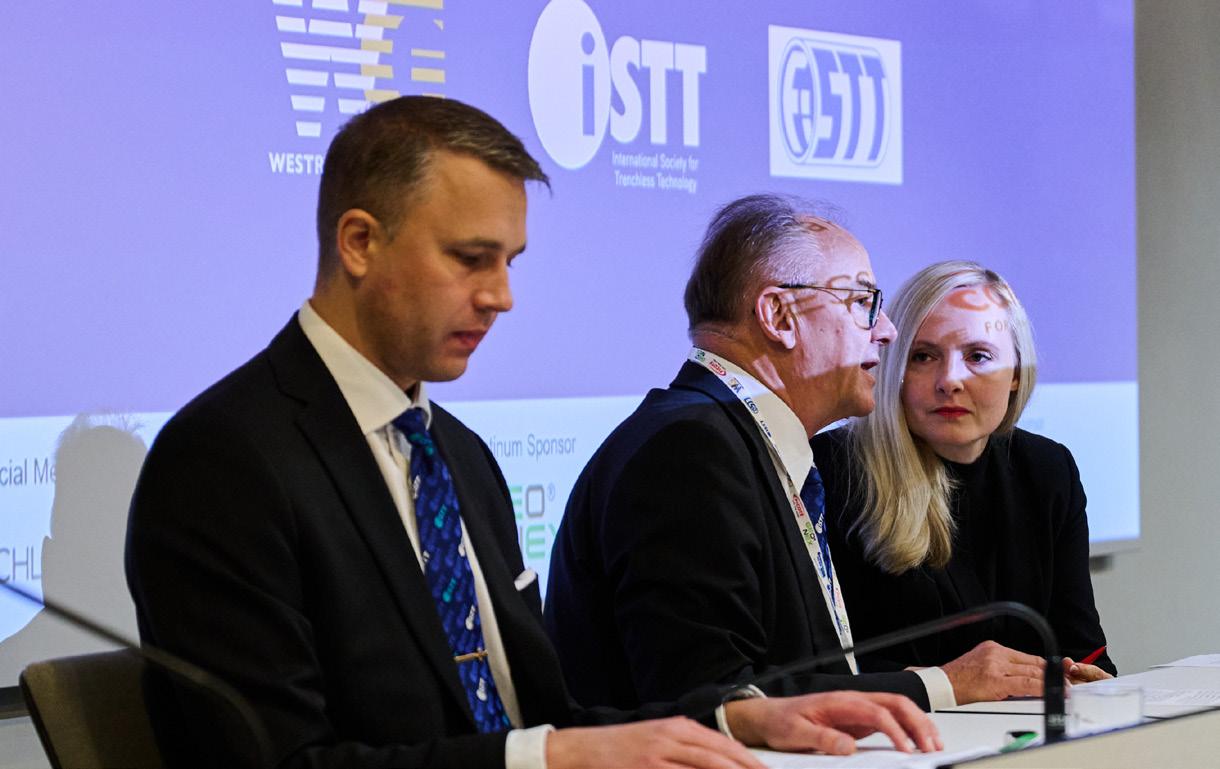
The YTP Committee also has an important role to play in attracting more young professionals into the industry. Encouraging the next generation is essential if we are to address the growing skills shortage and ensure the long-term success of both FiSTT and ISTT.
Can you tell us about your role within your company and how it connects to your work in the industry?
I currently work as Deputy Head of the Water Services Department at Sitowise, a Nordic engineering, consulting and digital solutions company specialising in the built environment.
My role involves leading a team of experts while developing sustainable water infrastructure solutions for complex projects, combining strategic development, technical expertise and practical project delivery.
Trenchless technologies form an important part of Sitowise’s service offering, and the company is recognised as one of Finland’s leading No-Dig consultants. We have supported many nationally significant infrastructure projects and have twice received FiSTT’s prestigious No Dig Award for innovative trenchless solutions.
Working across both industry projects and professional organisations gives me a valuable perspective on the current challenges, emerging trends and future opportunities for trenchless technology.
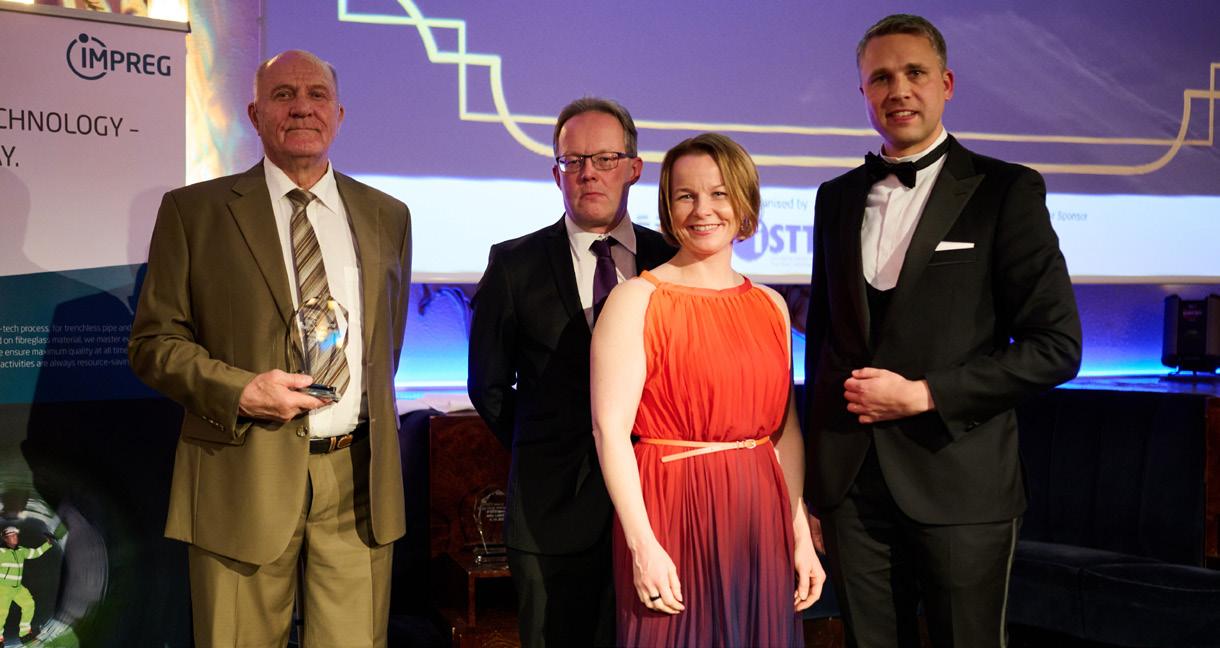
“ISTT’s mission is to promote the wider use of trenchless technologies by sharing knowledge, developing expertise and encouraging collaboration between countries, organisations and industry professionals.
Pertti Leppänen, Chair of the International Society for Trenchless Technology’s Young Trenchless Professionals (YTP) Committee
Finally, what key message would you like readers to take away about ISTT’s work?
ISTT’s mission is to promote the wider use of trenchless technologies by sharing knowledge, developing expertise and encouraging collaboration between countries, organisations and industry professionals. Today, trenchless technologies are no longer simply an alternative construction method. In many cases they offer the best technical, economic and environmental solution, helping to renew critical infrastructure while reducing disruption to communities, traffic and the environment.
As ageing infrastructure, urbanisation and environmental expectations continue to increase around the world, demand for sustainable infrastructure solutions will only continue to grow.
To meet that challenge, we need strong international collaboration, high-quality education, shared technical standards and the continued exchange of experience across the industry.
Investing in future professionals is a vital part of that vision. The creation of the Young Trenchless Professionals Committee demonstrates ISTT’s longterm commitment to developing the next generation of industry leaders.
Their ideas, expertise and international outlook will help shape the future of trenchless technology, ensuring the industry remains innovative, sustainable and ready to meet the infrastructure challenges of tomorrow.
The global stage for trenchless innovation
Bringing the latest trenchless advancements and industry knowledge to Auckland
New Zealand International Convention Centre, Auckland 28 – 29 October 2026



GET TICKETS
Guillaume Lanfranchi appointed President of the FSTT
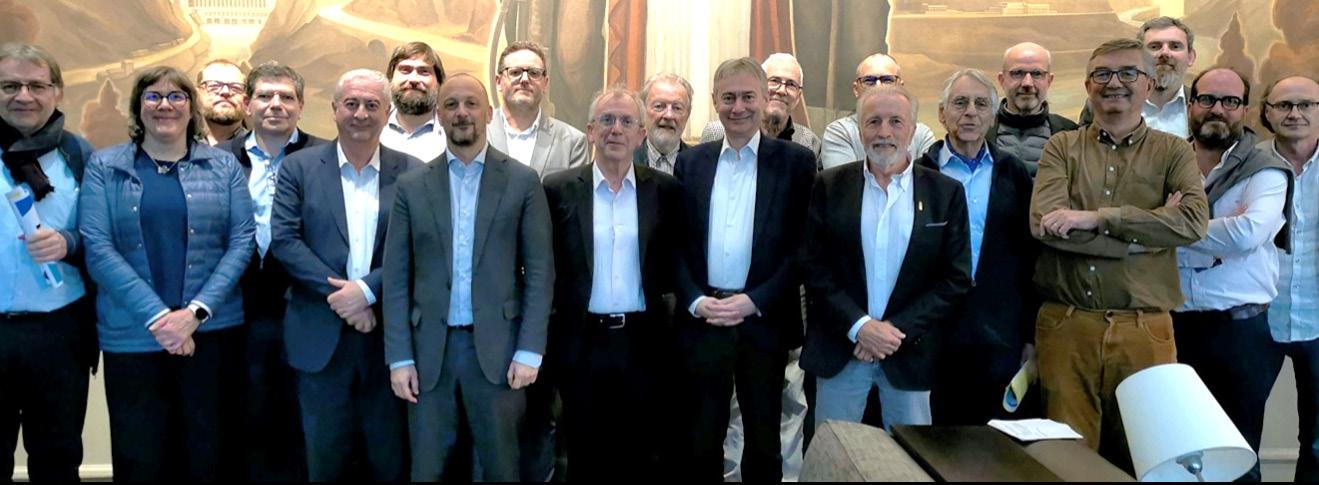
The FSTT, the French Society for Trenchless Technologies, has appointed Guillaume Lanfranchi as its new President.
The appointment was confirmed at a meeting of the FSTT board on 1 April. Lanfranchi succeeds Patrice Dupont, who has stepped down after 23 years at the head of the association.
Lanfranchi is currently General Director of Technical Services at SEDIF, the Syndicat des Eaux d’Île-de-France, one of the leading public water services in France and Europe. He brings significant expertise in drinking water and wastewater, with 20 years’ experience working with local authorities.
In his new role, Lanfranchi will support the continued development and promotion of trenchless technologies in France. He will also contribute to strengthening CMOST, the collective of trenchless project owners within the FSTT. He is already working on a roadmap to define the association’s priority actions and strategic direction for the coming years.
The FSTT also expressed its sincere thanks to Patrice Dupont for his long-standing commitment, dedication and contribution to the association. His work has played a major role in strengthening the FSTT’s position and will leave a lasting mark on its history.
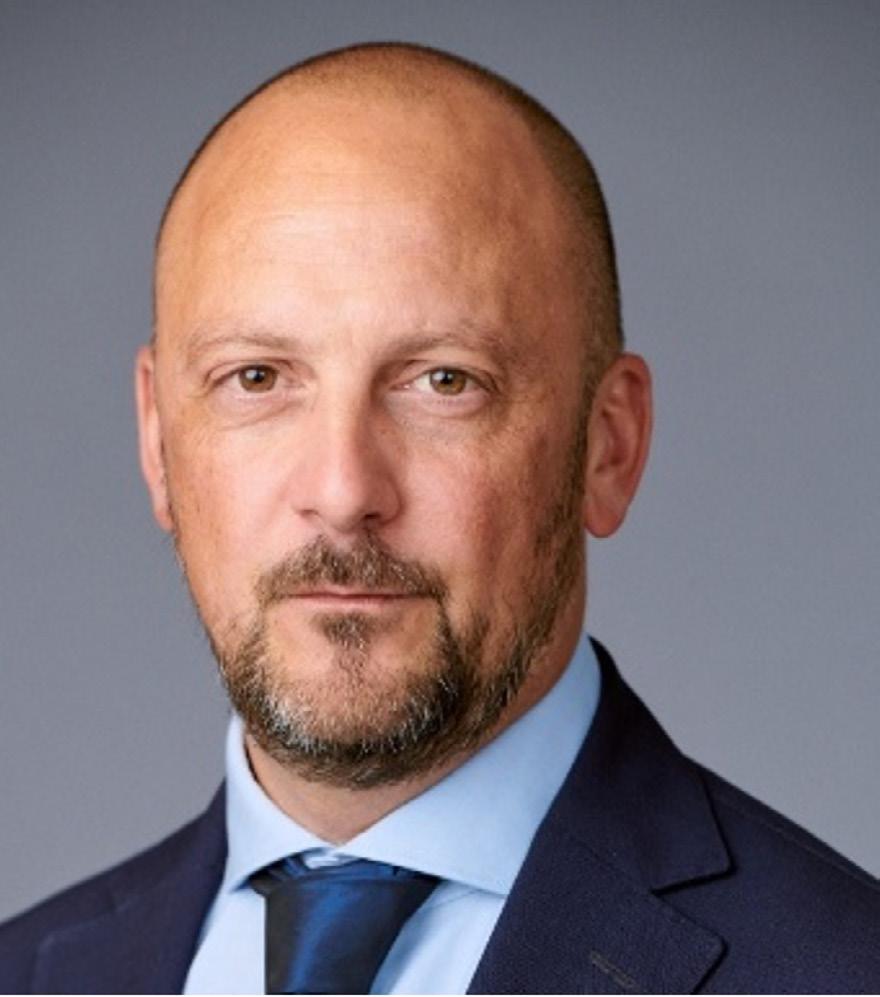
“In
his new role, Lanfranchi will support the continued development and promotion of trenchless technologies in France.
The transition will be one of continuity, with Dupont remaining a member of the FSTT board and continuing to support the association through his experience and expertise.
The FSTT said it extends its best wishes to Guillaume Lanfranchi in his new role, as the association continues its work to develop and raise the profile of trenchless technologies.
Guillaume Lanfranchi surrounded by the new board of directors of the FSTT gathered in the prestigious Ferdinand de Lesseps room at the Franch National Federation of Public Works
A new chapter for ISTT: Young Trenchless Professionals Committee launches
The International Society for Trenchless Technology has launched its first Young Trenchless Professionals Committee, marking a major step in its commitment to supporting the next generation of trenchless industry leaders.
The inaugural kick-off meeting was held on 26 May 2026, bringing together nine members from eight countries across four continents. The new committee will help raise awareness of trenchless technology, encourage young professionals to engage with ISTT activities, build international networks between member societies and support personal and professional growth across the sector.
The idea was born from a simple but important question, as ISTT Board Chair Mark Haebler explained at the meeting: “Why do we not have a trenchless committee for the younger generation?”
Working with ISTT Executive Director Trevor Gosatti and committee Chair Pertti Leppänen, Deputy Head of Department at Sitowise and Chair of the Finnish Society for Trenchless Technology, the concept has now developed into a formal committee representing ISTT member societies around the world.
“I’m very happy and excited that we now start with our Young Trenchless Professional Committee for the very first time in ISTT’s history,” said Haebler.
A truly global committee
The founding committee is chaired by Pertti Leppänen of Finland, who also sits on ISTT’s International No-Dig Committee. At the kick-off meeting, Inshik Park, a PhD researcher at the University of Alberta in Canada, was unanimously elected Vice-Chair.
The committee also includes Juan Sebastián Burgos, representing LASTT in Colombia; Yavuz Ünal, representing GSTT in Germany; Silvana Alfieri and Robert Gray, representing UKSTT in the UK; Hisatoshi Kasahara, representing JSTT in Japan; Lachlan Curren, representing ASTT in Australia; and Asil Orhan, representing TUYID in Turkey.
Together, the members bring experience across utility infrastructure, trenchless design, sewer rehabilitation, academic research, clean technology, sales, engineering, asset renewal, infrastructure delivery and association development.
As the committee begins its work, ISTT is introducing the founding members who will help shape its first year of activity and build stronger connections between young trenchless professionals worldwide.
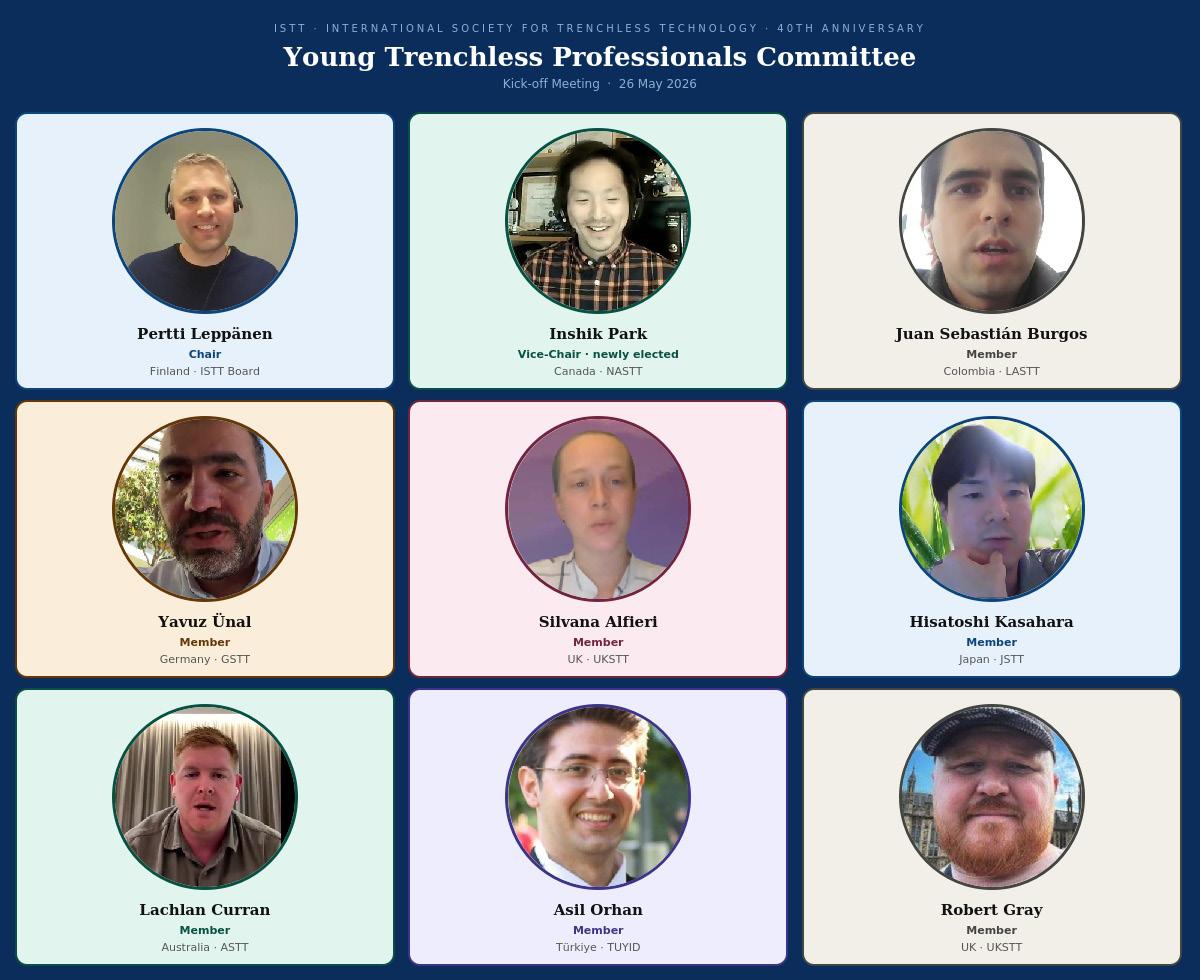
Meet the members
Pertti Leppänen
Chair · Finland / FiSTT
Pertti Leppänen chairs the new committee and sits on ISTT’s International No-Dig Committee. He is Deputy Head of Department at Sitowise, one of Finland’s leading water-services consultancies, and Chair of the Finnish Society for Trenchless Technology.

With more than 15 years’ experience as a project manager, lead designer and trenchless technology specialist, he has particular expertise in water supply renovation using no-dig techniques and infrastructure built within tunnel structures. As FiSTT Chair, he also helped bring the 38th International No-Dig to Helsinki.
Leppänen brings the committee a clear vision grounded in both field experience and association leadership.
Inshik Park Vice-Chair · Canada / NASTT
Elected Vice-Chair at the kickoff meeting, Inshik Park is a PhD candidate in underground trenchless construction at the University of Alberta, where his research focuses on annular pressure prediction and risk assessment in horizontal directional drilling.

A NASTT Trenchless Rising Star and winner of the 2025 ISTT No-Dig Student/Young Professional Paper Award, Park has long worked to bridge academia and industry. He founded and chairs the CUIIC Young Professionals Subcommittee, serves as Secretary of the ASCE-UESI Younger Member Engagement Committee, and led the NASTT University of Alberta student chapter for more than five years.
As Vice-Chair, he will take an operational lead, organising meetings and helping to drive the committee’s action plan.
Juan Sebastián Burgos
Member · Colombia / LASTT
Representing the Latin American Society for Trenchless Technology, Juan Sebastián Burgos is a civil engineer, business administrator and CEO of Bogotá-based infrastructure firm GBG SAS. He has delivered numerous water, sewerage and road projects for Colombian utilities and public agencies, giving him hands-on experience in structuring and managing major construction works.

Passionate about closing the technology gap in Latin America, Burgos hopes to support the wider adoption of proven international no-dig practices across the region. He also brings experience in engineering networking and student-engagement initiatives.
Yavuz Ünal
Member · Germany / GSTT
Yavuz Ünal joins the committee from the German Society for Trenchless Technology and works as a sales manager for Brandenburger.

With five years’ experience in the trenchless industry, he has worked across Germany, Turkey, the Middle East and Asia. This has given him a strong understanding of how standards and design assumptions differ between markets, particularly in relation to CIPP liner-thickness calculation.
Ünal is especially interested in harmonising regulations and sharing technical knowledge so that emerging trenchless markets can build on established expertise. He is motivated by the opportunity to help grow a truly global trenchless community.
Silvana Alfieri
Member · UK / UKSTT
Silvana Alfieri is Head of Sales for Dancutter & Sewertronics, leading sewer rehabilitation sales across Europe.

An environmental engineer by training, she has held international commercial and project roles across the US, Netherlands, Australia and the UK, and co-founded an early-stage clean-technology start-up.
At the UK Society for Trenchless Technology, Alfieri founded and leads the New to Industry Network, UKSTT’s young professionals initiative. Passionate about attracting new and young talent into the sector, she joins the committee to share UK experience and learn from global peers.
Hisatoshi Kasahara
Member · Japan / JSTT
Hisatoshi Kasahara is a Research Engineer at NTT, Inc. in Japan, working within its Civil Engineering Project on telecommunications infrastructure.

Holding a master’s degree from Tohoku University, his expertise spans structural mechanics, concrete engineering and material deterioration. His work includes deterioration prediction for telecommunications manholes, structural-capacity assessment using finite-element analysis and the development of new polymer-concrete materials.
Through the committee, Kasahara looks forward to exchanging ideas with young professionals worldwide and exploring how trenchless technologies can support the sustainable renewal of ageing utility networks in Japan and beyond.
Lachlan Curren
Member · Australia / ASTT

Representing the Australasian Society for Trenchless Technology, Lachlan Curren is Relining Division Manager at Rangedale in Melbourne and has chaired ASTT’s Young Trenchless Professionals group for around two years.
With a background in pipeline relining and rehabilitation, he brings practical industry experience and a strong track record of channelling young members’ enthusiasm and innovation into his society.
Curren sees the new committee as an opportunity to share lessons from ASTT’s own YTP group, learn from international peers and support the personal and professional growth that global networking can offer.
Asil Orhan
Member · Turkey / TUYID
Asil Orhan represents Turkey’s trenchless community as a board member of the Infrastructure and Trenchless Technologies Association and an ISTT committee member.

Born in Istanbul and educated in the United States and at Istanbul Technical University, he holds a master’s degree in engineering management, with research focused on blending hydrogen into natural gas pipeline networks.
Alongside providing professional consultancy, Orhan works as a Mechanical Engineer at IGDAS, where he designs Istanbul’s high and medium pressure natural gas transmission pipelines. He brings multidisciplinary project experience spanning natural gas infrastructure, localisation, prototyping and product development.
Robert Gray Member · UK / UKSTT
Robert Gray, from the UK Society for Trenchless Technology, is a Sewer Rehabilitation Project Manager at Wessex Water, where he leads no-dig rehabilitation schemes and manages design and financial delivery.

With more than a decade of hands-on experience, from CIPP and patch lining to pollution rehabilitation and CCTV survey work, he combines field knowledge with team leadership and programme-delivery skills.
Although unable to attend the kick-off meeting, Gray prepared an introduction for fellow members and brings a practitioner’s perspective on delivering complex drainage and rehabilitation projects across major UK utility frameworks.
Mission and Goals
The committee’s mandate is to raise awareness of trenchless technology, spark interest among young professionals in ISTT activities, build international networks across member societies, and support personal and professional growth. Operating independently with the support of an ISTT Board member, the committee will develop its own annual activity programme and action plan.
“It’s a huge opportunity for young people to grow both professionally and personally, by networking internationally and understanding how different people from different walks of life go about different things,” said Lachlan Curren, who also chairs the ASTT’s own Young Trenchless Professionals group.
What’s Next
The committee will meet virtually on 24 June 2026, with further meetings in September and November. A first in-person gathering is already confirmed at International No-Dig in Auckland, New Zealand in October 2026, where the YTP Committee will also meet with ASTT’s young professionals group. Vice-Chair Inshik Park will facilitate a workshop at the June meeting to shape the committee’s action plan for the year ahead.









ISTT webinar to showcase award-winning Snowy 2.0 HDD project
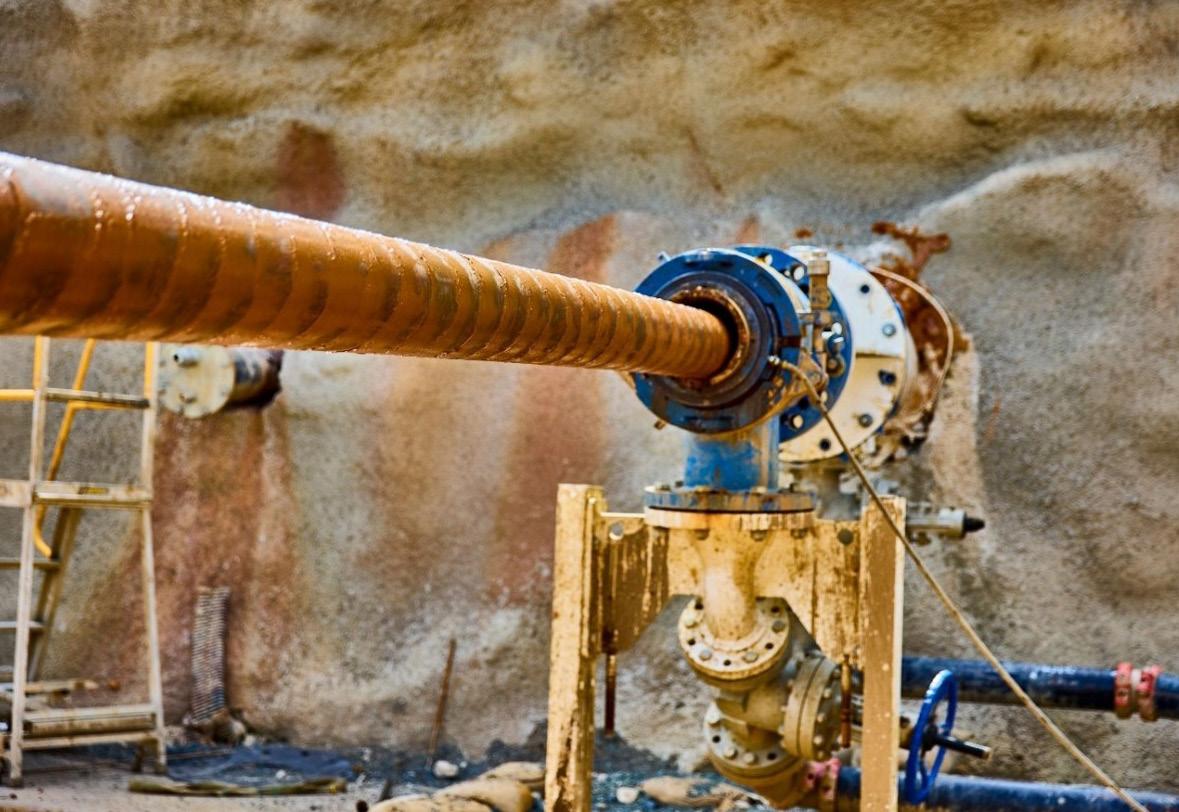
ISTT will host an educational webinar on 2 September 2026 featuring the winner of the 2025 ISTT No-Dig Award in the Project Category.
The webinar, titled Snowy 2.0 – Marica Road West HDD: Innovation in Extreme Terrain, will be presented by Michels Corporation and will provide an in-depth look at one of the most technically challenging HDD projects delivered as part of Australia’s Snowy 2.0 Pumped Hydro Project.
“The Marica Road West HDD was required for the installation of power, water and communication cables needed to support the construction and operation of Snowy 2.0, the largest committed renewable energy project in Australia.
Webinar details
Title: Snowy 2.0 – Marica Road West HDD: Innovation in Extreme Terrain
Date: 2 September 2026
Time: 14:00–15:00 GMT / 15:00–16:00 BST / 16:00–17:00 CEST / 10:00–11:00 EDT
Project location: Australia
Speakers: Bryce Morrow, Michels Corporation; Glenn Duyvestyn, Michels Corporation
Fee: Free of charge
Recording: Available to ISTT members only
Presentation file: Free for ISTT members and available to non-members for US$10
Registration: Registration Form →
About the project
Michels, an international trenchless construction contractor, was appointed in 2023 to complete the installation of a critical and highly complex horizontal directional drilling project for Snowy 2.0 in New South Wales, Australia.
The Marica Road West HDD was required for the installation of power, water and communication cables needed to support the construction and operation of Snowy 2.0, the largest committed renewable energy project in Australia.
Running from Lobs Hole to Marica, the HDD measured 2,248 m in length. While significant, this length was not the project’s defining challenge. What made the installation exceptional was the 600 m elevation difference between the low side and the high side of the borehole — a configuration not previously achieved using HDD.
The method was selected as the most suitable option for installing a 219 mm diameter fibreglass reinforced polymer carrier pipeline and its critical cables through an environmentally significant area.
The presentation will explore the technical challenges, innovative solutions and lessons learned from the project, which was completed between April and July 2023.
Speakers
Bryce Morrow Michels Corporation
Bryce Morrow is General Manager at Michels Trenchless Pty Ltd in Australia. Based in Wangaratta, Victoria, he brings extensive experience in trenchless technology and horizontal directional drilling projects.
Morrow has played an important role in the successful delivery of complex infrastructure projects, including the award-winning Snowy 2.0 HDD works.
Glenn Duyvestyn, PhD, PE, PEng
Michels Corporation

Glenn Duyvestyn is Director of Alternative Delivery at Michels Corporation, where he oversees innovative trenchless technology solutions and project delivery strategies.
With advanced professional credentials and significant engineering expertise, he brings both technical depth and strategic leadership to complex infrastructure projects across North America and international markets.

International No-Dig Auckland 2026 event schedule now available
The event schedule for the 40th International No-Dig Conference and Exhibition is now available online.
Taking place from 27–29 October 2026 at the New Zealand International Convention Centre, 101 Hobson Street, Auckland Central, the landmark event will mark four decades of international trenchless technology innovation, knowledge sharing and industry collaboration.
Hosted in Auckland, New Zealand, International No-Dig 2026 will bring together global leaders, technical experts, contractors, suppliers, utilities and innovators from across the trenchless sector.
The schedule includes three pre-conference training courses on 27 October, running from 08:00–17:00, followed by Welcome Drinks from 17:00–19:00 on the NZICC Trade Show Floor.
The main conference programme will run across 28–29 October, with technical paper sessions covering key trenchless themes including Rehabilitation, New Installation and Trenchless Design.
Additional networking and industry events include the Networking Night on 28 October, taking place from 19:00–23:00 at The Town Hall, and the ISTT Awards Gala on 29 October, from 19:00–23:00 at the Aotea Centre, Hunua Rooms.
The full conference programme, including speakers and technical papers, will be released in the coming months.
For event schedule updates, speaker information, exhibition opportunities and ticket registration, visit www.no-dignz.com.
ISTT launches Trenchless Advantages webpage
The ISTT Technology and Education Committee has developed a new resource page for the ISTT website, highlighting the key benefits of trenchless technology.

The new Trenchless Advantages page brings together information on the environmental, operational and cost benefits of trenchless methods, providing a useful reference for professionals, municipalities and other stakeholders considering trenchless solutions.
The page covers three main areas:
Environmental impact
Including carbon reduction, waste elimination, improved air and noise quality, and ecosystem protection.
Operational benefits
Including reduced disruption to traffic and services, faster project completion and greater route versatility.
Cost advantages
Including direct and indirect cost savings, as well as reduced social costs.
Each advantage is supported by an explanation and accompanying illustrations. The resource is also available in multiple languages, helping to make the benefits of trenchless technology more accessible to a wider international audience.
The Trenchless Advantages page can be accessed at: istt.com/page/trenchlessadvantages

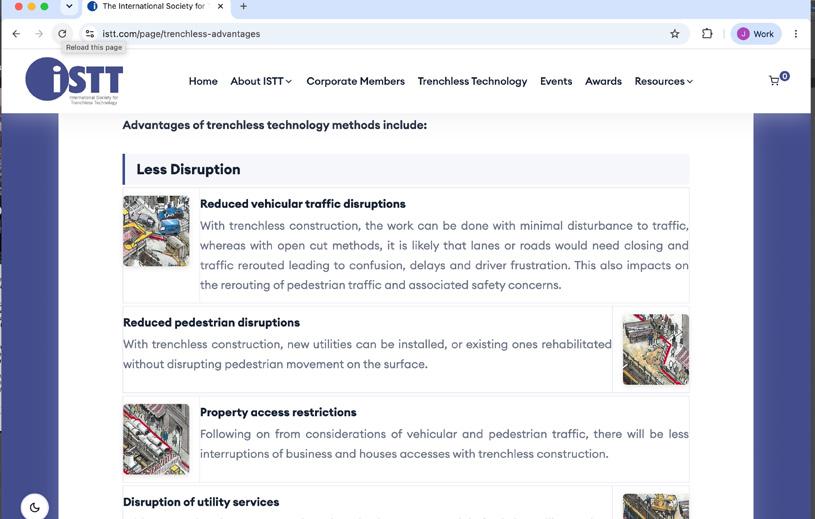
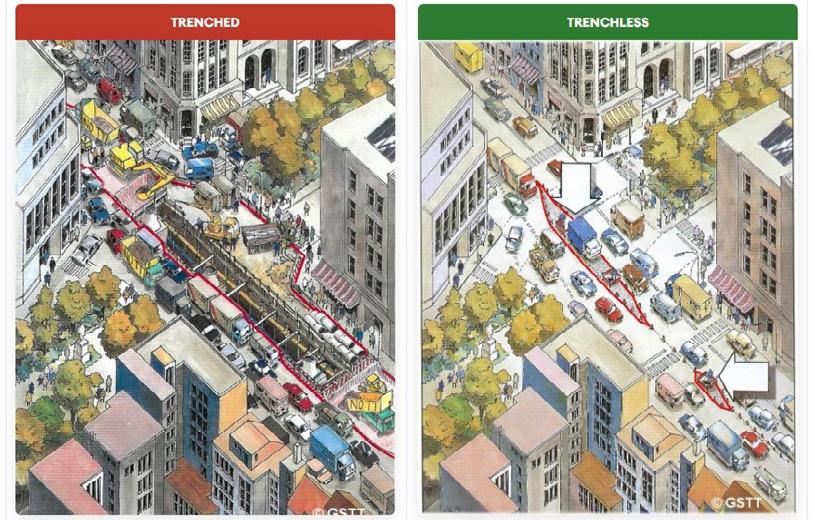

AFFILIATED SOCIETIES ISTT Affiliated Societies around the world
China Hong Kong Society for Trenchless Technology (CHKSTT)
Tsimshatsui Post Office 91499 Kowloon
Hong Kong
Austrian Association for Trenchless Technology (AATT)
c/o TU Wien Resselgasse 5, 1040 Wien, Austria
Phone: +43 664 5184084
Email: office@grabenlos.at Web: www.grabenlos.at

Brazilian Association for Trenchless Technology (ABRATT)
Alameda Santos, 1773 – Jardim Paulista Sao Paulo 01419-002 Brazil
Phone: +55 11 983893450
Email: hrosas@abratt.org.br Web: www.abratt.org.br
Australasian Society for Trenchless Technology (ASTT)
PO Box 2242, MALAGA LPO, WA, 6944
Phone: +61 419 918 449
Email: secretary@astt.com.au Web: www.astt.com.au
Bulgarian Association for Trenchless Technology (BATT)
Kaprinka Lake Village Kazanlak 6100, Bulgaria
Phone: +359 2 4901381
Email: info@batt-bg.org Web: www.batt-bg.org
Phone: +852 9201 1952
Email: chkstt@gmail.com Web: www.chkstt.org

China Society of Geology – Trenchless Technology Committee (CSTT)
Xicheng District Room 151, 26 Baiwanzhuang Street, Xicheng District, Beijing 100037
China (PR)
Phone: +86 10 6899 2605
Email: yan64843889@126.com Web: www.cstt.org
Finnish Society for Trenchless Technology (FISTT)

Chinese Taipei Society for Trenchless Technology (CTSTT)
3F, No 92, Roosevelt Rd., Sec. 4, Zhongzheng Dist, Taipei City, 100 Taiwan
Phone: +886 2 2362 0939
Email: zoradcrc@gmail.com Web: www.ctstt.org.tw/en_index.asp

Czech Society for Trenchless Technology (CzSTT)
Bezova 1658/1 ,147 14 Praha 4 Czech Republic
Phone: +420 244 062 722
Email: office@czstt.cz Web: www.czstt.cz
Danish Society for Trenchless Technology
– NoDig Infra (DKSTT)
Odinsvej 29 Silkeborg Denmark
Phone: +45 50894489
Email: tina@juul-consult.dk
Web: www.nodiginfra.dk/nodig-infra/ startside
c/o Sari Pietilä, Haapasuonkankaantie 10 90830 Haukipudas, Finland
Phone: +358 504132484
Email: info@fistt.net Web: www.fistt.net

French Society for Trenchless Technology (FSTT)
4 rue des Beaumonts, F-94120 Fontenay Sous Bo, France
Phone: +33 1 53 99 90 20
Email: contact@fstt.org Web: www.fstt.org
German Society for Trenchless Technology (GSTT)
Kurfürstenstr. 129 (Building: German construction association) Berlin, Germany
Phone: +49 30 81 45 59 84
Email: beyer@gstt.de Web: www.gstt.de
Italian Association of Trenchless Technology (IATT)
Via Ruggero Fiore, 41 Rome Italy
Phone: +39 06 39721997
Email: iatt@iatt.info Web: www.iatt.it

Iberian Society for Trenchless Technology (IBSTT)
C/ Josefa Valcarcel, 8 – 3a PTLA 28027, Madrid, Spain
Phone: +34 913 202 884
Email: ibstt@ibstt.org Web: www.ibstt.org
Japan Society for Trenchless Technology (JSTT)
3rd Floor, Reed-C Bldg., 2-11-18, Tomioka, Koto-ku, Tokyo 135-0047 Japan
Phone: +81 3 5639 9970
Email: office@jstt.jp
Web: www.jstt.jp

Latin American Society for Trenchless Technology (LAMSTT)
Medellín Highway (Calle 80) KM3.5 via BogotáSiberia south side, Bogotá Terrestrial Cargo Terminal, Office C-12, Cota – Cundinamarca, Colombia
Phone: +57 1 8764675
Email: cistt.arlex.toro@lamstt.org Web: www.lamstt.org

Malaysia Association for Trenchless Technologies (MATT)
No 44, Jalan Dungun, Damansara Heights, Kuala Lumpur 50490 Malaysia
Email: trenchless@matt.org.my Web: www.matt.org.my

Polish Foundation for Trenchless Technology (PFTT)
Ul. Warkocz 14, 25 - 253 Kielce, Poland
Phone: +48 41 34 24 450
Email: parkaa@tu.kielce.pl Web: www.pftt.pl
Trenchless Romania Club
Roma Street, No. 16, Ap.2, District 1 Bucharest Romania
Phone: + 40724 550 830
Email: maria.nae@trenchlessromania.ro Web: www.trenchlessromaniaclub.ro
North American Society for Trenchless Technology (NASTT)
22722 29th Drive SE, STE 100, Bothell, WA 98021
Phone: +1 888 993 9935
Email: info@nastt.org Web: www.nastt.org
The Russian Society Trenchless Technology Association (RSTT) Severny proezd 12, Balashikha Moscow region, Russian Federation
Phone: +7 (495) 521 78 82
Email: gnb.06@mail.ru Web: www.s-gnb.ru

Southern African Society for Trenchless Technology (SASTT)
1053 Hyde Avenue, Eldoraigne ext 1, Centurion Gauteng, South Africa
Phone: +27 (0) 82 551 7458
Email: director@sastt.org.za Web: www.sastt.org.za

Singapore Society for Trenchless Technology (SgSTT)
84 Toh Guan Road East, Singapore Water Exchange , +(65) 97124054, Singapore Phone: +(65) 97124054
Email: admin@sgstt.org Web: www.sgstt.org/
Netherlands Society for Trenchless Technology (NSTT)
Postbus 79, 3769 ZH Soesterberg, Netherlands
Phone: +31 346 723450
Email: info@nstt.nl Web: www.nstt.nl
Scandinavian Society for Trenchless Technology (SSTT)
Gezelius väg 12, 134 31 Gustavsberg Sweden
Phone: +46(0) 70 438 01 54
Email: Kontakt@sstt.se Web: www.sstt.se
Turkish Society for Infrastructure and Trenchless Technology (TSITT)
Gayrettepe Mah. Huzur Sok. No:1A Besiktas
34349 Istanbul, Turkey
Phone: +90 212 603 11 01
Email: info@akated.com Web: www.akated.com

Ukraine Association for Modern Trenchless Technology (UAMTT)
83A Srednyaya Str., Odessa 65005 Ukraine
Phone: +380 50 3953280
Email: trenchless.as@novatec.ua Web: www.no-dig.odessa.ua
United Kingdom Society for Trenchless Technology (UKSTT)
Camden House, Warwick Road, Kenilworth, Warwickshire, CV8 1TH, UK
Phone: +44 (0)192 651 3773
Email: admin@ukstt.org.uk Web: www.ukstt.org.uk
EVENTS AND MEETINGS 2026
June 10-11 Trenchless Asia 2026
Queen Sirikit National Convention Centre Bangkok, Thailand www.trenchlessasia.com
11 Jun 2026 Technical Day / Journée Technique in Dammarie-Les-Lys Dammarie-Les-Lys France www.fstt.org/page-evenement/jt-dammarie-les-lys-11-juin-2026/
15-16 September 2026 No-Dig Conference and Exhibition – Czech Mikulov, Czech Republic www.czstt.cz
September 29 - October 1 No-Dig Live 2026
NAEC Stoneleigh Park, Warwickshire www.nodiglive.co.uk
SÃO PAULO No-Dig Show
São Paulo , Brazil www.abratt.org.br/no-dig-show-2026
27-29 October 2026 International No-Dig Auckland Auckland, New Zealand www.no-dignz.com/event-schedule
2-4 November NASTT 2026 No-Dig North Canada www.nastt.org/no-dig-north/
4-5 November No-Dig Turkiye 2026 Conference and Exhibition WOW Convention Center, Istanbul Email: info@akated.com www.nodigturkey.com
2-3 December 2026 Trenchless Middle East 2026 Riyadh Marriott Hotel, Riyadh Kingdom of Saudi Arabia www.trenchlessmiddleeast.com
5 November 2026 Technical Day / Journée Technique In Brussels Brussels, Belgium www.fstt.org/page-evenement/jt-bruxelles-05-11-2026/
EVENTS AND MEETINGS 2027
21-25 March 2027 NASTT 2027 No-Dig Show
Raleigh, United States www.nastt.org/no-dig-show/
21-23 April 2027 China International Trenchless Technology Conference and Exhibition (ITTC2027)
Suzhou International Expo Center, Jiangsu, China www.istt.com/events/c898a394-6a96-462a-ab49-e8fd0c09bdbb
11-13 October 2027 International No-Dig 2027 Bologna Bologna, Italy www.istt.com/events/a4923104-a859-43f0-b30f-a8bd3935c1af
13-14 October 2027 NSTT No-Dig Event 2027 Nijkerk, Netherlands
25-27 October 2027 NASTT 2027 No-Dig North Niagara Falls, Canada www.no-dig-event.nl/
26-28 Sep 2028 NO-DIG Live 2028
NAEC Stoneleigh Park, Warwickshire
If you have an event, course or meeting scheduled and would like to add it to this listing please forward details to: editorial@trenchless-works.com
Figures from 2025 Event
1262 NATIONAL PARTICIPANTS
33
264
72


The MOST POPULAR Trenchless Event in the intersection of EUROPE, ASIA and MIDDLE EAST
“This year, we allocated more than 1 Trillion Liras (33 Billion USD) from the central government budget to heal the earthquake wounds and build more resilient cities in the Türkiye Century.”
Cevdet Yılmaz, Deputy President
of Türkiye, 05 February 2024