Trenchless Works is published 12 times a year by Westrade Group Ltd I Carotino House| Bury Lane I Rickmansworth I WD3 1ED I UK
Contributions: Contributions are invited and articles should be emailed to editorial@ trenchless-works.com. No responsibility can be taken for drawings, photographs or written contributions during delivery, transmission or when with the magazine. In the absence of an agreement, the copyright of all contributions, regardless of format, belongs to the publisher. The publishers accept no responsibility in respect of advertisements appearing in the magazine and the opinions expressed in editorial material or otherwise do not necessarily represent the views of the publishers. The publishers accept no responsibility for actions taken on the basis of any information contained within this magazine. The publishers cannot accept liability for any loss arising from the late appearance or non-publication of any advertisement for any reason whatsoever. ISSN 2049-3401
Subscribe
www.trenchless-works.com
Editor’s Welcome
Austen Lees
As we move further into 2026, trenchless technology is no longer operating at the margins of infrastructure delivery. It is becoming central to how underground networks are planned, maintained and renewed.
Across the UK and internationally, ageing assets, constrained urban environments, environmental expectations and tighter delivery programmes are all placing greater pressure on utilities, contractors and infrastructure owners. The need to reduce disruption while improving resilience has never been more important. That theme runs throughout this issue.
In London, our recent No-Dig Roadshow took place at a key moment for AMP8, bringing together utilities, contractors, senior delivery teams and technology providers to discuss practical project delivery, programme certainty and the growing role of trenchless methods in reducing risk.
Internationally, Trenchless Asia 2026 reflects similar momentum, with strong senior participation from utilities, transport authorities and government stakeholders as Southeast Asia places increasing focus on underground infrastructure resilience and sustainable urban development.
This issue also looks at the importance of training, skills and knowledge transfer, reminding us that technology adoption must be matched by capability. Alongside this, our visit to Reinert-Ritz in Germany highlights the value of engineering quality, lifecycle thinking and long-term asset performance.
Elsewhere, we explore innovation across HDD, rehabilitation, materials, leak detection, utility resilience and practical trenchless delivery, alongside the latest news and developments from across the global sector.
As always, Trenchless Works remains committed to bringing together the voices, projects and technologies shaping the future of our industry.
Thank you
Austen
To submit editorial for Trenchless Works next issue please email copy and images to: editorial@trenchless-works.com by the 12th of the month.
Submissions arriving after this date cannot be guaranteed inclusion in that month’s issue. For Trenchless Works sponsorship and advertising rates please email: tdorrell@westrade.co.uk
ARTICLE
Editor’s Welcome
FEATURED NEWS
Driving underground growth across Southeast Asia
Proving the Case – UV CIPP rehabilitation projects builds confidence of trenchless future in emerging markets – By JBP Group of Companies
INDUSTRY INSIGHT
Engineering Quality Without Compromise – Inside Reinert-Ritz
NEWS
Tunnelling begins on new Thames cable tunnel for National Grid upgrade
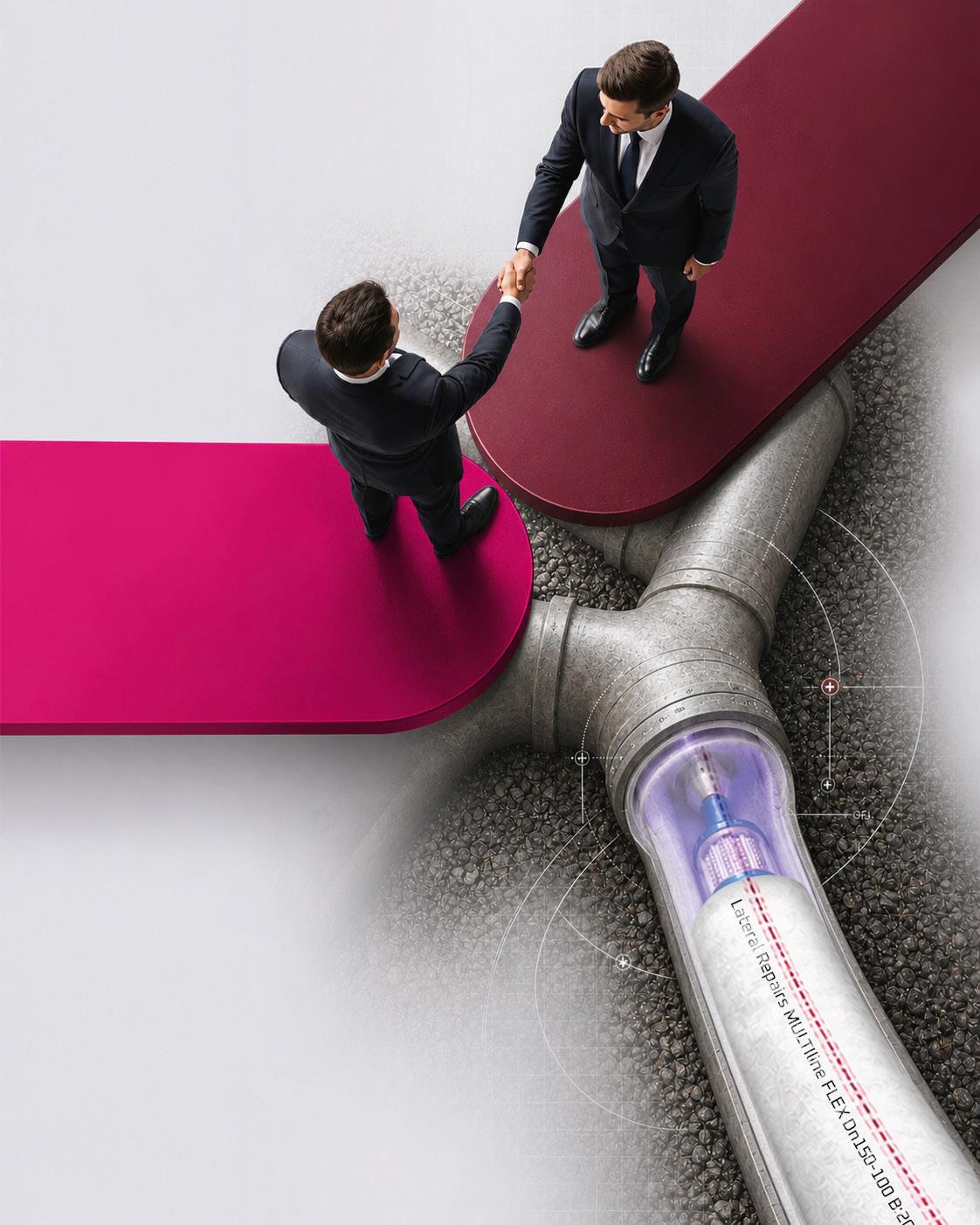
Lateral Repairs joins IMS Trenchless group
Barhale to deliver final phase of £17M Greenwich Trunk Main programme
Scanprobe to host drainage and trenchless open day
First GRUNDODRILL 28N Plus in the country lands in Scotland
Affinity Water trials fibre-optic leak detection technology
Barhale appoints Nick Curtis to lead restructured Northern Region
HDD
Power, partnership and precision beneath the River Foyle
Maximising jobsite efficiency with HDD tooling and support solutions
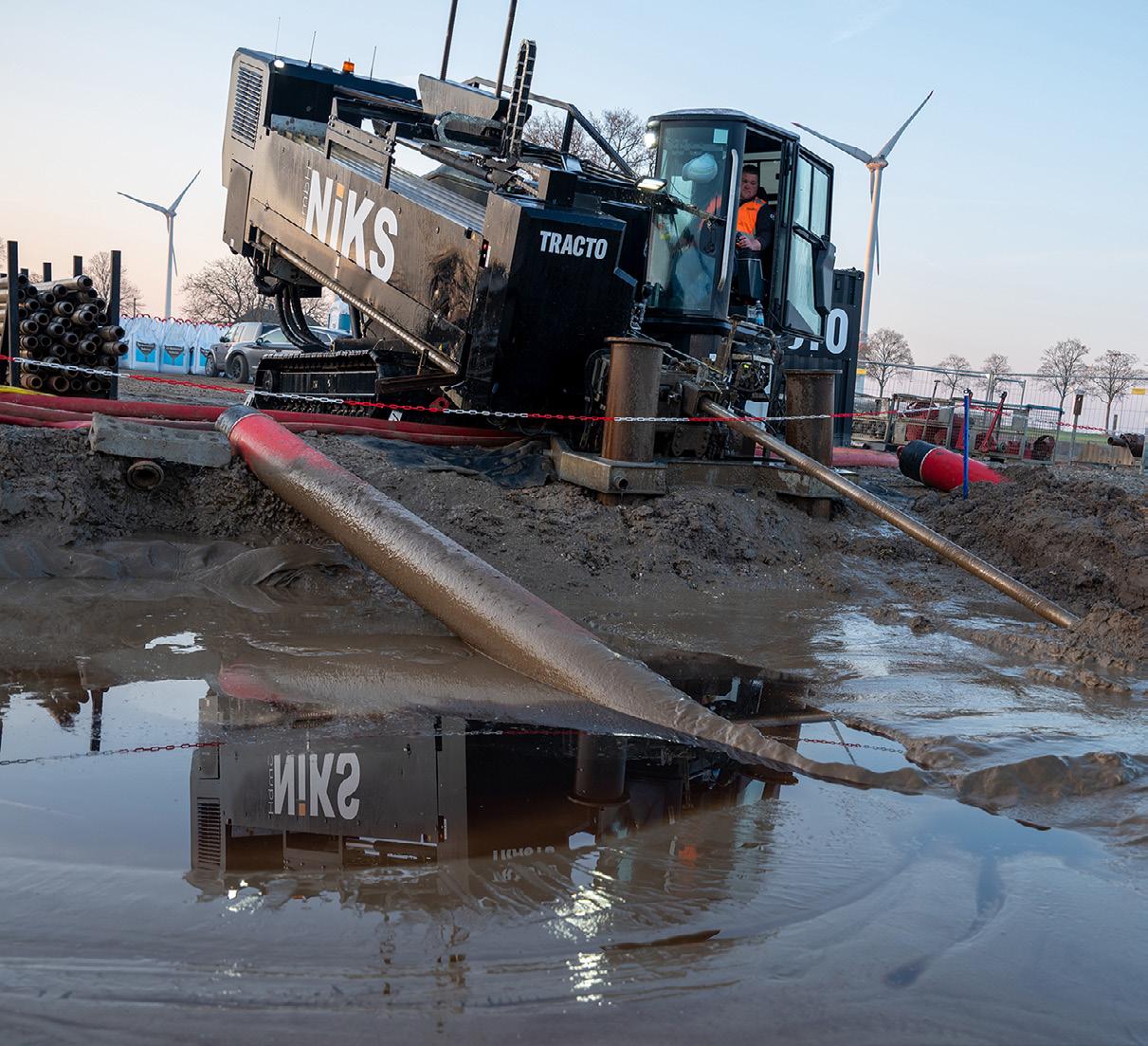
Tracto Hdd Rig Supports A-Nord Grid Construction In Germany
RSM pipe aid: over ten years of proven performance
EVENTS
No-Dig Roadshow London highlights trenchless delivery in the capital
The second visit nobody budgets for Senior public-sector participation strengthens Trenchless Asia 2026
FOCUS ON TRENCHLESS TRAINING
Training Focus in Emerging Markets
ISTT NEWS
International No-Dig 2027 to take place in Bologna
Strengthening ISTT’s position as a global trenchless authority
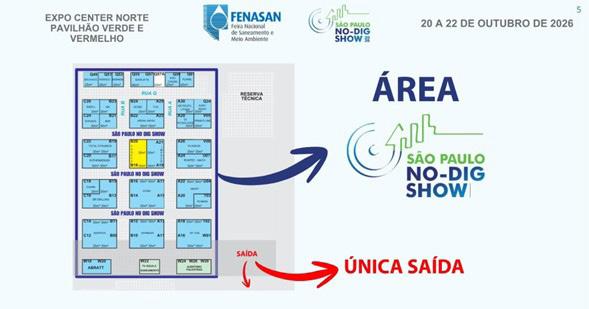
ABRATT to host São Paulo No-Dig 2026 alongside FENASAN
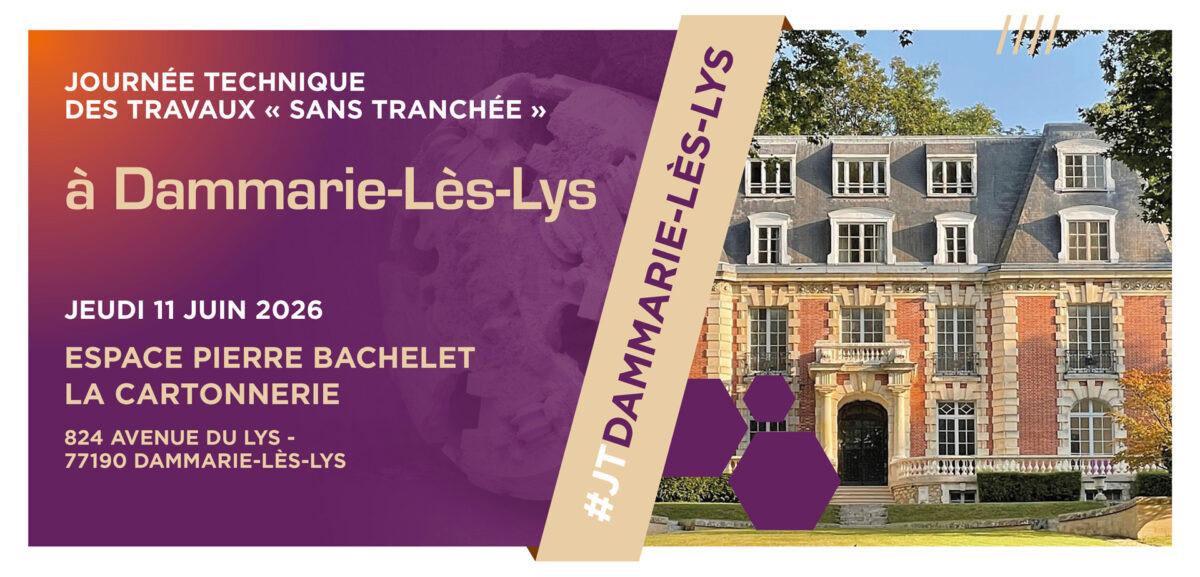
FSTT announces 2026 trenchless event programme
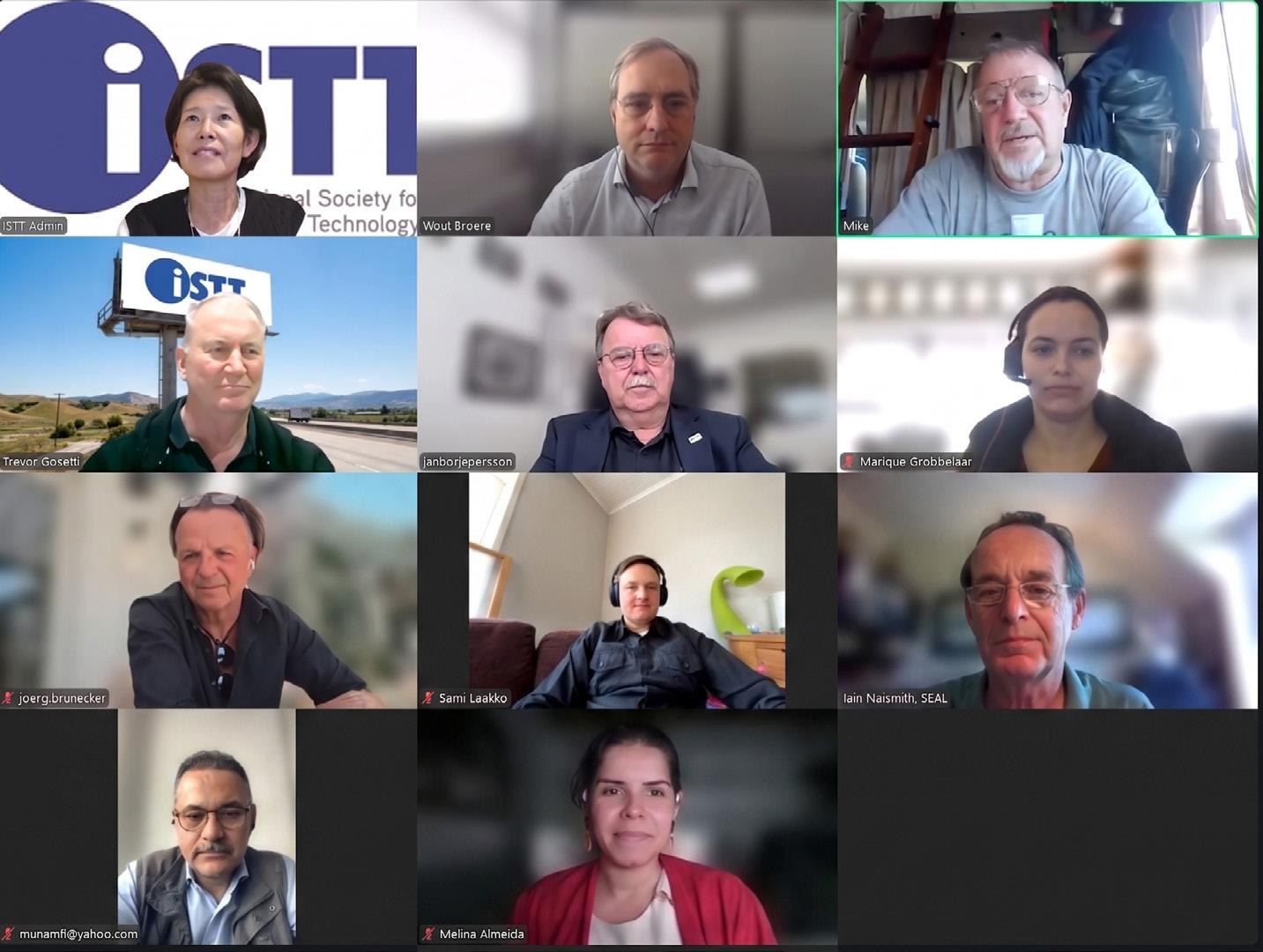
ISTT Technology and Education Committee continues to expand global trenchless initiatives
Innovation and Global Collaboration Drive Success at ITTC 2026
NASTT issues call for abstracts for 2027 No-Dig Show
DRIVING UNDERGROUND GROWTH ACROSS SOUTHEAST ASIA
Ben Hayes, Head of Sales Asia Pacific at Herrenknecht (Asia) Ltd., talks to Trenchless Works editor Austen Lees about regional growth, trenchless innovation and the evolving underground utilities market across Southeast Asia.
Can you provide us with an overview of Herrenknecht’s presence and business activities in Thailand and the wider Southeast Asian market?
Certainly. Herrenknecht has a strong and longestablished footprint in Southeast Asia, with Thailand playing a pivotal role.
Thailand is our first Asian subsidiary, established in 1996 as Herrenknecht (Asia) Ltd., 30 years ago. Initially, we supported the expansion of Bangkok’s sewer system with microtunnelling equipment.
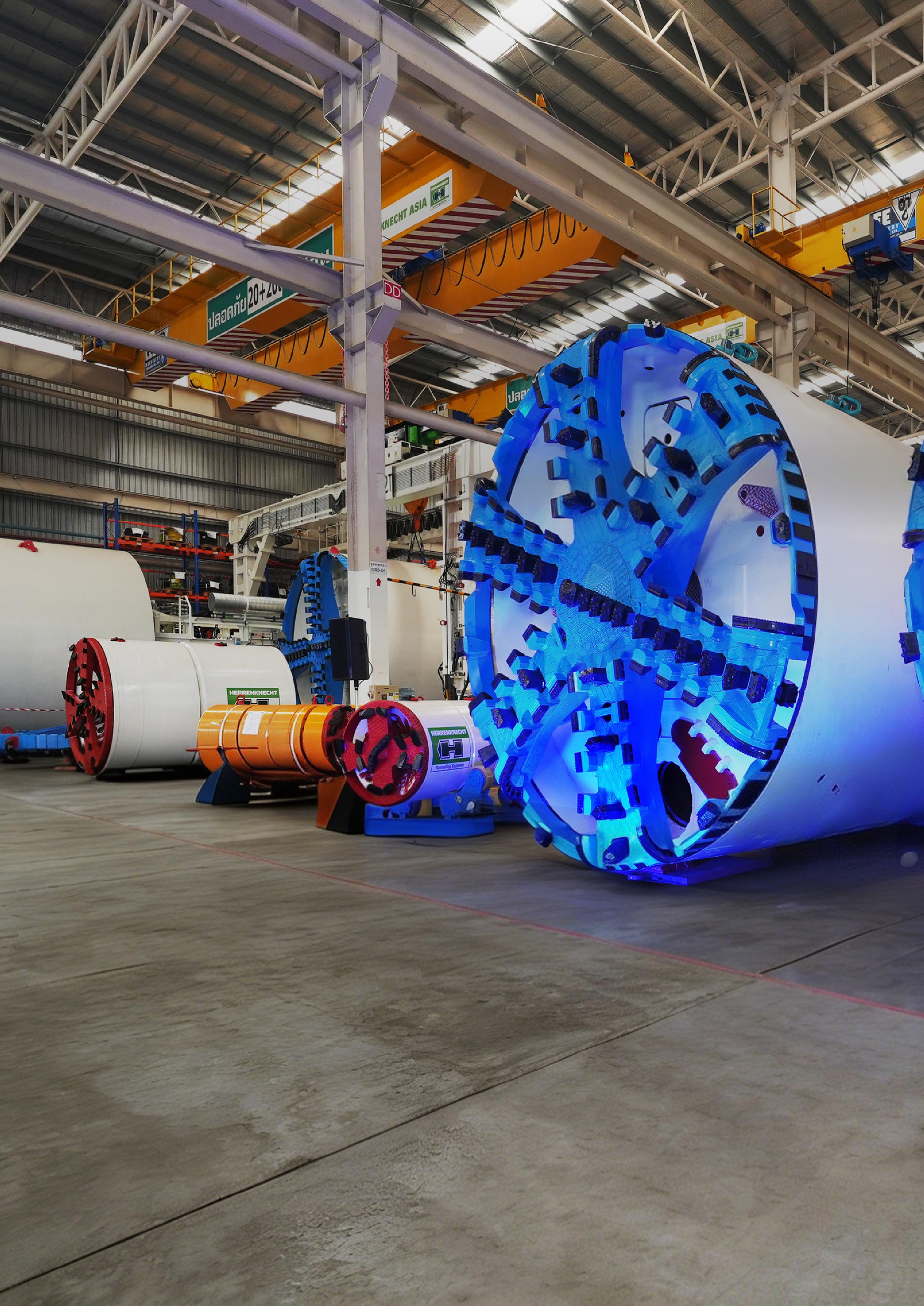
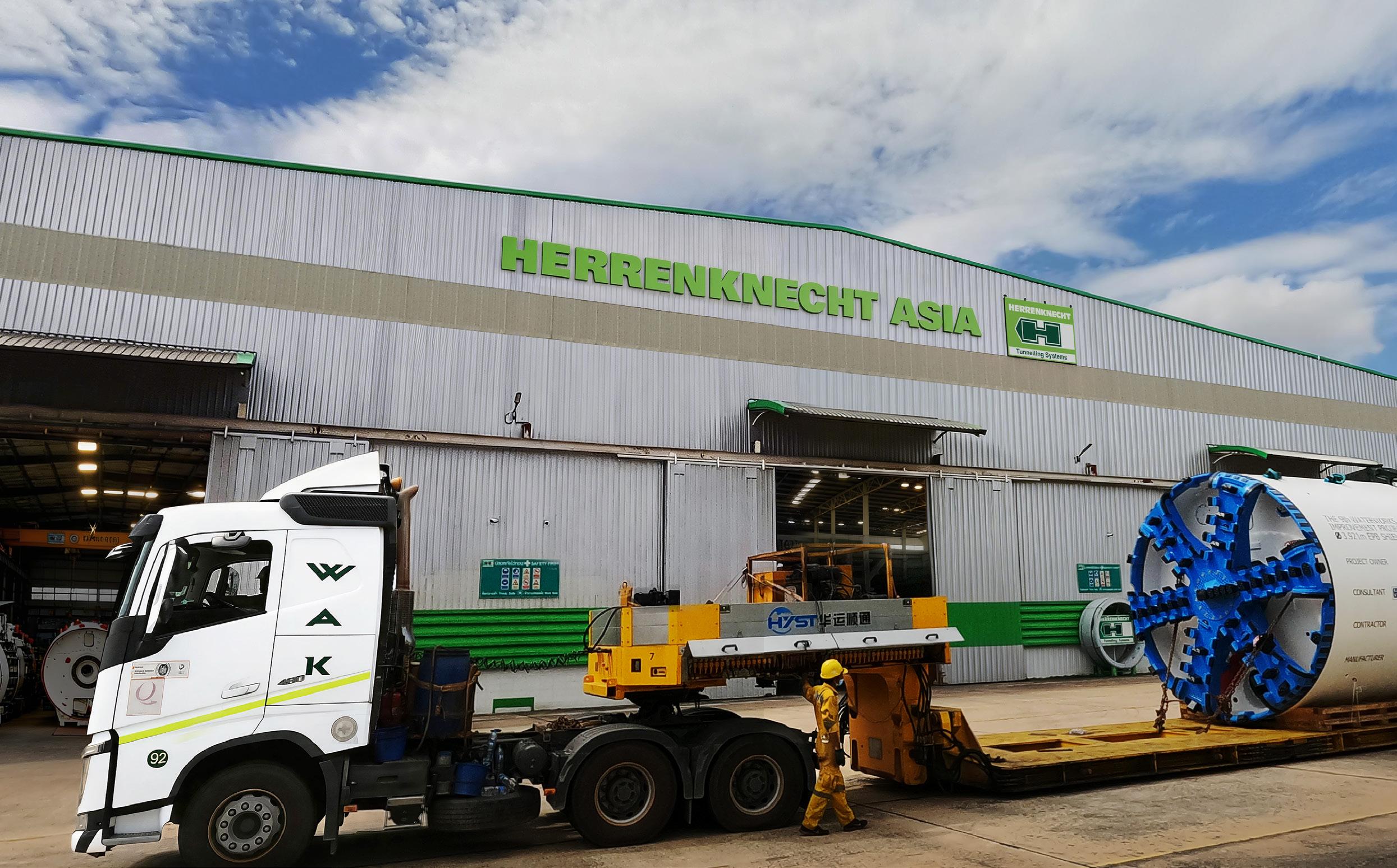
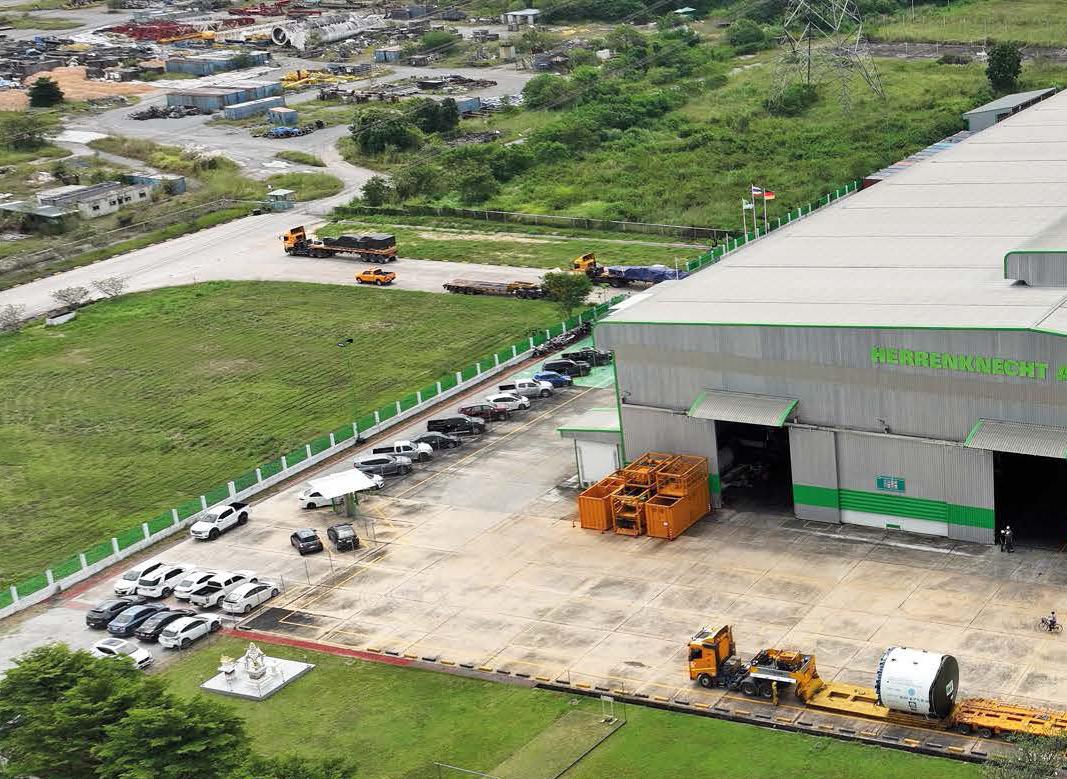
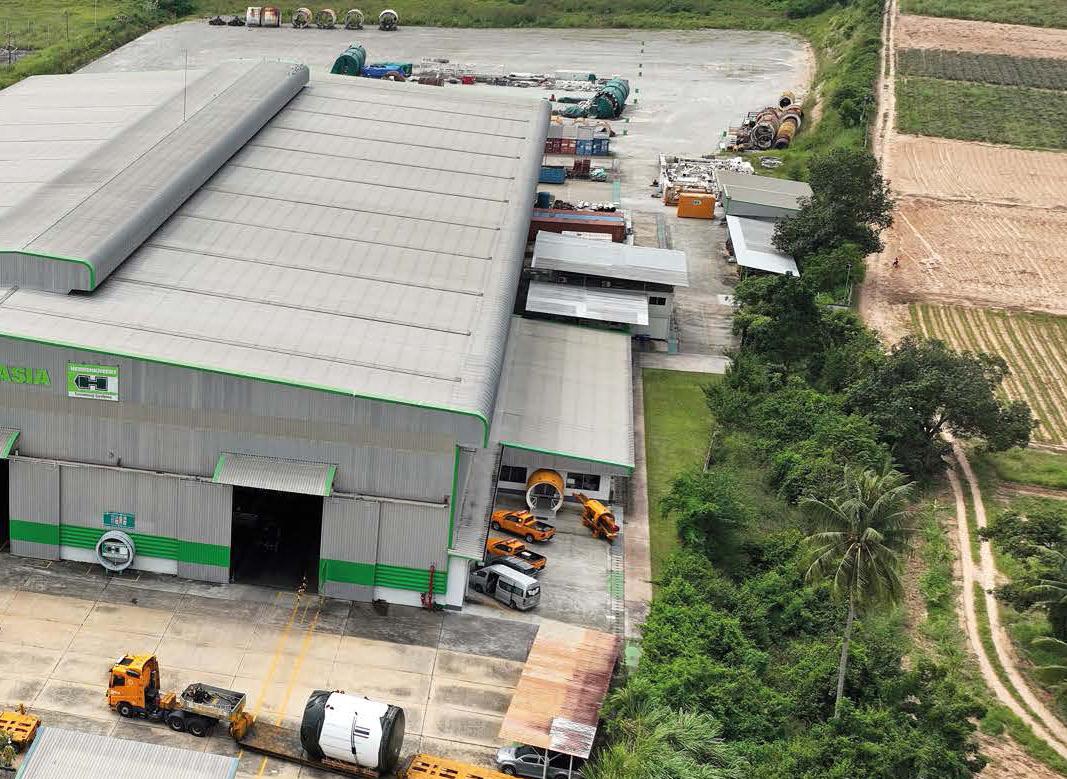
Over the decades, this entity has evolved into a key manufacturing and service hub for the Herrenknecht Group. In 2019, we made a significant investment to relocate to Rayong Province, where we now operate from an 11,000 m² facility. That workshop produces
group products not only for the Thai domestic market, but also for export across the region and beyond.
Looking at the wider Southeast Asian market: our Asia headquarters is in Singapore, and we also have affiliated entities in Malaysia and Indonesia, which allow us to serve local markets with dedicated support. In Vietnam, we work through a long-term business partner who knows the local landscape well and helps us deliver effectively.
So, in summary, Thailand serves as both a manufacturing backbone and a success story of longterm commitment, while our headquarters and affiliate network ensure we cover the wider Southeast Asian market comprehensively, from microtunnelling to large-scale TBM projects in metro, water and energy infrastructure.
“ Herrenknecht has a strong and long-established footprint in Southeast Asia, with Thailand playing a pivotal role.
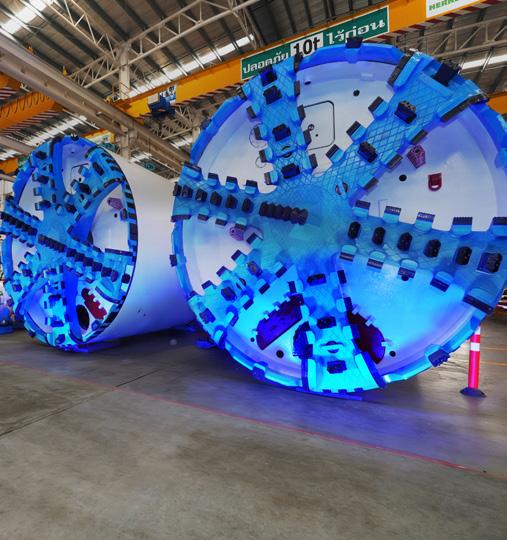
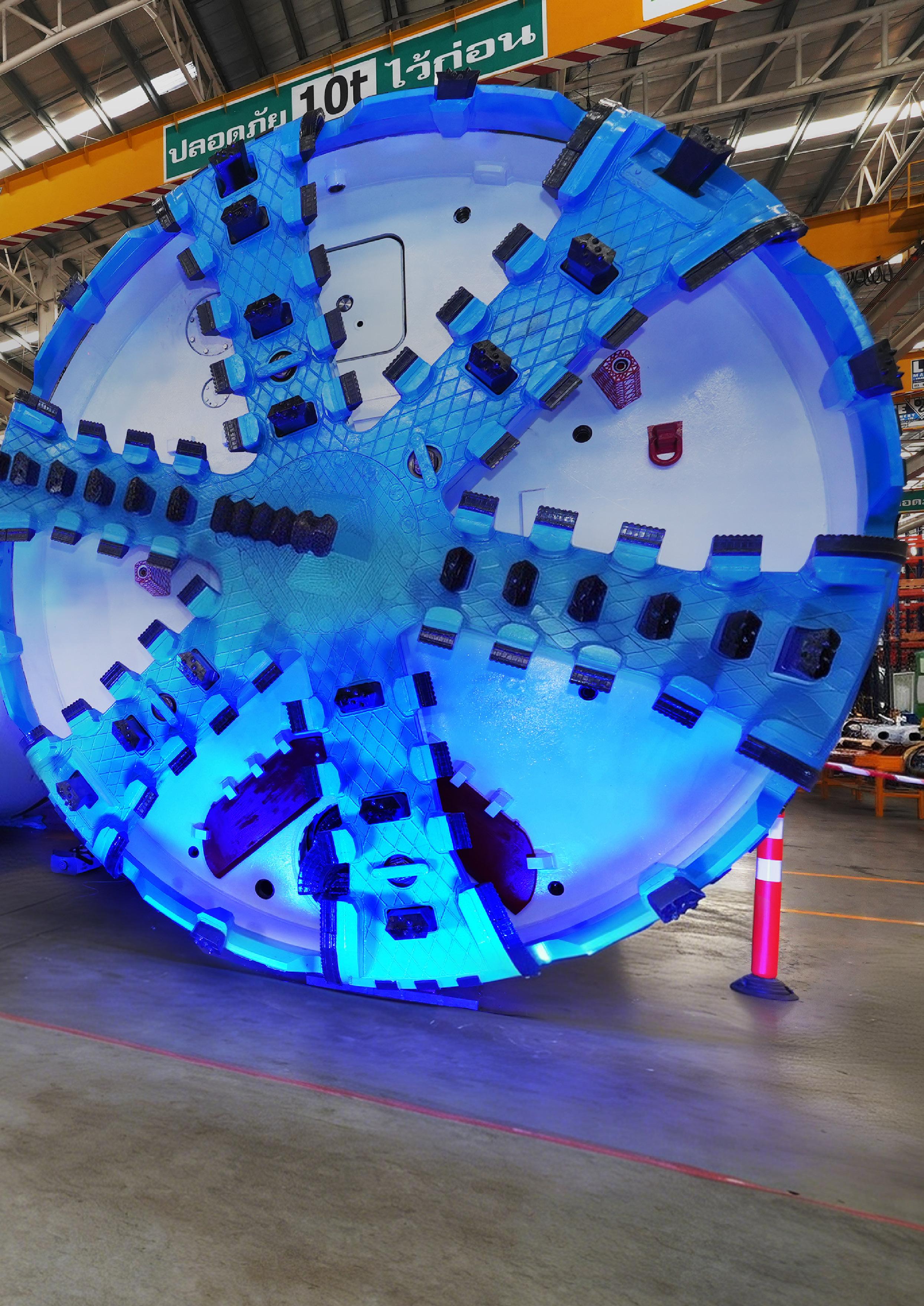
Diverse Tunnel Boring Machines manufactured at Herrenecht Thailand Workshop
How important is the underground utilities and trenchless sector within Herrenknecht’s regional business?
That’s an excellent question, and I would put it this way, the utilities and trenchless sector today accounts for nearly half of our regional business by number of projects and its importance is only growing.
The utilities sector includes water supply, sewage, electricity, gas and telecommunications. These are essential for daily life and urban resilience.
Governments and private utilities are investing heavily in upgrading ageing underground networks and expanding capacity, often with minimal surface disruption, which is exactly where Herrenknecht’s trenchless technology excels.
But beyond utilities, we are also seeing a new frontier, creative underground space utilisation. In densely packed cities like Bangkok, Singapore and Jakarta, land above ground is scarce and expensive. So, cities are looking downward.
We’re talking about underground parking, underground logistics, even retail and storage spaces, and we are constantly looking for opportunities for our portfolio within these applications.
Herrenknecht’s microtunnelling equipment is perfectly suited for these applications.
Which trenchless technologies and underground utility solutions are currently seeing the strongest demand across Southeast Asia, and what factors are driving adoption in the region?
Our core product in the trenchless space is the AVN series of slurry pipe-jacking machines. We have supplied approximately 200 of these systems regionwide since we first stepped into Asia. We have also had significant success with our small-diameter segmental machines using both slurry and Earth Pressure Balance (EPB) technology.
The market for these products is, however, becoming increasingly competitive, which is why we continue to innovate with new, more niche products to serve the market.
We see increasing interest in our Direct Pipe, Vertical Shaft Machine (VSM), Hybrid HDD rigs and E-Power Pipe systems from across the region.
This gives us the confidence that we have made the right decisions when it comes to product development and hopefully cements our place as a technology leader in the region for many years to come.
Herrenknecht
“Governments and private utilities are investing heavily in upgrading ageing underground networks and expanding capacity, often with minimal surface disruption, which is exactly where Herrenknecht’s trenchless technology excels.
What types of underground utility projects are currently driving growth in the region – for example water, wastewater, power or telecoms infrastructure?
Honestly, the answer is all of them.
We are seeing growth across the entire utilities spectrum – water supply, wastewater, power cable tunnels and telecoms infrastructure. Each market has its own priority, but collectively they are all expanding.
What makes Herrenknecht uniquely positioned is that our trenchless technology is not limited to a specific pipe type or application. We can deliver solutions for virtually any underground utility project, whether it’s drinking water transmission, sewage collection, high-voltage power cables or fibre-optic networks.
More importantly, what truly sets us apart is our ability to handle challenging ground conditions. Across Asia Pacific, we regularly work in hard rock, high-water-content ground, high-water-pressure environments, and coastal and near-shoreline conditions with mixed geology.
So, when a client asks, ‘Can you do this in our ground conditions?, the answer is almost always yes. That’s why we are involved in such a wide range of utility projects, not just one or two types.
What are the main challenges facing underground utility and trenchless projects in Thailand and neighbouring markets today?
Our clients’ biggest challenges are tight schedules, limited construction site space and constrained budgets.
That’s why we focus on reliability, German quality, long lifecycle performance, global experience and fast local support through our Asia network. Our Asia team works side by side with customers, on schedule and long-term cost, to deliver real value.
How does Herrenknecht adapt its technologies and project support to the geological and urban conditions found across Southeast Asia?
On technology: as mentioned, we have the right machine for every ground condition. We don’t offer a one-size-fitsall solution, we match the machine to the ground.
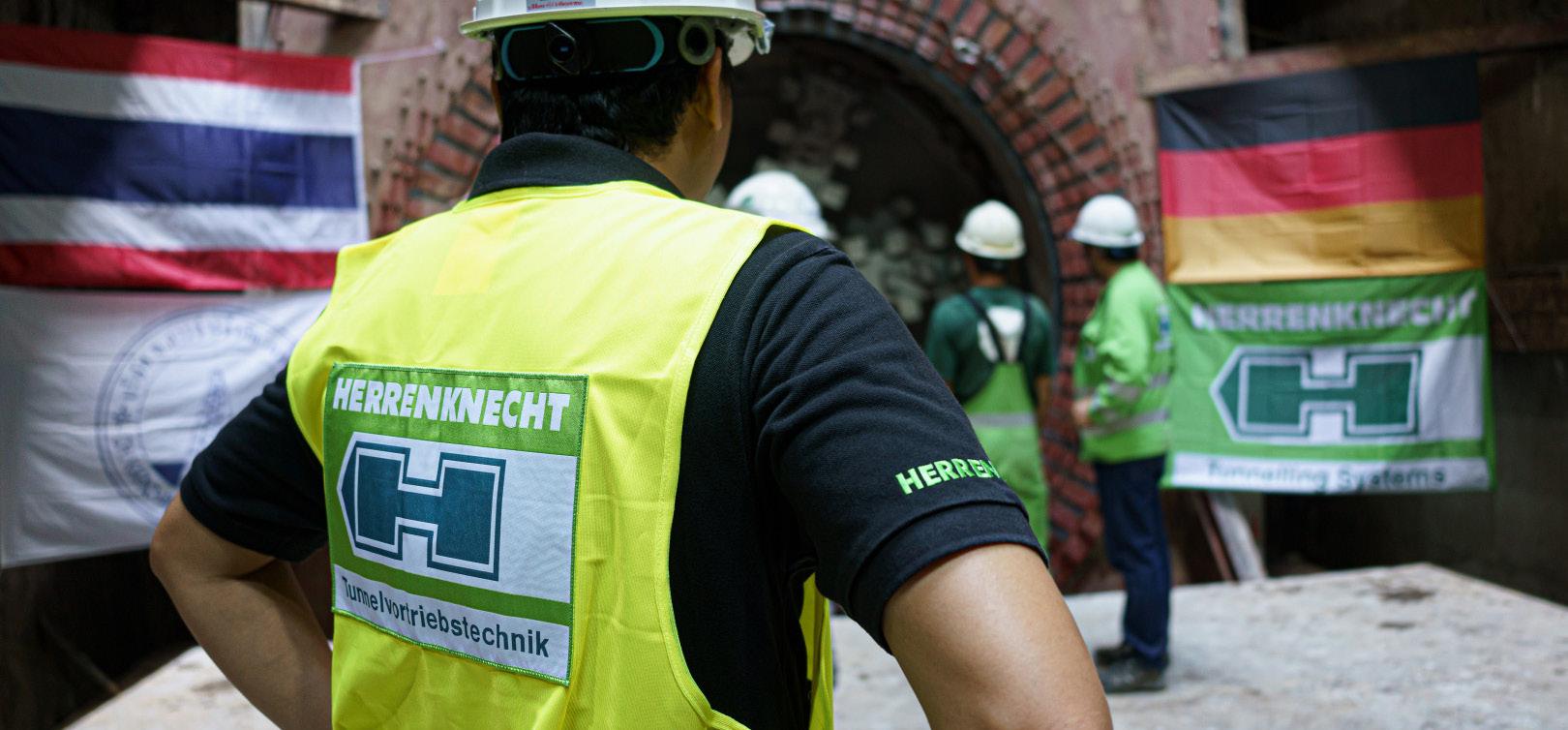
Herrenknecht technical expertise on the jobsite
“ We are seeing
growth across
the
entire utilities spectrum – water supply, wastewater, power cable tunnels and telecoms infrastructure. Each market has its own priority, but collectively they are all expanding.
On project support: urban conditions across Southeast Asia are tight with limited workspace, crowded neighbourhoods and sensitive existing infrastructure. So we provide:
2. Local service teams based in Thailand, Singapore, Malaysia, Indonesia and the Philippines
3. Technical advisory support from project planning through to commissioning
In short, we adapt through the right machine for the geology, and the right support for the city.
Which markets or sectors do you believe offer the greatest opportunities for future trenchless and underground infrastructure growth in the region?
Both urban renewal and new city development offer equally strong opportunities.
Ageing cities need trenchless solutions to upgrade utilities without open excavation. New cities need modern underground infrastructure from the start.
We see no difference in priority, both are key markets for us.
We also see great potential for our products in the renewable energy sector. Offshore wind is providing significant opportunities not only for our OFD machine for the construction of turbine foundations themselves, but also for the shore approach work required to connect the farms to onshore grids.
We are already involved in multiple shore approach projects using HDD and Direct Pipe worldwide, and we see many opportunities for the same in Asia going forward.
What investments or initiatives is Herrenknecht undertaking to support future growth and customer demand across Asia?
We have nearly 20 branches across APAC and have been active in the region since the mid-1980s.
Over the decades, we’ve invested in production bases in Thailand (Rayong), China (Nansha, Guangzhou and Chengdu), and India (Chennai). These local investments enable faster delivery,
stronger after-sales support and solutions that are truly tailored to each market’s specific needs.
Are there any emerging technologies, innovations or industry trends that you believe will play a particularly important role in the future of trenchless construction?
AI will impact every industry, and we are fully committed to digitalisation.
Herrenknecht is investing in automation – including segment handling and ring building, as well as our digital platform, Herrenknecht.Connected.
These technologies make tunnelling safer, more efficient and less dependent on manual labour, which is critical for the future.
What can visitors expect to see from Herrenknecht at Trenchless Asia 2026, and why is the exhibition an important platform for the company?
Visitors will see a real AVN machine on our 54 m2 booth. We are also celebrating 30 years of Herrenknecht in Thailand.
Our display will cover APAC projects, products, innovative technologies and services. Visitors can expect an immersive experience on the stand, with our technical experts on-site to explain everything in detail.
Trenchless Asia is a critical platform for us because it brings together the entire regional utility and trenchless community, customers, partners and decision-makers, in one place. It’s where deals start and trust is reinforced.
Looking ahead, how do you see the trenchless and underground utilities market evolving across Southeast Asia over the next decade?
Urbanisation will drive more projects – both in older cities needing renewal and in new cities being built.
Digitalisation, AI, automation and data, will make those projects smarter and more efficient.
So the market will not only grow, but it will also evolve. Herrenknecht is ready for both.
www.herrenknecht.com
PROVING THE CASE
UV CIPP rehabilitation projects builds confidence of trenchless future in emerging markets
By JBP Group of Companies
Malaysia’s wastewater infrastructure faces a significant challenge. The Greater Kuala Lumpur and Klang Valley region is the subject of a substantial government commitment to invest in and upgrade existing sewerage facilities from the construction of new regional sewage treatment plants to the rehabilitation of ageing sewer networks. How that work gets done matters enormously: to communities, to utility managers, to contractors, and to the environment. It is precisely here that trenchless technologies and UV-Cured In-Place Pipe (UV CIPP) methods in particular are proving their worth.
For JBP Group of Companies, whose presence in Malaysia and the wider region stretches back to 2008, the story of UV CIPP in Malaysia is not simply a technical one. It is a story about building knowledge, confidence, and capability in an emerging market one proven project at a time.
A National First: The Pilot Project That Started It All
The process of establishing a new technology in a new market always begins somewhere. For UV CIPP in Malaysia, it began in the neighbourhood of Jalan Serkut, where Reline Asia Sdn Bhd a JBP Group partner company working alongside Indah Water Konsortium (IWK), completed the country’s first ever commercially successful UV CIPP pipeline rehabilitation.
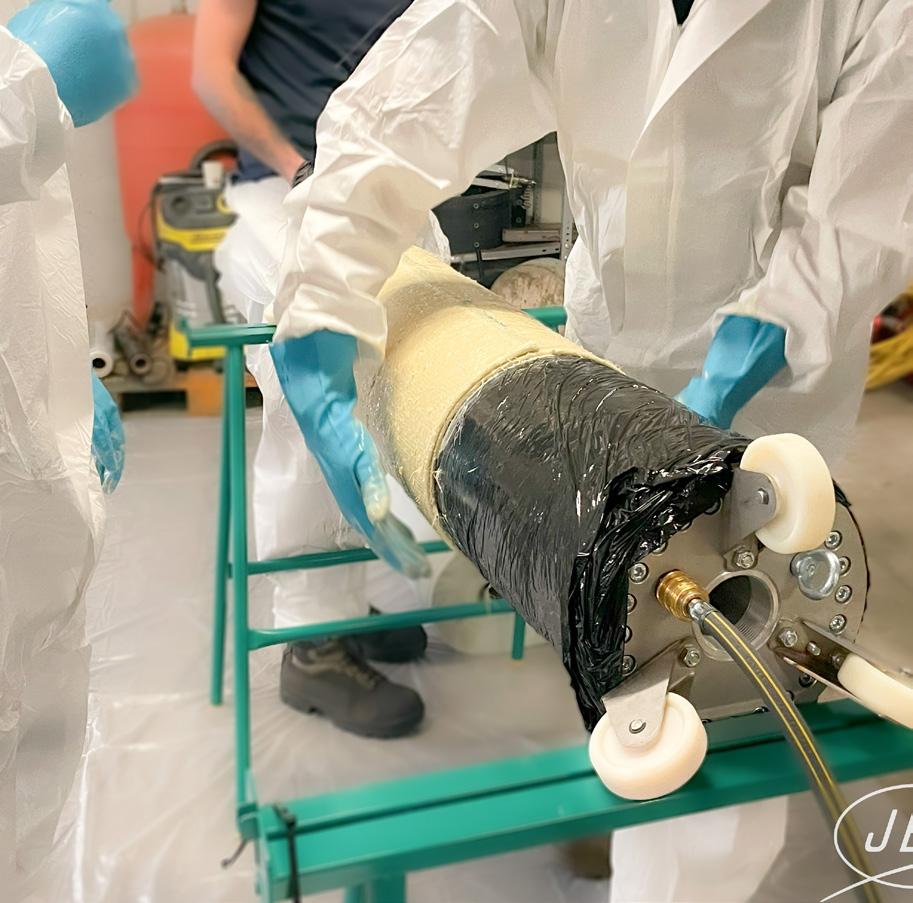
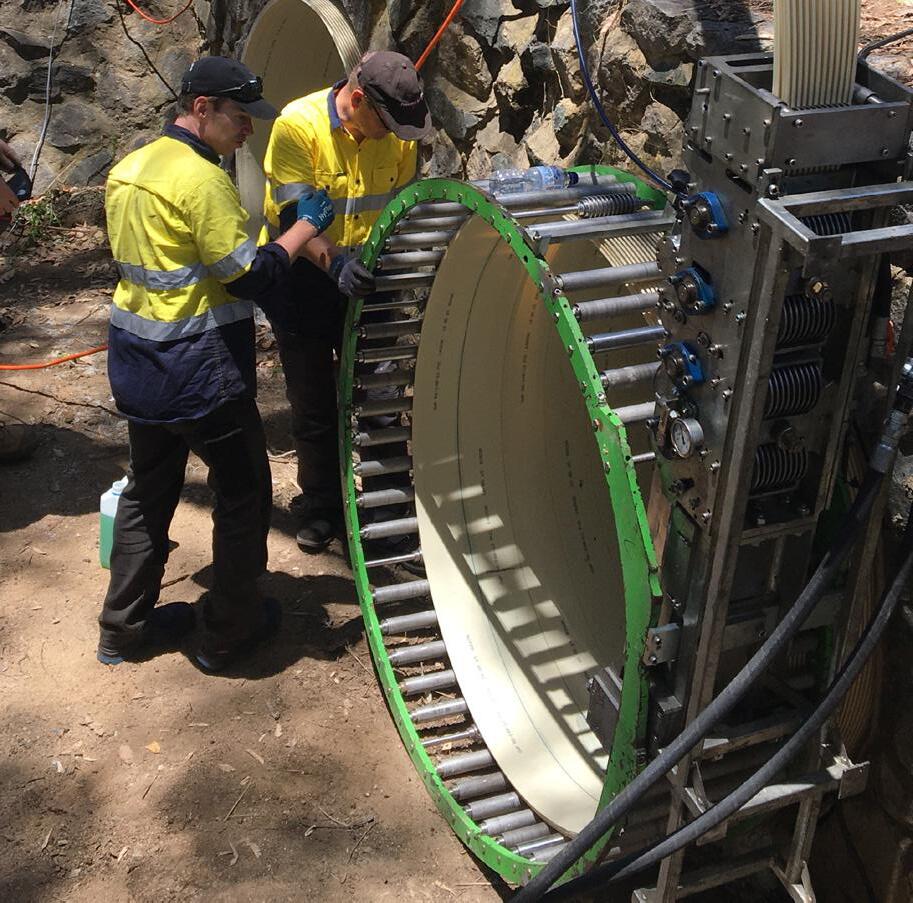
The process is straightforward in principle but sophisticated in execution. A glass fibre reinforced liner, manufactured by German company BKP Berolina, is winched into the host pipe and inflated using compressed air. A controlled UV light train is then passed through the liner, curing it into a structurally complete new pipe within the old one. The curing process is computer-controlled throughout, ensuring structural consistency and maintaining the flow capacity of the original pipeline.
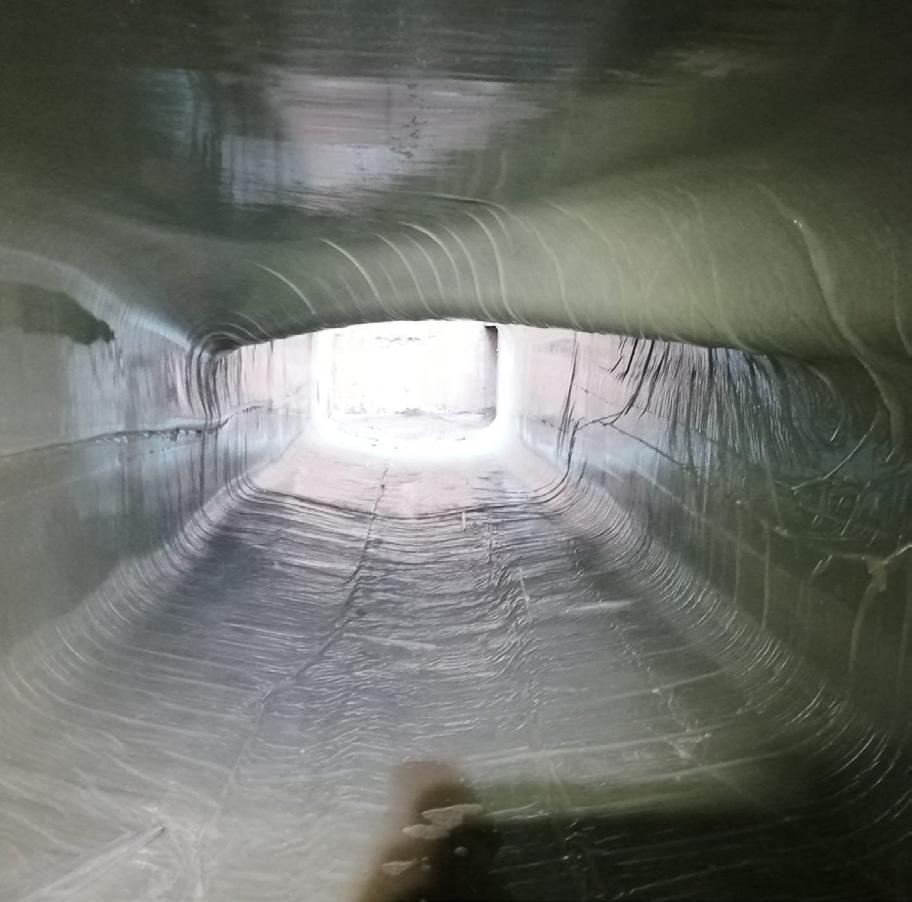
The results at Jalan Serkut were immediate and tangible. The entire section was rehabilitated in less than a single day. When local residents asked how long the disruption to their neighbourhood would last, the answer, that the work was already almost complete — was the most persuasive demonstration possible of what trenchless technology can deliver. No lengthy excavation. No traffic chaos. No protracted neighbourhood disruption.
Börje Persson, CEO of the JBP Group, was present throughout, alongside application technician from the liner manufacture, providing training, on-site supervision, and support to IWK’s and Reline Asia’s (Reline Asia is a JBP Group company) engineers and technicians. That hands-on knowledge transfer is central to JBP’s approach in emerging markets: technology only delivers its full value when the people using it fully understand it.
“ Each successful project extends the knowledge base, adds to contractor competency, builds regulator and utility confidence, and expands what the market believes is possible.
The Technology Behind the Results
Both projects relied on the Berolina liner system from BKP Berolina of Germany. This is not a new or unproven product the system has been installed across over 3,000 kilometres of pipeline in over 50 countries since 1997. It carries approval from Wrc, one of the most internationally recognised and respected authorities in the water sector. In Malaysia, the liner system holds SPAN registration for the system, providing Malaysian utilities and contractors with a fully compliant, locally backed solution.
One of the system’s practical advantages, particularly relevant for emerging markets, is its storage and logistics profile. Berolina liners can be transported directly from the German factory and stored at ambient room temperature for up to six months without any loss of quality or performance. This removes the need for costly refrigerated storage or local production facilities a significant advantage in markets where cold-chain logistics infrastructure cannot be assumed.
Building the Knowledge Base for a Trenchless Future
The two Malaysian projects described here are not isolated achievements. They are part of a deliberate, longer-term process of building technical competency and market confidence in trenchless methods across Malaysia and the ASEAN region.
JBP Group has been a consistent supporter of knowledge transfer and industry development in the region. As Platinum Sponsor of Trenchless Asia — the premier trenchless sector event for the ASEAN region JBP has used that platform to run sponsored seminars and hands-on workshops, bringing international expertise directly to engineers, contractors, and utility managers working in Malaysia. The company will once again be exhibiting at Trenchless Asia as both a Platinum Sponsor and Training Partner, reinforcing its commitment to the region’s developing trenchless sector.
The Malaysian government’s commitment to upgrading its sewerage infrastructure is significant and sustained. The projects undertaken to date with the support of JBP Group demonstrate that UV CIPP is ready to play a central role in delivering that programme efficiently, cost-effectively, and with minimal disruption to the communities the infrastructure serves.
Conclusion
The journey from a single pilot project on a residential street in Jalan Serkut to the most technically demanding and longest UV CIPP installation in the country is a compelling illustration of how trenchless technologies establish themselves in emerging markets. Each successful project extends the knowledge base, adds to contractor competency, builds regulator and utility confidence, and expands what the market believes is possible.
Malaysia is at an accelerating stage of that journey. Other neighbouring markets are at an emerging stage. The technical capability is proven. The products are approved and locally available. The expertise, through companies like JBP Group (Solutions Provider for Trenchless Technology) working with local contractors, consultancies and utilities who are present on the ground. The conditions are in place for fibre reinforced UV CIPP to become a standard tool in the ASEAN region’s waste- and stormwater rehabilitation toolkit. The projects described here illustrate the important work of building local confidence and competencies for trenchless methods and technologies to be adopted.
Since 2019, many kilometres of reinforced UV CIPP liners have been successfully installed in both Mainland Malaysia and East Malaysia, further demonstrating the growing acceptance and maturity of the technology in the region. At present, a rehabilitation project involving pipe diameters over 1000 mm is also ongoing, marking another important step in the continued development and expansion of trenchless rehabilitation capabilities in Malaysia.
ENGINEERING QUALITY WITHOUT COMPROMISE INSIDE REINERT-RITZ
By Austen Lees, Editor, Trenchless Works
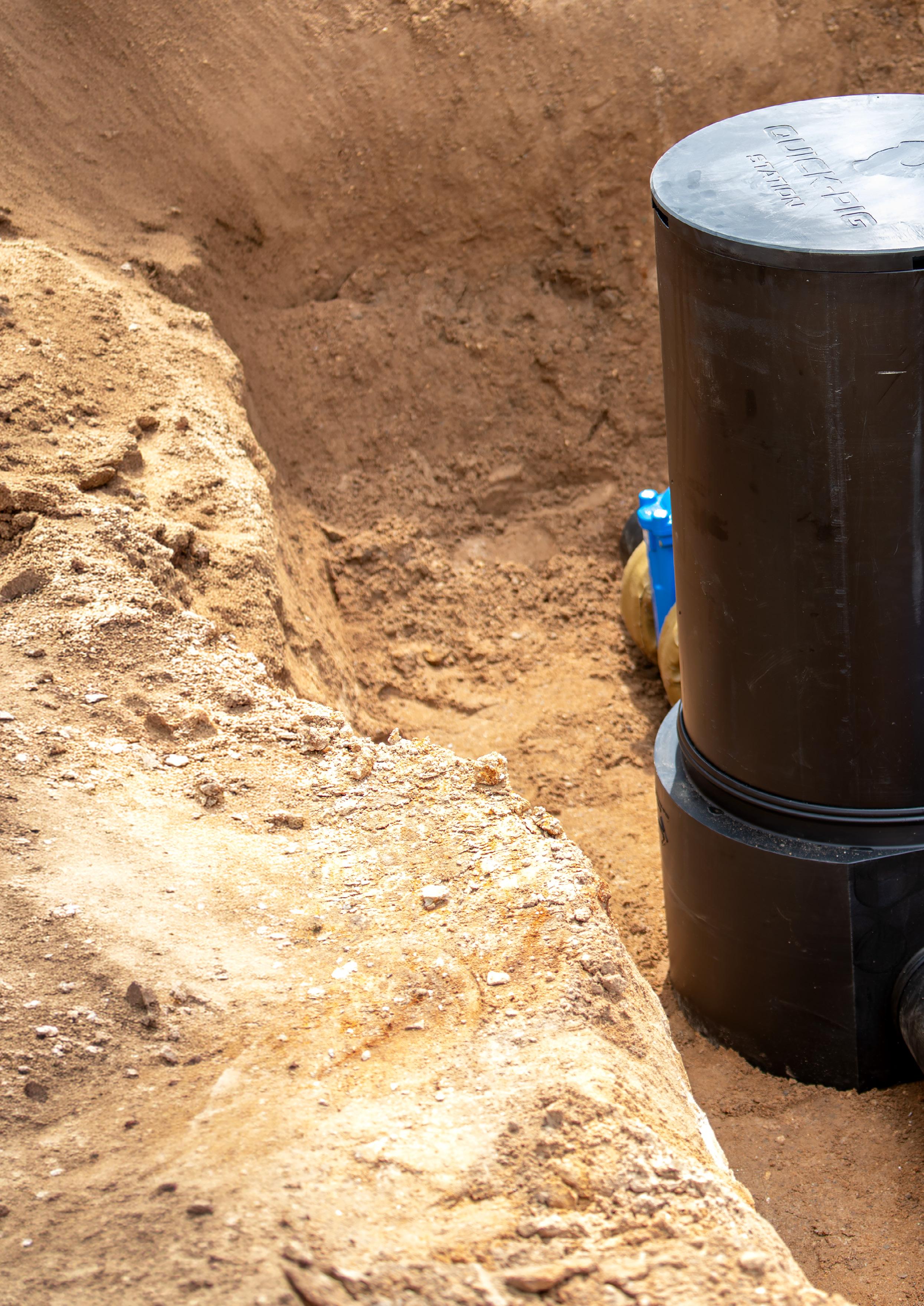
Iwas recently fortunate enough to visit the manufacturing facilities of Reinert-Ritz in Nordhorn, Germany where I met with Nico Hindriks, Head of Sales Quick-Pig/ Wastewater and Steve McIlwaine, Business Development Manager at Curio Group Ltd, the company’s UK partner. During the visit I gained a fascinating insight into a business whose capabilities and philosophy extend far beyond the products many in the UK market may already recognise.
While Quick-Pig has become a well-known solution within the wastewater sector, spending time at Reinert-Ritz quickly demonstrated that the business is far more than a single product manufacturer. What became immediately clear was the company’s deep-rooted commitment to engineering quality, bespoke problem solving, environmental responsibility, and a consultative approach that places long-term pipeline performance ahead of short-term cost reduction.
A family business built on engineering excellence
Founded in 1970 by Karl-Albert Reinert in a garage, Reinert-Ritz began by developing innovative polyethylene and polypropylene solutions at its first production site in Radevormwald, Germany. As demand increased, the company expanded significantly in 1992 with the opening of a major manufacturing facility in Nordhorn specialising in pipe components for the water and wastewater sectors.
Today, Reinert-Ritz employs more than 140 people and remains a third-generation family-run business, with the current Managing Director, Malte Ritz, taking over in 2018. Despite already operating at an impressive scale, expansion continues, with the company already beginning to outgrow its latest extrusion hall. Fortunately, the surrounding land provides significant opportunity for future growth, with the potential to effectively double the size of the operation.
The business now operates across four key divisions:
• Clean water and drinking water
• Sewerage and wastewater
• EPC (Electronics, Power and Chemicals), supplying customers such as BASF
• OEM applications, including fish farming systems in Norway and around the world where specialist fittings are used to aerate water
However, what truly differentiates Reinert-Ritz is not simply the breadth of sectors it serves, but the philosophy underpinning the entire operation.
“ Once this infrastructure is buried, you want it to last. We focus on what works for the customer and manufacture
accordingly.
A consultative approach to problem solving
Throughout discussions with Nico Hindriks and the team, one message consistently emerged: ReinertRitz is fundamentally focused on helping customers solve problems as opposed to simply selling products.
That consultative mindset is deeply embedded within the business. Instead of offering standardised low-cost products designed purely to meet a price point, the company works closely with utilities, contractors and network owners to fully understand operational challenges before designing and manufacturing the most appropriate solution.
Many of the company’s current ‘off-the-shelf’ products actually originated as bespoke solutions developed for specific customer requirements.
As Nico pointed during the visit, the business is not interested in supplying lower quality injection moulded fittings purely to compete on price.
“Once this infrastructure is buried, you want it to last,” he explained. “We focus on what works for the customer and manufacture accordingly.”
That philosophy appears increasingly relevant as utilities globally continue to face growing issues surrounding leakage, pollution and premature asset failure.
According to Reinert-Ritz, many failures within pipeline systems are not necessarily caused by the pipe itself, but by poor installation practices and low-quality fittings which deteriorate over time.
One example discussed during the visit involved a cooling water line project in the UAE where multiple
2.25m OD fabricated T-pieces had failed before ReinertRitz was ultimately approached to develop a reliable solution. Rather than compromise manufacturing standards to reduce production time or cost, ReinertRitz instead prioritised long-term durability and lifecycle performance.
The company estimates many of its solutions are designed and manufactured to achieve service lives exceeding 100 years.
Manufacturing quality without compromise
Walking through the Nordhorn facility, the scale and sophistication of the manufacturing capability is immediately striking.
Virtually every stage of production is undertaken in-house. Reinert-Ritz manufactures its own fittings, develops many of its own production tools and has even built some of its own specialist machinery.
The only components routinely sourced externally are flange backing rings when demand exceeds internal production capacity.
Raw material arrives as polymer pellets before being heated and processed through large extrusion systems. However, unlike many volume-driven manufacturers, Reinert-Ritz deliberately operates extrusion processes slowly and carefully.
This is particularly important when producing large hollow bars and solid rods where manufacturing speed directly impacts long-term product integrity.
The company currently produces hollow bars up to 2.85m in diameter and solid rods up to 1.6m, enabling fittings up to approximately 2.5m in size, while its turning and milling machines are capable of producing fittings up to 3.5m in the future.
One giant hollow bar located outside the facility weighed four tonnes and had taken 12 weeks to manufacture at a production rate of approximately 3cm per day.
The reason for this slow process is straightforward. If these products are extruded too quickly, internal stresses and airlocks can form within the material, ultimately compromising long-term performance and potentially leading to failure once installed underground.
This uncompromising approach to manufacturing quality is one of the reasons Reinert-Ritz is regarded as one of only two companies globally capable of producing certain highly specialised large-scale bespoke fittings.
Every fitting is fully machined from the company’s own rods and hollow bars to ensure pressure class conformity and long-term durability.
Quality assurance is clearly central to the entire manufacturing philosophy with the quality assurance team monitoring materials and products throughout every stage of the process, from raw material inspection through to extrusion, machining, welding and final delivery.
The company also operates advanced lifecycle testing facilities, including high-temperature 80°C testing systems which staff jokingly referred to as “the biggest sauna in the world”.
The objective is clear: products must not only meet standards at the point of manufacture but continue to perform reliably over decades of operational use.
Sustainability embedded into production
Another particularly striking aspect of the visit was Reinert-Ritz’s environmental focus.
Sustainability is clearly not treated as a marketing exercise but instead appears integrated into both manufacturing processes and long-term product philosophy.
On the wastewater side of the business, ReinertRitz already utilises high-quality recycled PE materials within production. The company has also achieved and certified its net-zero targets through a combination of solar energy systems and heat recovery technologies which reuse thermal energy generated by the extrusion lines.
“ Designed for both new and existing pipelines, Quick-Pig helps operators maintain flow performance, reduce blockages and extend overall pipeline life.
Importantly, all plastic manufacturing waste is recycled on site. The large four-tonne hollow bar observed during the visit, for example, had originally been manufactured from approximately ten tonnes of raw pellets. Material removed during machining is not discarded but instead shredded, granulated and reintroduced into future production processes.
While the use of recycled material within potable water systems remains restricted internationally due to current regulations, Reinert-Ritz believes industry standards will continue evolving as testing, quality assurance and certification processes advance.
For now, virgin materials remain mandatory for drinking water applications worldwide, but discussions surrounding future recycled-content standards continue to develop.
Equally important is the long-term environmental performance of the products themselves.
By manufacturing fittings and pipeline components designed to last for over a century, Reinert-Ritz argues
the industry can significantly reduce leakage, pollution, asset replacement cycles and the wider environmental impact associated with infrastructure failure.
Product focus
Although Reinert-Ritz’s wider manufacturing capability deserves greater recognition, several products particularly demonstrate the company’s engineeringled philosophy.
Reinert-Ritz Flange Connections
Reinert-Ritz flange connections have been specifically engineered to address the common leakage, stability and flow issues often associated with standard PE and PP flange systems.
The company’s VP and HP flange designs minimise internal diameter offsets, improving hydraulic flow performance while reducing the potential for deposit build-up within the system.
The systems also offer improved long-term sealing reliability under pressure while remaining corrosion resistant and easier to install.
Importantly, the flange systems provide efficient connections between plastic pipelines and steel, cast iron, pumps, valves and GRP systems, creating a practical and highly durable solution for demanding pipeline environments.
QUICK-TWIST
QUICK-TWIST was developed to simplify and accelerate pipeline installation and maintenance compared with traditional steel or cast-iron dismantling joints.
Manufactured from lightweight, fully corrosionresistant PE100 material, the system significantly improves handling on site.
Its innovative twist-adjustment mechanism reduces installation and removal time by more than 50%, while integration with Reinert-Ritz’s VP and HP flange technology delivers strong sealing performance and long-term reliability.
The product is particularly well suited to water and wastewater infrastructure projects where maintenance
access, installation efficiency and lifecycle performance are critical considerations.
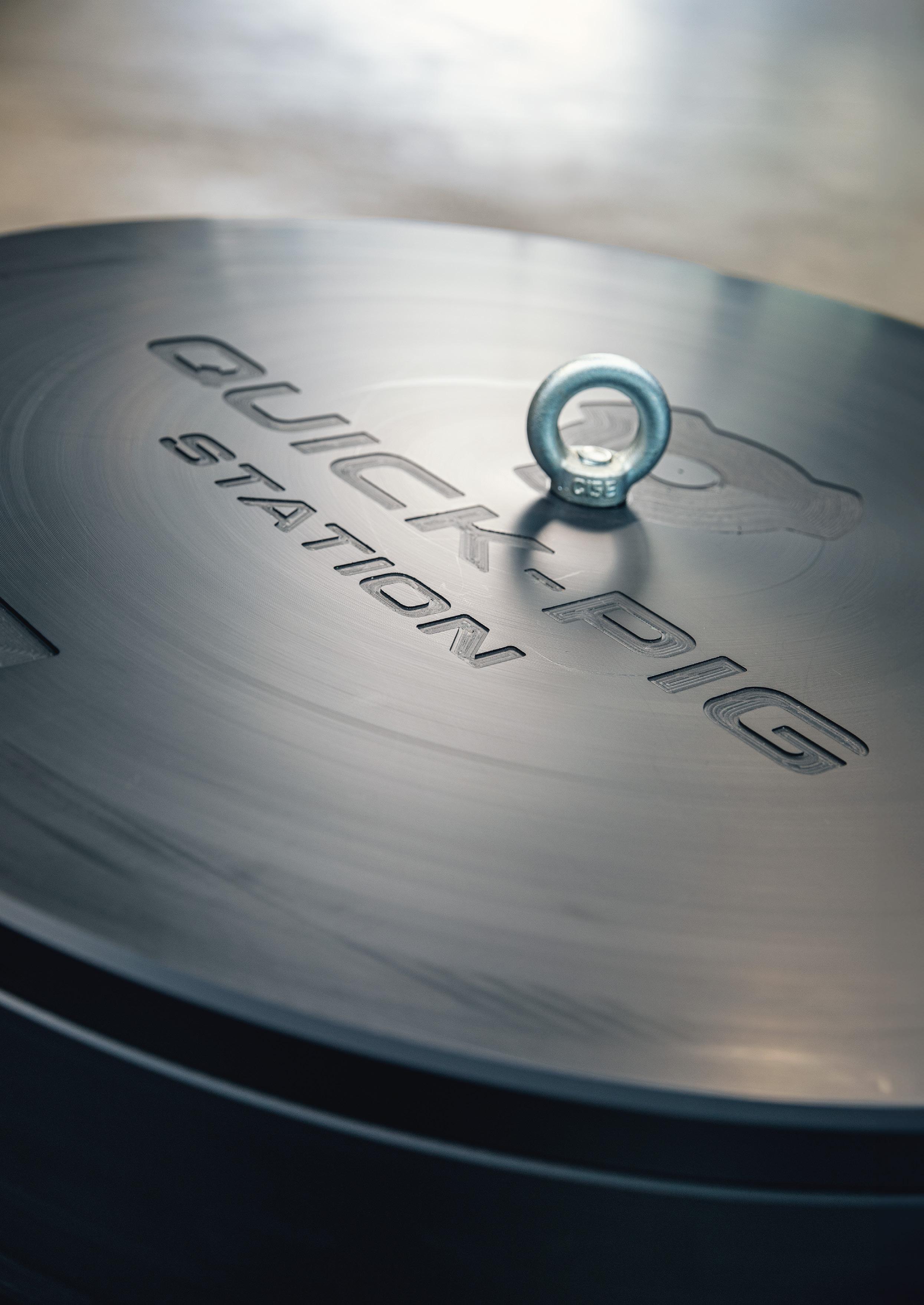
Quick-Pig
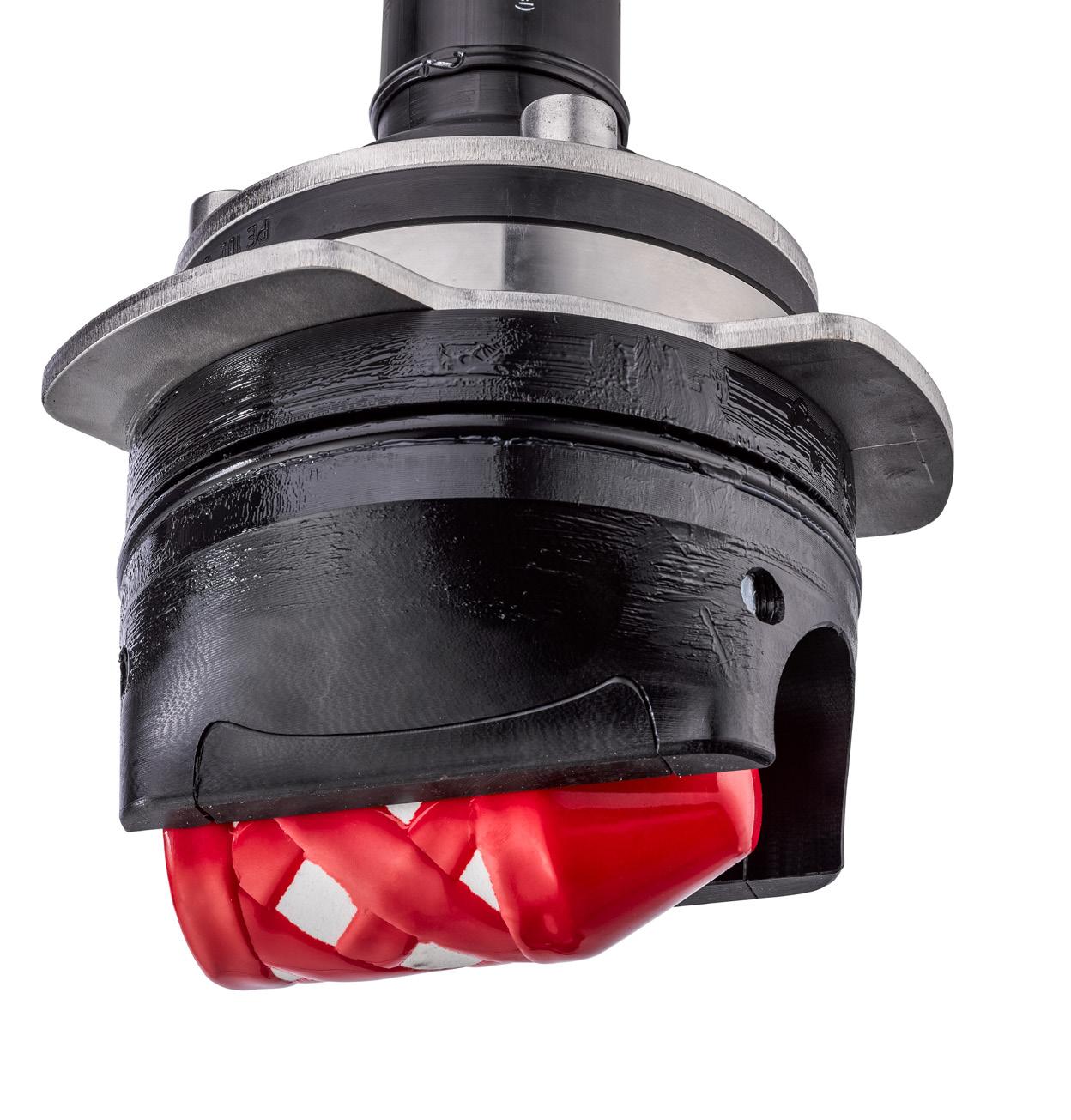
Quick-Pig remains one of Reinert-Ritz’s best-known innovations and continues to attract significant demand within the wastewater sector.
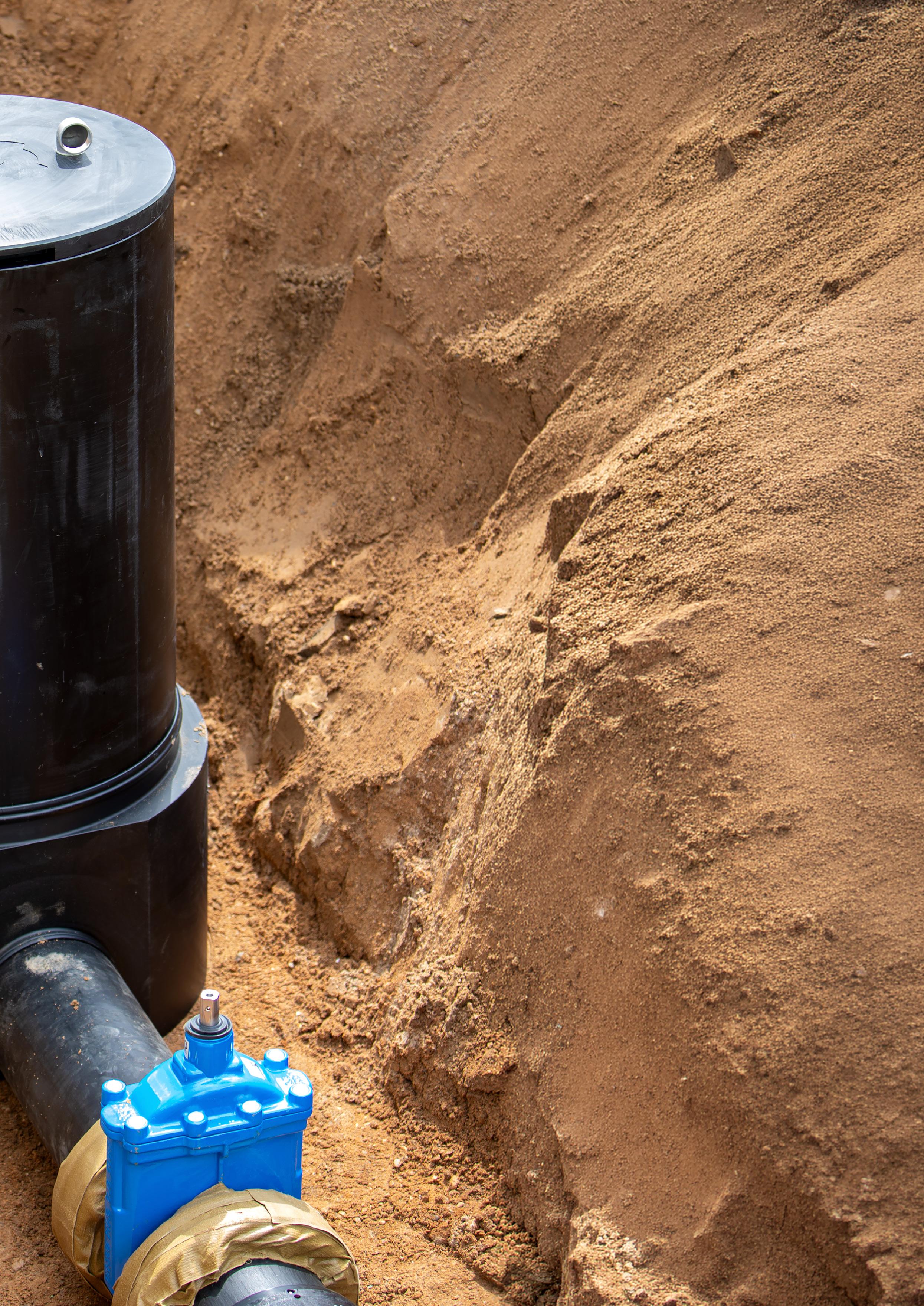
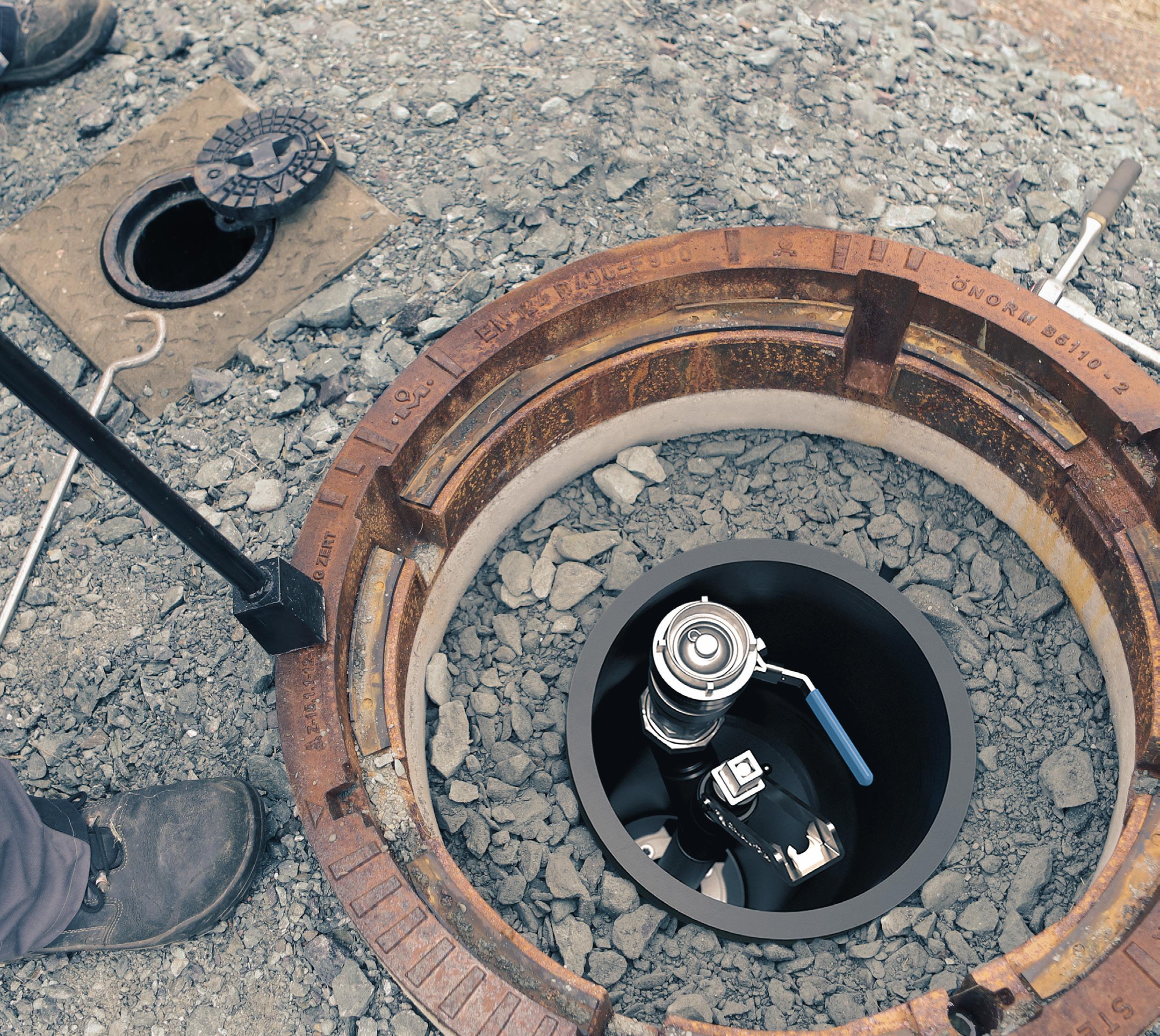
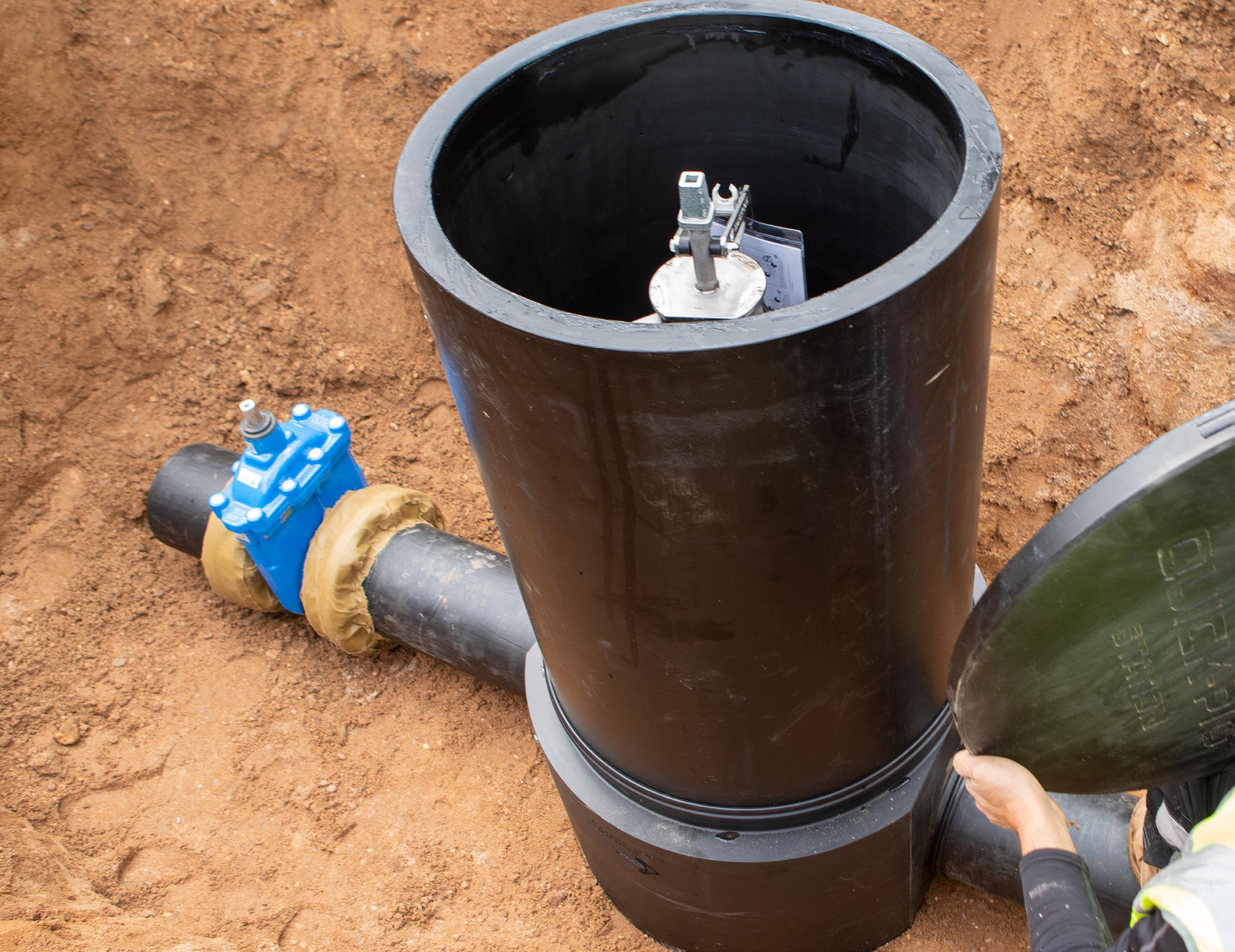
The system allows wastewater pressure pipelines to be cleaned, flushed, inspected and maintained safely from ground level without the need for traditional manholes.
Its compact shaftless design, corrosion-resistant PE100 construction and fast-access bayonet system reduce installation costs while simultaneously improving worker safety and simplifying ongoing maintenance.
Designed for both new and existing pipelines, QuickPig helps operators maintain flow performance, reduce blockages and extend overall pipeline life.
Openness, transparency and partnership
Perhaps one of the strongest impressions from the visit was Reinert-Ritz’s openness.
The company is rightly proud of both its manufacturing capability and quality standards, and importantly, is willing to openly demonstrate those processes to customers, utilities and contractors.
That transparency reinforces the consultative philosophy underpinning the business.
For UK utilities and contractors facing increasing pressure around leakage reduction, environmental performance, long-term asset reliability and wholelife cost management, the visit provided a compelling reminder that manufacturing quality still matters enormously.
In an industry often driven heavily by upfront cost pressures, Reinert-Ritz’s approach feels refreshingly different.
The message from the company is straightforward: utilities, network owners and contractors are welcome to visit the facility themselves, see the manufacturing processes first-hand, discuss operational challenges openly and collaborate on developing long-term solutions.
Having seen the operation up close, it is difficult to disagree with the suggestion.
You can only really understand Reinert-Ritz’s commitment to quality once you see it for yourself.
Tunnelling begins on new Thames cable tunnel for National Grid upgrade
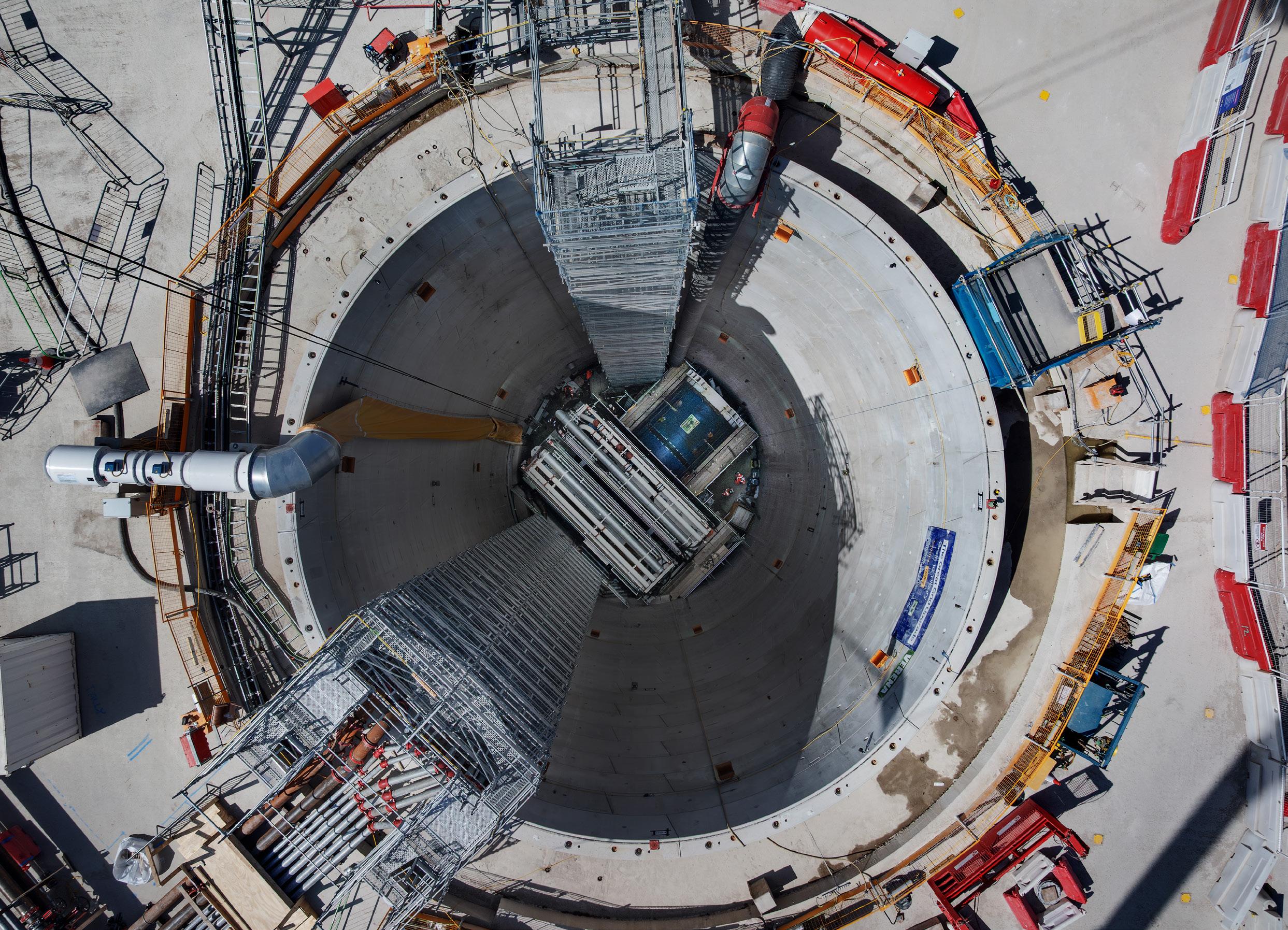
Tunnelling has begun on a new 2.2 km cable tunnel beneath the River Thames, forming part of National Grid’s Grain to Tilbury project and wider Great Grid Upgrade.
Herrenknecht has supplied the tunnel boring machine for the project, which will carry 400 kV high-voltage cables between Gravesend and Tilbury. The launch and reception shafts are also being constructed using a Herrenknecht Vertical Shaft Sinking Machine, described as Europe’s largest system of its kind.
The project is being delivered for National Grid by the Ferrovial Bemo Joint Venture, comprising Ferrovial Construction and BEMO Tunnelling UK Ltd.
The bespoke Herrenknecht Mixshield TBM has a diameter of 4,730 mm, is 108 m long and weighs 464 tonnes. It has been designed for challenging ground conditions beneath the Thames, where chalk and flintstones are expected, alongside high-water pressure linked to the river’s tidal range.
The machine is designed to withstand water pressure of up to 4.5 bar and includes a multiple sealing system, personnel airlock, hydraulic overcutter, mini gripper,
anti-roll fins, drilling rig and telescopic camera to support safe and accurate tunnelling.
The tunnel will have an internal diameter of 4 m and an external diameter of 4.5 m, with precast concrete segments installed as the TBM advances. Herrenknecht’s delivery package also includes a separation plant, VMT navigation technology and multi-service vehicles for segment transport.
Shaft construction has also progressed at pace. The VSM excavated the 45 m deep launch shaft in Tilbury in four weeks between mid-November and mid-December 2025. The same system was then moved to Gravesend to construct the 48 m deep reception shaft.
According to Herrenknecht, the VSM approach is particularly suited to soft soils and high groundwater conditions, reducing the need for groundwater dewatering while improving safety by allowing shaft excavation to be controlled from the surface.
The Grain to Tilbury cable tunnel forms part of National Grid’s programme to reinforce the electricity transmission network as demand for electricity increases across homes, transport, industry and public services.
LLateral Repairs joins IMS Trenchless group
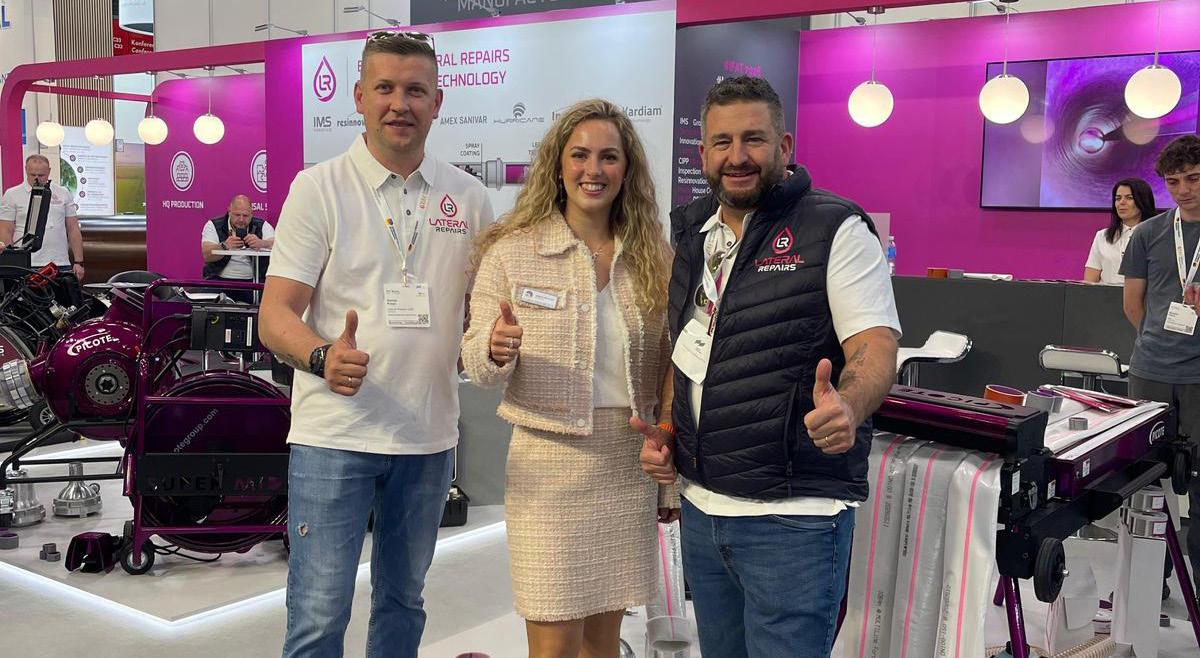
ateral Repairs, an international manufacturer of CIPP felt liners, has joined the group of companies around IMS Trenchless.
The group already includes IMS, Amex Sanivar, Polypipe, Resinnovation, Kardiam and Hurricane Trenchless Technology. The addition of Lateral Repairs is intended to strengthen the group’s capabilities across trenchless rehabilitation, particularly within CIPP liner design, manufacture and application. Based in Lithuania, Lateral Repairs develops and manufactures felt liners for CIPP applications and supplies international markets. Its portfolio also includes resin systems and related components used in the trenchless rehabilitation of pipeline infrastructure.
The company has built a reputation for quality, flexibility and responsiveness, with a strong focus on practical site requirements and reliable installation performance. Under the leadership of Managing Director Drew Holland, Lateral Repairs brings extensive application knowledge and customer-focused product development to the wider group.
The acquisition represents a targeted expansion of the group’s existing trenchless rehabilitation capabilities. While IMS Trenchless and the wider group companies bring expertise in machine technologies, resin systems and related rehabilitation solutions, Lateral Repairs adds dedicated liner production and performance knowledge.
For customers, the group says the move will support a more integrated system approach, bringing equipment, materials and application processes into
closer alignment. This is expected to reduce interface complexity, improve project reliability and support the continued development of practical, field-proven technologies.
Drew Holland will also join the shareholding of the group, reflecting what the company describes as a partnership model between founders and financial partner Apheon.
“The market is clearly moving towards integrated solutions, and this step positions us exactly there. Lateral Repairs adds strong liner expertise to the group, and together we can offer a complete system approach. I’m personally looking forward to what we can build together Drew Holland, Managing Director, Lateral Repairs
“The market is clearly moving towards integrated solutions, and this step positions us exactly there. Lateral Repairs adds strong liner expertise to the group, and together we can offer a complete system approach. I’m personally looking forward to what we can build together,” said Drew Holland, Managing Director of Lateral Repairs.
Lateral Repairs becomes part of the group as an IMS Trenchless member.
Barhale to deliver final phase of £17M Greenwich Trunk Main programme
Barhale has been appointed to deliver the third and final phase of the £17M Greenwich Trunk Main programme for Thames Water.
The civil engineering, infrastructure and tunnelling specialist will install the remaining 1km section of ductile iron pipeline between the Blackwall Lane roundabout and the O2 arena using open-cut construction.
The work follows the completion of the first two phases of the programme. Phase One covered 2.7km between Greenwich Park and Blackwall Lane roundabout, while Phase Two involved an 80m section across the new Silvertown Tunnel.
The scheme connects into an existing 800mm diameter water main at Croon’s Hill before crossing Greenwich Park and continuing towards the Greenwich Peninsula. The programme has been developed to increase water network capacity in an area seeing significant residential and commercial development. Phase One is due to be commissioned in Q4 2026, with Phases Two and Three scheduled for commissioning in May 2027. The overall project is expected to complete in July 2027.
As part of the commissioning process, Barhale will work with specialist contractor Suez to use ice pigging on Thames Water infrastructure at this scale. The process will be applied to pipelines ranging from 350mm to 800mm in diameter.
Ice pigging uses a slurry of ice, which is pushed through the pipeline with water to remove sediment, residues
and unwanted material before chlorination. The approach is being used instead of traditional swabbing and high-velocity flushing.
According to Barhale, the method will reduce the number of commissioning pits required from 25 to six, generating projected savings of £800,000. It is also expected to save almost 1.8 million litres of water and reduce disruption along the route.
Steve Collett, Contracts Manager at Barhale, said the technique would bring both programme and environmental benefits.
“Normally, to allow commissioning, we would have to dig pits wherever the pipeline changes size,” he said. “Across this project that would have meant 25 pits. Using ice pigging we can reduce that number to just six, delivering £800,000 in savings on the project.
“Apart from the financial savings, we use less carbon, almost 1.8 million litres less water than regular flushing and can commission faster so there is less disruption for communities along the pipeline.
“We are pleased to have worked alongside Thames Water throughout the Greenwich project. New infrastructure, such as the Silvertown Tunnel and the Elizabeth Line, is encouraging housing and commercial development in this part of London. The new water main is an important upgrade to the network’s capacity which will ensure it is able to meet future demands.”
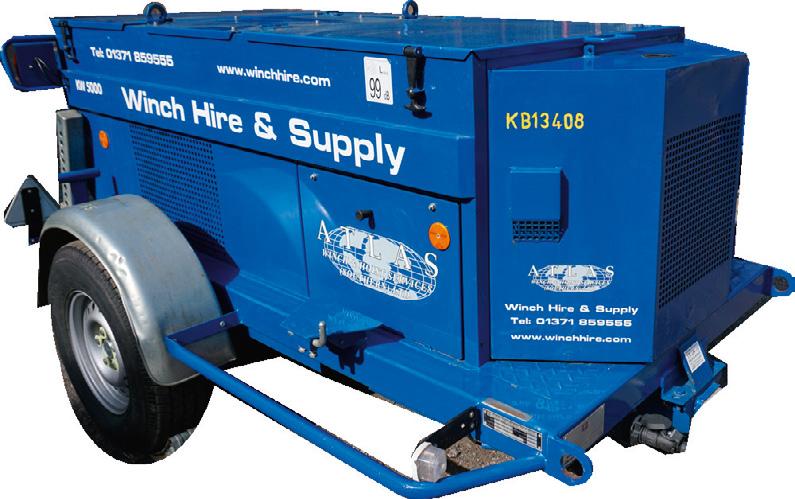
Add Atlas to your project and save time, money, and effort. We stock an extensive range of cable and pipe pulling winches suitable for all trenchless operations.
Add Atlas Winch and Hoist Services to your project. Give us a call today to discuss your requirements.
Scanprobe to host drainage and trenchless open day
Scanprobe Techniques Ltd will host an industry open day for drainage and trenchless professionals on Tuesday 9 June, from 7:00am to 12:00pm, at its headquarters in Kenley, Surrey.
The hands-on event is aimed at contractors, engineers, operators and decision-makers, with live demonstrations covering drainage inspection, rehabilitation and trenchless technology.
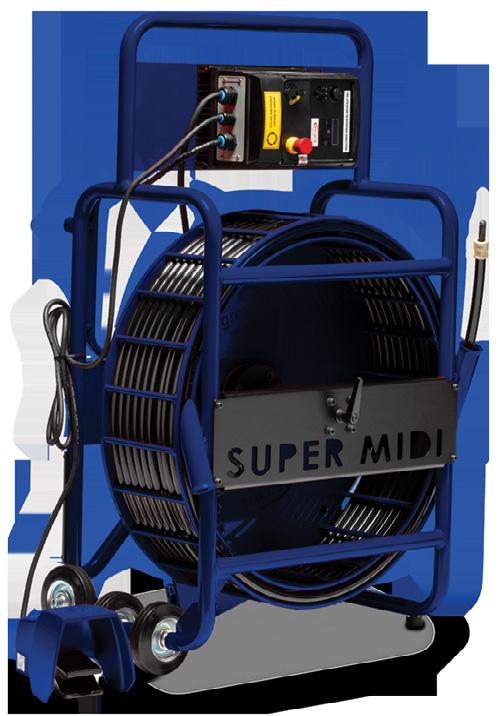
Visitors will be able to see Scanprobe’s X-Range ecosystem in action, including push-rod systems, crawler technology, inspection reels and digital reporting solutions. Demonstrations will focus on how modern inspection workflows can support more efficient site operations, faster reporting and improved decision-making.
Software partners including WinCan will also be present, alongside Scanprobe’s own reporting solutions, offering
practical guidance on connected reporting workflows and digital inspection management.
The open day will also feature Scanprobe’s rehabilitation offering, including UV lining equipment, Renoline products and trenchless rehabilitation systems.
A number of industry brands are also expected to exhibit, including Milwaukee, IMS Robotics, WinCan, Jetter Conversions and Endeavour Vehicle Conversions, giving attendees access to a wider range of equipment, services and technologies for the drainage sector.
Registered visitors will receive free breakfast and access to open-day offers, giveaways and event-only promotions.
Registration is free, with spaces limited. Visit: https://linktr.ee/scanprobe to register.
First GRUNDODRILL 28N Plus in the country lands in Scotland
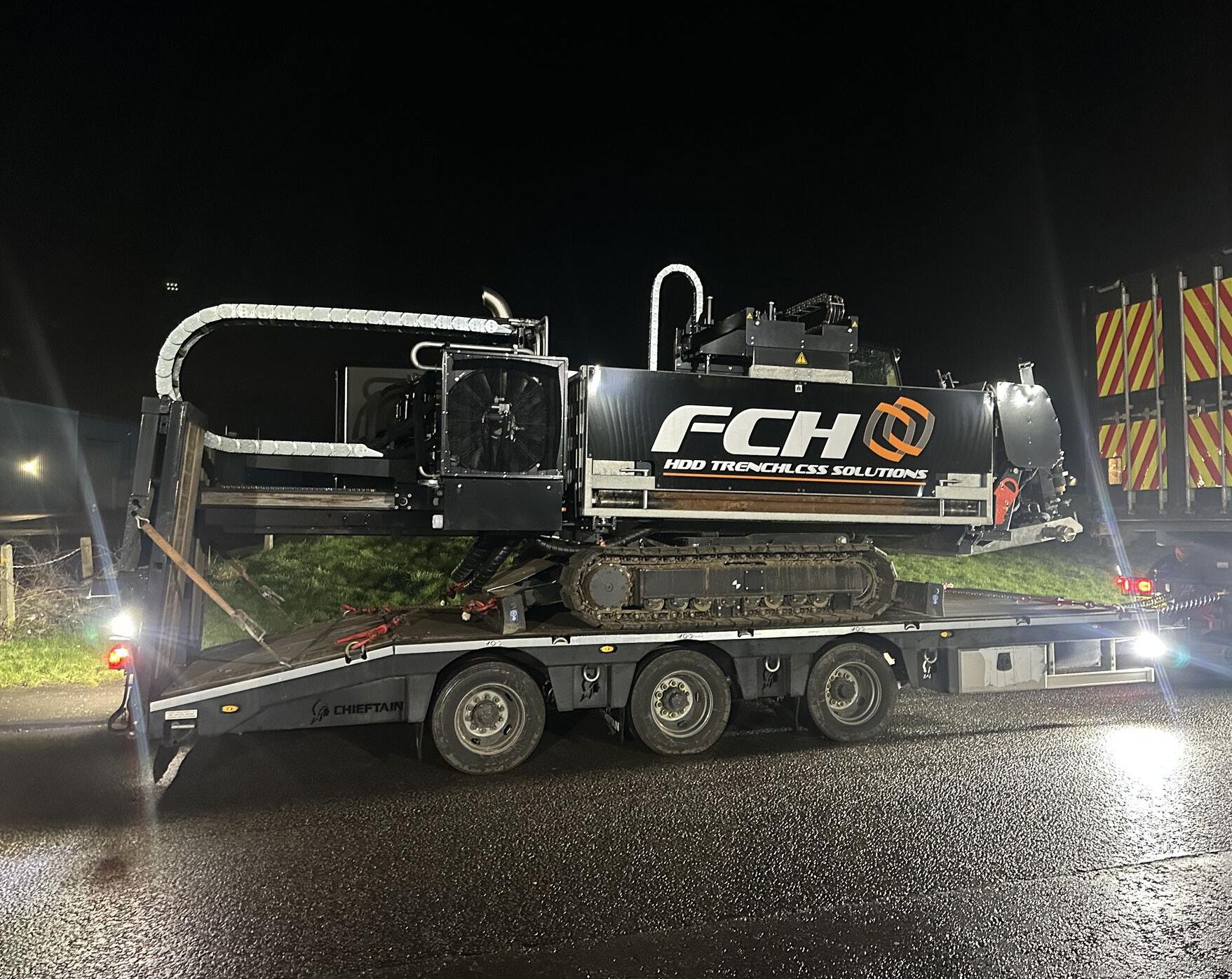
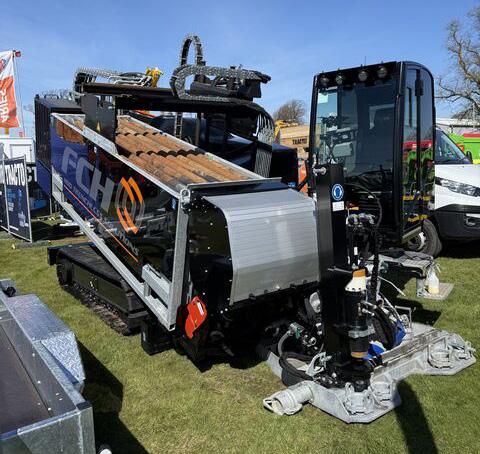
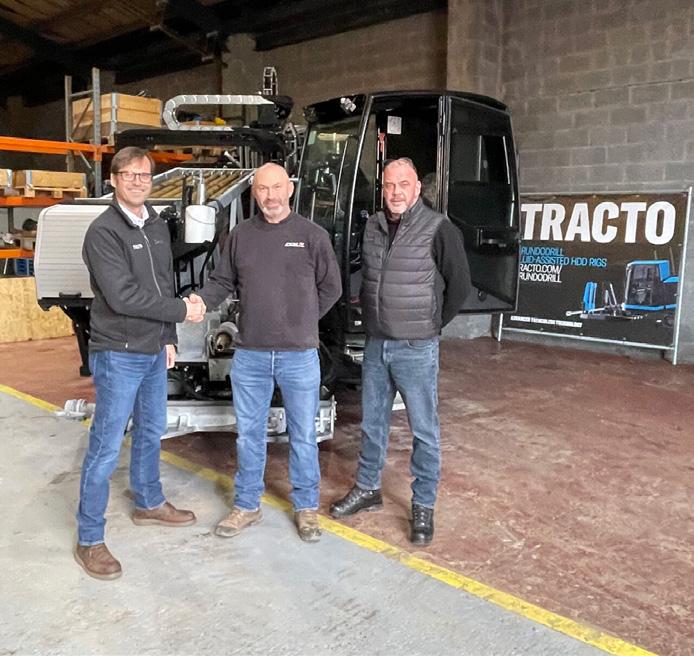
We’re thrilled to announce that another GRUNDODRILL rig has been delivered to Kirkcaldy based customer FCH HDD Trenchless Solutions. It is the first ever GRUNDODRILL 28N Plus to be delivered in the UK and it’s been bought by a forward-thinking company that has helped to grow the trenchless technology sector in Scotland over the last few years.
A true powerhouse, the GRUNDODRILL 28N Plus boasts 224 kW of engine power and the machine has 288m of on-board rods designed to make the most of the 28-tonne (63k lbs) pullback and push. An impressive 11,000Nm (8,113 ft lbs) of continuously variable torque and a 650 l/min
(172 gpm) mud pump complete the specs. The purchase was made just a couple years after the company’s initial purchase of a GRUNDODRILL 18ACS ‘King of Rock’. The latter has been powering its way through challenging applications throughout the north of England and the whole of Scotland for a couple of years. The new machine offers FCH the opportunity to tackle a wider variety of ground conditions and the MA07 Mixing Unit bought to accompany the 18ACS will be shared across both machines going forwards.
Fraser Hart, is Managing Director of FCH HDD Trenchless Solutions; “TRACTO machinery provides the strength and performance we need for the arduous terrain we have
up here in the north. The units are exceptionally productive and our operators particularly appreciate the simplicity of operation. As with all the equipment we buy ease of maintenance is essential for minimal downtime. Both TRACTO machines have excellent access for all regular checks and servicing.”
The drill has already completed its first job which was the installation of 100m of 315mm diameter pipe under the river Urie for Scottish Water. This was to renew the existing pipe that had burst under the river. The machine successfully drilled through sand and gravel, cobbles and soft rock to install the pipe four metres under the river bed.
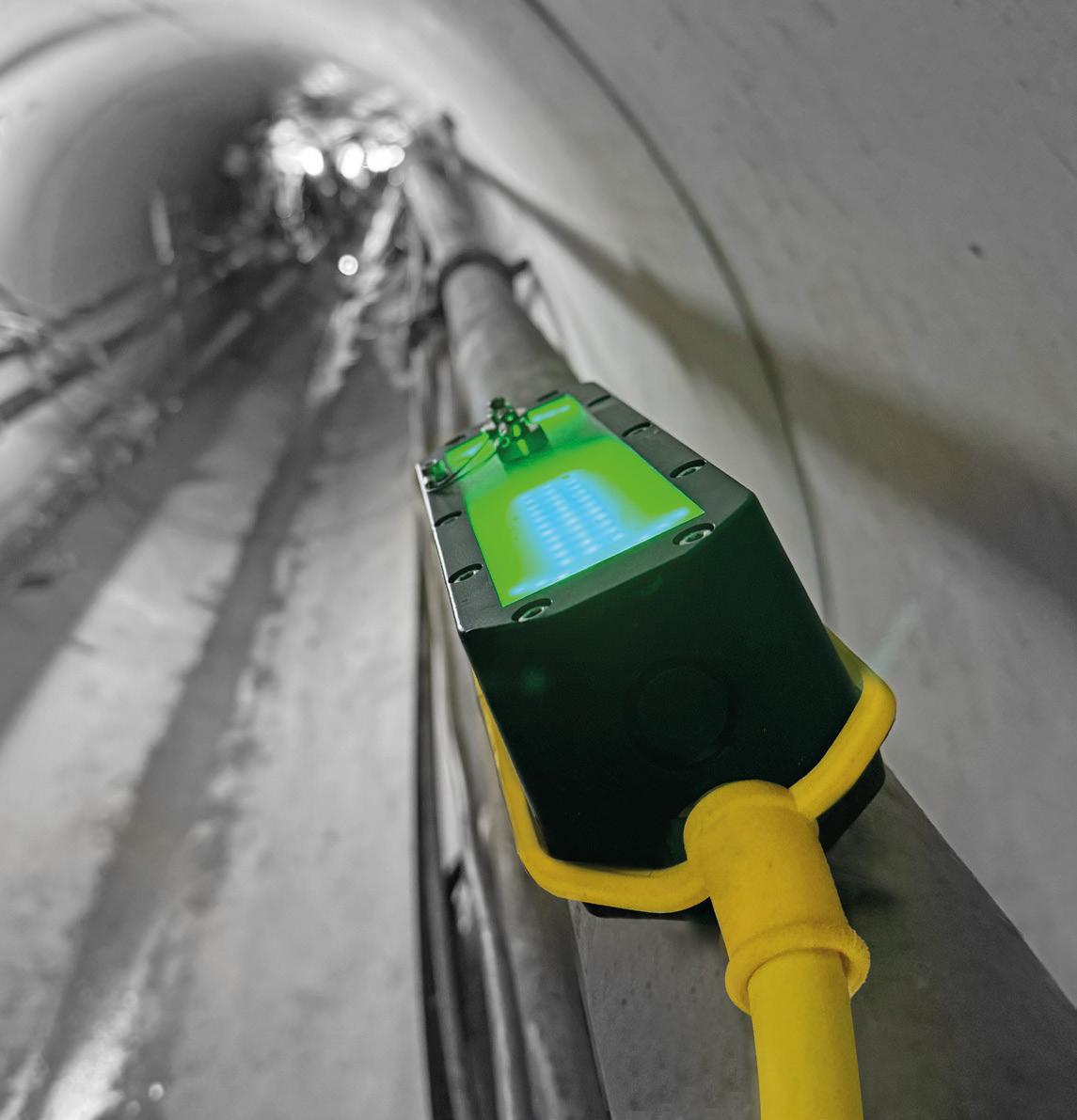
Affinity Water trials fibre-optic leak detection technology
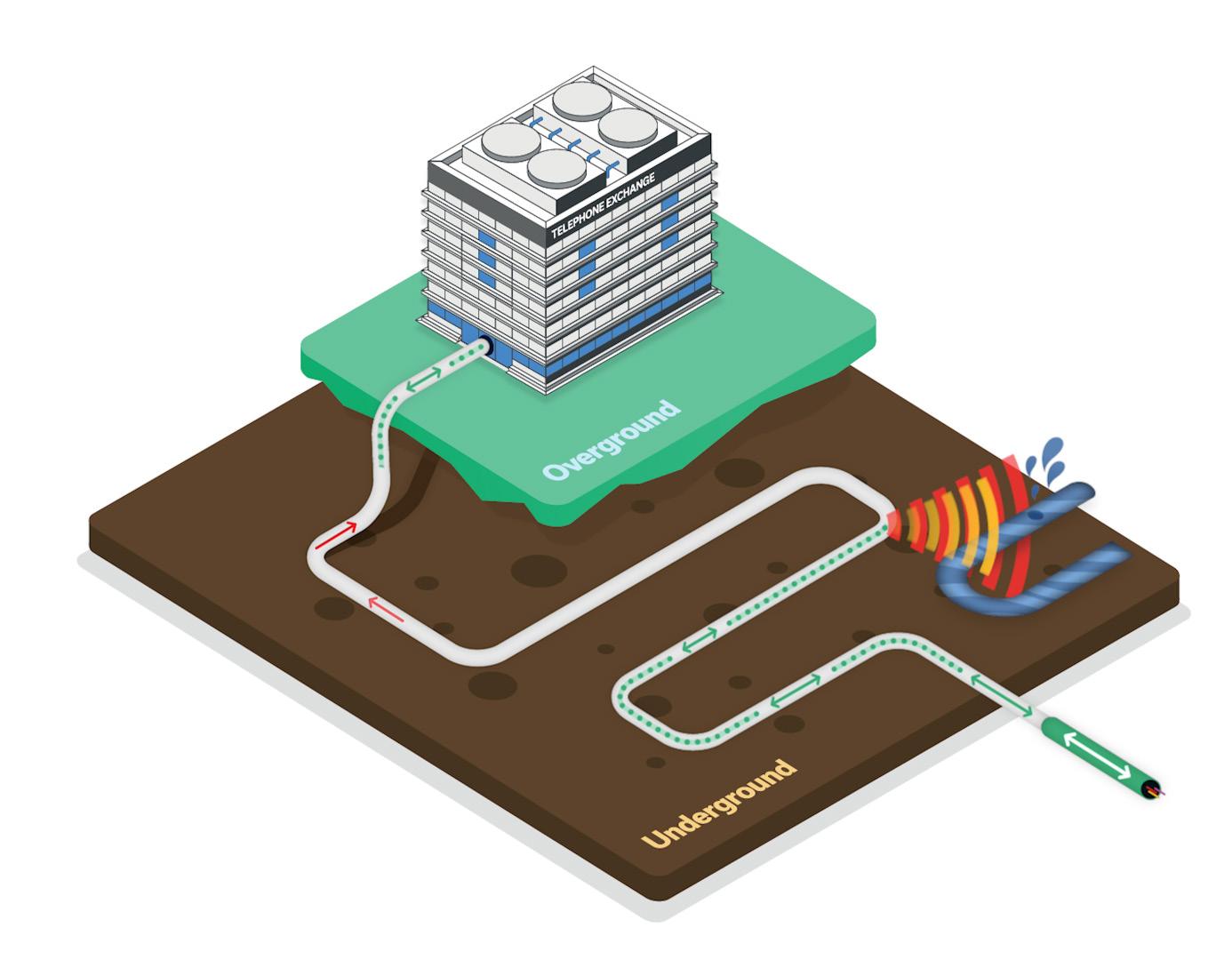
Affinity Water is trialling a new fibre-optic sensing technology designed to detect leaks in water networks using Openreach’s telecommunications infrastructure. Developed in partnership with UK technology company Lightsonic, the pilot uses Distributed Acoustic Sensing (DAS) technology, which converts fibre optic cables into thousands of sensors capable of detecting and locating leaks in nearby water pipes.
The technology is currently being tested across five locations and monitors approximately 650km of network using Openreach’s full fibre broadband infrastructure.
According to the project partners, the system has already identified more than 100 leaks within the first three months of operation, helping to prevent the loss of around 2 megalitres of water per day equivalent to the daily water use of approximately 10,000 people.
Water leakage remains a major challenge across England and Wales, where an estimated three billion litres of treated water are lost every day. The UK water industry, including Affinity Water, has committed to halving leakage levels by 2050.
The DAS technology works by analysing acoustic vibrations along fibre optic cables, allowing operators to detect disturbances associated with leaks in nearby buried infrastructure. Trevor Linney, Director of Network Technology at Openreach, said the trial demonstrated how fibre infrastructure could support wider utility monitoring applications beyond broadband connectivity.
“The results of our pilot show that our new full fibre infrastructure can deliver value far beyond broadband, and could prove to be a real game changer in solving real-world challenges like water conservation,” he said.
“Transforming the telecom fibre-optic network into a continuous sensing layer unlocks entirely new ways to monitor utilities
Tommy Langnes, CEO, Lightsonic
“Around 20 per cent of the UK’s drinking water is lost to leaks, with water conservation a significant and growing issue for the nation. What’s great about this technology is that it can also be used to detect a range of other issues, from gas leaks to monitoring the condition of major structures such as bridges and tunnels.”
Tommy Langnes, CEO of Lightsonic, said the project highlighted the potential of fibre sensing technologies to support utility operators at scale. “Transforming the telecom fibre-optic network into a continuous sensing layer unlocks entirely new ways to monitor utilities,” he said.
“This collaboration demonstrates how fibre sensing can deliver measurable environmental impact today, while creating opportunities for wider infrastructure and utility monitoring in the future.”
Barhale appoints Nick Curtis to lead restructured Northern Region
Barhale has appointed Nick Curtis as Northern Regional Director, completing the final stage of a wider regional restructure designed to meet future operational requirements and strengthen business resilience.
The changes align Barhale’s regional operations with major clients’ operating footprints and follow earlier organisational announcements made in 2025.
As part of Nick’s planned career progression, he steps into the role following the promotion of James Ingamells to Chief Operating Officer.
He originally joined Barhale in 2011 as an Engineer/ Sub Agent. After working as a Site Agent at J Breheny between 2013 and 2016, he rejoined the business in 2016 as Project Manager, progressing to Contracts Manager in 2021 and was promoted to Regional Manager for the Northern Region in 2023.
His project experience includes major infrastructure and development schemes such as utility diversions at Battersea Power Station, infrastructure works on Crossrail, pipeline installation works for residential developments and drainage and highways schemes across Yorkshire and the Midlands.
As part of the restructure, Nathan Hutchinson has been appointed Framework Manager and will support Nick in managing key client relationships across the region.
“ Nick has been mentored
into this role over the last two years, and this key appointment is no coincidence. His attention to detail, work ethic and collaborative approach towards working with our clients made this appointment very easy.
Martin Brown Chief Executive Officer,
Barhale
Martin Brown, Chief Executive Officer, said: “Nick has been mentored into this role over the last two years, and this key appointment is no coincidence. His attention to detail, work ethic and collaborative approach towards working with our clients made this appointment very easy.
“Nick is one of the latest of five key director appointments that have been made through our succession planning strategy, this strategy is part of our five-year business plan and continues to grow home grown talent across our organisation.
Nick Curtis Northern Regional Director, Barhale
Nathan Hutchinson Framework Manager, Barhale
Bluelight Lining’s LED light curing CIPP lining system is engineered to deliver reliable results, first time, every time. With all equipment and liners sourced from one place, everything works seamlessly together, reducing downtime, minimising errors, and keeping projects on schedule.
Up to 5x more efficient than traditional systems
Environmentally friendly resin with up to 99% CO2 savings
Technology and materials sourced from a single supplier
Technology approved by the WRC, DIBt and the CSTB Your Go-To System for Laterals and Mains up to 600mm
KrasoTech
Robotic
Inversion Drums
Cutting Equipment
asoTech
Measuring Equipment
version Drums
KrasoTech
Inversion Drums
Vehicle Builds
soTech
Repair Packers
ersion Drums
asoTech
Silicate Resins
version Drums asoTech ersion Drums
Inversion Drums
Trusted across the UK and Europe, Bluelight Lining is the go-to solution for efficient, high quality pipe rehabilitation. With Bluelight Lining, you can do it right, first time, every time.
POWER,
PARTNERSHIP AND PRECISION BENEATH THE RIVER FOYLE
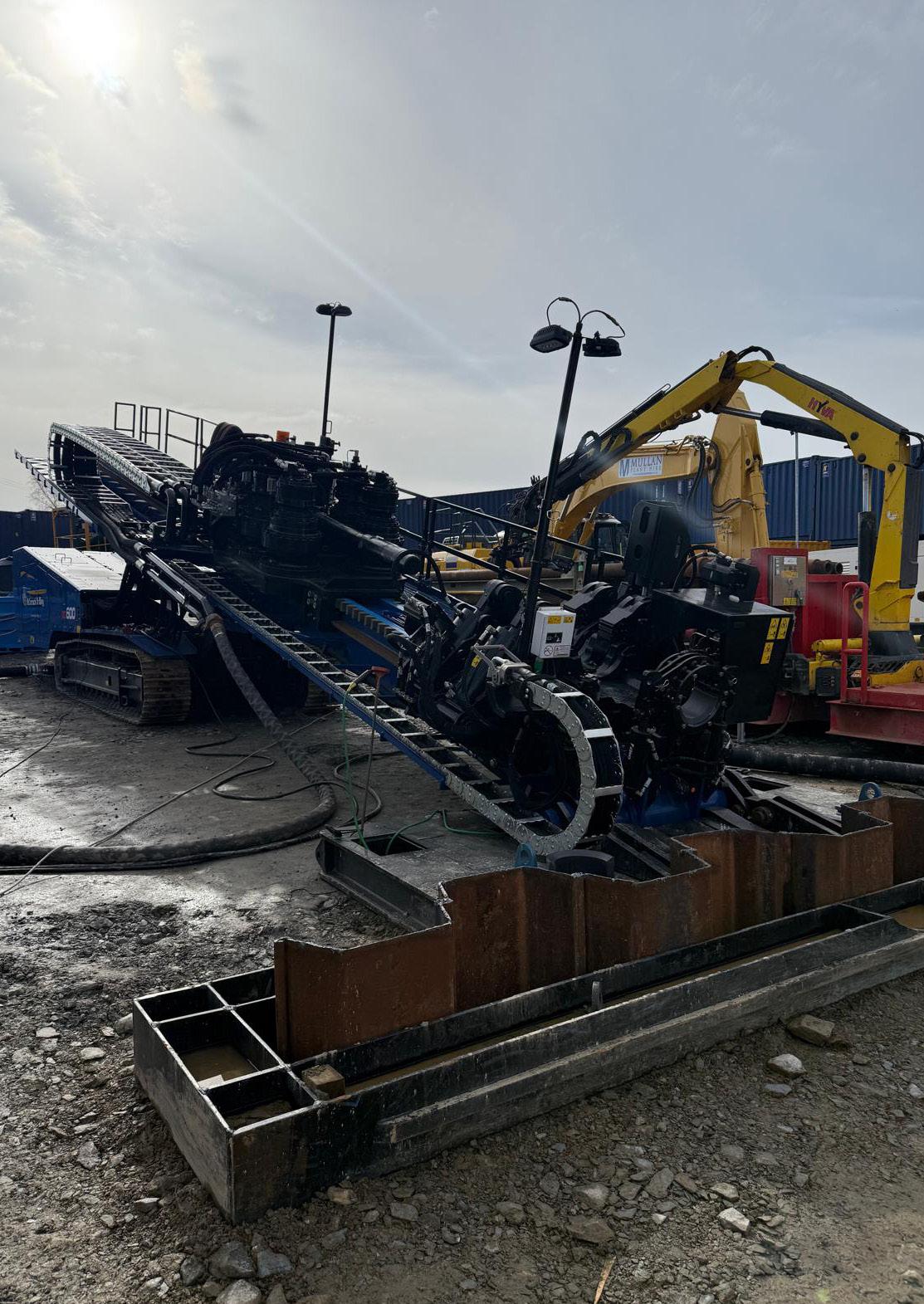
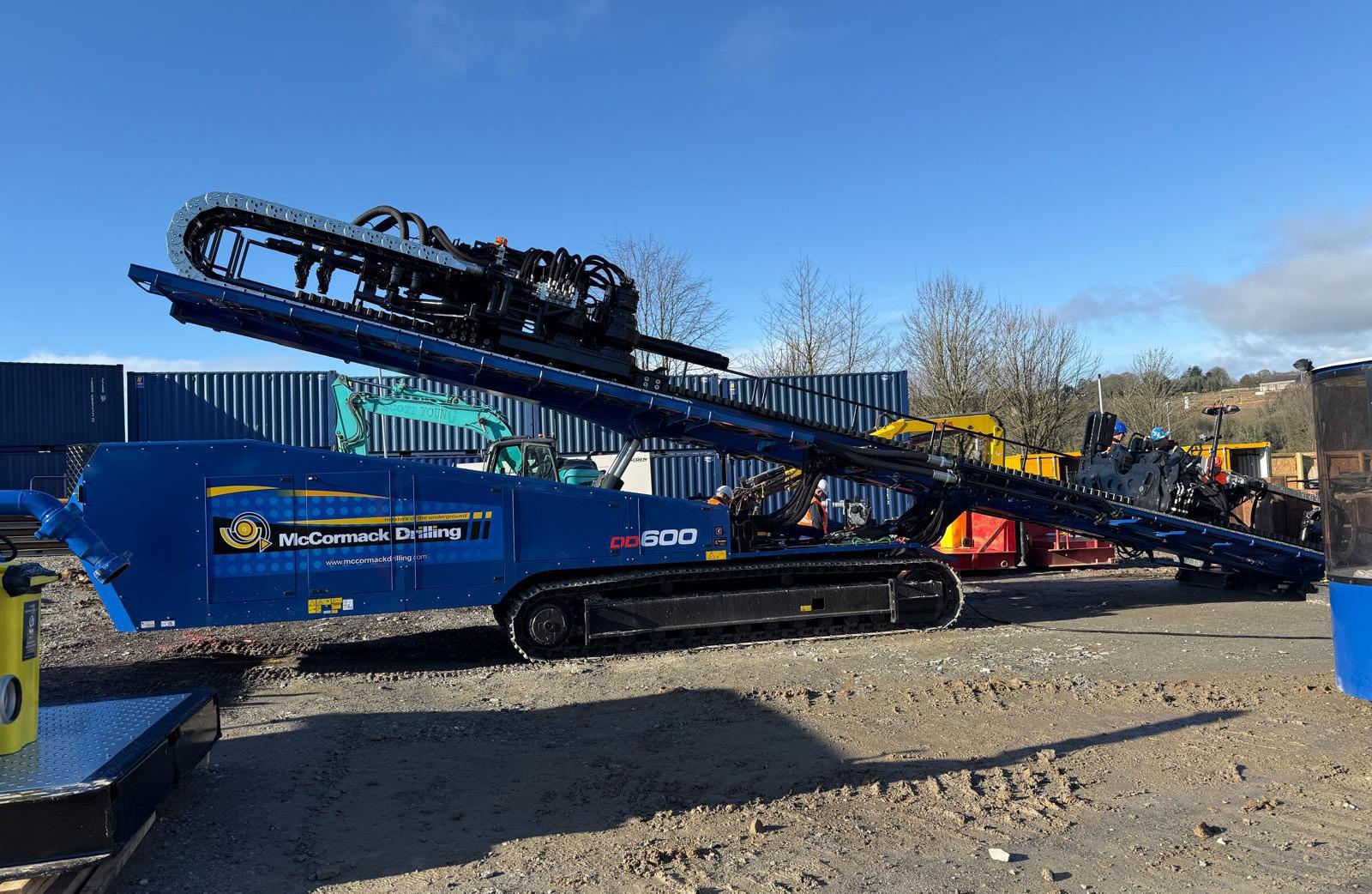
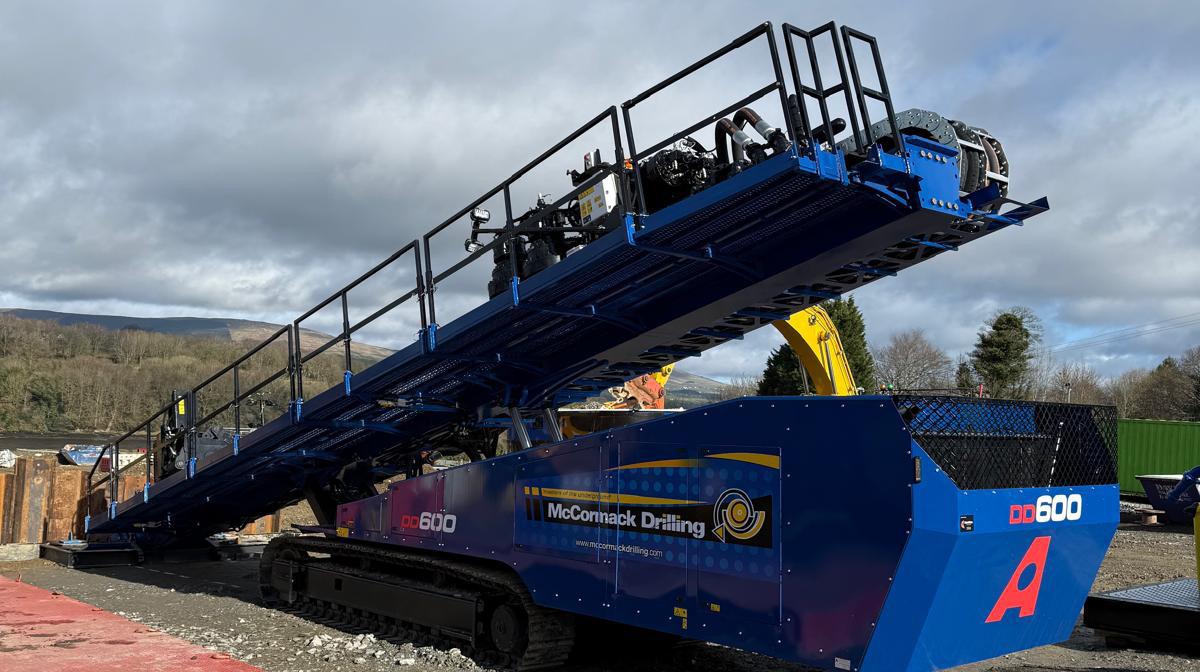
Beneath the surface of the River Foyle in Derry, a technically demanding HDD crossing is quietly redefining what is achievable in the UK and Ireland trenchless sector. At the centre of this operation is OCU Group and McCormack Drilling, combining experience, ambition, and newly acquired capability to deliver one of the region’s most significant recent river crossings.
But this project is not just about machinery or methodology, it is a story of partnership. The successful deployment of the American Augers DD600 is underpinned by the hands-on support and technical expertise of Ditch Witch UK and Ireland, whose role extends far beyond supply.
A contractor stepping forward
Having successfully completed pipeline works at this same crossing eight years ago, McCormack Drilling returned with a clear objective: to deliver a more complex installation, at greater scale, and under tighter operational constraints. The installation of two HDPE pipelines 560mm and 500mm in diameter, over lengths of 560m and 560m, demands not only precision but sustained high-performance drilling through challenging ground conditions.
This is where the DD600 comes into its own.
“ This is the kind of project the DD600 was engineered for: long, large-diameter crossings in difficult geology, where consistency is non-negotiable.
The DD600: Built for crossings like the foyle
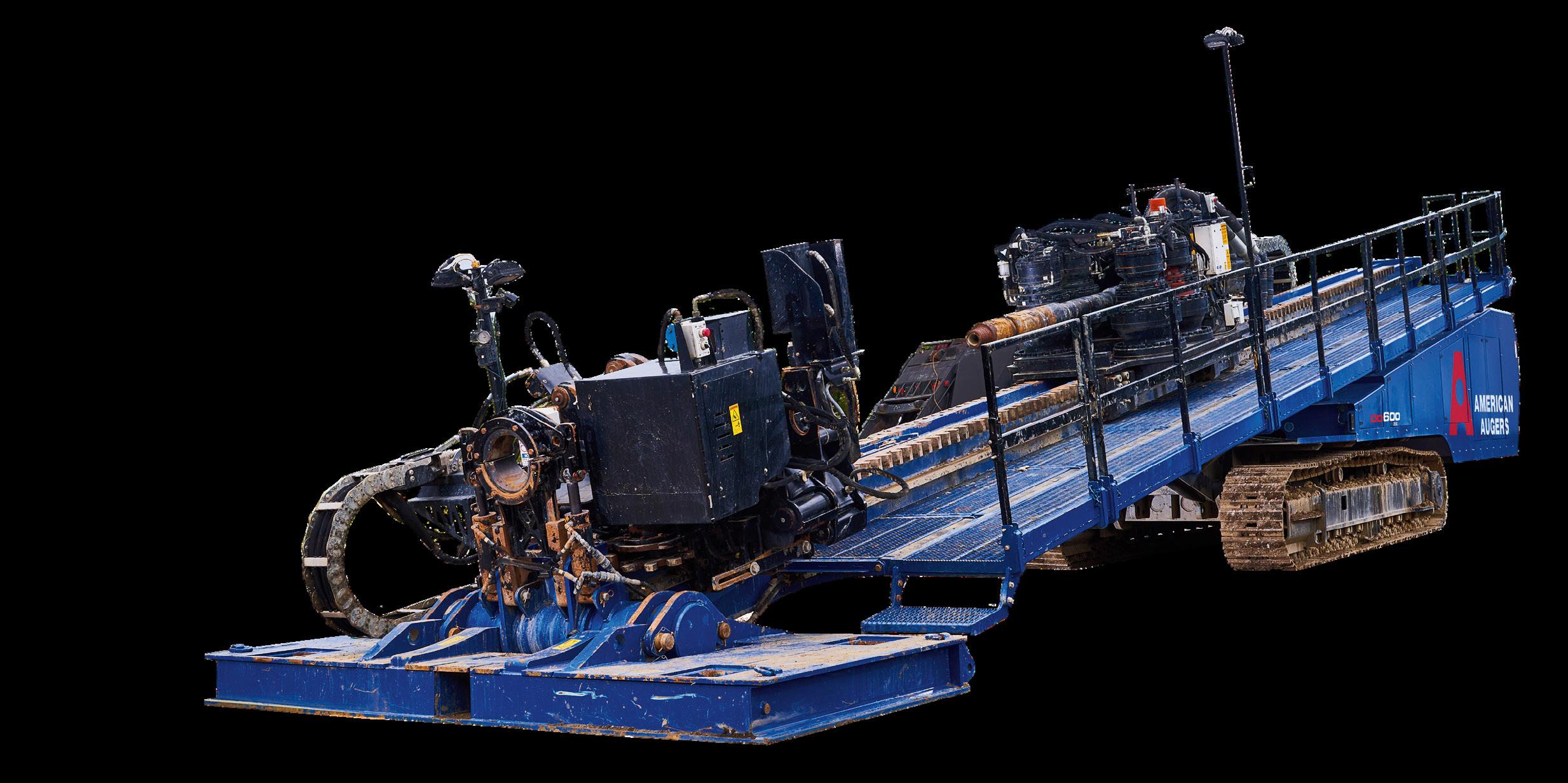
The American Augers DD600 is not simply a larger rig it is a strategic asset designed for exactly these types of installations. On the River Foyle crossing, its high torque and pullback capacity provide the backbone for maintaining steady progress through rock, while minimising risk of bore instability over long distances.
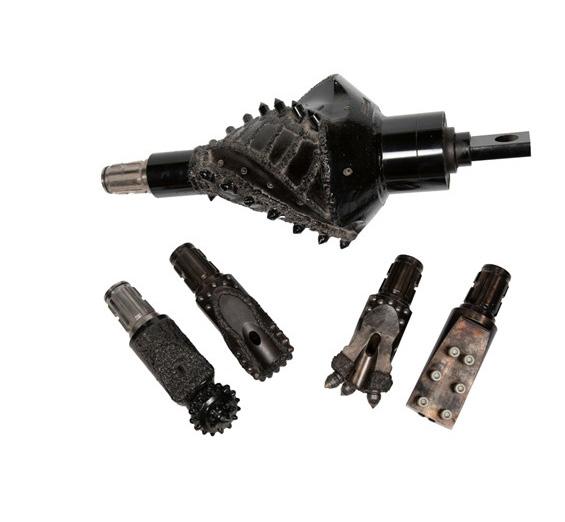
Equipped with an 8-inch mud motor and a 324mm tri-cone bit, the rig delivers the cutting power required for the pilot bore, while retaining the control needed for accuracy. This balance is critical on a crossing where line and grade must be maintained across hundreds of metres beneath a live river environment.
As the operation progresses, staged reaming from 610mm up to 813mm using rock hole openers places further demand on the rig. The DD600’s ability to handle these loads without compromising performance ensures that each phase of the bore enlargement can be executed efficiently and safely.
Simply put, this is the kind of project the DD600 was engineered for: long, large-diameter crossings in difficult geology, where consistency is non-negotiable.
Ditch Witch UK and Ireland: More than a supplier
While the DD600 provides the capability, the confidence to deploy it at full potential comes from the support structure behind it. Ditch Witch UK and Ireland have played a critical role in ensuring OCU Group and McCormack Drilling could integrate this highspecification rig seamlessly into their operations.
From initial machine specification and commissioning through to on-site technical support, the relationship has been collaborative. Introducing a maxi rig of this scale is not simply a transaction, it requires training, operational alignment, and ongoing backup to ensure performance matches expectation.
That level of support is particularly vital on a project with little margin for error. River crossings demand continuous drilling operations, rapid response to changing ground conditions, and confidence that equipment will perform consistently under pressure. Ditch Witch UK and Ireland’s involvement ensures that the DD600 is not just present on site, but fully optimised.
Engineering the full system
Beyond the rig itself, OCU Group and McCormack Drilling have demonstrated a holistic approach to HDD delivery. The integration of a Gyro System ensures precise pilot bore alignment, while a purposebuilt modular fluid management system sustains drilling efficiency throughout the operation.
This includes high-capacity mixing, hydration, and recycling units, supported by advanced solids control equipment, critical for maintaining fluid
properties in rock drilling conditions. The result is a system where rig capability, fluid performance, and guidance technology are fully aligned.
Delivering in a live environment
Operating near a residential area adds another layer of complexity. The use of double-stacked container barriers to mitigate noise reflects a growing emphasis on community-conscious construction, ensuring that high-impact infrastructure projects can proceed without disproportionate disruption.
Raising the standard
With a projected four-month programme, the River Foyle crossing stands as a benchmark for modern HDD delivery in the region. More importantly, it highlights what becomes possible when contractor capability and supplier support are fully aligned.
For OCU Group and McCormack Drilling, the procurement of the DD600 represents a decisive step forward-enabling the company to take on larger, more complex projects with confidence. For Ditch Witch UK and Ireland, it demonstrates the value of a partnership-led approach, where success is measured not just by equipment delivered, but by performance achieved on site.
Together, they are not just completing another river crossing, they are setting a new standard for how trenchless projects can be executed across the UK and Ireland: with power, precision, and partnership at the core.
No DEF required.
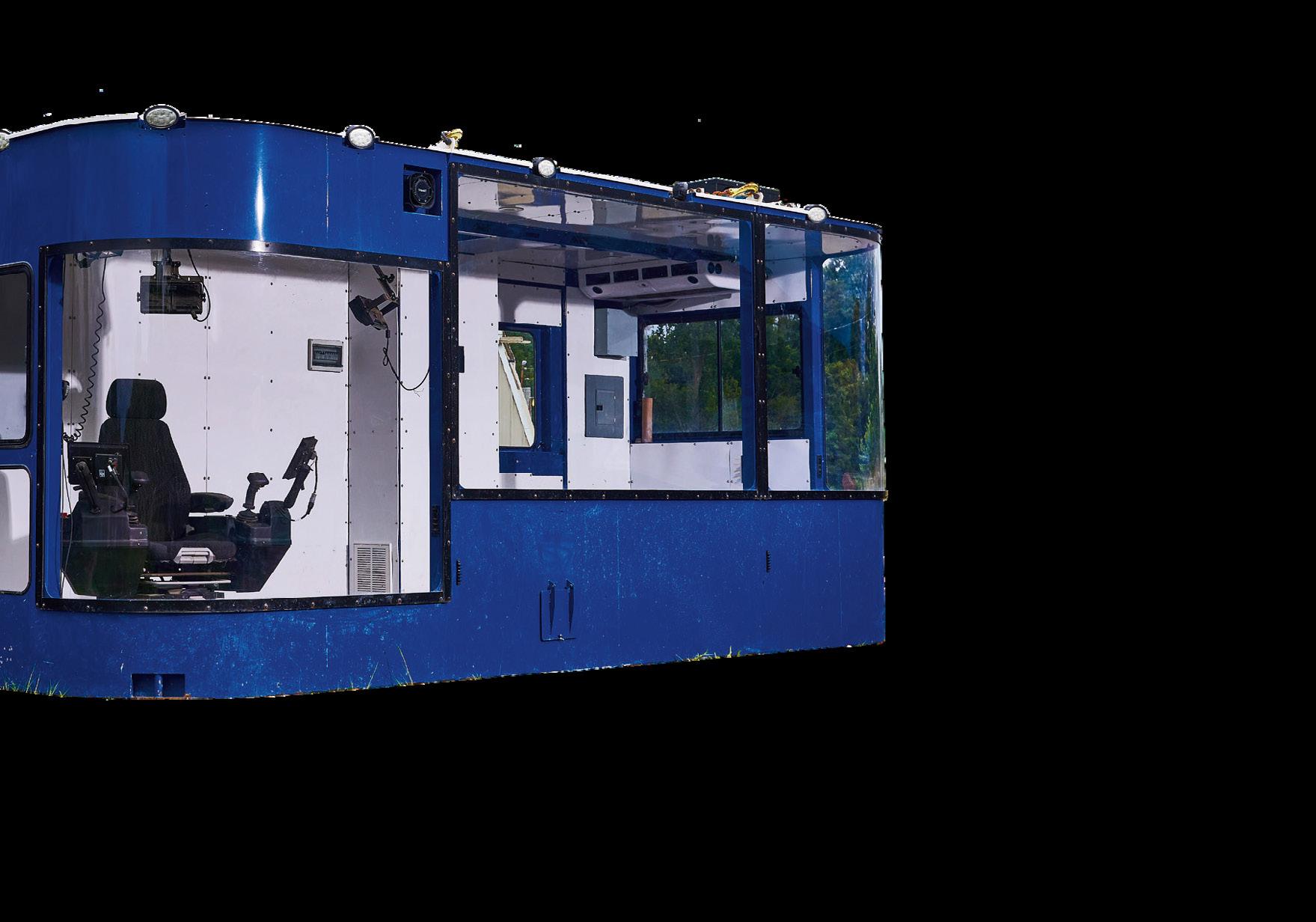
180º visibility in cabin.
100,000 ft·lb of torque.
Faster setup.
New open-top wrench design.
Hydraulic catwalk.
Up to 130 rpm rotary speeds.
Climate-controlled cabin.
Designed for easy transport.
When we built the DD600, we built it based on direct customer feedback. The reason?
So you could have it all.
www.ditchwitch.co.uk
info@ditchwitch.co.uk 01792 895906
Maximising jobsite efficiency with HDD tooling and support solutions
As HDD projects continue to increase in scale and complexity, achieving consistent jobsite efficiency requires more than simply selecting the right drill rig. Productivity is increasingly shaped by how effectively supporting equipment, tooling, accessories and digital technologies are integrated into the wider drilling operation.
For contractors working in demanding ground conditions and time-sensitive environments, optimising these elements is critical to maintaining programme schedules, improving bore performance and controlling operational costs.
Enhancing operational visibility through machine data
Aligning tooling with project requirements
Tooling selection plays a central role in drilling efficiency and overall project performance. Effective tooling strategies should be based on a clear understanding of ground conditions, bore design, machine capability and product installation requirements.
When tooling is correctly matched to the application, contractors can achieve improved penetration rates, maintain bore accuracy and reduce unnecessary strain on drilling equipment. Conversely, poorly specified or unsuitable tooling can contribute to increased wear, reduced productivity and avoidable downtime on site.
Integrating planning and productivity tools
Operational efficiency is also heavily influenced by how effectively information is managed throughout the project lifecycle. From preplanning and bore design through to installation and final reporting, access to accurate and consistent project data helps streamline workflows and improve coordination between teams.
Digital planning and productivity tools that support bore mapping, jobsite documentation and as-built reporting allow crews to work more efficiently while improving communication between field personnel, contractors and project stakeholders.
As HDD operations become more sophisticated, access to real-time machine data is playing an increasingly important role in day-to-day decisionmaking. Telematics and equipment monitoring systems provide contractors with valuable insights into machine performance, utilisation rates and maintenance requirements.
This increased visibility helps reduce unplanned downtime, supports proactive maintenance scheduling and enables more effective fleet management across multiple projects.
Supporting crews with training and application expertise
The effectiveness of any tooling or accessory ultimately depends on how it is applied on site. Ongoing operator training and application support remain essential to ensuring equipment is used safely, efficiently and to its full capability.
Supporting crews with practical knowledge and application guidance can help improve consistency across operations while maximising the long-term performance of drilling equipment and tooling systems.
Maximising HDD jobsite efficiency is a coordinated process that relies on alignment between equipment, tooling, digital technologies and operational expertise. Vermeer UK continues to work closely with contractors across the UK and Ireland, providing HDD tooling, accessories and support solutions designed to help improve productivity and deliver reliable performance across a wide range of project conditions.
STILL IN A LEAGUE OF ITS OWN
THE D100X140 S3 NAVIGATOR®
HORIZONTAL DIRECTIONAL DRILL
The D100x140 S3 is a unique machine in the HDD market. It’s not only used for oil, gas or other large pipeline projects — but utility projects as well due to the machine’s small footprint.
TRACTO HDD RIG SUPPORTS A-NORD GRID CONSTRUCTION IN GERMANY
TRACTO’s new GRUNDODRILL JCS300 HDD drilling rig has been used on Germany’s A-Nord high-capacity DC underground cable route, supporting trenchless installation on a challenging section of the project. The A-Nord route is being developed by transmission system operator Amprion as part of Germany’s wider energy transition. The 300km underground cable route will transport renewable energy from the north of Germany to North Rhine-Westphalia, with a total transmission capacity of 2,000MW enough to supply around two million people.
Construction began in October 2023, with commissioning planned for 2027. The route consists of two systems, each comprising two 380kV high-voltage cables and a return conductor. While much of the cable route is installed in open trenches, trenchless methods are being used where existing infrastructure, environmental constraints or protected areas make open-cut construction unsuitable.
The Lower Rhine countryside near Geldern, through which the A-Nord route runs in construction phase NRW3a
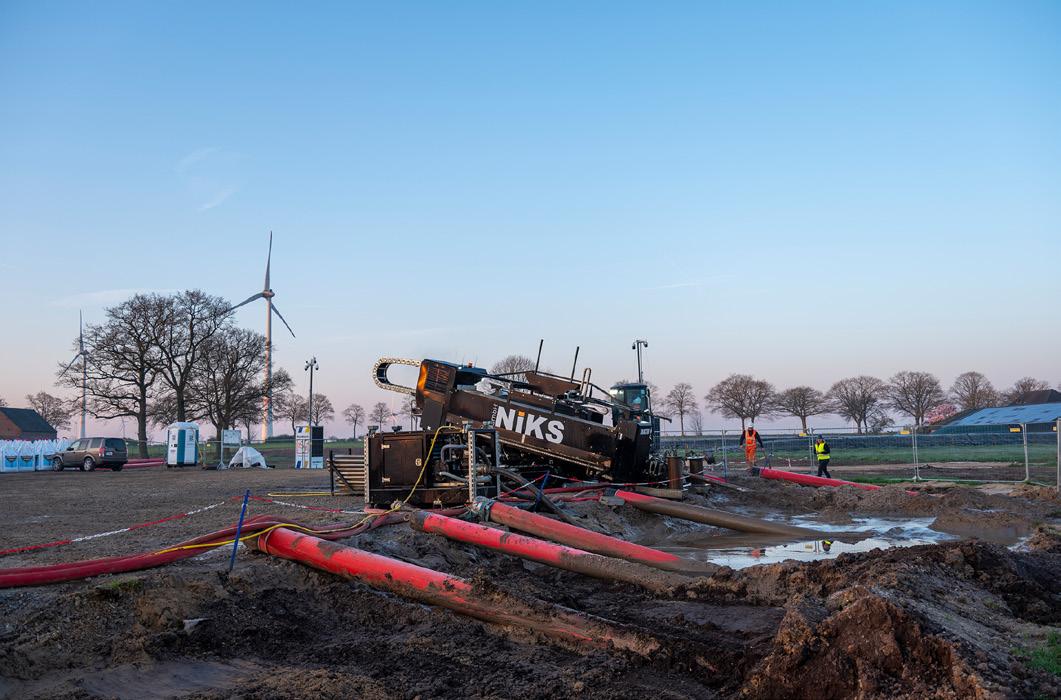
Contractor Niks Infra B.V. has been working on the A-Nord construction sites for the past two years, using horizontal directional drilling to reduce surface disruption, limit excavation and minimise reinstatement requirements. In the Geldern region, where the route crosses a river and other infrastructure, Niks Infra used TRACTO’s GRUNDODRILL JCS300, a jet drilling rig developed specifically for route and grid construction.
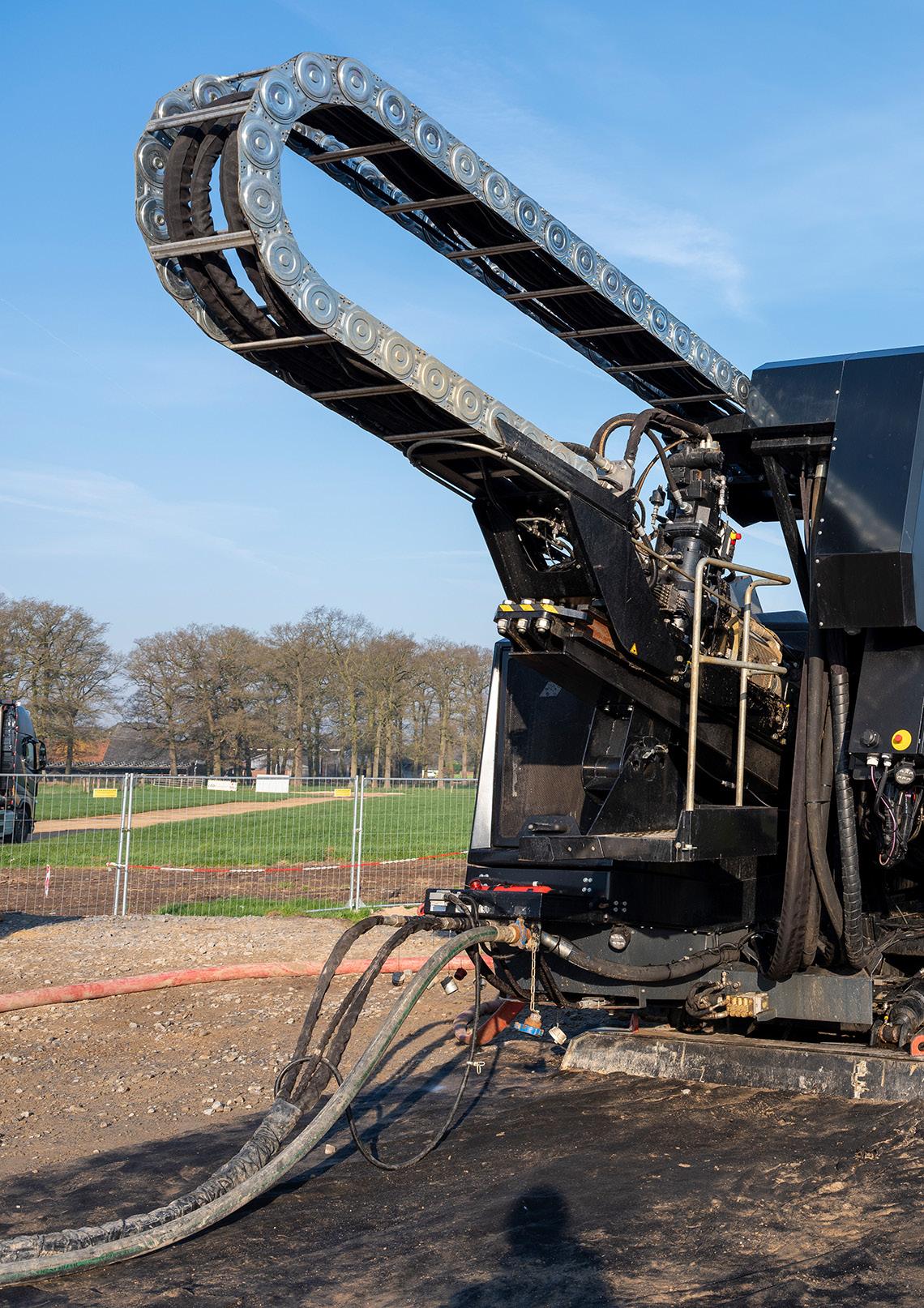
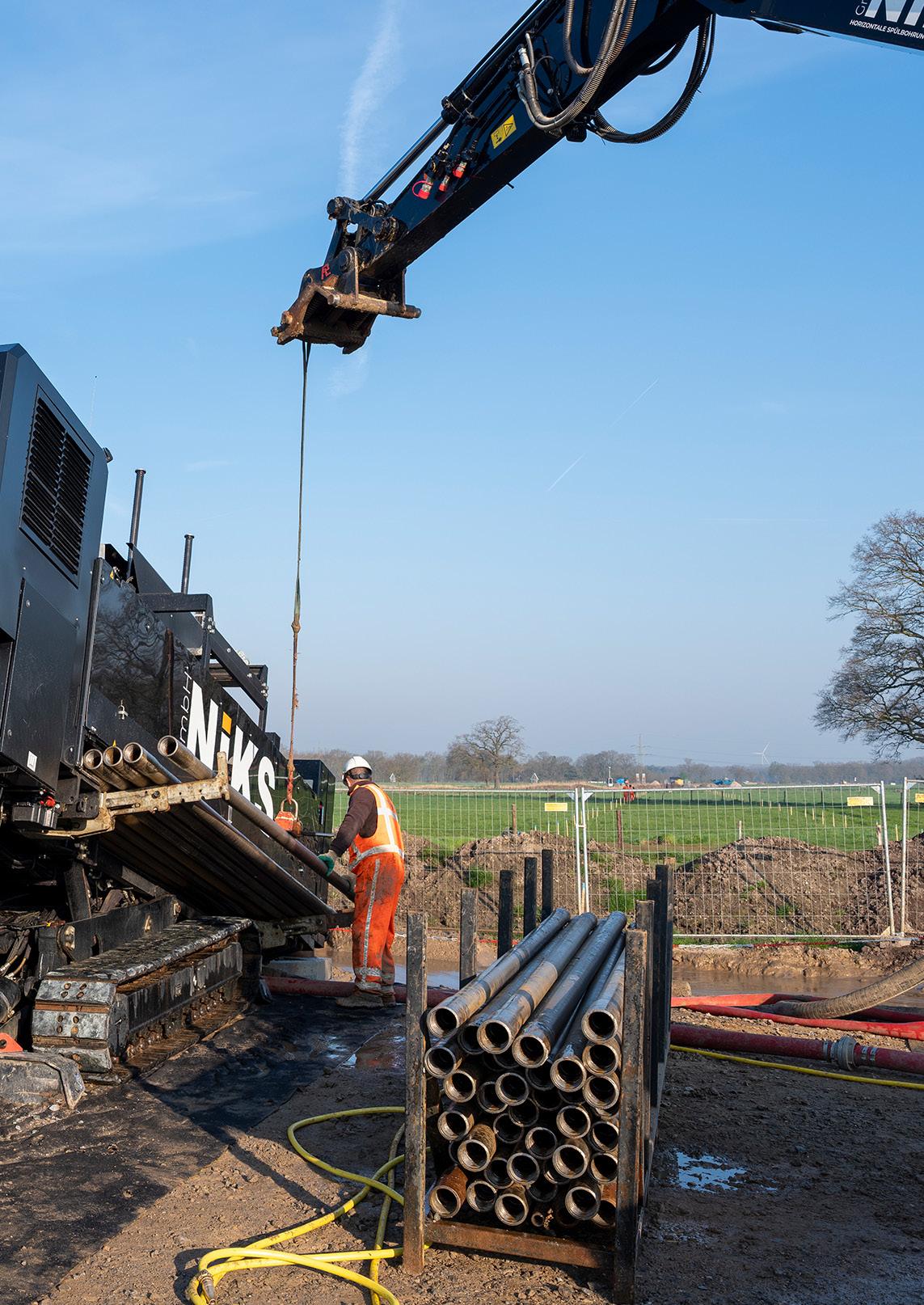
The rig offers 300kN of thrust and pulling force, high torque and a large drill rod capacity, enabling it to install larger protective pipes over long distances before the high-voltage cables are pulled through. The JCS300’s magazine holds 70 drill rods, each 4.5m long, with up to six additional rods able to be loaded during operation. In full-auto mode, rods are removed, connected and returned automatically. TRACTO says this automation, combined with the longer rod length compared with conventional 3m rods, supports faster and more repeatable drilling.
The machine also includes full-auto drilling mode, automatic drilling data recording and a mobile
The GRUNDODRILL JCS300’s magazine holds 270 metres of drill rods, each rod 4.5 metres long; additional rods can be loaded from the side during the drilling process
HMI, allowing the operator to manage machine and drilling functions from a central display in the cabin or by remote control. During pilot boring, drill head position data is continuously recorded using a walk-over positioning system. The integration of drilling and positioning data is designed to improve accuracy and support safer HDD operations.
On the Geldern section of A-Nord, six 490m pilot bores were completed along the cable route, with each pilot bore taking an average of seven hours. The subsequent installation of 315mm and 350mm protective pipes took two working days per bore, including ancillary work. TRACTO said the use of HDD on the A-Nord route demonstrates how trenchless methods have become an important part of major power grid delivery, particularly where route approvals, environmental constraints and construction timelines are critical.
Amprion is also using trenchless technology on other sections of its grid programme. Between Emden and Wietmarschen, the A-Nord route is being bundled with the DolWin4 and BorWin4 offshore grid connection systems over around 100km.
These systems will transport electricity from North Sea wind farms beneath the East Frisian island of Norderney to the North German mainland and onwards to a substation in the Emsland region. In the sensitive coastal landscape, HDD has been selected to enable cable installation with minimal surface impact.
Additional trenchless ramming technology has also been used to install casing pipes at borehole entry points, helping guide drilling through unstable sandy ground.
According to TRACTO, the project highlights how HDD and other no-dig methods are no longer simply alternatives to open-cut construction. On major grid projects such as A-Nord, they can play a decisive role in reducing disruption, meeting environmental requirements and enabling accurate, safe installation of high-performance underground cable systems.
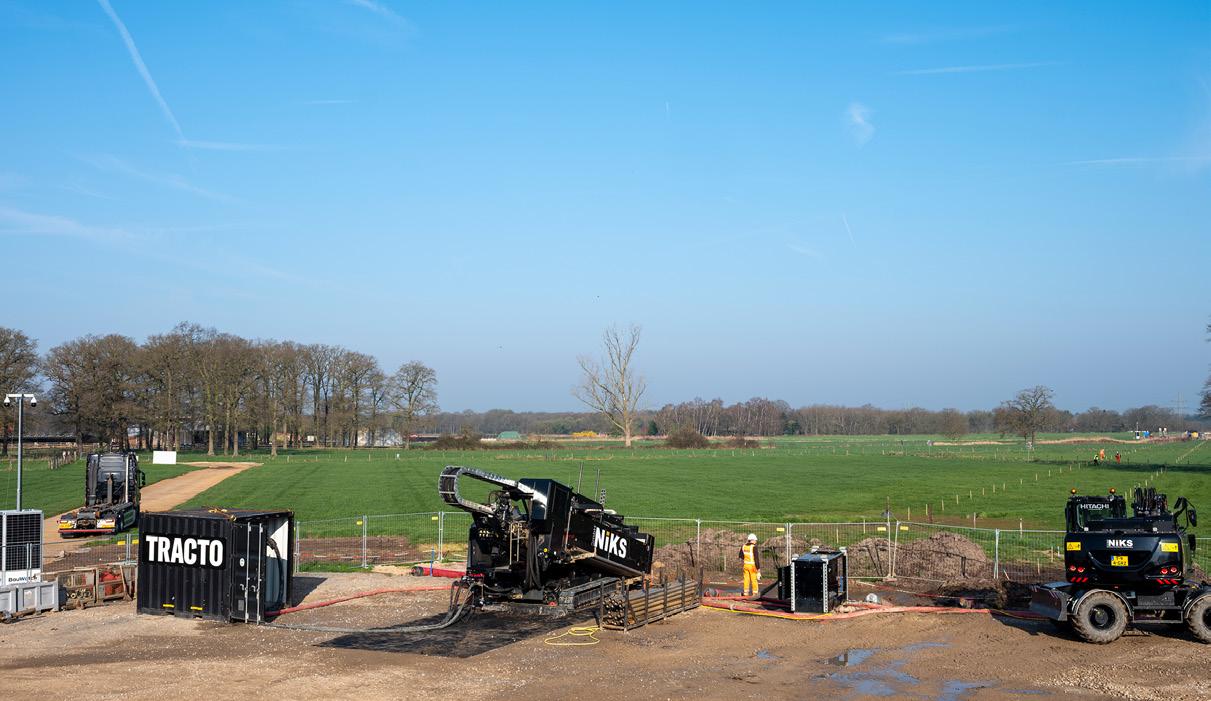
Overview of the Niks Infra construction site near Geldern. The equipment required is extremely minimal, and there is hardly any impact on the surface
The GRUNDODRILL JCS300 HDD drilling rig, specially developed for trenchless route construction, during the construction of a pilot bore
Greater productivity, flexibility and operating comfort for your drilling projects. That’s the New Generation of GRUNDODRILL rigs from TRACTO. An intuitive operating concept with numerous automatic functions and top-of-the-range features gives you full control and less stress in tough everyday conditions on site. Our advanced HDD technology performs well even under demanding conditions and adapts flexibly to your needs. A practical all-round service supports you throughout your projects.
Find out more about the drilling technology of the future, as well as financing and service solutions by calling +49 2723 808-0 or writing to info@tracto.com
WHY VITRIFIED CLAY JACKING PIPES
DESERVE RENEWED ATTENTION
Leon Woods, Country Manager UK at Steinzeug-Keramo, explains why long-term performance, trenchless installation and whole-life value are driving renewed interest in vitrified clay pipe systems.
Urban infrastructure projects are changing rapidly. Increasing pressure to reduce surface disruption, tighter environmental requirements and growing scrutiny around whole-life asset performance are all reshaping how underground utility networks are designed and installed.
As a result, trenchless construction methods such as guided auger boring, microtunnelling and pipe jacking are becoming increasingly important across the UK infrastructure sector. At the same time, engineers are re-evaluating pipe materials for these applications, with renewed interest in vitrified clay due to its long-term durability, dimensional stability and resistance to aggressive wastewater environments.
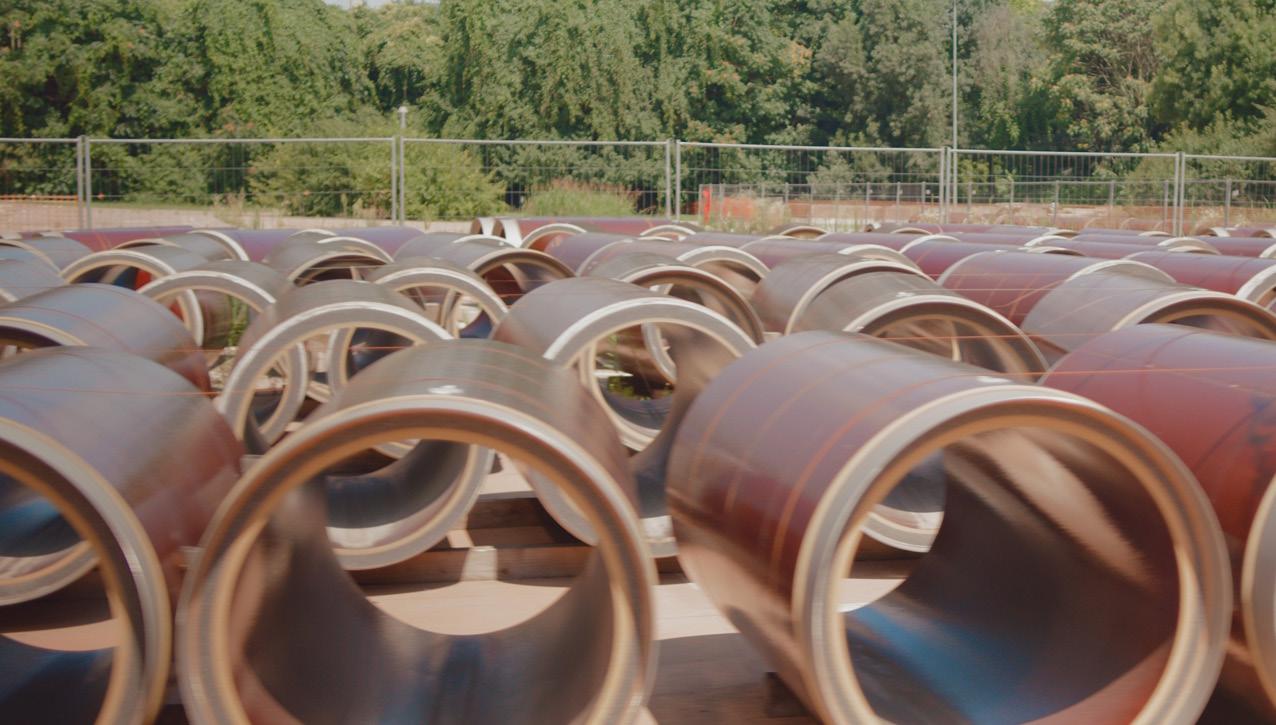
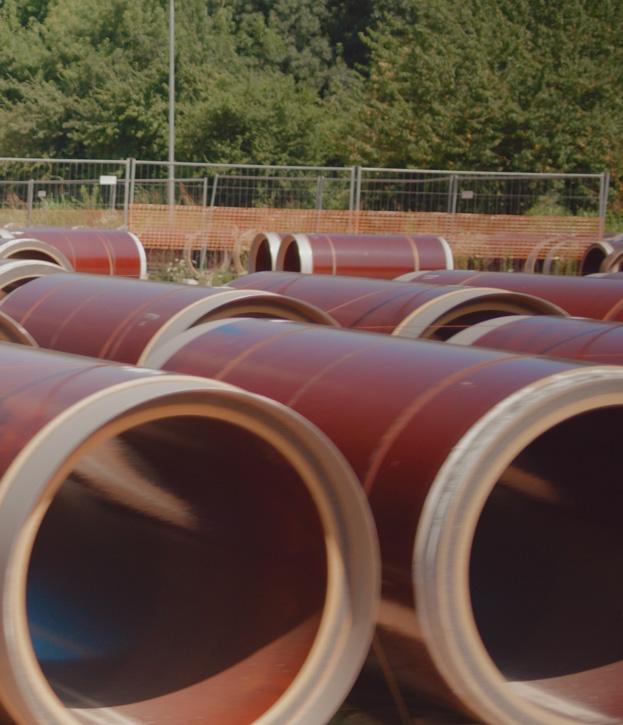
Steinzeug-Keramo is Europe’s largest producer of vitrified clay pipes for both open-cut and trenchless installation. We entered the UK market a couple of years ago with KERA.Drive jacking pipes to offer continuity to UK installers following Naylor’s change in direction and withdrawal from clay production.
The benefits of vitrified clay pipes are well known the world over; rigidity, strength and dimensional stability, making them particularly well-suited to the demanding requirements of trenchless installations. For design engineers there are several key facts to know. Take groundwater for instance: under the BS EN 295 standard, vitrified clay pipes are required to withstand up to 5 metres head of water, meaning they can be installed in areas
with high groundwater conditions by way of micro-tunnelling or slurry balancing to manage unstable soils and hydrostatic pressure.
Clay jacking pipes were first brought to the market in the USA, in 1992. From there the production technology has progressed to service the growing global market as more consideration is given to the reduction of environmental impact. This is both in terms of the short-term; minimising urban disruption and reducing carbon emissions by up to 60% compared to excavation, as well as to the long-term benefits; low-maintenance, corrosion and abrasion resistance and ultimately a material that has been proven to serve longer than most others in the same arena.
The KERA.Drive range offers outstanding compressive strength, dimensional accuracy and long-term structural stability. The system is available in DN150 to DN600, covering the full spectrum of small and medium diameters required in urban environments and confined project conditions.
The system is designed for safe and controlled jacking, ensuring precise alignment and leak tight connections throughout the installation process. A comprehensive accessory range – including connectors, short pipes and special components – support flexible on site configuration and enables efficient progress even under challenging conditions.
Case file: Stranraer trenchless crossings
Benefits of KERA.Drive
1. High compressive strength. Our KERA.Drive vitrified clay pipes can achieve 100 N/mm², providing exceptional longitudinal compression resistance.
2. Chemical Resistance. Vitrified clay pipes provide unmatched resistance to the aggressive environments commonly encountered in sewer and wastewater applications, including hydrogen sulphide and Industrial effluents containing heavy metals and organic solvents.
3. Corrosion resistance translates directly into extended service life, with many vitrified clay drainage systems continuing to operate effectively after more than 150 years of service.
4. Hydraulic Flow. The vitrification process creates an exceptionally smooth internal surface that minimises friction and turbulence. This improves flow characteristics and reduces the likelihood of sediment accumulation and the associated abrasive action.
Project success
A recent guided auger boring project completed by Trenchless Solutions Ltd using our jacking pipes demonstrates the practical benefits of combining trenchless technology with highperformance vitrified clay material.
Stranraer’s location as a gateway to Northern Ireland means the town serves ferry operations, fishing fleets and commuter traffic. Any road closure in this area would have caused significant disruption to the regional economy. This made a trenchless approach especially attractive.
35 metres of DN225 KERA.Drive vitrified clay jacking pipes were installed across two controlled drives. The first crossing facilitated the installation of a new surface water drain from a large retaining pond, designed to manage flood elevation. The second crossing provided the foul water connection for new properties within the development.
Both crossings were completed beneath a main road, connecting into existing DN 1200 manholes on the opposite side – all without requiring a road closure on a key commuter route serving surrounding areas, fishing operations and ferry ports.
With precise setup and controlled steering, the team achieved accurate line and level while maintaining minimal surface impact.
The importance of getting material selection right in trenchless projects like this cannot be overstated. As urban infrastructure demands continue to intensify and environmental regulations become more stringent, the choice of trenchless installation and pipe material determines both short and long-term project success.
Vitrified clay jacking pipes offer proven performance, environmental sustainability and long-term value, making them an appropriate choice for a wide range of projects.
Investment in quality materials delivers returns throughout the project lifecycle, from reduced installation risks through to decades of reliable service.
Independent research conducted by Project Hub 360 confirms that if the operational lifespan of a sewer pipeline exceeds 40 years, which should be the case with most infrastructure projects, vitrified clay pipes are the best investment from both an economic and environmental standpoint.
Steinzeug-Keramo exemplifies commitment to excellence, offering designers and contractors a solution for a much wider scope of market requirements and KERA.Drive jacking pipes are a robust, durable option that delivers long term assurance for asset owners.
For more information on Steinzeug-Keramo, visit: https://www.steinzeug-keramo.com/en-gb/
RSM PIPE AID: OVER TEN YEARS OF PROVEN PERFORMANCE
A decade of innovation, reliability, and trusted localised CIPP repair solutions from RSM Lining Supplies
In 2015, RSM Lining Supplies took a significant step forward in its commitment to the sewer rehabilitation industry with the launch of their very own RSM Pipe Aid range. What began as a strategic decision to manufacture their own localised CIPP repair system has since grown into one of the industry’s most trusted and widely used point repair solutions.
Now, as Pipe Aid celebrates its 10-year anniversary, the brand stands as a testament to a decade of continuous innovation, manufacturing excellence, and customer-focused development.
After years of distributing a variety of point repair products, RSM identified an opportunity to create a system that combined quality, reliability, and ease of installation. The result was Pipe Aid: a high-performance localised no dig repair solution designed to deliver durable structural rehabilitation without the need for excavation.
Ten years later, that decision continues to drive growth across the business. Today, RSM’s dedicated manufacturing and quality control department produces an average of more than 5,000 Pipe Aid kits every month, reflecting both the scale of demand and the confidence contractors place in the system.
RSM’s core ethos has always been about delivering exceptional service along with top-quality
products. By manufacturing their own Pipe Aid, RSM has complete control over production levels, quality assurance, and customer support.
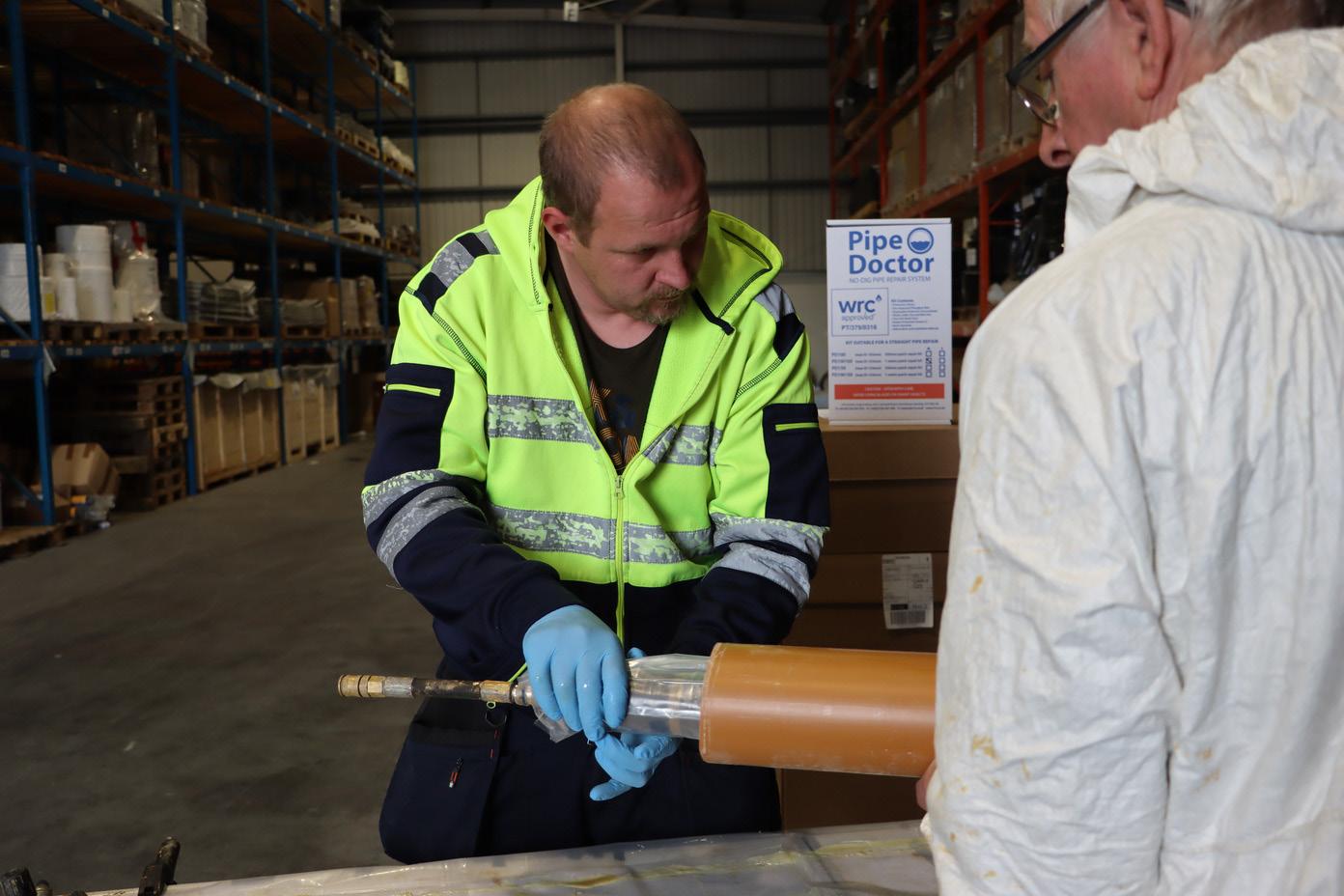
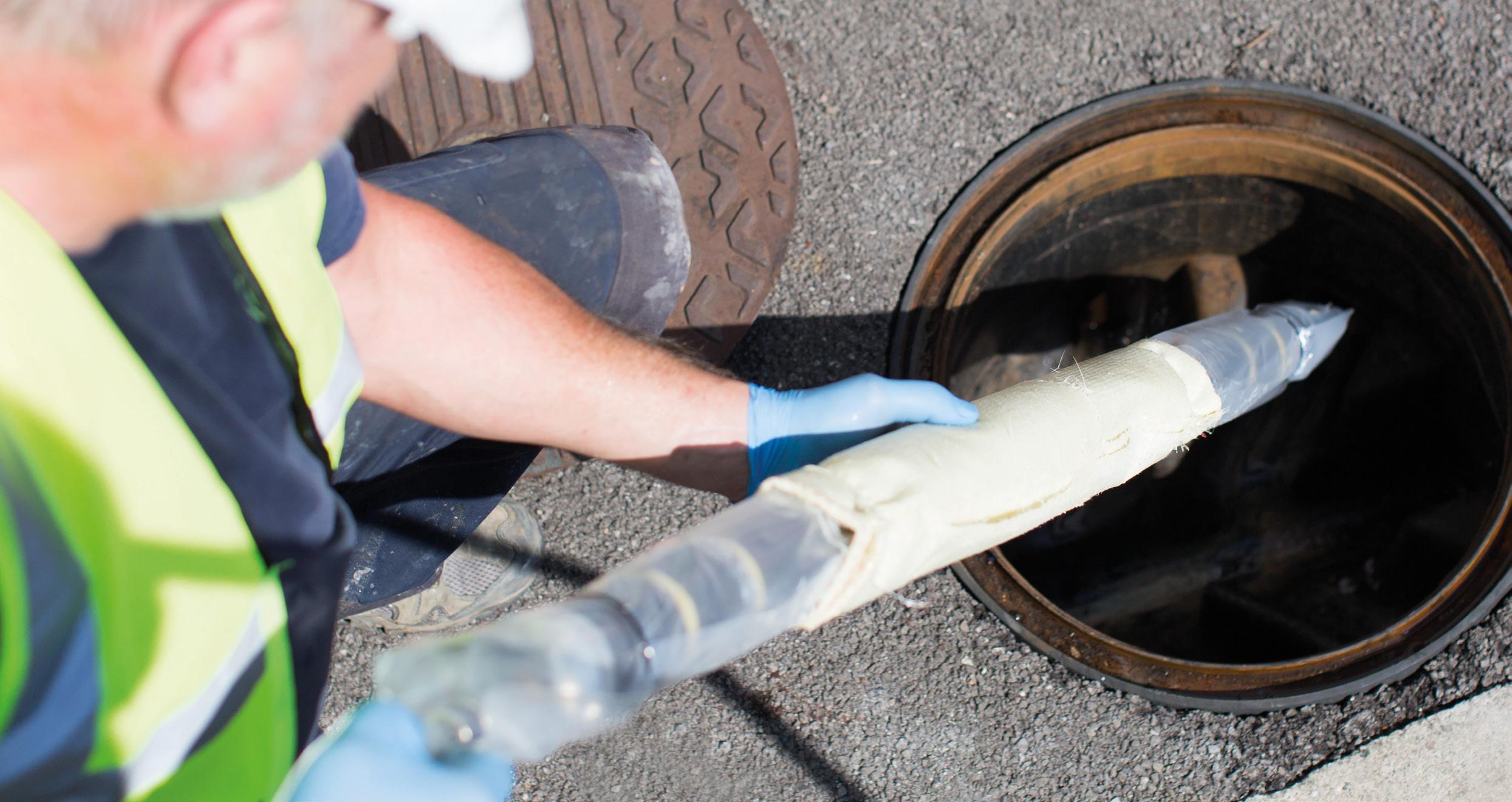
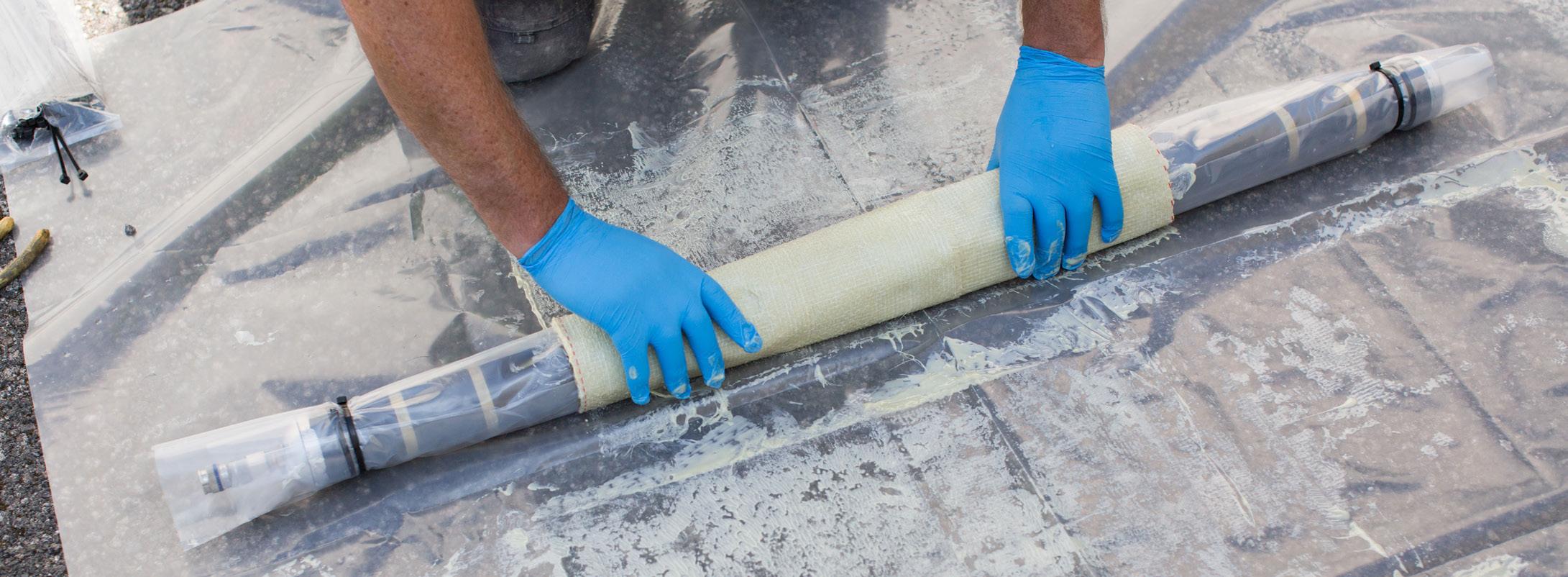
Pipe Aid provides a high-performance solution for localised no dig pipe repair, restoring the structural integrity of damaged pipework without the need for excavation. Once installed, the resinimpregnated fibreglass mat cures in situ, forming a strong, durable internal ‘patch’ that bonds to the host pipe and effectively seals cracks, fractures & joint defects. The result is a fast, costeffective, and long-lasting repair that minimises disruption to the surrounding environment.
Suitable for straight or radial repairs, each kit includes pre-measured resin & fibreglass matting, gloves, cable ties, and accessories for quick and easy installation. Available in 550mm and 1m lengths, the kits suit a wide range of diameters and applications, making them a versatile solution for contractors working in both domestic and commercial environments.
One of the key strengths of the Pipe Aid system lies in its simplicity and reliability on site. Each kit is pre-measured & pre-packaged, meaning contractors benefit from reduced waste and preparation time, helping to improve efficiency on live jobs. Engineered with the installer in mind, Pipe Aid kits enable straightforward application even in challenging conditions, whilst still
delivering a robust structural repair that meets the demands of modern wastewater networks.
A major milestone in the Pipe Aid journey came in 2015 with the achievement of WRc approval. Securing certification in the same year as launch marked a defining moment for the product range, formally recognising that Pipe Aid met the stringent technical and performance standards required within the UK water industry.
WRc approval is widely regarded as a benchmark of trust and technical assurance in the utilities sector. It demonstrates that a product has undergone rigorous independent testing for structural performance,
durability, and suitability for use in public sewerage systems. For contractors and utility providers, this provides complete confidence that the system will perform as intended, even in demanding conditions.
Over the last decade, the Pipe Aid range has continued to evolve in line with changing industry requirements and customer feedback, reinforcing RSM Lining Supplies’ dedication to innovation and quality manufacturing.
As the company celebrates 10 years of Pipe Aid, the system remains a trusted choice for contractors and utility providers seeking a proven, compliant, and efficient solution for localised pipe rehabilitation.
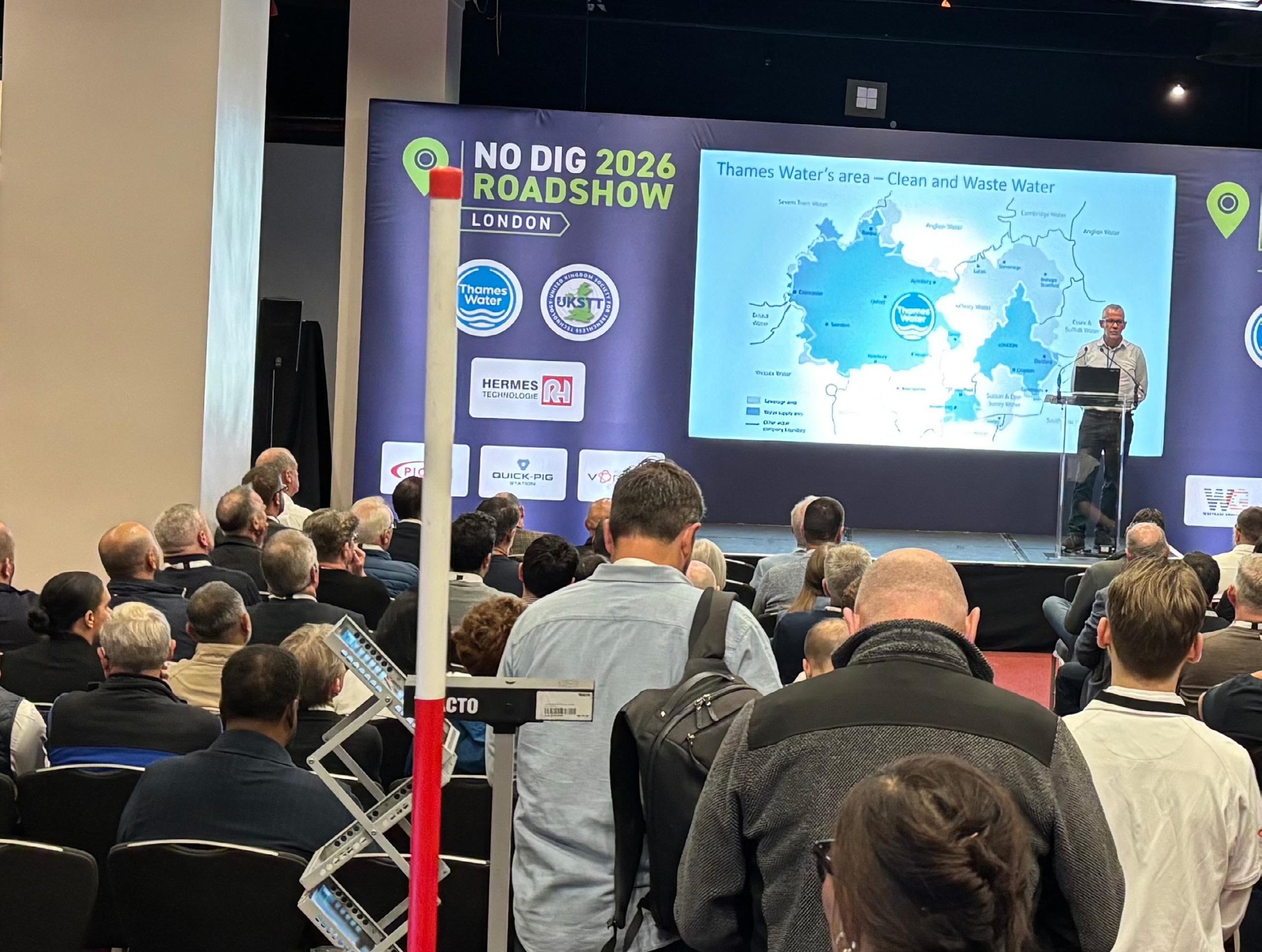
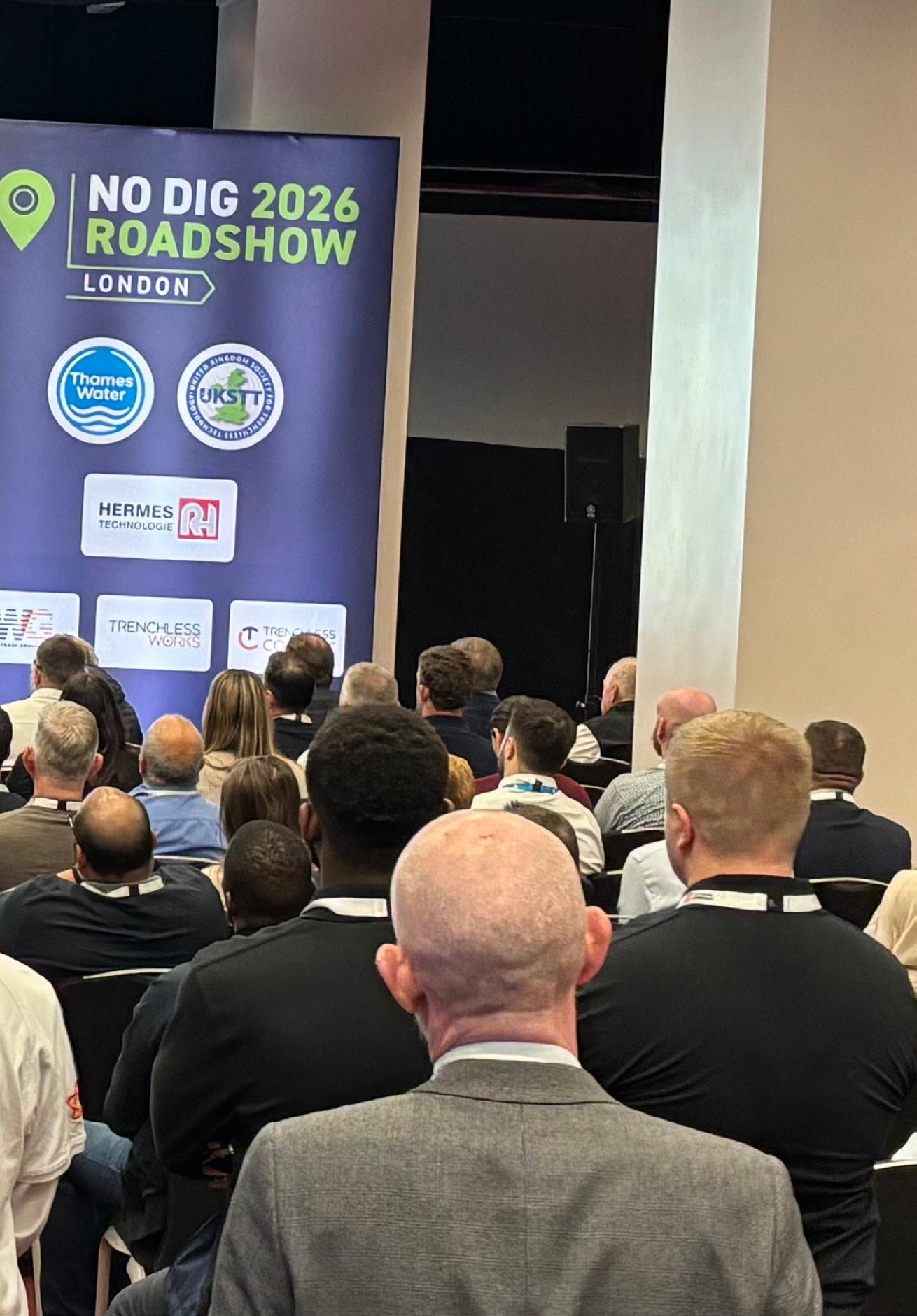
No-Dig Roadshow London highlights trenchless delivery in the capital
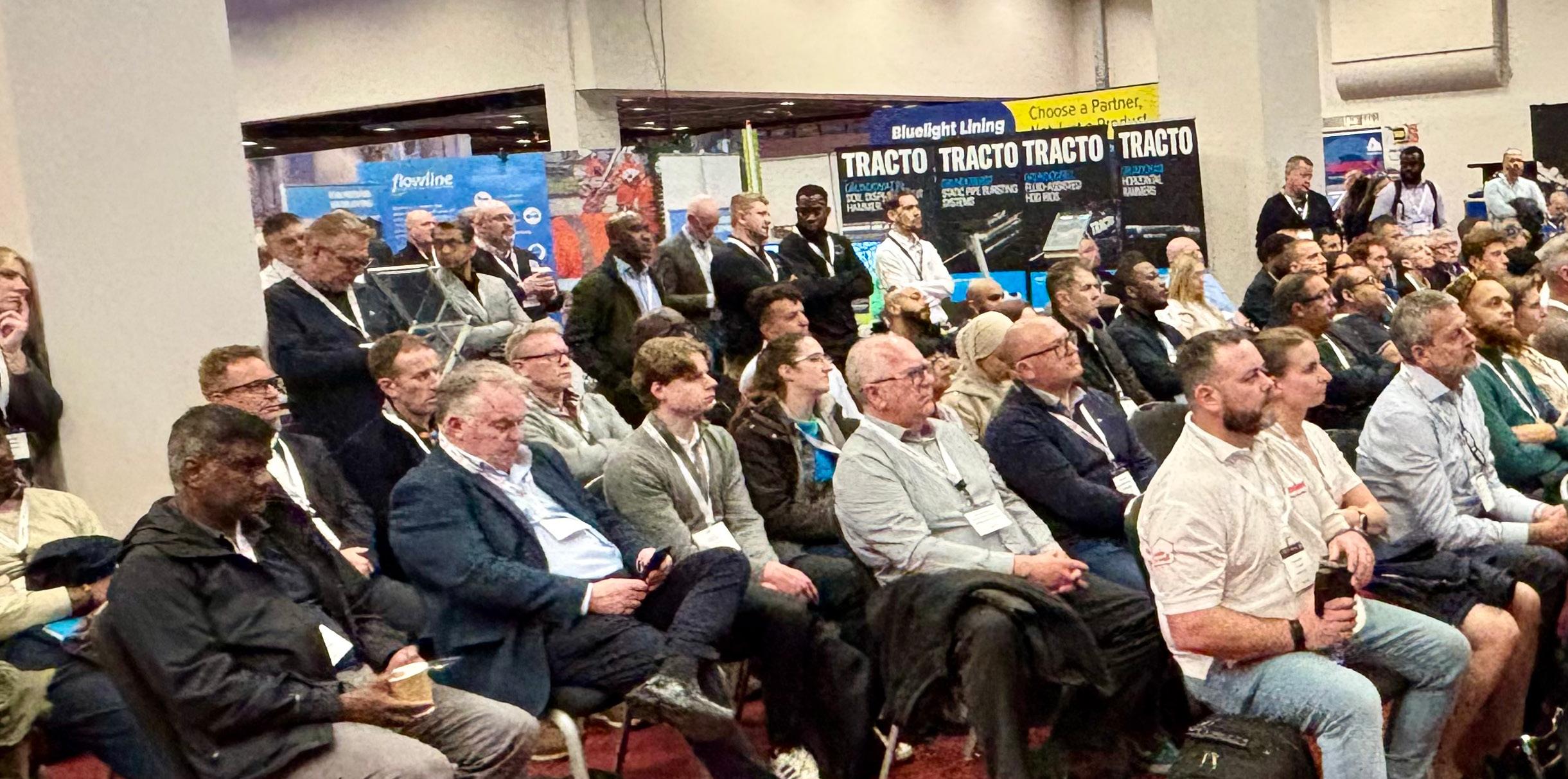
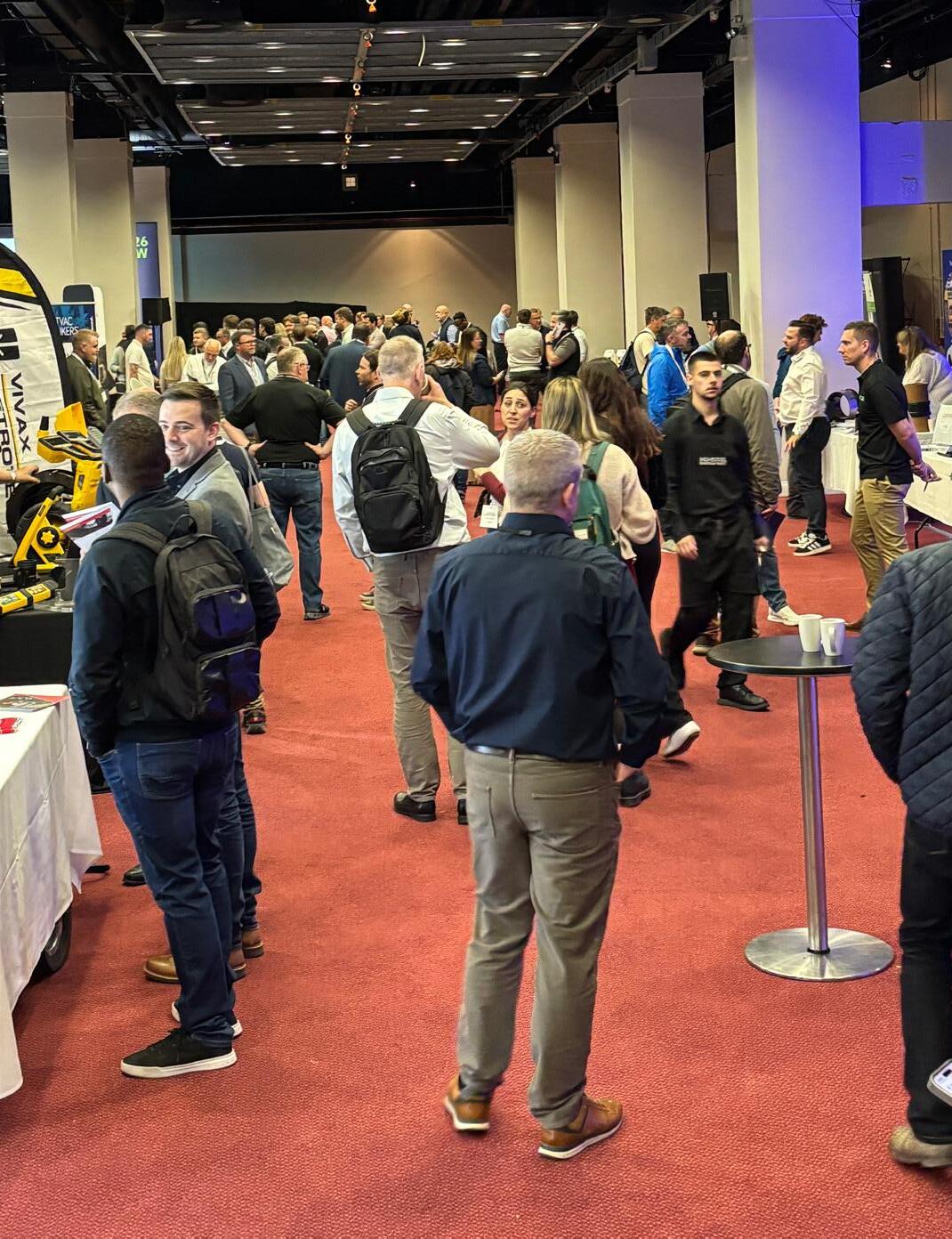
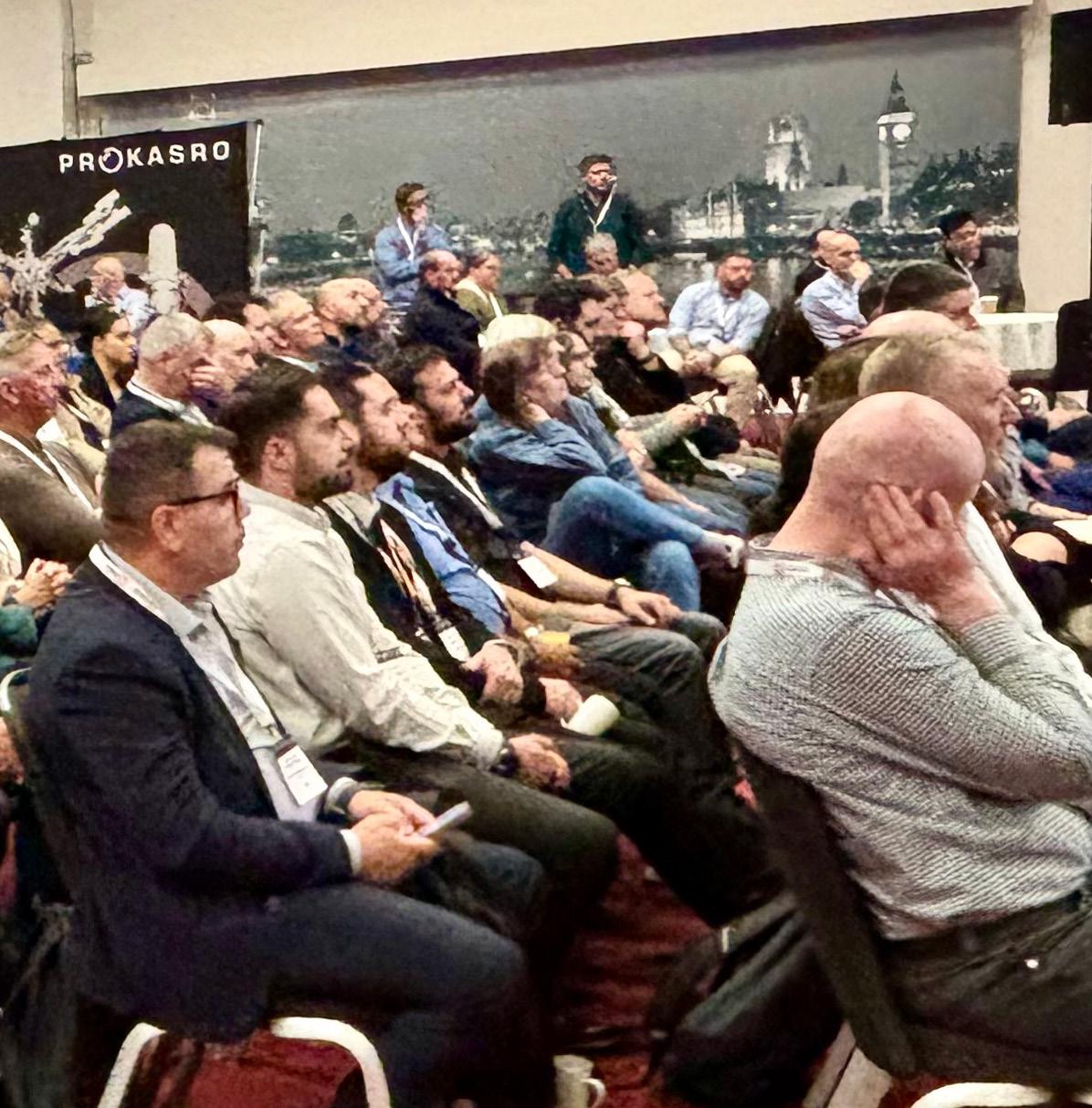
Organised by Westrade in association with UKSTT, and supported by Thames Water, the No-Dig Roadshow London brought together network owners, contractors, technology specialists and industry leaders for a project-led day focused on practical trenchless delivery. With Thames Water and its contractor partners jointly presenting live case studies from across London, the Roadshow offered delegates valuable insight into how trenchless technology is being used to support infrastructure renewal, reduce disruption and shape delivery across one of the world’s most complex urban environments.
What made this year’s London Roadshow particularly notable was the extensive involvement of Thames Water and its contractor partners throughout the programme. The No-Dig Roadshow series has consistently benefited from strong support and engagement from utilities and infrastructure owners across the UK and Ireland, and the London event continued that tradition through a programme centred around a series of live Thames Water projects from across the capital.
Thames Water played a central role in shaping the programme, investing considerable time and expertise both in preparation for the event and throughout the day itself. The result was a series of detailed project-led presentations delivered jointly by Thames Water representatives and their contractor partners, demonstrating how trenchless technology is being deployed across some of the UK’s most complex urban infrastructure schemes to accelerate delivery, reduce disruption and minimise risk.
Opening the Roadshow, UKSTT Chair Graham Howard highlighted the growing importance of trenchless technology as the industry responds to ageing infrastructure networks and increasing environmental expectations. He described trenchless solutions as being “central to that future” and thanked both Thames Water and Transport for London for their support of the event.
That message was reinforced by Mark Taylor, Director of Delivery for London Infrastructure at Thames Water, whose opening presentation set out the scale of the challenge facing the UK’s largest water and wastewater company. Delivering 2.7 billion litres of
drinking water every day and taking away a staggering 4.2 billion litres of wastewater, while managing more than 85,000 miles of pipework, Thames Water is currently undertaking what Taylor described as its largest programme of upgrades in more than 150 years, investing approximately £8 million every day into its infrastructure network.
Taylor emphasised that trenchless technology is no longer viewed as an alternative delivery method, but as an essential component of how Thames Water intends to modernise its network while reducing disruption, improving safety and minimising environmental impact across London and the wider region. Highlighting the scale of the ongoing challenge, he noted that Thames Water is replacing 550km of water mains during the current AMP period, with plans to replace a further 1,000km in the next AMP cycle. He also underlined the unique challenges of working in one of the world’s busiest urban environments, where reducing congestion, protecting stakeholders and minimising disruption are critical considerations on every scheme.
Importantly, the presentation also demonstrated how no-dig methodologies are increasingly being
“With Thames Water and its contractor partners jointly presenting live case studies from across London, the Roadshow offered delegates valuable insight into how trenchless technology is being used to support infrastructure renewal, reduce disruption and shape delivery across one of the world’s most complex urban environments.
Paul Harwood, Managing Director,Westrade Group Ltd Owner and Publisher, Trenchless Works
embedded into Thames Water’s long-term delivery strategy. Taylor pointed to the environmental benefits of trenchless construction, including reductions in carbon emissions, noise and impacts on biodiversity, while also stressing the significant safety advantages associated with reducing excavation in heavily congested urban environments.
One of the standout examples discussed was the recently completed £17m Fortis Green scheme, delivered with Barhale, where trenchless techniques enabled the replacement of 2.5km of 24-inch steel trunk main along the North Circular while avoiding major disruption to one of London’s busiest transport corridors, which carries around 60 million vehicle movements annually.
The Roadshow programme then built on these themes through a succession of project case studies jointly presented by Thames Water and its contractor partners. The presentations provided delegates with direct insight into the practical application of trenchless solutions across a wide variety of challenging schemes and highlighted the increasingly collaborative approach being adopted across the sector.
“The industry mindset is increasingly becoming, concentrate on No-Dig first and if you can’t do it then consider digging.
Mark Lusher, Director of Delivery for London Infrastructure at Thames Water
Projects featured throughout the day included the Rye Meads Sewer Collapse Project with Barhale, large-diameter HDD installations at Hitches Lane with Browne Group, urban directional drilling projects across London, rehabilitation works on the historic Northern Outfall Sewer, complex UV lining schemes, and the rehabilitation of the Millennium Main between Nunhead Reservoir and Greenwich Park.
A particularly valuable aspect of the event was the way in which the presentations moved beyond technical theory to focus on real-world delivery experience. Delegates were able to see how trenchless techniques are being used to reduce programme durations, minimise environmental impacts, improve safety and maintain critical services in some of the most constrained working environments in the UK.
The involvement of Transport for London added another important dimension to the discussion. Its presentation explored the growing importance of trenchless construction in reducing congestion and supporting decarbonisation across London’s transport network, where more than 400,000 roadworks take place annually and the cost of congestion is estimated to be in the region of £3.9bn each year.
The event concluded with updates from Thames Water’s Mark Lusher and Richard Smith on the major Northern Outfall Sewer Bridges 7 and 8 replacement project, a hugely complex scheme involving the replacement of critical Victorian sewer infrastructure while maintaining continuous operation above major
transport links including the Jubilee Line, Docklands Light Railway and the A1011 Manor Road. Delegates heard how the existing sewer barrels were cut into sections and lifted away before being replaced with new stainless steel pipes weighing 23 tonnes each, underlining both the scale and engineering complexity of the works.
In closing, one of the clearest messages to emerge from the London No- Dig Roadshow was the extent to which trenchless thinking is now influencing infrastructure delivery at every stage of project planning and execution. As Mark Lusher observed during the final session, the industry mindset is increasingly becoming: “concentrate on no-dig first and if you can’t do it then consider digging.”
The success of the event was made possible through the strong support and commitment shown by Thames Water and its contractor partners, who invested significant time and effort into creating a programme that delivered genuine value to delegates and the wider sector alike. Their willingness to openly share project experience, lessons learned and delivery innovation once again demonstrated the collaborative approach that has become a hallmark of the No-Dig Roadshow series.
Thanks are also extended to the Roadshow sponsors Picote, Quick-Pig, Vortex and Hermes, along with the Roadshow Series Platinum Partners, whose continued support helps make these important industry events possible.
The second visit nobody budgets for
Thomas Baxter, Managing Director of Rausch UK, considers why better inspection, better-equipped crews and more reliable site information can help contractors avoid costly return visits
Walk the floor at any No-Dig event and the conversations are remarkably consistent year on year. The technology evolves, the project pressures shift, and new products come through, but the frustrations on site barely move. Kit that lets people down, surveys that did not get it right first time, jobs that must be revisited, and costs quietly absorbed that were never in the original budget. Someone always pays for the second visit. It is just rarely visible in the price of the first one.
That was one of the strongest themes from the No-Dig Roadshow London this year. The wider industry conversation was about ageing infrastructure, rehabilitation over replacement, and how to keep essential networks moving with less disruption. Those themes matter. But underneath the talk about innovation and major projects, the quieter and more valuable conversation was the same one it always is: how do you actually know what is going on underground before the expensive work starts? That question is not answered by ambition or capital budgets. It is answered by the quality of the inspection that happens first.
On paper, buying cheaper inspection equipment can look like a sensible decision; lower upfront cost, same job done, money saved. In practice, that maths changes quickly when that equipment underperforms in the field. A blockage is cleared, flow is restored, the crew moves on, and then six weeks later the same address is back on the job sheet. The blockage was cleared, but the cause was never properly identified. If the image is poor, the connection unreliable, or the system struggles in real site conditions, the risk of misdiagnosis goes up.
The costs of those second and third visits almost never appear in the original equipment comparison, but they sit inside the business all the same. Fuel, labour, van time, lost capacity, delayed jobs, and a harder conversation with the customer.
“ The wider industry conversation was about ageing infrastructure, rehabilitation over replacement, and how to keep essential networks moving with less disruption. Those themes matter.
“Every
decision that follows a survey; a repair, a lining call, a reinstatement plan, is only as good as the information it is based on.
For smaller contractors, one unnecessary return visit can wipe out the margin from the first job entirely. The principle is familiar in plenty of other areas: early, reliable diagnosis protects everyone further down the line. Drainage deserves the same logic, and the same respect.
In drainage and inspection, the pressure to decide quickly and on price is understandable. Margins are tight, lead times still feel longer than anyone would like, and recruitment is tough. But if the broad theme coming out of London this year was fewer surprises, fewer closures and less disruption, you do not get there by cutting corners on the first inspection. Every decision that follows a survey; a repair, a lining call, a reinstatement plan, is only as good as the information it is based on.
One thing that stood out from conversations at the show was the value of arriving properly equipped. A well-built inspection vehicle is not just a place to store kit; it is a working platform that helps crews operate efficiently, manage the survey properly, and leave site with usable information rather than just footage. Losing time changing the setup because the right attachment was not on the van costs more than most equipment comparisons ever account for.
The industry already knows all of this. Contractors, utilities and manufacturers have been having the same conversation in show halls and site cabins for years. The question is whether buying decisions are catching up. Because the second visit will always be the one nobody budgets for. The good news is that many of them can be avoided.
Rausch UK attended the No-Dig Roadshow London on 12 May and will be exhibiting at No-Dig Live 2026, continuing the conversation around better inspection, better-equipped crews, and fewer avoidable return visits.
Senior public-sector participation strengthens Trenchless Asia 2026
Senior representatives from Thailand’s leading utility, transport and infrastructure organisations have been confirmed to attend Trenchless Asia 2026 this June, reinforcing the event’s growing strategic importance across the region’s underground infrastructure sector
Trenchless Asia 2026 will welcome a significant level of senior public-sector and utility participation when the event opens in Bangkok this June, led by the Metropolitan Waterworks Authority (MWA), which joins this year’s edition as Official Host Authority.
MWA will be represented during the Opening Ceremony by Mr. Supichete Tavorntaveevong, Deputy Governor (Eastern Services), who will deliver the Official Host Authority Welcome Address. The authority will also play a central role in the conference programme, with Mr. Krit Laohapiboolrattana presenting a keynote session on MWA’s experience and strategic vision for trenchless technology across its water infrastructure operations and future planning.
Senior participation is also expected from across Thailand’s wider infrastructure community, including the Mass Rapid Transport Authority (MRTA), represented by Mr. Kitti Akewanlop, Assistant Governor / Acting Deputy Governor, Finance, and Mr. Saravut Eksuwan, Director of the Engineering and Architectural Department; the Provincial Electricity Authority (PEA), represented by Mr. Tana Chokprasombat, Deputy Governor (Grid Operation), alongside assistant governors Mr. Kriengsak Kuresri, Mr. Itthiroj Sangaroon
and Mr. Prasong Deelee; and the Provincial Waterworks Authority (PWA), represented by Mr. Prateep Kusolwattana, Deputy Governor, and Mr. Thanakorn Silparaya, Advisor. Senior representation from the Ministry of Transport and the Council of Engineers Thailand (COET) is also expected to be in attendance.
This breadth of institutional engagement reflects the growing importance of trenchless technology within Thailand’s wider agenda for utility resilience, underground coordination, transport infrastructure delivery and sustainable urban development. It also reinforces Trenchless Asia’s position as one of the region’s leading platforms for underground infrastructure, utility engineering and low-disruption construction technology.
The event will also welcome support and participation from the Council of Engineers Thailand (COET), alongside continued international and regional support from the International Society for Trenchless Technology (ISTT), the Thailand Underground and Tunnelling Group (TUTG) and the Thailand Convention and Exhibition Bureau (TCEB). Together, this level of public-sector, engineering and institutional engagement reflects the growing importance of trenchless technology within Thailand’s wider agenda for utility resilience, underground coordination, transport infrastructure delivery and sustainable urban development.
Organised by Westrade Group, Trenchless Asia 2026 is expected to attract more than 2,500 attendees from over 40 countries and will feature more than 150 exhibiting companies across 2,245 sqm of exhibition space.
The exhibition will showcase the latest trenchless technologies, equipment and underground infrastructure solutions from leading international manufacturers, contractors, engineering specialists and technology providers, alongside a conference programme bringing together utilities, government authorities, consultants and infrastructure owners from across the region.
Paul Harwood, Managing Director of Westrade Group, said:
“Trenchless Asia continues to grow as an important meeting point for the underground infrastructure sector across Asia. The level of participation
“We are delighted to welcome senior participation from across Thailand’s infrastructure, utility and engineering community to Trenchless Asia 2026 as Bangkok hosts the region’s leading event for trenchless technology and underground infrastructure.
Paul Harwood, Managing Director,Westrade Group Ltd Owner and Publisher, Trenchless Works
from utilities, government authorities, engineers and international industry leaders demonstrates the increasing strategic importance of trenchless technology within future infrastructure planning and delivery.
We are delighted to welcome senior leadership from MWA, PEA, MRTA, PWA and the Ministry of Transport to this year’s event and look forward to bringing the industry together in Bangkok for two days of technical exchange, business development and industry collaboration.”
Taking place on 10–11 June 2026 at the Queen Sirikit National Convention Centre, Bangkok, Trenchless Asia continues to strengthen its position as one of the region’s leading exhibitions and conferences for trenchless technology and underground infrastructure.
Training Focus in Emerging Markets
Frank Reilly Director JBP’s Trenchless, Training Programme
Across the ASEAN region, trenchless technologies are gaining ground. In markets such as Thailand, the Philippines, Malaysia, Indonesia and Cambodia, the conversation is shifting — from whether trenchless methods have a role, to how they can be adopted more effectively and at greater scale. That shift creates both opportunity and responsibility. At the centre of it sits training.
For trenchless technologies to move from emerging to established, the technical capacity to deploy, manage and specify them must be built systematically. Equipment can be imported and materials sourced, but the knowledge required to apply them safely, correctly and in line with recognised standards must be developed from within. In these markets, that development is still in its early stages — and the gap between technology availability and operational confidence remains significant.
Training at every level
Effective capability building in emerging markets requires a structured approach that reflects the different roles and responsibilities within the water and wastewater sector. At an operational level, product and technology training equips contractors and site teams with the hands-on knowledge needed to work
with specific rehabilitation systems — understanding equipment, materials, installation processes and quality control. At a supervisory and project management level, technical training addresses specification reporting, method selection, risk assessment and quality assurance, supporting those responsible for overseeing trenchless programmes on behalf of utilities and clients. At a strategic level, courses for asset managers and senior planners in water utilities focus on rehabilitation planning, procurement, long-term asset management and return on investment — supporting better decision-making across entire networks rather than individual projects.
This tiered approach ensures that training investment is targeted and that capability is built where it matters most.
The link between training and standards
In markets where trenchless adoption is still emerging, standards play a critical role in establishing confidence. For utilities, standards provide a framework for specification and procurement. For contractors, they define minimum requirements for competence and workmanship. For regulators and asset owners, they provide a basis for accountability. Training is the mechanism that connects standards to practice — ensuring that technical requirements are not simply referenced on paper, but understood and applied in the field. Without structured training, standards risk remaining aspirational rather than operational.
Applied Trenchless Training Workshops – Thailand
In June, JBP will be in Bangkok as Training Partner of Trenchless Asia 2026 — www.trenchlessasia.com —
delivering a two-day programme of Applied Trenchless Training Workshops. Designed specifically for professionals working in and around the water and wastewater sector across the region, the programme will address both technical fundamentals and applied practice, with a focus on rehabilitation technologies, condition assessment and strategic asset management, with sessions delivered by experts drawn from across the sector.
For a market such as Thailand, and more widely across the region, where infrastructure needs are growing and the appetite for modern rehabilitation methods is increasing, this kind of structured, in-country training represents an important step. Building local capability is not a one-off exercise — it is a long-term commitment. But every programme delivered, every engineer trained and every contractor equipped with practical knowledge brings the region closer to sustainable, standards-aligned adoption of trenchless methods. This is where the real opportunity lies.
Next issue: Training - at what cost?
UKSTT Annual Awards Masquerade Dinner 2026
Join us for the UKSTT Annual Awards Dinner at No-Dig Live on the evening of Wednesday 30 September in partnership with Westrade Group Ltd.
Venue: NAEC Stoneleigh Park, Kenilworth, Warwickshire, CV8 2LZ
Dress Code: Black Tie & Masquerade mask
Date: Wednesday 30 September 2026
Time: 7.00pm till late with after dinner DJ
Carriages: by 2.00am
Tickets:
Tables will seat 10 guests
CLICK TO BOOK TICKETS NOW
Member Early Bird Rate £220 + VAT
Non-Member Early Bird Rate £240 + VAT
Early bird tickets must be booked and paid for by 31 June 2026
Member Standard Rate £250 + VAT
Non-Member Standard Rate £260 + VAT
On arrival, guests will enjoy a champagne reception before sitting down to enjoy a delicious 3 course meal. The dinner is attended by over 400 people and will showcase and recognise this year’s best performing and most innovative trenchless technologies from across the world.
For further details about our Awards Sponsorship opportunities, please contact Trevor Dorrell at tdorrell@westrade.co.uk or +44(0)1923 723 990
NO-DIG EVENTS
International No-Dig events brought to you by the industry’s world experts
TRENCHLESS ASIA 2027
TRENCHLESS MIDDLE EAST 2027
TRENCHLESS ASIA 2026
10 -11 June 2026
Queen Sirikit National Convention Centre Bangkok, Thailand www.trenchlessasia.com
NO-DIG LIVE 2026
29 September – 1 October 2026
NAEC Stoneleigh Park, Warwickshire www.nodiglive.co.uk
TRENCHLESS MIDDLE EAST 2026
2 - 3 December 2026
Riyadh Marriott Hotel, Riyadh Kingdom of Saudi Arabia www.trenchlessmiddleeast.com
TRENCHLESS MOROCCO
February 2027
Casablanca
NO-DIG ROADSHOW 2027
March 2027
Glasgow
TRENCHLESS ASIA 2027
TBC 2027
NO-DIG ROADSHOW 2027
Autumn 2027
Bristol
ISTT INTERNATIONAL NO-DIG BOLOGNA
11 - 13 October 2027
Italy
TRENCHLESS MIDDLE EAST 2027
TBC 2027
SOUTH AFRICA | VIETNAM | INDIA
International No-Dig 2027 to take place in Bologna
The International Society for Trenchless Technology (ISTT) has confirmed that the 2027 International No-Dig Conference and Exhibition will take place in Bologna, Italy, from 11–13 October 2027.
The event will be hosted at BolognaFiere in partnership with the Italian Society for Trenchless Technology (IATT).
The agreement has now been officially signed following a site visit by ISTT representatives, during which the venue facilities and local organising team were reviewed.
Paolo Trombetti, President of IATT, said: “We are delighted by the impressive facilities and the dedicated team in Bologna. With the agreement now signed, we have the time and the resources to ensure International No-Dig 2027 is a landmark event for our industry.”
International No-Dig is one of the leading global events for the trenchless technology sector, bringing together contractors, utilities, engineers, manufacturers, consultants and industry bodies from across the world.
The event features a technical conference, peer-reviewed papers, exhibition and networking programme, providing a platform for knowledge exchange and the latest developments in trenchless machinery, services and project delivery.
ISTT and IATT said they look forward to welcoming the international trenchless community to Bologna in 2027.
Strengthening ISTT’s position as a global trenchless authority
An interview with Carlos Andrés Munera, Vice-Chair of the International Society for Trenchless Technology (ISTT) and Chair of the Outreach and Marketing Committee.
Can you start by introducing yourself and your background in the trenchless industry?
My introduction to trenchless technology came through the family business, Pacific Group, which I have been involved with since childhood. The company is still led by my father, Jose, who introduced one of the first crawler systems for sewer inspection into our region in the early 1990s. What began as pipe inspection work quickly evolved into rehabilitation, specialised engineering and trenchless consultancy projects.
While in the university, I started attending international trenchless exhibitions and conferences including WETT (former pumper show), UCT, WEFTEC and No-Dig events. Those experiences gave me a global perspective on the industry and reinforced the enormous potential trenchless technologies have in supporting the future planning and development of cities and municipalities.
Today, alongside my role as ISTT Vice-Chair, I am President of the Latin American Society for Trenchless Technology and currently co-chair NASSCO’s International Business Committee. After more than two decades in the industry, I still feel passionate about the work we do and the impact trenchless technologies can have worldwide.
Can you tell us about your role within ISTT and the scope of your committee?
I currently serve as one of the Vice-Chairs of ISTT and Chair of the Outreach and Marketing Committee, a role I have held since 2025.
The committee promotes both ISTT and the trenchless industry globally through communications, marketing initiatives, partnerships and strategic outreach activities. A major focus is strengthening awareness of trenchless technologies among governments, utilities, consultants, contractors and infrastructure decision-makers, while also increasing engagement with ISTT’s affiliated societies and members worldwide.
What are the current priorities and key projects your committee is focusing on?
One of the committee’s main priorities is repositioning ISTT as a recognised global authority in the engineering industry and of course focused on trenchless technologies constructive methods. This includes expanding education initiatives, promoting industry standards and strengthening communication with governments, regulators and infrastructure agencies around the world.
We are also focused on increasing engagement and value perception for affiliated societies and members. ISTT currently has 27 affiliated societies and aims to reach 40 by 2030, so supporting membership growth and stronger collaboration across the organisation is an important objective.
Advocating for trenchless technologies globally is another key priority. In many countries, open-cut installation methods still dominate project specifications and procurement processes. Our role is to help utilities, governments and infrastructure stakeholders better understand the environmental, social and economic benefits trenchless technologies can deliver.
Strategic alliances are also fundamental to the committee’s work. Two particularly important partnerships are with NASSCO and the International Water Association (IWA). ISTT is also looking to strengthen relationships with international financing institutions and development agencies such as the World Bank and the Inter-American Development Bank to ensure trenchless technologies are represented within global infrastructure investment discussions.
Another major initiative is the creation of a quarterly ISTT digital magazine, planned for launch in late 2026 alongside ISTT’s 40th anniversary. The aim is to create a dedicated global communication platform where affiliated societies can share technical articles, project case studies and regional developments while strengthening collaboration across the organisation.
Alongside this, the committee is continuing to develop ISTT’s website into a stronger membership and communications hub, while also expanding social media and digital communication strategies to increase awareness and engagement globally.
What outcomes are you aiming to achieve, particularly in terms of supporting wider adoption of trenchless technologies?
One of the ongoing challenges around the world is the competition between open-cut construction and trenchless solutions during project design and specification stages. In many cases, trenchless technologies are still not considered early enough in the planning process despite their proven advantages.
Carlos Andrés Munera Vice-Chair of the International Society for Trenchless Technology (ISTT) and Chair of the Outreach and Marketing Committee
To continue changing that, we see three main priorities.
The first is communication and advocacy. ISTT must continue delivering a strong and consistent message to governments, utilities, consultants, infrastructure owners and financing institutions regarding the value trenchless technologies provide.
The second is education and professional certification. ISTT is working to strengthen training initiatives and programmes that reinforce quality procedures, technical standards and project controls across trenchless delivery.
The third is showcasing successful projects and proven solutions. Real-world examples remain the strongest demonstration of what trenchless technologies can achieve. Around the world, trenchless methods are solving highly complex infrastructure challenges while reducing disruption, improving safety, shortening construction schedules and delivering more sustainable outcomes.
Another major objective is strengthening collaboration between ISTT’s affiliated societies. Some regions already have mature trenchless markets, while others are still developing awareness and technical expertise. By bringing societies closer together and improving communication across regions, ISTT can help accelerate adoption globally and support markets that need stronger advocacy and technical guidance.
Looking ahead, how do you see the work of your committee evolving?
The Outreach and Marketing Committee is closely connected with several other ISTT committees, and I expect that collaboration to continue growing.
For example, we work closely with the Affiliated Societies Committee in relation to increasing value for existing societies and supporting the creation of new affiliated societies worldwide. We also support the International No-Dig Committee through promotion and communication around major events and industry initiatives.
The committee also plays an important role in helping identify new partnership opportunities, sponsorship models and revenue-generating activities that can strengthen ISTT in the long term.
We also play an important role within the finance committee in helping identify new partnership opportunities, sponsorship models and revenuegenerating activities that can strengthen ISTT in the long term.
I would also like to recognise the members of the Outreach and Marketing Committee for their commitment and effort, which is essential in helping the committee continue to evolve.
How does this tie in with developments in your region?
Across Latin America, the trenchless industry continues to grow alongside increasing infrastructure investment and urban development. As projects expand, the sector also creates opportunities for new companies, skilled professionals, training and employment.
At the same time, many countries across Central America, the Caribbean and South America are dealing with ageing underground infrastructure networks. Addressing those challenges will require stronger asset management programmes and much greater use of trenchless technologies.
The densification of major cities also leaves far less room for disruptive open-cut interventions. Because of this, stronger advocacy, education and public policy support are essential to ensure trenchless technologies are considered as a first-choice solution for infrastructure renewal and development.
I would also like to thank LAMMST, our Board and my friend and Executive Director, engineer Arlex Toro, for his commitment and hard work over the past 14 years, which has helped generate significant progress for the trenchless industry across our region.
Finally, what key message would you like readers to take away about ISTT’s work?
Trenchless technologies deliver major benefits to cities, utilities and communities. They reduce disruption, improve safety, minimise environmental impact and support more efficient infrastructure management and project delivery.
ISTT, its Board of Directors and its committees are working to strengthen the organisation’s role as a global trenchless authority while supporting affiliated societies and promoting wider adoption of trenchless technologies around the world.
With growing urbanisation and ageing infrastructure networks worldwide, the need for sustainable and less disruptive construction methods will only continue to increase.
ABRATT to host São Paulo No-Dig 2026 alongside FENASAN
The Brazilian Society for Trenchless Technology (ABRATT) has announced that São Paulo No-Dig 2026 will take place from 20–22 October 2026 at Expo Center Norte, São Paulo, Brazil.
The event will be held in strategic partnership with FENASAN, Latin America’s largest sanitation and environmental engineering trade fair.
By working with AESabesp and FENASAN, which attracts more than 38,000 visitors and 400 exhibiting companies, ABRATT aims to place trenchless technology at the centre of Brazil’s growing water and sanitation infrastructure market.
São Paulo No-Dig 2026 will include a dedicated ABRATT member area within the FENASAN exhibition floor, providing visibility among key decision-makers from the sanitation, utilities and environmental engineering sectors.
The event will showcase trenchless technologies designed to reduce environmental impact, minimise social disruption and support infrastructure delivery in dense urban environments.
It will also provide an international platform for technology providers, contractors, utilities and public-sector stakeholders as Brazil’s sanitation market continues to expand.
For more information, visit: https://www.abratt.org.br/no-dig-show-2026/
FSTT announces 2026 trenchless event programme
The French Society for Trenchless Technology (FSTT), an affiliated society of the ISTT, has announced its 2026 event programme, with two Journées sans tranchée events planned in France and Belgium.
The programme will focus on trenchless innovation, low-carbon infrastructure delivery and knowledge sharing across the European trenchless sector. The 30th Journée sans tranchée will take place on 11 June 2026 at Espace Pierre Bachelet, Dammarie-lès-Lys, south of Paris.
The event will highlight French expertise in sustainable trenchless technology, with technical sessions including a presentation from Eiffage GC Réseaux on a 100% electric lining unit, covering both the vehicle and curing process.
Other sessions will include HDI’s Dordogne River HDD crossing project, demonstrating how horizontal directional drilling can help reduce environmental
impact, and a presentation from CSTB on new sizing recommendations for pressure pipe rehabilitation.
FSTT’s 31st Journée sans tranchée will take place on 5 November 2026 at Maison de la Poste, Tour & Taxis, Brussels.
Organised in partnership with Belgian water utility Vivaqua, the Brussels event will focus on cross-border knowledge exchange and the application of trenchless methods in European urban environments.
FSTT is currently inviting submissions for its call for papers, seeking case studies, technical developments and project examples that demonstrate innovation in trenchless construction and rehabilitation. A key theme across the 2026 programme will be the environmental impact of trenchless works. The CMOST, the French collective of trenchless asset owners, will host sessions on carbon reporting and lifecycle analysis.
For registration and further information, visit: www.fstt.org.
ISTT Technology and Education Committee continues to expand global trenchless initiatives
John Matthews
Director of the Trenchless Technology Center (TTC) and Professor of Civil Engineering and Construction Engineering Technology at Louisiana Tech University
The International Society for Trenchless Technology (ISTT) continues to strengthen its global technical and educational activities through the work of its Technology and Education Committee (TEC). The committee brings together trenchless technology specialists and representatives from ISTT affiliate societies worldwide, supporting technical development, industry education and professional recognition across the sector.
The TEC’s role includes overseeing strategic technology initiatives, supporting educational programmes and webinars, administering the ISTT Fellows programme and adjudicating the annual ISTT No-Dig Awards.
The committee is chaired by John Matthews, Director of the Trenchless Technology Center (TTC) and Professor of Civil Engineering and Construction Engineering Technology at Louisiana Tech University. The TEC currently includes representatives from North America, Europe, Asia, Latin America, Australasia and Southern Africa, reflecting the international scope of ISTT’s technical activities.
Among the committee’s ongoing initiatives is the continued development of the ISTT Trenchless Chart,
which provides an overview of trenchless methods and applications for industry professionals. Recent updates have included areas such as manhole rehabilitation, auger boring and mini/micro trenching.
The committee also coordinates a programme of international technical webinars, typically delivering five to six sessions annually. These webinars are free to attend live and cover a range of trenchless technologies, research developments and project case studies.
Past webinar recordings are also available through the ISTT webinar archive.
In addition, the TEC is developing a global standards mapping resource intended to provide access to relevant international standards, including ISO and EN references, helping position ISTT as a central technical reference point for the trenchless sector.
The committee meets monthly to discuss technical activities, educational content and future industry initiatives.
More information on ISTT webinars can be found at: https://istt.com/webinars/
TEC Committee
Innovation and Global Collaboration Drive
Success at ITTC 2026
The 29th International Trenchless Technology Conference and Exhibition (ITTC 2026) concluded successfully on April 24 at the Tianjin National Convention and Exhibition Center, reinforcing China’s growing influence within the global trenchless technology sector and highlighting the continued international expansion of the event.
Held from April 22–24, ITTC 2026 attracted 4,235 registered professional visitors from 21 countries and regions across six continents, alongside attendees representing all 34 provincial-level regions of China. Total attendance across the three-day event reached 8,813 visits, with 161 delegates participating in the technical conference programme.
Spanning more than 20,000 square metres, the exhibition featured 121 exhibitors covering the full spectrum of trenchless technologies, equipment, materials and engineering services. Twenty-one companies participated for the first time, reflecting continued growth and strong confidence across the sector.
Maintaining its reputation as a highly equipmentfocused exhibition, more than 80 percent of exhibitors brought physical machinery and full-scale products to the show floor. Displays included horizontal directional drilling rigs, pipe jacking systems, pipeline
rehabilitation technologies, intelligent surveying equipment and trenchless support systems.
Exhibitors also reported strong commercial activity throughout the event, with a number of products sold directly during the exhibition period.
Visitors highlighted significant advances in equipment electrification, automation, digital control systems, energy efficiency and environmentally sustainable construction technologies. The exhibition showcased the latest trenchless applications across municipal infrastructure, oil and gas pipelines, power utilities, telecommunications and urban underground renewal projects.
The opening ceremony brought together senior representatives from international trenchless organisations, universities, municipal associations and leading enterprises. Among the distinguished guests were Professor Yan Chunwen, Vice Chairman of the China Society of Geology – Trenchless Technology Committee (CSTT); Professor Hu Yuanbiao, Secretary-General of CSTT; Mr. Trevor Gosatti, Executive Director of the International Society for Trenchless Technology (ISTT); Professor Samuel Ariaratnam, former ISTT Chairman and Professor at Arizona State University; and Professor Keh-Jian Shou, former ISTT Chairman and Professor at Tongji University.
The technical conference featured eight keynote presentations addressing some of the industry’s most important themes, including sustainable infrastructure development, resilient underground utility systems, trenchless innovation and the future evolution of horizontal directional drilling technologies.
One of the most anticipated presentations came from Trevor Gosatti, who introduced the ISTT Strategic Plan 2026–2030, outlining future priorities for the international trenchless industry, including sustainability, digital transformation, workforce development and international collaboration.
Additional keynote sessions explored topics including tunnel lining structural testing platforms, advanced trenchless pipeline technologies, CIPP rehabilitation applications in Moscow apartment complexes and sewer rehabilitation case studies from Singapore.
The conference also hosted specialist technical forums dedicated to Pipe Jacking and Tunnelling, Pipeline Rehabilitation and Horizontal Directional Drilling, featuring 17 technical papers and case studies presented
by universities, research institutes and leading industry companies.
Participating organisations included China University of Geosciences (Beijing and Wuhan), Chengdu University of Technology, Central South University, China Railway Construction Heavy Industry Group, National Pipeline Network Group Engineering Technology Innovation Co., Ltd., Jiangsu Goodeng Heavy Machinery Technology Co., Ltd., XCMG Foundation Construction Machinery Co., Ltd., and several specialist trenchless engineering and rehabilitation companies from across China.
Topics covered included advanced HDD construction techniques, intelligent underground inspection systems, large-diameter pipe jacking applications, rehabilitation materials and trenchless construction management practices. The strong academic presence demonstrated the increasing integration between research and practical application within China’s trenchless sector.
Networking and business collaboration remained a central focus throughout the event. The “Kensor Night” Reception Gala Dinner and Annual Awards Ceremony
once again proved to be one of the exhibition’s key highlights. During the ceremony, Mr. Wang Lichang received the “China Trenchless Person of the Year 2025” award in recognition of his contribution to the industry.
In total, 18 “China Trenchless Outstanding Technology, Product and Engineering Awards 2025” were presented to 16 organisations for achievements in innovation, engineering excellence and product development.
The event also featured a dedicated New Product Launch Conference, where manufacturers unveiled the latest technologies directly to industry professionals and project owners. Companies including XCMG Foundation Construction Machinery, Jiangsu Dilong Heavy Machinery and Shanghai Sanding Surveying Technology introduced several new products that attracted strong interest from attendees.
A new addition to the 2026 programme was the inaugural Trenchless Technology Enterprise Symposium, organised under the leadership of CSTT Deputy Secretary-General Huang Feng. The initiative connected major project owners from the Beijing-Tianjin-Hebei region directly with exhibitors and technology suppliers, creating new opportunities for business matching, technical exchange and future cooperation.
Digital engagement also reached new levels at ITTC 2026. Organisers reported more than 30,000 views, visits and downloads through the exhibition’s live photo streaming platform. International promotion campaigns targeted more than 1,100 overseas industry professionals, while over 15,000 domestic visitors received direct SMS invitations ahead of the exhibition. Organisers also introduced targeted AI platform advertising campaigns for the first time.
As China continues investing heavily in underground infrastructure modernisation, utility rehabilitation and sustainable urban development, demand for trenchless technologies is expected to grow significantly in the years ahead.
The success of ITTC 2026 demonstrated not only the strength of China’s domestic market, but also the increasing international recognition of Chinese trenchless products, technologies and engineering expertise. With growing international participation, expanding technical depth and a diversified exhibition profile, ITTC continues to strengthen its position as one of Asia’s leading trenchless technology events and an increasingly important meeting point for the global industry.
NASTT issues call for abstracts for 2027 No-Dig Show
The North American Society for Trenchless Technology (NASTT) has opened its call for abstracts for the 2027 No-Dig Show.
The event will take place from 21–25 March 2027 at the Raleigh Convention Center in Raleigh, North Carolina. Industry professionals are invited to submit abstracts covering trenchless technology innovations, research, technical developments and project case studies.
Prospective authors should submit an abstract of 150–250 words, outlining the scope of the proposed paper and its relevance to the trenchless industry. Paper titles must be no more than 20 words, and author biographies should be between 50 and 100 words.
Submissions should also include a profile image in PNG or JPEG format, along with names and contact details for any co-authors or co-presenters.
The deadline for electronic submissions is 30 June 2026. Accepted authors are expected to be notified in August 2026.
NASTT membership is not required to submit an abstract, although authors will need to create a user account through the NASTT system.
Abstracts can be submitted through the NASTT portal: https://nastt.org/no-dig-show/speakers/callfor-abstracts/
For enquiries, contact Kari Webb, NASTT Education Manager, at kwebb@nastt.org.
AFFILIATED SOCIETIES ISTT Affiliated Societies around the world
China Hong Kong Society for Trenchless Technology (CHKSTT)
Tsimshatsui Post Office 91499 Kowloon
Hong Kong
Austrian Association for Trenchless Technology (AATT)
c/o TU Wien Resselgasse 5, 1040 Wien, Austria
Phone: +43 664 5184084
Email: office@grabenlos.at Web: www.grabenlos.at
Brazilian Association for Trenchless Technology (ABRATT)
Alameda Santos, 1773 – Jardim Paulista Sao Paulo 01419-002 Brazil
United Kingdom Society for Trenchless Technology (UKSTT)
Camden House, Warwick Road, Kenilworth, Warwickshire, CV8 1TH, UK
Phone: +44 (0)192 651 3773
Email: admin@ukstt.org.uk Web: www.ukstt.org.uk
EVENTS AND MEETINGS 2026
June 10-11 Trenchless Asia 2026
Queen Sirikit National Convention Centre Bangkok, Thailand www.trenchlessasia.com
11 Jun 2026 Technical Day / Journée Technique in Dammarie-Les-Lys Dammarie-Les-Lys France www.fstt.org/page-evenement/jt-dammarie-les-lys-11-juin-2026/
15-16 September 2026 No-Dig Conference and Exhibition – Czech Mikulov, Czech Republic www.czstt.cz
September 29 - October 1 No-Dig Live 2026
NAEC Stoneleigh Park, Warwickshire www.nodiglive.co.uk
SÃO PAULO No-Dig Show
São Paulo , Brazil www.abratt.org.br/no-dig-show-2026
27-29 October 2026 International No-Dig Auckland Auckland, New Zealand www.no-dignz.com/event-schedule
2-4 November NASTT 2026 No-Dig North Canada www.nastt.org/no-dig-north/
4-5 November No-Dig Turkiye 2026 Conference and Exhibition WOW Convention Center, Istanbul Email: info@akated.com www.nodigturkey.com
2-3 December 2026 Trenchless Middle East 2026 Riyadh Marriott Hotel, Riyadh Kingdom of Saudi Arabia www.trenchlessmiddleeast.com
5 November 2026 Technical Day / Journée Technique In Brussels Brussels, Belgium www.fstt.org/page-evenement/jt-bruxelles-05-11-2026/
EVENTS AND MEETINGS 2027
21-25 March 2027 NASTT 2027 No-Dig Show Raleigh, United States www.nastt.org/no-dig-show/
11-13 October 2027 International No-Dig 2027 Bologna Bologna, Italy www.istt.com/events/a4923104-a859-43f0-b30f-a8bd3935c1af
13-14 October 2027 NSTT No-Dig Event 2027 Nijkerk, Netherlands
25-27 October 2027 NASTT 2027 No-Dig North Niagara Falls, Canada www.no-dig-event.nl/
26-28 Sep 2028 NO-DIG Live 2028 NAEC Stoneleigh Park, Warwickshire
If you have an event, course or meeting scheduled and would like to add it to this listing please forward details to: editorial@trenchless-works.com
Figures from 2025 Event
1262 NATIONAL PARTICIPANTS
33
264
72
The MOST POPULAR Trenchless Event in the intersection of EUROPE, ASIA and MIDDLE EAST
“This year, we allocated more than 1 Trillion Liras (33 Billion USD) from the central government budget to heal the earthquake wounds and build more resilient cities in the Türkiye Century.”