Experience INDIGENOUS OREGON
Welcome
From the sagebrush vistas and rock formations of the high desert to the Pacific coastline, the Cascades, the Columbia River Gorge, the Blue Mountains and the Steens, few places in the world offer such beauty as the homelands of Oregon’s nine federally recognized tribes. Here, they welcome you to learn more about the public events, museums, food businesses, family-friendly casino resorts and guided activities that help them sustain their way of life and livelihoods.
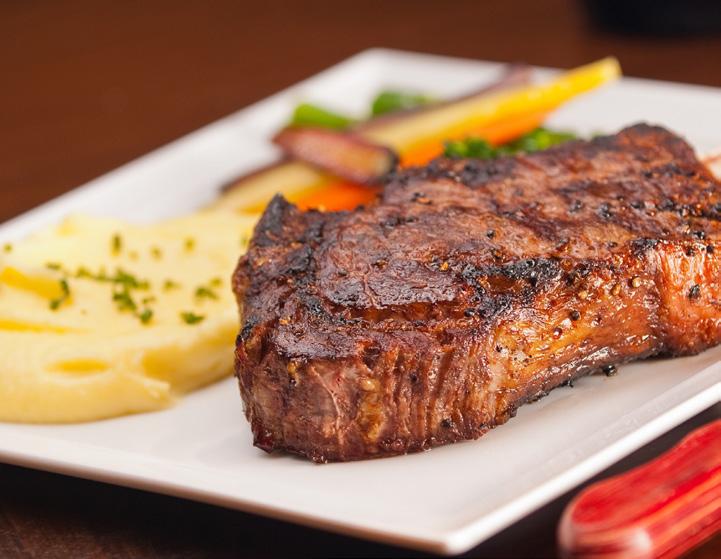
Across the state Oregon’s tribes welcome you to book a visit for a thermal soak, a teepee glamping experience or a river float. You can play a round of golf at a worldclass golf course, attend a powwow or salmon bake, take a guided scenic horseback ride or see a headliner band play – followed by a hearty steak and cocktail, your favorite table game and a cozy stay at a casino resort hotel or RV park all in the same day.
In Southern Oregon, travelers may now experience the thrill and beauty of paddling the newly undammed Klamath River after the biggest dam removal in history. Expert guides welcome paddlers of all skill levels to see firsthand the historical significance of these abundant salmon runs and the impact of environmental stewardship. The ways to learn about and support Oregon’s tribes are endless.
HOW TO VISIT RESPECTFULLY
Tribes have created events and developed attractions to share their culture, but also seek to balance the needs of their communities with visits from nontribal members. When you visit, please exercise respect and follow some basic guidelines. Tribal events that are open to the public will be clearly marked as such; assume all other gatherings are private. Refrain from picking up or removing artifacts or disturbing burial or sacred sites. If you are invited to attend a ceremony, adhere to your host’s guidance. Don’t bring weapons, drugs or alcohol to tribal lands. Ask permission before taking photos of persons or events.
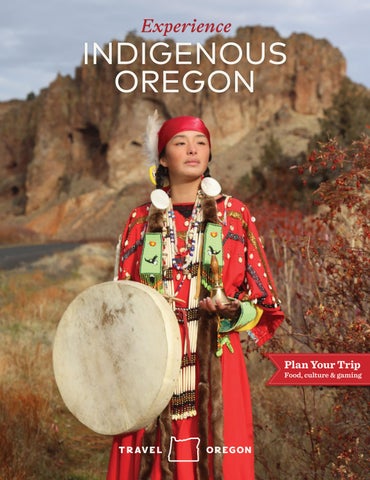
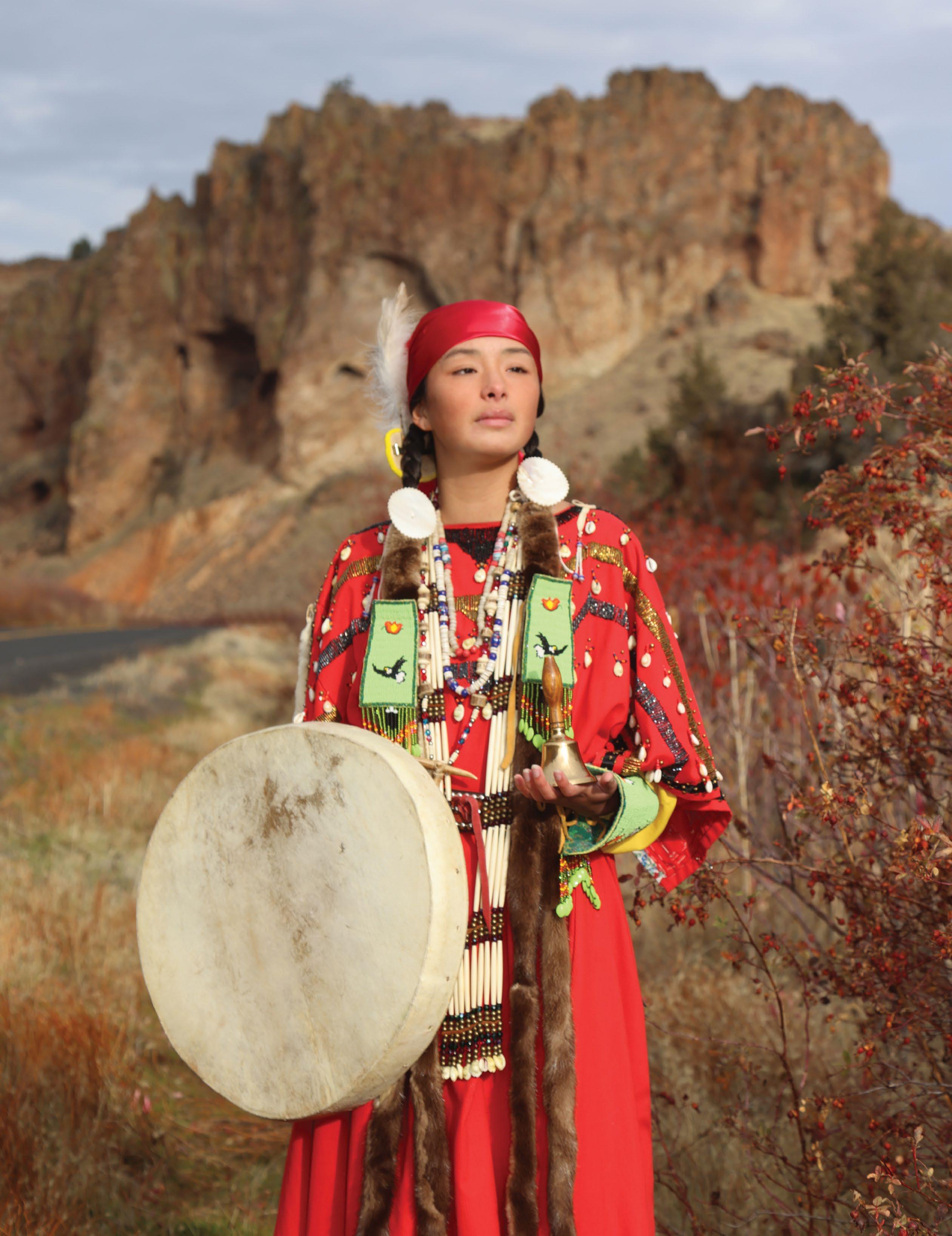
On the cover: Kahmussa Green, an enrolled member of the Confederated Tribes of Warm Springs, is pictured along the way to Central Oregon’s Kah-Nee-Ta Hot Springs Resort. Named after her great grandmother, Kahmussa is a former Miss Warm Springs, a college cross-country athlete, and wears red here in support of her advocacy of Missing and Murdered Indigenous Women and relatives.
She adorns her body and carries the history of her family and Native people of her homeland with pride, wearing a corduroy trade dress and green beaded set handmade by an elder and knowledge keeper. The wampum necklaces, bone and brass breastplate — all over 100 years old — reflect the history and strength of her family. The hand drum and handbell pay respect to the spiritual walk and way of life she and her people pass down through generations. She holds a drum made by her great grandfather, made from deer hide stretched over a hand-skived drum ring of a juniper tree. Otter fur hair wraps, seashell hair ties and an eagle plume come from gifts bestowed by Mother Earth.
by Edward Heath, an enrolled member of the Confederated Tribes of Warm Springs.
CONTENTS
3
THE TRIBES OF OREGON
Distinct cultures, unique attractions and natural beauty await visitors to the homelands of the nine federally recognized tribes in Oregon. This map will get you started.
4 MUSEUMS, CULTURAL CENTERS AND GALLERIES
Through art and exhibits, these centers offer a window into generations of tribal history and how tribes continue to embrace their timehonored traditions and values.
6
ARTS AND ARTISANS
Art provides a powerful means for Indigenous communities to share their histories and ideologies. Meet some talented artists and performers making connections through their creativity.
8 FIRST FOODS
For millennia, locally harvested foods like salmon have sustained Native people and shaped their cultures. Today tribes play an integral role in protecting and restoring these traditional foods.
9 TRIBAL CASINOS
Along with gaming excitement, tribal casinos welcome guests with a broad range of entertainment for all ages and interests — while generating millions for local economies.
48 EVENTS
Native communities invite the public to experience the richness of their tribal traditions at these powwows, salmon bakes and other celebrations.

For more about Kahmussa Green and two other young leaders from the Confederated Tribes of Warm Springs, watch the video.
Photo


TRIBE PROFILES


Museums, Cultural Centers and Galleries
Across the state, tribal cultural centers and museums provide a window to thousands of years of history, and a better understanding of how tribal members continue to embrace their time-honored traditions and values today.
TAMÁSTSLIKT CULTURAL INSTITUTE
Pendleton
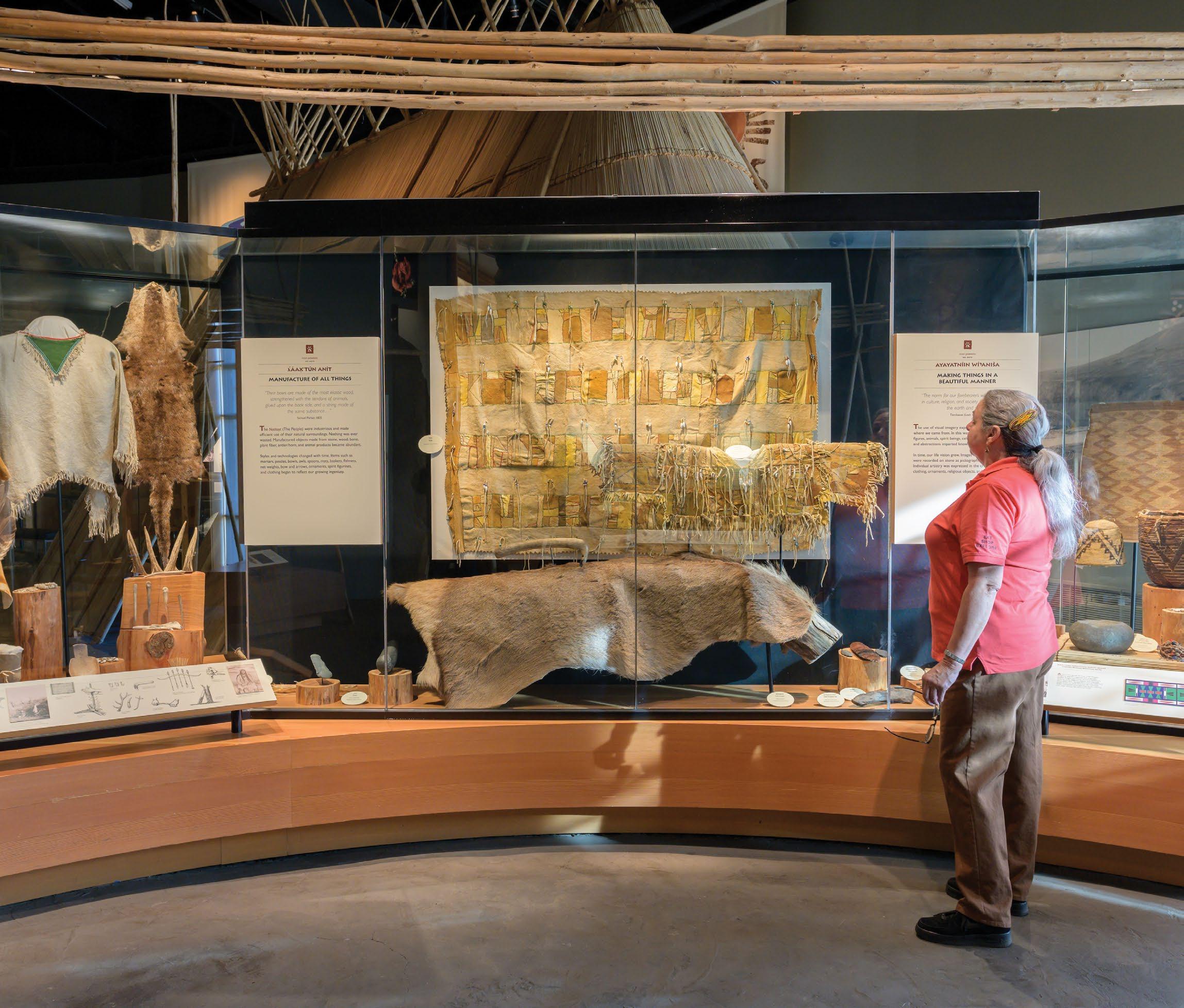
With a name that translates to “interpret,” Tamástslikt showcases the 16,000-yearold culture of the Cayuse, Umatilla and Walla Walla Tribes through interactive exhibits, an expansive museum store, and Native-inspired cuisine. Perspectives look back, telling the story of westward expansion of the U.S. from a tribal perspective, and forward, explaining how the Tribes are leaders in salmon, lamprey, and mussel restoration and fueling the regional economy.
Tamastslikt.org; 541-429-7700
TANANÁWIT
Warm Springs
Visitors can be confident they’re purchasing original, authentic Native art when they shop at Tananáwit, a Native-owned artist cooperative and gallery in the Indian Head Casino Plaza on US-26. Purchases also support Tananáwit’s mission to promote, preserve and advance traditional art forms, helping to fund art shows, maker space, tools, supplies and transportation for its cultural community. Shop in person or online for contemporary and traditional works that might include cedar bark jewelry, hand-beaded moccasins, metal engravings and clay sculpture, all of it created by artists within the Confederated Tribes of Warm Springs or its sister tribes in the Northwest.
Shop.WarmSpringsArtists.org
CHACHALU TRIBAL MUSEUM AND CULTURAL CENTER
Grand Ronde
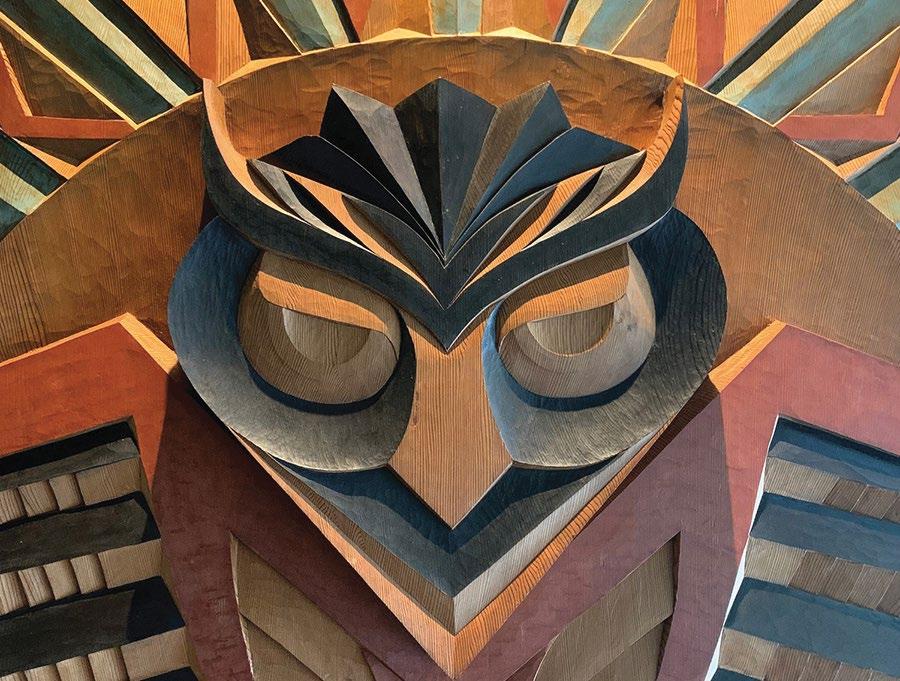
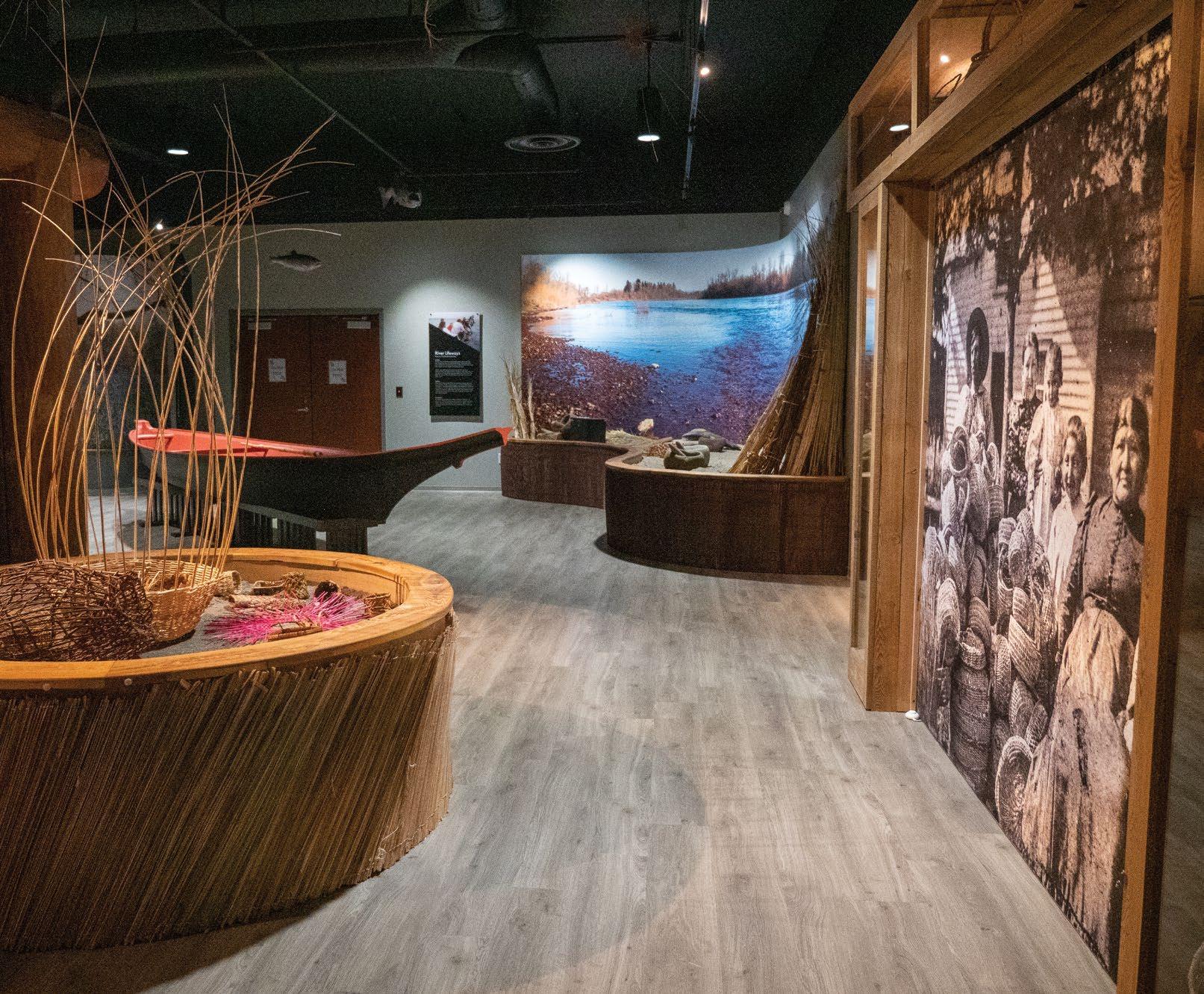
A replica of a tribal plankhouse and the scent of cedar greet visitors to Chachalu, telling the story of the Confederated Tribes of Grand Ronde and honoring Elders who kept traditions alive during the Termination era. A nod to its homeland of river valleys and cedar forests, two cedar canoes frame a panoramic image of the Willamette Valley. GrandRonde.org/History-Culture/ Culture/Chachalu-Museum-AndCultural-Center; 503-879-2226
COOS
HISTORY MUSEUM
Coos Bay
The Coquille Indian Tribe and the Confederated Tribes of the Coos, Lower Umpqua and Siuslaw Indians are community partners for this museum. More than 250,000 images and 50,000 objects help illuminate the region’s rich tribal traditions since before contact with European settlers.
CoosHistory.org; 541-756-6320
GHII DEE-NE DVN
Siletz
A replica of the tribe’s cedar-plank dance house will be the first thing visitors see when they enter the museum portion of the new Siletz Cultural Center, under construction in 2026. With a name that translates to “a place for the people,” the center will house cultural collections, archives and research study areas. SiletzArtsHeritageSociety.org; 541-444-3762
Chachalu Tribal Museum and Cultural Center
Tamástslikt Cultural Institute
FOUR RIVERS CULTURAL CENTER
Ontario
Located on the Treasure Valley Community College campus, the Four Rivers Cultural Center features a life-size diorama of a Northern Paiute village, whose traditional homelands include much of Eastern Oregon. The Burns Paiute Tribe is represented in the extensive collection of basketry, woven containers, cooking tools and beadwork. 4RCC.com; 541-889-8191
OARD’S MUSEUM & GALLERY
Burns
Historic Oard’s Museum & Gallery sits at the gateway to Steens Mountain in Burns, a family business that began as a stagecoach shop in the 1880s. Over the years, it has expanded to sell Native jewelry, artwork, clothing, rugs and furniture. Today the gallery directly represents and supports the work of Native artists, particularly from nine Pacific Northwest tribes. It houses the largest-known collection of Paiute Indian cradleboards, along with Paiute beadwork, leatherwork and jewelry.
OardsGallery.com; 541-493-2535
FAVELL MUSEUM
Klamath Falls
Operated by a nonprofit foundation, The Favell Museum chronicles the heritage of the West, particularly before the arrival of European settlers. Its significant collection of arts and artifacts focuses on North American tribes, including the Klamath native to the area. Some items date back more than 12,000 years and include thousands of arrowheads, obsidian knives, spear points and stone tools, as well as more contemporary clothing, detailed bead work, basketry and pottery. FavellMuseum.org; 541-882-9996
Arts and Artisans
Oregon is rich in many ways — not only in its famed natural beauty but also in arts and culture. Home to numerous Native artists and performers of various genres, their homeland provides a wealth of inspiration. Artwork is an integral means for Indigenous communities to celebrate and share their histories and ideologies, often weaving together the past and the present. Native makers make things beautiful and intentional out of respect for the life given to make it — whether it was cedar root or bark, animal hide, bone or horn, tule reed, or dogbane, something was harvested to be repurposed into a new form. Today it is a form of storytelling, connecting people with their roots and environment. Here are just a few examples of the many talented, impactful Native artists working in Oregon today.
ROBERTA JOY KIRK
After losing much of her family’s regalia and other cherished possessions in a house fire, Confederated Tribes of Warm Springs member H’Klumaiyat Roberta Kirk undertook the task of learning to make her own heirlooms. Her expertise and passion are evident in her impeccably detailed beadwork and leatherwork. Kirk has garnered several accolades, including the Governor’s Arts Award in 2020, and her work is featured in ceremonies and powwows around the state. Through apprenticeships, Kirk shares traditional designs from her Tenino and Wasq’u culture. Now younger generations are also learning from her wealth of knowledge: Kirk currently teaches her granddaughters and community members beadwork, promotes cultural continuity, and advocates for the preservation of Native heritage.
ANTHONY HUDSON
A master of connecting creative work with activism, Anthony Hudson highlights their Two-Spirit identity throughout their performances. Two-Spirit people have long been recognized and honored in Native communities, where they hold a sacred place and are considered balance keepers. Hudson, a member of the Confederated Tribes of Grand Ronde, balances their life as an award-winning artist, writer, drag-queen performer and filmmaker. Performing as drag clown Carla Rossi, Hudson confronts difficult issues with humor and laughter to create, they say, a more relatable and empathetic environment. “Radical honesty” is the goal for Hudson as they dive into myriad challenging topics such as white supremacy, complacency and mixed identities. In character, Hudson also co-hosts the weekly Gaylords of Darkness podcast.
BUD LANE III
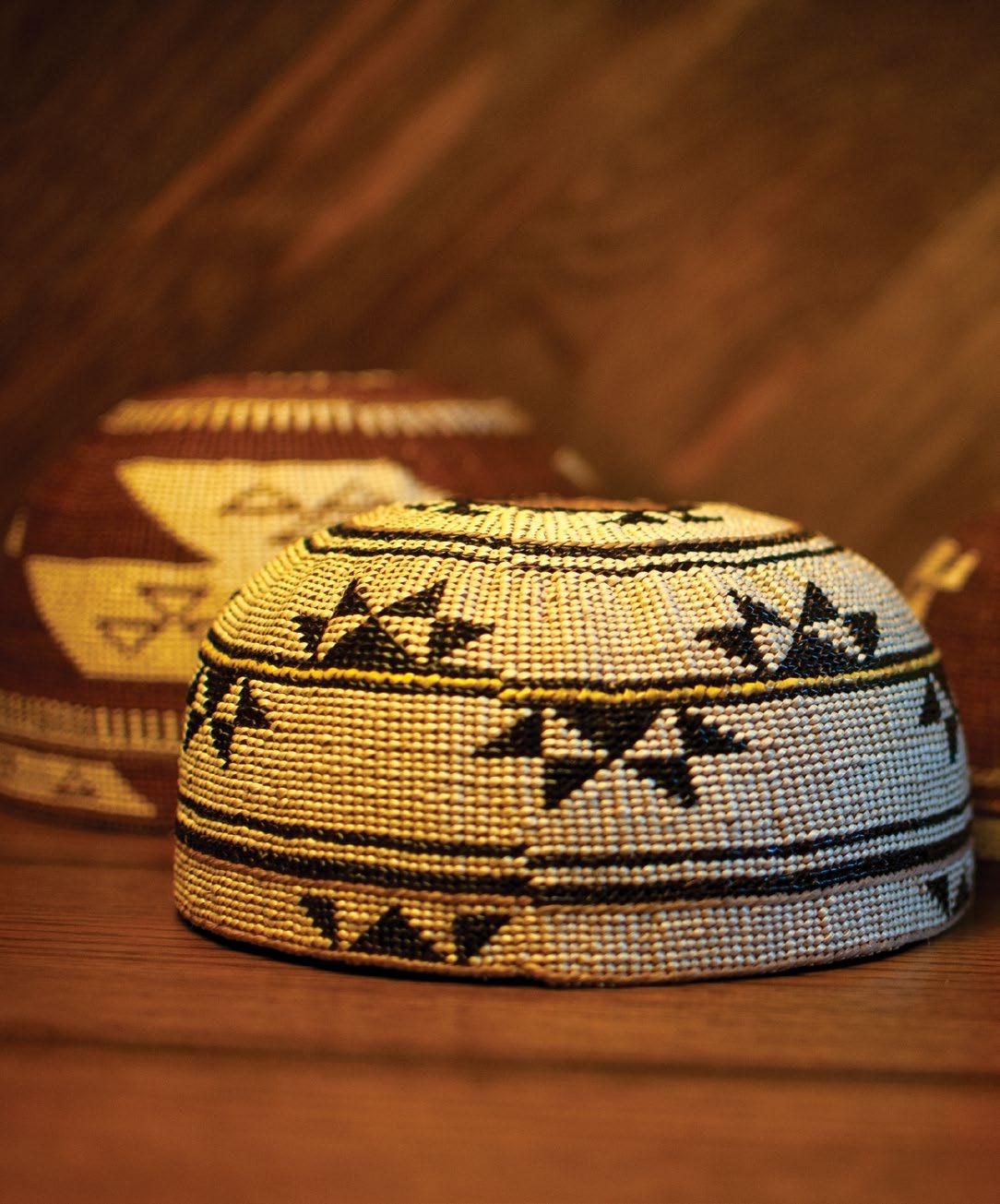
Fine basketry requires a tempering of beautiful artwork with utilitarian design. Bud Lane III, a member of the Siletz Tribe who honors his people’s history through intricate basketmaking, stresses the importance of cultural preservation and maintaining the skill sets of traditional arts as we lose more and more traditional makers. Lane’s teaching emphasizes gathering and weaving, skills the Siletz people mastered for infant cradles, traditional mats, cooking and eating purposes, as well as in ceremony. Lane’s basketry has won several awards for both authenticity and sheer beauty.
KA’ILA FARRELL-SMITH
Working from her ancestral Klamath/Modoc tribal homelands in Modoc Point, Ka’ila Farrell-Smith creates new connections between Indigenous art forms and contemporary visual art, exploring “the space in between the Indigenous and western paradigms,” she writes. Her Land Back series of 27 abstract paintings uses wild-harvested pigments from Klamath lands and found objects to reinterpret Native American imagery and offer a matrix for resiliency and transformation. Farrell-Smith’s work is on display at museums across North America, including the Smithsonian American Art Museum and the permanent collection of the Portland Art Museum. She is a faculty member of Indigenous Nations and Native American Studies at Portland State University.
Baskets by Bud Lane III
BILL MURPHY
Known in his community as White Buffalo, Bill Murphy has been blowing glass for nearly 20 years, uniting his exceptional Italian glassblowing technique with his Native American culture. A member of the Coquille Indian Tribe, Murphy studied under several world-renowned glass sculptors before opening his shop, Oregon Coast Glassworks, in the scenic fishing community of Newport. His stunning vases, sculptures, paperweights and other works showcase his talent and honor his heritage. Murphy also offers classes to share his passion and expert techniques.
JAMES LAVADOUR
James Lavadour has been a painter and printmaker for more than 40 years and is co-founder of the Crow’s Shadow Institute of the Arts in Pendleton. A member of the Confederated Tribes of Umatilla, Lavadour grew up in the foothills of the Blue Mountains, home to diverse plant and animal life. His artwork is deeply rooted in the Eastern Oregon landscape. “The land and I are one,” says Lavadour, who is largely self-taught and sees his work as extensions of himself. That work has been exhibited throughout the country, including at Smithsonian Institution museums in Washington, D.C. and New York City. Since 1992, the Crow’s Shadow Institute has evolved into a nationally recognized studio for contemporary fine art printmaking and hosts a Traditional Arts program to preserve and promote Indigenous practices such as beadwork and basketry. Many artworks, including Lavadour’s, are available for viewing and purchase through the institute’s online gallery.
NATALIE KIRK
A member of the Confederated Tribes of Warm Springs, Natalie Kirk draws inspiration from her ancestors, keeping their memory alive through her weaving and painting. Kirk merges the past and present in works such as her wapas, twined bags that women hang from their waists to gather roots. Kirk weaves wapas for traditional food gatherers and sells them at the Museum of Warm Springs, where she was the curator for 20 years. Kirk now serves as the artist coordinator for Tananáwit, the Tribe’s Warm Springs gallery, where visitors can purchase her contemporary weavings of jute, yarn, fiber and waxed linen.
CHANTELE RILATOS
Chantele Rilatos is a traditional artist whose work centers on basket weaving using roots, bark, beargrass and other plant materials native to her ancestral homelands in western Oregon. A member of the Confederated Tribes of Siletz Indians, Rilatos is expanding her artistic boundaries while maintaining a focus on heritage and identity. Her art is deeply rooted in cultural traditions, serving both ceremonial and practical purposes as it honors the resilience of her ancestors. Through her work, she ensures that her tribe’s traditions remain vibrant and visible, blending artistry with cultural preservation.
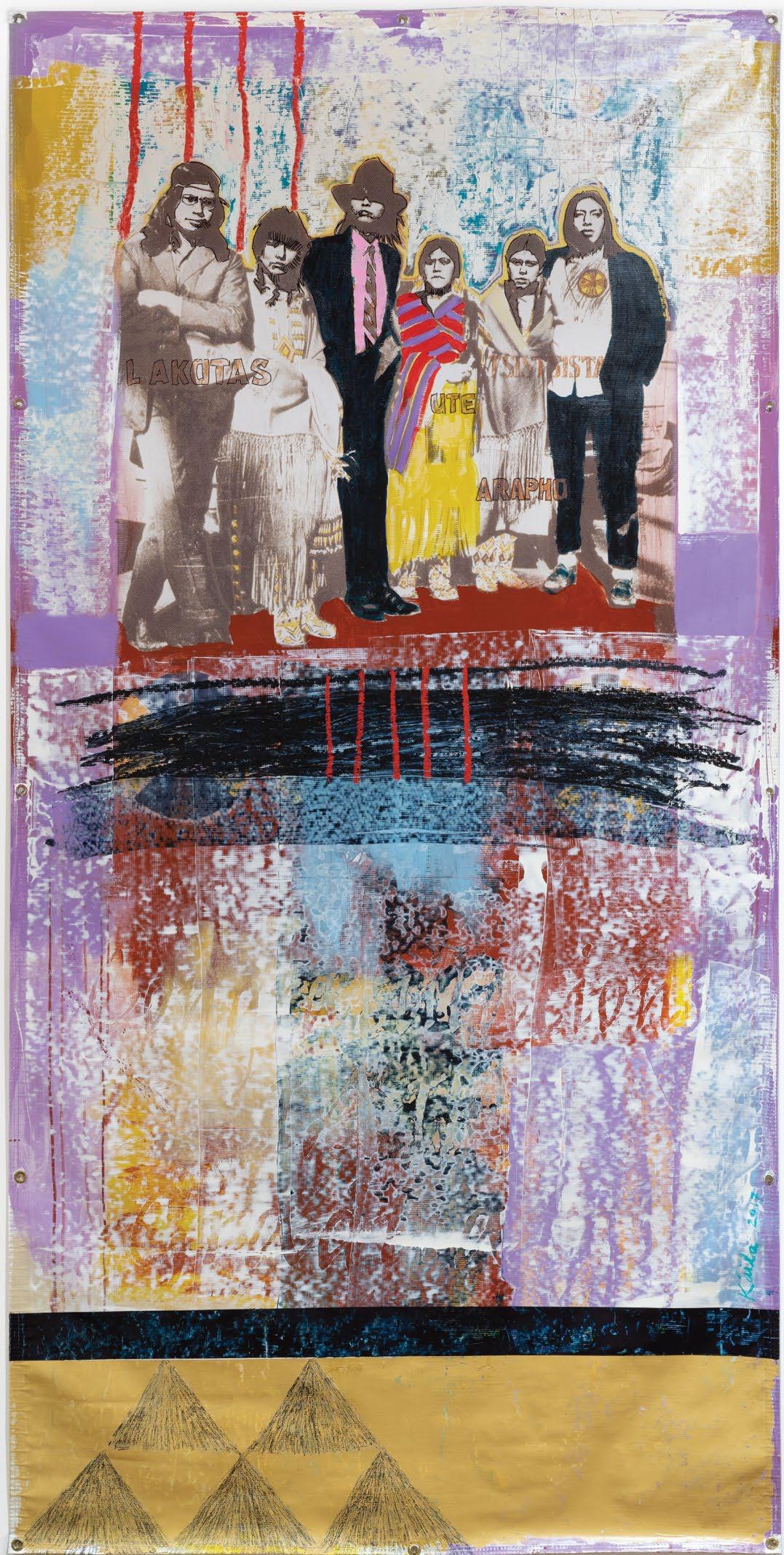
“Predecessor Bundle” by Ka’ila Farrell-Smith (48"x36", 2018)
First Foods
From soils bearing nourishing roots to waters harboring rich salmon and shellfish, Oregon abounds with edible treasures. These first foods have sustained local people since pre-contact with Europeans and continue to play a central role within Indigenous communities today. Tribes have undertaken many efforts to protect or restore traditional sources of nourishment, and tribal celebrations open to the public are an opportunity for everyone to better understand and experience first foods.
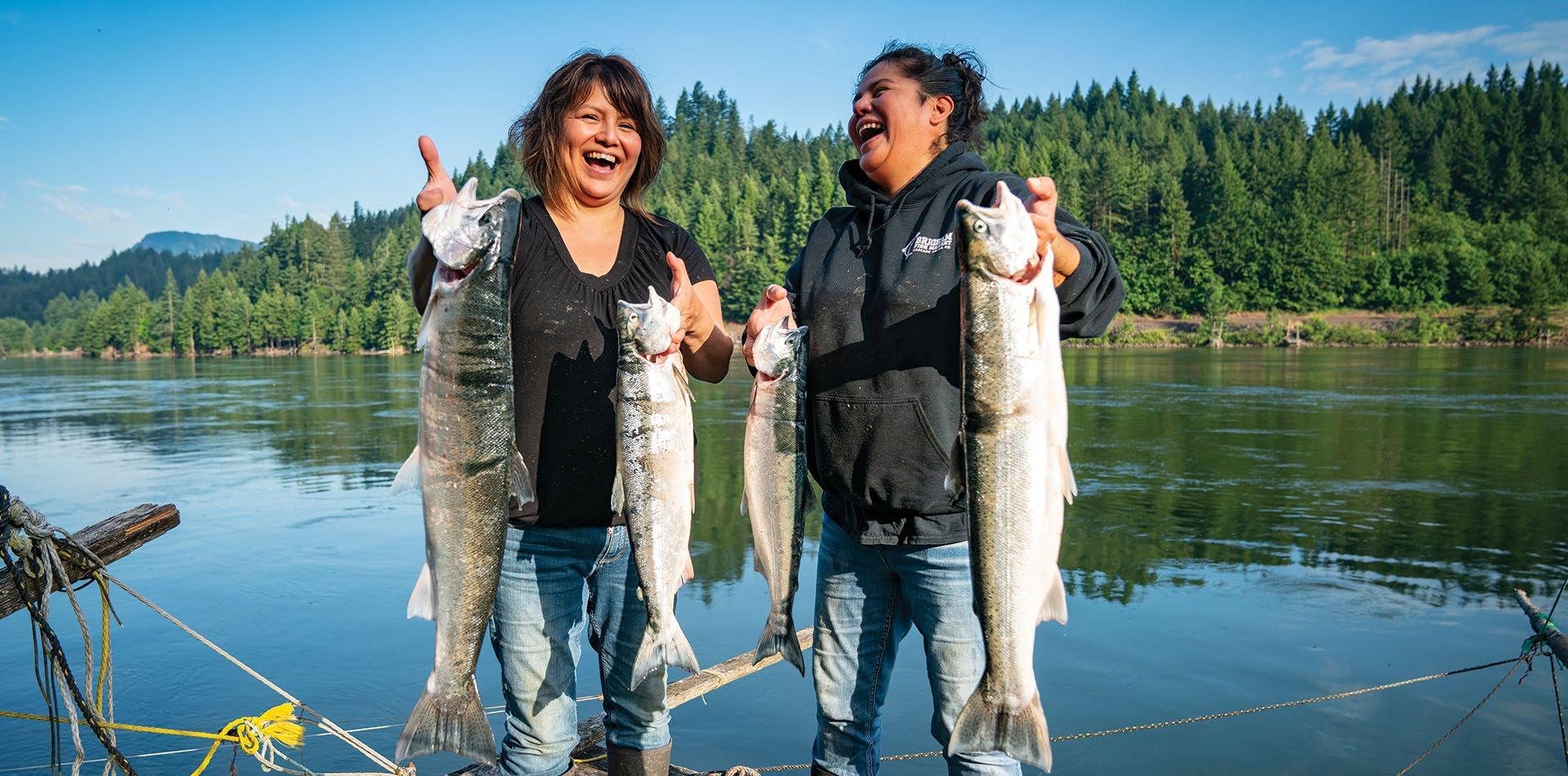
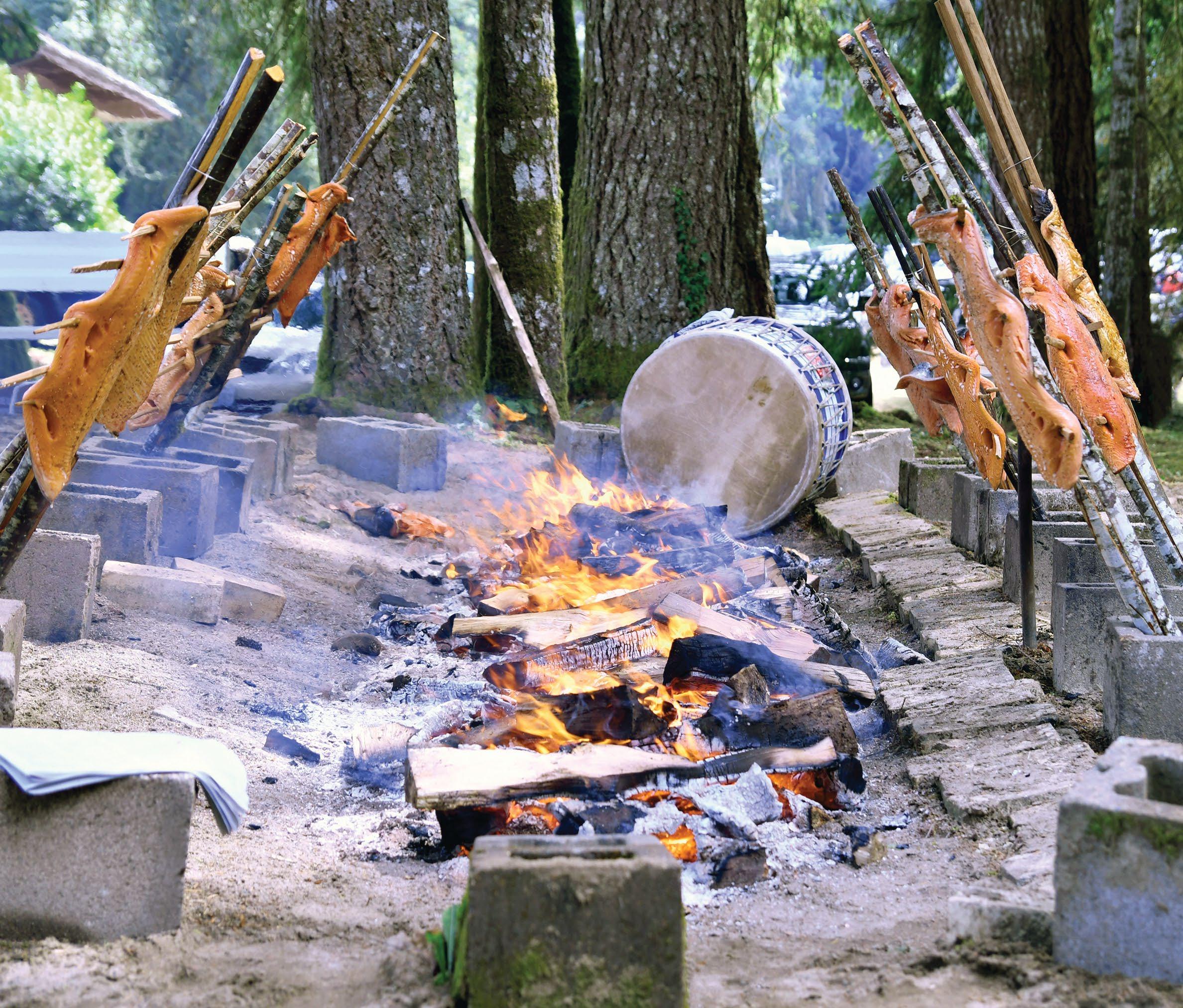
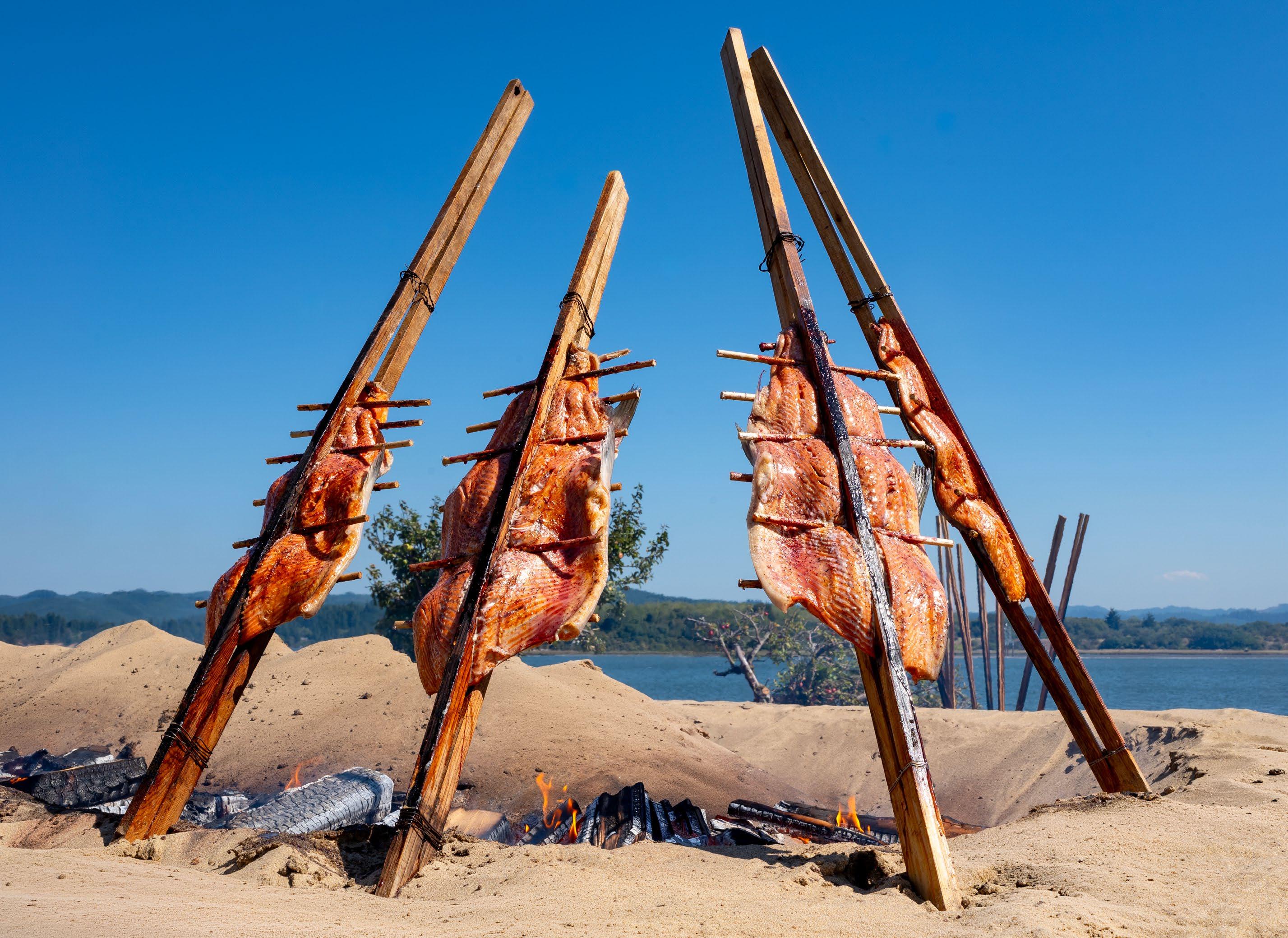
Salmon is not only a vital, protein-laden food source, it is also a sacred source of life to many Pacific Northwest tribes. Ceremonial salmon feasts pay tribute to the salmon, the water and the Salmon People. Celilo Village hosts the First Salmon Feast each April near the site of Celilo Falls, long an invaluable fishing and trading area for Columbia River Basin tribes. The Columbia River Gorge is one of the few places the public can buy fresh salmon directly from tribal fishers, which supports their traditional livelihood. Call the Columbia River Inter-Tribal Fish Commission’s Salmon Hotline (888-289-1855) for locations. On the Coast, the Coquille Indian Tribe hosts the Ko-Kwel Salmon Celebration in September on the shores of Coos Bay, featuring dancing and drumming, canoe races and a traditional salmon bake, roasting fillets in a pit of hot coals. The Confederated Tribes of Siletz Indians’ Nesika Illahee Pow-Wow highlights another traditional method: roasting salmon on alder and cedar stakes over a smoldering fire.
Roots, with their versatility and long shelf life, play a key role in the traditional diets and medicine of many tribes. Horsetail, biscuitroot and western redcedar are just a few of the roots harvested from local soils, but one in particular is valued most of all in terms of trade and nutrition: camas, a lily bulb typically roasted, steamed or pounded into flour. The Confederated Tribes of Grand Ronde is leading efforts to restore traditional camas-cultivation areas in its 11,500-acre reservation southwest of Portland, including at Wapato Lake (where soils also bear wapato, an edible starchy tuber). Near Pendleton, cous is part of the Confederated Tribes of the Umatilla Indian Reservation’s Root Feast each spring, when tribal members celebrate their culture and, quite literally, their roots.
Deer and elk are the most abundant large game in Oregon, and hunting is an integral part of life for many Indigenous communities. Game meat is prepared in
many ways — roasted, steamed, boiled, smoked or dried into jerky and pemmican (a mixture of dried meat or fish, fats, and berries). You can expect to find deer and elk at the Nez Perce Tribe’s Tamkaliks Celebration each July in Wallowa.
Berries and nuts — including salal, huckleberries, hazelnuts, chinquapins and acorns — thrive throughout the state. Wild huckleberries are so delicate that Pacific Northwest tribes traditionally used fine combs created from salmon backbones to gently harvest the tiny fruit from the bush. Tribal members continue to gather huckleberries today on traditional berry-gathering areas found at higher elevations. Prized for their sweet and slightly tart flavor, huckleberries are enjoyed fresh, sun-dried, or smoked and mashed into leaf-wrapped cakes for future storage. The Confederated Tribes of Warm Springs celebrates the ripening of wild huckleberries each August with its annual Huckleberry Harvest event.
These and many other first foods have provided nourishment to people since long before Oregon was Oregon. You can help support ongoing sustainability efforts by avoiding foraging or hunting on tribal lands and in traditional gathering areas. Respect the Indigenous cultures that have nurtured these foods for future generations to enjoy.
Members of the Confederated Tribes of the Umatilla, sisters Kim BrighamCampbell and Terrie Brigham own a fish market in Cascade Locks.
Tribal Casinos
Games of chance have long been part of tribal culture, a way to share wealth and assets. Today tribal nations welcome visitors to their casino resorts, which provide more than 10,000 jobs and generate millions of dollars in tax revenue and charitable contributions every year.
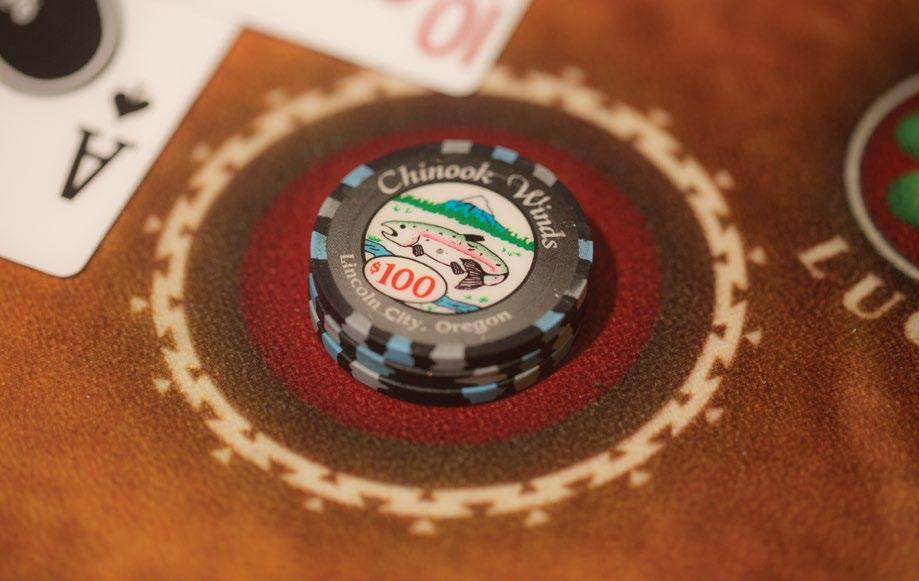
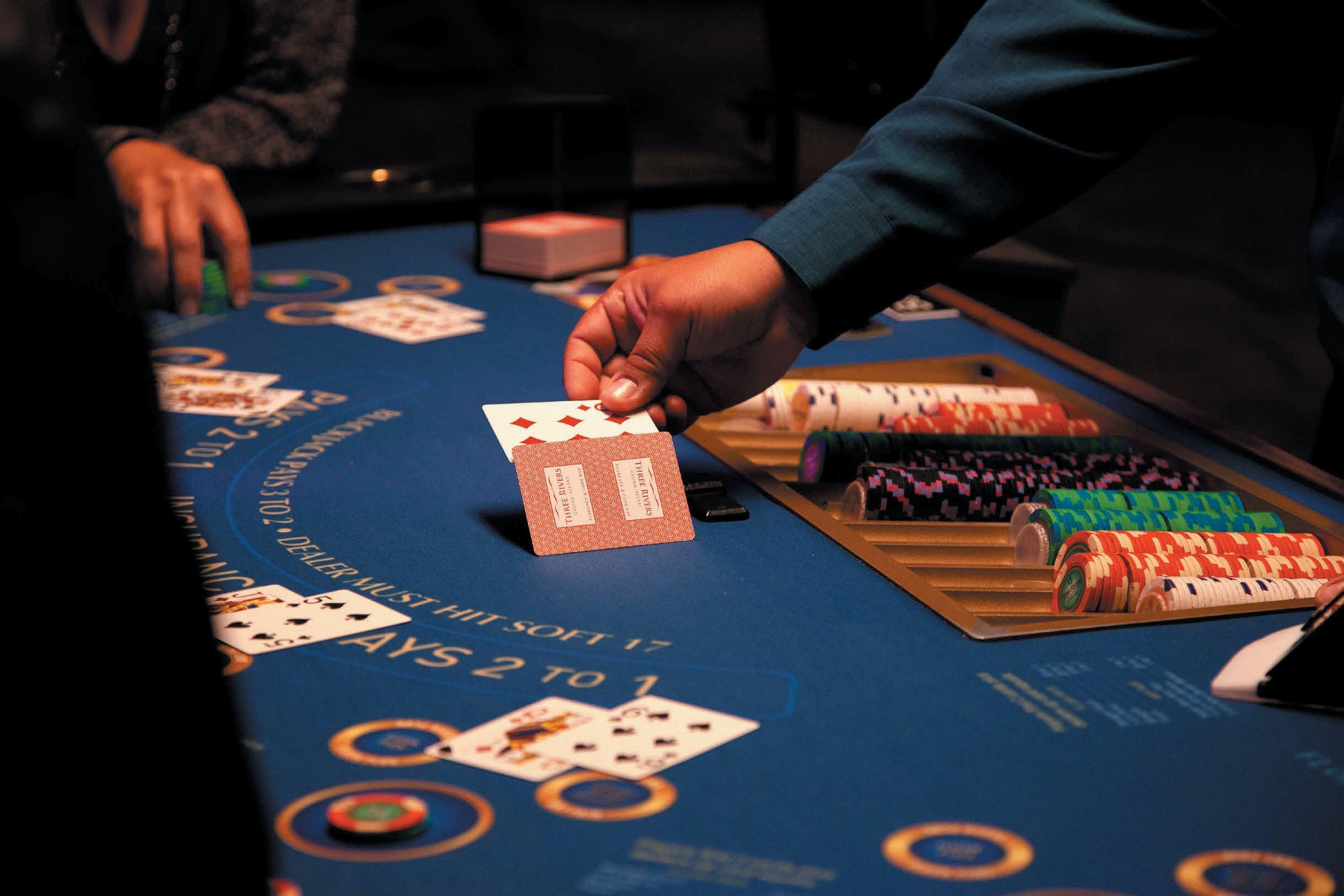
Across the state, gaming thrills are just part of these fun-filled entertainment centers: Slots, table games, poker tournaments and sports wagering provide Vegas-style action, while stylish hotels, music and comedy acts, spas, swimming pools, golf courses, festivals, arcades, and other activities delight the whole family. Come by for a day or make a casino resort your hub for a destination vacation. From river valleys to high mountains, the Coast to the Columbia Plateau, tribes invite you to experience their hospitality and all that their region has to offer.
CHINOOK WINDS CASINO RESORT
Lincoln City
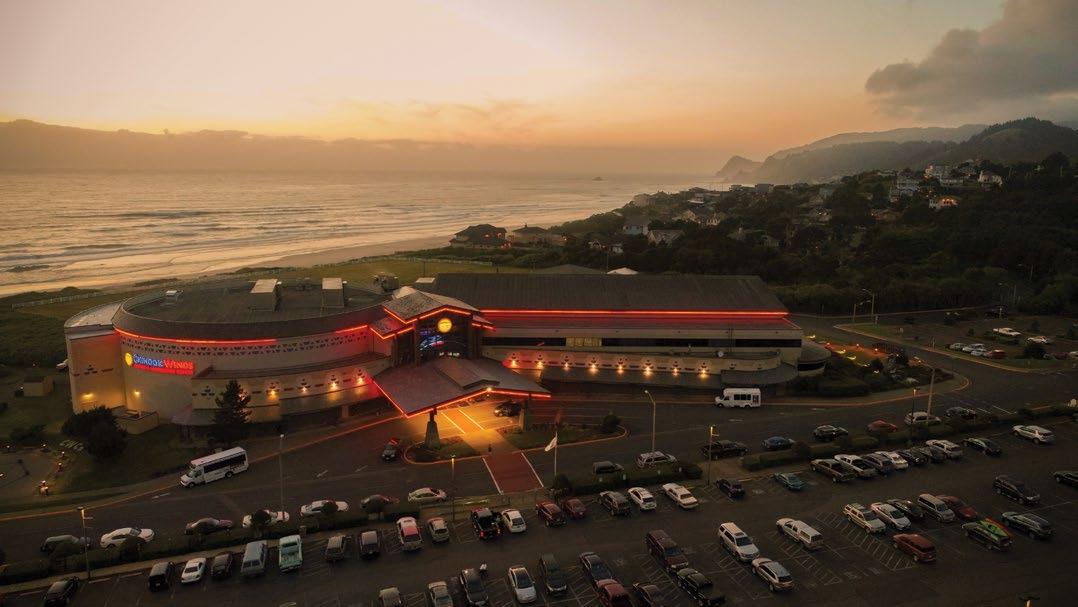
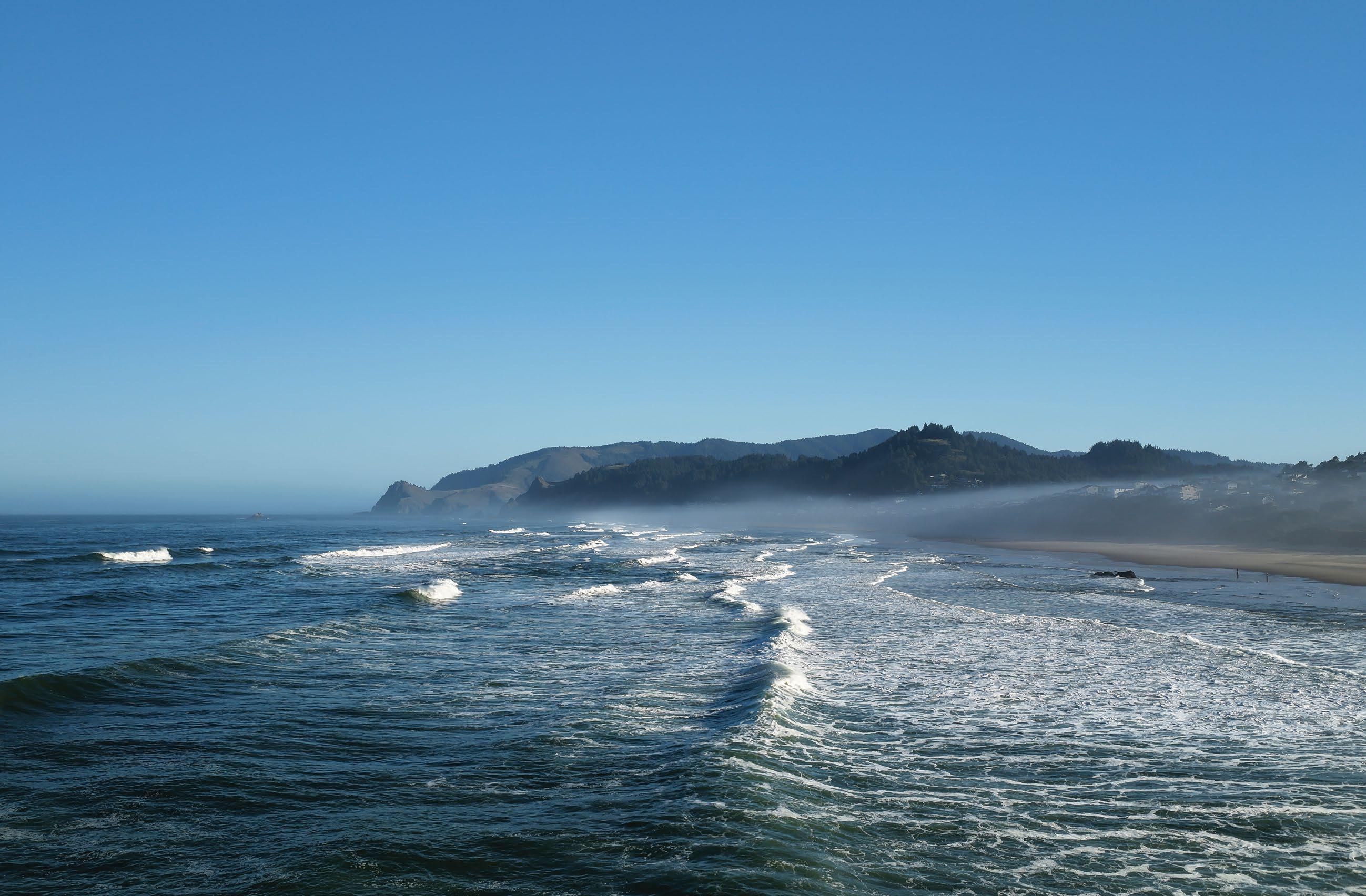
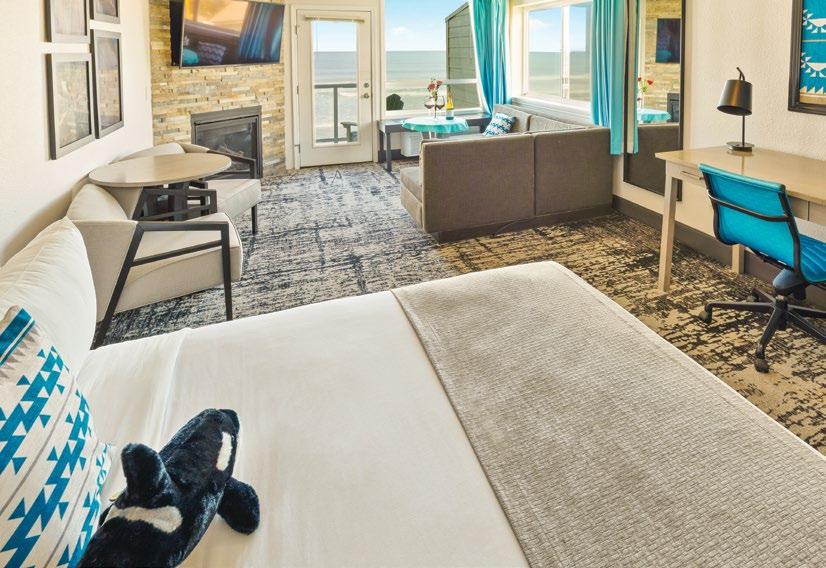
With a front-row view of the Pacific Ocean, Chinook Winds Casino Resort blends natural beauty with 24-hour entertainment. Owned and operated by the Confederated Tribes of Siletz Indians, this beachfront resort makes an ideal coastal retreat, with lodging, dining and entertainment to please all ages.
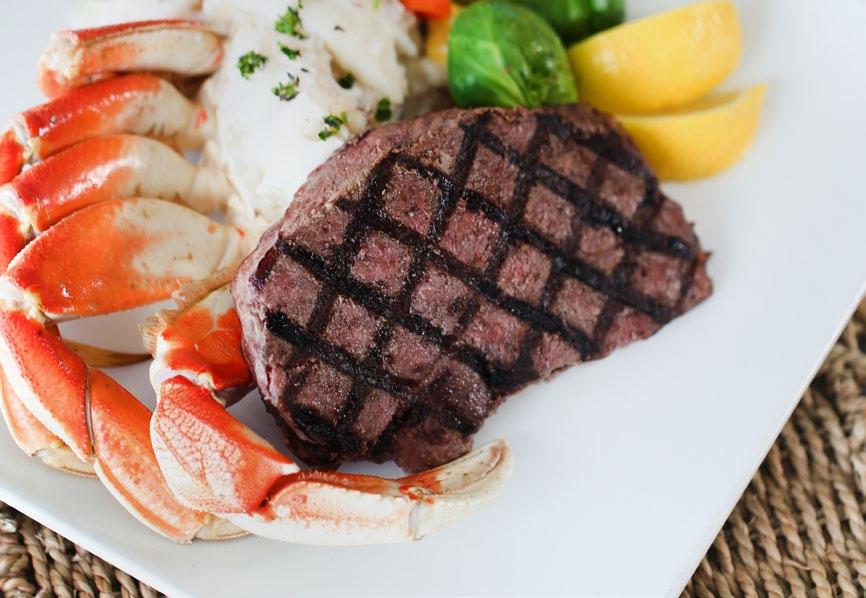
Diners can choose from seven dining options, with spectacular views from the Rogue River Restaurant and Chinook’s Seafood Grill, serving up fresh catch from local waters. Casino offerings include table games, sports wagering, bingo, keno and more than 1,000 slot machines. The resort’s calendar is filled with national headlining performers, top-tier tribute acts, comedy shows and signature events like Beach, Bacon and Brews, the Surf City Classic Car Show and the deeply meaningful Celebration of Honor dedicated to veterans and active-duty military.
Golfers won’t want to miss a round at the Chinook Winds Golf Resort, where 18 holes wind among old-growth trees and wetlands. Kids enjoy their own fun zones at the Play Palace and Games Galore arcade.
Whether you're here for exciting entertainment or the calming rhythm of the waves, Chinook Winds offers a coastal experience unlike any other. As the only oceanfront casino in Oregon, it truly is “Better at the Beach.” ChinookWindsCasino.com; 888-244-6665
INDIAN HEAD CASINO Warm Springs
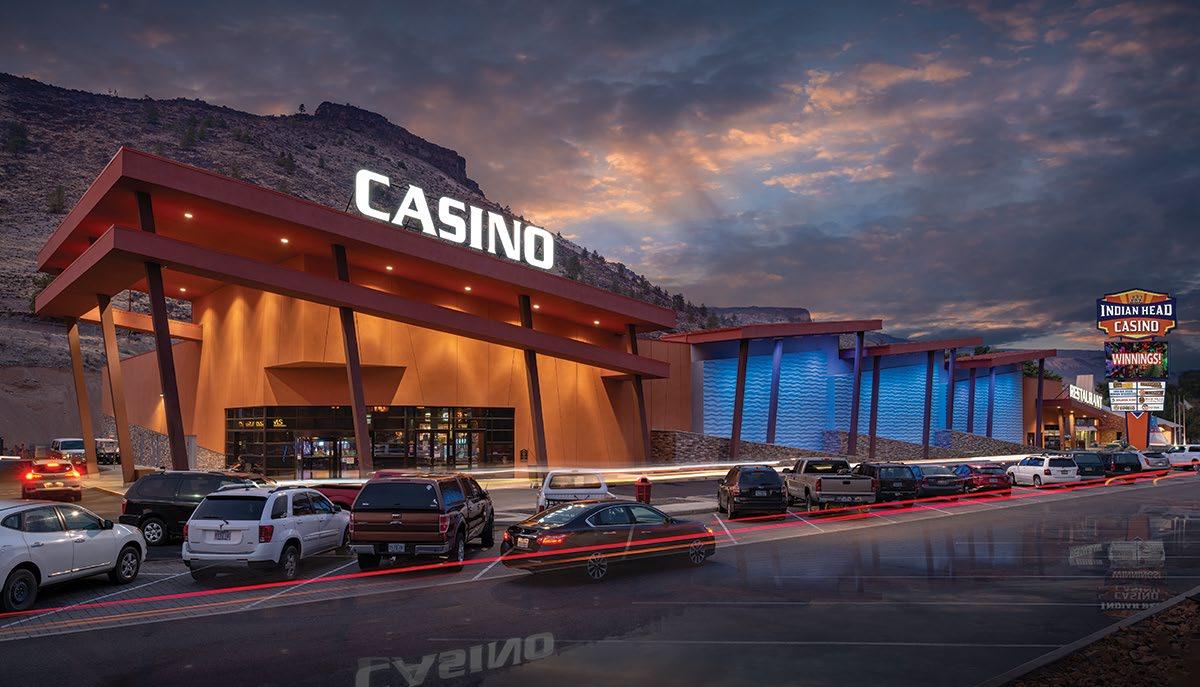
Among the many attractions of Central Oregon, the Indian Head Casino makes an ideal stop for a hearty meal and guaranteed gaming fun. The Confederated Tribes of Warm Springs invite visitors to join in the action at its popular blackjack tables, video-poker machines and hundreds of slots. Plenty of tournaments, drawings and specials keep guests coming back. The Cottonwood Restaurant serves up burgers, salads, fish and chips, and Native-inspired dishes like Indian tacos on traditional fry bread. The Tule Grill is the place for night owls, open late for quick snacks and sandwiches.
IndianHeadCasino.com; 541-460-7777
KLA-MO-YA CASINO
Chiloquin
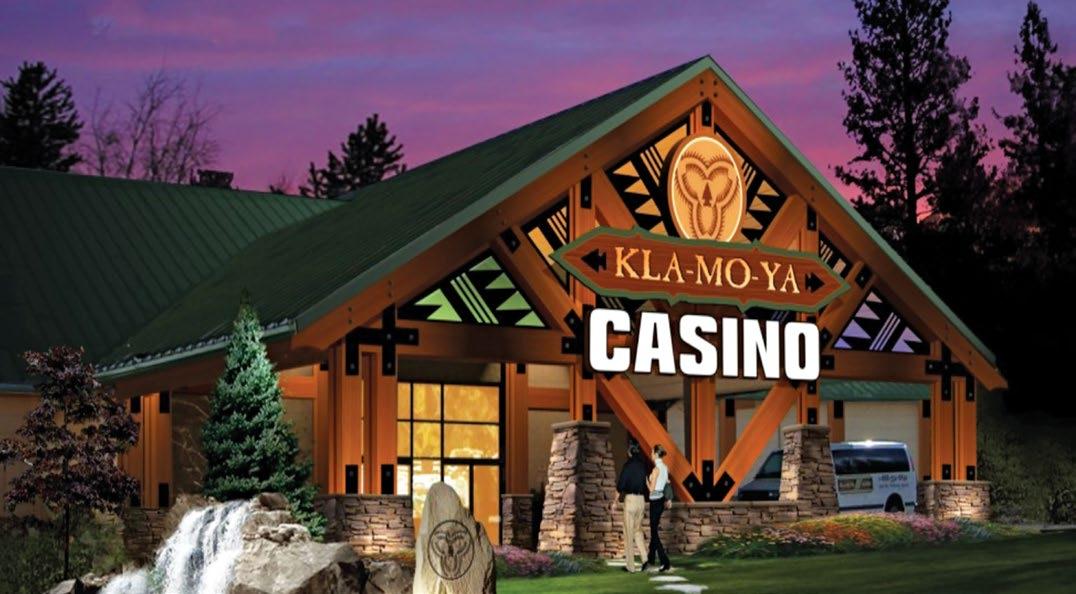
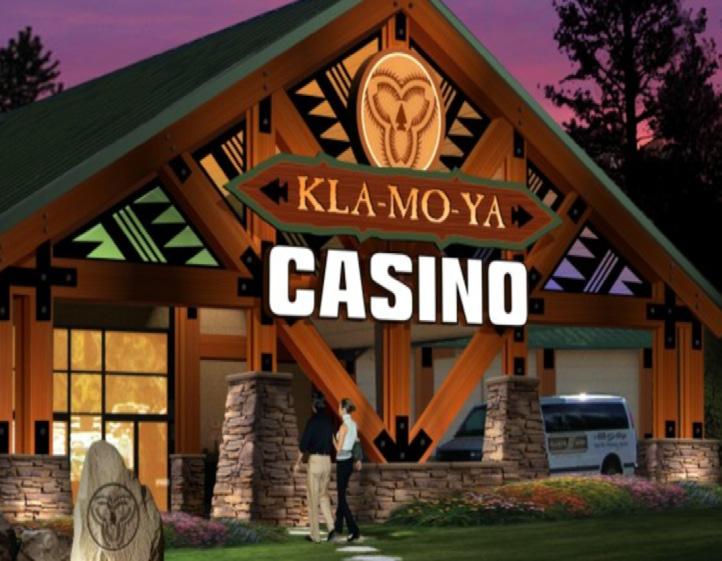
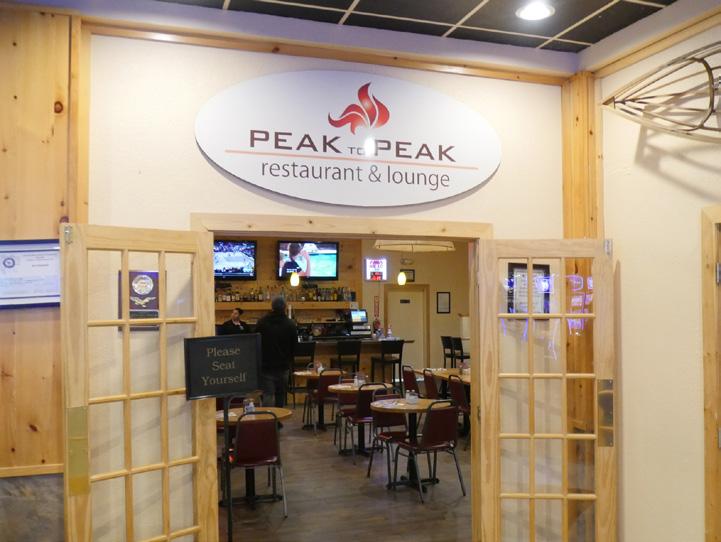
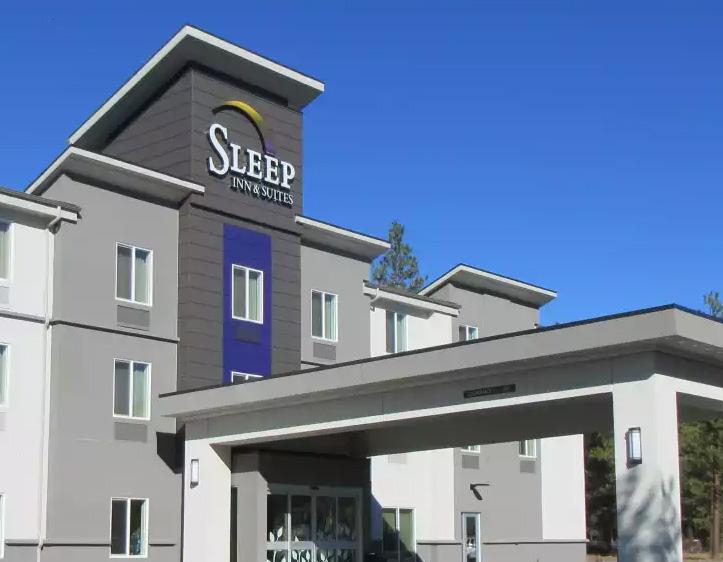
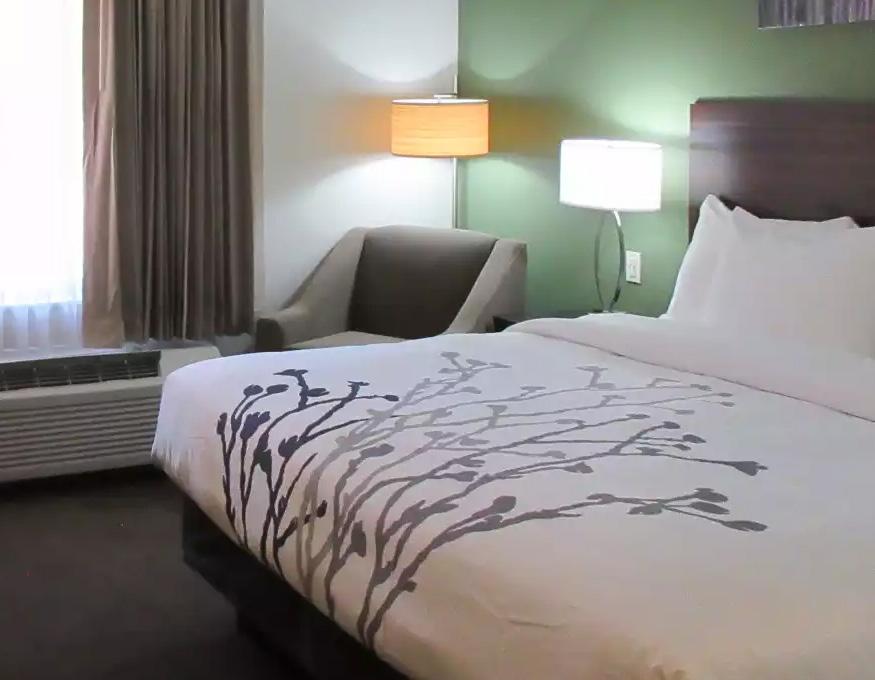
Named for its Klamath, Modoc and Yahooskin tribal owners, the KLA-MO-YA Casino is one of the premier entertainment destinations in Southern Oregon. The casino offers Vegas-style slots and video poker. The Peak to Peak Restaurant & Lounge keeps guests satiated with slow-cooked smoked ribs, steaks, Italian favorites, burgers and sandwiches. Lodging is right next door at the Sleep Inn & Suites, with a heated indoor pool and a fitness center. There’s plenty of truck and RV parking on-site, and the tribes’ Crater Lake Junction Travel Center makes it easy to get back on the road with fuel and additional services for trucks and RVs. The region is filled with outstanding recreational opportunities, including hiking, fishing, mountain biking, birding and a visit to renowned Crater Lake, 40 miles north.
KLAMOYACasino.com; 888-552-6692
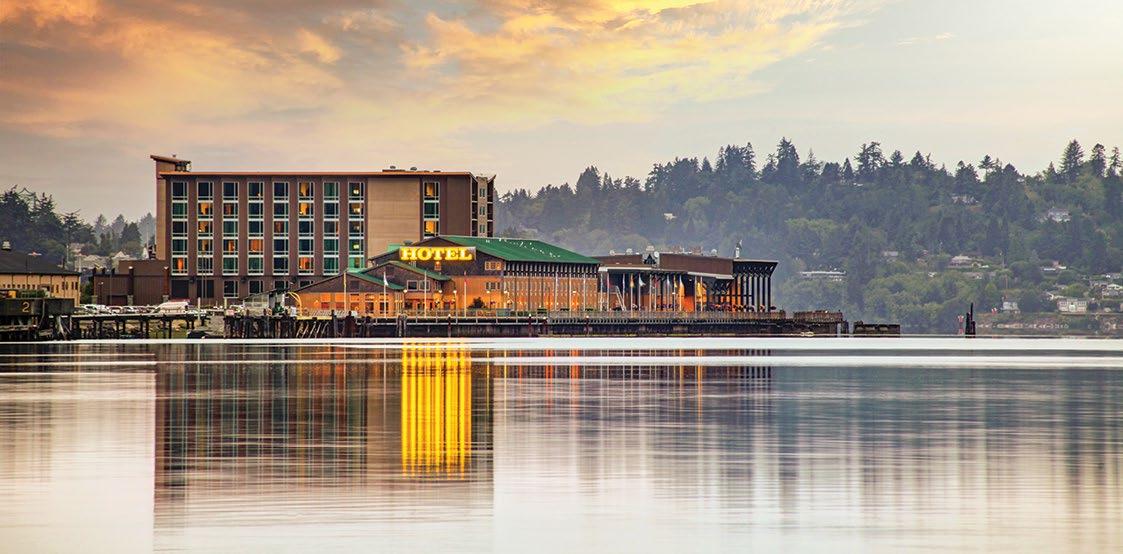
KO-KWEL CASINO RESORT
North Bend, Medford
Ko-Kwel Casino Resort, owned by the Coquille Indian Tribe, offers distinctive entertainment experiences in Southern Oregon, reflecting the tribe’s commitment to hospitality and entertainment.
The coastal destination in North Bend sits along the scenic Coos Bay waterfront, where guests enjoy vibrant gaming with an expansive selection of slot machines and table games. Comfortable accommodations and an RV park create a true resort escape. The property is also a sought-after venue for meetings, events and gatherings. The newly added Ko-Kwel Spirits Distillery and Tasting Room brings a refined touch alongside Bogeys Cigar Lounge and a golf simulator.
Inland, the Medford location offers high-energy casino entertainment, the Bear Creek Golf Center with a Toptracer digital driving range and nearby accommodations at Compass Hotel Medford by Margaritaville.
KoKwelResorts.com; 541-756-8800
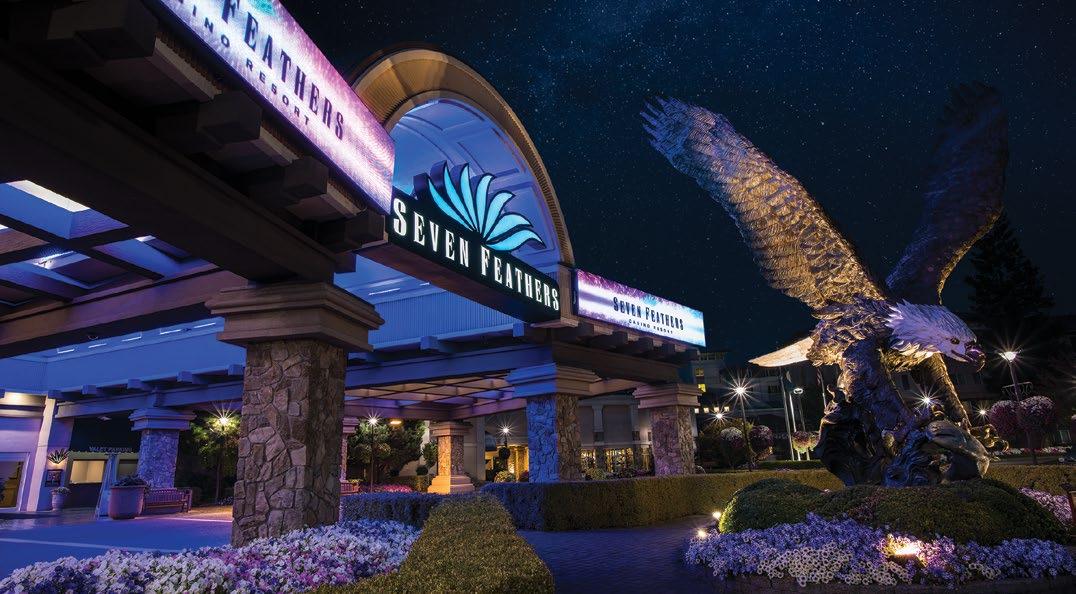
SEVEN FEATHERS CASINO RESORT
Canyonville
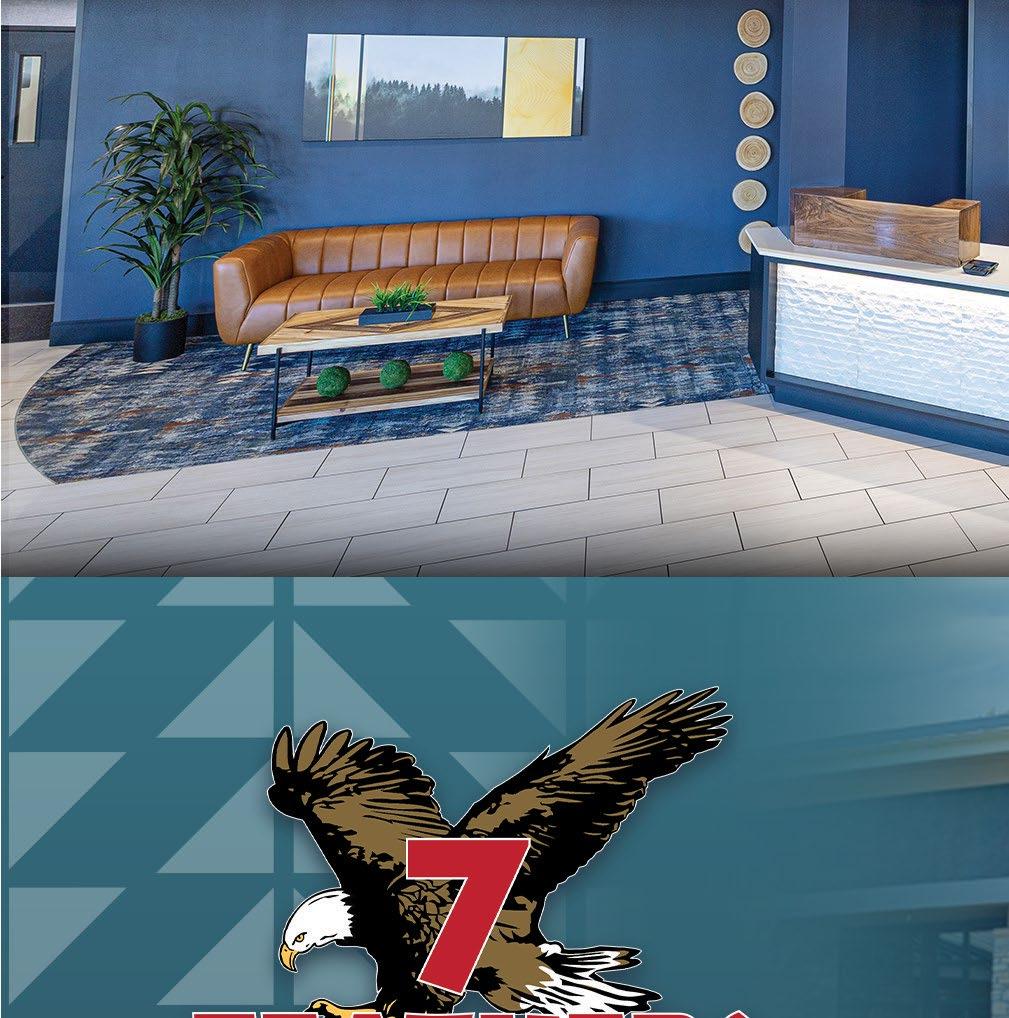
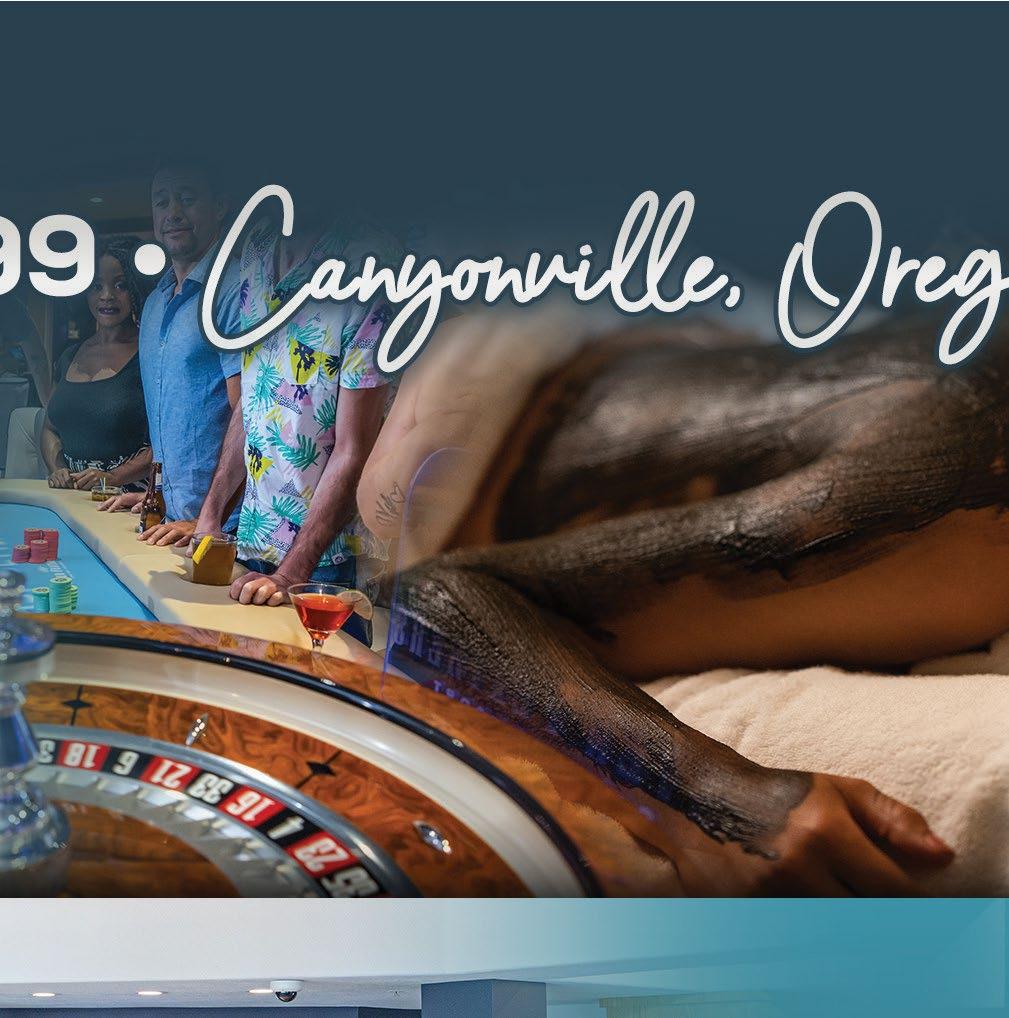
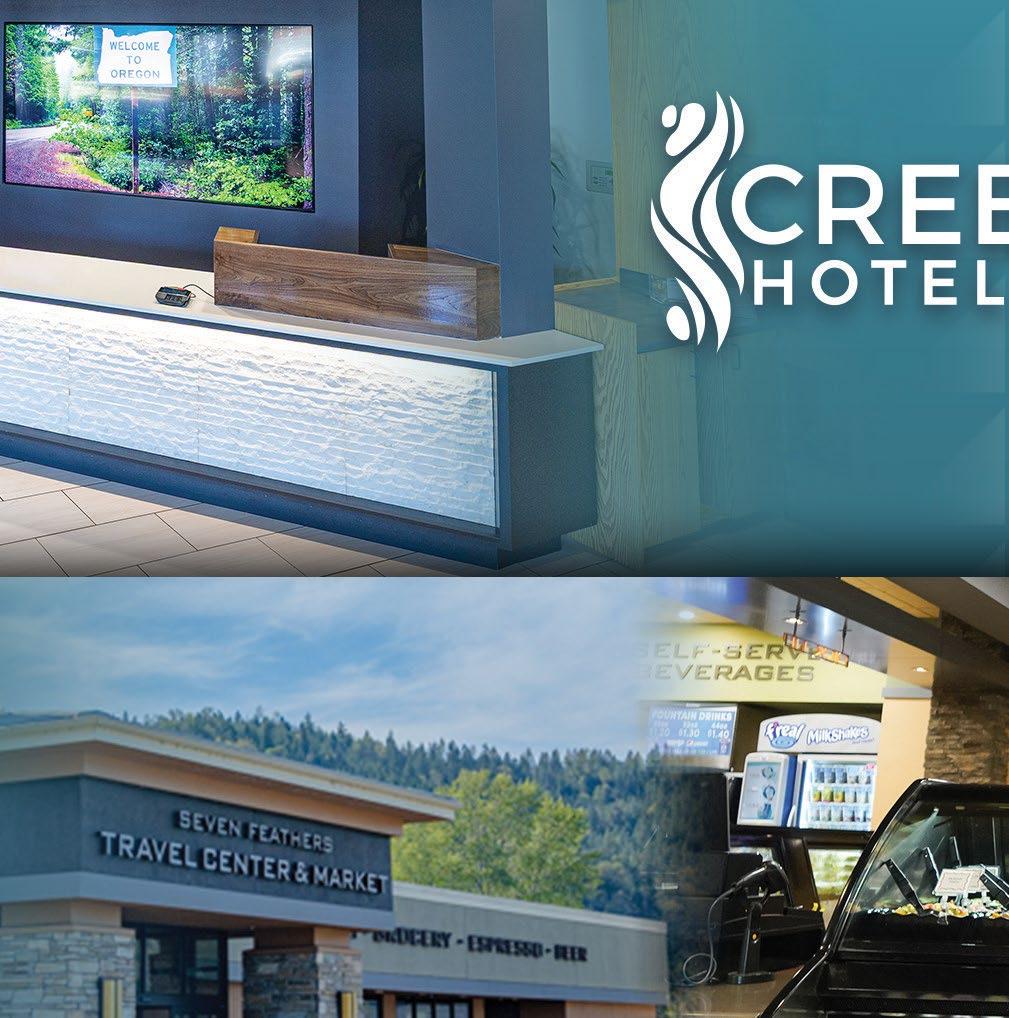
A key destination between Roseburg and Grants Pass, Seven Feathers Casino Resort is conveniently located minutes off Interstate 5 in Southern Oregon. Lush lawns and landscaping welcome guests to this full-service resort owned and operated by the Cow Creek Band of Umpqua Tribe of Indians. Visitors will find a 300-room hotel, an indoor pool and other amenities, as well as seven dining venues that include the K-Bar Steak House and freshly made sushi in the Steelhead Lounge. There’s nonstop gaming action in the casino, with hundreds of slot machines, table games, video keno, video poker and bingo, plus a busy calendar of top-name music performers and comedians, expos, sporting events and more.
Guests can rest and recharge with a visit to the River Rock Spa, home to an array of soothing massages and aromatic body treatments, along with a full salon, soaking pool, sauna and steam room. The resort makes the perfect base for enjoying area wineries or adventuring in the beautiful Umpqua Valley. It’s well equipped to meet all travelers’ needs, with RV sites and Seven Feathers Truck & Travel Center complete with fuel, truck services, and a convenience store and deli.
SevenFeathers.com; 800-548-8461
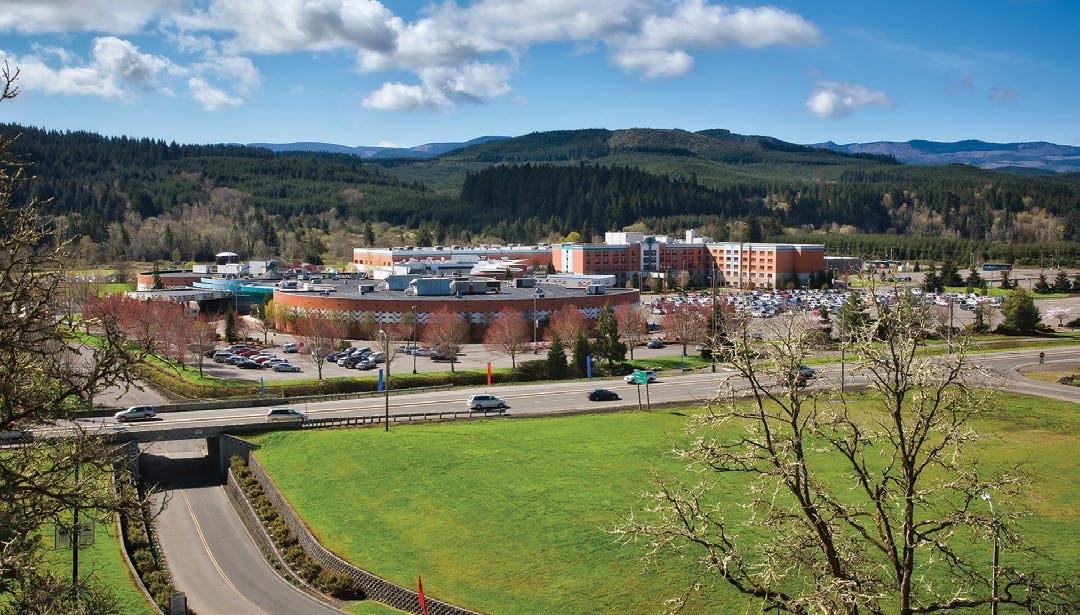
SPIRIT MOUNTAIN CASINO & LODGE
Grand Ronde
Just 60 miles south of Portland, the Confederated Tribes of Grand Ronde welcome visitors to the largest casino and entertainment destination in Oregon. A 90,000-square-foot gaming floor pulses with the excitement of dozens of table games, 2,000 slots, blackjack, Let It Ride, craps, pai gow, roulette, Texas Hold ’Em, EZ Baccarat and Midi Baccarat coming soon! A sportsbetting lounge with a high-definition video wall is the place to
wager on all the biggest professional and college sporting events. Plenty of food and beverage options flank the casino floor, including Mountain View Sports Bar; Amore, an AmericanItalian-style venue; Jalapeño’s, a quick-serve, fresh Tex-Mex outlet; and the newly opened Happy Dragon, family owned and operated, serving traditional Chinese cuisine. Spirit Mountain Casino has also partnered with 10 Barrel Brewing Co. to create a new venue, 10 Barrel Brewing Hop Yard. The Hop Yard pays homage to tribal members who worked in the local hop yards with historical photos throughout the restaurant. The menu hosts a variety of tasty pub items and a rotating selection of beers on tap.
Spirit Mountain’s Event Center hosts a variety of headlining concerts, Vegas-style entertainment, expos, car shows and more. It’s also an ideal full-service venue for receptions and conferences featuring a 17,500 square event space. It’s all just steps from the Spirit Mountain Lodge, a luxurious resort experience with newly remodeled rooms for a range of budgets. The resort also accommodates RVs with free on-site parking for its Coyote Club members.
SpiritMountain.com; 503-879-2350
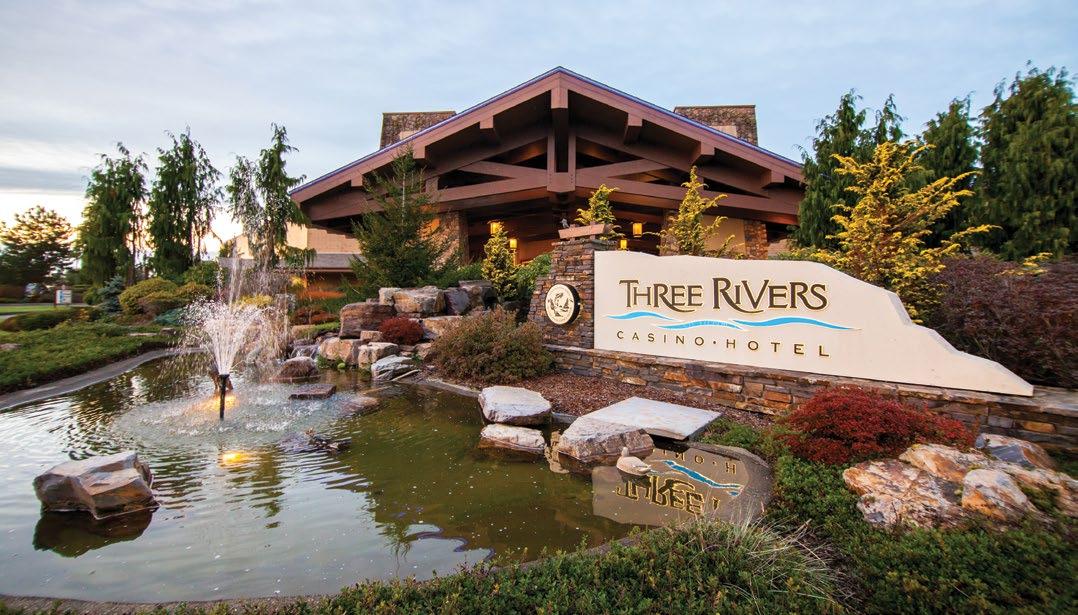
THREE RIVERS CASINO RESORT Florence and Coos Bay
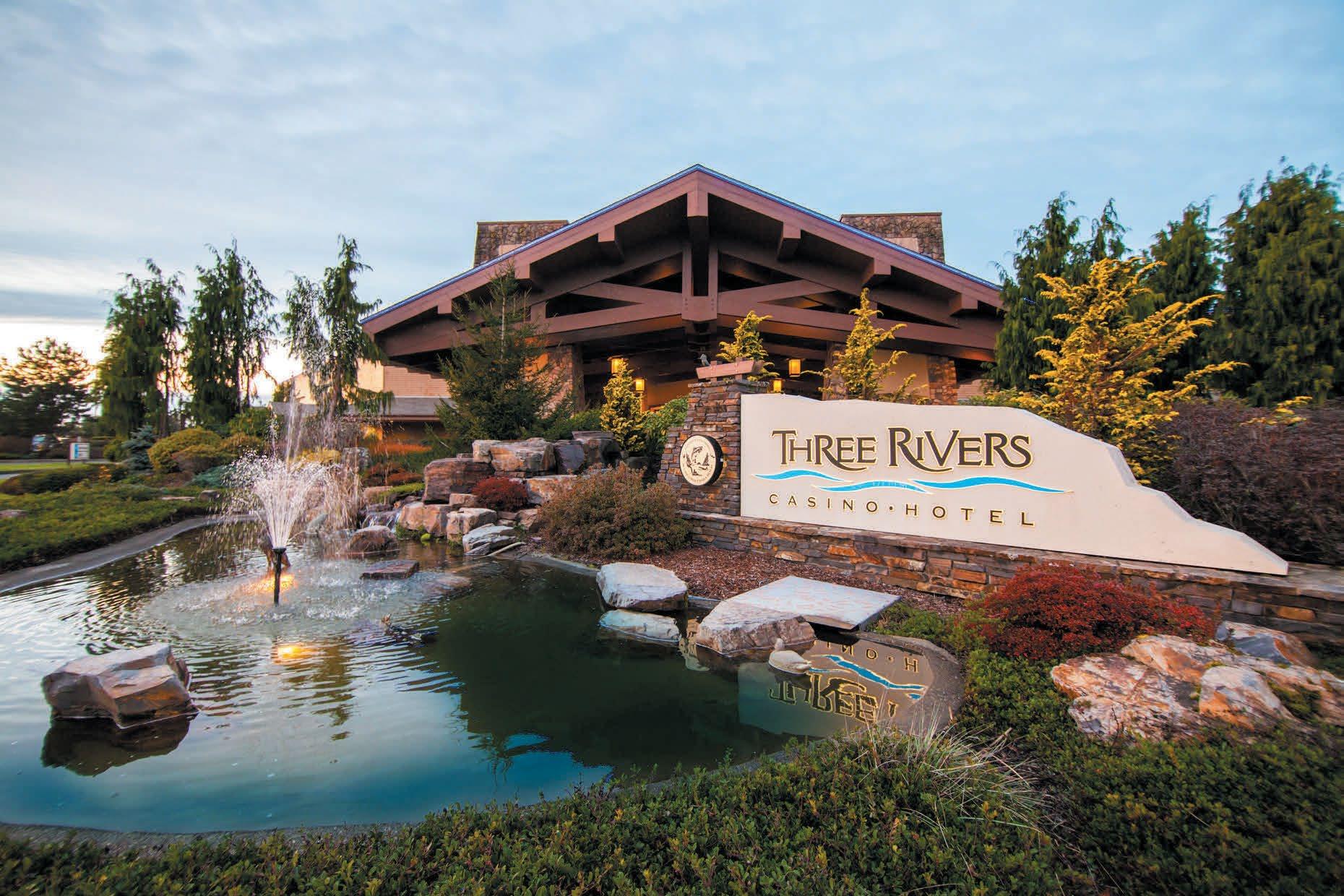
With two locations on the Oregon Coast, the Confederated Tribes of Coos, Lower Umpqua and Siuslaw Indians welcome guests with entertainment options as expansive as the Central Coast itself. In the delightful community of Florence, the 100acre casino resort near Old Town offers an amenity-rich hotel, an array of slots and table games, meal options ranging from fine dining to food-court convenience, and a 700-seat concert venue that hosts headliner music acts. Its neighboring Ocean Dunes Golf Links makes the most of the region’s beauty, winding among wild sand dunes and native sea grasses.
Fifty miles south, the Three Rivers Casino in Coos Bay adds more betting action with 250 games, tournaments, sweepstakes and other events. Its Café 1297 is one of the most popular dining spots in town, with specialties like fish tacos, oven-roasted prime rib and smoked brisket on its rotating menu. ThreeRiversCasino.com; 877-374-8377 (Florence), 541-808-9207 (Coos Bay)
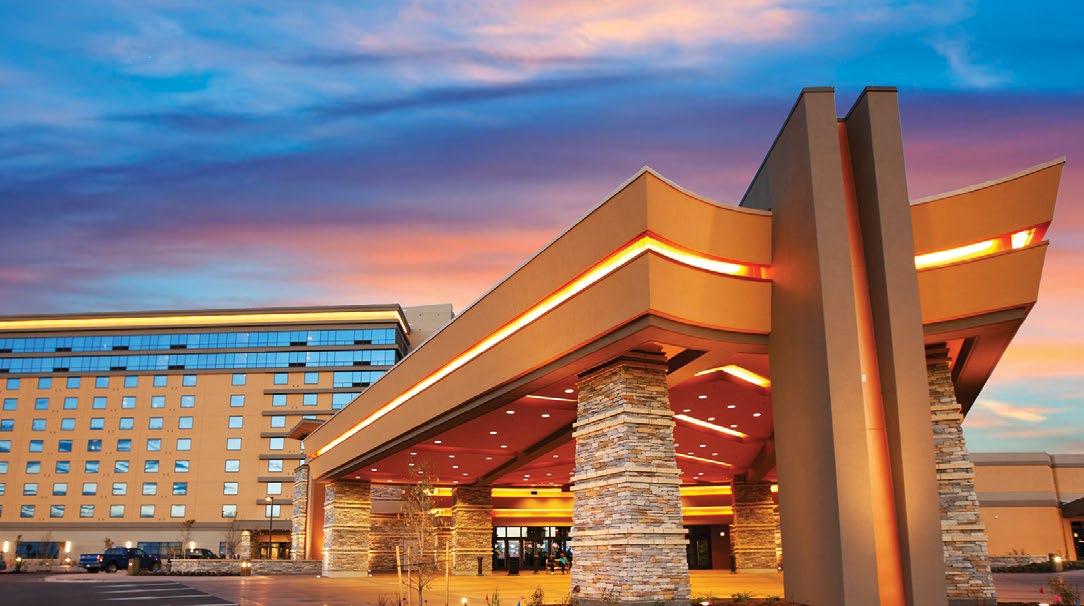
WILDHORSE RESORT & CASINO
Pendleton
Located just off I-84 at Exit 216, Wildhorse Resort & Casino is the premier family destination in Eastern Oregon and Southeast Washington. Proudly owned and operated by the Confederated Tribes of the Umatilla Indian Reservation, Wildhorse delights guests with some of the region’s finest dining, championship golf, an expansive casino with more than 1,100 slot machines, a cineplex, bowling alley and accommodations that range from tower hotel suites to an on-site RV park.
The resort’s array of eateries suits every taste and budget. With sweeping views of the Blue Mountains, Plateau sets the standard for fine dining, featuring the freshest ingredients from the Northwest. Players of all levels enjoy the challenge and beauty of the Wildhorse Golf Course, a meticulously maintained course that hosts the annual Wildhorse Ladies Golf Classic. Its lush fairways weave across the high desert landscape, dotted with numerous lakes and bunkers. Another 18 holes await at the nearby Golf Course at Birch Creek, a staple of the local golf community since 1957.
What’s more, Wildhorse is only getting better: A $100-million expansion is underway that adds a second 10-story hotel tower, new restaurant and 30,000-square-foot event center that will expand its already action-packed entertainment calendar. Look for the bigger and even better Wildhorse Resort & Casino in 2027. WildhorseResort.com; 800-654-9453
Lincoln City Portland Confederated Tribes of Grand Ronde
Confederated Tribes of Grand Ronde
Based in the foothills of the Coast Range, the Confederated Tribes of Grand Ronde comprise a multitude of Native tribes from the Pacific Northwest. They include the Kalapuya of the central river valleys; the Chinook along the Columbia River; the Tillamook along the Coast; and the Molalla, Umpqua, Rogue River, Chasta and others to the south. For generations, their people fished, hunted, gathered, traveled and traded, establishing centuries-old cultures in homelands that stretched across what is now called Western Oregon, Southwest Washington and Northern California.
Their way of life was forever altered in the 1800s with western expansion, when more than 30 tribes and bands were forced from their lands and relocated to a 61,000-acre reservation along the Yamhill River in the Coast Range. Before long, most of that land was taken away too, along with their federal tribal recognition and rights. People whose self-sufficiency and connection to place dated back thousands of years were left without a home in their own homeland. It took a deep toll.
Through decades of injustice, the tribes persevered and eventually triumphed. In the 1980s, they succeeded in reestablishing federal recognition as the Confederated Tribes of Grand Ronde, restoring their tribal rights in the eyes of the federal government and regaining a portion of their lands.
It proved a powerful foothold on the path back to self-sufficiency. Today 11,500 acres of that original reservation allotment is the home of a strong and successful tribal confederation. Among the forested hills and verdant river valleys 60 miles southwest of Portland, the Confederated Tribes of Grand Ronde welcome guests to an array of tribal enterprises and visitor attractions. They include the Spirit Mountain Casino, the Spirit Mountain Lodge, the Big Buck Campground, and the Chachalu Tribal Museum and Cultural Center, celebrating a tapestry of cultures and a resilient spirit that defines the tribes today.
TEACHING TRIBAL CULTURE
The Confederated Tribes of Grand Ronde thoughtfully preserve and share their rich cultures with tribal members and the broader public. Through exhibits, photos and ceremonial artifacts, the Chachalu Tribal Museum and Cultural Center shares the stories of the tribes’ past losses and inspiring revitalization. A smartphone app lets museum visitors participate in games, quizzes, songs and stories, and hear snippets of the Chinuk Wawa language.
Anyone with access to the internet can delve deeper into tribal language, history and artisan skills thanks to a series of instructional videos and documentaries produced by the Grand Ronde Tribes’ Cultural Resources Department. Viewers can learn the basics of basket making , beading , and how to make percussion instruments like traditional drums and clap sticks
To improve understanding and accuracy of tribal
history, the tribes have developed classroom-ready curriculums for Oregon teachers. These ageappropriate educational materials include lesson plans, maps and videos for students from kindergarten through high school on topics ranging from tribal governance to Native language.
THE PEOPLE OF THE FALLS
The Grand Ronde Tribes have a special connection to Willamette Falls, the village home of their Clackamas and Clowewalla ancestors and a vital site for harvesting salmon and lamprey. They know it simply as tumwata, the Chinook jargon word for waterfall. After the tribes were evicted from their lands in the 1850s, these spectacular horseshoeshaped falls — the most voluminous waterfall in the Northwest — succumbed to development and industrial use.
WILLAMETTE FALLS (TUMWATA)
In 2019 the Confederated Tribes of Grand Ronde reacquired a portion of this sacred site. They are restoring the ecological health and reestablishing their cultural connections to this historical homeland.
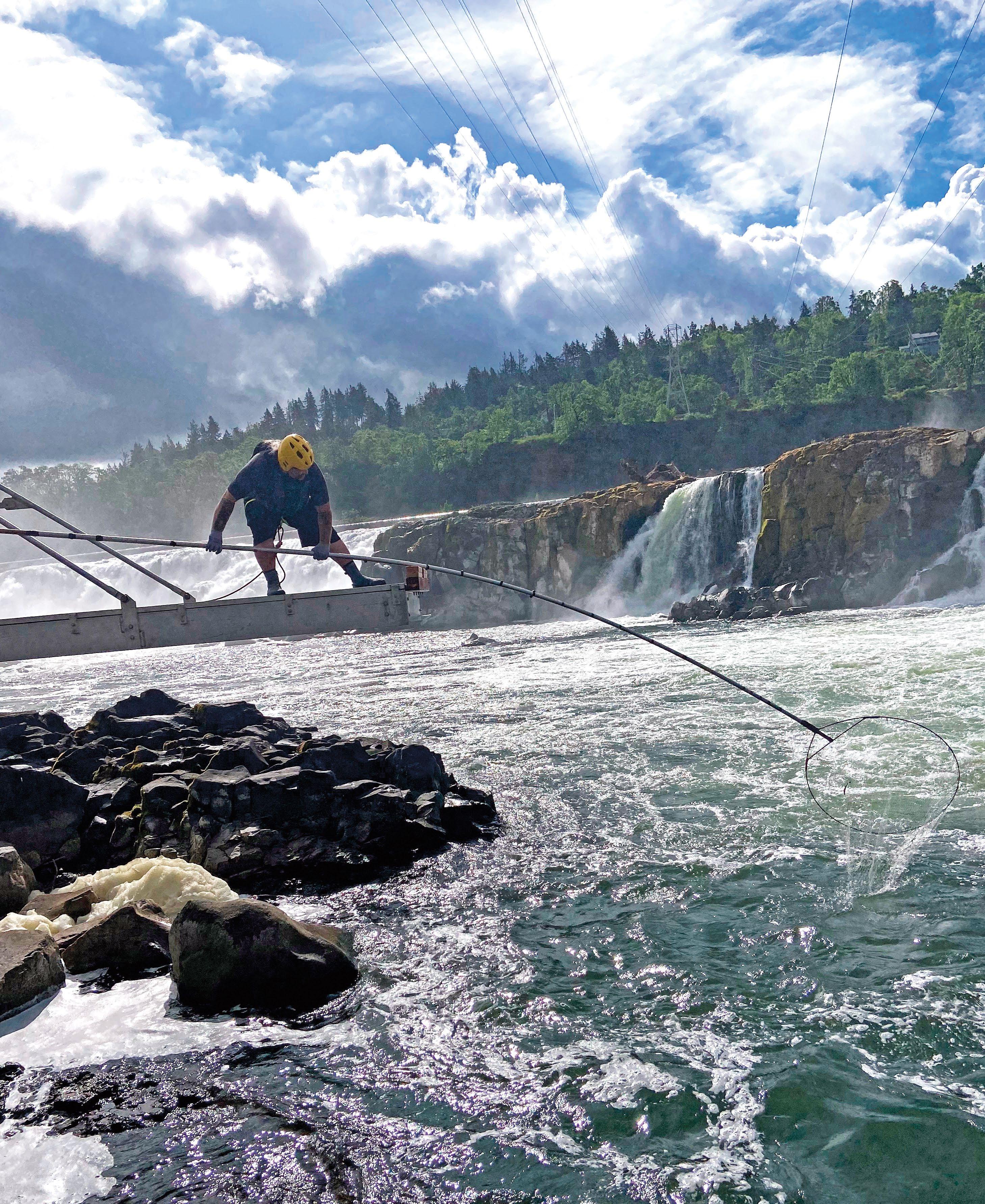
In 2019 the Confederated Tribes of Grand Ronde reacquired a portion of this sacred site when they purchased the abandoned Blue Heron Paper Mill at the falls. Now the tribes are restoring the ecological health of tumwata and reestablishing their cultural connections to this historical homeland.
A significant ceremonial first step was erecting a fishing scaffold at the falls to allow the tribes to exercise their traditional tribal fishing rights. Now extensive restoration work is underway: removing industrial buildings and waste, repairing the natural water channels, reestablishing native plantings and restoring riparian habitat for native fish, birds and other wildlife.
Working with state, federal, local and tribal partners, future plans call for a riverwalk that provides public access to the falls, as well as tribal initiatives that may include a tribal center, educational spaces and hospitality venues.
TRIBAL GENEROSITY
Not only do the Confederated Tribes of Grand Ronde support the local economy as Polk County’s largest employer, the
success of their Spirit Mountain Casino and Spirit Mountain Lodge supports millions of dollars in charitable giving each year. The Spirit Mountain Community Fund embodies the Native tradition of the potlatch, where good fortune is shared with others. Through the Community Fund, the tribes have donated more than $89 million to nonprofit organizations in Northwest Oregon, supporting sustainability, inclusion and the advancement of underserved communities.
TRIBAL CELEBRATIONS
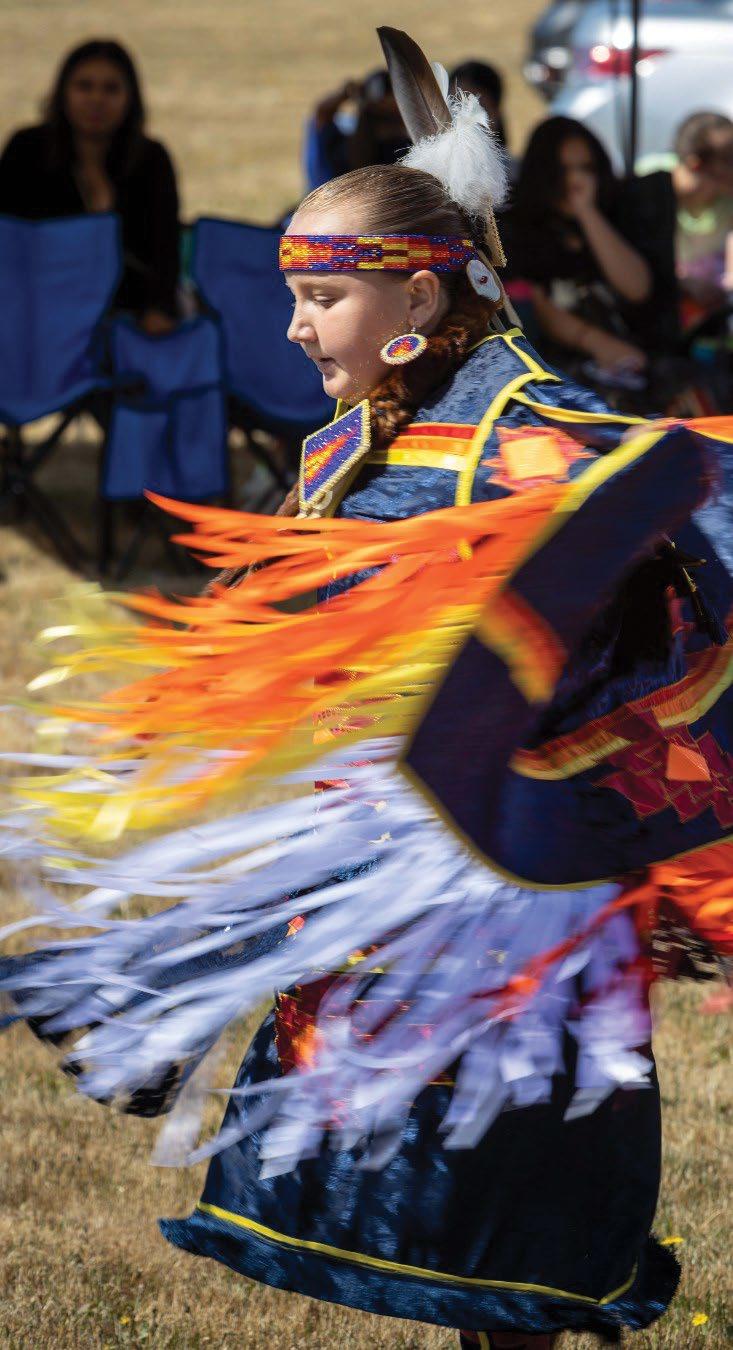
July brings together tribal and nontribal veterans from all walks of life — some in Native regalia, others astride motorcycles — honoring them for their service at the Veterans Powwow. The Annual Contest Powwow in August is the biggest event on the Grand Ronde calendar and one of the largest powwows in the western United States. Highlights of the vibrant social event include a communal salmon dinner and tribes from across North America competing in several dance competitions in full Native regalia. The public is welcome to attend both events.
NEARBY VISITOR ATTRACTIONS
Situated between Portland and the Coast, the tribes’ Spirit Mountain Lodge makes an ideal base for exploring the region. Campers also find a welcome spot on tribal lands: Big Buck Campground has sites for tents and RVs along Agency Creek in Grand Ronde, along with access to several miles of maintained trails. It’s a short drive east into the Willamette Valley wine country, where YamhillCarlton wineries have helped build Oregon’s worldwide reputation for pinot noir. Less than a half-hour west, coastal towns like Pacific City and Neskowin invite visitors to enjoy sandy beaches, forested headlands, fresh seafood and other delights of the Oregon Coast Southeast of the Grand Ronde Reservation near Dallas, Baskett Slough National Wildlife Refuge preserves some of the disappearing native ecosystem of the Willamette Valley, a nutrient-rich mix of marsh and grasslands. The 2,500acre refuge is a magnet for migrating waterfowl. Nearby Black Rock Mountain attracts mountain bikers for a network of free-ride trails that has earned the coveted “Epic Ride” designation from the International Mountain Bike Association.
From top: Annual Contest Powwow; Chachalu Tribal Museum and Cultural Center

Lincoln City
Confederated Tribes of Siletz Indians
With their ancestral lands spanning more than 20 million acres from the Pacific Coast to the Cascade Range, the Confederated Tribes of Siletz Indians is one of the most diverse confederations on a single reservation in the United States. It comprises more than 30 bands, including the Clatsop, Chinook, Klickitat, Molala, Kalapuya, Tillamook, Alsea, Siuslaw/Lower Umpqua, Coos, Coquille, Upper Umpqua, Tututni, Chetco, Tolowa, Takelma, Galice/Applegate and Shasta. Historically, the communities operated independently, rooted to their place with diverse landscapes and languages, yet twined together by broad networks of trade and kinship. Because the Confederated Tribes of Siletz Indians are made up of a diverse group of Indigenous peoples, they represent an array of cultural practices, histories, and ways of living that differ from region to region. Trade economies ranged from timber to fur and varied depending on the season. Coastal communities had diets rich in seafood and shellfish, while deer and elk were food staples for inland communities. Cuisines were rounded out with regional ingredients like salmon, berries, nuts and herbs that still make their way to Siletz family tables today. When you visit, your experience will be enriched by many histories and cultures.
HISTORY OF THE HOMELAND
Westward migration in the 1800s nearly destroyed the lives and lifeways of these Indigenous communities, as the empires of Europe and the young United States came to covet the furs, timber, land and other riches of what became the Oregon Territory. The Donation Land Claim Act of 1850 further disrupted their lives, granting 320 acres to every adult white male. Along with devastating losses of land, European encroachment led to violent attacks against Indigenous people, destroyed tribal foods and other resources, and introduced disease that decimated communities. Against this tragic background, federal officials began chaotic, halting negotiations to convince Indigenous tribes to give up their homelands. In 1855 President Franklin Pierce set aside 1.1 million acres for the Siletz Reservation as part of a treaty negotiation. Almost immediately the treaties were ignored, and in 1954 the Western Oregon Indian Termination Act abolished the tribe’s federal standing altogether. Remaining reservation land was sold, deeded or foreclosed, and almost none remained in the hands of tribal members. After decades of fighting for their status, in 1977 the Confederated Tribes of Siletz Indians regained federal recognition, the second tribe in the nation and the first in Oregon to do so. The tribe currently holds about 16,000 acres of land, drastically less than the original treaty of 1.1 million
acres, let alone their ancestral homelands. Yet they continue to thrive today, proudly sustaining their heritage and culture.
TRIBAL CELEBRATIONS
The Confederated Tribes of Siletz Indians hosts its annual Nesika Illahee (“Our Land”) Pow-Wow the second weekend of August. Open to the public, the three-day celebration features traditional dancing, singing and drumming competitions, as well as food and vendor booths. The Nesika Illahee Pow-Wow takes place on Government Hill in Siletz, the core of the Siletz Reservation since the 1850s and the first property the tribe recovered in the 1980s. What was once the capital of oppression for the Siletz people is now the wellspring of their resilience.
To mark the anniversary of the tribe’s restoration of federal recognition, Chinook Winds Casino Resort hosts a Restoration Pow-Wow on the closest Saturday to November 18. Held indoors, it too features dancing, singing, drumming, and food and vendor booths that the public is invited to attend.
VISITOR ATTRACTIONS
“It’s Better at the Beach” says the slogan of the Chinook Winds Casino Resort in Lincoln City, and that’s exactly where you’ll find this oceanfront
CASCADE HEAD
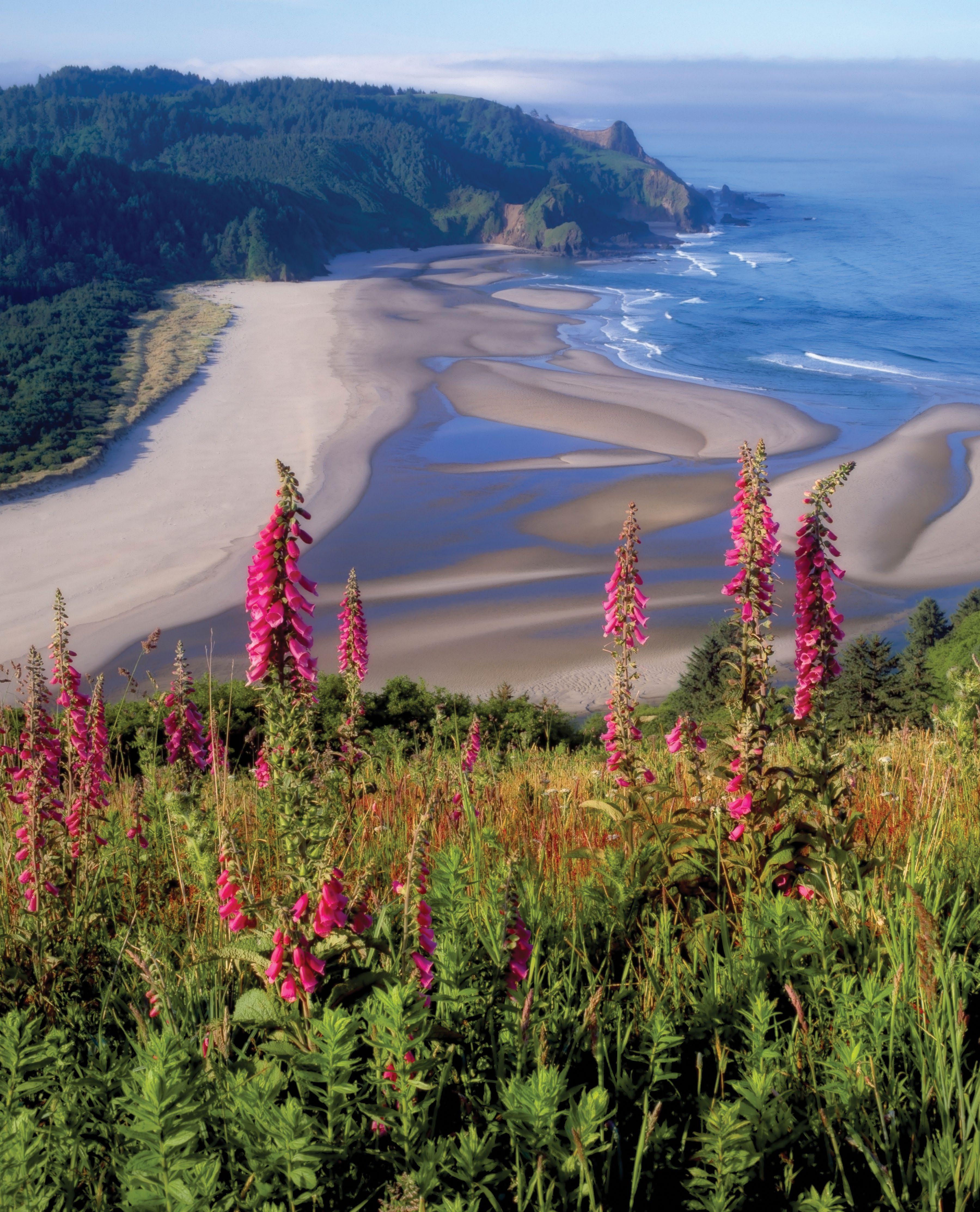
The Salmon People of the Tillamook Tribe once occupied this area, which is now the UNESCO Cascade Head Biosphere Reserve.
Newport Confederated Tribes of Siletz Indians
entertainment complex owned and operated by the Confederated Tribes of Siletz Indians. Its many amenities include gaming, dining, live entertainment, an 18-hole golf course and miles of Pacific beaches right outside the door. Stay at the resort hotel or camp at the tribal-owned Logan Road RV Park just two blocks away, with 24-hour shuttle service to the casino and access to its pool and spa.
Paddling Oregon’s coastal waters is one of the best ways to experience the region. The Lower Salmon River, Siletz Bay National Wildlife Refuge and Devil’s Lake State Recreation Area are just a few examples of protected waters perfect for kayaking. You’ll find plenty of public put-ins along the beautiful Siletz River, along with locally owned guide services for those who want to fish. Experience the open waters of the Pacific on a fishing charter or whale-watching tour out of Depoe Bay or Newport. Yaquina Head and Newport’s South Jetty are popular spots for active sports like surfing and kiteboarding.
For those more comfortable enjoying the water from dry land, the region offers
dozens of tide pools and coastal trails that are suitable for all activity levels. You can also get a true taste of the Pacific by indulging in fresh and sustainable seafood at restaurants dotting many of these coastal communities.
WORKING FOR OTTERS AND CLEANER WATERS
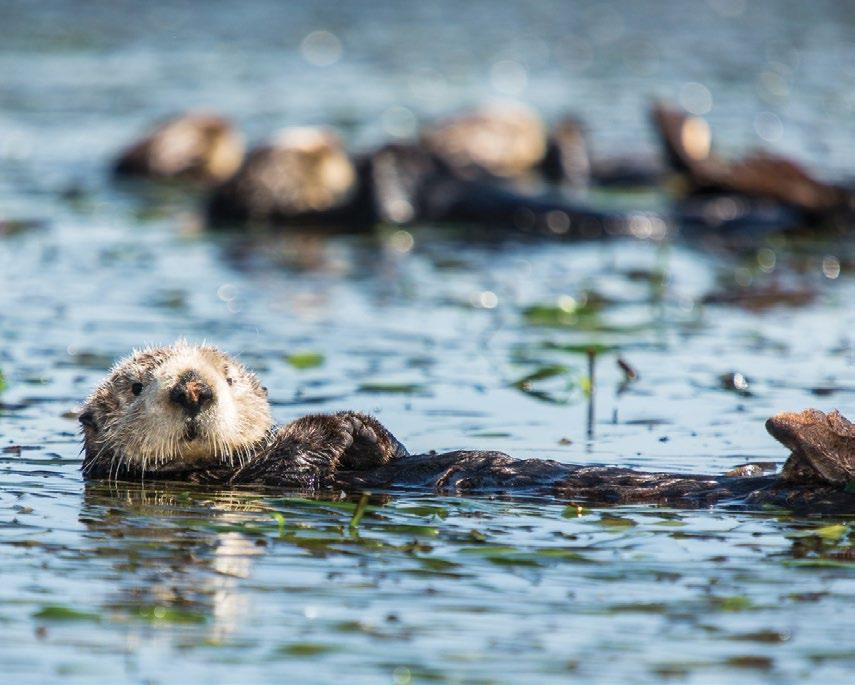
A keystone species native to the Oregon Coast, the elakha (sea otter) has been absent from its home waters for more than a century, extirpated in the 1800s by a voracious European fur trade. In 2018 Siletz tribal members Peter Hatch and Robert Kentta got together with other tribal and conservation leaders to form the Elakha Alliance, a nonprofit working to restore a healthy population of sea otters to strengthen the region’s marine and coastal ecosystems. A January 2022 study noted that the reintroduction of sea otters to the Oregon Coast is possible and will directly improve the health of local kelp forests, which in turn help combat environmental stressors caused by climate change.
The tribe is also engaged with the Salmon Drift Creek, Siletz and other watershed councils to protect healthy wildlife resources, to restore water quality and to maintain access to waterways for ancestral significance, tradition and ceremony. These projects include controlling invasive species in the area; replanting foliage, grasses and native shrubs to shorelines; and restoring natural tributary channels.
CULTURAL HIGHLIGHTS
The Siletz Tribal Arts and Heritage Society is the driving force behind Ghii Dee-Ne Dvn (“A Place for the People”), a new tribal cultural center that will complement the existing Siletz Community Center on Government Hill. Inside, visitors will have a chance to see historical documents and artifacts, as well as learn more about the cultures and histories of the Siletz Tribe. Ghii Dee-Ne Dvn is under construction in 2026. For more information visit SiletzArtsHeritageSociety.org
The Siletz Tribe proudly supports the broader community through the Siletz Tribal Charitable Contribution Fund Through the fund and other resources, the tribe has distributed more than $21.2 million to nonprofit organizations throughout Oregon and beyond.
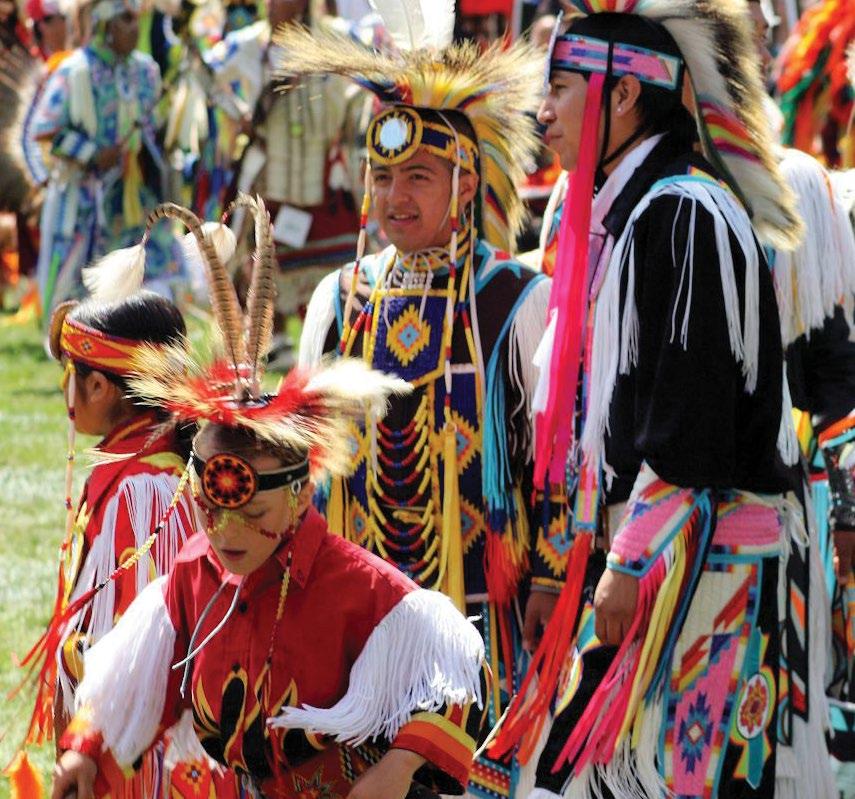
From top: Nesika Illahee Pow-Wow; sea otters; salmon bake


Coos Bay
Confederated Tribes of Coos, Lower Umpqua and Siuslaw Indians
Medford
Confederated Tribes of Coos, Lower Umpqua and Siuslaw Indians
A sense of abundance and gratitude defines the Confederated Tribes of Coos, Lower Umpqua and Siuslaw Indians, a cultural identity that springs from the richness of their ancestral homeland. Since long before written records, the miluk (Coos), hanis (Coos), shayuushtl’a (Siuslaw) and quuiich (Lower Umpqua) people thrived along the freshwater rivers and saltwater bays of what today is called the Central and South Coast of Oregon. Their historic territory extended some 2,500 square miles, from the wind-sculpted sand dunes along the Pacific to the ancient forests of the Coast Range.
Deeply connected with this ruggedly beautiful landscape, the people had everything they needed. They built villages of cedar-plank houses; crafted clothing and utensils; and enjoyed a varied diet of shellfish, fish, game and edible plants. Even when faced with violent transgressions and devastating loss of their life-giving lands, the tribes continued to carry on their values, celebrating the abundance of their culture.
The lessons and knowledge passed down from ancestors continue to guide today’s tribal citizens, who have rebuilt a strong and successful community on Oregon’s Central and South Coast. The tribes’ Three Rivers Casino Resort is a top regional destination and a mainstay of the local economy, in turn strengthening several other tribal businesses and supporting vital tribal services. In 2022 the casino distributed $6 million to the tribes’ government programs, funding housing, health care, cultural education, youth outreach, environmental-restoration work and more.
The tribes’ generosity and compassion are also reflected in the Three Rivers Foundation, which seeks to enrich the health and welfare of the land and the people of its historical homelands. The foundation awarded $1.4 million to more than 100 grassroots community organizations in 2021, and has awarded nearly $2.7 million since it began awarding grants in 2012.
Visitors to the Central and South Coast may feel a sense of abundance, too, when they experience the area’s stunning environment of clear-running rivers, thick forests, beaches and dunes. It is a gift from the generations who came long before and the hard work of current tribal citizens, staff and partners implementing restoration efforts — a reminder to all to cherish and care for these priceless waters and lands while visiting.
ENJOY TRIBAL WATERS: WATER IS LIFE
Waterways characterized the tribal lands of the Coos, Lower Umpqua and Siuslaw people. You may see tribal citizens paddling those same rivers and lakes today in traditional dugout canoes. For visitors, getting out on the water is a fitting way to enjoy the region. In the Coos watershed, paddlers can experience the gentle Coos River upstream or put in at the South Slough, where a mix of tidal and freshwater wetlands attracts a wide variety of birds.
NEARBY VISITOR ATTRACTIONS
With its stunning scenery, winsome coastal towns, and mile after mile of sandy beaches, Oregon’s Coast has long been a favorite vacation destination. In fact, several vacations’ worth of attractions and outdoor
Near Reedsport, Tahkenitch Lake is a meandering freshwater lake with good fishing and undeveloped shoreline to enjoy. Until becoming landlocked by shifting dunes, the lake was actually a tidal estuary, and it holds special significance for the tribes: Materials found at ancient homesites here have been dated to 8000 B.C.E. — more than 5,000 years older than the pyramids of Egypt. (Remember that it is illegal to disturb or remove any artifacts.)
CAPE ARAGO
Cape Arago State Park is an ideal place for whale watching and short trails that lead to beaches and tide pools.
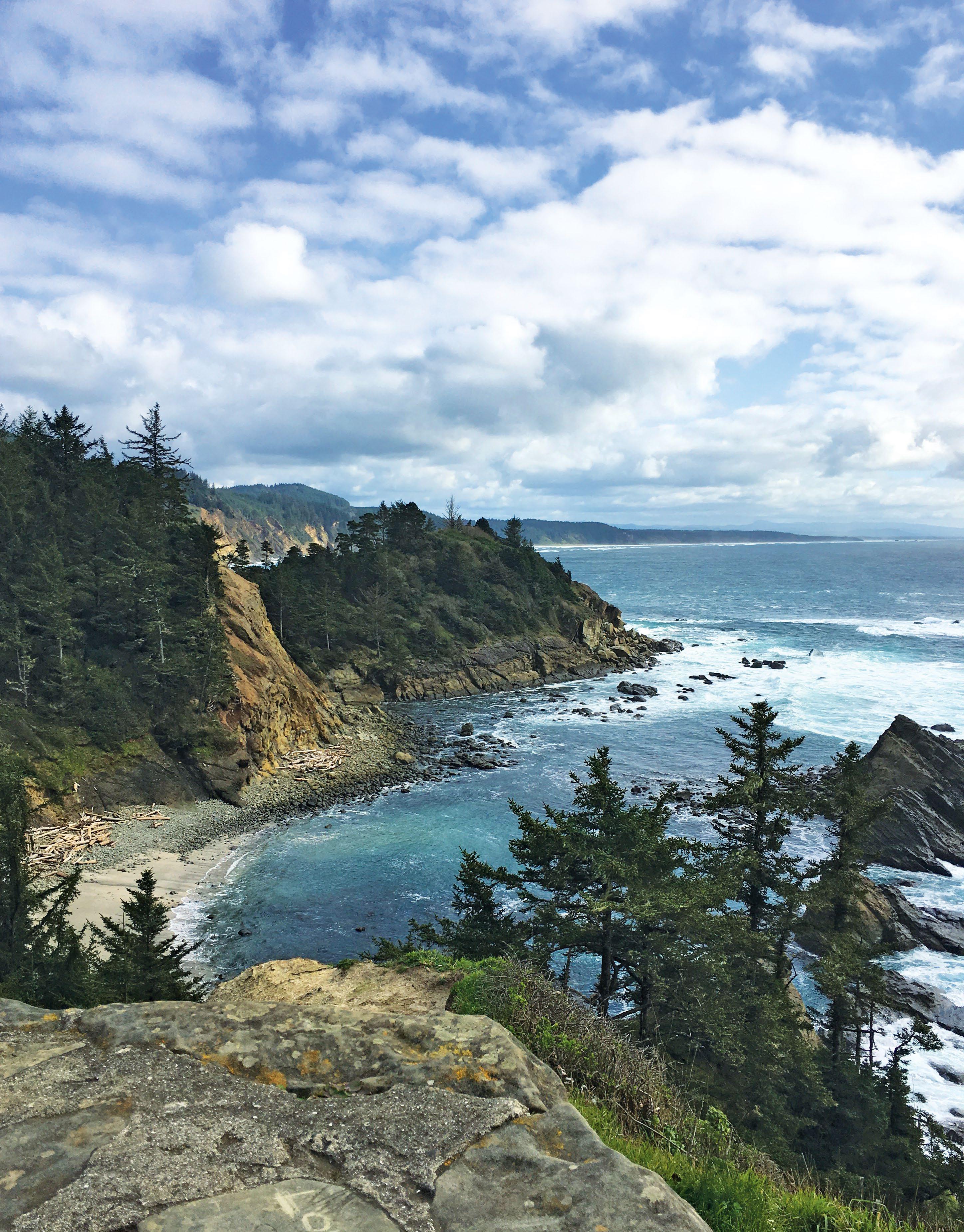
recreation await visitors from Florence to Coos Bay, the heart of the tribal lands.
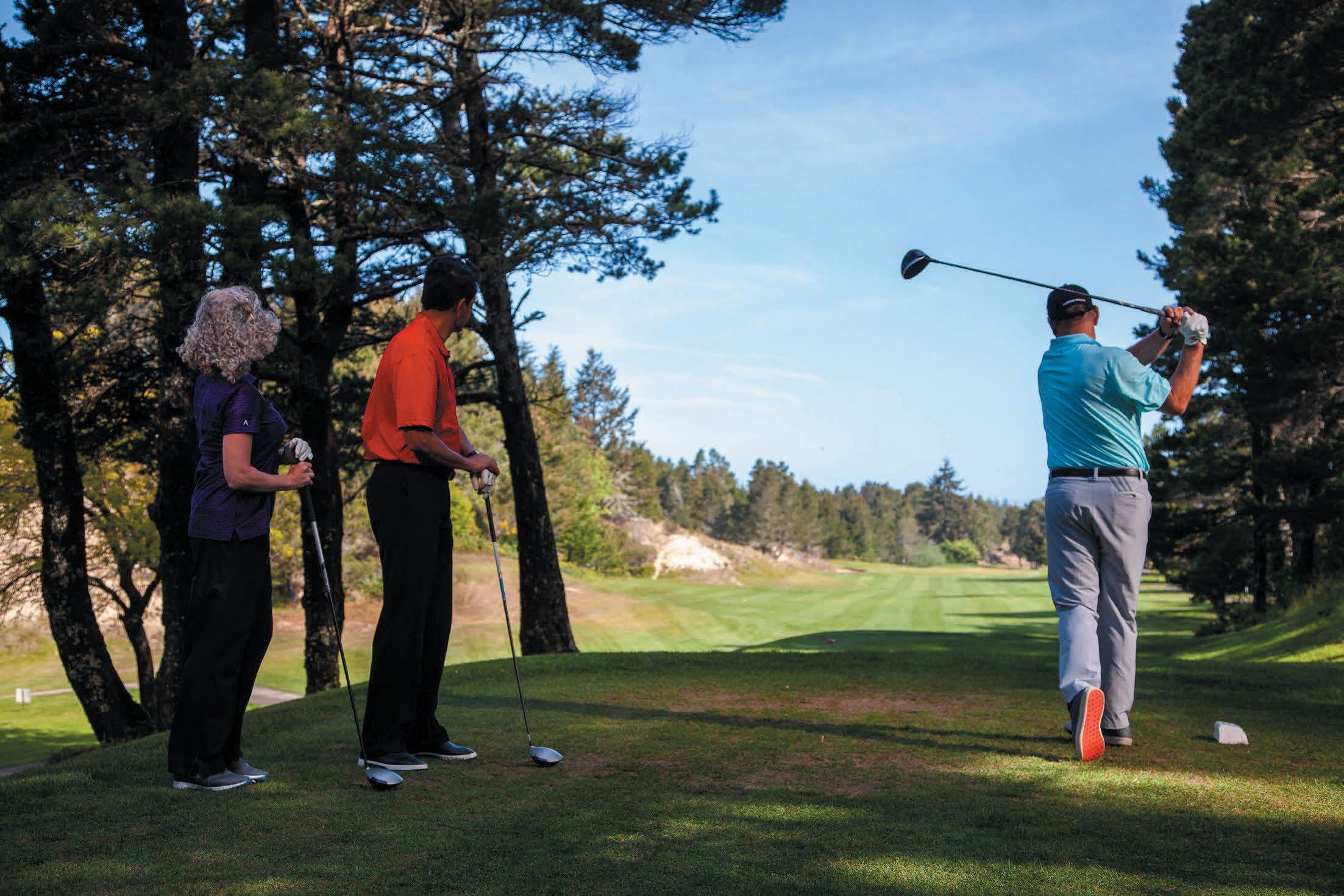
Florence sits near the mouth of the Siuslaw River, where its riverfront Historic Old Town invites a stroll past fishing boats, shops, coffeehouses and seafood eateries. Just 2 miles away, the Three Rivers Casino Resort provides a perfect base for visiting the region and taking on 18 holes at the tribally owned Ocean Dunes Golf Links, where the unique course layout winds among dunes, shore pines and beach grasses.
Dunes are a dominant feature all along the coastline south of Florence. Long stretches of sandy beach billow into dunes as high as 500 feet at the Oregon Dunes National Recreation Area, the largest expanse of coastal dunes in North America. Enjoy them on foot, on horseback or even cruising down the slopes on a sandboard. Visitors can learn more about hiking trails and other recreation opportunities at the Oregon Dunes National Recreation Area office in Reedsport. Visitors also can help the tribes in their efforts to weed out invasive species and restore the native dune ecology by volunteering with the Oregon Dunes Restoration Collaborative.
Coos Bay and Winchester Bay are known for some of the best crabbing and
sportfishing on the Coast, with boating services and charters available in the Charleston Marina and Salmon Harbor Marina. Gray whales also abound in local waters during winter migration; the Umpqua River Whale Watching Station, near the Umpqua River Lighthouse, and Cape Arago State Park are particularly good locations to see these magnificent mammals as they surface just offshore.
TRIBAL CELEBRATIONS
The Coos, Lower Umpqua and Siuslaw people celebrate and give thanks yearround through multiple ceremonies, events and restoration projects.
The annual Peace Hike, open to the public, takes place on the first day of the calendar year. It is a time for solemn remembrance of all the ancestors who were forced onto the Coast Reservation, a time to be thankful for survival, and a time of healing for tribal citizens and public alike. The hike begins in Yachats — the Alsean village yaxaik — and follows Amanda’s Trail to the Amanda Grotto. Tribes along the coast of Oregon, Washington and Canada participate in the Canoe Journey, an annual journey of large, oceangoing traditional canoes that follows a different route each year.
Traditional high-prow canoes are carved from the trunk of a western redcedar.
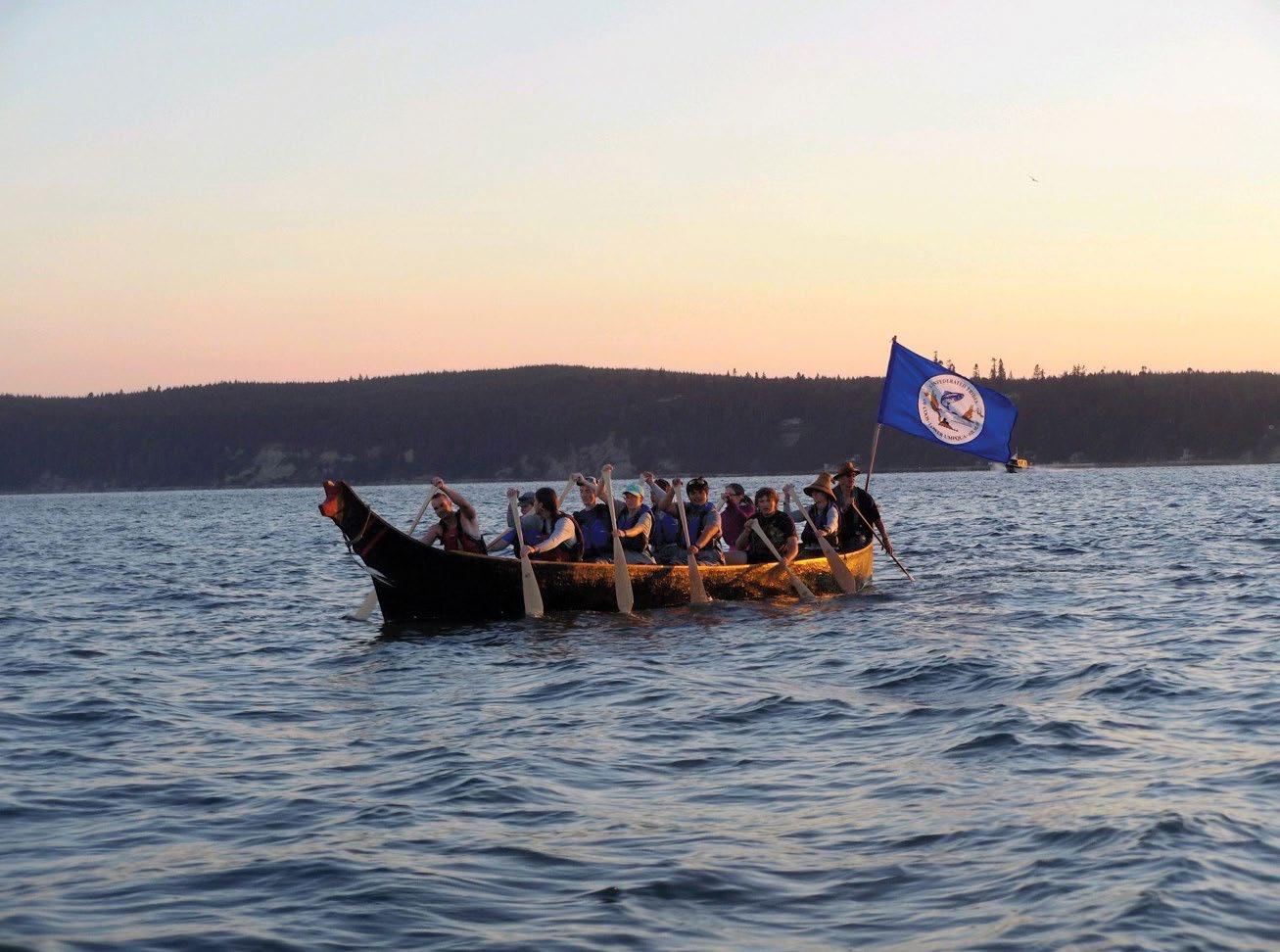
The Confederated Tribes of Coos, Lower Umpqua and Siuslaw Indians have been participating with their own dugout canoe since 2013 — and have been practicing canoe culture within their own community since time immemorial.
THE SIGNIFICANCE OF CEDAR
The western redcedar tree that thrives in Oregon’s temperate coastal environment has long been integral to the lives of the Coos, Lower Umpqua and Siuslaw people. Its wood — light and soft yet exceedingly durable and weather-resistant — made it an ideal building material. Canoes made from hollowed-out redcedar logs provided the primary source of transportation. Redcedar-plank houses made weather-tight lodging. Processed redcedar bark was made into clothing, baskets and ropes. Boughs were used for medicine. The Coos History Museum in Coos Bay has a dugout canoe and many other Native artifacts on display. Redcedar continues to play an important role in tribal life. Redcedar canoes are still used during ceremonies, journeys and in healing within their communities. Sweats take place in redcedar sweat lodges. Ceremonial dances and gatherings take place in a redcedar plank house on tribal reservation land. High school graduates often honor their tribal connection by wearing woven-redcedar graduation caps. Like their ancestors, those gathering redcedar materials remove bark and wood while leaving the tree healthy and standing. The tribes are now engaged in restoration efforts to restore much of the western redcedar forests that were lost during the late 1800s and early 1900s.
THE LAQUAWIIYAT’AS GALLERY
Located within the Tribal Hall in Coos Bay, the Laquawiiyat’as Gallery is a climate-controlled, archive-quality space that exhibits tribal artifacts and photographs offering glimpses of tribal life preand post-contact with Europeans. Its collection includes the sacred “Lottie’s Dress,” an intricately beaded buckskin gown owned by Lottie Jackson Evanoff (the daughter of Chief Doloose Jackson), recently returned to the tribe from a museum collection.




Coquille Indian Tribe
Ancestors of the Coquille Indian Tribe flourished for thousands of years on a homeland stretching across more than 1 million acres in what is today Southwestern Oregon. Although uprooted and nearly erased in the 19th century, the Coquille people held fast to their tribal identity and culture.
Today the Coquille (pronounced ko-kwel) Indian Tribe numbers nearly 1,200 citizens and is one of the Coos Bay area’s largest employers, active in hospitality, forestry, health care, construction and other ventures. The tribe proudly practices its ancient tradition of potlatch, allocating its resources to enrich the whole community. Its unofficial motto is “Take what you need and leave some for the others.”
After decades of hard work and tireless testimony, the tribe succeeded in restoring its official status with the federal government in 1989. It has reawakened traditional tribal languages, seasonal ceremonies and other expressions of its sovereignty. Its citizens include master artisans in beading, basket weaving, wood carving and contemporary mediums, carrying forward the cultural heritage of the Coquille.
The tribe has slowly regained stewardship of about 10,000 acres of its largely wooded homeland. Its loving management of the land has earned national recognition for sustainable forestry. The Coquille also partner with Oregon Department of Fish and Wildlife to co-manage 10.5 million acres in Southwest Oregon and along the Pacific Ocean.
The Coquille people take special pride in the tribe’s Community Plankhouse, a traditionally inspired cedarbuilt gathering place for feasting, drumming and dancing. The tribe has also established Kilkich, a community of rented and owner-occupied homes on tribal land near Charleston that surrounds its tribal medical and educational facilities.
The Coquille are strong, resilient and welcoming people. They invite everyone to come and enjoy the worldclass hospitality for which the Coquille Indian Tribe is known.
TRIBAL CELEBRATIONS
Historically, Oregon’s bountiful landscape provided ample flora and fauna year-round. None of these, however, match the resources provided by the ocean. Salmon has traditionally been the most widely sought food staple by the Coquille and continues to play an important role in their lives today, from its acquisition and its preparation to the ultimate enjoyment from its consumption.
The Coquille Indian Tribe recognizes the salmon’s ultimate sacrifice to feed the people with the Ko-Kwel Salmon Celebration. Marking the return of the salmon to coastal rivers, the September event also provides a stage to share the heritage, culture and traditions of the Coquille Indian Tribe and other Pacific Northwest tribes with residents and visitors. The two-day celebration includes daily performances featuring Native American dancing and drumming, a marketplace offering traditional wares and foods, bayfront canoe races, traditional games and activities for children, and a variety of cultural demonstrations
by Coquille tribal citizens.
A traditional salmon-bake dinner, with fresh salmon prepared in the time-honored Coquille open-pit manner, is the highlight of the weekend. Neighboring tribes throughout Oregon join in this celebration to share the values, traditions and culture of Native American peoples, and offer thanks to their salmon relatives. As the Coquille teach their children, potlatch means to care for one another, to share, to always welcome guests as friends, and to appreciate the beauty and abundance that is theirs, in this place they call home.
OUTDOOR ATTRACTIONS ON THE SOUTH COAST
Outdoor recreation abounds in the Coos Bay, North Bend and Charleston region, known as Oregon’s Adventure Coast. For anglers, Coos Bay and the Pacific Ocean provide an enticing array of fertile fishing grounds. The more protected waters of Coos Bay harbor rockfish, salmon and crab, which can be harvested nearly year-round. Larger vessels with
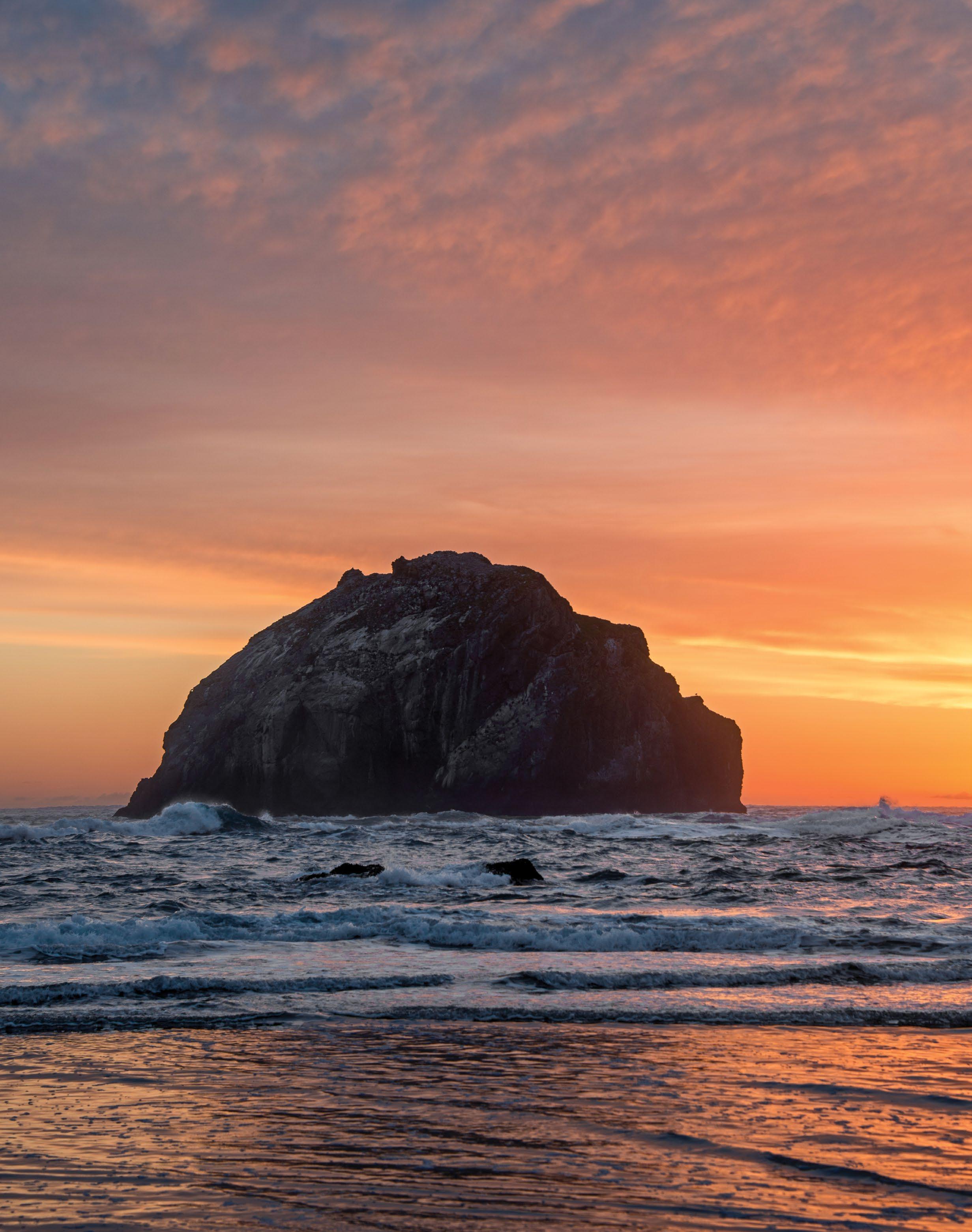
FACE ROCK STATE SCENIC VIEWPOINT
Interpretive signage at Face Rock explains the Native American legend of Ewauna, an adventurous young girl who wandered too far out into the sea.
Coquille Indian Tribe
Coos Bay Medford
experienced captains can cross the bar into the open Pacific to target halibut, salmon and lingcod. Big water or small, this is one of the top fishing destinations in the Pacific Northwest, with plenty of charters, guides and outfitters to help you fill the freezer.
The Oregon Dunes National Recreation Area lines much of the shoreline, the largest expanse of coastal dunes in North America. Whether you’re eager to travel by horsepower, boot power, bike or board power, local rental shops can set you up with supplies for your day on the dunes.
Southern Oregon is also home to several great golf destinations. Ko-Kwel Casino Resort Coos Bay provides convenient lodging and tee-time transportation for many of the local links, including Bandon Dunes Golf Resort. Just 22 miles south of the Ko-Kwel Casino Resort, Bandon Dunes is consistently ranked among the world’s best golf experiences.
After an active day outdoors, treat yourself to the foodie paradise of the
South Coast. Famous for its fresh fish and chips, chowders, Dungeness crab, and oysters, the South Coast serves up seafood any way you like it. Pair your favorite dish with a local craft brew or locally flavored distilled spirits from the Ko-Kwel Spirits Distillery and Tasting Room. The only tribally owned distillery in the state of Oregon, Ko-Kwel Spirits is new in 2026, a partnership with the award-winning Heritage Distilling Company.
CONTINUED PROGRESS FOR TRIBAL BUSINESSES
The Coquille Tribe’s popular Mill Casino Hotel & RV Park marked its 30th anniversary in 2025, and this top South Coast destination enters 2026 with a new name: Ko-Kwel Casino Resort Coos Bay. The change celebrates the rich history of the Coquille people, updates its image, and unifies several expansion projects under one successful and respected hospitality brand.
Along with the name change, visitors will experience new and updated resort amenities. The Plank House, the resort’s fine-dining waterfront restaurant,
reopens with fresh decor that makes the most of its expansive Coos Bay views. It’s the perfect setting for the Plank House’s renowned menu of steak and seafood cuisine, a creation of the award-winning culinary staff led by food and beverage director Roberto Pedrini.
Also be sure to visit the new Ko-Kwel Spirits Tasting Room, featuring the tribe’s own line of custom-distilled whiskey, vodka, gin, rum and other spirits. Sip your favorite as you also enjoy the tasting room’s modern pub fare, “Sweet Spot” golf simulators and the Bogeys Cigar Lounge. Ko-Kwel Spirits are also available at the tribe’s casinos. The first tribal-owned distillery, Ko-Kwel Spirits is possible thanks to a historic agreement reached among the Coquille Indian Tribe and several government agencies, which came together to abolish an 1830s federal law forbidding tribes from operating distilleries.
In 2025 Ko-Kwel Resorts opened its newest property in Medford. Ko-Kwel Casino Resort Medford features a Class II gaming floor with many fan-favorite slots, a Compass Hotel Medford by Margaritaville and Bear Creek Golf Center, a nine-hole executive-layout course and driving range. The entertainment complex is an oasis of food, fun and entertainment in the Rogue Valley.
RESTORING SALMON RUNS
Restoring a sustainable salmon population is of utmost importance to the Coquille Indian Tribe, a sacred duty to care for the beings that have forever nourished its people. The tribe is leading many efforts to bring the fall chinook run back from the brink of environmental collapse. Collaborating with the Oregon Department of Fish and Wildlife and community and government partners, the tribe is removing invasive predators like smallmouth bass, partnering with geneticists at Oregon State University, investing millions of dollars in habitat restoration and enhancing salmon-hatchery production. In 2024 the tribe acclimated and released 2,000 fall chinook into a creek system on its ancestral lands. Its stewardship is grounded in the spirit of potlatch to benefit the natural ecosystem, tribal citizens, community residents and visitors. The Coquille Indian Tribe is eager to welcome the return of its salmon cousins for generations to come.
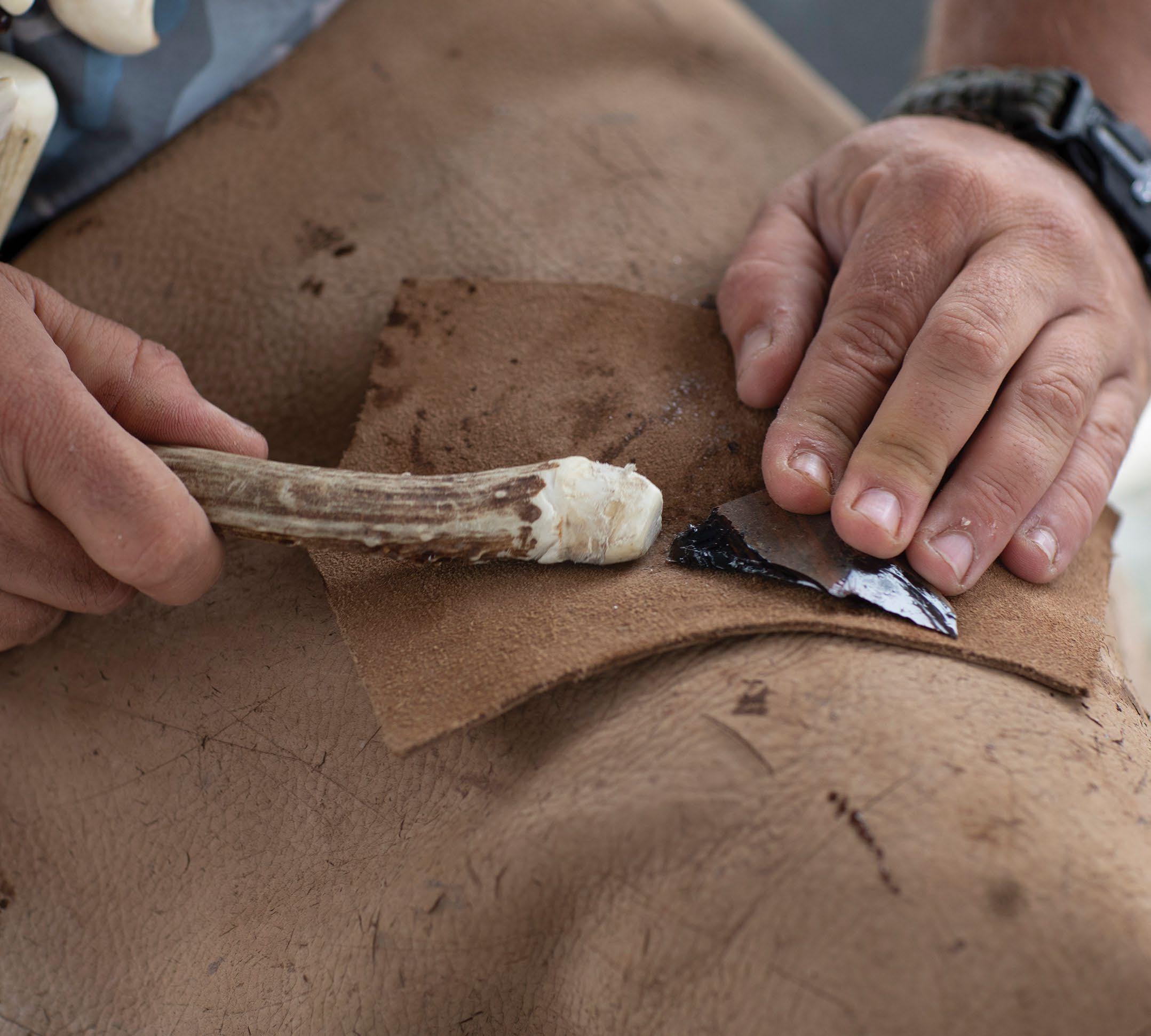
Flint knapping technique to make points and blades



Cow Creek Band of Umpqua Tribe of Indians
The Cow Creek Band of Umpqua Tribe of Indians has a proud history in Southern Oregon, with an ancestral territory that spanned from the Umpqua and Rogue river drainages to the north and south, and the Cascade and coastal mountain ranges to the east and west. Cow Creek Umpqua people were traditionally seasonal people. They spent summers in the mountains and winters in the valleys, gathering fish and lamprey, hunting wild game, and storing berries and other vegetation. Since time immemorial, they have experienced a deep connection with the land, water and bountiful natural resources that unite them and their homeland.
In an 1853 treaty with the United States, the tribe relinquished rights to its homeland in exchange for a sum of $12,000 plus clothes, supplies, farming provisions and a small reservation at the base of Table Rock near Medford. That treaty was abandoned three years later after war ravaged regional tribes. Many tribal members were moved to the reservations of the Grand Ronde, or elsewhere across the Pacific Northwest.
After decades of tireless dedication and support from tribal members and the greater community, the tribe’s commitment to organize and be represented was finally fulfilled in 1982, when the U.S. government formally recognized the Cow Creek Band of Umpqua Tribe of Indians. Its people finally had a voice and its culture began to heal.
SEVEN FEATHERS CASINO RESORT
Surrounded by rivers, mountains, forests and wildlife that sustain the spirits of its people, the Cow Creek Band of Umpqua Tribe of Indians has established several successful enterprises in and around Roseburg and Canyonville.
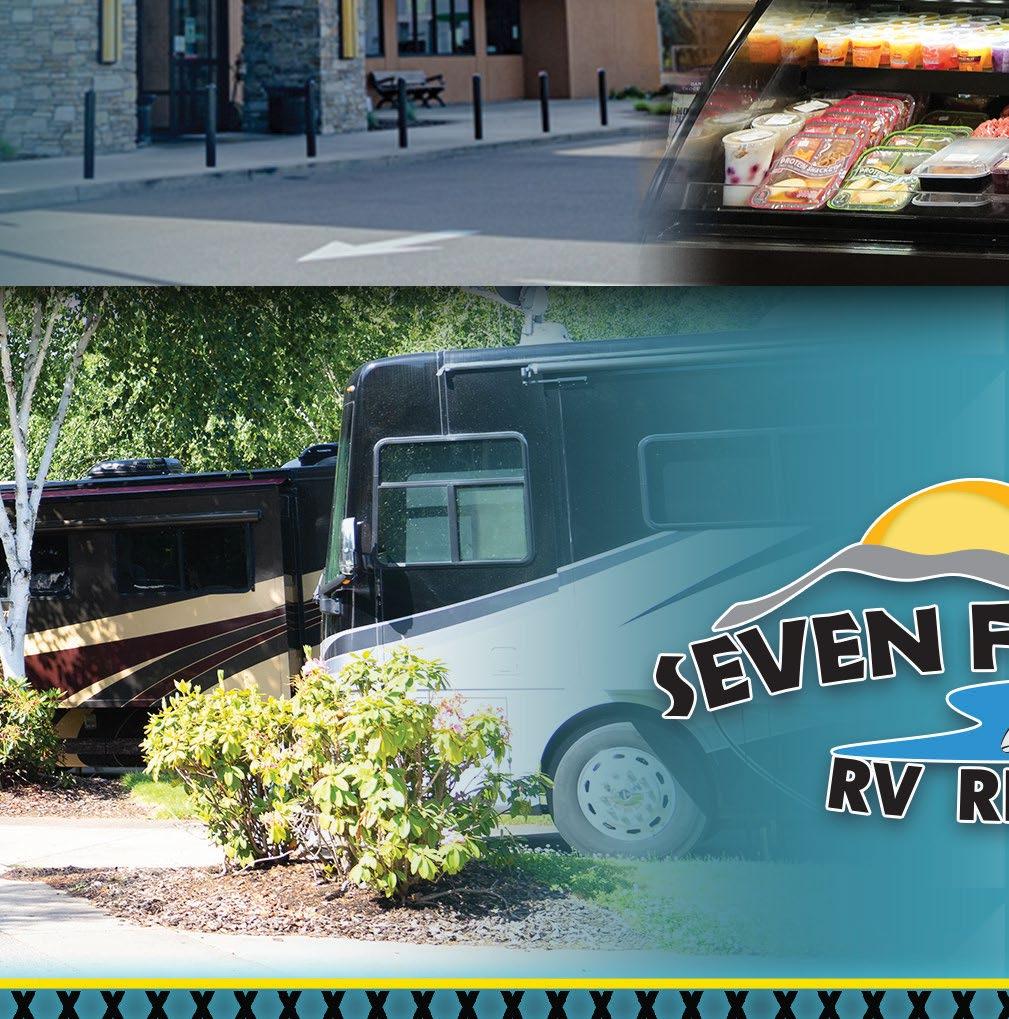
These beautiful landscapes and the tribe’s renowned hospitality attract travelers from all over the world to Seven Feathers Casino Resort. Year after year, guests name Seven Feathers as one of their favorite gaming and hotel destinations. The Las Vegas-style casino is a leader in attracting big-name musical, comedy and other entertainment acts. The K-Bar Steak House is a visitor favorite, featuring game raised on tribal lands and vegetables grown in the Tuú Yap’a Xumá (“Good People Food”) tribal garden. The River Rock Spa offers luxurious treatments and relaxation areas to restore body, mind and spirit. The tribe welcomes those adventuring by RV to its Seven Feathers RV Resort, a top-rated Good Sam resort located right across the street from the casino and hotel.
NEARBY VISITOR ATTRACTIONS
Seven Feathers is set among mountains and a stunning world of forests, wildlife and natural wonder,
midway between the top destinations of Crater Lake and the famous Oregon Coast. The nearby Umpqua National Forest is filled with opportunities for hiking, mountain biking, camping and fishing. Flyfishermen from all over the world come to the North Umpqua River in hopes of landing steelhead. Hikers and mountain bikers take on the North Umpqua Trail, an epic 69-mile route that threads along the river’s banks and high bluffs. The Rogue-Umpqua Scenic Byway also rambles along the river, a drive aptly nicknamed the Highway of Waterfalls. Throughout the region, up-and-coming Umpqua Valley wineries beckon visitors to their tasting rooms to sample pinot noir and other varietals. At Wildlife Safari, visitors get thrilling up-close views of roaming elephants, lions and cheetahs from the comfort and safety of their vehicles.
TRIBAL CELEBRATIONS THROUGH THE SEASONS
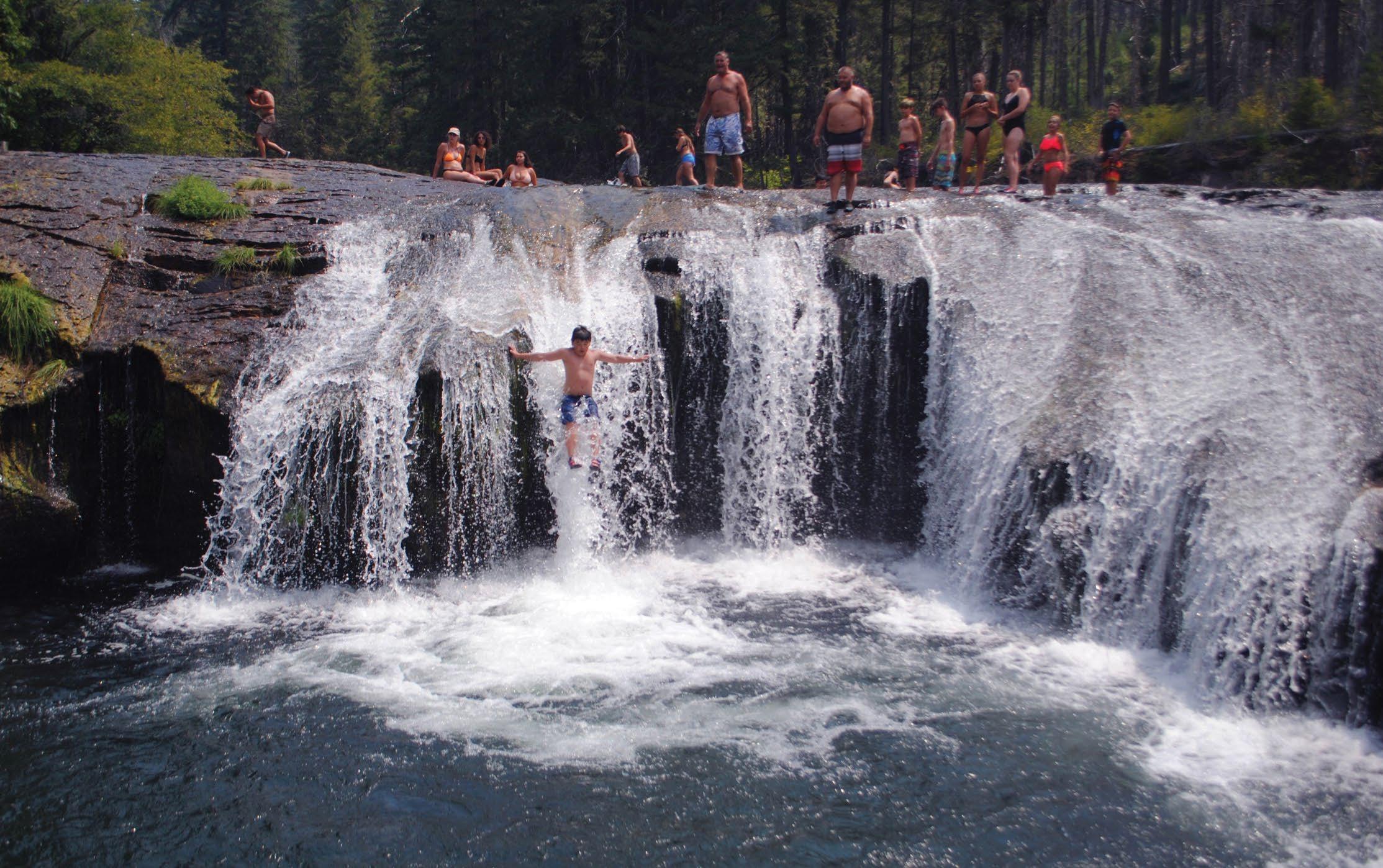
South Umpqua Falls is central to the Cow Creek Umpqua people as a vital resource of traditional foods like salmon and Pacific lamprey. Fish runs were once said to be so abundant that the fish were stacked upon each other as they headed over the falls, allowing people
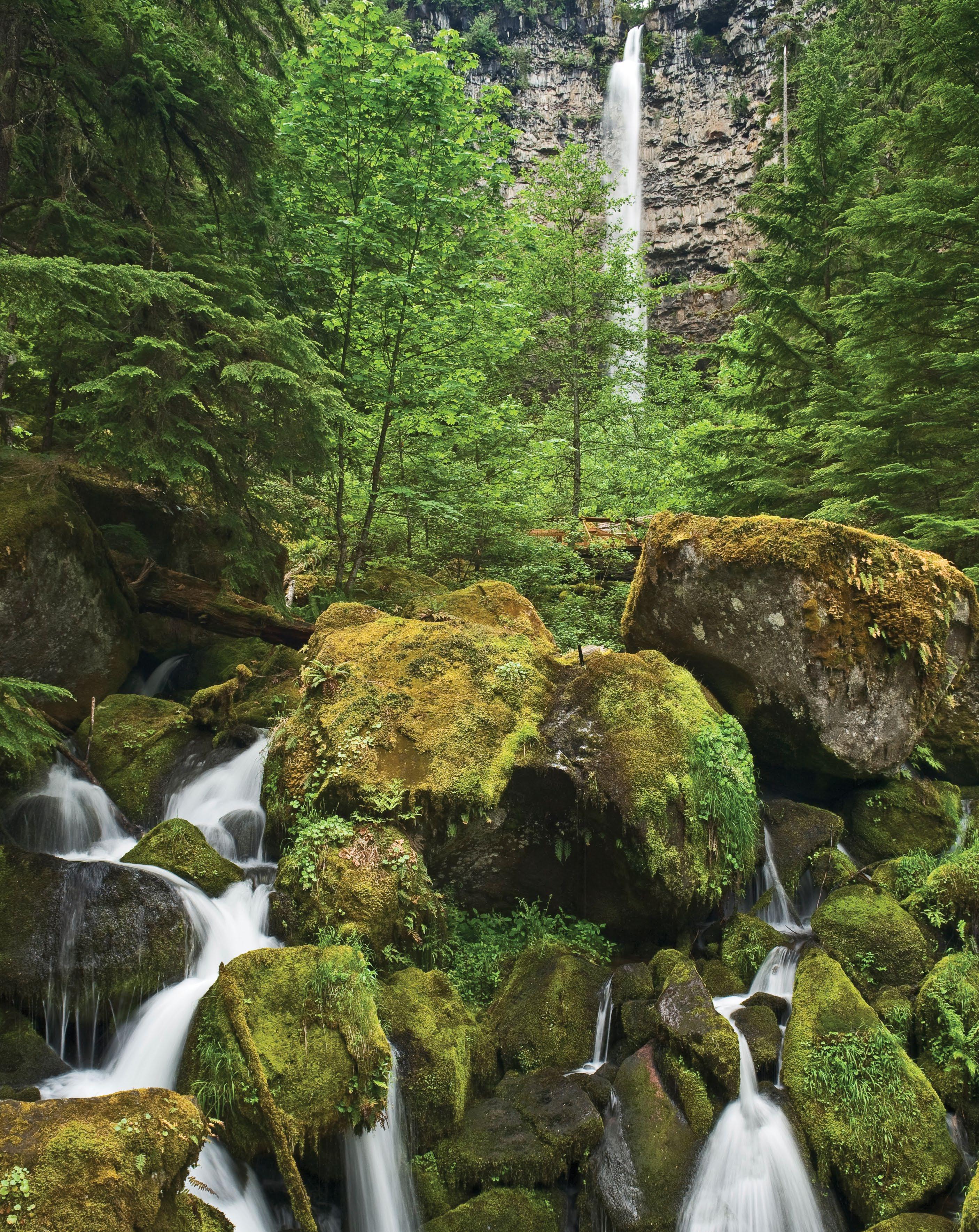
WATSON FALLS
One of the many waterfalls along the RogueUmpqua Scenic Byway, aptly nicknamed the Highway of Waterfalls
Coos Bay Medford
Cow Creek Band of Umpqua Tribe of Indians
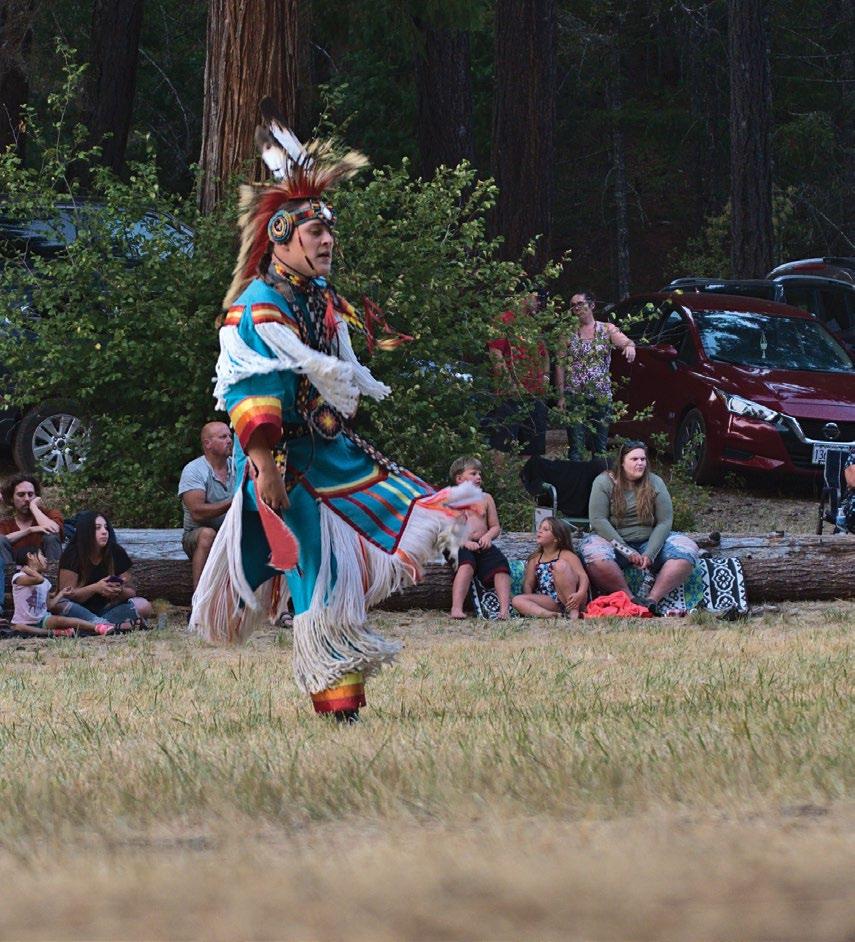
to easily catch them with spears. Cow Creek Umpqua people still rely on the area around the falls as their ancestors did to fish, hunt deer and birds, and gather berries and other foods in preparation for winter.
A remote meadow, now a Forest Service campground, serves as the sacred grounds for the Cow Creek Tribal Pow Wow each July. Here Cow Creek Umpqua people gather to socialize, swim in the falls, and participate in games, racing, dancing and drumming.
In honor of their ancestors who picked huckleberries in preparation for winter, tribal members gather toward the end of summer in a remote forest area to harvest huckleberries and weave berry baskets. Elders described the huckleberry patch as “a place of quiet communion with nature and the Great Spirit.” Today it is recognized as a federal special-interest area and sacred cultural landmark of the Cow Creek Umpqua Tribe.
Historically, when the seasons changed and the weather turned cold, generations of tribal families moved down from the mountains and into valley plank houses, called wìli in the Cow Creek Umpqua ancestral language of Takelma. Visitors can view a replica of a traditional Cow Creek Umpqua plank house at the South Umpqua Historical Society PioneerIndian Museum in Canyonville, where it is on display with traditional Native tools and beadwork.
BRINGING BACK TAKELMA
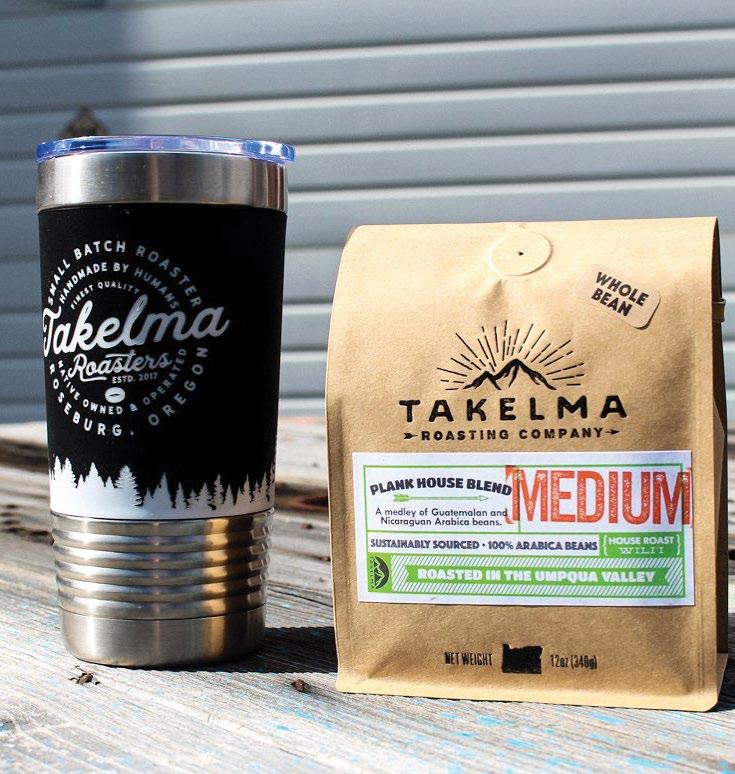
Cow Creek Umpqua tribal ancestors spoke a regional language called Takelma. Until recently, it was nearly lost: Only a few tribal members could still speak Takelma, passed down by their family members or learned from phrases and prayers spoken at ceremonies. As a way to strengthen tribal culture, the Cow Creek Umpqua tribal government established a Takelma language team. The team facilitates language lessons with tribal members and employees, and has developed an online Takelma dictionary complete with audio recordings.
The tribe is also weaving Takelma language back into Cow Creek Umpqua tribal businesses. Conference rooms, for example, are named with Takelma words — Húulk (cougar), Ts’aì’s (blue jay) and Wìli-kwalá (village). A Native-owned coffee business even takes its name from the language; the Takelma Roasting Company creates unique blends of wholebean roasted coffee served to guests at Seven Feathers Casino Resort and other tribal enterprises. The Takelma Roasting Company Cafe at Seven Feathers Casino Resort displays Native words right on the cafe tables, such as kelám (river), sówm (mountain) and altúu (beautiful).
CARING FOR THE LAND AND WATER
The Cow Creek Umpqua Tribe is committed to ecological preservation and conservation efforts in Southern Oregon. It employs a dedicated team of biologists, forestry experts, wildlife specialists and water conservationists who are constantly mindful of protecting the environment’s delicate balance.
Conservation and restoration of the Cow Creek watershed has been a priority for the tribe’s Natural Resources Department. West Fork Cow Creek holds special environmental value in the region, identified as critical habitat for coho salmon. The creek is also home to steelhead, other species of trout and Pacific lamprey. The Cow Creek Umpqua Tribe has worked with multiple agencies and other stakeholders for years to rehabilitate the natural spawning grounds for native fish.
The tribe asks that all visitors to the beautiful tribal lands in Oregon take into consideration the generations of people and animals who have called the area home. Please treat the land with respect and properly dispose of waste.
From top: Takelma Roasting Company; Cow Creek Tribal Pow Wow; South Umpqua Falls

Ashland
Klamath Tribes
Klamath Falls
The Klamath Tribes
The largest freshwater lake in Oregon, Upper Klamath Lake is the heart of the Klamath Basin — and the soul of the Klamath, Modoc and Yahooskin-Paiute people who have lived here since ancient times. Together they make up the Klamath Tribes, whose ancestral lands encompass a breathtakingly beautiful and diverse landscape of forest, grassland, mountains and waterways across (and beyond) what is today Southern Oregon.
For hundreds of generations, the tribes of the Klamath thrived in this rich land east of the Cascades. They fished its lakes and rivers, hunted in its forests and marshes, and survived the lean winter months on their prudent reserves from the abundant seasons.
The self-sufficiency of the Klamath Tribes endures today, even in the face of broken treaties, the loss of tribal lands, the brutal Modoc War and ongoing battles to maintain their water rights. The Klamath Tribes Aquatics staff is working to heal waterways and restore sustainable fisheries. The Klamath Tribes Cultural and Heritage Department teaches tribal language, hosts tribal ceremonies, runs a Culture Camp for tribal youth, and is designing a tribal museum and interpretive center. The tribal-owned KLA-MO-YA Casino, Sleep Inn & Suites and Crater Lake Junction Travel Center in Chiloquin create jobs and strengthen the local economy.
With a traditional greeting of Waq’li’si, the Klamath Tribes welcome you to their homeland. As you marvel at bird-filled skies and shimmering lakes, take a moment to appreciate how these and so many other special places are an integral part of the Klamath people. Respecting the land and the water also respects those who came before and hold these places sacred.
SAVING THE C’WAAM AND KOPTU
Upper Klamath Lake has forever been fundamental to the ceremonial practices and first foods of the Klamath Tribes. Utmost in importance are two of its fish species, the c’waam and koptu, that live in this lake and nowhere else in the world. Because they spawn in late winter, the arrival of the fish from the lake to the rivers had always provided an essential, protein-rich food source when the people needed it most. For that reason, the cultural, spiritual and economic health of the Klamath Tribes is inextricably linked to the health of the sacred c’waam and koptu
Yet in the early 1900s, the federal Bureau of Reclamation embarked on a massive infrastructure project on Klamath Lake. In a blatant breach of tribal treaties, it dammed, diked and drained the lake for agriculture. In due time, irresponsible water management and agricultural runoff led to pollution, toxic algae blooms, low water levels and high water temperatures. The effect was devastating to c’waam and koptu populations. Once numbering in the tens of millions throughout the Upper Klamath River drainage, today fewer than 45,000 fish exist, in isolated spawning populations and near the end of their life spans.
The Klamath Tribes are taking several steps in an attempt to bring the fish back from the brink of extinction. Tribal fisheries biologists are restoring 40 acres
of wetlands to provide habitat for young fish along the southeast shore of Klamath Lake, and are raising hundreds of c’waam in the Klamath Tribal Aquatics Center. The tribe continues to fight for the water rights guaranteed in the Treaty of 1864 And tribal members continue to gather on the banks of the Sprague River in March, drumming and praying for their sacred fish in the annual Return of the C’waam Ceremony.
The 2021 PBS documentary Killing the Klamath details the damage done and the efforts of the Klamath Tribes to restore a sustainable c’waam and koptu fishery and their full treaty rights. Visitors can contribute to their work with a donation through the Ambo Fund.
TRIBAL CELEBRATIONS
A highlight of the Klamath tribal calendar is the annual Restoration Celebration. Held the fourth weekend of August, it marks the anniversary of the Congressional act that reinstated federal recognition of the Klamath Tribes. The three-day event in Chiloquin includes a parade, a youth rodeo, food and craft vendors, and a large competition powwow with dancers from many tribal nations. The public is invited to attend this colorful and festive weekend.
In October tribal members participate in the Modoc Ancestral Run, a relay route through tribal
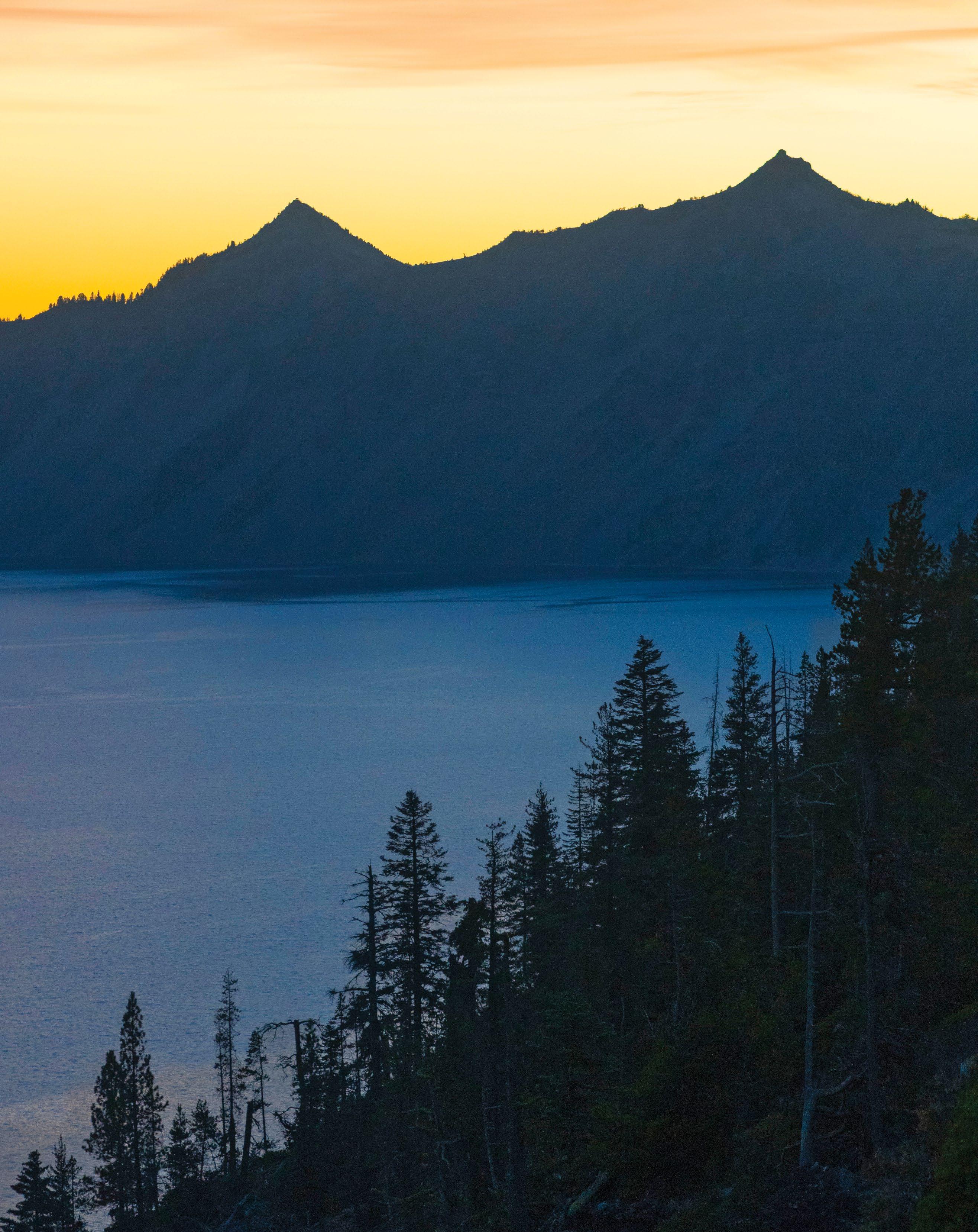
GIIWAS (CRATER LAKE)
Tribal ancestors witnessed a sudden, violent volcanic explosion, which collapsed the summit of Moyaina (Mt. Mazama) and left behind an immense crater that eventually filled with snowmelt and rainwater.
PAUL WILSON
lands that varies from year to year and often measures more than 100 miles. Rich with tradition and symbolism, it honors the Modoc warriors who fought for their homeland, and celebrates tribal members’ connections to the lands from which their elders were forced during the Indian Wars. The run is not a participatory public event, although the public may see participants as they run along area roads and trails, carrying a
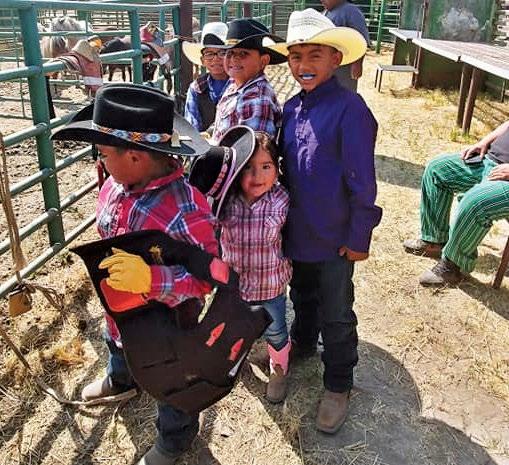
juniper-branch staff with hawk feathers that represent Modoc war heroes.
NEARBY VISITOR ATTRACTIONS
Averaging more than 300 days of sunshine per year, the climate of the Klamath region is ideal for outdoor activities in every season. As you enjoy the region, remember that these traditional lands and waterways are sacred to the Klamath people. Please do your part to keep them pristine. Walk softly, carry out what you carry in, and conserve water and other natural resources.
Birding is impressive year-round but especially in early spring, when more than 1 million birds descend on the Klamath Basin. As it’s a key resting spot during their migration along the Pacific Flyway, more than 350 species have been tallied in area lakes and marshes. Enhance your birding experience at the Winter Wings Festival in February, which hosts a variety of field trips and workshops.
From top: Klamath Restoration Celebration; tribal members gathering first foods on the Klamath Marsh
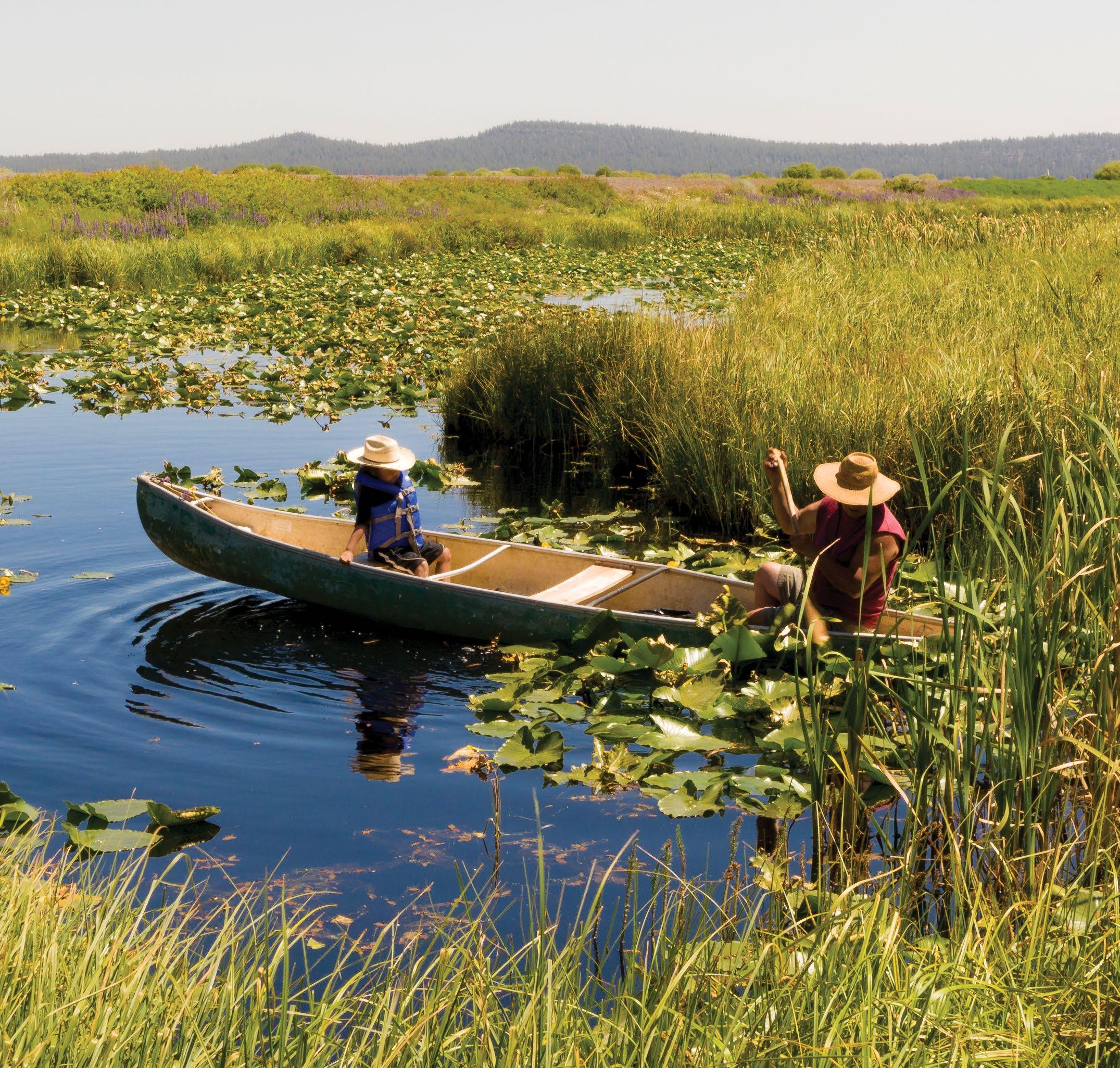
Spring through fall offers nearly endless opportunities for camping, hiking, fishing, golfing, mountain biking and horseback riding. Collier Memorial State Park is one of many spots to enjoy the area’s rivers. Spring Creek gushes forth from a nearby spring and flows through the park, where it converges with the Williamson River, known for its fine trout fishing. An equestrian trail in the park’s horse camp leads to plentiful riding in the adjacent Fremont-Winema National Forest
Come winter, the Klamath Basin transforms into one of Southern Oregon’s top skiing and snowmobiling destinations.
The Walter Haring Sno-Park near Chemult and the Great Meadows SnoPark west of Klamath Falls on OR-140 offer hundreds of miles of groomed trails for skis and snow machines.
THE GATEWAY TO SPECTACULAR CRATER LAKE
You can’t help but feel the power of Giiwas (Crater Lake), a place of deep spiritual significance to the Klamath Tribes. Oral histories recount how tribal ancestors witnessed a sudden, violent volcanic explosion, which collapsed the summit of Moyaina (Mt. Mazama) and left behind an immense crater that eventually filled with snowmelt and rainwater. Remarkable for its clarity and its astounding, brilliant hue, crystalline Crater Lake descends to a depth of 1,949 feet, the deepest lake in the United States and one of the deepest in the world. Gazing down from the rim at Crater Lake National Park, visitors today are encouraged to share in the millennia-old tradition of respect and gratitude. The southern park entrance is 40 miles north of Chiloquin.
TRIBAL HISTORY IN VIDEO AND AUDIO
Enhance your visit by learning more about the Klamath Tribes’ history in a series of videos produced by the tribe: “Truth, Reckoning & Healing,” “We’re Still Here” and “Heal the Land, Heal the People.” It’s free to download “The Modoc War: A Homeland Lost,” an audio tour that guides you to historic sites through riveting narration by Cheewa James, the great-granddaughter of Modoc warrior Chkeitko.
PAUL WILSON










Ontario Pendleton
Burns Paiute Tribe
Burns Paiute Tribe
The Burns Paiute Tribe are Northern Paiute people, culturally related to all the other Indigenous people of the Great Basin, a region that spans what is today Eastern Oregon, Nevada, Western Utah and parts of California. The Burns Paiute were created here and have lived in the high desert since time immemorial. Current archaeological evidence in the Northern Great Basin points to a tribal history spanning more than 750 generations, which is in keeping with the tribe’s own understanding of its origins and homelands.
Northern Paiute oral history speaks to a time of ice and water before land was present. As land emerged, Paiute people lived in balance with the four-legged, winged and other creatures who are indigenous to this place. Tribal members today follow unwritten sacred laws for living and protecting families, their ancestors and the ecosystem through their cultural practices and heritage. Its primary values are reciprocity and balance.
LIVING IN COOPERATION WITH THE LAND
The Harney Basin of Eastern Oregon is the center of the 5,250-square-mile homeland of the Burns Paiute Tribe. Burns Paiute people have a familial relationship with their lands. Tribal members primarily descend from the Wadatika band of Paiute Indians, although the tribe’s membership also includes descendants from other Paiute bands from Oregon and beyond. Northern Paiute bands are often named in association with something abundant in their home basin; the Wadatika of Harney Basin take their name from the wada, or seepweed, seeds they collected near the shores of Malheur Lake each fall.
Families traveled in what anthropologists call a seasonal round: They wintered near the lake, then spent spring through fall frequenting well-traveled routes to seasonal homes where a variety of foods and fibers were plentiful. Upland elevations in the forests have always provided summertime respite from the heat. In late fall, families would again return to the basin to prepare for the long high-desert winter. Knowing when and where to find animals, plants and other valuable cultural items was as key to survival and security for Burns Paiute people then as it is today.
TRIBAL CELEBRATIONS
A traditional celebration and sports tournament come together in October, when the tribe hosts its annual Burns Paiute Powwow and Lacrosse Tournament at the Harney County Fairgrounds in Burns. It includes a variety of dance competitions for different age groups and dance categories, along with a drum contest, arts and crafts vendors, and a community dinner. The
round-robin lacrosse tournament runs concurrently on Saturday and Sunday. All events are open to the public, a way for the tribe to preserve and share its culture with the broader community.
NEARBY VISITOR ATTRACTIONS
Burns Paiute country is the wide-open West, where horizons seem to stretch on forever. This broad landscape is punctuated with dramatic natural features like Steens Mountain, a 30-mile-long fault block that rises thousands of feet from the desert floor, and the Alvord Desert, a vast playa, or dry lake bed. Throughout the region, visitors can explore thermal springs, hiking trails, rock-rimmed rivers, and wildlife that includes sage grouse, pronghorn, bighorn sheep and wild horses. The 59-mile Steens Loop Tour Route gives a good overview of the vast and varied region. Just south of Burns, Malheur National Wildlife Refuge encompasses 187,000 acres rich with riparian meadows, lakes and wetlands — a true oasis for thousands upon thousands of migrating birds.
Between the communities of Hines and Burns, the Burns Paiute Tribe owns and operates the Old Camp RV Park near the original Burns Paiute Reservation. Although convenient to U.S. Route 20, it’s far enough off the highway that guests can experience the calm and quiet of the high desert. All sites are big-rigfriendly pull-throughs, with 30- to 50-amp full hookups. Bathrooms with showers, Wi-Fi, electricity, water and sewer are all included in daily, weekly and monthly rates.
MALHEUR NATIONAL WILDLIFE REFUGE
Excavations show the Native people who lived here harvested waterfowl, rabbits, fish and large game animals, as well as grass seeds and roots.
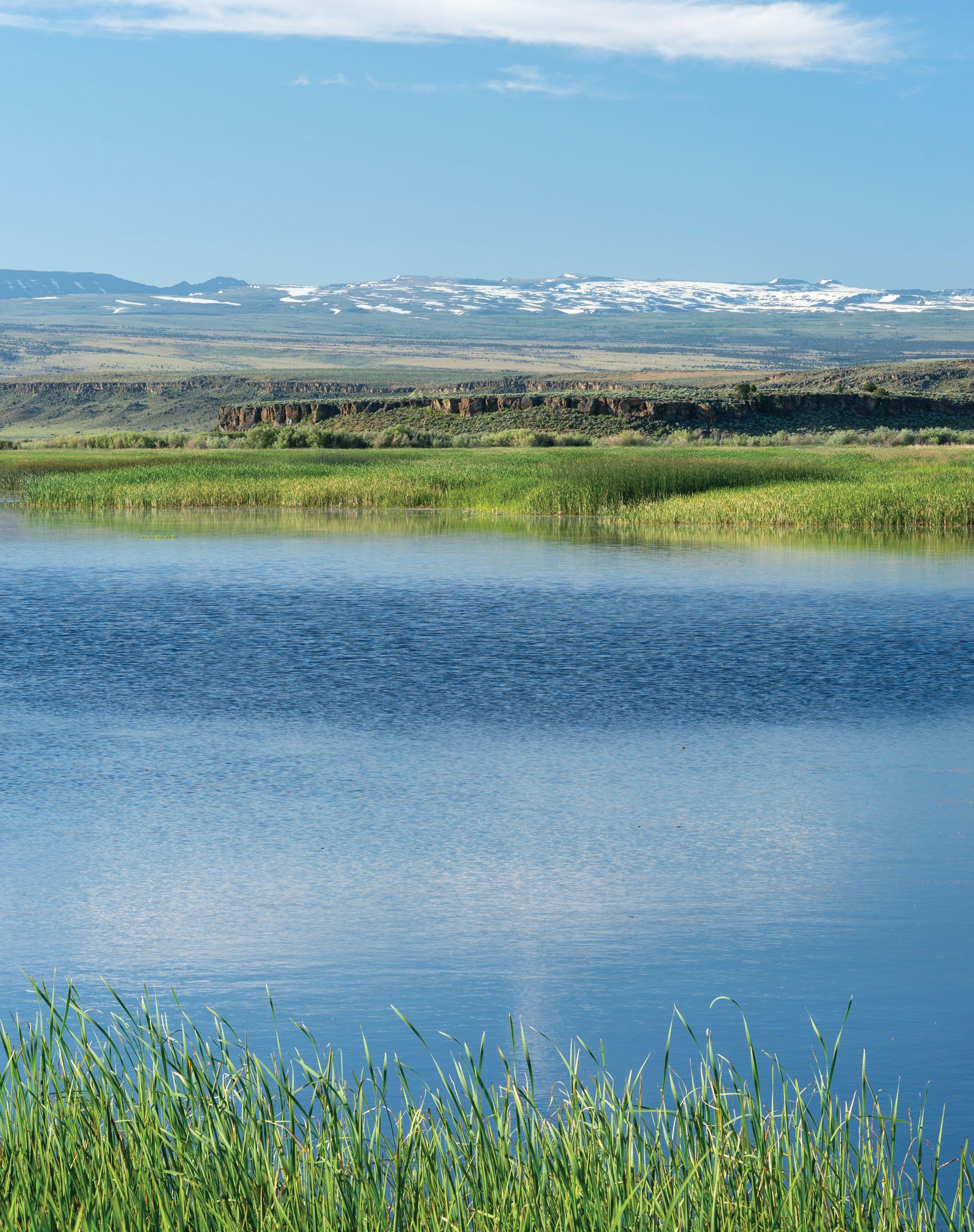
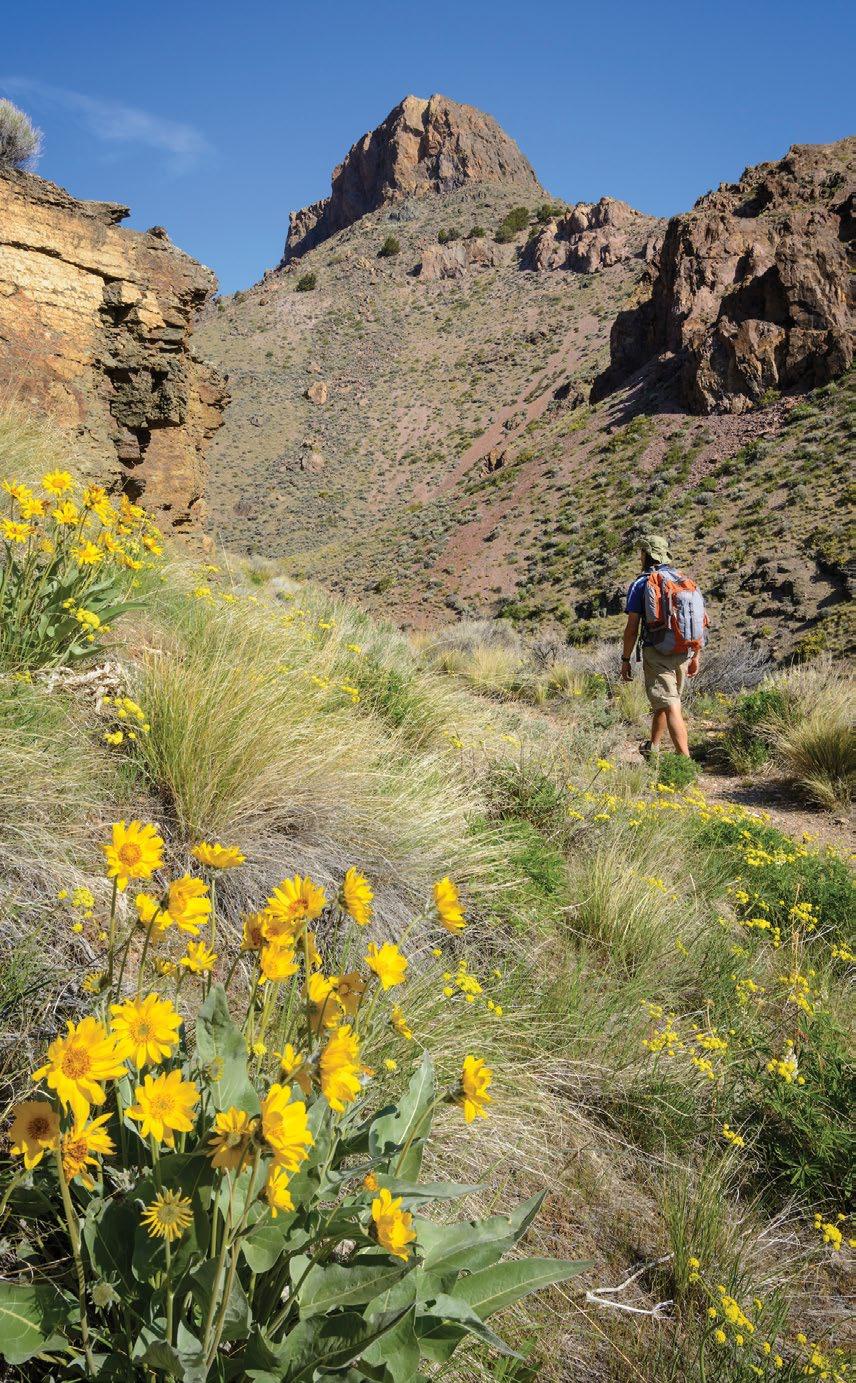
TUKWAHONE’ CULTURE & HERITAGE CENTER
A cultural center and venue for tribal businesses is coming to downtown Burns. The Burns Paiute Tribe, in partnership with the Burns Paiute Foundation, is raising funds to renovate a 7,500-squarefoot commercial building located on Main Street. The Tukwahone’ Culture & Heritage Center will showcase the history of the tribe through exhibits and photos. It also will provide a high-visibility location for tribal artisans to sell their works and commercial space for tribal members to grow small businesses. Not only will tribal members benefit from the center, Tukwahone’ will create another destination for visitors and an economic boost for Harney County.
PROTECTING PEOPLE AND WILDLIFE ON THE ROADS
Mule deer range across Eastern Oregon, and their movement often takes them across busy roads — obviously dangerous
for people and the deer. The Burns Paiute Tribe is working to address vehiclewildlife collisions along a particularly hazardous stretch of U.S. Route 20 through Malheur Canyon. The tribe’s Natural Resources Department has collared mule deer to track their activity and is partnering with state and federal organizations to share data and find solutions.
The solutions may include retrofitting existing structures like bridges and culverts, adding strategically placed fencing, and creating animal-detection systems and new wildlife passages. While designing and implementing these measures can cost millions of dollars (some of which may come from federal funding), the cost of doing nothing is high. Mule deer populations are in decline, and vehicle collisions result in thousands of human injuries across Oregon each year. Successful wildlife-passage projects in other parts of the state have reduced vehicle-wildlife collisions as much as 86%.
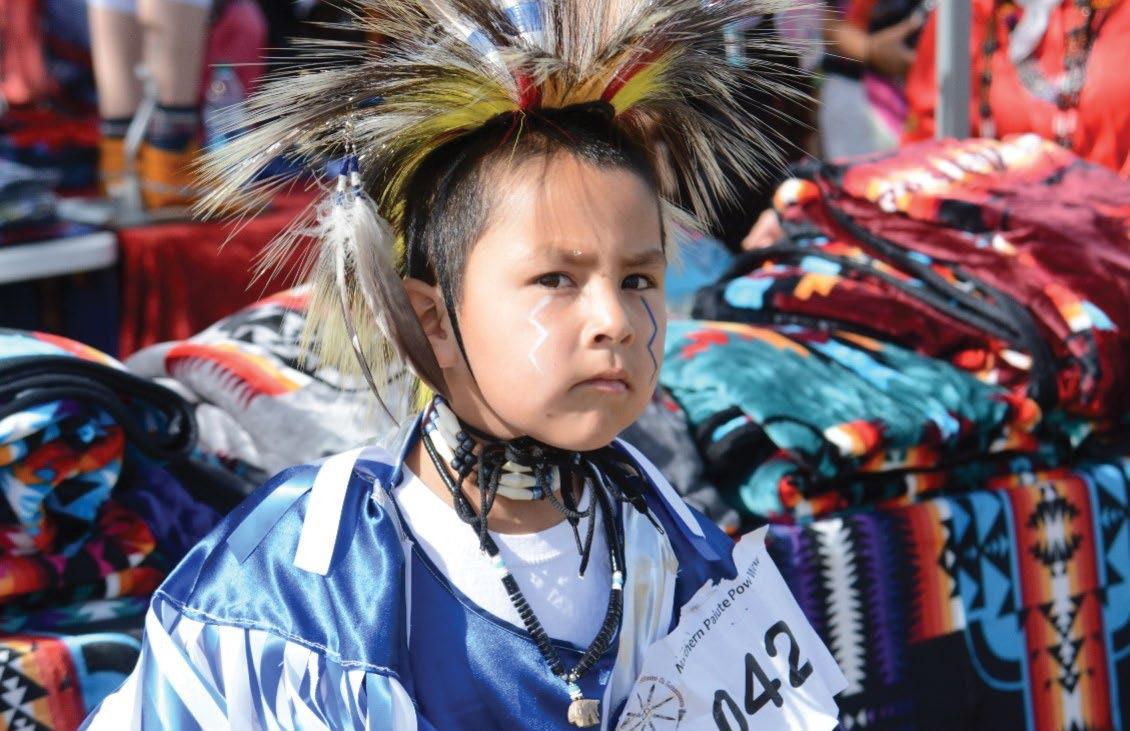
From top: Steens Mountain; Burns Paiute Powwow
BURNS PAIUTE TRIBE POWWOW
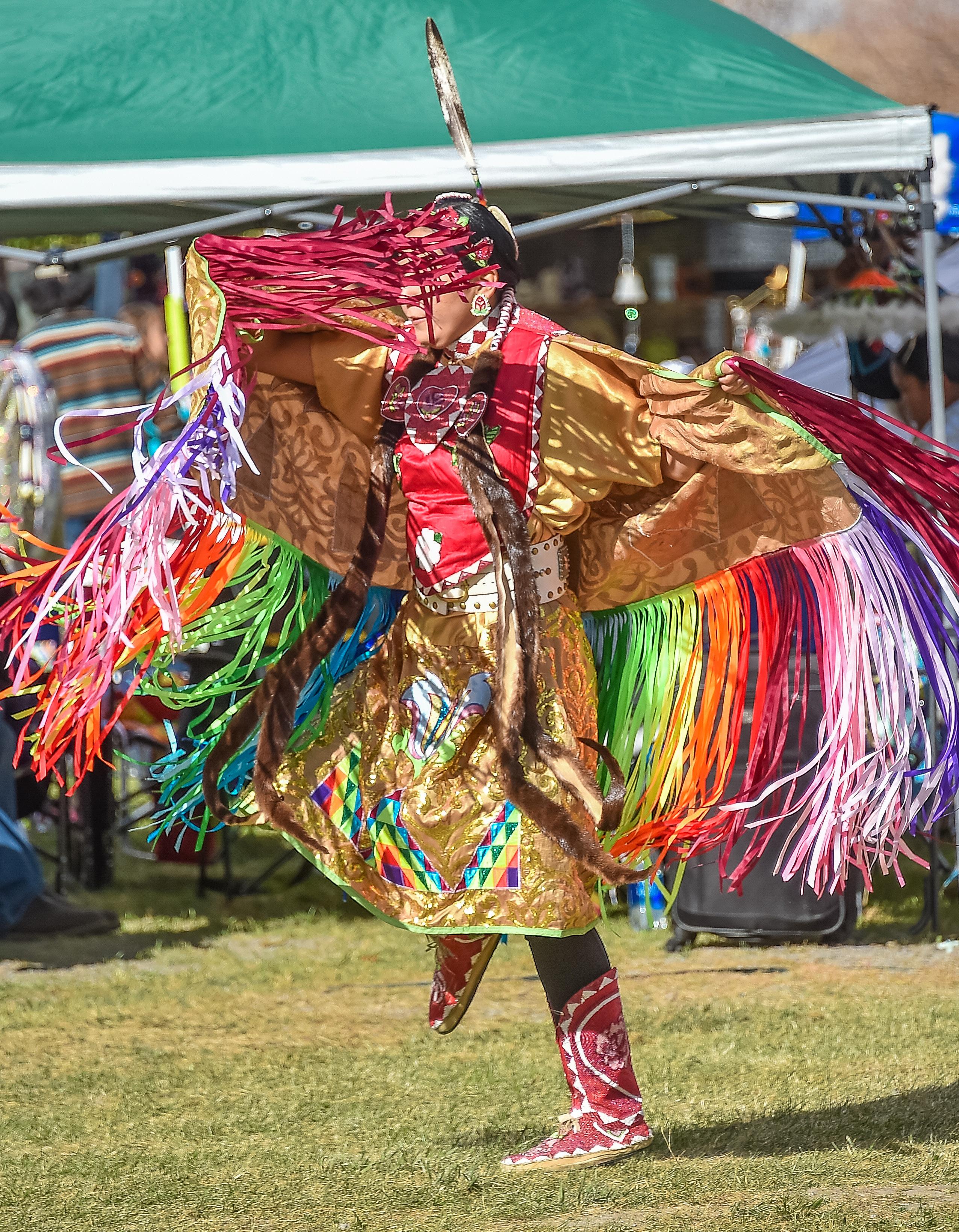


Pendleton
Confederated Tribes of the Umatilla Indian Reservation Ontario
Confederated Tribes of the Umatilla Indian Reservation
Generous in spirit and nature, the Cayuse, Umatilla and Walla Walla tribes were documented in the Lewis and Clark journals to have greeted and assisted the travelers as they passed through on their way west and their return east. Some 35 years later, the Oregon Trail cut through the heart of the tribes’ homelands, which stretched from the pine- and fir-forested Blue Mountains west to the Columbia River lowlands, and north beyond Washington’s Walla Walla Valley.
The Walla Walla and Umatilla are river peoples who lived along the Yakama, Umatilla and Walla Walla rivers and their confluences with the Columbia. The Cayuse lived along upper tributary valleys and in the Blue Mountains. They were known far and wide for their equestrian skills and for selectively breeding large herds of Cayuse horses — a stout, swift and agile breed well suited for the steep and rocky terrain. All three tribes moved in a seasonal cycle from sheltered winter villages to fishing sites to hunting, celebration and trading camps, sustained primarily by salmon, roots, berries, deer and elk.
In 1855 the Cayuse, Umatilla and Walla Walla tribes entered into a treaty with the U.S. government that ceded 6.4 million acres for a Umatilla Reservation that was less than half the 800 square miles promised. Later federal legislation further reduced the reservation to its current 172,000 acres located east and southeast of Pendleton. In the Treaty of 1855, the tribes reserved perpetual off-reservation rights to fish at their usual and accustomed sites; to trap, hunt and gather foods and medicines; and to pasture livestock on open and unclaimed lands.
Today the Confederated Tribes of the Umatilla Indian Reservation (CTUIR) is a thriving community. Its state-of-the-art tribal government headquarters provide police, fire, health, educational and environmental services. It has a newspaper and radio station, public transportation, and a business park. Locals and visitors alike enjoy a variety of tribal enterprises like the Wildhorse Resort & Casino, Tamástslikt Cultural Institute, Arrowhead Travel Plaza, Mission Market, Cayuse Holdings, Hamley’s Western Store, Steakhouse & Café and Birch Creek Golf Course.
CENTERS OF TRIBAL CULTURE
A visit to the Tamástslikt Cultural Institute near Pendleton connects the rich and storied history of the Cayuse, Umatilla and Walla Walla tribes to the present day. Tamástslikt (“interpret” in the Walla Walla language) is the only museum on the Oregon Trail that tells the story of western expansionism from a tribal point of view. The 45,000-square-foot museum creatively integrates artifacts, artwork, photography, video and interactive multimedia. Exhibits explore traditional culture and spotlight current tribal initiatives such as the restoration of river mussels. In the “We Will Be” exhibit, dreams and future aspirations come to life as the tribes assert: Cháwna mun na’ámta — we will never fade.
The on-site Kinship Café offers a variety of Native-inspired foods and popular huckleberry pastries. The expansive Museum Store sells American Indian
arts and crafts, books, music, apparel, and exclusive designs of Pendleton Woolen Mill blankets. At the nearby Crow’s Shadow Institute of the Arts, work by local artists and students of the Nixya’awii Community School line the gallery walls. Founded in 1992, the fine-print studio has prints for sale, artist talks and receptions, printmaking retreats, and workshops.
TRIBAL CELEBRATIONS
The first weekend in July marks the Wildhorse Pow Wow, one of the largest powwows in the state. Drumming and singing groups travel from all over the nation for the three-day event, along with visiting artisans showcasing everything from intricate beadwork and baskets to clothing and jewelry. More than 300 dancers in colorful handmade regalia
WILDHORSE RESORT & CASINO
In addition to the casino, the resort also has a golf course, a bowling center, an arcade and a movie theater.
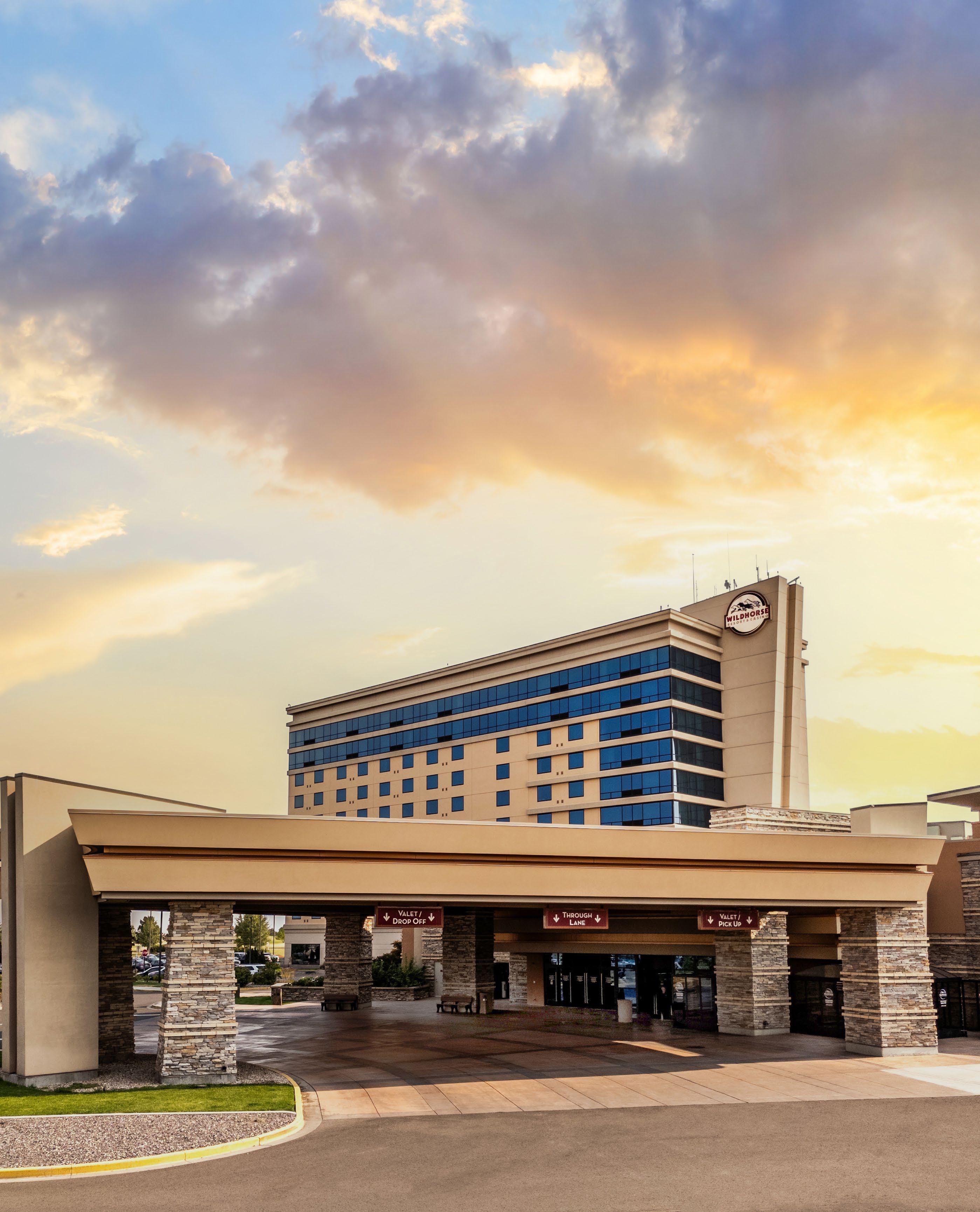
participate in a variety of vibrant dance competitions.
Many ceremonies that honor first foods bring families together throughout the year. One of those, the annual Root Feast in April, is open to the public. Tribespeople gather to celebrate first foods at their peak, including pyaxí (bitterroot) and xáwš (cous). Another important ceremony is the First Salmon Feast. Traditionally, every fishing season begins with a ceremonial harvest for fishers to catch salmon for use in these ceremonies. The timing of these feasts matches the arrival of the salmon to each longhouse, and then the feasts move upriver with the fish.
From top: Tribal artist display at Tamástslikt Cultural Institute; herd of elk crossing
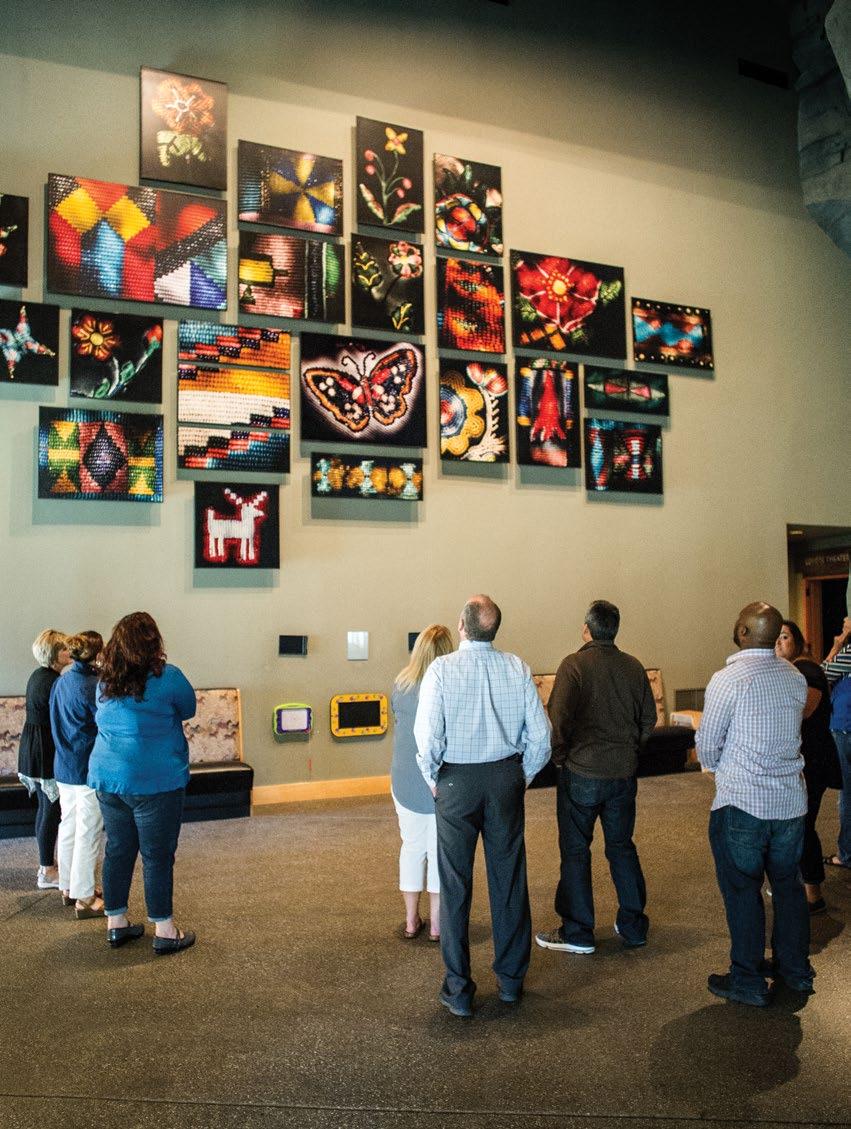
NEARBY VISITOR ATTRACTIONS
There’s a world of natural wonders to experience in this sliver of Eastern Oregon. Anglers will want to visit Indian Lake, a pristine 80-acre mountain lake on tribal land that’s stocked with rainbow trout; it also features 42 campsites and a picnic area with barbecues. Hikers can enjoy trails that meander through fragrant juniper, sagebrush, spruce and ponderosa pines in the North Fork Umatilla Wilderness. Emigrant Springs State Heritage Area offers tent sites and cabins tucked into old-growth forest. Wildhorse Resort & Casino draws both birders and golfers to its nationally recognized championship golf course Modeled after traditional Scottish-style links with deep bunkers and fine fescue grass, the course ripples around several ponds and marshes that attract abundant birdlife, including the yellow-headed blackbird and ruddy duck. Off-site, south of Pendleton, CTUIR-owned Birch Creek Golf Course is fun and playable yet still challenging to golfers of all abilities. Head to the Old West-style town of Pendleton to embark on a self-guided tour with stops at local hatmakers, brewers and distillers. Be sure to include a stop at the Hamley Western Store & Saddle Shop, which has operated from this location along the Oregon Trail since 1905 (and is now owned by the CTUIR), and the iconic Pendleton Woolen Mill, founded six generations ago in 1863. Many of the mill’s patterns were inspired by the tribes of Northeastern Oregon. Join Pendleton Underground Tours to learn about the life of Chinese immigrants in this region and the underground economy of the 1900s boomtown. In September the Pendleton Round-Up — one of the world’s largest and most legendary
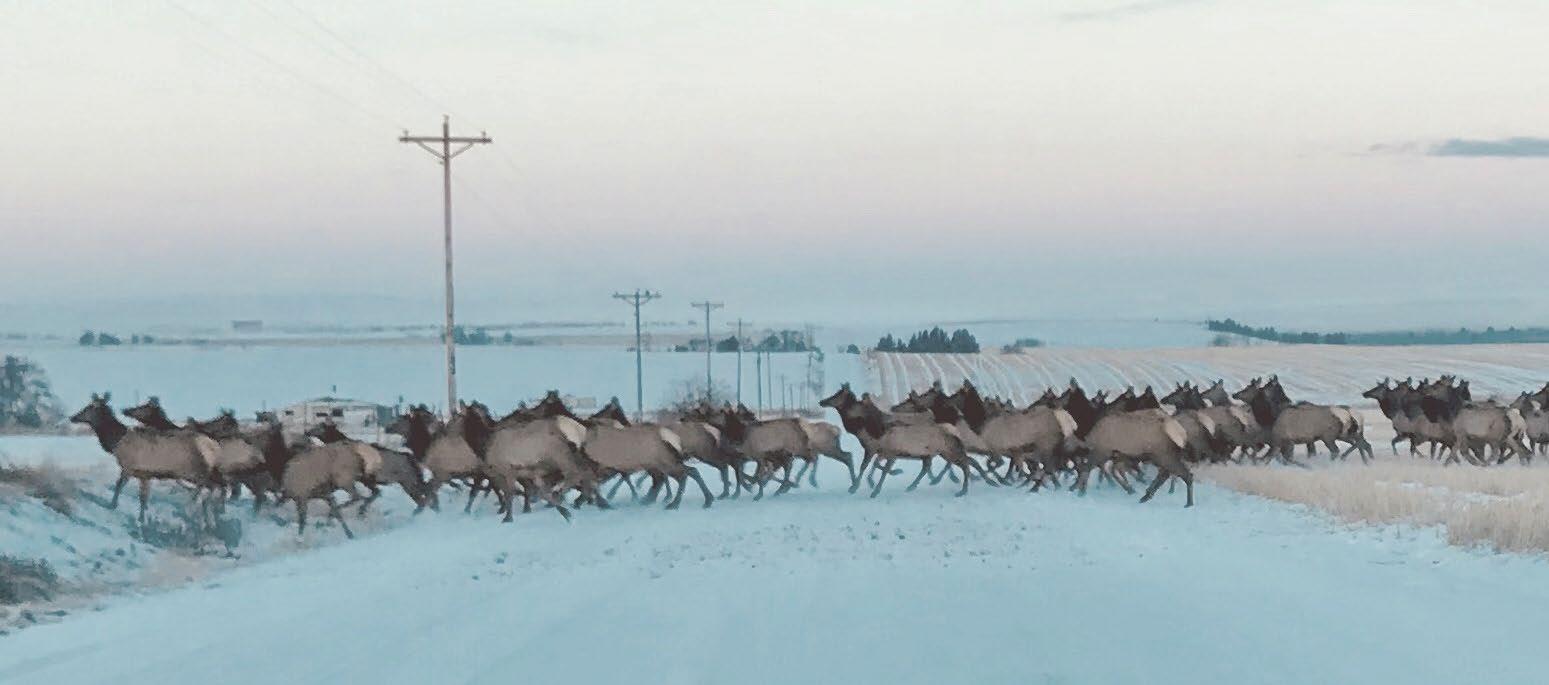
rodeos — captivates visitors with bull riding, barrel racing, Indian relay races, parades, concerts and the Happy Canyon Night Show, Oregon’s Official State Outdoor Pageant and Wild West Show.
FIRST FOODS
The tribes continue to hold strong to their distinct cultural identity through gathering traditional foods, treading along some of the same paths used by their ancestors to find food for their families and honor their rich heritage.
The CTUIR’s Department of Natural Resources has adopted a comprehensive plan to save the first foods — salmon, wild game, roots, berries and clear, pure water — to preserve a fundamental element of tribal culture that predates the arrival of white immigrants.
With regional partners, the tribes are studying the availability of edible foods in their territory, assessing risk and resilience in climate adaptation plans. They’re assessing the impact of rising cougar numbers on deer and elk populations, and examining how the reservation’s cattle and wild mustangs impact plant growth and vitality. Under scrutiny, too, is the proliferation of wind turbines, which can disrupt places where edible roots grow, damage winter range for wildlife and bring a maze of service roads. CTUIR’s first-foods management plan offers a recommended approach for all resource managers responsible for water, water quality, fish, wildlife and their habitats.
KEEPING NATIVE LANGUAGE ALIVE Native language reflects concepts that can’t be expressed any other way. Since 1996 the Umatilla confederacy has been teaching the Umatilla language to tribal youths and adults. The Umatilla Dictionary, published in 2014, includes grammar and comparative information that place the Umatilla language in its linguistic and historical contexts, and compiles all of the language’s known words, phrases and constructions. In 2021 the CTUIR launched a Umatilla Language Online Dictionary, making the language accessible to anyone in the world with an internet connection. The dictionary is an important work for people of the Confederated Tribes of the Umatilla Indian Reservation, and adds to the growing body of linguistic work by tribes and scholars on endangered languages.
WELCOME
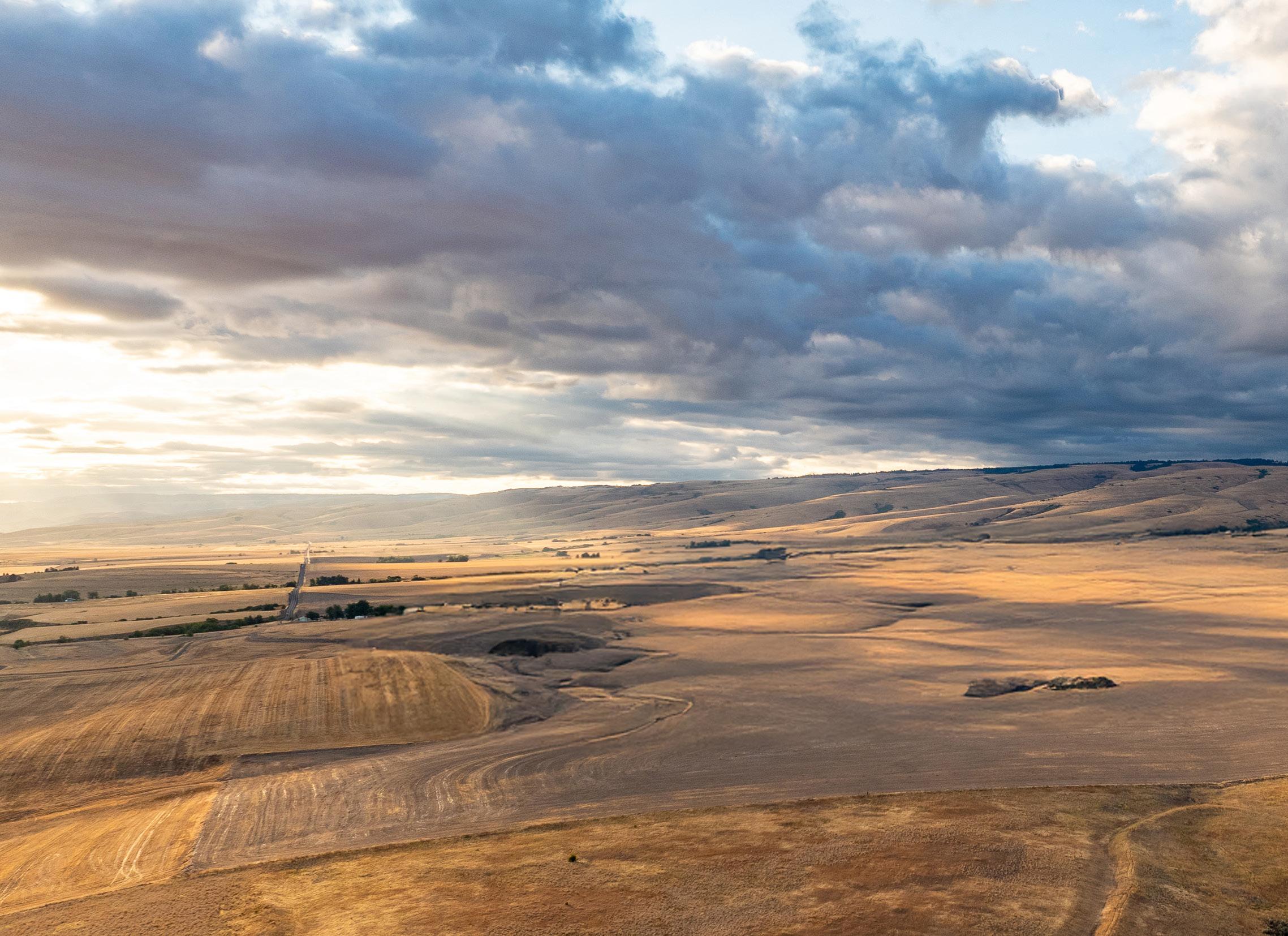
We invite you to visit the home of the Cayuse, Umatilla and Walla Walla Tribes. For thousands of years, our homelands have stretched out from the base of the Blue Mountains outside of Pendleton. Today, you can still experience our Tribes’ warm hospitality at Wildhorse Resort & Casino, Tamástslikt Cultural Institute, Indian Lake Campground, and other local businesses. Whether you are here to play or here to learn about our Tribes’ history and culture, we look forward to welcoming you to our home.
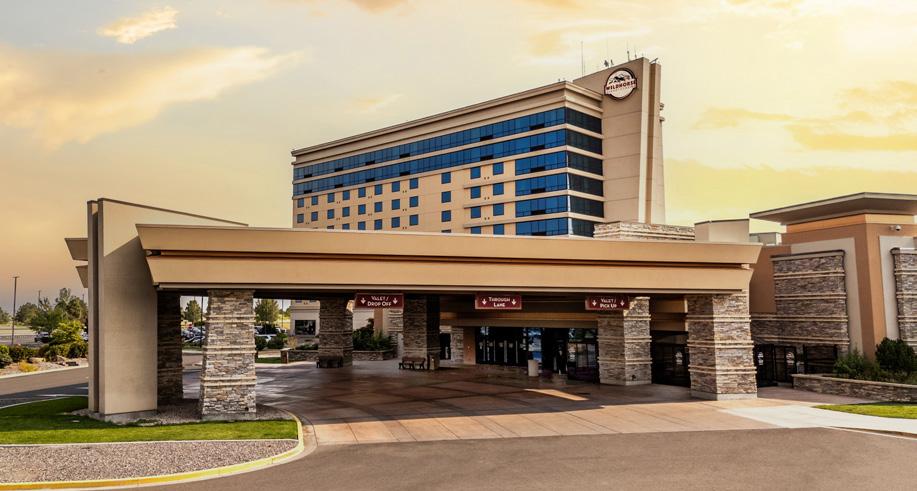
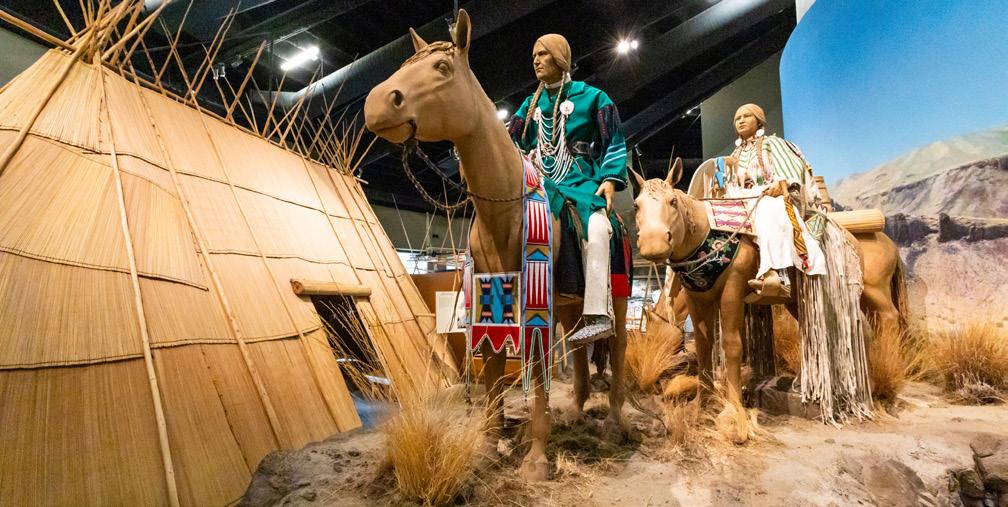
Resort & Casino
Eastern Oregon’s premier entertainment destination! Our resort offers true Las Vegas— style gaming in the 24-hour casino with over 1,100 slot machines and 14 table games, a hotel tower featuring spacious rooms, an RV park, two championship golf courses, and delicious dining. The Family FunPlex offers entertainment for the whole family to enjoy, including a 24-lane bowling center, arcade, and cineplex. Stay for a day or play for the week!

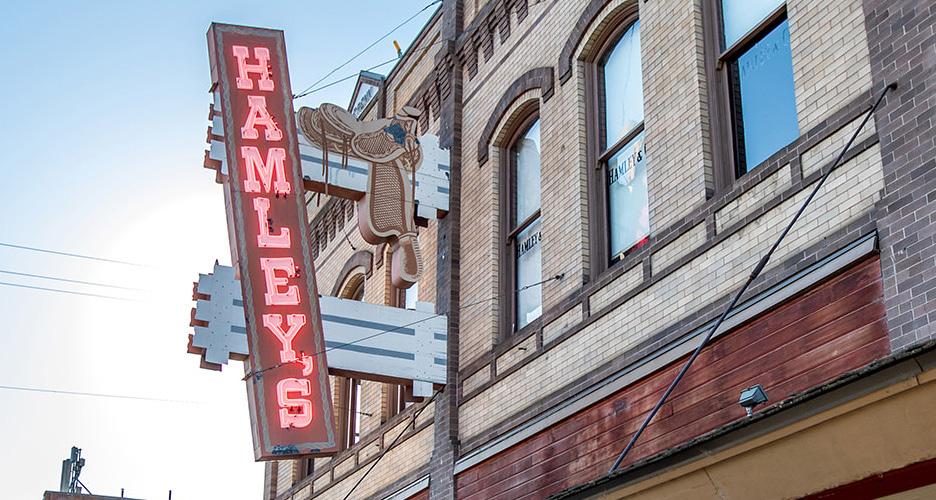

Hamley & Co.
Tamastslikt Cultural Institute
Experience the storied past, rich present, and bright future of the Cayuse, Umatilla, and Walla Walla Tribes. The world class exhibits feature artifacts, photography, video, and interactive multi-media displays. Enjoy a Native-inspired lunch menu at Kinship Café and shop at the Museum Store. Open Tues-Sat, 10am-5pm.

The Tribe is proud to continue the legacy of the historic local brand. Since 1905, Hamley Western Store & Saddle Shop has been a downtown Pendleton landmark, and guests can still browse an exceptional selection of western wear and leather goods that embody the enduring spirit of the Wild West. Next door, Hamley Steakhouse & Saloon offers USDA Prime cuts, hearty sides, and a fully stocked bar—all within a timeless setting of woodwork and classic swing-door charm.
Wildhorse
Madras Confederated Tribes of Warm Springs
Confederated Tribes of Warm Springs
The Warm Springs Reservation sits among the iconic landmarks of Mt. Hood to the north, Mt. Jefferson to the south and the Deschutes River to the east. The 644,000-acre reservation is home to three Native American tribes: Warm Springs, Wasco and Paiute.
The cultures of the Warm Springs, Wasco and Paiute peoples have shaped the distinct lands they inhabit. Both the Wasco and Warm Springs Tribes are river people. The Wasco Tribe and Warm Springs Tribe originated from the Columbia River, near present-day The Dalles and Hood River. The original name of the Columbia River by the Chinook-speaking Wasco Tribe was Wimahl. The Sahaptian speakers of Warm Springs referred to the river as Nch’i-Wàna, meaning “Great River.”
As original inhabitants of Southeastern Oregon and its desert landscape, the Paiute Tribe historically practiced a more nomadic lifestyle to acquire game and other food that varied by the season. The members of the Paiute Tribe who came to settle on the Warm Springs Reservation make up a small band of the much larger Paiute Tribe farther east and south; some of their descendants are members of today’s Burns Paiute Tribe in Eastern Oregon.
Since resettling to the Warm Springs Reservation and forming the Confederated Tribes of Warm Springs, tribal members have established homes, businesses and a variety of visitor amenities here among the ponderosa pines and dramatic, rocky river canyons of the high desert.
WARM SPRINGS, GATEWAY TO THE HIGH DESERT
On OR-26 along the serene Deschutes River, the community of Warm Springs welcomes visitors with several tribal-owned attractions and local businesses. The Museum at Warm Springs is a great place to start. Life-size traditional dwellings, multi-media presentations and a rotating selection of exhibits bring to life the culture of the Wasco, Warm Springs and Paiute. The Smithsonian Institution has lauded its collection of family heirlooms, trade items and ceremonial artifacts as one of the most complete owned by a North American Indian tribe. Its galleries also display historic photographs from the museum’s vast archive and fine art from Warm Springs and other Native artists. More fine art is available at the museum’s gift shop, along with an excellent selection of books, photographs, jewelry, posters and prints, and a variety of souvenirs.
Right across the highway, the Indian Head Casino hosts a variety of slots, table games and tournaments, all-day dining at the Cottonwood Restaurant and late-night fare at the Tule Grill.
The Warm Springs Tribes welcome visitors to the revitalized historic Kah-Nee-Ta Hot Springs Resort. Guests may enjoy amenities like mineral hot-springs soaking pools and tubs, along with all the other resort amenities that have drawn visitors for more than 50 years. Kah-Nee-Ta Village accommodations include a 30-room motel, 20 traditional tipis and 51 RV sites.
The Deschutes River is a key draw, widely acclaimed for its rainbow trout and steelhead fishing. Littleleaf Guide Service and Spin the Handle offer trips on the “Native side” of the river. With access by drift boat or four-wheel-drive across reservation land, guests enjoy the solitude of 39 miles of blue-ribbon waters.
NEARBY VISITOR ATTRACTIONS
Residents and visitors enjoy numerous opportunities for recreation in the Warm Springs region, a rugged, rocky landscape bathed in sunshine and sage. About 25 miles north of Bend, Smith Rock State Park is renowned among rock climbers and also offers hiking, trail running, biking, rock climbing, slacklining and
DESCHUTES RIVER
The Deschutes River is a popular spot for fishing and rafting.
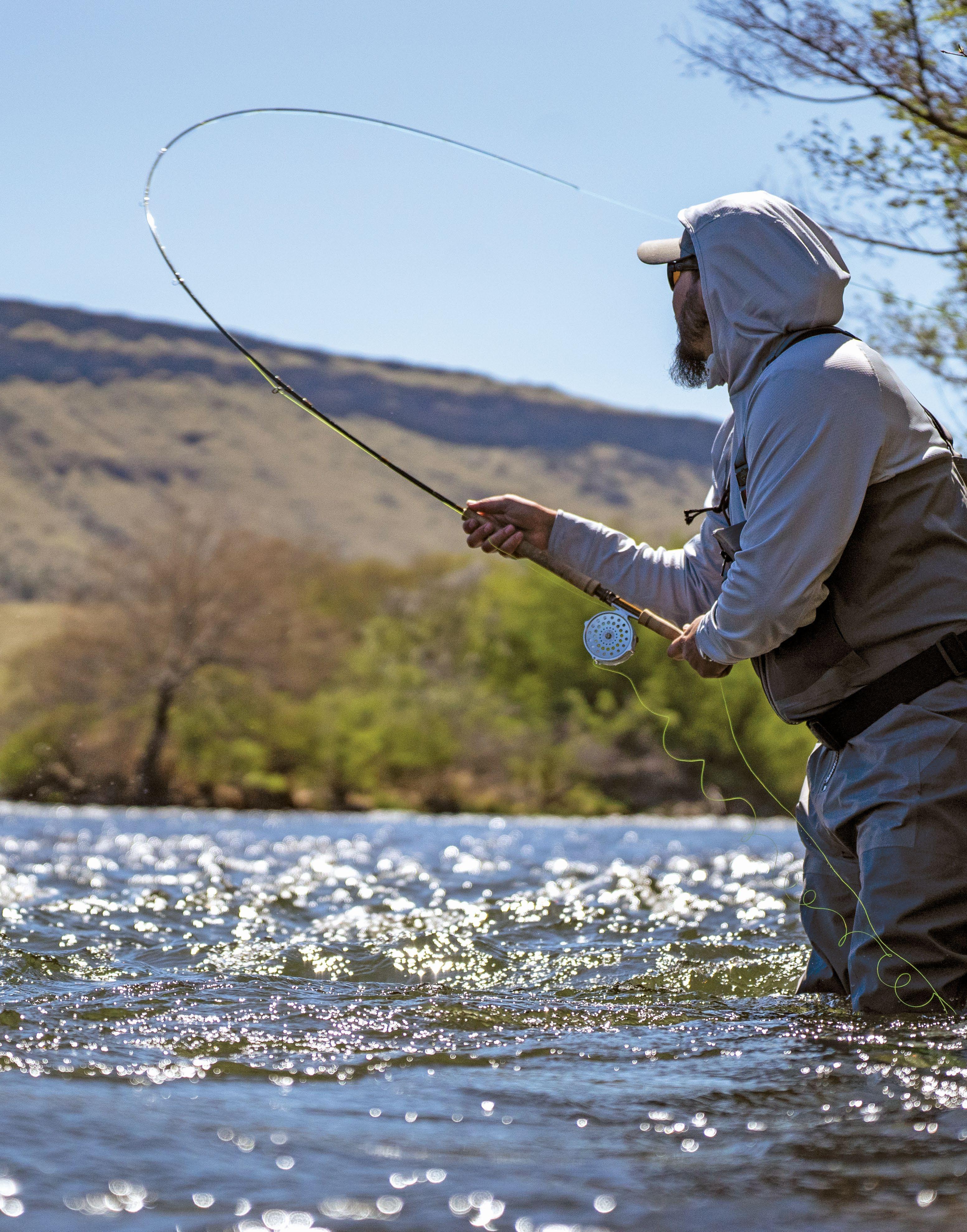
horseback riding. The nearby communities of Bend, Sisters, Redmond and Madras offer memorable experiences for enjoying local breweries, shops, spas, scenic drives, skiing, camping and more.
Fishing permits are available to the public for certain areas on the Warm Springs Reservation such as High Lakes, Lake Simtustus and the Metolius arm of Lake Billy Chinook. Purchasing a fishing permit in specific areas also allows the public to use designated campgrounds like Dry Creek Campground on the Deschutes River. Enjoy the stunning landscape, the rushing sounds of the river and a quiet getaway by visiting these historically sacred grounds in the spring or summer.
On the Lower Deschutes River, anglers can cast for trout and steelhead along a 6-mile stretch of the east bank without a tribal permit from April through October. Farther downstream, the Deschutes grows wide and rambunctious and is a favorite destination for whitewater rafting. Several outfitters run day trips out of Maupin.
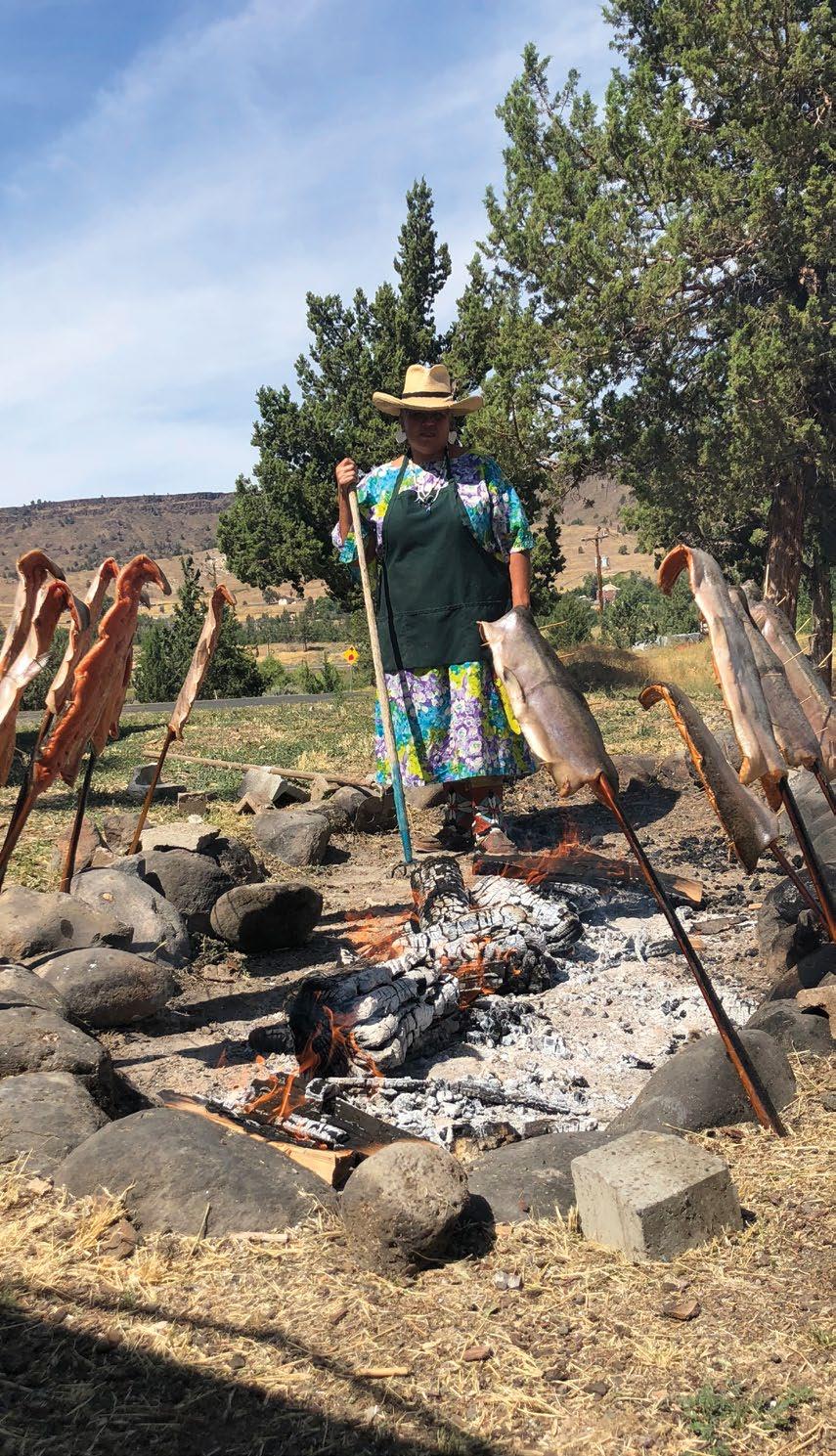
TRIBAL CELEBRATIONS
The tribal people of Warm Springs proudly continue the cultural practices, traditions and language passed on to them by their ancestors. Fishing practices, tribal songs, artisanship, annual celebrations, and a spirit of pride and resilience carry on among tribal members.
The First Salmon Feast is an important tribal tradition for the people of Warm Springs that takes place annually around mid-April, based on when the first spring salmon start running. This ceremonial event in Celilo Village, along the Columbia River east of The Dalles, honors the arrival and return of salmon to the Columbia. Members from the Warm Springs Reservation, as well as the Yakama and other tribes from the Columbia River Basin, gather in the Celilo Longhouse to take part in harvesting, baking and honoring the salmon in order to mark the start of the fishing season. The Native tribes from the Columbia River have coexisted in this region for centuries. The First Salmon Feast along with traditional salmon bakes provide an opportunity for these groups to sustain their long-standing relationships with one another, and are remarkable opportunities for the public to experience an age-old tradition.
The importance of fishing and sustenance from the area’s rivers — the Columbia and the Deschutes — continue for the Confederated Tribes of Warm Springs today. Tribal members today practice food sovereignty, the right of Indigenous groups to produce traditional foods on their own lands. Along with other Native groups, the Confederated Tribes of Warm Springs are part of the Columbia River Inter-Tribal Fish Commission, working to increase the declining population of salmon, sturgeon and lamprey.
Younger generations from the Warm Springs Reservation continue to learn and practice the traditional fishing methods handed down from older generations. Dip nets — long poles with nets attached — are still used today to fish from high platforms over the river. A more modern technique, set nets, involves lowering a large net into the water for several hours or overnight and then pulling fish into a boat. Platform use is available to tribal members only, but the public can view tribal fishers using platforms in a few locations along the Deschutes and
Columbia rivers. On the Columbia, look for platforms downstream from the John Day Dam in Rufus and around the Bridge of the Gods in Cascade Locks. Some of the fish caught by tribal members is sold fresh right in Cascade Locks at and around the Brigham Fish Market
WATER INFRASTRUCTURE AND THE CHÚUSH FUND
The Warm Springs Reservation is working to improve its water infrastructure so that tribal residents are able to sustain their community and thrive. Still in the midst of a water emergency, the residents of Warm Springs have been dealing with periods of inconsistent access to clean water due to a series of pressure breaks in key community water lines. The Oregonbased nonprofit Chúush Fund accepts contributions that will directly assist with the water crisis on the reservation. Money raised helps with filtering water, laying down new pipes and potentially building a water-treatment facility.
A NEW COMMUNITY GATHERING PLACE
Tribal artists and businesses will soon have a new home, thanks to the Commissary Business Incubator Project. The project transforms the Warm Springs Commissary, a 130-year-old structure that was originally a food-distribution center for the reservation, into a netzero-energy building that will function as a retail, business and educational venue. The Warm Springs Community Action Team and community members have begun a multiyear project to relocate, renovate and reimagine the Commissary with spaces for small businesses such as the Painted Pony Coffee Shop, Twisted Teepee Food Cart and the Tananáwit community of Warm Springs artists. A commercial kitchen and vendor area will allow community business owners to take part in self-sustaining food practices, including packing and selling highly sought-after fish from the Columbia River. The Commissary plans to host food carts and Saturday markets for community members and the public, and an outdoor pavilion will provide space for cultural performances and educational activities. Look for the Commissary in its new location near the intersection of US-26 and the Kah-Nee-Ta highway.
Salmon bake
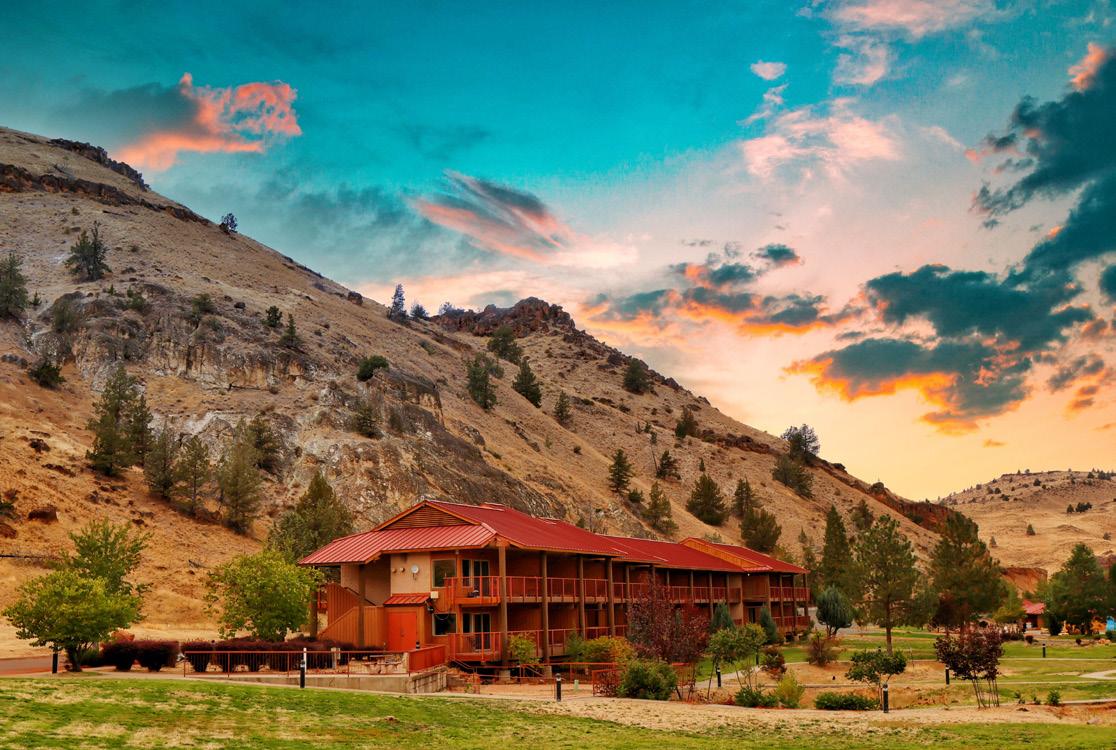
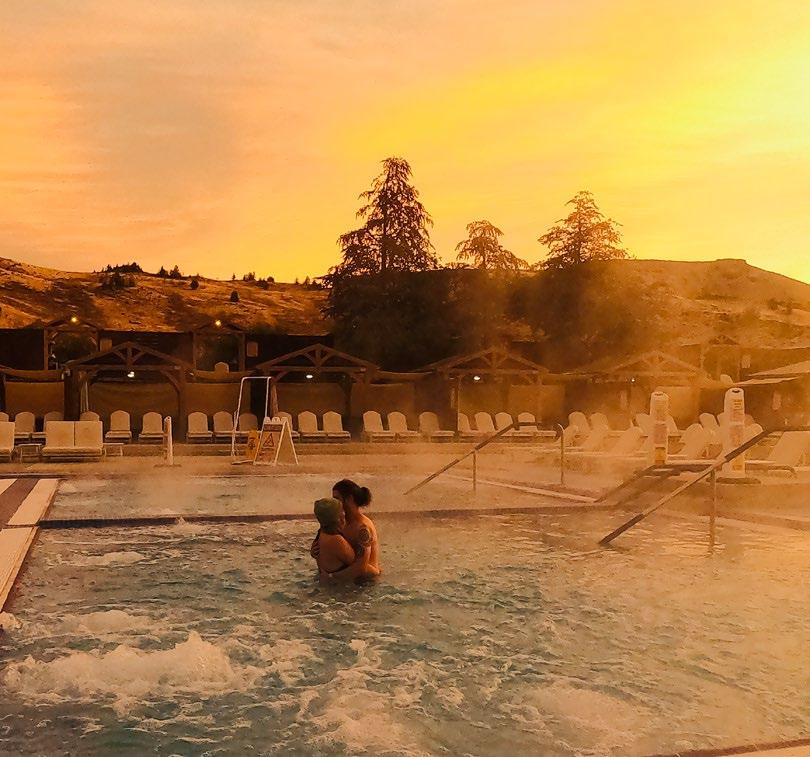
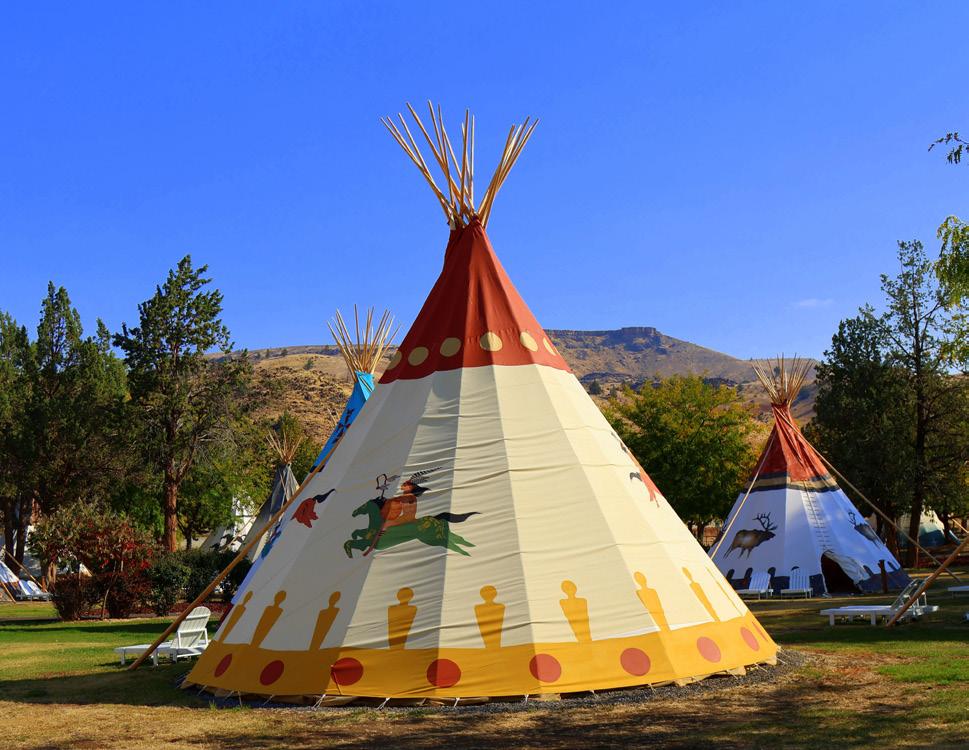
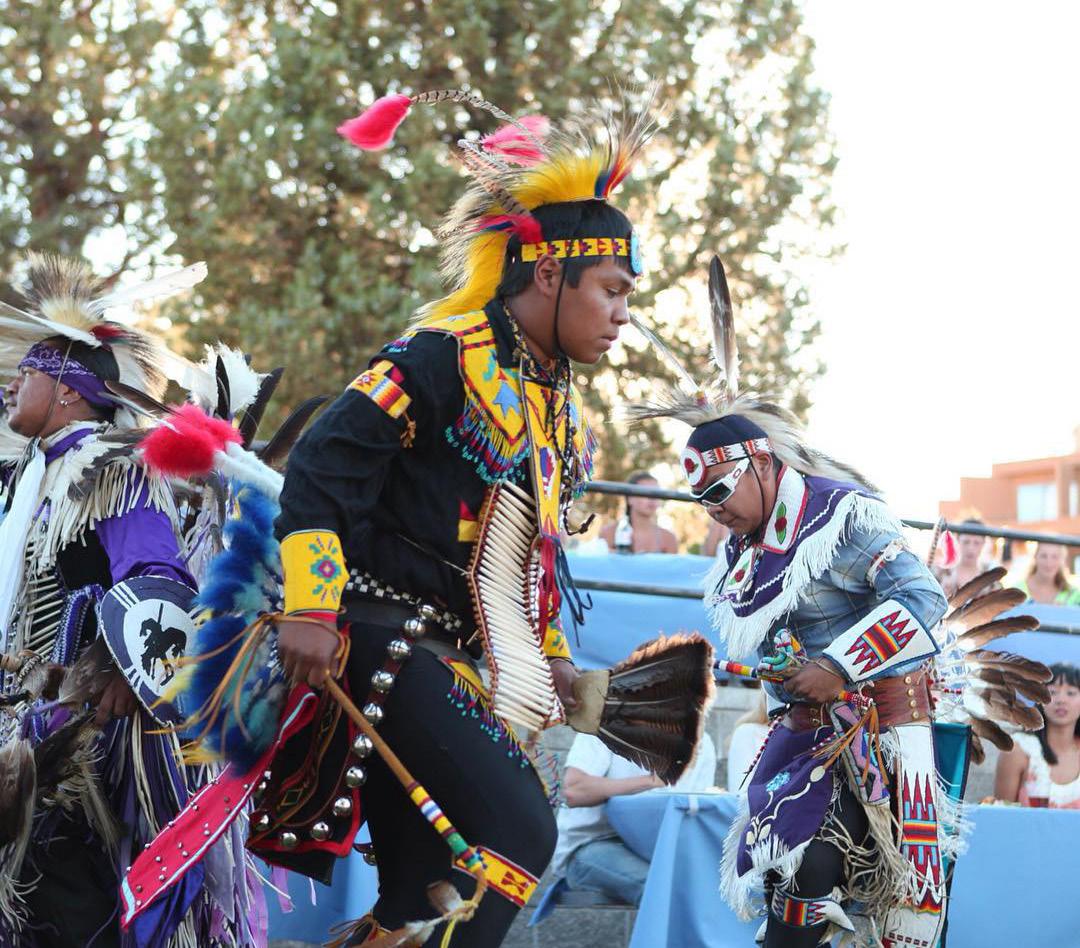
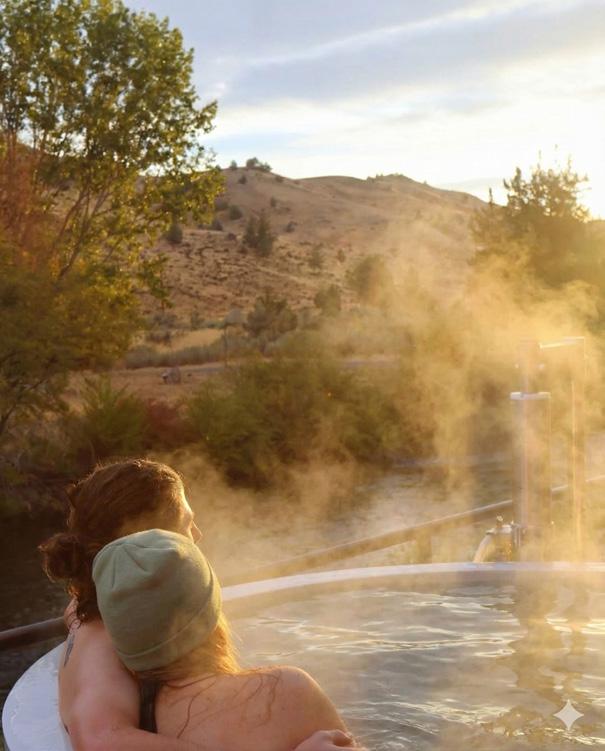
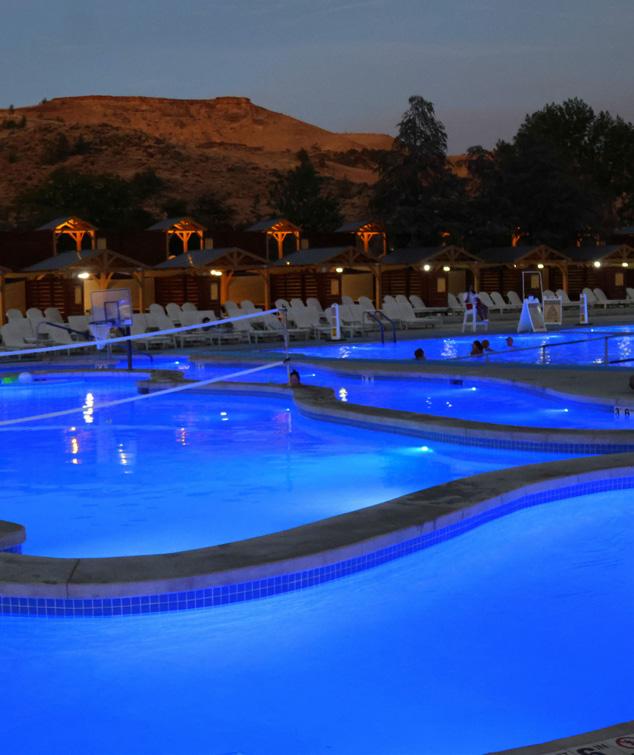
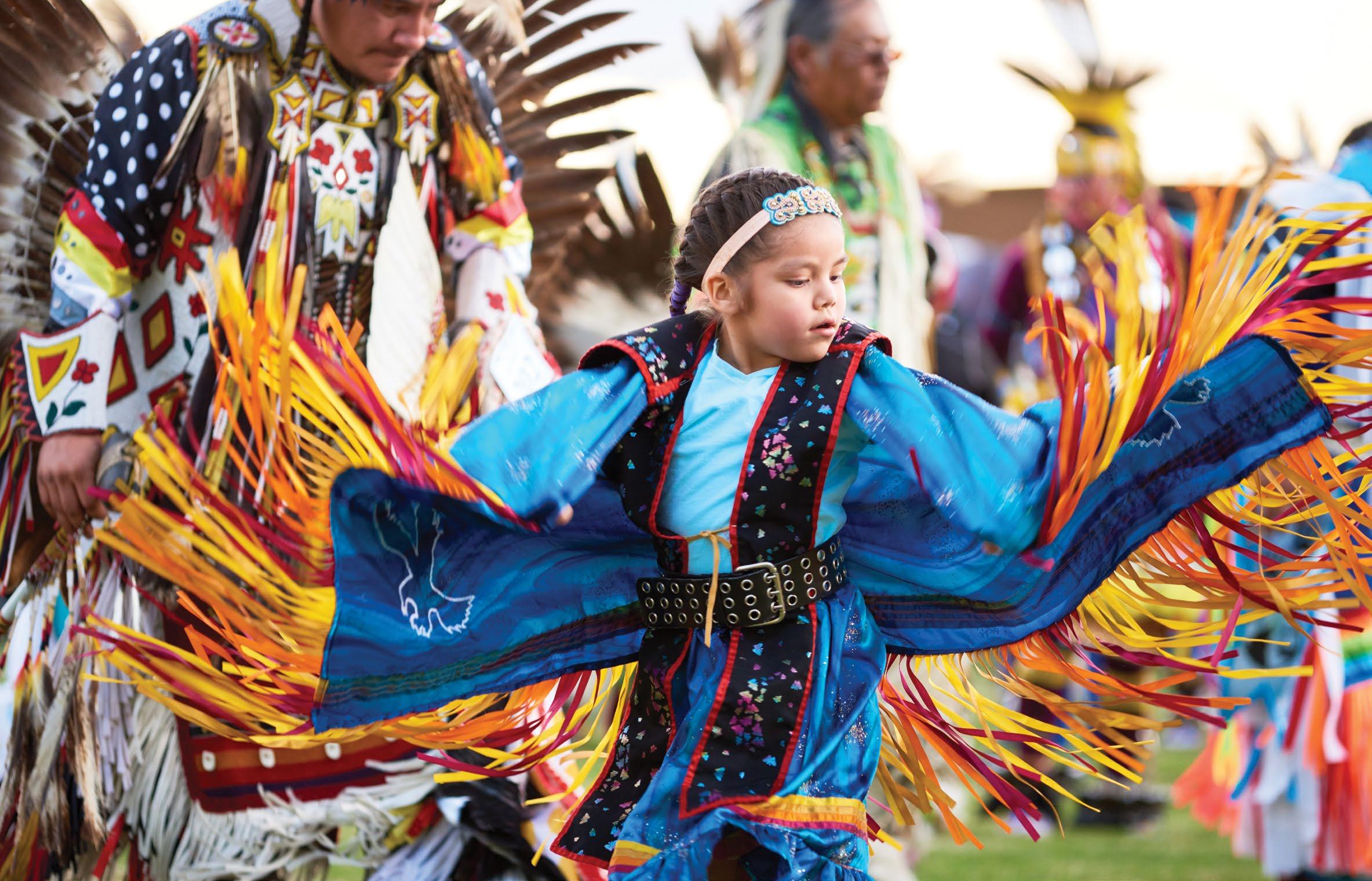
Events
Enhance your visit to Oregon’s tribal lands at any of these annual family-friendly events. All are open to the public and are alcohol-, drug- and smoke-free. Check websites for dates and other details.
JANUARY
PEACE HIKE
Yachats
In remembrance of their ancestors forced off their homelands, members of the Confederated Tribes of Coos, Lower Umpqua and Siuslaw Indians hike Amanda’s Trail. All are welcome to join this commemoration of healing. CTCLUSI.org
FEBRUARY
LINCOLN’S BIRTHDAY CELEBRATION POWWOW
Simnasho
Drumming, dancing, singing and traditional regalia highlight this small midwinter powwow at the Simnasho Longhouse on the Confederated Tribes of Warm Springs Reservation. WarmSprings-NSN.gov
MARCH
WILDHORSE ANNIVERSARY FIREWORKS
Umatilla Indian Reservation
Wildhorse Resort & Casino celebrates its anniversary each March with the region’s grandest pyrotechnics show. Impressive air and ground displays highlight this free event at the resort 6 miles east of Pendleton. WildhorseResort.com
APRIL
ROOT FEAST
Umatilla Indian Reservation
The Confederated Tribes of the Umatilla Indian Reservation hosts a feast of traditional springtime first foods like pyaxí (bitterroot) and xáwš (cous) at the Umatilla Longhouse. CTUIR.org
JUNE
DELTA PARK POWWOW AND ENCAMPMENT
Portland
An annual tradition for more than 50 years, Native and non-Native participants and spectators from the Pacific Northwest gather for a weekend of intertribal dancing, cultural exhibitions, and art, craft and food vendors.
TravelPortland.com
PI-UME-SHA CELEBRATION WEEKEND
Warm Springs
Celebrating the 1855 signing of its treaty, the Confederated Tribes of Warm Springs host a parade, rodeo, fun run, powwow and more at their Pi-Ume-Sha grounds near the Community Center. WarmSprings-NSN.gov
JULY
COW CREEK UMPQUA
TRIBAL POW WOW
Tiller
The tribe welcomes drummers, dancers, singers and traditional craftspeople to its annual gathering at the South Umpqua Falls Campground in the Umpqua National Forest. Dry camping (no water or electricity) available.
CowCreek-NSN.gov
MARCELLUS NORWEST
MEMORIAL VETERANS POWWOW
Willamina
The Confederated Tribes of Grand Ronde Indians honor tribal and nontribal military veterans and help connect them with assistance programs. A Veterans Royalty Pageant kicks off the event at the Uyxat Powwow Grounds. GrandRonde.org
TRIBAL CANOE JOURNEY
Location varies
Coastal tribes from Oregon, Washington, British Columbia and Alaska come together to share their canoe culture, traveling the Pacific in large traditional oceangoing canoes. The route changes each year.
AllNationsPaddlesUp.com
WILDHORSE POW WOW
Umatilla Indian Reservation
This Fourth of July weekend event brings together dancers, musicians and artisans from around North America. A highlight are the contests of various dance styles — including jingle, grass and chicken — performed in colorful regalia. WildhorseResort.com
TAMKALIKS CELEBRATION
Wallowa
The three-day event at the Wallowa Homeland Project celebrates the continuing presence of the Nez Perce in their ancestral Wallowa country. Activities include a friendship feast, a horse procession, and singing, dancing and drumming competitions. WallowaNezPerce.org
AUGUST
NESIKA ILLAHEE POW-WOW
Siletz
In the heart of the Siletz Reservation, Government Hill comes alive with dancing, drumming and singing the second weekend of August. Performers and vendors represent many facets of Indigenous arts, crafts and cuisine.
CTSI.NSN.US/Nesika-Illahee-Pow-Wow
GRAND RONDE CONTEST
POWWOW
Willamina
Native dancers in full regalia compete for prize money in one of the largest powwows in the Pacific Northwest. A shuttle is available from the Spirit Mountain Casino to the Uyxat Powwow Grounds. GrandRonde.org
KLAMATH TRIBES RESTORATION CELEBRATION
Chiloquin
A three-day celebration marks the restoration of federal recognition and tribal rights of the Klamath, Modoc and Yahooskin people. Events include a rodeo, parade, fun run and competition powwow. KlamathTribes.org/Restoration-Celebration
SEPTEMBER
EPSON TOUR/WILDHORSE LADIES GOLF CLASSIC
Umatilla Indian Reservation
Top professional women golfers from around the world tee off at the Wildhorse Golf Course in this qualifying tournament on the Ladies Professional Golf Association tour.
WildhorseResort.com
KO-KWEL SALMON CELEBRATION
North Bend
Celebrating its coastal culture, the Coquille Indian Tribe hosts a traditional salmon bake on the Coos Bay waterfront at the Ko-Kwel Casino Resort, along with canoe races, crafts and demonstrations.
KoKwelResorts.com
OCTOBER
BURNS PAIUTE POWWOW AND LACROSSE TOURNAMENT
Burns
Lacrosse — a modern interpretation of a centuries-old Native American game — joins other Native traditions at the Harney County Fairgrounds. The weekend also includes dance competitions, drumming contests and a community dinner.
BurnsPaiute-NSN.gov
NOVEMBER
CONFEDERATED TRIBES OF SILETZ INDIANS RESTORATION POWWOW
Lincoln City
The tribes celebrate the restoration of federal recognition and tribal rights with this indoor powwow at the Chinook Winds Casino Resort. Highlights include a grand entry, dancing and Native vendors.
CTSI.NSN.US/Restoration-Pow-Wow
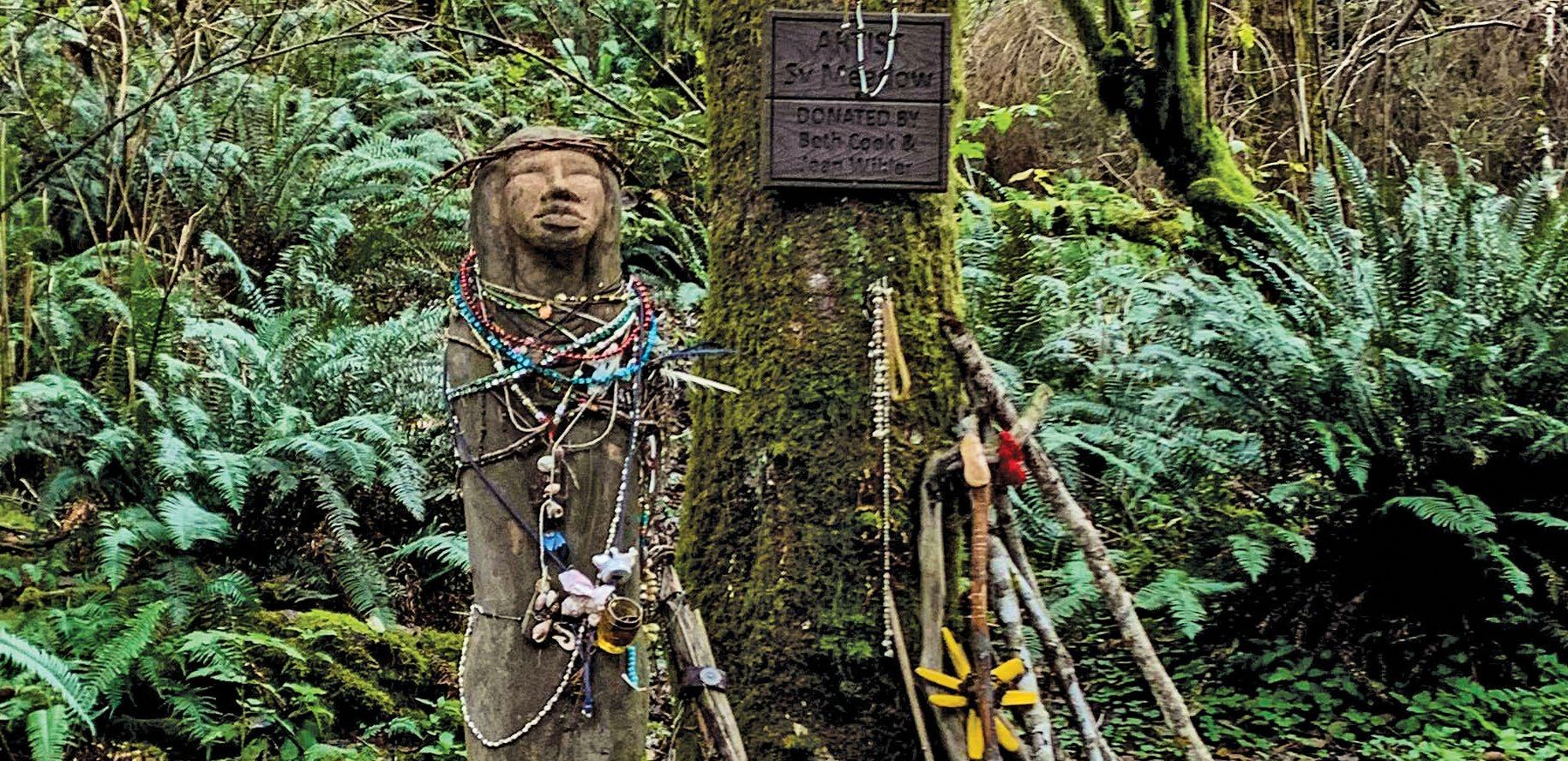
From left: Wildhorse Pow Wow; Amanda’s Trail in Yachats
Drive Time Map
Tribal Travel Plazas
These tribal-owned, full-service rest stops include gas stations and mini marts, and most offer truck and RV services, electric-car charging stations, cafes, auto supplies and visitor information.
ARROWHEAD
72485 Highway 331, Pendleton
ArrowheadTravelPlaza.com MISSION MARKET
46493 Mission Road, Pendleton MyMissionMarket.com SEVEN FEATHERS TRUCK &
130 Creekside Road, Canyonville I5Exit99.com
PLATEAU TRAVEL PLAZA 215 Northwest Cherry Lane, Madras PlateauTravelPlaza.com
CRATER LAKE JUNCTION TRAVEL CENTER
34315 Highway 97 North, Chiloquin
GRAND RONDE STATION
26820 Salmon River Highway, Grand Ronde GrandRondeStation.com