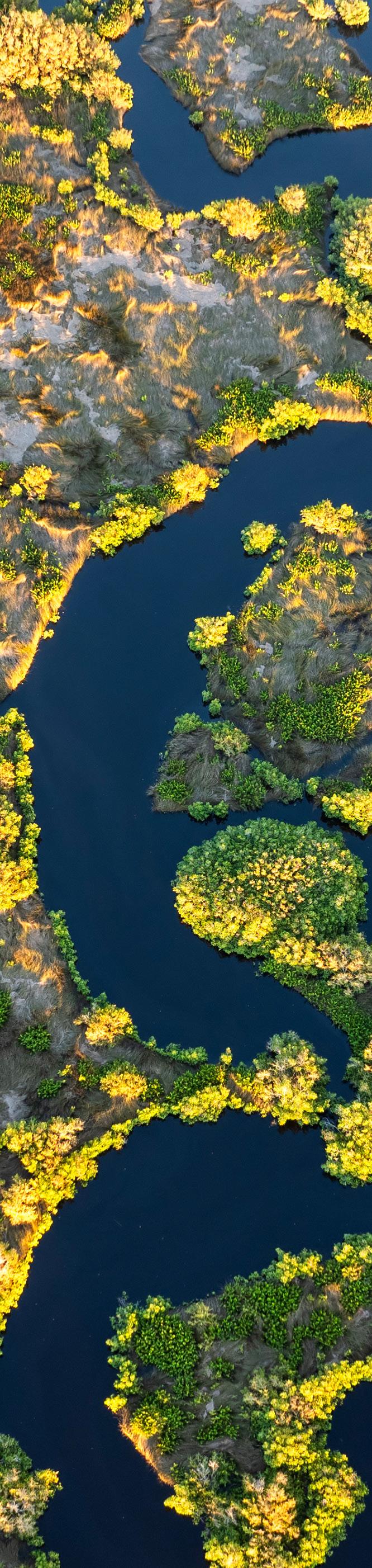

Silence Abundance Stone.
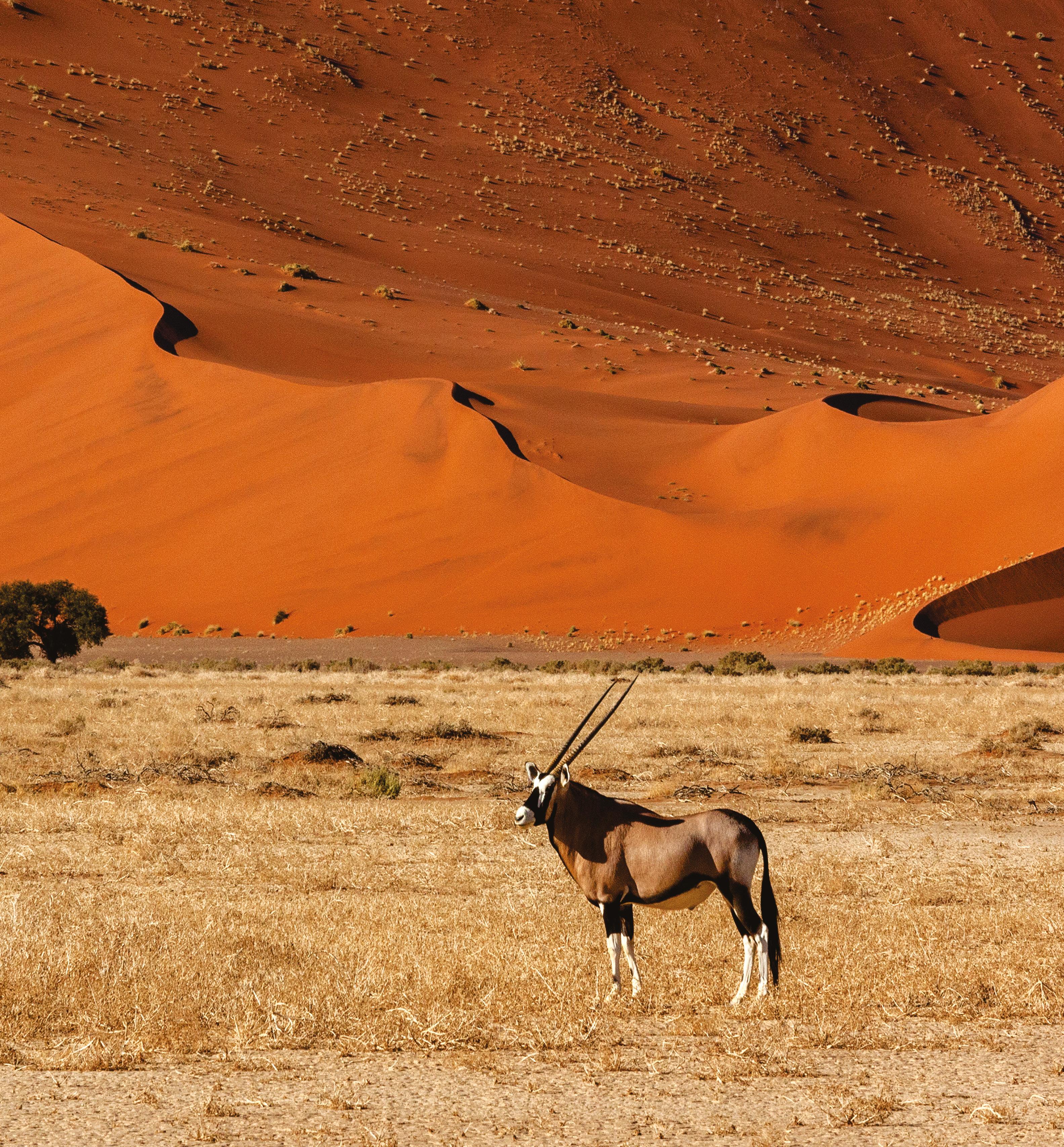
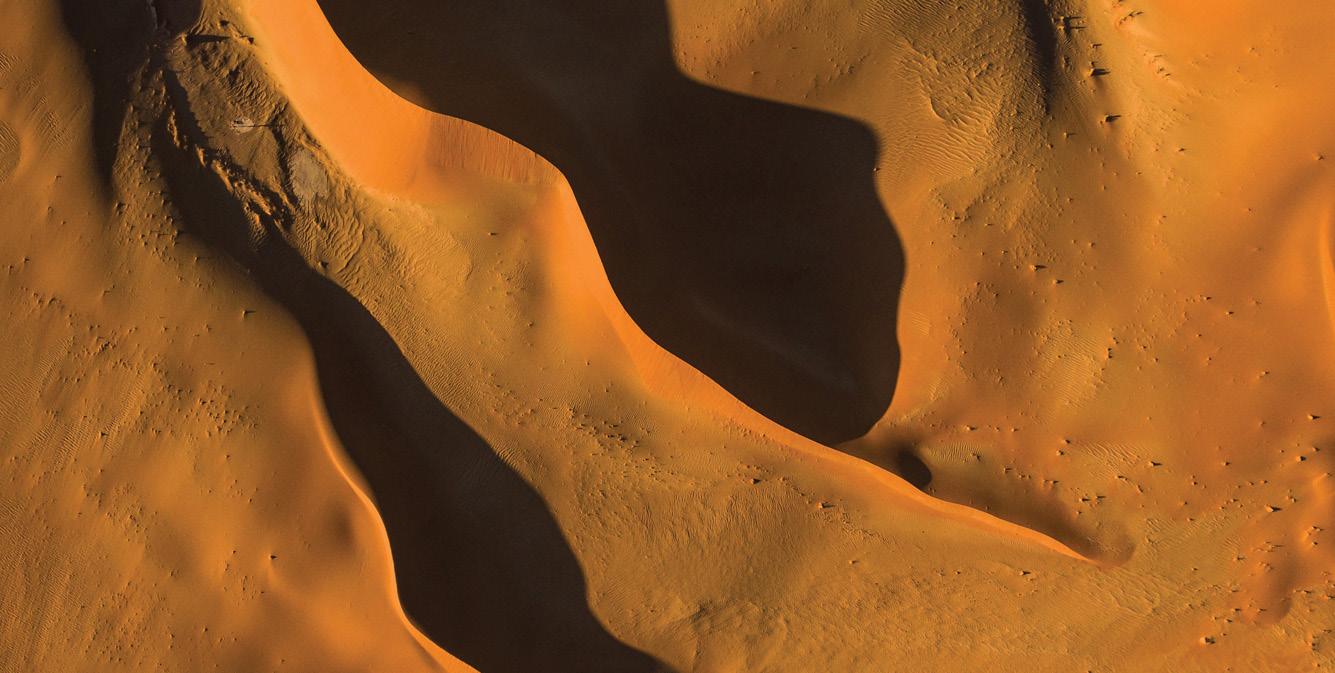
Sossusv lei
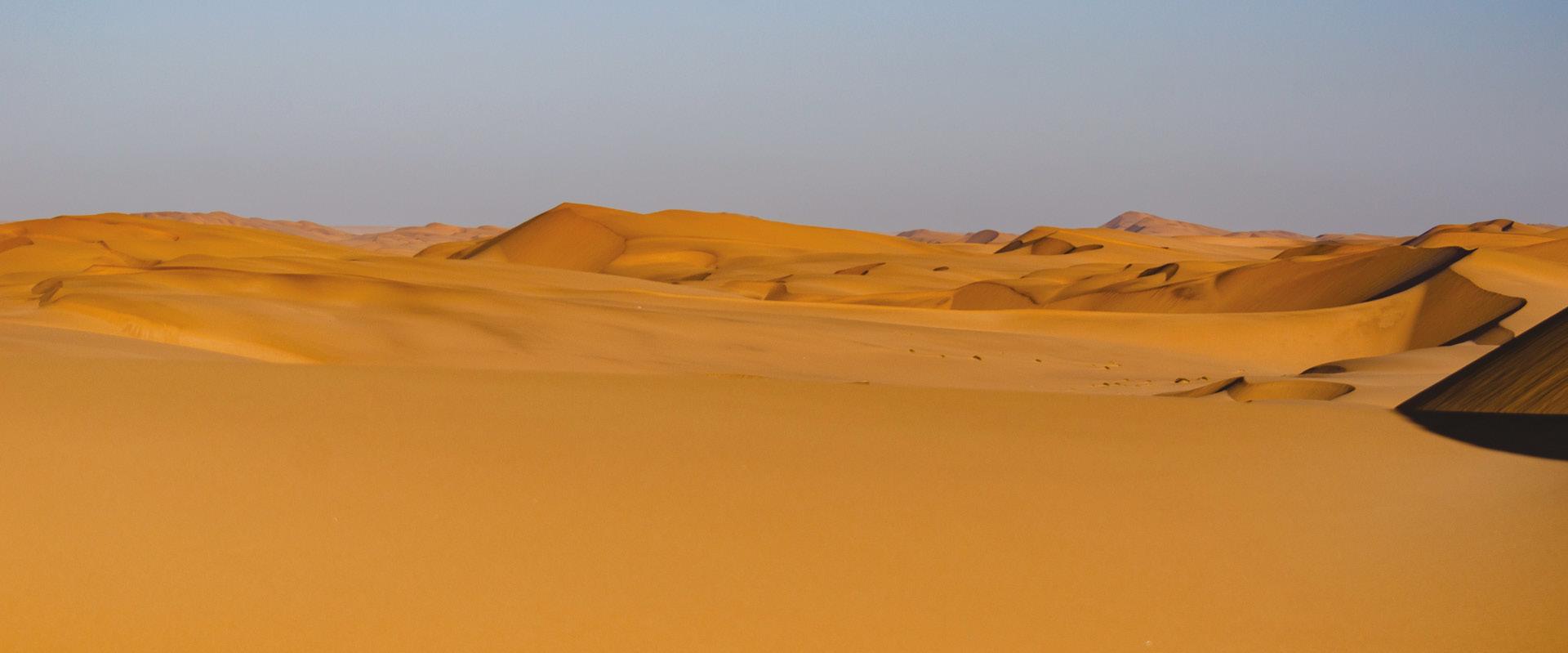
Golden dunesrise under crisp skies, a dreamscape of light and shadow where silence speaks louder than words
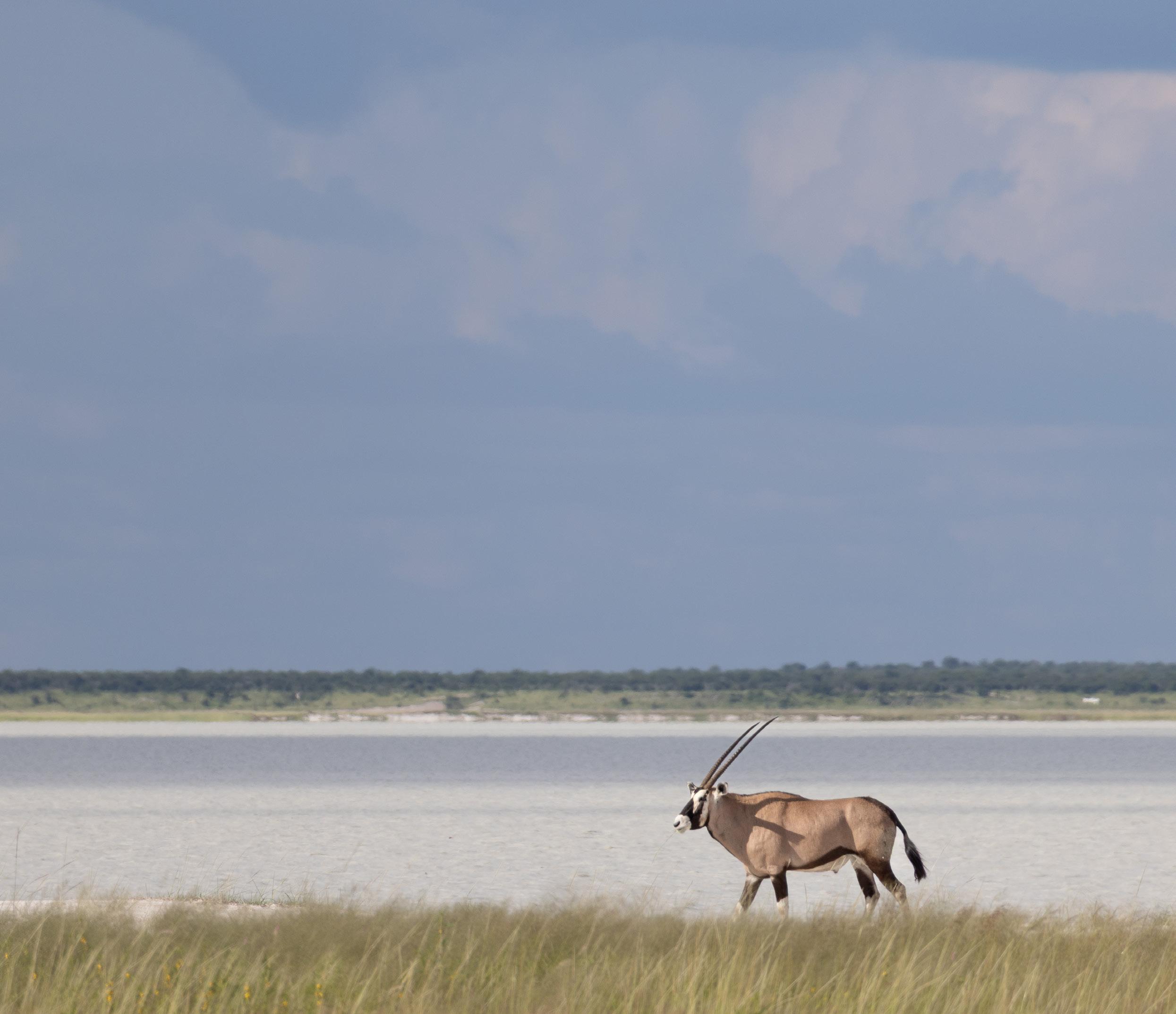
Etosha
Wildlife gathers at shimmering waterholes; elephants, lions, and zebras share the stage in nature’s grand performance
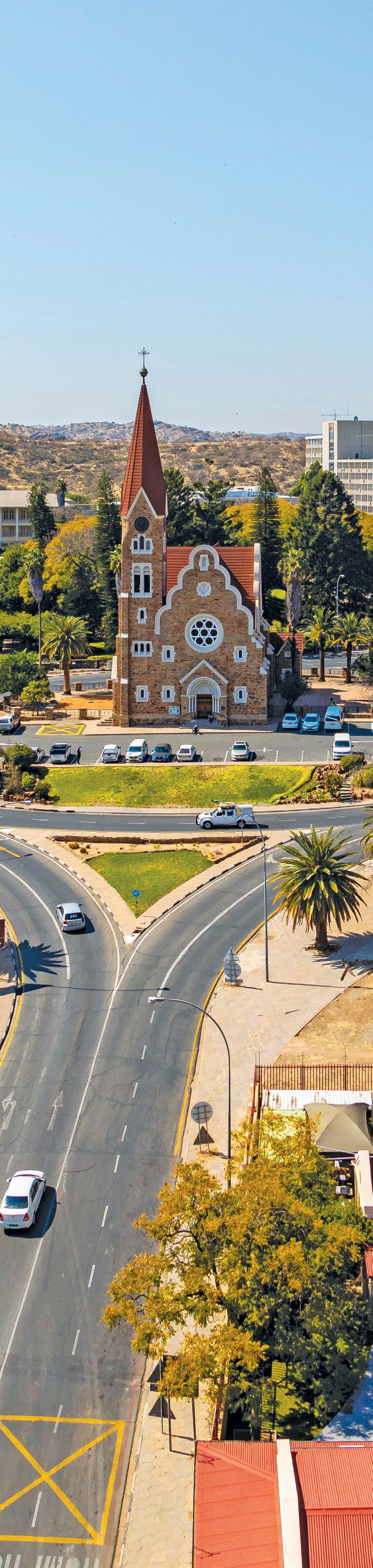
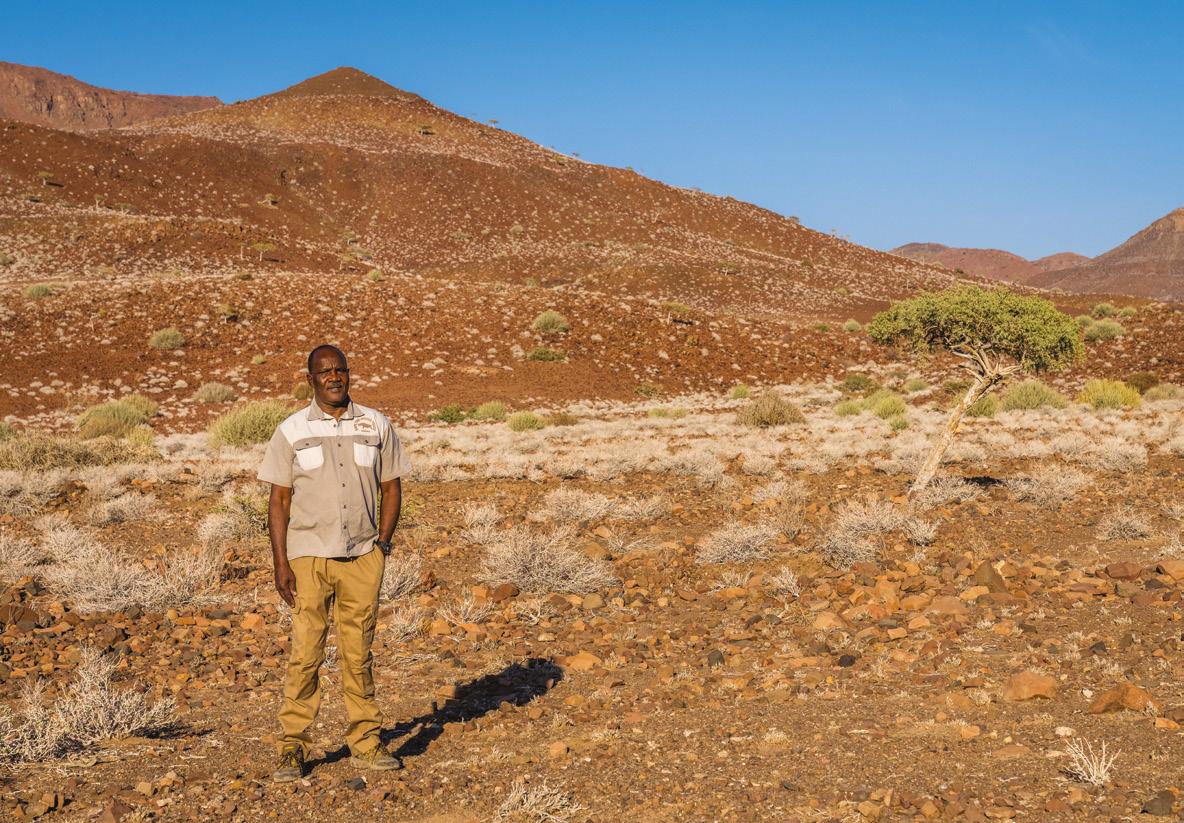
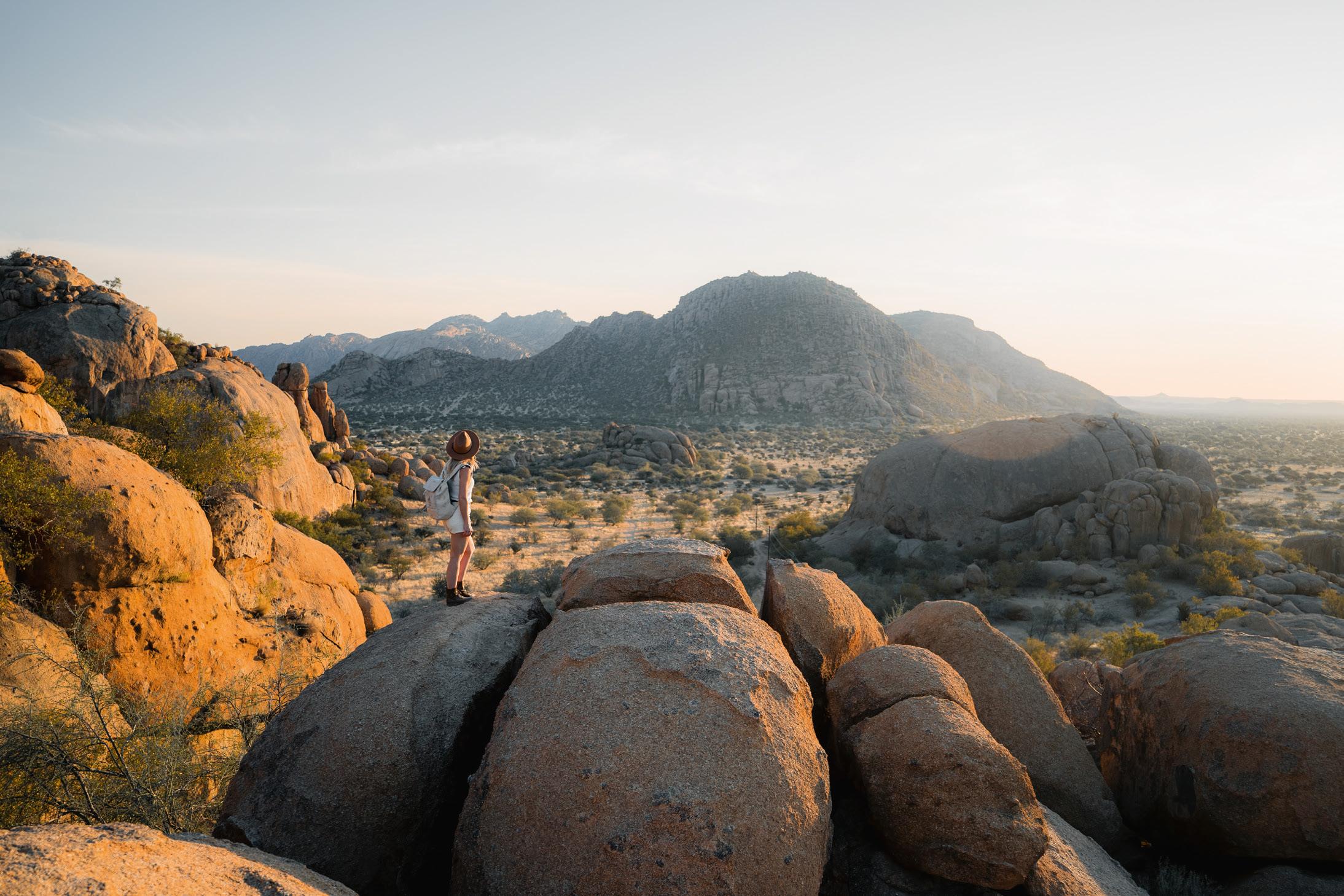
Rugged rocks and desert elephants meet timeless Himba culture, a land painted in russet and gold
www.visitnamibia.com.na
is published by Venture Media in Windhoek, Namibia www.thisisnamibia.com
Tel: +264 81 285 7450, 5 Conradie Street, Windhoek PO Box 21593, Windhoek, Namibia
EDITOR Elzanne McCulloch elzanne@venture.com.na
PUBLIC RELATIONS Elzanne McCulloch elzanne@venture.com.na
PRODUCTION Liza Lottering liza@venture.com.na
LAYOUT & DESIGN Silas M. Nangolo silas@venture.com.na
CUSTOMER SERVICE Bonn Nortjé bonn@venture.com.na
TEXT CONTRIBUTORS
Elzanne McCulloch, Pompie Burger, Madeleen Duvenhage, Suné van Wyk, David Penda, Anja Denker, Marc Springer, Henk Olwage
PHOTOGRAPHERS
Suné van Wyk, Pompie Burger, Elzanne McCulloch, Marcus Westberg, Anja Denker, Marc Springer, Le Roux van Schalkwyk, Liam Compion
Travel Namibia is published quarterly, distributed worldwide via Zinio digital newsstand and in physical format in southern Africa. The editorial content of TN is contributed by the Venture Media team, freelance writers and journalists. It is the sole property of the publisher and no part of the magazine may be reproduced without written permission from the publisher.
All information and travel details are correct at the time of going to press. Due to uncertain circumstances, this may have changed after the date of publication. Please check businesses' individual websites for up-to-date details.




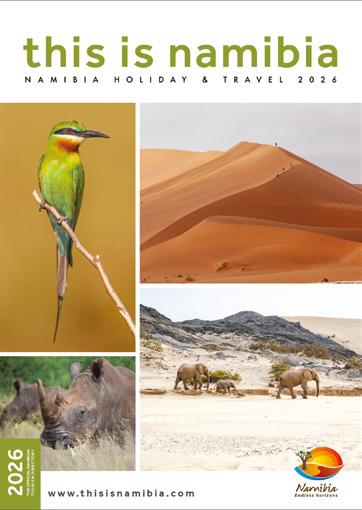



Venture Media is the pioneer of Namibia tourism promotion. We are the leader in spreading the tourism word around the world. We distribute accurate, credible, up to date and regular tourism-related information on paper, in social media, on the World Wide Web, and on mobile apps. We have reached hundreds of thousands over three decades. Be part of our community and let’s do it together.
T R O W , S H A R E Y O U R Y W I T H U S I N 2 0 2 1
We focus on telling and sharing STORIES THAT MATTER across our various magazines and digital platforms. Join the journey and share your stories with audiences that understand and value why certain things matter.


Why ethical business, conservation, tourism, people and communities matter. How these elements interrelate and how we can bring about change, contribute to the world and support each other. Whether for an entire nation, an industry, a community, or even just an individual.
WWW.VENTURE.COM.NA or email us at info@venture.com.na for a curated proposal
In 2021, we're HAT MATTER across our various m ney and share your stories with tain things matter
Why ethical b ommunities matter
How these elements interrelate and how we can bring about change, contribute to the world and support each othe Whether for an entire nation, an industry, a community, or even just an individual.


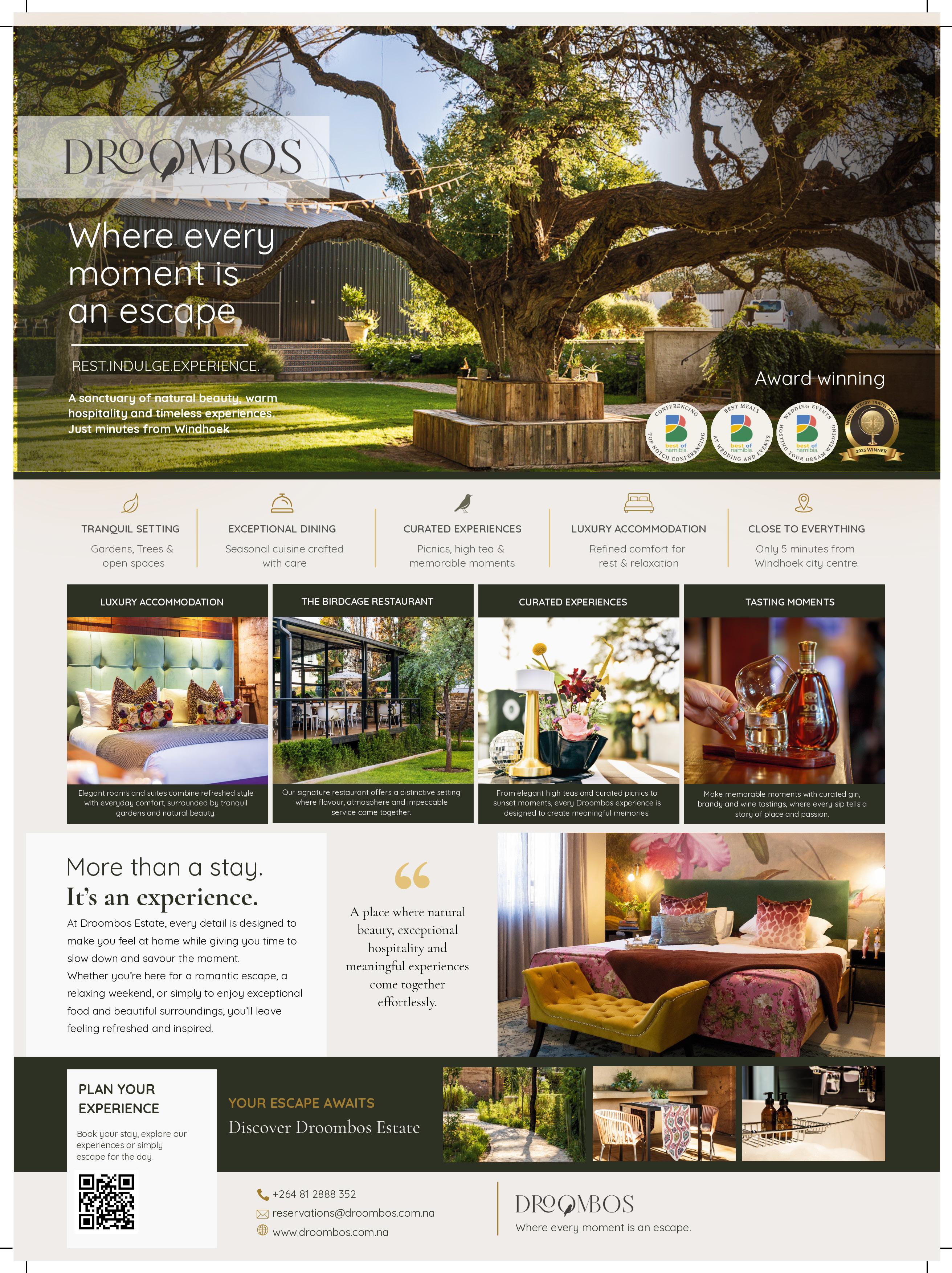
The Swahili gave us the word we now know as safari. To them, it simply meant journey. And every meaningful journey, I have realised, involves a certain amount of waiting...
Waiting for first (or last) light to spill across the plains – camera at the ready. Waiting beside a waterhole as the bush slowly wakes around you. Waiting for elephants to emerge from the dust. Waiting for the ocean to reveal movement beneath its surface. Waiting long enough for nature to set the pace instead of you.
Perhaps that is why safari has never felt to me like a pursuit of wildlife.
It lives in the silence before dawn. The smell of dust after the first vehicle passes. The way winter light stretches itself slowly across the landscape. The small rituals – coffee poured from a flask at sunrise, scarves wrapped tighter against the cold, boots crunching softly on gravel outside a canvas tent.
And sometimes, safari is not even on land at all. It may not involve a single wild animal.
In this issue of Travel Namibia, we explore The Art of Safari – not as a checklist of sightings, but as a way of experiencing Namibia. Because safari, in its truest form, is immersion. It is the deliberate act of stepping into nature’s heart and allowing it to slow you down.
This winter edition journeys through the many forms that safari can take in Namibia. From classic wildlife encounters among bushveld or across vast plains to desert-adapted adventures in the Namib. Green wetland discoveries, exploring birds, trees and even marine safaris through Atlantic waters.
There is an artistry to it all. An art in the tracking. In the guiding. In knowing when to speak and when to remain silent. In reading weather, light, spoor, and silence like a language. In creating spaces where people feel small again beneath enormous skies.
Perhaps that is why safari continues to move us so deeply. In a world growing louder and faster, Namibia still offers something increasingly rare – space. Solitude. Perspective.
This winter, may these pages inspire you to seek not just sightings, but feeling. Not just destinations, but moments. Because the greatest safaris are often the ones that change the way we see the world when we return home.

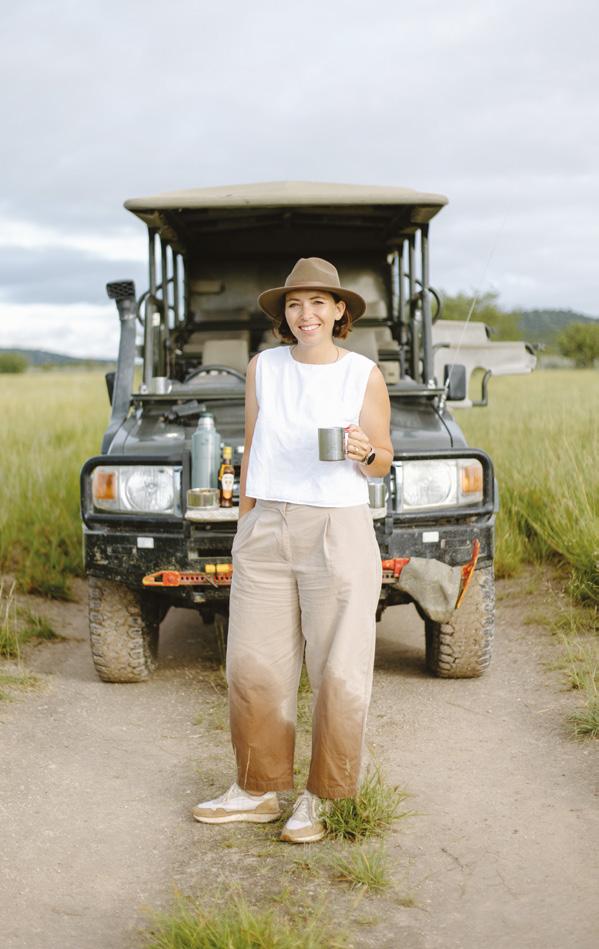
@elzanne_mcculloch
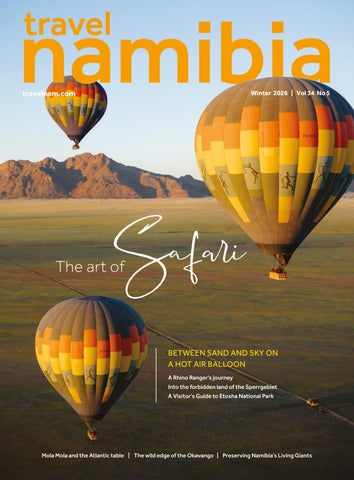
ON THE COVER
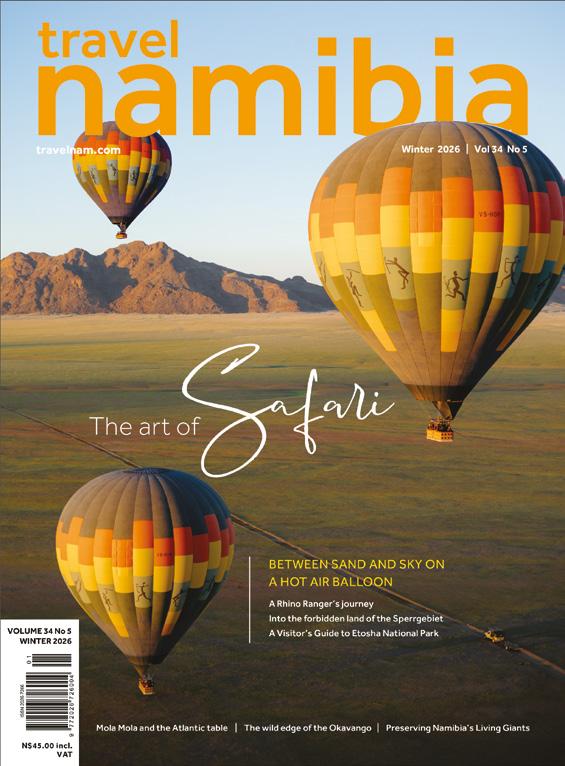
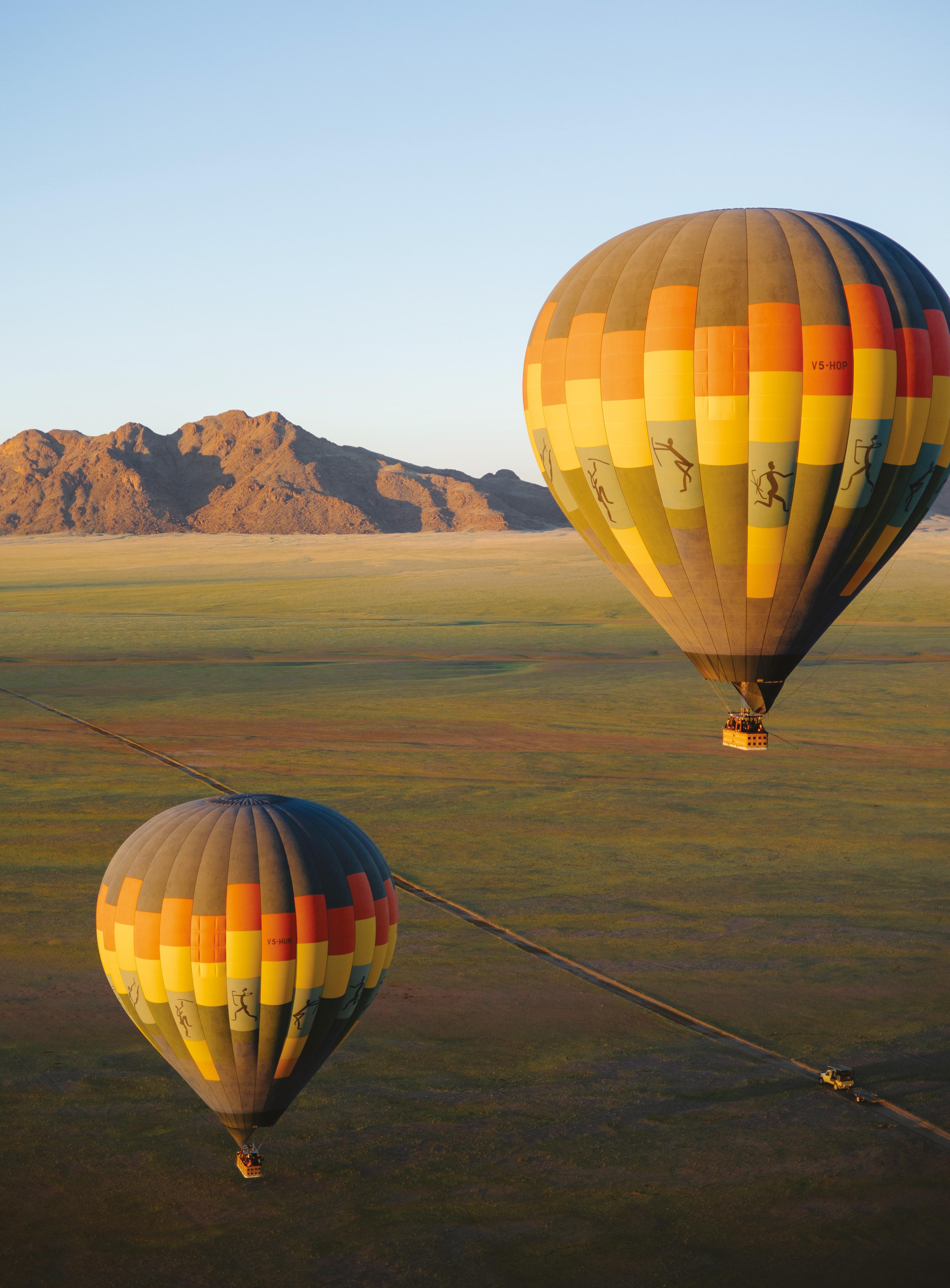
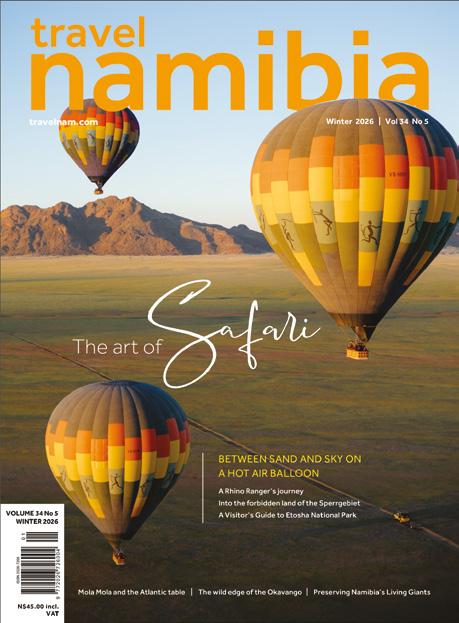
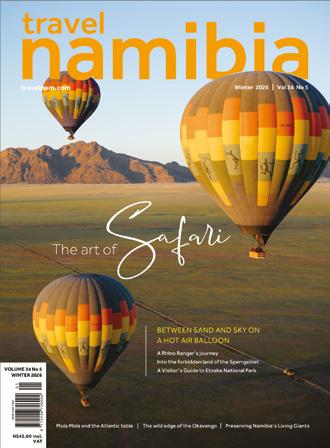
Floating above mountains and dunes, in early morning sunlight silence lingers across a landscape that feels too vast to belong to one moment. Read more on pg 42.
Image: Liam Compion
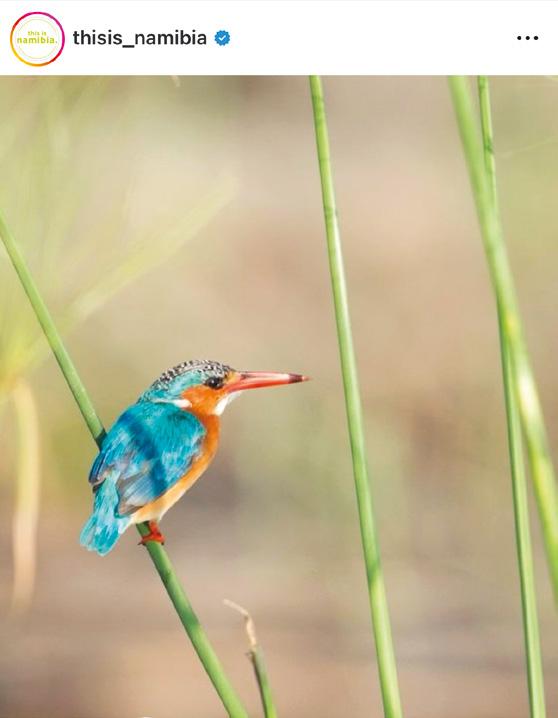
- Our favourite place in Namibia during the rainy season. FOLLOW US ON INSTAGRAM

THE ART OF SAFARI IN NAMIBIA p12
Why, where, how and why is a Namibian safari?
THE MAN WHO WALKS WITH RHINOS p26
Simson Uri-Khob’s journey with Save the Rhino Trust
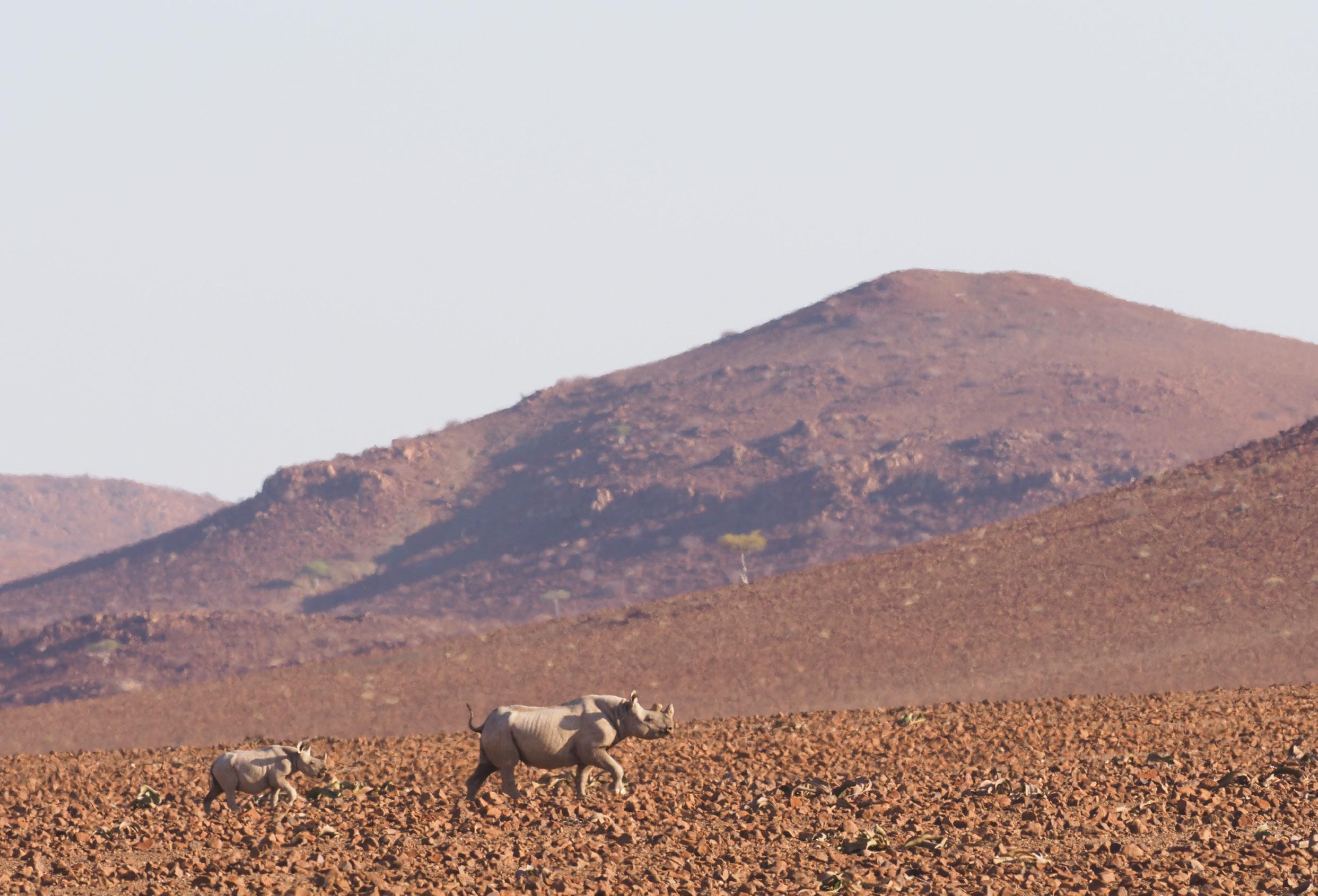
BETWEEN SAND AND SKY p42
A Namib Sky Balloon Safari
INTO THE FORBIDDEN LAND p54
Myths, legends and wonders of the Sperrgebiet
TRAVEL MINDFULLY
| Respect the land, leave no trace and let the wilderness breathe
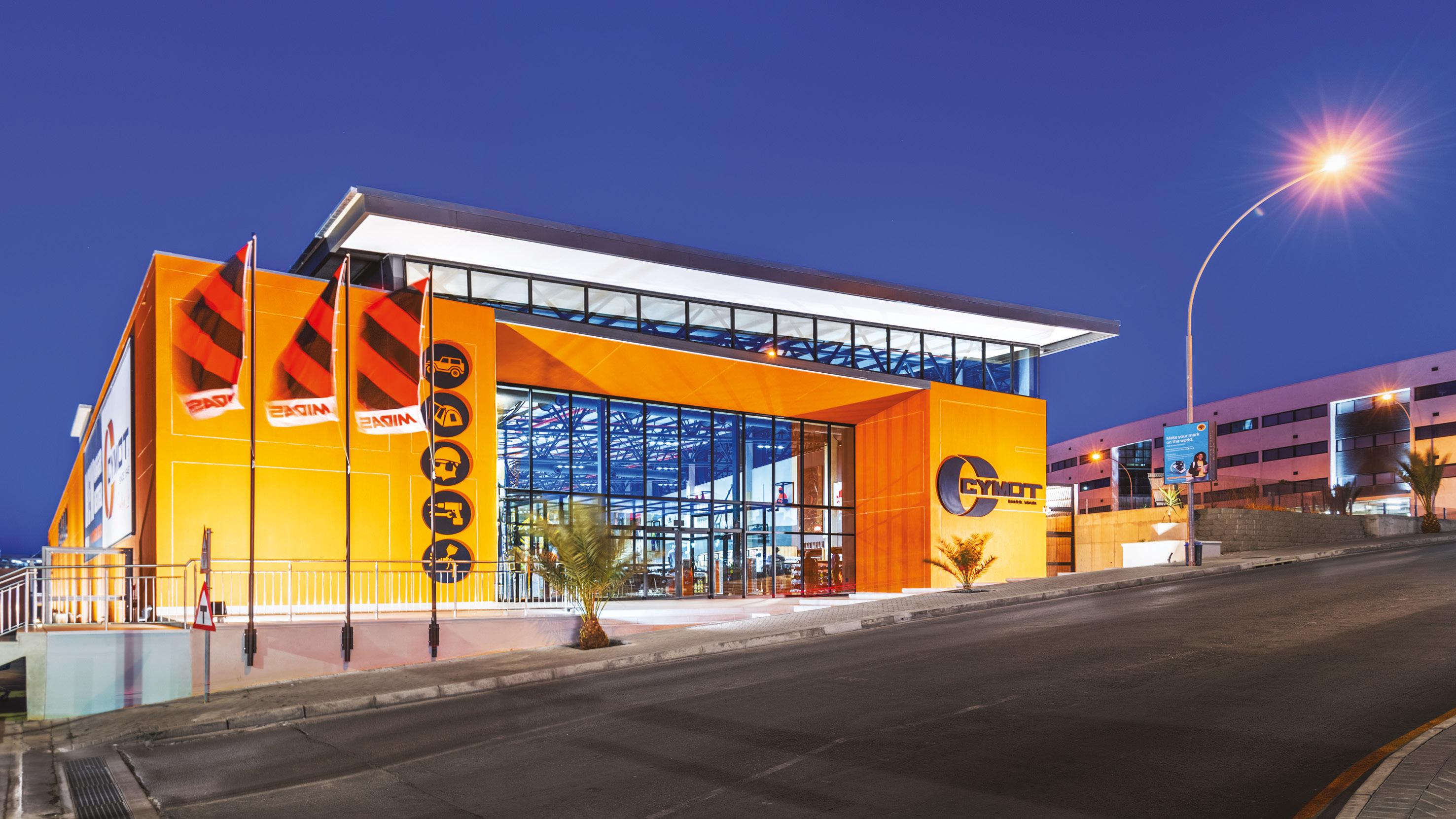
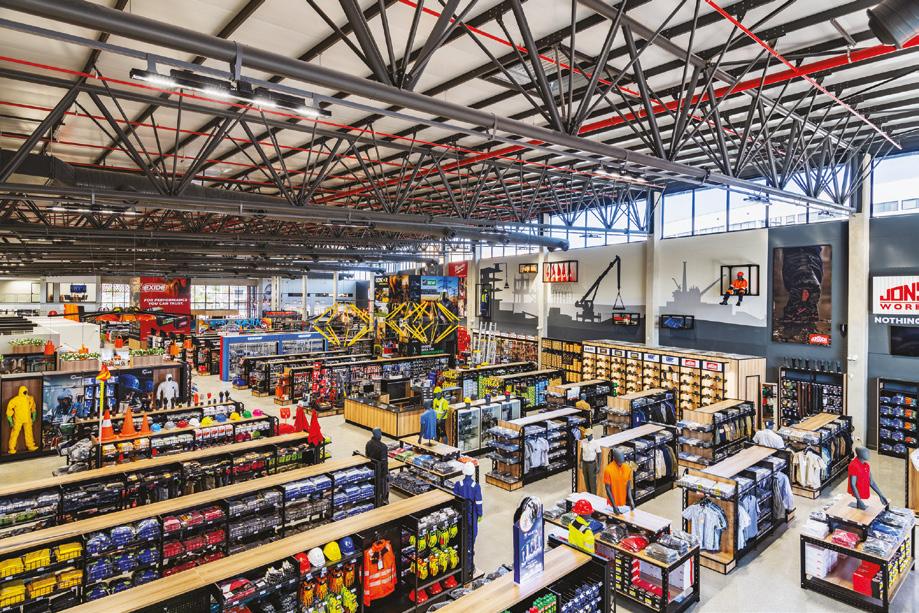

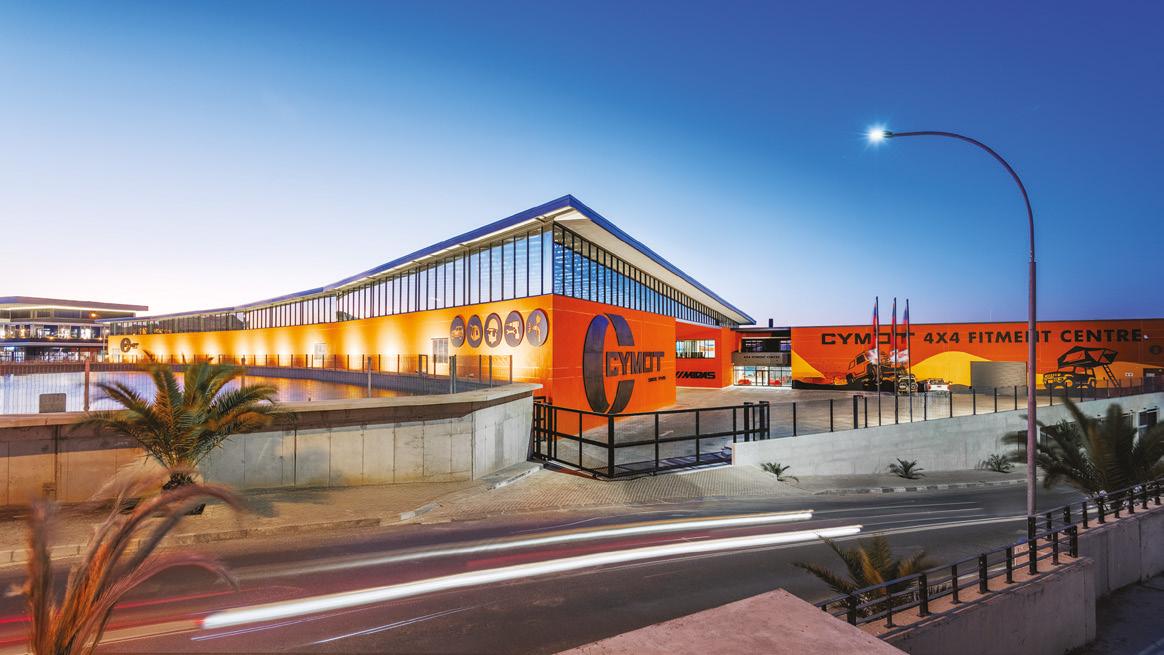
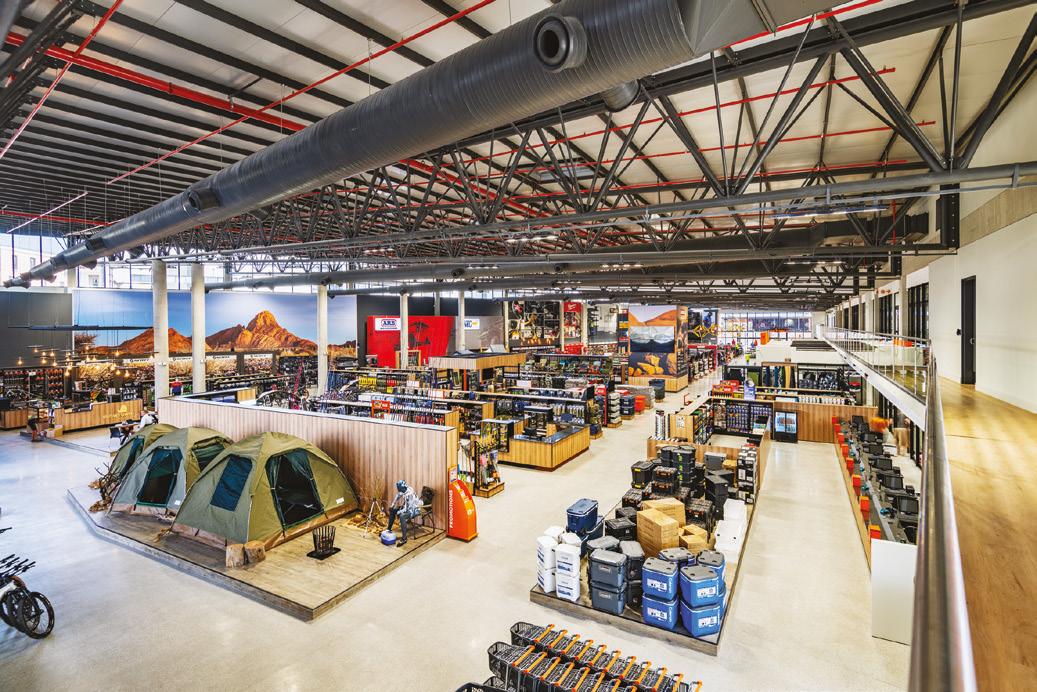
Whether you're on business or exploring Namibia, CYMOT Hilltop has everything you need under one roof!
Conveniently located next to Grove Mall in Windhoek, we make shopping easy, hassle-free, and enjoyable.
Start your journey with the perfect cup! Fuel up with the rich aroma and bold avours of Slow Town Coffee, available in-store. From a quick espresso to a smooth latte, every cup is crafted to perfection.

Explore our wide range of products and services:
Automotive Parts & Accessories
Outdoor Gear & Camping Equipment
Workwear & Protective Clothing Tools & Equipment
Automotive Re nish Products Cycling Workshop & 4x4 Fitment Centre
We’re open 7 days a week!
Monday - Friday: 09:00 - 18:00
Saturday: 09:00 - 15:00 Sunday: 09:00 - 13:00 FREE & secure parking Basement parking via Grove

16. Sesriem Campsite
17. Naukluft Camp
18. Hardap Resort
19. Fish River Canyon & Hobas Camp
20. /Ai-/Ais Hotsprings Spa
21. Mile 72
22. Mile 108
23. Jakkalsputz
24. Boplaas Campsite
25. Von Bach Tungeni Resort
26. Dead Valley Lodge & Oshana Sesriem Campsite
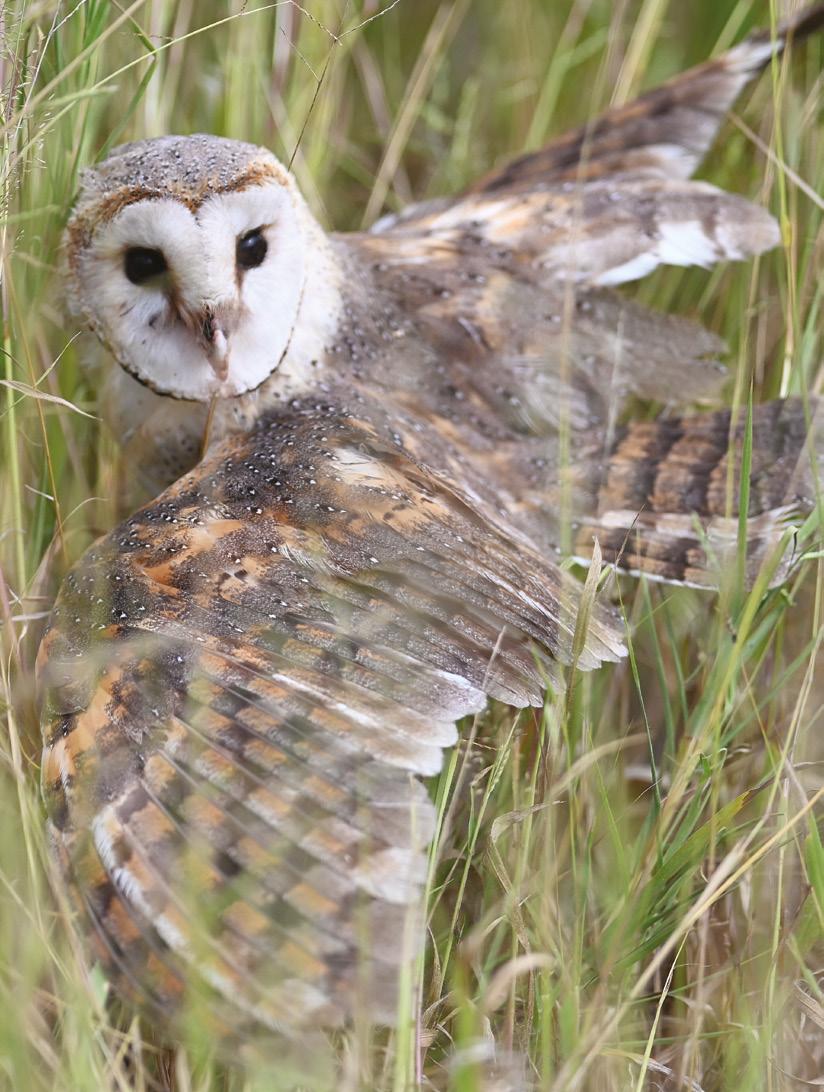
FNB HOSTS INTERNATIONAL DAY OF ENVIRONMENTAL
Government leaders, financial institutions and conservation organisations came together in Windhoek for Environmental Knowledge Day in April, hosted by FNB Namibia through the FirstRand Namibia Foundation.
Held under the theme “Driving Sustainable Impact Through Strategic Partnerships,” the event highlighted the importance of collaboration in addressing Namibia’s environmental challenges.
Opening remarks from FirstRand Namibia Foundation Trustee Clara Bohitile revealed that the Foundation has invested more than N$120 million in national development initiatives over the past decade, including significant funding directed toward environmental guardianship programmes.
CEO of RMB Namibia, Daniel Motinga, emphasised the role of finance in sustainable development, noting that climate and environmental risks are now central considerations in investment decision-making.
Delivering the keynote address, Honourable Indileni Daniel, Minister of Environment, Forestry and Tourism, highlighted the urgent need for coordinated action across sectors, describing sustainability as a shared national responsibility.
A major highlight of the event was support announced for the Wildlife Credits programme, led by the Community Conservation Fund of Namibia. The initiative rewards rural
communities for protecting wildlife habitats and strengthens Namibia’s globally recognised conservation model.
Environmental Knowledge Day concluded with renewed commitments from partners to strengthen collaboration and accelerate practical solutions that protect Namibia’s natural heritage for future generations.
The WTM Africa Responsible Tourism Awards 2026, held during World Travel Market Africa 2026 in Cape Town on 15 April, recognised organisations across Africa for delivering measurable tourism impact benefiting people, places and nature.
Namibia was strongly represented in the Regenerative Tourism category. RuralRevive Namibia received Gold for its “Building a Desert Based Economy Initiative,” driven by the Wolwedans Foundation around Maltahöhe. The project was recognised for rebuilding local food systems, supporting livelihoods and creating a resilient desertbased economy through tourism.
Elephant Human Relations Aid received Silver for its work reducing human-elephant conflict across more than two million hectares in Namibia. Conflict incidents reportedly dropped from 92 in 2023 to just 12 so far in 2026, with no elephants shot as problem animals during 2025.
The ceremony was MC-ed by Rachel Nxele, while special guest speaker James Vos emphasised the importance of measurable tourism impact and inclusive economic growth across Africa.
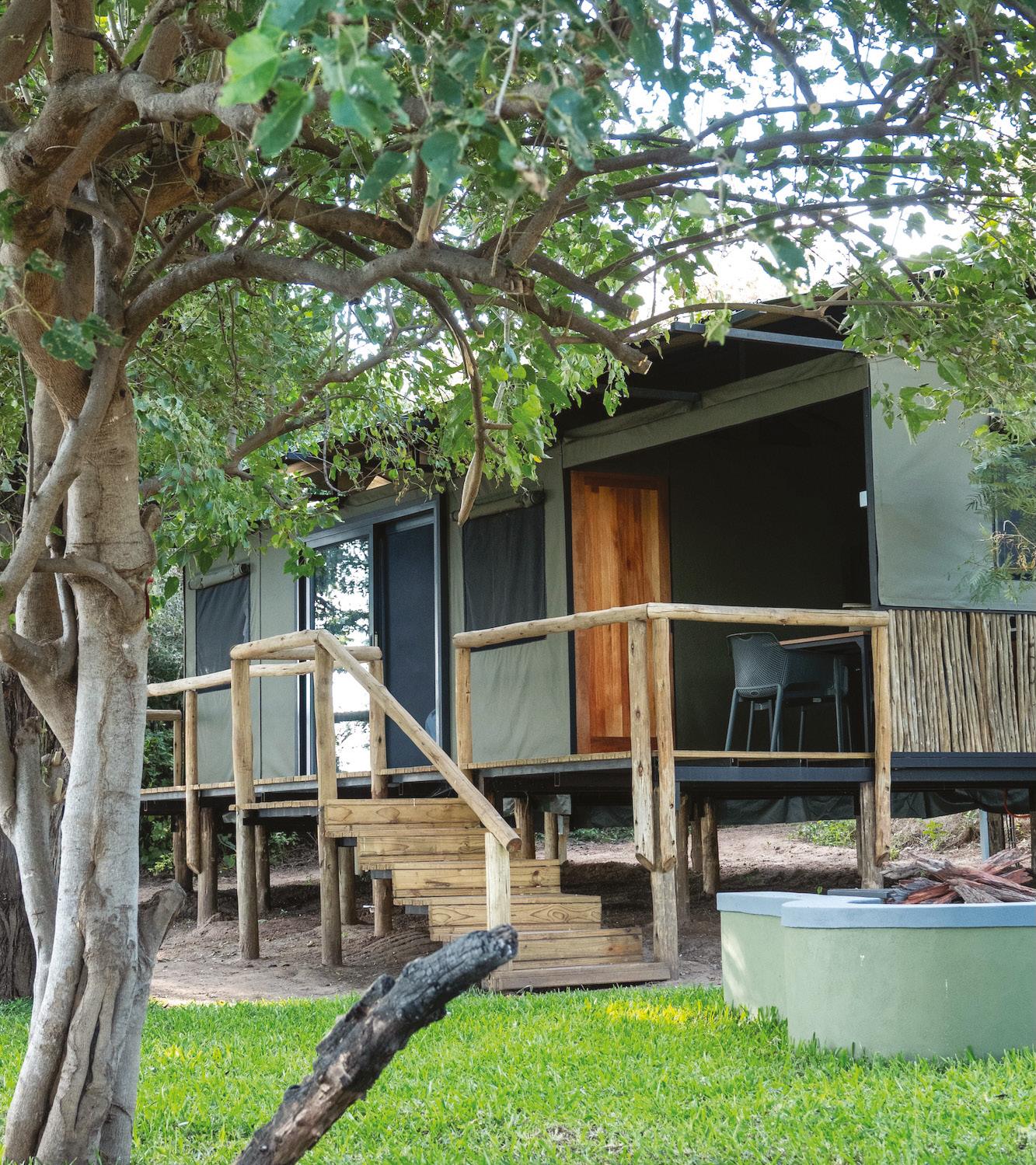
Set within the remote Buffalo Core Area of Bwabwata National Park, Buffalo Private Collection has officially launched its first offering – Buffalo Tented Camp. The new camp features eight self-catering tented units positioned along the banks of the Okavango River, offering guests an intimate wilderness experience in one of Namibia’s most wildlife-rich and untouched regions.
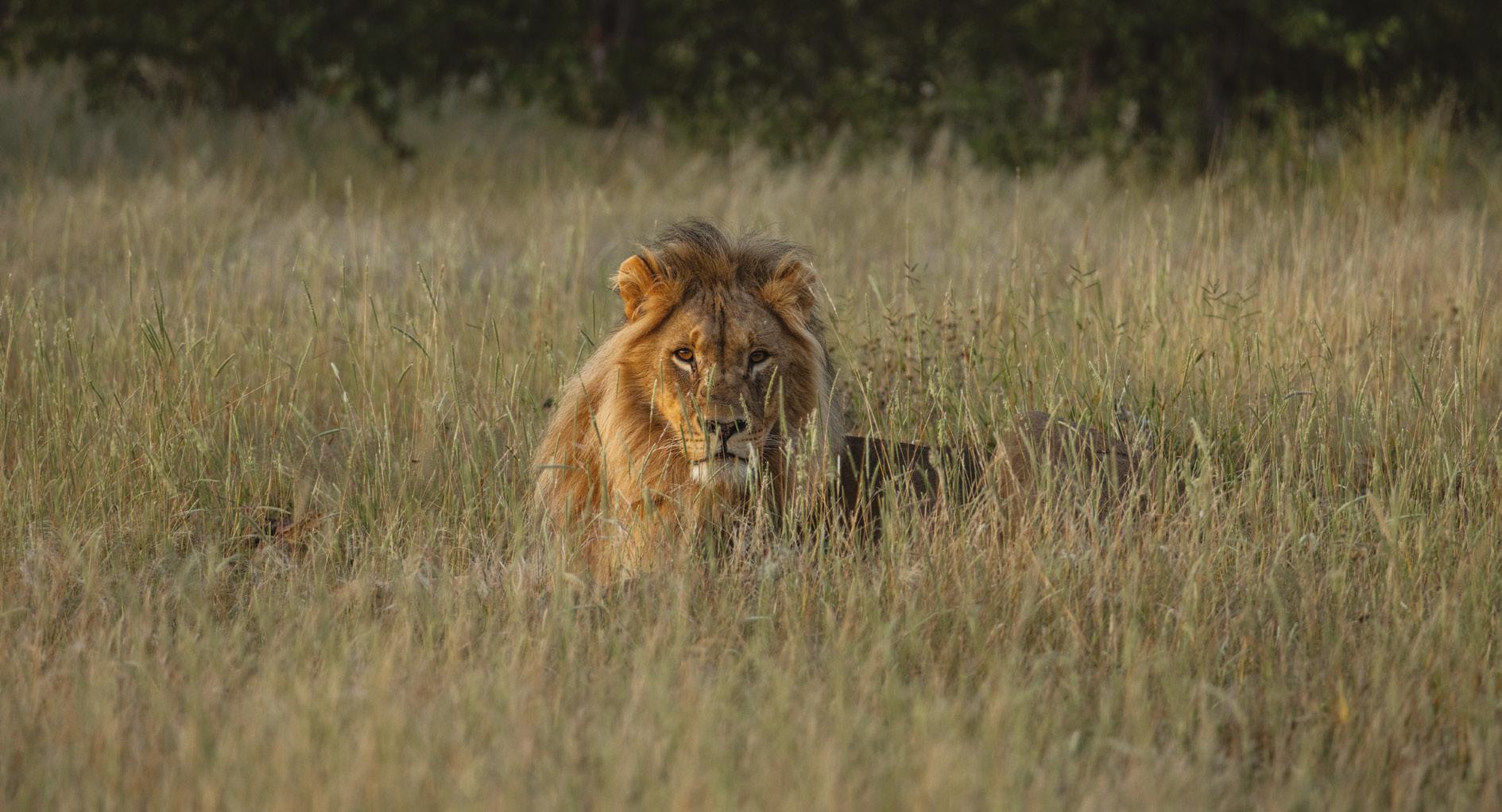
Surrounded by an unfenced ecosystem connected to the greater KAZA Transfrontier Conservation Area, the camp places visitors within a landscape where elephant, buffalo, lion and abundant birdlife still move freely through the floodplains and riverine forests. The concept blends understated luxury with a strong sense of place, encouraging guests to slow down and reconnect with nature.
Buffalo Private Collection will be managed within the Journeys Namibia portfolio, further expanding the company’s presence in some of Namibia’s most ecologically important destinations. Read more on page 50.
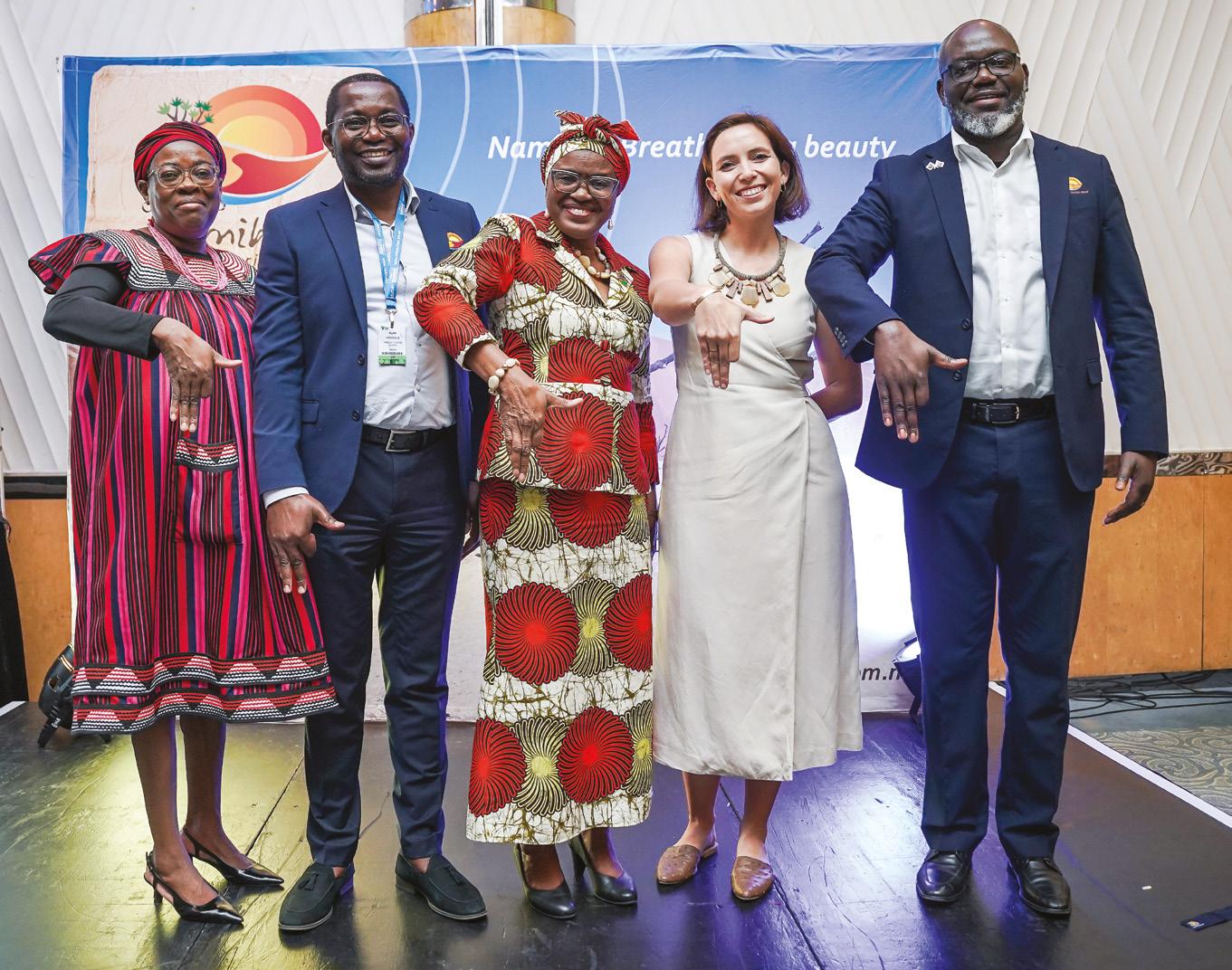
The Namibia Luxury Travel Market (NLTM) was officially launched at Africa’s Travel Indaba 2026 in Durban on 13 May 2026, marking the beginning of a new collaborative platform aimed at positioning Namibia amongst the world’s leading luxury travel destinations.
Founded as a partnership between the Ministry of Environment, Forestry and Tourism, Namibia Tourism Board, Federation of Namibian Tourism Associations (FENATA) and Venture Media, the initiative is rooted in a shared vision of sustainability, conservation and high-yield, low-impact tourism, underpinned by public and private sector collaboration.
The launch centred around a defining question: “What is luxury?” In Namibia,
stakeholders argued, luxury is not excess, but space, silence, solitude and closeness to nature. The inaugural NLTM will take place in Windhoek from 8–10 December 2026, bringing together international buyers, media and tourism leaders aligned with this philosophy of travel.
For years, Ultimate Safaris has been synonymous with high-end, conservation-conscious travel in Namibia. At a launch event in Windhoek in May, cofounder and CEO Tristan Cowley revealed the company’s evolution into “Ultimate Earth” – a shift he described as “a philosophy and a way of being.”

Cowley explained that guest experiences over the past 18 years gradually transformed the company’s purpose from simply selling safaris to reconnecting people with nature, place and themselves.
The new identity reflects a broader focus on conservation, community upliftment and long-term impact alongside tourism. A newly unveiled logo combining a fingerprint and camelthorn tree symbolises both human impact and Namibia’s resilience.
Cowley also announced expansion plans, including the redevelopment of the historic Hotel Eberwein in Swakopmund into a luxury boutique property called The Bohlen, inspired by the famous Eduard Bohlen Shipwreck. Over the next 18 months, the company plans to invest approximately N$150 million into Namibian tourism projects, creating more than 100 jobs. TN
ELZANNE MCCULLOCH
There is an art to safari in Namibia. It is neither a science nor a formula. And certainly not something that can be measured by how many animals you tick off before breakfast. It is an art in the same way that patience is an art, or silence is an art, or knowing when to stop the car simply because the light has turned the colour of warm honey across the plains.
Most visitors imagine safari as a seamless procession of wildlife sightings. Lions here. Elephants there. Leopards draped decoratively over tree branches like living ornaments. And yes, in some corners of Namibia, that expectation is generously rewarded. But Namibia, being true to itself, refuses to be predictable. Safari here is not just about animals. It is about space. About anticipation. About learning to appreciate the long stretches between sightings just as much as the sightings themselves.
Because here, the journey is not a filler – it is the story.
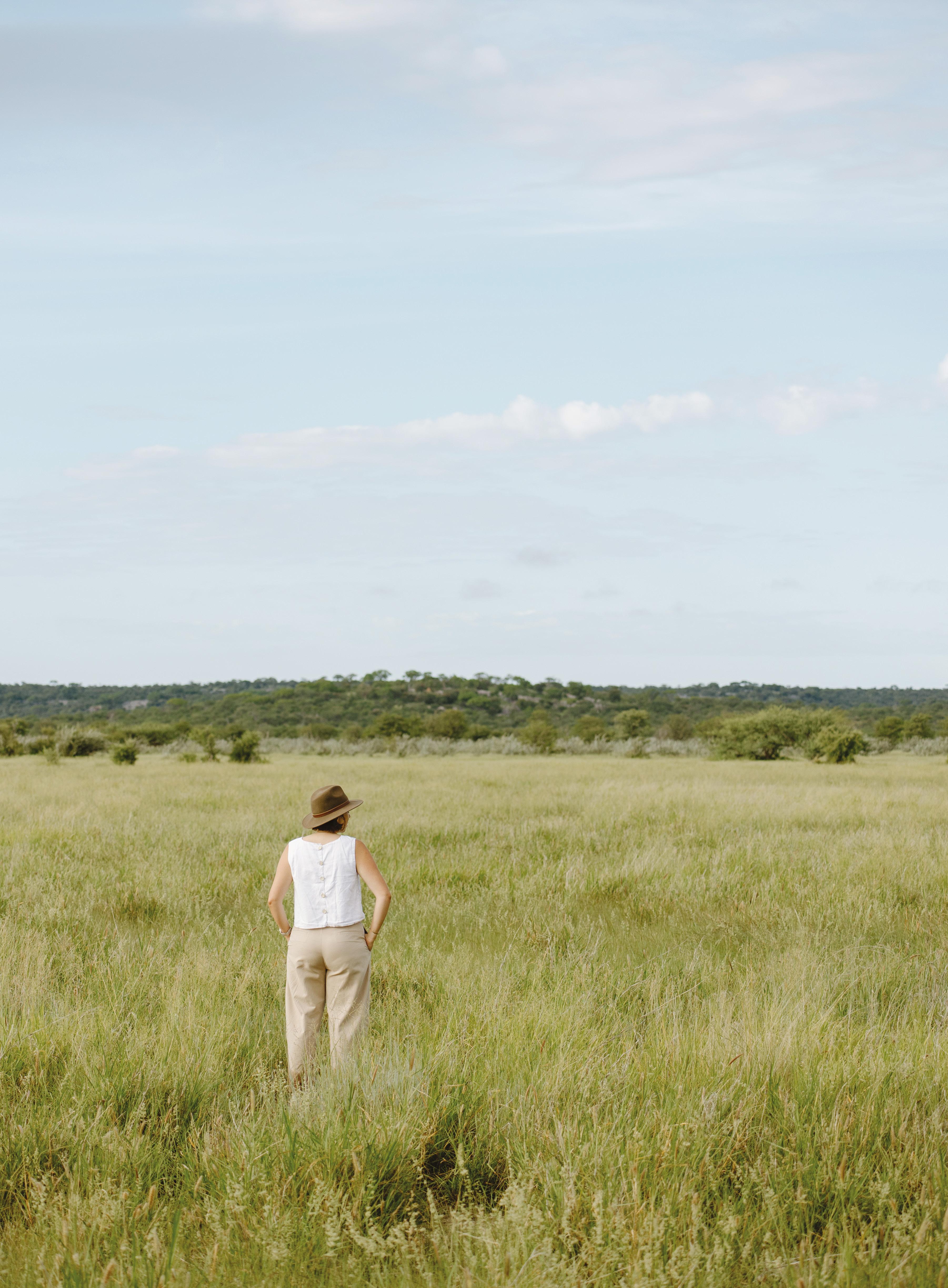
Namibia will teach you this art – sometimes gently, sometimes with a firm hand.
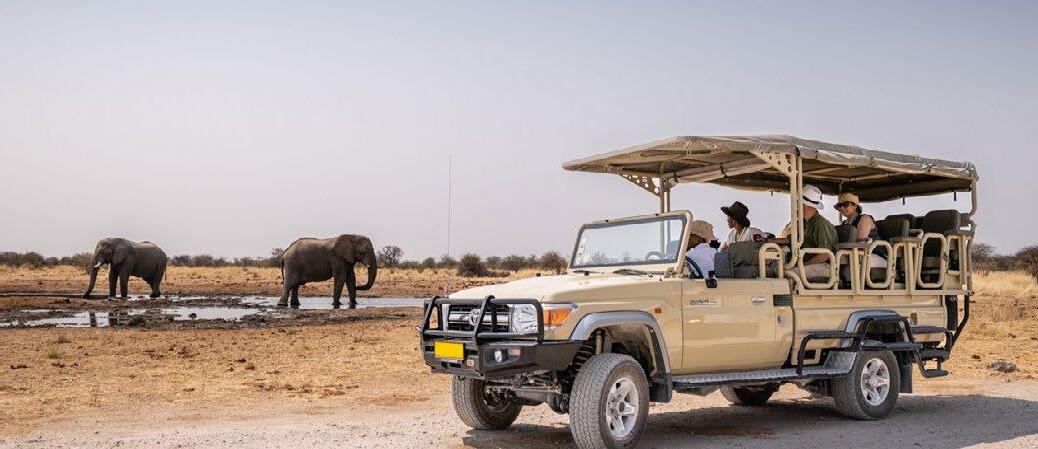
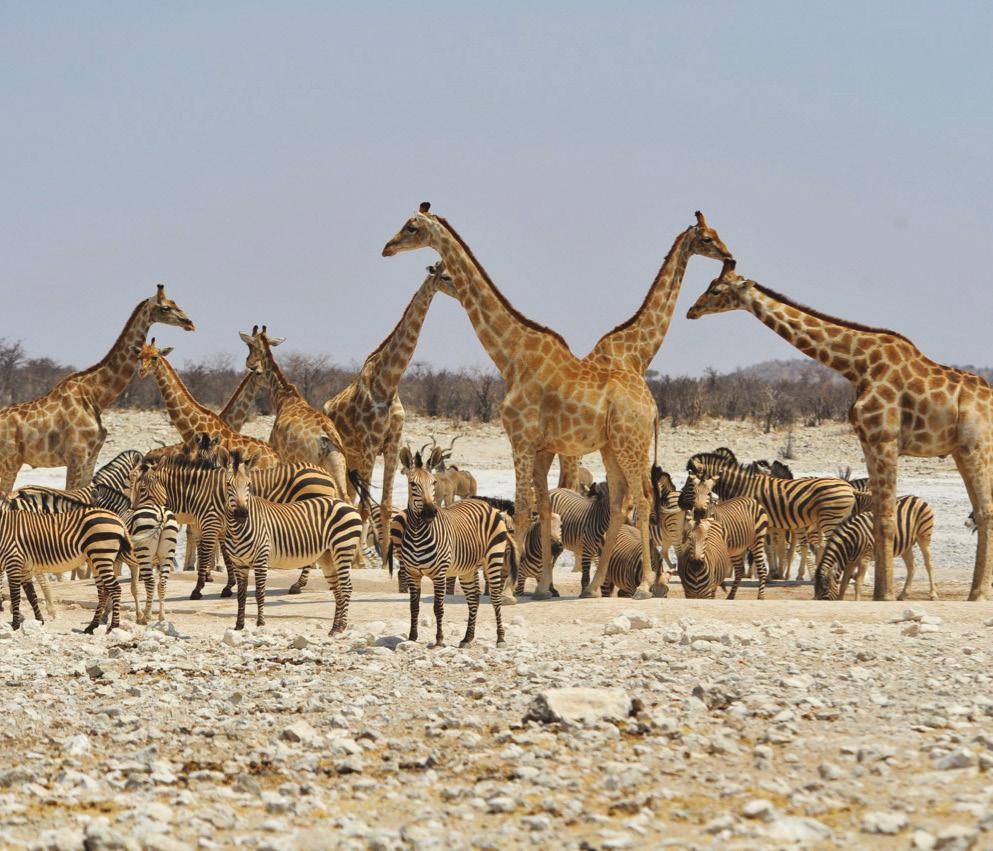
Take Etosha, for instance. If Namibia is a grand theatre for wildlife, Etosha is the main stage, complete with seasoned performers and a reliable script that rarely disappoints.
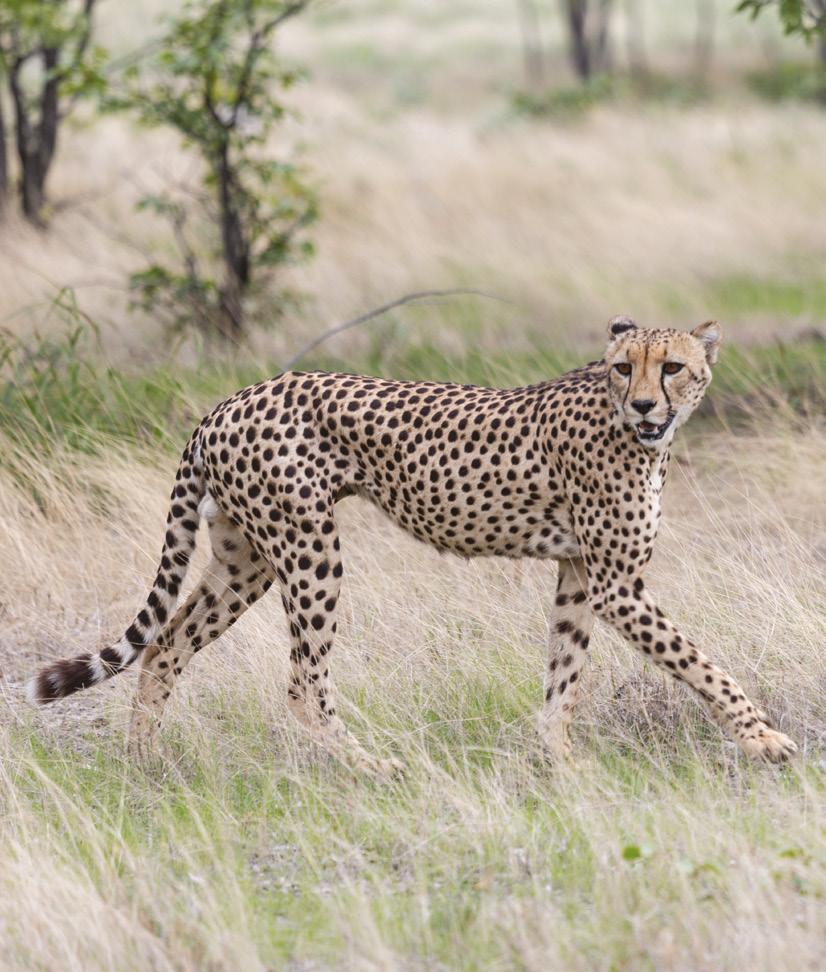
Game drives in Etosha have a rhythm of their own. Early mornings begin with the quiet clink of enamel mugs and the smell of strong coffee poured into travel flasks. The gates open, tyres crunch over gravel and suddenly you are part of the choreography. Vehicles fan out across the pan’s edges, each driver convinced that today will be the day – the day of lions on the road, elephants at every waterhole and perhaps even a leopard or cheetah sighting if the safari gods are feeling particularly generous.
And often, they are.
At the waterholes, life unfolds like a slow-burning drama. A herd of springbok arrives first, tentative and twitching. Zebras gather in striped committees, debating whether it is safe enough to drink. Then, without warning, elephants appear on the horizon – enormous silhouettes growing steadily larger until the ground seems to hum beneath their footsteps.
Etosha is where Namibia flexes its wildlife muscles. It is where visitors fall in love with safari for the first time. Where the magic feels abundant, almost effortless.
But Namibia does not let you stay comfortable for too long.
Head northwest into Damaraland and Kaokoland, and safari becomes something altogether different. Here, you earn your sightings.
You drive for hours through landscapes that feel impossibly ancient – valleys carved by time, mountains that look as though they have been sketched rather than built and riverbeds that only occasionally remember what water feels like. The vast and unapologetically empty terrain stretches quietly and endlessly.
And sometimes, for days, you see… nothing.
Well, not nothing exactly. You see tracks. Dust. The whisper of wind moving through dry grass. You scan distant ridgelines until your eyes ache, convinced that every shadow might be an rhino, every rock a resting lion.
This is the kind of safari that tests your resolve.
But then – just when you begin to wonder if perhaps the desert has swallowed up its secrets entirely – you see them.
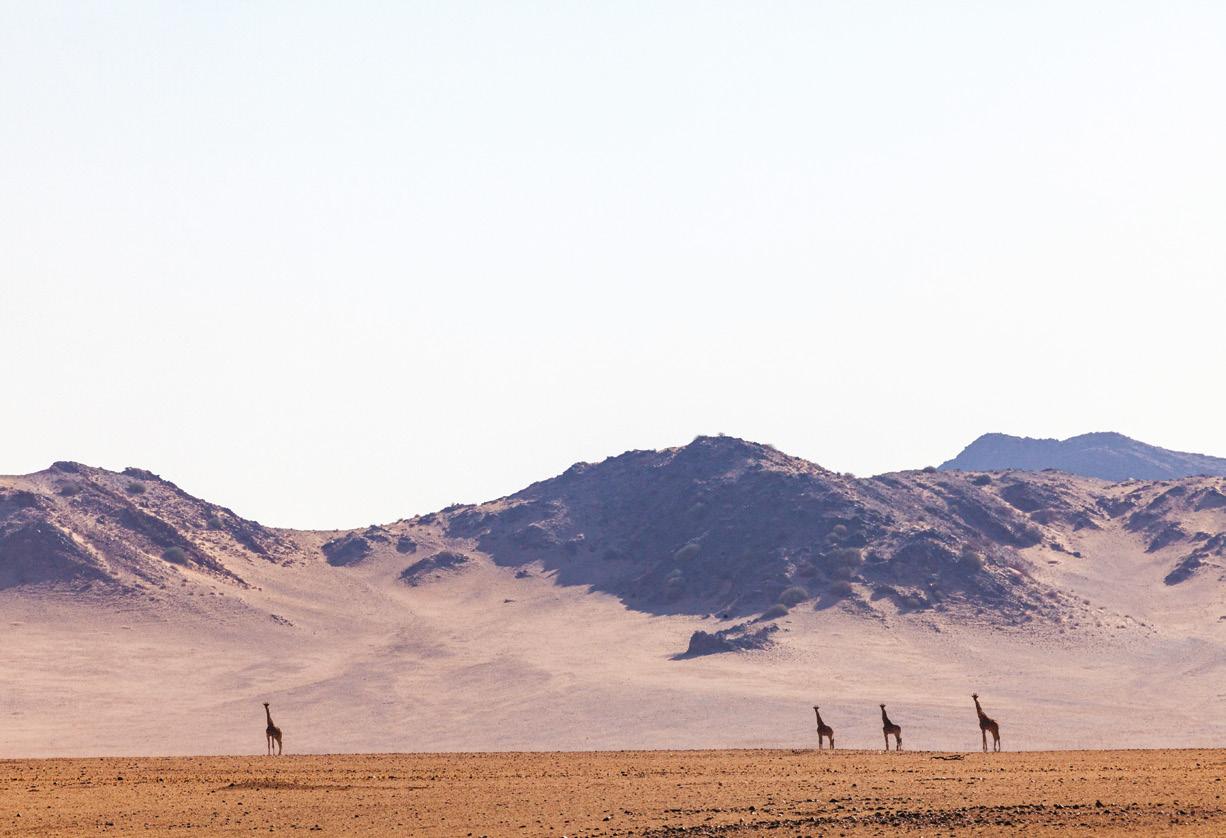
A line of desert-adapted elephants emerges from a dry riverbed, moving with calm confidence through a terrain that seems incapable of supporting life. Or a lone giraffe appears, impossibly elegant against a backdrop of raw stone. Or, if fortune smiles broadly, the rare outline of a desert-adapted lion materialises on a distant duneside, surveying a kingdom that feels entirely their own.
And in that moment, every empty kilometre becomes worth it.
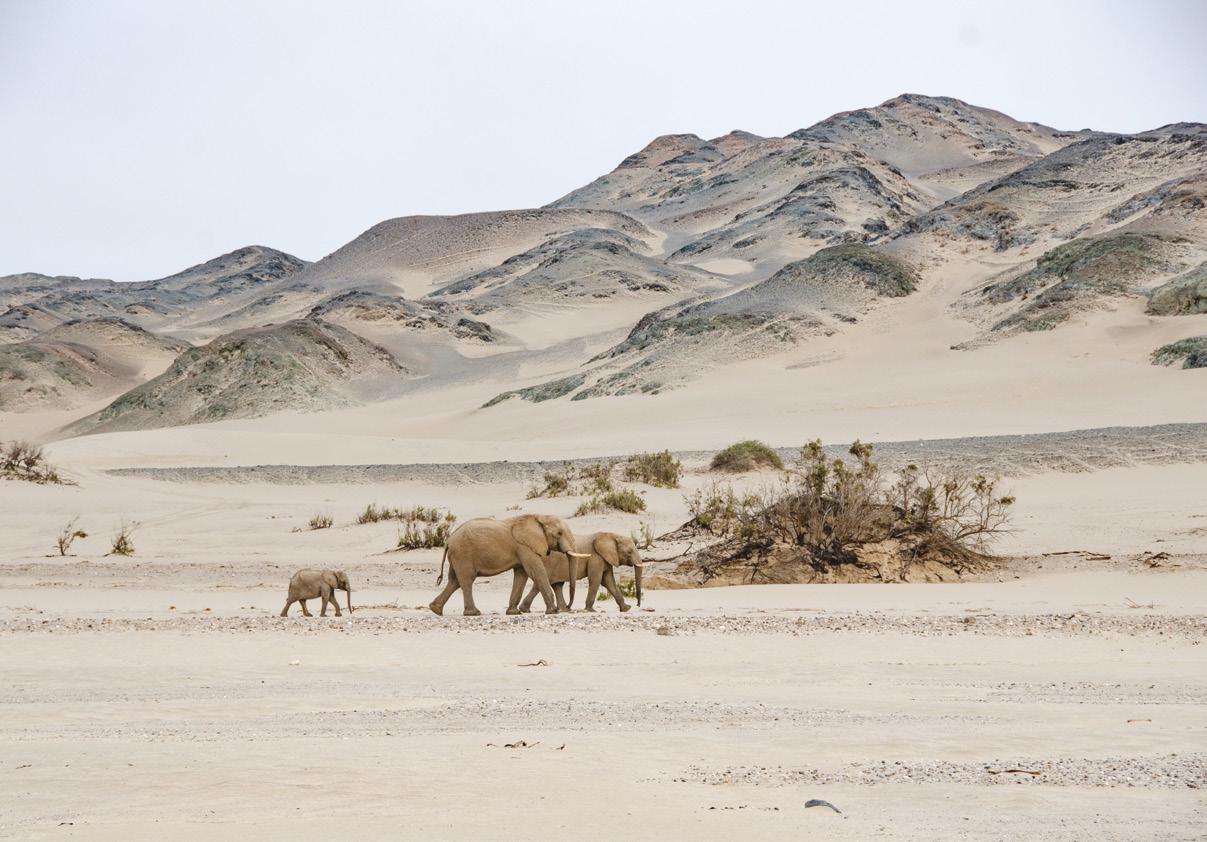

Because rarity carries weight. Effort sharpens appreciation. The harder the search, the sweeter the reward.
That is the art of safari in Namibia –understanding that abundance and absence are two sides of the same story.
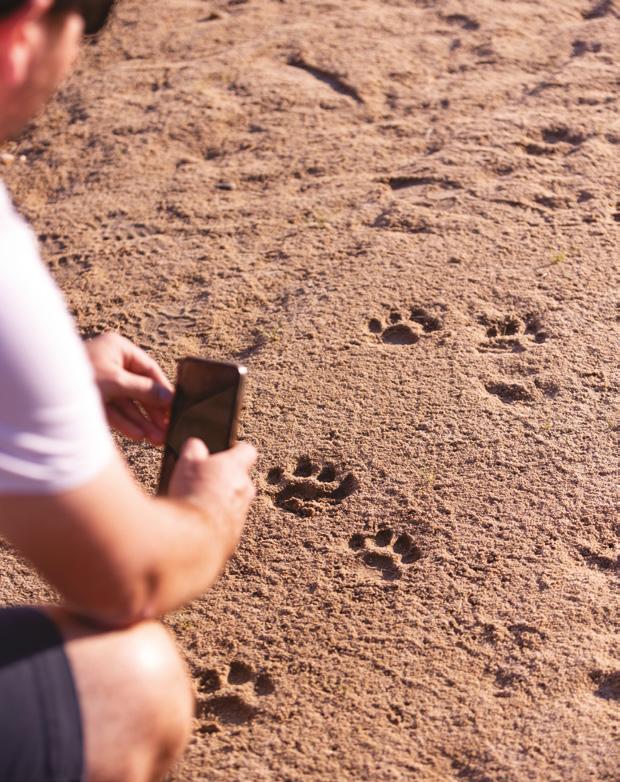
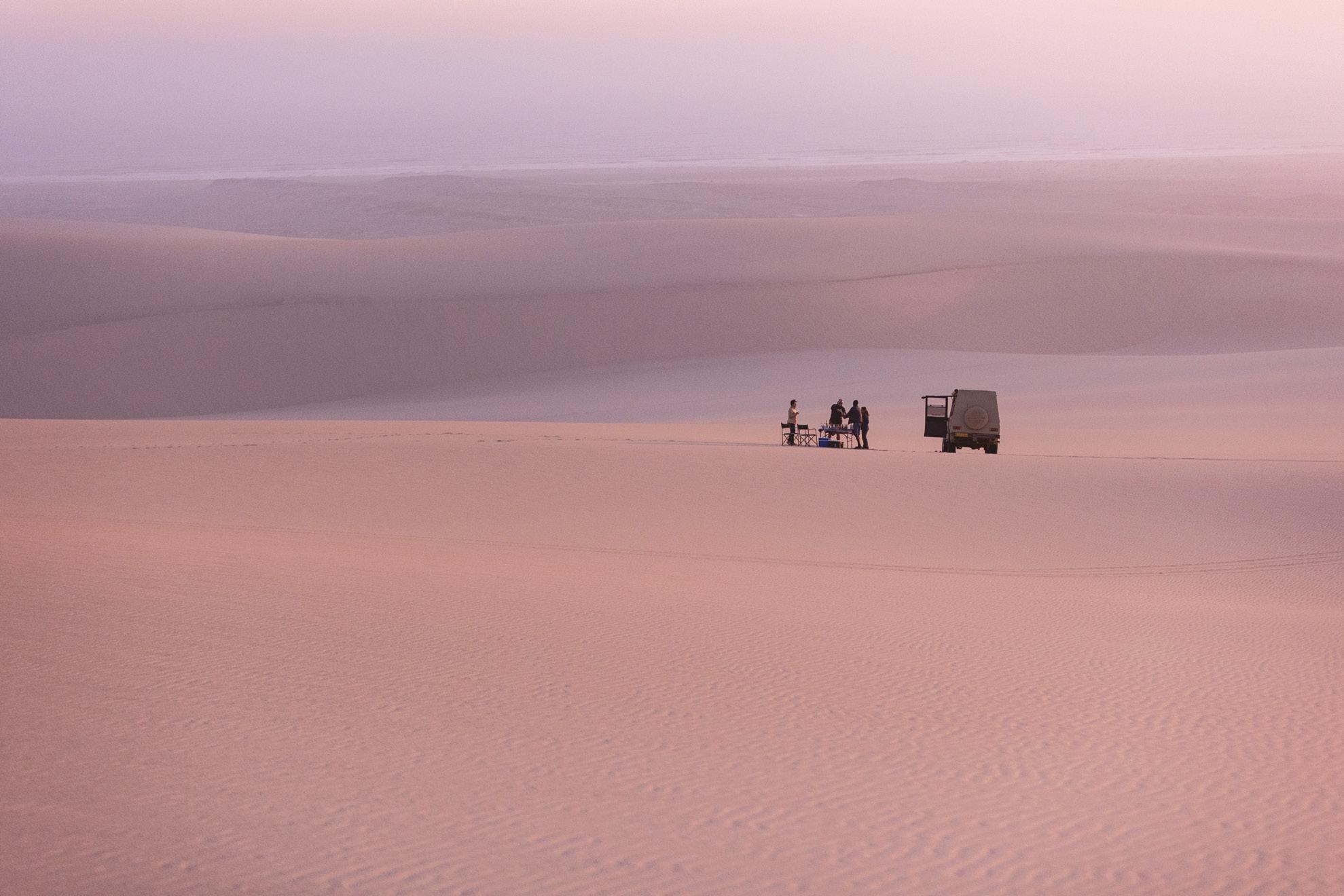
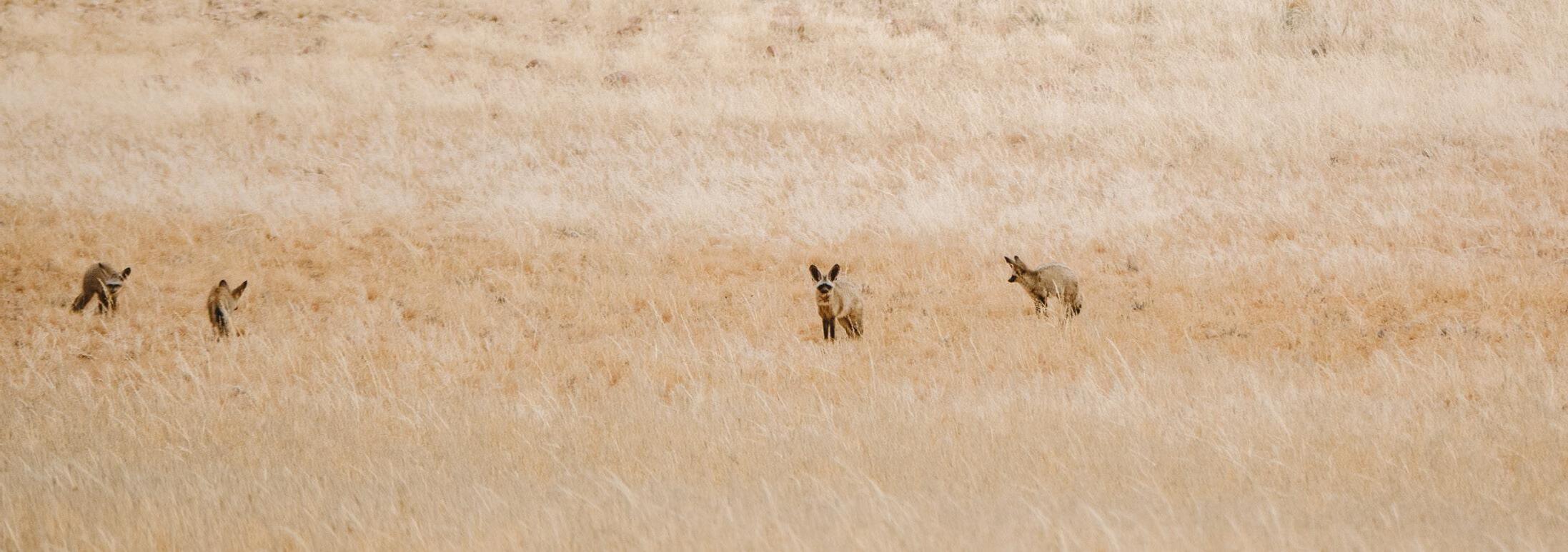
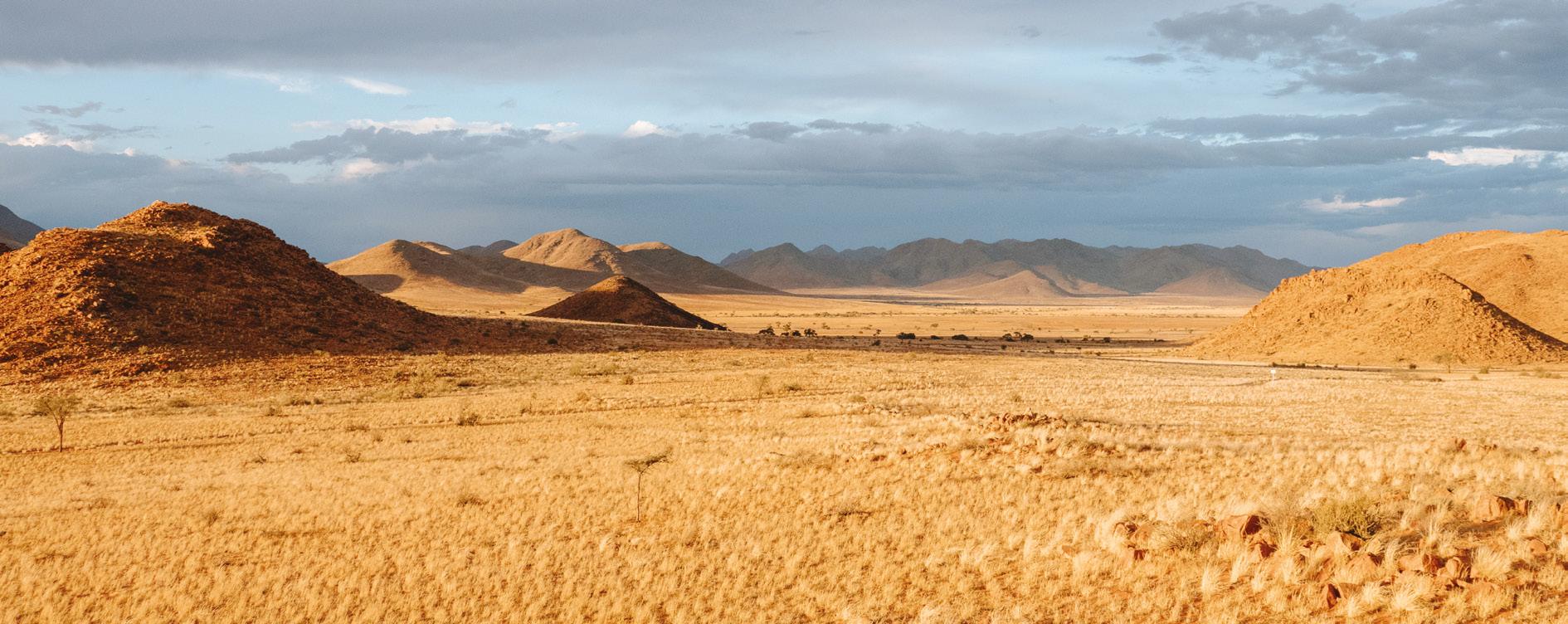
Travel south, and the safari transforms again. Southern Namibia is not always about traditional game drives or dense wildlife sightings. Instead, it offers something quieter and infinitely more expansive.
Here, safari becomes about distance.
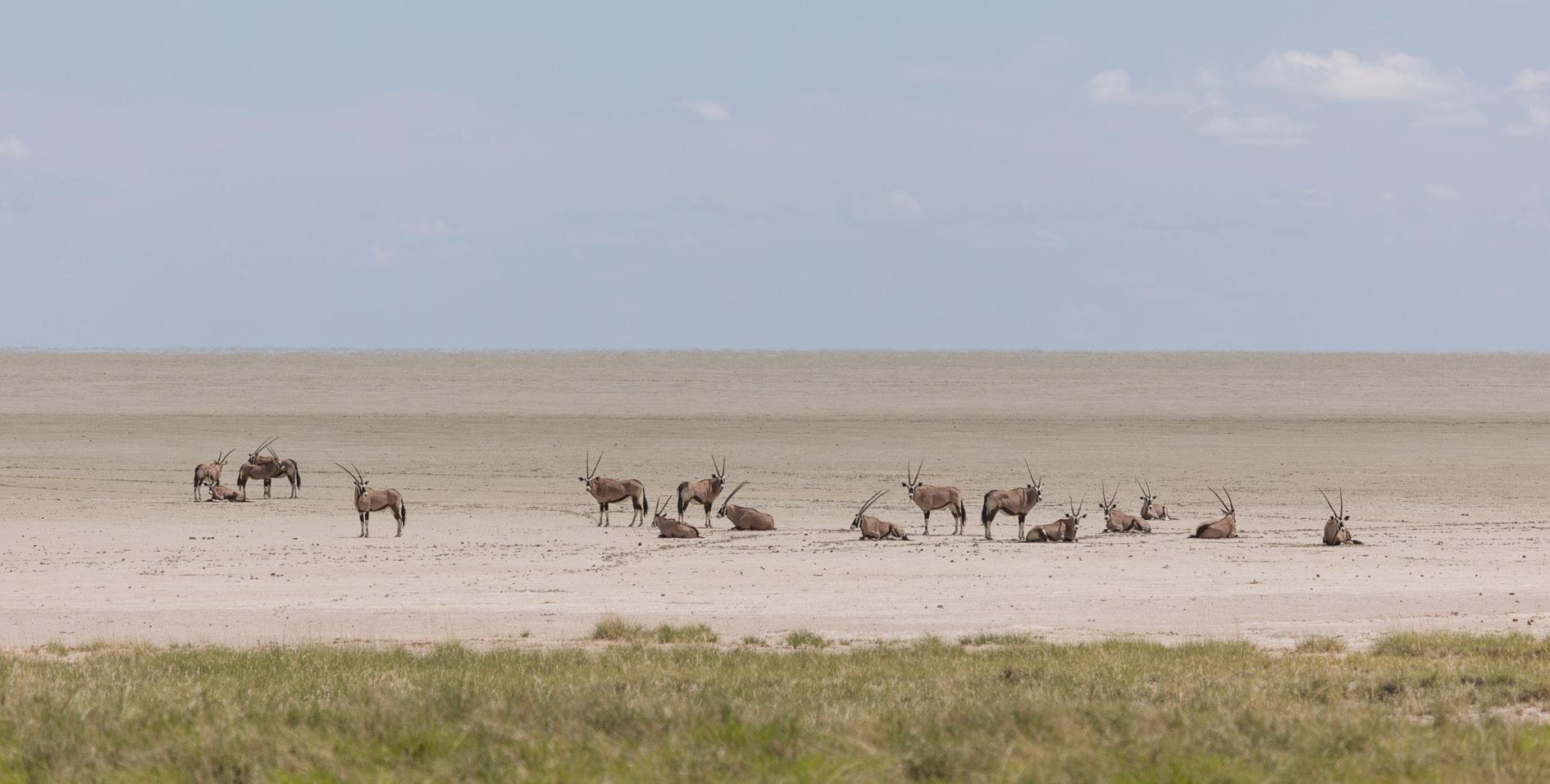
The landscapes stretch so wide that they seem to swallow sound. You drive for hours across gravel roads framed by mountains that shift colour as the sun moves overhead. Gemsbok appear like living sculptures against the horizon – adequately adapted, perfectly poised. Ostriches stride across open plains with prehistoric confidence, while a
solitary springbok punctuates the emptiness with sudden bursts of motion.
In the south, wildlife sightings feel like punctuation marks in a much larger sentence written by geology and time.
And yet, it is no less safari.
Because safari is not only about animals. It is about immersion. About being small in vast places. About feeling your senses recalibrate to the pace of nature rather than the pace of modern life.
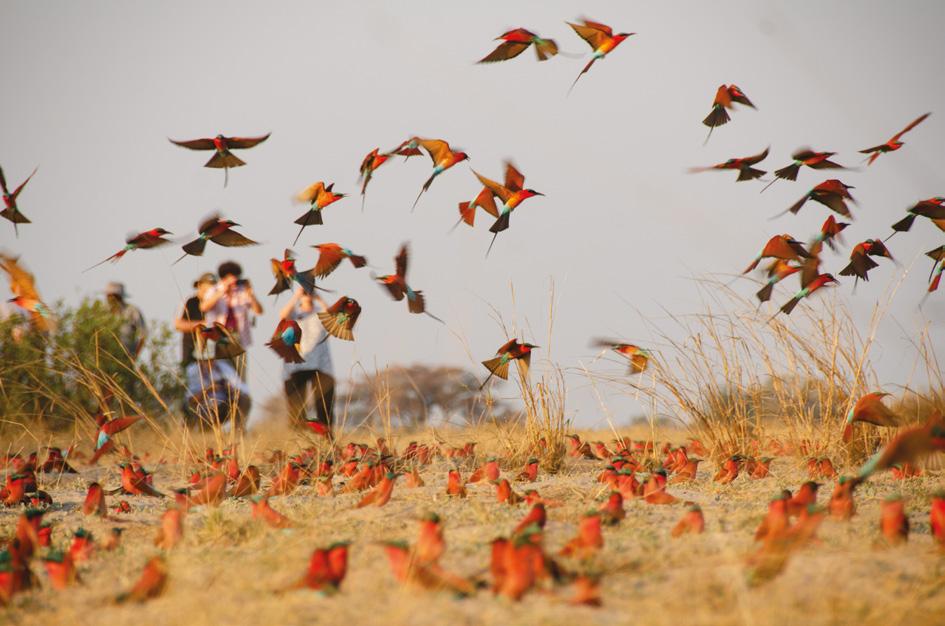
Then there is the art of birding safaris – a pursuit that, at first glance, seems deceptively gentle. Birders carry binoculars instead of cameras the size of small cannons. Their checklists are long, their patience longer and their excitement often triggered by creatures which the untrained eye might overlook entirely.
But spend a single morning with a dedicated birder, and you will begin to understand.
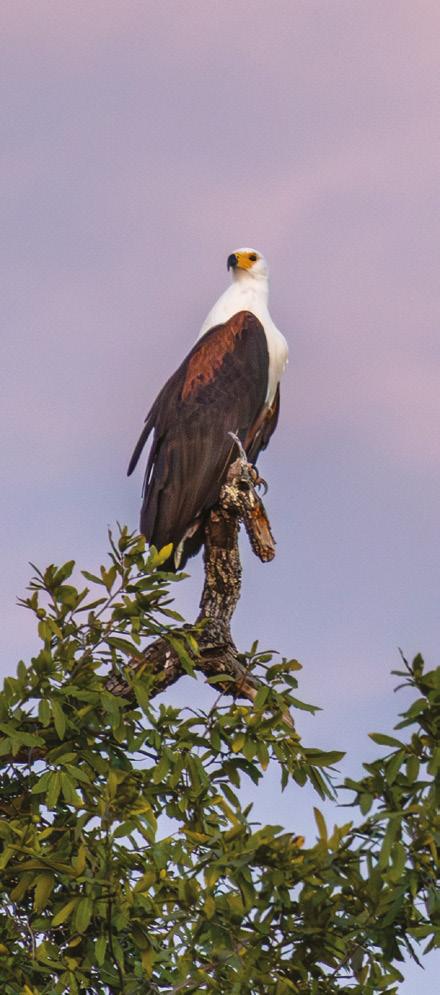
In Namibia’s northeast – the lush Zambezi Region with its winding waterways and riverine forests – birding is less a hobby and more a treasure hunt. Fish Eagles call overhead with that unmistakable cry that feels like a soundtrack made for Africa alone. Carmine Bee-eaters cluster along riverbanks in bursts of improbable colour. Kingfishers flash like living jewels over still waters.
And suddenly, safari becomes about feathers rather than fur.
It becomes about noticing the small things – the movement of a reed, the shape of a silhouette against the sky, or the difference between one warbler and another. Birding teaches observation at a granular level. It slows you down in a way few other safari experiences can.
Which, again, brings us back to the art of it all.
It is the reliable theatre of Etosha, where wildlife gathers predictably at waterholes, offering front-row seats to nature’s daily performances.
It is the stubborn patience of the northwest, where sightings are rare but unforgettable, and landscapes dominate the narrative as much as the animals themselves.
It is the quiet solitude of the south, where distance becomes the main character and wildlife feels like an elegant afterthought rather than the headline act.
It is the detail-driven joy of birding in the northeast, where the thrill lies not in size, but in discovery.
Safari in Namibia is not one thing. It is many things, layered together like brushstrokes on a canvas.
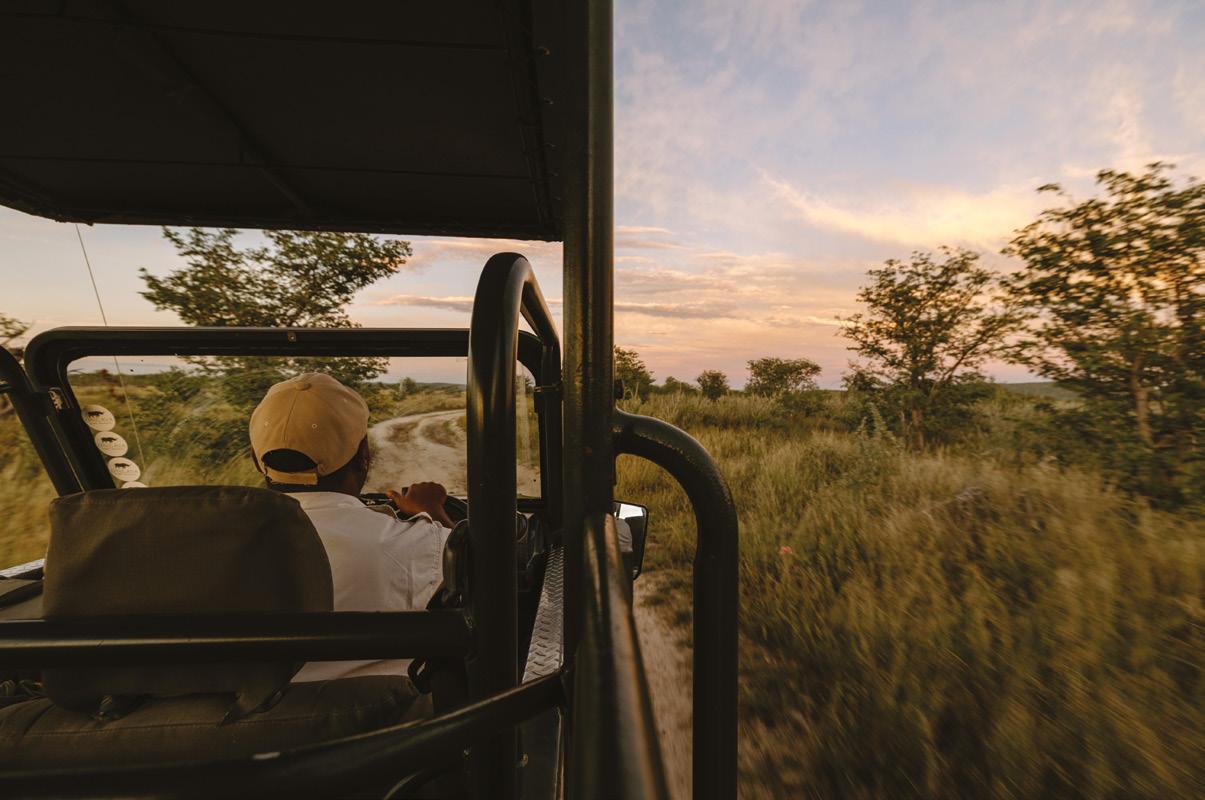
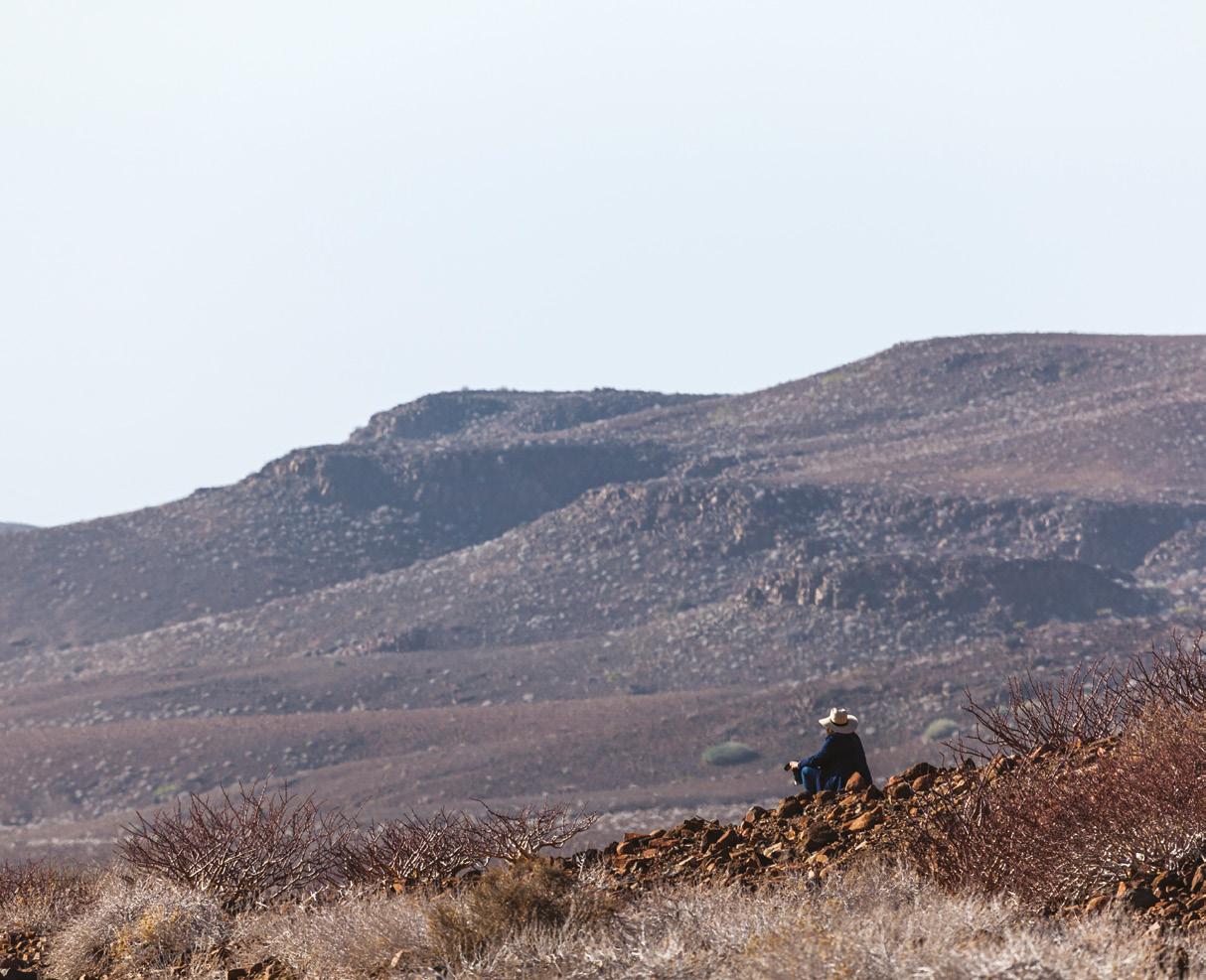
And threaded through all of it is a lesson Namibia teaches better than almost anywhere else: safari is not about how much you see, but about how deeply you experience what you see.
Sometimes, the best safari moments are not the ones that fill your memory card. They are the ones that happen in silence – watching dust drift across a dry riverbed, listening to distant thunder rolling across an empty plain or sitting quietly beside a waterhole as the light fades and the world shifts into evening.
There is a moment, often late in the day, when the air cools and the sky softens into gold and amber. The engine is switched off. The world holds still. Somewhere, an animal moves – unseen but unmistakably present.
You wait.
You listen.
You feel the weight of the landscape around you.
And in that pause, you realise something quietly profound: safari in Namibia is not about chasing wildlife. It is about learning to belong, briefly and respectfully, to the wild rhythm of this place.
That is the true art of safari.
Not speed. Not numbers. Not spectacle.
But patience, perspective and the quiet understanding that the best sightings are often the ones you almost miss – until Namibia decides you are ready to see them. TN


There is a moment that happens to almost everyone in Etosha National Park. A moment when the engine is switched off beside a waterhole, conversation fades away, and the vastness of Namibia settles in around you. Dust hangs in golden light. A lone springbok steps cautiously toward the water. Somewhere in the distance, an elephant rumbles through the silence.
It is in these moments that Etosha reveals itself not simply as a national park, but as a living landscape layered with geology, history, survival, myth, and movement.
A Visitor’s Guide to Etosha National Park by Willie Olivier and Ute von Ludwiger captures precisely that feeling.
More than a traditional guidebook, this beautifully produced publication invites readers deeper into the story of one of Africa’s greatest wildlife sanctuaries. Published by Penguin Random House South Africa and Struik Travel & Heritage, the book balances practical travel guidance with rich storytelling and fascinating ecological insight.
The pages move effortlessly between breathtaking photography, detailed wildlife information, geological history, and cultural narratives tied to the park. Readers are introduced not only to Etosha’s famous waterholes and prolific game viewing, but also to the origins of the great pan itself – the “great white place” from which the park derives its name.
The book explores the ancient evolution of the pan, seasonal flooding systems, the importance of water in this fragile ecosystem, and the remarkable concentration of wildlife that gathers around Etosha’s life-giving springs. From black-faced impala and vast flamingo gatherings to lion prides and elephant herds emerging through the dust, the guide paints a complete portrait of the park’s rhythms and contrasts.
Importantly, it also serves as a highly functional safari companion. Detailed route guidance, information on camps and waterholes, practical self-drive advice, and wildlife viewing recommendations make it invaluable for both first-time visitors and seasoned Etosha travellers.
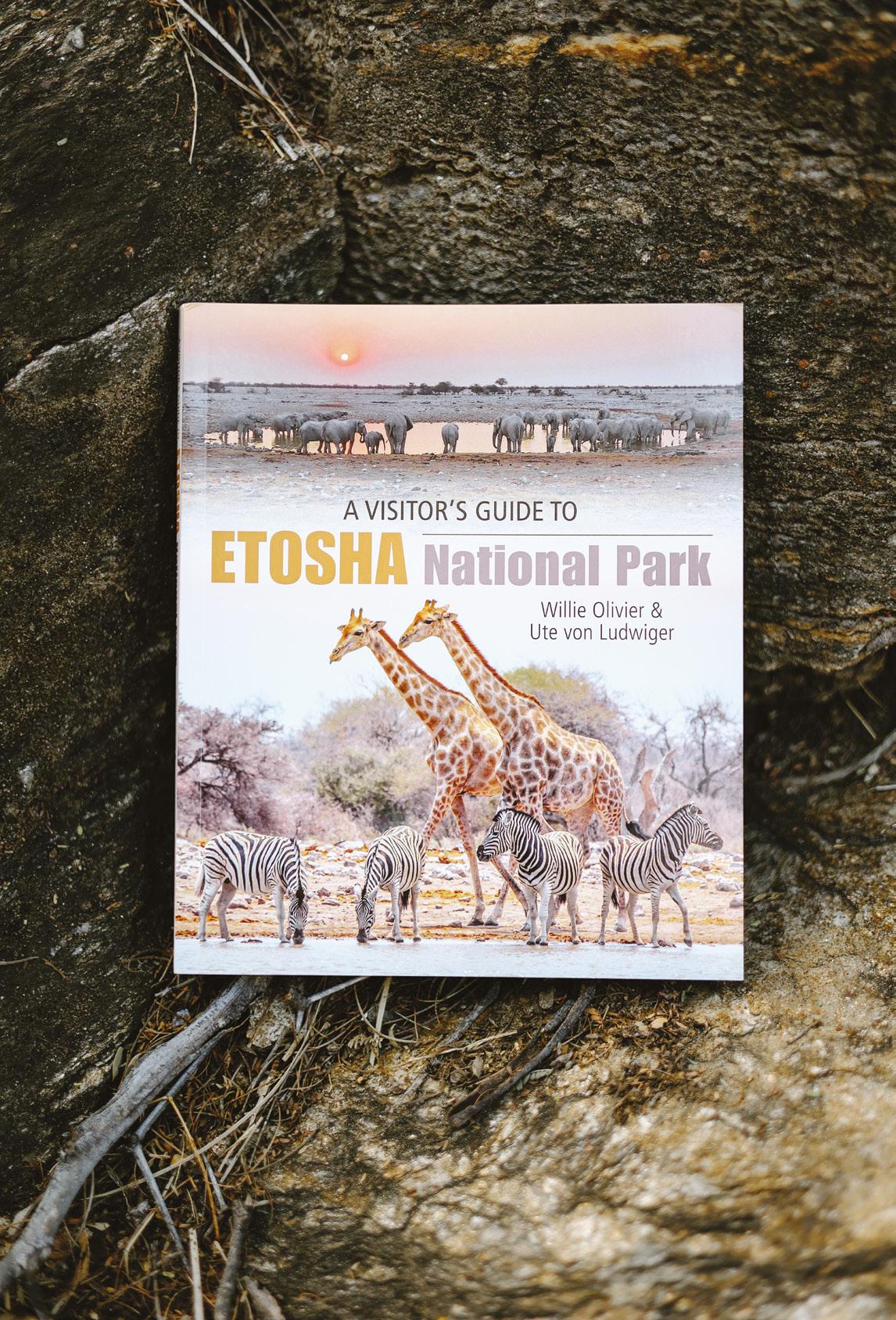
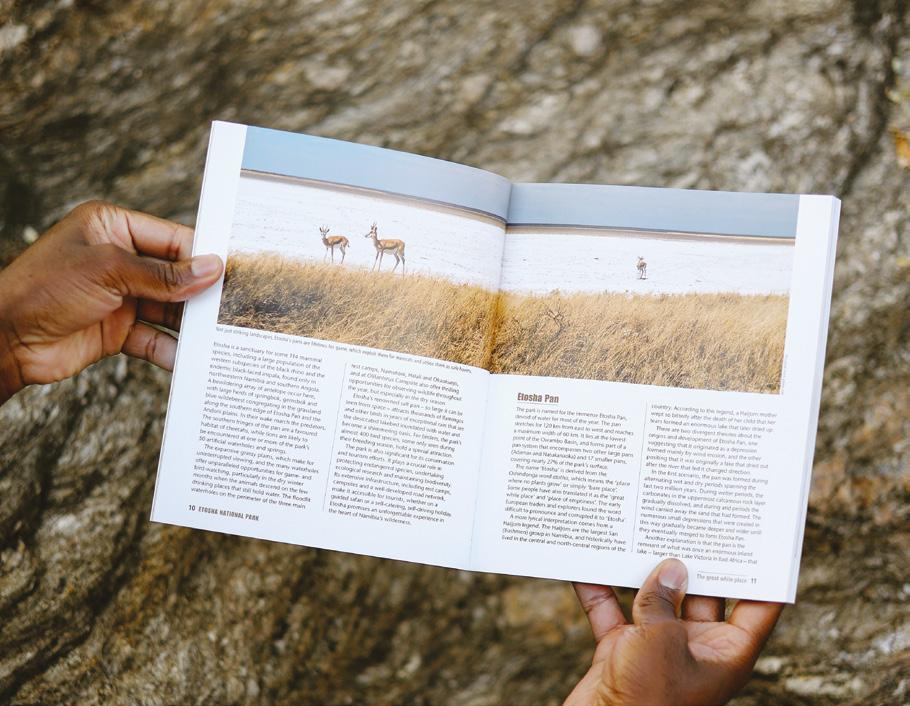
Willie Olivier’s decades of travel experience across southern Africa combine seamlessly with Ute von Ludwiger’s intimate understanding of Etosha as a guide and wildlife photographer based near the park. Together, they create something that feels deeply authentic – informed not only by expertise, but by lived experience and genuine affection for this landscape.
In many ways, the book reflects the essence of Namibia itself: vast, quietly dramatic, and endlessly rewarding to those willing to slow down and truly observe.
For travellers preparing to enter Etosha’s gates, this is more than a guidebook. It is the beginning of the journey. TN
A Visitor’s Guide to Etosha National Park is available at all major bookstores in Windhoek and Swakopmund, as well as most safari lodges around Etosha.
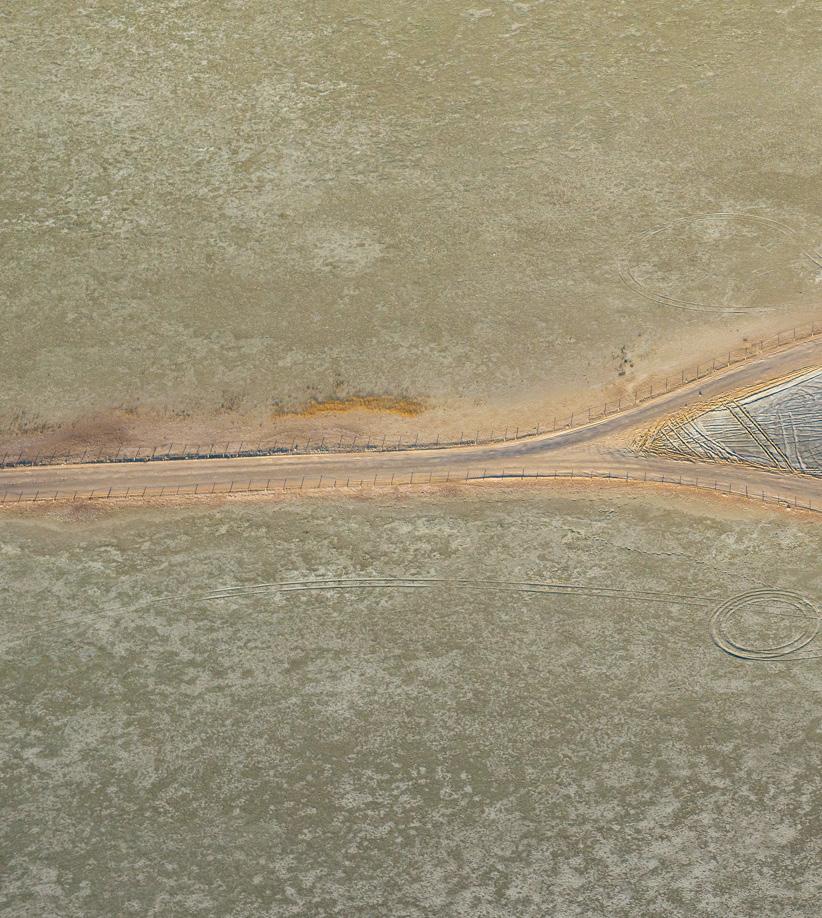
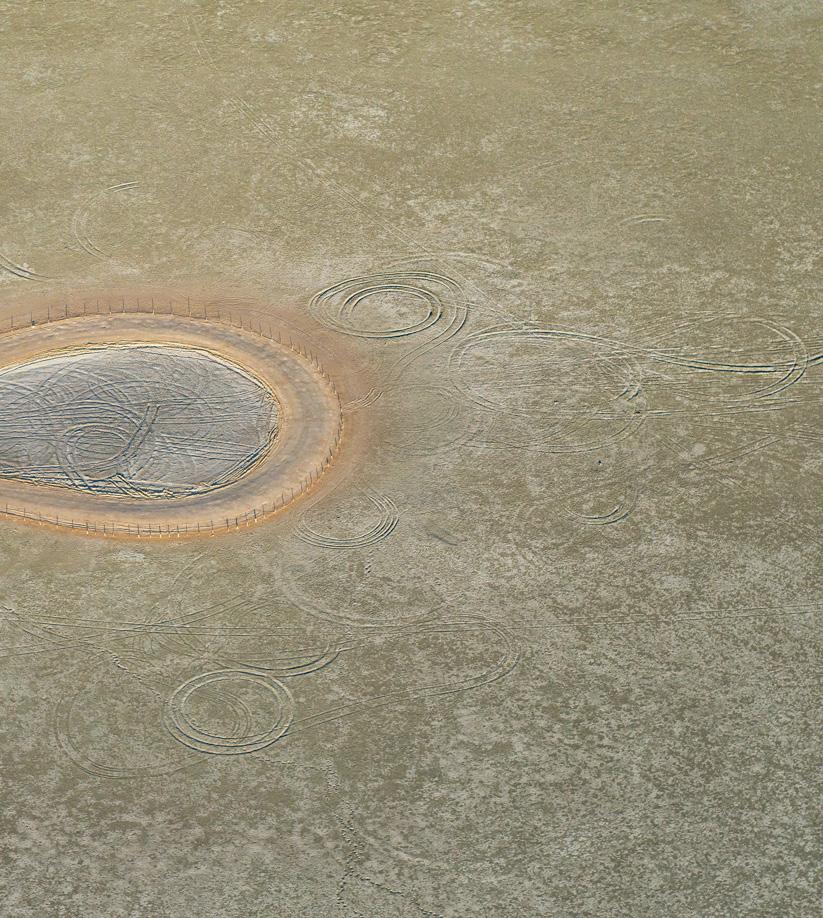
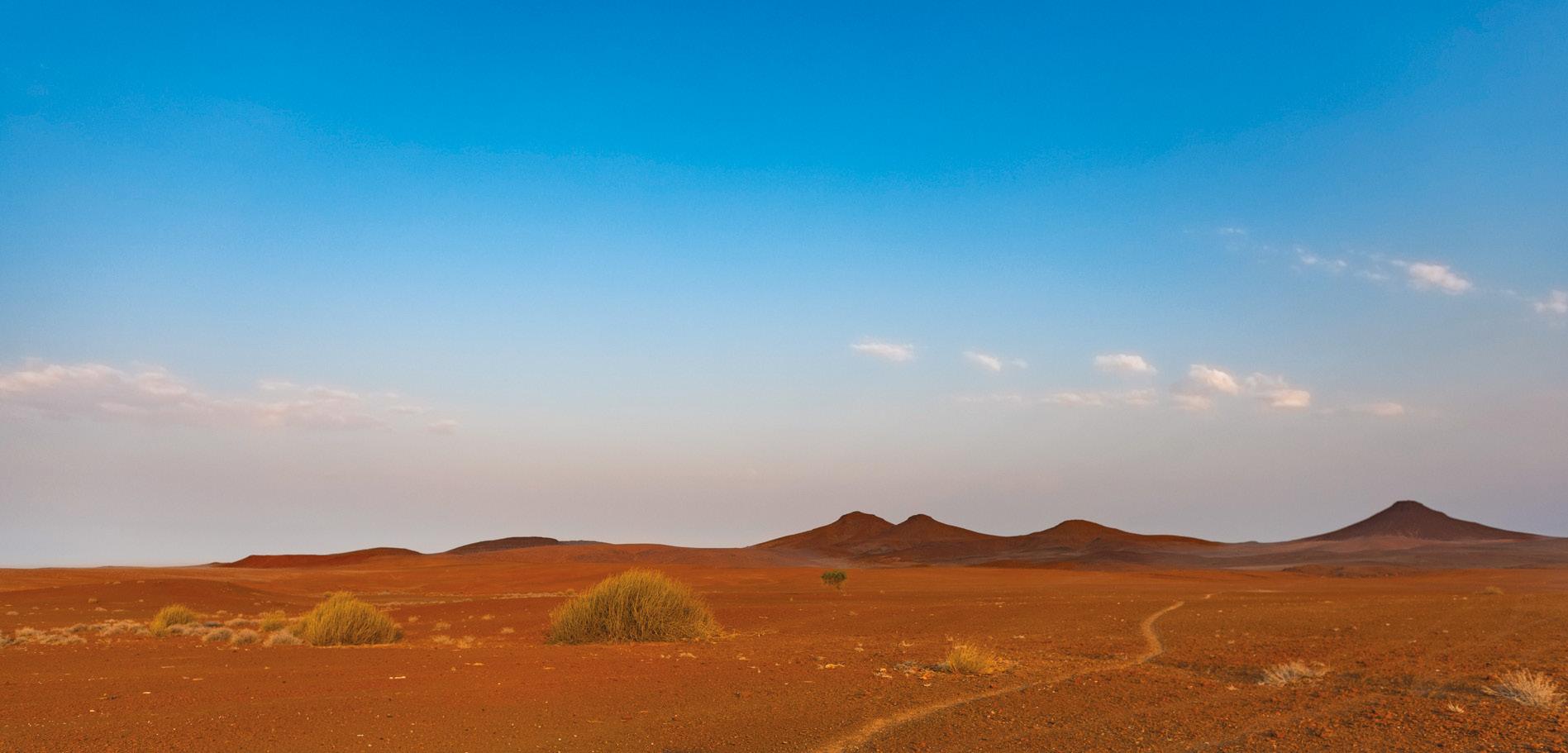
In Namibia’s arid landscapes, off-road tracks can remain visible for decades.
Respect the land, leave no trace and let the wilderness breathe
Namibia is a land of striking contrasts and wide, open spaces. It offers vast deserts, rugged mountains, endless horizons, and an extraordinary wealth of wildlife, uniquely adapted to survive in some of the harshest conditions on Earth. It is precisely this rarity and resilience that makes Namibia so special… and so vulnerable.
Travelling here is a privilege. And with that privilege comes responsibility. As the human population continues to grow, so too does our collective footprint on the planet – often in ways that are damaging and difficult to reverse.
Conservation in Namibia is not an abstract idea; it is a lived reality. Through community conservancies, protected areas and sustainable tourism, Namibia has become a global example of how people and nature can coexist. But this balance is delicate. Every visitor and resident is part of that system, whether consciously or not.
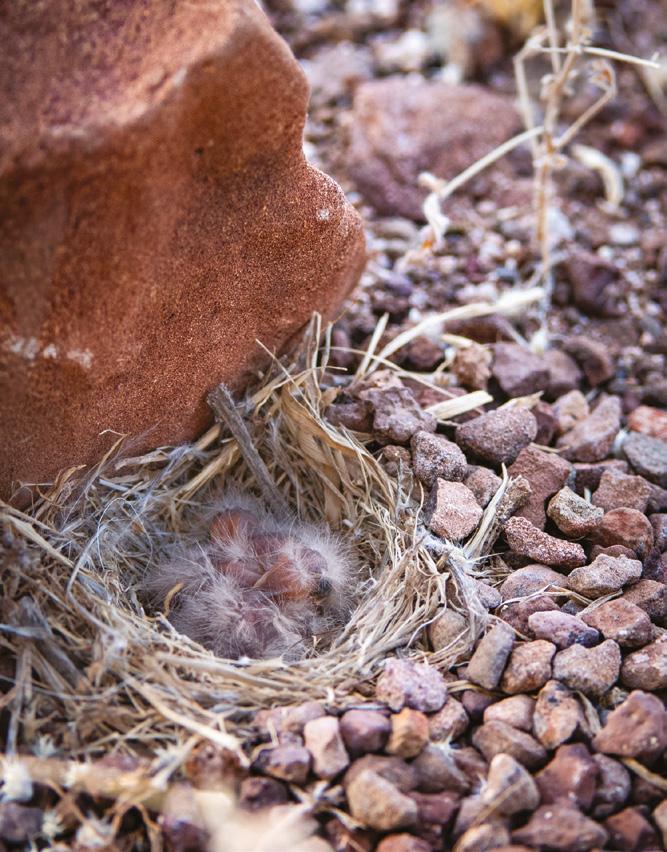
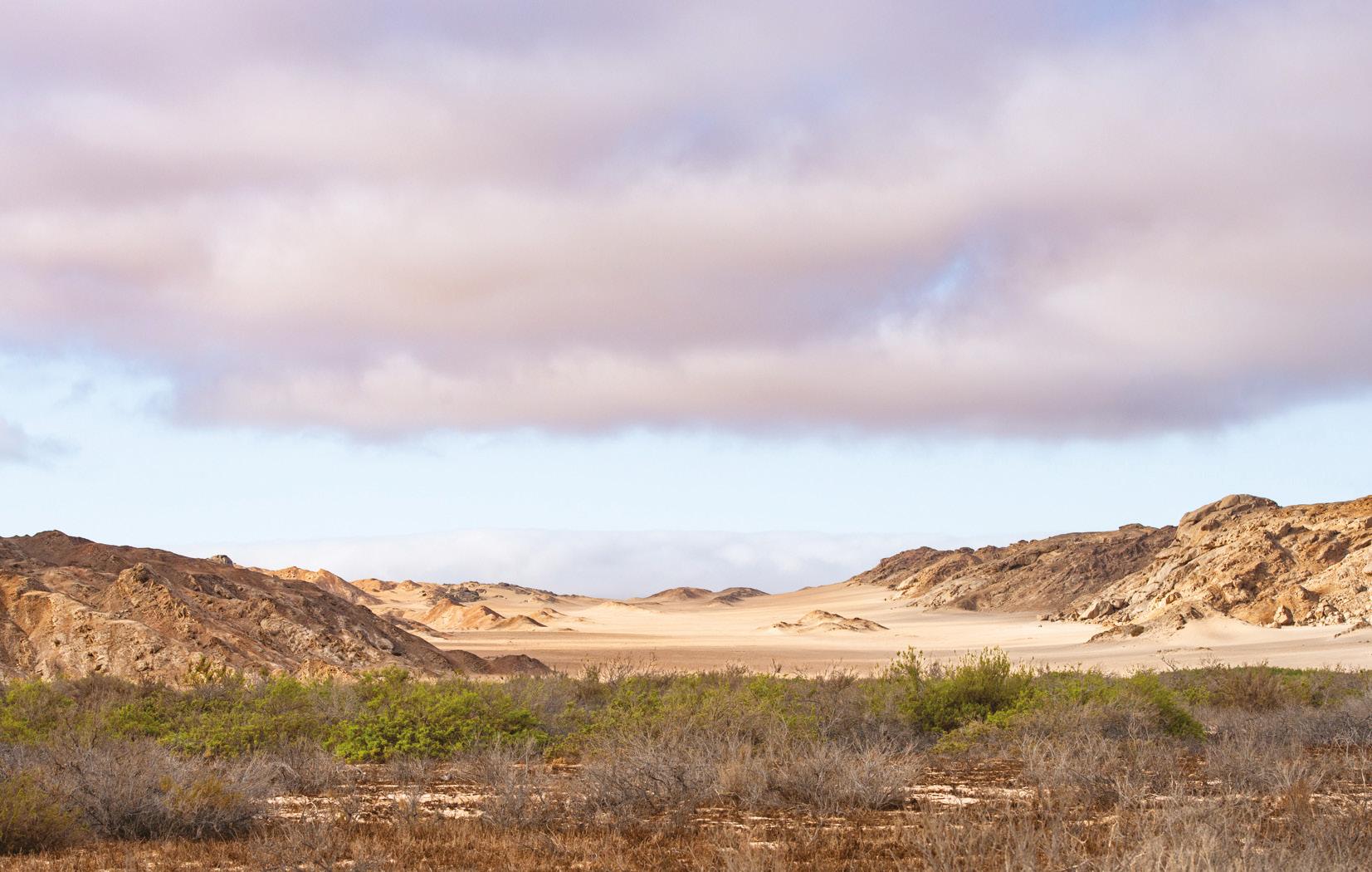
From the gravel plains of the coast to the shifting dunes of the Namib, Namibia’s ecosystems are slow to recover from disturbance. A single set of tyre tracks can remain visible for decades. Footprints, waste and off-road driving leave lasting scars on landscapes that may appear resilient but are, in fact, incredibly fragile. Some areas call for single-track trails to avoid environmental damage, and the aesthetic aspect is another equally significant factor to consider. Multiple tracks spoil the visual beauty of pristine landscapes, destroying the sense of untouched nature and wilderness.
Driving off designated tracks in areas like the Namib-Naukluft National Park or Dorob National Park damages delicate soil structures, destroys microhabitats and disrupts breeding grounds for species such as the Damara Tern along the coast. Barriers, indicating prohibited areas, have been instrumental in curbing destruction, but sporadic incidents of people venturing off-road through barriers in breeding areas with quad bikes, motocross bikes and vehicles are unfortunately still recorded. Staying on designated routes in national parks is also non-negotiable.
To travel mindfully in Namibia is to actively contribute to its preservation.
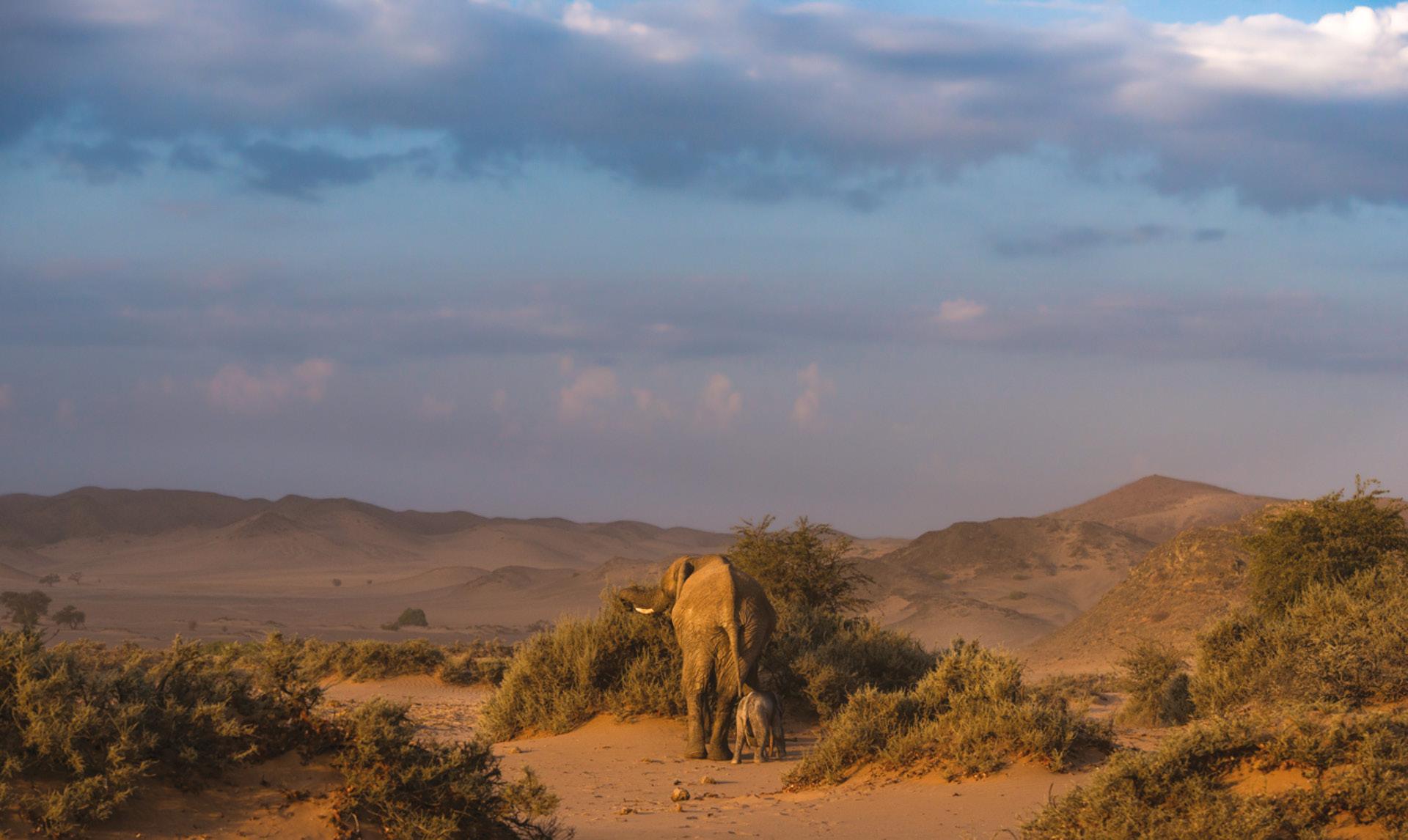
River systems and floodplains like the Hoanib River and Hoarusib River are not just scenic routes – they are lifelines for desert-adapted wildlife, including elephants, lions and giraffes. Multiple tracks and careless driving fragment these corridors and accelerate erosion, impacting both wildlife movement and long-term ecosystem health.
In a country defined by open space and natural beauty, litter has an outsized impact.
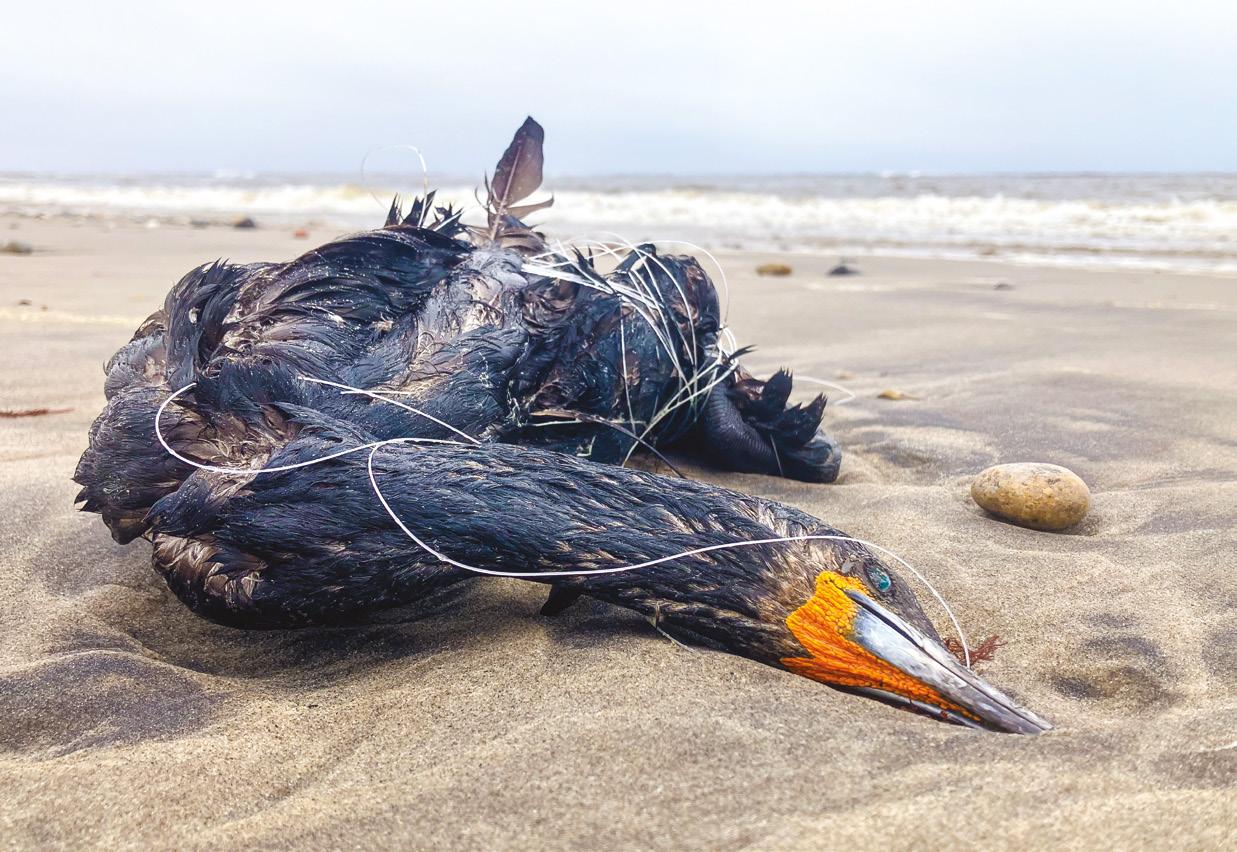
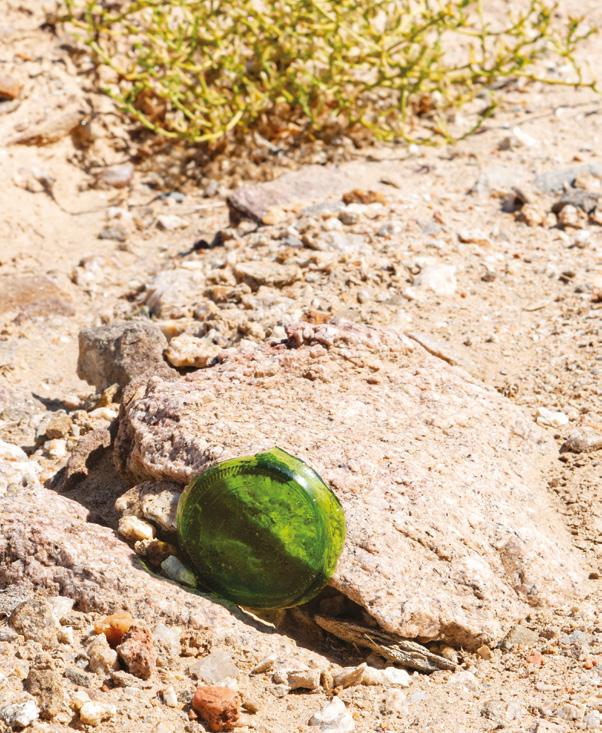
Discarded plastic, glass and metal do not simply disappear. They persist – often for decades – leaching toxins into the environment or breaking down into microplastics that enter the food chain. Wildlife, from birds to antelopes to marine species, mistake these materials for food or become entangled in them.
Thoughtlessly discarded fishing tackle and hooks by recreational anglers cause distress in marine life along Namibia’s coastline, especially amongst seals and birdlife. Durable plastic lines cut into flesh and necks, causing deep wounds and entanglement, restricting movement and often leading to slow starvation and a painful death. Hooks
lying buried in sand on the beach also pose a risk for dogs and people, who can unwittingly step on them.
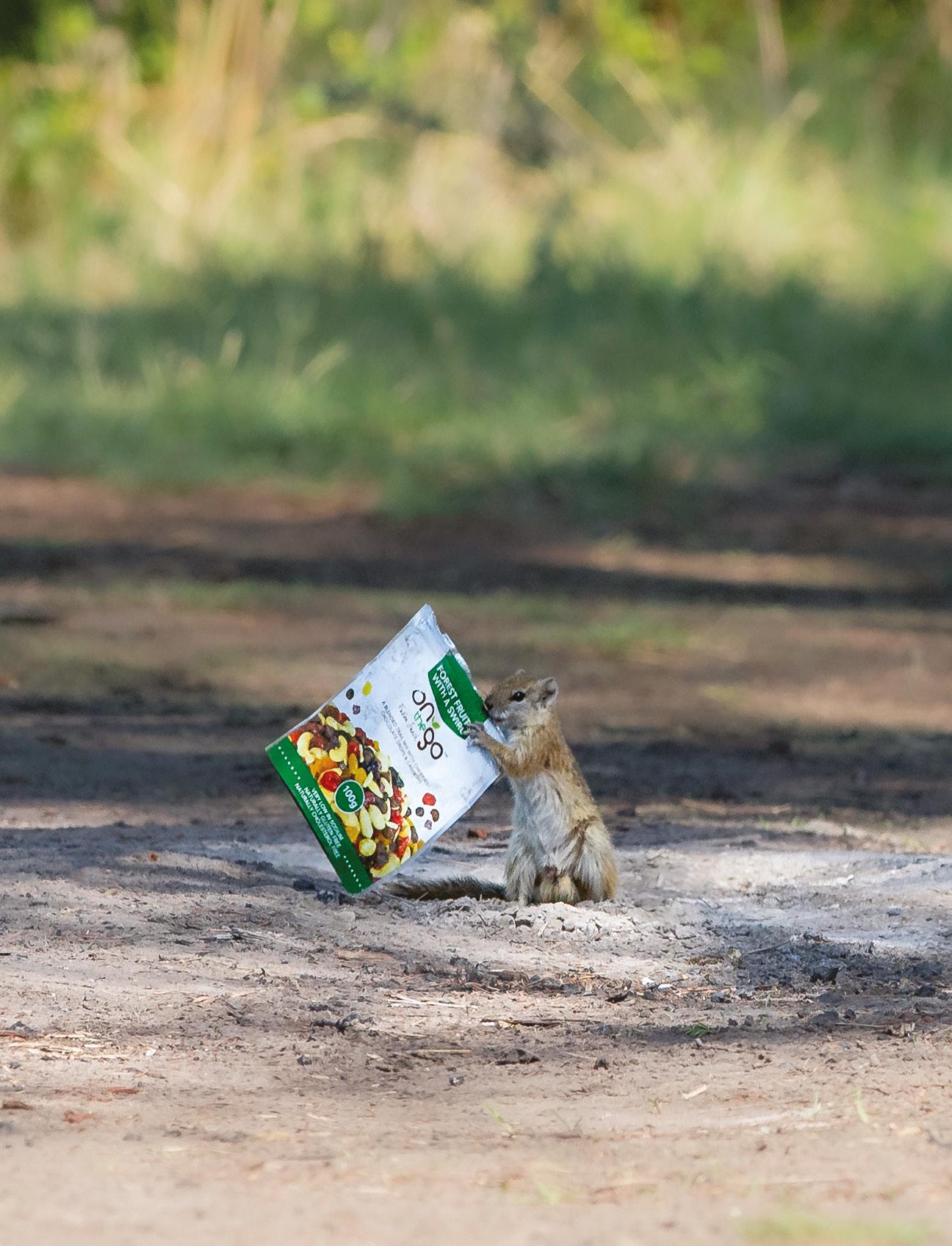
Even organic waste has consequences. Food scraps alter animal behaviour, encouraging wildlife to associate humans with food, often leading to dangerous encounters and, ultimately, the destruction of the animal.
Campsites in Namibia are often set in remote, untouched wilderness areas and are deeply vulnerable. In these fragile landscapes, even small amounts of waste can have lasting consequences when wildlife ingest or become entangled in discarded materials. With slow decomposition rates in arid climates, waste lingers for years, disrupting ecosystems and diminishing the experience for others.
Leaving litter not only mars the natural beauty of a setting; it is also a sign of disrespect and thoughtlessness towards fellow campers and nature, tarnishing the natural beauty of these shared spaces. Leaving no trace is therefore essential to ensure that these wild spaces remain unspoilt for those who follow.
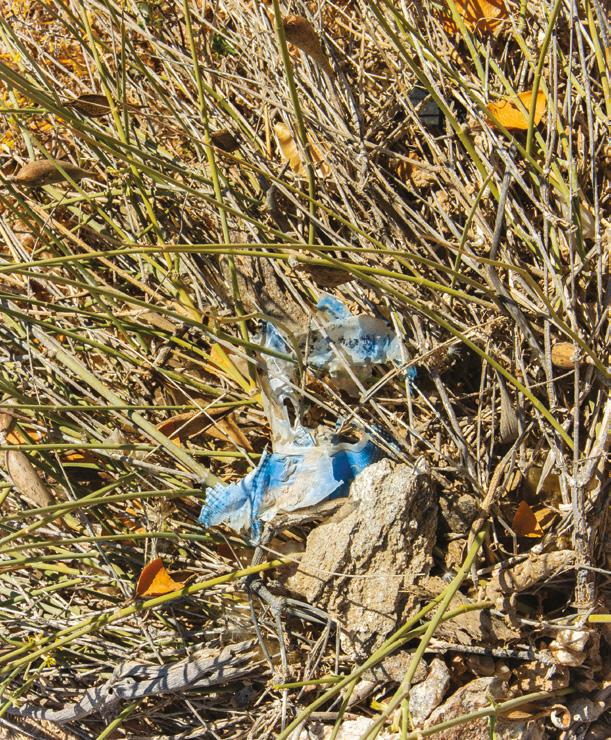
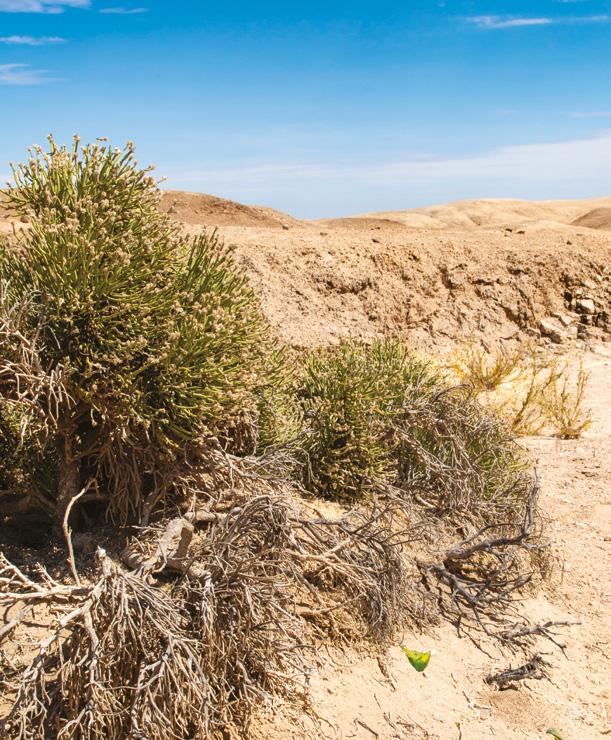
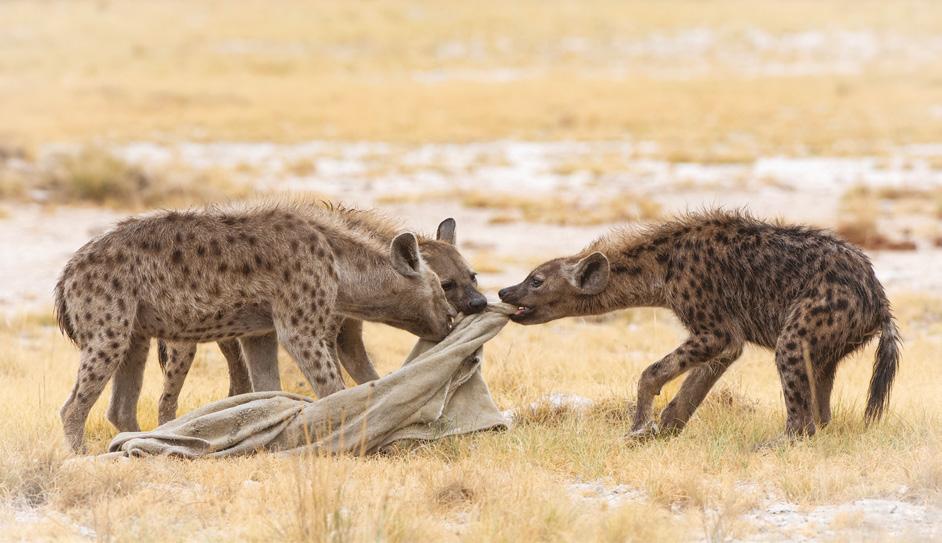
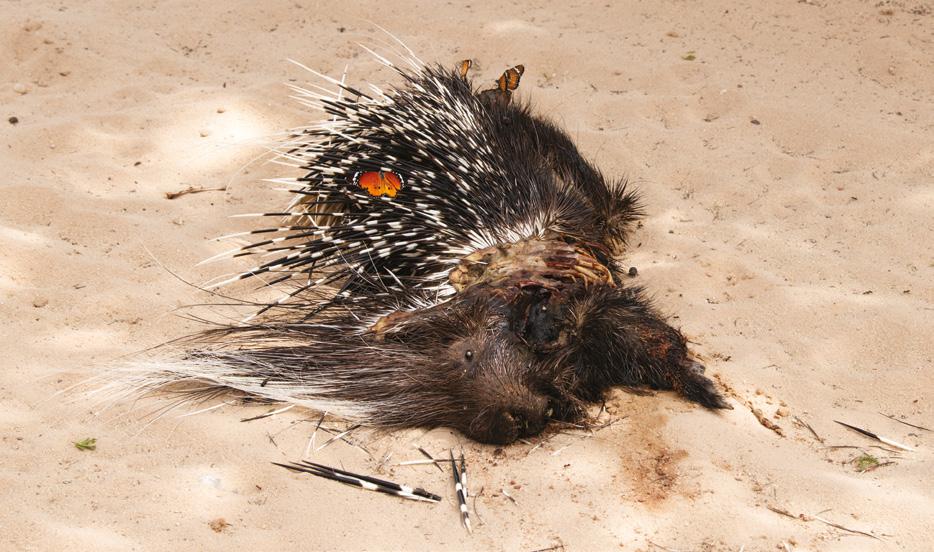
In Namibia’s arid climate, natural decomposition is slow. Toilet paper can remain in the environment for years. Burnt waste leaves behind toxic residues that contaminate soil. Glass does not degrade. Every piece of waste left behind accumulates, slowly eroding the integrity of these wild places.
Practicing a strict “leave no trace” approach is not optional; it is essential. What you carry in, you must carry out.
Namibia’s wildlife is not staged; it is truly wild. Maintaining a respectful distance from wildlife is essential in Namibia’s wild spaces and national parks. Approaching too closely, feeding them or interfering with their natural behaviour can cause stress and provoke defensive reactions. Observe quietly, respectfully and ensure that interactions with wildlife are authentic, safe and sustainable.
Equally, respecting boundaries – whether fences, park regulations or seasonal restrictions – is critical. Breeding areas, especially along the coast and in dune systems, are highly sensitive. A single off-road excursion or intrusion can destroy nests, expose chicks to predators and undo years of conservation effort.
Highly sensitive ecosystems like lichen fields, which are slow-growing organisms, can take decades to recover from a single footprint, making it essential to avoid any disturbance. Always respect and adhere to national park rules – they exist to protect both wildlife and visitors. Actions like speeding, getting out of your vehicle, hanging out of windows or sitting on roofs are not only prohibited but also disturb animals and diminish the experience for others.
Every travel decision has an impact. Choosing lodges and operators that support conservation initiatives and local communities helps to sustain Namibia’s model of conservation-based tourism.
Community conservancies across Namibia rely on tourism income to protect wildlife and habitats. When visitors act responsibly, they reinforce the value of conservation – not only environmentally but also economically and socially.
Ethical photography, especially of people, means seeking consent, respecting dignity and cultural sensitivities and avoiding images that exploit, stereotype or intrude on private moments.
In Namibia, travel is more than exploration; it is participation. You are not just observing this landscape; you are part of its future.
Tread lightly. Stay on designated paths. Respect wildlife. Take nothing but memories, leave nothing behind. Because in a place as vast and seemingly untouched as Namibia, the smallest actions leave the biggest marks. Travel in a way that honours the dignity of people, animals and places –leaving them better, not worse, for your visit.
Conscious travel begins with you. By choosing to be aware of how your actions shape the environment, you have the power to reduce harm and leave a positive impact! TN
MARCUS
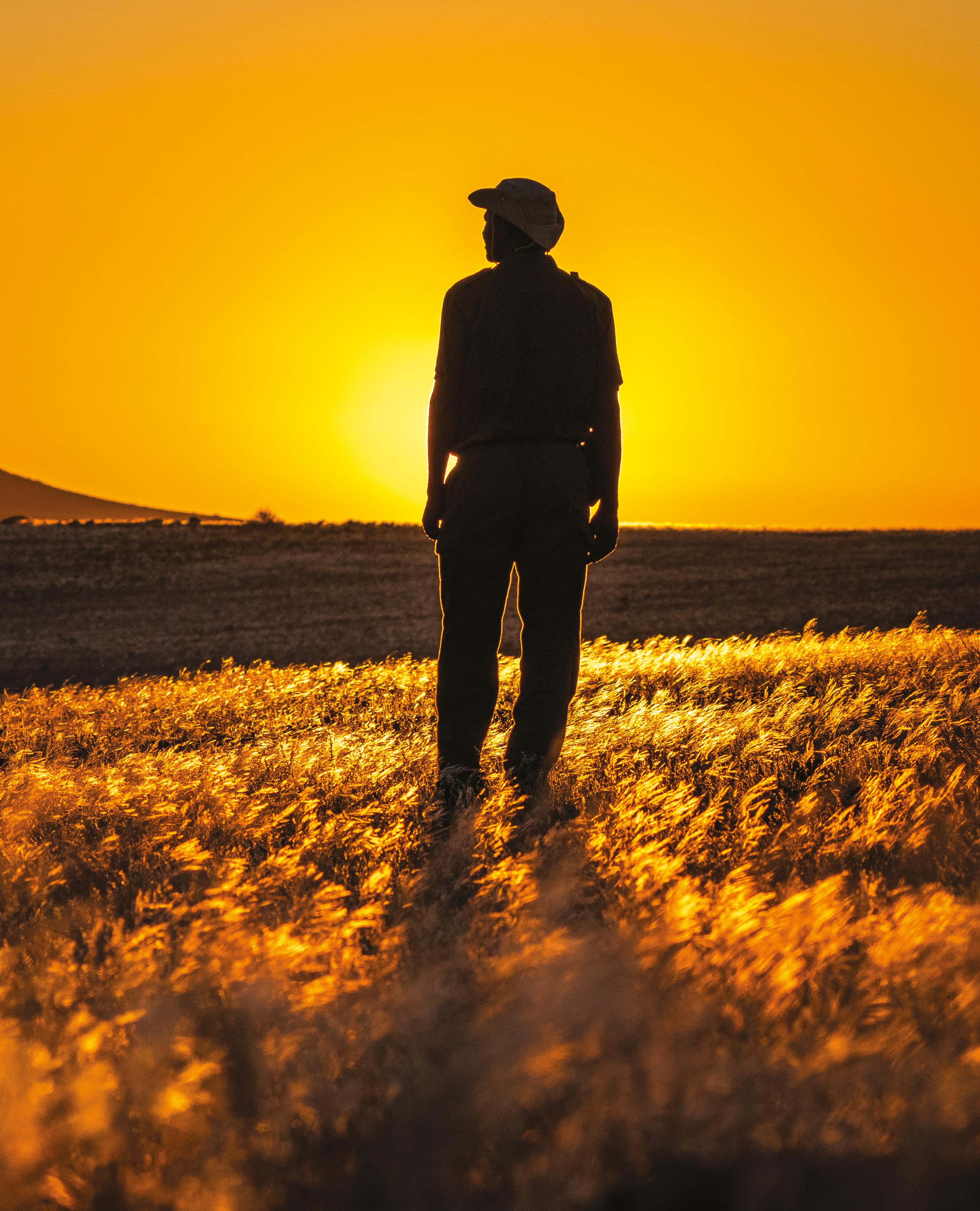
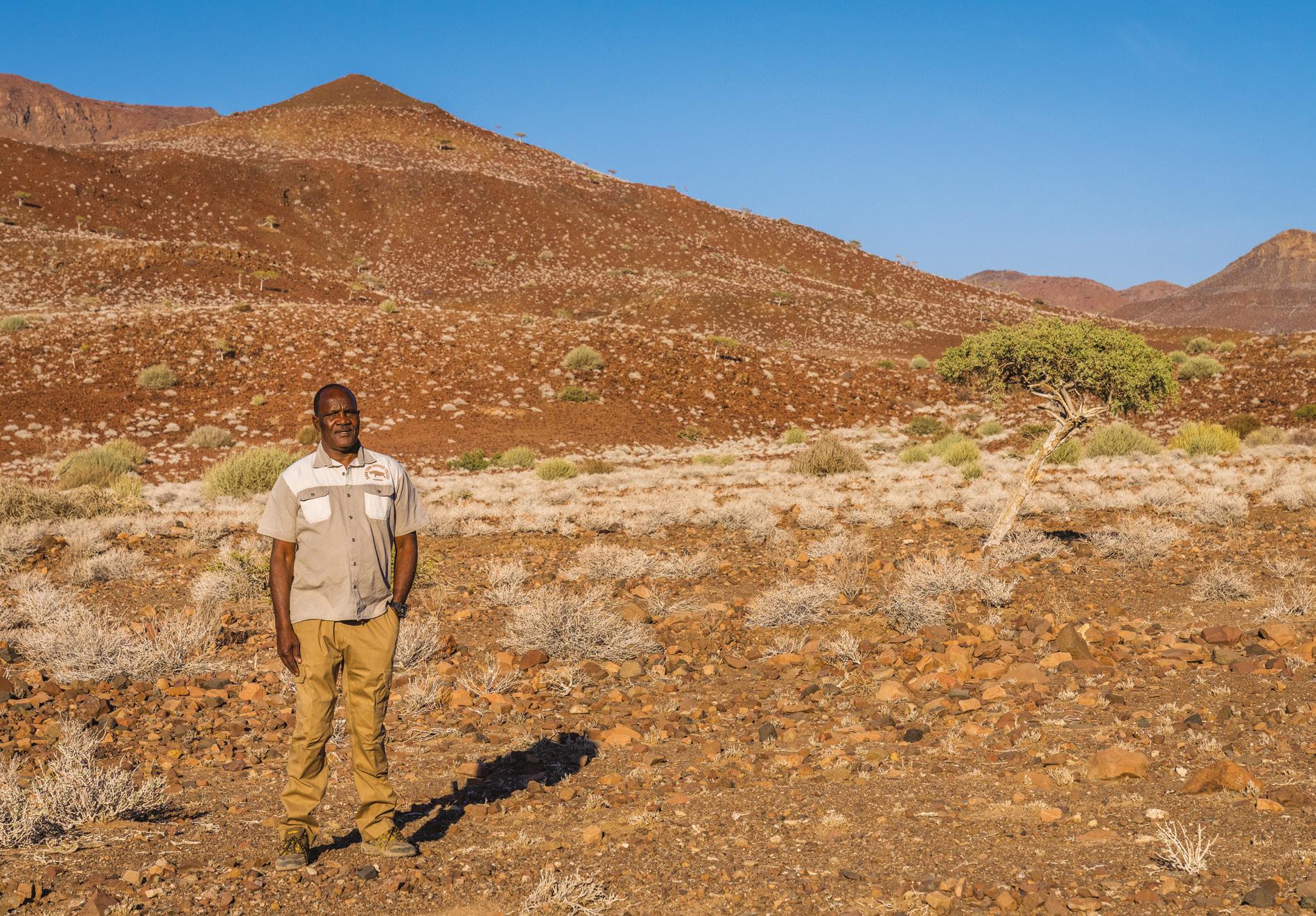
Simson Uri-Khob’s early life was shaped by the practical world of craftsmanship. A welder and mechanic by trade, he always preferred working with his hands – a skill that unexpectedly paved his path into the heart of Namibian conservation.
It began with a broken-down field vehicle on a Sunday. After fixing a car for the late Blythe Loutit, founder of Save the Rhino Trust (SRT), Simson was invited to join the team as a supervisor and mechanic. While his initial role involved building elephant dams and maintaining machinery, a few days spent in the field with the rhino tracking teams changed his trajectory forever.
At the time, SRT Namibia was already pioneering a conservation model that was quietly redefining how wildlife protection could work in remote landscapes. Founded in the 1980s, when black rhino numbers had declined dramatically across Namibia, the organisation focused on protecting the last populations of desertadapted black rhinos roaming freely across the vast, unfenced landscapes of Kunene and parts of Erongo. Their approach was simple in concept but demanding in execution – boots on the ground, eyes on the land and deep partnerships with local communities.
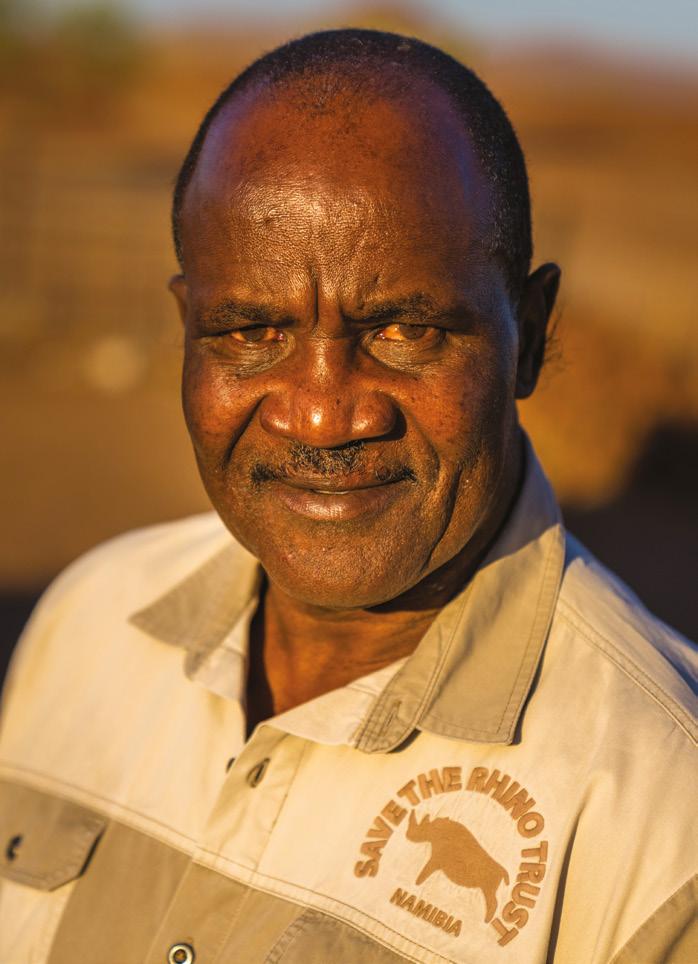
“I realised this is the real work I want to do,” he says. “I wanted to be in the field with these animals.”
SCAN TO LEARN MORE ABOUT SAVE THE RHINO TRUST
Simson chose to start from the ground up, learning the art of land tracking from veteran rangers. Rhino tracking is not simply walking through the bush. It is an intricate skill built on patience, observation and respect for the environment. Rangers read the landscape like a living map, interpreting footprints pressed into gravel, broken twigs and subtle shifts in terrain. In these dry regions, where water is scarce and distances vast, tracking teams can walk for hours or even days to locate individual animals.
That work forms the backbone of SRT’s daily operations. Rangers patrol enormous conservancy areas on foot, often covering tens of kilometres in a single day. They monitor rhino movements, identify individuals and collect vital data that informs long-term conservation planning. Each rhino is known, recorded and monitored –not in captivity or fenced reserves, but in wild terrain that demands constant vigilance.
Over a 32-year journey, Simson climbed the ranks from tracker to the director of field operations, eventually earning his master’s degree and becoming the CEO of SRT. His rise mirrors the philosophy of the organisation – invest in people, build knowledge over time and trust that local leadership holds the strongest key to conservation success.
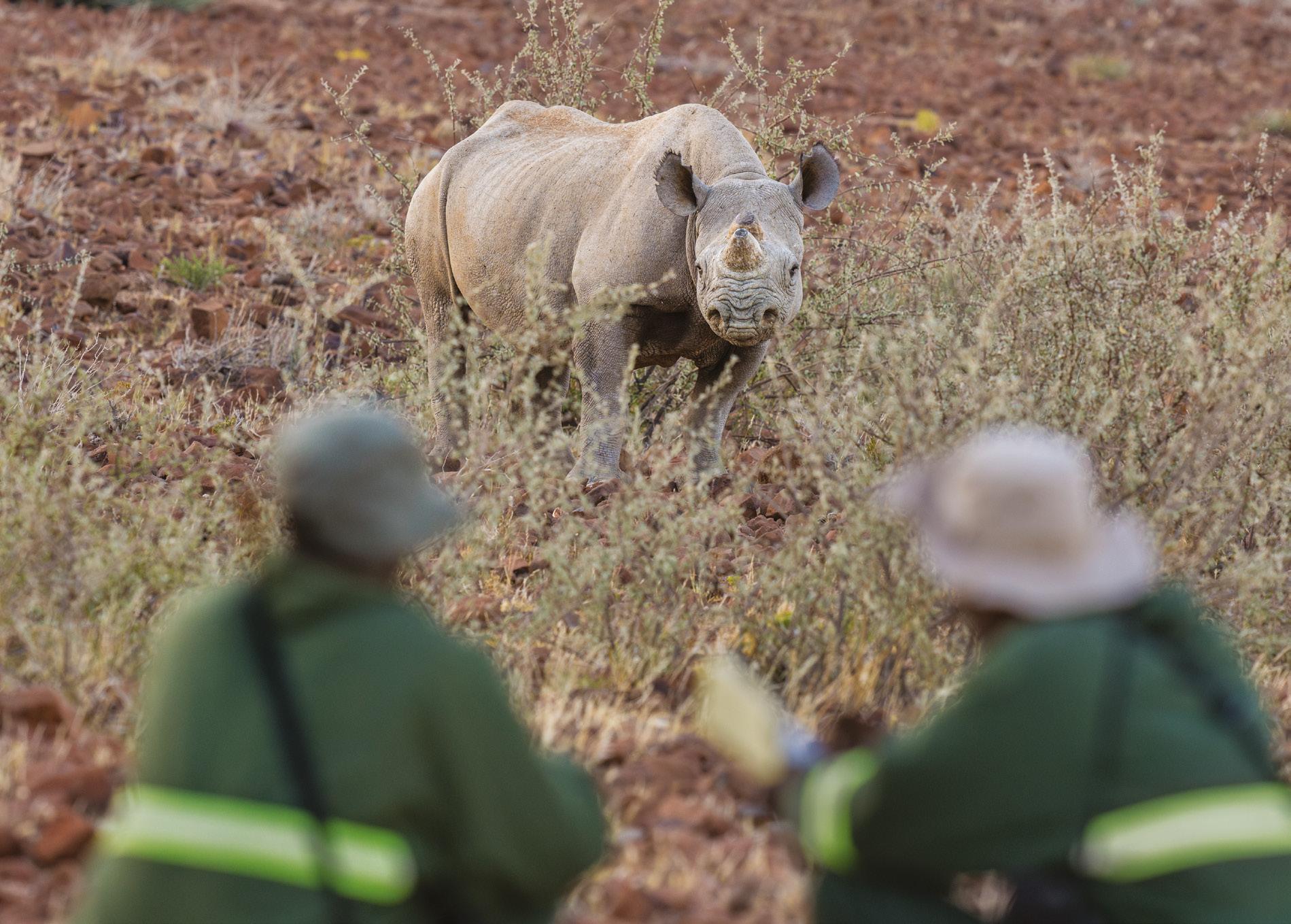
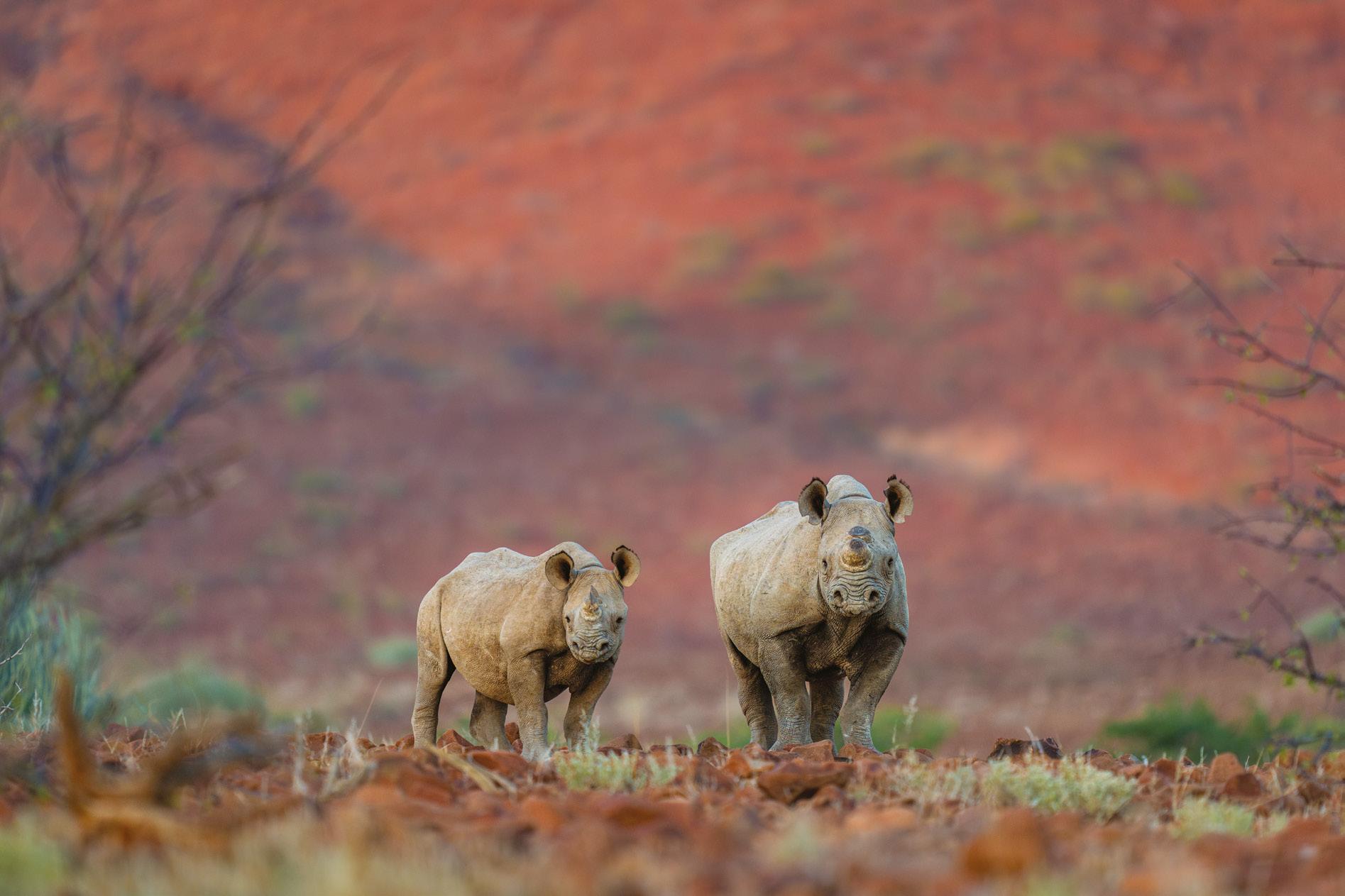
His passion is fuelled by the unique nature of Namibia’s desert-adapted black rhinos (Diceros bicornis bicornis). These are the only free-roaming black rhinos in the world, living without fences in the harsh, open landscapes of the Kunene and Erongo regions. For Simson, their survival in such demanding conditions makes them a symbol of resilience.
But their survival does not happen by chance.
Save the Rhino Trust operates across communal conservancies where wildlife and people share the same space. In these areas, conservation is not an abstract concept – it is tied directly to livelihoods. The trust works closely with conservancies to train and employ rhino rangers drawn from local communities. These rangers are not outsiders; they are sons, daughters, fathers and neighbours who understand the rhythms of the land because they have grown up within it.
Through this model, conservation becomes something owned rather than imposed. Rangers monitor wildlife, report suspicious activity and engage with communities to ensure rhinos remain protected. The organisation also supports conservation education, helps to strengthen tourism partnerships and contributes to building local capacity – reinforcing the idea that healthy wildlife populations bring tangible benefits to communities.
Beyond the protection of animals, Simson is a bridge-builder. He has dedicated his career to bringing communities and wildlife together. Under his leadership, SRT has refined a model where local communities are not just neighbours to wildlife, but their primary protectors. By employing community members as rhino rangers, he has transformed the way rhinos are perceived – not as distant creatures, but as a valuable asset that brings tourism opportunities, employment and long-term sustainability to the region.
Technology has also become part of the trust’s evolving toolkit. Alongside traditional tracking methods, teams now use digital reporting systems, GPS tracking and conservation data platforms to strengthen their monitoring efforts. Yet, even with modern tools, the essence of the work remains deeply human – walking the land, understanding the animals and responding quickly to threats.
The weight of this responsibility is felt most deeply in the difficult moments. Simson still carries the memory of a 2014 poaching incident, where the loss of an animal he knew personally served as a stark reminder of why his work must never stop.
Anti-poaching remains one of the most challenging aspects of conservation. Rangers operate in remote terrains under physically demanding conditions, often facing real risks as they protect wildlife from illegal hunting. Their commitment requires endurance, courage and a sense of purpose that goes beyond employment; it becomes a calling.
“I don’t want to tell my kids one day that we had rhinos in Namibia and show them pictures,” Simson says. “I want to say, ‘I have been looking after that rhino… and there it is, still alive.’”
Today, Save the Rhino Trust Namibia stands as one of the country’s most respected conservation organisations, widely recognised for its role in protecting free-roaming black rhinos in one of the toughest environments on Earth. Its success is measured not only in rhino numbers, but in the strength of the communities that stand alongside these animals.
Simson Uri-Khob is more than a conservationist; he is a guardian of Namibia’s natural heritage. His journey from mechanic to conservation leader reflects the deeper truth at the heart of Save the Rhino Trust’s work – that conservation is not only about animals, but about people, perseverance and the quiet determination to keep walking, step by step, across the land.
And perhaps that is what makes Namibia’s rhinos so remarkable. Not only that they survive in the desert, but that there are people like Simson – and the teams he leads – who choose, every day, to walk beside them and ensure that Namibia’s wild future remains exactly that: wild. TN
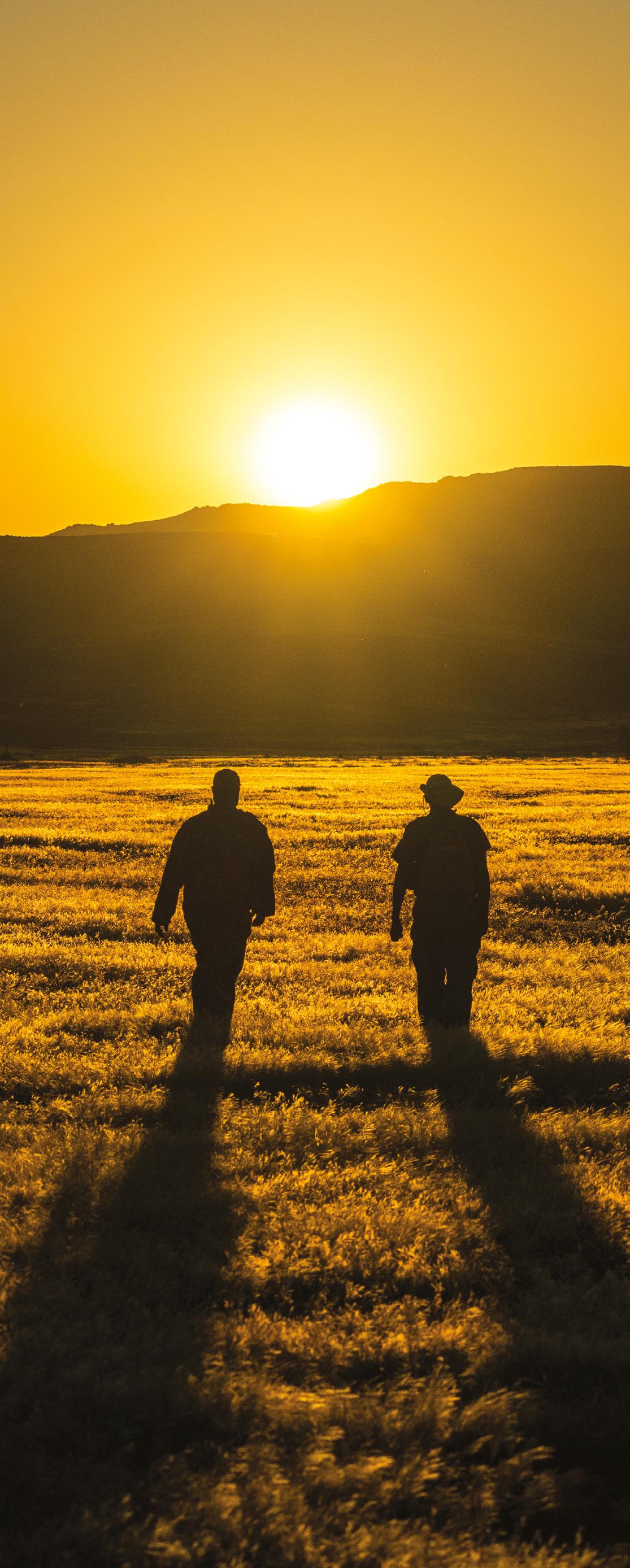
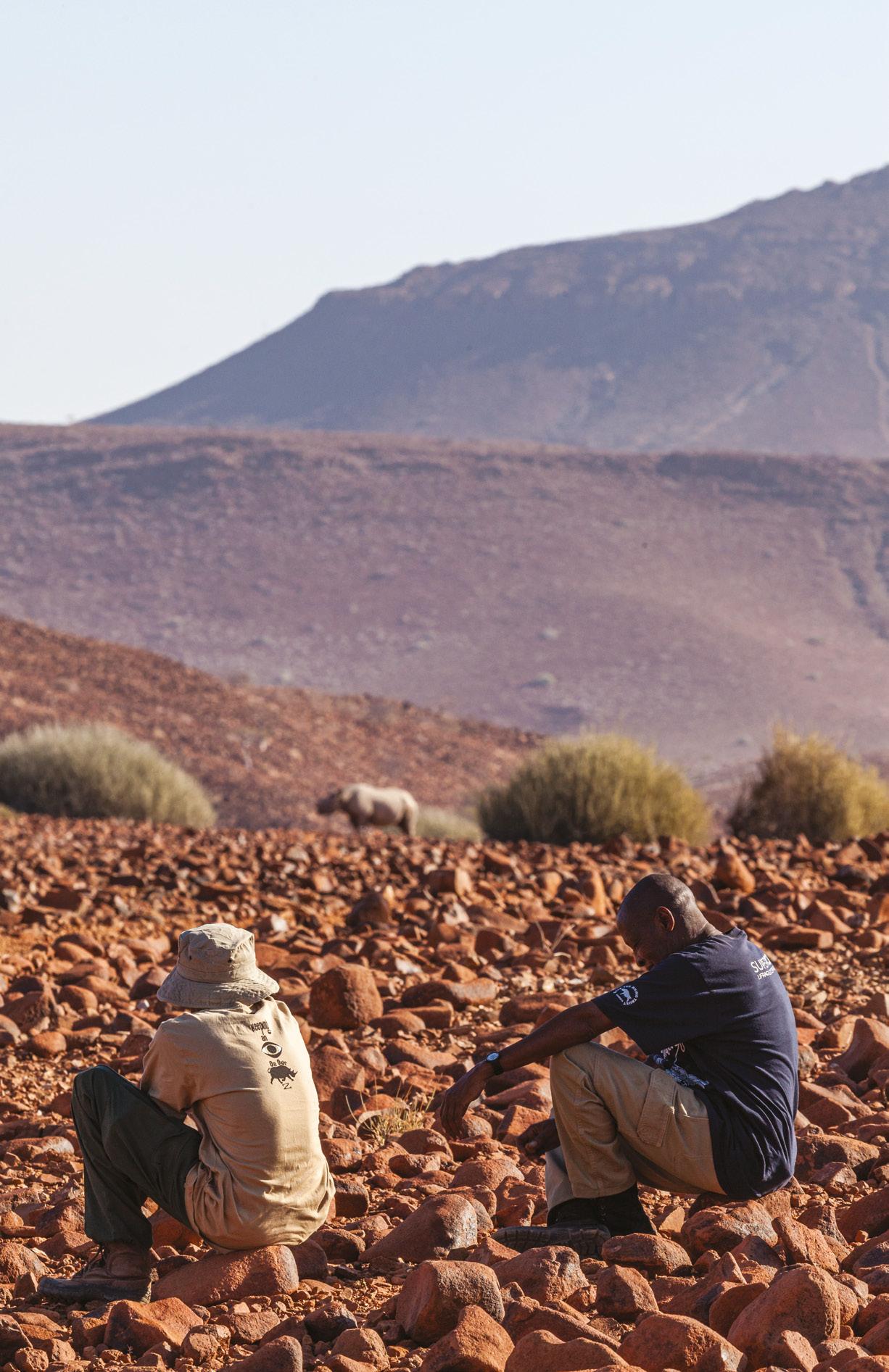
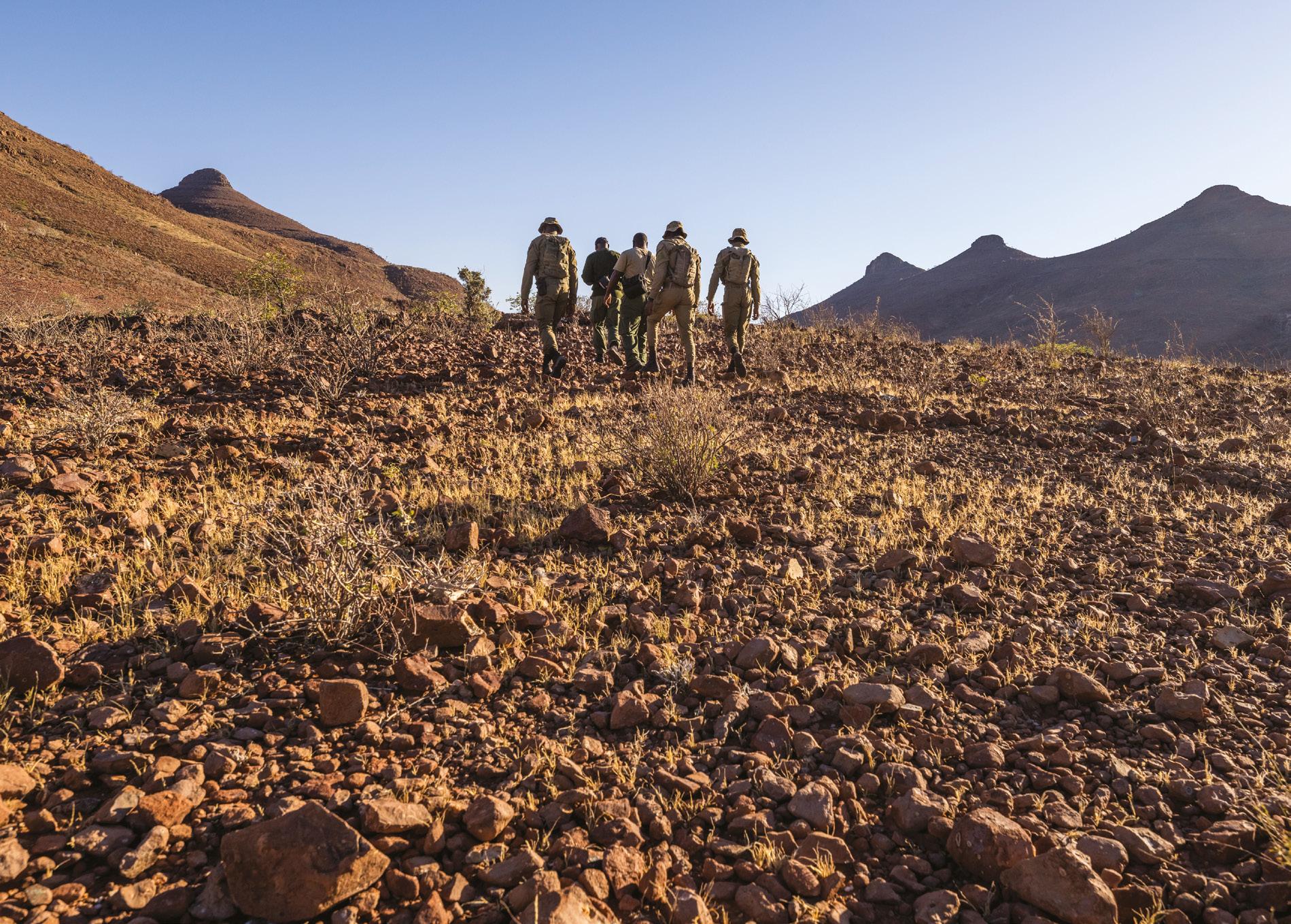
Rhino rangers often walk for hours through rugged terrain to find and document individual rhinos as part of their monitoring work.
STEP BACK IN TIME AT THE HOME OF
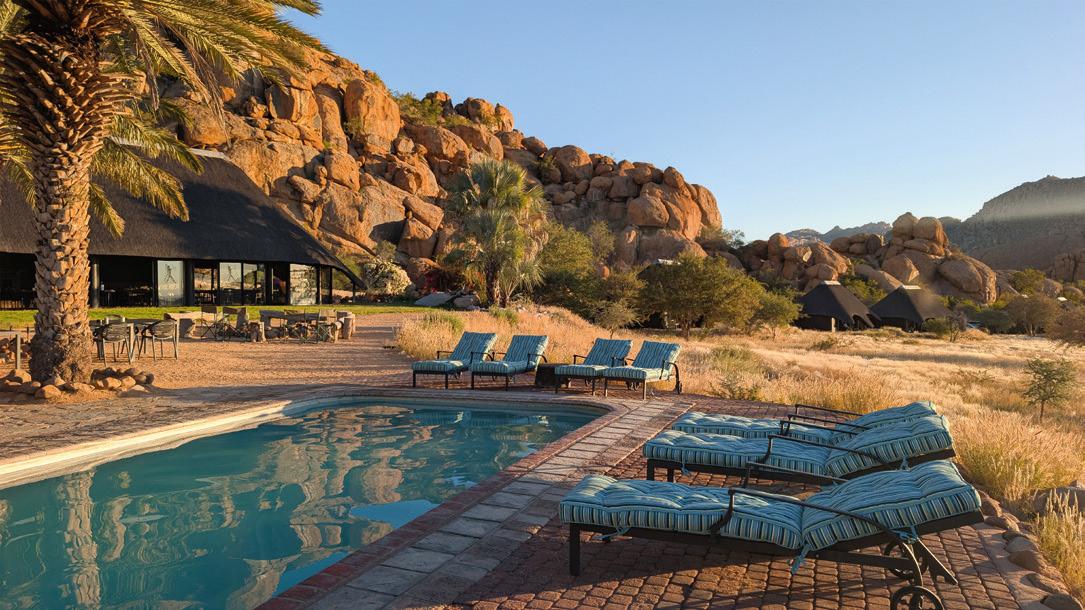
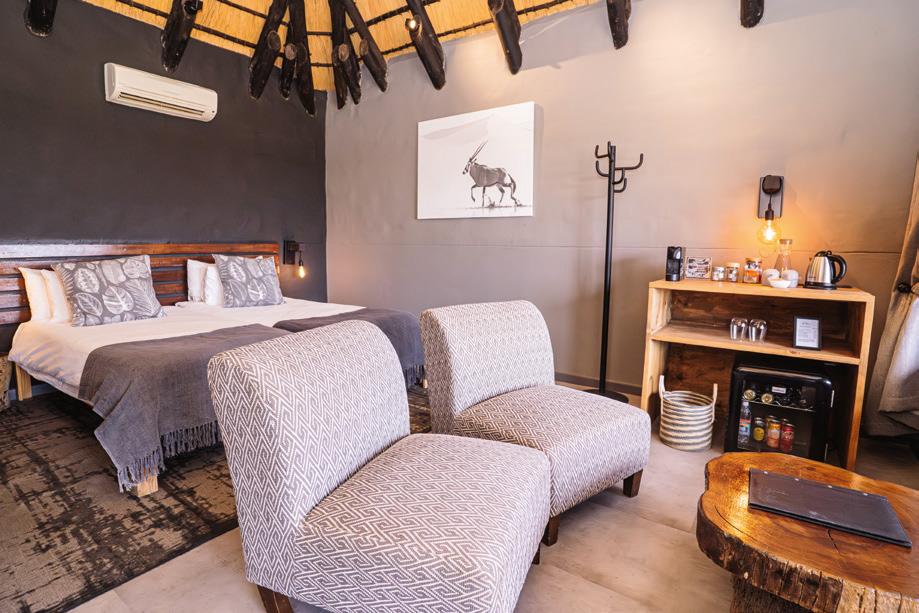
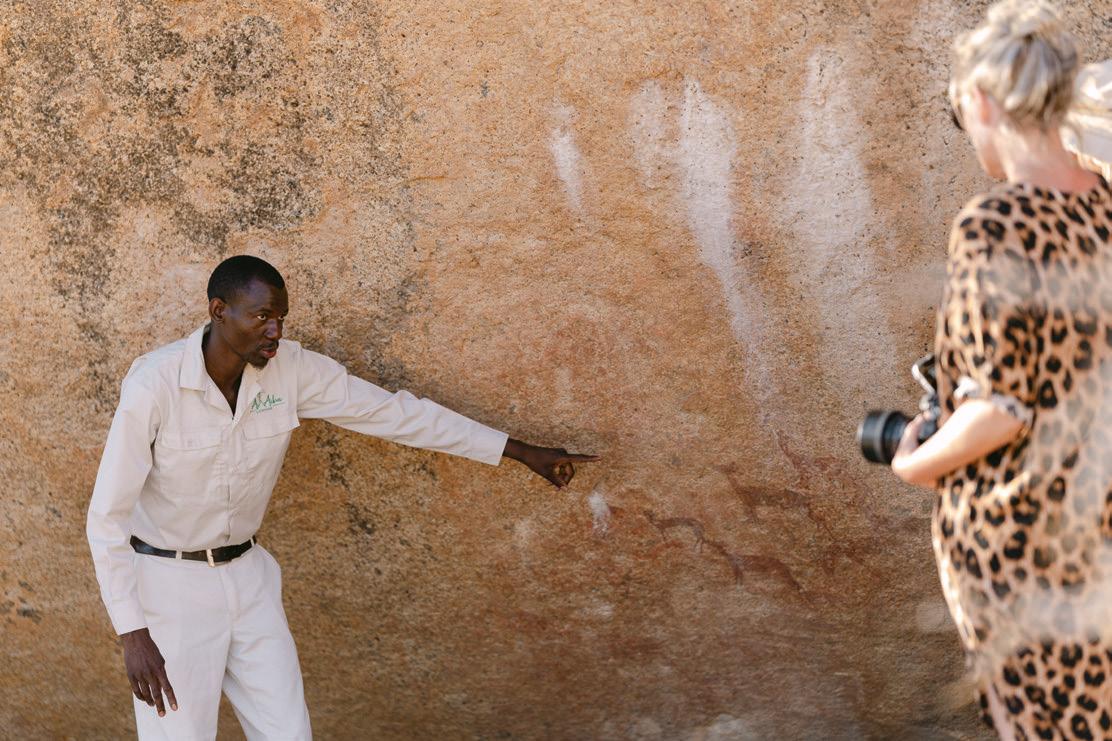
Ai-Aiba – The Rock Painting Lodge rests among towering granite boulders, overlooking the magical Erongo Mountain range. Home to countless ancient rock art sites, Ai-Aiba offers an unforgettable journey into Namibia’s timeless wilderness.
Guided nature walks, scenic drives, visit to the San Living Museum and mountain biking adventures reveal a landscape rich in history, culture and natural wonder.
+264 (0)61 239 199 | info@aiaiba-namibia.com | www.aiaiba-namibia.com
www.bigsky-namibia.com www.naturallynamibia.com
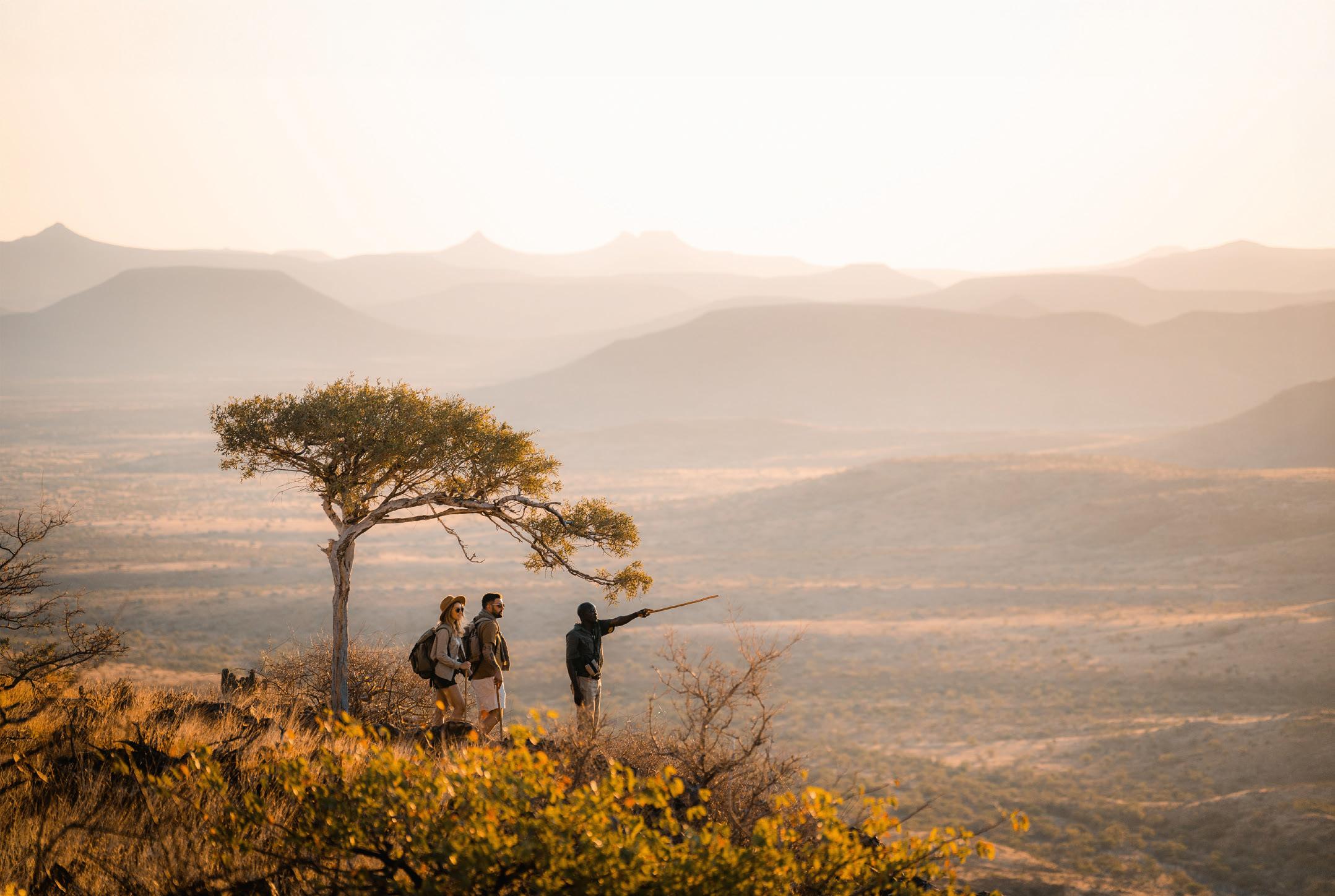
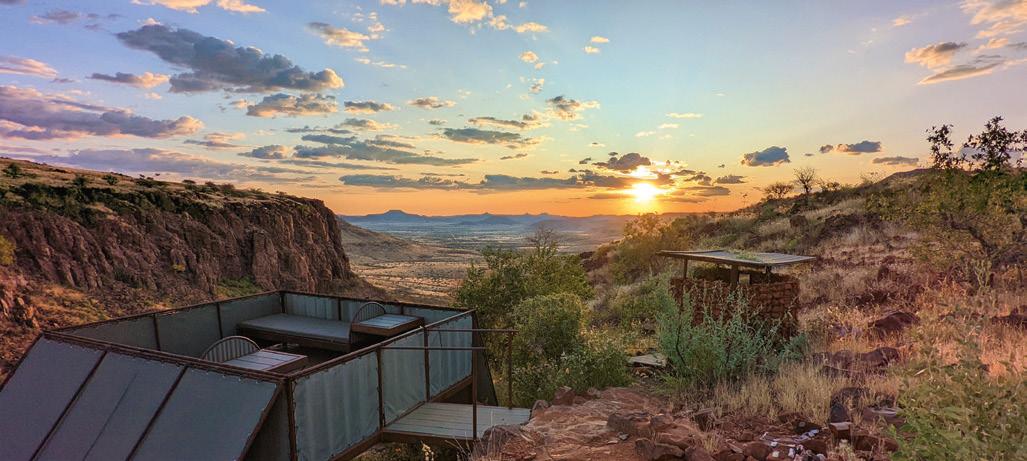
At the foot of the Grootberg massif, among the ancient Etendeka lava flows of northern Damaraland, Etendeka Mountain Camp and the Etendeka Hiking Experience immerse guests in a remote wilderness shaped by silence, space and raw natural beauty.
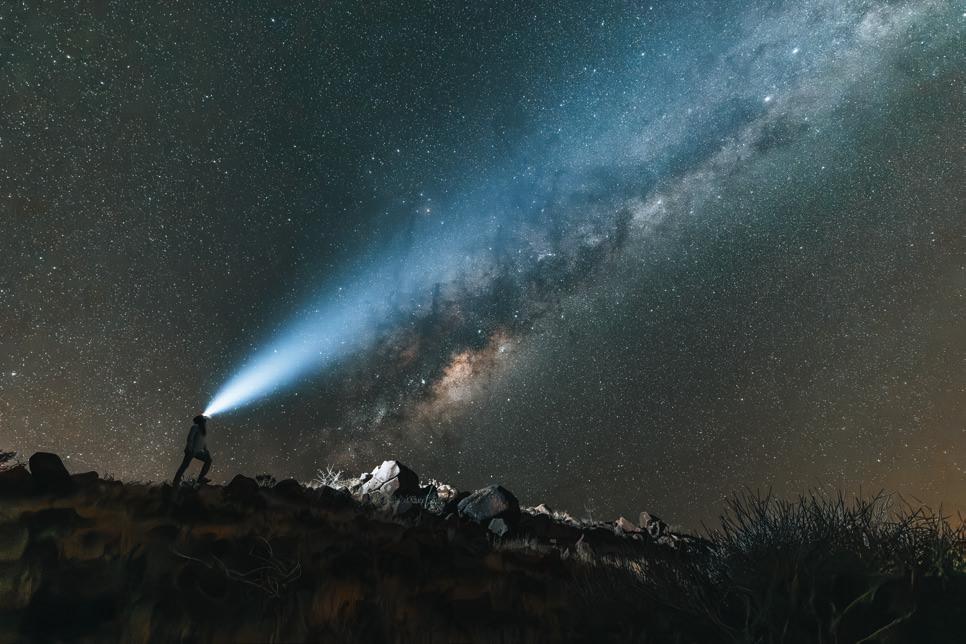
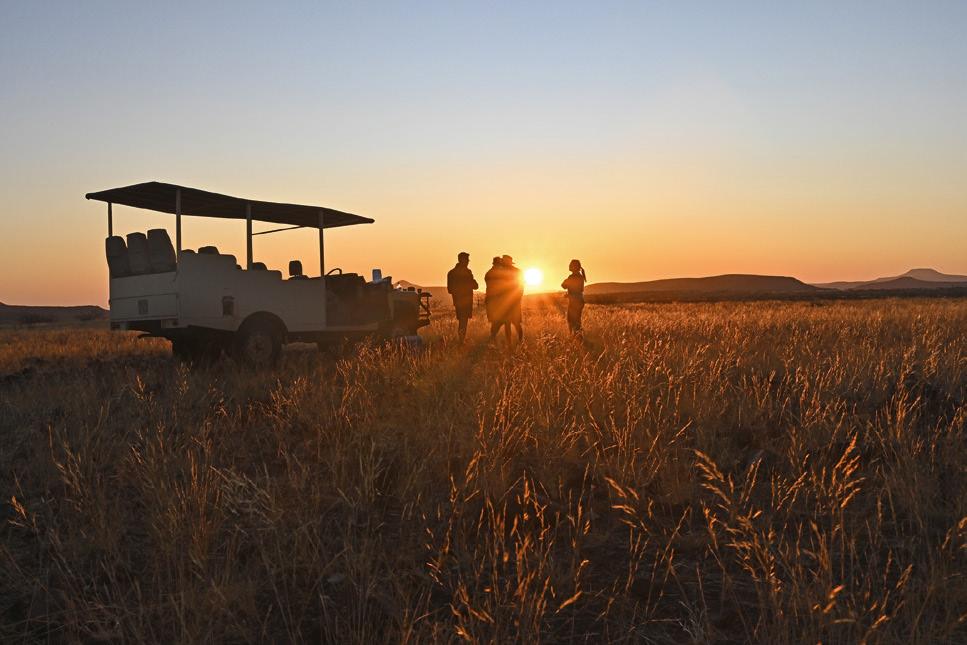
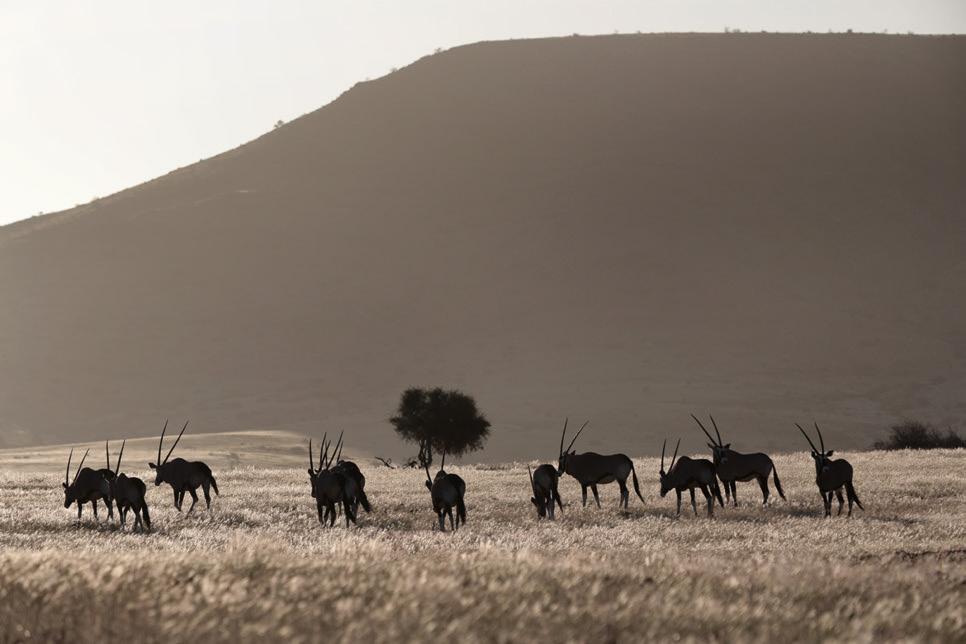
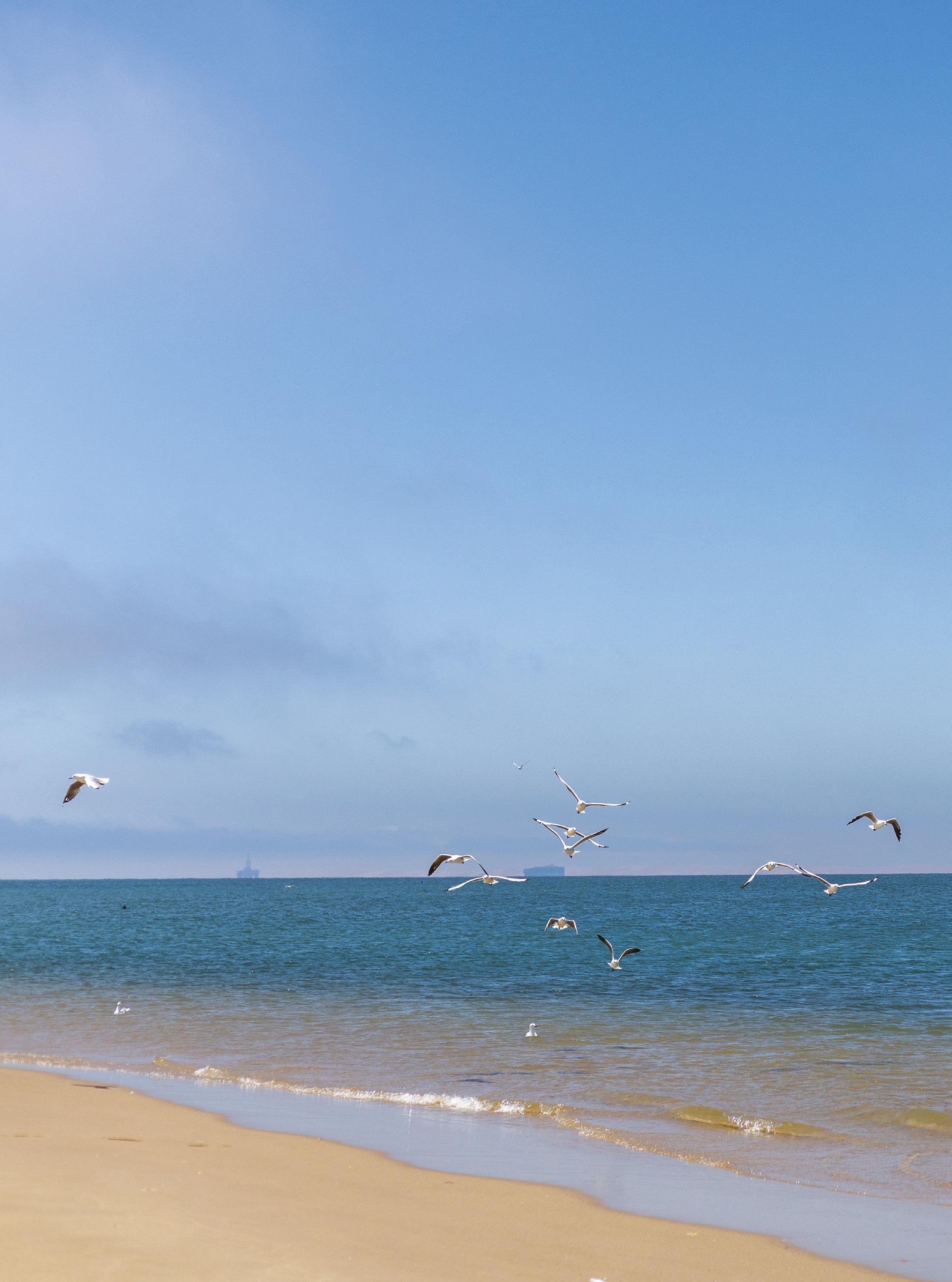
Ocean mornings and a beach braai at Pelican Point
There are mornings on the Namibian coast that feel as if they were designed purely for anticipation. The air in Walvis Bay carries that unmistakable Atlantic crispness – cool, clean and full of promise. Boarding a Mola Mola boat in the crisp morning light is one of those rituals that instantly shifts you into adventure mode. Jackets zipped, cameras ready, coffee in hand, you step aboard knowing that the ocean always has something in store, even if it refuses to reveal exactly what.
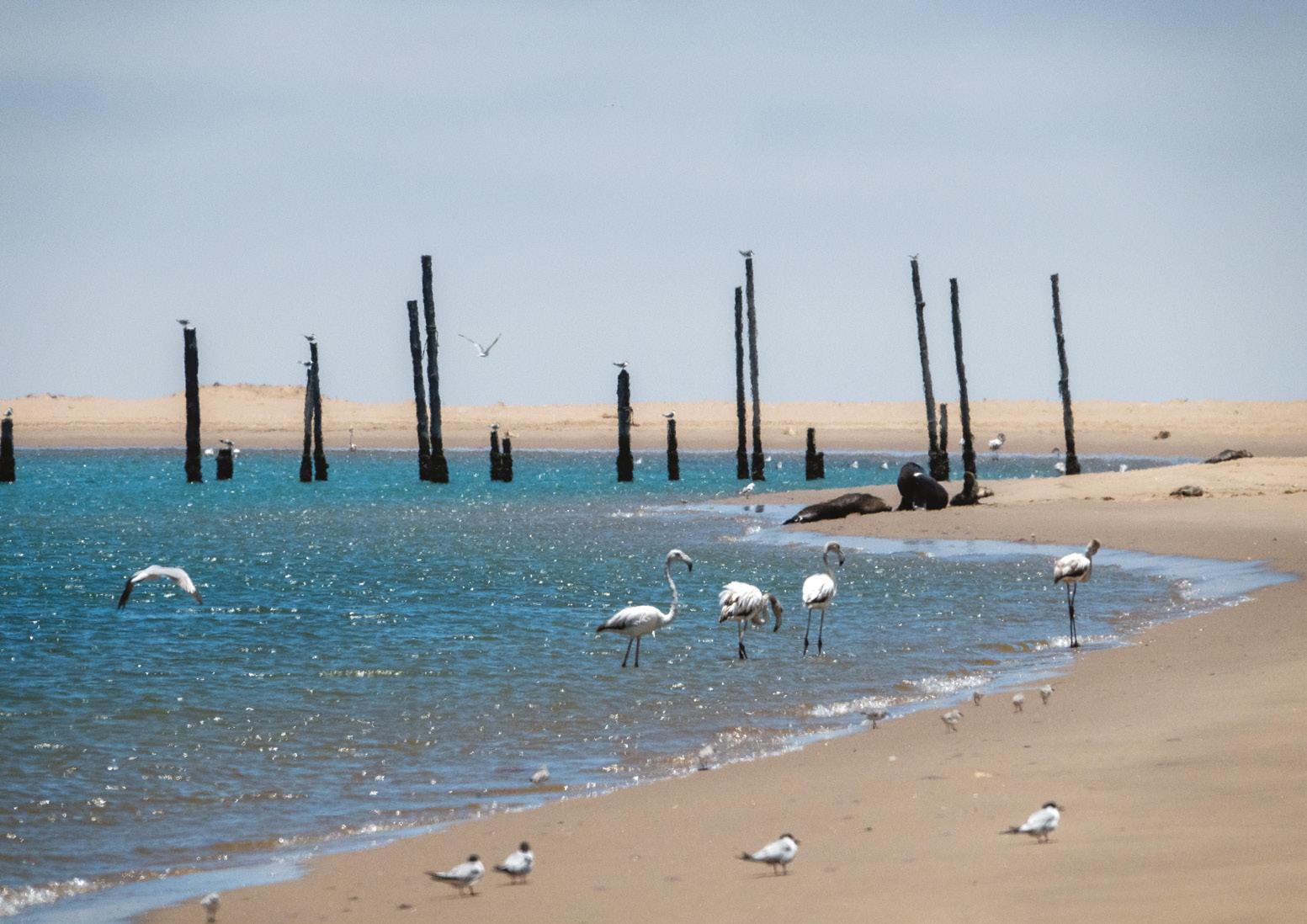
Our morning began gliding across the calm waters of the Walvis Bay Lagoon, that shimmering sanctuary where flamingos stand in long, elegant lines and pelicans patrol with quiet confidence. It is a gentle introduction before the boat noses further out into the Atlantic, where the
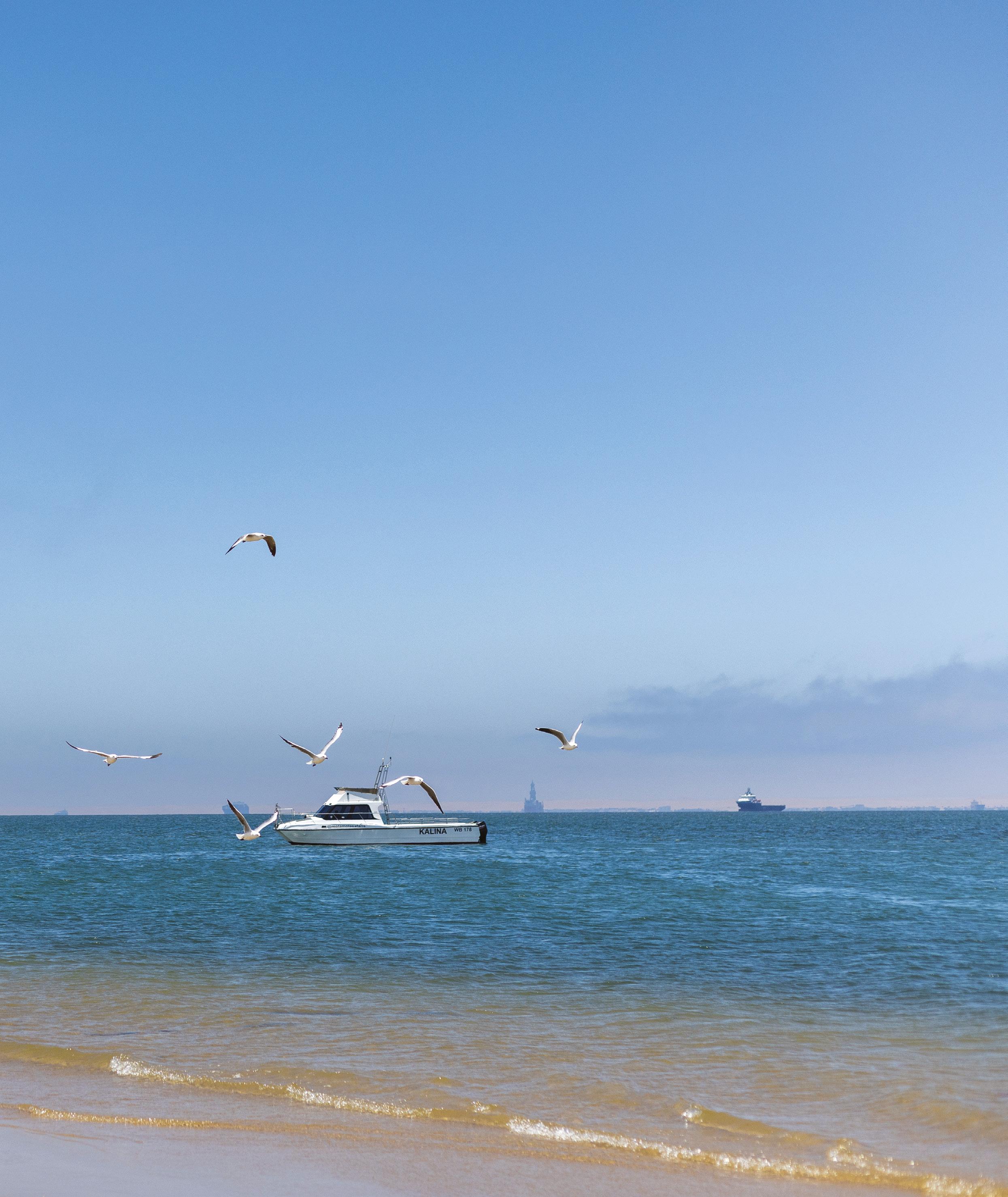
water deepens and the horizon begins to stretch wide and wild.
And then… movement.
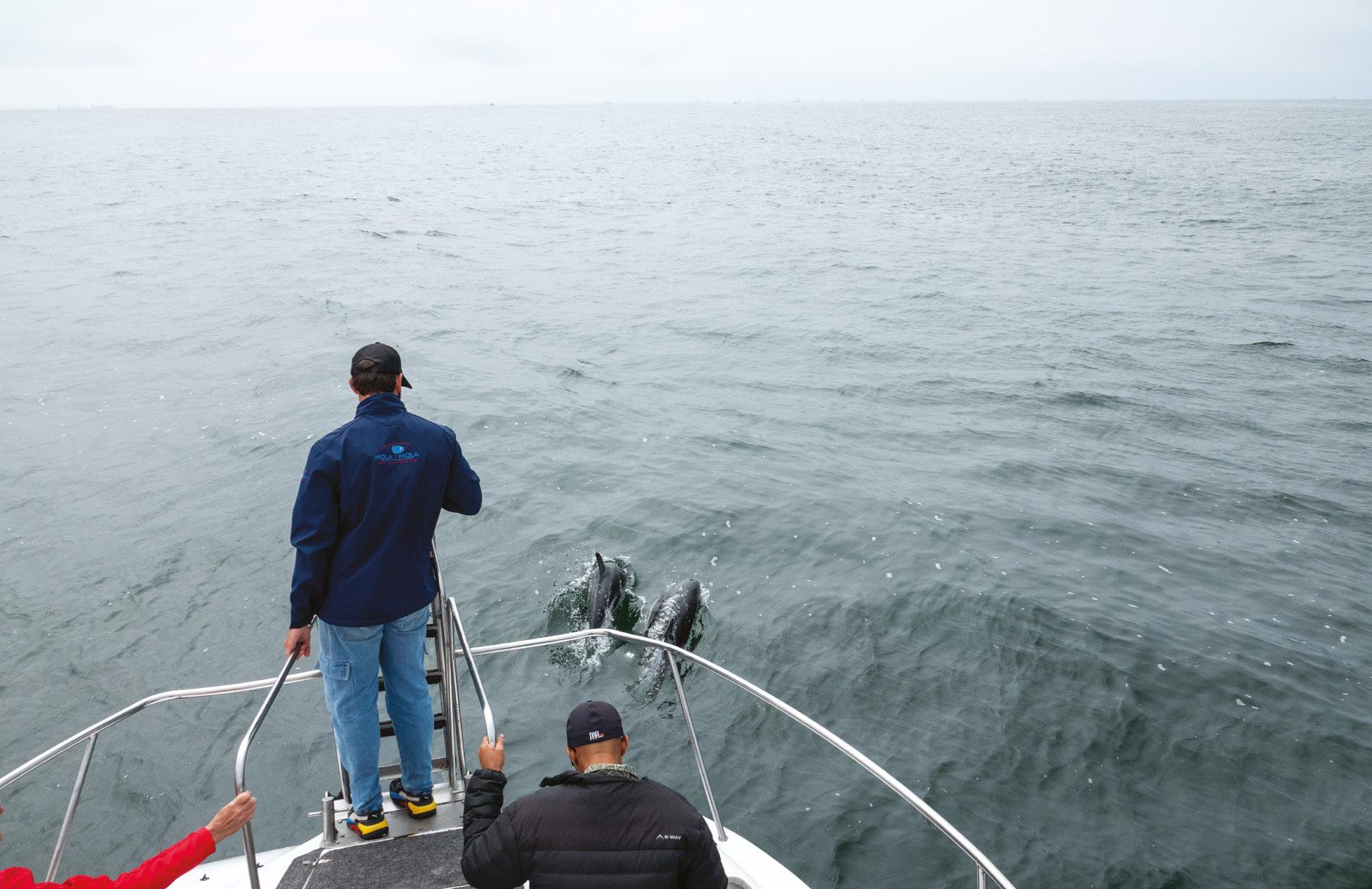
A flash of silver beneath the surface. A ripple in the wake. Suddenly, the unmistakable arc of a Heaviside’s dolphin slicing through the water. These small, energetic dolphins are one of Namibia’s coastal treasures, and seeing them in the wild feels like catching a glimpse of something delightfully mischievous. Not long after, bottlenose dolphins join the show, leaping through the boat’s wake as if performing just for us. Their strength and grace in the cold Atlantic water is hypnotic, and even the most composed observers find themselves leaning over the rails, laughing like children at the spectacle.
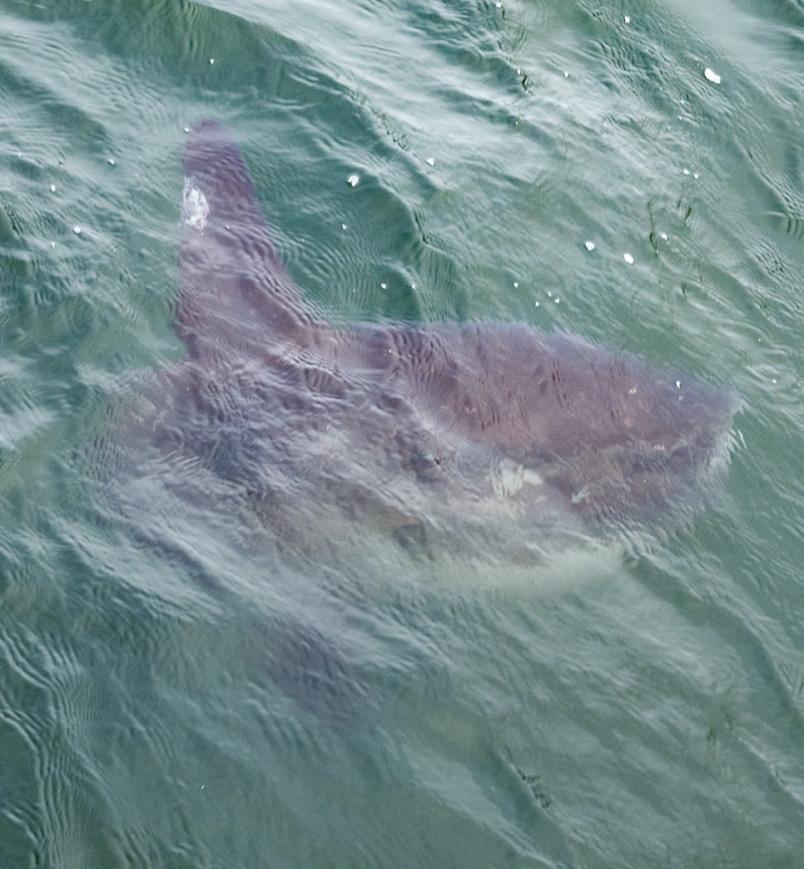
Mola Mola (Ocean sunfish):
• The heaviest bony fish in the world
• Can weigh over 1,000 kg
• Often seen basking at the surface, giving rise to the name “sunfish”
• Feeds mainly on jellyfish and softbodied marine life
• Known for its unusual shape and slow, drifting movement
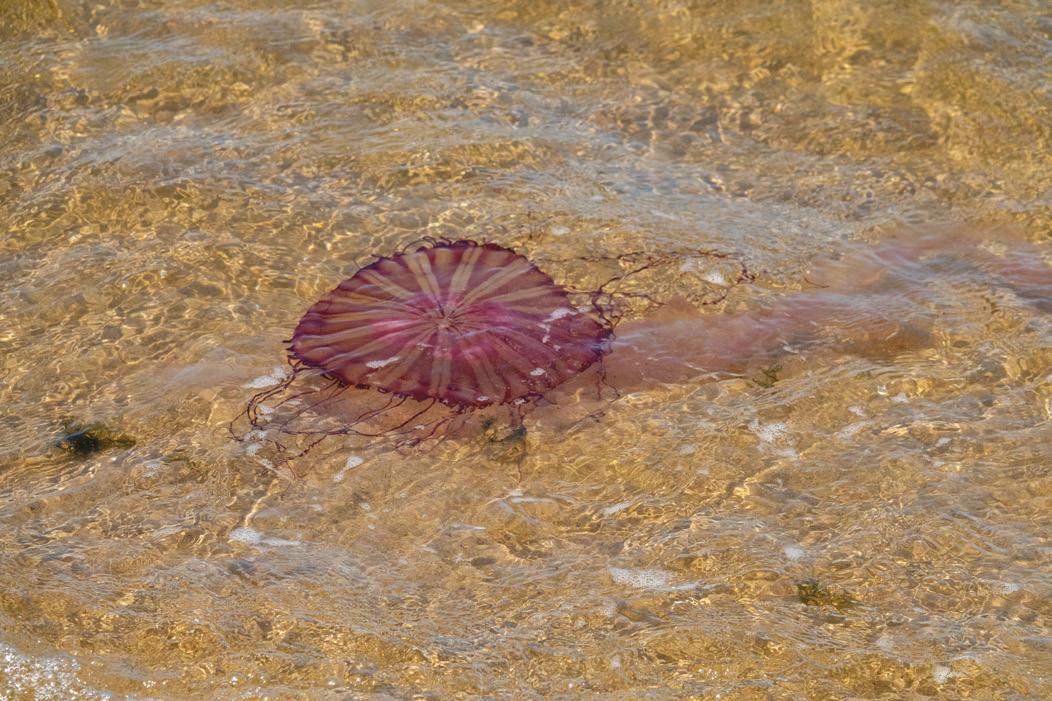
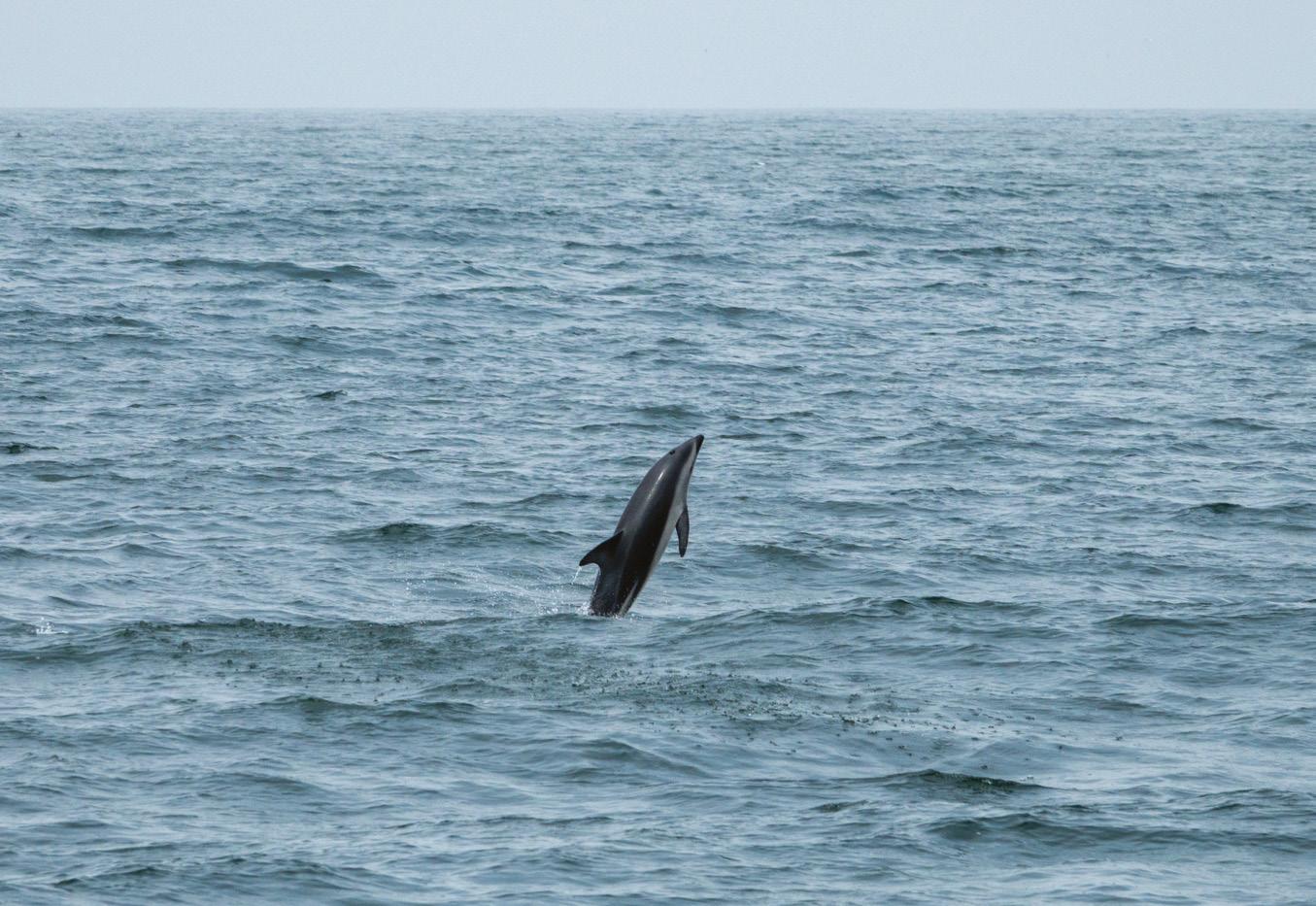
And then, in one of those wonderfully unexpected moments, we spot the namesake of the experience itself – a mola mola, or ocean sunfish, drifting near the surface like a misplaced dinner plate. These peculiar giants are the heaviest bony fish in the world, sometimes weighing over a ton, and are often seen basking at the surface, soaking up warmth after deep dives into colder waters below. With their flattened bodies and slow, deliberate movements, they look almost unreal – as if someone sketched a fish from memory and forgot the tail.
There is a brief, thrilling moment when someone calls out “Whale!” And for a few seconds, we see it: the broad back breaking the surface before slipping away again into the vastness. Just a glimpse, but enough to remind us that this ocean is far bigger than anything we can fully grasp.
All the while, the sky above remains busy with life. Pelicans glide effortlessly alongside us, seagulls hover with calculated curiosity and seals bob nearby, their whiskered
Heaviside’s dolphins often ride the pressure wave at the front of the boat.
What to look out for
Marine mammals:
Heaviside’s dolphins
Bottlenose dolphins
Cape fur seals
Southern right whales (seasonal)
Humpback whales (seasonal)
Birdlife:
Great White Pelicans
Kelp Gulls
Flamingos (greater and lesser)
Cape Cormorants
Damara Terns (seasonal)
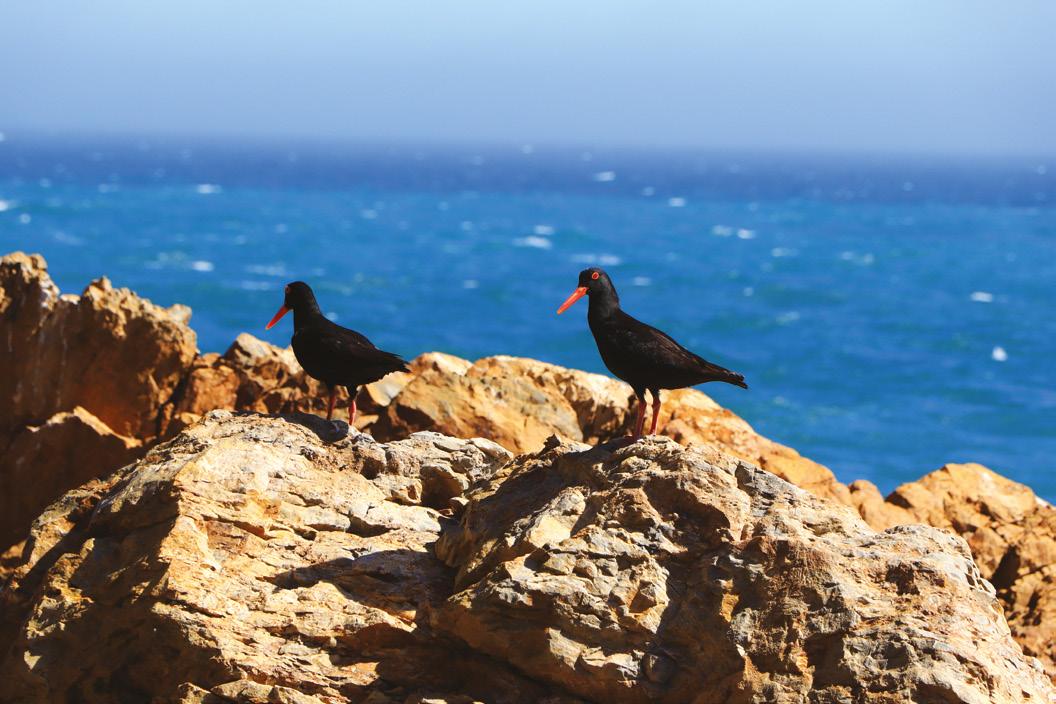
African Black Oystercatchers
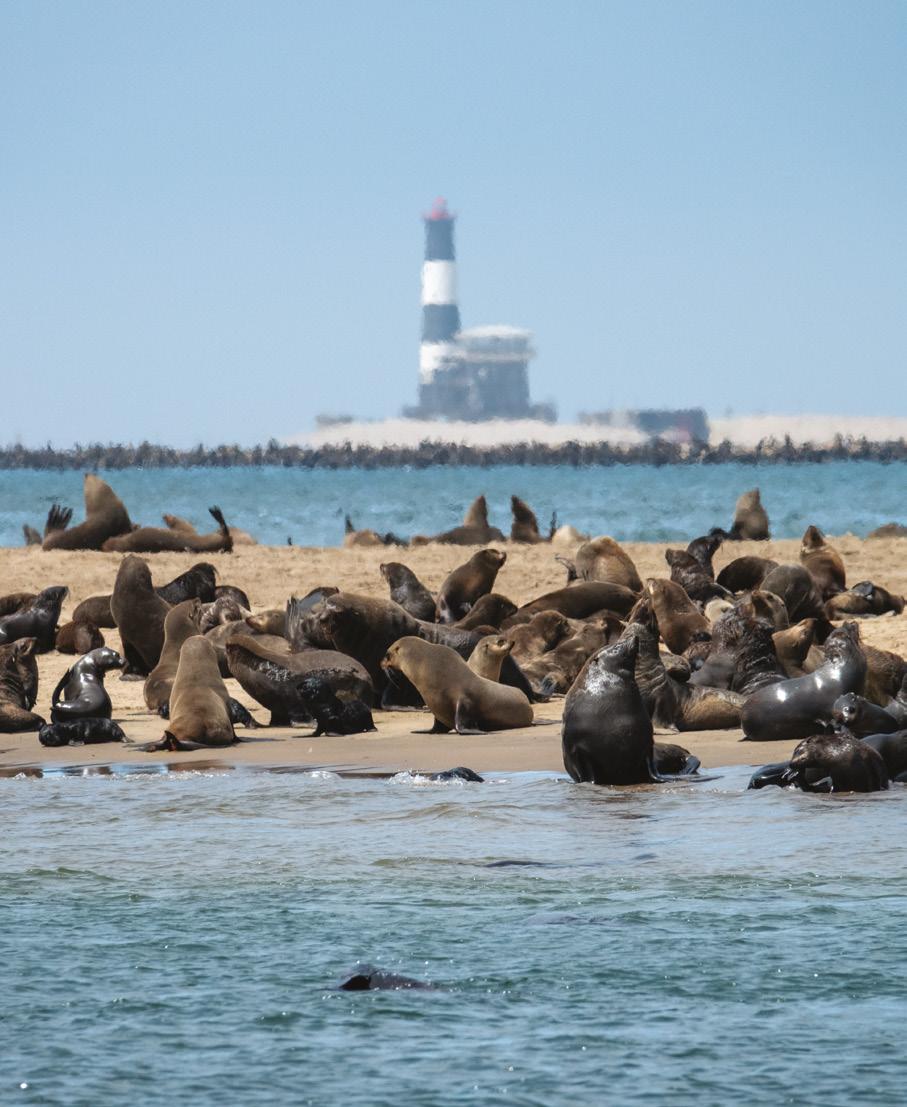
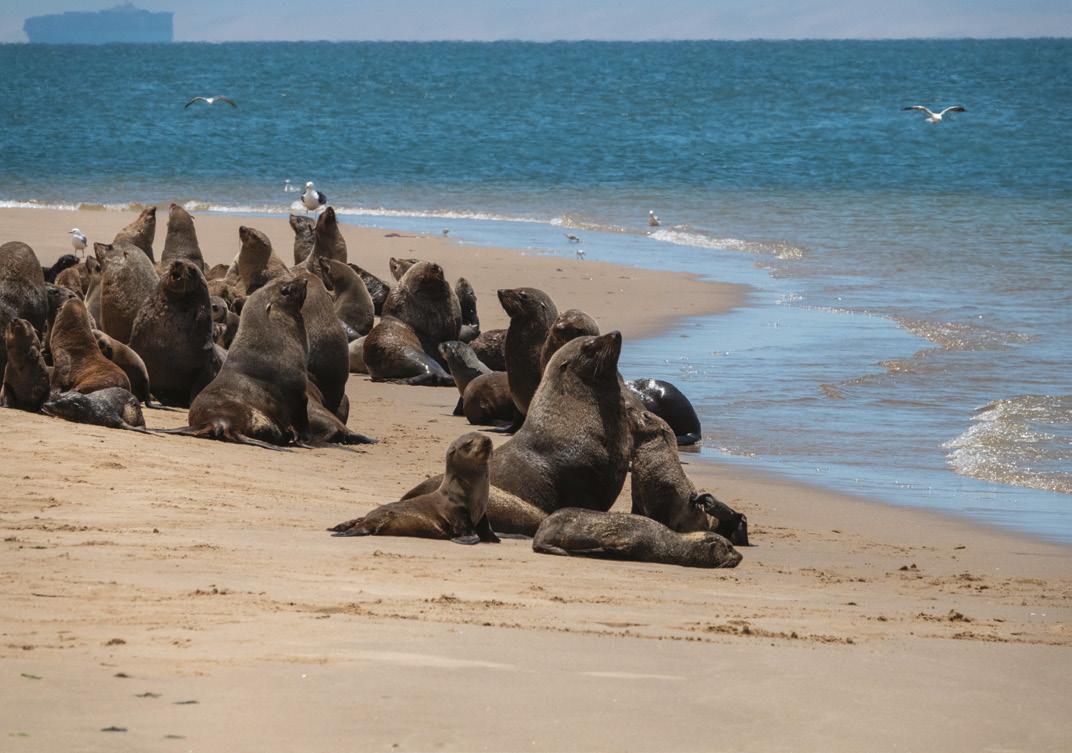
faces peering up as if evaluating the day’s entertainment. As we round Pelican Point, the iconic lighthouse rises from the peninsula like a sentinel, marking the edge of this remarkable stretch of coastline. Nearby, the Cape fur seal colony announces itself long before we see it – the unmistakable sound drifting across the wind. In many ways, it feels like another kind of Namibian safari – trading dusty tracks for rolling swells, where sightings come not from the bush but from the blue expanse of the Atlantic.
And then, the day shifts from sea spray to sand.
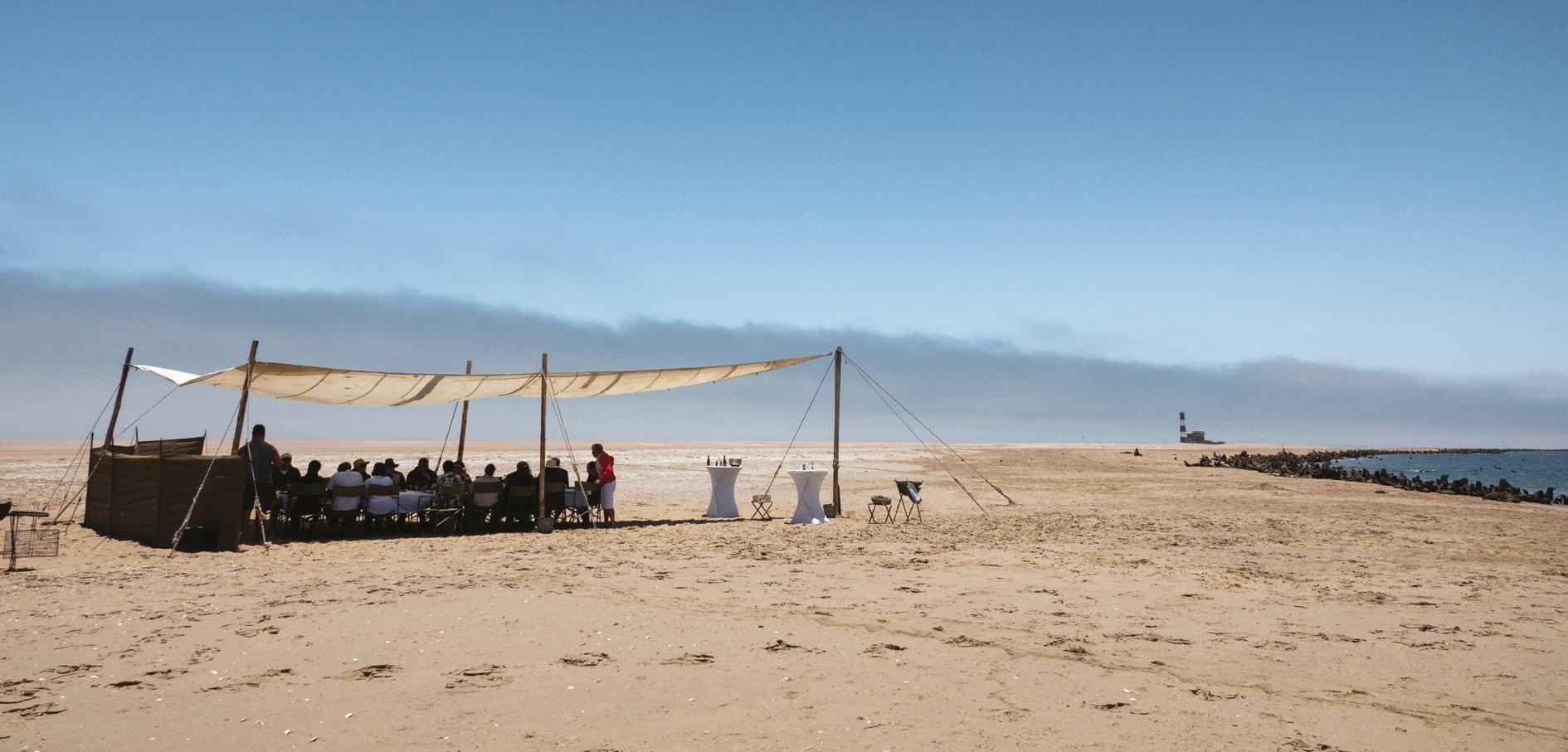
The landing at Pelican Point is part adventure, part celebration. Stepping off the boat onto an uninhabited beach already feels special, but what awaits us makes it unforgettable. An old sail has been raised as a canopy, its canvas stretching into a tent-like roof that flutters gently in the ocean breeze. Beneath it, a long table awaits, laid out with glasses, platters and the promise of something extraordinary.

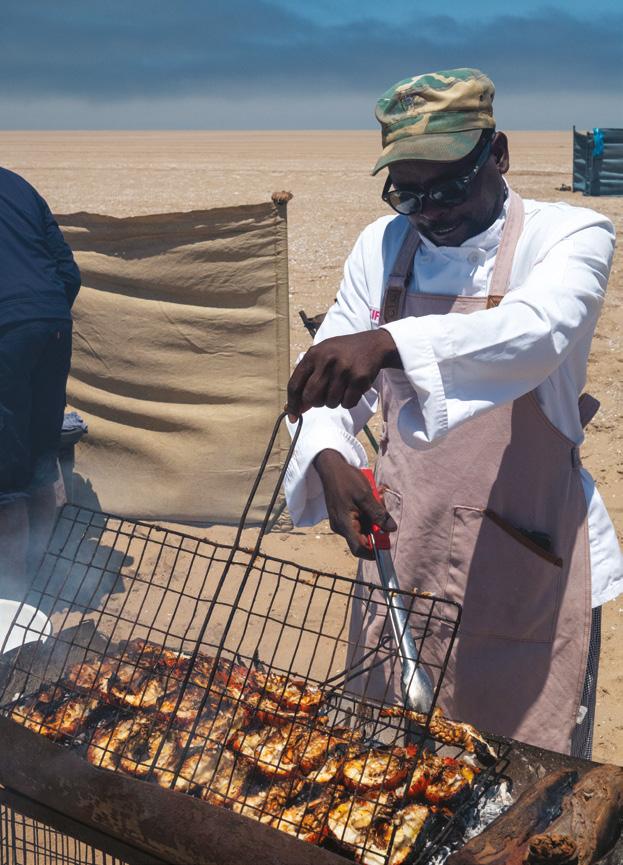
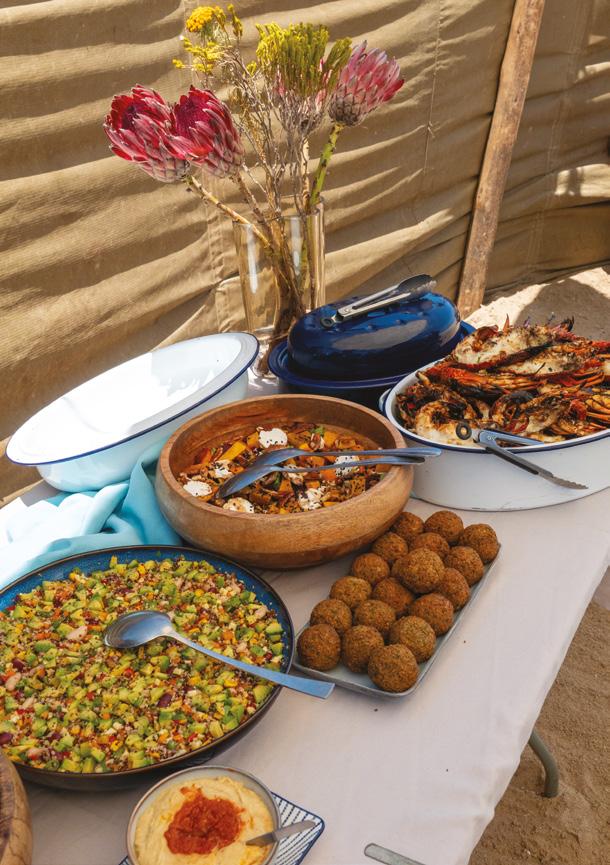
The chefs are already at work, flames licking beneath grills where steak and crayfish sizzle over open coals. Fresh Walvis Bay oysters are served first, briny and perfect, followed by sparkling wine poured with generous enthusiasm. It is the kind of meal that feels indulgent and somehow earned – not because it is difficult to reach, but because the journey here has awakened every sense.
With feet in the sand, the ocean stretching endlessly beside us, friends gather around the table – a reminder that Namibia does hospitality differently. Out here, luxury is not about excess. It is about setting a beautiful table in the middle of nowhere and letting the landscape do the rest.
Eventually, as all beautiful mornings do, this one flows gently into the afternoon. The return journey to Walvis Bay feels quieter, almost reflective – the kind of silence
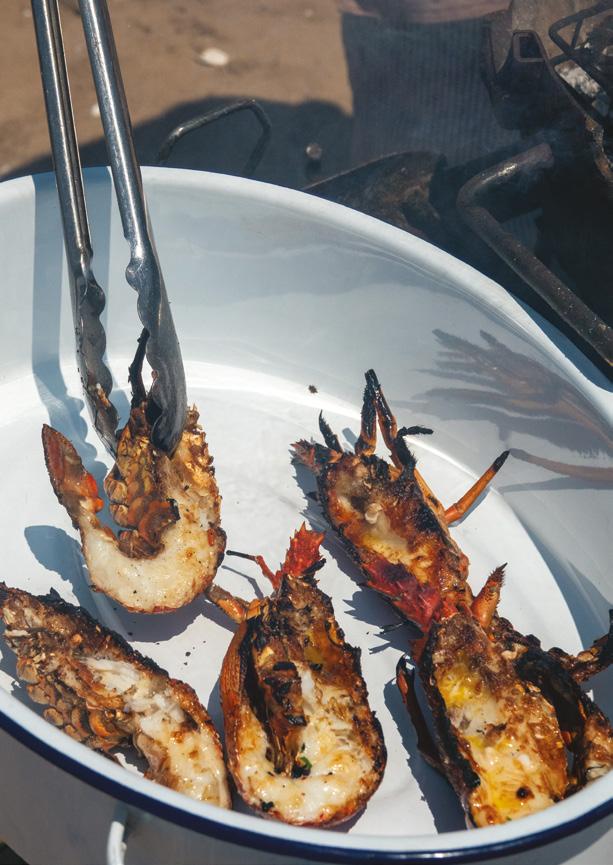
that comes after laughter, discovery and good food has been shared in a place that feels impossibly far from routine.
The Mola Mola marine experience is more than a boat cruise. It is a full-sensory journey – ocean, wildlife, beach and dunes woven into one seamless day. It is a reminder that Namibia’s coastline is not merely scenic; it is alive, generous and wonderfully unpredictable. And for those with more time to linger, the adventure does not end there – extended excursions venture further along the coast to Sandwich Harbour, where towering dunes meet the Atlantic in one of Namibia’s most dramatic landscapes.
Perhaps that is the real magic of mornings like these – you leave with salt on your skin, stories to tell and the quiet satisfaction of having spent time in a place where the ocean still feels untamed. TN

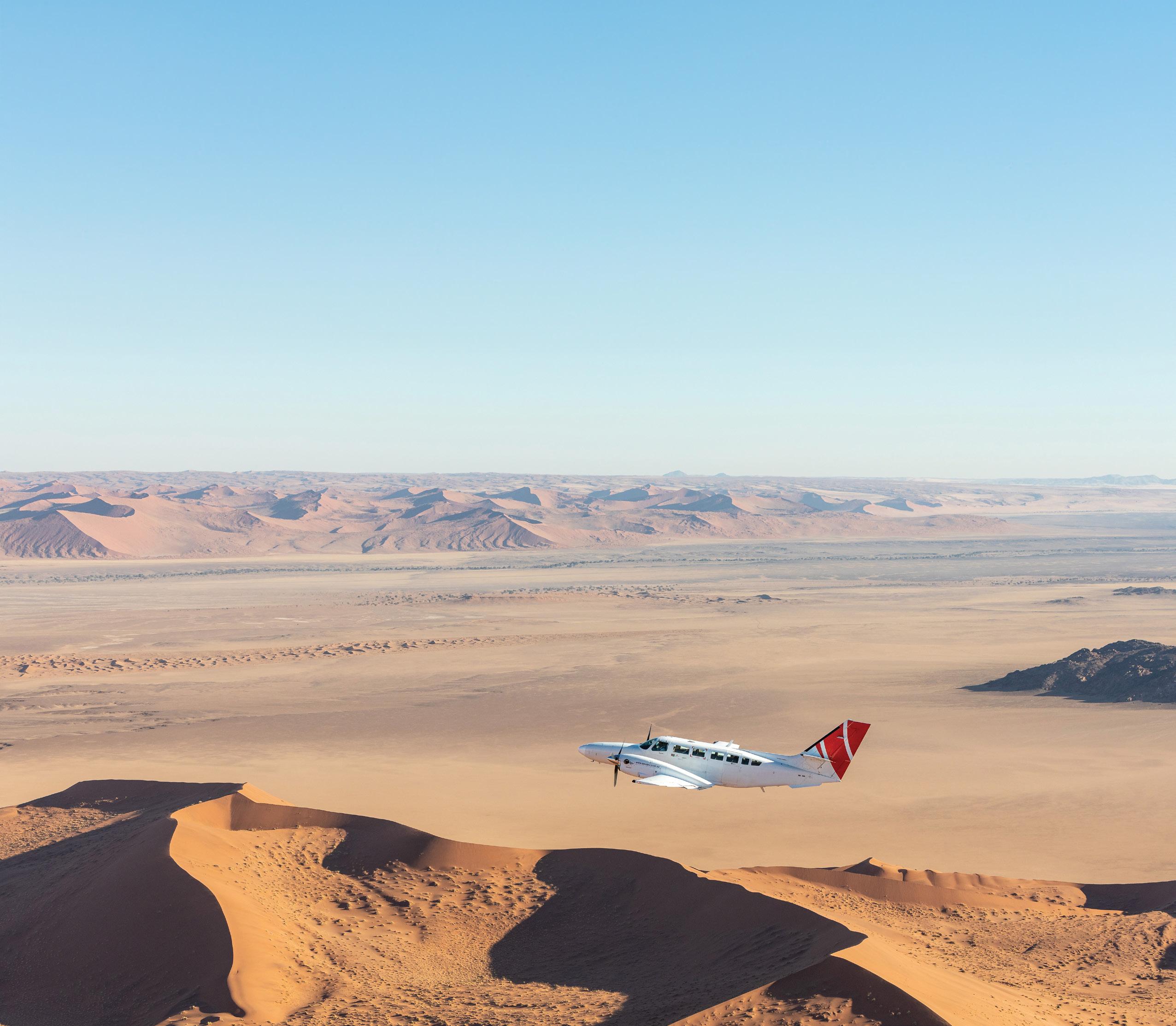
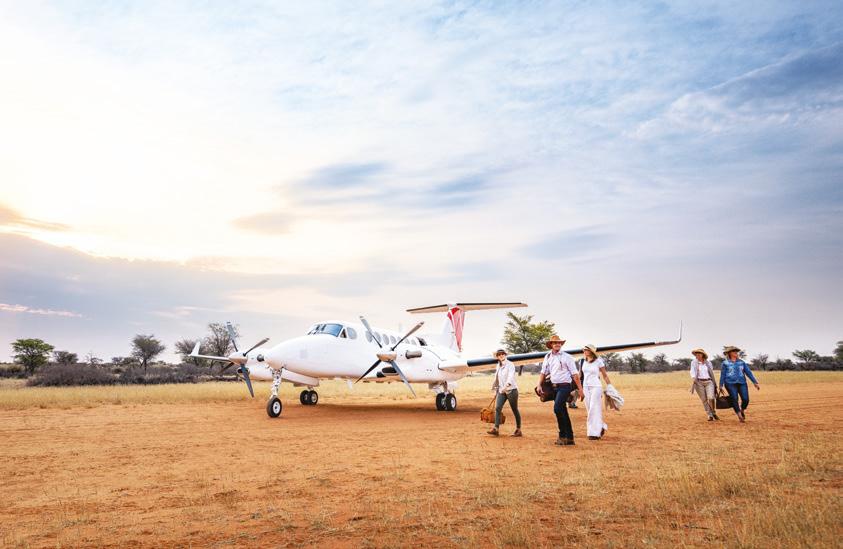
Experience the ultimate in luxury with Westair’s Private Charter flightsseamlessly taking you to any destination in Namibia and beyond.


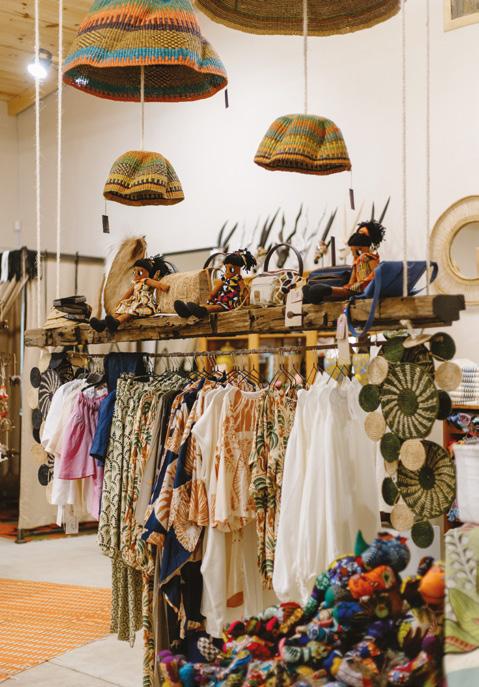
There was a different kind of buzz at the Grüner Kranz complex in Windhoek on Thursday, 30 April. There was not a cloud in the sky – just a clear, cool evening that was perfect for a grand opening. I headed down to see the new African Chic store, an outlet that fills a very specific and much-needed space in Namibia’s tourism and retail landscape. Walking in, the first thing that hits you is the sheer scale of the place. It is big and bright, yet it avoids the coldness of a typical showroom. Instead, the room was alive with people, conversation and the excitement of discovering beautifully crafted African products all under one roof. It felt welcoming, energetic and proudly African.
I spent most of the night drifting between the shelves and displays with my camera, and honestly, it is hard not to want one of everything. African Chic is the kind of place where tourists can find authentic, high-end curios and gifts, while lodge owners and tourism operators can source entire shop collections in one visit. The authentic textiles, specifically the 100% cotton clothing and linens, are a total standout. They have that heavy, quality feel that you just do not get with mass-produced items. The beadwork, woven baskets, ceramics, home décor and handcrafted accessories all speak to the incredible skill of African artisans. Adding to the charm are whimsical “plushies” – stuffed animal toys that have become a signature of the family behind the store – which bring a warm, playful energy to the space.
What is truly impressive about African Chic is its scope. While its sister project, !Ikhoba, is famously focused on Namibia, this store stretches its arms wider to bring together products from Kenya, Zimbabwe, Zambia and South Africa alongside Namibian craftsmanship. For anyone in the tourism industry looking to stock a lodge curio shop, it is an ideal one-stop destination with abundant stock, variety and options tailored to the safari and hospitality
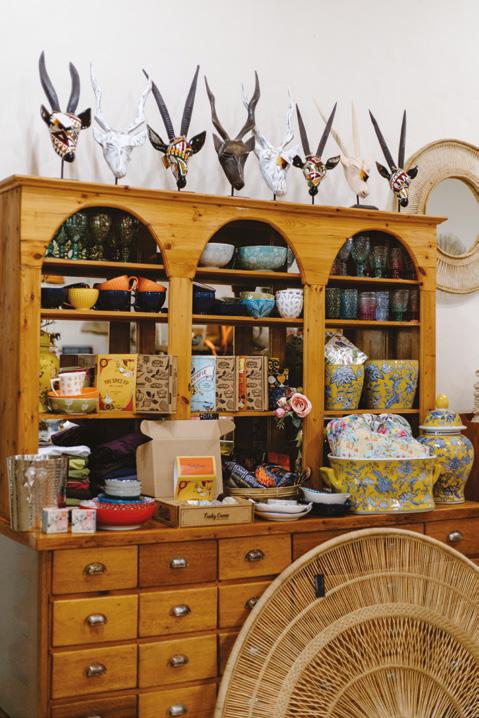
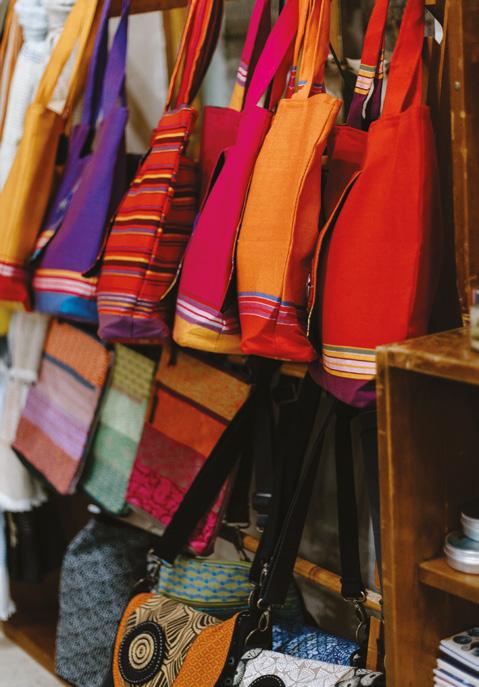
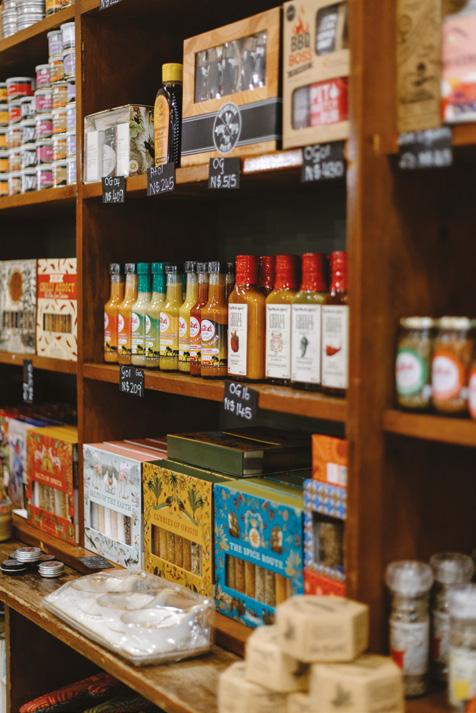
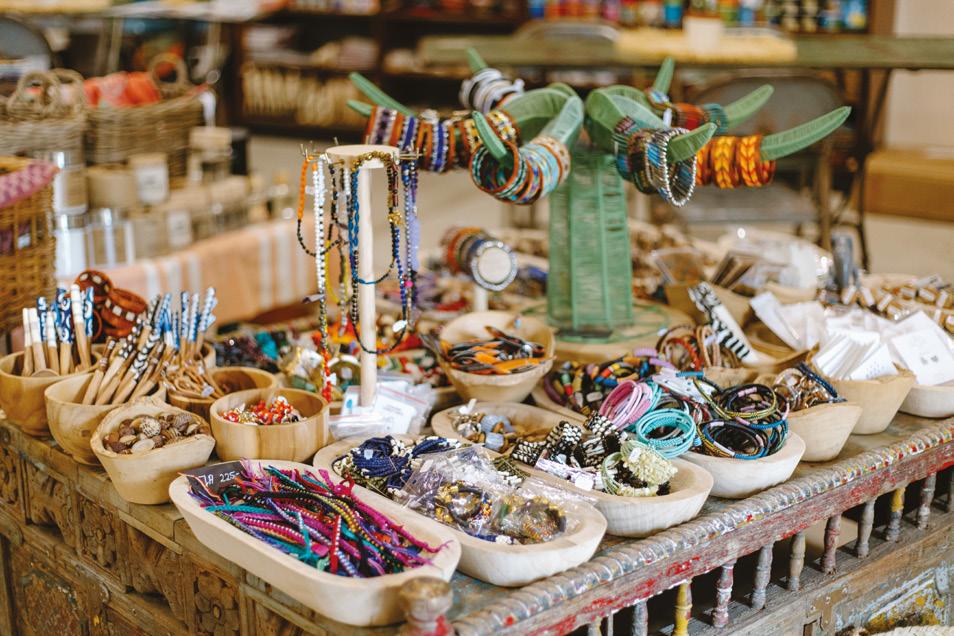
market. Chatting with the owner, Mildred von FrankenbergLüttwitz, you get a real sense of the vision behind the business. It is not simply about selling souvenirs, but about creating sustainable commercial opportunities for artisans across the continent while supplying the tourism sector with authentic, high-quality African products that travellers genuinely want to take home.
As the night wound down and the lights stayed glowing, I realised that African Chic is more than just another retail store. It is a celebration of African craftsmanship presented in a refined, accessible and commercially smart way. It is a place where tourists, locals, lodge owners and decorators alike can discover something unique. If you are in Windhoek, make a point to stop by. It is situated right next to Leo’s Garden Restaurant, making it easy to turn a visit into a long, inspired morning. Just a bit of advice: make sure to leave extra space in your bag. TN
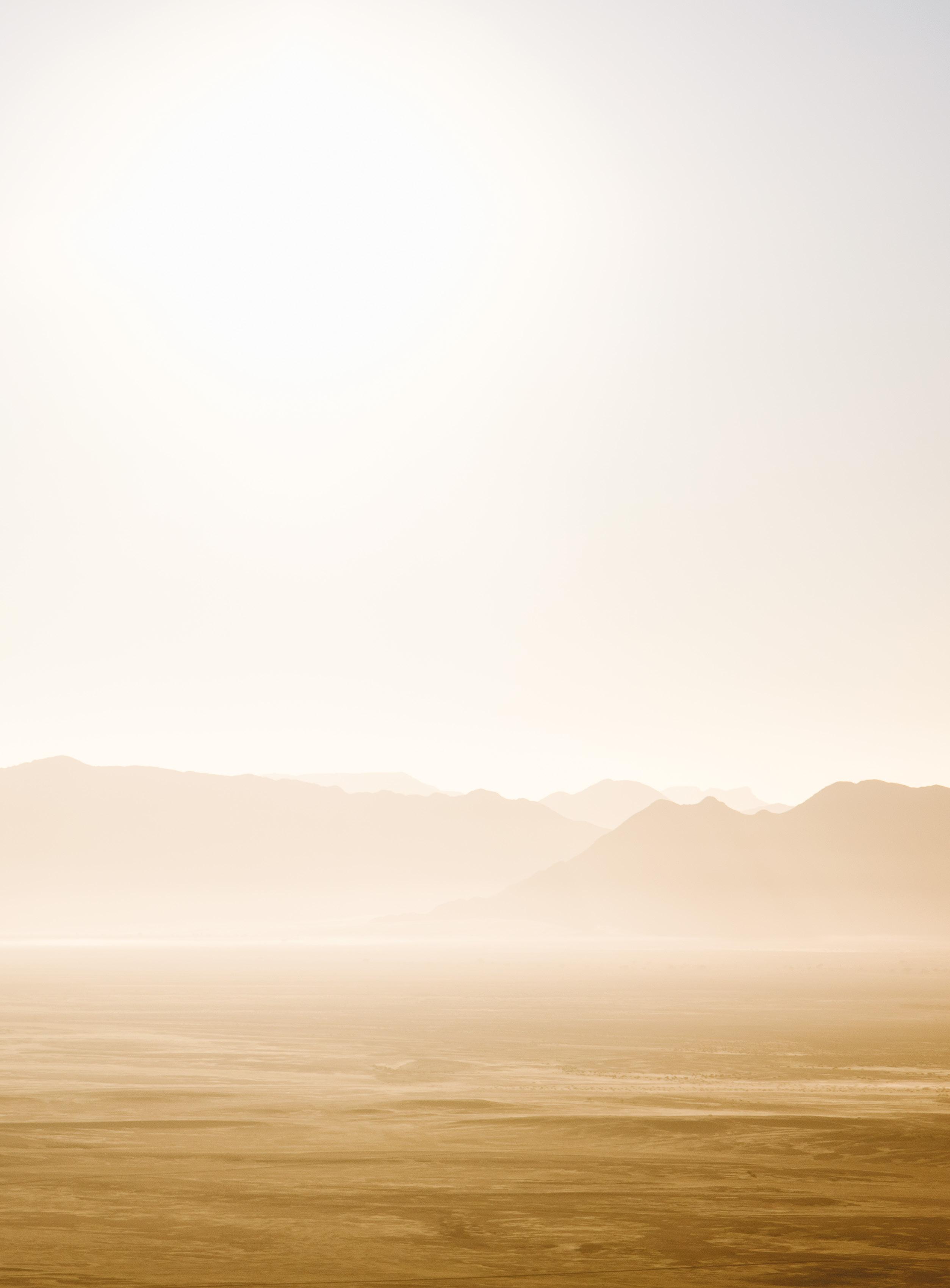
We arrived at our accommodation when it was already dark, after grabbing dinner along the way. It was one of those quiet arrivals where you know the next morning will come quickly, so cameras came out first, batteries went on charge and we got everything ready before heading to bed.
The next morning came early, but in a good way. There was excitement in the air. We got ready and made our way to Namib Sky Balloon Safaris, hopeful for the right conditions to go up.
We were met with fog – something I had never experienced in the desert before. It sat low and thick, changing the entire feel of the place.
Even so, from the moment we arrived, it felt welcoming. Friendly faces greeted us, and after checking in, we grabbed some coffee and cookies. The kind of coffee that warms your hands first, then your face and then your body. The cookies tasted like something you would want to take with you for the rest of the day.
People gathered around the heaters. There were guests from all over the world and different walks of life, all sharing the same early morning and the same excitement. Conversations started easily between strangers. Warm lights lit up the pathways and the curio shop hummed with people exploring products and colourful souvenirs to take home with them.
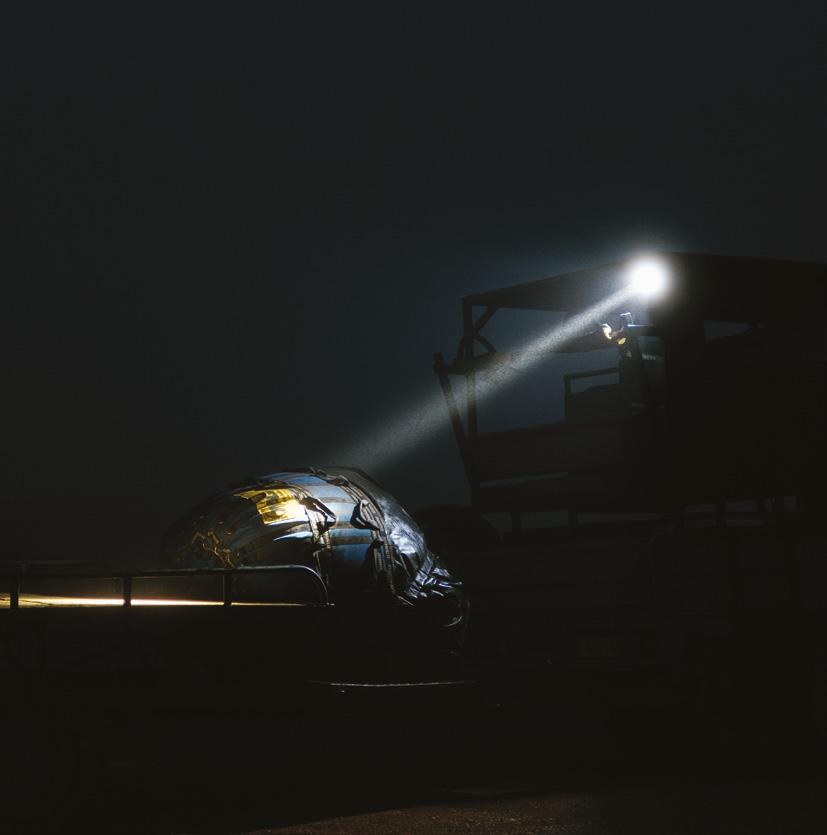
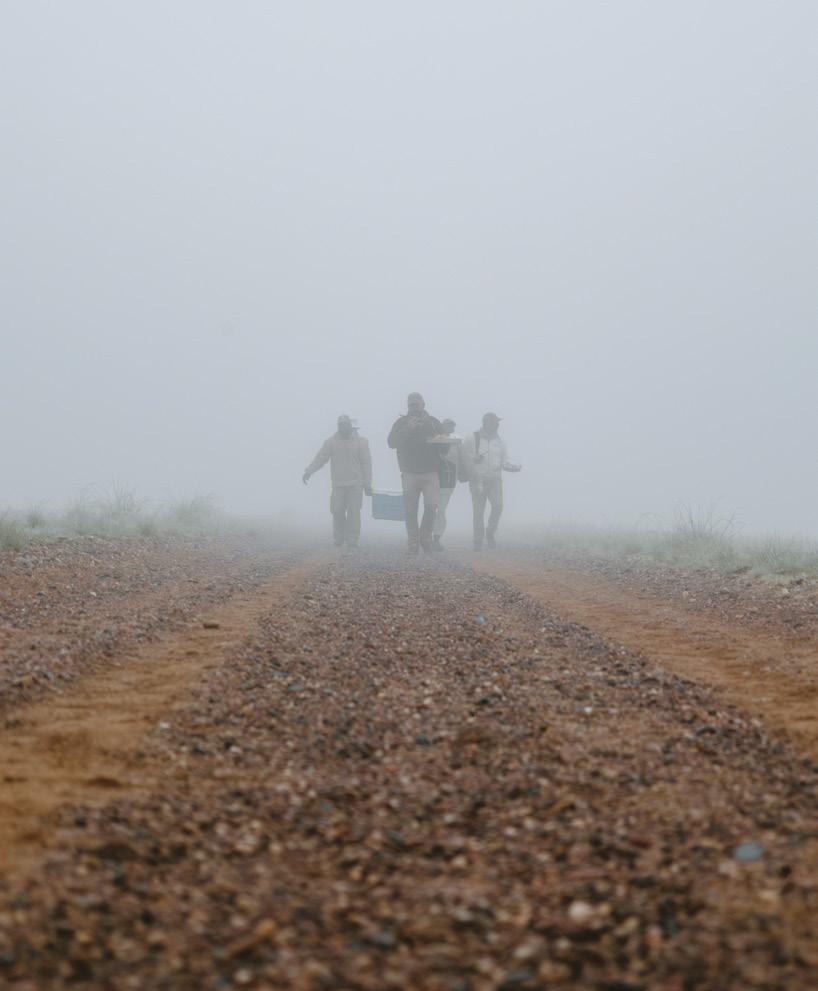
Once we had all warmed up a little, the briefing began. Ivo, our pilot, made the formalities feel a little more fun, adding a few jokes that landed just right for a group that had been up very early, even if everyone was excited about what was coming. After that, we headed out to the launch site. It felt like a scene from a movie with the fog, the darkness and the lights from the vehicles cutting through it.
When we arrived, the balloon lay folded on the trailer, almost like it was waiting for its moment under the sun. The team got to work, preparing everything as the sky slowly started to change. The darkness eventually lifted, but the fog stayed.
Time passed quietly.
After conversations over the radios and options being worked through, the team made the call to give it more time. We were taken back to the reception area, where we could warm up again with some more coffee and pastries while waiting for the fog to lift.
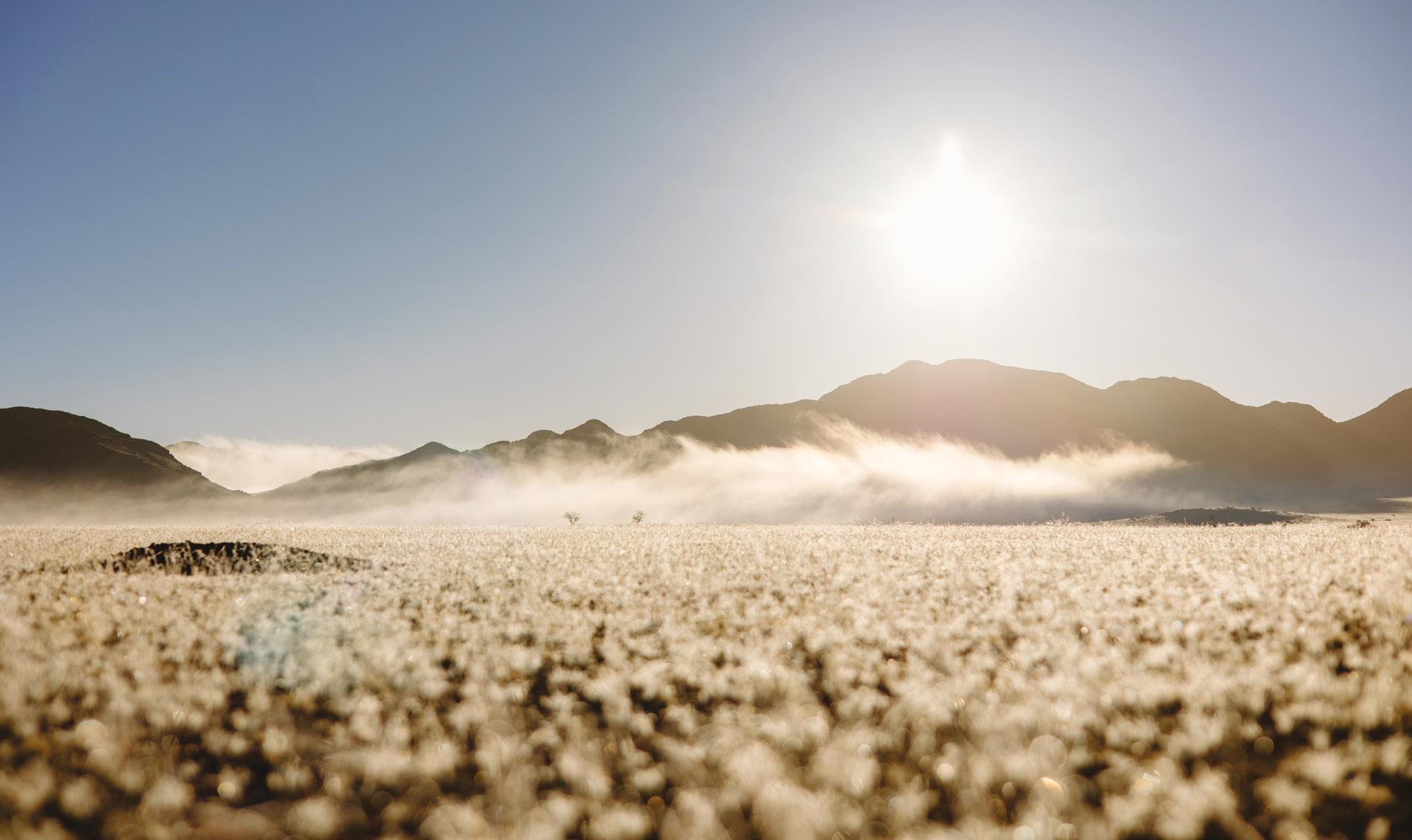
We all stood hopeful, watching the landscape. One could see it clearing slightly in the distance. Small patches opened up, but just not quite enough. In the end, the desert made the decision for us, but it was done gently. There simply was not enough time for the conditions to clear.

It did not feel like a loss, however. Just like something that was put on hold. We were given the option to return the next morning for those who could, and slowly the guests went their separate ways.
We stood there for a moment, then decided to make the most of the day.
After a short drive to Sesriem and then in the direction of Sossusvlei, the landscape made it impossible to feel anything but excited.
The desert was green. Fresh grass covered the land, stretching across the plains. Even the mountains carried a soft green shade, something I had not seen before in this area. And as we got closer, the orange dunes met the green below them in a way that felt almost unreal. The fog still hung low between some of the dunes, adding to the whole scene.
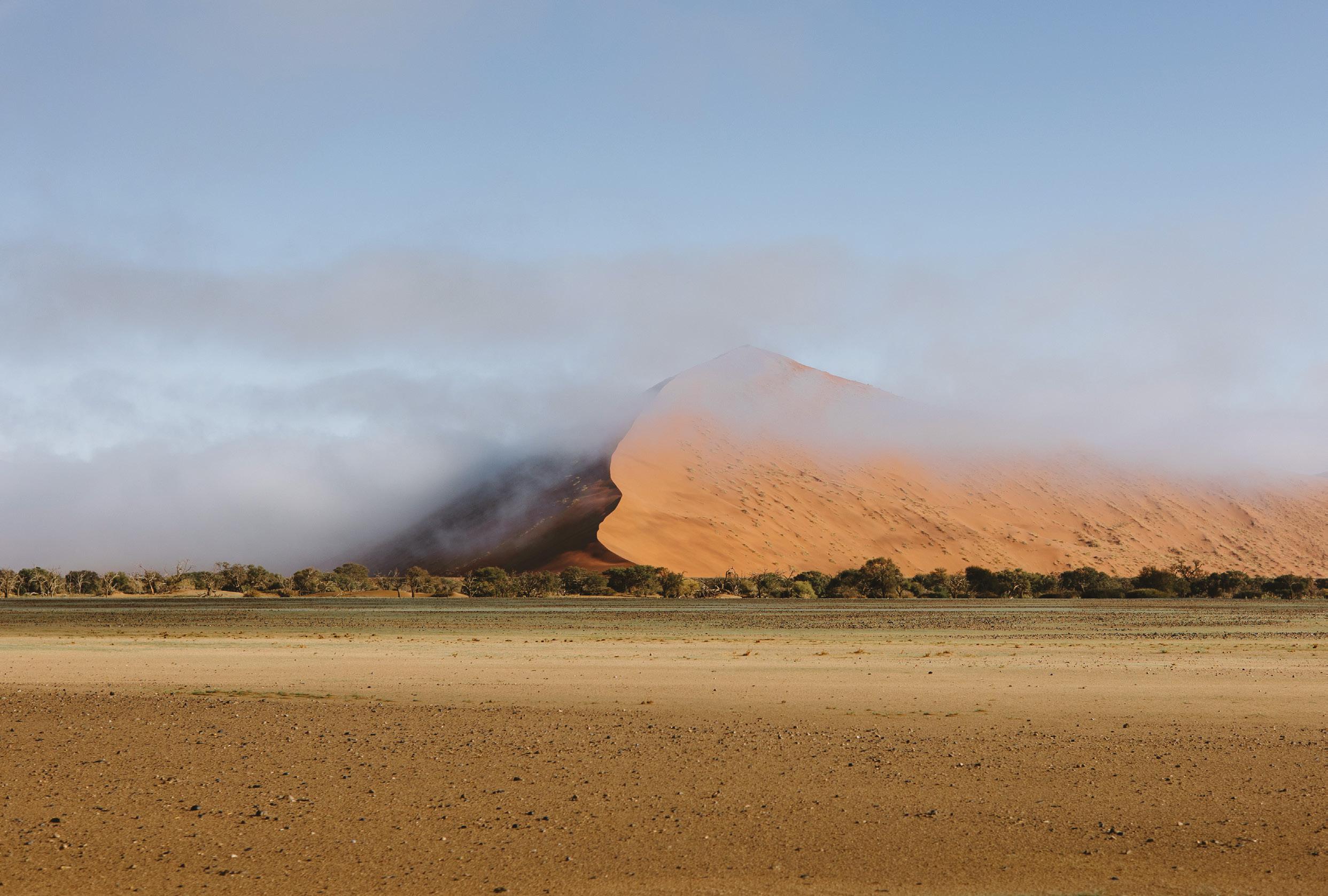
By the time we reached Deadvlei, the scale of it all pulled us in again. The dunes rose high, their edges sharp, and people scattered along the ridges looking like ants. Small and distant.
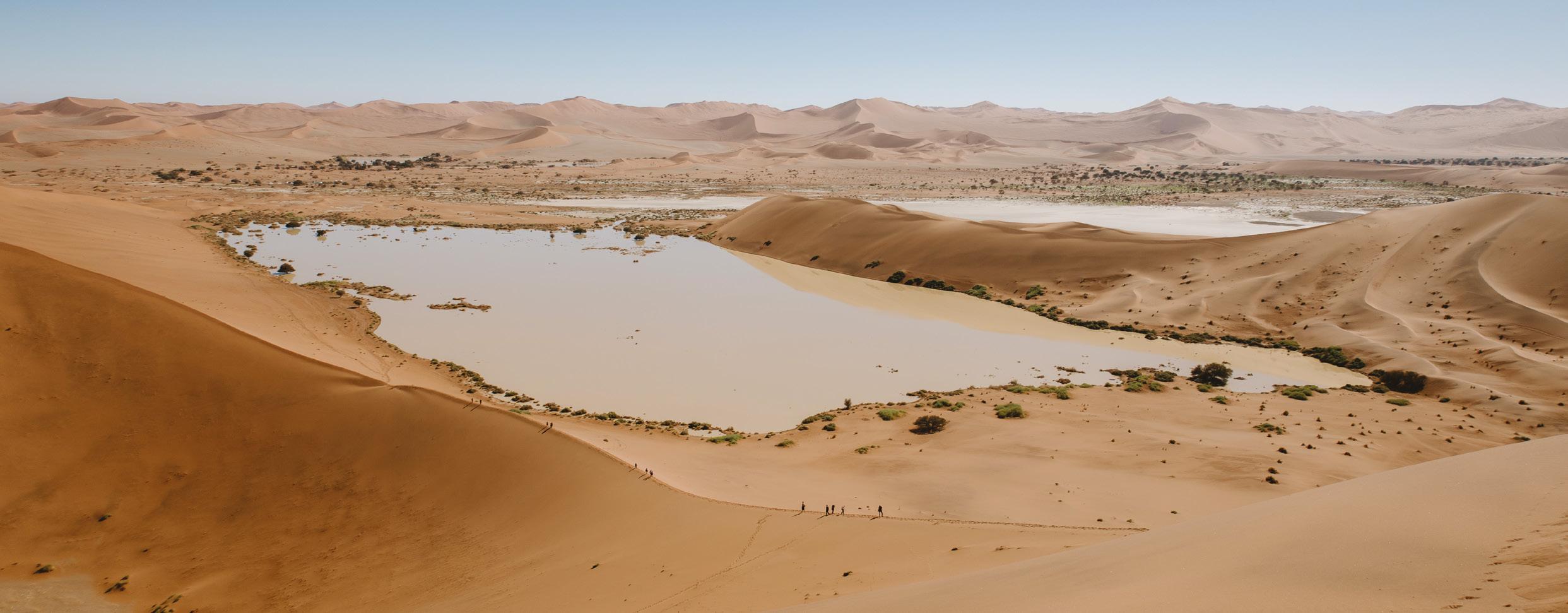
We decided to go for the highest dune leading into the valley. I was not fully on board with that decision, but I went anyway, and I am very glad I did.
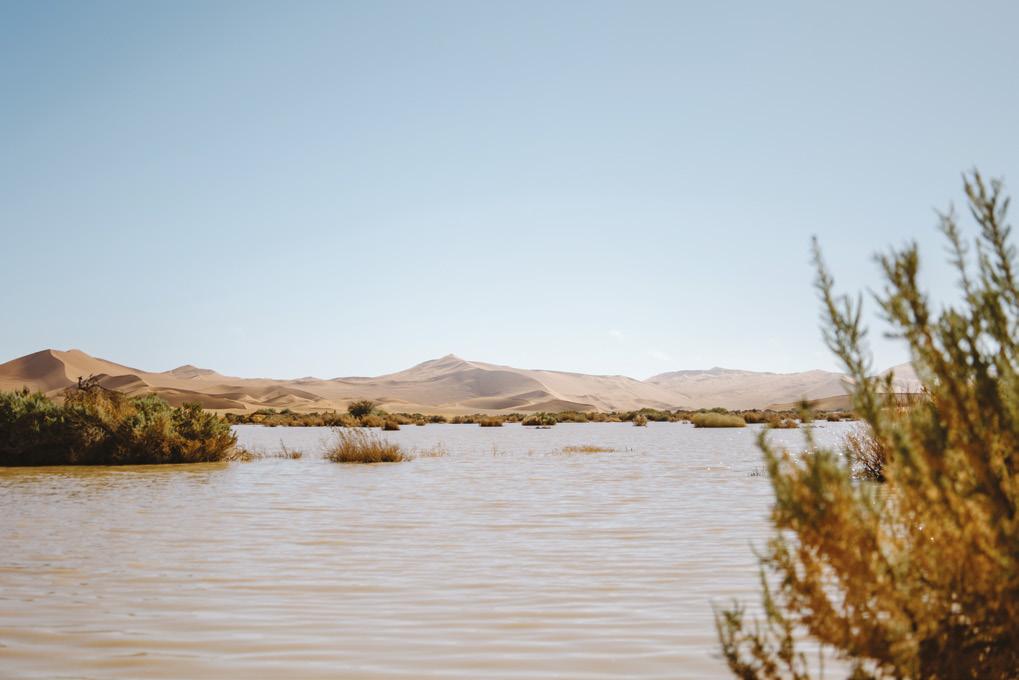
Before the climb even started, the landscape shifted again. A big body of water sat next to the dune. In the middle of the desert. Still. Reflective. It mirrored the dunes and the sky – something completely unexpected amidst this arid setting.
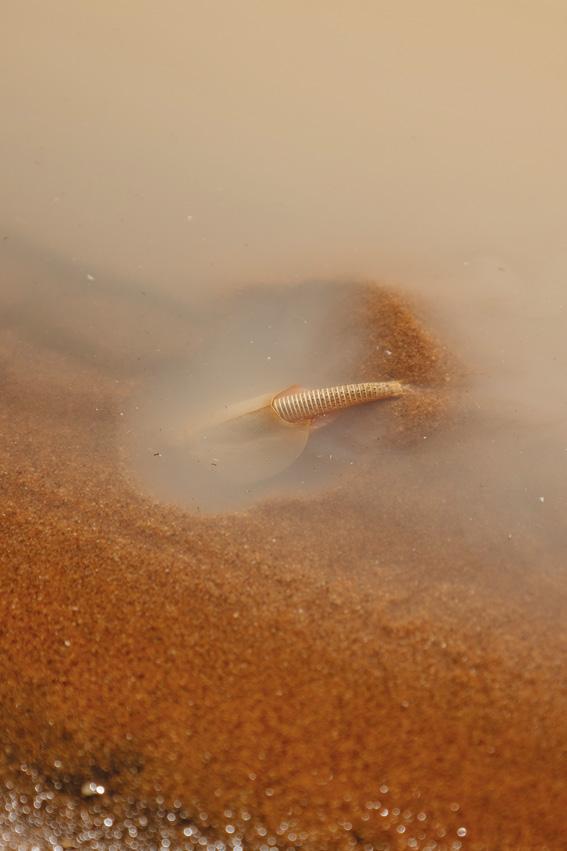
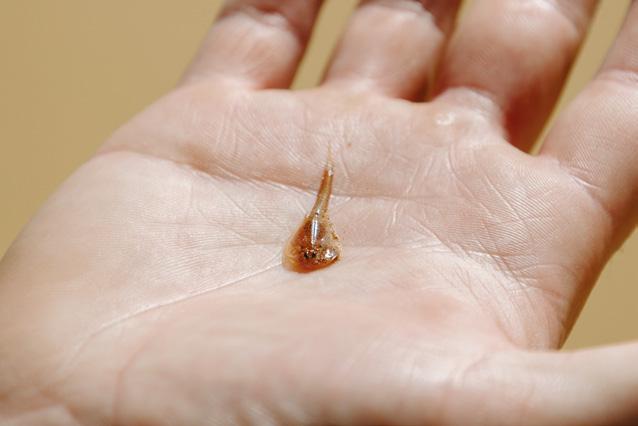
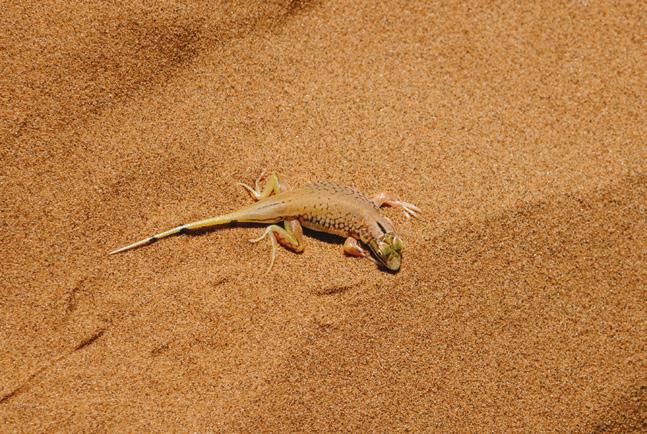
Around it, we noticed small movements. Shovel-snouted lizards were darting across the sand, and then there was something I had never seen before: triops. Small, almost prehistoric creatures that have existed for over 200 million years. Often called “dinosaur shrimps”, they live in temporary pools like this, their eggs waiting in the sand for years until water returns.
Standing there, looking at something that old, in a place that already feels outside of time, felt surreal.
It was tough. And there was no way around it. We stopped a few times to “admire the view”, although if I am being honest, I just needed to catch my breath. Luckily, the cool breeze made it a bit easier.
When we reached the top, everything shifted. The effort faded away, replaced by the view – a full 360 degrees of landscape that stunned.
Behind us, dunes of all shapes and curves stretched endlessly, catching light and shadow in different ways. To the right, the body of water from earlier looked different from higher up, meeting the dunes, trees and patches of grass. In front of us, Sossusvlei, her dunes and green patches stretched out. And to the left, Deadvlei, flat and pale with its unmoved trees, did not disappoint.
I did not want to leave the top, so I stayed longer than planned. Mostly because of the view. Partly because I needed a moment to recover. Eventually, we made our way down into the valley. The descent felt completely different. Easier, lighter and almost playful. Each step sank deep into the sand and yet had a fleeting moment of weightlessness before the next step followed.
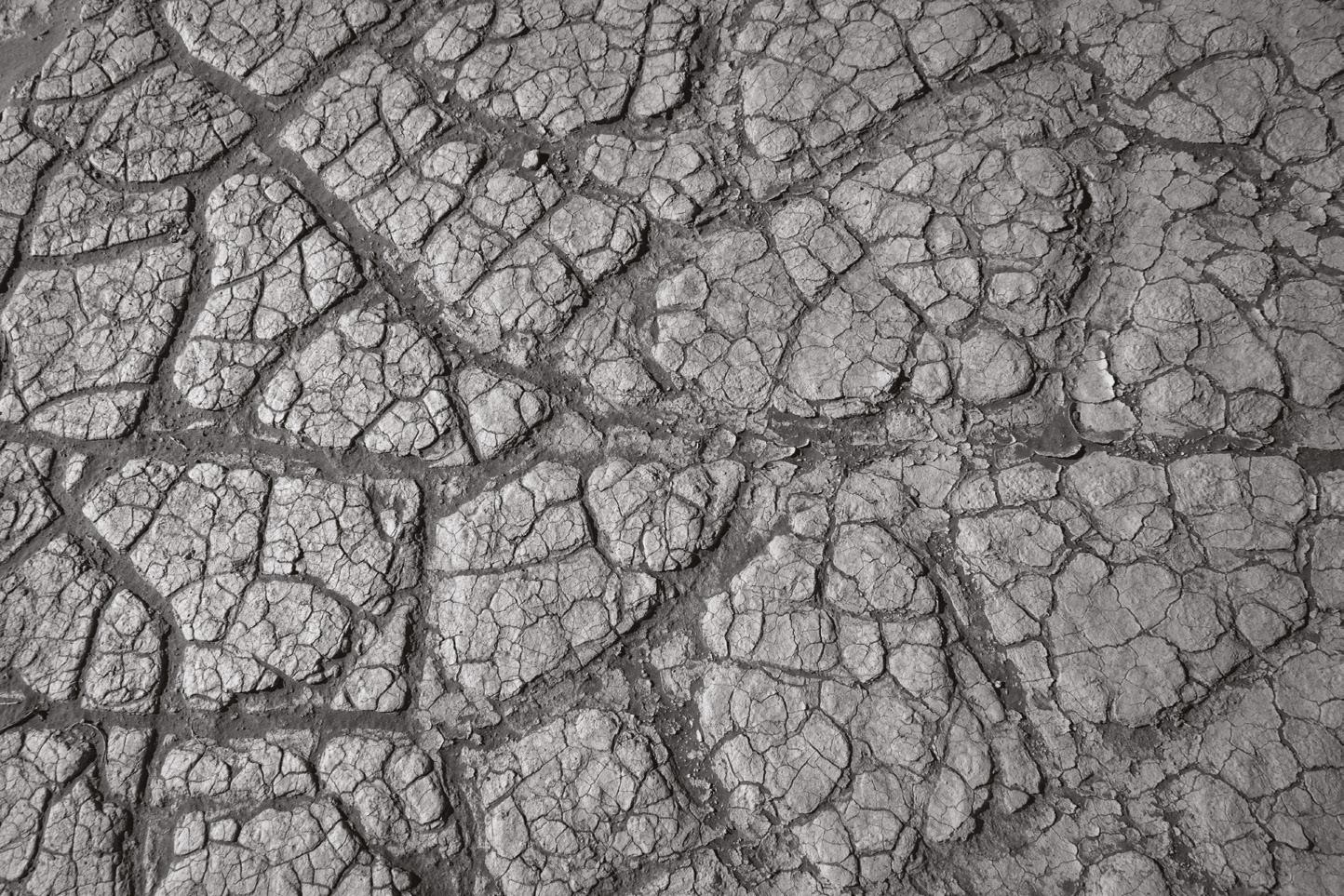
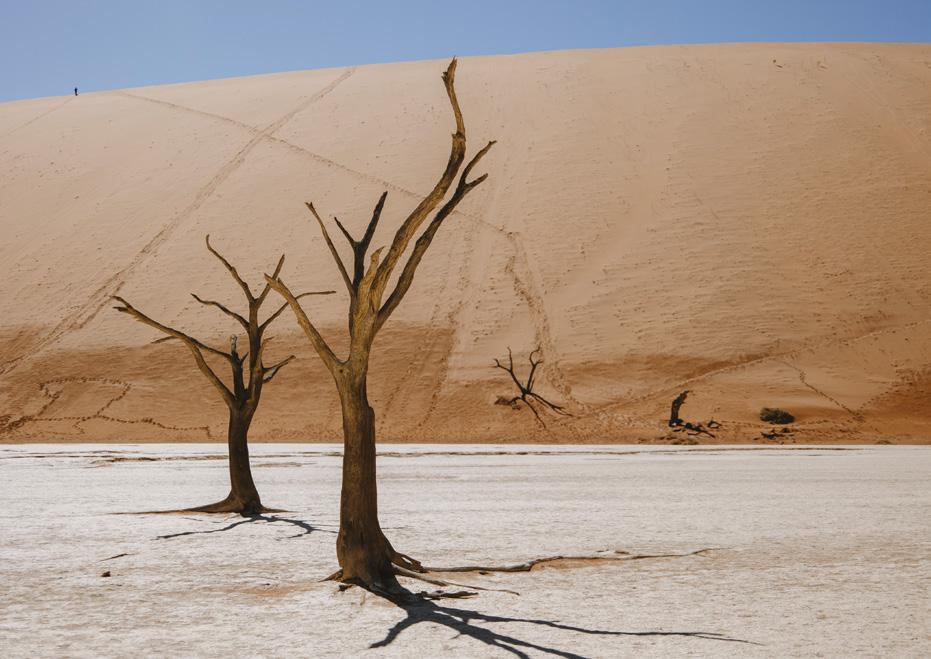
At the bottom, the ground took some adjusting to after the soft sand. It was light in colour and hard clay baked over time. The texture resembled elephant skin, with patterns similar to a giraffe’s markings.
We walked through the valley between the trees, taking it all in. They stood unchanged and steady, holding their shape in a place where everything else shifts. The dunes around us varied in colour – some darker in the shadows, others contrasting with bright orange in the sun.
When it was time to head back, we took the easier route out. Even then, the view did not lose its impact. It kept changing, offering something new each time we looked. Back at the car, I felt a quiet sense of achievement. A full heart. No need to say anything, just sitting with what we had experienced.
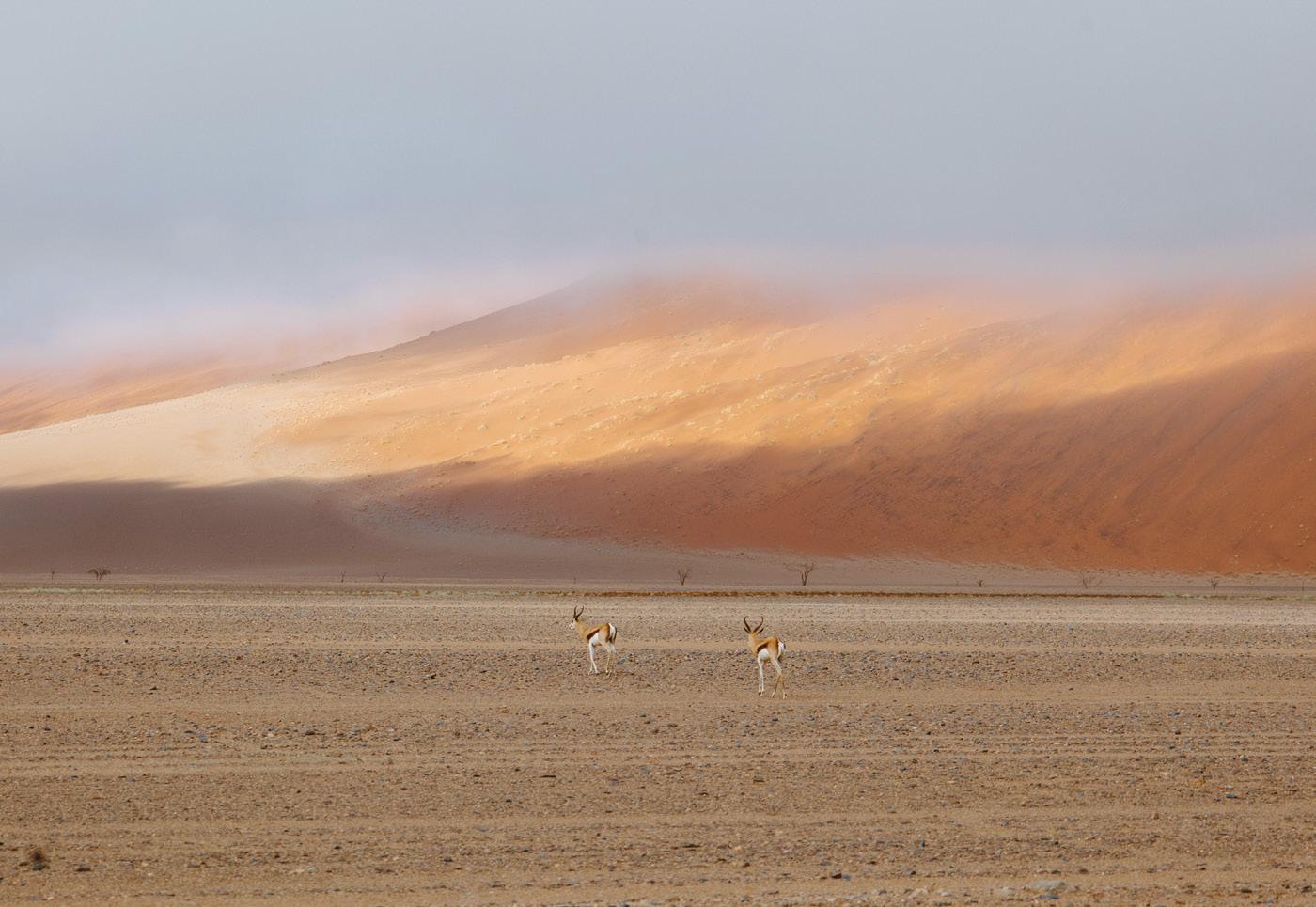
The drive back looked different again. The sun was higher and the fog had lifted. The dunes felt softer in tone, more even. Just as striking, but in a different way. Gemsbok and springbok moved across the plains, making the most of the rare green grass after the recent rains.
Back at our accommodation, the thought of another morning sat comfortably in the background.
The next morning started the same way, early and full of quiet excitement. When I looked outside, the full moon lit up the landscape enough to see clearly. No fog.
Back at Namib Sky, the same friendly faces welcomed us again. The same warmth, same small details done well. This time hot chocolate, and the same delicious cookies.
We headed out to a different launch site this time and the scale of everything stood out immediately. Mountains in the distance, open space in every direction and the balloon at the centre of it all, lying ready. But this time, nothing could hold it back.
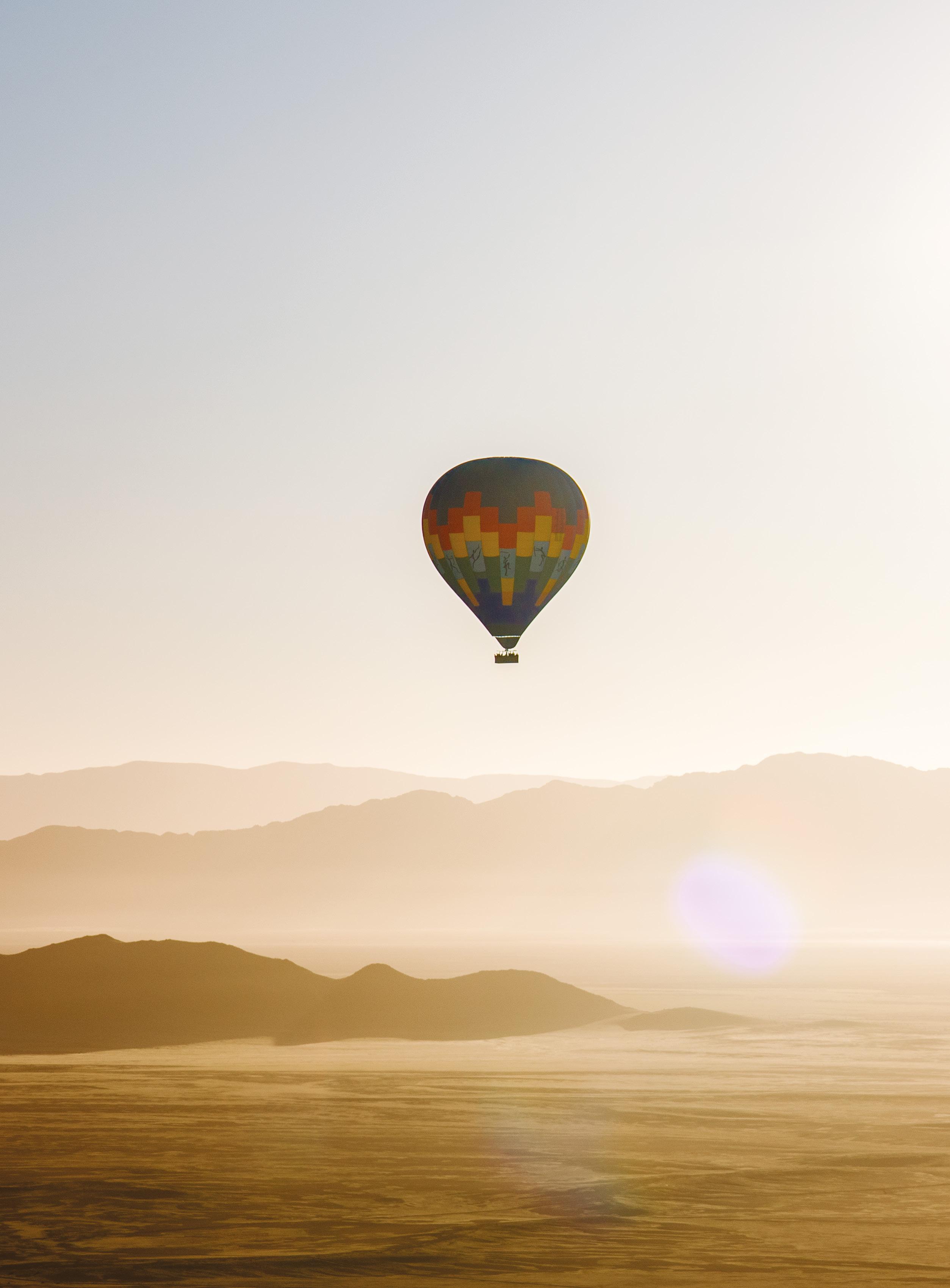
As the team was preparing for lift-off, the sky began to change. Slowly at first, moving from dark into soft greys, then into blues, pinks and purples, and eventually into warm tones of orange and yellow.
The setup moved quickly. Fans came to life. Fabric stretched and shifted. From the burners, fire lit up the space around the basket, heat pushing into the cold air.
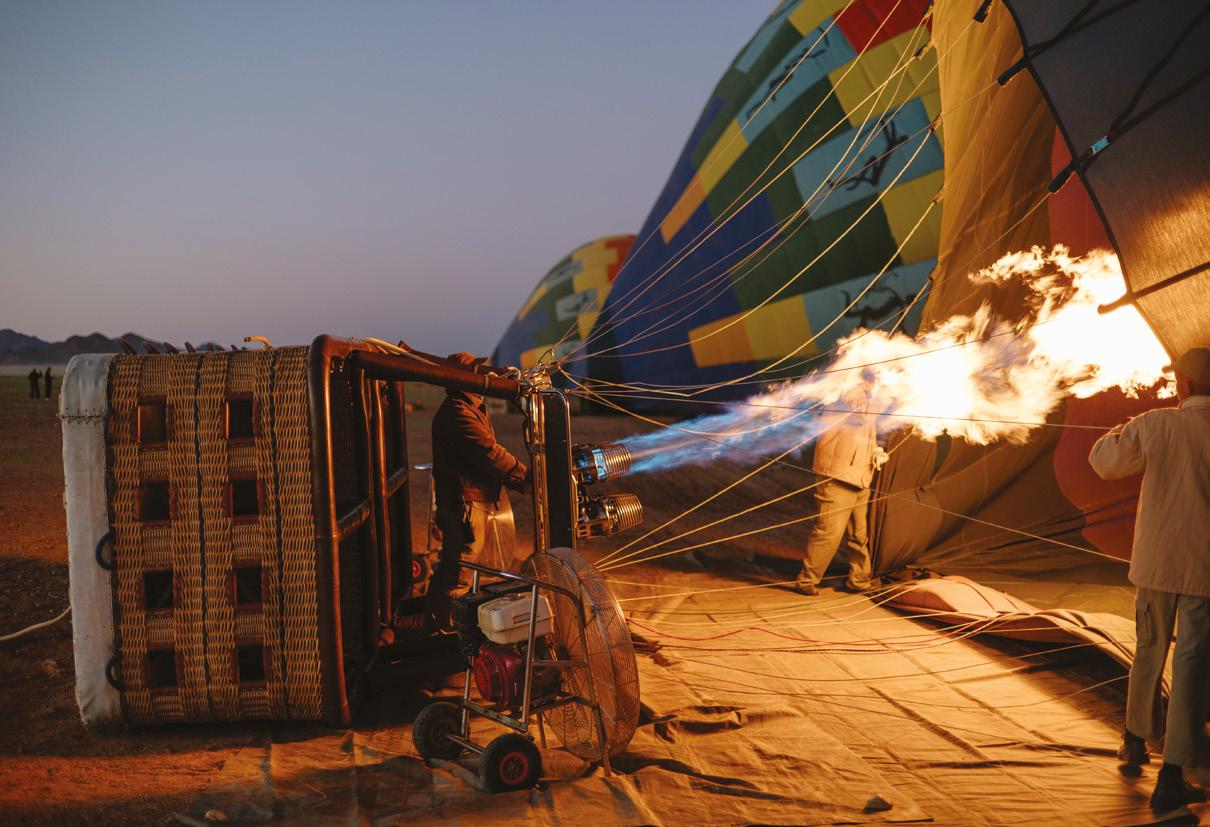

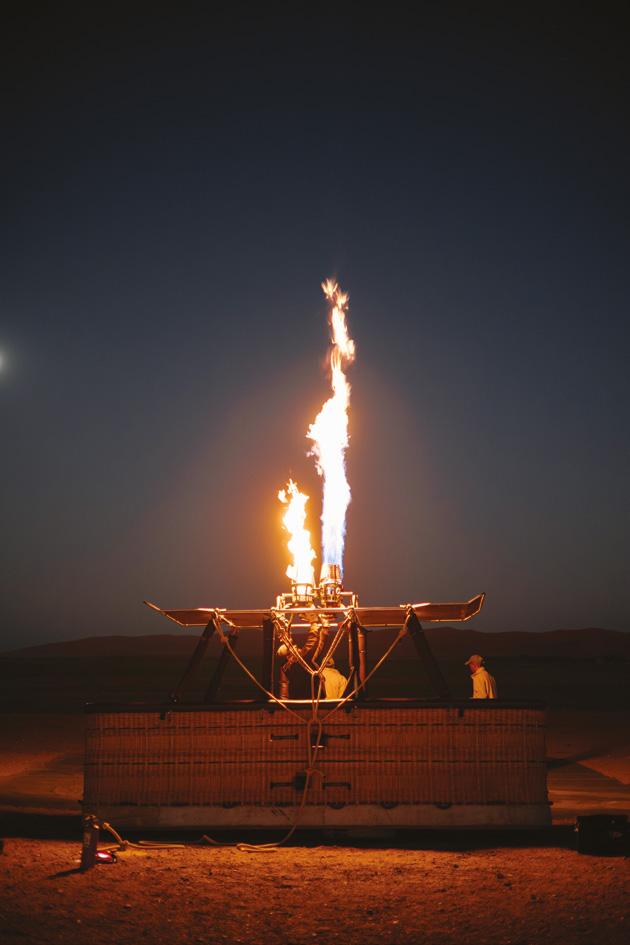
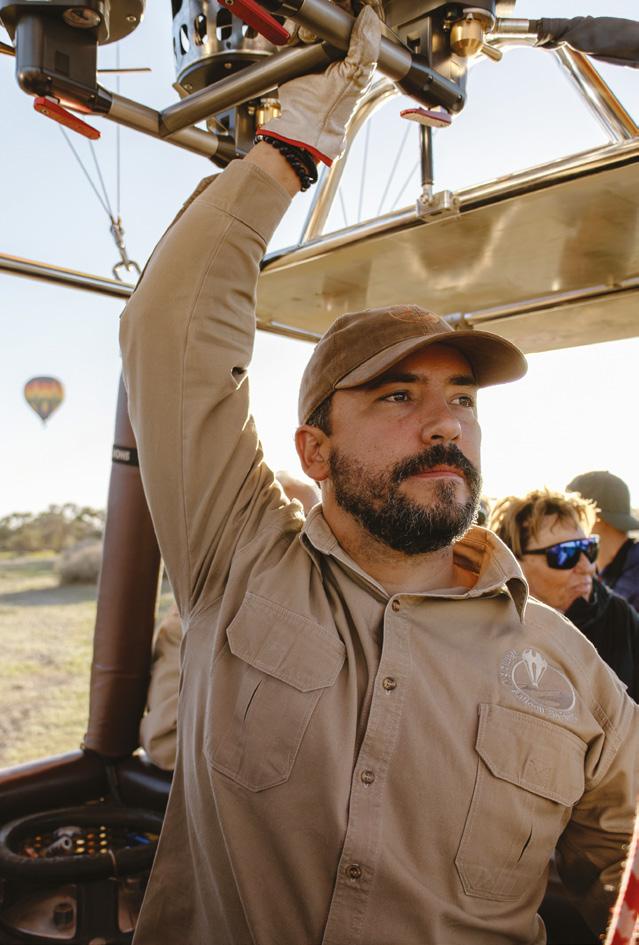
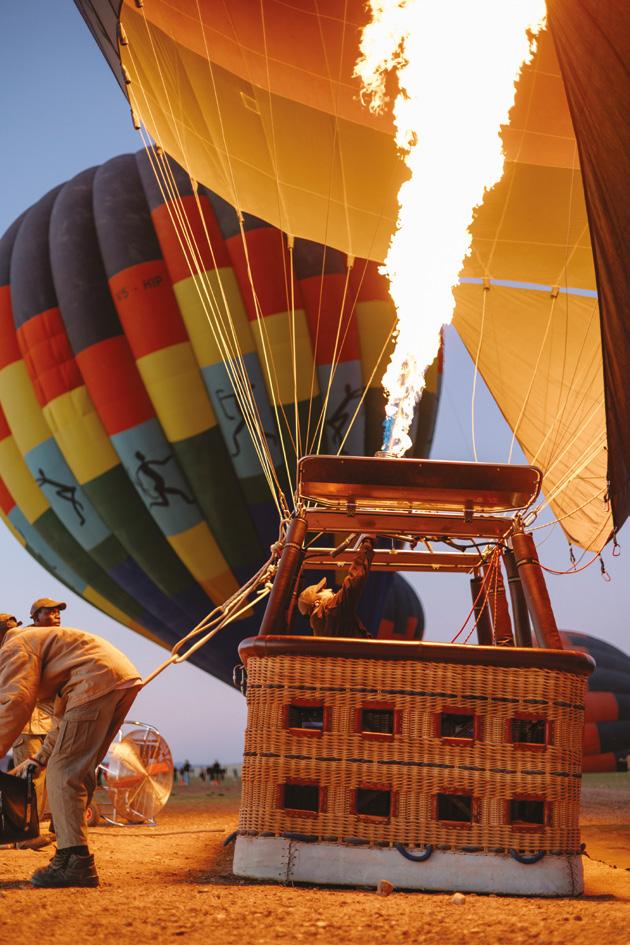
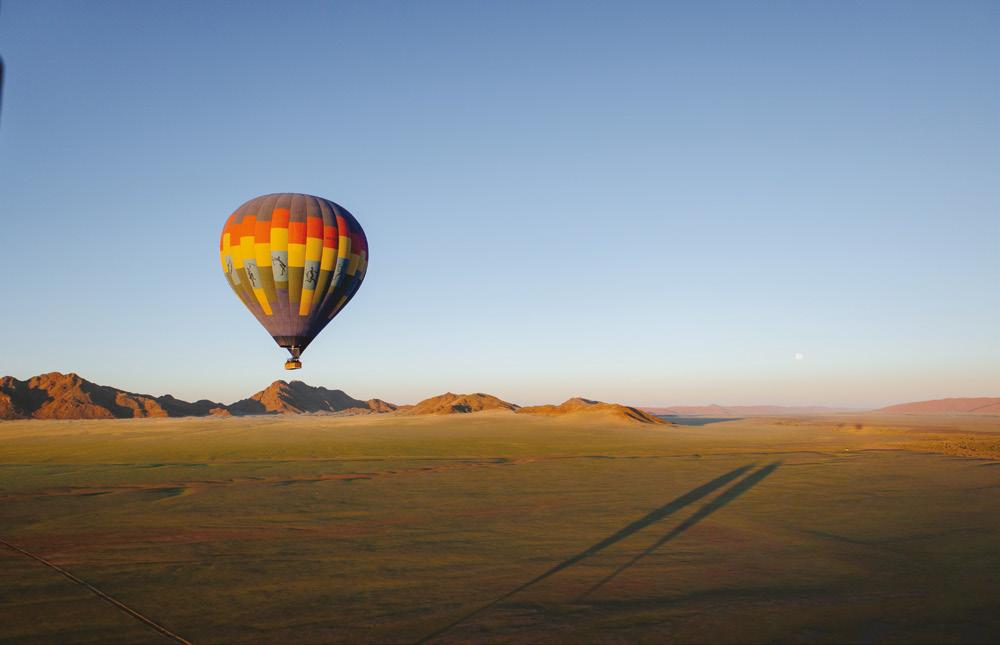
The crew worked with confidence, everything done with ease, like they had done it countless times before.
The balloon rose slowly, standing tall and full of colour, before we climbed into the basket.
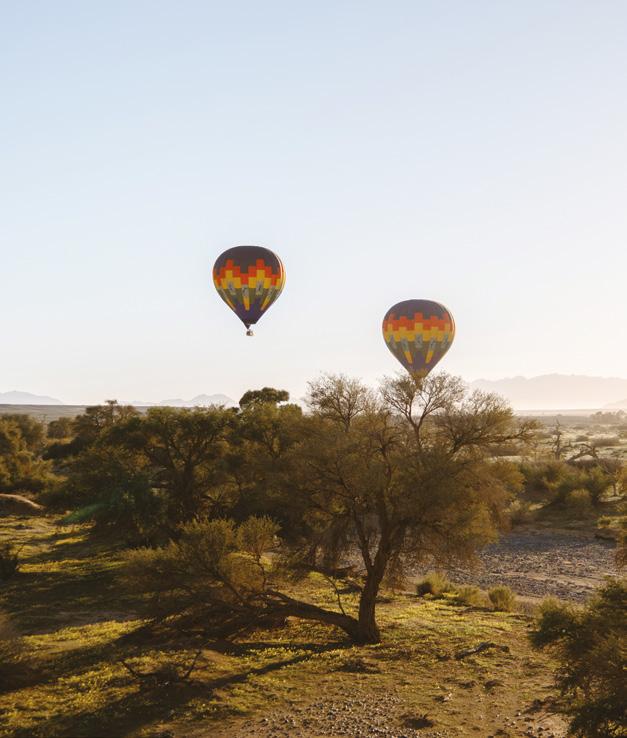
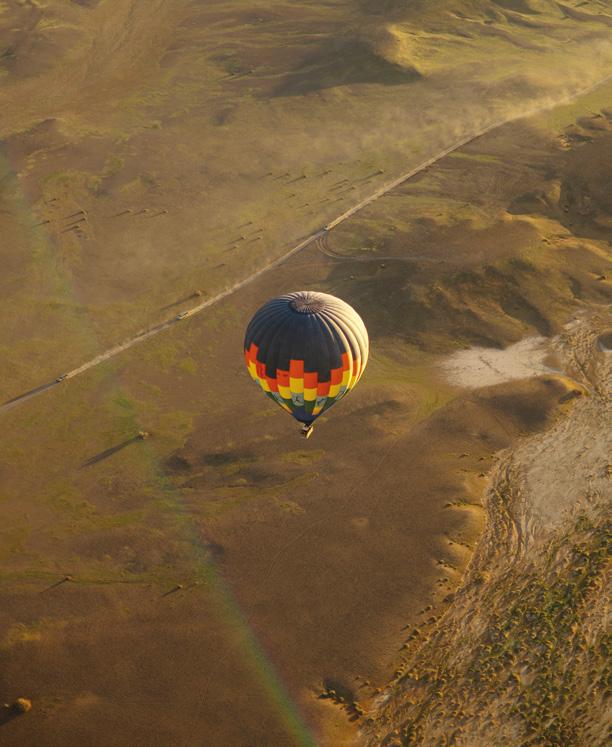
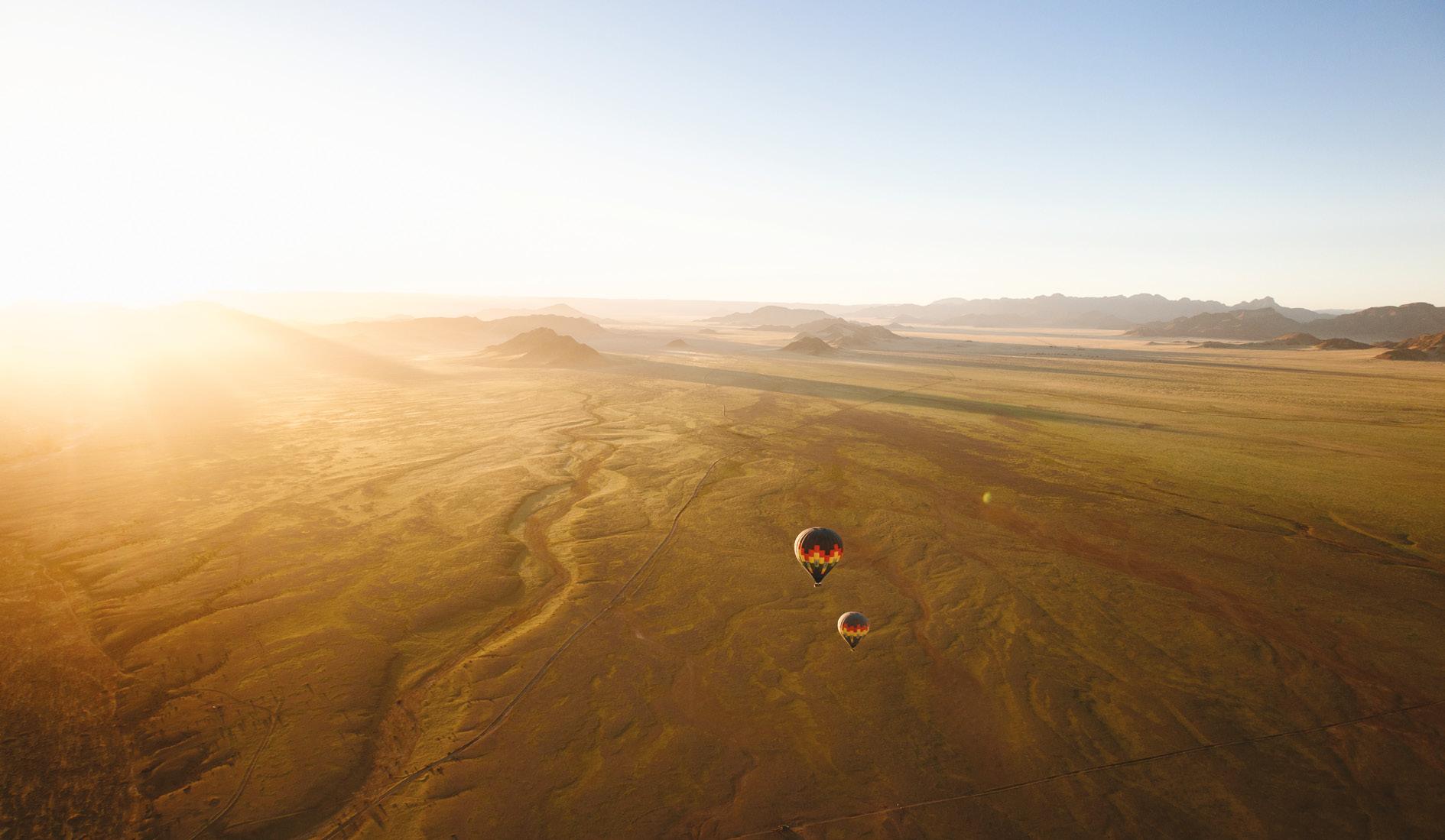
The smoothness of the lift-off felt almost unreal. No sudden movement, just a quiet separation from the ground. As we rose, everything below – dunes, mountains and riverbeds – started to connect. Spreading across the plains, the lines carved by recent rainfall started to make sense from above. The sun began to rise from behind a mountain peak, spreading golden light across the land below us, revealing details that were not visible from the ground.
At one point, we reached around 1,500 feet – definitely a lot higher than I expected, but somehow, I never felt unsafe during the entire flight. We drifted towards the Tsauchab River, moving low enough to pass just above the trees. Seeing them from that angle, so close, felt completely different. Wildlife grazed below us. A few gemsbok, a jackal, small from that height, but still visible.
Earlier than I hoped, the descent began. We caught a glimpse of the breakfast setup waiting below, which brought a new kind of excitement.
The landing was smooth and calm, right next to Dune 1, looking silky, smooth and untouched.
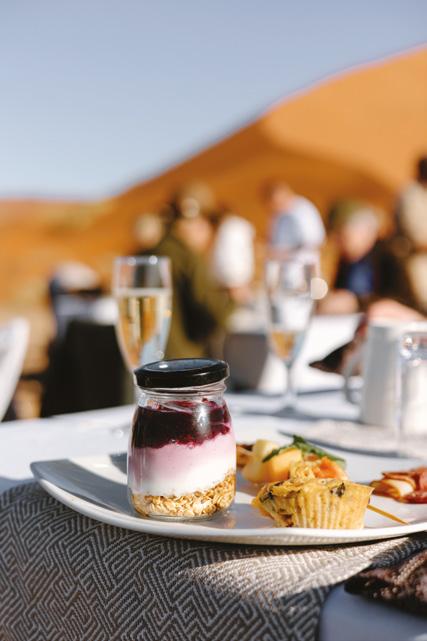
The experience did not end there. At the breakfast setting, white tablecloths stood out against the dune. Simple but carefully done. The care in the setup was clear.
After we all found our seats, the team gave a toast and celebrated by performing sabrage, using a heavy blade to break the champagne bottle’s neck with a swift, confident strike. Breakfast followed, and it felt generous without being overwhelming. Granola and yoghurt jars, chia pudding, fresh fruit, pastries, cheeses, cold meats and special small touches such as the homegrown and homemade fig jam. We sat for a while, taking it all in, enjoying the tasteful food overlooking the dunes and plains, watching the last balloon being packed away in the distance. TN
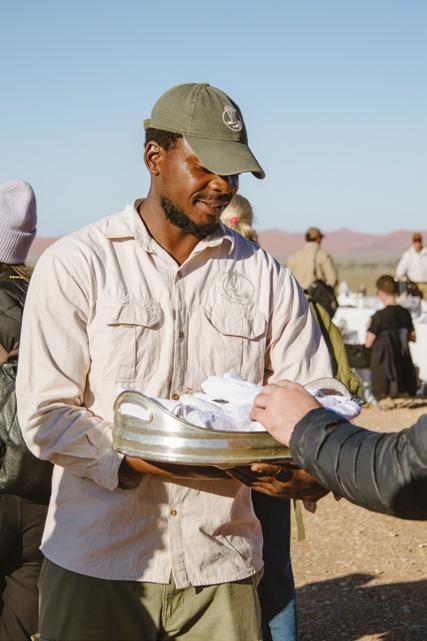
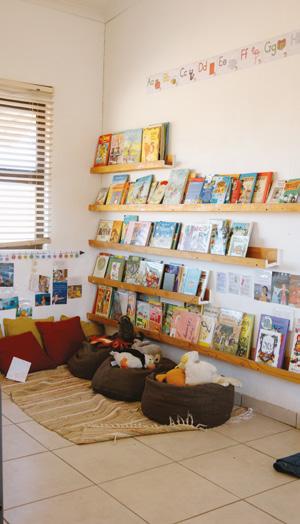
The experience at Namib Sky Balloon Safaris does not end when the balloon touches the ground.
Behind the scenes, there is a quiet but steady commitment to both the environment and the surrounding community. The desert is treated with care, vehicles stay on existing tracks and even the footprints are swept away after each landing. The entire base runs on solar energy, water is used responsibly and waste is carefully sorted and recycled.
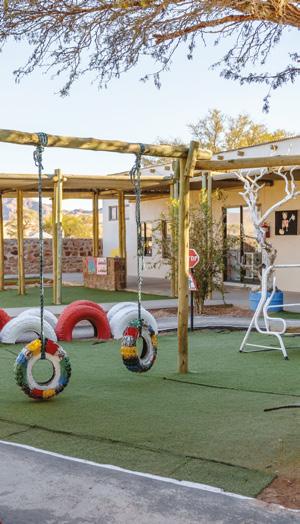
Besides this, the Namib Sky Community Trust supports a range of local initiatives in the Sossusvlei area. At the centre of this is Little Bugs, a small but vital school in the desert, offering early childhood development and primary education up to Grade 5. It serves children from across the area, including staff families and nearby lodges, providing access to learning where options are limited.
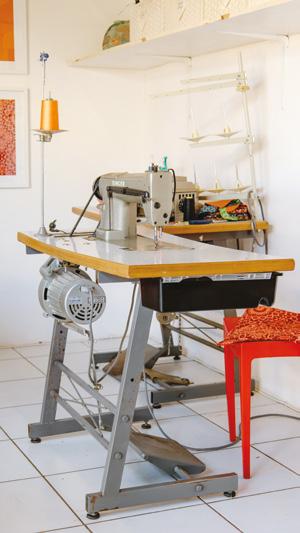
Beyond the classroom, the focus expands into practical skills. Computer training programmes are available for both children and adults, sewing initiatives create opportunities for income and a flourishing vegetable garden brings fresh produce into an unlikely landscape.
For more information, visit www.balloon-safaris.com. +264 81 304 2205 info@namibsky.com
ELZANNE MCCULLOCH
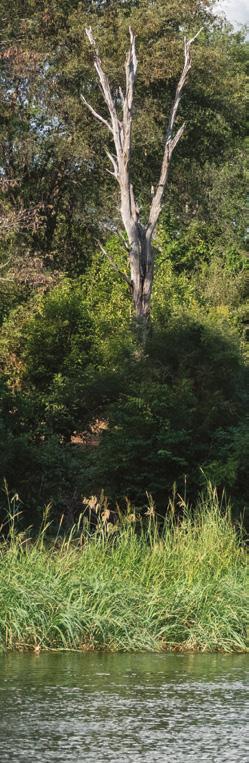
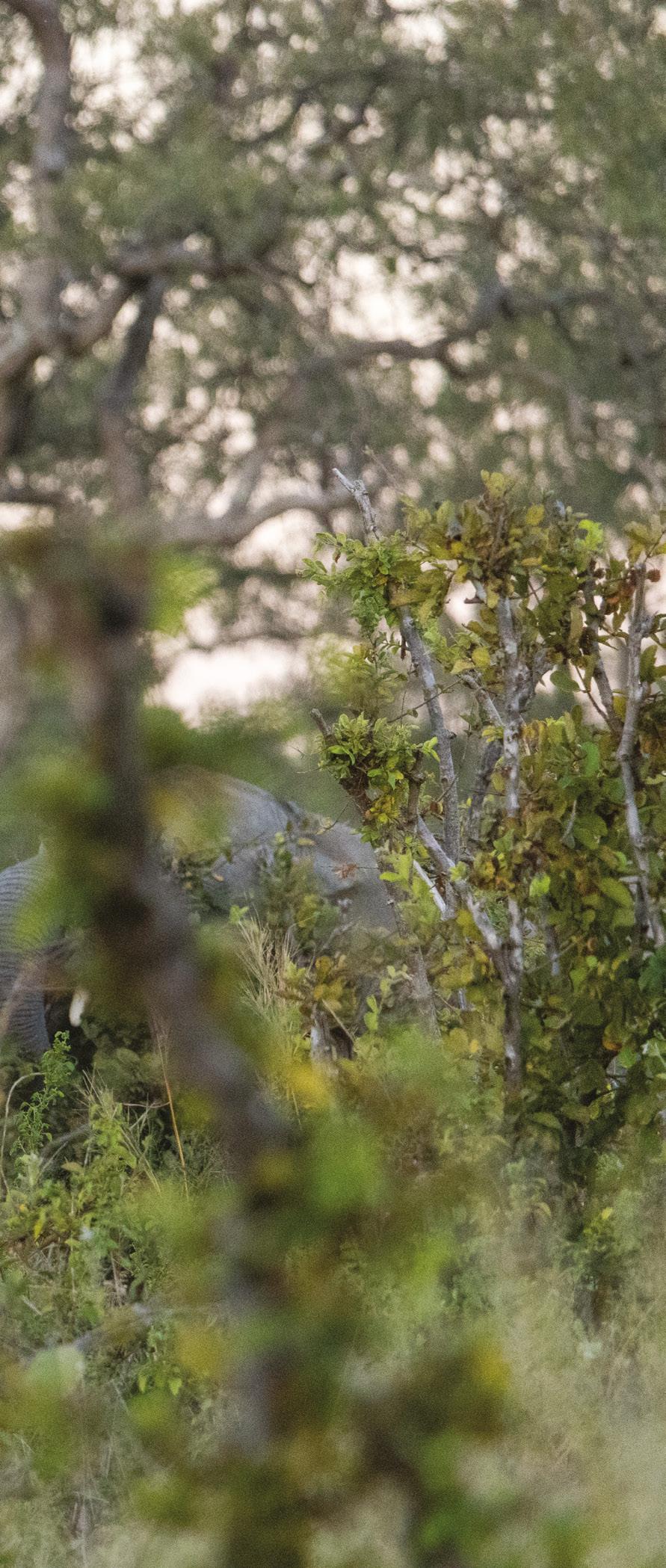
The question came somewhere between the distant grunt of a hippo in the river below the camp and the sound of elephants moving unseen through the woodland behind us. No fences. No barriers. Just canvas, trees, river and the exhilarating reminder that here, in the Buffalo Core Area of Bwabwata National Park, nature still operates entirely on its own terms.
“Is this what peace feels like?”
Perhaps. But peace here is not silence. It is the low crack of branches under the weight of an elephant bull. The rumble of a lion somewhere in the darkness. The ominous splash of a crocodile slipping beneath the surface of the Okavango River. Peace here is knowing that you are not in control. That you are simply a guest in one of Namibia’s last truly untamed wildernesses.
And maybe that is the true magic of the newly introduced Buffalo Private Collection – not that it softens the wild, but that it allows you to experience it uninhibited and unfiltered.
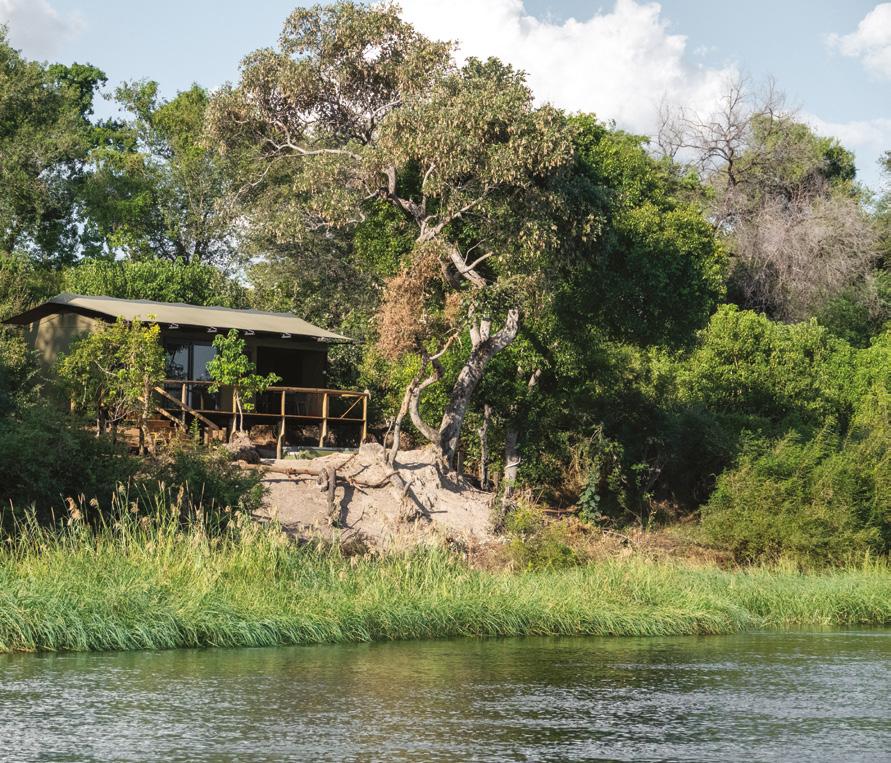
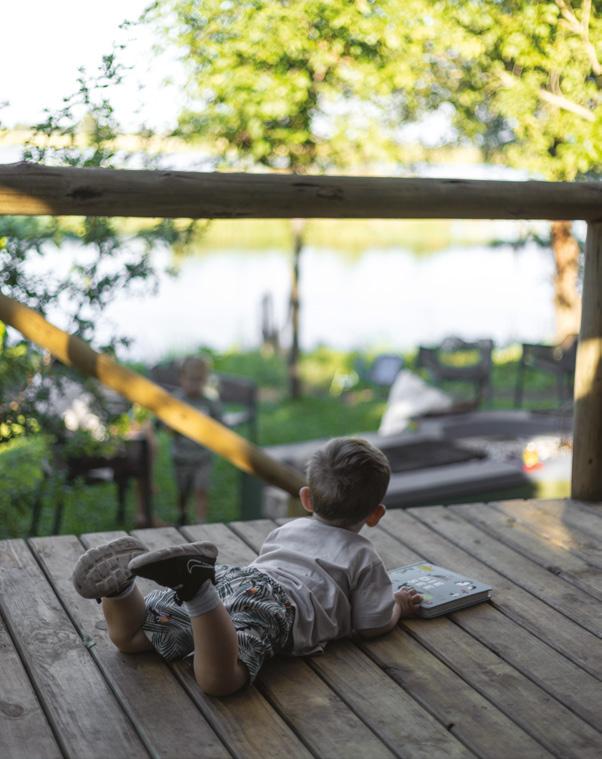
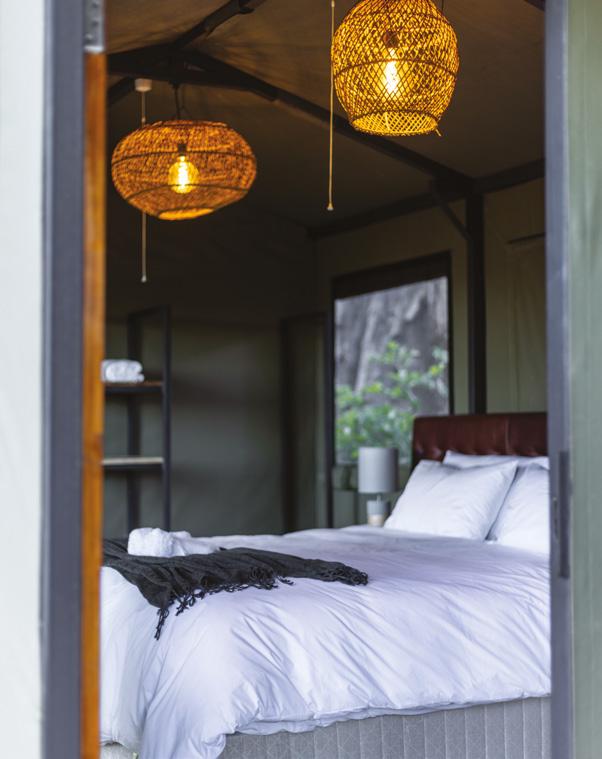
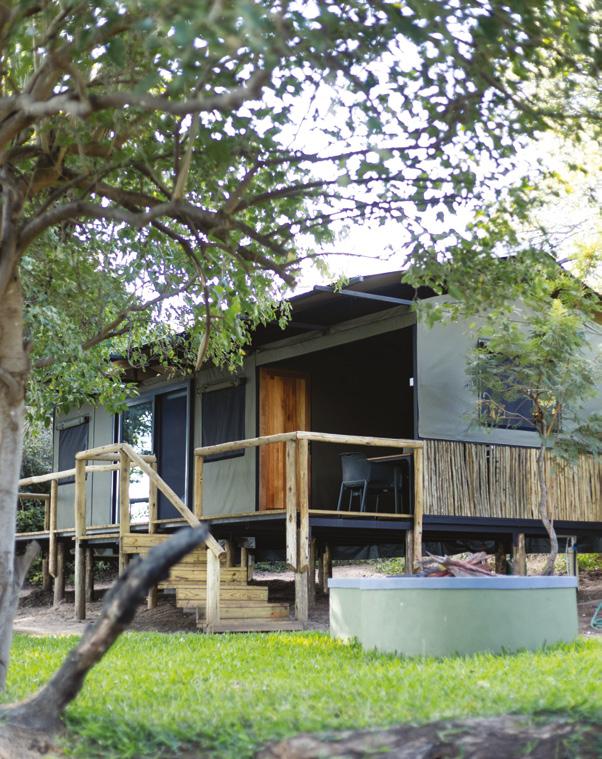
Tucked quietly among the riverine woodland along the Okavango River, Buffalo Tented Camp is the first offering within the Buffalo Private Collection – eight self-catering tented units carefully positioned beneath the trees, where the bush feels like a wild embrace. This is not polished, predictable safari luxury. It is something rarer. Something wilder.
The Buffalo Core Area forms part of the western section of Bwabwata National Park, in Namibia’s far northeastern corner. It is remote, sandy, thick with teak and mopane woodland, and astonishingly rich in wildlife. Elephant herds constantly move through the area. Buffaloes gather in the floodplains. Sable and roan
What makes the Buffalo Core Area so important within this enormous conservation network is its role as a critical wildlife corridor.
SCAN TO LEARN MORE ABOUT BUFFALO

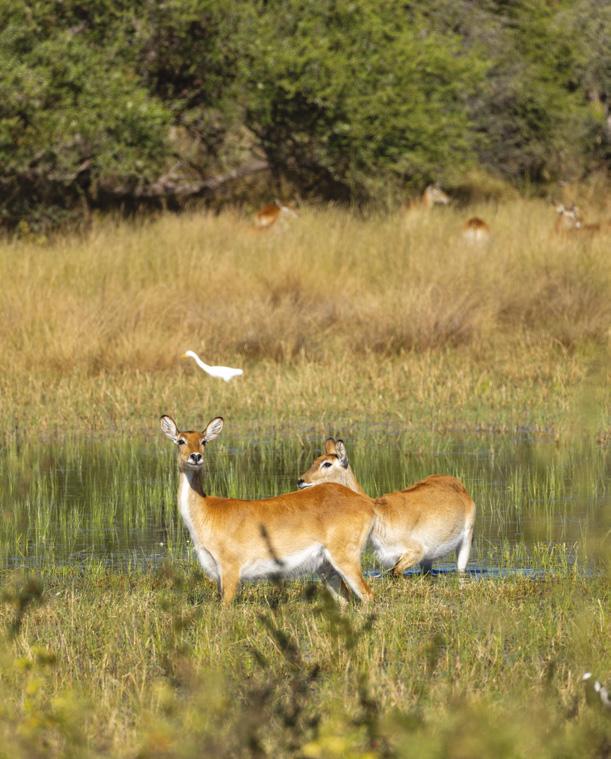
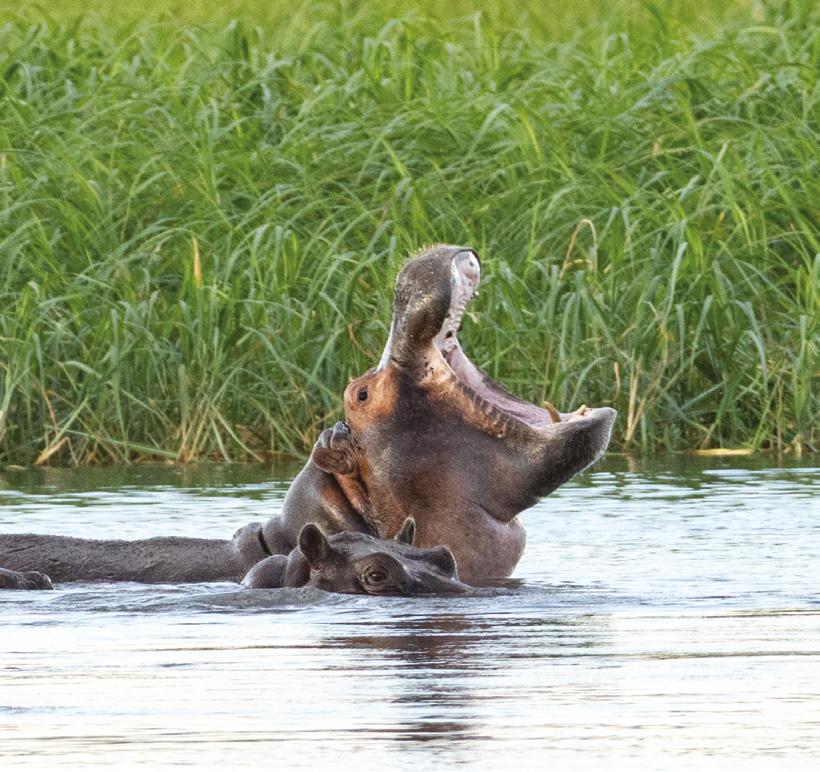
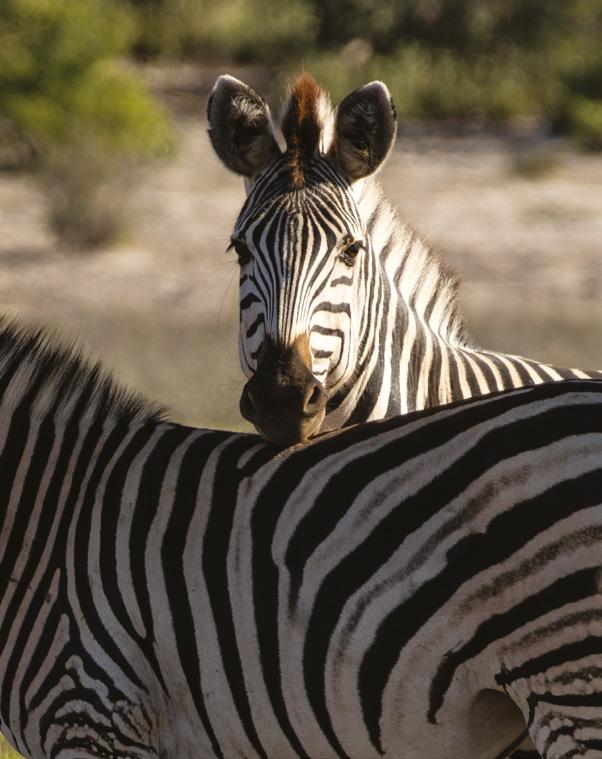
antelope vanish like ghosts between the trees. Lions patrol the river systems. Hippos crowd the channels of the Okavango while crocodiles lie motionless along muddy banks, prehistoric and patient.
What makes this landscape feel different from many other safari destinations is its rawness. It remains largely undeveloped. Roads are deep sand tracks. The bush is dense and sometimes difficult to penetrate. Wildlife encounters feel earned rather than staged. There is a constant awareness that this is not a curated wilderness, but a functioning one.
And yet the Buffalo Core Area is not only shaped by wildlife; it is also deeply marked by history.
During Namibia’s liberation struggle in the 1970s and 1980s, this region formed part of a heavily militarised zone under the South African Defence Force. Hidden bases were built within the forests. Patrol roads cut through the bush. Trenches and relics of conflict still remain, only slowly being reclaimed by nature.
There is something profoundly symbolic in the name Buffalo. Old buffalo bulls – the legendary “dugga boys” – are revered not despite their scars, but because of them. Their torn hides, battered horns and weathered faces are not signs of weakness, but survival. The Buffalo Private Collection embraces that same philosophy: that wilderness, like people, carries scars and stories, and that resilience itself can become something beautiful.
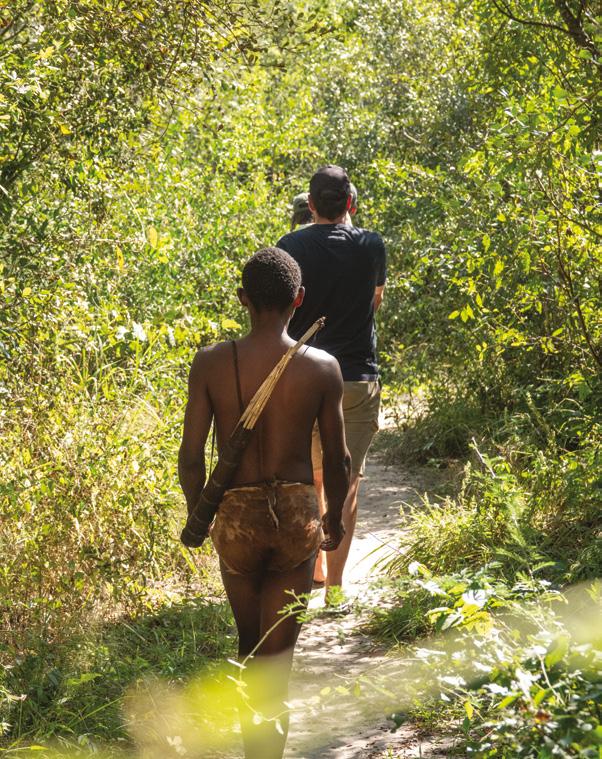
At the heart of the project lies a partnership with the Khwe San community, whose ancestral connection to this land stretches back centuries. Their tracking knowledge, understanding of wildlife and deep relationship with the environment remain integral to the spirit of the area. The Buffalo Private Collection positions conservation and community not as separate ideas, but as inseparable ones.
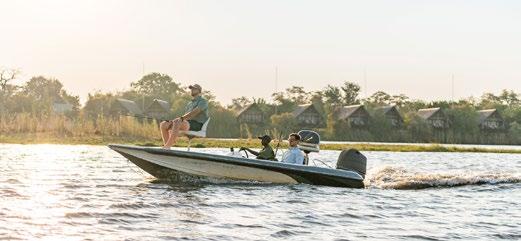
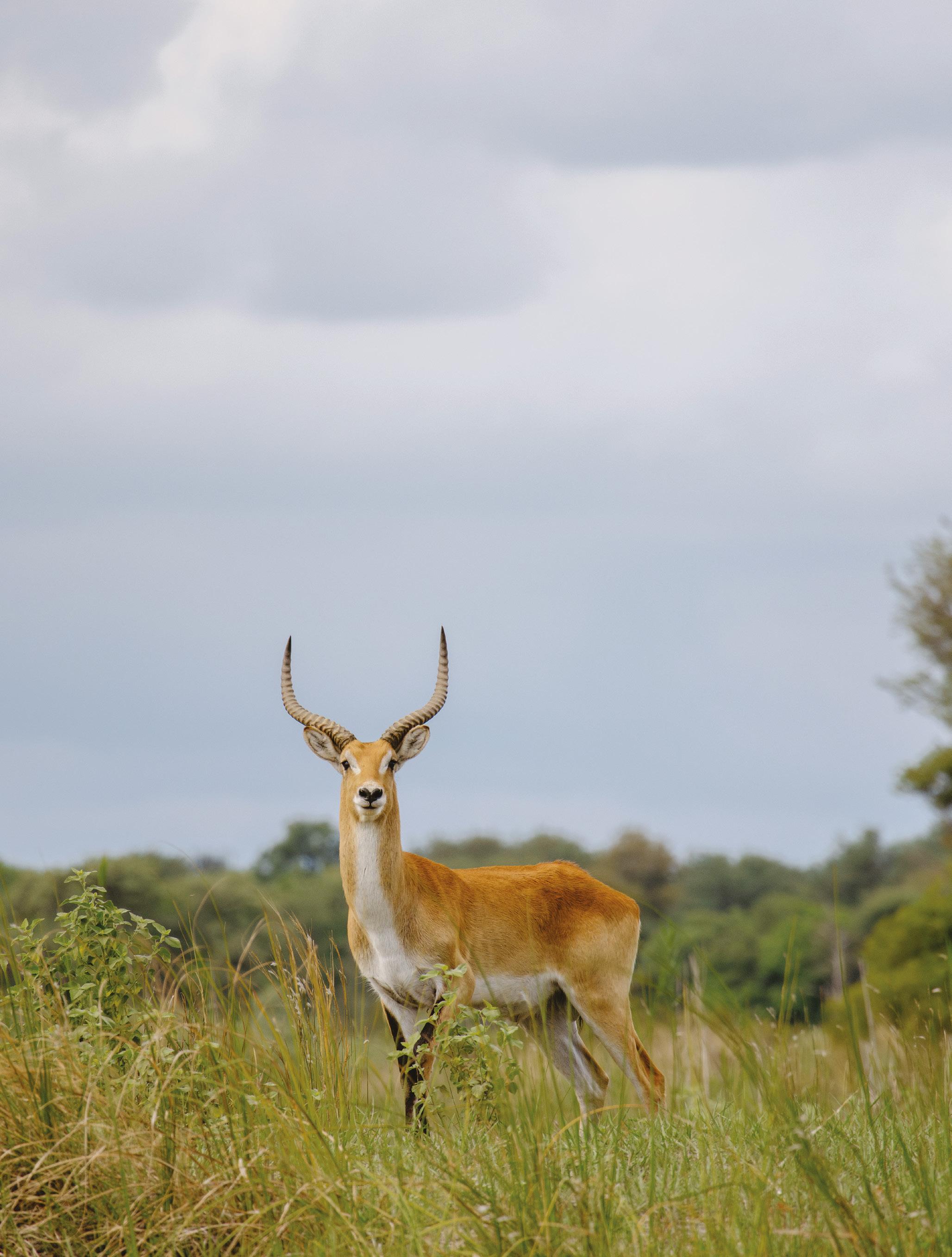
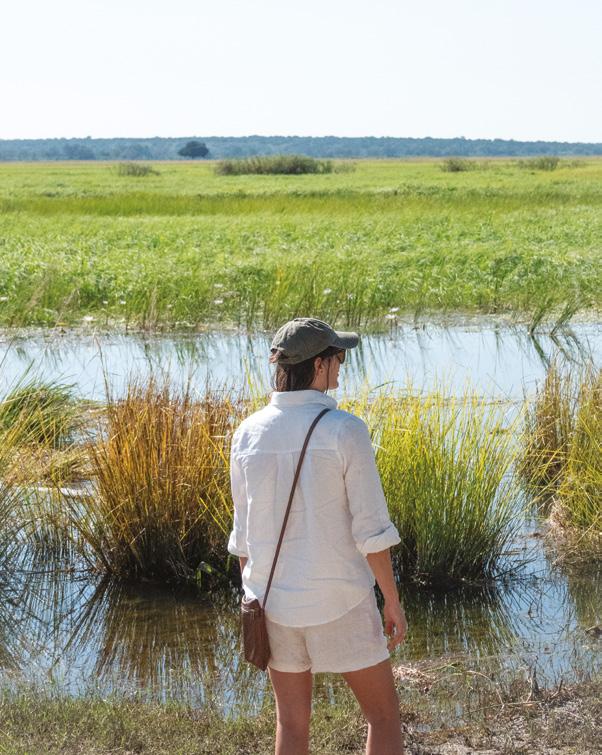
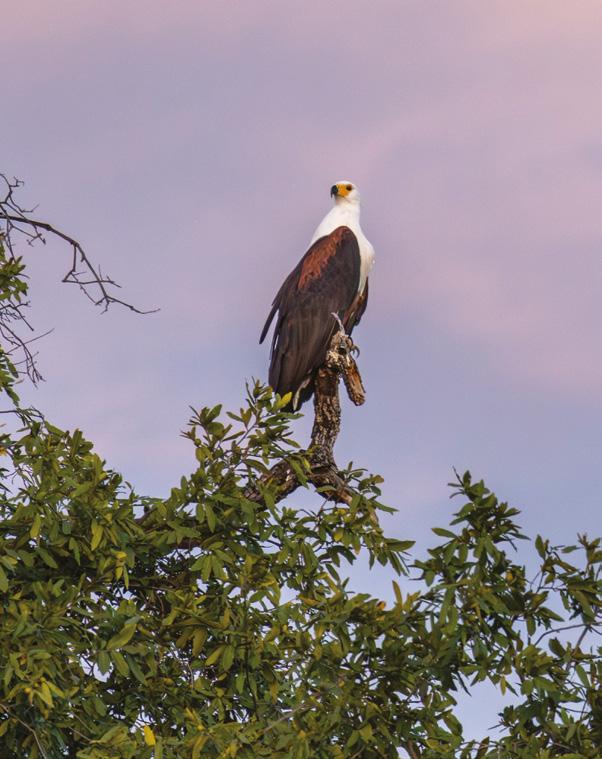
Life at Buffalo Tented Camp unfolds at the gentle rhythm of the river itself. Mornings are best spent drifting silently along the Okavango by boat, coffee in hand, while kingfishers dart between reeds and Fish Eagles call overhead. The birding here is exceptional, with the river and surrounding woodland attracting an extraordinary variety of species – from brightly coloured bee-eaters and African Jacanas to hornbills, herons and countless raptors. On land, the Buffalo Core Area teems with wildlife. Kudu move quietly through the woodland, red lechwe gather in wetter floodplain areas, bushbuck disappear into the thickets, while elephants and buffaloes traverse the landscape.
Buffalo sits at the heart of the Kavango Zambezi Transfrontier Conservation Area (KAZA TFCA), the largest transfrontier conservation area on earth. Spanning
Namibia, Botswana, Angola, Zambia and Zimbabwe, this extraordinary conservation landscape covers more than 520,000 square kilometres of interconnected wilderness. It is a region defined not by political borders, but by ancient migration routes that have existed for thousands of years.
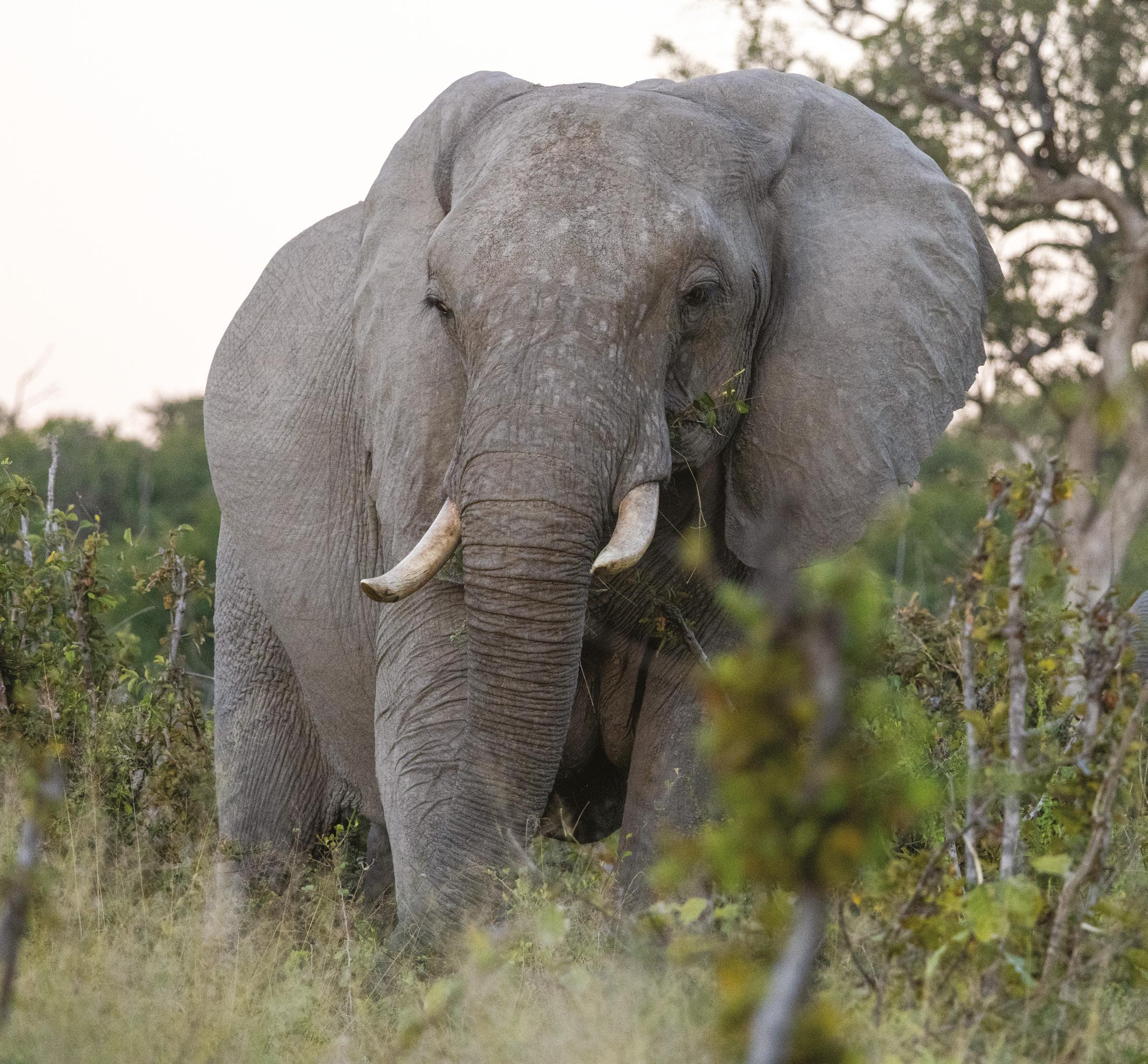
The KAZA landscape is home to an estimated 220,000 elephants, representing the largest contiguous elephant population left on the planet. But elephants are only part of the story. Buffalo herds move across the floodplains and woodlands in huge numbers, while lion, leopard, wild dog, sable, roan, kudu, red lechwe, bushbuck and countless bird species thrive within these connected ecosystems. Rivers like the Okavango, Kwando, Chobe and Zambezi act as lifelines through the region, sustaining one of Africa’s richest concentrations of biodiversity.
What makes the Buffalo Core Area so important within this enormous conservation network is its role as a critical wildlife corridor. Animals move freely through these woodlands between Namibia, Botswana and Angola, following seasonal food and water sources. To stand in Buffalo is therefore to stand within something far bigger than a single national park – it is to stand within one of the last truly connected wilderness ecosystems remaining on earth.
For guests wanting to explore further afield, Mahango Game Park lies just across the river and a short drive away, offering another remarkable safari experience known for its dense concentrations of wildlife and beautiful floodplain scenery. Right next door to the gate to Buffalo, the Khwe Living Museum offers something equally valuable: the chance to connect with one of the oldest living cultures on Earth.
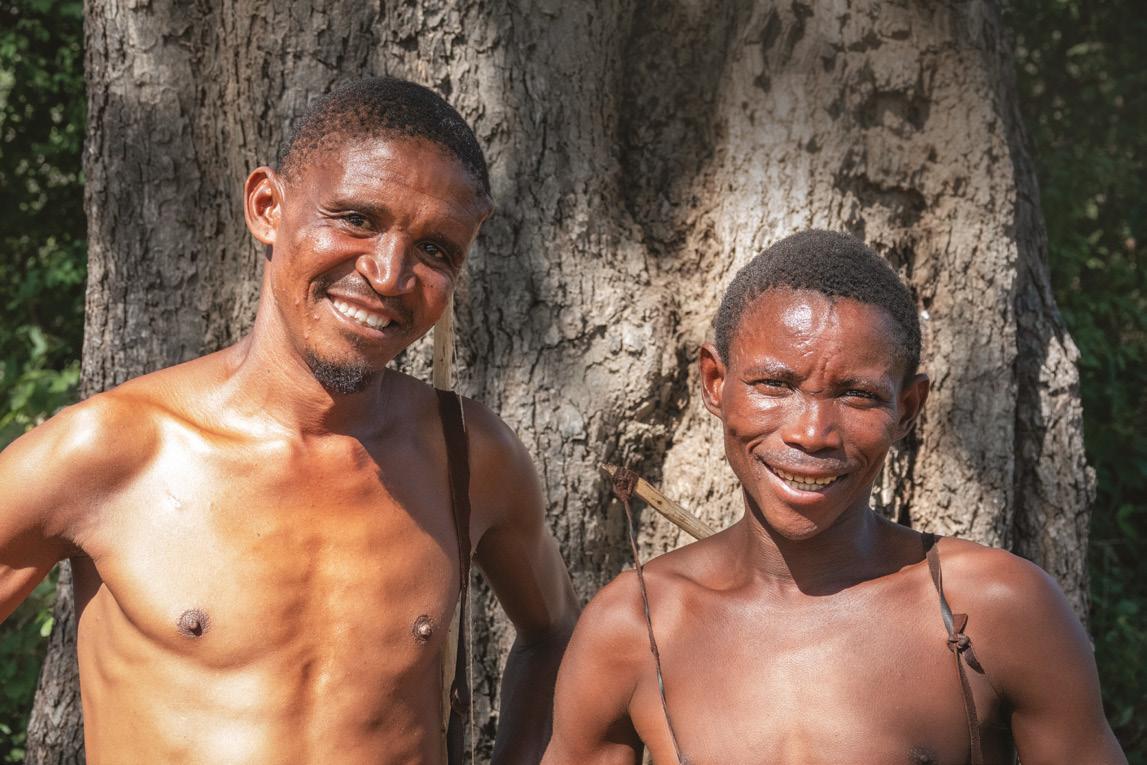
Upon our visit, we were guided by Leonard and Ben, whose San names carry stories and meanings of their own. Visitors are introduced to ancient survival skills, traditional hunting techniques, storytelling, fire-making and the intricate relationship that the Khwe people have maintained with this landscape for generations. It is an experience that deepens one’s understanding of Bwabwata far beyond its wildlife alone, while directly supporting the local community that calls this wilderness home.
But beyond the conservation models and the philosophy, there is also simply the feeling of being there.
The lantern glowing beneath the trees at night. The nervous thrill of hearing something large moving past your tent canvas. A Spotted Eagle-owl calling from the lofty branches of a jackalberry tree. Dust hanging golden in the setting sun. Lions roaring in the bushland behind the camp at night. The sensation that here, Africa still feels ancient.
Perhaps that is what peace feels like after all. TN
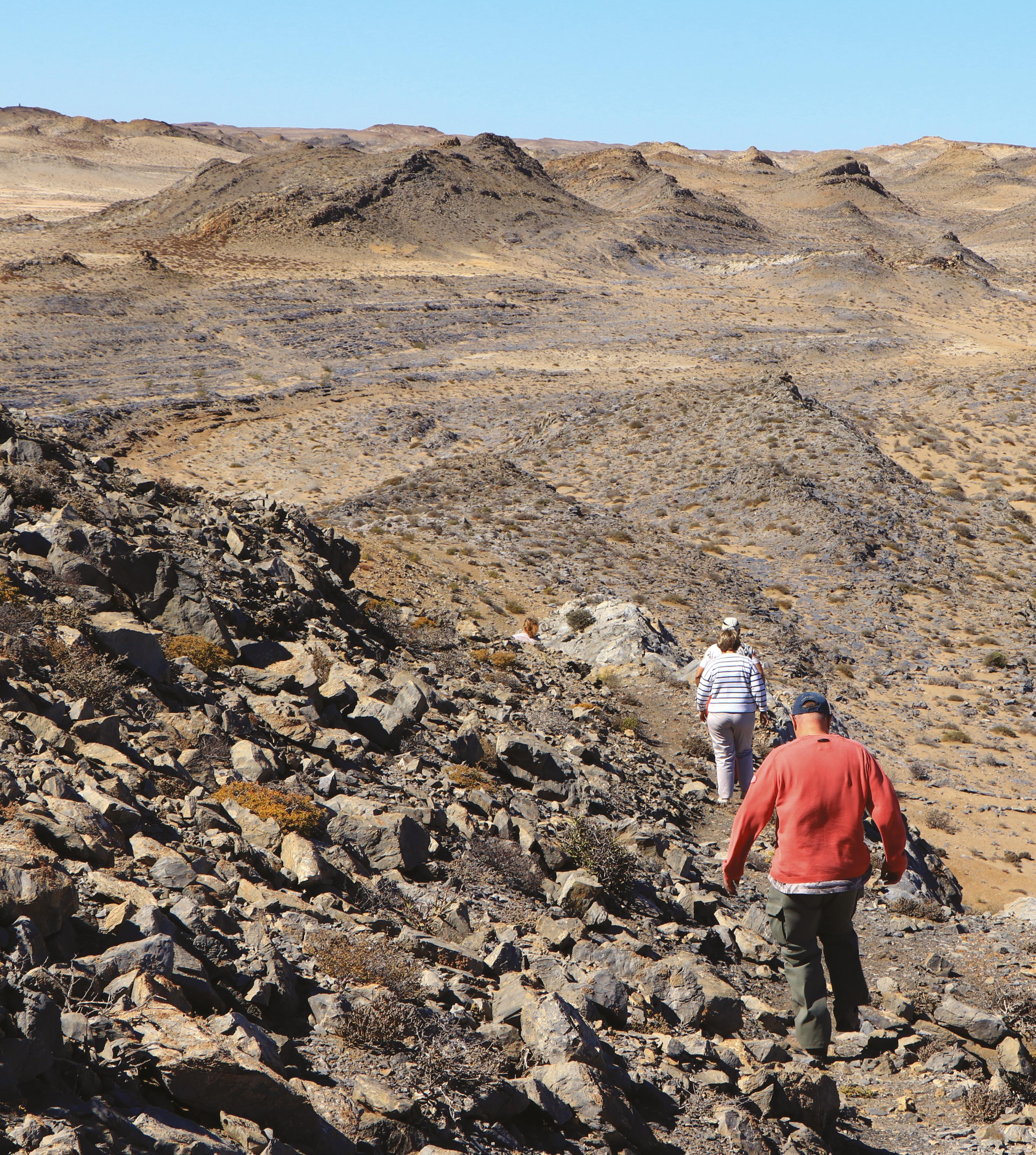
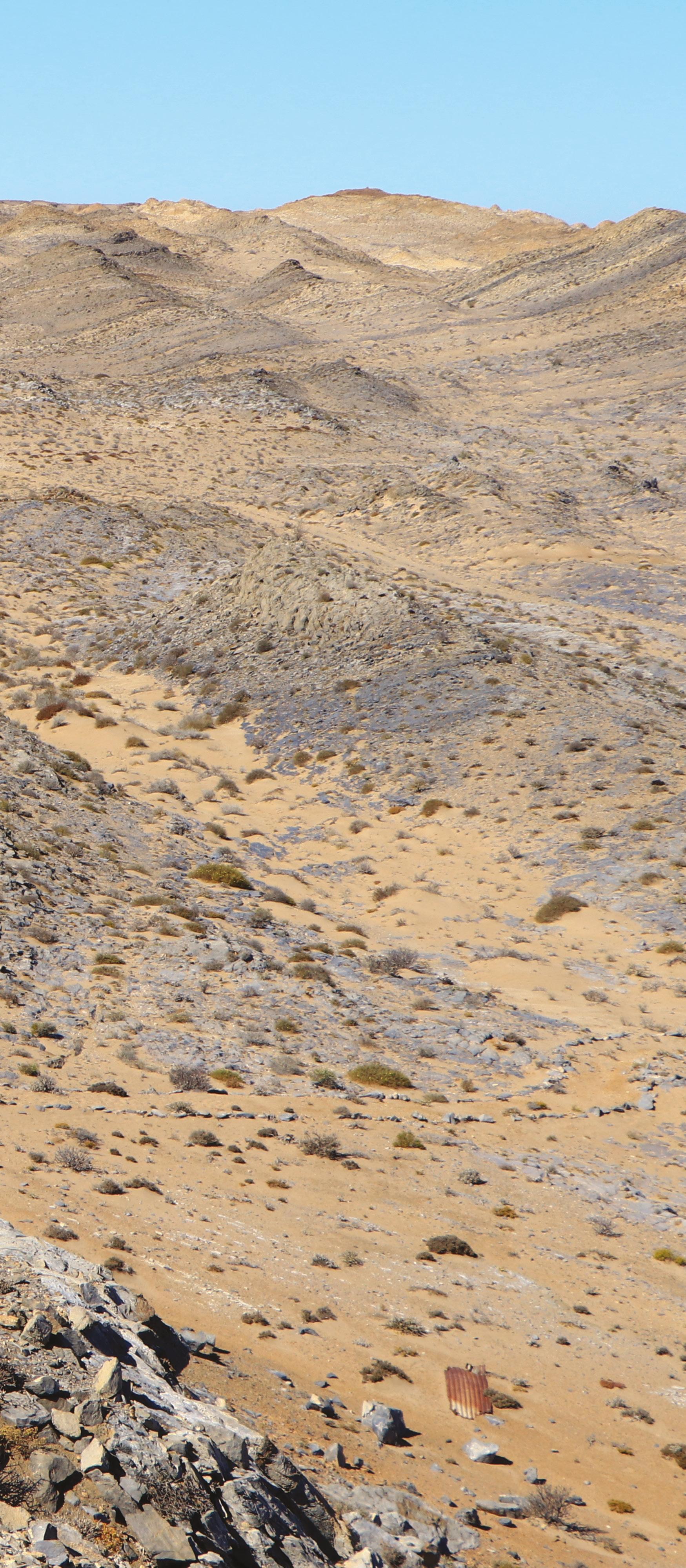
Diamonds. The mere word conjures up images of mystery and intrigue, evoking stories of untold wealth and legendary curses. And nowhere else do these mythical tales come alive more vividly than in Namibia’s fabled Sperrgebiet.
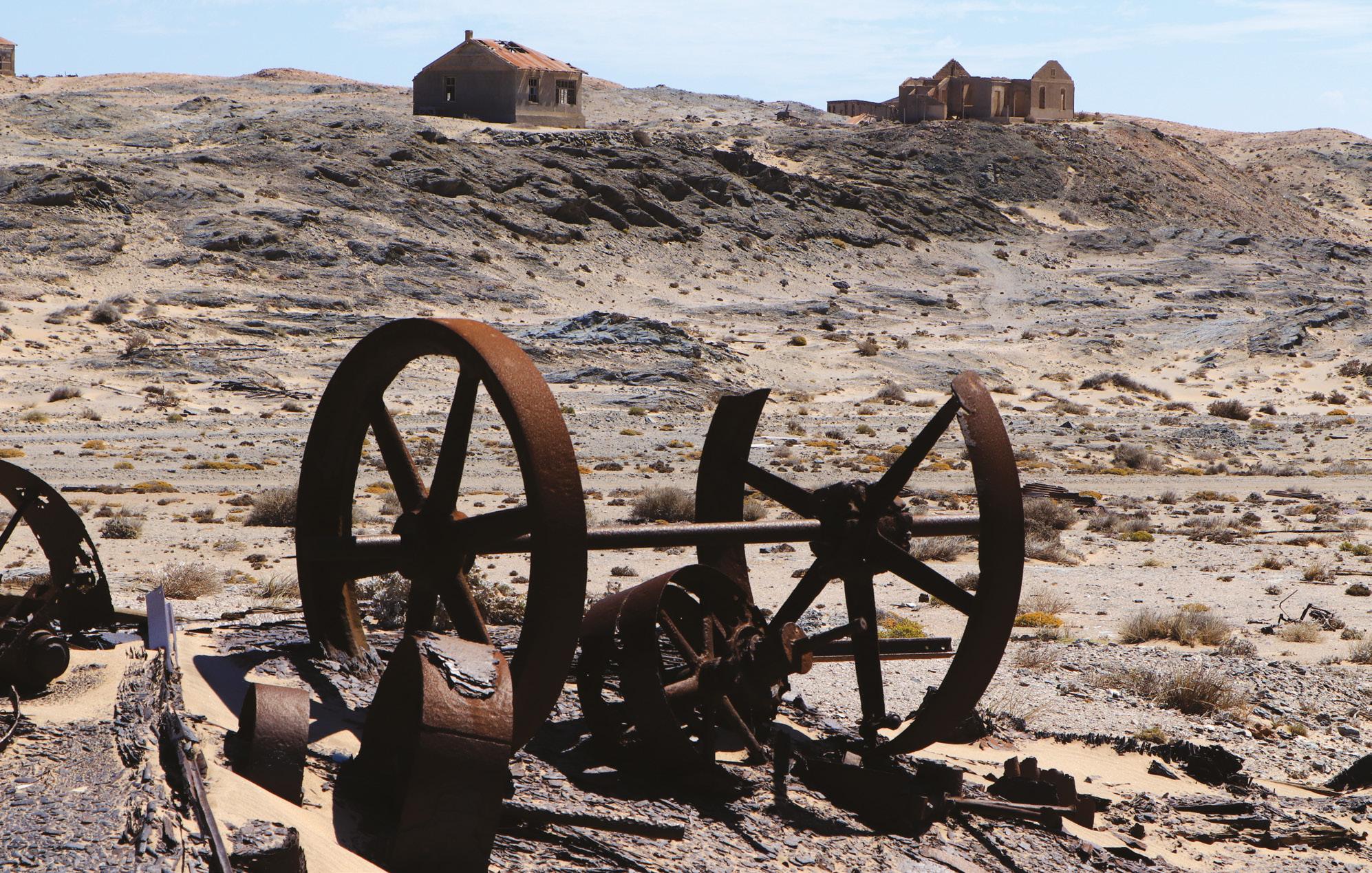
“Don’t take anything except photographs, and don’t leave anything but footprints.”
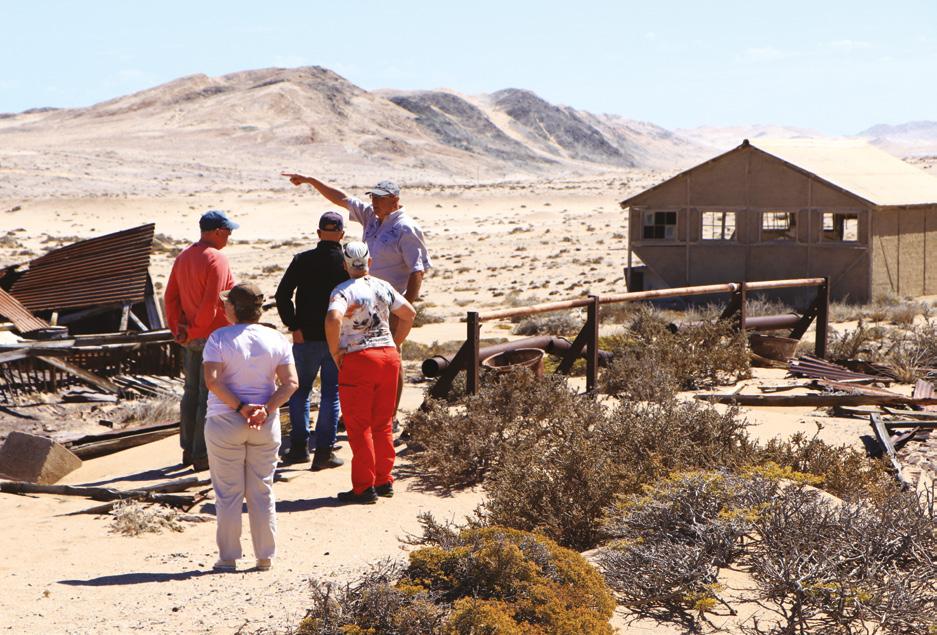
Tour guide Klaus pauses briefly, assessing whether his words had the desired effect on his guests. Then he laughs, puts his offroad vehicle into gear and starts our journey back in time. The journey takes us from Lüderitzbucht to the famous Bogenfels (rock arch), leading past abandoned mining towns that appear like apparitions along the road –testament to the diamond rush that occurred here over 100 years ago.
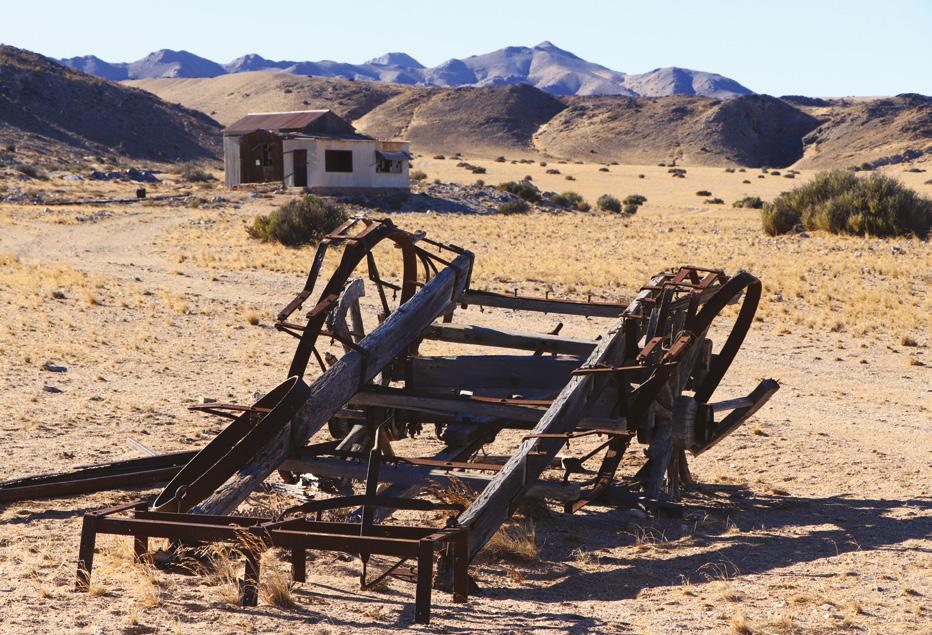
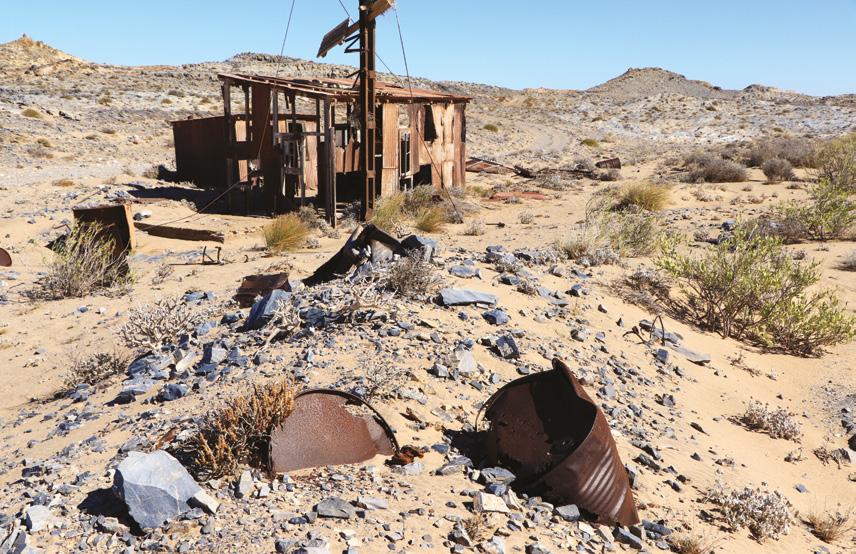
After we pass a checkpoint of the Namdeb diamond company, Klaus begins to share the story. It is a story which has been relayed countless times. A story of hardship. Of endurance. Of triumph and failure. A story that starts in 1908 when the first diamonds were discovered near Kolmanskuppe, leading to a frenzy of activity and giving birth to several mining towns that are now long deserted and eroded by time, left to the elements and slow decay.
“We have now officially entered the exclusion zone,” Klaus announces theatrically after we pass an unassuming roadblock in the middle of nowhere. He is referring to the legendary Sperrgebiet, a
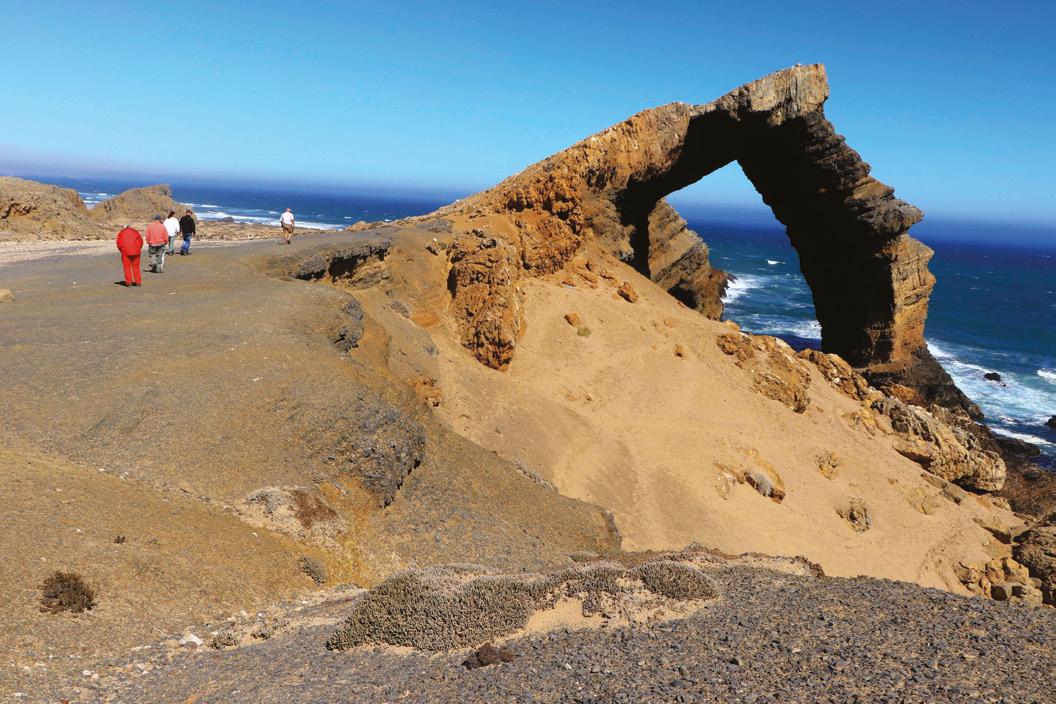
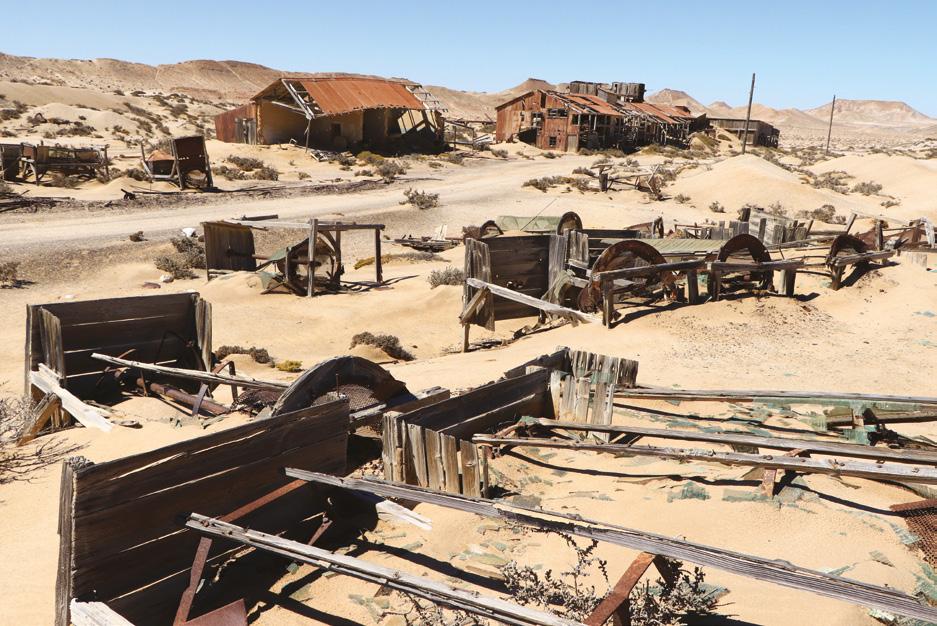
100-kilometre-wide and 320-kilometre-long coastal strip that stretches from the southern border of the NamibNaukluft National Park down to the Orange River. It is an area which was proclaimed for sole mining rights by the Deutsche Kolonialgesellschaft für Südwestafrika back in 1908, preventing unauthorised persons from entry. An area associated with desolation, solitude and traces of human endeavour slowly being reclaimed by the desert.
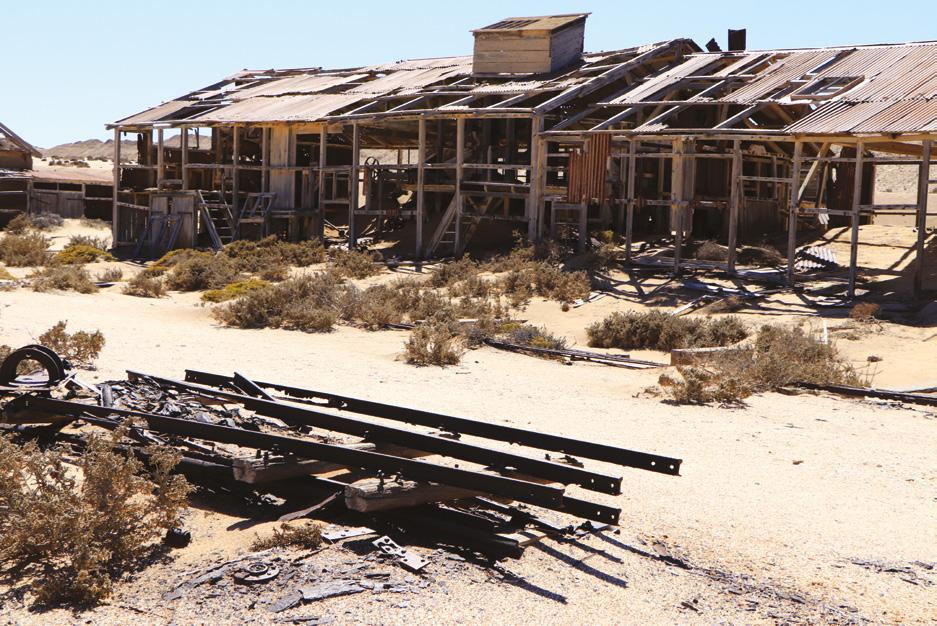
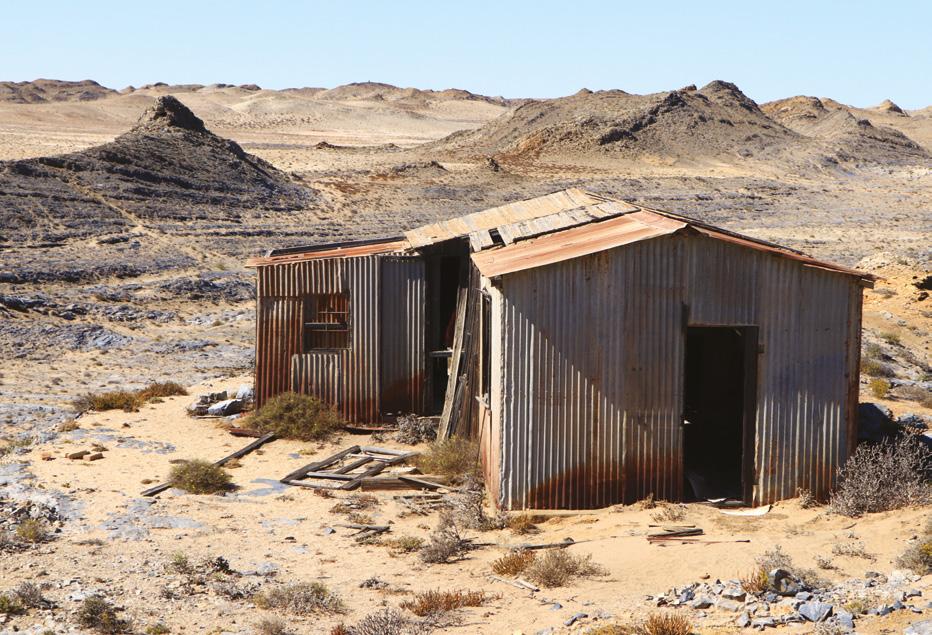
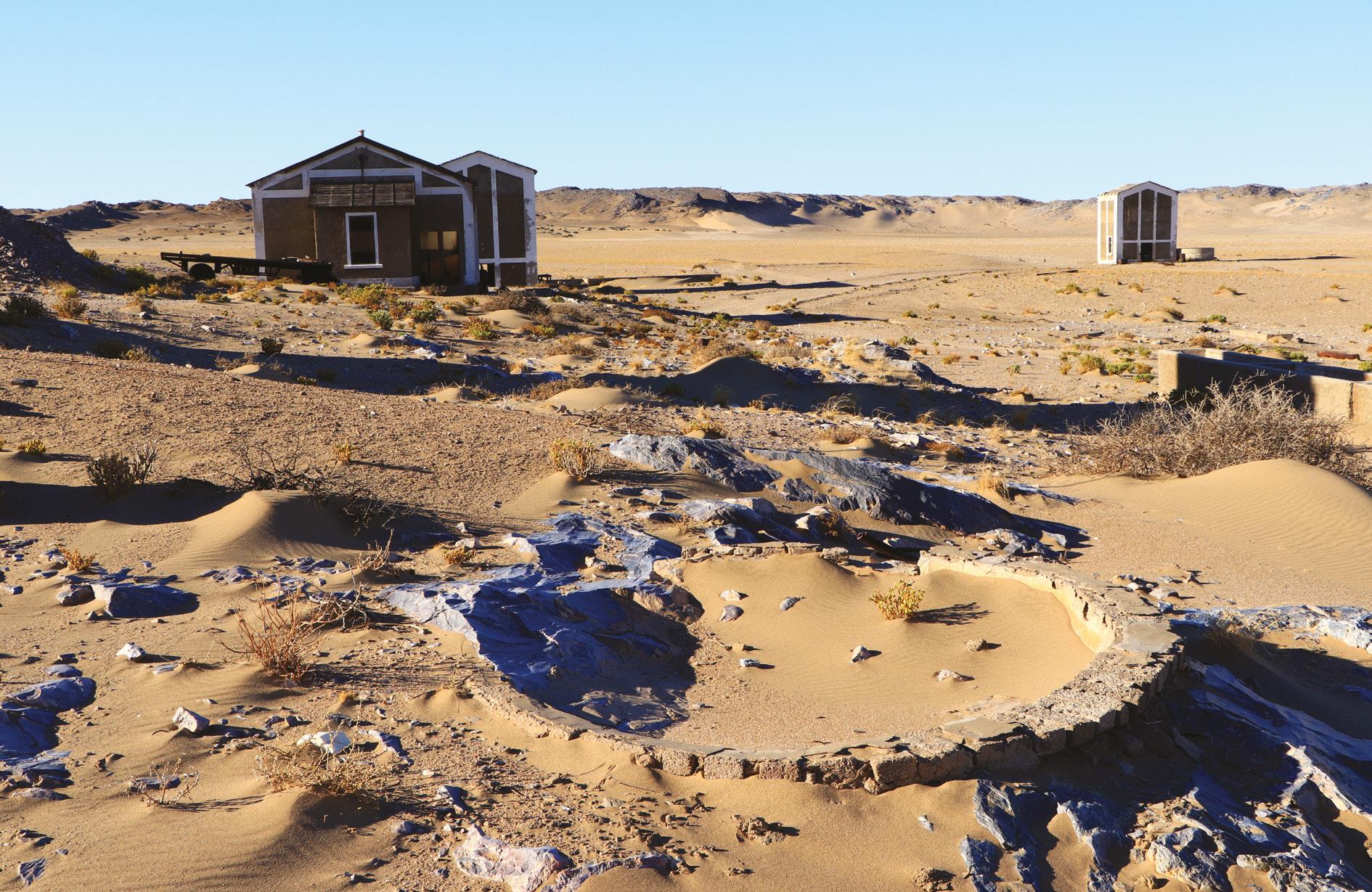
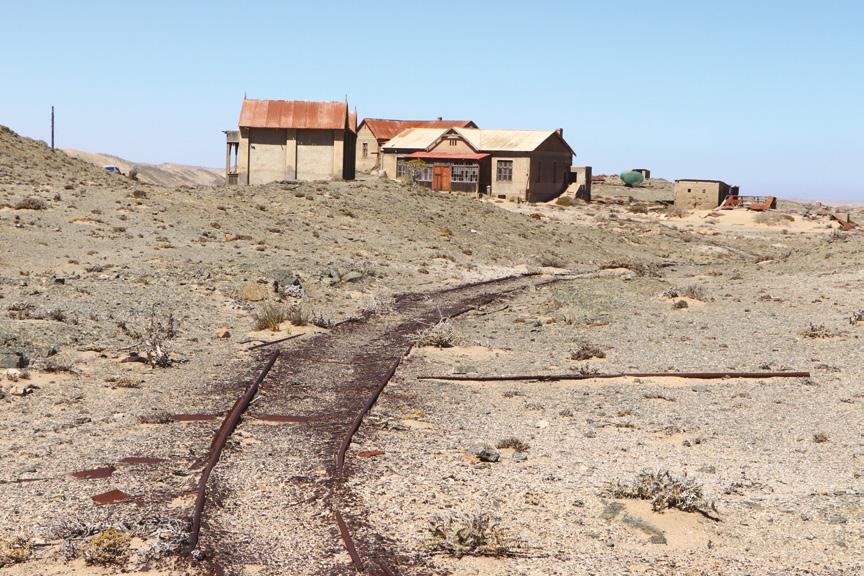
The first visible remnants of those early efforts are the rusted ruins of the old pump station Grillental, consisting of little more than a few crumbling walls struggling to hold a partially collapsed roof in place. It was here where enough
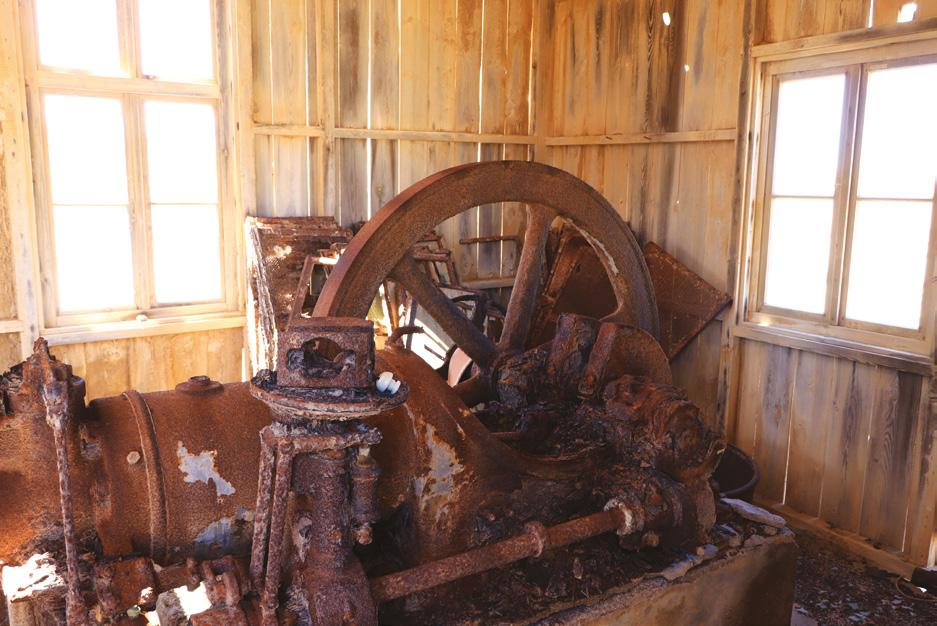
ground water was present to supply the mushrooming mining settlements further south, sustaining the influx of prospectors searching for diamonds here.
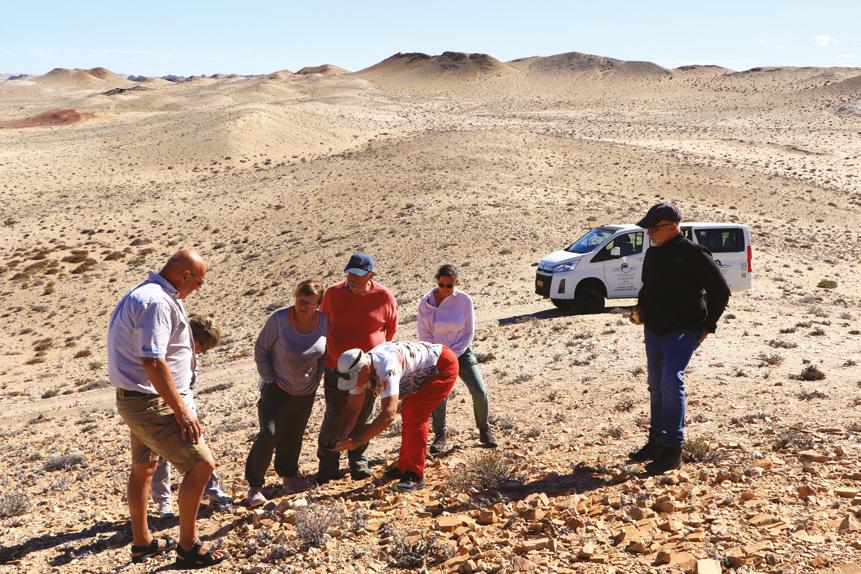
While the surrounding terrain may look like a barren wasteland at first glance, it is home to a variety of animals and plants – many of which are endemic to the area – and is classified as a biodiversity hotspot. “If you can’t see anything, you’re not looking close enough,” Klaus says, while pointing at an inconspicuous lithops – a succulent plant locally known as “living stone” – clinging to a rock on the ground.
It is visual proof of a welcome side effect resulting from the entry restrictions placed on the Sperrgebiet, which was formally proclaimed as the Tsau //Khaeb National Park in 2008, creating a conservation area of 26,000 square kilometres and protecting the pristine landscape and historical sites within it.
As we reach Pomona, thousands of small gravel heaps appear next to the track, dotting the barren landscape like pins in a needle cushion. “Those are tailings left behind by miners who sifted through the sand while searching for diamonds,” Klaus explains. “They must have turned over every grain of sand in this area,” he continues and adds: “But there are many convinced they missed some diamonds still lying in the sand, waiting to be discovered.”
surface like pebbles on a beach. One such myth surrounds the aptly named Märchental (fairy valley). It is said that diamonds were so plentiful in this natural depression that they glittered in the moonlight, drawing fortune seekers who crawled over the surface here and collected them from the granite rock below.
“From a modern perspective, it’s hard to comprehend what those pioneers risked and accomplished,”
How lucrative that exercise was can still be seen in the remains of the erstwhile mining village of Pomona, boasting the remnants of a bowling alley, a concert hall and a school. They are structures telling about a brief period of plenty. An episode, frozen in time, when anything seemed possible. A fleeting moment of luxury, which ended just as abruptly when the diamond deposits were exhausted and the once bustling mining town was abandoned in 1931.
Considering the former abundance of these precious stones in the area, that conviction may not be completely misplaced, fuelled by mystical tales of gems covering the
But it was not just luck that made the former inhabitants of these ghost towns rich, albeit often just briefly, according to Klaus. “From a modern perspective, it’s hard to
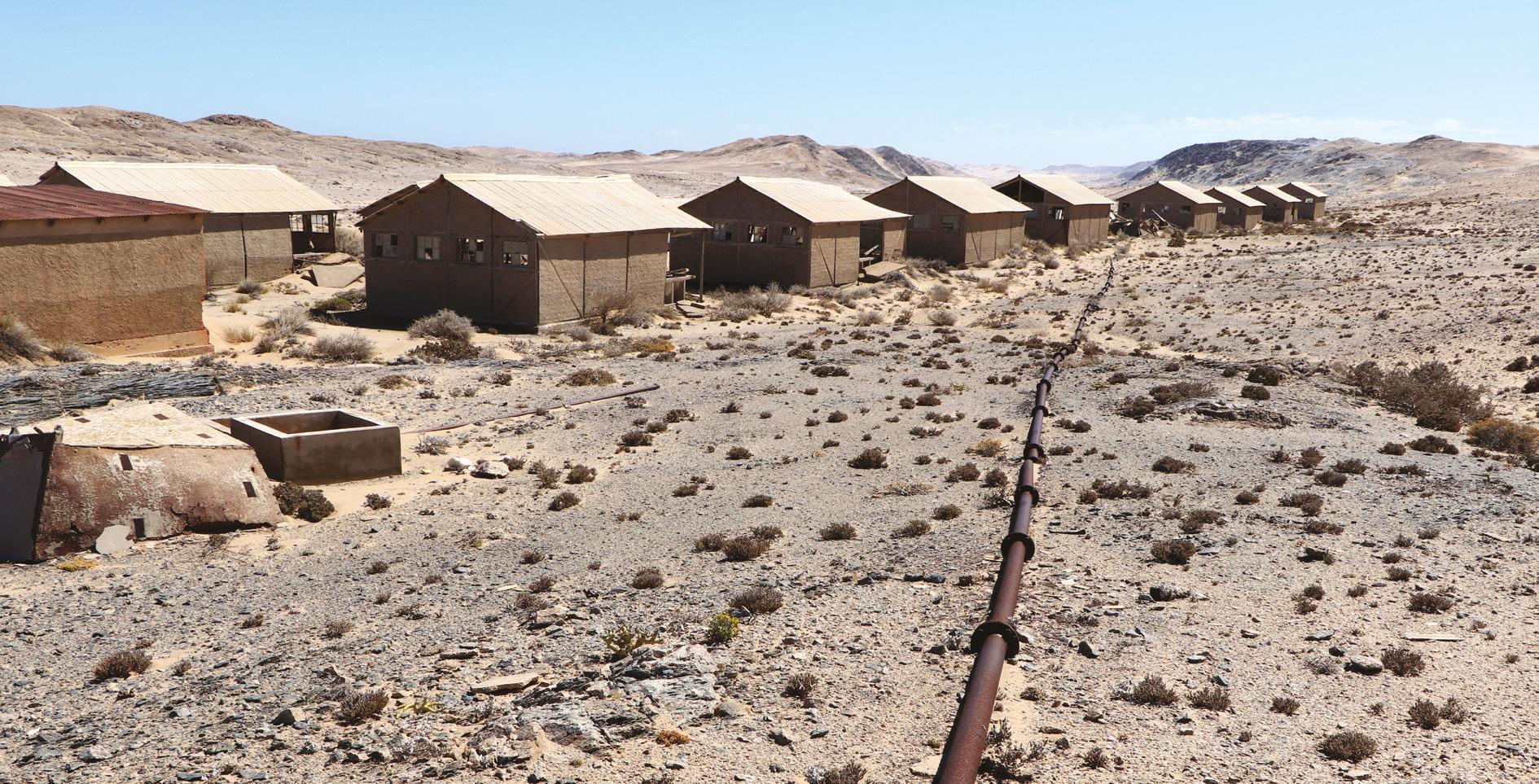
comprehend what those pioneers risked and accomplished,” he says. “They dared to venture into one of the driest places on Earth and managed to build elaborate structures like a railway line of over 100 kilometres without the technological assistance we take for granted today.”
Looking at the rudimentary beginnings of what became one of the biggest diamond rushes in history, it is hard to disagree. “That’s how it started,” says Klaus, pointing at a heap of stones placed on a nearby hill. This beacon, enduring constant wind, signifies the very spot where a prospector, filled with hopes and dreams, staked a claim to search for diamonds over a century ago.
It is a sight which fills the viewer with awe and admiration, evoking a sense of wonder at what human beings achieved with the few tools at their disposal.
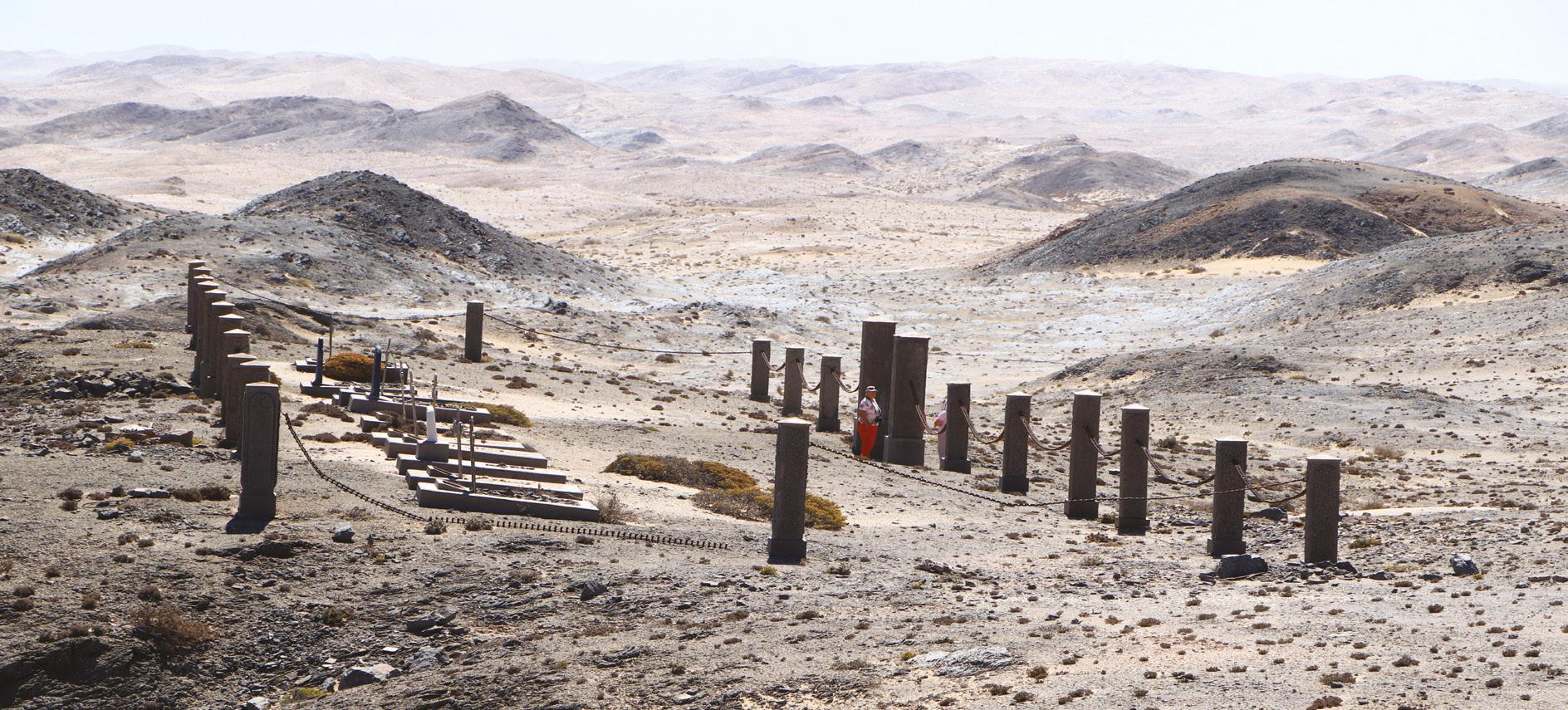
Before we start making our way to Bogenfels, a 55-metrehigh natural limestone arch rising majestically from the shore of the Atlantic Ocean below, we visit the cemetery of Pomona. It is a spooky place of haunting beauty, perched on a hill overlooking the valley below. A place that serves as a stark reminder of how hard life must have been for the people who once lived in this unforgiving and hostile place.
No wonder this harsh, inhospitable and lunar landscape is called the “forbidden land” of Namibia. TN
More info at: info@adventuretravelnamibia.com www.bogenfelsnamibia.com +264 811439837
IMAGES | SUNÉ VAN WYK
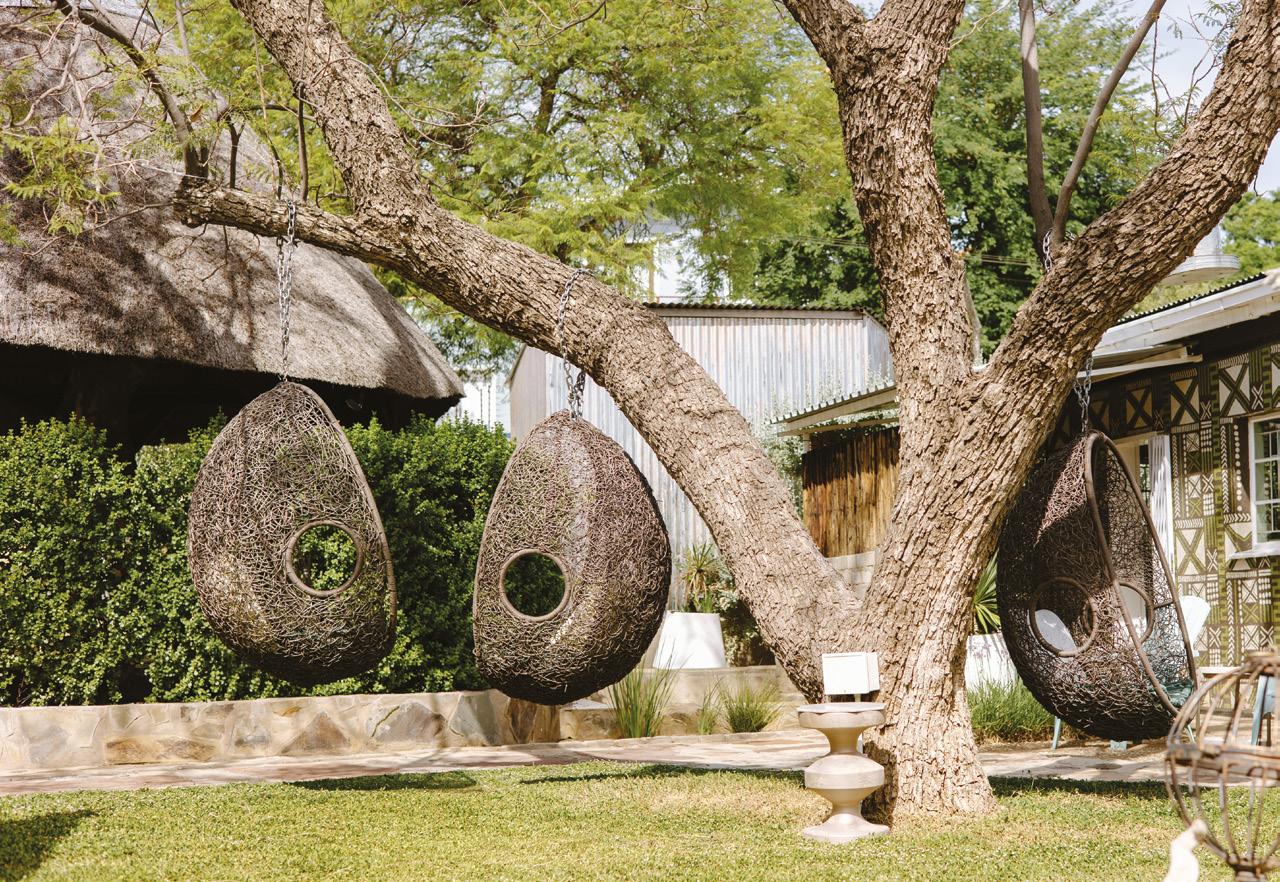
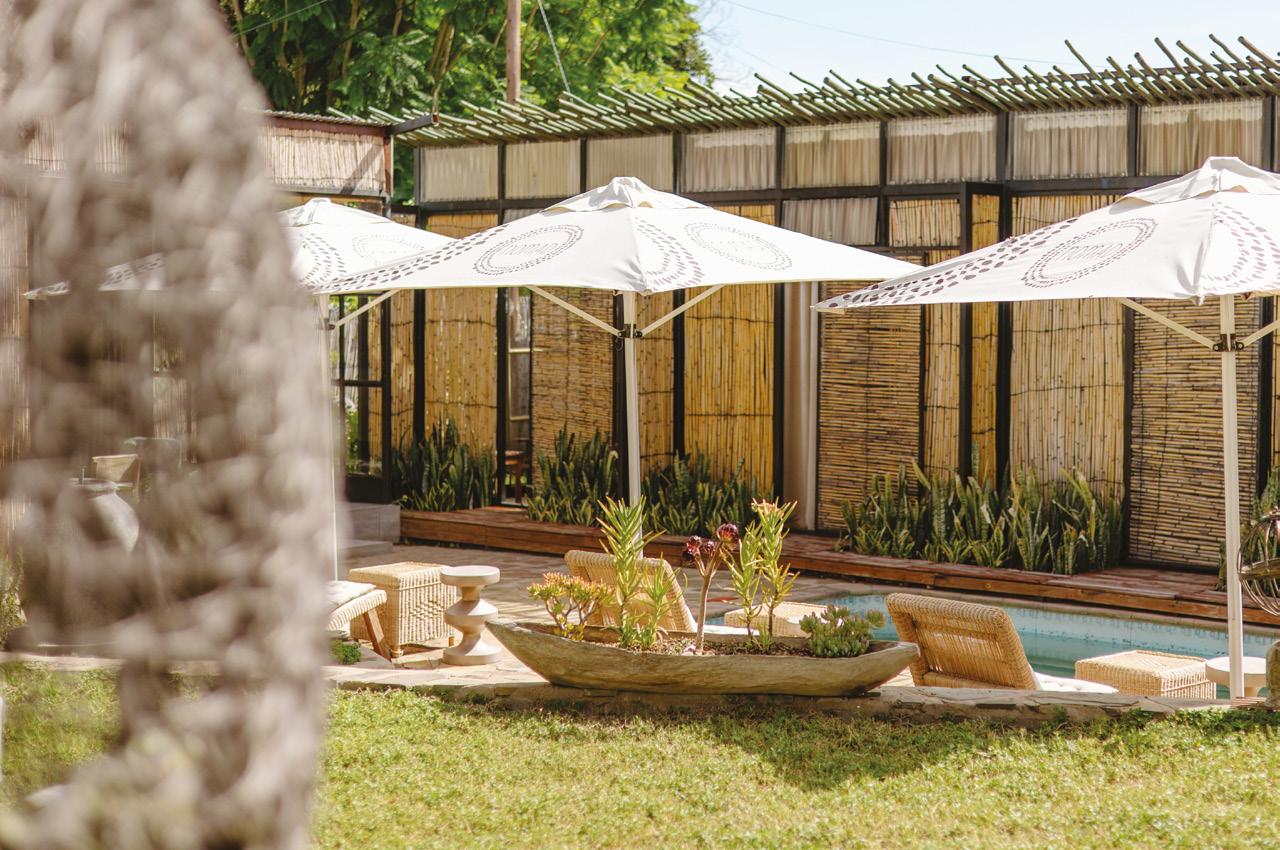
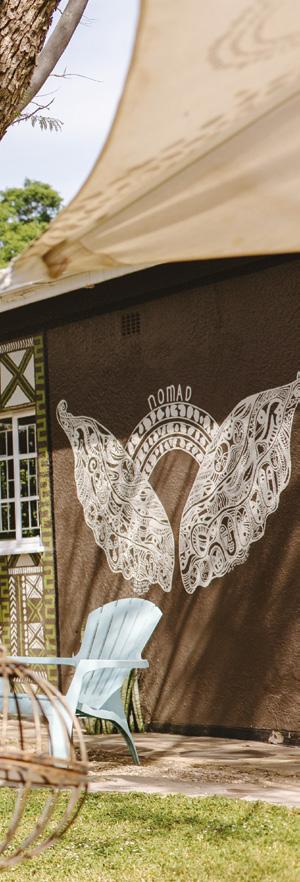
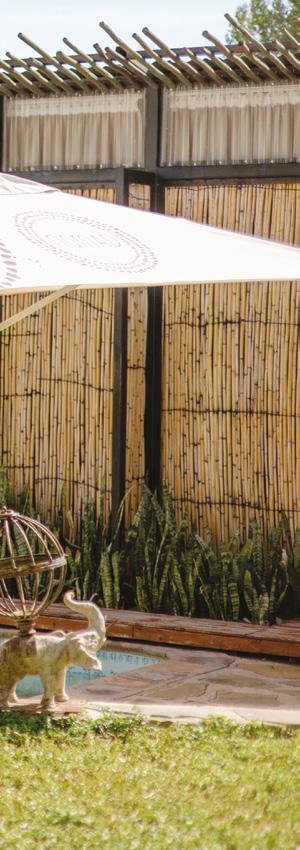
The first thing you notice as you step off the bustling streets of Windhoek and into Nomad Wellness Homestead is the immediate drop in the noise level. It is not just the quiet; it is a tangible shift in energy. Here, wellness is not a modern, imported luxury but a homecoming.
Founded by Mariane Akwenye, a former pilot who traded the cockpit for the ancient wisdom of her ancestors, Nomad is more than a spa. It is a wellness homestead dedicated to preserving traditional African healing practices that are often exported or overlooked.
Mariane’s journey into healing did not begin in a classroom. It started in the fields of Namibia alongside her great aunt, a traditional herbalist. “I absolutely loved waking up at the crack of dawn to go to the field with her,” Mariane recalls. “We would harvest what looked like normal bushes to me, but it was wild herbs and aloe.”

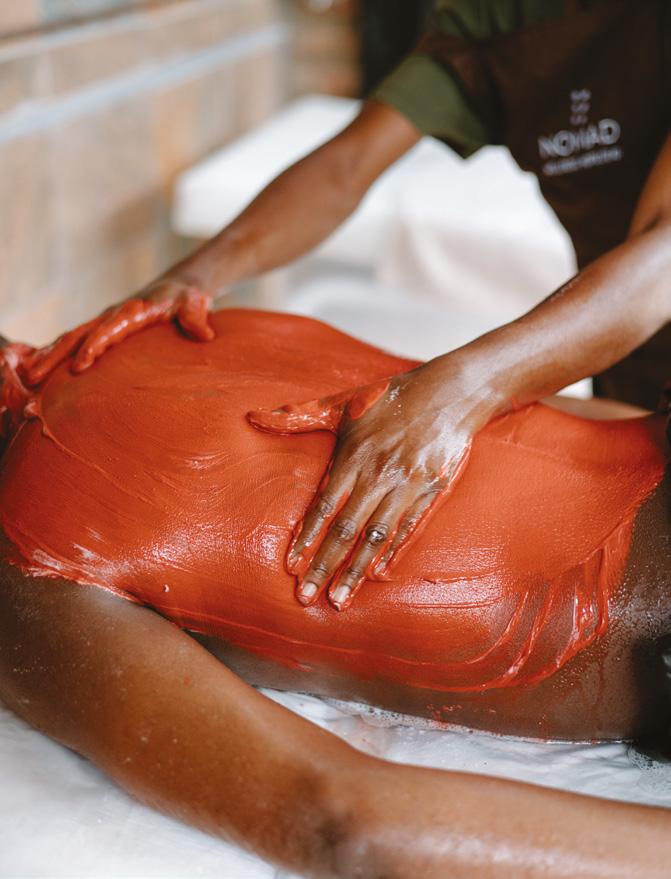
These childhood memories of concocting natural remedies in a small kitchen now form the heartbeat of Nomad. The spa focuses on authentic treatments that use the same wisdom from the soil to heal the modern traveller.
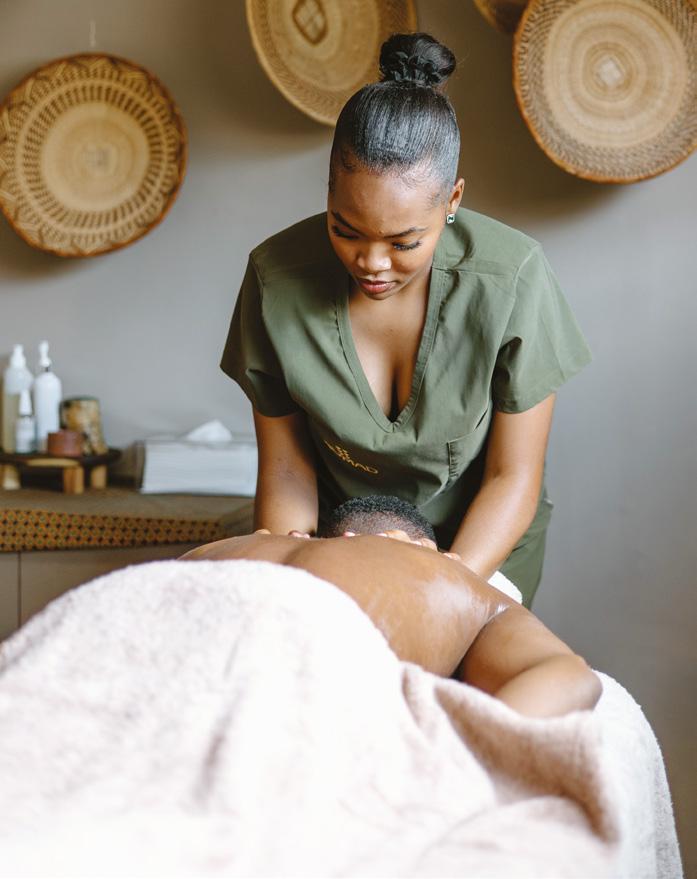
Nomad’s treatments are a masterclass in cultural storytelling through touch.
Nomad’s treatments are a masterclass in cultural storytelling through touch.
• The Himba influence: Inspired by the nomadic Himba people, the spa incorporates elements like red ochre, known for its high SPF and skinprotecting qualities.
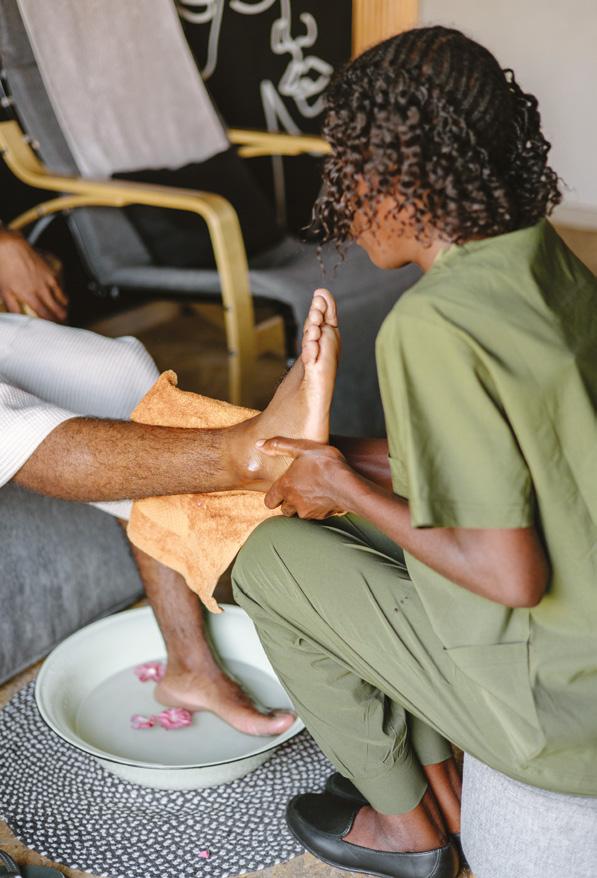
• Traditional cleansing: Guests can experience a modern adaptation of the smoke bath, a traditional waterless cleansing ritual that perfumes the body.
• Indigenous ingredients: The use of traditional oils and wild herbs ensures that every treatment has a direct connection to the Namibian landscape.
Perhaps the most transformative aspect of Nomad is its commitment to inclusivity. The spa is renowned for training and employing visually impaired women as therapists.
For Mariane, this was not just a charitable idea. It was the realisation that disability is not inability. In fact, while sighted therapists are often told to close their eyes to feel the body, these women are the masters of their craft and possess a natural, heightened intuition.
Therapists like Sarah Wendy Mathias, Magdalene Paulus and Lorencia Katjikuruta speak of the confidence and hope that their newfound careers have provided. Magdalene, who began by massaging the grannies in her home village, now brings those same healing hands to international guests. For visitors, being treated by a therapist like Lorencia, who finds her greatest joy in healing people, is an experience of profound connection that transcends sight.
As wellness tourism is becoming the fastestgrowing segment in global travel, Namibia is uniquely positioned to lead the way. The conscious traveller of 2026 is no longer just looking for relaxation. They are looking for authenticity and a way to give back to the people.
“Why would they go and have a treatment that they can have back home?” Mariane asks. By combining Namibia’s vast, calming landscapes with the ancestral knowledge of its people, Nomad offers a complete journey of replenishment. TN

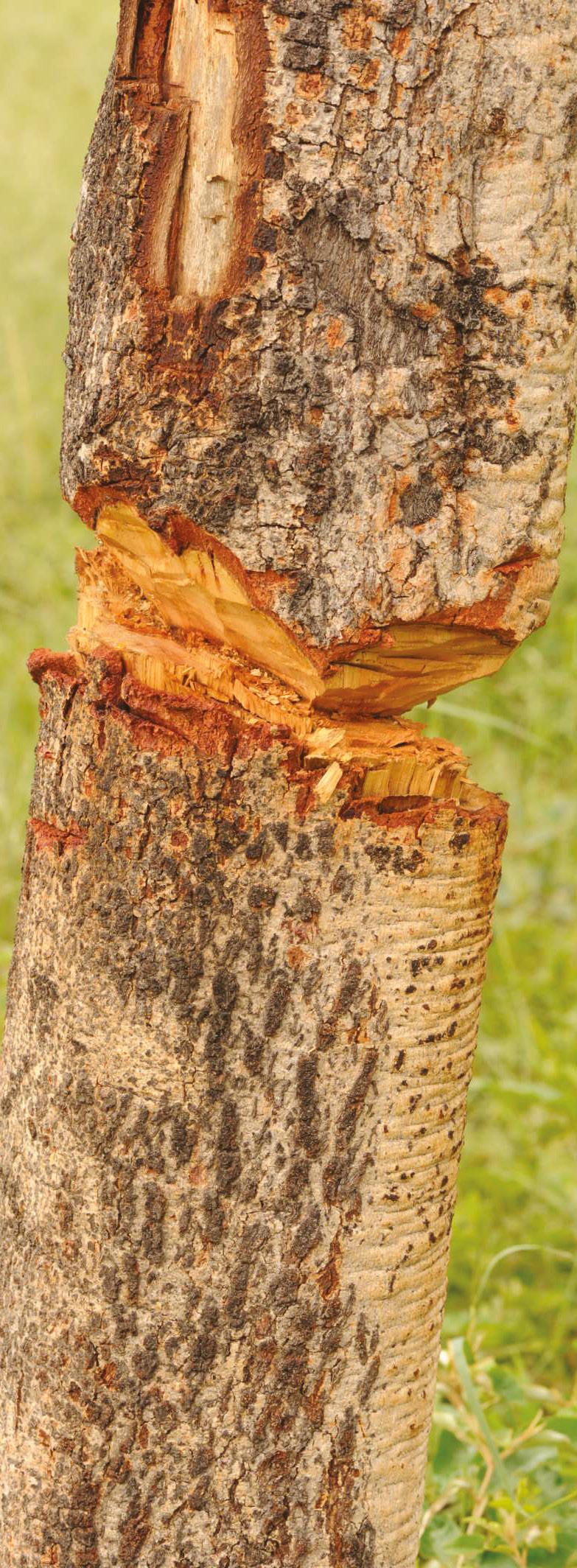
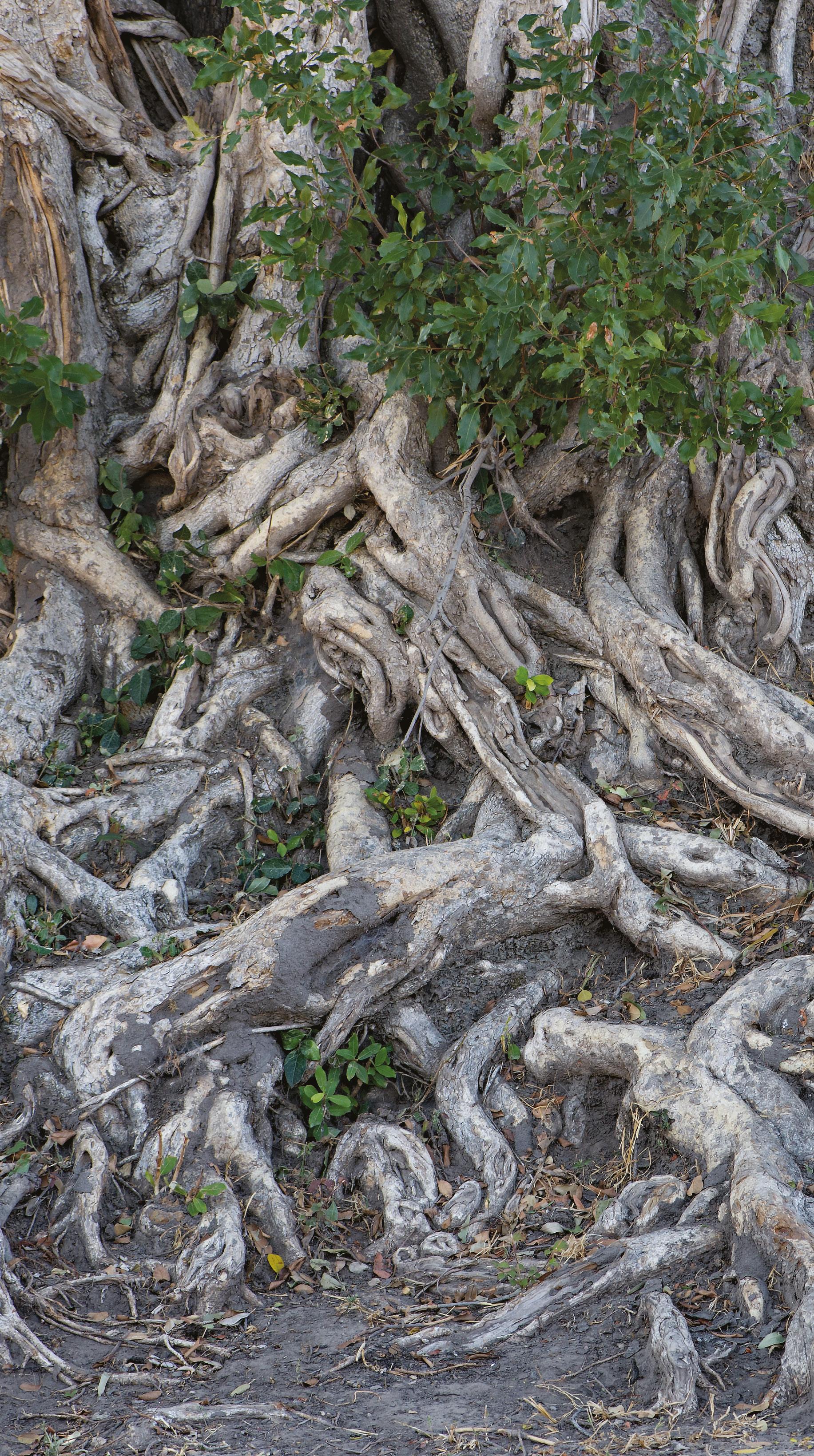
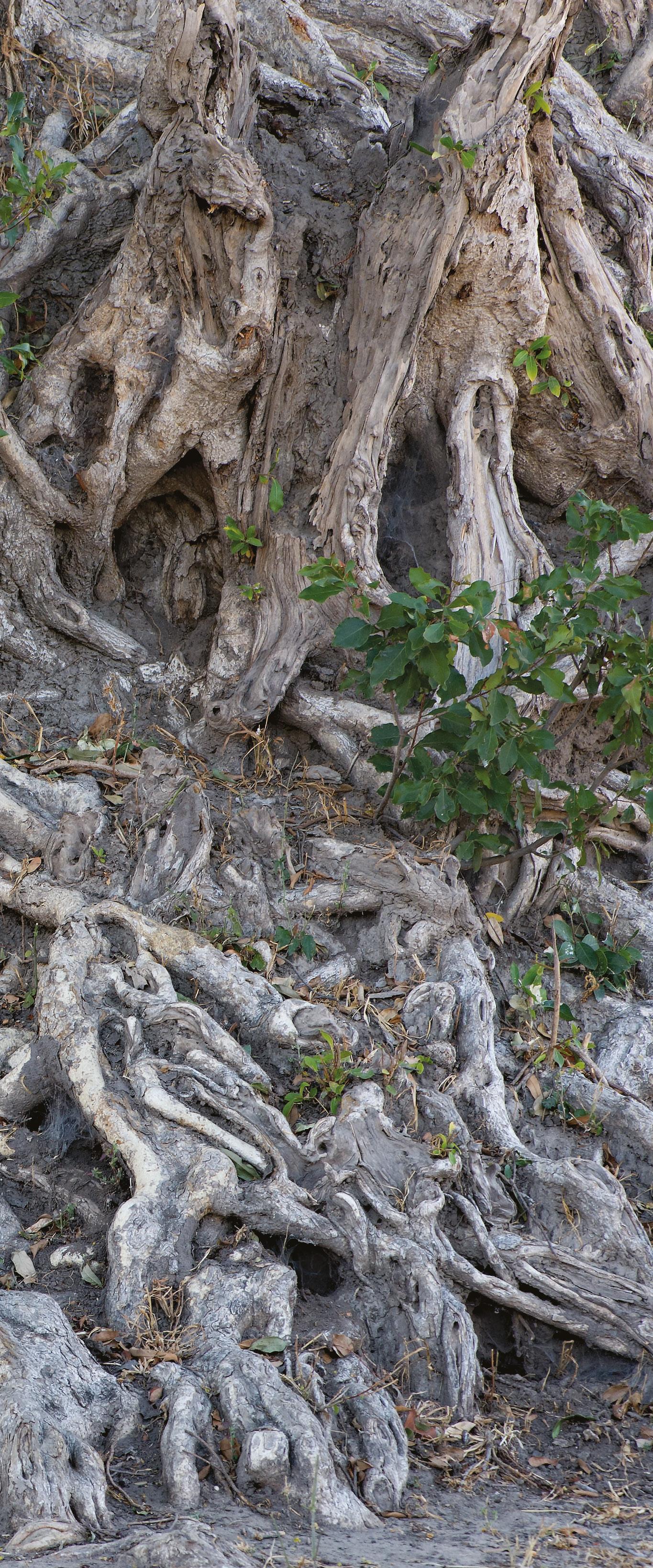
The importance of trees cannot be overemphasised, be it for their beauty, culinary value, supporting wildlife or food and shelter. This is not to mention the environmental importance of producing oxygen to all the living creatures of the world.
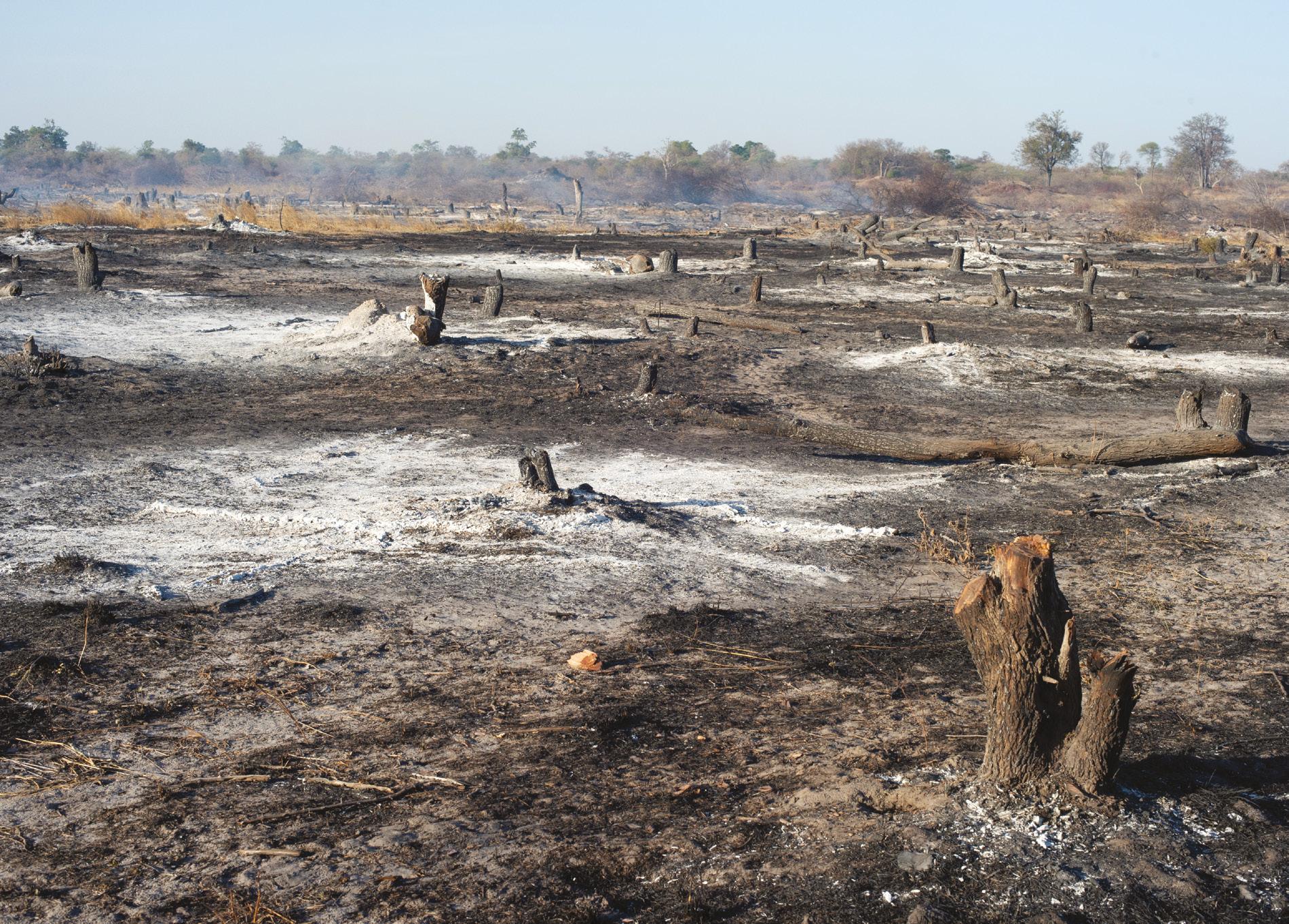
In some countries, trees are exploited for wood and to clear areas for farming. Fortunately, there are those few countries that have come to realise the importance of planting trees to replace those that have been overutilised and destroyed. The truth of the matter is that most countries still do not realise the damage that has been done and continue to damage the environment by overutilising this wonderful Godgiven treasure.
Two years ago, Helga Burger published a book (The Unbearable Beauty of Trees) on the most magnificent trees found in the Kavango and Zambezi regions. While compiling this book, she travelled through these regions over many years to document the trees. Sadly, after the book has been completed, many of these old friends – some of the most impressive and beautiful trees in these regions –have been chopped down. These included some of the largest specimens to be found in Namibia.
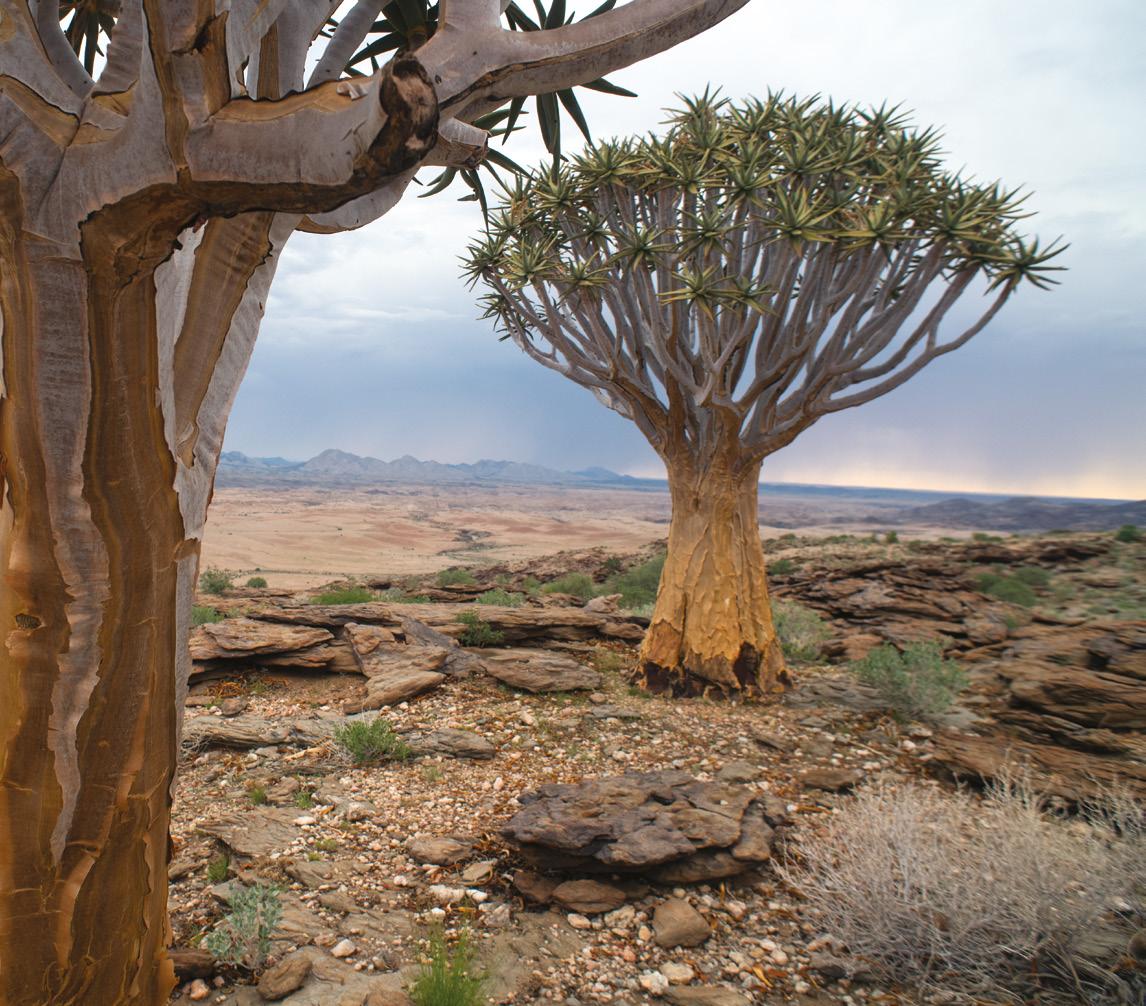
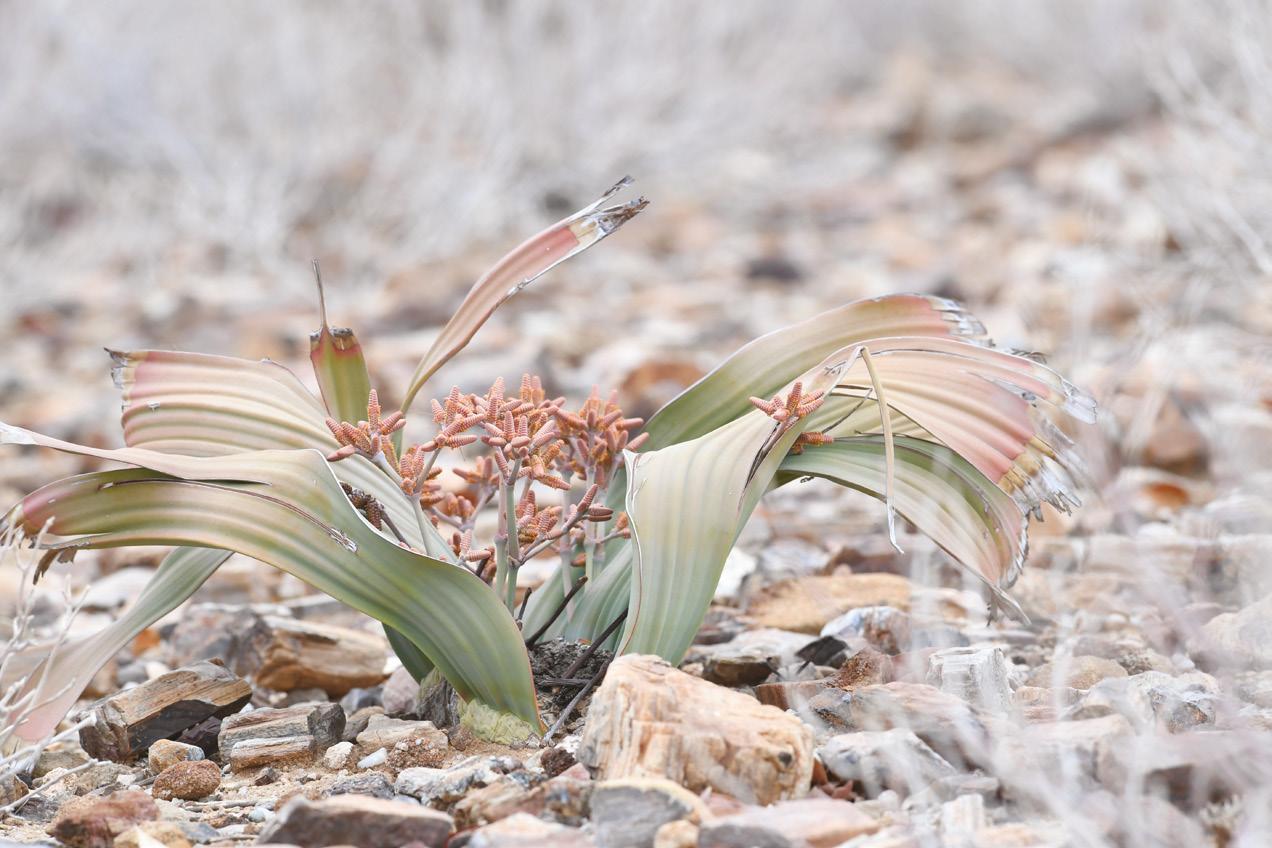
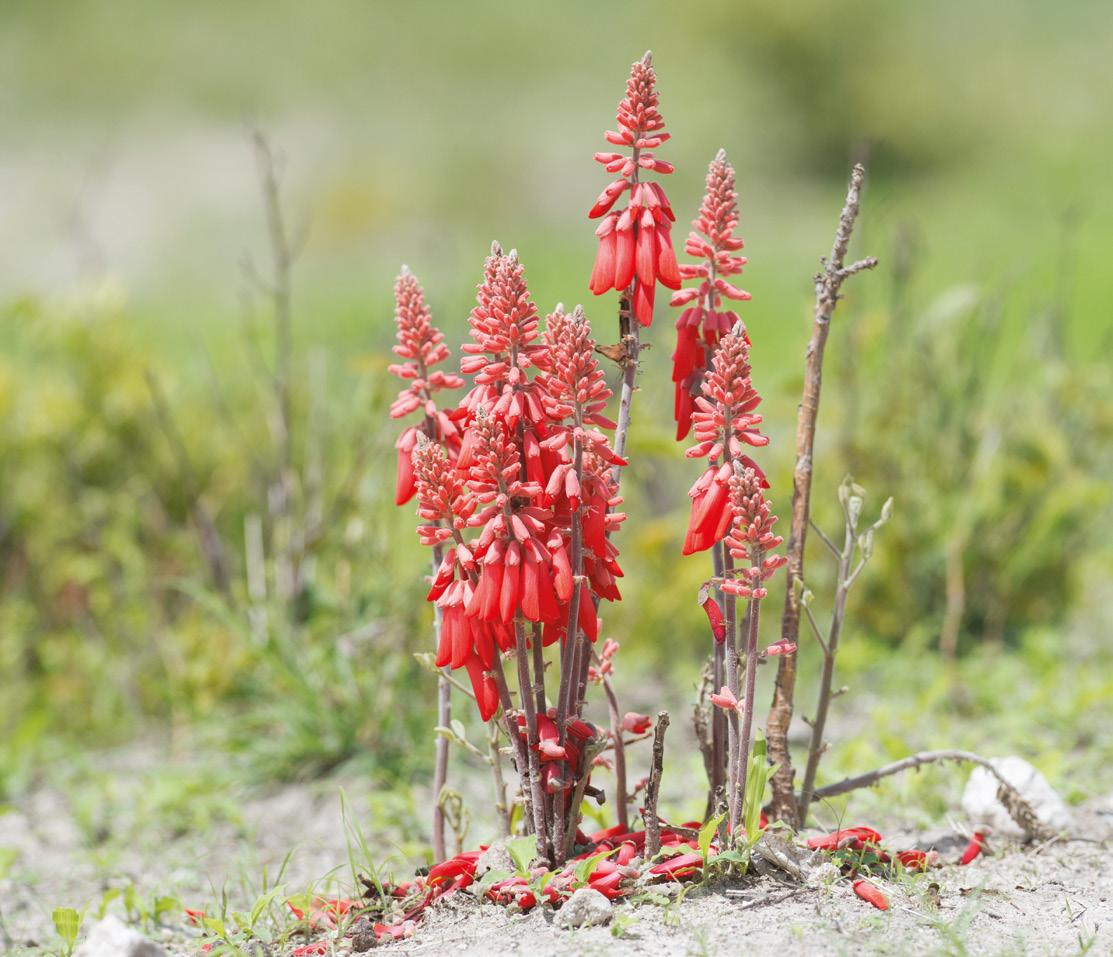
What can be done to prevent further damage? Carol Steenkamp, in cooperation with the National Botanical Research Institute (NBRI) and Directorate of Forestry of the Ministry of Environment, Forestry and Tourism (MEFT), has started the process of doing just that. Under the guidance of the Botanical Society of Namibia and implemented by the Dendrological Society of South Africa, the project will take formal shape through establishing the champion trees of Namibia in line with a similar project in South Africa.
The project will identify the largest specimens of different tree species, as well as trees of exceptional historical or cultural importance. Using standardised dendrological methods, each tree will be measured for stem circumference, height and crown spread. These data will be combined into a size index (SI), which will determine whether a tree qualifies for champion tree status. The result will be a scientifically credible, nationally recognised register that supports conservation, research and tourism.
Imagine we would buy into this project by documenting and listing all these specimens, which could then be updated regularly for tourists and the local Namibian population. Just think about it: we could present visitors not only with the big five animals, but the big 300 (or more) trees!
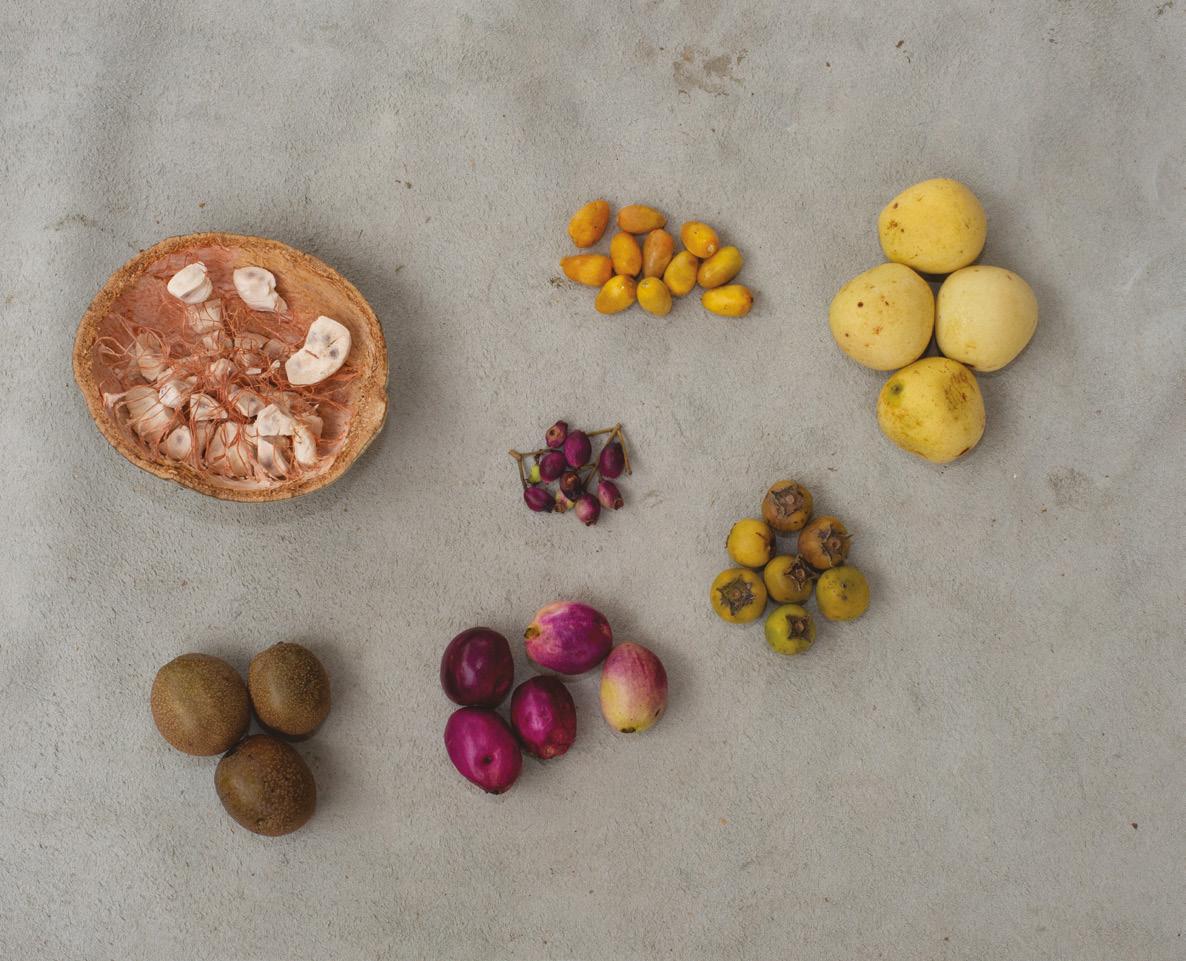
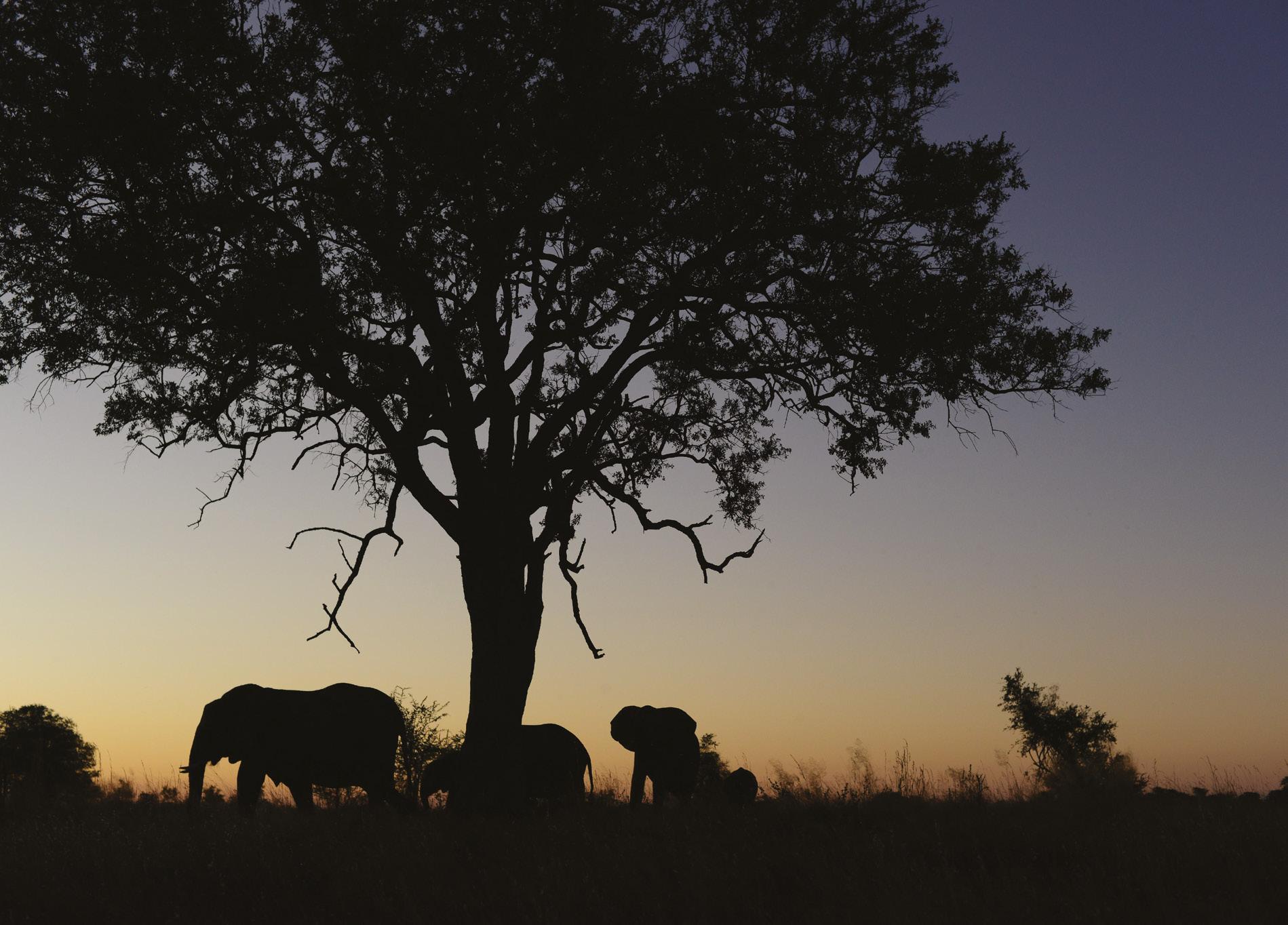
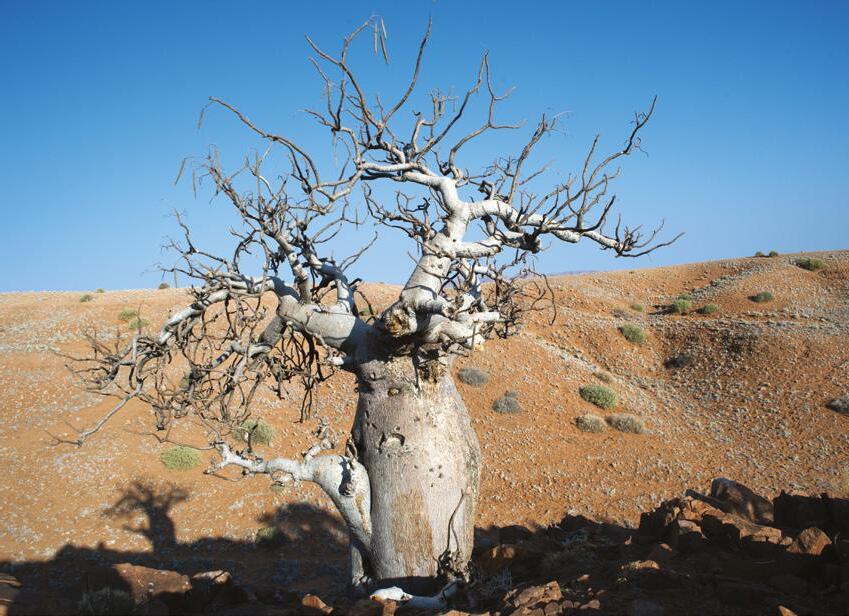
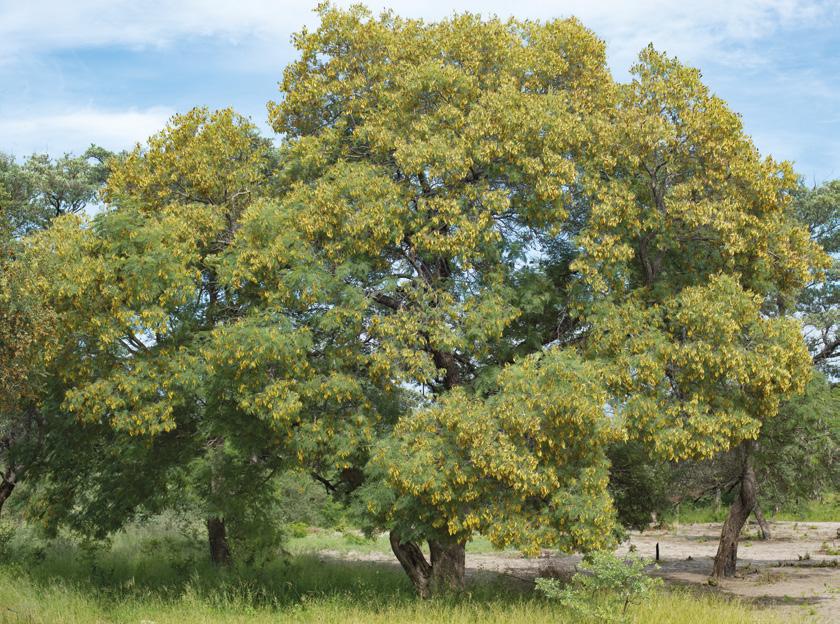
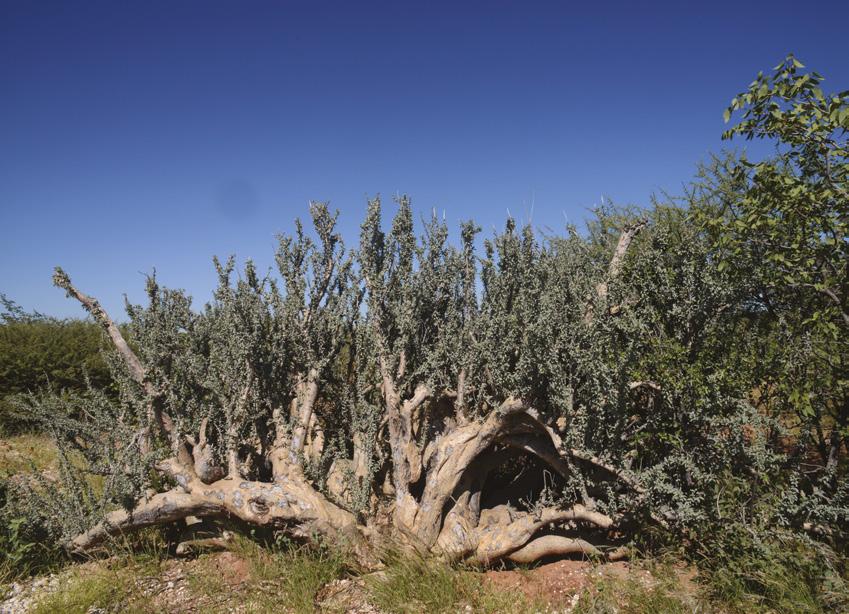
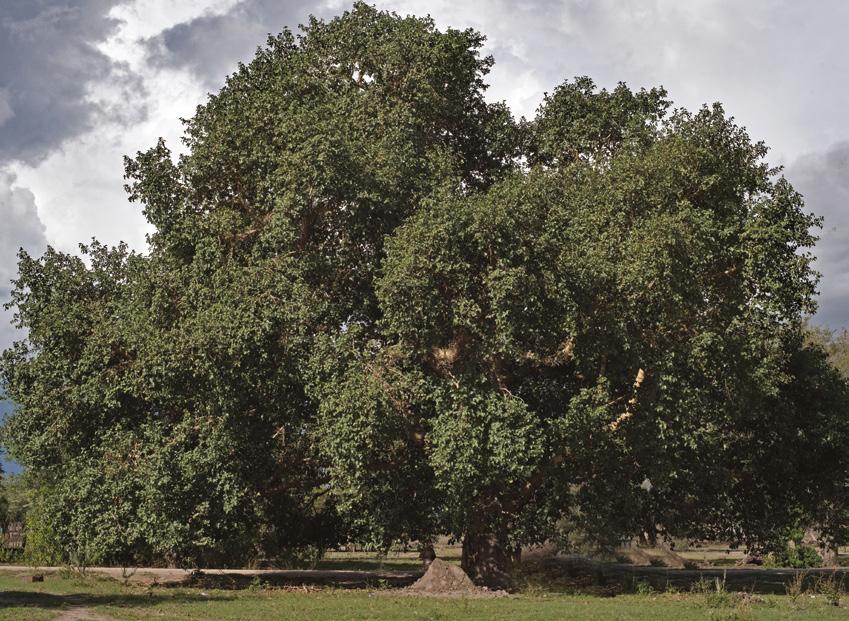
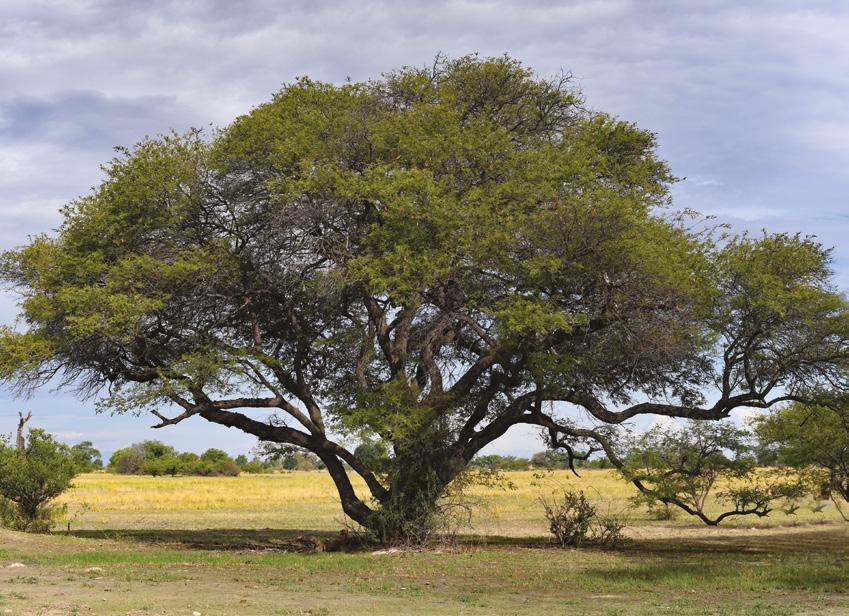
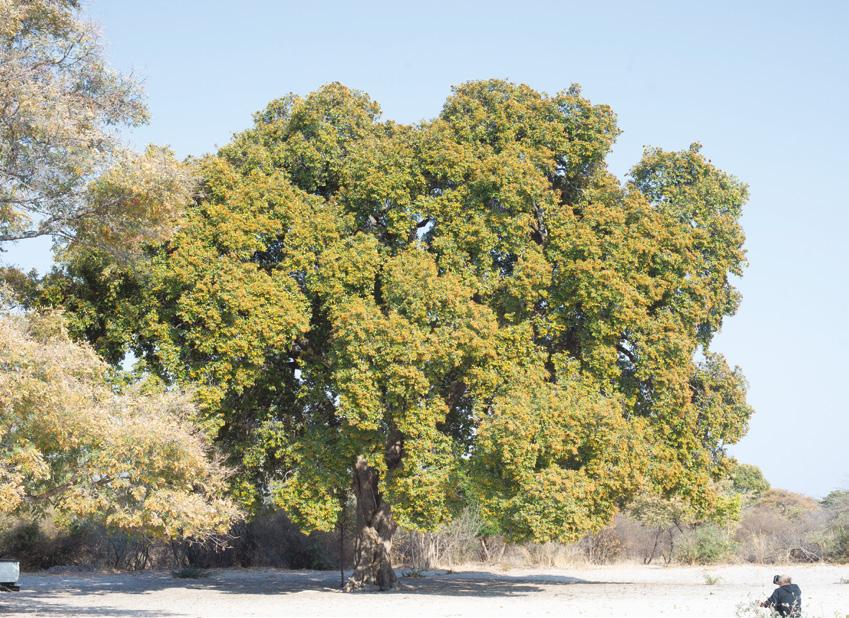
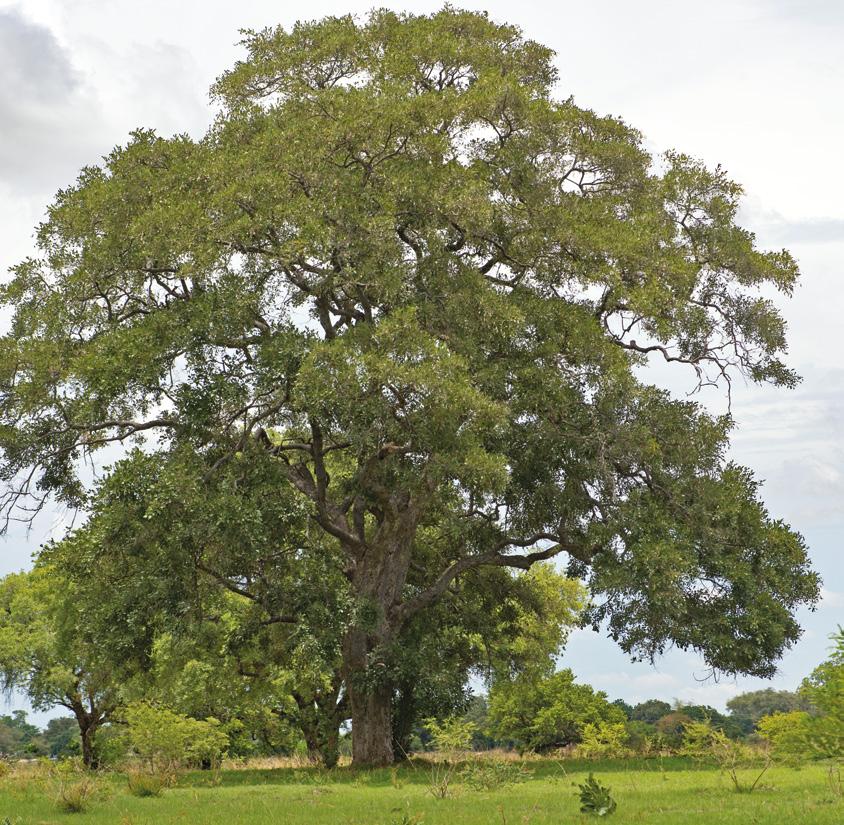
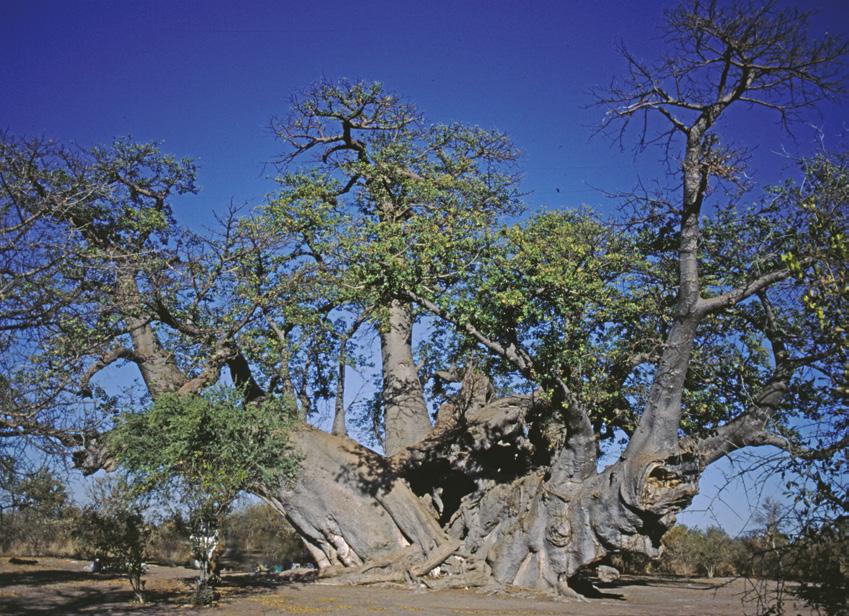
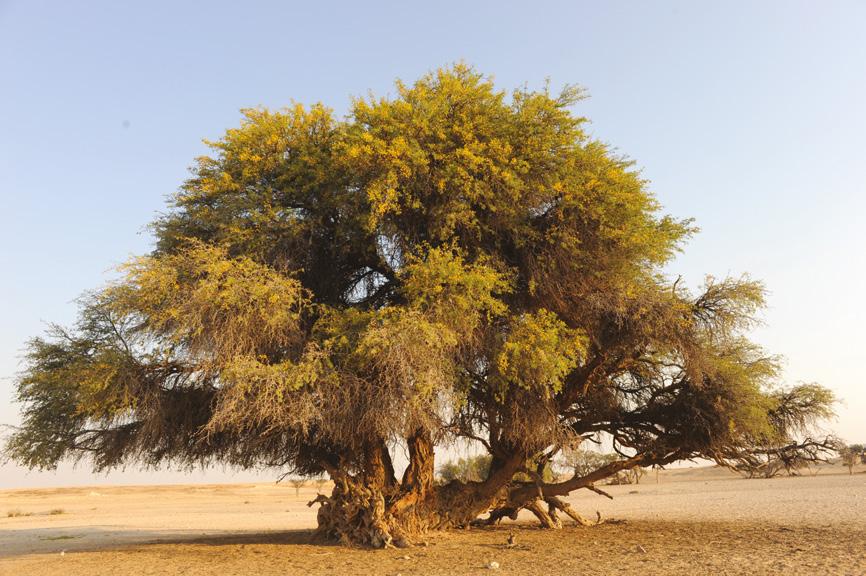
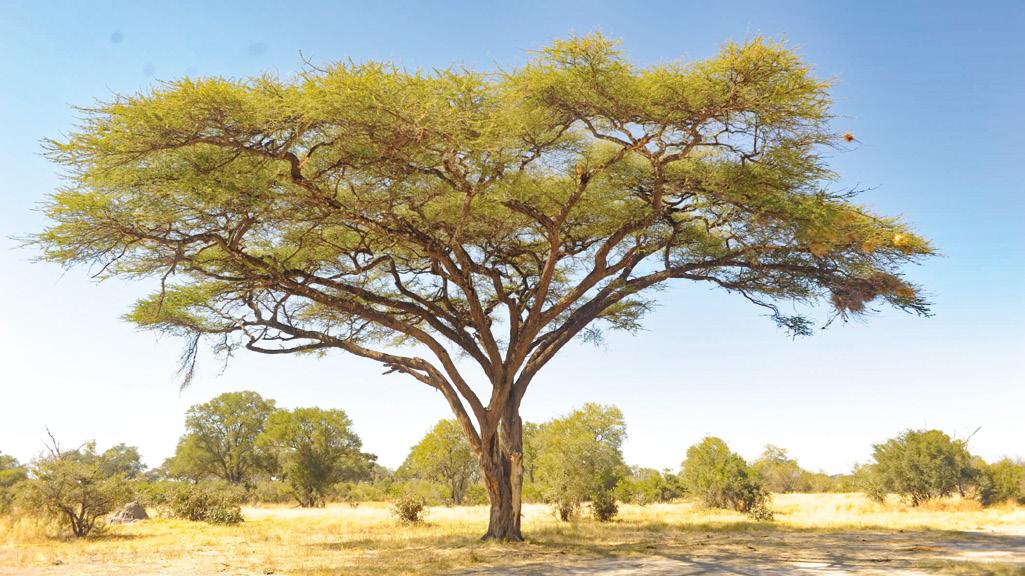
Who are the people that can take part in such a project? Who are the ones that can help to create a success story which will place Namibia firmly within this international network of dendrological research and conservation? Farmers and private landowners are often the long-term custodians of Namibia’s most remarkable trees. Many of these trees stand on communal land, protected over generations through responsible land stewardship. But apart from farmers, private and communal landowners, conservancy members, tourists, lodge owners, tour guides, conservation practitioners and nature enthusiasts can also participate in this wonderful project.
For the tourism sector, champion trees will represent a unique destination asset. Iconic trees already attract visitors to remote regions, supporting local economies and encouraging naturebased tourism. A nationally recognised register of champion trees would further strengthen Namibia’s tourism offering by highlighting living landmarks that are both authentic and irreplaceable.
Once the project has been formally launched, the idea is to place the enclosed nomination form at all Namibian tourist destinations, making it accessible to as many participants as possible. Once completed, the forms can be emailed to carolsteenkamp@gmail. com, braamha@gmail.com or nambotsoc@gmail.com.
For any enquiries or further details, any of the above addresses can be contacted. TN
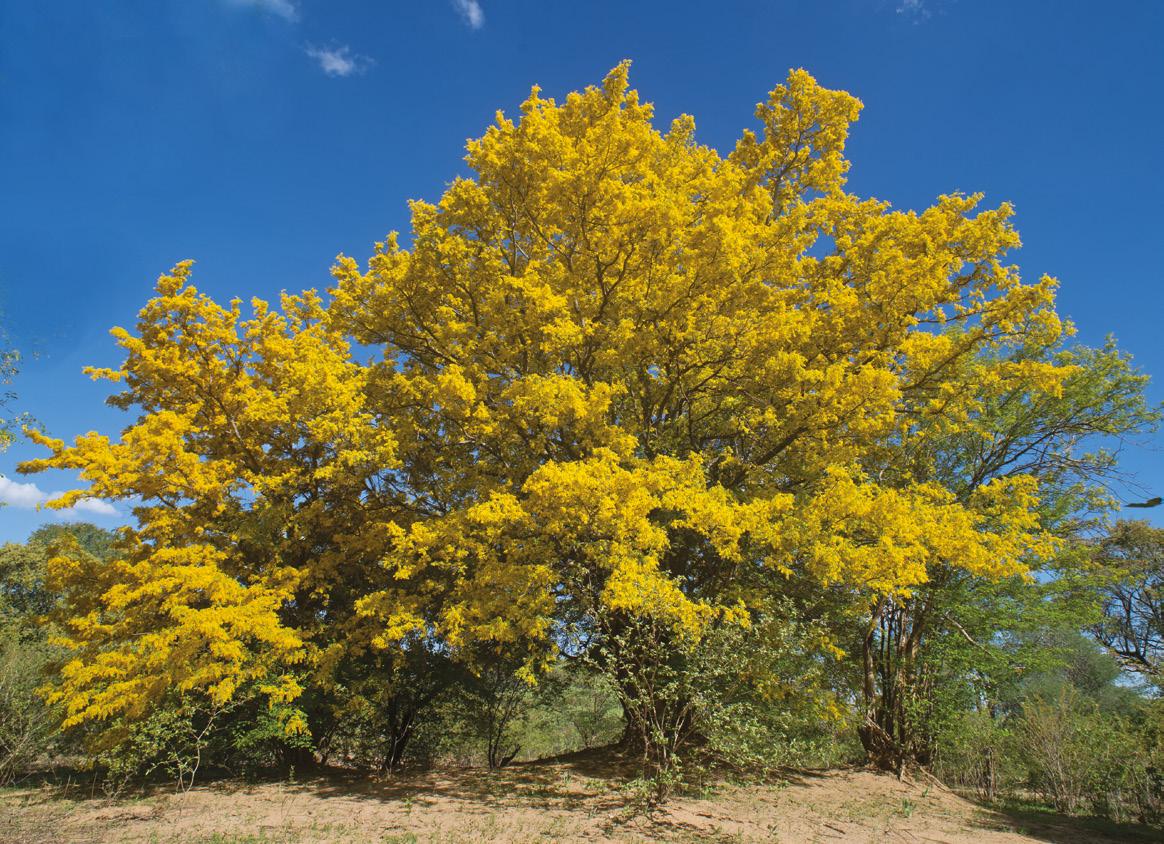

Do you know a tree that stands above the rest? The Botanical Society of Namibia invites you to help identify and celebrate Namibia’s most extraordinary trees.
CHAMPION TREES are recognised for their exceptional qualities – from remarkable size and age to cultural, historical, or ecological significance.
A tree may qualify based on:
• Outstanding biological features (height, trunk size, or crown spread)
• Age (typically over 100 years)
• Historical or heritage importance
• Cultural significance
• Tourism or economic value
• Unique beauty within the landscape
Scan the QR code to nominate a tree and complete the form with as much detail as possible. Don’t worry if you don’t have exact measurements –estimates are welcome.
All submissions are reviewed by a dedicated committee, and selected trees may be visited for verification before being awarded Champion Tree status.
For enquiries: nambotsoc@gmail.com
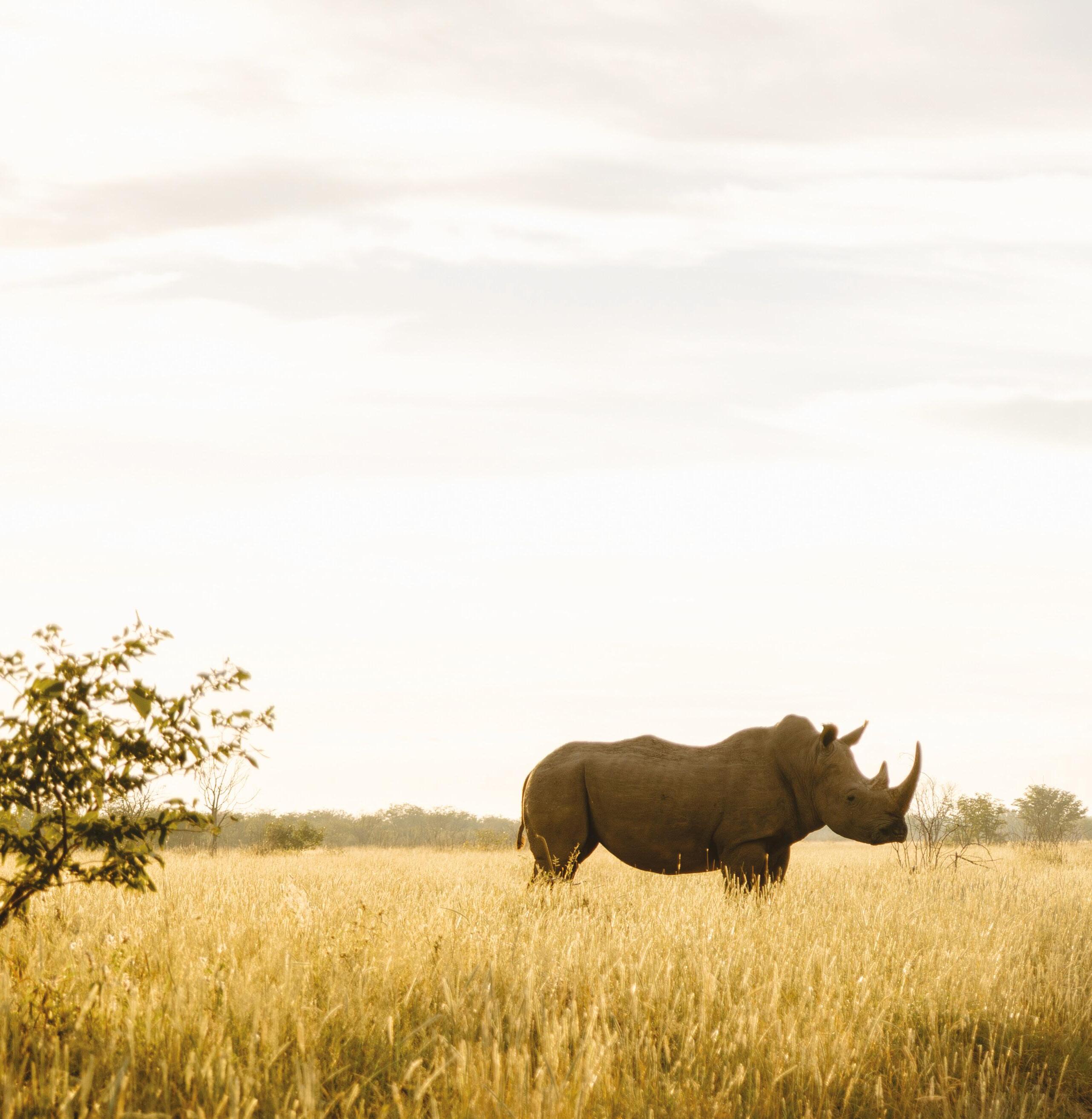
They do not rush to impress. They do not demand admiration. Instead, they exist quietly – steady, patient and deeply rooted in the land beneath them. And in doing so, they invite you to step closer, to slow down, to notice.
Ongava has always been one of those places.
Set along the southern boundary of Etosha National Park, Ongava Game Reserve is shaped by time rather than urgency. Open plains stretch toward distant horizons, hills rise gently from the landscape, and wildlife paths carve their stories into the dust.
It is a place built on patience – and on the understanding that meaningful change rarely arrives in dramatic gestures. It arrives in refinement.
And now, within Ongava’s portfolio of four lodges, two new names mark the continuation of that philosophy.
Encounter. Horizon.
Not reinventions. Not replacements. But natural extensions of experiences that have deepened over time.
There are places in Namibia that do not announce themselves loudly.
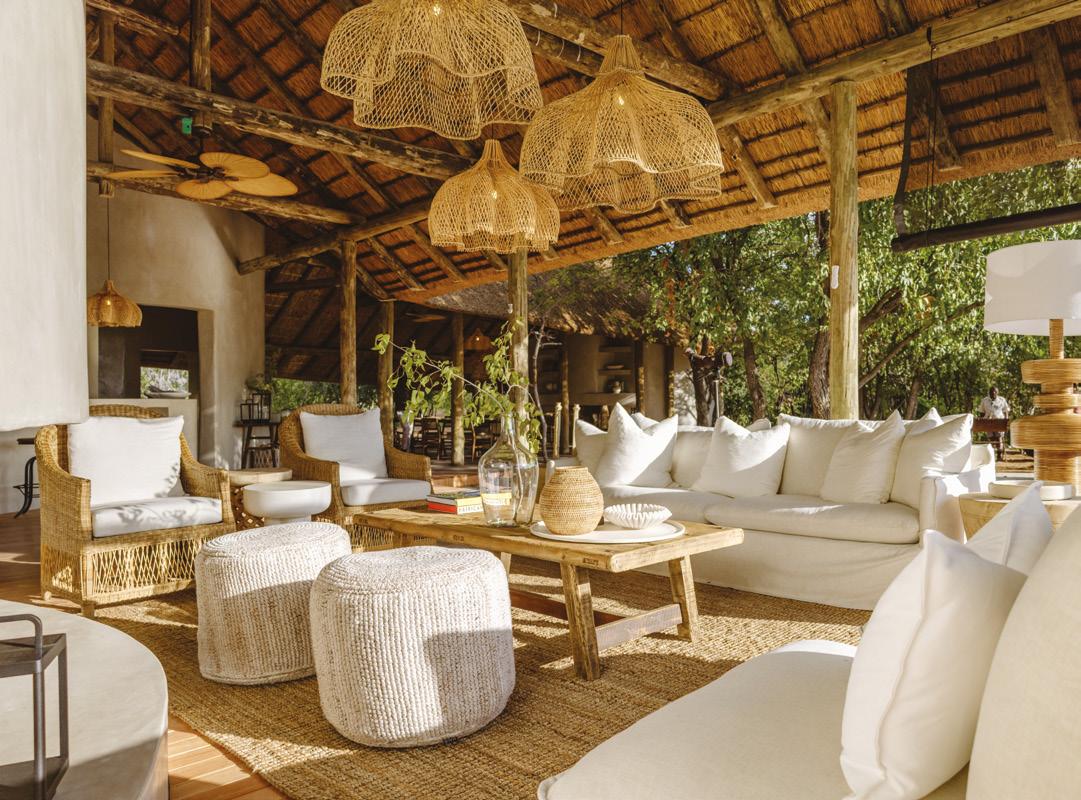
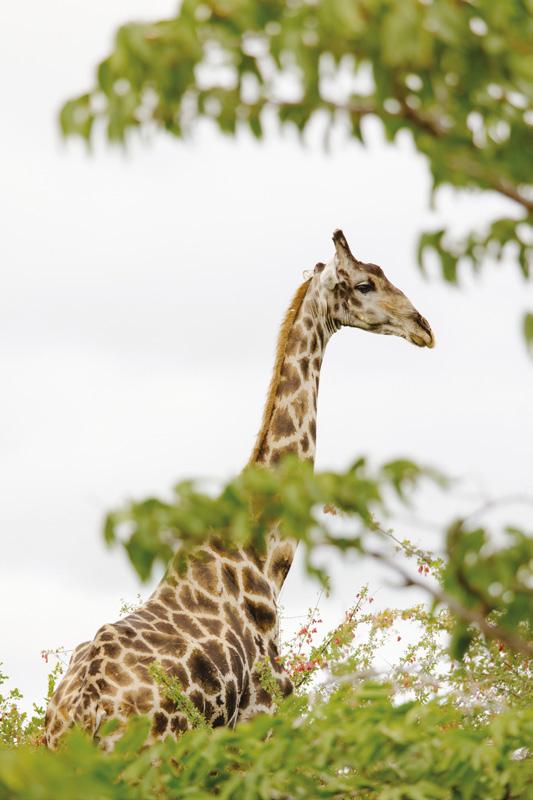
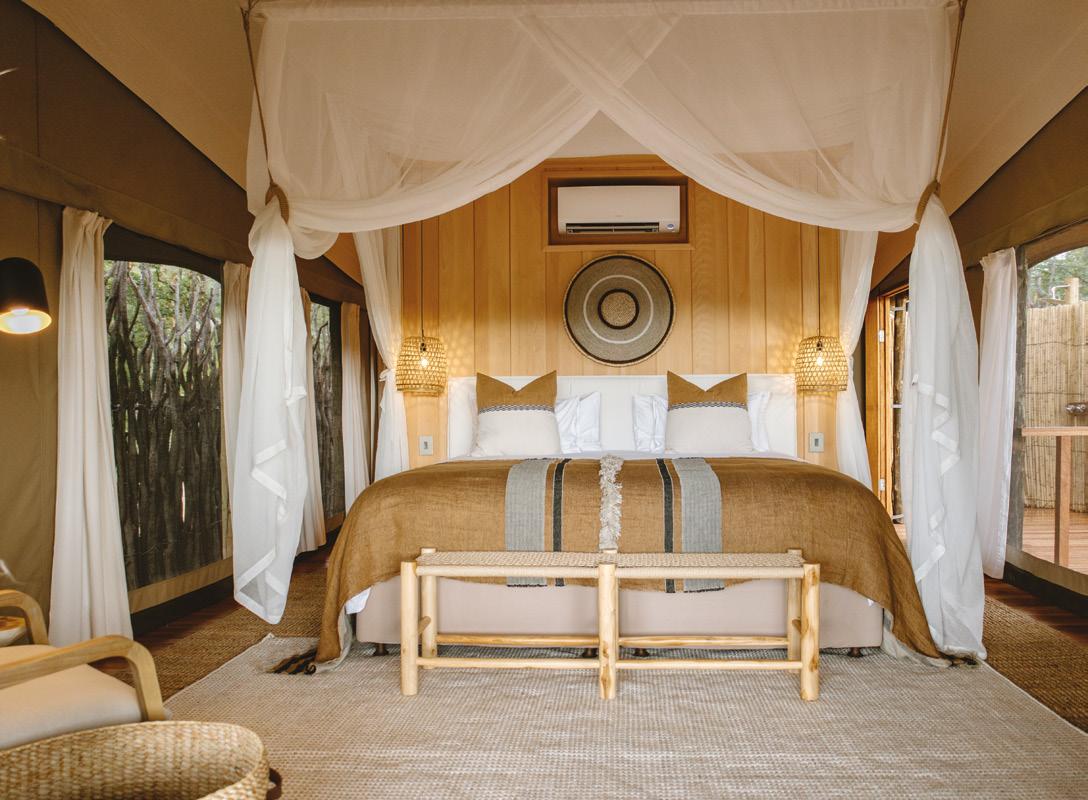
Ongava
Some camps place you beside the wilderness. Encounter places you inside it.
Formerly known as Ongava Tented Camp, Encounter by Ongava feels less like a transformation and more like a return to something elemental – a sharpening of purpose rather than a departure from the past. Tucked into a quiet valley, the camp settles gently into the landscape. Nine tents stand lightly among the bush, spaced with intention, offering comfort without separation.
Canvas walls breathe with the air. Light filters through branches. Sounds travel easily across open ground. Here, the wilderness does not feel staged or framed – it presses in softly from all sides.
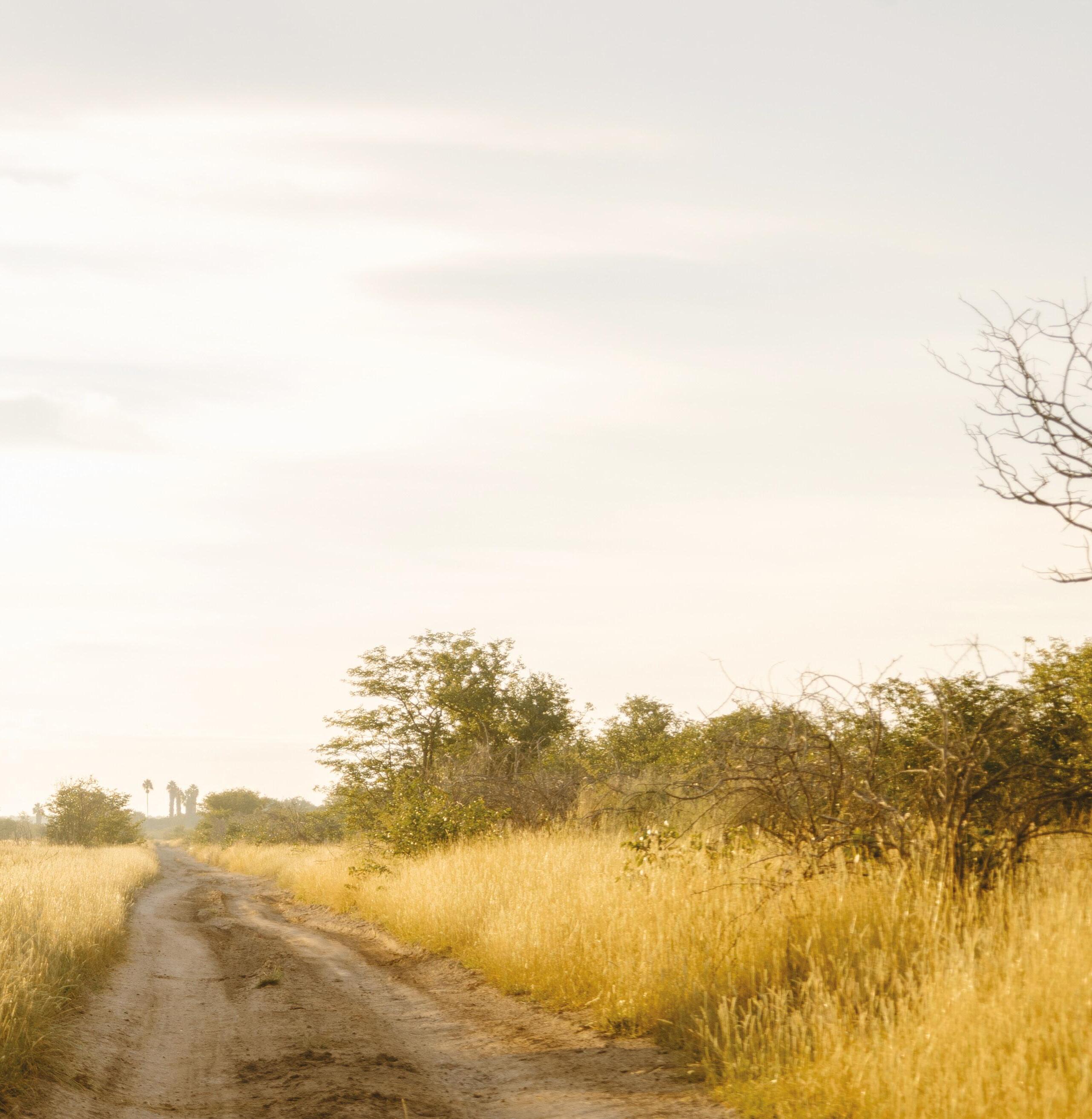
And it is often the smallest moments that stay with you longest. The sound of hooves moving across gravel at night. A rustle beyond canvas walls. The sudden stillness that falls before something unseen steps into view.
Wildlife does not perform here. It passes through. Life continues regardless of your presence, reminding you that you are not the centre of the story – only a witness to something far older.
Returning to Encounter after its thoughtful rebuild, that philosophy feels preserved, even strengthened. Comfort is present, certainly, but never overwhelming. Stillness remains central. Space is respected.
This is safari stripped of excess and returned to its essentials. And in a world increasingly shaped by speed, that kind of simplicity feels quietly luxurious.
Horizon by Ongava
If Encounter draws you inward, Horizon invites you to look outward.
Formerly known as Little Ongava, Horizon by Ongava introduces a perspective defined by elevation and space. Perched high above the plains, the lodge offers uninterrupted views that stretch endlessly toward Etosha’s distant edges.
From this vantage point, the landscape feels vast and uncontained. Movement unfolds slowly across the plains – elephants crossing open ground, antelope shifting with the light, lions resting in distant shade.
Here, experience is shaped by perspective.
Each villa stands apart as a private sanctuary, constructed from materials that echo the surrounding environment – stone, wood, glass and thatch working in quiet harmony. Floor-toceiling views dissolve the boundary between indoors and out, allowing the wilderness to remain ever-present.
Time moves differently here.
Mornings arrive slowly, sunlight spilling across the horizon. Afternoons stretch into long pauses of rest. Evenings soften into colour and quiet before night settles across the landscape.
With only three villas, Horizon remains deeply intimate. Every stay feels personal. Every moment feels unhurried.
Its official unveiling on 11 April, led by Namibia’s Minister of Environment, Forestry and Tourism, Honourable Indileni Daniel, marked more than the reopening of a lodge. It reflected a shared commitment to conservation, responsible tourism and the long-term stewardship of Namibia’s landscapes.
The name Horizon feels fitting.
Not symbolic of departure – but of possibility.
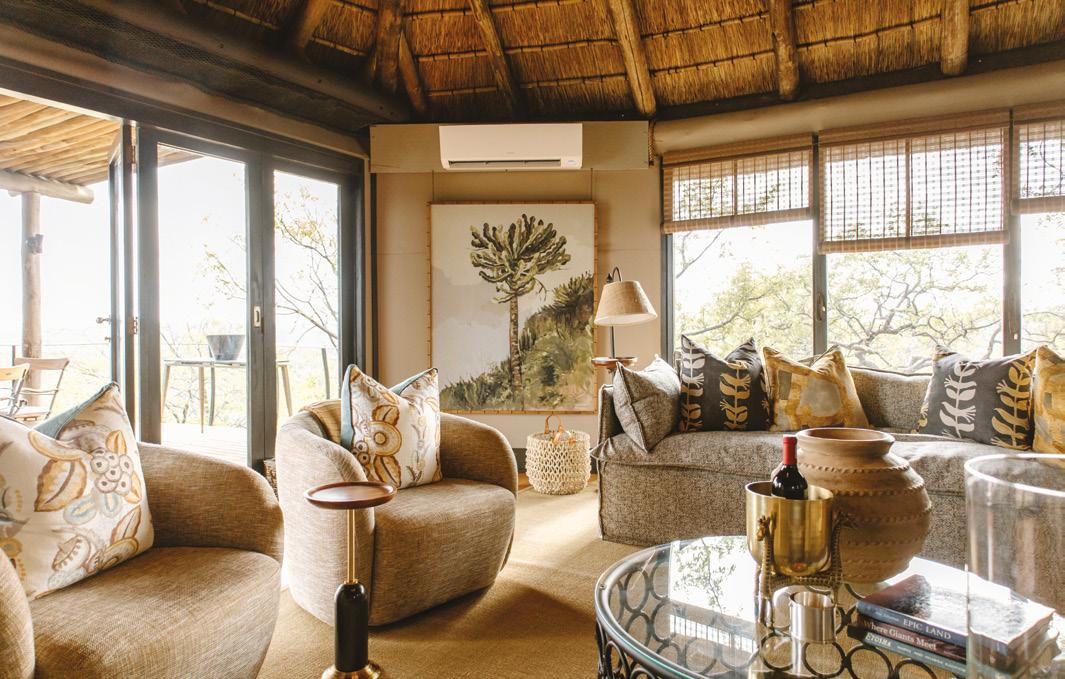
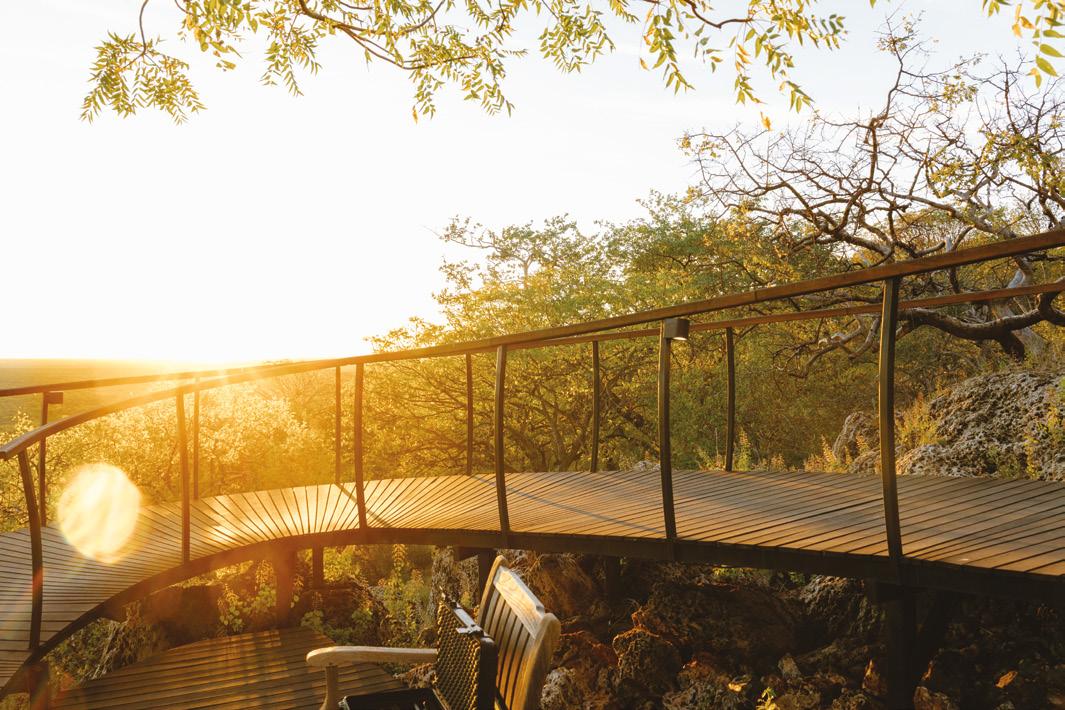
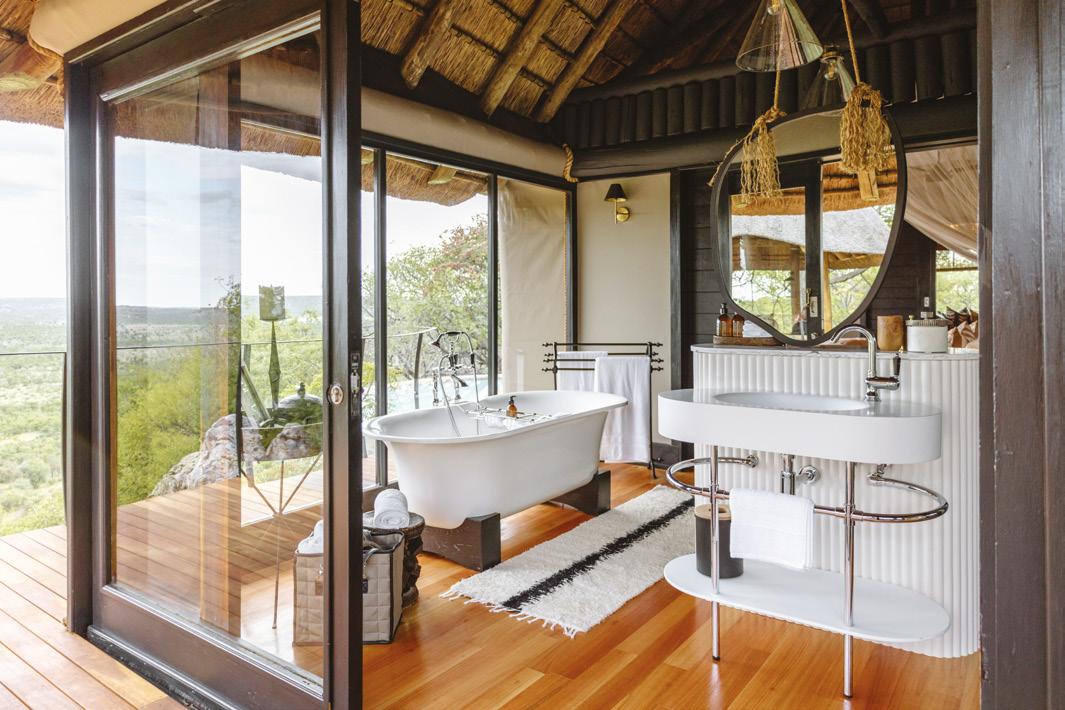
Together, Encounter and Horizon represent more than individual lodge transformations. They reflect Ongava’s broader commitment to evolving responsibly while protecting what matters most.
Behind the visible changes lies continued investment in the reserve itself – from renewable energy systems to improved infrastructure and upgraded staff facilities. These improvements are not isolated upgrades, but part of a long-term vision rooted in responsible, lowimpact tourism.
That philosophy has guided Ongava from the beginning.
Long before luxury travel became synonymous with wilderness, Ongava’s founders chose restoration over exploitation. They recognised that conservation required patience – allowing land to recover, wildlife to return and ecosystems to rebuild.
Today, Ongava stands as proof that tourism and conservation can exist not as competing forces, but as partners.
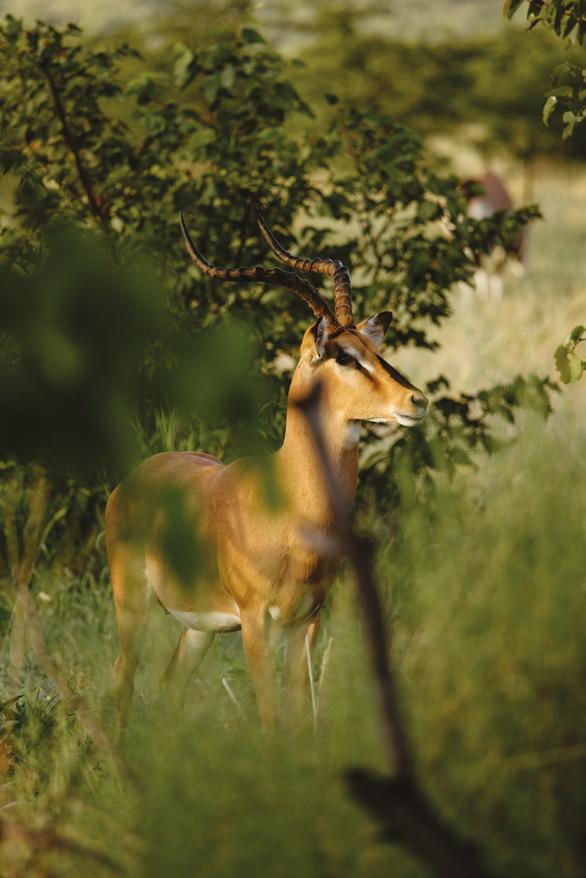
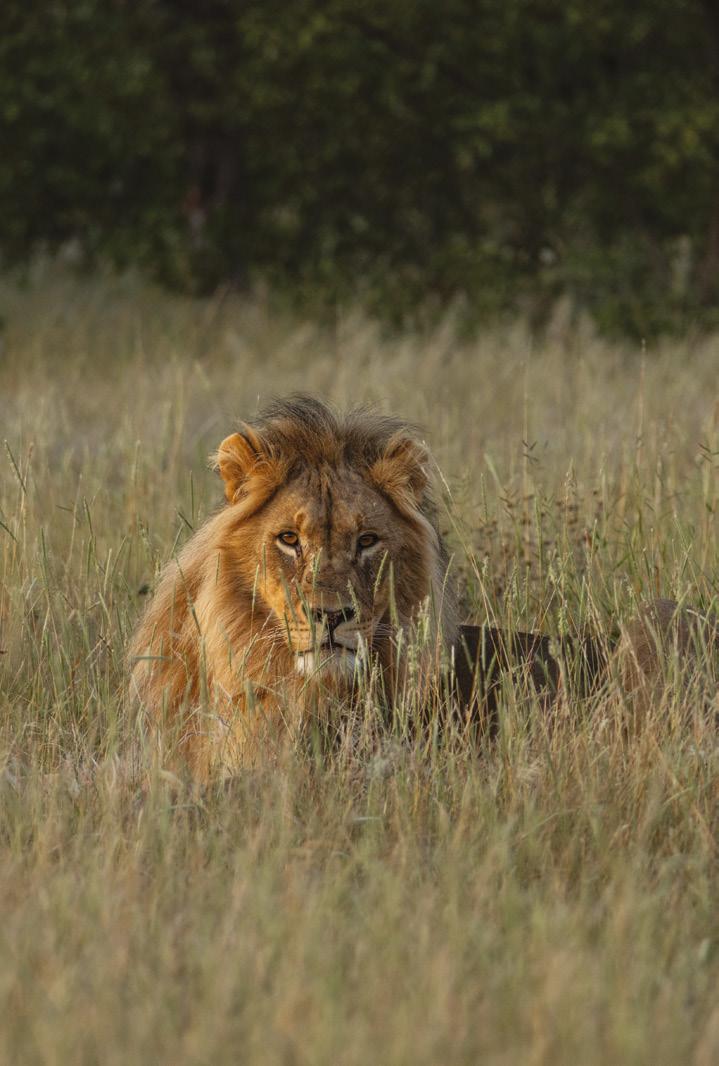
What makes places like Ongava memorable is not only the wildlife sightings. It is the subtle recalibration that happens within you. You begin to notice small things – patterns in the sand left overnight, the layered sounds of birds greeting morning, the shift in light across distant hills.
Time slows.
Not because schedules disappear, but because movement becomes the new measure of passing hours. A morning coffee taken as the bush wakes. A guide switching off the engine to let silence settle. A long pause before something emerges from the distance.
This is not tourism designed to impress.
It is tourism designed to connect.
Across both Encounter and Horizon, luxury reveals itself differently. It is no longer only about comfort or design –though both are present in abundance. Increasingly, luxury is about stillness. About time. About the ability to exist within the rhythm of the natural world.
At Encounter, you move inward – closer to sound, instinct and presence. At Horizon, you move outward – toward space, reflection and perspective.
Together, they form two viewpoints within one landscape. Two ways of experiencing the same wilderness.
Ongava’s four lodges remain distinct, yet united by one enduring vision – that conservation and experience must evolve together.
The renaming of Encounter and Horizon marks an important moment in that journey. Not a conclusion, but a continuation. Because ultimately, places like Ongava remind us of something deeply reassuring.
That wilderness still exists in vast, unbroken spaces. That there are people willing to protect it. That conservation is not an abstract idea, but a daily practice shaped by patience and care. And whether you experience Ongava from within a valley or high above the plains, the feeling remains the same.
Some journeys change how you move.
Others change how you see.
At Ongava, perspective is everything. TN
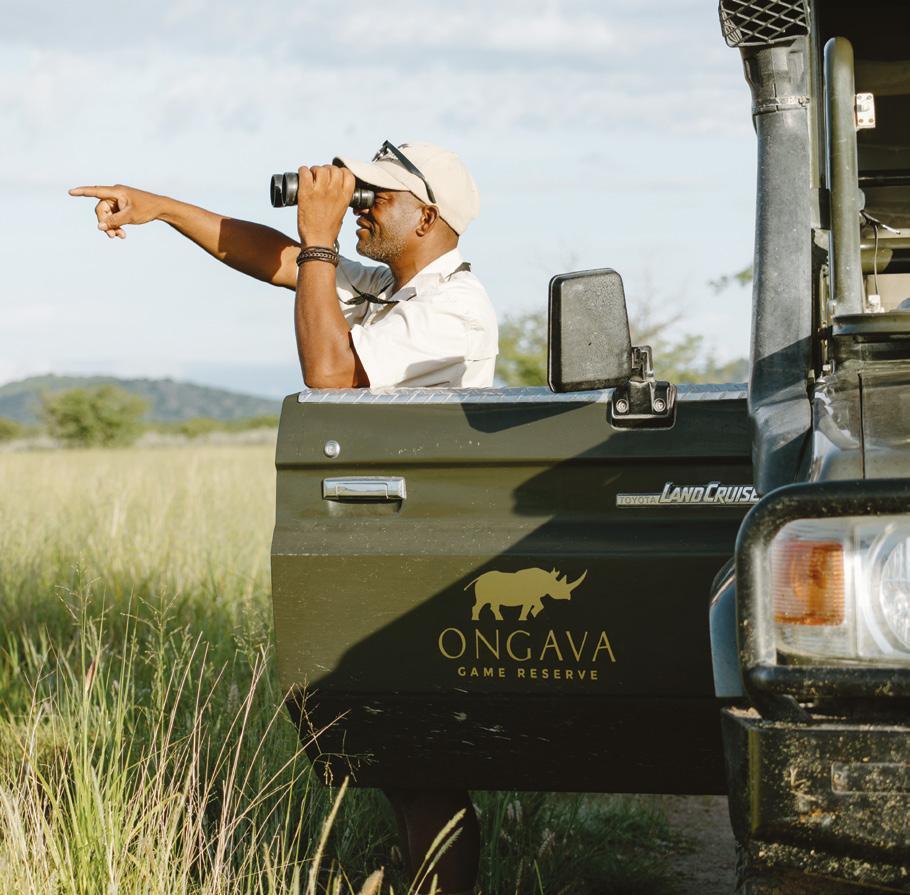
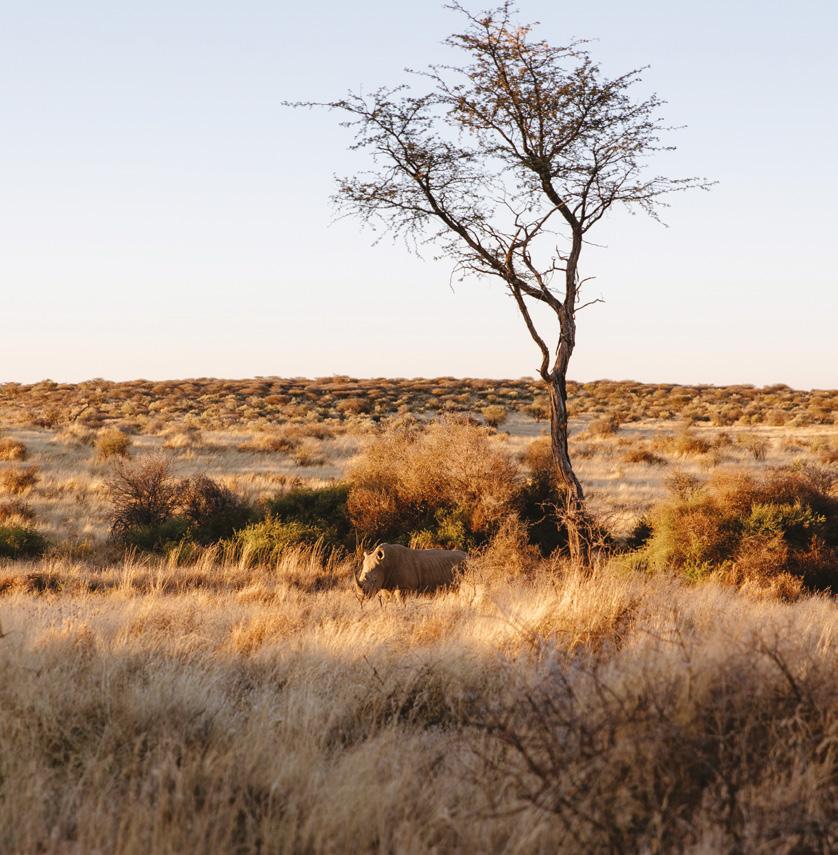
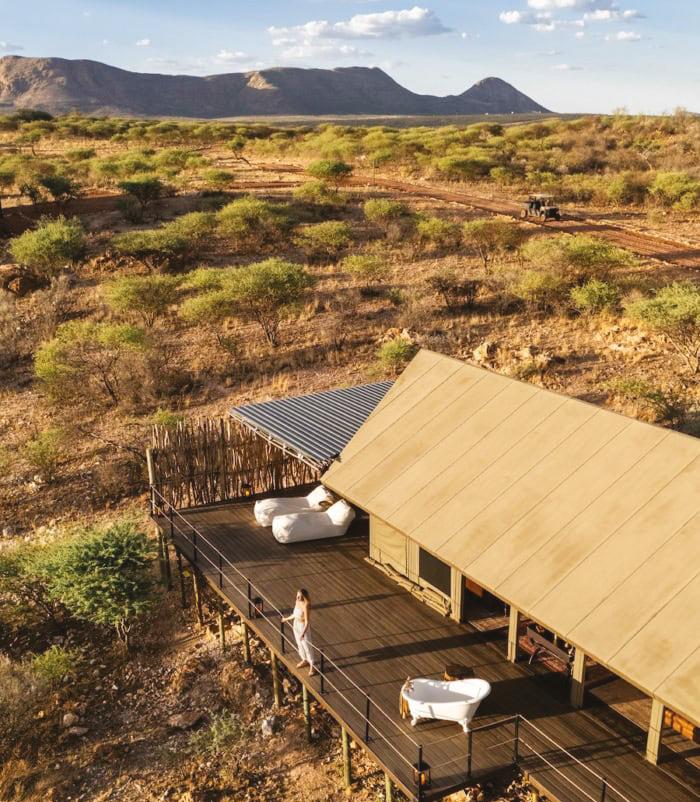
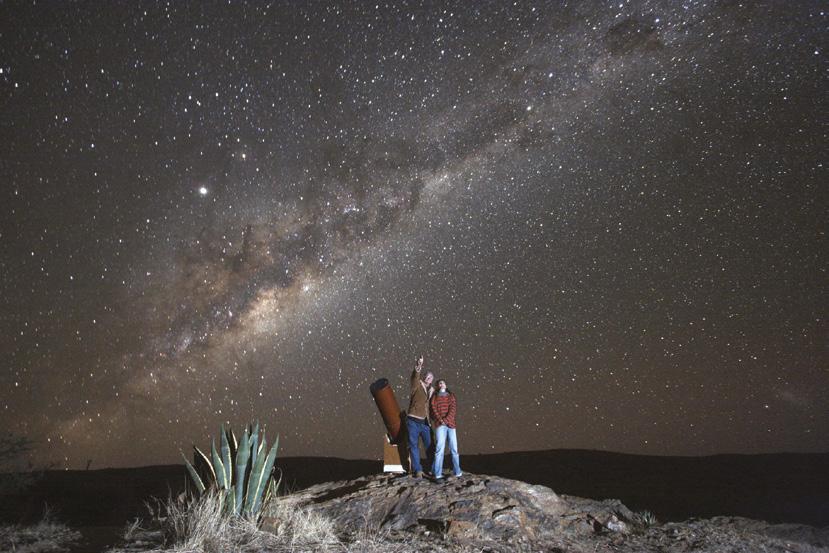
Years ago, while backpacking in Tanzania, hosts and friends would say this parting blessing as I would leave their homes: “Safari salama rafiki!” Safe journey, friend. Go well. This was always followed by “Tutaonana” – we will see each other again. One can argue that, in most parts of Africa, goodbyes are always open-ended and rarely final.
In Swahili, the word “safari” means a journey of any kind – not just a wildlife expedition with open 4x4 pop-top Land Cruisers and starchy khaki apparel. It is so much more than that.
The word conveys the uninterrupted loop of multiple sojourns and seasons, surprise reunions with fellow travellers and strangers turning kindred: “Well, here we meet again!”
Etymology aside, this is, in essence, how it feels to travel in Namibia. Here, one should discard a rigid itinerary and embrace slow stops, quiet roads, relentless midday sun and the gentle, outstretched shade of a faithful camelthorn tree. The strange, yet welcoming bounty of desolate, mysterious landscapes needs to be discovered along the way.
Travelling Namibia is about the journey itself as much as the destination, moving from one remote place to the next and lingering longer for one more spontaneous roadside conversation.
Windhoek, though the capital of Namibia, is often overlooked as a mere transitory town, en route to the rugged, rural hinterlands the country has to offer. That has changed in recent years. The city, ensconced and cradled in a swoop of hills, has plenty of spaces that warrant more than one night’s stay.
Here is a list (by no means extensive) of a few places, ranging from more personal countryside stays to lavish adventures, that are still far enough from the urban scuttle, where guests can gaze at a dizzyingly brilliant Namib night sky with countless stars, and yes, even hop onto the back of a rumbling, moss-green Land Cruiser and see the wild up close:
Set within a vast private reserve just outside Windhoek, this conservation-led lodge pairs understated luxury with meaningful encounters in the wild. It offers rare, behind-thescenes access to Namibia’s wildlife rehabilitation efforts, creating a stay that is as purposeful as it is immersive. Guests can enjoy game drives, carnivore experiences, rhino tracking, horseback safaris and guided walks across the reserve.
At the foot of the Auas Mountains, this quietly charming bush camp delivers a pared-back, nature-first escape rooted in simplicity and space. The atmosphere is intimate and unpolished in the best sense, inviting guests to slow down and reconnect with the land. Days unfold through hiking, mountain exploration, relaxed farm-style encounters and fireside evenings.
A striking fusion of European elegance and African aesthetic, this expansive private lodge offers a polished, design-forward safari experience. Its carefully curated activities balance adventure with indulgence. Guests can explore with game drives, e-biking and horseback safaris, or unwind with spa treatments, tennis and sundowners.
Perched high on the Gamsberg, Hakos is a remote sanctuary where silence, altitude and starlight define the experience. Renowned for its exceptional night skies, it draws astronomers and travellers seeking a deeper connection to the cosmos and the desert below. Activities centre on guided stargazing, observatory sessions, 4x4 explorations and contemplative hikes.
GOCHEGANAS PRIVATE NATURE RESERVE AND WELLNESS VILLAGE
Elevated above a sprawling private reserve, GocheGanas blends safari tradition with a refined wellness offering. The property’s serene setting and expansive views create a sense of retreat, where wildlife encounters meet restorative calm. Guests can enjoy game drives, guided
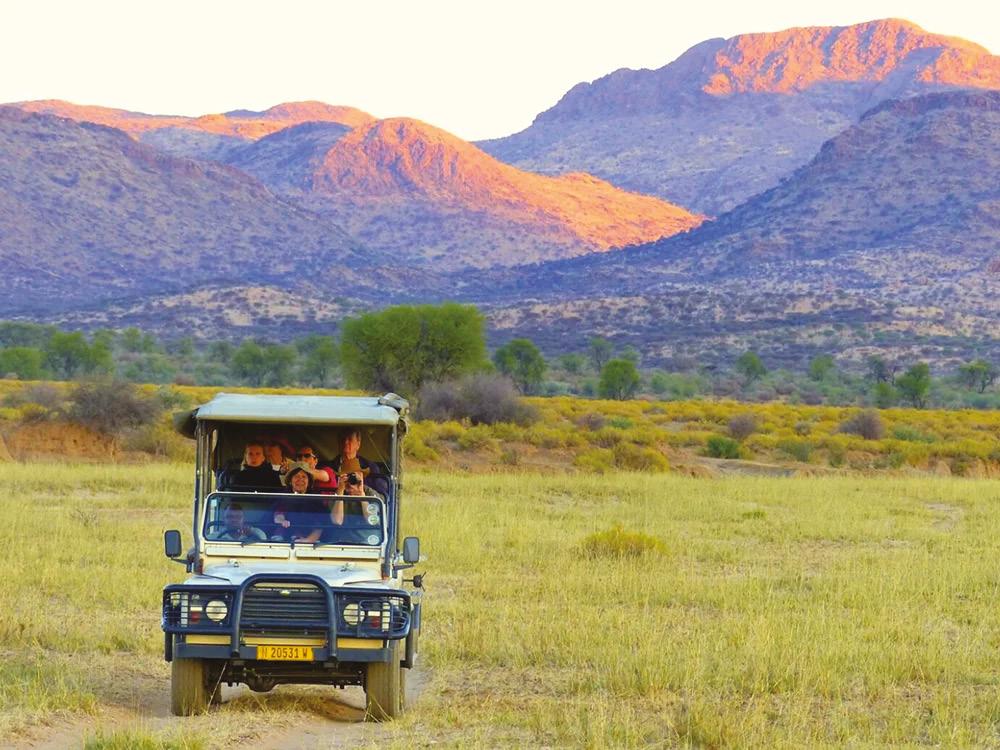
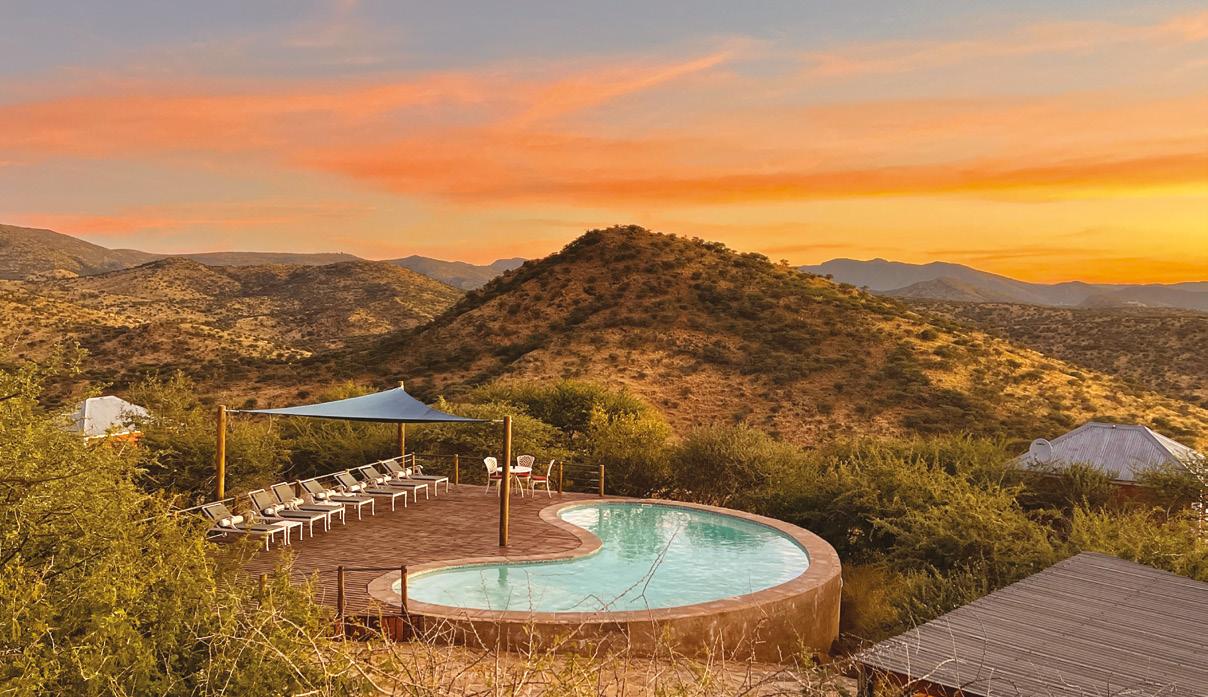
walks, mountain biking, birdwatching and a full suite of spa and wellness experiences.
RIVER CROSSING LODGE
Just beyond the city’s edge, River Crossing Lodge offers a seamless transition from urban energy to bushveld tranquillity. Its elevated position provides sweeping views over the surrounding landscape, making it an ideal first or final stop in Namibia. Experiences include guided nature walks, game drives and horseback excursions through the reserve.
OKAPUKA SAFARI LODGE
Set within a vast private reserve just a 30-minute drive from Windhoek, Okapuka captures the essence of a classic safari escape with effortless elegance. Wide-open savannahs dotted with camelthorn trees create a timeless backdrop for close-up wildlife encounters. Guests can enjoy game drives tracking rhino and plains game, guided walks, birdwatching and relaxed sundowners during the cooler winter months.
Safari salama! Namibia’s journeys rarely end where they begin, yet so often they find their way back to Windhoek – the city between the wild and the patiently waiting, wide open road. TN
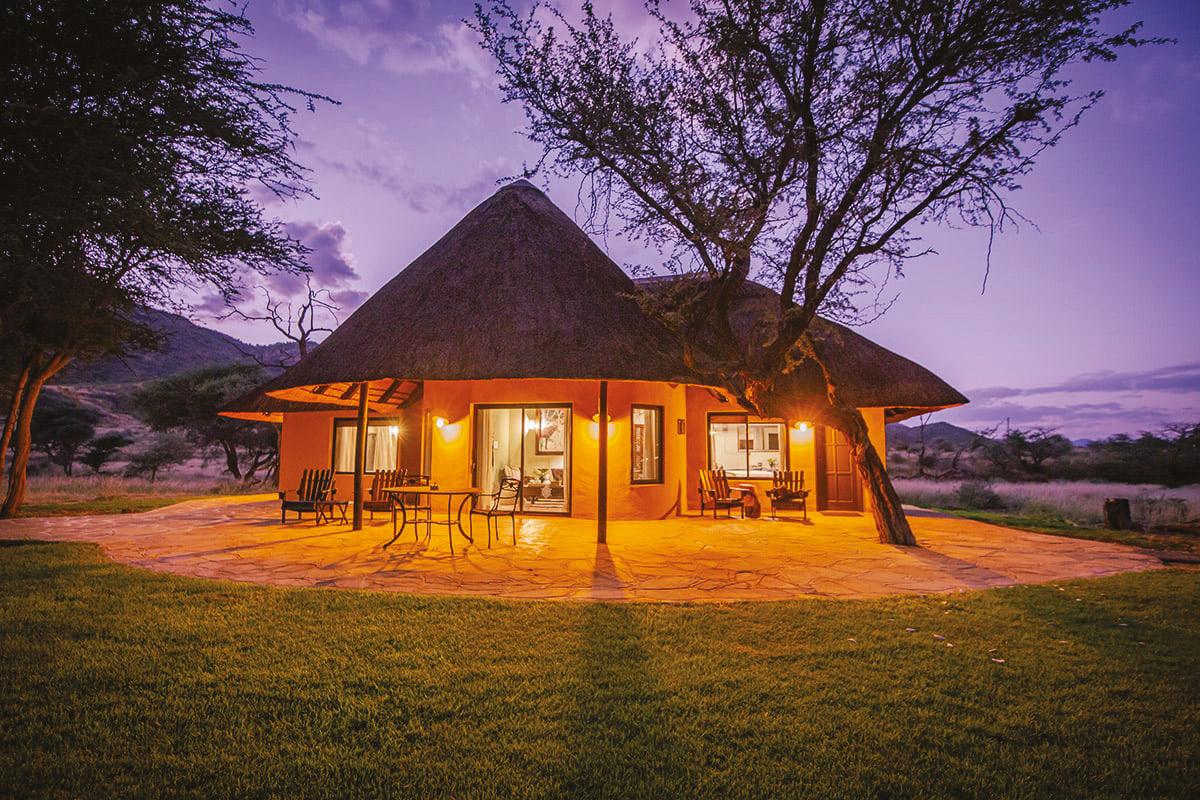
Those who feed the birds, will give their heart when their souls are bare.
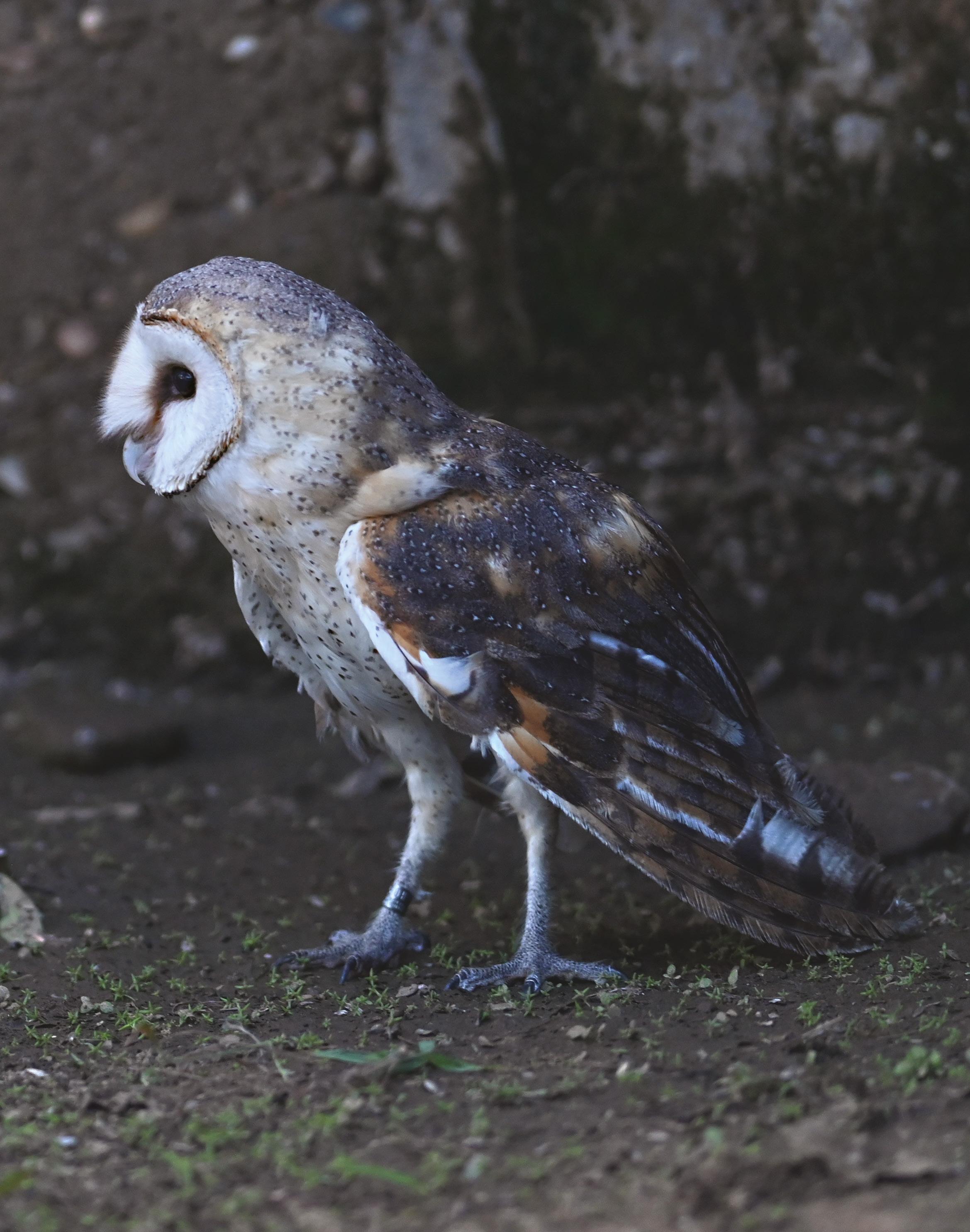
Alan Paton said that if you do not want to look after something, then at least do not kill it. Someone actually cares about those birds that other people try to kill by poisoning, driving too fast or hunting with lead bullets that cause lead poisoning and indirectly cause harm and death to birds and other wild animals. These are just a few ways in which we humans can cause damage to our environment and wildlife.
Liz Komen, who started the Namibia Animal Rehabilitation Research and Education Centre (NARREC) 35 years ago, has been saving hundreds of birds and other mammals by being a doctor, nurse, feeder and mother to the harmed and injured ones. She was fortunate in that she never had to deal with medical aids or non-paying clients, because she did this on her own, without having to look anyone in the eyes (maybe she looked into their hearts).
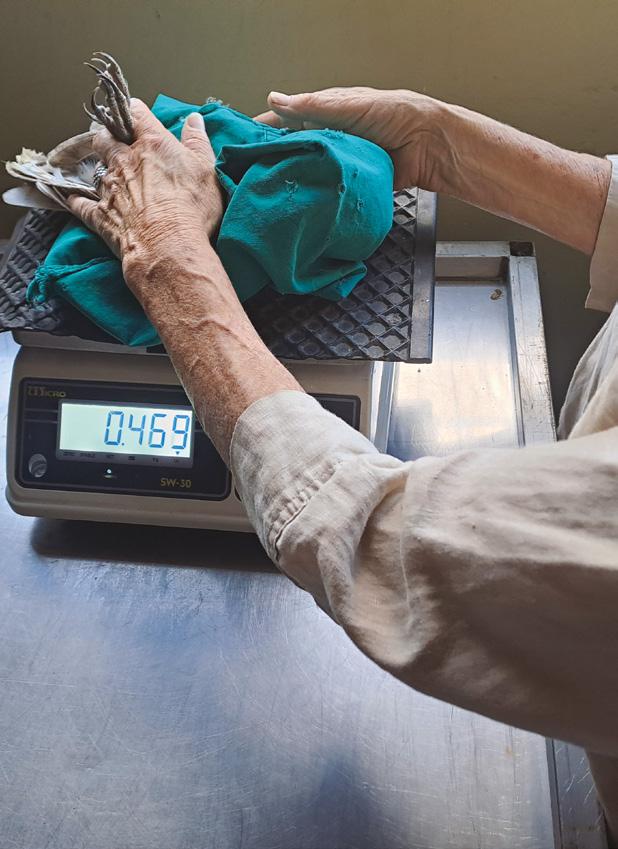
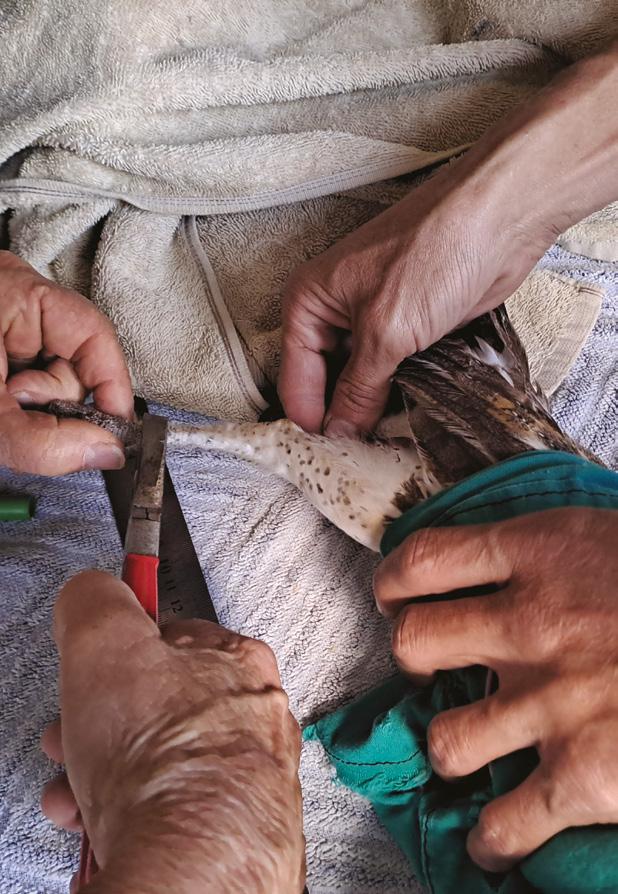
I first met her almost 20 years ago when, as a novice bird watcher, I visited NARREC in Brakwater to meet some of her “patients” and take some up-close pictures. It was during that visit that I realised what a noble service she is providing by saving so many animals from certain death – a Mother Teresa of sorts to those fragile creatures who could not care for themselves.
Earlier this year, I was fortunate to see her again after many years, after we found a Barn Owl that was hit by a car and left to die helplessly next to the road. After a phone call to NARREC, we were told to keep the owl in a box, giving it only water, and to bring it to them as soon as possible. Holding such a beautiful bird and being able to see its wonderful feathers and how near weightless it is was truly special.
Once we delivered it to the safe and loving hands of the staff at NARREC, I felt comfortable and assured that this would end up being a special story of hope for the owl and for us. I started to write a story about the owl, but ended up writing about Liz and the selfless work she is doing.
Once our “patient” was admitted and examined by the staff, he was admitted to the ICU and treated as a special patient. We visited our feathered friend after two weeks, when he was due for transfer to the acute care unit. Here, he would be able to start with rehabilitation before being released once stable and ready to look after himself. Luckily, the injuries were not too serious – probably concussion – so he recovered well.
According to Liz, many private vets can also be called directly if one is uncertain about the necessary treatment. The average time a bird spends in rehabilitation is about three months. The most common causes of injury or death are poisoning, either primary or secondary poisoning, road accident injuries and electrocution. In retrospect, one wonders how many of these fatalities could have been prevented or avoided if it were not for human carelessness. It seems that there is a rise in deaths due to secondary lead poisoning, in other words birds eating animals killed by lead bullets. In many countries, there are laws in place preventing the use of lead bullets, which did indeed make a huge difference in the number of poisonings.
Medication and poisons used for various reasons, such as organophosphates, non-steroidal anti-inflammatory drugs and DDT, are the most common causes of secondary poisoning. Unfortunately, these are all drugs and poisons that should not have been used in the first place – either by vets, farmers or pest control officials. The best treatment remains prevention.
Before the birds are released from rehab at NARREC, they are ringed, but the feedback and follow-up results are not that reliable, and the precise numbers of success or failure are not really known.
NARREC are dependent on financial support from NGOs and private donations, but as one can expect, this money does not go that far if one looks at the costs involved in doing this noble service. For instance, to keep a vulture alive, they need about 15 kg of meat every week.
If an injured animal or bird is found, you can contact NARREC directly at the below number or email address as soon as possible. In addition, financial support will help save lives. A visit to the aviary can be arranged with NARREC to explain and educate children, especially school groups, about the protection of these wonderful animals. TN
For more information, to report an injured animal, or to support NARREC’s work, contact: Tel: 061 264 256 / 061 264 409 / 081 129 0565 Email: liz.narrec@gmail.com
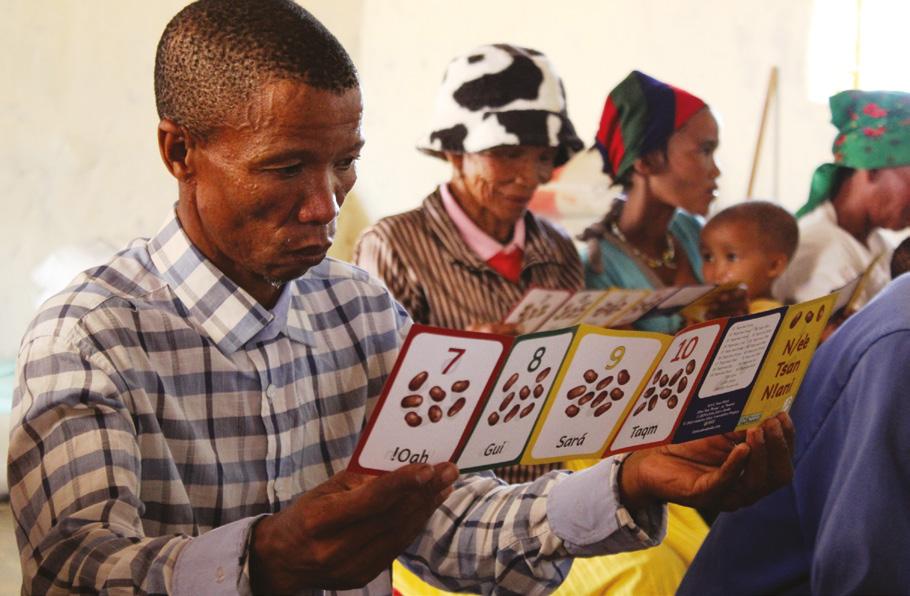
Is “/” a letter of the alphabet? And what about “//” or “!”? And a “q” which is not pronounced, but inserts percussion into a word? Or a ’ which is just a micropause?
In a rather rudimentary room, our small translation team sat around laptops, mixers, microphones and sometimes black tea with bread. The clicks and rich array of expressions in the Ju/’hoan language represent an intersection of modern and ancient languages.
During a playful moment, we discuss which-is-a-sound and which-is-a-letter. If clicks are not mere sounds, but actual alphabet letters, then the Ju/’hoan alphabet has 30 letters. Minus another five from the “normal” (Latin) alphabet which are redundant. Oh well (click!), back to more serious business: we are doing an oral translation of the Bible. Oral, since so few mother tongue speakers of Ju/’hoan are able to read the written form of their language, which had until recently been subject to numerous grave disagreements amongst linguists as to which orthography is the correct one. And meanwhile, native speakers just happily click away.
Translation work is one of the most mentally rewarding and spiritually enriching endeavours. Not only does one get to work with language equivalents; one is also led to think in new ways about the depth and height, the breadth and width of divine love. Besides, there are positive spin-offs benefitting the holistic development of the language. The final spoken product also finds its way onto an app where anyone with a phone can listen to it, the Ju/’hoansi people behind the recordings are giving a voice to their own pain and pleasure for the world to hear, with a sense of genuine experience overlaying their words. The word Ju/’hoansi means “naked people” – those who knew how to survive in the expanses of northeastern Namibia, now no longer “naked” – but “clothes don’t maketh the man”.
You may want to download the 5fish App to hear how it sounds. Just look up Namibia on 5fish and then Gobabis Ju/’hoansi.
In time, Ju/’hoan will be transcribed and read more and more, helping the language to further develop and find its rightful place alongside the other Namibian languages. A language uniquely concise yet rich will enter the world of subjects both written and spoken.
Which brings us to the subject of numbers. How do the Ju/’hoansi count? For Bible translators, this became an obvious question, with tens, thousands and millions appearing in the text, as well as verse numbers and so on. The native speakers looked critically at their conventional way of counting and, though beautifully intriguing, they found it cumbersome: five was “one hand”, six translated to “one hand and one thing”, ten was “two hands”, while twenty was known as “two hands and two feet.” Just imagine what a hundred and twenty-six might sound like, not to mention thousands or millions!
As a result, the translators – Xole Guta, //’!Ao Abusema, N’/ i!ao Timi and //’!Ao Chapman – designed a completely new counting system for their own language. Tradition is neither stagnant nor does it need to borrow from others – it evolves from within. This is how they conceived it:
For six: “circle-below” (!kxam); seven: “broken” (!oah); eight: “circle-above” (gui); nine: “incomplete” (sará) and ten: a new word, “taqm”, like a string being plucked. What would a hundred be? They remembered how the older generation conflated hundred with “hoender” (chicken). So, let’s keep it that way, for fun and function. Therefore, hundred is “ghoro”. And which animal will a thousand be? The millipede, of course, “tcoma”.
And a million? Look up to the stars, count them if you can… Tcxum. So, ten million four hundred thousand will be “tcxumsa o taqm kesi ghorosa o tcomasa o //xai”, evoking stars, millipedes and chickens as you count.
Short, sweet and playful. Count me in (though it will take lots of practice)! TN
For more information on the Ju/’hoansi Bible
Translation Project: The Bible Society of Namibia
The Seed Company: