
Why Ranthambore Should Top Your Wildlife Travel Bucket List
Few places in the world offer travelers the chance to spot a wild tiger in its natural habitat with such consistency as Ranthambore National Park in Rajasthan. Set against a dramatic backdrop of rugged hills, ancient fort ruins, and shimmering lakes, this former royal hunting ground has transformed into one of India's most successful tiger conservation success stories — and one of the easiest places on earth to plan a Ranthambore national park safari packages experience around.
A Landscape Unlike Any Other
What sets Ranthambore apart from other tiger reserves is its unique blend of wilderness and history. The 10th-century Ranthambore Fort, a UNESCO World Heritage Site, rises above the park, its crumbling walls and chhatris visible from several safari zones. Tigers have been photographed walking past centuries-old temples and stepwells, creating images found nowhere else in the world. This combination of heritage and wildlife is a major reason travelers researching Ranthambore tiger reserve safari booking consistently rank it above other Indian parks.
Understanding the Permit System
Because Ranthambore is a protected core zone, entry is tightly controlled by the Rajasthan Forest Department. Only a limited number of vehicles are permitted per zone, per shift, and every seat requires a confirmed permit tied to a specific date and time slot. This is why Ranthambore tiger safari booking needs to happen well ahead of travel dates — walk-in availability is rare, especially during the high season stretching from October through June.
Choosing the Right Zone
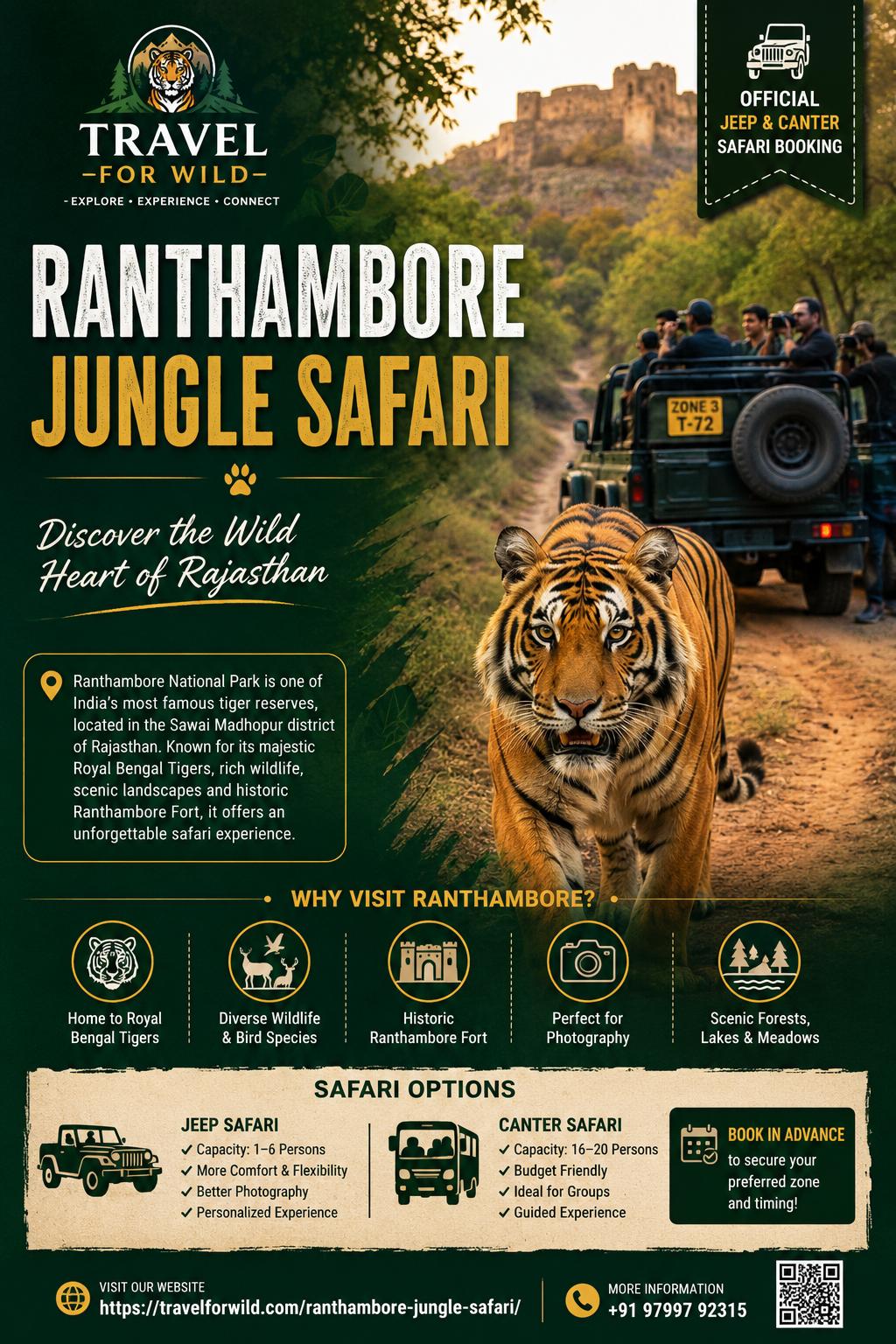
Ranthambore is divided into ten core zones, numbered 1 through 10, each with its own character:
• Zones 1–5 are closer to the fort and lake systems, historically known for frequent sightings.
• Zones 6–10, part of the buffer expansion, offer quieter, less crowded safaris with their own resident tigers.
An experienced local operator can guide you toward the zone best suited to the season and current tiger movement patterns, which significantly improves the overall experience compared to a random zone allocation.
Best Time for a Safari
• October to February: Pleasant weather, lush post-monsoon greenery, moderate sighting chances.
• March to June: Hot and dry, but water sources shrink, pulling tigers toward open areas — this is peak sighting season despite the heat.
• July to September: The park remains closed for the monsoon breeding season.