
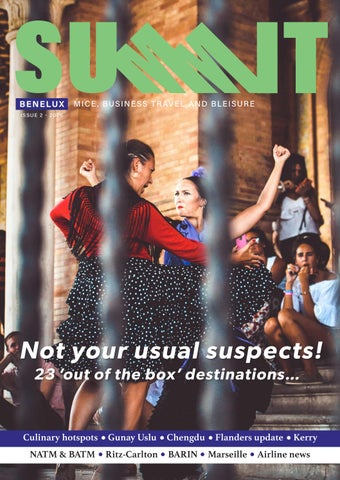
What makes a great destination? Too often, we simply settle for the “usual suspects.” There is nothing wrong with the classics, but the real challenge lies in finding ways to surprise and offer a fresh perspective. Whether for bleisure or MICE, numerous lesser-known cities and regions have so much to offer. While a client might require some convincing initially, the eventual “wow-effect” is always worth the effort.
In our ongoing search for excellence, we have highlighted several “out-of-the-box” destinations. Speaking of hot spots, we also visit the spiciest city in China: the incredibly trendy Chengdu. As the home of Sichuan cuisine—globally acclaimed as one of the finest—it is a must-visit for any traveler.
On the topic of food, we explore several outstanding culinary destinations. There is certainly nothing wrong with dining at your hotel, but I always advise heading out at least once during a trip. Finding a hidden gem and eating where the locals do adds invaluable depth to any business trip.
Naturally, our experts remain focused on current events and industry insights. In today’s turbulent world, where everything moves at such a rapid pace, it is essential to occasionally “zone out” and unwind. I hope this latest issue of Summit helps you do just that. Because despite everything, we all love to travel, don’t we?
Tijn Kramer Editor-in-chief
Great smaller cities for bleisure
Interview Grand Hotel Huis ter Duin
Destination: Chengdu
Study by Tourism Flanders Test Ritz-Carlton Hong Kong
Destination: Ireland Gunay Uslu on…
Editor-in-chief
Tijn Kramer tijn.kramer@travmedia.nl
Editors: Arjen Lutgendorff, Sharon Evers, Dylan Cinjee, Bart Matthijs, Pieter Weymans, Theo de Reus.
Press releases and info: info@summitbenelux.com
TRAVelMEDIA
Summit Benelux. Arendstraat 33A, 1223 RE, Hilversum. www.summitbenelux.com
Design: Iris Beenen
Publishers: Tom van Apeldoorn
T.J. van Apeldoorn
Sales & Marketing:
Sales and information about advertising, etc.
Tina Bakker, Dennis Ebbers, Sales@travmedia.nl
SUMMIT Benellux is a TRAVelMEDIA publication.
SUBSCRIPTION: 29 euro per year Year 2, issue 2

The European business travel landscape is set for a major administrative overhaul following a provisional agreement between the European Parliament and the Council. The deal, which focuses on the revision of EU social security coordination rules, effectively eliminates the requirement for an A1 certificate for short-term cross-border business trips. This breakthrough addresses a persistent obstacle for companies operating within the Single Market, significantly easing the logistical burden on millions of annual journeys.
The resolution comes after years of legislative deadlock in trilogue negotiations, signaling a renewed political will to prioritize economic mobility. Business Travel for Europe (BT4Europe) has been a vocal advocate for this change, arguing that the previous mandate was disproportionate to the nature of modern professional travel. Odete Pimenta da Silva, representing BT4Europe, described the move as a landmark achievement that proves pragmatic solutions are possible even after years of stalled talks when there is clear alignment on the needs of the European economy.
While the broader industry has expressed strong support, some sectors maintain reservations regarding the finer details of the framework. The European Exhibition Industry Alliance welcomed the progress but noted that certain project-based and highly dynamic sectors may still face complexities under the revised rules. Stakeholders emphasize that ensuring proportionate and workable rules across all forms of temporary mobility remains a critical task as the policy moves toward finalization.
The German Convention Bureau recently hosted “GMNE Netherlands 2026” at Amsterdam’s College Hotel, focusing on how the MICE industry can navigate a shrinking workforce through technological
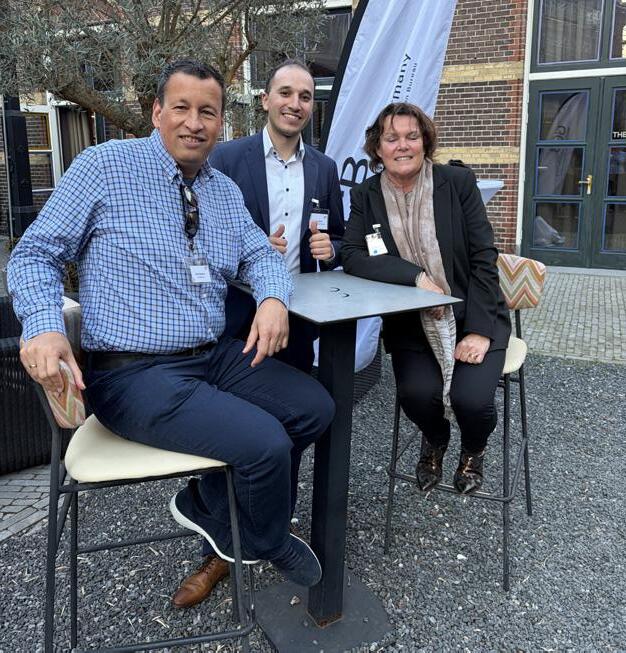
integration. Central to the evening was a presentation on the GCB’s “Future Meeting Space” research, which identifies AI and automation as essential tools for addressing the current shortage of skilled labor.
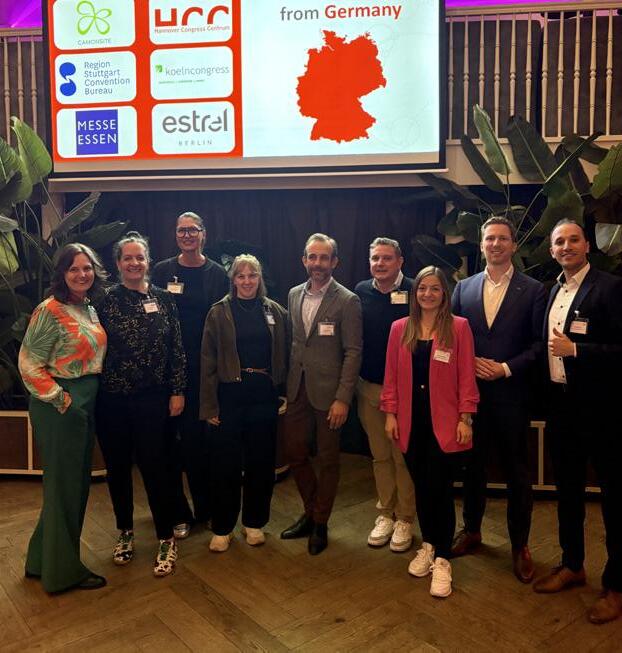
The findings suggest that while administrative tasks will become increasingly automated, the role of the event manager is evolving to prioritize strategic creativity, emotional intelligence, and AI literacy.
The event balanced these academic insights with interactive networking, featuring a Kahoot quiz won by Koelncongress and a walking dinner that allowed professionals to discuss the practical applications of the research. By bridging the gap between theoretical data and industry practice, the GCB demonstrated that technology is not replacing human expertise but rather reshaping the skill sets required for the next decade of business events.
High-end
Tailor-made
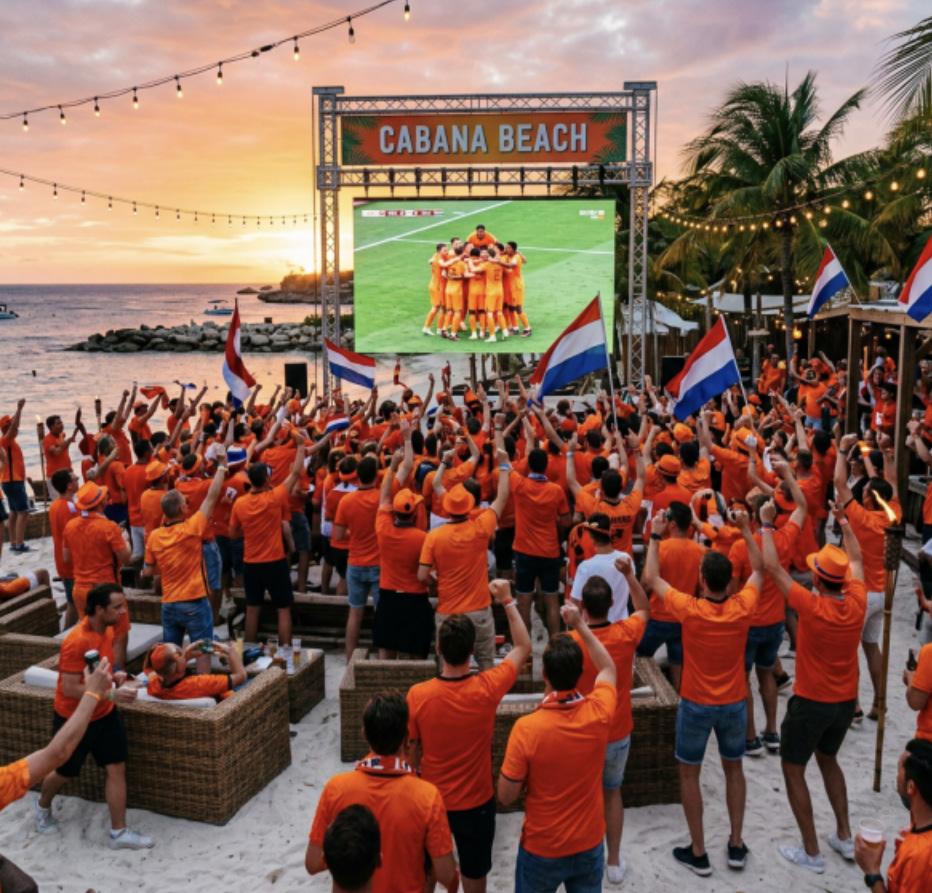
In collaboration with The Kontiki Beach Resort and Cabana Beach, TUI is bringing the World Cup experience to Curaçao by opening an exclusive TUI World Cup grandstand right on the beach.
Travelers who book their Curaçao holiday or flight through TUI will soon be able to watch the matches live with their feet in the sand and in the correct time zone. To make this happen, Cabana Beach at The Kontiki Beach Resort will be transformed into the Cabana Brasa
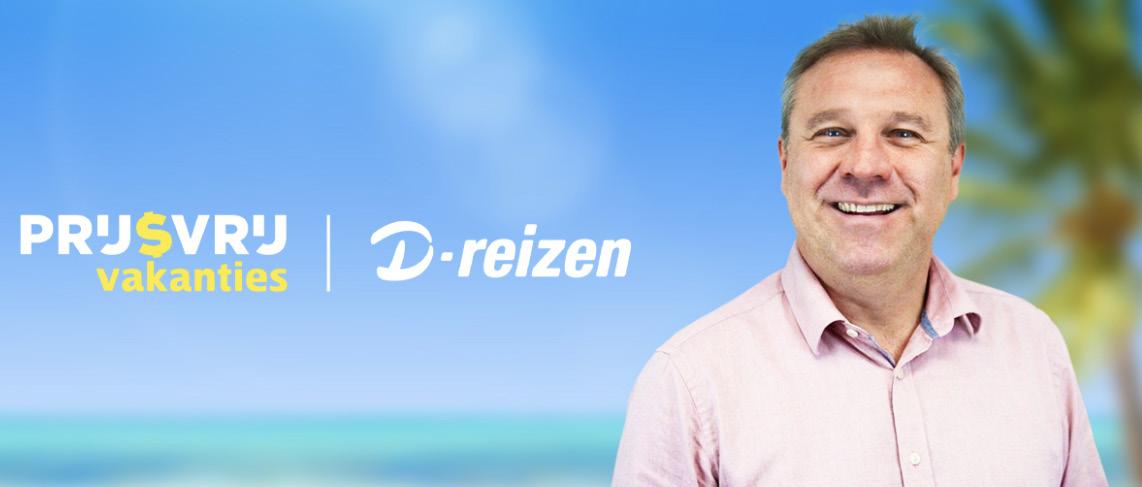
Prijsvrij D-reizen Group has appointed Dimitri Joannides as Manager of Sports & Incentives, effective April 14, 2026. This appointment marks a significant move by the organization to further develop and expand its specialized sports travel operations. In this new capacity, Joannides will focus
on establishing and strengthening strategic partnerships with both national and international sports organizations.
Joannides joins the group with over seventeen years of experience in the travel industry. Most recently, he
Arena during the tournament: a central hub on the island where sports fans can gather for live matches, entertainment, and that signature relaxed Curaçao atmosphere.
Within this arena, TUI has its own dedicated grandstand—the ultimate spot for TUI guests to cheer, sing, and support the national teams together. This year is particularly special as Curaçao makes history with its firstever World Cup qualification, an achievement that can be felt across the entire island. In the Cabana Brasa Arena, that pride for “The Blue Wave” will merge with the well-known “Oranje” energy.
The TUI World Cup grandstand is exclusive to TUI customers. Guests who book a Curaçao package or flight via TUI receive free access to the Cabana Brasa Arena. Registration for a seat on the grandstand is available at https:// www.tui.nl/wk/.
served at TUI until the end of 2025, where he held the positions of Head of Sales Support and Channel Manager for Retail Partners. During his tenure there, he played a central role in managing commercial collaborations within the retail sector. His professional background also includes several years of experience at Martinair.
Marc van Deursen, CEO of Prijsvrij D-reizen Group, expressed confidence in the new hire, noting that Joannides possesses a deep understanding of the industry and the expertise required to build long-term, sustainable partnerships. Joannides added that the group’s strong market position and clear ambitions within the sports travel niche were key factors in his decision to join the team, stating that he looks forward to driving new collaborations forward.
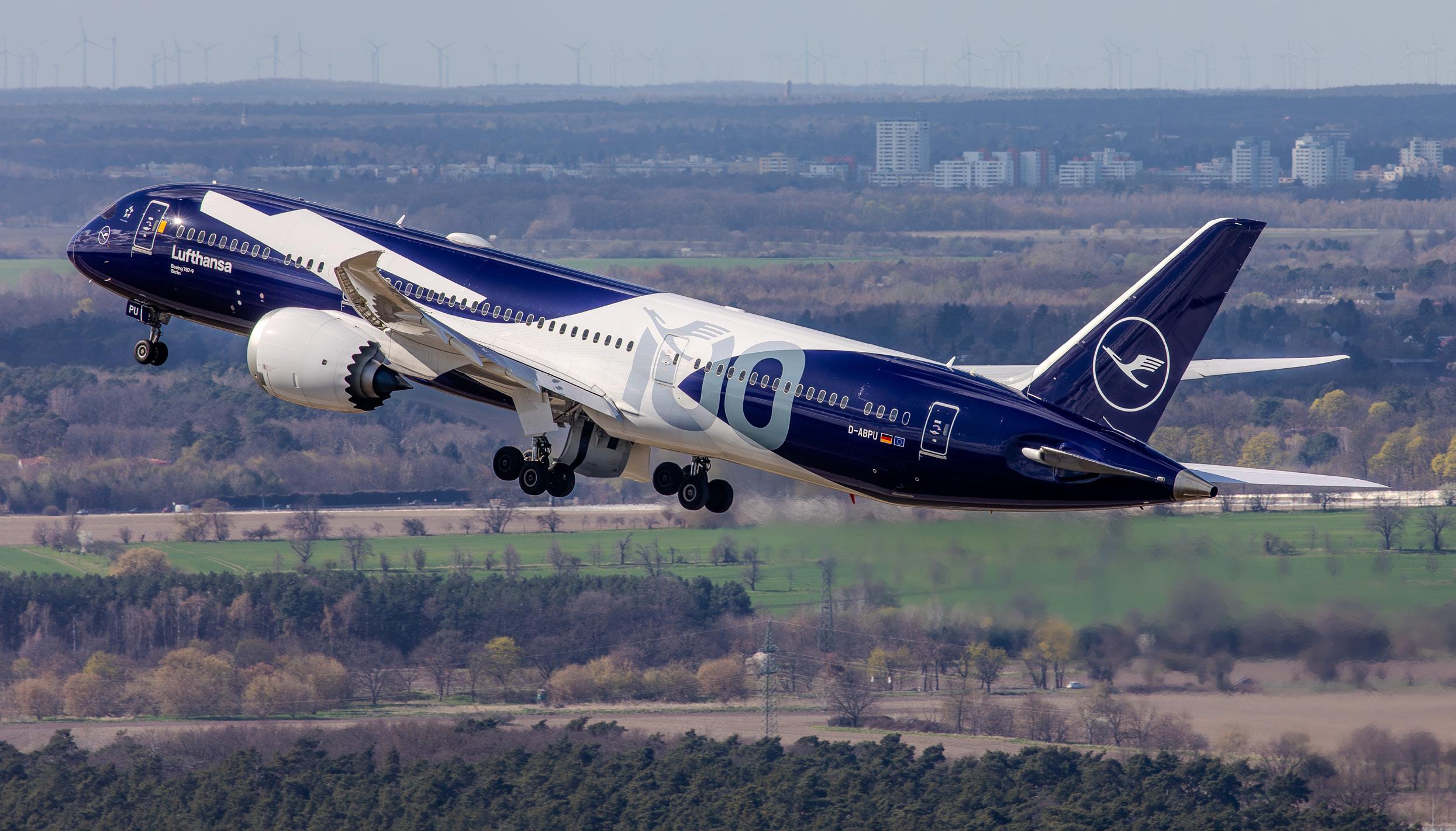
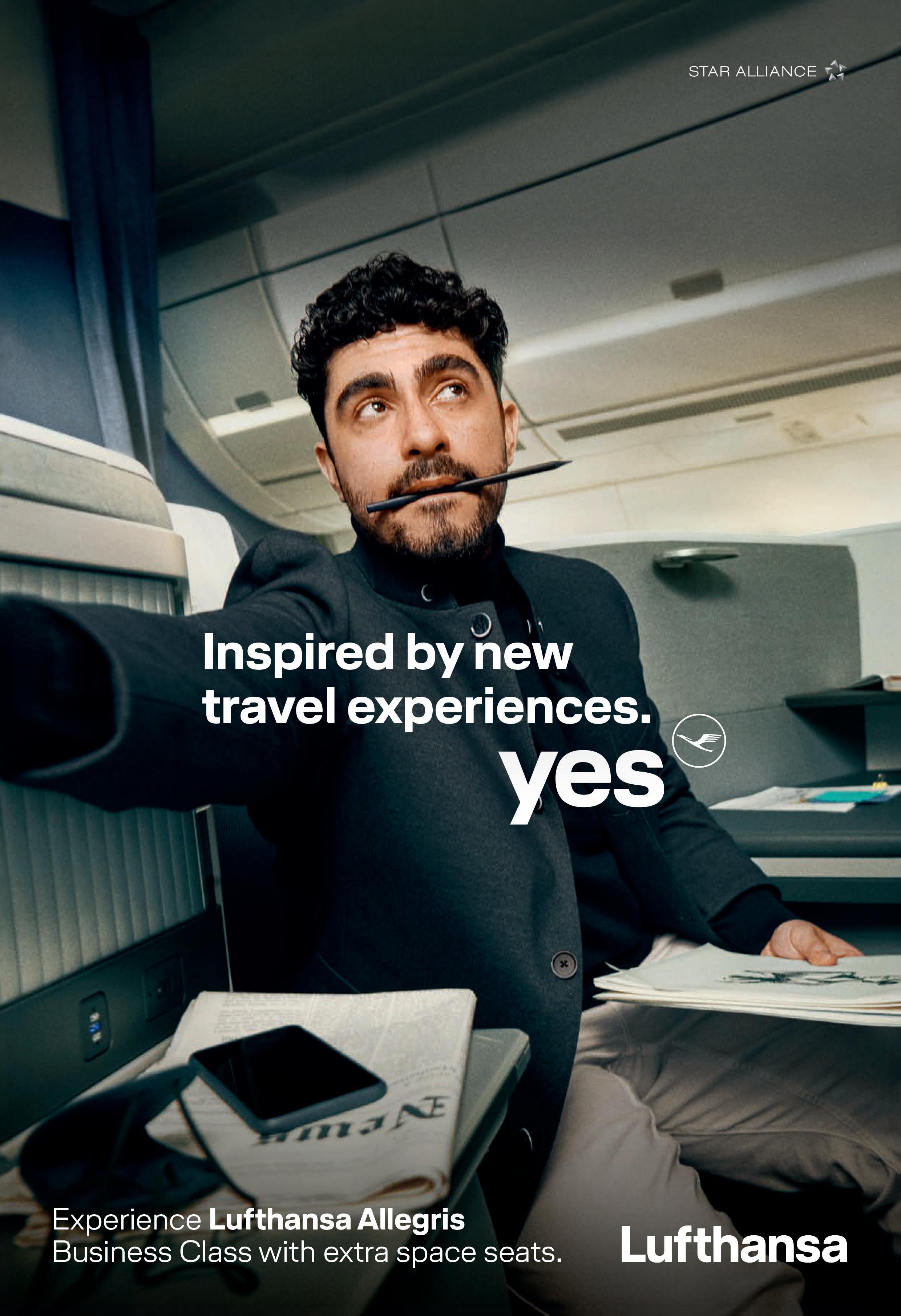
Lufthansa is celebrating a milestone this year that is rare in the aviation world: a century in the skies. What began on January 6, 1926, in Berlin with wooden aircraft and paper tickets has evolved one hundred years later into the heart of a global aviation group. Summit speaks extensively with Anja Lehmann (General Manager Sales Lufthansa Group Netherlands) about the pioneering spirit of the past, the massive logistical operation behind the new Allegris product, and the challenging course toward 2050.
“When you look back at January 6, 1926, the day of the formal founding in Berlin, you truly realize the enormous leaps we have made. Only three months later, on April 6, the first aircraft flew from BerlinTempelhof to Zurich-Dübendorf. In those days, flying was pure adventure. Lufthansa was an absolute pioneer; we were already conducting night flights on routes to Venice and Moscow, and Lufthansa even flew toward Beijing with numerous stopovers. That courage and the drive to push boundaries are still in our DNA,” Lehmann begins at the very beginning. From the early days of the transition from propeller to jet engines, the current Lufthansa had a clear ambition. “The mission was clear early on: to build a modern, safe, and internationally oriented airline that would reconnect Germany with the
world. We are celebrating that heritage this year with the ‘We Are The Journey’ campaign. We are bringing back iconic designs, including the Airbus A321 in the legendary ‘parabola design’ from the 1950s. At the time, that symbolized speed and futurism, and it is wonderful to see that design shining again on our most modern short-haul aircraft”.
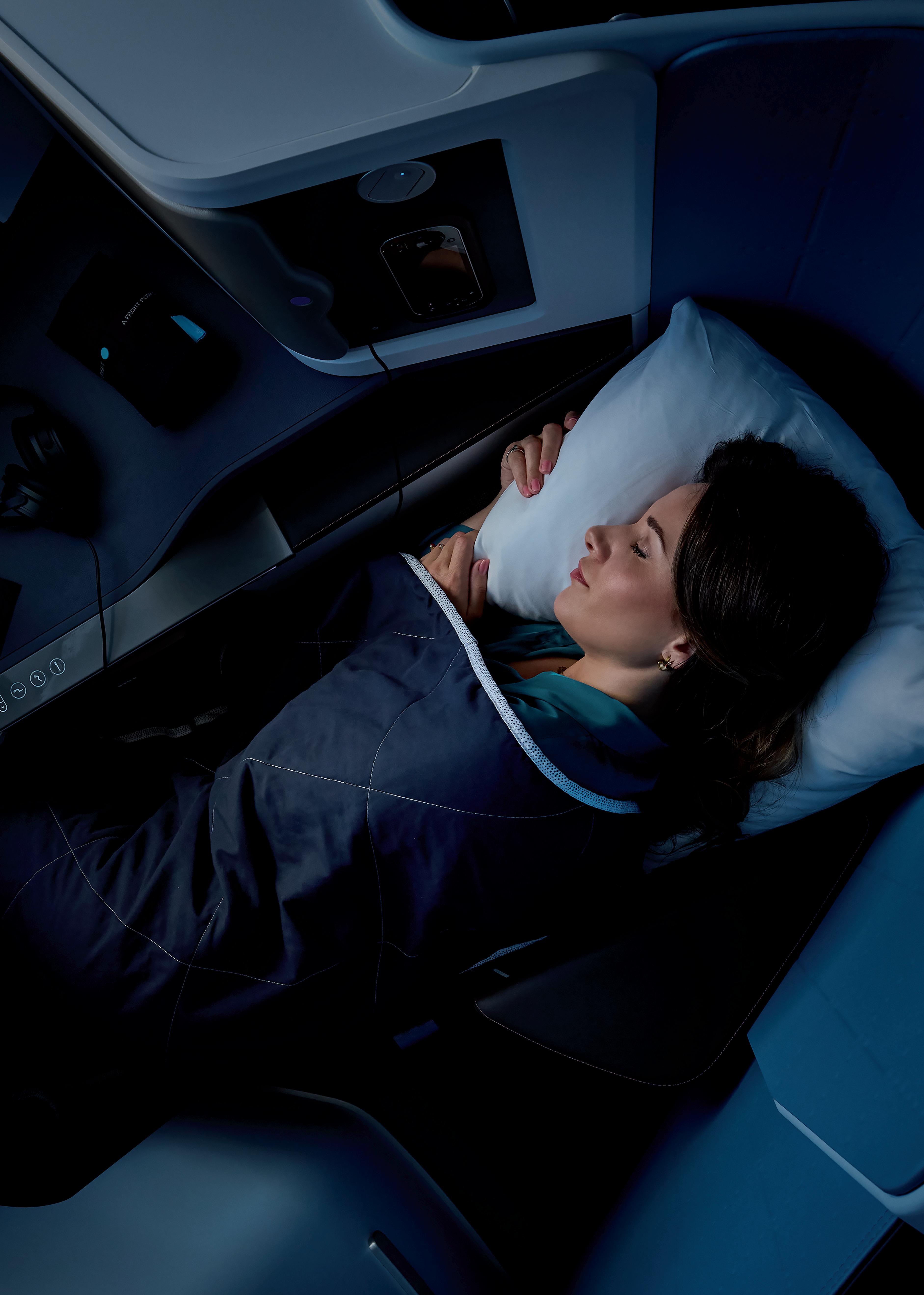
While nostalgia brings a smile to enthusiasts, the true focus for travel professionalsliesinthemassiveproduct renewal currently underway. Lufthansa is investing billions in what Lehmann calls the “greatest transformation in the history of the company”. Central to this is Allegris, the new generation of cabins for long-haul flights.
“Flying is an experience, and we are now elevating that experience to a level of individualization we haven’t seen before,” Lehmann explains. “Take the Boeing 787-9 flying out of Frankfurt. Starting in April, Business Class passengers can choose from various seat options specifically tailored to their needs. Whether you want a suite for extra privacy or a seat with extralong beds, the passenger is in control. It is a huge step forward, for which we received very positive feedback after the initial introduction on the A350 from Munich”. But the innovation doesn’t stop at the seats. Under the name “Project Fox,” the entire soft product is undergoing a metamorphosis. Lehmann: “This is a project that often remains under-highlighted but is crucial for the premium experience. We are
renewing everything: from the tableware and pillows to the catering and amenity kits. The goal is for you to feel in every detail that you are on board a premium airline, whether you are in First, Business, Premium Economy, or Economy Class”.
TheEuropeanfleetisnotbeingoverlooked either. Between 2025 and 2029, a large portion of the fleet will undergo a retrofit. “We have now equipped 38 Airbus A320 aircraft with completely new cabins,” says Lehmann. “For the passenger, this specificallymeans60percentmorespace in the overhead bins, faster USB ports, andholdersfortabletsorphones.Thanks to ergonomically designed seats, we have been able to create more legroom without sacrificing seats. It’s about a smarter utilization of space”.
For the Dutch travel agent, Lufthansa’s position in the Benelux is unique. Lehmann sees an interesting shift in the behavior of the Dutch traveler. “We notice that the Dutch are very pragmatic. Our connections from Amsterdam to the hubs in Frankfurt and Munich are naturally the core, but we also see a very clear growth in the use of other hubs in the group, such as Brussels, Vienna, and Zurich”. Lehmann recalls the challenging times at national airports. Whenever there is a disruption at the airport or high occupancy, some passengers divert to Düsseldorf or Brussels. “Business travelers, in particular, appreciate this flexibility.WearenotjustaGermanairline; we are a European group with airlines such as SWISS, Austrian, Brussels Airlines, and, newly added, ITA Airways, which together offer a worldwide and dense network. Nevertheless, our Dutch guests still prefer to depart from Schiphol”.
The conversation inevitably turns to the greatest challenge for the next century: sustainability. Lufthansa has set ambitious goals for itself: a net reduction of 50 percent by 2030 (compared to 2019) and reaching full Net Zero by 2050. “It is a subject much talked about, but we show it in the figures,” says Lehmann firmly. In 2024, the group consumed 9.17 million tons of fuel, a figure that must come down. “Our most important pillar
Lufthansa’s current fleet renewal is the most extensive in the company’s history, involving the replacement of approximately 38,000 seats worldwide. Central to this is the Allegris concept for long-haul travel. On a strategic level, the further integration of ITA Airways in 2026 is an important step for the group. The Italian airline is currently being incorporated into commercial structures and loyalty programs, making transfer procedures at hubs often comparable to those of the other airlines. This expansion goes hand in hand with accelerated fleet modernization.
is fleet renewal. Every time we replace an old aircraft with a hyper-modern Airbus A350 or Boeing 787, we directly save significant amounts of fuel and . Additionally,weareadrivingforcebehind the use of SAF (Sustainable Aviation Fuel). Although global availability is still difficult, we already consumed 20,000 tons of SAF in 2024. That is a start and corresponds to 0.2 percent of our fuel consumption”. Every opportunity is also seized on the ground. “Take Reduced Engine Taxi-In. By taxiing to the gate on fewer engines, we save 2,750 tons of kerosene annually. Thatmightsoundlikeadetailinthegrand total, but it shows that we are scrutinizing every part of the operation”.
Alliance and the Future Lufthansa is also known as a co-founder
oftheStarAlliance.Lehmannemphasizes the importance of cooperation. “The alliance remains a crucial pillar. It offers our customers access to lounges, shared miles, and a seamless network that no single airline could provide alone. With new partners like ITA Airways, we are building an even stronger foundation for the world’s largest aviation alliance”. Crystal ball predictions are not part of aviation, but Lehmann does have a clear wish. “Aviation is an industry of emotion and connection. The past century was a journey full of challenges, but also of incredible innovation. My wish is that we maintain pioneering spirit to make aviation not only more comfortable for future generations but, above all, more sustainable. The most beautiful chapters are yet to be written”.

In a landmark move for the professional travel and events industry, three of the world’s most prominent associations— EMECA, ICCA, and UFI—have signed a formal agreement to consolidate their European advocacy efforts. The partnership establishes the European Events and Exhibition Industry Alliance (EEEIA), a strengthened body designed to provide a single, powerful voice for the sector in the heart of the European Union.
This new alliance builds upon the foundation of the European Exhibition Industry Alliance (EEIA), originally created by EMECA and UFI in 2012. By formally incorporating ICCA, the mandate now expands to cover the entire spectrum of business events, including exhibitions, large-scale meetings, and international congresses.
The EEEIA serves as a collective representative for the industry before EU institutions and international
stakeholders. The timing is deliberate; as global trade policies fluctuate and geopolitical tensions create uncertainty, the alliance aims to safeguard the interests of a sector that acts as a primary catalyst for innovation, trade, and scientific exchange. By standing united, the organizations intend to secure fairer operating conditions and ensure the sector remains a priority in European economic policy.
The operational structure remains consistent, with the EMECA Secretary General continuing to lead daily activities alongside their team. However, the strategic direction and policy priorities will now be a collaborative effort between all three partners. This includes active monitoring of EU legislation and targeted advocacy to demonstrate the industry’s socio-economic value.
Marta Gomes, President of ICCA, noted that joining this established platform allows the meetings and congress
segment to achieve a significantly higher impact at the EU level. She emphasized that the alliance ensures the industry’s value is fully recognized within Europe’s world-leading events market.
Elzbieta Roeske, President of EMECA, highlighted that the inclusion of ICCA is a logical progression as event formats evolve and overlap. She stressed that in an era of rapid change, emphasizing a shared need for rule-based trade and stable operating conditions is more critical than ever.
UFI President Panittha Buri added that this milestone reflects the success of over a decade of joint advocacy. She pointed out that exhibitions and business events are part of a single, dynamic ecosystem, and this unified front will be essential in maintaining Europe’s global competitiveness and driving the broader economy forward.
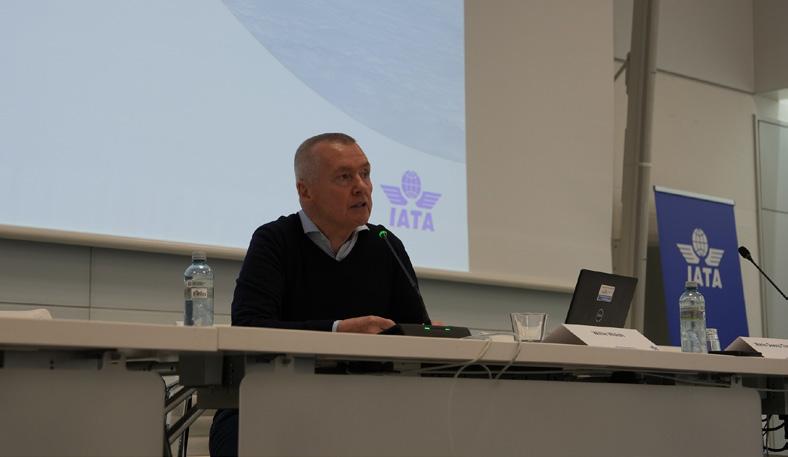
The global aviation industry demonstrated remarkable resilience in March 2026, with total passenger demand rising 2.1% compared to the previous year despite significant disruption caused by conflict in the Middle East. According to the latest data from the International Air Transport Association (IATA), the industry achieved a robust global load factor of 83.6%, even as total capacity contracted slightly by 1.7%. This performance highlights a stark divergence between regional markets, where a localized slump was offset by strong growth across the rest of the world.
The ongoing hostilities involving Israel and Iran served as a major drag on the figures, with Middle Eastern carriers experiencing a 60.8% collapse in demand as airspace closures and security concerns paralyzed regional hubs. However, the impact remained largely contained geographically; when excluding the Middle Eastern market, global traffic actually surged by 8%. This shift led to a notable rerouting of international travel, particularly on the Europe-Asia corridor, where traffic jumped nearly 30% as passengers and airlines favored direct routes that bypassed the conflict zone.
IATA Director General Willie Walsh cautioned that while the appetite for travel remains high heading into the peak summer season, the industry is navigating a complex landscape. Beyond the immediate geopolitical challenges, airlines are contending with volatile jet fuel prices and potential supply shortages in Europe and Asia. Walsh emphasized that as ticket prices begin to reflect these rising costs, the industry requires greater regulatory flexibility—particularly regarding airport slot rules—to manage the extraordinary operational constraints currently facing the global network.
Amsterdam Schiphol Airport is undergoing a significant long-haul expansion this season as three major international carriers launch or resume high-profile direct services to Asia and South America.
The first major milestone occurred at the end of March with the official entry of LATAM Airlines into the Dutch market. Connecting Amsterdam directly to São Paulo Guarulhos, the airline initially planned for four weekly flights but increased the frequency to six times per week before the route even launched
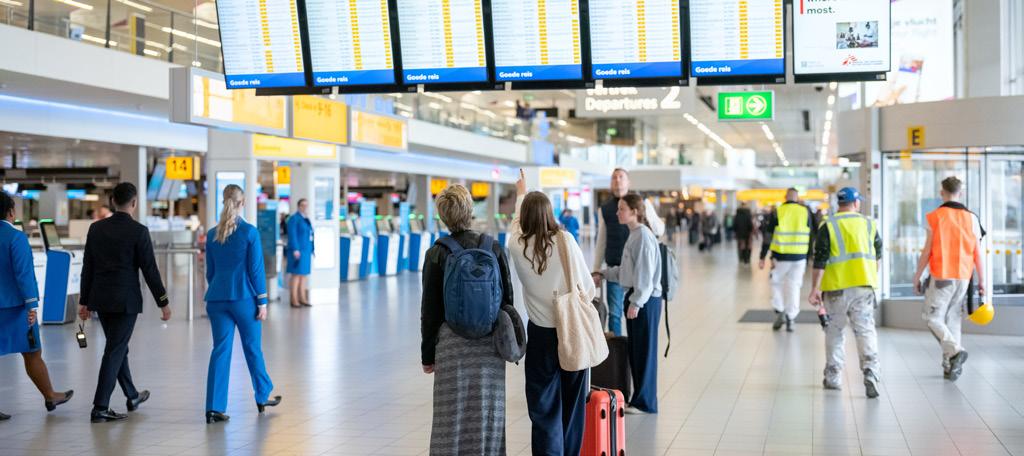
due to overwhelming demand. This service, operated by Boeing 787-9 Dreamliners, is particularly significant for the corporate sector, as it offers a seamless link for agritech and life sciences industries between the Netherlands and Brazil’s economic heart.
In Southeast Asia, the network is set to grow further with a historic first for Vietnam Airlines. Starting June 16, the carrier will inaugurate the first-ever nonstop connection between Amsterdam and Hanoi. Utilizing the modern Airbus A350, the service will operate three times
per week on Tuesdays, Thursdays, and Saturdays. This new link is expected to enhance trade and tourism between the two nations, while also offering travelers an alternative gateway into the wider Indochina region through the airline’s domestic network. Complementing this Asian expansion, Thai Airways is making a long-awaited return to the Dutch capital on July 1. After an absence of nearly 28 years, the airline is resuming daily non-stop flights to Bangkok using the Airbus A350-900.

Tijn Kramer Chief editor SUMMIT Benelux
We welcome back our SUMMIT Expert Panel: experienced MICE professionals who share their answers to questions from the editor. Do you have a question yourself? Mail us!
The question:
How do you find inspiration and information for potential new destinations and (new) program content for your clients? What information would you like to receive more of from tourist boards, convention bureaus, DMCs, and... what are you specifically not looking for?
Our inspiration never starts with the destination. It starts with the client. From there, we build everything from the ground up. We deliberately don’t work with DMCs, but instead collaborate directly with local suppliers, specialists, and insiders. These direct relationships allow for more creativity, speed, and true differentiation. We don’t rely on standard programs; we create something genuinely unique every time.
We also travel extensively ourselves to experience destinations at the highest level, exactly as our clients would. Data helps us identify patterns, but ultimately experience and intuition make the difference. Inspiration is constant—it’s something that’s always in the back of your mind and often comes at the most unexpected moments. This year, for example, we’re traveling to Georgia with our entire team, which we see as an exciting new incentive destination.
When it comes to tourist boards, we’re mainly interested in expanding our network and gaining meaningful insights. What truly makes a destination relevant for our audience? What we don’t need is generic content or readymade proposals; they tend to be predictable and lack distinction. The real value lies in partners who are proactive, transparent, and able to offer access to experiences that aren’t widely available. That’s what enables us to create journeys that are not only luxurious but truly personal and unique.

Nathalie Jacobs, Managing Partner FAME Travel Designers
Gathering inspiration is a crucial part of our profession. Without new inspiration and destinations, you cease to be relevant. We try to seek our inspiration as broadly as possible: through magazines, DMC representatives, fam trips, blogs & vlogs, Instagram, and so on. And of course, going on a journey of discovery yourself and experiencing a destination firsthand remains the absolute best inspiration for a successful incentive trip.
We are often left wanting more when we receive program proposals from our DMCs. It is rarely innovative and very generalized. We try to listen to our clients in great detail. We attempt to discover the deeper layer—the DNA of our clients—in order to arrive at a highly personalized proposal. We don’t feel that level of connection with most DMCs and convention bureaus. We are no longer interested in the umpteenth winery or the umpteenth guided city walk. We want to connect and inspire our clients.
Marije Breuker, Owner of Motivation Travel
Inspiration arises for me on several levels. On one hand, it comes through the well-known channels such as destination presentations, site visits, and input from tourist boards and DMCs, though it is sometimes a bit basic. Co-creation plays an important role in developing programs that align with the purpose and profile of our client. In addition, I draw a lot of inspiration from my own travels, on-site observations, and conversations with partners and clients. Actually, I am constantly “on”: ideas can emerge anywhere—from a detail in a city to a conversation or an unexpected insight. (Travel) magazines, interviews, and books also feed that process. I always translate those ideas into practice: does this suit the target group, the purpose of the trip, and the logistical reality? And if something doesn’t seem immediately feasible, I take on the challenge of making it fit, together with local partners who have their own signature: creative, thoughtful, and executable.
What information would you like to receive more of from tourist boards, convention bureaus, DMCs, etc., and what are you specifically not looking for?
What I need from tourist boards, convention bureaus, and DMCs is not more information, but more relevant and better-tailored input. Too often, I still see an inside-out approach, where the offering is central instead of the needs of the agency and the end client. As far as I’m concerned, the order should be the other way around: start by understanding who we are, who we work for, and for what purpose. We are looking for partners who think along with us, understand context, and can translate their proposals to our practice. Concrete, comparable cases help more in that regard than generic presentations or standard highlights. What I have less need for are general pitches without a clear link to our target group. The true added value really lies in customization. Not broadcasting what is there, but offering what is relevant to us.
Annemieke Stuurman, Director GI Travel
How do you find inspiration and information for potential new destinations and (new) program content for your clients?
With our entire team, we continuously follow developments within our industry and actively share knowledge about the market, destinations, trends, unique locations, and innovative concepts. Additionally, we work with a strong network of partners with whom we have regular contact regarding their latest offerings and current possibilities.
We also regularly visit networking events, trade fairs, fam trips, and inspiration trips. This allows us to experience firsthand which destinations, locations, and program components might be suitable for our client portfolio. Feedback from our regular clients also forms an important part of our workflow. We use these insights to continuously improve programs and align them with changing wants and needs.
Our clients’ objectives are always central. A new destination or specific program component must demonstrably contribute to the desired result, such as connection, motivation, appreciation, or development. Proactively advising our clients on new developments and suitable content for their programs is essential. This is how we continue to prove our added value and ensure that we remain a relevant and reliable partner.
What information would you like to receive more of from tourist boards, convention bureaus, DMCs, and what are you specifically not looking for?
From our partners, we like to receive inspiring and relevant information that allows us to surprise and advise our clients. Think of new hotels, unique venues, and specially developed programs for specific target groups such as architecture, gastronomy, or culture. Distinctive concepts, concrete cases, and strong visual content also help us to present possibilities attractively to regular clients and prospects.
We especially value out-of-the-box collaborative thinking. Partners who proactively suggest innovative and appropriate solutions help us provide distinctive advice to our clients, which in turn emphasizes our added value. What we have less need for is standard or general information or brochures without clear added value. We are specifically looking for the unique features and distinctive aspects of a destination or location.
Additionally, we find it important that our partners have a good understanding of what corporate clients are looking for, so that we have access to current, well-founded, and inspiring information. After all, there is a clear difference between B2C and B2B target groups. It is therefore valuable when various partners properly align their offerings, communication, and advice with the wishes and expectations of our professional MICE market.

Evelien Schepers, Conscious Travel Designer & Partner at Contour Travel

Inspiration is hidden in the smallest things: an article in a trade magazine, an Instagram post, a TikTok video, or a conversation at the bar with a friend who just returned from a trip. As buyers, our eyes and ears are always open—and partners are more than welcome to tap into that.
Our advice to tourist boards, convention bureaus, and DMCs: surprise us.
Not with the hotel chains we’ve known for years, but with hotel openings, culinary hotspots, and new direct flights. Communicate proactively and share innovative things—even before we start looking for them. Because a partner who continues to surprise us is a partner we look forward to working with.
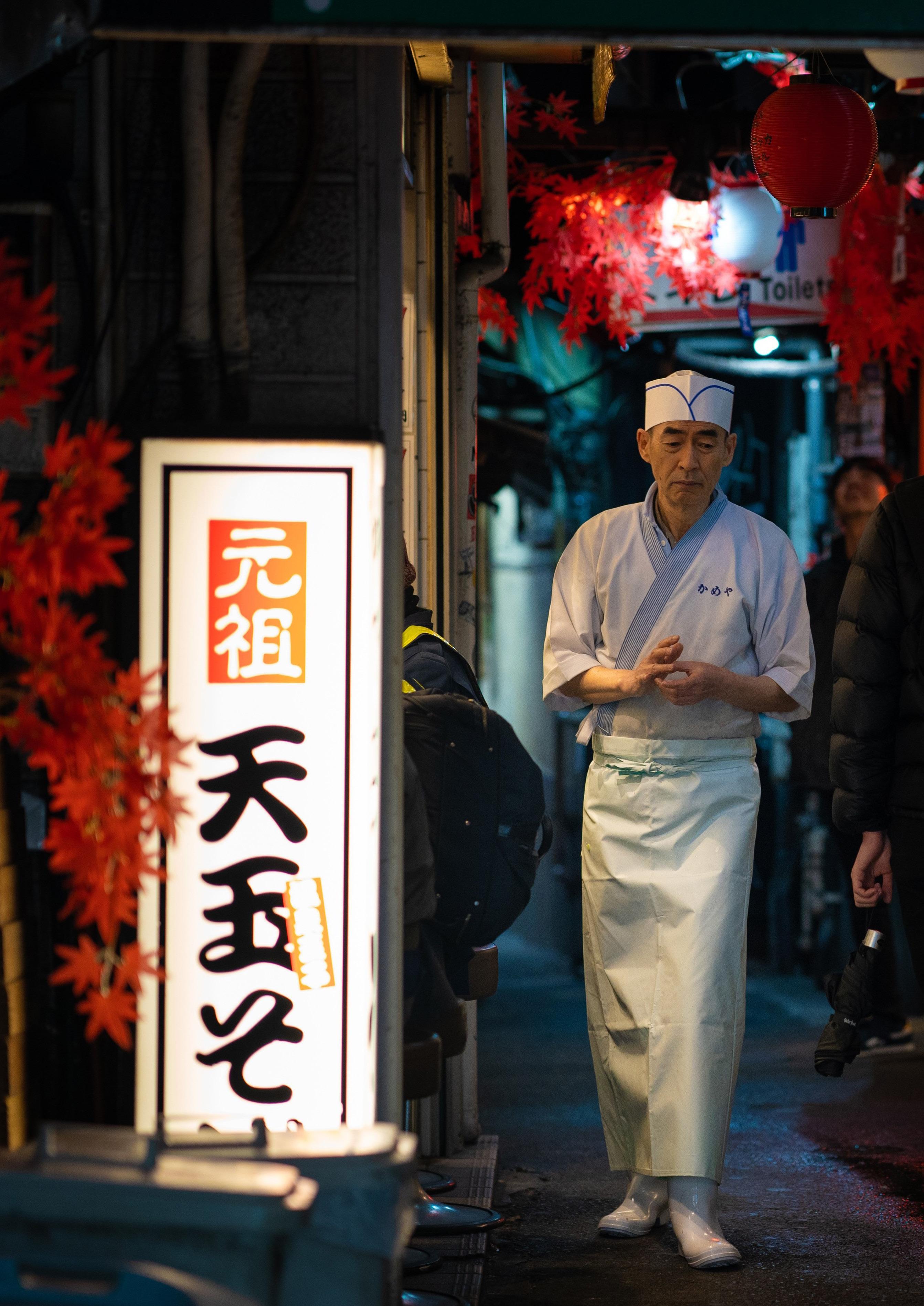
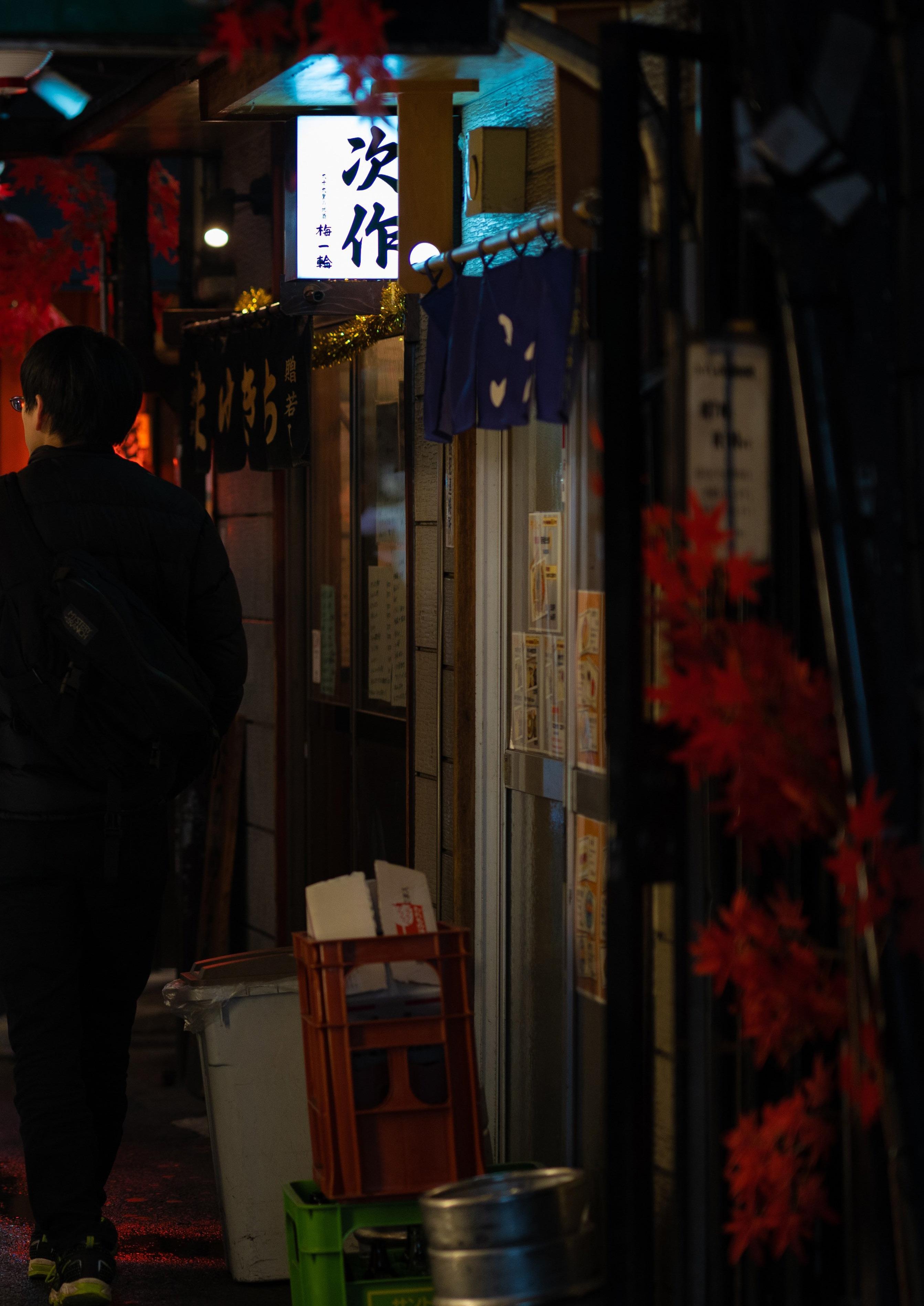
Where do we go? And by “we,” I mean us foodies. Well, that is a matter of doing your culinary homework as well as a reflection of personal preference. One person has a sweet tooth; another, like me, will always order the cheese board for dessert. Do you like spicy food or not? Are you willing to pay to enter Michelin “temples,” or are you more of a bistro and pubfood person? It is all fine, of course, as long as the love for food and drink is real. It usually is. Let’s take a closer look at food and travel...
Tijn Kramer Editor-in-Chief
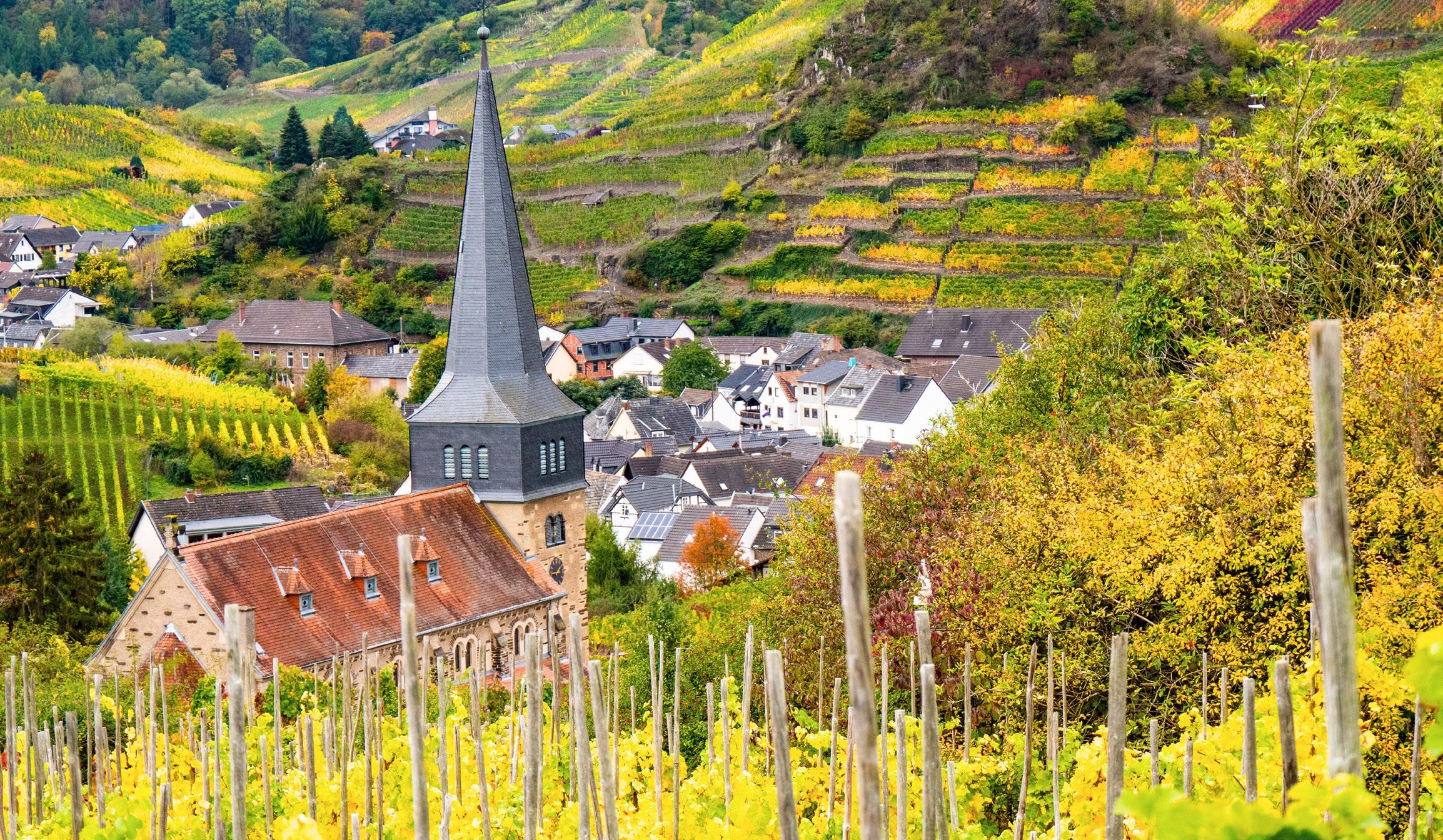
• The Ahr, Germany: This region offers some of the best, still-affordable Pinot Noir you can find. A trip to Germany is highly recommended; the area provides great value for money alongside stunning scenery. While the Ahr excels at reds, the rest of the country remains a premier destination for exceptional white wines.
• Porto and the Douro: The city of Porto is stunning, as is the surrounding Douro region. Port, a fortified wine often described as “made by the gods,” is the ideal companion for Blue Stilton cheese—a personal Christmas tradition. A single glass of Quinta do Noval 30-Year-Old is an experience you will never forget.
• The Cape Winelands: Covering Stellenbosch, Paarl, and Franschhoek,
this may well be the most beautiful wine region in the world. When visiting, be sure to try the Kanonkop Pinotage.
• Provence, France: Without a doubt, this region produces the best rosé in the world. The best way to experience it is to drive around, taste, and purchase bottles to enjoy by the seaside. Top names to look for include Domaine Ott and Domaine Tempier.
• The “Unknowns”: Always try the local wines wherever you are. While they may not always rival the “usual suspects,” there is a unique joy in saying you have sampled wine from Nepal, Jordan, China, Albania, India, or Ecuador. Furthermore, there are lesser-known but highly promising wines emerging from Slovenia, Uruguay, Türkiye, Moldova, and Georgia.
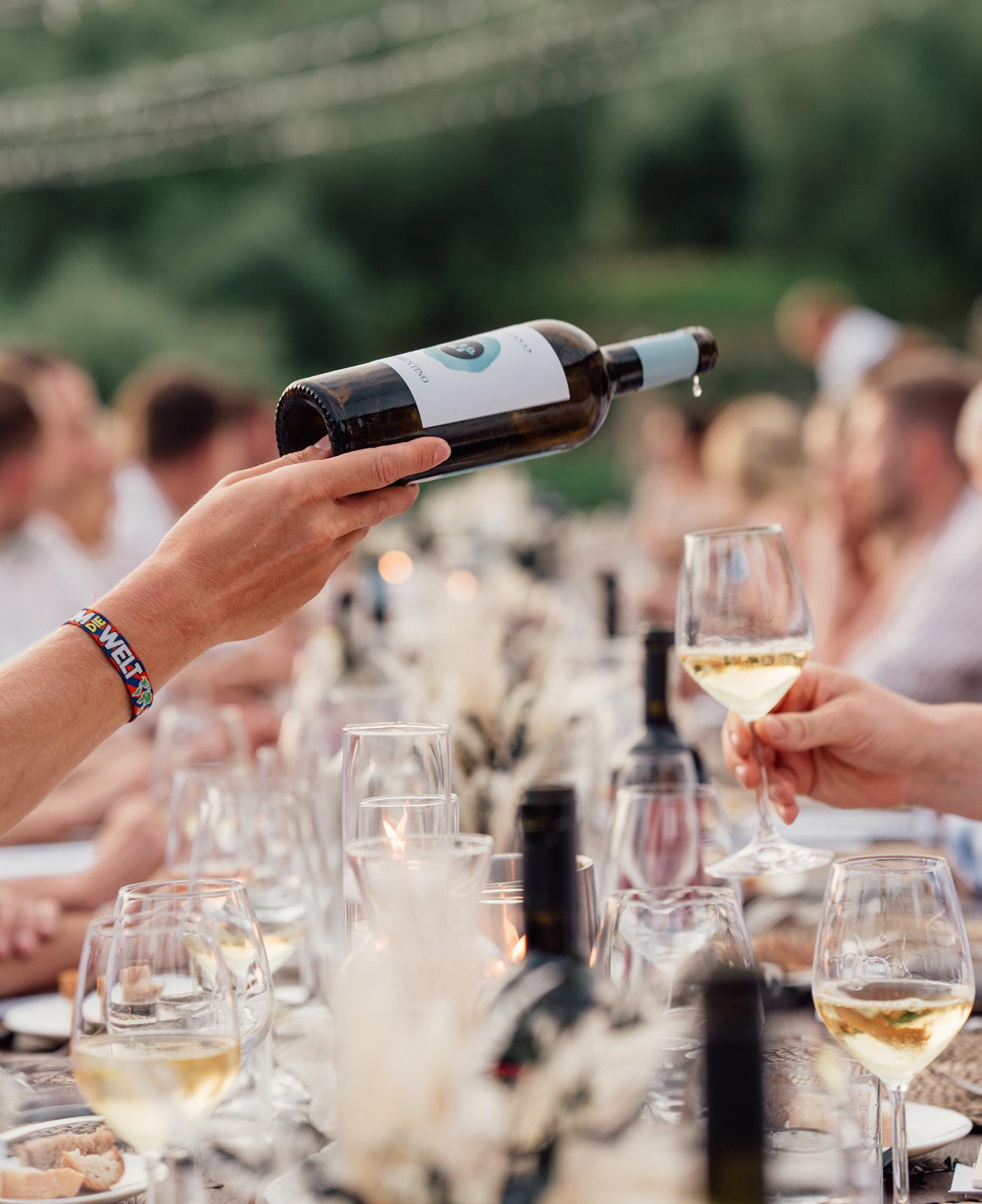
It is the first thing I do when a new travel adventure hits the agenda: run to the search bar and enter, “What are the musteats and drinks in [destination]?” Secondly: “What addresses do you recommend?” There is always an answer to the question, written by a hungry foodie, whether it is a video by the legendary Anthony Bourdain or an enthusiastic “unknown” traveler. There is nothing to taste yet, but the fun has begun. What shall I eat, where and when? What is a must, what is optional, and—crucially—will I like it?
Travel brings us the great joy of discovering new food—traditions proven over centuries that remain valid today. It offers the best possible way to get to know a destination. Eat as the locals do! You will connect better with them; there are few ways to get to know someone better than by sharing a meal. As an avid traveler, I now have my favorites, flavored by personal preference. But above all, I have learned to always go local. Never order a Heineken; always choose a local beer (even if it’s probably owned by Heineken) and explore the local wines and fruit juices.
Eat where it’s busy. Avoid following “viral” social media advice blindly; instead, ask the experts or trust your gut and venture out on your own. Do not be afraid, but also do not feel pressured to eat what you don’t want (insects, in my case). Above all, enjoy, savor, and open your mind to bold flavors you may never taste again. I once had a Mayan meal based on corn in Belize. I do not know exactly what was in it, but I will never forget it. I could go on about a vegetable soup I had in China or the falafel in Beirut—as my colleagues at work know all too well. But that is the “food karma” for any traveler: it will almost never taste as good at home as it did at the destination, regardless of the restaurants in your hometown.
That was a short personal perspective. However, since I am not the only one who loves food and travel, an entire industry has emerged within the business travel sector. The days of settling for a “quick and safe” steak in the hotel restaurant are not over, but the modern corporate
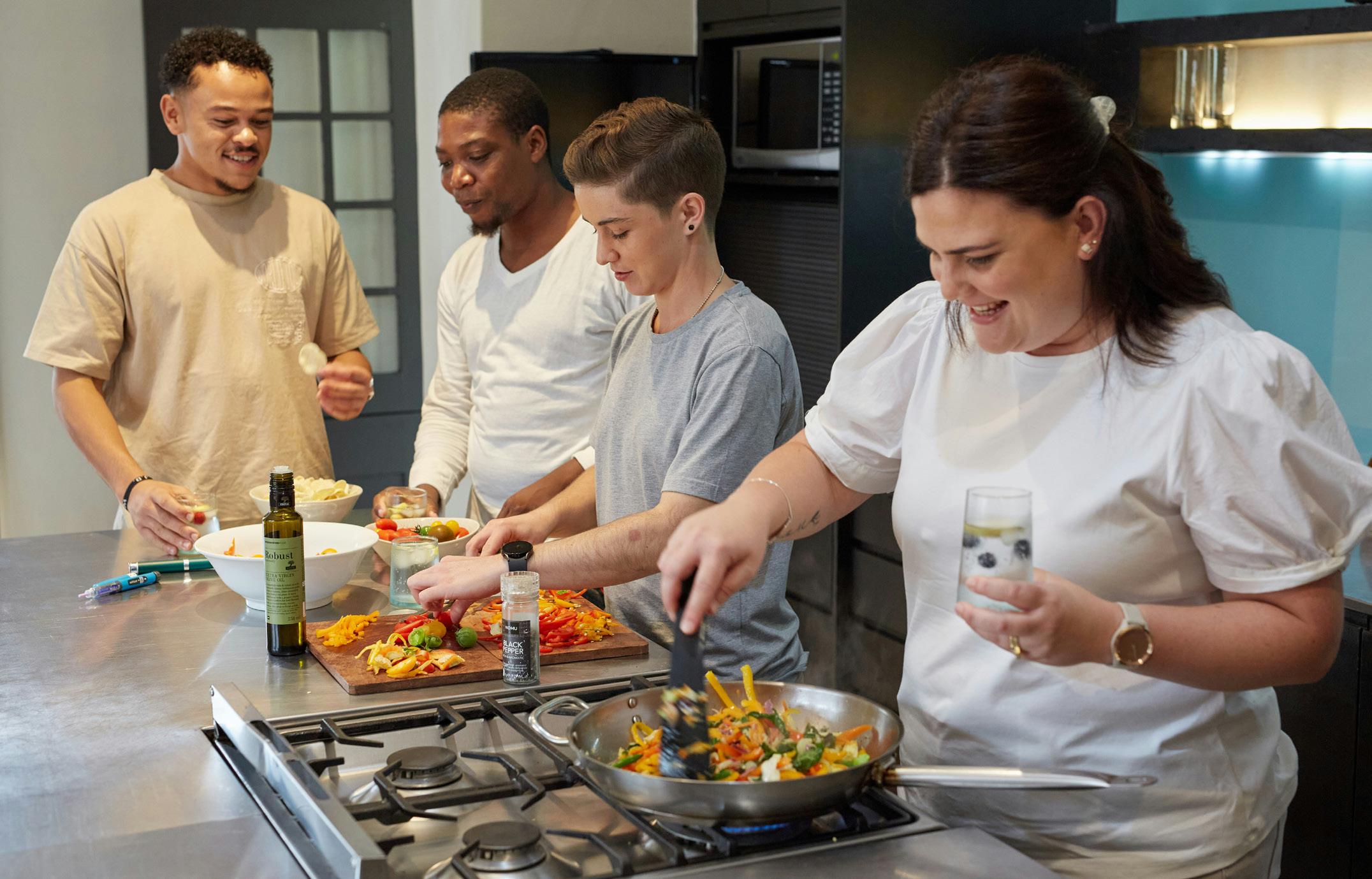
traveler wants much more. As we navigate the midpoint of 2026, the landscape of corporate travel is undergoing a profound transformation. For the modern executive, a business trip is no longer defined by the four walls of a conference center; it is defined by the “taste” of the city. For the readers of Summit, this shift means that culinary experiences have moved from a mere footnote on the itinerary to the strategic center of the travel program.
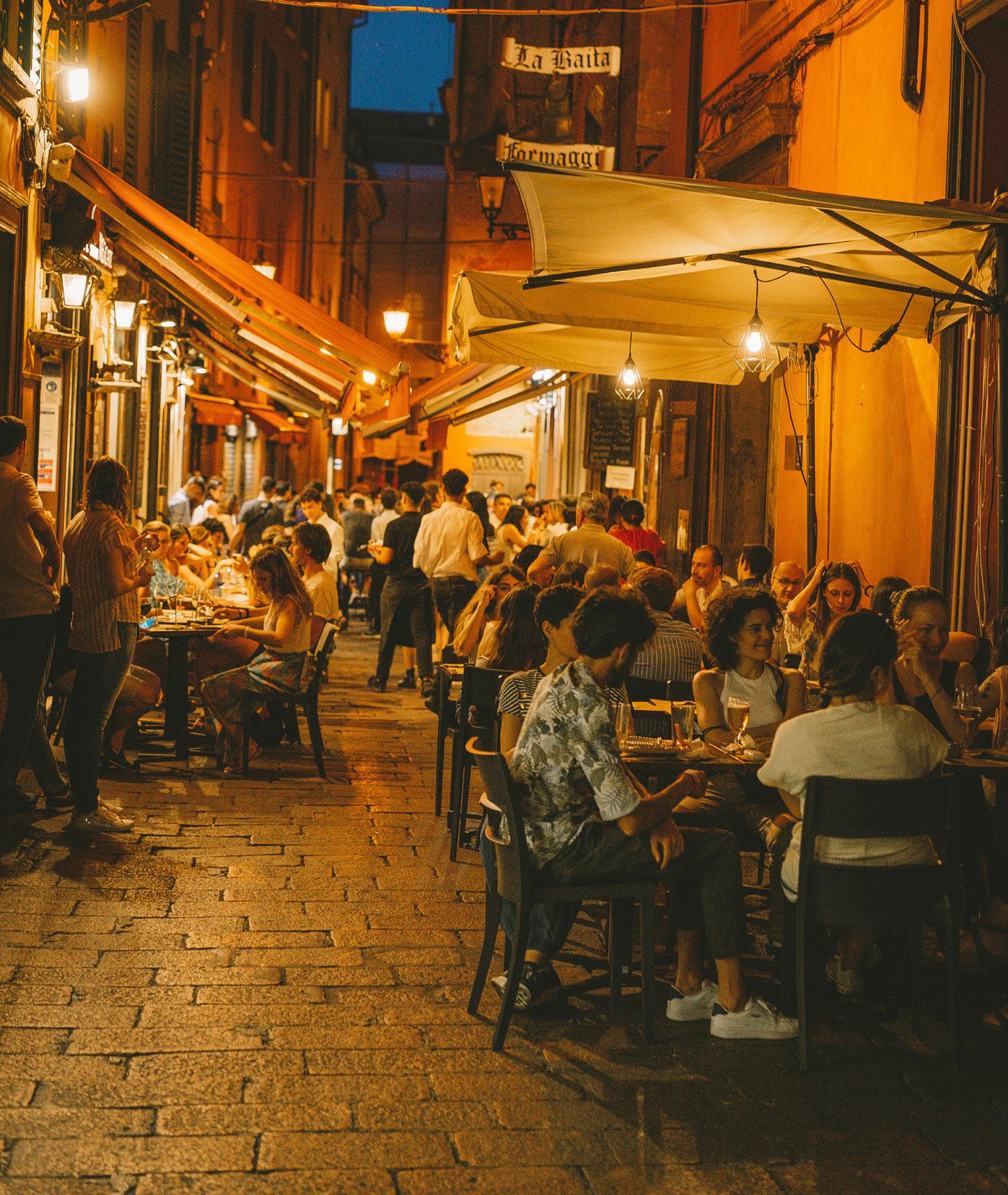
Today’s corporate groups are increasingly seeking ways to bond that transcend the traditional boardroom setting. In global culinary hubs, the passive group dinner is being replaced by immersive, high-energy workshops. In Bologna, for instance— long considered the gastronomic soul of Italy— groups are trading their suits for aprons to learn the rhythmic art of rolling tagliatelle. Guided by a local Cesarine, these sessions are more than just cooking lessons; they are exercises in patience and precision. These hands-on workshops foster a unique kind of collaboration where corporate hierarchy fades away, replaced by shared effort and the communal reward of a meal made from scratch.
For groups that prefer movement, the concept of the food tour has been elevated into a sophisticated cultural deep-dive. In cities like Mexico City or Singapore, curated tours no longer just visit the “best hits.” Instead, they take teams through the labyrinthine aisles of local markets to meet the producers themselves. These tours, often led by specialized food journalists or local chefs, provide the high-level narrative and historical context that
• Tbilisi, Georgia: A rising star for 2026. Don’t miss the khinkali (hand-pinched dumplings) paired with ancient qvevri wines. Fun city and great people.
• Athens, Greece: Often underrated, the city is finding new confidence. Beyond souvlaki, look for “rogue tavernas” serving modern twists on seasonal stews and high-end Greek labels.
• Seoul, South Korea: The capital of “Chimaek”—a portmanteau of chicken and maekju (beer). For teams, a Korean BBQ night is the ultimate bonding experience.
• Corsica, France: A carnivore’s paradise. Try the figatellu (liver sausage) and lonzu, washed down with rugged island wines. Great pizza too by the way.
• Beirut, Lebanon: One of the great food destinations of the world and the best, freshest cuisine in the Middle East. Amazing wines as well. I will never forget the Chateau Musar 2003.
• Buenos Aires, Argentina: The world capital of steak. Also, grab a choripán (sausage sandwich) from a street stall or settle in for a parrillada. Did I mention empanadas?
• Chicago, USA: Home of the “no-ketchup” hot dog, one of the best in the world, the odd deep-dish ‘pizza’, and the legendary Italian beef sandwich. But also a thriving higher end culinary scene. Drink a shot of Malört, the local booze, you will never forget.
• Chengdu, China: The spicy food capital. The communal hot pot is the height of sociability—a must for visiting delegations. Do a food tour! See also page 28.
• San Salvador, El Salvador: Home to the pupusa—thick corn tortillas stuffed with cheese, beans, or chicharrón. A recent discovery.
• The Alps (CH/FR/AT): For a true “winter team” vibe, nothing beats the communal warmth of a traditional raclette or cheese fondue.
CITY
Naples
Tokyo
New Orleans
Rome
Bangkok
Madrid
Bologna
Mumbai
Santa Fe
Florence
Chiang Mai
Cape Town
Lagos
Quito
Medellín
Lisbon
San Sebastián
RANKINGS
TasteAtlas (#1)
Condé Nast (#1)
Time Out (#1), TasteAtlas
TasteAtlas, Condé Nast
Time Out (#2), Condé Nast
Condé Nast (#3), Time Out
TasteAtlas (#3)
TasteAtlas (#5)
Condé Nast (#2)
TasteAtlas (#4)
Condé Nast (#4)
Time Out, Condé Nast
Time Out
Condé Nast (#5)
Time Out (#3)
TasteAtlas, Condé Nast
Condé Nast
KEY HIGHLIGHTS
The birthplace of pizza; leads the list for 2025/26.
Most Michelin stars in the world; highest product quality.
Mix of French, Spanish, and African (Creole) influences.
Classic trattoria cuisine (Carbonara, Amatriciana).
World-famous for street food; 86% of locals are highly enthusiastic.
Innovative tapas and the best plantbased restaurants.
Nicknamed “La Grassa” (The Fat One) because of its rich food culture.
The only South Asian city in the TasteAtlas top 10.
Unique blend of indigenous and Spanish traditions.
Focus on Tuscan cuisine and highquality ingredients.
Known for Northern Thai cuisine (such as Khao Soi).
Diverse influences and excellent wines from the region.
Strong rise of West African flavors and Jollof rice.
Modernization of traditional ingredients from the Andes.
Creative culinary scene that is growing rapidly internationally.
Authenticity, fresh fish, and famous pastries.
Highest concentration of Michelin stars per capita.
Summit readers value. It is a lesson in urban logistics, history, and sociology, all served on a small plate.
The “slow travel” movement has also revitalized interest in the world’s most iconic wine regions, which are now being positioned as premier venues for “workations” and high-level retreats. Beyond the standard tasting room, regions like the Douro Valley in Portugal or the Ahr in nearby Germany offer a landscape that acts as a natural catalyst for creative thinking.
The trend for 2026 is “Active Enology.” Corporate retreats in these areas now frequently include “Master Blender” sessions. In these workshops, teams are tasked with creating their own signature blend, balancing acidity, tannins, and fruit. It serves as a perfect metaphor for management: blending diverse professional talents into a single, balanced, and successful project. Furthermore, many estates now offer “harvest experiences,” allowing groups to participate in the physical labor of the vineyard, followed by a rustic, outdoor feast—an experience that builds lasting camaraderie through shared physical accomplishment.
The new standard
As companies prioritize employee wellbeing and cultural intelligence, these
culinary and viticultural excursions have become essential tools for retention and relationship building. Whether it is a private sake tasting in a hidden Tokyo cellar or a sunset “farm-to-table” dinner in the foothills of Stellenbosch, the goal is the same: to create a shared memory
that resonates far longer than a standard PowerPoint presentation. Think about it from a personal life point of view: which one do you better remember: that meal of that meeting you had in Tokyo, Dubai, Brussels or Vienna (and so on…)
While capital cities often steal the spotlight, Europe’s secondary or smaller cities offer a wealth of character, history, and “business-leisure” potential without the overwhelming crowds. Here is your short-list guide to these alternative hotspots.
MUNICH:
• Claim to Fame: The global home of Oktoberfest and high-end automotive engineering.
• Fun Things to Do: Watch urban surfers tackle the permanent wave at the Eisbachwelle or explore the English Garden, which is larger than New York’s Central Park.
• Unknown Fact: Albert Einstein once worked at Oktoberfest as a seventeen-year-old, helping to install the lights in one of the beer tents.
DÜSSELDORF:
• Claim to Fame: Germany’s fashion capital and home to the “longest bar in the world” in its Old Town.
• Fun Things to Do: Take a stroll along the Rhine embankment or explore the futuristic architecture of the Media Harbour.
• Unknown Fact: It is considered the Cartwheel Capital of the World; the tradition dates back to 1288, and the city still hosts an annual cartwheeling tournament.
MARSEILLE: THE COOLEST CITY IN FRANCE
• Claim to Fame: France’s oldest city and its largest commercial port on the Mediterranean.
• Fun Things to Do: Take a boat to the Château d’If (famous from The Count of Monte Cristo) or hike the stunning Calanques National Park.
• Unknown Fact: Marseille is the sunniest city in France, boasting an average of 2,900 hours of sunshine per year.
BIRMINGHAM : BY ORDER OF THE PEAKY BLINDERS
• Claim to Fame: Known as the “City of a Thousand Trades” and the birthplace of Heavy Metal (Black Sabbath and Judas Priest).
• Fun Things to Do: Take a boat tour along its canals or visit Cadbury World for a deep dive into the history of chocolate.
• Unknown Fact: Birmingham has more miles of canal than Venice (though Venice has more canals per square mile).
GLASGOW : SCOTTISH UNDERDOG
• Claim to Fame: Scotland’s cultural powerhouse, famous for its Victorian and Art Nouveau architecture and its “UNESCO City of Music” status.
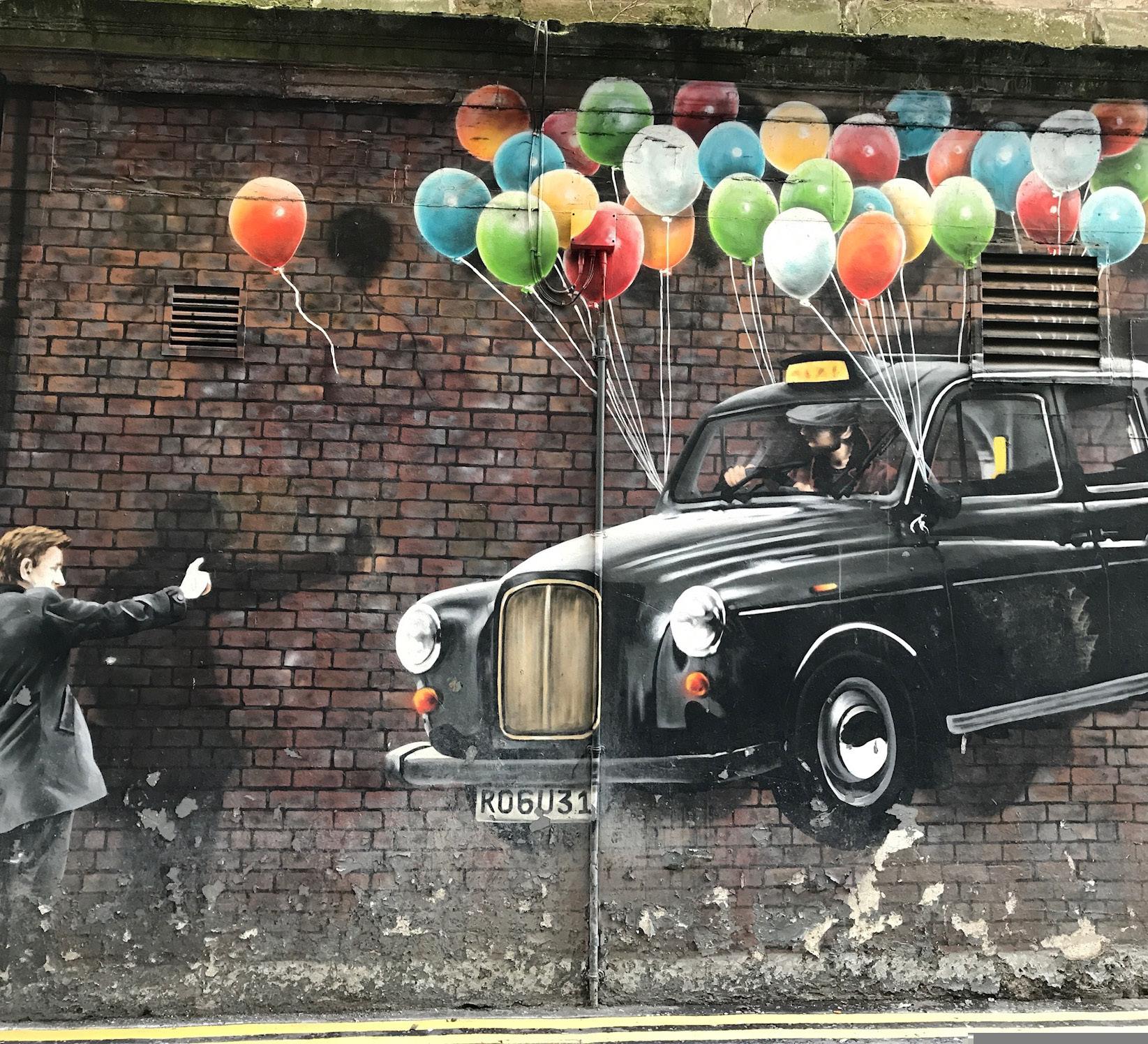
• Fun Things to Do: Explore the Kelvingrove Art Gallery or hunt for street art along the City Centre Mural Trail.
• Unknown Fact: Chicken Tikka Masala was famously invented in Glasgow by a local chef who added a can of tomato soup to a curry for a customer.
LYON: FOOD HEAVEN
• Claim to Fame: The undisputed gastronomic capital of France and the birthplace of cinema.
• Fun Things to Do: Wander through the traboules
(hidden passageways) of Vieux Lyon or visit the Institut Lumière.
• Unknown Fact: The first film ever made, showing workers leaving a factory, was shot right here in Lyon in 1895.
BRISTOL : BANKSY TOWN
• Claim to Fame: A hub for engineering (Clifton Suspension Bridge) and world-renowned street art (birthplace of Banksy).
• Fun Things to Do: Visit the SS Great Britain, the world’s first great ocean liner, or explore the street art of the Stokes Croft area.
• Unknown Fact: Bristol is the birthplace of Ribena, originally created as a healthy blackcurrant supplement during the war.
BORDEAUX : ALL FRESH AND RENEWED
• Claim to Fame: The undisputed wine capital of the world.
• Fun Things to Do: Marvel at the Miroir d’Eau (the world’s largest reflecting pool) or shop along Rue Sainte-Catherine, the longest pedestrian shopping street in Europe.
• Unknown Fact: The name “Bordeaux” simply means “beside the waters”.
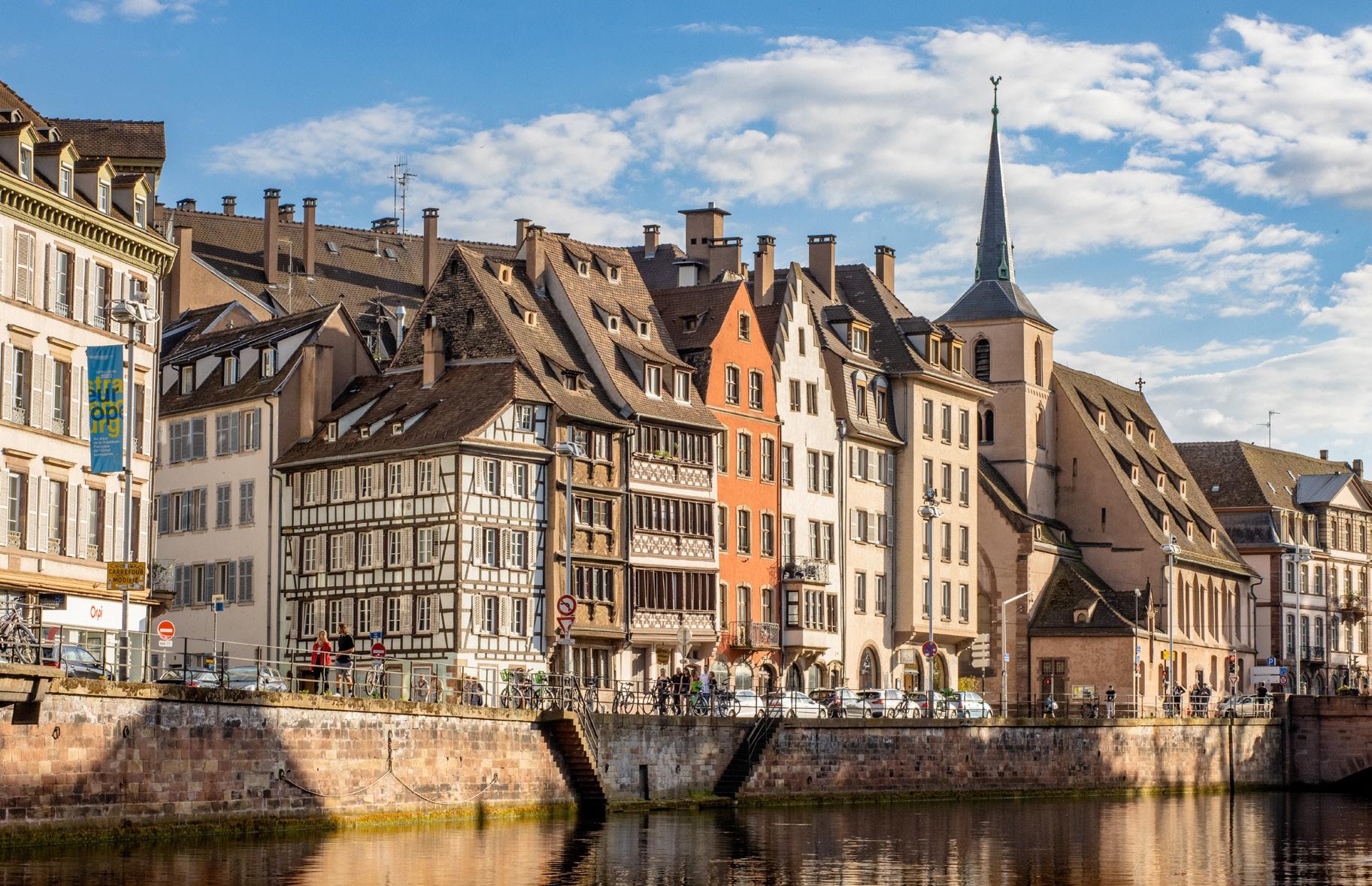
STRASBOURG: EINS, DEUX, TROIS
• Claim to Fame: The official seat of the European Parliament and a bridge between French and German cultures.
• Fun Things to Do: Wander through Petite France or climb the tower of the gothic Strasbourg Cathedral.
• Unknown Fact: Strasbourg’s historic center, the Grande Île, was the first city center to be entirely classified as a UNESCO World Heritage site..
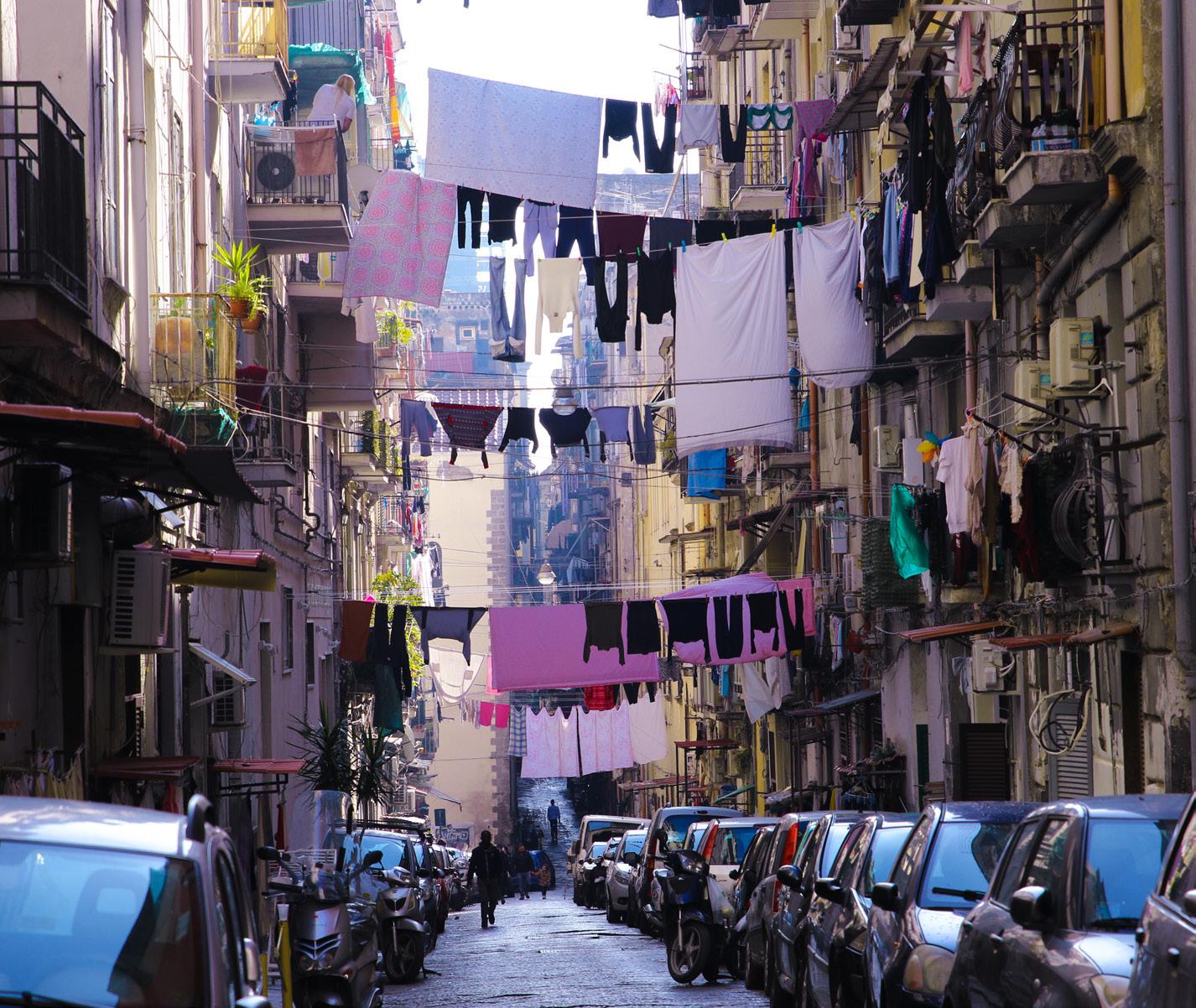
NAPLES: MARADONA FOREVER
• Claim to Fame: The birthplace of Pizza Margherita and the gateway to Pompeii.
• Fun Things to Do: Explore the Napoli Sotterranea (Underground Naples), a labyrinth of tunnels and aqueducts 40 meters below the surface.
• Unknown Fact: Naples has the highest concentration of historic churches in the world—over 448 within the city limits.
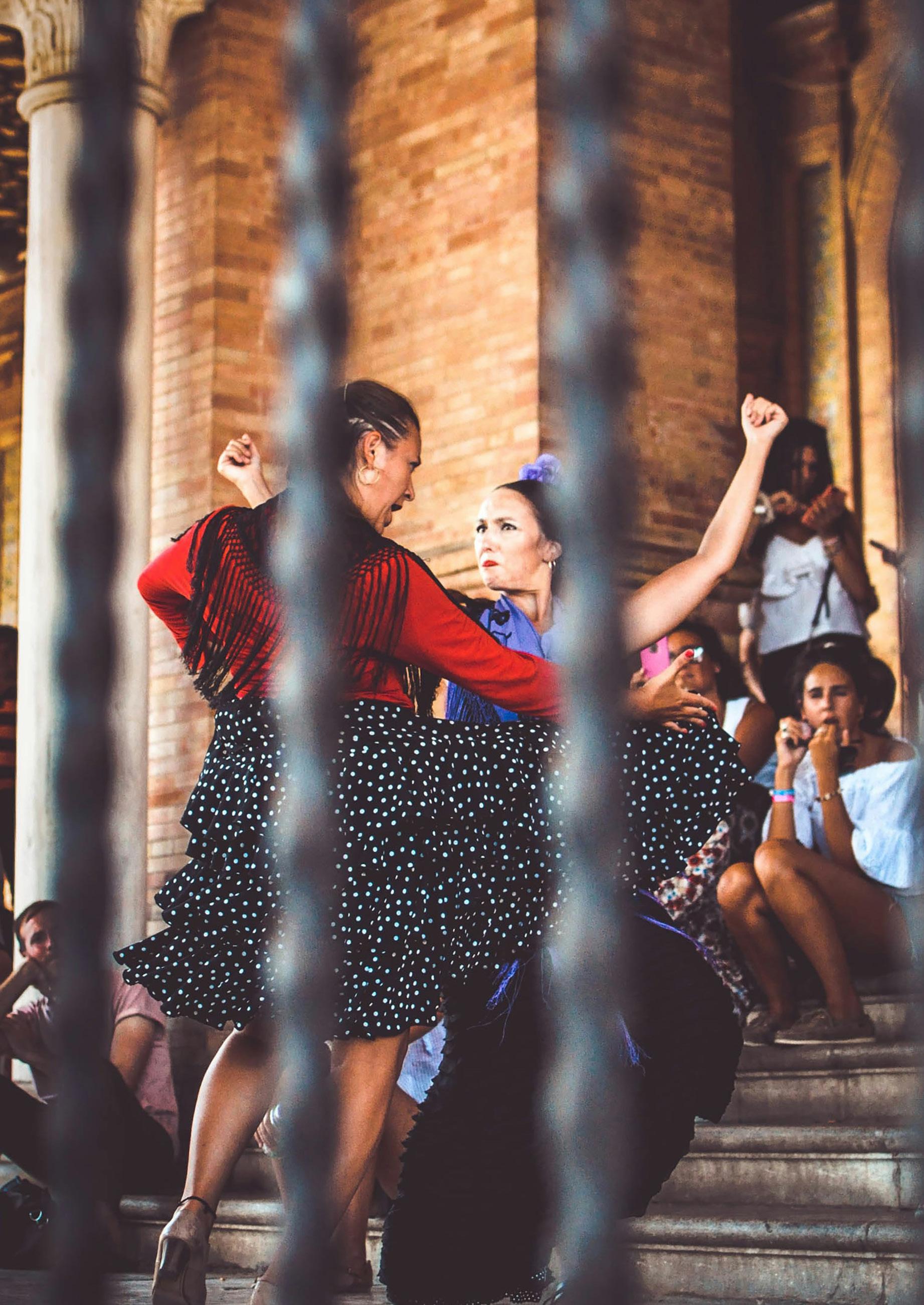
• Claim to Fame: The passionate heart of Flamenco and the setting for many famous operas, including Carmen and The Barber of Seville.
• Fun Things to Do: Climb the Giralda tower for a panoramic view or explore the Real Alcázar, a filming location for Game of Thrones.
• Unknown Fact: Seville was the only river port allowed to trade with the “New World” for over 200 years, making it one of the wealthiest cities in the 16th century.
BILBAO: DELICIOUS AND ARTSY
• Claim to Fame: The transformation of an industrial port into an art mecca, headlined by the Guggenheim Museum.
• Fun Things to Do: Go for a Pintxos
(Basque tapas) crawl in the Casco Viejo (Old Town).
• Unknown Fact: The titanium panels of the Guggenheim Museum are designed to change color depending on the weather and the position of the sun.
SANTIAGO DE COMPOSTELA: ALSO BY PLANE
• Claim to Fame: The final destination of the Camino de Santiago, a thousand-
year-old pilgrimage route.
• Fun Things to Do: Watch the giant Botafumeiro incense burner swing across the transept of the Cathedral.
• Unknown Fact: The granite in the city is so porous that after a heavy rain, the buildings appear to “weep” or glow as they release the moisture.
ZÜRICH: ANOTHER GREAT SWISS CITY
• Claim to Fame: A global hub for banking and finance, consistently ranked among the world’s most livable cities.
• Fun Things to Do: Take a dip in a Frauenbad or Männerbad—historic river pools that turn into bars at night.
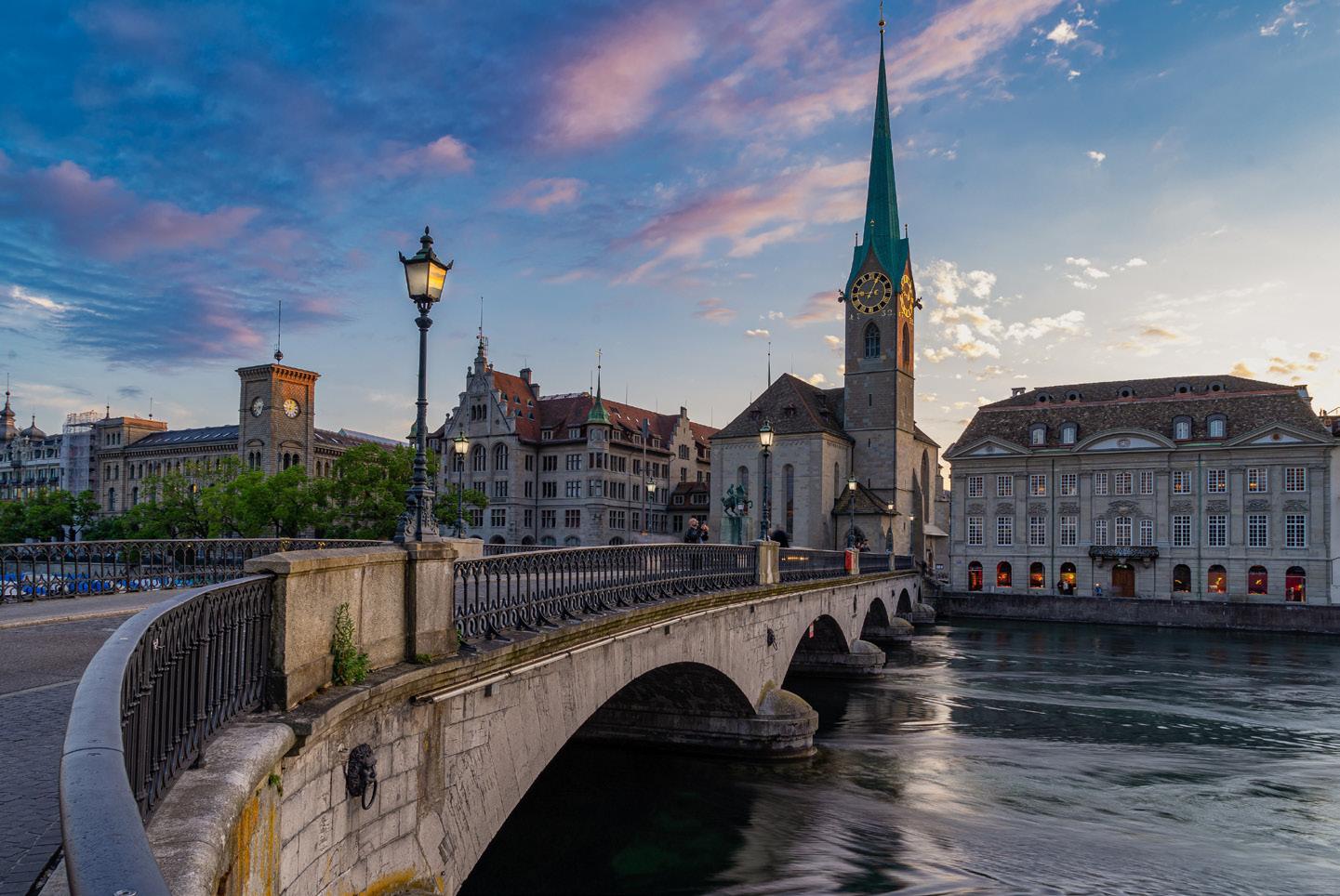
• Unknown Fact: There are over 1,200 drinking fountains in Zürich, all providing free, high-quality mountain spring water.
PORTO: EIFEL WAS HERE
• Claim to Fame: The birthplace of Port wine and famous for the iconic Dom Luís I Bridge.
• Fun Things to Do: Visit the Livraria Lello, often cited as one of the most beautiful bookstores in the world, or take a “Six Bridges” cruise on the Douro River.
• Unknown Fact: Porto was never conquered by the Moors or the Spanish, earning it the nickname “The Unvanquished City” (A Cidade Invicta).
FARO: MORE THAN JUST A BEACHGATEWAY
• Claim to Fame: The gateway to the Algarve and its stunning Ria Formosa lagoons.
• Fun Things to Do: Explore the Capela dos Ossos (Bone Chapel), where the walls are lined with the bones of over 1,000 monks.
• Unknown Fact: Unlike the rest of the Algarve, Faro retains a distinct Portuguese feel because its city walls protected it from the 1755 earthquake that destroyed much of the region.
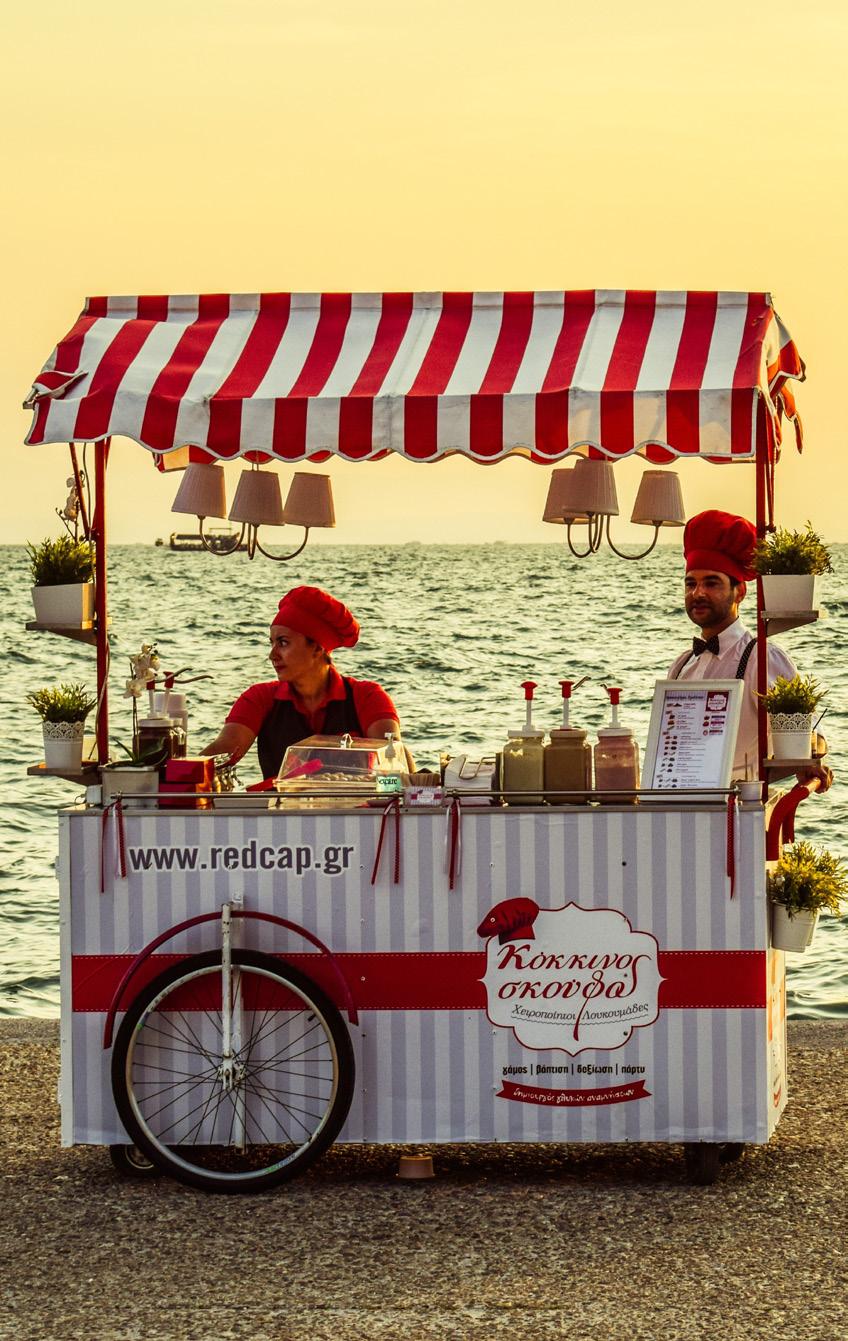
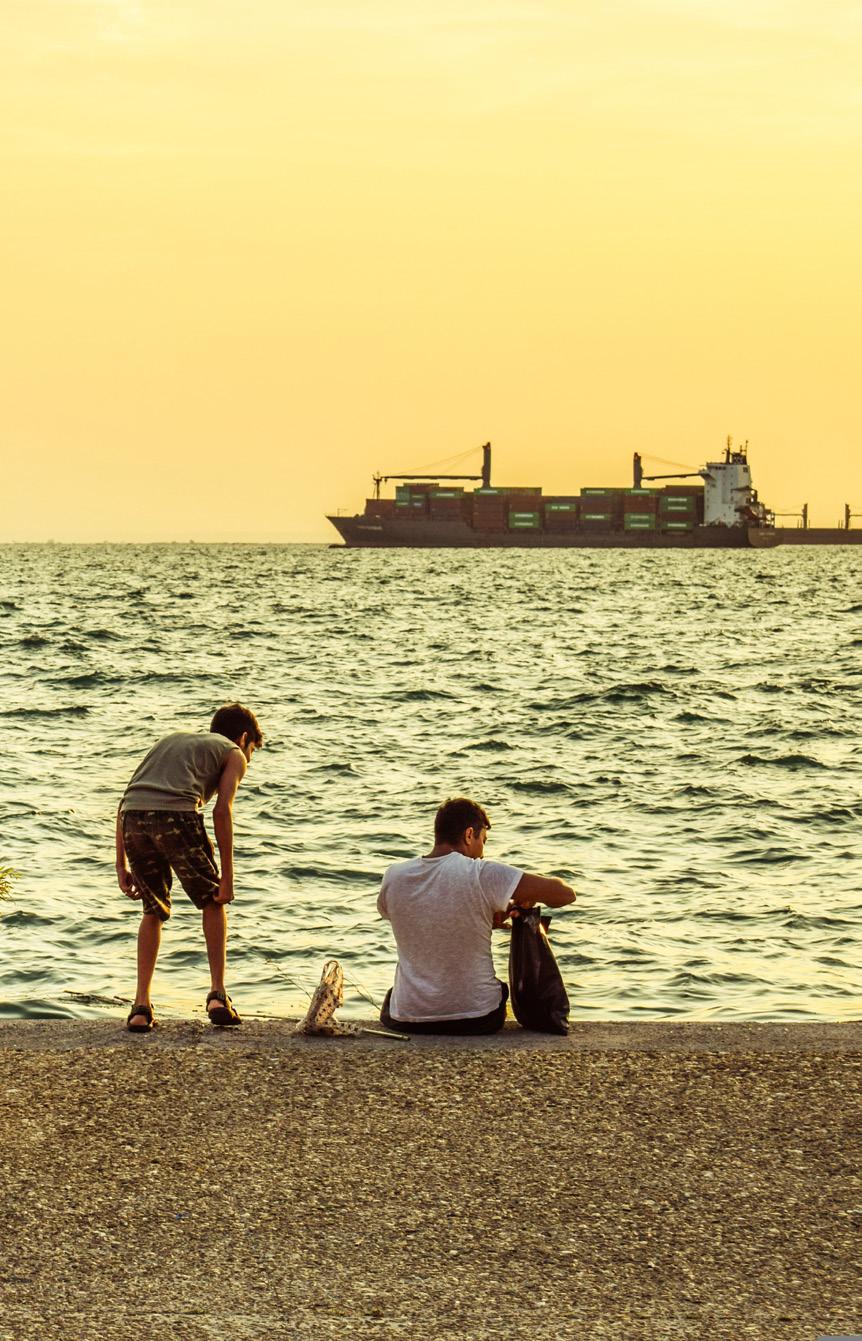
THESSALONIKI: IF NOT ATHENS THEN…
• Claim to Fame: Greece’s cultural
capital, renowned for its vibrant food scene and Byzantine monuments.
• Fun Things to Do: Walk the waterfront to the White Tower or explore the Modiano Market for local spices.
• Unknown Fact: The city was named after the half-sister of Alexander the Great; her name, Thessaloniki, literally means “Thessalian Victory”.
BERGEN: FJORD FINESSE
• Claim to Fame: The gateway to the Norwegian Fjords and the historic Hanseatic wharf, Bryggen.
• Fun Things to Do: Take the Fløibanen funicular to the top of Mount Fløyen for a panoramic view of the city and sea.
• Unknown Fact: It is one of the rainiest cities in Europe, but locals are so used to it that you’ll find “umbrella vending machines” throughout the streets.
GÖTEBORG: WHEN SWEDEN MEETS HOLLAND
• Claim to Fame: A hub for Scandinavian design and the home of Volvo.
• Fun Things to Do: Visit Liseberg, the largest amusement park in Scandinavia, or explore the Haga district for a traditional fika.
• Unknown Fact: The city was built by the Dutch in the 17th century, which is why the city center is designed with a classic Dutch canal system.
CRACOW (POLAND): A POLISH MUST SEE
• Claim to Fame: One of the few major Polish cities to escape destruction in WWII, preserving its stunning medieval Old Town.
• Fun Things to Do: Explore the Wieliczka Salt Mine, an underground city carved entirely out of salt.
• Unknown Fact: According to legend, the city was founded after a cobbler defeated a dragon living under Wawel Hill by feeding it a sulfur-filled sheep.
DUBROVNIK: BEAUTY BY THE SEA
• Claim to Fame: The “Pearl of the Adriatic,” famous for its massive stone walls and role as King’s Landing in Game of Thrones.
• Fun Things to Do: Walk the full circuit of the city walls at sunset.
• Unknown Fact: The Republic of Ragusa (modern-day Dubrovnik) was one of the first countries in the world to abolish slavery, back in 1416.
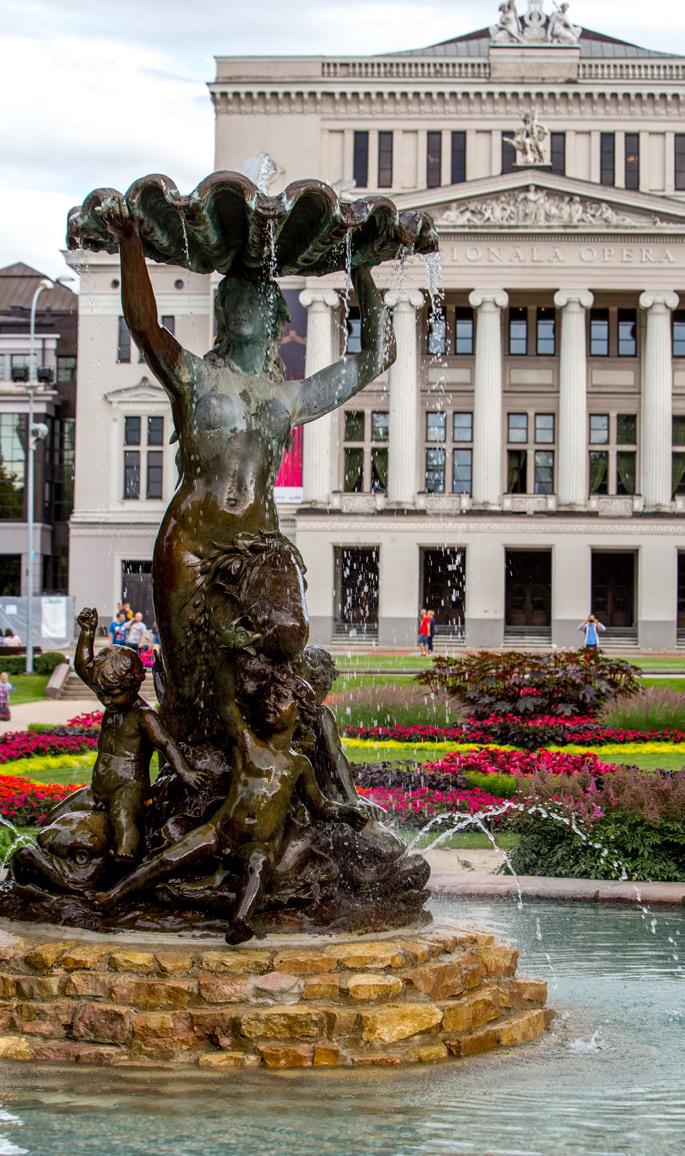
RIGA: VERSATILE AND FULL OF LIFE
• Claim to Fame: Home to the highest concentration of Art Nouveau architecture in the world, making it a must see for design enthusiasts.
• Fun Things to Do: Explore the Central Market, housed in giant former Zeppelin hangars, or attend a performance at the Latvian National Opera.
• Unknown Fact: The first decorated Christmas tree in history is claimed to have been displayed in Riga’s Town Hall Square in 1510.
VILNIUS: BOHEMIAN RHAPSODY
• Claim to Fame: Famous for its sprawling Baroque Old Town, one of the largest in Eastern Europe.
• Fun Things to Do: Visit the selfproclaimed “Republic” of Užupis, a quirky bohemian district with its own constitution, or take a hot air balloon ride—Vilnius is one of the few European capitals where this is permitted over the city center.
• Unknown Fact: Vilnius is home to the world’s only statue of the legendary musician Frank Zappa, despite him having no connection to the city or the country.
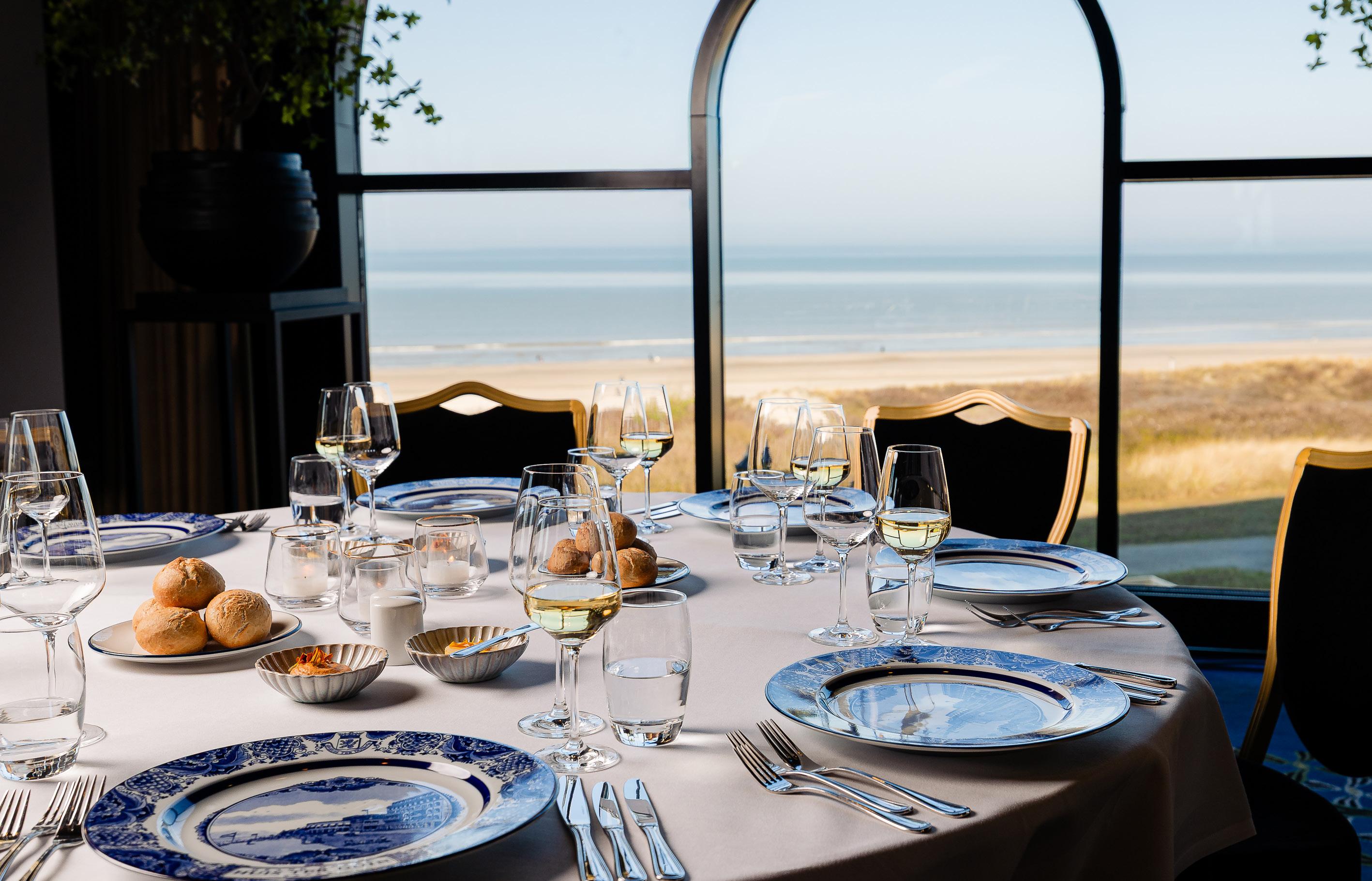
In the world of the international business travel sector and high-end hospitality, “luxury” was for a long time synonymous with boundless abundance. Products that were out of season were flown in, exclusive delicacies from all over the world and a focus on “more is better” formed the standard. At Grand Hotel Huis ter Duin in Noordwijk, however, this narrative is fundamentally shifting.
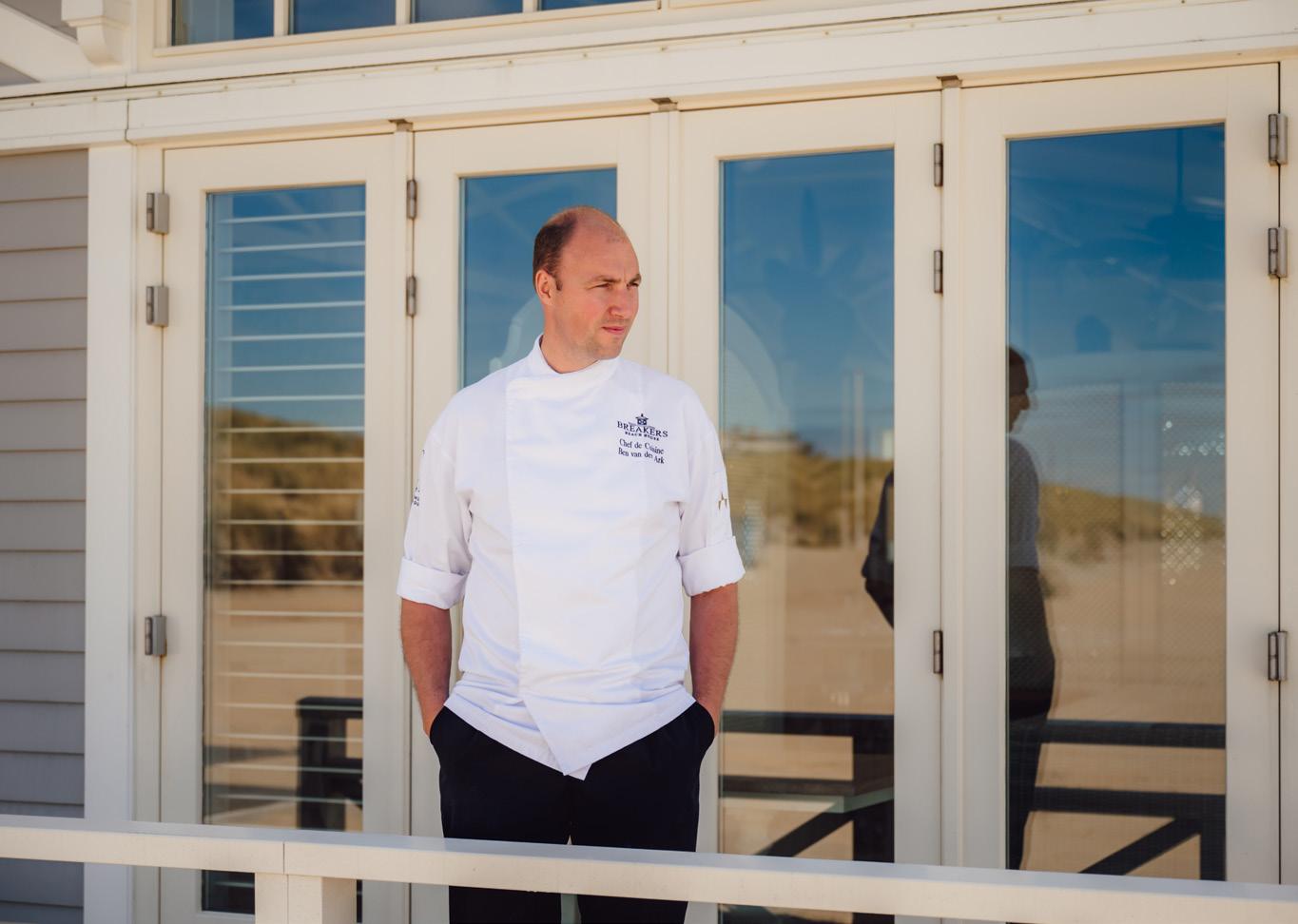
For an icon that regularly receives hundreds of international guests at once for congresses and galas, the challenge is no longer just delivering quality, but providing top quality in a responsible manner without making concessions to prestige. A conversation with Ben van der Ark (Executive Chef).
After more than twenty years in the kitchens of Grand Hotel Huis ter Duin, Ben van der Ark knows the profession inside out. Van der Ark has now worked within the hotel for 23 years and has seen the organization and his role within it grow. “In the past, we had four separate kitchens, with four separate teams and suppliers. Now we are one team. This allows you to work much more efficiently and switch gears easily.”
As executive chef, he is responsible for purchasing, menu development, and team management, among other things. “You are constantly working on the bigger picture: how can we buy smarter, work more sustainably, and at the same time keep the quality high?”
Balancing between desire and reality
Sustainability plays an increasingly large role, but in practice, it proves to be more complex than it sounds on
paper. Especially within the banqueting branch, where sometimes hundreds of guests are served at once, finding the right balance is a continuous challenge. “The basis must always be that you work seasonally,” says Van der Ark. “When fish is at its best, both the quality and the price are right. That is sustainable and better for the guest.” At the same time, he is dependent on the wishes of clients. “Quite often a contact person says: I want this or that. Then you have to go along with it, even if it is not your first choice.” That tension becomes especially visible at large events. “Guests often want there to be enough at all times. That means you sometimes produce more than you would actually want. And what is left on a buffet after an hour and a half must be thrown away. You can’t do anything else with it.” The result: significant food waste, despite all efforts to limit it.
chains and short lines
To maintain a grip on quality and sustainability, Huis ter Duin works with a limited number of regular suppliers. “We have bundled everything. One supplier, one delivery, one packing slip. That saves on transport and ensures shorter lines.” Local products play an important role in this, although Van der Ark defines “local” pragmatically. “For us, that is the Randstad and the coastline. Within that, we look for partners who can deliver what we need.” In addition, they actively look for ways to combat waste. For example, the hotel works with parties that repurpose residual streams. “Through one of our partners, we can use products that would otherwise be thrown away. That is good for the environment and for our creativity.”
Organic? Not always the solution
It is noteworthy that purchasing organic is not a priority within the hotel. “This is primarily related to risk,” Van der Ark explains. “You never know exactly what you will receive. The size, quality, and yield can all vary. For a dish, you must be able to rely on consistency”.
Furthermore, organic products are often more expensive. “A farmer faces more risk, which is reflected in the price. For us, it is important to offer a stable price to the guest. Therefore, we make seasonal agreements with suppliers, often on a quarterly basis”.
One of the greatest challenges in a banqueting kitchen is balancing creativity with scalability. “You always have to consider: can I prepare this dish for five hundred people simultaneously? Some ideas are fantastic but simply do not work on a large scale”. This also applies to dietary preferences, which are becoming increasingly diverse. “Vegetarian, lactose-free, glutenfree—it is all part of the job. But if you receive thirty additional exceptions at the last minute, it becomes logistically complex”. To mitigate this, the team tries to anticipate as much as possible. “For instance, we work with plant-based cream as standard and thicken sauces without flour. This allows us to exclude many allergens from the start”.
Despite all practical limitations, the guest experience remains central. “Guests want to experience something. International guests, in particular, want to taste their location”. This translates into themed menus where local products and seasonal influences converge. “We have also developed a ‘bulb menu,’ inspired by the region. It is exciting, and that story is precisely what makes it special. When you explain a product’s origin, it immediately gains value”. In a competitive market, Huis ter Duin distinguishes itself through flexibility, according to Van der Ark. “There is no ‘no’ here. If something isn’t possible, we find a way to make it happen”. That mentality is deeply embedded in the family business’s DNA. “We always think in solutions”. At the same time, he remains critical: “You must never think you are the best. There is always room for improvement”.
The culinary world is in constant flux, moving from foams and molecular gastronomy toward a focus on pure products and simplicity. “Now it is back to the product itself. Less fuss, more flavor”. Trends like vegetarian dining and Asian influences are also visible, but Van der Ark remains cautious. “You can devise something new, but if the guest isn’t ready for it, it won’t sell. Sometimes you are simply too early”. Consequently, he continuously seeks a balance between innovation and familiarity. “You always need a crowdpleaser. You channel the creativity into the details and the garnishes”.
Anyone who is served a plate during a large event rarely sees the complexity behind it. “For an event with six hundred people, you work with multiple lines simultaneously. You quickly need twenty to twenty-five people during peak moments.” Everything revolves around timing and preparation. “Eighty percent happens beforehand.” Communication with clients is also crucial. “If you make mistakes there, you can’t fix them later. That is why I want to be at the table from the very beginning.”
Despite the logistical and business side of his role, the love for the craft remains the most important driver. “It is not work; it is a passion. You cannot explain it. People call you crazy for working such long days, but the feeling of delivering a perfect evening is priceless.” And when is an event successful? “If everything runs as planned. Within the timeframe, with the quality we want. And if guests enjoy themselves.” And right there, among spreadsheets, suppliers, and schedules, there is still the chef. “When I talk about food, it comes to life again. That remains the most beautiful thing there is.”
Walking through the streets of Chengdu in 2026, you immediately feel that this city moves to its own distinct rhythm. While Beijing rules and Shanghai trades, Chengdu simply lives. It is the undisputed capital of hedonists, a place where ancient tea culture blends effortlessly with a hyper-modern, creative lifestyle.
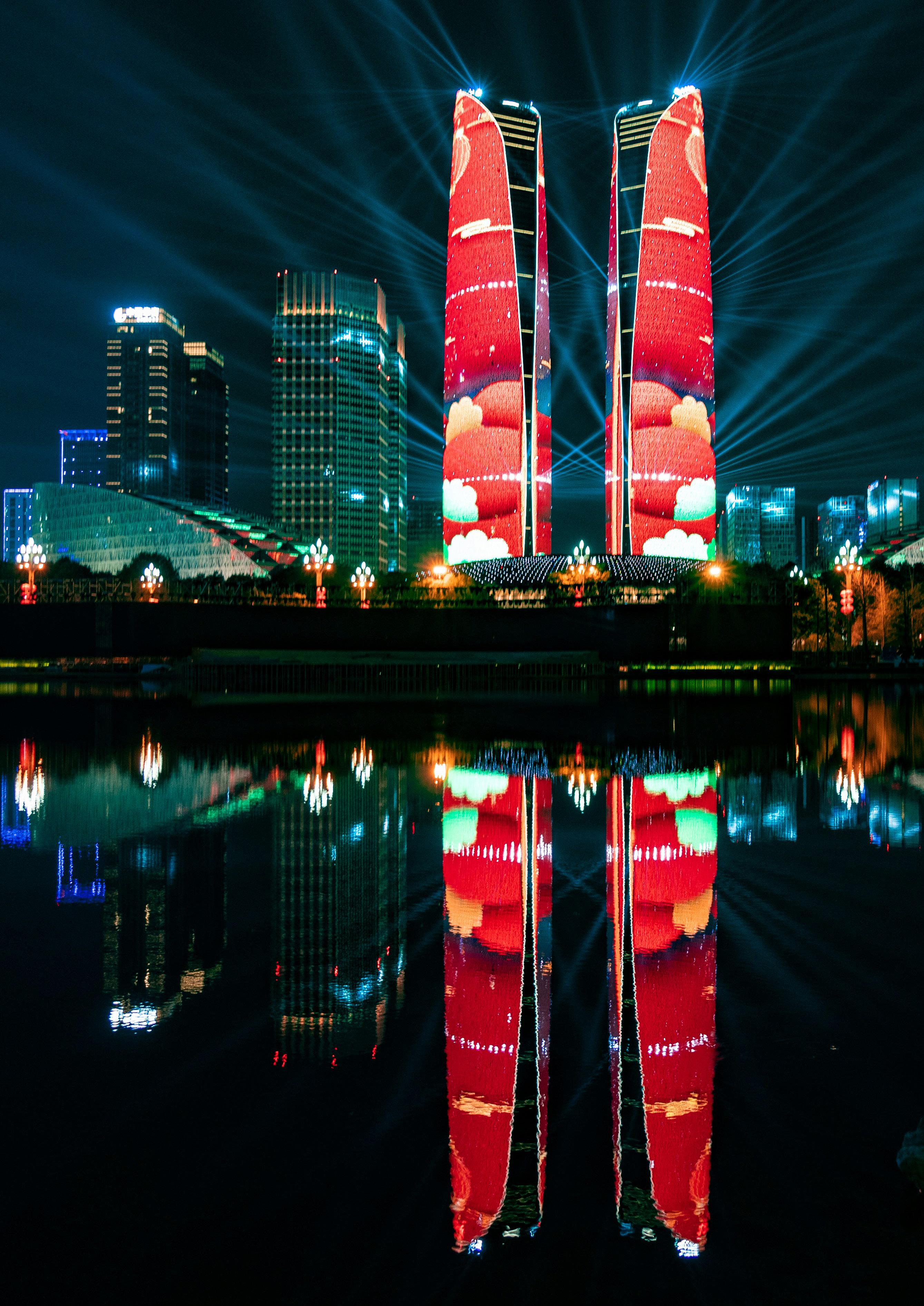
Tijn Kramer Editor-in-Chief
SUMMIT Benelux
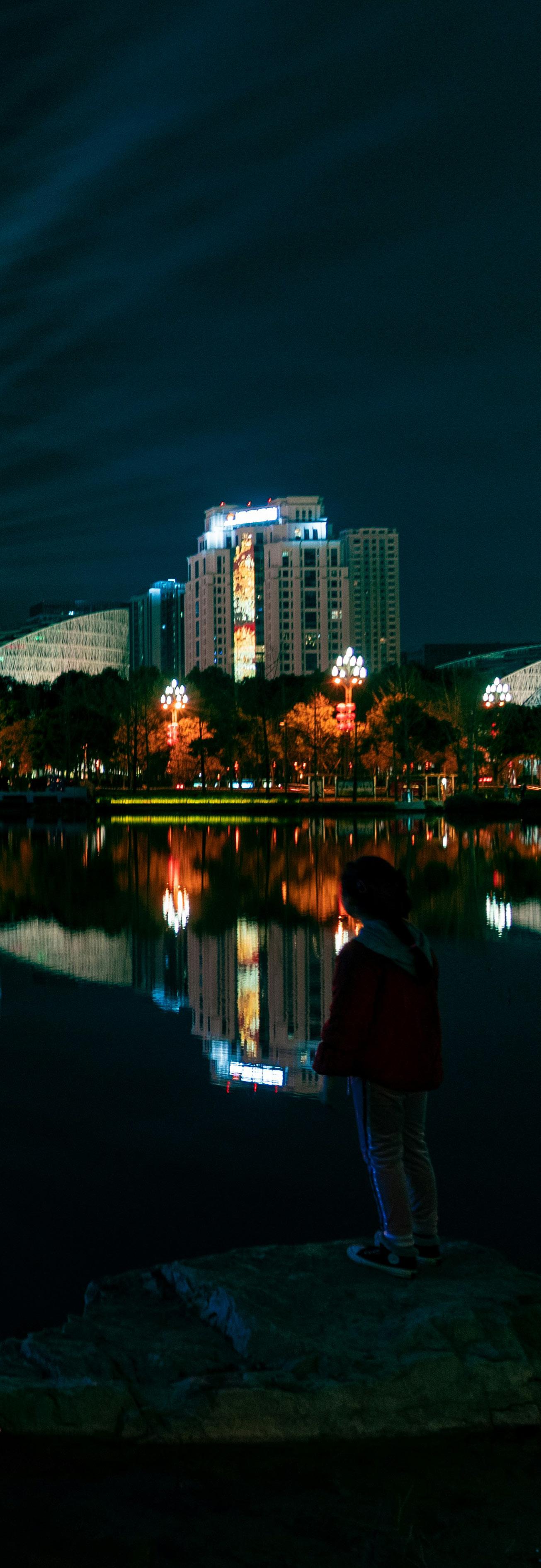

Let’s start with a great place to stay. Located in the bustling heart of the city as part of the impressive International Finance Square (IFS) complex, the artsy and beautiful Niccolo Chengdu serves as our oasis of understated luxury. For the traveler who values refinement over unnecessary frills, this is the definitive address. The hotel is housed in Tower 3 of the IFS complex on Hongxing Road. Accommodations like the N2 Grand Temple View Premium rooms offer a panoramic vista that captures the essence of the city, with historic temple roofs below and a horizon dominated by gleaming skyscrapers.
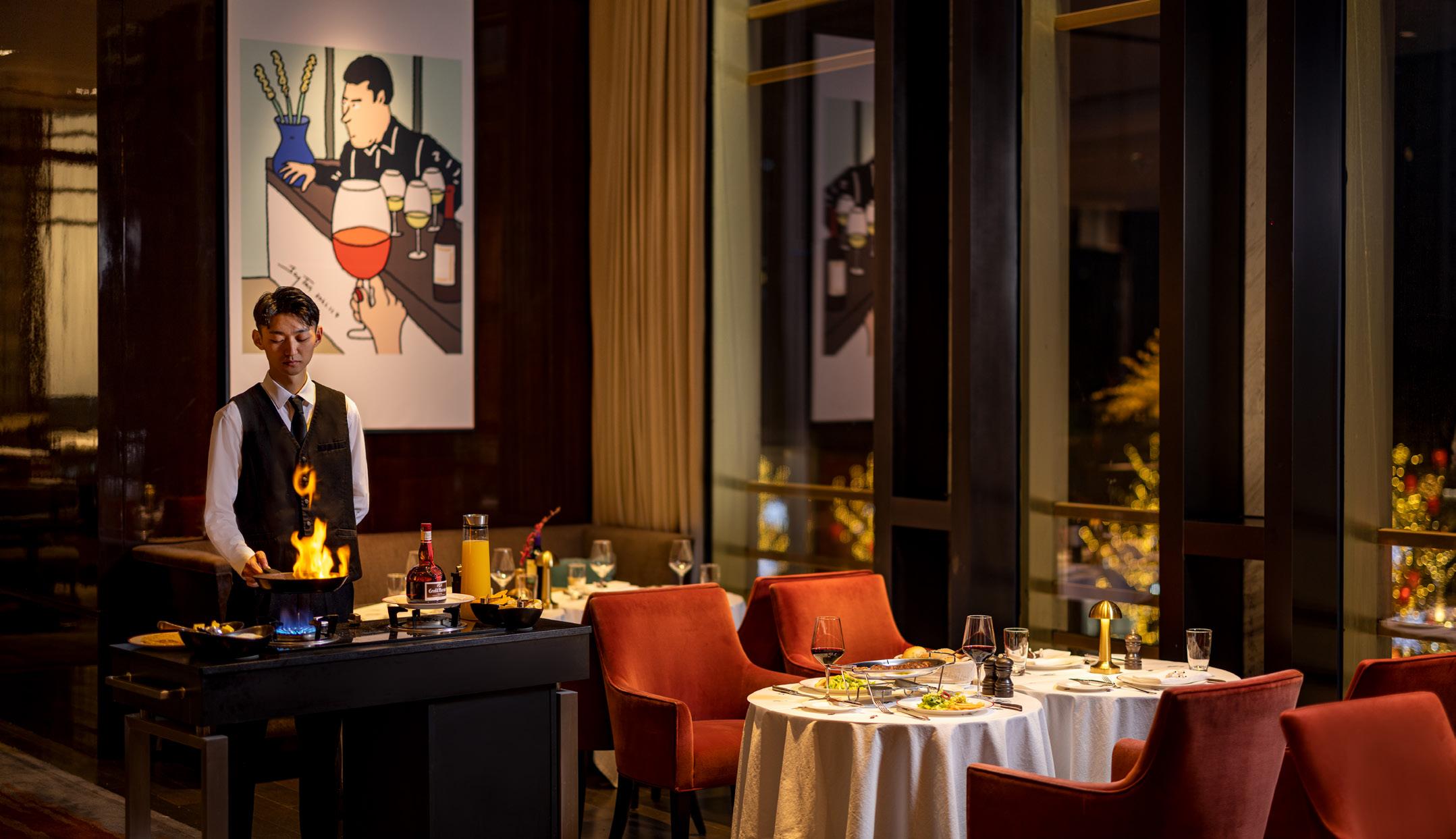
The culinary experience within the hotel is a story in itself. At Niccolo Kitchen, chefs can be seen in action within a dynamic open kitchen, precisely preparing both Asian and Western cuisine. The Tea Lounge provides a visual spectacle with its vast installation of metal shards resembling birds and is the setting for the signature Niccolo Tea Ritual, presented by a resident tea sommelier. For those wishing to taste authentic Cantonese and Sichuan cuisine in a chic interior, Yue Hin on level two offers the perfect setting. Furthermore, The Bar on the third floor features live band performances from Tuesday to
Sunday and includes Steak Frites, which brings a modern twist to the traditional French bistro. After a day in the city, the 20-meter pool and wellness facilities offer a private world for guests to work out stress and relax in complete peace.
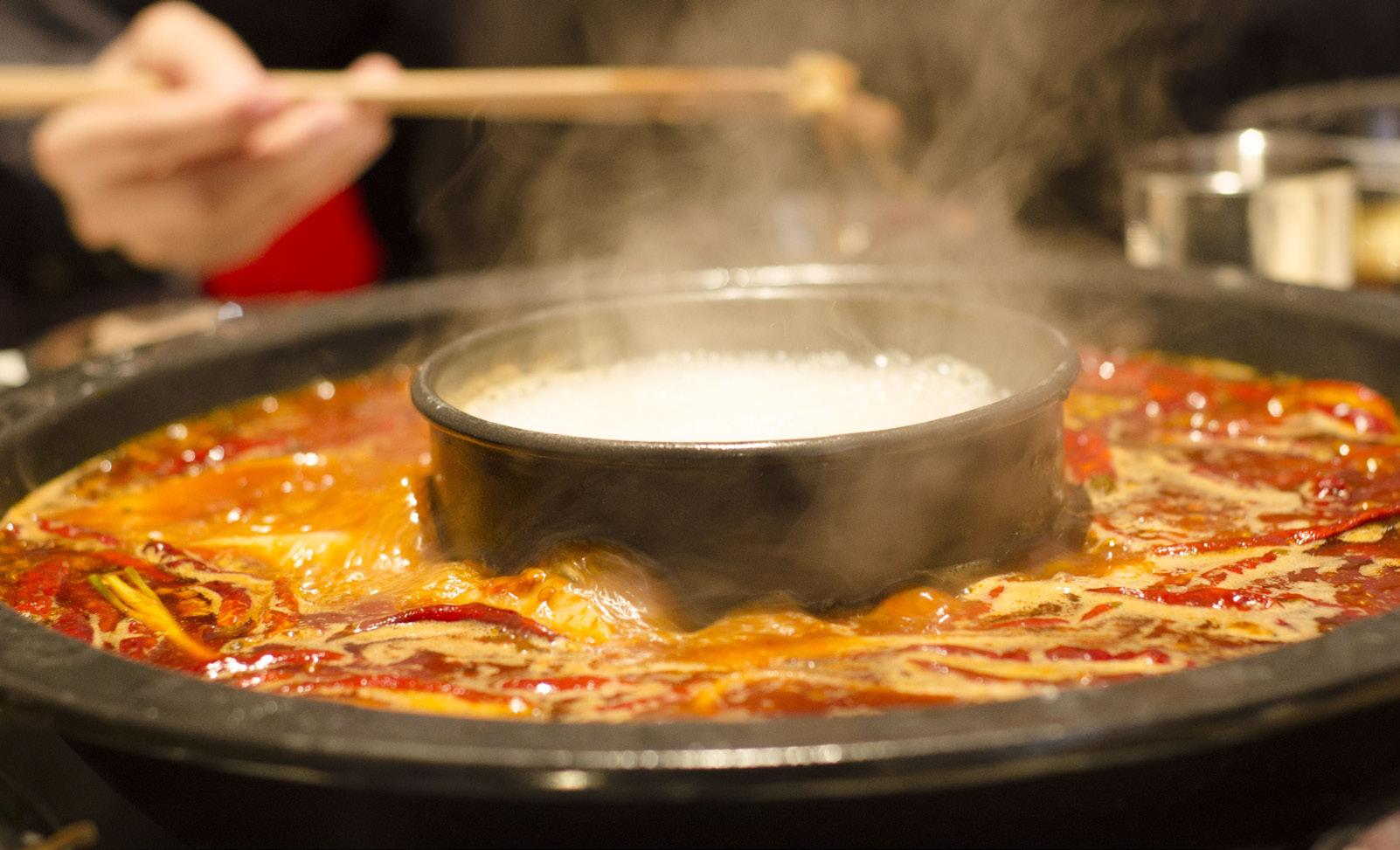
While the hotel selections are superb, you only truly learn the soul of a culinary hotspot like Chengdu on the streets. A tour with Chengdu Food Tours is essential to fathom the complexity of Sichuan cuisine. Guides take you to neighborhoods like Yulin, an area that still breathes the nostalgic atmosphere of old Chengdu. Here, you will find no tourist menus, but rather hidden market stalls where you can taste legendary Sweet Water Noodles (Tian Shui Mian)—thick, hand-pulled noodles in an addictive sauce of sweet soy, garlic, and chili oil—or Chao Shou, Sichuan-
style wontons bathing in aromatic chili oil. What makes Chengdu unique as a culinary hotspot is its global recognition; from innovative fine dining to simple ‘Bib Gourmand’ hotspots, the city continues to push the boundaries of Chinese gastronomy. There are many culinary tours around the world, but this is one of the very best. Essential must do for any foodie!
A visit to Chengdu is not complete without meeting the region’s most famous residents. The Chengdu Research Base of Giant Panda Breeding is located a short distance from the center and is the world’s most important site for the conservation of the giant panda. To make the most of a visit in 2026, timing is everything. It is best to arrive by 7:30 am because the pandas are most active during their breakfast
between 8:00 and 9:30 am, often transforming into motionless piles of fur by the afternoon. Utilizing the newer West Gate can help bypass the largest crowds at the main entrance. It is also important to note that physical ticket counters no longer exist, so all reservations must be made digitally in advance. Because the park is enormous, wearing comfortable walking shoes and bringing insect repellent is highly recommended.
Chengdu is often called the coolest city in China, and in 2026, that is clearer than ever. New icons like the Tianfu Garden City Mall demonstrate how architecture and nature can merge through vertical gardens and open atria. It is a city where young creatives are given space and where the ‘Slow Living’ philosophy has become a major cultural export. Whether you are strolling through the luxury boutiques of Lane Crawford at IFS or sitting on a stool sweating over a bowl of spicy hotpot, Chengdu forces you to slow down and enjoy. It is a city that not only stimulates your senses but also invites you to become part of its unique, relaxed rhythm. For the modern traveler, Chengdu is not a mere stopover but a destination that stays in your system long after departure.
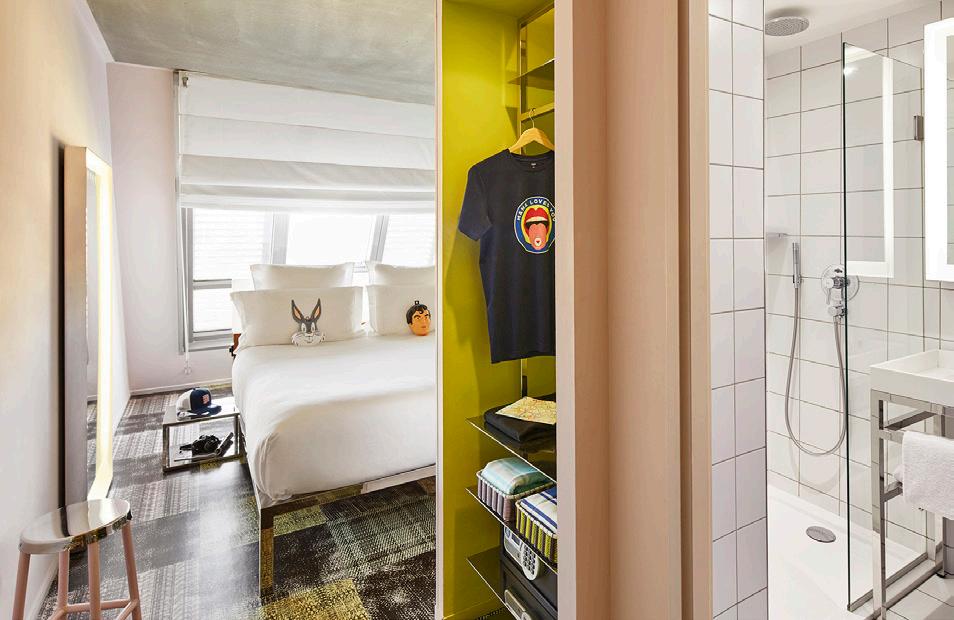
Marseille is without a doubt a personal favorite. The old harbour, Le Panier, the best football team in France, the sea, the people, the attitude. And such a cool city needs a cool hotel to match it’s attitude.
Mama Shelter Marseille captures the rebellious and sun-drenched spirit of France’s oldest city, offering a hospitality experience that feels more like an invitation to a private party than a traditional hotel stay. Located in the 6th Arrondissement, the property is situated in the heart of Cours Julien, a neighborhood that has transformed from a gritty district into the city’s undisputed creative epicenter. This district is defined by its vibrant street art, independent boutiques, and a dense concentration of terraces where the local “bobo” crowd gathers for pastis. Staying here allows guests to bypass the tourist-heavy Vieux Port in favor of a genuine immersion into Marseille’s modern, multicultural identity.
The hotel itself is a cornerstone of the Mama Shelter concept, a brand born from the vision of the Trigano family and design legend Philippe Starck. Now a key player in the Accor portfolio—specifically within its lifestyle-focused Ennismore division—Mama Shelter was founded on the idea of “urban kibbutzim.” The philosophy prioritizes communal energy, high-style design, and accessibility over stuffy luxury. The Marseille outpost exemplifies this with its iconic long communal tables, chalkboard ceilings, and a playful atmosphere that encourages social interaction between international travelers and local residents.
Upon entering, the lobby and restaurant area immediately signal that this is a lifestyle destination first and a hotel
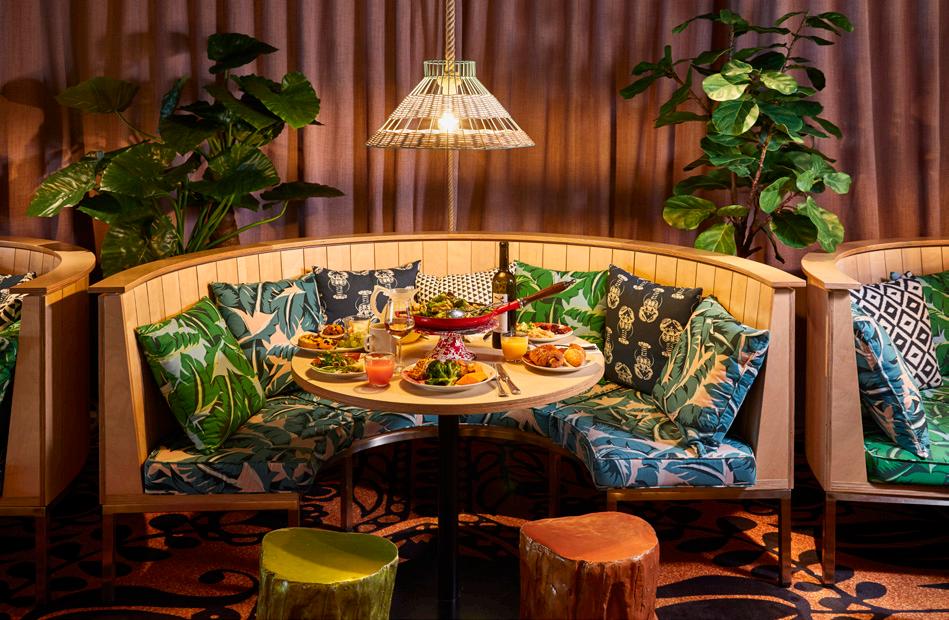
second. The design is a riot of color and texture, featuring Mediterranean influences mixed with quirky pop-culture references, such as the signature inflatable swim rings hanging over the bar. The guest rooms, while minimalist in their functional footprint, are maximalist in personality. They offer high-end bedding, organic solid toiletries, and the brand’s trademark iMacs that serve as entertainment hubs, all while maintaining an approachable price point that mirrors the brand’s democratic ethos.
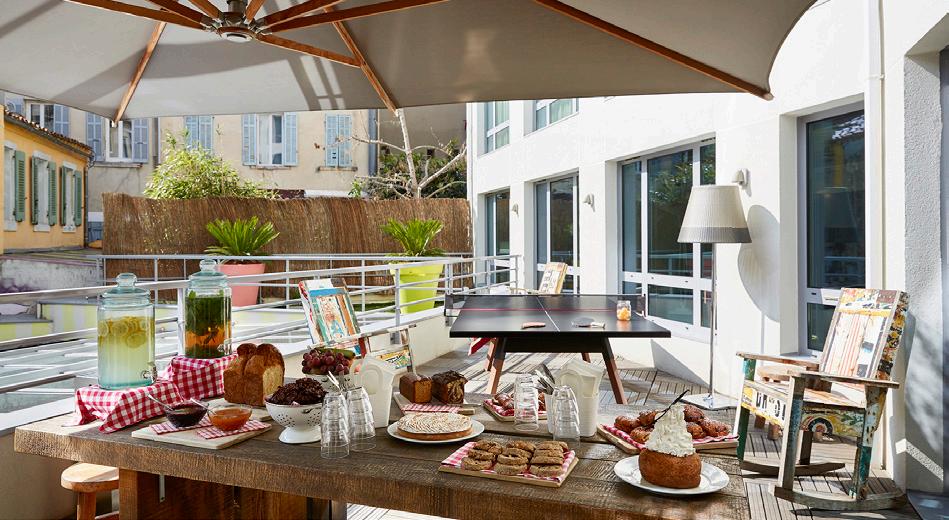
For the business traveler or the curious tourist, the hotel serves as a strategic base. Its proximity to the metro and the bustling markets of Noailles makes it highly accessible, yet the property remains a destination in its own right. The rooftop, a coveted spot during the long Provençal summers, provides a relaxed setting for meetings or sundowners with views over the city’s terracotta roofs. By blending Accor’s operational reliability with a fiercely independent and “hip” aesthetic, Mama Shelter Marseille remains a quintessential example of how lifestyle hospitality can successfully revitalize and reflect its surrounding neighborhood.
Tijn Kramer Editor-in-Chief
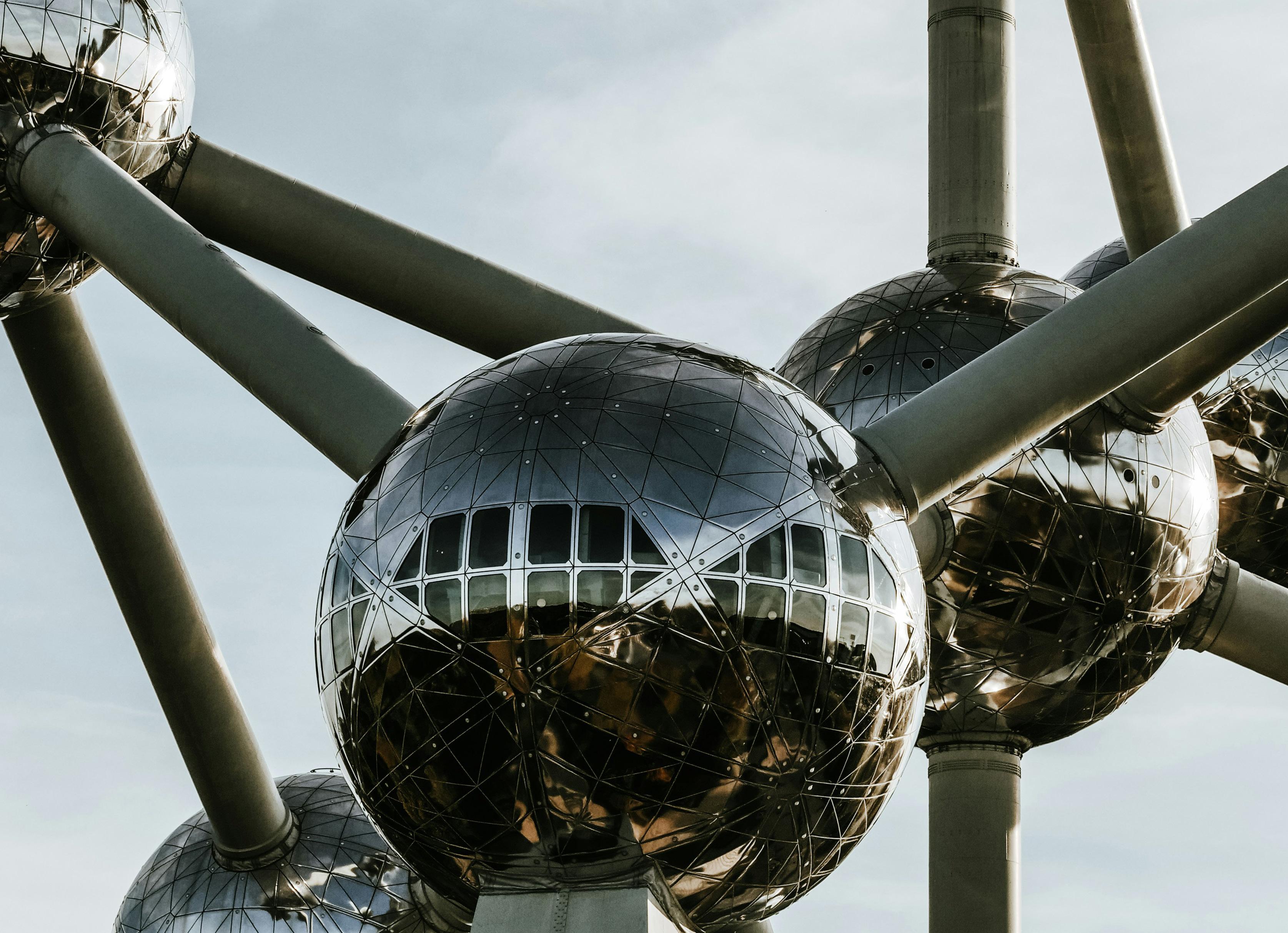
In 2024 and 2025, Tourism Flanders conducted a study on international association congresses in Flanders. This was done in cooperation with the cities of Antwerp, Bruges, Brussels, Ghent, Leuven, Mechelen and Ostend.
The study was conducted at 30 international association congresses. A total of 975 participants were surveyed face-to-face. For two congresses, a full online questionnaire was distributed. Participants in the face-to-face survey were subsequently also asked to take part in a more extensive online survey: 25% of the face-to-face respondents completed that online questionnaire, which amounts to 265 respondents. In addition, 31 international organisers shared their experiences through indepth interviews, conducted after their congress by telephone or video call, using a topic guide that was drawn up in consultation with Tourism Flanders and the various congress cities. The sample was spread across several cities. In Antwerp, it concerned 8 congresses (332 face-to-face
Bart Matthijs Editor SUMMIT Benelux
respondents, 76 online), in Bruges 8 congresses (307 face-to-face, 77 online), in Ghent 3 congresses (95 face-to-face, 23 online), in Leuven 9 congresses (191 face-to-face, 75 online), in Mechelen 1 congress (20 face-to-face, 6 online) and in Ostend 1 congress (30 face-to-face, 8 online).
The participant group is distinctly international. 77% of participants at international association congresses come from abroad, mainly from Europe. The top countries of origin are the United Kingdom (12.2%), Germany (9.6%), the Netherlands (8.9%), France (6.9%) and the United States (5.7%), alongside the categories “Other Europe” (18.6%) and “Other outside Europe” (9.7%).
In terms of age, the participant profile is relatively balanced between 25 years and retirement age, with few participants under 25 (who are exceptionally mainly students). More than half of the participants are men (60%), without significant differences between the cities.
As for accommodation, 83% of participants stay overnight in a hotel. 8% choose an apartment, 3% a private room with breakfast and 3% a hostel or youth accommodation. Booking channels vary: 40% book via an online platform, 25% directly with the accommodation provider, 20% via the congress registration form and 9% via a tour operator or travel agent.
Motivation to participate is strongly content-driven as well as relational.
Networking is the most frequently mentioned reason (66%), followed by staying up to date with the latest knowledge (58%) and sharing insights with other participants (42%). A quarter (25%) were invited to present or speak. For 14%, the destination of the congress also plays a role as one of the decision factors.
Accessibility and transport
The means of transport to Belgium strongly depends on available connections. 60% of international participants travel to Belgium by plane; for European participants that is 51%. All participants from outside Europe travel by plane. Among participants from the United Kingdom, 53% travel by Eurostar. Among participants from France, 67% prefer the high-speed train. Among German participants, travel is divided between train (29%), car (34%) and plane (30%). Among Dutch participants, it is almost evenly split between car (44%) and train (41%).
Once in the city, Flanders appears to score strongly on walkability. 75% of participants move around on foot during the congress, with a clear difference between Belgians (44%) and international participants (83%). In addition to walking, tram/ metro (16%), own car (10%), taxi (9%) and bus (9%) are mentioned, while rental car and private coach each account for 2%.
First visit, length of stay and extensions
For international participants, the congress is often a first introduction: 64% of European congress participants are in the congress city for the first time thanks to the congress, and among non-Europeans this rises to 76%.
The share of overnight visitors is high, especially among
international participants. International participants almost always stay overnight (97%), Belgian participants less often (42%). Extensions also prove to be economically interesting: 18% of international participants extend the congress trip with extra nights, usually in the same city. Those who stay longer spend on average twice as much in the destination as a participant who stays only for the duration of the congress.
On average, congress participants stay 3.4 nights; including an extension this comes to 3.9 nights. The average extension of 0.5 night applies to all overnight visitors; visitors who actually extend do so by an average of 2.2 nights.
Among those who extend, the majority remain in the congress city. A third do take a day trip to another place in Flanders. The data also asked about destinations for day trips: 11% mention Ghent, 8% Bruges, and smaller shares mention Antwerp, Brussels, Leuven, Mechelen and “other places in Flanders”, each 3%.
The tourist component is pronounced: 90% of congress participants undertake at least one activity during their stay. Eating and/or drinking is the most popular (50%), followed by visiting historic attractions (44%) and shopping (39%). A guided city walk (19%) and an event or concert (12%) also recur, alongside visiting friends or family (5%).
Satisfaction with the congress and the city is high. On average, congress venues score 8.8/10 and the city as a congress destination also scores 8.8/10. Catering receives 7.8/10, the social programme 8.1/10 and other congress-related activities 8.0/10. The results also show
differences by city and origin, for example strong scores for social programmes in Bruges and Leuven, and strong appreciation for congress venues in Antwerp. International visitors generally give higher scores than Belgian participants.
For tourist aspects, the Flemish cities also score well: friendliness of the local population 8.5/10, tourist attractions and activities 8.1/10, accommodation 7.9/10, food and drink 8.1/10 and accessibility 8.2/10. Value for money is lower at 7.4/10. The city as a leisure destination scores 8.2/10. In the qualitative feedback, the main causes of dissatisfaction are primarily the (disappointing) value for money and the perception that there is little to do or see.
The study also gauges the intention to revisit for a holiday or short trip. The closer someone lives, the higher that intention.
Among Belgian participants, 32% rate the likelihood high that they will return (category “very likely”). Among international visitors that is on average 29%. In addition, 33% of Belgian participants and 45% of international participants indicate that it is “rather likely” they will return.
Sustainability, inclusion and impact
Sustainability is gaining importance and is also explicitly surveyed among participants. 85% believe that congress organisers should minimise their ecological impact. At the same time, 78% believe that the venue and organisers handled sustainability well. International congress participants more often give the rating “very good” (30%) than Belgian participants (16%).
The study also makes clear that willingness and behaviour do not always coincide. 79% of participants say they are inclined to choose the most sustainable transport options during a congress trip, but in reality 60% of international participants still choose the plane, and Belgian participants still often use the car. When choosing accommodation, the intention is lower to consciously opt for lodging with sustainable practices.
Diversity, equality and inclusion (DEI) clearly receives attention and is assessed positively. According to participants, the organiser scores best on diversity of speakers. 91% of participants believe that accessibility is handled well, and participants feel that organisers make sufficient efforts to enable participation for everyone.
Legacy and impact are also surveyed. 71% of congress participants find it important that congresses leave a positive impact on the destination. In the interviews, it also appears that legacy is often understood by organisers as a long-term impact on their own field, while the way in which impact can be created for the local destination or region is less clear. Organisers are, however, open to advice and guidance to work on local impact.
According to participants, congresses generally have a positive impact. 45% say participation had a significant influence on their professional network; 38% experience clear knowledge building thanks to the congress. International participants rate that impact on average higher than Belgian participants.
Notably, the activities that contribute most to learning are identified as follows. Informal conversations between participants are most often mentioned as the most important for learning new things (74%), followed by keynote presentations (63%), workshops (28%) and question-and-answer sessions (25%).
In the in-depth interviews with 31 organisers, accessibility emerges as the most important factor in the decisionmaking process for destination and venue.
Specifically for Flanders, several common elements recur in the choice of congress cities: atmospheric, historic cities with compact centres and many restaurants and cafés, where participants can move around on foot. This creates a social and relaxed atmosphere that stimulates networking. Accessibility by train, especially for cities with a smooth connection to Brussels (such as Leuven, Antwerp and Ghent), also means they are seen as a practical alternative to Brussels.
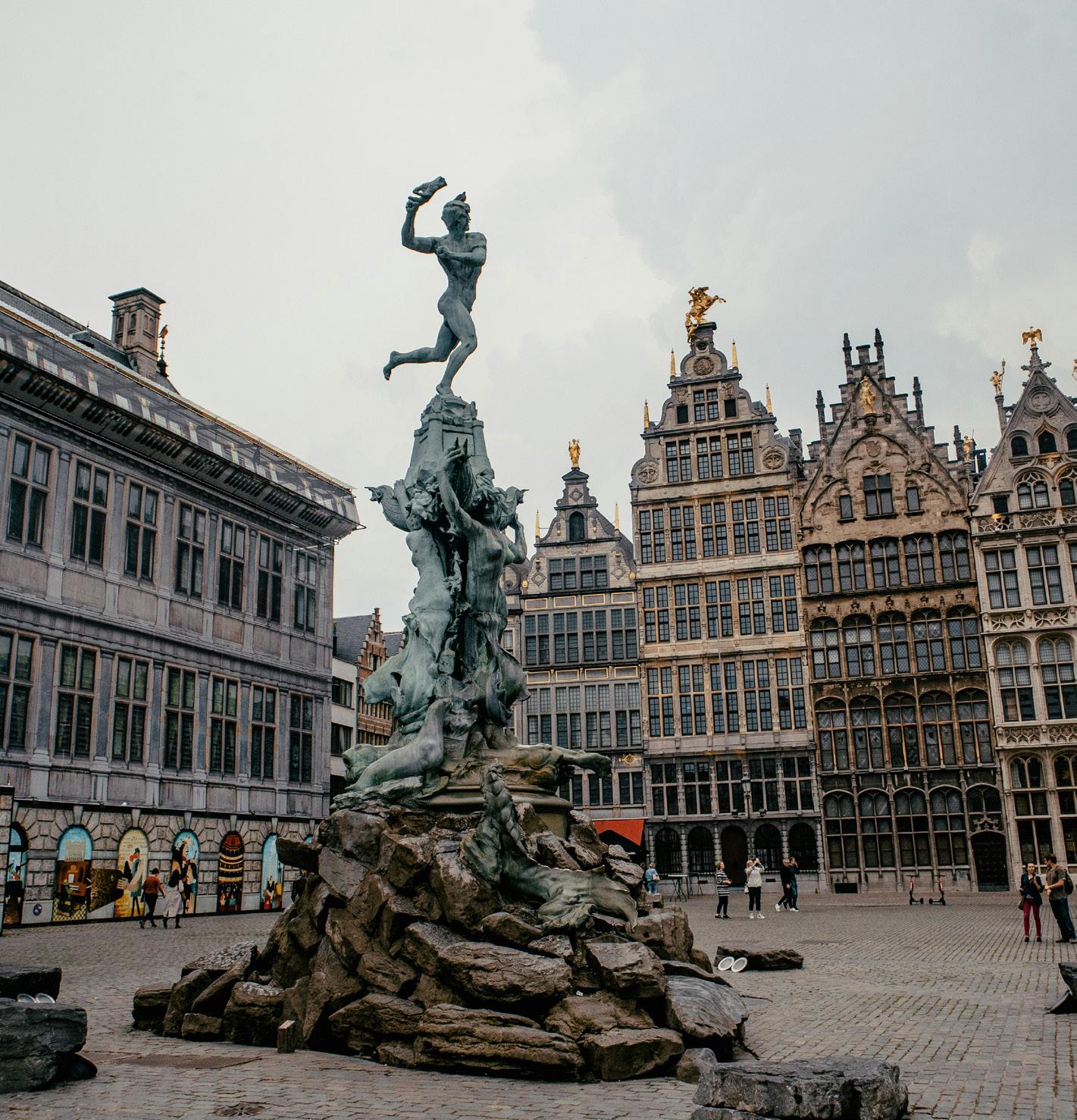
The city chapters also provide strengths and points for improvement per city. For Antwerp, satisfaction is described as good, with assets such as the presence of Port of Antwerp-Bruges, the logistics sector, accessibility by train and central congress locations. At the same time, among the points mentioned are the lack of an international airport and mixed experiences with the urban environment, and Antwerp Expo is perceived as outdated.
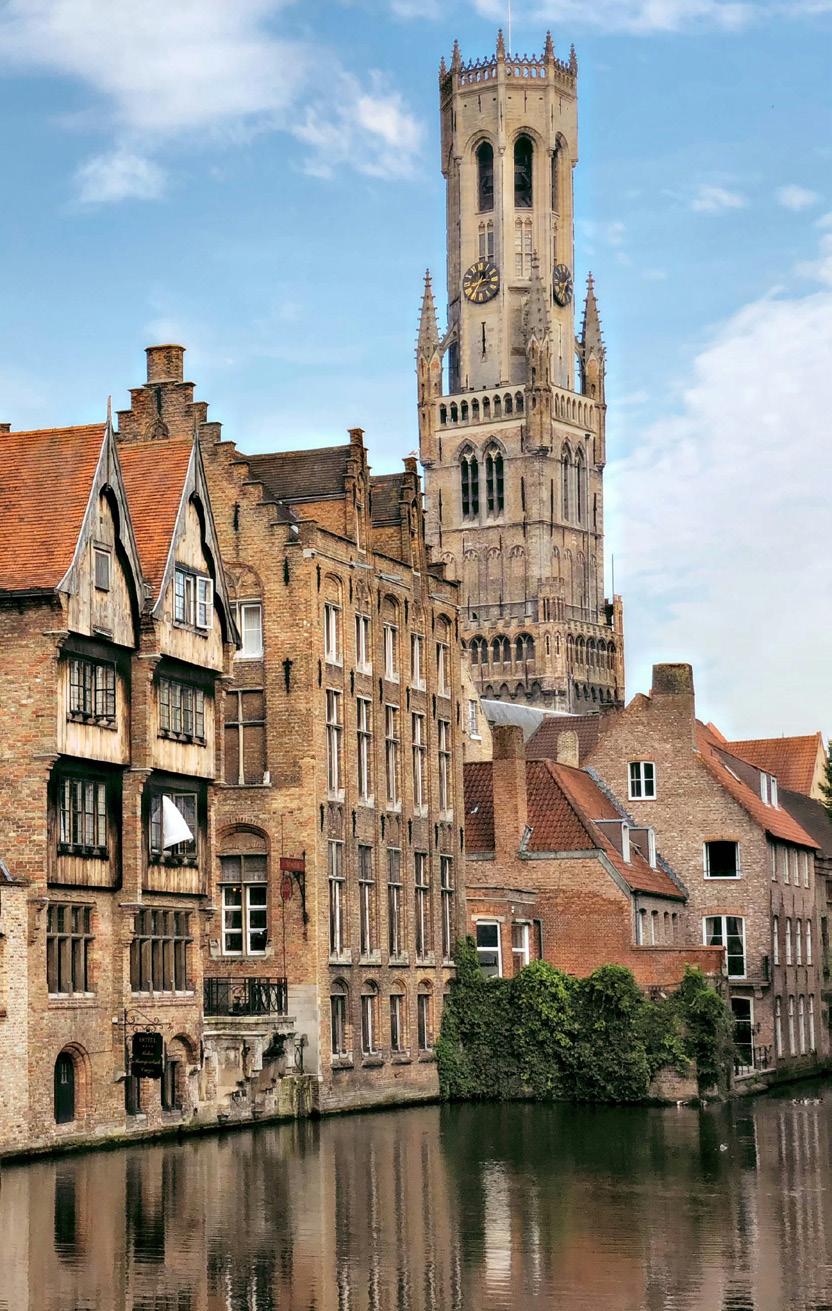
Bruges receives very high satisfaction scores and is praised for its tourist offer and the BMCC as a modern and sustainable congress venue. Points for improvement that recur are the perception of an expensive city, a more limited supply of accommodation and difficult accessibility for some intercontinental participants.
Leuven scores high on satisfaction, among other things thanks to historic
university venues, expertise in the beer sector, good support from local hosts and potential for corporate sponsors. At the same time, organisers point to capacity pressure: congresses are becoming too large for the available congress venues.
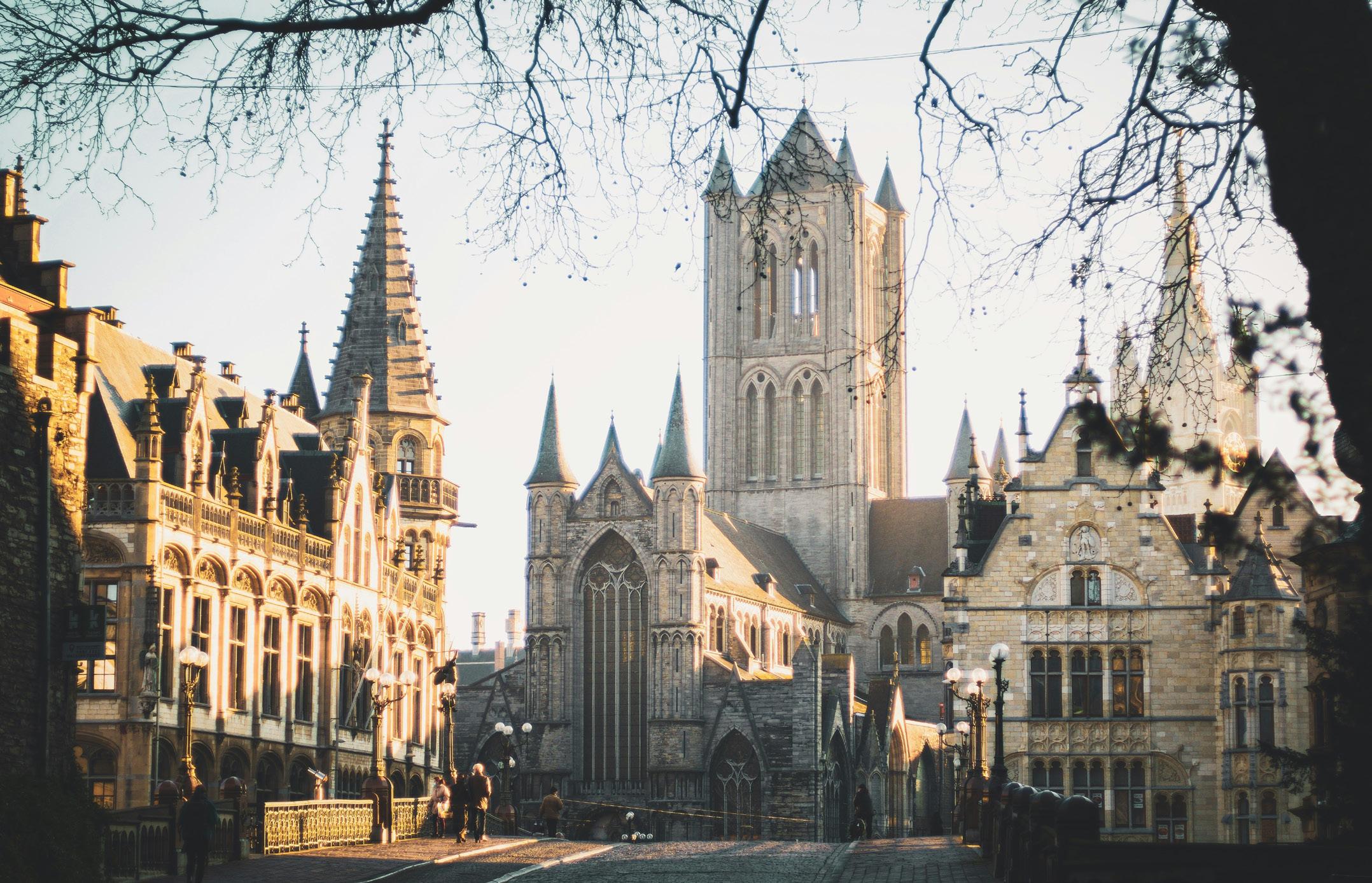
Ghent is mentioned, among other things, for its compact and walkable core, good accessibility by train and good hotels, with an organiser expressing concern about capacity in bad weather in relation to outdoor space.
As for support, the interviews show a distinctly positive picture of the convention bureaus. Organisers made use of a wide range of services such as finding a suitable congress venue or PCO, marketing support and promotion, and help with social events and official receptions. Organisers particularly appreciate the helpful, professional and proactive approach.
Sustainability among organisers and ondestination support
The interviews make clear that sustainability plays an increasingly important role. For some organisers it is essential because of the nature of the field, while a minority attach little importance to it. Guilt about flying often stimulates stronger efforts, although sustainability currently does not yet have a major influence on destination choice, with one important exception: accessibility by train can weigh in. It is also indicated that a congress venue can influence organisers’ sustainability efforts both positively and negatively, and that some organisers paid 5 to 10% more for a sustainable congress.
A range of sustainability measures is described as standard practice, such as local sourcing of food and drink, limiting food waste through planning, fewer giveaways, apps or QR codes instead of printed materials, and refillable drink options instead of disposable plastic. Organisers with a stronger focus take additional measures such as no or less meat, no carpet for exhibition stands, sustainable lanyards and recyclable tableware and CO2 compensation through tree planting.
Local convention bureaus and various congress venues are also seen as very proactive in terms of sustainability. In some cases, organisers do want to take steps, but the nature or age of a location does not allow it. Sustainable congress venues receive very positive feedback, and there is also reference to support for sustainability subsidies.
The report makes the direct economic impact concrete. On average, 1,167 euros are spent per participant in the congress destination. Organisers spend an average of 520 euros per participant, among other things on venue hire, catering, audiovisual support and social activities at the destination. Participants spend an average of 647 euros on their entire congress trip, with almost two thirds of total spending going to accommodation and food and drink making up a large part of the remaining expenditure.
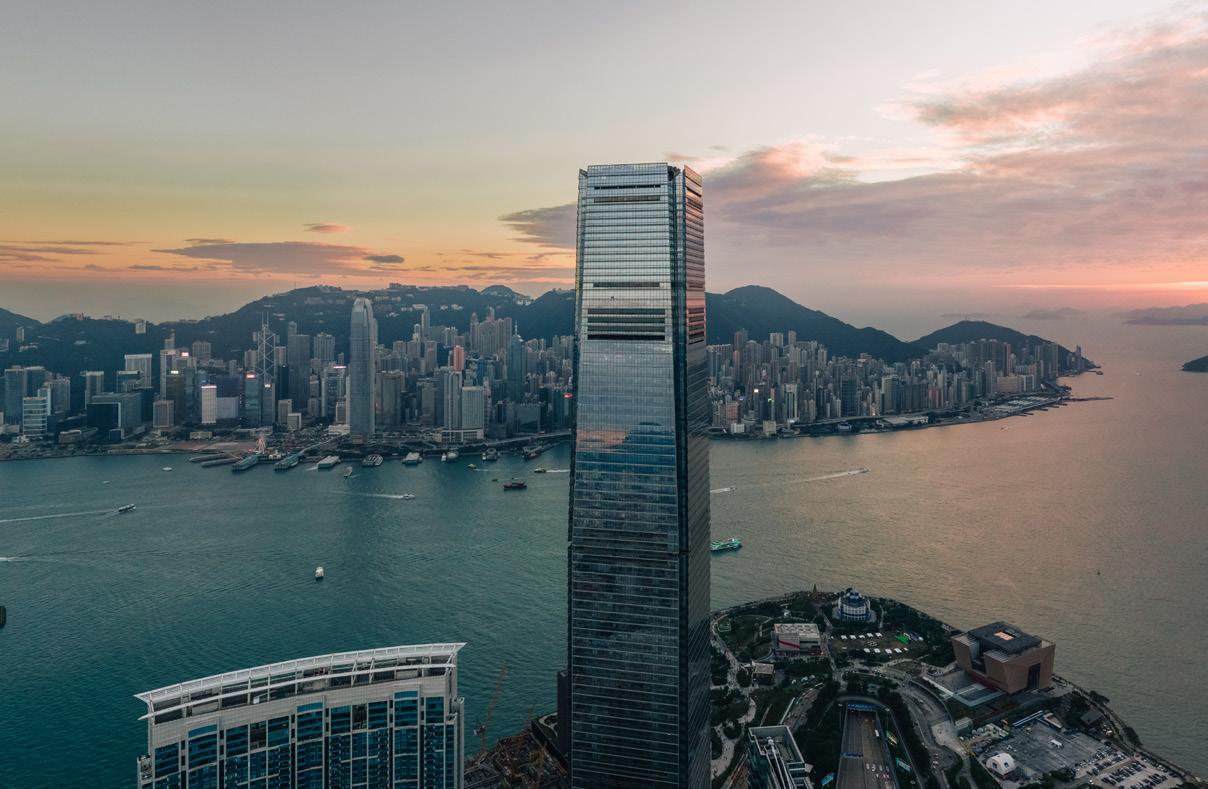
Hong Kong remains a city that defies the senses. It is a place where futuristic skyscrapers and centuries-old traditions coexist in a constant stream of energy. For the business traveler seeking the ultimate combination of logistical efficiency and unprecedented luxury, there is one address that literally stands above the rest: The Ritz-Carlton, Hong Kong. Located in the upper floors of the International Commerce Centre (ICC), this hotel offers not just a stay, but a perspective on the metropolis that can be found nowhere else.
Upon arrival in Hong Kong, it immediately becomes clear why the location of The Ritz-Carlton is so strategic. For the modern ‘road warrior,’ time is the most precious commodity. The hotel is situated directly above Kowloon Station, a crucial hub for the Airport Express. From the station, gleaming elevators and marble corridors lead to the ground-floor entrance, where the first hospitable staff members await. But the real experience begins in the high-speed elevator that shoots you to the 103rd-floor lobby in seconds. As your ears adjust to the altitude, the world opens up: a panoramic view of Victoria Harbour that leaves even the most seasoned journalist momentarily silent.
The 312 rooms and suites are designed with an understated elegance that emphasizes the drama unfolding outside the windows. The decor is a sophisticated mix of modern design and subtle Oriental accents, utilizing rich materials such as silk, leather, and dark wood.
While the technological amenities—from intelligent climate control to high-end audio systems—are worldclass, the view remains the primary ‘amenity.’ Whether you choose a room overlooking the city or the harbor, the sense of tranquility experienced at this height is unique. In a city known for its noise and bustle, the rooms of The Ritz-Carlton offer a serene cocoon far above the street-level din. The marble bathrooms further enhance this sense of private luxury.
For those seeking a higher degree of exclusivity, the Club Lounge on the 116th floor is a revelation. Operating 24 hours a day, it serves as a sophisticated sanctuary for executive travelers navigating multiple time zones. The lounge offers six distinct food and beverage presentations daily, from a refined breakfast to late-night desserts, ensuring that a high-quality meal is always available regardless of your schedule. Beyond the gastronomy, the dedicated Club concierge provides a level of personalized service that borders on the clairvoyant, handling everything from lastminute flight changes to delicate garment pressing. With its own private meeting space and arguably the best workstation views in Asia, the lounge effectively functions as a premier ‘office in the sky’—though the panorama of the harbor below makes it remarkably hard to keep your eyes on your laptop.
The hotel’s culinary reputation is firmly anchored in the Michelin guide. For a formal business lunch or dinner, Tin Lung Heen, awarded two Michelin stars, is the place
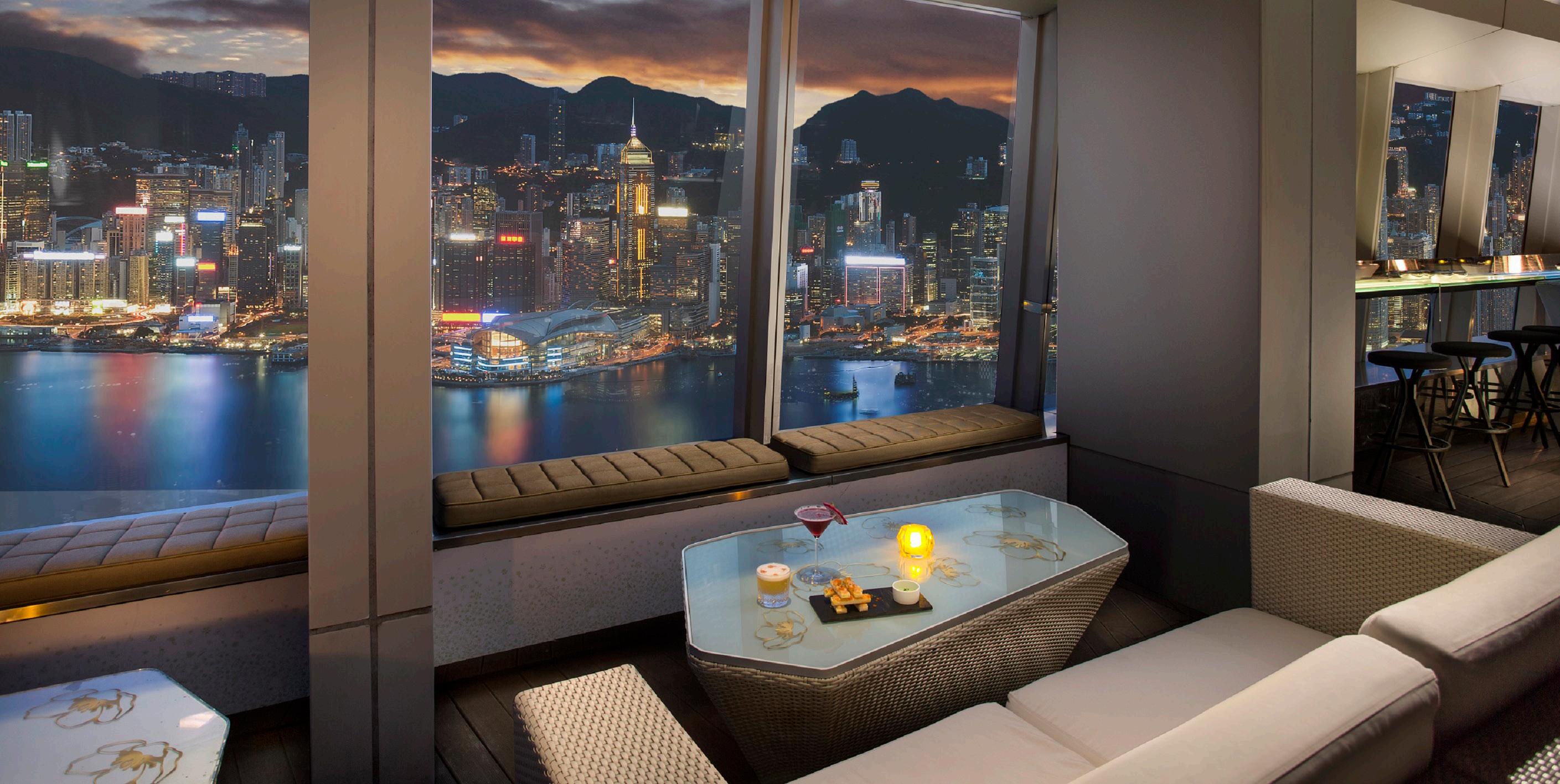
to be. Here, traditional Cantonese cuisine is elevated to an astronomical level, with dishes that are as visually stunning as they are flavorful. For lovers of Italian cuisine, Tosca di Angelo offers a refined experience under the leadership of Chef Angelo Aglianó.
However, the most iconic spot to conclude the day is undoubtedly Ozone. Located on the 118th floor, it is officially the highest bar in the world. The atmosphere is cosmopolitan, and the cocktails are inventive. For those wanting to experience the ‘coolness’ of Hong Kong, a drink on Ozone’s terrace—as the city’s light show begins below—is a mandatory experience. It is where deals are sealed and networks are expanded against the backdrop of the city’s shimmering lights.
For the readers of Summit, the quality of meeting facilities is essential. The Ritz-Carlton does not disappoint. With over 1,600 square meters of event space, including one of the city’s largest ballrooms, the hotel is equipped for everything from intimate board meetings to large-scale international congresses. The Diamond Ballroom is a masterpiece of crystal and light, but even the smaller meeting rooms offer the technological support and discrete service required by the corporate market. The event staff understands the nuances of business etiquette and ensures flawless execution, with catering that is frequently the talk of the day.
The Taxi Service and the ‘Ladies and Gentlemen’
What truly sets The Ritz-Carlton apart is its service philosophy. The famous motto “We are Ladies and Gentlemen serving Ladies and Gentlemen” is lived, not just preached. The hospitality is proactive without being intrusive. A specific point of praise goes to the taxi and
transport service. In a city where mobility is key, the concierge desk operates as a perfectly oiled machine. Whether you need a local taxi for a short trip to Tsim Sha Tsui or a private limousine for a day of appointments on Hong Kong Island, everything is arranged with incredible efficiency. Staff note taxi numbers, provide instructions to drivers in Cantonese, and ensure you never get lost in the city’s logistical puzzle.
Finally, the location. While Central was once the undisputed heart of the city, West Kowloon has evolved into the new cultural and business hotspot. With the nearby M+ Museum of visual culture and the Palace Museum, the district has gained an artistic flair that perfectly complements the hotel’s dynamism. Hong Kong is ‘cool’ again, and nowhere do you feel that better than here. It is a city that constantly reinvents itself, and The Ritz-Carlton is its vertical symbol.
The Ritz-Carlton, Hong Kong is more than a fivestar hotel; it is a beacon of efficiency and luxury. For the business traveler who refuses to compromise on comfort, accessibility, and status, there is no better base. The view reminds you every morning why you are here: to do business in Asia’s most dynamic city. And the service? It ensures that, despite the dizzying height, you always feel like your feet are firmly on the ground.
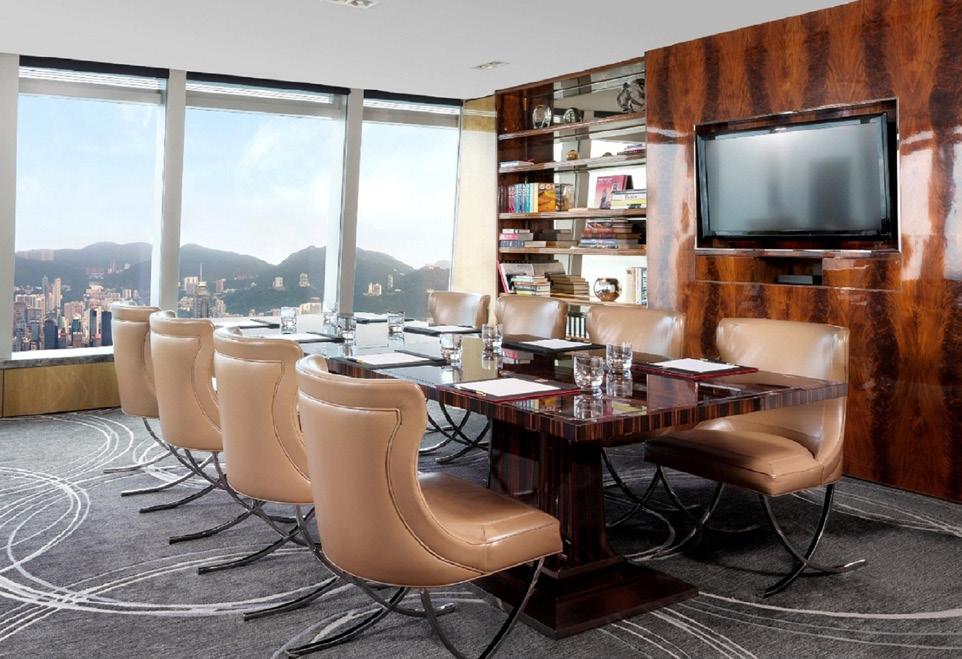
Latvia is gaining strong recognition among international planners as a reliable, flexible, and inspiring MICE destination. Strategically located in Northern Europe, with modern infrastructure, competitive pricing, and high professional standards, Latvia offers everything required for the successful delivery of meetings, incentives, conferences, and exhibitions.
As global event buyers meet face to face again at IMEX, IBTM World, and other leading MICE trade shows, Latvia stands ready to connect, collaborate, and support international planners with solutions designed for today’s business realities.
Located in Northern Europe and at the heart of the Baltic region, Latvia offers excellent accessibility for international meetings and events. Riga International Airport serves as an important transport hub, operating around 100 direct routes and providing connections to more than 100 destinations worldwide, with frequent daily flights across Europe and beyond. This strong connectivity makes Latvia easily reachable from a wide range of countries. In addition to air access, Riga is well connected by sea: its well developed port infrastructure allows large cruise ships to enter from the Baltic Sea through the Gulf of Riga and dock directly along the Daugava River, just steps from the Old Riga district. This unique arrival experience offers immediate access to the city’s historic centre, combining logistical efficiency with a distinctive sense of place for delegates and event participants.
Latvia’s compact size allows planners to optimize time and budgets: transfer times are short, schedules remain efficient, and multi location programs are easy to manage.
Latvia offers a wide range of modern, well-equipped venues, both in urban centers and across its regions. Beyond the capital, planners will find flexible conference hotels, restored manor houses, cultural venues, and coastal resorts—each combining contemporary technical standards with distinctive character.
Event formats supported include:
• International conferences and congresses
• Corporate meetings and leadership summits
• Product launches and seminars
• Incentive programs and executive retreats
These regional venues allow planners to differentiate their events while maintaining professional reliability, service quality, and accessibility.
Incentive Travel and Team Experiences That Inspire Latvia’s natural environment and cultural authenticity make it an excellent choice for incentive travel and motivational programs. Forests, lakes, and the Baltic Sea coastline provide a powerful setting for experiences that energize and engage participants.
Incentive programs commonly include:
• Outdoor adventures and nature-based challenges
• Wellness and spa retreats
• Culinary and cultural experiences
• Customized team building activities
These elements can be seamlessly integrated into business agendas, offering added value that strengthens motivation, collaboration, and loyalty.
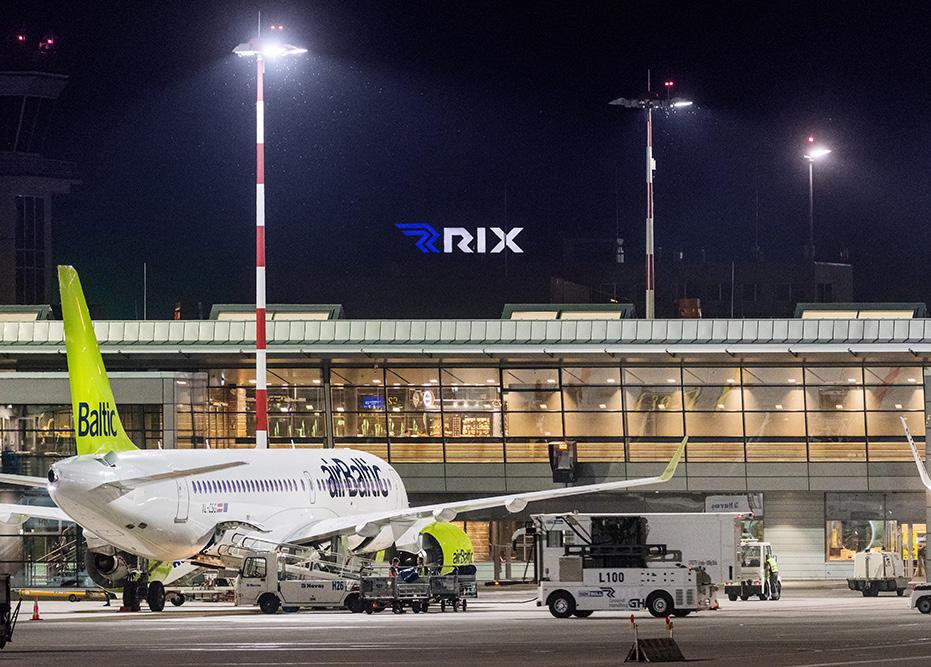
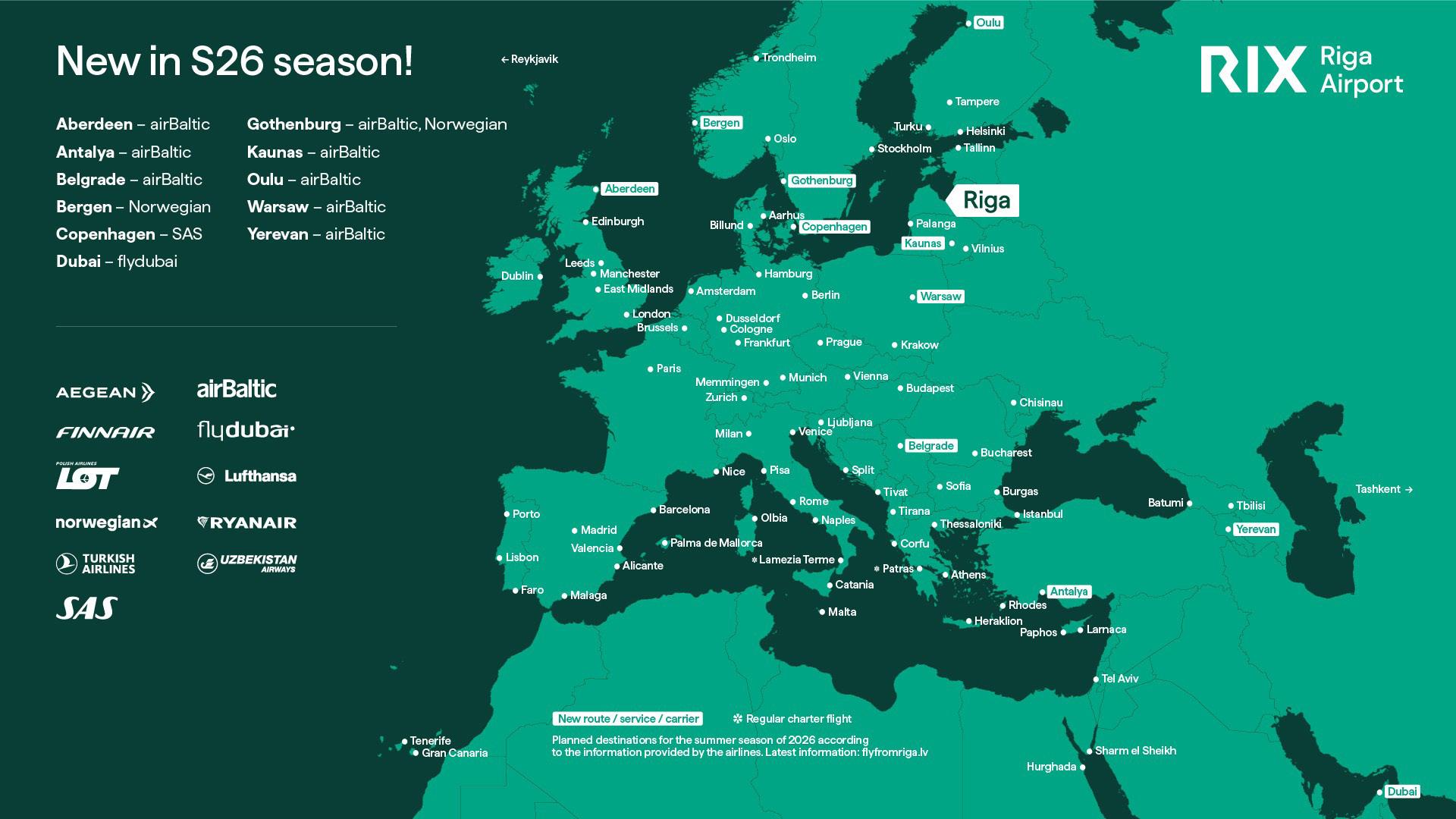
For international planners, safety and stability are essential. Latvia is known for its political stability, low crime levels, and reliable public services, providing a secure environment for both delegates and organizers.
An experienced local MICE ecosystem—including venues, destination management companies, and convention services—ensures professional planning support, clear communication, and efficient execution. This reliability allows planners to focus on strategy, content, and delegate engagement.
Latvia delivers strong value without compromising quality. Competitive pricing, transparent cost structures, and high service standards make it an attractive alternative to more saturated European destinations.
Whether planning a large association congress or a bespoke corporate event, organizers benefit from flexibility, responsiveness, and a collaborative approach that supports ambitious goals while respecting budget realities.
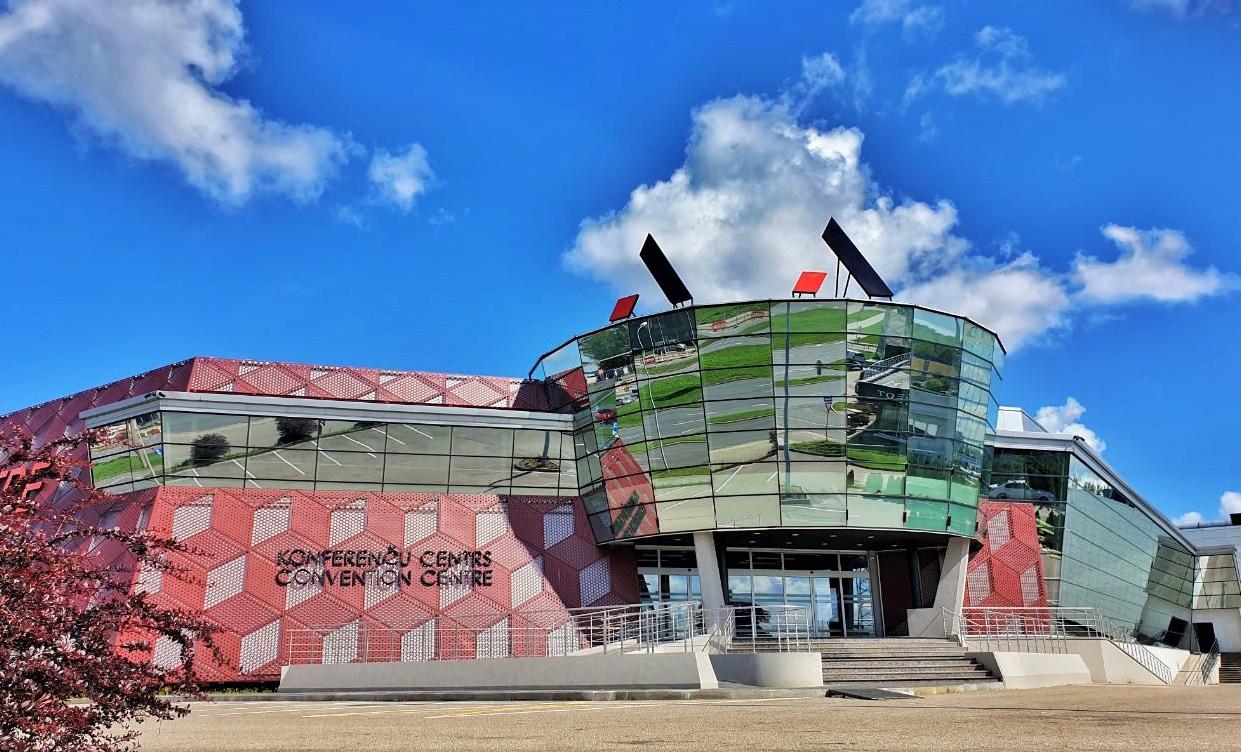
Latvia actively engages with the global MICE community at IMEX Frankfurt, IBTM World, and other major industry events. These trade shows provide an opportunity to meet destination experts, explore venue options, and discuss tailored solutions based on specific event requirements.
Planners visiting Latvia’s stand can:
• Discover new venues and regions
• Explore incentive and team building concepts
• Discuss logistics, accessibility, and support services
• Build partnerships with trusted local suppliers
The focus is clear: practical solutions, professional delivery, and long-term collaboration.
With its strategic location, diverse venues, inspiring nature, and dependable infrastructure, Latvia offers an ideal setting for impactful MICE events. From international congresses to motivational incentive programs, Latvia combines efficiency with authenticity—helping events stand out and succeed.
Meet Latvia at your next MICE trade show and discover a destination where business objectives meet inspiration, reliability, and real value.
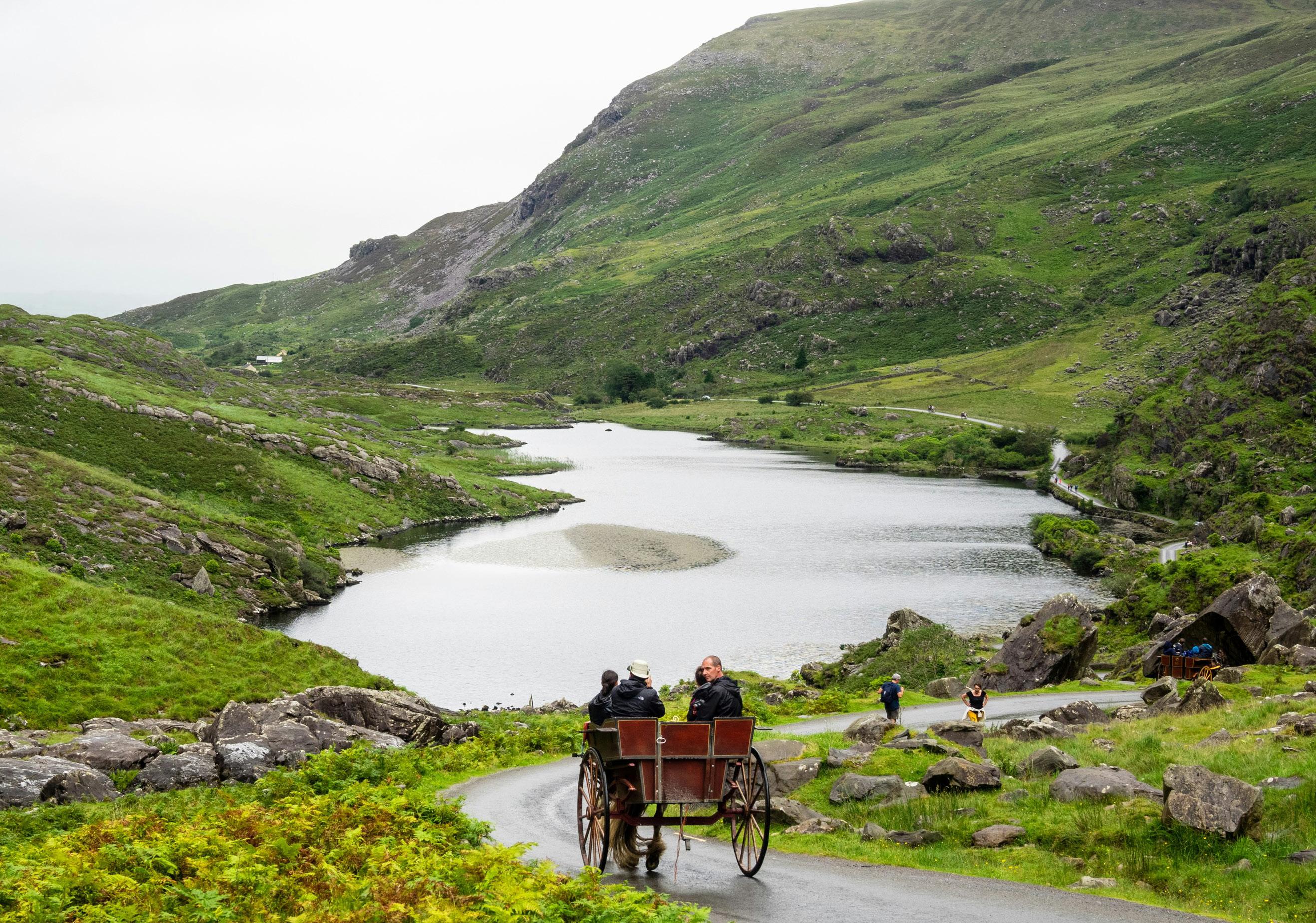
County Kerry represents the pinnacle of the Irish experience. It is a region where ancient monastic history, cinematic landscapes, and a burgeoning craft spirits scene converge. For those writing for the business and high-end travel sector, Kerry offers a unique blend of ruggedness and refined hospitality that is, as the locals say, ‘out of this world.’ Summit picked up the rental car and went on the road.
The journey into the heart of the southwest typically begins with the ease of access provided by Cork International Airport. A short, scenic 35-minute drive leads to the historic town of Bandon, the ‘Gateway to West Cork.’ Staying at a traditional establishment like Saint Martins B&B offers an immediate immersion into the legendary Kerry welcome—the Céad Míle Fáilte (a hundred thousand welcomes) that has seen Ireland ranked among the friendliest nations globally. This stability and safety, with Ireland recently ranked as the 2nd most peaceful place on Earth, provide a reassuring backdrop for any professional itinerary.
The drive from Bandon towards Valentia Island via the Waterville-Portmagee route is a highlight of the Wild Atlantic Way—the world’s longest defined coastal touring route. This 2,500km stretch of rugged coastline reaches its dramatic zenith in Kerry. The landscape is a patchwork of ‘forty shades of green,’ dramatic cliffs, and the vast, untameable Atlantic Ocean. Travelers are encouraged to ‘leave the mainland and everyday life far behind’ as they navigate the winding roads of the Iveragh Peninsula.
Skellig Michael
Perhaps no site in Ireland captures the
imagination quite like Skellig Michael. This UNESCO World Heritage site, a jagged pinnacle of rock rising from the ocean, was once home to an ascetic community of monks between the 6th and 8th centuries. Today, it is equally famous as a filming location for the Star Wars cinemaverse. Yes, you can have a pint at the pub where Luke Skywalker had one (or two, who knows)
The ‘Skellig Michael Landing Adventure’ with operators like Aqua Terra is a bucket-list experience. It requires early booking due to its popularity and strict conservation limits. And by all means, it is weather dependant, so be prepared to come back if the weather disagrees.
But Aqua terra can offer other boat tours with an experienced guide which are of great scenic beauty as well. Highly recommended! For those who prefer to keep their feet on the mainland, the Skellig Experience Visitor Centre on Valentia Island provides a deep dive into the island’s history, while the Bray Head loop walk offers staggering views of the archipelago from a distance.
Whisky
Though of course this is Ireland, you probably will have Guinness with a Tayto crisp. And rightfully so. However, Kerry is currently undergoing a renaissance in distilling, making it a premier destination for whiskey enthusiasts. Portmagee Whiskey, located in the picturesque fishing village of the same name, celebrates the local heritage of ‘seine boat’ fishing. Further exploration leads to the Skellig Six18 Distillery, where the visitor experience is as refined as the spirits themselves, echoing the region’s commitment to quality and storytelling.
In Killarney, the Killarney Brewing & Distilling Co. offers a modern take on Irish tradition, combining state-of-the-art facilities with a passion for local craft. These venues are not just for tasting; they are ‘MICE-ready’ hubs that reflect Kerry’s high concentration of 4 and 5-star infrastructure, suitable for high-level corporate retreats and incentive travel.
Dingle and Killarney
The Dingle Peninsula offers a more visceral connection to the sea. The Dingle Sea Safari, a high-speed RIB (Rigid Inflatable Boat) ride, provides a thrilling perspective of the rugged cliffs and sea caves that define this coastline. After the adrenaline of the Atlantic, the
serene beauty of Inch Beach offers a moment of reflection before heading into Dingle town, known for its colorful buildings and vibrant Gaelic culture.
Transitioning inland to Killarney National Park, the pace slows. A ‘Jaunting Car’ (traditional horsedrawn carriage) tour around the lakes is a quintessential Kerry experience, offering access to 26,000 acres of protected wilderness. The park is a testament to Kerry’s sustainability ethos, where the ‘Town in the Park’ infrastructure allows delegates and travelers to move seamlessly between nature and high-end venues.
Pub Culture
No report on Kerry would be complete without acknowledging the pub as the social and cultural heartbeat of the community. Places like the Moorings Bar in Portmagee are famous for their traditional music sessions, where the ‘craic’ is as authentic as the Guinness.
In Killarney, O’Donoghue’s Public House and the hidden gem Pigs Lane offer a blend of historic charm and contemporary sophistication. These are the spaces where ‘locals love to chat and share tall tales,’ providing the human connection that defines the Kerry experience.
Whether it is the ‘edge of the world’ feeling of the Skelligs, the refined notes of a local whiskey, or the quiet majesty of a Killarney sunset, Kerry leaves an indelible mark. For the professional traveler, it is a destination that delivers on every promise: safety, accessibility, worldclass facilities, and a landscape that is truly out of this world.
(www.kerryconventionbureau.com)
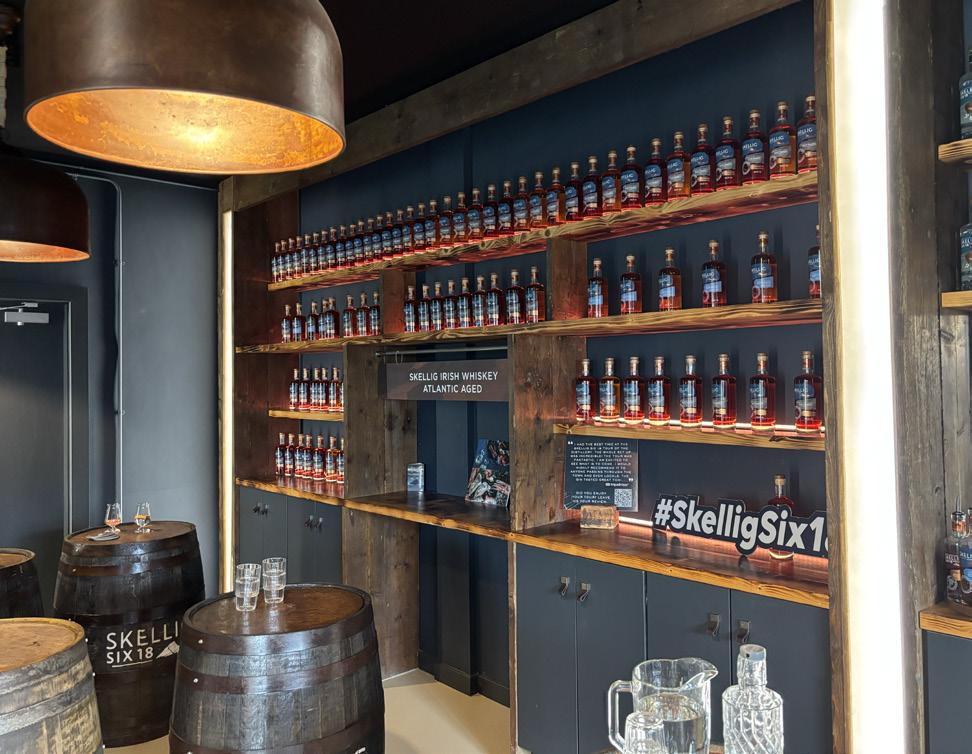
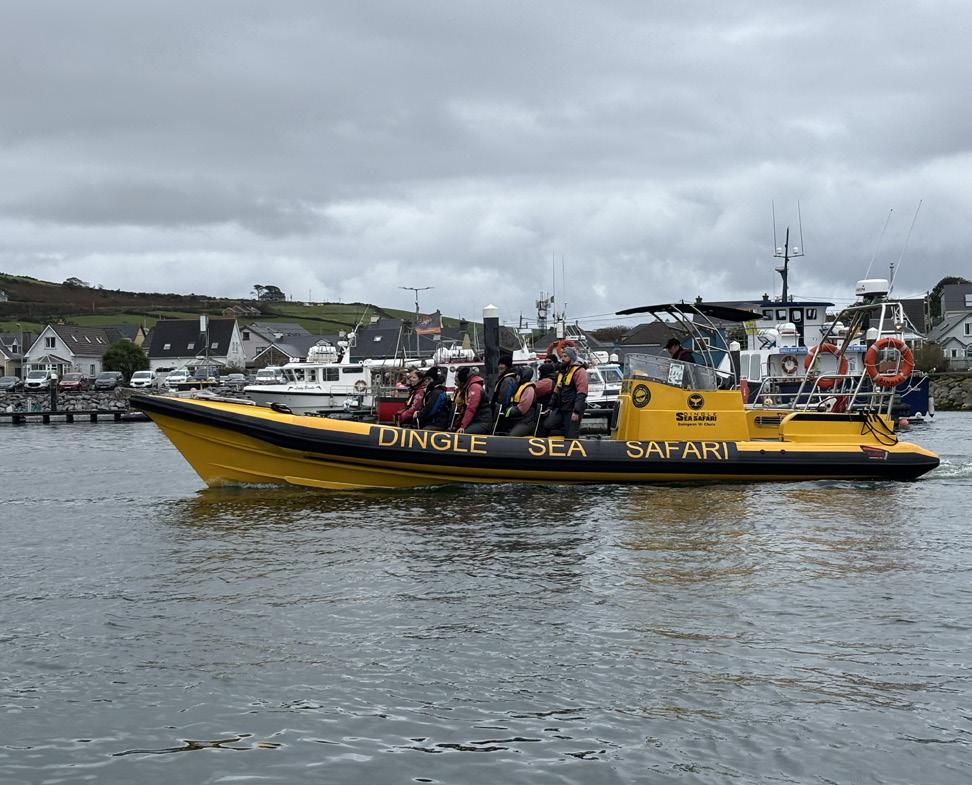
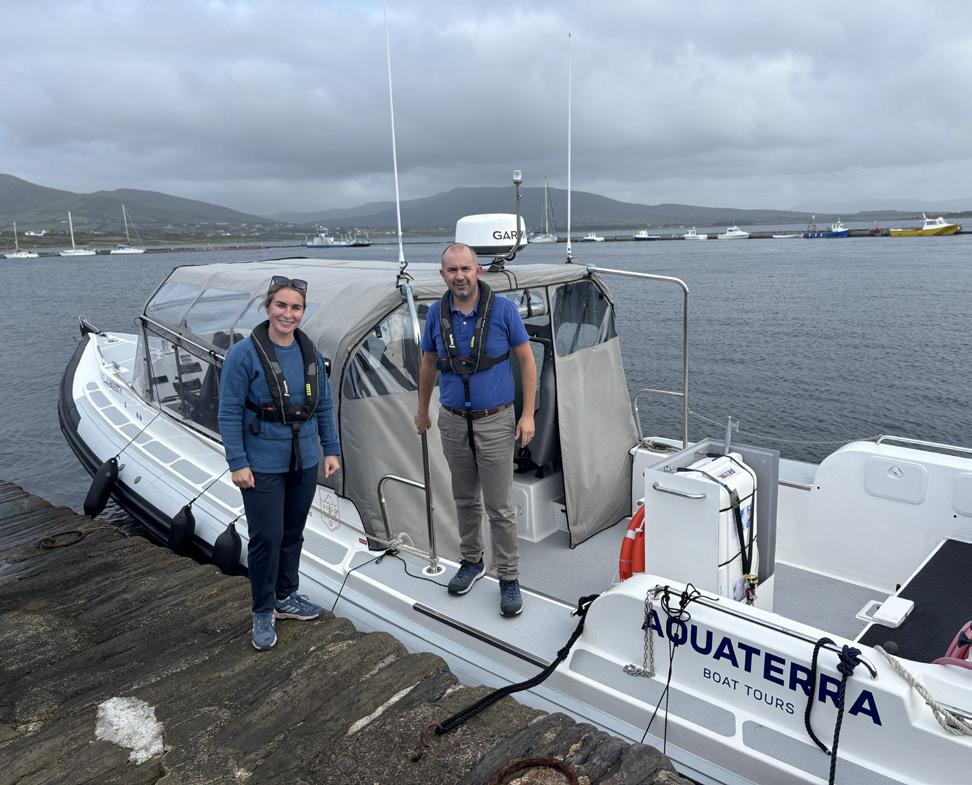
‘THE
I HEAR THE
I KNOW I’M HOME’
Everyone knows Gunay Uslu as the strategic leader at the helm of Corendon, but ask her about Turkey, and you meet a true epicurean. We step away from the daily grind as Gunay takes us to her Turkey—a personal story of hidden bays, the sound of cicadas, and the art of dining for hours on end.
Where do you take friends to show them that Turkey is so much more than just the well-known resorts? “I take them to Alanya. Precisely because people associate Alanya with resorts. And they are there—you can find the most charming and affordable all-inclusive resorts. But Alanya is also home to fantastic shops, concept stores, galleries, restaurants, bars, terraces, and impressive nature reserves. You’ll find rivers, valleys, imposing mountain landscapes, and caves where people with asthma come to heal. The Dimçay Valley, for example, is a place where you can completely unwind amidst the greenery and flowing water. Above the city sits the imposing fortress, overlooking a coastline that is almost dramatically beautiful. Below lies Cleopatra Beach, where legend has it that Cleopatra and Marc Antony met and were even married. Alanya is a place with a soul, where history, culture, nature, the sea, and the beaches are constantly seducing one another.”
What is your ultimate culinary ‘secret’ spot? “Aegean cuisine is my favorite: light, full of vegetables, olive oil, and fresh herbs. The arugula there is a sensation, and that’s not even mentioning the figs and the refined green seedless grapes from this region. Legend has it that Herodotus claimed civilization arises in places where olives, grapes, and figs are found. Now, Herodotus was from the area (Bodrum), so he might have been a bit biased... but we can certainly say that the beauty lies in the simplicity. From fresh dolmas with pine nuts and lemon to a bowl of lentil soup, which they say in Turkey isn’t just a dish, but an embrace. If you are near Urla, be sure to visit Od Urla, which has been awarded a Michelin star and a Michelin Green Star for sustainability. But since we are in Alanya now, my tip for this region is Lost in Alanya. It’s incredibly cozy with great people—both local and international—beautifully decorated, and serving delicious dishes.”
Which region or city in Turkey do you consider the most underrated gem? “Oh, there are so many. I wouldn’t know where to start. Didim, Datça, Assos, Kaş, Finike, Kemer, Anamur, Trabzon, Hopa, Gallipoli... but let’s go with Marmaris and its surroundings. You’ll find a spectacular coastline with turquoise water, hidden bays, and green mountains that seem to slide right into the sea. This area is also rich in history: nearby are ancient cities and ruins that recall the Lycian and Carian civilizations. It’s magical to swim in a bay while admiring centuries-old rock tombs around you. Some look like ancient temples with imposing columns, dating back to the 4th century BC. And if you are in Marmaris, go eat at Pineapple Restaurant and relax on the beach at Icon Beach Club.”
What is your fixed ritual the moment you set foot on Turkish soil? “I take a dip in the sea as quickly as possible. I am a real swimmer. And while I swim, I’m already fantasizing about drying off in the sun, warming my bones, and what I’m going to eat. Hospitality has been elevated to an art form in Turkey. And the cicadas: the moment I hear them, I start to land. Then I know I’m home.”
What does your ideal day off in Turkey look like, from morning to evening? “Ideally, as soon as I wake up and without speaking to anyone, I walk to the sea and take a swim. I float on the water and muse for a bit. Then I dry off with a cup of Turkish coffee at the village café overlooking the harbor. Then breakfast begins, and it’s a true feast: fresh tomatoes, cucumbers, various cheeses, olives, yogurt, honey, real butter, fried egg with sucuk, and of course fresh bread—preferably simit (a type of sesame bagel). Meanwhile, family and friends join in. We discuss the latest gossip. There is a lot of laughter, but a tear is allowed too. In the afternoon, I prefer to read a book or just potter around. If it’s not too hot, I’ll drive to the city to visit a museum,
but if my mother is nearby, I love to just lie on the sofa at her place for a while. In the evening, I walk to the harbor for a drink with friends, and then the long dining begins—sometimes lasting up to six hours. That is a tradition in Turkey. The many mezes, from eggplant dishes (the Turkish kitchen has 99 variants) to fried zucchini flowers and purslane with yogurt and garlic. Usually, this is accompanied by raki. And as soon as the Turkish folk songs start to sound a bit louder, people start dancing between courses.”
Which natural area in Turkey surprised you most with its beauty? “Pamukkale. A place that feels almost surreal. The stark white terraces, formed by calcium-rich thermal water, look like snow from a distance, but turn out to be warm baths that people have been bathing in for thousands of years. Above the terraces lie the ruins of Hierapolis, an ancient city where Romans came for relaxation and recovery. You walk barefoot through the warm water with a view over the landscape; an experience that feels almost meditative. If you love the classics, Turkey really is an open-air museum. Think of archaeological sites like Ephesus, Troy, Pergamon, Miletus, and Priene. What we often see in fragments in museums in Northern Europe stands there in full grandeur: open, grand, and stately, right in the middle of the landscape. You literally walk through history.”
What is your most important tip for the traveler who wants to experience Turkey authentically? “Combine convenience with discovery. A resort provides peace: you know where you stand and you can truly relax. But also step outside. Explore nature, visit historical sites, and take the time to connect with people. ‘Value for money’ isn’t a cliché in Turkey; it’s simply the truth. And it’s exactly that combination of comfort, culture, nature, history, and genuine hospitality that makes the country so special.”
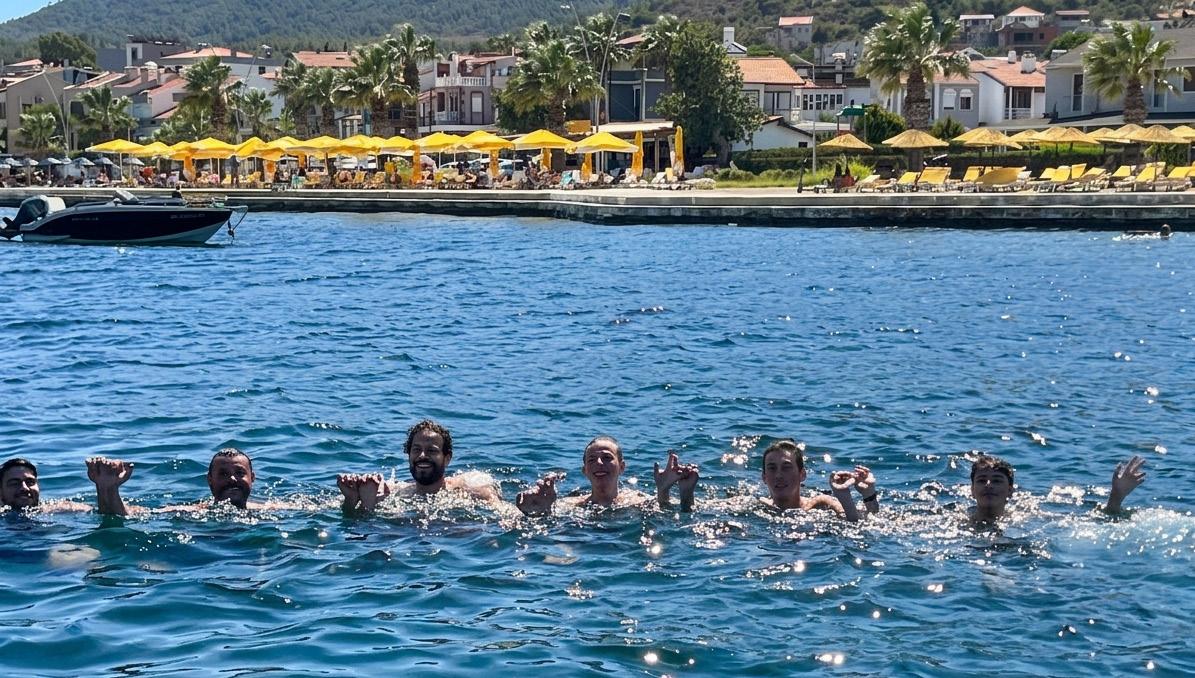
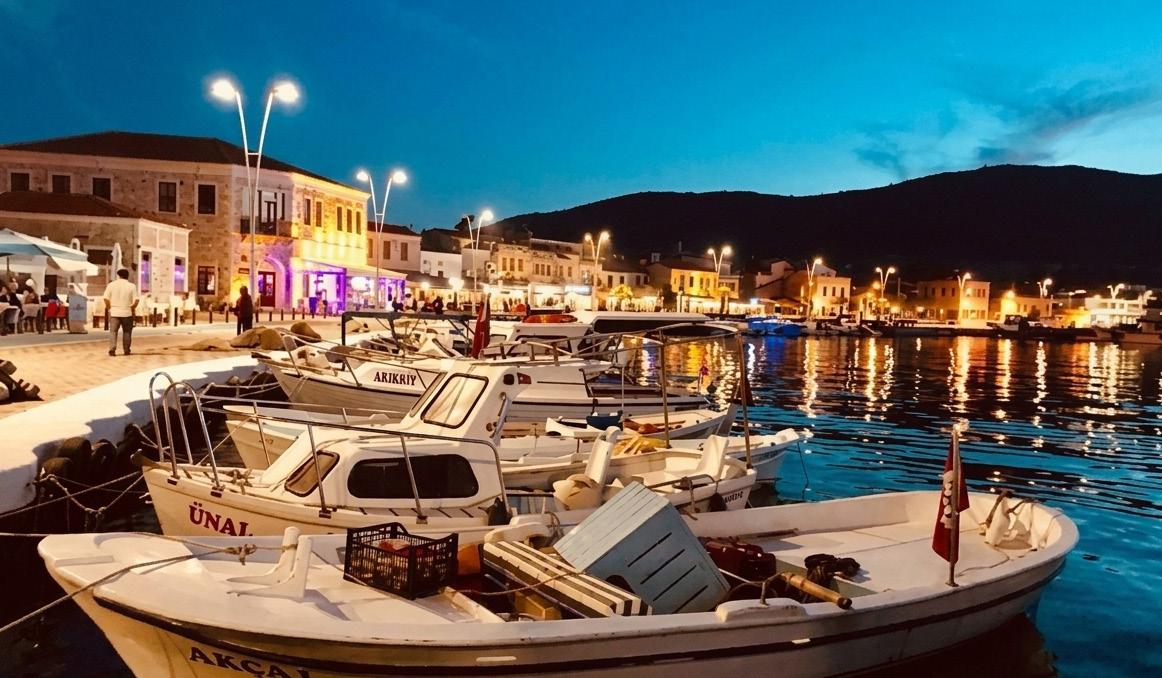
“Every business travel agency claims to provide added value, especially now. Yet, there are plenty of people who book their own business trips. What could the business travel industry do right now to further emphasize its added value, and what do you consider to be the most critical, indispensable components of that value?”
Let’s ask our local Travel Management experts.

Tijn Kramer Editor-in-Chief
SUMMIT Benelux

I am convinced that the key to success is to position Travel Management as a service and not as a transaction. The added value of managed corporate travel should come from the Travel Program developed by the Travel Manager in which the Travel Management Company partner is a cornerstone for the value proposition created by the program. It is the role of the Travel Manager to create a program that aligns well to the strategy and priorities of the company it represents. Constantly communicating clearly the value proposition through the lens of the traveller or travel arranger is a crucial part of success. When you can communicate and demonstrate what in it for those stakeholders it will be a lot easier to have the internal support towards the program. The Travel Management Companies play a vital role supporting those efforts and can be the driving force behind a successful program.
What the Travel Management Company needs to do is to have a flexible service offering to help build the partnership with its customers. This should be built first and foremost upon an excellent user experience 24/7 as well as a modern tech stack to ensure that each program can deliver aligned to the expectations. This undoubtedly also needs to include solutions to support in areas like content distribution, data quality and reporting, duty of care, etc.
The business travel industry is right to argue that its value is increasing, but that message isn’t convincing the people who matter most: end users who continue to book independently. The problem isn’t the argument, it’s the delivery. Added value stays implicit too often, and on speed and simplicity, managed travel still loses ground to consumer platforms.
The industry needs to shift from selling services to demonstrating strategic relevance. That starts with technology as frictionless as self-booking tools, but fully integrated with travel policy, approval workflows, and real-time support. Compliant behaviour will only scale when it’s also the easiest option.
Every organisation that sends people on the road needs a travel management strategy and a professional partner to execute it. A travel management company is not a luxury or a volume play; it’s a risk management decision. A cheaper ticket found independently might route an employee over an active conflict zone. That’s not a saving. And when something goes wrong at 2am in an unfamiliar city, no consumer platform picks up the phone.
SMEs in particular often assume this is something for larger corporates. It isn’t. The risks are the same, and in many cases the internal capacity to manage them is smaller.
Three components make this value proposition indispensable: duty of care and risk management, data-driven cost control that steers behaviour in real time rather than reporting after the fact, and operational continuity — expertise and 24/7 availability when it matters most.
The industry doesn’t need to speak louder. It needs to prove its relevance through integration, proactivity, and visible risk management. In a world of growing uncertainty, that distinction is becoming fundamental.
COLUMN MARNIX FRUITEMA CHAIRMAN BARIN
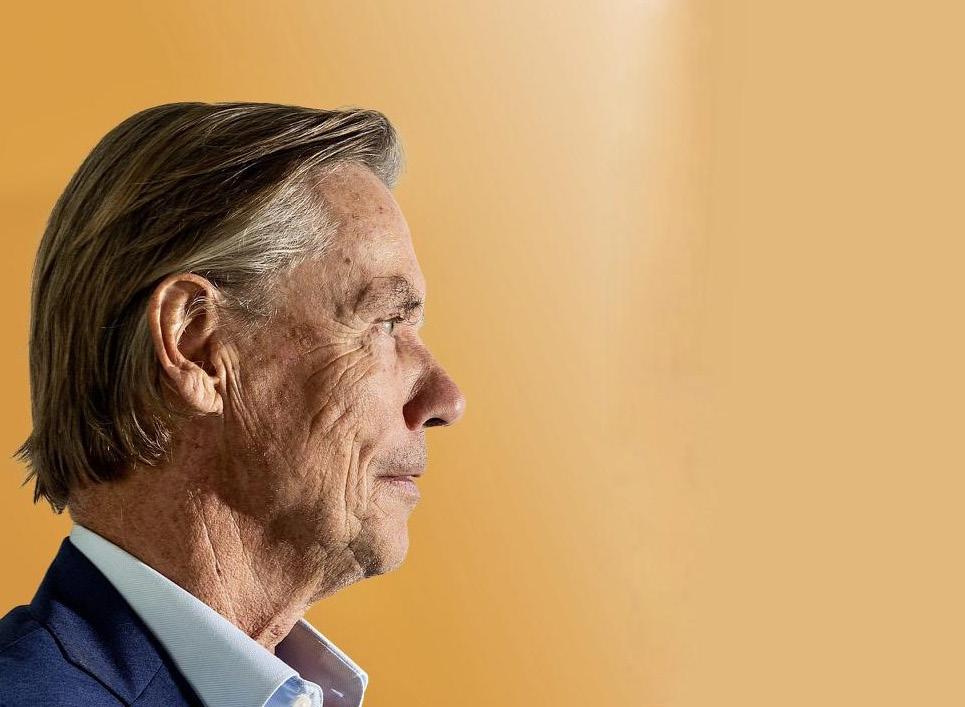
BARIN outlines four priorities below that are decisive for a future-proof and responsible Dutch aviation sector.
1. A robust and legally sustainable Airport Traffic Decree In recent years, the sector, local residents, and policymakers have dealt with a series of shifting targets—ranging from 500,000 to 400,000, 460,000, and now 478,000 flight movements. This uncertainty is harmful to all parties involved.
The core of the discussion has now shifted from numbers to noise, and rightly so. Noise targets for the night have already been met; those for the day are within reach. It is now time to establish this trajectory in a robust Airport Traffic Decree (LVB): 478,000 flight movements per year, with a maximum of 27,000 at night. If noise targets are fully achieved (-15% and -5% respectively), further growth becomes possible. The ceiling is therefore 478,000 “comma,” not “period”.
Supplemented by the necessary nature permit and the outcome of the European Balanced Approach procedure, this
provides the legal certainty that airlines, Schiphol, and local residents are entitled to—definitively removing legal uncertainty.
2. Competitive costs for Schiphol Competitiveness goes beyond airport charges. The latter increased by a staggering 41% last year, instantly making Schiphol the most expensive airport in Europe.
The idea of further increasing ticket taxes now—to more than seven times that of Belgium—is nonsensical. After all, it was the previous cabinet that made this decision under a completely different geopolitical and economic climate. BARIN therefore urges the government to abandon this plan.
3. Sustainable Aviation Fuel as a strategic priority (“Never waste a good crisis”) The transition away from fossil kerosene is both necessary and promising. This is endorsed by Wennink in his report and by Lodewijk Asscher as chairman of the Sustainable Aviation Table. The Netherlands has the infrastructure and position to lead the
way in Europe regarding Sustainable Aviation Fuel (SAF).
BARIN advocates for targeted stimulation of both the production and use of SAF, partly by utilizing a portion of the revenue from the flight ticket tax—approximately 700 million euros— for this purpose. Turn this crisis into a strategic turning point.
4. Investing in the electric aviation of tomorrow The Netherlands has many promising companies in the field of electric flight. A brilliant example is Elysian, which is well advanced in developing an electric aircraft with 80 to 100 seats and a range of approximately 800 kilometers. This type of innovation deserves active policy support, not just as a climate measure, but as an opportunity for the Dutch economy. BARIN will remain committed to advocating for these four points. We hope to see them reflected on the third Tuesday of September!














Travel smart and fast to Brussels South with Eurocity Direct. Running 16 times a day, just like EuroCity, it makes train travel more convenient than ever. From Amsterdam South, cut your journey time from over 3 hours to just around 2 hours.


If you want a frequent, quick, comfortable, sustainable, and direct journey – Eurocity Direct is the clear choice.

Arletta van Alteren, Accountmanager Business Travel