How Can Transport Operators Manage Growth Across Multiple Depots?
Adding another depot can create new opportunities for a freight business. More routes, more vehicles and a wider service area sound positive. But growth can also make everyday decisions harder. A truck might be available at one depot but already allocated to a job elsewhere. A driver changeover might affect several planned movements. Accounts may be waiting for trip details that operations consider complete. These aren't necessarily big problems on their own. The difficulty comes when each team is working with different information. So, what should transport operators review before their network becomes more complicated?
1. Make Job Information Consistent Across Depots
Every depot needs a clear understanding of what work is scheduled, under way or completed. A connected Transport Management System can make job information accessible across locations. If each location maintains its own records, changes can be missed during handovers. A shared approach should make it easy to identify: ● Who is responsible for each job and its next movement. ● Which driver, truck and trailer are allocated. ● Whether a job has been delayed, reassigned or completed. Consistent information gives planners a better starting point, particularly when linehaul and local work depend on each other.
2. Check Availability Before Making Allocations A vehicle appearing on a fleet list doesn't mean it's ready for its next run. It could be waiting on a service, carrying an unresolved defect or committed to another job. Before allocating equipment, operations teams should be able to check registration details, maintenance status, reported faults and current availability. This also requires communication between dispatch and workshop staff. When repair or servicing information is updated, planners need to see the impact on available resources.
3. Build a Clear Process for Changes During the Day Freight schedules rarely stay exactly as planned. Driver changeovers, delayed arrivals, recovery jobs and load transfers are part of everyday transport operations. The question isn't whether plans will change. It's how quickly the right people will know. For example, when a trailer is transferred between depots, the change should be reflected in the job record and visible to the team responsible for the next leg. Otherwise, staff may spend valuable time confirming which information is correct.
4. Keep Compliance Linked to Daily Activity Compliance becomes harder to manage when driver records, inspection results and incidents are stored separately from operational information.
A practical process connects everyday activities with supporting records, including: ● Driver licences, training and document expiries. ● Pre-trip inspections and reported defects. ● Fatigue-related follow-up and driver declarations. ● Incidents, non-conformance reports and corrective actions. The purpose isn't simply to collect documents. It's to make outstanding requirements visible while there's still time to act.
5. Follow Completed Work Through to Accounts A job being marked complete doesn't automatically mean it's ready to invoice. Accounts may still need proof of delivery, confirmed rates, supporting trip details or approval of additional charges. When these details are recorded during execution, finance teams have less information to piece together later. The same principle applies to payroll. Verified driver activity and job records can give payroll teams a clearer basis for reviewing work performed.
A Practical Check Before Expanding Before adding another depot, transport leaders can ask three questions: 1. Can our team view the same job and resource information across every location? 2. Are operational changes reflected in compliance, workshop and financial records? 3. Could another planner take over a shift without relying on one person's knowledge? If the answers are unclear, the issue may be how information moves through the business rather than the number of people available.
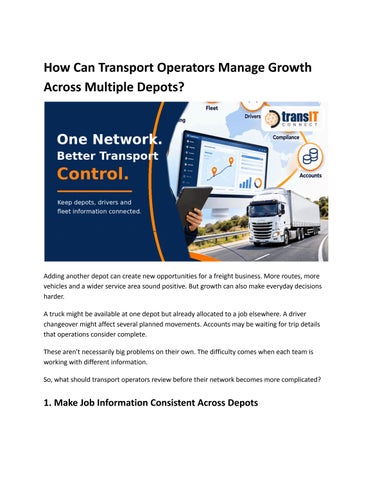
Final Thoughts Multi-depot growth shouldn't mean multiplying administrative work. It's easier to manage when planning, fleet, workforce, compliance and finance use consistent operational records. A connected Transport Management System (TMS) such as transIT Connect is designed around that continuity, linking daily transport activity with the records teams need afterwards.
For freight operators, the aim is straightforward: keep control of today's work while preparing the business to handle tomorrow's growth.