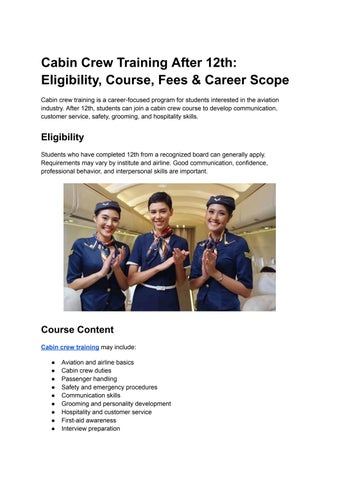
Cabin Crew Training After 12th: Eligibility, Course, Fees & Career Scope Cabin crew training is a career-focused program for students interested in the aviation industry. After 12th, students can join a cabin crew course to develop communication, customer service, safety, grooming, and hospitality skills.
Eligibility Students who have completed 12th from a recognized board can generally apply. Requirements may vary by institute and airline. Good communication, confidence, professional behavior, and interpersonal skills are important.
Course Content Cabin crew training may include: ● ● ● ● ● ● ● ● ●
Aviation and airline basics Cabin crew duties Passenger handling Safety and emergency procedures Communication skills Grooming and personality development Hospitality and customer service First-aid awareness Interview preparation
Course Duration & Fees Course duration and fees vary depending on the institute, program type, facilities, practical training, certification, and career support. Students should compare the syllabus and training facilities before choosing a course.
Skills Required Important skills include communication, confidence, teamwork, customer service, problem-solving, professional grooming, patience, adaptability, and time management.
Career Scope After completing cabin crew training, students can explore opportunities such as: ● ● ● ● ● ●
Cabin Crew Flight Attendant Passenger Service Executive Airline Customer Service Executive Airport Ground Staff Airport Hospitality Executive
Career growth depends on experience, performance, qualifications, and employer opportunities.
Conclusion Cabin crew training after 12th can be a suitable pathway for students interested in aviation, travel, hospitality, and customer service. Professional training helps students build the skills needed to pursue opportunities in the aviation sector.
Air Hostess Course After 12th: Eligibility, Fees, Training & Career Scope An Air Hostess Course is designed for students interested in building a career in aviation and airline services. After completing 12th, students can receive professional training in communication, customer service, grooming, safety, and hospitality.
Eligibility Students who have completed 12th from a recognized board can generally apply. Requirements may vary by institute and airline. Good communication, confidence, professional behavior, and interpersonal skills are important.
Course Content An air hostess course may cover: ● ● ● ● ● ● ● ● ● ●
Aviation industry basics Cabin crew duties Passenger handling and customer service Safety and emergency procedures Communication skills Professional grooming Hospitality and service skills First-aid awareness Personality development Interview preparation
Course Duration & Fees
Course duration and fees vary depending on the institute, course type, facilities, practical training, certification, and career support. Students should compare the curriculum and training facilities before enrolling.
Skills Required Important skills include effective communication, confidence, professional grooming, teamwork, patience, problem-solving, adaptability, customer service, and time management.
Career Opportunities After completing an air hostess course, students can explore roles such as: ● ● ● ● ● ● ●
Air Hostess Cabin Crew Flight Attendant Passenger Service Executive Airline Customer Service Executive Airport Ground Staff Airport Hospitality Executive
Career growth depends on experience, performance, qualifications, and employer opportunities.
Conclusion An Air Hostess Course after 12th can be a suitable choice for students interested in aviation, travel, hospitality, and customer service. Professional training helps students develop the skills needed to pursue career opportunities in the aviation sector.
Frequently Asked Questions 1. Can I join cabin crew training after 12th? Yes. Students who have completed 12th from a recognized board can generally join cabin crew training. Specific eligibility requirements may vary by institute and airline.
2. What does a cabin crew training course include? Cabin crew training generally covers aviation basics, passenger handling, safety procedures, communication, grooming, hospitality, customer service, and interview preparation.
3. How much does a cabin crew course cost?
Cabin crew course fees vary depending on the institute, course duration, facilities, practical training, certification, and career support. Students should compare these factors before enrolling.
4. Is an Air Hostess Course different from cabin crew training? The terms are often used differently by training institutes, but both programs can prepare students for passenger-facing airline roles. Course content and eligibility may vary between institutes and employers.
5. What skills are required for a cabin crew or air hostess career? Important skills include good communication, confidence, teamwork, customer service, professional grooming, patience, adaptability, and the ability to remain calm in different situations.
6. What career opportunities are available after cabin crew or air hostess training? Students can explore roles such as Cabin Crew, Air Hostess, Flight Attendant, Passenger Service Executive, Airline Customer Service Executive, Airport Ground Staff, and Airport Hospitality Executive. Career progression depends on experience, performance, qualifications, and employer requirements.