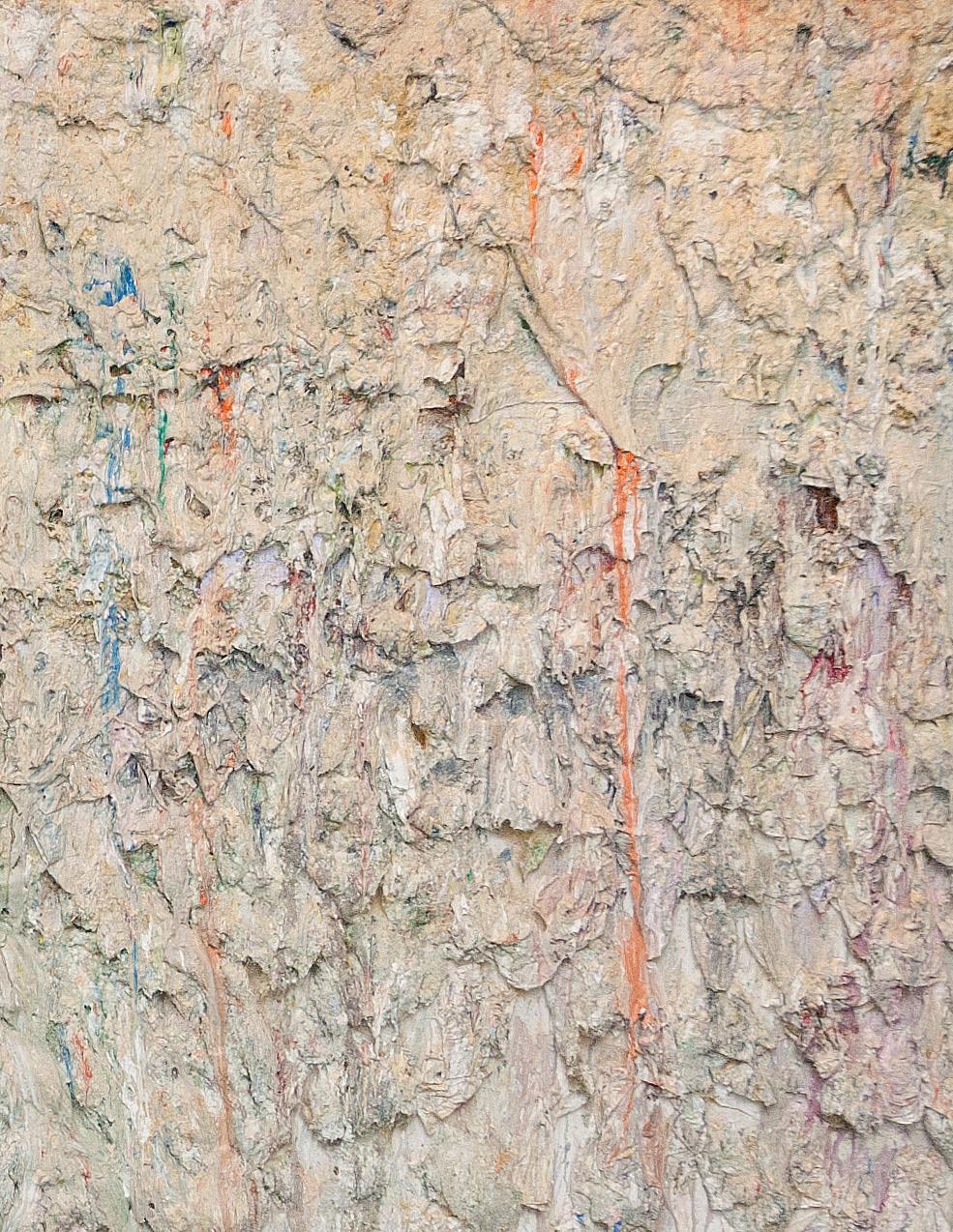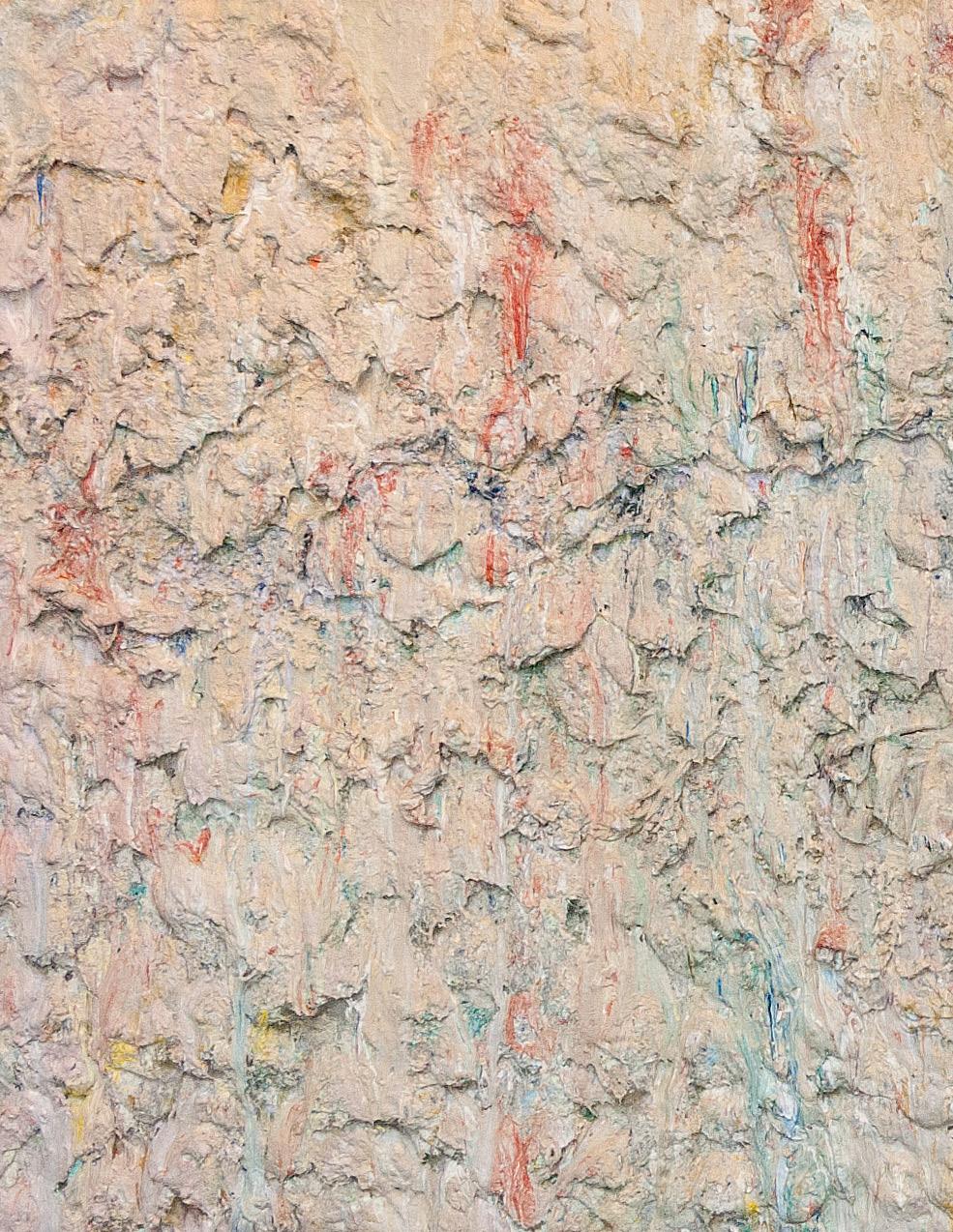
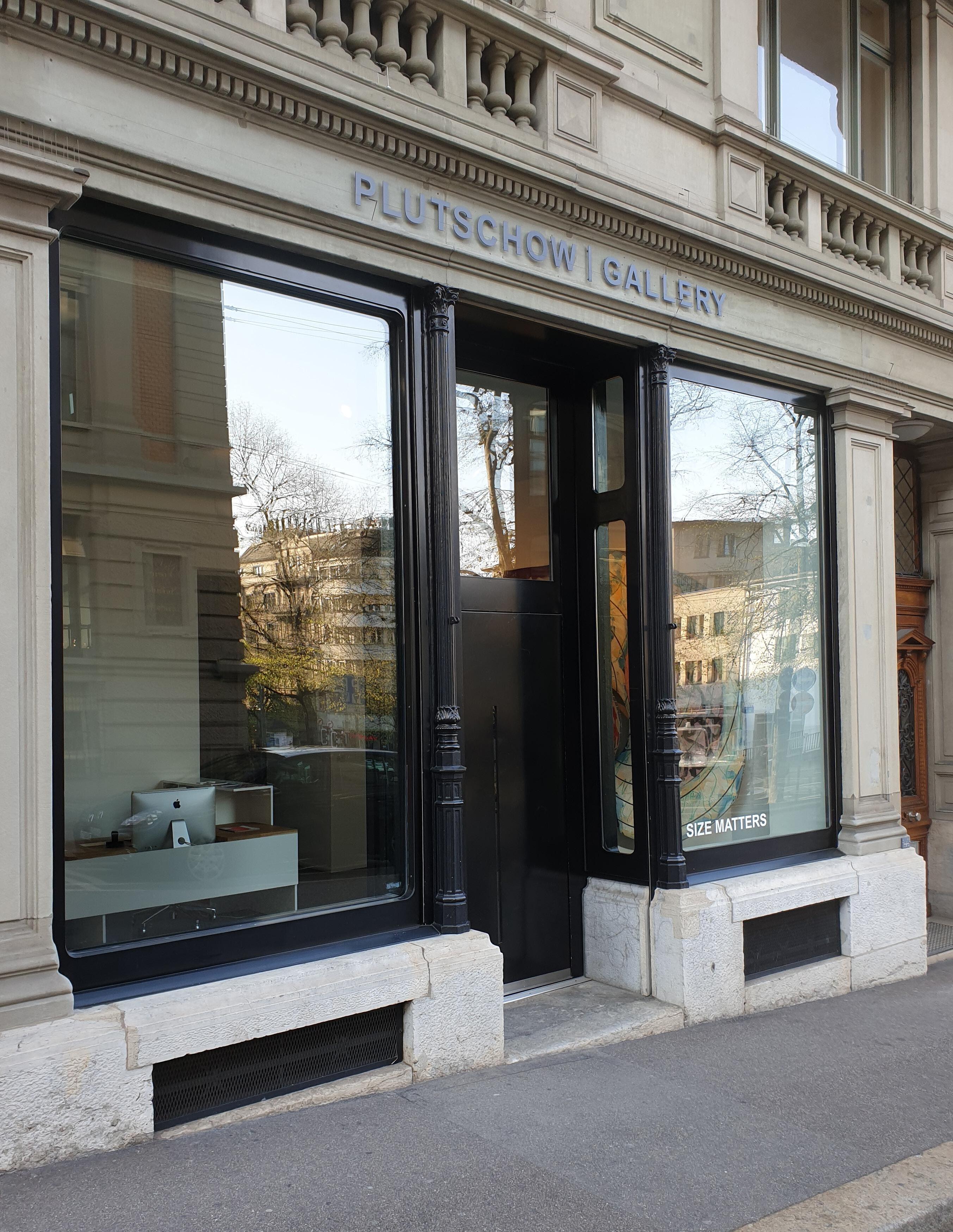

The Plutschow Gallery and New York gallery Edelman Arts join forces to present a groundbreaking exhibition of monumental works entitled, SIZE MATTERS. April 12th to July 13th, 2019, (Waldmannstrasse 6, 8001 Zürich).
After much historical debate, we have decided that size really does matter—as with size comes impact! For the first time seen on this level and amalgamation, this grand display of monumental works installed includes paintings, sculpture, and works on paper from eleven top international artists: Pier Paolo Calzolari, Keith Haring, Leon Löwentraut, Joyce Pensato, Miranda Pissarides, Larry Poons, Pruitt + Early, Mimmo Rotella, Julian Schnabel, Frank Stella and Andy Warhols Each artist embodies a unique style, sensibility, and set of influences, yet together these artists working on a large scale prove the impact and strength of monumental artworks.
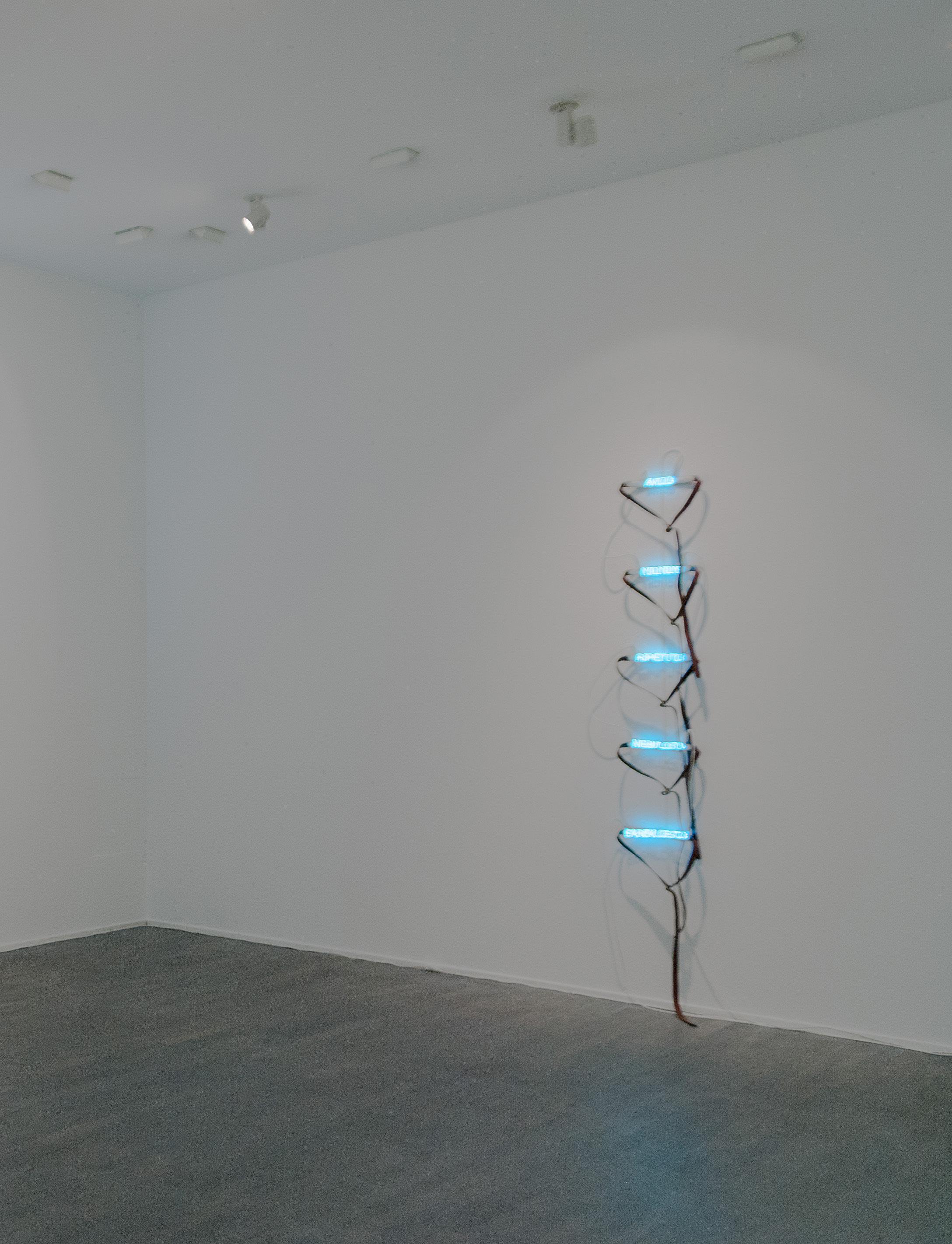
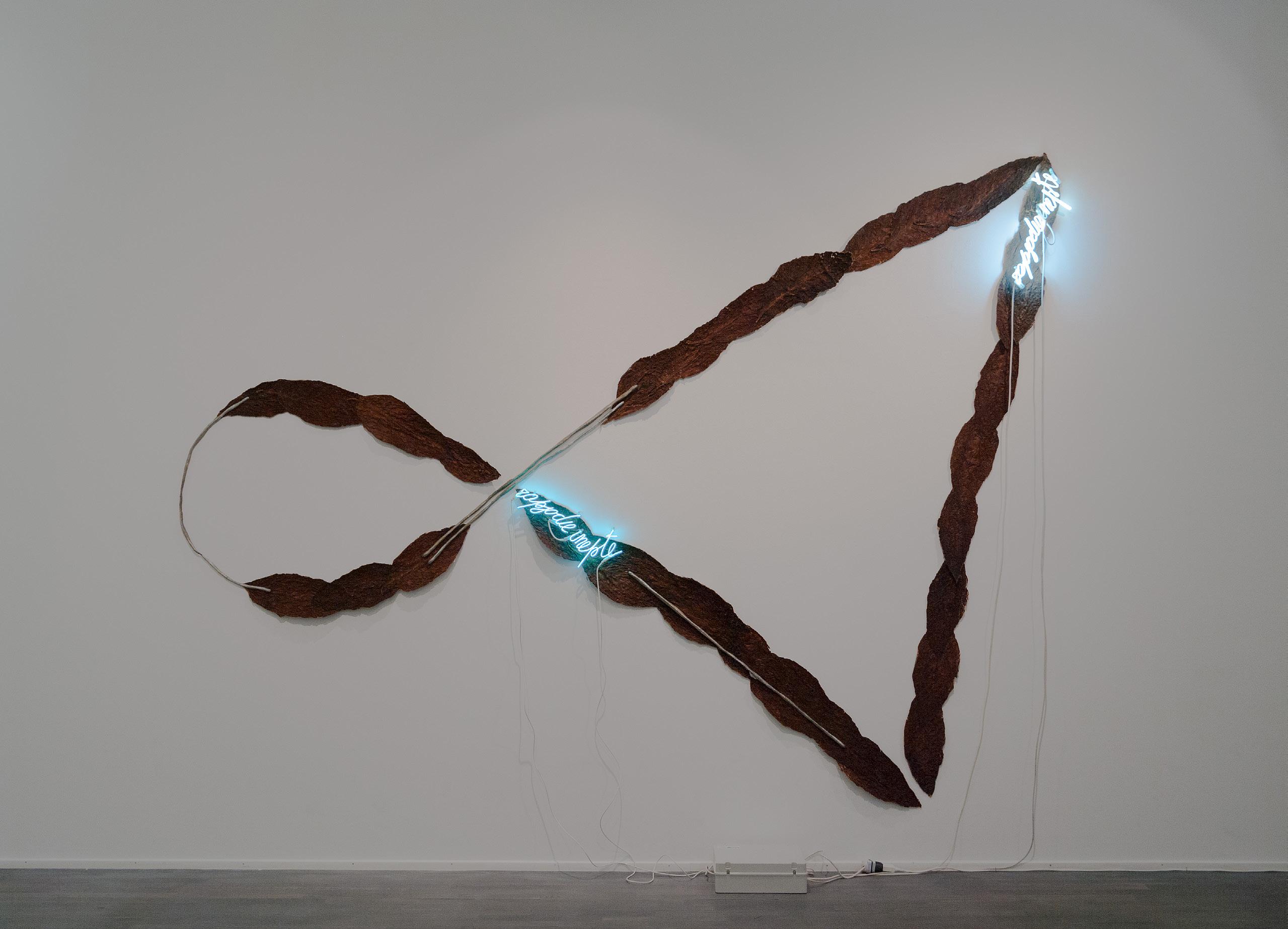
Neons, leather, tobacco leaves, wire: these are materials—both ordinary and unconventional—used by revered artist, Pier Paolo Calzolari, one of the leading figures of the Arte Povera movement. Combining these raw materials in large scale hanging sculptures such as Rapsodie Inepte and Five Neons, the artist explores the transformation of ordinary materials and the essential fragility of objects.
Keith Haring‘s (1958–1990) fascination with babies and pregnant women is a key element in his work, and one of his most captivating explorations of this theme comes with a 1983 silkscreen series where Haring uses his signature bright color palette to depict pregnant women dancing a sort of African fertility dance. The works are a stunning tribute to womanhood, and Size Matters presents a rare opportunity to see the whole series together.
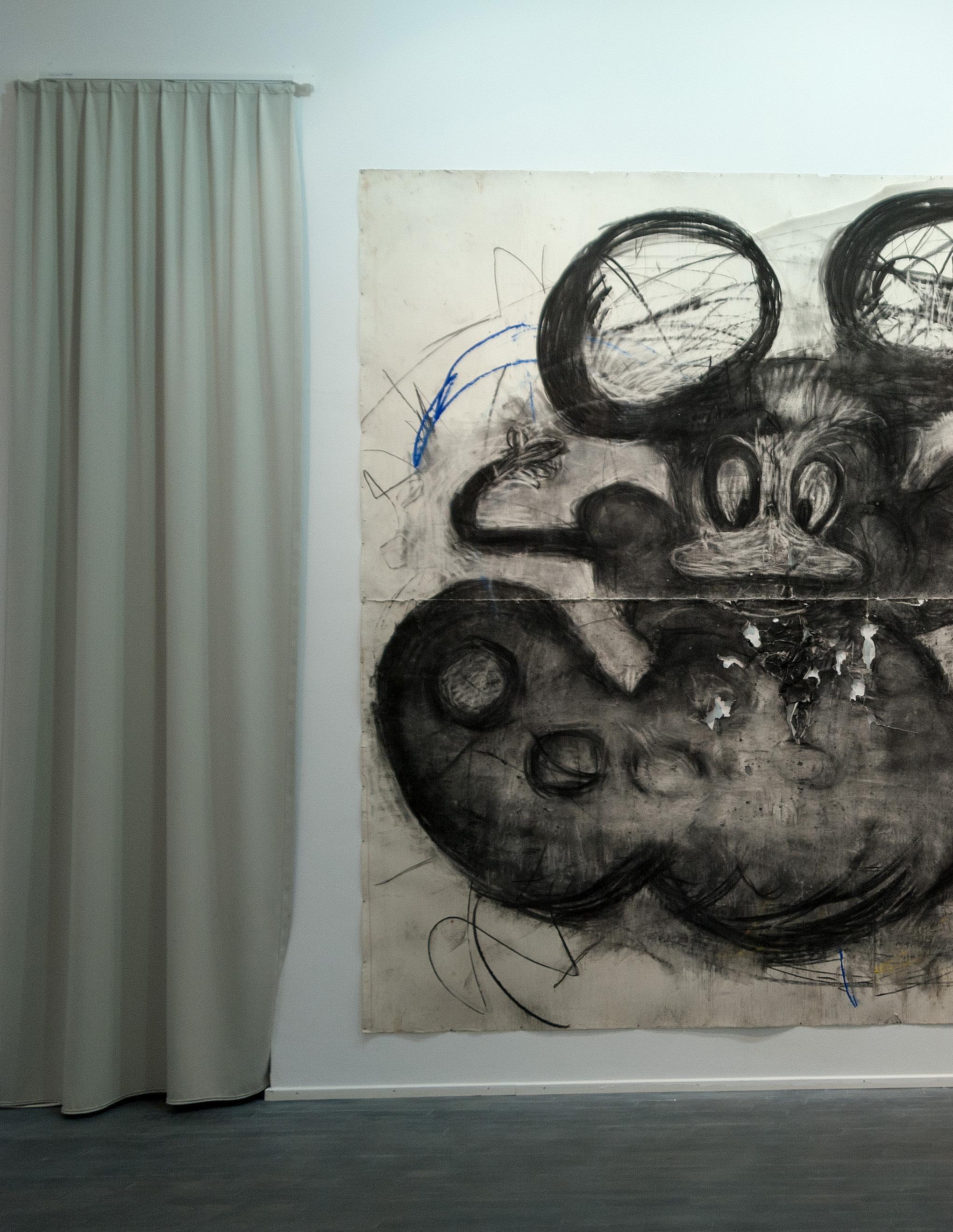
The Brooklyn-based artist Joyce Pensato explores and distorts popular culture through the alteration and mutilation of iconic cartoon characters like Mickey Mouse, Donald Duck and Homer Simpson. Donald as a Crossdresser is the artist‘s large-scale charcoal drawing in the mode Pensato is famous for, turning the anodyne cartoon into something eerie and emotionally resonant. When the New York Times asked her about the significance of the scale of her works, Pensato replied: “As I get older and shorter, I‘m thinking bigger.“
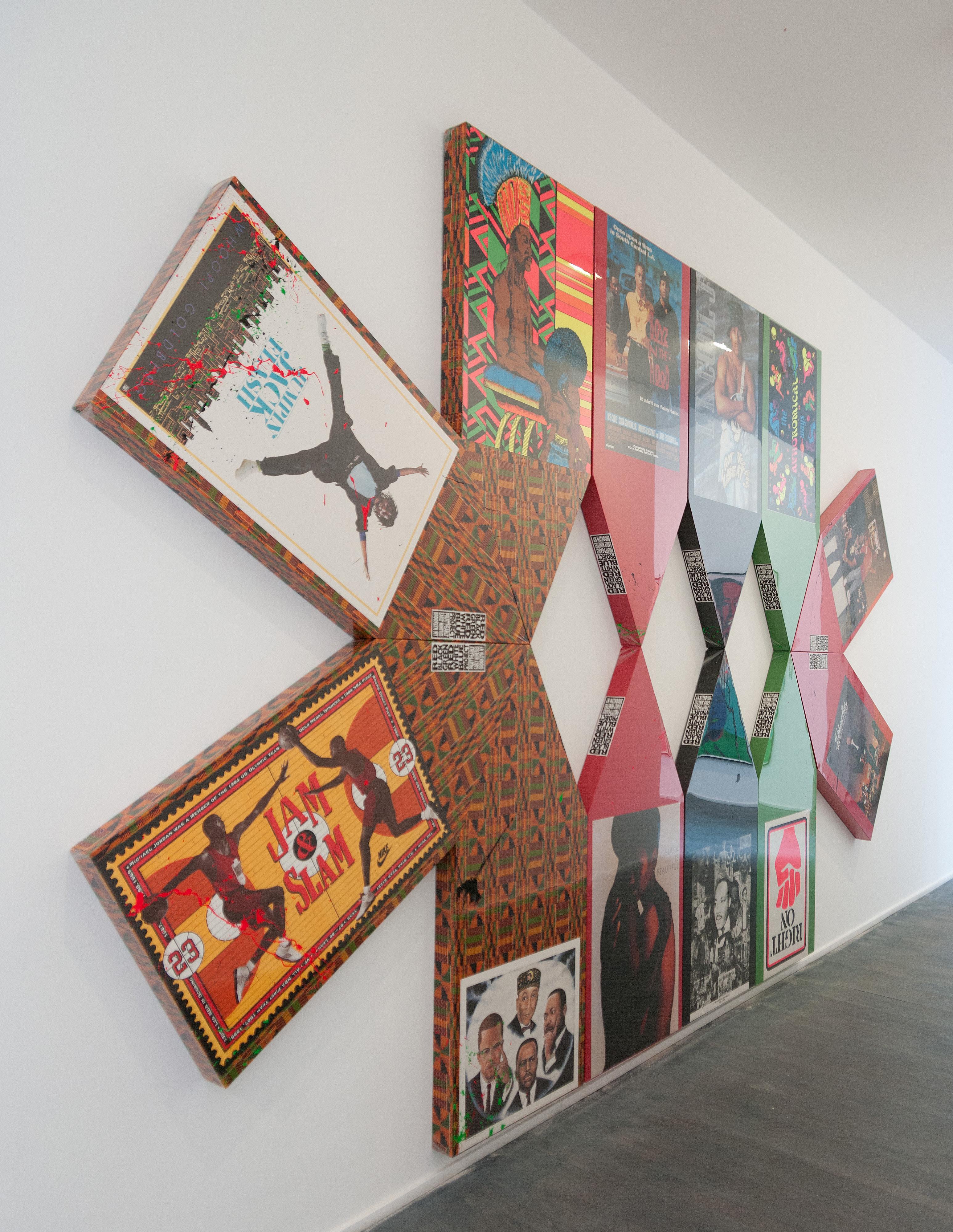
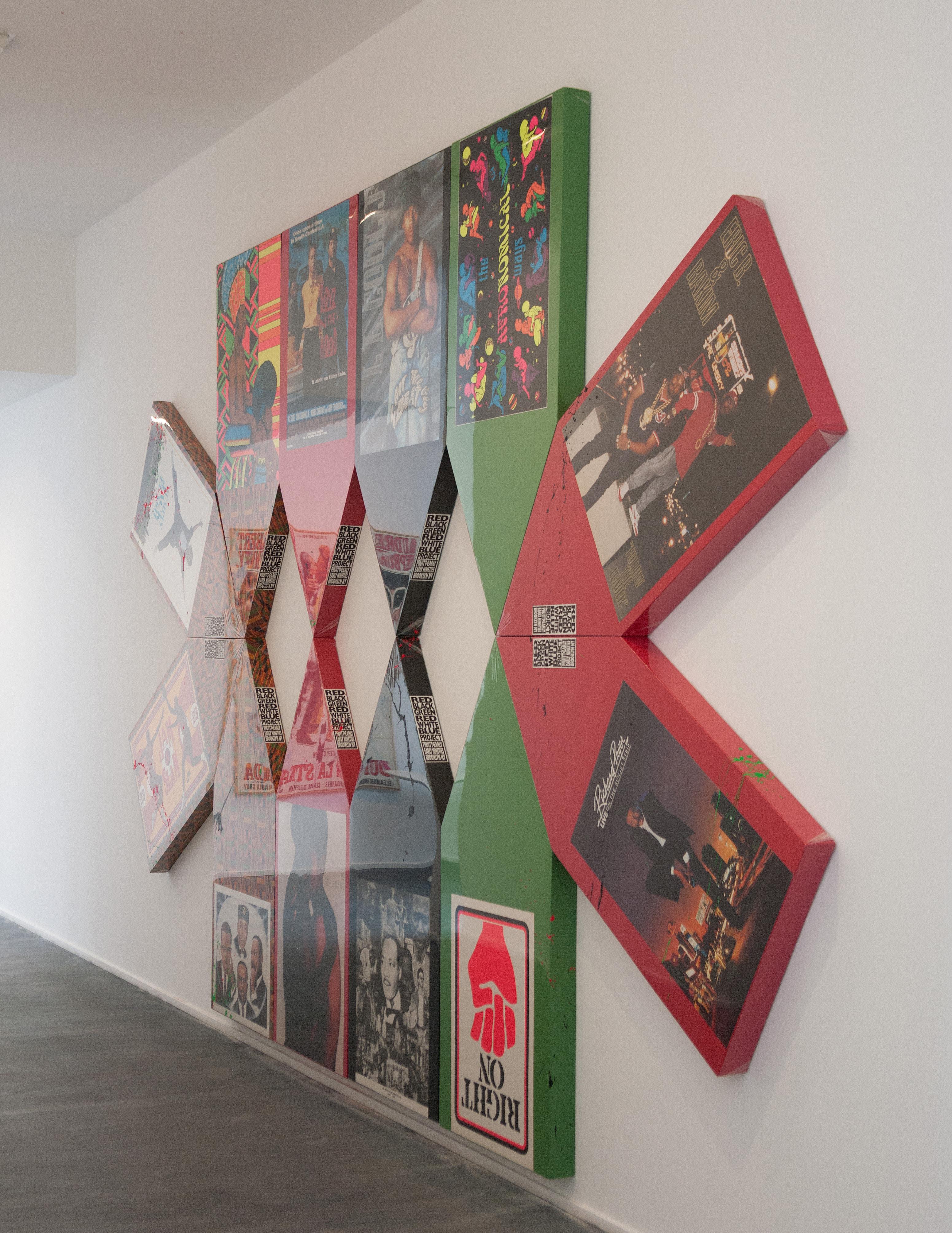
It Ain‘t No Fairy Tale marks the pinnacle of the Pruitt + Early collaboration. It was first exhibited in the controversial „Red, Black, Green, Red, White and Blue“ show at the Leo Castelli Gallery in 1992. The exhibition was the duo‘s „take on black pop culture in America, a historical survey, images that had risen to the top of American culture that created a rich, popular identity of what the black experience had been through adversity.“ However, some people voiced concern at an exhibition about black America created by Rob Pruitt and Jack Early, two young white men. This monumental work was shown seventeen years later in 2009 at Tate Modern, re-enacting the show in an entire room as part of its major exhibition, Pop Life: Art in a Material World, which explored the links between the New York art scene and the Young British Artists.
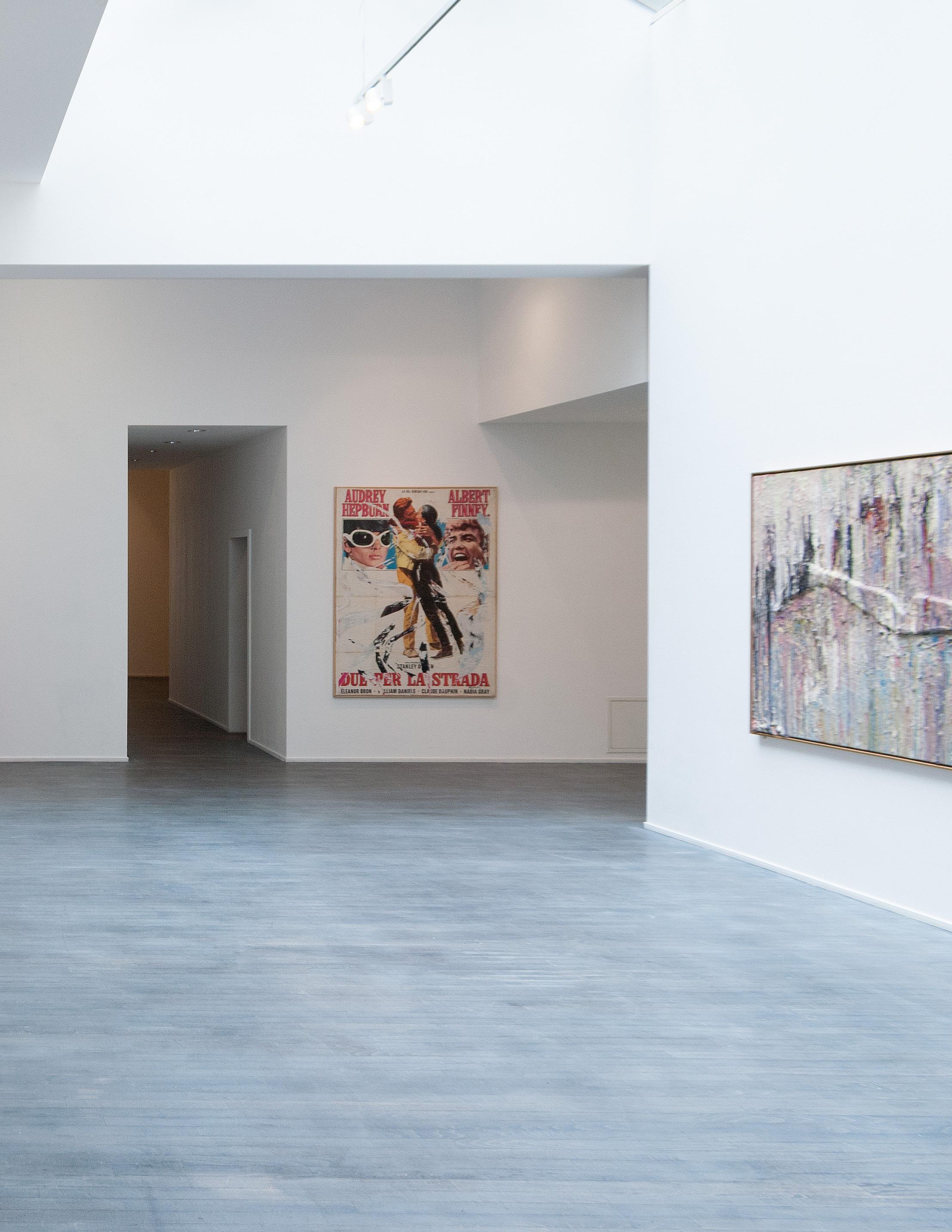
Mimmo Rotella (1918–2006), often referred to as a Nouveau Realiste, was known and revered for his pioneering work focusing on social and political commentary. His early abstractions moved quickly to pop-art and later evolved into the décollage and poster works he became known for. The work exhibited, Due per la Strada, was executed in 2003 and is a décollage on canvas. The National Gallery of Modern and Contemporary Art, Rome celebrated Rotella‘s 100 year anniversary this winter with an extensive exhibition, “Mimmo Rotella Manifesto,” curated by Germano Celano and Antonella Soldaini.
Julian Schnabel, the art-star who took the art world by storm in the 1980s continues to work prolifically and successfully crossing the boundaries of art and film. Throughout his career, even as an accomplished filmmaker, his work is gutsy and expressive, and his use of materials are tactile and rich. A large-scale untitled painting from 1982, the peak of his career, will be shown.
Frank Stella first earned acclaim for his smooth and crisp canvases, seen as a groundbreaking reaction to the textural impastos of Abstract Expressionism, but in the 1980s, he moved away from the limited medium of flat canvas to explore three-dimensionality with sculptural forms built from cones, pillars, and curves. Guifà e la Beretta Rossa and La Scienza della Fiacca are both pivotal examples of the artist‘s experiment with the three-dimensional grand scale work now referred to as wall sculptures.
Andy Warhol‘s (1928–1987) striking Mao screenprint series was sparked by a claim he read in Life magazine that Mao Zedong was the most famous person in the world. The series combines two quintessentially Warhol themes: the magnetic pull of fame and the bizarre language of advertising. The creation of a glammed-up iconic image of Mao transforms a mysterious and intimidating image of Communist propaganda into a glamorous Western pop icon, embodying absolute political and cultural power. This large-scale series demonstrates the impact of repetition—so dear to Warhol—and creates a powerful impression due to its size.
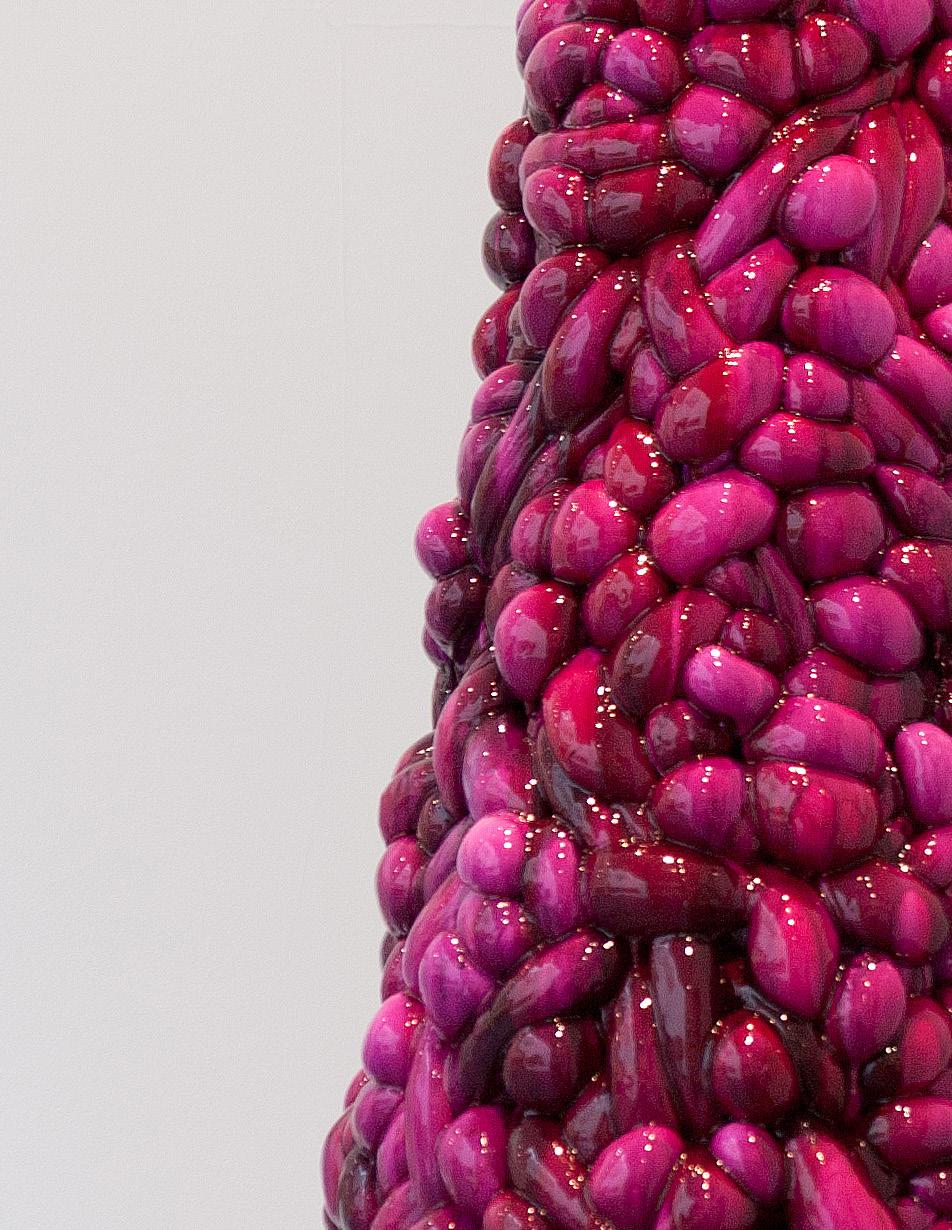
Violet 2019
Resin, raw pigments and wood
200 x 80 x 80 cm, 400 kg
(90.90 x 36.36 x 36.36 in.
882 lbs)
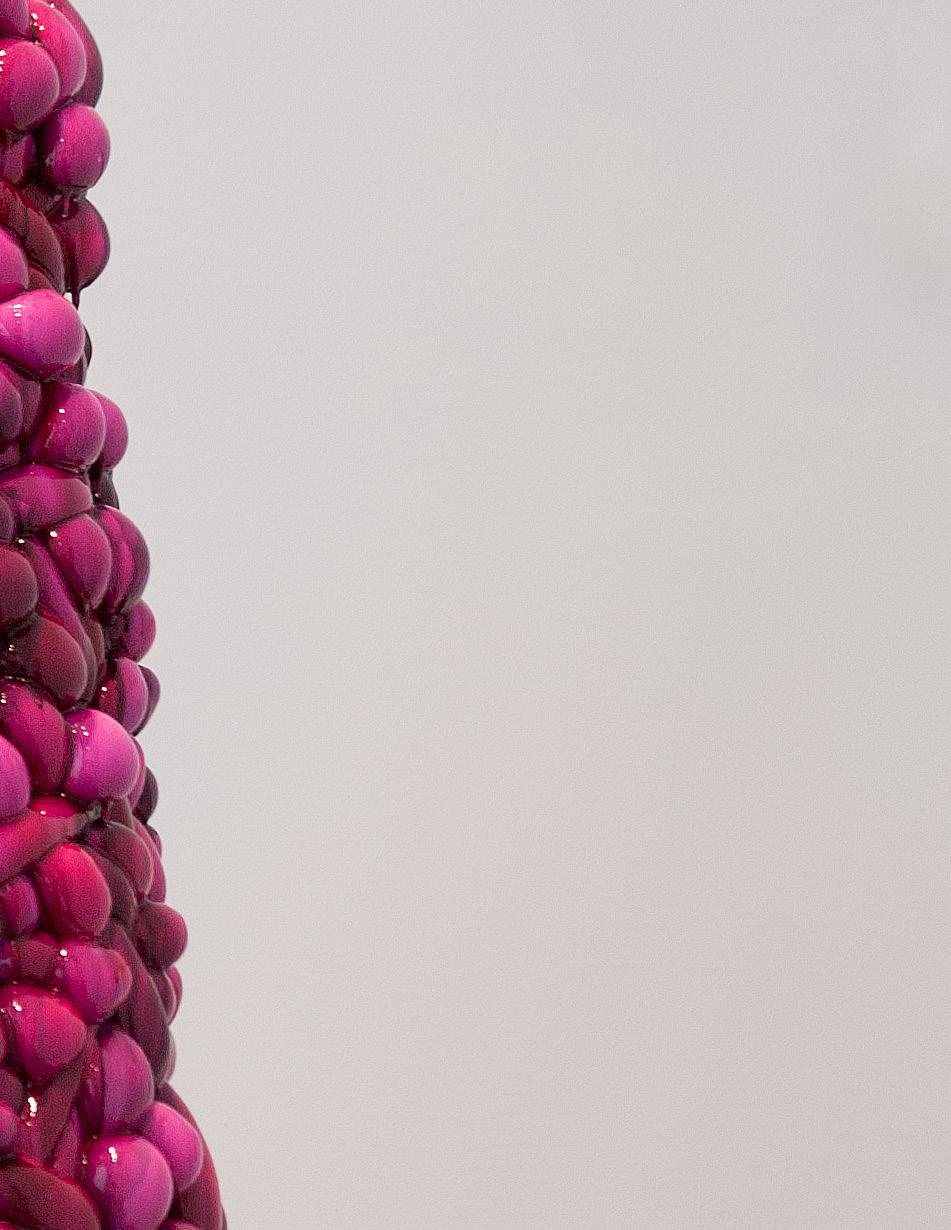
In support of young artists, we are presenting two artists in the exhibition who we believe worthy of being included with the substantially more known artists in the group.
Dubbed the “Wunderkind“ of the art world by the press, the 21-year-old Düsseldorf-based artist Leon Löwentraut first exhibited his work professionally at the age of 15. Influenced by Picasso and Basquiat, Löwentraut‘s use of bright colors in thick swathes across the canvas startle the viewer with their fierceness, and the simple, resonant images they collide to form leave a lasting impression. His epic scale painting Don’t Lose Me connects with the rock star within.
Winner of the Saatchi Young Artist Prize in 2018, Miranda Pissarides creates works fixated on dualities and the spaces in between them. She works in both the fields of painting and sculpture, with each practice informing the other—her paintings have the depth and weight of sculpture, while her sculptures have the ethereal and fluid qualities of painting. In the large-scale sculpture, entitled Violet, Pissarides used raw pigments to convey the conflicting feelings of desire and repulsion. The use of resin blended into this monumental stalagmite creates an effect of liminality, a substance that seems to exist between the states of solid and liquid.
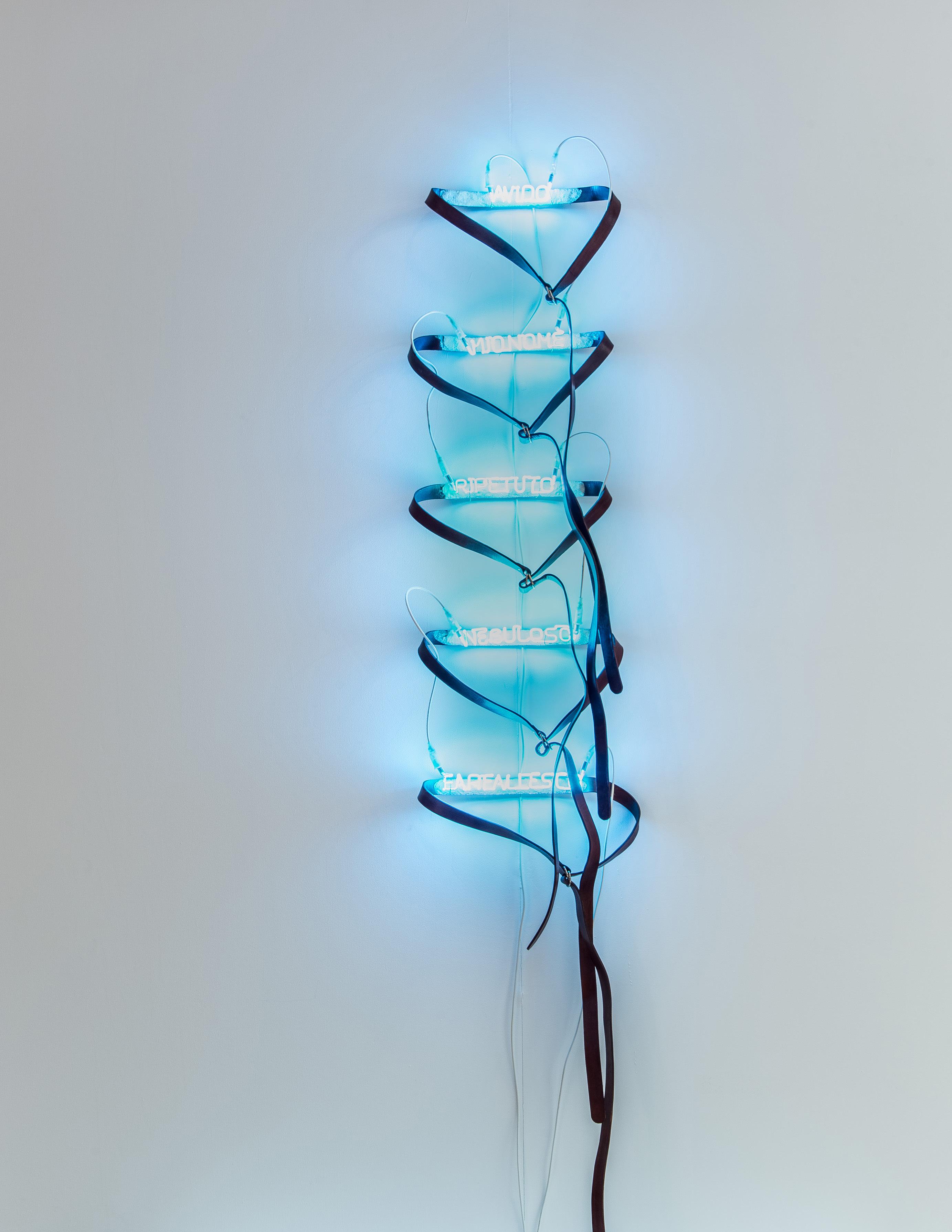
Cinghie [avido, mio nome, ripetuto, nebuloso, farfallesco] 1969
Leather, iron, salt, fluorescent blue pipes, transformer 325,1 x 41,3 x 10,2 cm (147.77 x 18.77 x 4.63 in.)
PROVENANCE
Galerie Micheline Szwajcer Private Collection, New York, 1990
Fondazione Calzolari Archive number A-CAL-1969-24
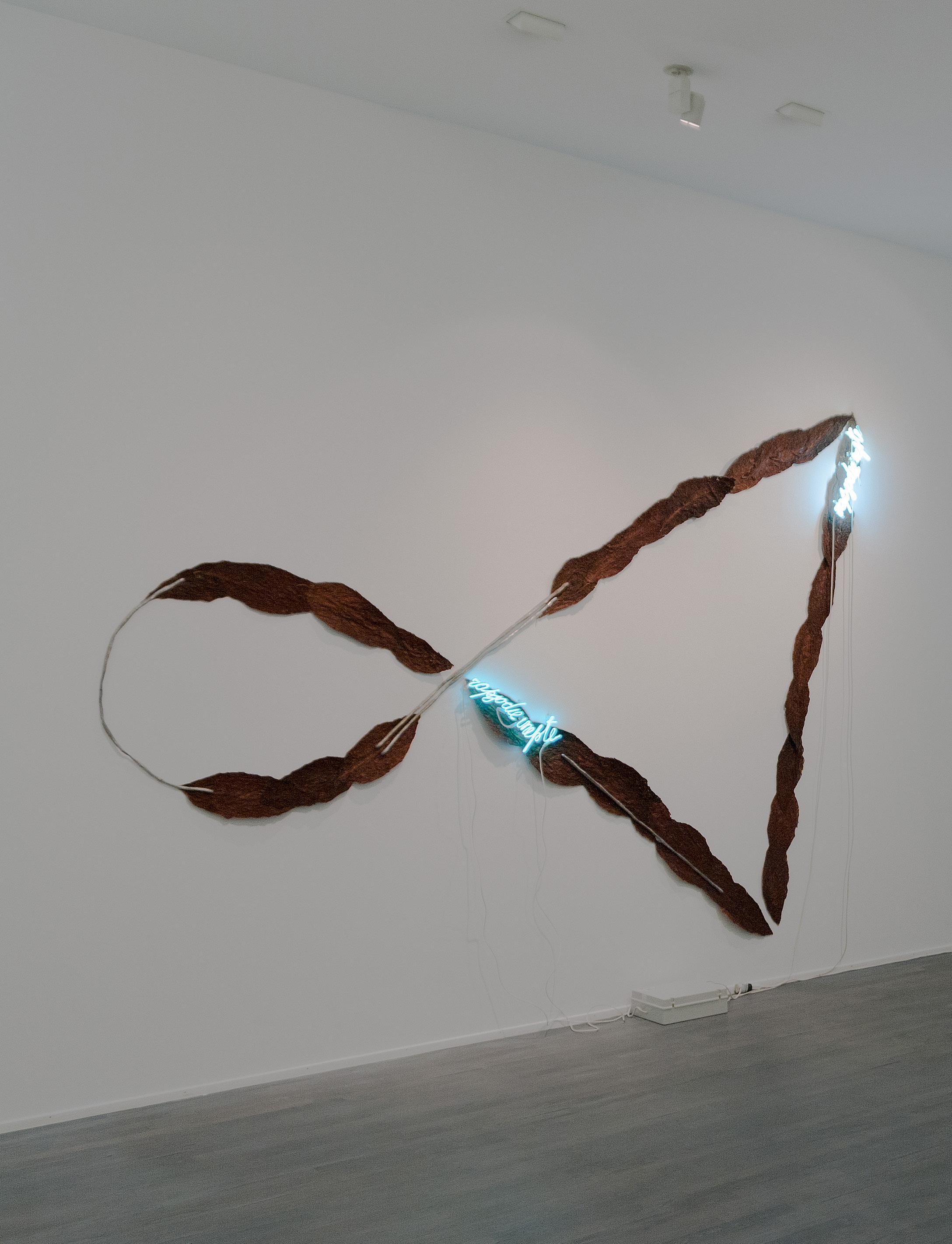
“Arte Povera (…) a constellation of artists who felt a similar urgency about needing to restore meaning — by naming things, trying to revive them, giving them blood, spirit and body again.”
— Pier Paolo Calzolari
Pier Paolo Calzolari is an Italian artist known for his sculptural installations, performance, architecture and significant artistic practice in elemental materials. The artist is often associated with the Arte Povera movement and recognized as one of the influential figures of the group. Calzolari spent his early life in Venice, a place with distinctive light and structure where inspires him to start experiment on extracting elements from the quotidian world and turned into aesthetic presentation. Calzolari had his first multimedia performance displayed in 1966, which reflected the idea in what he entitled “an activation of space” by incorporating audience participation into his artwork. Over the years, Calzolari’s works has been featured in a number of significant exhibitions worldwide including group shows at the Centre Pompidou, Paris (2016); Moma, New York (2014) and Fondazione Prada, Venice (2013) etc.
By making uncommon connections in media, Calzolari’s works resemble a synthesis of extracted ideas. His use of the leather belt suggests the tangible and the practical— physical aspects relevant to our identity. The neon lights represent the impalpable and the sublime. It echoes to the viewer severed, fleeting thoughts— “ripetuto, mio nome, nebuloso, avido, farfallesco”—“repeated, my name, hazy, avid, farcical.” Together, this combination comments on the existential questions that confront his daily life. To the perception of others, his name takes on a multitude of meanings and opinions. Suspended on the wall by the weight of its light and its words, Calzolari entreats: which fleeting thought, which persona, shall I take on today.
300
PROVENANCE
Galerie Hussenot
Private Collection, Switzerland
EXHIBITION
1986 Venice Biennale NOTES
Certificate of authentication from the artist
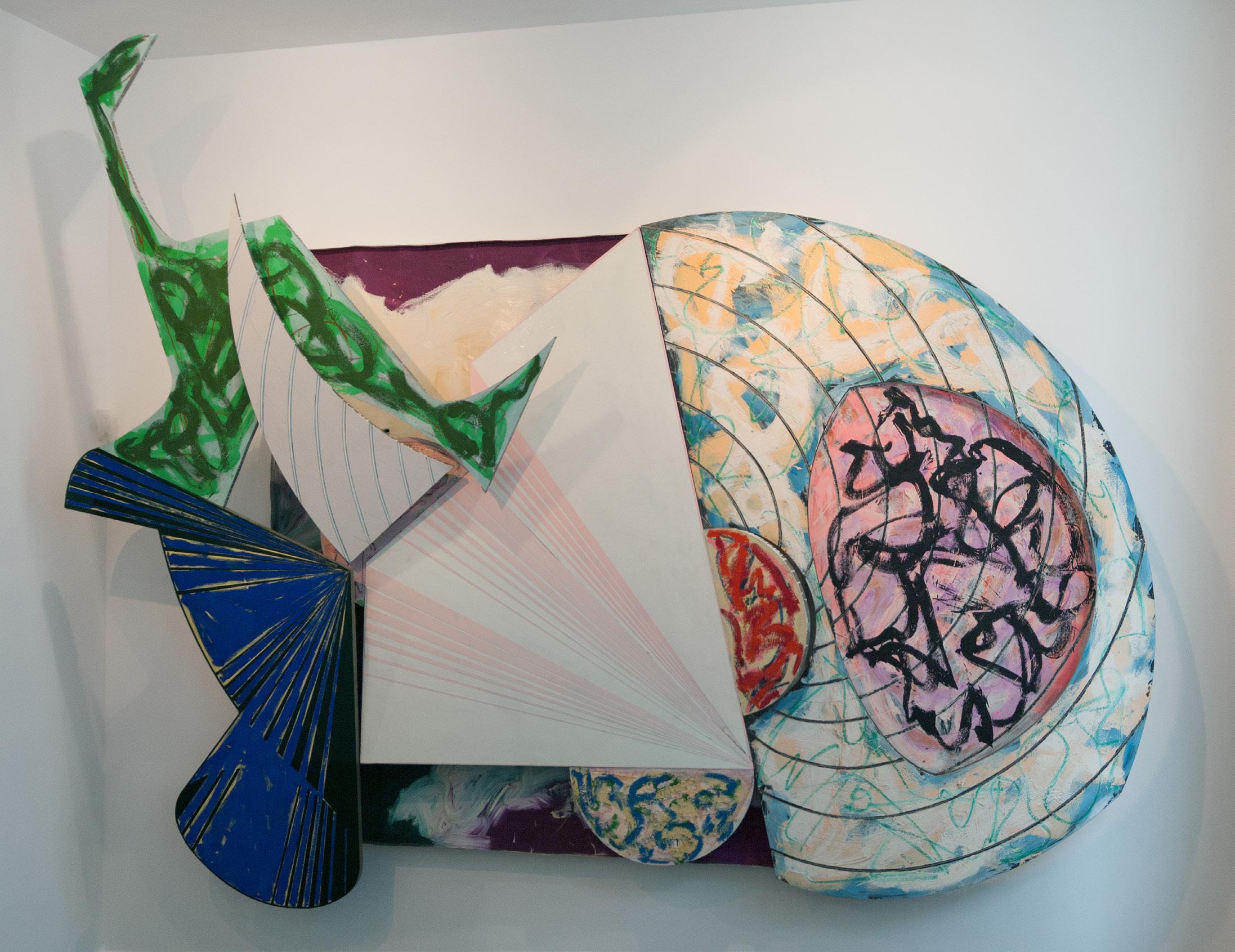
FRANK STELLA
Giufa E La Berretta Rossa
1985
Oil, urethane, enamel, fluorescent alkyd, acrylic printing ink on canvas, etched magnesium, honeycombed aluminum, and fiberglass
286.27 x 353.65 x 68.75 cm (130.125 x 160.75 x 31.25 in.)
PROVENANCE
The Artist
Leo Castelli Gallery, New York Greenberg Gallery, St. Louis, Missouri Private Collection.
EXHIBITION HISTORY
The Greenberg Gallery. „Frank Stella: New Work, Pillars and Cones Series,“ November 9 - January 4, 1986.
Hirshhorn Museum & Sculpture Garden, The, Washington. „Direction 1986,“ February 6 - March 30, 1986, Steinberg Gallery of Art, Washington University, St. Louis, Summer 1986.
Albuquerque Museum, Albuquerque. „Painting in Three Dimensions,“ January 22 - March 18, 1989. Vreg Baghoomian Gallery, New York. „Frank Stella,“ September 9- October 7, 1995. Greenberg Van Doren Gallery, St. Louis. „In Relief,“ September 1 - December 1, 1995. Artemus, New York. “Stella Outstanding,” September 19 – October 31, 2014.
LITERATURE
Directions 1986 (Washington: Hirshhorn Musurm and Sculpture Garden, 1986) p. 35. The Elusive Surface (Albuquerque: The Albuquerque Museum, 1989) p.47.
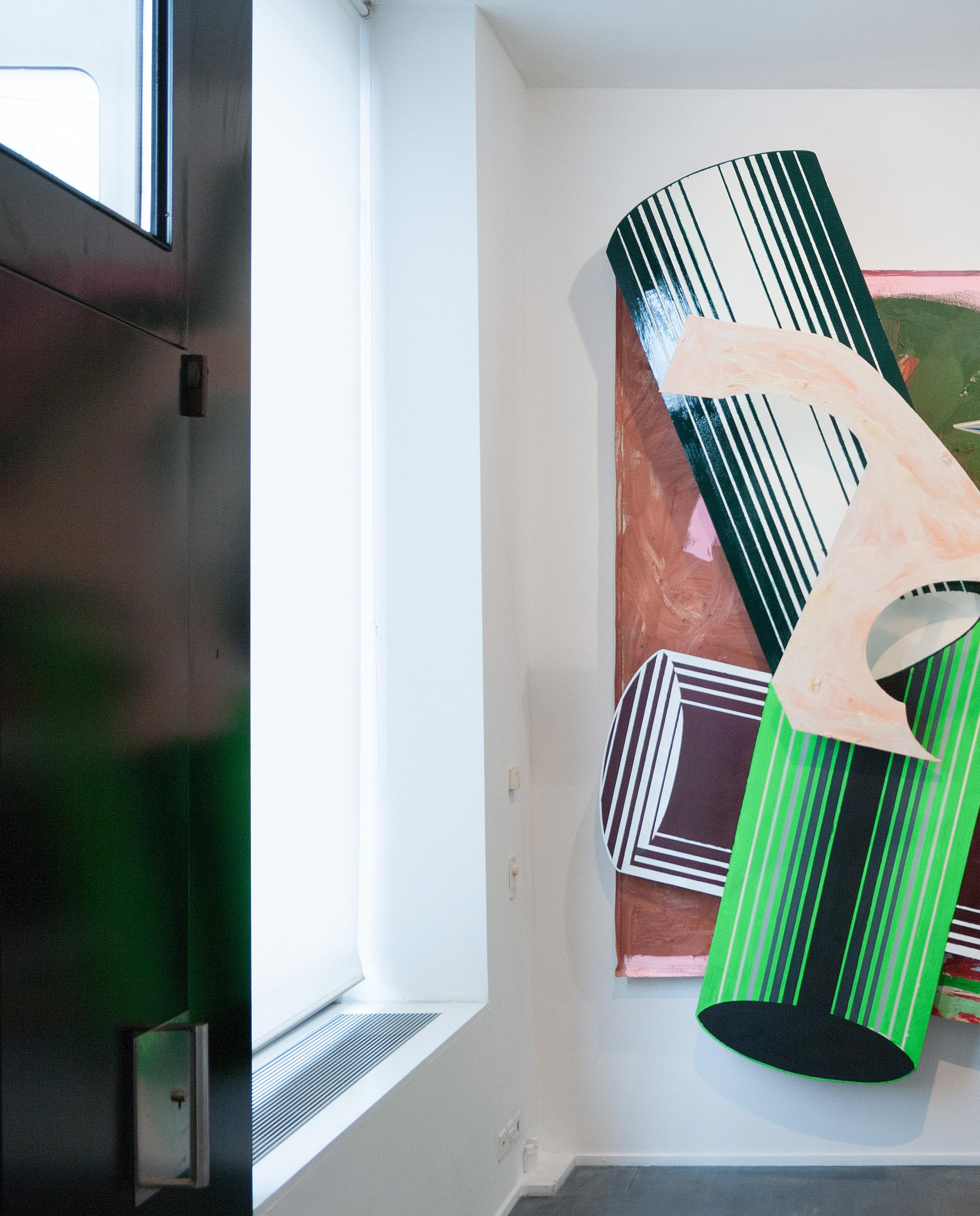
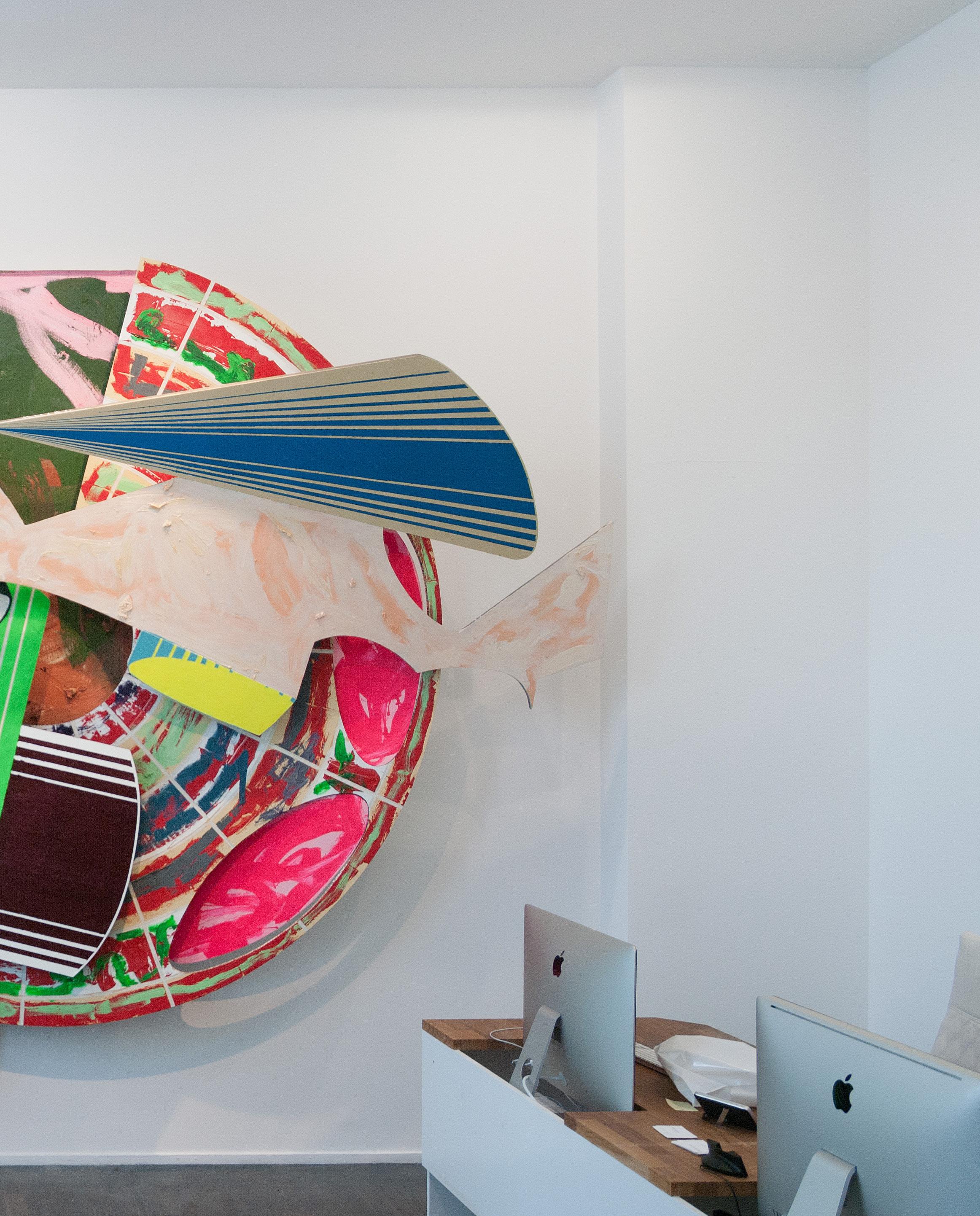
“The impulse that goes into [my sculpture] is pictorial, and they live or die on my pictorial abilities, not my abilities as a sculptor.“ – Frank Stella
At a time when Abstract Expressionism was the dominant technique, Frank Stella‘s non-narrative, non-emotional paintings launched the startling paradigm shift from Abstract Expressionism to Minimalism that occurred in the late 1950‘s. Born in 1936 to first-generation Italian-American parents Stella grew up in Andover, MA before attending college. While taking art classes at Princeton University Stella was exposed to Jackson Pollock, Franz Kline, and particularly Jasper Johns whose geometric flags and targets inspired Stella‘s own artistic direction. After Stella moved to the Lower East Side, his images of pure color, shape and near -theoretical structure immediately generated a critical response. Critics hailed his canvases as a groundbreaking reaction to the thick, textural impastos and energetic, gestural compositions of Abstract Expressionism. Stella solidified his view of art as an object in itself by claiming his flat canvases, structured reliefs, metal protrusions, and freestanding sculpture all to be paintings. The following years witnessed several unique moments in Stella‘s oeuvre as he experimented with giant sculptures, mixed-media prints from woodblock printing, etching, and hand-coloring, and even architectural structures. He has never failed to reconceive his artistic direction or be a clear voice in the artistic community.
Frank Stella‘s Gìufa e la Berretta Rossa and La scienza della fiacca, or The Science of Laziness, both belong to the Cones and Pillars series from the 1980s. At that time, Stella operated a radical move in his work, breaking up the plane surface to create three-dimensional works and give the illusion of depth. He wanted to liberate painting from the boundaries of edge and plane surface. “What painting wants more than anything else is working space,” he said in lecture he delivered at Harvard in 1983. This series of new dimensional paintings is called Cones and Pillars as a nod to Cézanne’s research and to the new architectural aspect he was giving his works.
At Harvard in 1984, Stella met the great Italian author Italo Calvino, known for his Italian Folktales. These short stories appealed to Stella in particular as beautiful, simple but yet profound stories. He named each of his Cones and Pillars pictures after one of the fables.
Giufa e La Beretta Rossa and La Scienza della Fiacca are pivotal examples of the artist‘s experiment with the three-dimensional grand scale works now considered as wall sculptures but which he used to refer to as paintings.
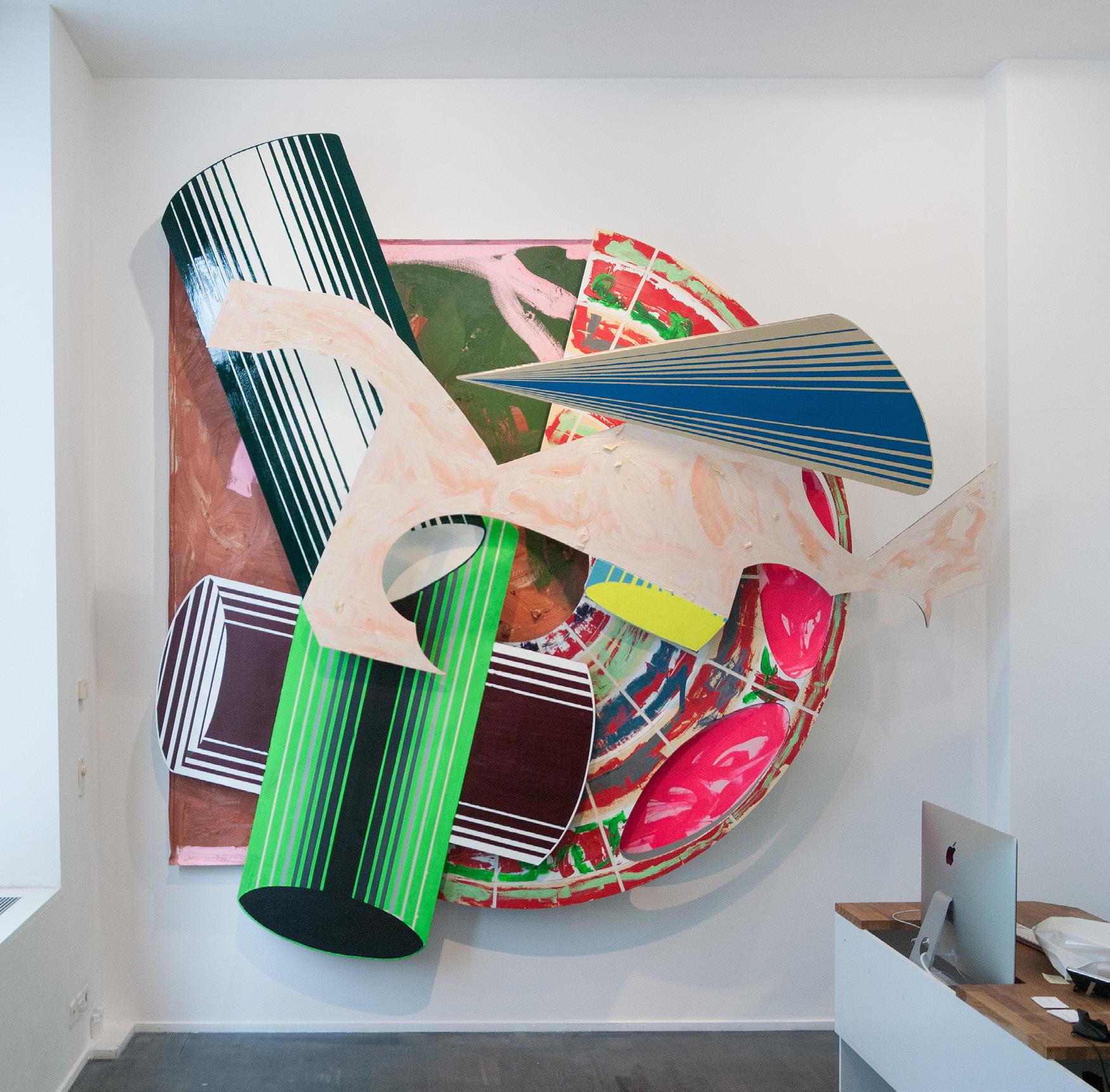
FRANK STELLA
La Scienza della Fiacca, 3.5 X 1984
mixed media on canvas, etched magnesium, aluminum and fiberglass 316.2 x 328.3 x 79.4 cm (124 1/2 x 129 1/4 x 31 1/4 in.)
PROVENANCE
M. Knoedler & Co.
William Rubin Collection, New York Private Collection, New York
EXHIBITION HISTORY
Stuttgart, Staatsgalerie Stuttgart, Frank Stella: Black Paintings 1958 - 1960, Cones and Pillars 1984 - 1987, 1989, catalogue
LITERATURE
Stuttgart, Staatsgalerie Stuttgart, Frank Stella: Black Paintings 1958 - 1960, Cones and Pillars 1984 - 1987, 1989, catalogue of the exhibition, cat. no. 15, illustrated on p. 77.
Rubin, William. Frank Stella 1970-1987, The Museum of Modern Art, 1987, illustrated in b&w on p. 134.
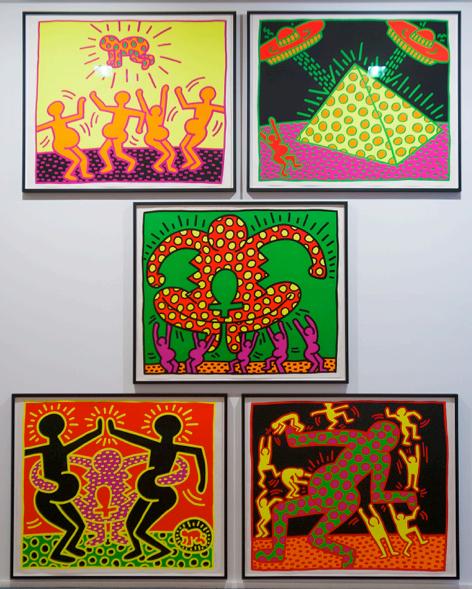
KEITH HARING
Fertility Series, 1983
Edition of 100
Fluorescent silkscreen on paper
Set of 5 prints in original box of issue
107 x 127 cm (42 x 50 in) each
PROVENANCE
Artist Salvatore Ala Gallery
Private collector
LITERATURE
Littmann, Klaus. pp. 30-33
“Children know something that most people have forgotten.” Keith Haring - Journals
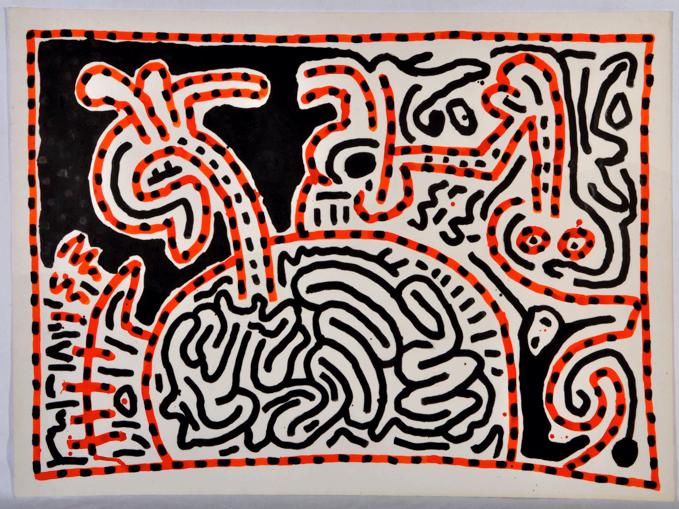
KEITH HARING
Untitled (March 5, 1984), 1984
Sumi ink on paper
86 x 122 cm (34 x 48 in.)
PROVENANCE:
John Buckley, Australia
Marcello Mostardi, Florence, Italy
Private Collection, Italy
EXHIBITION HISTORY
1998 American Graffiti, curated by Achille Bonito Oliva. Travelling Exhibition:
Museu De Arte Contemporanea do Paranà Seec Curitiba, Curitiba, Brazil; Fundacao Clovis Salgado, Belo Horizonte, Brazil; Museu de Arte Moderna Mam Bahia, Bahia, Brazil; Museu De Arte Moderna Rio De Janeiro, Brazil; Istituto Cultural Itau Sao Paolo, Brazil (catalogue)
LITERATURE
1998 American Graffiti, curated by Achille Bonito Oliva, Ed. Panepinto Arte, color image p.101.
Keith Haring was one of the 20th century’s most influential artists and social activists whose work responded to the New York City street culture of the 1980s. His drawings have become a universally recognized image.
Born in Pennsylvania in 1958, Keith Haring moved to New York City in 1978 and began using the city as his canvas, making chalk drawings in subway stations. His art was eventually seen everywhere from public murals and nightclubs to galleries and museums around the world. Major icon of the American Pop Art, his imagery is now an integral part of the 1980s culture and his glyphs have become a widely recognized visual language, a sort of urban tribal language.
Keith Haring’s enthusiasm and fascination with babies and pregnant women –both iconic imageries in his work – certainly stemmed, in part, from growing up in a large family but also from his friends having children – he was particularly impacted by the pregnancy of the wife of his friend, the artist Kenny Scharf. In 1983, he worked on this silkscreen series, using his signature bright color palette to depict pregnant women dancing in an energy recalling the African fertility dances. The whole series is a stunning tribute to womanhood.
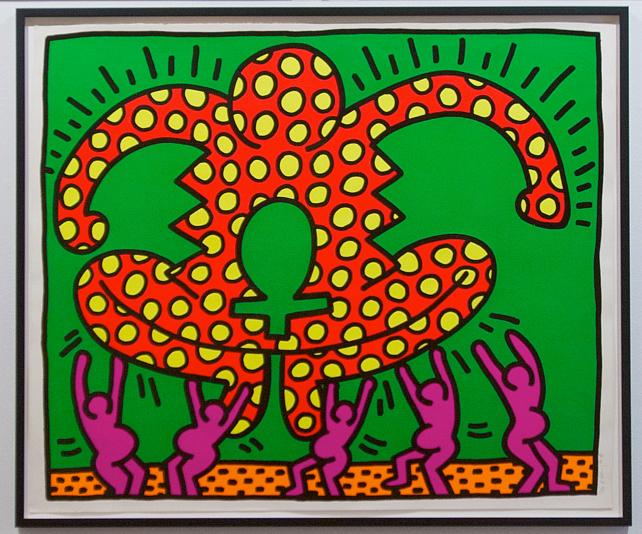
KEITH HARING Fertility Series, 1983 Single print Edition of 100
Fluorescent silkscreen on paper 107 x 127 cm (42 x 50 in)
PROVENANCE: Artist Salvatore Ala Gallery Private collector
LITERATURE : Littmann, Klaus. pp. 30-33
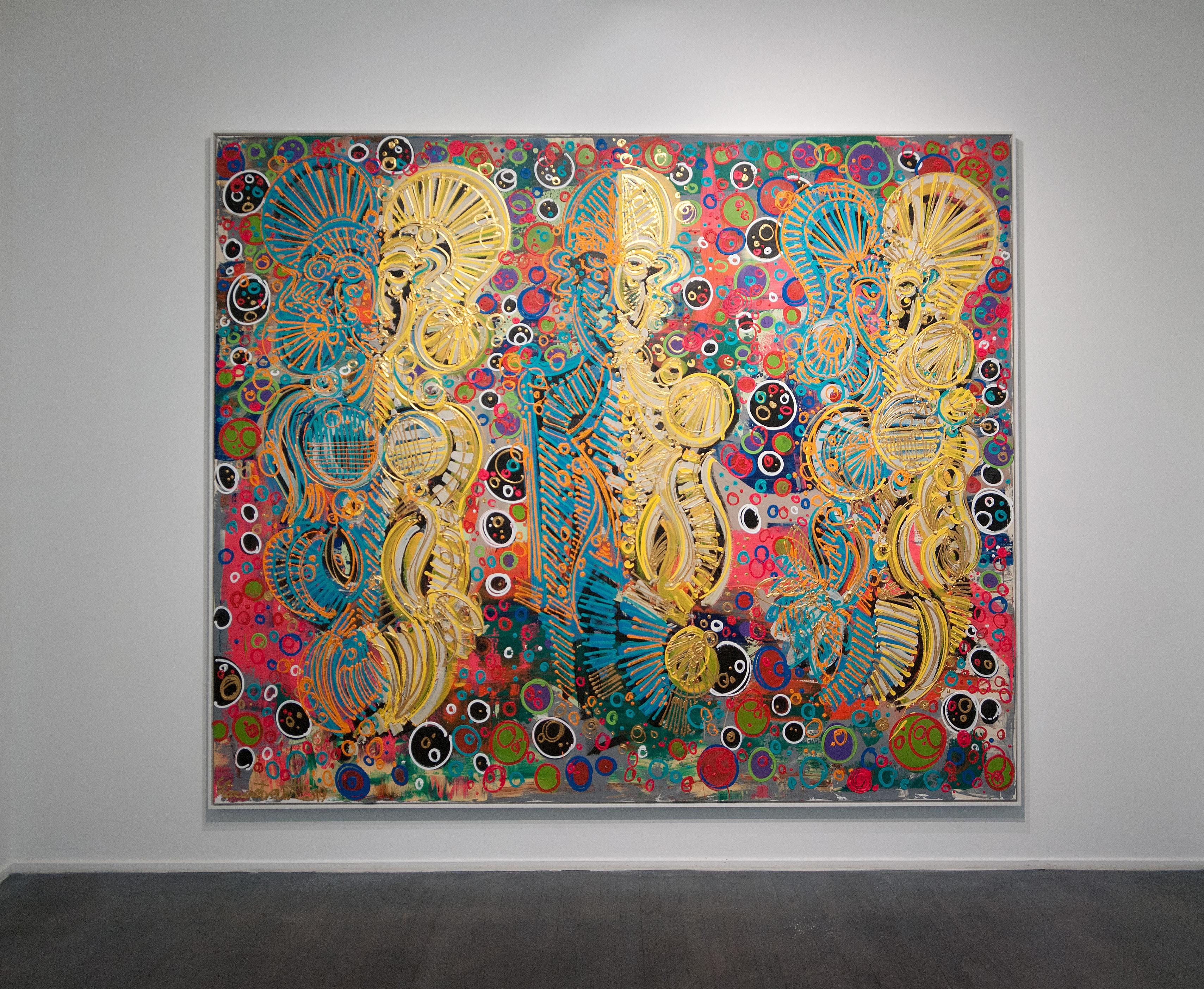
Don’t Lose Me
2019
Acrylic and mixed media on canvas
250 x 300 cm (113.63 x 136.36)
Faithful to the colorful, expressive style that built his reputation, Löwentraut’s works are large-format portraits that mark him as an heir to both Basquiat and Picasso yet, with a shocking force of vitality and freshness, are still uniquely Löwentraut. His bold use of color, line, and texture combine to create paintings that viscerally engage the viewer.
Like Basquiat, his works are both abstract and representational, blending form and symbol as the figures emerge from the heavy layers of paint to become almost three-dimensional. Löwentraut creates images imbued with both primal and sacred qualities, the weightiness of the paint and the central focus of the compositions elevating them to the status of icons. The figures stare out at the viewer through a maze of crossing colors in scenes so full of motion that the stretches of stillness, rendered through the simplified, distinct lines of an eye, an ear, or a crown, take on an evocative visual significance.
Löwentraut has exhibited his works in galleries and museums across the globe, including Galerie Loeffel (Basel), Bruno Gallery (Singapore), Galerie Michael Poliza (Hamburg), The Muse (London), Avant Garde LES (New York), Geuer & Geuer (Dusseldorf), and the Osthaus Museum (Hagen).
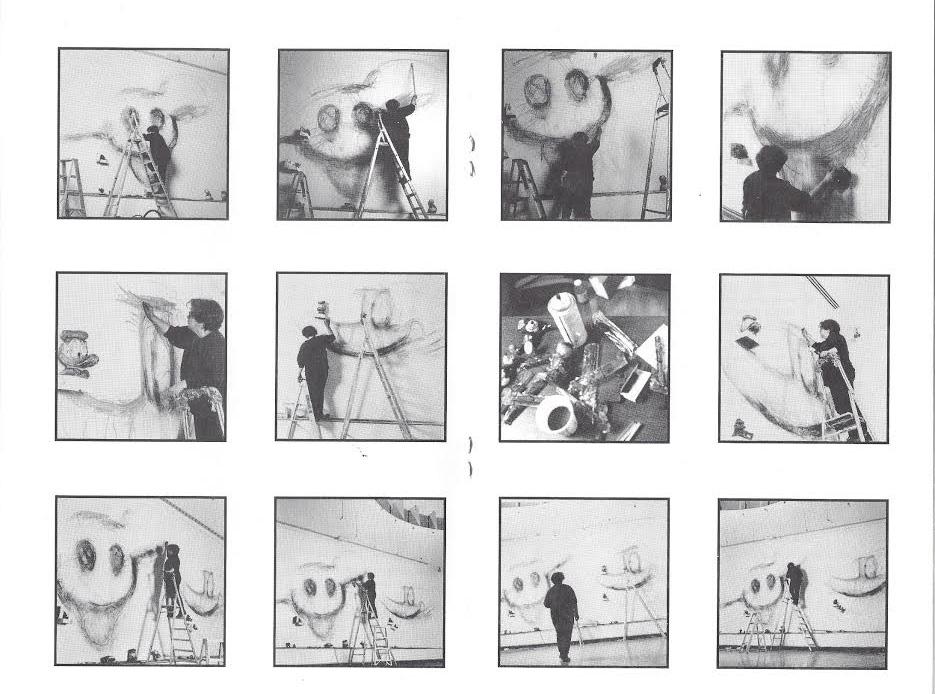
Born in 1941, Joyce Pensato is a contemporary American artist based in Brooklyn. She is best known for her charcoal drawings and wall paintings of cartoon characters like Mickey Mouse, Donald Duck and Homer Simpson. Starting from drawings of the characters‘ basic forms, Pensato grinds, slashes, and sands her surfaces to create altered, mutilated versions given names such as Abominable Snow Mickey or The Donald.
She has exhibited widely and her work is included in the collections of the Museum of Modern Art, New York; the San Francisco Museum of Modern Art; The Dallas Museum of Art; the Hammer Museum, Los Angeles; and the FRAC des Pays de la Loire, France, among others.
Donald as a Crossdresser is the artist‘s large-scale charcoal drawing in the mode Pensato is famous for, turning the anodyne cartoon into something eerie and emotionally resonant. The friendly character from our childhood has here turned into an imposing and disturbing figure.
Next Page JOYCE PENSATO
Charcoal and pastel on paper
304.8 x 426.7 cm (120 x 168 in.)
“As I get older and shorter, I‘m thinking bigger.“
Joyce Pensato - The New York Times
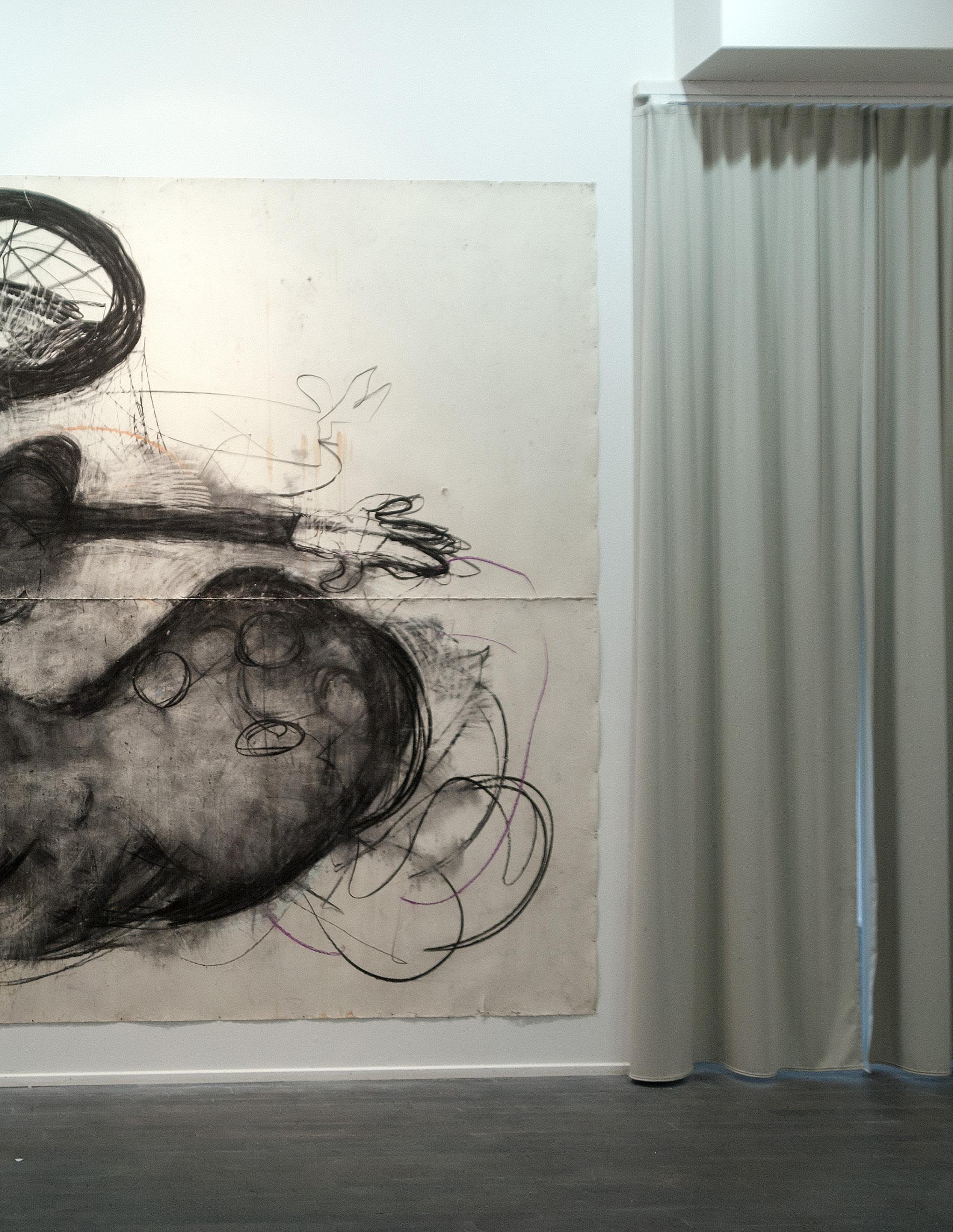
Donald as a Crossdresser
Charcoal and pastel on paper
304.8 x 426.7 cm (120 x 168 in)
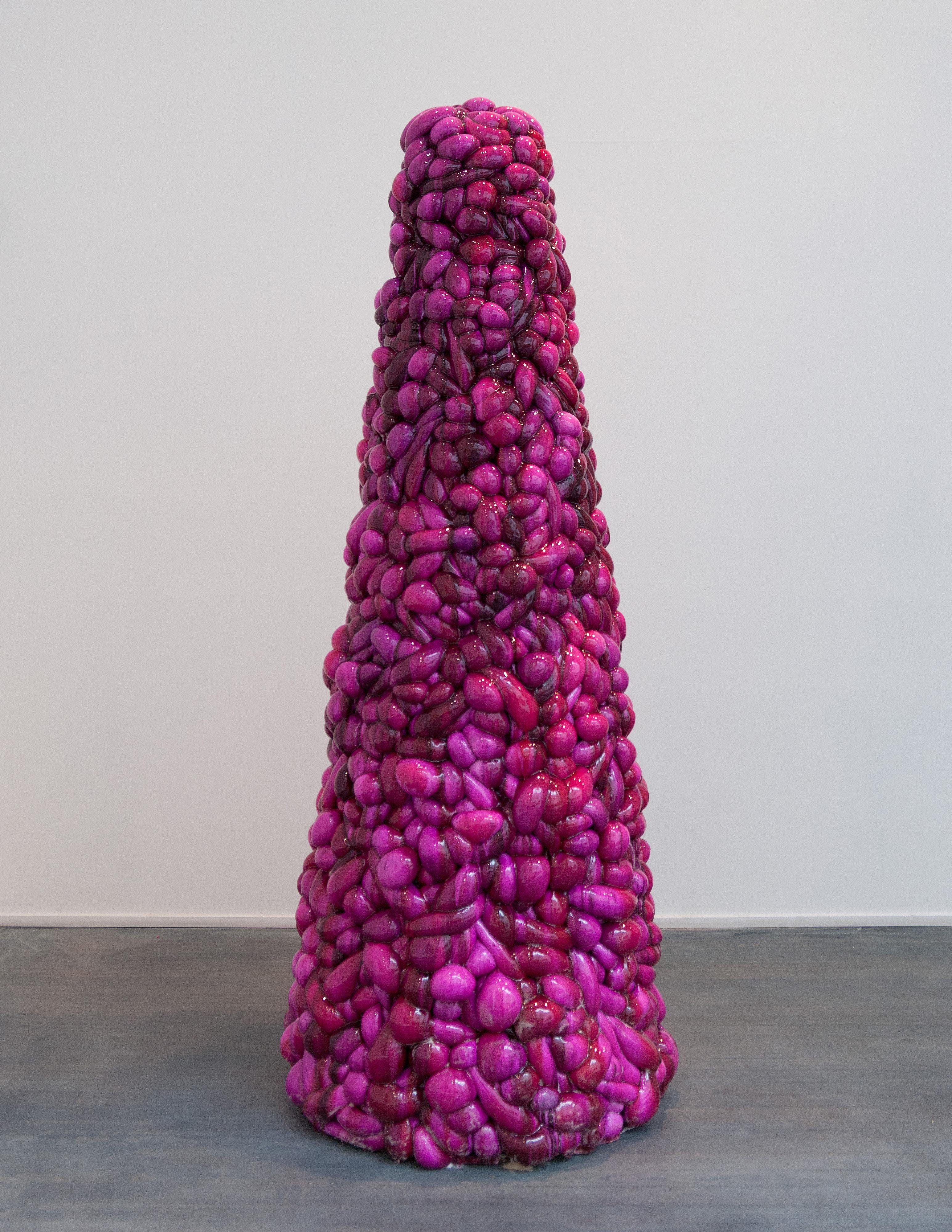
Resin, raw pigments and wood
200 x 80 x 80 cm, 400 kg
(90.90 x 36.36 x 36.36 in.
882 lbs)
As an independent artist, Miranda Pissarides’ artistic practice mainly concentrates on the exploration of different forms of art by applying all-encompassing mediums. Her artworks span painting, sculpture, and drawing, as well as taxidermy and mosaic. With the intent of creating a comprehensive and well-structured experience for viewers, Pissarides employs raw pigments as a basis and transforms to a new unique color palette.
After graduating from Slade School of Fine Art, London and with a BA (hons) in Fine Art and Theory in 2012, she had her works extensively exhibited across the world, including solo exhibitions in London (2017), Italy (2017), Cyprus (2016), Kyoto (2015) and group exhibitions in Brazil (2015), New York (2015) etc. Pissarides has been awarded ArtSlant Showcase Winner Award in 2015 and Saatchi Young Artist Prize in 2018.
Winner of the Saatchi Young Artist Prize in 2018, Miranda Pissarides creates works fixated on dualities and the spaces in between them. She works in both the fields of painting and sculpture, with each practice informing the other--her paintings have the depth and weight of sculpture, while her sculptures have the ethereal and fluid qualities of painting. In the large-scale sculpture, entitled Violet, Pissarides used raw pigments to convey the conflicting feelings of desire and repulsion. The use of resin blended into this monumental stalagmite creates an effect of liminality, a substance that seems to exist between the states of solid and liquid.
Next Pages
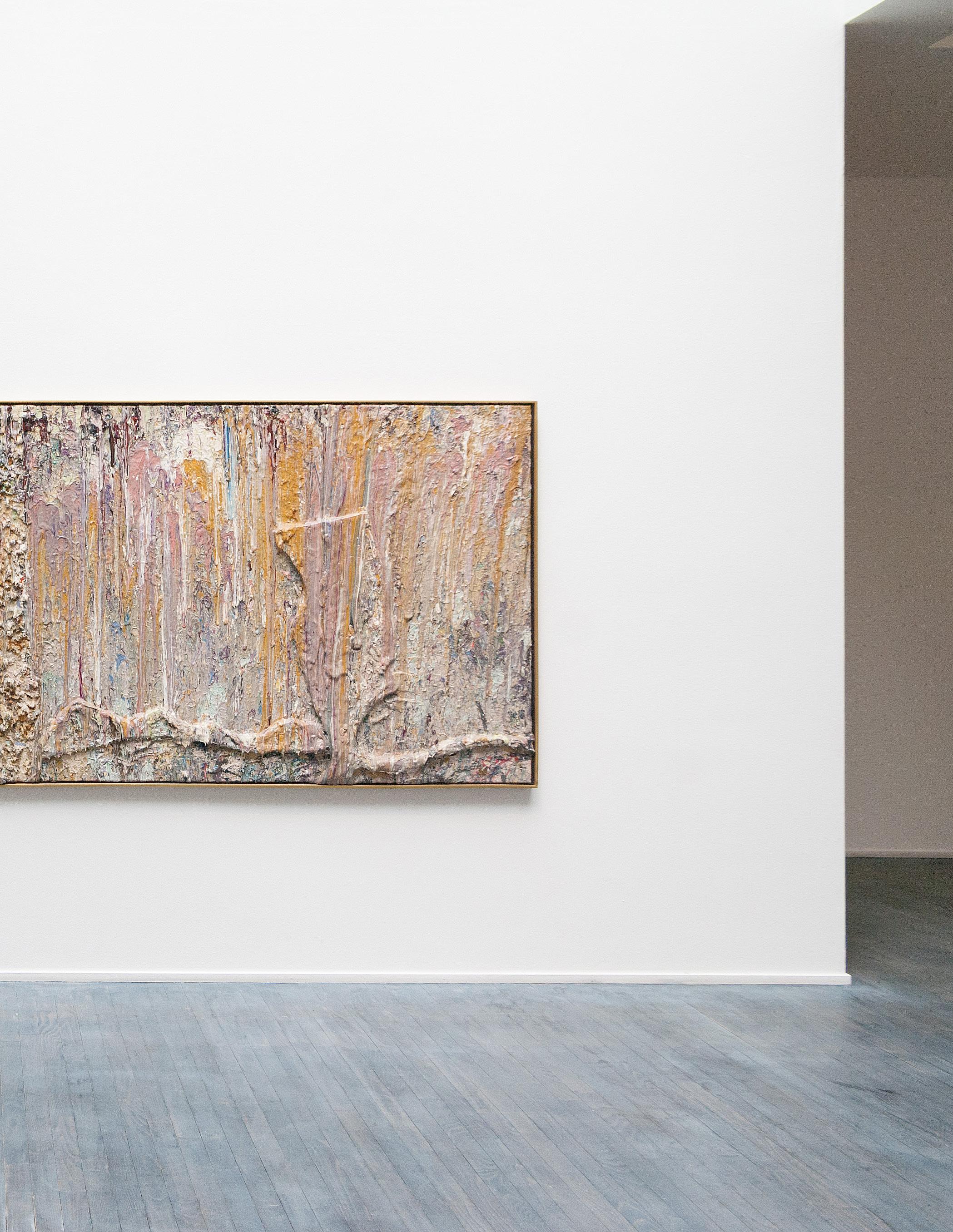
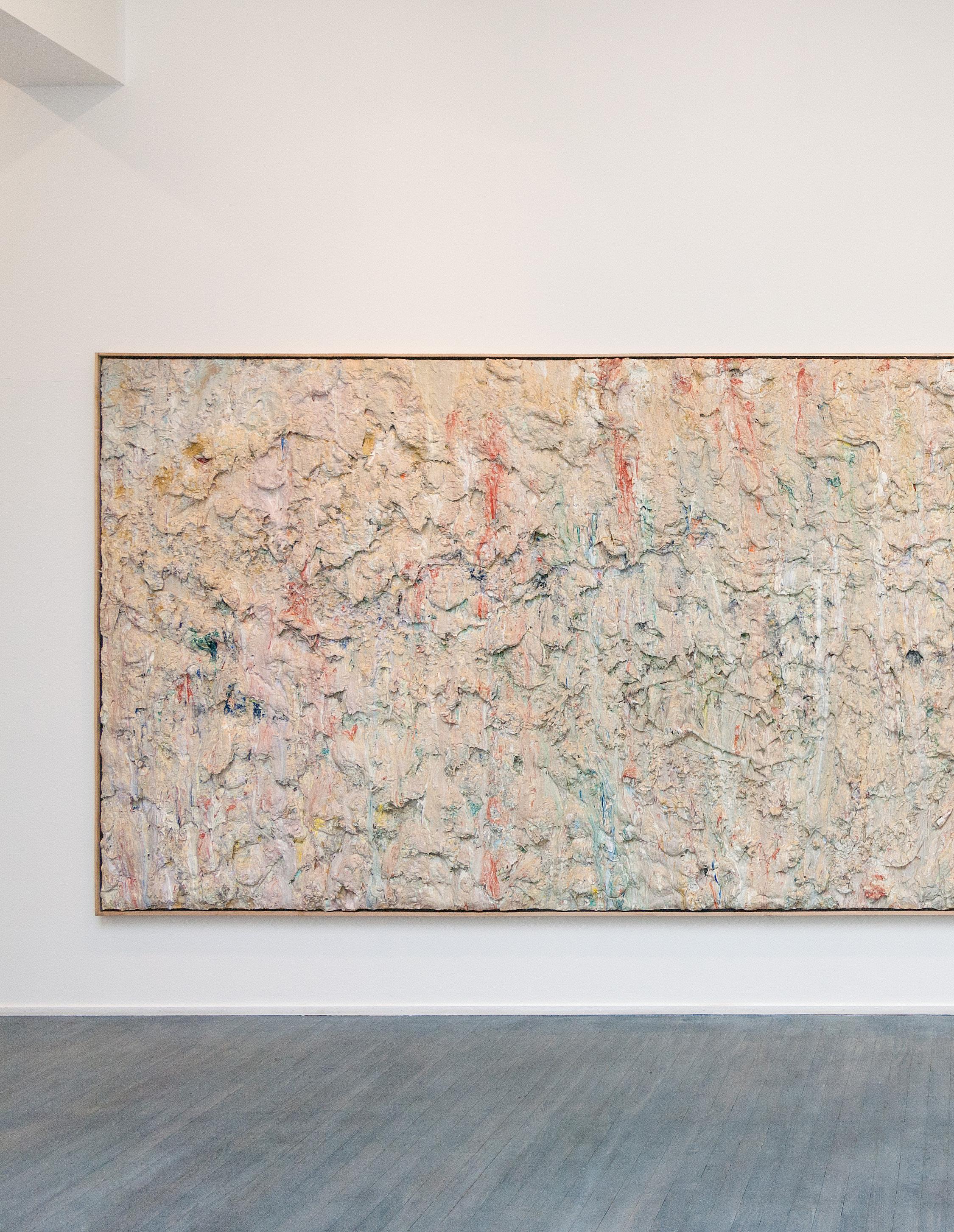
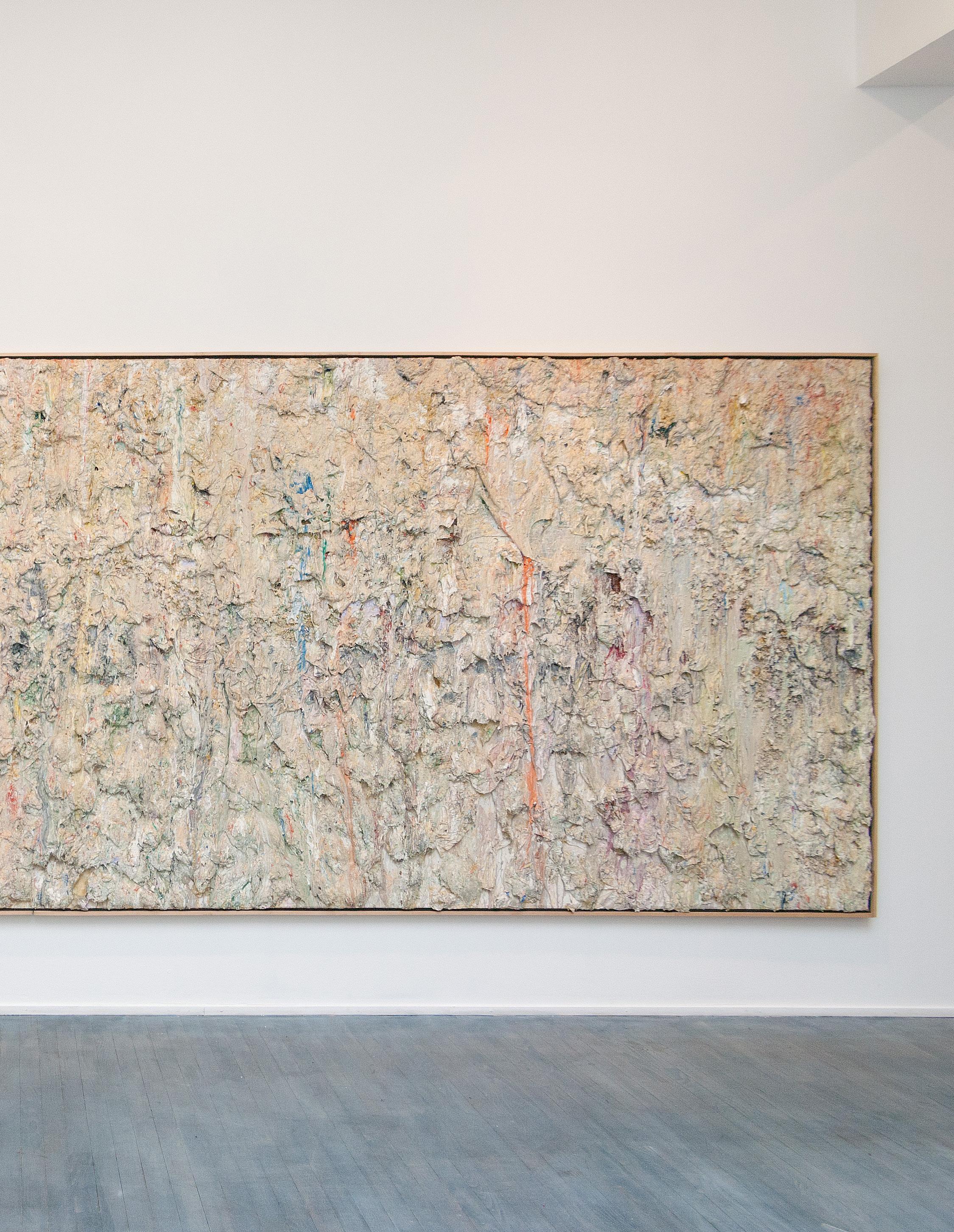
Leaving Chords, 1982
Acrylic on Canvas
145 x 416 cm (57 x 164.25 in.)
PROVENANCE
The Artist
Private Collection, Switzerland
Shores of Orion, 1986
Acrylic and mixed media on canvas
215.9 x 670.6 cm (85 x 264 in.)
PROVENANCE
The Artist
Salander O’Reilly Galleries, Inc.
Private Collection, Switzerland
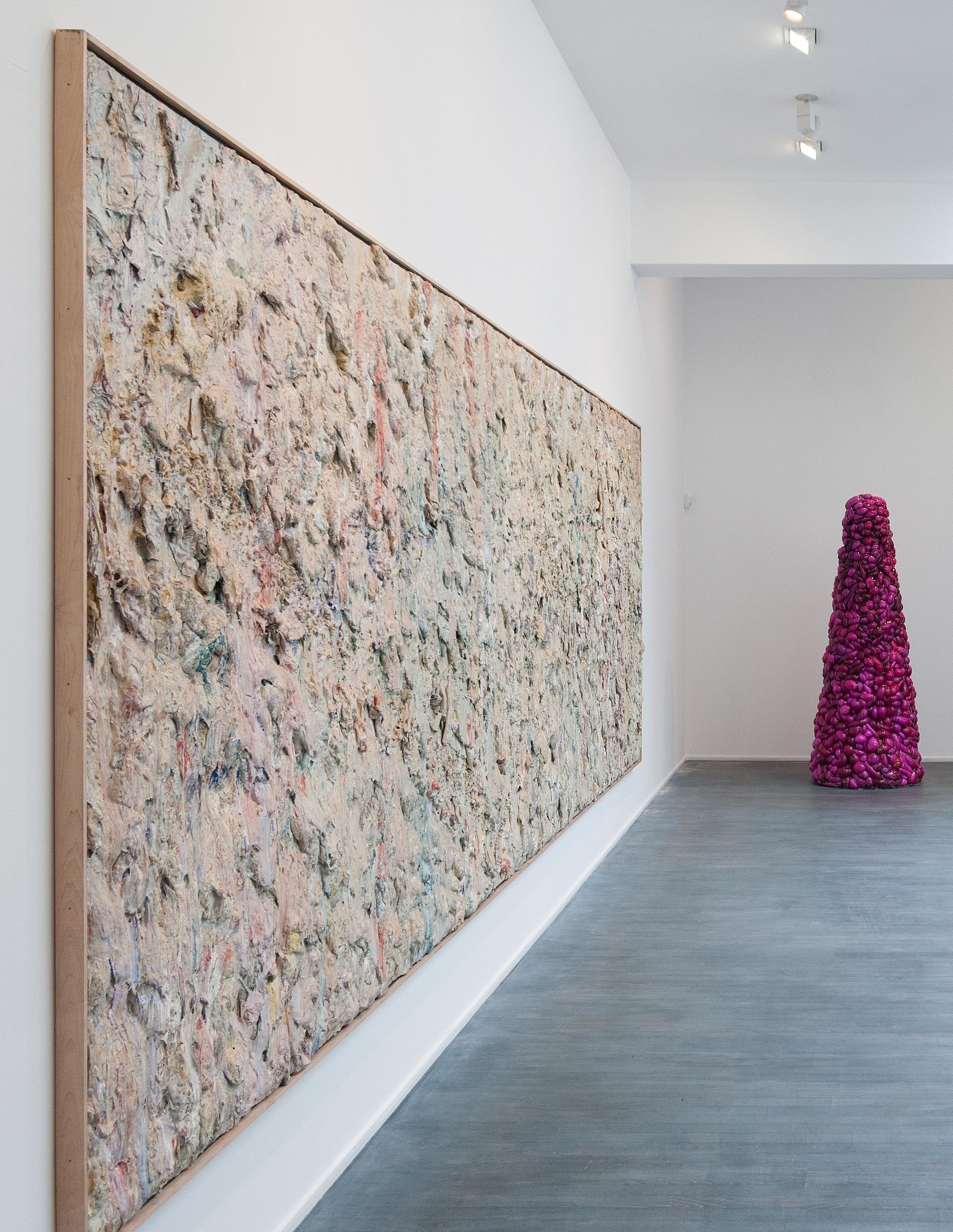
Larry Poons is an American artist famed for his Lyrical Abstraction and Abstract Expressionism. Born in Tokyo and raised in the United States, Poons originally attended the New England Consevatory of Music for becoming a professional musician. Though he withdrew from music study and quickly shifted his career path to painting, the rhythm and musical elements has been greatly reflected on Poons’ early works, Op Art paintings with monochrome canvases, circles and dots. By 1970s, Poons was throwing paint from cans and buckets. The paint ran down the surface of the canvas and colors intertwined in layers, its energetic and improvisational patterns notably diversified his expressive use of colors and introduced an even greater presence of the artist’s work.
Poons’ artworks are included in the collections of many prestigious institutions, including the Metropolitan Museum of Art, the Los Angeles County Museum of Art, the Chicago Art Institute, the Philadelphia Museum of Art, and the Tate Gallery in London.
In 2018, Larry Poons was featured in “The Price of Everything”, a documentary about contemporary art world produced by HBO.
The monumental paintings, Shores of Orion and Leaving Chords, draw in the viewer from afar with their impressive scale and hypnotically muted color palettes. Approaching Poons‘ paintings for a closer look, however, one can see the way in which each of his vivid brushstrokes works together with the rest to create an almost musical visual experience, typical of Poons‘ work.
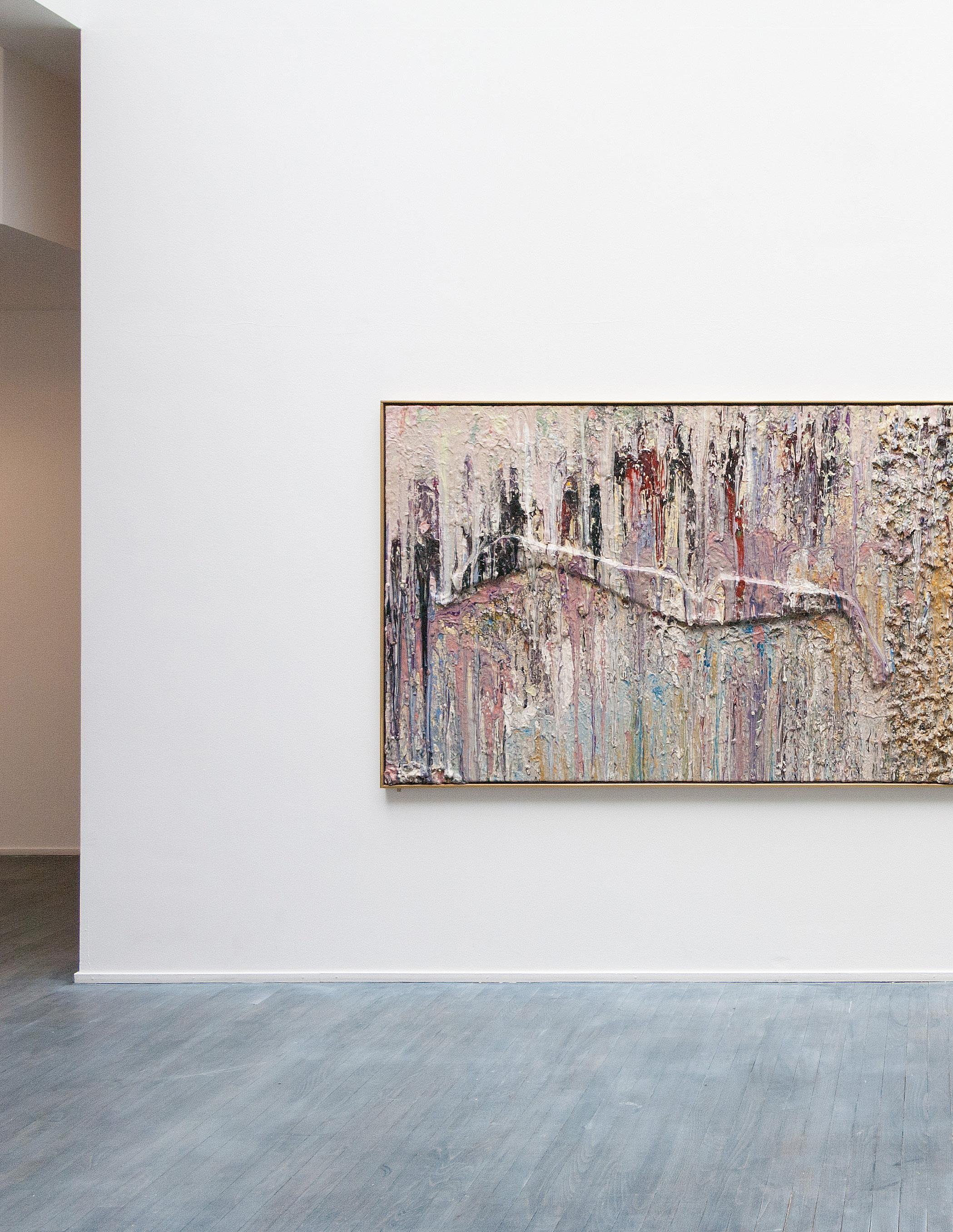
“There are people who don‘t respond to color. That‘s what painting is. It‘s color.”
— Larry Poons
PRUITT & EARLY
It Ain‘t No Fairy Tale, 1992
Mixed Media
269.2 x 299.7 cm (61 x 65 x 65 in.)
PROVENANCE
Leo Castelli, New York
Private Collection, New York since 1992
ROB PRUITT and JACK EARLY
Pruitt and Early collaborated as a couple and creative partners. It Ain‘t No Fairy Tale marks the pinnacle of the Pruitt + Early collaboration. It was first exhibited in the controversial „Red, Black, Green, Red, White and Blue“ show at the Leo Castelli Gallery in 1992. The exhibition was the duo‘s „take on black pop culture in America, a historical survey, images that had risen to the top of American culture that created a rich, popular identity of what the black experience had been through adversity.“ However, some people voiced concern at an exhibition about black America created by Rob Pruitt and Jack Early, two young white men. In this era of politically correct art, the show was “universally condemned as racist”, virtually ending both artists’ relationship. This monumental work was shown seventeen years later in 2009 at Tate Modern, re-enacting the show in an entire room as part of its major exhibition, Pop Life: Art in a Material World, which explored the links between the New York art scene and the Young British Artists.
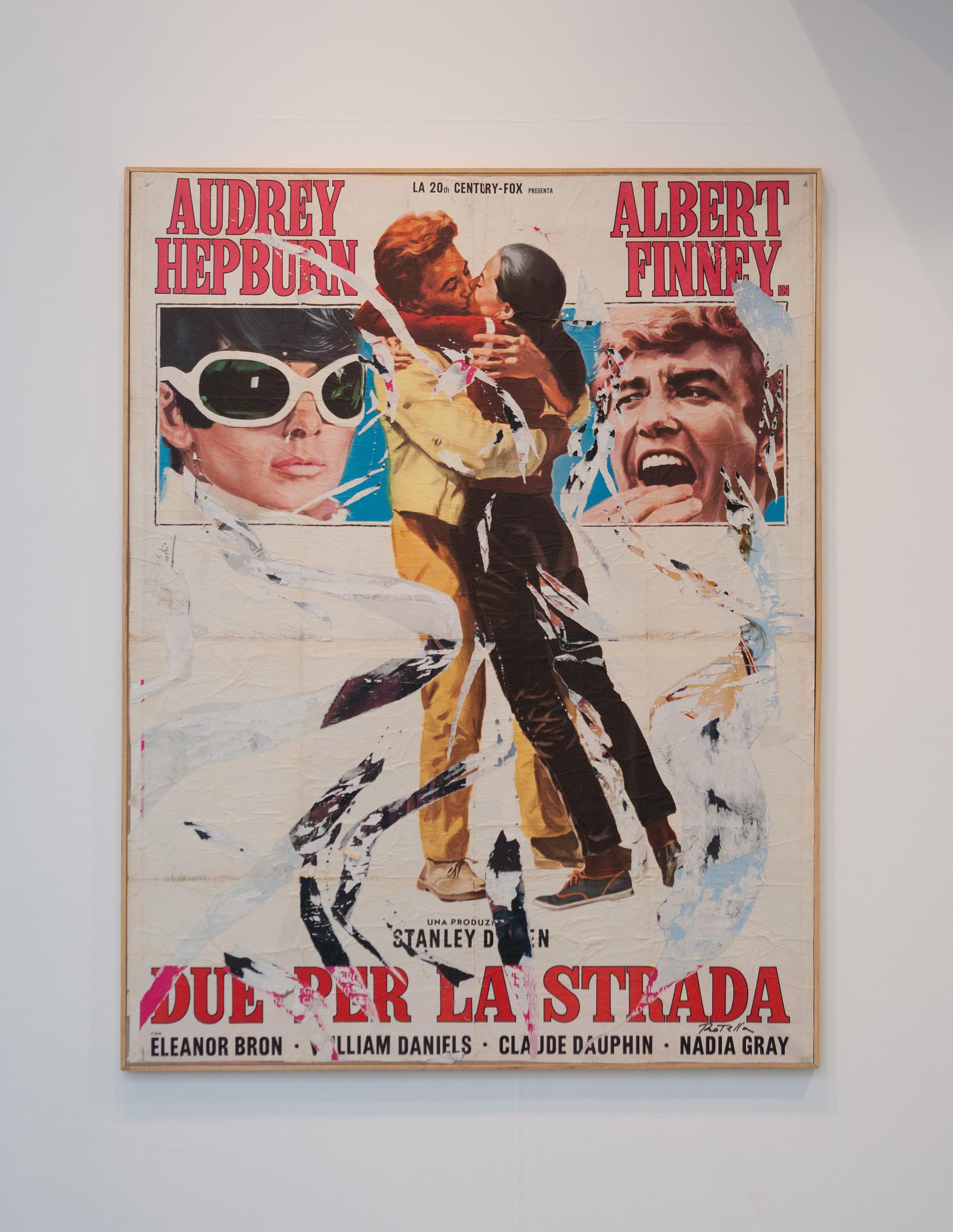
MIMMO ROTELLA
Due per la strada 2003
Décollage on linen
181 x 139,5 cm (71 x 54 in)
Mimmo Rotella (1918–2006), often referred to as a Nouveau Réaliste, was known and revered for his pioneering work focusing on social and political commentary. Mimmo Rotella has rightly been compared to Andy Warhol for, among other things, his admiration of celebrity and popular culture and for his appropriation of commercial imagery and typography. But Rotella’s work represents a personalized blend of influences, including the European avant-garde of Arman, Cesar, and Yves Klein, the American Pop movement, and his own creative ideas, including the inspiration to dissect and re-purpose the glamorous imagery of advertising and movie posters as the basis for the technical structure of his constructions, described as décollages.
The National Gallery of Modern and Contemporary Art, Rome celebrated Rotella‘s 100 year anniversary this winter with an extensive exhibition, “Mimmo Rotella Manifesto”, curated by Germano Celano and Antonella Soldaini.
Mimmo Rotella’s early abstractions moved quickly to pop-art and later evolved into the décollage and poster works he became known for.
The work exhibited, Due per la Strada, done in 2003 is a décollage on canvas executed from the Italian poster of the movie “Two for the Road”.
“My work is about seeing. Ultimately, it’s about a way of looking at the world. I’m just painting what I’m seeing; I’m just trying to connect the dots of my own vision.” -Julian Schnabel
It was with his first solo show, at the Mary Boone Gallery in 1979, that Schnabel had his breakthrough; all his works were sold in advance. He participated at the Venice Biennale in 1980 with Anselm Kiefer and George Baselitz. By 1981, when he exhibited his work in a show jointly organized by Boone and Leo Castelli, he had become firmly established. Schnabel‘s style is characterized by very large scale paintings often combining abstract and figurative elements.
Julian Schnabel, the art-star who took the art world by storm in the 1980s continues to work prolifically and successfully crossing the boundaries of art and film.
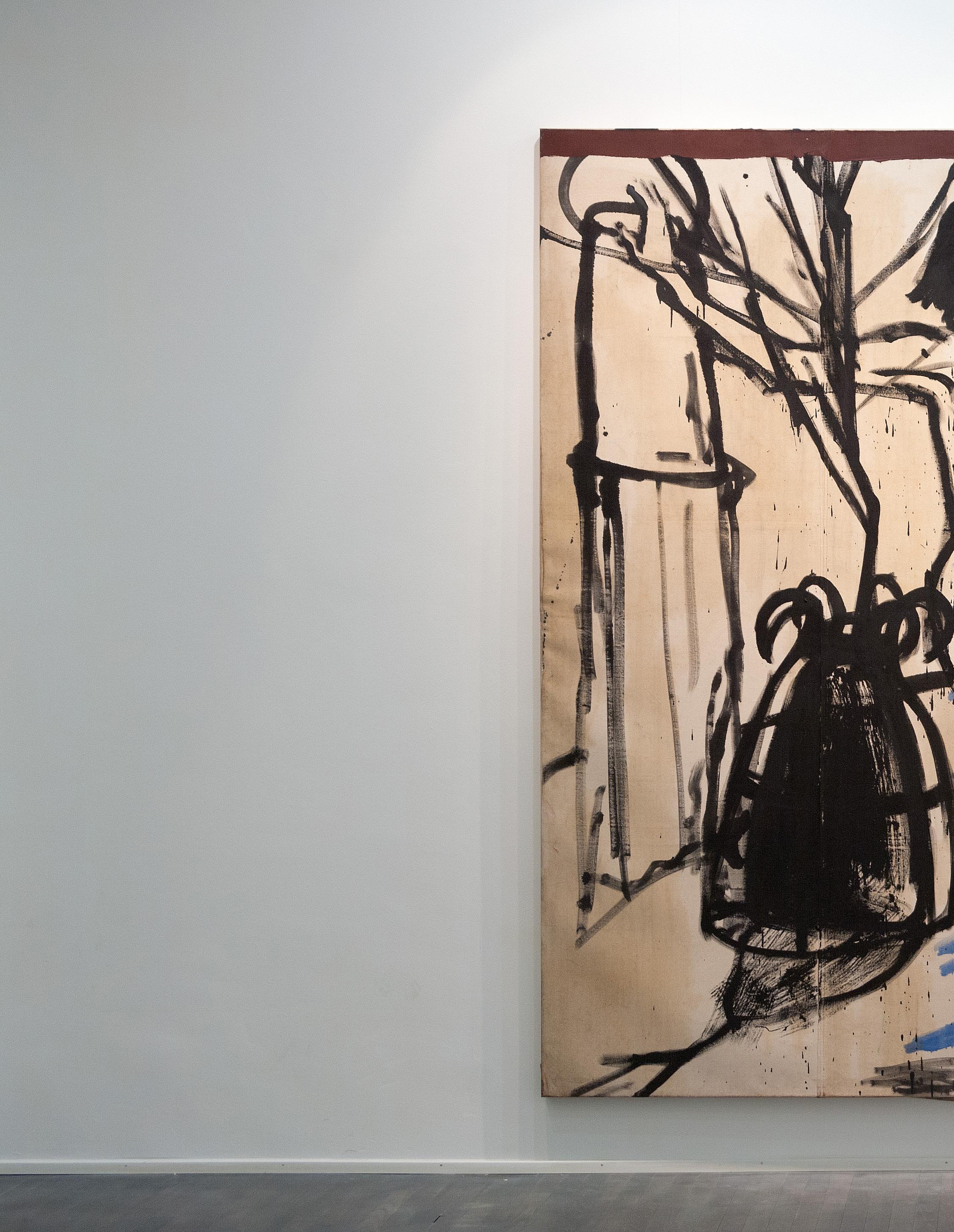
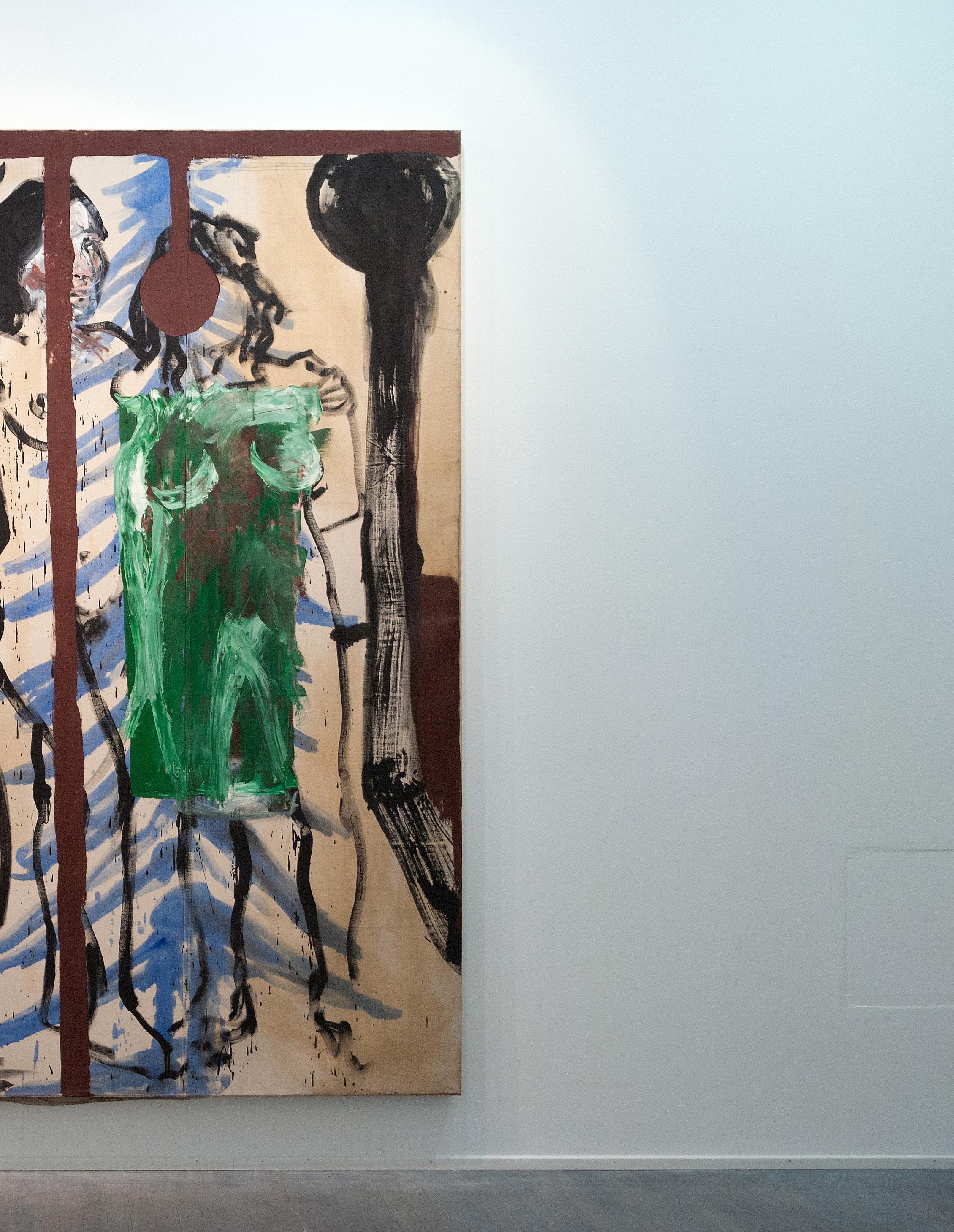
SCHNABEL Untitled 1982
Oil and mixed media on linen
300 x 275 cm (136.36 x 125 in.)
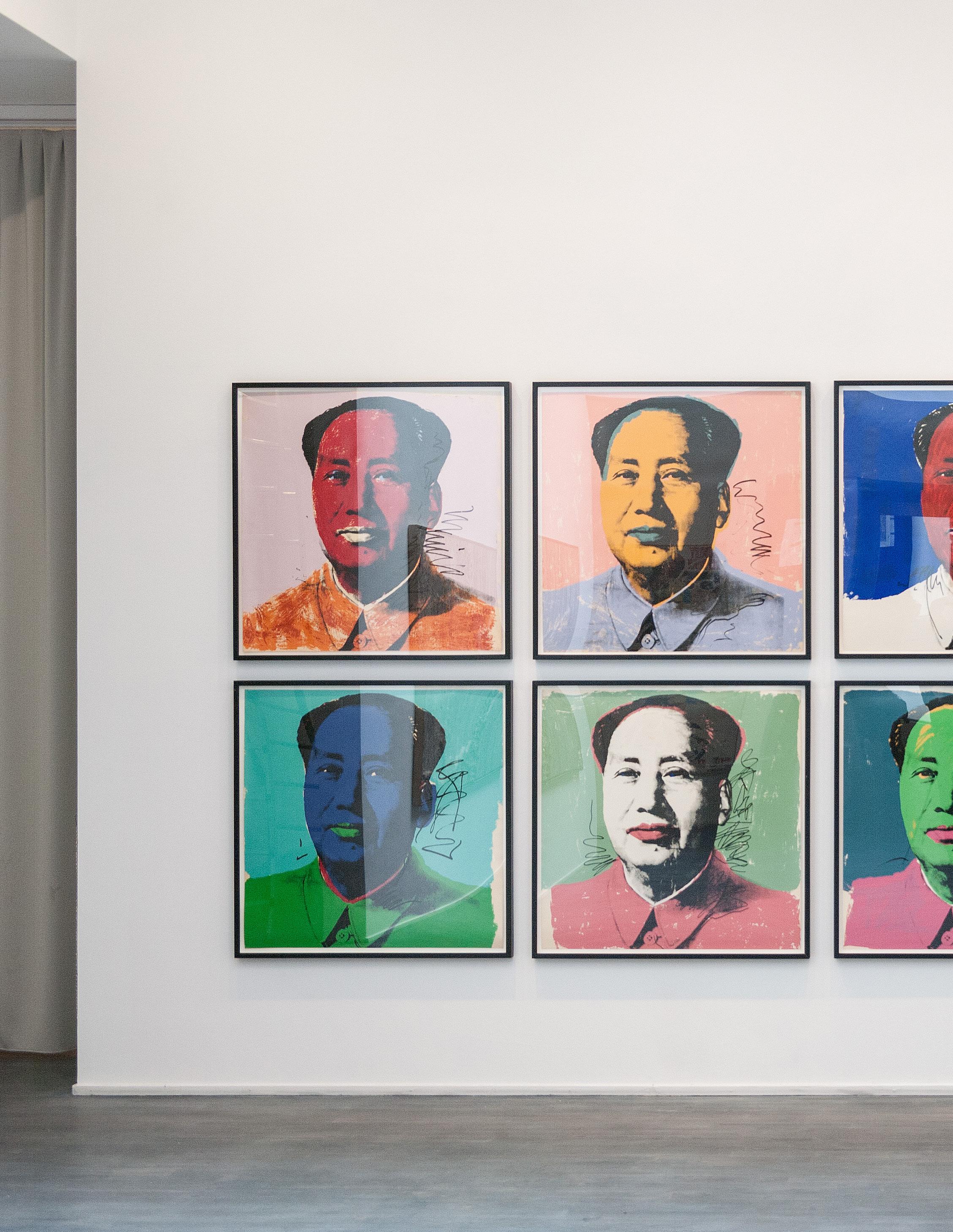
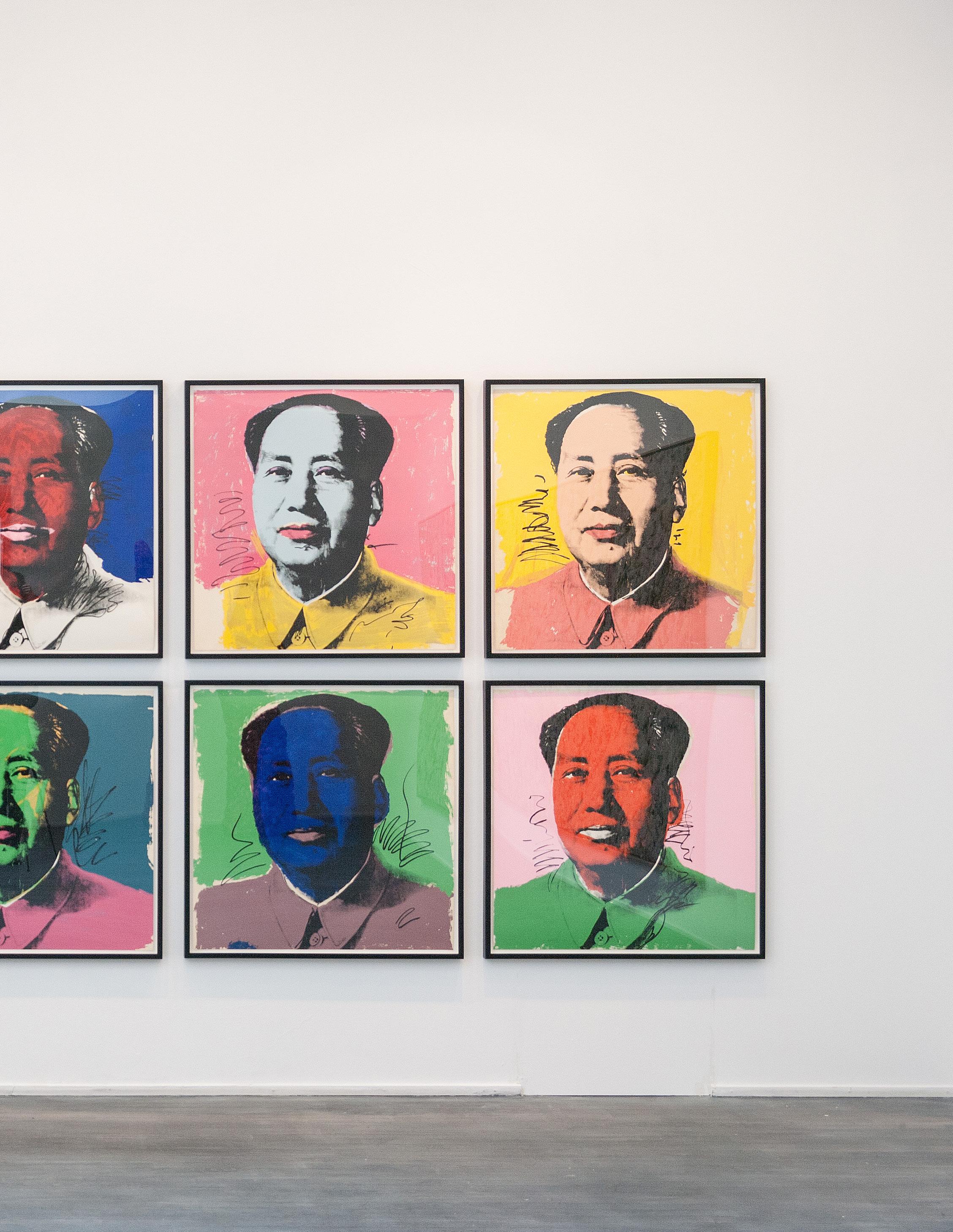
Set of 10 Screen Prints on Becket High
Paper 91.5 x 91.5 cm (36 x 36 in.) in each Marked on verso "copyright © Andy
1972. Printed at Syria Studio Inc."
Mao (set of 10) (F&S II. 91) 1972
Screenprints on Beckett High White paper
91.5 x 91.5 cm (36 x 36 in) each
Marked on verso “copyright © Andy Warhol 1972. Printed at Syria Studio Inc”
Each stamped on verso by the authentication board and marked with a registration number
Each has a separate certificate from Andy Warhol Authentication Board
Estate of Andy Warhol
Tom Cugliani Gallery, New York
Acquired from the above by the present owner
Founder and major figure of Pop Art, Andy Warhol (1928-1987) was one of the most prolific and popular artists of the Twentieth Century, using both avant-garde and highly commercial icons.
The Mao portraits are part of the series that he made on the subject of fame. Andy Warhol began in the early 1960s with his many portraits of Marilyn Monroe whose sad death in 1962 led him to contemplation of what it meant to be famous and what it could possibly be worth. Warhol remembered that he had read in Life magazine that Mao Zedong was the most famous person in the world at that time.
These screenprints illustrate Warhol’s fascination with the clash of imagery between Communist propaganda and Western fashion kitsch. The creation of a glammed up iconic image of Mao outwardly translates this powerful, mysterious and somewhat intimidating image of Communist propaganda into a glamorized 1970s ready-made pop icon, embodying absolute political and cultural power, reminiscent of Warhol’s celebrity portraiture.
Andy Warhol‘s striking Mao screenprint series was sparked by a claim he read in Life magazine that Mao Zedong was the most famous person in the world. The series combines two quintessentially Warhol themes: the magnetic pull of fame and the bizarre language of advertising. The creation of a glammed-up iconic image of Mao transforms a mysterious and intimidating image of Communist propaganda into a glamorous Western pop icon, embodying absolute political and cultural power. This large-scale series demonstrates the impact of repetition – so dear to Warhol – and creates a powerful impression due to its size.
ANDY WARHOL
“My idea of a good picture is one that’s in focus and of a famous person.”
-Andy Warhol
SIZE MATTERS will be on view at PLUTSCHOW GALLERY, Waldmannstrasse 6, Zurich
April 12th— July 13th, 2019
Monday to Friday 10:00AM - 6:00PM and Saturday 11:00AM - 5:00PM
For additional information please contact:
Europe: Roman Plutschow E. roman@plutschowgallery.com T.+41 43 268 57 43
United States: John Weisenberger E. jweisenberger@edelmanarts.com T.+1 212 472 7770