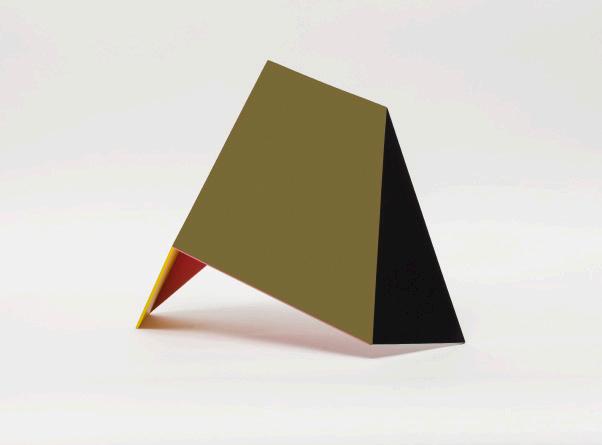
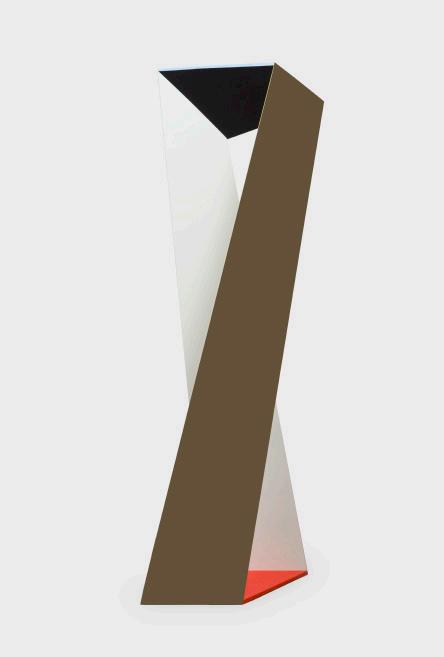
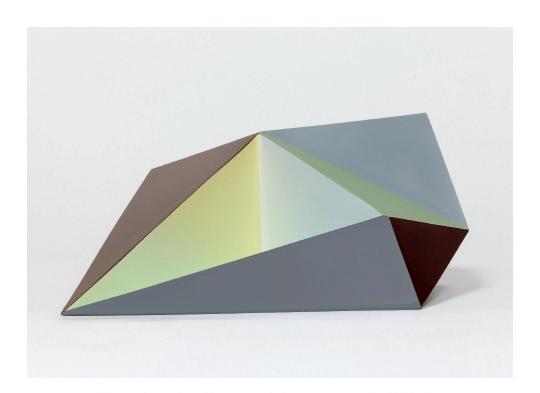
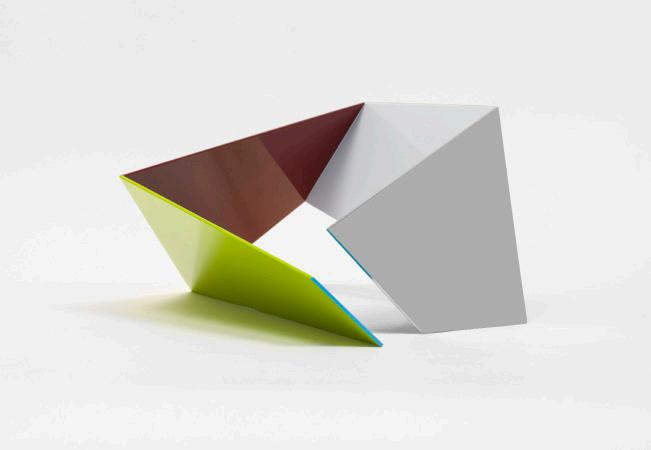
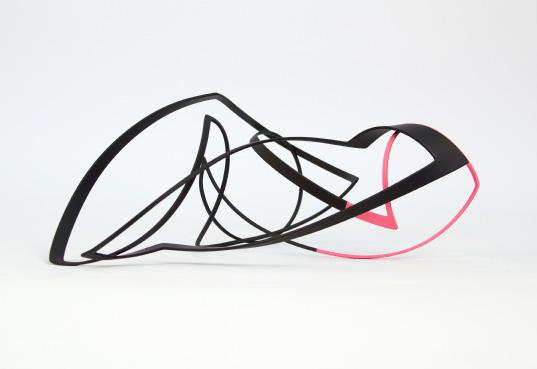
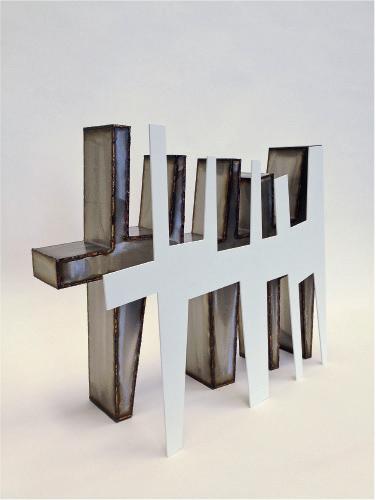
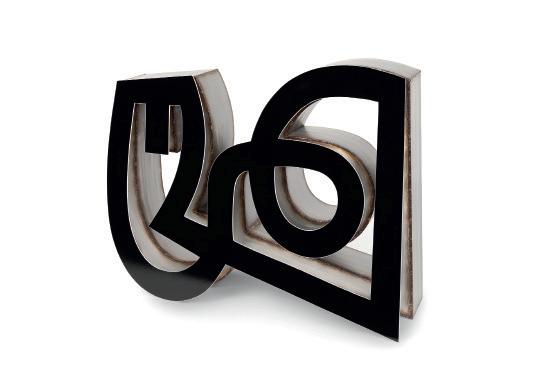
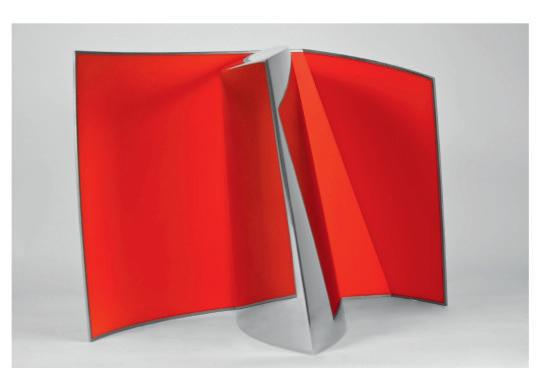
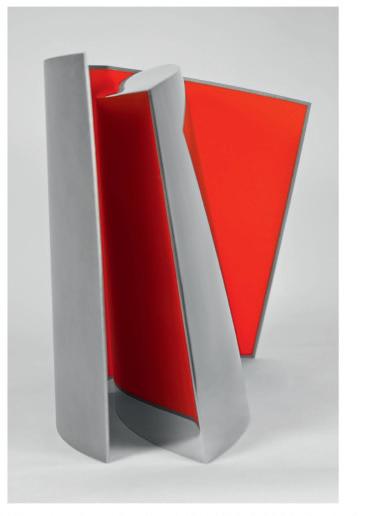
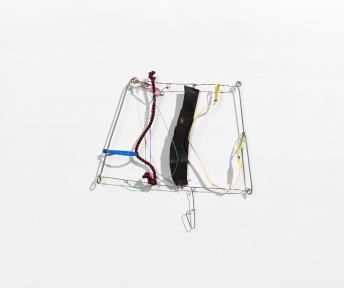
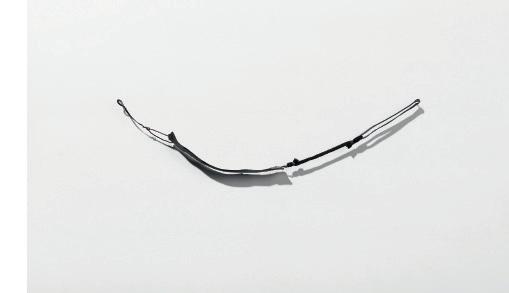
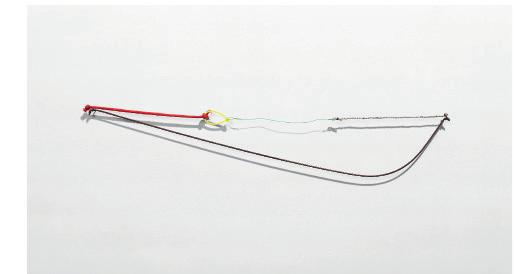
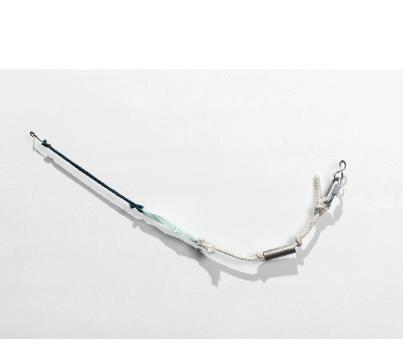
First published in Italy in 2021 by Skira editore S.p.A.
Palazzo Casati Stampa via Torino 61
20123 Milano Italy
www.skira.net
All rights reserved under international copyright conventions. No part of this book may be reproduced or utilized in any form or by any means, electronic or mechanical, including photocopying, recording, or any information storage and retrieval system, without permission in writing from the publisher.
Printed and bound in Italy. First edition
ISBN: 978-88-572-4258-3
Distributed in USA, Canada, Central & South America by ARTBOOK | D.A.P. 75 Broad Street Suite 630, New York, NY 10004, USA.
Distributed elsewhere in the world by Thames and Hudson Ltd., 181A High Holborn, London WC1V 7QX, United Kingdom.
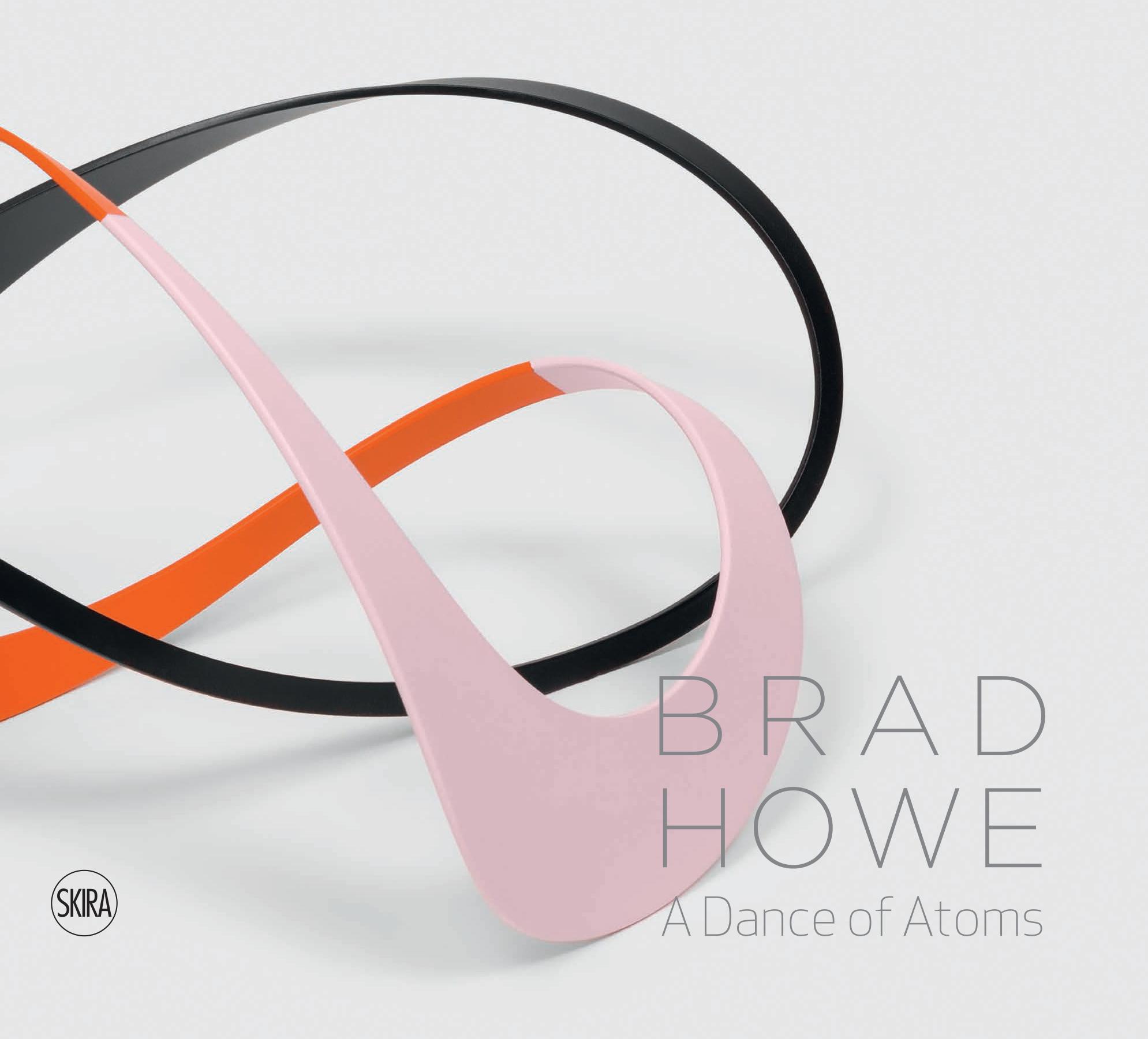
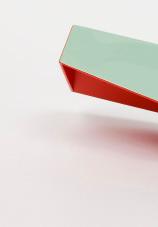
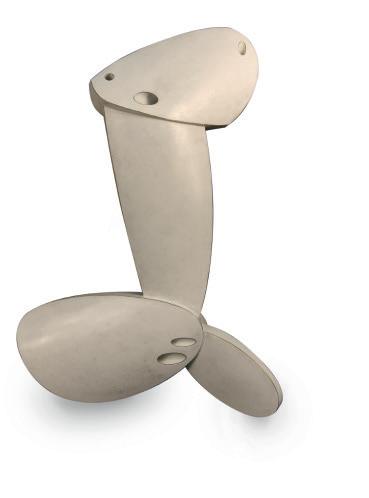
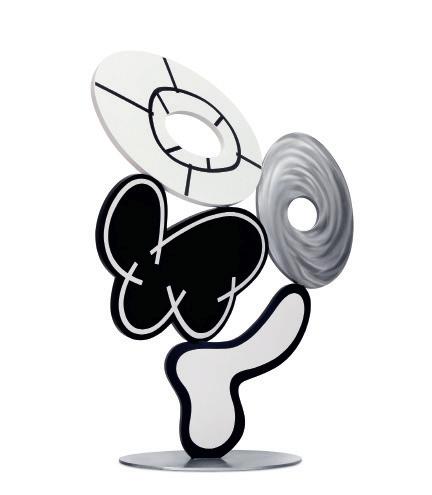
Cover image:
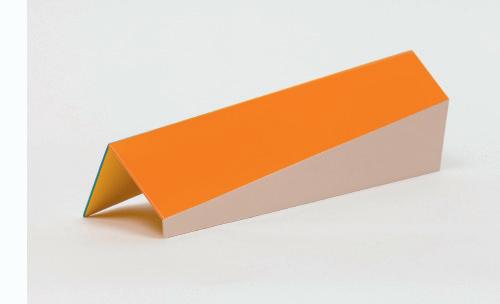
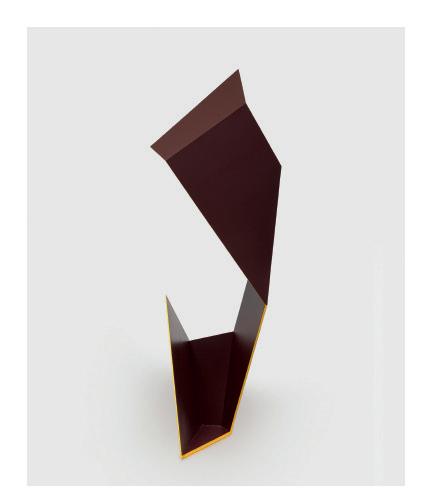
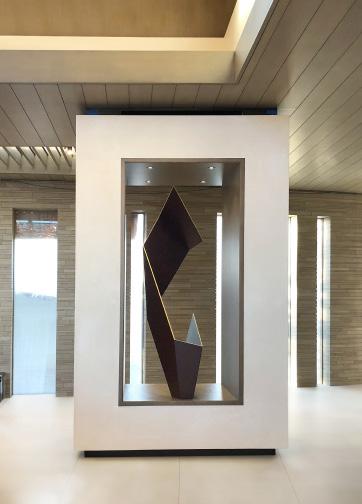
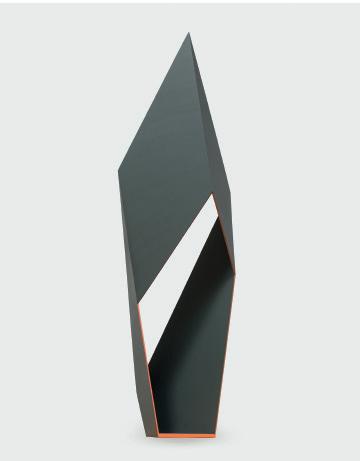
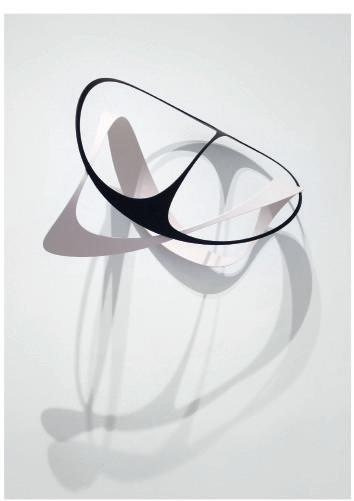
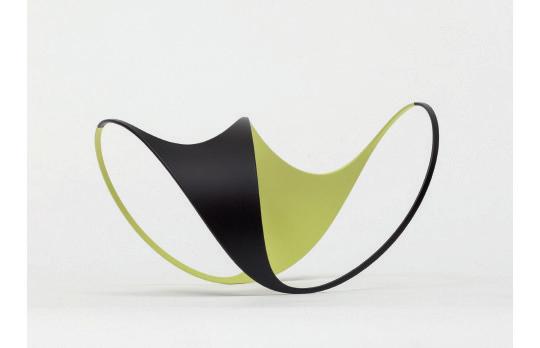
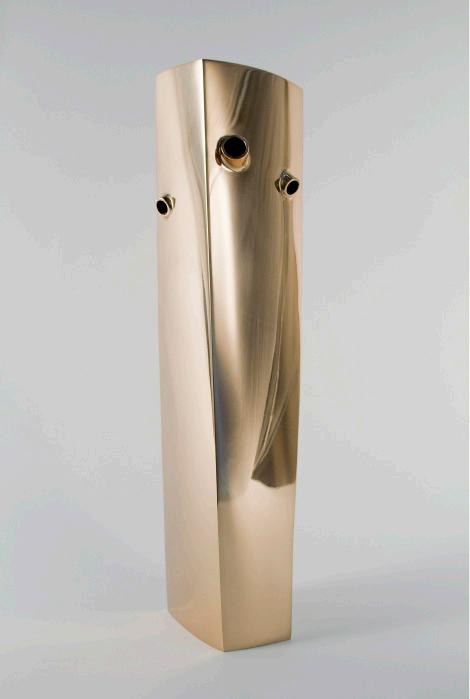
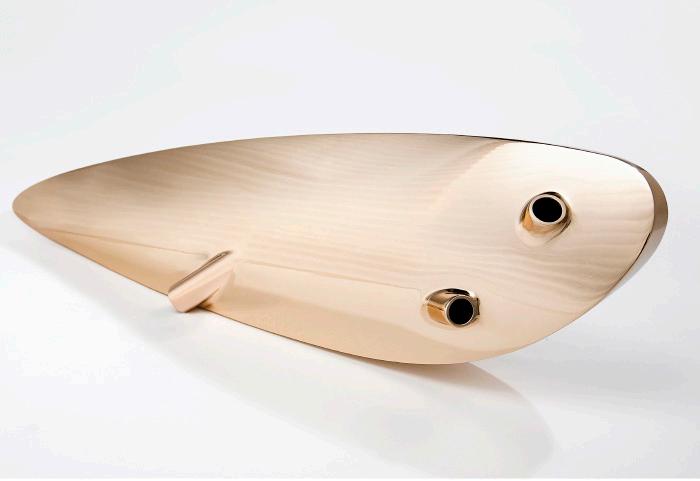
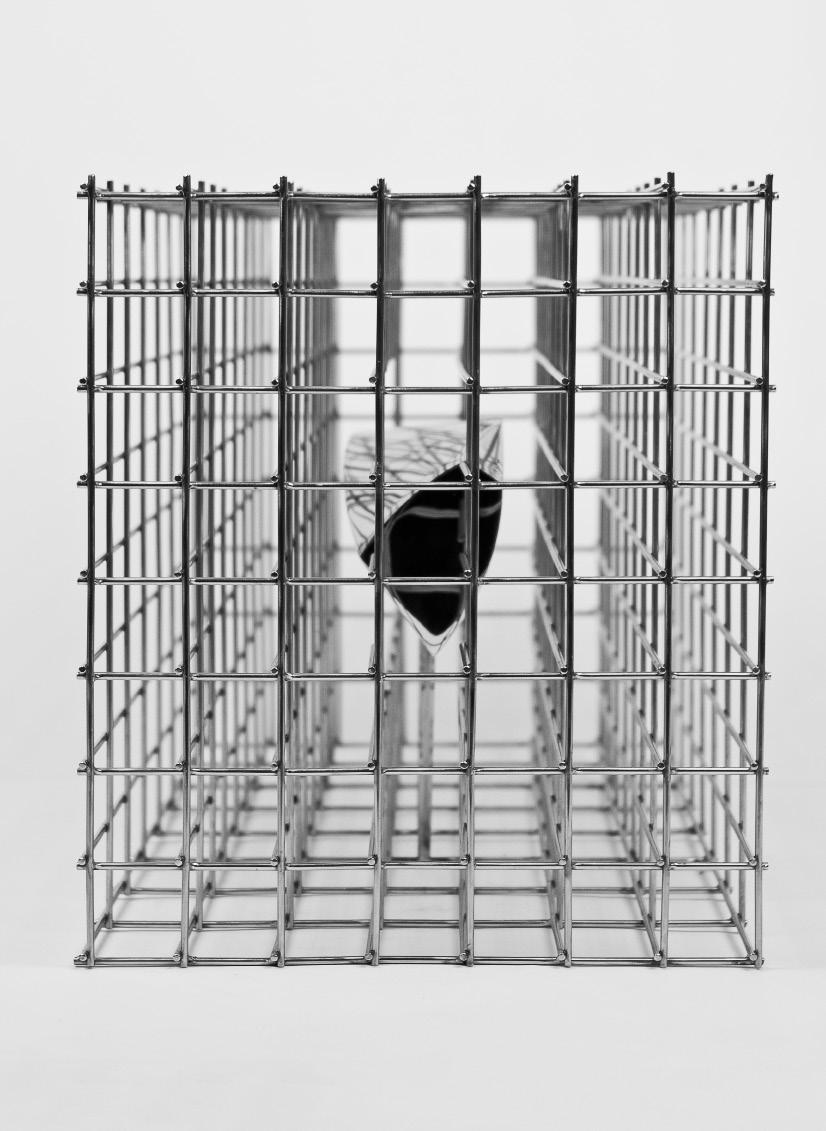
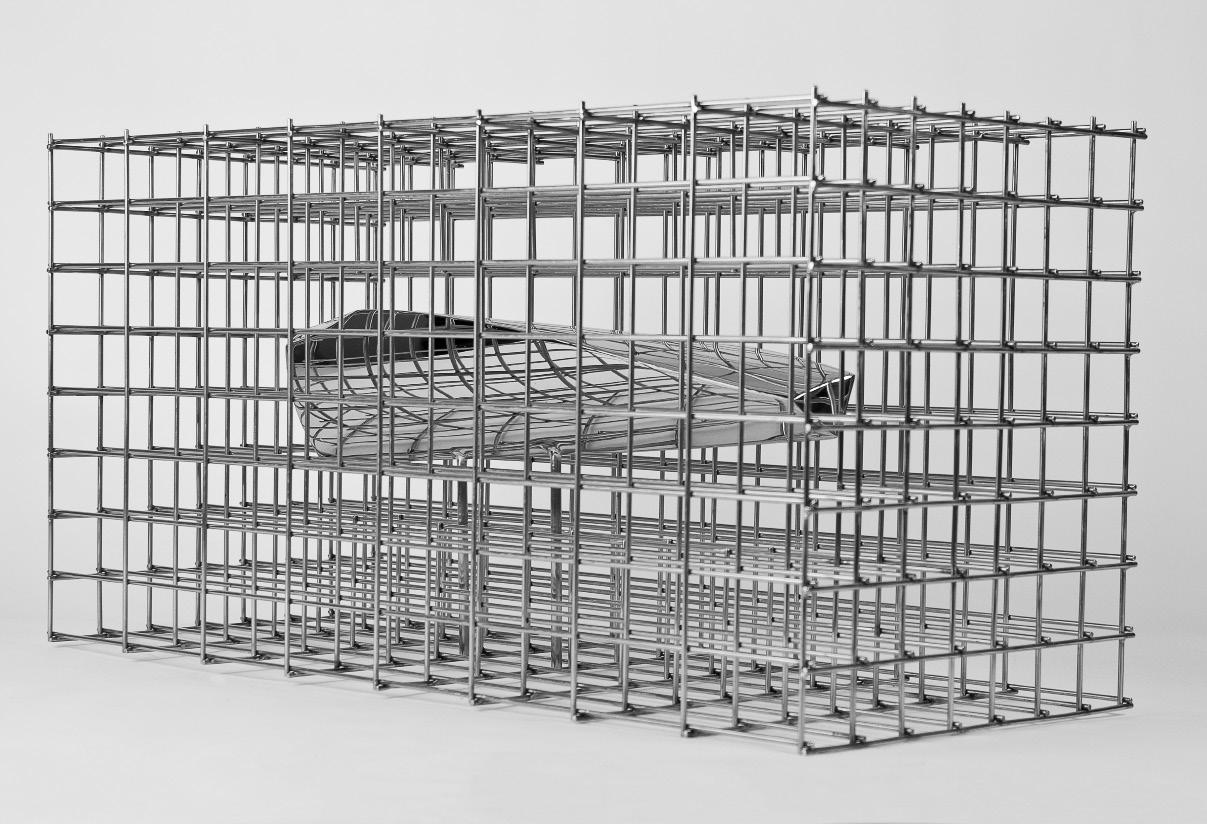
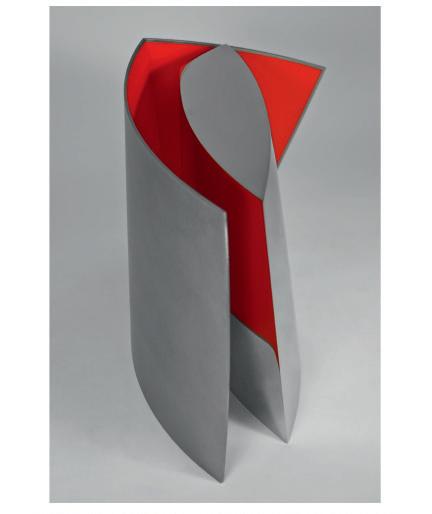
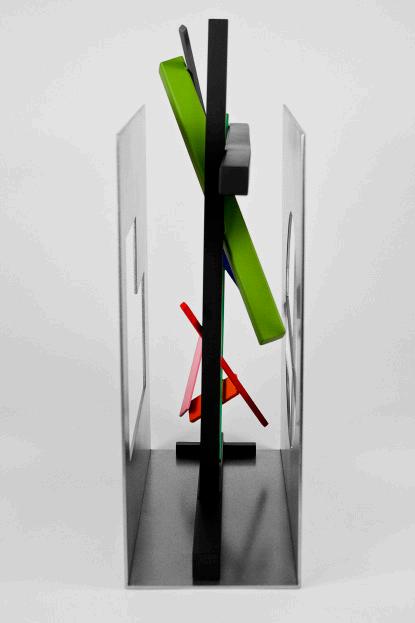
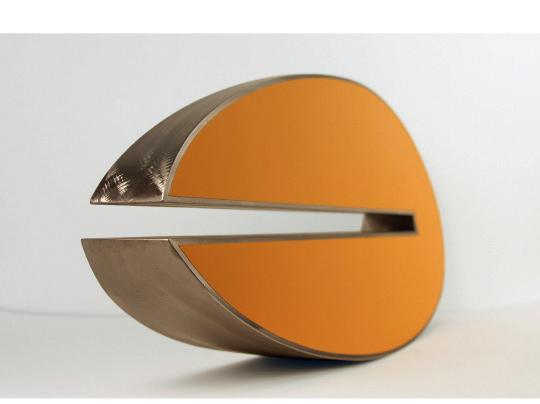
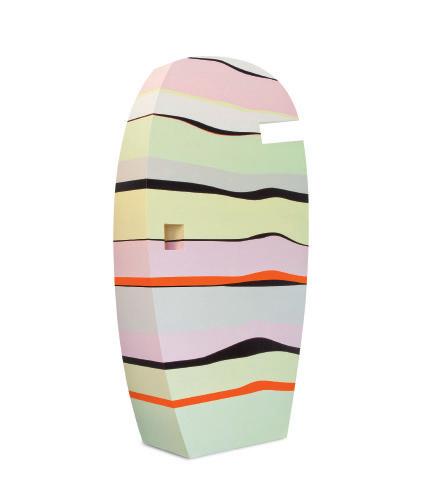
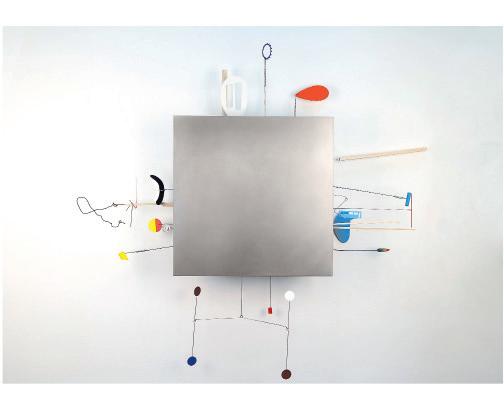
Center Piece 01, 2018 (Plate 292)
Stainless Steel, Urethane
5 x 12 x 9 in. (13 x 30 x 23 cm)
Private collection
Executive Producer: Alexander Mertens
Design and Production: Traffic NYC (www.traffic-nyc.com)
Studio Photography by Jason Bennett (Before 2012); Shaun Garren (2012-2019); ImageSpace Project (2019-Present)
All photography of art in situ by Brad Howe and Brad Howe Studio unless otherwise noted.
Skira editore thanks Paola Gribaudo for her initial input and coordination
BRAD HOWE A
Dance of Atoms
Photography by Jessica
DeMuro
BRAD HOWE A Dance of Atoms
Designed by Michelle Edelman
Introduction by Asher Edelman
Essays by Charles A. Riley II Anthony Haden-Guest
Edited by Peter Frank
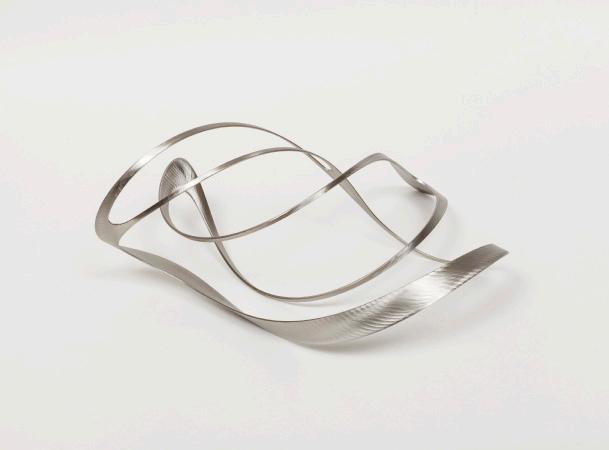
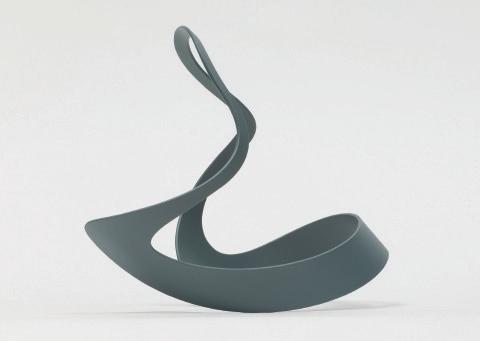
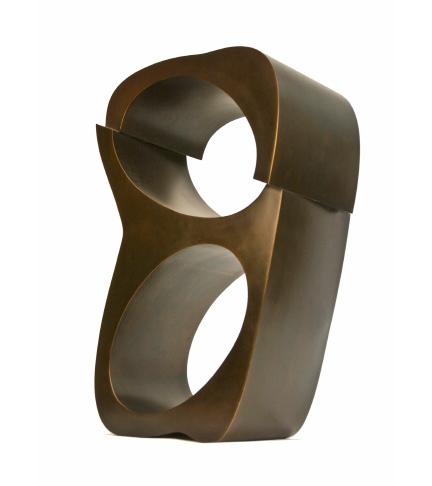
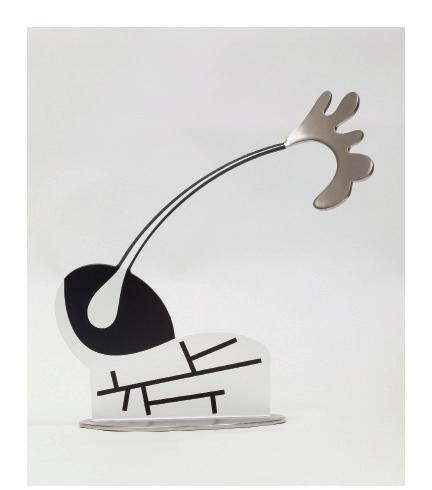
1 | Ventana , 2002, Bronze, 84 x 120 x 30 in. (210 x 300 x 75 cm), Katel Properties, Los Angeles, CA
Table of Contents
Introduction by Asher Edelman
Unfolding a Tale: The Art and Mind of Brad Howe by Charles A. Riley II
Axiom
Calligraphy
Free Standing Calligraphy
Bronze
Constructs
Deprivato
Eterea : Mirror Play
Monoliths
Maquettes
Monumental Sculpture
Paintings
Wall Sculptures
Kinetics
Kinetic Kelp
Quipu Photography
Photography & Embroidery
Affinities
Brad Howe and the 500 Year Plan by Anthony Haden-Guest
Story of Mauá
Exhibitions
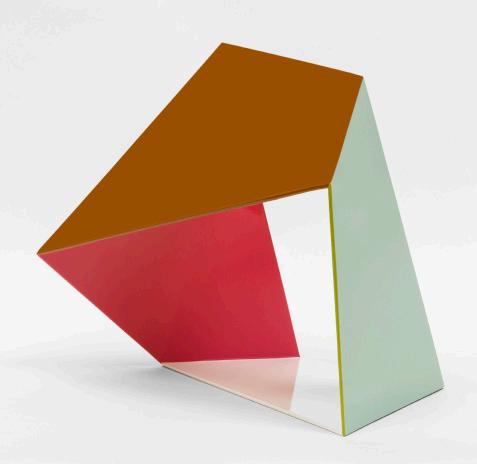
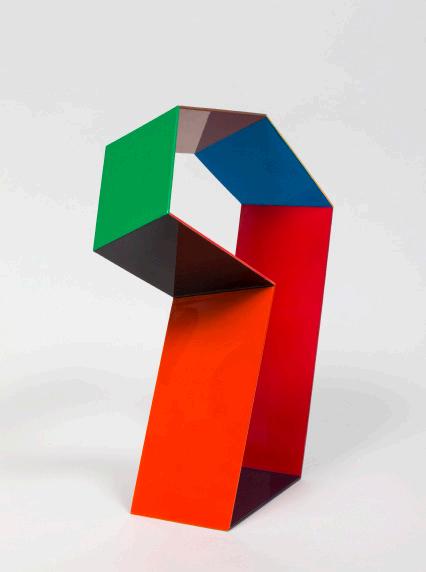
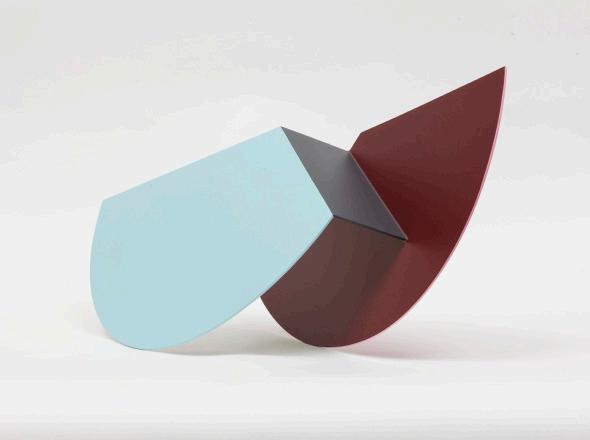
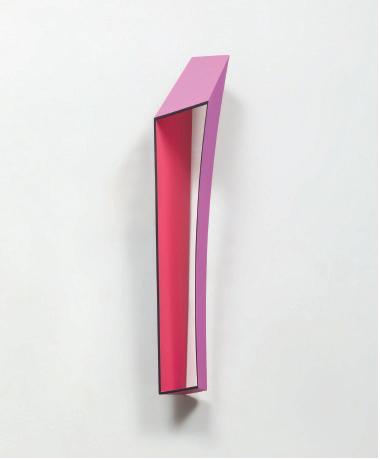
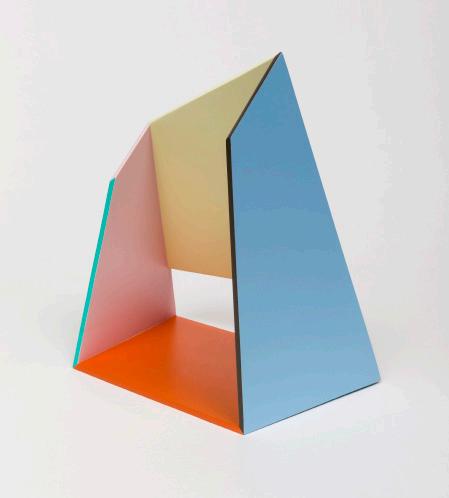
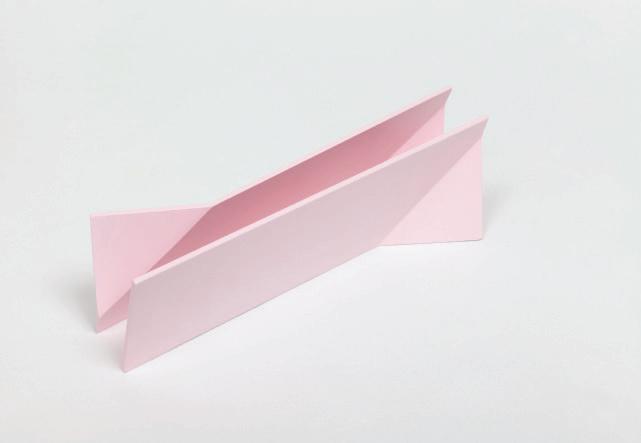
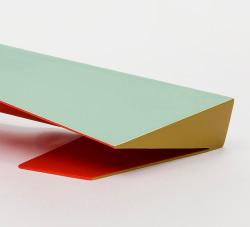
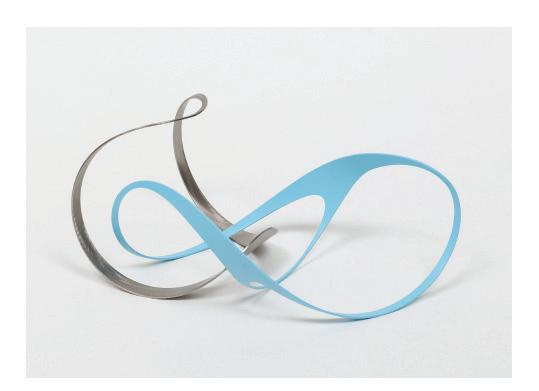
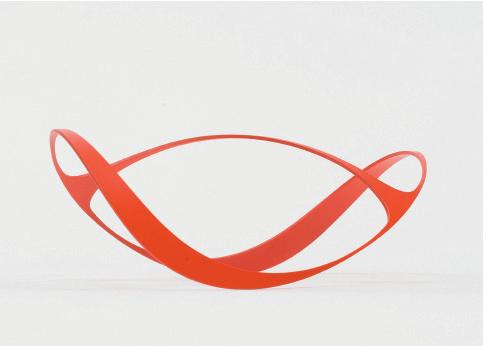
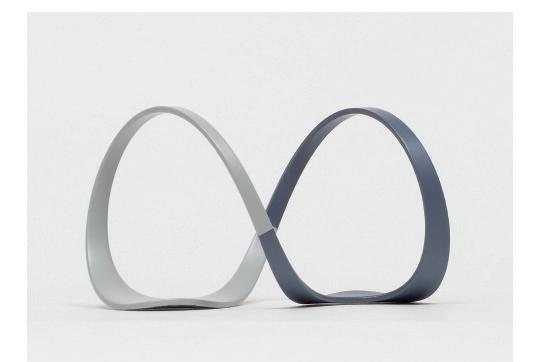
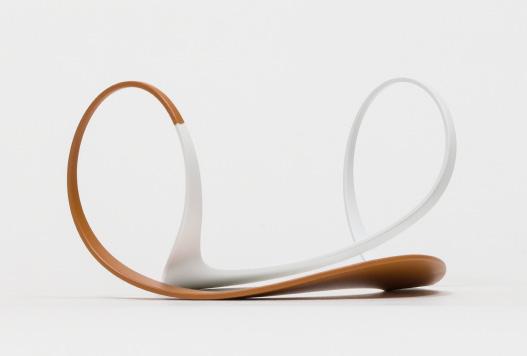
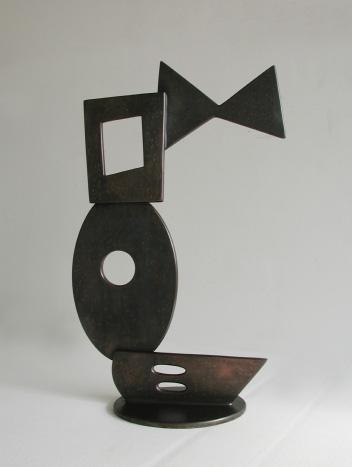
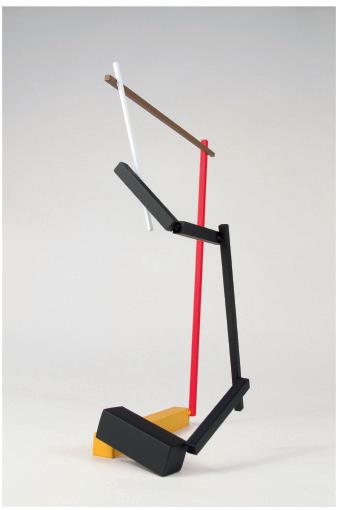
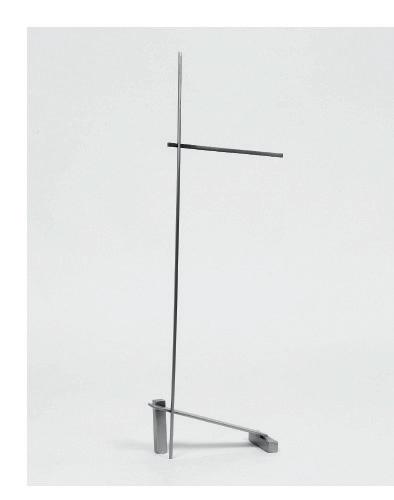
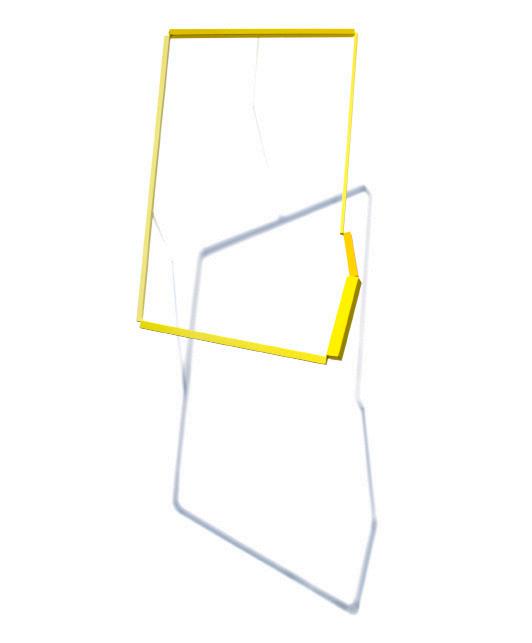
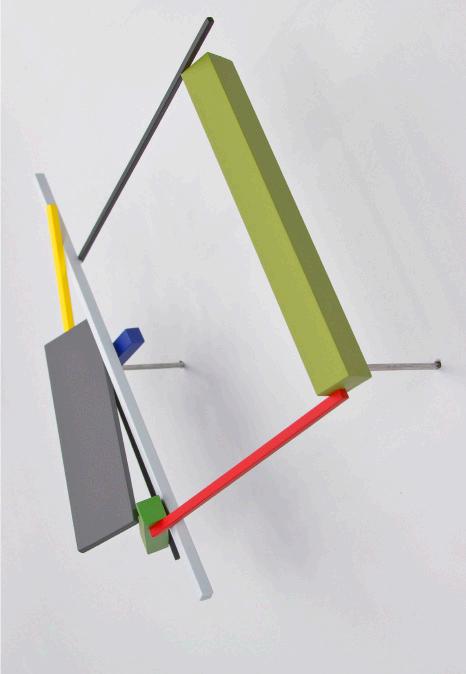
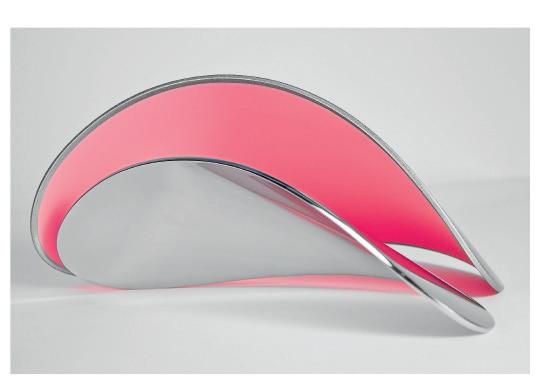
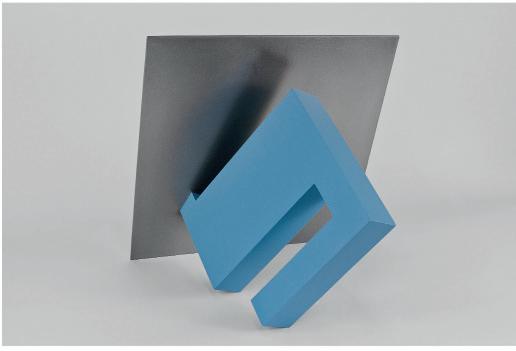
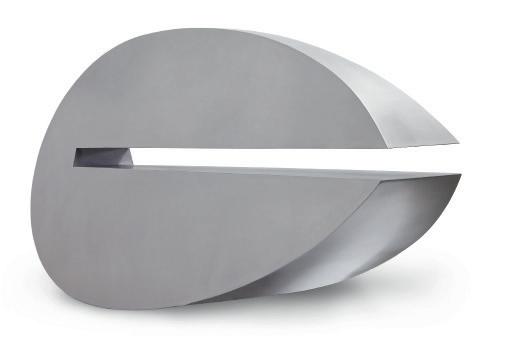
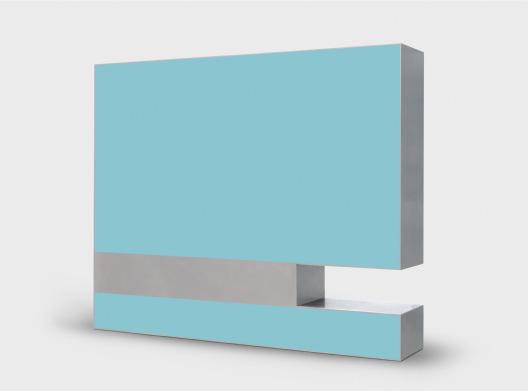
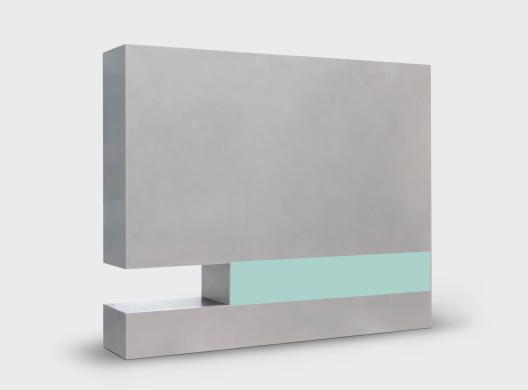
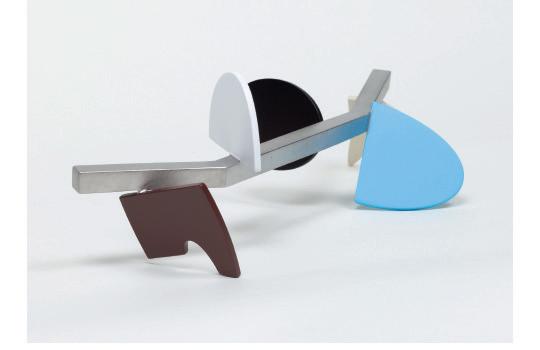
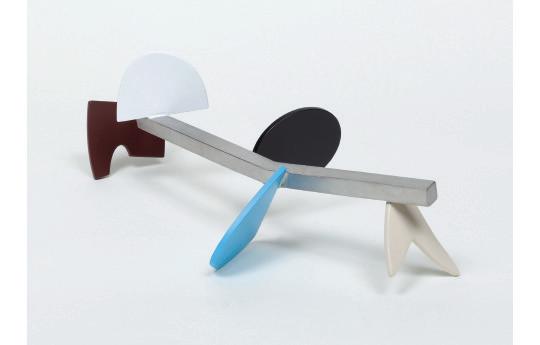
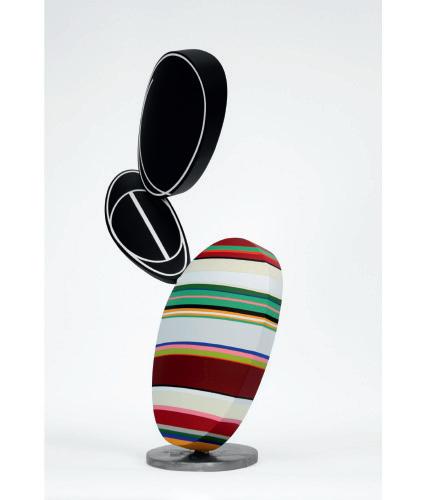
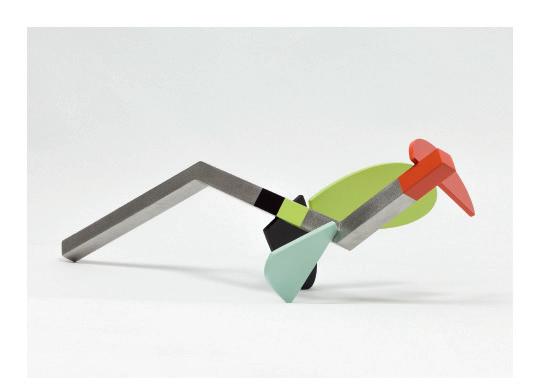
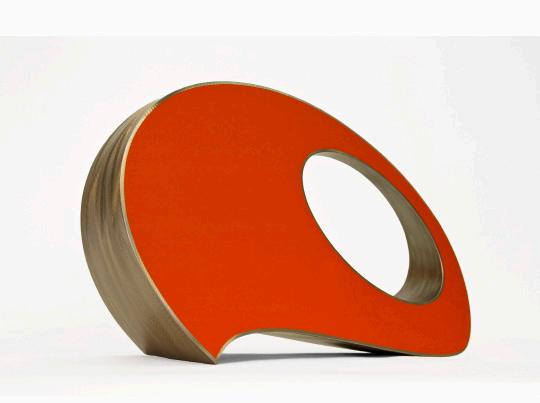
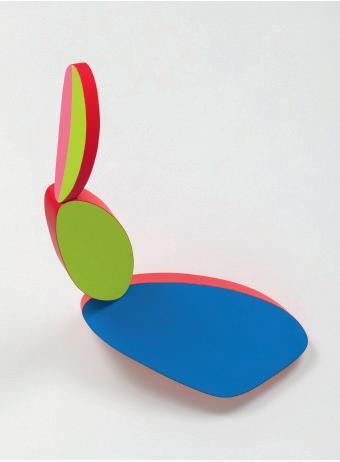
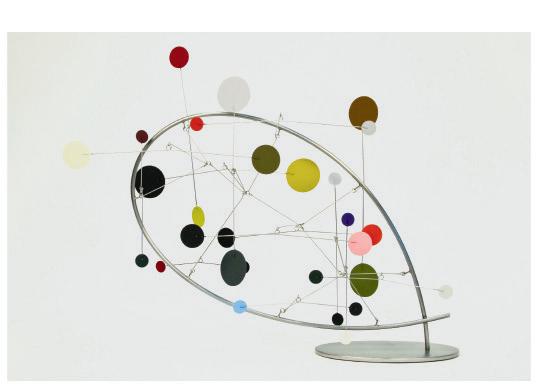
2 | IfNotNow , 2017, Stainless Steel, Urethane, 13 x 25 x 12 in. (33 x 63 x 30 cm), Collection of Elenore and Domenico De Sole
Brad Howe Surrealist
which way is up which way is down which side is the side none of the above what is the shadow which is the object why this or that color forget all of that
Brad’s work is multi-dimensional without boundaries and not created for us to solve it’s a puzzle it’s a question without answer we are the answer
Asher
Edelman
“Two forces rule the universe: light and gravity.”
— Simone Weil
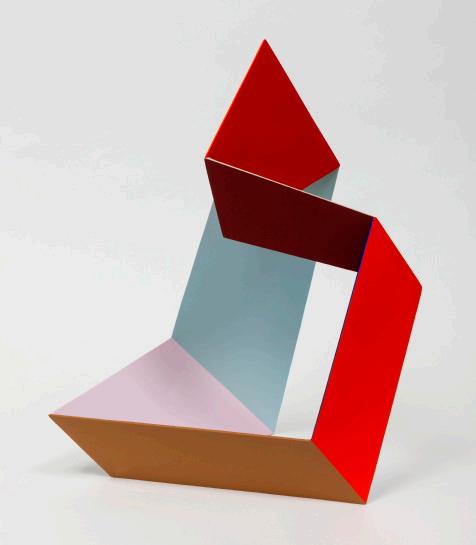
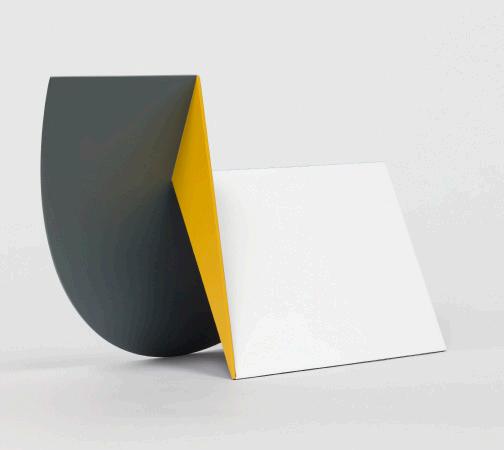
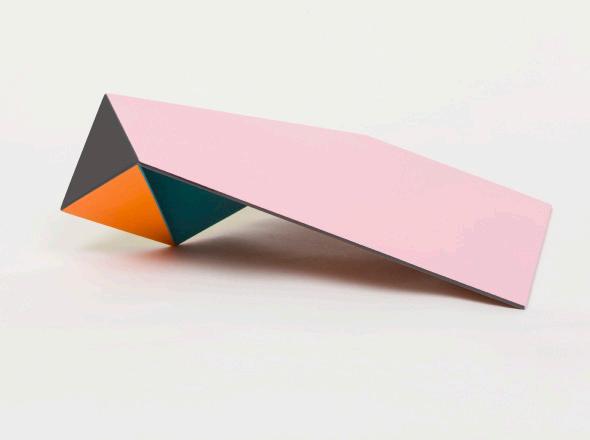
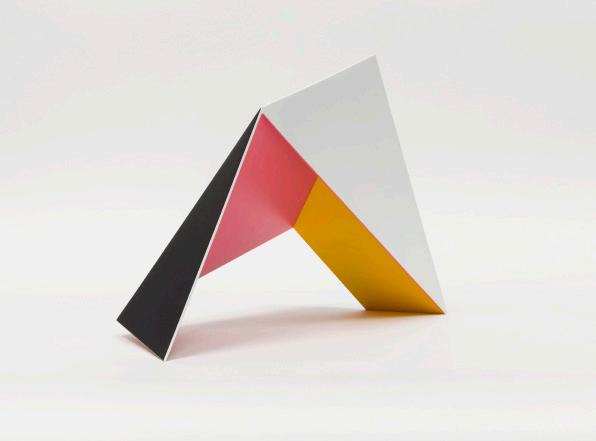
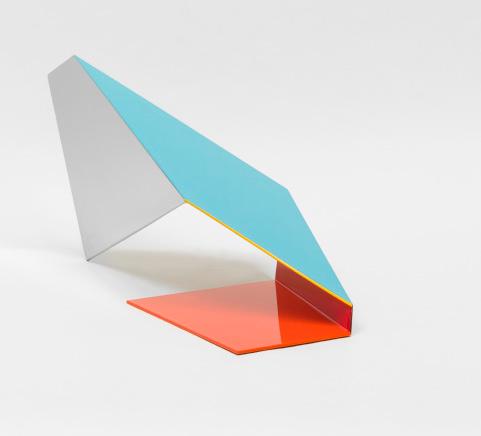
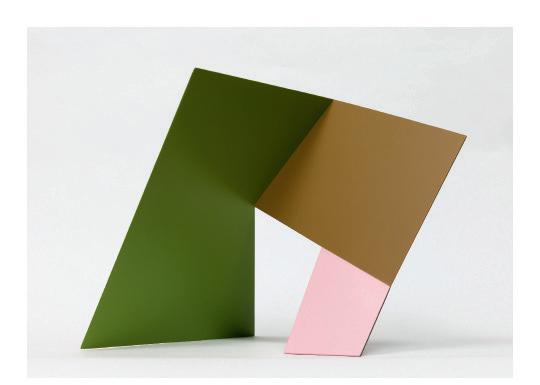
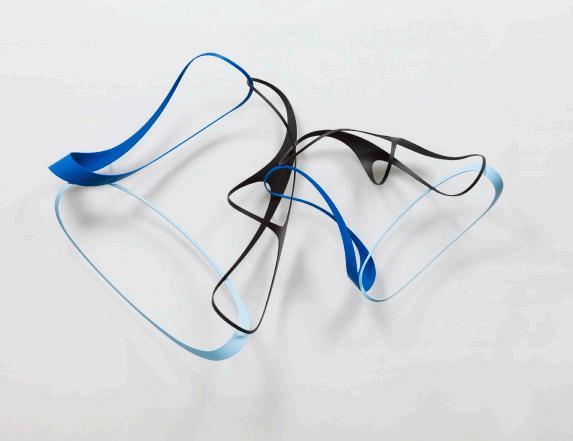
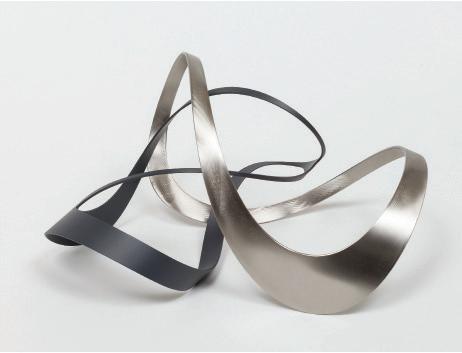
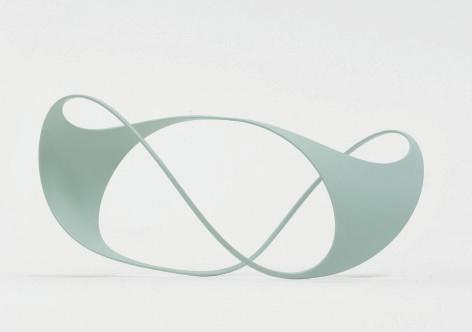
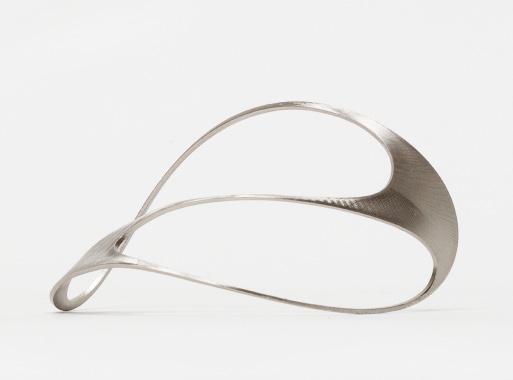
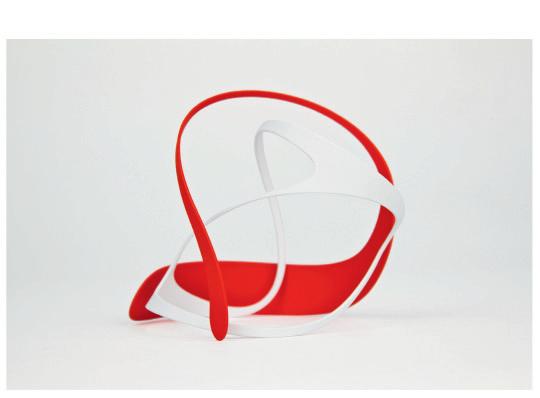
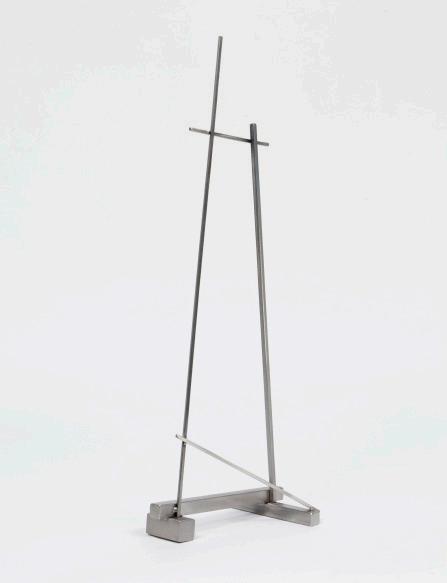
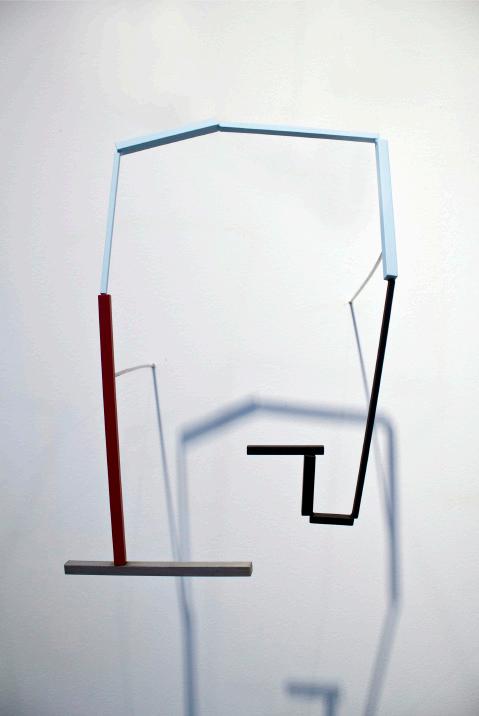
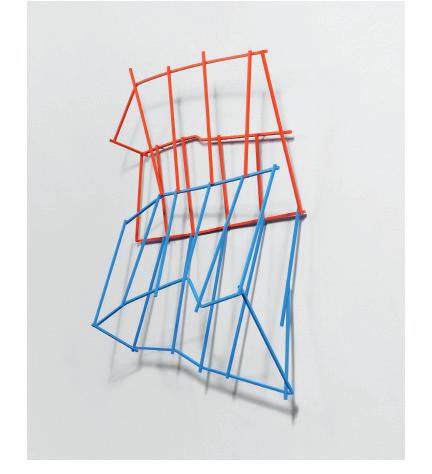
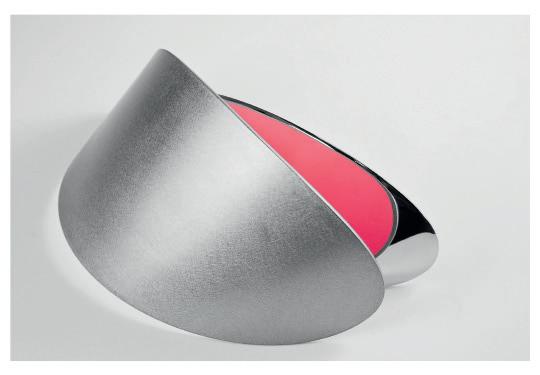
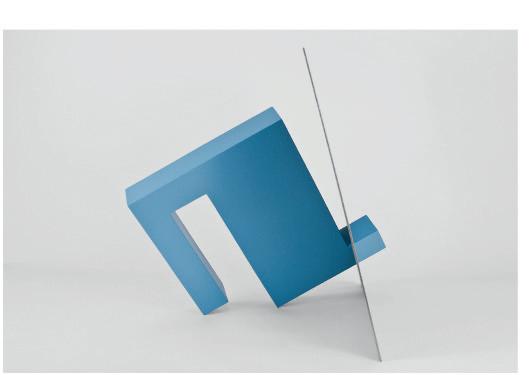
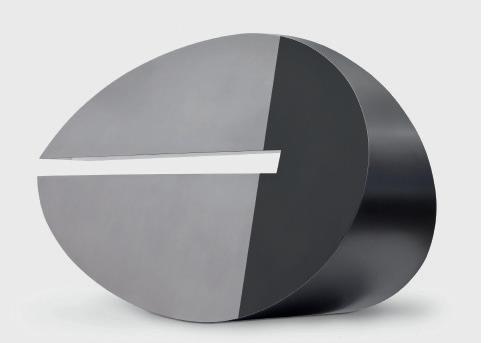
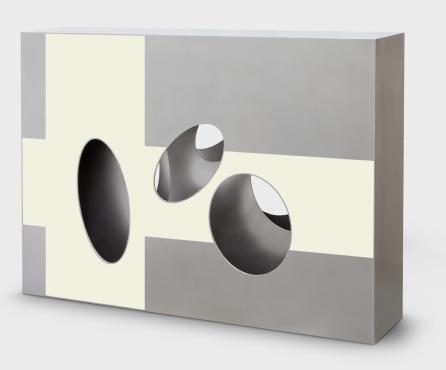
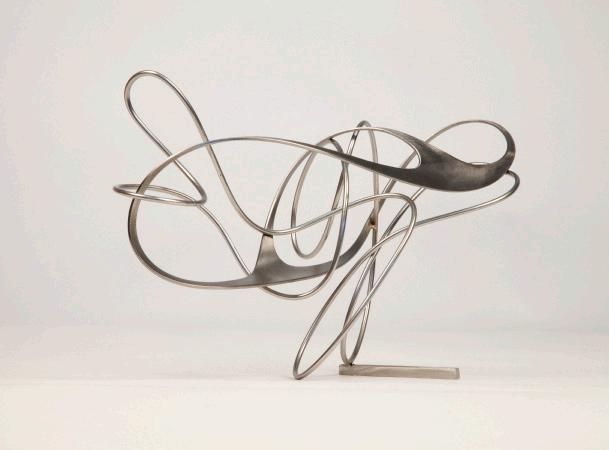
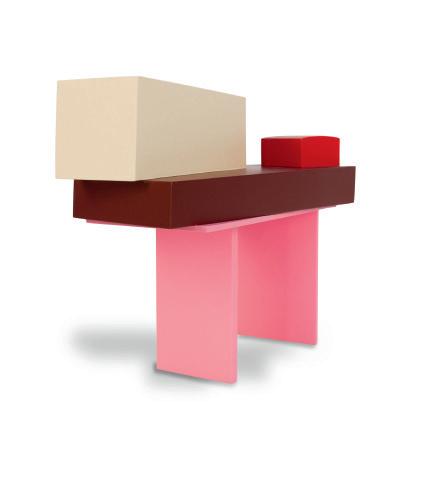
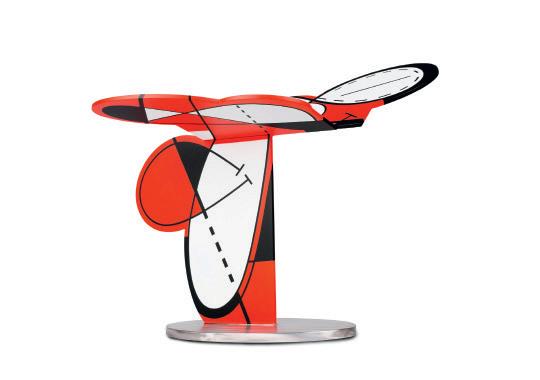
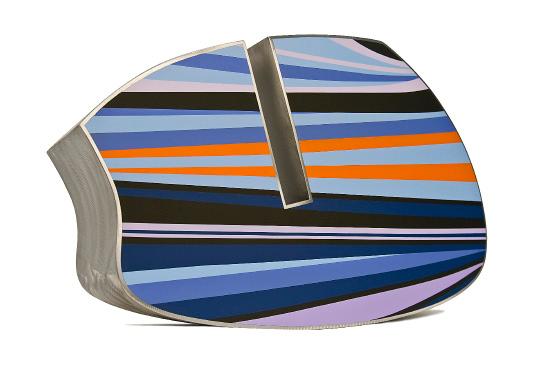
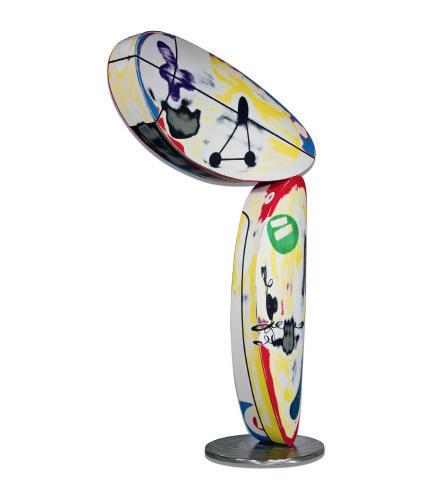
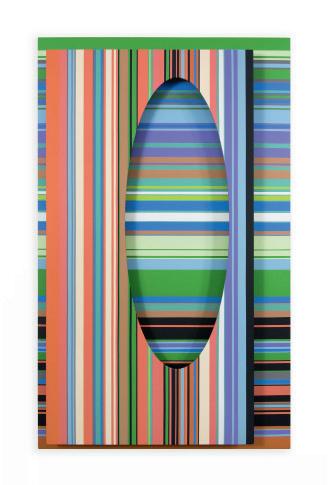
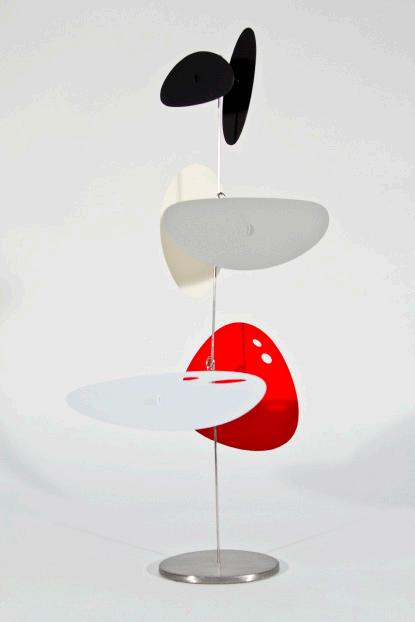
3 | Cajole , 2017, Aluminum, Urethane, 29 x 51 x 6 in. (73 x 128 x 15 cm), Private Collection
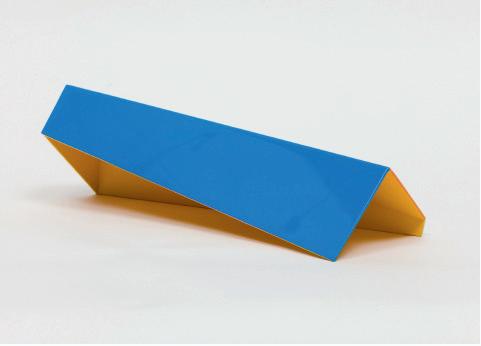
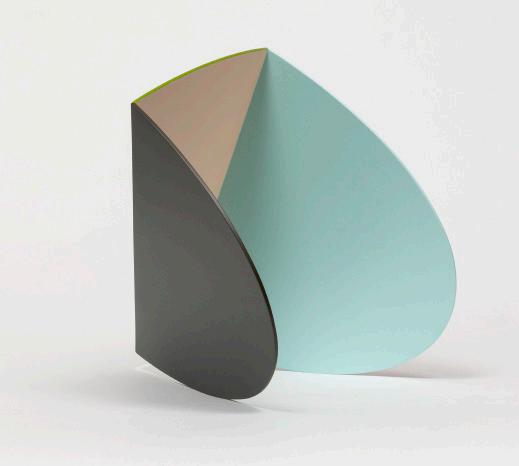
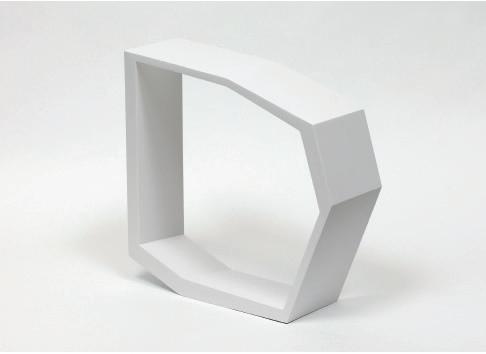
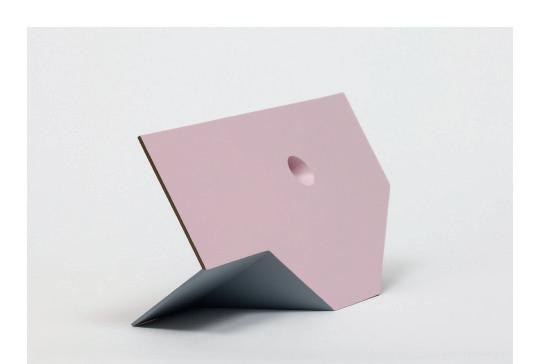
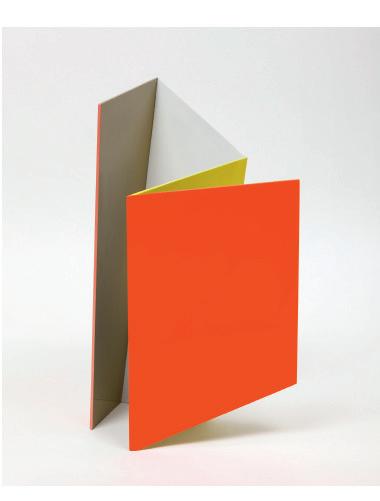
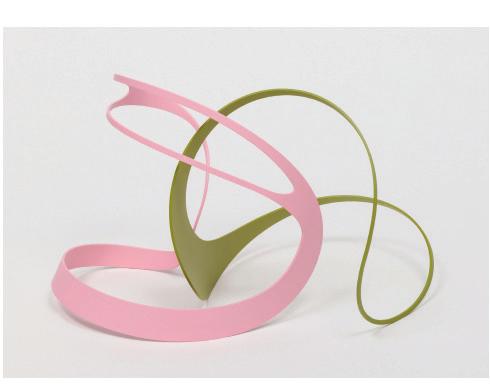
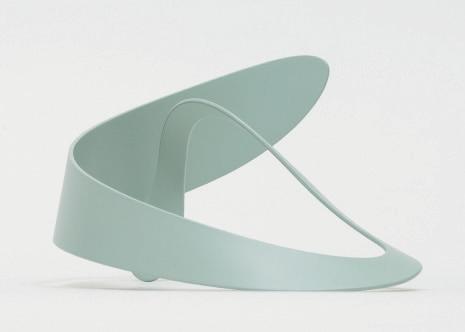
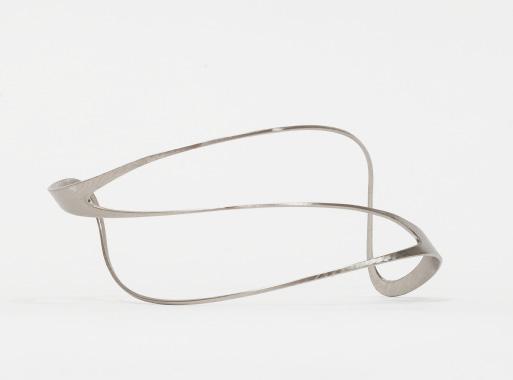
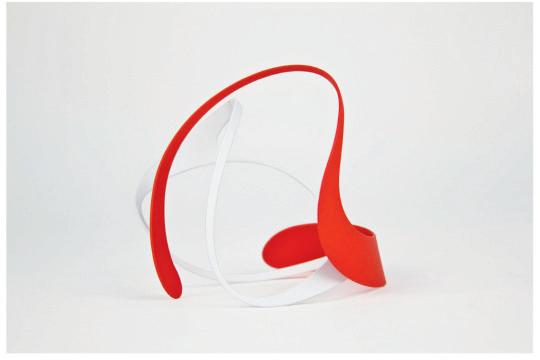
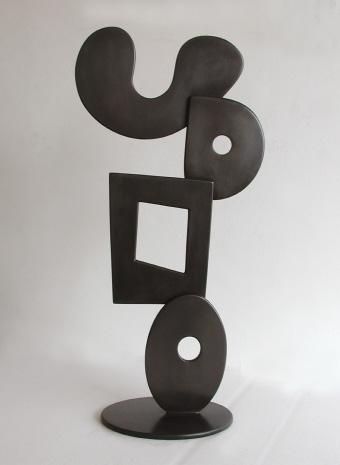
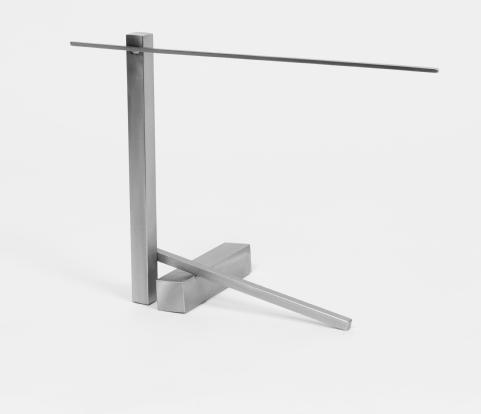
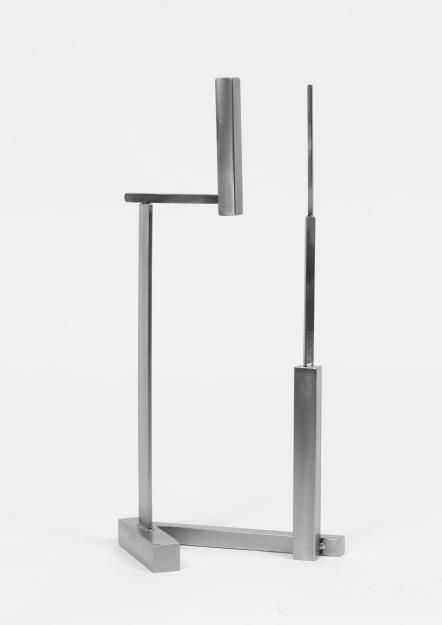
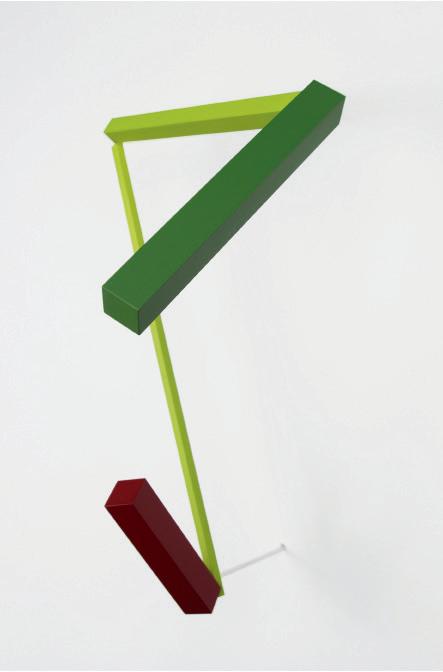
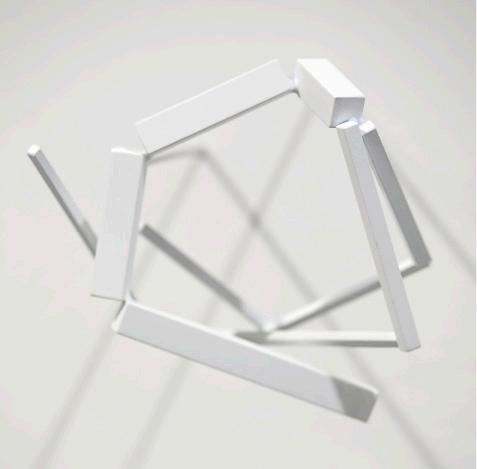
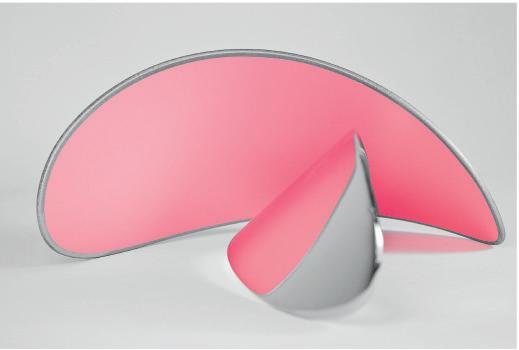
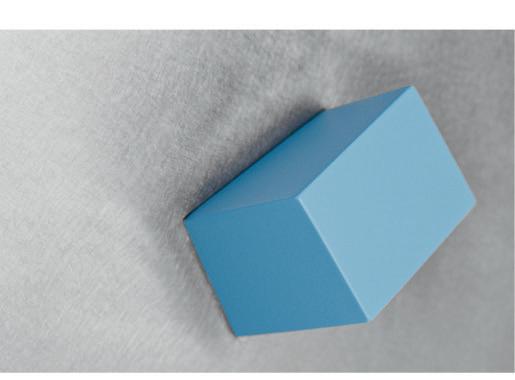
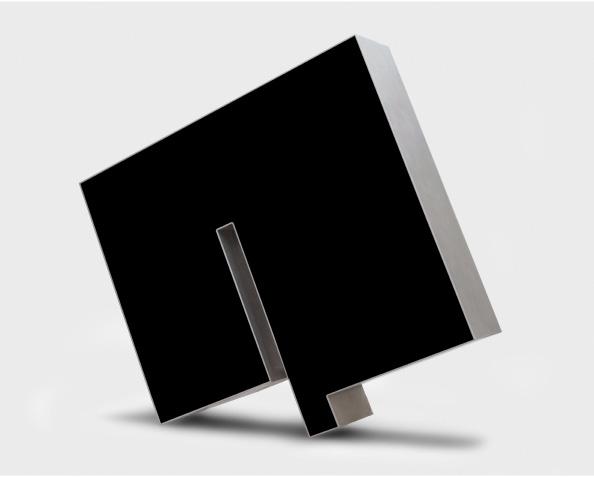
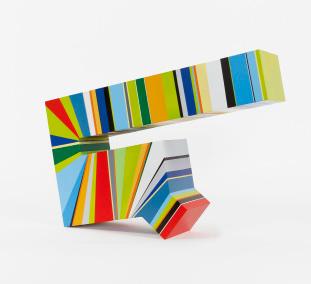
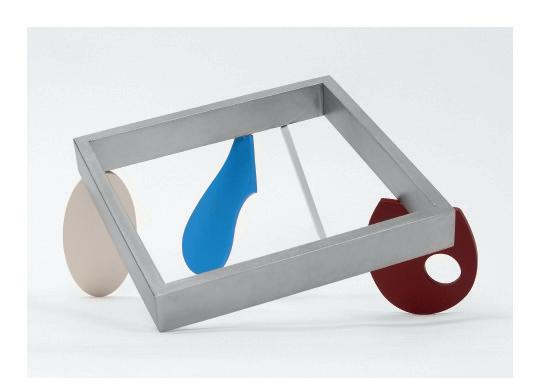
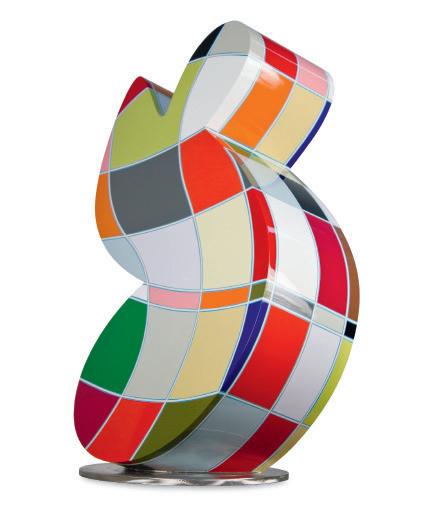
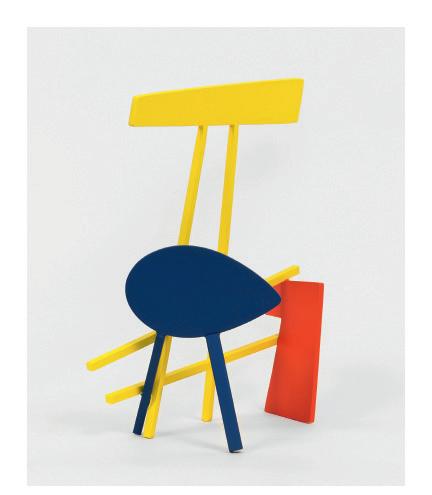
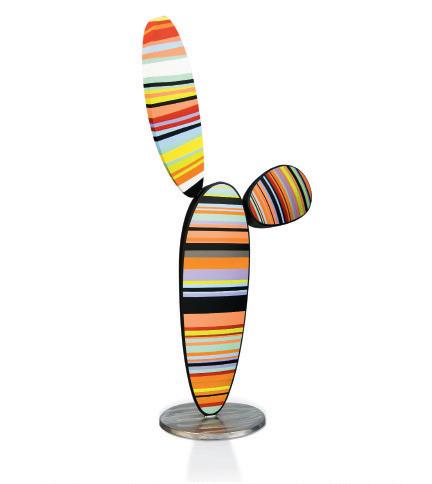
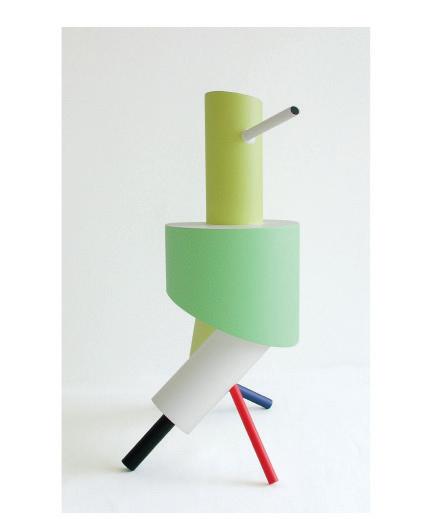
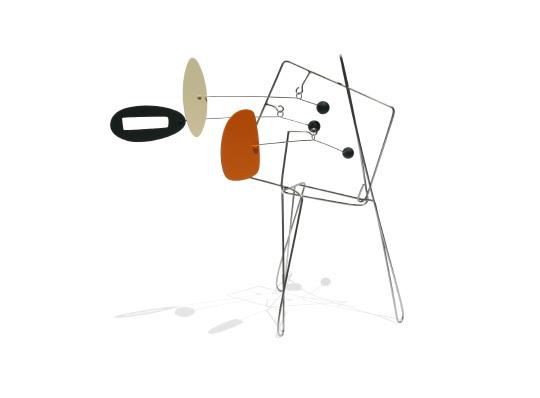
4 | Topsoil , 2017, Stainless Steel, Urethane, 13 x 14 x 9 in. (33 x 35 x 23 cm), Collection of the Artist
Unfolding a Tale The Art and Mind of Brad Howe
by Charles A. Riley II
As if by stealth and visible I sense
That fold by fold the widowed stone unrobes itself (Comme furtive d’elle et visible je sens Que se dévêt pli selon pli la pierre veuve)
—Stephane Mallarme, “Remémoration d’amis belges”
You don’t look at a work of art by Brad Howe. You unfold it. There was already a genre known as kinetic sculpture, as exemplified by George Rickey and the swinging elements of Mark di Suvero among others, but then there is what Howe calls kinetic sculpture, and it is different: “You are the moving part.” Grasp that notion of mobility and curiosity, and you’re on track to enjoy a panoply of colors, ideas, art historical allusions, geographical journeys and visual poetry tapping many languages. Like a master’s origami, with disarming ease it becomes quickly complex.
Howe’s career has been as circuitous as his work. With a busy studio in Los Angeles (not far from Riverside, where he was born), he has established himself as one of the go-to public sculptors of the day, with more than thirty completed projects in seven different countries already to his credit, including monumental works in venues as varied as Biberach, Germany and the Beverly Hills City Hall. Several museums and institutions include his work in their collections, including The Crocker Art Museum in Sacramento, the Honolulu Museum of Art, MIT, Temple University and UCLA. He has an international following in Mexico, France, Germany, South Korea and Brazil—the starting point on his path to sculpture. As a student of International Relations at Stanford University, Howe attended the University of São Paulo to double major in Literature and Economic History. Focusing on the political implications of land use, ostensibly to become a diplomat, he was distracted when he fell in with the architecture students, who were listening to Pink Floyd and eating better than anybody else at the university. Aesthetics nudged policy aside. “I fell in love with the making of models. Everything I thought about as color comes from Brazil.” His first works were mobiles inspired by an early passion for the works of Alexander Calder, whose wit informs so many of Howe’s buoyant pieces to this day.
That intellectual range is one of the most appealing qualities of the artist. For example, Howe cites the great American philosopher Richard Rorty in one of his modest yet revealing artist’s statements: “If we are to engage in the project of self-edification, the evolution of self, the enterprise is tied to our imagination.” As Rorty indicates, “imagination is bound by our vocabulary, and it is in the growth of vocabulary we should focus. Vocabulary is tied to experience, and it is in energized moments of exposure to strangeness that our vocabulary expands. Encountering strangeness stretches and expands our self-image and seeds the rich potential for our collective conversations.” Rorty happens to have been my teacher. As an undergraduate seeking a philosophical substratum for my literary tastes (which ran to William Butler Yeats, Stéphane Mallarmé, Philip Larkin and the New York School poets), I turned up on the doorstep of Princeton’s vaunted philosophy department where he was one of the many stars. His weekly seminar was a highlight, by turns comical and terrifying, a deft juggling act (he was tossing around the ideas that landed on the pages of his now-canonic book The Consequences of Pragmatism that could best be described as ontology with an edge. Almost for sport (but now I understand that he was preparing them for their profession), Rorty would invite doctoral candidates to join and toss a few of the
figurative knives at the act’s finale, which never disappointed. I vividly remember the way he buried one well-aimed blade after another in the graduate students when their reasoning failed to keep up. Yet the students remained under his spell, dazzled by his verbal legerdemain. Wit was part of the virtuoso performance. Digging out my notebooks for this essay I enjoyed going back to the perfect spring afternoon in the lecture hall when, typical of Rorty, who would mutter an aside that was often as piquant as his prepared test, I found my record of this superb one-liner: “Ontology is more like a playground than a science.”
Taking that as our cue, and paying close attention to the artist’s statements and studio notes, we approach Brad Howe’s art from the perspective of the pleasure principle but with an eye to its quiet insights into perception and knowledge of the world. The basis for many of Howe’s works can be deceptively simple. This is a time-tested strategic best practice for “additive” creators like him: Begin with a relatively economical motif, or phrase in music and poetry, and build the complexity from that unit. Bach, for example, preferred brief, open-ended subjects for fugues that would soar into towers of such harmonic complexity that even he, one of the foremost keyboard virtuosi of his age, was incapable of playing them note-for-note. This was the case with the plaintive melody, which even a rank amateur like me can manage, upon which the 32-part Goldberg Variations was erected. Miles Davis and Bill Evans had the two “So What” chords and a scale when they invented modal jazz with Kind of Blue. Monet had the muffin shape of the haystacks, two or three at a time in a stubble field, while Shakespeare had the symmetric monosyllables of “to be” as his opener and e.e. cummings, perhaps the poet I would pair with Howe most readily, could squeeze more meaning out of a pair of parentheses than anyone I know. We could model the design principles behind several of Howe’s most important works by taking a sheet of paper and beginning to fold it. Astonishingly soon, the mountains and valleys of his creases start to race ahead from the basic premise. Like the mathematicians who avidly pursue the not-quiteinfinite permutations of crease patterns in origami, we cheerfully submit to losing ourselves in the alpine upper reaches of Hinterland (plate 16) with its snowy north side and its sunny valleys, bright yellow and fresh green around the corner from gleaming white. The flip from one palette to another is the endless source of delight and drama, like coming around the bend on a hike to find a meadow of wild flowers. That flip is Howe’s signature.
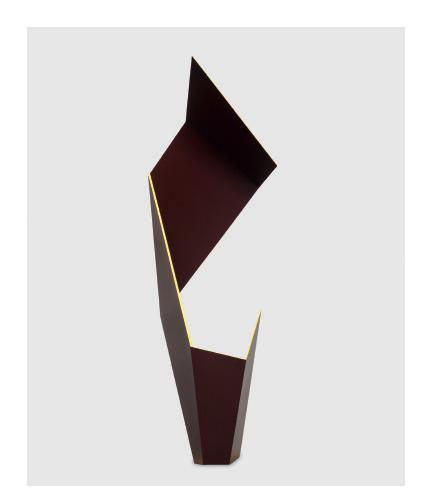
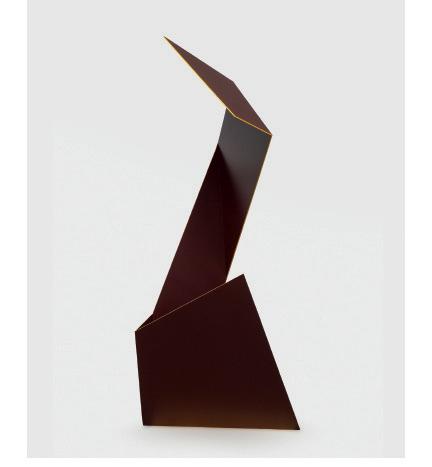
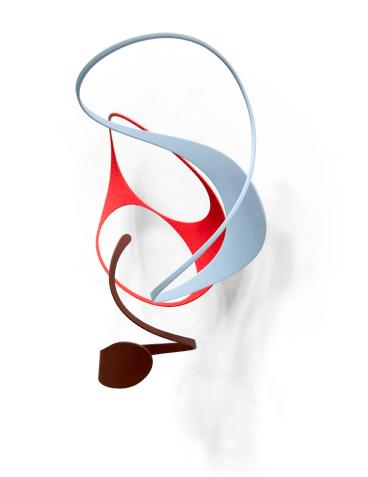
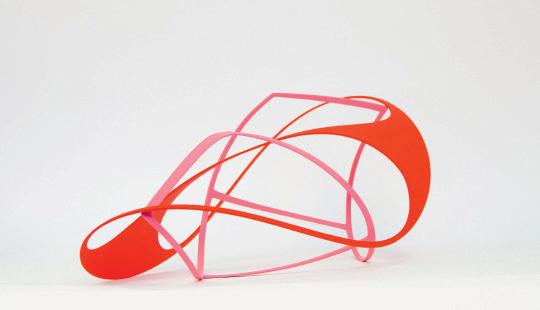
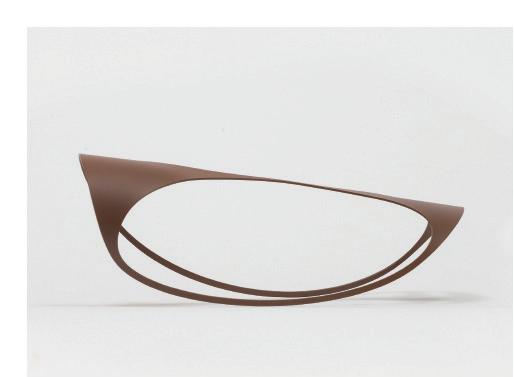
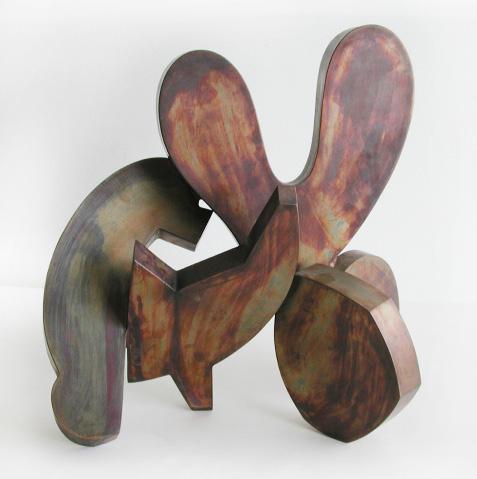
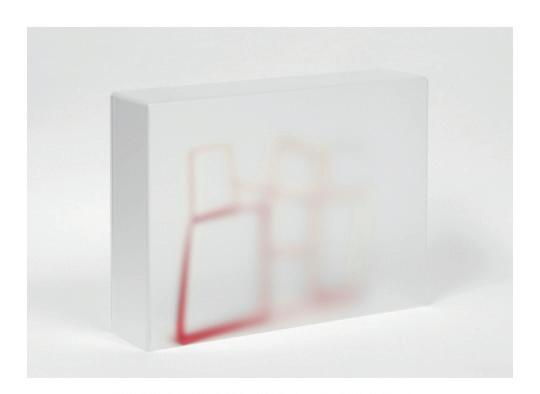
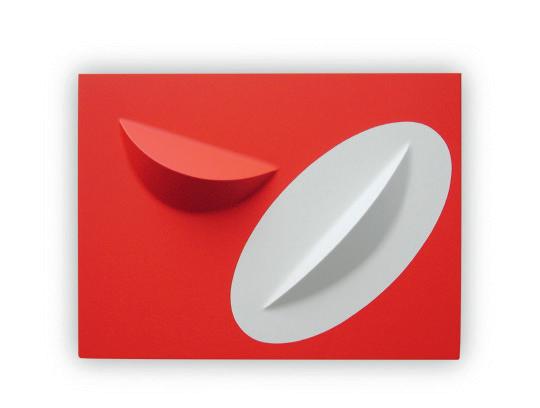
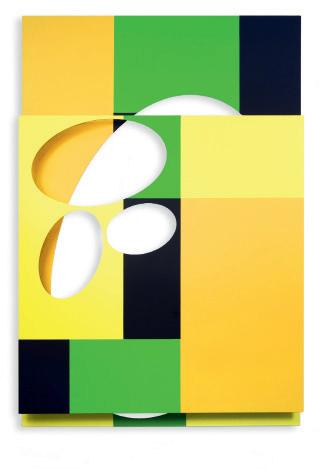
Color in three dimensions is never easy, especially when the color and the shape are in dialogue. The subtle pianissimo of Daylight (plate 101), which veils the colors behind a frosted Lucite scrim, is one of Howe’s most enchanting and diplomatic answers to this riddle. There is a group of works he called Axioms, riffing on the laws of geometry, physics and logic. Among them are the enigmatic sculptures titled Triumph of Enchantment (plate 25) and A Flower from the Future (plate 13), which uses a deep chocolate brown as the complementary warm tone to “soften the sharpness of the form,” in his words. A commission, it boldly addressed a problem in time and space, yoking presence and absence. There are not many problems as vexing as the prediction of what comes next in almost any field, from business to politics to art. Howe writes, “In both cases the pieces come from an earlier intention to create forms that enveloped an activated space. The internal space was to be an imaginary space. At first I called it a dark space that you often couldn’t see into and where its inaccessibility both fascinated and frightened you. Something like a cave on a hillside, that you can peer into but can’t see far inside, and where a bear or a snake might be lurking. The solid, resolved construction of the form would be countered by the ephemeral, haunting internal dark space of the imagination.”
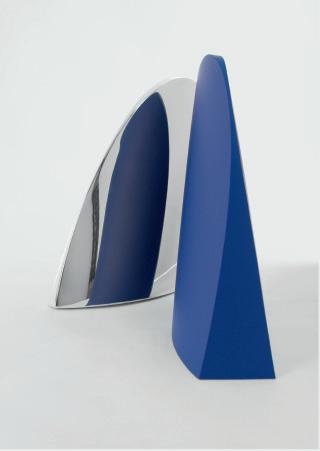
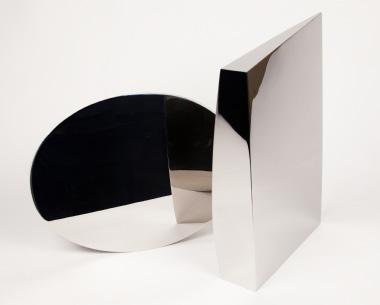
One of the first things you can do with a shape to unlock its potential is to double it. The two parts of Gravity (plate 109) remind me of the way Henry Moore would introduce a gap between corresponding solids. I was drawn to this work by the way Howe used a particularly fascinating blue, one of the many luscious colors he achieves by mixing automotive urethanes with the care of a perfectionist and the experimental energy of an alchemist. He informs me it begins with the primaries, and the purplish blue is a nod to Luis Barragán, the Pritzker Prize-winning architect with a prismatic flair. “I have aimed at that blue many, many times,” Howe says. “It is one of the colors I most feel at home with.” The work was a highlight of an exhibition entitled “Deprivato” (page 115), Italian for “Deprived,” that was partly a meditation on the influential psychoanalyst and philosopher Jacques Lacan’s theory of the mirror stage of child development, a stage that results in the life-long pursuit of objects of desire. As the artist helpfully adds, “So the blue monolith is gazing at itself in its mirrored twin.” As with Brancusi as well as Moore, the associations with the human figure, and human development, multiply in the mirror.
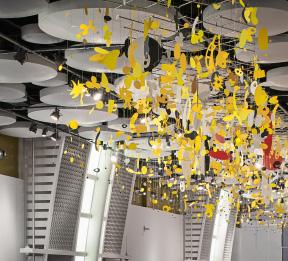
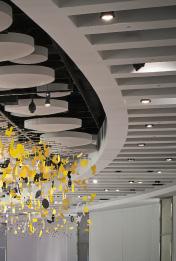
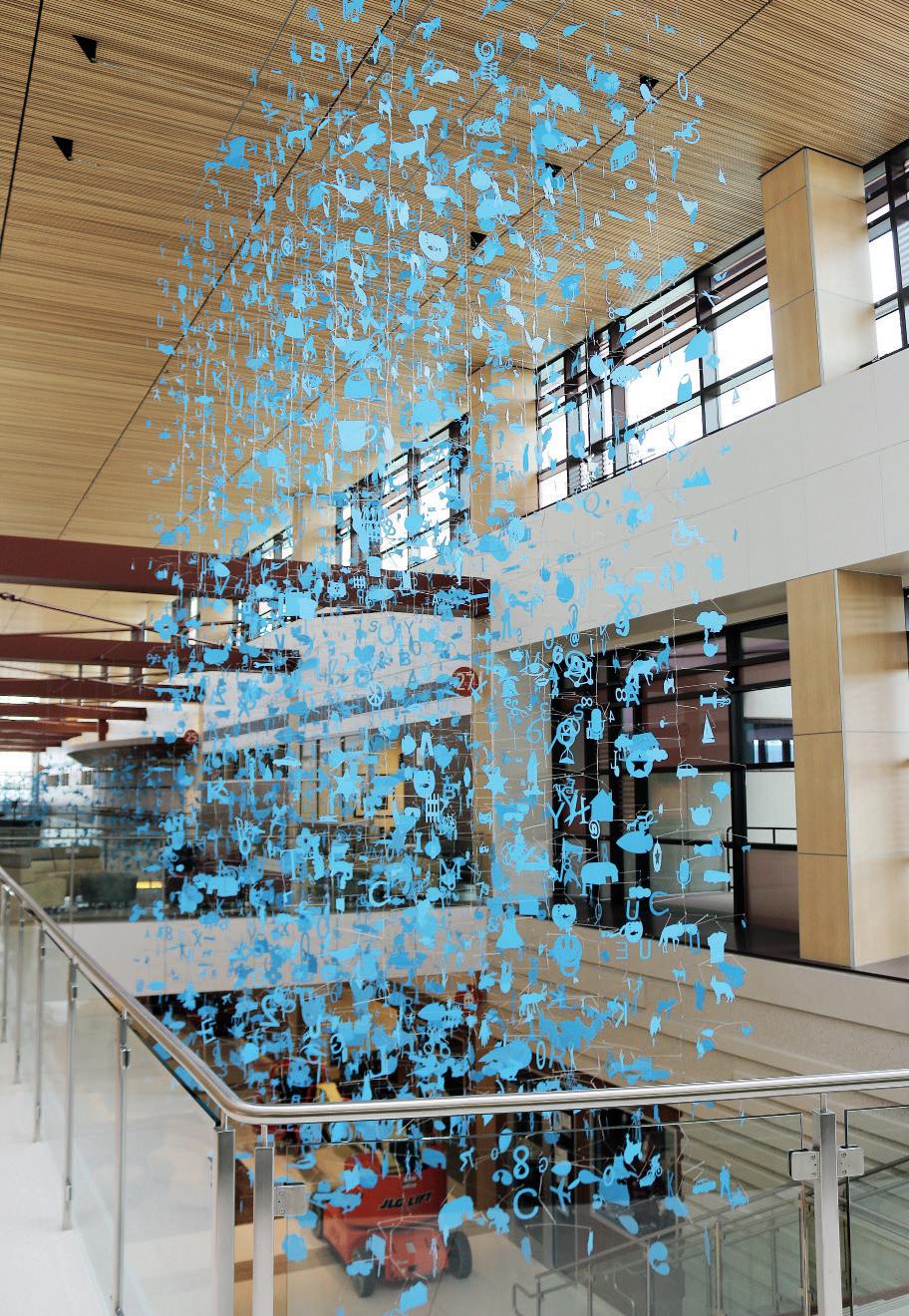
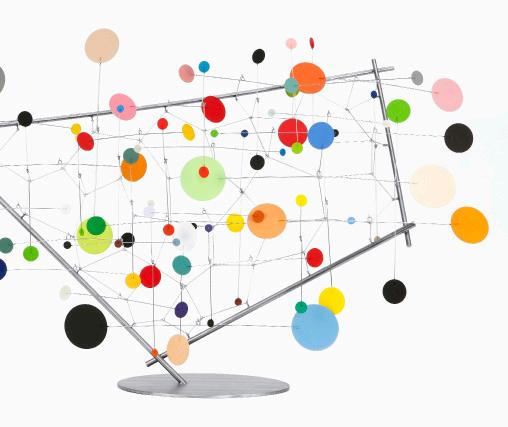
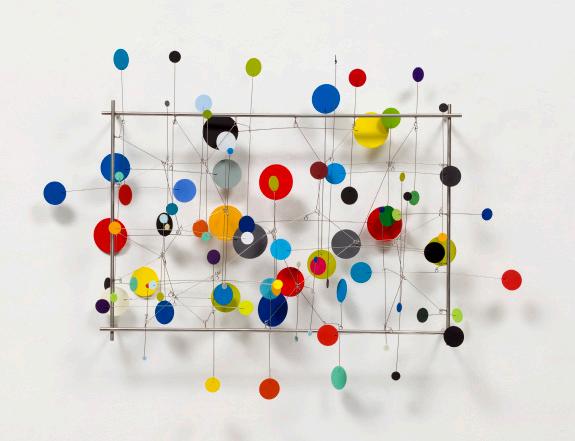
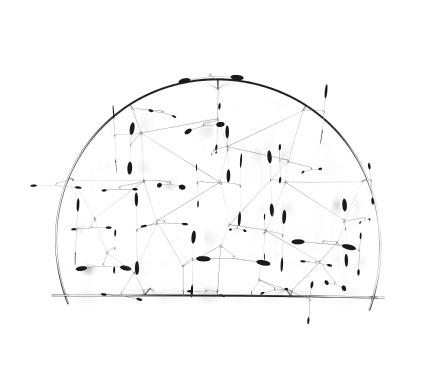
That lively ping-pong match of ideas and art runs through Howe’s work. Beyond Lacan’s groundbreaking work on the psyche, Howe (who started his undergraduate years as a pre-med) is also conversant with marine biology and the string theory of Brian Greene’s fascinating book The Elegant Universe, which inspired a group of works under the rubric of Kelp, which includes The Song of the Expanding Universe (plate 225) It is one of several huge installations that incorporate as many as two thousand elements. “I saw the installation as suspended bodies in the ether, imaginary celestial forms. Another relevant point is that I am fascinated with things like fractals, macrocosms and microcosms. The earliest inspiration for its structure was plankton floating in huge masses in the sea. I imagined the parallels between the plankton and the stars, even when it came to forms.” Initially the artist proposed using powerful lights on one wall to project the shadows of the kelp across the space so viewers “would get two experiences out of the installation, the actual piece and the ‘meta’ expression of the moving shadows on the wall they would notice and not understand immediately where they came from, like a diffused giant fish tank where the fish were just shadows.”
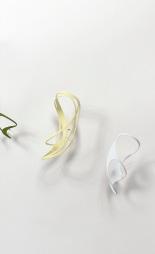
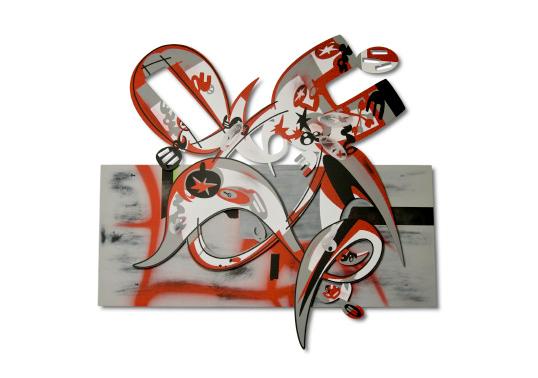
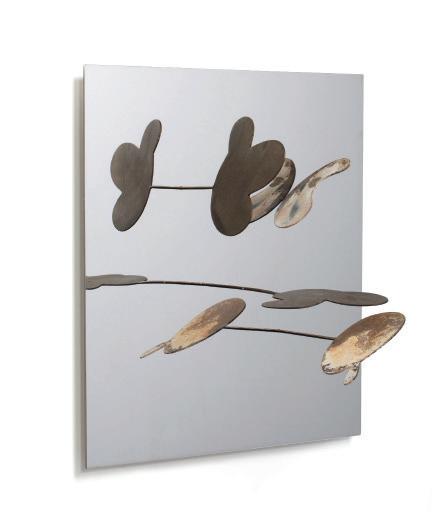
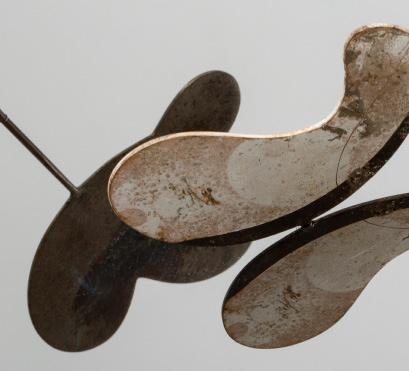
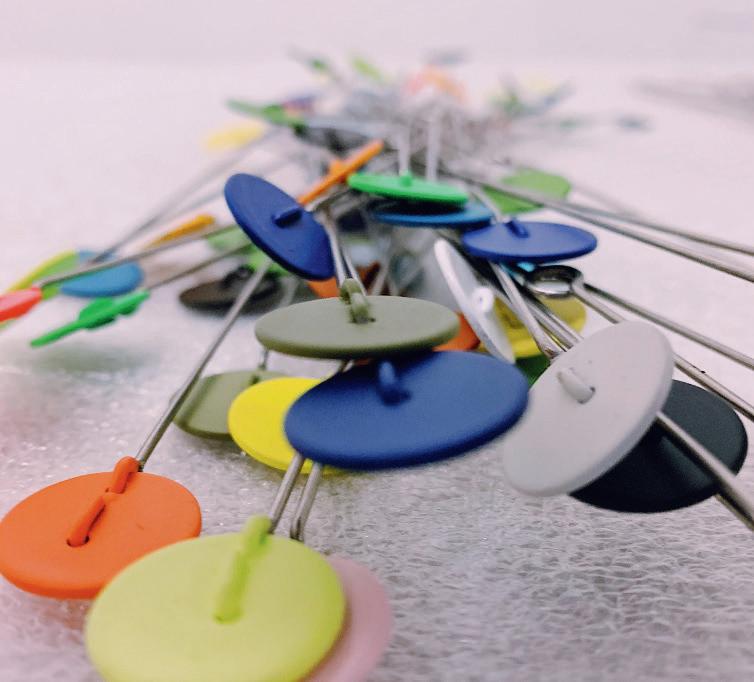
The play of shadows is essential to the experience of Howe’s calligraphic works. Any writer would be drawn to them, with their poetic nature. They float through global languages with the polyglot ease of a contemporary Henry Higgins. They take their place in a sophisticated tradition of calligraphy in art, from the height of brush and ink virtuosity in the Song dynasty with the Chinese master Mi Fu (sometimes called Mi Fei) through the great Persian calligrapher Darvish Abdolmajid Taleqani and the inscriptions in the Alhambra. There is a brilliant roster of painters who have made calligraphy a source of gestural repertoire, including Joan Miró’s invention of poésie peinture, the classical penmanship with which René Magritte inscribed “Ceci n’est pas une pipe” on Surrealism’s most discussed masterwork, the curlicues of Philip Taaffe, Brice Marden’s superb Han Shan series of paintings and works on paper, and paintings by John Baldessari and Suzanne McClelland. Even Richard Serra’s handwritten list of infinitives is calligraphic. The silhouette also has a distinguished Modernist provenance, as used by such artists as Kara Walker, Tom Wesselmann and Kumi Yamashita. The Calligraphy series had a mundane start, when a Hungarian architectural firm asked Howe to design jewelry for an exhibition in their offices. Reluctant to play the artisan, Howe demurred. Then he archly welded pins and stuck them on the wall so no one would be able to try anything on. He was pleasantly surprised by the Arabic script that emerged
from the shadows made by the bracelets on the wall, having just read a book on Islam. The calligraphic works are united by forms that are derived from the oval, some partial and others with bridges. They are run through a three-ring roller at a 45-degree angle to create stunning forms that appear to be the skeletal structures of curled leaves. “A happy accident,” Howe admits.
The linguistic character of the works is part of their charm. You never quite know what you are going to get when you ask Howe for a little background information, and sometimes the detours venture a long way into his own far-flung experience. The mental peregrinations are valuable analogies for the perceptual experience of the works. For instance, when I needed a bit of guidance on what the title Barriga (plate 80) means, I was treated to more than a mere translation from the Portuguese. As Howe replied:
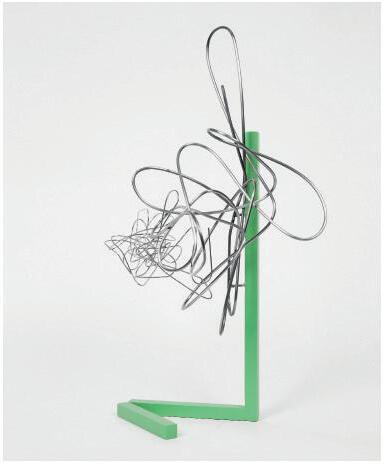
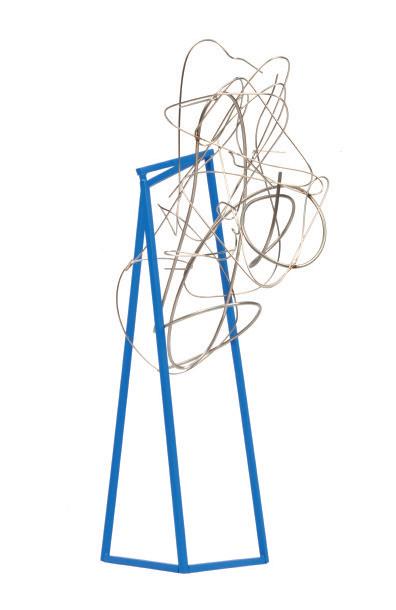
It has a ton of double meanings in Brazil, mainly any sort of protrusion, or heavy awkward weight you have to carry around. In this case, I was interested in different qualities of lines. Architectural lines, the sorted distance between two points (expression of efficiency and mechanical logic) and the meandering line, a daydreamer’s walk through a meadow, a knot of vines climbing a tree. So, the architecture has to contend with the wildness of the knotted mess.
In our dialogue, when I tried to get clever and call Howe out on his debt to David Smith with Palm Trees, his superb outdoor installation for Beverly Hills, he returned my serve with ease. “David Smith is a foundational influence in my work. I think he gave me a basic vocabulary of forms that I draw on, as did Calder, but in different circumstances. I am comfortable with the Derrida quote: ‘I speak only one language, and it is not my own.’” With some artists, suggestions about comparisons of this kind can be touchy subjects in a time when originality is the coin of the realm (even Yves Klein headed to the patent office when he and the chemists from Rhône-Poulenc perfected IKB). But Howe is entirely different, and that may be one of the reasons I had such a good time interviewing him and writing this essay. Around the time I studied with Rorty, as mentioned above, I also dutifully appeared in the lecture hall when literary scholar Harold Bloom, the hottest ticket in criticism, descended from his Olympian roost at Yale to teach us about the “anxiety of influence,” his brilliantly articulated theory of how one generation overshadows the next in a family romance of tremendous tension. We ran around after that proving how strenuously our favorite poets struggled with the burden of the past, isolating the twists and turns of Wordsworth as he tried to outdo Milton and Virgil, for example. None of this angst affects Howe. Calder, Donald Judd, Henry Moore, David Smith are all happily acknowledged as sources. His attitude toward the question of influence is almost shockingly cavalier: “I am a skeptic on the concept of originality. I see it as a false god. Every system is borrowed if you are in the culture.”
For all their differences, it is difficult to set aside the Minimalists when placing Howe in his art historical frame of reference. It might be said that the austerity of Judd, Sol LeWitt, Richard Serra and Tony Smith prepared the ground for a revisionist look at the materials and colors of geometric sculpture as Howe has re-imagined it. The vibrant tones of Judd’s many-hued Untitled (1991) makes it an appealing, almost friendly monument that dominates even a huge gallery with an architectural immensity. There is no getting around the pleasure of the colors, however, just as it is difficult to get around Judd himself in thinking about what Howe has done with his planes, edges, empty spaces. But Howe’s bliss is also at odds with the ascetic conventions of High Min-
imalism, as codified in the influential writings of Judd, Serra and most controversial in its time, Michael Fried. Fried, Frank Stella’s roommate at Princeton wrote the brilliant but feisty “Art and Objecthood,” a manifesto that was initially published in Artforum in 1967 and quickly became a focus of debate in graduate seminars and studios all over New York. When I revisited this major essay in preparation for writing about Howe, I noted for the first time that Fried’s epigraph cites Jonathan Edwards, the epitome of American Puritanism, certainly a signal that fun would not be on the menu. Probably the most often-cited ending of any art history essay in my time is the grand finale of Fried’s essay: “We are all literalists most or all of our lives. Presentness is grace.” This is a long way from the Californian Brad Howe’s buoyant spirit, freed of angst and gravity.
Whenever I install sculpture at my museum, whether in the elegant gallery that had been the Frick family’s dining room or outside on the 145-acre grounds, I take care to site the work in a way that permits the viewer to circulate around it through the full three-hundred-and-sixty degrees. A common practice for curators, this is our way of paying respect to the three-dimensional character of the medium, even when it is fairly clear that a work has a privileged (usually frontal) view that finds its own way to assert itself. This rule of thumb takes on special significance with the work of Howe, because it so often packs a surprise for the circumambient viewer. A brief trip from recto to verso (if you will) leads to the eureka moment unlocked by Howe’s masterful deployment of color to give the “reveal” of the obverse its impact. The transition from one façade to its obverse is a major part of the pleasure of viewing the work.
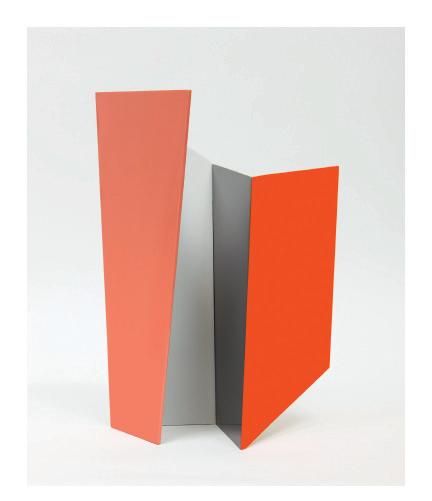
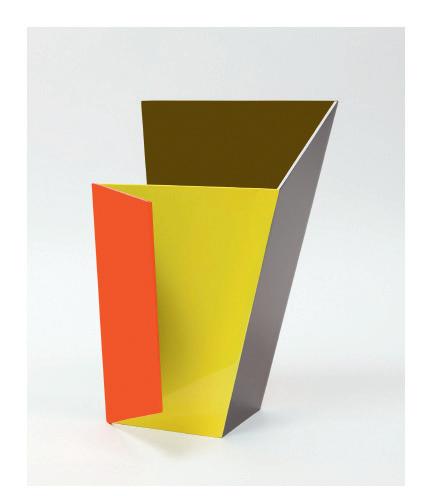
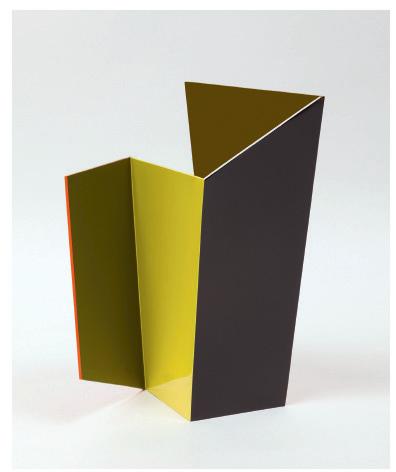
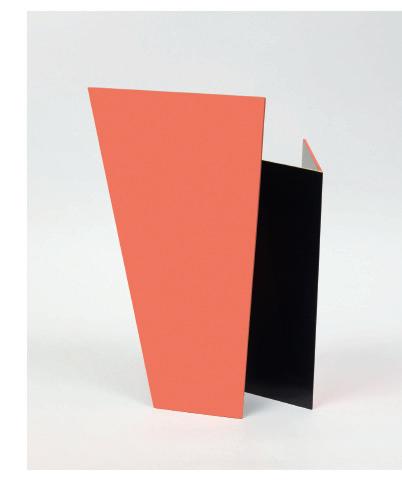
Let’s take a walk around a Howe sculpture. I’ve chosen Tobacco Shop, 2017 (plate 28) for its tempo—allegro—which is particularly rewarding not just in terms of the bounce of its vibrant colors but the subtle shock it delivers as it discloses its many charms. In plain geometric terms, there is that deceptive simplicity that makes it the perfect introduction to a deeper dive into his method. When I ran this idea by Howe of a verbal perambulation, he told me a charming story about the reason for the title, which was suggested to him as the work took shape because the alluring colors brought back to him a vivid memory of a little old tobacco shop in Paris’s Rue Bonaparte that he had visited. “I knew this thing – it was a place I had gone by often.” Howe points out. Then he went a step further to suggest to me that, as the palette changes from one view to the next, it also suggests to him Paris in different decades, from the Jazz Age to the Thirties and even the Fifties, so that we are not just moving in space but in time. Even the artist blissfully concedes that it took him fifteen laps around the work to sort out exactly which part was where, a state of mind he cleverly calls “perspective amnesia.” This bafflement, I would argue, is crucial to the modus operandi of the work. The Rive Gauche anecdote was all the hint I needed, having written extensively about Paris in the Jazz Age. I even had my soundtrack for this unusual exercise in art criticism, the “walking theme” in George Gershwin’s an American in Paris (1928), complete with the intricate xylophone riff and the off-key blare of the taxi horns (Gershwin made a special trip to the district where the horns were sold to buy that “note” of realism.) So the invitation is for you to become Gene Kelly and assume that jaunty, hands-in-pockets lilt of the most famous cinematic flâneur in history as we take a turn around Tobacco Shop, 2017 (plate 28)
To begin, let’s approach from the side that presents a brilliant, cardinal-red façade, actually a blend of orange and red that hints at the proprietary Calder red over which a great deal of ink has already been spilled. Who knows if it’s really the front, but we can use the blast of warm red
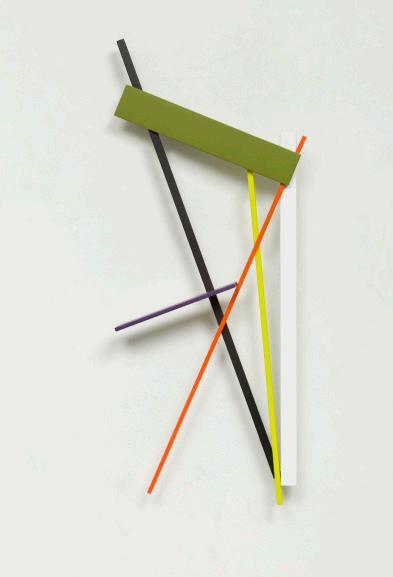
as a welcome sign, like the bright awning of one of those Parisian corner stores. Just over the quadrangle’s upper lip, we catch a glimpse of three folding panels angle away into the next planar stages. The first is a lemon yellow (I checked with the sculptor, whose fastidious chromatic mixing is everywhere evident in his work), making me wonder if we are circumambulating the primaries because it takes a left turn into a sail white, and then, abruptly, a tall panel of very dark grey (verging on black, as Calder probably would have chosen) with a black top edge but, let’s not miss this detail, a red side edge which takes us back to the “front.” It may be these four colors and their history, but from this direction I appear to be headed to the Bauhaus, where that chromatic syntax was quite common. Others might suggest that the Russian Constructivists combined red, white and black in their sculpture and graphic designs, and Howe drops the name Malevich in reference to this work. A whole detour could be made to Leiden where de Stijl also used this palette. Suddenly we are far from the Paris of Léger and Mondrian’s breakthrough work in the primaries. Such is the international range of Howe’s vocabulary. But we tarry too long in front of the attractive red façade. Keep moving.
As we circle counter-clockwise we offer ourselves a better view of that cheerful yellow even if it means leaving the red momentarily behind, inviting the first stage of “perspectival amnesia” to set in. We are in for a surprise. The yellow expands to a much broader plane than that secure red, and it yields at its right border to a dark khaki grey (again, according to the source), its top edge the brilliant white, but the view over that edge takes us into a real black, like a shadow. Because the left wing of the yellow panel is also “black,” with just the hint of that red edge to remind us where we have just been. The new heraldry of the Tobacco Shop, 2017 (plate 28) is a classic black-yellow-black alternation, as familiar as a caution sign in a factory and yet as shocking as the inverse of that art historically loaded combination of red, yellow, black and white. Howe has pulled the old bait-and-switch perfectly.
But the game is not over. Turn the corner once more on the “rear” black panel and a whole new panoply of color unfolds. Our bright red hauls back into view on the right, flanked by a panel of black and the next a panel of white and then back to a tall column of red, so that the barely registered familiarity of black-yellow-black is swapped for a new and also familiar trio of red black and white, with the hot red panels presenting themselves outward to the world while our inner recess is black and white. We need another trip around this “dysfunctional accordion” (Howe’s hysterically funny label for this work) to find out where that yellow went, and confirm or memory of what seems like such a different work of art from the one we had just encountered head on. Turn the corner again, and you are home.
Charles A. Riley II, PhD is the director of the Nassau County Museum of Art and the author of thirty-seven books on the arts, cultural history, business and politics, including Color Codes, Free as Gods, The Saints of Modern Art, The Art of Lincoln Center and The Jazz Age in France. The former editor of Art & Auction magazine, he has curated several exhibitions in galleries and museums in Asia, Europe and the United States. He is a professor at Clarkson University and a jurist on public art selection committees.
the man pulling radishes points the way with a radish
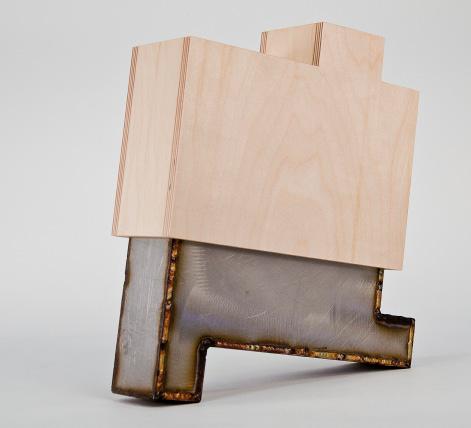
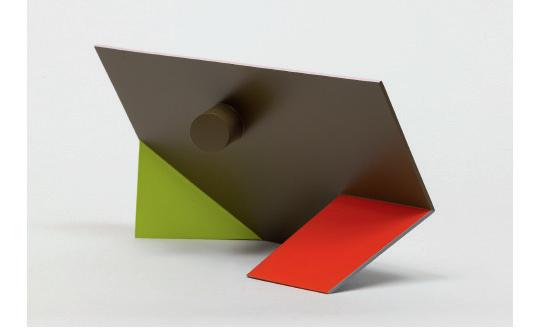
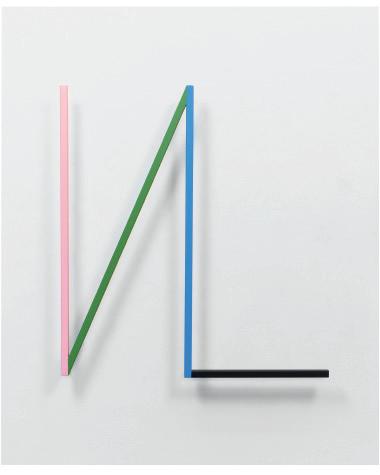
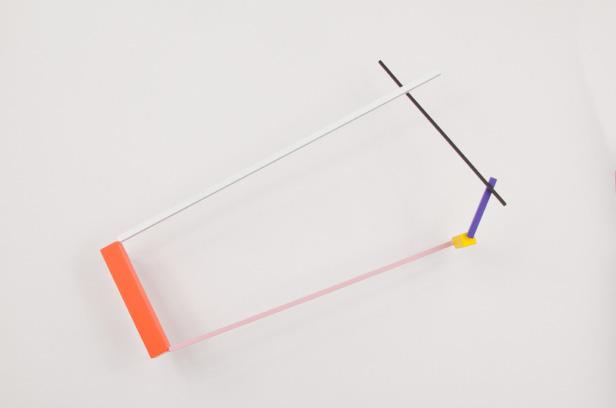
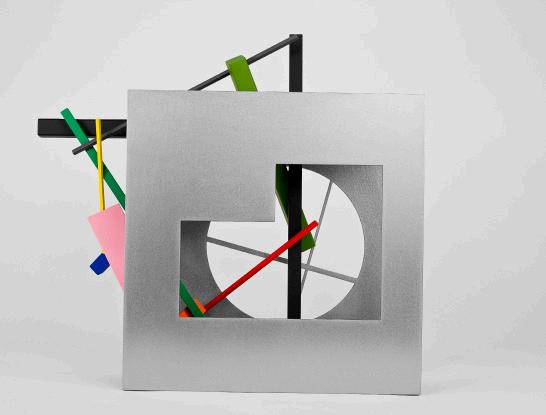
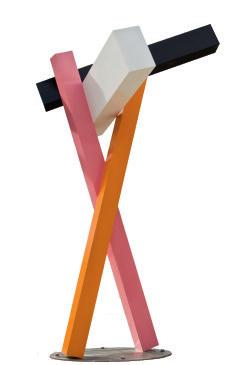
5 | Amnesia , 2017, Stainless Steel, Baltic Birch, 13 x 12 x 4 in. (33 x 30 x 10 cm), Collection of Katherine Cone
—Issa
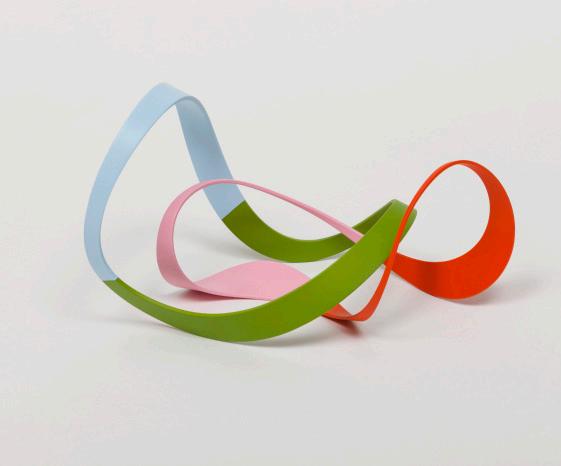
Axiom
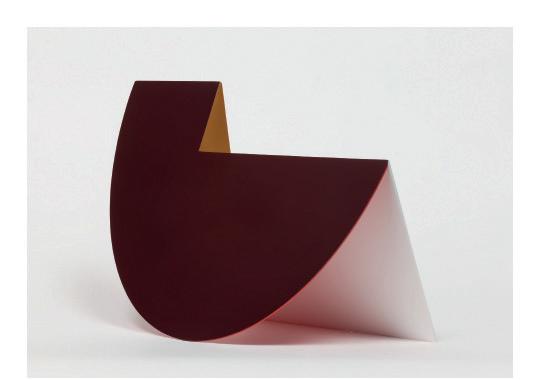
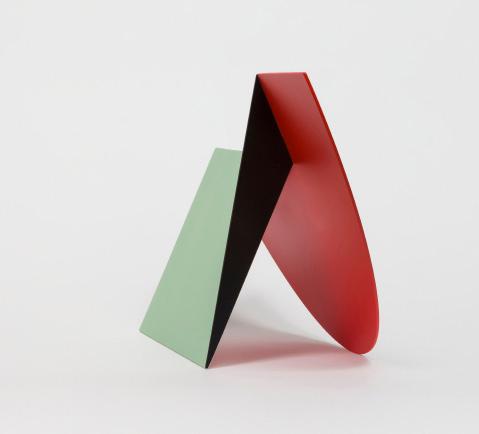
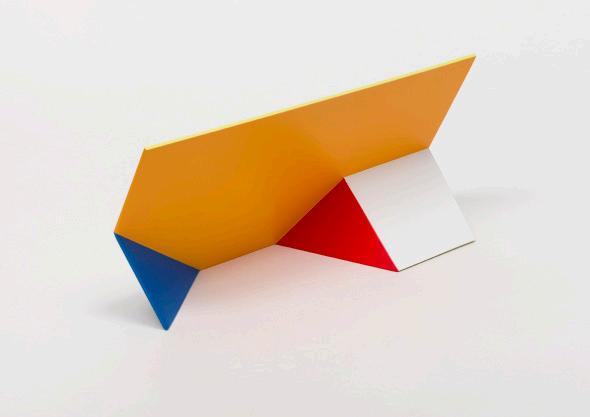
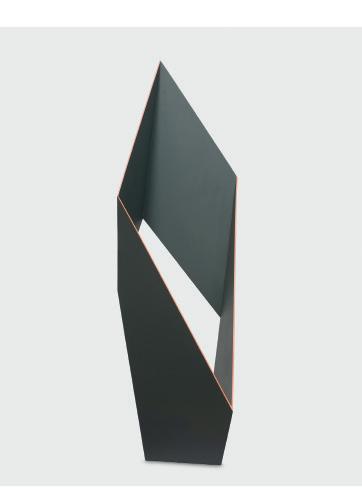
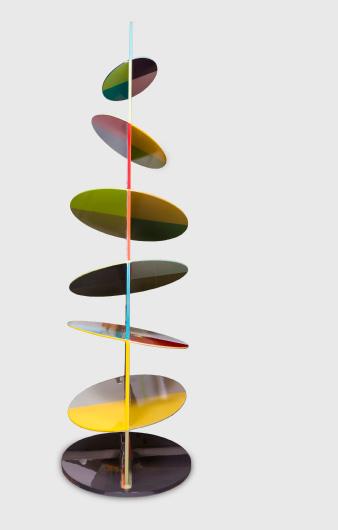
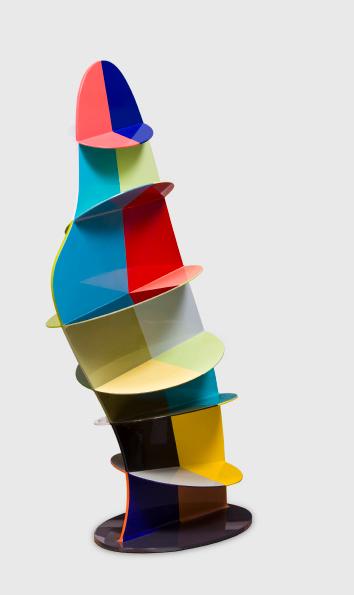
Activated by color, these objects parse space, creating inside and outside, foreground and background, seen and unseen. They manifest sculpture as an event, the object as a verb, a presence comprehended in time as well as space – in time as space. By virtue of their multifaceted compositions, the Axiom sculptures interface with the present, the future and the past in a dynamic exchange of witnessing, remembering and forgetting. They fold and unfold simultaneously in the viewer’s time and in their own.
| ThePlanetIsaWildPlace,2018, Stainless Steel, Urethane, 13 x 19 x 7 in. (33 x 48 x 18 cm), View A and B, Collection of Elaine Surnow and Jim Martini
Stainless Steel, Urethane, 7 x 14 x 5 in. (18 x 35 x 13 cm), Private Collection
Aluminum, Urethane, 82 x 24 x 34 in. (205 x 60 x 85 cm), View A and B, Private Collection
| Trapdoor,2018, Stainless Steel, Urethane, 4 x 14 x 3 in. (10 x 35 x 8 cm), Private Collection
27 | Thusness,2018, Stainless Steel, Urethane, 16 x 22 x 18 in. (40 x 55 x 45 cm), Collection of Sheryl Sandberg
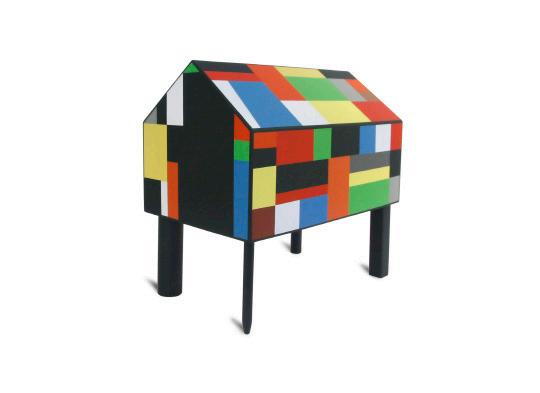
TobaccoShop,2017, Stainless Steel, Urethane, 15 x 12 x 9 in. (38 x 30 x 23 cm), View A, B, C, D and E, Collection of Rich Esposito
29 | Tussle,2017, Stainless Steel, Urethane
6 x 14 x 5 in. (15 x 35 x 13 cm)
Collection of Sheryl Sandberg
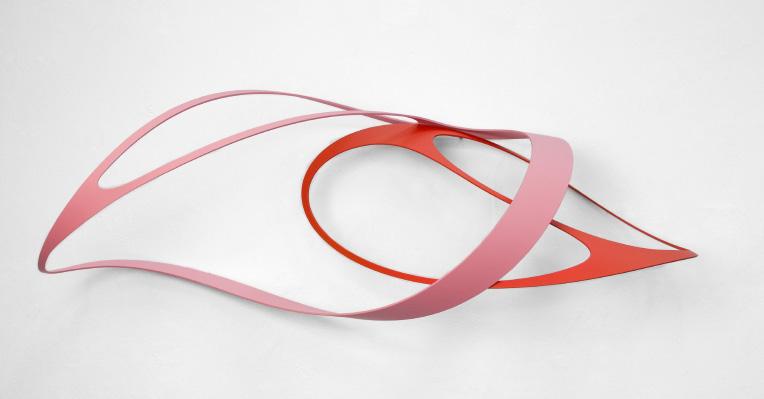
Calligraphy
My lifelong ambition has been to unite the utmost seriousness of question with the utmost lightness of form.
—Milan Kundera
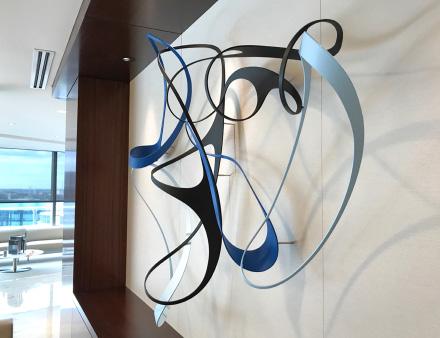
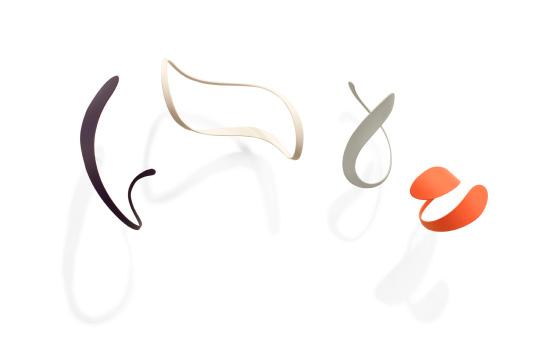
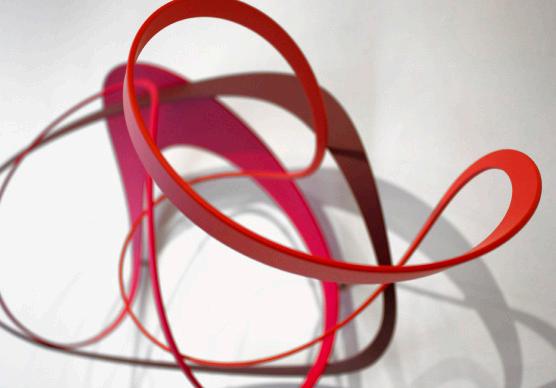
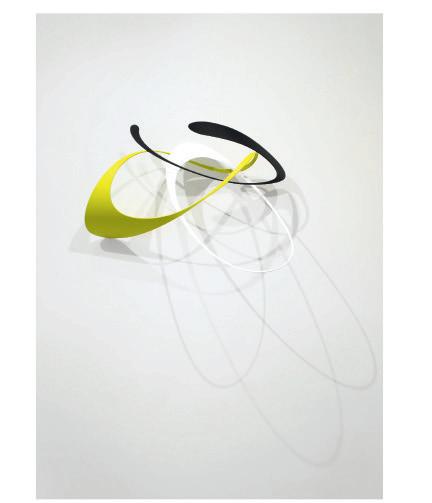
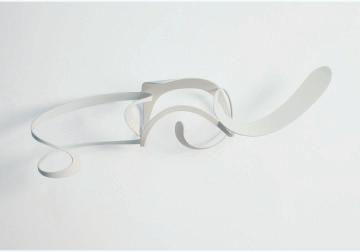
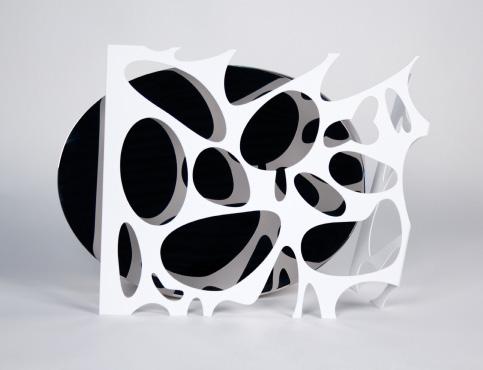
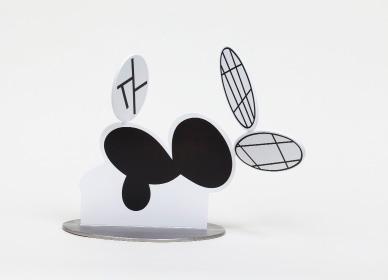
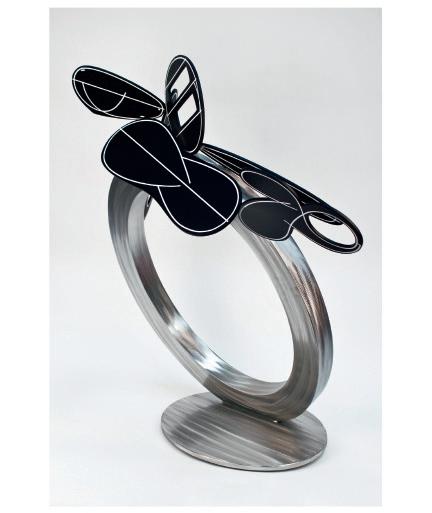
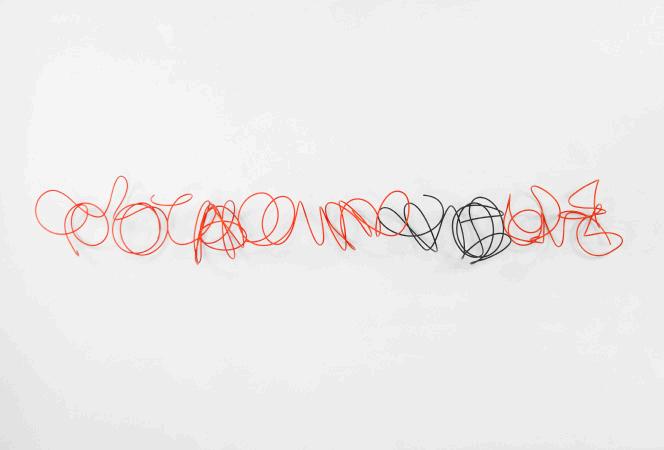
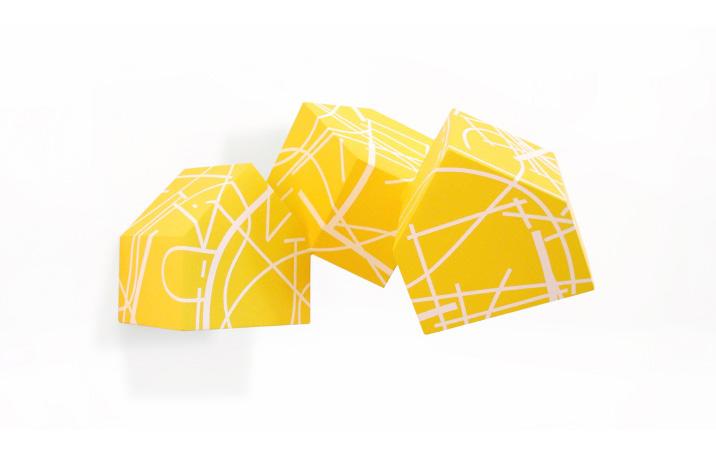
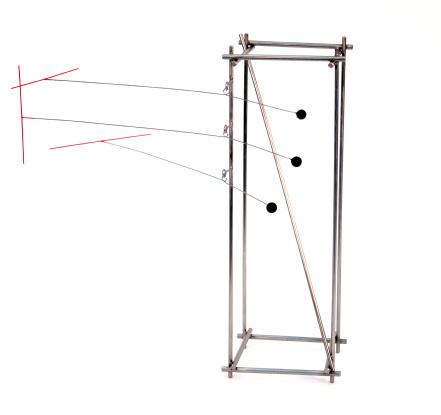
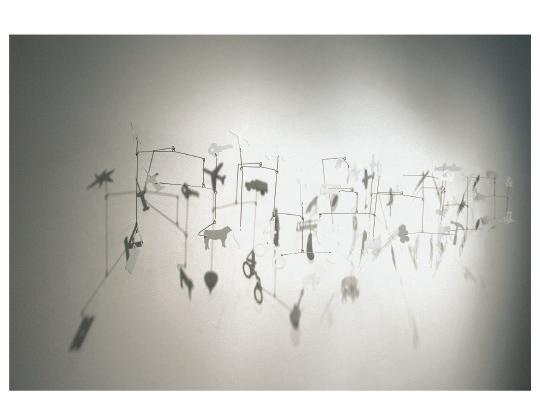
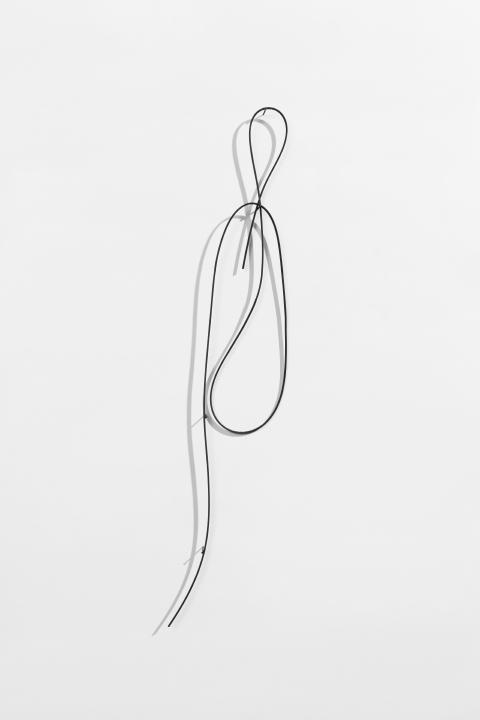
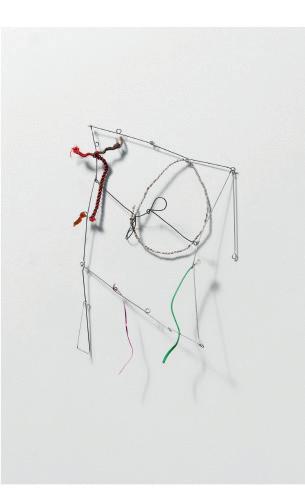
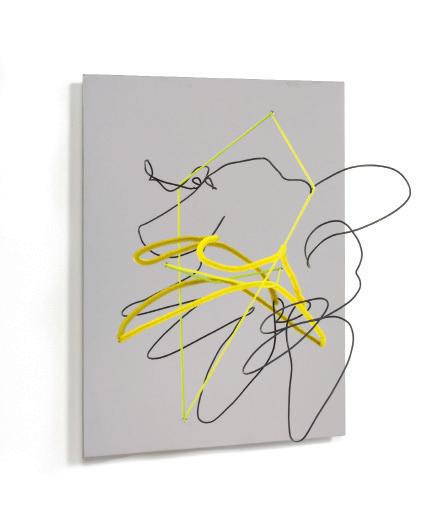
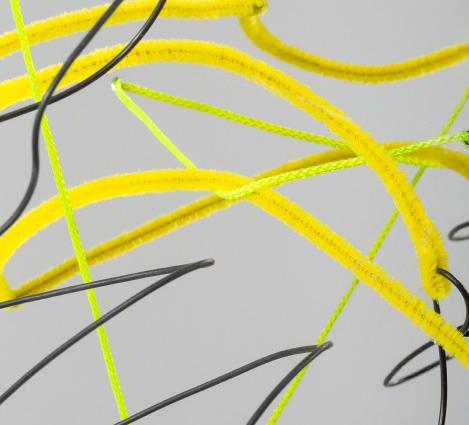
The initial concept behind the Calligraphy sculptures was to extrude the lines of text into three dimensional space. They presented a challenge to examine the pathways of writing and how their traced gestures and intersections overlay our memories and the patterns we find all around us in nature. Are their structures then components of words that might signal something beyond themselves, or are they wings or leaves, depicting themselves? What I had not anticipated were the wild shadows that escaped their bodies like animals they were sheltering.
One realized all sorts of things. The value of an illusion, for instance, and that the shadow can be more important than the substance. All sorts of things.
—Jean Rhys, Quartet
The beginnings and ends of shadow lie between the light and darkness and may be infinitely diminished and infinitely increased. Shadow is the means by which bodies display their form. The forms of bodies could not be understood in detail but for shadow.
—Leonardo da Vinci
Both light and line are sculptural as much as pictorial properties. Line does not simply define shape, it defines direction, volume and energy. Light, in turn, defines line as well as plane. The Calligraphy series brings this to the fore, exploiting the shadows cast by illumined forms as counterweights—perceptual and physical—to the forms themselves. A shape dances with its shadow and a choreography of material and immaterial emerges.
30 | Stanza , 2011, Stainless Steel, Urethane, 24 x 24 x 8 in. (61 x 36 x 20 cm), Private Collection
31 | Phlogiston , 2017, Aluminum, Urethane, 50 x 80 x 12 in. (125 x 200 x 30 cm), Commissioned by Erdrich White Fine Art
32 | Carillon , 2011, Stainless Steel, Urethane, 12 x 29 x 6 in. (30 x 73 x 15 cm), Private Collection
33 | Imbue , 2017, Stainless Steel, Urethane, 66 x 90 x 7 in. (165 x 225 x 18 cm), Private Collection
34 | Graferes,2011, Stainless Steel, Urethane, 16 x 36 x 16 in. (40 x 90 x 40 cm), Private Collection
35 | Sombra,2011, Stainless Steel, Urethane, 20 x 14 x 14 in. (50 x 35 x 35 cm), Private Collection
| Tocer , 2011, Stainless Steel, Urethane, 20 x 28 x 14 in. (50 x 70 x 143 cm), Private Collection
37 | Kallos , 2013, Stainless Steel, Urethane, 10 x 33 x 9 in. (25 x 83 x 23 cm), Collection of Agata Maszkiewicz
38 | IonianBevy , 2011, Stainless Steel, Urethane, 21 x 52 x 7 in. (53 x 130 x 18 cm.)
9 x 21 x 12 in. (23 x 53 x 30 cm), Private Collection
5
3
53 | Lang50 , 2018, Stainless Steel, Urethane
5 x 14 x 7 in. (13 x 35 x 18 cm), Private Collection
54 | Lang55 , 2018, Stainless Steel, Urethane
x 8 x 8 in. (11 x 19 x 19 cm), Private Collection
55 | Lang73 , 2018, Stainless Steel, Urethane
9 x 10 x 6 in. (23 x 25 x 15 cm), Private Collection
56 | Lang81 , 2018, Stainless Steel, Urethane
x 9 x 6 in. (8 x 23 x 14 cm), Private Collection
5
57 | Lang84 , 2018, Stainless Steel, Urethane
5 x 8 x 5 in. (13 x 20 x 13 cm), Private Collection
58 | Lang91 , 2018, Stainless Steel, Urethane
5 x 10 x 9 in. (13 x 25 x 23 cm), Private Collection
59 | Lang118 , 2018, Stainless Steel, Urethane
5 x 8 x 6 in. (13 x 20 x 15 cm), Private Collection
60 | Lang36 , 2018, Stainless Steel, Urethane
x 8 x 6 in. (13 x 20 x 15 cm), Private Collection
61 | Lang116 , 2018, Stainless Steel, 3 x 5 x 3 in. (8 x 13 x 8 cm), Private Collection
62 | Lang101 , 2018, Stainless Steel, 3 x 7 x 4 in. (8 x 18 x 10 cm), Private Collection
63 | Lang57 , 2018, Stainless Steel, Urethane, 4 x 7 x 6 in. (10 x 18 x 15 cm), Private Collection
64 | RaraAvis , 2011, Stainless Steel, Urethane
6 x 6 x 6 in. (14 x 15 x 14 cm), Views A and B, Private Collection
65 | Kabobette , 2002, Bronze, 21 x 6 x 12 in. (53 x 15 x 30 cm), Collection
of Tom Gregory
Bronze
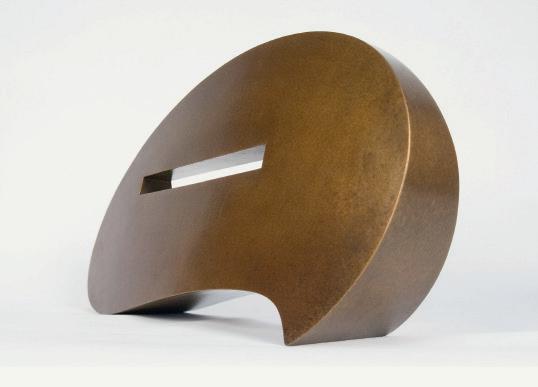
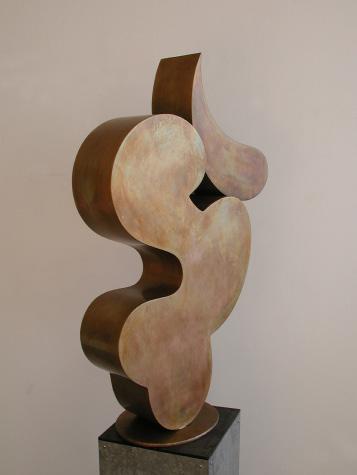
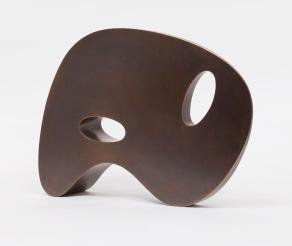
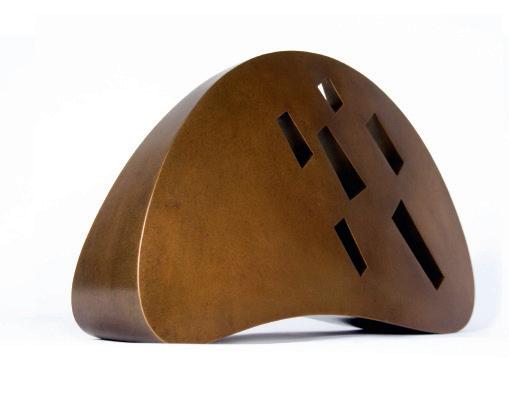
The storied history of Bronze didn’t prepare me for how soft it is. Bronze is a sensual, almost living material. It is a medium that is made to be touched, forgiving and willing to comply with what is asked from it. Bronze, like flesh, records time, responds to oil and glows in light.
67 | Chubby Raindrop , 2003, Bronze, 40 x 24 x 10 in. (100 x 60 x 25 cm), Private Collection
Workbench , 2017, Bronze, 18 x 22 x 5 in. (45 x 55 x 13 cm), Private Collection
69 | Heap , 2008, Bronze, 12 x 23 x 6 in. (30 x 58 x 15 cm), Private Collection
Right: 70 | LaAscencindelCorazon,1999, Bronze, 17 x 19 x 10 in. (43 x 48 x 25 cm), Private Collection
71 |
Magellan , 2003, Bronze, 28 x 18 x 11 in. (70 x 45 x 28 cm), Private Collection
72 | Pinocchio , 2003, Bronze, 36x 17 x 11 in. (90 x 43 x 28 cm), Private Collection
73 | Flute , 2011, Bronze
21.5 x 7 x 6 in. (54 x 18 x 15 cm), Private Collection
| Flow , 2010, Bronze, 6 x 29 x 5 in. (15 x 73 x 13 cm), Collection of the Artist
75 | Shanghai , 2007, Patinated Bronze, 34 x 25 x 14 in. (85 x 63 x 35 cm), View A, B, C, and D, Collection of Cody Luket
| NorThing,NorFact , 2011, Stainless Steel, Urethane, 15 x 13 x 8 in. (38 x 33 x 20 cm), Private Collection
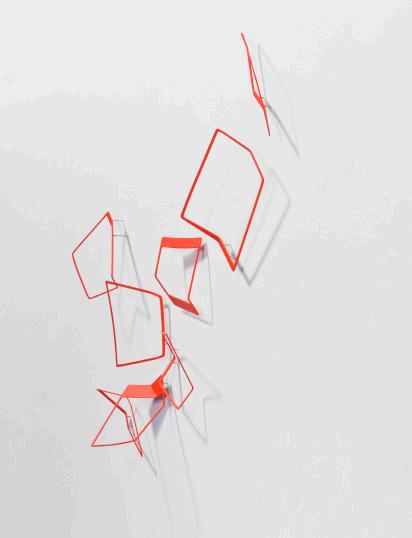
Constructs
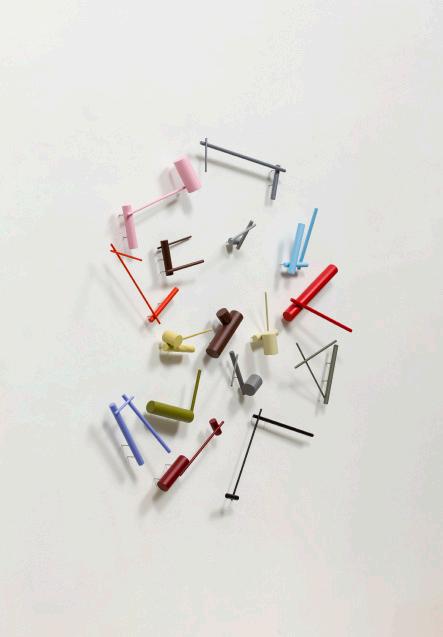
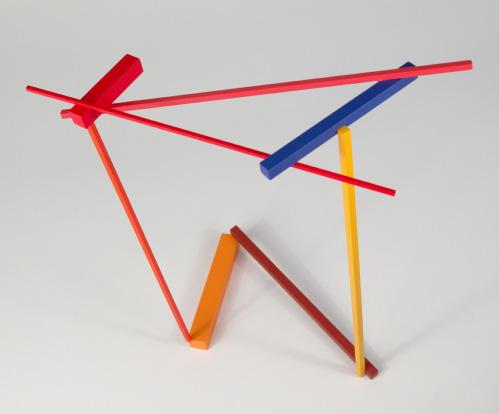
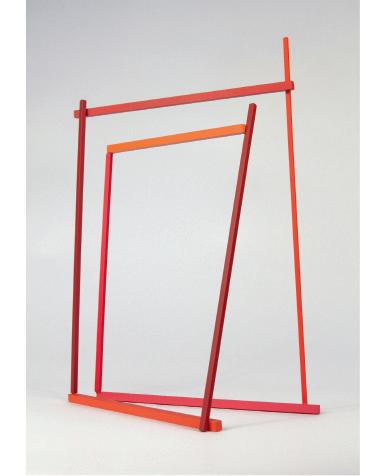
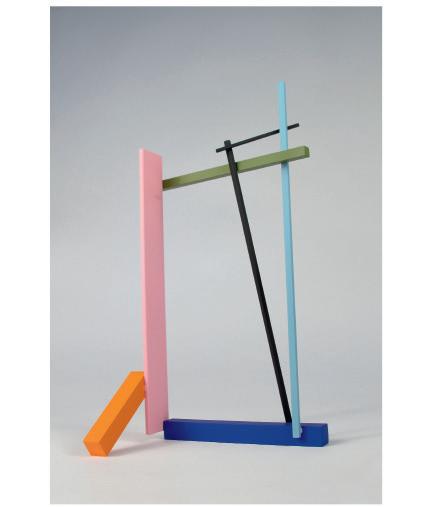
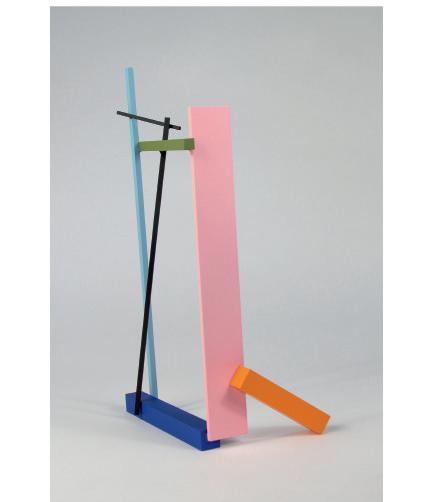
My father was a carpenter. I spent summers watching him build houses. Ditches were dug, concrete was molded, walls framed and roofs constructed. I was always torn between the elegance of his assembled homes and the rich cacophony of the trash piles, filled with wood segments, pipes, wires and discarded tiles. I learned to see lines.
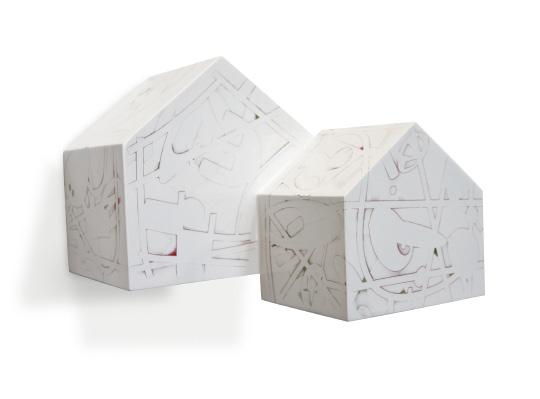
Wind and weather, highways and architecture, storytelling and writing are all expressed with lines. The aspiration of modernity, the logic of the shortest distance between two points, a pursuit of efficiency in a machine age, is understood through lines. These Constructs trace this approach to the world. They serve as three-dimensional maps of a wordless landscape, delineating borders, inside and outside, the integrated and the disconnected. The Eiffel Tower, submarines, bathroom plumbing, all have lines for bones.
77 | Sabine , 2011, Stainless Steel, Urethane 12 x 7 x 17 in. (30 x 18 x 43 cm), Private Collection
99 | Abolition , 2013, Stainless Steel, Urethane, 15 x 25 x 8 in. (38 x 63 x 20 cm), Private Collection
Deprivato
…Behind the smooth, obdurate silver barriers of these new works lurk many of the same jocular presences that have populated Howe’s oeuvre from its beginning; we just no longer have direct access to them.
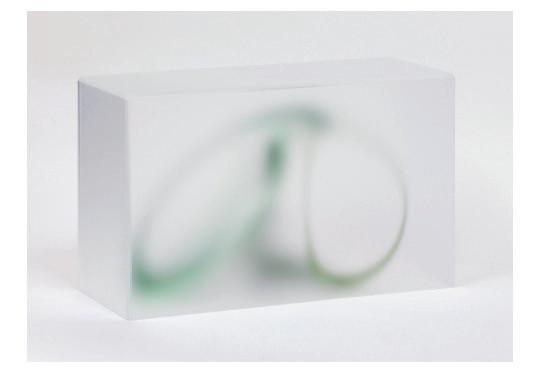
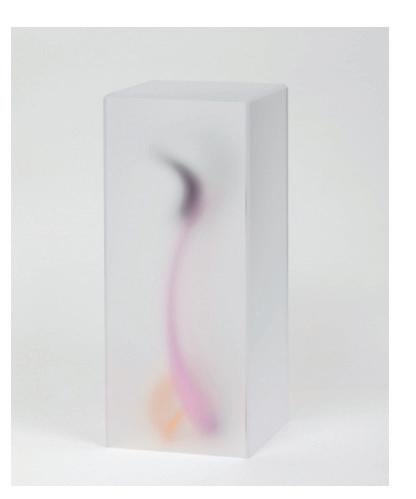
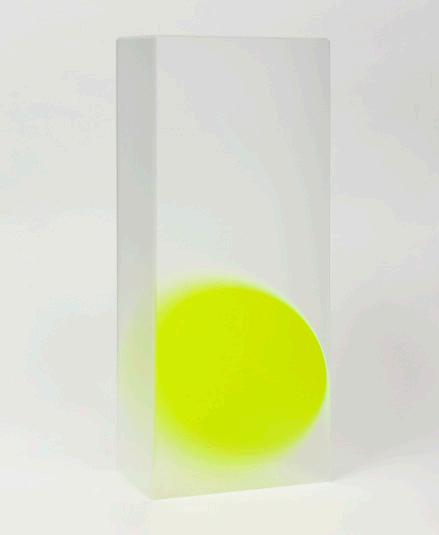
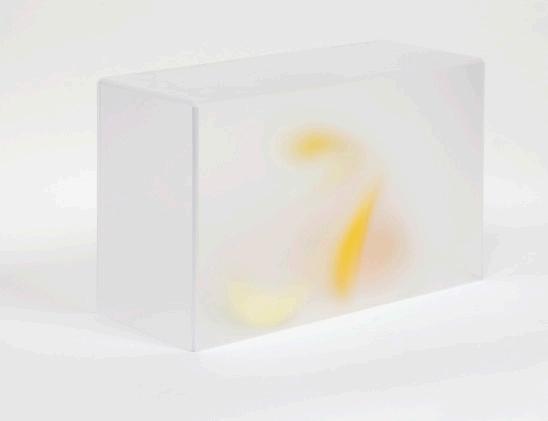
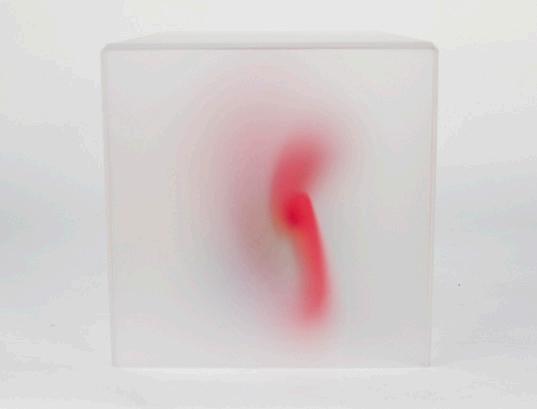
If you give it thought, however, these barriers are themselves rather coy, slipping and sliding around the shapes behind them so that we can glimpse these shapes, if only in part. This goes doubly for the corrugated Plexiglas boxes encasing some other, obviously hot-colored and oddly bent presences. You could say that the newly appointed guardians of Howe’s giddy creatures act like chaperones, keeping their wards in line and keeping their admirers at bay. But the silver walls and distorting encasements have their own sense of play, and are content to tease us by, in effect, lifting and lowering their veils….
—Peter Frank
1. 100 | Amid , 2017, Stainless Steel, Urethane, Acrylic 18 x 24 x 6 in. (45 x 60 x 15 cm)
Collection of the Artist
2. 101 | Benevolence , 2017, Stainless Steel, Urethane, Acrylic 15 x 24 x 10 in. (38 x 60 x 25cm)
Collection of Elke and Thomas Handtmann
3. 102 | Daylight , 2017, Stainless Steel, Urethane, Acrylic 24 x 10 x 10 in. (60 x 25 x 25 cm)
Collection of Elke and Thomas Handtmann
4. 103 | Absence , 2017, Acrylic 39 x 16 x 10 in. (98 x 40 x 25 cm)
Private Collection
104 | Flavor , 2017, Stainless Steel, Urethane, Acrylic, 15 x 24 x 10 in. (38 x 60 x 25 cm), Private Collection
105 | Murmur , 2012, Stainless Steel, Urethane, 12 x 20 x 12 in. (30 x 50 x 30 cm), Private Collection
106 | Autonomy , 2012, Stainless Steel, 13 x 24 x 11 in. (33 x 60 x 28 cm), Views A and B , Collection of Nancy Larrew and Andi Fuzes
107 | Blurr , 2013, Stainless Steel, Urethane 31 x 11 x 10 in. (78 x 28 x 25 cm), Private Collection
108 | Chitin , 2012, Stainless Steel, 115 x 49 x 48 in. (288 x 123 x 120 cm) Collection of the Artist
109 | Gravity , 2013, Stainless Steel, Urethane, 20 x 22 x 13 in. (50 x 55 x 33 cm), Collection of Darlene Fogel
110 | Linger,2015, Stainless Steel, 18 x 25 x 9 in. (45 x 63 x 23 cm), Private Collection
111 | Fete , 2012, Stainless Steel, Urethane, 12 x 24 x 15 in. (30 x 60 x 38 cm), Collection of the Artist
112 | Response , 2013, Stainless Steel, Urethane, 20 x 18 x 16 in. (50 x 45 x 40 cm), Collection of Carrie Chassin and Jochen Haber
113 | Whitewash , 2013, Stainless Steel, Urethane, 25 x 31 x 12 in. (61 x 76 x 29 cm), Collection of Suzanne and Sebastian Finkbeiner
, 2015, Stainless Steel, Aluminum, Urethane, 23 x 30 x 12 in. (58 x 75 x 30 cm), Private Collection
115 | Temptation , 2012, Stainless Steel, Urethane, 15 x 21 x 14 in. (38 x 53 x 35 cm), View A, B and C, Private Collection
116 | Sonant , 2013, Stainless Steel, Urethane, 17 x 10 x 10 in. (43 x 25 x 25 cm), View A and B, Private Collection
, 2015, Stainless Steel, Urethane, 18 x 24 x 12 in. (45 x 60 x 30 cm), Private Collection
118 | Sorrow,2013, Stainless Steel, Urethane, 6 x 15 x 9 in. (15 x 38 x 23 cm), View A, B, C and D, Collection of Cynthia Penna Simonelli and Renato Penna
119 | Frock , 2012, Stainless Steel, Aluminum, Urethane, 12 x 25 x 18 in. (29 x 61 x 45 cm) , View A and B, Private Collection
, 2015, Stainless Steel, Urethane, 38 x 20 x 16 in. (95 x 50 x 40 cm), Private Collection
121 | Inference , 2013, Stainless Steel, Urethane, 21 x 20 x 22 in. (53 x 49 x 54 cm), View A, B, C and D, Collection of May Chung
122 | Midst , 2013, Stainless Steel, Urethane, 20 x 24 x 6 in. (50 x 60 x 15 cm), View A and B, Collection of the Artist
, 2016, Stainless Steel, 20 x 40 x 14 in. (50 x 100 x 35 cm), Collection of the Artist
Eterea: Mirror Play
It could be argued that it is in the observer that the work of art is created and equally that the work creates the observer.
If we process our lives through metaphors, then we are measuring the world poetically. As mapmakers, navigators of our own geographies, we generate a topology of existence, tracking our presence, moving through a field of oppositions and thresholds, between object and image, inside and out, macro and micro, familiar and foreign.
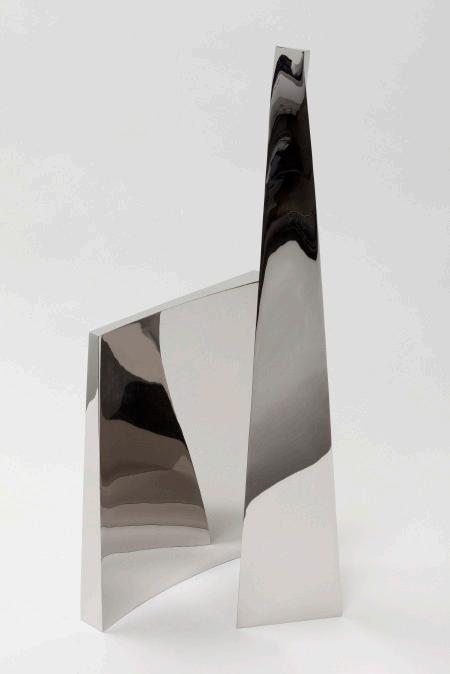
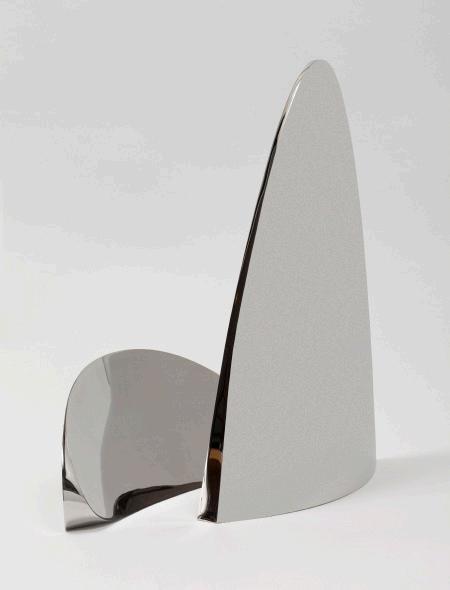
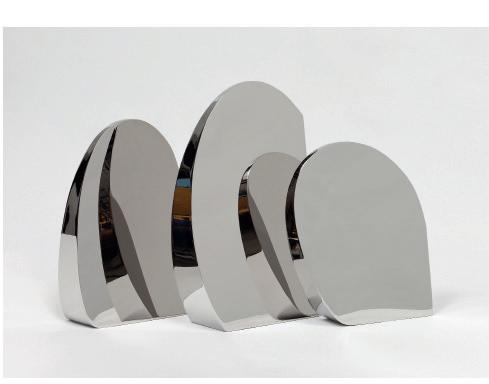
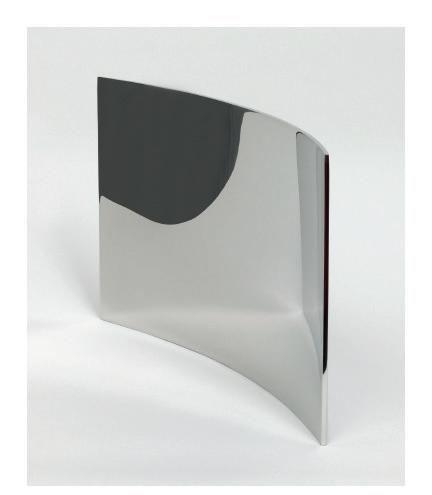
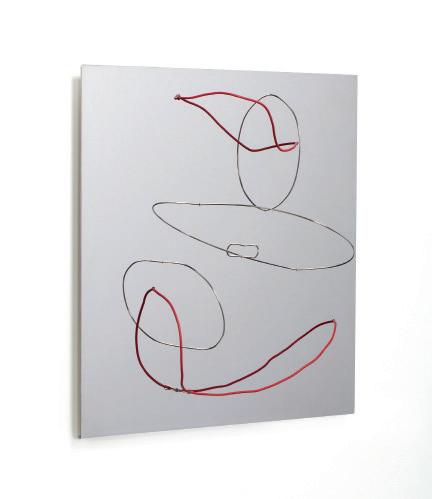
Mirror-play exposes and decenters observation and interpretation, so as to bring to light that which is unthought, to expose presuppositions and their consequences. It makes apparent unsettling aspects of what we thought we knew all along, a self-showing, a flagrancy, challenging the stability of sight. Through the lens of the polished mirror vision shifts; it becomes pliant, fugitive, detailed, present.
124 | Verisimilitude , 2016, Stainless Steel, Urethane, 24 x 30 x 5 in. (60 x 75 x 13 cm), View A and B, Private Collection Exhibited together with paintings by Suzan Woodruff
125 | Ambush , 2016, Stainless Steel, 36 x 20 x 14 in. (90 x 50 x 35 cm), Collection of Rhonda and Ron Papell
| TrickyDay , 2016, Stainless Steel, 24 x 18 x 18 in. (60 x 45 x 45 cm), Private Collection
127 | Meanwhile , 2016, Stainless Steel, 21 x 24 x 16 in. (53 x 60 x 40 cm), Private Collection
128 | Carom , 2019, Stainless Steel, 12 x 21 x 3 in. (30 x 53 x 8 cm), Collection of the Artist
Monoliths
These monoliths are my stones. They are massive, honed, self-referential and deliberate. Their geometric language reifies that deliberateness—and that sense of mass, at once tensile and almost invisible. They are dependable, almost touchstones, but promise an ethereality, as if they could pull a disappearing act at any moment.
, 2018, Stainless Steel, Urethane, 58 x 70 x 12 in. (145 x 175 x 30 cm), Collection of the Artist
131 | Anesthesia , 2018, Stainless Steel, 40 x 120 x 24 in. (100 x 300 x 60 cm), Collection of the Artist
132 | NookandCranny , 2018, Stainless Steel, Urethane, 61 x 72 x 14 in. (153 x 180 x 35 cm), View A and B, Private Collection
133 | WhatBeforeWho , 2018, Stainless Steel, Urethane, 44 x 60 x 13 in. (110 x 150 x 33 cm), Collection of the Artist
Maquettes
Constructing a maquette is like building a watch, or a hummingbird, or a ship in a bottle. You’re working in miniature, and everything needs to be very small but perfectly proportioned. I use the term “maquette” here not to denote models for large objects, but to identify sculptures conceived and fabricated on an intimate scale. They could become larger, but they don’t need to.
| TruffleHound , 2016, Stainless Steel, Urethane, 18x 24 x 6 in. (45 x 60 x 15 cm), Collection of Gallery Jones
135 | BubbleShuffle , 2009, Stainless Steel, Urethane, 14 x 18 x 12 in. (34 x 45 x 30 cm), Private Collection
Right: 136 | BlindBelief , 2015, Stainless Steel, Urethane, 19 x 15 x 7 in. (48 x 38 x 18 cm), Private Collection
137 | Dodger , 2012, Stainless Steel, Urethane, 17 x 20 x 10 in. (43 x 50 x 25 cm), Private Collection
Right: 138 | Brutus , 2015, Stainless Steel, Urethane, 15 x 19 x 6 in. (38 x 48 x 15 cm), Collection of May Chung
Left: 139 |ChangesInTheWeather , 2016, Stainless Steel, Urethane, 6 x 22 x 8 in. (15 x 55 x 20 cm), View A and B, Collection of the Artist
140 | Cul-de-Sac , 2015, Stainless Steel, Urethane, 8 x 12 x 13 in. (20 x 30 x 33 cm), Collection of the Artist
141 | Countless , 2014, Stainless Steel, 7 x 11 x 5 in. (18 x 28 x 13 cm), Private Collection
142 | Doppio , 2008, Patinated Stainless Steel, 33 x 24 x 11 in. (83 x 60 x 28 cm), Private Collection
143 | Doorbell , 2013, Stainless Steel, Urethane, 25 x 14 x 9 in. (63 x 35 x 23 cm), Private Collection
144 | Dewey , 2013, Stainless Steel, Urethane, 14 x 18 x 8 in. (35 x 44 x 20 cm), Private Collection
145 | Geezer , 2011, Stainless Steel, Urethane, 35 x 24 x 16 in. (88 x 60 x 40 cm), Collection of Gary Goldstein
, 2006, Stainless Steel, Urethane, 12 x 30 x 5 in. (30 x 75 x 13 cm), Private Collection
147 | Gush , 2017, Stainless Steel, Urethane, 19 x 19 x 8 in. (48 x 48 x 20 cm), Private Collection
148 | Grace , 2014, Stainless Steel, Urethane, 16 x 14 x 8 in. (40 x 35 x 20 cm), Private Collection
149 | Jitter 2016, Stainless Steel, Urethane, 14 x 12 x 5 in. (35 x 30 x 13 cm), Collection of the Artist
150 | Juvenilia , 2016, Stainless Steel, Urethane, 8 x 25 x 13 in. (20 x 63 x 33 cm), Collection of the Artist
151 | Nopal , 2007, Stainless Steel, Urethane, 28 x 21 x 9 in. (70 x 53 x 22 cm), Private Collection
152 | Tenor , 2008, Stainless Steel, Urethane, 14 x 22 x 6 in. (35 x 55 x 15 cm), Private Collection
153 | Pulso , 2012, Stainless Steel, Urethane, 21 x 12 x 8 in. (51 x 30 x 20 cm), Private Collection
| Plow , 2011, Stainless Steel, Urethane, 14 x 18 x 4 in. (35 x 45 x 10 cm), Collection of Eva Fayman
155 | Plush , 2017, Stainless Steel, Urethane, 14 x 18 x 7 in. (35 x 45 x 18 cm), Private Collection
156 | Tropos , 2011, Stainless Steel, Urethane, 39 x 36 x 18 in. (98 x 90 x 45 cm), Private Collection
157 | LifeJacket , 2015, Stainless Steel, Urethane, 6 x 19 x 13 in. (15 x 48 x 33 cm), Private Collection
158 | Mola , 2008, Stainless Steel, Urethane, 12 x 23 x 5 in. (30 x 58 x 13 cm), Collection of Suzanne and Jean Claude Benarrosh
159 | Lato , 2012, Stainless Steel, Urethane, 31 x 17 x 9 in. (78 x 43 x 21 cm), Private Collection
160 | Kettle , 1995, Steel, Urethane, 30 x 19 x 18 in. (75 x 48 x 45 cm), Private Collection
Monumental Sculpture
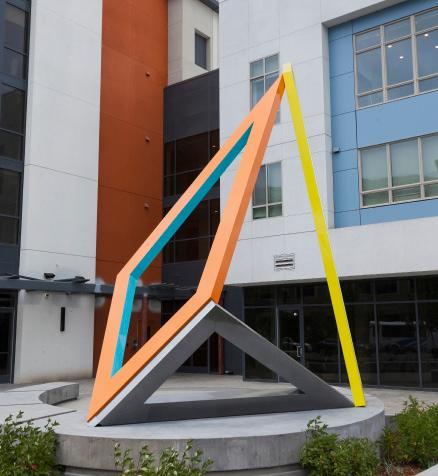
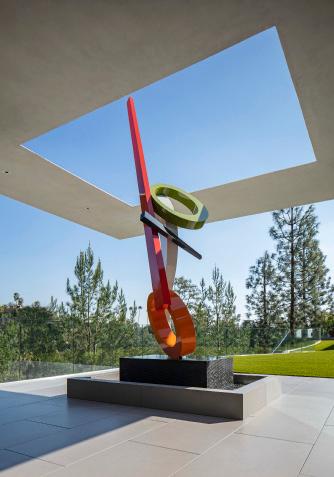
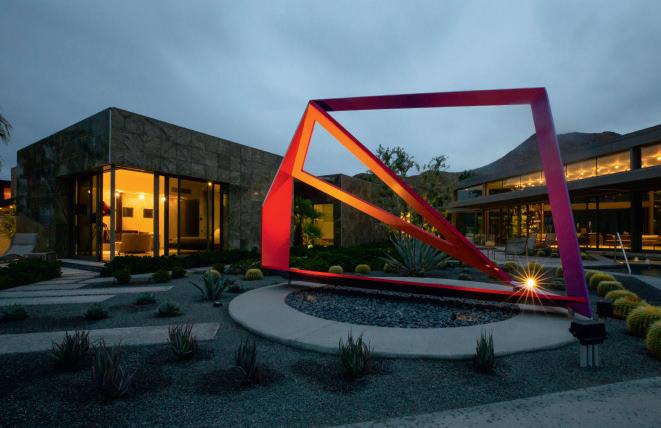
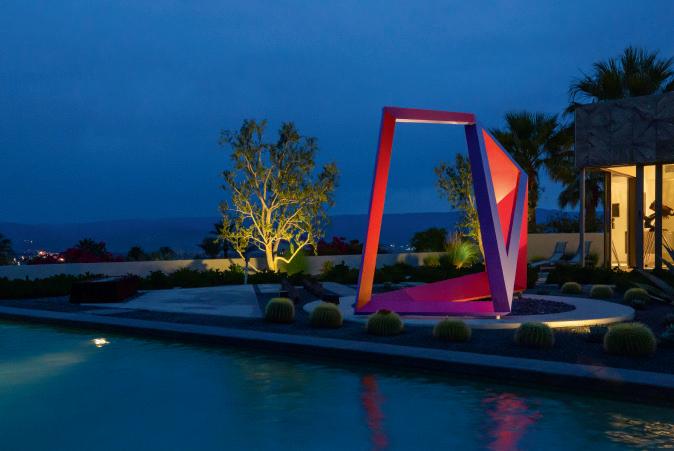
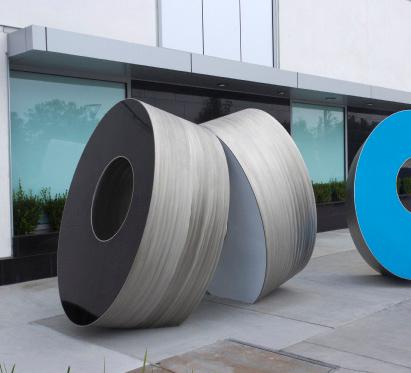
While in Nice, France, I visited the Museum of Modern Art. I was walking through the outdoor sculpture exhibit when I realized the large sculptures frightened me ever so slightly. “These things are big enough to eat me,” I thought to myself. My pulse accelerated, I paid more attention. I calculated that the larger sculptures were at least one and a half times the size of a normal person, and some part of me felt physically threatened. Run or engage? Engaging meant enhanced looking and gaining respect for the works, for more than just their scale. Once this sort of seeing begins, one senses movement, the weather, gravity, dynamic tensions, the surroundings and paths of escape.
161 | OfertaAoSol , 2012, Stainless Steel, Urethane, 132 x 75 x 64 in. (330 x 188 x 160 cm) Collection of the Artist
162 | Occam’sRazor , 2018, Carbon Fiber,Stainless Steel, Urethane, 25 x 18 x 11 in. (63 x 45 x 28 cm), Collection of Essex Property Trust, San Mateo, CA
163 | Elan,2018, Stainless Steel, Urethane
150 x 4 x 45 in. (375 x 120 x 113 cm)
Collection of Sandy and Larry Post
164 | ACityintheSky,2019 , Aluminum, Urethane
84 x 144 x 48 in. (213 x 366 x 122 cm)
Collection of Terry Greene
Left: Work in Progress, Reckon,2012
165 | Reckon , 2012, Stainless Steel, Urethane, 127 x 120 x 32 in. (318 x 300 x 80 cm), Collection of City of Carmel, Carmel, IN
, 2016, Stainless Steel, Urethane, 82 x 34 x 19 in. (205 x 85 x 48 cm), Private Collection
167 | BuffaloCowgirl , 2010, Stainless Steel, Urethane, 104 x 64 x 42 in. (260 x 160 x 105 cm), Collection for Robin and Richard Goldman
168 | TissuePaper , 2015, Stainless Steel, Urethane, 81 x 47 x 12 in. (203 x 118 x 30 cm), Private Collection
Above Left: 169 | SweetPotato , 2016, Stainless Steel, Urethane, 90 x 62 x 17 in. (225 x 155 x 43 cm), Private Collection
Right: 170 | Bobo , 2011, Stainless Steel, Urethane, 64 x 30 x 30 in. (160 x 75 x 75 cm), Collection of the Artist
171 | Watusi , 2000, Stainless Steel, 180 x 72 x 72 in. (450 x 180 x 180 cm), Collection of Ajinomoto Windsor Inc., Ontario, CA
172 | Venezuela , 2003, Stainless Steel, 168 x 96 x 72 in. (420 x 240 x 180 cm), Collection of George Rosenthal
173 | Spinoza , 2014, Stainless Steel, Urethane, 190 x 117 x 44 in. (475 x 293 x 110 cm), Collection of the Artist
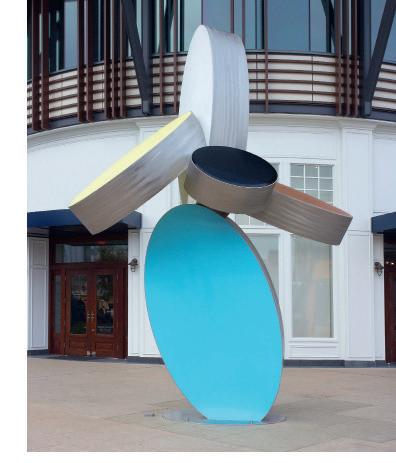
174 | Waypoint,2001, Stainless Steel, Urethane, 360 x 240 x 120 in. (900 x 600 x 300 cm), Overton Moore Properties, Torrance, CA
175 | Woodpath , 2016, Stainless Steel, Urethane, 62 x 42 x 16 in. (155 x 105 x 40 cm), Private Collection
Right: 176 | AsAliveasPossible , 2018, Aluminum, Urethane, 77 x 52 x 20 in. (193 x 130 x 50 cm), View A and B, Collection of Elke and Thomas Handtmann
Left: 177 | Semillas , 2016, Stainless Steel, Urethane, (each piece) 72 x 52 x 32 in. (180 x 130 x 80 cm), Stanford University, Stanford, CA
178 | Qualia , 2016, Stainless Steel, Urethane, 204 x 168 x 96 in. (510 x 420 x 240 cm), Stanford University, Stanford, CA
179 | Lemonada , 2009, Aluminum, Urethane, 50 x 84 x 120 in. (125 x 210 x 300 cm), Collection of the Artist
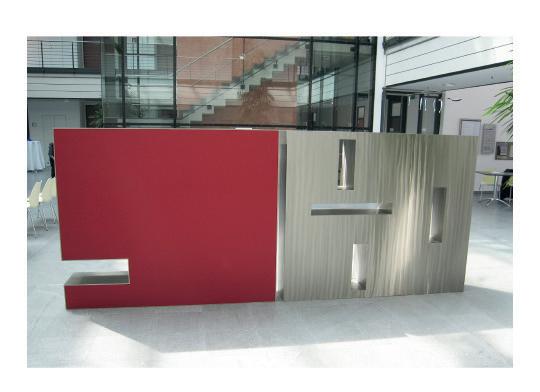
| Red,BlackMonoliths , 2006, Stainless Steel, Urethane, 60 x 150 x 10 in. (150 x 375 x 25 cm), Private Collection
181 | RiversRunThroughUs , 2018, Aluminum, Urethane, 180 x 96 x 48 in. (450 x 240 x 120 cm), Michigan State University, East Lansing, MI
182 | Palomino , 2015, Stainless Steel, Urethane, 156 x 90 x 60 in. (396 x 229 x 152 cm), Collection of Frost Bank, San Antonio, TX
184 | Ransack , 2014, Stainless Steel, Urethane, 108 x 60 x 30 in. (270 x 150 x 75 cm)
Private Collection
183 | Paddles , 2010, Stainless Steel, Urethane, 78 x 55 x 36 in. (195 x 138 x 90 cm)
Private Collection
185 | Judo , 2015, Stainless Steel, Urethane, 80 x 64 x 24 in. (200 x 160 x 60 cm), Private Collection
186 | Paloma , 2005, Stainless Steel, 76 x 81 x 23 in. (190 x 203 x 58 cm), Private
Collection
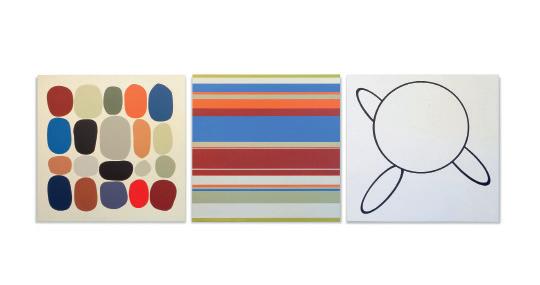
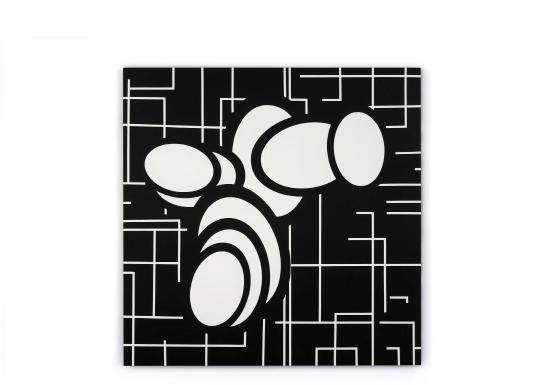
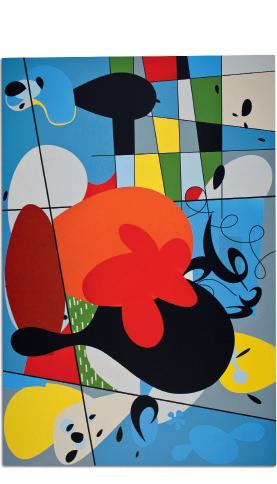
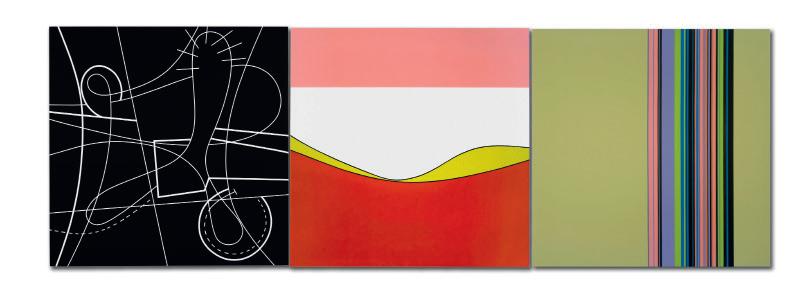
Paintings
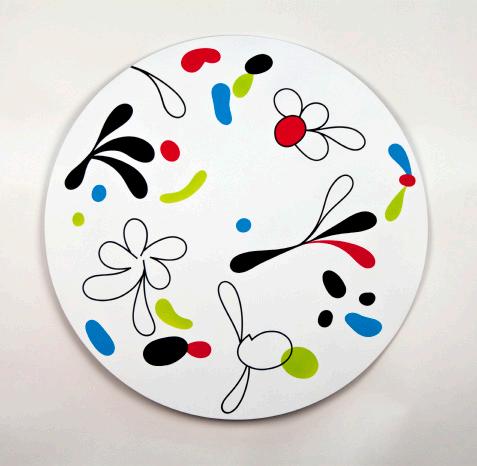
187 | Bossa , 2009, Aluminum, Urethane, 48 x 40 x 1 in. (120 x 99 x 3 cm), Collection of Uli and Gerhard Lang
| Chords(triptych) , 2008, Stainless Steel, Urethane, 36 x 108 x 2 in. (90 x 270 x 5 cm), Collection of Simon Rolf
189 | DogWhistle , 2015, Stainless Steel, Urethane, 48 x 146 x 2 in. (120 x 365 x 5 cm), Private Collection
190 | Doughboy , 2008, Aluminum, Urethane, 36 x 36 x 2 in. (90 x 90 x 5 cm), Collection of the Artist
191 | ParqueCentral , 2011, Aluminum, Urethane, 48 x 72 in. (120 x 180 cm), Collection of Peter Moglia
, 2008, Aluminum, Urethane, 36 x 110 x 2 in. (90 x 275 x 5 cm), Private Collection
“Do anything, but let it produce joy.”
—Walt Whitman
| Topo , 2010, Aluminum, Urethane, 30 x 2 in. (75 x 5 cm), Private Collection
Wall Sculpture
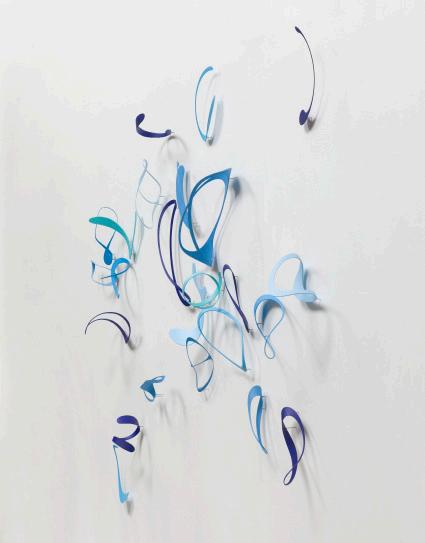
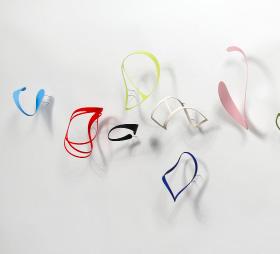
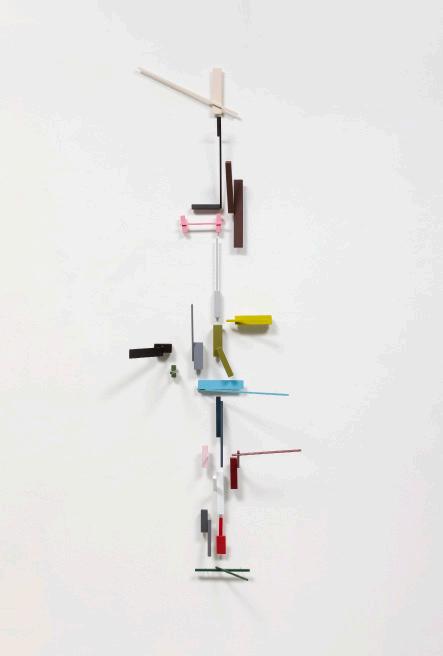
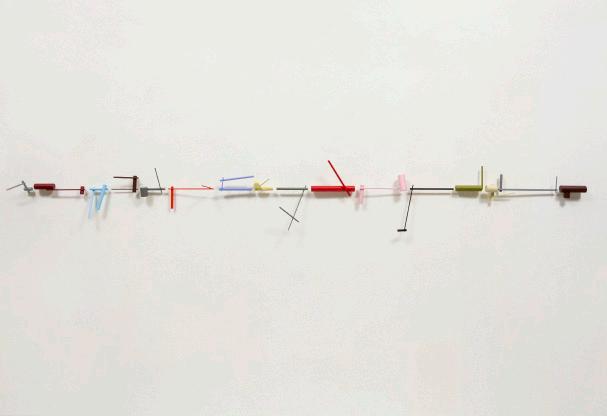
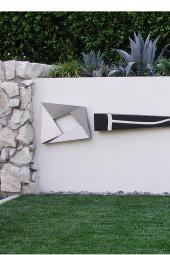
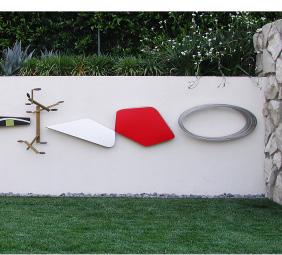
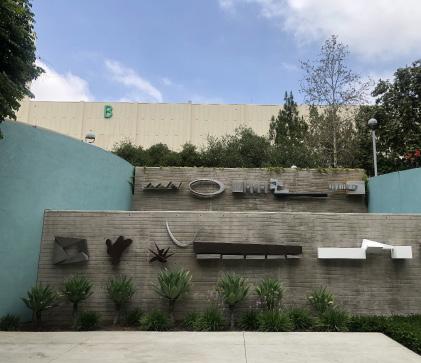
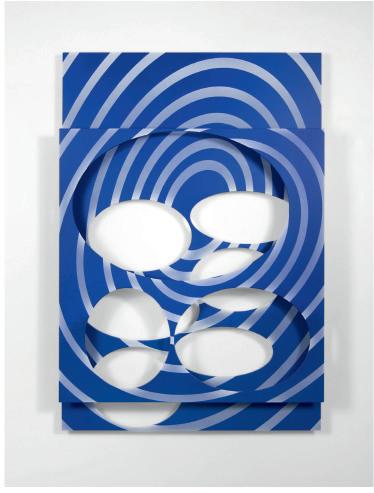
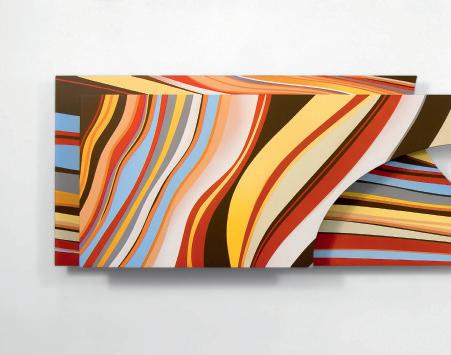
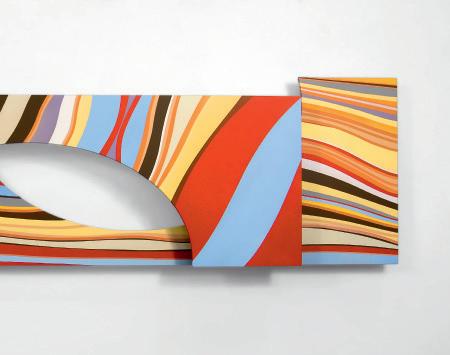
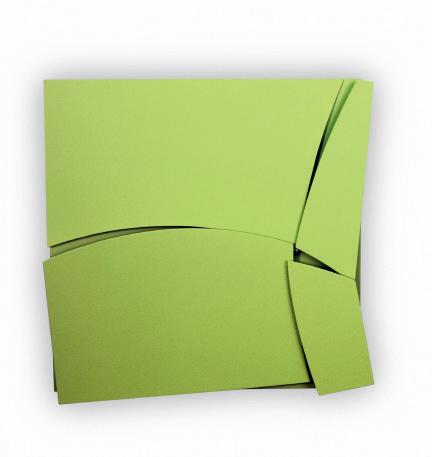
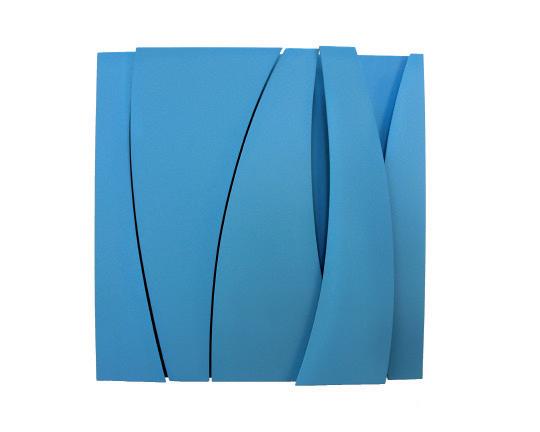
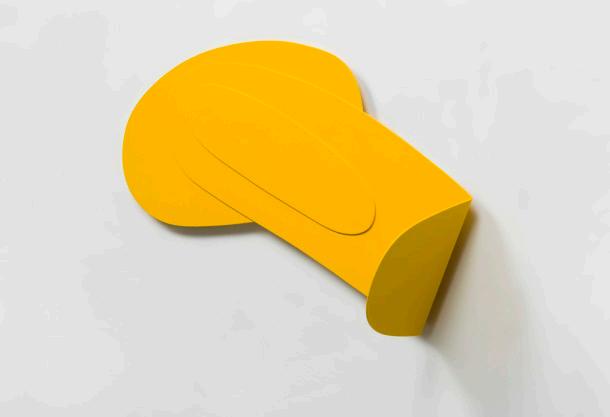
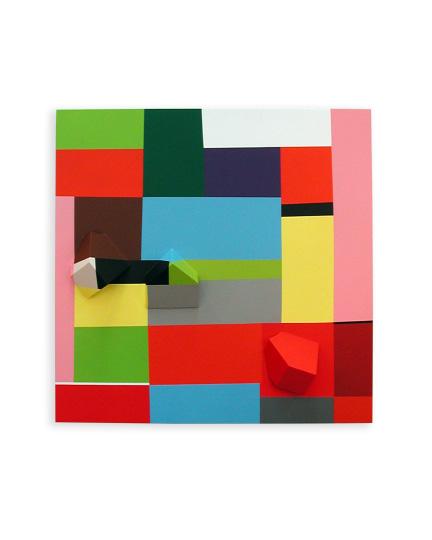
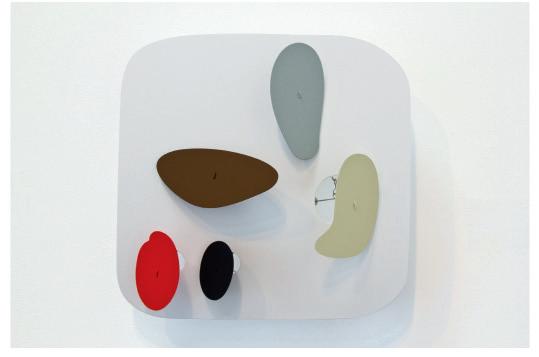
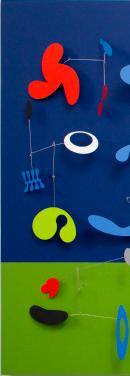
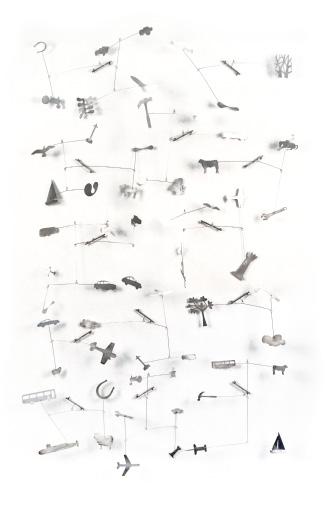
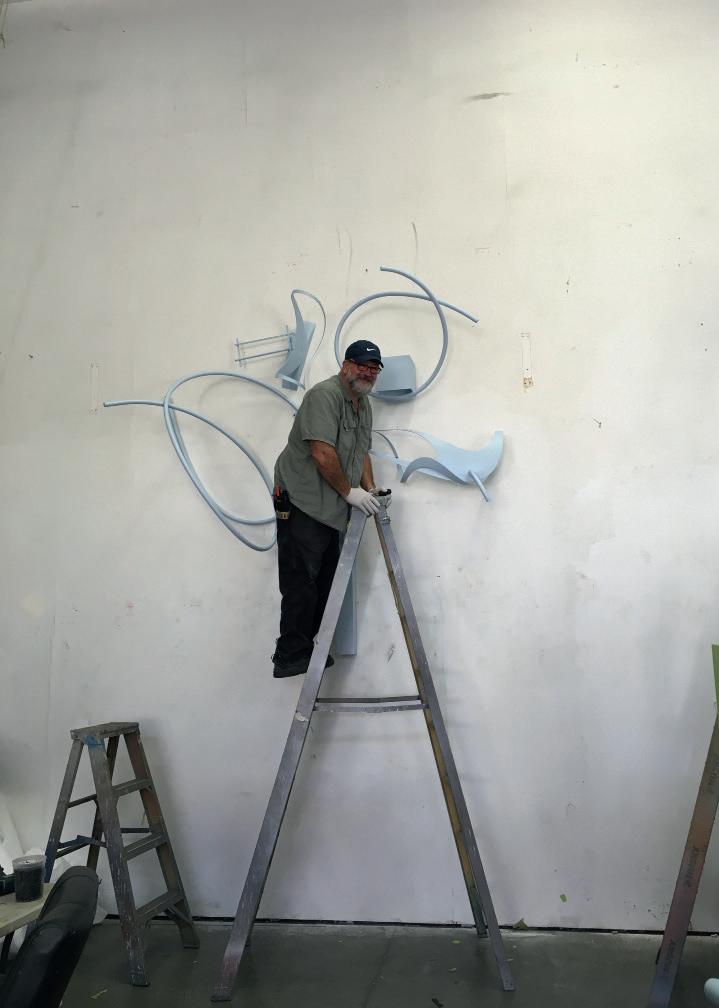
If my aesthetic bounces between the conditions of two dimensions and three, the wall sculpture I make can be seen as an attempt to find the midway point in that oscillation. The compositions are primarily frontal and the objects are framed or backed by the neutrality of the wall, but they push into space to destabilize their perimeters, and often their interiors. They may be low relief but they are not about low relief, they are about the attempt to distort the picture plane.
The most substantive work I’ve done for the vertical plane is The Baroda Wall, realized as a commission for a private collector. Conceived from a series of mutual discussions about aesthetics, perception, and time, The Baroda Wall, a sequence of 52 highly individualized sculptures, serves as a record of a storied journey through a finite and deeply nurtured place, notated in a frieze of distinct symbolic gestures open to anyone’s interpretation.
48 x 264 x 12 in. (120 x 660 x 30 cm), Collection of David Bohnett
195 | BarodaWallInstallation,2019, Aluminum, Bronze and Stainless Steel, 240 x 480 x 36 in. (600 x 1200 x 90 cm), Collection of Los Angeles County & University of Southern California, Gift of David Bohnett
196 | AndYet , 2017, Aluminum, Urethane, 32 x 24 x 24 in. (80 x 60 x 60 cm), Private Collection
197 | Forgetfulness , 2007, Aluminum, Urethane, 52 x 31 x 4 in. (130 x 78 x 10 cm), Private Collection
VirtualBanjo , 2004, Stainless Steel, Urethane, 12 x 24 x 7 in. (30 x 60 x 18 cm), Private Collection
199 | Combinatorialism , 2016, Stainless Steel, Aluminum, Urethane, 216 x 216 x 48 in. (540 x 540 x 120 cm), Collection of Lynette and Derek Brown
200 | Chuva , 2007, Aluminum, Urethane, 47 x 32 x 4 in. (118 x 80 x 10 cm), Private Collection
201 | Goyo , 2007, Aluminum, Urethane, 18 x 76 x 4 in. (45 x 190 x 10 cm), Collection of Elke and Thomas Handtmann
202 | GreenRiver , 2005, Stainless Steel, Aluminum, Urethane, 15 x 15 x 1 in. (38 x 38 x 3 cm), Private Collection
203 | OndaAzul , 2006, Stainless Steel, Aluminum, Urethane, 24 x 24 x 2 in.
(60 x 60 x 5 cm), Private Collection
204 | Strew , 2017, Aluminum, Urethane, 22 x 37 x 7 in. (56 x 94 x 18 cm), Collection of Bruna Howe
206 | Speed , 2004, Stainless Steel, Urethane, 60 x 48 x 9 in. (150 x 120 x 23 cm) Collection of Uli and Gerhard Lang
205 | Lift , 2009, Aluminum, Urethane, 34 x 30 x 4 in. (85 x 75 x 9 cm), Private Collection
2001, Stainless Steel, Urethane, 15 x 20 x 3 in.
x 50 x 8 cm), Private Collection
208 | Medusa , 2008, Aluminum, Urethane, 54 x 57 x 3 in. (135 x 143 x 8 cm), Collection of Carolin Grimbacher
209 | Nebraska , 2005, Stainless Steel, Urethane, 36 x 36 x 5 in. (90 x 90 x 13cm), Collection of Lisa and Chris Bonbright
210 | LightHouse , 2006, Stainless Steel, Urethane, 10 x 10 x 16 in. (25 x 25 x 40 cm), Private Collection
211 | Neruda , 2007, Aluminum, Urethane, 47 x 32 x 4 in. (118 x 80 x 10 cm), Collection of Beatriz Borges
212 | NorwegianWood , 2007, Stainless Steel, Urethane, 19 x 12 x 19 in. (48 x 30 x 48 cm), Collection of Elke and Thomas Handtmann
213 | Sabanas , 2004, Steel, Urethane, 15 x 15 x 3 in. (38 x 38 x 6 cm), Private Collection
| Iowa, 1997, Steel, Urethane, 30 x 24 x 6 in. (75 x 60 x 15 cm), Collection of Dr. Norman Hartstein
60 x 42 x 6 in. (150 x 105 x 15 cm), Private Collection
| Spread , 2017, Aluminum, Urethane, 28 x 24 x 3 in. (70 x 60 x 8 cm), Collection of Elke and Thomas Handtmann
217 | Tingle , 2015, Stainless Steel, Urethane, 10 x 60 x 9 in. (25 x 150 x 23 cm), Collection of the Artist
PluralTruths , 2017, Aluminum, 40 x 48 x 2 in. (102 x 122 x 5 cm), Collection of the Artist
219 | Oregon , 2005, Stainless Steel, Urethane, 9 x 12 x 14 in. (23 x 30 x 35 cm), Collection of the Gerster Family
220 | Cornbread,2010, Stainless Steel, Urethane 10 x 12 x 13 in. (25 x 30 x 33 cm), Collection of Uli Lang, Biberach, Germany
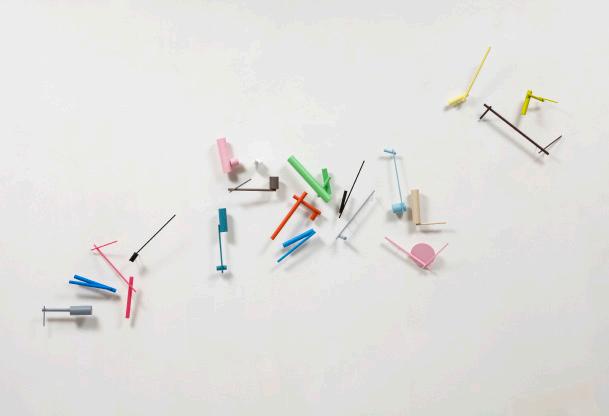
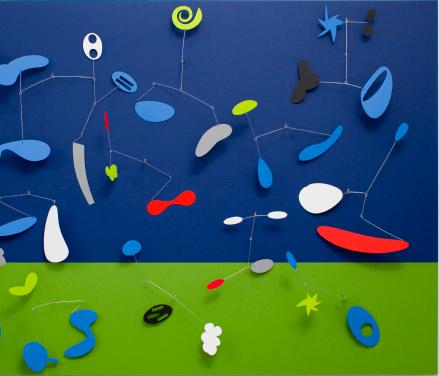
Kinetics
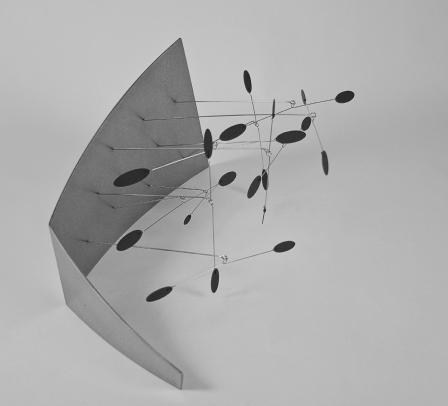
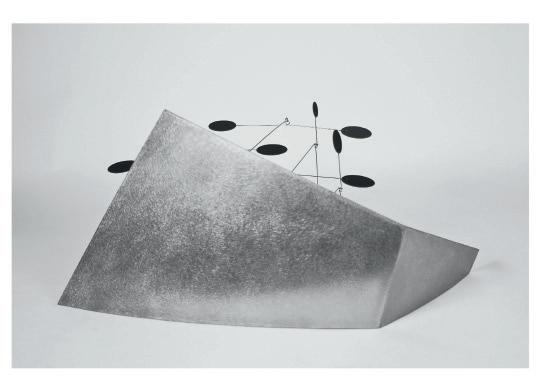
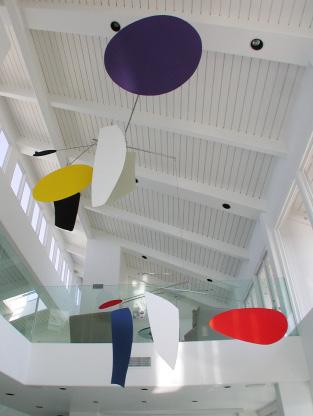
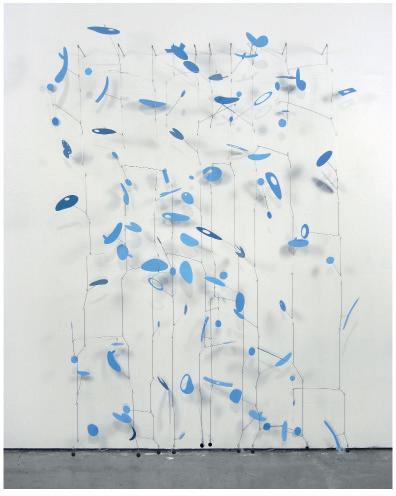
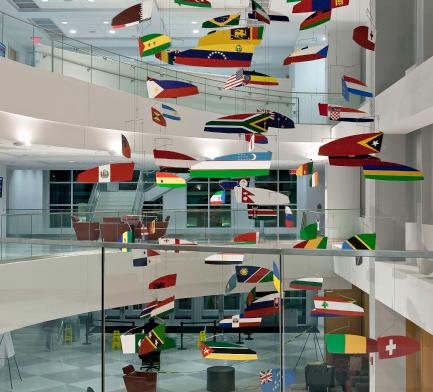
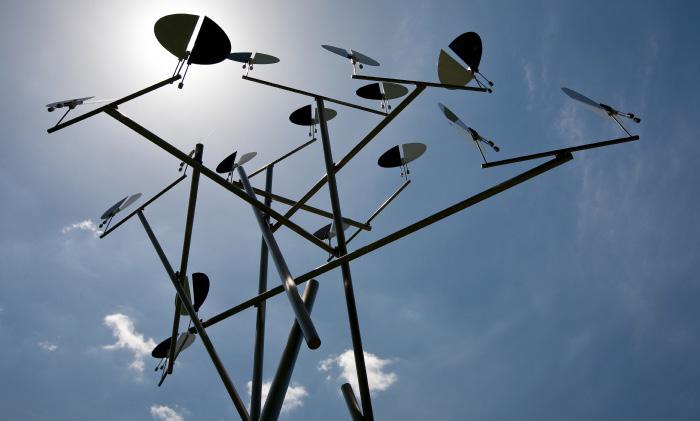
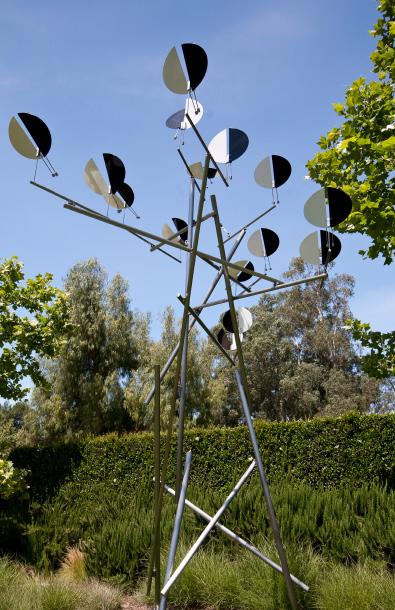
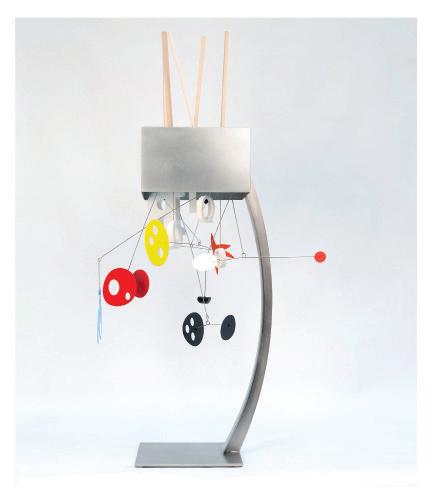
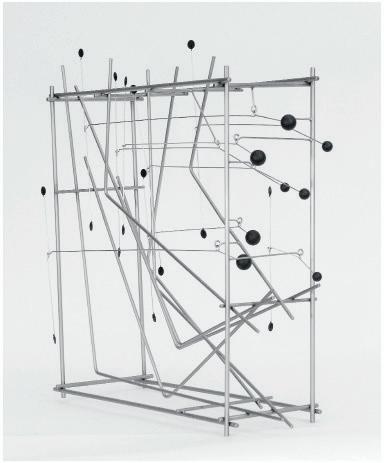
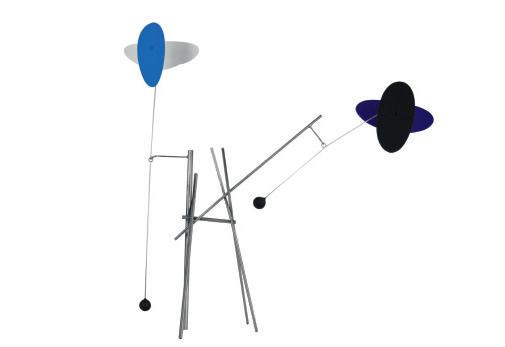
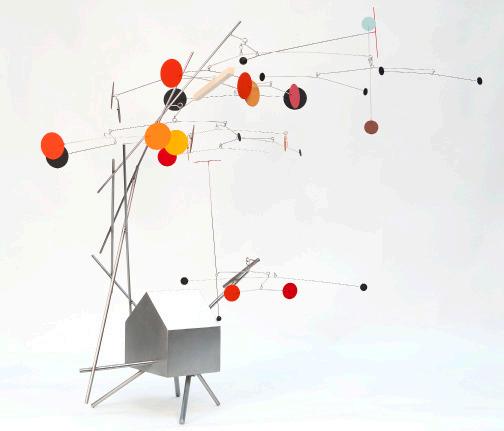
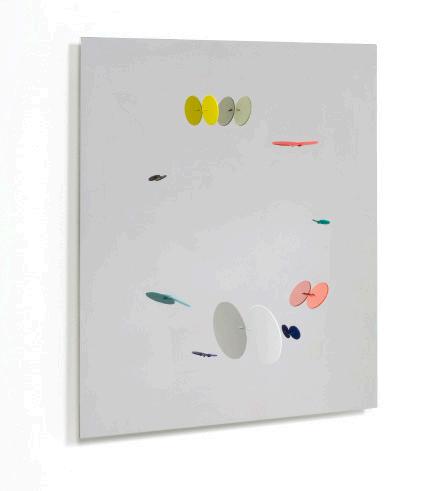
If it weren’t for Alexander Calder and his magical universe, I don’t believe I would be an artist today. His mobiles immediately spoke to me in a language that felt so familiar I knew instantly I could respond with my own. Principles of kinetic sculpture inform everything I make. The object is always in motion in relation to the viewer.
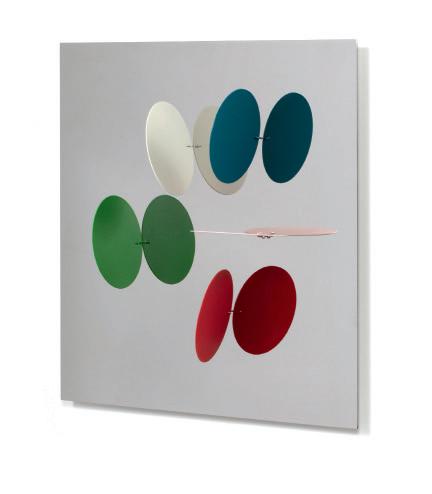
When an artwork moves it escapes the static world of frozen gestures into a common dimension of ever-changing geometries. Gravity pulls at it, the wind pushes it, the clock measures it. The kid in me wants the art to move. The observer in me wants to learn its choreography and predict the next sequence of events. The contemplator wants to gaze at the shadows that ebb and shift at the edge of a meta-world where visions are teased out of the walls.
Kinetic sculpture reminds us that we float in space and are tethered to a system of interconnection, where even the most remote elements are leveraged by the weight of the whole.
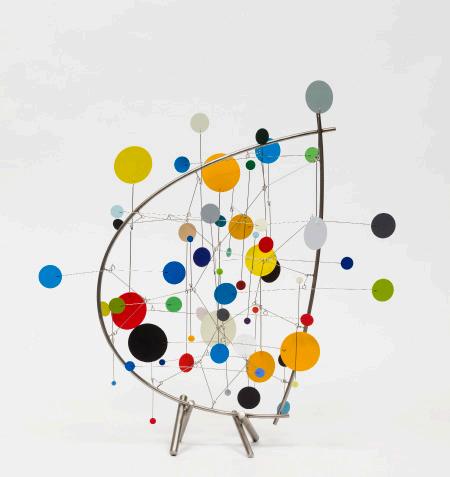
I want these sculpture installations to spark a sense of wonder and excitement in the viewer. I want to share my fascination with color and motion. At their best, these works will serve as abstract models of what we know to be true about the world around us. We project onto them that which we already know, about physics and patterns from nature and the like. I hope these sculptures are as entertaining as they might be challenging, and that one comes away more curious about this magical world that supports us.
221 | RopaenelViento , 2002, Aluminum Stainless Steel, Urethane, 144 x 144 in. (360 x 360 cm) Private Collection
222 | CasadeMiAbuelita , 2014
Mixed Media, 37 x 33 x 34 in. (93 x 83 x 85 cm)
Private Collection
223 | HighNorth , 2015, Stainless Steel, Aluminum, Urethane, 24 x 216 x 72 in. (60 x 540 x 180 cm), Collection of Ellen Hoffman
224 | ThingsHappen , 2015, Stainless Steel, Aluminum, Urethane, 32 x 100 x 12 in. (80 x 250 x 30 cm), Private Collection
Kinetic Kelp
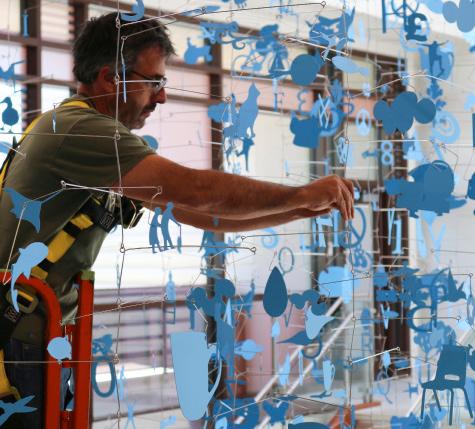
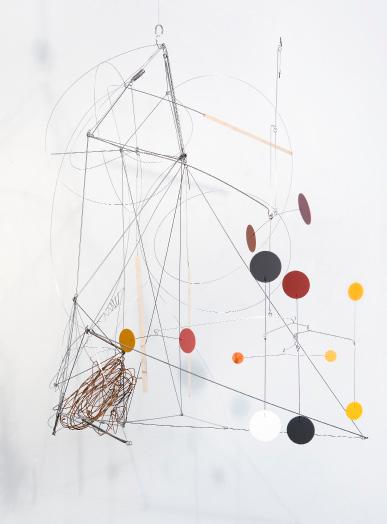
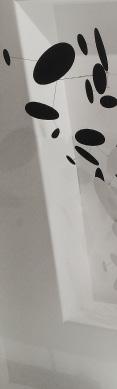
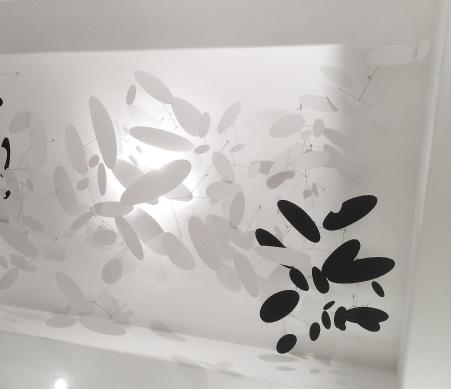
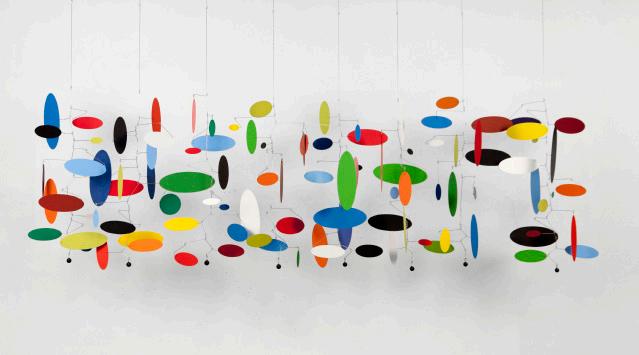
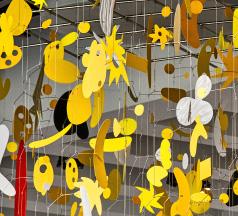
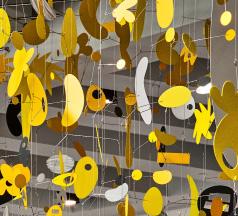
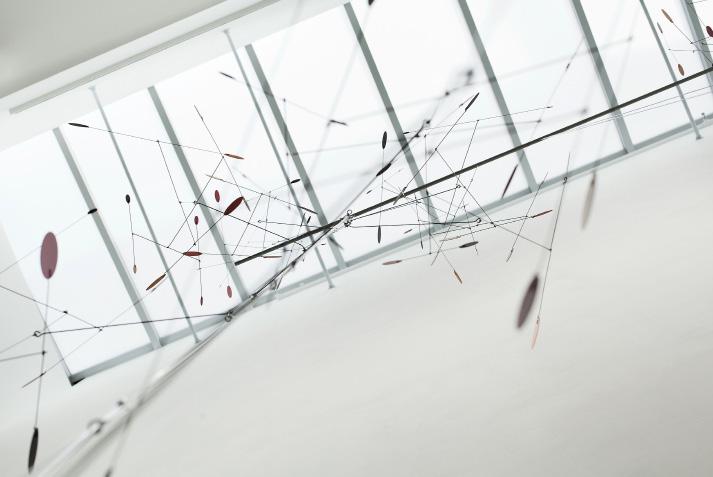
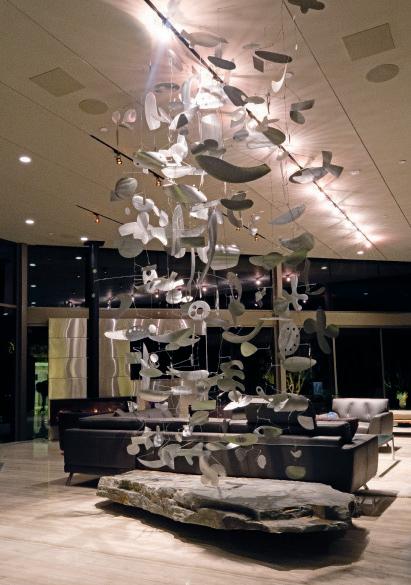
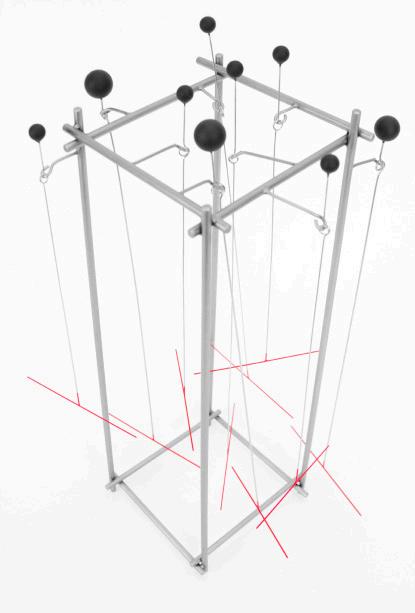
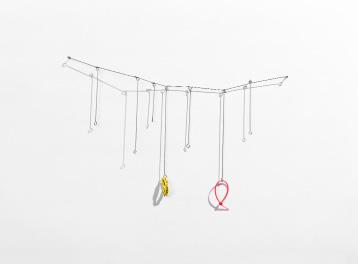
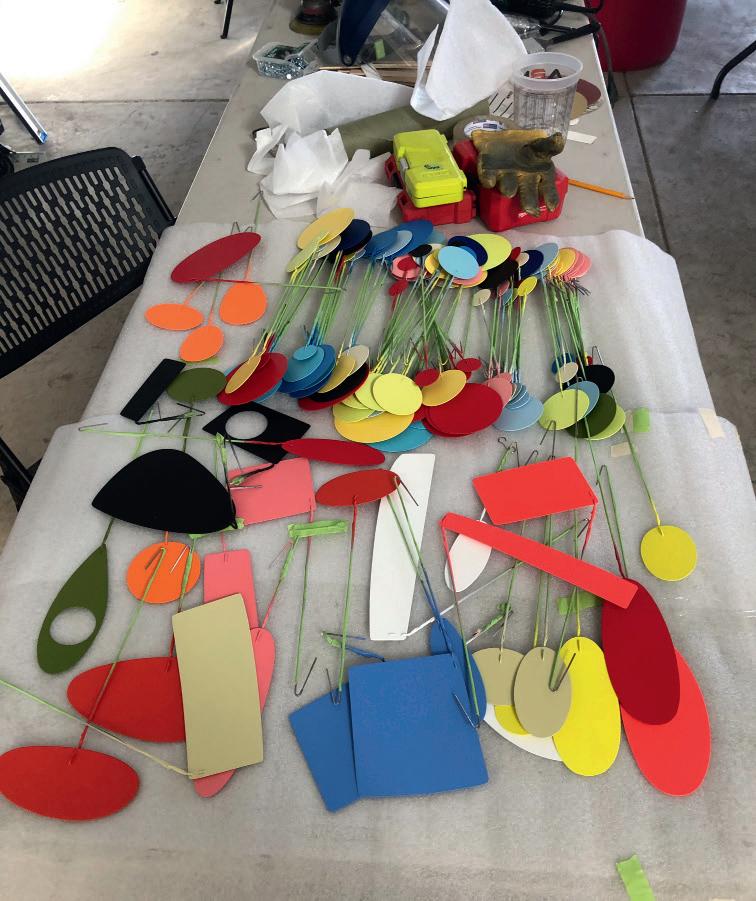
Plankton floating weightless in the sea, a boundaryless dreamscape of drift, color and shadows. These suspended colonies touch on the primordial echoes of early life, cellular and symbiotic. Extravagant swarms, rotating forests, weave a dreamscape of slow, lingering motion.
226 | OneDesertSky , 2014, Stainless Steel, Aluminum Kinetic Installation, High Desert Health Center, Lancaster, CA
, 2006, Stainless Steel, Aluminum, Urethane, 102 x 72 x 12 in. (255 x 180 x 30 cm), Private Collection
228 | TradeWinds , 2009, Stainless Steel, Aluminum, Urethane, 360 x 216 x 300 in. (900 x 540 x 750 cm), Temple University, Philadelphia, PA
229 | Ventriloquism , 2013, Stainless Steel, Aluminum, Urethane, 216 x 132 x 36 in. (540 x 330 x 90 cm), Private Collection
| To Delight in the
156 x 72 x 36 in. (396 x 183 x 91 cm), The Collection
Hopes of the Young, 2019, Aluminum, Stainless Steel, Urethane,
of Terry Gree30
| AnExaltationofLarks , 2010, Stainless Steel, Aluminum, Urethane, 156 x 120 x 120 in. (427 x 305 x305 cm), View A and B, Collection of Gary Simmons
232 | Near , 2013, Stainless Steel, Urethane, 20 x 10 x 13 in. (51 x 25 x 33 cm), Collection of Maria and Alexander Mertens
233 | Bouyance , 2014, Mixed Media, 42 x 24 x 18 in. (105 x 60 x 45 cm), Collection of the Artist
234 | PuertoPlata , 2014,Stainless Steel, Aluminum, Urethane, 32 x 44 x 12 in. (80 x 110 x 30 cm), Collection of Ezra Kest
Left: 235 | Three , 2013, Stainless Steel, Aluminum, Urethane, 15 x 16 x 9 in. (38 x 40 x 21 cm), Collection of the Artist
Above: 236 | Acra , 2012, Stainless Steel, Aluminum, Urethane, 18 x 21 x 12 in. (45 x 53 x 30 cm), Private Collection
237 | Cabruta , 2017, Stainless Steel, Aluminum, Urethane, 29 x 26 x 11 in. (73 x 65 x 28 cm), Private Collection
238 | Camellia , 2012, Stainless Steel, Aluminum, Urethane, 21 x 8 x 10 in. (53 x 20 x 25 cm), Private Collection
239 | Cartagena , 2009, Stainless Steel, Urethane, 16 x 16 x 10 in. (40 x 40 x 25 cm), Private Collection
240 | Camelopardalis , 2013, Stainless Steel, Aluminum, Urethane, 22 x 23 x 8 in. (54 x 58 x 20 cm), Collection of Ron and Rhonda Papell
241 | Moldova , 2012, Stainless Steel, Aluminum, Urethane, 21 x 22 x 9 in. (53 x 54 x 23 cm), Private Collection
242 | FalseConfession , 2014, Stainless Steel, Aluminum, Urethane, Wood, 39 x 39 x 34 in. (98 x 98 x 85 cm), Private Collection
Left: 243 | Toralba , 2017, Stainless Steel, Aluminum, Urethane, 28 x 42 x 10 in. (70 x 105 x 25 cm), Private Collection
Above: 244 | SnackShack , 2014, Mixed Media, 44 x 47 x 11 in. (110 x 118 x 28 cm), Collection of the Artist
245 | Dust , 2010, Stainless Steel, Aluminum, Urethane, 35 x 50 x 17 in. (88 x 125 x 43 cm), Private Collection
| Prato , 2012, Stainless Steel, Aluminum, Urethane, 16 x 16 x 6 in. (40 x 40 x 15 cm), Collection of the Artist
247 | PirateShip,2011, Stainless Steel, Aluminum, Urethane, 48 x 72 x 6 in. (120 x 180 x 15 cm), Collection of Alice Steiner
248 | Urbanica, 2010, Stainless Steel, Aluminum, Urethane, 16 x 96 x 13 in. (41 x 244 x 33 cm), Private Collection
84 x 48 x 12 in. (210 x 120 x 30 cm), Private Collection
250 | Fuyu , 2016, Archival Pigment Print, 36 x 48 in. (90 x 120 cm), Private Collection
252 | YakuAkapana , 2015, Archival Inkjet Print, 16 x 18 in. (39 x 45 cm), Private Collection
251 | Karl , 2015, Archival Inkjet Print, 20 x 13 in. (50 x 33 cm), Private Collection
253 | YakuWambuy , 2015, Archival Inkjet Print, 13 x 20 in. (33 x 50 cm), Private Collection
Quipu Photography
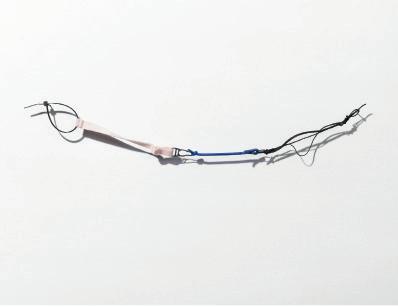
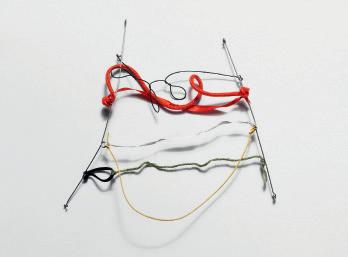
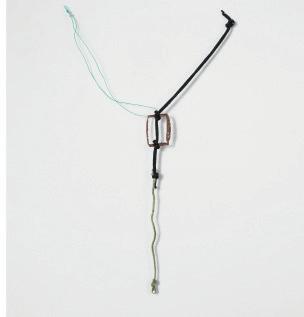
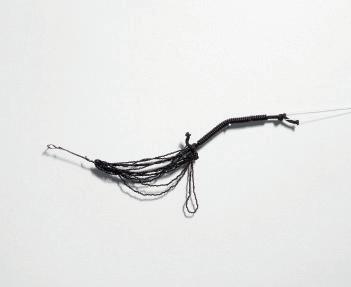
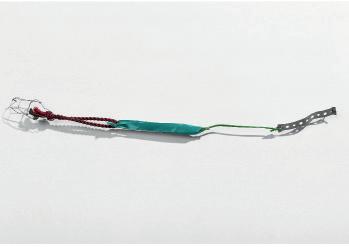
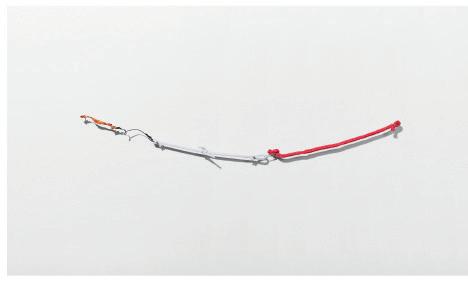
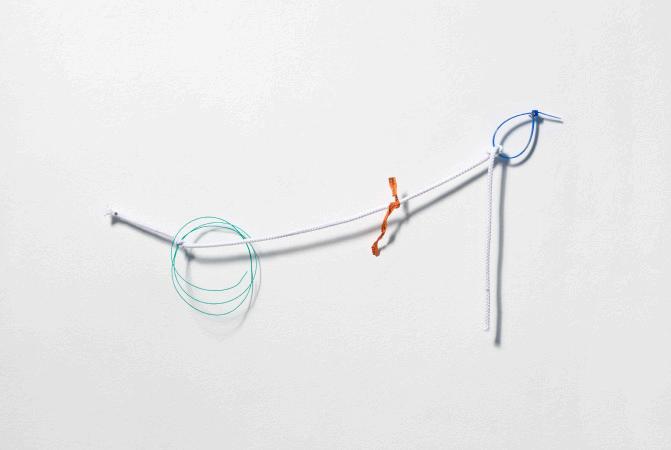
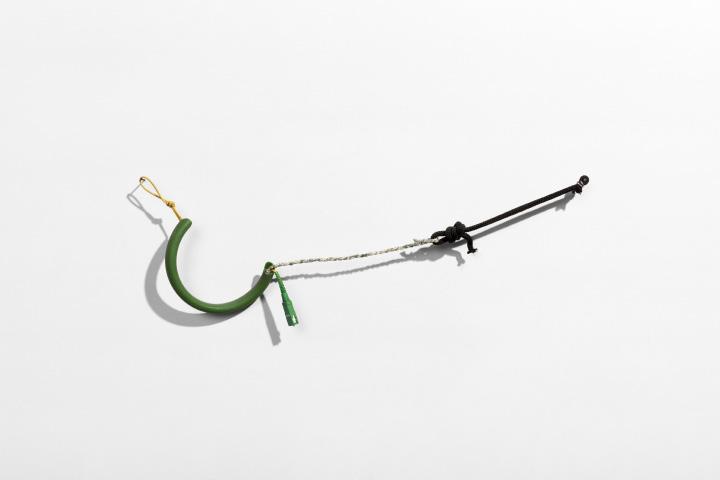
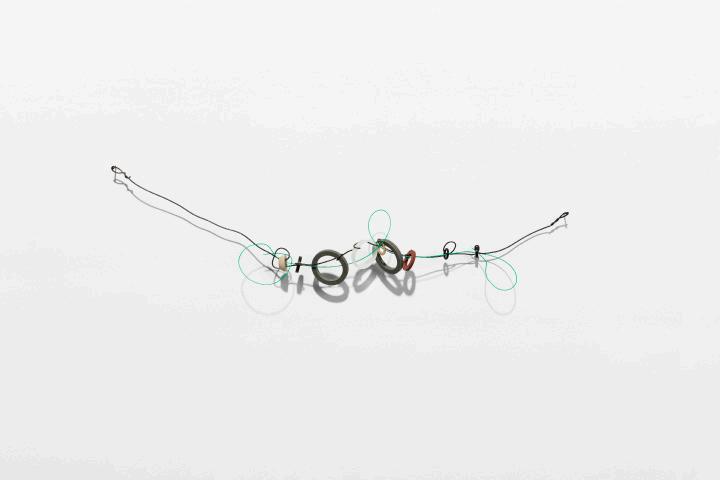
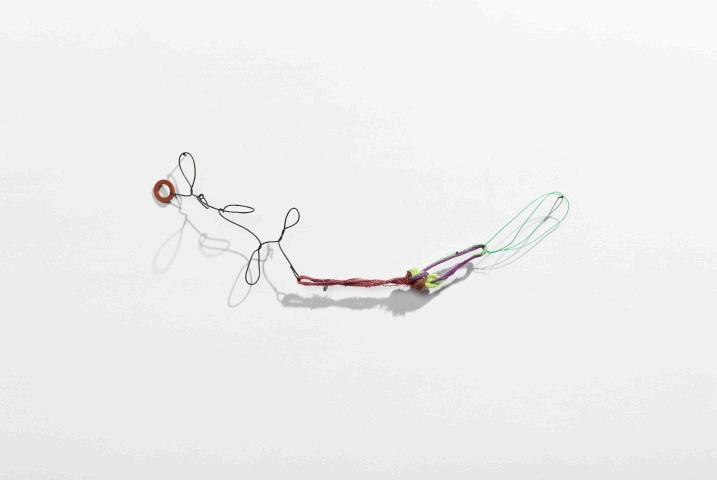
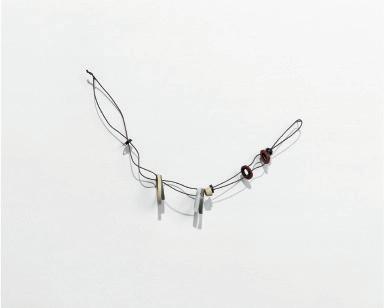
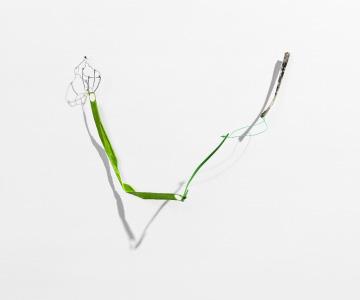
The most celebrated example of a notational device consisting entirely of threads is the Inca Quipu. The quipu comprises a plied cord to which secondary cords are attached with knots. Tertiary cords may be knotted to secondary ones, fourth order to tertiary, fifth order to fourth order, and so on. Scholars still argue over the function and method of the Quipu, whether it served to prompt memory or to record information, and, if the latter, whether that information was merely numerical or involved elements of narrative.
Collecting and sifting detritus from roadways, city gutters and empty beaches, the lint and dander of contemporary life, I strung these findings, quipu-like, into lines of narrative, believing each link a living, aura-charged fractal of human life. Sequenced into phrases these intermingled residuals, remnant energy of prior functions, propose new accounts of meaning. The photographs are the documents of those elusive phrases.
254 | Kuytsa , 2016, Archival Pigment Print, 36 x 72 in. (90 x 180 cm), Private Collection
255 | Nina , 2016, Archival Pigment Print, 40 x 72 in. (100 x 180 cm), Private Collection
256 | AllpaJaku , 2016, Archival Pigment Print, 40 x 60 in. (100 x 150 cm), Private Collection
257 | Warmi , 2016, Archival Pigment Print, 40 x 60 in. (100 x 150 cm), Private Collection
258 | Anga , 2016, Archival Pigment Print, 40 x 60 in. (100 x 150 cm), Private Collection
, 2016, Archival Pigment Print, 40 x 60 in. (100 x 150 cm), Private Collection
260 | Ukucha , 2016, Archival Pigment Print, 60 x 40 in. (150 x 100 cm), Private Collection
261 | Rupana , 2016, Archival Pigment Print, 44 x 48 in. (110 x 120 cm), Private Collection
262 | Tayta , 2018, Archival Pigment Print, 44 x 44 in. (110 x 110 cm), Private Collection
| Tazin , 2016, Archival Pigment Print, 48 x 60 in. (120 x 150 cm), Private Collection
264 | Llantu , 2016, Archival Pigment Print
40 x 60 in. (100 x 150 cm)
Private Collection
265 | Putru , 2016, Archival Pigment Print
40 x 72 in. (100 x 180 cm)
Private Collection
266 | Putsuju , 2015, Archival Inkjet Print, 20 x 13 in. (50 x 33 cm), Private Collection
267 | Manya , 2016, Archival Pigment Print, 40 x 72 in. (100 x 180 cm), Private Collection
268 | Micha , 2016, Archival Pigment Print, 44 x 60 in. (110 x 150 cm), Private Collection
| PachaMama , 2016, Archival Pigment Print, 44 x 60 in. (110 x 150 cm), Private Collection
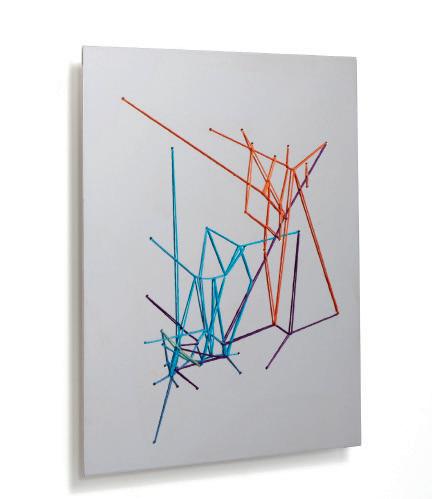
Photography & Embroidery
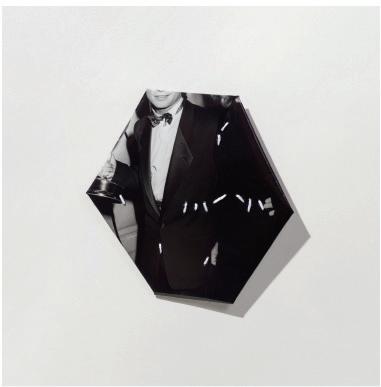
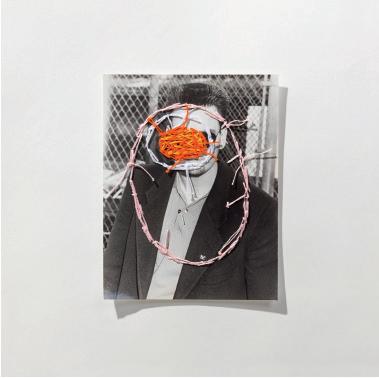
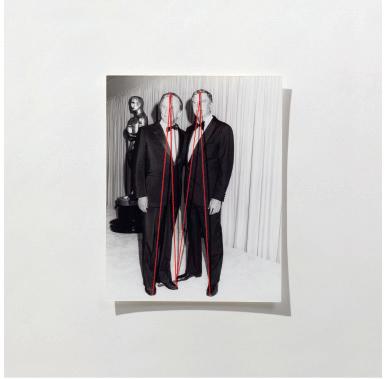
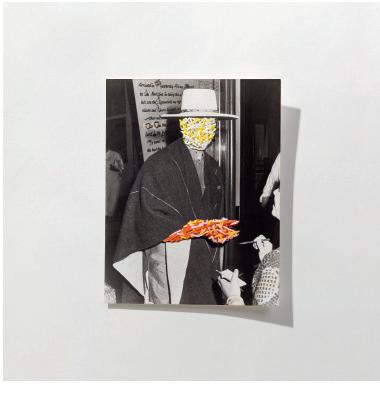
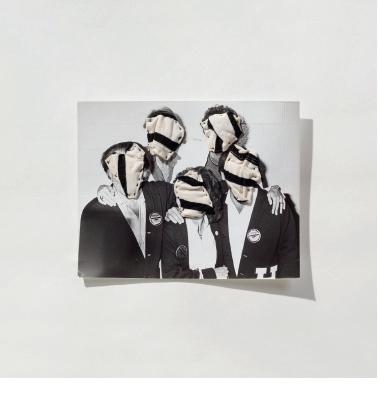
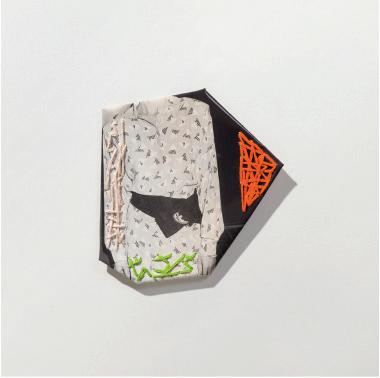
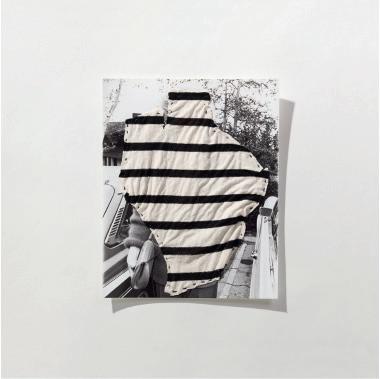
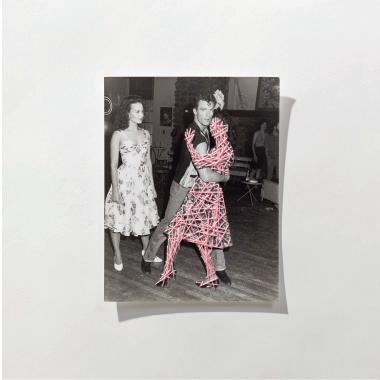
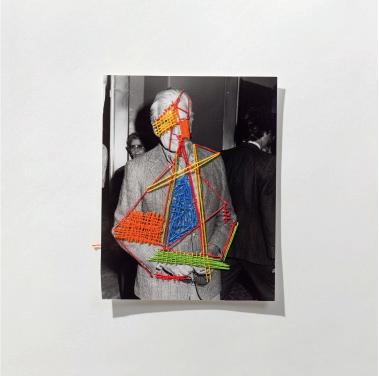
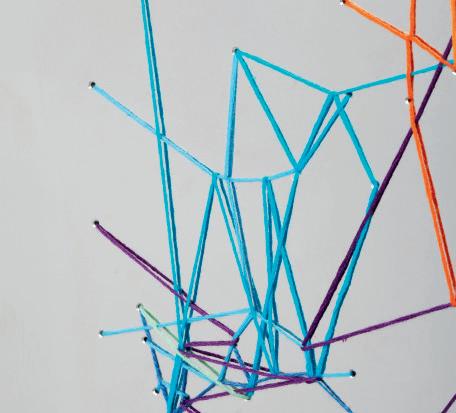
Embroidery on photography is an intervention onto a fixed time document. It becomes a juxtaposition, an overlay of one story onto another. The process allows for the redirection of meaning within the ever-present alternative interpretation of an image and the image as an object.
I make pictures to tell a story, to tell lies, and to amuse.
—Federico Fellini
270 | TermsofOpprobrium , 2017, Archival Pigment Print, 30 x 30 in. (75 x 75 cm), Collection of the Artist
271 | TheNeedToObey , 2017, Archival Pigment Print, 30 x 30 in. (75 x 75 cm), Collection of the Artist
274 | LettingBeingsBe , 2017, Archival Pigment Print, 36 x 36 in. (90 x 90 cm) Collection of the Artist
275 | ManIsNotAKillerButTheGroupIs , 2017, Archival Pigment Print, 36 x 36 in. (90 x 90 cm) Collection of the Artist
272 | AConspiracyToMiss , 2017, Archival Pigment Print, 36 x 36 in. (90 x 90 cm) Collection of the Artist
273 | AccountabilityToTheOther , 2017, Archival Pigment Print, 36 x 36 in. (90 x 90 cm) Collection of the Artist
278 | SnakeCharmer , 2017, Archival Pigment Print, 36 x 36 in. (90 x 90 cm) Collection of the Artist
279 | Predisposition , 2017, Archival Pigment Print, 36 x 36 in. (90 x 90 cm) Collection of the Artist
277 | AnUnadulteratedDay , 2017, Archival Pigment Print, 36 x 36 in. (90 x 90 cm) Collection of the Artist
276 | Aftermath , 2017, Archival Pigment Print, 30 x 30 in. (75 x 75 cm) Collection of the Artist
Affinities
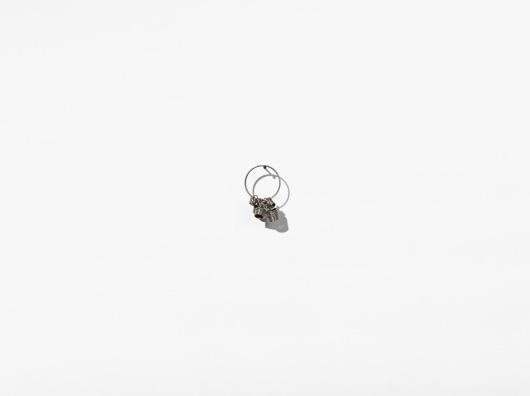
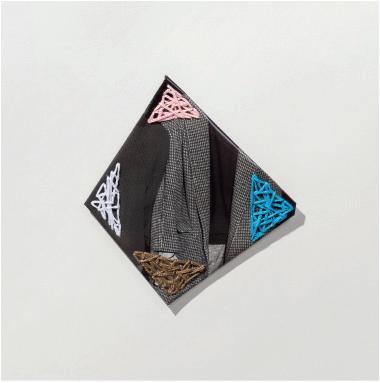
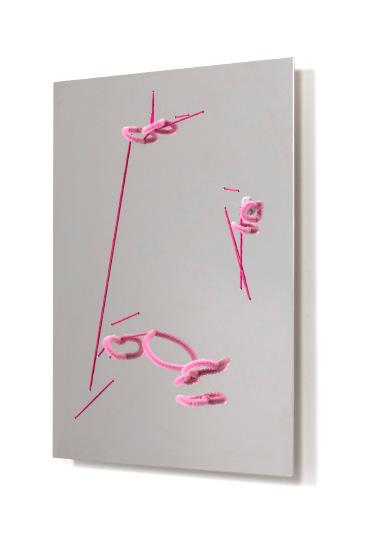
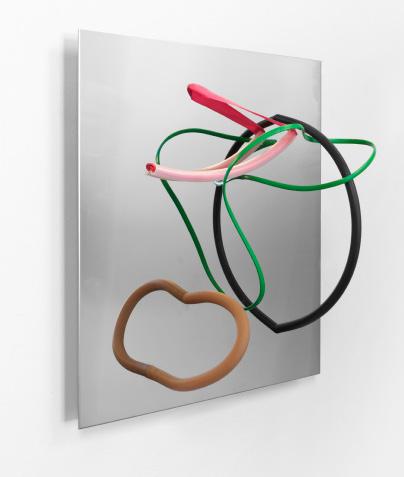
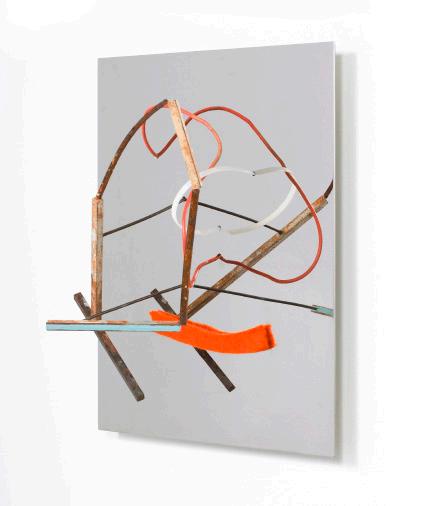
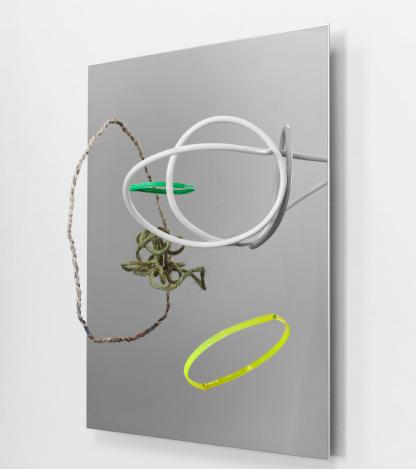
Empathy is central to constituting ourselves as social creatures, enabling us to imagine what others are thinking or feeling, to emotionally engage with them. To this intent we mirror each other. Mirroring generates a felt symmetry of experience, a sense of parity, balance and stability. Empathy, reciprocity and the Golden Rule are the fundamental social adhesives that provide the equilibrium necessary for our compatibility. As symmetry, that equilibrium is an expression of agreement of harmony and proportion, of binding affinities.
, 2020, Polished Stainless Steel, Mixed Media, 12 x 10 x 3 in. (30 x 25 x 8 cm), Private Collection
, 2016, Polished Stainless Steel, Mixed Media, 12 x 10 x 5 in. (30 x 25 x 13 cm), Private Collection
| LetaHundredFlowersBloom,2020, Polished Stainless Steel, Mixed Media, 12 x 10 x 5 in. (30 x 25 x 13 cm), Private Collection
Polished Stainless Steel, Thread, 12 x 10 x 1 in. (30 x 25 x 3 cm), Private Collection
ThePrestinePrivacyofThought,2020 , Detail
, 2020, Polished Stainless Steel, Mixed Media, 16 x 15 x 3 in. (40 x 62.5 x 8 cm), Private Collection
, 2016, Polished Stainless Steel, Mixed Media, 12 x 10 x 5 in. (30 x 25 x 13 cm), Private Collection
| WhenTimeRushesOff, 2020, Polished Stainless Steel, Mixed Media, 12 x 10 x 6 in. (30 x 25 x 15 cm) , Private Collection
Right: WhenTimeRushesOff,2020 , Detail
Polished Stainless Steel, Wire, 12 x 10 x 6 in. (30 x 25 x 15 cm), Private Collection
288 | Echoes,2020, Stainless Steel, Aluminum, Urethane, 16 x 15 x 5 in. (40 x 38 x 13 cm), Private Collection
289 | FlagsonaMap,2020, Polished Stainless Steel, Wire, Stainless Steel Plate, Urethane, 16 x 15 x 12 in. (40 x 38 x 30 cm), Private Collection
Right: FlagsonaMap , 2020, Detail
Brad Howe and the 500 Year Plan
by Anthony Haden-Guest
ANTHONY HADEN-GUEST
Your work is remarkably diverse. I am struck by your piece, Amnesia (plate 5), a sculpture you created from stainless steel and birchwood. One fully expects to see other pieces exploring that direction. You didn’t. The usual procedure has been that an artist will come up with a strong idea, then run with it before moving on to another. You don’t do that. I began to make a list of other hits that are also one-offs. I’d like to talk about how you get your ideas.
BRAD HOWE
Creating art doesn’t cease to fascinate me, although it’s quite often overwhelming. But it’s such a fabulous opportunity to imagine something and try to figure out how to get there. That’s the biggest attraction. Art seems like it’s full of complicated riddles in general. And I like the riddle aspect of it. That being said, I look at the endeavor of art as participating in a large conversation. It feels similar to walking into a cocktail party. You walk in the room and you hear a phenomenal conversation going on over to the left. You wander over. You listen to some interesting points and you make some comments. Then your ear catches a different debate on another side of the room. You wander over there and engage. I’m a bit of a butterfly, but with the idea that all of these exchanges are interrelated, it’s all one very large effort, being tested from very different angles. All the different angles, the facets of the puzzle, are fascinating to me. That’s what got me into art. I see it as a relevant, rich exchange of ideas.
AHG: You didn’t go to art school. How did your art-making career begin?
BH: I was studying International Relations in the U.S. and went to Brazil to study literature and political history. At the University of São Paulo I met architecture students and with them encountered a completely new language … urban design, landscape design, and art. And it hit me like a rock. I felt, oh man, this is an impressive instrument. Art and design felt powerful and magical. They dealt with emotions, with memory and with aspirations. They seemed so untainted and full of potential. It didn’t feel I was entering a toxic zone and I could do what I wanted with it. Those were the earliest notions in my head. After I graduated university I wandered a bit. I became first a gardener, because I wanted to experience that. Then I took a position as an algebra teacher in a junior high school because I wanted to serve. But in the back of my mind this question about art was just ticking and getting stronger.
AHG: Can we return to the sheer diversity in your output?
BH: Ultimately what interests me is to absorb information from the world around me, including the work of artists I’m inspired by, and then I respond to it from my position and understanding, to engage as if it were dialog. It’s the dialog that’s interesting to me. I have a ongoing exchange within my own work, of course, but an intriguing statement made by another’s work of art can present a whole new potential world to explore. There are so many nutrients in the constant production of art. I want to absorb that nutrition, feel the energy, and respond to it with some kind of nuance, some inflection that comes from questioning and processing. Maybe that’s why I feel I have the freedom to follow any course … anywhere … any time … I don’t feel locked into any specific body of work, any specific approach, other than my gained knowledge of how to work with certain materials.
AHG: How do you choose your material?
BH: I’m attracted to metal because it represents durability and permanence in a metaphysical way, different from canvas or something like that. My father was a carpenter, I saw him handling lumber, hammers and nails for years. I was always very proud of him. I idealized the lifestyle, the physicality of it, so I guess I wanted something similar to that to work with. Welding steel is similar. Over the years I put together a studio primarily centered on stainless steel and bronze and aluminum.
AHG: Your calligraphic work is interesting—it doesn’t disappear into signage. When did this come into your work?
BH: I was asked to make jewelry by the architect Judit Fekete for an exhibition. I designed several bracelets. They had to fit the body, so I made them circular. I was reluctant to be asked to make jewelry ongoing so I pinned the pieces to the wall so they couldn’t be tried on. Unexpectedly, the shadows they created were astounding, their forms had nothing to do with the objects that had created them; the shadow had this calligraphic form to it. There was a mystery there. What had created that shadow? I thought it was a wonderful accident and I began to create forms for these shadows, almost always starting with a curved oval. It can be a bit of a brainteaser and I like these problem-solving scenarios.
AHG: I like your Quipu photographs (pages 289-299), the objects, and shadows together. Apparently, the objects don’t exist anymore?
BH: Are you familiar with Quipu? The Inca empire didn’t have a written script. They had Quipu, where they would weave a string and arrange knots into the string, a collection of knots, and this was the official royal script. Cuzco, the center of the Inca Empire, would send out proclamations by having runners carry the Quipu and demands for taxes on a knotted string.
AHG: That’s become part of your work process?
BH: I collected small things I would find on the street, and in the gutter, items that had a certain aura to them, flotsam that had been tossed but that had had a previous life. If I looked at it that way they vibrated with their own story. I gathered as many of these shards as I could and began to tie them together as if they were words for a stanza. I would compose a poetic sequence with these pieces. The elements were tied together with knots. Quipu! Eventually another step to the process occurred to me. I decided to take an extremely high-resolution photograph of each one of these compositions, then destroy them. I wanted the photograph as the only form of the piece. The photograph then became the surrogate sculpture of the Quipu.
AHG: The image replaces the object.
BH: I was inspired by Baudrillard’s book, Simulacra and Simulation. You know when you’re in the mountains and there is that stunning view? You pull your car over and you hear someone saying it’s so beautiful, It’s just like a postcard! So I wanted to make a postcard of the art that was ‘better’ than the art. We live in an image-driven society. We don’t seem to need to experience the actual event or object anymore. The object is no longer primary. I felt exchanging the actual Quipu for its image made sense. And at the same time, I was intrigued to think of my Quipu as a sort of macramé. It had a nostalgic quality to it because it was homemade, with my fingers tying little
often-difficult knots. Somehow akin to slow food, mending, and our current fascination with nostalgia. This was all cooked into the Quipu experiment. There are a lot of moving parts to it. I feel I’ll be working on these ideas for a while.
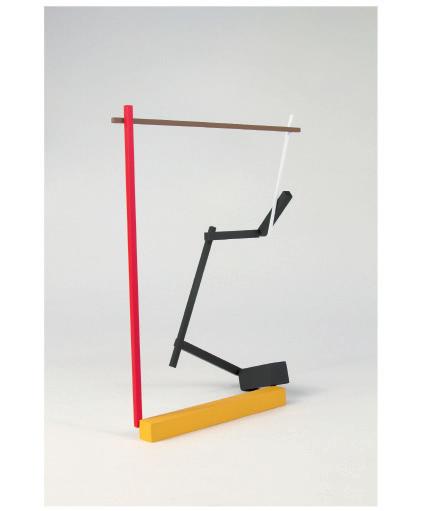
AHG: Some of your pieces are off-balance, disconcerting. Such as Soft, 2017 (plate 21).
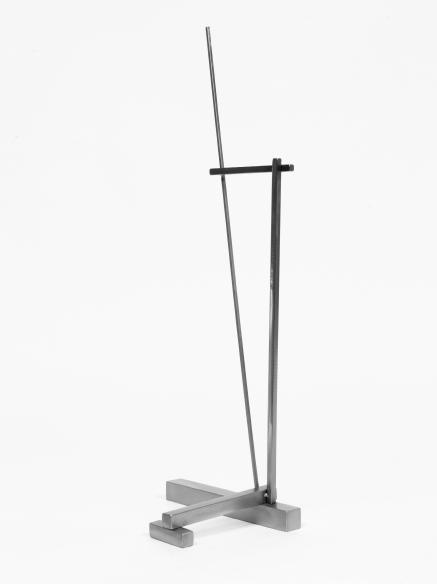
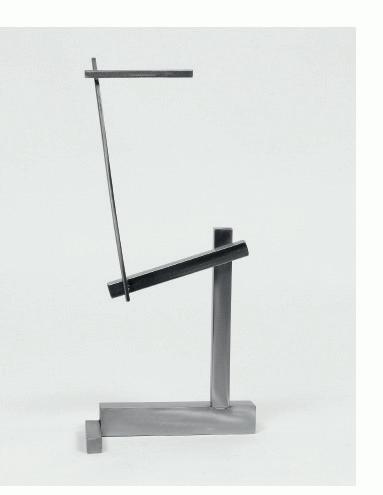
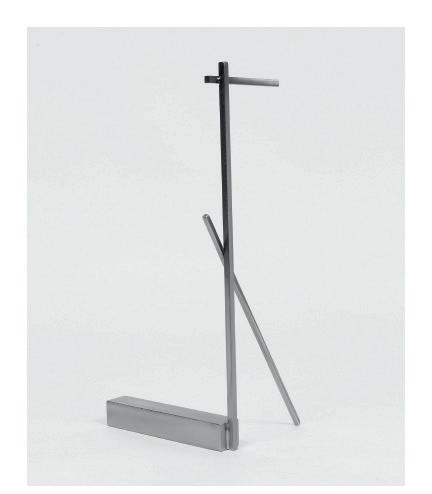
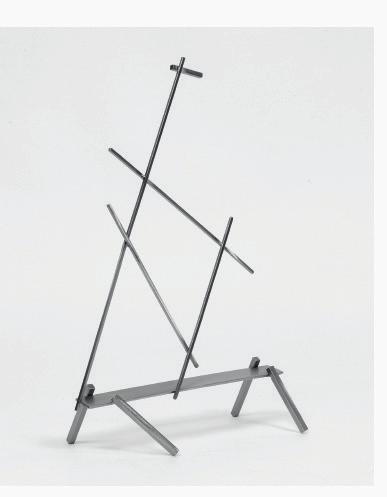
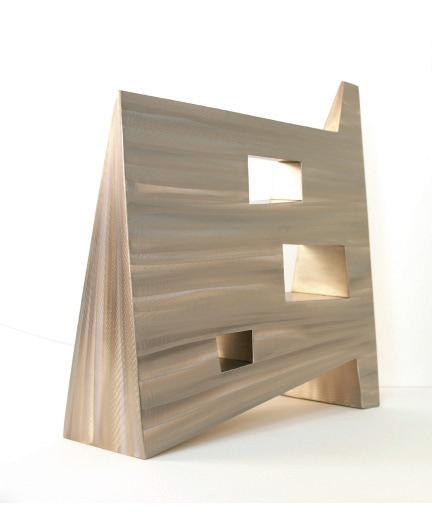
BH: My experiment with Constructivism was another accident through “process.” I had been reading Lacan and I was fascinated by the notion of our unfulfilled desires. I wanted to create a place where that itch could exist, you knew it was in there but you didn’t have access to it. I was working structurally with the idea of very simple planes and the creation of an opening to a depth within the structure that I could not see into fully… a void, a dark space… I would be frustrated, I would be denied the ability to explore it. That was the model in my mind. Most of these pieces have an opening, or a fold leading to an internal space. You have the feeling that something is contained there.
AHG: Color is a significant element too.
BH: My art life began in Brazil. Brazil has a generally exuberant culture. Color, music and personal expression can be intense. To see someone walking down the street with a chartreuse blouse … yellow pants … black and white striped shoes … and a purple hat would not be considered extraordinary. So that early incubation period in Rio de Janeiro opened up the whole color palette to me. Color is a primary component of almost everything I do. Not only did I want this hidden space within the piece, I wanted to make it an experience that, as you moved around the object, you would be taken on a radical color journey and be tossed and twisted and turned, not being sure where you had been nor where you were going.
AHG: The color in Dueling and Drinking (plate 14) is vibrant.
BH: I guess at a certain point I started to take more bold steps with color, heading towards fluorescence. I always thought it would be a little bit too much, maybe self-defeating, but you know, you just keep on taking steps and get comfortable with the new possibilities. I just decided to open that up and that’s what happened.
AHG: I like your titles. Too many artists call stuff “Untitled.” Why give up that opportunity? Your titles are an add, they can suggest the mood.
BH: I look at the titles as an opportunity to deliver another layer of information and juxtaposition. It’s not my intent to decipher anything for anybody, but I want to serve a full meal with the work. Maybe the title could be the wine that goes with the course. Part of my brain spends each day listening to words, not as content but as a sort of code. I am struck constantly by these isolated vignettes, small sequences of words without context. Whenever possible I write them down. I end up with an extensive collection of what I hold as potential titles. Once a sculpture is completed another kind of work begins, determining a title. It is rarely easy, but strangely fulfilling. I am both baptizing a piece and finding a home for these collected words or phrases. I won’t give up until something fits. Why it fits, I am never sure. But I know it fits, and I am relieved. I have these fantasies and one of them is that someone out there will conclude that the real message in my work is in the titles. The objects are there to support them … If I were to leave something, some field of information on the planet before I’m gone, it would be the titles. Which ties back to this Quipu a little bit, right?
AHG: Odilon Redon, the 19th century Symbolist, said he just wanted his symbols to make the paintings work—that he didn’t feel it necessary for people to understand precisely what they meant to him.
BH: That’s right, that’s how I feel. I also subscribe to the idea that art functions as a mirror, and the person standing in front of the object can only see themselves. I want people to spend time gazing at themselves but make it enticing in some way so that the time they spend with it can be significant. This is the magic that I aspire to. The artwork functions as a trigger. The true art experience is what happens in the mind of the viewer. It’s not the object.
AHG: So it’s a mirror with a trigger?
BH: Yeah! That’s what I will want to be written on my tombstone! He made mirrors with triggers.
Anthony Haden-Guest is a British-American writer, art critic, cartoonist, and poet, who lives in New York City and London. He is a frequent contributor to major magazines and has had several books published. His most recent books are True Colors: The Real Life of the Art World (Grove Atlantic), The Last Party: Studio 54, Disco and the Culture of the Night (William Morrow & Co,) and a book of cartoons, The Chronicles of Now (The Allworth Press), as well as the latest: In The Mean Time (Freight Volume). Haden-Guest formerly penned a weekend column on art collection for the Financial Times and he has contributed articles and stories to the Sunday Telegraph, Vanity Fair, The New Yorker, Paris Review, Sunday Times, Esquire, GQ (UK), The Observer, Radar and other major publications. In 1979 he was awarded a New York Emmy for writing and narrating the PBS documentary The Affluent Immigrants.
StoryofMau , 2011-1019
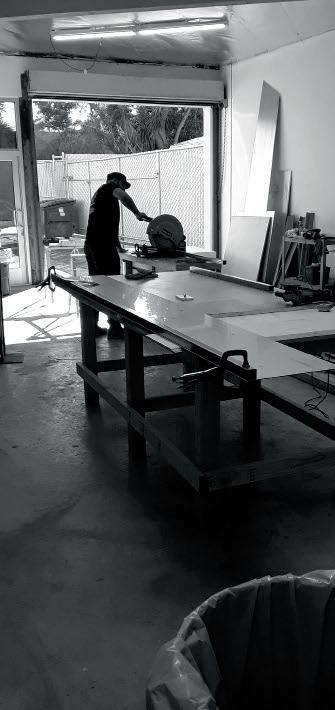
From Inceptionto Installation
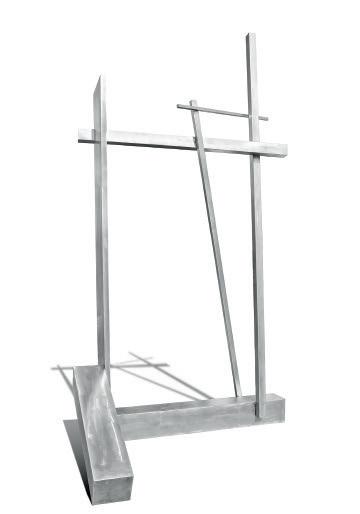
290 | MauMaquette , 2011, Stainless Steel, Urethane, 14 x 9 x 5 in. (35 x 23 x 13 cm) View A and B, Collection of Hortense and Matias Marcier
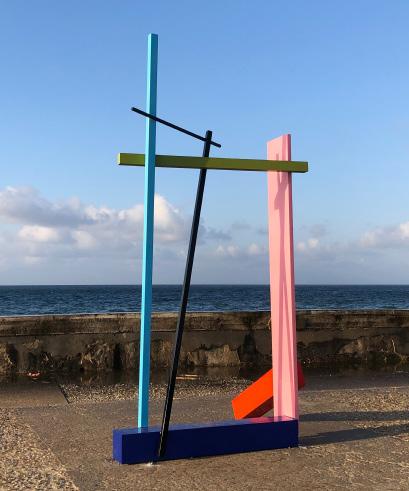
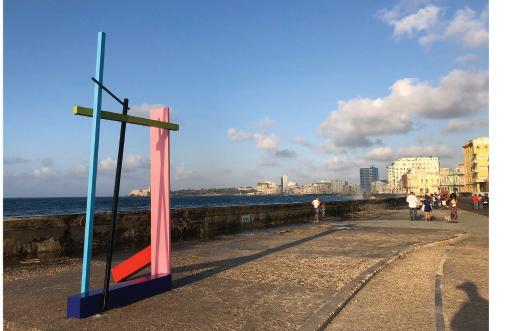
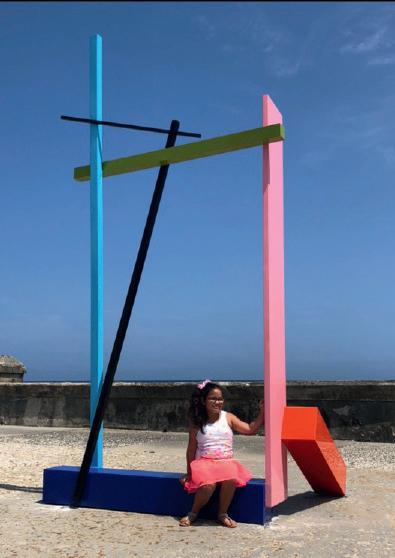
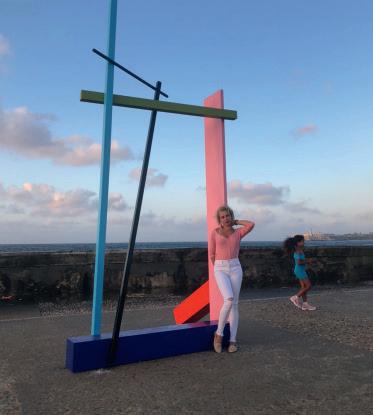
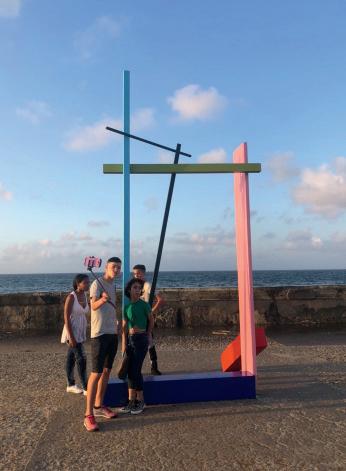
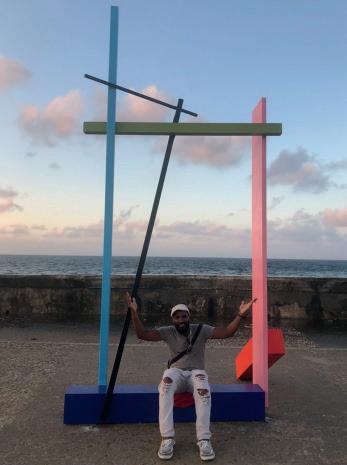
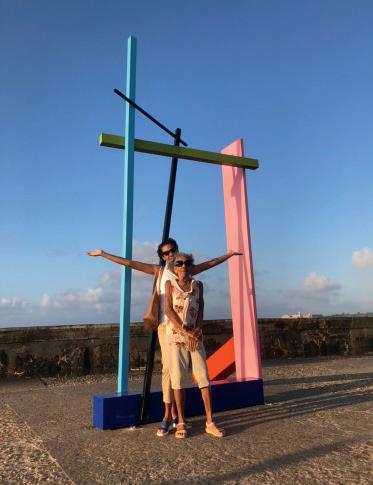
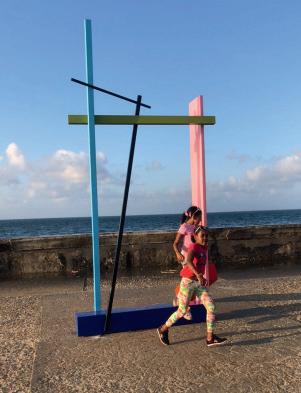
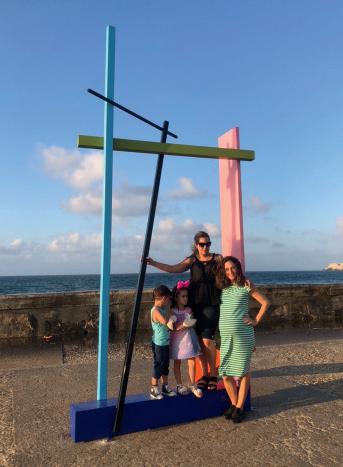
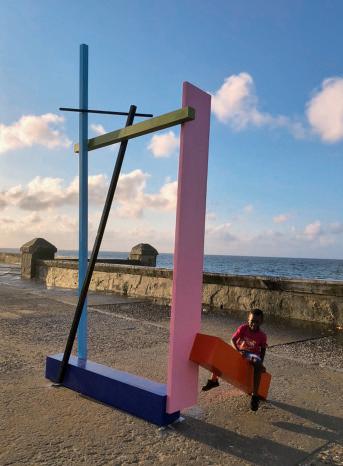
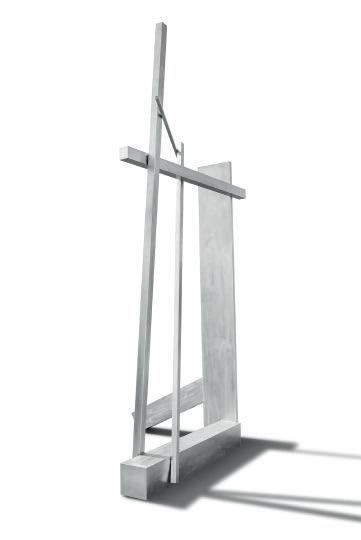
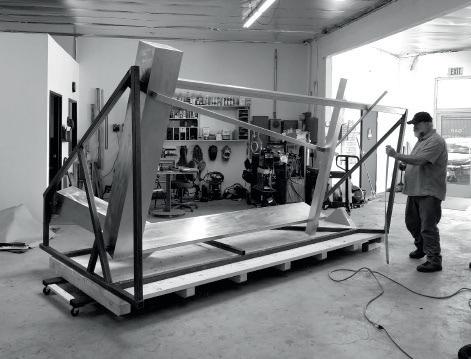
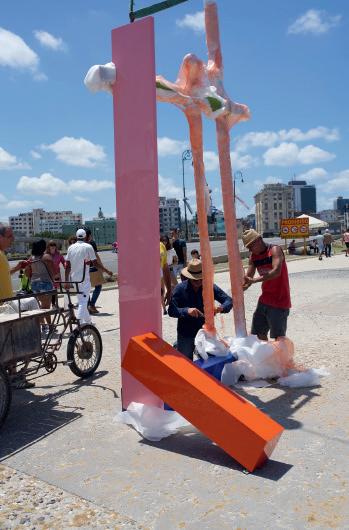
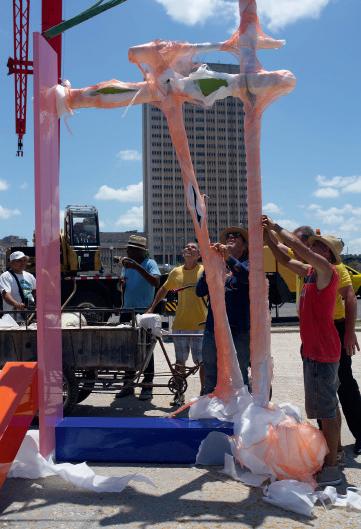
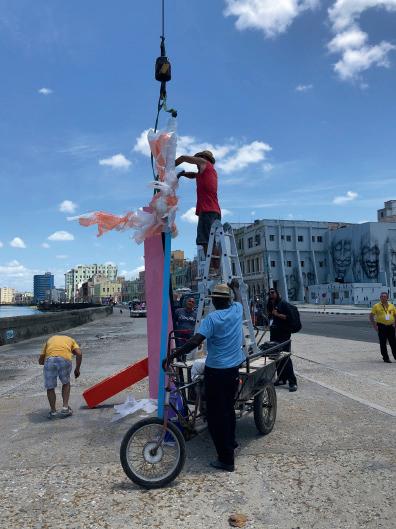
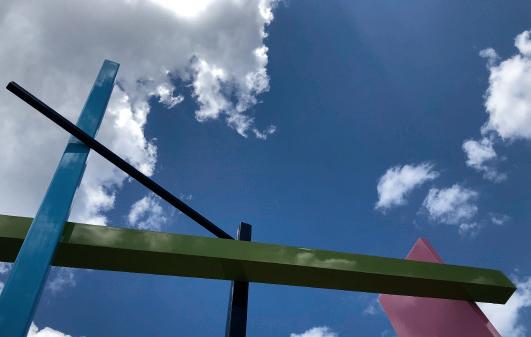
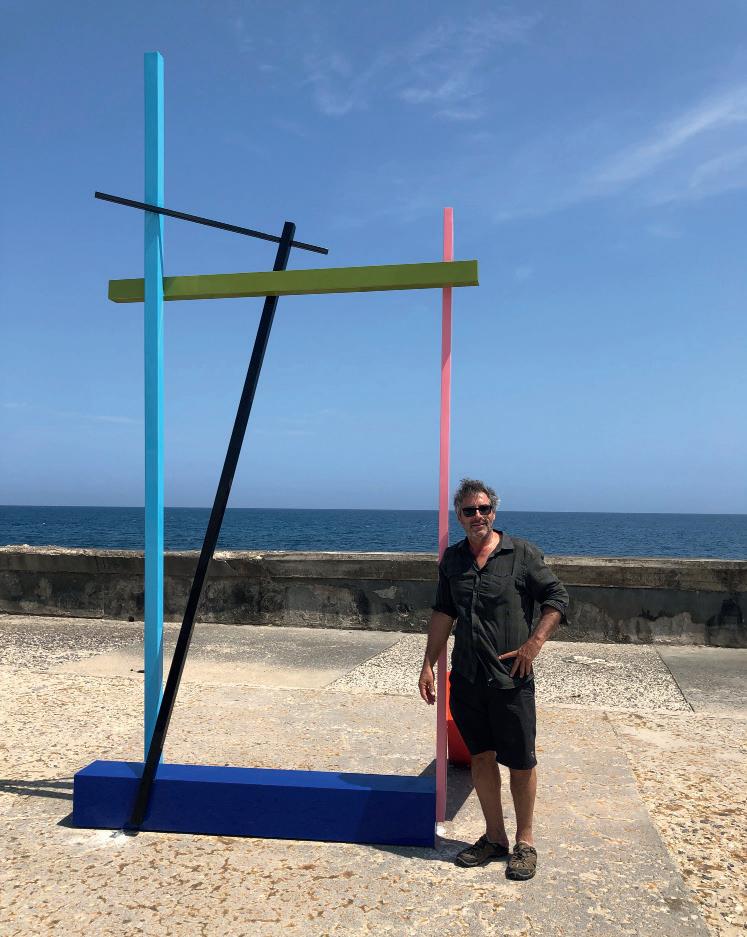
Right: 291 | Mau , 2019, Stainless Steel, Urethane, 156 x 84 x 48 in. (390 x 210 x 120 cm), Collection of City of Havanna, Cuba
The Havana Experience
Public art belongs to the public. As an artist I embrace the fact that I have no control over how a work will be received. My job is to synthesize my experience of the world into an object of interest. It can also be my responsibility to see that the work arrives at its final destination in pristine condition, from that point I become just a witness.
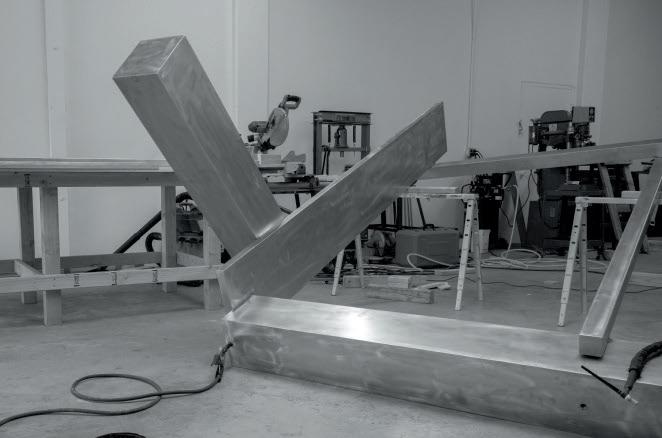
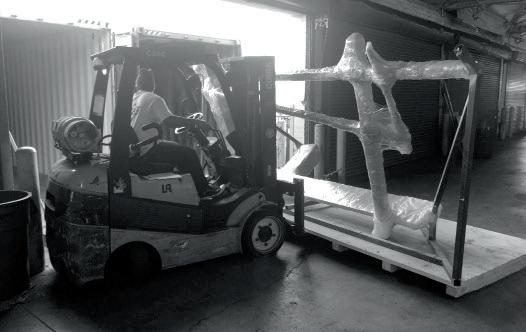
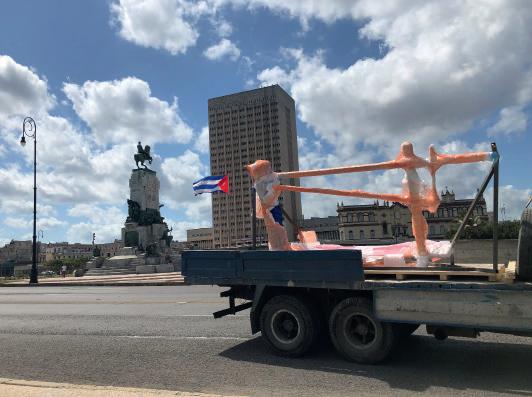
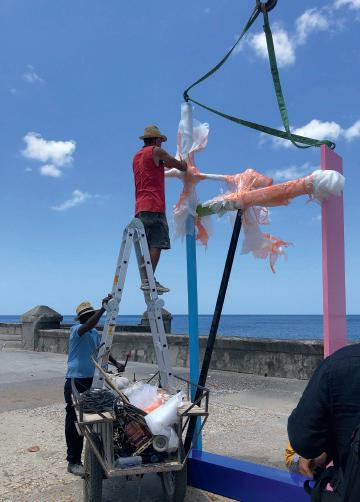
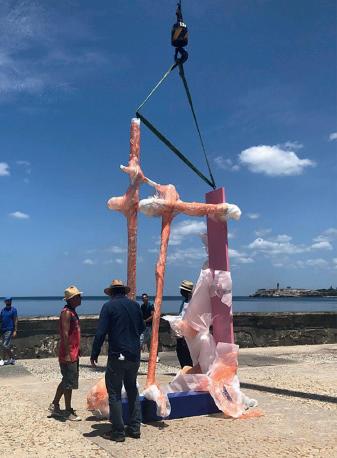
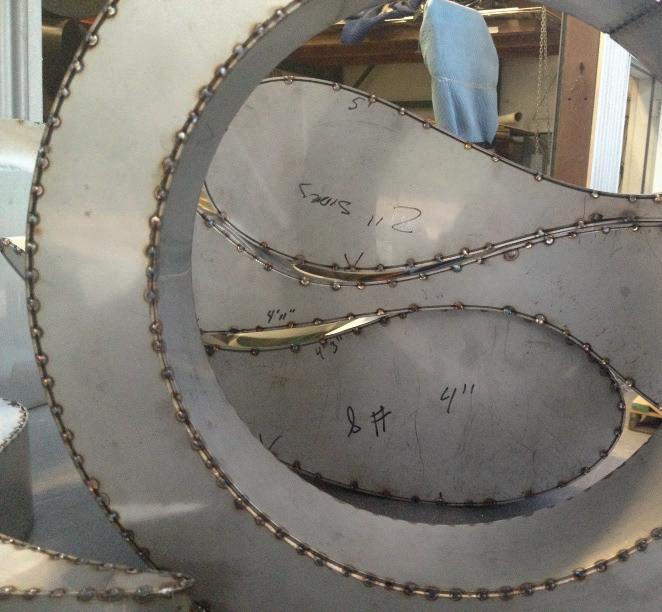
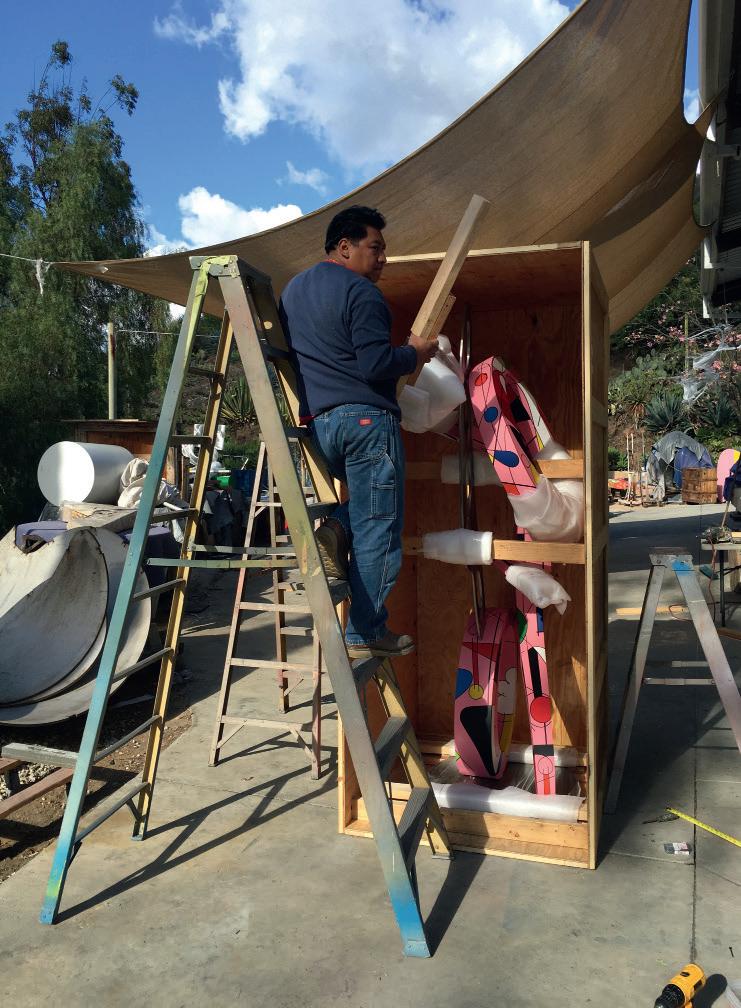
It was an exhausting effort to oversee the transport of my sculpture Mauá from Los Angeles to Cuba for the 2020 Havana Biennial. At all stages the work was elaborately protected from even the smallest threat of damage.
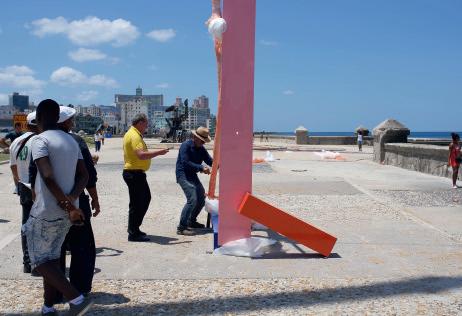
Once it was hoisted from a truck into its exhibition location along the Malecon seawall, two gentlemen on bicycles armed with a bucket of handtools worked with me for several hours securing the sculpture to the cobblestone walkway.
Under the Cuban sun, it was a big job. When we completed the installation, I turned to thank them for the careful work they had done. Not a single scratch. At that moment I heard the excited conversation of a family behind me. When I looked back I saw that the whole family had climbed on and into the sculpture and were posing for photos. I was stunned. Then joy came over me. I understood that the sculpture was being received with affection by those who it was made for.
Exhibitions and Collections
Solo Exhibitions
2019 Wishful Thinking, Caldwell Snyder Gallery, St. Helena, California
2017 Second Nature, Galerie Uli Lang, Biberach, Germany
2016 Jardine de Reverie, Pacific Design Center, West Hollywood, California
Brad Howe Invitational, Gallery Jeon, Daegu, South Korea
System of Shared Risk, Galerie Uli Lang, Biberach, Germany
2015 Working Fictions, Caldwell Snyder Gallery, San Francisco, California
Inoxydable, Galerie Sparts, Paris, France
Cartography, CMay Gallery, Seoul, Korea
Thomas Punzmann Contemporary, Frankfurt, Germany
2014 Shadow Economy, Museum of Art and History, Lancaster, California
Concoctions, The Frostig Collection, Santa Monica, California
2013 Coyote, Galerie Uli Lang, Biberach, Germany
Docile Bodies, Caldwell Snyder Gallery, San Francisco, California
Deprivato, Katherine Cone Gallery, Los Angeles, California
2012 Sculpture, Galerie Janos, Paris, France
Kinetic Works, The Frostig Collection, Santa Monica, California
Sculpture & Kinetic Art, Soohoh Gallery, Seoul, South Korea
Galerie Uli Lang, Biberach, Germany
2011 Caldwell Snyder Gallery, St. Helena, California
Construct, Galerie Uli Lang, Biberach, Germany
2010 Einladung Zur Kunstausstellung Bei H.P. Kaysser, Stuttgart, Germany
Primavernica, AndrewShire Gallery, Los Angeles, California
Sculturen, Mobiles und Mandalas, Galerie Kaysser, Munich, Germany
Giocare con la Scultura, Art 1307, Napoli, Italy
2009 Ein Kaktus–ganz ohne Stacheln; Sudwestbank AG, Stuttgart, Germany
2008 Sculpture, College of The Canyons, Santa Clarita, California
Alexander Mertens Fine Art, Montecito, California
2007 Skulturen Und Objekte, Galerie Kaysser, Munich, Germany
At This Moment, Sculpturesite Gallery, San Francisco, California
Strata, Museum of Design, Art and Architecture, Culver City, California
Overton Moore and Associates Inc. Los Angeles, California
Pacific Medical Buildings, San Diego, California
Pasadena Museum of California Art, Pasadena, California
Princess Cruise Line, Sun Princess, Los Angeles, California
Raleigh Durham Airport, Raleigh, North Carolina
Royal Host, International Forum Building, Tokyo, Japan
Saks Fifth Avenue, USA
Samsung Corporation, Seoul, South Korea
Sand Hill Property Company, Sunnyvale, California
SAS Software Inc. Cary, North Carolina
Secretary of Commerce, Mexico City, Mexico
Stanford University, Palo Alto, California
Straub Autovermietung Hertz, Biberach, Germany
Sudwestbank, Stuttgart, Germany
Stanford University, Palo Alto, California
Sysco Corporation, Houston, Texas
Temple University, Philadelphia, Pennsylvania
Tesoro, San Antonio, Texas
The Animation Guild, Burbank, California
The Contemporary Museum of Hawaii
The Diplomat Hotel, Hollywood, Florida
The Trenton Group, Los Angeles, California
Trinity University, San Antonio, Texas
UCLA Medical Center, Los Angeles, California
UCLA Anderson School of Business, Los Angeles, California
Union Bank, Carmel, California
Wheelock Inc. Singapore
Wheelock Inc. Hong Kong
Western Asset, Pasadena, California
Western Asset, Sao Paulo, Brazil
Xerox Corporation, Rochester, New York
Plate Numbers
1 | Ventana , 2002
Bronze
84 x 120 x 30 in. (210 x 300 x 75 cm)
Katel Properties, Los Angeles, CA
2 | IfNotNow , 2017
Stainless Steel, Urethane
13 x 25 x 12 in. (33 x 63 x 30 cm)
Collection of Elenore and Domenico De Sole
3 | Cajole , 2017
Aluminum, Urethane
29 x 51 x 6 in. (73 x 128 x 15 cm)
Private Collection
4 | Topsoil , 2017
Stainless Steel, Urethane
13 x 14 x 9 in. (33 x 35 x 23 cm)
Collection of Artist
5 | Amnesia , 2017
Stainless Steel, Baltic Birch
13 x 12 x 4 in. (33 x 30 x 10 cm)
Collection of Katherine Cone
6 | GentleistheRestingHand , 2018
Stainless Steel, Urthane
23 x 20 x 13 in. (56 x 50 x 33 cm)
Collection of May Chung
7 | AllofaSudden , 2017
Stainless Steel, Urethane
5 x 16 x 5 in. (13 x 40 x 13 cm)
Collection of Elizabeth and Lothar Blattner
8 | Forgetting , 2017
Stainless Steel, Urethane
20 x 11 x 8 in. (50 x 28 x 20 cm)
Collection of Johannes Remmele
9 | BlamelessasSnow , 2018
Stainless Steel, Urethane
11 x 17 x 6 in. (28 x 43 x 15 cm)
Private Collection
10 | Borderland , 2018
Aluminum, Urethane
8 x 16 x 16 in. (45 x 40 x 40 cm)
Collection of the Artist
11 | IfNotNow , 2017
Stainless Steel, Urethane
13 x 25 x 12 in. (33 x 63 x 30 cm)
Collection of Elenore and Domenico De Sole
12 | Cant , 2017
Stainless Steel, Urethane
5 x 15 x 9 in. (13 x 38 x 23 cm)
Collection of Uli Lang
13 | AFlowerfromtheFuture,2018
Aluminum, Urethane
85 x 33 x 29 in. (213 x 83 x 73 cm)
Collection of Susan and Randy Snyder
14 | DuelingandDrinking , 2018
Aluminum, Urethane
36 x 8 x 11 in. (90 x 20 x 28 cm)
Collection of the Artist
15 | ForeverNotYet,2017
Stainless Steel, Urethane
18 x 19 x 6 in. (45 x 48 x 15 cm)
Collection of the Artist
16 | Hinterland,2017
Stainless Steel, Urethane, 13 x 17 x 6 in. (33 x 43 x 15 cm)
Private Collection
17 | ImitatingaTree , 2018
Aluminum, Urethane
93 x 40 x 30 in. (233 x 100 x 75 cm)
Private Collection
18 | LoveisanInstrument,2017
Stainless Steel, Urethane
6 x 16 x 15 in. (15 x 40 x 38 cm)
Private Collection
19 | Slope,2017
Stainless Steel, Urethane
9 x 18 x 13 in. (23 x 45 x 33 cm)
Harriet and Steven Nichols
20 | SeemingtoBe,2018
Aluminum, Urethane
16 x 12 x 8 in. (40 x 30 x 20 cm)
Private Collection
21 | Soft,2017
Stainless Steel, Urethane
12 x 24 x 9 in. (30 x 60 x 23 cm)
Private Collection
22 | ThisisAboutToBe,2017
Stainless Steel, Urethane
7 x 14 x 5 in. (18 x 35 x 13 cm)
Private Collection
23 | ThePlanetIsaWildPlace,2018
Stainless Steel, Urethane
13 x 19 x 7 in. (33 x 48 x 18 cm)
Collection of Elaine Surnow and Jim Martini
24 | WhileTheGettingIsGood,2017
Stainless Steel, Urethane
7 x 14 x 5 in. (18 x 35 x 13 cm)
Private Collection
25 | TriumphofEnchantment,2018
Aluminium, Urethane
82 x 24 x 34 in. (205 x 60 x 85 cm)
Private Collection
26 | Trapdoor,2018
Stainless Steel, Urethane
4 x 14 x 3 in. (10 x 35 x 8 cm)
Private Collection
27 | Thusness,2018
Stainless Steel, Urethane
16 x 22 x 18 in. (40 x 55 x 45 cm)
Collection of Sheryl Sandberg
28 | TobaccoShop,2017
Stainless Steel, Urethane 15 x 12 x 9 in. (38 x 30 x 23 cm)
Collection of Rich Esposito
29 | Tussle,2017
Stainless Steel, Urethane 6 x 14 x 5 in. (15 x 35 x 13 cm)
Collection of Sheryl Sandberg
30 | Stanza,2011
Stainless Steel, Urethane 24 x 24 x 8 in. (61 x 36 x 20 cm)
Private Collection
31 | Phlogiston , 2017
Aluminum, Urethane 50 x 80 x 12 in. (125 x 200 x 30 cm)
Commissioned by Erdrich White Fine Art
32 | Carillon , 2011
Stainless Steel, Urethane 12 x 29 x 6 in. (30 x 73 x 15 cm)
Private Collection
33 | Imbue , 2017
Stainless Steel, Urethane 66 x 90 x 7 in. (165 x 225 x 18 cm)
Private Collection
34 | Graderes,2011
Stainless Steel, Urethane 16 x 36 x 16 in. (40 x 90 x 40 cm)
Private Collection
35 | Sombra,2011
Stainless Steel, Urethane 20 x 14 x 14 in. (50 x 35 x 35 cm)
Private Collection
36 | Tocer,2011
Stainless Steel, Urethane 20 x 28 x 14 in. (50 x 70 x 143 cm)
Private Collection
37 | Kallos,2013
Stainless Steel, Urethane 10 x 33 x 9 in. (25 x 83 x 23 cm)
Collection of Agata Maszkiewicz
38 | IonianBevy,2011
Stainless Steel, Urethane 21 x 52 x 7 in. (53 x 130 x 18 cm)
Private Collection
39 | DifficultyinKnowing,2017
Stainless Steel, Urethane
56 x 19 x 8 in. (140 x 48 x 20 cm)
Private Collection
40 | AttheEndoftheDay,2017
Stainless Steel, Urethane
36 x 36 x 6 in. (90 x 90 x 15 cm)
Private Collection
41 | Outgiving,2017
Stainless Steel, Urethane
16 x 120 x 6 in. (40 x 300 x 15 cm)
Collection of Tom Gregory
42 | MakingItUpAsIGoAlong,2017
Stainless Steel, Urethane
44 x 82 x 6 in. (110 x 205 x 15 cm)
Collection of the Artist
43 | Workaround,2015
Stainless Steel, Urethane
38 x 34 x 8 in. (95 x 85 x 20 cm)
Collection of Torsten Michel
44 | Enfatico,2013
Stainless Steel, Urethane
12 x 34 x 11 in. (30 x 85 x 28 cm)
Private Collection
45 | WhenBadThingsFailtoHappen,2018
Stainless Steel, Urethane
6 x 9 x 5 in. (15 x 23 x 13 cm)
Private Collection
46 | Mexido,2013
Stainless Steel, Urethane
6 x 14 x 10 in (15 x 36 x 25 cm), View A, B, C, D Collection of Raphaele Cohen-Barcy
47 | DesiretoAssimilate,2018
Stainless Steel, Urethane
8 x 19 x 11 in. (20 x 48 x 28 cm)
Private Collection
48 | TheIntolerableDiscoveryofLimits,2018
Stainless Steel, Urethane
7 x 13 x 10 in. (18 x 33 x 25 cm)
Private Collection
49 | Prattle,2018
Stainless Steel, Urethane
6 x 13 x 9 in. (15 x 33 x 23 cm)
Private Collection
50 | SoFarSoGood,2018
Stainless Steel, Urethane
8 x 12 x 8 in. (20 x 30 x 20 cm)
Private Collection
51 | Vao,2013
Stainless Steel, Urethane
9 x 21 x 12 in. (23 x 53 x 30 cm)
Private Collection
52 | BirdinaSnare,2018
Stainless Steel, Urethane
6 x 16 x 8 in. (15 x 40 x 20 cm)
Private Collection
53 | Lang50,2018
Stainless Steel, Urethane
5 x 14 x 7 in. (13 x 35 x 18 cm)
Private Collection
54 | Lang55,2018
Stainless Steel, Urethane
5 x 8 x 8 in. (11 x 19 x 19 cm)
Private Collection
55 | Lang73,2018
Stainless Steel, Urethane
9 x 10 x 6 in. (23 x 25 x 15 cm)
Private Collection
56 | Lang81,2018
Stainless Steel, Urethane
3 x 9 x 6 in. (8 x 23 x 14 cm)
Private Collection
57 | Lang84,2018
Stainless Steel, Urethane
5 x 8 x 5 in. (13 x 20 x 13 cm)
Private Collection
58 | Lang91,2018
Stainless Steel, Urethane
5 x 10 x 9 in. (13 x 25 x 23 cm)
Private Collection
59 | Lang118,2018
Stainless Steel, Urethane
5 x 8 x 6 in. (13 x 20 x 15 cm)
Private Collection
60 | Lang36,2018
Stainless Steel, Urethane
5 x 8 x 6 in. (13 x 20 x 15 cm)
Private Collection
61 | Lang116,2018
Stainless Steel, Urethane
3 x 5 x 3 in. (8 x 13 x 8 cm)
Private Collection
62 | Lang101,2018
Stainless Steel, Urethane
3 x 7 x 4 in. (8 x 18 x 10 cm)
Private Collection
63 | Lang57,2018
Stainless Steel, Urethane
4 x 7 x 6 in. (10 x 18 x 15 cm)
Private Collection
64 | RaraAvis,2018
Stainless Steel, Urethane
6 x 6 x 6 in. (14 x 15 x 14 cm)
Private Collection
65 | Kabobette,2002
Bronze
21 x 6 x 12 in. (53 x 15 x 30 cm)
Collection of Tom Gregory
66 | Surge,2008
Bronze 12 x 23 x 6 in. (30 x 58 x 15 cm)
Private Collection
67 | ChubbyRaindrop,2003
Bronze
40 x 24 x 10 in. (100 x 60 x 25 cm)
Private Collection
68 | Workbench,2017
Bronze 18 x 22 x 5 in. (45 x 55 x 13 cm)
Private Collection
69 | Heap,2008
Bronze 12 x 23 x 6 in. (30 x 58 x 15 cm)
Private Collection
70 | LaAscencindelCorazon,1999
Bronze 17 x 19 x 10 in. (43 x 48 x 25 cm)
Private Collection
71 | Magellan , 2003
Bronze 28 x 18 x 11 in. (70 x 45 x 28 cm)
Private Collection
72 | Pinocchio , 2003
Bronze
36x 17 x 11 in. (90 x 43 x 28 cm)
Private Collection
73 | Flute , 2011
Bronze
21.5 x 7 x 6 in. (54 x 18 x 15 cm)
Private Collection
74 | Flow , 2010
Bronze 6 x 29 x 5 in. (15 x 73 x 13 cm) Collection of the Artist
75 | Shanghai , 2007
Patinated Bronze
34 x 25 x 14 in. (85 x 63 x 35 cm), View A, B, C, and D Collection of Cody Luket
76 | NorThing,NorFact , 2011
Stainless Steel, Urethane 15 x 13 x 8 in. (38 x 33 x 20 cm)
Private Collection
77 | Sabine , 2011
Stainless Steel, Urethane 12 x 7 x 17 in. (30 x 18 x 43 cm)
Private Collection
78 | ThrowingWateronaGreaseFire , 2011
Stainless Steel, Urethane
13 x 11 x 5 in. (33 x 28 x 13 cm), View A and B
Private Collection
79 | Prop,2015
Stainless Steel, Urethane
19 x 13 x 7 in. (48 x 33 x 18 cm)
Private Collection
80 | Barriga,2014
Stainless Steel, Urethane
19 x 11 x 8 in. (48 x 28 x 20 cm)
Private Collection
81 | Kangchenjunga , 2015
Stainless Steel
9 x 12 x 5 in. (23 x 30 x 13 cm)
Private Collection
82 | MangaParbat , 2015
Stainless Steel
18 x 7 x 5 in. (45 x 18 x 13 cm)
Private Collection
83 | MontBlanc , 2015
Stainless Steel
13 x 6 x 3 in. (33 x 15 x 8 cm)
Private Collection
84 | Denali , 2015
Stainless Steel
13 x 6 x 5 in. (33 x 15 x 13 cm)
Private Collection
85 | Kilimanjaro , 2015
Stainless Steel
15 x 9 x 4 in. (38 x 23 x 10 cm)
Private Collection
86 | Himalchuli , 2015
Stainless Steel
18 x 6 x 3 in. (45 x 15 x 8 cm)
Private Collection
87 | Rainier , 2015
Stainless Steel
18 x 7 x 4 in. (45 x 18 x 10 cm)
Private Collection
88 | Whitney , 2015
Stainless Steel
13 x 7 x 4 in. (33 x 18 x 10 cm)
Private Collection
89 | 4Constructs , 2010
Stainless Steel, Urethane
6 x 30 x 5 in. (90 x 75 x 13 cm)
Private Collection
90 | Happenstance , 2010
Stainless Steel, Urethane
12 x 8 x 2 in. (30 x 20 x 5 cm)
Collection of Agata Maszkeiwicz
91 | Blue/BlackConstruct,2010
Stainless Steel, Urethane
12 x 8 x 2 in. (30 x 20 x 5 cm)
Private Collection
92 | WhatistheCostofGiving,2010
Stainless Steel, Urethane
12 x 8 x 5 in. (30 x 20 x 13 cm)
Private Collection
93 | Compliance , 2016
Stainless Steel, Urethane
130 x 28 x 3 in. (75 x 70 x 8 cm)
Collection of The Gerster Family
94 | Erstwhile , 2015
Stainless Steel, Urethane
30 x 30 x 7 in. (75 x 75 x 18 cm)
Collection of the Artist
95 | AlacranBlanco , 2010
Stainless Steel, Urethane
5 x 5 x 2 in. (13 x 13 x 5 cm)
Private Collection
96 | Construct26 , 2011
Stainless Steel, Urethane 11 x 12 x 3 in. (28 x 30 x 8 cm)
Private Collection
97 | Construct19,2011
Stainless Steel, Urethane 16 x 12 x 4 in. (40 x 30 x 33 cm)
Private Collection
98 | ConfessionsofDisappearance , 2016
Stainless Steel, Urethane 22 x 12 x 3 in. (55 x 30 x 8 cm)
Private Collection
99 | Abolition , 2013
Stainless Steel, Urethane
15 x 25 x 8 in. (38 x 63 x 20 cm)
Private Collection
100 | Amid , 2017
Stainless Steel, Urethane, Acrylic 18 x 24 x 6 in. (45 x 60 x 15 cm)
Collection of the Artist
101 | Benevolence , 2017
Stainless Steel, Urethane, Acrylic 15 x 24 x 10 in. (38 x 60 x 25cm)
Collection of Elke and Thomas Handtmann
102 | Daylight , 2017
Stainless Steel, Urethane, Acrylic 24 x 10 x 10 in. (60 x 25 x 25 cm)
Collection of Elke and Thomas Handtmann
103 | Absence , 2017
Acrylic
39 x 16 x 10 in. (98 x 40 x 25 cm)
Private Collection
104 | Flavor , 2017
Stainless Steel, Urethane
15 x 24 x 10 in. (38 x 60 x 25 cm)
Private Collection
105 | Murmur , 2012
Stainless Steel, Urethane 12 x 20 x 12 in. (30 x 50 x 30 cm)
Private Collection
106 | Autonomy , 2012
Stainless Steel 13 x 24 x 11 in. (33 x 60 x 28 cm)
Collection of Nancy Larrew and Andi Fuzes
107 | Blurr , 2013
Stainless Steel, Urethane 31 x 11 x 10 in. (78 x 28 x 25 cm)
Private Collection
108 | Chitin , 2012
Stainless Steel 115 x 49 x 48 in. (288 x 123 x 120 cm)
Collection of the Artist
109 | Gravity , 2013
Stainless Steel, Urethane 20 x 22 x 13 in. (50 x 55 x 33 cm)
Collection of Darlene Fogel
110 | Linger,2015
Stainless Steel 18 x 25 x 9 in. (45 x 63 x 23 cm)
Private Collection
111 | Fete , 2012
Stainless Steel, Urethane 12 x 24 x 15 in. (30 x 60 x 38 cm)
Collection of the Artist
112 | Response , 2013
Stainless Steel, Urethane 20 x 18 x 16 in. (50 x 45 x 40 cm)
Collection of Carrie Chassin and Jochen Haber
113 | Whitewash , 2013
Stainless Steel, Urethane 25 x 31 x 12 in. (61 x 76 x 29 cm)
Collection of Suzanne and Sebastian Finkbeiner
114 | RoutineandRitual , 2015
Stainless Steel, Aluminum, Urethane 23 x 30 x 12 in. (58 x 75 x 30 cm)
Private Collection
115 | Temptation , 2012
Stainless Steel, Urethane 15 x 21 x 14 in. (38 x 53 x 35 cm)
Private Collection
116 | Sonant , 2013
Stainless Steel, Urethane 17 x 10 x 10 in. (43 x 25 x 25 cm)
Private Collection
117 | RulesofThumb , 2015
Stainless Steel, Urethane
18 x 24 x 12 in. (45 x 60 x 30 cm)
Private Collection
118 | Sorrow,2013
Stainless Steel, Urethane
6 x 15 x 9 in. (15 x 38 x 23 cm)
Collection of Cynthia Penna Simonelli and Renato Penna
119 | Frock , 2012
Stainless Steel, Aluminum, Urethane
12 x 25 x 18 in. (29 x 61 x 45 cm)
Private Collection
120 | ThePacificationofVision , 2015
Stainless Steel, Urethane
38 x 20 x 16 in. (95 x 50 x 40 cm)
Private Collection
121 | Inference , 2013
Stainless Steel, Urethane
21 x 20 x 22 in. (53 x 49 x 54 cm)
Collection of May Chung
122 | Midst , 2013
Stainless Steel, Urethane
20 x 24 x 6 in. (50 x 60 x 15 cm)
Collection of the Artist
123 | WithinThisHorizon , 2016
Stainless Steel
20 x 40 x 14 in. (50 x 100 x 35 cm)
Collection of the Artist
124 | Verisimilitude , 2016
Stainless Steel, Urethane
24 x 30 x 5 in. (60 x 75 x 13 cm)
Private Collection
125 | Ambush , 2016
Stainless Steel
36 x 20 x 14 in. (90 x 50 x 35 cm)
Collection of Rhonda and Ron Papell
126 | TrickyDay , 2016
Stainless Steel
24 x 18 x 18 in. (60 x 45 x 45 cm)
Private Collection
127 | Meanwhile , 2016
Stainless Steel
21 x 24 x 16 in. (53 x 60 x 40 cm)
Private Collection
128 | Carom , 2019
Stainless Steel
12 x 21 x 3 in. (30 x 53 x 8 cm)
Collection of the Artist
129 | ADesireForSymmetry , 2018
Stainless Steel, Urethane
42 x 96 x 24 in. (105 x 240 x 60 cm)
Collection of the Artist
130 | BluntInstrument(VariationJ) , 2018
Stainless Steel, Urethane
58 x 70 x 12 in. (145 x 175 x 30 cm)
Collection of the Artist
131 | Anesthesia , 2018
Stainless Steel
40 x 120 x 24 in. (100 x 300 x 60 cm)
Collection of the Artist
132 | NookandCranny , 2018
Stainless Steel, Urethane
61 x 72 x 14 in. (153 x 180 x 35 cm)
Private Collection
133 | WhatBeforeWho , 2018
Stainless Steel, Urethane
44 x 60 x 13 in. (110 x 150 x 33 cm)
Collection of the Artist
134 | TruffleHound , 2016
Stainless Steel, Urethane 18x 24 x 6 in. (45 x 60 x 15 cm)
Collection of Gallery Jones
135 | BubbleShuffle , 2009
Stainless Steel, Urethane
14 x 18 x 12 in. (34 x 45 x 30 cm)
Private Collection
136 | BlindBelief , 2015
Stainless Steel, Urethane
19 x 15 x 7 in. (48 x 38 x 18 cm)
Private Collection
137 | Dodger , 2012
Stainless Steel, Urethane
17 x 20 x 10 in. (43 x 50 x 25 cm)
Private Collection
138 | Brutus , 2015
Stainless Steel, Urethane
15 x 19 x 6 in. (38 x 48 x 15 cm)
Collection of May Chung
139 | ChangesInTheWeather , 2016
Stainless Steel, Urethane
6 x 22 x 8 in. (15 x 55 x 20 cm)
Collection of the Artist
140 | Cul-de-Sac , 2015
Stainless Steel, Urethane
8 x 12 x 13 in. (20 x 30 x 33 cm)
Collection of the Artist
141 | Countless , 2014
Stainless Steel
7 x 11 x 5 in. (18 x 28 x 13 cm)
Private Collection
142 | Doppio , 2008
Patinated Stainless Steel
33 x 24 x 11 in. (83 x 60 x 28 cm)
Private Collection
143 | Doorbell , 2013
Stainless Steel, Urethane
25 x 14 x 9 in. (63 x 35 x 23 cm)
Private Collection
144 | Dewey , 2013
Stainless Steel, Urethane 14 x 18 x 8 in. (35 x 44 x 20 cm)
Private Collection
145 | Geezer , 2011
Stainless Steel, Urethane
35 x 24 x 16 in. (88 x 60 x 40 cm)
Collection of Gary Goldstein
146 | BrainofaSparrow , 2006
Stainless Steel, Urethane 12 x 30 x 5 in. (30 x 75 x 13 cm)
Private Collection
147 | Gush , 2017
Stainless Steel, Urethane 19 x 19 x 8 in. (48 x 48 x 20 cm)
Private Collection
148 | Grace , 2014
Stainless Steel, Urethane 16 x 14 x 8 in. (40 x 35 x 20 cm)
Private Collection
149 | Jitter , 2016
Stainless Steel, Urethane 14 x 12 x 5 in. (35 x 30 x 13 cm)
Collection of the Artist
150 | Juvenilia , 2016
Stainless Steel, Urethane 8 x 25 x 13 in. (20 x 63 x 33 cm)
Collection of the Artist
151 | Nopal , 2007
Stainless Steel, Urethane 28 x 21 x 9 in. (70 x 53 x 22 cm)
Private Collection
152 | Tenor , 2008
Stainless Steel, Urethane 14 x 22 x 6 in. (35 x 55 x 15 cm)
Private Collection
153 | Pulso , 2012
Stainless Steel, Urethane 21 x 12 x 8 in. (51 x 30 x 20 cm)
Private Collection
154 | Plow , 2011
Stainless Steel, Urethane 14 x 18 x 4 in. (35 x 45 x 10 cm)
Collection of Eva Fayman
155 | Plush , 2017
Stainless Steel, Urethane 14 x 18 x 7 in. (35 x 45 x 18 cm)
Private Collection
156 | Tropos , 2011
Stainless Steel, Urethane
39 x 36 x 18 in. (98 x 90 x 45 cm)
Private Collection
157 | LifeJacket , 2015
Stainless Steel, Urethane
6 x 19 x 13 in. (15 x 48 x 33 cm)
Private Collection
158 | Mola , 2008
Stainless Steel, Urethane
12 x 23 x 5 in. (30 x 58 x 13 cm)
Collection of Suzanne and Jean Claude Benarrosh
159 | Lato , 2012
Stainless Steel, Urethane
31 x 17 x 9 in. (78 x 43 x 21 cm)
Private Collection
160 | Kettle , 1995 Steel, Urethane
30 x 19 x 18 in. (75 x 48 x 45 cm)
Private Collection
161 | OfertaAoSol , 2012
Stainless Steel, Urethane
132 x 75 x 64 in. (330 x 188 x 160 cm)
Collection of the Artist
162 | Occam’sRazor , 2018
Carbon Fiber,Stainless Steel, Urethane
25 x 18 x 11 in. (63 x 45 x 28 cm)
Collection of Essex Property Trust, San Mateo, CA
163 | Elan,2018
Stainless Steel, Urethane
150 x 4 x 45 in. (375 x 120 x 113 cm)
Collection of Sandy and Larry Post
164 | ACityintheSky,2019
Aluminum, Urethane
84 x 144 x 48 in. (213 x 366 x 122 cm)
Collection of Terry Greene
165 | Reckon , 2012
Stainless Steel, Urethane
127 x 120 x 32 in. (318 x 300 x 80 cm)
Collection of City of Carmel, Carmel, IN
166 | AtTheCenterOfTheStory , 2016
Stainless Steel, Urethane
82 x 34 x 19 in. (205 x 85 x 48 cm)
Private Collection
167 | BuffaloCowgirl , 2010
Stainless Steel, Urethane
104 x 64 x 42 in. (260 x 160 x 105 cm)
Collection for Robin and Richard Goldman
168 | TissuePaper , 2015
Stainless Steel, Urethane
81 x 47 x 12 in. (203 x 118 x 30 cm)
Private Collection
169 | SweetPotato , 2016
Stainless Steel, Urethane
90 x 62 x 17 in. (225 x 155 x 43 cm)
Private Collection
170 | Bobo , 2011
Stainless Steel, Urethane
64 x 30 x 30 in. (160 x 75 x 75 cm)
Collection of the Artist
171 | Watusi , 2000
Stainless Steel
180 x 72 x 72 in. (450 x 180 x 180 cm)
Collection of Ajinomoto Windsor Inc., Ontario, CA
172 | Venezuela , 2003
Stainless Steel
168 x 96 x 72 in. (420 x 240 x 180 cm)
Collection of George Rosenthal
173 | Spinoza , 2014
Stainless Steel, Urethane
190 x 117 x 44 in. (475 x 293 x 110 cm)
Collection of the Artist
174 | Waypoint,2001
Stainless Steel, Urethane
360 x 240 x 120 in. (900 x 600 x 300 cm)
Overton Moore Properties, Torrance, CA
175 | Woodpath , 2016
Stainless Steel, Urethane
62 x 42 x 16 in. (155 x 105 x 40 cm)
Private Collection
176 | AsAliveasPossible , 2018
Aluminum, Urethane
77 x 52 x 20 in. (193 x 130 x 50 cm)
Collection of Elke and Thomas Handtmann
177 | Semillas , 2016
Stainless Steel, Urethane
72 x 52 x 32 in. (180 x 130 x 80 cm)
Stanford University, Stanford, CA
178 | Qualia , 2016
Stainless Steel, Urethane
204 x 168 x 96 in. (510 x 420 x 240 cm)
Stanford University, Stanford, CA
179 | Lemonada , 2009
Aluminum, Urethane
50 x 84 x 120 in. (125 x 210 x 300 cm)
Collection of the Artist
180 | Red,BlackMonoliths , 2006
Stainless Steel, Urethane
60 x 150 x 10 in. (150 x 375 x 25 cm)
Private Collection
181 | RiversRunThroughUs , 2018
Aluminum, Urethane
180 x 96 x 48 in. (450 x 240 x 120 cm)
Michigan State University, East Lansing, MI
182 | Palomino , 2015
Stainless Steel, Urethane
156 x 90 x 60 in. (396 x 229 x 152 cm)
Collection of Frost Bank, San Antonio, TX
183 | Paddles , 2010
Stainless Steel, Urethane
78 x 55 x 36 in. (195 x 138 x 90 cm)
Private Collection
184 | Ransack , 2014
Stainless Steel, Urethane
108 x 60 x 30 in. (270 x 150 x 75 cm)
Private Collection
185 | Judo , 2015
Stainless Steel, Urethane
80 x 64 x 24 in. (200 x 160 x 60 cm)
Private Collection
186 | Paloma , 2005
Stainless Steel
76 x 81 x 23 in. (190 x 203 x 58 cm)
Private Collection
187 | Bossa , 2009
Aluminum, Urethane
48 x 40 x 1 in. (120 x 99 x 3 cm)
Collection of Uli and Gerhard Lang
188 | Chords(triptych) , 2008
Stainless Steel, Urethane
36 x 108 x 2 in. (90 x 270 x 5 cm)
Collection of Simon Rolf
189 | DogWhistle , 2015
Stainless Steel, Urethane
48 x 146 x 2 in. (120 x 365 x 5 cm)
Private Collection
190 | Doughboy , 2008
Aluminum, Urethane
36 x 36 x 2 in. (90 x 90 x 5 cm)
Collection of the Artist
191 | ParqueCentral , 2011
Aluminum, Urethane
48 x 72 in. (120 x 180 cm)
Collection of Peter Moglia
192 | QuasarTriptych , 2008
Aluminum, Urethane
36 x 110 x 2 in. (90 x 275 x 5 cm)
Private Collection
193 | Topo , 2010
Aluminum, Urethane
30 x 2 in. (75 x 5 cm)
Private Collection
194 | BarodaWall,Wall1 , 2005
Stainless Steel, Bronze, Aluminum, Urethane
48 x 264 x 12 in. (120 x 660 x 30 cm)
Collection of David Bohnett
195 | BarodaWallInstallation,2019
Aluminum, Bronze and Stainless Steel
240 x 480 x 36 in. (600 x 1200 x 90 cm)
Los Angeles County & University of Southern California
Gift of David Bohnett
196 | AndYet , 2017
Aluminum, Urethane
32 x 24 x 24 in. (80 x 60 x 60 cm)
Private Collection
197 | Forgetfulness , 2007
Aluminum, Urethane
52 x 31 x 4 in. (130 x 78 x 10 cm)
Private Collection
198 | VirtualBanjo , 2004
Stainless Steel, Urethane,
12 x 24 x 7 in. (30 x 60 x 18 cm)
Private Collection
199 | Combinatorialism , 2016
Stainless Steel, Aluminum, Urethane
216 x 216 x 48 in. (540 x 540 x 120 cm)
Collection of Lynette and Derek Brown
200 | Chuva , 2007
Aluminum, Urethane
47 x 32 x 4 in. (118 x 80 x 10 cm)
Private Collection
201 | Goyo , 2007
Aluminum, Urethane
18 x 76 x 4 in. (45 x 190 x 10 cm)
Collection of Elke and Thomas Handtmann
202 | GreenRiver , 2005
Stainless Steel, Aluminum, Urethane
15 x 15 x 1 in. (38 x 38 x 3 cm)
Private Collection
203 | OndaAzul , 2006
Stainless Steel, Aluminum, Urethane
24 x 24 x 2 in. (60 x 60 x 5 cm)
Private Collection
204 | Strew , 2017
Aluminum, Urethane
22 x 37 x 7 in. (56 x 94 x 18 cm)
Collection of Bruna Howe
205 | Lift , 2009
Aluminum, Urethane
34 x 30 x 4 in. (85 x 75 x 9 cm)
Private Collection
206 | Speed , 2004
Stainless Steel, Urethane
60 x 48 x 9 in. (150 x 120 x 23 cm)
Collection of Uli and Gerhard Lang
207 | NaranjayLeche , 2001
Stainless Steel, Urethane
15 x 20 x 3 in. (38 x 50 x 8 cm)
Private Collection
208 | Medusa , 2008
Aluminum, Urethane
54 x 57 x 3 in. (135 x 143 x 8 cm)
Collection of Carolin Grimbacher
209 | Nebraska , 2005
Stainless Steel, Urethane
36 x 36 x 5 in. (90 x 90 x 13cm)
Collection of Lisa and Chris Bonbright
210 | LightHouse , 2006
Stainless Steel, Urethane
10 x 10 x 16 in. (25 x 25 x 40 cm)
Private Collection
211 | Neruda , 2007
Aluminum, Urethane
47 x 32 x 4 in. (118 x 80 x 10 cm)
Collection of Beatriz Borges
212 | NorwegianWood , 2007
Stainless Steel, Urethane
19 x 12 x 19 in. (48 x 30 x 48 cm)
Collection of Elke and Thomas Handtmann
213 | Sabanas , 2004
Steel, Urethane
5 x 15 x 3 in. (38 x 38 x 6 cm)
Private Collection
214 | Iowa, 1997
Steel, Urethane
30 x 24 x 6 in. (75 x 60 x 15 cm)
Collection of Dr. Norman Hartstein
215 | SaltyBiscuits , 2017
Stainless Steel, Urethane
60 x 42 x 6 in. (150 x 105 x 15 cm)
Private Collection
216 | Spread , 2017
Aluminum, Urethane
28 x 24 x 3 in. (70 x 60 x 8 cm)
Collection of Elke and Thomas Handtmann
217 | Tingle , 2015
Stainless Steel, Urethane
10 x 60 x 9 in. (25 x 150 x 23 cm)
Collection of the Artist
218 | PluralTruths , 2017
Aluminum
40 x 48 x 2 in. (102 x 122 x 5 cm)
Collection of the Artist
219 | Oregon , 2005
Stainless Steel, Urethane
9 x 12 x 14 in. (23 x 30 x 35 cm)
Collection of the Gerster Family
220 | Cornbread, 2010
Stainless Steel, Urethane
10 x 12 x 13 in. (25 x 30 x 33 cm)
Collection of Uli Lang, Biberach, Germany
221 | RopaenelViento , 2002
Aluminum, Stainless Steel, Urethane
144 x 144 in. (360 x 360 cm)
Private Collection
222 | CasadeMiAbuelita , 2014
Mixed Media
37 x 33 x 34 in. (93 x 83 x 85 cm)
Private Collection
223 | HighNorth , 2015
Stainless Steel, Aluminum, Urethane
24 x 216 x 72 in. (60 x 540 x 180 cm)
Collection of Ellen Hoffman
224 | ThingsHappen , 2015
Stainless Steel, Aluminum, Urethane
32 x 100 x 12 in. (80 x 250 x 30 cm)
Private Collection
225 | SongoftheExpandingUniverse,2003
Aluminum, Urethane
120 x 120 x 960 in. (300 x 300 x 2400 cm)
Georgia International Convention Center College Park, Atlanta, GA
226 | OneDesertSky , 2014
Stainless Steel, Aluminum, Kinetic Installation High Desert Health Center, Lancaster, CA
227 | ItSmellsLikeRainAgain , 2006
Stainless Steel, Aluminum, Urethane 102 x 72 x 12 in. (255 x 180 x 30 cm)
Private Collection
228 | TradeWinds , 2009
Stainless Steel, Aluminum, Urethane 360 x 216 x 300 in. (900 x 540 x 750 cm)
Temple University, Philadelphia, PA
229 | Ventriloquism , 2013
Stainless Steel, Aluminum, Urethane 216 x 132 x 36 in. (540 x 330 x 90 cm)
Private Collection
230 | ToDelightintheHopesoftheYoung,2019
Aluminum, Stainless Steel, Urethane
156 x 72 x 36 in. (396 x 183 x 91 cm)
Collection of Terry Gree30
231 | AnExaltationofLarks , 2010
Stainless Steel, Aluminum, Urethane 156 x 120 x 120 in. (427 x 305 x305 cm)
Collection of Gary Simmons
232 | Near , 2013
Stainless Steel, Urethane 20 x 10 x 13 in. (51 x 25 x 33 cm)
Collection of Maria and Alexander Mertens
233 | Bouyance , 2014
Mixed Media 42 x 24 x 18 in. (105 x 60 x 45 cm)
Collection of the Artist
234 | PuertoPlata , 2014
Stainless Steel, Aluminum, Urethane 32 x 44 x 12 in. (80 x 110 x 30 cm)
Collection of Ezra Kest
235 | Three , 2013
Stainless Steel, Aluminum, Urethane
15 x 16 x 9 in. (38 x 40 x 21 cm)
Collection of the Artist
236 | Acra , 2012
Stainless Steel, Aluminum, Urethane
18 x 21 x 12 in. (45 x 53 x 30 cm)
Private Collection
237 | Cabruta , 2017
Stainless Steel, Aluminum, Urethane
29 x 26 x 11 in. (73 x 65 x 28 cm)
Private Collection
238 | Camellia , 2012
Stainless Steel, Aluminum, Urethane
21 x 8 x 10 in. (53 x 20 x 25 cm)
Private Collection
239 | Cartagena , 2009
Stainless Steel, Urethane
16 x 16 x 10 in. (40 x 40 x 25 cm)
Private Collection
240 | Camelopardalis , 2013
Stainless Steel, Aluminum, Urethane
22 x 23 x 8 in. (54 x 58 x 20 cm)
Collection of Ron and Rhonda Papell
241 | Moldova , 2012
Stainless Steel, Aluminum, Urethane
21 x 22 x 9 in. (53 x 54 x 23 cm)
Private Collection
242 | FalseConfession , 2014
Stainless Steel, Aluminum, Urethane, Wood
39 x 39 x 34 in. (98 x 98 x 85 cm)
Private Collection
243 | Toralba , 2017
Stainless Steel, Aluminum, Urethane
28 x 42 x 10 in. (70 x 105 x 25 cm)
Private Collection
244 | SnackShack , 2014
Mixed Media
44 x 47 x 11 in. (110 x 118 x 28 cm)
Collection of the Artist
245 | Dust , 2010
Stainless Steel, Aluminum, Urethane
35 x 50 x 17 in. (88 x 125 x 43 cm)
Private Collection
246 | Prato , 2012
Stainless Steel, Aluminum, Urethane
16 x 16 x 6 in. (40 x 40 x 15 cm)
Collection of the Artist
247 | PirateShip,2011
Stainless Steel, Aluminum, Urethane
48 x 72 x 6 in. (120 x 180 x 15 cm)
Collection of Alice Steiner
248 | Urbanica, 2010
Stainless Steel, Aluminum, Urethane
16 x 96 x 13 in. (41 x 244 x 33 cm)
Private Collection
249 | Pictologica , 2009
Stainless Steel, Aluminum, Urethane
84 x 48 x 12 in. (210 x 120 x 30 cm)
Private Collection
250 | Fuyu , 2016
Archival Pigment Print
36 x 48 in. (90 x 120 cm)
Private Collection
251 | Karl , 2015
Archival Inkjet Print
20 x 13 in. (50 x 33 cm)
Private Collection
252 | YakuAkapana , 2015
Archival Inkjet Print
16 x 18 in. (39 x 45 cm)
Private Collection
253 | YakuWambuy , 2015
Archival Inkjet Print
13 x 20 in. (33 x 50 cm)
Private Collection
254 | Kuytsa , 2016
Archival Pigment Print
36 x 72 in. (90 x 180 cm)
Private Collection
255 | Nina , 2016
Archival Pigment Print
40 x 72 in. (100 x 180 cm)
Private Collection
256 | AllpaJaku , 2016
Archival Pigment Print
40 x 60 in. (100 x 150 cm)
Private Collection
257 | Warmi , 2016
Archival Pigment Print
40 x 60 in. (100 x 150 cm)
Private Collection
258 | Anga , 2016
Archival Pigment Print
40 x 60 in. (100 x 150 cm)
Private Collection
259 | Buyi , 2016
Archival Pigment Print
40 x 60 in. (100 x 150 cm)
Private Collection
260 | Ukucha , 2016
Archival Pigment Print
60 x 40 in. (150 x 100 cm)
Private Collection
261 | Rupana , 2016
Archival Pigment Print
44 x 48 in. (110 x 120 cm)
Private Collection
262 | Tayta , 2018
Archival Pigment Print
44 x 44 in. (110 x 110 cm)
Private Collection
263 | Tazin , 2016
Archival Pigment Print
48 x 60 in. (120 x 150 cm)
Private Collection
264 | Llantu , 2016
Archival Pigment Print
40 x 60 in. (100 x 150 cm)
Private Collection
265 | Putru , 2016
Archival Pigment Print
40 x 72 in. (100 x 180 cm)
Private Collection
266 | Putsuju , 2015
Archival Inkjet Print
20 x 13 in. (50 x 33 cm)
Private Collection
267 | Manya , 2016
Archival Pigment Print
40 x 72 in. (100 x 180 cm)
Private Collection
268 | Micha , 2016
Archival Pigment Print
44 x 60 in. (110 x 150 cm)
Private Collection
269 | PachaMama , 2016
Archival Pigment Print
44 x 60 in. (110 x 150 cm)
Private Collection
270 | TermsofOpprobrium , 2017
Archival Pigment Print
30 x 30 in. (75 x 75 cm)
Collection of the Artist
271 | TheNeedToObey , 2017
Archival Pigment Print
30 x 30 in. (75 x 75 cm)
Collection of the Artist
272 | AConspiracyToMiss , 2017
Archival Pigment Print
36 x 36 in. (90 x 90 cm)
Collection of the Artist
273 | AccountabilityToTheOther , 2017
Archival Pigment Print
36 x 36 in. (90 x 90 cm)
Collection of the Artist
274 | LettingBeingsBe , 2017
Archival Pigment Print
36 x 36 in. (90 x 90 cm)
Collection of the Artist
275 | ManIsNotAKillerButTheGroupIs , 2017
Archival Pigment Print
36 x 36 in. (90 x 90 cm)
Collection of the Artist
276 | Aftermath , 2017
Archival Pigment Print
30 x 30 in. (75 x 75 cm)
Collection of the Artist
277 | AnUnadulteratedDay , 2017
Archival Pigment Print
36 x 36 in. (90 x 90 cm)
Collection of the Artist
278 | SnakeCharmer , 2017
Archival Pigment Print
36 x 36 in. (90 x 90 cm)
Collection of the Artist
279 | Predisposition , 2017
Archival Pigment Print
36 x 36 in. (90 x 90 cm)
Collection of the Artist
280 | FlattereroftheCourt,2020
Polished Stainless Steel, Mixed Media
12 x 10 x 3 in. (30 x 25 x 8 cm)
Private Collection
281 | WhenaDreamisTold , 2016
Polished Stainless Steel, Mixed Media
12 x 10 x 5 in. (30 x 25 x 13 cm)
Private Collection
282 | LetaHundredFlowersBloom,2020
Polished Stainless Steel, Mixed Media
12 x 10 x 5 in. (30 x 25 x 13 cm)
Private Collection
283 | ThePrestinePrivacyofThought,2020
Polished Stainless Steel, Thread
12 x 10 x 1 in. (30 x 25 x 3 cm)
284 | EvictedFromParadise,2020
Polished Stainless Steel, Mixed Media
16 x 15 x 3 in. (40 x 62.5 x 8 cm)
285 | AllHatNoCattle , 2016
Polished Stainless Steel, Mixed Media
12 x 10 x 5 in. (30 x 25 x 13 cm)
Private Collection
286 | WhenTimeRushesOff,2020
Polished Stainless Steel, Mixed Media
12 x 10 x 6 in. (30 x 25 x 15 cm)
Private Collection
287 | BasedontheCurrentUnderstanding,2020
Polished Stainless Steel, Wire
12 x 10 x 6 in. (30 x 25 x 15 cm)
Private Collection
288 | Echoes,2020
Stainless Steel, Aluminum, Urethane
16 x 15 x 5 in. (40 x 38 x 13 cm)
Private Collection
289 | FlagsonaMap,2020
Polished Stainless Steel, Wire, Stainless Steel Plate, Urethane 16 x 15 x 12 in. (40 x 38 x 30 cm)
Private Collection
290 | MauMaquette , 2011, Stainless Steel, Urethane 14 x 9 x 5 in. (35 x 23 x 13 cm)
Collection of Hortense and Matias Marcier
291 | Mau , 2019, Stainless Steel, Urethane
156 x 84 x 48 in. (390 x 210 x 120 cm)
Collection of the City of Havana, Cuba
292 | CenterPiece01,2018
Stainless Steel, Urethane
5 x 12 x 9 in. (13 x 30 x 23 cm)
Private collection
Acknowledgements
My experience with this project of pursuing art is not a solitary journey. It has been sustained by a tremendous amount of support. It is in fact a collective effort. Because that is true, this book is not my book, but our book. I am deeply appreciative of your belief in me and willingness to contribute to and collaborate in this effort. To all of you mentioned below and to all of you who have helped me get this far down the road: Thank you