College-educated ag producers can apply for up to five years of student loan assistance
The Montana Department of Agriculture’s (MDA) Student Loan Assistance Program is now accepting applications. Established during the 2019 legislative session, this program provides student loan assistance to Montana’s college-educated youth pursuing careers in farming or ranching.
“The Student Loan Assistance Program seeks to help relieve some of the financial stressors that our young farmers and ranchers often face,” said MDA Director Jillien Streit. “When we can encourage or help bring a kid back to the farm, that’s a win for Montana agriculture.”
Qualified farmers and ranchers are eligible for student loan assistance through the program for up to five years. Applicants must be a Montana resident designated as the primary owner, heir, successor or assignee of a farm or ranch in Montana that obtained their associated or baccalaureate degree(s) from a Montana college or university and have agreed to operate their farm or ranch for at least five years.
CONTINUED ON PAGE A2
AUCTIONS
May 10 - 19, Grizzly Auctions, Annual Spring into Auction Sale, Online....... A9
May 13 - 17, Smeltzer Auctions & Real Estate, May Firearms & Sporting Goods, Online A4
May 13 - 20, Booker Auction Company, Annual Spring Offsite Farm Auction, Online A9
May 13 - 20, Ascent Auction Services, Spring Belgrade Equipment & Vehicle, Onine A7
May 13 - 27, Musser Bros Auction, Larry Staley Farm Retirement Auction, Online A13
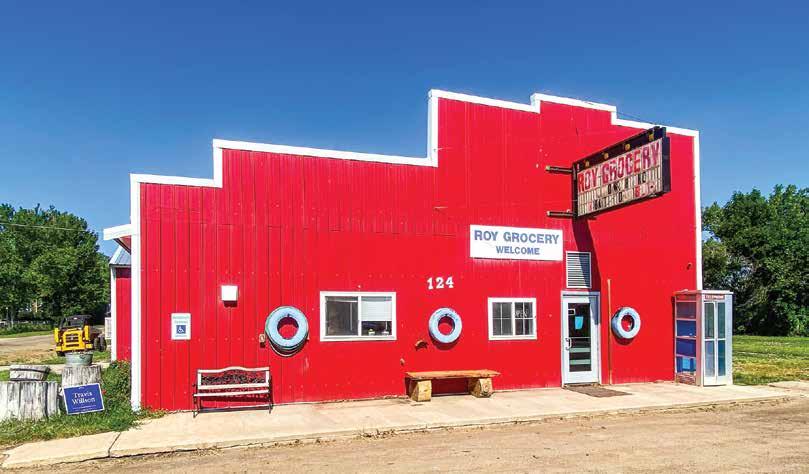
May 13 - 27, Shobe Auction, Inc., Roy Grocery & Residence, Online ......A12
May 16, Weaver Auctions, Spring Farm & Ranch Consignment, Drummond MT ..........................................................................................................A5
May 16, Kevin Hill Auction Service, Van Valkenburg Estate, Kalispell MT...A22
May 17, RLP Auctions, Cowboy Collectibles, Native American, Americana, Hamilton MT A14
May 20 - 27, Smeltzer Auctions & Real Estate, Con-Mat Supply Going out of business, Online A11
May 30, GSI Auction Service, Spring Consignment, Glasgow MT A8
Late Spring Musser Bros Auctions & Real Estate, Tracy Nelson Retirement, Joplin, MT A18
June 2026, Musser Bros Auction, NW Regional Equipment ....................A10
June 4, Shobe Auction, Inc., Rosman Ranch, Hobson MT A21
June 10, Fritz Auction, 2026 Consignment, Chester MT ..........................A27
June 13, VanderBrink Auctions, LLC, The Schildberg Collection, Greenfield IA ..........................................................................................................A32
June 13, Ophus Auction Company, Eagle Butte Farms, Loma MT A29
June 13, Flying D Auction, Cliff Gustafson Estate, Conrad MT ................A28
June 13, Kevin Hill Auction Service, Gove Retirement, Marion MT A20 Summer, VanderBrink Auctions, LLC, The Jim & Lulu Finney Collection, Oblong IL A32
July 18, VanderBrink Auctions, LLC, The Rick Knigge “Go Fast” Collection, Casper WY A32
July 25, VanderBrink Auctions, LLC, Dehn Collection, Rapid City SD .....A32
Sept 19, VanderBrink Auctions, LLC, The Born Family Estate, Eaton CO....A32
Nebraska Youth Range Camp
The 2026 Nebraska Youth Range Camp will be held at Nebraska College of Technical Agriculture in Curtis, Nebraska, June 8th – 11th. Students ages 14-18, with an interest in rangeland management, conservation, ecology, animal science, and wildlife, are encouraged to attend the 62nd Annual Nebraska Youth Range Camp.
The Nebraska Youth Range Camp provides hands-on experience with rangeland and natural resources taught by professionals from various agencies, colleges, and universities. With over 60 years to perfect and evolve this curriculum, every student, no matter what prior experience they have, will learn a considerable amount of information.
Montana ranch becomes one of two Wild Horse Adoption Centers in the Northwest
Eleven wild horses stepped off a trailer at Stoltz Ranch on Fly Creek Road on March 12th, marking a milestone not just for one family’s passion project, but for wild horse adoption access across the entire northwestern United States.
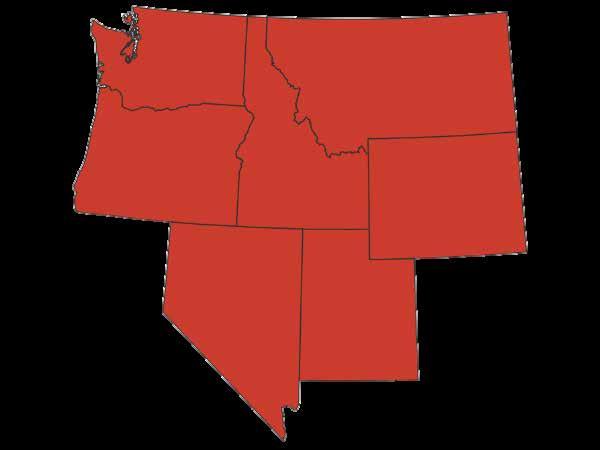
Stoltz Ranch, owned and operated by Trent Stoltz, has been approved as a Branded Adoption Center through Forever Branded, a 501(c)(3) nonprofit organization that partners with the Bureau of Land Management (BLM) Wild Horse and Burro Program. The designation makes Stoltz Ranch one of two Forever Branded Adoption Center for wild horses in Montana, Wyoming, Idaho, North Dakota, South Dakota, and the greater Northwest region — bringing wild horse adoption closer to thousands of potential adopters who previously had no nearby option.
What Is a Branded Adoption Center?
Branded Adoption Centers are privately operated facilities contracted through Forever Branded to house and offer federally protected wild horses and burros to the public. Each center must pass a rigorous application,
PRIVATE TREATY
interview, and on-site BLM facility inspection, and must be equipped to safely care for at least 20 animals at one time. Operators are vetted for horsemanship skills, safe handling experience, and alignment with the program’s humane treatment standards.
The horses currently at Stoltz Ranch arrived from a BLM holding facility in Oregon, offering adopters the rare opportunity to build a one-of-a-kind partnership with a true American wild horse.
2026 Public Sale Events at Stoltz Ranch
Five public adoption and sale events are scheduled at Stoltz Ranch (1801 Fly Creek Rd., Pompeys Pillar, Montana) in 2026. BLM representatives will be on hand at each event to answer questions and assist with the adoption process.
April 30-May 3, 2026 June 27–28, 2026 July 25-26, 2026 August 22–23, 2026 September 26-27, 2026
In addition to sale weekends, horses will be available for adoption on an ongoing basis throughout the spring and summer as new animals arrive. Interested buyers do not have to wait for a sale event. CONTINUED ON PAGE A2
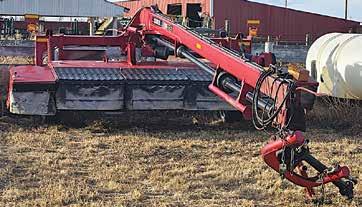
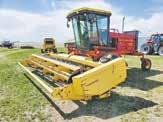
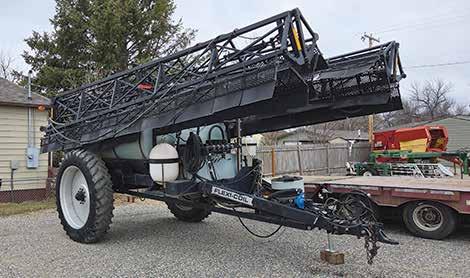
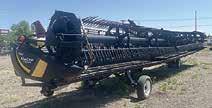
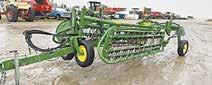
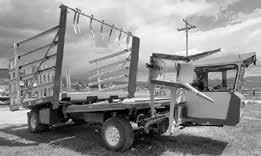
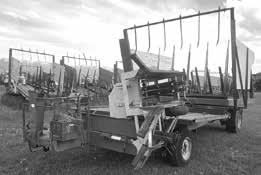
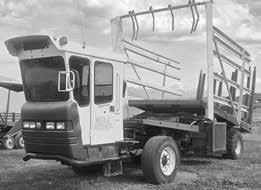
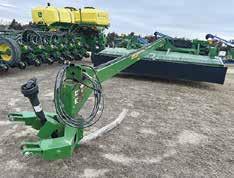
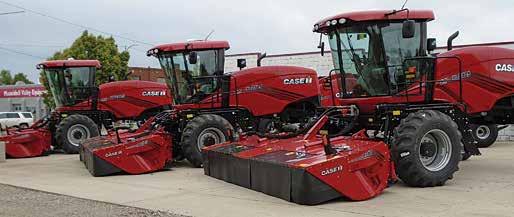
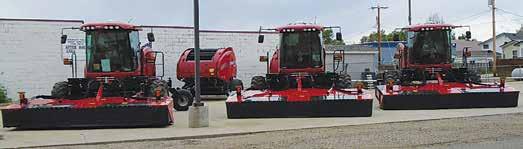
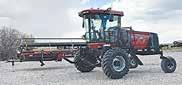
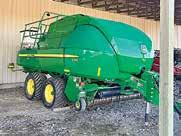
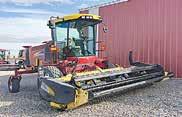
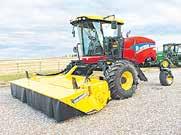
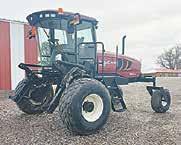
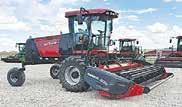
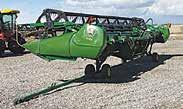
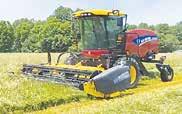
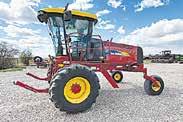
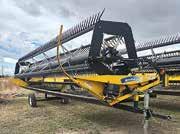
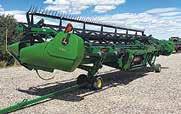
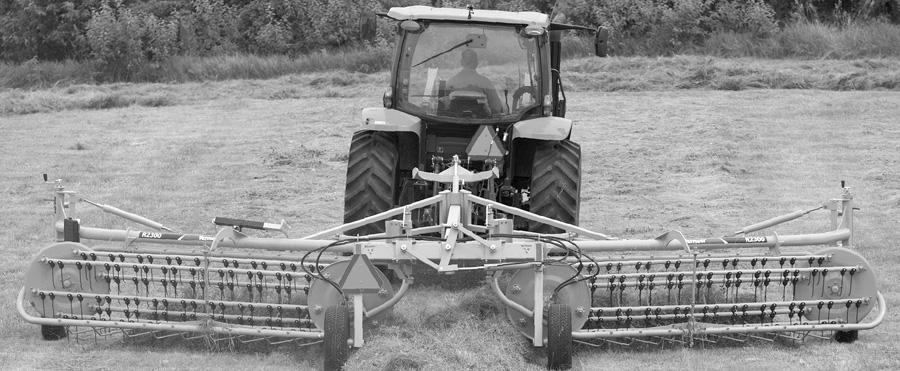
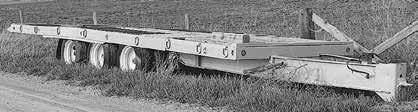
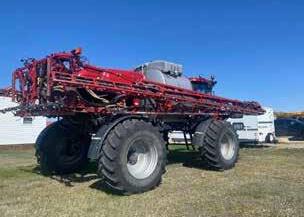
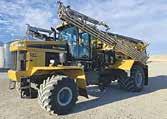
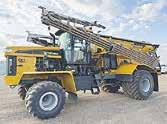
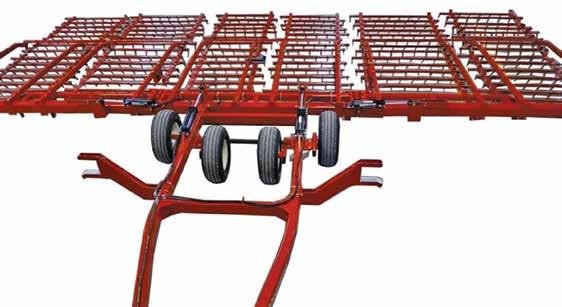
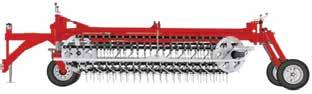
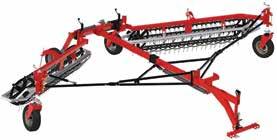
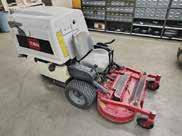
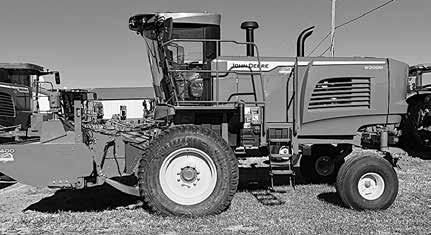
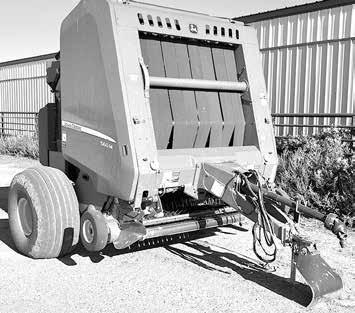
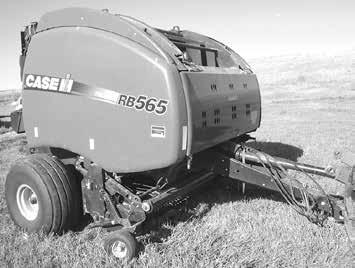
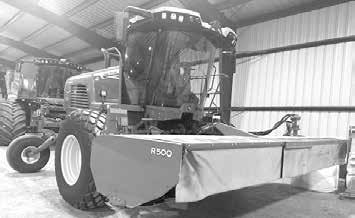
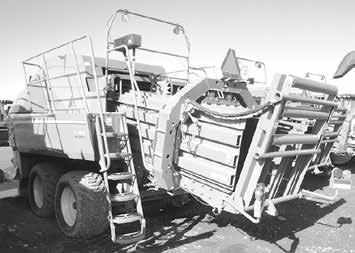
SWATHER FOR SALE
Nebraska Youth Range Camp
CONTINUED FROM FRONT PAGE
Students who attend will participate in field activities, lectures, leadership/team-building activities, and a field trip to a local working ranch. These activities illustrate different goals and the related range management that is implemented to achieve these goals. Each student will be sent home with a binder that is filled with educational materials.
Interested individuals can find more information, the Range Camp application, and brochure by visiting the Nebraska Society for Range Management’s website at www.nesrm.org and then clicking on the Nebraska Youth Range Camp link or sending an email to tevyn@sandhillstaskforce.org. Applications need to be submitted by May 31st. Check with your local Natural Resources District (NRD) to see if they have scholarships available.
Nebraska Youth Range Camp is an event that is made possible through the Nebraska Section of the Society for Range Management with assistance from several Nebraska ranches, the Sandhills Task Force, the Nebraska Grazing Lands Coalition, several of Nebraska’s Natural Resource Districts, the Natural Resources Conservation Service, the University of NebraskaLincoln Extension Service, and many volunteers.
Student Loan Assistance Program
CONTINUED FROM FRONT PAGE
Applications are due May 18, 2026, and can be submitted through WebGrants. Full program guidelines are available on the department’s website at agr.mt.gov/Student-Loan-AssistanceProgram.
Horse Adoption Centers
CONTINUED FROM FRONT PAGE
How to Adopt
All interested adopters must submit an application through the BLM Wild Horse and Burro website prior to purchasing a horse. Applications can also be completed the day of any sale event, and BLM representatives will be available on-site to walk prospective adopters through the process.
Rooted in a Love of Horses
Stoltz Ranch applied to the Forever Branded Adoption Center program out of a longtime passion for horses and a desire to give these animals — and the people who might love them — a better chance to find each other. The ranch is committed to humane handling standards and the natural horsemanship principles promoted by Forever Branded.
There are currently just 11 Branded Adoption Centers operating across the United States. Stoltz Ranch fills a significant geographic gap, giving horse-minded families across Montana, Wyoming, the Dakotas, and Nebraska a regional destination for wild horse adoption.
Contact Stoltz Ranch/Fly Creek Adoption Center at 1801 Fly Creek Rd., Pompeys Pillar, MT 59064 or phone: (406) 590-0745. Email address is stoltzranch@gmail.com. Website is www.foreverbranded.org
THE TRADER’S DISPATCH
(USPS 019-793) MAY 2026 — Vol. XXVII No. 4 Postmaster:
DEADLINE FOR JUNE ISSUE Wednesday, MAY 27
Tool Box / Bearing Sales
2026 Wheat Variety Tours scheduled for June
By Nebraska Extension
Wheat plots will soon be available for the annual Wheat Variety Tours hosted by the University of Nebraska–Lincoln Crop Performance Testing Program, local farmer-cooperators, and university farm managers in June. Details and GPS pins for each event, as well as changes due to weather or other conditions, can be found at https://go.unl.edu/7a9b Seven fields will be featured from Jefferson to Banner County will be highlighted, showcasing unique wheat varieties and experimental lines being tested across the state. The Department of Agronomy and Horticulture’s associate professor Cody Creech and research associate professor Amanda Easterly will lead the tours. They will be joined by Katherine Frels, agronomy and horticulture assistant professor and small grains breeder, and Stephen Wegulo, Department of Plant Pathology small grains plant pathologist, who will provide updates and answer questions. Seed industry partners will also share insights. Previous years’ data and multi-year, multi-location summaries can be found at https://go.unl.edu/wsvt.
New for this year, one of the eastern Nebraska locations has been moved from Saunders County to Washington County with a returning farmer-cooperator.
QR codes linking to Google Maps pins for each location are provided on the tour website at https://go.unl.edu/7a9b.
While the GPS coordinates are not exact, they should take you close to the plot. At most sites, an orange stake is placed in the first row. Plots will be staked with the variety name about a week ahead of the event date and will remain in place until just before harvest. Maps for each trial are available upon request to Dr. Easterly or Dr. Creech. As in the past, if you visit a field on your own, coordinate with local farmercooperators or farm managers before visiting a site.
Wheat Tours for 2026
June 10 - Jefferson County at Knobel Seeds,5 p.m. CT
June 15 - Hitchcock/Red Willow County at Peters Seed Farms, 5 p.m. CT
June 16 - Perkins County at Stumpf Int’l Wheat Research Center, 9 a.m. MT
June 16 - Deuel County at V&F Seeds in Chappell, 5 p.m. MT
June 17 - Cheyenne County at HPAL with lunch, 8 a.m. MT
June 17- Box Butte Irrigated, 3 p.m. MT; then Dryland at Cullan Farm Seed, 5 p.m. MT
June 18 - Banner County at Jim Wyatt Farm, 9 a.m. MT
Soil health workshop
Pondera County Conservation District is partnering with NRCS and Rocky Mountain Front Ranchlands Group to bring soil health expert Patti Armbrister to to town. A resident of Hinsdale, MT, Armbrister has been recognized by the National Association of Conservation Districts as Montana’s Soil Health Champion. Armbrister describes her approach as “working with nature to improve our soils, lands, and lives.”
The ReThinking Weeds Workshop will take place on Thursday, June 11 in Dupuyer, MT. As the name suggests, the presentation will focus not simply on eliminating weeds, but rather on looking at the bigger picture. Why do weeds grow where they do? What might they reveal about the soil? By better understanding the weeds they are battling, producers can work with nature to address the root cause, reduce dependence on herbicides, and begin to transform the soil that their crops, livestock, and communities depend on.
Registration for this free workshop begins at 11:15 AM at the Dupuyer Community Hall. The presentation will begin at 11:30. In addition to Armbrister’s talk, participants can look forward to lunch and outdoor time spent looking at soil and weeds in their context. Armbrister will discuss practical steps to take for a few of the most troublesome weeds for local producers. The event will conclude around 3:30 PM. The Pondera County Weed District is applying for pesticide applicator credits for the event.
While the workshop is designed with farmers and ranchers in mind, the general public is welcome to attend. Attendees should come prepared to be outside in the weather for a portion of the day. While outdoors, a few benches will be available, but some people may wish to bring lawn chairs. For more info, contact the Pondera County Conservation District at ponderacd@gmail.com. For info about the pesticide applicator credits, contact the Weed District at (406)271-5672 or at weeds@ponderacountymt.gov.
Inaugural Grassland Gallery event accepting applications and registrations
By Nebraska Extension
A Celebration of Nebraska’s grasslands, stories, and communities will be held at three featured sites in Cherry, Buffalo, and Keith County on June 13, August 4, and September 26.
Grassland Gallery: Film & Art Inspired by the Range is a free, multidisciplinary event celebrating the agriculture, landscapes, and people of Nebraska’s grasslands. Rooted in rural stories and shaped by the land itself, the event brings together film screenings, visual art, and immersive place-based experiences to foster connection, learning, and creative exchange.
The Grassland Gallery is accepting applications from visual and musical artists, rangeland filmmakers, and agricultural host sites. The event is also accepting applications from food vendors, professional organizations, and agricultural companies interested in hosting free educational booths.
Applicants may apply at https://www.grasslandgallery.com/artist-vendor-hostsite-application
Applications for the June 13 must be submitted by May 29.
Applications for the August 4 must be submitted by July 10.
Applications for the September 26, must be submitted by August 15.
Host Sites:
June 13 - Cherry County, family-owned and operated for five generations, Diamond Lazy J Ranch specializes in purebred Angus and Balancer cattle, while Niobrara Valley Vineyards produces approximately 30,000 bottles of Nebraskagrown wine annually and distributes to nearly 90 retail outlets statewide.
August 4 - Buffalo County, the 2026 Nebraska Grazing Conference (NGC) is the 26th Annual Conference in the long history of serving Nebraska’s graziers. The 2026 Conference will be held on August 4th and 5th at the Younes Conference Center South in Kearney, NE. Grasslands Gallery will be showcased from 5-7 p.m. CT during a celebration of the International Year of Rangelands and Pastoralists.
September 28 - Keith County, founded in 1884 and operated by the Haythorn family for six generations, Haythorn Land & Cattle Co. is one of Nebraska’s most historic and respected working ranches. The ranch raises commercial Black Angus cattle and foundation-bred American Quarter Horses on the native grass-stabilized dunes of the
Sandhills.
Register for any event at: https://www. grasslandgallery.com/events-registration
Attendance and participation are completely free to the public.
For more information, email grasslandgalleryunl@gmail.com
#####
Golf: An endless sequence of tragedies interrupted by the occasional miracle followed by a cold beer.
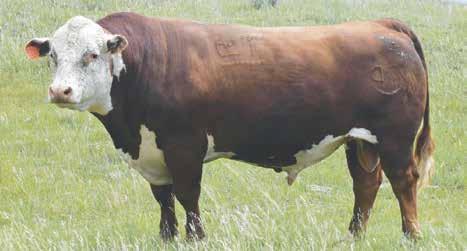
HEREFORD BULLS FOR SALE
Home raised on forage only, never fed grain 16 coming 2 year olds, 13 coming yearlings, 5 older bulls Horned and polled
Average price of 2 yr olds- $3800; yearlings $3750 Located North Central South Dakota Rick Rausch 605-380-0784 rrs@venturecomm.net
Wagyu/Akaushi
BULLS FOR SALE
Yearling and 2- and 4-year olds
Phone (406) 860-7085, Broadus, MT
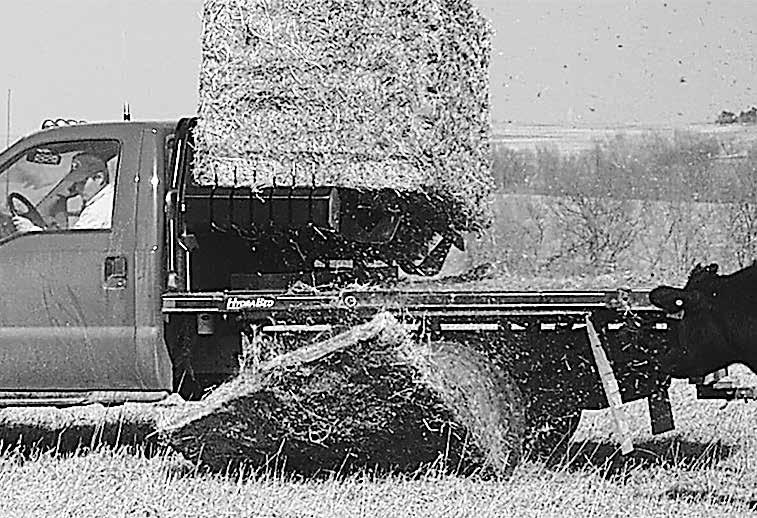
Zimmerman Bale Stacking
Zimmerman Manure & Silage Hauling
• Any job big or small
• Loader and skid steer available.
• Vertical beaters for even spreading
• Silage pushing
Phone (406) 788-9480 or (406) 467-2845
Arnold Zimmerman, 661 4th Rd NE, Fairfield, MT 59436
In a camper down by the river: WSU students spend spring break helping cows
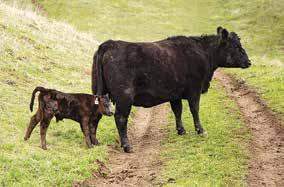
A cow and her newborn calf walk through a pasture during WSU’s spring calving season, when students in a hands-on course monitor the herd and help care for animals in the field (photo courtesy of Scott Weybright, CAHNRS)
Many college seniors spend spring break visiting family, skiing, or traveling somewhere like Cabo. Camping in a cow pasture with no cell service? Not so much.
As part of the Beef Cattle Calving Management course taught by WSU beef cattle operations manager Ryan Goodman, students spend spring break helping care for the university’s herd during calving season.
The four students taking the course split up the week in pairs, monitoring 126 pregnant cows that were due to calve in their winter pasture above the Snake River.
The course is selective: Students must apply and be chosen.
“We want students who will get the most out of the experience,” Goodman said. “What we’re doing is pretty advanced, and we need students who plan to work with large animals in their professional career.”
Two of the students, Naomi Turner and Laurin Ogg, will graduate this May with bachelor’s degrees in animal sciences. They’ll begin grad school next fall with the WSU College of Veterinary Medicine.
“Ryan presented it as having to give something up, like it could be a deal breaker,” said Turner, a Springdale, Washington, native. “It was the exact opposite for me; this experience was a selling point. This class has built on everything we have learned since our first year here, allowing us to apply our knowledge in a hands-on environment.”
The students began each day at 6 a.m. with the sunrise check, followed by three or four more across 1,200 acres of canyon range land. They drove a small off-road vehicle looking for calves born overnight and cows in distress.
Normally, cows give birth quickly and without much fuss. On one check, a cow was acting mildly agitated as the students drove past. Then on the return to the camper roughly 20 minutes later, they noticed that cow with a new calf lying next to her.
“That’s how it’s supposed to work — it’s a very natural process,” said Ogg, who is from Hoodsport, Washington. “We won’t interact with them for the first few hours, ensuring that the cow and calf have adequate bonding time. Then after a while, we go back and do the initial processing.”
That processing involves weighing the newborn, making sure they’re active and nursing, administering vaccinations, and placing an ID tag in their ear.
When the students encountered abnormal calving signs in one distressed heifer, the term for a new mother who had never had a calf before, they rounded her up into a pen.
“We walked with her from the far side of the pasture and got her almost to the pen, when she turned and ran right back,” Turner said. “These hills are steep, and we were exhausted doing that all again. These cows are bred for this environment, so she climbed the canyon walls with ease. We got her into a pen where Ryan was able to coach us through the situation.”
When the students noticed the distressed animal, they immediately texted Goodman. Although there is no cell service in the canyon, they did have a satellite hookup for emergencies.
“The calf was upside down and backwards. Normally, I can take care of that, but this year I needed help,” said Goodman, who broke his arm a few weeks before calving season started. “It was so hard to sit back and watch. But with help from Dr. Zachary Seekford (a WSU animal sciences faculty member), we got the calf out safely. Naomi and Laurin did a perfect job helping the mother.”
Turner and Ogg both said this is the type of experience they could have only dreamed of when they came to WSU. Both arrived wanting to become veterinarians but didn’t know they’d have an opportunity to directly care for animals as students.
“There were only four students staying in the pasture during spring break, but we’ll have around 70 students helping at various points,” Goodman said. “We want to match them with their experience level.”
Some students have never been around large animals, so they will start with prep work and watch during the hands-on work. As they get more comfortable, they’ll have the chance to work more directly with the animals, Goodman said.
Because the cows were artificially inseminated on the same date, their due dates fell in mid-March, during WSU’s spring break. Though some calves develop faster than others, the peak timing kept the students busy.
“We saw new calves each time we checked,” Turner said. “It’s been fantastic to be part of the process and watch these calves come into the world.”
Providing students with immersive, real-world experiences is central to WSU’s mission and critical to training the next generation of animal science and veterinary professionals, said Raj Khosla, Cashup Davis Family Endowed Dean of WSU’s College of Agricultural, Human, and Natural Resource Sciences.
“It speaks volumes about our students that they choose to spend their spring break caring for animals and supporting real agricultural operations” Khosla said.
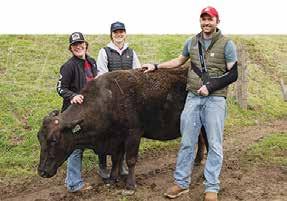
Laurin Ogg, Naomi Turner, and Ryan Goodman (left–right) pose for a photo with a Wagyu beef cow (photo courtesy of Scott Weybright, CAHNRS).
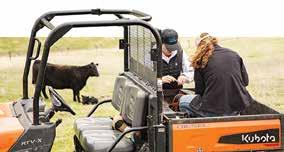
Laurin Ogg and Naomi Turner complete processing work after a cow gives birth (photo courtesy of Scott Weybright, CAHNRS).
ND Angus University feed-out to begin in May
Cattle producers will have an opportunity to see how Angus‐sired cattle from their operation perform in a feedlot during the North Dakota Angus University calf feed‐out program in the upcoming summer and fall of 2026.
North Dakota State University’s Carrington Research Extension Center is partnering with the North Dakota Angus Association to sponsor the North Dakota Angus University Feed-out. This is the 15th year of the program.
“Feed-out projects like North Dakota Angus University are a great way for producers to learn more about their calves’ performance compared to other herds,” says Karl Hoppe, NDSU Extension livestock systems specialist at the Carrington Research Extension Center.
Ranchers can consign steers to the program by contacting the Carrington Research Extension Center. Consigned steers must be at least 50% Angus genetics and weigh between 900 and 1,100 pounds at delivery. Consigned cattle will be delivered to the Carrington feedlot on May 26-29, 2026.
Ranchers who consign cattle pay the feeding costs for their pen of cattle plus veterinary costs and a modest yardage charge. The Carrington Research Extension Center will carry the feed, veterinary and yardage costs until the cattle are marketed. After the cattle are marketed, costs and all applicable fees are deducted from the sale price without interest. Consigners of the program must also be NDAA members.
Participants in the North Dakota Angus University will receive periodic progress reports on their calves’ performance, as well as a final report on overall performance, efficiency and carcass traits of their calves.
In the 2025 NDAU feed-out, calf performance was measured during a 133-day feeding study. Steers had an average daily gain of 4.14 pounds. Shrunk live weight at harvest averaged 1,484 pounds, and carcass weight averaged 932 pounds. The cattle graded 97% USDA Choice or better, with 51% meeting Certified Angus Beef specifications and 19% Prime quality grade.
The NDAA offers $1,500 in prizes to the top three carcasses at the end of the feed-out.
More information is available at ndsu.ag/NDAU-enroll-26.
##### McDermott and McDuff were sitting in front of a crackling fire on a freezing day in the outskirts of Glasgow, where the snow was coming down hard. With their frozen beards thawing in front of the fire, they sipped their pints of beer as they contemplated their surroundings. Finally, McDermott stated, “That was quite a round of golf.” McDuff looked up from his drink and replied, “Same time next week?” “Aye” McDermott retorted, “weather permiting.
GSI AUCTION SERVICE
CONSIGNMENT - AUCTION -
Part 4 of 6:
How and why is methane in cattle produced
By Samodha
Fernando – UNL Rumen Microbiologist, Rick Rasby, Nebraska Extension Specialist, Kortney Harpestad – UNL Animal Science Extension Program Associate
Ruminants like beef and dairy cattle, sheep, goats, deer, and other animals have a rumen. The rumen is a large fermentation vat that has billions of microbes. These microbes survive without air, meaning the rumen is anaerobic. Microbes digest cellulose from forage, rich diets that provide energy and metabolites to the animal.
Rumen fermentation is a process that converts ingested feeds into energy and protein sources to sustain the life of the animal. More specifically, microbes in the rumen take feed/food and break them down for the microbes to use first and finally intermediates for the animal to use. When feeding ruminants, it is important to know that feeding microbes is important. This digestive process enables ruminant animals to eat plants that otherwise would not be digested. One of the byproducts produced during rumen fermentation is methane. Methane is belched from the rumen out of the mouth into the atmosphere. Methane is one of the three major greenhouse gases.
TRACTORS-LOADERS:
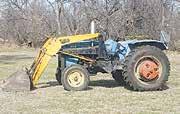
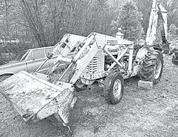
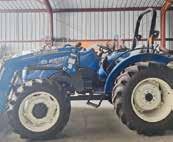
**1975 LONG U445 TRACTOR WITH KELLEY LOADER SN# 549105
**IH 806 TRACTOR
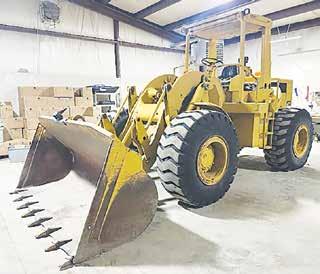
** CAT 950 C LOADER
TRAILERS:
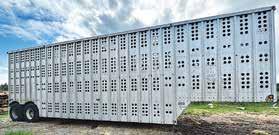
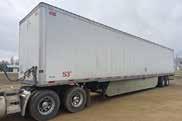
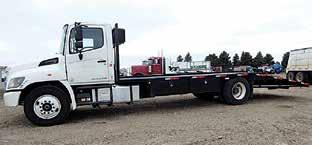
**2008 WILSON 53’ TRIPLE AXLE CATTLE POT
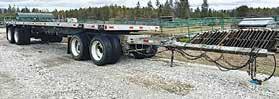
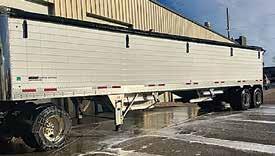
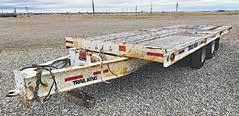
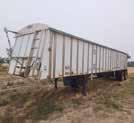
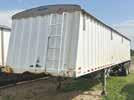
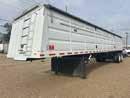
**1999 RED RIVER TRIPLE AXLE LIVE BOTTOM TRAILER
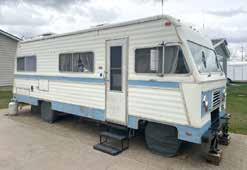
**PIONEER BUMPER PULL CAMPER
LIVESTOCK HANDLING:
**POWDER RIVER CALF TABLE WITH REAR GATE (VERY LITTLE USE ALWAYS SHEDDED)
**POWDER RIVER SQUEEZE CHUTE
**ARROWQUIP 10’ TUB 3/4 FLOW
**HOMEMADE MATERNITY PEN
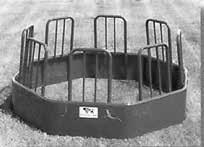
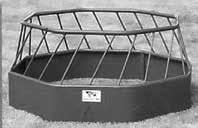
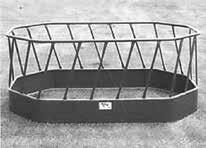
**ROUND BALE FEEDERS
*2017 HONDA PIONEER 1000 SIDE BY SIDE (BLACK)
**6X6 ARMY TRUCK
**1996 FORD F350 DUALLY 460-5 SPEED **1988 FORD F350 460-F SPEED **1986 CHEVROLET 3/4-TON
ATTACHMENTS:
**JOHN DEERE SNOWBLOWER SB84B (LIKE NEW)
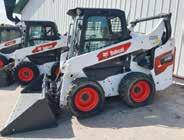
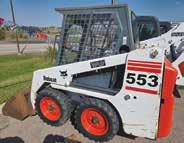
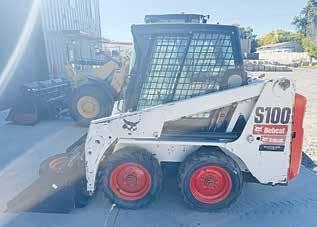
**BOBCAT SKIDSTEER GRAPPLE, 60’
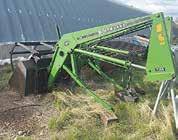
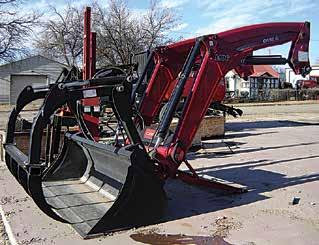
**FARMHAND F258 LOADER & GRAPPLE
MISCELLANEOUS EQUIPMENT:
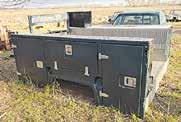
**8’ UTILITY BOX FOR SRW WHEEL BASE
**BUNDLES OF TIES ** 40 OAK TIES
**RANDOM SHEETS OF CORRUGATED TIN AND 16’ OF GREEN TIN
**PALLET OF AMMO CANS IN BUNDLES
**TRAEGER LIL TEX ELITE PELLET GRILL
HAYING EQUIPMENT:
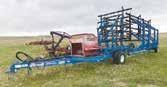
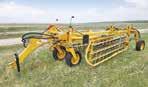
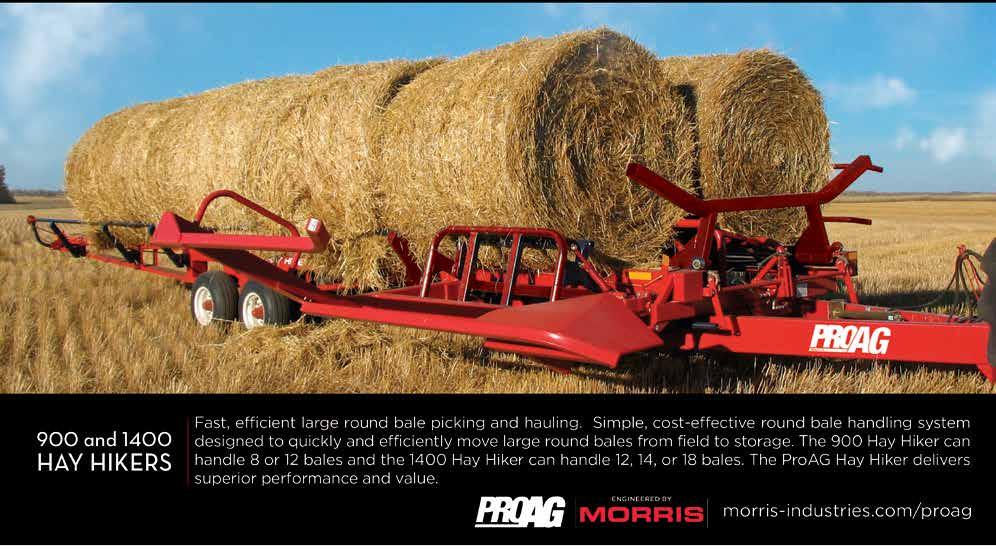
**2013 PRO AG MODEL 900 HAY HIKER SN# H900124117
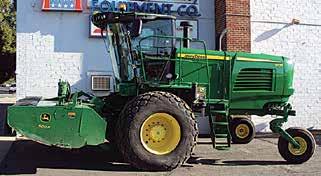
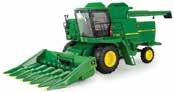
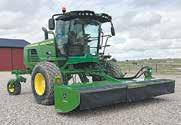
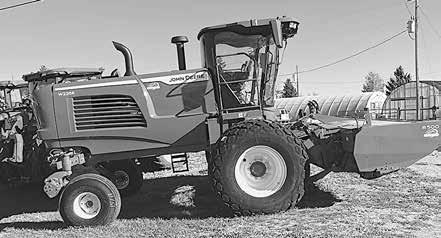
**JOHN DEERE 2280 DIESEL SWATHER
MORE
Ed Hinton 406-783-7285 Jake Newton 406-390-5109 Justin Fuhrmann
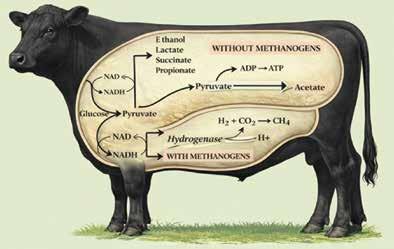
The term enteric fermentation is the process in the rumen of cattle where anaerobic microbes (bacteria, fungi, protozoa and archaea) decompose, and ferment feeds present in cattle’s digestive tract producing energy dense intermediates for the host animal to absorb to meet their nutrient and energy requirements. Methanogens a group of archaea in the rumen also produce methane in the rumen as a byproduct of fermentation.
All sources of methane have one thing in common, microbial methanogenesis. In other words, all sources of methane have an environment that has microbes called methanogens that produce methane.
It would seem logical, if it is known that methanogens are the microbes that produce methane, why not eliminate the methanogens from the rumen environment of cattle? It is not that easy. Cattle have methanogens in the rumen early in life and are always a member of the rumen microbiome. If the methanogens are eliminated, they seem to always reestablish themselves as a member of the rumen microbiome.
The figure illustrates several components. Methanogens in the rumen are involved in a process of producing energy for the “host” animal. The host animal would be a calf, cow, bull, other ruminants. The graph in Figure 1 illustrates how energy is produced for the host animal at the cellular level. Energy at the cellular level is from the production of ATP and NADH. The graph illustrates how that process is accomplished with and without the presence of methanogens in the rumen. With the absence of methanogens, pyruvate is wasted to recycle NADH to NAD, thus providing less energy to the animal. Therefore, the unintended consequence of eliminating methanogens in the rumen is decreased energy for the host animal at the cellular level. The decrease of energy at the cellular level impacts animal well being.
Overall, methanogens in the rumen of cattle are important for the health and well-being of the animal. Even though it is known that the production of methane can be interrupted using feed additives, it is not fully understood the side effects of such approaches on animal performance and well-being in the long term. Again, methanogens are found in the rumen of cattle at a very young age and the rumen wants to maintain a population of methanogens to increase efficiency of energy production. Interestingly, some calves have less methanogens in the rumen as compared to others. While methanogens in the rumen contribute to methane emissions, they also play a vital role in the animal’s digestion and energy production. Overall, this information highlights the challenges of reducing methane emissions without negatively affecting animal health and productivity.
Marigold varieties
By Laurie Zitterkopf, Nebraska Extension Master Gardener Volunteer
The Alumia Vanilla Cream Marigold is in the French Marigold series from David Lemon, and this year’s Nebraska 4-H Special Garden Project. Each year, 4 H members have the opportunity to try growing a new and unusual vegetable or flower. The project allows experienced 4 H gardeners to grow something fun and exciting while letting those new to gardening get their feet wet in the horticulture project area through a guided experience.
The marigold created by Lemon is a large-flowered, strong-stemmed, utterly lovely flowered marigold that will all reach the same height and bloom at the same time in a garden or a container. Vanilla Cream is a showpiece, sporting a never-before-seen pale primrose-yellow hue in the central cluster of petals, surrounded by lighter cream petals. Spectacular.
The Vanilla Cream Marigold is very easy to grow in the sunny garden, vegetable patch, and containers. Vanilla Cream makes a terrific choice for a child’s first seed-starting experience, too. The marigold is a new look for the palest of yellows and the milkiest of creams. The form gives these blooms a two-tone look because the shorter petals in the center are clustered, creating a darker effect than the surrounding, wide-open petals. These flowers reach 2 to 2.5 inches wide and face straight up, giving maximum color.
It is also an absolutely indispensable companion to tomatoes, for its roots contain a chemical that kills root-knot nematodes, one of the most destructive soil-borne tomato plant pests. Sow seeds directly in the garden when the soil has warmed, or start seeds indoors. Don’t worry about setting the seeds in a certain way into the soil. They will make themselves at home and grow promptly, no matter how they are placed. The seeds germinate in 7 to 21 days. Transplant any time after they have 2 sets of true leaves. Be sure to grow in full direct sunshine for the best flowering.
Bidding Opens May 10th, 2026
#####
Alfalfa, grass, grass alfalfa mix 1st, 2nd, and 3rd cutting dairy quality alfalfa. (RSV 200+) Delivery available. Located at Augusta, Montana Phone or text (406) 590-8916
During the Spanish Civil War in the 1930s, soldiers carried chocolate pellets in a shell that kept them from melting. This gave Forrest Mars Jr, son of the founder of Mars Candy Company, the idea for M&Ms.
#####
In 1949, the slogan “They melt in your mouth, not in your hand,” was introduced to huge success.
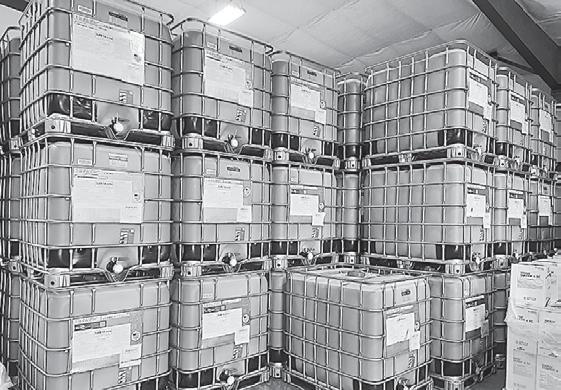
PentaGro is a premium quality, foliar fertilizer encompassing a unique range of components required for plant growth and development - all within a single formulation. It is a complete water soluable fertilizer product designed to be use on all crops to improve plant vigor and to promote crop production.
exclusively in tote
PentaGro contains, in addition to the NPK base, the following:
• Sea Plant Extracts from Ascophyllum nodosum
• Proteins in the form of Amino acids
• Carbohydrates from Natural Plants sources
• Multi-vitamin Complement
• Miller’s Transcuticular Delivery System® “TDS” designed to ensure the maximum absorption and translocation of the product into the plant with minimal loss from the leaf surface.
Nutrient demand is greatest during development and reproductive stages (rooting, flowering, fruit set, crop development, and ripening). Even if your plants look healthy, hidden stress, both nutritional and abiotic, may be severly impacting crop yield and quality. PentaGro is used as a foliar application to supplement normal soil fertility during plant physiologiocal peak demand periods.
Profitability in Montana Agriculture podcast series launched
From the MSU News Service
Montana State University Extension has launched a podcast series, Profitability in Montana Agriculture, that aims to provide information to help farmers and ranchers increase profits and reduce losses. The series includes four episodes highlighting the work of MSU Extension faculty whose applied research and outreach address critical issues in Montana’s agriculture and natural resources industries.
The podcast is co-hosted by Joel Schumacher, MSU Extension agriculture and natural resources program leader, and MSU Extension Director of Communications John Hawley.
“Farmers and ranchers make management decisions throughout the year on crop varieties, fertilizer application, marketing, equipment purchases, government programs and weed management, just to name a few,” said Schumacher. “The goal of all of these decisions is to have a profitable operation over the long term.”
Each episode features different MSU Extension faculty members discussing topics related to their subject matter expertise, such as integrated weed management, soil science, agricultural economics and livestock production. The episodes are available on Spotify and Apple Podcasts and are listed below.
Invasive Pests, Cropping Systems and their Impacts on Producer’s Bottom Line
Featuring: Jane Mangold, rangeland weed specialist, and Tim Seipel, cropland weed specialist
Effects of Fertilizer Management on Agricultural Profitability
Featuring: Clain Jones, soil fertility specialist
The Economics of Conservation: An Exploration with an Agricultural Profitability Lens
Resources discussed on each episode, like AgEconMT and other Extension economic tools, provide timely market information and models that support decision making for fertilizer use, leasing, pricing, risk management and more. MSU Extension agents frequently share these resources with farmers and ranchers in communities across Montana.
“The goal of this podcast is to highlight how the research and outreach provided by our 45 subject matter experts and 97 locally based Extension agents improve producers’ bottom line,” said Hawley. “MSU Extension provides educational resources in a variety of formats, but this is the first statewide podcast we have offered.”
More information about the podcast and the work of MSU Extension to address the topic of agricultural profitability can be found at www.montana.edu/extensionecon/ agprofitability/.
The Profitability in Montana Agriculture podcast series was recorded using the Podcast and Lecture Capture Suite, which is a resource available in the Teaching and Learning Technology Studio. The suite and other similar resources are made available by the MSU Academic Technology and Outreach team to all MSU faculty, staff and students.
This place for sale
Many years ago, along this highway
There was this sign, “This Place for Sale”
I always wonder what the price was
Cuz getting rid of it wasn’t going so well
Maybe the price was so high
No one was foolish enough to buy
Maybe to get rid of the place
The people didn’t even try
I wonder if those going by
Though interested didn’t have the time to waste
To them, like me, a home like that
Is only a dream in haste
This will probably be another thought, later in life
Looking back to places I’ve been
I’ll take a minute to talk about that home
Wondering what it sold for and when @ ROBERT RIDGWAY (Vaughn, Montana)
Drought-resilient crop options for Nebraska corn-soybean growers
By
Rituraj Khound, UNL post-doctoral research associate / Dipak K. Santra, Nebraska Extension Alternative Crops Breeding Specialist
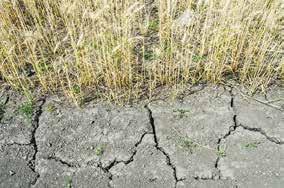
Nebraska is heading into the 2026 growing season with limited precipitation and groundwater resources. Growers are also facing rising input costs and declining commodity prices, forcing many to rethink how much risk they can afford to carry with irrigated corn and soybeans.
“In years like this, even small shifts in cropping strategy can help protect both yield and profitability,” said Dipak Santra, Nebraska Extension Alternative Crops Breeding Specialist at the University of NebraskaLincoln Panhandle Research Extension and Education Center. “Alternative crops such as proso millet and field pea offer lower water and nitrogen requirements, making them potential tools for reducing risk in waterlimited systems.”
Water limitations are not the only concern for farmers this season. The risk of yield loss could be exacerbated by skyrocketing N-fertilizer prices resulting from the war in the Middle East. The U.S. fertilizer industry depends heavily on imports, and the nation’s prices have reportedly jumped roughly 32 percent in the past few weeks. Prices are
expected to rise if the international crisis is prolonged.
“With spring planting approaching, these price increases present additional challenges for producers already managing tight margins,” said Rituraj Khound, UNL post-doctoral research associate. At the same time, corn and soybean market prices have declined by 50 percent and 40 percent, respectively, since 2022.
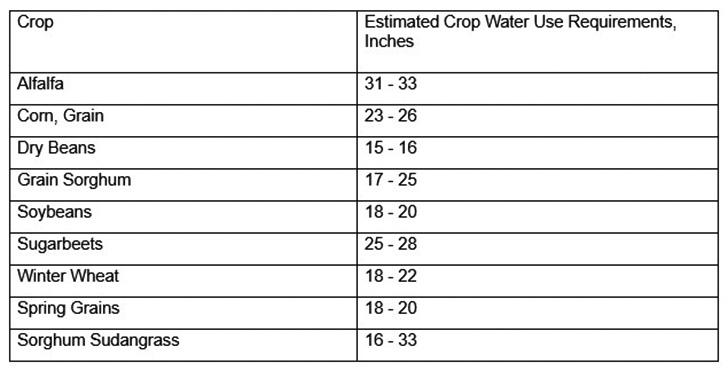
Santra and Khound suggest growers consider alternative cereal millet (proso millet and/or grain sorghum), a crop recognized for its ability to efficiently utilize moisture for producing a considerable yield. Its shallow, fibrous root system effectively takes up early-season water from the topsoil while conserving deeper soil water for subsequent crops.
“Another crop, field pea, is a widely grown pulse crop that is gaining popularity in Nebraska and global health food markets as a source of plant proteins due to its nutrientdense seeds,” Santra said. “It is also suitable for animal feed as soybean.”
Field peas provide several advantages. Biological nitrogen (N) fixation, enhanced rotation efficiency with cereals, reduced fertilizer requirements, and adaptation to semi-arid conditions due to its early maturity and low seasonal water use. Field pea also helps interrupt common disease cycles when introduced into cereal rotations.
Nebraska is among the states with notable field pea production. In 2025, USDA NASS cited Nebraska farmers harvested approximately 566,667 bushels of field peas from 20,000 acres of farmland.
Dryland millet and peas are both low-input crops that require considerably less seasonal precipitation and minimal fertilizer and herbicide applications, thereby reducing production costs.
In addition to lowering input requirements, both crops contribute to soil health. Field pea supports soil fertility through biological nitrogen fixation and enhanced soil microbial activity, while millet increases soil organic matter deposition, improves soil aggregation, and helps reduce erosion. Together, these crops offer a practical way to improve system resilience and maintain productivity in water-limited environments.
In the face of a challenging growing season, Nebraska farmers could consider diversifying their farms by planting a small portion (e.g., 10-25 percent of the total acreage) of corn with millet, depending on feasibility and resources available on their farms. A similar approach could be used to reduce risk in soybean systems by allocating a portion of acres to dryland field pea.
South Dakota Rangeland and Soil Days
Courtesy of USDA NRCS South Dakota
South Dakota State University Extension invites youth interested in learning more about grasslands and soil health to the 2026 Rangeland and Soil Days in Belle Fourche.
The annual Rangeland Days contest promotes education on South Dakota’s most threatened natural resource – grasslands. Similarly, the purpose of Soil Days is to promote education of South Dakota’s most important resource – soil. Combined, the event provides youth with hands-on experience in understanding rangeland resources and a sense of stewardship in natural resource management. Both FFA and 4-H youth can compete in Rangeland and Soil Days.
This year’s event is June 9-10, 2026, at the Belle Fourche Community Hall. Registration, check-in and student display setup begin on the morning of June 9. Next, students will spend time in the field learning about rangelands and soils and practicing their contest skills. Student displays and speeches will be presented in the evening. The rangeland and soil judging contests begin the morning of June 10, with results and awards presented after lunch.
Registration is $50 per person, which includes lunch and supper on June 9 and lunch on June 10. To register, visit the SDSU Extension Events page and search “rangeland”. To pay by check, send registration fee to: Butte Conservation District, Attn: Yvette, 1837 Fifth Ave., Belle Fourche, S.D., 57717. Registration is due by May 22.
Rangeland Days students learn plant identification, ecological sites and how to determine suitability for cattle and wildlife. Age categories are: New Rangers (ages 8-10), Wranglers (ages 11-13), Scouts (ages 14-18, typically first-time attendees), and Go-Getters (ages 14-18, previous attendees).
Students who attend Rangeland Days can compete in three different categories: display, talk and judging. Youth who participate in all three contest categories are eligible for the Rangeland Top Hand awards, which are given to the highest overall score in each division.
The top-scoring Scout or Go-Getter in the talk contest will represent South Dakota as a delegate for the high school youth forum at the National Society for Range Management Meeting. Additionally, the top Go Getter Range team in the 4-H divisions will represent South Dakota in the National Land and Range Judging Contest the following year in Oklahoma City, Oklahoma.
“Participating in the student talks and displays is an excellent opportunity for youth to present their 4-H projects and get feedback on them prior to county fairs later in the summer,” said Kaylee Wheeler, SDSU Extension Range Field Specialist.
Soil Days is for youth 14–18 years old. Students learn about soil texture and types, factors that limit soil health, land management recommendations and understanding suitability for building infrastructure.
The Soil Days judging contest includes evaluation of four sites for land and homesite use. The overall top scorer in soils receives the Soils Top Hand award. The top-scoring Soil team in the 4-H division will represent South Dakota in the National Land and Range Judging Contest the following year in Oklahoma City, Oklahoma.
This year’s Rangeland and Soil Days event is hosted by the Butte and Lawrence County Conservation Districts, Natural Resources Conservation Service, South Dakota Society for Range Management and SDSU Extension.
For more information about Rangeland Days, contact Kaylee Wheeler, SDSU Extension Range Field Specialist; or Emily Rohrer, NRCS State Rangeland Management Specialist. For information about Soil Days, contact Lance Howe, NRCS Soil Scientist, at 605-468-3088.
L ARRY STALEY
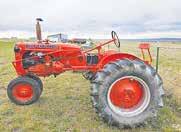
1930 McCormick Deering 15-30 tractor, no side panels, runs, on cut-offs, NOT RESTORED. John Deere JD350-C crawler loader. Phone (406) 491-3033 or (406) 494-5676
AUCTION
Sunday, May 17th, 2026 at 10 am at RLP Sale Barn, Hamilton, MT 31/2 miles north of Hamilton on Hwy 93
Preview: Saturday, May 16th (12:00 - 5:00 pm)
These items are being auctioned through I Collector. You may bid in-house or online. Go to rplauctions.net to register for online bidding.
Considerations for breeding season in confinement for beef cattle
By Karla Wilke, Nebraska Extension Cow/Calf Systems and Stocker Management Specialist
Whether confinement feeding of beef cows is part of a cropping and livestock integrated system, or if cows have been displaced due to drought or fire, there are several key concepts to keep in mind when breeding season occurs in confinement.
Housing Considerations for Breeding in Confinement
Bunk or feeding space needs to be about 2 feet for cows and bulls and about 1 foot for calves. This is especially true if a nutrient dense, limit-fed ration is being used. Feedlot pens are not the only place cow-calf pairs can be confined. Producers may also be able to use fallow ground, pivot corners, or calving pastures. However, a minimum of 500 ft2 per pair is recommended. When possible, it is also recommended that calves have their own loafing space inaccessible to the cows. This reduces exposure to pathogen loads, may provide shade or wind protection, and during breeding season can shield calves from getting stepped on.
Feeding for Breeding
Lactation is a huge energy drain on the cow. Feeding a diet similar to what the cow received during gestation will not meet her needs, causing her to draw from her energy reserves to feed her calf, and thereby decrease her chances of rebreeding. A lactation diet similar in intake and quality to green grass is needed. Additionally, the calf is be-
PUBLIC AUCTION
Saturday–May 30th, 2026 @ 9:00 AM
LOCATED AT: 901 North Somers Road, Somers Montana, 59932
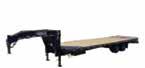
FARM EQUIPMENT TRAILERS
TOOLS AND RANCH
SUPPLIES
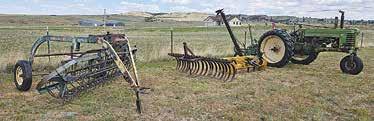
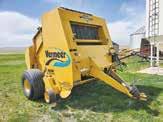
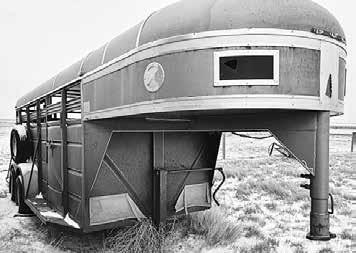
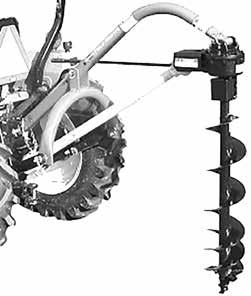
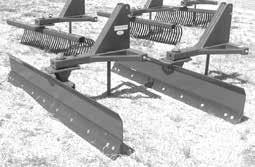
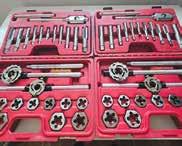
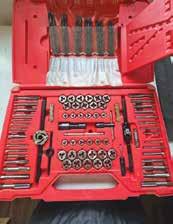
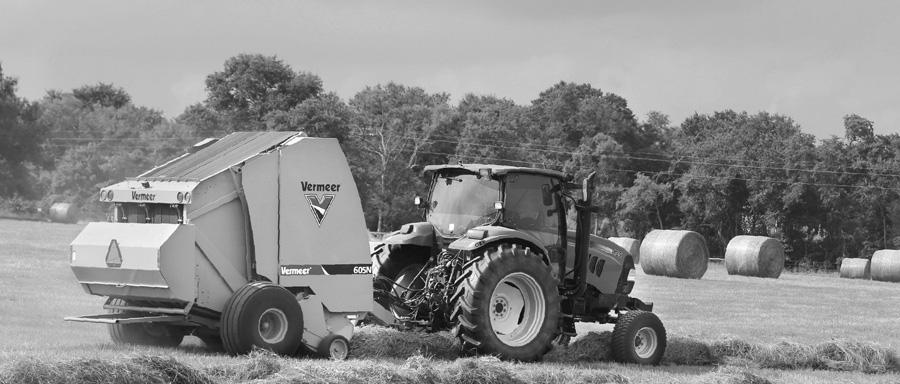
TRACTORS/FARM EQUIPMENT/IRRIGATION: John Deere 5410 w/540 JD Loader, 4x4; Ford 7710 w/Loader, 4x4, 5315 hrs; David Brown 885 Diesel, 4500 hrs; Scat Trak 1700C Skid Steer Loader, 3330 hrs; Vermeer 604R round baler, (like new); New Holland 1495 Haybine; Field Master 3pt post hole auger; King Kutter 5’ 3pt brush mower; Cosmo 500, 3pt broadcast spreader; Kubota 4’ 3pt rototiller; H&S 8’ hay tedder; Shaver 3pt hydraulic post pounder; Road Boss 5’ 3pt road grader; quick-attach forks; fire suppression unit for pickup or Polaris Ranger w/60 gallon tank; Hesston 640 swather; John Deere dual wing wheel rake; Westfield 10” x 60’ PTO swing auger; Westfield 8” x 41’ PTO auger; Sakundiak 6” x 30’ gas powered auger; vintage dump rake; John Deere model L ground drive manure spreader; (2) Vermeer 604J round balers for parts; approximately 900’ of 3” aluminum irrigation pipe w/risers; irrigation pipe trailer; (3) western style 5’ wheel lines; etc! VEHICLES/TRAILERS: 1930 Ford model A pickup; 1999 Ford F350, 7.3 liter Power Stroke diesel; DRW, 4x4; 1992 Diamond 24’ gooseneck flatbed trailer; 2011 PJ 14’ dual axle gooseneck dump trailer; 2001 Wells Cargo 7’x14’ dual axle enclosed trailer; vintage 20’ gooseneck steel stock trailer; Snow Dog VXF95 V type pickup mount snowplow; 1986 Yamaha TW200 big wheel motorcycle; etc! TOOLS: Peter Wright anvil; Milwaukee 1580-20 Super Hawg ½” angel drill; Milwaukee deep cut portable bandsaw; Milwaukee reciprocal saw; Milwaukee hammer drill; DeWalt DG2900 portable generator; DeWalt DW744 table saw; pallet jack; DeWalt cordless grease gun; Oxy/Acetylene outfit; Hobart Handler 125 wire feed welder; Rolair portable air compressor w/Honda engine; Porter Cable RT3620-2 laser level; Delta wood lathe; Freud lathe tools; retractable air hose reel; machinist vise; pipe vises; Hi-Lift jack; ¾” drive socket set; ¾” drive impact sockets; wrenches; c-clamps; (2) diamond plate job or truck bed toolboxes; tall jobsite toolbox; cross bed toolboxes; drywall lift; vintage W S Barnes treadle lathe; chain binders; and More! TACK/ RANCH SUPPLIES/ETC: vintage wooden butter churn; 14” Earl Twist ranch saddle; 15” and 16” western saddles; (3) portable run-in shelters; For-Most squeeze chutes; few stock gates; stock tanks; fuel transfer tanks; water storage tanks; bale spears; hydraulic cylinders; steel implement wheels; metal storage cabinets; steel fence posts; John Deere JS45 swivel wheel push mower; Swisher walk behind string trimmer; useable iron; bolts and hardware; new oils and lubricants; box lots and Much More!
AUCTIONEER’S NOTES Downsizing Auction for Ed and Mary Ek. Lots of good useable Farm and Ranch items. Online bidding available for select items on our Equipment Facts platform. Visit www.bobbyroshon.com for details, photos, and a direct link to the Online Bidding Platform. Preview Friday May 29th from 10 AM to 5 PM, or by appointment. Live auction starts at 9 AM sharp with Online items beginning at 10 AM.
ROSHON’S AUCTION SERVICE
AUCTIONEER: Bobby Roshon 406-249-4104
ginning to eat forages, so extra feed needs to be provided to ensure the calf is not eating feed that was assumed to be for the cow, thereby causing her to lose body condition. Due to the size of mature bulls, the growth requirement of young bulls, and the activity level during the breeding season, bulls also need a high-quality diet. Maintaining bulls in a body condition score of 5 or 6 on a 1-9 scale helps keep them healthy and productive. Producers needing assistance with ration balancing for confined cow-calf pairs during the breeding season can contact the Nebraska Extension beef team.
Artificial Insemination or Synchronization with Bull Breeding
One positive aspect of maintaining cows in confinement is that they may be in close proximity to working facilities providing an opportunity to employ artificial insemination (A.I.) or allow producers to tighten the calving window by synchronizing cows while still using natural service. Protocols for both A.I. and synchronized natural service should be followed carefully: Protocols | Beef Reproduction Task Force.
Bull Housing and Management
Older bulls tend to dominate the breeding season, and this can be especially true in confinement. If possible to divide cows into groups, consider pairing younger bulls
CONTINUED ON PAGE A16
Master Gardener: Planting with a plan
By Debbie Post,
Nebraska Extension Master Gardener Volunteer Now’s the time to start thinking of your spring and summer flower beds. Most importantly, make sure you know which plant locations have the most sun or shade. Then, when choosing plants, check your nursery labels. They will tell you how much sunlight the plant needs each day. A lovely hosta on the south side of a brick wall without any form of shade will have a hard time surviving. Look for partial-shade labels, which will give you the most flexibility when planting. Along with labels, know your USDA hardiness zone. The zone is a system that classifies your geographical area by its seasonal temperatures and estimated first and last frosts, allowing you to choose your plants more appropriately. Higher average temperatures equate to higher planting zone numbers. Example areas include Alaska, zone 1, and tropical regions, zone 13. Here in the Panhandle, we’re usually around zone 5.
Before putting your plants in the ground this spring. Sampling your soil is a good idea. You can contact your local extension office, which will provide instructions for collecting 10-12 inches of soil from various spots in your garden. For a nominal fee, the lab will analyze and provide recommendations to help retain moisture, improve drainage, or adjust your pH balance. You can even speak with an agronomist to help interpret the results for improved harvests of garden produce.
Again, labels will provide you with information on whether your plant is an annual, which completes its life cycle in one season, producing continuous blooms before dying, or a perennial, which blooms, then goes dormant and returns each spring from the same root system. Annuals are best for instant, all-season color and best for filling containers, while perennials offer long-term structure and lower maintenance and cost over time. A combination of the two in your flower beds provides the best of both worlds.
When planning your beds, consider that multiple studies show that people who garden experience significant health benefits compared to their couch counterparts. They have lower blood pressure, lower pulse rates, decreased muscle tension, and improved mental health. People breathe more deeply when they are outside, which helps clear the lungs, improving digestion and immune responses. Not to mention, the improved diet when eating fresh produce harvested from your own garden. Go green, get healthy, plant a garden.
Projects receive support from Montana Fertilizer Advisory Committee
Research in the Montana State University College of Agriculture received continued support from the Montana Fertilizer Advisory Committee last month, advancing knowledge around soil acidity, water use efficiency, new crops and more.
The committee annually awards funds that are collected through an assessment on commercial fertilizers. Those funds support research and education focused on soil health and fertilizer use, among other areas. The committee is made up of agricultural producers and representatives from the College of Agriculture and MSU Extension.
“We are excited to see the committee’s hard work in determining funding for these important agricultural producer and industry related grants,” said Darrin Boss, associate director of the Montana Agricultural Experiment Station and associate dean for research in the College of Agriculture. “This funding stream, from grassroots support, directly impacts the producers and fertilizer industry. The committee is made up of producers (users of fertilizer) and industry representatives, so it represents the current and future needs of both entities. The current grant awards will be for this year’s planting season and should show impact on the industry within the next few years. The Montana fertilizer assessment monies fund research that is designated through Extension and outreach papers and activities throughout the state of Montana.”
The 2026 MFAC funding totals $483,630, up from roughly $441,000 in 2025. It will support more than 50 faculty and graduate students from the Department of Land Resources and Environmental Sciences, Department of Plant Sciences and Plant Pathology and the Department of Research Centers. A full list of the funded projects is below.
“Foliar application of Mg, Zn, and Si for optimum yield and quality of soy and dry beans in eastern Montana,” led by Chengci Chen.
“Potential of Silicon Fertilization in Enhancing Growth, Yield, Quality, and Decreasing Lodging, Pests and Diseases of Spring Wheat and Winter Barley in Montana,” led by Marilyn Dalen.
“Management of root rot disease on field pea and wheat using biofertilizer,” led by Raissa Debacker Moura.
“Research Analytical Chemist, Environmental Analytical Laboratory,” led by Stephanie Ewing.
“Wheat Tillering Capacity and Yield in Response to Variable Planting Density and Fertilizer,” led by Mike Giroux.
“Understanding the fertility needs of winter barley in Montana,” led by Joseph Jensen.
“Optimizing Nitrogen Inputs to Reduce Scope 3 Emissions in Barley Production in Montana, Idaho and North Dakota,” led by Joseph Jensen.
“Determination of sulfur fertilizer rates for a range of Montana crops,” led by Clain Jones.
“Impacts of sulfur fertilizer on flea beetle damage in mustard and canola,” led by Jessica Kansman.
“Enhancing Effective Nitrogen Use via Microbes for Montana Malt Barley,” led by Jennifer Lachowiec.
“Optimizing Boron Management for Sustainable Wheat Production and Soil Health in Montana II,” led by Jennifer Lachowiec.
“Winter canola seeding date and N/S fertilizer application timing in Montana,” led by Perry Miller.
“N-Fertilizer Optimization for Winter Wheat Forage Production,” led by Suchismita Mondal.
“Quantifying Nitrogen Leaching in Irrigated Fields,” led by Adam Sigler.
“Evaluating the Longevity of Lime Applications: Impacts of Tillage Strategies, Lime Sources, and Soil pH Dynamics on Crop Yields,” led by Joao Souza.
More information about the Montana Fertilizer Advisory Committee can be found at ag.montana.edu/mfac.
Auction
May 30, 2026 starting at 9:00 am Dan & Lena Weaver residence 5479 Crystal Lake Rd, Moore MT
This will be an onsite public auction Call Dan at 406-374-2728 or 406-707-0762 (no text) with questions or to setup for phone bidding Trucking can be arranged to anywhere, call to get a quote. Not responsible for accidents. Statements made day of Auction take precedence over printed material.
Terms: Cash or Check Sale held in a 40x80 heated shop with seating. Come out and enjoy a day of good food and visiting
• Hawkeye Precision Borescope in case (like new) • Lots of backpacks • Sleeping bags & pads • Packing panniers • Camp chairs • Hunting clothes
• 13’ FISHING KAYAK (used once)
Furniture: Full bedroom set of pine rustic furniture • beds • End tables• dressers• floor type coat racks• clock• Rustic Pine 40x72 table with 6 matching chairs • Rustic Pine 36x72 Kneehole Desk • 40x18 Cedar Chest
• 36x42 easel on stand • 20V DeWalt weed eater (new in box) • 2 wooden bushel crates • 3–5’ pcs new) • 6” insulated stainless stove pipe
• 6 pcs 1¼ x 2½ x 2½ x 6’ steel tubing
• 1 pc ½ x 3 x 14’ channel
• 1 pc 3’ x 8’ steel grating • Other misc steel
• 20 lb propane tanks • 450 gal plastic tank • Fence Pro Latex black fence & barn paint • NordicTrack treadmill • Meadow Creek 24x42 BBQ grill on wheels (like new)
Quilts: Queen (Sailors Compass) Full (Wildlife) Full (same pattern) Full (Farm Animals) Queen (State Birds)
Woodshop equip. was bought new and used very little. All in like new condition
Auctioneers: Dan Yoder, Matt Miller, Joni Troyer
Scott Schmiedeke (406) 240-2572 Victor, MT
Henry Kallis (605) 639-1904
Spearfish, SD
See us on the web: www.tte-inc.com
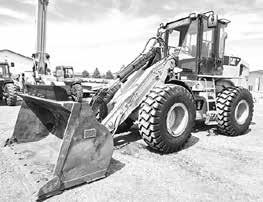
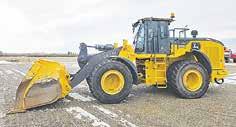
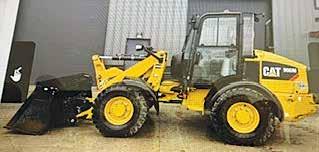
2011 Cat 930H wheel loader, enclosed cab with heat and AC, 8097+- hours, cloth seat, differential lock, FnR switch on joystick, auxiliary hydraulics, hydraulic coupler, new tires, 3 CY bucket with BOE, has been through the shop, just serviced, Pre-emissions, very nice condition, we are a GrabTec dealer and can install a grapple for additional price. Located in Spearfish, SD. $97,900
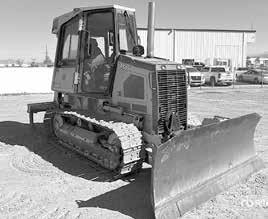
2011 Deere 450J LT 4005 hours, enclosed cab with heat and A/C, hydrostatic drive, 6-way blade, rippers, 17,000-pound operating weight, 70hp, pre-emission machine, undercarriage in good condition, nice little trimming dozer, jobsite ready. Located in Spearfish, SD $79,900
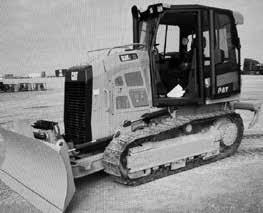
2019 Cat D3K XL 6-way blade 104” wide, enclosed cab with heat and A/C, 3-shank ripper, 80 hp, hydrostatic drive, 18,500 lb. operating weight, cloth air ride seat. Overall very good condition and job site ready. Located in Spearfish, SD. $104,900
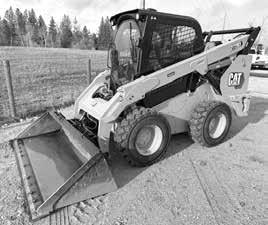
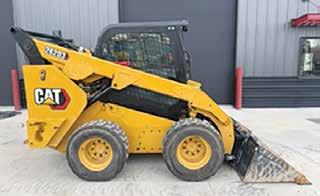
2022 Cat 272D3 452 hours, enclosed cab with heat and A/C, 98 horsepower, 9500 pound operating weight, 3690 pound operating capacity, 6900 pound tipping load capacity, 23 gpm auxiliary hydraulic flow, auxiliary electrics, 86” bucket with BOE, hydraulic quick coupler, extra counterweights, 2-speed travel, Caterpillar XD tires, creep speed, ride control, heated air ride cloth seat. This machine is in like new condition with a fresh service and job site ready. Located in Victor, MT...................$67,500 $63,900
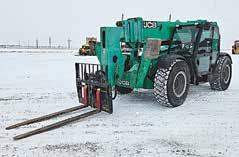
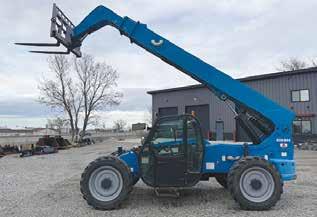
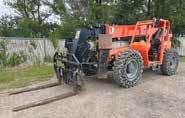
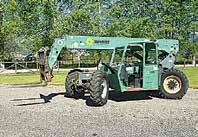
2014 SkyTrak 6042 3225 hours, enclosed cab with heat, auxiliary hydraulics, manual coupler, 48” forks, 74” carriage, nice foam filled tires, 3-way steering, hydraulic frame tilt, 6000 lb lift, 42-ft. reach, has been through the shop all repairs have been made, just serviced, telehandler is in excellent condition. Located in Spearfish, SD $44,500
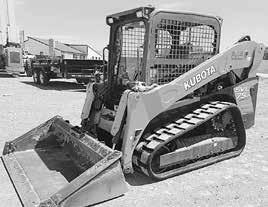
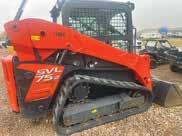
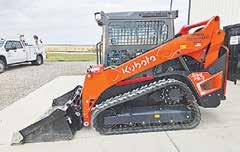
2019 Kubota SVL75-2, 1640 hours, enclosed cab heat and AC, hydraulic coupler, 78” bucket with bolt on edge, 75 hp, 6570 pound tip load. Very nice condition. Located in Spearfish, SD $59,000 $49,500
Farm and road safety experts urge truck and trailer operators to secure their load
Farm equipment roadway crashes most often occur with tractors, planters, combines and other large machinery. Farm trucks and trailers, given their size, weight and speed, are also at risk. Safety experts advise ensuring trucks and trailers are in good operating condition, clearly marked with required lighting and loaded securely.
“In the rush of a spring planting season and the summer growing season, the focus is on field equipment,” said Angie Johnson, North Dakota State University Extension farm and ranch safety specialist. “Unfortunately, trucks and trailers can become something of an afterthought.”
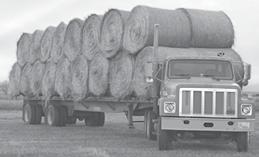
Loads such as seed, fertilizer, equipment and haybales are subject to vibration, swaying, centrifugal force, inertia, wind and other forces during transit. Johnson says improper load securement is common.
“If those loads aren’t properly secured, they may topple onto the roadway, slide forward into the cab or fall backward off the truck or trailer,” says Johnson.
“Farmers do get relief from some regulations, but the regulations that cover load securement aren’t among them,” says North Dakota Highway Patrol Trooper Joshua Anderson, truck safety expert. Those regulations are set by the Federal Motor Carrier Safety Administration.
Bulk materials such as manure, seed and fertilizer that are not confined in containers should be contained in a vehicle and covered to prevent them from falling onto the roadway, says Anderson. For other cargo, such as seed bags and hay bales, load securement regulations are based on weight and length. Anderson provides the following guidance:
Half the article’s weight must be accounted for in the working load limit (WLL) of the securement devices. For example, when hauling 3,000 pounds of hay bales, the WLL of the devices used (such as straps or chains) must be equal to half that weight, or 1,500 pounds. If the WLL is not marked on the device, federal regulations provide WLLs for multiple types of tie-downs.
The WLL calculation also depends on the number of sides of the vehicle/trailer to which the securement device is attached. If it is attached to both sides, credit is given for the device’s entire WLL. If the device attaches to only one side of the trailer (such as a chain on a piece of equipment looped through a ring and back to the same side), credit is given only for half of the WLL.
Multiple cargo items loaded side by side (such as three round bales) can be secured with the same tie-down, but the weight of all three must be accounted for in the load limit calculation.
If the article is shorter than 5 feet or less than 1,100 pounds, a single tie-down is sufficient. Two tie-downs are required for
items (a) 5 feet long or less and more than 1,100 pounds, and (b) 5 feet to 10 feet long. For every additional 10 feet (or fraction thereof), add another tie down. For example, a 24-foot load requires four tie-downs: two for the first 10 feet, one for the next 10 feet and one for the last 4 feet. A trailer loaded with hay bales would likely require two straps on the front stack and one on each subsequent stack — Anderson says any trailers on the highway with just the front and rear stacks strapped aren’t legal.
With structures like a headache rack or gooseneck hitch to prevent forward movement, only one tie-down is required for every 10 feet. However, ensure the cargo does not extend above the protective structure. This problem often occurs on gooseneck trailers when bales or other cargo are stacked above the gooseneck.
Purdue University Extension provides in-depth instructions for securing all kinds of loads, as well as specific guidance on securing hay bales for transport.
“It’s easy to think that a load is secured ‘good enough’ for a short haul or convenience,” Johnson says. “But if you need to make a quick maneuver to avoid a road hazard or if you need to make a sudden stop, that’s when having that load properly secured is essential.”
Johnson says it is also important that securement straps and chains are in good condition. Straps that are frayed, punctured, partially cut or extremely weathered will have a dramatically reduced load limit and will be flagged as a violation by law enforcement.
Del Peterson, a safety expert with the NDSU Upper Great Plains Transportation Institute, notes that farmers and ranchers should be aware of load restrictions along their routes.
“Those seasonal weight restrictions protect roads from damage when they are most susceptible in the spring,” says Peterson. “On rural gravel roads, ignoring weight restrictions could result in trucks and trailers becoming stuck, with possible damage to the roadway or the equipment.”
Peterson also notes that many rural bridges are posted for low load capacities.
“Some of those bridges are approaching 100 years old and were never designed for the loads that we now regularly see,” says Peterson. “Add to that the wear and tear they’ve seen over the years, and you can see why the weight limits are low. Find an alternate route.”
Additional state load restriction information can be found on the North Dakota Department of Transportation website: https://www.dot.nd.gov/driver/commercial/ north-dakota-load-restrictions.
Considerations for breeding season
CONTINUED FROM PAGE A14
Key Point Summary
Confinement does not have to occur in feedlot pens.
Nutritional requirements for lactating cows, growing calves, and working bulls must be met with the diet provided in confinement.
Confinement can provide an opportunity to employ artificial insemination or synchronization if working facilities are close by.
Breeding soundness exams for bulls prior to the breeding season is critical.
together, giving them the appropriate ratio of cows for their age (Breeding Bull Management | G2332 | 2021 | Nebraska Extension Publications). When dividing bulls into groups for confinement breeding, strong fences between groups are critical. Giving bulls two or three weeks to acclimate to breeding groups before turning in with cows when possible, also helps reduce fighting. Drought and fires can take a toll on cattle. While it is always recommended to have a breeding soundness exam on bulls before turnout, it is especially important when bulls have experienced stressful situations that may impact structural soundness and fertility.
Master Gardener: Managing pests in the garden and landscape
By Carolyn Applegate | Nebraska Extension Master Gardener Volunteer
Good guy or bad guy? Believe it or not, many insects in the landscape are beneficial to our gardens. When spotting insects in your landscape, it is important to first identify if they are beneficial or harmful. Plus, the beneficial insects can eat the bad guys, helping plants to flourish.
When trying to eliminate unwanted pests in your garden, integrated pest management can be a strategy. It uses a combination of methods to manage pests while avoiding unacceptable damage and protecting human, pet, and environmental health. A proven, effective, and environmentally sensitive approach to pest management leverages all appropriate options, including cultural, mechanical, biological, and chemical controls. A tip to help control pests in your garden is to rotate your crops every 4 years, according to crop family. Otherwise, the pest populations have opportunities to build up in your garden bed.
When selecting plants for your landscape, it is important to check the tags to ensure you are purchasing plants that are both disease- and insect-resistant. Also, check the plants themselves to make sure you don’t bring any unwanted pests home. By checking the tags and the plants, you will give your garden a better chance of being pest-free.
While you are getting your garden ready, be careful in prepping the ground. Many gardeners strive to grow the perfect tomato. A problem that can occur is blossom end rot. The disease is a symptom of calcium deficiency. Another cause can be over fertilization. Preventing moisture stress is important to managing the problem. Plants require at least 1 inch of water per week, especially in hot, windy weather. Plan accordingly.
The Pacific giant octopus grows from the size of a pea to 150 lbs. in 2 years...and then it dies. #####
Most bullets travel faster than the speed of sound...you’d be hit before you heard the shot.
John
#####
In the Solomon Islands of the South Pacific, a body was traditionally placed on a reef where it would be eaten by sharks.
Water diversions have started at St. Mary Diversion Dam
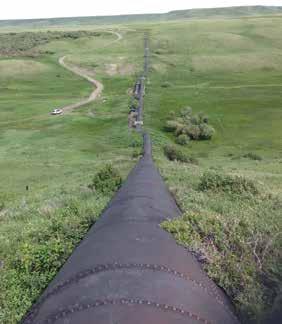
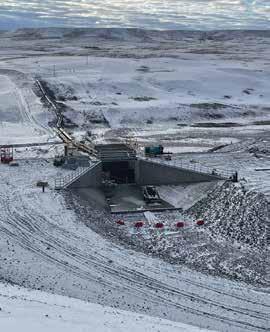
The Bureau of Reclamation announced that construction at the Halls Coulee Siphon has finished ahead of schedule, marking another major milestone in the ongoing effort to restore and modernize critical St. Mary Project infrastructure. Water diversions at the St. Mary Diversion Dam began Tuesday, April 7.
The St. Mary system is a vital component of Reclamation’s Milk River Project in north-central Montana. Water delivered through the St. Mary facilities supports approximately 110,000 acres of irrigated agriculture, approximately 150 individual pumpers, several communities, and the Bowdoin National Wildlife Refuge. In an average year, the St. Mary system provides more than 60 percent of the Milk River Project water supply, and in dry years that share can exceed 80 percent.
“This milestone shows what can be accomplished when partners come together around a shared purpose,” said Ryan Newman, Bureau of Reclamation Montana Area Office manager. “With the Halls Coulee Siphon complete and diversions resuming at St. Mary, we are restoring a system that is essential to farms, communities, and water users across north-central Montana. It took strong coordination, persistence, and commitment from many partners to reach this point.”
The announcement follows extensive work to address aging infrastructure within the St. Mary Unit. The St. Mary Diversion Dam and Canal were originally completed in 1915 as part of the Milk River Project. On June 17, 2024, both barrels of the St. Mary River siphon experienced structural failure, forcing an immediate stop to diversions from the St. Mary River into the Milk River system. Reclamation then made emergency determinations that allowed design, environmental review, and construction activities to move forward on an accelerated schedule for both the St. Mary siphon and Halls Coulee Siphon.
Reclamation completed replacement of the St. Mary siphon in June 2025, restoring a major section of the system and allowing crews to advance work on Halls Coulee. The completion of Halls Coulee now represents another important step in improving reliability across the St. Mary Canal system and supporting continued delivery of water to project beneficiaries. The broader St. Mary Diversion Dam Replacement Project also continues near Babb, Montana. That work includes replacement of aging diversion and headworks features with a modernized system designed to improve operations, enhance reliability, and provide fish passage and fish protection measures for bull trout in compliance with the Endangered Species Act. Reclamation has stated that the larger diversion dam replacement work began on site in 2024 and is anticipated to continue through 2028.
Reclamation will continue coordinating closely with project partners and stakeholders as work progresses across the St. Mary system.
• John Deere L 100 lawn tractor, 5 speed, 44 inch deck
• John Deere 316 lawn tractor, 48 inch deck
• 8 Ft rock bucket for bidirectional
• 48” pallet forks, 5 Ft wide for bidirectional
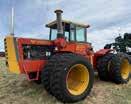
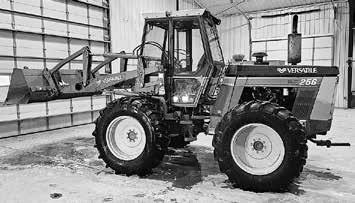
1988 Versatile 276
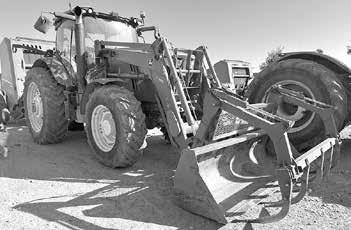
Bidirectional Tractor, AC/ Heat, 3.9L Cummins, 3 speed, hydro drive, front and rear PTO, front hydraulic remotes, 2 new remotes, front 3 Pt, 2360 loader, quick attach, 8 Ft bucket and grapple, 16.9-28 tires, Serial #3346375
• Minneapolis Moline U tractor restored, gas engine, great tires & paint, wide front
• Allis Chalmers W-40 tractor, started restoration, pallets of parts, 2 Pt, PTO, loader with 64 inch bucket
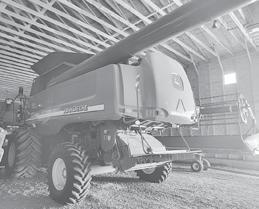
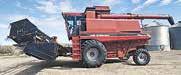
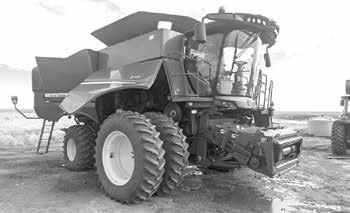
1997 Case IH 2188 combine, 6 cylinder diesel engine, Hydro,30.5-32 tires, straw spreader Serial # JJC0194165 new batteries, 6,290 engine Hr. 4,727 separator Hr. sells with Case 1015 pickup header 12 Ft, Case 30 Ft,1020 header, pickup reel & air reel, serial #JJC0325201, sells with a Johnson header trailer
• 1994 MacDon 960 30 Ft draper header, 5 batt reel, transport kit serial # 90262, Case IH adapter
• Sydney Tool Lathe – 3 jaw & 4 jaw chuck10 Ft ways, rear tail, belt driven • Pro Tech Aluminum Step Tool Boxes • Chicago Band Saw, 6 inch throat • Schumacher 12 Volt Battery Charger
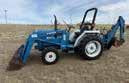
1989 Ford 1720 Utility Tractor, 4x4, 3 cylinder diesel engine 26.5 Hp, 12 speed shuttle shift speed trans, 3 Pt, PTO, diff lock, open station, ROPS, 11.2-24 tires, 1,052 Hr. 7-17 front tires, 7108 Ford loader, 5 Ft bucket, Serial # UL27241, sells with 1996 Ground breaker Woods
3 Pt backhoe, 7 Ft dig depth, 3 tooth 12” bucket, hydraulic side shift, hydraulic control valves, Serial #564185
• Minneapolis Moline UTS tractor for parts, engine is free no carburetor, PTO wide front
• Arians lawn & garden tractor, 17 Hp Kohler, 44 inch rototiller, 45 inch belly mower, 48 inch snow blower
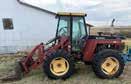
• Long 560 Tractor, MFWD, diesel engine, 5 speed high/ low Trans, Kelley loader, 79 inch bucket, 3 Pt, PTO, 1 Hyd remote, 16.9-28 rear tires, 7.50-20 front tires, shows 1,980 Hr. Serial # 605034
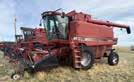
• 1990 Case IH 1680 Cummins engine, Hydro, 30.5L-32 tires, 3,787 engine Hr. sells with a 13 Ft pickup header & a 12 Ft Rake-Up pickup Attach. • 1989 Case IH 1680, IH engine, Hydro, grain loss monitor, 24.5-32 tires are poor, 3,514 engine Hr.
Gove Retirement AUCTION
June 13, 2006 Marion, Montana
Live & Online Bidding on Select Items
• Tractor • Balers • Trucks • Sawmil
• Trailers • Pickups • Fuel Tanks
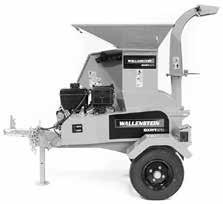
• Chipper • Cargo Trailer • Vehicles
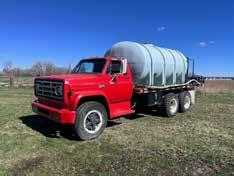
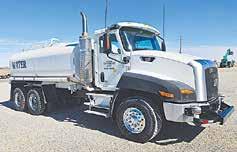
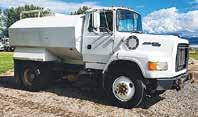
• 4000 gallon water truck
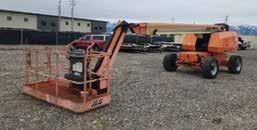
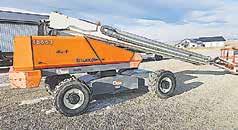
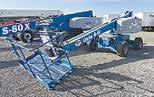
• JLG 85-ft. manlift • Boat
• Stainless Steel 3000 Gallon Truck Tank
• Forklifts • Skid Steer Grapple
* Motor Grader • Restaurant Equipment
• Box Truck • Reefer van body and more. Still taking inventory.
Melrose rancher represents Montana interests at Common Ground Coalition
Regional
Summit
FEATURED
NS Presser CLP
High yielding Clearfield spring wheat with sawfly tolerance
Red Rock Hay Barley Rocker 1st and 2nd Place for National Wheat Dryland Yield Contest for HRSW Variety!
Synergy Malt Barley
Spring Wheat
l TriCal Gunner™ Triticale
l TriCal Flex™ Triticale Forage blends available
l Orion Chickpeas
l Salamanca
l NEW! Iron Horse
GREEN PEAS
l Fairway
l
l
l
l WB9879CLP - High protein, solid stem, excellent standability
l WB Gunnison - A proven performer
l WB9668 - Highest yield and protein combination
l WB9719 - Good hollow stem dryland option
l Dagmar - New from MSU, adapted to dryland
l Alum - Adapted specifically for low pH soils/aluminum toxicity
l Carleton l Hockett
l AC Metcalfe l Alzada - CERTIFIED
J.M. Peck, a cattle rancher from Melrose and District 2 Director for the Montana Farm Bureau Federation, recently returned from Reno, Nevada, where he joined a select group of producers, including Joe Goggins, Greg Putnam, and Darrell Stevenson from Montana, for the Northwest regional meeting of the Common Ground Coalition.
The summit, held April 19-21, 2026, brought together 34 cattlemen and women from Montana, Idaho, Wyoming, Colorado, Washington, Oregon, and California. The coalition acts as a grassroots forum designed to build consensus among cow-calf producers, stockers, and feeders on the most pressing issues facing the livestock industry.
“The overarching goal is to make it feasible for the next generation to get into this business,” Peck said. “Whether someone is taking over a multi-generational ranch or entering as a first-generation producer, we need to facilitate that transition. The average age of the American rancher is over 60; we need young people to keep this industry vibrant and continue providing a great protein source for the world.”
Peck noted that that the summit used a productive roundtable format, where producers worked alongside industry experts to “flesh out” solutions across key areas: Supporting Young and Emerging Producers: Discussions focused on tax law reforms, including protecting the step-up in basis and exploring capital gains tax exemptions for those selling ranches to stay in agricultural production.
Predator Control: Peck noted the value of hearing from different regions, particularly California, where California Farm Bureau’s Steven Fenaroli explained that the recent return of wolves has left producers with limited management tools available to cattle
and sheep producers in Montana.
Risk Management: A major takeaway involved the Livestock Risk Protection (LRP) program. Led by Joe Kovanda of Compass Ag Solutions from Montana, producers discussed how establishing price floors through LRP can improve a rancher’s risk profile, making them more appealing to banks when seeking operating capital.
Public Lands & Labor: Participants consulted with experts, including the Nevada Agriculture Commissioner, and labor policy specialists, to address the unique challenges of labor issues ranchers in the West. The discussion also included opportunities and challenges of public lands grazing including overzealous implementation of the Endangered Species Act and historic public lands policies that have limited access to grazing allotments.
Access to Capital: Roundtables explored how to make lending more accessible through both private banking and updates to existing USDA Farm Service Agency (FSA) programs.
The Reno gathering is the first of four regional meetings the Common Ground Coalition has planned for 2026, moving away from a national-only model to better capture the specific needs of different geographical regions.
“It was interesting to learn how people in other states are facing these issues,” Peck added. “All of us at this meeting were directly tied to the cattle industry, and we shared the belief that we have to work together to move the needle forward.”
Peck intends to bring the perspectives gained in Reno back to Montana to share with Farm Bureau members and their advocacy efforts and policy development.
MFU’s free Teacher Camp offers real-world ag lessons
Montana teachers can earn 18 OPI renewal credits and learn how to better integrate agriculture into everyday classroom lessons during Montana Farmers Union’s free Teacher Camp this summer.
This is the second annual Teacher Camp to be held at Camp Arrowpeak in the Highwood Mountains, running from 3 p.m., July 21, through noon, July 23.
Teachers will leave the intensive program better equipped to teach agriculture-based lessons with lesson plans and a take-home box of materials and equipment needed to conduct the lessons they do themselves during the camp in their own classrooms. Topics will be different than last year’s les-
sons, so teachers can attend multiple years and expect new lesson plans and materials. Activities and lessons will be focused on hands-on, experiential learning and targeted toward grades K-6 to incorporate real-world agriculture into the classroom. Middle and high school science and agriculture teachers will also find the projects and activities useful, with information about modification and scaffolding for varying abilities and levels.
Lodging and Montana-sourced meals are included. The registration fee of $75 to hold a spot is refundable at check-in.
Learn more at montanafarmersunion. com/teacher-camp-registration/.
Melrose rancher J.M. Peck, who serves as Montana Farm Bureau District 2 Director, expresses his thoughts during the Common Ground Coalition regional summit in Reno, Nevada.
ROSMAN RANCH AUCTION
TRACTORS
2012 Case IH 340 Magnum, MFWD, 3 pt, dual pto, 5094 hrs, 18 spd power shift trans, 3 remotes, big 1000 pto, cab/air/htr., 18 front suitcase weights. A very clean tractor.
NH TM190, MFWD, diesel, 5949 hrs, 190 ho, NH 72LB loader w/8’ bucket & grapple fork, 18 spd PS trans, dual pto, 3 pt, 4 hyds. A good running tractor.
1997 Case IH 9370 tractor, diesel, 360 ho, 4 x 4, 4337 hrs, 4 hyd remotes, 14.0 L Cummins N14 turbocharged engine, 12-speed full powershift transmission, cab/air/htr, front & rear suitcase weights, Case Pro 700 monitor w/auto steer. Good running tractor.
1982 Versatile 895 4x4 tractor, 5941 hrs, 4 hyd, Cummins NTA855-A310 6-cylinder diesel, 3 & 4 spd trans
IHC 1086 diesel tractor, 130 ho, 2 WD, 4 spd w/TA, 540/1000 pto, 3 pt, 4 hyd remotes, cab, 7712 hrs, overhauled pto, sells w/Farmhand F235 loader, bucket & grapple fork Ford 9N tractor, 3 spd auxillary trans, 2 pt pto, new rubber TILLAGE & SPRAYER
2015 Case IH 3430 air drill, 51’ x 10” spacing, single shoot, 430 bushel TBT tank, folding hyd swing auger, steel packers w/caps Brandt 5000 Contour Commander heavy harrow, 50’, 19” tines
Case IH 160 pull-type sprayer, 100’, 1600 gal. tank, dual nozzles, wind screens
Case IH 5800 tool bar, 45’, floating hitch, dble. wing lift, knock on shovels, mtd harrows, good straight tool bar Krause 24’ tandem disk, 22” disks, Noble mtd. harrows Melroe 40’ tool bar, mtd. harrows, double wing lift RiteWay 4241 land roller, 42’ wide frame, 41’ packers, hyd Lift, all steel
Degelman rock picker, hi-lift hyd, 540 pto
COMBINES & GRAIN HANDLING
2009 Case IH 7088 Axial Flow rotary combine, 2061 engine hrs, 1527 separator hrs, single-rotor, 300-bu. grain tank, 3 spd hydrostatic trans, Pro 600 monitor, straw chopper, fully serviced, field ready. A very clean combine.
2011 CASE IH 40’ draper header w/transport, 3 seasons on side drapers, center draper is original
1998 Ram 2500 3/4 ton pickup, quad-cab, auto, 4 x 4, 24 valve Cummins diesel, 168,828 miles, B&W gooseneck hitch, power windows/ locks, grill guard, very clean
2009 Precision “Dakota” steel grain trailer, 40’, twin ag hoppers, 60” side walls, elec. Shur-Lock new tarp Wilson steel grain trailer, 42’, 60” sidewalls, new tarp
Hay trailer, 45’ w/5’ ext., hauls 30 bales, spread axles
By Lisa Terry, Glacier County Family Consumer Science Agent, Montana State University Extension
Given the current economic situation, in which working families are struggling financially, thrifting offers a way to save money. Quality items may be purchased for less than department- store sale prices, including Montana-made products.
Here are some do’s and don’ts of second-hand shopping. First, as with all your shopping preparation, make a list. Please do not enter the doors of your local thrift shop without an itemized list . The assortment of items available holds an allure that may lead to “impulse spending”, that is, using money that should be applied to more essential needs. And rather than composing a mental list, write your ideas on paper, with approximate values to watch for. Shopping with a plan of action saves time and money!
1967 Chevy Impala
1995 Ford F350 XLT Crew Cab Truck, Manual 4x4, Runs
1971 GMC Special Motorhome/ Bus-Runs
1968 Ford F100 Truck
1967 Volkswagen Bug plus 3 More and New Motor
1974 F250 Ford Truck, Manual 4x4, Ranger
VEHICLES / EQUIPMENT / TRAILERS / PARTS
Antique Fridge
Misc Furniture
Harley (3) Scrap Cars
1979 Jeep w/ Lots of Extra Parts
1988 Randy Travis Tour BusNeeds Motor
1996 Feather-Lite 48 Aluminum Cargo Trailer Car Hauler, 8’ Enclosed, Triple Axle, Generator, Viewing Platform, Interior Lights, Air Compressor, In Floor Winch, Power Up/Dwn Ramp
1975 Ford F250 Ranger XLT Truck, Manual, 4x4, Currently Running Truckweld Dump Pup Trailer 13’ w/20’ Adj Tongue
Genie S-40 Man Lift, Gas, Turns Over TransAm Bandit Car
El Camino
Camaro
Volkswagen Motor- New Semi Tires
Semi Hoods
Semi Tanks
Pallet of Restaurant Equipment, (2)
Empty Container (19) Semi Cabs Semi Sleeper (2) Diesel Motors-Cummins N14, Both Run
SHOP / TOOLS
OT Jet Belt Sander/ Disc Grinder
Blue Point Transmission Jack 1/2
Ton, Welding Cart 2 Tanks
Swamp Cooler General
Safety Sheen Tub For Cleaning Tools, 5-6 Tool Totes
8 Misc Bolt Buckets
4 Paint Totes, Guns, Sprayer, Sandpaper Paint Paper Cart
4 Small Bottle Jacks Big Bottle Jacks
Propane Tanks, Torch, Heaters
2 Grease Container
Magazines
2 Floor Jacks
5 Bolt Bins
Tote Snap
Millermatic
Skat-Blast
Griswold
Pallets
The next step is identifying quality items at secondhand shops. Since everything from clothing to household appliances, exercise equipment, and furniture is for sale in the aisles, the shopper must use extra care before making a purchase. When purchasing clothing, inspect the garment, evaluating stitching, color, and fit. While shoppers may be wary of used clothing, stores often inspect each item for cleanliness, discoloration, and wear. As an added measure, hold items up to windows with sunlight; stains that may be difficult to see in fluorescent aisles will show up in natural light. As most thrift stores have a fitting room, be sure to try on items before making a purchase. .
Storage Truck Boxes 18’ & 22’Buyer Loads
As with clothing, the shopper should inspect furniture, gym equipment, and household items. Sit down in the rocker. Turn the cushions over on the sofa. Kitchen utensils should be straightforward to assess. A quick survey of these items will suffice. Again, while most chain stores claim to test all electronic equipment, shoppers take a chance with such purchases.
Finally, customers should familiarize themselves with the return policies of the shops they frequent . Cash refunds are typically denied. Goodwill, for example, allows the customer to exchange items of equal value. Receipts and tags are also required for purchase validation. While clothing is accepted for return, be aware that furniture, books, toys, CDs, and DVDs are not eligible for return in many locations.
Using thrift stores and second-hand shops is one way to trim a family’s budget expenses. When practiced with forethought and discipline, the buyer will not be disappointed. What to Buy and What to Avoid. DO Buy These Items:
Quality Clothing - Look for natural fabrics like wool, cotton, and linen. Brand-name items in good condition offer excellent value. Jackets, coats, and formal wear provide the best savings compared to retail prices.
Glassware and Dishes - Vintage Pyrex, sturdy dishware, and quality serving pieces are often found in excellent condition. These items are easy to sanitize and inspect for chips or cracks.
Solid Wood Furniture - Well-constructed dressers, tables, and chairs made from real wood can be refinished or used as-is. Check joints and drawer slides for sturdiness.
Books and Media - Hardcover books, cookbooks, and educational materials are typically in good shape and cost a fraction of new prices.
Kitchen Gadgets - Mixing bowls, baking pans, hand tools, and quality cookware are safe options. Cast iron skillets are particularly valuable finds.
Home Décor - Picture frames, vases, baskets, and artwork allow you to personalize your space affordably.
DON’T Buy These Items:
Mattresses and Pillows - For health and hygiene reasons, these items should always be purchased new.
Car Seats and Cribs - Safety standards change frequently, and you cannot verify the history of these items. Hidden damage or recalled models pose serious risks.
Helmets - Bike helmets, motorcycle helmets, and other safety equipment may have invisible cracks or damage from previous impacts.
Electronics - As mentioned in the article, even “tested” electronics are risky. If you do purchase them, test thoroughly in-store if possible and understand the return policy.
Shoes - Used shoes have molded to someone else’s foot shape and gait, which can cause discomfort or foot problems. Undergarments and Swimwear - These items should always be purchased new for hygiene reasons.
Non-Stick Cookware - Scratched or worn non-stick coatings can be unsafe.
By Jerry Volesky, UNL
Fertilizing cool-season grass pastures or hayfields is something producers do each year while accounting for forage needs, the value of the forage, and fertilizer costs. With high fertilizer costs this year, many producers are reconsidering this practice or reducing the amount that is applied. Very important to remember is that adequate precipitation is needed to realize the grass response to the fertilizer.
Fertilization of smooth bromegrass pastures should occur in spring through early May. If the nitrogen is a single application, usually between 80 to 100 lbs of actual N per acre is suggested for eastern Nebraska. The recommended application rate declines westward across the state with about 30 to 40 lbs N per acre suggested for the Panhandle.
If doing split applications, usually it’s 2/3 in the spring and 1/3 in the fall when growth resumes on the cool season grasses. With fertilized pasture, be sure to include a rotational grazing plan that will effectively harvest the extra forage and provide the greatest return on the fertilizer investment. Also remember that adequate moisture is needed with fertilizer applications.
Soil tests could also be conducted to determine more exact amounts needed, particularly for any phosphorus, potassium or sulfur that could be applied.
Research conducted in Eastern Nebraska has shown a 30% increase in forage yield with fertilization and the economic optimum rate is between 80 to 120 lbs per acre. A crude protein increase from 16 to 20% was seen with fertilizer applications up to 160 lbs. That is a lot of fertilizer, but it did increase crude protein and organic matter digestibility while decreasing NDF or neutral detergent fiber. Always be aware when applying fertilizer, especially in pastures and fields near water sources such as ponds.
Brome pastures are hardy, and we can and do graze them hard in Nebraska. Haying or grazing operations can benefit if managed correctly with fertilizer. #####
Two teaspoons lemon juice added to 1 cup fresh cream turns cream sour for sour cream recipes.
The deadline for advertising in the June 2026 issue of the Trader's Dispatch will be May 27th. Phone (406) 271-5533.
TRACTOR FOR SALE
1977 Versatile 900 tractor, 8800 total hours, 2680 hours on new Cummins 903 engine and turbo Asking $10,750 For More Information Call (406) 450-3340, Shelby, MT
“When you need the job done, and you need it done right....... Feel free to give us a call during the day or at night!” Plow in your water lines, gas lines, etc. Up to 4” in diameter and up to 6-ft. deep Fencing Now Available. Call for details..
Beginning Thursday, April 30, the University of Wyoming Extension hosted a free six-part webinar series focused on preparing for, responding to and recovering from wildfire.
The weekly series, delivered via Zoom, will discuss topics ranging from how to reduce household fire hazards to community preparedness and understanding how wildfire can impact livestock, wildlife habitat and public health.
Each webinar runs from 6 to 7:30 p.m. on Thursday evenings, with an hourlong presentation followed by a 30-minute Q&A session. Presentations will highlight specific case studies in Wyoming communities as well as offering general tips for managing risk, staying safe and knowing what to expect in the aftermath of a fire.
“Wildfire can be really scary—there’s a lot of unknowns,” says UW Extension educator Peyton Loss, who co-organized the series in partnership with fellow extension educator Mallery Larson.
“We’re hoping that by giving people more information on the front end, they feel a little more empowered about where to go and what to do,” Loss adds. “We hope people take away some new tools or community connections that help them feel more prepared.”
To view speaker information and register for the series, visit https://bit.ly/uwe-wildfire-webinar. Contact Loss at ploss@uwyo.edu or Larson at mlarso34@uwyo.edu with questions.
Next, topics and speakers are as follows:
May 14: Impacts of Wildfire Smoke on Livestock & Grazing After a Wildfire, presented by Barton Stam, UW Extension educator, and Amy Skibiel, associate professor of animal, veterinary and food sciences at the University of Idaho
May 21: Reduce the Ire from Wildfire: Best Practices to Reduce Risk to You and Your Home, presented by Robb Sgroi, land resources specialist for the Teton County Conservation District
May 28: Sheridan County Public Health: A Case Study of the 2024 Elk Fire Response, presented by Edward Hinzman, Sheridan County public health response coordinator
June 4: Wildland Fire: Positive and Negative Impacts to Wildlife Habitat, presented by Tim Kramer, state coordinator for the U.S. Fish and Wildlife Service’s Partners for Fish and Wildlife Program.
Grass tetany
By Ben Beckman, UNL
Fresh spring growth is a welcome sight for producers looking for animal forage. However, lush spring growth may be the perfect condition for a case of grass tetany. While turn out may be a ways off, mitigating this risk starts now.
Grass tetany is the result of low levels of magnesium in an animal’s blood stream. Low magnesium levels in lush, newly growing grass are often a main cause. In lactating animals, low dietary magnesium paired with a drain on calcium from milk production increases risk even more. Calcium aids in magnesium absorption. This means, high milk producing and older animals are most at risk for developing tetany.
To prevent tetany problems this spring, it’s best to wait till grass in pastures has grown to at least 6 inches high before grazing. Legumes like alfalfa or clover, are a good source of magnesium, so grazing mixed grass and legume pastures can help balance mineral demands.
While cultural practices can reduce risk, providing correct and adequate mineral supplementation may be the most certain remedy. Cattle should be consuming 3-4 ounces daily of mineral containing supplemental calcium and 10-13% magnesium oxide. This should start at least 30 days before grazing begins, to ensure proper intake has been established.
Most high magnesium minerals utilize magnesium oxide, which is bitter tasting and can reduce animal consumption. Mix magnesium fortified mineral with salt into a complete package or feed with a highly palatable protein or energy supplement to improve intake
High magnesium mineral should be provided for animals until cool season grasses slow down growth and the levels of lush, fresh forage are reduced, around mid-May.
Dealing with grass tetany in the spring doesn’t have to negatively impact your herd. Plan now to adjust grazing management or mineral supplementation for a tetany-free spring.
Native Dryland Items
Mountain Brome Idaho Fescue Rough Fescue Sherman Big Bluegrass
The annual tractor and equipment safety training courses will be offered in Gering and Gordon in June. The events are hosted by the Central States Center for Agricultural Safety and Health (CS-CASH) at the University of Nebraska Medical Center College of Public Health, in partnership with Nebraska Extension.
“Tractors and agricultural equipment remain leading sources of serious injury and fatalities in farming, especially for young and beginning producers who are still gaining experience,” said course instructor Aaron Yoder, PhD, associate professor, UNMC and University of Nebraska- Lincoln. “The 2026 Annual Tractor and Equipment Safety Course provides essential, hands-on training that helps participants recognize hazards, develop safe operating habits, and build confidence when working around powerful machinery.”
Federal law restricts youth under the age of 16 from operating certain farm equipment unless the farm is owned by their parents or legal guardians. However, certification through the National Safe Tractor and Machinery Operation Program (NSTMOP) provides an exemption, allowing 14and 15-year-olds to operate tractors and certain mechanized equipment.
Course Details:
Day One: Covers the essential components of NSTMOP, as well as additional training in emergency response, stopthe-bleed techniques, personal protective equipment, and other lifesaving skills.
Day Two: Hands-on driving test, equipment operation and ATV safety lessons. Instructors will also provide education on safe practices and legal guidelines for ATVs, utility task vehicles (UTVs), and other off-road vehicles (ORVs).
The cost is $60, which covers educational materials, online learning access (if applicable), supplies, and lunch and snacks for in-person training sessions.
June 1-2 - Legacy of the Plains Museum, 2930 Old Oregon Trail, Gering, Nebraska
June 3 - Sheridan County Fairgrounds. 613 E. Third St., Gordon, Nebraska
Virtual Module – For those attending a location that offers only Day One or is 50 miles or more from the host location.
UNMC’s Central States Center for Agricultural Safety and Health, in collaboration with Nebraska Extension, will oversee the courses.
Youth under the age of 14 can attend Day One if accompanied by an adult, but they are not eligible to drive equipment, participate in Day Two, or receive certification. Students under 14 must register, but they will not be charged a fee. New and beginning farmers who want to increase their knowledge about safe farm practices are encouraged to register and attend.
To get more information and to register, visit: https:// www.unmc.edu/publichealth/cscash/outreach/farm-safetydays.html
Rural Employment Opportunities
Rural Employment Opportunities (REO), is a non-profit founded in 1981 which, through the National Farmworker Jobs Program, provides training opportunities and supportive service, such as food and gas, for farmworkers and their families across the state of Montana. This funding helps farmworker families to upgrade skills, access education, degree programs, and job training leading to year-round employment (both in and out of agriculture), improved family income and greater economic security. Additionally, REO provides food and gas to traveling agricultural workers and their families.
Reed Canarygrass
Garrison Creeping Foxtail
Timothy
REO’s NFJP program is staffed by professionals with experience in training and job placement in high demand careers with good salaries and benefits. Services include career assessment and planning, access to classroom and on-the-job training, intensive case management, and job placement. REO is a partner in Montana’s economic development by providing training that creates a pipeline of skilled workers for employers throughout the state.
Funds and eligibility for REO programs is based on current grants and funding.
2026 consignment sale
WEDNESDAY, JUNE 10, 2026
3288 RD 600E, CHESTER, MT – On Hwy 2, West of Chester, between MM 313 & 314, TURN NORTH onto Rd 600 E 1.25 miles. WATCH FOR SIGNS!
Registration at 9:00 am, Sale and Simulcast at 10:00 am MST
Taking consignments until June 4.
Register early for online bidding – Bid online at equipmentfacts.com
AUCTIONEERS NOTE: Welcome to the 2026 Consignment Sale. Please remember that this is a partial listing and items are added daily. Watch equipmentfacts.com and fritzbull.com for updates. You may also scan our QR code to take you directly to our sales. To prevent online bidding delay, register and agree to Terms at least two days prior. You can preview onsite starting June 8th and 9th. Find loadout dates online. Every item sells as is without reserve. See you June 10th.
TRAILERS
2011 MAURER grain trailer, 40’, roll tarp
INDUSTRIAS AMERICA WEST VALLEY fuel trailer, NEW, 500 gallon, pump, 45 gallon DEF tank, brakes, LED lights, 14,000 GVW, 10 ply tires
PONDEROSA stock trailer, 16’, 2 compartment
INDUSTRIAS AMERICA WEST VALLEY tilt deck trailer, NEW, 22’, wood deck, powder coat paint, 14,000 GVW, 10 ply tires
2014 MIRAGE flatbed trailer, 20’, tandem axle
SHOP BUILT flatbed trailer, 20’, 8’ wide, 2x10 side boards, tandem, two spares
3 point hitch
Towing hitch, 2” ball with chains Trailer balls
VEHICLES
1989 GMC pickup, 1T, 454, automatic, 2WD, power windows, AC, extended cab, 8’ service body
2000 PONTIAC SUNFIRE SE car, 2 door, bad head gasket
It is important not to start seeds indoors too early. If they outgrow trays or small pots, try thinning them and transplanting the largest to bigger pots, but it is easier to plant them outside just as they become large enough to survive transplanting. This is generally four to six weeks after sowing, when they have at least two sets of true leaves. If aiming to plant in the first week of May, start the seeds around mid-March. Toward the end of this period, you may want to provide your seedlings a little food in the form of a weak, water-soluble fertilizer.
As soon as the first true leaf appears from between the seed leaves, the seedlings are ready to be transplanted.
Cliff Gustafson Estate Auction
with water, very nice set up.
• Ezee-ON 25 Ft disk, dual center wheels 19 inch disks, mud scrapers, hydraulic cable wing lift
• Earth Buster 9 shank deep ripper, 30 inch tall shanks, hydraulic lift
• Friggstad 5 section, 50 Ft chisel plow, rear shanks fitted with coulter disks
sells with a tow behind 2,000 gallon liquid fertilizer tank, 30 gallon mixing cone, 30.5L-32 tires, hydraulic drive pump 29,365 acres on the cart, 24,000 acres on the air drill
• John Deere Max Emerge 2 7200, 12 row 30 inch corn planter, hydraulic lift markers, stored inside very nice
• Great Plains 30 Ft folding hoe drill, 12 inch spacing steel packers, transport kit model 450882
• 60 Ft Fisher Metal land rollers 2- 20 Ft wide by 42 inch rollers, 1 is 20 Ft wide X 48 inch all can be filled
• Kelly 43, 3 Pt backhoe attachment, 10 Ft dig depth, 18 inch & 12 inch buckets, out riggers
• Land Pride 3 Pt landscape rock rake manual angle 8 Ft wide
• John Deere 509 64 inch 3 Pt, rotary mower, 540 PTO
• 2 - 3 Pt International 2 row corn planters
• 3 Pt International 1 shank ripper
• 45 Ft Krause 2100 tandem disk, hydraulic wing lift, 19 inch disks, mud scrapers, serial # 1569, very nice heavy duty disk
• Degelman Straw Master 7000 heavy harrow, 50 Ft wide, 9/16 22 inch tines, every other tooth removed for easier distribution
• Gysler 48 Ft 3 section chisel plow, center rock shaft, 3 bar
Flexi-Coil mounted harrows
• Jeoffery 35 Ft chisel plow, no wing lifts
• Case 700 10 bottom plow disk openers, serial # 1604667
• 5 - John Deere 500 10 Ft pull type rod weeders
• A&E pull type fertilizer spreader wings, 70 Ft wide
• 9 - 6 Ft pull type coil packers
2003 New Holland CR 970 combine, Heat/AC, radio, 6 cylinder diesel engine, 4 speed trans, Hydro drive, Ag Leader yield monitor, Redekop straw/ chaff spreader, lateral tilt feeder house, new feeder house drum floor & chain, 900/60R32 front tires, 600/65R28 rear tires, Case FM-750 monitor with EZ steer, 2,862 separator
2007 John Deere 8230T Tractor, 30 in wide tracks, 200 HP turbo diesel engine, ITV Trans, heat, Ac, radio, Star Fire 3000 guidance, 3 Pt, big 1,000 PTO, 4 hydraulic remotes, case drain, front weight package, shows 5,596 Hrs. Stored inside a very clean tractor
• 2008 Case Farmall 35 MFWD utility tractor, open station ROPS, 35 Hp 3 cylinder diesel engine, Hydro drive, foot pedal reverser, 3 Pt, 540 PTO, LX 340 loader, 5 Ft bucket, 15 x19.5 rear tires, 25x8.5 front tires, shows
• Miller Bobcat 225T
Onan engine drive welder generator, 240 volt plug in, 4-110 volt plug ins, short welding leads, shows 166 original Hrs. Nice stored inside
• 2 - welding tables
Hrs. 3,828 engine Hrs. Serial
# HAJ100597, recent $35,000 dollar work order. Always stored inside
• 2012 New Holland 94C, 40 Ft draper header, 5 batt reel, pickup teeth, pea auger, transport kit, Serial # 40GB121217, always stored inside
• 2002 New Holland 96C, 12 row corn header, dual drive PTO, serial # 21736, sells with a homemade triple axle pintle hitch trailer
• West Field MKX 130-74 swing out auger, 13 inch, 540 PTO drive, hydraulic over cable lift, hydraulic winch hopper lift, dual auger hopper
1,168hrs, Very clean tractor • Case 930 Comfort King tractor, 6 cylinder diesel engine, 4 speed trans, 540 PTO, 2 Hyd remotes, 23.130 rear tires, wheel weights, 3,555 Hrs. Missing driver side door
1997 John Deere 9300 4 wheel drive articulating tractor, 360 Hp turbo diesel engine, 12 speed Trans, high low bump shift, E1Z-Steer, heat, ac, radio, buddy seat, 4 hydraulic remotes, diff lock, case drain, rear wheel weight kit, 620/70R24 duals, 4,024 hours, very clean tractor stored inside
• 2 - heavy duty saw horses
• 4 post drive on car lift, 8,000 pounds
• Custom built 8 ton cherry picker
• Homemade rotary engine stand
• Good selection of hand tools
• Homebuilt 8 X 39 Ft PTO grain auger with Hyd wet kit
• Hutchison 8 X 40 Ft PTO grain auger
2014 Unverferth 9250 grain cart, center v unload with left front corner 17 inch auger, hydraulic spout adjustment, big 1,000 PTO drive, roll tarp, electric scale, 900/60R32 tires like new, Serial # B32430130, very nice
• 1964 Ford F-600 water truck, 391 gas engine, 4 & 2 speed Trans, , 1,150 stainless steel tank on a homemade flat bed, 10X19-19.5 floater tires, unknown miles
1995 International Navistar 2554 spray truck, custom built by AG Trucks, DT466 diesel engine, Auto Trans, EZ-Steer, Trimble EZ boom controller, Raven boom height control, auto rate, 1,600 gallon stainless steel tank, 50 gal clean water tank, mixing cone, 100 Ft suspended boom, triple nozzle, 48 X 25.00 front floater tires, 66 x 43.00 - 25 rear floater tires, shows 39,845 miles, this a very clean well-built truck ready to go.
1998 International Eagle 9000 semi, CAT 3406E 435 Hp engine, 10 speed trans, 60 inch stand up sleeper, tag axle, 11R22.5 aluminum wheels, 4 bag air ride suspension, shows 255,256 miles
THREE POINT EQUIPMENT MOWERS & SWATHERS
• Allied Farm King, 3 Pt, 10 Ft back blade, hydraulic tilt, angle, dual rear wheel lift, side shift, serial # 1501201400012, very nice heavy duty rear blade
• IH ½ - 2 ½ HP restored hit & miss engine, belt pulley
• Tokheim model 300 C-25 gas pump serial # 3-39 6918-56
• Model T engine &Trans
• New Holland 7.5 L combine engine
• Detroit V-8 318 truck engine
• 59 Ft of 24 inch pipe
• 60 Ft of 6 X 6 inch square tubing 5/16 wall
• 39 Ft of 12 inch pipe
• Allied 4 tine tractor bucket grapple
• Valmar 2055 mounted applicator with a Hyd bag lift
• Clipper M-2B grain cleaner & extra screens
• 1974 Lowe Line 14 Ft aluminum boat & 1955 trailer
• 100 Plus used steel posts
• 4 Ft by 7 Ft utility wagon, 18.5 X 8 tires, 300 gal water tank
• 2,000 gallon fuel tank filled with waste oil
• ATV cart
• 1970 Kenworth W900 day cab semi, overhauled 335 Cummins engine, 16 speed Trans, shows 513,243 miles, 11R24.5 steel wheels, 186 inch wheel base, new batteries
• 1978 Ford F-700 dump truck, 391 V-8 gas engine, 5 speed manual trans, single axle, rear duals converted to 11R22.5 steel duals, 10.00-20 steel steer tires, 5 yard box, single lift cylinder, unknown miles
• 1981 GMC Brigadier tandem axle truck, 300 Cummins engine, 15 speed trans, spring ride suspension, 20 Ft Midland steel box & hoist, 3 rear doors, 1 electric remote slide door, Shur-Lok roll tarp, 11R24.5 tires, shows 336,283 miles
• 1981 Alloy 45 Ft flatbed trailer, 96 inch wide, spring ride, tandem axle, 285-7024.5 tires, steel dual wheels, sells with 2- 1,550 gallon poly tanks, 1-2,550 gallon horizontal blue poly tank, 2 inch hoses
• 2010 Wilray trailer, 36 Ft
• 1991 Freightliner FLD 120 tender truck, 3406B Cat engine, 15 speed Trans, unknown miles, dual aluminum fuel tanks, 11R22.5 steel wheels, tandem axle,4 bag air ride, equipped with 16 Ft custom steel flat bed, 2,550 Gallon black poly water tank, 3 mixing cones, Briggs 900 2 inch pump
• 1961 Ford F-750 grain truck, V-8 391 gas engine, 5 & 2 speed Trans, air brakes, tandem tag axle, 20 Ft Knapheide box, tip tops, roll tarp, custom built drill fill auger, 9.00-20 tires, steel wheels, shows unknown miles
grain trailer, spring ride 4 slide openers, rear air, pintle hitch, roll tarp is no good, 11R24.5 steel wheels • Pintle hitch 5th wheel dolly, 11R24.5 steel wheels, 25 Ft overall length • 1997 utility tilt bed trailer, 7.5
• Schulte model 5026 pull type mower, 3 section, 26 Ft wide, PTO drive, Serial # HC50290234903
• 1995 John Deere 3430 self-propelled windrower, Ac heat radio, 4 cylinder diesel engine, high low travel speed, hydro drive, sells with 300A John Deere 14 Ft twin knife header, 5 batt reel, steel on steel conditioner, shows 1,928hrs, serial # E03430X985040.
1984 Case W-24C articulating wheel loader, cab, 132 Hp 6 cylinder turbo diesel engine, highlow forward reverser Trans, clam shell bucket, 2.5 yards, 20.5 - 25 tires, air brakes, shows 1,912 Hrs. serial # 9156751.
1959 D-8 Cat H series, 6 cylinder turbo diesel engine, 6 speed Trans, forward reverser lever, electric start pony motor, 24 inch wide grouser pads, 14 Ft wide blade, hydraulic lift,
Stay aware during fire season
By Colton Tripp, K-State Extension news service
The Ranger Road Fire that started southeast of Beaver, Oklahoma, on Feb. 17 burned more than 283,000 acres in northwestern Oklahoma and southwestern Kansas.
Considering the fact that hundreds of cattle were lost and several structures damaged or destroyed, a Kansas Forestry Service fire prevention specialist is highlighting steps people should take to protect their homes, livestock, pets… and themselves.
“We forecasted fire season 2026 to be above average and it’s shaping up to be just that,” said Shawna Hartman, a fire prevention specialist with the Kansas Forest Service. “One of the reasons is the amount of fuel and the unseasonably warm weather that we’ve been having has increased the curing of our vegetation.”
Because most of the Great Plains received precipitation towards the end of the growing season last year, vegetation was able to grow above normal averages before freezing off. With the unseasonably warm weather in recent weeks, this vegetation has dried, creating prime fuel for wildfires.
“Our fire season usually starts in February and goes until green up, which is towards the end of April and into May,” Hartman said. “So be aware that anytime in that time frame there could be high fire danger and people could be at risk to be in the path of a wildfire.”
People can stay up to date through the National Weather Service, the Kansas Forest Service webpage, Facebook groups, and television and radio, Hartman explained.
When thinking about protecting structures and housing, Hartman said, “60% of homes burn from ember showers, not the flame front.”
“Think like an ember; what would an ember burn?”
When proofing homes and structures against wildfires, Hartman explained there are important things homeowners should do to prevent embers from burning:
Remove leaves from gutters and landscaping.
Water lawns and mulch
Make sure there is no flammable vegetation near the structure.
Be Prepared Before the Fire
Having a plan and being prepared before the start of fire season through precautionary actions is the best way to prevent fire damage.
“Some of the best things homeowners can do is within the first five feet of their home out into their yard is to reduce flammable material,” Hartman said.
Hartman advised replacing natural mulch with rock in garden beds that border structures and suggested that homeowners consider installing a concrete patio or walkway within five feet of their home.
“One eighth of an inch screening on vents, attic vents and around a deck will decrease the number of embers that can get up into those spaces, reducing the flammability of a home,” Hartman said.
Act on the Open Plains
“If you own cattle, you need to be thinking about fire season as a whole, because once the fire starts, it’s going to be hard to move cattle in a timely manner,” Hartman said.
Moving cattle to a secure location with little vegetative fuel is the best place for animals if a full evacuation is not possible, she explained.
“Move them into a wheat field, or a location with minimal vegetation where they are not in abundant vegetation,” Hartman said.
She said that actively planning on how to evacuate livestock before a wildfire is the best measure to ensure herd safety.
“We’ve seen widespread devastation, not just here in Kansas, but also in Nebraska involving our livestock herds,” Hartman said. “Thinking about where you could move your cattle now before the risk is high to extreme may be the best option.”
#####
A recently retired business executive is discussing his new life with his friend. “How is your retirement?” the friend asks. “It’s terrific,” the retiree says. “The only downside is I had to give up skiing.” “Why is that?” the friend asks, “Are you afraid of getting hurt?” “I am now,” he responded. “You see, in the past, if I broke my ankle, I could still work...no big deal. But now, even the slightest injury while skiing could truly affect my golf game...it’s just not worth the risk.”
SPRAYER FOR SALE
2015 John Deere 4038R sprayer, 120-ft. boom, 20” spacing, Auto Height
Colony collapse of honey bees is a global problem, one that researchers at Washington State University are working to mitigate by growing the international exchange of ideas and research.
Priya Chakrabarti Basu, assistant professor in the Department of Entomology, has organized a conference for June 6–12 in Pullman, Washington, inviting participants from all over the world to discuss colony collapse. Prevention of Honey Bee Colony Collapse (COLOSS) is a borderless group of scientists advocating for bee wellness and coordinating international research toward the well-being of bees. WSU’s effort to expand collaboration across the world is underway to gather anyone associated with bees, not just academics.
Screen USA 3x5 topsoil, gravel screen plant - mobile with harp, remote grizzly dump, 2 deck Lombardini motor.
$27,500
$18,500
COLOSS has held regular conferences, mostly in Europe, to bring the scientific community together to advance cooperation on solving problems affecting growers, the environment, and consumers. This June will mark the first time the group has held a conference in North America, thanks in part to Chakrabarti Basu’s efforts.
Chakrabarti Basu is the North American chair of the bee nutrition task force at COLOSS. She has opened this year’s conference to anyone interested in the work. This includes honey bee researchers, veterinarians, industry, growers, beekeeper hobbyists, or anyone curious about bees.
“I think this is hugely significant, an international meeting for honey bees by honey bee researchers of this caliber, this is the first time in the U.S.” Chakrabarti Basu said. “I’m very grateful we can host it at WSU.”
Chakrabarti Basu joined the entomology department last year and has statewide research projects, including at WSU’s Honey Bee and Pollinator Research, Extension, and Education Facility in Othello, Washington. Plus, her recently launched pollenmapping project, utilizing citizen scientists in every Washington county, mapping pollen varieties and the effectiveness of pollination.
“We are losing wild bees and managed bees throughout the world; it’s a global problem.” Chakrabarti Basu said. “I think we are extremely well-positioned. WSU has a rich history of being one of the top ag schools.”
Future conferences can be expanded based on the success of this year and the cooperation it fosters worldwide. WSU is known as a central location for this type of research and can benefit from experts assembling to bring new perspectives from their respective regions and interests.
“The bee program has been here (at WSU) for decades in the heart of the pollination region for tree fruits.” Chakrabarti Basu said. “We can do a lot of regional research here, but we are also actually one of the national and global experts on these things.”
The conference has a tentative agenda that includes expert and sponsor talks, as well as hands-on demonstrations and a tour of a commercial beekeeper operation and a commercial grower operation tour at an additional cost.
season ramps up for sheep and goats
By Chevy-Lynn Vaske, K-State Extension news service
With the beginning of spring, K-State Extension small ruminant specialist Kelsey Bentley warns that parasite pressure in sheep and goats is entering a critical season, putting flocks and herds at heightened risk for health and production losses.
She says the most common internal parasites include gastrointestinal worms in adult animals and coccidia in young lambs and kids. Among these, Haemonchus contortus, commonly known as the barber pole worm, is the most economically damaging, causing rapid blood loss and severe anemia.
Other common worms, including the black scour worm and brown stomach worm, often occur alongside barber pole infections, compounding production losses.
In young animals, coccidia are the primary concern. These microscopic parasites damage the intestinal lining, especially in overcrowded or damp environments and during stressful events, such as weaning.
“Producers should be watching closely for signs like anemia, weight loss, diarrhea and overall unthrifty appearance,” Bentley said. “In severe cases, animals may decline quickly or even die before obvious symptoms appear.”
Effective parasite control requires a combination of management strategies. Bentley recommends maintaining proper pasture rotation, avoiding overgrazing and ensuring animals receive adequate nutrition to support immune function. Tools such as FAMACHA scoring, body condition evaluation and fecal egg counts can help identify animals that truly need treatment.
Rather than routine whole-herd deworming, experts emphasize targeted treatment to slow the development of drug resistance. Oral dewormers are preferred for gastrointestinal parasites, as they are more effective than injectable or pouron formulations in small ruminants.
To prevent coccidiosis, Bentley says keeping pens clean and dry, minimizing overcrowding, and reducing stress are critical steps. In some cases, medicated feeds containing approved coccidiostats may be used under veterinary guidance. Treatment options such as amprolium or sulfa-based medications should also be used in consultation with a veterinarian.
Bentley cautions producers to only use products that are approved or prescribed for sheep and goats. Certain medications, such as toltrazuril-type products, are not labeled for use in these species in the United States and should be avoided.
“Working closely with a veterinarian is key to developing an effective parasite control program,” Bentley said. “They can help with diagnostics, treatment plans, and ensuring proper product use and withdrawal times.”
Producers seeking additional resources can visit the American Consortium for Small Ruminant Parasite Control at www.wormx.info or contact their local extension office for guidance.
More information: Kelsey Bentley, 919-502-9293, kbentley@ksu.edu
The Ranch House
Just behind Moms ranch house is the Small log cabin where long ago she was Born
Both summer and winter I’ve watched the Sun reach over that cabin roof to each and every morn
I remember grandpa telling stories like no one Had ever heard before what he was telling me
He would look at each log and think for
A minute to tell where on his land he got that tree
I’ve never forgot trying to look in the window
When I was small hanging onto the window sill
Some how grandma always heard me and would say Come in here and eat some of this until you get your fill
Looking and talking about those days helps Us get past some very hard times
The bond all started way back when from In that cabin we heard the same nursery rhymes
I still take pride in looking across our Land and telling any one who will listen to me
2017 New Holland LM7.42 Elite telehandler, 460/70R24 Mich., reverse fan, rear hydraulic coupler, exterior tool box, continuous flow auxiliary hydraulic, bluetooth and auxiliary radio work, SO station. stk# 22833
$65,000 (L)
Bobcat HB980 breaker. stk# 24408.$10,036 (G)
Quick Attach 68” angle blade. stk# 32129. (G)
Bobcat 68” angle broom. Good bristles. stk# 32128. (G)
Bobcat 68” angle broom for skidsteer. stk# 32384 (L)
New Holland RB560 round baler, net/twine, 1000 PTO, deluxe wrap non ISO, caster wheels, X-Wide pickup, harness, monitor. stk# 22524.
2014 New Holland 340, density control, tandem, ISO intellview, 1000 PTO, 500/50 Alliance, roller chute, windguard. stk# 30935. $75,200 (G) New Holland 340 P 3x4, roller chute, tandem axle, ISO, color monitor, work lights, density control, packer. stk# 28453. $43,000 (L)
Maybridge 24 includes bars 5/8 chain 2X blue and white 4-ft. stk# 29012. $4000 (L)
2023 NEW Kirchner 8-ft plow, Cat II, 3-pt. unit with 16” sweeps. stk# 30802. $7090 (L)
John Deere 18-in. planer, 14 pin control, carbide teeth, high flow. stk# 31623. $9900 (G)
MISCELLANEOUS
10-ft. disc drill, legume box, grass seed box, small grain box. stk# 33581. Call for price (L)
Haybuster CMF-830 vertical mixer, small 1000 PTO, monitor with remote, right hand dogleg update, magnet, large display, scales. stk# 29236. $78,900 (L)
Link between pollinators and diverse landscapes is a two-way street
Ecologists have long seen a strong connection between biodiversity and pollinators – the butterflies, birds, bats, bees and other insects that help the flowers they snack on by transferring pollen from male anthers to female stigma.
Previous research has shown diverse landscapes draw more pollinators, as a wider variety of pollen and nectar attracts attention from a wider variety of animals – some which only feed on certain plants. Essentially, pollinators go where the food is, said Brian Wilsey, a professor of ecology, evolution and organismal biology at Iowa State University.
A recent study by Wilsey and doctoral graduate Nathan Soley showed the converse is also true: Pollinators support diversity in plant communities. In an article published this month in Ecology, Wilsey and Soley described a four-year experiment they conducted in plots of restored prairie that examined how plant diversity was affected by purposely protecting wildflowers from pollinators. Among animalpollinated plants, viable seed production fell by 50% and the diversity of species fell by 27%, they found.
“Our study is the first we are aware of to show that plant biodiversity at the community level can be limited by a lack of pollinators,” Wilsey said.
Handling
68,000 flowers
The study was inspired by a familiar dynamic in prairie restoration areas, said Wilsey, a grassland ecologist. When first planted, restorations usually feature a varied assortment of species that includes wildflowers. However, windpollinated grasses will often dominate within a few years, crowding out other types of plants. A lack of pollinators could help explain those rapid shifts, if they play a role in maintaining biodiversity.
Ecologists have assumed pollinators support biodiversity, but the relatively scant amount of research quantifying the effect has focused on individual species, Soley said.
“Things get a lot more complicated at a community level,” he said. “I think it’s important to test our assumptions if we’re going to be all in on pollinators.”
Wilsey and Soley’s experiment was conducted on about 50 acres of university land south of Ames. In 54 circular plots 2 meters wide, the researchers covered flowers with sheer fabric bags that let light in but kept pollinators out. They also augmented pollination in the flowers of another set of plots by transferring pollen by hand, using Q-tips and small paint brushes. Over four growing seasons, they either bagged or hand-pollinated about 68,000 flowers during their weekly trips to the study site, Soley said.
Wilsey and Soley measured seed production and biodiversity within each of the plots, comparing data from areas where pollination was enhanced or prohibited to undisturbed control plots. While the effects became more dramatic over time, it was clear in the first year that the exclusion treatments would have an impact because pollen visibly piled up inside the flower bags, Soley said.
The study’s results suggest significant declines in pollinators could cause biodiversity losses that further reduce pollinator populations, causing a self-reinforcing downward trend in both that the researchers call a “plant-pollinator extinction vortex.”
“Before this study, I would have never thought that pollinators were this important to maintaining biodiversity. It really opened my eyes,” Wilsey said.
Nathan Soley, left, and Brian Wilsey adjust the bags covering flowering plants in a restored plot of prairie southwest of Ames in fall of 2025.
The bags prevent animal pollination, part of their research studying how pollinators affect plant diversity. Photo by Christopher Gannon/ Iowa State University.
Link between pollinators and diverse landscapes is a two-way street
CONTINUED FROM PAGE A36
Implications for restorations
Pollinators are essential because of their role in food production. According to the U.S. Department of Agriculture, about 35% of global food crops depend on animal pollination to reproduce, making the seeds and fruits that humans harvest.
In addition to providing critical support for pollinators and other wildlife, diverse landscapes improve water and soil quality. In prairies, which used to cover most of Iowa, a variety of life makes ecosystems more resilient to droughts, floods and invasive species. Beyond pollinators, the known pro-biodiversity factors include low nutrient availability, proximity to other quality habitat and a lack of human degradation, Wilsey said.
One major implication of knowing pollinators help maintain plant biodiversity is the need to consider the presence of pollinator habitat when establishing prairie restoration areas. That’s especially true for urban projects, Wilsey said. The human-enhanced pollination plots in the study showed no change in biodiversity when compared to the control plots, an indication that there were sufficient bees and other pollinators in the area. But that’s less likely to be the case in more human-impacted environments.
Future experiments could use the same methods in different settings to see how much of a difference pollinators make for biodiversity when there are other complicating factors, Wilsey said.
The experiment, now entering its seventh year, is continuing at the study plots near Ames. It’s time-intensive work, but it’s worth it to better understand how pollinators and plant communities affect each other, Soley said.
“These mutualisms are important to preserve,” he said.
- Lana Tibbets, WPRA
Gold
Earner, Collegiate Champion,
11/4” – 11/2”
NEW HDPE PIPE
psi
Use for irrigation, stock water or drinking water. Red stripe for electrical use. Yellow stripe for natural gas use. Also available 3/4” to 2” SIDR TURF/IRRIGATION HDPE pipe 3/4” - 4” orange smooth wall HDPE conduit HDPE pipe available in 20 to 50-ft. lengths from 6” to 66” diameter
Pipe is available by the stick - coil - reel - truckload
Call Ed at Big Sky Pipe – Great Falls, MT
Delivery available 406-453-7299 Veteran Owned or Email: ed.bigskypipe64@hotmail.com – www.bigskypipeandsupply.com
Replacement heifers vs. finishing heifers –Feeding in confinement
By Karla Wilke, Nebraska Extension Cow/Calf Systems and Stocker Management Specialist
After wildfires recently ravaged over 800,000 acres across Nebraska many cattle producers, now short on grass and hay, may be contemplating how to manage replacement heifers this spring and summer. While many ranchers may prefer not to develop replacement heifers in a drylot, heifers can be successfully developed and bred in confinement. Due to extensive drought and/or fire, producers in farming areas or feedlot managers may agree to take in heifers to develop because they have access to grain and various silages that can be used for cattle rations. Understanding the needs of the replacement heifer and how they differ from a finishing heifer are very important for successful development and breeding.
Rate of Gain
A replacement heifer, from weaning to breeding, may only need to gain 1.25 pounds/day to reach her target breeding weight. A finishing heifer may be on an aggressive growing diet gaining 3 pounds per day, or a finishing diet targeting over 3 pounds/day gain. These are very different goals and therefore, very different rations.
Example Rations
Below are example rations for replacement heifers targeting 1.25 pounds/day gain and finishing heifers on an accelerated growing ration targeting 3 pounds/day gain.
The replacement heifers do not need a high energy diet. The corn silage provides some energy that is lacking in the poor-quality (often cheaper) hay, and the distillers grains provide metabolizable protein the heifers need to develop bone and muscle growth without gaining extra fat tissue. If heifers are still in confinement at breeding, a diet providing 1.5 to 2.0 pounds/day gain could be provided to be similar to gain on green grass.
Producers wanting assistance with ration balancing for replacement heifers can contact the UNL beef team.
USDA invests in rural MT agriculture
U.S. Department of Agriculture Rural Development announced that the 2026 ValueAdded Producer Grant (VAPG) application period is officially open, offering Montana agricultural producers an opportunity to secure funding that supports business growth, product development, and expanded market access.
Producers may apply for up to $200,000 in working capital and $50,000 for planning activities, which may be used for processing, packaging, labeling, payroll, marketing, distribution, feasibility studies, business plans, and other eligible operational costs for up to 36 months. The program requires a 1:1 match, ensuring long-term investment in project sustainability.
“VAPG is one of USDA’s most impactful tools for helping producers capture more value from the goods they work so hard to raise and grow,” said USDA Rural Development Montana State Director Bill Warden. “We encourage Montana producers to take advantage of this opportunity to expand their markets, diversify their operations, and strengthen rural economies.”
USDA Rural Development is also announcing $1,049,900 in new investments supporting five Montana producers through the 2025 VAPG program:
4 Diamond Ranch at Wallrock – Park
County – $250,000 4 Diamond Ranch will use its grant to expand distribution of its direct-to-consumer beef products, sourced from its grassfed, grass‑finished American Wagyu herd. Funding will support working capital needs as the ranch scales up processing, packaging, and marketing to meet growing demand for premium Montana beef.
Big Mountain Ciderworks – Flathead County – $250,000 This family‑owned orchard and cider house will use its grant to support working capital for the production and distribution of its locally crafted hard ciders. The funding will help Big Mountain Ciderworks increase production capacity, enhance marketing efforts, and reach new wholesale and retail markets across the region.
Mannix Brothers Ranch –Powell County – $250,000 Mannix Brothers Ranch will use its award to process, package, and deliver its pasture-raised beef products to a broader customer base. The grant will support expanded marketing, distribution, and working capital needs as the ranch continues to grow its direct - to - consumer and wholesale channels.
Shepherd of the Bees –Dawson County – $49,900 Shepherd of the Bees will use its grant to expand the market for its value‑added honey products, including items made from raw honeycomb. Funding will support packaging, marketing, and distribution efforts to help the business reach new customers and increase production capacity.
Wustner Brothers Honey –Missoula County – $250,000
This family‑owned honey producer will use its grant
to support working capital needs as it expands production and distribution of its Montana‑made honey products. The funding will help the business strengthen its brand presence, reach new markets, and continue its long tradition of local honey production.
A Montana Success Story: Previous VAPG recipient Montana Prime Meats of Fort Smith demonstrates the program’s long-term impact. As highlighted by the Montana Ag Network, the ranch‑to‑table beef business has expanded processing capacity, strengthened partnerships with local ranchers, and increased access to high quality Montana beef for consumers in larger communities like Billings. Their growth shows how VAPG funding helps producers build resilient, value driven business models that keep more dollars in rural communities.
These investments reflect USDA Rural Development’s commitment to helping Montana producers innovate, diversify, and build stronger rural economies by moving beyond raw commodity sales and into value‑added markets.
How to Apply Applications are being accepted through the Grant Application Portal until April 22, 2026. Interested applicants in Montana should contact Marlee Johnston at marlee.johnston@usda.gov or 406‑312‑0189.
Now Available - GLUPEX 280SL
A non-selective herbicide for post-emergence broadcast use on canola, sweet corn[*], field corn, cotton, soybean, and sugar beet[*] designated as LibertyLink® or glufosinate resistant. GLUPEX 280SL may be used for weed control in non-LibertyLink® or non-glufosinate resistant cotton when applied with a hooded sprayer in-crop. GLUPEX 280SL may also be applied as a broadcast burndown application before planting or prior to emergence of canola, sweet corn[*], field corn, cotton, soybean, or sugar beet[*] designated as LibertyLink® or glufosinate resistant and any conventional canola, sweet corn[*], field corn, cotton, soybean, or sugar beet. GLUPEX 280SL may be used for post-emergence weed control on olives, listed tree, vine and berry crops. GLUPEX 280SL may also be applied for potato vine desiccation. [*Not for use in California.]
Carbon 375 is a carbon based nutrient with a negative charged carbon particle that offers enhanced uptake of soil nutrients. Negative charged nano carbon provides excellent suspension of tank products with 30% more delivery into leaf phloem.
Compatable with all spray systems
SPRAYER & DRILL FOR SALE
John Deere 60-ft. air drill, 1830 plow, with tow behind 1910 cart $65,000 Apache AS1020 sprayer with 1800 hours, 1000 gallon tank, 100-ft. boom. Well maintained, shedded. $78,000 John Deere 9770 STS combine, 2) 35-ft.
A post emergent, systemic herbicide with no soil residual activity. It is generally non-selective and gives broad spectrum control of many annual weeds, perennial weeds, woody brush and trees.
STRAW FOR SALE
Scasta appointed
Interim Director of UW Extension
The University of Wyoming welcomes Professor John Derek Scasta, director of the Laramie Research and Extension Center, as interim director of UW Extension.
Prior to his current role as director of the Laramie R&E Center, Scasta served as UW Extension’s rangeland management specialist for more than a decade. He will assume his interim appointment with UW Extension Monday, April 27, following the departure of current director Mandy Marney.
“On behalf of the College of Agriculture, Life Sciences and Natural Resources, I want to extend my sincere gratitude to Dr. Mandy Marney for her dedicated leadership and service as our associate dean and UW Extension director,” says Kelly Crane, Farm Credit Services of America Dean in the College of Agriculture, Life Sciences and Natural Resources. “At the same time, I am pleased to welcome Dr. Derek Scasta as the interim associate dean and UW Extension director.”
As part of the national land-grant university system, UW Extension provides lifelong learning opportunities for Wyoming residents through county and statewide
GREENWAY’S GRAZING CORN
Graze Yearlings1500 on a 130 Acre Pivot for 30 Days
programming. Housed within the College of Agriculture, Life Sciences and Natural Resources, UW Extension serves communities across the state with the support of federal, state and county funding.
As UW Extension’s interim director, Scasta will support personnel in county offices across the state in addition to working with college leadership and campus-based specialists.
“Derek is exceptionally well qualified for this role, bringing more than a decade of experience serving Wyoming as UW’s Extension rangeland specialist, and more recently, as the director of the Laramie Research and Extension Center,” Dean Crane comments. “Derek’s deep commitment to serving Wyoming communities and his demonstrated successes in extension make him an excellent choice to lead UW Extension during this transition.”
Scasta entered the extension system in 2004 after graduating from Texas A&M University with a bachelor’s degree in rangeland ecology and management.
As a county agent in west Texas, Scasta not only fielded questions from agricultural producers, but also coordinated 4-H events like county fair and contributed to community-based initiatives outside his area of academic training.
3.5 lbs. of Gain Per Day (69% TDN) 5-7 wt. Cattle*
Greenway Seeds Grazing Corn (GX80) is the No. 1 grazing corn in the nation because it is 5-6 days earlier than the competition.
This allows the rancher to plant 5-6 days later and still reach peak sugar content (pre tassel) before the frost shuts you down!
OVERSEED ALFALFA with Grazing Corn
Plant with a grain drill following second cutting on an older field alfalfa. Ready to graze in early September.
“We planted GX80 following second cut alfalfa. If we had to do that over we would follow third cut. We grazed 400 head for two weeks on 20 acres” Cory Veterre - Greenriver, Utah
HERE’S WHAT RANCHERS ARE SAYING
Casey Calvin - Monte Vista, CO
We grazed lambs on GX80. They ate it all the way to the ground. Unbelievable! (See website for photos)
Crawford Cattle - Winnemucca, NV
Planted mid July, it was way over our heads. We were surprised as to how long we were able to graze. We also baled some of it. We’re buying again.
Cory Miller - Grass Valley Farm, Missoula, MT
We planted our GX80 under wheel lines and watered heavily. This was key as the corn grew 7ft tall!
Tom Kerns for Mike Becker Ranch - Baker, OR
We were able to carry 14 A.U.M.’s per acre with our late season grazing of GX80.
Jesse Norcutt - Currant, NV
We cut and baled the GX80 at pre-tussel. It was
5-7
and they gained
As he learned from personal experience, “Extension is here to help address local needs. I realized I had this obligation to local folks to be available, accountable, and to have integrity. It’s really about listening to people, identifying what the problems are and trying to solve those problems.”
Scasta earned a master’s in crop science from Texas Tech University in 2008, followed by a PhD in natural resource ecology and management at Oklahoma State University, with the goal of becoming an extension specialist.
In 2014, Scasta accepted a rangeland management specialist position at UW, a role that also included teaching and research responsibilities. In 2024, he was named director of the Laramie R&E Center.
While he will continue to mentor UW students and conduct research, Scasta welcomes the opportunity to return to extension as interim director. In addition to supporting county educators, he looks forward to strengthening relationships with stakeholders across the state, from community organizations and state agencies to legislators and industry partners.
“Extension is fundamentally about people, relationships, communities and extending the resources of UW to all corners of the state to help solve problems and enhance quality of life,” Scasta notes. “That resonates with me because I care about the people and communities of Wyoming.”
Scasta can be contacted at jscasta@uwyo.edu or (307) 766-5124.
* Jesse Norcutt, Currant, NV
8’ Hydraulic Freedom Trailer
Length: 196” Width: 95” Height with blind: 109”
Key Features: Dexter 3,500-lb axle, 3/16” square tubing for the main frame, blind support structure is 1/8” square tubing, 8-V to the top of the base when extended, 11-12-V of height at line of site from blind, 4 outrigger jacks, and electric over hydraulic pump system
CATTLE HANDLING & LIVESTOCK EQUIPMENT
MACHINERY FOR SALE
• 2011 John Deere 9330 tractor, (Pre-Def), 710/70R38 duals, good rubber, 3440 hours.
• Brandt 1552 LF conveyor, hardly used.
• Summers 32-ft. colter disc. Good condition.
• 1992 Peterbilt 379 semi truck, Pre-Def and Pre-Electric logs, tag axle, 1,385,825 miles, NEW Cat 3406B engine at 1,300,000 miles, clean and well-maintained truck and a 2020 Wilson DWH-650 Pacesetter 41-ft. trailer, Shurco electric tarp, air ride, aluminum wheels.
For more information, please contact: (406) 796-2244 or (406) 796-2431
#####
It has been seen that there is a considerable drop in the levels of stress hormones after a good laughing session.
#####
Laughing helps in releasing endorphins which can bring positive changes to the mindset of a person.
#####
Heavy laughter brings in much more oxygen to the lungs than normal breathing would do.
Asian Longhorned TickAn emerging threat to U.S. livestock
By Dave Boxler, Nebraska Extension Educator
Asian Longhorned Ticks have been found in neighboring states. Heavy infestations can cause severe blood loss, weakness, abortions, and death. What should you look for? How should I control these ticks?
Key Points for Producers
The Asian Longhorned Tick has not yet been confirmed in Nebraska, but it has been detected in nearby states including Kansas and Iowa.
This tick can reproduce without mating, allowing populations to increase rapidly once introduced.
Asian Longhorned Tick can transmit Theileria orientalis Ikeda, a parasite that causes theileriosis in cattle.
Routine inspection of cattle during handling is one of the most effective ways to detect ticks early.
Integrated management, including insecticides, pasture management, and careful inspection of new cattle, can help reduce risk.
Why
the Asian Longhorned Tick Is a Concern
An invasive tick capable of reproducing rapidly and transmitting disease to cattle has been detected in states neighboring Nebraska, making awareness and early detection increasingly important for livestock producers.
Although the Asian Longhorned Tick (ALHT) has not yet been confirmed in Nebraska, its detection in nearby states such as Kansas and Iowa (Figure 1) suggests that producers in the region should remain alert. Early detection is important because this tick has the potential to establish quickly once it is introduced into favorable environments. Producers should be particularly watchful when cattle are grazing in areas with tall grass, brush, wooded edges, or moist, low-lying habitats where ticks tend to survive and reproduce more easily.
One reason the Asian Longhorned Tick is a concern is its ability to transmit pathogens that affect livestock. Of particular importance is Theileria orientalis Ikeda, a protozoan parasite that infects cattle and causes a disease known as theileriosis. Infected cattle may experience anemia, weakness, reduced appetite, and abortions in severe cases. Heavy tick infestations alone can also cause problems by removing large amounts of blood, which may lead to stress, weakness, and in extreme cases death.
Rapid Reproduction and Population Growth
A unique biological characteristic of the Asian Longhorned Tick is its ability to reproduce without mating. In the United States, populations appear to reproduce primarily through parthenogenesis, meaning females can produce offspring without males. As a result, all offspring are female and capable of reproducing themselves. This allows tick populations to increase rapidly.
A single female can lay between 900 and 3,000 eggs before dying. Under favorable environmental conditions, development from egg to adult can occur in roughly three months, allowing populations to build quickly during the grazing season.
Detecting Ticks on Cattle
Routine inspection of cattle is one of the most effective ways to detect potential tick problems early. Producers should examine animals whenever they are handled for routine management activities such as vaccination, pregnancy checking, branding, or sorting. Special attention should be given to areas where ticks commonly attach, including around the eyes, ears, neck, brisket, tail head, udder, and along the inside of the legs. Because Asian Longhorned Ticks are very small, often the size of a sesame seed, —they can easily be overlooked during quick visual checks.
If producers suspect the presence of unusual ticks or heavy infestations, they should collect several specimens and place them in a small container with alcohol for preservation. These samples can then be submitted to a veterinarian or local Extension office for proper identification. Early reporting helps animal health officials monitor the potential spread of invasive ticks and provide guidance on appropriate management practices.
Management and Prevention Strategies
Management of Asian Longhorned Tick currently relies on integrated approaches that combine insecticide treatments with habitat management. Research indicates that ALHT is highly susceptible to synthetic pyrethroid insecticides. Whole-animal sprays, pour-on products, and oilers or backrubbers can provide effective control when used properly. Producers should always follow pesticide label instructions to ensure safe and effective application.
CONTINUED ON PAGE A43
Asian Longhorned TickAn emerging threat to U.S. livestock
Pasture management practices can also help reduce tick exposure. Maintaining shorter grass along wooded edges, limiting cattle access to heavily wooded areas, and rotating pastures may help disrupt the tick life cycle and reduce the number of ticks animal’s encounter. Monitoring cattle regularly and responding quickly when ticks are found are important steps in protecting herd health.
Another important consideration is the introduction of new cattle into a herd. Producers purchasing cattle from other regions should determine whether the animals originated from areas where the Asian Longhorned Tick has been reported. Newly purchased animals should be isolated, when possible, checked for Theileria, carefully inspected for ticks, and treated with an approved tick control product before being turned out with the resident herd. Theileria can also be transmitted by sharing vaccinating needles. Employ good Beef Quality Assurance (BQA) practices.
What Nebraska Producers Should Do Now
Producers should monitor cattle for signs that could indicate heavy tick infestations or possible infection with Theileria orientalis. Symptoms may include reduced feed intake, lethargy, fever, breathing difficulty, or abortions in later stages of disease. If cattle become infected, they typically remain carriers for life, and there is currently no direct treatment for theileriosis.
Staying aware of this emerging pest and incorporating routine tick monitoring into herd management programs will help Nebraska producers detect infestations early and respond quickly if the Asian Longhorned Tick eventually appears in the state.
#####
At the club championships, a man has a two-foot putt to win the tournament. When asked if it was a gimme, his playing partner informs him that he would have to hole it out. “You know,” says the man, “a true gentleman would have conceded the putt.” “That may be true,” comes the retort, “but I’m not a gentleman today. . . I’m a golfer.
Map of the United States, showing the presence of Asian Longhorned Ticks from the east coast to central US (Iowa and Kansas).
#####
There are five kinds of wine: Red, White, Rose, Sparkling, and dessert wines.
#####
Swirling wine in a glass enhances the aroma of the wine.
#####
Moderate wine consumption is considered one glass per day for women, and two glasses per day for men.
Recipe Patch by Geri
Esquites (Warm Mexican Corn Salad)
6 ears fresh sweet corn, shucked
4 tablespoons (56g) salted butter
2 cloves garlic
1 dry bay leaf
1 tablespoon kosher salt, plus more to taste
2 cups water
1/2 cup mayonnaise
1/4 cup ground ancho chiles or Tajín, divided 4 limes, divided
7 ounces (about 200g) grated queso fresco or cotija cheese
1 cup chopped cilantro leaves and tender stems
3/4 cup (about 200g) Mexican crema
Cholula hot sauce, to taste
Position a shucked ear of corn upright in a large bowl. Use a sharp knife to shave the corn kernels from the cob, working down towards the bottom of the bowl. Remove the kernels like this for all the ears of the corn. Discard all but 2 cobs. You’ll add it to the corn while it cooks.
Heat a large saucepan over medium heat. Add the butter and let it melt. Add the corn, reserved cobs, garlic, bay leaf, and salt, and cook for 5 minutes, stirring continuously. Add 2 cups water and bring it up to a boil. Then, reduce the heat to low heat and cover your pot with a lid. Simmer the corn for about 25 minutes, until cooked through.
The two corn cobs flavor the esquites even more as everything cooks together.
Remove the saucepan from the heat. Scoop out and discard the garlic, bay leaf, and cobs. Stir in the mayo, 2 tablespoons ground ancho chili, the juice of 2 limes, half of the queso fresco, and the cilantro. Taste and add more salt, if necessary.
Scoop the corn, including the cooking liquid, into serving bowls.
Refrigerate leftovers tightly covered for up to 3 days. Reheat it in a saucepan over medium heat until nice and steamy, 5 to 6 minutes. You can also reheat it in the microwave for about 1 minute.
You can freeze any leftovers for up to 1 month. Defrost fully overnight in the fridge before reheating.
Sheet Pan Ratatouille
Nonstick cooking spray
1 large (about 1 1/2 pounds) eggplant, trimmed and cut into 1-inch chunks
2 medium summer squash (1 yellow and 1 zucchini), cut into 1-inch chunks
1 red bell pepper, cored and cut into 1-inch chunks
where these good bacteria reside. Additionally, calcium helps convert nitrate nitrogen into forms needed for protein formation which = more sugars/energy in rotation, improving resiliency to pests and diseases. Got blowing soil? Try CalMax to start fixing it.
1 medium sweet onion, cut into 1-inch chunks
6 cloves garlic, finely chopped
1/2 teaspoon Aleppo pepper or crushed red pepper flakes
2 cups grape or cherry tomatoes, halved
2 tablespoons chopped fresh basil, parsley, or chives
1/2 teaspoon freshly ground black pepper, plus more to taste
3/4 teaspoon kosher salt, plus more to taste
Extra-virgin olive oil, for serving
Preheat the oven to 425°F.
Position oven racks in the upper and lower thirds of the oven. Line two rimmed sheet pans with silicone baking mats or foil. Generously spray each with cooking spray and set aside.
In a large bowl, add the eggplant, summer squash, bell pepper, onion, garlic, and Aleppo pepper. Toss to combine. Equally divide the vegetables between the two prepared sheet pans. Generously spritz them with nonstick cooking spray. Season with the black pepper, but not the salt! Salt will draw out moisture, making the vegetables too wet as they cook.
Roast the vegetables, rotating the sheet pans and stirring the vegetables once, until they are lightly browned and softened, about 45 minutes.
As soon as you take the vegetables out of the oven, add the tomatoes and basil. Season with 1/2 teaspoon salt and stir to combine.
Taste and adjust for seasoning with salt and black pepper. Want a more luxurious texture? Drizzle in some olive oil to taste or serve it on the side for drizzling on top. Serve hot, at room temperature, or chilled. Bon appétit, y’all!
TRAILERS FOR SALE
Identifying challenges, opportunities in agritourism
South Dakota State University Extension has identified key challenges and opportunities operators face in agritourism, an emerging industry in the state.
“Agritourism is so important to rural South Dakota because it strengthens local economies, preserves agricultural heritage and brings new visitors, along with their spending, into small communities,” Peggy Schlechter, SDSU Extension Community Vitality Program Director, said. “It creates additional revenue streams for farmers, supports rural revitalization, and offers authentic experiences that visitors increasingly seek. With agriculture and tourism ranking as South Dakota’s two largest industries, agritourism is a natural fit.”
Schlechter and Xu Li, associate professor of Hospitality, Tourism and Event Management in the SDSU College of Education and Human Sciences, collaborated to collect information from 15 South Dakota agritourism operations along S.D. Highway 14. The conversations revealed four key challenges for agritourism producers: lack of business knowledge and skills, government regulations, time constraints and financial concerns.
“The insights gained are particularly significant for South Dakota, given the dominance of agriculture in its economy and the relative novelty of agritourism,” Schlechter and Li said. “SDSU Extension has a unique opportunity to play a pivotal role in fostering this emerging industry.”
A combination of agriculture and tourism, agritourism is rapidly growing among many U.S. farmers and ranchers. According to the U.S. Department of Agriculture’s most recent Census of Agriculture, conducted in 2022 and released in 2024, 1.5% of the 1.9 million farms in the U.S. were engaged in agritourism. These operations generated a total of $1.26 billion in 2022, representing a 33% increase over the 2017 total of $949.3 million.
Popular agritourism activities include “pick-your-own” produce operations, tours, workshops, hunting, fishing, camping, nature and wildlife observation and seasonal festivals. Schlechter said agritourism abounds with educational and economic possibilities. However, agritourism represents an entirely new business model for many farmers and ranchers.
“We wanted to talk to actual agritourism operators about their operations, their successes, their challenges, resources they used, resources they wish they had, etc.,” said Schlechter. “We can use their responses to help guide future programming/plans. We also found out that a lot of what we have been doing in agritourism is good.”
Agritourism operators identified a lack of business knowledge and skills as their greatest challenge. Things like creating a business plan, customer service, pricing, marketing – many traditional agriculture operators are not sure where to start and cited improving their own business knowledge and skills as crucial to their success.
Another challenge is government regulations. Local government plays a key role in agritourism development, especially in the areas of zoning and permitting, health and safety codes, and tax and fee structures. Most of the agritourism operators interviewed cited challenges, ranging from complicated and lengthy licensing procedures to a lack of understanding of agritourism by the regulatory body in question.
The third major challenge identified was time constraints. Farmers and ranchers want to share their stories but are often too busy with running their day-to-day operations to carve out extra time for secondary agritourism activities. During the interviews, different operators outline their strategies for creatively managing time and balancing their responsibilities.
Financial concerns were listed as the fourth major challenge faced by agritourism producers. Namely, farmers and ranchers need agritourism activities to generate enough revenue to cover their own operational costs rather than adding another expense. That can make starting a new endeavor, even a secondary one, difficult.
Li and Schlecter said SDSU Extension can further improve in its role supporting agritourism operators through education, facilitation and networking. SDSU Extension Community Vitality has hosted agritourism webinars, workshops and cohort programs, while also providing training and help with business plans and connections to small business resources.
SDSU Extension hopes to focus on addressing the critical knowledge gaps identified by agritourism operators, namely those who struggled with business skills unique to agritour-
Wabash 53-ft. dry van,
axles, nice $8300
May 17th will be... World Baking Day
Crunchy cookies, chewy brownies, decadent tortes, cute cupcakes, crusty baked bread…baking is an art this world would just not be the same without. Do you even know anyone who could honestly say they don’t have deep, unconditional love for at least one of the above?
History of World Baking Day
World Baking day was created by the folks over at worldbakingday.com, who decided it was high time to spread the joy of baking all around the world, especially to those who perhaps don’t bake too often and are not particularly experienced at it. This day is meant to show people just how much fun it can be to make a cake or some cookies, and baking can be a great way to spend time with family and friends. Not to mention how much fun it is to eat what you’ve made once it’s done!
Identifying challenges,
ism. Second, SDSU Extension hopes to strengthen its role as a networking facilitator, connecting agritourism operators with each other and with relevant resources.
“The conversations reveal that operators actively seek peer connections for knowledge sharing and support,” Schlechter and Li said.
Third, Schlechter and Li said SDSU Extension should serve as a resource for agritourism operators by engaging with key stakeholders, including government entities, agricultural and tourism offices, and local economic development organizations. SDSU Extension can help operators navigate complex regulatory requirements through training programs, pre-application consultations and online resources.
“Understanding the needs of South Dakota agritourism operators is critical to better support them and promote agritourism across the state,” said Xu Li.
For more information on this research and agritourism in South Dakota, contact Peggy Schlechter, SDSU Extension Community Vitality Program Director; or Xu Li, associate professor of Hospitality, Tourism and Event Management.
#####
Instead of trying to iron rickrack on the right side of the garment, turn the article. The rickrack can be pressed perfectly.
COMBINES & HEADS FOR SALE
2-John Deere STS 9770 combines, 2009 and 2011 with 635D 35-ft. draper heads. Phone (406) 855-4000
2023 Wilson 29-ft. lead trailer, 25-ft. 6” pup with air operated expandable draw bar. Disc brakes on the set! $80,000
2025 Wilson tri axle step deck with beaver tail, 4 aluminum flip over ramps, tire inflation system.
2007 EBY livestock trailer with ground load attachment, 50-ft. tandem axle trailer, in good condition, floors are 75%.
2022 Timpte 40x96x72 air ride with ag hoppers. Very clean trailer.
EQUIPMENT FOR SALE
and 3-ft. buckets included. 50 hours, like new. $98,500
Musselshell Valley Equipment, Roundup MT A31, A43, B11, C29, C43
Neal Hay Sales, Augusta MT
NorMont Equipment Co., Great Falls MT
North Star Equipment, Great Falls MT
Northern Ford, Cut Bank MT
Northern Prairie Auto Sales, Wolf Point MT
NutraLix
Nutrien Ag Solutions, Inc, Conrad, Great Falls, Billings, Fort
ton, Belgrade, Hardin ,Chester, Shelby, MT
Oakes Truck & Trailer Center, Inc., Oakes ND
Oxbow Engineering LLC, Randy Pierce PE Three Forks
20 YEARS IN BUSINESS
Not a dry subject: Considerations in the face of possible drought
By Micah Most, University of Wyoming Extension Agriculture and Natural Resources Educator
Nearly every conversation I have had lately with anyone from long-time Johnson County ranchers to new-to-the-area home gardeners has eventually found its way to the unusually dry and warm winter we have experienced so far.
More than just small talk, I’ve heard real concerns about the upcoming grazing and growing seasons: What will forage look like if it stays as dry now through May as it has been November to now? How will livestock water quality be impacted if the reservoirs are lower than usual? How can we cut back on water use around the home and yard? I am far from having all the answers (who really can when it comes to weather?) and there’s more to each of these questions than can be adequately addressed in a single article. For more details and information, refer to the University of Wyoming Extension resources that are included in each of the following sections.
Climatology data for the state indicate that the wettest months on average are May and June, respectively. I’m holding out hope until then.
Production agriculture interests
Seasoned ranchers are used to the boomand-bust nature of Wyoming’s drought cycle. However, it never hurts to review trigger dates, dust off the drought management plan, and keep an eye on stock water quality.
Rangelands in Johnson County are dominated by cool-season grass species that reach their peak production in late spring or early summer depending on the year. Trigger dates are aligned with the growth stages of these cool-season grasses and can be thought of as subjective thresholds by when management decisions should be made. An abbreviated schedule is included below.
April 1: Review how the current year compares to previous records of dormant season precipitation. Dig a few postholes to evaluate soil moisture profile. In cases of extreme drought, pencil a 10–20% reduction in stocking rate.
April 15 – May 1: During this period, mid-range weather forecasts that reach the end of the cool-season grass growth window increase in reliability and accuracy. Use temperature and precipitation predictions
to anticipate forage production of native range. Temperature predictions skewing warmer indicate an earlier peak in forage production. Precipitation predictions skewing lower indicate a reduced quantity of available forage. Adjust stocking rates accordingly.
Mid-May to early June: At this point, cool-season grasses are at or past peak production. If the precipitation total from March to May is 50–75% of an average year, consider stocking rate reductions of 30–40% or more in response to the condition of available forage resources.
In addition to sufficient feed resources, liquid water resources are critical to livestock health and productivity. I know many producers have been supplementing water through most of the winter, especially those who rely on livestock reservoirs.
As water levels drop, nitrates, sulfates, and other salts dissolved in the water can become concentrated to the point of reaching toxicity thresholds. Early indicators of water toxicity issues include poor hair and hide condition. Neurological signs like circling, stumbling, or head pressing indicate extreme toxicity issues.
If you suspect water-quality issues in a reservoir this summer, a livestock water suitability test is recommended to determine levels of dissolved substances and to help make an informed management plan.
Resources for ag producers:
1) Navigating Drought in Wyoming: https://bit.ly/B-1325
2) Skillful Grazing Management on Semiarid Rangelands: https://bit.ly/EC-162
3) Water Quality for Wyoming Livestock and Wildlife: https://bit.ly/B-1183.
Hard copies of these publications are available at the Johnson County extension office.
Yard and garden interests
Residential properties also suffer negative effects of drought—often accompanied by a spike in the water bill from trying to keep green spaces alive. A couple of easy changes can improve a landscape’s drought resilience.
Photo by David Keto.
Photo by RoStyle, shutterstock.com.
Photo by Lilac Mountain, shutterstock.com.
CHARLIE GROSSENBURG’S HIT LIST UNITS
2024 John Deere 9RX 640 (PH), Stk #90817, 815 Hours, One Of The Best Tractors On The Market, 36” Tracks, 120” Spacing, 6 SCV’s, Big Hydraulic Pump,
2024 John Deere MoCo C500 (HA), Stk #88843, Quick Change Knife Kit, Hydraulic Header Tilt, Impeller Conditioner SOLD 2023 New Holland Speedrower 260 (HA), Stk #91012, 695 Hours, 16-ft. 416 Plus Durabine Rotary Head, Rubber Rollers, Full AutoSteer, 600/65R28 Tires $162,500
2022 John Deere W235R (WI), Stk #91381, 1,327 Hours, Just Went Thru Shop with $11,000 Invested- New Turtles & Knives & Accelerators, Premium Cab, Rear Weights
$172,000
2021 John Deere W235 (WI), Stk #90941, 1,163 Hours, 16-ft. 500R Head with V10 Steel Conditioner, Premium Cab with Gen GS3 Display & AutoTrac Activation
$159,000
SELF-PROPELLED SPRAYERS
#90466
2024 John Deere 616R (WI), Stk #90466, 815 Hours, 120-ft. 15”, Ultimate Comfort, Auto Boom Leveling, Boom Air Purge, Front Fill, Gen4 4600 CC W/AutoTrac Activation
$460,000
2021 John Deere MoCo C450 (HA), Stk #86307, Impeller Conditioner, Quick Change Knives, New Tires, Rock Guard $37,500
2020 New Holland Speedrower 260 (WI), Stk #90509, 900 Hours, 16-ft. Durabine Head with Quick Change Knives, Steel On Steel Conditioner Rolls, AutoTrac $149,000
2019 John Deere W235 (BF), Stk #91134, 1,221 Hours, 16-ft. 500R Cutter Head with V10, 520/85R38 Tires, Auxilary Lighting, Flexible Step, Will Be Serviced & Ready $146,900 $142,500
2015 New Holland MoCo 316 (WI), Stk #88737, 1 Owner, Turtles Still Good, Rubber Conditioner, 16-ft., Draw Bar Hookup $18,500
2021 John Deere R4060 (PI), Stk #89206, 2,095 Hours, 120ft. 20”, High Flow Pump, Front Fill & Automatic Solution Control, Come with Flotation Tires & StarFire 6000
Premium Activation, 480/50 Tires & Set Of 620/70R46 Floaters, High Flow Pump
$294,500
2019 John Deere R4038 (PI), Stk #92358, 1,688 Hours, 100-ft. 20”, Narrow Tires, AutoTrac, Section Control
$230,000
$460,000
2024 John Deere 616R (WI), Stk #90467, 794 Hours, 120-ft. 15”, Integrated Receiver, High Flow Solution Pump, VF480/80R50 Tires In Good Shape, Priced To Sell!
2022 John Deere 410R (WA), Stk #90981, 1,739 Hours, 100-ft. 20”, Boom Leveling, Stainless Tank, Guidance Ready, 5 Way Nozzle
$270,000
2022 John Deere 616R (PH), Stk #92587, 132-ft. 20”, Carbon Fiber Boom, Auto Boom Leveling, Automatic Solution Commands, Stainless Steel Eductor SOLD
2022 Hagie STS12 (HA), Stk #86968, 910 Hours, 120ft. 15”, Ultimate Cab, Eductor, Side Front Fill, Tall Crop Shields, Row Sense
Feeler’s
$485,000
2021 John Deere R4045 (PI), Stk #92359, 2,192 Hours, 120-ft. 15”, Nice Shape, Good Tires, Clean Cab, Boom In Good Shape
$290,000
2016 John Deere R4038 (WI), Stk #86063, 2,176 Hours, 120-ft. 15”, 5-Way Nozzle Bodies, Boom Air Purge, BoomTrac Pro, Fence Row Nozzle, 2630 with AT & SC
$180,000
2012 John Deere 4940 (WI), Stk #91408, 120-ft. 20”, 4,214 Hours, Inspected & Run Through The Shop Every Year, BoomTrac, Wheel Slip Control, Stainless Steel Eductor
$75,000
2011 Apache AS1020 (WA), Stk #90168, 100ft. 20”, 2,312 Hours, 5 Sections Shut Off, Newer Accumulators On Front End, Newer Tires On Front
2024 John Deere 561M (SU), Stk #89098, 3,208 Bales, Done All Prairie Hay & Alfalfa, MegaWide Pickup, Scale & Moisture Sensor $57,500
2023 John Deere 560M (HA), Stk #86309, 7,270 Bales, MegaWide Pickup, Netwrap Only, Dual Pad Moisture Sensor $39,500
2023 John Deere 560M (HA), Stk #90980, 10,500 Bales, Big Tires, MegaWide Pickup, Grease Banks, Netwrap Only $39,900
#89568
2023 John Deere 560M (BL), Stk #91672, 9,835 Bales, MegaWide Pickup, Cover Edge Less Twine, Grease Bank, Suburban Chain Oiler $36,500 $35,500
2021 John Deere 560R (WI), Stk #85357, 5,015 Bales, 1 Owner, Netwrap & Twine, Hydraulic Pickup, Mostly Used On Grass/ Alfalfa $49,900
2020 John Deere 560M (BF), Stk #91626, 10,222 Bales,
#####
In 1816, Dr. René Laennec invented the stethoscope as he thought it inappropriate to place his head on a female patient’s chest.
Nebraska Extension provides Panhandle seasonal crop water requirements
By Gary Stone |Nebraska Extension Water and Crops Educator, Dr. Xin Qiao | Nebraska Extension Water Irrigation Specialist, Brock Ortner | Nebraska Extension Livestock Systems Educator
With the current drought situation across the region and the questionable surface irrigation water deliveries for the 2026 growing season in the North Platte River valley, producers have been asking how much water it takes to grow various crops in the area.
Hitachi ZX200 8200 hours, progressive link hydraulic thumb, very well taken care of
Caterpillar EL200B thumb, guard
The table below the estimated crop water requirements/ use for the main crops grown in the area.
Crop water use requirements will vary due to soil moisture conditions, precipitation, temperature, wind speed, elevation, and the growth stage of the crop. Critical water requirements will vary by crop. Crops grown for grain will require the most water during the pollen set and grain fill. Dry beans will require water throughout the growing season, from blossom to pod fill, due to their shallow root depth. Sugarbeets require water during the initial growth stages due to the smaller plant size and root structure, but can be stressed when the root is longer and larger.
Crop water use by plant growth stage charts based on the readings from an evapotranspiration gage (ET) can be found at https://cropwatch.unl.edu/gdd-et-data/.
Field specific ET for sugarbeets, corn, and dry beans for irrigation water application management can be found at https://go.unl.edu/o4uc The free ACREE app is a mobile irrigation scheduling tool that does not require soil moisture sensors.
Producers growing crops selected for grazing or harvested forage should consider the possibility of nitrate and prussic (hydrocyanic acid - HCN) acid poisoning in livestock. Annual forages including brassicas, corn, millet, small grains, sorghum, and sorghum sudangrass, have the potential to accumulate nitrates (Nitrates in Livestock Feeding – G1779), and warm-season annuals are associated with a high risk of prussic acid toxicity. Prussic acid and nitrate levels may increase in forage plants under stress, such as drought, early frost/freeze, and high nitrogen applications. Forages can be tested for both (Avoiding Prussic Acid Poisoning in Grazing: When and How to Use a Quick Test / UNL Beef / Nebraska). For more information, contact Gary Stone at 308-6321230, gstone2@unl.edu, Dr. Xin Qiao at 308-632-1246, xin. qiao@unl.edu, or Brock Ortner at 308-327-2312, bortner2@ nebraska.edu.
SKIDSTEERS
Apple Pie Day
Date Celebrated: May 13th
Apple pie might not be originally American, but it’s certainly associated with America now. The dessert was very popular in centuries past in countries like England and The Netherlands, both of which have recipes dating back many centuries.
History for Apple Pie Day
The history of apple pie dates back to the 14th century with an English recipe but it was cemented as an American classic in the 20th century. It was seen as healthier than other pies at the time and since then, presidents, American troops and memorable marketing campaigns have all latched onto apple pie as something that’s symbolically American.
The great thing about apple pies is that they’re very easy to make, so you don’t need to be a master in the kitchen in order to rustle up a fantastic-tasting apple pie.
Apple Pie Day can bring together all of these culinary traditions and allow people all over the world to enjoy the humble yet delicious apple joy in all its glory. It’s about trying recipes and getting active in the kitchen.
Figure 1. Estimated crop water use requirements for the Nebraska Panhandle and eastern Wyoming
Montana State Hail Insurance available for purchase
Applications for the State Hail Insurance Program are now available through the Montana Department of Agriculture (MDA).
Producers can insure crops against hail damage at the maximum coverage rate of $75 per acre for dryland and $114 per acre for irrigated land. Rates charged are a percentage of the insured amount and vary by county. A detailed list of rates by county and crop can be found online by visiting the MDA website. State policies are available for purchase until August 15, 2026.
Producers who previously purchased state hail insurance will receive applications in the mail. Application forms are also available online or by calling the MDA office. Staff are available to process policies, file claims, and help answer any questions producers may have regarding coverage options. Completed forms can be emailed, mailed, faxed, or used as a reference when contacting the office by phone.
Contact Information:
Montana State Hail Insurance Program
P.O. Box 200201
Helena, MT 59620
Phone: (406) 444-5429
Email: agrhail@mt.gov
Toll Free: 1 (844) 515-1571
Fax: (406) 444-9442
Loss claims are due to the office by October 1, 2026, and must be submitted within two weeks of the hail damage occurrence. Forms are available online or by request.
#####
Were there any secret codes or encryption used in Pony Express messages? While the Pony Express primarily delivered plain text messages, some letters used basic codes to protect sensitive information. For example, military and government dispatches occasionally included ciphered content to prevent interception risks.
Not a dry subject: Considerations in the face of possible drought
CONTINUED FROM PAGE B2
Adopt a watering schedule that prioritizes deep and infrequent watering over shallow and daily watering. Shallow watering keeps turf roots in the top layer of the soil, which dries out quickly. Roots will follow water down into the soil profile and can be trained to grow deeper when enough water is applied to wet the soil 8–10 inches below the surface. This training can be as easy as shifting from watering 15 minutes every day to watering for 30 minutes on Mondays, Wednesdays, and Fridays.
Less evaporative loss occurs when water is applied during the early morning or late evening hours, when direct sun exposure and wind gusts are typically minimal and air temperatures are lower. Drip tape and soaker hoses are better alternatives to overhead sprinkles. If you don’t have one already, irrigation timers are a good investment and make water conservation practices much more user-friendly.
If considering the installation of a new garden landscape bed, include “water-wise” and drought-tolerant species in your design. Many beautiful perennial plants native to our area are already adapted to thrive in our harsh, High Plains conditions. Check out a full list in the UW Extension bulletin Landscaping: Water-Wise Wyoming Gardens at https://bit.ly/wy-water-wise. Hard copies of this bulletin are available at the Johnson County extension office.
If dry conditions persist to emergency levels, it is recommended to prioritize the survival of established trees and shrubs in the landscape—turf lawns will go dormant to survive and are easier to replace than a mature tree canopy. Water each tree around the dripline (under the farthest tips of the branches) and plan 10 gallons of water per inch of trunk diameter. For example, if a mid-size bur oak has a trunk diameter of 6 inches, it should receive 60 gallons of water.
Repeat weekly during the growing season when the tree has leaves and monthly when the tree is dormant.
Get involved with local precipitation reporting plastic precipitation gauge with measurements in inches affixed to a wooden post with mountains and a train in the background
If you feel that your geographic location is not well represented on the weather maps or the U.S. Drought Monitor, consider becoming a volunteer reporter for the Collaborative Community Rain, Hail, and Snow (CoCoRaHS) Network.
Volunteer data from across the state are integrated into the larger dataset that informs the weekly update of the drought monitor. Contributing to local data collection is also an easy way to track and recall digital records of local precipitation. This makes it easy to compare precipitation amounts from year to year for your precise location. Reports of zero precipitation are just as valuable as measurable amounts.
Volunteers need a four-inch standard rain gauge, a free online account, and a willingness to commit a little time each day to the task. The Johnson County extension office team reports daily from Station Number WY-JN-31 and it takes less than 5 minutes to submit an observation. To learn more, visit www.cocorahs.org.
National Blueberry Cheesecake Day
Date celebrated: May 26th
There isn’t much in life that people love more than the rich, tangy flavor of an indulgent cheesecake.
History Of National Blueberry Cheesecake Day
The origins of the cheesecake can be traced back as far as Ancient Greece, when the first recipes for this cake were put into writing. In the centuries that followed, the dessert would undergo countless changes until it developed into what we know it to be today. As different countries embraced this dish, and differing ingredients were more easily available, regional varieties came to be. Different combinations of cheese would often be used depending on the particular location, but the love of the cheesecake itself was certainly universal! When it comes to cheesecake, cream cheese is the favored primary ingredient in America, while Italian recipes seem to prefer ricotta as a base. In addition, there is a special kind of curd cheese known as “quark” that is used in cheesecakes throughout Poland and Germany.
As these recipes came to be localized, new innovations were being made by the bakers who developed them. One of these new ideas included the addition of fruit to the cheesecake, and the best of all was the enticing and delicious blueberry!
Of course, blueberries are delicious in their own right. Native to North America, blueberries were originally called “star berries” by the Native Americans who inhabited the lands prior to the Europeans. Blueberries are an extremely healthy fruit that is called a “superfood”, due to its high concentration of vitamins and antioxidants. Adding these yummy berries to the top of a cheesecake probably doesn’t make them healthier, but it certainly makes them tasty!
Precipitation gauge. Photo by David Keto.
American Craft Beer Week
May 11th–17th
Show some love and appreciation for the thousands of independent craft breweries that bring amazing beer into their local communities!
History of American Craft Beer Week
The background of American Craft Beer Week is associated with two different important trade organizations that go back several decades. Dating back to the World War II era is the Brewers Association of America, and the Association of Brewers was founded in 1978. These two operated independently until 2005 when they joined together to form what is now simply known as the Brewers Association, working out of Boulder, Colorado.
American Craft Beer Week was launched the following year (2006) by the Brewers Association along with Craftbeer.com. The event was founded with the purpose of supporting and raising awareness about craft breweries as well as independent brewers who work hard to infuse their barrels and bottles with amazing, hand-crafted beer.
This event takes place at the perfect time of the year for the northern hemisphere. As temperatures are beginning to rise and backyard barbecues are popping up in neighborhoods and communities, American Craft Beer Week encourages the inclusion of craft beers into these summer celebrations.
For more than 15 years, American Craft Beer Week has been celebrated each year to show appreciation for the growing number of craft breweries in the United States.
While anytime is a good time to explore craft breweries, American Craft Beer Week acts as a perfect reminder to step beyond the usual and support a local independent brewer. Those who love beer and have thought about brewing might just want to use American Craft Beer Week as a motivation to get started! The simplest way to begin is to order a beer brewing kit. Though it takes 2-4 weeks to get the finished product, it’s not extremely labor intensive as much of the time is left for the fermentation and carbonation processes to take place naturally.
RPH Irrigation Services Limited
Dakota Gardener: Victory gardens are trending in 2026
By Esther E. McGinnis, Horticulturist, NDSU Extension
Three people contacted me over the last two weeks and inquired about victory gardens. At my age, I am not very trendy, but this wartime concept seems to be gaining traction in 2026.
Victory gardens originated during World War I to encourage homeowners, schoolchildren and others to grow fresh food in backyard gardens, containers and other small plots. The purpose of these gardens was to offset domestic produce shortages as the United States shipped food to allied troops and countries. The concept was revived during World War II and, more recently, during the COVID-19 pandemic.
Victory gardens are trending on social media for several reasons. A North Dakota State University Extension Master Gardener explained that she wanted to plant a victory garden to commemorate the 250th anniversary of our nation’s founding. In keeping with this historical celebration, heirloom seeds can be a relevant and fun choice. Online seed vendors sell vegetable varieties that were grown in George Washington’s and Thomas Jefferson’s gardens.
With high fuel costs and rising prices squeezing budgets, many people plan to plant a victory garden to save money.
Dakota Gardener:
Growing strawberries
By Carrie Knutson, Horticulture agent, NDSU Extension – Grand Forks County
I always try to grow a new fruit or vegetable in my garden every year. This year, I am experimenting with a family favorite — strawberries. I love strawberries, and our family makes a trip just about every July to harvest fresh strawberries in the sweltering heat. However, I haven’t tried growing them at home.
What stopped me from growing them was time and space. While I still don’t have more time, some space has opened up in my garden beds. Let’s explore what you and I need to know if we want to try growing strawberries this growing season.
First, there are three types of strawberries: June-bearing, everbearing and day-neutral. The type you pick will depend on your strawberry needs. Do you want to make jam, pies and crisps, or would you rather have some to snack on all summer?
June-bearing strawberries will produce a large crop in mid-June to early July. Everbearing strawberries produce one crop in early summer and a second crop in the fall. Day-neutral strawberries will produce fruit throughout most of the growing season. There are many strawberry varieties available through seed and nursery companies. Make sure it is the bearing type you want and is hardy enough for where you live.
Strawberries require full sun — ideally at least six to 10 hours of direct sunlight each day — to produce a good crop. They should be planted in well-drained soil. When selecting your site, be aware of potential shade from growing trees and shrubs, as well as the competition from their root systems. Have a soil test done to determine whether you need to add nutrients before planting. Adding compost before planting will provide nutrients over the growing season. Space plants 18-24 inches apart and rows 3-4 feet apart. The crown of the plant — the point where the leaves and roots meet — should be just at the soil surface, with the roots completely buried in the soil.
Like most garden crops, strawberries do best with 1 inch of rain per week. Water the plants in the morning to reduce the chance of disease development.
Weeds are the number one nemesis of strawberries. Strawberries are shallow-rooted and can be easily damaged; hand weeding around the plants is recommended. Mulch can help with weed competition, conserve water and reduce disease. Remove any flowers for the first few weeks of establishment. This will help the plant grow leaves and roots first. This will eventually help the plant produce better fruit. Move and train runners to fill in bare areas. Later, cut runners back to keep the plants where you want them.
The crown of strawberry plants is sensitive to cold temperatures. Adding mulch after repeated frosts will provide additional protection, especially in winters with minimal snowfall. Cover the plants with 4-6 inches of weed- and herbicide-free mulch, such as straw or leaves.
I am “berry” anxious to see how the plants grow in my garden this summer. Happy gardening!
National Paper Airplane Day
National Paper Airplane Day is a day to play with a child’s toy and just have fun. On this holiday, people of all ages celebrate by making, decorating, and playing with paper airplanes.
People have been making and flying these aeronautical gliders for hundreds of years. Kids love them, and adults love them, too. But, it’s not all for play. Flying paper airplanes is a competitive activity with competitions held around the world to see who has the best design to fly them faster, higher, and longer. So, grab a few sheets of paper, and let’s go flying!
The History of Paper Airplanes
It all began in the year 105 when paper was invented in China. Paper would revolutionize the world.
Paper kites were invented somewhere between 200 – 250. Paper airplanes would not be invented until many centuries later. It is not known who invented the paper airplane or exactly when it was invented. In 1859, a book for kids contained instructions on how to fold paper to make a “paper dart”. Then in 1873, the term “paper airplane: replaced the word “paper dart.
Since its invention, kids and adults have been making them and having loads of fun. From a simple design in the 1800s, creative minds have come up with 50 designs. We decorate them too, using colored pencils, crayons, decals and stickers.
Guinness World Records:
Longest Time in the Air: On December 19, 2010, Takuo Toda from Japan set the record at 29.2 seconds in the air.
Longest Distance: In February 2102 Joe Ayob from California, flew a paper airplane a record 226′ 10″. Joe was a former college quarterback. Did that help him to set the world record? Possibly. The plane was constructed by John Collins.
Highest Altitude: On June 24, 2015, David Green flew a paper airplane from a record-high altitude of 114,970.5 feet.
Largest Plane: On September 28, 2013, students and employees at the Braunschweig Institute of Technology in Braunschweig, Germany launched the biggest paper airplane ever. The plane had a wingspan of 59.7 feet. The
mtmtlfab@gmail.com
#####
A burst of healthy laughter can help you to reduce pain and prevent infections.
##### It has been scientifically proven that laughter can be contagious.
#####
Laughter is a sound that does not have any language.
WE LET GREAT IDEAS GO TO OUR HEADS
For more than 55 years, Fantini has been coming up with great ideas to make harvest better … like the gathering system on our G03 sunflower header. The unique rubber tooth design delivers sunflower heads to the auger gently, but firmly, for better crop retrieval than any other header on the market.
Controlling marestail in soybeans
By Colton Tripp, K-State Extension news service
Warmer spring temperatures mean that crops begin to sprout from the ground. However, with these warmer temperatures, crops are not the only things that are greening up; weeds are too. A K-State researcher said that now is the time to start scouting for weeds.
“Marestail is a winter annual weed that typically comes up either in the fall or spring,” said Sarah Ganske, a weed specialist with K-State Extension. “Marestail can be a big problem in some situations, as it has fluffy little seeds that can fly around and go long distances – plus it is hard to control once it bolts (grows tall).”
Marestail, commonly known as horseweed, emerges as a rosette. Fall-emerged marestail becomes dormant over winter, then will start to bolt during April and May, and flowers will emerge in July. These flowers will then disperse seeds from August to October.
“Once it bolts, it becomes challenging to control with most herbicides; it also has resistance to glyphosate and other herbicides that we have historically relied on,” Ganske said.
Ganske explained that the best time to control marestail is before it bolts.
“This time of year, 2,4-D, or dicamba, are the easiest herbicides to use to control marestail,” she said. “Something that is potentially more expensive though is a newer product called Elavore.”
Once temperatures start to warm up, marestail will start to bolt from a rosette almost instantly, Ganske explained.
“Producers tend to struggle with marestail, historically, more in soybeans than other crops,” she said.
Action should be taken now to prevent the spread of marestail, Ganske added.
“As marestail bolts, 2,4-D and dicamba become less effective. But early in the season, they are an option to help control the spread of this weed,” Ganske said.
Once marestail has grown over six inches, she added, it is harder to control.
“Producers who have used Liberty herbicide in combination with Sharpen have said that it is a very effective combination, even on larger marestail plants,” Ganske said.
Liberty is a glufosinate-based herbicide that only controls emerged marestail, while Sharpen is a saflufenacil, which has activity on emerged plants, but can help provide some residual control against several broadleaf species.
Ganske added: “Make sure that you know the herbicide resistance traits of the varieties of soybeans that you are planting before applying 2,4-D, dicamba, or glufosinate.”
More information on controlling marestail in soybeans can be found from K-State’s Agronomy e-Update newsletter.
Irrigated annual forage options
By Jerry Volesky, UNL
Whether it is the possibility of drought or loss of pasture because of wildfire, some producers are considering using irrigated annual forages to bolster their grazing or hay supplies.
For spring or cool-season annual forages, we are in the planting period of late March to early April. Soil temperatures this year are currently well above the recommended 42 to 45 degree range. Oats is probably the most common cool-season annual forage planted in Nebraska. However, spring triticale or spring barley are two other small grain options that have been found to perform similarly to oats in terms of forage yield and quality.
Also similar is the number of days until ready to begin grazing or hay; so, the different species could be mixed if desired. One could look at seed cost of the different species before making a decision. With the early spring planting date of the cool-season annuals, grazing can typically begin around the 3rd or 4th week of May and last into early July. Haying usually take place around the 3rd week of June.
Following the cool-season forage, a warm-season annual such as sudangrass, sorghum-sudan hybrids, forage sorghum (which we often call cane or sorgo), foxtail millet, or pearl millet could be planted. Systems can also be put together where different acres of cool- and warm-season annuals are planted to create the continuous availability of grazable forage from late spring though fall.
Remember to consider the herbicides that may have been used on a field the previous year. Some herbicides may have long residuals that could hinder establishment even into this spring.
Dakota Gardener: Victory gardens are trending in 2026
CONTINUED FROM PAGE B8
Growing fresh vegetables at home can reduce grocery costs and be very satisfying for those seeking greater self-reliance. Potatoes, winter squash, onions, carrots and beets are nutritious, high-yield choices that can be stored to provide food beyond the growing season.
You don’t need a large yard to plant a victory garden. Ornamental gardeners can integrate perennial vegetable crops such as asparagus and rhubarb into existing flower gardens. The delicate asparagus foliage could provide an interesting backdrop for flowers. Similarly, red-stemmed rhubarb can add color to a flower garden. I have been known to tuck radishes, Swiss chard, carrots and beets in between rows of flowers.
Apartment dwellers, do not despair! Tomatoes, bell peppers, basil, parsley and cilantro can be grown on sunny apartment balconies. Most vegetables need six or more hours of direct sunlight. For areas that receive less sunlight, consider growing leafy greens such as lettuce and spinach that thrive with three to five hours of sunlight. Leafy greens grow best in spring and fall.
Victory gardens can be planted to benefit those who are less fortunate. Plant an extra
row or container of vegetables to donate to local food pantries. Food pantries expect increased demand this year due to economic conditions. Before donating, check to see if your local food pantries accept fresh produce. Not all food pantries have enough refrigeration space to accept and store produce donations. If donating produce, keep food safety principles in mind. Wash your hands before harvesting and use clean bags or containers to transport items to the food pantry. Also, exclude animals from the garden.
#####
In 1872, President Ulysses S. Grant was arrested for speeding in a horse-drawn carriage and had to pay a $20 fine.
#####
How much did it cost to send a letter through the Pony Express? Sending mail via the Pony Express was expensive. Initially, it cost $5 per half-ounce of mail—equivalent to about $160 today. This high price reflected the cost of maintaining horses, riders, and relay stations across such a vast route. Despite the cost, it was the fastest mail delivery service of its time.
* 1st cutting Alfalfa with a little grass
* Grass with a little alfalfa
* Barley hay * Rye hay * CRP hay
* 2024 Haybet Barley net wrapped, big round bales, low nitrates, high protein
Delivery in Semi Loads
Call Klint @ (701) 290-4418
GRAIN EQUIPMENT FOR SALE
2021 Great Plains 30-ft. folding drill, 3) 10-ft. sections, 6” spacing with press wheels, double disk, liquid fertilizer attachment.
2022 GT grain dryer, 600 bushel, propane.
2014 Westfield 10” x 61-ft. auger, with swing auger.
2012 John Deere STS 9750 combine.
John Deere 936D 36-ft. header, belt.
8) Miscellaneous grain trucks with hoists.
6) MIscellaneous GM grain trucks with belt bottoms. 1984 Gleaner N6 combine with 24-ft. header, new tires.
9) Aeration fans, 12” to 48”, 1/2 to 15 hp.
International 6200 drill, 14-ft. x 6”, press wheels. Phone cell (406) 490-3795, Anaconda, Montana
New 2026 Case IH Windrowers
• Cut at speeds up to 20 mph.
• New hydraulic system for smoother operation and increased GPM.
• New guidance system with Drive by Wire.
• New cab and rear axle suspension.
• Variable displacement ground drive and heater pump.
• New engine and hydraulic cooling systems.
• RD5 rotary headers provide a cleaner cut with longer knives and low profile.
• More productivity, improved performance and low
1960 Chevrolet Biscayne
Phone (406) 450-8200, Conrad, Montana
4 door, 3-speed manual transmission and online 6 cylinder, 95,000 original miles. New shocks, starter, carpet and U-joints. New seats covers and cushioning, Dayton true spoke 14” rims and new tires, Starts and runs great! MOTIVATED SELLER
WELDER FOR SALE
Lincoln Shield-Arc SA-250 variable voltage DC with welding power source 110V and 220V. Machine is also capable of running a wire machine. Perkins diesel, excellent condition.
LOOKING FOR
I am looking for the whereabouts of a 1966 Wagner WA17 4-wheel drive tractor. It has a 8V71 Detroit diesel motor with 10 speed transmission. There were only 5 of the 17 equipped with the Detroit motor.
This tractor was sold at a farm auction near Geraldine, MT in the early 1990’s. Our relatives farmed with this tractor by Big Sandy, MT
If you have any information on this tractor, please call Randall Tyler, (406) 378-2212, leave message
What are the benefits of adding vinegar to chicken water?
From Freedom Ranger Hatchery
Did you know that adding white vinegar or apple cider vinegar to chicken water is a simple step many flock owners overlook? It’s an easy, everyday habit that can be part of your natural chicken care routine, helping you stay proactive about your flock’s health. Vinegar can fit seamlessly into your daily routine, from understanding the right amounts to knowing the best times to offer it. So, let’s explore how much to add, when to give it, and practical tips for using it safely so you can make confident choices that support your chickens’ well-being, digestion, and overall vitality.
Why Use Vinegar for Chicken Health?
Adding vinegar to your chickens’ water can help support their overall health, aid digestion, and create an environment that discourages the growth of harmful bacteria. When used correctly, vinegar acts as a natural supplement rather than a cure-all, making it an integral part of a balanced poultry care routine.
www.centrol-llc.com
Budgets tight? Did you sign up for a fertility enhancement program? Contact us today!
Know exactly what nutrients are in your soil and where with soil sampling from Centrol.
0-6 inch, 6-24 inch & 24-42 inch depths Composite or Zone Sampling with prescription writing. 3 GPS guided trucks available.
Independently owned, serving the Golden Triangle since 1985. Standard Analysis, Complete
Jeff Farkell CPAg/CCA 406-788-4875
Joel Farkell CCA 406-581-6243
Using vinegar for chicken health can help your birds maintain a strong gut, which improves nutrient absorption, boosts immunity, and keeps your flock thriving — all essential if you want productive hens and healthy meat birds. By incorporating vinegar into their water, you take a simple, natural step to care for your flock daily.
Apple Cider Vinegar in Chicken Water
Using apple cider vinegar (ACV) in your chickens’ water can provide several benefits that support their overall health and wellbeing. ACV’s acids and trace minerals help maintain a balanced gut, improve nutrient absorption, strengthen immunity, and keep your flock thriving.
Some of the key benefits of apple cider vinegar for chickens include:
Improve Digestion: Support healthy digestion in chickens with apple cider vinegar by keeping the pH levels in the digestive tract balanced. It also helps chickens digest food more efficiently, and the probiotics from “the mother” support a healthy gut microbiome.
Nutrient Boost: Boosting nutrient absorption so your birds get the most from their feed
Boost Your Chickens’ Immune Systems: Lower the pH in the digestive tract, so it’s less welcoming to harmful pathogens like E. coli and coccidiosis.
Keep Water Cleaner: Reduce harmful bacteria in water lines and drinkers by using apple cider vinegar to reduce the buildup of green algae.
Increase Water Intake: Encouraging hydration during hot weather by keeping water fresher longer, and many chickens enjoy the taste!
Reduce Smell: Apple cider vinegar can also help reduce the odor from chicken droppings.
By adding ACV to your chicken’s water, you’re taking a simple, natural step that can help your flock stay productive, healthy, and more resilient.
How Much Apple Cider Vinegar to Put in Chicken Water?
Getting the dosage right is essential to keep your chickens healthy and avoid upsetting their digestive system. A general guideline you can follow is:
1 tablespoon of apple cider vinegar per gallon of water.
You don’t need to give it every day. Offering vinegar water a few days each week, especially during stress, molting, or introducing new birds, is enough to support your flock without over-acidifying their system.
Continuously rotate with plain water so your chicken stays comfortable and hydrated. Additionally, avoid using apple cider vinegar when your chickens are on certain antibiotics because ACV can neutralize some medications.
Tip: Only use plastic or rubber waterers when adding vinegar. Acids can corrode metal, potentially leading to harmful zinc leaching into your chickens’ water. By following these simple steps, you can safely include ACV in your flock’s routine and feel confident that you’re supporting their health naturally.
White Vinegar in Chicken Water
If you don’t have apple cider vinegar on hand, white vinegar can also be helpful, particularly as a cleaning aid or mild disinfectant for waterers and feeders. While it doesn’t offer probiotics, white vinegar still contains acetic acid, which:
Helps control algae and biofilm buildup in drinkers
Can reduce mineral deposits and keep equipment cleaner
Provides mild antibacterial support in water
White vinegar is a great option for maintaining a clean environment, but apple cider vinegar is the better choice for its internal health benefits.
How Much White Vinegar to Add?
When using white vinegar in water for cleaning or mild antibacterial support, it’s important to follow the safe vinegar dosage for poultry to protect your flock and their drinkers:
1–2 tablespoons per gallon of water for daily maintenance of drinkers and feeders
Use it in rotation with plain water to avoid over-acidifying your flock’s system if you are giving it internally
Always stick to plastic or rubber waterers to prevent corrosion from the acid
By using white vinegar thoughtfully, you can clean your flock’s environment while supporting overall health and safety.
When Should You Add Vinegar?
You might wonder when it’s best to include vinegar in your chickens’ water. While vinegar can be a helpful addition to your flock’s routine, timing it correctly can maximize its benefits and keep your birds healthy and comfortable. You can use vinegar water strategically during times when your chickens might need extra support, such as:
Seasonal changes — helping your birds cope with heat stress in summer or cold snaps in winter
Periods of stress — such as flock integration, transportation, or moving to a new coop
Molting season — when your chickens need extra nutritional support to grow new feathers
After antibiotic treatments — to help restore a balanced gut microbiome
Always check labels or consult a poultry care expert for guidance. By timing vinegar correctly, you can give your flock natural support exactly when they need it most.
When Should Vinegar Not Be Used in Chicken Water?
Even natural supplements have limits, and there are times when vinegar may do more harm than good. You should skip vinegar if:
Birds are showing soft eggshells, since acidic water can reduce calcium absorption
You use metal drinkers because vinegar can corrode them and release harmful toxins
What are the benefits of adding vinegar to chicken water?
CONTINUED FROM PAGE B14
Chickens are on medicated water, as vinegar can interfere with specific treatments
Your chickens are experiencing digestive upset or reduced appetite
Always observe your flock after introducing any change. Chickens are great at signaling what’s working and what isn’t. Knowing when not to use vinegar is just as important as knowing when to use it, so you can keep your birds safe and healthy.
Ready to Give Your Chickens a Natural Boost?
Adding apple cider or white vinegar to chicken water is an easy, low-cost way to support your flock’s health. It helps maintain digestion, keeps waterers cleaner, and gives your chickens extra support — whether you have backyard layers or Freedom Ranger broilers.
Mixing apple cider vinegar (ACV) into your chickens’ drinking water offers several health advantages. It aids in digestion, strengthens their immune system, and creates a more acidic environment in the gut, which can make it harder for parasites like coccidiosis to thrive. Additional perks include less smelly droppings, cleaner waterers thanks to reduced algae growth, and improved hydration since many chickens enjoy the flavor. Just be sure to use the proper amount and stick to plastic waterers to avoid metal corrosion.
Start small, watch your flock, and adjust as needed. For more tips on natural poultry care, check out our resources at Freedom Ranger Hatchery to help your birds thrive year after year.
#####
How did Crayola celebrate producing their 100 billionth crayon?
In 1996, Fred Rogers, host of Mister Rogers’ Neighborhood, molded the 100 billionth Crayola crayon. The special crayon was colored “Blue Ribbon” and symbolized creativity and childhood education. This event underscored Crayola’s impact on generations of children and its connection to educational and cultural milestones.
Master Gardener: Summer reads for the gardener and enthusiast
By Kirstee Schutte , Nebraska Extension Master
Gardener Volunteer Summer is always a good time to crack open a book on the patio or lawn chair. If you are looking for some good reads this summer, here’s a list of some books I have enjoyed and learned more about plants and the planet.
Michael Pollan’s “Botany of Desire.” In it, Pollan discusses four plants integral to our human history: the apple tree, the tulip, cannabis, and the potato. He explores how humans have affected the evolution of plants and, in turn, how plants have affected our evolution as well. He argues that domestication is not a one-way process where humans simply control plants. It’s worth the read, and it might just change how you think about the relationship between humans and nature.
“Braiding Sweetgrass” by botanist and citizen of the Potawatomi Nation, Suzanne Kimmerer. In it, Kimmerer challenges the use of Earth’s natural resources and how we view them as mere commodities. She encourages the reader to become a naturalized steward of their homeland by caring for it. She asserts that restoring our land also requires repairing our relationship with it.
“A Botanist Vocabulary” by Susan K. Pell and Bobbi Angell. This book is one of my favorites for its organized, technical definitions complemented by beautiful illustrations. It covers plant structures, morphology, taxonomic terminology, environmental and developmental terms, and more. It’s a wonderful resource for any gardener or green industry professional.
“Finding the Mother Tree” by forest ecologist Suzanne Simard. In this book, Simard examines how trees communicate and cooperate through a vast underground fungal network, challenging the view of forests as a collection of individual trees. She discusses her research, which shows trees share resources, recognize kin, and are connected by “Mother Trees.”
“The Holistic Orchard” by Michael Phillips. It’s a comprehensive guide to organic fruit production that emphasizes working with nature by focusing on soil health, biodiversity, and creating a balanced ecosystem rather than just fighting pests and disease. It covers orchard design, planting, pruning, and pest management for a wide variety of fruits. Especially useful are the five holistic spray ingredients and five essential spray times. This book is for you whether you are a budding orchardist, planning an edible landscape, or just have a couple of fruit trees.
May is National Hamburger Month
There’s no doubt that burgers of all kinds are the mainstay of backyard barbecues everywhere. Certainly, they are the cash cow of most fast food restaurants, and they also seem to come in at least a thousand different varieties. The smell of one cooking is enough to set mouths to salivating and stomachs to rumbling.
History of National Hamburger Month
There is a strange fact that many people don’t know about one of the most popular ‘cuts’ of meat out there today. Honest to goodness, the hamburger started out as garbage meat. Seriously, it was made from the waste that was produced in the process of butchering the more desirable cuts of meat from the cow, such as the steak or the roast. That’s right, this delicious sandwich that is known around the world actually began its life as a byproduct from the unwanted meats, the left-over slices from shaping up meat, and the general detritus of tissue that was left after those cattle were butchered. Eating hamburger used to mean that people simply couldn’t afford to eat a pricier cut of meat.
Despite its less than auspicious beginnings, this interesting sandwich went on through largely unrecorded channels to become the most popular part of the backyard meal. The hamburger can now be found in thousands of different locations with variations that range from the amazing to the simply bizarre. Many restaurants and grocers have even started providing burgers in various other meats, from turkey and chicken to buffalo and emu! Plus, there’s the delicious black bean veggie burger.
Dakota Gardener: Petunias - Tried and true
By Kelsey Deckert, Horticulture agent, NDSU Extension - Burleigh County
We all have our favorite flowers that, despite not being perennials, we plant in our gardens every year. The number one flower that I plant each year is petunias. I consider them the “tried and true” flowers of my garden. The meaning of “tried and true” is proven good, desirable or known to be reliable.
Gardeners who plant petunias know they are easy to grow and require minimal maintenance, which are top priorities for me. What I most admire about petunias is their ability to spread. I have a tiered raised bed, and I love that I can plant a few petunias that will completely cover each tier and serve as a focal point of my yard. Another aspect of petunias that makes them a popular flower is that they bloom from spring up until frost. Talk about a showstopper!
Petunias need five to six hours of sunlight, but they do best in full sun all day. They tolerate a lot of heat and don’t require much water. Petunias benefit from fertilizing every few weeks and deadheading.
There are hundreds of petunia varieties to choose from. Petunias fall into different categories based on their growth habit and flower size: grandiflora, multiflora, milliflora and spreading types.
Grandiflora produce the largest flowers (about 5 inches across) that can be a single or a double flower. They have fewer flowers than the other types, and their blooms don’t hold up the best in wet weather. Common grandiflora varieties are Dreams, Ultra, Supercascade and Storm Series.
Multiflora have smaller flowers that, again, can be a single or a double flower that are 1-2 inches wide. They produce more flowers than grandiflora and are
#####
What gives Crayola crayons their distinctive smell?
Crayola crayons have a signature smell due to stearic acid, derived from beef tallow. This ingredient helps give the crayons their smooth texture and prevents them from breaking easily. According to research, the nostalgic smell is one of the most recognizable scents in the U.S., evoking memories of childhood for many adults. The “new crayon smell” even ranks high in scent-based memory surveys.
#####
During World War II, students at Oslo University in Norway wore paperclips as a sign of resistance to the Nazi occupation of their country.
#####
Because it binds things together, paperclips are a sign of unity.
#####
In 2010, Evgeny Stepovik from Miass, Russia created the world’s largest paperclip. It measured 30’ 9” tall and 8’11” wide.
generally more compact. They do better in wet weather and work well in mass plantings. Popular varieties are Celebrity, Carpet, Madness and Hurrah Series.
Milliflora have miniature flowers that are 1-1.5 inches wide. They work well for containers and edging in a flower bed. Fantasy and Picobella Series are popular choices.
Spreading petunias are varieties that grow quickly and fill large spaces. They are low-growing and withstand drought and heat very well. The Wave Series is the most popular of spreading petunias.
I look forward to taking my time in the greenhouse, thoroughly selecting petunias for my garden each spring. Nothing beats seeing the colors and variations of the flowers. When selecting petunias from a greenhouse, select vibrant, stocky, compact plants. Tall and spindly petunias will take longer to recover from transplanting shock in the garden. Once in the garden, sit back and enjoy these tried-and-true flowers all summer long.
For more information about petunias, contact your local NDSU Extension agent. Find the Extension office for your county at www.ndsu.edu/agriculture/extension/ extension-county-offices.
Farmall 504 tractor with Ford HD post pounder. $5500
John Deere S100 lawn tractor with snowblower. Like new $4500
Ford 860 tractor, good condition $3500
Oliver 88 project tractor. $1000
RX7320PC tractor with KL7320 loader, cab, heat, A/C, power shuttle transmission, 4WD, Cat II 3-point, 540 PTO. 1 in stock
Kioti DK5320SEH tractor with KL5521 loader, cab, heat, a/c, HST transmission, 4WD, 53 hp, 540 PTO, Cat I 3-point 1 in stock
Kioti DK4720SEH tractor, KL5521 loader, 4WD, HST transmission, Cat I 3-point, 540 PTO. 1 in stock
Kioti CK3520H tractor with KL4030 loader, 4WD, HST transmission, Cat I 3-point, 540 PTO. 1 in stock
Kioti CK2620H tractor with KL4030 loader, 4WD, HST transmission, Cat I 3-point, 540 PTO 2 in stock
Kioti CX2510H tractor with KL5510 loader, 25 hp, 4WD, Cat I 3-point, 540 PTO, HST transmission 1 in stock
Kioti CS2210H tractor with SL2410 loader 2 in stock
Suggested ways to manage rising fertilizer costs
From the MSU News Service
Rising fertilizer prices are a concern for agricultural producers, according to Andrew Swanson, Montana State University Extension farm management specialist in the Department of Agricultural Economics and Economics, who, along with MSU Extension specialist Clain Jones, have provided some insight for managing fertilizer costs.
“Even though the U.S. produces the majority of its own nitrogen fertilizer, fertilizer prices are susceptible to global shocks, just like Montana wheat prices can be affected by supply conditions in Australia or Canada,” Swanson said. According to a report from the Center for Strategic and International Studies, approximately 20% to 30% of global fertilizer exports, especially urea, travel through the Strait of Hormuz, trade that has been impacted by the current war. Swanson said trade disruptions have caused current cash urea prices at New Orleans wholesale terminals to rise from $360 per ton in February to almost $650 per ton in March, while urea prices in Montana have risen from $700 per ton to about $1,000 per ton.
Farmers are experiencing tight margins as the price of wheat and other grains has fallen almost 40% since the first year of the Russia-Ukraine War, while input costs remain high. According to Swanson, in a tight margin environment, the most important factor for producers is nitrogen cost per pound. “At $1,000 per ton of urea, a pound of urea costs $0.50. Since urea is 46% nitrogen, a pound of nitrogen costs $1.09 when supplied by urea. This means that each additional pound of nitrogen applied needs to generate at least $1.09 of revenue through higher yields or protein premiums.”
One way to track the needed yield gain from urea fertilizer is to divide nitrogen cost per pound by the local wheat price per bushel, Swanson said.
“Golden Triangle prices for 12% protein winter wheat averaged $5.16 per bushel in February and have increased to $5.52,” Swanson said. “This means a pound of nitrogen in February costs 0.15 bushels, while today it costs 0.20 bushels. If the aim is to grow 12% protein wheat, each additional pound of nitrogen applied per acre needs to increase yield by 0.20 bushels.”
If the Middle East conflict resolves in the coming weeks, Swanson said he still expects price impacts to linger into next year’s growing season.
“Typically, major disruptions like this take at least a year to cool,” Swanson said. “Urea prices for delivery in late summer are $100 to $150 lower than current prices. A permanent ceasefire could drive those lower but likely not to costs seen before the conflict. One way to manage prolonged elevated prices is by prepaying the local fertilizer supplier. Farmers can often negotiate 5% to 10% price discounts through preordering.”
Swanson also mentioned new insurance products. The U.S. Department of Agriculture has now approved margin protection plans for wheat in select Montana counties. This is a more comprehensive insurance product that protects against rising input costs, not just decreases in revenue from reduced prices or yields. Farmers can speak with their local crop insurance agent to learn more.
Clain Jones, MSU Extension soil fertility specialist and professor in the Department of Land Resources and Environmental Sciences, recommends several strategies to optimize dollars spent on fertilizer.
With a range of available fertilizer products, including granular and liquid, it’s important to know the fertilizer cost per pound of nutrient. For example, the nitrogen cost per pound of urea could be compared to the cost per pound of nitrogen for liquid nitrogen, which is generally either 28% or 32% nitrogen. As of April 2, liquid nitrogen costs approximately 10% more than granular nitrogen on a per pound basis, according to the USDA Pacific Northwest Production Cost Report. (Similar calculations can be made for adjustments with phosphorus fertilizers.)
“Producers may be asking how much to cut back on nitrogen fertilizer rates based on increased costs,” Jones said. “MSU has an online small grains nitrogen rate calculator that uses fertilizer costs, grain prices and protein discounts from the USDA to estimate the optimal available soil nitrogen to maximize profit for spring wheat, winter wheat and barley.”
He provided an estimate example using April 2, 2026, values, where a 50 bushel per acre spring wheat crop provides maximum profit when provided 1.8 pounds of available nitrogen per bushel, where available nitrogen is fertilizer plus soil nitrogen to 2 feet. That compares to the optimum of 2.3
Suggested ways to manage rising fertilizer costs
CONTINUED FROM PAGE B20 pounds of available nitrogen per bushel using early February prices. The difference between applying 2.3 pounds or 1.8 pounds per bushel equates to 50,000 pounds of nitrogen for a farm producing 100,000 bushels of wheat. Producers can use the calculator to calculate optimum nitrogen rates for specific fields, crops and fertilizer costs.
Jones pointed out that minimizing nutrient losses is also important to optimize fertilizer dollars. Volatilization, or loss to the air, of nitrogen fertilizers is likely the largest loss of nitrogen in Montana. Previous MSU research found that, on average, 18% of urea escapes to the air. The loss was much lower when urea was applied shortly before a half-inch of rain fell or when the urea was treated with a urease inhibitor. Liquid nitrogen tends to volatilize somewhat less than granular nitrogen. Placing ammonium-based fertilizers, including urea, at least 2 inches below the soil surface can mostly stop volatilization, according to Jones.
Another potential loss of nitrogen fertilizer is through downward movement below the rootzone, called nitrate leaching. Jones and colleagues have found that replacing summer fallow with pea can greatly reduce nitrate leaching.
Planting legumes, like peas and alfalfa, can also save on nitrogen fertilizer costs because bacteria on legume roots convert nitrogen gas into plant-available nitrogen; these crops don’t need nitrogen fertilizer. Rates of nitrogen can also generally be reduced for crops grown after legumes, Jones added.
“Soil testing in spring, using realistic yield goals when calculating nitrogen requirements and applying conservative nitrogen amounts near the time of seeding, followed by more in-season nitrogen only if spring rains increase yield potential, should also save on nitrogen costs,” said Jones.
With high nitrogen fertilizer prices, Jones suggested this may be an excellent year for producers to adopt
Cummins diesel, hose reel and hose, ex-city machine with only 607
Call 2008 Cat 914G frontend wheel loader, factory 3rd valve hydraulics, GP bucket, full cab, Air/Heat, one owner, ex-city machine from
Call 1985 Cat 621B scraper, Cat 3406 diesel, 8 speed powershift transmission, full cab, exmilitary machine with only 365 hours since full rebuild Call 2001 Cat 924GZ front end wheel loader, factory 3rd & 4th valve hydraulics, full cab, air/heat, all original paint, very tight, clean, ex-municipal, one ownerr loader. Very, very nice, 8100 hours, (grapple forks available) Call
low boy service
40-ton RGN trailer for hire to transport combines, tractors, sprayers, floaters, construction equipment, etc. Within Montana & surrounding states.
We also have 48-ft. step deck trailers available. Pilot car service available. Insured & experienced. Call Roger at Roger Rader Inc., Sun River, MT 406-264-5475 or 406-799-5162 (Roger’s Cell) (MC# 170263 US DOT# 128029)
EQUIPMENT FOR SALE
1997 Hi-Tech fertilizer elevator, 20” x 30-ft, belt.
1999 R-D 3-point rotary rock grinder, carbide teeth.
1991 John Deere 4200 4-bottom roll over moldboard plow.
1978 Hough H65 loader, 3-yard bucket plus forks.
1985 International 6200 grain drill, 14-ft. double disc.
1995 Spray Air field sprayer, 3-point, 90-ft. boom.
1972 Krause 15-ft. disc, 18” blades.
1983 Jeoffroy 36-ft. chisel plow.
1986 Howard 10-ft. rotovator.
1989 Vicon 10-ft. pull type rotary swather.
1990 Rouse 40-ft. dump rake.
1995 service trailer with Miller 225 welder.
32 aluminum mainline, 10” x 30-ft. with 4” risers.
20 aluminum mainline, 10” x 40-ft. with 4 risers.
14 aluminum mainline, 8” x 40-ft. with 4 risers.
2001 John Deere 1750 STS combine.
2007 John Deere 936D header, 36-ft.
1984 Gleaner N6 grain combine, 24-ft. header.
1986 International 1482 grain combine, 16-ft. header, 12ft. pickup belt.
variable-rate nitrogen management. Variable-rate nitrogen allows growers to apply less nitrogen in field areas that do not need as much, either due to lower yield potential or higher residual soil nitrate levels.
Ricardo Pinto, precision agriculture specialist at MSU’s Northern Agricultural Research Center, will be working with producers and collaborators over the next several years to better understand how variablerate nitrogen can improve nitrogen use efficiency and support producers’ bottom lines. Producers interested in learning more or collaborating on variable-rate nitrogen projects can contact Pinto directly.
Phosphorus fertilizer costs are also much higher. Phosphorus fertilizer is most efficiently used by crops when it is placed in the rootzone, ideally with the seed, Jones said. “For soils with phosphorus levels well above the optimum of 16 parts per million, this might be a year to apply little or no phosphorus to save on costs.”
Individuals can contact a crop adviser or local MSU Extension agent for help making fertilizer decisions.
Questions about farm management and commodity markets may be directed to Swanson at Andrew. swanson7@montana.edu or 406-994-5621.
Questions about soil fertility may also be directed to Jones at clainj@montana. edu or 406-994-6076 or addressed by visiting the MSU Extension soil fertility website at landresources. montana.edu/soilfertility/.
Questions related to variable rate nitrogen and precision agriculture can be directed to Pinto at ricardo. pinto@montana.edu or 406994 6374.
#####
If I got 50 cents for every failed math exam, I’d have $6.30 now.
#####
A cannibal came home late to family dinner. He got the cold shoulder.
#####
When two rednecks divorce, do they still remain family?
Montana Department of Agriculture 2026 Pesticide Disposal Program
If you have any old pesticides - insecticides, herbicides, rodent poison or fungicides - laying around unused, the Montana Department of Agriculture will take them off your hands. The agency will hold waste pesticide collections in Western Montana in July. Pre-registration for July events is June 30. The collections are scheduled in Polson on July 7; Hamilton on July 8; and Butte on July 9. The disposal program is a non-regulatory, service progam that offers pesticide users the opportunity to dispose of unwanted and unusable pesticides in a safe and legal way that is economical and convenient. Disposal costs are free for the first 200 pounds and $1.00/lb. per pound for additional amounts over 200 pounds. Disposal by other services can cost 5 to 10 times more. Additional information and the required preregistration forms are available by contacting Carli Davis in Richland at (406) 465-0531; mail to Dept. of Agriculture, Pesticide Disposal Program, 508 Prairie Dell Rd, Richland, MT 59260; email Carli.Davis@mt.gov; website http://agr. mt.gov/pesticide-waste-disposal-program
Dakota Gardener: Be “water wise” — Grow native plants
By Emily How, Horticulture agent, NDSU Extension – Ward County
In 2011, Texas experienced its worst one-year drought since 1895. Water restrictions were intense, and reducing landscape watering was always first on the list. That summer, the lawns were all dry and crunchy. This was the first time I heard about “xeriscaping,” introduced to homeowners to help with the landscape watering restrictions.
What is xeriscaping? Coined in 1981 by Denver Water in Colorado as a response to drought, xeriscaping is the practice of water-efficient landscaping with drought-tolerant plants. There are many ways to reduce irrigation needs — mulching, for example. However, the easiest way is to plant native plants. Native vegetation is already adapted to the climate and resources that are available in that area. This means that if the area is prone to drought, the native plants are already acclimated to it and therefore need less to adapt to those conditions. During times of stress, these plants are already adapted to function on lower soil moistures. Native plants often have longer roots, which allow them to search for nutrients in the soil, reducing fertilizer needs.
Native vegetation does not mean scruffy prairie grasses and scraggly brush; it often has beautiful flowers and seasonal colors. North Dakota is a wonderful place to see a wide variety of native plants because it is a prairie state. North Dakota offers numerous plants that easily adapt to more urban landscapes. Plants such as pink wild onion and prairie smoke are both native to North Dakota and make great medium-height filler plants. Other native plants, such as sunflowers, can be found in many varieties and offer a food source to both birds and insects. Native vegetation also provides shelter for many beneficial insects. Their colors naturally attract bees and butterflies while their leaves and stems provide a good habitat.
Planting native also means year-round colors and textures. Native grasses, such as little bluestem and big bluestem, have ornamental varieties that stand out as a statement in the corners of landscaped areas. In the summer, these grasses have a blue-green tint that gives them their name, but in the fall and winter, the blades turn a purply hue, and the seed heads add texture. This is a stark contrast against the bright white winter snow. Some of my favorite native plants to add to the landscape are blanket flower, yucca, black-eyed Susan and little bluestem.
Growing native plants is an effortless way to incorporate color, add variety and be water wise.
A beginner’s guide to hydration and health for baby chicks after shipping
From Freedom Ranger Hatchery
Imagine, your baby chicks finally arrive, fluffy, chirping, and full of potential. But just hours later, they seem lethargic, huddled, or uninterested in food and water. It’s not uncommon. The shipping process, while necessary, is tough on chicks. During transport, they face temperature fluctuations, limited access to water, and the stress of travel.
Fortunately, there’s a simple yet powerful solution: electrolytes. Learning about why electrolytes are a must-have when your chicks arrive, how to use them correctly, and why ensuring their early hydration can help your high-quality chicks grow into strong, thriving birds.
Understand What Electrolytes Do for Chicks’ Early Health
Electrolytes, like sodium, potassium, magnesium, and chloride, are minerals that help maintain fluid balance and support nerve and muscle function. For baby chicks, electrolytes are critical for replenishing nutrients lost during shipping and regulating body functions under stress. Without adequate hydration and nutrient balance, chicks can suffer from pasty butt, lethargy, stunted growth, and even early mortality. Electrolytes help them stay hydrated and bounce back more quickly after the journey.
Benefits of Giving Electrolytes to Chicks Upon Arrival If you give your new chicks electrolytes upon arrival, they will get to enjoy the benefits of:
Rehydrates Quickly: Shipping can cause dehydration. Electrolytes in the water help restore proper hydration fast. Reduces Stress: Chicks experience travel-related stress. Electrolytes stabilize their internal systems, promoting calmness. CONTINUED ON PAGE B24
STEEL DEMCO GRAIN TRAILER (NEW 2026)
• LENGTH 40’
• COLOR BLACK
• TARP SHURCO WHITE MANUAL
• STEEL WHEELS WHITE
• SPRING SUSPENSION
• WINDOWS
• CATWALKS AND LADDERS
• 11R22.5 RADIALS
STEEL NEVILLE GRAIN TRAILER (NEW 2026)
• LENGTH 40’
• COLOR SILVER METALLIC
• TARP SHURCO BLACK ELECTRIC
• STEEL WHEELS
• SPRING SUSPENSION
• WINDOWS
• CATWALKS AND LADDERS
• 11R22.5 RADIALS
STELLAR FUEL TRAILERS (2)
• (1) 500 GALLON DELUXE - SLIGHTLY USED
• (1) 990 GALLON DELUXE (NEW 2025)
• EQUIPPED WITH 50 GPM GAS DRIVEN FUEL PUMPS
• HOSE AND DEF REELS
• 100 GALLON DEF TANKS
• AIR COMPRESSOR EQUIPMENT ON THE 990 GALLON TRAILER
TRAILERS
ALUMINUM NEVILLE GRAIN TRAILERS (NEW 2026) QTY 2
• LENGTH 40’
• COLOR (1) BLACK - (1) SILVER
• TARP SHURCO ELECTRIC
• TRAPS SHURCO ELECTRIC
• ALUMINUM WHEELS
• AIR RIDE WITH GAUGE & DUMP VALVE
• WINDOWS
• CATWALKS AND LADDERS
• 11R22.5 RADIALS
• AIR SEEDER OPTION ADDITIONAL CLEARANCE ON HOPPERS POLY
• FENDERS OVER ALL TIRES
STEEL DEMCO 53’ DROP DECK TRAILER (NEW 2025)
• AIR RIDE 3 AXLES
• AIR DUMP AND GAUGE
• 3 RAMP BEAVERTAIL
• ALUMINUM WHEELS OUTSIDE 6
• 10 SLIDING WINCHES
• TOOL BOX
• 255/70R22.5 RADIALS
STEEL NEVILLE 48’ DROP DECK TRAILER (NEW 2026)
• AIR SUSPENSION 2 AXLES CLOSED TANDEM
• AIR DUMP WITH GAUGE
• STEEL WHEELS
• 10 SLIDING WINCHES
• TOOL BOX
• 255/70R22.5 RADIAL
STEEL NEVILLE GROUND LOAD LIVESTOCK TRAILER (NEW 2026)
• 53’ LENGTH
• COLOR WHITE
• AIR SUSPENSION 2 AXLES CLOSED TANDEM
• AIR DUMP WITH GAUGE
• STEEL WHEELS
• 3 COMPARTMENTS
• RUBBER FLOOR
• FULL WIDTH REAR RAMP
• FULL OPENING REAR DOOR WITH
A beginner’s guide to hydration and health for baby chicks after shipping
CONTINUED FROM PAGE B23
Boosts Energy and Immunity: Many electrolyte mixes contain added vitamins (especially B vitamins), which support energy levels and immune function.
Improves Early Development: Hydrated chicks eat better, digest more efficiently, and are less prone to common early-stage issues.
Giving electrolytes isn’t just a preventative step, it’s a proactive measure to protect your investment in healthy, high-performing poultry.
When and How Long Should You Give Electrolytes?
Provide electrolyte-enhanced water as soon as your chicks arrive. Replace their regular water with a fresh electrolyte solution for the first 24–48 hours. After that, return to clean, plain water unless the chicks are experiencing heat stress, illness, or show signs of dehydration.
Too much electrolyte supplementation can be harmful, so avoid daily long-term use unless advised by a poultry expert.
DIY Electrolyte Recipe for Chicks (Optional)
If you don’t have access to a commercial electrolyte product, you can make your own in a pinch:
1/8 teaspoon salt
1/8 teaspoon baking soda
2 tablespoons sugar
1 cup warm water
Mix thoroughly and offer for no more than 24 hours. This solution can temporarily stabilize your chicks while you secure a proper product.
It is always important to consult with a poultry professional if you’re unsure.
Critical Signs Your Chicks Need Immediate Hydration Support
Even after arrival, keep an eye out for these signs:
Chicks are panting or spreading wings (heat stress)
They appear weak, droopy, or lethargic
They refuse to eat or drink
Pasty butt becomes a recurring issue
These symptoms often indicate dehydration or stress. Supplementing with electrolytes can quickly restore balance and improve condition.
Healthy Chicks Deserve a Healthy Start
When you invest in high-quality baby chicks, their care starts the moment they arrive. Proper hydration with electrolytes can mean the difference between a thriving flock and one struggling to recover. It’s not just about saving a chick; it’s about optimizing their health for long-term growth, egg production, or meat yield.
Whether you’re raising laying hens or broilers, supporting your chicks from day one lays the foundation for success. And that success starts with choosing the right chicks.
Start Strong, Stay Strong
Caring for your chicks starts before they even arrive, but what you do in the first 48 hours sets the tone for their entire future. Electrolytes offer a fast, easy, and effective way to reduce travelrelated stress, restore hydration, and support vital functions from day one.
National Devil’s Food Cake Day
This holiday is always celebrated on May 19th
On this holiday indulge your taste buds in the intense flavor of this dark and velvety cake. If you’ve never tried this cake before, today is the perfect opportunity for you to join millions of other chocolate lovers as they indulge in a culinary thrill. Without a doubt, you’ll be reaching for a second slice of this sweet cake.
Devil’s Food Cake is distinctly different from other chocolate cakes. Most notably, it is made with cocoa, instead of chocolate squares used in making regular chocolate cake. This gives it a more intense flavor. Additionally, a few other different ingredients, and a slightly altered way of making it, result in a velvety cake that is more moist, darker, richer, and airier than other chocolate cakes.
National
Devil’s Food Cake Folk Lore
According to one popular legend, the Waldorf Astoria Hotel in New York City created this cake at the beginning of the 20th century. The rich and velvety cake has somewhat different ingredients from the traditional chocolate cake. One customer in particular loved it very much. She asked for the recipe the hotel used. The hotel provided it to her for a price. On her bill, they charged her $100 for the recipe.
The origin of Devil’s Food Cake is disputable. Printed reference to this cake was found several years before the cake was first created in the Waldorf Astoria Hotel. The first time it was mentioned in print was in an article posted in 1898 in the Hagerstown Exponent, located in Hagerstown, Indiana. In 1902, the recipe for this cake first appeared in a cookbook. It was in Mrs. Rorer’s New Cook Book written by Sarah Tyson Rorer. The cake didn’t become popular until a couple of decades later. Finally, in the 1920s and 1930s, it reached broad appeal as it appeared in articles published by Good Housekeeping and Lawn & Gardens magazines. Then, one by one it was included in various popular cookbooks.
It is also a popular belief that Devil’s Food Cake evolved as a contrast to Angel Food Cake.
History and Origin of National Devil’s Food Cake Day
This holiday appears to have started on or before 1995. It was originally called Devil’s Food Cake Day. In 2014, this was also the name for this holiday when it was referenced in the Teton Medical Center News in Fairfield, Montana. For some unknown reason, the word “National” was added to the title sometime after 2014.
2011 Case IH 1203 with 25ft. header, 680 engine hours. $89,500
$59,500
Case IH 1688 4493 engine hours, 30-ft. header, auger extension. Call
2013 Case IH 1203 with 16ft. header, 609 hours.$97,500
John Deere 1830 drill with 1910 cart, 60-ft. 7.5”, Nematic wheels, 550 pound shanks, ground driven, primary blockage monitor, 150+200 bushel tanks, belt conveyor, New primary hoses, packers in good shape. $87,500
2005 Case IH 2388 with 30-ft. header and cart, 2651 separator hours, hopper and auger extension, shedded. $35,000
2021 John Deere 348 1057 bales. $27,500 1991 John Deere 8760 5982 hours, Partial powershift transmission, Trimple GPS, 20.8x38 Goodyear tires, set up to run a air drill. $49,500
John Deere hydraulic 5 bar rake. $4500
2012
2015 Honey Bee 30-ft. triple delivery, double knife drive, fits John Deere swathers, low acres, very nice shape. $32,500
2005 Case IH 2388 2799 & 3813 hours, very clean and well maintained, small grains combine. $39,500
16-ft., V10
Marestail / Horseweed
By Gary Stone, Nebraska Extension Educator
Early Detection and Rapid Response (EDRR) is a concept to identify potential invasive species prior to or just as the establishment of the invasive is taking place. An Integrated Pest Management plan (IPM) can be developed to manage, contain and eradicate the invasive species before it can spread further. This will avoid costly, long-term control efforts.
This article on Marestail will focus on management of the weed in pasture and rangeland.
Marestail or Horseweed is a native annual forb. With the advent of no-till farming practices and repeated use of glyphosate products, Marestail has become glyphosate-resistant and a major weed problem in the corn and soybean areas. Marestail is also resistant to some ALS inhibitor (amino acid synthase) and PPO (cell membrane disruption) herbicides.
In recent years, Marestail has increased in the pastures and rangeland of the Panhandle and Sandhills. It is speculated that the reason for the increase is due to the cool wet springs we have had, causing an increase in seed germination. It is not understood why some plants may seem to be cyclical in their growing patterns. While these plants may not be glyphosate resistant, ranchers are concerned they are losing valuable grazing due to this plant.
Questions that need to be answered about Marestail in grazing situations are - Does the high density of Marestail in the pastures and rangelands affect desirable forage? Does a high density of Marestail discourage grazing? Do some herbicide applications after early May still have an effect on controlling Marestail? Wil it be profitable to conduct herbicide applications to manage this weed in rangeland situations.
Description
Origin: Native throughout much of North America. Numerous Native American peoples used the plant to treat various ailments.
Ecology & Habitat: Marestail is a winter and summer annual. It reproduces / spreads by seed. Seed viability is generally 2 to 3 years, but some studies have found seed viable after 20 years in pastures. The seed does not need a dormancy requirement to germinate. Seeds germinate on or near the surface of the soil and form a rosette. Seed is generally spread by the wind. Mature plants bolt and form a series of seed heads and have a tap root system.
Marestail can grow in height from one to 6 feet or taller. Total seed production is proportional to plant height with taller plants producing up to 230,000 seeds. Marestail can be found in grasslands and disturbed sites, including riparian areas. The plant is adaptable to a broad range of soil conditions and types.
Marestail contains tannic acid, gallic acid and volatile oils that may cause skin and mucosal irrigation in animals and humans, especially horses. Marestail also contains allelopathic chemicals, which can inhibit germination and growth of several other plant species. Herbicide resistant biotypes have developed over the years.
Management
Having well-established grasses and forbs on a wellmaintained pasture or rangeland with proper grazing and rotational grazing techniques help minimize the plant’s impacts. Scouting, monitoring and proper identification are key factors for management. Infestations and spread of this weed can occur very rapidly.
Pulling or cultivating small Marestail plants can be an effective control method, as long as the plants are young, before they bolt and form seed heads, and if the area affected, is small. Mowing after the bolt stage but prior to or at flowering can help reduce seed production and reduce seed spread.
John Deere 500R
steel conditioners. $23,500
John Deere 635D poly skids, double knife drive. 2 available $24,500
2013
ft. header, 611 hours, double knife drive, header transport. $86,900
Master Gardener: Tips for starting your garden indoors
By Katie Markheim, Nebraska Extension Master Gardener Volunteer
With our warm days, you may be asking yourself when to start your plants. While cool-season crops can go in the ground in late April, it is best to wait until after our last frost to plant warm-season crops into the garden. It takes about 6-8 weeks to grow tomatoes and peppers from seed, so count backward from Mother’s Day to determine when to start the plants indoors. Since Mother’s Day this year is on May 10, you should have kicked off the indoor growing season for tomatoes and peppers in early March. Peppers can be planted 7-8 weeks prior to outdoor planting, with tomatoes six weeks prior to planting, as they will grow faster.
Don’t fret, if you missed the indoor planting date or have found it difficult to keep those seedlings alive, plants for purchase from a retailer or local grower may be your solution.
When starting your growing season indoors, be sure to use good quality seed. For growing media, use potting soil or a soil-less mixture that contains vermiculite, perlite, and/or peat moss. Choose growing media that is lightweight and well-drained
and has been moistened prior to adding to planting containers. Start the seeds in seed trays or other types of peat containers. You can reuse pots or seed trays from previous years; just make sure they’re cleaned thoroughly each year. You can recycle old food containers or make your own from newspapers or toilet paper tubes. Be sure that all recycled containers are thoroughly cleaned prior to use and have good drainage or drainage holes punctured into them.
Once your seeds are planted indoors, keep an eye on the temperature and light. Plants from seed should be grown in temperatures between 70 and 75 degrees. Too cold or too warm can reduce germination rates, or the plants may grow leggy or improperly. Seedlings need 12-16 hours of light per day. The light source can be as simple as a utility or shop light with one cool and one warm fluorescent bulb. The light should be kept about one inch above the plants. As they grow, this light should be moved up with the seedlings. The light should not be on continuously. There are many lights for growing plants that have built-in timers to keep them on for up to 12 hours. You can also use an inexpensive outlet timer to keep them on for 12-16 hours and off for the rest of the evening.
Prior to transplanting outdoors, plants should be hardened off to acclimate them to the outdoor conditions. One to two weeks before planting outdoors, begin gradually moving your plants outside, expos-
ing them to more wind and sunlight for longer periods as the hardening-off period continues. Plants started indoors have not developed a thicker cuticle to withstand Nebraska winds, so they need to be exposed to the wind gradually to encourage them to grow stronger. Plants also need to adjust to the sunlight. Moving them abruptly from inside your home to outside conditions could cause the plant to snap off in high winds or develop sunscald on the leaves.
Finally, using a landscape maintenance company offers a viable option to maintaining your landscape. Care should be taken to ensure a reputable company is selected. If you’re a property or homeowner looking for help when caring for the lawn and landscape, you have the option to hire a professional to do the work for you. When selecting a reputable company, consider schedule flexibility, communication strategies, response times, expertise, comprehensive maintenance plans, and environmental stewardship. If your choice meets all the above, you’re well on your way to a greatlooking place.
Hay and grain farm in Toston, MT Trucking/farm experience preferred
Todd 406-580-9764 or email kittoranch@gmail.com
Do
you have
an NRCS Contract?
If you need a stockwater pipeline or an irrigation pivot, but haven’t received assistance yet, consider signing up with a Technical Service Provider (TSP) at your local NRCS office. The NRCS will reimburse you for hiring a TSP, so your project can be completed at no cost to you. TSPs often finish projects more quickly than NRCS itself, and I am one of the TSPs available in Montana. Typically, I can complete a design that meets NRCS approval within 30 days after a field visit.
All projects will meet USDA-NRCS specifications.
• Licensed Professional Engineer
• Registered Technical Service Provider for USDA-NRCS
• Life time member of the Irrigation Association
• 40 years design and field experience.
If you are looking for an independent, non-biased design based on your business needs CONTACT: Randy Pierce PE, Oxbow Engineering, LLC (406) 600-8528 or email Kinseyk1d51@gmail.com
PLOW, SWATHER AND COMBINE FOR SALE
Morris 21-ft. plow, single wing, great shape $2000
Case IH 5000 diesel swather, 16-ft. grain head, new hydraulics, great tires. Been parked for 2 years.
Case IH 1440 combine, Victory pickup header, 3000 hours $4000 or make offer
Phone (406) 467-2198
really cute dog and called him Threemiles. It sounds great to say I walk Threemiles twice a day. #####
Driving a sports car and sticking to the speed limit is like going to McDonalds’ and having just the salad.
Since Marestail can germinate in the fall or spring, selection of the proper herbicide for the given situation is important. Use of herbicides is a costly option, unless infestations are localized and small. The cost of an herbicide application may not yield the economic benefits desired. Herbicide applications will only have an effect for one growing season. Spring applications of herbicides for Marestail may be better, usually very early spring – April thru early May. After early May, herbicide efficacy drops off. Marestail treated in the fall with products that do not have any soil residual activity will not control plants that germinate the next spring. Marestail plants should be in the seedling to rosette stage and no larger than five leaf stage for effective control. Plants not effectively controlled will still produce seed. Careful consideration of the use of herbicides must be made. Use of these herbicides may injure other beneficial forbs and plants in the pasture / rangeland ecosystem and not have an effective cost benefit.
Some herbicides that have shown to have some control or suppression of Marestail include 2,4-D ester, aminopyralid (Milestone), dicamba, triclopyr + fluroxypr (PastureGard HL), clopyralid (Stinger), chlorsulfuron (Telar XP), picloram + 2,4-D (Graslan L – Restricted Use Pesticide). Utilizing tank-mix combinations of products may enhance control. Combining products with different modes of action will help reduce herbicide resistance.
Consult the specific herbicide label for instructions on how to treat Marestail / Horseweed for timing of application and rates. It is important to follow the product label unique to each individual herbicide. When the herbicide label allows, the use of a non-ionic surfactant may improve control.
There are no biological control measures for Marestail known at this time.
Be sure to select a product labeled for the site. Read, understand and follow all label instructions when using any pesticide. Create an Integrated Pest Management plan (IPM) combining different control strategies to manage Marestail and promote the desired plant community you want.
Seeds and transplanting tips
To transplant to the garden, knock the seed tray on the ground to loosen the compost and leave a space to insert a trowel or fingers beneath the compost. Break away a row of plants and gently separate each plant, ensuring there is a good root system. Dig a planting hole with a trowel; make it wide and deep enough to accommodate the plant’s root system. Set the plant so that the base of the stem is level with the surface of the soil. Fill the hole and firm down the soil around the plant.
Encourage bushy plants by pinching out the growing tip.
Cattle Chat: What may be causing difficult births
By Chevy-Lynn Vaske, K-State Extension news service
Much like in human childbirth, not every delivery in cattle goes exactly as planned. While many calves are born without issue, some require extra help due to factors beyond a producer’s control.
On a recent episode of the K-State Beef Cattle Institute’s Cattle Chat podcast, K-State veterinarians and beef cattle experts say a portion of calvings will naturally require assistance.
“Studies have shown that about 10–20% of calvings may require some assistance, and that is usually due to a mismatch between the pelvis of the cow and the size of the calf,” veterinarian Todd Gunderson said.
Another contributor to calving difficulty is malpresentation, which occurs when a calf is not positioned correctly for delivery. In a normal birth, the calf enters the birth canal front feet first with its head resting between its legs. Malpresentation can include calves that are backwards, sideways or have their head or limbs positioned incorrectly, often requiring intervention.
Gunderson noted that certain situations can increase the likelihood of these complications.
“When there are multiples, I would see more malpresentation cases in practice,” he said. “There is also some research suggesting the sire of the calf may influence the probability of malpresentation, but that has only been observational research—we don’t know for sure.”
That observation may help explain why producers sometimes see calving issues grouped together within a herd.
“That is why we may see some of these cases in clusters,” veterinarian Bob Larson said. “If they share the same sire, the physical structure of that animal could play a role as well.”
Veterinarians say understanding these risk factors—calf size, pelvic structure, multiples and potential genetic influence—can help producers monitor more closely and intervene when necessary, especially during calving season.
For more on this topic or to learn more about vaccinations, listen to the full episode of Cattle Chat, produced by K-State’s Beef Cattle Institute. Questions on this and other topics also may be sent to bci@ksu.edu.
Anchor Polled Herefords
Quality Bulls - reasonable prices
Select your bulls now and we will feed and deliver them at your convenience this spring
McMURRY CATTLE
Added Genetic Balance Trait And Carcass Value ONLY THE BEST SELL Private Treaty Bull Sales
Fred & Doreen McMurry 2027 Iris Lane
Billings, MT 59102
Phone 406-254-1247
Cell 406-697-4040
See: www.mcmurrycattle.com for videos and information about bulls available for 2025 mcmurrycattle@gmail.com
K.L. Slagsvold Herefords
University of Idaho dedicates new meat science laboratory
New facility expands capacity for education, research and industry engagement
More than 300 supporters gathered April 10 to help dedicate a new University of Idaho meat science laboratory with ample space and modern technology to better serve the state’s rapidly growing beef industry.
The 12,750-square-foot Meat Science and Innovation Center Honoring Ron Richard includes a Vandal Brand Meats storefront, a fabrication room, a further-processing room, two pass-through smokehouses, a product packaging area, a large classroom with audio-visual technology and an integrated test kitchen, among other amenities.
The new building replaces a 5,000-squarefoot, 1960s-era facility where space was too limited to conduct multiple tasks simultaneously, which forced the meat sciences team to constantly shuffle heavy equipment between rooms.
“The College of Agricultural and Life Sciences (CALS) is celebrating our 125th year this year — 125 years of leading, innovating, exploring and providing practical research-based information to our communities,” said Leslie Edgar, J.R. Simplot endowed dean of CALS. “Facilities like this position us to continue our land-grant mission, both now and into the future.”
Demand in Idaho has never been stronger for meat science professionals. The state is home to more than 8,100 cattle operations supporting 2.5 million head of cattle, valued at more than $2.6 billion.
“The students who graduate from here have a 100% job placement rate, and now they get to learn their craft in one of the best facilities in the country,” U of I President Scott Green said. “This project offers another great example of what the U of I can accomplish when private partners, the state of Idaho and our own investments are combined.”
Planning for the $17.5 million project started more than a decade ago, and several stakeholders contributed generous donations to make it possible. Discussions about the need for a new meat science facility were ongoing when Michael Parrella, former J.R. Simplot endowed dean of CALS, joined the university in February 2016.
Kenny Lars (406) 584-7571 cell (406) 939-0252 671 Fas 470 • Lindsay, MT 59339 Since 1922 Performance tested bulls and heifers For sale private treaty at the ranch
“We’ve done some incredible work — great teaching, great research, great outreach and Extension — in the old facility, but there’s no question that it was not a showplace,” Parrella said. “The meat science program, which is a signature program here on campus, should have the physical aspects that reflect the quality, size and importance of the industry it’s designed to serve.”
Under Parrella’s leadership, the college also launched capital projects to build several other facilities throughout the state. U of I opened a seed potato germplasm laboratory adjacent to the new meat science facility along an access road now dubbed
Feddes Herefords Dan 406-570-1602, Manhattan, MT www.feddes.com J Bar E Ranch 406-765-7068,
L Bar W Cattle Company 406-425-2484, Absarokee, MT www.lbarw.com
Leslie Edgar, J.R. Simplot endowed dean of the College of Agricultural and Life Sciences, speaks during the dedication ceremony April 10 for University of Idaho’s new Meat Science and Innovation Center Honoring Ron Richard.
Participants in the April 10 dedication ceremony of University of Idaho’s new Meat Science and Innovation Center Honoring Ron Richard look through a window at hanging beef carcasses.
University of Idaho dedicates new meat science laboratory
CONTINUED FROM PAGE C6
Meat & Potatoes Lane in early 2022. The Center for Plant and Soil Health at the U of I’s Parma Research and Extension Center opened in March 2024. CALS researchers are in the process of commissioning the world’s most advanced facility for deep-soil research, called the Deep Soil Ecotron, located in the JW Martin Laboratory on the Moscow campus. And later this year, CALS is set to open the nation’s largest research dairy based in Rupert, called the Idaho Center for Agriculture, Food and the Environment (Idaho CAFE).
The meat science facility’s namesake, Ron Richard, was a longtime manager of Vandal Brand Meats who died in 2018. Richard’s sons
NEW & USED EQUIPMENT
Vermeer 605N, In-Monitor Moisture Sensor, Auto Greaser, pickup clutch, 540 or 1000 PTO ..................................................NEW
Vermeer 650N 16,000 bales. .... $32,000
2-Vermeer 605M net/twine ........ $10,000
Vermeer R2300 & R2800 rakes ......NEW
Vermeer TM1410 21-ft cut width, demo unit. $REDUCED$ 2-Vermeer R2800 updated pivots $28,000 Massey-Ferguson 9635 swather, 1865 hours, new cutter bar $60,000 Hustler LM630 HD harrow, 20-ft. $9000 New Holland 688 baler. $4500
Vermeer R2800 rake. CALL New Vermeer TM1410 mower.CALL New Vermeer MC150 mower. CALL NEW Vermeer VR wheel rake. CALL USED Vermeer 605N balers. ........... ..... ...................$18,000 - $42,500 Used Haybuster 2660 processor.....
who attended the ribbon-cutting ceremony believe he would have been moved by the tribute to his legacy.
“He loved this entire program, and I believe this building shows how much he cared about all of this,” his youngest son, Angus Richard, said. “As his sons, we’re honored and grateful that this building is here and that it’s named in his honor, and we’re looking forward to the future that it’s going to provide for everybody.”
Tyrel Richard added, “He’d be honored and stoked for the new facility after working in that old one for so long and seeing how much it was needed.”
Don’t Miss the Windrow
Vermeer Parts
Available 7 Days A Week
Call Greg or Walter to order parts or schedule service.
406-350-2676 Greg 406-350-0380 Walter
See new inventory on Facebook
Ag Supply, LLC
• EZ Load Chutes
• FAMO Feeds LewisCattleOilers
BZWeldingCalfTables&Equipment CobettWaterers T & S Trip Hoppers Groupe Anderson Bale Wrappers Legacy Waterers
Paramount Service & Supply Inc. 38 Hwy 200 S Glendive, MT 406-377-7793 510 10th Ave S Sidney, MT 406-488-1953 paramountagservices.com
NEW
&
USED EQUIPMENT
NEW & USED EQUIPMENT
NEW Vermeer R2800 rake. On Order CALL NEW R2300 rake. IN STOCK 2–Pro Ag bale unrollers. CALL 3-pt bale unroller, plus ends.$1468 2--Vermeer R2300 rake, used..... ..........................CALL 2--USED Vermeer 605N balers... ..........Going thru Shop 3-pt post pounder, all hydraulic $2780
Hydraulic post digger with down pressure, several bits $2890
WW HD EZ 4-wheeler lifts for balebeds $1000 Hay Liner 42-ft., 8 bale dumping trailers.In Stock.. $9500 2020 Frontier WR1214C pull type hay rake $14,000
The Vermeer R-series twin basket rakes (R2300
Family Owned & Operated in Montana for over 50 Years!
• Verified subscribers in 8 Central/Western States
• No out-sourcing of ad creation and design
• Sales & Circulation departments located in MT
Call today to place an ad or to subscribe!
Office - (406) 271-5533
FWP recognizes block management cooperators
Block Management is a cooperative program between private landowners and Montana Fish, Wildlife & Parks that helps landowners manage hunting activities and provides the public with free hunting access to private land. Every year, FWP hosts Cooperator Appreciation Dinners around the state to recognize the contributions that landowners in the Block Management Program make for the hunting community. The dinners are one small way the agency can thank these partners for their role in a program whose benefits go far beyond access. In south-central Montana, dinners were held in Harlowton, Absarokee, Roundup and Billings.
This year marked the 30-year anniversary of Montana’s Block Management Program, which was formally created through the 1995 Legislative Session. FWP is celebrating 315 landowners across the state who have been working with the agency to provide access since the program’s inception. In south-central Montana, 26 Block Management cooperators have reached this impressive milestone.
For their voluntary participation, landowners receive impact payments from FWP based on the number of hunters that visit their property in a season. FWP collaborates with each participating landowner to create unique and specific rules and maps for properties in the program. Landowners also receive a free hunting license combination and property signs and patrol by FWP staff. For many landowners, however, the true benefit of the Block Management Program is knowing their participation perpetuates Montana’s hunting heritage.
During the 2025 hunting season, there were 110 Block Management Areas in FWP’s Region 5 for a total of 501,053 enrolled acres. On those properties, there were 41,450 hunter days over the 2025 season.
Interested in enrolling your property in Block Management? Applications are open until June 1 for the 2026 season. For more information on applying, visit: fwp.mt.gov/hunt/ landownerprograms/block-management or, if located in south-central Montana, contact Ian Davidson at 406-2472959.
The following landowners and ranches were recognized this year for their Block Management enrollment milestones: 30 Year Award
Adolph Family – Gage Dome
Arthun Family – Arthun Ranch
Reserved R Livestock
Brewington Ranch
Grand Duke Ranch
Downs Family –Gage Dome, Downs Ranch
Blatter Ranch
Ferster Ranch
Gabrian Ranch
JG Ranch
Jim Hanson Ranch
Herbel Ranch
MJ Jansen
Pole Creek
Lane Ranch
Lee Ranch
Melville Ranch
25 Year Award
Kirch Ranch
20 Year Award
Lannen Ranch
Steamboat
15 Year Award
T/H Ranch
10 Year Award
Hagberg Family – Olson Bros Ranch
DeVries Family – Black Butte, Selmes, East Bench
Milton Family – Gage Dome
Pelan Family – Gage Dome
Solf Ranch
Galloway Creek
Tranel Family – Gage Dome
Springwater Colony
Golden Valley Colony
Yanzick Ranch
Seeds and transplanting tips
As soon as the first true leaf appears from between the seed leaves, the seedlings are ready to be transplanted. When transplanting, fill a seed tray with compost. Mark out planting holes with a dibber or pencil to ensure even spacing. The holes should be spaced over 1” (2.5 cm) apart in each direction. A standard seed tray will accommodate forty to ninety seedlings. Using a plant label or a narrow piece of plastic, lever up a small clump of seedlings. Catch a seedling by one leaf and use the dibber or pencil to tease it away from the clump. Drop the seeding into the dibber. When the tray is full of seedlings, label and water with a finerose attachment on a watering can. Place the tray in a cold frame or on an indoor window ledge but away from direct sunshine for a few days. Then move into direct sunlight for a few weeks until the plants are well established and healthy.
Hofer family named 2026 South Dakota FFA Family
The Jason and Jennifer Hofer family of Bridgewater were recognized as the 2026 South Dakota FFA Family of the Year at the 98th South Dakota FFA State Convention on Monday, April 20 during the first session at First Bank and Trust Arena, sponsored by Raven.
Each year, the South Dakota FFA Foundation selects a Family of the Year to honor a family that demonstrates long-term involvement in agricultural education and supports FFA at both the local and state levels.
Jason and Jennifer Hofer farm near Bridgewater, raising corn and soybeans and previously producing swine. They have been actively involved with the Bridgewater-Emery FFA Chapter and represent a multi-generational connection to agricultural education. Jason Hofer was an active FFA member in high school, serving as chapter vice president, competing in Career Development Events, and earning both his State and American FFA Degrees before attending Mitchell Technical College and returning to the family farm. His father, Arlo Hofer, was also involved in the Bridgewater FFA Chapter, continuing a third-generation tradition of FFA involvement.
Together, Jason and Jennifer raised their children—Haley (Hofer) Nelson, Marah (Hofer) Meyer and Carter Hofer—on the family farm, where agriculture and FFA became a central part of their upbringing. All three were active members of the Bridgewater-Emery FFA Chapter, participating in Career and Leadership Development Events, land judging, chapter officer teams and degree programs. Their involvement has continued beyond high school, reflecting the lasting impact of agricultural education on the family.
The Hofer family has supported agricultural education through a variety of efforts, including assisting with the Safety of Farm Youth (SOFY) Camp, hosting Career Development Events, supporting district star interviews and helping with state proficiency judging. Since 2023, they have helped lead agronomy and nursery/landscape CDE events, providing opportunities for students across the state. Jason also serves on the Bridgewater-Emery FFA Chapter officer selection committee.
Bridgewater-Emery agricultural education instructor and FFA advisor Alex Toupal
of the Year
said the family’s willingness to step in, and support new opportunities has made a lasting impact. “This family have been pioneers; trying new things like hosting our Career Development Event, along with always being open to trying new activities and events,” Toupal said. “They are our largest supporters and have made a difference in the entire community and state.”
For the Hofers, their involvement is rooted in giving back to an organization that shaped their family. “We believe that the National FFA Organization is truly a fantastic organization to get youth involved and explore the industry,” Jason Hofer said. “We have seen how much this organization has changed our kids and are always willing to help wherever we can to give back.”
The family continues to support FFA by volunteering their time and encouraging student involvement, helping provide opportunities for members in their community and across the state.
The National FFA Organization is a national youth organization of 1,042,245 student members as part of 9,407 local FFA chapters in all 50 states, Puerto Rico and the Virgin Islands. As part of the National FFA Organization, the South Dakota FFA Association encompasses 113 chapters with over 6,500 South Dakota FFA members. FFA strives to make a positive difference in the lives of students by developing their potential for premier leadership, personal growth, and career success through agricultural education. Visit www.sdaged.org for more information.
The South Dakota FFA Foundation is a charitable organization that supports agricultural education and the leadership development opportunities and activities of SD FFA members statewide through programs, awards, college and travel scholarships, grant programs, and more. To learn more or become a donor, visit: https://sdffafoundation. org/ or contact gerri@sdffafoundation.org.
#####
Did Native Americans ever interact with the Pony Express? Native American tribes often interacted with riders, sometimes helping and sometimes hindering them. While some tribes provided assistance or directions, others saw the service as an intrusion and attacked stations or riders during periods of tension.
Front row: Marah Meyer, Jennifer Hofer, Jason Hofer, Haley Nelson. Back row: Carter Hofer, Logan Meyer, Brandon Nelson.
Evaluating alfalfa stands: Stand counts
By Ben Beckman, UNL
Were you expecting more from last year’s alfalfa yields? Did your plants get enough time to winterize in the fall? Do you have concerns about stand winter kill? Evaluating your alfalfa stand in the spring is key to planning management and setting expectations for this year.
As stands begin greening up, alfalfa stand assessment can be completed using a hay square as a quick and easy way to look at the overall stand health. While we call it a hay square, square or circle shapes work equally well. A 17 x 17 inch square or 19 inch in diameter circle are the size needed. Next, determine what to count. There are two options when evaluating your stand: 1) by the number of plants per square foot (typically recommended for new stands, planted last fall) and 2) by the number of stems for established stands. Stem count will more accurately predict yield compared to plant number. However, either method will provide information for making management decisions.
Randomly select 4 to 5 areas in your field to sample. Then count the plants or stems that would be harvested, typically anything over 6 inches, to determine your count. Then divide those numbers by 2 to get stems or plants per square foot. For established stands, having 4 to 5 healthy plants per square foot or 55 stems per square foot would warrant a productive and healthy stand. Fields with stem counts below 55 see a significant decrease in dry matter production.
For stands planted last fall, you will see more plants per square foot compared to stems. Remember, a good rule of thumb is, for every pound of seed planted, expect 3 to 5 plants. New plantings that contain fewer than 12 plants per square foot may need to be reseeded.
#####
Studies show the aroma of fresh-baked goods makes customers spend more money.
#####
In Old Testament times, the Mediterranean Sea was called the Great Sea.
bigskysawmill@gmail.com
What’s a good bull worth?
By Chevy-Lynn Vaske, K-State Extension news service
With rising input costs and tighter margins across the cattle industry, determining what a bull is truly worth has become a more strategic decision than ever for cowcalf producers.
Industry experts emphasize that a bull’s value extends far beyond his sale price, shaping herd performance and profitability for years to come.
Kansas State University cow-calf expert Jason Warner said producers should focus on the long-term return a bull brings through genetic improvement and marketability of future calves.
“The relative value of predictable genetics needs to be considered,” Warner said. “Bulls with genomic-enhanced expected progeny differences (EPDs) and higher accuracy values provide more confidence in their ability to perform and should be valued accordingly.”
While two bulls may appear similar on paper, differences in accuracy can significantly impact outcomes. Higher accuracy EPDs reduce risk and improve the likelihood that calves will meet performance expectations, particularly in traits tied directly to profitability.
“I encourage cow-calf producers to con-
sider their relationship with their genetic supplier of choice as something more than just transactional,” Warner said.
“Communicate with your bull provider and let them get to know your operation and what your needs for your cow herd are. That way they can help guide the genetic selection decision and help ensure that the bull purchased is the right fit for your cow herd that can help make genetic progress where it is needed most.”
Beyond genetics, Warner noted that value-added marketing opportunities are playing a growing role in determining a bull’s worth. Calves that meet specifications for premium programs -- such as those focused on carcass quality or source and age verification -- can generate additional revenue, increasing the return on investment for genetically superior sires.
Producers are encouraged to evaluate how a bull will influence their operation as a whole. Key considerations include whether the bull will improve uniformity in the calf crop and whether his genetic profile aligns with the herd’s production goals.
Traits such as growth, carcass merit and maternal performance should be prioritized based on the operation’s primary revenue streams.
Cost management is also a critical piece of the equation. Warner said producers should account for depreciation over the bull’s working life and fairly distribute that cost across the number of cows he is expected to breed. This approach provides a clearer picture of the bull’s annual investment and return potential.
To make sound purchasing decisions, Warner encourages producers to prepare ahead of sale day. Identifying multiple bulls that meet both genetic and phenotypic criteria, setting a realistic budget and maintaining discipline during bidding can help avoid overpaying.
“Have a plan going in,” Warner said. “Select bulls that fit your program, understand their value to your operation, and stick to your budget.”
Ultimately, experts agree that a well-selected bull is one of the most influential investments in an operation. By prioritizing predictable genetics, aligning with market opportunities and managing costs, producers can position their herds for long-term success.
##### American radio stations were prohibited from doing popular “man on the street” interviews during World War II, for fear that an enemy agent might be interviewed and influence public opinion. Stations were also banned from mentioning weather conditions during broadcasts of baseball games, out of concern that enemies might be able to create national weather maps from the information.
Broiler vs layer chickens
From Freedom Ranger Hatchery
If you are planning a flock for meat, eggs, or both, the first decision can feel bigger than expected. Different breeds have different timelines, feed requirements, and daily care needs, so it helps to understand the differences between broiler and layer chickens before you buy chicks.
Meat Chickens vs Egg Layers: Understanding the Purpose
The core difference between meat chickens vs egg layers comes down to what they are bred to do.
Broiler chickens for meat are designed to grow efficiently in a short period.
Layer chickens for eggs are bred to produce eggs consistently over time.
This difference affects everything from how long you raise them to how you manage feed, housing, and daily care. Strong poultry flock planning always starts with deciding whether your priority is meat, eggs, or a mix of both.
Broiler Chickens for Meat: What Daily Life Looks Like
If your goal is to fill the freezer, broiler chickens for meat offer a clear, predictable timeline. Most broilers reach processing size in about 8 to 12 weeks, depending on breed and management. Here is what to expect when raising broilers: Growth rate: Very fast, especially after the first few weeks
Feed needs: High feed intake over a short period
Temperament: Calm and less active than layers
Housing: Simple, dry housing with good airflow is critical
Long-term care: Short-term commitment with a defined end
Broilers tend to stay near feed and water rather than roam, making them easier to manage in smaller spaces. This makes broilers a good fit for first-time poultry keepers who want a focused project or for properties with limited space. For many families raising chickens at home, broilers are a good choice when they want a clear goal and a defined finish.
Layer Chickens for Eggs: What to Expect Long Term
If your goal is fresh eggs, layer chickens for eggs are built for consistency, not speed. Most layers begin laying between 18 and 24 weeks and can continue producing for several years.
Daily life with layers typically includes:
Growth rate: Slower start, longer payoff
Feed needs: Balanced nutrition to support egg production
Temperament: Active, curious, and social
Housing: Nesting boxes, roosts, and predator protection
HUGE Used
New Tractors
Case IH Puma 165
Case IH Maxxum 135
New Tillage
Case IH 475 Speed Tiller, 27ft
Case IH 475 Speed Tiller, 21ft
New Harvest Case IH 8250 AFS
New Haying Equipment
Case IH RB 565 Premium
Case IH WD 1505 Windrows
Used Tractors
2011 Case IH Magnum 340 Power Shift, 2100 hrs, $180,000
Used Haying Equipment
Morris Hay Hiker 1400 $35,000
Used Harvest
2023 FD245, Case IH Adapter, $140,000
2016 MacDon FD75, 40ft Case IH Adapter, $45,000
Used Ag
2016 Haybuster H1130 Tub Grinder $75,000
Used Sprayer 2012 Case IH Precision Spray 160 New
Case 280 B
Consigned AG •
New Telehandlers
Best forages to plant for free-range chickens
From Freedom Ranger Hatchery
Raising free-range chickens offers a variety of benefits, both for the chickens and the land they roam. But if you’re a backyard chicken keeper or small-scale farmer, you might be wondering: What are the best plants to grow so your flock can forage naturally and stay healthy? With so many options, choosing the right forage can feel overwhelming.
In this article, you’ll learn about the best forage for chickens, highlighting the top nutrient-rich options that support your flock’s health and help regenerate your pasture.
Chickens are happiest when they’re allowed to express their natural behaviors—and foraging is at the top of that list. Here’s how foraging benefits your flock:
Improves behavior and social dynamics:
Reduces feather pecking
Decreases bullying and social conflict
Encourages natural flock hierarchy and interaction
Supports physical and mental health:
Increases physical activity and daily movement
Alleviates boredom and associated stress
Provides mental stimulation and environmental enrichment
Boosts nutrition and egg quality:
Adds natural variety to their diet (plants, seeds, insects)
Enhances egg yolk color and flavor
Supports digestion and immune health
Encourages natural behavior:
Chickens forage even when food is available—because it’s what they’re wired to do
A well-designed forage area invites exploration beyond the coop
Free-ranging helps maintain a happier, more balanced flock
Offering your chickens the opportunity to forage isn’t just beneficial, it’s transformational. With access to pasture and the right plants, your birds thrive, your land improves, and you set the stage for a more sustainable, successful homesteading experience.
How Foraging Improves Chicken Diet and Health
When chickens forage for their food, they consume a range of nutrients that are difficult to replicate in traditional feed. For example, insects, worms, and seeds found in the pasture are rich in protein, fats, and vitamins. Plants like clover and dandelion provide additional vitamins, while grasses offer fiber for healthy digestion.
The diversity in their diet supports optimal egg production, better meat quality, and enhanced immunity against diseases. Free-range chickens that forage naturally tend to have stronger immune systems and are less susceptible to illness, thanks to the variety of nutrients they consume.
Sustainable Land Management
Foraging doesn’t just benefit your chickens; it also supports your land’s health. When chickens are allowed to roam and forage, they help naturally fertilize the soil through their droppings, which act as nutrient-rich compost. Additionally, chickens scratch the ground, helping to aerate the soil and break down plant matter.
By rotational grazing, you can ensure that your land remains healthy and productive while giving your chickens a fresh area to explore and forage. This sustainable practice promotes soil health, reduces the need for artificial fertilizers, and increases biodiversity in your pasture.
The Best Forage for Chickens
Now that you understand the benefits of foraging, let’s dive into the best forages to plant for your chickens.
1. Clover (White and Red)
Chickens love to peck at clover leaves, and it can help provide a more balanced diet, especially when eggs are the main product. Red clover is particularly high in protein, while white clover is great for attracting insects that chickens enjoy.
2. Alfalfa
It’s rich in protein and essential vitamins, which supports the health of your chickens and improves egg production. Alfalfa is also a great option for rotational grazing because it’s a perennial that regrows year after year.
3. Kentucky Bluegrass
Kentucky bluegrass is a perennial grass with high protein content, which makes it an ideal choice for free-range chickens. It’s also durable and can thrive in various climates, making it perfect for pastures that get a lot of traffic from your flock.
Broiler vs layer chickens
CONTINUED FROM PAGE C13
Long-term care: Ongoing responsibility yearround
Layers explore more than broilers, scratch often, and interact more with their environment. They are best suited for poultry keepers who enjoy daily interaction and are prepared for a long-term routine. When raising chickens at home, layers often feel like permanent members of the backyard, and the experience can be very rewarding with the right setup.
Timelines and Commitment: Matching Birds to Your Schedule
One of the biggest differences in broiler vs layer chickens is how quickly you see results.
Broilers follow a short, intensive timeline. Layers require patience but provide ongoing output.
This makes timelines a key factor when choosing chickens for your flock. If you want predictable results within weeks, broilers make sense. If you want a steady egg supply over the years, layers are the better option.
Feed, Costs, and Daily Care
Feed is often the first surprise for new keepers. Broiler chickens for meat eat more feed quickly because growth is the priority. Layer chickens for eggs eat steadily year-round, which adds up over time.
Good daily care for both types includes:
Fresh water every day
Feed matched to the bird’s purpose
Clean, dry bedding
Quick daily health checks
Many new poultry keepers underestimate the importance of daily consistency, especially during extreme heat or cold. These basics are the foundation of successful homestead poultry management and make raising chickens at home far more manageable.
Space and Housing Considerations
Housing needs vary based on bird type. In poultry flock planning, your coop should match how the
birds behave.
Broilers need:
Simple housing with good ventilation
Dry bedding and easy access for cleaning
Enough space to prevent crowding
Layers need:
Nesting boxes and roosting bars
Room to move and scratch
A setup that works through all seasons
When researching backyard chicken breeds, remember that space matters as much as breed choice. Limited space often makes the decision between meat chickens vs egg layers clearer.
Can You Raise Both?
Many keepers raise both broilers and layers, especially for homestead poultry goals. The key is intentional planning. You are managing different timelines and outcomes, so housing, scheduling, and expectations must be clear.
When done thoughtfully, this approach works well for families committed to choosing chickens for their flock based on purpose rather than impulse.
Guidance Makes the Difference
Buying chicks without a plan often leads to frustration. Success comes from pairing the right birds with reliable guidance and being intentional when choosing which chickens to add to your flock. Ready to Choose the Right Broiler vs Layer Chickens?
If you want a flock that truly fits your goals, the choice between broiler vs layer chickens should be intentional. The birds you select will shape your daily routine, feed costs, housing needs, and longterm commitment. When you choose based on purpose rather than impulse, poultry keeping becomes simpler and more rewarding.
Whether you are planning for meat, eggs, or a balanced homestead setup, starting with the right birds sets your flock up for success from day one.
jim@vaughntrucksales.com
4. Ryegrass
Ryegrass is a great addition to your chicken’s diet because it’s rich in protein and fiber. It’s fast-growing and resilient, which makes it perfect for pastures with frequent grazing. Ryegrass also helps to improve soil quality by preventing erosion and adding organic matter to the ground.
5. Dandelion
Dandelions are a natural superfood for chickens. Rich in vitamins and minerals, Dandelions are also known for their medicinal properties, such as improving digestion and supporting liver health. Your chickens will love foraging for these nutrient-dense plants.
6. Cover Crops
Cover crops like oats, peas, and beans are excellent choices for free-range chickens. These plants are rich in protein, and chickens love to forage for seeds, leaves, and insects found among them. Cover crops also help improve soil fertility and prevent erosion, contributing to the overall health of your pasture.
7. Perennial Herbs
Herbs like oregano, thyme, and mint not only add flavor to your chickens’ diet but also have antimicrobial properties that can improve their health. Planting these herbs around your chicken pasture provides your flock with additional nutrients and can help deter pests.
Creating a diverse and nutrient-rich poultry pasture with the best forage for chickens does more than supplement your flock’s chicken feed; it transforms your homestead into a thriving ecosystem. Healthier birds mean healthier eggs, less stress, and a more sustainable setup overall. Whether you’re just getting started with chickens on pasture or looking to enrich your current flock’s environment, it all begins with choosing the right birds.
To ensure that your free-range chickens are able to forage effectively, consider implementing a rotational grazing system. By rotating your chickens between different sections of pasture, you can allow the land to rest and regenerate while giving your chickens access to fresh forages. This practice supports sustainable land management and ensures that your chickens always have access to healthy and nutritious food.
Ready to Raise Healthier, Happier Chickens? Start with the Right Flock.
Now that you know just how powerful foraging can be, not only for your land but also for your chickens’ health, behavior, and overall happiness, it’s time to put that knowledge into action. Giving your chickens the freedom to forage creates a more natural, enriching environment that leads to calmer flocks, healthier eggs, and more sustainable living. But it all starts with choosing the right birds.
Give your flock the best start possible. Choose highquality, ethically bred chicks designed for free-range success.
You can contact us for more information about your backyard chickens and take the first step toward a healthier, happier, and more self-sufficient homestead.
World No
Tobacco Day
This holiday is always observed on May 31st
World No Tobacco Day brings awareness of the health issues and dependency issues related to tobacco use. It includes both chewing and smoking tobacco. This holiday stresses the importance of making people all over the world aware of the health dangers of using tobacco. It also stresses the addictive nature of tobacco use.
World No Tobacco Day is supported by medical organizations around the world. Many groups and organizations use this day to encourage individuals to quit smoking. They promote education of the issues and dangers of using all forms of tobacco.
The bottom line: If you smoke or chew tobacco….kick the habit today. Your life depends on it!
History and Origin of World No Tobacco Day
According to the World Health Organization’s website: The Member States of the World Health Organization created World No Tobacco Day in 1987 to draw global attention to the tobacco epidemic and the preventable death and disease it causes. In 1987, the World Health Assembly passed Resolution WHA40.38, calling for April 7, 1988 to be a “world no-smoking day.” In 1988, Resolution WHA42.19 was passed, calling for the celebration of World No Tobacco Day, every year on May 31st.
Cattle Chat: Beef imports help balance U.S ground beef supply
By Chevy-Lynn Vaske, K-State Extension news service
Beef imports are a key part of how the United States meets consumer demand for ground beef, according to experts on the Beef Cattle Institute’s Cattle Chat podcast.
During an April episode, specialists from Kansas State University explained what beef imports are, why they are needed and how they fit into the broader U.S. beef supply chain.
“The U.S. imports lean beef to complement domestic production,” K-State economist Dustin Pendell said. “It’s especially important for ground beef.”
In the United States, most cattle are grain-finished, which results in beef with a higher fat content. While this is desirable for steaks and premium cuts, it creates a need for leaner beef when producing ground products. Imported beef — often from countries like Australia and New Zealand — helps fill that gap.
By blending lean imported beef with higher-fat domestic trim, processors are able to consistently meet the fat percentages consumers expect in ground beef sold at grocery stores. Without imports, maintaining supply and consistency would be more difficult, particularly as demand for ground beef continues to rise.
Experts also noted that beef trade is not one-sided. While the U.S. imports lean beef, it also exports a variety of products to international markets.
“Exports of items like liver and tongue help balance supply,” Pendell explained, noting that these products are more highly valued in other countries.
This balance of imports and exports allows the beef industry to maximize the value of each animal while meeting different consumer preferences around the world. By utilizing global markets, producers can remain efficient and responsive to changing demand.
#####
Life hack - Do you bang your fingers with a hammer everytime your nail something into a wall? Use a fine-tooth comb to keep the nail in place and keep your fingers safe.
1997 John Deere 8200T, weights, GPS, camoplast tracks, 8173 hours.
1994 John Deere 9460 combine with duals
RANCH HORSE FOR SALE
MB Bocephus Blanton “Hank” is a 15.2 hand, 1250 lb., 2019 AQHA gelding from Dennis and Mykal Kirkpatrick’s excellent program. Hank has been used extensively on a feedlot. He has been used to sort, rope, and doctor cattle in the pens as well as on pasture. Hank has also been used in the Bud Box bringing up cattle. He has drug plenty of calves to the branding fire as well.
Hank is not a bronc, but has alot of action and runs to cattle, therefore he is not recommended for a beginner, but is best suited for an intermediate or advanced rider.
He has not been exposed to arena roping, or come out of a box, but would likely excel at that as well.
Hank is a really nice horse, ready to go to work for someone else. If I don’t sell him I won’t ride my young stuff, so it’s time
$17,500
Spring Wheat
Raska
Ford F6 truck. $800 obo Flail mower.
6-ft. Finish Mower, used very little. $2600
Gandy Air Spread with 16 outlets. $2250 obo 2014 Saber 5th wheel camper trailer with 4 slide outs and outdoor kitchen, used very little, nice unit.
John Deere 1600 38-ft. cultivtor $12,500 Clipper Super X 298 D grain cleaner. $5000 obo
Dakota Gardener: French lettuce is great for Dakota gardens
By Tom Kalb, Horticulturist, NDSU Extension
France is famous for many things — the Eiffel Tower, the Louvre, wine and croissants among them.
But the French can also be proud of being the home of tremendous lettuce!
Batavia lettuce, also called French Crisp and Summer Crisp lettuce, is mild, sweet and crispy. It’s absolutely delicious. C’est magnifique!
Batavia lettuce is preferred by chefs for its texture and flavor. The leaves of Batavia lettuce are crisper compared to leaf lettuce but not as hard and crunchy as iceberg lettuce. This texture is perfect for salads and sandwiches. Batavia lettuce has much more flavor than iceberg lettuce.
Batavia lettuce is preferred by gardeners because it is easy to grow. While most lettuce varieties turn bitter and go to seed in summer, Batavia lettuce keeps producing. Batavia lettuce tolerates the heat and rarely turns bitter. It’s amazing! You may be enjoying salads all summer long.
I was introduced to Batavia lettuce while living in Taiwan, where the summers are scorching hot. Your body gets drenched with sweat all day, and then the temperature cools down to only 80 degrees Fahrenheit at night. That’s 24/7 heat. My air conditioner was one of my best friends!
My organization, the World Vegetable Center, recommended the Batavia variety called Sierra for tropical countries. It could take the heat better than I could.
Newer, better Batavia varieties are available today. The most heat-tolerant Batavia lettuce today is Muir. It has slightly ruffled, bright green leaves that loosely form into a head. Gardeners in North Dakota highly recommend it.
Other great Batavia varieties recommended by North Dakota gardeners include Nevada, Albachiara and Fusion. For those who like some red color in the leaves, Magenta, Chrystal, Pablo and Sierra will delight your eyes and your taste buds.
This brings us to an important point when selecting lettuce varieties: look for varieties that can tolerate heat.
Besides the Batavia varieties, Buttercrunch is an heirloom that tolerates heat. Seed of this butterhead type is sold at every garden center.
If you prefer leaf lettuce, Bergam’s Green, Starfighter and Tropicana are widely available. Red Salad Bowl and New Red Fire are popular red-leaf types.
I originally thought romaine lettuce was difficult to grow, but it isn’t. Our team of gardeners likes Green Forest, Bluerock and Sunland for their flavor, crisp texture and tolerance to heat.
Whatever lettuce seed you grow, you can extend the harvest in summer by keeping the plants cool. Plant your lettuce in a location where it is out of the afternoon sun. It helps to use straw mulch or a shade cloth cover in summer, too.
Lettuce seeds can be directly sown into the garden in early May. You can start your seeds indoors three to four weeks earlier and transplant the young plants into your garden. Where can you get these varieties? Do a Google search, and seed companies that sell the varieties will pop up. Some of these varieties may be at your local garden center, too.
North Dakota State University is inviting gardeners to test promising lettuce varieties, including Batavia varieties, in their gardens. To place an order or to find more information, visit ndsu.ag/gardentrials-26.
A fresh salad from the garden is wonderful. You can make that happen this summer by selecting a Batavia variety. Au revoir!
Spring alfalfa plant evaluation
By Ben Beckman, UNL
As temperatures begin to rise, don’t forget to take a bit of time to assess alfalfa stand health going into this year’s growing season. Snow cover over the winter helped insulate plants from extreme temperatures, but exposed plants, older stands, or late harvested alfalfa still have a potential for winter kill.
Even before plants begin to green up, individual plant assessments can be done. While assessment before green-up occurs may seem a bit preemptive, pre-scouting now can focus scouting efforts to problem areas later on when time becomes precious during spring planting.
Dig up 4-5 random plants per 20 acres, being sure to get the crown and a good portion of the tap root (around 6 inches at least). Split the root and crown open. A healthy plant will be white and firm while winter damaged taproots will be yellow to brown in color and stringy. Yield will begin to be impacted when damage is greater than 30% of the total root/crown area.
Look for alive, in-tact basal buds at the crown of the plant. Buds formed last fall will start growth sooner and boost first cutting yields. A lack of basal buds doesn’t mean that the plant won’t recover, but first cuttings may be smaller.
If plants have begun growth, look at where it is occurring on the crown. Healthy plants will have growth fully throughout the crown while damaged plants will often have asymmetrical growth with more stems on one side than the other.
If more than 30% of the plants assessed have significant damage, yield for the upcoming year may be impacted. Options like interseeding perennial grasses, seeding a warm season forage crop after the first harvest, or terminating the stand may need to be considered.
The Iroquois buried corpses in shallow graves, but exhumed them after a few months. Relatives then placed the bones in a community burial plot.
What does it cost to feed a cow?
By Jedidiah Hewlett
is the UW Ag and Natural
Resources
Extension Educator serving Converse County, WY.
There are many costs associated with raising cattle, whether it is a single cow in the backyard or 200 on the back forty. Feed expenses tend to be some of the more significant costs associated with keeping a cow but can vary widely based on the method chosen to meet the cow’s requirements.
Let’s assume we can buy a mid-grade hay that will meet our cow’s requirements for $150/ton. That makes every pound of hay worth 7.5 cents on an as-fed basis. Each cow eats an average of 33 pounds each day, contributing to a daily expense of $2.48 Across 365 days, that cow would cost the operation $905.20/ year. This rate only includes feed costs; it does not include any estimates for wasted feed, labor, equipment, vet expenses, or opportunity costs.
Most operations do not feed their cows in a dry lot for the entire year, primarily because it would incur a significant expense. Working from this level as a baseline, we should acknowledge that we might have to pay more (if we fed a more expensive feed) but hopefully we can pay less (by grazing owned or leased acres).
As a reference, the USDA National Ag Statistics Service (NASS) reports can serve as a guide for establishing the value of owned or leased grazing land. In 2025, average grazing fees across Wyoming were $27.00/AUM (USDA, 2025).
It is reasonable ask the question: “What is the most I can afford to pay for a grazing lease before it would be cheaper to feed hay?” Assuming that feeding hay is the most expensive option, it can be used as reference for the upper bound of possible values. To begin with, let’s divide the $905.20/year by 12 months or 365 days. We establish that the daily grazing rate cannot exceed $75.43/hd./month or $2.48/hd./day
Leases are usually priced in one of three ways. The common ways to price land for grazing are: 1) $/acre, 2) $/head, or 3) $/ Animal Unit Month (AUM). To make an accurate comparison between different lease rate quotes, there is a little bit of math required.
Price per Acre: This value can vary widely because the productivity of a pasture can be higher or lower due to the environmental conditions and potential of the site. On a lessproductive acre of land, the amount of grazeable forage might be around 100 pounds/acre. At this rate, a 1200-pound cow (or cow-calf pair) equivalent to 1.2 AUMs would require about 10 acres to graze for one month. By dividing the maximum value of $75.43 by 10, we can establish a price ceiling of $7.54/acre/ month for this scenario. If the productivity of the forage were doubled (200 lbs./acre), and only 5 acres were required to keep a 1200-pound cow for one month, the maximum we could pay would be $15.08/acre/month
Price per Head: The baseline price to feed a cow hay is $2.48/ hd./day or $75.43/hd./month. If a lease cannot be found at a rate lower than these values, then cattle should be fed hay or sold. If the lease cost exceeds the cost of hay, the lease can be accepted, but we must acknowledge that it will be more expensive than feeding the cattle hay for the same amount of time. There are other reasons to consider a more expensive lease, such as making tradeoffs between travel distance, labor availability, and other non-financial benefits.
Price per AUM: Since this 1200-lb. cow will be equivalent to 1.2 AUMS, we can simply divide the maximum monthly rate by the number of AUMs per animal to determine the price per animal unit month (AUM). $75.43 divided by 1.2 AUMS equals $62.86 per AUM. This indicates that feeding hay at $150/ ton costs more than double the 2025 average grazing rate for Wyoming quoted above.
Summary:
It is important to pay attention to the price as well as the units of measure used with a lease rate. Based on a hay price of $150 per ton, the lease rates found below represent upper thresholds for comparison. These values should represent trigger points where it becomes evident that leased grazing is not more costeffective than feeding hay.
Per Head: $75.43/month ($905.20/year)
Per Acre: $7.54–$15.08/acre/month ($90.48–$180.96/acre/ year)
Per AUM: $62.86/AUM
These rates are related to the costs of feed only. If we include other costs like travel to check water, delivering hay to the herd, or maintaining fences as well, it will change the economic feasibility of leasing or feeding. Comparing the cost of feed should be only the beginning of the analysis to determine if cattle should be fed hay, pastured elsewhere, or sold to reduce carrying costs. There are tools available on https://uwyoextension.org/ranchtools/ that can help determine carrying capacity of pastures and the value of forage.
Belgium punishes those who haven’t voted in 15 years by not letting them vote for 10 more years.
Forage Matters: Springtime is go time
By James Rogers, Forage crops production specialist, NDSU Extension
Several years ago, I wrote a column with the same headline. Weather conditions at that time were ideal, with favorable soil moisture and temperatures. Spring was in the air. Optimism for the coming spring and growing season was high.
This year, my feeling is a little different. While I have been in North Dakota a short time — March 1 marked my four-year anniversary in the state — I know that this winter was unusual. A grower told me shortly after I came to North Dakota that this country needs snow. While parts of the state saw significant snowfall, the winter has been mostly open. I do look forward to spring, warmer temperatures and a new growing season, but I am apprehensive about how good this growing season will be.
North Dakota State University Extension just released an excellent news release written by Miranda Meehan, livestock environmental stewardship specialist, and Kevin Sedivec, rangeland management specialist, on the upcoming grazing and haying season (ndsu.ag/grazingoutlook26). In this release, they provide several scenarios based on moisture received during the fall and spring, as well as the effect of grazing intensity during the fall of 2025 on 2026 forage production.
If we do experience a year with below-normal precipitation and above-normal temperatures, are you prepared? A large emphasis on the 2026 forage production outlook is placed on fall 2025 grazing management. If there are pasture and range areas that were grazed the previous fall to the point that developing tillers were consumed and limited leaf area remained before frost, these areas should be rested this spring to allow for plant recovery. Being prepared for unfavorable growing conditions is a management strategy for every year.
Texas famously experienced drought conditions from 1949 to 1954. A summary of conditions affecting the recovery, “The Effect of the 1949-1954 Drought on the Ranges of Texas” by Vernon A. Young, was published in 1956. The following is a quote from their summary:
“In general, ranges that were properly managed before and during the drought came through in fair to good condition; overstocked ranges were severely damaged and subsequent recovery has been limited. Thus ranchmen have evidence for the need for carrying out proper management practices year after year, not only to meet drought periods, but to build an economic unit by capitalizing on the years of favorable moisture. Thus the old rule still prevails that close grazing does not pay.”
These words from 70 years ago are still true today.
Are you prepared? As we move into spring, look back on past grazing management and anticipate how that will affect forage production moving forward. There are several monitoring tools and information sources available that can help refine how this year is shaping up: NDSU Extension, North Dakota Natural Resources Conservation Service, North Dakota Agricultural Weather Network, National Drought Mitigation Center (home of the U.S. Drought Monitor), and Climate Prediction Center. Burn restrictions and fire danger maps can be found at ndresponse.gov.
Unfavorable growing conditions this year can create plant stresses, leading to concerns about forage antiquality factors that need to be addressed. Nitrate can accumulate in plants that undergo periods of rapid growth followed by slow growth. Dry weather conditions can increase the risk for prussic acid accumulation in sorghums. Be aware of the potential for these conditions to develop, and test as needed. Monitor animal health and body condition during tough grazing times. Have a dryweather response plan in place that includes a well-thought-out destocking plan if necessary.
Extended dry weather conditions can reduce plant vigor, leading to plant death. This often results in desirable plants being replaced by less desirable ones, such as an increase in Kentucky bluegrass. Practice good grazing management year in and year out to maintain healthy plants and healthy root systems, so when we do encounter dry years, the grazing resource is preserved.
Springtime is go time: cows calving, breeding season underway, crops being planted and cattle being turned onto grass. Hopefully, we will experience knee-high grass with abundant water resources in 2026. Even if we do, it still pays to practice good grazing management as insurance for those years when we don’t.
4 wheel steer, 4 wheel drive, electric roll tarp, 1890 hours....$199,500 $249,500
2015 RBR Venturi 350, 8.9L Cummins diesel engine, Pre DEF, Allison automatic transmission, Case 810 70-ft. air boom, triple bin, 4WD, Viper 4, auto steer, 3211 hours. $122,000
2017 RBR
G5
14-ft.
2216 hours. $134,500
2021 TerraGator TG8400C diesel, CVT trans., Raven Viper, 4+ controller,RS1-SBAS GPS, electric roll tarp, LED light pkg., New Leader NL4500G4 Edge 14-ft. with 4 bin Multibin Applier. Ask about converting to a single bin with tailgate, to spread lime & fertilizer, 2118 hours. 2 to choose from $162,000
2014 Felling pup trailer with 16 ton Willmar rear auger tender, self contained hyd system, Deep 22.5 tires on steel rims. $21,000
2016 Case IH Titan 4540, 410 hp, Case IH FPT 8.7L diesel engine, Allison 6 speed transmission, Case IH FLX810 air boom spreader, 70-ft. Viper 4, Raven Smartrax light bar, electric roll tarp, 3246 hours. $96,500
2018 TerraGator 8400B, Sisu diesel engine, CVT trans, Air Max Precision 2 dry air flow system, 70’ stainless steel boom, electric tarp, Raven Viper 4 controller, Raven Smartrax autosteer.$146,500
2017 Case IH 4540 floater, Allison automatic transmission, Case IH 810 Flex Air, 70’ stainless steel boom, micro ingredient bins, Raven Viper IV, Smartrax AutoSteer, rear poly impregnation tanks, 4590 hours $92,000
1974 Beaird NH3, Anhydrous Ammonia Tank, 44’ 2” length, 7’ 10” diameter, on skid, 17,621 gallons, pump and plumbing included. Tank is purged. Located in Wilbur, WA. $42,000
Ask about other tanks and transports that are available
$158,000
2003
Day
screw, 10 speed, 12.7L Detroit Series 60 diesel, 430hp, odometer reads 629,746 but doesn’t work. $12,000
2000
1992
9300 floater, Cat C13 diesel engine, Terrashift transmission, AirMax Precision 2 dry air flow system, 70-ft. stainless steel boom, electric roll over tarp, Raven GPS, Raven Viper Pro monitor, Smartrax auto steer, 4302 hours. $77,000
Featherlite flatbed trailer, 45-ft. aluminum bed, side winches, tandem axle, air ride suspension. $9800
2016 Case IH Titan 3540 3 wheel, 810 air delivery box, Viper 4, Agri-Cover roll tarp, 1512 hours.......$139,000
Vector 350, Cummins diesel engine, Allison automatic transmission, air ride. New Leader L5000
–
stainless steel dry spreader box, dual spinners, hydraulic, electric roll tarp, Raven GPS, Raven Viper 4 monitor,
2019 RBR Venturi 380, Cummins diesel engine, Allison automatic transmission, 4 wheel drive, air ride, RA-885 Salford 3 bin bed, 72-ft. spread width, electric roll over tarp, Alliance flotation tires, fenders,
2020 Case Titan 4540 floater, diesel engine, automatic transmission, FLX 810 triple bin air bed, 70-ft. boom, VRT, Viper 4 section control, auto steer, tip top bed extensions, electric roll tarp, 2770 hours. $189,000
Freightliner Columbia
cab, twin
Kenworth T800 truck, Detroit diesel engine, 430 hp, manual transmission, New Steer
2013 Merritt Heritage grain trailer, 39-ft. trailer, air ride suspension, Agricover electric roll tarp, back and front Rapat conveyor tender system, front and rear ladder. $37,500
Toston Irrigation District is in need of a person to maintain and distribute water. Contact tid@mt.net or Call 406-949-0208, Leonard
20 YEARS IN BUSINESS
Nebraska cattle health update: Bovine Theileriosis and the Asian Longhorned Tick
By Matt Hille, DVM, MS, PhD Diagnostic
Veterinary
Pathologist
and Nebraska Extension Specialist, Dr. J. Dustin Loy, UNL Nebraska Veterinary Diagnostic Center, Director and Veterinary Microbiologist, Dr. Duan Loy, UNL Nebraska Veterinary Diagnostic Center, Veterinary Microbiologist, Dr. Roberto Cortiñas, UNL School of Veterinary Medicine and Biomedical Sciences, Veterinary Parasitologist
programs, and MUCH MORE!
The Vector
The Asian longhorned tick (ALHT) (Haemaphysalis longicornis) is native to the Eastern Hemisphere and was first detected in the United States at a port of entry in New Jersey in November 2017. Detections have since spread west across numerous states with recent detections reported in the surrounding states of Iowa, Kansas, and Missouri. Adult ticks can be physically transported to new areas; however, establishment of populations require specific environmental conditions that include amenable climate, vegetation, and humidity. Therefore, detection of a small number of ticks does not necessarily indicate an established tick population. It’s unclear whether portions of Nebraska would be suitable for ALHT populations to become established. In 2018, researchers published a report in Nature that modeled where tick suitable environmental conditions exist throughout the United States to predict the potential spatial distribution of the ALHT. ALHT detections since then fit well with the study’s predicted spatial distribution over time. Note that of the three models developed, two models predict portions of both western and eastern Nebraska as being suitable for ALHT establishment (see map below). Two other groups have done similar modeling studies and do not include Nebraska as a suitable location for ALHT distribution. As of March 2026, there have been no confirmed detections of ALHT within the state of Nebraska.
Tick Identification
ALHT are roughly 2 mm in size (similar to a sesame or mustard seed) prior to a bloodmeal and light brown to burnt orange in color. If ALHT is suspected, the Nebraska Veterinary Diagnostic Center offers preliminary tick identification. For accurate tick identification, proper tick removal, storage, and transport is important.
Ticks should be removed by grasping them at the base of the mouthparts, as close to the skin of the host as possible.
Slowly and forcefully pull the tick away from and perpendicularly to the skin to prevent tearing of the mouthparts.
Mouthparts are typically important for tick identification.
Ticks should be placed in sealable containers (e.g., glass vials, plastic vials) with alcohol, preferentially 70-90% ethanol.
Ticks do not have to be refrigerated or frozen.
The more ticks submitted- the better, since prevalence is not known.
Vials should be sent using ambient temperature, packing with absorbent material and in a plastic bag to avoid spillage through the packaging, and placed in a rigid box.
Samples can be submitted using our ruminant submission form with a test request for Parasite ID.
Mailing labels can be ordered and printed directly from our website.
Samples may be required to be forwarded to USDA for confirmatory identification.
Bovine Theileriosis
The ALHT is a carrier of Theileria orientalis, a protozoal pathogen that causes the syndrome bovine infectious anemia. There are no approved treatments for these infections, so tick control and biosecurity are essential to disease prevention. The
Nebraska Veterinary Diagnostic Center offers multiplex PCR testing for Theileria orientalis and Anaplasma marginale, two common causes of infectious anemia. PCR testing can be conducted on whole blood samples submitted in EDTA tubes (purple top) or fresh spleen, with pooling available for up to 5 samples.
Theileria orientalis infection promotes the destruction of red blood cells resulting in anemia causing decreased oxygen delivery to tissues. As such, the clinical signs associated with bovine theileriosis are nonspecific and variable. Icterus (i.e. jaundice) is one of the more common clinical signs observed in severely affected animals, but most animals show no or very minimal clinical signs. However, increased morbidity and mortality events are commonly reported, particularly in calves and at times of stress such as weaning. Infected animals become lifelong carriers, serving as a reservoir for other AHLT and making iatrogenic transmission to naïve animals possible via needles or other mechanisms that can transfer blood from one animal to another.
Bovine theileriosis is a notifiable disease in Nebraska and requires prompt reporting to the Nebraska Department of Agriculture. To date, Theileria orientalis has been detected in specimens from imported feedlot animals at several locations in Nebraska. In each case, the animals originated in states from the southeast United States where the AHLT is well established and bovine theileriosis is very common. The effect of theileriosis on feeder calf health is poorly understood, but the risk of anemia during times of high stress in positive animals may contribute to increased morbidity and/or mortality in the feedyard. According to a recent newsletter, Kansas State Veterinary Diagnostic Laboratory has seen a dramatic increase in percentage of PCR positive detections for Theileria orientalis. The most severe cases also had high respiratory morbidity and mortality in calves. Since the ALHT is not currently established in Nebraska, the risk of disease in native cow/calf herds is likely exceedingly low. However, if the ALHT were to become established in parts of Nebraska in the future, the risk of theileriosis in native animals would increase.
Current and Planned Bovine Theileriosis Efforts in Nebraska
UNL School of Veterinary Medicine and Biomedical Sciences (SVMBS), Nebraska Extension, and other groups are working with stakeholders to communicate and research topics around bovine theileriosis in Nebraska including management, diagnostic testing, and prevention strategies. Faculty at the Nebraska Veterinary Diagnostic Center and UNL School of Veterinary Medicine and Biomedical Sciences continue to work to understand current disease status and future risk in Nebraska, including surveillance for vector borne diseases such as Theileriosis in Nebraska in cow calf and feedlot sectors.
What to Do if You Suspect AHLT or Theileriosis
If you suspect bovine theileriosis in your animals, contact your herd veterinarian. If you suspect AHLT within Nebraska, contact the Nebraska Department of Agriculture at (402) 471-2351.
Bio-Mos® is derived from a specific strain of yeast and helps promote animal performance. Gastrointestinal (GI) health and integrity are essential for animal performance and Bio-Mos 'feeds the GI tract' and thus plays a critical role in animal nutrition and production.
fed to beef cattle on medium to lower quality forages to help improve forage utilization. Blueprint 30 is uniquely fortified with all highly bioavailable organic trace minerals and contains no inorganic trace mineral forms.
Benefits of BIO-MOS 2:
• Promotes performance at all stages
• Supports colostrum quality and newborn calf performance
• Contributes to gastrointestinal integrity and stability to aid in nutrient utilization
• Supports average daily gain
• Reinforces the health status of receiving cattle in the feedlot
• Supports economic returns
CRYSTALYX Blueprint 30 with BIO-MOS 2 supplement is designed for self-feeding to grazing beef cattle health.
Taylor’s Farm Store
Grain hoppers — Scoop Shovels.
excess moisture, and drought. Also improves nutrient use efficiency.
• Speeds up recovery from herbicide hangover - the correct supply of nutrients helps the crop metabolize the herbicide more quickly.
• Contains novel Phosphorus nutrition, providing increased nutrient uptake and movement within the plant.
• Targeted at the reproductive phse of the plant.
• Proactive way of managing the crops utritional requirement
• Contains other essential nutrients targeted for each specific crop, ie. Boron to aid pollen tube growth, Zinc to help produce Auxin, to ensure
growth.
By Reagan Cotton, MSU News Service
With the support of a recent federal grant, a team of Montana State University microbiologists will spend the next three years expanding and deepening research into one of the world’s most damaging agricultural viruses, capitalizing on cutting-edge facilities and technologies housed at the university.
Assistant professor Emma Loveday of the College of Agriculture’s Department of Microbiology and Cell Biology is the lead investigator on a $1.9 million grant awarded by the U.S. Department of Agriculture to study HPAI, or highly pathogenic avian influenza, more commonly known as “bird flu.” Avian influenza viruses are very diverse and originate in wild aquatic birds, Loveday said. HPAI strains, such as H5N1, are responsible for extensive economic losses to poultry producers, who must cull their flocks to contain the virus’s spread.
Loveday, along with professor Diane Bimczok and associate professor Matt Taylor of MSU’s Department of Microbiology and Cell Biology, and professor Ron June of the Department of Mechanical and Industrial Engineering, will use the funding to support research examining how viral infection impacts cells in the chicken intestine.
“Knowing how infection differentially impacts cells can help us understand how the flu viruses grow, spread and propagate, which could open doors for treatment or prevention,” Loveday said.
The funding comes from a national USDA initiative aiming to better understand HPAI. The increased focus stems from an instance in 2024 when avian flu spread to dairy cattle, Loveday said. It was one of the first known instances of that type of cross-species transmission, and HPAI has since been identified in dairy cattle in 19 states, though not in Montana. In addition to the agricultural impact, over the past 4 years H5N1 has caused lethal disease in wildlife across North and South America, and has caused over 70 human cases, though these remain rare.
Although numerous HPAI vaccines are currently in development, their efficacy is unclear, and vaccinating chickens could lead to producers being unable to sell their meat due to food safety regulations and trade restrictions. Being able to better understand how the virus moves and developing ways to prevent its spread may be a more effective approach, Loveday said.
“How do we help the industry manage this problem? Because when you have an outbreak on a farm, you have to cull all your birds,” said Loveday. “Vaccination may not prevent full cases of disease, so it becomes this balance of finding the best strategy. ”
MSU’s study is unique, she added, because in much of recent HPAI research, scientists have examined the virus’s impact on overall chicken health, but the MSU project will drill down to the cellular level. Because avian flu doesn’t manifest through the coughs and sneezes common in human flu cases, it is transmitted through breath, feathers and waste in areas where chickens, ducks and similar birds are in close contact. Loveday, Bimczok and Taylor will develop dozens of different organoids – miniature organs cultivated in the lab that mimic different areas of the avian gut – to observe how they respond to infection. The organoids and data can also be shared with the scientific community so that others can use them for research as well.
Matt Taylor, left, Diane Bimczok, center, and Emma Loveday work in a lab Thursday, March 5, 2026, in Bozeman, Mont. MSU photo by Colter Peterson.
Family Owned & Operated in Montana for over 50 Years!
• Verified subscribers in 8 Central/Western States
• No out-sourcing of ad creation and design
• Sales & Circulation departments located in MT Call today to place an ad or to subscribe!
Office - (406) 271-5533
Montana State team deepens understanding of avian flu
“This award reflects not only Emma’s strong expertise but also her ability to bring scientists together through collaboration,” said Jovanka Voyich, head of the Department of Microbiology and Cell Biology. “By connecting talented researchers, she has built a dynamic team capable of tackling one of today’s most pressing challenges in infectious disease research.”
The MSU team will use some of the university’s most innovative facilities in their research, including two of MSU’s Core Facilities: the Bioimaging and Analytical Core Labs, housed in the Center for Biofilm Engineering, and the Cellular Analysis Core. Both allow for cellular behavior to be analyzed in precise detail thanks to extremely high-powered microscopes, cell sorters and advanced computers. The project will also make use of the Jutila Research Laboratory, one of the most advanced biosafety labs in the region. The facility is built to Centers for Disease Control and Prevention BSL3 specifications, and its staff is extensively trained to work with viruses like avian flu.
Combined with the cutting-edge equipment and labs they will use, Loveday said the research team itself is part of what makes the work so exciting. Bimczok, who is the director of the Cellular Analysis Core, is an expert in organoid models, while Taylor’s work has explored viral evolution, biotechnology and immune system responses. Each faculty member will also oversee graduate students on the project, allowing for handson, high-level research experience for MSU students in facilities that are found nowhere else in Montana.
“When the HPAI grand challenge call came out, we knew we had the expertise to be competitive,’” said Loveday. “With our complementary expertise, we have a great team that has worked and published together before. Our prior experience and commitment to innovative and rigorous science is what sets this group apart.”
##### Muslims do not use caskets (unless required by law). The body is washed three times, wrapped in a white shroud, and placed directly in the ground with the head pointed to Mecca.
#####
Rats were originally native to Asia. They spread throughout the world on ships.
Spring grass seeding
By Jerry Volesky, UNL
Spring is a time when we might be considering seeding some grass for pasture, hay or just to establish permanent plant cover for wildlife habitat. In some cases, this may involve attempting to improve or renovate an existing stand or establishing grass on former cropland or a disturbed site. To be successful, there are several important decisions that need to be made and guidelines to be followed. The first of these is deciding the type and species of grass that would be best suited for the site and match the intended use. General categories of grass include cool- or warm-season and native or introduced species. For example, cool-season grasses like wheatgrasses, smooth bromegrass, and orchardgrass are excellent choices for pasture and/or hay. For summer pasture or wildlife habitat, warm-season grasses such as switchgrass, indiangrass, the bluestems and gramas can work well. Additionally, there may be choices of legumes or forbs that could be included with the grasses. The soil type and average rainfall in your area would also affect the grass species you might select.
Important factors for successful grass establishment include proper seedbed preparation, method of seeding, weed control, and management of the newly emerged stand. In many cases, it is useful to get a soil test to determine any fertilization needs for the site. The ideal seeding rate and time of seeding will also vary depending on the grass species or mixture.
Make sure the details of your grass seeding plans are complete. For more information on this topic, search UNL Extension for ‘establishing dryland forage grasses.’
McFARLANE
HARROW
FEATURES
1 piece frame
out of square tubular steel
Excellent for leveling chisel plow ridges in spring
Ideal when teamed behind a field cultivator or disc
• Good for broadcast seeding
Complete with 16-Bar harrow 16 Harrow bars for superior leveling
• Fully flexible 20 Teeth per foot for excellent coverage
Late freezes and fruit trees
By Lauren Keefe, Forest Health Specialist, Nebraska Forest Service
Scotts Bluff County saw some low temperatures on April 17-18, and there could be more freezing overnight temperatures in the forecast. Unusually high temperatures in February and March have contributed to many trees starting to bud or leaf out. Some examples of this include Ash, Elm, and Honeylocust. Flowers and fruiting structures have also started developing slightly ahead of schedule. Late freezes will surely affect both leaf and fruit production on our fruit-bearing trees.
New growth on trees is especially vulnerable to damage from frost. Leaves can become tattered and can turn brown or black as they thaw out, indicating tissue death. Typically, healthy trees can push a second set of buds to account for leaves damaged by freezing temperatures. It is important to note that it may take several hours to days to understand the complete damage rendered to the trees by the frost event.
Frost cracks are also known to develop on thin barked trees during times of severe temperature shifts. However, these cracks tend to form when those trees are exposed to temperatures of minus 20 degrees Fahrenheit (F), especially after a warm spell. Thus, these are unlikely to be seen or created at this point in the season.
Another concern with some of our trees in the area is the potential effect on fruit production in our fruiting trees. However, the stage of flower and fruit development during the time of the freeze will highly dictate how much damage the cold temperatures may inflict on your fruit crop.
Peach trees may see the most damage after our most recent freeze, as they are less cold hardy than apples. If your peach’s flower buds have already turned pink, temperatures as low as 25 for 30 minutes can yield 10% crop mortality. If the flowers are in full bloom, similar temperatures (24 F) for 30 minutes could yield 90% fruit mortality.
Apples usually bloom later than the peaches, which may lend a hand in some cases of these late season freezes. However, that can add to fruit mortality at higher temperatures. If your apple’s leaf buds are just starting to leaf out (when you can see a little bit of green but the leaves haven’t opened yet), temperatures of 23 degrees F or lower may yield 10% fruit mortality. Meanwhile, trees in first or full bloom have been found to have 90% fruit mortality at temperatures of 25 degrees F or lower.
While some crop loss is expected from this past weekend, mild to moderate fruit loss to frost is not always a bad thing. Thinning of the fruit can lead to the remaining developing fruit receiving more resources throughout the season, sometimes resulting in a higher quality fruit crop.
For more information, contact Keefe, at lkeefe2@ unl.edu or at (531) 280-8758 or the Panhandle Extension Center.
For information on minimum temperatures, see this graphic produced by Mark Longstroth at MSU: https:// www.canr.msu.edu/fruit/ uploads/files/PictureTableofFruitFreezeDamageThresholds.pdf
Successfully limit feed cattle in dry conditions
By Aaron Beger, Nebraska Extension Livestock Educator
Drought conditions are challenging producers to be creative as they consider options for maintaining the cowherd through the summer, given limited pasture availability. Several research studies conducted at the University of Nebraska have shown that cows can be managed effectively utilizing a limit-fed ration.
In a limit-fed ration, the nutrient requirements of cattle are met with a diet that is less than the actual total amount that the cattle would eat if they had full access to all they could. Typically, these are total mixed rations, fed with a feed truck or wagon, consisting of limited amounts of forage and combined with protein and energy dense feed resources such as distillers grains.
For producers without access to a feed wagon, limit feeding can still be an option. Research at the University of Illinois and the University of Minnesota showed that cows can be given timed access to hay bales in feeders, with 3 hours of access, consuming 17 lbs. of dry matter of hay per day, while cows with 24-hour access consumed 34 lbs. of hay per day on a dry matter basis. Total hay waste was reduced significantly in both research studies when cows were limited to 14 hours or less on the bale feeders.
The type of bale feeder can also significantly impact the amount of hay waste. Research conducted by Oklahoma State University examined four bale feeder designs: a conventional open-bottom steel ring, a sheeted-bottom steel ring, a polyethylene pipe ring, and a modified cone feeder with a sheeted bottom. Hay waste was the lowest for the cone feeder at 5.3%, followed by the sheeted-bottom feeder, polyethylene feeder, and the open-bottom steel ring feeder. The combination of timed access to hay and use of bale ring feeders that reduce hay waste can stretch limited hay supplies.
When the availability of hay is limited by both quantity and quality, the feeding of grain and co-products in a bunk can be utilized to provide the additional protein and energy needed to meet a cow’s nutrient needs.
A research study conducted at Ohio State University found that mature cows could be fed a limit-fed corn diet in place of hay during late gestation and early lactation. Cows were either fed around 11 pounds of whole shelled corn, 2.5 pounds of a pelleted supplement, and 2 pounds of hay (dry matter basis) or offered hay and a free choice salt and mineral from November to April. Hay offered free choice was predominantly first-cutting orchardgrass, testing around 72% neutral detergent fiber (NDF) and 9.5% crude protein (CP). Cows in this study fed free-choice hay ate twice as much feed as the limit-fed diet. Cows on the limit-fed cornbased diet experienced no detrimental effects on subsequent performance, conception rates or on calf weaning weight when the limit-fed period was followed by summer grazing on pasture.
Producers should consider the following management practices when utilizing limit feeding.
Work with Nebraska Extension Beef Educators and Specialists to develop a ration that will meet protein and energy requirements. The ration will need to be adjusted throughout the feeding period to meet the nutritional needs of both the cow and calf.
Give at least 30 inches of bunk space per cow when limit feeding an energy and protein dense diet. If bunk space is limited, consider doubling the use of bunks by sorting cows into two groups. Feed one group of cows in the morning and the other group later in the day.
Provide creep access to hay and supplements to ensure calves receive adequate protein and energy to meet their nutritional needs. Plus, a separate watering tank that is set up just for calves can be beneficial.
Utilize a vitamin and mineral supplement that complements feeds being utilized. Cows with limited access to hay are prone to consume more free choice mineral than needed. Consider using the ionophore monensin to improve feed efficiency.
Divide cows into groups based on age and pecking order to ensure all cows receive their fair share of feed. Monitor cows’ body condition scores and adjust groups as needed to ensure thin and timid cows have access to the feed they need.
Cows will often act hungry when receiving a limit-fed diet, even though the ration is meeting the cow’s nutrition requirements. Feeding cows at consistent times each day will help reduce discontented behavior.
Limiting cow feeding in a dry lot can be accomplished without feeding a total mixed ration. With some creativity and planning, producers can often use existing equipment and resources in a way to limit feed and meet cow nutrition needs without the use of a feed truck or wagon.
2006 Case IH 2388 combine with 2042-30 header (or 1010-30) low hour machine, rock trap, AFX rotor. Just Traded
2022 New Holland 790CP combine pickup header.
2025 MacDon/New Holland FD240 flex draper (split reel or triple reel available).
John Deere 1890 disk drill (no tank), TBT configuration, 60-ft. 10” spacing, Needham spoked closing wheel, Needham packing wheels, JD all-run blockage sensors, hydraulic down pressure. $69,900
PANELS FOR SALE
Fort Benton Realty LLC 1426 Front Street, Fort Benton, Montana 59442 www.fbrealty.com • fbrealtyl@gmail.com
Fort Benton Realty LLC 1426 Front Street, Fort Benton, Montana 59422 www.fbrealty.com • markpyrak@gmail.com
We offer the BEST of Montana's BIG Sl(Y COUNTRY!
515 ACRES PIVOT IRRIGATED FARM: located in Pondera County about 1/2 mile N of Conrad, MT & W of I-15. 584 total acres, 515 acres under pivot sprinkler irrigation, 502 water shares from Pondera County Canal Company. Farm house, shop/barn and corrals. GET YOUR HAY BASE SEEDED FOR YOUR VALUABLE CATTLE!! Price REDUCED TO $2,500,000! Contact: Fort Benton Realty LLC.
''We offer over 40 years of real estate experience!''
Specializing in Equestrian & Horse Properties, Farms & Ranches, Lots & Land, Commercial & Residential, Auctions and Real Estate Consulting. Morger 406-750-2866
Reach out to one of our real estate experts TODAY!
Mark Pyrak: 406-788-9280 • Valerie Morger: 406-750-2866
Shane Ophus: 406-788-6662 • Roger Axtman: 406-899-4098
Specialing in Listing and Sales, Land Auctions and Real
Dennis Franz: 406-788-1163 • Katie Schuler-Richter: 406-788-8370
Weed scientist recognized by agricultural honor society
By Chabella Guzman | PREEC Communications
Six plus years of research on Palmer amaranth, sugar beets, and a new herbicide were recognized at the annual Gamma Sigma Delta Nebraska Chapter awards reception in Lincoln when Dr. Nevin Lawrence received the 2025 Outstanding Extension Program Award.
“Nevin developed a highly relevant research and extension program focused on weed management in crops commonly grown in the Nebraska Panhandle, including sugarbeet, dry bean, sunflower, potato, and other specialty and minor crops,” said Martha Mamo, University of Nebraska-Lincoln (UNL) Agronomy and Horticulture Department Head. Lawrence is an Associate Professor in the UNL Department of Agronomy and Horticulture and Nebraska Extension and Weed Management Specialist at the Panhandle Research, Extension and Education Center in Scottsbluff. He has been working closely with growers and the Western Sugar Cooperative in Scottsbluff for several years on the herbicide-resistant weed Palmer amaranth, a veritable powerhouse producing thousands of seeds per plant.
Beginning in 2018, Lawrence initiated research on metamitron, an herbicide not previously registered in the United States, for control of Palmer amaranth in sugarbeets. Between 2018 and 2023, his program generated the critical data needed to establish crop safety, application rates, and integration strategies. Based exclusively on this research, and following industry advocacy, the U.S. EPA granted a Section 18 Emergency Exemption for Goltix® (metamitron) in 2023 for 38,000 acres of sugarbeet in Nebraska and Colorado.
“Nevin’s work delivered a transformative impact for the sugarbeet industry. Palmer amaranth infestations had caused yield losses of up to 60%, threatening the economic viability of production,” said John Westra, UNL Panhandle Research Extension and Education Center Director.
The adoption of Goltix and an extensive Extension effort reached over 700 growers and addressed more than 75 producer inquiries in 2024. His program generated an estimated $7.8 million in yield savings and more than $21 million in economic impact in a single year. The success of this work led to the expansion of the Goltix label to Wyoming, Idaho, and Oregon in 2025, extending its regional and national influence. In recognition of these contributions, Nevin received the Western Sugar Cooperative Award for Exemplary Research Achievements, the first time the honor was awarded to a university faculty member and was invited as a featured speaker at the WSG Ag Symposium.
“Nevin also plays a key role in organizing and delivering flagship Extension events such as the Panhandle Agriculture Research and Technology Tour and the High Plains Weed Management Field Day, both of which are well attended and highly valued by growers and industry,” Mamo said.
Lawrence also contributes to updating the “Guide for Weed, Disease, and Insect Management in Nebraska” (Extension Circular 130), one of the state’s most important pest management resources.
Dr. Nevin Lawrence was recently awarded the 2025 Outstanding Extension Program Award by Nebraska’s Gamma Sigma Delta Chapter. Photo by Chabella Guzman
Managing sheep keds
By Jaelyn Whaley, SDSU Extension Sheep Field Specialist; Additional Authors: Patrick Wagner
Sheep keds (Melophagus ovinus) are blood-sucking external parasites that can significantly impact sheep production. Sheep ked infestations cause discomfort for sheep and lead to reduced wool quality, weight loss, and, in severe cases, anemia. Understanding the lifecycle and knowing treatment options are the best ways to manage any parasite, including keds.
Profile
Sheep keds are sometimes referred to as “sheep ticks.” However, this term is misleading since they are not ticks at all. Keds are actually insects, and more specifically, flies. The lifecycle of sheep keds is quite unique and differs from that of many other ectoparasites. Unlike many insects, which lay eggs, sheep keds give birth to live young. This makes their reproductive strategy different from many other parasitic insects.
1. Adult female sheep ked (Melophagus ovinus). (Courtesy: Ken Gray Photograph Collection, 1964-1979 (P 256), Oregon State University Special Collections and Archives Research Center, Corvallis, Oregon; CC BY 4.0)
Adult sheep keds are wingless flies that are nearly ¼ inch long and reddish-brown in color (Figure 1). They spend their life (several months) on sheep, during which time they feed on blood and reproduce. Female sheep keds give birth to fully developed larvae. The larvae are “glued” to the wool with a sticky substance and pupate within hours after they are born. Upon completion of their pupal stage (3-4 weeks), adult keds emerge and begin the cycle again, continuing to spread to other nearby sheep.
Keds are host specific, so they cannot be transmitted from other animals carrying Hippoboscidae species. These wingless insects thrive in cool, moist weather, with the most significant infestations seen in March through May. Populations may see an additional rise in late fall.
Impacts on Sheep
Sheep ked infestations can cause a variety of issues for sheep. The blood-feeding nature of the keds leads to irritation, wool damage, and anemia. Below are some of the common impacts:
Wool Quality: The bites cause irritation and inflammation that leads to itching and wool loss, as well as a skin condition called “cockle”. The damage to the wool and hide affects its market value.
1998 Ford F800 service truck, 5000 lb. crane, Cummins. $19,000 1997 International truck 60-ft. bucket, 456 diesel, 8 speed....$20,000 $25,000 1993 International service truck, 8000# crane, air compressor, bad motor $10,000
Weight Loss: Due to the blood loss caused by the feeding of keds, sheep may experience weight loss or stunted growth, especially in heavy infestations.
Anemia: In severe cases, where large numbers of keds feed on a single sheep, anemia can occur. This results in pale mucous membranes, lethargy, and general poor health.
Secondary Infections: The wounds caused by the feeding of keds can lead to bacterial infections. This can complicate the clinical picture and require additional veterinary intervention.
Treatment/Prevention
Effective management of sheep keds often requires a multi-faceted approach. Here are the key treatment strategies: Insecticides: Pour-on treatments, such as permethrin, are most commonly used to kill adult keds. External parasite dusts and dips can also be effective treatments. Systemic insecticides, which are absorbed by the animal and spread through its blood (i.e., oral drenches and injectables), can also be effective in killing feeding keds. Many of these are common dewormers as well, including ivermectin, moxidectin, and doramectin.
Wool Harvesting and Shearing: Shearing sheep before applying insecticides allows for better penetration and effectiveness. Regular shearing can help reduce the population of sheep keds. In the case of an existing infestation, removing heavily infested wool and treating the animal with insecticides is essential.
Environmental Management: Although keds often do not survive long in the environment, regular cleaning of
Figure
(Credit: SDSU College of Agriculture, Food and Environmental Sciences)
National Chocolate Chip Day
This holiday is always celebrated on May 15
Chocolate chips are a great invention and certainly deserve a little recognition. After all, where would chocolate chip cookies, cakes, and muffins be without the chocolate chip? And, can you imagine ice cream without chocolate chips on top!?
Chocolate chips are popular in cooking and baking, a wide variety of breads, and cookies. It’s a great topper for ice cream and puddings. There is an almost endless number of recipes. They are also used in decorating. Have you ever had chocolate chip pancakes? How about chocolate chips in trail mix?
How to Celebrate National Chocolate Chip Day
There are many ways to have a successful National Chocolate Chip Day. Here are some suggestions:
• Bake something with chocolate chips.
• Give some of these baked goods to family or friends.
• Bring chocolate chip cookies to work to share with your co-workers.
• Set a dish of them on the kitchen counter or your desk at work. Watch how fast they disappear.
Managing sheep keds
CONTINUED FROM PAGE C36
barns and pens is vital in breaking the life cycle. Bedding should be changed regularly, and infested areas should be disinfected. Ensuring that sheep are not crowded can also reduce the spread of keds.
Sheep keds represent a significant health concern for sheep farmers, particularly in areas with high sheep populations and conducive environmental conditions. Understanding their life cycle, the impacts of an infestation, and the available treatment options can help mitigate the damage caused by this parasite. Regular management strategies, including the use of insecticides, good flock management practices, and environmental control measures, are essential for maintaining healthy sheep and preventing the spread of sheep keds.
##### The odor from baking or boiling salmon may be eliminated by squeezing lemon juice on both sides of each salmon steak or on the cut surface of the salmon and letting it stand in the refrigerator for one hour or longer before cooking.
EMPLOYEE NEEDED
Toston Irrigation District is in need of a person to maintain and distribute water.
Mealworms could help prevent the spread of HPAI
By Colton Tripp, K-State Extension news service
Highly pathogenic avian influenza (HPAI) is a systemic, often fatal disease that impacts poultry and a wide range of wild bird species globally. As highly transmissible lineages, such as H5N1, continue to cause unprecedented outbreaks, Kansas State University researchers are using CRISPRedited mealworms to develop a rapid-response vaccination platform to combat the spread.
“We are working with Dr. Marce Lorenzen at North Carolina State University and the K-State Department of Entomology’s Insect Farming Initiative to edit the genomes of mealworms to express an HPAI antigen,” said Laura Miller, associate professor of veterinary virology, immunology and genomics.
“When consumed, this protein induces a protective immune response within the chicken.”
Mealworms, the larval stage of the darkling beetle, are a common poultry feed supplement that contains high fat and protein content.
“The advantage of using mealworms as a platform is that the vaccine is delivered simply as feed,” Miller said. “This eliminates the need for individual injections, significantly reducing handling stress for the birds and labor costs for the producer.”
CRISPR-edited mealworms can be delivered to poultry as live feed or processed into a shelf-stable, freeze-dried meal. Once the genetic line is established, these mealworms can be mass-produced within existing insect farms, providing a sustainable and scalable supply of the vaccine.
“Feeding mealworm larvae is a significantly more effective way to administer these antigens rather than manually vaccinating millions of birds,” Miller said. “The platform is also highly cost-effective because the insects have a rapid life cycle and survive off of low-cost agricultural byproducts.”
Plus, she said that producing these mealworms does not require a centralized, high-cost bio-manufacturing facility. Instead, the vaccine-carrying larvae can be produced in decentralized insect farms near poultry operations, drastically reducing transportation.
“The platform is designed to be highly adaptable; while we are currently targeting specific HPAI strains, the system is essentially ‘plug-and-play’,” Miller said. “As the virus evolves, we can rapidly switch the genetic sequence of the antigen to ensure the vaccine remains effective against new circulating variants.”
Once these genetic modifications are established, they are stable and heritable, allowing the vaccine-producing trait to be passed through successive generations of mealworms.
“Our goal is for these mealworms to provide both a primary dose and subsequent booster, such as traditional vaccine protocols,” Miller said. “One of our ongoing research questions is determining the optimal exposure frequency to ensure a long-term immune response without inducing oral tolerance.”
Miller explained that while the insects are genetically modified, the chickens that consume them remain genetically unchanged. The mealworms serve only as the carrier vessel for the vaccine protein, ensuring the poultry remains safe for human consumption.
“There’s no genetic editing occurring within the chicken; the modification is strictly confined to the insect,” Miller said. “The mealworm simply produces a specific protein that the chicken’s immune system recognizes, much like any other feed-based nutrient.”
Miller said that the platform’s potential extends beyond commercial poultry, with future research potentially exploring its use in wild bird populations. Delivering a targeted oral vaccine to wild game or migratory species could provide a strategic buffer against the transmission of HPAI before it reaches domestic farms.
Additionally, the Insect-Farming Initiative is investigating insect-based additives in the pet food industry. As insect farming matures as a sustainable protein source for companion animals, it opens the door for a new generation of functional, health-promoting feeds.
“Because mealworms are a highly efficient protein production system, this platform is essentially pathogen-agnostic,” Miller said. “The same underlying technology we are using for HPAI could be adapted to produce antigens for a wide range of other viral and bacterial diseases affecting multiple species.”
The USCA Board elected officers who began their terms April 1. Pictured left to right: Second Vice President Michael Brekhus (ND), current President Tim Mickelson (ND), incoming President Dale Flikkema (MT), and First Vice President Jeff Mortenson (MN).
U.S. Canola Association Recent Elections
The U.S. Canola Association held elections at its recent Annual meeting in Washington, D.C. Tim Mickelson of Rolla, was honored for his role as President of the Association for the last two years. Dale Flikkema of Montana was elected President. Jeff Mortenson of Minnesota was elected first vice president and Mike Brekhus of Kenmare was elected second vice president.
Garret Groves of Devils Lake was elected to the board of directors representing the north central region, along with Clint Anderson of Idaho and Tyson Sanderfur of Kentucky filling at large positions.
Congratulations to Tim Mickelson for serving as President for the past two years and to Mike Brekhus and Garret Groves on their positions on the board.
Cattle Chat: When to move pregnant cows — and when not to
By Chevy-Lynn Vaske, K-State Extension news service
Transporting pregnant cows may seem routine, but timing and management decisions can have significant impacts on the success of the herd, according to experts from the Kansas State University Beef Cattle Institute.
During a recent episode of the BCI Cattle Chat podcast, veterinarians and beef cattle experts emphasized that moving pregnant cattle requires careful consideration to avoid unnecessary stress and potential pregnancy loss.
They emphasized one of the most critical factors is the stage of pregnancy. Experts noted that early gestation is the most vulnerable period for embryonic loss, particularly when cows are exposed to stress from handling or transportation.
“Early pregnancy is a time when we need to be especially cautious,” cow-calf specialist Jason Warner said. “Stress during that period can increase the risk of losing that pregnancy.”
Transportation itself introduces multiple stressors, including handling, loading, travel conditions and environmental changes. These stressors can impact not only pregnancy retention but also overall animal health and performance.
“Anytime we move cattle, we’re adding stress,” Warner said. “The goal is to minimize that stress as much as possible, especially for pregnant females.”
To reduce risk, producers are encouraged to evaluate whether transportation is necessary during early gestation. If movement cannot be avoided, proper handling techniques and planning become essential. This includes minimizing time in transit, avoiding over-crowding and ensuring cattle are handled calmly throughout the process.
In addition, maintaining consistency in nutrition and environment before and after transport can help cattle adjust more effectively. Sudden changes in feed, water access or weather conditions may compound stress and further increase the risk of complications.
While transportation later in pregnancy may pose less risk for embryonic loss, experts still recommend careful management to protect both the cow and developing calf.
Ultimately, specialists stress that thoughtful decisionmaking around transportation can help producers protect reproductive success and maintain herd productivity.
For more on this topic, listen to the full episode of Cattle Chat, produced by K-State’s Beef Cattle Institute. Questions on this and other topics also may be sent to bci@ksu.edu.
MISCELLANEOUS
2023 Kawasaki Teryx 1000 2 seater, 1395 miles, roof windshield, turn signals, horn & back up lights. Stock #91709. $22,700
2023 John Deere 8RX 370 IVT transmission with right hand reverser, 24” tracks, 85 GPM hydraulic pump, 6 SCVs, Ultimate cab with air seat and cab suspension, 954 hours. PowrTrain Warranty. Good till January 2027 or 2500 hours. Stock #92170.$440,000
2021 Haybuster 2800 round and square bale processor, right hand discharge. Stock #95740.
2017 Haybuster 2660 round bale processor, right hand discharge, hydraulic deflector chute, grain tank, new flotation tires. Stock #95472
2024 John Deere 8R 370 tractor, IVT transmission, ILS, dual hydraulic pump 85 GPM, 6 SCVs, autonomy prep package, cab suspension, 480/95/50 rear tires with duals, 480/70/34 front tires with duals, 1800# rear weights, 22 front weights, 604 hours. Stock #94392 $445,000
2023 John Deere 8R 340 Signature Edition, IVT with RHR, ILS, full GPS, 6 SCVs, 380/90R54 rear tires with duals, 380/80R38 front tires with duals, 291 hours. 6 year/4000 hour extended PowrGard Warranty. Stock #90254 $433,000 (2) 2025 John Deere 6155 cab tractor, MFWD, 640R loader and grapple, 20 speed PowrQuad with left hand reverser, AutoTrac ready less receiver, 3 rear SCV’s, beacon and work lights, triple link front suspension,. 2-450# weights each side and ballast. Each. $219,000
$21,250
$8500
1998 Highline 7000 bale processor, left hand discharge, 1000 PTO. Stock #95737
2024 John Deere 344-P compact loader, 2.0 yard bucket, high lift, hydro with 2 speed transmission, Halogen work lights, Iso coupler.
$160,500
2023 John Deere 320P backhoe, cab with heat/AC, MFWD, Extendahoe, thumb, auxiliary hydraulics, front quick attach, 783 hours. Stock #94978
$139,200
John Deere 595 backhoe, 5M Series mounting brackets, 14” bucket, like new. Stock #89958
$13,000
2023 John Deere R500 16-ft. header, steel conditioner. Stock #91200.
(2) 2024 Twin Star 2030 G3-7 hydraulic V rakes. Each.
$52,500
$37,500
$19,500
(2) 2018 New Holland 216 hydraulic rake. Stock #88660 & Stock #91171. Each.
2023 Kinze 1121 grain cart, 1100 bushel, double auger, scale with GT 400 display, manual tarp, used very little. Stock #87888.
$128,000
$96,900
John Deere 455 25-ft. grain drill, 6” spacing, grass, grain and fertilizer boxes. Used 2 season.
2015 Farm King 1450 3-point post driver. Stock #96606. $4000
2024 John Deere 8R 340 with IVT transmission, right hand reverser, air seat, cab suspension, autonomy prep package, 6 SCVs, 84 GPM hydraulic pump, 420/85/34 front tires with duals, 480/80/50 rear tires with duals, 1500# each side rear, 22 front weights, 1300 hours. Stock #94391
2023 John Deere 5090E cab tractor, MFWD, 12/12 transmission with left hand reverser, loader ready, air seat, 3 SCVs, approximately 700 hours. Factory warranty good till 10-2025, Powertrain good till 10-2028 or 3500 hours. Stock #91752. $68,500
$385,000
2019 New Holland PowerStar 110 1250 hours, 665TL loader with bucket, 110 horsepower, 2 SCV’s. $57,500
Yonts Water Conference delivers low irrigation outlook
The annual Yonts Water Conference, held on Wednesday, April 8, packed the auditorium and overflowed into side rooms, with 270 attendees at the Panhandle Research Extension and Education Center in Scottsbluff. The crowd of Nebraska and Wyoming ag producers and irrigation stakeholders in the North Platte River Valley gathered to receive updates on snowpack/runoff conditions, reservoir carryover, tunnel replacement progress, and resources and options from the USDA Risk Management Agency.
By Gary Stone | Nebraska Extension Water and Crops Educator, Jessica Groskopf | Nebraska Extension Agricultural Economics Cropping Systems Educator, John Thomas | Nebraska Extension Water and Crops Educator, Dr. Xin Qiao | Nebraska Extension Water Irrigation Specialist, Chabella Guzman | PREEC Communications Specialist of 340,000 acre-feet in both reservoirs. The 550,000 acre-feet of water is split between the Pathfinder Irrigation District, Goshen Irrigation District, and the Gering-Fort Laramie Irrigation District. The amounts each district will receive will depend on the final estimated forecasts from the USBOR and on each district’s carryover amounts. Other irrigation districts in the North Platte River valley may have some storage water carryover at Glendo and rely on natural-flow water rights. The average runoff/inflow is around 891,000 acre-feet. The snowpack/ runoff started approximately 30 days earlier than normal, with a snow water equivalent approximately 9-10 inches less than normal. The North Platte River Basin snowpack is at 39% of normal at this time.
The U.S. Bureau of Reclamation (USBOR) provided estimates for the snowpack/ runoff for the North Platte River Basin. The 2026 forecasted runoff/inflow for the North Platte Project (Pathfinder and Guernsey) is approximately 550,000 acre-feet. This number includes water ownership/carryover
Currently, Pathfinder Reservoir, 343,194 acre-feet full, and Seminoe Reservoir, 323,363 acre-feet full, are each 32% full. Glendo Reservoir, 349,607 acre-feet, is 71% full. Water allocations are expected for the 2026 growing season. The trigger amount for a forecasted allocation is a supply of less than 1,100,000 acre-feet.
“We have received interest from irrigation districts regarding water loans,” said George Finnegan, USBOR Wyoming Office Water Scheduler. “We have approached Wyoming Seminoe/Alcova reservoirs (Kendrick Project), and they have agreed to work with us.”
Irrigation districts would need to notify the USBOR of their interest in a water loan, the requested water quantity, and the payment terms. The water loan cannot exceed 100,000 acre-feet. The loan request must be approved by the Casper-Alcova Irrigation District, the State of Wyoming, and the USBOR, and a NEPA review must be completed. The cost has yet to be determined, there is no carryover, and the loaned CONTINUED ON PAGE C43
Figure 1. U.S. Bureau of Reclamation TEACUP image of the North Platte River reservoir levels, inflows, and outflows along the North Platte River in Wyoming for April 8, 2026
Figure 2. Snow water equivalent above Seminoe Reservoir in the Snowy Range and Siera Madre mountains.
Yonts Water Conference delivers low irrigation outlook
water must be repaid to the Casper-Alcova Irrigation District prior to the 2027 water delivery. The potential for a call on the river by the senior water-right holders exists, and the details of the call would have to be worked out by Nebraska and Wyoming. How many days and when water deliveries will take place will be determined by the irrigation districts at a later date. Many of the producers at the meeting are also waiting on the irrigation districts’ decisions. Given the current drought, producers are hard-pressed to make agronomic decisions for their operations.
“Well, it sure looks like we’re probably in a situation where we’re not going to be allowed a lot of irrigation water,” said Doug Harimon, Scottsbluff farmer and crop adjuster. “It is getting pretty dire. The problem is that our ground is so dry right now that getting the crop started is an issue. Even if we have 40 to 50 days of water, we will need it just to get the crop up.”
Nebraska Extension personnel provided information on nitrogen application rates, amounts, and timing to help reduce over-application of this nutrient and avoid groundwater contamination. The conference also highlighted research on deficit irrigation for area crops to producers, should there be limited water supplies this growing season. Field specific ET for sugarbeets, corn, and dry beans for irrigation water application management can be found at: https://go.unl.edu/ o4uc. The free ACREE app is a mobile irrigation-scheduling tool that does not require soil-moisture sensors.
Representatives from the Gering-Fort Laramie Irrigation District and HDR Engineering provided an update on the replacement of Tunnel No. 2 on the Goshen/Gering-Fort Laramie Irrigation District’s main line canal. New entrances and exits for the tunnel are being constructed for the digger shield to commence tunnel replacement starting in the fall of 2026. The two affected irrigation districts have secured the funds to replace both tunnels, thanks to efforts by Nebraska and Wyoming legislative representatives and the USBOR.
CONTINUED ON PAGE C44
2026 ProAg Hay Hikers
Yonts Water Conference delivers low irrigation outlook
CONTINUED FROM PAGE C43
The USDA Risk Management Agency representatives outlined programs available to producers and answered questions about potential scenarios producers may encounter with the expected water shortage in the North Platte River valley. Local weather forecaster Don Day provided the spring and early summer weather outlook.
A special thanks to the Goshen Irrigation District, GeringFort Laramie Irrigation District, Pathfinder Irrigation District, and Farmers Irrigation District board members and staff who helped make this conference possible.
The Yonts Water Conference was livestreamed to accommodate producers, landowners, and related agricultural entities. To view the conference recording, visit https://go.unl. edu/yonts
May is National Egg Month
History of National Egg Month
The background of National Egg Month can be traced back to the 1960s when it was used as a promotional tool to get more people to enjoy eating eggs.
Since then, the event has gone through different iterations and in the 1990s it was finally settled by the American Egg Board that it should be celebrated throughout the month of May.
Consider Many Reasons to Love Eggs
Get on board with National Egg Month by considering a vast array of reasons that eggs are so lovable.
• Eggs are versatile
• Eggs are nutritious
• Eggs are affordable
• Eggs are delicious!
Boiled, scrambled, poached or fried, eggs can bring a delicious and nutritious range of meals on their own. Or, add them into recipes for baking, soups, casseroles and more.
2022 John Deere X9 1100 with Ultimate cab pkg, Gen 4 4600 Command Center, Active Yield with moisture and yield sensors, Ultimate suspension, Signature Edition, ProDrive XL transmission, extended wear concave and grain handling, 31-ft. folding auger, extra fine chopper, 650/85R38 front tires with duals, VF750/65R26 rear tires. Stock #87685
2022 John Deere S780 with premium cab with leather, Active Yield with moisture and yield sensors, 4600 Command Center, Combine Advisor, ProDrive with HarvestSmart, TriStream rotor, power folding GT covers, 28.5-ft. unloading auger, Advanced PowerCast tailboard with fine cut chopper, 12” axle spacers. Stock #88898 $397,500 (1)
$567,500 (14)
2023 John Deere S780 with singles, chopper, Yield Monitor, Contour Master (lateral tilt feeder house), power folding bin extension, Premium technology package, StarFire 6000 SF1, premium residue, Advanced PowerCast tailboard, 28.5-ft. unloading auger. Stock #94025 $447,500 (12)
2023 John Deere S780 with TriStream (Bullet Rotor) with small wire concaves, Combine Advisor, Active Yield, Contour Master with fore/aft, Advanced PowerCast tailboard, power folding covers, 28.5-ft. unloading auger, 580/85R42 dual drive wheels, 750/65R 26 rears, small grain windboard, premium lights, (LED), general purpose shoe (sidehill performance kit installed). Stock #93553 $422,500 (14)
2022 John Deere S780 with IF520/85R42 duals, 750/65R26 rear, Combine Advisor (active vision cameras), Active Yield, Premium Advanced PowerCast Tailboard, premium cab (leather), premium LED lights with extremity, 4600 display with premium 3.0 activation, extended monitor, 6000 receiver, power folding grain tank covers, 28.5-ft. unloading auger, grain tank mirrors, sidehill performance kit. Stock #96192 $327,500 (14)
2022 John Deere S780 small grain, 2WD, duals, chopper, yield monitor, Contour Master (lateral tilt feederhouse), fore/ aft, Active Yield, Advisor Package, PowerCast Tailboard, power folding bin extension. Stock #95067 $387,500 (14)
2021 John Deere S780 with premium cab, Active Yield with moisture and yield sensors, Combine Advisor, guidance, TriStream rotor, regular wear grain handling, power folding covers, 28.5-ft. unloading auger, fine cut chopper with Advanced PowerCast, 12” axle spacers. Stock #92421 $315,000 (1)
2023 John Deere S770 with Command Touch feederhouse (5 speed), TriStream rotor, ProDrive transmission, Premium Visibility Select cab (non-leather), Active Yield, Combine Advisor (parts in Great Falls), 28.5-ft. unloading auger, power folding tops, premium fine cut advanced tailboard, 520/85R42 duals, 600/70R28 rear, general purpose shoe, side hill performance kit, small wire concaves. Stock #87942 $442,500 (14)
Let’s
4WD, ROW CROP AND UTILITY TRACTORS
1979 Big Bud 600/80 4WD w/600 hp, 4WD, cab, clark 4 speed w/ torq converter, 4 scv, no 3pt/PTO, NEW Cummings QSX15 535 hp engine with 1211 hours, aftermarket high flow (?? Gpm) hyd pump. Stock #96338 $105,000 (1)
$349,000 (14)
2016 John Deere 9570R w/high dual pumps @115 gpm, 1000 PTO, 5 hyd, 14.9l Cummins engine, E18 Powershift transmission, 800/70R38 duals, premium cab/radio/lighting, Active seat, radar, greaseable pins, 8500# weight package, Gen 4 4600 command arm display with AutoTrac activation. Stock #95406
2013 John Deere 9460R with Premium Command View cab, 18-speed, Powershift transmission, 5 SCVS, 1000 PTO, 800/70R38 with duals, weights, guidance less receiver. Stock #96577
$235,000 (14)
2023 John Deere 9R 540 w/LSW800 duals w/HydraCushion suspension, E18 transmission, PTO, 5 remotes (standard flow 55 gpm), ultimate cab, Active Seat II, ultimate lighting, dual 4600 displays w/automation 4.0 activation, 7000 receiver (SF1), Cat 5 drawbar 1/2” power beyond coupler, 36 front weights. Stock #95459 $487,500 (14)
2013 John Deere 6105R with premium cab, AutoQuad+ 24/24 transmission, air seat, 2 SCVs, 540/1000 PTO, 3 point hitch, 460/85R38 rear tires, MFWD, passenger seat, front weights, many other options. Stock #95468
$65,000 (16)
2013 John Deere 6190 with IVT-40K, premium cab, premium radio, 3 SCVs, 540/1000/1000E PTO, Cat 3/3N, 3-point hitch, 480-80R46 rear tires with duals, MFWD with limited slip and TLS, 420/9030 front tires, front and rear fenders, guidance ready, loader ready with JD H280 loader/ bucket and grapple, Panorama roof. Stock #95470 $109,000 (16)
2016 Case IH Magnum 180 with luxury cab, MFWD, 10F/6R power shift transmission, 3 electric mid-mount SCVs, 4 rear SCVs, Cat 3 3-point hitch, rear duals, 2000 lb. rear weights, L785 self-leveling loader with bucket and grapple. Stock #96291 $120,000 (16)
2023 John Deere 5090E with cab and air suspension seat, 24/12 power reverser transmission, corner post exhaust, 3 rear and 2 mid SCVs, 18.4R30 rear R1 tires and 12.4R24 R1 tires, MFWD, loader ready. Stock #91752. $68,500 (4)
2016 Case IH RB565 5x6 bale, net wrap, big tires, monitor, nice shape, 17,500 bales. Stock #94511 $28,500 (15)
2020 Massey-Ferguson 2956 round baler with 5261 bales, net wrap only, wide pickup, flotation tires, push bar. Stock #92653 $29,000 (11)
2024 John Deere 6155M with fixed MFWD, 20-speed AutoQuad, 3 mech. SCVs, 480/80R42 singles, 420/85R28, front/rear fenders, beacon, front weight bracket, 2-450# weights/side, loader ready, no loader (for now), AutoTrac ready, less activation, receiver, display. Stock #96080 $172,000 (11)
2023 John Deere 6155M with standard cab, 20/20 AutoQuad transmission, guidance ready less receiver and display, 3 SCVs, 540/1000 PTO, 3N 3-point hitch, 480/80R42 rear and 420/85R28 front tires, MFWD with TLS, Panorama roof and beacon light, loader ready. Stock #96579. $175,000 (14) 2023 John Deere 6R 145 with JD 640R with grapple, 20/20 AutoQuad transmission, front suspension (TLS), AutoTrac ready, 4200 display with AutoTrac activation, no receiver, 3 E-SCV, 540/1000/1000E PTO, standard radio, cab suspension, Panorama roof and lights, 480/80R46 duals with fender extensions and 1800 lb. weights, 420/85R32 fronts with turnable extensions, Cold Start II, fuel heating. Stock #92223 $199,000 (14)
2008 John Deere 7130 with MFWD, 18.4R38 rear and 13.6R28 front tires, PowrQuad+ 24x24 transmission, air seat, 540/1000 PTO, 3-point hitch, 2 SCVs, no loader. Stock #94537
$55,000 (11)
LARGE SQUARE BALERS
2023 John Deere 341R high density baler, w/wide pickup, mass flow, moisture monitor, electronic trip, baler assist, auto luber, bale mobile, tandem wheels, 3238 bale count. Stock #95972.
$205,000 (15)
2023 John Deere L341-3x4 large square baler w/wide pickup, moisture sensor, roller chute, tandem axle, large 1000 PTO, baler assist. Stock #93777
$150,000 (1)
2021 John Deere L341 with small 1000 PTO, roller chute, wide/non-precutter pickup, tandem axle, baler assist/baler mobile, electric trip, mass flow and moisture sensor. Stock #93909
$125,000 (14)
2019 John Deere L341, Mega Wide pickup w/gauge wheels, 2.2M standard rotor, auto lube, 1-3/8 1000 PTO, tandem wheels. Stock #96003 $125,000 (15)
2017 John
2022 John Deere L341 with wide pickup, moisture sensor, electronic trip, roller chute, 1000 PTO, 3x3 tandem axle with brakes, automatic grease fast fill. Stock #96118
$110,000 (15)
2019 John Deere L341 3x4 LSB with tandem axle, bale assist, moisture sensor, bale scale, MegaWide pickup, roller chute, auto greasing, no accumulator or preservative (field photos show these but they are not included). Stock #923465
$87,500 (15)
2019 John Deere L341 with wide pickup, moisture sensor, electronic trip, roller chute, tandem axles with 550/45/22.5 tires, 1000 PTO, LED lights, auto grease bank. Stock #95399
$81,000 (16)
2017 John Deere L340 3x4 bale, gauge wheel, roller chute, no precutter, tandem axles with 550/45/22.5 tires, large 1000 PTO, no brakes, LED lights, auto grease bank. Stock #90176
$65,000 (15)
$20,000 (16)
2012 John Deere 569 w/13/8” 1000 RPM hookup, 21.5L-16.1 rim and tires, MegaWide Plus pickup, push bar, cover edge surface wrap, hydraulic pickup lift. Stock #95711
www.frontlineagsolutions.com
2023 John Deere W235R with premium cab, with Active Seat, 2x4.5R32 radial button tire, 16.5L16.1 rear tires, LED work lights, refrigerator, TouchSet rotary, JD link, Flex Step R500 platform. SN 1E0R500SCPP498137 - 16-ft. Stock #95060
$225,500 (4)
2014 John Deere W235 draper only machine, 635D head that also has the combine adapter, transport, pickup reel and cross auger, bar tines. Stock #92258 $140,000 (14)
2015 John Deere W235 with 20.8R38 bar tires - 70%, 16.5L-16.1 rear tires, tool box, flex step, JD 16-ft. rotary 500R head, SN 1E0500RSPFF412499, V10 steel conditioner. Stock #94654 $96,500 (16)
1=Conrad:
Deere L330 3x3 baler, tandem axle, roller chute, non precutter, less display, automatic grease fast fill. Stock #91129 $55,000 (1)
2016 John Deere L340 large square baler, tandem axle, Harvest Tec Applicator, roller chute. Stock #94962 $65,000
401 4th Avenue South • Great Falls, MT 59405 406-453-8100 FAX: 406-453-1127 www.cascademachineco.com
Chicken brooder design ideas for a thriving flock
From Freedom Ranger Hatchery
For the modern homesteader, every new addition to the farm is an investment in selfsufficiency and quality food. The arrival of day-old chicks is a particularly exciting step. Still, their successful transition from hatchery to healthy flock depends entirely on their initial environment. This is where a well-executed chicken brooder design becomes one of your most critical tools.
Setting up a proper brooder for chicks ensures they not only survive but thrive during their most vulnerable weeks. This guide is designed for the practical homesteader, offering proven baby chick brooder ideas that prioritize safety, efficiency, and the long-term health of your flock.
Why Proper Brooder Design Matters
Baby chicks are vulnerable during their first few weeks of life. A proper brooder keeps them warm, safe, and comfortable while preventing stress and disease. Good brooding encourages steady growth, reduces mortality, and lays the foundation for a healthy flock.
The 5 Pillars of Any Successful Brooder Design
No matter which designs you choose, every successful chick brooder setup relies on five key elements. Getting this right is crucial for proper baby chick care.
Consistent Heat: Chicks need a temperature of around 95°F for their first week. You can then decrease the temperature by 5°F each week until they are fully feathered. A quality heat source is the heart of your brooder.
Heat Lamps: The traditional choice. Use a red bulb to discourage pecking. Always secure the lamp with multiple methods (chain, clamps, and zip ties) to prevent it from falling and creating a fire hazard.
Radiant Heating Plates: A safer, more natural alternative. Chicks huddle underneath it for warmth, just as they would with a mother hen. They are fire-safe and energy-efficient.
Draft-Free Ventilation: Good airflow is vital to prevent ammonia buildup and respiratory issues, but direct drafts can chill chicks quickly. Your design should allow fresh air to circulate without blowing directly on the birds. A secure, mesh or hardware cloth lid is excellent for this.
Proper Flooring & Bedding: The floor of your brooder must be slip-proof to prevent spraddle leg, a common and serious injury in young chicks.
Start with paper towels or textured shelf liner for the first few days.
After 3-4 days, switch to deep (2-3 inches) pine shavings. They are absorbent and give chicks something to scratch in. Avoid cedar shavings, as their oils can be toxic to chicks.
Adequate Space: Overcrowding leads to stress, pecking, and illness. Plan for at least 0.5 square feet per chick for the first few weeks and be prepared to increase it to 1-2 square feet as they grow rapidly. A good design can be expanded or easily upgraded.
Access to Food and Water: Place feeders and waterers where they are easy for chicks to reach but hard to soil. Elevate them on a small block of wood or a tile after the first few days to keep bedding out. Choose waterers designed to prevent chicks from drowning.
7 Creative Chicken Brooder Design Ideas
Now for the fun part! Here are some popular and effective brooder designs, ranging from quick and temporary to more permanent solutions.
1. The Classic Galvanized Stock Tank
This is a durable, long-lasting option. The solid metal walls block drafts, and the round shape prevents chicks from piling up in corners. They are incredibly easy to sanitize between batches, making them a favorite among homesteaders. Their one downside is poor insulation, so temperature management is key.
2. The Plastic Kiddie Pool Brooder
An inexpensive and readily available option. A hard plastic kiddie pool is waterproof, a breeze to clean, and its slick sides prevent chicks from escaping. For the first week or two, the pool itself is often enough. As chicks grow and start to fly, you can build a simple frame of PVC or wood around them to support a hardware cloth or mesh lid.
3. The DIY Plywood Brooder Box
For those who are handy, a custom wooden brooder is a fantastic project. You can build it to the exact dimensions you need, add viewing windows with plexiglass, and design a hinged lid for easy access. Wood is a great insulator, but the inside should be sealed with a non-toxic paint or liner to prevent moisture absorption and make cleaning easier.
4. The Repurposed Dog Crate or Rabbit Hutch
A large wire dog crate can be transformed into an excellent brooder. Simply line the sides with cardboard to block drafts for the first few weeks, leaving the top open for ventilation. The built-in door makes access easy, and the tray is perfect for holding bedding. An old rabbit hutch works similarly and often already has a solid floor.
5. The Large Plastic Storage Tote Brooder
Perhaps the most common DIY brooder for small batches (under 15 chicks). A large, clear storage tote is cheap, easy to clean, and portable. It’s crucial to cut out a large portion of the lid and replace it with hardware cloth to ensure proper ventilation, as these totes can otherwise get dangerously humid.
6. The Convertible Brooder-to-GrowOut-Pen
Think ahead! Build a larger frame that can be partitioned. Use one section as the heated brooder for the first few weeks. As the chicks grow and no longer need supplemental heat, you can remove the partition to give them access to the entire pen. This is a great space-saving design for a garage or barn.
7. The Cardboard Box (For Emergencies Only)
In a pinch, a large cardboard appliance box can work as a temporary brooder for a few days. However, cardboard absorbs moisture quickly and becomes soiled, posing a health risk. It also presents a significant fire hazard with heat lamps. Use this only as a short-term solution while you set up a more durable brooder.
Ready to Welcome Your Chicks?
The success of your flock starts with a well-designed brooder for chicks. Proper heat, ventilation, flooring, and space are essential to keep your chicks healthy and growing. Without these, you risk illness, stunted growth, and even the loss of your birds.
#####
Never marry a widow unless her first husband was hanged. – James Kelly
#####
Never get in a gun fight with seven men when you only have a six-shooter. – W. J. Vogel