Emergency assistance extended for NE producers affected by wildfires
The U.S. Department of Agriculture’s Natural Resources Conservation Service (NRCS) is extending the deadline to offer critical assistance to Nebraska farmers, ranchers, and forest landowners affected by recent wildfires. This sign up for the Environmental Quality Incentives Program (EQIP) will remain open and applications are being accepted from producers impacted across the state until July 31, 2026. Nebraska NRCS is actively providing both technical and financial assistance to help landowners recover from wildfire damage and restore the health and productivity of their working lands. NRCS understands the value and the need to extend this emergency EQIP opportunity, eligible producers may receive support for a variety of conservation practices, including:
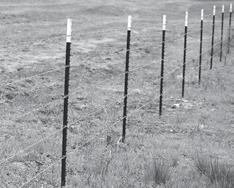
Repairing or replacing damaged livestock grazing system infrastructure,
Restoring and or replacing valuable forage resources essential for livestock needs.
Producers affected by the wildfires need to contact their local USDA Service Center as soon as possible to complete an application and early start waiver if necessary. NRCS staff are available to assess damage, develop conservation plans, and help determine which practices best support recovery efforts. For more information about EQIP or to locate your nearest USDA Service Center, visit: Nebraska NRCS EQIP.
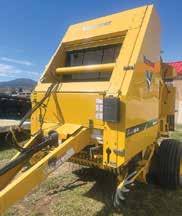
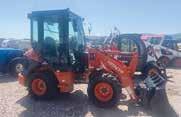
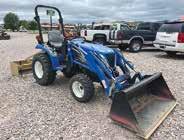
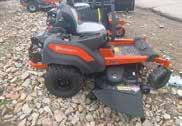
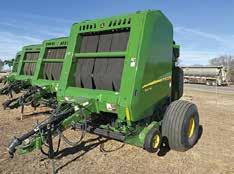
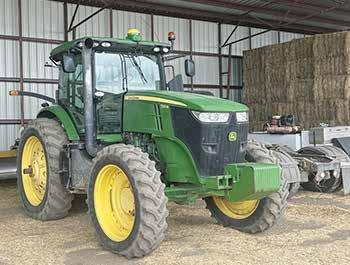
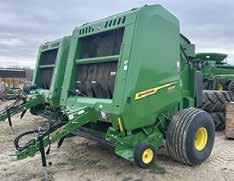
AUCTIONS
Two internship opportunities available!
The NILE and Rodeo Billings is searching for college students that are seeking experience in event production! These are individuals that can keep up with the fast-paced environment of rodeo and stock show. The NILE is excited to offer TWO separate internships, let’s talk details: Rodeo Billings, the new re-branded NILE PRCA Rodeo, enters it’s second year full speed ahead after a sellout last summer! Invest in your future this summer and seize this opportunity to gain industry insight, networking possibilities and event production experience. Interns will be required to join us in Billings, Montana from August 10-16, 2026!
Rodeo Billings Positions offered:
Competitive Events Internship – Rodeo Emphasis Media Relations Internship General Production Internship
Need college credit, no problem! We will work with you and your advisor to assist the process. So don’t procrastinate – get your application in now!
All applications for Rodeo Billings must be submitted by June 30, 2026. Interns will be announced shortly thereafter. Have questions? Give us a call at (406) 256-2499 or email shelby@thenile.org
The NILE Stock Show continues to see growth in all departments as it enters it’s 59th annual stock show. The livestock department hosts several shows and sales throughout the week with over 2,000 entries. The horse department holds one of the top Ranching Heritage & VRH Shows in the nation and the NILE will also play host to a new event, the Riggin Masters, the world’s richest bareback riding event.
NDSU sets dates for 2026 Research Extension Center Field Days
The North Dakota State University Research Extension Centers’ annual field days are set. The annual events at NDSU’s Research Extension Center sites across the state will feature speakers, tours and field demonstrations for farmers, ranchers, crop advisers, landowners, horticulturalists and local stakeholders.
“The agricultural research conducted at our NDSU Research Extension Centers provides research-based solutions that advance agricultural production systems in a variety of areas, including agronomy and crop production, livestock and rangeland management, precision agriculture and value-added activities,” says Greg Lardy, the Joe and Norma Peltier Vice President for NDSU Agriculture. “During the NDSU Field Days, our researchers showcase the work they’ve invested in developing timely, practical solutions for agriculture in North Dakota and across the region.”
The dates and locations for the field days are the following:
July 13 – Agronomy Seed Farm – 5 to 7:30 p.m. CDT
July 14 – Carrington Research Extension Center – 9 a.m. to 3 p.m. CDT
July 15 – North Central Research Extension Center – 9 a.m. to 12 p.m. CDT
July 16 – Langdon Research Extension Center – 8:15 a.m. to 12:30 p.m. CDT
August 5 – Nesson Valley Irrigation Station – 9 a.m. to 1 p.m. CDT
August 6 – Oakes Irrigation Research Site – 9 a.m. to 1 p.m. CDT
More information about field days can be found at ndsu.ag/Field-Days-26.
The sites’ events will include observing the 100th anniversary of the Ceres spring wheat variety, which was the first spring wheat bred and released at the North Dakota Agricultural Experiment Station. Ceres has had a major impact on wheat production in North Dakota over the last century, providing agricultural stability in the northern Great Plains.
“When L.R. Waldron released Ceres wheat in 1926, its yield and rust resistance made it a dominant spring wheat and established a genetic foundation that still shapes wheat breeding today,” says Richard Horsley, head of NDSU’s Department of Plant Sciences.
NDSU is an R1 research institution as defined by the Carnegie Classification of Institutions of Higher Education.
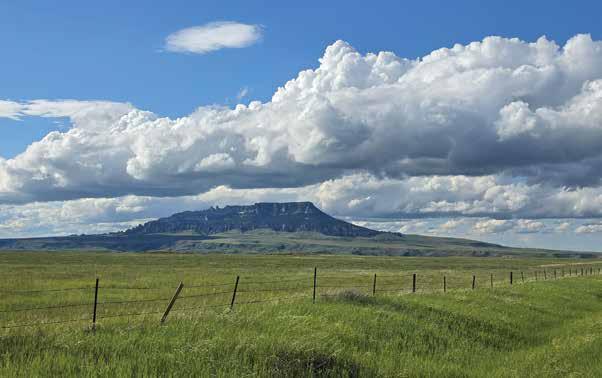
Montana received a lot of very welcomed rain in the past several weeks making for some awesome cloud photos. This one has Square Butte near Lewistown in the center. Photo by Suzy Benzing
The deadline for advertising in the August 2026 issue of the Trader's Dispatch will be July 29th.
Phone (406) 271-5533 or email: advertising @tradersdispatch.com
Book Your Fall Seed
Two internship opportunities available!
From early mornings checking in livestock exhibitors to late nights posting horse show results, there’s no doubt you’ll be tired by the end of it. But, you’ll leave with lifelong friendships, industry connections, and memories that will make the early mornings and late nights absolutely worth it!
We get it, the NILE Stock Show seems like it is an eternity away, but believe us, it will be here before we know it! Invest in your future now and plan ahead to use the internship for college credit. We will work with you and your advisor to assist the process. So don’t procrastinate – get your application in now!
For more information, visit our website. All applications must be submitted by July 24, 2026. Interns will be announced shortly thereafter.
Have questions? Give us a call at (406) 256-2499 or email
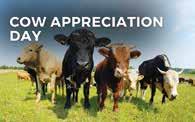
Cow Appreciation Day
This holiday is celebrated on the second Tuesday in July Today is Cow Appreciation Day. And, that’s no bull! But, this bovine holiday is certainly something to “Moo” about. Cows provide us with many things, including dairy products and meat to feed us. They also provide leather for clothing and furniture. Today we show appreciation for all of those things.
Our appreciation for cows can be expressed in many ways. Some websites suggest you go out and give a cow a big hug and/or a kiss. While it might sound like fun, you don’t have to go to extremes to enjoy this special day. It can be as simple as pausing for a moment to think about cows and all that they do for us.
Now that we’ve had our moment of silence and reflection, it’s time to celebrate. Have an ice-cold glass of milk. Add chocolate syrup, if you prefer. Then, fire up the grill, and cook some burgers or a steak. And, don’t forget to get your fill of cheese. Sorry, goat cheese is not on the menu today.
Cow Appreciation to the Extreme: In the country of India cows are sacred. They cannot eat them. However, Asian Indians can drink milk and milk byproducts like cheese and yogurt.
Thought for Today
If a cow doesn’t produce milk, is it a milk dud, or an udder failure?
DEADLINE FOR AUGUST ISSUE
Wednesday, July 29
Reducing pasture fire risk
Fort Benton Realty LLC
Fort Benton Realty LLC
MarkPyrak 406-788-9280
By Ben Beckman, Nebraska Extension Educator, Ryan Benjamin, Nebraska Extension, Educator,
Jacob Harvey, UNL Barta Brothers Ranch, Research Project Coordinator
1426 Front Street, Fort Benton, Montana 59442 www.fbrealty.com • fbrealtyl@gmail.com
1426 Front Street, Fort Benton, Montana 59422 www.fbrealty.com • markpyrak@gmail.com
We offer the BEST of Montana's BIG Sl(Y COUNTRY!
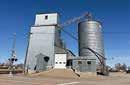
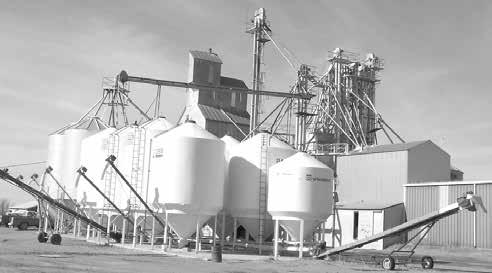
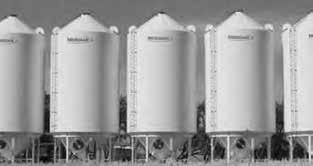
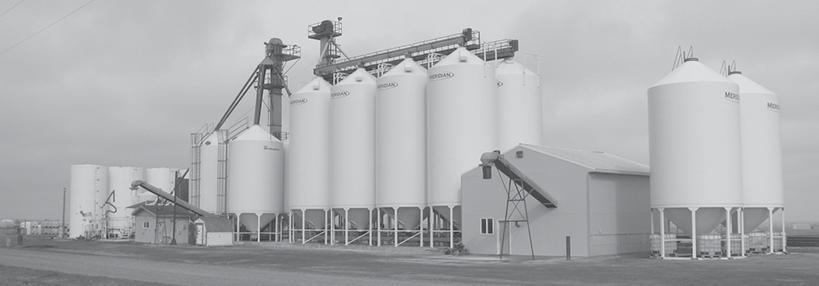
Two commercial grain elevator facilities for sale:
Located at Dutton, MT, these offer significant storage capacity with commercial grain elevator facilities for sale with direct rail access via BNSF
offer over 40 years of real estate experience!''
Specializing in Equestrian & Horse Properties, Farms & Ranches, Lots & Land, Commercial & Residential, Auctions and Real Estate Consulting. Valerie Morger 406-750-2866
Reach out to one of our real estate experts TODAY!
Railway along the west side of each site. Combined, the properties offer approximately 373,200 bushels of active storage capacity, plus an additional 70,000 bushels of unused “old house” storage. Farmers Elevator: High-capacity dual-leg system servicing both rail and truck operations. Includes (2) 53,000 bu outdoor bins, (4) 10,500 bu hopper bins, and (3) overhead bins (2 x 3,500 bu, 1 x 1,200 bu), plus 70,000 bu unused storage. Equipped with center unload sweeps, 75’ truck scale, and grain cleaner. D&S Elevator: Includes (3) 35,000 bu outdoor bins, (2) 20,000 bu bins with sweeps, (6) 3,000 bu bins, and (6) 1,500 bu bins. Features a functional grain cleaner and indoor scale. Both facilities are well-suited for commercial grain hauling, aggregation, or feed operations, with established rail and truck infrastructure. Offered as-is. REASONABLE PRICED AT $360,000.
Mark Pyrak: 406-788-9280 • Valerie Morger: 406-750-2866
Shane Ophus: 406-788-6662 • Roger Axtman: 406-899-4098
Dennis Franz: 406-788-1163 • Katie Schuler-Richter: 406-788-8370
Contact Agent Katie Shuler-Richter at Fort Benton Realty, 406-788-8370
Mark Pyrak 406-788-9280
YOUR MONTANA FARM & RANCH REAL ESTATE BROKERS OVER 45 YEARS EXPERIENCE
Specialing in Listing and Sales, Land Auctions and Real Estate Consulting
Nebraska producers are no strangers to dry weather, but the current conditions deserve extra caution. Many pastures went into winter short on moisture, carried dry standing forage through the dormant season, and entered spring with more cured fuel than we would like. Drought impacts have been widespread across the state, making timely pasture and forage decisions important as spring growth begins. Recent climate updates have also pointed to record warmth, extremely dry conditions, and low snowpack contributing to drought concerns for the 2026 growing season.
For livestock producers, the fire risk is a real concern. Pastures, road ditches, fence lines, hay feeding areas, and ungrazed corners can all hold enough fine fuel to carry a fire quickly once ignition occurs. The goal, as dry weather remains, is simple: reduce the chance of starting a fire while still getting necessary pasture work done.
Limit Unnecessary Driving in Pastures
One of the most practical steps is to simply reduce traffic across dry pasture. Every trip through a pasture creates some ignition risk when vegetation is dry. Producers should be careful when driving ATVs, pickups, tractors, and other vehicles in dead, tall standing grass because sparks or hot equipment can ignite dry vegetation.
When pasture travel is necessary, use established lanes, two-tracks, short-grazed areas, bare ground, or the lowest-fuel route available. Avoid driving through tall, cured vegetation just to save time. If cattle need checked, consider whether some locations can be viewed from the road, from a hilltop, or by walking short distances instead of driving across the whole pasture.
ATV, UTV, or Pickup?
Shippen Farm
July 11, 2026 - July 23, 2026
Preview at 763 N 3500, Menan, Idaho. Mile north of Valley Wide Services, Tuesday, July 21 and Wednesday, July 22 - 10 am to 5 pm
Online bidding opens Saturday July 11th, 2026 - 10am Closes Thursday July 23rd, 2026 - 6 pm
Items purchased must be removed WITHIN 1 WEEK FOLLOWING THE SALE. GO TO www.bluemuleauctions.com TO BID!!!!
Don’t miss this outstanding lineup of well-maintained farm equipment featuring equipment from many of the industry’s most trusted manufacturers.
Whether you’re expanding your operation, replacing machinery, or looking for quality additions to your fleet, this auction offers an excellent selection of field-ready equipment.
Whether you’re a farmer, rancher, custom operator, or equipment dealer, this is an excellent opportunity to purchase quality agricultural equipment in one auction.
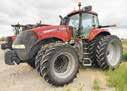
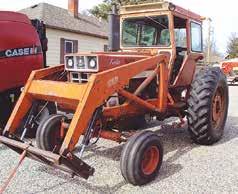
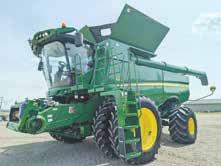
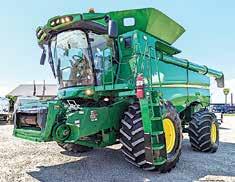
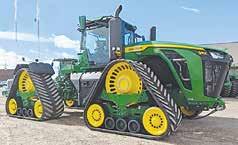
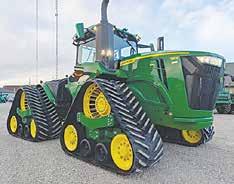
2013 Case IH CIH 315 Tractor
2005 Case MX230 Tractor
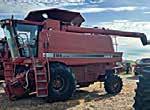
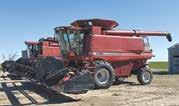
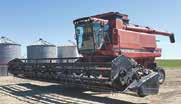
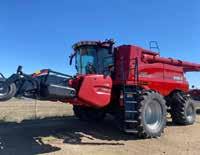
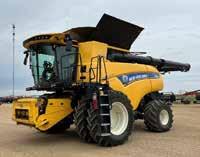
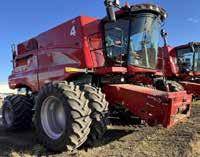
2004 New Holland CR940 Combine
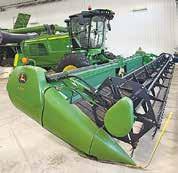
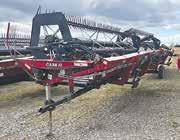
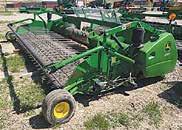
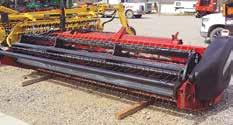
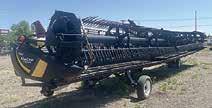
New Holland Honey Bee 94C Header
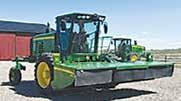
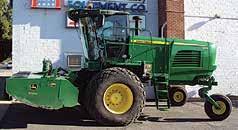
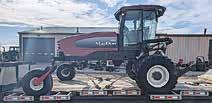
2019 New Holland 220 Swather
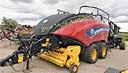
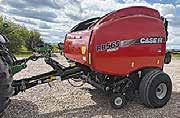
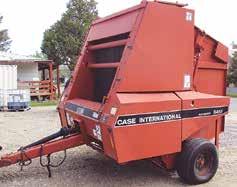
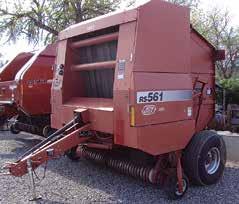
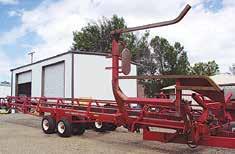
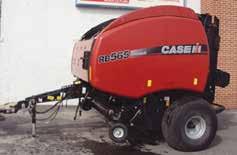
New Holland 340 Big Baler
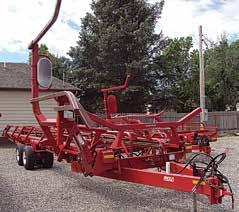
2019 Rhiber VS1206 Accumulator
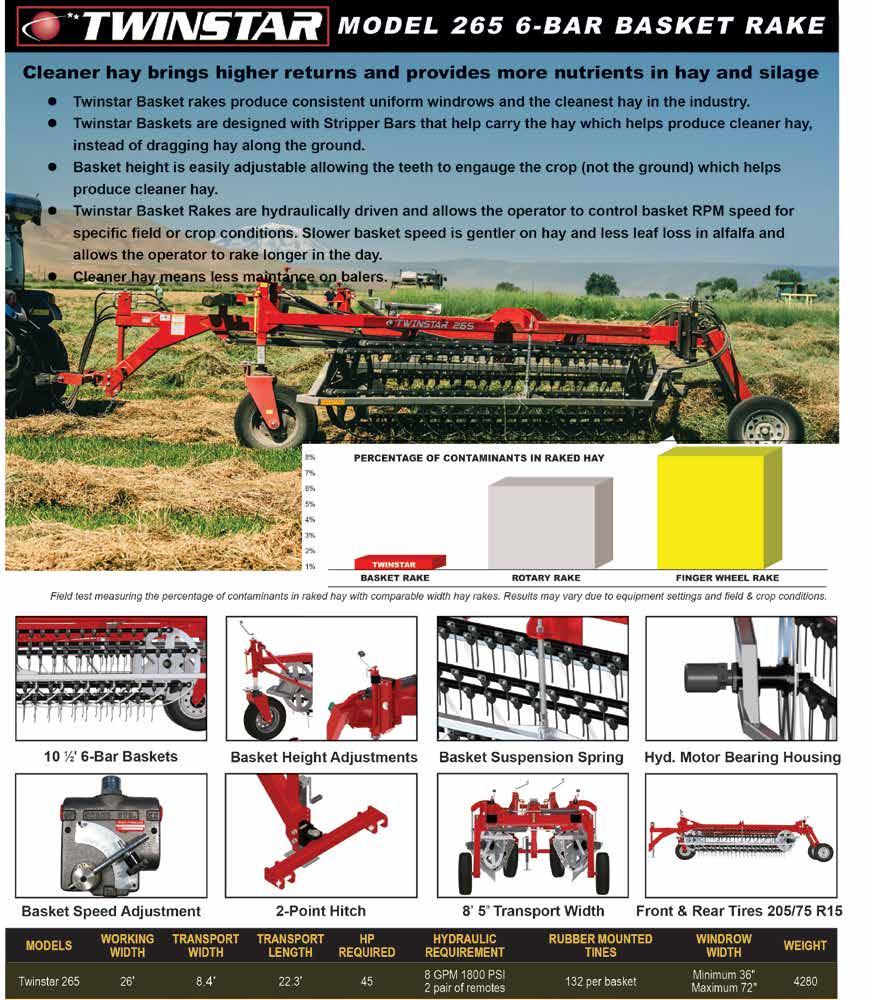
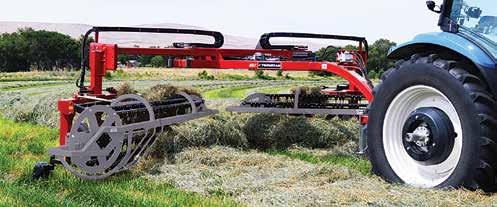
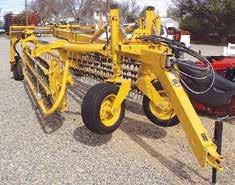
Twin Star 2030G-7 Hay Rake
Bauman 5910 Hay Fluffer
Sitrex RP/3 Three-Wheel Hay Rake
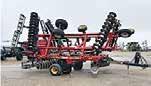
2014 Case Ecolo-Tiger 875 Disk Ripper
Lemken Rubin 12 Disc Harrow
Great Plains 2S2600 Grain Drill
John Deere Grain Drill
McFarlane Harrow
New Holland 195 Manure Spreader
Miskin Carry-All Scraper
Rhino Scraper
John Deere E0900 Shank Ripper
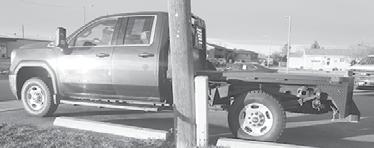
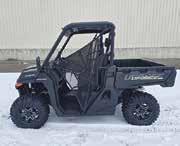
A common question is whether an ATV or UTV is safer than a pickup. In many situations, an ATV or UTV may reduce some risk because it is lighter, narrower, and disturbs less vegetation. However, it is not fire-proof. Exhaust systems, engines, brakes, electrical issues, and collected plant material can still create ignition risk.
A pickup can be especially risky in tall, dry grass because catalytic converters and exhaust systems may sit low enough to contact or closely heat vegetation. For all vehicles though, avoid parking or driving on tall, dry grass because any hot engine or exhaust can ignite vegetation.
A reasonable rule of thumb is use the smallest practical vehicle, stay on the shortest or lowest-fuel route, and avoid tall, cured grass with any motorized equipment.
Clean Equipment Before and During Use
Dry plant material builds up fast. Skid plates, UTV undercarriages, mower decks, tractor frames, radiator screens, engine compartments, and areas around exhausts can all collect fine fuels. As the season progresses and cool-season grasses such as needle-and-thread head out, their seed can be particularly problematic, plugging radiator screens and lodging around hot surfaces.
Before heading into a pasture, take a few minutes to clean debris off equipment. Clean, well-maintained equipment is less likely to cause a fire.
Park Like Fire Could Start Under You
Where equipment is parked matters. Avoid parking pickups, ATVs, UTVs, tractors, or hay equipment in dry vegetation. Good parking spots include gravel roads, field approaches, bare soil, recently grazed areas, or other low-fuel sites.
Be especially careful after climbing hills, pulling trailers, or working equipment hard, because exhaust and engine components may be hotter than normal.
Carry Fire Tools Every Time
If a small ignition starts, the first few seconds matter. Producers should not put themselves in danger, and a fast-moving grass fire can outrun equipment and people quickly. But having basic tools available may help stop a very small ignition before it becomes a pasture-scale fire.
A practical pasture fire kit might include a charged fire extinguisher (refillable water options work well here), shovel or stiff rake, water sprayer or water tank when practical, cell phone or radio, leather gloves, and a basic first aid kit. For pasture work, carry tools that match the risk and the job. A pickup checking pairs on short grass may not need the same setup as a tractor mowing near cured road ditches, but every vehicle entering dry pasture should have some way to respond to a small ignition.
If a fire starts, call 911 early. When a fire is discovered, the fire department should be called at once. Do not wait until a CONTINUED ON PAGE A6
Shane Ophus 406-788-6662
Dakota Gardener: Mystery
solved — Intumescence of tomatoes
By Carrie Knutson, Horticulture agent, NDSU Extension – Grand Forks County
If you live within a few blocks of my house, you may have heard me screaming in frustration recently. My tomato seedlings keep threatening to die.
I followed all the recommended steps to grow healthy seedlings. I used fresh potting soil, cleaned and disinfected my seedling trays, and even purchased new ones specifically for my tomatoes.
Much to my dismay, the bottom leaves on my tomato plants are falling off again! The leaves are turning yellow, and some of them are deformed. I don’t remember this specific symptom from last year, but it gave me a big clue toward solving this mystery.
I think the culprit is the intumescence, also known as oedema or edema, of my tomatoes. Regardless, this is an abiotic plant disorder. An abiotic plant disorder is different than a plant disease. It is not caused by a living thing, such as an insect, fungus or bacteria, but by environmental or cultural factors such as weather, nutrient deficiencies, soil conditions or excess water.
Let’s take a quick look at the plant process involved in this disorder: transpiration. Transpiration is the loss of water through pores (stomata) in the leaves. The process moves water and nutrients up the plant for use in photosynthesis.
Intumescence occurs when plants take up water faster than it can be transpired through the leaves. This water buildup causes swollen, blisterlike areas on the leaves. If the injury continues, leaves will turn yellow and drop. Sound familiar?
The disorder usually occurs when soil moisture is high, combined with cool nighttime temperatures and high humidity. It is a common disorder in greenhouse-grown tomatoes, and varieties differ in their susceptibility. It is common in ivy geraniums, but can occur in begonia, ornamental sweet potato vine, broccoli, cabbage and cauliflower.
Changing the environment is the best way to manage the disorder. Management strategies include avoiding overwatering, increasing air movement and ventilation, spacing plants, and improving lighting. I transplanted my tomatoes to improve spacing, added a small fan for air movement and invested in a quality set of grow lights.
I have done as much as I can to manage the disorder. Unfortunately, I think the tomato plants will continue to struggle until it is nice enough to put them outside in my makeshift greenhouses. I think I will search for another tomato variety to grow next year. Happy gardening!
Tool Box / Bearing Sales
Reducing pasture fire risk
small fire is out of control before calling.
Watch Red Flag Days and Wind
Some days are not worth the risk. Red Flag Warnings are issued when weather conditions support ignition and rapid wildfire spread.
On Red Flag days or during very windy, low-humidity conditions, postpone non-essential pasture driving, mowing, spraying, brush cutting, and other spark-producing work. If the job must be done, try to do it early in the day when humidity is higher and winds are lower, and check the area afterward.
Think Beyond the Vehicle
Vehicle and equipment use is a major concern, but it is not the only one. Some fires start before the vehicle ever gets into the pasture — along the road, near a gate, at a hay yard, or while doing maintenance work around dry vegetation.
Other fire prevention steps for producers include:
Avoid mowing road ditches or pasture edges during hot, dry, windy afternoons.
Do not weld, grind, or cut metal near dry grass without a cleared work area and water nearby.
Secure trailer safety chains so they do not drag. Chains bouncing along pavement or gravel can throw sparks.
Keep cigarette butts, matches, and other ignition sources out of pastures.
Maintain short vegetation or bare-ground breaks around hay yards, fuel tanks, buildings, corrals, and other high-value areas.
Keep stock tanks, wells, ponds, and other water points accessible where practical.
Planning Ahead
Not every fire prevention practice has to happen the day the wind starts blowing. Some of the best risk reduction comes from planning ahead, especially around the places where equipment, hay, livestock, and people come together. Around hay yards, fuel tanks, corrals, buildings, and other high-value areas, maintain short vegetation or bare-ground breaks where practical. Keep access routes open for local fire departments. Know where water sources are located and whether a fire truck can actually reach them. Where weather and water availability allow, keeping stock tanks full may provide another water source if a fire occurs. This is also a good time to look at fuel buildup around farmstead areas, old hay, junk piles, and unused equipment.
For pastures with heavy eastern redcedar or woody fuel
buildup, long-term fuel management may also need to be part of the conversation. That may include grazing management, mechanical removal, prescribed fire planning, or working with local partners on a broader wildfire preparedness plan. That is bigger than a quick spring checklist, but dry years are a good reminder to identify where those risks exist.
Closing Thoughts
With dry weather, fire prevention needs to be part of everyday pasture management. Checking pairs, fixing fence, hauling mineral, spraying weeds, and moving equipment all still have to happen. The key is to slow down enough to ask: Do I need to drive there? What am I driving through? Where will I park? What is the weather doing? And what do I have with me if a spark starts?
A few minutes spent cleaning equipment, choosing a safer route, postponing work on a Red Flag day, and carrying a fire extinguisher and shovel may prevent a small ignition from becoming a major loss of grass, fence, livestock, equipment, and neighbor goodwill.
Scott Schmiedeke (406) 240-2572
Victor, MT
Record number of Montana State students earn Gilman scholarships to study abroad
By Frankie Beer, MSU News Service
Travel opportunities were few and far between for Abigail Pilskalns, who grew up in Bigfork as one of 13 children and dreamed of becoming a physician for Spanish-speaking communities.
When it came time for college at 17, she directed her focus toward supporting herself financially to pursue a degree in cell biology and neuroscience and undergraduate research at Montana State University, still with the goal of reducing barriers to healthcare through language. Studying abroad in college, however, felt unachievable, Pilskalns said.
Center, whose staff used knowledge of past MSU recipients’ applications — of which there are 40 since 2012 — to help this year’s Gilman Scholars work on their essay questions. Students who submitted their final essays for feedback were eligible to receive MSU’s Global Ambassador Scholarship, totaling $3,000.
Henry Kallis (605) 639-1904
Spearfish, SD
See us on the web: www.tte-inc.com
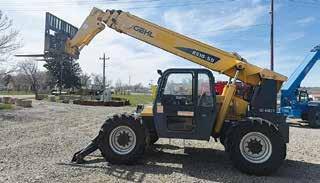
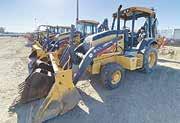
2015 Gehl RS642, 702 hours, enclosed cab with heat, frame tilt, 3 steering modes, auxiliary hydraulics, nice foam filled tires, 66” carriage, 72” forks, has been through the shop, recent service, extremely clean, low hour telehandler. Located in Spearfish, SD............$56,900
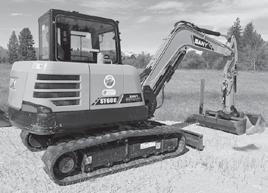
2022 Sany SY60C, 1062 hours enclosed cab with heat and A/C, hydraulic thumb, 1 2 2manual quick coupler, 18”, 24” and 42” buckets, 79” blade, auxiliary hydraulics, pattern changer, 57hp Yanmar engine, 14K pound operating weight. Machine is in good overall condition and job site ready. Located in Victor, MT. $52,900
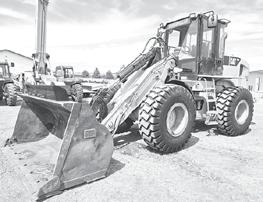
2011 Cat 930H wheel loader, enclosed cab with heat and AC, 8097+- hours, cloth seat, differential lock, FnR switch on joystick, auxiliary hydraulics, hydraulic coupler, new tires, 3 CY bucket with BOE, has been through the shop, just serviced, Pre-emissions, very nice condition, we are a GrabTec dealer and can install a grapple for additional price. Located in Spearfish, SD. $84,000
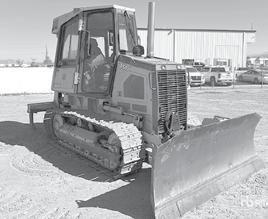
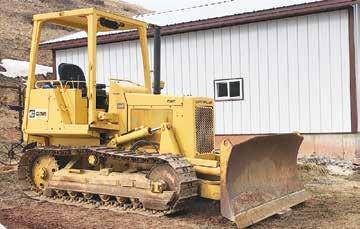
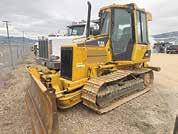
2011 Deere 450J LT 4005 hours, enclosed cab with heat and A/C, hydrostatic drive, 6-way blade, rippers, 17,000-pound operating weight, 70hp, pre-emission machine, undercarriage in good condition, nice little trimming dozer, jobsite ready. Located in Spearfish, SD $69,900
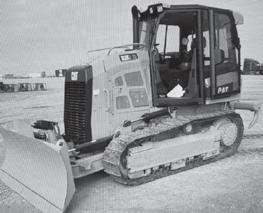
2019 Cat D3K XL 6-way blade 104” wide, enclosed cab with heat and A/C, 3-shank ripper, 80 hp, hydrostatic drive, 18,500 lb. operating weight, cloth air ride seat. Overall very good condition and job site ready. Located in Spearfish, SD. $92,900
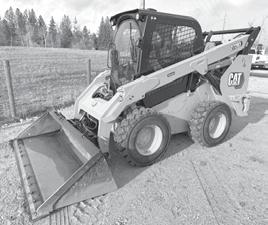
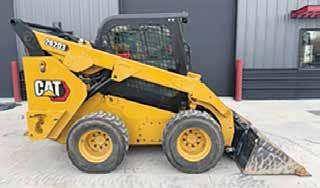
2022 Cat 272D3 452 hours, enclosed cab with heat and A/C, 98 horsepower, 9500 pound operating weight, 3690 pound operating capacity, 6900 pound tipping load capacity, 23 gpm auxiliary hydraulic flow, auxiliary electrics, 86” bucket with BOE, hydraulic quick coupler, extra counterweights, 2-speed travel, Caterpillar XD tires, creep speed, ride control, heated air ride cloth seat. This machine is in like new condition with a fresh service and job site ready. Located in Victor, MT.................. $61,900
That is, until she received a Benjamin A. Gilman International Scholarship this year. Pilskalns is one of 2,100 students across the nation — and one of six Bobcats — to become a Gilman Scholar this spring, marking the largest number of recipients from MSU in a single application cycle. They were selected from a nationwide applicant pool of more than 12,000 students, an all-time high in the Gilman program’s 25-year history, and will receive $2,000 to $6,000 for their international experiences, said Stacey Neve, study abroad director in MSU’s Office of International Programs.
“Being in a foreign country and being pretty far removed from everything that is familiar teaches you so much about what you are capable of and what you can adapt to,” Neve said. “I see students when they’re getting ready to study abroad and when they come back, and often they are totally different people. They’ve grown so much.”
Pilskalns will use her scholarship to take classes in Spain or Chile in spring 2027, following a semester abroad in Colombia. She earned additional funding from the Gilman program, totaling $6,000, for taking courses abroad in science, technology, engineering or math. She hopes to learn different countries’ perspectives on medicine and community.
“That kind of lived experience has always shaped me more than anything I could learn in a classroom alone,” said Pilskalns, who plans to attend medical school after graduating from MSU in 2028. “Going abroad feels like honoring everything my parents sacrificed to give me that encouragement.”
Also studying abroad in the fall is Coral Mercer, a senior from Eagle River, Alaska, who is studying conservation biology and ecology and soil science. She will visit Ås, Norway, during the fall semester and work with professors from the Norwegian University of Life Sciences on studies relating to microbial ecology or biogeochemical cycling, how nutrients move through the environment and living things to support Earth’s natural processes. Mercer was the only MSU student to receive the Gilman program’s $5,000 John S. McCain International Scholarship for Military Families, awarded to dependents of military members — her father served in the Air Force.
Three Gilman Scholars returned June 6 from a faculty-led trip to several of Kenya’s game reserves, Lake Nakuru National Park and Mount Kenya. The four students and their classmates observed how Kenyan organizations manage and protect wildlife, as well as the change in species diversity between elevational gradients on Mount Kenya, said Lydia Shepherd, a senior studying environmental sciences and soil science. Shepherd is originally from Perkasie, Pennsylvania, and moved to Missoula in 2022.
She said she was grateful for the Office of International Programs and the Writing
Kylie Mills spent hours refining her essays with the Writing Center in hopes of exploring human-wildlife interaction in Kenya. Mills, a junior from Woodland, California, is pursuing degrees in directed interdisciplinary studies and fish and wildlife ecology and management, as well as a degree from the Honors College.
A junior ranger program at age 9 first sparked her desire to protect vulnerable animal species and become a research ecologist for the U.S. National Park Service. At MSU, she researches the interaction between humans and cinnamon-colored black bears in the Greater Yellowstone Ecosystem funded by the Undergraduate Scholars Program.
“MSU has provided me with the opportunity to turn my personal interests into my future career by funding and supporting my professional and personal development,” said Mills, who is also an MSU Presidential Scholar. “I cannot express how incredibly thankful I am.”
MSU’s McNair Scholars Program and her Gilman Scholarship meant she didn’t have to choose between taking out loans and “missing out on the opportunity of a lifetime to study ecology in one of the most biodiverse countries in the world,” she said. Mills and Shepherd were joined on the trip by Isaac Jensen, an environmental sciences junior from Cowiche, Washington. Dylan Clark, a cell biology and neuroscience senior from Bozeman, also traveled to Kenya this summer for an internship with International Medical Aid. She is shadowing and volunteering with professionals in Mombasa’s teaching hospital throughout the month of June.
No matter the students’ area of study or financial status, study abroad opportunities are available for all Bobcats, Neve said.
“Whatever a student’s concern is, whether they think it’s going to be too hard to do academically or too expensive, the Office of International Programs often has information that surprises them,” Neve said.
Contact: Stacey Neve, study abroad director for Office of International Programs, at 406-994-4122 or stacey.neve@montana. edu
Progeria
This is an especially depressing disease that causes small children to physically age far more rapidly than normal. A young child afflicted with progeria can look 80 to 90 years old and can already show symptoms regularly associated with old age, including wrinkled skin, hair loss, arthritis, loss of vision, and debilitated organ functions. Progeria is caused by a mutation to a specific section of a specific gene, the full function of which scientists have yet to determine, although part of its function is obviously related to aging. (For that reason, the gene has been the subject of intense study by geneticists all over the world since its discovery in 2003.) Progeria is very rare, occurring in only about one million births. There is no known cure, and victims seldom live past their early teens.
Where Farming Meets Excellence
• Excellent yield potential
• Very good protein, drought tolerance
RESOLUTEST ALFALFA
•
•
Bruce Seed Farm, Inc.
Townsend | 406-266-3103
Big Sky Wholesale Seeds, Inc.
Shelby | 406-434-5011
Cahill Seeds Scobey | 406-783-5510
Circle S Seeds of Montana Three Forks | 406-285-3269
BATTLE AX
MATURITY
Dakota Gardener: Let’s start a berry patch!
By Tom Kalb, Horticulturist, NDSU Extension
Nothing tastes better than fresh, ripe berries from the garden.
When I was a child, my family grew berries for the farmers market. While harvesting, I ate about half of the berries. My motto was “one for me, one for the market.” They were irresistible.
Homegrown berries are absolutely delicious, and now is the best time to start a berry patch.
First Creek Seeds, Inc. Saco | 406-527-3334
Golden Harvest Seeds Big Sandy | 406-378-2112
Golden Triangle Seed Rudyard | 406-355-4333
Heartland Seed Moccasin | 406-423-5600
Medium Early
Pick a sunny site that gets at least eight hours of direct sunlight. Stay out of low spots and frost pockets. A sheltered area is preferred, although that is challenging for us in the Dakotas.
We need to kill any existing turf or weeds at the site. Glyphosate is a useful herbicide because it kills weeds, including their roots. It is very effective and has a very short life in the environment. I give the chemical 10-14 days to kill the turf and weeds entirely. Then our patch is ready to till and plant.
If you prefer not to use chemical herbicides, you can kill the turf and weeds by covering the plot with a black tarp. This will take about four to six weeks.
Hodgskiss Seeds Choteau | 406-466-5553
Treasure State Seeds Fairfield | 406-467-2557
Unauthorized Propagation Prohibited - to Be Sold by Variety name Only As a Class of Certified Seed - U.S. Protected Variety1994 PVPA
Westland Seeds Ronan | 406-676-4100
Wildhorse Seeds Havre | 406-265-5443
Battle AX is a Certified Seed Only variety. By purchasing seed, grower agrees to use seed of the variety only for the production of a commercial grain or forage crop. Using certified seed every season ensures the best stewardship, end use functionality, and opportunity to maximize yield potential of the variety. Resale of this seed, or supply of saved seed derived from this seed, to anyone including purchaser for planting is prohibited.
In addition to purchasing Certified Seed every year, farmers are required to sign, and adhere to, the CoAXium® Wheat Production System Grower Stewardship Agreement outlining best management practices on product rates, crop rotation, mechanical and cultural practices and CoAXium® and Aggressor® use guidelines in different cropping systems.
After the soil is prepared, it is time to plant our berry plants. The most popular backyard berry is strawberry. There are three types: June-bearing, everbearing and day-neutral.
I prefer the June-bearing types. A new planting will create a big crop every June, beginning in June 2027.
Select more than one June-bearing variety to maximize the harvest throughout the month. AC Wendy is the top pick for early harvests. Honeyoye is a vigorous choice for the midseason. Jewel will produce huge berries at the end of the month. All these varieties are hardy and productive. A well-managed June-bearing planting will produce well for about three or four years.
Released in 2018, Battle AX is a new HRW variety that offers the industry leading 2-gene CoAXium Wheat Production System technology within an agronomic package that helps improve yield potential, test weight, protein, and milling characteristics that wheat producers need, and end users want. Given its medium early maturity, optimum planting dates in the northern and central high plains will consistently fall between mid-September through mid-October; consider increased seeding rates as time progresses. Battle AX has a Medium long Coleoptile to improve planting into moisture, and carries good resistance to the wheat curl mite to help against the Wheat Streak Mosaic Virus. Battle AX has demonstrated good straw strength under dryland conditions (11-20” of annual precipitation), performing well under irrigated conditions as well. Please follow all label instructions of Aggressor Herbicides for use and restrictions, the label is the law.
Everbearing types will give you a decent crop in June and a small crop in fall. Ozark Beauty and Fort Laramie are popular choices.
Day-neutral types will give you a small but steady stream of berries all summer long. Albion and Seascape are best. Day-neutral types are often grown in containers. Everbearing and day-neutral types can be harvested the year of planting, but the plants lose vigor after only one or two years.
Raspberries grow well in the Dakotas. Summer-bearing types are most popular. Notable varieties include Latham (great flavor), Boyne (super hardy), Killarney (easy to grow) and Nova (nearly thornless).
Purchase strawberry and raspberry plants as bare-root plants. Strawberry plants often come in bundles of 25 plants. Plant them about 12-18 inches apart. Raspberry plants often come in bundles of five to 10 plants. These are planted about 24 inches apart.
Bare-root plants are sold online or may be found in refrigerated coolers at major garden centers. Potted plants are too expensive in my opinion.
Now we need to add a blue fruit to the patch. Forget about blueberries because they struggle in our dry climate and prairie soils. Grow haskaps (aka honeyberries and yezberries) instead. Haskaps are hardy and thrive in our soils.
Have you ever eaten a haskap? Probably not. That’s because they are rarely grown on farms. Haskap fruits tend to drop soon after ripening, making them difficult to harvest by machine.
That won’t be a problem in your backyard, because you will be snacking on the berries as soon as they ripen. Haskap fruits are juicy and flavorful with essences of blackberry, cherry and grape.
The Canadian varieties Indigo Gem, Aurora and Honey Bee have done well in our trials. Japanese varieties such as Keiko, Kawai, Maxie and Solo look promising because they are easy to harvest.
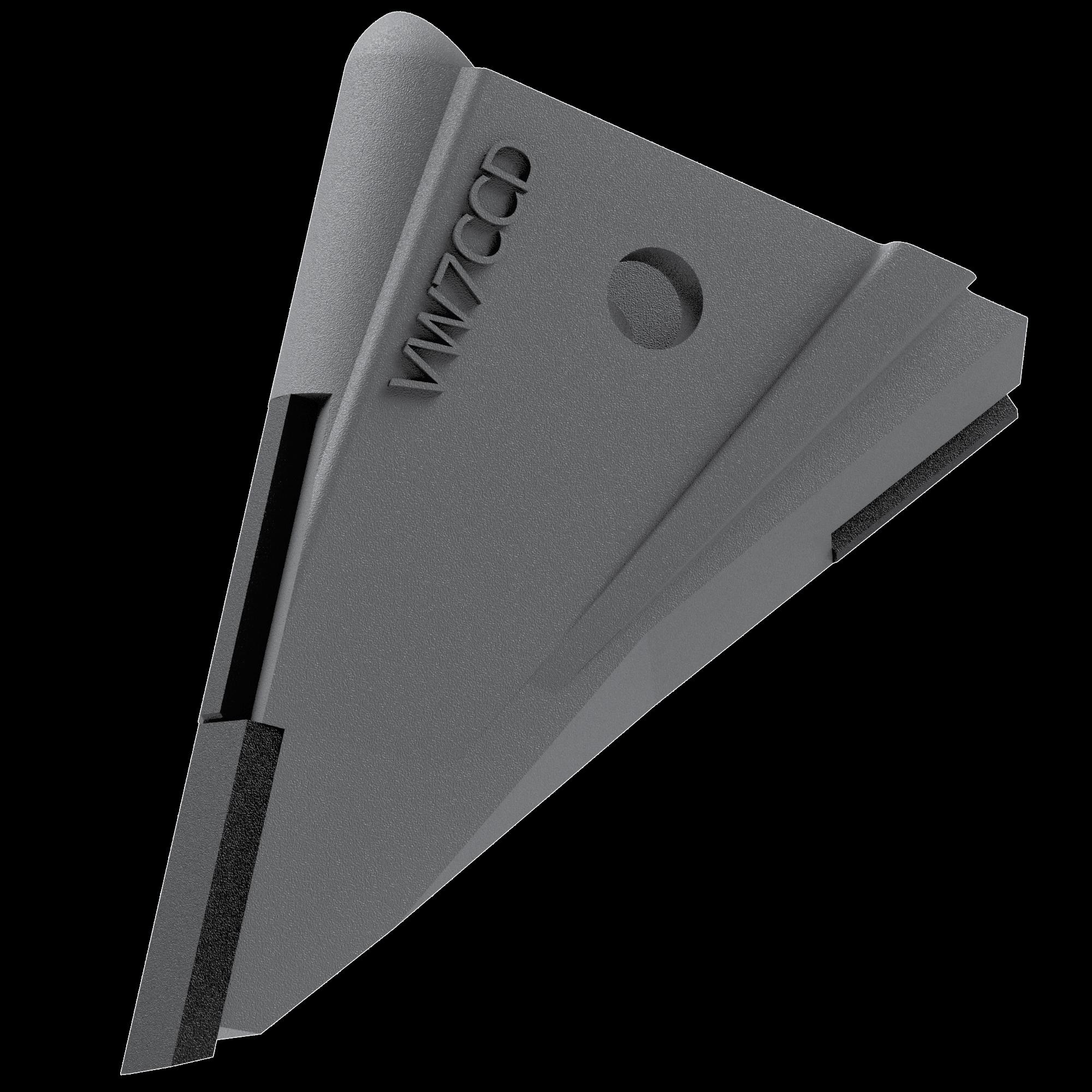
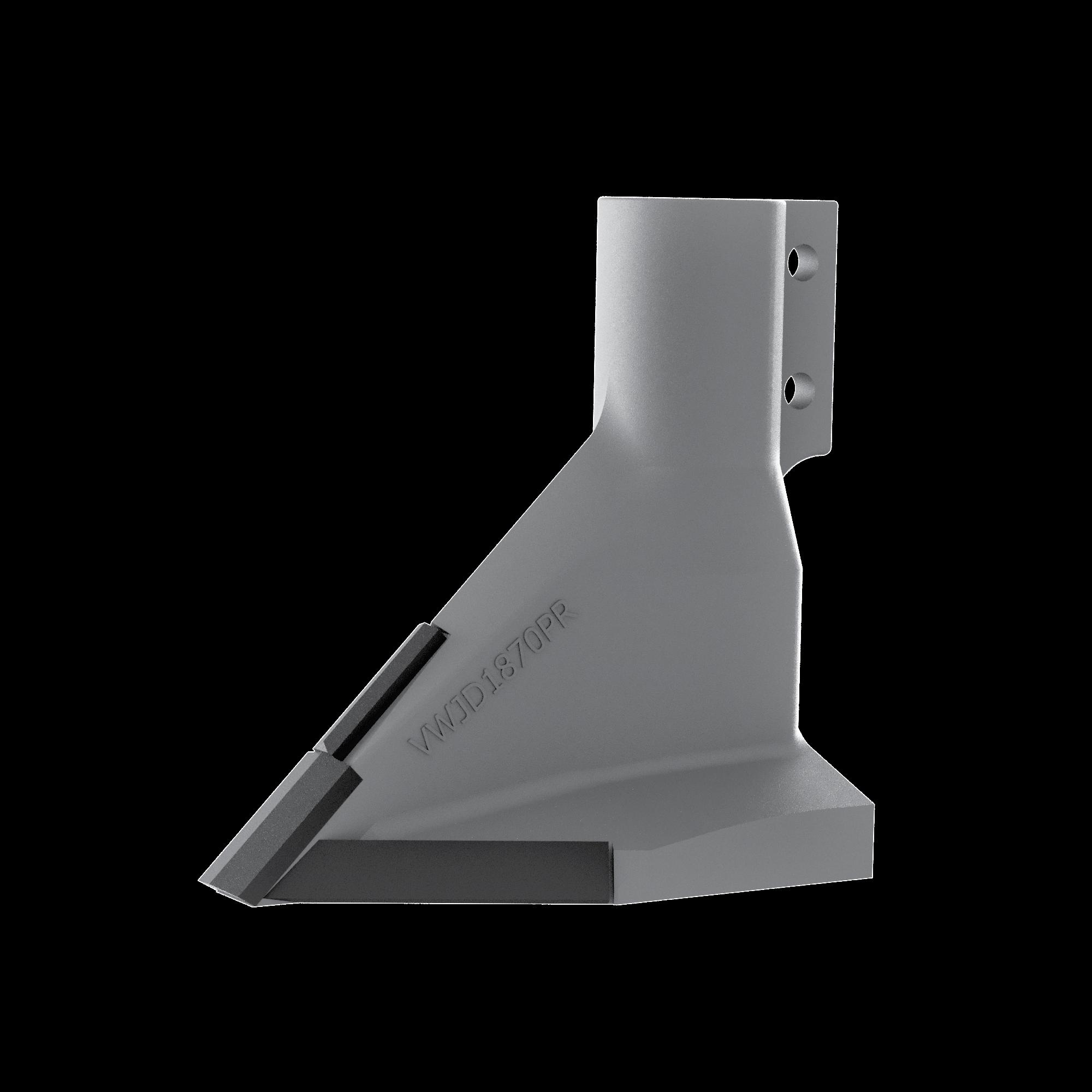
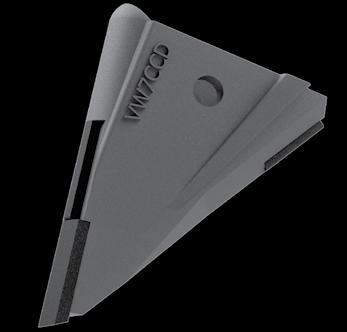
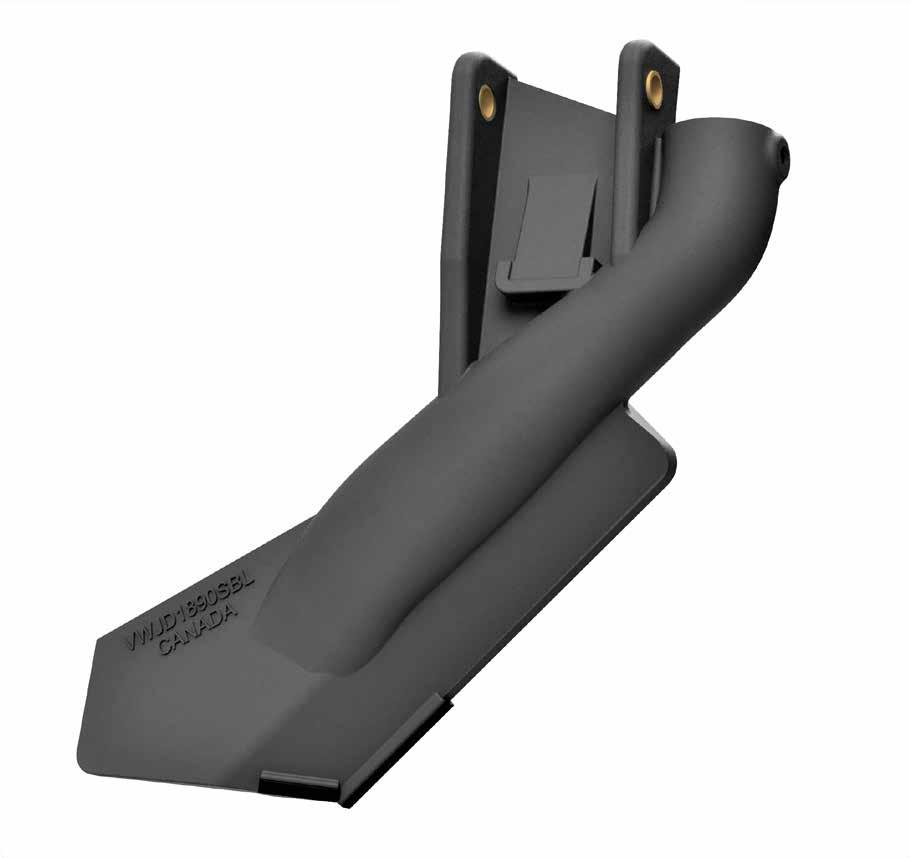
VW Mfg is saddened by the recent passing of our colleague, friend and fellow farmer, Loren Hawks. Customers will remember Loren for being kind, courteous, and knowledgeable in his business dealings with them. Loren always went the
VW Mfg. will continue on with Loren’s son Bradee Hawks.
You should plant two different haskap varieties for production. The varieties must bloom at the same time. The labels on haskap plants will indicate compatible varieties. Haskaps are typically sold as small, potted plants.For more information on growing berries in your backyard, start with the website of the Northern Hardy Fruit Evaluation Project of North Dakota State University. Other good sources of information include the University of Minnesota, the University of Wisconsin, Nourse Farms, Jung Seed and HoneyberryUSA. Growing berries in the backyard will be a joy for you and your entire family. Let’s get started.
A designated driver
A friend is not bound by the words
To have and to hold
But their smile has a special meaning
When you come in out of the cold
They didn’t share the words
Till death do us part
It’s just a bond that always Comes straight from the heart
It didn’t have anything to do with Do you take so and so It started with someone
Who just likes to go where you go
Friends don’t notice how you look
And probably don’t care about your age
But they are always there when Through life, it’s time to start a new page
They’re there to tell anything
Or just the happenings of the day
Maybe it’s a deep, dark secret
That you know, with only them, it will stay
They’re always around when Nothing seems to be going right
They make you feel like
Seeing you, to them, was a welcome sight
With them, you can talk for what seems like hours Or way into the night
And they know who you’re talking about When you say, “I wish I may, I wish I might.”
Tomorrow one friend, won’t have a headache Or won’t wonder how he was a survivor
Evaluate efficacy of alfalfa weevil control post-treatment
By UWEAGNEWS
Observations in the Big Horn Basin and Sheridan County indicate that there is high alfalfa weevil pressure this year, the University of Wyoming Extension reports.
With alfalfa weevil control in full swing across the state, UW Extension encourages producers to make time for post-treatment scouting. Many alfalfa producers spend considerable time scouting fields before making a management decision for alfalfa weevil. However, one of the most overlooked steps in integrated pest management (IPM) is evaluating the outcome after treatment has occurred.
IPM emphasizes the use of multiple tactics to manage pests while minimizing environmental impact and preserving beneficial organisms. Evaluation is the final step in the IPM process and helps determine whether a management action achieved the desired outcome.
“Whether you apply an insecticide application or just harvest, this is not the end of your alfalfa weevil management,” says Dan VanderPloeg, UW Extension educator in Washakie County. “Valuable information comes from what producers observe after a management action has been completed.”
By making post-treatment scouting a routine practice, producers can improve the effectiveness of their IPM, protect the second cutting from alfalfa weevil and monitor for other damaging pests.
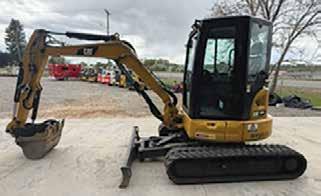
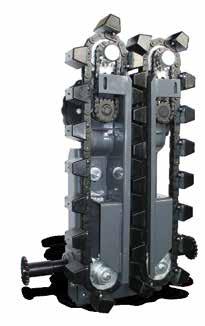
EXCAVATORS
Whether a producer applied an insecticide or harvested the first cutting earlier to manage alfalfa weevil populations, returning to the field (after the re-entry period for insecticide applications) to assess the results can provide valuable information for future decisions.
Successful control should result in reduced numbers of alfalfa weevil larvae and limited feeding injury to the regrowth regardless of the management approach used on the first cutting of alfalfa.
Even when alfalfa weevil control has been successful, other pests such as pea aphids and spotted alfalfa aphids can rapidly become a problem on tender regrowth, reducing both hay yield and forage quality of the second cutting if populations are allowed to build unchecked.
Poor control of the weevils does not always mean insecticide resistance. Factors such as equipment calibration, application timing, spray coverage, weather conditions and insecticide selection can all influence treatment effectiveness. However, insecticide resistance has been documented in localized alfalfa weevil populations in parts of the Intermountain West, including Wyoming.
If post-treatment scouting reveals that large numbers of alfalfa weevil larvae survived an application, producers should first evaluate whether treatment conditions and application practices were appropriate.
If the insecticide was applied at the labeled rate under favorable conditions and excessive numbers of weevils remain, insecticide resistance may be contributing to the control failure.
Producers who suspect resistance should document their observations and consult local UW Extension personnel or their crop advisers. Contact information for county extension offices can be found at https://bit.ly/uwe-counties.
Additional information on insecticide resistance management strategies can be found in “Management of Insecticide Resistance in Alfalfa Weevil for the Intermountain West: Montana, Utah, and Wyoming,” an extension bulletin available at https://bit.ly/alfalfa-weevil-resistance.
Atlanta Dogs
In 1965 the NFL awarded Atlanta its first pro sports franchise. But the new team had competition in the popular football programs at Georgia Tech and the University of Georgia. To lure fans from both groups, the owners considered combining Tech’s Yellow Jackets with UGS’s Bulldogs, and naming the team the Yellow Dogs. Bonus: “Yellow Dog” was also a term for anti-Union Sothern Democrats after the Civil War. The owners ultimately decided to have a fan vote, and Falcons won out.
Alfalfa weevil. Photo credit: Joseph Berger, Bugwood.org
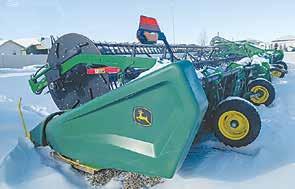
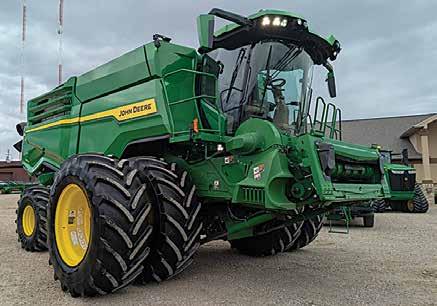
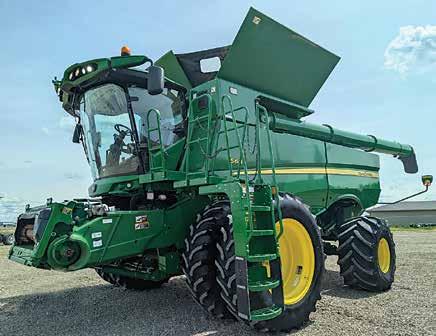
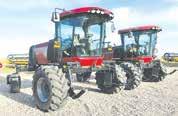
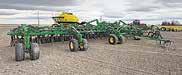
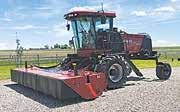
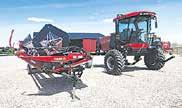
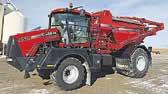
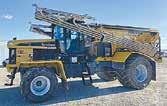
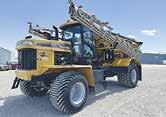
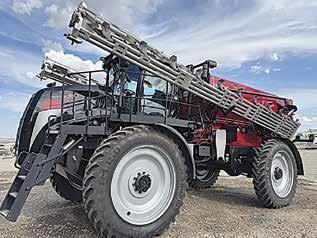
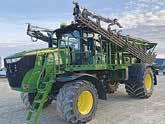
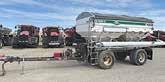
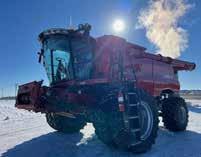
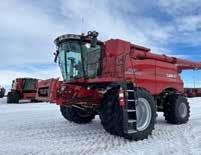
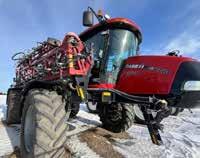
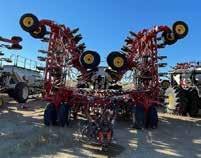
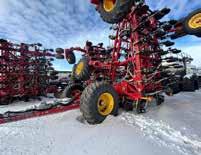
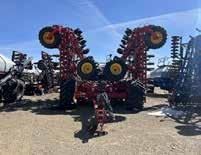
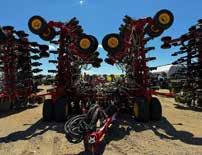
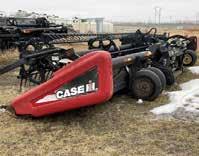
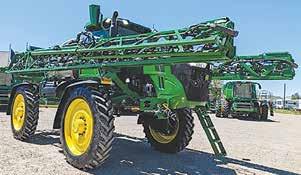
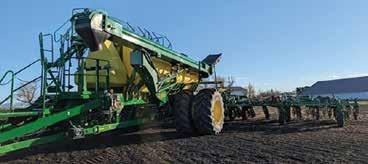
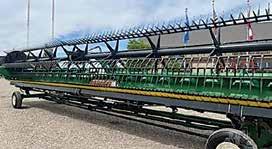
SPRAYER, DRILL, COMBINE & HEADERS FOR SALE
SDSU provides updated recommendations on soil tarping
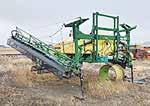
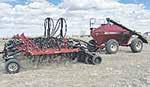
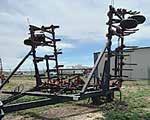
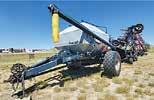
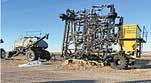
John Deere 60-ft. air drill, 1830 plow, with tow behind 1910 cart
$65,000
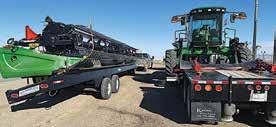
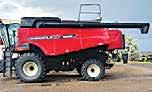
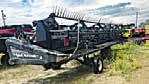
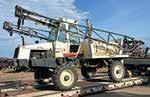
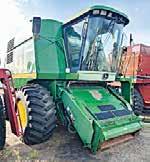
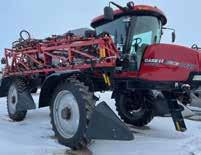
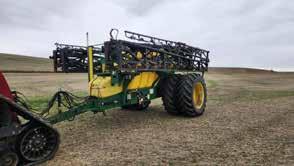
Apache AS1020 sprayer with 1800 hours, 1000 gallon tank, 100-ft. boom. Well maintained, shedded. $78,000 John Deere 9770 STS combine, 2) 35-ft. John Deere 635 headers, E-3499 & S-2373. Well maintained, shedded. $75,000
Please leave message at (406) 627-2405 or (406) 590-3086
McMURRY CATTLE
Added Genetic Balance Trait And Carcass Value ONLY THE BEST SELL Private Treaty Bull Sales
Fred & Doreen McMurry 2027 Iris Lane
Billings, MT 59102
Phone 406-254-1247
Cell 406-697-4040
See: www.mcmurrycattle.com for videos and information about bulls available for 2025 mcmurrycattle@gmail.com
South Dakota State University has published new recommendations on soil tarping that can help producers manage weeds.
SDSU graduate Hannah Voye, as part of a multi-state research team, recently published new research demonstrating that soil tarping – laying tarps on the soil prior to planting vegetable crops – can be valuable for vegetable growers to manage weeds without harming soil health.
“Our study showed reduced weed pressure, and not a lot of crazy impacts on soil health, which is a positive thing for growers to know,” Voye said. “I think we found a lot of really interesting takeaways for growers interested in using soil tarping.”
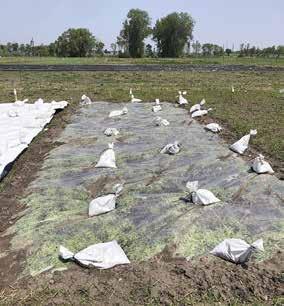
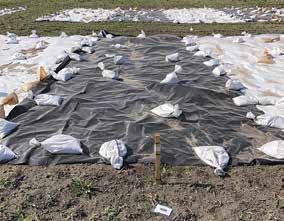
Voye wanted to test no-till options for weed management, with a focus on how those options affect soil health. She used onions as her test crop at the specialty crop field on SDSU’s campus in Brookings and looked at two different types of tarps to manage weed growth. One method uses an opaque tarp to prevent light from hitting the soil and germinating weed seeds so producers can plant in a clean soil bed.
Another method uses clear tarps, which harness heat and solar energy and warm the soil enough to jumpstart weed growth. Voye said there are a finite number of weed seeds in soil, and by exhausting that seed bank early in the season, there are fewer competing with crops later in the season.
Voye and one of her research advisers, Kristine Lang, assistant professor and SDSU Extension Consumer Horticulture Specialist, said South Dakota’s cool springs mean she recommends using black or clear tarps for at least 6 weeks to be effective.
“Many growers were worried about hurting soil microbes on their farms, and this research showed that impacts on soil microbes were very minimal when tarping for 2 to 6 weeks,” Lang said. “If farmers start tarping for months at a time that story may change, but I think this shows that there is a balance that can be found between managing weeds and holding onto soil health.”
The research has been published in two papers: “Improving reduced tillage vegetable systems for the Northern Great Plains: How does early season soil tarping (solarization and occultation) impact soil health?” and “Improving Reduced Tillage in Northern Great Plains’ Onion Production through Early Season Soil Tarping”.
SDSU Extension Horticulture Specialist, with guiding her research and supporting her work through publication. She is excited for her findings to be available to producers and hopes that research on the topic will continue.
“It was a very specific project, and I think tarps are something you can use in a lot of different ways for weed suppression,” Voye said. “I think one of the big things I really grew passionate about working at SDSU as a grad student was wanting to help farmers with our research and having it be directly applicable to them.”
A native of Wisconsin, Voye graduated from SDSU in May with a master’s degree in plant science. She received her bachelor’s degree from the University of Wisconsin-River Falls in horticulture. She now works at Ecdysis Foundation in Estelline, traveling to farms across the U.S. for research.
L Bar W Cattle Company 406-425-2484, Absarokee, MT www.lbarw.com
“Hannah did an excellent job of digging deep into her research project and engaging with farmers as trial site collaborators and audience members when she gave presentations and tours,” Lang said. “Her project included things as varied as figuring out how many sandbags would actually keep plastic tarps from blowing away to handling small amounts of soil to detect microbes in a lab setting.”
Voye credits her co-advisers, Lang and Rhoda Burrows, retired professor and
Voye said doing research and working directly with producers is one of her greatest passions, which she discovered during her graduate program. Lang and Burrows helped her find that passion by encouraging her to present her research at events and inviting her to participate in SDSU Extension outreach programs. Lang praised Voye’s dedication to her research, noting her flexibility and ability to balance field work plus lab work.
“Everyone who joins my team is folded into SDSU Extension activities,” Lang said. “Graduate students are given many opportunities to present their work from informal tours and conversations to speaking at national scientific conferences. I’ve found that farmers enjoy hearing from the students who are passionate about their research, and I hope it helps my students stand out when they enter the workforce.”
For more information on horticulture research, visit the SDSU Extension Horticulture Research page or contact Kristine Lang, assistant professor and SDSU Extension Consumer Horticulture Specialist.
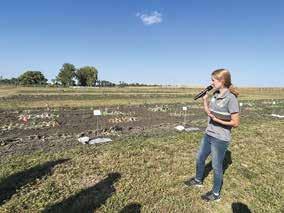
Hannah Voye, who graduated from SDSU in May 2025 with a master’s degree in plant science, talks about her research on soil tarping at an SDSU Extension event.
Opaque tarps are seen on a research plot at the specialty crop field on SDSU’s campus in Brookings.
A clear tarp is seen on a research plot at the specialty crop field on SDSU’s campus in Brookings.
Consider summer annual forages with limited water supply
By Aaron Berger | Nebraska Extension Livestock Educator
With limited water availability this summer for irrigators dependent on canal water, summer annual forages may provide an opportunity to grow cover crops on prevent-plant acres that will likely have significant value as a forage resource due to drought conditions.
Summer annual grasses can produce about 1 ton of forage for every 2.5 to 3.5 inches of water available to the crop. Summer annuals such as pearl millet, sudangrass, sorghum, sorghum-sudangrass, Japanese millet, foxtail millet, proso millet, teff, and grain sorghum or milo are all options. Looking to include other species in the mix? Consider other broadleaf plants, such as brassicas, legumes, and sunflowers.
When evaluating the annual forage to plant, begin with the end in mind. Is this to be grazed, hayed, or harvested for silage? Is a diversity of species desired? Soil health benefits? What is the intended use of the site for a crop in 2027? How might annual forages planted this year impact future crop production? Will the irrigation water be delivered through a pivot or by furrow?
For locations where stock water is available, grazing may be a good option to retain nutrients on the land by directly grazing the standing crop or by windrowing the crop at an optimal quality stage and then grazing the windrows through the fall and winter. On acres that are furrow irrigated, grain sorghum could be grown for either whole plant silage or direct grazing.
Short-season milo varieties have been successfully grown in the Nebraska Panhandle. Strip grazing standing milo in the field with daily moves using a temporary electric fence can generate 3.5 to 4 grazing days per acre with mature cows for every bushel of milo produced. Fifty-bushel milo could provide 175 to 200 grazing days per acre of high-quality grazing with mature cows. This feed could be grazed starting one week after a hard killing freeze through the fall and winter. Nebraska Extension hosted a webinar on direct-grazing standing milo this winter, available at https://go.unl.edu/ graze_milo. Additional information on growing forages with limited irrigation can be found in the Nebraska Extension NebGuides Summer Annual Forages for Beef Cattle in Western Nebraska and Forage Production with Limited Irrigation. Before implementing any of the options discussed, work directly with your crop insurance agent and be sure to have, in writing, approval of cover crop plantings and harvest or grazing plans.
Drought conditions are likely to result in a shortage of forage in the Panhandle. Utilizing limited water allocations for forage production on prevent plant acres could help provide much needed feed for this fall and winter.
Keep scouting for stripe rust
By Uta McKelvy, Ph.D., Assistant Professor, Extension Plant Pathology
We are seeing localized outbreaks of stripe rust in winter wheat. So far, stripe rust has been detected in the Flathead lake area and, more recently, in Gallatin Valley along Spring Hill Road. While we have not received reports of significant infection from elsewhere in the state, this is a reminder to stay vigilant and keep an eye out for the disease. The weather forecast for the remainder of the week looks to be favorable for stripe rust development with moderate temperatures and some precipitation for most of the state.
The key goal with stripe rust management is to protect the upper canopy, most importantly the flag leaf, from becoming infected. Fortunately, there are several good fungicide options to achieve good control. Please consult the 2026 Fungicide Efficacy for Control of Wheat Disease, published by the Crop Protection Network, for suitable product option. Refer to the below resources, for more information on stripe rust and its symptoms, disease-promoting conditions, and management options:
MSU AgAlert on “Stripe Rust Forecast MT: Early Season Watch” from 3/31/2026
MSU AgAlert on “Stripe Rust Identification and Management” from 6/14/2024
Please don’t hesitate to email (uta.mckelvy@montana. edu) or call (406-994-557) if you have any questions. I’m here to help.
Rain rot in horses
In periods of constant, frequent rain, it is important for horse owners to consider how rain may impact their horses, farms, and riding experiences. Rain rot is a common condition during rainy seasons and can be of concern for many horse owners. While typically easily treated, rain rot can be a serious issue and should be addressed immediately by the horse owner to prevent spread or worsening. What is Rain Rot?
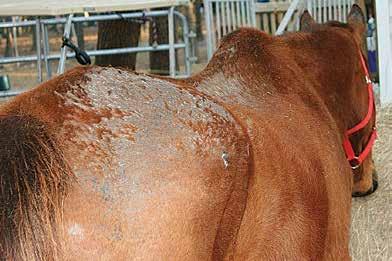
Rain rot, also called rain scald or dermatophilosis, is a skin infection caused by a bacterium known as Dermatophilus congolensis. Living on the horse’s skin, D. congolensis is mostly dormant, but under wet conditions, this bacterium can cause an inflammatory infection resulting in lesions along your horse’s skin. These lesions cause small patches of raised bumps which are scabs containing clusters of your horse’s hair. Removal of these scabs results in bald patches along the affected area. In severe cases, lesions and scabs may become large and affect multiple layers of skin. When this occurs, the horse’s use may be impacted until the infection clears. While most often found on the horse’s topline, rain rot can be found on numerous areas of the horse’s body, including their rump, face, and legs. Therefore, it is important that regular, thorough full-body examinations occur. Hands-on palpation may be needed when examining your horse for rain
Delivery available. Located at Augusta, Montana Phone or text (406) 590-8916
##### President Lincoln was approached by a woman after a political speech… If you were my husband I would poison your tea. Lincoln replied...if you are my wife I’ll gladly drink it.
#####
I couldn’t figure out why the baseball kept getting larger. Then it hit me.
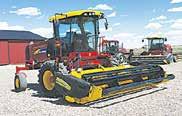
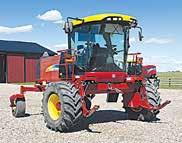
HARRIS SWATHING
ANYCROP, ANYWHERE, ANYTIME
Rain rot in horses
rot, particularly during winter months, as increased coat length makes visual assessment difficult. Unlike many other skin conditions, areas with rain rot do not typically itch but can be painful and cause your horse to become sensitive to touch.
All horses can be affected by this condition; however, there have been identified links with horse’s coat colors and immune status leading to a higher incidence of rain rot. Particularly, horses with lighter coat colors as well as horses with compromised or poorly developed immune systems (such as young or older horses) have been found to be at higher risk. Specific environmental factors have also been identified. Rain rot most often occurs when the skin has been compromised in some way. Compromise occurs during times of high humidity, prolonged rainfall, or increased exposure to biting insects. Horse owners should take steps to limit impact when these environmental conditions are present.
Prevention and
Treatment of Rain Rot
Prevention
Practicing good hygiene habits with your horse, such as regular bathing and grooming, is one of the best ways to prevent rain rot from occurring. Likewise, reducing exposure to environmental factors known to increase incidence may help prevent this condition. If you know there will be heavy rainfall in your area, keeping your horse in a barn or under shelter can help reduce risk. Also, limiting access to muddy areas or trying to reduce the overall presence of mud may be helpful, as caked mud on your horse could compromise the skin. If you are seeing high biting insect populations, implement best management practices based on fly species. Some of these practices include setting up traps, increasing farm sanitation, introducing parasitoid wasps, and spraying your horse with a pyrethroid-based insecticide.
Treatment
“Swathing is our business, not a side line”
Ag Leader GPS Mapping and AutoSteer 16-ft. hay headers with crimpers 35-ft. double swath headers with pickup reels STATEWIDE COVERAGE
We have full transport trailers to come to you. 1 mile or 1000 miles, we’ll be there! 28 YEARS IN THE CUSTOM BUSINESS, EXPERIENCE TO GET IT DONE RIGHT Prompt - competitive rates - reliable Colt Harris 406-450-5452 Conrad, MT Kim Harris 406-450-5961
If your horse has a minor case of rain rot, it can typically heal with a little bit of extra attention and care. Giving your horse a bath with an anti-microbial soap can help remove the scabs and disrupt the bacteria in the affected area. Additionally, currying and brushing your horse can help promote healing and prevent the spread or worsening of the area. As you work to remove scabs, the affected area may become tender to the touch so be cautious with removal. Softening the scabs first makes removal easier and more comfortable for your horse. There are also topical antimicrobial products you may want to include in your treatment routine if you find it necessary.
Keep your horse dry and reduce exposure to known environmental factors during treatment. You may also want to keep horses with rain rot separated from others while treatment is occurring to prevent spread amongst horses. Similarly, be sure to disinfect and replace contaminated grooming tools and other equipment as needed to prevent spread.
In severe cases, your horse may need antibiotic injections given by a veterinarian. Skin biopsies may need to be conducted to identify the cause of the infection and ensure it is rain rot. It is always recommended that you consult a veterinarian in any case when determining cause and making treatment plans.
July is National Watermelon Month
This month long celebration is held in July.
It’s July and summer is in full swing. The weather is hot and muggy, time to seek out a cold and refreshing summer treat. It’s time for some watermelon. We’ve got exciting news. July is National Watermelon Month. You get to spend this whole month celebrating and enjoying watermelon. It’s very likely that in addition to enjoying slices of juicy watermelon, you will enjoy it in many other forms, too. This wonderful fruit flavor is available in daiquiris, wine coolers, candy, and even gum. July is the peak harvest month for watermelons, They ripen just in time for the Fourth of July holiday. That’s when we celebrate and enjoy baseball, hot dogs, fireworks, and watermelon. Yes sir, we certainly consume a lot of watermelons during the summer months. But, this healthy and nutritious fruit can and should be eaten in the other months of the year, too. Did you know that the entire watermelon is edible? The rind can be pickled and is also used in stir-fries. The seeds can be roasted and eaten as a snack, similar to pumpkin seeds.
World Record Watermelon: Watermelons can grow quite large, make that huge. Sure, there are small, home garden varieties that just about fit into the palm of your hand. But, watermelons can weigh hundreds of pounds each. The world record heaviest watermelon weighed in at 350.5 pounds on October 4, 2013. It was grown by Chris Kent of Sevierville, Tennessee.
• Increased early season vigor
• Phosphorus and Zinc to drive rooting & cold start the crop.
• Zinc to help with early season hormone production, ie. Auxin for root and shoot growth.
• Convey Technology to help with early season stresses, such as cool soils and excess moisture. It also improves nutrient use efficiency.
• Other essential nutrients target at each specific crop, ie. Boron for cell wall strength; Manganese for efficient photosynthesis.
• Second chance for a starter fertilizer
• Formulations are targeted at early season root growth (more root = more efficient moisture and nutrient uptake).
• Proactive way of managing the crops nutritional requirement.
• Convey Technology helps with early season stresses such as cool soils, excess moisture, and drought. Also improves nutrient use efficiency.
• Speeds up recovery from herbicide hangover - the correct supply of nutrients helps the crop metabolize the herbicide more quickly.
• Contains novel Phosphorus nutrition, providing increased nutrient uptake and movement within the plant.
• Targeted at the reproductive phse of the plant.
• Proactive way of managing the crops utritional requirement
• Contains other essential nutrients targeted for each specific crop, ie. Boron to aid pollen tube growth, Zinc to help produce Auxin, to ensure healthy pollen tube growth.
Diversifying your forage base for drought flexibility
By Kim Ricardo, SDSU Extension Forage Field Specialist
Periods of dry conditions across South Dakota often bring renewed interest in alternative forages, annual crops, and cover crop mixes to maintain feed supplies and reduce reliance on perennial pasture alone. While no single strategy eliminates drought risk, diversifying the forage base can function as a practical “insurance policy” by spreading risk across species, planting windows, and rooting depths.
Rather than relying on a single forage system, producers can improve resilience by incorporating a combination of perennial forages, annual crops, and strategically selected cover crops that respond differently to moisture stress and temperature variability.
Thinking in Systems, Not Seasons
A diversified forage program works best when it is planned as a system rather than implemented in reaction to current conditions.
Perennial pastures provide a base level of production in most years, while annual forages can be used to bridge forage gaps during drought, after failed crops, or when seasonal pasture growth slows.
Integrating these components allows producers to: Extend the grazing season in the spring and fall.
Distribute your operation’s forage production across multiple planting dates.
Capture moisture and nutrients when perennial growth is limited.
Maintain flexibility in stocking rate adjustments during dry years.
Herbicide Carryover and Field History
Before establishing any annual forages or cover crops, herbicide application history must be reviewed carefully. Residual herbicides from previous cash crops may limit establishment or create grazing and harvest restrictions for forage use. This includes products applied during the previous growing season and, in some cases, earlier applications depending on the chemical and soil conditions.
Always consult current herbicide labels for rotational, grazing, and harvest restrictions prior to planting alternative forages or cover crop mixes. If crops are not listed, it may be appropriate to perform a bioassay prior to planting to ensure the safety of your crop.
Matching Forages to Risk and Moisture Conditions
One of the most effective ways to manage drought risk is to match forage species to expected moisture availability and planting timing.
Using both cool- and warm-season annuals across an operation can reduce the likelihood of complete forage failure during a single dry period.
COOL-SEASON ANNUALS
Cool-season annuals typically provide early or late-season forage and may include species such as:
Oats, barley, triticale, cereal rye, and winter wheat.
Peas, forage radishes, turnips, and hairy vetch.
These species often perform best when planted early or late in the growing season, allowing them to take advantage of cooler temperatures and available soil moisture.
WARM-SEASON ANNUALS
Warm-season annuals generally provide mid-summer forage when cool-season pasture growth slows. Examples include:
Sorghum-sudangrass and forage sorghum.
Pearl millet, foxtail (including German and Japanese types), and proso millet.
Teff.
Once established, warm-season species are typically more water-use efficient and better adapted to hot conditions.
Strategic Use of Perennials
Perennial forages remain the foundation of most grazing systems. Although their productivity can decline substantially during drought, management strategies such as rotational grazing, deferred grazing, and stockpiling can help extend pasture use during dry conditions.
Including deep-rooted perennial species, such as alfalfa on suitable sites, alongside grass-dominant pastures can also improve drought resilience. Differences in rooting depth and growth patterns allow these species to access moisture from different soil layers and respond differently to stress.
Soil Water Use and Recovery Periods
Diversified forage systems should account for how different forage species use soil moisture and how quickly they recover following grazing or drought stress. Rapid-growing
Diversifying your forage base for drought flexibility
annual forages can provide timely feed but may draw down surface soil moisture quickly. Perennials typically use water more gradually but often recover more slowly once moisture becomes limiting.
Combining annuals and perennials can help balance these effects by distributing water use across species with varying root systems and growth habits. Incorporating adequate recovery periods into grazing plans is especially critical during dry years to maintain stand persistence.
Establishment Timing and Flexibility
Planting flexibility is a key advantage of annual forages. Warm-season species can be planted after frost risk has passed, while cool-season species fit well into early spring or late-summer planting windows.
In drought-prone conditions, delaying planting until a meaningful rainfall event may improve establishment success compared to planting in dry soils. Although this approach can reduce early-season forage availability, it often results in more uniform emergence and improved stand longevity.
Nutrient Management Considerations
Nitrogen management should be adjusted according to forage species, yield potential, and available moisture. Under drought conditions, excessive nitrogen application can increase the risk of nitrate accumulation in certain forage crops, particularly grass species such as oats, sorghum and sorghum-sudangrass hybrids.
Soil testing, previous crop nitrogen credits, and realistic yield expectations should guide fertilization decisions. In some situations, reduced nitrogen rates, or no additional nitrogen, may be appropriate when moisture is expected to limit growth potential.
Grazing Management and Risk Distribution
Diversification involves not only what is planted, but how forages are managed and utilized. Practices such as rotational grazing, stockpiling, and flexible stocking rates allow producers to shift grazing pressure among forage resources as conditions change. Having multiple forage options available reduces dependence on any single pasture or crop and allows for more measured forage use during dry periods of environmental stress.
Summary
Drought is an inevitable part of forage production systems, but total reliance on any single forage type increases vulnerability to weather extremes. A diversified forage base—built from a combination of perennial pastures, annual forages, and strategically selected cover crops—can improve flexibility, extend grazing opportunities, and reduce production risk across variable growing seasons.
#####
I wonder what my parents did to fight boredom before the internet. I asked my 17 brothers and sisters and they didn’t know either.
#####
Two men walk into a bar, the other one ducks.
Herbicide resistant weeds in Montana: Cheatgrass
Cheatgrass (Bromus tectorum L), also known as downy brome, is a problematic winter annual grass weed across the Pacific Northwest and Northern Great Plains. In Montana, resistance to Group 2 herbicides was first reported in 2017. More recently, some populations of cheatgrass have shown increased survival following glyphosate treatment, which, if widespread, will further complicate management of this species across the state.
Characteristics
of Cheatgrass
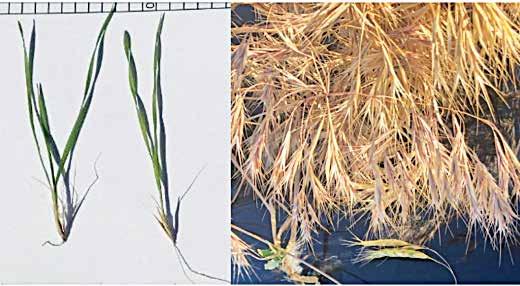
Cheatgrass is a winter annual grass that typically germinates from September to November and grows until freezing conditions halt its growth. It often forms dense, soft mats, and young plants are covered with fine hairs. Plants develop a reddish-green appearance after exposure to freezing temperatures. Cheatgrass tillers and flowers in early spring, with seed heads forming in May and June. The flowering head is a panicle (branched, loose, often nodding); as spikelets dry, the awns spread out and become stiff and barbed, which can injure livestock (Figure 1).
Herbicide Resistance Cases
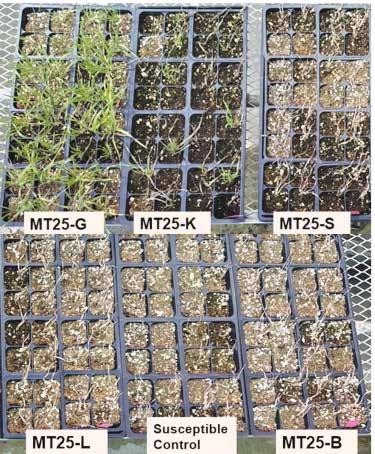
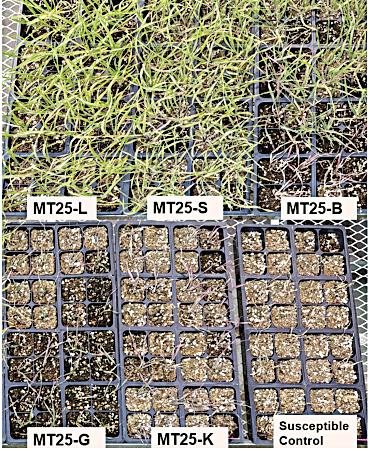
In 2024, 2025, and 2026, farmers in north-central, central, and south-central Montana reported reduced glyphosate efficacy for cheatgrass control. Greenhouse testing (Figure 2) confirmed resistance in multiple populations, with nearly 100% survival following a 32 fl oz/glyphosate application in populations from Hill and Fergus counties collected in 2025 and 2024, respectively. Other populations showed increased survival, although below the 20% threshold used to classify resistance. The extent of glyphosate resistance remains unclear as of 2026, and ongoing research aims to assess its distribution. Glyphosate-resistant cheatgrass makes management more difficult and leaves few effective control options.
Glyphosate (GlyStar Plus) 32 oz./A + AMS 17 lb/100 gal
Figure 1. Left: Cheatgrass seedling at the two-leaf stage with the awn still attached. Right: Mature, dry cheatgrass showing drooping seed heads, disarticulation, and seed ready to disperse.
Figure 2. Response of cheatgrass populations to a 32 fl oz/A Roundup application. Population MT25-G is resistant, whereas K shows high survival but remains below the 20% resistance threshold.
Herbicide resistant weeds in Montana: Cheatgrass
and mapping efforts, Montana State University offers resistance screening for producers. Testing typically involves greenhouse experiments, although research is ongoing to develop faster diagnostics methods.
If you have observed reduced cheatgrass response to herbicides and would like to test resistance, contact: Tim Seipel, Cropland Weed Extension Specialist, Montana State University, timothy.seipel@montana.edu, (406) 994-4783 or
Matheus Noguera, Weed Scientist, Southern Ag Research Center, Montana State University, matheus.noguera@montana.edu, (406) 994-3413.
Integrated Weed Management
To manage herbicide-resistant cheatgrass, follow integrated weed management principles: correctly identify the pest, monitor populations, diversify control methods (cultural, mechanical, and chemical where possible), and avoid overreliance on any single strategy. Prevent soil seedbank replenishment with targeted chemical or mechanical approaches on escapes and weedy patches. Remain mindful of field equipment movements from areas of high infestation is essential to mitigate the spread of putative herbicide-resistant biotypes. Manage cheatgrass in headlands and field margins. Repeated use of herbicides from the same mode of action in low-diversity crop sequences selects for herbicide-resistant populations and should be avoided.
Herbicide Use Recommendations
Applications made in the fall are often more effective because plants are smaller compared to spring. Apply herbicides at full labeled rates with recommended adjuvants under favorable weather conditions. Be mindful of application technology by ensuring sprayers are properly calibrated and adequate coverage is achieved. Scout fields regularly prior to and following herbicide applications.
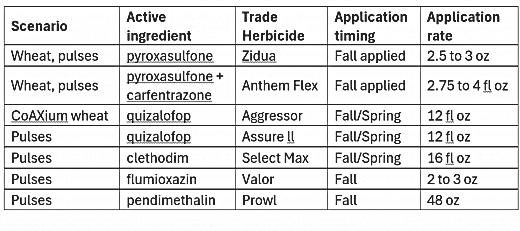
Depending on the crop, fall applied soil residual herbicides such as flumioxazin, pendimethalin, or pyroxasulfone applied before cheatgrass germination can provide suppression to excellent control. In pulses, oilseeds, or CoAXium(R) wheat, cheatgrass can also be managed with Group 1 herbicides such as clethodim or quizalofop. Always follow herbicide labels, paying close attention to crop restrictions, application timing, adjuvant requirements, and rotational intervals.
Pseudorabies detected in Iowa and Texas swine farms
By Rafe Royall, Assistant Professor
& SDSU Extension
ALSO SEE US FOR
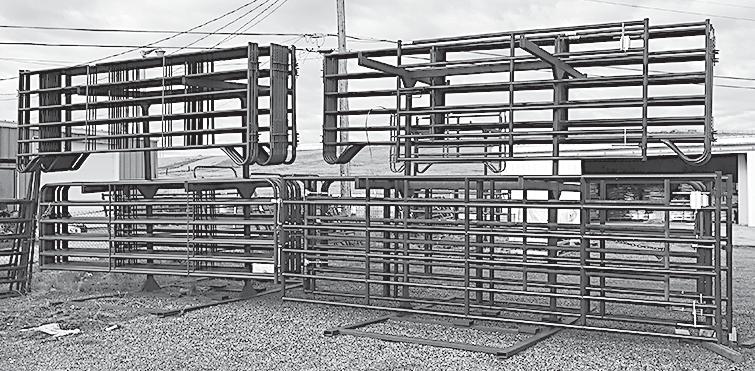
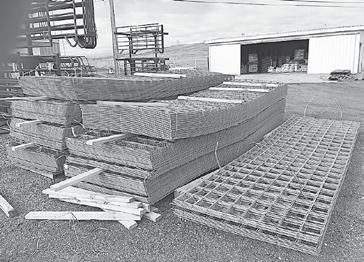
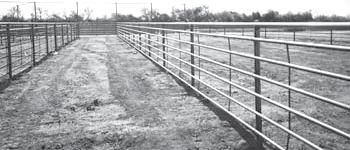
Fencing Now Available. Call for details..
Swine Specialist. Additional Authors: Russ Daly, Kaylyn Rudy, Bob Thaler
Recent Cases
For the first time since being eradicated in the U.S. Commercial swine herd in 2004, pseudorabies (PRV) has been confirmed in herds in Iowa and Texas (Shike, 2026).
A small commercial swine facility in Iowa was confirmed to have positive cases of PRV by the USDA’s Animal and Plant Health Inspection Service (APHIS) and the National Veterinary Services Laboratories during routine testing. Officials at APHIS, in collaboration with the Iowa Department of Agriculture and Land Stewardship and the Texas Animal Health Commission, revealed that five affected boars in the Iowa facility originated from an outdoor production site in Texas (Shike, 2026). It is believed that the initial infection on the outdoor production site in Texas may have been a result of unintentional contact with feral swine.
Pseudorabies virus was eradicated from the U.S. commercial swine herd in 2004. However, it is critically important to remember that PRV is endemic in the feral swine populations around the U.S. An APHIS release stated, “Pseudorabies is still found in wild or feral swine populations, which remain a potential threat of exposure for domestic pigs.”
While the state of South Dakota does not currently have a confirmed feral pig population, populations continue to migrate northward from the Southern U.S., and there is a growing presence of feral pigs in Canada that threatens to move south as well. The detection of PRV in a commercial farm in our neighboring state of Iowa is a sobering but a needed reminder that swine producers of all sizes and production types must consistently verify the implementation of existing biosecurity measures and determine if added measures are necessary.
Prevention Tips
Here are some tips to help reduce the chance of a PRV outbreak on your farm:
Implement a perimeter buffer area to limit the potential to exposure from wildlife and unnecessary visitors. While feral pigs are of the highest concern, a variety of other wildlife species may serve as vectors for PRV spread. Thus, building and/or reinforcing a sturdy fence around your operation can help to reduce the potential for contact.
Ensure proper use of Lines of Separation at all entrances to your facilities. This includes, but is not limited to, making sure that all people, vehicles, and supplies are properly disinfected before entering your farm.
Verify that all employees and visitors to the farm are wearing clean, farm specific clothing, or disposable coveralls and shoe covers, as well as necessary PPE (i.e. gloves and face masks). Humans and our clothing can function as vessels for the spread of PRV.
Proper biosecurity protocols can be the difference between your herd remaining healthy, or contracting PRV and other viral infections. For more information on biosecurity protocols please visit The Healthy Swine Herd Series or Swine Health Information Center.
Additionally, it is critically important to understand the health status of any herd that you source animals from (i.e. replacement breeding stock). Dr. Russ Daly, Professor and Extension Veterinarian at South Dakota State University, says, “Knowing your source herd and asking them questions about feral hog contact will now be more important. It’s (PRV) certainly not a disease that most producers currently think to test for.” As there has not been a confirmed case of Pseudorabies in the U.S. commercial herd in over 20 years, it is easy to let the signs and testing procedures slip our collective mind.
Pseudorabies can be transmitted through multiple avenues. While respiratory transmission from one pig to another is the most common route, transmission may also occur through fecal-oral transmission, via infected semen, and through fomites. It is also important to remember that other species can be infected and transmit PRV to swine. Wildlife, dogs, and cats are of highest concern; signs in some of these other species are neurologic in nature.
Clinical Signs
Clinical signs of PRV often present themselves differently across various stages of production. The Merck Veterinary Manual (Pseudorabies in Pigs - Nervous System - Merck Veterinary Manual) describes these signs in detail, but here are some of the most important signs to look for in each stage of production.
PARENTS & LEADERS
sion,
Suckling Pigs/Neonates
Up to 100% mortality in < 7-day old pigs.
Central nervous system signs (Tremors, incoordination, seizures, paddling, circling, and posterior leg paralysis).
High fever (≥ 105° F).
Depression and anorexia.
Weaned & Growing-Finishing Pigs
Respiratory disease signs (i.e. coughing, sneezing, and shallow/labored breaking), especially if there are secondary bacterial infections present.
High fever (≥ 105° F).
Anorexia and weight loss.
Mortality can reach 50% if the infection occurs in nursery pigs but generally remains low (1-2%) if it occurs during the growing-finishing period.
Mature Pigs (Sows and Boars)
Symptoms are often mild or subclinical in open sows, but often result in reproductive failure.
Reproductive failure presents differently depending on stage of gestation. Can present as:
Early embryonic death.
Abortions.
High stillborn rate.
High rate of mummified fetuses.
Weak newborn piglets with tremors and early post-farrowing mortality.
Fever.
Mild Respiratory symptoms.
Many of these clinical symptoms are common amongst a variety of viral infections. Therefore, testing is essential for determination of PRV infection, and it’s essential that pork producers work closely with their veterinarians if they observe unexplained illness or death loss in their animals. For more information, please refer to this thorough Pseudorabies Virus Factsheet courtesy of the Swine Health Information Center (Swine Health Information Center).
Testing
Diagnosis is made through PCR testing of infected tissues during an active infection or serological (blood) testing for prior exposure (Rademacher, 2026).
Aaron Singrey, Research Associate in the department of Veterinary and Biomedical Sciences at SDSU says, “Serological (blood) samples are tested via ELISA tests to detect antibodies in serum. Blood samples should be collected in collected in serum separator tubes, or any blood collection tube that does not contain additives that prevent coagulation (usually red-topped collection tubes). Do not use tubes that contain EDTA, heparin, or sodium citrate”.
Veterinarians can submit samples to the SDSU Animal Disease Research and Diagnostic Laboratory (ADRDL) using the Swine Health Submission Form or the All Species Herd Health Submission Form. Samples can also be submitted using the ADRDL electronic submission system, for existing customers.
In Summary
Pseudorabies infection had a devastating impact on the U.S. swine herd prior to its eradication in 2004. Responsibility falls on everyone in the industry to ensure that this virus does not gain a foothold again. Maintaining high biosecurity standards, constant vigilance for clinical symptoms in every herd, and proper testing procedures are all key pieces to ensure the Pseudorabies virus does not plague U.S. swine production again.
Barringer Meteor Crater, Arizona
Located in the middle of the desert, this crater is important because it was the first one on Earth positively identified as the result of a falling meteor. The meteorite that made the crater was about 150 feet in diameter, weighed about 30,000 tons, and was traveling at a speed of 40,000 mph when it landed. The crater is three quarters of a mile wide and was named for D.M. Barringer, the mining engineer who correctly identified it. He also believed that the actual meteorite was still lodged below the Earth’s surface and could be mined for its iron content. (He died before studies revealed that it had vaporized on impact.) Scientists say a meteor of this size can be expected to hit the Earth every 50,000 years. Since this one fell to Earth about 50,000 years ago, we could be due for another one soon.
2013
2013
Why wheat streak mosaic Is showing up more this season
By Uta McKelvy, Extension Plant Pathologist
I’ve been getting several questions this week about whether wheat streak mosaic disease is on the rise and what might be driving it. Short answer: yes, it’s active right now, and it likely has been since last fall.
This AgAlert walks through how the disease cycle is playing out this season, what you can (and can’t) do at this point, and how you can help us by sending in samples. We’re working on a Montana Wheat and Barley Committee-supported project to better understand which viruses in this disease complex are most common across the state.
Quick Summary for Busy People
Yes, wheat streak mosaic is active now, and infections likely started last fall but are just becoming more visible as other stress symptoms fade.
A “perfect storm” of conditions (green bridge, early planting, warm fall/winter, and early spring) likely increased wheat curl mite survival and virus spread.
There’s no cure once infected. Focus on limiting losses and preventing spread (avoid extra inputs, delay termination strategically, consider grazing).
You can help! Send suspected samples or field locations to support ongoing research on which wheat streak mosaic viruses are most common in Montana.
What is wheat streak mosaic disease?
Wheat streak mosaic is caused by a complex of viruses-Wheat streak mosaic virus, Triticum mosaic virus, and High Plains wheat mosaic virus--that infect wheat, barley, durum, corn, and other cereal crops. These viruses are spread by the wheat curl mite, a tiny, wind-dispersed pest (Figure 1). A wide range of grassy species in pastures and ditches can host both mites and viruses. Among these, cheatgrass (Bromus tectorum) is particularly important due to its timing, density, and persistence.
Characteristic symptoms include yellow streaking and mottling that often extend across the entire plant (Figure 2). When infection happens early--before jointing--plants may
2018 John Deere 615P pickup header. Like new.$22,500
Case IH 1903, 1055 hours, 2 available. Call for price
2014 John Deere W235 with 635D header, 750 Engine hours, GPS, header transport. $126,500
John Deere R450 with 14-ft 994 header, 754 hours. Call for price
2014 Case IH 2303 with 19ft header, cab and rear axle suspension, 2130 hours $82,500
2013 New Holland 8040 with 25-ft header, double knife drive, header transport, 695 hours. $89,500
2013 New Holland 8040 with 14-ft header, cab and rear axle suspension, 1203 hours $86,500
2012 Case IH 1203 with 30ft header, 1780 hours, triple delivery, double knife drive, transport $63,500
Figure 1. The wheat curl mite is a small, cigar-shaped mite that vectors the viruses causing wheat streak mosaic disease. Picture credit: Dai Ito, Montana State University.
Figure 2. Characteristic symptoms of wheat streak mosaic infection in wheat include yellow streaking and mottling of all leaves. Plants are often stunted. Picture credit: Mary Burrows, Montana State University.
NEEDED
Toston Irrigation District is in need of a person to maintain and distribute water. Contact tid@mt.net or Call 406-949-0208, Leonard
Why Advertise in the Trader’s Dispatch?
Reason #8: Our graphic designers are available to help you with the creation of your ad, and those ads are built in offices in Montana! We have never outsourced our ad design to foreign countries, and don’t ever plan to.
#####
During Wold War I, raw garlic juice was applied to wounds to prevent infections.
#####
In the Middle Ages, Europeans “cured” muscle pains by drinking powdered gold.
#####
The first Crayola crayons appeared in 1903 in an eight-color box. These included red, orange, yellow, green, blue, violet, brown, and black. However, even earlier, Crayola’s predecessor product—the Staonal Marking Crayon—was produced in black for industrial use. The affordable crayon box (costing just a nickel) revolutionized classroom art by offering reliable, vibrant colors that didn’t smudge as easily as chalk.
#####
Leprosy is the oldest documented infection–first described in Egypt in 1350 B.C.
Why wheat streak mosaic Is showing up more this season
CONTINUED FROM PAGE A30
become stunted, with tillers that sprawl rather than grow upright. In severe cases, heads can be sterile. Yield losses range from negligible to total, depending largely on when infection occurred and how widespread it is.
Why are we seeing more wheat streak this year?
A look at the wheat streak mosaic disease cycle helps explain the conditions that favor outbreaks (Figure 3). The viruses require living host plants to survive. Their vector, the wheat curl mite, is very sensitive to drying and can only survive about four days without a host. As infected wheat matures and dries down, wheat curl mites and viruses must move to new hosts to persist. That’s where the green bridge, aka volunteer wheat and grassy weeds, comes into play. These hosts sustain mites and viruses through late summer, allowing movement into emerging winter wheat in the fall or into new crops the following spring.
This past year lined up as something of a “perfect storm”: We saw localized wheat streak outbreaks in 2025, suggesting higher starting levels of mites and virus in some areas.
Summer rains and hail likely increased volunteer wheat and grassy weeds. Continued precipitation into late summer and fall made timely green bridge control difficult, allowing overlap between the green bridge and new crops.
Grass weed management, e.g. of cheatgrass, is becoming more challenging due to herbicide resistance. (See the recent AgAlert on glyphosate-resistant cheatgrass.)
Some producers planted winter wheat early (early- to mid-September) to take advantage of moisture. Earlier planting extends exposure to dispersing wheat curl mites.
The fall was long and warm, extending the period of mite activity (they remain active down to 50 degrees F). Infection at early crop growth stages (before jointing) is associated with the greatest yield loss.
The winter was mild and likely did little to reduce wheat curl mite populations. That said, wheat curl mites are well adapted to survive even typical Montana winters.
This spring warmed up early, reaching temperatures favorable for mite activity sooner than usual.
Why are symptoms showing up now?
Wheat streak mosaic has likely been present since last fall. We diagnosed multiple cases in April and May, and so far this has been the most common crop disease we’ve seen in the Schutter Diagnostic Lab this season (with frost damage being the main non-disease issue).
One reason it may seem like it’s “showing up” now is that it was easy to miss earlier. Many fields turned yellow this spring for other reasons (see May 26 AgAlert: Why Wheat is Yellow This Year), including drought stress, frost, and brown wheat mite damage. With recent precipitation, crops have greened up, and those other stress symptoms have eased. Wheat streak symptoms, however, remain and now stand out more clearly.
There may also be a management component. Research shows that nitrogen fertilization and irrigation can increase wheat curl mite reproduction and virus replication, alongside crop growth. In some cases, efforts to correct nutrient deficiencies may have unintentionally helped the disease progress.
Figure 3. Wheat streak mosaic disease cycle in winter wheat production. (Graphic from UNL Extension publication EC3063)
2017 New Holland LM7.42 Elite telehandler, 460/70R24 Mich., reverse fan, rear hydraulic coupler, exterior tool box, continuous flow auxiliary hydraulic, bluetooth and auxiliary radio work, SO station. stk# 22833
$65,000 (L)
2019 Bobcat HB980 breaker, long arm hose kit, X-change mounting frame. stk# 24408.
$10,036 (G)
Quick Attach 68” angle blade. stk# 32129. (G)
Bobcat 68” angle broom. Good bristles. stk# 32128. (G)
SPRAYER
2019 New Holland SP310F sprayer with Weed It Quadro weed detection and elimination technology system installed, 1200 gallon stainless steel tank, deluxe cab, NEW 520/85R42 tires, Mono Boom 120-ft., 10 section, 5-way nozzles, auto rinse, fence row nozzles, wheel kit, 3” fill, reversing cooling fan, ISO, full GPS, air compressor with blow out system. stk# 24818. $374,900 (G)
John Deere 18-in. planer, 14 pin control, carbide teeth, high flow. stk# 31623. $9900 (G)
ROUND BALERS
New Holland RB560 round baler, net/twine, 1000 PTO, deluxe wrap non ISO, caster wheels, X-Wide pickup, harness, monitor. stk# 22524. $24,500
2017 Case RB565 baler, net/twine, ISO with monitor, 1000 PTO with cut out clutch, 5 bar pickup, stand density, man hydraulic lift, xwide, endless belts. stk# 33525. $34,900 (L) Vermeer 605SM tires 21.5-16.1SL, net only, 1000 PTO, ramp, lights. stk# 17287. $11,900 (G)
John Deere 566 round baler, CV 540 PTO, 31x13.5 Hi Flo tires, mega tooth, net wrap, hydraulic pickup. Stk #33766.Call For Price
Why wheat streak mosaic Is showing up more this season
CONTINUED FROM PAGE A32
What can you do right now?
Unfortunately, there’s no cure once a crop is infected with wheat streak diseases. The goal is to minimize losses and reduce the risk of spreading mites and viruses to neighboring fields.
1. Hold off on further inputs: Avoid additional fertilizer or irrigation on heavily affected fields. Infected plants won’t recover, and added nitrogen can favor mite population growth and increase susceptibility.
2. Be strategic about termination: Wheat curl mites leave plants as they dry down. If you’re terminating an infected crop, try to delay until neighboring fields have reached at least jointing and preferably boot stage. Mites can move long distances on the wind (2 miles or more).
3. Consider grazing: Grazing can be a practical option. Research (from Australia) suggests grazing doesn’t increase wheat curl mite populations or disease spread, likely because it reduces plant biomass. However, it won’t stop mite reproduction because plants remain alive. Avoid mowing or swathing because slowly drying plant material can trigger wheat curl mite dispersal to nearby green hosts.
Looking ahead: 2027 outlook
Disease pressure next season will depend heavily on weather and management decisions this fall. If dry conditions persist, green bridge formation may be limited compared to last year, which would reduce risk.
That said, the most reliable control point remains green bridge management. The goal is to eliminate all potential hosts of wheat curl mites and viruses well before planting. Ideally, volunteer wheat and grassy weeds should be terminated at least two weeks before winter wheat emergence; timing may vary depending on the chosen termination method - chemical vs. mechanical. We can’t control the weather but planting date decisions and green bridge management are firmly within our control.
We want your samples!
My postdoc, Lind Hebb, and I are studying which viruses are driving wheat streak mosaic disease in Montana. To do that, we need samples from across the state. If you’re seeing (or suspect) wheat streak mosaic, please reach out or send a sample to the Schutter Diagnostic Lab. Even field locations without samples are helpful.
Further resources on wheat streak mosaic disease
A collaborative publication on Mite-transmitted virus disease complex of wheat in the Great Plains of the United States available at University of Nebraska-Lincoln (PDF)
A short two-page fact sheet on Wheat streak mosaic disease FAQ’s available at the MSU Extension store (print and PDF)
Use the AWare: Assessment of Wheat Streak Mosaic Risk Tool to understand which factors promote wheat streak mosaic risk in your area.
A Montguide on Cereal Viruses of Importance in Montana is available free of charge at the MSU Extension Publication Store.
The Crop Protection Network is a great resource for information small grain diseases, including Wheat streak mosaic.
Please don’t hesitate to reach out to the Extension Plant Pathology team with any questions or concerns. We’re here to help.
H. G. Wells, futurist
British novelist H. G. Wells witnessed significant change in his lifetime. When he was born in 1866 cities were lit by torches and oil lamps and there were no horseless carriages or air travel. By the turn of the century, cities were being lit by gas lamps, and automobiles were steadily replacing the horse. In 1901 Wells published his ground breaking treatise on the future, Anticipations. In it, he foresaw the end of the steam age and the rise of oil. He accurately predicted that the entire region from Boston to Washington, D.C., would become one long system of suburbs, cities, highways, and traffic jams. He even predicted speed limits.
Yet for all his foresight, Wells got a lot wrong: He said that airplanes were just a passing fad and that moving sidewalks would be commonplace in cities. He also predicted that the world’s governments would merge into one “New Republic” rules by scientists who would eliminate all but the white race and “establish a world state with a common language and a common rule.” That future hasn’t arrived.
GREYN FERTILIZER
monitor, Auto Steer, 4231 hours. $76,000
2017 RBR Venturi 350, Cummins diesel engine, Allison automatic, 4 wheel drive, air ride chassis, Case IH Flex Air 810, 70-ft. boom, electric tarp, Titan 380/90R46 tires, fenders, light bar, Viper 4, Smartrax auto steer, 4951 hours. 650/65R38 tires also available please ask. $109,000
GPS, electric roll tarp, LED light package, New Leader NL4500G4 Edge 14-ft. with 4 bin Multibin Applier. Ask about converting to a single bin with tailgate, to spread lime & fertilizer, 2136 hours. $162,000
2013 Case IH 4530 floater, CNH diesel engine, Allison automatic transmission, Case IH 810 Flex, 70-ft. stainless steel boom, triple bin, electric roll tarp, Raven Viper pro, Auto Steer, 1050/50R32 rear tires, 750/45R26.5 front tires, 3512 hours. $108,000
2014 TerraGator TG8400, Air Precision 2, 70-ft. stainless steel booms, Granular coap bins, electric roll-tarp, Raven Viper Pro controller, Auto Steer, air ride cab, 3345 hours. $98,500
2000 Wilmar 16-ton sideshooter mounted on pup trailer, Honda powered hydraulics. Very nice tender.. $21,000
2017 Case IH 4540 floater, Allison automatic transmission, Case IH 810 Flex Air, 70’ stainless steel boom, micro ingredient bins, Raven Viper IV, Smartrax AutoSteer, rear poly impregnation tanks, 4590 hours $92,000
1974 Beaird NH3, Anhydrous Ammonia Tank, 44’ 2” length, 7’ 10” diameter, on skid, 17,621 gallons, pump and plumbing included. Tank is purged. Located in Wilbur, WA. $42,000
Ask about other tanks and transports that are available
Happy Birthday America!
years!
Terra Gator 9300 floater, Cat C13 diesel engine, Terrashift transmission, AirMax Precision 2 dry air flow system, 70-ft. stainless steel boom, electric roll over tarp, Raven GPS, Raven Viper Pro monitor, Smartrax auto steer, 4302 hours. $77,000
diesel engine, Allison automatic transmission, air ride. New Leader L5000 G5 – 14-ft. stainless steel dry spreader box, dual spinners, hydraulic, electric roll tarp, Raven GPS, Raven Viper 4 monitor, 2216 hours. $134,500
2019 RBR Venturi 380, Cummins diesel engine, Allison automatic transmission, 4 wheel drive, air ride, RA-885 Salford 3 bin bed, 72-ft. spread width, electric roll over tarp, Alliance flotation tires, fenders, lightbar, Raven Viper4, 2724 hours $153,000
engine, hydrostatic transmission, 1200 gallon stainless steel liquid system, 120-ft. boom, stainless steel chemical inductor Vogelsang A17387 front fill, Michelin Mach X Bib 710/70R42 flotation tires, fenders, John Deere GreenStar 3
2003 Freightliner Columbia Day cab, twin screw, 10 speed, 12.7L Detroit Series 60 diesel, 430hp, odometer reads 629,746 but doesn’t work. $12,000
2000 Kenworth T800 truck,
TerraGator 8400B Sisu diesel engine, CVT transmission, Air Max Precision 2, 70-ft.
Case IH 4530 diesel, Allison trans., 810 Flex-Air, 70-ft. boom, electric tarp, Viper Pro, Smartrax autosteer,
2013 Merritt Heritage grain trailer, 39-ft. trailer, air ride suspension, Agricover electric roll tarp, back and front Rapat conveyor tender system, front and rear ladder. $37,500
Wheat stem maggot infestation detected in early-planted corn
By Silvana Paula-Moraes - Extension Entomologist,
Justin
McMechan
- Crop Protection and Cropping Systems Specialist, Travis J. Prochaska - Extension Educator
Wheat stem maggot injury has been confirmed in east-central Nebraska corn, raising new questions about risk even when cover crops are terminated before planting.
Early-season wheat stem maggot (WSM) injury has been confirmed in east-central Nebraska, raising new questions about WSM risk following cover crop termination. Nebraska Extension detected early-season WSM injury in Polk County corn planted seven to 14 days after cover crop termination. Fields exhibited uneven plant heights (Figure 1), dead leaves in the whorl (“dead heart”) (Figure 2), excessive tillering (Figure 3), and patchy crop stands (Figure 4). Plant samples dissected in the lab confirmed the presence of WSM larvae (Figure 5).
Based on information collected during 2017 field surveys, detecting WSM infestations in fields where cover crops were terminated one to two weeks before planting was not anticipated. Previous observations linked the greatest WSM risk to corn planted into living cover crops. These findings may be related to environmental conditions following herbicide termination of the cover crop and suggest that early termination alone may not be sufficient under certain environmental conditions.
Figure 1. Uneven plant heights in Polk County corn injured by wheat stem maggot. Silvana Paula-Moraes/Nebraska Extension
Figure 2. Dead whorls from WSM injury in the same field. Silvana Paula-Moraes/Nebraska Extension
Figure 3. Excessive tillering was observed in the Polk County field where early-season corn was injured by WSM. Silvana Paula-Moraes/Nebraska Extension
Figure 4. Patchy crop stands due to WSM injury in a Polk County field. Silvana Paula-Moraes/Nebraska Extension
Figure 5. WSM larvae in a plant recently sampled by UNL. Silvana Paula-Moraes/Nebraska Extension
Wheat stem maggot infestation
detected in early-planted corn
Adult WSM Observations
From April 9-30, 2026, extension monitored commercial fields to detect WSM adult infestations. WSM were found in Colfax, Dawson, Dixon, Lancaster, Nuckolls, Polk, Platte, Saunders and York counties. Due to dry conditions in Nebraska this year, many growers across the state terminated cover crops prior to corn planting, a practice that generally helps decrease the risk of WSM infestation in corn.
WSM has been closely linked to planting corn into living rye or wheat cover crops, commonly referred to as “green planting”. Delaying cover crop termination until corn is planted allows growers to maximize weed suppression and soil health benefits. However, WSM can move from terminated cover crops into adjacent corn plants and tunnel into the cornstalk, destroying the growing point and halting normal vertical growth, which can result in reduced yield.
Data collected last year indicates that a 20% reduction in plant height could potentially result in a 25% yield loss compared to an uninfested plant. Plants with height reductions around 50% resulted in 85% to 93% yield loss.
If 30% or more of the field is affected, field losses could range from 15% to 30%, depending on injury severity.
This data comes from a single hybrid and location, so situations may vary from what was observed. We will continue tracking the impact of WSM and yield loss.
Chemical control in corn that is already infested with WSM larvae is not recommended, as larvae are difficult to reach due to their feeding location within the plant.
•
•
•
•
TRAILERS
• COLOR (1) BLACK - (1) SILVER
• TARP SHURCO ELECTRIC
• TRAPS SHURCO ELECTRIC
• ALUMINUM WHEELS
• AIR RIDE WITH GAUGE & DUMP VALVE
• WINDOWS
• CATWALKS AND LADDERS
• 11R22.5 RADIALS
• AIR SEEDER OPTION ADDITIONAL CLEARANCE ON HOPPERS POLY
• FENDERS OVER ALL TIRES
• AIR RIDE 3 AXLES
• AIR DUMP AND GAUGE
• 3 RAMP BEAVERTAIL
• ALUMINUM WHEELS OUTSIDE 6
• 10 SLIDING WINCHES
• TOOL BOX
• 255/70R22.5 RADIALS STEEL NEVILLE 48’ DROP DECK TRAILER (NEW 2026)
• AIR SUSPENSION 2 AXLES CLOSED TANDEM
• AIR DUMP WITH GAUGE
• STEEL WHEELS
• 10 SLIDING WINCHES
• TOOL BOX
• 255/70R22.5 RADIAL
• 53’ LENGTH
• COLOR WHITE
• AIR SUSPENSION 2 AXLES CLOSED TANDEM
• AIR DUMP WITH GAUGE
• STEEL WHEELS
• 3 COMPARTMENTS
• RUBBER FLOOR
• FULL WIDTH REAR RAMP
• FULL OPENING REAR DOOR WITH SLIDING GATE
• 255/70R22.5 RADIALS
• GATORHYDE LINED INTERIOR WALLS
R ecipe Patch
By Geri
Gochujang Green Beans
2 tablespoons gochujang
1 tablespoon rice vinegar
1 tablespoon brown sugar
1 pound green beans, stem ends trimmed off 1 tablespoon canola oil
1/2 teaspoon kosher salt
2 teaspoons toasted sesame seeds
Make gochujang sauce:
In a small bowl, whisk together the gochujang, rice vinegar, brown sugar, and 1 tablespoon water. Set aside. In a large heavy skillet or wok set over high heat add 1/4 cup of water and bring to a boil. Add the green beans, and cover with a lid or piece of aluminum foil.
Steam, until the beans are just slightly tender, about 5-8 minutes. Their color will brighten.
Remove the lid and stir the beans in the pan a bit, allowing any remaining liquid to cook off until the pan is virtually dry. I like to use tongs to stir the beans so I can lift them up and flip them easily for even cooking.
Drizzle the oil over the beans, add the salt, and continue to cook, stirring occasionally, until blistered and speckled with brown spots, about 5 minutes.
Remove from heat and stir in the gochujang sauce. Taste and add more salt, if needed.
Transfer to a serving plate and scatter the sesame seeds over the top. Serve warm.
Smoked Almond Summer Squash Salad
1 medium lemon
1/4 cup extra-virgin olive oil
2 cloves garlic, finely grated
3/4 teaspoon kosher salt
1/2 teaspoon freshly ground black pepper, plus more for garnish
1/4 cup roughly chopped fresh basil, plus more for garnish
1/2 cup (2 ounces) shaved Pecorino Romano cheese, divided
1/4 cup roughly chopped smoked almonds
Grate 1/2 teaspoon of zest from the lemon and set it aside. Juice the lemon and measure 2 tablespoons of juice into a large serving bowl. Add the olive oil, grated garlic, salt, and pepper and whisk to combine.
Add the sliced summer squash, chopped basil, and half of the Pecorino Romano to the bowl with the dressing and toss to coat. Sprinkle with the almonds, the reserved lemon zest, and the remaining Pecorino Romano. Garnish with additional pepper and basil as desired and serve.
This salad is best enjoyed right after tossing it together, but the dressing can be made ahead and refrigerated in an airtight container for up to 5 days.
Creamy Everything Bagel Cucumber Salad
3/4 cup full-fat sour cream
2 tablespoons fresh lemon juice
2 tablespoons everything bagel seasoning, divided, plus more for garnish
Kosher salt, to taste
Freshly ground black pepper, to taste
1 large or 6 small Persian cucumbers, cut into 1/4-inch slices (about 5 cups)
4 scallions, ends trimmed and thinly sliced
1/2 medium red onion, thinly sliced
1/4 cup chopped fresh dill
1/4 cup capers, drained and rinsed
In a small bowl, mix the sour cream, lemon juice, and 1 tablespoon everything bagel seasoning. Season to taste with salt and black pepper. Stir and set aside.
In a large bowl, add the cucumbers, scallions, onion, capers, dill, and remaining 1 tablespoon everything bagel seasoning—this seasoning stays crunchier than the seasoning in the dressing, which I love.
Add the dressing and mix to combine. Serve immediately. The salad is best eaten right away, but it will stay fresh for about 2 days refrigerated.
Big Sky Equipment Co.
2006 Challenger MT845B tractor, 400 hp, new tracks, new seal kits on track tensioners, 6 remotes, 43.5 GPMH, hydraulic dampened drawbar. Just Traded 1983 White 2/135 III tractor, powered front wheel drive Just Traded
USED BALE PROCESSORS
2023 New Holland CR8.90 combine, full guidance and machine automation, 660 sep. hours. $455,900
chopper & spreader, electric folding grain tank cover, DFR rock trap, twin pitch rotors, Sunnybrook concaves, 605 sep. hours. $439,900
USED AIR DRILLS
2021 Bourgault 3720 disc drill, 50-ft., 7.5” spacing with mid-row banders, Tow Between configuration, Intelligant Ag blockage. Just Traded
2012 Case IH Flex Hoe 700 air drill with Precision Air 3430 TBT cart, 70-ft., 10” spacing single shoot, walking beam rubber tire packers, 4” spread carbide opener.
$88,900
MISCELLANEOUS
New conveyor auger for newer CNH/Flexicoil air cart Call
Skid steer and euro mount pallet forks and bale spears Call Premier post hole augers, skid steer mount Call USED
Erskine 2010X Snow Blower, skid steer mount Call Woods RD6000 60 inch 3-point mower Call
2013 Morris Contour II drill with tow between 8450 cart, 61-ft., 10” spacing, precision (independent hydraulic trips), single shoot, 3 tank, 450 bushel, variable rate, TopCon X35 monitor.
$71,000
2014 John Deere 1890 disk drill (no tank), TBT configuration, 60-ft. 10” spacing, Needham spoked closing wheel, Needham packing wheels, JD all-run blockage sensors, hydraulic down pressure.
$69,900
2008 New Holland SD550 drill with SC430 tow-between cart, 12” spacing, 60 ft., single shoot, 4.5” steel packers. ..............................REDUCED $34,900
2001 Flexi-Coil 5000 57-ft., 12” spacing, 3.5 inch steel packers, single shoot, 3450 tow between tank, variable rate $31,900
Hoven Equipment Co., Great Falls & Lewistown MT A33
Hwy 12 Equipment & Repair, Baker MT B7
I-State Truck Center, Missoula A21
Irvine’s Saddlery, Conrad MT C9
ITB (Intercontinental Truck Body), Butte MT A17
J & M Truck Sales, Inc., Fargo ND A24
J & T Equipment Sales, Stevensville MT C4
J Carter Trucking, Conrad MT A29
Jamie Fuson, LLC, Floweree MT
Jamieson Motors, Inc., Chinook MT
Johnsen Trailer Sales, Inc., Bismarck & Fargo ND
Johnson Distributing, Great Falls MT
Keith Kessel Construction, Chinook MT A6
Krogmann Mfg. C24
Lane Judisch Swathing, Conrad MT C20
Larry’s Tractors, Trailers & More, Hamilton MT B6
Lattin & Sons, Power MT B4, B8
Laurel Trading Post, Laurel MT A34
Lewistown Honda, Lewistown MT C7
Limagrain Cereal Seeds, Ft. Collins CO B5
M & M Auto, Trailers, & Welding, Stevensville MT A22
M & W Machine, Three Forks MT B14
Mahindra, Big Sky Harley, Great Falls MT A24
Marks Lumber, Clancy MT B18
Midland Implement , Billings MT B11
Missouri River Realty, Glasgow, Malta, MT A26
Montana Ag Safety Program B16
Montana Farrier Supply, Livingston MT B16
Montana Lockbox Great Falls MT A22, B20, C38
Montana Metal Fabrications, Great Falls MT C22
Montana Shed Center, Great Falls MT C15
Montech Seed Group, MT A10
Mountain View Canvas, Fairfield MT B4
Mountain View Metalworks, Wilsall MT C37
MT Tractors, Matt Pendergast, Stevensville MT C20
Musselshell Valley Equipment, Roundup MT A19, A31, B1, C27
Neal Hay Sales, Augusta MT A18
North Star Equipment, Great Falls MT A29
Northern Ford, Cut Bank MT C40
Northern Prairie Auto Sales, Wolf Point MT A32 NutraLix C20
Nutrien Ag Solutions, Inc, Conrad, Great Falls, Billings, Fort Benton, Belgrade, Hardin ,Chester,
The deadline for advertising for the August 2026
Hiring Spreader Truck Drivers
(Choteau/Dutton, MT)
Greyn Fertilizer Supply
Full-Time Position
Greyn Fertilizer Supply is looking for depoendable, hardworking individuals to join our team. This full time position offers variety in day-to-day tasks, primarily focused application of fertilizer. The right candidate would additionally be able to repair and maintain equipment.
Ideal Candidate
• Has a strong work ethic and takes pride in quality work.
• Is willing to learn and grow with the team.
• Mechanical skills a plus.
• CDL is a plus-but we’re willing to train the right candidate.
•In-shop training provided.
Benefits include:
• Competitive pay (based on experience)
• Health benefits after 6 months
• 401K after 1 year
• Paid vacation: 1 week after 1 year, 2 weeks after 2 years.
CONTACT: Elaine (406) 466-5357
1994 Volvo service truck, L10 315 hp mechanical Cummins, Jake, A/C, 9 sp, air susp., air locker rear, Hiab 7000# knuckle boom, 25’ reach, pintle hitch, no rust. Will separate as cab & chassis. $11,500
Clean Case 310G diesel crawler loader, 4 speed trans. with foot clutch, Q/C full size Case backhoe with factory mech. extend-a-hoe, Q/C forks and grading blade, good uc. Runs good, easy to haul, do everthing little machine $9,500
$5000
Ford 4000 Ind loader/backhoe, 4 cyl. diesel, rebuilt inj. pump, ps, with Q/c, full size backhoe. Has 3-pt. & PTO. Handy ranch machine, easy to haul. Runs but needs engine work. As is $4200
2010 John Deere ind. crawler/loader, 4 cyl. dsl., 4 spd trans., w/power shift, hi/ low and reverser, exc. tracks and UC, QC, ripper bar and remote hydraulics. Runs great, easy to haul, still needs TLC $7900
2007 Ford F450 loaded, 4x4, 6.0 diesel, EGR delete etc, AT, AC, cruise, pw, pl, manual hubs, good tires & brakes with posi rear end, 9-ft. covered UT body, 4000 watt inverter, manual 4000 lb. crane, w/air compressor and hose reel, 230,000 miles. Clean, good work truck. Needs a little TLC $17,000
Ditch Witch R100 4x4 100 hp, hydrostatic drive, all wheel steer, rebuilt 354 Perkins 6 cylinder diesel, 3-speed transmission. Has PTO, 6-way blade, ripper bar and full size quick connect backhoe. runs good, low hours $13,500
Rebuildable tractors $500 each 1-International A, gas, needs engine. 1-Case 420 industrial, needs engine.
Call 406-777-1435, leave message
Managing the tax impact of weather-related livestock sales
By Tina Barrett
Weather-related livestock sales may qualify for tax deferral, but the rules differ depending on the type of livestock sold and whether animals will be replaced.
A one-year deferral may allow eligible producers to postpone income from excess livestock sales caused by weather-related conditions.
A replacement deferral may allow producers to defer gain on breeding, dairy or draft livestock if they rebuild the herd within the required timeframe.
Casualty losses from disasters may apply to damaged buildings, equipment, fences or other property, but insurance proceeds and disaster declarations can affect the tax treatment.
Producers should document losses, sales, insurance payments and replacement purchases early, and talk with their tax preparer before year-end.
When something like a severe drought or wildfire hits, tax planning usually isn’t the first priority—and it shouldn’t be. There’s a lot to deal with immediately. But fairly quickly, the financial side starts to matter, especially when livestock sales are involved.
What we see over and over is that the decisions made in those first few months— when to sell, how much to sell, whether to replace animals—end up having a long term from a tax standpoint. The good news is there are tools available. The challenge is knowing when they actually help and when they don’t.
The Two Livestock Deferral Options One-Year Deferral
When livestock are sold because of weather-related conditions, there are two main tax provisions that come into play. They sound similar, but they really serve different purposes.
The first is the one-year deferral under §451(g). This is the more straightforward option. If you sell more livestock than you normally would because of a weather related condition like drought, you can push the income from those extra sales into the following year.
There are a few requirements behind it. You need to be a cash-basis taxpayer, farming must be your primary business, and your area must be eligible for federal assistance. It’s important to note that the cattle don’t have to be in a county that has been declared a disaster area, but the impact of that disaster must be the reason you’re selling.
All livestock is eligible for the one-year deferral option (both feeding and breeding livestock) but we can only defer the “excess sales” that occurred in the year. To determine what was excess, we have to show what “normal” looks like—usually based on a three-year average—and that the additional sales were caused by the weather event. The excess is based on a per head basis, so if you’ve averaged 100 head of calves sold each of the last three years and you sold 175 this year, your excess is 75 head. You can calculate the excess sales by taking your total sales for the year, divided by 175 x 75.
Two-Year (or More) Deferral
declaration, you still need to tie the sale to weather-related conditions. But this option only applies to breeding, dairy, or draft livestock—not feeder cattle or poultry.
The concept is simple: if you sell animals because of the disaster and then rebuild your herd, the IRS allows you to defer recognizing the gain. In most cases, you have two years to replace those animals. If your area qualifies for federal assistance, that window is extended to four years, and in drought situations, the IRS may grant additional one-year extensions if drought conditions persist (based on U.S. Drought Monitor data).
This deferral does require replacement of the animals, or you must go back to the original return and amend it to recognize the income. In the 4-year window, animals must be replaced with like kind property (beef cows for beef cows, dairy cows for dairy cows). If after 4 years it’s still not feasible to reinvest in like-kind animals, you can invest the money in other business property (not land).
Choosing Whether to Defer Income
Deferral sounds like the obvious answer, but it’s not always the right one.
There are situations where recognizing the income now actually puts you in a better position. We see this quite a bit with raised breeding livestock. Those sales are typically taxed as capital gains, and if you’re in a lower tax bracket, you may not owe any federal tax on that gain at all.
In that case, deferring the income doesn’t save tax—it just pushes it into a future year where rates might be higher or your income situation might be different.
The other piece that often gets overlooked is basis. When you defer gain under §1033, that gain reduces the basis of your replacement livestock. That means less depreciation going forward, which can lead to higher taxable income—and potentially higher self-employment tax—down the road.
So while deferral can help in the short term, it can create a cost later. That’s why we always come back to the same point: just because the option is there doesn’t mean it’s the best move. Sometimes it makes more sense to manage the income in other ways—prepaying expenses, using income averaging, or simply recognizing the income in a lower-tax year. Everyone’s tax situation is different so it’s really important to talk with your tax preparer.
Casualty Loss Rules
Disasters often impact more than livestock. Buildings, equipment, fences, and even personal property may be damaged or destroyed.
What is a casualty loss?
A casualty loss is damage or destruction from a sudden, unexpected event —wildfire, flood, storm. That can include buildings, equipment, fences, and in some cases livestock.
The second option is the replacement deferral under §1033(e), and this one is more of a long-term strategy. Instead of simply delaying income, you can defer the gain entirely if you replace the livestock.
Qualification for this deferral are broader, allowing any farm or ranch to be affected by weather conditions. And while you don’t necessarily need a federal disaster
The calculation itself can get complication but in general, you’re looking at the lesser of the property’s adjusted basis or the drop in fair market value, and then reducing that by any insurance proceeds. If insurance ends up exceeding your basis, you can actually end up with a gain—but in many cases that gain can be deferred using the involuntary conversion rules under §1033 . Timing is another important consideration. Normally, the loss is deducted in the year it occurred. But if the event is part of
•
•
•
Managing the tax impact of weather-related livestock sales
CONTINUED FROM PAGE B2
a federally declared disaster, you have the option to go back and claim it on the prior year’s return. That can create a refund sooner, which can be helpful from a cash flow standpoint.
Personal losses are much more limited. They’re only allowed in federally declared disaster areas and are subject to additional reductions, so in many cases they don’t result in much of a deduction.
If you have damage from a casualty loss, it’s best to talk with your tax preparer early to know what information they need you to gather so they can make the appropriate calculations on your tax return.
What Matters Most Right Now
Right now, the most important thing you can do is document everything. Take photos. Keep lists. Make note of what was lost, what was damaged, and what was sold. If you have before-and-after information, even better.
At the same time, keep a close eye on livestock sales. You need to be able to show what your normal pattern looks like and clearly separate that from what happened because of the disaster. That typically means having at least a three-year history of the number of head sold, along with current-year details on dates and prices.
Insurance adds another layer. Make sure you’re tracking what claims were filed, what payments were received, and what those payments relate to. That information feeds directly into both casualty loss calculations and potential deferral decisions.
If you’re planning to rebuild, keep detailed records of replacement purchases— what you bought, when you bought it, and how much you paid. That becomes critical for the §1033 calculations. And throughout all of this, keep business and personal items clearly separated. It makes a big difference in how the tax rules apply.
What About Crops?
Crop Insurance due to any conditions works in a similar manner to the one-year deferral for livestock. If you are a cash basis
farmer, normally sell your crop in the following year, and receive payment for a crop loss, you may elect to defer that income to the following year.
There are a few caution areas:
You must be careful with crop insurance payments from revenue loss as the tax law is very specific that only losses from crop damage can be deferred into the year following production.
If crop insurance proceeds are received in the year following production, they cannot be deferred another year. For example, if you received the crop insurance payment in January for the prior year’s crop damage, you cannot elect to defer it another year.
The crop insurance election is an “all or none” deal. You must elect to defer all eligible proceeds or none, from all crops grown in that year. Even if your “normal business practice” is to sell your beans in the fall and your corn the following year, if you received crop insurance for both crops, it has to be treated the same way.
Don’t Wait to Have the Conversation
The last piece—and probably the most important—is talk to your tax preparer.
There are elections that need to be made, deadlines that matter, and decisions that are much easier to make before the year is over than after it’s closed.
This is not something to wait on until tax season. The earlier you can talk through your options, the more flexibility you have—and the more likely it is that the strategy works the way you intend.
Final Thoughts
Disasters create difficult circumstances, but they also open the door to important tax planning opportunities. The key is understanding the rules and making proactive decisions.
Each operation is different, and the right strategy depends on income levels, longterm goals, and recovery plans. With careful planning and good recordkeeping, producers can minimize tax burdens and position their operations for recovery and future success.
America’s appetite for beef
By Alfredo DiCostanzo, Nebraska Extension Educator
May is recognized as Beef Month. This celebration is important to all American beef producers. The start of grilling season is celebrated in May. Also, it is an opportunity to honor beef producers who work hard to produce food while managing land and cattle. American consumers’ appetite for beef deserves further attention: prices for beef increased rapidly and reached highs not ever seen before. As cattle markets reach new highs, most reports addressing cattle prices and market trends include a comment warning of an imminent slowing of consumer desire to pay high prices for beef cattle. Yet, we have all been surprised at the continued appetite for beef demonstrated by the American consumer.
The U.S. Bureau of Labor Statistics (US-BLA) maintains survey data on retail food prices and consumer expenditures in America. A review of these data helps demonstrate new trends by American consumers.
Between 2016 and 2025, the average price of all uncooked ground beef, roasts, and steaks increased from 50% to 54%. (If anyone suspects that retail beef is resistant to negative trends in beef cattle prices, it is worthwhile noting that retail beef prices decreased up to 3% during 2017 to 2019).
The most recent consumer expenditure survey in 2024 (surveying over 100 million households) by US-BLA demonstrated that the average American household (2.4 people) spent $408 a year on beef. This is an increase of 67% in beef expenditure over 2016 when the average household spent $244 a year for a household of 2.5 people. Incidentally, in 2024, ground beef, roasts and steaks sold at prices 34%, 37% and 42% greater, respectively, than in 2016.
A few considerations:
In 2024, the average American household spent 67% ($164) more money on beef than in 2016.
Similarly, the average American household spent 54% and 55% more money on pork and poultry, respectively, than in 2016.
During the same period, expenditures by the average American household for cheese, yogurt and ice cream increased 81%.
One might ask why the increase in beef expenditures is 67% when the retail beef price increase should only account for 56% of that increase?
The reader should be pleased to know that the answer lies in greater beef consumption. The composite price made up from average retail prices of roasts, steaks and ground beef was $5.74/lb and $7.97/lb, respectively, in 2016 and 2024. Dividing the beef expenditures from each year by this composite results in average household consumption by Americans of 42 lb in 2016 and 51 lb in 2024.
This represents a 1-lb increase in household consumption of beef every year since 2016. This is despite increasing beef prices particularly in the most recent years.
Although greater price pressure is expected due to tightening supplies in 2026, the trend for the American consumer to desire and pay for beef is clear. This provides sufficient reason to go into the summer grilling season with a positive outlook.
Also, this provides impetus for this author to refrain from commenting on whether future trends in cattle prices will slow down beef consumption.
#####
Why should you never play poker at the zoo? Too many cheetahs.
experts monitoring New World screwworm following Texas detection
The Institute of Agriculture and Natural Resources at the University of Nebraska-Lincoln is aware of the confirmation of New World screwworm in Texas earlier this month and is monitoring developments related to the parasite.
Screwworm, the larval stage New World screwfly, has not been detected in Nebraska. University experts are working with partners including the Nebraska Department of Agriculture, the Nebraska Cattlemen and the U.S. Department of Agriculture, to stay informed and support ongoing efforts to monitor the pest.
“The Institute of Agriculture and Natural Resources is prepared to support efforts to detect and understand New World screwworm in Nebraska,” said Tiffany HengMoss, NU vice president and Harlan Vice Chancellor for IANR.
“Early and effective coordination among agencies is key to responding effectively to pest and disease threats. The university is already working closely with local, state
and federal partners and will continue to do so.”
The Nebraska Veterinary Diagnostic Lab at UNL is coordinating with the USDA and other partners to provide diagnostic support. Lab faculty and staff are also available to provide input on the diagnostic cases or to answer questions from Nebraska veterinarians.
Nebraska Extension, the UNL Department of Entomology and the UNL Department of Animal Science are also monitoring New World screwworm and are prepared to provide information and support to Nebraska producers as needed. Cattle producers should follow guidance shared by the Nebraska Department of Agriculture and the USDA.
If you encounter a fly or larva that that you think may be New World screwfly or screwworm, you can reach to the your local veterinarian, Nebraska Department of Agriculture, USDA, or your local Nebraska Extension office.
Cattle Chat: Building better cows
By Chevy-Lynn Vaske, K-State Extension news service
Building a productive cow herd does not begin when a heifer is bred for the first time.
According to experts on Kansas State University’s Beef Cattle Institute Cattle Chat podcast, the foundation for longterm success is established much earlier through genetics, health management and nutrition decisions made from the first days of life.
On a recent episode of Cattle Chat, K-State experts were joined by veterinarian Lee Jones to discuss strategies for developing replacement heifers that remain productive and profitable throughout their lives. The conversation focused on defining herd goals, protecting animal health and ensuring heifers reach key reproductive milestones.
“If we want productive cows five or six years from now, we have to start making those decisions when those heifers are young,” Jones said. “Every management decision builds on the next one.”
The experts emphasized that successful heifer development begins with selecting genetics that fit the operation’s goals. Whether producers prioritize maternal traits, growth performance or longevity, understanding those objectives can help guide replacement heifer selection and future breeding decisions.
They also emphasized that health management plays a significant role in setting heifers up for success.
“One-size-fits-all health programs rarely fit every operation,” Jones said. “The most effective plans are designed around the specific risks and management practices of that herd.”
The experts noted that heifers must receive adequate nutrition throughout development to support growth while also reaching puberty early enough to be successfully bred.
“The goal is not just getting a heifer bred,” Jones said. “The goal is developing a female that breeds early, calves successfully and stays in the herd for years.”
The conversation also explored whether heifers should calve for the first time at 24 or 30 months of age. While calving at 24 months is common and can improve economic efficiency, the beef cattle experts noted that each operation must evaluate its available resources, labor and management capabilities before deciding which approach best fits their system.
Ultimately, the experts agreed that developing replacement heifers requires a long-term mindset.
“Good cows do not happen by accident,” Jones said. “They are the result of intentional planning, consistent management and making decisions today that will pay off for years to come.”
The full discussion is available on the Beef Cattle Institute’s Cattle Chat podcast. For additional questions, send email to bci@ksu.edu.
National Chili Dog Day
Date When Celebrated: Last Thursday in July
Yes, you can have your hot dog and your chili... and eat it, too..... together, as today is National Chili Dog Day. We don’t know who first came up with the idea to put hot dogs and chili together. But, we’re sure glad they did, as they make a great combination.
Hot dogs are really a sausage of German origin. It has evolved over many decades.
NEW & USED EQUIPMENT
NEW Vermeer 604 PRG3 baler. CALL
NEW Vermeer R2800 rake. CALL New Vermeer TM1410 mower.CALL New Vermeer MC150 mower. CALL NEW Vermeer VR wheel rake. CALL USED Vermeer 605N balers.
$18,000 - $42,500 Used Haybuster 2660 processor.....
Vermeer R-series twin basket rakes (R2300 and R2800)
There are many types of hot dogs, including: ballpark, pop-open, skinless and “white” hots. White hots are very popular in the northeast, but little known in many other parts of the country.
Chili is very popular in colder months of the year. The big exception is when it is used as a condiment ,or topper, on hot dogs in a bun. The resulting chili dog is popular in the summer months.
If you’ve never tried the delicious summer sausage sandwich, National Chili Dog Day is the perfect day to give it a try. We believe you won’t be disappointed!
Did You Know? Chili Con Carne first appeared on restaurant menus in the 1880’s.
• Legacy Waterers • RBW Chutes • EZ Load Chutes • FAMO Feeds • Now Carrying Hauck Incinerators
LewisCattleOilers
BZWeldingCalfTables&Equipment CobettWaterers T & S Trip Hoppers Groupe Anderson Bale Wrappers
Paramount Service & Supply Inc.
38 Hwy 200 S Glendive, MT 406-377-7793 510 10th Ave S Sidney, MT 406-488-1953 paramountagservices.com
NEW & USED EQUIPMENT
Hay Liner 42-ft., 8 bale dumping trailers.In Stock.. $9500
2020 Frontier WR1214C pull type hay rake $14,000
2016 Vermeer R2300 hay rake $17,000 Highline BP661 bale processors............CALL
All-terrian offroad flatbed truck, mounted on tracks. Good on steep and wet ground. Good condition $9500 International TD dozer for parts, low hours. Good condition $2000
Railroad car bridge Call 2017 Aspen Trail self-contained camper $15,000
1965-1975 full size Ford car, perferably with big block engine. In good condition.
NEW & USED EQUIPMENT
Vermeer 605N, In-Monitor Moisture Sensor, Auto Greaser, pickup clutch, 540 or 1000 PTO NEW Vermeer 605N 16,000 bales. $32,000 2-Vermeer 605M net/twine $10,000 Vermeer 605K consignment baler. $3000 Vermeer R2300 & R2800 rakes NEW Vermeer TM1410 21-ft cut width, drawbar hitch included, demo unit. $75,000 Massey-Ferguson 9635 swather, 1865 hours, new cutter bar $60,000
Hustler LM630 HD harrow, 20-ft. $9000
New Holland 688 baler. $4500
Are for customers who need to cover lots of acres in a very short period of time.
Mower
Ideal for cutting more hay in less time. Convenient features that can help take the stress out of operating, transporting and maintainence.
Vermeer, Hayliner, and Chisolm Trail
Dash MH Fencing and Thinning LLC
Owner/Operator: Matt Vandeberg
Contact: (406) 861-1463
Located in Roundup, MT
Dash MH specializes in Agriculture fences of all shapes and sizes. Licensed and Insured. Give us a call today for all your fence projects.
TRACTOR, GRAIN CART,
FLAMANRENTALS
AgEquipment
Construction
Current pulse seedborne disease trend and management recommendations
Seed health testing is in full swing at the Regional Pulse Crop Diagnostic Lab (RPCDL). Preliminary data from RPCDL on ongoing seedborne fungal pathogen tests on pulses (from harvest 2025 to planting 2026) indicate a potential increase in the number of seed lots infected with diseases such as Ascochyta Blight, Gray Mold (Botrytis), Anthracnose (Colletotrichum), and Late Season Leaf Blight (Stemphylium) com-
made, and it is usually based on the producer’s goals and profitability. Several factors are important for this decision, including the pathogen’s strain, its aggressiveness on the host, the host’s susceptibility to the pathogen, and, most importantly, the environment during the growing season. For example, a seed lot may contain high levels of Ascochyta above the recommended threshold, but no disease may be observed during the
pared to previous years.
We are also seeing an increase in seed lots with unusually high infestation rates (severity), particularly of Ascochyta infections of chickpea and lentil seeds (Figure 1). The late-season rain and high moisture levels in 2025 would have promoted late-season disease incidence, resulting in elevated seed infection levels.
While seed tests provide informative data, growers may be asking, “At what infection levels (threshold) do I need to take action, and what options do I have?”
A ‘threshold’ is a term used when a crop can sustain a certain amount of damage without any noticeable loss in yield. When a pest, in our case a pathogen, exceeds that ‘threshold’, a treatment decision needs to be
field season if the environmental conditions are not conducive to disease development (and vice versa). In seed testing, factors such as seed-to-seedling transmission, pathogen viability on seeds, and the quantity of inoculum on individual seeds further complicate threshold setting.
We do not yet have established thresholds for seed infection levels due to a lack of supporting research data from Montana, and we hesitate to recommend any threshold for when pulse seed should or shouldn’t be used. However, the RPCDL has synthesized guidelines based on recommendations outlined in other pulse growing countries, see Table 1 below.
A good rule of thumb is to treat seeds with fungicides if the % infection of your seed
Figure 1. Average severity of seedborne fungal pathogens in infected A) chickpea and B) lentil seed lots tested by the RPCDL. Years indicate the RPCDL testing season from harvest of the indicated year to planting in the following year. Please note that the 2025 data are preliminary (as of January 2026) because the testing season is still ongoing.
Table 1. Pathogen threshold for pulses.
Current pulse seedborne disease trend...
CONTINUED FROM PAGE B8
exceeds the thresholds in the table above. Notably, a zero-tolerance level is recommended for Ascochyta in chickpea seed, given the high seed-to-seedling transmission rate and chickpeas’ high susceptibility to the disease.
It is highly recommended to use seed treatments effective against Ascochyta on chickpea seeds exhibiting signs of infection. A seed treatment will reduce the risk of seed-to-seedling transmission, protect seedlings from soilborne diseases, and reduce the need for foliar fungicide applications later in the season. An updated list of seed treatment products labeled for use against seedborne diseases of pulse crops is available on the Extension Plant Pathology website (also see resources below). Crops grown from infected seeds, treated or not, should always be closely monitored for disease symptoms, and timely actions should be taken as needed to prevent the disease from spreading within the crop.
Now is still a good time to send your pulse seed to RPCDL for testing. This might be especially useful if you observed foliar diseases in your pulse crop last year and if you are considering planting your bin-run seed.
The RPCDL will share an Annual Report in late summer this year as a resource on seedborne disease trends in Montana. In the meantime, please don’t hesitate to reach out with any questions or concerns!
##### What does an air conditioner have in common with a computer? They both lose efficiency as soon as you open windows.
2022 Timpte 40x96x72 air ride with ag hoppers. Very clean trailer.
2023 Wilson 29-ft. lead trailer, 25-ft. 6” pup with air operated expandable draw bar. Disc brakes on the set! $80,000
2) 2022 Wilson 50x102x84 Black Commander Ag hoppers, electric tarp, aluminum subframe, tri axle with rear axle lift. Super single tires with tire inflation system.
2) 2019 Wilson 41x96x78 air ride tandem, ag hoppers, Shurco electric roll tarps.
2017 Wilson 48x102x78 black, tri axle, ag hoppers, 3rd hopper chute out the back.
Timpte 48x102x78 air ride, triple axle, electric tarp and hydro traps.
2018
2005 48-ft.
30 pieces of 6” x 30-ft. irrigation pipe
Phone (406) 539-2306
WANTED TO BUY
Ford pickups 1967-1979
Toyota Tacoma pickups 1979-2004
Dodge power wagons 1948-1970
Willy’s Jeeps
Ford Broncos 1978-1981
Any Condition - Paying Top Dollar
Located in Helena Call today (406) 594-5000
Contact your Nutrien Sales Representative about
Gardening is the antidote to a dehumanizing online world
By Esther E. McGinnis, NDSU Extension horticulturist
Despite my best efforts, I thought I had failed to pass on my love of gardening to my daughter. For years, she laughed at my passion for all things green. That changed this spring.
Weary from an exhausting year at college, she deleted social media and poured herself into a burgeoning love of houseplants. She carefully transplanted rootbound plants, started propagating succulents and agonized over when to water plants. She took an active interest in designing our flower and herb pots for the deck. While nurturing her plants and creating plant-filled spaces, she slowly began to perk up and seem more human.
This gives me hope that Gen Z and other generations will pour themselves into gardening and creating green spaces as an antidote to the dehumanizing influence and the mental stresses of online life in general. Humans have an innate desire to slow down and connect with nature. Research compiled by Charles Hall and Melinda Knuth at Texas A&M supports what we intuitively know: human-plant interactions result in significant emotional and mental health benefits.
Time spent in outdoor green spaces, such as parks and gardens, can reduce anxiety and stress. This can be objectively measured by lower heart rates and cortisol levels, as well as deeper breaths. In urban areas, high percentages of green space relative to built areas correlate with improved overall resident health.
1ST, 2ND, AND 3RD PLACE
National Dryland Yield Contest for 2025 Hard Red Winter Wheat Variety!
STANDCLEAR CLP
• Best combo of yield, solid stem, and Clearfield
• Excellent disease package
MEADOWLARK
• Top-end yields and test weight
• Excellent disease package
AP24 AX- NEW!
• Raises the bar for CoAxium yield potential!
• Limited supply
• Semi-solid WB4483
• Solid stem for improved wheat stem sawfly management
• Good yellow (stripe) rust resistance
• Very good winterhardiness TRICAL FLEX™
• Most widely adapted facultative triticale
• Winterhardy
•
• Limited supply
Green spaces also improve attention and concentration. A 2003 study by Bernadine Cimprich and David L. Ronis researched recently diagnosed breast cancer patients.
These patients frequently suffer from attention fatigue because they must digest large amounts of medical information and make consequential treatment decisions in a short time. To counteract the cognitive overload, researchers asked half of the patients to spend two hours at a botanical garden per week before and after surgery. The time could be spent sitting in a garden watching the birds and flowers or strolling through the gardens, admiring the natural beauty. Compared with the control group, the garden group reported greater concentration levels on various tasks.
Indoor plants can be beneficial to mental health, too. In the workplace, plant-filled interiors increase productivity by boosting attention spans, reducing stress levels and improving overall well-being. One study showed that adding plants to a windowless office increased the speed of computer tasks by 12%. Unfortunately, plants can’t make up for a bad boss, but they can lower your blood pressure!
This is just the tip of the iceberg. The above examples capture some of the benefits of passive green activities. When you combine exercise and green spaces, something magical happens. Gardening, walking and cycling in green spaces can temporarily increase self-esteem and mood. Thankfully, vigorous and lengthy exercise sessions aren’t required to gain these benefits.
As we spend more time indoors and online, it is important to set aside time to connect with nature. If your child starts developing a houseplant collection, it may be the gateway to a world of nature, gardening and mental health benefits.
Precipitation insurance deadline approaches for annual forage planted in 2026-2027
By Aaron Berger, Extension Educator
Forage will be in short supply this year and likely throughout 2027. For farmers and ranchers planning to fill the feed gap by planting annual forages from August 1, 2026, through July 31, 2027, the USDA Risk Management Agency’s (RMA) Annual Forage insurance program provides the option of taking coverage for a lack of precipitation.
The July 15 enrollment deadline is fast approaching for producers considering this program. Now is the time to re-enroll or visit with a crop insurance agent to understand the insurance and learn how the product works.
How Annual Forage Insurance Works
Coverage Levels: Producers can select coverage between 70% and 90% of expected precipitation.
Intervals: Coverage is based on two-month intervals that producers choose based on important growth stages of the forage crop.
Premium Subsidies: Annual forage insurance is subsidized, helping reduce the cost of premiums and making it more affordable as a risk management tool.
Indemnity Payments: When precipitation during the insured interval is below the coverage level the producer selects, an indemnity payment is made, providing income to help offset the loss from reduced forage production.
The Annual Forage Insurance program utilizes a rainfall index to determine precipitation for coverage purposes. Precipitation data is sourced from the National Oceanic and Atmospheric Administration’s Climate
Prediction Center, which uses a grid system to estimate precipitation amounts within a given area. Each grid is 0.25 degrees in latitude by 0.25 degrees in longitude, or about 13 miles east to west by 17 miles north to south, for Nebraska.
Crop ground that could be planted to annual forages are assigned to one or more grids based on the location of the acres to be insured. When the final rainfall index falls below the insured “trigger grid index,” an indemnity is paid. Coverage is based on the calculated precipitation for the entire grid, not on individuals farm or ranch location. Annual forage production is highly dependent upon precipitation. By purchasing precipitation insurance, some of that risk can be offset.
Soil moisture at the time of planting annual forages, as well as precipitation during the winter and growing season, is one of the primary drivers of expected forage yield. Rainfall during germination and early growth is crucial for annual forages that require shallow planting because of small seed size. Adequate precipitation during the periods when these annual forages are growing rapidly is also critical. Producers using the plan should select coverage levels in two-month intervals based on how available soil moisture and the timing of precipitation would affect forage production for the crop being grown. Maximizing insurance coverage in the two-month intervals when precipitation would have the greatest impact on annual forage production would be logical.
2014 Westfield 10” x 61-ft. auger, with swing auger.
2012 John Deere STS 9750 combine.
John Deere 936D 36-ft. header, belt.
8) Miscellaneous grain trucks with hoists.
6) MIscellaneous GM grain trucks with belt bottoms.
1984 Gleaner N6 combine with 24-ft. header, new tires.
9) Aeration fans, 12” to 48”, 1/2 to 15 hp.
International 6200 drill, 14-ft. x 6”, press wheels. Phone cell (406) 490-3795, Anaconda, Montana
Dakota Gardener: What is ‘normal’? Communicating the variability found in nature
By Joe Zeleznik, Forester, NDSU Extension
My friend Karen teaches college-prep math at our local high school. As a gift for her graduates this year, she bought them water bottles with printing that read, “English is important. Math is importanter.”
I laughed my head off.
Of course, she’s just poking a little fun at her colleagues in the language arts, while emphasizing her own field of expertise. But the wording raises a challenge I face every day: how do we communicate what’s “normal” in nature?
The meteorologists discuss this all the time. “Normal” and “average” are two very different things. Usually, only a deep discussion of statistics actually clears this up for me. As I understand it, “normal” includes all the variability we see every year. It includes the extremes, whether they’re high or low, even when those extremes don’t occur very often.
Here’s an example. I once was asked, “Is it true that trees produce one single growth ring each year?” I replied that, in this part of the world, yes, it’s mostly true.
Did you catch how much I waffled?
“In this part of the world.” In temperate climates, not tropical climates, trees generally do put on one growth ring per year. During extremely dry years, conifers might not add a ring at the bottom of the tree. But that ring might be fully formed at the top of the tree.
The waffling: “might.” The qualifier: “top, but not bottom.”
4-wheel
Is a missing ring on conifers “normal”? During an extremely dry year, yes, it is. Is a missing ring on conifers “average”? Not at all. It’s not common.
Let’s look at another example. Late last summer, lilacs were blooming across the state. It was weird, and a lot of people
were worried. Would their shrubs survive the winter? Was this part of a long-term decline? Was there a new disease or insect pest of lilacs?
Nobody asked, “Is this normal?”
And I understand that. Lilacs don’t usually bloom in fall! They bloom in the spring and early summer. Even “late lilac,” also called Villosa lilac, should be done blooming by the end of June.
In 2025, across much of the state, late spring and early summer were pretty wet. Conditions were perfect for fungal diseases of tree and shrub leaves. Lilacs throughout the region lost much of their foliage, and the shrubs went into a type of dormancy early.
The lilacs set their flower buds, but once growth conditions improved in the fall, with cooler temperatures, the lilacs blossomed. And while the timing of flowering was uncommon, the whole process was normal.
The same situation occurred with lilacs in 2024 in eastern North Dakota. Wet conditions caused leaf damage, which shut down plant growth. Flower buds set but opened up in the fall.
Normal? Yes. The disease that causes this issue is called Pseudocercospora, and it’s widespread. It does infect some lilac leaves every year. Usually, though, it’s not to the point that the trees go dormant.
So, was this situation “normal”? Yes. Was it average? Absolutely not.
Nature is pretty variable. From one location to another, from one year to the next, weather conditions are different. And how they affect plants, and the pests that harm them, can be incredibly variable.
And communicating that variability is pretty challenging. I wonder if the meteorologists will tell me I got it wrong.
Cattle Chat: Risk management strategies to consider for your herd
By Chevy-Lynn Vaske, K-State Extension news service
Record-high cattle prices may be creating optimism across the beef industry, but Kansas State University experts say the strong market also increases the importance of managing risk.
During a recent episode of BCI Cattle Chat, experts from the Beef Cattle Institute discussed how producers can protect profitability through market planning tools and risk management strategies while navigating uncertainty tied to weather, herd rebuilding and volatile cattle prices.
K-State agricultural economist Dustin Pendell said understanding the “basis” is one of the first steps producers should take when considering how futures markets work.
“The futures market is based out of Chicago, but your local market may be Manhattan, Kansas,” Pendell said. “That difference between the local cash price and the futures price is the basis.”
Pendell said basis levels can vary depending on transportation costs, local supply and demand and regional market conditions. Understanding those differences can help producers make more informed marketing decisions and better evaluate price protection opportunities.
As producers look for ways to reduce downside risk, Pendell highlighted Livestock Risk Protection insurance, commonly known as LRP, as one tool available to cattle operations. “With Livestock Risk Protection, producers pay a premium for coverage and if prices move against them, that protection can help offset losses,” Pendell said.
Unlike futures contracts, LRP allows producers to establish a price floor while still benefiting if markets continue to rise. Pendell noted that flexibility can make the program attractive for cow-calf producers who may be less familiar with traditional futures market strategies.
The discussion also focused on how current market conditions are increasing the financial exposure for producers making herd management decisions.
“High calf prices create opportunities, but they also increase the amount of risk producers are carrying,” K-State veterinarian Brad White said. Shifts in drought conditions, feed costs or cattle supplies could quickly impact profitability for operations that are not prepared for market swings.
To learn more on risk management strategies, listen to the full episode of the Cattle Chat podcast.
www.mtagrisafety.com
Groundwater nitrate risk under irrigation and nitrogen management
By Md Opu Sarker - Graduate Research Assistant, Biological Systems Engineering, Abia Katimbo - Assistant Professor, Biological Systems Engineering, Chris Proctor - Weed Management Extension Educator, Chuck Burr - Crops and Water Extension Educator, Sahila Beegum - Research Assistant Professor, Nebraska Water Center, Shubham Goswami - Post-doctoral Research Associate, Biological Systems Engineering, Victor de Sousa Ferreira - Graduate Student, Department of Agronomy and Horticulture
Nebraska has a significant number of wells with nitrate concentrations above the EPA drinking water standard of 10 mg NO3-/L(Nebraska Department of Environmental Quality, 2018). Groundwater nitrate contamination has been a persistent concern in the state, with historical data indicating that areas such as the Upper Elkhorn River have consistently reported levels above the federal limit since at least the 1970s (Engberg and Spalding, 1978). This is particularly alarming because more than 88% of the state’s population relies on groundwater for drinking water (Liu et al., 2022).
Nebraska’s flat landscape and welldrained soils play a critical role in the movement of nitrate from agricultural fields into groundwater. These geographic and geologic conditions, combined with intensive land use practices — especially nitrogen-heavy agriculture — create an environment where excess nitrogen fertilizers can readily move past the root zone (Cherry et al., 2019). When nitrogen application exceeds crop uptake and coincides with high rainfall or irrigation events, nitrate (NO3-/L) readily leaches through the vadose zone and reaches the aquifer, increasing the risk of groundwater contamination (Figure 1).
Nitrate is transported more rapidly to groundwater under irrigated lands than non-irrigated land (Nebraska Department of Environmental Quality, 2018). Approximately 80% of Nebraska’s irrigated corn acres are located in in the central and eastern parts of the state (U.S. Department of Agriculture, 2009), so groundwater nitrate contamination is most prevalent there. Although western Nebraska has historically experienced lower contamination levels, nitrate concentrations are now beginning to rise.
Nitrate contamination in drinking water is a significant public health concern due to its link to serious conditions such as methemoglobinemia in infants, and potential long-term effects, including cancer and adverse birth outcomes (Ward et al., 2005). In response, Nebraska has implemented policy-driven initiatives to promote better nitrogen management.
In 2024, the state enacted the Nitrogen Reduction Incentive Act (NiRIA), offering financial incentives ($10–15 per acre) to growers who reduce commercial nitrogen use by either 40 lb/ac or 15% from typical
application rates. In addition, the University of Nebraska–Lincoln’s research and extension team developed the Testing Ag Performance Solutions (TAPS) program to engage ag professionals and producers in evaluating how management decisions affect yield, profitability, input use efficiency and groundwater nitrate levels.
This article uses data from the 2024 TAPS Continuous Corn Competition to assess how on-farm management decisions influence nitrate transport into the vadose zone and groundwater. The objective is to identify strategies that reduce nitrate leaching without compromising crop productivity.
What is the TAPS Continuous Corn Competition?
The UNL Testing Ag Performance Solutions (TAPS) program provides a producer-driven, research-backed platform that bridges the gap between policy and on-farm implementation. At its North Platte site, TAPS allows participants to experiment with nitrogen and irrigation strategies in a low-risk, competitive environment. This hands-on framework enables producers to optimize inputs and minimize environmental impacts.
This approach is critical because nitrate accumulation often results not only from overapplication, but also from mismatches between nitrogen application timing and plant nutrient demand (Jia et al., 2014). Similarly, excess irrigation water not taken up by crops can transport nitrate deep into the vadose zone and ultimately reach groundwater.
By integrating research, education and technology, TAPS empowers producers to improve input use efficiency, environmental sustainability and profitability through real-world, hands-on learning. This article summarizes findings from the 2024 TAPS competition, highlighting initial results on how different nitrogen and irrigation management strategies influenced nitrate leaching into the vadose zone and underlying aquifer.
Irrigation and Nitrogen Decisions by Farmer Participants
During the 2024 TAPS Continuous Corn Competition, 13 teams participated, each managing an experimental-sized plot randomly assigned and replicated within designated sections of the field, referred to as “farms.” Teams were given flexibility to CONTINUED ON PAGE B17
Figure 1. Schematic representation of nitrate leaching in the soil profile.
Figure 2. Plot layout for the TAPS competition held at the West Central Research, Extension and Education Center in North Platte, Nebraska (adopted from 2024 TAPS report).
Groundwater nitrate risk under irrigation and nitrogen management
CONTINUED FROM PAGE B16
determine their nitrogen fertilizer strategies, including application at planting and in-season through side-dress and fertigation, using UAN 32% as the nitrogen source.
As shown in Figure 3, nitrogen application rates varied widely across farms:
Farm 5 (250 lbs/acre) and Farm 1 (230 lbs/acre) applied the highest nitrogen rates.
Farm 3 (110 lbs/acre) and Farm 2 (120 lbs/acre) applied the lowest rates.
Irrigation was managed using a center pivot system scheduled to operate every Monday and Thursday from mid-June through mid-September. Based on the 2024 irrigation data (Figure 4):
Farm 7 (11.71 inches) and Farm 5 (10.60 inches) received the highest irrigation amounts.
Farm 12 (5.95 inches) and Farm 3 (5.96 inches) received the lowest amounts.
Monitoring Nitrates Losses in TAPS Continuous Corn Competition
TAPS employs a series of field instruments and data collection methods to monitor nitrogen loss from experimental plots. Suction lysimeters (purchased with support from an NDWEE grant) were installed beneath each TAPS plot to capture nitrate leachate and assess nutrient movement below the root zone.
Neutron access tubes were also installed, and neutron probes were used to estimate the water movement below the crop root zone, providing insight into irrigation efficiency and potential nitrate leaching. These measurements are critical for calculating the amount of nitrogen that leaches past the root zone in each plot.
In addition, plant tissue samples were collected at the tasseling stage and shared with participants to inform plant nitrogen status under their respective nutrient management strategies. Residual soil nitrogen was measured at the end of the growing season, providing a comprehensive evaluation of nitrogen use efficiency across TAPS-managed plots.
The summary of all data collected in the TAPS program is presented in the annual TAPS report.
Nitrate Leaching Trends: Soil Water Versus Nitrate Accumulation and Movement
Using data from the 2024 TAPS Continuous Corn Competition, the effects of varying irrigation and nitrogen inputs were evaluated in terms of soil nitrate accumulation, vertical distribution across the 0–60 inches soil profile and the potential for leaching beyond the root zone.
How Much Nitrates Accumulated in the Root Zone and Shallow Vadose Zone Across TAPS Participants?
Figure 5 illustrates differences in soil nitrate concentration across three depth intervals — 0–3 ft (root zone), 3–5 ft (shallow vadose), and 5–10 ft (deep vadose), relative to Farm 9 which served as the control with no irrigation or nitrogen fertilizer. In most treated farms, nitrate levels were higher than those observed in the control across all depths, indicating that irrigation and nitrogen applications contributed to progressive nitrate accumulation through the soil profile
CONTINUED ON PAGE B18
Figure 3. Cumulative nitrogen fertilizer applied in 2024 growing season for each farm.
Figure 4. Cumulative irrigation applied throughout the 2024 growing season for each farm.
Figure
EQUIPMENT TRAILER FOR SALE
Groundwater nitrate risk under irrigation and nitrogen management
Comparing Nitrate Distribution and Leaching Potential Across Soil Depth Under Different Irrigation and Nitrogen Applications
Figure 6 demonstrates how soil moisture levels influence nitrate retention and transport across a 0–60 inches soil profile under varying irrigation and nitrogen management strategies. Panel (i) represents low-input management (100 lbs N/acre; 5.96 inches irrigation), while panel (ii) represents high-input conditions (250 lbs N/acre; 10.60 inches irrigation), both compared with the non-irrigated, unfertilized control.
Farms with higher nitrogen and irrigation inputs exhibited significantly elevated residual nitrate concentrations and greater soil moisture. For instance, Farm 5, which received the highest nitrogen application, shows pronounced nitrate accumulation in the upper 0–20 inches soil layer, suggesting nitrogen inputs exceeded crop uptake capacity. Similarly, Farm 7 (panel iii), which received the highest irrigation, exhibited greater soil moisture than both the control and the lowest-irrigated site Farm 12 (panel iv), increasing the potential for nitrate movement beyond the root zone.
Figure 6. Vertical profiles of soil nitrate (dashed) and soil moisture (solid) for selected farms compared with the control (Farm 9; control farm with no irrigation or N fertilizer): (i) Farm 3 (110 lbs/ac) (lowest nitrogen applied), (ii) Farm 5 (250 lbs/ac) (highest nitrogen applied), (iii) Farm 7 (11.71 inches) (highest irrigation applied), (iv) Farm 12 (5.95 inches) (lowest irrigation applied). A dashed vertical line represents the soil moisture at field capacity estimated at 0.248 in³/in³ for the Cozad silt loam found in the TAPS field. mobility, emphasizing the risk that excess nitrate not retained in the root zone may leach into deeper soil layers and ultimately contaminate groundwater. Findings from the 2024 TAPS Continuous Corn Competition clearly demonstrate the influence of nitrogen fertilizer and irrigation practices on soil nitrate accumulation.
These vertical trends reflect the interaction of root uptake, fertilizer timing and soil hydraulic properties. Corn’s dense root system primarily extracts water and nitrate from shallow soil layers, which are rapidly replenished by rainfall or irrigation. Under wetter conditions or excessive irrigation, however, the soil’s limited capacity to retain nitrate at depth increases the likelihood of leaching toward groundwater.
When soil moisture approaches or exceeds field capacity (approximately 0.248 in³/in³ in this region), gravitational drainage is likely to occur, enhancing nitrate transport below the root zone. These findings underscore that excessive nitrogen and irrigation inputs elevate nitrate leaching risk. Managing soil water dynamics by minimizing drainage below the root zone and reducing nitrate buildup in surface layers can help mitigate groundwater contamination.
These results highlight the strong link between management practices and nitrate
High nitrogen application rates led to substantial nitrate buildup in the soil profile, increasing the potential for groundwater contamination. Due to limited lysimeter data, nitrate movement beyond the root zone could not be fully quantified in this study. However, the continuous corn competition continued during the 2025 growing season, and by the end of the year, a more comprehensive dataset combining results from 2023, 2024 and 2025 will be available. This expanded dataset will support more informed and effective nitrogen and irrigation management decisions.
Tunguska, Siberia
On June 30, 1908, Russian settlers north of Lake Baikai saw a giant fireball streak across the sky. Moments later a blinding flash lit up the sky, followed by a shock wave that knocked people off their feet 40 miles away. The blast estimated to be more than 10 megatons, toppling 60 million trees over an area of 830 square miles. What was startling about the Tunguska blast was that there was no crater, which led to specula-
tion about the blast: A black hole passing through the Earth? The annihilation of a chuck of antimatter falling from space? An exploding alien spaceship? Research ultimately revealed that the devastation was caused by a meteor about 450 feet in diameter that exploded four to six miles above the ground, If it had landed on a city, no one would have survived.
What is a blue raspberry?
By Tom Kalb, Horticulturist, NDSU Extension
Blue raspberry is one of the most popular flavors in America. You can find blue raspberry slushies, drinks and candy everywhere.
It would be fun to grow blue raspberries in our gardens, but no blue raspberry plants are sold at garden centers. That’s because blue raspberries are produced in factories, not on farms. The fruit is completely artificial.
The blue raspberry originated when makers of slushies and other frozen treats had more red flavors than shades of red dye. Fifty years ago, when you saw a purple popsicle, you knew it was going to taste like a grape. When you saw an orange popsicle, you knew it was going to taste like an orange. But when you saw a red popsicle, you didn’t know if it would taste like a cherry, strawberry, raspberry or watermelon. Kids were confused and sometimes disappointed.
Raspberry treats often used a burgundy-red dye (FD&C Red No. 2). This dye was banned in 1976 by the Food and Drug Administration as a possible carcinogen. Scientists needed to find a new dye for raspberry.
The ICEE frozen treat company found brilliant blue dye (FD&C Blue No. 1) sitting on the laboratory shelves, and the blue raspberry was invented.
Blue raspberry treats are brightly colored and distinctive. There is no other fruit (or food) that has its electric blue color. When a kid sees a blue popsicle, they think the color is cool, and they know it is going to taste like blue raspberry. Since blue raspberry is artificial, the scientists could make its flavor anything they wanted. The flavor of a blue raspberry varies slightly from company to company, but it does not taste like a natural raspberry.
Natural raspberries have a delicate zest and floral aroma. Blue raspberries typically have a sharp, tangy, sweet-tart flavor. It has been reported that the chemicals used to create blue raspberry may be similar to the aromas found in apples, cherries and pineapples.
With added sugar, blue raspberry tastes more like candy than fruit. It’s no wonder blue raspberry has become a popular flavor for kids.
You can find blue raspberry juices with natural flavors. But if you look at the list of ingredients, you will find it probably does not contain any raspberry juice. It more likely contains less expensive juices such as apple and orange.
Blue raspberry snacks are everywhere this summer. They are colorful and fun to eat, but they are unreal and not especially healthy. Eating a blue raspberry snack will bring a smile to your face, but it will turn your tongue blue.
Go ahead and enjoy a blue raspberry snack, but don’t forget to eat some real raspberries, too.
Managing windrow disease in alfalfa
By Jerry Volesky, UNL
Rained-on hay plagues all of us eventually. The ‘windrow disease’ that often follows presents lingering problems.
Windrow disease — that’s the name given to the striped appearance in fields where alfalfa windrows remained so long that regrowth underneath was delayed. Usually, it’s due to rained on hay.
Windrow disease presents special challenges. Weeds often invade, requiring spraying to maintain quality and protect stands. During the next growth period, plants that were not smothered regrow rapidly, while plants underneath the windrow suffer delays. Part of the field often will begin to bloom while windrow-stressed plants are still short and tender. So, when do you harvest? When the first plants begin to bloom, or do you wait until injured plants are ready?
I suggest using two factors to tell you when you should cut — the health and vigor of your stand and the nutrient needs of your livestock. For example, is your alfalfa stand young, healthy and regrowing well? If not, wait to cut until stunted plants begin to bloom so you can avoid weakening them even more.
But, if your alfalfa is in good shape, then cut when it will best meet the needs of your animals. Dairy cows need alfalfa that is cut early, so harvest when the first plants reach bud to early bloom stage. Regrowth of injured plants may be slow after cutting, but this sacrifice is needed for profitable milk production. Beef cows, though, do not need such rich hay. So, if the hay will be fed to beef cattle, let stunted plants recover, and then cut when they are ready to bloom. Hopefully, by next cut, growth will be more uniform, plants healthy, and production back to normal.
FISHING BOAT FOR SALE
Cattle Chat: Weighing genetic risk and reward
By Chevy-Lynn Vaske, K-State Extension news service
When it comes to building a better herd, producers may be wondering if linebreeding strengthens genetics or creates more risk.
The beef cattle experts from Beef Cattle Institute at Kansas State University recently dove into that question, breaking down the science and uncertainty behind the practice, in a recent episode of the Cattle Chat podcast.
Linebreeding is a form of inbreeding in which animals that share a common ancestor but are not closely related are mated to maintain or concentrate desirable traits within a herd. While the practice can improve genetic consistency, it also increases the likelihood that both positive and negative traits will be expressed over time.
During the episode, the beef cattle experts emphasized that while linebreeding can be used strategically, it requires careful evaluation of risk and long-term herd goals.
K-State veterinarian Bob Larson encourages producers to focus on overall animal quality rather than closely related genetics.
“You’re better off picking outstanding adults that are not related,” Larson said. He added that predicting genetic outcomes can be difficult because traits may not consistently express across generations.
K-State beef cattle nutritionist Phillip Lancaster explained the concept through probability.
“It’s all probability,” he said. “The more you breed down the line, the higher the chance of doubling up on recessive traits.”
Recessive traits are genetic characteristics that only appear when an animal inherits two copies of the same gene, one from each parent. As linebreeding continues over generations, the probability of these “double recessive” pairings increases.
The experts noted that while this can lead to greater uniformity, it can also expose undesirable or harmful traits that might otherwise remain hidden.
Sky Pipe and Supply
465 Bootlegger Trail Great Falls, Montana 59404 (406) 453-7299 - office (406) 750-4085 - Ed (406) 750-4086 - Mike ed.bigskypipe64@hotmail.com www.bigskypipesupply.com
Do you need water pipe or conduit for your summer project?
We have over 45 miles of new surplus HDPE fusible pipe in stock at our yard in Great Falls, Montana. This HDPE pipe is excellent for low pressure water or electrical conduit.
All HDPE pipe is made for fusible or compression fittings and is on 8-ft. diameter x 4-ft. wide metal reels. All surplus HDPE pipe is SOLD “AS IS” The pipe is 1 to 2 years old.
96,000-ft. - 11/4” x 8000-ft. x DR13.5 or DR11 Orange HDPE Pipe 72,000-ft. - 11/2” x 6000-ft. x DR13.5 or DR11 Orange or Black/Red stripe HDPE Pipe 48,000-ft. - 2” x 4000-ft. x DR13.5 or DR11 Orange, Gray or Black/Red stripe HDPE Pipe 12,000 - 3” x 1000-ft. x DR13.5 or DR11 Orange or Black/Red stripe HDPE Pipe 9,600-ft. - 4” x 750-ft. x DR13.5 Orange or Gray HDPE Pipe
The discussion highlighted the balance producers must consider when making breeding decisions. While linebreeding can help maintain desirable characteristics from influential animals, it also reduces genetic diversity and may increase the risk of genetic defects if not managed carefully.
Listeners can hear the full discussion, including additional insights on nutrition and current research, on the Beef Cattle Institute’s Cattle Chat podcast. Questions on this and other topics may be sent to bci@ksu.edu.
Baling out farmers from the sawfly menace
ARS researchers discovered a new biocontrol technique to reduce one of the biggest pests to wheat growers. Wheat stem sawfly (Cephus cinctus) costs wheat growers an estimated $350 million annually. Due to the limited options for controlling this pest, its range has expanded over the past years, causing devastation to dryland winter wheat crops grown in Colorado and Nebraska. ARS researchers in Fort Collins, CO, and Sidney, MT, along with university colleagues, have developed and tested a simple yet efficient method to control sawflies in affected areas.
Scientists used bales of wheat straw to transport a native predator of sawflies, day-glow orange parasitoids (Bracon spp.), from areas where they were established to devastated wheat-growing regions in Colorado and Nebraska. These parasitoids specifically prey on the wheat stem sawfly. Collaborating with the USDA’s Animal Plant Health Inspection Service, the team moved nine straw bales to the ARS field station, where roughly 67,500 parasitoids emerged. The parasitoids promptly went to work, killing sawflies in the wheat fields where they were introduced. This technique for biocontrol has great potential to significantly increase wheat yields in heavily infested areas of the Great Plains.
Wheat stem sawfly adult on a stem of wheat. (Photo by Kelsey Dawson)
Bracon cephi larva consuming wheat stem sawfly larva in the stem. (Photo by Erika Peirce)
Dry, dusty conditions can increase pneumonia risk in cattle, warns
NDSU Extension veterinarian
Recent rains have provided some needed relief from dusty conditions across much of North Dakota. The effects of strong winds and dry soils have been a visible challenge for farmers during spring planting and have been an unpleasant companion to outdoor activities.
Dusty conditions can also pose cattle health challenges that producers should be aware of, according to Dr. Jake Galbreath, North Dakota State University Extension veterinarian.
Dust is usually trapped in the upper airway by mucus, which is then moved upwards by tiny hairlike cells and eliminated through coughing or swallowing. High levels of dust can overwhelm these defenses, causing inflammation. Inflamed lung tissue is more susceptible to infection (pneumonia), either from pathogens carried by dust or from those normally present taking advantage of impaired defenses.
“Calves are usually more at risk of developing pneumonia because their lungs have not matured and their immune systems are
Avoid unnecessary traffic on roads upwind from cattle.
Utilize windbreaks or shelter belts.
Clean water sources to encourage drinking, as hydration is important for airway protection.
Move cattle from dry lot to pasture.
Monitor pastures and stocking rates to avoid overgrazing.
Ensure adequate trace mineral uptake to support healthy immune function.
Vaccinate against respiratory pathogens based on herd history and consulting a veterinarian.
Treatment for respiratory disease typically includes antibiotics and anti-inflammatory medications, either steroidal or nonsteroidal. Other supportive treatments, such as vitamin or mineral supplements, probiotics, and oral electrolytes, may also be beneficial.
Producers should develop treatment protocols for respiratory issues in consultation with their veterinarian.
For more information about dry conditions, visit ndsu.ag/drought-26. not fully developed to fight infection,” says Dr. Galbreath.
Early identification of respiratory issues can allow treatment before permanent lung damage occurs.
Dr. Galbreath provides warning signs for producers:
Watery eyes that may become inflamed
Thick mucus from the nose or eyes
Persistent cough that increases with movement
Wheezing, harsh breathing and stretching of the neck
Increased respiratory rate at rest (over 40 breaths per minute)
Dr. Galbreath also recommends that producers allow extra time to move cattle, work them slowly in dusty conditions and use low-stress handling techniques.
“Working slowly is even more important in cattle with respiratory disease, as their lung function may be significantly impaired,” says Dr. Galbreath.
Dusty conditions can contribute to other health problems as well. Eye irritation from dust can lead to pinkeye, as face flies that spread disease are drawn to increased secretions from the eyes. Also, persistent coughing can lead to rectal prolapse.
“While the weather conditions that cause significant dust are out of our control,” says Dr. Galbreath, “producers can take some steps to help with dust and reduce the risk of developing respiratory disease.”
Those steps include the following:
Spray water in and around pens and on nearby roads to settle dust.
FFA PARENTS & LEADERS
We are always looking for pictures of FFA kids and their projects. E-mail them to info@tradersdispatch.com along with captions and we will print what we have room for.
MOBILE AG REPAIR
• John Deere and Case/New Holland Computer Diagnostics
• Pre-Harvest / Hay / Winter Inspection
• General Mechanical Hydraulic Repair
• A/C Repair
• General Maintenance
Serving Teton, Cascade and surrounding counties
Acciacca Agriculture
Fairfield, MT
Phone Brad - (406) 799-2042 or Tom - (406) 799-8323
Warm May temperatures accelerate snowmelt
Montana’s snowpack rapidly melted with warm temperatures in May.
Snowpack statewide is largely below 50% of median for June 1, a considerable degradation from May 1, where snowpack ranged from 55% to 90% of median. Exceptions are the Flathead, Clark Fork, and Upper Yellowstone basins holding 50% to 70% of median June 1 snowpack. Spring storms helped maintain snowpack in the Flathead and Clark Fork basins, while high elevations supported the Upper Yellowstone basin.
“Late spring snowpack percentages rarely tell the whole story,” said Florence Miller, USDA Natural Resources Conservation Service Hydrologist. “When evaluating a season’s snowpack, peak snowpack accumulation and snowmelt timing provide a more comprehensive picture.”
This year’s snowpack followed regional and elevational trends. Higher elevation SNOTEL snow monitoring sites in the Flathead, Clarks Fork, and Upper Yellowstone basins saw near to above normal snowpack accumulation. Higher elevation SNOTELs across the rest of the state received 65% to 90% of a typical season’s snowpack. Warm temperatures depressed lower elevation snowpack statewide, with most lower elevation SNOTELs receiving less than 65% of a typical year’s snow. Most basins saw peak snowpack accumulation in mid-March, about a month earlier than normal. This continued into an early snowmelt season. Some higher elevation SNOTELs in these basins have retained a respectable snowpack. However, due to warmer than normal temperatures in May, the majority of the state’s snowpack has already melted and transitioned into streamflow. Of the 145 SNOTELs associated with Montana basins, 111 have melted out, and 66 of these had the earliest or second earliest melt out date on record.
May precipitation patterns further accentuated the snowpack’s spatial distribution. The northwest and Upper Clark Fork received near to above normal precipitation in May, largely due to end of the month storms. Water-year-to-date precipitation remains above normal in these regions. Southwest Montana received well below normal precipitation in May. Water-year-to-date precipitation is still buffered by the December atmospheric river but has settled to near or slightly below normal values. West of the Continental Divide remains the only region of the state currently drought free. Drought conditions are widespread east of the Divide. Extreme drought conditions have intensified in southwest Montana and expanded into eastern Montana. However, the late May precipitation event reduced the extent of extreme drought in the Golden Triangle region of north central Montana.
June 1 NRCS Water Supply Forecasts vary with snowpack and precipitation statewide. West of the Divide, more optimistic streamflows are expected. Regions that received significant rainfall from the late May storm, such as the Mission Mountains and Rocky Mountain Front, saw improvements to streamflow predictions. East of the Divide, except for higher elevation watersheds in the Upper Yellowstone and Bighorn, saw reductions in water supply forecasts from last month. Streamflows are forecasted in ranges to account for uncertainty in the forecast and summer precipitation. The 50% exceedance volume is reflective of what streamflow volumes could be with typical summer conditions. A wet June and July could increase forecasts toward the 30% or 10% exceedance values, while a dry summer could decrease forecasts toward the 70% or 90% exceedance values. Streamflow volumes are forecast for both the June-July period, reflecting early season irrigation needs, and the June-September period, which includes late season irrigation demands.
“When looking at streamflow forecasts, it is important to take into account the full forecast suite, not just the 50% exceedance probability forecast,” said Miller.
For the June-July forecast period at the 50% exceedance level, streamflows are largely expected be near normal in the Clark Fork and Kootenai basins, with some forecast points below normal. Streamflow from the Mission Mountains and Rocky Mountain Front is predicted to be near to above normal. The Flathead and St. Mary Basins are predicted to see 80% to 90% of normal streamflow. Rapid snowmelt decreased Bitterroot forecasts to around 60% of median streamflow. The Jefferson, Madison, Gallatin, Smith, and Musselshell basins are forecast to have 70% or less of normal streamflow. The Upper Yellowstone basin is forecasting 70% to 80% of normal streamflow, while the Bighorn and Lower Yellowstone are predicting 60% to 70% of normal streamflows. Higher elevation watersheds draining the CONTINUED ON PAGE C3
Warm May temperatures accelerate snowmelt
CONTINUED FROM PAGE C2
Absaroka-Beartooth and Wind River ranges are forecasting 75% to 100% of normal streamflow. The Powder and Tongue basins are predicting severely reduced streamflows of less than 60% of median.
“Continued June precipitation could help improve these forecasts, though in most regions east of the divide, full recovery to normal streamflows is unlikely. Additionally, with snowmelt occurring earlier than normal, runoff volumes are likely to be shifted earlier in the season,” explains Miller.
More Information
A full report of conditions on June 1 can be found in the monthly Water Supply Outlook Report available on the Montana Snow Survey website. In addition, real-time snow survey data can be found at nrcs.usda.gov/montana/ snow-survey.
Fecal matters
Since 1991, the Ig Nobel Awards honor the world’s most ridiculous research and scientific undertakings. Here’s one of our favorites.
The 2014 Ig Nobel award for biology went to a group of scientists from the Czech Republic and Germany who studied if dogs can sense the Earth’s magnetic field. The team examined dozens of dogs while they went to the bathroom, theorizing that the average pooch aligns it body along a north-south axis while they do so...or at least they do when a solar storm isn’t messing with the magnetic field. After studying over 70 dogs and 1,893 “doggy dumps,” they published their finding in Frontiers in Zoology. (This same group once conducted a similar study that proofed that cows also align themselves on an axis during times of relief, but they studied that by examining Google Earth satellite images.) Why do dogs and cows prefer to poop in the fashion? The scientists have yet to figure that out.
By Nick Hagerty, Assistant Professor MSU Department of Agricultural Economics and Economics
Source: https://stock.adobe.com Pete Hoffman
Although irrigation makes up only a small share of Montana’s agricultural land, it’s good for ninth place in nationwide irrigated area.
Recently I was curious about some basic facts around irrigated agriculture in Montana. Now, irrigation doesn’t play as big of a role in our state’s agricultural sector as some other states around the West like Idaho or Colorado. But it’s still quite important, especially in certain communities like the Hi-Line, those along the Yellowstone River, and valleys around Western Montana.
But exactly how big is irrigated agriculture in Montana? Compared with non-irrigated agriculture, in terms of land area? Or in terms of dollars? Compared with other sectors, in terms of water use? It was surprisingly hard to find basic statistics, so I decided to pull together some numbers myself.
cropland is harvested). Irrigated pasture is 1% of all pastureland.
Those look like small percentages, but Montana is so big that they put us on the national leaderboard for irrigated land area – in ninth place. This graph from the USDA, (figure 1) shows that Montana makes up 3% of all irrigated acreage nationwide. Excluding wetter states in the East, Montana has the seventh-most irrigated acreage in the country.
2. Where is the irrigated agriculture in Montana?
3. What crops are irrigated?
One way to ask this question is: Which crops have the most generally hay, as seen in the graph below (which uses data the single crop with the most irrigated acres – it makes in Montana. In other words, if you see a random field with likely than not to be alfalfa. And three out of four irrigated (including both alfalfa and other types like grass). Most
Instead of statistics, I recommend using this link to see a map of the DNRC’s handy Montana Statewide Irrigation Dataset. In western Montana, the answer is in valleys. In eastern Montana it’s highly concentrated along certain rivers, particularly the Yellowstone and its tributaries and the Milk River.
Many of these statistics were only recently made possible to calculate, thanks to the U.S. Department of Agriculture’s 2023 Irrigation and Water Management Survey are flaws and limitations in all data sources, and my calculations have to make some assumptions and approximations. Still, this is the best available information, so far as I’m aware. (And if you think I’m missing anything, please contact me and let me know!)
Many of these statistics were only recently made possible to calculate, thanks to the U.S. Department of Agriculture’s 2023 Irrigation and Water Management Survey. Keep in mind there are flaws and limitations in all data sources, and my calculations have to make some assumptions and approximations. Still, this is the best available information, so far as I’m aware. (And if you think I’m missing anything, please contact me and let me know!)
1. How much irrigated land is irrigated?
1. How much irrigated land is irrigated?
Source: Graph created by Nick Hagerty, Montana State University, Department of Agricultural Economics and Economics
Source: Graph created by Nick Hagerty, Montana State University, Department of Agricultural Economics and Economics
Between 1.6 and 1.7 million acres, according to the 2023 IWMS or the 2022 Census of Agriculture. That includes 1.2 million acres of cropland and 370,000 acres of pastureland. Irrigated cropland makes up 7.4% of all cropland, or 11% of harvested cropland (although probably not all irrigated cropland is harvested). Irrigated pasture is 1% of all pastureland.
A very different way to ask this question is: Which crops Although most irrigated acres are hay, most acres of hay acreage is irrigated. The only crop in Montana that’s mostly of sugarbeets are irrigated. All other crops are mostly not
3. What crops are irrigated?
Those look like small percentages, but Montana is so big that they put us on the national leaderboard for irrigated land area – in ninth place. This graph from the USDA shows that Montana makes up 3% of all irrigated acreage nationwide. Excluding wetter states in the East, Montana has the seventh-most irrigated acreage in the country.
Between 1.6 and 1.7 million acres, according to the 2023 IWMS or the 2022 Census of Agriculture. That includes 1.2 million acres of cropland and 370,000 acres of pastureland. Irrigated cropland makes up 7.4% of all cropland, or 11% of harvested cropland (although probably not all irrigated
2. Where is the irrigated agriculture in Montana?
Source: Graph created by Nick Hagerty, Montana State University, Department of Agricultural Economics and Economics
One way to ask this question is: Which crops have the most irrigated area? The answer is generally hay, as seen in the graph below (which uses data from the 2022 Ag Census). Alfalfa is the single crop with the most irrigated acres – it makes up more than half of all irrigated cropland in Montana. In other words, if you see a random field with irrigation equipment, the crop is more likely than not to be alfalfa. And three out of four irrigated acres are growing some type of hay (including both alfalfa and other types like grass). Most of the rest are wheat and barley. A very different way to ask this question is: Which crops are most likely to be irrigated? Although most irrigated acres are hay, most acres of hay are not irrigated! Only 36% of hay acreage is irrigated. The only crop in Montana that’s mostly irrigated is sugarbeets. In fact, 100% of sugarbeets
U.S. State shares of U.S. irrigated agricultural land, 2022. Figure 1
NEW 2026 John Deere 1590
No Till Drill, 15-ft. with 71/2” spacing, Grass, Grain & Fertilizer Box, grain agitator, dual caster wheel hitch. $94,500
ROUND BALERS
(2)
$62,000
2025 John Deere 561M round balers, level 4 heavy duty with Grease Banks, net wrap, moisture sensor, Cam clutch, approximately 6000 bales. Each.
2024 John Deere 561M round balers, heavy duty with Grease Banks, net wrap, scale & moisture sensor, Cam clutch, variable core valve. Stock #94159, 6130 bales
$59,000
2021 John Deere 560M round baler, 10,098 bales, net wrap only, bale push bar, hydraulic pickup, flotation tires, 1000 PTO with slip clutch. Stock #97156.
$41,500
2013 John Deere 569 Premium round baler, 26,000 bales, Mega Wide, 1800 display. Stock #96925. $18,000
SQUARE BALERS
2024 John Deere L341R large square baler, 6500 bales, tandem axle, auto grease, moisture sensor and wide pickup. Stock #94389 $177,500
2023 John Deere L341R high density 3x4 baler, Mega Wide pickup, scale, moisture sensor, auto lube, large 1000 PTO, tandem axle. Call For Pricing
2023 John Deere L341 square baler, moisture sensor, auto grease basic, 15,129 bales.. Stock #93777. $150,000
2021 Massey Ferguson 2290 4x4 baler, 32,807 bales, single axle, large 1000 PTO, bale ejector with monitor. Stock #94959.$104,000 Massey Ferguson 3x4 large square baler, approximately 20,000 bales. Call For Pricing
MISCELLANEOUS
TRACTORS
2023 John Deere 8RX 370 IVT transmission with right hand reverser, 24” tracks, 85 GPM hydraulic pump, 6 SCVs, Ultimate cab with air seat and cab suspension, 954 hours. PowrTrain Warranty. Good till January 2027 or 2500 hours. Stock #92170.$440,000
2024 John Deere 8R 370 tractor, IVT transmission, ILS, dual hydraulic pump 85 GPM, 6 SCVs, autonomy prep package, cab suspension, 480/95/50 rear tires with duals, 480/70/34 front tires with duals, 1800# rear weights, 22 front weights, 604 hours. Stock #94392
$445,000
2025 John Deere 6R 215 IVT transmission, loader ready, Ultimate cab package, hydraulic cab suspension, Ultimate seat, 5 SCV’s, triple link suspension, 480/80R 50 rear duals, 480/70R 34 front singles, cold start package, reversible fan, SF1 receiver, G5 Command Center with AutoTrac, 1163 hours. Extended Warranty good until 4-2031 or 4000 hours. Stock #96296 Call For Pricing
2025 John Deere 6R 195 IVT transmission, loader ready, Ultimate cab, hydraulic cab suspension, Ultimate seat, 5 SCV’s, triple link suspension, rear duals 480/80R 50, front tires 480/70R 34 singles, cold start package, reversible fan, SF1 receiver, G5 Command Center with AutoTrac, 466 hours. Extended Warranty good until 4-2031 or 4000 hours. Stock #96933. Call For Pricing
2015 Farm King 1450 3-point post driver. Stock #96606. $4000 Dual wheels tires and hubs, 480/80R50, came off 6R 195. Stock #96849. $13,500
2025 John Deere 8R 340 tractor, IVT transmission, hydraulic power steering, 84 gpm hydraulic pump, 6 SCV’s, 1000 PTO Cat 4 3-point hitch, ILS, cold start package, SF 7500 receiver G-5 Display, 480/80R50 rear duals, 420/85R34 front duals, front & rear weights, 790 hours. Extended Warranty good till 3-2028 or 3500 hours. Stock #96571.
$475,000
2024 John Deere 8R 340 with IVT transmission, right hand reverser, air seat, cab suspension, autonomy prep package, 6 SCVs, 84 GPM hydraulic pump, 420/85/34 front tires with duals, 480/80/50 rear tires with duals, 1500# each side rear, 22 front weights, 1300 hours. Stock #94391
$385,000
2023 John Deere 8R 340 Signature Edition, IVT with RHR, ILS, full GPS, 6 SCVs, 380/90R54 rear tires with duals, 380/80R38 front tires with duals, 291 hours. 6 year/4000 hour extended PowrGard Warranty. Stock #90254
$433,000
2024 John Deere 8R 280 tractor, IVT transmission, Signature Edition AutoTrac with receiver and monitor, air seat with cab suspension, right hand reverser, 84 gpm hydraulic pump, 6 SCV’s, 380/90R54 rear duals, 380/80R38 front duals, ILS suspension, front & rear weights, 1424 hours. Extended Warranty good till 4-2027 or 3000 hours. Stock #96758.
$425,000
2024 John Deere 6R 250 tractor, IVT transmission, Ultimate cab package, hydraulic cab suspension, 6 SCV’s, triple link suspension, 480/70R34 front tires, 480/80R50 rear duals, front fenders, front & rear weights, 894 hours. Extended Warranty good till 4-2028 or 3000 hours. Stock #96879.
$360,000
2025 John Deere 6R 215 IVT transmission, loader ready, Ultimate cab, hydraulic cab suspension, Ultimate seat, 5 SCV’s, triple link suspension, 480/80R 50 rear duals, 480/70R 34 front singles, cold start package, reversible fan, SF1 receiver, G5 Command Center with AutoTrac, 529 hours. Extended Warranty good until 4-2031 or 4000 hours. Stock #96930 Call For Pricing
2025 John Deere 6M 180 20 speed PowrQuad transmission, loader ready, 3 SCV’s, mechanical cab suspension, triple link suspension, rear weights, reversible fan, AutoTrac ready less Display and receiver, cold start package, 480/80/50 rear singles, 480/70R 34 fronts, 549 hours. Extended Warranty good till 6-2031 or 4000 hours. Stock #96801. Call For Pricing (2) 2025 John Deere 6155 cab tractor, MFWD, 640R loader and grapple, 20 speed PowrQuad with left hand reverser, AutoTrac ready less receiver, 3 rear SCV’s, beacon and work lights, triple link front suspension,. 2-450# weights each side and ballast. Each.
2025 John Deere 6105E cab tractor, MFWD, loader ready, 24/12 transmission with left hand reverser, AutoTrac ready, 3 SCV’s, air seat, Instructional seat. Extended Warranty good till 5-2031 or 3500 hours. Stock #96762. $104,000
2015 John Deere 5100M tractor, H-260 loader & grapple, cab, MFWD, PowrQuad transmission with left hand reverser, Premium cab, air seat, Panaroma roof, 3 rear SVC’s, Quick hitch, 795 hours. $68,000
2023 John Deere 5090E cab tractor, MFWD, 12/12 transmission with left hand reverser, loader ready, air seat, 3 SCV’s, approximately 700 hours. Factory warranty good till 10-2025, Powertrain good till 10-2028 or 3500 hours. Stock #91752. $68,500
2008 John Deere 7130 tractor, 8510 hours, 740 Classic loader with bucket and grapple, 16 speed transmission, 2 SCV’s. Stock #95254. $67,500
2019 New Holland PowerStar 110 1250 hours, 665TL loader with bucket, 110 horsepower, 2 SCV’s. $57,500
A Quick Guide to Irrigated Agriculture in Montana
A very different way to ask this question is: Which crops are most likely to be irrigated? Although most irrigated acres are hay, most acres of hay are not irrigated! Only 36% of hay acreage is irrigated. The only crop in Montana that’s mostly irrigated is sugarbeets. In fact, 100% of sugarbeets are irrigated. All other crops are mostly not irrigated.
By Nick Hagerty, Assistant Professor MSU Department of Agricultural Economics and Economics
Source:
#####
Fairway: A long piece of finely mowed grass running from the tee to the green normally found with a ball immediately to the left or right of it.
#####
Gimme: An agreement between two poor putters.
are irrigated. All other crops are mostly not irrigated.
Note this is just in terms of land area – it is still possible that most hay production is irrigated! Fields that are irrigated can get more cuttings per year, so higher yields per acre can make up for fewer acres.
So that’s Montana’s irrigated agriculture in terms of land area. What about in terms of economic value? In my next post, I’ll show some new calculations about how important irrigation is to Montana’s agricultural sector in terms of production and revenue.
#####
Boss: Do you believe in life after death? Employee: No, because there is no proof of it. Boss: Well there is now! Employee: How? Boss: When you left yesterday saying that you have to go to your uncle’s funeral, your uncle came here looking for you after you left.
These native plants could be berry good for you
ARS researchers in Grand Forks, ND collaborated with the University of North Dakota, to find a new way to fight disease using a very old remedy: The chokeberry is a North American fruit that was long used by Indigenous peoples. They used chokeberry for both food and to prevent chronic disease. Scientists are not certain what accounts for the fruit’s disease-fighting power, but one possibility lies in its purple-red color, a product of compounds called anthocyanins that have known anti-inflammatory properties.
ARS researchers studied whether the anthocyanins in the chokeberry may alter gene function, based on research that confirmed their effects in human preadipocyte cells (precursors to fat cells). Their results suggest that increased consumption of chokeberry juice may lead to reduced inflammation and with it, reduced chronic disease.
Hempseed cake a safe and nutritious livestock food?
Livestock producers are always looking for feed that is nutritious, natural, and economical. Hempseed cake – made from oil extracted from industrial hempseed – is a highly nutritious food for livestock. Although hempseed oil is commonly used in food, health care, and cosmetic products, hempseed cake currently is not used in livestock feed because cannabidiol (CBD) and tetrahydrocannabinol (THC) residue levels remaining in edible tissues have not been determined
ARS scientists in Fargo, North Dakota, incorporated hempseed cake into cattle feed for approximately 16 weeks and then tested meat products from the cattle for CBD and THC levels. Researchers found sporadic or low levels of CBD and THC in the cattle tissue and blood – levels that were below conservative dietary THC regulatory thresholds. The research suggests that the human consumption of meat from cattle that were fed hempseed cake would not result in significant levels of THC or CBD. These data will be valuable to State and Federal officials who regulate industrial hemp byproducts use.
Graph created by Nick Hagerty, Montana State University, Department of Agricultural Economics and Economics
Source: Graph created by Nick Hagerty, Montana State University,
Source: Graph created by Nick Hagerty, Montana State University, Department of Agricultural Economics and Economics
Irrigating forages
By Todd Whitney
Forages vary greatly in water-use efficiency defined as pounds of forage produced per inch of water applied. In general, warm-season (C-4) forage crops are more water-use efficient than cool-season (C-3) crops. Further, annual forages use water more efficiently than perennial forages. Although legumes, like alfalfa, are very drought tolerant, they tend to be less water efficient than grasses. When moisture is plentiful, water-use use efficiency for warm-season annual sudangrass and sorghum-sudangrass hybrids ranges from 2.0 to 3.5 inches of water per ton of yield. Efficiency of cool-season oats is estimated at 3.5 to 4.5 inches of water required per ton of production. Comparatively, alfalfa needs 4 to 6 inches of water per ton or cutting.
Switching from harvesting corn as dried grain to corn silage can also increase overall irrigation water use efficiency; since the silage corn can be harvested at the R4 dough stage; or 30-40 days earlier than traditional grain harvest. Silage yields can peg 28 tons per acre while lowering overall total water usage by 7 inches per acre.
Where water supplies may be restricted, millet may be the preferred forage option for improving water use efficiency. Although potential total biomass production of millet will likely be less than other drought-tolerant forage options. In UNL forage research at North Platte, millet produced 2 tons per acre with 2.2 inches of irrigation water; while applying more than 4.5 inches of irrigation water did not increase millet forage yields above 3.5 tons per acre.
More information including NebGuide G2012 “Forage Production with Limited Irrigation” is available at: https:// cropswatch.unl.edu or https://beef.unl.edu
#####
Heavy laughter every day can strengthen your immune system.
#####
The average person laughs about thirteen times in a single day.
WANTED
Local MT private collector in search of 1967-1979 Ford F250 4x4. Prefer a nice original, but will consider others. If you’ve got one sitting in the quonset or out on the back forty, give me a call or text on 4O6-465-71O2 and let’s talk. Will pay top dollar for the right truck. THANKS!
New Tractors
Case IH Maxxum 135 Case IH Puma 165
New Tillage Case IH 475 Speed Tiller, 27-ft.
New Harvest MacDon FD245, Case IH adapter
New Haying Equipment
Case IH RB 565 Premium
Case IH WD 1505 Windrows Case IH HDX182 headers
New Skidsteer Case 280 B
New Misc Ag
• Univerferth 1020 Seed Tender
• Grasshopper Mowers
Used Tractors
2015 CIH Magnum 310, Row Trac. $140,000 1983 White 2-155, 8000 hours. $25,000
Used Seeding
2013 Case IH Precision Disc 500T, 25-ft. Air Seeder. $80,000
Used Haying Equipment
2009 Case IH WD1203, 2800 hours, HDX162 & DH252 Headers. $65,000
Used Track Loader 2015 Case IH TR270, 2600hrs, $37,500 Used Wheel Loader 2018 Wacker Neuson WL38, 2600 hrs, $30,000
New Telescopic Wheel Loaders Weidemann 9580T Weidemann 5080T
New Misc Construction • Danuser Pallet Forks (48”, 4000lb), Hydraulic Post Hole Digger & Augers, Hammer Post Pounder, T3, T7 & T8 Hornet Post Pounder, Intimidator Tree & Post Puller, Mega Mixer.
• Case IH Snow Pushers and Buckets • Jenkins 8ft Snow Pushers with Back Drag Danuser, Virnig, Legend, Haugen & Jenkins Attachments Available For Order!
EMPLOYEE NEEDED
Toston Irrigation District is in need of a person to maintain and distribute water. Contact tid@mt.net or Call 406-949-0208, Leonard
##### I went down the street to a 24-hour grocery store. When I got there, the guy was locking the front door. I said, “Hey! The sign says you’re open 24 hours.” He Said, “Yes, but not in a row!”
WINTER WHEAT PROMO PROGRAM
2026–2027 Crop Year | SOURCE® XC + BLUEPRINT™ Liquid
Maximize the yield and quality of winter wheat acres planted this fall with a two-pass nutrient-efficiency package from Sound Agriculture Treat the seed with BLUEPRINT™ Liquid before planting for stronger establishment, then come back in the spring with a SOURCE® XC foliar application to unlock nutrients when the crop needs them most
Travel and vehicle safety in the grasslands
When traveling or recreating on national grasslands, responsible vehicle use helps protect fragile landscapes and reduce wildfire risk. Simple choices—like staying on firm ground, parking in safe areas, and turning around before conditions get rough—go a long way toward preserving soil, vegetation, and access routes for everyone. The following guidelines outline how to minimize your impact and stay safe while driving or accessing campsites in the grasslands.
Tips for Driving and Parking in the Grasslands:
Avoid driving on soft or wet ground. This helps prevent rutting, soil damage, and erosion, to protect sensitive grassland habitats.
Never drive or park on tall, dry grass; hot exhaust systems and catalytic converters can ignite vegetation, starting wildfires.
Stay within 300 feet of established roads when accessing campsites to limit native plant damage and keep vehicle impacts concentrated in already-disturbed areas.
Turn around before the terrain becomes rutted, muddy, or unsafe. If conditions start to look questionable, it’s safer for you—and better for the grasslands—to head back while the route is still manageable.
Additional Tips
Use designated roads and motorized routes to protect vegetation and wildlife habitat.
Carry a map, GPS, or downloaded offline navigation—cell service may be unreliable.
Check road conditions before heading out, especially during or after rain.
Keep an emergency kit in your vehicle, including water, a first-aid kit, a tire repair kit, and basic tools.
When traveling through the grasslands, park only on durable surfaces, such as gravel or bare soil, when possible. Avoid blocking gates, trailheads, or access routes for emergency vehicles and other visitors.
Drive slowly on gravel or two-track roads to reduce dust and avoid wildlife collisions.
If you get stuck, avoid spinning tires, which can cause deep ruts—assess the safest way to back out or seek assistance.
For additional information, contact the local Ranger District Office.
Promising solutions for poultry disease
chickens in poultry farm (Get-
ARS scientists in Peoria, IL and Beltsville, MD, are helping poultry farmers tackle a devastating disease. In collaboration with the University of Maryland Eastern Shore, researchers are developing a novel approach to controlling a widespread disease in poultry -- Necrotic enteritis. This disease is often a fatal gastrointestinal condition in poultry, costing about $6 billion in industry losses worldwide.
Researchers discovered a naturally occurring enzyme, or protein, which can target and eliminate about 99.99% of the harmful bacteria in poultry gut contents that cause Necrotic enteritis. These promising results suggests that incorporating this novel enzyme into chicken feed may be an effective strategy to control the devastating disease. This method will also reduce the poultry industry’s dependency on antibiotics.
An example of damage to landscape caused by visitors driving off established roads or paths when the ground is moist and soft.
Baby
ty stock photo)
Rhizobium inoculant study results on dry edible beans
By John Thomas and Gary Stone | Nebraska Crops and Water Extension Educators
A three-year On-Farm research study evaluated Exceed® Superior Legume Inoculant on dry edible bean production. The active ingredient is Rhizobium leguminorsarum biovar phaseoli. The dry inoculant was thoroughly blended with seed in the planter box before planting at a rate of 82.5 oz per 1500 lbs. of seed. The dry edible beans were direct harvested each year in September or October. Samples from each plot were analyzed for bean quality parameters. Harvest loss estimates were determined by taking counts in one-square-foot frames randomly chosen in the harvested area. The studies were planted in a replicated and randomized plot design with 4 replications.
Total available N (nitrate nitrogen) in the top 36 inches of soil was 55 lbs., 73 lbs., and 94 lbs. in 2023, 2024, and 2025, respectively. The final year was very nearly 100 lbs. of N, which is the recommendation for top dry edible bean yields by the University of Nebraska. In situations where adequate N is available, the rhizobia inoculants will not perform at optimal levels according to the manufacturer, and a benefit may not be realized.
The data in Table 1 indicate that in 2023 and 2024, with suboptimal N availability in the soil, the inoculant resulted in a significant positive yield and marginal net return increase. In 2025 with N levels near optimal, there was no significant yield or marginal net return advantage when the inoculant was used. In our current times of very high-priced N and concern about excessive N leaching into groundwater, there may be a place for using low-cost Rhizobium inoculants in dry edible bean production.
Growers do not normally use an inoculant with dry edible beans in areas where beans are regularly grown, but if N is significantly lower than the recommended rate, an inoculant might be of value as growers seek to reduce N fertilization on their crops.
The 2025 marginal net return was based on $16.80/bu dry beans, with Exceed® Superior Legume Inoculant at $2.20/ac.
The 2024 marginal net return was based on $24.60/bu dry beans with Exceed® Superior Legume Inoculant at $2.14/ac.
The 2023 marginal net return was based on $22.80/bu dry beans with Exceed® Superior Legume Inoculant at $1.79/ac.
or email: advertising @tradersdispatch.com
ARS scientists use AI to help U.S. farmers
2023 John Deere S780 with regular wear package, Select cab package, Active Yield with sensors, premium technology, ProDrive transmission with Harvest Smart, power folding covers, 28.5-ft. unloading auger, VF750/60R30 front tires, PowerCast tailboard. Stock #94081
$452,500 (3)
2022 John Deere X9 1100 with Ultimate cab package, Gen 4 4600 command center, Active Yield with moisture and yield sensors, Ultimate suspension, Signature Edition, Pro Drive XL transmission, extended wear concave and grain handling, 31-ft. folding auger, extra fine chopper, 650/85R38 front tires with duals, VF750/65R26 rear tires. Stock #87685 $567,500 (14)
2023 John Deere S780 with singles, chopper, Yield Monitor, Contour Master (lateral tilt feeder house), power folding bin extension, premium technology package, StarFire 6000 SF1, premium residue, Advanced Powercast tailboard, 28.5-ft. unloading auger. Stock #94025 $447,500 (12)
2024 John Deere S780 with Contour Master with fore/aft, Ultimate technology (Combine Advisor), Select cab, Active Yield, integrated receiver, G5 Plus with extended monitor, 580/85R42 duals, 750/65R26 rear, side hill performance, premium fine cut Advanced Tailboard, power folding grain tank covers, 28.5-ft. unloading auger. Stock #92745
$550,000 (14)
Active Yield with moisture and yield sensors, GPS with receiver, extended wear concaves, 31-ft. unloading auger, extra fine cut chopper, Premium Powercast Tailboard, VF750/65R26 and 650/85R38 duals, side hill package, much more. Stock #95977.$819,000 (2)
PlantCAD
ARS researchers are harnessing the power of AI to enhance the efficiency and resilience of our most important crops. They have developed PlantCAD to help breeders quickly pinpoint genetic variations tied to yield and environmental stresses -- including heat, cold, drought, and flooding -- as well as resistance to new diseases and destructive pests. PlantCAD draws on crop wild relatives and cutting-edge language models to better support U.S. farmers.
PlantCAD is a plant DNA language model trained to interpret genomic sequences developed by ARS scientists and research collaborators. By harnessing advances in AI architecture and genomics, PlantCAD can analyze billions of DNA letters in a plant genome to identify the most relevant features. It performs exceptionally well across a wide range of plant species—detecting mutations that limit yield, uncovering valuable genes in wild relatives, and pinpointing genetic traits useful to breeders. PlantCAD can be a powerful and adaptable tool that will accelerate plant genomics and enhance crop breeding efforts.
John Michael Kohler
A Wisconsin foundry owner in the 1880s. One of his big sellers was an enameled iron water trough for farm animals. In 1883, convinced that demand for household plumbing fixtures was growing, he made four cast-iron feet, welded them to the animal trough, and began selling it as a bathtub.
2023 John Deere S780 with TriStream (bullet rotor), small wire concaves, Combine Advisor, Active Yield, Contour Master with fore & aft, Advanced Powercast Tailboard, power folding covers, 28.5-ft. unloading auger, 580/85R42 dual drive wheels, 750/65R rears, small grain windboard premium lights (LED), general purpose shoe (sidehill performance kit installed). $422,500 (14)
2010 Case IH 7088 with hydro 2 speed transmission, rock trap, AFS yield/moisture monitor with display, sieve electric adjustment. Stock #95051.$80,000 (14)
and
TriStream
w/ extended wear pkg, general purpose chaffer and sieve, extended wear grain handling pkg, power folding GT covers, 28.5-ft. unloading auger, Powercast Tailboard, adjustable front chaffer, 1100 LSW front tires, and 750 LSW rear tires. Stock #94983
$355,000 (1)
2022 John Deere S780 with ProDrive transmission with HarvestSmart, power folding covers, 28.5-ft. unloading auger, regular wear package, premium cab, Active Yield with moisture sensor, dual 520/85R42 front tires, side hill performance package. Stock #92417
$387,500 (1)
2022 John Deere S780 with premium cab, leather, Active Yield with moisture and yield sensors, 4600 Command Center, Combine Advisor, ProDrive with HarvestSmart, TriStream rotor, power folding GT covers, 28.5-ft. unloading auger, Advanced Powercast Tailboard with fine cut chopper, 12” axles spacers. Stock #88898
$397,500 (1)
2021 John Deere S790 w/ premium cab with leather and premium radio, LED lighting, Combine Advisor, receiver
4600 display, Pro Drive transmission with Harvest Smart,
rotor
2022 John Deere S780 small grain, 2 WD, duals, chopper, yield monitor, Contour Master (lateral tilt feeder house), fore and aft, Active Yield, Advisor package, Powercast tailboard, power folding bin extension. Stock #95067..$387,500 (14)
#94983
2023 John Deere S780 w/TriStream (Bullet Rotor) w/small wire concaves, Combine Advisor, Active Yield, Contour Master w/fore & aft, Advanced Powercast Tailboard, power folding covers, 28.5-ft. unloading auger, 580/85R42 dual drive wheels, 750/65R 26 rears, small grain windboard, premium lights (LED), general purpose shoe (sidehill performance kit installed). Stock #93552.
$432,500 (14)
COMBINES
2020 John Deere S780 with 520/85R42 duals, 750/65R26 rear, TriStream Rotor, Contour Master with fore/aft. Combine Advisor, Active Yield, Advanced Powercast Tailboard, power folding grain tank, 28.5-ft. auger, 4600 display with premium 3.0 activation, receiver, sidehill performance kit, regular wear grain handling, standard lights, with extremity, premium radio. Stock #90724
$320,000 (14)
2021 John Deere S780 with premium cab/radio, leather seat, LED lights, IF520/85R42 duals, 750/65R26, CM, fore/ aft, fixed speed, TriStream rotor, small grain, all regular wear, sidehill chaffer vanes, filler plates, 28.5-ft. unloading auger, power fold tops, Advanced Powercast Tailboard, Active Yield scale, Combine Advisor and auto maintain, 4600 monitor with 3.0 activation (AutoTrac included). Stock #97036
$300,000 (3)
2023 John Deere S770 with Command Touch feederhouse with fore & aft, ProDrive, 520/85R42 duals, 600/70R28 rear, TriStream (bullet rotor), premium fine-cut advanced powercast tailboard, 28.5-ft. unloading auger, power folding grain tank covers, Active Yield, Combine Advisor, premium lighting (LED), Gen 4 Display, 6000 receiver. Stock #95423
2022 John Deere S780 with premium cab, Active Yield with sensors, guidance ready, TriStream rotor, power folding covers, 28.5-ft. unloading auger, 750/65R26 rear and 520/85R42 front with duals, side hill performance kit, PowerCast tailboards, Advisor. Stock #92420
$375,000 (1)
2022 John Deere S780 w/small grain, 2WD, duals, chopper, yield monitor, Contour Master (lateral tilt feeder house), fore/aft, Active Yield, Harvest Mobile Advisor Package, Powercast Tailboard, power folding bin extension. Stock #92419
$375,000 (1)
2021 John Deere S780 with premium cab, Active Yield, Combine Advisor, guidance, ProDrive transmission, regular wear grain handling, power folding GT covers, 28.5-ft. unloading auger, fine cut chopper, 750/65R26 rear tires, 520/85R42 front tires with duals, side hill performance package handling. Stock #88013
$365,000 (2)
2022 John Deere S780 with Contour Master with fore & aft, Combine Advisor (Active Vision cameras), Active Yield, 6000 receiver (SF1), 4600 with AutoTrac and extended monitor, TriStream rotor (bullet), power folding grain tank, 26-ft. unloading auger, Advanced Powercast, dual 580/85R42 drive, 750/65R26 rear tires, premium cab, premium radio, sidehill performance kit, Class 7 windboard instead of front chaffer extension. Stock #93160
$382,500 (14)
2021 John Deere S780 with premium cab, extended wear package, Active Yield with moisture and yield sensors, leather, Combine Advisor, SF600 W/SF1, ProDrive transmission with HarvestSmart, power folding covers, 28.5-ft. unloading auger, fine cut chopper. Stock #87960
$350,000 (2)
2021 John Deere S780 w/general purpose wear pkg. premium cab, Active Yield with moisture and yield sensor, Combine Advisor, Pro Drive w/Harvest Smart, power folding covers, 28.5-ft. unloading auger, fine cut chopper with Powercast Tailboard. Stock #92422
$340,000 (1)
2023 John Deere S780 with chopper, yield monitor, Contour Master (lateral tilt feeder house) fore/aft, Active Yield, PowerCast tailboard, power folding bin extension, 580/85R42 dual tires, 750/65R26 rear, ProDrive transmission, 28.5-ft. unloading auger, Starfire 6000. Stock #93058
$447,500 (12)
2021 John Deere S780 with TriStream (bullet) rotor, IF520/85R42 duals, 750/65R26 rear, Gen 4 Command Center with Premium 3.0 Activation and extended monitor, 6000 receiver with SF1, Combine Advisor, Active Yield, Advanced Powercast Tailboard, premium cab with leather seat, premium radio, premium LED lights with extremity, 28.8-ft. unloading auger, power folding grain tank covers, side hill performance kit. Stock #94253
$320,000 (14)
2022 John Deere S780 with IF520/85R42 duals, 750/65R26 rear, Combine Advisor (Active Vision Cameras), Active Yield, premium Advanced Powercast Tailboard, premium cab (leather), premium LED lights with extremity, 4600 display with premium 3,0 activation, extended monitor, 6000 receiver, power folding grain tank covers, 28.5-ft. unloading auger, grain tank mirrors, sidehill performance kit. Stock #96192
$327,500 (14)
2022 John Deere S780 with IF520/85R42 duals, 750/65R26 rear, Combine Advisor (Active Vision Cameras), Active Yield, premium Advanced Powercast Tailboard, premium cab (leather), premium LED lights with extremity, TriStream (bullet) rotor, small wire concaves, 4600 display with premium 3.0 activation, extended monitor, 6000 receiver, power folding grain tank covers, 28.5-ft. unloading auger, grain tank mirrors, side hill performance kit. Stock #96193
$327,500 (14)
2019 John Deere S780 w/premium cab, guidance, Combine Advisor, Active Yield, Pro Drive transmission w/Harvest Smart, regular wear handling pkg., power folding covers, 28.5-ft. auger, fine cut chopper with Advanced Powercast Tailboard, 12 inch wheel spacers. Stock #94377
$290,000
2019 John Deere S780 with lateral tilt fixed speed feederhouse with fore and aft, Combine Advisor, Active Yield, TriStream rotor, small wire concaves, leather swivel seat, Advanced PowerCast tailboard, 28.5-ft. unload auger, power fold grain tank covers, dual IF580/85R42 drive tires, 750/65R26 rear tires. Stock #85326
$285,000 (14)
2021 John Deere S780 with regular wear package, premium cab, Active Yield with moisture and yield sensor, Combine Advisor, ProDrive transmission with HarvestSmart, TriStream rotor, power folding GT covers, 28.5-ft. unloading auger, fine cut chopper with PowerCast tailboard, wheel spacers. Stock #91938
$280,000 (14)
2020 John Deere S780 with premium cab, leather, Combine Advisor, Active Yield with moisture and yield sensors, ProDrive with HarvestSmart, TriStream rotor, power folding cover, 28.5-ft. unloading auger, fine cut chopper with PowerCast tailboard, 520/85R42 front tires with duals, 750/65R26 rear tires, side hill performance package. Stock #89740
$290,000 (1)
2020 John Deere S780 with premium cab, singles, chopper, Yield Monitor, Contour Master (lateral tilt feederhouse) fore/ aft, Active Yield, Advisor package, fine cut chopper with PowerCast tailboard, 28.5-ft. unload auger, power folding bin extension. Stock #94352..$290,000 (12)
$412,500 (14)
2013 John Deere S690 with ProDrive transmission, hi-torque fixed speed drive, variable stream rotor, 26-ft. unloading auger, Powercast Tailboard, 650/85R38 dual tires, sidehill performance package, full grain tank sensor, premium cab with radio, HID lighting package. Stock #97030 $150,000 (1)
2013 John Deere S680 with singles, chopper, yield monitor, contour master (lateral tilt feeder house) header, premium cab with premium radio, HID lighting package and header extremity lights, Harvest Monitor GreenStar 3, 2630 display, ProDrive transmission with Harvest Smart. Stock #93512 $113,000 (15)
$452,500 (14)
2024 John Deere S770 with Command Touch feederhouse, Contour Master with fore/aft, ProDrive transmission TriStream rotor (bullet), Ultimate Technology (Combine Advisor, Active Terrain adjustment, grain tank scales), Gen 5 Plus display with extended monitor, premium visibility, Select cab, power folding grain tank covers, 28.5-ft. unloading auger, premium fine cut advanced tailboard, 520/85R42 duals, 600/70R28 rear, side hill performance package. Stock #94237
2023 John Deere S770 W/Command Touch feederhouse (5 speed), TriStream rotor, Pro Drive, Premium Visibility Select cab (non-leather), Active Yield, Combine Advisor, 28.5-ft. unloading auger, power folding tops, Premium Fine Cut Advanced Tailboard, 520/85R42 duals, 600/70R28 rear, general purpose shoe, side hill performance kit, small wire concaves. Stock #87942
$442,500 (14)
2015 John Deere S680 with ProDrive transmission, HD tilt cylinder, hi-torque fixed speed drive, TriStream rotor, 28.5ft. unload auger, PowerCast tailboard, IF 900/60R32 drive singles, 620/75R26 rear singles, premium cab, enhanced air seat, HID lighting package. Stock #96157 $109,000 (1)
2017 John Deere S670 with chopper with PowerCast tailboard, 28.5-ft. unloading auger, ProDrive, premium cab/radio, 900/60R32 singles, 750/55R30 rears, ICA, Contour Master variable speed feedhouse, no fore & aft., TriStream rotor. Stock #96160 $170,000 (14)
2009 John Deere 9870 STS with small grain, 2WD, duals, chopper, Contour Master (lateral tilt feederhouse), performance high yielding or high moisture, premium cab, Contour Master feederhouse with reverser and Command Touch multi-speed drive system, 3.15” (80mm) feederhouse, lift cylinders. Stock #91396 $73,000 (11)
#94352
#95423
#96157
#93552
#93160
#85326
Farmall 504 tractor with Ford HD post pounder. $5500
John Deere S100 lawn tractor with snowblower. Like new $4500
Ford 860 tractor, good condition
$3500
Oliver 88 project tractor. $1000
TRACTORS
Kioti DK5320SEHC tractor with KL5521 loader, cab, heat, a/c, HST transmission, 4WD, 53 hp, 540 PTO, Cat I 3-point 1 in stock
Kioti DK4720SEH tractor, KL5521 loader, 4WD, HST transmission, Cat I 3-pt, 540 PTO. ON SALE
Kioti CK3520H tractor with KL4030 loader, 4WD, HST transmission, Cat I 3-point, 540 PTO. 1 in stock
Kioti CK3520SEHC tractor with KL5521 loader, cab, heat, a/c, HST transmission, Cat 1 three point, 540 PTO, 4WD.1 in stock
Call us for all your equipment needs
Kioti CK2620H tractor with KL4030 loader, 4WD, HST transmission, Cat I 3-point, 540 PTO 2 in stock
Kioti CX2510H tractor with KL5510 loader, 25 hp, 4WD, Cat I 3-point, 540 PTO, HST transmission 1 in stock
Kioti CS2210H tractor with SL2410 loader 1 in stock
Early weaning strategies for challenging forage conditions
By T.L. Meyer | Beef Systems Extension Educator / Karla Wilke | Cow-Calf Stocker Management Specialist
When grass is limited, early weaning may be a viable option for cow-calf producers. If grazing pressure needs to be reduced quickly and/or cow body condition needs improved, early weaning can fit the bill. Weaning removes any grazing pressure from the calf and removes milk production from the cow’s nutritional requirements, reducing her dry matter intake by 20%.
How early can calves be weaned? While calves have been shown to be weaned successfully as early as 45 days, keep in mind that the rumen development of young calves will influence the weaning process. Around 85-90 days of age, the calf’s rumen is developed enough to be considered a ruminant rather than a pre-ruminant, although the size of the rumen is small and therefore feedstuffs must be highly digestible to promote high passage rate and feed intake. For this reason, waiting until 100 days of age to wean may provide an easier transition to the weaning diet. At 100-plus days of age, a calf can consume 1.5 to 2.0% of its body weight on a dry matter basis.
Early weaned calves require increased labor, particularly for daily feeding and close monitoring of intake and health to prevent problems early.
Preparing calves for early weaning may include introducing them to new feeds, feed bunks and/or different watering systems while still with the cow. Fermented feeds such as silage can be unpalatable if unfamiliar prior to weaning. Will the weaning facility allow lighter-weight calves to access feed and water easily? Early weaned calves should have at least 12 inches of bunk space. Work with your veterinarian to determine what pre-conditioning or preparation should be completed prior to weaning as well as developing a plan to manage any health outbreaks following weaning.
Separating cows from calves should be done with as little stress as possible. Consider variations of fenceline weaning or two-step weaning compared to abrupt weaning.
Early weaned calves are efficient and can gain well when provided a consistent, highly digestible diet. Focusing on rumen undegradable protein helps calves gain muscle and bone structure as they grow. These calves need to eat small amounts frequently due to their small rumens. Deliver feed on a consistent schedule to ensure availability and to maintain intake and performance. Save low-quality feeds for more mature members of the cowherd.
While lighter-weight calves often bring premium prices per pound, total revenue may be lower than selling heavier calves. Producers should compare the value of added gain to the costs of feed, labor, yardage, and health management before deciding to grow early weaned calves to heavier weights. Marketing plans will vary depending on each operation’s resources, but the decision often hinges on whether the cost of gain is lower than the market value of added weight.
Early weaning is a drought management strategy that protects cows but requires strong calf management.
Innovation in cattle health
ARS researchers identified methods to reduce antibiotic use in livestock, potentially saving the U.S. beef industry between $50M and $100M per year and reducing the risk of antimicrobial resistance in cattle production settings. Metaphylaxis is the process of treating a group of animals with an antibiotic that shows no signs of disease but have been exposed to an infectious disease. This intervention is often used under veterinary directions to protect cattle with a higher risk of disease due to exposure to illness. Metaphylaxis is used in cattle at entry to the feedlot and can help prevent widespread disease outbreaks.
ARS scientists in Lubbock, Texas, worked with university partners to evaluate the effects of administering a metaphylaxis dose randomly to either 100%, 66%, 33%, or 0% of high-risk beef cattle groups as they entered the feedlot. The results showed that treating the entire group or only two thirds of the cattle in a group at entry reduced illnesses by 61% in the first 35 days. This study shows the effectiveness of metaphylactic antibiotic intervention on as few as twothirds of a group, thereby reducing antibiotic use by onethird which saves money, decreases risk of antimicrobial resistance, and maintains cattle health.
Montana Agribusiness Foundation announces
2026 scholarship recipients
The Montana Agribusiness Foundation is proud to announce the recipients of its 2026 scholarship program. This year’s scholarship winners are Madelyn DeVries of Denton, Montana; Avery Schubert of Hardin, Montana; Hattie Hossfeld of Ranchester, Wyoming; and Dani Taylor of Stanford, Montana.
The Montana Agribusiness Foundation awards scholarships annually to support students pursuing education and careers that will strengthen the future of agriculture, agribusiness, and rural communities. Through the generosity of donors and industry supporters, the Foundation continues to invest in the next generation of leaders.
The 2026 scholarship recipients are:
• Madelyn DeVries, Denton, Montana — attending Montana State University and majoring in Elementary Education.
• Avery Schubert, Hardin, Montana — attending the University of Idaho and majoring in Plant Science.
• Hattie Hossfeld, Ranchester, Wyoming — attending Sheridan College and majoring in Agribusiness.
• Dani Taylor, Stanford, Montana — attending the University of Phoenix and majoring in Business.
Montana Agribusiness Foundation announces
2026 scholarship recipients
“These students have demonstrated a strong commitment to their education, their communities, and the future of agriculture and rural America,” said Amelia Siroky, board member. “We are proud to support their academic journeys and look forward to seeing the impact they will make in their chosen fields.”
The Montana Agribusiness Foundation congratulates each recipient and wishes them continued success as they begin the next chapter of their educational journeys.
About the Montana Agribusiness Foundation
The Montana Agribusiness Foundation is dedicated to supporting educational opportunities, leadership development, and workforce advancement in agriculture and agribusiness. Through scholarships and other initiatives, the Foundation works to strengthen the future of Montana agriculture by investing in students and emerging leaders.
For more information about the Montana Agribusiness Foundation and its scholarship program, visit mtagbiz.org.
####
Did You Know...Pirates wore earrings because they believed they improved their eyesight. In fact, there are many reasons why pirates wore earrings… Some pirates would use trinkets for earrings from faraway lands. This was to show how well-traveled they were. Pirates believed the precious metals in their earrings were magical and would protect or enhance their eyesight. They also believed earrings could aid in seasickness and prevent them from drowning. #####
Did You Know...Tears contain a natural painkiller, which reduces pain and improves your mood. The next time you find yourself close to tears, don’t hold back – just let it all out! The explanation comes down to the fact that emotional tears contain endorphins, which are our body’s natural painkillers and mood improvers.
DBL Sales and Service, LLC
#####
A tablespoon of lemon juice in the water when you cook cabbage eliminates strong cooking order. Same thing applies to a little lemon sprinkled over frying fish.
Irrigating first cutting alfalfa
By Todd Whitney, ULN
Alfalfa is resilient to harsh weather and a drought-tolerant perennial crop with rooting depths down eight feet or more. Depending on deep soil profile moisture during drought, some varieties can move into a dormancy and survive up to 45 days without rainfall. However, forage yields drop dramatically; since alfalfa requires about 4 to 6 inches of root available water to produce 1 ton of forage per acre.
So, what irrigation strategy is recommended for alfalfa under extreme moisture stress prior to the first cutting when the first cutting usually requires 6 to 7 inches of water? Also, remember that once perennial fields lack spring moisture, it is hard to catch up with irrigation during the hot summer season due to higher ET (evapotranspiration) water needs.
Most of western Nebraska is currently under extreme drought despite some recent welcome rains.
For example, average North Platte snow/rainfall accumulation from Nov. to May is 10 inches. This year, the snow/ rainfall total has been only 3” or about 30% of average. So, first cutting yields may be only half of normal forage yield; if irrigation has been limited. Also, stressed alfalfa, which may be dropping leaves prematurely, may need cut before the recommended one-tenth bloom alfalfa development stage to salvage yield. Remember that internode length shortens during dry conditions, so forage maturity will have less impact on quality. A timely irrigation just prior to the first cutting, though, may increase regrowth tonnage for the succeeding crop.
Moving forward, an advantage of early alfalfa cutting is that water use will drop sharply; because transpiration is lower when the leaf foliage is removed. Following first cutting, irrigation might be delayed slightly in fields where weeds could respond quicker to the moisture than alfalfa regrowth.
Otherwise, full water irrigation or rainfall target amounts will be typically six to seven inches of water for each subsequent cutting. Spring water usage may only be one-fourth inch per day but will rapidly increase as summer temperatures rise. Peak water alfalfa usage in July and August can extend beyond the normal one-third inch per day (or two inches per week) to half inch per day during extreme stress times.
Poisonous pasture plants
By Jerry Volesky
While poisonous plants are generally not as problematic in Nebraska compared to other western states, they can exact their toll on livestock enterprises, and many times the losses are unrecognized.
There are 17 species listed as primary toxic plants that can be found in Nebraska. Toxic plants contain or produce substances injurious or lethal to animals. The amount of plant material consumed by the grazing animal before death or poisoning symptoms appear, does vary by species. Poisoning symptoms will vary depending on the toxic compound in the plant, but may include difficulty breathing, excess salivation, nervousness, or staggering. Many poisonous plants are avoided by the animal, but a scarcity of forage, such as under drought conditions may lead to a situation where they are consumed.
There are some species, such as prairie larkspur, where grazing animals may select for them when they are flowering (mid-June to early July). Other relatively common poisonous plants in central and western Nebraska include Riddell groundsel, Lambert crazyweed, wooly locoweed, and chokecherry.
Poison hemlock and spotted water hemlock are common statewide. These two species prefer moist areas in pastures, creek banks, ditches, and disturbed sites.
If you suspect a poisonous plant problem in your pastures, be sure to get a positive identification of the plant. When control or removal of the plants is not possible, it may be best to move livestock to a different pasture.
Nebraska Extension does have a great resource called Nebraska Plants Toxic to Livestock (EC3037) https://extensionpublications.unl.edu/assets/pdf/ec3037.pdf that can be found online or obtained through your local Extension office.
#####
Father in heaven, I was more than surprised to find sunflowers springing up where I was sure I hadn’t planted anything because I wanted to put in a rock garden. Still, the sunflowers are pretty so I’ll enjoy them.
24/7 Fly Control
Taylor’s Farm Store
Why worry about flies? Excessive numbers of flies are more than a nuisance for both you and your cattle. Flies spread bacteria and parasites as well as reduce overall animal performance including: growth rate, milk production, and animal health. CRYSTALYX® self fed feed-through supplements has you covered for effective fly control of house flies, horn flies, face flies, and stable flies.
One steer axle with frame and one axle that doesn’t steer with frame. Hook them together to move things on the farm.
Call (406) 498-0468, Butte, MT CASH ONLY
New World Screwworm, Cochliomyia hominivorax
By MSU Extension Animal Agriculture Educators
What is NWS and how do you identify it?
New World Screwworm (NWS) is a pest that infests warm-blooded animals, including livestock, pets, wildlife and, less commonly, people and birds.
NWS flies may travel 6 to 15 miles to find a host and tend to travel along water. The ideal environment for survival and activity of NWS is between 77 and 86 degrees Fahrenheit, with a relative humidity of 30 to 70%. Temperatures consistently below 46 F typically kill the pupae (intermediate stage between larvae and adult fly).
Adult female NWS flies are attracted to and lay their eggs around or in open wounds (as small as a mosquito or tick bite) or mucous membranes (i.e., ears, nose, eyes, mouth or genitals). As these NWS eggs hatch 12 to 24 hours later, they can lead to a deadly condition if not treated, called myiasis (also known as flystrike). Myiasis is the parasitic infestation of fly larvae (maggots) that hatch from these NWS eggs and burrow into and feed on the living tissue of its host.
NWS larvae are difficult to see until three days after hatching and are typically seen by slight motion within the wound. After the NWS larvae feed through two molts (5 to 7 days), the larvae leave the wound and fall to the ground to pupate. Adult NWS flies emerge and feed on vegetation such as flowers or wounds of decomposing tissue.
Adult NWS flies have orange eyes, a metallic blue/green body and three dark strips along their back. Male NWS flies may begin mating within 24 hours, while females mate within 3 to 5 days after emerging. Female NWS flies typically mate once and lay one to two batches of eggs. Adult NWS flies live up to 14 days for males and 10 days most commonly for females but may live longer up to 30 days.
Current Status of New World Screwworm (June 2026)
New World Screwworm was eradicated from the United States in 1966. A local outbreak of NWS occurred in the Florida Keys through the fall of 2016 and into the spring of 2017 before being declared eradicated once again. However, since 2022, NWS has migrated North of Panama and reached Mexico in 2024.
The anticipated arrival of NWS into the U.S. finally took place on June 3, 2026. At the time of this writing, multiple NWS cases have been confirmed in the Southern U.S. by the U.S. Department of Agriculture’s (USDA) Animal and Plant Health Inspection Service (APHIS).
outlined in the NWS Response Playbook to combat NWS. These actions include:
• Forming a unified incident command team to affected areas.
• Establishing a 20 km infested zone around each detection site and implementing quarantines, movement controls, and surveillance.
• Additional sterile male NWS flies are being released on the ground, in addition to the sterile flies being released aerially in and around the affected areas.
• Increased trapping for NWS.
• Surveillance of NWS in wildlife.
• Targeted outreach about NWS in the local areas.
The USDA has activated the NWS sterile fly dispersal facility at Moore Air Base in Edinburg, Texas. Sterile pupae arrived on June 5, 2026, with aerial dispersals beginning on June 9. Previous sterile NWS fly production has relied on a facility located in Panama. The sterile insect technique being used to effectively control NWS takes advantage of the fact that female NWS flies typically only mate once in their lifetime. Mating between a female NWS fly and a sterile NWS fly effectively controls the reproduction and spread of NWS. Sterile NWS flies can be identified by a fluorescent green or orange dye that glows under UV light that has been applied prior to dispersal for monitoring purposes when evaluating traps.
USDA Food Safety and Inspection Service (FSIS) ensures that the nation’s commercial supply of meat, poultry, and egg products is safe, as NWS does not infest meat, fruits, vegetables or other food sources.
USDA is encouraging producers and residents to monitor their livestock and pets for signs of NWS. Look for draining or enlarging wounds and signs of discomfort. Also look for screwworm larvae (maggots) and eggs in or around body openings, such as the nose, ears, and genitalia or the navel of newborn animals. If you suspect your animal is infected with screwworm, contact your state animal health official immediately.
Additionally, U.S. Food and Drug Administration (FDA) has issued emergency use authorization for several treatments of NWS for different species (listed below). Can New World Screwworm infestations be prevented and treated?
Yes, an NWS infestation can be prevented and treated. If NWS is detected in the U.S., animal owners of affected areas are recommended to implement strategies to prevent infestation, such as:
• Frequently inspect animals for signs of NWS infestation and wounds.
• Treat wounds with approved insecticides immediately upon discovery.
• 3-week old calf with larvae identified in its umbilical area (Zavala County, Texas)
• 1-month old calf (Zavala County, Texas)
– 5.6 mi away from first case
• Calf (La Salle County, Texas)
• Dog (Lea County, New Mexico) – dog recently traveled to Mexico
• Goat (Gillespie County, Texas)
• Calf (La Salle County, Texas)
USDA APHIS and state officials in Texas and New Mexico are taking immediate action to implement the strategic actions
• Check for sharp objects or pieces in pens and equipment used around animals to avoid skin injuries.
• Apply approved insecticides to the umbilical cord of newborns immediately after birth.
• Implement measures to control external parasites. For more information, check out this article on controlling external parasites in cattle.
Additionally, the FDA has a list of approved products for both prevention and treatment.
CHARLIE GROSSENBURG’S HIT LIST UNITS
7/31/26
qualifies for 1.9% for 60 monthsfinancing
2024 John Deere 8R 250 (BF), Stk #92970, 1,132 Hours, Immaculate, 4 Remotes, Class 4 Hitch, 480/80R16 Rear & 420/90R30 Fronts, G5 Corner Post Monitor, G5 Armrest Display, AutoTrac Ready, Plus 10% Power Bulge $269,900
qualifies for 1.9% for 60 monthsfinancing
2023 John Deere 560M (WI), Stk #90980, 10,500 Bales, Local Unit With Netwrap Only, Bale Kicker, Moisture Sensor, Previous Owner Kept In Shed $39,900
qualifies for 2.9% for 24 months followed by standard rate financing for 36 months
2013 John Deere 7215R (WI), Stk #92919, 13,264 Hours, Pre-Def Tractor, IVT 40K Transmission, Used During Haying Season & Shedded In Winter, 4 SCV’s & 59 GPM Pump $54,000
John Deere 561M (HA), Stk #87841, 3,426 Bales, Heavy Duty Baler, Cam Clutch On PTO, Heavy Bearings On Drive
2021
2023 John Deere 560M (WI), Stk #91178, 11,289 Bales, Nice Unit, Came From A Good Home, Netwrap & Twine, Big Tires, Bale Kicker
$38,000
2023 John Deere 560M (HA), Stk #86309, 7,270 Bales, MegaWide Pickup, Netwrap Only, Dual Pad Moisture Sensor
$39,500
2023 John Deere 560M (WI), Stk #90369, 10,600 Bales, Netwrap Only, Bale Kicker & Moisture Sensor, Baler Is Field Ready
$38,900
2023 John Deere 560M (BL), Stk #91672, 9,835 Bales, MegaWide Pickup, Cover Edge Less Twine, Grease Bank, Suburban Chain Oiler
$36,500
$35,500
2021 John Deere 560M (WI), Stk #93031, 11,912, Bales, Wrap Only, MegaWide Pickup, Hydraulic Lift, Push Bar, Baler Is Clean & Well Maintained & Field Ready
$33,000
2021 John Deere 560R (WI), Stk #85357, 5,015 Bales, 1 Owner, Netwrap & Twine, Hydraulic Pickup, Mostly Used On Grass/ Alfalfa
$49,900
2024 John Deere W235R (HA), Stk #92914, 368 Hours, Like New with PowerGard Warranty Until 7-2028 or 1000 Engine Hours, 16-ft. Head, Quick Change Knives, V10 Steel Conditioner, Power Adjust Forming Shields
$199,500
2024 John Deere W235R (PH), Stk #92084, 522 Hours, Premium Cab, Gen 4 Display with AutoTrac, 16-ft.R500 Head $197,500
2023 John Deere W235R (WI), Stk #92089, 735 Hours, 16-ft. Head, V10 Steel Conditioner, Gen 4 with AutoTrac (No Globe), LED Lights, Premium Cab, Touch Set Rotary Head, PowerGard Warranty Until 1-28 OR 1,250 Hours $182,500
SELF-PROPELLED SPRAYERS
2024 John Deere 616R (WI), Stk #90467, 794 Hours, 120-ft. 15”, Integrated Receiver, High Flow Solution Pump, VF480/80R50 Tires In Good Shape, Priced To Sell! $460,000
2023 John Deere 800R (WA), Stk #86779, 1,283 Hours, Nice 1 Owner Unit with Hagie LS20 Liquid System, Signature Cab, Integrated 7000 Receiver $399,000
2022 John Deere 616R (WI), Stk #93044, 2,785 Hours, 120-ft. 15” Spacing, ExactApply, Ultimate Comfort & Visibility Package, Product Recirculation & Reclaim, 4600 Processor with Section Control $278,500
2021 John Deere R4060 (PI), Stk #89206, 2,095 Hours, 120ft. 20”, High Flow Pump, Front Fill & Automatic Solution Control, Come with Flotation Tires & StarFire 6000 Receiver $299,000 $279,000
2020 John Deere R4060 (PI), Stk #84515, 2,089 Hours, 120-ft., CommandCenter Premium Activation, 480/50 Tires & Set Of 620/70R46 Floaters, High Flow Pump
$294,500
2016 John Deere R4038 (WI), Stk #86063, 2,176 Hours, 120-ft. 15”, 5-Way Nozzle Bodies, Boom Air Purge, BoomTrac Pro, Fence Row Nozzle, 2630 with AT & SC $180,000
2022 Hagie STS12 (HA), Stk #86968, 944 Hours, 120ft. 15”, Ultimate Cab, Eductor, Side Front Fill, Tall Crop Shields, Row Sense Feeler’s
$485,000
2021 John Deere R4045 (PI), Stk #92359, 2,192 Hours, 120-ft. 15”, Nice Shape, Good Tires, Clean Cab, Boom In Good Shape $290,000
New World Screwworm, Cochliomyia hominivorax
CONTINUED FROM PAGE C18
• Dectomax-CA1 (doramectin): injectable solution for prevention and treatment in cattle.
• Exzolt Cattle-CA1 (fluralaner): topical solution for prevention and treatment in cattle.
• Ivomec (ivermectin): injectable solution for prevention in cattle.
• F10 Antiseptic Wound Spray with Insecticide (benzalkonium chloride, polyhexanide, and cypermethrin): topical solution for prevention and treatment in cattle, horses, sheep, goats, deer, raptors and other wild birds, pet bird and captive wild, exotic and zoo mammals. Before using any of these products, review their information on the FDA website or consult with your veterinarian. Always follow your veterinarian’s recommendations when treating an animal infested with NWS.
Drones can improve crop scouting, reduce labor
By Pat Melgares, K-State Extension news service
Drones are becoming an increasingly important tool for farmers seeking to improve efficiency and crop management, according to a Kansas State University precision agriculture expert.
Deepak Joshi, a faculty member in K-State’s Department of Agronomy, said the growing use of drones in early-season crop scouting can help producers quickly assess plant germination, stand counts and field conditions while reducing labor demands.
Drones equipped with RGB and multispectral imaging systems allow farmers to gather detailed information about crop performance in a fraction of the time required for traditional scouting methods.
“If you think about the amount of time it would take to physically walk a field and collect that data, drones can significantly reduce that workload,” Joshi said.
Joshi cited an example of a 150 acre field that would take at least a half-day to scout manually. Using a drone, the same field can be covered in about 30 minutes, providing growers with timely insights during critical stages of crop development.
During the early growing season, the technology is especially useful, Joshi said, because producers are evaluating seed emergence and determining whether replanting decisions may be necessary. Drone imagery can identify uneven germination patterns, gaps in plant stands and other issues that may not be immediately visible from ground level.
In addition to early-season field scouting capabilities, drones are also being used throughout the season to monitor crop health and identify nutrient deficiencies, moisture stress, insect damage and disease pressure. Multispectral imaging systems can detect subtle changes in plant vigor, helping producers respond to problems before visible symptoms become widespread.
While the technology offers substantial labor savings and high-quality data collection, experts cautioned that drones are not a completely hands-off solution.
“Manual validation is still important,” Joshi said. “You still need someone in the field to confirm what the imagery is showing.”
Joshi noted some challenges facing broader drone adoption in agriculture, one being the requirement for operators to obtain a Federal Aviation Administration license before using drones commercially.
The FAA’s Part 107 certification process includes passing an aeronautical knowledge exam and complying with federal flight regulations. Industry specialists say the licensing requirement can discourage some producers from adopting the technology themselves, leading many to rely on custom drone service providers.
Another challenge involves processing and managing the large amounts of image data drones collect. Depending on field size and image resolution, processing files can require significant computing power and specialized software.
“That’s where K-State can help,” Joshi said. “We can help them collect the drone images from their field and process them. We are happy to help to use these technologies.”
More information is available at local extension offices in Kansas.
Joshi noted that K-State has continued expanding its efforts to support precision agriculture technologies, including drone applications aimed at improving crop management and production efficiency.
Testing forage nitrate levels encouraged
South Dakota State University Extension is encouraging producers to test the nitrate levels in their forages.
High nitrate levels in hay and forage can pose serious health risks to livestock, particularly pregnant animals and ruminants such as cattle. Nitrate test strips can give producers a quick, low-cost screening tool to estimate the nitrate levels in their hay and forage.
Producers who suspect elevated nitrate levels or who receive high strip-test readings should consult a veterinarian, SDSU Extension field specialist, or certified forage testing laboratory for assistance interpreting results and developing safe feeding strategies.
Nitrate testing is available at the SDSU Extension regional centers in Aberdeen, Lemmon, Mitchell, Pierre, Rapid City, Sioux Falls, Watertown and Winner; Berg Agricultural Hall and Raven Precision Agriculture Center on the SDSU campus in Brookings; and at the Bennett County, Butte County, Clay County, Fall River County and Haakon County offices. To learn more, visit the SDSU Extension nitrate testing page
For a free, how-to guide on using nitrate test strips, visit the SDSU Extension page.
Environmental conditions including drought stress, frost, cloudy weather, hail damage, or heavy nitrogen fertilization can increase nitrate accumulation in plants. Because nitrate toxicity can lead to reduced performance, illness or death in livestock, testing forage before feeding is an important management practice.
“Don’t let a preventable nitrate issue turn valuable forage into a costly liability,” said Parker Witt, SDSU Extension Crop-Livestock Systems Field Specialist. “Free nitrate testing through SDSU Extension helps forage producers preserve feed value, and livestock owners make informed management decisions before animal health, forage utilization or profitability are affected.”
For more information, contact Jaelyn Whaley, SDSU Extension Sheep Field Specialist; Parker Witt, SDSU Extension Crop-Livestock Systems Field Specialist; or Kim Ricardo, SDSU Extension Forage Field Specialist.
1998
CX80 farm tractor with front
International 5500 cab & chassis/
ISX 450 hp Cummins, Allison automatic, heavy specs, no rust, 184K miles, clean Call
1994 Kiefer carousel pipe spool trailer, self-loading, electric over hydraulic, 6,000 lb.
Ingersoll Rand P185 air compressor, John Deere 4039 diesel, hose reel and hose, 185 CFM, 125 PSI, ex-city machine, only 713 hours Call 2002 Cat IT14G frontend wheel loader, quick attach, factory 3rd valve hydraulic, new Grab Tech grapple fork, one owner, ex-municipal loader,
Deere
machine,
PSI, very clean pre-emissions compressor, 834 hours Call 2002 Case 960 trencher, 6-way blade, front backhoe, combination chain rear crumbler, Cummins diesel, complete. 1500 hours Call
6x6, 14-ft. mold board, front lift group with 12-ft. dual direction snowplow, scarifier, Cat controls, new documented engine, one owner, ex-municipal, 7,700 hour, very nice Call
2016 Ingersoll Rand P185WD towable compressor, 185 CFM, 125 PSI, 2.4-liter diesel, clean, low hour machine with 276 hours, (hose reels, hose and air wands available) Call
2011 Ford F550 4x4 cab & chassis, Power Stroke diesel, automatic, hydraulic wet kit, ready for body, one owner, ex-municipal, clean, 111,000 miles Call
2008 Massey Ferguson 6485 MFWD, loader, PTO, full cab, nice ex-municipal tractor with very light duty useage, 4700 hours Call
2004 Vermeer BC1000XL wood chipper 12” capacity, Cummins diesel, auto feed, one owner, ex-city municipal machine with very light duty useage, clean, 779 hours Call
The deadline for advertising for the
##### Did You Know...7% of American adults believe that chocolate milk comes from brown cows. Seven percent doesn’t sound like a lot, but it actually works out at 16.4 million American adults, which is an alarming fact! This shows that one in ten Americans has a flawed understanding of basic science or where their food comes from.
#####
In Alabama, it is illegal to participate in shooting, hunting, gaming, card playing, or racing on Sundays, with fines ranging from $10 to $100.
Plan now for conservation benefits and future funding opportunities
Montana’s short summer is the perfect time for the USDA Natural Resources Conservation Service (NRCS) to conduct the field visits and inventories needed to start or update a conservation plan for farmers, ranchers, and foresters working to improve their natural resources. The timeframe before snow is unpredictable and the NRCS application ranking period for funding opportunities usually happens in the fall, so producers should visit their local office in June to start planning now.
NRCS offers conservation planning to new and existing customers working to address natural resource challenges on private lands across Montana. Technical assistance is available on all land uses and operation sizes. Start planning early to ensure enough time for effective site visits, resource assessments, and plan development.
“Conservation technical assistance is free, voluntary, science-based information our conservationists provide to help land managers figure out current problems, assess the condition of the land, and determine options for improvement all based on individual operational goals,” said Gayle Barry, NRCS State Conservationist for Montana. “Your conservation plan is flexible, confidential, and built around what matters most to you.”
To begin conservation planning, an NRCS conservationist will walk the producer’s land and discuss their goals. They will work together to identify concerns like soil erosion, water management challenges, plant health, or wildlife habitat needs. Together, they explore practices that address the issues and fit the operation. Finally, they develop a personalized roadmap to improve and protect the land over time.
A conservation plan is a customized collaboration between the planner and the customer. The plan may include land use maps, soils information, inventory data, recommended practices, and other tools and resources to help landowners make management changes or install conservation practices. Conservation plans can help landowners improve productivity and resilience to extreme weather and market fluctuations while improving the health of the soil, crops and forage, livestock, and forests. Implementing the plan can help to better balance feed and forage needs, manage water quality and quantity, reduce erosion, and support wildlife habitat and diversity. Having a conservation plan in place also helps to make informed decisions, save time, and manage risk.
NRCS staff can also discuss financial assistance opportunities that may be available to help implement the conservation practices recommended in the conservation plan.
“NRCS takes applications for our conservation programs like the Environmental Quality Incentives Program and Conservation Stewardship Program all year round,” said Barry. “June is the perfect time to get into the office. It allows you to tell NRCS about your conservation goals, take a robust assessment of your resources before the snow flies, and meet and work with your local conservationist who is here to provide voluntary, free technical advice.”
NRCS accepts applications for financial assistance yearround, but announcement of first round application batching dates usually occurs in the fall. Farmers, ranchers, and forestland owners interested in conservation for their property should start working with NRCS now to be prepared when that date is announced.
NRCS planners familiar with local natural resource concerns and production practices are located in nearly every county and dedicated district conservationists serve Tribal nations. To find the nearest NRCS office, visit nrcs.usda. gov/contact.
Jedi told you so
One night in September 1955, British actor Alec Guinness (who would later play Obi-Wan Kenobi in Star Wars) happened to meet rising star James Dean outside of a Hollywood restaurant. Guinness invited him to dinner. “Okay,” said Dean, “but first I gotta show you my new car!” Guiness followed Dean out back to a brand new silver Porsche Spyder. “Some strange thing came over me.” Guiness later recalled. “In almost a different voice than mine, I said, ‘Do not get in this car.’ I looked at my watch. ‘It is now 10:00 on Thursday. If you get in this car, you will be found dead in it by 10:00 next Thursday.’” Dean ignored the warning. A week later, on Thursday afternoon, Dean was driving 85 mph down a California highway and collided with a truck….killing him.
Mulch, more than a weed deterrent in your landscape
By Katie Markheim, Nebraska Extension Master Gardener Volunteer
What’s one of the simplest and most effective ways to protect plants in the landscape or garden? It’s mulch. Mulch insulates plants and plant roots during extreme temperature fluctuations while reducing water loss through evaporation. Soil temperature and moisture levels can be regulated throughout the growing season. Be sure to apply mulch to exposed roots, tree trunks, and landscape plants that can be damaged by lawn mowers or trimmers. In exposed spots prone to disease, mulch can reduce the transfer of pathogens and rot. Mulch can reduce erosion, especially on steep slopes, control weeds, and create walkways to guide your path without getting in the mud.
When you get ready to mulch, consider that the mulch depth depends on the soil type, plants, and the mulch itself. The general recommendation is to apply mulch in an even layer, 2 to 4 inches thick around woody plants and 1 to 2 inches thick around annual and perennial flowers, as well as vegetables. Layers that are too thin may need to be replenished more often and
In some soil types, organic mulch can even improve water drainage or retention. Aside from needing a refresh now and then, these are a win-win for plants and gardeners alike.
Organic not your thing, then look into inorganic mulches. These are materials produced from non-living sources, including both mineral and synthetic products. Inorganic mulches rarely break down, or they break down slowly. Rock is the primary inorganic mulch used. It comes in a variety of sizes, shapes, and colors, including round river rock, lava rock, quartz, granite, gravel, or shale chips and fines. You will likely spot rubber mulch as it is becoming popular and widely available in shredded or chunked form. Other options include landscape fabric or plastics. Inorganic mulches only need to be replenished if they work down into the soil or tear. They can be more stable in the elements but can be more difficult to remove. A major consideration when selecting and using this type of mulch is its tendency to increase reflective heat and soil temperatures. lack the benefits of use. Thicker layers may reduce the amount of oxygen that reaches the soil, causing plants to root in the mulch rather than in the ground. When in doubt, consult your landscape professional or Master Gardener.
Once you’ve decided on mulching, you’ll have bagged or bulk mulch to choose from. I get it, there are several choices of mulch, from type to color to packaging (or lack thereof) when it comes to picking the right kind for your area. Here are some pros for each type to help make your decision. Mulch of a single type of wood, such as pine, cedar, or cypress, is available and bags are easy to handle. The mulch may be free of weeds but is often more expensive. Bulk mulch consists of mixed species (types of wood), is loose, and may require more specialized tools and means of transport to its destination. However, bulk mulch may be free in many cities, available through the parks department.
What about organic mulch options? Organic mulches are derived from plants and include wood chips, shredded or chunked bark, pine needles, grass clippings, leaves, straw, and sawdust. Local suppliers may have unique organic mulches that are byproducts, such as soybean hulls, corncobs, shredded alfalfa, or a newer option, sheep wool. Yes, sheep wool. These options are natural, renewable resources that can be effective and sustainable. Organic mulches break down over time, add organic matter to the soil, and improve soil structure.
2012 John Deere 8235R,
1997 John Deere 8200T,
1994 John Deere 9460
Deluxe Hydraulic Squeeze Chute
Also available:
All in one units - manual or hydraulic, alleys, tubs, scale units, and loading chutes.
Budgets tight? Did you sign up for a fertility enhancement program? Contact us today!
Know exactly what nutrients are in your soil and where with soil sampling from Centrol.
0-6 inch, 6-24 inch & 24-42 inch depths Composite or Zone Sampling with prescription writing.
3 GPS guided trucks available.
Standard Analysis, Complete Analysis, Soil Health and more
Independently owned, serving the Golden Triangle since 1985.
Jeff Farkell CPAg/CCA 406-788-4875
Joel Farkell CCA 406-581-6243 centrol_llc@outlook.com
Warm weather causes early snowmelt and reduces streamflow forecasts
Winter of 2026 has been a winter of contradictions, and March was no exception. The first half of the month brought a return to winter weather, while the second half ushered in an early spring.
Storms in the first half of March delivered one to ten inches of snow water equivalent (SWE) to SNOTEL sites in the northwest, west, and central regions of the state. Southwest Montana received only a few tenths of an inch to three inches of SWE. Several weeks of above normal temperatures followed, causing widespread snowmelt ranging from a few tenths of an inch to eight inches of SWE. April 1 snowpack percentages reflect these fluctuations.
“Basins that benefited from early March storms saw quick gains and losses, landing near last month’s snowpack of roughly 7085% of median. Basins that largely missed the storm decreased to 60-70% of median snowpack. The Powder and Tongue basins sit significantly lower at around 25% and 50% of median, respectively,” explains Florence Miller, USDA Natural Resources Conservation Service Hydrologist.
While snowpack percentages compare the amount of SWE on the ground to a typical year, snowpack percentiles look at where this year’s snowpack lines up compared to previous years. In the northwest, west, and central regions of the state, percentiles currently fall between the lowest 10th to 30th percentile. The Upper Clark Fork continues to have a better outlook, with snowpack in the 66th percentile on April 1. In southwest Montana and Wyoming headwaters, all basins are below the 10th percentile, with the Jefferson, Gallatin, Bighorn, Powder and Tongue basins all recording their lowest snowpack on record.
Snowpack continues to be elevation dependent, with higher elevation SNOTEL and Snow Courses reporting near to above normal snowpack, while middle and lower elevation stations show severe deficits. As of April 1, 41 SNOTEL and Snow Courses have already melted out, with many reporting their earliest melt-out date on record. Additionally, 84 SNOTEL and Snow Courses had record low April 1 SWE, with an additional 22 stations at their second lowest.
Water-year-to-date precipitation continues to be carried by the December atmospheric river and remains near to above normal at 100-140% of median across the state. Regions such as northwest, west, and central Montana that received abundant March precipitation continue to show above normal soil moisture. Regions that largely missed the March storms such as southwest Montana, are showing increasingly dry soil moisture. Currently, 93% of the state is experiencing drought conditions.
April 1 NRCS Water Supply Forecasts are lower than the March 1 forecasts, largely due to the widespread melt of lower and middle elevation snow and the reducing benefits of higher elevation snow and early water-year precipitation. The 50% exceedance probability forecast is largely projected to be well below normal across the state at 40-110% of median. Regions holding a closer to normal high elevation snowpack, such as the Absaroka-Beartooths, and regions that benefited from the March storms such as northwest Montana and the Upper Clark Fork account for the upper end of forecasts at 90– 110% of median. For the rest of the state below normal streamflow is likely. When using NRCS water supply forecasts, it is important to consider the full forecast suite. A cool, wet spring could delay snowmelt and increase streamflow outlooks while a hot, dry spring could further accelerate snowmelt and reduce streamflow outlooks. Due to the unusual distribution of snowpack, there are additional uncertainties in water forecasting this year.
“Across the state, streamflows are rising earlier than usual, with many stream gauges reporting March flow volumes significantly higher than normal. The snowpack is very warm for this time of year, meaning the snowpack is primed for melt. This indicates an early onset to snowmelt driven runoff, so runoff volume is likely to be shifted earlier in the year,” said Miller.
More Information
A full report of conditions on April 1 can be found in the monthly Water Supply Outlook Report available on the Montana Snow Survey website. In addition, real-time snow survey data can be found at nrcs.usda.gov/ montana/snow-survey.
Conservation easement proposed to increase public access, protect critical habitat in central Montana
Montana Fish, Wildlife & Parks is proposing to purchase a 99-year conservation easement (CE) to protect critical habitat and increase public access in central Montana. The draft environmental assessment (EA) was released for public comment today.
within deer/elk hunting district 411. The primary objectives of the proposed CE are to provide conservation and enhancement of high-quality native habitats, maintain traditional agricultural land uses and provide opportunities for public access and recreation.
“Increasing public access and protecting habitat is a foundational goal at FWP,” Director Christy Clark said. “I am proud of the hard work from our staff to give Montanans more opportunities to access the lands and places that make our state special.”
The proposed Hannah Ranch CE in Fergus County near Moore is on the western foothills of the Big Snowy Mountains and totals 3,652 acres. The CE would also increase access to the far western end of the approximately 120,000 acres of national forest in the Big Snowy range. It consists of mixed grassland and shrubland
#####
Lobsters taste with their feet and have three stomachs, one of which contains their teeth.
The term length of the easement is 99 years, which is the first of its kind for FWP, and potentially serves as another option for future wildlife and habitat easements with access opportunities. FWP is currently seeking review and public comment on the EA for this project. The EA and associated documents can be viewed on FWP’s website.
A 30-day public review and comment period will begin on June 29 and end on July 28. A public informational meeting will be held in Lewistown July 21 at 6 p.m. at the Bureau of Land Management Field office, 920 NE Main St.
#####
Arlington, Texas (population: 395,000), is the largest American city without any form of public transit.
More sustainable agriculture: Recycled fertilizers could be part of the solution
From Canadian Lightsource
Researchers have uncovered new insights into how phosphorus from recycled materials moves through soil—offering guidance to support more sustainable fertilizer use.
Phosphorus is an essential nutrient for plant growth, yet many soils lack enough of it to support strong crop yields. Farmers often rely on fertilizers made from mined phosphorus, a limited, non-renewable resource.
As global agriculture shifts toward more sustainable practices, researchers are exploring alternative fertilizer recipes made from waste materials. These “recycled” ingredients include sewage sludge (leftover solids from water treatment), sewage sludge ash (from when those leftovers are burned), and meat and bone meal (bones and tissues that are not consumed).
In a recently published study, researchers from Denmark, Brazil, Germany, Lithuania, and Switzerland used the Canadian Light Source (CLS) at the University of Saskatchewan to examine how phosphorus from these recycled fertilizers behaves in different soils over time. The goal was to better understand when and where this phosphorus becomes available to plants—critical information for improving its effectiveness in agricultural settings.
The researchers used the CLS to identify the chemical forms and precise amounts of phosphorus present in both the fertilizers and soils.
“Phosphorus is one of the most difficult elements in the soil to analyze in a conventional lab,” says Aimée Schryer, lead author of the study and postdoctoral researcher at the University of Copenhagen. “It’s hard to make reliable conclusions or recommendations that you can use in the field based on those results; it’s more of a guess.”
“That’s why using the synchrotron was so helpful. It allowed us to discover exactly
what’s within our soils and within these recycled fertilizers so that we’re much more confident with our conclusions.”
The team found recycled phosphorus behaves differently than conventional mineral fertilizers. While mineral phosphorus typically becomes less available over time, some recycled sources—particularly those derived from sewage sludge—became more available with time and moved further through the soil as time passed.
Having the recycled fertilizer move further through the soil is a significant advantage over mined fertilizer, which normally stays put, explains Schryer. More movement can make the fertilizer easier for the plants to access.
The study also found that soil type plays a significant role. Certain combinations of soil and recycled fertilizer improved phosphorus movement and availability, while others limited it, even under favorable conditions.
Overall, the results show that a “onesize-fits-all” approach does not work when it comes to recycled fertilizers. Instead, farmers and researchers must consider both the type of soil and the timing of application to maximize effectiveness.
Using advanced tools at the CLS allowed the team to better understand the different forms of phosphorus present—information that is essential for making accurate predictions about how these fertilizers will perform.
This research represents an important step toward reducing reliance on mined fertilizers and advancing a more circular agricultural system, where waste materials are reused productively. Schryer says that, while field studies are an important next step, her team’s findings will help inform future research and the development of practical recommendations for farmers.
Break-even forage production: Is your pasture paying its way?
By Shannon Sand, UNL
Is your pasture paying its way? This is a question I have heard lately with regards to changing input costs.
Before your cattle hit the field, here’s a quick way to check if your pasture covers its costs. Let’s run the numbers: Suppose you fertilize a sub-irrigated meadow on cool- or warm season grasses. Let’s assume after we fertilize, this will boost our forage yield by 0.75/ ton per acre.
Let’s assume hay is valued at $120/ton, that extra 0.75 tons is worth $90/acre, so you must spend less than that on fertilizer to break even. If hay prices rise to $150/ton, your break-even fertilizer investment increases to $112.50/acre. But that’s just yield. In continuous grazing systems, livestock typically harvest only 25–35% of the forage, the rest is lost through trampling, fouling, or things of that nature. This dramatically eats into your return on your investment. To get your money’s worth, combine fertilization with good grazing management, with things like rotational grazing across at least 4 paddocks. This not only improves forage utilization, it helps cover those fertilizer costs
Here’s a quick formula, if your total cost per acre is $150 ($X), and your hay value is $120/ton (Y), then: Break-even yield = $150 ÷ $120 or X÷Y or roughly 1.25 tons per acre
Make sure you’re getting that much forage after accounting for utilization. If you’re falling short, consider cutting costs, boosting efficiency, or renting extra grazing ground to balance the budget.
For additional information about this topic go to beef. unl.edu.
2026 Southland dump trailer 82” x 14-ft., 14K GVW, SL714-14K, tarp, ramps, solar charger, 110V trickle charger, rear stabilizer jacks, electric brakes, LED lighting, 7K jack. Stock #67142 $9950
2026 Stealth aluminum cargo trailer, 7.4-ft. x 16-ft., torsion axles, 3” extra height, rear door canopy, aluminum wheels, translucent roofing, 18” x 24” window. Stock #52869 $14,950
What does it cost to rent pasture in 2026
By Shannon Sand, UNL
What does it cost to rent pasture this year? 2026 results are out for Nebraska cash rental rates. According to the latest survey, average monthly rates for grazing pasture have increased between 2% and 8% compared to the previous grazing season.
The north reporting district primarily the Sandhills has the highest average cow-calf pair monthly rate at $82.10. The northeast and central districts are not far behind at $77.35 and $74.60 per month, respectively. The northwest district (the Panhandle) had the lowest rates at just over $56.45 per month. Elsewhere in Nebraska, rates generally fall in the $60 to $69 per month range. Pasture rent can vary for many reasons. Landlord involvement in fencing, water, and management responsibilities has a sig-
nificant impact, as does grassland quality, pasture location, and cattle size. Tradition, individual relationships, and local demand may also influence rates.
Whether you are looking to rent pasture or have pasture available, a written lease agreement is essential. These agreements can include a number of stipulations, but at minimum should specify the number of cattle, the length of the grazing period (or stocking rate), and how a drought or other unforeseen event will be handled.
#####
Ever seen a baby pigeon? You probably have: young pigeons grow extremely fast. They may weigh more than their parents by the time they’re only four to six weeks.
• Cut at speeds up to 20 mph.
• New hydraulic system for smoother operation and increased GPM.
• New guidance system with Drive by Wire.
• New cab and rear axle suspension.
• Variable displacement ground drive and heater pump.
• New engine and hydraulic cooling systems.
• RD5 rotary headers provide a cleaner cut with longer knives and low profile.
low boy service
40-ton RGN trailer for hire to transport combines, tractors, sprayers, floaters, construction equipment, etc. Within Montana & surrounding states. We also have 48-ft. step deck trailers available. Pilot car service available. Insured & experienced. Call Roger at Roger Rader Inc., Sun River, MT 406-264-5475
• More productivity, improved performance and low cost per acre operation.
By Aaron Berger and Brock Ortner, Nebraska Extension Livestock Educators
For many cow-calf operations in central and western Nebraska, significant culling may be required to match cow numbers to the forage available, not only for 2026, but also for the next few years. For operations that have spent generations building the type of cow they want, there is a strong commitment to retain a core of foundation females from which to rebuild the herd when it rains again.
Considerations and possible strategies to retain a core of females to rebuild a cowherd.
1. Conduct a comprehensive herd assessment
What is the type and kind of cow that is in the operation now?
Is that same type and kind of cow going to be a fit for the expected resources and environment going forward?
Are environmental conditions likely to get easier or harder?
Is a cow with greater resilience going to be needed?
Is labor, equipment, and infrastructure going to be less or more expensive?
Is there currently a core of the cowherd that fits the identified type and kind that it is desired for the future?
If a shift in breeding objectives is desired, now may be an opportune time to do it.
2. Identify primary culling candidates
Cows without a calf, or those that have been poor producers, are the first to go.
The second group is poor temperament, eyes, udders, feet, structure, as well as gimps, lumps, bumps, and significant dental deterioration. Most operations have already sold these cows.
After primary culling and candidate selection, the next question is which class of females will provide the greatest flexibility and profit potential should precipitation allow herd rebuilding?
3. Understand the class of female and income tax rate implications
Yearling heifers being bred this year and unweaned heifer calves will likely appreciate relative to their current market value. Additionally, young females are easier to manage than cows in a dry lot scenario. They can also be sold as feeders, should conditions dictate, and are candidates for price risk protection. Yearling heifers also lend themselves well to artificial insemination and the use of female-sorted sexed semen. This option could help to accelerate herd rebuilding.
4. Accounting for price relationships among available feedstuffs
The drought is somewhat unique in that grain prices and co-products are currently priced relatively inexpensively compared to what they have been at times historically. These energy- and protein-dense products can be purchased and fed, or cattle can be shipped to areas where these resources are readily available. Cattle prices are historically high compared with levels over the last decade. In contrast to scenarios with expensive commodities and inexpensive cattle, confinement feeding the core herd and/or replacement heifers may be justifiable.
5. Leverage reproductive management tools
The next step in considering which cows to keep is to take stock of where the cow herd is in the production cycle. Are cows pregnant, currently being bred, or calving now? Is it possible to partially delay selling decisions until females have an opportunity to be bred?
Ultrasonography pregnancy diagnosis can be a simple and cost-effective aid for cow retention decisions. Consider contacting your veterinarian well in advance of bull removal to arrange a pregnancy-determination date to expedite culling decisions and prolong forage availability. If future herd rebuilding is desired, early calving yearling heifers or cows carrying heifer calves should be considered for retention. Being forced to destock and deciding which cows to sell and which ones to keep is a difficult process. Today’s market conditions and current commodity prices for grains and co-products create circumstances that differ from those seen in past droughts. For producers wanting to retain a core of genetics and rebuild the herd from within, the flexibility of keeping weaned heifer calves and yearling heifers, using ultrasound technology to early identify pregnancy and females carrying heifer calves, and leveraging sexed semen are strategies to consider.
Controlling Yucca on rangeland
By Jerry Volesky,
UNL
Yucca plants, which are also called soapweed, can be quite common on rangeland in western and central Nebraska. They are especially noticeable here in June when flowering. In some areas, they can be quite thick and significantly reduce grass production. There are ways, though, to reclaim those grazinglands.
Once established, yucca plants can increase on drier rangeland sites. They produce a deep taproot that competes aggressively for the limited water in these soils. With sharp leaves protecting the plant, cattle rarely eat it during summer. Grass production decreases while yucca thrives.
Herbicides like Remedy Ultra®; PastureGard HL®; Pathfinder II®, Tordon®, Velpar, or Cimarron Plus® can control yucca, but only when each individual plant is sprayed directly. Hexazinone products like Velpar L®; Pronone Power Pellet, or Velossa® be applied to the soil uphill side of individual yucca plants with exact delivery hand-gun applicator; since pasture grass streaking injury downslope can occur with chemical movement. General broadcast spraying to control yucca on rangeland is cost prohibitive, although small patches can and should be controlled before they expand. Herbicides are most effective when applied in spring or summer. When using herbicides, be sure to follow label directions for the best control.
Some people have had some success in reducing yucca through winter grazing. During winter, yucca often is the only green plant around. Sometimes cows actually will get down on their knees, lay their head sideways on the ground, and chew through the base of the plant to get to the moist, tender parts. It has been observed though, that it can take some time for animals to learn to graze yucca and there may be some animals in the herd that will not graze it while others can be quite proficient. After several consecutive winters of grazing, yucca stands can be reduced so grass again thrives during summer.
Whether it is with herbicides or trying some winter grazing, this might be a good year to reclaim some of your pasture back from yucca.
The Doritos Locos taco was so popular when it debuted at Taco Bell in 2013 that the chain had to hire 15,000 new workers.
WE LET GREAT IDEAS GO TO OUR HEADS
G03 GATHERING SYSTEM
For more than 55 years, Fantini has been coming up with great ideas to make harvest better …
Price Truck & equiPmenT
2001 International 4WD, 60-ft. bucket truck, Altech boom. $30,000
1993 International service truck, 8000# crane, air compressor, bad motor $10,000
1998 Ford F800 service truck, 5000 lb. crane, Cummins. $19,000
2006 Fallon 20-ton trailer, tilt bed.
1997 International truck 60-ft. bucket, 456 diesel, 8 speed....$20,000 $25,000
2000 Ford F750 flatbed with 7500 lb. crane, Cummins, 6 speed $17,500
Nebraska native wildflowers for your garden
By Becka Kolle, Nebraska Extension Master Gardener Volunteer
The terms wildflower and Native Plant are often used interchangeably. But there are a few slight differences. Wildflowers are generally herbaceous flowering plants that can be native to the area or introduced by people, while native plants are typically those found growing before European settlement. Many marketed wildflower seed mixes are not native wildflowers. Most contain non-native annuals that may offer little to no nutritional value to native pollinators. I’ve highlighted some native options to consider for your backyard.
Showy Milkweed is a common native wildflower in Nebraska, as it is a hardy perennial. It thrives in many locations as long as the soil is well-drained and receives full sun. This native wildflower is slow to emerge in spring because it thrives in heat. Showy Milkweed has a pink cluster bloom that attracts a variety of pollinators, including Monarch butterflies.
1989 Ford F450 utility truck, 11-ft. bed, 460, auto..$2500
1999 Ford F550 4x4 flatbed, V10, automatic. $10,000
1989 International 41-ft bucket truck, diesel, automatic. $12,000
1981 International 1800 4x4 flatbed, 14,000 lb knuckle boom $12,500
$9000
1999 Ford F550 diesel, automatic, flatbed with lift gate
1985 Ford F600 service truck, diesel, 5+2 speed, 8000 lb Auto Crane, compressor $11,000
1994 Ford F600 service truck, diesel, 5+2 speed, 6200# IMT crane, compressor, hydraulic outriggers
$12,500
1985 Ford F700 4x4 service truck, IMT 5000 lb crane, underhood air compressor, outriggers $15,000
2006 Ford F650 ladder truck, needs a generator. $17,500 12-ft. flatbed, 3200 lb. IMT crane, air compressor.$5000 (11) 20-ton 24-ft. tilt bed trailers $7500 - $12,500
1999 Haulin 31-ft. flatbed (expands to 34-ft.), telescopic hitch and air brakes. Good for round bales $10,000 12-ton 22-ft. tilt bed trailer $6500 16-ft. flatbed dump with hoist $3500 1-ton utility beds, starting at
Narrowleaf Purple Coneflower, also known as Black Samson, grows wild in our dry and rocky plains. It differs from cultivated echinacea in having a shorter, hairy stem and narrow leaves. Narrow Leaf Purple Coneflower prefers full sun with well-drained soil. This Nebraska native is deer-resistant and will attract many pollinators to your garden. If you’re looking for a drought-tolerant Nebraska Native, consider the Narrowleaf Purple Coneflower.
1986 Ford F800 National 228 37-ft. crane, 14-ft. dump bed $10,000
A drought-tolerant Nebraska Native, you may commonly see growing along dry road ditches is the Shell Leaf Penstemon, also known as large beardtongue. It blooms from late spring to early summer, with pale pink to lavender blooms. Its large blooms will attract many pollinators to your garden, including bumble bees. Its roots can also be a favorite snack of pocket gophers. This native may require some attention as it is easily choked out by other plants. It’s imperative to keep its bed weed-free. The Shell Leaf Penstemon is a tall Nebraska Native to consider for a sunny, dry location. Prairie Gentian is my favorite of all the Nebraska Natives. It produces a bell-shaped dark purple to lavender bloom and is often found in wetter soils. They can be a bit particular about growing in garden settings, but the Lisianthus cultivar is more garden-friendly. It is an annual that reseeds itself and is popular amongst the solitary bees. If you’re lucky, you might even catch one taking a nap in the bell-shaped flower.
Summer annual grasses in alfalfa
By Ben Beckman, UNL
By mid-summer, summer annual grasses like foxtail, sandbur, and crabgrass are already up and growing—and they’re starting to cause issues in perennial hay or pasture fields. At this point in the season, pre-emergent herbicides are no longer an effective control option for already growing summer annual weeds. Our best bet is to focus on post-emergent control and timely harvest management. In Roundup Ready® alfalfa, a labeled glyphosate product is a solid option—just be sure to treat while weeds are still small and before the alfalfa canopy blocks spray coverage.
In conventional alfalfa, grass-selective herbicides like Select®, Assure®, or Poast® can still work on smaller grasses. Follow the label closely for height limits and grazing or harvest restrictions.
If weeds are already well established, burn-down products like Gramoxone® may be your best shot. Apply immediately after cutting—before much alfalfa regrowth occurs—to knock back annual grasses with limited damage to the stand. In mixed alfalfa-grass fields, your herbicide options are even more limited. The only post emergent product we might consider is Pursuit®, which may stunt perennial grasses. This doesn’t disqualify it as an option, but be aware it may open the door for more weed pressure.
This late in the season, cultural controls like adjusting harvest timing and maintaining a dense, vigorous stand may do more for long-term control than a spray pass. And remember—no herbicide will make up for poor timing.
Summer grasses are a challenge, but with a sharp eye and well-timed management, you can still limit their impact and protect your hay quality.
July is Beans Month
This entire month is dedicated to enjoying and appreciating the various kinds and uses of beans, from snacks to main dishes.
Beans aren’t just good for your health; they’re also a delight for the palate, capable of transforming into hearty meals or light accompaniments. Their high fiber content is excellent for heart health and digestion, making them a smart choice for any meal.
Moreover, beans connect us to many different cultural traditions, showcasing how food can bring people together.
Whether you incorporate beans into your breakfast, lunch, or dinner, or even use them in snacks, there’s no shortage of ways to enjoy this diverse food.
History of Beans Month
The celebration of beans, particularly baked beans, in the form of a dedicated month, was established by the Michigan Bean Commission in 1981. The commission’s goal was to promote the benefits and versatility of beans, a staple food that has been integral to diets worldwide due to their nutritional value
Beans have been a part of the human diet for thousands of years. Historical records suggest that beans were cultivated by ancient civilizations across the Americas, where they were a key component of traditional diets.
The preparation of baked beans, a beloved variant, began with Native Americans who introduced European settlers to the process. This led to the dish becoming a staple in North American cuisine. Over time, companies like Heinz and Bush began to commercialize the preparation and distribution of canned baked beans, further popularizing the food
The designation of July as Beans Month provides an annual opportunity to celebrate this humble yet powerful food item. It’s a time to recognize not just the nutritional benefits of beans— rich in fiber, protein, and other essential nutrients—but also their role in cultural traditions around the world.
Cutting seed-treatment costs in Midwest soybean
499-9088
2025 HAY FOR SALE
* 1st cutting Alfalfa with a little grass
* Grass with a little alfalfa
* Barley hay * Rye hay * CRP hay
* 2024 Haybet Barley net wrapped, big round bales, low nitrates, high protein Call Klint @ (701) 290-4418
Delivery in Semi Loads
EQUIPMENT FOR SALE
1997 Hi-Tech fertilizer elevator, 20” x 30-ft, belt.
1999 R-D 3-point rotary rock grinder, carbide teeth.
1991 John Deere 4200 4-bottom roll over moldboard plow.
1978 Hough H65 loader, 3-yard bucket plus forks.
1985 International 6200 grain drill, 14-ft. double disc.
1995 Spray Air field sprayer, 3-point, 90-ft. boom.
1972 Krause 15-ft. disc, 18” blades.
1983 Jeoffroy 36-ft. chisel plow.
1986 Howard 10-ft. rotovator.
1989 Vicon 10-ft. pull type rotary swather.
1990 Rouse 40-ft. dump rake.
1995 service trailer with Miller 225 welder.
32 aluminum mainline, 10” x 30-ft. with 4” risers.
20 aluminum mainline, 10” x 40-ft. with 4 risers.
14 aluminum mainline, 8” x 40-ft. with 4 risers.
2001 John Deere 1750 STS combine.
2007 John Deere 936D header, 36-ft.
1984 Gleaner N6 grain combine, 24-ft. header.
1986 International 1482 grain combine, 16-ft. header, 12ft. pickup belt.
A 14-state study from 194 randomized field trials showed that adding neonicotinoid-treated seeds to a fungicide rarely increased yield (1.9 bu/ac)
Out of 11 site-year Nebraska On-farm trials, only 1 showed increased yield with a full chemical seed treatment compared to biological or untreated seed.
Educator, Travis J. Prochaska - Extension Educator, David S. Wangila - Extension Educator, Dylan Mangel - Extension Plant Pathologist, Justin McMechan - Crop Protection and Cropping Systems Specialist increase yield, with profitability tied to disease pressure; research also indicates that pydiflumetofen provides similar suppression. Biological products like Heads Up® have been shown by other Universities to help reduce white mold and SDS incidence while ILeVO® and Saltro® have been shown to reduce SDS and soybean cyst nematode incidence.
Cutting a seed treatment has the potential to save up to the entire cost of the seed treatment, whether chemical or biological.
Chemical seed treatments could be considered in fields with a history of sudden death syndrome or when planting into cool, wet soils.
With higher input costs than a year ago and low soybean prices, producers have been asking about options to cut soybean inputs, including seed treatment costs. Some producers are also seeking alternative methods compared to chemical fungicide/ insecticide seed treatments due to potential impacts of chemical seed treatments on pollinators, soil microbes, the environment, and/or human safety. This article shares data for consideration in reducing soybean seed-treatment costs.
Insecticide Seed Treatment Considerations:
This next season, the most reliable way to cut seed-treatment costs in Midwest soybean is to match inputs to risks; start by treating insecticidal seed treatments as an exception rather than the rule. A 14-state study evaluated data from 194 randomized field trials (Mourtzinis et al., 2019) showing that adding neonicotinoid-treated seeds to a fungicide base rarely increased yield (about 1.9 bu/ac). Given average per-acre costs and current soybean prices, most fields will not recover the cost of the insecticide. Neonicotinoid seed treatments (NST) may still be justified when early, predictable pest pressure is likely, for example, persistent seedcorn maggot or wireworm issues, or consistent early bean leaf beetle risk with very early planting into heavy residue. Outside of those situations, the economic approach is to save on upfront costs.
Fungicide Seed Treatment (FST) Considerations:
Use fungicide seed treatments in the same manner (selectively rather than by default). Fungicides are most likely to pay when planting early (April through early May) into cool, wet soils that slow emergence and favor seedling pathogens such as Pythium and Phytophthora. Additionally, fields that are poorly drained, have compacted areas, have a known history of seedling disease, and susceptible varieties could benefitfrom fungicide seed treatment. In high-risk situations, multi-environment studies show measurable protection of stands and yields. Returns will likely be reduced with normal or late planting into warm, well-drained soils that lack a history of seedling disease and have varietal tolerance.
Fields without a history of sudden death syndrome (SDS) and varieties with tolerance to SDS may not need the addition of ILeVO® or Saltro® seed treatments. Consider reserving SDS seed treatments for acres with a strong SDS history and especially where early planting into wet, cool soils is common and soybean cyst nematode is present. Evidence from peer-reviewed research data shows that adding fluopyram to the base treatment reduces SDS and can
Seeding Rates:
Lowering the seeding rate is a direct and often underused tool for trimming treatment costs, because pricing is per seed. Peer-reviewed Wisconsin work across 18 site-years quantified an economically optimalseeding rate (EOSR): with a typical FST+NST package (CruiserMaxx), EOSR was around 94,000–106,000 seeds/ac, and a fungicide - only package (ApronMaxx) did not provide an average yield or profit gain versus untreated. Nebraska On-Farm Research results since 2006 showed that growers can plant 120,000 seeds/ac and aim for a final plant stand of 100,000 plants/ ac (in 30” rows and heavier textured soils) without receiving a yield loss. The on-farm research was done without calibrating seed to the germination rate, as all seed had at least 90% germination. All seeds also had a typical FST + NST package. Broader Upper Midwest research likewise shows soybeans can hit at least 95% of maximum yield with modest final stands thanks to compensatory branching, which supports reducing seeding rates from the traditional “comfortably high” levels. Recognize that trimming back population cuts both seed cost and the per-acre treatment bill.
Nebraska On-Farm Research Seed Treatment Data:
From 2023-2025, growers have conducted 11 site-years of Nebraska on-farm research soybean seed treatment studies (Table 1). The studies were conducted in Seward, York, Polk, Hamilton, and Clay Counties with planting dates ranging from April 23 to May 30. The goals for the growers were to evaluate the economics and yield resulting from the seed treatments. Some of these growers also desire to move away from traditional fungicide/insecticide seed treatments due to potential impacts to pollinators, soil health, and human health. Some of the growers were also interested in any increased plant health due to early seed and microbial associations with a biological seed treatment that may have influenced a healthier rhizosphere microbiome (Berendsen, 2012). Only yield and any presence of disease was assessed.
Treatments Used:
Full company seed treatment (Each grower used whatever full seed treatment was available from the company where they purchased their seed). Cost: $13.72-29.00/ac Biological seed treatment in all the locations listed below with a biological except those listed in the last bullet point (created and treated by one of the growers): blend of 2 oz PhycoTerra® ST, 1 oz Heads Up®, 1 oz N-Gage Ultra ST, 0.75 oz Bio ST VPH in 100 gal solution. In a second tank, 2 oz of Exceed Soybean inoculant was used per 100 gal only for this treatment. Cost: $9.00-$9.20/ac
Untreated Seed. Cost: none
Two other biologicals used included a seed treatment by Elevate Ag (Clay 2025)
Grazing summer annual forages
By Jerry Volesky, UNL
Summer annual forages such as sudangrass, sorghum-sudan hybrids and pearl millet planted this spring soon could be ready to graze. There are some grazing guidelines to help avoid potential hazards.
The first guideline is to never turn hungry animals into sudangrass or sorghum-type pastures. The reason why is because they may eat so rapidly that they could get a quick overdose of prussic acid and die. All sudangrass and sorghum-type hybrids can produce a compound called prussic acid that is potentially poisonous. Prussic acid, which also is called cyanide, is nothing to fear, though, as long as you use a few precautions to avoid problems.
The highest concentration of prussic acid is in new young shoots, so let your grass get a little growth on it before grazing to help dilute out the prussic acid. Let sudangrass get 15 to 18 inches in height before grazing. Sorghum-sudan hybrids usually have a little more prussic acid risk, so wait until they are 18 to 24 inches tall.
Pearl millet does not contain prussic acid so if you planted millet these grazing precautions aren’t needed. Pearl millet can be grazed when it reaches 12 to 15 inches tall.
Nitrates also can accumulate in these grasses, particularly when there are droughty conditions and/or excess nitrogen fertilization. Avoid grazing these grasses too short, since nitrate concentration is highest in the lower parts of the stems.
Summer annual grasses respond best to a simple, rotational grazing system. Divide fields into three or more smaller paddocks of a size that your animals can graze down to about eight or so inches of leafy stubble within 7 to 10 days. Repeat this procedure with all paddocks. If grass in some paddocks gets too tall, it could be cut for hay.
A well-planned start, a good rotation, and a little rain can give you good pasture from these grasses all the rest of the summer.
GLASS TRUCKING, INC.
Cutting seed-treatment costs in Midwest soybean
(Cost: $34/ac) and a home-made compost extract seed treatment (Lancaster 2025) ($0.63/ac).
Results: The results of Table 1 show that in only 1 site-year (Seward-1 2025) the yield of the full company seed treatment out-yield the biological or untreated seed with which it was compared. The cost of the treatments varied by grower due to the products applied to the seed and the seeding rate. Planting
dates varied on the year and location, with the locations in 2024 receiving more spring rainfall with later soybean planting. The locations in 2025 were generally planted into warm, dry soil conditions. Soybean disease was not observed as a problem in any of these on-farm research fields even though several of the locations in 2023 and 2024 had a history of white mold.
Conclusion:
Putting it all together each spring: if there’s no consistent early-season insect history, order fungicide-only or untreated seed according to planting window and soil fit and skip NSTs. If you’re planting early into cool, wet conditions or the field has a record of seedling disease, use a fungicide treatment matched to the likely pathogens and prioritize drainage and seedbed preparation. On SDS-prone fields, add fluopyramor pydiflumetofen. Set your seeding rate using EOSR principles-using the ~94,000–
120,000 seeds/ac range as a reasonable starting point for many systems-and tailor upward or downward based on emergence and field potential. If insects appear, rely on scouting and published economic thresholds before pulling the trigger on foliar control. Also, consider trying this for yourself via on-farm research! This is an easy study to split a planter or to alternate planting treated vs. untreated seed across a field. Please reach out to the authors if you’re interested in testing this for yourself.
Drought-stunted alfalfa: Cut it or leave it?
By Ben Beckman, UNL
Dry conditions have left some dryland alfalfa fields short, stressed, and slow to grow. When plants are only six to twelve inches tall, turning purple, yellow, or gray, and starting to bloom, the question becomes: should we cut it, graze it, or leave it alone?
The first thing to consider is yield. If the field is not going to produce at least about a half-ton per acre, haying may not pay for the fuel, labor, and equipment cost. From a plant health standpoint, drought-stressed alfalfa can survive while dormant, but every pass across the field still needs to be worth it.
While dormant alfalfa is resilient, the University of Wisconsin recommends not harvesting if the flowering stand is under 10 inches in height. Because quality of droughtstressed stands declines less rapidly with maturity than normal, allowing plants to reach 100% bloom can improve recovery after a harvest does occur.
Grazing can be an option where fence, water, and livestock are available. Drought-stressed, bloomed-out alfalfa usually carries less bloat risk than lush, actively growing alfalfa, but the risk is not zero. Avoid turning hungry cattle directly onto alfalfa, offer hay first, and monitor closely.
If grazing, control access with strip grazing or rotation, and try to leave at least four inches of stubble to protect the stand. Once rain comes and fresh regrowth starts, cattle should come off to avoid crown damage and increased bloat risk. If haying or grazing does not make sense, the best option may simply be to leave the field alone. Shredding may clean things up, but on low-yielding, drought-stunted alfalfa, it often adds cost without much benefit.
The bottom line: base the decision on yield, cost, livestock need, and stand recovery. Protect the crowns, avoid unnecessary expense, and be ready to adjust when rain returns.
If you need a stockwater pipeline or an irrigation pivot, but haven’t received assistance yet, consider signing up with a Technical Service Provider (TSP) at your local NRCS office. The NRCS will reimburse you for hiring a TSP, so your project can be completed at no cost to you. TSPs often finish projects more quickly than NRCS itself, and I am one of the TSPs available in Montana. Typically, I can complete a design that meets NRCS approval within 30 days after a field visit.
All projects will meet USDA-NRCS specifications.
• Licensed Professional Engineer
• Registered Technical Service Provider for USDA-NRCS • Life time member of the Irrigation Association • 40 years design and field experience.
If you are looking for an independent, non-biased design based on your business needs CONTACT: Randy Pierce PE, Oxbow Engineering, LLC (406) 600-8528 or email Kinseyk1d51@gmail.com
Rebuilding a landscape: The House Draw Fire recovery story
by Alyssa Ludeke, Public Affairs Specialist
To the average traveler driving along I‑25 near Buffalo, Wyoming, the open range may look unchanged, but for those who work this land — ranchers, conser vationists, and long‑time residents — the signs of the 2024 House Draw Fire are still visible. Subtle regrowth lines, recovering vegetation, and pockets of bare soil tell the story of a landscape healing after a major
Rancher Dave Belus and NRCS District Conservationist Allison McKenzie inspect grass. burn. In August 2024, the fire swept across roughly 175,000 acres, leaving lasting impacts on rangeland, wildlife habitat, and livestock operations.
For landowner Dave Belus, the day the fire started stands out clearly. Dave was at a cattle sale in another town when the first call came in. At first, it seemed like a typical late‑season fire, but that changed as details emerged. “When I got the call, I thought it was just another fire,” Dave said. “But when I got closer to my proper ty, I knew this one was different. I’ll never
forget racing down the dirt road with my two grandkids in the truck and the flames coming closer.”
The fire challenged many producers in the region, including Andy Stevens, who manages his family’s William R. Long Family Trust Ranch. Andy has dealt with numerous wildfires over the years, but this event stood apart. “I’ve fought a lot of wildfires in Nevada, where I lived before this, but nothing like this before,” Andy said. The intensity and speed of the House Draw Fire tested ranch operations across the landscape.
Before the fire, the area was a mix of sagebrush steppe and grasslands shaped by natural fire cycles occurring roughly every 50 years. Over time, invasive cheat grass has altered that cycle by growing early, drying quickly, and contributing to conditions that fuel more frequent and intense fires. After a burn, cheatgrass of ten returns rapidly, crowding out native species.
Native perennial grasses have begun recovering, but Wyoming sagebrush —
essential for wildlife habitat and winter forage — returns much more slowly. Because sagebrush reproduces only from seed, recovery can take decades. In its absence, wildlife habitat changes and the landscape loses some of its natural ability to capture snow and retain moisture. Below ground, recovery presents its own challenges. Without established pe rennial roots, soils are more vulnerable to erosion, moisture loss, and encroachment by undesirable species. Conservation partners are evaluating options such as Zeedyk structures in certain areas to help slow water flow and stabilize soils.
Following the fire, several organiza tions collaborated to support rehabilitation efforts. Some parts of the burn area were aerially seeded, while others were left to recover naturally. A major component of the recovery strategy has been NRCS’s deferred grazing agreements. Many pro ducers opted into one‑ or two‑year defer ments, giving burned pastures a needed rest during the growing season. This rest helps perennial grasses rebuild root strength, produce seed, and protect soils
during the first stages of regrowth. As the deferment period nears com pletion, NRCS staff and participating landowners have begun field monitoring to document recovery. Early observations show encouraging grass regrowth across both seeded and natural sites. Sagebrush remains limited, as expected, but early seedlings in some areas signal progress.
Comparing photos from 2023 to 2025 shows a landscape transitioning from
blackened ground back toward vegetative cover. The process is slow, but noticeable.
For local NRCS staff, the fire’s impact was more than a professional concern — it was personal. “Watching these fires rip through our community was devastating; these are my friends and neighbors,” said Buffalo District Conservationist Allison McKenzie. “Being there for them, and working for NRCS — which showed up and is helping folks recover — I’m so grateful for that.”
Though the fire altered the region, the commitment of local producers and conservation partners continues to guide its recovery. With patient management, community cooperation, and ongoing sup port, the rangelands affected by the House Draw Fire are steadily moving toward greater stability and long‑term resilience.
Andy Stevens and daughter stand on charred ranch the morning after the House Draw fire in 2024.
Andy Stevens and his daughter stand in the same spot on their ranch one year after the House Draw Fire.
Rangeland Management Specialist Shane Yalowizer looks at a charred out tire stock tank on Belus property, damaged in the House Draw Fire.
National Sprinkle Day
This holiday is always celebrated on July 23
Sometimes it’s the little things in life that make us happy and put a smile on our faces. With a rainbow of bright colors and a great sweet taste, sprinkles are indeed one of the smile-inducing treats in life. You can begin your day by putting sprinkles on your pancakes or waffles. And, the best way to end this fun day, is with a generous amount of them on top of ice cream or on just about any late-night treat you want. Sprinkles are made of sugar, cornstarch, corn syrup, shortening, wax, and food coloring. Some recipes include gelatin. Sprinkles are popular around the world. And, they are known by a variety of names. In Holland, they are still called “Hagelslag”. In Belgium when you want them on your ice cream, you ask for “muizenstrontjes” or “mouse droppings”. They are also called “Hundreds and Thousands”, and “Nonpareils”. Call them what you will. Certainly, they are the ultimate topper for countless foods.
The History of Sprinkles
In the 1800s, Nonpareils were invented in Europe. Then in 1913, Dutch Confectioner Erven H. de Jong created the modern sprinkles. He called them “Hagelslag”. They made their way to the Northeastern United States in the 1930s where they came to be known as “Jimmies”. To this day, they are still called Jimmies in New England. At the time, the Just Born Candy Company claimed to be the inventor. They claimed they named them Jimmies. However, at the time a cancer charity also claimed to have created the name. The charity created the “Jimmy Fund”. Proceeds from the sale of ice cream topped with Jimmies went to the fund. And, the ice cream was called “Mr. Sprinkles”.
In the 1940s, sprinkles became widely popular when Dr. Edward Bringham started selling ice cream topped with rainbow sprinkles. He charged a penny for the sprinkles. And, the penny went to the Jimmy Fund.
History and Origin of National Sprinkle Day Cookbook author and dessert photographer Rosie Alyea created National Sprinkle Day. She shares her love of sprinkles and other sweets on Sweetapolita.
##### To preserve left-over egg yolks for future use, place them into a small bowl and add two tablespoons of salad oil. Then put in refrigerator. The egg yolks will remain soft and fresh, and eggs yolks kept in this way can be used in many ways.
#####
All kinds of melons taste delicious with a squeeze of lemon over them.
waste over the horse fence
By Laura Kenny, Penn State University
As horse owners, we spend a lot of time and effort making sure our horses are healthy and well cared for. However, a simple mistake by a family member or neighbor could be disastrous.
In urban and suburban areas where your neighbors may not be familiar with horses, it is important to make sure they know not to throw anything over your fence into your horse paddocks. The same goes for any family members or gardeners who care for the yard. Grass clippings and trimmings from common landscape plants can be major problems for your horses.
Grass Clippings
Many people think that dumping fresh lawn clippings over the fence will be a tasty treat for your horses. Unfortunately, they can lead to a number of health problems.
Any dietary changes should be made gradually to avoid digestive upset, such as colic. Large quantities of grass clippings would count as a different feed source, especially if your horses consume them rapidly or are on a dry lot. Therefore, feeding grass clippings can increase the risk of colic.
The small particle size and high carbohydrate content of lawn grass clippings make them highly digestible. When horses gorge themselves on feeds like this, it can cause rapid fermentation in the hindgut, leading to acidosis and possibly laminitis (similar to a horse getting into the feed bin).
A large pile of grass clippings is very easy for horses to bolt (eat quickly). This presents a risk of choke, or feed getting stuck in the horse’s esophagus, which requires veterinary assistance to resolve.
Piles of wet grass clippings may mold and ferment in warm weather, increasing the risk of colic.
If you have a horse with a metabolic disorder such as insulin resistance or Equine Metabolic Syndrome, lawn clippings may be too high in non-structural carbohydrates (sugars, starch, fructans) and could trigger an episode of laminitis.
Lawns may be treated with chemicals that are not approved for use with grazing animals. Pasture managers must pay careful attention to product selection and grazing intervals when using these chemicals, but your well-meaning neighbor may not consider this. Lawn/turf herbicides have not been tested for safety with grazing animals.
Clippings from regular pasture mowing are less of a concern as long as they are evenly spread out and dry quickly. More frequent mowing creates less cut grass residue, which dries faster
Yard Trimmings
The green leaves and stems of freshly pruned shrubs may also seem like a nice treat for horses. However, many ornamental plants are toxic to horses.
The greatest risk comes from a very common evergreen shrub called yew. This plant is highly toxic to both animals and humans. As little as a half a pound of yew can be fatal to a horse. There is no known antidote to yew poisoning.
Two other related common ornamentals that are toxic to horses are rhododendrons and azaleas. These are less toxic than yews, but 2 pounds has caused poisoning. All parts of the plant are toxic, especially the leaves.
Some other common ornamentals that are toxic to horses include box shrubs, monkshood, milkweed, jimsonweed, day lilies, wisteria, oleander, foxglove, hydrangea, lupine, daffodils, and many more. Several trees are also toxic to horses.
Conclusion
It is very important to communicate with family members, yard care professionals, and neighbors about the dangers of throwing grass clippings and yard trimming into your pastures. While there may be some plants that won’t hurt your horses, it is safer to have a strict “no dumping” rule when it comes to yard waste. It may be useful to post signs in some cases.
#####
A few drops of lemon juice sprinkled over freshly cut fruit keeps fruit from turning dark.