


01424 776101
paul.farley@lewisbusinessmedia.co.uk
@FurnitureNewsED
@Furniture News
www.furniturenews.net

01424 776101
paul.farley@lewisbusinessmedia.co.uk
@FurnitureNewsED
@Furniture News
www.furniturenews.net
“There’s one topic that’s guaranteed to get folk hot under the collar
Furniture professionals tend to be an agreeable sort. Most take the same routes to market, sell the same types of product and face the same challenges as each other – but there’s one topic that’s guaranteed to get folk hot under the collar.
Catalysed by a series of tragic incidents late last century, and brought about by persistent and concerted effort, the Furniture and Furnishings (Fire) (Safety) Regulations 1988 set a high bar for anyone selling upholstered furniture or bedding in the UK.
Safety is paramount, of course. Ensuring furniture in the home takes longer to ignite undoubtedly saves lives.
Yet the issue is more complex than that. Some of the chemical treatments that slow combustion have themselves been linked to ill health, and hinder recycling efforts. In contrast to when the regulations were laid down, smokers are less common and fire alarms more prevalent, making the old testing practices questionable.
Importers might view the ‘flam regs’ as a protectionist measure – it can be a good deal harder to manufacture furniture for UK consumption than for anywhere else. Domestic manufacturers would perhaps call it ‘quality control’.
To cap it all off, efforts to create a level playing field across the industry will inevitably be undermined by rogue traders and marketplaces putting price before product integrity (read the recent NBF/EBIA findings on p6).
All these factors mean any attempts to reform the regulations cause tempers to rise. Successive governments have failed to find a consensus, but it seems one may finally be close – perhaps a compromise, that maintains the substance of the hard-fought 1988 regulations and updates the testing methods and definitions for the modern day.
With the feedback deadline looming, Furniture News approached a range of stakeholders, seeking varying perspectives on the likely outcomes of a new set of regulations. Read about every side of this divisive issue from p8, ahead of the Government’s response later this year.
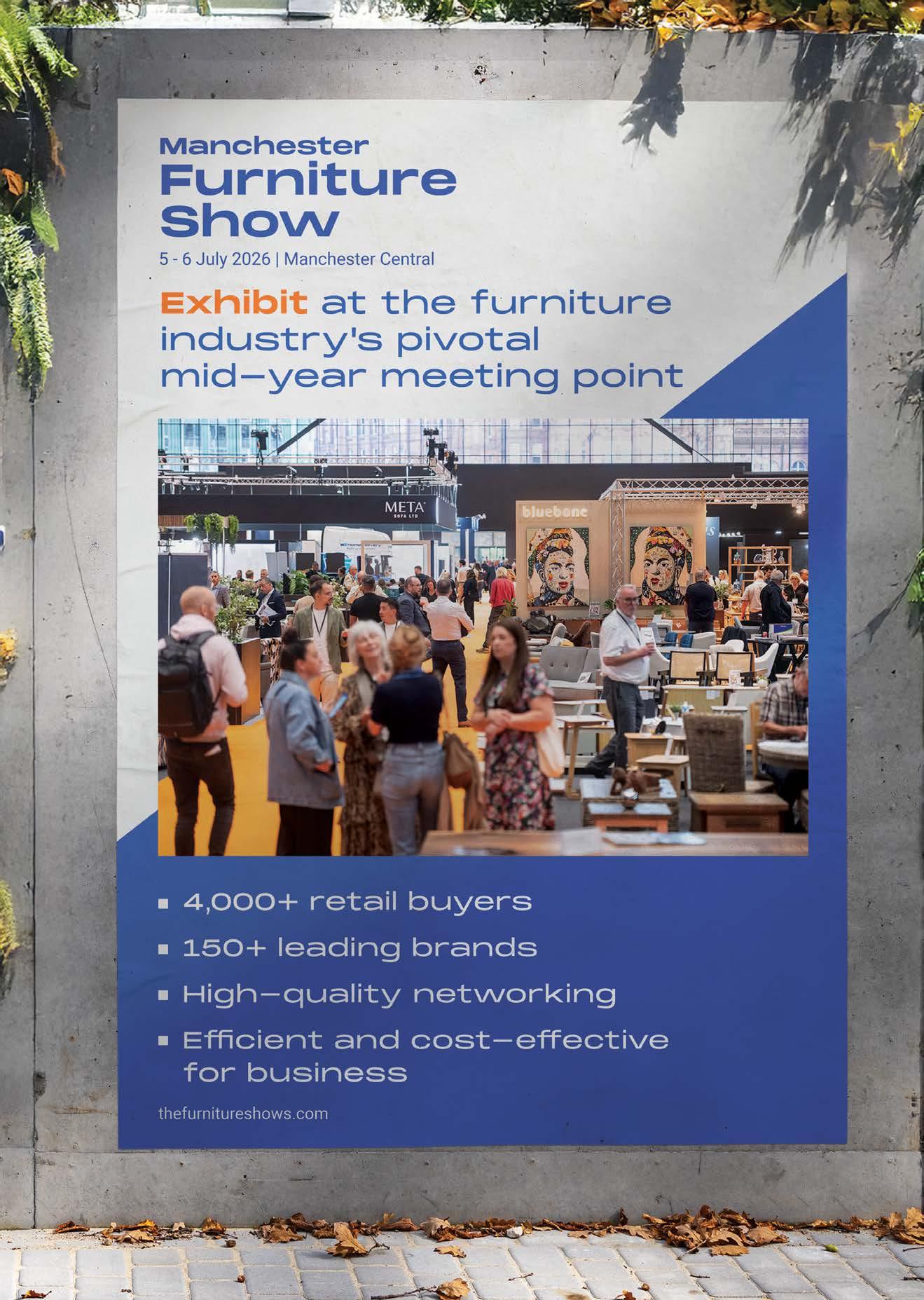
From fires to fieras, on p40 we look back at this year’s Salone del Mobile.Milano (a successful edition, by most accounts) and see what visitors had to say about the trends, side events, and the exhibition’s overall direction. There’s also a short preview of the Manchester Furniture Show (p34), ahead of the main feature in next month’s issue.
From p46, you’ll find this month’s product focus on machine-washable rugs, and, later in the issue, opinion pieces on everything from changing customer behaviour to brand foundations and ecommerce engagement.
And we’ve no shortage of insight from the experts leading the way – you’ll find interviews with CloseCo’s Kit Cook (p18), FableRoom’s Anushka Mahanti (p22), Furniture Sales Solutions’ Adam Hankinson (p26) and Magnet’s Sophie Rose (p30).
Depending on when you read this, there may also still be time to vote in this year’s Readers’ Choice Awards – head over to https://bit.ly/fn-readers-choice-awards-2026 before 6th June to have your say.
I hope you enjoy this month’s issue, and the range of views herein – do let me know if you’d like to share some of your own (inflammatory or otherwise).
Paul Farley

Paul Farley 01424 776101 paul.farley@lewisbusinessmedia.co.uk
AND
Sam Horscroft 07764 650655
DIRECTOR
sam@lewisbusinessmedia.co.uk
COO
Emma Sharp emmas@lewisbusinessmedia.co.uk
PRODUCTION
COPY ADMINISTRATOR Steve Merrick steve@lewisbusinessmedia.co.uk
DIGITAL MANAGER Nyall McCurrach nyall@lewisbusinessmedia.co.uk
ART EDITOR Sarah Crowhurst sarah@lewisbusinessmedia.co.uk
DESIGNER Tony Godwin
PRODUCTION EDITOR Allan Norbury allan@lewisbusinessmedia.co.uk
SUBSCRIPTIONS
Kay O’Brien kay@lewisbusinessmedia.co.uk
PUBLISHER AND CEO Simon Lewis
SUBSCRIPTIONS
(UK-£65, Europe-£85, RoW-£95)
REPRO, PRINT AND DISTRIBUTION Stephens & George
LEWIS BUSINESS MEDIA (ARTS) LTD Suite A, Arun House, Office Village, River Way, Uckfield, East Sussex TN22 1SL, UK 01825 983105 info@lewisbusinessmedia.co.uk
WWW.FURNITURENEWS.NET





PwC’s Edward Williams and Ross Connock were appointed joint administrators of Airsprung Group plc and Airsprung Furniture Ltd on 1st May, citing difficult trading conditions in recent years and increasing cashflow challenges over the last few months as the reasons behind the collapse of the Trowbridge-based manufacturer.
The group, which manufactured white-label products alongside its Airsprung, Gainsborough and Airofreem brands, says its directors explored potential investment and offers for the business
but, “given the cashflow position and the level and nature of interest”, had no choice but to place the company in administration.
Based on the overall trading and order book position, 71 of the companies’ 202 employees were made redundant upon appointment, while those remaining were retained to assist with the ongoing operations of the business while interest is explored. PwC says it intends to trade the business ahead of discussions with customers and reaching agreements around completing outstanding orders, alongside exploring any interest in the business and its operations.
Airsprung’s Tean Dallaway says: “I would like to sincerely thank our customers and suppliers for their support over many years, and most importantly our employees for their dedication, professionalism and hard work. Their commitment has been central to the business, and it is very sad and disappointing that the business has entered administration.”
EUROPUR, the European association of flexible PU foam block manufacturers, has warned that “despite additional storage capacity built in Europe over recent years, European PU flexible foam producers are now facing the most severe supply chain crisis in the industry’s modern history”.
UK mattress and upholstery manufacturers have been keeping a close eye on the unfolding situation in the Strait of Hormuz, but EUROPUR’s warning signals the likelihood of significant price hikes.
“The World Bank has described this as the largest oil supply shock on record,” the association states. “Raw material supply for the industry across Europe is now entering a critical phase. Fundamentally, there is no global shortage of
production capacity – however, the ability to obtain and transport raw materials, and to manufacture polyols, TDI and MDI, is severely constrained. The most critical products at present are polyether polyols, due to shortages in propylene oxide supply, compounded by European plant closures in 2025 and outages in the US.
“As foam producers face significant increases in raw material costs and struggle to secure sufficient volumes to meet demand, the situation is progressively affecting downstream markets. Even if the Strait of Hormuz were to reopen tomorrow, the global disruption to logistics means the market would be unlikely to normalise before late 2026,” EUROPUR concludes.
Investigation Project Phoenix has uncovered that several major online retailers are selling mattresses that do not comply with UK fire resistance regulations. The joint study, conducted by the National Bed Federation (NBF) and the European Bedding Industries Association (EBIA), tested 101 mattresses available for sale in the UK, with products purchased from both online marketplaces and traditional retailers. The tests were carried out by accredited test laboratories, and the products were examined against claims made both online and on the product labels.
The study tested 101 mattresses with prices ranging from £47.00 to £450 for a UK single-size mattress. Of those tested, 65% of those imported from outside the UK/EU failed to meet the required fire safety standards and were making claims about the specification of the product that were not accurate or were misleading.
Other potential issues were identified, including an indication that several contained foam fillings that may not meet the requirements of the Furniture & Furnishings (Fire) (Safety) Regulations, and a clear lack of labelling of the textile fibre composition.
NBF and EBIA state: “The findings reveal a deeply concerning lapse in safety compliance among some of the products sold by retailers, including several of the major online marketplaces and platforms, raising questions about supply chain oversight and product testing integrity.
“Product safety regulations are essential to protect consumers from dangerous products and to ensure the proper functioning of the market. Beyond the consumer safety implications, this issue is also creating an unlevel playing field for responsible manufacturers and retailers who invest time and resources to ensure their products meet all UK safety regulations.”
Ekornes has appointed Fredrik Ødegård Nilsen (previously EVP and CFO) as group CEO, replacing Tine Hammernes Leopold, who is stepping down “by mutual agreement with the board”.
Aldiss has reported record sales at both intake and delivered sales levels for a third year running. Delivered sales grew to £22.1m (VAT exclusive) in the year ended 27th September 2025.
The M6 Bed Warehouse plans to open its third showroom this summer, in Macclesfield.
uFurnish.com has partnered with Northern Ireland property portal PropertyPal to launch a virtual ‘Shop the Look’ experience, using uses AI product-matching technology to source items from more than 100 UK retailers.
Harvey Norman opened its fourth UK store, at The Gracechurch Centre in Sutton Coldfield, in April, and says the move signals a longer-term commitment to scaling its presence in Britain through a regional hub model anchored in the West Midlands.
Bensons for Beds’ customers helped raise more than £32,000 for homelessness charity Crisis through the retailer’s National Bed Month campaign in March.
The Furniture Makers’ Company is calling for entries for the 2026 New Furniture Makers Awards. The deadline is 11:59pm on 25th June.
Loom Loft Furniture & Interiors has partnered with digital agency Clicky to support the next stage of its online growth.
Aquaclean aims to boost consumer awareness of its easyto-clean sofa fabrics through an advertising campaign focused on TV and YouTube.
Very continues to grow its home offer, which now includes a selection of Dusk.com’s bestselling furniture and textiles.
Morleys Stores has confirmed that Jolly’s of Bath will reopen in March 2027, following an extensive programme of restoration and redevelopment across the landmark building.
MattressNextDay has launched a new Lowest Price Promise designed “to help shoppers secure better value on branded mattresses”.
Next’s sales were up 6.2% YoY in Q1 (to 2nd May), outperforming its forecasted 4.0% growth, and ahead by £28m, due to “exceptionally strong” growth in the first five weeks of the year, before the conflict in the Middle East erupted.
The Furniture Makers’ Company’s Big Shots clay pigeon shoot will return to Holland and Holland, Middlesex on 10th June.
Wayfair achieved a net revenue of $2.9b (up 7.4% YoY) in its Q1 ended 31st March. Of that, international net revenue stood at $319m (up 6% YoY). It ultimately reported a net loss of $105m, and non-GAAP adjusted EBITDA of $151m.
Comfizone has been recognised in three categories at this year’s Made in Northern Ireland Awards, highlighting strong development across product innovation, sustainability and manufacturing.
On 11th May, Jessica Alexander was installed as the 64th master of The Furniture Makers’ Company, succeeding Debbie Johnson.
The annual ceremony took place in the Long Parlour at Mansion House, the official residence of the Lord Mayor of London. Alistair Gough, CEO of Ocee International, and Donna Bellingham, CEO of Shackletons, were also installed, as the company’s new senior and junior warden, respectively.

Jessica started out in the furniture industry as a trainee journalist with Cabinet Maker, and her career went on to encompass journalism, PR and marketing, as well as running her own company and working for furniture and flooring businesses. She spent 17 years
leading the National Bed Federation (NBF).
Although now officially retired, Jessica continues to undertake PR work and remains a director of the British Furniture Confederation (BFC). She joined the Furniture Makers more than 20 years ago and has become increasingly involved in the organisation’s charitable and industry work.
The ceremony was followed by a celebratory dinner in the venue’s Egyptian Room. Around 150 guests were in attendance, including various City dignitaries.
Jessica says: “Taking on this role as the figurehead of the furniture industry’s charity and livery company for the next 12 months is an honour and a privilege. Like others before me, I will do my best to spread the word about what an important and special organisation we are; to support and inspire everyone involved, all of whom work so hard to further its aims and to encourage even more of those who have chosen to work in our industry long term to join us and help secure our future.”
M&S Group reflects on an “extraordinary” year
In its preliminary results for the year ended 28th March 2026, Marks & Spencer Group says it achieved an adjusted profit before tax of £671.4m (down 23.8%), with H2 up 4.1% – which the retailer describes as a “resilient performance” despite the cyber incident that impacted it early last year.
Statutory PBT was down 28.8% at £364.6m. Fashion, Home & Beauty sales were down 7.7%, delivering an adjusted operating profit of £213.4m. International sales were down 7.2%.
“That was an extraordinary year,” says M&S’ chief executive, Stuart Machin. “We were laser focused on our customers, worked incredibly hard to recover
our business, and we came out stronger.
“Throughout we were transparent with customers and they rewarded us with their loyalty. We remain the UK’s most trusted brand, and we never take that for granted.
“A resilient balance sheet supported by the hard work done on our cash position in recent years allowed us to absorb the cost of disruption without compromising our financial health. With strong net funds we continued our transformation at pace, completing our most ambitious year in a decade of opening new and renewal stores alongside significant advances in supply chain and digital capability.”
The National Bed Federation (NBF), the trade association representing British and Irish bed manufacturers and their suppliers, appointed Fara Butt as its president and elected five new council members following its AGM on 7th May.
Fara, director at Shire Beds, stepped up from her longstanding role on the NBF board and council, and as chair of the federation’s marketing committee. She succeeds outgoing president Tean Dallaway and will serve two years as president.
Tean (Airsprung Group), Mark Cort (Hypnos) and Angela Moran (Silentnight) stepped down from the council, and Nick Harland-Smith (Handy), Tristine Hargreaves (NBF), and Steve Warren (Sleepeezee) were re-elected.
The council also welcomed five new members: Danny Blackmore (Silentnight), Neil Clark (Sealy), George Joyce (Wolf Components), James Keen (Hypnos), and Neil McCarroll (L&P Springs UK). Matt Richardson (Dreams) remains VP of manufacturers,
and Simon Green (CPS) VP of suppliers.
Fara says: “The Federation plays a crucial role in supporting and representing our industry, from championing high standards to ensuring the strength of our manufacturing base and supply chain. I am proud to take on this role and look forward to working with members to continue driving the industry forward.”
Fara brings nearly two decades of industry experience to the role, having joined Shire Beds in 2006. Fara has long been a strong advocate for the bed sector, and alongside her role at Shire, she chairs the Mayoral Manufacturing Advisory Board at the West Yorkshire Combined Authority, helping shape industrial policy at a national level.
During her presidency, Fara plans to focus on “openness, visibility, and member engagement” across the Federation. She is also keen to strengthen collaboration throughout the supply chain by arranging more face-to-face events.

Domestic upholstered furniture faces an uncertain future. On 23rd June, the window will close for industry feedback ahead of reforms to the Furniture and Furnishings (Fire) (Safety) Regulations 1988 (FFRs) an issue long discussed by successive Governments. This month, Furniture News presents views from a range of stakeholders …
The rules by which upholstered furniture sold in the UK must abide were laid down in the late 80s, prompted by the infamous Woolworths fire of 1979 which claimed 10 lives, and catalysed by further deaths caused by toxic fumes.
The FFRs forced manufacturers to make furniture fillings and covers from safer, less flammable materials. On the face of it, safety would seem a clear-cut reason to maintain such regulations, yet concern has since mounted that the very flame retardants mandated by the ruling might themselves be a hazard to health, not to mention the environmental impact of their inclusion in products.
Another point to consider is that the regulations essentially make British furniture unique in its composition, safeguarding British-made product in the market yet hindering import and export activities. Those in favour of deregulation point out that the decline in fire deaths since the FFRs were introduced could have as much to do with greater awareness of fire risk, more widespread use of smoke alarms and fewer smokers.
In January 2025, the Government published a policy paper which called the FFRs “out of step with modern approaches to product safety and … increasingly a potential barrier to innovation and the circular economy”.
Building on feedback gathered in 2023 – and twice prior to that – the Government says it has engaged with businesses, charities, fire services and unions to shape a comprehensive reform of the regulations, that promises to bring certainty to anyone operating in the sector, taking “an evidence-led approach to craft a set of policy proposals that will maintain a high level of fire safety, while meaningfully reducing the reliance on chemical flame retardants brought about by the FFRs – a reliance which has not been seen elsewhere”.
The Government is proposing the following updates to deliver that certainty:
1. Introduce new furniture fire safety requirements based on a smoulder test
To maintain a high level of fire safety, while meaningfully reducing the reliance on chemical flame retardants, the Government says it will: end open-flame testing requirements, introduce new regulations underpinned by a smoulder test aligning with international approaches, put in place a robust monitoring and evaluation plan and mechanisms to assess the impact of changes, and retain bespoke regulations to ensure it can amend requirements if evidence necessitates it.
It adds that it will not: remove furniture fire safety regulations completely, implement a flame-retardant technology hierarchy, or remove
“Dialogue around the issue of furniture and fire safety has grown more heated
outdoor furniture from the scope of the regulations.
To ensure testing requirements are pragmatic and support innovation while protecting consumers, the Government says it will allow businesses to conduct composite or component testing and work with the British Standards Institution to ensure that standards are available to support compliance.
It adds that it will not require foam fillings to be tested separately, where manufacturers are utilising composite testing methods.
To ensure that regulatory requirements are proportionate, the Government says it will remove re-upholstery and repair from the scope of the regulations and remove secondhand upholstered furniture from the scope of the regulations.
It says it will not place additional administrative burdens on upholsterers, or take a zero-risk approach which leads to serviceable furniture being disposed of.
Later this year, the Government plans to publish a response that sets out “a comprehensive policy position, including addressing labelling and technical file requirements, and set out a timeline for implementing changes and transitioning to the new regime”.
With the deadline for (what the Government promises will be) the final consultation fast approaching, dialogue around the issue of furniture and fire safety has grown more heated, as stakeholders from across the spectrum of the industry argue for the maintenance, amendment, or full-blown reform of the FFRs. Here, Furniture News shares a range of perspectives …
Read the latest Office for Product Safety & Standards/Department for Business & Trade FFR consultation information, including how to respond, at https://bit.ly/3P3vc48
The British Furniture Confederation (BFC) – which represents the industry’s key trade associations (BFA, FIRA, NBF, CIUK and UKSFA), working closely with the Worshipful Company of Furniture Makers and the All-Party Parliamentary Furniture Industry Group (APPFIG), has issued the following statement in response to the consultation on proposed reforms:
“The sector is aware of the consultation on proposed reforms to the regulation of fire safety for domestic upholstered furniture. The BFC, its member organisations, and their members – including those represented on the BFC’s Public Affairs Advisory Council (PAAC) –are carefully reviewing the proposals.
“Products placed on the UK market must comply with the Furniture and Furnishings (Fire) (Safety) Regulations, as well as
relevant chemical safety legislation, including REACH (Registration, Evaluation, and Authorisation of Chemicals) and POPs (Persistent Organic Pollutants).
“We remain firmly committed to maintaining the highest standards of fire safety, while supporting proportionate, evidence-led reform that enables innovation – including technologies that could reduce reliance on chemical flame retardants. We look forward to working constructively with UK policymakers.
“It is essential that this debate is grounded in robust facts and figures, with a clear understanding of both safety and sustainability impacts, to ensure a balanced outcome that protects consumers, supports businesses, and provides long-term certainty for the furniture and beds, furnishings, and flooring sector.”
Delyth Fetherston Dilke Sustainable furniture design consultant

In the UK, almost a fifth of a sofa is not sofa – it is chemical flame retardants (CFR).
This was a shock to me, and I have worked for years to question the law, question the logic, work with the scientific community and with the upholstery community.
More recently I have worked with furniture manufacturers who wish to transition their internal sofa fillings to natural, nontoxic alternatives.
As we all know, the hands of the furniture industry have been almost tied by the 1988 fire regs into putting CFR in both the foam and most top fabrics of a sofa. They have largely done so believing that they are making a sofa safer.
But when the data is examined, the fire fatality data in the UK is no better than our neighbours in Germany, Italy, Spain, Belgium, Sweden … the list continues. You have then to ask, how are these chemicals making fire safety better, if Europe doesn’t use the chemicals in domestic furniture and has such similar statistics to us?
The Government’s new proposal is to drop the open flame test but mandate the cigarette test. The cigarette is still the single largest ignition source (in 45-75% fatalities), so the new test is targeting the prime fire safety risk. But crucially, what this proposal is allowing is the balancing act of fire safety against safety in the home and workplace from toxic chemical exposure.
Additive chemical flame retardants (such as TCPP added to foam) release into the air as a sofa is sat on, they settle in dust, can permeate skin, can be ingested and inhaled and can build up in the fat cells. Reactive CFR (such as the ‘inherent FR fabric technologies’)
James Stevenson CEO of UK operations, Zoy Furniture

I work for a Chinese manufacturer, and the use of UKFR-compliant materials is absolutely fundamental to everything we produce for the UK market.
However, this compliance comes with a significant cost. The current UK fire regulations are outdated and urgently need reform. Evidence from the EU shows similar declines in fire -related fatalities without the widespread use of chemical fire retardants, and the well- documented negative health impacts of these chemicals only strengthen the case for a complete overhaul of the existing rules. Modernising the regulations and allowing manufacturers to use the same materials permitted across Europe would dramatically level the playing field.
“What this proposal is allowing is the balancing act of fire safety against safety in the home and workplace
embed the chemical in the yarn, but both types of CFR present a problem with end-of-life recycling.
DEFRA acknowledged the incompatibility of the fire regs with the circular economy back in 2022 with their Waste Upholstered Domestic Seating regs, which see in practice the vast majority of our waste sofas being classified as hazardous waste and sent off for 800°C incineration alongside hospital waste.
With the hints of Digital Product Passports and Extended Producer Responsibility (EPR) obligations coming down the line, the Government has acted on an amendment to the 1988 fire regs to allow furniture manufacturers the flexibility to design out chemical flame retardants whilst still respecting the biggest fire risk, the cigarette.
This should be beneficial both to the customer, but also to the proportion of the 250,000 employees of the furniture industry who upholster on the workshop floor. Going forward, these workers will have the chance to be free of chemicals that have been linked in a large body of scientific research to cancer, infertility, autoimmune issues such as multiple sclerosis and development issues in children.
Change is admittedly a challenge, but to improve the clean air in a customer’s home, to be able to design furniture that is truly recyclable, and to look after the health of your workforce, are all positive results of this new Government proposal.
www.delythupholstery.com
Unfortunately, there is a growing trend in the UK for buyers to overlook compliance when sourcing from the Far East, simply because non- compliant products are cheaper. As a result, adherence to the law is often treated as optional rather than essential.
At Zoy Living, we do not allow any product to enter the UK market unless it is fully compliant. Yet it is incredibly frustrating when speaking with potential customers who are comparing our prices against non-compliant goods. We are not competing on equal terms, and responsible manufacturers are being penalised for doing things correctly. Ultimately, any reform is a step in the right direction. But reform alone is not enough. Once new regulations are introduced, there must be far greater emphasis on enforcement – including meaningful penalties for companies that knowingly ignore the law. Without proper policing and prosecution, the industry will continue to reward non- compliance at the expense of safety, fairness and consumer trust.
www.zoyfurniture.co.uk
Tony Attard OBE Chairman, British Furniture Confederation (BFC) and Panaz Group

It’s not often in life that you encounter something so shocking it stays with you forever. For me, that moment came in 1979 – the day of the Woolworths fire disaster.
At the time, I was a textiles and management student at the University of Manchester, walking across Piccadilly Gardens on my way to campus when the first fire engines arrived. Thick plumes of black smoke were already billowing from the department store. Within minutes, crowds gathered as firefighters raised ladders to reach the upper floors in a desperate attempt to contain the blaze.
It quickly became clear this was no ordinary incident. Ambulances began to arrive, and the scale of the tragedy unfolded in real time. Ten people lost their lives that day. The subsequent inquiry found that the fire had been caused by a faulty electrical circuit, which ignited upholstered furniture in the store’s furniture department. What followed was a rapid and devastating spread of flames and toxic smoke – something that, at the time, both industry and regulators were not adequately equipped to prevent.
That tragedy, alongside others in the years that followed, fundamentally changed how we think about fire safety in the home.
Less than a decade later, the UK Government introduced the Furniture and Furnishings (Fire) (Safety) Regulations 1988 – a landmark piece of legislation that transformed furniture manufacturing in this country. It imposed stringent requirements on every component of upholstered furniture, from fillings to cover fabrics. Foams were required to meet far higher fire-resistance standards, effectively removing non-compliant materials from use. Cover fabrics had to pass rigorous testing, including the smouldering cigarette test and the small flame (‘match’) test under BS 7176.
The impact has been profound. Today, the UK has among the lowest rates of fire-related deaths in the home globally. While this success cannot be attributed to furniture regulations alone –declining smoking rates and the widespread use of smoke alarms have also played a major role – it would be a serious mistake to underestimate their contribution.
Now, nearly four decades on, the regulatory framework is once again under review – and rightly so. The world has changed.
Smoking in the home, once a leading cause of domestic fires, has declined significantly. Material science has advanced, bringing forward new generations of flame-retardant technologies. Many of the chemical treatments historically used – such as decabromodiphenyl ether – have been phased out or heavily

“As we approach this latest review, we must be clear-eyed about the risks of getting it wrong
restricted. In their place, we are seeing increased use of inherently flame-retardant fibres, where fire resistance is built into the molecular structure rather than applied as a surface treatment.
This progress matters. It demonstrates that safety and sustainability need not be mutually exclusive. However, as we approach this latest review, we must be clear-eyed about the risks of getting it wrong.
Fire remains a very real and present danger. Recent tragedies –from the Grenfell Tower fire to other incidents across Europe – are a stark reminder of what is at stake. Remove fire protection from upholstered furniture, and you are not simply reducing regulation –you are increasing risk, potentially dramatically.
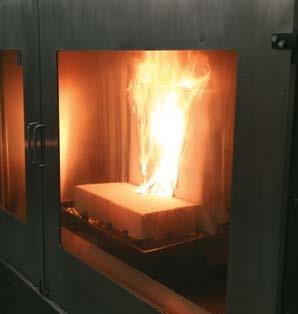
Anyone who has witnessed a controlled house fire demonstration will understand how quickly a room can become engulfed once upholstered furniture ignites. The danger is magnified in modern living environments – particularly in flats and high-rise buildings, where fire can spread rapidly and escape routes are limited.
Introducing unprotected furniture into such settings would be, quite simply, irresponsible.
At the same time, we cannot ignore growing concern about chemicals in the home. Media coverage has increasingly focused on substances such as PFAS, microplastics, and other potentially harmful compounds found in everyday products. Some of these concerns are legitimate and deserve careful, evidence-based consideration.
But too often, the debate becomes distorted. Headlines can be sensationalist, and technical nuance is lost in the pursuit of impact. Not all risks are equal, and not all exposures are significant. The presence of a substance does not automatically equate to harm.
As an industry, we must engage constructively – continuing to innovate, improving transparency, and reducing environmental impact where possible. But we must also ensure that decisions are grounded in robust science, not fear or misinformation.
The challenge facing policymakers is therefore one of balance. We must preserve the life-saving benefits of the existing fire safety regime while allowing for modernisation where evidence supports it. We must encourage the adoption of safer, more sustainable materials without compromising the fundamental objective of protecting lives.
Above all, we must remember why these regulations were introduced in the first place. For those of us who witnessed events like the Woolworths fire, the lesson is clear – fire safety in upholstered furniture is not an abstract policy issue, it is a matter of life or death. As the consultation proceeds, I urge all involved to keep that reality firmly in mind.
Tony’s response is not a reflection of the BFC board’s, which remains diverse in its opinion on fire safety matters for upholstered furniture.
Johnny Worthington Commercial business area manager, Furniture & Floorcoverings, SATRA

The Furniture and Furnishings (Fire) (Safety) Regulations 1988 have been highly effective in reducing fire risk in the UK, and any review should clearly recognise the significant life-saving safety benefits they have delivered over the past four decades. SATRA fully acknowledges this success.
However, it also recognises that the technical, manufacturing and environmental context in which the regulations operate has changed substantially since their introduction, driven by advances in materials, production methods and sustainability objectives.
One of the primary motivators behind the proposed reforms is the desire to reduce reliance on chemical flame retardants. There is increasing concern regarding the potential health and environmental impacts associated with certain chemical treatments, alongside wider regulatory and societal pressure to minimise the use of substances of concern. Against this backdrop, it is understandable that alternatives to achieving flame retardance without heavy chemical intervention, such as barrier technologies and other designbased or new innovative solutions, are being actively explored.
It is within this context that proposals to remove certain ignition tests, including the ‘match flame’ test, are being considered. Reducing the need for chemical treatment by removing specific ignition sources from the test regime is seen by some as a way to support a lower reliance on chemicals use across the supply chain.
Greg French Director, Westgarth Furniture

The impact of reform isn’t just about what changes – it’s about what happens before and after it does.
We’re already seeing movement ahead of any legislation. Media coverage, including in The Times, is prompting more direct questions from consumers. That quickly reaches retailers and, in turn, suppliers. The result is hesitation, possibly more scrutiny on what’s inside products, and in some cases a delay in purchasing decisions.
There are questions relating to that period before any formal change. If consumers think products may soon be replaced or improved, it could create a pause in the market. For retailers’ floor displays and stock, that’s a real concern. They are sitting on fully compliant products that may start to be questioned, despite meeting current regulations.
After any change, the challenge becomes practical. The industry can’t switch overnight. Retailers won’t be able to replace displays
“Any revised framework should be underpinned by strong evidence
Nevertheless, SATRA believes it is essential that any reform carefully balances the ambition to reduce chemical use with the continued need for robust, repeatable and comparable safety assessments. Simple ignition tests such as the match flame test have historically provided a clear and unambiguous baseline for assessing fire performance, enabling consistent comparison of products and materials over time. From both a safety and enforcement perspective, they also offer clarity, transparency and consistency.
Removing long-established tests without a proven, equally robust and widely understood alternative risks introducing uncertainty for manufacturers, testing bodies and enforcement authorities alike. Any revised framework should therefore be underpinned by strong evidence demonstrating that alternative approaches deliver at least an equivalent level of protection, while genuinely supporting the move away from potentially harmful chemical treatments.
SATRA supports evidence-based reform that reflects modern materials, sustainability objectives and advances in fire safety science. However, it is essential that any changes strengthen –rather than dilute – overall safety outcomes while maintaining confidence that products placed on the market continue to meet clear, consistent and comparable fire performance expectations.
www.satra.com
“Change is expected, but the timing and communication around it will be critical
immediately, and supply chains need time to adjust. Without a clear transition period, there is a risk of unnecessary disruption and cost across the market.
There is also the question of alignment. The UK sits slightly apart from other markets, and any reform is likely to move closer to what is done elsewhere. That makes sense in the long term, but it does add short-term complexity for businesses managing both existing and new standards.
In simple terms, change is expected, but the timing and communication around it will be critical. If handled well, the industry will adapt. If not, the uncertainty either side of the change could have a bigger impact than the regulation itself. That said, we also expect some really positive changes, in reduced costs and availability of product.
www.westgarthfurniture.co.uk
Claire Kelly GM, Clarkson Coatings

The Office for Product Safety and Standards (OPSS) consultation published in March 2026 proposes significant amendments to the Furniture and Furnishings (Fire) Regulations (FFRs), including the removal of the open flame ignition test.
This is the first consultation since the regulations were introduced in 1988 – following reviews in 2016 and 2023 – to explicitly recommend eliminating this requirement.
While the stated aim is to maintain existing levels of fire safety while reducing the use of chemical flame retardants (CFRs), the removal of the open flame test represents a material reduction in test severity and a step backwards in consumer protection.
At Clarkson Coatings, we test more than 50 upholstery fabrics every day and observe first-hand the wide variation in burning behaviour between different fabric constructions. Fire performance is not theoretical – it is measurable, and the consequences of insufficient protection are well documented and potentially catastrophic.
Under the current FFRs, face fabrics are required to act as a primary barrier to ignition, preventing heat and flame transfer to highly combustible PU foam fillings. This preventative barrier is fundamental to the success of the regulations. Our testing repeatedly shows that many fabrics that pass the open flame test also pass the smoulder test, but the reverse is frequently not the case.
Fabrics engineered only to meet smoulder resistance often ignite readily when exposed to a small flame. In real world terms, a smoulder-only compliant sofa may ignite from a match, candle, lighter or overheated electrical device, leading to faster fire development and reduced escape time. By contrast, a fabric that meets open flame resistance will typically self-extinguish, with minimal localised damage.
This distinction is not academic. The Government-commissioned Greenstreet Berman report (2009) concluded that the FFRs save an estimated 54 lives per year, prevent approximately 780 casualties, and avert over 1,000 domestic fires annually. These outcomes are directly linked to the preventative nature of the testing regime, particularly resistance to small open flames.
Although CFRs are not explicitly mandated under the regulations, they historically provided a reliable, cost-effective and adaptable means of achieving compliance across a wide range of fabric types and constructions when the regulations were introduced.
However, regulatory and environmental expectations have evolved. By the third consultation in 2023, a commonly used brominated flame retardant had been classified as a Substance of Very High Concern (SVHC) under REACH, prompting legitimate concerns and industry-wide efforts to identify alternatives.
Since 2014, Clarkson Coatings has invested heavily in collaboration with chemical suppliers and fabric manufacturers to develop new fire-retardant technologies. This process demanded significant capital, time and technical expertise.
Some approaches failed to meet fire performance requirements – others proved commercially unsustainable. There has never been
“The consequences of insufficient protection are well documented and potentially catastrophic
a universal solution – particularly against a backdrop of tighter chemical regulation, evolving fabric trends, increased emphasis on circular economy principles and ongoing market uncertainty.
Crucially, recent innovation has delivered effective nonhalogenated treatments and chemical-free lamination systems that maintain fire performance while supporting environmental objectives. These technologies directly align with the Government’s stated aims. However, this progress has not been adequately reflected in OPSS data or decision-making, resulting in proposals that underestimate the industry’s ability to improve sustainability without sacrificing safety.
There also remains widespread misunderstanding regarding the chemicals currently used in upholstery manufacture. UK face fabric flame-retardant back coatings involve the application of a coating to the reverse of the fabric, offering ignition resistance alongside improved seam slippage and dimensional stability. Active ingredients are securely bound within an acrylic binder. TCPP –often referenced in public debate – has never been used to treat UK face fabrics, and chemical safety is already governed under robust REACH compliance obligations.
With lower-impact fire retardant solutions now entering the market, and furniture designs increasingly incorporating electrical charging, motors and smart technology, the proposal to remove the open flame test is premature and poorly aligned with real-world risk. Fires that do not occur – because preventative measures work – are absent from statistics. To weaken testing because those fires are unseen is to fundamentally misunderstand how the current regime delivers protection.
Reducing test severity risks increasing domestic fire incidents, endangering consumers and exposing manufacturers and retailers to increased liability. More importantly, it represents a missed opportunity to protect UK businesses, encourage innovation, maintain fire safety and achieve environmental progress in parallel.
The Furniture and Furnishings (Fire) Regulations have saved lives for nearly four decades. Any reform should build on that success –not dilute it.
www.greenfr.co.uk

Keiran Hewkin Founder and CEO, Swyft

Firstly, this is long overdue. FR regulations are a waste of time, money and precious resources. We are behind the rest of the world. They’ve been kept due to entrenched interests, and it is my view it is protectionism by another name.
Technically it means an inferior product, harder foams, coarser fabric and a more limited palette of materials to work with compared to the rest of the world, leaving the UK consumer with less choice, higher prices and a worse product. Any industry or market that cuts itself off from the global standards ends up being uncompetitive over time, and worse. There is nearly no exception to this, and upholstery in the UK is the same.
This is a brilliant example of cutting off your nose to spite your face. It also leads to UK upholstery companies being less able to compete in other markets because they all have to dual-stock product. Just look at our industry leaders and their meagre infant representation in other markets.
Then there is the environmental impact. The treating of fabric and foam is a step that just isn’t needed. Europe has no such requirements and fewer deaths per capita than the UK from fires,
“It is protectionism by another name
which tells you everything. Just compare Germany, or a country with similar smoking and fire alarm rates to the UK, and it’s actually lower (the Eastern European countries bring the average up). So, the UK consumer is sat on a potentially toxic product to protect people who used to smoke in the 1980s? We are wasting all that material, transit and chemical use. Unforgivable.
The health issues are there too. I’m unconvinced that there is much impact that isn’t inherent in our lifestyles anyway, but surely deletion of one more source of these chemicals has to be a good thing – especially as it neither makes the product safer nor better.
This should have been unwound decades ago, and it’s been kept by the established manufacturing base to protect their interests against competition. And it’s led to worse competitiveness, worse product and worse health outcomes, while wasting resources.
The reckoning is coming, and when this is rightly unwound the consumer will benefit rapidly and those entrenched parties will discover just how badly this legislation has impacted their ability to compete when the world can openly compete with them.
www.swyfthome.com
Jag and Sukh Sandhu MDs, Tokyo Fabrics Int


With over three decades of industry experience, built under the leadership of our founder Tarsem Singh Sandhu, our business was formed in response to a simple but serious concern – the prevalence of non-compliant FR-treated fabrics in the UK market.
That concern became the foundation of our work as ethical FR coaters, and we grew into one of Europe’s largest operations. Today, we supply a significant share of the industry, giving us a clear view of what is often overlooked – the critical importance of correctly applied flame retardant treatments in real-world fire safety. From that perspective, the proposed shift from a flame test to a smoulder test is not a minor technical adjustment. It is a fundamental change with potentially far-reaching consequences at a national level.
The current debate, in places, is being shaped by selective
“The debate is being shaped by selective interpretation
interpretation and uneven reporting. But the evidence remains consistent – properly treated FR fabrics play a vital role in reducing fire-related harm and preventing avoidable loss of life.
The Government has stated that the change is intended to reduce the use of chemical flame retardants due to these perceived health and environmental concerns. Yet these substances are already tightly controlled under REACH, the UK’s dedicated chemicals regime, which applies a rigorous, science-led process to assessing safety for public health and environmental damage. Bypassing UK REACH’s responsibilities, by undermining established fire safety standards, will endanger public safety. The flame-retardant back coatings used in our fabrics fully comply with these standards.
Reversing some of the strongest fire safety standards in the world would, in our view, mark a clear step backwards. It risks undoing decades of progress built on hard lessons, and it challenges a principle that should never be compromised – even one preventable loss of life is one too many.
www.tokyofabrics.co.uk



Lee Paxman MD, Mobus Fabrics

I have a number of concerns about the OPSS proposals. Domestic dwellings are by far the most dangerous fires, accounting for 77% of fatalities and 73% of casualties, but only 18% of the total fires. The first items ignited in 27% of dwelling fires were ‘furnishings’ (upholstery, fabrics, bedding), and these fires caused 49% of all dwelling fatalities – over 100 deaths attributable directly to the ignition of furnishings.
How can the Government justify a huge reduction in the fire safety of furniture and mattresses in dwellings, making all these items much easier to ignite?
If we go back five or six years, the original OPSS objectives were to maintain fire safety standards, innovate, develop new manufacturing techniques and reduce FR chemicals in furniture.
This original approach is correct, and we agree with it 100%. Mobus has been innovating for many years, and we have a lot of new FR finishes that don’t use any FR chemicals – we have many

The current Office for Product Safety and Standards consultation is being framed as progress, but it contains a fatal flaw that preserves a decade-old scam. By proposing to keep ‘component testing’ as an option, the Government is allowing the industry to continue a dangerous deception – testing so-called ‘virgin materials’ at the factory gate, then modifying them with silicone sprays and adhesives before they reach the consumer.
The Government’s own October 2014 technical annex – which

It’s a complex and important conversation. There’s increasing awareness around the health and environmental implications of certain fire retardants, and rightly so. At the same time, safety standards are strict and necessary.
others that use significantly fewer chemicals and more sustainable chemicals. Mobus has also pioneered many new technologies, and we have a number of chemical-free fabrics already selling in the UK. We also have a number of fabrics which use significantly fewer chemicals and incorporate technical laminations and coating.
Mobus has a patent which we will open source and allow competitors to use. This will help others reduce their chemical footprint and support the entire sector achieve the original OPSS objectives – which we were ambitious, but balancing fire safety and chemical reduction soundly.
The change from the OPSS to remove the flame test is a significant reduction in fire safety standards, which contradicts the original direction and is a big concern. We’ve carried out a lot of testing on fire performance, and can show that a composite test will pass EN1021, but, within five seconds of exposure to a naked flame, will develop into an uncontrolled fire. This will put consumers in danger, particularly those most at risk – over 65s, children and those with mobility issues. Mobus are in favour of innovation and the evolution of the fire safety standards, but the drastic changes proposed are not balanced, and will put lives in danger.
www.mobusfabrics.com
was effectively suppressed for 12 years – explicitly warned that these post-test additions can have a ‘catastrophic effect’ on flammability.
While the massive accumulation of unnecessary FR chemicals stems from the department’s failure to implement the new match test in 2014 – and the subsequent delay in adopting the 2019 EAC recommendation for a smoulder test only – the PoS scandal adds a layer of direct, current legal liability.
Under the Consumer Protection Act 1987, safety is mandated at the PoS to the consumer – not the factory gate or ‘point of supply’, as the test houses call it. If the new 2026 regulations do not close this loophole, the UK furniture industry will remain defenceless against cheaper, non-compliant imports, while continuing to sell ‘safety illusion’ products that fail to meet the legal standards of the primary legislation.
“It’s obvious where manufacturing is going
It’s obvious where manufacturing is going, and that’s finding ways to meet safety requirements with less reliance on harmful chemical treatments. That’s something we’re actively monitoring and working towards as materials and regulations evolve.
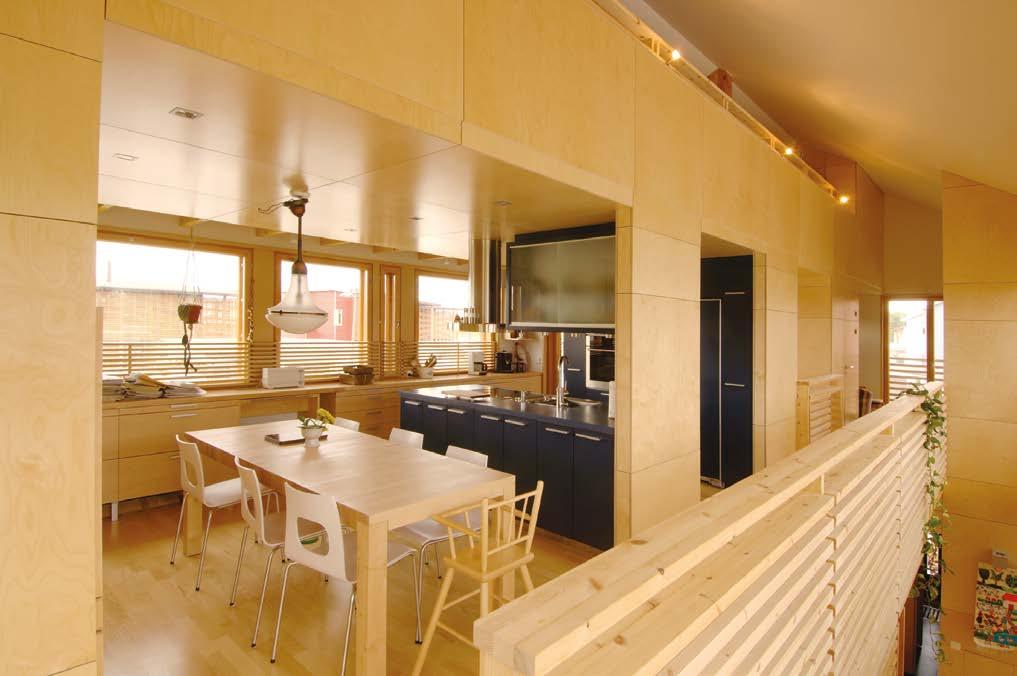
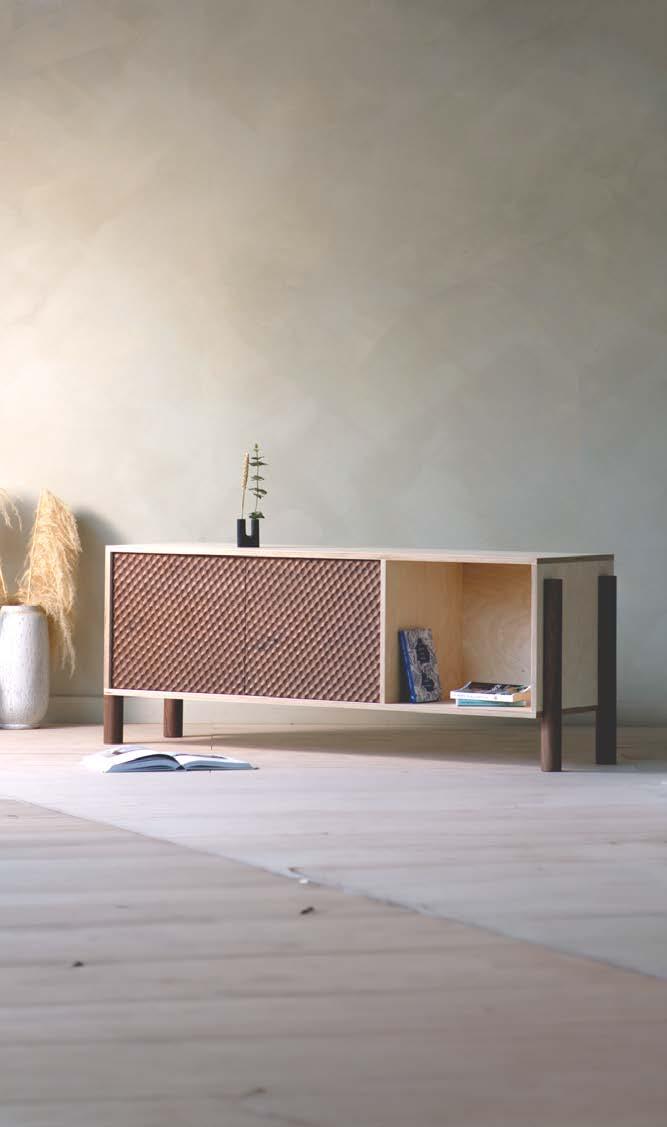
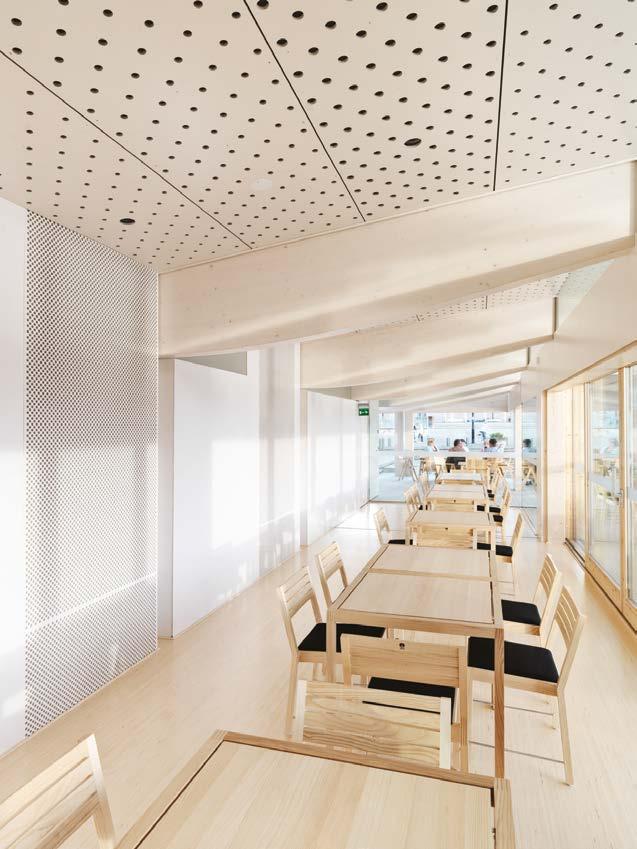
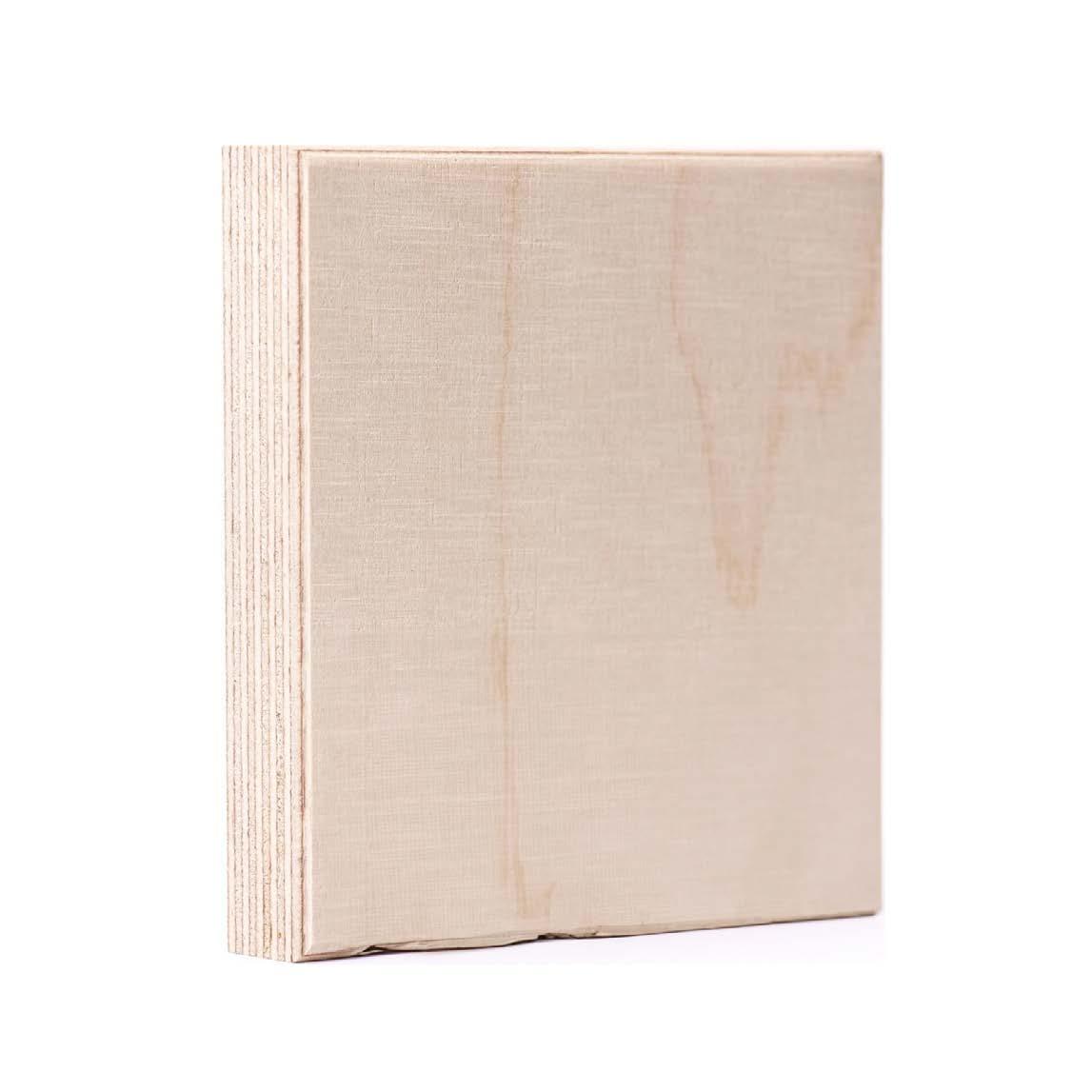
Beautiful, workable and legally sourced from Finland.
Available and in stock now from James Latham.
Email us at info@lathams.co.uk or visit our website at lathamtimber.co.uk. Get in touch today to order your sample!

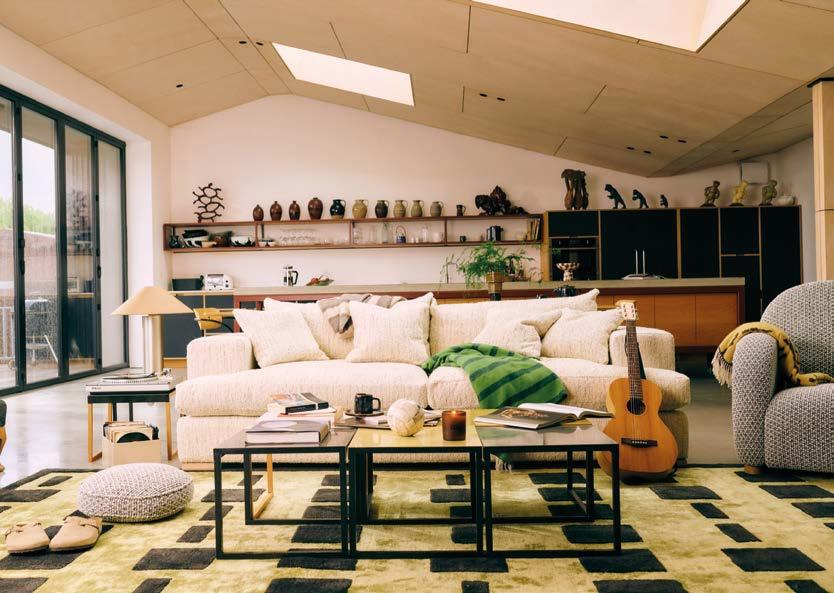
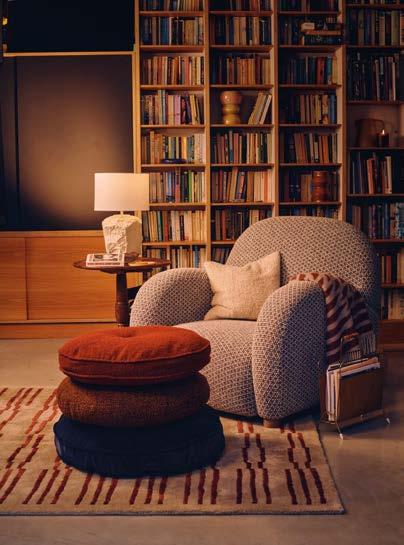
With growing consumer appetite for sustainable furniture, newcomer Close Company (CloseCo) is challenging fast furniture culture by prioritising homewares with longevity. “It’s about designing things that are clear in their purpose and built to last,” explains MD Kit Cook. But what makes CloseCo different from other online brands with a similar promise?
Can you summarise CloseCo in one sentence?
Thoughtfully designed home essentials for everyday living.
How did the business come about?
CloseCo came out of a gap we kept coming back to –there was plenty of furniture that was either design-led but cold, or comfortable but uninspiring. We wanted to build something that sat at the place in between, so all of our pieces are designed to feel emotionally warm, visually distinctive and, importantly, built to last.
For us, it wasn’t just about making sofas and chairs, it was about creating a brand with a point of view that people could relate to. As a result we landed on ‘cosy utility’ as our anchor, which summarises our offering as practical, hardworking furniture that still carries personality and a sense of home.
What else does your product offer?
At its core, we design upholstered furniture made to live with people properly – day in, day out. That means robust construction, materials chosen to age gracefully rather than degrade, and a visual language that can move easily across different interiors without feeling fixed or overly styled.
From the outset, the aim has been to go beyond standalone pieces. We’re building a broader homeware ecosystem (textiles, ceramics, scent) so customers can shape a complete environment around a consistent feeling, not just a single product.
Now, in 2026, we’re live with our initial collection, but already working quietly on the next phase, which is expanding into case goods. The ambition is to offer furniture for every room in the home, while maintaining the same balance of utility and character that defines our upholstery.
How well do homewares and fabrics complement your upholstery offer?
Very naturally. Upholstery is the foundation, but it’s only one layer of how a space feels. Homewares and
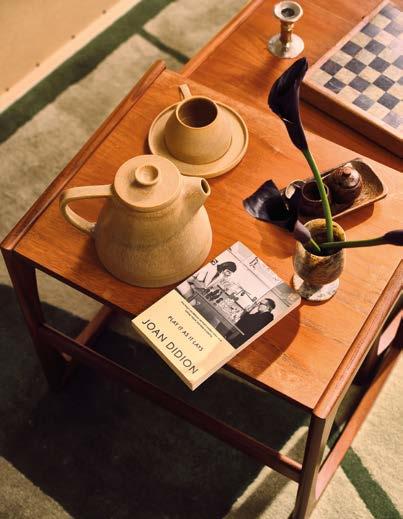

fabrics allow us to build depth – think colour, tactility, scent, mood. They let customers engage with the brand at different levels, and they make the whole offer feel more complete and considered. It’s less about ‘adding products’ and more about building a cohesive world. We want to eventually reach a point where we are able to satisfy all the senses through our product offering.
How is CloseCo different from other furniture businesses with sustainability at their core?
A lot of brands approach sustainability as a message, but we approach it as a by-product of how we build. So, we don’t lead with claims, but instead we focus on making things properly – long-lasting frames, repairable construction, and materials chosen for longevity, not just optics.
Sustainability, for us, is about reducing replacement cycles. If something lasts twice as long, that’s where the real impact sits. We never create items that lean into the throwaway trend culture.
How does your focus on durability exceed that of your competitors’?
We design with time in mind, not just first impressions. That shows up in many ways, like over-engineered internal structures, fabric selections tested for real wear, not just showroom appeal, and construction methods that prioritise repair over replacement. We’re less interested in how something looks on day one, and more in how it holds up after five years of real use.
Does that mean any compromise on comfort?
“We’re seeing a shift from ‘eco’ as a selling point to ‘value over time’ as the real driver
Not at all – if anything, it improves it. True comfort isn’t ››
“We really believe that transparency builds more trust than perfection
just softness on day one, it’s consistency over time. While a lot of furniture feels great initially, it degrades quickly. We design comfort that holds its shape and support, meaning that the experience CloseCo furniture offers doesn’t drop off, but it stabilises.
What does your supply chain look like?
It’s a close, hands-on network of manufacturers and suppliers, primarily built around long-term relationships rather than transactional sourcing. We are not looking for the cheapest manufacturer, but the best manufacturer for our needs.
How is consumer demand for ‘greener’ furniture changing?
Customers are becoming more informed and more
sceptical. There’s less appetite for vague claims, and more interest in where things are made, how long they’ll last and whether they can be repaired.
We’re seeing a shift from ‘eco’ as a selling point to ‘value over time’ as the real driver. So, we know that the demand is there and is likely to grow.
How does your branding and marketing approach reflect your offer?
We try to reflect the product honestly. For us that means, natural, grounded palettes, real-feeling environments over overly styled sets for our branding, and a balance of charm and clarity across all copy and comms. We’re not trying to appear overly polished, we want to feel considered and human.
What steps do you take to ensure you steer clear of any greenwash?
We keep it simple – we don’t over-claim, we avoid vague language and we focus on what we can stand behind. If something isn’t fully resolved, we’d rather acknowledge that than dress it up, as we really believe that transparency builds more trust than perfection.
Short term, we’re focused on building out a complete furniture and homeware offer, making sure everything feels cohesive and intentional. A big milestone will be our physical space, where we can create an environment where people can fully experience the brand, not just shop it. We have an incredible team of creative minds behind this brand, and so an exciting concept for this is in the works.
Longer term, the ambition is to establish CloseCo as a recognisable lifestyle brand known not just for products, but for a distinct way of living.
www.closecompanyliving.com
One Collection. Endless Possibilities.
Introducing Alice Springs - a fully coordinated storage collection across bedroom, living, hallway, home office and bathroom. Available in 9 contemporary colourways with a clean push-to-open design, created to inspire multi-room styling and drive bigger basket growth.
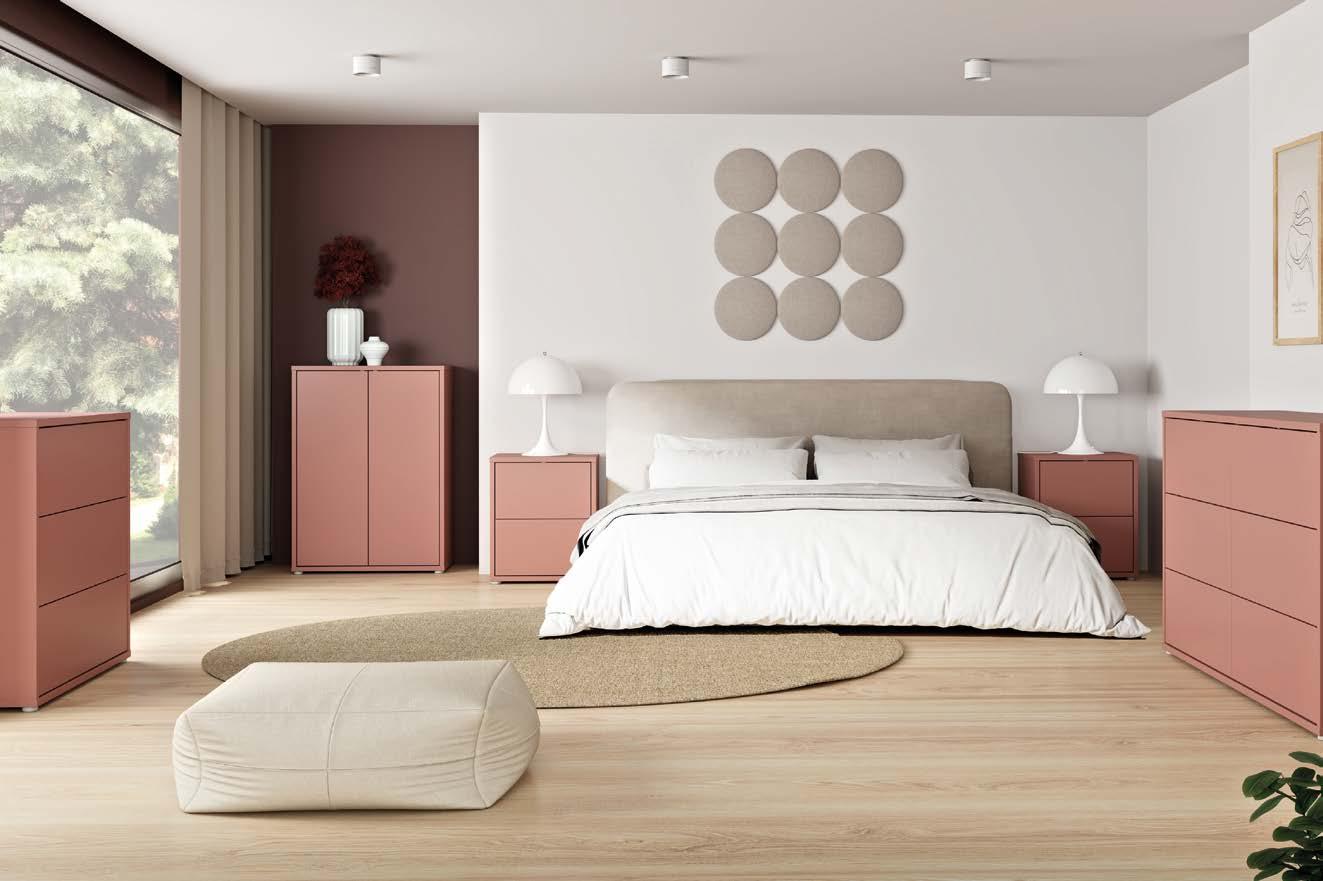
FTG is your one-stop shop, with high-quality, best-selling furniture pieces. All in stock for next-day delivery. No MOQ.
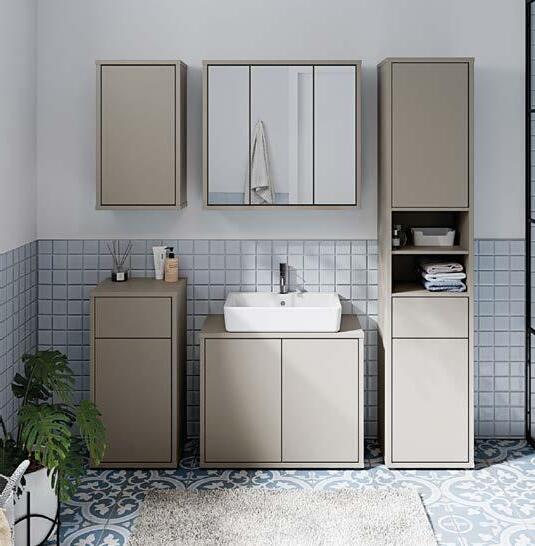
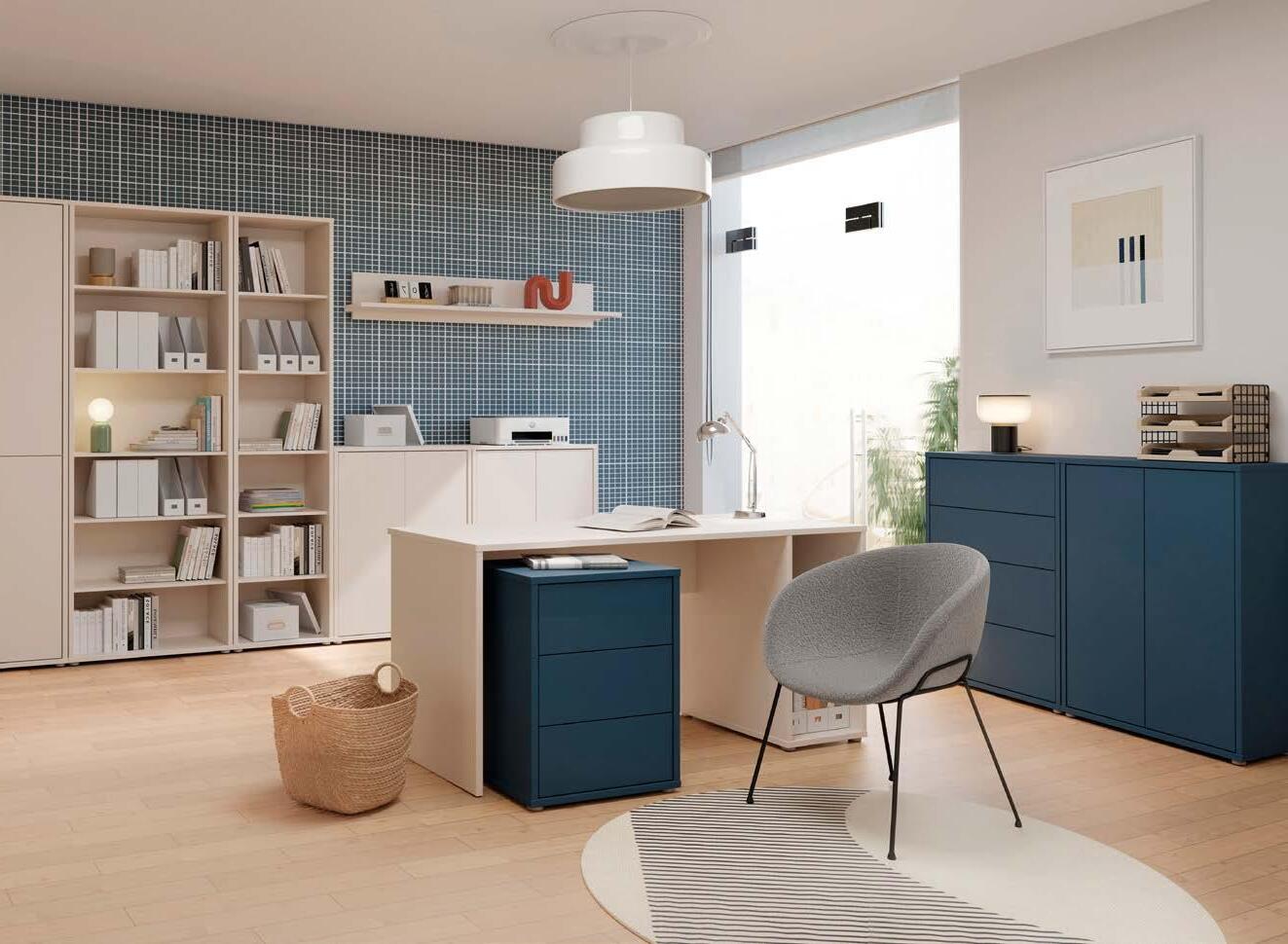
Call us at 02380 517067 - Let’s see how we can help. sales@furniture-to-go.co.uk | www.furniture-to-go.co.uk
Anushka Mahanti co-founded FableRoom in April 2025, stepping away from a decade spent in consumer businesses including Amazon and Arla Foods to build an online lifestyle brand shaped by a simple question: “Why does well-made homeware cost so much?”
Anushka is now the chief business officer at FableRoom, an online D2C lifestyle brand that aims to bring affordable luxury to homewares and lifestyle shoppers, offering more than 1,200 SKUs across furniture, rugs, home textiles and accessories.
The website now boasts upwards of 200,000 visitors each month. In under a year, it sold products to more than 12,000 UK households, generating a 4.7star Trustpilot rating from over 800 verified reviews, and has featured in the Daily Mail, House & Garden, Ideal Home, Woman & Home and House Beautiful
Offering customers homewares “straight from its makers”, FableRoom aims to deliver what Anushka describes as “affordable luxury – design-led pieces at fair prices that don’t feel needlessly out of reach”, and, she adds, has saved those customers in excess of £5m against comparable retail pricing since its launch.
“Our proposition is deliberately straightforward –affordable luxury without the traditional retail markup,” Anushka explains, “with homewares comparable to those offered by established retailers such as Heal’s, West Elm and Soho Home, but typically priced around 30-60% lower, with full transparency over sourcing and production.”
The value of visibility
Before Amazon, Anushka worked at Arla Foods across brand and innovation roles spanning the UK, Denmark and the Middle East, and there developed a focus on provenance-led categories, and how trust shapes purchasing decisions.
“At Arla, I saw that consumers are not naïve,” she says. “They want to know what they’re buying, how it’s processed, and why it costs what it does. That’s not niche consumer behaviour – it’s where the market is going.”
Upon leaving Amazon, Anushka began examining the structure behind the category, and saw a system “built on multiple intermediaries. Each one added margin. Each one also pushed the customer further away from the people actually making the products.

“Working at Amazon teaches you a particular kind of rigour,” she continues. “You’re accountable for every assumption. But you also see, every single day, how much customers respond to transparency and genuine value.”
FableRoom works directly with certified manufacturing partners and artisans across India and Vietnam, removing traditional wholesale intermediaries from the chain.
Customers can see where the products are made, who made them, and what they are made from, she says: “In a category often defined by aspiration and opacity, that visibility is central to the proposition.
“We don’t obscure what we do. We lead with it. Because when customers understand the value chain, the saving isn’t a discount – it’s just honesty.
“If radical transparency in a category famous for aspiration and opacity sounds appealing, fableroom.com is worth a visit
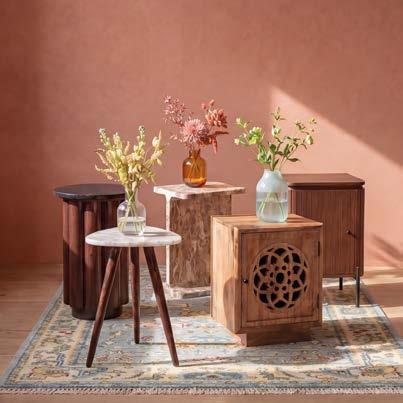
“India already exports around $13b in home decor annually – heading to $21b by 2030. Our textiles, our artistry and our craftsmanship are celebrated the world over. And yet there is still no globally recognised home decor brand built from India. FableRoom is part of the answer to that.”
Early growth has been driven largely by word of mouth and repeat customers, alongside press coverage. Brand searches are now rising each month, alongside organic tags posted by satisfied customers.
“We are rated excellent because the product overdelivers against expectation,” she says. “That overdelivery is a structural feature, not a lucky outcome. It is what happens when you remove the middlemen.”
FableRoom, which also runs a trade programme for interior designers, show home consultants, agents and commercial projects, offering tiered pricing of up to 25% off across the range, is now focused on expanding its UK footprint and moving into adjacent
lifestyle categories, and Anushka frames the project less as ‘disruption’, and more as ‘correction’.
“We are in the very early chapters of this,” she says. “Every home we reach is a validation that the model works. That customers want beautiful, well-made things at prices that feel right.”
Furniture News asked Anushka for further details …
Why visit your website?
Because you’re tired of paying for someone else’s margin. FableRoom exists for the person who has taste but resents being taxed for it. Our storefront has a rich selection of occasional furniture, handmade rugs, home textiles and accessories that sit comfortably alongside what you’d find at high street and luxury retail outlets, at 30-70% less.
That’s not a sale. That’s just what happens when you remove the layers of intermediaries that have been quietly inflating your home furnishings bill for decades.
We’re also quite open about all of it. Where things are made, who made them, what they’re certified to. If radical transparency in a category famous for aspiration and opacity sounds appealing, fableroom.com is worth a visit.
How did you enter this industry?
I spent over a decade across consumer businesses, Amazon and Arla Foods among them, before I started pulling at a thread that had been nagging at me. Why does well-made homeware cost so much?
The more I looked at the supply chain, the more the answer became obvious – it costs so much because of how many hands it passes through before it reaches you, none of whom are the person who made it.
I didn’t have a background in furniture or interiors then, but a deep-rooted appreciation for the crafts and the industry. As an enthusiast of home and lifestyle magazines, I related with the customer who looked at luxury homeware and lifestyle products but always felt they were a bit out of reach. I came into the industry from a place of conviction that one needn’t compromise between beauty, quality and affordability.
Who is your ecommerce hero?
Probably an unfashionable answer, but Jeff Bezos. Not for the scale, but for the obsession with the
customer’s side of the equation. The idea that the customer’s trust is the most valuable thing you can earn, and the easiest thing to lose, is something that has shaped how I think about FableRoom entirely. We live and die by our Trustpilot reviews. Not because we’re anxious about them, but because they tell us whether the product is over-delivering against expectation – which it should be, structurally, when you’ve focused on delivering the best quality and removed the margin stack. The moment it stops overdelivering, something has gone wrong.
Describe a typical working day … I always say I have the best job at FableRoom. A typical day is spent working through new selection across current and new categories, and diving into the detail of how our content and storefront performed, what customers browsed and bought, and how they reacted to and reviewed our products. I try and spend quiet time, when I can, working through my vision for the brand and the community of customers and advocates we want to build around it. I’m also a new mum to a beautiful four-month-old baby boy, so my work breaks centre around feeding and spending time with him, as he’s learning to stretch the limits of his vocal cords!
I’d describe a typical day less as a working day and more as a permanent state of useful chaos with occasional moments of satisfying clarity.
What part of your job would you prefer to avoid?
It’s not so much the job I’d like to avoid, more the reasons leading to it. I review all instances of customer complaints where we fall short on delivering what we promised our customer. Production delays, delivery snags, transit damage … because even when the model is structurally right, execution is still hard. I have a very high bar for customer experience, and when something falls short of it, I find it genuinely difficult to accept.
“The customer’s trust is the most valuable thing you can earn, and the easiest thing to lose
“There is still no globally recognised home decor brand built from India
What’s been your greatest challenge to date?
Building trust in a category where the incumbents have enormous brand equity and we have none, yet.
Homeware is an emotional purchase. People are putting these things in their homes. So the question of ‘why should I trust this brand I’ve never heard of?’ is entirely legitimate, and we have to earn the answer every single time.
Our Trustpilot rating of 4.7 from over 800 verified reviews is the thing I’m most proud of, because every single one of those reviews is someone who took a chance on us and found the product over-delivered. That compounding trust is the hardest thing to build and the most valuable thing we have.
How much do you invest in making your site more visible?
Proportionally less than most ecommerce businesses at our stage, because we focus a lot on spend efficiency, while driving word of mouth and repeat. We are disciplined about performance marketing, and think carefully about payback periods.
What I try to avoid is buying customers I can’t afford to keep. So we focus heavily on the quality of the first experience, because a customer who comes back is worth vastly more than one who doesn’t.
What’s your take on how the relationship between online and physical retail might develop?
FableRoom will always be online-first, and we’re quite deliberate about that. Over 70% of homeware and lifestyle product discovery already happens online, and more than 80% of our own storefront browsing is mobile. The customer has already moved – so the question is whether the online experience is good enough to meet them there, particularly in a highconsideration, tactile category like home furnishings, where the traditional argument for physical retail has always been ‘but you need to feel it’.
We think that argument is weaker than it used to be, provided you do the digital experience justice. That means obsessing over item data quality, rich imagery, precise descriptions, honest material information and transparent pricing.
It means answering the contextual questions customers are actually asking – how do I pick the right rug size for my living room, how do I style a small flat, what works with what. If your online storefront can do that well, you don’t need a showroom. You need judgment and investment in the right places.
For us, not carrying the overhead of physical retail isn’t just an operational preference, it’s part of the model. Every pound we don’t spend on a permanent store or showroom is a pound we can return to the customer in pricing, or to the maker in fair terms. The brands that will struggle are the ones treating physical retail as a badge of legitimacy rather than asking honestly what job it’s doing. We know exactly what job our storefront is doing, and we’re focused entirely on making it do that job better.
Do you have any plans to grow your business?
Several. We’re deepening our UK footprint, expanding the product range, and building out the community infrastructure that turns one-time buyers into brand advocates. Beyond that, we’re extending into adjacent premium lifestyle categories where the same playbook of delivering direct from maker, full transparency and honest pricing applies.
Our supply-side infrastructure, tech, and the lean team we’re building, are all geared towards making FableRoom a global brand known for delivering impeccable value.
What advice would you offer an aspiring e-tailer? Be honest about your unit economics before you’re honest about anything else. It is very easy to build a business that looks like it’s working, with growing orders, good reviews, press coverage and extensive marketing, while quietly bleeding on margins you haven’t yet faced up to. Know your cost of acquisition, your repeat rate, and your payback period from day one. The second thing I’d say – pick a category where you have genuine structural advantage, not just a point of view. A nice brand is not a business model. What is it that you can do, or access, or know, that someone else can’t easily replicate? For us, that’s the supply chain and our moat in driving speed to market. What’s yours?
www.fableroom.com


In his new book, Furniture Sales Solutions’ Adam Hankinson, who has spent 45 years on furniture shop floors, makes a simple, measurable promise – one extra sale per salesperson per week. Furniture News asked Adam to explain what’s really going wrong on Britain’s shop floors – and what the numbers look like when it’s fixed …
Let’s start with your elevator pitch …
Here’s an uncomfortable truth. If you own a furniture store, orders are being lost every single week – not because your product isn’t good enough, not because your showroom isn’t beautiful enough, but because of what’s happening in the conversations between your salespeople and your customers.
Poor mindset. Missed questions. Prejudged browsers who were actually buyers. Customers who walked out and spent their money somewhere else.
I’ve watched it happen for 45 years. Now I’ve (literally) written the book on fixing it. Selling Furniture: The Million Pound Seller Blueprint is the distillation of four-and-a-half decades of training the UK’s top furniture retailers, packaged into a seven-habit framework that any salesperson can learn and any business can measure.
In short, one extra sale, per salesperson, per week – at an AOV of £1,500, with six salespeople over 47 trading weeks – means £423,000 of additional annual revenue.
Acknowledging the potential of what you’re suggesting, what’s the biggest mistake furniture salespeople make?
Prejudging customers. Deciding someone isn’t buying
today – based on how they’re dressed, what car they arrived in, whether they said ‘just looking’ – and therefore not affording them any real time or effort.
That single habit stops conversations before they start. The customer who says ‘just looking’ is often the one who spends £3,000 if you engage them properly. Salespeople who prejudge never find out. They just wonder why their conversion rate is low.
Are you saying that despite store owners investing in their showrooms, the sales conversation is letting them down?
All the time. I’ve visited some of the most impressive furniture stores in the world – incredible buildings, beautifully designed showrooms, world-class product. And then you watch what happens when a customer walks in, and there’s a gap between the owner’s vision for excellence and what’s actually being delivered on the sales floor.
The product deserves better. The showroom deserves better. But most owners aren’t investing in the one thing that converts all of that into revenue –the skill of the people doing the selling.
Why do you feel that is?
Two reasons. First, they see it as a cost rather than
an investment. Second, they worry it will make their salespeople pushy – and that’s the last thing a quality furniture retailer wants.
But that’s not what professional training does. This is about raising standards, building confidence, and making salespeople more skilled at having genuinely good conversations with customers. The stores that treat training as an investment are the ones taking a larger slice of the market.
Can you outline your Seven Habits framework?
The selling process only works because it matches how customers buy – it’s really a buying journey that the salesperson facilitates. Each habit corresponds to a stage in that journey: Mindset, Approach, Foundational Questions, Active Listening, Selling the Solution, Concluding, and Referrals. Miss any one of them and you leave money on the table.
Mindset alone accounts for at least 50% of a salesperson’s success. You can teach someone every closing technique in existence, but if they walk onto the floor with the wrong attitude, none of it fires.
You’ve written a whole chapter on ‘active listening’ – what’s the issue?
Too many salespeople are on transmit. They’re thinking about what to say next rather than hearing what the customer is actually telling them. The customer is giving you everything you need to close the sale – but if you’re not listening, you miss it entirely.
Graham Kirkham, who founded DFS and built it into the UK’s biggest furniture retailer, identified this as the single major issue in the industry. When someone at that level confirms what you’ve observed on shop floors for 45 years, it tells you everything.
You also talk about ‘black swans’ in the sales conversation. What are they?
A black swan is a piece of information the customer doesn’t think to tell you, but which completely changes the sale if you don’t uncover it.
My favourite example is this – there’s a customer who lives in a lighthouse, so delivery access is going to be a serious issue. Or they may also be midrenovation, and can’t take delivery for four months.
A salesperson who doesn’t ask those questions loses the sale when the problems emerge later. A salesperson who does ask – and then explains that the piece is MTO anyway, so ordering now and storing it makes perfect sense – turns a potential obstacle into a reason to buy today.
Black swans are everywhere. You find them by asking better questions and actually listening.
The final habit is Referrals – give us an example of what that looks like …
Hand two business cards to every customer at the end of every sale. Ask them to pass one on. That’s it.
One salesperson I work with started doing exactly that in her first three weeks after training. She had three separate comebacks from those cards – all of them orders.

Salespeople don’t ask for referrals because they forget, they think it feels desperate, and it’s not yet a habit. But if you’ve done a great job – and most furniture salespeople do – the customer genuinely wants to recommend you. You’re just making it easy for them.
What results have you seen when businesses implement this properly?
A 10% uplift in turnover is realistic – and that requires full commitment from leadership and the team, because old habits creep back in. Beyond that, AOV increases by around £150 per transaction. KPIs improve significantly across the board.
Housing Units – one of the largest independent furniture retailers in the UK, trading since 1947 –have worked with us and seen exactly this kind of transformation. Their own assessment was that even their most experienced salespeople found techniques and habits that made a difference.
What’s the role of the manager in making this stick?
This is where most training programmes fail. You do the training, people are energised, and three weeks later it’s back to old habits.
The difference is coaching, not managing. Managers look at a figure sheet at the end of the week. Coaches influence behaviour during the sale, in real time, on the floor. A good coach can help a salesperson win a sale they wouldn’t have won alone. That’s not theoretical – that’s a conversion that would have walked out the door. The book has a full chapter for sales leaders on exactly how to make this happen every day.
What about experienced salespeople who think they already know how to sell?
It’s a cottage industry, and there can be a lot of people with a closed mindset – they’ve been doing the job for years and they don’t see what they have to learn.
“There’s a gap between the owner’s vision for excellence and what’s actually being delivered on the sales floor
“People buy from people, and service is what makes all the difference

But here’s the good news – once you get them in a room and demonstrate that you genuinely understand this industry, 95% of them engage completely. They realise there are refinements they weren’t applying consistently, habits they’d dropped, techniques they’d never been shown.
The credibility has to be there from the start. Generic sales training fails with furniture veterans because they can smell inauthenticity immediately. Everything in this programme is grounded specifically in furniture retail.
Is the book itself enough, or is this messaging really about bringing your team in-store?
The book is a complete blueprint – a serious business owner or sales leader can absolutely take it and drive change with it. Think of it as the foundation and the ongoing reference point.
But the reason businesses bring us in is that embedding new habits in an established team requires coaching, accountability, and someone who’s seen every objection and every excuse before.
The book starts the conversation. The training programme is where the £400,000 gets unlocked.
What’s at stake for owners who don’t act on this?
There’s £19b spent on furniture in the UK every year. That market doesn’t wait for anyone. The businesses that invest in their people’s skills will take a larger slice of it. The businesses that don’t will keep watching customers walk in, browse, and leave –convinced the problem is footfall, the economy, or the competition.
The customers are coming through the door. The product is on the floor. The opportunity exists every single day. The only question is whether the person
standing in front of the customer is equipped to convert it.
What’s the ROI for a business that commits to it?
On average, businesses working with us see a minimum 10 x return on their training investment. For every pound spent, £10 comes back to the business.
And critically, this isn’t revenue they were already generating, it’s incremental. It’s orders that would have been lost. Customers who would have walked out. Sales that simply wouldn’t have happened without the improved skills of the team. That makes it pure profit the business had no right to expect.
We measure this properly. The international benchmark for evaluating training impact is the Kirkpatrick Model, a four-stage framework used by serious organisations worldwide.
Stage one measures the immediate reaction of participants. Stage two measures what they have actually learned. Stage three measures whether their behaviour on the floor has changed. Stage four – the one that matters most to a business owner – measures the results, namely the revenue impact, the uplift in KPIs, the orders converted that wouldn’t have been.
We apply all four stages – not because it sounds impressive, but because it’s the only honest way to know whether training is working.
Adam’s book, Selling Furniture: The Million Pound Seller Blueprint, can be ordered from several online bookstores. For training programmes, workshops and keynotes, visit Furniture Sales Solutions’ website.
www.furnituresalessolutions.com
Our 2026 Outdoor Collection is a refined and versatile range that reimagines how outdoor spaces are used and experienced. Inspired by modern design with a timeless edge, it brings indoor levels of comfort and practicality outside, encouraging year-round relaxation and living.
Key ranges featured: Madeira Lounge Set
View our full collection online at www.gallerydirect.co.uk
Scan the QR code for more
1973
Sophie is the CEO of kitchen specialist Magnet, and the first female leader in the company’s history. Magnet was acquired by Alteri Investors (which also owns Bensons) in January, bringing the firm back under domestic ownership – and Sophie, who has worked for the likes of Tesco, Boots and Holland & Barrett, has been tasked with managing its next phase.

“‘Customer focus’ is not a poster, it’s a habit. Get out on the front line, listen properly, and fix what’s broken
How might a child describe what you do?
I help people get the kitchen they’ve always wanted … and I spend a surprising amount of time talking about cupboards. The important bit is making sure our teams have everything they need to do a brilliant job.
What’s the biggest long-term challenge you face?
Staying focused on what really drives long-term performance. It’s a competitive market, customers have lots of choice and not much time, so consistency is so important. For us, it’s about delivering on quality and service every time, while building the capability for the long term, not just chasing short-term wins.
If you had 10 x your working budget, what would you spend it on?
People and training first, because that’s what customers actually feel. Then I’d accelerate investment in our stores, both improving our existing estate and expanding our proven smaller high-street format, alongside sustainability and the tools that make the whole experience simpler, from design through to installation.
What would be the title of your autobiography?
From lipstick to larders: building brands customers trust. It’s been a slightly unusual journey from my Boots days to kitchens, but the same principles still apply. What gets me out of bed is the opportunity to create something that genuinely delights customers.
What does ‘work/life balance’ mean to you?
It is not a perfect spreadsheet. For me it is being fully on when I am at work, but properly present when I am not, and not pretending taking time away is optional.
Who’s been your most influential professional mentor?
An early boss who taught me that ‘customer focus’ is not a poster, it’s a habit. Get out on the front line, listen properly, and fix what’s broken.
What advice would you give your younger self?
Back yourself sooner, and ask the awkward question in the meeting. It usually turns out everyone else was thinking it too.
What’s been your best day in business to date?
Leading Magnet into its new chapter under dedicated UK ownership has to be up there – it was the moment you could really feel the shift into ‘we’ve got this’.
What’s the biggest myth about our industry?
That the product is everything. In reality, people buy from people, and service is what makes all the difference. If you haven’t truly understood the customer and how they’ll use the space, then a kitchen becomes just a wooden box.
What should everyone in our industry either stop or start doing?
Stop racing to the bottom on price and calling it
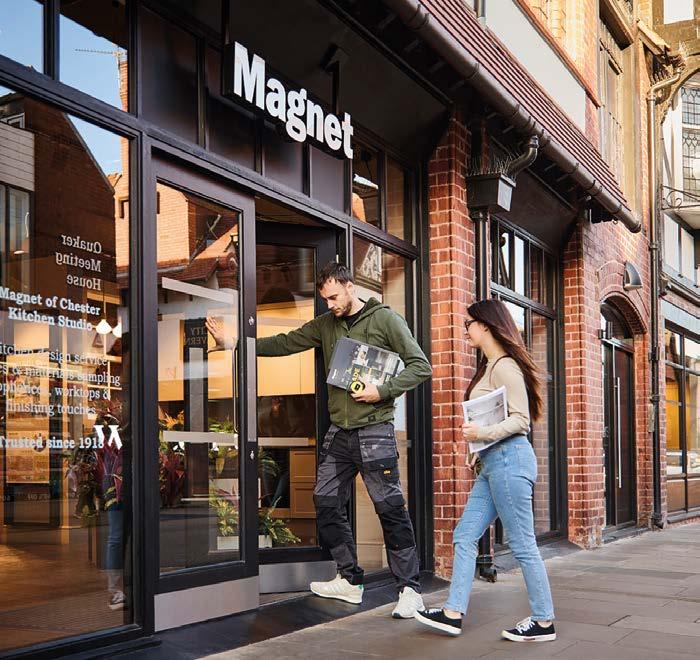

‘value’. Start raising the bar on skills, responsible sourcing and service, because that is what builds long-term trust.
Where do you see the industry going in the next 5-10 years?
More blended journeys – digital convenience with real expertise, and more immersive ways with AI to help customers visualise their choices. The winners will be the businesses that can prove quality, simplify the customer journey, and credibly lead on sustainability.
What question do you wish we’d asked? How would you have answered?
Q: What should every customer ask before they buy a kitchen?
A: Ask your designer to play back what they’ve learned about you and how that’s shaped your kitchen design. If they can do that well, you’ll know you’re in safe hands.
www.magnet.co.uk
“People buy from people, and service is what makes all the difference
From a generation-defining referendum to post-pandemic ‘clicks and mortar’ strategy, Furniture News puts today’s issues in perspective, looking back at what happened in the industry five and 10 years ago today …

Five years ago (June 2021)
In the news, as the GfK’s Major Purchase Index rose for the third consecutive month, it became clear that many were preparing their homes for a ‘staycation summer’ following prolonged lockdowns.

“The BRC called for the preservation of Single Market benefits

Furniture retail prices continued to rise following months of supply chain disruption, and store footfall rose as restrictions eased.
Store openings came thick and fast – some from unexpected quarters. JYSK announced new stores for Bury and Stockport, Tim Oulton opened its flagship Noble Souls store on the King’s Road, Chelsea, and Turkish chain Vivense began its UK store rollout in Southwark.
Ecommerce pureplay Mattress Online reported record growth and plans to open seven physical stores. Dreams also hedged its (multichannel) bets, launching an online-only brand, Sleep and Snooze.
Bouyed by better-than-expected order intake, ScS made good on its promise to repay £3m in Coronavirus Job Retention Scheme (CJRS) grants. Similarly high demand also saw DFS arrive at a positive year end, despite shipping delays and factory disruption.
Shortly after confirming the sale of Dreams to Tempur Sealy, Sun European Partners agreed to sell Sharps to Epiris, while TCM Living acquired the Arlo

& Jacob brand. Soft furnishings manufacturer Riva Home announced the development of a 375,000ft2 head office and distribution centre, and bedding manufacturer Comfizone invested more than £250,000 in its two facilities.
Minerva’s Summer Furniture Show opened in Telford, and it was revealed that July’s ‘Manchester’ Furniture Show in Harrogate would be part of a Government research programme studying virus transmission.
In the magazine, with many re-evaluating the worth of British-made goods, we looked at how domestic manufacturers were seizing market share, what sets British-made furniture apart, and what consumers were willing to pay for it. We looked at how retailers and suppliers were handling price rises, and previewed the Summer Furniture Show and Manchester Furniture Show.
10 years ago (June 2016) In the news, consumer caution in the run-up to the EU membership referendum on the 23rd, and the immediate impact of the unexpected result – a plummeting pound, billions wiped off the LSE, and the PM’s resignation among them – dominated. In the wake of the vote, the British Retail Consortium (BRC) called for the preservation of Single Market benefits and clarity for businesses.
In retail, end-of-year results included Carpetright (mixed results), Feather & Black (narrowed losses) and Leekes (significant profit growth). Loaf announced plans to open a second ‘shack’ in Notting Hill and a partnership with John Lewis, while a sale of Danish retailer BoConcept to Layout Bidco (affiliated with London-based PE company 3i Group) was agreed.
A buyer could not be found for beleaguered department store BHS (reportedly in debt to the tune of £1.3b), signalling the closure of 163 stores and the loss of some 11,000 jobs. Meanwhile, former principals Sir Philip Green and Dominic Chappell were grilled by a House of Commons inquiry about their part in the business’ demise.
In Devon, Trucksmith invested in a £1.5m factory extension, and HRH the Countess of Wessex visited Vispring’s HQ.
Securing the show’s future following its restart under new ownership, the January Furniture Show signed a seven-year commitment to the NEC.
In the magazine, we looked back at I Saloni and ahead to New Designers, interviewed the Retail Ombudsman’s Dean Dunham, Housing Units’ Nick Fox and Westbridge Furniture’s Nichola Bell, and introduced a series of quarterly updates from GfK looking at the state of the industry.
Summer’s here – so it’s time to be bold and get noticed! July’s issue will feature:
Best of British: Fly your flag in our annual celebration of British design and manufacture
Manchester Furniture Show: The summer’s main event is back, so most of the opportunity to promote your new lines or take advantage of our extra show distribution
Delivery Fulfilment: Swift, reiable fulfilment has never been so important. Put your business in the driving seat!
PLUS the highlights from Long Point and the Spring Furniture & Bed Show, and the latest in Living, Dining, Bedroom and Trade Services. Call Sam today to get ahead of the game!
BOOK



ADVERTISING – Most advertising does not work very well. If yours isn’t, stop wasting your money now. Don’t blame the media, blame your message. Re-design your advertising in a benefits-orientated-style. Call Greenwood for effective copywriting and marketing know-how.
PRODUCTS – Be ruthless with your precious floor space. If a product or collection isn’t performing after being given a fair trial, then clear it and replace it with a faster selling line. Test and measure the selling potential (or not) of your products in an accelerated Greenwood Sale.
SELLING SKILLS - Get good at selling. Most retailers don’t employ a proper retail sales process for big ticket goods. The most successful ones do. Invest time and money in quality sales know-how. Call Greenwood to arrange an effective sales training course for your team.
COMPETITION – Check your competition to find out what they are offering. Avoid all-out price wars. Outperform your competition on the most relevant beneficial points including choice, quality, value and service. Call Greenwood to mystery shop your competitors.
PROMOTION – Promote your business effectively. Every good retailer from Aldi to Harrod’s does. Consider using a Greenwood Sales Promotion to increase sales, turn stock into cash and win future market share, while protecting your profit at the same time. Call Greenwood!
Grow your business, build your order book and win future market share with a Greenwood Promotional Sale or, realise the enormous value of your goodwill using a Greenwood Business Closing / Retirement strategy. Either way you can generate record-breaking sales and profits.
Greenwood Sales work. To find out more, call me, Bernard Eaton now on 07771 700247, and I’ll explain the exciting options and possibilities for your Greenwood Sale without obligation.
NOW BOOKING FROM AUTUMN 2026 CALL TODAY - 07771 700247

UK & Ireland’s Leading Experts in Retail Sales Promotion sales@greenwoodretail.com www.greenwoodretail.com
The Manchester Furniture Show returns to Manchester Central on 5–6th July, and promises to deliver a multitude of business opportunities for retailers and exhibiting suppliers alike just when they’re needed most, says the show’s organiser …
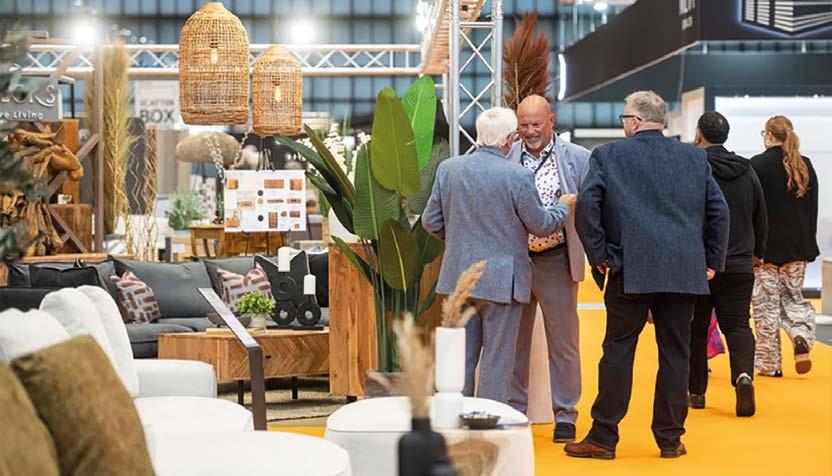
For furniture retailers, the period between spring planning and autumn trading has become increasingly important, says The Furniture Shows, the team behind the Manchester Furniture Show: “Consumer confidence remains uneven, margins continue to be scrutinised and businesses are under pressure to make every buying decision count.
“In this environment, the opportunity to review ranges, assess new suppliers and have direct conversations with industry partners has never been more valuable – which is why Manchester Furniture Show continues to occupy such an important position in the retail calendar.”
The show arrives at a pivotal point in the year, offering retailers a dedicated opportunity to step away from day-to-day trading and focus on what comes next.
new opportunities and hold meaningful discussions without the time and cost associated with multiple showroom visits, says The Furniture Shows team.
For many retailers, that efficiency is one of the event’s greatest strengths.
“I always enjoy the Manchester Furniture Show,” comments Lee Fisher, commercial director at Harvey Norman UK. “Manchester is a really convenient location for me to travel to and the show brings together many of my key suppliers into one venue, making it easy to see lots of new products and network.”
“The opportunity has never been more valuable
Positioned between early-year planning and key Q3 and Q4 purchasing decisions, it provides a timely platform for evaluating product categories, identifying emerging trends and refining ranges for the seasons ahead.
What makes the event particularly effective is its concentration of suppliers and products in one location. Buyers can compare collections, explore
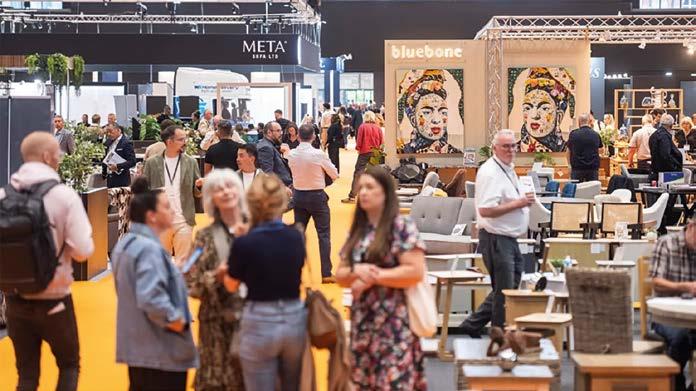
Alongside established industry names, the 2026 edition will feature a significant number of new exhibitors, giving retailers access to fresh collections and new sourcing opportunities. In total, more than 150 furniture and interiors brands will showcase over 25,000 products across upholstery, cabinet, dining, beds, accessories and homeware.
Yet while product discovery remains central to the event, many attendees point to something equally important – face-to-face conversation.
“Digital communication may have transformed how businesses operate, but there is still no substitute for seeing products in person, discussing challenges openly and building stronger commercial relationships,” says the show’s organiser.
Eden Stoller, branding and marketing manager at Stollers, says: “Being there in person, rather than communicating via email or flicking through a brochure, really makes a difference.”
The opportunity to exchange ideas and gain market insight is another reason buyers continue to prioritise attendance.
Vivion Connolly, MD at Connollys of Moy, comments: “We are visiting the Manchester Furniture Show to have honest conversations with suppliers, discover fresh ideas, and walk away with the confidence and products needed to navigate today’s market.”
Beyond the exhibition floor, networking remains a key
part of the experience. Informal meetings, dedicated social spaces and industry events create opportunities for retailers and suppliers to strengthen relationships in ways that simply cannot be replicated online.
The show’s content programme also offers broader industry perspective. The return of the Women in Furniture Network panel, Shared Growth in Action, will bring together senior retail and interiors leaders to discuss leadership, collaboration and growth in a changing marketplace.
As businesses look ahead to the second half of 2026 and beyond, Manchester Furniture Show remains one of the industry’s most valuable opportunities to source product, gather insight and make informed decisions – because “in furniture retail, the conversations and choices made today often shape the success of next season”, says the show’s organiser.
Register to visit via bit.ly/4fixA1J.
www.thefurnitureshows.com
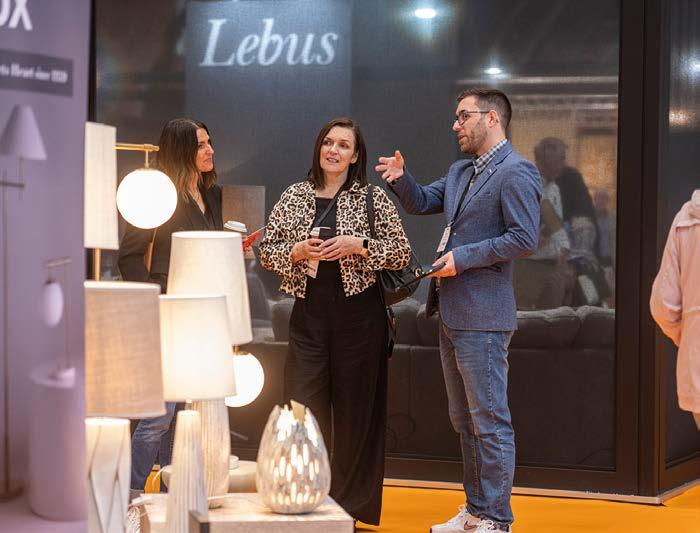
When it comes to the world of furniture retail, exhibitions still deliver, says The Furniture Shows team.
Rising transport costs, continued supply chain uncertainty and ongoing pressure on margins mean furniture suppliers are having to scrutinise every commercial investment more carefully than ever, and for many brands, the challenge is not simply generating new business, but doing so efficiently. Travelling the country to meet individual retailers, transporting product for multiple presentations and maintaining visibility in a competitive marketplace all come at a cost.
Against this backdrop, trade exhibitions continue to offer one of the most efficient routes to market.
By bringing thousands of qualified buyers together under one roof, events such as the Manchester Furniture Show enable suppliers to maximise their reach, reduce travel demands and concentrate sales conversations into a focused two-day period.
This year’s show is set to provide exhibitors with direct access to more than 4,000 retail buyers at a key point in the commercial calendar, when many businesses are actively reviewing ranges and planning purchases for the months ahead.
In recent years, the industry has embraced digital tools for communication, product launches and sales support. Yet despite these advances, face-to-face engagement remains one of the most effective ways to build trust, showcase products and strengthen partnerships.
“Face-to-face conversations remain incredibly important in our industry, and the Manchester Furniture Show provides the perfect platform for those discussions,” notes James Pike, MD at Cookes Furniture.
In a challenging trading environment, buyers are increasingly focused on finding dependable suppliers, commercially viable ranges and partners who understand the realities of today’s retail market, says The Furniture Shows team at Clarion Events: “Face-toface discussions often provide a level of confidence that brochures
and online meetings cannot – and this is reflected in the mindset of many retailers planning their visits.”
Andrew Sneddon, the buying director at Glasswells, says: “With business remaining somewhat stubborn, it is still important to plan for the future, and this is an ideal event to explore future opportunities in a calm environment.”
That willingness to discuss future opportunities is one of the reasons exhibitions remain such a valuable route to market, the show organiser continues. They provide suppliers with a unique opportunity to gather feedback, understand retailer priorities and position their businesses as trusted partners rather than simply product vendors.
Manchester Furniture Show’s accessibility also contributes to its continued success. Located in the heart of one of the UK’s most connected cities, the event attracts retailers from across the UK and Ireland, helping exhibitors maximise their reach within a relatively short timeframe.
The 2026 edition is expected to showcase more than 25,000 products from over 150 furniture and interiors brands, with around half of exhibitors making their MFS debut. This blend of established suppliers and fresh market entrants creates a dynamic environment that encourages exploration and discovery for buyers while giving exhibitors the opportunity to differentiate themselves before an engaged audience.
“At a time when every sales and marketing investment is under greater scrutiny, Manchester Furniture Show offers suppliers a cost-effective way to connect with thousands of active retail buyers in just two days,” says the organiser. “With only a limited number of stands remaining for the 2026 event, brands looking to raise their profile, generate new business and strengthen retail partnerships should secure their space now.”
To enquire about the remaining exhibition opportunities, visit bit.ly/4uTm2q6.
www.ifhs-tradeshow.ie
For more than a decade, the Irish Furniture & Homewares Show (IFHS) has been at the heart of Ireland’s furniture industry, bringing retailers, suppliers and designers together under one roof to
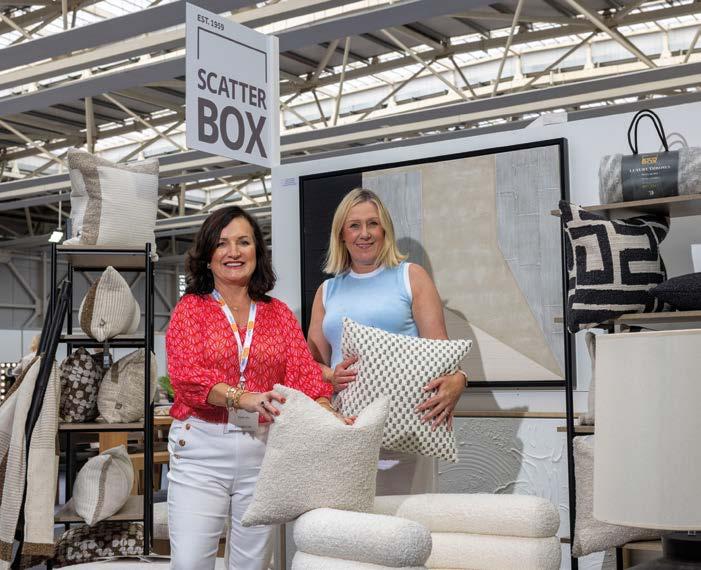
www.bife-sim.ro/en
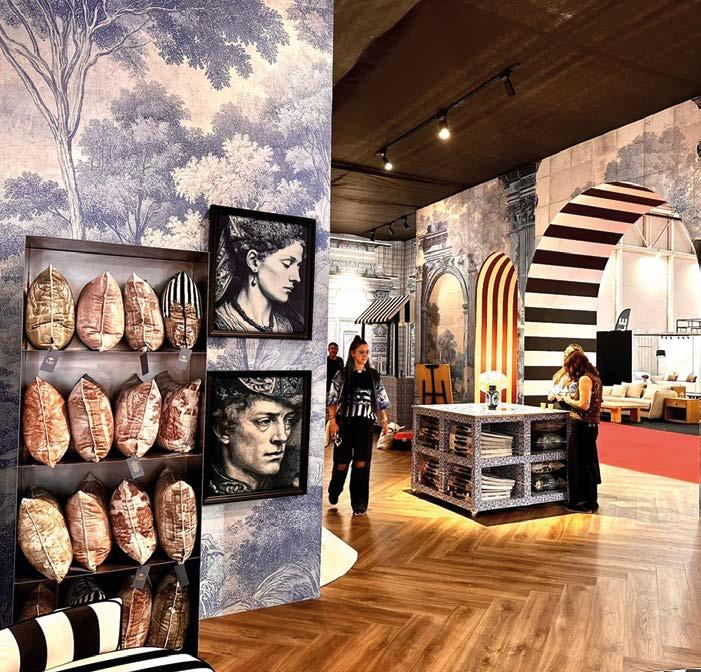
shape the future of the market.
As the industry continues to evolve, the 2026 show promises to be the most dynamic gathering yet, says the show’s organiser. Taking place from 23rd–25th August at the National Indoor Arena in Blanchardstown, Dublin, the show offers a unique opportunity to discover the latest collections, explore emerging trends and build meaningful business connections ahead of the key trading season.
From innovative furniture design to stylish homewares and accessories, visitors are set to experience a showcase that reflects the creativity, resilience and ambition of the Irish furnishing sector.
“What continues to set the IFHS apart is its commitment to creating real commercial value,” the show’s organiser adds. “Beyond the products on display, the exhibition is about fostering relationships, supporting growth and strengthening the industry community. It is where established brands meet new opportunities, where conversations become partnerships, and where ideas inspire the next chapter of retail success.
“Registration is now open, and the Irish Furniture & Homewares Show looks forward to welcoming the industry once again for three days of inspiration, networking and opportunity at Ireland’s premier furniture and homewares event.”
Bucharest is becoming the centre of furniture design and production in southeastern Europe, says the organiser of BIFE-SIM, which returns to the Romexpo Exhibition Centre from 17-20th September.
“BIFE-SIM 2026 is more than an exhibition,” says Romexpo. “It is a gateway to international markets. In an era of logistics uncertainty, Romania’s position as a production powerhouse offers Western European companies a vital competitive edge.
“BIFE-SIM 2026 acts as a bridge to a market characterised by strong industrial know-how, flexible manufacturing capabilities, and a high level of cost efficiency. For buyers, the fair provides a unique opportunity to secure reliable partners within a short geographical distance, significantly reducing lead times and carbon footprints.”
To accommodate growing demand and a 48% exhibitor increase, the show’s exhibition area has been doubled, encompassing two specialised halls: the Innovation & Technology Centre, dedicated to state-of-the-art machinery, advanced woodworking technologies and industrial software; and The Design & Production Showcase, featuring furniture, interior decor, accessories and wood-based products.
“This is the definitive stage to showcase your craftsmanship to a curated audience of high-volume buyers, distributors and architects from across Western Europe,” the show organiser concludes. Email romexpo@romexpo.ro to find out more.
REGISTRATION NOW OPEN
IRISH FURNITURE & HOMEWARES SHOW 2026
23rd - 25th August
National Indoor Arena, Blanchardstown, Dublin


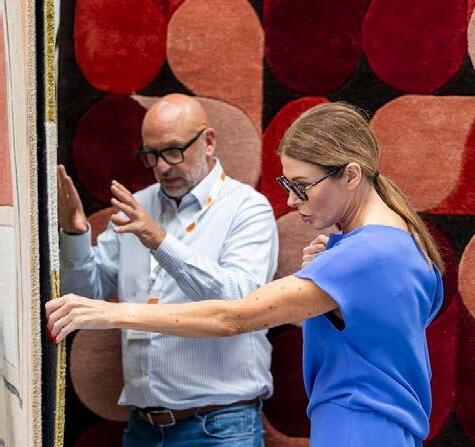
10 + years creating value in the Irish Furniture Industry
Uniting the industry. Adding value. Fostering growth.
REGISTER HERE





The Furniture Component Expo (FCE) returns to Telford International Centre on 10-11th March 2027 – and if this year’s show was anything to go by, the next edition is set to be even more relevant for the UK’s furniture manufacturing supply chain …
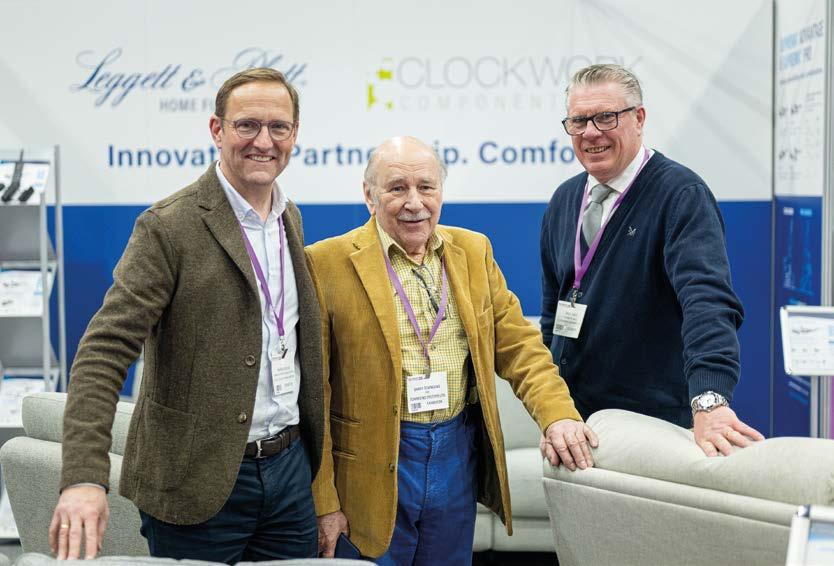
“This year’s show was bigger, busier and brimming with innovation, with visitor numbers up by more than 11% and over 80 exhibitors filling hall 1,” says the British Furniture Association (BFA), which organises the annual event.
“A focused environment where business conversations are direct, practical and high quality
“That growth was not just a sign of a popular event – it reflected a sector actively investing in new ideas, better processes and stronger partnerships. For UK manufacturers, suppliers and designers, FCE offers something increasingly valuable – a focused environment where business conversations are direct, practical and high quality.
“Exhibitors in 2026 praised the calibre of visitors and the relaxed but business-focused atmosphere, while attendees were drawn to live demonstrations, new product launches and discussions around circular design, digital transformation and sustainable

materials. In a market where efficiency, resilience and innovation all matter, that kind of targeted engagement is difficult to replicate elsewhere.
“FCE 2026 also showed how much appetite there is for forward-thinking content and hands-on interaction,” the BFA continues. “The Innovation Trail, sponsored by Blum, brought a sharper spotlight to new developments across the show floor, while the stand design awards and networking reception helped create genuine momentum around each exhibitor’s presence. The result was an event that felt active, collaborative and commercially useful, not simply busy.
“That is why the 2027 early bird offer is worth serious consideration for new exhibitors. Available only during June, the offer provides a 5% discount on stand space for first-time exhibitors – but only until 30th June. For businesses looking to increase brand visibility, meet decision-makers and align themselves with a growing industry event, this is the ideal time to secure a place.”
FCE 2027 is set to bring together the people shaping the future of UK furniture manufacturing, from component suppliers and material innovators to brands looking for better ways to design, build and deliver. With momentum already established, the show is positioned as a practical platform for new business, stronger connections and fresh ideas – and for new exhibitors, the early bird window offers both a financial incentive and an opportunity to be part of an event that is clearly growing in importance.
Find out more and book at https://fcexpo.co.uk/exhibit-sponsor
www.fcexpo.co.uk
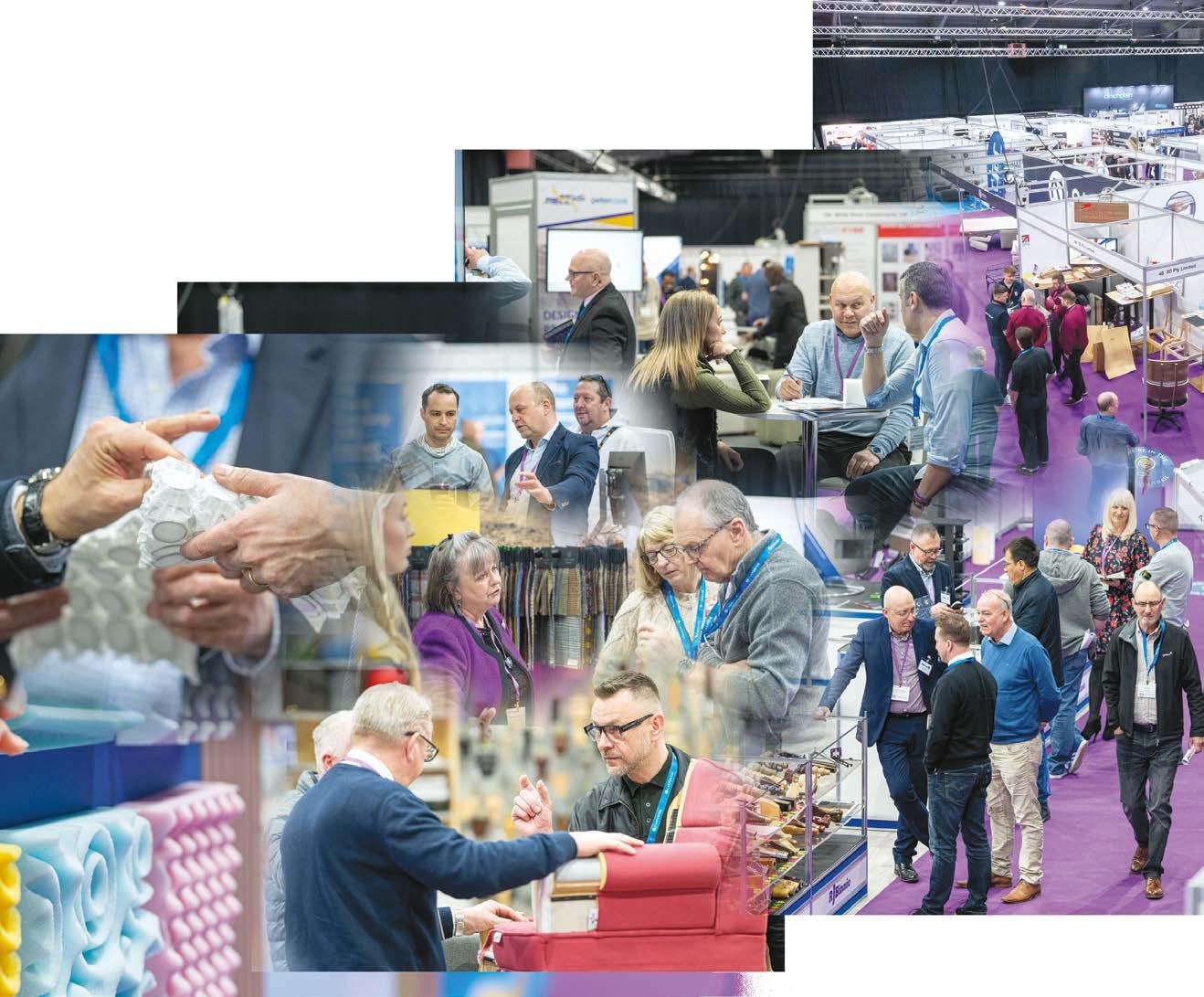
Tim Hudson, CIAR & NISI

James Shepperdley, Ureka

This year’s Salone del Mobile.Milano “confirmed the industry’s ability to hold its ground without retreating, seeking out new markets, new business models and new forms of design” says the show’s organiser – but what did visitors make of the event? Furniture News shares a few perspectives …
This year’s Salone recorded attendance of 316,342 visitors from 167 countries, with the proportion of international trade visitors at 68% (consistent with 2025), and UK visitor numbers up 10.4%.
These visitors had an opportunity to explore 1,900 brands from 32 countries in the exhibition alone – not to mention the plethora of side events, open showrooms and design-related activations taking place concurrently across the city.
Show president Maria Porro says the show’s 64th edition “reaffirmed the strength of a system that, even in the most challenging of times, has chosen to move forward.
“It was a success not just in terms of the trade fair itself, but for the entire sector – a result of teamwork, a shared vision, and dialogue between different worlds that find a concrete synthesis here. The Salone does not merely bring the world of design together – it sets it in motion.”
As the organiser looks ahead to the 2027 edition, running from 13-18th April, Furniture News presents some of the feedback from this year’s event, from
general impressions and incoming trends, to the fair’s evolving identity and missed opportunities – plus a look at some of the show’s highlights along the way …
Salone del Mobile.Milano has once again set the tone for what’s next in interiors, and the message is clear – homes are becoming warmer, more tactile and designed to last.
From earthy clay tones and timeless neutrals to statement stone dining tables and beautifully textured fabrics, this year’s trends reflect a move towards comfort, authenticity and personality in the home. Rounded retro-inspired shapes, rich materials and innovative comfort-led designs were seen throughout Salone del Mobile, proving that great furniture should look exceptional and work beautifully for everyday life.
What stood out most to us? Many of the trends showcased in Milan, including elegant stone dining ranges, tactile upholstery, cutting-edge recliners and timeless statement pieces, are already part of the Sterling Home collection, allowing us to bring world-class design inspiration closer to home.
The future of interiors is warm, welcoming and built around how we really live – and we’re here for it.
I’ve been going to this show for over 20 years, and it’s always both directional and so very inspiring! I now spend three days in the city, split between the various design districts and Salone del Mobile at Rho Fiera Milano. I always see so much but always return home with very sore feet, feeling I’ve just scratched the surface and could have done with three times more time!
Wondering around Brera, Tortona and the 5vie, each area has its district flavour. From installations in historic buildings and well-known fashion brands, to open studios in side streets, alongside huge interactive exhibitions by leading international brands.
As a furniture designer, the focus for me is always the furniture show, I Saloni. A little smaller this year, however, still massive – aisle after aisle of beautifully executed furniture design.
Summarising the key trends: sculptural soft forms, earthy colours, big names relaunching classics from mid-century, 70s and 80s; strong themes in both upholstery and cabinet are a rejection of cold minimalism, with brands focusing on materials which are both solid, durable and fingered, giving a luxury feel; still a steer towards a Memphis style in form and pattern; and a sustainability focus, with some great new materials on show.
“The Salone does not merely bring the world of design together – it sets it in motion
“There’s so much inspiration to be gained
Milano! The furniture show was smaller than I recall from my 2023 visit, but still as inspiring. For those who didn’t get there this year, here’s a summary: organic shapes (still with us); texture pairings (incoming); and colour palette – smudge green, terracotta, soft yellow, dark rusts, gentle blue/grey, and greyed-off pinks. You’re welcome!
The Salone del Mobile.Milano – or, as it’s almost exclusively dubbed by the UK design crowd, the Milan furniture show – cemented its status this year as the ultimate destination for furniture design. There’s so much inspiration to be gained, but here are just some of my thoughts …
The event was a masterclass in the use of combining materials: Tactile smooth veneers, darkgrained woods, coloured leathers and fluffy fabrics combined to ignite the senses. The UK can learn a lot from this approach, as it’s often difficult to combine different manufacturing disciplines.
The enveloping trend of curved sofas: The rigid, blocky square sofa has officially been retired. Designers take inspiration from organic forms such as pebbles, clouds and waves, creating seating that feels like a hug rather than a visual statement.
The continued development of integral coffee tables: Integral extensions of modular designs –we saw a surge in tables that are literally built into the sofa’s frame or wrap around its corners, offering somewhere to rest your arm as well as your cup of tea. This gives the feeling of the furniture being built for the room.
The use of colour pops was a relief from the sea of neutrals and earth tones: While the earth tones provided the base layer this year, the show was defined by sharp, deliberate pops of colour.
The 2026 show proved that while we might be living in a high-tech world, we still want to sit on something that feels soft, looks organic, and maybe has a built-in spot for our morning coffee.
Duffell
Another year, another Salone del Mobile. The team and I spent a few days exploring Milan’s design week, with many (many) steps – it’s always great to get out of the office and see what the rest of the world has to offer.
This year’s fair delivered bold forms, rich textures and ideas from every corner of the world. We cemented ideas and trend palettes that we had previously been throwing around the office. There’s nothing like seeing your instincts reflected on a global stage – we’re now feeling energised and ready to keep building on that momentum.
Zuzanna Skalska Owner, 360Inspiration, and managing partner, FutureS Thinking Group
This year, I needed four days to meticulously prepare my agenda for each of Milan Design Week’s nine days. RSVPs, QR codes, and unique for this year, dates and time slots, were everywhere! There was no time to chat or meet, and spontaneous encounters ended with “unfortunately, I’m rushing to my entry slot.”
I thought the craziness of old Zona Tortona would never return, but now it’s all over Milan. Big companies, powerful corporations, gigantic events … and the lines never seem to end.
On the other hand, just a few years ago, coming to Milan was a huge feat – now it seems like everyone’s already here. And then we wonder why there are queues. It’s reminiscent of Spain’s Costa del Sol, which hardly looks like Spain any more. It’s Disneyland, an amusement park, or a carnival with carousels.
Design got lost somewhere along the way, hiding in small corners and crannies that don’t even exist on a map. Design in Milan is like picking mushrooms in the forest – you have to wander a lot to find anything worthwhile.
I have to congratulate the Triennale Milano on their new rearrangement of space exhibitions – it is of a very high standard. My designer soul was very happy – the retrospective exhibitions of Barber & Osgerby, Lella and Massimo Vignelli, and The Eames House project. What a pleasure!
Designers (young and old) are returning to the craft. There’s a lot of trial and error that gives products their uniqueness and authenticity.
This annual madness should be renamed Milan Global Creative Marketing Week, then everything would fit together. Nine days is too short to see everything – and marketing still wants its ROl, so l think they may actually turn this madness into a whole month.
“Design got lost somewhere along the way
Some reports from this year’s I Saloni noted a shift towards the more glamorous, fashion-first end of the market – and away from the furniture itself. Tim Hudson, the UK representative for Italian furniture mechanism suppliers CIAR and Nisi Group, also came away from the exhibition baffled by the silence around the substance. In his words, here’s what the world’s biggest furniture show didn’t talk about – and why that means opportunity …
By Tim Hudson

Simone, commercial director at Nisi and a longstanding figure in the Italian furniture industry, said it to me on the first morning.
A friend of his, a farmer from rural Italy, had called asking for tickets. He’d heard there were a lot of pretty women at Salone.
The event, Simone said, isn’t a trade fair any more. It’s a destination. Security on the stand entrances, long queues outside the known brands, every nationality on the planet apparently in the same building at the same time – the farmer, I suspect, would not have been disappointed.
The Financial Times calls it the design world’s answer to Davos. Monocle puts it on their global events planner alongside the Venice Biennale and Cannes. The statistics – 1,900 exhibitors, 32 countries, 169,000m2 – are available elsewhere. But what they don’t capture is what it actually feels like to be inside it.
And yet. Walk the halls long enough and a different story emerges.
Before I walked a single stand, I tried to plan my route. The Salone exhibitor directory runs to 1,900 entries. I searched for motion furniture. Then recliners. Then mechanisms. Nothing. There is no category. No filter. No taxonomy for functional seating of any kind. The show doesn’t recognise it exists. That, it turned out, was the first finding.
I spent time on the floor with Château d’Ax, Himolla, Eco Italiano, Innova, Polipol and more.
Motion furniture is actually everywhere at Salone. Recliners, swivel chairs with independent function, manual mechanisms engineered with genuine ingenuity. One major German manufacturer showed a sofa whose end section rotates through 90°, transforming it into a chaise for evening use. No motor. No control box. Elegant problem-solving.
But here is what almost nobody said – why any of it matters.
The controls are hidden, deliberately. The buttons are engineered into the upholstery, invisible to the eye. The mechanism is present. The narrative is absent. I asked the same question at every stand: “What do you tell customers about the functionality? What’s the story behind the movement?”
The answers were variations on silence.
“It’s Italian design.”
“The retailer decides that.”
“We were the first supplier into Milan’s first sevenstar hotel.”
At one stand, a large banner advertised zero gravity.

The demonstrator couldn’t explain what zero gravity meant for the person sitting in it.
The most candid conversation came from a senior export director at one of Europe’s largest upholstery manufacturers. His assessment of the current market was direct – no adventure, no innovation. Retailers are reducing floor staff. Training is being cut. The industry, in his words, is in “risk-off mode”.
It is a rational response to a suppressed market. It is also a gap that someone will eventually fill.
Hidden functionality is not, it turns out, a confession of embarrassment. At the premium end – Roche Bobois and above – the mechanism is a whispered value-add for the discerning buyer. Motion as exclusivity, not explanation.
But the majority of the UK market does not sit at that price point. It sits in the space between functional necessity and aspirational desire. And that space has no story attached to it.
Himolla, the German motion specialist, a significant supplier to UK retail, told me directly that wellness positioning is the retailer’s decision. They won’t be providing the narrative. Neither will Château d’Ax. Neither will anyone else exhibiting at the world’s biggest furniture show.
The President of Lombardy, speaking at the Salone inauguration, described the fair as an infrastructure capable of connecting vision and production, creativity and the market.
Nineteen years in the industry, and I’ve never seen a bigger story go untold.
The retailers and designers who pick up that story – who decide that the chair which moves deserves a reason to move – will have the space entirely to themselves. That is what Milan didn’t say.
www.furnituremechanisms.co.uk
“Nineteen years in the industry, and I’ve never seen a bigger story go untold

As consumer demand for stylish yet practical interiors continues to grow, this month’s cover star Think Rugs is expanding its licensed portfolio with a series of design-led machinewashable collections created exclusively with Sanderson Design Group brands Clarke & Clarke, Harlequin and Scion.
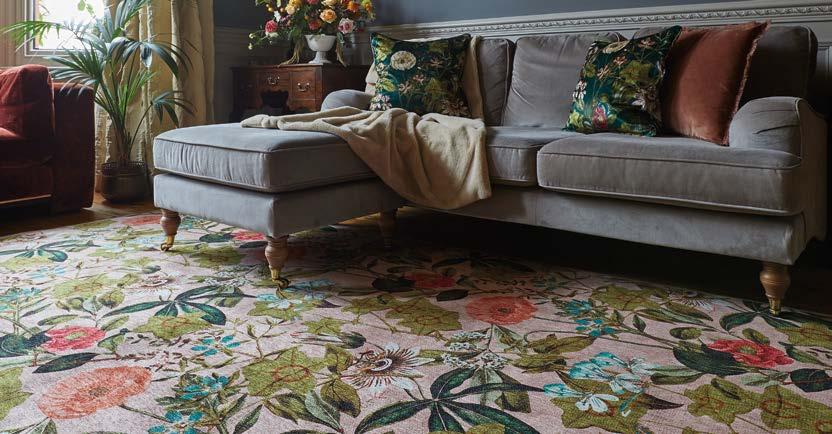
Showcased at Spring Fair 2026, the launches reflect growing momentum in the washable rug category, particularly for products that combine premium aesthetics with everyday practicality.
“Retailers are increasingly looking for washable options that deliver strong visual appeal, trusted brand recognition and commercial versatility for modern homes,” says the supplier.
As a British-based, family-owned business approaching its 30th anniversary this September, Think Rugs has built a reputation as one of the UK’s leading rug suppliers to the retail trade across the UK and internationally.
For almost three decades, the company has focused on developing commercially relevant collections across contemporary, traditional and trendled styles, supported by strong retailer relationships, customer service and industry expertise.
The latest launches build on that experience, bringing recognisable British heritage interior brands into the premium washable category through collections designed exclusively with Think Rugs.
The Clarke & Clarke collection introduces the brand’s signature mix of bold colour and eclectic style into machine washable rugs for the first time. Known
for interiors that move from whimsical to glamorous and maximalist to sleek, the collection balances statement design with practicality. Passiflora has quickly emerged as a stand-out style within the range.
Harlequin’s collection celebrates expressive interiors through colour, pattern and artistic design inspired by travel, architecture and the natural world. Bringing the brand’s distinctive aesthetic into washable rugs offers retailers a design-led collection with broad commercial appeal. Florent has proven particularly popular since launch.
Meanwhile, Scion continues to deliver strong commercial performance through playful, accessible design suited to real homes and everyday living. The iconic Mr Fox design has become one of the bestperforming styles within the collection, supported by strong retailer demand across the UK and Ireland.
Across all three collections, practicality remains central to the proposition. Every rug is machine washable and finished with anti-slip backing, giving consumers an easy-care solution that fits naturally into busy homes without compromising on style.
The supplier says the response from retailers at Spring Fair highlighted continued demand for premium washable products like these.
“Recognisable British design names in a format that feels highly relevant to today’s customer
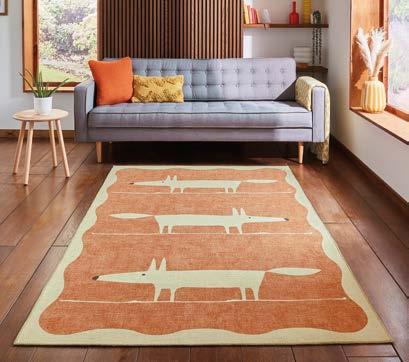
“Retailers are looking for products that combine design credibility with practicality, and washable qualities continue to be one of the strongest growth areas within the category,” says Sam Tippett, director at Think Rugs. “With these exclusive launches alongside Sanderson Design Group brands, we’re able to offer retailers recognisable British design names in a format that feels highly relevant to today’s customer.”
As Think Rugs approaches its 30th anniversary, the company continues to invest in licensed partnerships, product innovation and trend-led design, reinforcing its position as a trusted supplier and leading force in the UK rug industry.
E: info@thinkrugs.co.uk
www.thinkrugs.co.uk
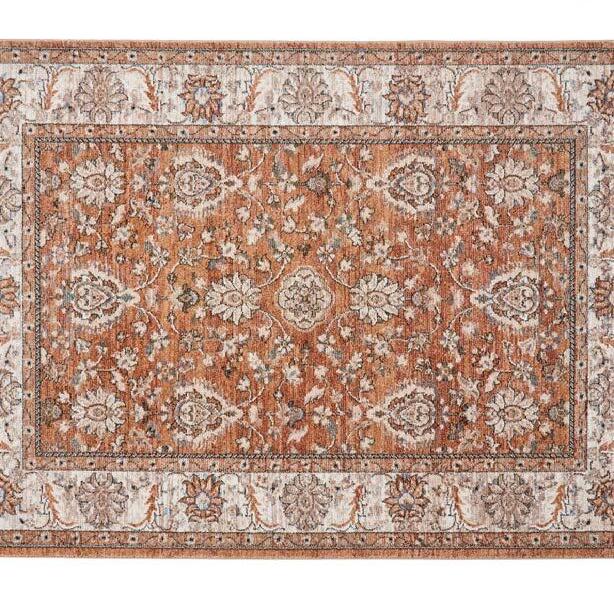
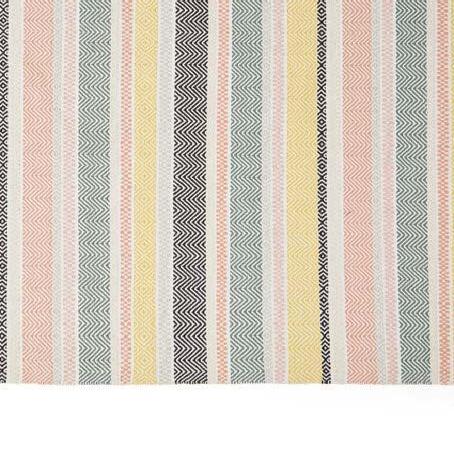
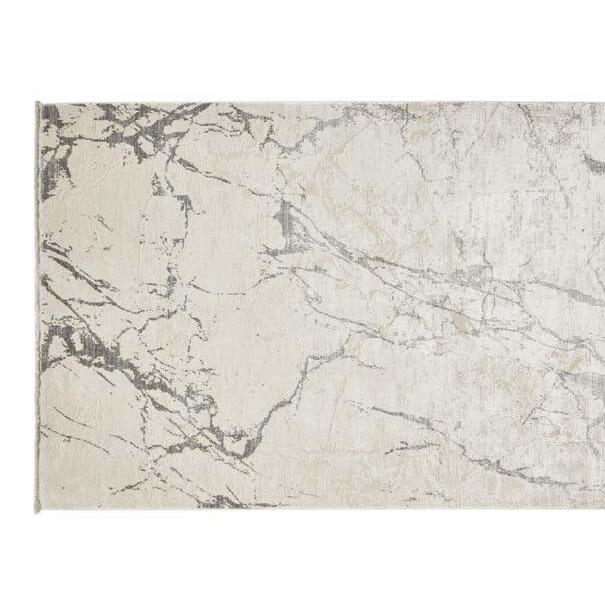
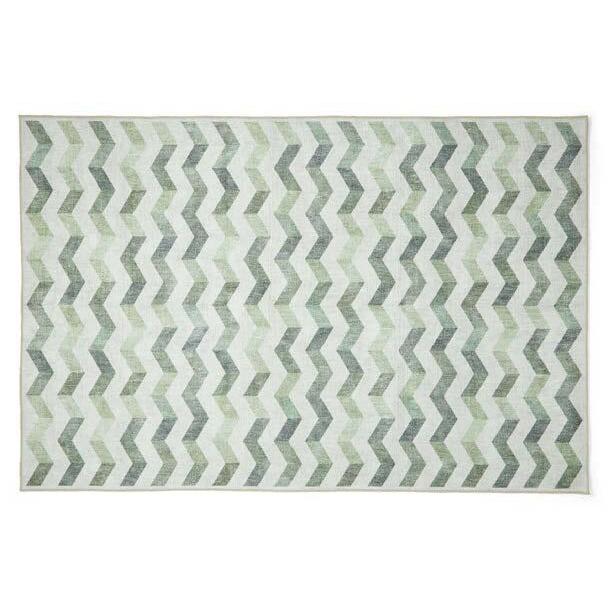
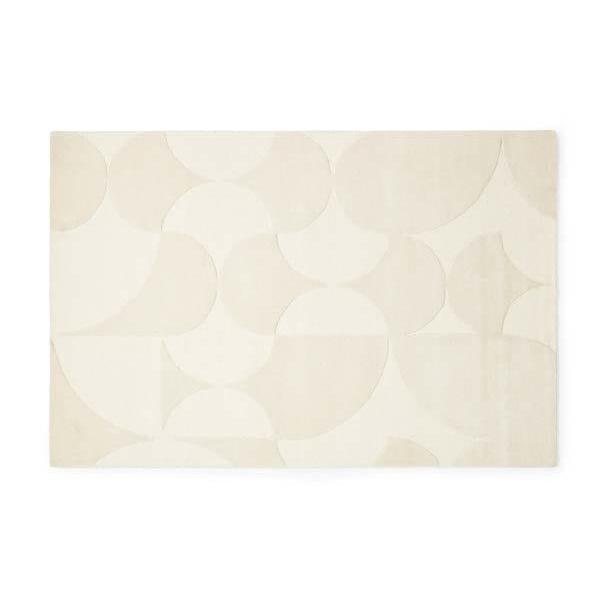
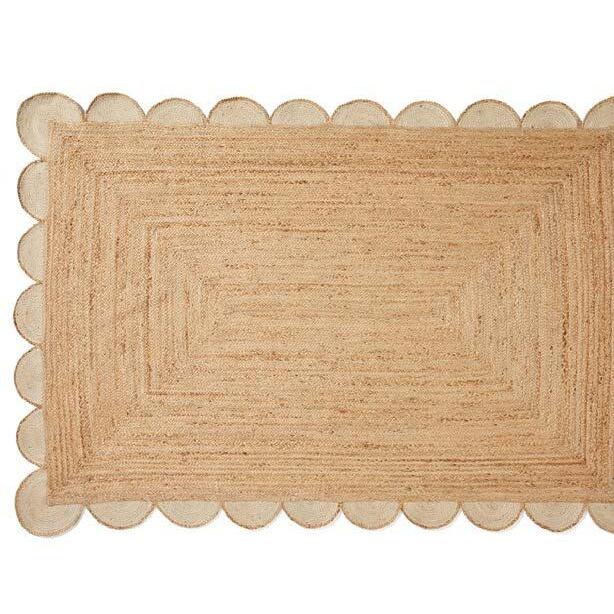
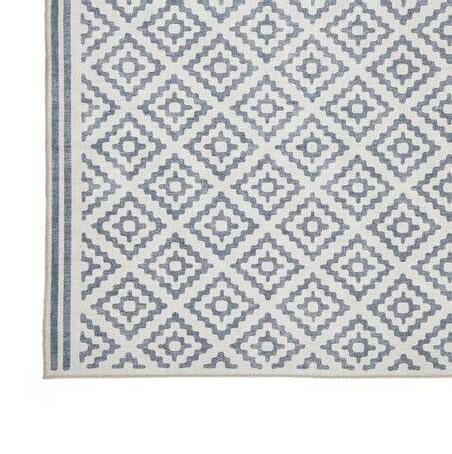

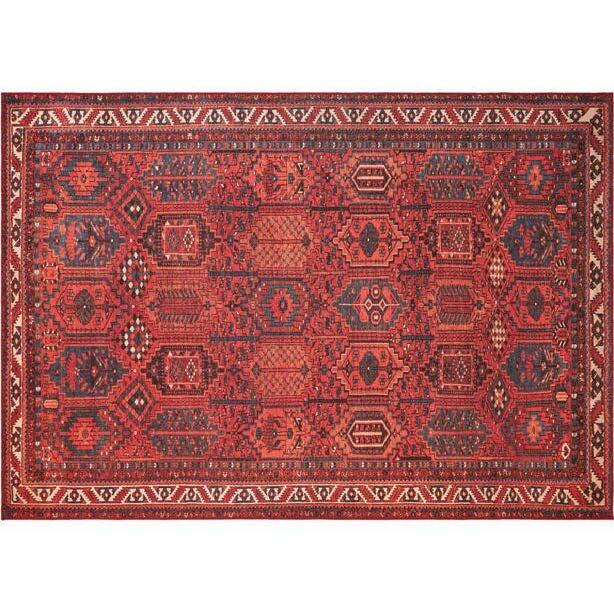

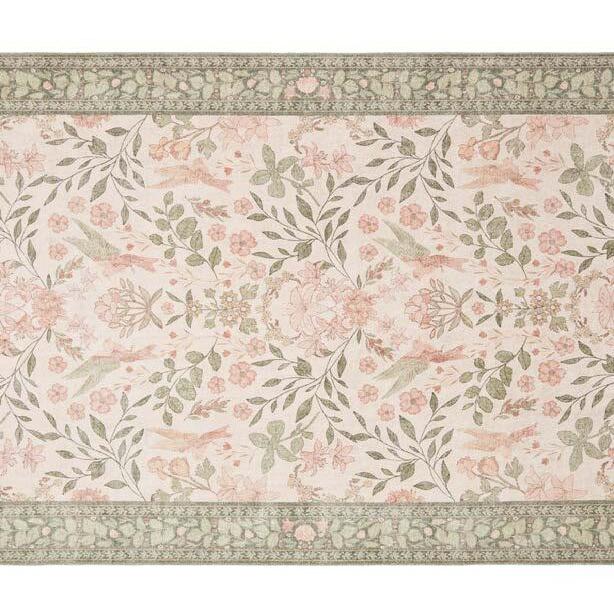

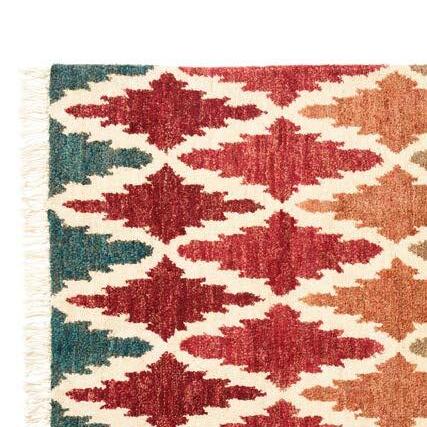
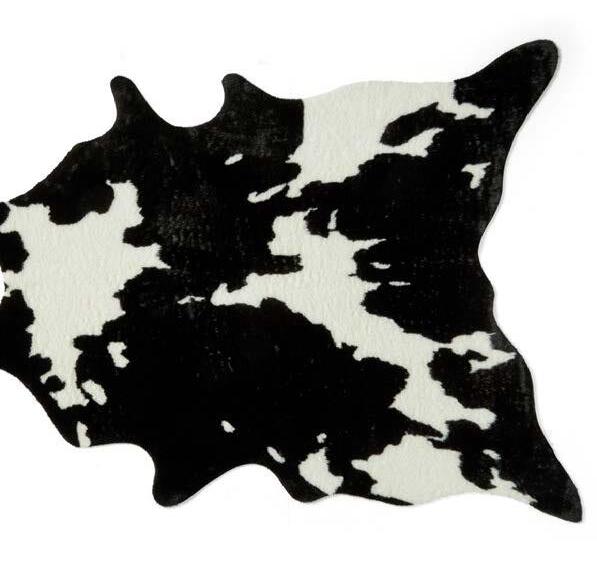
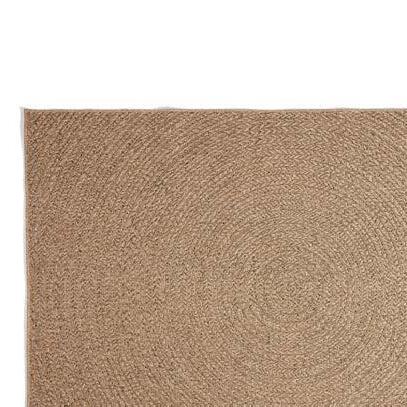

www.louisdepoortere.com
The entire Ecorugs Collection 2026 from Louis De Poortere can be enjoyed outdoors as well as in, thanks to its weather-resistant and machinewashable construction.
When Louis De Poortere launched the collection it had a vision of a circular future, but the switch to a 100% polyester construction came with other bonuses, namely weather resistance and machine washability.
Now, after extensive testing of all textures and qualities, Louis De Poortere is able to recommend the entire collection as outdoor ready – and as the rugs are machine washable, they can be kept looking like new, despite the conditions.
Alan Russell, sales director, says: “Outdoor living has grown significantly, and homeowners are paying
increasing attention to how their garden can enhance their lives beyond traditional expectations of what a garden should be. They’re no longer just for the green -fingered or for those taking the time to appreciate nature, but part of relaxing, entertaining and working.
“Our Ecorugs are a great way for flooring retailers to be able to bring their expertise to these unique, multi-functional outdoor areas.”
The ability to clean them in any household washing machine also makes Ecorugs suitable for pet owners and busy family spaces.
Now featuring 70% recycled polyester from plastic bottles, Ecorugs Collection 2026 includes several new designs, new organic shapes, and custom sizes in selected styles.
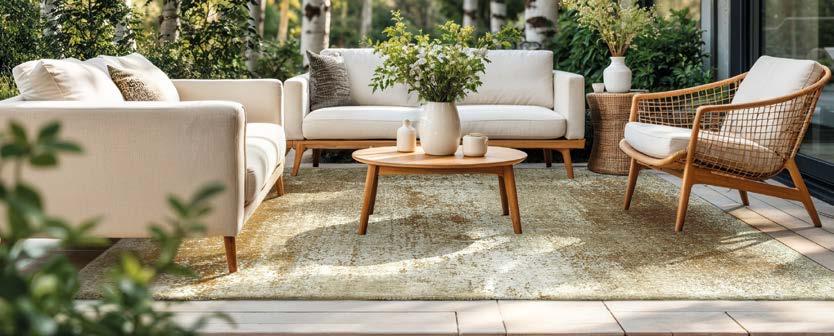

In January we launched the Modern Dakota range which features soft padded arms, cloud power recliner functionality and a contemporary design, making it a very popular addition to our selections.

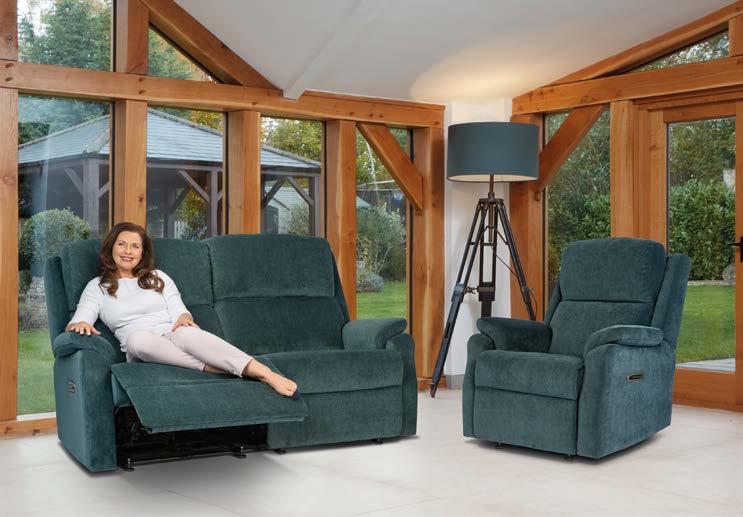
In January we launched the Modern Dakota range which features soft padded arms, cloud power recliner functionality and a contemporary design, making it a popular addition to our selections.
The Newbury Riser Recliner, offered in both Scroll and Knuckle styles across four different sizes, fits seamlessly into our comprehensive selection of riser chairs. These models are available in both Fabric and Leather; they also feature Lumbar and Head adjustment options.
The most recently launched Riser Recliner models were showcased at the Minerva Spring Furniture Show and proved very popular. The Chester and Ryedale ranges are offered in Scroll and Knuckle styles and both are available in Fabric and Leather; they also feature options for Lumbar and Head adjustment. Along with our competitive pricing we know these ranges will be very popular with our customers.
The most recently launched Riser Recliner models were proved very popular. The Chester and Ryedale ranges available in Fabric and Leather; they also feature options competitive pricing we know these ranges will be very
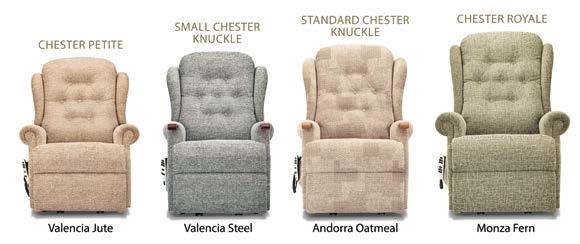
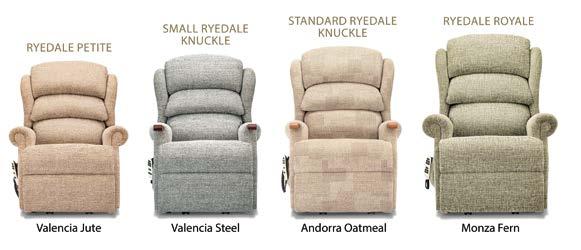
Asiatic London continues to expand design horizons with a bolder approach to colour and texture, drawing on some of 2026’s most influential interior trends …
Asiatic set out to explore a bolder, more expressive direction with its latest creations, reflecting growing demand for interiors filled with personality, warmth and individuality.
Asiatic says its new catalogue, launching from July, “celebrates the transformative power of colour in interiors. Each rug is thoughtfully curated to inspire more confident decorating, with saturated palettes and pairings that add a splash of colour and intriguing depth to a space.
“Drawing inspiration from global influences and key interior trends, the new collections balance innovation with a playful edge. Each look is brought to life through a harmonious application of colour and multidimensional texture, creating intriguing definition across the designs.”
x MADE.com
Asiatic is proud to have partnered with MADE.com for a highly anticipated collaboration. The range will include bold, colourful looks, alongside new patterns and textures inspired by retro designs – and can be pre-ordered now, via sales@asiatic.co.uk.
Asiatic also continues to expand its focus on sustainable production, prioritising the use of highquality materials designed for longevity, while actively increasing its offering of environmentally conscious options. Indeed, its latest developments include collections crafted from recycled materials.
Much more to discover
Asiatic offers one of the industry’s widest ranges of rugs, across diverse materials and textures. From inviting shaggy rugs to eye-catching statement designs, natural looks and timeless classics, there
“The new collections balance innovation with a playful edge
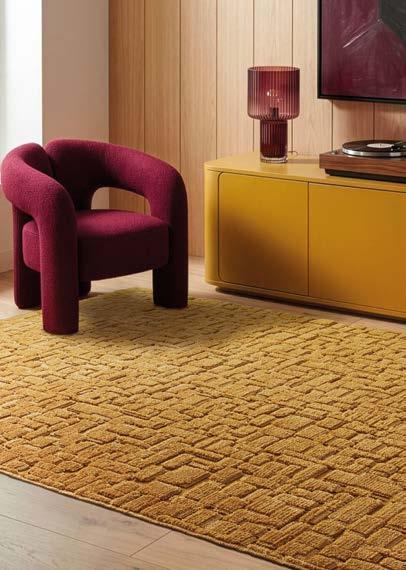
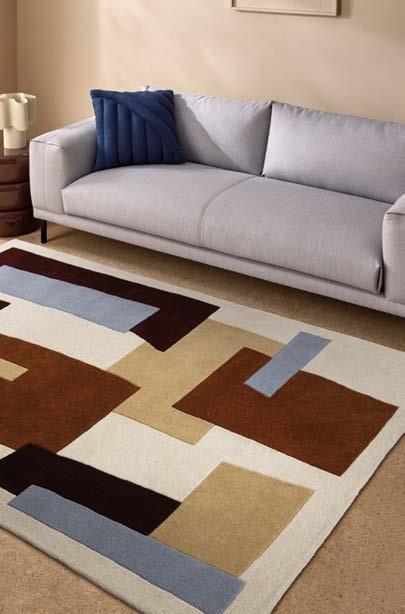
promises to be a style to suit every space. Alongside its extensive portfolio, the brand offers a range of services designed to support trade partners and clients, including FOB solutions, consolidation services and bespoke product development. To order, or to find out more, contact sales@asiatic.co.uk.
www.asiatic.co.uk
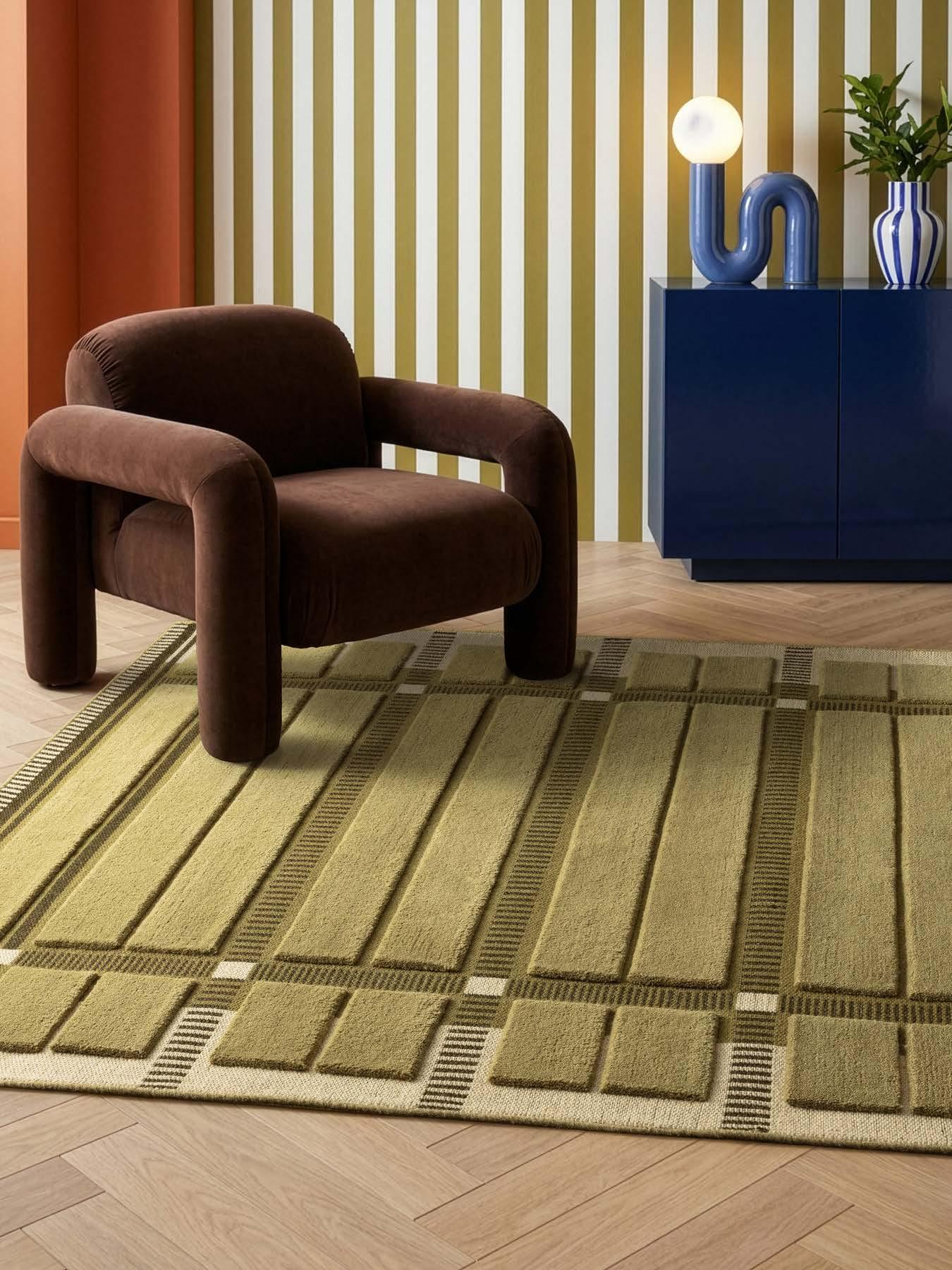


Bluebone says its summer season is shaping up to be an exciting time this year, with plenty of events still to come …
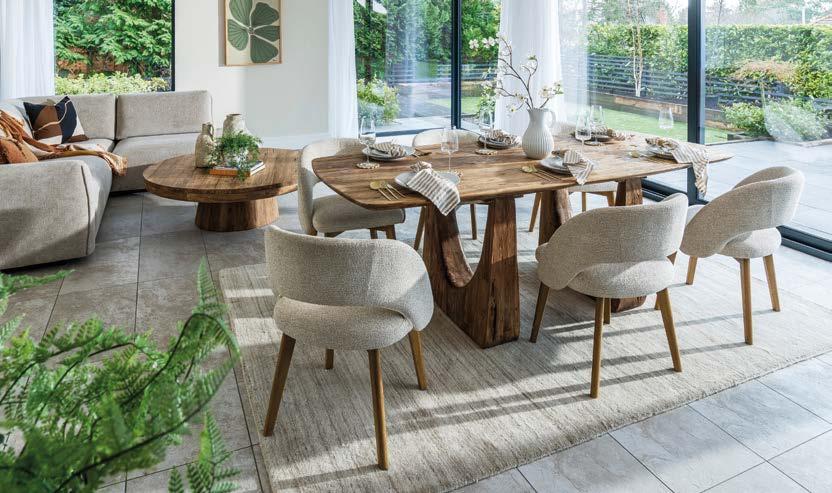
“Following a great few days at Long Point in May, where we created an inviting ‘pop-up’ showroom in the Westgate Suites, we now look forward to bringing our collections to the IFHS in Dublin in August, and returning to INDX Furniture (also in August) with an exciting new launch of sublime dining and cabinet,” states the supplier.
“Long Point proved to be a great opportunity to connect with both new and familiar faces from across the industry. The laid-back environment created the perfect platform to showcase our latest ranges, and there was time to catch up with retailers, exchange ideas, and make plans for the coming months. We were delighted by the overwhelmingly positive response to our collections.
“One of the stand-out highlights was our Mammoth reclaimed teak collection. Its bold character, natural textures and impressive oversized dimensions captured the attention of buyers, offering a welcome alternative to
the plethora of smooth, ceramic and polished finishes.
“The collection perfectly balances statement design with everyday practicality, making it a versatile addition to both contemporary and rustic interiors. The feedback confirmed exactly why the Mammoth collection continues to grow in popularity. Modern Rustic is firmly back in favour!
“Equally admired were our Bali driftwood occasional tables, which bring a relaxed organic feel to any space,” Bluebone continues. “Crafted with beautifully weathered driftwood and full of unique natural character, these tables offer a striking yet effortless aesthetic.
“These pieces add warmth and texture, and the robust 10mm glass tops elevate the design, giving each piece a premium feel while adding durability for everyday use – a perfect balance between rustic authenticity and contemporary sophistication.
“We would love to see you!
“Back at Bluebone HQ we are already preparing for a number of new additions to our collection arriving this month, featuring fresh designs, natural materials and inspiring new statement pieces.
“These new arrivals will be available to view throughout the summer at our Manchester showroom, alongside our current collections. We are just a short drive from central Manchester, and five minutes from the motorway, so it’s definitely worth planning a visit.
“Explore our collections in person and experience their quality, craftsmanship and detail first-hand. We also have extensive archive rooms and one-off pieces, plus end-of-line and clearance ranges. We would love to see you!”
Book to visit online at https://bluebone.co.uk/bluebone-open-house-july-2026 or contact elaine@bluebone.co.uk.
www.bluebone.co.uk


Sleepeezee has expanded its children’s sleep offering with the launch of its new Little Bedz Cot Mattress range, a new specialist collection designed to meet growing demand for safe, breathable sleep products.
“Helping create a safe and comfortable sleep environment for little ones
Developed using Sleepeezee’s century of mattress manufacturing expertise, the range combines breathable construction, chemical-free comfort fillings and practical, family-friendly features, giving retailers a premium yet accessible option within the fast-growing nursery sleep category.
The Little Bedz Cot range includes three models – Essential Cot, Pocket Cot and Premium Dual Cot – offering tiered options to suit different sleeping environments and price points.
Key features across the range include: chemicalfree eco fibres and toxin-free comfort fillings; breathable air mesh borders to support airflow and temperature regulation; soft polyester, chemical-free sleep surfaces; water-repellent inner covers to protect against spills; removable, machine-washable outer
covers with spring-lock safety zips; traditional Bonnell or high-density pocket spring support systems; turnable dual-sided construction on selected models to support different growth stages; and fast UK-wide delivery and dedicated customer service support.
The Essential Cot model features a traditional Bonnell spring unit designed to provide firm, stable support for infants. The Pocket Cot introduces individually responsive pocket springs to minimise disturbance and improve pressure distribution and, at the top of the range, the Premium Dual Cot incorporates natural coconut fibres and a dual-sided design, offering a firmer newborn surface that can be flipped to a softer spring side as the child grows.
Amy Curtis, marketing director at Sleepeezee, says: “Parents and carers are increasingly looking for nursery products that combine safety, durability and high-quality materials. With the new cot mattress collection, we wanted to bring the same quality craftsmanship and expertise that defines Sleepeezee mattresses, into the nursery.
“The new cot mattress range offers retailers a trusted, well-designed option that meets expectations around breathability, easy care and long-lasting performance, giving parents peace of mind and helping create a safe and comfortable sleep environment for little ones in their earliest years.”
Sleepeezee’s cot mattress range is supported by guarantees of up to three years, reinforcing product longevity and consumer confidence, and each cot mattress is designed for straightforward maintenance, with removable covers washable at 40°C and guidance focused on safe, practical care routines.
www.sleepeezee.com
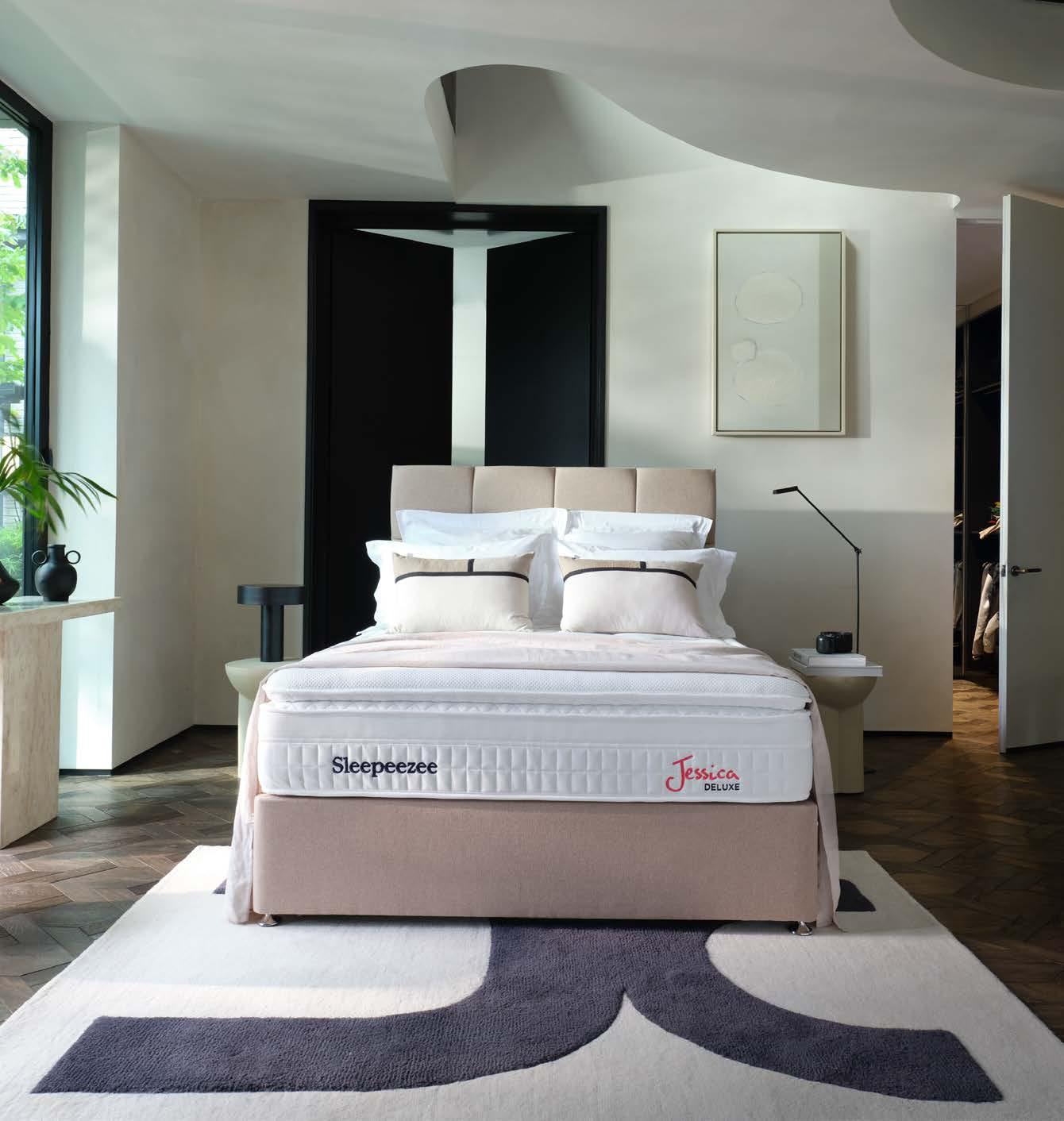

Nature meets innovation in Mlily’s Natural Sleep Series. Designed to bring a natural tone to its product range while enhancing consumer appeal, the Haluna range blends advanced materials with nature-inspired design for an “elevated sleep experience”.
The Haluna Natural 1500, Haluna Natural 2500 and Haluna Natural 4000 mattresses take Mlily’s design and innovation a step further. Each features the brand’s signature luxury quilted cover, now infused with natural wool and bamboo memory foam. This unique combination delivers “a plush, breathable feel that assists with moisture wicking

and helps regulate body temperature – perfect for clean, restorative rest”, says Mlily.
At the heart of the Haluna series is the proprietary Bamboo Air Memory Foam, a punched layer engineered to enhance airflow, keeping the sleeper cooler for longer. Combined with Mlily’s Flex Comfort Foam, this foundation creates a responsive yet supple sleeping surface that gently conforms to the body.
Support is tailored across the range to meet varying comfort preferences: the Haluna Natural 1500 features a 1500-pocket spring system, offering robust, targeted support for those who prefer a slightly firmer feel; the Haluna Natural 2500 upgrades to a 2500 H-Spring system, enhancing comfort while maintaining full body support; and the Haluna Natural 4000 boasts a double-decked 4000 H-Spring system, delivering deep, contoured support and advanced pressure relief.
Each mattress is also equipped with an Airtech Border and Flex Support Foam, while Mlily’s innovative F-Joint system further guarantees stability across the entire mattress surface.
To complete the experience, the Haluna pillow promises superior quality, neck support, and breathable comfort.
“With the Haluna Natural Sleep Series, Mlily brings you the best of both worlds – nature’s finest ingredients, enhanced by cutting-edge sleep science,” the supplier concludes.











www.adp-distribution.co.uk
“In an industry defined by constant change, longevity is never accidental – it is earned through adaptability, reliability, and an unwavering commitment to doing things properly,” says ADP Distribution, which is marking 20 years in business.
Founded on over 50 years of combined specialist experience in visual merchandising, ADP began with a single vehicle and a clear vision – to provide dependable, flexible and professional logistics and installation services tailored to the needs of retail and commercial clients.
Two decades on, that vision has scaled into a fleet of 12 vehicles, a 30,000ft2 central warehouse, and a reputation for delivering complex projects across the

www.gallerydirect.co.uk
As retailers prepare for the summer season, Gallery continues to support customers with tailored in-store outdoor installations.
From fully styled room sets to compact feature displays, Gallery works closely with retailers to create inspiring seasonal presentations that showcase outdoor living alongside co-ordinating furniture, textiles and accessories. Designed to encourage customer engagement and cross-category
UK and Europe “on time, on brand and on budget”. Whether servicing a single installation or coordinating national product rollout projects across hundreds of stores, ADP has supported some of the biggest names in retail, consistently demonstrating that “size of project is never a barrier, only a question of how best to deliver it”.
In 2007, installation and project management services were formally launched, giving clients a fully integrated retail installation solution. In 2017, ADP launched SampleWorx, a dedicated flooring industry sample production business, reinforcing its position as a creative as well as logistical partner. The launch of a fulfilment and pick-and-pack service in 2019 further strengthened this proposition, giving clients transparent, flexible and scalable warehousing and distribution support, complete with tracking, reporting and inventory management.
When the pandemic hit, ADP again adapted. The launch of its specialist carpet and flooring delivery service, including the industry-leading capability to deliver 5m widths to domestic addresses, set the business apart, and ADP again proved that, even in the most challenging conditions, its innovation and service did not stand still.
ADP concludes: “This is a business built on trust, shaped by experience, and driven by a genuine commitment to meeting clients’ needs – whatever they may be.”
purchasing, these installations help retailers maximise showroom space while presenting a cohesive lifestyle-led outdoor offering for spring/summer 2026, says the supplier.
“For further information on how you can work with Gallery for your next project, please email hello@gallerydirect.co.uk – and to be among the first to view our outdoor collection for 2027, visit us at SOLEX (7–9th July, NEC Birmingham),” the supplier concludes.
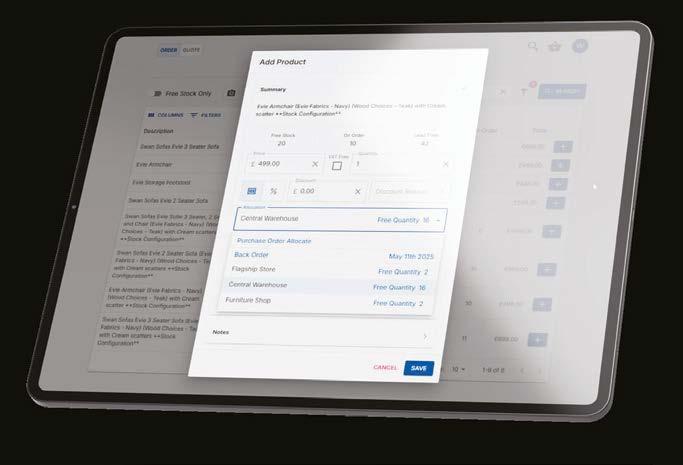
Across the UK, furniture retailers are operating in a more pressurised environment than ever before. Supply costs are on the up, and online competition has squeezed bricks-andmortar retailers. Furniture retailers are managing large-format showrooms, complex product configurations and customers who may visit multiple times before committing to a highvalue purchase.
According to research from McKinsey*, customers today are increasingly value-driven, actively switching brands and retailers in search of better prices, while they now move seamlessly between online and in-store channels as part of a single buying experience.
Legacy systems were not built for the demands of modern furniture retail. Disconnected EPOS, Ecommerce and back office platforms make it hard to get a clear view of performance, stock and customers. They were never designed to handle the complexity of bespoke orders, multi-location stock management and large item delivery scheduling that furniture retailers deal with every day.
There’s also a significant human cost too. Customers in-store want face-to-face, knowledgeable service. A sales associate who can tell a customer on the spot exactly which sofas are in stock, which can be configured in their chosen fabric and when it will be delivered, is what turns a showroom visit into a sale. That’s the point of difference technology should be enabling.
Disconnected systems mean that employees can spend up to 26% of their time on avoidable admin, with businesses seeing up to 3× faster invoice processing and teams saving 8 – 10 hours per week once that changes. Time far better spent on the sales floor.
It’s a challenge many furniture retailers will recognise and one that Sterling Home decided to tackle head on. Sterling Home, a nine-store retailer in Scotland, which employs more than 350 people, turned to Swan to address exactly these challenges. The process began with a discovery session in which Swan’s consultancy team worked closely with Sterling’s internal teams to fully understand their operations before a single change was made.
Swan’s team understood our business, understood what we’re trying to do – and implemented changes across the whole organisation as a genuine partner, not just a software vendor. Regular weekly meetings continue to this day, covering developments, enhancements and ongoing optimisation.
Matt Bonar IT Director at Sterling Home
Swan Retail provides a fully-integrated platform designed specifically for furniture and homeware retailers. Furniture is different – a single sale can involve multiple lead times, a bespoke configuration, a supplier purchase order and a scheduled delivery. Swan brings all of that together in one connected platform: EPOS, Ecommerce, stock, payments and customer data in one central system.
For example, with Swan’s Customer Ordering App, sales teams have instant access to accurate product information, pricing and availability – meaning orders can be placed quickly and confidently, reducing errors and creating a smoother experience for your customer.
Scaling a furniture business takes more than ambition. It takes operations that can grow with you. Standardised processes, connected channels and the ability to expand without adding complexity
The furniture retailers pulling ahead in 2026 aren’t just investing in better products, they’re investing in the infrastructure to sell them better. If you’re ready to find out what that looks like in practice, we’d love to show you how Swan Retail could help your business.
Recent commentary across retail has focused heavily on softening demand, weaker conversion, and increasingly cautious consumers. In the furniture sector, however, that narrative risks oversimplifying what is actually happening. Demand has not disappeared – it has extended, writes retail expert Clare Bailey …
By Clare Bailey

Customers continue to invest in their homes. The desire for comfort, quality, and well-designed living spaces remains firmly in place. What has shifted is the pace of decision-making. Purchases are taking longer to materialise, and that change is exposing structural weaknesses in how many furniture businesses are set up to sell.
Furniture has always been a considered purchase, firmly positioned within the ‘can wait’ category. The difference now is that the consideration period has lengthened beyond what many retailers are accustomed to managing.
While rising household costs are clearly a contributing factor, the wider context also plays a significant role. Ongoing global uncertainty, supply chain disruption and sustained pressure on delivery and fuel costs are shaping a more cautious consumer. Even when customers are not actively following economic developments, they feel the cumulative impact in their day-to-day spending decisions.
This shift in sentiment is translating into more deliberate behaviour. Customers are researching more extensively, comparing a broader range of options, and visiting multiple retailers before reaching a decision. They are more likely to pause, step away, and revisit a purchase at a later date. In practical terms, this results in fewer same-day conversions, increased hesitation in-store, and a higher volume of deferred decisions.
It is important to recognise that this does not signal a lack of demand – rather, it reflects a change in how demand manifests itself over time.
For retailers, this creates a challenging dynamic. Operating costs continue to rise, placing pressure on margins. Logistics, warehousing and fuel all represent significant and growing expenses, while ongoing supply chain inconsistencies add complexity to stock planning and availability. The natural commercial response is to accelerate sales, drive volume, and bring forward cash flow wherever possible.
However, this approach can sit at odds with the prevailing customer mindset. While businesses seek to increase urgency, customers are exercising greater caution and taking longer to commit. The resulting tension often leads to reactive decision-making.
This is most evident in the widespread use of discounting as a primary sales lever. Price reductions are frequently deployed in an attempt to stimulate immediate conversion, rather than addressing the underlying hesitation. Similarly, showrooms can become overcrowded with product, driven by the belief
that increased choice will improve sales outcomes. At the same time, insufficient attention is often given to follow-up, meaning that customers who leave without purchasing are not effectively re-engaged.
Such approaches are increasingly misaligned with current purchasing behaviour. A slower decisionmaking process does not equate to a lost sale. In many cases, it indicates a need for greater reassurance and confidence before committing to a purchase.
This shift calls for a more considered and structured response. Maintaining visibility throughout a longer purchasing journey is essential. Customers should encounter consistent, well-judged communication that reinforces brand presence and supports their decision-making process over time. One-off promotional activity is unlikely to be sufficient in a market where decisions are more protracted.
The role of the showroom also requires careful reassessment. Customers are arriving with a higher level of pre-existing knowledge, having already conducted significant research online. The in-store experience should therefore focus less on breadth of choice and more on clarity and reassurance.
Clear pricing, transparent lead times and knowledgeable staff who can confidently articulate product value are all critical components. Equally, follow-up must be treated as a core commercial discipline rather than an optional extra. Capturing customer information, understanding purchase intent and re-engaging at appropriate intervals can materially improve conversion rates in a slower market environment.
For independent retailers in particular, this presents a meaningful opportunity. The ability to build relationships, provide tailored advice, and create trust through direct interaction offers a distinct competitive advantage. Larger operators may rely more heavily on process and promotion, whereas independents can differentiate through expertise and personal engagement. In a market characterised by caution, trust becomes a decisive factor in purchasing.
The central point is clear. Demand remains present, but its behaviour has changed. Success will not come from applying greater pressure to accelerate decisions. Instead, it will come from understanding the customer’s mindset and aligning the sales approach accordingly.
In the current furniture market, sales are seldom lost altogether. More often, they are simply delayed.
www.retailchampion.co.uk
“While businesses seek to increase urgency, customers are exercising greater caution
This month, Andrew Goodacre, CEO of the British Independent Retailers Association (Bira), talks about the power of collective action and what it delivers for independent furniture retailers …
By Andrew Goodacre

I’m often asked what the point of joining a trade association is. It’s a fair question. Membership costs money, and independent furniture retailers are watching every penny. So what do you actually get for it?
The answer starts with something simple –buying power. When you’re a single independent furniture shop negotiating with suppliers, you’re at a disadvantage. When you’re part of a buying group representing thousands of retailers, suddenly you’re negotiating with the leverage of a national chain.
That’s what Bira Direct delivers. Better terms, access to specialist suppliers, and prices that would be impossible to achieve alone. For many members, the cost savings from Bira Direct alone cover the membership fee several times over.
Then there are the services that would cost a fortune if you bought them separately. Free legal advice when you need it – particularly valuable when dealing with delivery disputes or customer claims; HR support for managing staff issues; health and safety guidance; insurance deals negotiated at scale, including specialist cover for showrooms and delivery operations; card processing at better rates.
These aren’t nice-to-haves when you’re running a furniture business – they’re essentials. Having access to them without needing to employ specialists or pay consultancy fees makes a real difference to your bottom line.
But here’s what individual buying power and support services can’t do – change the rules of the game. That requires a collective voice, and it requires that voice to be heard in the right places.
These past few weeks have shown what that looks like in practice. I sat in a roundtable discussion with the Chancellor, focused on revitalising high streets across Britain. It was a productive meeting, and Bira is now part of the Government team reviewing high street developments. When policies are being shaped that will affect your business and your high street, we’re in the room where those decisions are made.
We’re also making progress on retail crime. The statistics are still concerning, but crime levels appear to be levelling off, and police forces have been more responsive to reports from retailers.
This didn’t happen by chance. It happened because we’ve been relentless in pushing this issue with the Home Office and with police forces. There’s still much more to be done, and we’re continuing to work hard to
bring more support to high street communities. Then there’s the duty-free loophole for imports valued at less than £135. This gives overseas sellers an enormous advantage over British businesses who pay their taxes and play by the rules. For furniture retailers competing with cheap imports flooding the market, this is a daily battle. Bira is leading the campaign to close this loophole, working with large retailers and online marketplaces to create a coalition that politicians can’t ignore.
None of this happens without membership. Every retailer who joins adds weight to our voice. Every membership fee funds the staff who research policy, write submissions, and meet with MPs. Every member who shares their experience or responds to our calls for evidence makes our case stronger.
Trade associations exist because industries recognised long ago that collective action achieves what individual action cannot. One retailer complaining about unfair competition gets ignored. Thousands of retailers, represented by a professional organisation with evidence and proposals, gets heard. This isn’t about blind loyalty to an organisation. It’s about recognising that some challenges can’t be solved alone. You can’t negotiate better supplier terms alone. You can’t afford a full-time legal team alone. You can’t get a meeting with the Chancellor alone. But collectively, you can do all of these things.
Independent furniture retail faces pressure from every direction. Costs are rising, competition from online-only retailers is fierce, and the playing field often feels tilted against small businesses. Membership of a trade association won’t solve everything, but it levels the playing field a bit. It gives you buying power you wouldn’t have otherwise. It gives you support services you couldn’t afford otherwise. And it gives you a voice in places you couldn’t reach otherwise.
Membership starts at around £205 plus VAT per year. For most retailers, the savings on services and better supplier terms pay for that many times over. But the real value is in knowing you’re not facing these challenges alone.
Together, we’re stronger. Together, we’re heard. Together, we can actually change things. That’s what membership delivers. That’s why it matters.
www.bira.co.uk
“This isn’t about blind loyalty to an organisation. It’s about recognising that some challenges can’t be solved alone
The most valuable benefit you can provide to your shoppers is making it easy to buy from you, explains our US correspondent Gordon Hecht, writing for trade magazine Your Source News – so why not throw them a party to prove just how convenient your ecommerce channel can be?
By Gordon Hecht

You’ve heard it a thousand times before. It’s right out of the playbook for Retail Selling 101. Explaining a product takes three steps – feature, advantage, benefit.
Here’s a quick refresher: feature, a unique characteristic of a product or service; advantage, what the feature does, in a generic sense; and benefit, how the feature makes the owner’s or user’s life better.
You probably use it every day in your sales presentation: “This refrigerator has a built-in ice maker (feature). It automatically makes ice cubes and senses when the supply is low and will make more ice (advantage). Now you never have to run to the store to get fresh cold ice for your family and guests (benefit).”
Shoppers tend to shop and buy from retailers that demonstrate products and services that provide the greatest number of benefits. The kinds of things that save them time, money, and hassles.
For most of the last century, saving money was the most important benefit. Retailers capitalised on that by offering price match and guaranteed lowest price.
But the times, they are a-changing! As we roll into the second quarter of this century, it’s apparent that the ease of shopping and buying are the major motivation for people making purchases. So easy, in fact, that they can buy the merchandise you sell. In their pyjamas. Sitting on their sofa. At three o’clock on a Sunday morning.
It’s not just those kiddies aged 18-35 that are buying online. Last year, it’s estimated that 288 million Americans made a purchase online. They spent $1.34t (yes, with a ‘t’) dollars last year. It’s going to nearly double in the next four years to $2.5t.
If you want to forge your own path to ‘30 and get your share of the trillions, you gotta make sure that your website is ecomm enabled. We toss that phrase around a lot. You may not understand what it really means for your business.
Here it is rephrased from Retail Selling 101:
Feature: Ecomm enabled. Providing your shoppers with an online experience that goes from showroom to product explanation to sales confirmation, delivery setup, and revenue collection.
Advantage: Shoppers can understand who you are, what you sell, the services you offer, sales incentives, and acquisition options. Any time of the day or night.
Benefits: You provide a pyjama party for them. They shop where they are – work, or at home. Sipping

cold iced tea, hot coffee, or a glass of chardonnay. The ultimate expression of you removing all the hassles of traditional 20th century shopping.
You’ll win by giving them the best pyjama party ever. Add in these party faves:
Entertainment: You won’t want to show scary movies like Friday the 13th, but you want to make sure your site has a few short videos to tell your story.
Truth or dare: Be sure that pricing and inventory claims are current. All posted policies need to be clearly written. Be truthful or you’ll dare them to jump off your site (and leave a bad review).
Hide and seek: Don’t make your shoppers scream, “Come out, come out, wherever you are.” Shoppers should be able to find a full array of their desired product in four clicks or fewer. Easy to sort by size, brand, availability, price and promotion.
Mystery Date: The old Milton Bradley board game was a hit at pyjama parties in the 1960s. But giving a misleading delivery day or none at all will drive shoppers away faster than hooking her up with ‘The Dud’.
Dress up: No pyjama party is complete without trying new hairstyles, make-up and costume jewellery on one of the other kids. After, accessories complete the look. Your pyjama party guests want to see the extra items available to customise their purchase. Pillows and sheets for mattress customers. Rugs and lamps for furniture shoppers. Matching appliance suites for white goods buyers.
Just tie it all together with a world-class customisable website, et voila!
This article was originally published by Your Source News. Gordon can be reached at gordon.hecht@aol.com.
“As we roll into the second quarter of this century, it’s apparent that the ease of shopping and buying are the major motivation for people making purchases
In the furniture trade, as in any other, it is easy to assume that a strong brand will carry a business through structural change and difficult times – but John D Moulton, author of The Instant Sales Director – Taking Aim at The Sales Director’s Chair, has seen enough over the years to know that this belief is not just flawed, it’s dangerous …
By John D Moulton

One of the most instructive examples came early in my career, as an area sales representative with the Slumberland Beds brand of old.
The brand was so strong, I could hardly believe my luck when I was offered the post. My euphoria carried me through basic training – and collapsed instantly on my first call.
No sooner had I introduced myself, than the owner waded into the long list of reasons he would never buy from the company again – not just joking that little old ladies had been seen running off with these new ‘lightweight’ mattresses, but that the Slumberland management had just fired my predecessor of some 20-year service so that he and many of his colleagues could be replaced by a gang of stack-em-high-andsell-em-fast grocery trade types.
It was difficult for me to comprehend how this buyer was prepared let such a major brand go. To put this in perspective, at its peak, Slumberland held around 26% of the UK market – a level of recognition few other companies, in any sector, came close to. Customers would walk into stores asking for a Slumberland in much the same way people ask for a Hoover. By any measure, it was a dominant position.
Yet within a relatively short period, that position was to be dramatically eroded – not because consumer demand had fallen, but because the business misread its market.
A decision was made at senior level to move toward a lighter product construction. From a manufacturing and cost perspective, the thinking may have appeared sound. From the customer’s perspective, it was anything but.
At the time, mattress weight was widely associated with quality. A heavier bed was perceived as better built. That belief may or may not have been technically accurate, but it was deeply embedded in the trade’s mindset.
Crucially, the decision to change direction was made without meaningful consultation with the retail base – the very people who presented products to consumers every day. They often used ‘weight’ as a major selling feature, and simply did not believe their customers would embrace the new product.
The result was predictable. For all its strength, the market rejected the direction the brand had taken. Independent retailers, then the company’s mainstay,
turned their backs in droves and the new-style, out-oftown, big-box stores, previously denied the product, took up the slack in volume – but at a price. Market share fell sharply, from around 26% to nearer 6% in under four years. A change in senior management did nothing to stem the tide, and a sell-off became inevitable.
I saw similar patterns repeated across the industry as the years went on. Strong brands, confident in their reputation, making decisions in isolation from the realities of the market they served.
The lesson is a simple one, but it is often overlooked. A brand does not define the market. The market defines the brand. No matter how established a name may be, it remains dependent on the perceptions and expectations of the people buying the product – and the retailers selling it.
The most effective sales leaders I have worked with understood this. They did not rely on brand strength alone. They stayed close to the trade, listened carefully, and adjusted accordingly. Those who did not paid the price, sooner or later.
www.theinstantsalesdirector.com
“No matter how established a name may be, it remains dependent on the perceptions and expectations of the people buying the product –and the retailers selling it

When many people imagine environmentally friendly or sustainable products, they often picture something dull, limited in functionality, or made from materials not traditionally associated with a given application – but designers and manufacturers working in the sustainability space understand that this perception no longer holds true, writes John Hubbard, sustainability expert at the Furniture Industry Research Association (FIRA) …
By John Hubbard





A commonly cited definition of sustainability states that “sustainable development meets the needs of the present without compromising the ability of future generations to meet their own needs.”
Those needs are not solely functional – they are aesthetic as well.
Furniture plays a critical role in shaping the spaces in which people live and work, contributing to comfort, productivity and mental wellbeing. On this first test of sustainability – fitness for purpose – design and fashion already make a meaningful contribution. The question, then, is how individuality and style can be retained when sustainability considerations are fully embedded in furniture choices.
Durability must be the starting point. Furniture designed to last many years has a significantly lower environmental footprint than less robust alternatives requiring frequent replacement. Longevity is not just an environmental objective, but also a marker of good design.
Reuse can also be a deliberate design and procurement choice. Many furniture items are discarded before reaching the end of their functional life. Specialist businesses are now emerging that assess such furniture and determine whether it can be given a credible second life, either as individual pieces or in larger quantities.
A common concern with reuse is achieving sufficient consistency to complete a full fit-out. However, eclectic design can be a strength rather than a limitation. Deliberately varying the look and feel of different departments or zones within a building can enhance wellbeing and allow a broader range of reused products to be considered during the design stage.
Modular design supports this approach. Furniture that can be reconfigured allows layouts to evolve over time, refreshing a workspace without wholesale replacement. Where modularity extends to upholstered components, covers can be removed and replaced while retaining most of the structural elements.
Upholstered furniture often appears worn long before its structure ceases to be fit for purpose – reupholstery is frequently a faster, cheaper and more sustainable alternative to replacement.
For this to work effectively, ease of disassembly
must be considered at the design stage. Components should be removable using simple techniques, favouring zipped or click-fit fabrics over adhesives and staples, which are time-consuming to remove and hinder repair or refurbishment. Despite this progress, challenges remain before circularity can be fully embedded into business models. Identifying, storing and redistributing bulky furniture items is complex. Many pieces must be reused quickly or risk becoming waste – particularly upholstered furniture, which often ends up incinerated. There is currently no established mechanism to connect end-of-life furniture with networks of dealers able to incorporate reused pieces into new project plans, although the industry is increasingly exploring how such systems might develop.
Improving access to reliable product information will be critical. In the EU, planned Digital Product Passports are expected to provide details on chemical treatments used in fabrics, foams and coated materials, alongside guidance on repair, refurbishment and end-of-life options. This greater transparency has the potential to unlock new reuse and circularity opportunities.
Furniture remains central to interior design, with many spaces driven by strong creative concepts. Yet at every stage, from specification to end of life, environmental considerations are now an essential part of the brief. With innovation and imagination, the industry is well placed to integrate sustainability without compromising style, individuality or performance.
www.fira.co.uk
“Longevity is not just an environmental objective, but also a marker of good design





The lack of quality, well-trained and knowledgeable staff. It seems that too often, retailers simply fill gaps in their workforce, rather than recruiting those who can truly help their customers and elevate the experience
Peter Harding, Fairway Furniture
Can never find the right size in the right colour
Garry Preston, TR Hayes
Self-serve checkouts, especially when they don’t work and you have to wait for a real person to sort out the issue. It’s not a massive issue in the furniture industry, but self-serve tills are appearing more frequently in fashion and homeware stores so I’m sure it’s only a matter of time
Andy Stockwell, Kuhn Rikon UK
In equal measure, being pounced on and also being ignored!
Jan Duckworth, Cox & Cox
Poor customer service and a general lack of enthusiasm from retail staff. Thankfully there are exceptions, but it’s a minority, especially when compared to other countries
Steve Adams, Mattress Online
Dead stock taking up space/out of stocks on what I want, poor signage, and the worst – staff who don’t know what they’re selling and also who really don’t seem to care
Clare Bailey, The Retail Champion
Everyone seems miserable, uninspired and under pressure, dealing with the public and making margin is hard work
Paul Groves, sales agent
Parking
Bernard Eaton, Greenwood Retail
Lack of product knowledge in shop staff
Wayne Robbins, Iconography
When it feels transactional rather than intentional. Poor layout, disengaged staff, or unclear pricing erode the very reason people come in – connection, confidence, and a sense of experience
Steve Pickering, Sussex Beds
Time-wasters
Kathryn Lukehurst, Lukehursts
• Follow Furniture News on LinkedIn
• Join us on X @FurnitureNewsED
• For editorial enquiries, email paul.farley@lewisbusinessmedia.co.uk
• To advertise email sam@lewisbusinessmedia.co.uk
• For anything else, see p5