
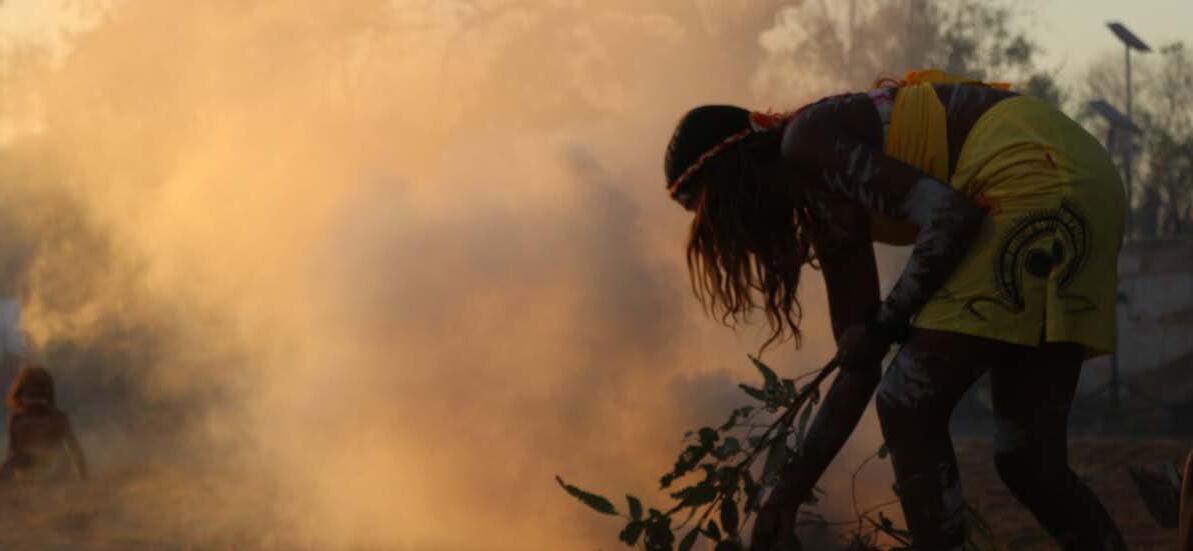
Tourism Western Australia (Tourism WA) acknowledges Aboriginal people as the First Peoples of Western Australia. We pay our respects to all Aboriginal people in Western Australia and we celebrate the diversity of Aboriginal people and honour their continuing connection to Country, culture, family, and community. We recognise and appreciate the invaluable contributions made by Aboriginal people across many generations in shaping Western Australia as a premier tourism destination.
For more information, or to request an accessible version of this document, please contact:
Regional Events Team
Tourism Western Australia
Level 10, 1 William Street, PERTH WA 6000
T: (08) 9262 1780
E: regionalevents@westernaustralia.com
Translating and Interpreting Service (TIS)
T: 13 14 50 tisnational.gov.au
The Regional Events Scheme 2027–28 Guidelines are available for viewing and download from the Tourism WA website: tourism.wa.gov.au/res
Document Version: June 2026
We recognise the diversity of First Peoples living throughout Western Australia. This document uses the term ‘Aboriginal’ in recognition that Aboriginal people are the original people of Western Australia. At a regional or local level, the traditional language group name is often used. Across Australia through government, the term for Aboriginal and Torres Strait Islander peoples may be referred to as Indigenous peoples. The diversity of acknowledgement includes Indigenous, First Peoples, First Nations, Traditional Owners, Traditional Custodians and identification by the traditional language groups, recognising the importance of self-determination and individual community preference.
This document may contain images and names of Aboriginal people who have passed away.
THE RES IS AN ANNUAL FUNDING ROUND PROVIDING FUNDING TO SMALL-SCALE OR DEVELOPING REGIONAL EVENTS ACROSS WESTERN AUSTRALIA.
RES is administered by Tourism Western Australia (Tourism WA) with an annual competitive application process which allocates between $5,000 to $40,000 (ex. GST) to successful events per event, per financial year.
RES aims to support the development of events that take place in, and drive visitation to, regional areas within Western Australia.
The objectives of RES are:
• VISITATION – Bring additional visitation and expenditure to regions, including during offpeak and shoulder seasons.
• ECONOMIC – Support economic growth in the region, including through local job creation, career and capability development.
• MEDIA – Raise the profile of the region through event promotion and media coverage.
• SOCIAL – Promote inclusive and sustainable event practices and improve the vibrancy, social amenity and community wellbeing in regional Western Australia.
RES also encapsulates the Regional Aboriginal Events Scheme (RAES). RAES aims to support the development of events that showcase engaging Aboriginal activities and experiences to position Western Australia as a recognised cultural events destination.
The total funding available in the 2027-28 RES is up to $1,400,000. This is inclusive of a quarantined pool of up to $250,000 for RAES.
RES funding is provided by the WA Government through Tourism WA and Royalties for Regions.
REGIONAL EVENT SCHEME FUNDING 2027-28
TOTAL $1.4 MILLION
For events to be eligible for funding:
• The Event must take place between 1 July 2027 and 30 June 2028 (the ‘funding period’).*
* If applying for multi-year funding, the first Event must take place during this funding period, and the following Events must take place in the consecutive financial year/s (i.e. 1 July 2028 and 30 June 2029, 1 July 2029 and 30 June 2030).
• The requested funding amount must be between $5,000 and $40,000 per Event.
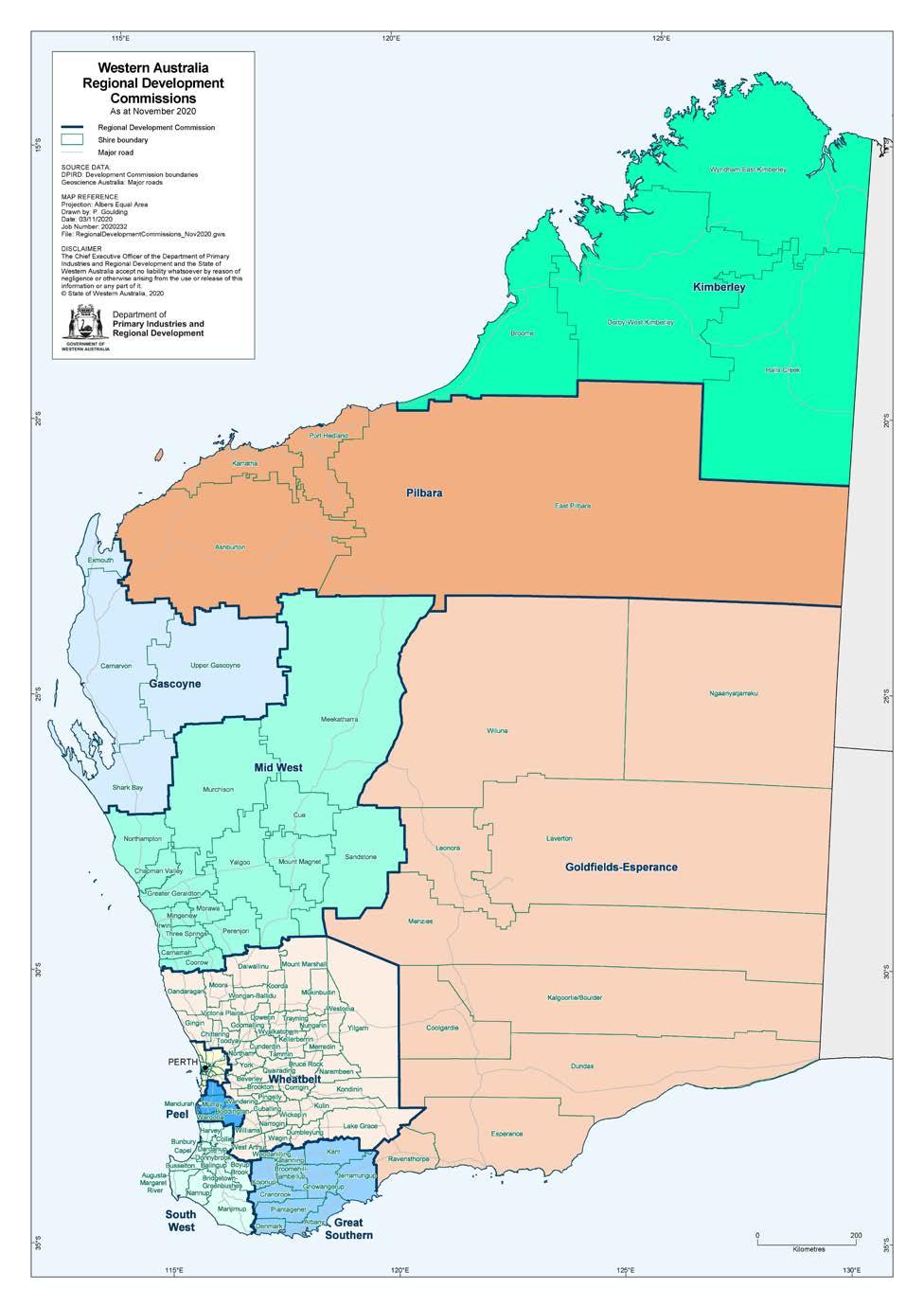
• The Event must be held in one of WA’s nine regional areas as determined by the Regional Development Commission Act 1993. These include the Peel, South West, Great Southern, Wheatbelt, Mid-West, Gascoyne, Goldfields-Esperance, Pilbara and Kimberley regions (see Appendix 1).
• The Event application must come under the classification of an ‘Event’, which is a special occurrence tied to a certain time and place, consciously planned by the Applicant.
To be eligible for RAES funding, the Event must also have:
• More than 50% of its program consisting of Aboriginal activities or experiences.
• Involvement of Aboriginal people in the leadership, coordination and delivery of the Event Program, which may also relate to performers, food and beverage offerings or the production and selling of merchandise.
Tourism WA will only enter into sponsorship agreements with the following types of applicants:
• Local Government Authority
• Incorporated Entity
• Pty Ltd Company
• Natural Person
To be eligible for multi-year funding, the Event must have received single-year funding through the RES within the last three (3) funding rounds.
The following applications are ineligible to receive RES funding:
• Events held in the Perth metropolitan area or outside of Western Australia.
• Business or industry events including, but not limited to, conferences, conventions, symposia, congresses, incentive group events, marketing events, special celebrations, seminars, courses, public or trade shows, product launches, exhibitions, company general meetings, corporate retreats, study tours or training programs (funding for business events may be available through Business Events Perth).
• Tourism products including, but not limited to, transport, attractions, accommodation, catering, natural resources, entertainment, experiences and other facilities and services.
• Events that are already in receipt of Tourism WA funding for the funding period.
• Agricultural shows, which have the primary purpose of showcasing agriculture, machinery, trade and/or animal husbandry.
• Auspice arrangements (where the contracted organisation is not the organisation delivering the contractual obligations).
• If the requested Tourism WA funding amount exceeds 50% of the total Event Budget.
• If the applicant does not hold an ABN and does not meet one (1) of the criteria contained in the Australian Taxation Office’s Statement by a Supplier Form.
• If the Event and/or applicant has any outstanding sponsorship requirements or reporting with Tourism WA or the Department of Creative Industries, Tourism and Sport (previously the Department of Local Government, Sport and Cultural Industries), or has had an agreement terminated due to failing to meet sponsorship requirements.
* This does not include Events that are receiving RES or RAES funding and the Event has not yet occurred. In this instance, the application can be considered, however, if successful, the funding is awarded in principle, and all sponsorship requirements must be completed for the previous year’s funding before funding for the next financial year can be received.

All applications for RES and RAES funding must clearly outline what costs the funding will be allocated to. These costs must align directly to the objectives of the scheme (see page 4).
Some examples of acceptable costs include:
• Paid marketing and media
• Live music and performances
• Prestigious talent/hero names
• Arts and cultural activities
• Workshops
• Temporary event infrastructure
• Event operational costs such as traffic management and licensing
• Event staff (event/project specific)
• Waste and recycling management
• Access and inclusion measures
RES and RAES funding cannot be used for the following expenditure items:
• Capital works (permanent infrastructure);
• Existing, ongoing or recurrent organisational costs (i.e. employee salaries and employment costs, insurance, lease or rental payments, uniforms, administration expenses);
• Purchase of capital equipment or assets (i.e. computers, photocopiers and vehicles);
• Venue hire or rental fees for the applicant organisation’s own venue or assets;
• Prize money or gifts; or
• Expenses from previous or future events (outside of the funding period).
Applicants with an executed, current multi-year funding agreement (2-3 years) may apply for an uplift in funding to support newly developed initiative/s for their Event.
To apply for an uplift:
• Applications must be received through the applications portal during the application period (no applications or requests for additional funding will be accepted outside of this period).
• The total sponsorship amount (including the current sponsorship agreement) cannot exceed $40,000.
• The full application must be completed for the current multi-year supported Event and outline the new initiative/s being introduced. The Event name must match the current Event.
• The new initiative/s must align with the objectives of RES; further developing/ elevating the Event.
The request will undergo the same competitive assessment process as standard RES funding applications and is subject to available funding.
Should funding be awarded, a variation to the current sponsorship agreement will be undertaken to reflect the new initiative/s proposed in the funding application.
Applicants should first discuss their application with the Tourism WA Regional Events Team prior to applying for funding. To contact the Tourism WA Regional Events Team email regionalevents@westernaustralia.com or call (08) 9262 1780.
Once the application has been discussed with a representative from the Regional Events Team, applicants must complete an application through the Tourism WA Funding Portal online application portal, accessible through the tourism.wa.gov.au/res. The portal will be accessible between 9am (AWST) Tuesday 23 June 2026 and 5pm (AWST) Friday 24 July 2026 (applications will not be accepted after this time).
Please note, only applications received through the online portal will be considered; no other format of application will be accepted.
Applicants are required to complete the full online application and provide all the required supporting material. Incomplete applications will not be accepted and additional information cannot be submitted after the deadline.
View an example application form on the tourism.wa.gov.au/res
Applicants will automatically receive a confirmation email with a PDF of their completed application. If this email is not received, contact Tourism WA at regionalevents@westernaustralia.com
RAES APPLICANTS MAY RECEIVE ADDITIONAL SUPPORT IN PREPARING OR STRENGTHENING RAES APPLICATIONS FROM THE WESTERN AUSTRALIAN INDIGENOUS TOURISM OPERATORS COUNCIL (WAITOC). APPLICANTS CAN EMAIL INFO@WAITOC.COM OR COMPLETE THE ONLINE CONTACT FORM AT WAITOC.COM/CONTACT .
Applicants must provide the following information:
Applicant/organisation details, including (where applicable):
ABN
Statement by Supplier Form
Certificate of Incorporation
Constitution
Event details, including dates, location, overview and event program.
Funding request, including the amount requested and how it will be used (refer to page 7 for eligible costs).
Event budget, including all estimated income, expenses and in-kind support.
Event management structure, including key roles and responsibilities, number of paid staff and volunteers.
At least one (1) Letter of Support.
Previous event attendance numbers (if applicable).
Forecasted attendance, including:
Total number of attendees
Attendee origin (local, intrastate, interstate, international)
Estimated average daily spend (see Appendix 2)
Estimated average length of stay (see Appendix 3)
Marketing information, including:
Event/event organiser social media following
Proposed marketing and media activities
Accessibility and environmental sustainability, including how these will be addressed.
Event development, including any new initiatives or improvements.
Applications are assessed by a panel which will generally include representatives from Tourism WA, Department of Primary Industries and Regional Development and can include members from relevant sectors including grant making bodies, community service organisations, government departments and the community.
Applications are reviewed and assessed against the Regional Events Scheme Assessment Criteria. Assessments are conducted primarily on the information provided in the application. Assessors will also take into consideration regional dispersal of funds, diversity of Tourism WA-funded events, previous dealings with the applicant and outcomes of previous events.
The assessment process takes approximately six (6) months from the closing date of the application period. Funding decisions are final and cannot be contested or appealed. Applicants will be provided with feedback on their application, regardless of the outcome.
Funding is competitive and may not be awarded to all events that meet the assessment criteria or that have received funding previously, particularly where other applications meet the criteria to a greater extent and deliver greater outcomes for the WA Government.
Applications will be assessed against the criteria below. Each criterion is weighted, and must all be addressed.
1. Economic Impact (30%)
Assesses the Event’s ability to drive visitation and deliver economic benefits to the region.
Considerations can include:
• Estimated total attendance;
• Visitor origin (local, intrastate, interstate, international);
• Estimated economic impact;
• Strength of measurement methods (i.e. surveys, ticketing, research); and
• Timing of the Event (preference for shoulder and low tourism seasons).
2. Event Viability and Development (30%)
Assesses the Event’s financial sustainability and the organiser’s ability to deliver and grow the Event.
Considerations can include:
• Percentage of Tourism WA funding to forecasted Event income;
• Diversity of revenue streams;
• Experience of the Event Holder or Event management team; and
• Level of stakeholder and community support.
3. Marketing (20%)
Assesses the strength of the Event’s marketing strategy and its ability to promote both the Event and the region.
Considerations can include:
• Marketing budget (paid and in-kind);
• Planned marketing activities and channels;
• Target markets and audience reach;
• Ability to attract visitors from outside the region; and
• Promotion of the destination alongside the Event.
4. Community and Inclusion (20%)
Assesses the Event’s inclusivity and its contribution to the local community.
Considerations can include:
• Local employment opportunities created;
• Volunteer involvement and development;
• Training and skills development opportunities;
• Engagement with schools, community groups and local organisations; and
• Accessibility and inclusivity of the Event.
If the application is successful, funding amounts are strictly confidential. The applicant will enter into a sponsorship agreement with Tourism WA, which includes, but is not limited to, the following requirements:
• Provide appropriate acknowledgement of the WA Government in all publicity, speeches, websites and advertising materials, and display sponsorship signage at the Event.
• Minister for Tourism, Minister for Regional Development and Minister for the respective region of the Event to attend the Event including key official functions, announcements or ceremonies.
• Supply the Event Risk Management Plan which adopts the Australian standard for risk management AS ISO 31000:2018.
* Tourism WA engages a risk management specialist to conduct a high-level review of all Risk Management Plans. The Applicant will receive feedback on the Risk Management Plan and may be requested to implement updates.
• Maintain appropriate and sufficient insurance cover for the duration of the Event including 30 days post-Event. The required insurance includes:
- General liability insurance coverage of $20 million for any one occurrence and unlimited in aggregate.
- WA workers’ compensation/employers’ indemnity insurance no less than $50 million for any one Event.
- Personal accident insurance for volunteers engaged by the Applicant.
Applicants receiving over $15,000 in funding are required to supply a Marketing and Communications Plan. Following the completion of the Event, all applicants submit a Final Event Budget, Budget Declaration and Final Event Report to demonstrate that the funding has been spent in accordance with the sponsorship agreement.
Event Invitations to the Minister for Tourism, Minister for Regional Development and Minister for the region
Risk Management Plan
Insurance Certificates of Currency
Funding over $15,000: Marketing and Communications Plan
Final Event Budget
Budget Declaration
Final Event Report
90 days before Event
90 days before Event
90 days before Event
days before Event

Most information can be found on the Tourism WA website. If you have supplementary questions, you can email the Regional Events Team at regionalevents@westernaustralia.com
To receive updates for RES and RAES, please sign-up to the RES mailing list at tourism.wa.gov.au/res.
The Freedom of Information Act 1992 (WA) (FOI Act) gives the right to access documentation held by CITS subject to the limitations of the FOI Act. These documents can be of a personal or nonpersonal nature and may apply to the grant administration processes.
The Privacy Act 1988 (Commonwealth) regulates how personal information is handled by CITS. All information provided to CITS and gathered during the grant assessment process will be stored on a database that will only be accessed by authorised CITS personnel. That database is subject to privacy restrictions in accordance with the Commonwealth Privacy Act 1998 and Freedom of Information Act 1992.
By applying for this program, applicants acknowledge and accept that successful applicants’ may be contacted by the Minister for Tourism, Minister for Regional Development, Minister for their Region and/or their local Member of Parliament to discuss their Event. Contact details of applicants may be provided to Members of Parliament for this purpose.
Information provided in funding applications may be tabled in the Western Australian Parliament.
Accessibility – Ensuring people of all abilities can access and participate in an event experience, including venues, information, transport, amenities and programming.
Application – A form used to apply for funding, with details about your Event.
Application Portal – An online system where you prepare and submit your application.
Attendees – People who attend the Event.
Capital Assets – Large items of value owned by an organisation, such as buildings or vehicles.
Capital Equipment – Equipment purchased for long-term use, such as staging or lighting.
Economic Impact – The financial contribution an event makes to a region through visitor spending on accommodation, food, transport, entertainment, and other local goods and services.
Environmental Sustainability – Actions taken at an event that minimise environmental impact by reducing waste, conserving resources, and promoting eco-friendly practices.
Event Management – The planning, organisation and delivery of the Event.
Event Viability – The likelihood of the Event proceeding successfully, based on the effectiveness of its planning, funding and organisation.
Forecast – An estimate or prediction of what is expected based on available information or past data.
In-Kind – Support provided to your Event in the form of goods or services instead of financial.
Inclusivity – Ensuring the Event is welcoming and accessible to people of all backgrounds and abilities.
International – People travelling from another country.
Interstate – People travelling from another state in Australia.
Intrastate – People travelling from another region within the same state to attend the Event.
Letter of Support – A written statement from a person or organisation that demonstrates support for the Event, including its importance and benefit to the community or region.
Local – People who live in the same region where the Event is held.
Multi-Year Agreement – A funding agreement that lasts for more than one year.
Operational – Costs related to the day-to-day running of the Event.
Quarantined Funding – Funds that are allocated for a specific purpose and are restricted from being used for any other purpose.
Sponsorship Agreement – A contract that outlines the terms, conditions, and obligations that must be met to receive allocated funding.
Training and Skills Development – Opportunities for people to learn new skills or improve their knowledge through involvement with Event.
Variation – A formal change to an existing Sponsorship Agreement.
Visitor Origin – The location from which visitors are traveling in order to attend the Event.
Source: Tourism Research Australia, Domestic Tourism Statistics, 2025
Source: WA Seasonality By Tourism Region chart is based on a combination of Airdna data, STR Global hotel data, Tourism Research Australia visitor statistics (Domestic Tourism Statistics and International Visitor Survey), and Tourism Research Australia “domestic visitor density” (mobility data).
Tourism Western Australia
Level 10, 1 William Street, PERTH WA 6000
GPO Box X2261 PERTH WA 6847
T. 08 9262 1700 F. 08 9262 1787 info@westernaustralia.com westernaustralia.com tourism.wa.gov.au
Facebook: facebook.com/extraordinarywesternaustralia
YouTube: youtube.com/westernaustralia
Instagram: Instagram.com/westernaustralia
Threads: threads.com/@westernaustralia
TikTok: tiktok.com/@westernaustralia #WAtheDreamState