
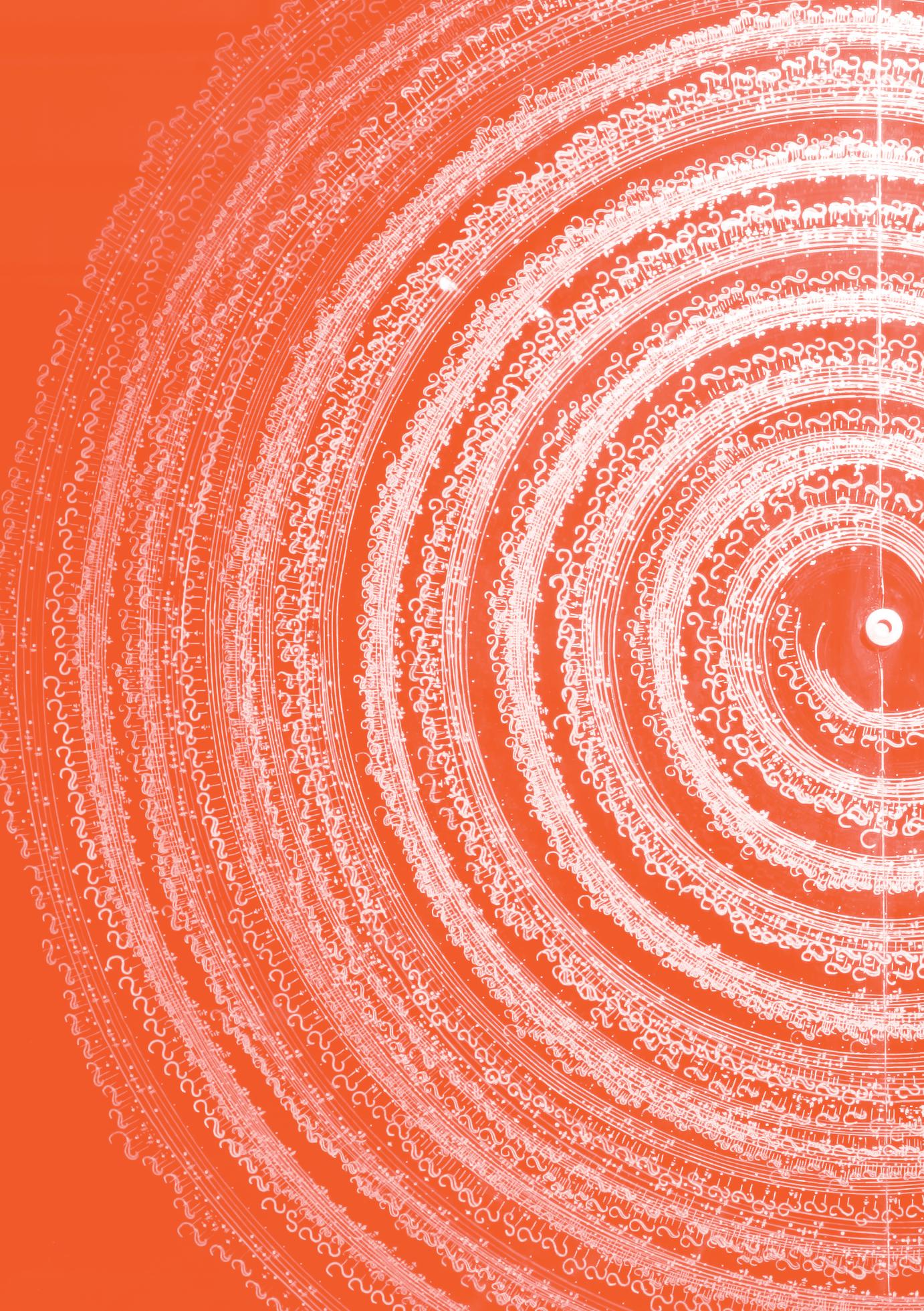
《Through the glass listening》 is an evocation of the book 《Through the Looking-Glass》 1) written by Lewis Carroll in 1871, where the act of crossing the mirror allows the young heroine Alice from entering imaginary worlds , to move in unheard spaces. For the exhibition, this crossing, from the transparency and its multiple reflections, becomes sound and is diffracted in countless echoes.
《Through the listening glass》 gathers about twelve art works pierced by light waves and sound vibrations, creating various listening situations and offering an active visitor participation. The idea of 《transparency》 that motivates this exhibition suggests a broad multiple meanings. In constant variability and relativity, it characterizes many areas of social, political, moral, aesthetic ..., with the objective of fantasy of full transparency. Consisting rather in a kind of filtering of reality, it induces at once this world of connections and transformations between multiple expressions, and in particular this interconnection between music and visual arts.
If the optical qualities of some materials, glass, liquid, lights ... constitute a breeding ground for these interpenetrations, the transparency has also extended to other areas of investigation, it is central to the effervescent world of communications and networks, to proliferation of virtual spaces. The sound, purely vibratory and totally transparent space, has become the link of this exhibition. Translucent, it remains imbued with a true materiality like the 《Words frozen》 described by Pantagruel in the book by François Rabelais 2): beautiful and poetic premonitions of the concept of 《sound object》,
announced by Pierre Schaeffer, emanating from voices, clamor and din of battles frozen by the Glacial Sea.
Music, through the constant synergies, over the centuries, maintained by technology and a scientific spirit, occupies a central place in the construction of these mixed territories. Music went on developing as an art linked to technology through complex and innovative mechanisms. From the eighteenth century, for example, several machines were invented, such as “ocular harpsichord”(clavecin oculaire) of Abbé Louis Bertrand Castel, intended to create 《coloured music》. The twentieth century is full of these new musical instruments factories. In the 50s, music has become the first 《digital》 art, by the use of the computer for composition and synthesis. The digitalization process focused and accelerated a process of dematerialization of the work of art, to the interoperability of each of its elements. Everything becomes lighter, disembodied, mobile and transparent. The artistic work, as an installation, has became polymorphic, and can be both tactile, immersive, interactive, mobile. So, visual and audio, at the same time, can strengthen, 《increase》 or erase each other: mobility, which meddles in between various artistic expressions, and the shift from a perception to another, both create a multitude of in-between states and unusual situations, just like an architecture made out of invisible threads. So, the sound can be fully or partly the spine of this interdisciplinarity: this is the common theme of the whole path of 《Through the listening glass》.
Through - Travel》), it reflected incessantly on itself (《Coleslaw》, 《D’Ore et d’ espace》), it spreads into countless broken ( 《Walking through a line of neon lights》) or it freezes into a waiting position ( 《Retenue d’ eau》). 《Coleslaw》 introduces also a notion of timelessness: playing with innumerable variations of interpretation of Cole Porter’ s music, William Anastasi films himself throughout a game of mirrors. As some kind of echo to this fluidity, and prelude to transparencies from 《D’Ore et d’ espace,》, 《Glass House》 by Thomas Léon, stands a powerful glass building, kind of hybrid architectural monster with countless reflections and halos, surrounded by organ tones of crystal. Thomas Leon is based on the eponymous scenario of Sergei Eisenstein and his thoughts on a glass architecture that would be in immediate continuity between inside and outside, with reference to current expressionist and constructivist of this period, well as to Walter Gropius and Le Corbusier. Images of Thomas Leon translate this interpenetration by reflections of urban landscapes mixed with the sounds of glass, in a translucid immersive universe.
As a day dream, golden leafs sound writings runoff of Denys Vinzant on glass plates create a space of lines, light and sound intersections, while mixing with visitors silhouettes. It is invited to hold an attitude of listening, being attentive to the sound of glass vibrations, and, indeed, to be part of the visual device.
sound and light structure, like a frame emerging from the ground.
While Iuan Hau Chiang gives his priority to urban atmosphere, Pierre Alain Jaffrennou invites us for a walk in a vegetal universe of parks and gardens in his 《greensounds》 installation. The notion 《transparency》 is considered here as a 《transportation》, as this artwork consists in a metaphorical recreation of natural environment, a transfer of sound and visual landscape, thatechoes a permanent installation situated in the Gerland Parl in Lyon. With the help of a smartphone supplied with sensors of movement, a visitor can interact to a sound elaboration, to its space spread and its development.
The principle of interaction is also at the heart of 《72 Impulse》. In a spectacular vanishing point, Trafik and Yann Orlarey’ s 《72 Impulse》, composed of 6 structures and strips of LEDs and tools-impactors projects in multiple graphic, plastic and sound perspectives. 《72 Impulse》 is a crossing where sounds have never timbre nor pitch, where lines and volumes construct and deconstrut in a 《sidereal》 atmosphere . The public is requested to play with theses combinations and trajectories.
Thus, 《Through the listening glass》 induces a thinking on the artistic object: this one can disappear, it becomes light and sound trajectories (《72 Impulse》, 《Time - Passing
Iuan Hau Chiang takes us on a journey that combines other types of interactions and connections, those of the individual and his social and personal environment, where light and all kinds of vibrations configure our identity. 《Time - Passing through - Travel》 presents itself as a stroll among an original
Opening the itinerary of the exhibition, before the incessant vibrations of 《72 Impulse》, the visitor discovers the suspended and silent score of Matt Coco. 《fantôme》 is consisted of a roll of about thirty meters long, playing with empty and the absence of sound. The installation is based on the breakup of the image of a landscape and its recess. It suggests an imaginary listening, from a technique of hollowing out a form and keep only the full, the remaining material is so called 《ghost》
The artworks of Michel François also have an
interactive relationship of sound to silence, presenting situations and events already produced or waiting to be. To 《Walking through aline of neon lights,》 the public is projected in the steps of the walker, feels the change of state of the glass breaks and crunches everywhere, without any noise.
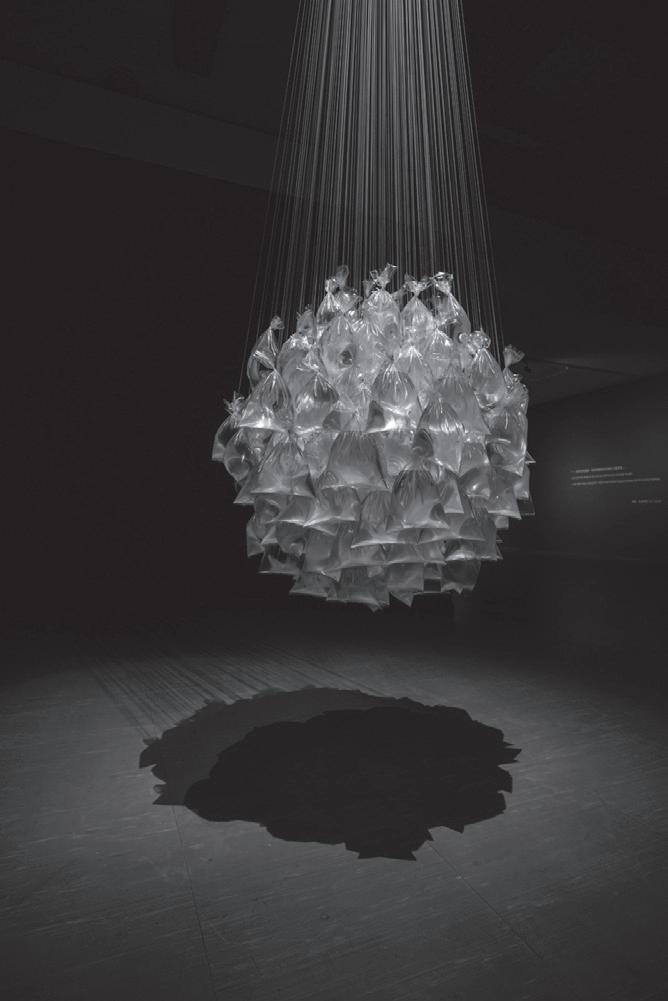
《Retenue d eau》 of Michel François, still, sillent and whose the outcome is not written, induces an alternation between lightness and weight, emptiness and transparence, waiting for an event.
More discreet, and equally silent, the video projection 《Seeing is Believing》 by Hau Chiang Iuan puts us into these spaces confused between real life and virtual world, soliciting directly the architecture of the exhibition space. With 《Thinking》 of Xiao Yu, the route of 《Through the listening glass》 includes five installations where the sound directly calls in our imagination. The energy of exploded bamboo of 《Thinking》 refers to (sound) tensions from the past and future, already felt to the artworks of Michel François.
These art works were produced, for some of them, by Grame, national center for musical creation and multimedia Lyon. The exhibition assures the principle of considering the sound material as a constituent of a visual space, developing the idea of sound plasticity, and even amplifying the idea that any work of art, painting, sculpture... has its own sound dimension providing us, in silence, with some rustles of the world. To watch and to listen... The concept of 《transparency》 is fully involved in this process of listening and stimulates the inversion of perspectives insofar as the sound is the initiator of this plasticity.
1) 《Through the Looking-Glass》 that follows the 《Adventures of Alice in Wonderland》 by Lewis Carroll was published in France for the first time in 1931 under the title 《Crossing the mirror.》. The title will be changed to 《Through the Looking-Glass》 during the 1938 reissue.
2) Francois Rabelais (1483 env.-1553) 《Les Paroles Gelées》 - Le Quart Livre (Chapitre 15 et 16)
THROUGH THE LISTENING GLASS, SOUND &TRANSPARENCY
《듣기 나라의 앨리스(Through the Listening Glass)》는 1871년 루이스 캐롤이 쓴 《거울나라의
앨리스(Through the Looking Glass)》1)에서 영감을
받아 만든 제목이다 이 책에서 꼬마 주인공 앨리스는
거울을 뚫고 거울나라에 들어가면서 한번도 들어본
적이 없는 이미지 공간을 여행하게 된다. 이번 전시에서
관객은 마치 앨리스가 거울 속으로 들어가 만난 새로운
세계처럼, 투명성(transparency)과 다양하게 반사하는
이미지들이 소리가 되고, 수많은 메아리로 퍼져나가면서
만들어내는 새로운 환경을 경험하게 될 것이다
전시에 초대된 12점의 작품들은 저마다 빛의
파장과 소리의 진동이라는 일관된 주제 아래에서
듣기(listening)의 다양한 방법을 제시하며, 관객의
적극적인 참여를 유도하기도 한다 이 전시의
James Giroudon
Curator
Nathalie Boseul SHIN
Chief curator of Total Museum of Contemporary Art
James Giroudon
Director of GRAME
James Giroudon was born in La Tour du Pin, near Lyon. He studied at the University of Lyon and is graduated from art history, sociology and education sciences.
Graduated of Pierre Schaeffer and Guy Reibel s class at the National Superior Conservatory of Music in Paris. From 1982 to 1990, he taught at the Conservatory of Music in Saint-Etienne, where he created an electroacoustic music section, and in 1992 he was appointed to the 《Arts du Spectacle》 degree course at the Université de Caen. Also conducts an activity of sociology in the socio-economic and cultural sector during several years.
Founded in 1981 in Lyon GRAME with Pierre Alain Jaffrennou, he is responsible for managing and artistic, as well as international development. In 1992, in Lyon, he created the Musiques en Scène festival, which in 2002 became a biennial.
주제어이기도 한 《투명성(transparency)》은
광범위하고도 다양한 의미를 가진다. 투명성은 끊임없이
변화하고, 맥락을 달리하면서 다양한 해석의 가능성을
열어둔다. 때로 투명성은 ‘완벽하게 투명한’이라는
환상과 더불어 사회적, 정치적, 윤리적, 미적인 영역과
같은 다양한 범주에서 사용된다 또한 투명성은 현실을
여과하면서 세계와의 연결고리를 만들기도 하고, 다양한
표현들 사이의 변형을 만들어내며, 특히 음악과 시각예술
사이의 상호연관성을 유도해내기도 한다.
만일 거울이나 액체, 빛과 같은 재료들이 가지는
시각적인 특성들이 상호침투가 가능한 환경을
제시한다면, 이 때 투명성은 한 영역에서 다른
영역으로 나아갈 수 있도록 만드는 매개이자, 확장된
가상공간에서의 커뮤니케이션과 역동적인 네트워크
세계를 이루는 핵심적인 요소이기도 하다 여기서
순수한 진동과 완벽하게 투명한 공간인 ‘소리’가 바로 이
라블레(Francois Rableais)가 쓴 책에서, 팡타그뤼엘(Pantagreul)이 묘사한 ‘얼어붙은 말(words
이동이 용이해졌다. 동시에 시각적이고 청각적인 부분들도 강화되었다. 그 과정에서 서로를 ‘진작’시키기도 하고, 지워버리기도 했다. 다시 말해, 다양한 예술적 표현 사이의 이동성(mobility), 하나의 지각(perception)에서
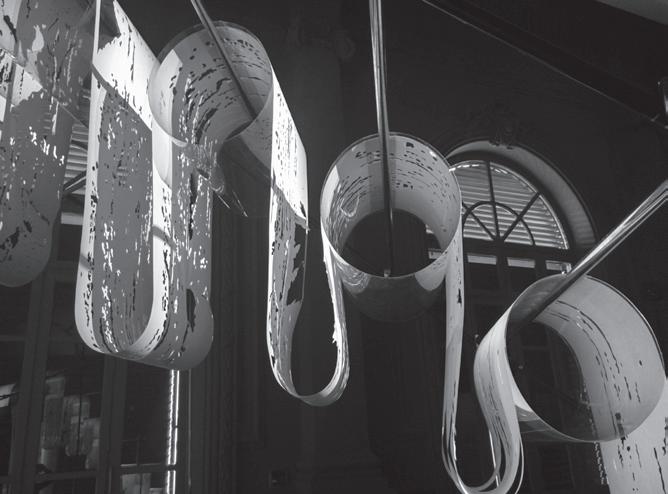
fantôme is an installation based on the bursting of an image of a landscape deployed on 30m of a roller paper.
Here it s an image of Fukushima after the tsunami of March 2011. This image found on Internet, was treated by dissociation of colors, thus creating an abstraction of the event. The forms were drawn and cut out one by one. The title comes from this technique which consists in hollowing out a form and to keep only the full one. The remaining matter, hollowed out, is called “fantôme” . The question of the vacuum, as much as the question of the potential, are important points in Matt Coco’s work because they structure her installations and are the constituents ones giving multiple realities to the parts carried out. Conceived at the beginning as a transfiguration of reality by fragmentation, fantôme becomes a score deploying a language which remains to be defined. It is called “ score ” because it returns to the question of the language and the notation.
Thus, “fantôme” is a matrix able to generate various languages, various realities, various events. The principle of interpretation always taking into account first a sound reality and the concept of space as landscape.
2011-2016
installation, cut paper, metal structure and PVC, stryroglass, various dimensions
It is not any more question here of giving rise to a sound reality of the partition but of keeping it only secret and possible, structuring. Thus, objects having potentially a sound reality, were imagined by the artist as belonging to this abstract landscape. A collaboration is started with a contemporary dancer, Benoît Caussé, who works first with the constitution of a mental sound tapestry resulting from the forms of the score. This one generating some states of body. The sound is a missing part but which frames these various proposals. A possible fiction and fantasized left to those who look at.
일본에 쓰나미가
몰려왔던 2011년 3월 이후 후쿠시마의 이미지다. 작가는
인터넷에서 찾은 이미지에서 동일한 색을 뽑아내어
색의 스펙트럼을 만들고, 이미지를 오려내는 방식으로
후쿠시마의 풍경을 추상화시켰다.
작품제목 ‘Fantôme’은 어떤 재료에서 특정 형태를
오려내어 이미지를 만들어내는 기법에서 차용했으며, 여기서 오려내고 남아 있는 부분이 ‘팬텀’이 된다
맷 코코에게 ‘비어 있음’은 작품의 중요한 주제이며
‘잠재적 가능성’을 내포한다. 왜냐하면 비어 있는 부분이
모여 작품 설치의 구조를 만들고, 남아 있는 부분에
실재성을 부여하기 때문이다 관객은 작품을 보며 파편들에 의해 변형된 실재를 인식하게 되고, 이어서
있는 부분 ‘팬텀’은 앞으로 규정되어야 할 언어를 담은 악보처럼 보이기도 한다 이것을 ‘악보’라고 부르는
이유는 작품이 언어와 기호에 관한 문제로 되돌아오기
때문이다.
따라서 《팬텀》은 다양한 언어들, 다양한 실제, 다양한
사태들을 만들어내는 매트릭스라고 할 수 있다 여기에는
언제나 소리와 풍경으로서의 공간에 대한 개념을 해석의
원칙으로 두고 있다.
이제 더 이상 파편들은 소리의 실재성에 대한
문제보다는 비밀과 기능성을 간직하고, 구조화된다
작가는 잠정적으로 소리의 실재성을 가지고 있는
오브제들은 추상적인 풍경에 귀속하는 것이라고 말한다.
이에 대해, 최초로 악보형식에서 정신적인 소리의
타피스트리(tapestry)를 고안한 현대무용가 베누아
코씨(Benoît Caussé)와 첫 번째 협업을 함께했다.
협업은 소리는 없었지만, 몸의 상태를 변환되는 과정을
통해 다양한 제안들을 만들어내었다. 여기서 상상 가능한
부분과 판타지는 관객의 몫으로 남겨진다
Matt Coco (b.1974, France)
Matt Coco studied at the Ecole du Louvre in Paris and is graduated from the Institute of Visual Arts of Orléans. Through installation, drawing, video and sound, Matt Coco develops a cross-linked research in anthropological, architectural, literary and memorial fields. Her artwork is mainly a response and analysis of territories or areas through exhibitions, residencies in France and abroad, of collaborations with artists from different disciplines but also of sound creations that are footprints of radio dramas. A construction of a story or possible memory, a dialectic between work and a viewer, an artwork as a meeting space where all is possible – all this makes from her works a changing world in constant evolution. She constructs her artworks, installed or sonic, as a kind of total fiction that questions the narrative construction and the relationship between reality and fiction. Using simple materials and methods such as one for constructing models, or a museum classification, she borrows the languages from different universes to create an ambiguity in the status of the work itself. Playing with the scale ratio and with a permanent updating of artworks, his work induces constantly a perpetual search and fragility of existence.
맷 코코 (b.1974, 프랑스
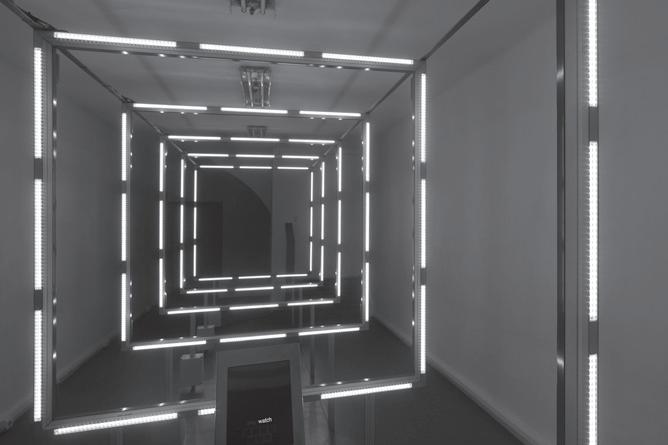
《72 Impulse》 is undertaken as part of a collaborative effort between artists, developers and technicians : Joel Rodière, Pierre Rodière and Yann Orlarey, within Trafik and Grame. Initially, tubular structures and architecture of LEDs were invented by Trafik, and implemented in partnership with the engineers at the company specialized, Lec : in this way, they create the first version only luminous, 《72》.
A work immersive sound and light
The project of 《72 Impulse》 is to create a interactive light and sound installation made of six large metallic frames, drawing a volume that spans 2.3 meters in height, 1.6 meters in width, and nearly 6 meters in depth. Each frame contains 12 LEDs modules of 40 cm in length for the light, and four percussive elements for the sound.
When the installation runs, the lights and sounds produce a unique visual and sonic choreography, made of paths and movements. It induces a new vision of the space and completely reshape the volume of the installation. The system is autonomous, but the visitor can interact with it. Using a touch pad, he can create its own sound and light logic, and play with the multiple depth levels of the
Music and development : Yann Orlarey
conception sound design : Christophe Lebreton
Technical assistant audio-digital : Anthony Capelli
Realizations structures : Lec
Machining and connectors : Art Project
Commission : Lec and GRAME
Production: Grame, Cncm / Trafik / Lec
World premiere : Taipei Fine Arts Museum (september 2013)
. 작품은 먼저 트라픽이 큐브 구조와 LED 설치물을 만들어내었고,
전문 업체인 Lec의 엔지니어들과 파트너쉽을 통해
완성되었다 이러한 과정을 통해 빛만 내는 첫 번째
버전인 《72 임펄스》가 만들어졌다.
몰입적 빛-소리 설치작품
인터렉티브 빛-소리 설치작품인 《72 임펄스》는 높이
2.3미터, 폭 1.6미터의 대형 금속 프레임 여섯 개로
구성되며, 전체 공간의 길이는 6미터 정도 된다. 각각의
프레임에는 40cm 길이의 LED 조명 12개와 소리를 내기
위한 네 개의 퍼커션 부품들이 설치되어 있다
installation. The listener / viewer, immersed in the middle of this vibrating structure, can stay contemplative; he can move inside the structure or interact with the installation that in this case becomes an instrument to perform with.
An integrated technology
The technology of 《72 Impulse》 is an integral part of the work. It is designed in a spirit of hybridization between the digital and physical worlds. Sounds are not synthesized neither reproduced through loudspeakers, but physically produced by the structure using digitally controlled electromagnetic percussions attached to the frames.The music composition does not appeal to the traditional categories of timbre and pitch, but favors a vocabulary based on rhythm, mobility and velocity: so many categories are well suited to these materials light and sound of an iteratively morphology.Thus,72/IMPULSE will explore the use of sounds extremely sleek, unadorned, designed as simple markers delimiting the space-time work.
Yann Orlarey (b. 1959, France)
작품이 작동하면, 빛과 소리가 패스(path)와 무브먼트로 구성된 독특한 시각적, 청각적 효과를 연출한다. 이 같은 연출방식을 통해 공간은 새롭게 이해되고, 작품(설치)은 완전히 새로운 모습으로 변화한다. 시스템은 자동으로
작동하지만 관람객이 터치패드를 이용하여 자신만의
소리와 빛을 조절할 수 있으며, 다양한 조작방식에 따라
매번 다른 깊이감을 만들어낼 수 있다 관객은 빛과
소리에 의해 진동하는 프레임의 구조 속으로 빠져들어
명상하는 느낌을 받기도 하며, 프레임 구조 사이를
돌아다니면서 스스로 작품을 연주하는 악기가 되어보는
경험도 할 수 있다
사용된 기술
《72 임펄스》에서 기술은 매우 중요한 부분이다. 이
작품은 디지털과 물리적 세계 사이의 하이브리드적
교배를 만들어보려는 시도로 제작되었다. 소리는
합성이나 대형 스피커를 통해서 재생산되는 것이
아닌, 프레임에 부착되어 디지털로 조작되는 전자
퍼커션을 사용한 구조에 의해 발생한다 또한 작품은
음색이나 음정과 같은 전통적인 범주에 의해 작곡이
이루어지는 것이 아니며 리듬과 이동성, 속도에 기반하여
이루어진다. 이외에도 더 많은 범주들이 이와 같은
상호작용적 빛-소리 형태학에
While studying economics and computer science at Lyon’s university, Yann Orlarey also attended electroacoustic music classes at the conservatory in Saint-Etienne. He has been a member of Grame since 1983, and is currently the scientific director of this organization. His own research is concerned mainly with real-time operatig systems and formal languages for musical composition and signal processing. He has created, alone or as part of a team, a number of musical systems and software, in particular the FAUST* programming language. His repertoire includes music on tape, interactive pieces, instrumental pieces for soloists, small groups and orchestras, and sound installations. Most of his works bring in computing techniques, either for the performers’ instrumental playing situations or in the compositional process as such. Works by him have been played in Europe (both eastern and western), USA, Canada and China.
Trafik (France)
Trafik is a French creative studio based in Lyon. Trafik specializes in punchy graphic and multimedia development, making signature interactive work. From paper to pixels, Trafik has successfully worked for cultural, institutional, and industrial clients, both big and small, creating printed documents, screens, projections and installations... Trafik’s singularity comes from unique series of visual and graphic art creations and interactive artistic experiences which are, for the most part, designed in a participatory way. This initiative, integrating certain codes of numeric culture such as user- friendliness, community, exchange and transmission, enables us to create uninhibited, fun, and unique projects.and transmission, enables Trafik to create uninhibited, fun, and unique projects. 얀
중국에서
연주되었다.
*FAUST Functional Audio Stream
트라픽 (프랑스)
리옹에 있는 프렌치 크리에이티브 스튜디오인 ‘트라픽(Trafik)’은
상호작용적 작품을 만드는 데 중요한 그래픽 멀티미디어 전문
개발팀이다 트라픽은 문화예술기관이나 산업분야의 다양한
고객들을 위해 종이에서부터 픽셀에 이르기까지 다양한
인쇄물, 스크린, 프로젝터, 설치 등을 제작해왔다. 트라픽은
시각예술, 그래픽예술 창작과 특히
인터렉티브 예술 체험
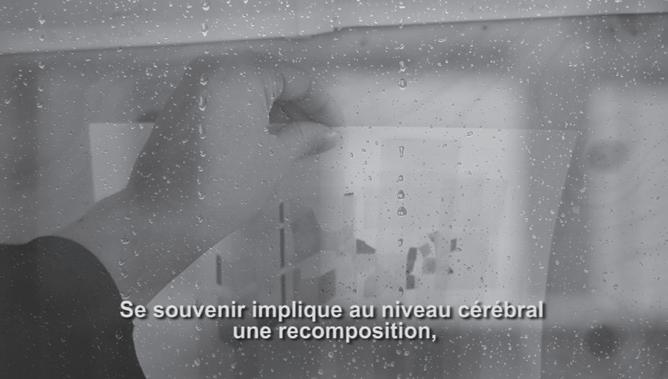
《Each act of perception is partly an act of creation. When we see, close to us, the branches of a tree shivering, we hear, in us, the breath of the wind. He calls this, the music of the eyes. My deafness, he says, was difficult to detect, by me and by others because, from the beginning, my eyes had started in an unconscious way to translate movements into sounds》. (David Wright) What we call our conscience of the present, the present moment , is a permanent oscillation between memory and anticipation, memories and desires, nostalgia and expectations. To remember, implies at the cerebral level a certain recombining, starting from the mobilization of traces multiple, discrete, parcelled out, distributed in many networks of nervous cells dispersed through various areas of our brain. (extracts from subtitles)
Dumb video, black and white (18’46) Video in echo and / or as a prelude to fantôme.
Coco (b.1974, France)
Matt Coco studied at the Ecole du Louvre in Paris and is graduated from the Institute of Visual Arts of Orléans. Through installation, drawing, video and sound, Matt Coco develops a cross-linked research in anthropological, architectural, literary and memorial fields. Her artwork is mainly a response and analysis of territories or areas through exhibitions, residencies in France and abroad, of collaborations with artists from different disciplines but also of sound creations that are footprints of radio dramas. A construction of a story or possible memory, a dialectic between work and a viewer, an artwork as a meeting space where all is possible – all this makes from her works a changing world in constant evolution. She constructs her artworks, installed or sonic, as a kind of total fiction that questions the narrative construction and the relationship between reality and fiction. Using simple materials and methods such as one for constructing models, or a museum classification, she borrows the languages from different universes to create an ambiguity in the status of the work itself. Playing with the scale ratio and with a permanent updating of artworks, his work implies a perpetual search toward the fragility of existence.
비롯하여 세계 곳곳에서 벌어지는 전시나 레지던시 기회가 주어지면, 현장에서 지역의 특성과 환경에 따라 작품을
제작한다. 다른 분야의 예술가들과 다양한 협업작업을 했으며,
마치 라디오드라마를 제작하는 것과 유사한 방식으로 사운드를
제작하기도 했다. 그녀에게 작업은 스토리 구성이나 상상해볼
수 있는 가상의 기억, 작품과 관객 사이의 변증법적인 관계, 모든 것들이 가능한 만남의 공간이며, 끊임없이 진화하고 변화하는
것이다 따라서 그녀에게 작품은 그것이 설치이건 사운드이건 간에
내러티브의 구성, 실재와 허구의 관계에 질문하는 일종의 총체적인
허구이다 작품 자체가 가지고 있는 위상을 애매하게 하기 위해서,
모형을 만들기도 하고 뮤지엄 분류법과 같은 다른 분야의 언어를
차용하기도 한다 다양한 비례치를 사용하기도 하고, 계속해서
업데이트되는 작품을 제안하는 등의 활동을 통해서 존재의
연약함을 끊임없이 탐구해가고 있다
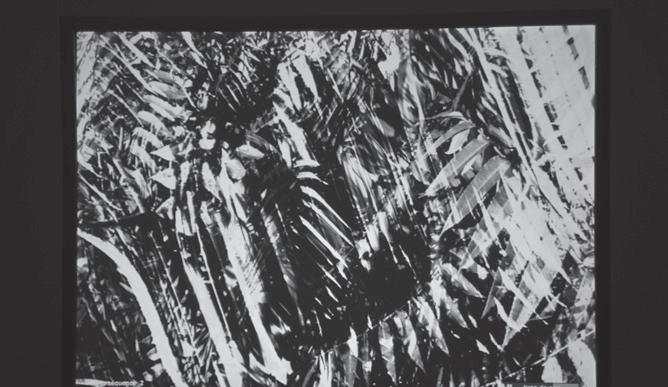
The project of the 《greensounds》 installation is to let visual and sonic universe of parks and gardens transparent and to show it through a site of exhibition by means of technological devices. This artwork is a metaphorical and virtual recreation of natural environment, a kind of relocation and a transfer of audio and visual landscapes : the central motif is 《Animots》, which is a permanent installation that functions in the heart of the park of Gerland in Lyon from December 2000.
《Animots》 consists of a sound diffusion, which comes from multiple points of the green space of the park. At different moments, the realization of acoustic compositions is based on three different typologies of sounds. The first type is characterized by natural mimetic sounds, which can be heard in parks, gardens or in countryside. On the contrary, the second category is based on sounds of cultural nature: the sounds of instruments, voice or synthetic tone. Finally, the third one is shaped of ambiguous sounds of nature and culture that question the listener.
Unlike 《Animots》 that exists and lives its life in a micro-world, quite independently from the living creatures in the Park, 《greensounds》 is an interactive installation influenced by the
④ greensounds, Pierre Alain Jaffrennou
2015-2016
Interactive installation for smartphone and multimedia (new version, world premiere)
Conception et environnement sonore : P.A. Jaffrennou Assistance et ingénierie informatique: Christophe Lebreton, Dominique Fober, Stephane Letz
Production Grame, Cncm Lyon
World premiere (first version) 28 march 2015 in the context of « Unlimited » - Espace d’exposition - L’Attrape couleurs / Lyon
visitors who can listen and manipulate it. It is his own smartphone that becomes the gestural interface and the device manipulating the installation. From a downloaded application, a visitor can add or replace sound streams, derived from 《Animots》, by the creation of new kinds of sound with his own gesture, varying the interpretation of spatiality and velocity by himself.
어플리케이션을 다운로드 받은 다음, 핸드폰을 사용해
《아니모》에서 만들어진 소리를 더하거나 재배치하면서
공간과 속도를 다양하게 해석해볼 수도 있다
Pierre Alain Jaffrennou (b 1939, France)
Pierre Alain Jaffrennou was Ex-Teacher in “Arts and techniques of Representation” at the School of Architecture in Lyon. While studying sciences at the University of Strasbourg, Besançon and Lyon, Pierre-Alain Jaffrennou followed music studies at the conservatory and with private lessons, and in the electroacoustic class of Pierre Schaeffer at the National Superior Conservatory of Music in Paris. After these music studies, he became researcher for the Group of Music Research - ORTF - INA (GRM) where he created the computer music research laboratory. In 1981, with James Giroudon, he created Grame, national music creation center supported by the French Cultural Ministry. He is also professor with tenure in Arts and Techniques of Representation at the School of Architecture in Lyon, where he leads several research works about “Architecture and Computer Science” . His music works are varied : electroacoustic music, music with live electronic, instrumental music. His production is strongly marked by the contribution of computer in the process of music composition. He is also concerned with the space setting of the music in his work and its stagecraft. Particularly, he realizes important outdoor music shows with lot of means, and he creates sound and visual installations. His pieces are regularly played in France and abroad. Some of his works were commissionned by public and private organizations, and Pierre-Alain Jaffrennou received the Award of the French Record Academy for the collective record “Grame-Musiques numériques” in 1989, The First Price for the national competition
PUCE with the conception of SINFONIE, a sound spatialization system in 1984, The Golden Faust for his show “L homme qui vole” (The Flying Man) presented in toulouse in 1991, The Bronze Faust in 1993 for “Jumelles”, an opera co-writen with James Giroudon, and in 1995, The Silver Faust for his video-movie “A voix basse” (In a low voice).
피에르 알랭 제프레노 (b 1939, 프랑스)
피에르 알랭 제프레노는 리옹에 있는 건축학교에서
《재현예술과 기술》 담당교수를 역임했다 스트라스부르그,
브장송&리옹의 대학에서 과학을 전공했고, 음악학교에
다니면서 개인레슨도 받아가면서 음악공부를 이어갔다
파리에 있는 국립고등음악원에서는 피에르 셰페르로부터
전자음악을 배웠다. 이후 음악 연구단체 ORTF의 연구원으로
활동했으며 INA라는 컴퓨터 뮤직 리서치 연구소를 만들었다
1981년에는 제임스 지르동과 함께 프랑스 문화부의 후원을 받는
국립음향멀티미디어창작센터인 GRAME을 설립했다. 리옹에
있는 건축학교에서 ‘재현예술과 기술’과 교수로 재임하는 동안 《건축과 컴퓨터 공학》에 대한 연구작업들을 이끌었다 그의 음악작품은 전자음악, 라이브 일렉트로닉 뮤직, 기악곡 등
다양하다 그는 작곡과정에 컴퓨터를 사용하는 분야에서는 중요한
인물로 평가된다 그는 또한 작품과 무대제작에 있어 음악적 공간
연출에 많은 관심을 가졌다. 특히 다양한 방법이 동원된 야외
음악회를 구현했으며, 사운드-비주얼 설치작품을 제작했다
공공기관이나 사설기관들에서 커미션을 받아 작품을 제작하기도
했으며, 1989년에는 “GRAME-전자음악(GRAME-Musiques numériques)”로 프랑스 기록 아카데미 어워드를 수상했다.
또한 소리의 공간화 시스템인 SINFONIE로 국가 공모전인
PUCE에서 1등에 당선되기도 했다(1984). 툴루주에서 《하늘을
나는 인간(L’homme qui vole)》으로 골드 파우스트를
수상했고(1991), 제임스 지르동과 함께 쓴 오페라 《쌍안경》으로
브론즈 파우스트상을 받았으며(1993), 비디오 작품인 《낮은
목소리로(A voix basse)》로 실버 파우스트상을 수상했다(1995).
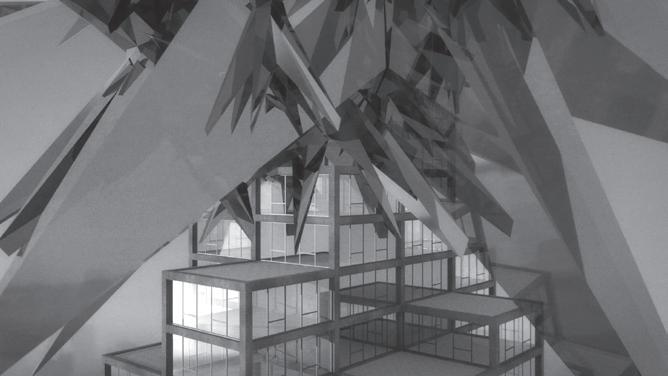
A sound and video installation inspired by Sergei Eisenstein’s notes for an unmade film called 《Glass House》. The video explores the architectural sources of the Eisenstein project (both Expressionist and Modernist glass structures) while updating these sources through the introduction of contemporary or prospective architectural elements.
The soundtrack evolves spatially, on six speakers, and is made from the recordings of a Cristal Baschet, an instrument developed in 1952, comprised of chromatically-tuned glass stems, rubbed by the interpreter and amplified by fiberglass and steel resonators. The soundtrack unfolds like a soundscape, finding resonance with the image and giving the viewer the impression of moving around within the sound, as if it were an architectural structure.
사운드-비디오 설치작품인 《글라스 하우스》는 세르게이 에이젠슈타인이 미완의 영화 《글라스 하우스》에 관해
쓴 글에서 영감을 받아 제작되었다. 비디오 영상은
에이젠슈타인의 프로젝트 《표현주의적이면서 모던한
유리 구조물》의 건축적인 요소들을 탐사하면서, 동시대적이거나
⑤ Glass House (location scouting), Thomas Léon 글라스 하우스,
2011
Blu-ray 5.1 sound- 15’ 52 minutes looped
Concept and video : Thomas Léon
Cristal Baschet : Catherine Brisset
Assistance for musical realization: Max Bruckert/Grame
World premiere : Digital arts festival (Taipei) in november 2011 and Biennale Musiques en Scène/La BF 15 (Lyon) in february 2012
Production, residence and realization : Grame, national center for music creation in Lyon, Digital Art Center Taipei (DAC), ENSBA-Lyon, with co-production la Muse en Circuit, Cncm in Alfortville, with the support of French Institute (Taipei).
Thomas Léon (b. 1981, France)
Thomas Léon’s artwork is based on computer tools, and more specifically, computer generated imagery. It takes shape in different mediums, from video art to digital prints, not to mention sound work or computer designed shapes.
Thomas Léon finds inspiration in Literature (Science Fiction novels and utopian literature) or Avant- Garde projects, which provide some of the problems haunting his artwork: complex relations between projects, its picturing and implementation (architecture, urbanism, ideal society models); links between questions of form and power issues.
These problems are connected to questions that are specifically aesthetic (relation between art and reality; valuation of modernism’s inputs and of formal values
inherent in each medium; mode and time of the first appearance of an artwork; the viewer s action) in order to question of models’ and archetypes persistence, and to producing new forms.
토마 레옹 (b. 1981, 프랑스)
토마 레옹은 컴퓨터가 만들어내는 이미지들을 기반으로
작품을 제작한다. 작품은 사운드 작품이나 디자인된 형태,
비디오아트에서부터 디지털 프린트에 이르기까지 다양한
매체형식을 통해 제작된다
토마 레옹은 문학(공상과학소설과 유토피아적 문학작품)이나
아방가르드 프로젝트 등에서 많은 영감을 받는다. 특히 아방가르드
프로젝트들은 프로젝트 사이의 복잡한 관계, (건축, 도시화,
이상적인 도시 모델과 같은) 기획이나 실행, 형식에 관한 문제
사이의 연결고리와 권력과 같은 이슈들에 대한 관심을 작품으로
표현해낸다
또한 이러한 문제의식은 모델이 지속되고 전형이 유지되는 방식,
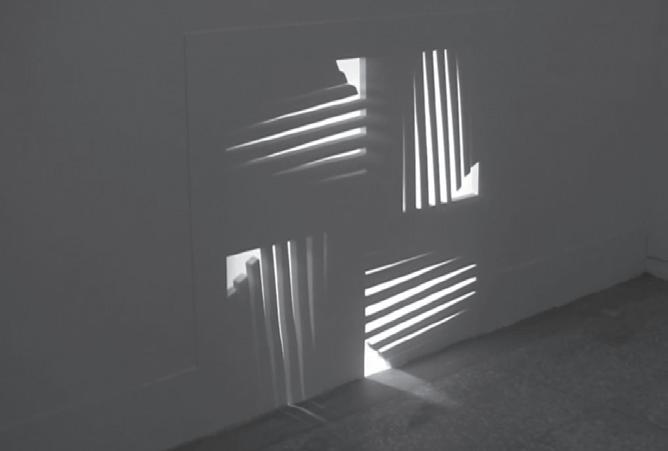
The new media have created a borderless nature of network space, while science and technology has fulfilled a utopian ideal world.
We have opened one door after another to head towards the window of a beautiful brand new world. There, it looks like a country with no melancholy, a vast space of no boundaries, and no exact constraints and regulations. This world seems to be constructed, existed and grown for every individual. The moment we enter it,time seems to be rapidly frozen and condensed. Everything here is so strange, terrifying and full of novelties, and yet so familiar, seems to have met before, and so much freedom just like being at home in our own private space. We communicate, share an fall in love, but we can always stay outside the window.
The 3D images projected on the wall have integrated the relationships between structure and perspective of exhibition space. Spectators should stand at a specific angle in order to focus on the correlation between the digital images and exhibition space. If you view the images from other angles, you will sacrifice the perspective correlation between the creation and space. Such creation of watching manner can highlight then the confused question of our real life on 《entity》 and 《virtuality》
Seeing is believing, Iuan-Hau Chiang
Video 3D animation, projection mapping 2010 Collective Exhibition- Drawing Out Conversations: “Seeing is Believing, Nanhai Gallery, Taipei
Iuan-Hau Chiang (b.1972, Taiwan)
Iuan-Hau Chiang studied at Department of Sculpture of National Taiwan College of Arts in 1991. He experienced broader freedom in the learning of sculpture and space than that of 2 dimensional creation. in order to explore more possibilities in his creative thinking, he applied to study at Ecole d’Art du Havre in France in 1999. Graduating from Ecole Nationnal des Beaux-Arts Lyon in 2002, Iuanh-Hau Chiang created works from 2 dimensional to 3 dimensional in multiple media, including photography, composite media, videotaping, installation art, digital image, digital music, and so on.
Acquainting himself with the French choreographer Christian Rizzo in 2006, since then, his modes of creation have entered a new field. In the following years, he continued to work with Christian Rizzo for many works and exhibitions. In 2014, Chiang released “Time-Passing Through-Travel,” a work of installation art with audio and light at Biennale Musiques en scène Lyon. To apply automatic control technology of light and sounds to this work, Iuanh-Hau Chiang expanded his expertise to art and technology.
To express in non-figurative modes, such as synecdoche and metaphor, etc., Chiang discusses the relation between human, form, and the space through multiple media so as to search for definition for the modes of our existence in the current age.
, 비디오테이핑, 설치, 디지털 이미지와 같이 평면작업은
물론 다양한 매체를 사용하는 3차원 작품들을 제작했다. 2006년
프랑스 안무가인 크리스티앙 히조와 알게 되면서 새로운 장르의
창작활동을 하게 되었다 2014년 치앙은 리옹 뮤직비엔날레에서
사운드-라이트 설치작품인 《시간-지나가기-여행》을 발표했다
그는 이 작품에서 사운드-라이트 자동제어 기술을 적용시킴으로써
예술과 기술에 대한 자신의 영역을 확장해갔다
치앙은 제유나 은유와 같은 비구상적인 형식으로 표현한다 그는 동시대 우리의 존재 양상을 어떻게 정의 내려야 할
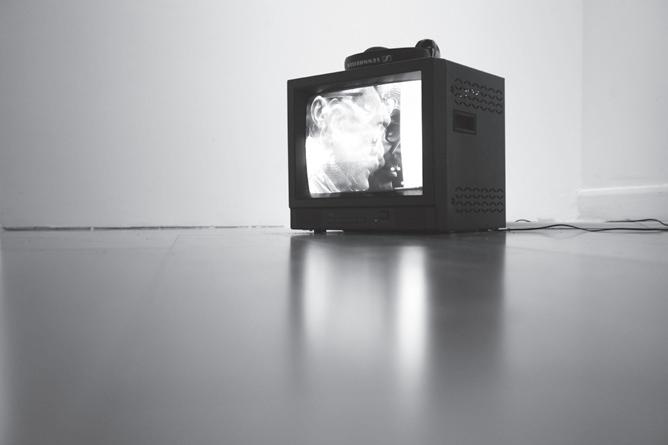
It shows William Anastasi and his partner Dove Bradshaw performing a daily ritual playing piano and singing, performing music piece by Cole Porter. William Anastasi filmed himself through a mirror.
⑦ Coleslaw, William Anastasi
2003
Coleslaw was executed 2003 and is 1.57 min duration. DVD.
Filmed by the artist, technical assistance by Paul Kuranko
Collection of the artist – Galerie Jocelyn Wolff - Paris
William Anastasi (b.1933, USA)
William Anastasi is one of the founders of both Conceptual and Minimal Art - relevant works were made before the movements were named. These works, starting in 1961, include Relief and Microphone, among the earliest examples of Conceptual Art. Between 1963 and 1966, we have Sink - a clear demonstration of entropy - and Issue and Trespass - important forerunners to an entire class of works involving deconstruction. Sink (which combines his Conceptual and Minimal approaches) and En Route, are among the earliest forays into Minimal Art. Holding that after Duchamp there was no earthly reason why a blind man could not be an artist, his unsighted drawings were also started in 1963. His 1966/67 Six Sites broke the ground for an entire genre of exhibitions under the rubric Site Specific. Underlying his practice is his sense that the only thing that interests him about taste is that it is always changing.
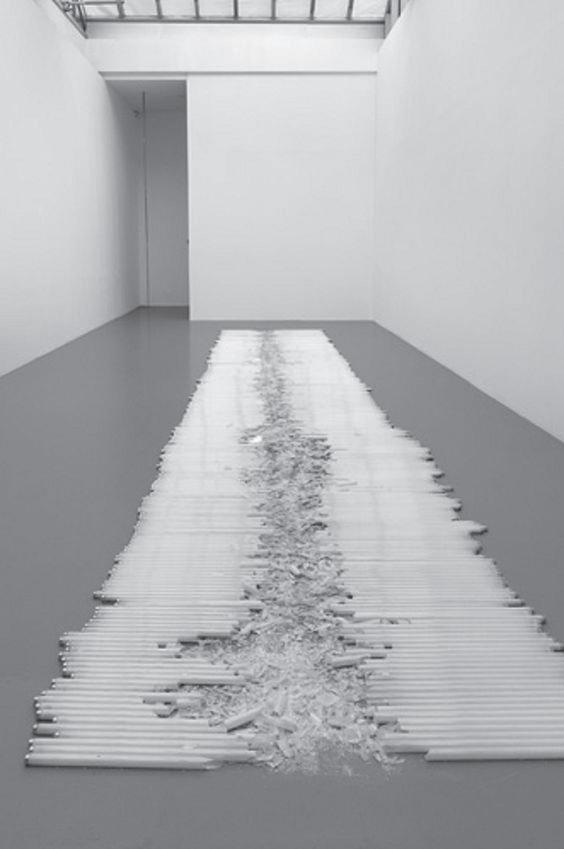
《Walking through a line of neon lights》 consists in a carpet of white neon lights, perfectly aligned and broken in the middle. This artwork was recreated for the exhibition named 《Plans d’évasion》, at the Institute of Contemporary Art, in Villeurbanne / Rhône-Alpes (12th of March9th of May2010). From 2004 to 2010, Michel François used many times this artistic principle and in particular in 2005 – at the Flemish cultural centre 《De Markten》 in Brussels, where his artwork became an object of a performance: in front of the audience, the artist was moving on the neon alignment, breaking the munder his feet. This destructive artistic process blends with a creative action that has become a recurring motif of the work of Michel François (for example, it was used again in 《Exhibit》, 《Broken Flag》, 2009). This work is interesting both by its aesthetic and symbolic aspects.
⑧ Walking Through a Line of Neon Lights,
Michel François
2004-2016
Dimensions variables
Assistance/realization : Nicolas Bourthoumieux
But first of all it is a visual pleasure to observe the material that changes its states, forms and plastic qualities under the feet of the walker: the smooth surface area of glass makes some room to some piles of splinters and dust, that leaves a white line in the middle of the path. The neon is also here used to express another idea – the idea of distortion of everyday objects that the artist explains by himself: 《objects have lost their function, [...], a definitive obliteration, objects have this memory, but we do no longer use them.》 《네온라이트를 뚫고 걸어가기》는 가지런히
가운데는 부서진 하얀색
있는 작품이다. 이 작품은 빌레우르반에 있는 현대미술
연구소에서 개최된 《탈출계획》이라는 전시에서 다시
제작되었다
2004년부터 2010년까지 미셀 프랑수아는 여러 차례
이 작품들 다시 제작하곤 했다. 2004년 브뤼셀에 있는 플랑드르 문화센터인 《드 마텐》에서는 관객
앞에서 퍼포먼스로 직접 진행하기도 했다 작가는
. 여기에서 네온은 또 다른 관념인 즉, 일상
오브제의 왜곡이라는 관념을 표현하기 위해 사용되었다
작가는 이를 이렇게 설명하고 있다. 《오브제는 그 기능을
잃어버렸다… 확실한 (기능의) 말소, 오브제는 이 기억을
기능에 대한 기억으로 가지고 있지만, 우리는 더 이상 그
오브제를 사용하지 않는다 》
Michel François (b.1956, Belgium)
Michel François is a conceptual artist and he makes sculptures, videos, photographs, printed matter (posters and newspapers), paintings and installations. He claims no signature style but creates a web of shifting connections between his works and in each different exhibition. The titles of his solo exhibitions often point to his interest in contemporary reality, offices, domestic environments, surveillance, psychology and the police state. To cite just a few: State of Being, Urban Placarding, Expanded Bureau, Déjà vu, Theatre of Operations and Pieces of Evidence. The meanings in his works accumulate over time and vary according to their disposition in space, or the context. In a manner similar to that of the Arte Povera artists, François uses great economy of means to transform seemingly uncomplicated objects and materials, or traces of past events, into deeply resonant carriers of meaning. His work can be seen as exploration of cause and effect, and the ways in which simple gestures can change the status of an object or have important consequences. A number of recent sculptural works, without immediately revealing their origins or the way they were made, invite the viewer to consider the degree to which the hand of the artist, or chance, played a role in their formation: his lace-like wall sculptures, for example, are the result of the thermic shock provoked by pouring molten bronze onto a cold floor. He also collects drawings and transforms them into sculptures known as Scribbles. Exhibitions (sélection) : Documenta IX, Kassel,1992; Palais des Beaux-Arts,
Bruxelles,1992; XXIIe Biennale de Sao Paulo, 1994; Witte
De With, Rotterdam,1997; Kunsthalle de Berne, 1999; Biennale de Venice 1999 avec AVJanssens; Haus der Kunst, Munich, 2000; Art Pace Foundation, San Antonio, Texas, 2004; SMAK, Gand, 2009 ; IAC, Villeurbanne, 2010; Mac’s, Grand Hornu 2012; CRAC,Sète, 2012; IKON Birmingham 2014, Havana Biennial 12, Cuba 2015 미셀 프랑수아 (b.1956, 벨기에) 개념예술가인 미셀
브론즈를 찬 바닥에 부었을 때 온도차이에 의해서 만들어진 것이다. 그는 드로잉을 모아 그것을 낙서들(Scribbles)이라고 알려진 조각으로 변형시킨다.
주요전시
도큐멘타X(카셀, 1992), 빨레 드 보자르(브뤼셀, 1992), XXLLe 상파울로 비엔날레(1994), 로테르담 현대미술관(로테르담, 1997), 베르네 쿤스트할레(1999), 베니스 비엔날레(1999), 하우스 데어 쿤스 (뮌헨, 2000), 아트 페이스 파운데이션(산 안토니오, 텍사스, 2004), SMAK(겐트, 2009), IAC(빌레우르반, 2010), Mac’s(그랑 호루노, 2012), CRAC(시떼, 2012), IKON(버밍엄, 2014), 하바나 비엔날레 12(쿠바, 2015)
Michel François
plastic bags, water, nylon
Assistance/realization : Nicolas Bourthoumieux
Michel François (b.1956, Belgium)
Michel François is a conceptual artist and he makes sculptures, videos, photographs, printed matter (posters and newspapers), paintings and installations. He claims no signature style but creates a web of shifting connections between his works and in each different exhibition. The titles of his solo exhibitions often point to his interest in contemporary reality, offices, domestic environments, surveillance, psychology and the police state. To cite just a few: State of Being, Urban Placarding, Expanded Bureau, Déjà vu, Theatre of Operations and Pieces of Evidence. The meanings in his works accumulate over time and vary according to their disposition in space, or the context.
In a
Some clear plastic bags filled with water are connected in cluster and hanging above the ground. The artwork involves the physical tension of the sculpture (empty / fill, lightness / heaviness, compression / release). ... Michel François seems to catch something in flight that is by nature elusive as the elements, and to freeze the delicate moment just before the fall.
manner similar to that of the Arte Povera artists, François uses great economy of means to transform seemingly uncomplicated objects and materials, or traces of past events, into deeply resonant carriers of meaning. His work can be seen as exploration of cause and effect, and the ways in which simple gestures can change the status of an object or have important consequences. A number of recent sculptural works, without immediately revealing their origins or the way they were made, invite the viewer to consider the degree to which the hand of the artist, or chance, played a role in their formation: his lace-like wall sculptures, for example, are the result of the thermic shock provoked by pouring molten bronze onto a cold floor. He also collects drawings and transforms them into sculptures known as Scribbles. Exhibitions (sélection) : Documenta IX, Kassel,1992; Palais des Beaux-Arts, Bruxelles,1992; XXIIe Biennale de Sao Paulo, 1994; Witte De With, Rotterdam,1997; Kunsthalle de Berne, 1999; Biennale de Venise 1999 avec AVJanssens; Haus der Kunst, Munich, 2000; Art Pace Foundation, San Antonio, Texas, 2004; SMAK, Gand, 2009 ; IAC, Villeurbanne, 2010; Mac’s, Grand Hornu 2012; CRAC,Sète, 2012; IKON Birmingham 2014, Havana Biennial 12, Cuba 2015
주요전시
그것을 낙서들(Scribbles)이라고
도큐멘타X(카셀, 1992), 빨레 드 보자르(브뤼셀, 1992), XXLLe 상파울로 비엔날레(1994), 로테르담 현대미술관(로테르담, 1997), 베르네 쿤스트할레(1999), 베니스 비엔날레(1999), 하우스
데어 쿤스 (뮌헨, 2000), 아트 페이스 파운데이션(산 안토니오, 텍사스, 2004), SMAK(겐트, 2009), IAC(빌레우르반, 2010), Mac’s(그랑 호루노, 2012), CRAC(시떼, 2012), IKON(버밍엄, 2014), 하바나 비엔날레 12(쿠바, 2015)
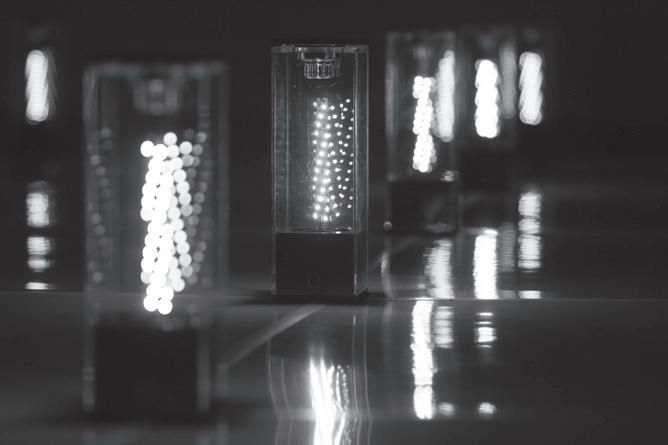
《Technological developments have made “light” play an even more important role in our everyday life. It not only gives color to different objects and eliminates darkness, but it has become the most important media for communicating and broadcasting. We can connect, receive message, and send voices through light at home. This creative program expresses my perception of “light” in recent years, showing the relationship between light and human and the influence on the space we are living in (room, home, and cities). I try to use the action of light to interpret the role of light and the influence (or aggressiveness) it has over our space. Through this work, I would like to express how human (individual or group) guide each other in our space by showing the paths.》 (from artist’s note)
⑩ Time. Passing Through. Travel, Iuan-Hau Chiang
시간-지나가기-여행, 위엔-하우 치앙 2014
Commission Digital Arts Center / Taipei
Production Grame-Cncm/Ensba Lyon/Dac Taipei
World premiere : Biennale Musiques en Scène - CAUE / mars 2014
Specific version of 20 light and sound modules made for the Total Museum
Iuan-Hau Chiang (b.1972, Taiwan)
Iuan-Hau Chiang studied at Department of Sculpture of National Taiwan College of Arts in 1991. He experienced broader freedom in the learning of sculpture and space than that of 2 dimensional creation. in order to explore more possibilities in his creative thinking, he applied to study at Ecole d’Art du Havre in France in 1999. Graduating from Ecole Nationnal des Beaux-Arts
Lyon in 2002, Iuanh-Hau Chiang created works from 2 dimensional to 3 dimensional in multiple media, including photography, composite media, videotaping, installation art, digital image, digital music, and so on.
공간(방, 집, 도시)에 빛이 어떤 영향을 미치는지를
보여주었다 나는 빛이 작동하는 것을 보여줌으로써,
빛이 우리가 살고 있는 공간에서 하는 역할과
영향(공격성)을 해석하고자 했다. 또한 이 작품을 통해 길을 보여줌으로써, (개인으로서든 단체로서든) 인간이 공간 안에 어떻게 서로를 이끄는지를
Acquainting himself with the French choreographer Christian Rizzo in 2006, since then, his modes of creation have entered a new field. In the following years, he continued to work with Christian Rizzo for many works and exhibitions. In 2014, Chiang released “Time-Passing Through-Travel,” a work of installation art with audio and light at Biennale Musiques en scène Lyon. To apply automatic control technology of light and sounds to this work, Iuanh-Hau Chiang expanded his expertise to art and technology. To express in non-figurative modes, such as synecdoche and metaphor, etc., Chiang discusses the relation between human, form, and the space through multiple media so as to search for definition for the modes of our existence in the current age.
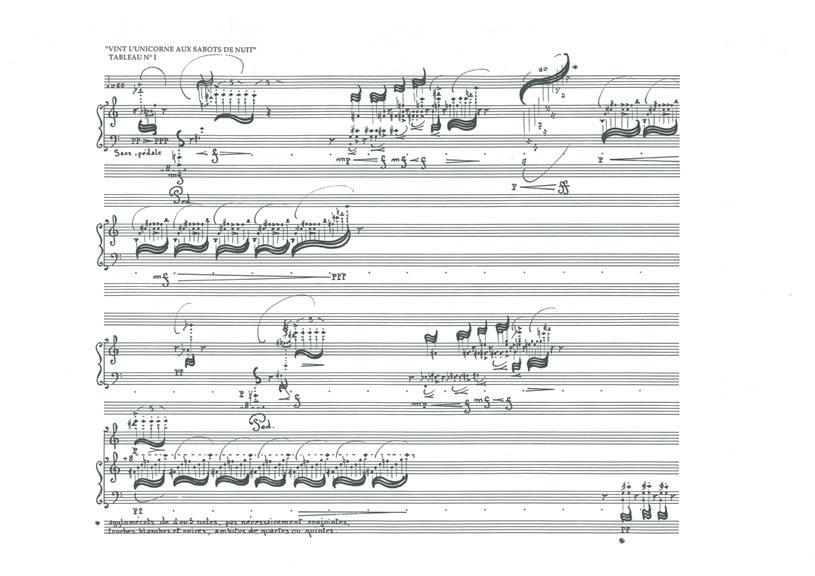
Starting from his early compositions and sound installations, Denys Vinzant has always given essential importance to the Partition as an object in itself. Furthermore calligraphic qualities, one of his major concerns is the representation of time in space that can take different forms: from his artworks ruled on music paper to the notes written on the glass, suspended in the air (D Ore et d’espace). In all theses scores, whether it is an electronic, mixed or instrumental work, the representation of time is exact, it means that it is proportional to the space. Thus, a music score becomes an image of only memory of music.
드니 방장의 작곡과 사운드 설치 작업에 있어 분할과 오브제 자체는 언제나 중요한 지점을 차지했다. 나아가
그의 주요 관심사 중 하나인 캘리그라피처럼 보이는
특성들은 다양한 공간에서 시간을 재현하는 장치로
작동한다. 예를 들어 악보 위에 쓰여진 작품에서부터
허공에 매달린 유리에 쓰인 악보(《찰나와 공간》)에
이르기까지 다양한 형태로 드러난다 이 모든 악보
⑪ Scores, Denys Vinzant
악보들, 드니 방장
1990–1998
Vint l’Unicorne aux Sabots de Nuit (Scenes No. 1 , 3, 4 and 7)
Music for Piano in seven scenes in 14 scores, format 30x40 cm (1998)
world premiere at Amphi- Opéra de Lyon
Vint l’unicorne aux sabots de nuit, à l oeil de miséricorde ; ainsi vint-il et nous l avons consigné dans le livre du sommeil.”
Roger Kowalski (A l oiseau à la miséricorde)
Filigranes d’Argent
Set of 5 scores - format 30x40 cm
(1990 - world premiere at CNSMD Lyon Interactive music for midi percussion and computer by an interactive device with CLCE programming environment (Grame). Similar to beads on a string, notes strung on curves drawn by the computer according to the play of the instrumentalist.
Denys Vinzant (b.1955, France)
After studies in the National Conservatory of the Region of Grenoble, he follows the classes in the National Superior Conservatory of Music in Paris (musical writing, analysis with Betsy Jolas, composition and musical research in electro-acoustic music with Guy Reibel). Since 1985 he is a member of Grame college of permanent composers. He has been a teacher of electro-acoustic music in the Saint-Etienne Conservatory. His multifaceted work is essentially made up of precise and chiselled writing. Applying a pointillism style, it is made with calculations of a computer. These are often mixed pieces, the inspiration of which is drawn from the word of poetry. Very close to calligraphy, his scores progressively become an integral part of the masterwork, continued at the sound exhibitions, where they appear written in golden ink on sheets of acoustic glass. His first installations date from 1996. Actually they still offer new architecture, transfiguring the places they installed in.
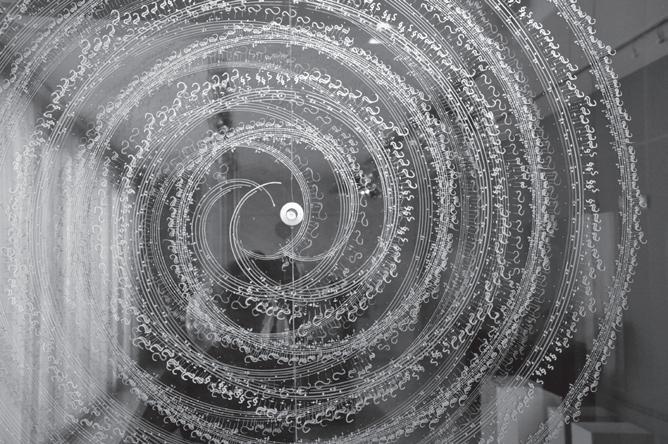
Work in progress, started in 2000, 《D’Ore et d’ espace》 (d’ore or d’ores, from Latin “hoc hora” : “in this moment”) is a modular Installation consists in more than two hundred scores written on the glass, and each exhibition is an occasion of a new creation, which proposes some “imaginative architectures” depending on the space that it occupies. Crystalline tones,“pearlnotes”, sound streaming, the installation of Denys Vinzant presents an ensemble of scores written on the glass or stained-glass plates with golden ink. By the intermediary of transducers fixed on the plates, the sound propagates on the surface of the vibrating glass, playing like that the role of a membrane of loudspeakers. Hand-written, with a play of transparency, where audio and visual communicate together, these scores represent an integral digest of unheard music.
“Partition Runes” , “Partitions
Mandalas” , “Partitions Ver luisant” , “Partitions
Volutes” - these scores, entirely hand-written by the artist, create together finely wrought arabesques. There are two musical themes and many variations of them (mirrors, augmentations, inlaying... etc.), which are presented on a background of sonic streaming calculated by computer. A deep resonance emanates from the glass that brings its proper colour to this music of crystals, perceived as an aerial current of water.
⑫ D’Ore et d’espace, Denys Vinzant 찰나와 공간, 드니 방장
Music - graphic design, setting in space : Denys Vinzant
System design vibration plates : Michel Stiévenart
Lights : Stéphanie Gouzil
Partitions Mandala- Partition Ver luisant - Partitions
Runes - Partitions Sphère
Partitions Rosace - Partitions Lumières & Livres de Verre
World premiere (first version) in the context of Biennale Musiques en Scène 2000, Atrium Cour des Loges de Lyon. Commission version 2001: Amphithéâtre/national
Opéra of Lyon
Production : Grame, Cncm Lyon
. (작품의 원제목에서
언급하는 d’ ore 또는 d’ ores는 《이 순간》이라는 뜻을
가진 라틴어 ‘hochor’에서 유래한다.) 이 작품은 유리
위에 쓰여진 200개가 넘는 악보들로 이루어진 모듈로
구성되어 있어서, 전시되는 장소에 따라서 매번 새로운
모습으로 탄생하며, 이로 인해 작품이 보여지는 공간마다
새로운 《상상적 건축구조》를 제안한다 드니 방장은
이 설치작업에서 크리스탈이 부딪혀서 만들어지는
톤, ‘펄노트(pearl note)’ , 스트리밍 사운드와 유리나
스테인드글라스 위에 황금색 잉크로 쓰여진 악보들이
아름답게 펼쳐지는 장면을 연출한다 유리 위에 고정된
전기 변환기에 의해 소리는 마치 대형스피커에서 소리가
울려 퍼지듯, 진동하는 유리판 위에서 퍼져나간다.
유리의 투명함은 시청각적인 커뮤니케이션이 함께
일어나게 하며, 손으로 쓰여진 악보들은 지금까지
들어보지 못한 이런 종류에 음악의 핵심적인 부분을
재현한다고 할 수 있다. 작가가
Denys Vinzant (b.1955, France)
After studies in the National Conservatory of the Region of Grenoble, he follows the classes in the National Superior Conservatory of Music in Paris (musical writing, analysis with Betsy Jolas, composition and musical research in electro-acoustic music with Guy Reibel). Since 1985 he is a member of Grame college of permanent composers. He has been a teacher of electro-acoustic music in the Saint-Etienne Conservatory. His multifaceted work is essentially made up of precise and chiselled writing. Applying a pointillism style, it is made with calculations of a computer. These are often mixed pieces, the inspiration of which is drawn from the word of poetry. Very close to calligraphy, his scores progressively become an integral part of the masterwork, continued at the sound exhibitions, where they appear written in golden ink on sheets of acoustic glass. His first installations date from 1996. Actually they still offer new architecture, transfiguring the places they installed in.
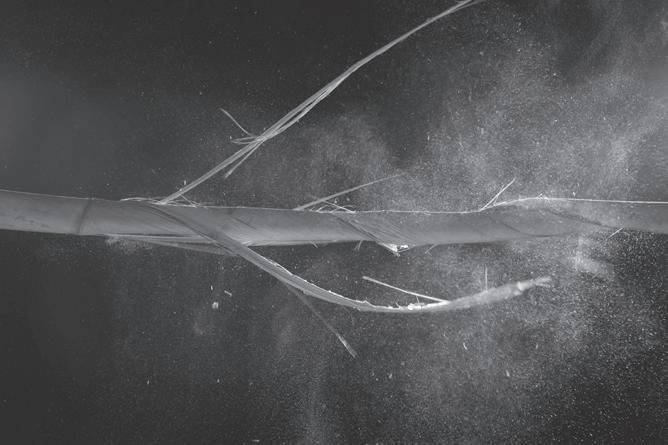
Xiao Yu presents a kind of external energy influences human perception: the image of a bamboo broken slowed considerably shows concretely this kind of "invisible power". This is an invitation the visitor to focus on forces outside each phenomenon.
⑬ Thinking, Xiao Yu
생각하기, 샤오 위
Commission Digital Arts Center / Taipei
Production Grame-Cncm/Ensba Lyon/Dac Taipei
World premiere : Biennale Musiques en Scène - CAUE / mars 2014
Specific version of 20 light and sound modules made for the Total Museum
위는 인간의 지각에 영향을 주는
Xiao Yu (b. 1965, Inner Mongolia)
Xiao Yu graduated from the Mural Painting Department at the Central Academy of Fine Arts in 1989 and now lives and works in Beijing. He was invited to participate in international exhibitions including La Biennale di Venezia, Lyon Biennial of Contemporary Art, Shanghai Biennale and Guangzhou Triennial including the Offsite Project at the Royal College of Art in London. He has exhibited works at Centre Pompidou, Fukuoka Asian Art Museum Japan, Seoul Art Museum, Bern Art Museum Switzerland, NAMOC, Shanghai Art Museum, Guangdong Art Museum, Ullens Center for Contemporary Art (UCCA), Pace Beijing and other eminent exhibition spaces. He was awarded the Chinese Contemporary Art Award (CCAA) in 2000
샤오 위(b. 1965, 내몽고)
샤오 위는 1989년 중앙미술학원을 졸업(벽화전공)했고, 베이징에서 거주하며 작품활동을 하고 있다 런던의 RCA(Royal College of Art)의 오프사이트 프로젝트를 포함하여 베니스 비엔날레, 리옹 현대미술비엔날레, 상하이 비엔날레 및 광저우 트리엔날레 등 다양한 국제행사에 초청되었으며, 그의 작품은 퐁피두 센터, 후쿠오카 아시안아트 미술관, 서울시립미술관, 베른 아트 뮤지엄, NAMOC, 상하이 아트 뮤지엄, 광저우 아트 뮤지엄, 율리스 현대미술센터(UCCA), 페이스 베이징 등 주요 전시공간에서 소개되었다. 2000년에는 중국현대미술어워드(CCAA)를 수상하기도 했다