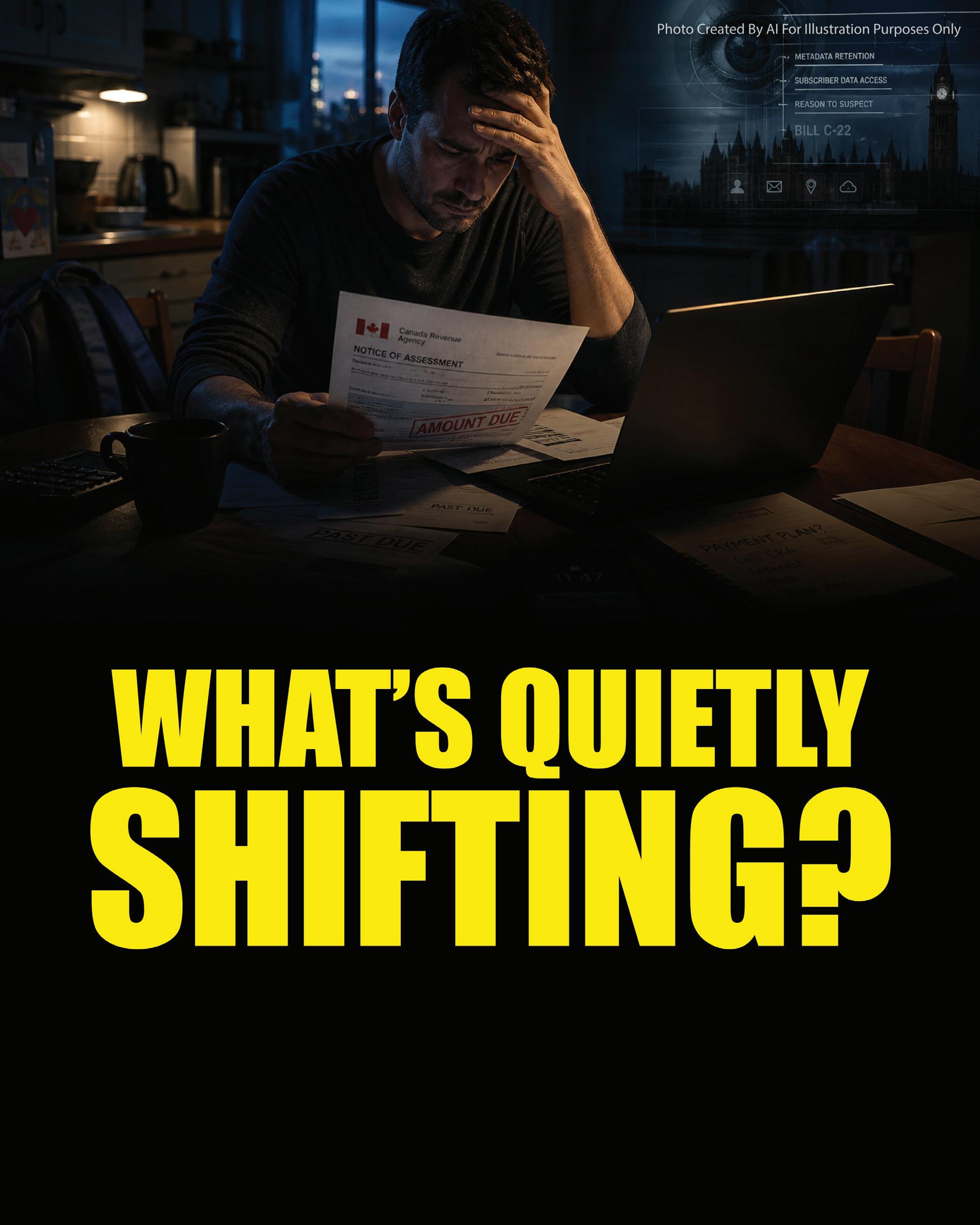
“Bill C-22 lowered the threshold for police to demand subscriber data, from “Reason to believe” to “Reason to suspect.” It compelled providers to retain metadata for up to a year. It allowed secret orders requiring companies to build surveillance-ready systems...”
STORY - PAGE 8
KANDICE HENRY
Shining light on youth in our community
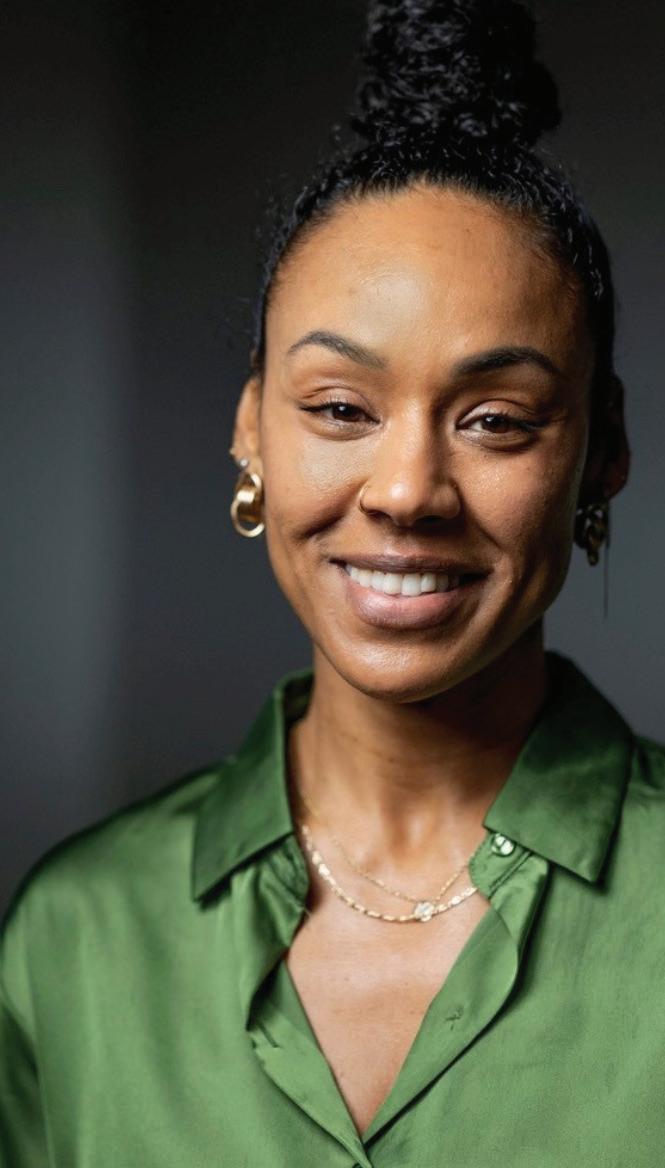
The journey from the rigid corridors of property law to the heart of global philanthropy is rarely a straight line. For Kandice Henry, known affectionately to her community as Kandi H, the path was paved with the specific kind of grit required to navigate both the Toronto real estate market and the foundational needs of the city’s youth. She initially set sights on a career in law, yet the universe had other plans, steering her instead toward the intricate world of business operations and real estate. These professional origins provided a mechanical necessity for what would eventually become her life’s work. She spent a decade serving as the Vice President of The Life Foundation, an organization rooted in the belief that learning is for everyone. It was here, working on the ground, that she developed the blueprint for managing a non-profit. She combined her Caribbean heritage (her father hails from St. Lucia) with a sharp mind for logistics to connect the dots for those often left out of the traditional success narrative.
The year 2020 served as a profound catalyst for change. Henry traveled to Tanzania, initially intending to focus on her natural herbal company and real estate ventures. However, the trip evolved into a life-changing personal experience that expanded her vision far beyond the borders of Ontario. She felt a persistent, spiritual pull toward a much more global mandate. She recognized a deep-seated need to bridge the gaps between the Western world and the African continent, passing on values, customs, and traditions that are often lost in translation. Her existing organization was not aiming for a global reach, she branched off to start her own charity, Shining Light Youth. She used the same structural skeleton she had meticulously crafted for her previous work to birth this new vision. Her faith remains the anchor that keeps her motivated through the inevitable challenges of leadership, driving her to connect the good found over here with the good found over there.
The objectives of Shining Light Youth are nothing short of revolutionary. Henry envisions a global organization that mirrors the scale of the Salvation Army but stands as the first melanated owned work of that extent across the world. Her goal is the creation of a private school system running from senior kindergarten through to the university level. This system would educate children in a more sensitive, culturally aware way, complemented by robust after-school tutoring and extracurricular programs. In the short term, the organization is aggressively expanding its national reach. Programming in Toronto is slated to begin this spring through a partnership with Toronto Community Housing. Beyond the GTA, Henry is exploring opportunities in Ottawa and Durham, effectively scaling her model to meet the high demand for consistent youth support across the country. Managing a rapidly growing charity brings a unique set of logistical hurdles. Funding remains a constant struggle, specifically the search for consistent revenue to sustain programs that often have long waiting lists. Most available grants are temporary and program-based, which makes hiring consistent, permanent staff a difficult feat. Henry fights this by being resourceful, leaning on dedicated volunteers and school placement students to keep the gears turning.
She has focused heavily on structuring departments and delegating tasks to trusted individuals to ensure the organization becomes selfsufficient. The rewards of this labour are found in the quiet victories of the students. She recounts the story of a girl who arrived shy and timid but bloomed into a confident, expressive leader. There is profound satisfaction in seeing a child who once struggled with mathematics now speaking the language of numbers with ease. The organization’s growth reflects this success, with revenue increasing from sixty-two thousand dollars to over one hundred thousand dollars within a single year.
The upcoming charity gala serves as a vibrant celebration of this momentum. Designed as a dinner dance, the event will prioritize networking and community building. A highlight of the evening will be the presentation of a five-hundred-dollar scholarship to a standout participant in the Youth of the Month program. Attendees will also hear a powerful testimonial from a student whose life was directly impacted by the charity’s work.
The Mississauga Rotary will be on hand to present a one-thousand-dollar donation, further cementing the organization’s local support. Recognition will also be given to the employee of the year and two outstanding volunteers, with awards presented by a Member of Parliament. While political figures like Mayor Patrick Brown of Brampton will be in attendance to show support, the focus remains firmly on the youth and the sponsors who make the work possible.
The evening promises to be a sensory feast that honours Henry’s roots. The menu is strictly Caribbeanthemed, featuring jerk chicken, rice and peas, and macaroni and cheese. Entertainment will span the diaspora, featuring a young poet, a spoken word artist from New York, and a high-energy performance from Whala School involving traditional drums and singing.
In a unique fusion of styles, a violinist known as Ka will perform alongside a DJ, blending classical strings with the pulse of reggae and Afro beats. Giveaways ranging from Raptors tickets to spa days will be distributed, but the true takeaway is the sense of purpose Henry has cultivated. Shining Light Youth is not just a charity; it is a global bridge built on the belief that when we teach each other, we all shine brighter.
Photo Credit:
Written by Sean Seurattan Toronto Caribbean News
simone@carib101.com
The table was set with intention. Chef Robert Rainford curated a multi‑course experience that operated like a mirror. Each dish carried the weight of a ques tion: what does it mean to sit here, sur rounded by abundance, when so many in our communities are negotiating scarcity every single day?
This was the Food Security Fund Campaign Cabinet Dinner, hosted by Support Black Charities. A private invita tion‑only gathering of leaders across phi lanthropy, business, and community. Ten to twenty guests, carefully chosen, sat together to confront the reality that food insecurity is lived. It is urgent, and it is ours to solve.
The evening began with warmth; laughter, introductions, the aroma of Chef Rainford’s craft, but quickly, the conversa tion turned. Leaders asked: how do we reconcile the privilege of sitting here, plates full, with the knowledge that Black families across Ontario are opening emp ty fridges? How do we move from charity to justice, from temporary relief to sys temic change?
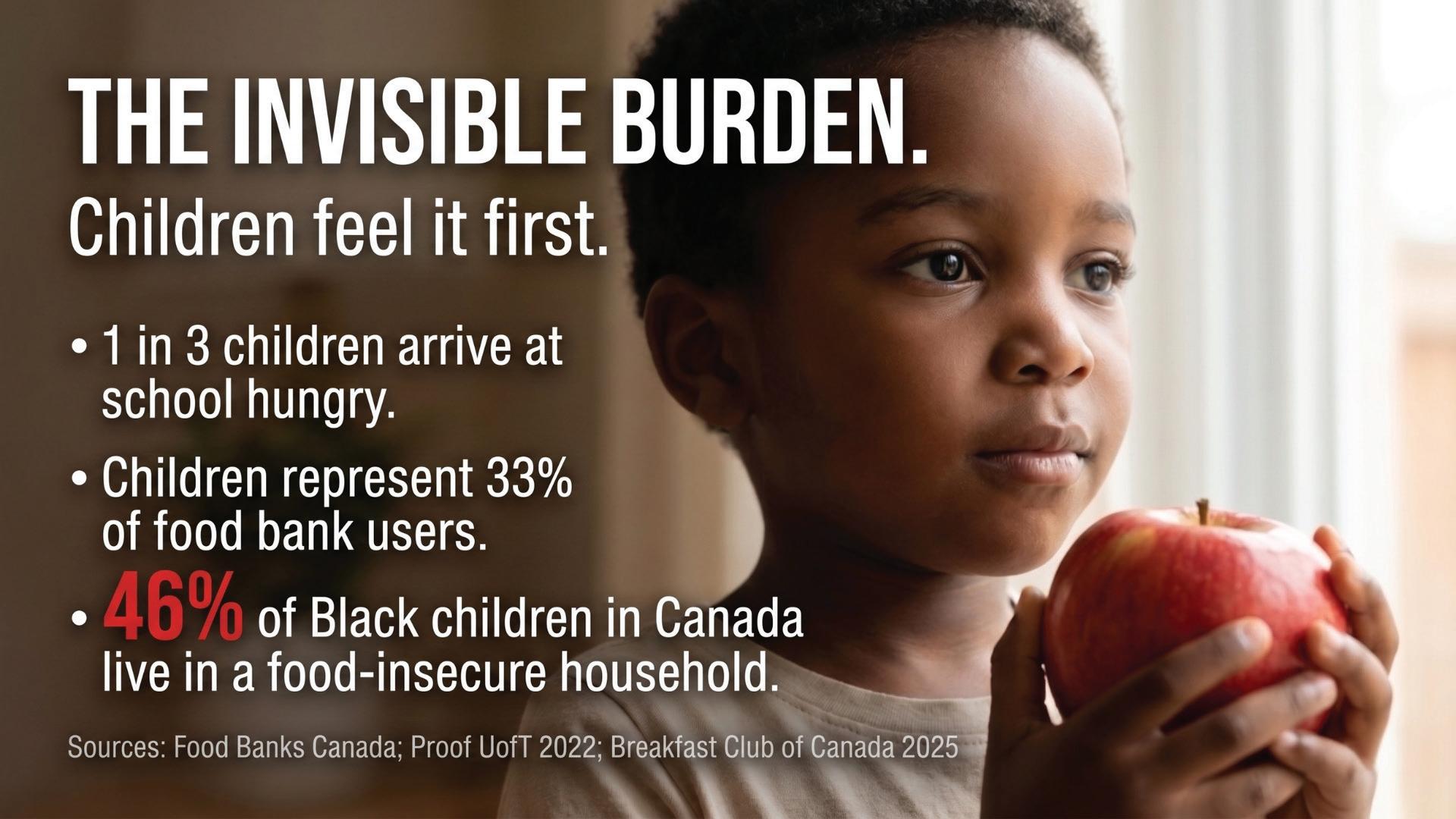
Food insecurity is about inequity. Rising grocery costs add nearly $1,000 an
Will your seat change hunger?
nually to family budgets already stretched thin. Food bank usage has doubled since the pandemic. One in five Black house holds in Ontario faces food insecurity. Behind every number is a mother skip ping meals, a father working two jobs, a child distracted in class because hunger is louder than learning.
The villain is the system. Low wages, racialized unemployment, hous ing costs, food deserts, and stigma com bine to make scarcity a daily negotiation. Policy promises relief, but reality is lived in cupboards that echo. The invisible barri ers are everywhere: stores priced out of reach, neighborhoods without fresh pro duce, silence that hides need.
Yet, resilience is everywhere too. Families stretch meals, neighbours share, churches organize food drives, but resil ience should not be mistaken for reso lution. Survival is not sovereignty. That was the tension at the table: abundance versus scarcity, privilege versus inequity, policy versus lived truth.
Chef Rainford’s courses became metaphors. Dishes rich in flavour remind ed guests of the richness denied to too many. A plate carefully balanced mirrored the balance families must strike between bills and meals. Each bite carried the weight of contrast; what we have versus what others lack.
The dinner was strategic. Leaders spoke of building a sustainable, equitable food ecosystem. They asked, how do we design systems where food security is not a privilege but a right? How do we ensure that Black communities are curators of so
lutions? How do we move from scarcity to sovereignty?
The Food Security Fund is the an swer in motion. It is about shifting power, centering lived experience and ensuring that no child grows up believing hunger is normal. The dinner was the first of many curated gatherings: small, intentional, invite‑only, designed to spark conversa tions that ripple outward into action.
The call to action is clear:
• Give back. Support the Food Security Fund.
• Show up. Attend future curated din ners, lend your voice, share your ex pertise.
• Act. Donate, advocate, amplify. Con
nect directly with Support Black Char ities.
Food insecurity is not someone else’s problem, and the transformation is pos sible. When access improves, families stop negotiating hunger. Children focus in school. Parents breathe easier. Communi ties thrive. Food becomes culture, joy, and connection.
The evening ended with dessert, and with resolve. Leaders left knowing that sitting at the table was not enough. The real work begins when we extend that table, when we ensure that every family has a seat, every child has a plate, every community has sovereignty.
The Strength of Caribbean Mothers in Times That Aren’t Easy
There’s something about Mother’s Day that always makes me pause for a moment.
Not just to celebrate, but to really think about what it means to be a mother—especially in our community. Because when we talk about Caribbean mothers, we’re not just talking about a title. We’re talking about strength, sacrifice, resilience, and a kind of love that holds everything together, even when things feel like they’re falling apart.
Growing up, many of us knew that kind of love firsthand. It was in the meals that showed up on the table no matter what. It was in the discipline that didn’t always feel good in the moment, but shaped us into who we are today. It was in the quiet sacrifices that we didn’t fully understand until we got older.
Caribbean mothers have always carried a lot—but right now, it feels like they’re carrying even more.
The reality is, life in the Greater Toronto Area isn’t easy at the moment. The cost of living continues to rise, groceries cost more than they should, rent and housing feel out of reach for many, and for mothers trying to hold down a household, it’s a constant balancing act. For some, that means working long hours. For others, it means juggling multiple responsibilities without ever really getting a break.
And still, they show up. They show up for their children, for their families, for their communities. They find ways to stretch a dollar, to make something out of nothing, to create stability in situations that feel anything but stable. That’s something I don’t think we acknowledge enough.
There’s also a side of motherhood that doesn’t always get talked about.
The mental load. The emotional weight. The pressure to always be the
strong one.
So many mothers are pouring into everyone else every single day, often without taking time for themselves. They’re the ones making sure everything runs smoothly, making sure everyone else is okay—but who’s checking in on them?
Mother’s Day is a beautiful reminder to show appreciation, and it should be. But appreciation shouldn’t stop at flowers, cards, or a single day. It should extend into how we support the mothers around us throughout the year.
That might mean offering help where it’s needed. It might mean checking in more often. It might mean simply acknowledging the effort, the sacrifices, and the strength that often go unseen.
In Caribbean culture, there’s a deep sense of community. We were raised to look out for one another, to step in when needed, to support our own. That’s something we can’t lose, especially now. Because while mothers have always been the backbone of our homes, they shouldn’t have to carry everything on their own.
This Mother’s Day, take the time to celebrate the mothers in your life—but also take a moment to really see them.
See the effort. See the strength. See everything they do behind the scenes.
And if you are a mother reading this, know that what you do matters more than words can express. Even on the days when it feels overwhelming, even on the days when you’re not sure if you’re doing enough—you are.
From all of us, Happy Mother’s Day. Not just for what you do, but for who you are.
SIMONE SMITH
simone@carib101.com
TC REPORTER
The van winds out of Montego Bay, past the cruise‑ship bustle and into the hills. The air shifts. The city’s polished post card edges fade, and Jamaica begins to show you its real face: layered, scarred, resilient, and breathtaking.
The central question rises; what does it mean to travel through Montego Bay when you see the beauty, the sys tems, the scars, and the soul beneath it?
Martha Brae River; Beauty in devastation
Montego Bay’s must‑see experiences
The postcard image is gone. The hurricane stripped the canopy, uprooted trees, left brown foliage where lushness once reigned. My guide admits, “The first time I saw it after the storm, I cried,” and yet, there is beauty in the devastation. New growth pushes through. Fruits re turn. The green is coming back. The ride is still peaceful, still worth it. Martha Brae teaches you that Jamaica’s beauty is resil ient.
The raft village at the launch point offers crafts, snacks, and Miss Mar tha’s Herb Garden, where local plants remind visitors that healing is slow but inevitable. Even the cash‑only jerk stalls at the end feel symbolic; Jamaica feeding you even after loss.
Rocklands Bird Sanctuary; Fragile encounters
The road to Rocklands is rough: gullies, hills, the kind of journey that reminds you Jamaica is not built for convenience. At the end, a sanctuary waits.
I sit quietly, sugar water in hand. Then it happens: the Doctor Bird, Jamai ca’s national bird, lands on my finger. Its wings hum, its beak dips, and for a mo
ment, I am part of something sacred.
Even here, the hurricane left scars. Downed trees, damaged paths, restoration still in progress. The staff speak of rebuilding with pride, but also with urgency; they need help.
Rocklands is a reminder that ecosystems are fragile, that culture and nature require care, and that Jamaica’s identity is tied to the survival of its land.
Guides share stories of Lisa Salm on, the sanctuary’s founder, and of the Salmon family’s decades of stewardship. The sanctuary is family‑run, communi ty‑rooted, and deeply Jamaican. To feed a hummingbird here is to touch history.
Rose Hall Great House; Haunted histories
Night falls over Rose Hall, and the man sion looms against the sky. The guide’s voice drops low: Annie Palmer, the “White Witch,” enslaver, murderer, legend.
The tour is theatrical: dim lights, actors, sudden scares, but beneath the performance lies a truth: this was a plan tation, built on slavery, haunted by his tory.
As a spiritual person, I feel the
Find meaning through Franciscan Living
energy of the house. The actors make me jump, but the real chill comes from knowing what happened here. Rose Hall is Jamaica’s confrontation with its colo nial past, repackaged for tourism, but still carrying weight.
The “Witches Brew” cocktail at the end is sweet, but the aftertaste is bit ter, because history never fully fades. The tombs, the dungeons, the graveyard all remind you: Jamaica’s beauty is built on struggle, and its stories are layered with pain and resilience.
The Real Story; Why these experiences matter
Montego Bay’s attractions are lessons. Martha Brae shows resilience in the face of devastation. Rocklands shows fragility and the need for care. Rose Hall shows history’s shadow and the importance of remembering. Together, they tell a sto ry larger than tourism. They remind us that Jamaica is a living, breathing place: scarred, healing, haunted, and hopeful.
Travel here is economics, ecol ogy, and identity. It is seeing the truth beneath the postcard and still finding magic in reality
STEVEN KASZAB
steven@carib101.com
TC COLUMNIST
bility in one part of the day and unravel in another. It creates a split existence: functional on the surface, disconnected underneath. That tension (emotional distance from others and even from our selves) demands a response.
Here is the turn: there is a frame work that has guided people through this kind of fragmentation for centuries; the Franciscan Way, rooted in the life of Francis of Assisi (1181–1226).
Born Giovanni di Pietro di Ber nardone, he lived a life of privilege and excess before a spiritual awakening redi rected him. His transformation was lived, visible, and compelling enough that oth ers followed. What drew them was clarity of purpose and consistency of action.
The Franciscan Way centers on two teachings: love God fully and love others as yourself. Simple in phrasing, difficult in practice. The framework that emerged: community, faithfulness, pov erty, service, and chastity, is less about rigid doctrine and more about disci plined living.
Community is foundational. Whether single, married, or partnered, no one thrives in isolation. Francis empha sized emotional awareness: if you are angry or unsettled, pause before en gaging. Healthy community requires self regulation, communication, and humility. Conflict is inevitable; repair is essential.
• Faithfulness extends beyond reli
gion. It includes loyalty to family, integrity in relationships, and consis tency in how you show up in society. It’s also reciprocal: forgiveness is not optional if you expect it in return. This principle reinforces accountabil ity; your actions shape your commu nity’s well being.
• Poverty, in this context, is often mis understood. It’s about detachment. Francis called for releasing what con trols you: status, possessions, distrac tions. Today, that may include digital dependence or material excess. The question is direct; what owns your attention, and at what cost? Letting go creates space for clarity and pur pose.
• Service is action. If someone needs help, respond, thoughtfully and responsibly. Franciscans have his torically worked across education, healthcare, and social outreach. The principle remains relevant: contrib ute where you can, using what you have. Service grounds belief in real ity.
• Chastity is broader than celibacy. At its core, it’s about discipline and in tegrity, honouring commitments, avoiding harmful behaviors, and
aligning actions with values. Wheth er in relationships or personal habits, it calls for intentional restraint in pur suit of something better.
The strength of the Franciscan Way is its coherence. Each principle reinforces the others. Community without service be comes shallow. Faithfulness without dis cipline collapses under pressure. Poverty without purpose becomes emptiness. Together, they form a structure that sup ports both personal stability and collec tive well being.
There are, however, points to approach carefully. Some language, par ticularly around modern habits or rela tionships, risks sounding prescriptive or moralizing. To maintain credibility and inclusivity, it’s important to frame these ideas as invitations rather than judg ments.
The enduring value here is prac tical. In a time defined by distraction and fragmentation, the Franciscan Way of fers a counterpoint: live simply, act with intention, stay connected, and take re sponsibility for your impact. It’s not easy. It’s not quick, but it is clear.
TRUST IN CARE DURING MENTAL HEALTH MONTH: WHY CHOOSING A REGULATED PROFESSIONAL MATTERS
Caring for loved ones is one of life’s greatest responsibilities. In moments when support is needed the most, families want assurance that they are turning to professionals who are competent, ethical and accountable.
As the month of May is recognized as Mental Health Month, conversations about mental wellbeing becomes a focal point. It is also a reminder of the importance of knowing where to find trusted and professional support when it matters most. That is where registered social workers and social service workers step in.
We are the Ontario College of Social Workers and Social Service Workers (OCSWSSW). As the provincial regulator of the largest group of regulated mental health professionals in Ontario, we ensure all our registrants follow the Code of Ethics and Standards of Practice to protect the public and to provide ethical, effective and community-centred care.
You care for your loved ones. When one of yours needs one of ours, social workers and social service workers are ready to provide trustworthy and quality care.
Finding support you can count on
When navigating life’s challenges, turning to a professional for support is a critical step. In those vulnerable moments, placing your trust in someone’s hands requires confidence in their expertise and ethical standards. Taking the time to understand a professional’s qualifications is an essential act of empowerment that helps ensure you or your loved ones receive a high standard of care.
The social work and social service work professions are regulated for a vital reason: to protect the public. The OCSWSSW sets strict requirements that applicants must meet to qualify for registration. Once registered, Ontario social workers and social service workers must follow high standards of practice and conduct and participate in ongoing learning to ensure their skills remain current throughout their careers. This framework provides crucial layers of safety and security for everyone receiving services.
A commitment to accountability and safety
As part of its public protection mandate, the OCSWSSW has rigorous complaints and discipline processes. The public can bring forward a complaint against social workers and social service workers, which the OCSWSSW investigates. We take professional misconduct extremely seriously, and disciplinary actions are used when required. This step helps provide an additional level of accountability, reinforcing that the professions are held to the highest ethical benchmarks. This commitment to accountability is fundamental to maintaining public trust and ensuring that you and yours receive safe, ethical and professional care.
Get peace of mind: an easy way to verify that your mental health practitioner is regulated
The OCSWSSW provides a transparent and accessible Online Register to help you confirm the credentials of all social workers and social service workers in Ontario. Go to ocswssw.org and click on “FIND A REGISTRANT” at the top right corner. This comprehensive and up-to-date tool allows you to confirm a professional’s status in just a few clicks. It is a quick way to be assured that the professional you work with is accountable to the OCSWSSW and held to ethical and professional standards.
With the Online Register, you can:
• Confirm that an individual is registered with the OCSWSSW.
• Check their employment information.
• View any specific terms, conditions or limitations on their practice.
• See if they have any history of disciplinary action.
All Ontarians deserve support on their journey to better mental wellbeing. During Mental Health Month and throughout the year, reaching out to a mental health professional who can provide safe and ethical care is an important step in protecting yourself and your loved ones. Trust one of ours with one of yours.
SIMONE SMITH
simone@carib101.com
TC REPORTER
It begins with silence. No press confer ence, no national debate, no front‑page headline. Just a series of small changes, tucked into bills and bureaucratic up dates, that together are rewriting the Canadian social contract.
On May 1st, 2026, a Toronto contractor opened his CRA notice. He had filed on time but couldn’t pay the balance in full. What he didn’t know was that the rules had changed. Interest was no longer annual. It was daily. His debt began to snowball, compounding faster than he could catch up.
That same week, a refugee claimant walked into a clinic with her Interim Federal Health Program card. She expected care. Instead, she was told she owed $4 for her prescription and 30% of her counselling fee. She left without the medication.
In Ottawa, Bill C‑22 passed with little fanfare. It gave police and spy agencies easier access to Canadians’ digital data. The threshold for suspicion was lowered. Metadata retention be came mandatory. Companies could be compelled to build surveillance‑ready systems.
MICHAEL THOMAS
michael@carib101.com
TC REPORTER
Canada has the world’s third largest supply of uranium and the cheapest natural gas in the universe to pow er stations, and yet this year, for the first time, Canada is unable to supply enough electricity to supply itself.
Imagine a country that pos sesses the 4th largest oil reserves on the planet yet imports its oil from Sau di Arabia and Nigeria. Canada has the most oil in the G7 but is the only G7 na tion that does not have an oil reserve. This same country has the most land, 10 times more land per person to live on, and yet has the fewest homes per capita in G7.
Canada has the third most farmland per capita in the world, and yet, 2.2 million people line up at food banks every month. That has been a 100% increase over the last 7 years.
If you think this is bad, the list goes on. Canada has the highest household debt in the G7, the most un affordable housing in the G7, the low est investment per worker in the G7,
Will Policy Silence Your Rights?
Three different lives. One pat tern; Canada is quietly reshaping the rules of money, health, and privacy without asking the people who live un der them.
For the contractor, the change meant sleepless nights, wondering how a modest tax bill had become a crushing liability. For the refugee mother, it meant choosing between food and medicine. For the student, it meant realizing her private messages could be logged and accessed under new surveillance rules. These are lived experiences. They are the edges of a system pressing harder against ordi nary people.
The government said Bill C‑22 was about timely access to information. They said CRA’s changes were technical updates. They said IFHP co‑payments were cost‑control measures. They said “Buy Canadian” was about protect ing jobs. The language was careful, softened, designed to reassure. Public safety. Prudence. Fiscal responsibility. Fairness.
Bill C‑22 lowered the threshold for police to demand subscriber data, from “Reason to believe” to “Reason to suspect.” It compelled providers to retain metadata for up to a year. It al lowed secret orders requiring compa nies to build surveillance‑ready sys tems.
CRA introduced daily com pounding interest, hitting late payers hardest. Refugees under IFHP faced new co‑payments for supplemental care. Banks were required to hold more
capital under OSFI‑style rules, tighten ing mortgages and raising fees.
Bill C‑15 and “Buy Canadian” policies locked in protectionist frame works, reshaping trade and domestic supply chains under rhetoric of stand ing up for workers.
These changes have affected small businesses and contractors, turn ing manageable debts into crushing liabilities. They have affected refugees and claimants, forcing them to skip prescriptions and delay treatment. They have affected ordinary Canadi ans whose digital lives could now be logged and accessed. They have af fected consumers facing higher costs under protectionist policies.
The changes were incremen tal, buried in technical language, but together they signaled a systemic shift: more surveillance, more financial pressure, more barriers for vulnerable groups.
This is not isolated; with the Canadian government, it never is. It is a cluster of quiet shifts. Surveillance normalized under national security. Financial burdens shifted onto small businesses and vulnerable taxpayers. Health costs pushed onto refugees and claimants. Economic levers tightened under protectionist rhetoric.
Canadians are told these are: updates, prudence, modernization. In reality, they are structural shifts in pri vacy, money, and access.
Government PR emphasizes safety, fiscal responsibility, and fair ness. Public Safety Canada insists C‑22
Canada at a glance: Not looking good
the worst food price inflation in the G7, the second lowest productivity in the G7, and the second highest unemploy ment in the G7.
Among the happy youths of this universe, Canada ranks 71st. There are now 70 countries where young peo ple are happier than in Canada. This is a quote from Conservative Leader Pierre Poilievre, “They want to put a half mil lion dollar exit tax on anyone threaten ing to leave the country. Any country that feels it must punish people for fleeing is not a place of hope and opti mism.”
Another frustrated Canadian had this to say, “Let’s start with the ob vious: money, or rather, the lack of it. It is almost laughable now, how people used to talk about ‘making it’ in this country. You could rent a small place, save up, and buy a home if you worked hard enough. Now? Good luck even af fording groceries.”
According to a new study by Canada’s Fraser Institute, Canada’s stan dard of living is on track for its worst de cline in 40 years. This study compared the three worst periods of decline in Canada in the last 40 years: the 1989 re cession, the 2008 global financial crisis, and these post pandemic times.
The study also revealed that, unlike the previous recessions, Canada is not recovering this time. Something broke. According to the Financial Post,
balances privacy with crime preven tion. CRA frames daily compounding as alignment with financial best practices. IRCC stresses basic care remains free under IFHP. Finance officials call OSFI rules prudential regulation. Politicians sell “Buy Canadian” as job protection, but critics push back. Civil‑liberties groups warn of surveillance creep. Tax lawyers highlight disproportionate im pact on small businesses. Refugee ad vocates argue co‑payments undermine integration and health. Economists note hidden costs of protectionism.
The government’s language softens the reality. The lived truth is harder: more monitoring, more debt, more barriers.
Who is at risk? Ordinary Canadi ans, small businesses, refugees, claim ants, consumers. How much money is involved? Billions in tax liabilities, health costs, trade impacts. What rights are being affected? Privacy, financial security, access to care. What happens if nothing changes? Surveillance be comes normalized. Debt snowballs faster. Refugees skip care. Banks tight en lending. Trade tensions rise.
Now that you know this, what happens next? If Canadians stay silent, the social contract will continue to be rewritten in the margins. If Canadians demand transparency, debate, and ac countability, the contract can be rene gotiated.
The questions linger; who ben efits from these changes staying hid den? Who pays the price when they don’t?
since 2019, Canada has had the worst growth out of 50 developed econo mies.
Please let that sink in. This is just the beginning: Canada’s per per son real GDP is still falling, and with a looming US recession, the US is 75% of Canada’s exports; therefore, Canada could crash again before it ever recov ered. “This lack of meaningful recovery suggests that since mid 2019, Canada has experienced one of the longest and deepest declines in real GDP per person since 1985,” said the study’s au thors.
Fraser Institute is not alone in recognizing this problem. In a recent Financial Times piece, Ruchir Sharma, chair of Rockefeller International, iden tified Canada as one of the countries that has suffered a steep decline in real per capita income growth and a drop in their share of global GDP.
An Ipsos poll found 7 in 10 Ca nadians agree that “Canada is broken.” This number rose to 8 in 10 of those between the ages of 18 and 34. Angus found that fully 42% of Canadians are considering moving to another coun try.
Most of what was outlined in this article was highlighted by Con servative Leader Pierre Poilievre, and yes Canada’s economy has gone over the cliff, but it seems like Conservative Leader Pierre Poilievre has a memory
problem, which I need to address in taking this article home.
About six years ago, in a speech, this is what he had to say. “As you all know, today Conservatives took the extraordinary measure to give the government the authority to act with out parliament for a period of over a month, while it is unsafe for MPs and their staff to congregate in the House of Commons. We do this because our interest is in protecting Canadians and the economy more than in any other matter.”
Back then, Poilievre also com mended Spartan Biotech, a company that provides COVID 19 testing kits to the Trudeau government for their ex pertise in doing so. He called the com pany’s front man, Dr. Paul Lem, a genius for selling over 80,000 of these testing kits to the government of Ontario.
“Finally, Mr. Speaker, we will need a new and more competitive ap proach to finding a vaccine. Senior US authorities testify before Congress that finding such a vaccine might take 18 months to deploy. There is no way we can wait that long; our economies will collapse, and too many people will die in the meantime,” Poilievre said. It is the fake pandemic, the so called vaccines, and lockdowns, all in the name of a nonexistent disease that killed the economy.
Could 15 Minute Cities be coming to a province near you?
MICHAEL THOMAS michael@carib101.com
TC REPORTER
Canadians, imagine having to apply for a permit to travel from downtown Toronto to Mississauga. Let us say you wanted to patronize your friend’s supermarket in Pickering, and you lived in Brampton, so you drove there and bought some stuff. A week later, you got a monetary fine in the mail. A fine which explained that your trip to Pickering was not approved by the city limits people, and so you must pay, or else. This may sound far-fetched, but as we speak, plans are aimed at making this kind of existence a reality for the citizens of Oxford in the UK and eventually the universe.
This new model of urban living is being introduced across the UK and is presented as practical, progressive, and people centered. To the untrained or unsuspecting eye, it promises walkable neighborhoods,
BY ADRIAN REECE
TC REPORTER
The online world is up in arms regarding a particular celebrity relationship. Klay Thompson, NBA champion (part of one of the greatest franchises in NBA history) and Megan the Stallion, a world-renowned rapper have split apart, due to alleged infidelity on Klay Thompson’s part. While there are no confirmed sources the Internet has chosen sides.
Women are stating that Megan the Stallion has elevated the NBA star to a status he would have never had without her, while men are bringing up the accolades and accomplishments that Klay achieved before Megan the Stallion had become internationally known. This difference in thinking speaks to how many people are uninformed about different industries if they take no interest in the subject or topic.
While there are people who tran -
paul@carib101.com
TC
A sold-out audience gathered on April 25th, 2026, at Terminal Theatre on Queens Quay West for Legacy in Motion: A Tribute to Patrick Parson, an evening that moved beyond performance into remembrance, lineage, and cultural affirmation. Marking one year since the passing of Patrick Parson, the production honoured a figure widely credited with shaping Afro-Caribbean dance in Canada.
Founded in 1990, Ballet Creole has long held a defining place in the country’s dance landscape. Its guiding philosophy, “Diversity in Harmony Creating A New Energy,” was not simply stated, but embodied throughout the evening. The tribute echoed
cleaner air, and local convenience. However, there are those who see a resetting of freedom of movement that is rationed, monetized, monitored, and penalized. In layman’s terms, a jail.
Here is what the UK government plans for Oxford as of August 2026. Under the approved structure:
• Residents may apply for a permit allowing up to 100 days per year of unrestricted vehicle travel through the six traffic filters during operating hours.
• A separate permit allows 25 days per year to pass through designated congestion charge locations during charging times.
• Each crossing counts as a single day, regardless of how many times a filter is passed within that day.
• Once the allowance is exhausted, each unauthorized journey triggers a £70 Penalty Charge Notice, reduced to £35 if paid promptly, applied per breach.
Movement is not physically blocked. Instead, it is algorithmically measured and monetized, transforming routine travel into a resource to be conserved. This concept, using Oxford as the test run, is known as the
15-minute city. A place where daily needs are placed within a short distance reachable by walking or cycling. This scheme also aims to make travel based on permission, and it’s a creeper, meaning slowly, but surely, it may appear voluntarily, but it is meant to eventually be mandatory. Citizens will find out the real plan when they refuse to pay those fines mentioned above.
As mentioned earlier, Oxford will be the test subject, and that explains why the city is being divided into six designated neighborhood zones, separated by traffic filters monitored by automatic number plate recognition cameras.
Now, before the full traffic filter system comes into existence, Oxford is introducing an interim congestion charge, expected to operate late last year. These temporary measures will levy a five-pound daily charge at six key locations in the city, designed to reduce traffic while the main scheme is delayed. However, watchdogs view it with a different eye, as an introduction to camera-led enforcement, thus normalizing the idea that everyday movement is subject to a fine. In short, what is being done is soft conditioning. Conditioning to being watched to penalties arriving by post, and to being reduced to having to decide if any travel is worth the fine
Relationships are at an all-time low
scend their industry in fame, this in no way diminishes someone’s elevated status even if you are unaware of who they are. Our minds simply filter things out when there is no interest in a subject beyond what is thrust in your face every day.
The internet is divided between different schools of thought. With women in an uproar with talking points that Megan was deceived and there are no good men. Men have opted for a perspective that takes Megan’s dating history into the equation, stating that Klay Thompson did nothing wrong in not taking her seriously.
Takes have extended to women as they expressed that they empathize with the celebrity for all that she has gone through. Some people have responded that this take makes little sense and that others seem to be too involved in the lives of celebrity ups and downs
Women have publicly started a movement of infidelity in which they are
stating that all women should cheat on their boyfriends. While this is largely a simple response to something that occurs all the time, it further drives a wedge between the intimate relationships between men and women.
Social media has always been a war zone of opinion on relationship expectations that have always influenced those who spend too much time on it. Things are reflecting the natural order of the way people interact on social channels.
What do these responses mean for relationships moving forward, will people continue to argue over the ups and downs of people who don’t know them? Or will people eventually escape the trap of external influence that creates unnecessary controversy in their lives.
There are studies that state extreme celebrity obsession can vary from entertainment to borderline pathological obsession which links higher obsessions with lower
Legacy lives through dance tribute
that ethos with precision, energy, and emotional weight.
The program was both retrospective and alive. Signature works such as Fête, Spirit of Carnival, and Soulful Messiah returned to the stage with renewed urgency. As described in the production materials, these pieces reflect Parson’s deep connection to African and Caribbean spiritual traditions expressed through rhythm, storytelling and collective memory. That connection was evident in the audience’s response: attentive, reverent, and visibly moved.
A central force behind the production was Kevin A. Ormsby, founder of KasheDance, who served as Marketing and Outreach Coordinator. His presence bridged past and present; as both performer and curator, his contributions underscored the enduring influence Parson had on generations of artists. The show’s structure (layering archival works with contemporary interpretation) allowed that influence to unfold clearly.
One of the evening’s most resonant moments came in its closing sequence, when dancers, drummers, and collaborators filled the stage together. Veterans of
that may arrive by mail. Think about it. This data, originally gathered by these cameras for licensing and safety, is now used to manage local behavior. Cameras do not exercise judgment. They record, match, and distribute fines. When things are done remotely but purposely, it changes how people behave, because it instills a sense of helplessness, knowing they are up against a machine that is rigged to fail them. Just the way this is done should set off alarm bells in proper thinkers. First fines, then permits, then limits, tell of a top-down style built on gradual acceptance rather than having choices.
Governments across the UK have been given permission to adopt similar schemes, using identical enforcement tools and data-sharing arrangements. It is important to note that it is just a matter of time before this penalty for travel is introduced in Canada. We have already heard the energy and gas songs sung to us by the political choirboys and girls. Work from home, Carpool, and airline cancellations are the latest three hit songs.
Freedom is rarely removed in one setting. More often, it is done gradually, and by the time it gets recognized, most of the time, it is way too late.
performance on cognitive tests, specifically vocabulary and digit symbol testing.
Women tend to be more prone to empathetic feelings regarding others around them, while men do not take interest in others’ lives to the same degree. Which is a better way to navigate the world is up in the air. What is clear is that there is a drastic difference in the way men and women perceive and approach topics.
While there is a difference in the overarching approach to issues, both genders are still able to perceive the difference between right and wrong, so this aspect exists in the individual schools of thought. The future of dating is interesting as people continue to place so much value on other people’s relationships. Celebrities will continue to influence the masses and drive conversation; however we need to find the medium between entertainment and overt unhealthy obsession.
the company stood alongside emerging artists, visually reinforcing the continuity of Parson’s legacy. The Drey Dance Company’s performance of Shango, a piece rooted in spiritual invocation, stood out for its intensity and symbolism, described as honoring strength, fire and ancestral energy. The audience’s reaction suggested a shared understanding: this was not just performance, but ritual.
The tribute also extended beyond the stage. Dance Immersion reflected publicly on Parson’s impact, noting his role in fostering collaboration and providing space for artistic development. Their statement captured the breadth of his influence across institutions and communities.
Recognition of long-standing contributors added depth to the evening. Among them, Gabby Kamino was acknowledged for over three decades of service.
A statement from Ballet Creole described her impact with clarity, “Your dedication, resilience and unwavering commitment to the art form have left an indelible mark in our soul.” The tribute’s inclusion of such acknowledgments ensured the narrative ex-
tended beyond a single figure to the ecosystem that sustained his vision.
The choice of venue carried its own resonance. Known to many as the former Premiere Dance Theatre, the Terminal Theatre holds historical significance for Ballet Creole. Returning to that space reinforced the sense of homecoming referenced in promotional materials, both literal and symbolic.
Looking forward, the company enters a new chapter under Artistic Director Yuhala Muy Garcia, a former student and rehearsal director. Her appointment signals continuity rather than departure, rooted in the same training and philosophy that defined Parson’s work. Support from institutions such as the Toronto Arts Council, Canada Council for the Arts, and Ontario Arts Council remains critical to sustaining that legacy.
The evening succeeded not only in honouring Patrick Parson, but in reaffirming the living, evolving nature of his contribution. The work continues: on stage, in studios, and within the communities he helped shape.
The Trump Effect: U.S. Trade Policy is reshaping Ontario’s real estate market
BY JAY BRIJPAUL
TC REAL ESTATE REPORTER
In 2025, Trump’s new tariffs on Canadian goods triggered a trade war with Canada. For Ontario, heavily tied to U.S. trade, the impact was immediate. Washington’s actions began to affect home prices and buying decisions.
The trade conflict escalated when the U.S. imposed tariffs of up to 25% on Canadian steel, aluminum, cars, and energy. Canada retaliated. Prices rose, companies struggled, and a top trading partnership faltered.
Ontario, reliant on U.S. exports, was hit hardest. Studies show Ontario is among the most exposed to U.S. tariffs due to its manufacturing and trade intensity. The economic fallout was severe, with experts predicting that over 200,000 jobs would be at risk by the end of 2026.
Uncertainty hurts real estate. When Trump’s tariffs took effect, uncertainty spread through Ontario’s housing market. Economic growth slowed, unemployment risks rose, investment fell, and consumer confidence declined.
All this uncertainty made people nervous about buying homes, es-
pecially first-time buyers and investors concerned about job security and rising interest rates. Sellers had to lower prices or wait for better days.
Ontario’s housing market, already struggling with high prices, began to cool. Forecasts indicated it could be the only province where home prices might decline in 2026, due to trade uncertainty discouraging investment, slower income growth, and export-driven job losses reducing demand.
Builders and developers are affected, too. Tariffs on materials raised construction costs, volatile markets made financing harder, and buyer demand dropped. Many new projects faced delays, a big problem in cities like Toronto. If fewer homes are built now, Ontario’s future housing shortage could worsen, even if current demand is lower.
Tariffs also raised the prices of many goods, pushing Ontario’s inflation higher.
Higher inflation keeps interest rates high. Higher rates reduce borrowing power and push down home prices. Even if rates fall later, uncertainty keeps buyers and sellers hesitant.
Real estate investors dislike un-
predictability. Trump’s policies deterred investors seeking quick profits. Some paused, others shifted focus, and preconstruction investment slowed. The pullback left Ontario’s market quieter, especially in the GTA.
Trump’s policies may reshape Ontario’s real estate market for years to come. The trade war underscored how dependent Canada’s economy is on the U.S. and sparked renewed debate about diversifying trade relationships and supporting local industries. Ontario’s real estate outlook depends on adapting to these challenges and building greater economic resilience.
Trump’s trade war reshaped Ontario’s real estate market: growth slowed, prices cooled, and buyers and builders grew more cautious. The market remains uncertain, so buyers and investors are waiting to see what happens next. For those seeking long-term opportunities, lower prices may create new possibilities.
Unlike oil-rich provinces such as Alberta, Ontario’s consumer-driven economy feels the pain of inflation more than it benefits from it. In the short term, this puts downward pressure on home prices and slows sales.
With a limited number of buyers in the market, developers are struggling to sell their existing housing inventory. Consequently, fewer new homes are being built, setting the stage for future housing shortages. As Canada faces an aging population, increased immigration will become necessary. However, this influx of newcomers will further strain the already limited housing supply, likely causing prices to rise quickly.
Right now, there is a unique opportunity for those looking to grow their wealth over the next five years. Condominiums are being offered at discounted prices, while rental demand remains robust. Homeowners with significant equity can leverage it through a home equity line of credit to invest in established, well-maintained condo buildings featuring spacious units.
Houses are also more affordable now. Buy properties that are sitting on large lots in mature neighbourhoods. You can find detached homes for as low as $600,000. These are beautiful investments that will double your net worth in the next five years.
Canada abstention sparks global accountability debate
PAUL JUNOR
paul@carib101.com
TC REPORTER
Canada’s decision to abstain from a United Nations General Assembly resolution declaring the transatlantic slave trade a crime against humanity has triggered global scrutiny and domestic criticism.
The vote, held on March 25th, 2026, saw a majority of member states support the resolution, which acknowledges the enduring harms of slavery and calls for reparatory justice. Canada’s absence from that consensus has raised questions about its moral positioning on the global stage.
An April 13th, 2026, report by Black Wall Street News framed the moment as part of a broader international shift: “While the resolution is nonbinding, its implications are clear: the global
conversation has shifted from whether reparations are justified to how they should be implemented.”
That shift makes Canada’s abstention stand out.
On April 25th, 2026, lawyer Fred Case and consultant Hamlin Grange issued a public letter addressed to Prime Minister Mark Carney. Writing on behalf of African Canadians, they challenged the government’s decision and its implications.
“This was not a neutral act,” the letter states. “It raises serious questions about alignment between Canada’s stated values and its actions on the global stage.”
The authors call for five specific actions: a public explanation for the abstention, acknowledgment of Canada’s historical role in the transatlantic slave trade, reversal of its position, engagement in global reparatory justice efforts, and meaningful partnership with Black communities to address ongoing inequities.
A second open letter, led by Nosakhare Alex Ihama of the Canadian Congress on Inclusive Diversity Workplace Equity and the Coalition of Black-Led
Community Organizations, sharpened the critique. “We write to you at a defining moment, not only in global history, but in Canada’s moral journey,” the letter begins. It continues with a pointed rebuke: “To abstain on this question is not neutrality; it is distance from truth.”
The letter frames Canada’s position as inconsistent with its international image, particularly given its participation in forums such as the World Economic Forum. It argues that while other nations affirmed slavery as one of the gravest crimes against humanity, Canada “Withheld its voice,” raising concerns about its commitment to justice and leadership.
The authors conclude with a direct request: a formal apology and immediate, measurable steps to reaffirm Canada’s recognition of slavery as a crime against humanity.
Beyond diplomatic optics, advocates point to Canada’s own historical record. A widely circulated list titled Seven Grievous Crimes of Anti-Black Racism in Canada outlines systemic harms, including: the legalization of slavery under French and British rule, economic entanglement in the slave trade, and legislated
segregation under the 1850 Common Schools Act in Ontario.
It also highlights the destruction of Africville in Halifax during the 1960s, where residents were displaced and their community dismantled. While a formal apology and compensation followed decades later, critics argue the redress fell short of addressing generational harm.
The list further cites ongoing disparities, including over-policing, economic exclusion, and what it describes as a persistent reluctance to fully acknowledge systemic racism.
Canada’s abstention, in this context, is not viewed as an isolated diplomatic choice but as part of a longer, unresolved history.
While the UN resolution is nonbinding, its symbolic weight is significant. For many observers, the question is no longer whether slavery constitutes a crime against humanity, but how nations respond to that recognition: through policy, accountability, and repair. Canada’s decision to abstain has placed it at the center of that conversation.
Toronto’s Caribbean Community Highlights: Culture, Funding, Festivals, Opportunities
From vibrant cultural celebrations to critical city updates, this week’s Community Highlights bring together the moments shaping Toronto’s Caribbean and multicultural landscape. Discover the spirit of unity at Multicultural Day, explore expanded city subsidies designed to protect homes, and celebrate heritage at the Caribbean Indian Heritage event. Tap into industry insight with Advance’s Amplify podcast and look ahead to powerful gatherings like the IDEA Leadership Conference and communitydriven events like the Big Hoops Classic. With global energy building toward the FIFA Fan Festival, this roundup connects culture, opportunity, and community, all in one place.
Multicultural Day, The Church of the Nativity
Date/Time: May 9th, 2026, 1:00 p.m. to 7:00 p.m.
Location: 10 Sewells Rd., (1 block east of Neilson)
Additional information: Purchase food, drinks, arts and crafts. Enjoy our free entertainment.
This year’s theme is entitled, “Many Cultures One Community”. All are welcome.
City of Toronto to almost double the amount of basement flooding subsidies starting May 1st.
The City of Toronto is launching its most comprehensive Basement Flooding Protection Subsidy Program, effective Friday, May 1st. The expanded program now almost doubles the financial support available to help homeowners prevent basement flooding.
Eligible residential property owners can now access an increase to the maximum subsidy per property from up to $3,400 to a maximum of $6,650 which includes:
• A 28% increase to backwater valve and sump pump subsidy amounts to reflect inflation and market costs
• A new Home Plumbing Assessment subsidy to help identify internal plumbing issues that contribute to basement flooding
• Eligibility for a second backwater valve subsidy for homes with multiple sewer connections
• A $300 subsidy for sump pump battery backup systems including retrofits
• An extension of the application period
from one to two years after eligible work is completed
• Eligible homeowners who completed work on or after November 12th, 2025, can apply for the enhanced program subsidies
The revised program follows severe rainfall events in 2024 that led to basement flooding in more than 1,000 homes. The city reviewed the Basement Flooding Protection Subsidy Program and asked residents what additional measures they would like to see to help reduce stormwater runoff and flooding risks. Information about eligibility and how to apply is available at: toronto.ca/BFPsubsidy.
For practical basement flooding prevention tips, visit: toronto.ca/how-to-preventbasement-flooding.
28th Annual Caribbean Indian Heritage
Event to Preserve Indo-Caribbean Heritage and Community
Date/Time: Saturday, May 23rd, 2026, Admission and parking are free; doors open at 3:00 pm
Location: Vedic Cultural Centre.
Additional information: The South Asian Heritage Month event will include a guided walk-through for media and community leaders. This VIP Experience is a curated tour for selected special guests featuring India’s history of indentureship and suppression under British and other European occupiers, access to one-of-a-kind historical artifacts, and access to local vendors and small businesses.
Guests can enjoy a vibrant blend of traditional and contemporary cultural performances by local Indo-Caribbean artists and creatives. Highlights include a demonstration of select historical instruments by Devin Ramoutar of the Sangeet Store, along with storytelling, music, dance, and a captivating fashion showcase tracing styles from the 1800s to today.
ADVANCE, Canada’s Black Music Business Collective
Date/Time: AMPLIFY Season 4 launches APRIL 29th with new episodes releasing every Wednesday at 6:00 pm EST
Location: YouTube/ Amplify by Advance
Additional information: Non-profit organization ADVANCE, Canada’s Black Music Business Collective announced the return of its weekly visual podcast series AMPLIFY, for its fourth season. Following a successful three-season run, the upcoming season will spotlight the journeys, insights, and lessons of Black Canadian professionals navigating the entertainment industry. Under the theme “The Future of the Entertainment Business,” this season will also explore perspectives from across the African
and Caribbean diaspora, highlighting the diversity of experiences shaping Canada’s music and media landscape.
Hosted by lifestyle creator and host Alicia “Ace” West and content creator Tresor Gray, season 4 will feature 12 episodes covering timely and impactful topics, including the role of AI in the music industry, the evolving conversation around diversity, and more.
This season’s guest lineup represents a diverse cross-section of the industry, including:
• Alain P. Arthur, Executive Producer, CEO, and Host of Caribbean Vibrations TV
• Katrina Lopes, President of KL Management
• Keziah Myers, Executive Director of ADVANCE
SPEXDABOSS, world-renowned DJ and radio pioneer
• Jemeni, writer, performer, television producer, broadcaster, and cultural curator
• Emcee Ebone, “Voice of the Culture,” MC, host, and event organizer
• Dr. Jay (aka De Soca Prince), DJ, radio host, and record producer
• David “Click” Cox, Canadian music industry pioneer, consultant, and manager
• Imani Walker, Social Editor, COMPLEX Canada
• Kwame Boison (aka Summer Knocks), marketing strategist, artist manager, and DJ
• Haviah Mighty, JUNO Award–winning rapper
• Omega Mighty, Canadian island-pop artist
Big Hoops Classic
Date/Time: Date: July 11th, 2026, 10:00 am –4:30 pm
Location: MLSE Launch Pad - 259 Jarvis St, Toronto, ON M5A 2N3
Additional information: We are excited to invite you to our upcoming event, Big Hoops Classic 5-on-5 Basketball Tournament, hosted by BBBST! This event is an opportunity to come together as a community to raise awareness for the importance of male mentorship. Our goal is to help connect more positive male role models with the young people on our waiting list who are eager to be matched with a mentor.
Whether you are playing, cheering from the sidelines, or learning more about how to become a mentor, your presence makes a meaningful impact. Together, we can help ensure that every child has access to Mentorship.
Register here: bbbstoronto.com/bighoopsclassic/
FIFA Fan Festival™ Toronto
Date/Time: 22 event days from Thursday, June 11th to Sunday, July 19th
Location: Toronto
Additional information: FIFA Fan Festival™ Toronto will take place over 22 event days from Thursday, June 11th to Sunday, July 19th, aligning with tournament match days, offering public viewing of matches. The schedule and days of operation are available at www.torontofwc26.ca/FIFAFanFestival.
FIFA Fan Festival™ Toronto is the central fan destination, featuring 46 live match broadcasts alongside performances, cultural programming, art and food that reflect Toronto as “The World in a City.” Residents and visitors alike can look forward to an all-ages celebration that captures the passion of the tournament from the first whistle to the final match.
Programming highlights: The festival will feature live music, cultural showcases and community programming that celebrate both the tournament’s global teams and Toronto’s diverse communities.
To anchor the energy and electricity across all 22 days of the festival, Toronto-based hip-hop legend Kardinal Offishall presents: Soundclash Society, a curated supergroup of Toronto’s top DJs and special guests. This cultural collective will bring the heartbeat of Toronto to the festival’s stage.
The initial line-up of performers and DJs includes AHI, Alessia Cara, Allied Nations, Anna Sofia, Bedouin Soundclash, Big Wreck, The Brokes, Choir! Choir! Choir!, Classic Roots, Deborah Cox, Dwayne Gretzky, Ikky, k-os, MICO, Murda Beatz, Nimkii and the Niniis, Shawn Desman, SHOUT! the band, Skratch Bastid, Snotty Nose Rez Kids, The Strumbellas, TOBi, Tyler Shaw and Walk off the Earth, with other announcements to come.
On-site features: Fans can enjoy a range of on-site experiences across the festival. Highlights include a dynamic mix of street food and flavours that reflect the richness of Toronto’s global culinary scene, along with playful public artworks celebrating fandom curated by programming partner The Bentway.
Additional features include a custom soccer mini-pitch featuring the artwork of Indigenous artist Alanah Astehtsi’ Otsistóhkwa Jewel, a family-friendly play area and Tkaronto Market, which will feature five spaces of Indigenous vendors. Visitors can also take guided tours of Fort York and explore “Ontario Campus” fan activations hosted by the Government of Ontario and Host City Supporters.
General admission to FIFA Fan Festival™ Toronto is free with tickets required in advance to support capacity management, safety planning and the overall event experience.
Tickets go on sale May 6th. Learn more at www.torontofwc26.ca/FIFAFanFestival
Kevin Anthony Jackson, passionately known in the Reggae world as Sanchez, is not your ordinary singer. Once you listen to his voice, you will be convinced of this. Growing up in the Stony Hill and Waterford areas of Kingston, Sanchez was a staple in his church choir, and that emotional passion always comes through in his tone.
As a musically inclined young man growing up in Jamaica, Jackson worked as a selector for the Rambo Sound System before displaying himself as a professional act in 1987 with the single “Lady in Red,” a cover that revealed his talent for romantic ballads.
This was followed up in 1988 with a track called “Loneliness,” produced by Winston Riley, which propelled the Young Jackson to stardom and led to a standout performance with six encores at that year’s Reggae Sunsplash festival, and, as fate would have it, one of Jamaica’s biggest stars had appeared to stay.
Now in his 47th-musical year, the man known as Sanchez has never stopped or slowed down. With over twenty albums that have touched genres like R&B, Gospel, Reggae, and Dancehall.
Here are some of the hits and accolades that came along with being as charismatic and emotionally soulful as Sanchez, and the best is yet to come. With notable works including Number One (1989), Who Is This Man (1999), Simply Being Me (2000), and Stays on My Mind (2002), the latter two charting on the US Billboard Top Reggae Albums at #14 and #9, respectively.
His discography features enduring hits such as “One in a Million,” “Fall in Love,” “Missing You,” and cov-
Jamaica’s heavy weight crooner SANCHEZ
ers like Tracy Chapman’s “Baby Can I Hold You,” emphasizing themes of love, unity, and social consciousness.
Collaborating with prominent Jamaican producers like King Jammy and Donovan Germain, he has earned critical acclaim as a reggae legend and received honours including a 2004 award from the UK Fan Club and a proclamation from the mayor of Hartford, Connecticut.
Since 2012, Sanchez has transitioned into full-time production, focusing on dancehall and gospel projects while maintaining a charismatic stage presence centered on messages of faith and positivity.
I was most privileged to speak with the legend himself, Kevin Anthony Jackson (aka Sanchez), one of Jamaica’s finest crooners, about his life, times, his voice, and of course, the music.
Who exactly is Sanchez? “I am a born and raised Jamaican, and I am a father, parent, and family man.”
I asked Sanchez where all this passion in his voice and music comes from, “I’m dedicated to this job of mine, I take it very seriously, it is mostly women who come out to see me, so I just go all out for them. It is the way to go.”
“I would not just shortchange the ladies who go all out for me. Sometimes they come with their makeup, their hair, and outfits which can cost over two or three thousand dollars, so I must meet them halfway and show them back that gratitude. That is the reason I do my songs with so much feeling and depth.”
Sanchez knows the spot he holds on the musical equator, and his words emphasize this every time. He said this of his female fans, “It is clear
they do not want to lose me, and I don’t want to lose them.” Let that sink in, ladies.
“We are in this for the long haul,” Sanchez said. “I can’t give up my ladies, and I know they won’t give me up.” Talk about chemistry.
I had to ask the boss what his most memorable moment was, “First time on Reggae Sunsplash, I had seven encores. The seventh time, I did not go because my wife and team said this is just too much. We think you should just call it a night. I will never forget that.”
Sanchez has never called it a night from a versatile point of view. I was pleasantly surprised when he pointed out to me that he has done country as well. This man changes gears with the musical genres like a race car driver. He has covered Marty Robbins El Paso, and what a job Sanchez did on that song for VP Records.
For those wanting to know where Sanchez Dapper’s sense of fashion comes from, here is your answer. “To be honest, this is coming from the way I was brought up. I was brought up every Sunday going to church wearing a fine suit, sitting in the choir, and you had to look appropriate; it is all upbringing. Right now, I am one of the artists who is causing some of the other artists who would not even think of wearing a suit to be wearing one right now.”
Sanchez has a policy when it comes to cover songs, “If you’re going to duplicate something, do it well or just leave it alone. The original was already doing fine,” the crooner told me. The crooner has some concerns about how he is being downplayed in his homeland. Nevertheless, the joke is on Jamaica, not Sanchez. The rest of
the world knows a gifted son when they see and hear one. At 61, Sanchez is at peace with life, and you can hear this when speaking to him. He is exceptionally humble, but he knows his worth and what he deserves.
For upcoming talents, Sanchez dropped a few gold nuggets, “You have the stage, the mic, and you do not know where your voice can be next. You could be speaking to the world, so choose your words wisely. If you are doing music, do it to the best of your ability, go all out, because you have the platform that many people need to have. You are speaking to the world, so do it with diligence and care.”
I asked Sanchez if there was anything he would do differently. “I would try to write more of my own compositions, but the world is accepting me. It is all about my fans and how I will leave them feeling because I do this for them.”
Sanchez lovers, I hope you were able to be out on Saturday May 2nd, 2026, when you would have seen Sanchez, Nigy Boy, and Romain Virgo live at 1133 Queen’s Plate Drive, Etobicoke, Ont. I am sure it was the show of a lifetime.
Written by Michael Thomas
Photo Credit: Sanj P Photography
Caribbean
Peel Regional Police News
Anger is its own illness
BY DIANA GIFFORD-JONES COMMON SENSE HEALTH
“He preaches patience that never knew pain.” That line has been around for more than a century, and it still holds up. Spend time around people who are struggling, and you see why. Some are not just discouraged. They are angry. Angry at their health, at the system, at the people around them, and at life itself.
Chronic disease changes everything. Diabetes can lead to amputation of a leg, sometimes both. Cancer brings fear and uncertainty. Arthritis limits movement and pain becomes a permanent companion. Others are trapped in situations that are just as damaging: abusive relationships, financial stress, or a system that promises support, but delivers nothing of it. It does not take much for frustration to turn into anger.
Anger carries an exceptionally
large cost. Research has shown that chronic anger raises blood pressure, increases stress hormones, and raises the risk of heart disease. It also worsens sleep and can make pain feel more intense. In short, it adds another layer of trouble to people who already have enough to deal with.
I knew a man who lived this way. He was angry at everything. Conversations with him went in one direction. Nothing worked. No one was doing enough. Life had treated him unfairly, and he was not going to let it go. Then he had a stroke.
Afterward, something changed. He was calmer. Less reactive. The anger that had defined him was no longer there. Doctors reported that the brain controls more than movement and speech. It also regulates emotion. When it is injured, behaviour can change. Neurologists have reported both increased irritability and, in some cases, a reduction in long-standing anger, but most people are not going to
have a stroke that resets their outlook.
There is growing evidence that certain practices can shift the brain’s patterns over time. Research in neuroscience is showing that even as we age, the brain is not fixed. It does not stop adapting at some age. It can continue to be stimulated or exercised in ways that rewire certain circuits.
Cognitive behavioural therapy, for example, teaches people to examine the thoughts that drive anger and disrupt entrenched patterns of thought. Mindfulness training helps create a mental pause before reacting. Exercise reduces tension and improves mood. These are not quick fixes, but they are supported by research.
Still, many people resist. They feel their anger is justified, but being justified does not make it useful. So, what do you say to someone who is angry with life?
Telling someone to stay positive may not be a helpful message to people who are not yet able to appreciate the in-
tention of the words. When consumed in anger, people perceive even olive branches as kindling to light a bigger fire, but there is a question worth asking. That is, is the anger helping?
It is best to find the right person to delve into that discussion. Who can open and sustain a wholesome discussion about wellbeing? It might not be the most obvious candidate. The point is to note that if the status quo does not involve good sleep, health, or relationships, then it may be time to try something else. This is not to deny the issues or pretend things are fine. The goal is to reduce the cost of carrying that anger every day.
Time is not always on side with these matters. Managing life’s challenges can be difficult enough on their own. Don’t make them even harder by just waiting for change. Make it happen.
BY IKA WASHINGTON COMMUNITY HEALTH
The (in)visible wounds of over-policing and racial trauma
For many across Canada and the diaspora, interactions with law enforcement are a source of racial trauma that shapes mental health and the ability to thrive. Over-policing and systemic racial profiling extract a serious psychological cost from Black and racialized communities, one that compounds across a lifetime and touches every dimension of daily life, from how we move through public spaces to how we raise our children to navigate the world.
In Toronto, Black residents are subjected to twice as many police enforcement actions as other groups, and officers are significantly more likely to use force against Black individuals. Across the Atlantic, Black children in England and Wales are almost eight times more likely to be strip-searched by police than their white peers. These numbers represent a continuous cycle of stress and fear inflicted upon communities already navigating systemic barriers in housing, employment, and healthcare, and we should continue to treat over-policing
as the public health issue it is.
Race-based traumatic stress is the psychological distress that occurs when individuals from marginalized groups are exposed to racerelated stressors, including direct discrimination and the vicarious trauma of witnessing violence against others in their community. What makes racial trauma distinct from other forms of psychological injury is that it accumulates over time, building with every unwarranted stop and search, every news report of police brutality, and every moment spent navigating a society where one’s existence is treated with suspicion. That accumulation has measurable consequences, as research links chronic racial stress directly to depression, generalized anxiety, and post-traumatic stress disorder, and its effects show up in the classroom, the workplace, and the body long after any single encounter has passed.
Augustine Obeng RSW, MSW (ITR), a registered social worker, therapist, educator, author, and founder of Poetic Therapy, has spent over two decades supporting Black and Indigenous communities through trauma-informed,
culturally responsive care, and he speaks to this issue with both clinical authority and lived community knowledge.
“The over-policing of BIPOC people in Toronto, the GTA, and beyond is a serious concern,” he says. “It begs the question: are Black and Brown bodies exclusively engaging in deviant behaviour, or are marginalized communities overpoliced and criminalized, which is why they are disproportionately impacted by the justice system?”
Obeng also points to a precarious gap in how this crisis is measured and understood, arguing that race-based statistics are essential for quantifying the harm that institutions and systems in the Canadian context inflict on Afrodiasporic people, and that the communities bearing this burden carry a richness and complexity that resist easy categorization.
Addressing this crisis requires a fundamental shift in how we understand the relationship between policing and public health. Over-policing is a determinant of health, and the structural inequalities that permit racial profiling to persist demand comprehensive policy
responses rather than incremental adjustments. Culturally responsive mental health services that validate the experiences of Afrodiasporic individuals and provide meaningful tools for healing from racial trauma require serious and sustained investment, as do the community-led organizations that have long been doing this work without adequate support from the systems that created the harm in the first place.
The resilience of Black and racialized communities in the face of this ongoing harm is well documented, but the burden of resilience should never have fallen on those being harmed. Recognizing the psychological wounds inflicted by over-policing is where meaningful advocacy begins, toward a society where safety and mental well-being are not distributed along racial lines, and where the communities most affected by these policies have real power to shape the solutions. That future depends on a willingness to confront these realities and demand change that goes beyond rhetoric.
Mediating with a narcissist: When resolution becomes risk management
BY LISA THOMPSON LEGAL LISA
“Legal Lisa, how can I mediate with a narcissist? She is always creating conflict between workers and staff. I am almost afraid to release her from the job in fear of threats she has already made towards me.”
This question is becoming more common in workplaces across Toronto, particularly in demanding environments where personality clashes can quietly escalate into full organizational disruption. Mediation seems like the appropriate solution. After all, mediation is designed to resolve conflict, restore communication, and avoid costly legal battles, but what happens when the person at the center of the conflict may not be operating from a place of good faith?
During my training at York University, one principle was made very clear: mediation is voluntary, and it cannot proceed where there is harassment, abuse, violence, or a significant imbalance of power. These are safeguards. So where does a narcissistic personality fit within these boundaries?
The answer is not as straightforward as many would hope.
Narcissism is not a one-size-fits-all behaviour. In fact, there are several diverse types, and understanding the distinction is critical before deciding whether mediation is even ap -
BY CHE MARVILLE ASK CHE
Somewhere inside many of us lives a younger self who was hurt deeply and never fully left that moment.
A child who was abandoned. A teenager who was humiliated. A young adult who loved too openly and was made to feel foolish for it. The body grows up. The years pass. We become accomplished, independent, and clever at survival, but the heart, unattended, often stays frozen at the scene of the wound. Then one day we find ourselves asking why love feels so difficult, why closeness feels frightening, why we keep meeting people and not feeling met.
This is where loneliness often begins. Not only with bad timing or bad luck. Not only with the apps, though they have made everything worse. Loneliness begins when old pain becomes the lens through which we read everyone new. It begins when we no longer know what safety feels like. It begins when trust has been broken so many times that even tenderness feels suspicious, and trust, I think, is the missing word in almost everything we say about modern love.
We are trying to love in a time of profound dislocation, and before we can talk about
propriate.
For example, a covert (or “closet”) narcissist may not present as aggressive or domineering. Instead, they often operate subtly playing the victim, manipulating perceptions, and quietly creating division. In one workplace scenario I encountered, a team member consistently positioned herself as overlooked, while privately undermining colleagues. Management initially viewed her as cooperative, making mediation possible. With a highly skilled mediator, the process succeeded because the outcome allowed her to feel she had won in some capacity.
This is a key insight: mediation with certain narcissistic personalities only works when the process aligns with their need for control or validation.
Another category includes individuals who are outcome-driven narcissists, those motivated by avoiding consequences such as termination, reputational damage, or legal exposure. These individuals may engage in mediation strategically. They are not there to repair relationships; they are there to protect their interests. In such cases, mediation can work, but only under tightly controlled conditions, with an experienced, high-conflict mediator who understands psychology at play. However, not all situations are suitable for mediation.
The overt narcissist presents the
greatest challenge. This individual is often openly aggressive, dismissive, and even contemptuous of authority. Picture a supervisor who publicly belittles staff, refuses accountability, and escalates when challenged. In these situations, mediation can worsen the conflict. Why? The process itself can become another stage for control, intimidation, or manipulation.
This is where employers must shift their thinking. The goal is no longer resolution; it is risk management.
If there are threats, intimidation, or clear patterns of workplace harm, mediation should not be the first step. Instead, you should engage a workplace resolution professional who understands high-conflict personalities and can guide you through structured intervention. This may include formal documentation, progressive discipline, or even termination strategies that minimize liability.
Documentation becomes your strongest ally. Keep detailed records of incidents, communications, and behavioral patterns. For example, if an employee repeatedly creates division between team members, document the dates, the individuals affected, and the outcomes. This transforms what may feel like “drama” into credible, defensible evidence.
Equally important are boundaries. Narcissistic individuals often test limits: professionally and personally. Without clear, enforced boundaries, their behaviour tends to escalate.
What we have lost on the way to love, Part I
what to do, we have to be honest about where we are.
We lost the village. nobody mourned it. We used to find love through the people who already loved us. We have more ways to reach each other than any generation in history, and we are lonelier. We see people everywhere in cafes, in libraries, on the street, in the mall, at the bar and we do not speak to them. Not because we are indifferent, because we no longer quite know how. Approaching a stranger feels presumptuous, or threatening, or simply strange in a way it did not used to.
The line between a genuine human overture and something that feels intrusive has become so blurred that many of us have stopped trying altogether. We distrust random encounters. We distrust our own instincts about people. We have been given infinite ways to communicate and have somehow lost the most basic one turning to the person beside us and saying something real. A pandemic accelerated all of this, closing the last remaining spaces where human beings met by chance, and yes, the pandemic is over, but the isolation it normalized has not left. It has settled in. It has become a habit. Become the default shape of daily life.
Once, many people met through some kind of social fabric: family, neighbours,
school, work, mutual friends, community. That fabric was imperfect. Sometimes it was intrusive, conservative, and judgmental, but it also offered something we do not talk about enough now: context. Accountability. Recognition. Someone knew who that person was. Someone could vouch. Someone could warn. Someone could say, “Take your time,” or “That one is kind,” or “That one is trouble.”
Now many of us are trying to build intimacy in private, unsupported space. We meet strangers alone. We assess one another through curated photographs, fragments of text, and the performance of self. We are expected to make profoundly human decisions in conditions that are thin, fast, and often emotionally unrooted. Dating apps did not create our loneliness, but they have monetized it. They have trained many people to confuse access with connection, abundance with possibility, and choice with wisdom. They have made it easier to encounter people, but not necessarily easier to know them. Easier to be seen, perhaps, but much harder to feel safe.
All of this lands on top of whatever we already carry. For many in diasporic Caribbean communities shaped by migration, class, race, religion, family obligation, and silence, love is cultural. It is historical. It is shaped by what our parents endured, what they could not say, what
This might look like setting strict communication protocols, limiting one-on-one interactions, or ensuring that all meetings are documented and witnessed.
Another critical mistake employers make is acting too quickly out of frustration. It is wise not to approach mediation, or any formal resolution, until the situation has been accurately assessed and, if necessary, emotionally vented in a controlled setting. Acting prematurely can inflame tensions and cause deeper fractures within your team.
Here is the most important truth: narcissists do not come with warning labels. They can be charismatic, helpful, even high performing on the surface. This is why many employers hesitate; they question their own judgment. If your workplace feels consistently destabilized by one individual, that pattern deserves attention.
Conclusion: So, what should you do? Start by assessing the level of risk. If there are signs of intimidation, threats, or power imbalance, mediation is not appropriate. If the behaviour is strategic and controlled, mediation may be possible, but only with the right professional and clear safeguards in place. Not every conflict is meant to be resolved through dialogue. Some are meant to be managed, documented, and decisively addressed, because in the workplace, peace is about protection.
they taught us about respectability, gender, sacrifice, survival, desire, and shame. Some of us were raised in homes full of love but not emotional openness. Some were taught strength, but not vulnerability. Some learned early that appearance mattered, reputation mattered, duty mattered but tenderness was harder to name.
So, when we talk about intimacy now, we are not just talking about attraction. We are talking about inheritance.
Where to begin
Invest in your community before you need it for love. The village must be rebuilt intentionally, one relationship at a time.
• Tell trusted people in your life that you are open to meeting someone. Remove the shame from that. Your community knowing your heart is wisdom, not weakness.
• If you use dating apps, use them as one tool among many and notice how you feel after an hour of scrolling. That feeling is data.
• Seek spaces where connection happens in context and over time: cultural gatherings, faith communities, creative spaces, anywhere people return to regularly.
You Knew It Was a Special Day When This Was on the Stove: The Story of Caribbean Oxtail
There are certain meals that just hit different. Not because they’re fancy or expensive, but because of what they represent. Oxtail is one of those meals. It wasn’t something you had every day, and it definitely wasn’t something that just showed up out of nowhere during the week. When oxtail was on the stove, you knew right away— this wasn’t just another day.
It meant time had been set aside. It meant someone made the decision to do things properly. If you walked into the house and caught that smell slowly building from the kitchen, you didn’t need to ask what was cooking. You already knew. That rich, deep aroma would fill the place long before the food ever touched a plate.
It was the kind of day where people weren’t rushing. The kind of day where the table actually mattered. You weren’t grabbing something quick and heading out the door. You were sitting down, taking your time, and being present in the moment, whether you realized it or not.
That’s why a dish like this fits perfectly with something like Mother’s Day. It’s not about trying to impress anyone or putting on a show. It’s about effort. It’s about care. It’s about doing something the right way for the people who matter most. The same way it’s always been done.
Oxtail didn’t start off as a luxury. In fact, it was far from it. It came from a time when people made use of what they had. The tail of the animal wasn’t considered a prime cut. It wasn’t what people fought over. But that didn’t matter. Across the Caribbean, people found ways to take what others overlooked and turn it into something that not only worked—but something that stood out.
That’s a theme you see over and over again. Taking less and making more out of it. Building flavour, building substance, and building something that could bring people together around a table. That’s where this dish comes from.
Slow cooking wasn’t a trend back then. It wasn’t something people did because it looked good on social media. It was necessary. Tougher cuts needed time. They needed patience. You couldn’t rush the process, and you couldn’t fake the result.
And over time, something interesting happened. That “lesser” cut became one of the most respected dishes you could
serve. Today, you walk into a restaurant and see oxtail priced higher than cuts people used to consider premium. It’s a reminder that value isn’t always about where something starts—it’s about what you do with it.
One thing about oxtail that hasn’t changed is the time it takes. You can’t rush it. You can try shortcuts, but anyone who knows the dish will notice right away. This is one of those meals that forces you to slow down, whether you want to or not.
It starts with seasoning, and this is where everything begins. Not a quick sprinkle before cooking, but a real build-up of flavour. Garlic, onion, scallion, thyme— ingredients that work together and settle into the meat. You give it time to absorb. That step alone makes a difference.
Then comes the browning. This is where a lot of people go wrong because they rush it. You can’t overcrowd the pot. Each piece needs space. You want that deep colour, that sear that locks in flavour before anything else happens. That’s the foundation of the dish.
Once everything is browned, the process shifts. You’re no longer building flavour—you’re developing it. You add your liquid, bring everything together, and then you let it go low and slow. This is where the transformation really happens.
The meat begins to soften. The connective tissue breaks down and melts into the sauce. The pot starts to thicken naturally, creating that rich, heavy gravy that defines the dish. This isn’t something thin or watery. This is something that sticks, something that holds onto every bite.
As it cooks, the smell changes. It deepens. It becomes more complete. And that’s the part people remember. Long before the food is served, the experience has already started.
Toward the end, you add butter beans. It’s a simple addition, but it matters. They take on the flavour of the sauce and bring balance to the dish. By the time everything is done, nothing in that pot feels separate. It all comes together the way it’s supposed to.
Oxtail isn’t just about taste. It’s tied to moments. It’s tied to family, to gatherings, to sitting down and actually sharing a meal. It’s not something you eat standing up or on the go. It’s something you take your time with.
You remember those moments.
The conversations around the table. Someone going back for seconds. Someone else saying to leave some for later, even though everyone knows there probably won’t be much left. That’s what this dish carries with it.
It represents presence. It represents effort. It represents doing something properly instead of just getting it done.
We don’t see that as much anymore. Everything now is built around speed. Fast meals, fast schedules, fast everything. There’s always somewhere else to be, something else to do. Meals like this don’t fit into that kind of pace.
And maybe that’s exactly why they still matter.
They slow things down. They create a moment, even if it’s just for a couple of hours. They remind people what it feels like to sit, to talk, to enjoy something without rushing through it. That’s something worth holding onto.
When you look at something like Mother’s Day, it’s easy to get caught up in the surface level—flowers, gifts, reservations. But when you really think about it, the most meaningful things are usually the simplest. Time. Effort. Thought.
A meal like this carries all of that without needing to say anything.
It shows up in the preparation. It shows up in the time it takes. It shows up in the result.
And more importantly, it shows up in how people feel when they sit down to eat it.
Caribbean Stewed Oxtail with Butter Beans
Ingredients
• 3–4 lbs oxtail, cut into pieces
• 2 tbsp vegetable oil
• 1 large onion, chopped
• 4 cloves garlic, minced
• 3 scallions, chopped
• 2 sprigs thyme
• 1 tsp allspice (optional, but recommended)
• Salt and black pepper to taste
• 2 tbsp browning sauce
• 1 tbsp soy sauce
• 1 tbsp ketchup
• 1 whole scotch bonnet pepper (optional)
• 4 cups water or beef stock
• 1 can butter beans, drained and rinsed
Instructions
Season the oxtail with salt, black pepper, garlic, onion, scallions, thyme, allspice, soy sauce, and a portion of the browning sauce. Mix thoroughly, ensuring each piece is well coated. Allow the meat to sit for at least two hours, or overnight for best results.
Heat vegetable oil in a heavy pot over medium-high heat. Brown the oxtail in batches, making sure not to overcrowd the pot. Each piece should develop a deep, rich colour. This step is essential for building the base flavour of the dish.
Once all pieces are browned, return them to the pot. Add ketchup, the remaining browning sauce, and enough water or beef stock to fully cover the meat. Bring to a boil, then reduce heat to low.
Cover the pot and allow the oxtail to simmer for approximately 2.5 to 3 hours. Stir occasionally, allowing the sauce to develop and thicken naturally. The meat should become tender and begin to pull away from the bone.
Add the butter beans and whole scotch bonnet pepper during the final 20 to 30 minutes of cooking. Continue simmering until the sauce reaches a thick, rich consistency.
Remove thyme stems and the scotch bonnet pepper before serving. Taste and adjust seasoning as needed.
Oxtail is best served with rice and peas or white rice, allowing the sauce to carry across the entire plate. Some will add fried plantain on the side, but it’s not necessary. The dish stands on its own.
At the end of the day, this isn’t just about making something that tastes good. It’s about carrying forward something that meant something long before it ever reached your plate.
Meals like this weren’t rushed. They weren’t done halfway. They were built with time, patience, and intention.
And maybe that’s the real takeaway.
Not everything needs to be new. Not everything needs to be reinvented. Some things are already right the way they are.
And sometimes, the best thing you can do is keep it that way.
BY DR. NATASHA BRIDGMOHAN THE MONEY ILLUSION
In the last article, we explored the importance of understanding our own financial habits, including where money is going, how it moves, and what it is doing once it arrives. That awareness is a powerful first step and naturally leads to a broader question that is often overlooked. What are the people around us learning from the way money is handled every day?
This question centers on what your children are observing and overhearing at home when it comes to money talk. They hear how bills are discussed, notice how spending decisions are made, and notice the tone that surrounds purchas-
Your money habits are being watched
ing choices. Whether these moments are shared openly or managed quietly, they shape an environment where patterns begin to form.
Children are highly attuned to your energy and words around money. They observe how you respond to financial pressure or stability and over time, these repeated observations begin to shape their understanding of what money represents and how it is handled. Notice the energetic difference between “You can’t have that, we’re broke,” vs “We can put this in the budget for next month.”
In a home where financial decisions are made with intention and clarity, money often feels structured and manageable. When decisions are made from a
Declining teen pregnancy rate deemed a problem
BY SYDNEY WALCOTT VARIETY CORNER
Birth rates have been on the decline in recent years, with teen pregnancies hitting a historical low, and for some reason, it is a problem.
Globally, there has been a steep decline in fertility rates due to a combination of several factors. These factors include: the excessive costs of living, an increase in educational and career opportunities for women, delayed parenthood, increased access to contraception, and a shift in cultural and social norms that are more accepting of childfree lifestyles.
Canada is one of the countries that has seen a significant decrease in fertility rates. In 2024, the fertility rate hit a record low of 1.25 children per woman, according to Statistics Canada’s “2024 Survey on Family Transitions.” The survey also found that more women are having children after the age of 30 than in previous generations.
As we continue to see a decline in the birth rate, there is also a significant decline in teen fertility rates in Canada. By the start of the 2020s, the teen pregnancy rate was at 5.5 per 1,000 girls and women between the ages of 15 and 19 compared to 25.1 per 1,000 in 1991.
Down south in the United States, teenage birth rates have also faced a rapid decline over the decades. In 2025, the birth rate for teens fell by 7%. There were 11.7 births per 1,000 girls and women between the ages of 15 and 19 compared to 61.8 births per 1,000 in 1991.
The news that teen pregnancies are declining should be positive. However, the news is deemed as worrisome among some.
On April 10th, 2026, Fox News analyst Dr. Mark Siegel made comments suggesting that teens are the reason for the rapidly declining fertility rate and referred to it as a problem in a Fox News segment.
“We still have 2.6 million births a year, but the problem is teens and young adults. From ages 15 - 19, the fertility rate is down 7%, and it’s down 70% over the last two decades, meaning we’re telling people young not to have
babies, to wait until they’re more financially secure, maybe they haven’t found the right partner,” said Dr. Siegel.
He’s not the only one who sees this as an issue. Podcaster Katie Miller took to X (formerly known as Twitter) to describe the teen birth rate decline as an existential threat to humanity in the following tweet, “America is in a full-scale birth rate collapse. It is a crisis fueled by delayed motherhood, toxic career-first culture, and the lie pushed by Legacy Media and feminists that kids are a burden. Teen births have crashed 81% since 1991, with another 7% drop in 2025. It remains stuck around 1.6, well below the 2.1 replacement level. This collapse is an existential threat to humanity.”
Considering the issues that teen parents have faced, teen pregnancy is discouraged for valid reasons. Giving birth to a child is no joke. Women have suffered health complications or have lost their lives while pregnant, giving birth, or in the post-partum period, with Black women being at higher risk for maternal mortality. Teenagers are more susceptible to these complications as their bodies are still developing.
Most teenagers are either job searching or working a minimum wage job on a part-time basis. This means they may not have the financial means to take care of a child. This is why people should wait until they are older and have secured a better-paying job before bringing children into the picture.
Teens are also at that stage in their lives where education is vital because it helps them prepare for a postsecondary education and for the real world. While some teens can juggle going to school along with taking care of a child, others have dropped out of school because of the challenges of juggling both, with the latter leading to potential long-term effects.
The declining teen pregnancy rate is not a problem. It is better to see a teenager glued to their phones than having sex and dealing with the consequences that come with that. Bringing a child into a stable environment is something that should be encouraged a lot more.
place of anxiety, money can feel unpredictable or stressful. Over time, either of these patterns develop through repeated exposure and become familiar, shaping behaviour in lasting ways.
Becoming aware of these patterns allows for a different level of understanding. Small actions such as reviewing accounts and planning begin to carry more meaning when they are practiced consistently, shaping the overall tone around money in everyday life.
Over time, that consistency becomes part of the atmosphere surrounding money in your home. It shapes how financial decisions are approached and how they are understood by your children. This is how healthy financial habits are.
As clarity begins to build, this awareness becomes increasingly valuable. It expands the focus beyond managing money and opens the door to understanding the broader impact of daily financial behaviour. Learning is already taking place within every environment. Financial habits are observed, absorbed, and understood in ways that often go unnoticed.
For those who want to bring a bit more intention into how money is experienced at home, a few small shifts in language and approach can make an enormous difference.
It can start with simple considerations:
• Speak about money in a calm and matter-of-fact way, even when decisions feel challenging. The tone used often becomes the tone that is remembered.
• Include children in small, everyday decisions so they can see how choices
are made, rather than only seeing the outcome.
• Use language that reflects direction and choice, such as “This is what we have decided to prioritize,” so decisions feel clear and intentional.
• Pause before spending and allow that pause to be visible. It reinforces the idea that money decisions are thoughtful and considered.
• Keep routine financial conversations steady and clear so money feels manageable and understood.
• Show that money can be organized and directed by reviewing it regularly, even in simple ways.
• For younger children, this can look like counting savings together or showing how money is set aside for different purposes.
• For ages 11–15, it may involve reviewing a small allowance, discussing how it was spent, and deciding what to save or use next.
• For older teens it can include walking through a basic bank account or discussing how to plan for upcoming expenses.
Over time, these small, everyday moments contribute to how money is understood and approached later in life, building the foundation of a child’s relationship with money as an adult. In the next article, we will take a closer look at the subtle ways money can quietly slip through the cracks. What happens when you notice those gaps and take control of them?
BY SIMONE J. SMITH HUMAN SPECIALIST
You downloaded the guide at midnight. Maybe it was between checking your phone and telling yourself tomorrow would be different. The headline promised clarity. Control. A way to finally stop feeling like you are behind. And somewhere in those pages, between the Marcus Garvey references, something in you said: yes. This is it. This is what I have been missing.
I want to sit with that moment. Not dismiss it. Not celebrate it uncritically. That midnight feeling is real; the hunger for structure, the exhaustion of drift, the particular anxiety of being ambitious in a world that seems to reward people who have everything figured out before thirty. That feeling is valid. The question is what you are being handed in response to it, and what it quietly asks of you in return.
The promise, and what it is really selling The framework at the center of this growing genre of self-optimization content, popularized by voices like Sam Parr, founder of The Hustle and co-host of the My First Million podcast, is elegant in its simplicity. I have opened myself to reading different mate -
What is your personal operating system?
rial that is not necessarily culturally relevant but provides perspective to life in North America. It begins with what it calls the five guarantees of misery: no deep relationships, endless planning without action, no measurable goals, constant context-switching, and poor financial strategy. The diagnosis is clean. The prescription follows logically. Build what the guide calls your Personal OS (your Personal Operating System) and optimize accordingly.
The 4F Framework: Family, Fitness, Finance, and a fourth pillar that shifts between Focus and Fulfillment depending on who is teaching it, becomes your personal KPI dashboard. Referencing the Harvard Study of Adult Development on relationships and Daniel Gilbert’s research on commitment and happiness, the framework argues that optionality creates anxiety and that closing doors, even uncertain ones, generates more wellbeing than keeping everything open. Let discipline beat intelligence every time.
On its surface, this is useful. It is organized. It draws on genuine research. Some of it, particularly the warnings against endless planning without movement, speaks to real traps that ambitious people fall into. I am not here to throw the framework away.
The arrogance of power takes flight in Ontario
BY HERBERT HILDEBRANDT POLITICAL PARLEY
Last week, Doug Ford’s government confirmed it had bought a used Bombardier Challenger 650 for about $28.9 million for government travel around Ontario, across Canada, and into the United States. Within days, after the backlash hit hard, Ford reversed course, and the government sold the aircraft back to Bombardier for the same price. Ford later insisted the real mistake was not the purchase itself, but how it was handled and explained. That distinction is exactly what makes this story worth examining.
The easy argument is that no government should ever buy a plane, but that is the weaker argument. A serious case could be made that the Premier of Ontario, governing a vast province and travelling constantly for intergovernmental meetings, trade matters, and cross border negotiations, may at times need more flexibility and security than commercial or chartered flights can offer. If that were the argument, the government should have made it clearly, carefully, and immediately. It should have produced the business case, laid out the cost comparisons, and explained why this was necessary now. Instead, it made the purchase first and began searching for the explanation only after public anger forced the issue.
That is why the jet became more than a transportation story. It became a story about governing temperament. The problem was the flippant posture behind it, the sense that those in power no longer felt any duty to persuade the public before spending public money on something this expensive and this symbolic. When a government starts acting first and explaining later, it is revealing. It has grown too comfortable with power and too casual about accountability.
Long governments often develop that habit. They begin by earning trust and end by assuming it. They begin by explaining themselves carefully and end by acting as though explanation is optional.
I am here to ask you to see it fully.
What the Personal OS framework is quietly teaching
• Step 1: Your personal values are reframed as company values; identity becomes infrastructure.
• Step 2: Repetition becomes an internal training system; you are programming behaviour.
• Step 3: You are instructed to market to yourself; your identity is now a brand, and you are both the product and the consumer.
• Step 4: Even friendship is classified; pleasure, and virtue friendships become a strategic relationship portfolio.
• Step 5: Misery is framed as a systems failure. That distinction carries enormous ideological weight.
Wait. Hold on. Here is what that actually means for us. Here is the moment I need you to pause at. When misery is framed as a systems failure, the logical conclusion is that suffering is a management problem. Your depression, your stagnation, your exhaustion after working three jobs while raising children alone, these become, within this framework, evidence of poor personal architecture. Not evidence of a system that was designed with someone else’s success in mind.
ticular friction worth naming. You cannot spreadsheet your way out of structural barriers. Discipline is powerful, and I believe in it deeply, but discipline applied inside a tilted structure still produces tilted outcomes, and no Personal OS corrects for that.
Caribbean culture, at its root, is collective. It is relationship-driven, communityanchored, spiritually informed, and deeply skeptical of the idea that individual performance is the primary unit of a meaningful life. Bob Marley did not optimize. Marcus Garvey did not build a Personal OS. They built movements, rooted in people, powered by a vision of collective dignity that no four-letter framework could contain. When communal identity meets algorithmic selfhood, something essential is at risk of being measured away.
What starts as confidence slowly hardens into entitlement. That is one of the oldest corruptions in democratic life. Arrogance rarely announces itself with grand language. More often it appears in small but telling decisions, in the quiet assumption that the public will swallow whatever it is given, and that justification can always be stitched together afterward.
What made the whole episode worse was the timing. As the government was stumbling through the fallout over the plane, it was also moving ahead with Bill 97. Schedule 7 limits public access to records held by the Premier, ministers, parliamentary assistants, and political staff. Ontario’s Information and Privacy Commissioner warned that these changes would significantly reduce transparency, create new privacy risks, and undermine independent oversight. In plain terms, while this government was fumbling a major public purchase, it was also advancing a law that makes it harder for the public to examine how power is used at the top.
Taken together, the message was hard to miss. On one side was a major purchase rolled out without a persuasive public case. On the other was a transparency rollback that shields political offices from scrutiny. That is why this story hit so hard. It suggested not merely poor judgment, but a government that has been in office long enough to treat accountability as an irritation instead of a discipline. Long stretches of power can convince leaders that governing is a matter of issuing decisions and cleaning up the optics later.
Ontario does not need government by impulse followed by damage control. It does not need leaders who spend first, explain later, and close the blinds when the questions get sharper. It needs a government that remembers public office is held on trust, not by right. The deeper lesson of this fiasco is that this government increasingly behaves as though justification itself is no longer necessary. That is the real arrogance now on display at Queen’s Park, and a return to humility, sincerity, and accountable government is long overdue.
The language of boardrooms is becoming the language of the self. For Indo-Caribbean entrepreneurs, people who grew up watching their parents navigate migration, limited access, cultural double standards, and economies that did not always bend in their direction, this framework carries a par-
Yet, here is the complexity, the young, ambitious, digitally fluent Indo-Caribbean entrepreneur watching this content at midnight is real. Their hunger is real. Their desire for tools, for structure, for a framework that respects their ambition without dismissing their reality, that is real too. The answer is not to reject the framework entirely. Read power: with clear eyes, no illusions, and the wisdom to take what serves your highest purpose and leave what diminishes it. In a world that teaches us to run our lives like companies, the real question is who we become in the process, and whether the person we engineer still recognizes the people who built us. Is your ambition yours? Or is it a product someone packaged at midnight and sold you at exactly the right moment of vulnerability?
BY DANIEL COLE PERSONAL DEVELOPMENT
Life; the greatest risk of all
What we often call playing it safe is, in truth, an attempt to negotiate with a reality that does not bargain. The paradox is simple yet unsettling: in trying to minimize risk, we frequently forfeit the very experiences that make life meaningful. Every meaningful advancement in science, art, and civilization has emerged from individuals willing to step beyond the perimeter of certainty.
Yet, psychologically, human beings are wired to avoid uncertainty. Behavioral science shows that we are disproportionately loss-averse: the pain of potential loss often outweighs the pleasure of equivalent gain. This cognitive bias explains why many choose the familiar over the possible, why stable dissatisfaction can feel safer than uncertain fulfillment. We do not merely avoid risk; we often overestimate it, especially when outcomes are ambiguous, or emotionally charged.
Consider the major decisions that shape a life: leaving a stable job to pursue a venture, committing to a lifelong partnership, ending a failing relationship, or pivoting into an entirely new field. These are not trivial choices; they are existential gambles. The weight of their consequences often drives us into paralysis or cautious compromise.
The question, then, is not whether to take risks, but how to think
about them intelligently. One of the more practical frameworks comes from Dr. Ben Carson, who reduces complex decision-making into four essential questions:
• What is the best possible outcome if I act?
• What is the worst possible outcome if I act?
• What is the best possible outcome if I do not act?
• What is the worst possible outcome if I do not act?
This framework introduces an oftenoverlooked dimension: the risk of inaction. We tend to analyze the dangers of doing something while ignoring the equally significant dangers of doing nothing. In many cases, stagnation carries a slower, quieter, but more certain cost; unrealized potential, deferred purpose, and a life constrained by “What if?”
At a more philosophical level, there is an inescapable truth: the ultimate risk, death. It is not probabilistic, but certain. The risk of dying is not approximately 100%; it is exactly 100 percent. This is not a morbid observation, but a clarifying one. It reframes the purpose of caution. If safety cannot preserve life indefinitely, then its role must be to enhance the quality of the life we are already guaranteed to lose. This realization challenges a common but flawed life strategy: to ar-
rive at death having avoided as many risks as possible. Such a life may be orderly, predictable, and outwardly stable, but it often lacks depth, growth, and meaning. In contrast, a life that embraces calculated risk is one that expands, intellectually, emotionally, and spiritually.
This does not imply recklessness. Courage is not the absence of prudence; it is the ability to act despite uncertainty, guided by values, purpose, and informed judgment. The goal is not to eliminate fear, but to prevent it from becoming the governing force of one’s decisions.
The real danger is a life over-engineered for safety, one that trades possibility for predictability, and growth for comfort. Set goals that stretch your capacities. Pursue work that demands something from you. Enter relationships that require vulnerability. Build, create, and attempt things that carry the genuine possibility of failure. Not because failure is desirable, but because the alternative, never fully engaging in life, is far worse.
In the end, the regrets that weigh most heavily are rarely about the risks taken and lost, but about the risks never taken at all. The invitation is not to be fearless, but to be deliberate. Not to abandon caution, but to subordinate it to purpose. Because the greatest risk of all is not that you try and fail, it is that you will succeed at avoiding failure, and in doing so, you avoid life itself.
Rome revealed our stolen stories
BY ANYA NICOLA
Standing in the Sistine Chapel last week, staring up at Michelangelo’s masterpiece, I felt something crack open inside my chest. Not spiritual reverence (though the art was breathtaking), but recognition. The angels, the saints, the biblical figures painted across that iconic ceiling were not just European faces telling European stories. They were us.
Our tour guide, an enthusiastic Roman historian, pointed out details I had never heard mentioned in any art history class. The Moors are depicted in Renaissance paintings throughout the Vatican. The hieroglyphics carved into Roman monuments that predate Christ. The African scholars whose mathematical and astronomical knowledge built the very foundations we were walking on.
For three days, I wandered through Rome seeing evidence of African brilliance everywhere: in the Colosseum’s engineering, in the Pantheon’s architecture, in countless paintings where Black figures were not servants or exotic curiosities, but kings, scholars, and saints. Yet somehow, none of this made it into the narrative I learned growing up.
How does an entire civilization’s contribution get erased so thoroughly that even we forget we were there?
This is what colonization does to memory. It steals stories. It makes you believe your people’s greatness is recent, accidental, or imaginary. It convinces
you that your ancestors were primitive until Europeans civilized them, when the truth is that African knowledge systems were teaching Europe how to count, build, and navigate the stars.
Standing in those sacred spaces, I understood why healing our relationship with history matters so deeply for our community. When you do not know where your brilliance comes from, you start to question whether it belongs to you at all.
I see this in my practice all the time. Caribbean clients who have internalized messages that our cultures are less than: our accents need fixing, our traditions are not sophisticated, our ways of knowing are not legitimate. They carry shame about their heritage that is not theirs to carry.
What if we remembered that the same ancestors who survived the Middle Passage also built pyramids? What if we knew that the mathematical principles that got us to the moon came from African scholars? What if we understood that our grandmother’s bush medicine connects to healing traditions that taught the world about natural pharmacy?
The erasure was not accidental. When you convince a people, they have no history worth remembering, you make them dependent on others to define their worth. When you teach them, their ancestors were nothing, they become grateful for scraps of recognition instead of demanding their rightful inheritance.
This is why representation in textbooks matters. Why Afrocentric education isn’t radical, it is corrective. Why instructing our children about Mansa Musa, Queen Nzinga, and the University of Timbuktu is not mythology, it’s genealogy.
Here is what Rome taught me, beyond history lessons: our healing does not require anyone else’s permission or validation. The evidence of our greatness is carved in stone across the world. Our ancestors left receipts in mathematics, architecture, art, philosophy, and medicine that no amount of historical revisionism can erase.
When we heal our relationship with our past, we transform our relationship with our future. When young Caribbean people know they descend from civilizations that educated the world, they show up differently in classrooms. When we understand our cultures as a continuation rather than a deviation, we stop apologizing for taking up space.
The most revolutionary thing we can do is remember who we have always been. Not to make others feel guilty, but to make ourselves feel whole. Not to diminish other cultures’ contributions, but to reclaim our own.
Rome gave me new context for information that was always true. Our greatness is not breaking news. It is ancient history that never stopped being present reality. The question is: now that we remember who we are, what are we going to build?
Ontario’s top 10 cities and towns for real estate investment in 2026
BY JAY BRIJPAUL REAL ESTATE SPECIALIST
As housing prices rise in the Greater Toronto Area (GTA), more people are looking to smaller cities and towns across Ontario. These communities now offer an appealing mix of affordability, growth potential, and excellent quality of life. They boast reliable infrastructure, robust local economies, and a healthy blend of modern convenience and scenic natural surroundings, making them increasingly attractive alternatives. Below is a list of the ten best cities and towns in Ontario to invest in.
Midland: Midland is about ninety minutes from the GTA, offering stunning waterfront views. Known as the gateway to Georgian Bay’s 30,000 picturesque islands, Midland’s natural harbour features the world’s largest freshwater marina. With average home prices around $500,000, Midland is especially appealing for those seeking vacation rentals or retirement properties.
Newmarket: Newmarket is a family-friendly city ideal for commuters. It offers an abundance of nature trails, modern amenities, and a lively tourism scene. As the GTA continues to grow, Newmarket is poised for rapid expansion thanks to its unique charm and proximity to Toronto.
Milton: Milton is one of Ontario’s fastestgrowing communities. Its proximity to major highways and transit (including the 401, 407, and GO Transit) supports continued growth and provides easy access to Toronto. With a current population of about 140,000, expected to double by 2051, Milton’s affordable real estate attracts firsttime buyers and young families alike.
Guelph: Guelph is renowned for its economic stability, driven by strong manufacturing, agriculture, technology, and education sectors. The city consistently boasts one of the country’s lowest unemployment rates. Strict development policies protect farmland and green spaces, leading to a limited but desirable supply of new homes.
Kitchener: Kitchener is a dynamic tech hub and economic powerhouse, with strong population growth. Affordable home prices and a stable job market make it an attractive choice for families. The city is safe, not overcrowded, and well-positioned to benefit from population spillovers from other regions.
Niagara Region: The Niagara Region (including Niagara Falls and Niagara-onthe-Lake) is a sought-after destination for residents and tourists alike. Home prices are significantly lower than in Toronto, and the rental market remains robust, making it ideal for first-time investors. The area’s unique attractions offer excellent opportunities for both short-term and long-term rental investments.
Uxbridge: Uxbridge, known as Canada’s trail capital, offers more than 200 km of trails, abundant green spaces, and direct access to the Oak Ridges Moraine. With a high homeownership rate and aboveaverage household incomes, Uxbridge is a family-oriented community. Strict land-use regulations and a limited housing supply support steady growth in property values.
Port Hope: Port Hope is prized for its relaxed pace of life, which appeals to buyers seeking tranquility. Its historic downtown, waterfront setting, and walkable charm attract retirees, remote workers, and families relocating from the GTA. Port Hope offers average home prices of $675,000 to $710,000. It’s an excellent choice for those seeking a safe, affordable small-town community.
Thunder Bay: Residents enjoy hiking, fishing, boating, fresh air, and a relaxed lifestyle with minimal congestion in Thunder Bay. The cost of living is low (a single person can live comfortably on $1,600–$1,700 per month) and average home prices range from $330,000 to $400,000. While winters are harsh and amenities are limited, it’s an excellent place for those seeking affordability and outdoor adventure.
Collingwood: Collingwood is famous for its vibrant, four-season lifestyle. Residents can ski at Blue Mountain, enjoy boating and beaches on Georgian Bay, and explore a charming, walkable downtown with abundant hiking and biking trails. The average house price is between $750,000 and $850,000.
As larger cities grow less affordably, these communities present new opportunities and a superior quality of life. The next major gains in Ontario real estate are likely to come from up-and-coming towns rather than big cities.
YOUR HOROSCOPE
YOUR HOROSCOPE
for the week of May 3 – May 9, 2026
THE LUCKIEST SIGNS THIS WEEK: LEO, SCORPIO, CAPRICORN
ARIES: This week pushes you forward. Stop overthinking. Take action on that idea you’ve been sitting on. Momentum will reward bold decisions.
TAURUS: You’re craving stability, but change is knocking. Don’t resist it. Something shifting now sets you up for stronger long-term security ahead.
GEMINI: Communication is everything this week. Say what you mean clearly. Misunderstandings could cost you, but honesty will open unexpected doors quickly.
CANCER: You’ve been carrying too much. It’s time to step back and protect your energy. Not everything needs your attention or emotional investment.
LEO: All eyes are on you again. Use it wisely. Lead with confidence, but don’t ignore details. Small mistakes could overshadow bigger wins.
VIRGO: You’re in problem-solving mode. Good. Just don’t get stuck chasing perfection. Progress matters more this week, especially with work and finances.
LIBRA: Balance feels off, and you know it. Stop trying to please everyone. Make the decision that benefits you, even if it feels uncomfortable.
SCORPIO: Something hidden is coming to light. Trust your instincts. You already know the truth, now it’s about deciding what you’re going to do.
SAGITTARIUS: You’re feeling restless. That’s not a bad thing. Channel it into something productive instead of distractions, and you’ll make real progress fast.
CAPRICORN: Work is demanding more, but so is your personal life. Find a middle ground or risk burning out before you reach your goal.
AQUARIUS: New ideas are flowing, but execution matters now. Stop jumping ahead. Focus on finishing what you’ve started before chasing something new again.
PISCES: Your intuition is sharp this week. Listen to it. Someone around you isn’t being fully honest, and you’re picking up on it.
CROSSWORDS
HOW TO PLAY :
Fill in the grid so that every row, every column, and every 3x3 box contains the numbers 1 through 9 only once.
Each 3x3 box is outlined with a darker line. You already have a few numbers to get you started. Remember: You must not repeat the numbers 1 through 9 in the same line, column, or 3x3 box.