CHARLES AYODELE




SIMONE J. SMITH/TORONTO CARIBBEAN
“Gates is well intended, just like scientists who brought smallpox to India were well intended.”
Robert Kennedy Jr.
“Bill Gates’ coronavirus vaccine could be ready in 12 months.”
BNN Bloomberg
“Coronavirus: Bill Gates says 7 billion people will need COVID-19 vaccine and it will take 18 months.” ASTV
“Bill Gates gives Stephen Colbert a realistic Coronavirus vaccine timeline” Vanity Fair
For some, these headlines are not a surprise, if anything they were expected. Philanthropist and founder of Microsoft Corp Bill Gates, with a donation exceeding US$40 Billion, will be focusing his attention to the pandemic, and this attention will be on the creation of a Coronavirus vaccine.


dy (2019), vaccines are widely agreed to be one of the greatest achievements of the scientific age. It has been put as number eight in a list of the “Greatest breakthroughs since the wheel.” An article by the US librarian of Congress published in National Geographic placed vaccines as the 5th out of 10 inventions that has changed the world.

Continued On Page 8






HALIMA AL-HATIMY
The Pulchritudinous
“I fought my way into where I am today.”
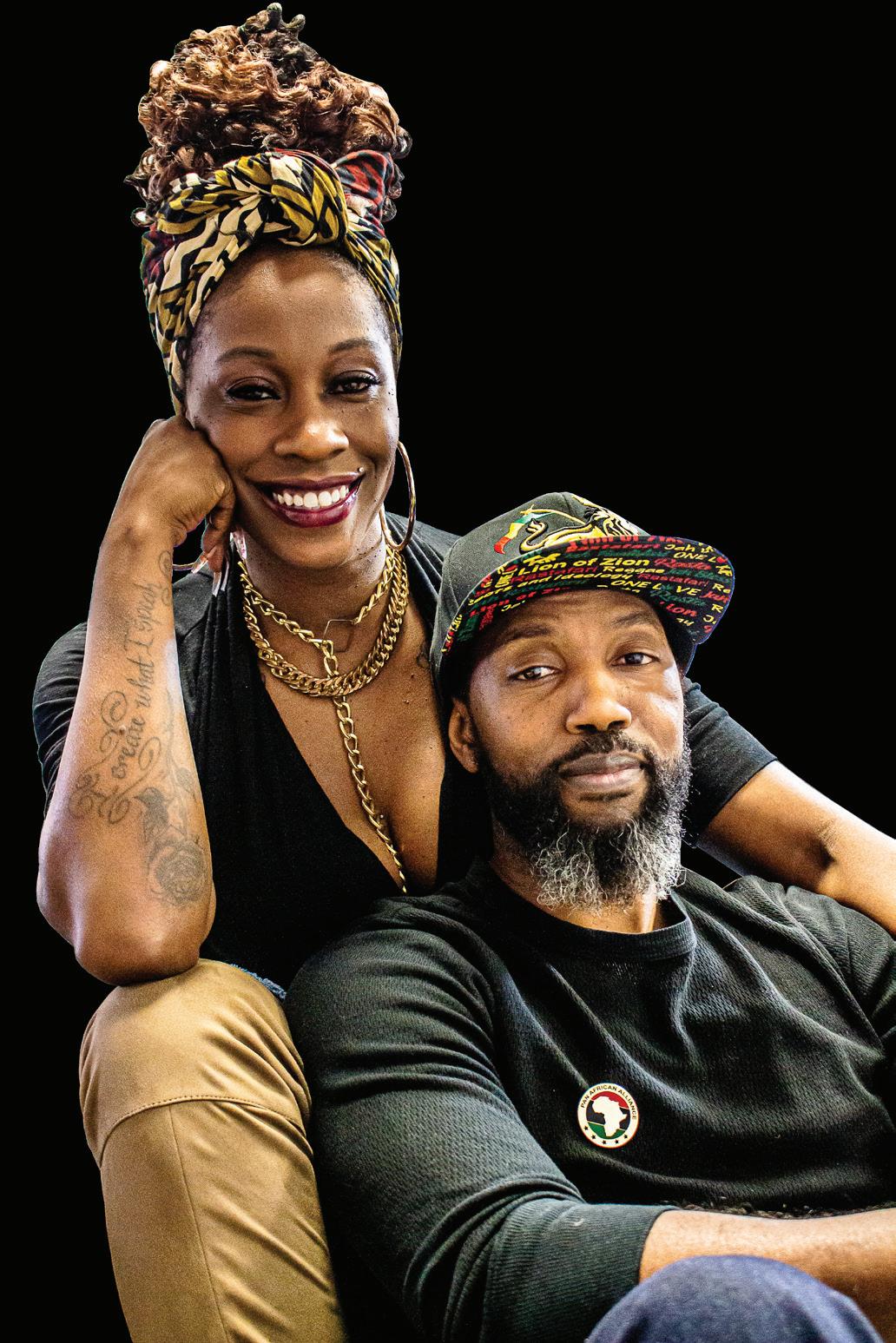
Traumatized by her own family as a child, developing mental health illnesses at the age of sixteen, diagnosed with Post Traumatic Stress Disorder and anxiety at twenty-one, living with a mentally unhealthy mother, and abusive father; it is fair to say that our Woman Empowered feature has experienced extreme negatives in her life, and although she still battles with her demons, she has emerged as the phoenix of her time. Bold. Unapologetic. Determined. These characterize a creative feminine force that I have grown to love and admire; the pulchritudinous Halima Al-Hatimy.
Policy entrepreneur, academic and healthcare professional Halima Al-Hatimy is a dynamic force to be reckoned with. With over a decade of experience in Ontario’s Healthcare system, she remains a strong advocate for social justice, human rights and women’s health and wellness.
In this feature, we are going to discover the power of Halima, and her passion for mental health and wellness that was sparked by her own challenging experiences with period poverty, endometriosis, premenstrual dysphoric disorder and sociocultural taboos around menstruation.
“When I was a child, I was a spiritual seeker. There was more than what I was seeing.”
After fifteen years of struggling with menstrual-related health issues, Halima noticed that there was a systemic need for better menstrual care. I had an opportunity to speak with Halima about her decision to be so proactive in this field.
“I was so traumatized by my upbringing. My life was dulled, and
my mental health issues came out when I was sixteen. Unfortunately, I was not diagnosed until I was twenty-one with PTSD and anxiety. My mother was mentally unhealthy, and my father kept the family as domestic slaves. Naturally, this led me to being very angry in my youth. My father abducted me at the age of fourteen. He held us in confinement for seven hours, and physically and emotionally tormented us the entire time. We got away, but then my mom took him back. This is when he started plotting.”
The abduction occurred when Halima’s father told them he was taking them on vacation to Kenya, and when she arrived, she discovered that her dad had just used this as a guise. His goal was to marry her off for 100,000 shillings. “When I found out what my dad was up to, I told them that I rather swallow bleach then get married. I think they were surprised by my response, so they eventually backed off. It was my aunt who helped me get back to Canada, but when I arrived, my traumatic experiences just continued.”
Halima retells the horrible experience of what she encountered when she arrived back in Canada. “My legal guardian abused me. Her son sexually abused me. In our culture, we need to have a man, so he told me that because my father abandoned me, I needed a man. I dropped out of high school at the age of seventeen, and I left the care of my guardian at the age of twenty.”
Her career path became clear when she began her post-graduate education. “I worked as a nurse, and saw how the elderly, and disabled were being treated.
Being a manager of a nursing home was not going to make the impact that I wanted to see. I started look-
ing at policy. I did not want the government to have control over how these people lived. I realized with the right policy, real change could occur.”
Halima also became interested in cannabis and mental health. She was curious about how cannabis could treat PTSD. She learned that there were chemical compounds in the plant called cannabinoids that have shown therapeutic effects. The main cannabinoids are CBD and THC, both known for their medicinal benefits. The improved understanding of these benefits has helped cannabis become well endorsed as a source of treatment and relief from conditions like: anxiety, insomnia, and pain. It has also shown effectiveness in helping people suffering from posttraumatic stress disorder, or PTSD. (Angelique Moss, Healthcare in America).
Understanding the power of policy, she narrowed in her focus on menstrual-related health issues. Halima started FemCare as a grass roots public health project in 2015 and registered it as a non-profit organization in 2018 to respond to this growing need. In just five years, FemCare has grown into the world’s trusted leader in menstrual policy consulting, research, education and entrepreneurship. As an organization, they strive to eliminate the misconceptions around menstruation by promoting communitybased education on the different dimensions of menstrual health and wellness.
Halima holds FemCare very dear to her, and there is a good reason for that. “Period poverty. Taboo. Stigma. I have had to deal with all of that on some level. When I was back in Kenya, my father found ways to torture me. One thing he did was
with hold funds from me to buy toiletries when I was on my period. I actually had to pan handle, ask friends for pads. It was embarrassing. When I came back to Canada, it took fourteen years to be diagnosed with endometriosis, and ten years to be diagnosed with pre-menstrual dysphoric disorder. It has not been an easy road for me, but this is why FemCare is a global necessity.”
FemCare is the first non-profit organization in North America to convince a government body to fund menstrual products for those with the greatest need. In 2016, Mitzie Hunter personally invited Halima, to attend the provincial pre-budget consultation, where she began advocating for period poverty to be recognized as a political issue. FemCare has partnered with a number of corporations, government agencies and community agencies to support their ground-breaking work.
“There is a whole field of study that has not been looked at, and there are many questions to be considered. One thing I have noticed is that the majority of research is done on white subjects. There is no diversity in these studies, and something has to be done about that. It is the only way that we can create policies that will help women who are struggling with issues surrounding menstruation.”

If there are any women who are interested in this topic, feel free to visit FemCare, and definitely reach out to Halima Al-Hatimy. She is truly a woman empowered, helping empower others.
FemCare
https://www.femcarechi.com/?fbcli d=IwAR1Qm0TiqPXRTXHwMkG5qSo zb8xOn1EeUHp9Nq1YxwCOIWRbWR QFoWRmq2g




Written by Simone J. Smith Toronto Caribbean News


I know, I know! Still stuck indoors. If you live in Toronto, Ontario, Canada, you were probably dismayed when you looked outside and saw snow. Yeah! Snow in May. Geez!
It is even more reason why it is my duty to remind readers that there are sunnier days ahead. If you are just joining our Cabin Fever Countdown, Toronto Caribbean Newspaper, is finding ways to keep our readers in a positive state of mind, which is what influenced the Cabin Fever Countdown. Last week we visited the beautiful island of Turks and Caicos, and this week, we are going to whisk you away to the Islands of Tahiti.
There is a reason that the islands of Tahiti are known as the bucket-list paradise. Officially known as French Polynesia, Tahiti possesses the most exquisite and diverse environment on earth. With a mixture of: high volcanic islands, dramatic mountains, captivating cliffs, and luscious lagoons, it is no
wonder Tahiti is one of those places we associate with being alluring and exotic.
Of course, as you know, we are stuck here, and it might be for a while, so the team at Tahiti Tourism has found a way to bring the fantasy to your mobile phone, laptop, and TV screen. The online campaign, “Tahiti Comes to You,” uses guided imagery to harness the brain’s natural tendency to create vivid mental representations of that vacation we are going to want post-COVID-19.
In their campaign they use mesmerizing visuals, which is a simple, yet powerful way to soothe symptoms, alleviate stress and anxiety, improve self-confidence, and even enhance our ability to perform. Below are seven short descriptions of some of the videos you will find when you visit:
English: www.tahititourisme.ca/en-ca/tahiticomes-to-you/
French: www.tahititourisme.ca/fr-ca/tahiticomes-to-you/
Practicing ‘ori Tahiti
Ori tahiti is a Polynesian dance that remains a powerful, potent art form, especially when accompanied by the harmonic voices of the Polynesians, the thunder of traditional drums and plaintive song of conch shells. Viewers will receive a personal lesson in the art of ori Tahiti.

Dive in the Polynesian waters
Become one with the clear blue heaven on earth. This video displays the warm waters that surround The Islands of Tahiti team with life from flirty clown fish to ever-present sharks to awe-inspiring humpback whales.
Adopt your coral
Are you an avid environmentalist? Coral reefs are beautiful and fragile environments. In The Islands of Tahiti, there are many ways to explore, learn about and protect these rich landscapes.
Join a culinary tour and discover local food
For our cooking enthusiasts, Tahiti is a virtual Garden of Eden, where exuberance and abundance go hand in hand. In this sunny country, farmers grow a wide variety of fruits, spices and vegetables, which are transformed into aromatic and exotic dishes to delight the senses.
The art of Polynesian Tattoo
Did you know the word tattoo originated from the Polynesian word tatau? The symbols have meaning and the meaning tells the story of each Tahitian’s personal history. Join them to learn about tattoos and why they are a significant form of expression in
The Islands of Tahiti.
Polynesian beauty secret : Monoi Oil
Fascinated with beauty? Monoi is a product that is made from refined coconut oil and macerated Tahitian tiare flowers. You can find it in many forms throughout The Islands of Tahiti, from balms and creams, lotions and shampoos, and more! It comes in a variety of scents as well, but the most popular is tiare, the iconic aroma that is unique to The Islands of Tahiti.
Go for outdoor adventures
Many of us are going to want to just be outside, and there are so many ways to discover the outdoors in The Islands of Tahiti. Excursions in off-road vehicles make it easy to effortlessly explore the mountainous, inner isles, and a guided tour gives virtual travellers an idea of exactly what the are going to experience when they arrive in paradise.
As the world continues to practice social distancing and adapt to changes brought on by COVID-19, The Islands of Tahiti brings hope to the explorer. It is a place for Canadians to not only dream about, but to embrace its local culture and humanity.
Canadians can sign up for Tahiti Comes To You newsletters on the landing page, to learn more about the campaign and receive inspirational content for future travel planning. Find out more at www.TahititTourisme.ca





Eight webinars that can help you navigate your business through the Pandemic
simone@carib101.com
“We will get through together if we are united as a business community. Help each other. Learn from each other. And plant the seeds so we can hit the ground running to help the economy recover.”
Andrea Hazell, President, SBA
In these difficult times business owners, and community organizations have had to embrace the power of digital technology to meet the challenges of the everchanging market. Scarborough Business Association, alongside Matrix Mortgage Global have found a way to ensure that your digital experiences are relevant, personalized, and engaging.
They have instituted a weekly Wednesday morning webinar series, “Cyber Conference Breakfast: Support for Small Business,” that offers valuable tips and information from business and government leaders. Their open platform allows members of the business community to ask pertinent questions in regard to business programs offered by the government, or larger organizations to deal with
COVID-19.
The two organizations are working closely to proactively offer business relief, and to ensure that the communities voice is heard. When the team at SBA first began to see the effects of COVID-19 in the community, and in the business world, the SBA assembled a COVID-19 response task force. A committee of volunteers meet weekly to initiate support programs, one being the Cyber Conference Breakfast: Support for Small Business series. Each Wednesday from 9:15 to 10 am a forum is provided to offer ideas and opportunities for businesses to grow and develop despite the uncertainty of the economy.
The hosts, Matrix Mortgage Global are an elite mortgage brokerage specializing in residential and commercial mortgages. They have been ranked one of the Top 75 Brokerages in Canada, and have won Brokerage of the year 2018, and 2019.
Shawn Allen’s vision, Matrix Mortgage Global came to life in 2008. He has an impressive resume, which entails guiding the brokerage to over $1.1Billion in funded volume and over 610% growth in just five years. This alone has made Shawn a major stakeholder in the Canadian Financing Landscape. He sits on the Board of Directors for the Scarborough Business Association and has worked with the YWCA, in partnership with the Ontario Ministry of Training, Colleges and Universities to provide employment opportunities for members of the community.
Shawn currently sits as the host of
the Cyber Conference Breakfast, and each Wednesday he assists in guiding the discussion, and providing vital business content for business leaders in the GTA. Guess what? You have a chance to be part of these discussions, even if you missed it. Below is a list of past, and upcoming Cyber Conference Breakfasts.
April 1st, 2020
Shawn Allen, CEO Matrix Mortgage Global Deferring your mortgage payment
https://service.ringcentral.com/recording/ share/UecXz_doM5zo9ymezLDXmOySSMG91VUuGinpT_PqdlCwIumekTziMw?st artTime=1585744266000
April 8th, 2020
Peter Haggert, Haggert Media Align your personal and business brand in LinkedIn https://service.ringcentral.com/recording/ share/MIIlerSSViv_s57rrgYyYfVQYph9k3F82Nqd-IqWcyawIumekTziMw?startTi me=1586351101000
April 15th, 2020
Toronto Mayor John Tory Helping Small Businesses Amidst a Global Pandemic https://service.ringcentral.com/recording/ share/kY7Z-nJYAqQYKind9BNMRPGD8Ds Hjo6_5qeSQj6_P6ywIumekTziMw
April 22nd, 2020
Coun. Brad Bradford
Mayor’s Economic Support and Recovery Task Force Presentation posted soon
April 29th, 2020
Rachel Bendayan, Parliamentary Secretary to Mary Ng, Federal Minister of Small Business, Export Promotion and International Trade Presentation posted soon
May 6th, 2020
Bill McConkey and Dave Fenton, UTSC The Bridge Presentation here soon
Upcoming Cyber Conference Breakfast: Support for Small Business May 13th, 2020
Liz Buller, President and CEO Scarborough Health Network
You can register at: https://events.r20.constantcontact.com/register/eventReg?oei dk=a07eh290nyy64f6205e&oseq=&c=& ch=
May 20th, 2020
Ali Lajevardi, Director, BDC Advisory Services
You can register at: https://events.r20.constantcontact.com/register/eventReg?oeid k=a07eh2s8sj29f54235d&oseq=&c=&ch=
To learn more about SBA’s COVID-19 response efforts visit them at www.scarboroughbusinessassociation.com.

Children Believe; Working globally to empower children

“In a time of crisis, a child needs to feel a sense of normalcy and control over their ~ Aki
Temiseva
COVID-19 arrived and unleashed difficulties, struggles and misery for many families around the world. Dealing with this virus has been atrocious in developed countries. So, can we begin to imagine what’s happening in developing countries where lack of resources is the norm? Specifically, children are most impacted by a sudden loss of: food, deepening poverty, scarce resources and an increased risk of witnessing or suffering violence and abuse.
This is why we should acknowledge and appreciate Children Believe, a Canadian charity that has helped more than one million children around the world overcome barriers to education and other life essentials. This charity supports hundreds of thousands of people across: Africa, Asia and the Americas with the aim of providing life-saving relief. This is where they believe they can make the biggest impacts.
Children Believe has brought together brave young dreamers, caring supporters and partners, and unabashed idealists. They work globally to empower children to dream fearlessly, stand up for what they believe in and be heard. Together, they are driven by a common belief; creating access to education inside and outside of classrooms is the most powerful tool children can use to change their world.
According to Aki Temiseva, Chief Development and Marketing Officer of Children Believe, “Our main focus is breaking barriers to education. It comes as no shocker that this organization is producing and sharing relevant content to enhance academic skills, as well as providing protection-focused messages about mental health, psychosocial support, and promoting child protection for children in supported communities, as well.”
“Together with local partners, Children Believe is providing alternative
learning methods to ensure education continues, especially for girls,” says Temiseva. “The longer an adolescent girl is away from school, the greater the barriers to her future education as she may be forced into early marriage or become more vulnerable to sexual exploitation or forced labour.”
Temiseva told Toronto Caribbean Newspaper, “In the most painful cases we work with girls to help convince their families not to marry their daughter early and convince them of the benefits of an education.”
It’s clear that children are even more at risk and they face greater challenges. So Children Believe is working to prevent the spread of COVID-19 by sharing prevention information through: radio, pamphlets, and handing out hygiene kits, soap, sanitizer, gloves and masks.
To date, there are no official reports of children or families in the communities where Children Believe works, diagnosed with COVID-19. However, there are many reported cases in these countries, and testing is limited.
This charity recognizes the needs are immediate in homes where income is being lost and many communities are ill equipped for the COVID-19 outbreaks. Additionally, many parents no longer have the necessary means to provide food on their tables, and children have also lost access to nutritious school meals. For the most vulnerable families in Children Believe supported communities, the organization is distributing Emergency Food Packs and providing essential services such as delivering protective equipment and other medical supplies.
Children Believe, understands that this is the time where children need to feel a sense of normalcy in their lives, and they are committed to helping children access: healthcare, clean water and education, so they can thrive at home and at school. Today, Children Believe is asking Canadians who can, to help the world’s most vulnerable children access life-saving resources and education, so they can survive the COVID-19 crisis and continue to dream fearlessly about today, tomorrow and the future.
“We understand that everyone’s life has been turned upside down, but if anyone is able, we are in this for the long term. We would love if anyone can sponsor a child. If that doesn’t feel like the right choice of support, there are many other ways to help on our website at childrenbelieve.ca/COVID,”
Selina McCallum TC REPORTER selina@carib101.com
Simone J. Smith
TC REPORTER simone@carib101.com
Michael Thomas
TC REPORTER michael@carib101.com
Stephen Weir
TC REPORTER stephen@carib101.com
Dave Rankin TC REPORTER dave@carib101.com
Christina Gwira
TC TECH REPORTER christina@carib101.com
Paul Junor TC EDUCATION REPORTER paul@carib101.com
Noel Cunningham FOOD | CULINARY noel@carib101.com
Dr. Vikas Puri HEALTH | WELLNESS drpuri@carib101.com
Errol A. Gibbs PHILOSOPHER errol@carib101.com
Simone J. Smith HUMAN SPECIALIST simone@carib101.com



Dave Rankin AFRICAN HISTORY dave@carib101.com
Paul Junor EDUCATION paul@carib101.com
Brittney Channer SOCIAL JUSTICE brittney@carib101.com
Christina Gwira TECHNOLOGY christina@carib101.com

Jay Brijpaul REAL ESTATE jay@carib101.com Fazaad Bacchus FINANCE SPECIALIST fazaad@carib101.com
Andrew Stewart FAMILY INSURANCE andrew@carib101.com
Kayla Karim CARIBBEAN SPORTS kayla@carib101.com
PUBLISHER | EDITOR Grant Browning grant@carib101.com
EDITOR | PROOFING Alanna Zelau alanna@carib101.com





























Inspirational quotes




Not a bird, not a plane, but a drone; drone symposium 2020 breaks down the innovations, standards and practices

salina@carib101.com
TC REPORTER
With so much going on in our world, it’s important we take a step back and really look at the situation from all angles, especially from above. That is what a drone allows journalists to do.
“Canadian journalists have used drone video to show the aftermath of wildfires, shrinking Arctic ice, massive snow drifts in St. John’s and the empty streets of Toronto during the COVID-19 crisis,” said Lynda Calvert, Centre for Drone Journalism Excellence coordinator, Seneca journalism professor and symposium organizer.
On Saturday, May 2nd, a one-ofa-kind event in Canada brought together drone industry professionals, regulators, journalists, educators and students to discuss the future of the rapidly evolving technology.
This was the second annual symposium hosted by Seneca’s CDJE, a program based in the School of Media at Seneca College. Due to the pandemic, the event was moved online and was free for anyone to watch. However, moving online has its benefits.
“The live mostly worked but we had some technical glitches. But every time I looked at the number of viewers, they were climbing, and our audience stuck with us,” said Calvert. “Last year our audience was from the GTA. This year, we had viewers from Canada and North America, and people in the UK. I was really pleased with our global outreach and online allows you to do that.”
The drone symposium started at 9 a.m. online with Seneca President David Agnew opening up. The event featured two live panels and two live presentations, with time after each for online audience questions before it ended at 1:30 p.m.
“We saw a growing demand for the use of drones in journalism,” said Calvert.
Drone journalism is still in its infancy since drones have mainly only been used by the military.
“After the technology changed, journalists and people within the media industry started to use them around 2010. Drones became smaller and lighter, and less expensive,” said Calvert.
The guest speaker at this year’s symposium was Gail Orenstein, who spoke about using drones in remote areas. She is a renowned drone journalist with extensive experience in conflict zones. Orenstein was the first to obtain drone footage from the fall of Mosul, Iraq and the first journalist to use a drone to report on the plight of the Rohingya refugees in Bangladesh.
The photo of children surrounding a drone on the CDJE website is one that Orenstein took in Iraq.
“She’s based in London, UK and she has traveled all over the world. I was so honoured when she said yes to appear
at Seneca College in Toronto. In the photo, she is teaching the refugee children that this drone is not going to hurt them. Keep in mind that, people in war torn countries, they only know drones as a weapon. That’s their knowledge of them, because that has been their experience of them,” said Calvert.
During her speech Orenstein explained that you have to always inform people what a drone is and what you are doing as they are extremely loud and can really scare people.
Other panelists and presenters included CBC’s chief drone pilot, the director of video strategy for Global News, the senior manager of live services for CP24, a senior member of Transport Canada’s drone team, one of IATA’s top UAV experts, and a lawyer with expertise in aviation and drone laws.
Katheryn McCulloch is a dispute resolution lawyer and expert in aviation and drone regulation.
“We were so blessed to have Katheryn. The thing about drone technology is that it is evolving so rapidly that regulations whether it’s in Canada or the US or anywhere in the world, regulators can’t keep up with it. Developing a regulatory framework takes years. Drone technology happens in days, or weeks or months,” said Calvert.
The symposium organizer, who also has a drone pilot license, explains who can and who cannot fly a drone.
“Canada, and the UK and the US, they all came together to develop regulations to regulate commercial drones that are 250 grams to 25 kilograms. So, in other words, you have to be a licensed drone pilot,” said Calvert. “The Mavic Mini is 249 grams, that means you don’t need a license and you can fly it anywhere.”
How much air do you own above your home? Calvert recalls reading an article where a person in the states shot down a drone that flew over their house. Questions like that are what the panelist at the symposium discuss.
The more people, journalist or not, begin to purchase and use drones, the more discussions surrounding ethics and privacy must be held. Calvert doesn’t know what the symposium will hold next year, but she does know that it will continue to challenge and receive answers.
“We want to stay cutting edge, so we really pushed the envelope this year. I wanted to know can we develop a global manual for drone journalist, and I pushed the panelists on that,” said Calvert. “We haven’t decided yet what we’re doing to do next year but I guarantee you it will be cutting edge; it will be asking the questions that people haven’t asked yet.”
And that is true, as panelist Rick MacInnes-Rae, retired reporter, war corre spondent, and ex-host of the foreign affairs program Dispatches, said to Calvert during the symposium that he doesn’t have the an swers to some of the questions just yet.
“He said Lynda, you’re asking the questions that are so new, that nobody has the answers to them,” said Calvert.
For more information on the Cen tre for Drone Journalism Excellence sympo sium visit, https://senecadronejournalism. ca/drone-symposium-2020/.
Gourmet Black Coffee
Enhance with Rich 100% Certi ed
Organic Ganoderma Lucidum





SELINA McCALLUM
LET’S TALK REAL ESTATE
Continued From Page 1 -any pinnacle advancement will come those who think that we as consumers should take a deeper look at what is being sold to us via mass media.
One of these people is Robert Ken nedy Jr. who was interviewed by Patrick BetDavid in a controversial video called “Rob ert Kennedy Jr. Destroys Big Pharma, Fauci & Pro-Vaccine Movement.” In just two days of being debuted, the video passed half a million views.
Now before you read any further, I would suggest that you take the time to watch this video in the link located at the very end of this article. Like the David Icke video, in a recent edition of the Toronto Caribbean Newspaper, I advised readers to take the time to do their research on this topic. This week, I am going to present some key points to our community, and it is your responsibility to research before you react. Once you finish watching the video, this article and its contents will make a lot more sense. All right! Let’s get started.

• Failure to warn about serious drug risks on product labels (Roche’s Actemra)
• Bungling a clinical trial that led to one death and multiple illnesses (Bial/Biotrail)
• Bribing health officials in China (GlaxoSmithKline)
• Deceptive business practices in drug marketing (Astellas)



“If you ask the Democratic Party what the most corrupt industry is, they will say that no one has the influence like the pharmaceutical companies. There are more pharmaceutical lobbyists then any congressmen/women, senators or supreme court judges.”
This is one of many bold statements that Robert makes during his interview. It is statements like this that have gotten this video pulled down and reposted across several sites on the Internet. Interviews with theorists like Judy Mikovits, and Rashid Buttar have been challenged and deleted for violating YouTube’s medical information policies. Before some of these videos are deleted, they garner millions of views, and one could begin to question; why is it that when someone speaks against the larger agenda being pushed by mass media, they are instantly being silenced?

Right now, the most prominent agenda is this idea of a Coronavirus vaccine, which is being pushed strongly by large pharmaceutical companies. This is not the first time. History will show us that the vaccination agenda has lingered for many years.
In 1853, The Vaccination Act ordered mandatory vaccination for infants up to three months old, and the Act of 1867 extended this age requirement to fourteen years, adding penalties for vaccine refusal. People were resistant, and the Anti-Compulsory Vaccination League formed in response to the mandatory laws, and numerous anti-vaccination journals sprang up (The History of Vaccines; and Educational Resource by the College of Physicians of
In 1879, The Anti Vaccination Society of America was founded, following a visit to America by leading British anti-vaccinations William Tebb. This seemed to give way to a freedom of expression because in 1882, the New England Anti- Compulsory Vaccination League was founded, which was closely followed in 1885, with the cre -
Thimerosal, a mercury-containing compound used as a preservative in vaccines, has been the centre of a vaccination and autism controversy. In July 1999, a leading U.S. public health and medical organizations and vaccine manufacturers agreed that thimerosal should be reduced or eliminated from vaccines as a precautionary measure (The History of Vaccines; and Educational Resource by the College of Physicians of Philadelphia).
In 2001, The Institute of Medicine’s Immunization Safety Review Committee issued a report concluding that there was not enough evidence to prove or disprove that thimerosal in childhood vaccines causes: autism, attention deficit hypersensitivity disorder, or speech or language delay. Today, thimerosal is no longer used in most childhood vaccines, though some forms of influenza vaccine available in multi-dose vials may contain the preservative. (The History of Vaccines; and Educational Resource by the College of Physicians of Philadelphia).
“The 1/3rd leading causes of death in the United States are pharmaceuticals.” Robert Kennedy Jr.
There seems to be some inconsistency between what is being published about vaccines, and what is actually known about vaccines. According to a Public Citizen analysis, the pharmaceutical industry has settled 373 cases between 1991 and 2012, paying $35.7 billion for numerous violations (Stewart Lyman, 2019). In the interview, Robert opens up about a psychologist from Minnesota named Sarah Bridges, who came to his house in 2004 with a pile of scientific documentation. Her child had gotten autism from Vaccines and received a 20-milliondollar reward from Vaccine Court, because they realized that vaccines had caused the autism.
“The biggest issue,” Robert re -
a new rule. Pharmaceutical companies were not allowed to market drugs on television. It was changed, and now the US and New Zealand are the only countries in the world who are allowed to market pharmaceuticals. If you do any major searches online about vaccinations or pharmaceuticals, the major searches will direct you away from anything that is against the pharmaceutical industry.
“If you want to get the truth about side affects of vaccines, you can look at their inserts.”
People need to start asking more questions about vaccines. The current environment has set the stage for the implementation of something larger than we can even imagine. It is possible to be intelligent, grounded and still believe that conspiracies are a part of our world. The interview with Robert Kennedy Jr. goes to show that although the time periods have changed, the emotions and deep-rooted beliefs that underlie vaccine opposition have remained relatively consistent. It is up to us as consumers to do our research and do what is best for our families.
Resources
Exclusive Interview: Robert Kennedy Jr. Destroys Big Pharma, Fauci & Pro-Vaccine Movement
https://www.youtube.com/watch?v=QLi6Z rFp6vQ&feature=youtu.be
Merck Manual Professional Version https://www.merckmanuals.com/en-ca/ professional/pediatrics/childhood-vaccination/anti-vaccination-movement
Missouri Medicine; The Journal of the Missouri State Medical Association https://www.ncbi.nlm.nih.gov/pmc/articles/PMC6140172/
Pharma’s tarnished reputation helps fuel the anti-vaccine movement
https://www.statnews.com/2019/02/26/ anti-vaccine-movement-pharma-tarnishedreputation/
The History of Vaccines; and Educational Resource by the College of Physicians of Philadelphia https://www.historyofvaccines.org/content/articles/history-anti-vaccinationmovements







TUES - WED ROTI/RICE SPECIALS

Bone/Boneless Chicken, Bone Goat, Boneless Goat, Shrimp, Stew Chicken, Potato & Channa

THURS - FRI ROTI/RICE SPECIALS Bone/Boneless Chicken, Bone Goat, Boneless Goat, Shrimp, Stew Chicken, Potato & Channa

Herring, *Curry Chataigne (Katahar) available at an up charge


1200 empty rooms, yet people are still on the street: what’s happening with our homeless in Toronto?
SIMONE SMITH
simone@carib101.com
The Coalition warned legal action against City of Toronto if they continued to fail the homeless population. Other groups have also stepped forward, fighting for those who are unable to fight for themselves. In early April 3rd thirteen physicians and nurse practitioners wrote a letter addressed to municipal and provincial officials. They called for immediate action to help people experiencing homelessness and living in hazardous housing.
The homeless in Toronto have resorted to living in tents lined up against the walls all over Toronto. “Many people have left the shelters altogether,” notes Nana Yanful, (Legal Lead representing the Black Legal Action Centre). Toronto Caribbean

Newspaper had a chance to speak with Nana Yanful, and Ruth Goba (Executive Director of the Black Legal Action Centre).
Concerned organizations noticed the rising number of COVID-19 cases in homeless shelters, and on further investigation, it was found that the distance between beds was not in accordance with the standards. “It is impossible to physically distance,” reports Ruth. “The failure to immediately facilitate social distancing in existing city shelters and respite centres is a breach of the constitutional rights of those who are precariously housed.”
The current City of Toronto’s Shelter and Respite Standards are inconsistent with Federal and Provincial Health Guidance during the COVID-19 pandemic. The city is operating its shelter system with standards that are discriminatory and violate the right to life and security of the person (under sections 7 and 15 of the Charter of Rights and Freedoms). The current standards are also a breach of the Ontario Human Rights Code.”
It was reported that the city is still using bunk beds and other sleep settings where beds are less than one metre apart,
and not the two metres called for by provincial and federal health standards.
On Friday, April 24th, the Black Legal Action Centre, Aboriginal Legal Services, Sanctuary Toronto, Canadian Civil Liberties Association, Cathy Crowe, and the HIV & AIDS Legal Clinic of Ontario filed proceedings against the City of Toronto over the deplorable conditions in city shelters and respite sites amid the COVID-19 pandemic.
Mayor John Tory called the lawsuit disappointing in a recent Skype session. “It isn’t a matter of snapping your fingers and moving people overnight and being able to say it’s all done. We have to do this carefully.”
“The city may try to tell you that they are taking a proactive approach moving people out of the system,” Nana told me. “We saw Mayor Tory’s interview. He claims they are moving thirty people a day, but there are 1000’s of people who are still stuck in these terrible situations. We are not collecting race-based data. There is a lack of transparency, and the numbers don’t seem to add up. How many more people do you have to move to keep people safe?”
Last week, the city said in a statement it had opened eleven new facilities and secured more than 1,200 hotel rooms for homeless people. About 770 people had moved into hotel rooms, with 492 people moved to community spaces.
“Our last check was that those 1,200 hotel rooms that the City of Toronto leased to temporarily house homeless individuals remain empty,” Nana tells me. “COVID-19 continues to highlight the severe issues that exist in our system. I was told of a senior who couldn’t be with his partner because she had cancer. He was too scared to go to the shelter, so he slept on a bench. He could have been ticketed. Another issue that we have to also be dealing with at this time is how disproportionately targeted the African community is by the police. There are many concerns that the racialized communities face during this time.”
The coalition wants the City of Toronto to take action by ensuring housing for the homeless. In a privileged existence for most, why are people suffering. The city needs to adhere to international Human Right Laws and show how important human rights are for all of us.
WorldRemit; Internationally moving money into the future
MICHAEL THOMAS
michael@carib101.com
TC REPORTER
If you are a good Samaritan, a person who likes helping out other people, if making a difference is your thing, then the UN and the IFRC (International Federation of Red Cross) and Red Crescent Societies need to hear from you in the form of a survey, and by so doing you can fill a void in the life of someone in desperate need.
Here are some of the things this survey aims to do:
• Explore different perceptions and understandings of what it means to volunteer in each region.
• Examine how volunteers can make valuable contributions to sustainable development.
• Analyze the responses from each
region to offer solutions during the Global Technical Meeting on Reimagining Volunteering for the 2030 Agenda.
• Encourage volunteers to help achieve a safer, fairer, and more sustainable world by 2045.
One of the people assisting with the social media outreach plan is Trinidadian-born journalist and creative, Kamsha R. Maharaj, who has volunteered to oversee the local and regional online campaign. The objective of this outreach plan is to engage citizens in Trinidad and Tobago and across the Caribbean who may not know how they can volunteer in their communities and the positive effects of volunteering.
Toronto Caribbean Newspaper spoke with this Trinidadian-born journalist who has been a volunteer in her own way for several years, about what volunteering means to her, and how she plans to encourage the youths to use their time positively.
“If a child is good at math,” Maharaj said, “reach out to another child who is not as good as you are by offering that

child lessons. Help your neighbor clean up around the house, or even organizing with your friends to donate food items to the other needy families. Think outside the box and do what is comfortable to you.”
Toronto Caribbean Newspaper asked Maharaj how would she envision a society in the next twenty-five years, to which the journalist answered, “With regards to volunteering, I would like to see things like young folks cleaning up the beaches or visit the old folks home at least twice a year.”
“This,” she said, “should not just be a one-off, but part of a curriculum that should be taught as an actual strategy in schools, because it all starts with the kids, and once kids are involved, parents have to be there, so it is a cycle right there.”
“It is about also trying to teach the children life skills,” Maharaj said, “That extends beyond school because when they get into a work environment one of the key things is to be able to collaborate with people from multiple ethnicities and cultures.”
Maharaj who mentors students from her alma mater (University of Leicester’s Professional Mentoring Programme)
said, “I help students make up their minds with things like should I go back to school? Or if I don’t what do I do? I let them know that their first job out of university may not be their dream job, but it will be very important in developing your skills.”
That said, Maharaj told Toronto Caribbean Newspaper that there is a concern about females lagging behind when it comes to taking the survey, which is important for the UN because there must be a fifty-fifty balance and if that is not happening, it means that women are not equally represented, especially women from the Caribbean and Latin America, “We do need the representation,” she said.
The Trinidad native is hopeful that this volunteering brand catches on with the Latin American and Caribbean women, and the numbers flatten out. She knows that COVID-19 and some women’s busy schedules have had some effect in this situation, but she remains hopeful.
To get involved visit the UN Volunteers and IFRC Launch Global Online Survey link https://poa.un75.online/partner/UNV-kamshamaharaj#s2

Seven excellent coping strategies for teachers, staff and students

The announcement that schools will be closed two or more weeks is not surprising. On the basis of recommendations from the Chief Medical Officer of Health and health officials who are part of the COVID-19 Command Table, the provincial government extended the closure of schools.
In an announcement on Sunday, April 27th he stated, “We will do whatever it takes to keep our students safe. The government is taking a careful approach which provides our medical experts the time to review the modelling and make the best decision for the safety of our students and the future of learning.” Ontario was the first province in Canada to close all its schools.
In order to help students, continue their academic learning the province has initiated a Learn at Home portal for the estimated two million students who are in elementary and secondary schools in March. At the end of March, they launched the second phase of the Learn at Home portal, which was intended to “Provide clarity for parents, enhancing education supports and creating opportunities for educators to connect with students,” (Minister of Education, Stephen Leece).

Peel District School Board (PDSB has dispensed 14,500 laptops and tablets as well as 1,900 Wi-Fi enabled devices/ routers. This was specifically targeted to students who did not have personal electronic device or access to internet service.
Peter Joshua, Director of the PDSB posted on Sunday, April 26th that all elementary and secondary school graduation and commencement ceremonies that were supposed to occur in the spring has been postponed. He notes, “We share in this disappointment. We know that graduation is a special moment in the lives of students and their families, but keeping everyone safe, must be our top priority.”
John Malloy (Director of the Toronto District School Board) in a letter posted on the website wrote, “While not unexpected, I know this extension of the closure will be challenging news for many as we continue social distancing for additional weeks. Please know that we remain focused on the health and well-being of our students, staff and their families, while continuing to support students learning at home in a variety of ways. During these uncertain times, that continues to be our best priority.”
Colleen Russell-Rawlins, Associate Director Equity, Well-Being, Early Years and Improvement at the TDSB posted some excellent coping strategies for teachers, staff and students. They include each of the following:
1. Acknowledge what you can and cannot control and adjust your expectations
2. Maintain a positive attitude. It helps
you cope with whatever comes your way
3. Find little ways to embrace the change
4. Connect with others
5. Listen to your feelings and know that it’s ok to not be ok
6. Maintain a sense of humour-laughter can be a great way to cope
7. Seek help when needed
There are many additional resources that are available in addition to those posted by the Ministry of Education at the Learn at Home portal for elementary and secondary students at www.edu.gov.org. It has expanded this portal from the first phase to the second phase to include a new set of expectations for the education community such as:
1. Reconnecting students with teachers and other staff, as well as mental health workers
2. Finalizing teacher-led learning for grade groupings
3. Leveraging digital resources
4. Developing a program of training for educators
5. Requiring final report cards for all students
6. Prioritizing and supporting students
7. Prioritizing and supporting students on track to graduate
8. Distributing laptop, and/or devices from schools to students across the province.
TVO has enhanced its service and extend its hours of operation from 9am - 9 pm between Monday -Friday and 3:30 pm – 9:00
pm on Sunday. They have added more certified teachers that are available for free one-on-one to support students learn-athome needs. TVO Mathify now includes support for grade 6-10 math tutoring.
Free tutoring is available: Math and Science students from CAUSE Free tutoring at (https://causrtutoring. org/online-extra-help.services_during covid-19)
Khan Academy https://www.khanacademy.org
High school students can access materials at: https://courseware.cemc.uwaterloo. ca as well as cen.acs.org.
Nelson online textbooks are available at https://www.mynelson.com/mynelson/ staticconnect/html/PublicLogin.html.
Free digital resources are at https:// boreal.com/covid_19digital_resources_from_ trusted_partners
Free distance learning software at https:// boreal.com/cms/civic_19_distance_learning_software_applications
The PDSB has provided extra help for its students at its www.peelschool.org. There are online supplemental resources, online libraries and database that students can assess through their BYOD account and other materials at the board’s Help your child webpage.










JANIECE CAMPBELL
janiece@carib101.com
The Guyana Tourism Authority (GTA) has announced their newly appointed Deputy Director, Carla James. Beginning on May 1st, 2020, James succeeded the previous director Brian T. Mullis following the conclusion of his two-year contract at the end of April. This appointment marks a pivotal moment in the GTA’s eighteen-year history, as she becomes the first Indigenous woman to assume the role.
Carla James is a proud Akawaio and native of Kamarang Village, a remote community in the Upper Mazaruni region. With an estimated population of about 6,000, the Akawaio people are also present in Brazil and Venezuela. In their native language which shares the name of their ethnic group, they refer to themselves as “Kapon” which translates to “people of the sky.”
From the roots to the sky; Guyana appoints first female Indigenous tourism director
James was unanimously identified as the superior and most suitable candidate at the end of a thorough fourstage selection process.
“Ms. James is uniquely qualified to lead Destination Guyana as our new director of tourism,” said Donald Sinclair, the Chair of the Board of Directors of the Guyana Tourism Authority. “In her we have found a leader who is not only professionally well-versed in our destination and industry sector, but someone with tremendous national pride and heritage, both of which are essential components for strengthening our tourism strategy going forward. Her ascension to the role of director will also be a tremendous source of inspiration to many young women who now have proof that women of all ethnicities can shatter glass ceilings and go where previously they feared to tread.”
As she settles into her hardearned position, it’s important to note that Carla James has an extensive resume including managerial and industry experience. With an outstanding track record spanning over nineteen years in institutional strengthening, destination planning, marketing and management, it’s clear that this new role was well-deserved. With an educational background
in Computer Science, James began her professional career in 2001 as a research assistant at what was previously known as the Ministry of Tourism, Industry and Commerce. In 2003, she made the move to the Guyana Tourism Authority and joined the team as a statistics and research officer. In the following years, she continued to climb the vine and has held multiple positions such as Senior Statistics and Research Officer, Marketing Manager, Logistics Manager and Personal Assistant to the Director of the Authority. Today, she has finally reached the top!
“I am filled with a great sense of pride and accomplishment. It has been an amazing journey of learning, apprenticeship, training and experiences; and I am extremely honoured to take on the role of the Director of the Guyana Tourism Authority and serve the place I am so proud to call home,” said James. “Our work plays a significant role in helping to protect our precious natural landscapes and wildlife and it is a responsibility I do not take lightly. During a time when community is needed most, I look forward to supporting my own by continuing to push Destination Guyana forward alongside our valued industry partners.”
As the second largest export sec-
tor after gold, tourism in Guyana is an essential part of maintaining economic balance for the nation. According to the GTA, it is estimated that travel and tourism in Guyana is responsible for upwards of $250 million USD in profit. In 2019, Guyana gained worldwide recognition within the tourism industry for its strong leadership in sustainable destination management and development. The country was voted number one in both the categories of “Best of Ecotourism” in the Sustainable Top 100 Destination Awards by ITB Berlin and “Best in Sustainable Tourism” at the LATA Achievement Awards.
Despite the challenges ahead to recover from the COVID-19 crisis, the Guyana Tourism Authority remains optimistic that this foundation of interest in Guyana will prevail as travellers seek out more sustainable and enriching ways to explore the world later into 2020 and well beyond.
“For the next several weeks, GTA will be focusing on helping the sector during this difficult period preparing for recovery. Our team will continue to invest and build capacity so that we can be strong support for our stakeholders,” said James.
Too little too late! Are ministerial directives going to be enough to save the Peel District School Board?
PAUL JUNOR paul@carib101.com
TC REPORTER
The appointment of Arleen Huggins by the Minister of Education, Stephen Leece was announced on Wednesday, April 28th to investigate Peel District School Board’s (PDSB) compliance with the twenty-seven ministerial directives that it received.
Ms Arleen Huggins is qualified for this task as former president of the Canadian Association of Black Leaders (CABL). She has thirty years of expertise in: employment law, human rights, workplace harassment and discrimination investigations.
Media attention has been focused on the PDSB since November 2019 when the ministry review was launched. Four months later when it received the report on March 13th, there were expectations with respect to addressing the significant and widespread issues that were identified with respect to: systematic discrimination specifically anti-black racism, dysfunctional governance, leadership and human resources practices.
The release of the twenty-seven
ministerial directives by the Ministry of Education was intended to put structures in place to address these issues. The PDSB accepted all ministerial directives at its March 24th virtual board meeting, some of which included: an apology to the Black community, development of diversity plan, learning plan for senior staff, equity plan, collection of race-based data as well as anti-Bush awareness training by the trustees to uncover, comprehend and deal with their individual biases.
One of the first things that the PDSB was able to do was the issuance of a public apology, which was released on April 16th on the PDSB’s website. This was truly remarkable as it signals hope and optimism for the rebuilding of trust between the trustees and black community.
Unfortunately, two Peel School Board trustees: Kathy McDonald and Nokhal Dakroun as well as the board antiracism chief decided to take a leave of absence. Kathy a long-standing black community member states, “I am not mediating when they have ramped up their attacks on the black community. The disdain for my community is palpable. Since the review concluded, it became apparent to me that there is insufficient appetite around the board table to tackle the issues presented in the report effectively.”
The Minister of Education, Stephen Leece has become aware of the challenges with respect to the PDSB’s compli-
ance of these ministerial directives within the timeframe that it has allotted. Ms Huggins is expected to complete her report on or before May 18th. In its new release on April 28th, he states, “We expect our school leaders-trustees, senior administration, and educators ‘to ensure all students are learning in safe and inclusive conditions. This is why effective, transparent and accountable school Board governance is essential to the success and well-being of students in Ontario’s ‘publicly funded schools.”
The Minister is serious about ensuring that the PDSB complies with all its directives especially in tackling anti-black racism. He states, “When it comes to confronting racism and discrimination, I will not accept delay or inaction. The message I am sending is do better. Our kids deserve better. I will do whatever it takes to ensure these issues are addressed and effectively.”
In his tweet on April 28th he wrote, “When it comes to confronting racism and discrimination, I will not accept any delay or inaction.” He will not wait.
During my fifteen minutes with Stephen Leece on Thursday, April 30th, he reiterated his commitment to ensuring that equity; social justice, fairness and tolerance are principles that the PDSB have to follow. He is strongly supportive of important ministerial directives especially:
• Directive 6 (mandatory trustee learning plan)
• Directive 7 (composition of board committee)
• Directive 8 (director’s performance appraisal)
He will not stop until the PDSB complies with all twenty-seven ministerial directives given the many years of unresolved issues.
The minister is particularly concerned that the PDSB has contravened his binding directions with respect to: mandatory mediation, and with respect to good governance among senior staff members. He states in the news release,
“The Ministry has concerns about the PDSB’s ability to provide good governance and that the lack of cooperation among the members of the board, and among the senior leadership team, which might result in a contravention of other directives, specifically 6, 7, 8, 12 and 16.”
According to Chair Macdonald, “We have much work to do as a team to rebuild our relationship with each other, and with the community to improve outcomes for students and staff. We will not be able to do any of this necessary work if we do not work together as a cohesive unit. Supported by the mediator, we hope to return to effective and respectful governance focused on students so that we can work to eliminate anti-black racism and systematic discrimination.”



































sulting Group Inc. to perform a research analysis that focuses on the experiences of African-Canadian teachers in Ontario. The purpose of this organization was to “Give voice to the experiences and perspectives of black educators, the challenges they face, and identify how best ONABSE can continue to work to influence public policy concerning the education of African-Canadian people.”
engagement with the Ministry and PDSB with respect to the assessment and monitoring of the recommendations and directions that were stated in the report.
enced as a result of anti-black racism expressed in the review and compounded by the COVID-19 pandemic
On April 27th, 2020 an important letter was sent to the Minister of Education, Stephen Leece by the Ontario Alliance of Black Educators (ONABSE). The purpose of the letter was to respond to the Ministry of Education’s review of the Peel District School Board (PDSB), which the board received on March 13th, and the subsequent ministerial recommendations, which it accepted on April 15th.
The letter that was sent to the Minister focused on specific aspects of the Ministry review with respect to: systematic discrimination specifically anti-black racism, human resource practices dysfunctional governance and leadership at the board. These are part of its mission.
ONABSE is an umbrella organization that works with other communitybased organizations whose mission is to, “Enhance and facilitate the education, health, safety and welfare of AfricanCanadians. We aim to combat structural racism in all forms with respect to black people.”(www.onabse.org).” It hosts an annual educational conference, and in February 2015, it contracted with Turner Con-

2. The exploration of potential solutions that may be implemented within the province and Ministry of Education to address and discontinue unacceptable pattern of anti-black racism and inequities that blacks are experiencing and have historically experienced.

There were several policy implications that came out of this report which include; the need for workplace discrimination and harassment prevention programs, race equity, on-going training and support for all teachers, support networks, changing staffing models, inclusive Africancentric curriculum and support for black parental involvement in the education system.( 2015 ONABSE Report).
Many of the Ministry’s review of the PDSB were in alignment with the goals of ONABSE such as its, “Work to eliminate and to rectify the effects of racism, harassment and sexism in education and researches and promulgate positions on key educational issues, which affect all children and students of African descent and it related to public policies.” Anti-racism work is key to the achievement of its overall mandate.
ONABSE has made it known in its letter that it is hopeful that a meeting can be arranged with the Ministry of Education, the Education Equity Secretariat and other stakeholders to discuss four specific areas that it itemized from the report, such as:
1. ONABSE and community stakeholder’s
Some solutions could be
• Establish a permanent branch, department or other entity within the Ministry that deals with issues affecting black staff, students, and parents of children of African descent
• Mandatory and on-going culturally responsive pedagogy and Afrocentric training for prospective, new and existing K-12 educators
• Increasing transparent, inclusive and equitable hiring and promotion practices
• The creation and implementation of an anti-racism policy
• An explanatory look at existing Afrocentric schools and programmes in the province of Ontario and the potential benefit for all students
• Clarification of the review timelines given the COVID-19 situation, as well as other aspects of the report
• Concerns about the mental health and well-being of our black students, staff, parents and allies in our communities, alongside the hurt and harm experi-


Toronto Caribbean Newspaper interviewed Warren Salmon, president of ONABSE on Tuesday, May 5th and we asked him if he had received any response from the Minister of Education. He told us that he has not received a response as yet, but he did receive a call from Patrick Case, Deputy Minister of Education.
They discussed the contents of the letter and they anticipate a meeting with the Minister in the future. Warren informed us that he was able to have a virtual meeting with other members from the black community, notably with Jamil Jivani, the first ever Advocate for Community Opportunities and a special advisor to the premier. Warren mentioned that there was an engaging and informative discussions with Jivani and he was receptive to many of the items in the letter especially the creation and implementation of an anti-black racism policy. Jivani promised to take these concerns to Minister and arranged a future meeting.
In further discussions with Warren he assured that even though we are in the midst of the COVID-19 pandemic, there is a small window of opportunity left to ensure that these recommendations are implemented. He is convinced that now is the time to put further pressure on the board to do the right thing. The work of past activists, trustees, community workers, teachers and allies cannot afford to be in vain.








Heavyweight hitmakers; musicians duke it out in 20-round Instagram battle series
Summer: the season to bask in sunshine and wholesome fun. Also, the typical season for several annual outdoor festivals and activities. After a winter that felt way too long, many of us were preparing to ring in the first summer of the decade by indulging in an abundance of food events, seeing our favourite artists live and participating in complete unruly behaviour.
But this was the year that things changed for the worse. Due to this unpredictable pandemic, most organized festivals and concerts worldwide were forcibly postponed or cancelled indefinitely, raining on many of our parades.
We thought it was all over. Until there was Verzuz.
We may not get to sink our teeth into those savory, fall-off-the-bone food
truck ribs or hear ambient live music but let us take it as a blessing. This time around, go ahead and grab some snacks from the pantry because you can hear all those club bangers in your bedroom for free 99.
A quarantine-friendly competitive series put together by American producers Timbaland and Swizz Beatz, Verzuz is a weekly virtual MC battle on Instagram Live. The premise is fairly simple: two prominent artists, songwriters or producers put their gloves up for a toe-to-toe 20-round setlist, leaving viewers to decide who has the better music catalog.
“What is the thing the world most needs every day? It’s music,” Timbaland said in an interview with CNN. “The sound of music always put a joy in my heart. I know music is the key to what’s going on in this darkness and I just felt this was the perfect time.”
With a range of battles from old school entertainers such as Teddy Riley vs. Babyface and RZA vs. DJ Premier to newer sounds like French Montana vs. Tory Lanez and Boi-1da vs. Hit-Boy, viewers are exposed to a unique, interactive, never-before-seen online experience. The well-paired clashes help to soothe anxieties by immersing in nearly forgotten classics, even if it’s only for
a couple of hours.
“Music has always been around to help and heal,” Swizz Beatz said, in the same interview. “Me and Tim came together and said, ‘You know what? Let’s start Verzuz on Live and give the people some entertainment, give them some hope and also educate them. Because Verzuz is an educational celebration.”
Verzuz provides the opportunity to learn about the individual behind the song. It could just be my Generation Z ignorance but I, for one, had no clue who Johntá Austin was before his hit-for-hit against Ne-Yo. A songwriter who has penned for a widespan of artists from Janet Jackson to Justin Bieber, it would be dishonorable if he didn’t take the crown, dropping the knockout gem “We Belong Together” by Mariah Carey against Ne-Yo’s “Irreplaceable” by Beyoncé in the final round.
The series takes pride in “celebrating people behind the scenes,” like the writers and producers behind chart-toppers whose names are less recognized, Timbaland said.
With an average upwards of 250K viewers at a time, the show has reached far beyond viral success, often becoming the #1 trending topic while on air.
“We had three stadiums worth of people showing up to see two people and they probably didn’t know what those two people were responsible for,” Swizz Beatz added.
Most recently, energies were rejuvenated to the soulful sounds of Erykah Badu vs. Jill Scott. Making history as the first Verzuz between women, the spirit of competition exited the window and calming vibes filled the air instead. A combination that fit so seamlessly together, the only true winner of this battle was the audience.
Early 2000’s hip-hop fans can look forward to dusting off those oversized jerseys and Air Force Ones, because it’s been confirmed that the next two artists to step in the ring are Nelly and Ludacris.
Timbaland and Swizz Beatz have made it clear that this is just the beginning of Verzuz, even dropping hints that a Verzuz Ladies is in the works to support creative women in the industry. So, this weekend, refuse to let the quarantine blues get to you. Men, put on your best buttonup and ladies, don’t be ashamed to pull out that freakum dress. Relish in the absence of overpriced cover fees and enjoy that concert to the fullest in the comfort of your own home.
How the Canadian Black Chamber of Commerce is leading the charge to support black businesses in Canada
MICHAEL THOMAS
michael@carib101.com TC REPORTER
On Thursday, April 30th, The Canadian Black Chamber of Commerce held an emergency Press Conference. The purpose of this conference was to demand targeted COVID-19 relief for black-owned businesses in this country.
While the Black Chamber of Commerce praised the federal government efforts for putting in place a $306M COVID-19 package for Indigenous businesses, they are seeking to shine a bright light on the similar plight of black business owners who face systemic barriers to: funds, historic and ongoing discrimination, and socioeconom-
ic marginalization.
With many black-owned businesses failing to qualify for CERB funding, and black Canadians who are already disproportionately affected by the Coronavirus falling through the cracks, this organization believes that now more than ever, is the time for the federal government to act fast to prevent this looming crisis.
Toronto Caribbean Newspaper had a chance to speak with Mr. Michael Forrest, Founder and Chairman of Canadian Black Chamber of Commerce both at the press conference and in a one and one interview about the situation black businesses are facing, and what he believes can and should be done to alleviate the pressing need facing these business owners.
According to the federal government, the starting point for business funding Forrest said, is a payroll of $20,000, therefore, if you have a small business whose payroll is less than that in one year, “Then how do we find support for those companies. If you have a barbershop where you do not have a salary, how then do we

help those smaller companies get what they are looking for?”
Forrest had some advice for small businesses that do not qualify at the moment for this funding, “The immediate thing I would say, is to get with your accountant to make sure that your finances are in order. Then we would share with you what the federal government is looking at sharing. Some businesses may qualify, but just don’t know that they do. We are looking to share that information with you as well.”
“Businesses,” he said, “like restaurants and hair salons, have landlords that are not giving these businesses a break on paying their leases with respect to landlords, they have a business to run as well. The money that we are seeking will be to help those entrepreneurs looking at maybe running different streams of business as well. I expect to see 20% of service sector businesses not recovering at all from this.”
At the press conference, Forrest was asked what the Chamber is doing for black-owned restaurants and bakeries in



light of the present situation to which he answered, “Yes we’ve set up a go fund me page on our website to help those businesses that are going through these challenging times right now.”
“Right now,” he said, “the intention is to create the food that we can actually donate to the frontline medical workers. It’s one way the Chamber wants to give back and keep black businesses relevant at this point.”
When asked what he see’s in the future for black business Forrest said, “I think the future is very bright, because if you go back to pre-COVID-19 there is a movement in this country that I’ve been seeing in various organizations pushing development.”
BBI down in Nova Scotia, BBPA here in Toronto, and western groups that are pushing on economic development, so the black community is more aligned and organized today than ever before. We recognize that we have to move as a wave, so COVID will pass, and we will be more connected as a community.
https://www.saveblackbusinesses.com/




What is good sex?
How do you describe your idea of good sex, and how do you express it? Have you ever considered BDSM? If you have no idea what that is, it is okay. Did you know that May is National Masturbation Month?
Are you cringing right now? I want you as a reader to know that this article is meant to cause some discomfort, but for good reason.
Sex is everywhere. It is in magazines, provocatively emanated in fashion, in TV advertising, in popular Netlix series, music and movies. Sex is magically embedded in our pop culture; you would think there would be more open discussions about it. We should be more relaxed and comfortable with it, but oddly, the opposite is true. Many people find it difficult to talk about sex. For some, it can be an awkward topic, and can raise feelings of shame, inadequacy, and embarrassment.
Unfortunately, these feelings of shame, inadequacy, and embarrassment have stifled us as a community. There is a lack of sex education, which means that most of us do not even have basic information about something that is a MAJOR part of our life. It is not surprising given all the negative messages that most of us received about sex when we were young. Another concern is the trauma that is associated with sex; child molestation, rape, sexual harassment, it is no wonder that sex remains taboo, and is kept behind closed doors.
SEX is unacceptable conversation in our society, but to be silent about sex keeps us ignorant. A great example is an article I found in The Journal of Sex Research, Vol. 27. A group of researches did research on African women and AIDS prevention, and one thing they found was that traditional sexual roles permit men to have sexual freedom, but censure women for the same activities. This is still operating in the African community. They also found that a major problem in relationships is the lack of communication about sexual practices.
I thought that this was a good
pist Machal Hunt, and his Podcast series “Let’s cum together,” with the Sex Doc. “Don’t worry about what people are doing out there, you just take care of yourself.”
Accredited Relationship Counsellor and Psychosexual Therapist out of Atlanta, Georgia, Machal Hunt was incredibly open with me when we had our discussion about his new podcast. Originally from London, England, Machal has proved himself as the person to go to with everything SEX. He has been seen on FOX News, SkyTV, News One, and Bravo. Our short, but insightful dialogue shed on brand new light on this taboo topic.
“Sex is a valuable topic,” Machal begins. “I think that it is important for people to normalize sex. Everyone is doing it, but no one talks about it. I grew up in a very liberal family. I was always very curious about sex. I am lucky to have had a space where I could talk about it safely. I started this podcast because I wanted to offer a safe space for others.”
“Why a podcast?” I questioned. “I always wanted to start a podcast, but it looked very burdensome. I am not very technical, so I kept pushing it off. My friend
wants sex to come out of the shadows. “We are all here because of sex, except for that 1% that come from surrogacy. There has been an overwhelming positive reaction to the show. People are happy to have this outlet.”
Machal has found a way to present sex in a bite-sized consumable way. So far, he has four episodes, each 17 – 20 minutes long. After listening to each episode, I see how talking about sex is the only way to have better sex. We must educate ourselves more, and thankfully “Let’s cum Together,” is another way in which we can do so. You can listen to it on Anchor.FM, or Spotify. Machal Hunt can be found on Instagram: @machmach80, or @relationshipandsexdoc
Resources
Black Women and AIDS Prevention: A View Towards Understanding the Gender Rules
Author(s): Mindy Thompson Fullilove, Robert E. Fullilove, III, Katherine Haynes and Shirley Gross
Source: The Journal of Sex Research, Vol. 27, No. 1, Feminist Perspectives on Sexuality. Part 1 (February 1990), pp. 47-64







Technology impacts teaching and learning in Canada
PAUL JUNOR
paul@carib101.com
TC REPORTER
The digital transformation has transformed all aspects of the modern world especially in the fields: of economics, business, politics and education.
The push towards online learning has given rise to many issues, concerns and questions during this COVID-19 pandemic. An important study titled, “Class, Take out your Tablet: Impact of Technology on Learning and Teaching in Canada,” was released in February 2020 by the Information and Communications Technology Council (ICTC) tackled some of these challenges. This report is timely and relevant as it was able to obtain vital information from sixteen interviews with educators across Canada. It looked at the impact of digital technology in Canada by examining existing research on tech-aid learning and teaching and its implications.
ICTC is a not-for-profit research group, which is based in Ottawa, Canada. It started in 1992 as the Software Human Resources Council. There were thirty-one
sectors funded largely by the government of Canada Council Program and in 2006 changed its name to ICTC. The group provides expertise for the digital economy, its mission is to strengthen Canada’s digital advantage in a global economy. It has seventy highly qualified professionals who are directly involved with students, schools, job seekers and businesses across Canada by providing tools, support and initiatives.
The report took nine months to complete starting from May 2019 and was Canada wide. The report examines four specific areas:
1. Current state of technology in education
2. How technoloty is perceived in the classroom
3. Opportunities, challenges and methods of technology adaptation
4. Case studies
The report states, “Tech-aid learning is expected to potentially change the way students think, interact with the world and tackle problems while encouraging lifelong learning.” This is an important conclusion as it shows that the nature of student’s learning will be heavily impacted by digital technology. It notes that teachers are generally supportive of the use of technology, particularly as digital literacy is an important skill that they need as part of global competencies. Others include:
critical thinking, problem solving, character, communication, collaboration, creativity, leadership, inquiry and leadership.
The report highlights important guiding concepts, which are crucial for technology implementation such as: credibility, equity, diversity, connectivity, teacher training and support. In terms of broadband connectivity, even though the CRTC ruled in 2019 that telecommunication service should be available to all Canadians, the reality is that it is not universal or uniform especially in smaller, isolated and indigenous communities. The Ontario government announced in 2017 that high-speed internet should be available to all students by 2021.
In my 45-minutes interview with Nathan Snider (Manager of Policy and Outreach at ICTC), I was able to explore some of the issues in more detail. He stated that the fact that we are in the COVID-19 era has provided a pilot and real-world laboratory to gather first-hand information about the effects of technology on student learning. He mentioned that in this learning environment, it is important that all the major stakeholders in education; parents, teachers, boards, communities, faculties of education and ministry officials come to a consensus as to the goals of learning experiences.
Snider reiterates that it is important to have the full backing of teachers in the adoption of the technology in the classrooms. Currently, teachers’ readiness
and preparation are varied. Some teachers are comfortable with remote learning while others are resistant to it. Snider observes that there has to be much more support given to teachers in terms of training, workshops and in service professional developments.
He observes that aside from low-income families not having access to devices, stable internet services and poorly prepared online classes, there are other issues. Many middle-class families may have only one device at home, and now that they are working remotely from home, there is additional pressure to share this device with their children who need to use it. This could further magnify inequities in terms of educational outcomes and add to the digital device. The Toronto District School Board (TDSB) stated that it could take up to three weeks for some of these devices to get in the hands of kids.
In response to the general study findings that, “The inclusion of digital technology in the classroom enables more interactive, collaborative learning and stronger learning outcomes in areas such as: engagement, creativity, agility, teamwork and flexibility,” Snider is supportive to the use of tech-aided learning. He believes this has the possibility of being a positive change for the future.
Four major industry players pull off a Preeminent Online Training Program
SIMONE SMITH
simone@carib101.com
TC REPORTER
Jamaica once again has differentiated themselves from other tourist boards, by launching one of the most impressive online training programs in the Caribbean.
Since the launch of the online training for tourism workers at the end of April, over 6,500 tourism workers registered for free online training. “In fact, the portal crashed moments after our launch, due to the influx of interest,” reports Edmund Bartlett (Minister of Tourism), “We are very proud that the programme was so well-received by our hospitality workers.”
The technical issues were addressed, and all hospitality workers took advantage of the opportunity. This initiative is so important. Minister Bartlett realized the importance of education, and he wants tourism workers in Jamaica to be more qualified after the pandemic, then when it started. The COVID-19 crisis has hit the tourism sector hard. 160,000 workers
were directly impacted by this pandemic, and this online program is a way tourism workers can retool and up their skills
When Minister Bartlett took office in 2016, his promise was to “reimagine tourism.” He wanted to make Jamaica a more attractive destination for travellers and investors. To do so he would have to: boost sector earnings, diversify the tourism product, and create opportunities for local entrepreneurs. This is what sparked the 5x5x5 growth agenda (five million visitors by 2021, generate $5bn in tourism earnings, increase total direct jobs to 125,000 and add 15,000 new hotel rooms). Jamaica was well on its way, and then, CORONA!
Bumps in the road happen in life, and it is how you navigate these bumps that is important. Minister Bartlett decided to collaborate with four powerful industry leaders to navigate this bump, and it worked like a charm. Let’s introduce you to some of the other players.
Jamaica Centre of Tourism Innovation Division of the Tourism Enhancement Fund (TEF) https://www.tpdco.org/jcti/
The Tourism Enhancement Fund (TEF) was established in 2005 to: promote growth and development in the tourism sector, encourage better management of environmental resources in Jamaica, enhance
the country’s overall tourist experience, and provide for the sustainable development of the tourism sector. They partnered with USF to use select CAPs in Trelawny, St James, St Ann and Westmoreland, so that students without access to smartphones would be able to utilize the CAPs in these parishes to participate in the courses and access course material. With their assistance, tourism workers were offered eleven free online courses to hone their skills and improve their qualifications.
HEART/National Service Training (HEART/NSTA) https://www.heart-nta.org/
Established in 1982 by former Prime Minister (the Most Honourable Edward Seaga), HEART has assisted in providing solutions to the persistent problem of underdevelopment in the country. Their institutionalbased training programs provide employers with customized workforce solutions that optimize work quality. For this specific initiative, they are offering courses free to candidates and took care of tutorial fees.
The National Restaurant Association (NRA), the owners of the American Hotel and Lodging Educational Institute (AHLEI) https://restaurant.org/Home
Established in 1919, the NRA has protected, and continues to protect the interests of the over 15 million people employed in the restaurant industry.
The two training videos: ServSafe Takeout: COVID-19 Precautions, and ServSafe Delivery: COVID-19 Precautions, helped to reinforce safe food handling during the coronavirus outbreak.
In addition, to support restaurant workers on the front line, ServSafe made its premier ServSafe Food Handler training program available without charge for workers to attain their certificate or refresh their knowledge.
Universal Service Fund (USF) https://www.fcc.gov/general/universalservice-fund
The Universal Service Fund was one of the most critical partners, as they had to ensure access for those who did not have technology at home, and supported individuals who needed access to the Internet.
This strategic approach to employee development, at a time when we are experiencing economical challenges globally is refreshing. The Toronto Caribbean Newspaper would like to thank you all for setting such a wonderful example. There is hope for our future, especially when we learn to work together.
Do we have a medical mystery on our toes? What is COVID Toes?
JONELL PANTLITZ
jonell@carib101.com
the fingers, or tips of the fingers.” But these rashes can take many forms and some appear as tiny red spots, while others appear as larger flat or raised lesions. Some have a hive-like appearance, while others look like frostbitten toes.
In an interview with Global News Dr Kerri Purdy mentioned, “Canadian doctors are accustomed to seeing similar lesions, like chilblains associated with cold weather,” she continued, “But it’s more unusual to see them in warm weather.”
has also opened a registry to track skin conditions that may be related to the virus. France’s National Union of Dermatologists also issued a notice to its members that the lesions can be a possible sign of infection.
also mentioned, “Usually, we see it in the dead of winter.”
“It may be tiny blockages of the small vessels because we think COVID makes people have an increased tendency to blood clots,” said Dr Kerri Purdy.
From the loss of smell to blood clots, now maybe, COVID toes or COVID hands? Do we have a medical mystery on our hands? Recent discoveries have identified what seems to be a new symptom of our worst enemy COVID-19.
There have been numerous cases of skin rashes in patients with COVID-19 popping up all over the world, and according to anecdotal evidence from dermatologists around the world, they have made links to the virus, and believe this being a new COVID-19 symptom.
According to Dr Kerri Purdy (President of the Canadian Dermatology Association) “They are these painful red and purple bumps that tend to occur at the tips of the toes, on the tops of the feet, on the tops of
Initial documentation of skin problems associated with COVID-19 came in late March by a doctor in Italy who established that 18 of the 88 patients studied (20%) had some kind of skin issue.
In response, the American Academy of Dermatology has asked its members and other physicians around the world to report any dermatological symptoms associated with COVID-19 to a registry so doctors can better understand how COVID-19 affects the skin.
A podiatrists’ association in Spain
The World Health Organization does not list skin problems as known symptoms of COVID-19, but has been watching closely as experts in several countries continue to study the issue. In an interview with Dr Kanade Shinkai, a professor of dermatology at the University of California,” Research is needed to comprehensively evaluate these rashes and when they occur. Doctors will also need to examine tissue samples to determine if the virus that causes COVID-19, known as SARS-CoV-2, can be detected in the skin itself, which is the case for some viral illnesses that cause rashes.”
The New York Times reported, that before the coronavirus outbreak, Dr Lindy Fox, a dermatologist in San Francisco, said she is used to seeing four or five patients a year with chilblains.
“All of a sudden, we are inundated with toes,” said Dr Fox, “I’ve got clinics filled with people coming in with new toe lesions. It’s not people who had chilblains before — they’ve never had anything like this.” She
Dr Esther Freeman, a dermatologist at Massachusetts General Hospital in Boston, told The Washington Post, “The inflammation tends to disappear without treatment in two to three weeks.”
So far, data shows that most people with so-called “COVID toes” are asymptomatic or have mild cases of the disease. “Moreover, this strange rash tends to affect the younger crowd, including children and adults in their 20s or 30s,” she said.

Medical papers from Spain, Belgium and Italy described a surge in complaints about painful lesions on patients, whether the patients were infected was not always clear, since they were otherwise healthy and testing was limited.
However, it is still too early to determine whether these rashes are certainly caused by our freedom stealer COVID, or whether there are other factors involved, which Dr Kanade Shinkai considers be to the million-dollar question.
DJs nationwide come together virtually to raise over $25K for struggling DJs
salina@carib101.com
All across Canada, night clubs have closed which means city night life is silent and the dance floors are empty. Without the DJs spinning the latest and most popular songs, you can now hear a pin drop.
However, one DJ decided to make some noise, online. DJ Charlie B began DJing at the age of 18. His love and passion for it grew each year as his work ethic did in the city of Toronto too, and others took notice.
Charlie B knew that if this happened when he was younger, when he relied on his sole income that came from DJing, he wouldn’t know what to do. Now he is an entrepreneur and business partner for Calyx Wellness, a CBD boutique.
“I basically wanted to put together an initiative to help DJs because a lot of DJs they don’t have any other income, that was the only thing they were doing,” said Charlie B. “You get two thousands dollars a month from the government, but the cost of living, rent alone can be two thousand dollars or more. What about the rest of the money you need, how are you going to live?”
He reminisces on the time when he was a DJ who had just started out.
“For me when I came up, I started off DJing and throwing my own parties, be -
cause I didn’t want to rely on promoters to book me,” said DJ Charlie B. “I went the hard way, but it paid off.”
He has worked with the biggest names in Toronto like Drake, Tory Lanez, and the Weeknd, and continues to work with emerging stars coming out of the city like Roy Woods and Baka Not Nice. Charlie B has also travelled across the country and the states DJing in some of the hottest night clubs.
One of his friends known as DJ Envy, started a fundraiser with people within his network.
“DJ Envy did an initiative in New York and he was executing something that was bigger than what I thought of, where he was getting 12 or 13 of his friends who are DJs and have other outlets of making money, and they all donated an hour of their time,” said DJ Charlie B.
The DJ then used his Instagram platform, which has over 27 thousand followers, to post a video informing his followers and network of the fundraiser he was going to be setting up.
“We can all make a difference, but in my industry, I wanted to start there with all the DJs. We’re all out of work, we don’t know when we’re going back because I think that we’re probably going to be last on the list,” said DJ Charlie B.
He called the campaign Saturday Love, set the goal on the GoFundMe page to $20 thousand dollars, and opened up the link to start receiving donations at the beginning of the week, before the big online event on Saturday, May 2.
“It was very nerve wreaking, because you don’t want to put together the initiative and then you don’t get the sup -
port,” said Charlie B. “I was doing it from my heart at the end of the day so it doesn’t matter what the outcome would be, but I like winning, and I want everyone to win.”
Saturday Love consisted of several DJs from the nation playing music LIVE every hour from 2 p.m. to 10 p.m. streaming on a gaming website called Twitch, as well as Instagram LIVE. The donation link went LIVE before the event.
“I decided to open up the link on Monday, I wanted to do something that led up to Saturday Love,” said Charlie B.
He held two live stream events via Uninterrupted, an athlete empowerment brand founded by Lebron James and Maverick Carter. One livestream included top Canadian athletes and the other included talented and well known music industry professionals, asking them what music means to them.
By Friday morning, he had reached his goal of $20 thousand dollars. He shared his excitement with DJ Envy, who persuaded him to raise the goal to $25 thousand dollars.
By the end of the musical and funfilled Saturday, DJ Charlie B and the several DJs surpassed the goal again. Now was the time to distribute the funds.
“I talked to all the DJs to figure out how we’re going to pay these DJs and I basically put together an initiative where everybody would nominate two DJs that they feel deserves the money. So 2 DJs from Edmonton, from Montreal, Halifax, basically whoever played, they’re nominating 2 DJs,” said DJ Charlie B.
Currently the DJs have not been nominated yet.
Javarstar, 24, has been a DJ since
2016, starting out at school dances and birthday parties, then moving to clubs just last year. He had two residencies at clubs in downtown Toronto as the warm up DJ, one at Blind Tiger on Friday nights and the other at Nest on Saturday nights. He says the pandemic has taken a toll on him financially because DJing was his sole source of income.
“I was able to apply for the Canada Emergency Response Benefit because I made the minimum amount of income last year to qualify, but I know DJs who didn’t, so I don’t know how they’re surviving right now,” said Javarstar.
He says that Charlie B’s initiative can help DJs in every way, and also offers a wake up call.
“I think Charlie B’s initiative is very important and will help out a lot of DJs, especially the ones that don’t have any savings or are new to the game, kind of like me. What I don’t hear a lot of people talking about is the financial security as a DJ,” said Javarstar. “I think that once things start to open up, it’s important for people to start getting their finances in order, and have savings.”
When Javarstar returns to the club again, he looks forward to playing Time Flies by Drake.
“I think we’re going to see a lot of unity in the future,” said Charlie B. “I’m praying for that. No opportunity is fun if it’s only for you.”
Dozens of DJs will get an estimate of $400, a small amount, that hopefully can go a long way, says DJ Charlie B.
“I’m not saying I’m going to change your life, but I’m helping you for the month at least, hopefully with groceries or whatever you may need” said DJ Charlie B.
Black filmmakers releasing film on mental health when black men may need it most
SELINA McCALLUM
salina@carib101.com
TC REPORTER
How many black men do you know that speak about their mental health openly? A short film called the Zeta Project by Soch Nwakaeze and Eben Odonkor is about a young black man who is dealing with feeling unstable mentally, and through finding ways to cope, he speaks to a friend.
Both Nwakaeze and Odonkor directed and shot the film.
“Eben was the one with the story and he came to me to discuss the idea, and from there we started collaborating. We started to talk about how we wanted to portray the movie. It took us about three months to marinate the story, and when we finally shot it, it all made sense,” said Nwakaeze.
They both met at the University of Windsor. Although they knew of each other for years, as both are extremely talented photographers, they officially met when they came together to work on the film.
“I was writing the story a while ago, and I was inspired by the events I had seen around me. Within the black commu-
nity, you don’t have people who talk about mental health. There are so many avenues for people to talk about this and how we can deal with it, but it’s always shelved and hidden away,” said Odonkor.
The co-director felt that his main challenge was ensuring he was depicting the character and the story well.
In the first few minutes, the actor, played by Brian Aether, is laying down in bed, with a gleaming purple durag on his head. He is looking up at the ceiling, his eyes watery and red. He says to his girlfriend in the room, “Have you ever felt trapped in a place where you don’t belong? You feel trapped, and you just can’t get out.”
“The main goal is to show people how they can deal with mental health,” said Odonkor.
Another goal was to destroy the stigma of how black men may look put together on the outside but may be crumbling on the inside.
“When he says that his mind and his body is in two different parts, it just indicates that you can see someone who is perfectly normal, they look fine to the naked eye, but what is going through their mind is abysmal, and something that you cannot imagine,” said Odonkor. “That was kind of the idea behind it.”
The audience is taken through the character’s pain as they see him run in the woods, reach a high look out facing the city of Detroit and yell out into the air.
The


Then, the scene changes and he’s sitting down with another black man, played by Hassan Abdalla, in an empty space.
This is a scene that speaks volumes because it is not often, we are shown two black men, sitting down to speak and listen to one another without judgement. In this scene, we see both of the actor’s vulnerability and openness.
The co-directors want people in the black community to keep an open mind while watching the film.
“I think with this we just want to create a comfortable space around being black and talking about mental health because that’s the first step. Getting into that comfortable space will allow the individual to express themselves better. We want people to look at this film and think to themselves if they are experiencing the same things, they’ll seek help,” said Nwakaeze.
“To add to what Soch said, I think the main thing he stressed on was the denial part of it. Most black people are always in denial that someone has a mental illness. y take the route of denial or they take the spirituality route, where they say, “There’s nothing we can do, but just pray”. I think what we can achieve by promoting mental illness thought this film is that mental illness is not just a mystery,” said Odonkor. “We can find better solutions to dealing with it.”
The creative duo says this film is important now more than ever due to
black men losing their jobs, feeling caged in because of the lock down, and practicing social distancing from friends and family.
“I think the concept of staying at home makes people feel boxed in and imprisoned. You can lose your mind when you don’t have the freedom to express yourself, but in this case, you’re stuck inside for a good reason,” said Odonkor.
They both suggest finding resources online, staying positive in this time, finding other creative outlets to express yourself from home and staying in touch with friends and family online.
Zeta Project will have its world premiere on Youtube on May 17th, followed by a Q and A with the co-directors on Instagram LIVE.
The filmmakers feel like they have a responsibility to shed a light on important stories coming from black characters to uplift the community.
“In the future we do plan to do things like this, that speak to the community. I think that in the black community there are so many things that we can touch on, so many things that we can change,” said Nwakaeze “We have such a rich culture and I feel we should all be at a place right now where we are winning.”
To receive updates about the film and see more of the duo’s work, follow them on Instagram @e_odonkor and @ sochstar
fire, the bridge and the war zone; Remembering the New Cross Fire - Part 1
are drenched with that sense of joy and togetherness that everyone around me seemed to be so vibrantly embracing. The cricket ground was awash with brownskinned smiling faces, the aroma of fried fish and chicken and the infectious sounds of cheering and laughter, all brought together by a love of cricket and a yearning to witness what this exciting new crop of Caribbean cricketers could produce.
In January 1981 a house fire took the lives of thirteen young people in London. Against a backdrop of growing, racial tension suspicion surrounded the cause of the fire and prompted the black community to mobilize and respond. The ‘Black People’s Day of Action’ was organized as a protest against the government’s response to what became known by many as the ‘New Cross Massacre.’ Mkuu Amani reflects on the tragic fire and the march that became an historic event.
I was seventeen years old, unemployed and hopelessly immature when I boarded a coach and travelled south from the Midlands to join the protest march from Fordham Park to Hyde Park in London in 1981. It was the “Black People’s Day of Action” and the first time I’d seen so many African-Caribbeans together in the same place at the same time since my father had taken me to watch the West Indies cricket team take on England at the Oval in 1976.
Back then, at just twelve years old, perhaps because at that time, the West Indies cricket team was becoming so exciting and prolific, my abiding memories
Clive Lloyd, Viv Richards, Michael Holding and the rest of the team didn’t disappoint. Richards hit a staggering 291 runs in the West Indies’ first innings. By the time the test match was over, West Indies had won by 231 runs and took the five-test series 3-0. It was a triumph so emphatic that some described it, with some real pride, as a ‘Blackwash.’
Being in New Cross, on March 2nd, 1981, was an entirely different affair. Up to twenty thousand people of AfricanCaribbean heritage travelled from all over the UK to attend. There was the same togetherness for sure, a sense of unity that clamped us together like the links on a chain, as we traversed the march route in our thousands. But the smiles had disappeared, replaced by scowls, and the joy had made way for anger, bitterness and hurt. On that day, uplift had turned to uprise, the streets of London belonged to us, and no-one was going to change that.
I didn’t personally know any of the victims of the fire that took thirteen young lives in New Cross on January 18th, 1981. It was the content on the signs and placards carried by people during the march that introduced their names
and faces to me. Their ages ranged from fourteen to twenty-two, and their photographs - a hand-held gallery of large, black and white headshots, betrayed their youthfulness and portrayed the parallels conspicuous within our African-Caribbean culture. Their handsome faces, carrying some of the few smiles we saw that day, with their light or dark brown skin tones and groomed afros or plaits conveyed in photographs mounted on placards so large that they stood out from a distance.
There were other placards too, upon them vivid messages printed, or scribed in paint or thick felt tip. And though the content of them ranged from accusation to exclamation, the sentiment was the same throughout. Thirteen young black people had lost their lives in a house fire, but was it a tragic accident or were they victims of a racist arson attack? Many people suspected that it was the latter.
Rockel Lewis is a dog trainer who resides in the West Midlands. He was nineteen years old when he decided to travel to London to join the march. He said, “It was about the thirteen dead, and nothing said. For so many people crying out, and a black majority crying out, there had to be something wrong.”
As we walked past 439 New Cross Road and were able to see for those few moments, the devastation caused to the building by the fire, the horrific experience of that Sunday morning became more imaginable. What remained of the window frames was scant, brittle and blackened. The previously tan coloured brickwork of the wall was smoke-stained
with a smear that ascended wide from the ground floor window and door, up past the openings of the first and second floors. Pieces of broken glass remained within a few of the windowpanes. Their jagged edges and coal coloured surfaces, awkward remnants of what they had previously been. But this was more than could be said for the roof, now absent aside from some remaining burnt-out splinters.
Forty-five days had passed since the tragedy, yet the distinct smell of burnt timber still hung on the air. For those few moments, as we marched past the house where those young lives were lost, the silence was palpable.
In memory of the victims of the New Cross Fire, there are two plaques erected at Lewisham Town Hall.
Here are the names of the people commemorated:
• Anthony Berbeck
• Humphrey Geoffrey Brown
• Peter Campbell
• Steve Collins
• Patrick Cummings
• Gerry Paul Francis
• Andrew Gooding
• Lloyd Hall
• Rosaline Henry
• Patricia Johnson
• Glenton Powell
• Paul Ruddock
• Yvonne Ruddock
• Owen Thompson

poetic word the
JamDown Kitchens bringing exceptional Jamaican cuisine to Canada

wazari@carib101.com JA TC REPORTER
All over the world Jamaica is known for a number of great things: our gorgeous beaches, beautiful landscape, our warm and welcoming people, our influential music and musical icons. Another thing that is world famous is its outstanding food offerings, which tantalize the taste buds and satisfy the pallet.
In my travels I have seen Jamaican restaurants in various places the world over, and our food has been included in pop culture references. I have even heard the saying that, “In the Caribbean, Jamaican food reigns.” In this article, we learn about a young lady that decided to launch a Jamaican food business in Canada, our food ambassador being featured is Aisha Johnson.
Aisha’s very interesting journey started in Wood Hall Clarendon, which is in central Jamaica. The first of three daughters for her parents, Aisha grew up being very responsible with daily chores being introduced very early in her daily routine. One of those chores included preparing meals for her two younger siblings, as her parents were very busy, selfemployed persons.
While food preparation was a part of her life from early, her initial plan was to become a journalist. “Growing up, my initial career path was to become a journalist. I had an attention for details, and was able to effectively communicate with and to others. I even went to college and studied journalism for three years during which I realized that even though I enjoyed communication as an overall topic, my real passion was cooking. I could utilize this medium where all my traits and skills as a journalist was just as useful.”
Aisha also works in the IT sector. Her current job description is a Genius. That said, I think you may have figured out that, she works with Apple Inc. “My company prides itself on being different; our job titles do not follow the standards.
On a typical day my job entails taking ap pointments with customers who are ex periencing technical difficulties with their devices.”
Aisha, dances between two worlds: Apple Genius and culinary genius at the same time. Solving computer prob lems, and preparing delectable culinary delightful meals for clients are all a part of her professional journey.
For Aisha, it seems that getting involved in the food service industry and entrepreneurship was inescapable. She has a love relationship with food and food preparation. It appears it was in her genes all along. “My mother is an entrepreneur who started in the food industry; she pre pared and sold natural juices and went on to own a restaurant. My father, who is an educated Mechanical Engineer, moved back to Jamaica from Canada and ven tured into the farming industry. I can ei ther attribute it to fate or good judgment. Either way, I knew I wanted to turn my passion into a business when I became of age. I think now is the time.”
Her passion just drew her in, and she kept experimenting with food based projects when she was afforded the time. “I had always posted videos and pictures of my cooking sessions over on social media. People would comment and ask me when I was starting my business; however, I never thought it was the right time as I had a full time job. I felt I was well balanced and financially sound. Little did I gather, that side businesses were not al ways about the extra income, but about the impact it made on others.” Aisha then shared further, “A friend was having a baby shower when her caterer cancelled last minute, and I quickly came up with a rather simple meal idea and went to the supermarket. I walked in and two hours later we had food and happy guests. Ev eryone was so impressed with my work and offered endless compliments. A few days later I received a call from one of the ladies at the event who asked me if I would take a catering order. Although I had mentioned I was not licensed, she in sisted. I took the business offer. JamDown Kitchen was born that day back in 2019 and was registered and licensed the same year.”
Concerning her future plans for her business she has this to say, “I have a few goals and timelines for my business. I am personally working on perfecting

BY GLORIA O’KOYE
Hey!
May each day blow kisses of joy and every night presents you gifts of peace.
I haven’t written letters for a long time So, I hope my poem will be okay.
Just want to let you know, You are loved and cherished by communities
Love that speaks tongues across nations at your doorsteps, Blossom to a field Of unimaginable beauty
We love you! Our love is Resilient, Unconditional, Sweet like nectar
We miss you!
Every being that enters this world
Carries an abundance of gifts. Those that are in full bloom, And plenty in waiting Waiting to unleash their glory
When given a chance
You are like the candle, A glow that continues to shine
Everlasting Obstacles can never stop your growth
Remember,
That you will always be special
You are worth fighting for You deserve the best of the best Served on a platter made of life and rejoice
Each step
Big or small
Will take you in a journey
A story
That you can take full ownership of
FREDDY “FREEZE” LOPEZ


Written by Selina McCallum Toronto Caribbean News
The Intellectual B-Boy
to’s most dynamic break-dancers. The “Freeze” in his name notarizes his incredible ability to halt all body motion, often in an interesting or balanceintensive positions. If watching a break-dancer freeze, you will see the dancer hit a move and hold it, as if freezing in motion.
“Don’t speak for yourself; let other’s speak for you.”
With the ever-changing needs of the world, there is more than one way to mould our “future”. With influences such as these culture and tradition will never be forgotten. I encourage everyone to step forward to make a change!
Pedro Lee
I support positive hip-hop. If this organization can be a positive experience and provide happiness, empowerment, and light to our youth then I fully support the organization! Ase’
Summer Reyes
It’s crucially important - Hiphop is an important part of our culture
Steve “Buddha” Leafloor
In support of uniting, educating, and educating the youth. We can never have enough people that will influence the “future!”
Sanele Mlotshwa
If you utter the words, Hip-Hop in Toronto, it is impossible to leave out the name of our most recent Classic Man. Raised in Jane and Finch, and growing up with the likes of K-Force, and Miche Mee, Freddy “Freeze” Lopez quickly rose to fame as one of Toron-
Hip-Hop has a rich history in Toronto, and closely related to Hip-Hop is the art of breaking. Break dancing is an energetic form of dance that was popularized in the late 60s, and early 70s in New York City. Break dancing moves were originally learned as a form of self-defence against other gangs and eventually evolved into the complex and athletic moves that characterize modern break dancing.
Breaking is an art form that Freddy has mastered. As Toronto’s original B-Boy, watching him dance, even now, is like watching a poem, in which each movement represents a stanza. He is a B-Boy right down to his: baggy pants, sweatshirts, baseball caps (sometimes worn sideways, or backwards), and sneakers.
His passion for dance came from his parents. “Every Sunday my parents danced together in our kitchen. Sunday was the day that it all would fall to the wayside: the arguments, the stress; my parents would dance and everyone would be happy and smiling. It was my mother that encouraged me to pursue dancing because she told me that girls loved boys that could dance. It didn’t hurt that I was really good at it.”
Once he fell in love with Hip-Hop and the art of break dancing, Freddy’s life was never the same. Although being a highly skilled athlete, and participating in a range of sports including: soccer, martial arts, basketball, volleyball, and baseball, he fell in love with breaking. “I would say without hesitation, breaking saved my life. There are some moments that I will never forget, like when I opened up for Run DMC, and especially when I started the Toronto Hip-Hop Cultural Centre.”
His work at the Toronto Hip-Hop Cultural Centre is what truly inspires Freddy. The work he does there is meant to: inspire, motivate, and engage children and youth in Toronto. Freddy uses dance as a way to open the mind of the youth. The work at the centre provides them with access to opportunities that they may not have had access to on their own.
“It is about creating systems for the youth in the community. The Mayan’s had their own system; the Zulu nation had
their own systems. These systems were passed down to their decedents, and helped sustain the longevity of their culture. As a well-respected elder and leader in the Hip-Hop community it is my duty to do whatever I can do to push our youth to do better, then us. To soar even higher than I was ever able to.”
As a community leader, Freddy has mastered the art of collaboration. He combines the knowledge, experience and creativity of others to develop programs throughout the community directly focused on young people. He has learned how to build influential partnerships in the community, and his cool nature is one of the reasons why people find it so easy to speak with him.
“ I work with a very strong and culturally diverse team of highly skilled art professionals. We provide a safe haven for young people to express themselves through Hip-Hop. We offer programs that unite, educate and empower children to use their chosen artistic form of expression. I want the youth in our community to grow and expand. There is a world outside Jane and Finch, and although my allegiance is to my old neighbourhood, I want the youth I work with to know that they are capable of doing so much more.”
Freddy will tell you that he would have never imagined that the eldest son of a Mexican immigrant would be working at the capacity that he does with the community. His own community questions why he has chosen to support African people the way he does, to which he responds, “Because they supported me. I learned that I couldn’t cater to everyone, so I had to cater to those who were willing, and those who supported my vision.”
He has been presented with opportunities to work with immigrant women who have experienced trauma, and children with autism. Music has been known to assist children in expressing feelings, especially after a traumatic event, and it is a wonderful communicative tool that helps people “Hear each other,” and bond with others. Freddy takes pride in what he does, and to this day, lives by the wisdom spoken to him by his father. “When you have mastered what you love to do, and pride and ego does not impede your judgement, then and only then, do you have power and control over your destiny.”
Freddy is such a wonderful soul, but you don’t have to take my word for it. I have attached a link below that will allow you to fully experience the amazing man we all know as Freeze!





























































CHICKEN AND DUMPLINGS
Chef Noel’s it’s ah yard vibe!

Like many cultures chicken and dumplings is a Jamaican staple. Which makes the perfect midweek meal. Of course, I had to add some chef touch by adding coconut milk to my braised chicken which gives it a rich bold flavor you can’t resist. The dumplings are inspired by the Italian cuisine. It’s a great way to incorporate leftover roasted, boiled or mashed potatoes in your meal. For the gnocchi you can


always use sweet potatoes, breadfruit or even pumpkin. For this recipe I used skinless boneless thighs, but you can use any cut you like bone-in works well too for more flavor.
Coconut Braised Chicken
• 4 chicken thighs
• 1 tsp salt
• 1 tsp black pepper
• 1 tsp cayenne pepper
• 1 tsp paprika
• 1 tsp onion powder
• 1 tsp garlic powder
• 2 tsp soy sauce
• ½ small onion, chopped
• 3 cloves garlic, chopped
• 1 small piece ginger, chopped
• 3 tbsp tomato paste
• 1 ½ cup chicken stock or water
• 1 sprig thyme
• 1 stalk scallion, chopped
• 1 small potato, diced
• 1 carrot, diced
• ¼ cup coconut milk
Gnocchi Recipe
• 2 large potatoes
• ¾ cup flour
• 1 egg yolk
• 2 tbsp thyme leaves, chopped
• 1 tsp salt and pepper
• 3 tbsp olive oil, for frying
• 1 tablespoon butter
• ¼ green peas
For the Chicken
1. Add 2 tbsp of olive oil in a frying
pan over medium-high heat.
2. Mix the first seven ingredients in a small bowl and marinate the chicken thighs.
3. When the oil is hot, place the chicken skin-side down in the oil. Brown each side for 4-5 minutes. Remove the chicken from the frying pan and put to the side to rest.
4. Lower the heat to medium and add the onion, garlic and ginger. Sauté for 2 minutes then add the tomato paste. Stir for another minute.
5. Add water or chicken stock if used, add remaining ingredients and stir. Once it comes to a low boil, return the chicken to the pan, cover, and cook for 15 minutes. Serve over cooked gnocchi and enjoy.
How to make the Gnocchi
1. Put potatoes to boil until tender, roughly 45 minutes to an hour then remove the flesh and mash until smooth.
2. Add the flour, thyme leaves, salt and pepper to the mashed potatoes. Make a well in the middle, add the beaten egg yolk and combine the mixture with floured hands. Work the dough until a smooth dough has formed; about 5 minutes forming a nice soft round ball.
3. Cut the dough in half and shape each piece into a long cigar, about 1/2” thick. Using the back

of a floured butter knife, cut each length into 1” pieces to make the gnocchi. Gently make a dent in each one it will allow the gnocchi to hold more sauce.
4. Add the gnocchi to a large pan of boiling water, stirring briefly to stop them sticking together. Simmer for 2 minutes, until they start to float. Drain and leave the gnocchi to dry for 1-2 minutes.
5. Heat frying pan on medium-high heat and add a little olive oil. Add the gnocchi to the pan with a pinch of salt and black pepper and sauté for 1-2 minutes on each side until colored. Add the peas, and butter.







Seven foods and tips to help quarantine insomnia
Now that quarantine and self-isolation are in full effect, most of us have no option but to stay home for our own safety while trying to get through this unprecedented
These days are filled with uncertainty, fear and bad news all around. Every news channel or social media post is pretty much the same as it relates to the coronavirus, which makes anxiety levels high, creates fragmented sleep or unusual sleep schedules.
Stress causes most people to sleep, while others will lose their night rest. Research shows that consistently getting seven to eight hours of sleep per night is beneficial for adults. Any more or less can increase your risk for serious conditions like obesity, diabetes, cardiovascular disease and hypertension.
I’m a late sleeper going to bed 1 am or 2 am; but now with isolation, I’m going to bed 4 and 5 am still waking by 9 am then I might go back for another hour or two. Not only is my sleeping pattern messed up but I’m not getting my full 8 hours of rest. I’m up seeing everyone posting why sleep forsakes them, where is sleep or some people promoting team no sleep. Then I realized this is affecting everyone and not just me. So, the chef in me wants to share foods and tips that can help us sleep better during this pandemic for a healthy mind and body.
Here are the best foods and drinks to help sleep:
Foods that are rich with calcium. The best foods to eat for insomnia include Jasmine rice, fish, whole grains, and yoghurt. Studies have shown that calcium deficiency may lead to insomnia. Other foods that supply calcium include tofu, almonds, sesame seeds, and herbs.
Dairy
Warm milk is a popular home remedy for sleeplessness. Milk has four sleep-promoting compounds: tryptophan, calcium, vitamin D, and melatonin. Dairy foods contain
tryptophan, which is a sleep promoting substance. Other good sources include nuts and seeds, bananas, honey, and eggs.
Kiwi fruit
Eating Kiwi 1 hour before bedtime for 4 weeks improved total sleep time and sleep efficiency. kiwi is beneficial for sleep because the fruit has many sleep-promoting compounds including:
• Melatonin
• Anthocyanins
• Flavonoids
• Carotenoids
• Potassium
• Magnesium
• Folate
• Calcium
Chamomile tea
Chamomile tea is popular for its calming properties. The herb chamomile is a traditional remedy for insomnia. Researchers think that a flavonoid compound called apigenin is responsible for chamomile’s sleep-inducing properties.
Walnuts
Walnuts contain a few compounds that promote and regulate sleep, including melatonin, serotonin, and magnesium.
Tart cherries
Cherries are rich in four different sleepregulating compounds: melatonin, tryptophan, potassium, and serotonin. Researchers speculate that antioxidants called polyphenols in tart cherries may also influence sleep regulation. Tart cherries also make a good snack before bed because they are rich in fibre, vitamin C, and vitamin E.
Fatty fish

Lettuce
Lettuce and lettuce seed oil may help treat insomnia and promote a good night’s sleep. Some people claim that lettuce has a mild sedative-hypnotic effect. In a 2017 study, researchers concluded that lettuce not only increased sleep duration in mice but that it also protected cells against inflammation and damage resulting from stress during sleep disturbances.
Some lifestyle and diet choices can also help improve sleep and a person’s sleep cycle. These include:
• Avoiding foods that can cause heartburn, such as spicy or rich foods
• Avoiding foods and drinks that contain caffeine close to bedtime
• Choosing whole-grain foods in place of white bread, white pasta, and sugary foods
• Avoid skipping meals
• Staying hydrated
• Exercising regularly
• Finish eating more than 2–3 hours before bedtime
Note
Most potentially sleep-promoting foods are nutritious and unlikely to cause harm, so they should be safe for anyone without allergies to enjoy in moderation. To get the potential benefits of some sleep-promoting foods, try eating them a few hours before bed to reduce the risk of indigestion and acid reflux.
Fatty fish may help improve sleep because they are a good source of vitamin D and omega-3 fatty acids, two nutrients that help regulate serotonin. Serotonin is largely responsible for establishing a fixed sleeping and waking cycle. Fatty fish are typically also high in a few other sleeppromoting nutrients. For example, a 3-oz fillet of wild Atlantic salmon contains:
• Potassium
• Magnesium
• Phosphorous
• Zinc
• Vitamin B-12
• Folate
• Calcium
































TUESDAY & WEDNESDAY



RICE








TUESDAY





4 conditions acupuncture may help with
Derived from traditional Chinese medicine (TCM), acupuncture is a therapeutic technique that involves stimulating specific areas of the skin using fine needles. Though it’s used to treat a wide range of conditions, research suggests it may be particularly effective for the following:
1. Seasonal allergies. Acupuncture can be used as a complementary treatment for common seasonal allergy symptoms such as sneezing and teary eyes.
2. Joint and muscle pain. Acupuncture has been shown to be an effective pain relief treatment, including in cases of arthritis and back pain.
3. Nausea and vomiting. Acupuncture can ease the nausea and vomiting typically experienced while undergoing chemotherapy or recovering from surgery.
4. Headaches and migraines. Treatments may reduce headaches and migraine symptoms.

What you need to know about food allergies
May is Food Allergy Awareness Month and a great opportunity to review common symptoms, problematic foods and available treatments.
SYMPTOMS
Food allergy episodes typically involve two or more of the body’s systems. A reaction may affect:
• The skin. Hives, itchiness, redness, warmth and swelling of the face, lips and tongue.
• The respiratory system. Coughing, wheezing, difficulty swallowing, hoarseness and hay fever-like symptoms.
• The gastrointestinal system. Nausea, vomiting, cramping and diarrhea.
• The cardiovascular system. Pale or blue skin, dizziness, light-headedness, fainting and a weak pulse.
Additionally, food allergy episodes can cause a slew of other symptoms such as a metallic taste, anxiety, uterine cramps and headaches.
In some cases, symptoms can come on suddenly, worsen quickly and lead to po-

In all cases, studies have found that acupuncture provides best results when combined with conventional treatments and when patients expect it to work. It’s also important to choose a reputable practitioner.
tentially fatal anaphylaxis. Note that while this type of reaction usually presents with symptoms like swelling, hives and difficulty breathing, sometimes a drop in blood pressure is the only indicator. In a case of anaphylaxis, immediately call 911 and administer an epinephrine injection.
COMMON ALLERGENS
Food allergies affect a significant portion of the population with approximately five per cent of adults and eight per cent of children impacted. Though any food can trigger an allergic reaction, the vast majority of food allergies are caused by eight foods.
• Cow’s milk
• Eggs
• Peanuts
• Tree nuts
• Wheat
• Soy
• Shellfish
• Fish
In addition, many people are allergic to various fruits, vegetables and seeds.
TREATMENT
The most effective way to prevent allergic reactions is to avoid contact with the known allergen. Various therapies aimed at eliminating food allergies or mitigating their symptoms are currently being studied, but they’re still at the clinical trial and pilot program stage.
To learn more, visit foodallergycanada.ca.

ALS Awareness Month: resources for caregivers
Amyotrophic lateral sclerosis, better known as ALS, is a fatal neuromuscular degenerative disease that typically affects people aged 45 to 75. It attacks motor neurons and the spinal cord, progressively causing paralysis. June is ALS Awareness Month and a great opportunity to discover sources of support for the people who take care of ALS patients.
THERE’S HELP
Typically, the brunt of caring for ALS patients and the costs of managing their symptoms are assumed by the people close to them. In addition to the emotional difficulty of caring for someone affected by this disease, the financial burden can be devastating. This is because ALS patients require adapted transportation, modified homes and constant care. Fortunately, there’s help. The ALS Society of Canada, as well as various provincial organizations, can provide:
Tax credits to cover some of the costs of modifying your home may be available, depending on your situation. Speak with a tax professional to learn more.
• Information
• Courses for caregivers
• Support groups
• Psychosocial support services
• Access to grants
• Other financial help
If you’d like to help people with ALS and their caregivers, you can take part in various fundraising events, volunteer or make a donation. Since ALS progresses quickly and often kills within five years, investing in research is paramount. To learn more, visit als.ca.

Plaque psoriasis
Psoriasis vulgaris, commonly known as plaque psoriasis, is a non-contagious and chronic autoimmune skin condition. It usually presents on the skin as raised, inflamed red lesions or plaques covered with a silvery-white scaly layer that easily flakes off.
SYMPTOMS
Although they can manifest anywhere, lesions commonly appear on the scalp, knees, elbows and torso. Affected areas of skin are likely to become sensitive and prone to inflammation and bleeding. The lesions can also be painful or itchy.
The severity of psoriasis is determined based on how much of the body is affected: mild (less than three per cent), moderate (from three to 10 per cent) and severe (more than 10 per cent).
MANAGEMENT
Psoriasis can’t be cured. However, the following treatments can help manage symptoms:
• Topical corticosteroids, vitamin D and moisturizers (mild cases)
• Different forms of UV phototherapy (moderate cases)
• Systemic agents, including immune suppression drugs, biologic immunomodulators and vitamin A (severe cases)
Unfortunately, phototherapy and systemic agents come with significant side effects. The former increases the risk of developing a variety of skin cancers while patients treated with the latter need to be closely monitored for medication toxicity.
To learn more about psoriasis, visit the Canadian Psoriasis Network website at canadianpsoriasisnetwork.com.

ACCESS TO PHOTOTHERAPY
Despite its effectiveness, access to phototherapy can be limited for some people. Therefore, it’s common for patients to visit tanning facilities with booths that emit UVB light as a way to treat their psoriasis. However, it’s important to be aware that booths emitting UVA light may not be effective. Additionally, patients should always disclose any form of self-treatment to their doctor.
Lots of sex but no baby?

Infertility typically refers to a lack of conception after a reasonable period of sexual intercourse without contraception (one year for women who are under 35 years, six months for women over 35 years). Roughly 16% (or 1 in 6) couples in Canada experience infertility. This number has doubled since the 1980s.
The major cause of the increase in infertility is living a hectic and stressful lifestyle. Stress is the prime reason for infertility. Stress can be grouped into three major headings. Chemical, physical and emotional stress. Food today is filled with chemicals and growth hormones. By the age of thirteen you have had 1,000 falls.
Being stuck on our phones and laptops has led to terrible postures. With the demands and expectation of this fast-paced world, the emotional toll is tremendous. All of these stresses result in stress hormone elevation in the body, specifically cortisol.
Increase in cortisol levels in the body reduces the function of our immune system, reproductive system and gastrointestinal system. This decrease in reproductive function can lead to infertility.

Chiropractic adjustments are one of the quickest and most effective ways of destressing the body. Research has shown the frontal lobe of the brain to begin firing after an adjustment, turning on “feel good” hormones and turning off the amygdala, the back of the brain where stress hormones are produced. The result is an immediate destressing effect, naturally, without drugs and their side effects. The best thing is that some of the “feel good” hormones are vasopressin and oxytocin, which are related with attraction and sexual function. So, the adjustment not only gets you relaxed and enables the reproductive sys-
tem, it offers a natural aphrodisiac effect.
Eastern or traditional Chinese medicine (TCM) is the oldest medicine still widely used today. It evolved over thousands of years and includes acupuncture, a sophisticated herbal system, therapeutic nutrition, qi gong and targeted massage called tui na. Women’s menstrual cycles in Chinese medicine are a huge indicator of overall health, so whether a patient is trying to get pregnant or is undergoing treatments for migraines, anxiety or anything else, information about the menstrual cycle is always tracked. As health improves, cycles and periods may also change, so as headaches get better, PMS or cramps may resolve as well.
Everything is connected in TCM theory, which is why working holistically on any and all symptoms also improves fertility.
Studies have shown that TCM can help improve fertility and reproductive health in many ways. It can stimulate ovulation in women with amenorrhea (no periods) and polycystic ovarian syndrome
(PCOS), the leading cause of hormonal dysfunction in women in America. Treatments can also help make cycles more regular, reduce menstrual cramps and PMS, manage endometriosis, thicken a uterine lining that is too thin for conception and optimize ovarian function. In one study, women working with a TCM practitioner showed a twofold increase in pregnancy rates over a three to four month period.
Emotional stress can lead to significant mental health issues including anxiety, depression, anger and low selfesteem. All this can cause difficulty in relationships.
The aim of psychotherapy is to help clients overcome a wide scope of concerns. Things like relationship issues, to fear about having a baby, to stress from being a new mom, or any emotional difficulties. Psychotherapists can choose from a wealth of approaches to help you understand and explore how you feel. He/she uses various therapies and also gives you skills to help you manage difficult emotions more effectively.



errol@carib101.com
PHILOSOPHER
The first inclination of this writer was to look back at the panorama of the COVID-19 for perspective regarding the failure of global leadership - pandemic preparedness in the postmodern era. Rather than a statistical probability, it was a scientific certainty that given the history of the world, a pandemic would visit the Earth sometime in our postmodern. Moreover, several potential cataclysmic events would visit the Earth as well.
The second inclination was to wait until some semblance of normalcy return before responding with observations. The world is about to enter the third phase of a three-phase COVID-19 pandemic cycle. Pre-pandemic - Phase I, Pandemic - Phase II, and Post-pandemic - Phase III. Global Experts in medical sciences tell us that it could be 12-18 months before a vaccine is available to the world to end the scourge of COVID - 19, but the science seems imprecise.
People throughout the world are anxious to return to some routine activities, tempered by fears of a resurgence. Arguably, this catastrophic event requires precise preparation, analysis, evaluation,
mitigation, management, and elimination.
Praise to the global medical scientists for their diligence in striving to manage these complex issues simultaneously. The world has learned many lessons that demand synergy with the international community, and not necessarily for the elevation of world leaders.
Phase III demands significant deliberation, given the somewhat befuddling response to Phase I and II. Looking back at the panorama of the pre-pandemic Phase I, begs the question: "How secure is human life in the hands of global leaders?" "Should the economy rise to higher national precedence over humanity? Couldn’t there be an "intelligence balance?"
Did God not warn humanity of the incompatibility of serving Him and "Mammon" (Matthew 6:24)? The great fear of global leaders is the devastation of a fragile economy underpinned by a "digital foundation" that the globalists’ could collapse at will. Fundamentally, what are the factors that motivate global leaders? Is it conceivable that global leaders hold a worldview that their needs are more significant than the rest of humanity?
ing" that global leaders have positioned the lives of elders at the outer perimeters of the "human ecosystem" - intentionally or unintentionally.
There is also a "fallacy" of the diminished economic returns to society by the aged. Arguably, their immeasurable contribution to humankind is the testimony of hundreds of millions of children and young adults. They testify to their grandparents and great grandparents as the "salt of the Earth" (Matthew 5: 13 - 20). What shall humankind do after God removes the "salt from the Earth?" How shall we continue this perilous journey without some elders?
son learned is the need for a massive mobilization of a supply chain management strategic response to global catastrophes. There is also a need for leaders to revisit "blanket impunity" that tends to stifle critical and decisive decision-making.
A post-COVID-19 world could be a "great" world, with great promise in the twentieth century, and the new millennium. Humankind has always used its genius to overcome challenges. Pharmacologically, modern medicines have all but eradicated and brought under control such diseases as smallpox, the bubonic plague, yellow fever, and even polio (poliomyelitis). The formidable challenge is to find a cure for the aberration of the human mind that seems unable to grasp the lessons of history or rise beyond afterthe-fact responses to calamities, with devastating impacts on the most vulnerable - visible minorities, indigenous peoples, homeless, mothers, children, and the elderly. ERROL A. GIBBS
The evidence globally - seems to indicate that the wealthy and powerful of the Earth (the 1, 10, 20 percent) have engineered the worlds' ecosystem to benefit themselves. How could it be that global leaders did not comprehend the inherent vulnerability of elders? Are there diminishing returns to human lives, especially the aged? The COVID-19 pandemic is a "reveal-
Our elders are the souls that made sacrifices to ensure the sanity and stability of their grandchildren and greatgrandchildren. They defended humanity in "carnal wars" ordered by global leaders. They are the source of "intelligence balance" between divine knowledge, wisdom, and understanding and a "materially based" postmodern era of "educational sophistication," which pales in comparison to their vast knowledge. Do postmodern human beings have the capacity to face new challenges of a greater magnitude than the COVID-19 pandemic without elderly guides?
Repeated patterns of failed leadership have had less to do with scholarly achievement, charisma, or courage. The foundations of these enormous human tragedies lie in the failure to learn from the lessons of history. What is the most critical lesson learned? Another fundamental les-
A state of perplexity ought to overcome all of humanity. Global leaders, in particular, should ask themselves: "Why did God allow so many elders to pass without bidding us goodbye and "vice versa?" Observe how people throughout the world with confounding looks, grasp for a few moments to say goodbye from behind glass windows and doors. There is a desperate need to engender a new world order that looks at life through a broader spectrum of moral and ethical prisms, and not predominantly economic lenses.
Brian Watson 416-836-7397
bwatson@unisonins.com




- Chiropractic - Physiotherapy - Massage Therapy
- Spinal Decompression - Acupuncture - Counselling - Natural Medicine
- DNA & Cancer Testing
- Custom Orthotics
- Compression Stockings


Personal Injury, Rehab and Wellness Experts


4 part-time jobs for seniors
A part-time job is a good way for you to supplement your income, get out of the house, share your knowledge and learn new skills. Here are four employment opportunities to consider in your golden years.
1. CONSULTANT
Part-time or project-specific consulting allows you to scale back your involvement in the workforce while continuing to pursue a career you enjoy.
2. TUTOR
Even if you’re not a retired teacher, you might be qualified to help students prepare for exams, practice another language or develop new skills. Tutoring work can be done in-person or online.
3. CUSTOMER SERVICE REPRESENTATIVE
If you’re a solution-oriented person with strong inter-personal skills, you might thrive in a retail position or enjoy working from home as a customer support agent.
4. FREELANCE WRITER
Explore your creative side or use your expertise to
write for a publication in your field. Freelance writers can work from anywhere, set their own hours and share their love of the written word.
Remember, your senior years should be a time to explore your underdeveloped passions. Even if you’re returning to the workforce for financial reasons, take time to consider your interests and find a job you truly enjoy.

5 ways to live green in a seniors’ residence
Are you concerned that moving into a seniors’ residence will make it more difficult to control your carbon footprint? Here are five ways you can continue to have a positive effect on the environment in your new home.
1. EAT LOCAL AND ORGANIC
You can reduce your carbon footprint by shopping at your local farmers’ market, growing vegetables on your balcony and by favouring organic products at restaurants and shops.

2. RELY ON REUSABLE PRODUCTS
Avoid single-use plastics. Carry cloth shopping bags, store food in reusable containers and when on the go, drink coffee, water and other beverages from a travel mug.
3. REMEMBER TO RECYCLE
In addition to recycling paper, plastic and metal, consider what items can be sold or donated rather than thrown out. Some used objects can also be repurposed.
4. OPT FOR ENERGY EFFICIENCY
Replace incandescent lightbulbs with LEDs. You can also reduce your energy consumption by using a smart thermostat, letting clothes and dishes air dry and cooking single-serving meals in a small appliance.
5. START A GREEN COMMITTEE
Collaborate with the neighbours and staff at your residence to implement recycling and carpooling programs, host sustainable living workshops or start a community garden. By working with others, you’ll be able to make more of an impact.
Regardless of where you live, you can help protect the environment. By taking small steps, you can make a difference and do your part to preserve the planet.
What to do if your Wi-Fi stops working
If your internet connection unexpectedly cuts out, you may wonder if there’s anything you can do to fix it. Before you call your service provider’s customer support line, here are a few things to try that might resolve the issue.
• Access a different website or use another search engine such as Chrome, Firefox or Safari. There might just be a glitch with the first website or search engine you tried.
• Try to connect to the Wi-Fi on a different device such as a computer, tablet, cellphone or smart TV. If all of your devices are affected, the problem is likely with the router, modem or internet provider. If the issue is limited to one device, restart it and make sure it’s searching for the right network.
• Inspect the modem and router to ensure all the wires are securely connected. It’s possible one of the cables simply got knocked loose.
The risk of dehydration among seniors
Did you know that seniors are more susceptible to dehydration? This is because aging causes the body’s thirst signals to weaken, thereby increasing the risk of not drinking enough.
In addition, the kidneys become less effective at conserving water when eliminating waste. Plus, mobility and memory problems can make it harder for older adults to drink fluids regularly.
Dehydration is also a side effect of medications used to treat high blood pressure and heart disease.
SYMPTOMS
A dry mouth and thick saliva are common symptoms of mild dehydration. Other warning signs include reduced urination, having dark yellow urine, getting a headache and experiencing muscle cramps.
More severe dehydration can result in an inability to urinate, low blood pressure, an elevated heart rate and convulsions. Weakness, irritability, dizziness and confusion are also symptoms.
PREVENTION
The most effective way to prevent dehydration is to consume enough fluids, and seniors shouldn’t wait until they feel thirsty to drink. It’s a good idea for them to always have water within easy reach, drink gradually throughout the day and include a beverage with every meal.
There are also a variety of foods that can help with hydration, including most fruits and vegetables. A bowl of low-sodium broth is a good source of electrolytes and a soothing alternative to water on a chilly afternoon. In the summer, consuming ice pops and smoothies may help counteract excessive perspiration.
It can also be beneficial for seniors to keep fruit juice or a sports drink on hand to quickly replenish fluid levels if they experience mild dehydration. Moderate to severe dehydration, however, is considered a medical emergency and requires immediate hospitalization.
• Restart the router. Wait until the lights come back on before you try to access the internet again. If you still don’t have a connection, unplug the router’s power cord for 10 seconds and then plug it back in.
• Reset the modem. You’ll need a pencil or other narrow object to press the tiny “reset” button.
If you’re still unable to connect to the Wi-Fi, contact your internet service provider to inform them of the issue and request assistance from a technician.











Silly Nomads Jubilee Bike Race
Hero’s Part II
BY MAKAYLA B.
11 YEARS OLD
JUNIOR CONTRIBUTOR
Ah yes, another week of silly escapades, with our friends from the Silly Nomads. When we left off, Nigel found out that his bike was broken. He was devastated because on Saturday, he had a race.
When his friends tell him they’re going to take the bike to Mr. Burke, Nigel knows that he’ll be able to fix it in time for his race. When they take it to Mr Burke they find out it will cost around eight dollars. Mr. Burke lowers the price to four dollars and seventyfive cents. As they walk away leaving Mr Burke to fix the bike, they brainstorm ideas to get the three dollars and seventy-five cents needed to pay for the bike to get fixed.
They decide to walk through the neighbourhood and collect empty bottles and cans to sell to the store. Raising only two dollars and seventyfive cents Nadih and Suhcrom go to Mr.C-Ton’s junkyard to see if they can find any bike parts to make up for the one dollar they don’t have.
They end up getting chased out of the junkyard by a dog before they can get a chance to properly look through it all. The brothers bring the money they have to Mr. Burke. He knows they worked hard to get the money, so he tells them it’s okay and that they don’t have to worry about getting one more dollar.
At the race, all of Nigel’s friends are there cheering him on and being part of his team. With his friends ferociously cheering him on, Nigel pulls ahead coming in first place and winning the race.
You see; with a little determination and creativity, the two brothers were able to find a solution to their problems. Anything is possible if you try.
A better decade for Simone Jennifer Smith: Reliving my past traumas, Part VII
simone@carib101.com
headed back to the van, while the other officer opened the gate. He jumped in, and drove through. We parked right after he crossed over the gate, and as it closed behind us, my heart felt like it stopped beating. What had I done? I forced the tears that were welling up in my eyes back into my head. There was no way I was going to let these officers see me emotional.

I closed my eyes, and forced myself to calm down. The officers were chatting away beside me. Their voices droned, and eventually it started to sound like babble. I looked down at the handcuffs around my wrist. They were tight. I wiggled my arms a little to ease the discomfort, and closed my eyes again. I have no idea how these officers did not hear my heart thumping in my chest. I began to take deep breathes; in for four seconds, out for four seconds.
It seemed like hours, but I am sure that it was probably only about 30 minutes. I felt the van stop, and the driver jumped out. I opened my eyes and saw that we had pulled up to a small redbrick building. The officer was speaking to the person at the gate. They laughed with each other, enjoying some private joke. It is interesting how in a situation, each person can have a completely different reality.
The officer turned around and
Both officers got out and they opened the van door. The indicated to me that I should climb down, so I got up and stepped down. I was led into the building that was attached to the gate, down a long dark corridor, into an office that held about four officers. The officer rolled my luggage beside me, and walked over to the other officers who were leering at me. Again, more babble, but this time I heard my name in there somewhere. They all looked over at me, and one officer pointed to a line on the floor. I guessed that he wanted me to stand there, so I got up and walked over.
As I walked over, I saw a board behind me, and a camera in front of me. I have always like cameras but naturally this time was different. This camera was not going to capture my good side because at this point, there was no good side. I felt like a specimen under a microscope. They were all just staring at me. In that moment, I swore they found what was happening to me funny. They gave me a board with some
numbers on it. “Look at the camera,” one of the officers said in broken English. “Okay now turn to your left. Now your right.”
With the photos done, my fingerprints were next. It felt weird. Even though it was just my fingerprints, I felt like my identity was being stolen from me. They now had a part of me. A part of my life story. Only a piece of my life story, and the worst part of it. After my fingerprints were done, then came the questions. There must have been a million of them, or at least that is how it seemed. I had to spell my name so many times, and continue to remind them that my name was Simone, not Simon.
After the administration work was done, two of the officers, led me down another corridor, which opened up into an office. Up in one corner of the office was a television. Right in front of me were two steel doors: one was solid, the other more like a gate. Then came the part of the night that will forever torment me. “You can make your phone call. What number would you like to call?” I gave them the number and they passed me the phone. “My mom answered, “Hey Simone! How are you? Your father and I are just getting ready for bed.”
“Hey mom,” I said, my voice finally cracking. “I need your help.” In this moment, I changed the course of my parent’s life forever.
Quarantine and heal; You got fears to face!

GARCIA
Peace & Love Cosmic Family! I hope you are all doing well on whichever day of quarantine you are on. I’ve stopped counting days and meals at this point! We are now hearing news of the lockdown slowly coming to an end, as businesses prepare to slowly reopen. As the weather gets better, we find ourselves getting more restless and itching to get outside. However, with the rising number of deaths in our nursing homes and other sectors, many are still under a great deal of fear about returning to the “new normal”. This fear is a normal and understandable response, considering all that is happening. But fear does not bring healing, it brings more fear and that fear is crippling.
As children we can remember how scary fear feels. The imaginary boogie man under the bed kept us from restful
sleep or being afraid of making new friends made you feel lonely. Fear robs us of joy; fear robs us of our creativity and liberation. Fear blocks us from realizing our full potential and living our life to our highest potential. Will Smith recently tweeted “Fear is not real. It is a product of thoughts you create. Do not misunderstand me. Danger is very real. But fear is a choice!”
With that being said, fear lies in our thoughts. Fear is a result of the stories we tell ourselves about things we perceive to be dangerous. The answer to dismantling our fears is to look at how we think, what are the stories we are telling ourselves?
The Cosmos always has answers and this week the message is clear: Dive deep and face your fears!
On May 7th we had our last Full Super Moon for the year. Super moons occur when the Moon is closer to Earth, appearing bigger and brighter in the night’s sky. This Full Moon is in the sign of Scorpio. Scorpio is a water sign that rules our emotions, things that are taboo, deep truths. Pluto, the planet of death and rebirth, also rules it. This full moon is giving us the opportunity to explore our hidden emotions, our fears, things we have deemed as taboo and finally come face to face with them so we can release.
Often times it’s the: issues, people, or circumstances that we have buried deep in our subconscious that trigger us the most. We begin telling ourselves stories as a way to cope or protect ourselves from what feels to be dangerous. Danger is real, but we don’t have to be afraid, we can push forward in caution.
Mama Moon has come extra close to us one last time this year to tell us there is truly nothing to fear. We can put our fears to death with this Pluto energy and rebirth our liberation by facing it and letting it go once and for all. We can swim through our emotions and things deemed taboo to bring them to light in this illuminated full moon. We can bask in the light of our truths to surrender to new life.
In this time of profound fear, I am challenging you all to dive deep in these Scorpio waters and find your treasure, find your healing.
Protective measures have been put in place to prevent the spread of COVID-19. We are being asked to go within, asked to social distance, and wash our hands so we can be safe from these fears. Go within yourself, begin to social distance from your fears, wash away what you are afraid of so you can you quarantine and HEAL!
Seven excellent coping strategies for teachers, staff and students
The announcement that schools will be closed two or more weeks is not surprising. On the basis of recommendations from the Chief Medical Officer of Health and health officials who are part of the COVID-19 Command Table, the provincial government extended the closure of schools.
In an announcement on Sunday, April 27th he stated, “We will do whatever it takes to keep our students safe. The government is taking a careful approach which provides our medical experts the time to review the modelling and make the best decision for the safety of our students and the future of learning.” Ontario was the first province in Canada to close all its school.
In order to help students continue their academic learning the province has initiated a Learn at Home portal for the estimated two million students who are in elementary and secondary schools in March. At the end of March, they launched the second phase of the Learn at Home portal, which was intended to “Provide clarity for parents, enhancing
There are countless examples of people who refer to themselves by the landmass they come from. People of China call themselves Chinese. People of Germany call themselves German. Yet, we Africans in the diaspora still refer to ourselves as “Black.”
I’ve decided to take a break from writing my normal column highlighting some of the illustrious history of Ancient Kemet, to address an email that I received from a member of the community. As a writer for Canada’s largest Caribbean newspaper, the responsibility in corresponding with our audience is of great importance. So first and foremost, I’d like to take the time to thank
education supports and creating opportunities for educators to connect with students,” (Minister of Education, Stephen Leece). Peel District School Board (PDSB) has dispensed 14,500 laptops and tablets as well as 1,900 Wi-Fi enabled devices/routers. This was specifically targeted to students who did not have personal electronic device or access to internet service. Peter Joshua, Director of the PDSB posted on Sunday, April 26th that all elementary and secondary school graduation and commencement ceremonies that were supposed to occur in the spring has been postponed. He notes, “We share in this disappointment. We know that graduation is a special moment in the lives of students and their families, but keeping everyone safe, must be our top priority.”
John Malloy (Director of the Toronto District School Board) in a letter posted on the website wrote, “While not unexpected, I know this extension of the closure will be challenging news for many as we continue social distancing for additional weeks. Please know that we remain focused on the health and well-being of our students, staff and their families, while continuing to support students learning at home in a variety of ways. During these uncertain times, that continues to be our best priority.”
Colleen Russell-Rawlins, Associate Director Equity, Well-Being, Early Years and Improvement at the TDSB posted some excellent coping strategies for teachers, staff and students. They include each of the following:
1. Acknowledge what you can and cannot control and adjust your expectations.
2. Maintain a positive attitude. It helps you cope with whatever comes your way.
3. Find little ways to embrace the change.
4. Connect with others.
5. Listen to your feelings and know that it’s ok to not be ok.
6. Maintain a sense of humour-laughter can be a great way to cope.
7. Seek help when needed.
There are many additional resources that are available in addition to those posted by the Ministry of Education at the Learn at Home portal for elementary and secondary students at www.edu.gov.org. It has expanded this portal from the first phase to the second phase to include a new set of expectations for the education community such as:
1. Reconnecting students with teachers and other staff, as well as mental health workers
2. Finalizing teacher-led learning for grade groupings
3. Leveraging digital resources
4. Developing a program of training for educators
5. Requiring final report cards for all students
6. Prioritizing and supporting students
7. Prioritizing and supporting students on track to graduate
8. Distributing laptop, and/or devices from schools to students across the province
TVO has enhanced its service and extend its hours of operation from 9am - 9 pm between Monday-Friday and 3:30 pm – 9:00 pm on Sunday. They have added more certified teachers that are available for free oneon-one to support students learn-at-home needs. TVO Mathify now includes support for grade 6-10 math tutoring.
Free tutoring is available: Math and Science students from CAUSE Free tutoring at (https://causrtutoring.org/onlineextra-help.services_during covid-19)
• Khan Academy https://www.khanacademy.org
• High school students can access materials https:// courseware.cemc.uwaterloo. ca as well as cen.acs.org
• Nelson online textbooks are available at https:www.mynelson.com/mynelson/ staticconnect/html/PublicLogin.html
• Free digital resources are at https:// boreal. com/covid_19digital resources_from_trusted_partners, and free distance learning software at https://boreal.com/cms/civic 19_distance_learning_software_applications
The PDSB has provided extra help for its students at: www.peelschool.org. There are online supplemental resources, online libraries and databases that students can assess through their BYOD account and other materials at the board’s Help Your Child webpage.

this person for sending their enquiry. Of course, for anonymity purposes I will leave out their name, however I will use parts of the email and include some of my response for this week’s piece.
The sender began by bringing to my attention that there have been “several reports in the Canadian media regarding “Racism” and the use of the words “Black” (and the use of “White”) in the descriptors of others in addition to a coined phrase, “people of color/colour”.
Now I’m not going to lie, at first, I was like okay, where is the sender going with this. But as I proceeded to read, there was a sense of semblance that echoed. Here’s why. While I was fully aware that the word “black” has a “strong association” with our Great Maafa, better known to the world as slavery where we were called names like “nigger” and “blackie.”
The sender expressed the following that really resonated: “Is it not high time to dispense with this derogatory vocabulary that debases millions of people, most of whom can claim differing levels of affinity
to the continent of Africa?” I had often wondered about this for many years. My African studies teacher used to always tell us that a people must be associated with the landmass that they come from. So, in retrospect, since there is no land called “black” should we continue to adhere to the name? In the same breath, since there is no landmass called “white” … well, you know where I’m going with this.
In 1901, Canada held its first census and the following four words were on the form to represent the nationalities of the population at that time. Those words were “black,” “white,” “yellow,” and “red.” Since then, “black” has remained, with the words “of African descent” now in brackets. The other three, have been removed and been replaced with the names of respective nations. “It’s interesting how that works,” I added as part of my response. Our oppressors have always had the power of naming and renaming things. For example, the mistress of one of the most evil-minded genocidal murderers gave the West African nation of Nigeria, or “Nigger area.” Her name was
Flora Shaw Lugard. Cameroon derives from the word ‘camarões,’ meaning ‘shrimps.’ We could credit the 15th-century Portuguese explorer Fernando Po with that. He had the gall to name the River Wouri, Rio dos Camarões. This literally translates to ‘Shrimp River.’
So, it’s fair to state that we have had to accept these names bestowed upon us. Now we wear them proudly. As in the case with the word “black.” “Historically, our people have had our struggles agreeing on a name that we should call ourselves. Which presents a huge problem,” I included in my return email. The great Marcus Garvey and his UNIA still uses the word “Negro” and there has been no successful challenge to adjust the name accordingly to reflect language of the day.
I ended my response to the sender by saying, “Our people are black and proud.” Using the word can be a springboard for all of us to take a look back and see what could be gained by accepting to be called by our name, African from Africa (First peoples of the world).


Shedding light on human rights violations amongst essential workers

nana@carib101.com
In March 2020, the Ontario Human Rights Commission (OHRC) released a policy statement on the COVID-19 Pandemic.
Under the Human Rights Act, these rights are defined as codes that prohibit discrimination based on various grounds, namely: race, ethnic origin, ancestry, place of origin, colour, citizenship, creed or religion, sex, sexual orientation, age, marital status, family status, disability and receipt of public assistance.
Over the past few months, the media has shed some insight on issues in relation to human rights violations that are being faced by essential workers in Ontario. Some of these essential workers include temporary foreign (migrant or farm) workers and personal support workers. What has become prevalent is that this group of essential workers are being put in precarious situations that are taking away or minimizing the exercising of their human rights.
Temporary foreign (migrant) workers
In a recent Toronto Star Article, a migrant worker from Jamaica, who was not named and we will call “Michael” for the purposes of this article, advised that he had to sign a “waiver form” releasing the Jamaican Government from any responsibility should he come to Canada for farm work and become sick with Coronavirus. Workers were told there is a great risk they could contract the virus. Michael said that he signed the waiver because he had no choice; it was either stay in Jamaica and continue to be poverty stricken or sign the waiver and be allowed to work in Canada to enable him to send money back home to his family in Jamaica.
He was also advised that he was not informed about his rights during the pandemic. Michael was not aware that it was mandatory for his employer to have all workers quarantined for 14 days before commencing the farm work. Workers were being told that they had to commence work immediately upon arriving to Canada, which was untrue. The Canadian Government provided funding in the amount of $50 million for the employers at a rate of $1,500 per worker to assist with wages the workers would have earned had they not been in quarantine. Some employers have told their workers that they will have to pay the $1,500 back, which is untrue. Another disturbing fact was that some of the homes workers were placed in for their mandatory quarantine had no food, or inadequate space to allow for required physical distancing.
Michael is one of many migrant workers who migrate to Canada annually to work on our farms for six to eight months out of every year. Majority of the migrant workers come from the Caribbean and other countries like Mexico and the
Philippines.
Personal support workers (PSWs) Research by the Canadian Research Network for Care in the Community showed that 46% of the personal support workers back in 2011 were of a visible minority background. This is a figure that has more than likely increased over the past nine years. Right now, Ontario employs 130,000 personal support workers. This is a field that is not regulated and as a result, there are no standardized rules that govern the employment of a worker and rules in relation to various aspects of their job requirements.
It is a known fact that the longterm care homes have been the epicentre of many COVID-19 deaths, and workers have opened our eyes to the realities they face on a daily basis. There are complaints that some workers have no personal protective equipment (PPE) or are simply being told not to wear masks, as they will cause fear amongst their elderly patients/ clients.
Many are refusing to work for fear of contracting the virus and spreading it throughout the community and at home within their families. Some have either been told they will be dismissed or that their refusal to attend work amounts to resignation. Some workers who fell sick and were taking precautions by remaining home, were told they required doctor’s notes, which is not a requirement pursuant to the Premier of Ontario, Doug Ford’s announcement back in March 2020. Again, like the migrant workers, some of these workers are basically being told by their employers to risk their health and their families’ lives and come to work without the proper safety equipment or face repercussions including, but not limited to termination. Many of these workers are also coming from single-parent homes and are the only breadwinners in their family, so they basically have no choice and no rights when it comes to their lives and employment.
I have only shed light on a fraction of the human rights violations many of these essential workers are facing. There are also related components regarding Employment Standards Act violations as well. These workers contribute to our Canadian economy in such a big way.
It is not right that essential workers who have the same rights as others, have those same rights minimized or ignored. Why do we have laws if they only apply to some of us Canadians, Permanent Residents and Temporary Residents?
In a time like this where people are getting sick and dying left, right and centre, why are some essential workers being discriminated and being forced to choose between their safety, family, health and economic livelihood.
In a way, it is good that we now have clearer insight as to what is going on and can hopefully ensure that these workers are protected and allowed to exercise their rights whenever they are being discriminated without fear. It definitely will not happen overnight, but one must start somewhere.

What’s orange, yellow and teal all over?
The BRAND PARTY Podcast
by Christine Lieu!

CHRISTINA GWIRA
christina@carib101.com
TECH SPECIALIST
Christine is one colorful gal. If you take one look at her Instagram account, you will see that she puts a great deal of effort into making sure that her visual brand is on POINT! Christine Lieu is “a graphic designer who traded in climbing the corporate ladder for climbing mountains around the world”. She helps her clients “say no to dull and clunky visuals and yes to consistency, creativity and efficiency”. This is her core approach. Her mission is to, “help you realize your vision and connect with the people most important to you, through branding, web design and social content creation.” Her company CL Designs has worked with clients such as CBC Music, Walmart, and Rogers, as well as local favorites like femmebought, House of Anesi and The Millennial Freelancer.
So, what does all of this have to do with a podcast?
Great question readers! Well, it all started on the popular social media platform, Instagram.
Lieu challenged herself to put herself – and her business – “out there”. She started 30 days of live challenge, where she made the effort to show up as her authentic self every day, for 30 days, via the Instagram Live feature. Whether it was for “2 minutes or 20 minutes, I would show in value, and that is all”. After she successfully completed her challenge (yay Christine!), her Instagram live challenge evolved into the CTRL ALT DELETE IGTV (Instagram TV) series. Again, utilizing the new features of Instagram as they pop up, this new format allowed Christine to address questions that her audience had regarding branding and business during this weekly session. After about six months, Lieu polled her audience to see which format they would prefer: IGTV, Instagram live or…
a podcast.
And this is how BRAND PARTY Podcast was started.
The purpose of BRAND PARTY Podcast is to shed a light onto the realities of entrepreneurship. Each episode sees Lieu and various personalities and entrepreneurs share their branding story, “it’s not what you say, but what people buy into and how people feel”, Lieu states. BRAND PARTY Podcast aims to share people’s journey while providing actionable tips that listeners, like you and I can implement into our business right away.
Lieu, ever the planner, had batch created episodes for the podcast till October 2020. However, COVID-19 switched up her posting calendar. “The show order [had to be] adjusted. Season two just came out last week. [I want to make sure that] people are supported. There is a lot of uncertainty. Numbers have fluctuated. I’m not sure if it’s because I’m in between seasons, or it’s COVID-19.” On her thoughts about the podcast industry, Lieu encourages creators to “share [their] voice, share your story. [Come] back to intention and why you started in the first place. Share the types of things that aren’t talked about often.”
As a listener, Lieu enjoys listening to popular podcast Goal Digger, produced by Jenna Kutcher, “the way that she tackles business is very approachable”. She also digs into the Freedom Lifestyle Podcast, a local podcast geared around, “the movement and entrepreneurship shift towards flexible work”, produced right here in the Greater Toronto Area by Sam Laliberte.
At the end of the day, Lieu believes that BRAND PARTY podcast, “is really about making sure you feel energized with your brand. That starts with your story and your branding. Take a moment and realize in how far you’ve come.”
You can listen to BRAND PARTY Podcast on Apple Podcasts, as well as on Spotify. Keep up with the latest on the podcast and the happenings of Lieu via her Instagram account, located at www.instagram.com/_clieu

3 considerations when choosing a floating floor
Floating floors have become increasingly popular in recent years thanks to their durability and improved quality. Most of all, people appreciate how easy they are to install. Since the planks attach to each other instead of the subfloor, they’re also easy to replace. Here are three things to consider when choosing a floating floor.
1. THE MATERIAL
The most popular type of floating floor is laminate, which is an affordable option that can withstand a lot of abuse. However, you can also find planks made of vinyl, engineered wood and other materials like cork.
The material you choose will depend on your budget, where you’re planning to
install it and the amount of traffic you expect in the area.
2. THE QUALITY
Wellmade floating floors lock together easily and seamlessly, while some lowerend materials may not connect properly.
If you opt for laminate that mimics the look of wood, make sure there’s enough variety in the pattern for it to appear natural.
3. THE THICKNESS
Thicker floating floorboards aren’t necessarily a higher quality product. However, they’re easier to install, more resistant to damage and the best choice if your subfloor isn’t perfectly flat.

Before you install your floating floor, you’ll need to lay down a sheet of foam underlay. A must for any floating floor, this layer acts as a moisture barrier, helps correct minor imperfections in the subfloor and adds a bit of cushioning under the planks. Be sure to remove any baseboards or trim from the wall prior to installation, and pull up the old flooring if necessary.
Curved shapes: a 2020 design trend to try
Forget geometric forms and strong lines – 2020 is all about bringing the shapes found in nature into your home. Curves and arcs revitalize interior spaces and rounded shapes lend energy and inspiration. Here’s how to incorporate this trend into your home.
FURNITURE
Be on the lookout for Cshaped sofas, round dinner tables and chairs with curved backs and arms. In the bedroom, consider updating your bed frame for one that features a circular headboard or placing an oval bench under your window.
ACCESSORIES

If you’re not in the market for new furniture this year, turn to your accessories. Arrange bowls or round vases in pleasing clusters, or install globe shaped light fixtures. You can also adorn your sofa with round cushions and dot or wave printed throws.
This year’s hottest home decorating trend is easy to try. Best of all, it can work in practically any room, regardless of the space’s style and features.


How to insulate a cathedral ceiling: interior vs. exterior
High ceilings, particularly cathedral and vaulted varieties, are beautiful in nearly any home. Unfortunately, they’re notorious for letting warm air escape, which can be a problem during the winter. If you have ceilings like this in your home, insulation is key.
INSULATING FROM THE EXTERIOR
Applying insulation from the roof is the best way to ensure a tight seal. First, spray a layer of polyurethane foam and then install a moisture proof membrane to keep it dry. Homes in cooler climates may also require rigid foam board to increase thermal performance.

are other ways, but these involve completely removing the ceiling.
INSULATING FROM THE INTERIOR
Insulating your home from the inside is possible, but it won’t create an airtight seal. The best way to do it is to apply blownin cellulose insulation between the roof decking and the drywall ceiling. There
No matter how you decide to insulate your roof, it’s important to leave enough room for ventilation and be certain that moisture can’t get through.
Insulating a ceiling is a complex job. To ensure it’s done right, consult a professional.
How to create a home office: 5 key components
If you regularly work or study from home, a comfortable office is vital. Here are five things to consider if you want to create a productive environment.
1. LOCATION
It’s best to choose a space that’s removed from the rest of your home. A door that separates your office from other rooms will help you concentrate during the day and disconnect from work in the evening.
2. DESK
Choose the biggest desk that can comfortably fit in your office. If you choose an L or U shaped desk, it’ll provide ample room for computers, printers and other equipment.
3. STORAGE
A bookshelf, filing cabinet or other sto
rage unit is required to hold the things you don’t need every day.
4. LIGHTING
Ideally, your home office has big windows that let in lots of natural light. If not, you’ll need ambient lighting to ensure the space is bright enough. Task lighting, such as a desk lamp, is also a must.
5. CHAIR
If you spend hours at a time sitting down, invest in a comfortable chair. Choose an adjustable one with wheels that offers adequate lumbar support.
Don’t forget to personalize your home office. Paint the walls a cheery tone, hang inspiring art on the walls and adorn your desk with pictures of loved ones.

HOW
TO
PLAY :
Fill in the grid so that every row, every column, and every 3x3 box contains the numbers 1 through 9 only once.
Each 3x3 box is outlined with a darker line. You already have a few numbers to get you started. Remember: You must not repeat the numbers 1 through 9 in the same line, column, or 3x3 box.

ARIES
A project will require a lot of attention. You may experience delays in other areas of your life as well. Expect to be put on hold or end up in the slow line at the grocery store.
TAURUS
This week is the perfect time to start planning your summer vacation before your top choice gets booked. You may also need to find a day camp for the kids.
GEMINI
A strange situation will give you new insight into your personal or professional life. This will allow you to set more specific goals for the future.
CANCER
Much to your delight, your part ner will declare their love to you in a spectacular way. If you’re in a new relationship, you can expect a marriage proposal or other proof of commitment.
LEO
Don’t doubt the law of attraction when it comes to your career. If you set precise goals, you’ll find they’re easy to achieve.
VIRGO
You’ll be put in a situation where you have the tools to set exciting new goals and let your talents shine. Pride in your accomplishments will boost your selfconfidence.
LIBRA
If you plan to move, this is the week to start preparing so you’re not stressed when the time comes. If you’re staying put, you might consider renovating part of your home.
SCORPIO
Your commute and ability to communicate may be particularly difficult this week. Look for a less busy route and make sure your phone is fully charged before you leave.
SAGITTARIUS
You’ll have the opportunity to take on a special project or go back to school. Financial security will allow you to plan for your retirement in an unconventional way.
CAPRICORN
You’ll feel ready to conquer the world this week. A newfound determination may help you improve your life. If you put your mind to it, you’ll achieve great things.
AQUARIUS
You may have a short fuse and feel like you’re waiting around for others. Take some time for yourself. Remember that sometimes you need to take a step back before you move forward.
PISCES
You’ll be in charge of organizing an important meeting or event at work for the entire company. You’ll also assist many custo mers and increase your earnings.
Meet Arvin
This seven month old Angel was rushed to Hospital after he began to have trouble breathing. It was discovered that he su ered from a condition where very little blood was owing to the lungs and there was not enough oxygenated blood circulating through his little body. Due to extremely low oxygen levels he was rushed into the operating room for emergency surgery where a shunt was placed to increase blood ow to his lungs. This saved his life. Due to his small size however, this temporary treatment would only allow him to survivelong enough to undergo future surgeries. After a few days, he was able to breathe on his own and drank his rst bottle of milk one week after surgery. In the next few years, Arvin will need one or two more surgeries before he is completely cured.

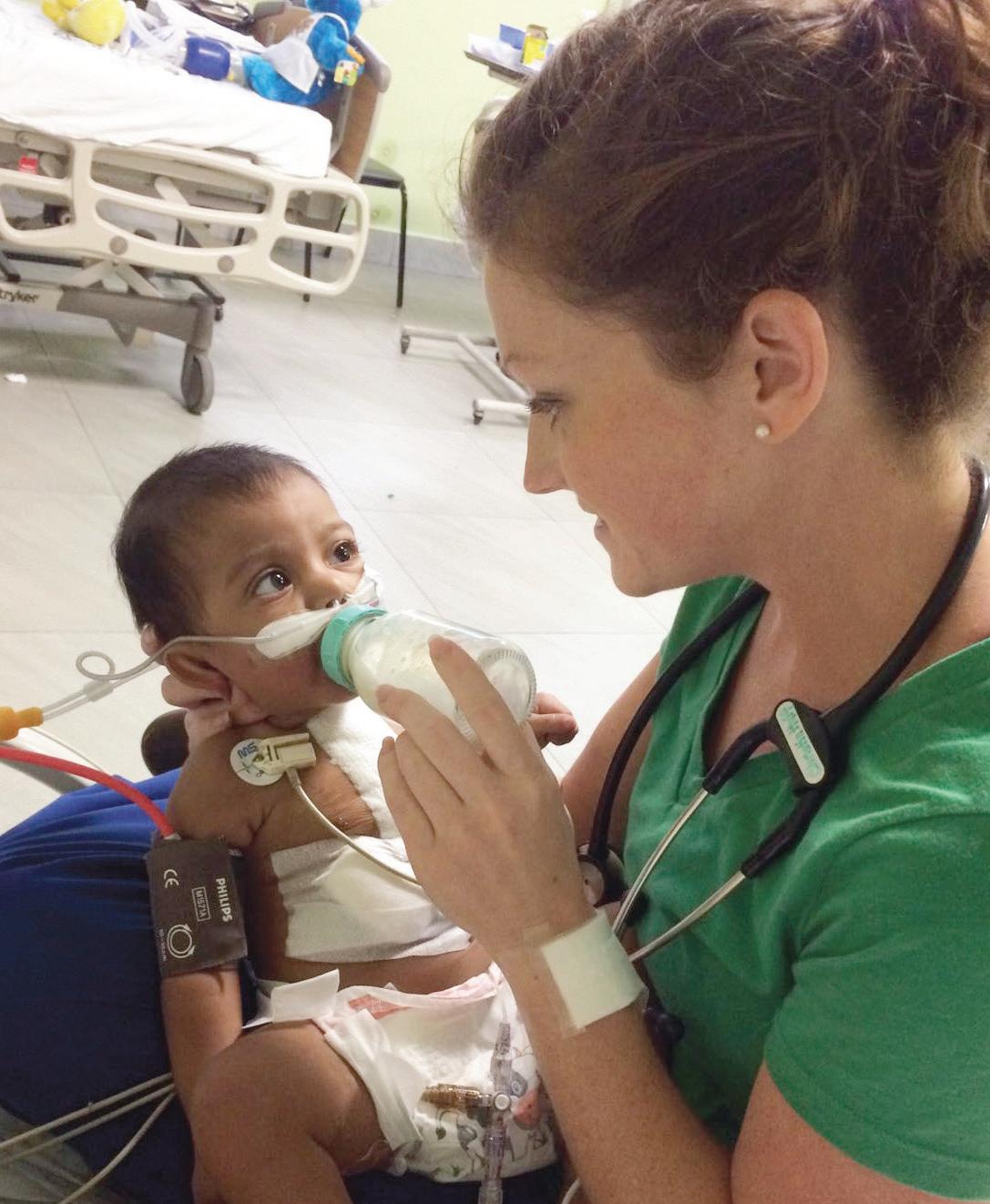
CROSSWORD PUZZLE ANSWERS
luckiest signs
week: ARIES, TAURUS AND PISCES
PUZZLE NO. 972
PUZZLE NO. 709

FOR SALE FOR RENT
BUSINESS/PROPERTY: Operational Profiting Business with existing government contract and local businesses. 15,000 Sq including 4 bedroom house with machine shop. Available for purchase or lease. Call Harry 416419-0685
WASHER: Whirlpool Heavy Duty Super Supreme capacity washer. Eight cylinders, 2-speed motor. $425.00. Call Jim 647-308-0482. Email: amos.johnson11@yahoo.ca
FOR SALE FOR RENT
ROOM: Furnish Rooms for Rent in Brampton.Close to Shoppers World Female students or working person prefer . Non Smoker ,no pets, ground level walk out to large backward. Call 416-9999720.
1 BEDROOM : Chingucousy/ Bovaird 1 bedroom basement Apt. for RENT,in a quiet Christian home, April 1st mature working person only, walkout entrance and share laundry, strictly no Pets/Smoking. $950.00 Call 905 495 7092
SEEKING MALE/FEMALE FOR A COOK/CLEANER TO WORK IN A PERSONAL CARE HOME IN DOWNTOWN TORONTO.
CALL MARTHA 416-922-7674 OR EMAIL RESUME kennedyresidence1@rogers.com
CAREGIVER: Experience Caregiver looking for a full or part time position to work in a home taking care of seniors. Available on weekends. Call Kristine 647971-8983.
TRAVEL COMPANION: Do you love to travel? I’m looking for someone to travel with as company. I am Pete, 45, phone 416 264 3024. email golden7words@ yahoo.com

SERVICE: Fountain of Truth Ministries Pastor: Reverend Maxine Campbell Worship Address: 2170 Kipling Avenue, Etobicoke Percy Johnson School – Cafeteria Sundays: 10.am – 2. pm Teaching, Worship, Ministering For info call: 416 748 0211 MISSISSAUGA: Mississauga Missionary Baptist Church invites you to join us at 1620 Dundas St West, each Sunday at 10am for praise, worship and in-depth Bible teaching with Pastor Sean, 416-219-9137
































Reasons to hire a professional mover

If you have a move coming up, hiring a professional moving company is a good idea. In addition to giving you peace of mind, here are the benefits of leaving this job to the experts.
INSURANCE
Most professional movers offer coverage in case your items are lost or damaged during the move. To avoid unpleasant surprises, carefully consult their insurance policy before choosing a company.
EFFICIENCY
Since you don’t need to haul boxes, you can focus on cleaning and starting to unpack while the movers take care of loading and unloading the truck. This can be a great time saver.
EQUIPMENT
4 tips for moving in the rain
Does it look like it’s going to rain on moving day? Here are four tips to ensure the move goes well, despite the bad weather.
1. DRESS APPROPRIATELY
Sturdy rain boots and a waterproof jacket will help keep you dry during your move. A pair of work gloves can help you maintain a firm grip on slick furniture. Make sure you keep a few towels and a change of clothes on hand for later.
2. PROTECT YOUR BELONGINGS
Cover your furniture in heavy blankets or plastic wrap, particularly wooden, upholstered and metal pieces. Use garbage bags to protect your pillows, clothes and artwork. If possible, pack books and
documents in waterproof bins. Otherwise, seal delicate items in plastic bags before putting them in cardboard boxes.
3. COVER THE FLOOR
Lay down tarps, old towels or cardboard boxes to avoid tracking mud inside the home and to prevent anyone from slipping on a wet floor. Line the bottom of the truck as well to ensure it’s waterproof.
4. CREATE AN ASSEMBLY LINE
Assign specific people to ferry items to and from the house while others gather your belongings by the door or pack them in the truck. This will help keep the inside of your home and the truck clean and dry. Only move items as they’re needed to
How to load a moving truck
A properly packed truck is the key to a successful move. It ensures you avoid multiple trips and reduces the risk of damaging your belongings. Here are a few guidelines to help you optimize the space in your moving truck.
• Disassemble your furniture as much as possible (i.e. remove table legs)
• Use boxes that are the same size to make stacking easier
• Assess what needs to go in the truck and make a plan before you start
• Load the heaviest furniture first and make sure the weight is evenly distributed at the front and on the sides of the truck
• Place boxes in the empty spaces
of furniture, such as on shelves
• Fill the gaps between furniture with items that don’t stack well, such as lamps
• Stack boxes from heaviest to lightest
• Pack items snuggly to prevent them from shifting
• Protect wood furniture and other items you don’t want to get scratched with moving blankets
• Tuck framed pictures and mirrors between mattresses and cushions
• Put plants and boxed items you’ll need upon arrival (i.e. cleaning supplies) in the truck last
• Use straps to secure furniture and stacks of boxes to the rails inside the truck Finally, if you’re worried about da
minimize their time in the rain. If possible, hang a tarp over the space between the door and the truck.
Once the truck is unloaded, quickly unpack all wet and damp boxes to avoid water damage. Additionally, make sure the wires for your electronics are completely dry before plugging them in.
maging fragile objects, transport them in your car instead. To ensure the truck is packed securely, consider hiring professional movers.

The cost of hiring a moving company includes all the necessary equipment, so you don’t have to worry about renting or purchasing blankets, straps and dollies. The movers will also take care of the truck and be licensed to drive it.
EXPERIENCE
Professional movers know how to safely pack and transport various types of furniture, appliances and electronics. Their experience helps them avoid damage and injury when carrying heavy or delicate pieces on staircases and around tight corners.
RELIABILITY
If you hire movers, you won’t have to depend on the availability of family and friends whose schedules might not line up and who may need to cancel on you at the last minute.
In the end, moving on your own might not save you as much money as you think. You still have to rent equipment and a truck. Plus, you’ll likely want to supply pizza, beer and soft drinks for your volunteer crew.


COVID-19
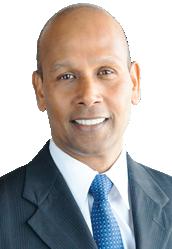
the times are back to normal, these homes will become available. With social distancing, many homes that were once used for short term rentals, such as Air BNB, are becoming available, adding more supply to the resale and rental market. An increase in inventory is welcoming, relieving the steam from the real estate pressure pot.
within a year, prices will climb. Economic downturn creates opportunities. With low interest rates, it is one of the best times to invest. Recession creates a strong demand for rental properties as more homeowners choose to sell and rent.

Social distancing is needed to curb the pandemic. The global economy is on lockdown and we are heading for a recession. The price of oil has dropped to less than zero. The petroleum industry, instead of making a profit, is paying to remove excess supply because their storage facilities are brimming. Tourism is suffering and with it, many jobs. Unemployment is on the rise and the population financial reserve is dwindling. The number of delinquencies is increasing. Will there be a crash landing?
Pre COVID-19, the housing market saw an upward trajectory. Now it’s nose diving. Real estate has a “trickle-up”
Interest rates are at an all-time low and Toronto needs an influx of more homes to quench the thirst for real estate shoppers. The pandemic, however, does not address the real problem in the housing market. It only slows it down. After the SARS outbreak in 2003, there was a surge in home prices. COVID-19 is bigger, and some sectors of the economy will suffer, leading to more job losses and a slightly less demand for housing. This will initially trigger a price drop which will be short lived. Many investors will move their investments from the choppy stock market to solid grounds. We are heading for a soft landing.
Household debts are high and over half a million homeowners have de
Ajay, a first-time investor, took a line of credit from his existing home and used it as a down payment for an investment property with a positive cash flow. Natalia, on the other hand, took a line of credit on her property for 3.5% and invested in second mortgages at 12.5%, making a pretty profit. Diego sold his home and moved up to his dream home. The prices on larger homes came down substantially and he benefitted from that.
There will be a surge in condo sales as homeowners realize the importance of social distancing. While condo living is affordable and has amenities such as pools and gyms, many homeowners will prefer a property where they feel safer. With COVID-19, caught in an elevator with a potentially contagious individual is dangerous. Currently condos are hot cakes and it is a good time to step out and

First time buyers should consider being qualified for a mortgage and ensure that their down payment is readily avail-
able. For those who are prepared, the window of opportunity will open. First time buyers who are currently renting should also ensure with their landlords that they are not locked into a lease. If they are, they have an option to sublet to another tenant. Usually, landlords will cooperate.
Homeowners with many debts should consider consolidating. Mavis is juggling between paying her credit cards along with a car loan and a mortgage. Late payments will damage her credit and can send her into a financial tailspin. She might be forced to sell her home. Mavis approached her lender who advised her to add the debts to the mortgage and increase the number of years remaining to pay off the mortgage. She managed to keep her nose above water without losing her home or filing for consumer proposal or bankruptcy.
During the pandemic, stay safe. All the money in the world cannot revive the dead. With life, there will be opportunities. Sometimes, it is better to take a step backwards and stand on solid ground than to take a step forward and land in a ditch. Wrapped up in every problem, there are seeds of opportunity. Let’s unwrap them together.





3 great reasons to plant a hedge
Planting a hedge is a traditional but attractive way to delineate your property. However, doing so also has a number of other benefits. Here are three great reasons to plant a hedge.
1. TO MAINTAIN PRIVACY
A hedge will provide a natural barrier around your property that blocks the view of your yard. Cedar and other types of shrubs are also effective at muffling sounds.
2. TO BLOCK THE WIND
In addition to diverting strong gusts, a hedge will soften the breeze in your yard and help create a comfortable microclimate. Shrubs like elderberry, lilac and dogwood are good windbreakers.
3. TO DETER PESTS
A hedge made of thorny plants like barberry or holly will help keep unwanted animals off your property. Additionally, these shrubs can be planted to protect a vegetable garden.
Before you plant a hedge, be sure to consider the required maintenance. Most types need to be pruned and shaped at least once a year.


3 ways to keep birds out of your garden
While birdwatching can be an enjoyable hobby, you probably don’t want to see the plants in your yard get eaten by local wildlife. Here are three ways to keep birds out of your garden.
1. USE ALUMINUM FOIL
Most birds dislike the texture and sound of aluminum foil under their feet. Tie strips of it to the branches of your fruit trees and any other plants you want to protect.
2. MAKE A SCARECROW
These figures are as effective in a residential garden as they are in a cornfield. You can make your own or buy one pre made. A metal scarecrow in the shape of a cat or
owl can double as decoration. Some even have glowing eyes to further deter birds.
3. INSTALL ULTRASONIC REPELLENTS
These devices emit a constant, highfrequency sound that’s imperceptible to humans but can be disorienting to birds. The noise will encourage them to stay clear of your garden. Since the sound doesn’t travel far, you may need more than one to protect a large area.
Alternatively, you can cover your plants with meshwire cages that birds can’t get through. The practicality of this approach will depend on the size and number of plants you want to safeguard.




How to maintain an organic lawn
If you want to grow an organic lawn, the first step is to stop treating it with chemicals. Instead, use natural products like chicken manure and corn gluten to nourish your grass and make it more resistant to pests. Furthermore, organic lawns require a bit of upkeep. Here’s what’s involved.
IN THE SPRING
If you live in a region that has cold winters, you should prepare your lawn for the growing season as soon as the ground thaws.
Start by removing any dead grass and aerating the lawn with a mechanical aerator. Once this is done, cover the surface with a mixture of black soil and compost.
Additionally, remember to test the soil’s acidity level and add lime or wood ash if necessary.
IN THE SUMMER
To keep your lawn healthy, maintain a grass height of about eight centimetres. You can leave the clippings on the lawn to act as a natural fertilizer.
You should also periodically check the soil’s acidity and treat any imbalances.
Finally, to make your lawn healthier and more resistant to disease and infestation, be sure to plant several kinds of grass and plants.


Fountains and water features: what to consider before installing one

If you want to install a fountain or similar type of water feature in your yard, there are three factors to consider: style, location and upkeep. Here’s what you should know.
STYLE
Some fountains are freestanding, which means they can be placed in the middle of your yard. Others are wallmounted and typically incorporated into another water feature.
You should also think about the fountain’s size and shape as well as the durability of its material. Don’t forget to consider the amount of noise the fountain will make.
LOCATION
UPKEEP
Fountains and other water features need to be maintained. You should check the water level periodically and replenish it as required. You’ll also need to remove debris from the pump and clean the filter on a regular basis. Additionally, you may need to use special products to help control moss, algae and plant growth.
At the end of the summer you’ll also need to empty the fountain, clean and store the equipment and cover the outdoor structure with canvas.
The right spot to install your fountain is one that’s near a watertight electrical outlet. The location should also be protected from the wind and moderately shaded.














The COVID-19 situation has taken a toll on the financial situation of many Canadians. Over the last few issues, I have written about the relief measures being put in place by the government namely referred to as the CERB. These include the monthly subsidy of approximately $2,000, increased child benefits and increased benefits for seniors. We also discussed how these benefits were taxable and how you needed to allocate some money when tax time comes around next year.
In this issue we will discuss how private firms like insurance companies and internet service providers are also stepping up to assist. We have already discussed that banks are willing on a case by case basis to defer mortgage payments. You are re -

Have you seen the Chinese word for ‘crisis’? If you haven’t, it’s made up of two characters. One means’ danger,’ which makes sense. But what’s unusual is that the second character means, ‘opportunity.’ This concept goes back to the 6th century B.C. when Chinese military strategist, Sun Tzu wrote:
“In the midst of chaos, there is also opportunity.”
Times of uncertainty can also be times of great creation. The insurance sector is trying to respond to the immediate impacts of COVID-19 and looking to change with this uncertain future. Canada’s insurance providers are taking action to help their customers, many insurers are offering consumers lower auto insurance premiums, to reflect reduced driving. Companies are also providing financial relief to both consumers and businesses losing income and revenues – for example, by deferring premiums and waiving fees. But a company called WeGoLook® is looking to help carriers and
More financial relief due to COVID-19
quired to call your bank and speak to an officer as this deferral is not automatic and neither is it guaranteed. Be careful when you sign the agreement as it may require you to double up on interest payments.
Let’s go to insurance companies. Due to COVID-19 certain insurance companies have made adjustments to the receipt of premium payments. If for example you own a life insurance policy and are unable to pay the premiums, certain companies will waive the premiums for a duration of three months. Should a person pass away during this period then the premiums will be deducted from the death benefits thereby reducing the death benefit by that amount.
If you have a permanent policy with cash values, the company will take from your cash value to pay the premiums and apply it as policy loan. This loan will attract an interest and it is a repayable amount or else it will be taken from the death benefit. If you cannot pay your premiums during this period, you may take advantage of this automatic premium loan.
Auto insurance companies have also stepped up. They know that many
people are now working from home and are hardly using their cars. Some companies are allowing a reduction in premiums based on your usage. You would be required to check with your company to see the proposal that they have put forward. There is always the regular freezing of your coverage and hence freezing your premium payments, so if you have two cars, then you might be better off storing one in the garage and stopping the payment on it. Internet and mobile providers have also assisted during this period. There are some companies (not naming any) that have reduced the overall rates on long distance calling, while some have waived extra usage fees. Some have waived extra usage for home internet (for those who have limited internet) should you exceed your limit. Certain companies are also providing free television programming during this period also, as they are aware that so many people are at home.
These are difficult and unprecedented times. We haven’t had a situation like this in Canada before. It is a time to rethink your spending habits and learn to enjoy and appreciate whatever little we have.
Ontario policyholders be safer, smarter, and more efficient.
WeGoLook®, an on-demand workforce solutions provider provides a contactless claims solution that assesses any claim, anytime and anywhere. One of the technologies they provide is the YouGoLook selfservice app. This app allows policyholders to submit their reports, by walking them through the process of capturing and submitting images necessary for the insurance carrier to size up damage or even estimate the cost of repairs. This would mean that auto and homeowners could submit their claim photos. During these turbulent times, businesses around the world are challenged to provide the same level of service that clients received before the pandemic. One glaring point that this pandemic has shown me about Canadians is that we are patient people. But while we are patient, we still expect great service from the companies we use every day. This application can empower policyholders and give them a sense of security by helping ensure their claims are handled without interruption.
Below is a brief rundown on how the process is designed to ensure speed, quality, and accuracy. While being seamless and intuitive.
• Look ordered via ordering portal (You contacted your insurance company)
• Policyholder notified via email and/or SMS
• Policyholder clicks to download You-
GoLook app
• App guides policyholder to capture images and data
• Policyholder submits data
• Quality assurance review
• Report delivered
Another company that’s in the life insurance sector looking to capitalize on Canadians increased exposure to buying online is PolicyMe. PolicyMe, launched by Laura McKay, Andrew Ostro, and Jeff McKay in 2018, is Canada’s first digital life insurance platform designed to help Canadians navigate the industry. Today, 97% of life insurance products are sold by individual agents, however since the average age of a life insurance advisor in Canada is 62, that model is becoming increasingly ineffective. In a world where almost anything can be bought with a few taps of a smartphone screen, the life insurance industry needs to stay in touch with the expectations of the newer generation. PolicyMe uses modern technology to give smart, honest & personalized advice on the type and amount of life insurance users need, before allowing shoppers to compare products across trusted providers in the industry.
As a relatively young insurance advisor, I don’t view companies like these as competition. My belief is lack of education to the public and trust is a much greater enemy and I appreciate any person or company that’s on a mission to change that.

Economists have declared that Canada is in a recession because of historic job loss and reduced economic activity (Gross Domestic Product-GDP) in March. Normally a country is said to be in recession when the economy slows down for at least two consecutive quarters; however, this decline is so drastic the government declared a recession in only one month. More than 1 million jobs were lost and the economy contracted by more than 9%.
Many blame COVID-19 alone for the economic downturn. There has been virtual silence about the historic drop in oil prices. COVID-19, without question, had an unprecedented impact on the economy. But it’s not the only culprit
Now the government is set to open up businesses again even though we don’t have enough tests or a cure for the virus. Our economic troubles will continue. Who will pay the ultimate price for this untimely decision? ORDINARY CANADIANS OF COURSE!
But you can develop economic self-reliance:
Reinvent yourself
Restaurants, believe it or not, have been the hardest hit during the COVID lockdown. Over 800,000 jobs were lost. How many have died because they were unable to visit restaurants? Absolutely none! Many of these jobs will not come back; forcing people to find work elsewhere.
If that’s you, take stock of your skills now and up your game to find employment in other industries, especially those that allow you to work from home. Update your resume and your LinkedIn profile today.
Save your health and your money
We now understand essential expenses. For weeks, you’ve only spent money on food, shelter, and health. Going back into crowded restaurants and shopping malls may not seem so essential. I know for a fact that during the COVID shutdown, you were

able to save more money than you ever thought possible. Use this information to build a budget.
A household budget formula that’s been proven time and time again is to spend about 50% of your after-tax income on essential needs (housing, groceries, medicine) and about 40% on discretionary wants (entertainment, dining out). The remaining 20% goes into savings and investments. People who have financial plans are less likely to dip into savings or mindlessly spend money.
Debt is the real silent killer
If you have struggled to get ahead financially, check your credit history. More than likely you haven’t paid off your debt and are paying as much as 20% in interest every month. Of course, some have the smarts to limit credit purchases to an amount they can pay each month. But the banks know this discipline is rare, so they give teaser rates to get cards in your wallets.
Social distancing has been the cure for COVID. Freezing your credit card spending is the cure eradicating debt. Whenever my cards are out of control (meaning I can’t pay them off each month) I call my bank and get a new card. I freeze the old one in a cup. YES, put it in the darn freezer! This forces me to cancel all automatic subscriptions and stop unconsciously shopping online. The bleeding stops immediately.
Markets are down, make your money work
The stock market tanked over recent months, which created opportunities to buy stocks at discounted prices. Investors who take advantage of low prices during a recession often reap benefits when the economy improves.
Now, before you run off and start buying stocks, please make sure you’re not carrying ridiculous debt. Instead invest in your real savings, the money you put aside for the future. Don’t blindly invest; educate yourself financially.
If you’re investing in tax-free savings accounts (TFSAs), you may be getting 0% returns. Inflation often wipes out the returns the bank gives. You need to conduct a proper risk assessment and invest to hedge against inflation at least. Follow these tips and you’ll emerge stronger than ever.

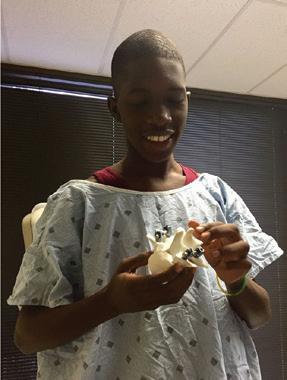








7 ways to relax this summer
Summer is an ideal time to unwind. Here are seven ways to relax over the course of the season.
1. Outdoor dining. Take your mind off your day-to-day worries with a delicious meal on a beautiful patio.
2. A spa day. Book a massage or facial then spend the afternoon soaking in a thermal pool.
3. Dinner theatre. Enjoy a gourmet meal while taking in a live show.
4. A boat tour. From dinner cruises to allday events, there’s a boat tour for everyone.
5. Go for a hike. The tranquility of the outdoors will help clear your head.
6. Watch a movie. Head to the local theatre and immerse yourself in another world for a few hours.
7. Take an outdoor class. Reduce your stress by combining the benefits of being in nature with an activity like yoga or tai chi.

There are many other ways you can unwind this summer. You could stop for a cup of tea, visit a gallery, go for a swim or do something else you enjoy. The important thing is to take a moment for yourself.
5 canoe-camping tips
Canoe-camping requires a lot of planning, especially if you intend to venture into the wilderness without a guide. Here are five ways to ensure your adventure is a success.
1. CHOOSE THE RIGHT ROUTE
There are a number of factors to take into account when choosing a route for your canoe-camping trip. Some things to consider are:
• The experience and fitness level of each group member
• The expected weather conditions
• The degree of difficulty and turbulence along the waterway
• The number of portages
• The distance
2. FIND OUT IF YOU NEED PERMITS
Familiarize yourself with the regulations in the area you’re visiting. You may need to obtain access and fishing permits.
3. EQUIP YOURSELF AS NEEDED
In addition to your canoe and tent, you’ll need a fair amount of gear. Be sure to bring your personal flotation device, whistle, compass, dry bags, sleeping bag, waterproof matches, bug repellent and survival kit.
4. LEARN TO LOAD YOUR CANOE
To make sure the boat is stable, you’ll need to evenly distribute your gear along the bottom of it. Also, you should secure the items in place. This way you won’t lose anything if the boat capsizes.
5. PACK THE APPROPRIATE CLOTHING
Stay away from natural fibres like cotton and wool. Instead, opt for synthetic materials that dry quickly. You should also pack a wetsuit, a hat to protect yourself from the sun and warm clothes for cooler evenings.
Finally, remember to pack your favourite camp food and a comfortable chair. After a long day of paddling, a well-deserved meal around the campfire is a must.

How to pack for the airport like a pro
If you’re planning to fly this summer and want to make sure everything goes smoothly at the airport, you’ll need to be careful about how and what you pack. Here are a few guidelines.
CARRY-ON BAGGAGE
Most airlines allow you to board the airplane with one carry-on bag, such as a small suitcase or travel bag, and one personal item, like a briefcase or laptop bag. You may also be able to bring items that aren’t considered baggage like a small purse, stroller or coat. Make sure you’re able to lift your carry-on over your head so that you can slide it into the overhead compartment.
You should also board the airplane with your medications and anything else you may need if your checked baggage is delayed upon arrival. If you wish to carry any liquids, they must be in travel-sized containers no bigger than 100 millilitres. All the containers must fit in a one-litre bag, which should be kept nearby since you’ll need to show it at the security checkpoint.
CHECKED BAGGAGE
Liquids in containers larger than 100 millilitres and sharp objects must be stowed in your
checked baggage.
Many airlines charge a fee for checking suitcases, so find out what you need to pay before you leave. Also, make sure to weigh and measure your bag to determine if it’s within the allowed limits. This way you’ll avoid incurring extra charges.
For additional information about what you can and can’t bring on an airplane, contact the airline or visit the Canadian Air Transport Security Authority’s website at catsa-acsta.gc.ca.
Don’t put your passport and boarding pass away until you’re seated on the plane. You’ll need to show them to airport officials more than once.

6 types of accommodations for your summer vacation
There are a variety of lodging options for all types of travellers and budgets. These are the most common ones.
1. Hotels and motels. This is the go-to accommodation option for many people. Some provide nothing more than a bed to sleep in, while others offer a variety of luxurious amenities and extras.
2. Inns and B&Bs. Smaller than hotels, these establishments are more common in rural areas and tend to be privately run. Many include breakfast in the price.
3. Youth hostels. This is a top choice for travellers on a budget. Youth hostels tend to be great places to meet other tourists.
4. Vacation rentals. Renting a house or apartment is ideal for people who prefer to cook their own meals and immerse themselves in a neighbourhood.
5. Campgrounds. There are a variety of camping options available. You can sleep under the stars in the wilderness or at a family-friendly resort with comfortable amenities.
6. Home exchanges. This is a great way to travel without spending a dime. However, it’s not for everyone as it involves allowing strangers to stay in your home at the same time.
No matter what type of lodging you choose, be sure to read reviews before booking. These will give you a good idea of what to expect during your stay.

Warrior Profile: The White Lotus A glance into Buakaw Banchamek’s life, career, and legacy

With the COVID-19 pandemic’s continued shutdown of almost all global sports events, the combat arts community continues to find itself lacking any form of fight entertainment. Although we may not be able to witness new fights or exciting matchups, we can use this time to look into and appreciate some of the world’s most outstanding martial arts, and their distinguished practitioners. In this issue’s Warrior Profile, we take a journey to the sandy beaches and scenic mountain ranges of Thailand to explore the life of one of the greatest modern kickboxers: Buakaw Banchamek.
Muay Thai: The Art of Eight Limbs
Forged in the mountainous country of Thailand, Muay Thai (which translates to “Thai Boxing”) has gained a reputation
in the global martial arts community as one of the world’s most brutal and effective fighting systems. Muay Thai, which is also the national sport of Thailand, takes place in a square boxing ring and its practitioners wear boxing gloves. Unlike its Western cousin, Muay Thai allows a wide variety of deadly and effective techniques such as punches, kicks, knees, elbow strikes, stand-up wrestling, and sweeps. Because of its unique collection of techniques, Muay Thai has been nicknamed “The Art of Eight Limbs,” symbolizing the use of two fists, two knees, two shins, and two elbows as striking weapons.
Personal life and upbringing
Very little is known about Buakaw’s early life. Like most native Thai boxers, Buakaw was most likely born into a poor household and began fighting as a means to make money and support his family. Only when he began his career as a fighter did records about the now globally recognized warrior begin to appear. The earliest records of Buakaw’s life indicate that he began fighting in Muay Thai competitions when he was as young as eight years old. As a result of the early start of his career, Buakaw has

officially had 275 fights as a professional Muay Thai fighter.
Professional career
At fifteen years of age, Buakaw left his home province of Surin and moved to Chachoengsao province to join and fight out of the prestigious Por. Pramuk Gym. From 1997-2012, he competed under the name Buakaw Por. Pramuk (it’s common for Thai fighters to take the name of their gym as a last name,) where he defeated many notable opponents including K-1 kickboxing champions Nieky Holzken and Hiroki Nakajima. In 2013, after a dispute with the gym’s directors, Buakaw left Por. Pramuk Gym to start his own kickboxing academy in his home province of Surin: Banchamek Gym. Currently, Buakaw has fought out of his new gym a total of forty times and suffered only four losses.
Fighting style
Buakaw has made a name for himself in the global martial arts community as one of the most exciting Thai boxers to watch. His unorthodox fighting style, mixed with his physical prowess has made him a fan favourite for spectators, and a terror to face in the ring.
Traditionally, Thai boxers maintain a stiff and upright fighting posture. Unlike their Western boxing counterparts, they often dispense with head movements and fancy footwork for fear of the sport’s deadly knee strikes, lowkicks, and leg sweeps. Muay Thai fighters typically favour blocking or catching strikes rather than attempting to slip or evade them. Buakaw, on the other hand, makes creative use of head movement to dodge his opponent’s strikes and create angles before unleashing his own barrage of violent attacks.
Legacy
Buakaw’s impressive fighting style, skill in the Muay Thai ring, and his stunning 239-24-12 record have made him not only a celebrity in Thailand but also one of the world’s most recognized fighters. Before Buakaw, Muay Thai was a combat art isolated almost entirely to the country of Thailand; but because of his fame and skill, Buakaw helped promote Muay Thai around the globe, and allowed the impressive combat art to be recognized worldwide as one of the planet’s most effective and entertaining martial arts.
Dwayne Bravo praises teammates while cricketers in Trinidad help out in the community
KAYLA KARIM
kayla@carib101.com
TC REPORTER
As the delays and postponements for games across the globe continue, many players are reminiscing on past events while thinking about what could have been, including Dwayne Bravo. Bravo said that the West Indies’ current T201 team is better than the one that won the World T20 four years ago in India. The allrounder said that he was thrilled at the
depth of batting resources available to the West Indies side.
“I’m just in awe of our batting line-up, and I said to the guys, I said listen, I think this team is actually better than our World-Cup-winning team, and that is no joke, because at the end of the day, you have batting all the way down to No. 10.
“And imagine, Sunil Narine is not even in the team as yet. So just imagine, when Sunil comes into the team, Sunil will be batting at No. 10, or No. 11. He’s an opening batsman now in T20.
“So just imagine a full-strength West Indies team, everyone is on deck. As a bowler, you get Evin Lewis out, [Shimron] Hetmyer comes in. You get Hetmyer out, [Nicholas] Pooran comes in, you get Lendl Simmons out, [Andre] Russell

comes in, you get Russell out, [Kieron] Pollard comes in, you get Pollard out, Rovman Powell comes in, and it keeps going, going, and then you reach the champion DJ Bravo.
“It’s an intimidating team, it’s a team to intimidate the opposition, and that excites me. So I will just do my part as a bowler, try to control the back end of the innings, especially closing off the innings with death bowling, which has been, in the past, a bit of a concern for us. You saw how Oshane Thomas did with his pace in Sri Lanka. Then you have Sheldon Cottrell, now a leader of the attack, Kesrick Williams on the bench, so things starting to look bright again, things starting to look good again.”
While praising the astonishing
dies also has the leadership to dominate starting with captain Kieron Pollard. Pollard “loves to win” Bravo said, “That’s the most important thing, and as a captain, he’ll do anything to win, in the right way and the right spirit, and he’s very determined to win, to make a difference”. Meanwhile, captain Kieron Pollard is staying in and helping the community. He joined forces with other cricketers such as Dwayne Bravo, Darren Bravo, Lendl Simmons and Sunil Narine helped to distribute hampers that were put together by Trinbago Knightriders and HADCO. TKR players and support staff will now personally distribute the packages to various areas across the country,