











Kristen Lambie was born on the beautiful island of Jamaica and moved to Canada when she was nine years old. Her involvement in the arts started at a young age, and since then, storytelling has become her number one passion and motivation in life.
She went on to receive her Master of Arts in Media Production and an Honours BA in Communication and Film Studies.
Lambie has been accepted into a few programs to advance her career in filmmaking. She was in the OYA Emerging Filmmakers Mentorship, BIPOC TV/ Film Kids Writing Bootcamp, BANFF Diversity of Voices Initiative and Reelworld E20 Program. Recently she was accepted into Caribbean Tale’s Incubator program where she got funding to create a Proof of Concept for her series called Fever Street.
She has also gained experience in writer’s rooms in Toronto. She was the Junior Story Editor and Writer for the award-winning tween show, The Next Step. She was also the Junior Story Editor and Writer’s Assistant for Pretty Hard Cases. Lambie was also the Script Coordinator on the series Hello (Again).
Lambie is the Founder and Creative Producer of Colrize Productions. She has a drive to tell authentic and relatable stories for women of colour like herself. She is incredibly excited to create stories that symbolize diversity and build on representation. One of her projects, Pretty for A Whack Girl, is a quirky mini web series about the struggle of love and dating in the digital age for a young Black girl.
“I really wanted to highlight a part of myself. I’m a Black woman, and I want to see myself on screen.” said Lambie. “So, I know my mandate was to tell stories that really centered on young Black women and that’s most of the projects I’ve made so far. Moving forward, I definitely want to focus on having Black people, especially at the centre of my stories, and I love to tell stories that feature people who are going along the journey of growth and
self-discovery. I think self-discovery is a common theme in the projects I’ve created so far, and that’s something I want to continue on with when telling the type of stories, I’m telling through Colrize.”
In Lambie’s new project, Fever Street, one of the themes is gentrification. A new property manager in a predominantly Black neighbourhood wants to buy out the businesses to make room for his developments. Lambie relates this to her trying to find her sense of belonging coming from a small island to a big country.
“I spent part of my life in Canada, and part of my life back in Jamaica. It’s the reason why most of my stories involve self-discovery and belonging. It was definitely a culture shock for me to come here and to see this new space, which is why I decided to talk about a small Caribbean community in my series, Fever Street, because I come from a small Caribbean Island. When I came to Canada, I didn’t fully feel like I fit into this bigger space.”
As a storyteller, she often draws from the duality of her own identity; and the questions she often has about her culture. Lambie says in order for more Black actors and actresses to land roles, they need to have more stories with characters that they belong and fit into.
“There aren’t many shows here in Canada that feature a young Black girl, just living your life and being herself. So, number one, we just need more storytellers and more BIPOC storytellers to write those stories, and then we will be able to give young Black actors an opportunity. There are so many talented BIPOC actors out there that just don’t have the opportunity to lead a story.”
The screenwriter thanks her mom for always being supportive and pushing her forward when she feels like giving up.
“My mom was my number one supporter. She supports me in this very difficult industry. This industry is not easy. This career path is not easy, and

some Caribbean parents may not always think that this is a realistic career path. Thankfully my mom has been very supportive. She keeps encouraging me even during the difficult times where I feel like ‘Oh, what am I even doing in this career? Why did I choose this life?’ She keeps pushing me and encouraging me.”
Lambie’s ultimate goal is to be inspired and to inspire others through the art of storytelling too.
“My goal is to make Colrize Productions an empire. I want to make it a type of production company where we have our company and then we have sub companies underneath it. I also have my initiative, Colr Your Life, and right now it’s a grassroots non-profit that is here to push Black creatives into the professional industries by giving us the exposure to create the content.”
She also looks up to very famous and award-winning writer, Issa Rae.
“Issa Rae is that girl. She started off doing her web series, and then was able to do a TV show that blew up and that’s where she made a big name for herself. Now she has a business that has multiple streams where she’s able to have her division for digital content. She’s able to have her division for film and TV and she has her division for music. She’s the definition of self-made. She has been able to create a whole empire, and also give other people opportunities to create content that we’ve never really seen before in the mainstream.”
You can learn more about Kristen Lambie and watch some of her awesome projects on her website www.kristenlambie.com





As with many aspects of the pandemic, mask use has become politicized, which is unfortunate because what it has done is unnecessarily divide our society over something that can be considered a personal choice. All science, including public health science, is messy. Throughout this pandemic recommendations have changed as more evidence became available. We were dealing with a new virus strain, with limited data; this added to the uncertainty as to how to proceed correctly.
In April 2020, the World Health Organization (WHO) recommended the use of masks only for symptomatic, ill individuals and health care workers, and did not recommend its widespread use. That soon changed.
In June 2020, WHO endorsed the general use of masks in, e.g., crowded places. In a meta-analysis study commissioned by the WHO, no clear, scientifically graspable benefit - of moderate or strong evidence – proved that wearing a mask would help stop the spread of the virus, but many of us kept wearing it anyways, and our governments continued to mandate them as a necessary part of public health and safety. Under pressure from increasing
absolute numbers of positive SARS-CoV-2 tests, many health officials further extended mask-wearing according to certain times and situations, always justified by the desire to limit the spread of the virus. The media, numerous institutions, and most of the population supported this approach.
Some studies have maintained that while keeping a distance of at least one meter showed moderate evidence with regard to the spreading of SARS-CoV-2, the evidence was weak at best could be found for masks alone in everyday use (non-medical setting). This has led to on-going discussions about possible adverse effects of mask wearing (e.g., dizziness, headaches, fainting), especially within the elderly, during long-term continuous mask usage and during physical activity. The bulk of these concerns arise due to potential hypercapnic effects (when you have too much carbon dioxide in your bloodstream) of carbon dioxide rebreathing, which unfortunately has not yet been evaluated in a thorough manner.
As we move through and past this pandemic, studies are coming out that indicate that there are reasons we should be weary about wearing masks all the time. I share this because it saddens me to see people who are still walking around
with masks on their faces, especially when wearing them could cause potential harm. There have been new studies that shed some light on the potential risks.

In a research study titled, “Effects of wearing masks on human health and comfort during the COVID-19 pandemic, it explained that in a warm environment, wearing masks for a long time significantly affected the subjective feelings and physiological reactions of people. During their experiment, the mean skin temperature increased, the heart rate increased, and the blood oxygen saturation level decreased, which ultimately led to a decline in health and comfort levels.
A more telling research study, “Titanium dioxide particles frequently present in face masks intended for general use require regulatory control, they tested several batches of face masks intended to be put on sale as personal protective equipment. It showed that 70% of the examined facemasks contained TiO2 in quantities ranging from 100 to 2000 mg kg
In the same study, they warn of the possible future consequences caused by poorly regulated use of nanotechnology in textiles applied to improve the performance of facemasks. In animal
experiments, toxic effects were reported when titanium dioxide particles were inhaled as well as when they were ingested orally.
To evaluate whether the titanium dioxide particles in facemasks possibly presented a health risk, their amounts, their physicochemical properties and their localization were analysed in a selection of facemasks. The hazard of inhaled titanium particles is well documented, yet not spoken of in mainstream media where they constantly tell you to “Trust the science.”
The last study that I would like to share with you is titled, “Cerebral and systemic physiological effects of wearing face masks in young adults. The findings show that wearing a face mask leads to statistically significant changes in the cerebral hemodynamics (how blood flows through your blood vessels) and oxygenation in healthy young subjects at rest, even for this first relatively short period of mask usage. However, the changes observed were minimal and are comparable to those typically observed during daily life.
What I would suggest to those who opt to wear a mask, do so safely. If you are wearing a mast that has been in the car for weeks, stop. When you wear a dirty mask over and over again, you end up breathing in bacteria or viruses that might be trapped in the mask. This is one of the reasons why they strongly suggest that you toss cloth masks in the wash after every use. Also, try to limit the number of times that you touch or remove your mask; make sure your hands are clean when you take it on or off.




























Federal Tourism Agency were handing out bonuses and pay raises in the midst of the pandemic

Over the years, the CTF has fought against the intrusiveness of the Canadian Revenue Agency, resisted the push of corporate welfare bailouts, and tried to restrict government deficit spending. The CTF has a membership of five people and that it is not now, nor has ever been, a grassroots, member-based organization. They are not a citizen’s advocacy group, but a donor’s advocacy group. The emphasis is on taxpayers, as opposed to citizens.
The CTF issued a press release on Wednesday, September 14th, after it obtained records through access to information requests regarding bonuses and pay raises in 2020 and 2021 paid to employees at Destination Canada during the COVID-19 pandemic.
Records obtained by CTF revealed that there were 84 employees at Destination Canada who obtained bonuses in 2020 that amounted to $617,095, and 92 received $604,153. Overall, 87% of the total employees in 2020 and 76% in 2021 received bonuses. Destination Canada acknowledged the effects of the COVID-19 pandemic
on the tourism industry and observed that executive’s bonus pay was reduced in 2021 to an average of $16,126 from $32,652 in 2020, Furthermore, 79 employees obtained a pay raise in 2020 and 63 in 2021 totaling $349 309. No one received a pay cut.
Franco Terrazzano, Federal Director of the CTF states in the press release, “A federal Crown corporation dedicated to promoting tourism shouldn’t have been giving its employees bonuses and pay raises while our tourism industry wasn’t allowed to host tourists. It’s a good bet that there weren’t many servers getting bonuses when restaurants closed during the pandemic, so bureaucrats responsible for promoting tourism shouldn’t be receiving bonuses when the government wasn’t letting tourists travel to Canada.”
Data revealed from Destination Canada indicate that approximately 900,000 jobs were cut in 2020 from the tourism sector, which amounts to around 43% of total workers. Furthermore, in 2021 there was a loss of 360,000 workers, a reduction of 21% compared to pre-pandemic levels. Terrazzano observes, “It’s tone deaf for Destination Canada to hand out bonuses and pay raises while the industry it’s supposed to promote was shut down. Federal Crown corporations should be sharing in the rough times, not handing out bonuses and pay raises while their neighbours outside government take cuts and lose their jobs.”






















MICHAEL THOMAS
michael@carib101.com
TC REPORTER
According to the Population Reference Bureau, the pandemic caused close to 15 million more deaths in 2020 and 2021. It is also responsible for 12% of all deaths universally and contributed to declines in life expectancy in some countries.
“Two years into the COVID-19 pandemic, we are finally getting a clearer and more nuanced picture of its impact across countries and communities,” PRB President and CEO Jeffrey Jordan said. “We hope the data and evidence in the 2022 World Population Data Sheet can provide greater insights for decision-makers.”
Here are some of the findings of the (PRB’s) newly released 2022 World Population Data Sheet, which provides a universal picture of the pandemic’s impacts on mortality and fertility patterns.
Between January 2020 and December 2021, the pandemic contributed to 12% of total deaths globally, directly or indirectly. Central America was hardest hit, with more than 25% of deaths associated with the pandemic.
Around 7.46 million excess deaths occurred on average in both 2020 and 2021, leading to nearly 15 million excess deaths over the two years. Excess deaths measure the difference between the number of actual deaths and the number of deaths that would have been expected had the pandemic not occurred.
Between 2019 and 2021, life expectancy in the United States declined from 78 years to 76 years—reversing 30 years of gains. Global life expectancy at birth is 75 years for women and 70 years for men.
The global population rose slightly to just under eight billion people. India is projected to have the greatest absolute increase in the population size of any country between 2022 and 2050, rising by more than 253 million to 1.67 billion.
The pandemic’s impact on fertility rates was less significant than expected and largely temporary. High-income countries such as: Italy, Germany, and the United
States experienced small declines in births in 2020, rebounding in 2021. Low and middle-income countries saw little to no fertility impacts.
As we see above, Latin America has taken the brunt of the blows, with a quarter of all deaths attributed to the pandemic. Let’s see if we can shine some light on why this is so.
The numbers are staggering in Central America with: Mexico coming in at 29%, Guatemala at 20%, Honduras and El Salvador at 17%, Costa Rica at 16%, Panama and Nicaragua at 15%, and Belize bringing up the rear with 14% when it comes to excess deaths due to the pandemic.
These eight Central American countries have a total population of just 175 million people as opposed to North America whose population is 370 million, yet Canada and America combined have just 17% of excess deaths due to the pandemic, why? Let’s look deeper.
Here is what one Hispanic media outlet revealed.
Half of the countries of Central America are facing a new COVID-19 wave with record numbers of people in intensive care units in Costa Rica, and a growing number of confirmed coronavirus cases in Guatemala and Honduras. At the same time the entire isthmus is clamouring for equitable and faster access to vaccines. Let’s keep digging.
Panama, Costa Rica, and El Salvador are moving forward with their injection programs, having gained access to injections via bilateral accords, especially with Pfizer and China’s Coronavac, but also through the World Health Organization’s Cova’s mechanism, which has sent small shipments of AstraZeneca.
That said, Pfizer is making weekly deliveries to Costa Rica and Panama, and both countries have administered about 698,000 doses and 574,000 doses, respectively.
There have now been over 67 Ivermectin COVID-19 controlled studies that show a 67% improvement in COVID patients, and 362 Hydroxychloroquine studies that show a 64% improvement in patients for COVID-19 patients.
It will be interesting to find out if doctors in Central America are allowed to prescribe these two drugs to their patients without having their medical licenses pulled.

My first question is, how tired are you of this pandemic? It has gotten to the point now that if you mention it, people just roll their eyes. I don’t wrong them at all. I’ve written a lot about the virus and its vaccines, and I have been wondering: why do some people not want to get vaccinated? What are their concerns? Where do they get their information, and how do they argue their case?
The portrayal of vaccination in the media has always been a controversial issue. When a new vaccination program – like the COVID-19 rollout -- makes the news, the mainstream media often find themselves accused of ignoring the evidence in favour of scaremongering reports, distortion of facts, or being bought and paid for by government institutions.
In the last five to ten years, there has been a rise in purportedly more ‘respectable’ publications that claim to show unbiased coverage and factual or statistical evidence, but these are often incompatible with the more popular reporting from mainstream news and the tabloid press.
It is easy to create cliques, choose sides, and to want to shut off the television altogether. We are presented with this on-going, contradictory reportage and it has become difficult for media consumers to have objective opinions, particularly if they are bombarded with opinions, thoughts, rhetoric, propaganda, and science from so many sources.
It is no controversial statement to declare that the mainstream media (and particularly tabloid press) may have a tendency to exaggerate claims or even embellish the truth. The coverage that the MMR vaccine received in the late 1990’s and turn of the century became the subject of a huge national debate with a fallout, which still exists today.
Mainstream media continues to push the vaccine initiatives that they are directed to without question. It seems that the unfavourable news of the vaccine continues to be ignored or slighted. I read thousands of reports a week about some of the horrible experiences people have had after taking the vaccine. These stories range from drastic changes with a




woman’s menstrual cycle, to more serious stories including death. The more I see them ignoring this information, the more that I want to share it.
This week, I want to highlight the fact that although the Canadian government continues to campaign for higher vaccination, there are countries that in the last few months have halted their vaccination programs. I also want to share with you that there are countries that are fully functioning with very low vaccination rates, and also there is news that has come up concerning alterations to the vaccine. Of course, you won’t see much of this in mainstream media, and for good reason.
There are countries around the world that have paused the use of AstraZeneca’s COVID-19 vaccine as a precaution while investigators look into cases of blood clots among vaccinated people. The WHO also said it hadn’t found a link between the vaccine and clots, and urged countries to keep inoculating with the shot.
In April of this year news came out of Denmark about the vaccine being banned for those under 50 years old as studies and data were revealed proving the shocking level of danger caused by the vaccination. Denmark became the first country to halt their vaccination program, saying it did so because the virus was under control. At that time, around 81% of Denmark’s 5.8 million inhabitants had received two doses of the vaccine and 61.6% had also received a booster. Denmark noted a drop in the number of new infections and stable hospitalization rates.
Norway
Norwegian officials also suspend the use of the AstraZeneca vaccine. The Norwegian Medicines Agency investigated whether there was a connection between AstraZeneca’s vaccine and blood clots in the lung, and whether there were cases of blood clots in vaccinated people that had not yet been reported.
Ireland
Ireland suspended the use of the shot after receiving a safety alert from the Norwegian Medicines Agency. The alert said that there were four new reports of serious rare clotting events, including some complicated by low platelet counts, in adults under 65 after receiving the AstraZeneca vaccine.
The stand against this enforced vaccination is larger than what is happening
here in Canada. In Indonesia, concerned citizens groups are speaking up against what they believe is propaganda by the government. The latest official survey shows that of 115,000 respondents, 27% expressed hesitation, citing concerns about: vaccine safety, effectiveness, side effects, the country’s health system preparedness as well as issues related to religious beliefs and lack of education.
Another growing concern on whether the vaccine is permissible according to Islamic law (halal), with differing opinions among prominent Islamic organizations. In response to the concerns, the Indonesian Ulema Council issued Halal certifications for Sinovac & AstraZeneca vaccines.
What is happening in the islands is interesting. I came across Dr Carissa Etienne, Director of the Pan American Health Organization, the WHO’s regional branch in Latin America, and she had a lot to say about vaccine hesitancy.
“I want to make a special appeal to my fellow Caribbean persons please, we have to be extremely careful. We are playing with our lives. So my appeal to you is, get up; wake up from that slumber; wake up from that dream, because we know that vaccines are safe.
I don’t know the sources of the information that is triggering this level of vaccine hesitancy. I can tell you that they are not scientifically proven, and I want to appeal to you to listen to the sources where you have truthful, scientifically based information and evidence.
There have been some rare side effects from the vaccines that usually occur within a few weeks of immunization. The side effects are closely monitored by scientists: nationally, regionally and globally, and actions are taken immediately if concerns arise. Every medication you take has side effects, and you don’t question them.”
I find her rant interesting; it seems desperate, and emotional. Why such a push? It could be because many of the islands have low vaccination rates. As of April 2022, the rate of people who have received at least one COVID-19 vaccine dose was 59% in the Cayman Islands, 39% in Anguilla, 31% in the Turks and Caicos Islands, and 26% in the British Virgin Islands. This figure is 24% in Montserrat. Officials received 3,000 vaccine doses in February, but there is almost a third of that number on the verge of being discarded.
Antigua and Barbuda
There has been a dramatic slowdown
of the public vaccination programme in Antigua and Barbuda even though it remains among the countries with the highest vaccination rates for COVID-19, with 40% of the population already inoculated. This number could arguably be much better if the health authorities were not battling such a high level of vaccine hesitancy.
Health officials have blamed the falloff in vaccine education as one of the reasons for the decline in vaccinations. The government has made efforts to combat the hesitancy, in the form of vaccine incentives, but has lately moved to implement stricter measures to urge the population forward.
This dialogue is similar in islands like: Jamaica, Martinique, and Guadeloupe, all with low rates, and a push back against the vaccine rhetoric.
When it comes to vaccination in Africa, well, I will let the numbers talk. Once again, they won’t talk about these numbers in the news. Why would they? This would do nothing for their marketing strategy:
• Democratic Republic of Congo – 39% vaccination Rate
• Tanzania – 14.8% Vaccination Rate
• Ethiopia – 45% Vaccination Rate
• Senegal -8.9% Vaccination Rate
• Ghana – 55% Vaccination Rate
• Madagascar – 8.3% Vaccination Rate
Finally, one other thing that has not been discussed is hat the mRNA in the shots was of questionable quality. This was revealed in a British Medical Journal feature investigation article published in March 2021 (www.bmj.com/content/372/bmj. n62).
As explained by the author, journalist Serena Tinari, cyber attackers retrieved more than 40 megabytes of Pfizer COVID-19 vaccine data from the European Medicines Agency (EMA) in December 2020. The hacked data was subsequently sent to journalists and academics worldwide. It was also published on the dark web. Some of the documents show European regulators had significant concerns over the lack of intact mRNA in the commercial batches sampled.
Well, that is it for now. I hope that I was able to provide some more insight on what is happening in the world, especially when it has to do with this drawn out pandemic. I wonder what they have planned for us this winter…























STEVEN KASZAB
steven@carib101.com
TC REPORTER

When you know a huge shortage is coming because of the government’s actions, and they purposefully do nothing to prevent it, month after month, until a crisis finally hits hard, did the government intend this crisis to happen?
If you cut police budgets, you will get more crime on the streets. If you intentionally cut police budgets, do you want more crime on the streets?
If you cut back the supply of oil, gas prices will increase. If the government intentionally cut back the supply of oil, did the government intend to drive gas prices upward?
Then the citizens get into their vehicle and pay the increased gas prices and abusive levels of taxes to drive to the store, where they will be gouged and taxed again attempting to buy food and what is
necessary for the family. Overpriced items inflated because of profiteering and excessive fuel prices.
The federal government is either stupidly mismanaged, or intentionally challenging their citizenry, and for what purpose? Climate change is here, and the cost of it is seen in floods, droughts and extreme weather. It is also seen in excessive taxes intended to make each of us change our ways. Most of us drive gas operating vehicles, yet our governments intend to stop all production of such vehicles by 2030-2050, all the while EV are nowhere to be seen, bought or made. EV Batteries are still inefficient and EV technology is at its birth level still. Some say long lasting EV units will develop over the next 30 years, and we the consumers are the guinea pigs that will be forced to buy inefficient vehi-
cles for the next few decades to come until the manufacturers get it right.
The government has spent over a trillion dollars these past three years fighting the pandemic, keeping us all safe. That was the governmental plan. Now we will all get to work overtime to pay this money back. Even if the present-day government falls and another takes power, the lowly citizen is responsible for paying off the nation’s debt over time. Did the government intend to increase its power over us all by making us all partners in our nation’s indebtedness? It seems the fingers of the government are now in the pockets of every citizen, devising new and better ways of separating us from our rights, our dignity and our cash.
Brothers Who Care presents “Making Mental Health a Global Priority!” Exploring the mental health stigma on a global scale
simone@carib101.com
TC
LifeWorks and Seaford Pharmaceuticals in association with Brothers Who Care (BWC) present “Making Mental Health a Global Priority,” the fall launch of the popular Mental Health Hour, a series focused on working as a community to dismantle mental health stigmas and addressing the rising mental health issues within the Black community.
With September being Suicide Prevention Month, and October 10th, 2022, being World Mental Health Day, BWC is raising awareness in the global community about the critical mental health challenges that are being faced by Black communities across the globe. Black com -
munities are facing record rates of mental health struggles that can be attributed to: pandemic-related stresses, and on-going systemic racism. Many aspects of mental health have been challenged; and in 2019 an estimated one in eight people globally were living with a mental disorder.
Estimates put the rise in both anxiety and depressive disorders at more than 25% during the first year of the pandemic. At the same time, mental health services have been severely disrupted and the treatment gap for mental health conditions has widened. With a unifying voice through collaboration with various partners, and thought-provoking speakers, BWC has taken action to create lasting change when it comes to improving mental health in the Black community.
Brothers Who Care is working closely with LifeWorks and Seaford Pharmaceuticals, who both support and empower people at the most critical moments in their lives. LifeWorks aims to improve communities and make a real difference in the world. Their proactive mental health solutions are designed to be accessible to
employees from wherever they are. Seaford Pharmaceuticals is a proud Canadian company founded in 1991 by the Seales family. Since then, they have been dedicated to developing and marketing specialty healthcare solutions to Canadians and abroad.
Brothers Who Care, a registered Canadian Non-Profit, is committed to changing the social, financial and psychological health of the Black community through stories, images and engagement. Their quarterly events leverage the power of collective fundraising to support charities whose work impacts key issues affecting the Black community.
“Establishing meaningful connections with others is a valuable tool to improve well-being and mitigate stress,” shares David Griffiths, Founder of Brothers Who Care. “This is important for Black men because of the stigma that mental health has in the Black community. This stigma can create hesitancy in talking about mental health, and emotional experiences, which can result in isolation and suffering in silence. When people feel like they can
talk about what they’re dealing with without judgment, it opens avenues to seek care and support.”
The much-anticipated fall launch of the Mental Health Hour will be held on Thursday, September 29th, 2022, at 6:00 pm EST! BWC has invited renowned singing sensation Jully Black, and inspirational speaker and coach Kwame Osei, to discuss community-based care techniques that can and will be beneficial in overcoming the barriers that the global Black communities face when it comes to mental health. Both Jully and Kwame are aware of the importance in addressing these issues, practicing self-care, seeking professional help if possible, and opening avenues of communication within the community.
This FREE event will be streamed on the BWC: YouTube, Facebook and LinkedIn pages. This is an hour that you will not want to miss! Join us as we celebrate awareness for the global community, unify voices, and help people feel hopeful by empowering them to take action and create lasting change in their lives.
The internet must remain FREE in Canada and outside the control of
paul@carib101.com
Media attention has been focused on Bill C-11, the Online Streaming Act. It was tabled in the House of Commons on December 2nd, 2020, by the Minister of Canadian Heritage and was unanimously endorsed on June 21st, 2022.
According to the Government of Canada’s website: justice.gc.ca, Bill C-11 is an Act to enact the Consumer Privacy Protection Act and the Personal Information and Data. If the bill is passed it would require streaming services, such as: Netflix, Crave and Disney Plus to make financial contributions in support of Canadian content in areas such as: television, film and music. Bill C-11 is now before the Senate’s
Standing Committee on Transport and Communication, which began their votes on Monday, September 19th, 2022.
There have been many responses to Bill C-11. The Canadian Media Producers Association has called for the government to pass Bill C-11. It believes that Canada’s broadcasting laws are outdated and need to be updated to keep abreast with streaming services, on-demand technology and home internet. According to its website: cmpa.ca, “Canadian laws don’t apply to the foreign-based web giants and streaming services that operate over the Internet like broadcasters. As a result, they siphon billions of dollars out of the country, without any requirement to invest back into the Canadian system.”
Opponents to Bill C-11 (CanCon) have raised several objections. They are concerned that it could potentially threaten the manner in which they make a living by impacting opportunities for visibility and impacting video views. Canadian YouTuber J.J. McCullough, who has 782,000 subscribers to his channel,
raised several concerns with respect to restricted access and freedom to capitalize on the potential of YouTube to generate revenues.
CitizenGo, a community-driven global organization has initiated a petition to stop Bill C-11, as it believes the Trudeau government is bent on pushing censorship. They are concerned that leftwing activists are pushing this agenda, which is in opposition to its goals to ensure that those in power respect human dignity and individuals’ rights. It is particularly concerned by what it perceives as “woke rhetoric language” and how it may impact conservative groups, which espouse pro-life and pro-family values.
The petition by CitizenGo Canada directed to Canadian senators argues that the federal government is trying to censor the Internet and put the social media feeds of Canadians in the hands of the Canadian Radio-television and Telecommunications Commission (CRTC).” It believes that the bill threatens to suppress the social media posts by groups that
aren’t Canadian enough. It requests these changed to Bill C-11:
• Amend section 4.2(2) so that it does not affect those who indirectly generate revenue from social media posts
• Reject the proposed amendments to subparagraph 3(1)(d)(iii) of the Broadcasting Act, which includes unnecessary woke language about the need for all Canadian programs to serve’ racialized communities and Canadians of diverse ethnocultural backgrounds, socio-economic statuses, abilities and disabilities, sexual orientation, gender identities and expressions, and ages.
CitizenGo Canada invites Canadians to sign the petition, “Tell Canada’s Senate to Stop Internet Censorship” in order to ensure that the internet remains free in Canada outside of the control of regulatory agencies and government bodies. Details can be seen at: citizengo.org/enca/node/208

The small island of Jamaica has made a huge impact all over the world. From the spices of the Caribbean to the electrifying dancehall music, Jamaican culture has been influential worldwide. A new twopart photo and documentary exhibition called Rewind/Forward shows us how much Jamaica has had an influence in Toronto. Curated by Alanna Stuart, the exhibit features stories and portraits of five wellknown local selectors (DJs) and sound system owners by Jamaican-Canadian photographer Jorian Charlton.
Stuart is a music artist, researcher, curator, and documentarian based in Toronto, Canada and Kingston, Jamaica. As one-half of the Polaris Prize-nominated duo Bonjay, Alanna creates and performs a bass heavy, soul-driven sound that the New York Times calls ‘Canadian Dancehall’. She is also a proud member of the Queer Songbook Orchestra.
“I identify as a music artist because I make music, but I’m interested in what music can tell us about the way we live and so that comes through these documentaries, public art exhibitions, and research,” said Stuart.
Rewind/Forward was conceptualized for ArtworxTO: Toronto’s Year of Public Art. Stuart tells us about the meaning behind the name of the exhibit.
“It is part retrospection and part forecast. So, we’re looking at, what is the Jamaican history that Toronto’s based music culture comes from, and also, who are the artists and selectors and sound system
Trecia McLennon has made a positive difference in the Canadian community for over 20 years. On Wednesday, September 7th, 2022, she announced her bid to seek a seat on the Niagara Regional Council (NRC). If elected in the upcoming election on Oc-
owners carrying those traditions forward? Who is stretching those traditions into other communities that may or may not be immediately seen as representing sound system culture? And the title is from a Canadian film about a white journalist that went to Jamaica and his car broke down.” Said Stuart.
One of Stuart’s fears about putting on the project was getting it wrong.
“I really wanted to wanted to do it the right way, which meant doing extensive research, developing expert knowledge, finding out exactly who the local heroes were. And I think in the end, that that would have been a more ego driven project, because it would have been about, yes, highlighting sound system culture, but in a way where I couldn’t get called out for doing it wrong. When the truth of the matter is, I’m a studio producer, I’m not a selector. I’m half Grenadian. I’m not a full Jamaican. I was born in Ottawa, in a very white Francophone suburb and not Toronto. But I grew up to a Jamaican father who loved taking me shopping for stereo equipment,” said the Curator of Rewind/Forward.
The selectors featured in the exhibit are Ace Dillinger, Bambii, Heather “Live Wire” Bubb-Clarke, Nino Brown, and Tasha Rozez. Together, these five selectors (DJs) and soundsystem owners offer a fuller view of Toronto’s bass music culture across eras, genres, and communities.
Viewers will be able to weave into the past and future when they watch the beautiful stories from the five selectors at www.rewind-forward.ca
Tasha Rozez talks about how she felt when Stuart reached out to her.
“Oh God, I actually did cry. I was very humbled. I’ve recently become a funeral director. So, I’m very busy with that side of my career. And just at the time of being so busy doing that, to get a call to do something other than playing music, to be recognized, for your work, and your contribution to the culture in your city was very

humbling to me.” said Rozez.
Hailed as one of the female sound clash champions, Gunz’N’Rozez has been active for over 20 years thanks to her vied for trove of dubplates from reggae and dancehall artists like TK and Vybz Kartel. She has played all over the world and recalls some of her best memories in countries within Europe.
“I remember a white man with dreads came up to me. He was like, “Oh, I just want you to know we really love Jamaica.” He was trying to say, “Don’t think everybody is like what you’ve heard. There are people that are here that are really into oneness, into love and don’t see color, and we just love music, you know?” That’s what I could tell from his broken English,” said Rozez.
Rewind/Forward’s free on-site exhibition opened on Saturday, September 10th. Printed large and loud and mounted way up on high the monumental portraits a part of the public art show are located outside 854 Bathurst Street, formerly the home of One Love Vegetarian. It is an accessible site in the city’s historically Jamaican Annex neighborhood.
The website is an extended play on the inperson exhibit, featuring video shorts and audio documentaries spanning pre-Independence Jamaica to Toronto rave futures. Over time, Rewind/Forward will slowly release a series of custom music mixes, fulllength audio stories, and more.
The in-person exhibition runs until November 15th. Stuart hopes the exhibition will just be the beginning of bringing the history of sound system culture to light.
“This exhibition is really meant to be the start of an ongoing conversation. There will be full length audio documentaries and custom music mixes that will be coming out over the next six months or so. But ultimately, what I’m trying to do is get the sound system culture conference, that usually happens in the UK, to come to Canada, to come to Toronto, to bring out everybody that contributes to this culture to have a conversation with each other. This exhibition is meant to draw out opinions and feelings, and for us to bring them together to have a conversation about how we want to move forward,” said Stuart.
tober 24th, 2022, she will be the first Black woman in this position.
As a resident of St. Catharines for the past five years, Trecia believes that she can make a big difference in the political life of Niagara. The NRC is the governing body of the regional municipalities of Southern Ontario; The regional seat is located in Thorold, which is in the southern end of the Golden Horseshoe the largest megalopolis in Canada.
University of Ulsan in South Korea for two years and as a Professional Communications Expert/Curriculum Developer at Olds College for 10 months.
She founded Culuriosity in April 2014, which helps clients make the most of culture and stays curious to positively sustain people, profit and planet (www.culturiousity.com). Since March 2022, she has been the Director of EDI Culture and Education for Brock University with a history of outstanding leadership experience.
dated me on her campaign so far. She is currently on hiatus as Chair of the Equity and Inclusion Advisory Committee at the City of St. Catharines to focus on her political run. There is time, work and effort involved in ensuring that she has the best team to maximize her chances of winning.
She obtained a BA in Communications at the University of Windsor in 1998 and an MBA from Ashton University in the UK in 2007. She was a Global Management Instructor at Toronto Metropolitan University formerly Ryerson University from 20082011. She previously served as an Assistant Professor of International Studies at the
Trecia is determined to face the many challenges that lay ahead of her in the St. Catharines’ area. This is not her first bid for political office as she ran as an NDP candidate during the 2021 federal election for the riding of St. Catharines.
I interviewed Trecia and she up
Trecia believes that there is a need for more holistic representation in the region that responds to the diversity in our communities. Her campaign titled “Forward Together” focuses on: sustainable jobs, sustainable housing and responsive health and community care.
Anyone interested in learning about upcoming activities of Trecia McLennon can log on to www.Trecimclennon.ca
MICHAEL THOMAS
michael@carib101.com
TC REPORTER
It used to be when relatives and friends of Jamaicans abroad were in need, we in the diaspora would send them a little money and that sometimes solved the problem temporarily, but that took time and, in some cases, did not get the job done as the sender and receiver would have preferred.
Grocery List Jamaica (https:// grocerylistjamaica.com/) has turned all this around extensively with their grocery shopping app named “GroceryList Jamaica” which allows friends and family to shop online from a variety of Jamaican grocers on the island in real-time and have the groceries either delivered to or picked up by the receiver again in real-time.
People from all walks of life who have friends and families on the island of Jamaica can now breathe a sigh of relief knowing that mom, dad, uncle, or anyone they care about on the island are taken care of by just downloading this app, and ‘wham” grocery shopping begins.
Thanks to the genius of two guys Mr. Jermain Morgan COO of GroceryList
Even though we were rushing to head to the Carnival City Party Monarch Competition, we were given a few minutes to drop off our stuff, freshen up, grab a quick meal, and get back to our meeting spot.
The concierge brought my bags up to the top of the stairs, and opened the door for me. As I stepped in, I had to stop and catch my breath. The suite was complete with all of the amenities a person would ever need: wireless internet, flat-screen TV, DVD player, and iPod alarm clock. It had detailed, lavish décor, acacia wood furniture, shining granite countertops, and vibrant Caribbean photographs, which added an even more opulent feel to the suite. It had ceiling-to-floor doors, a sunken living room, and an incredible view of the ocean.
Jamaica and CEO Mr. Rory Richards, the island of Jamaica is being lifted-up in a big way.
I had the privilege of speaking with COO Mr. Morgan about GroceryList Jamaica and its massive reach, covering all parishes and corners of the island of Jamaica, and how it affects the population positively in every way.
I gave him the floor, to tell me how all this started.
“It all started when my business partner was home cooking and saying to himself, ‘I can provide for my mother in Jamaica, but I have to send her money.’ The money wasn’t the issue. The issue was that his mom was sick and could not stand in that long line in Western Union.”
Thinking of his mom standing in line to collect the money, then having to go to the supermarket while not feeling well, that is when Morgan said his friend decided to come up with a formula to bypass all the hustle and bustle.
“That’s when he presented his plan to me, and I liked it. I told him I need a month, then I went away, did my research and that’s when we started building the platform which we launched in May 2021.”
That said the rest was history. I asked Morgan how large the business is on the island, and he replied, “We have 150 businesses participating in the 14 parishes island-wide and over 700 workers.”
“If you send an order to someone, you can rest assured that this order will be

delivered within one to two hours,” Morgan said.
This kind of precision delivery system created a side hustle for many Jamaicans. This enables many citizens to work their regular jobs, while still doing what is called “Gig economics” aka GroceryList Jamaica on the side, on lunchtime or evenings, etc, and this is a win-win for the island.
“What we are is an online and ondemand shopping platform. We do operations in the U.S, and the diaspora can go shopping on the website, but all operations take place in Jamaica.”
I jokingly asked Morgan if Jamaicans are being spoiled, and he replied,
“I think it’s a good spoil because one it’s needed, and it is power in Jamaica, I am a born Jamaican living in the U.S. Guess what, you are not just shopping for loved ones, you are also creating jobs.”
Morgan revealed that from time to time when someone, or a family desperately needs help he gets notified, and would inform the Jamaican diaspora who in turn will respond with generosity to this person or family.
It was an education for me chatting with Morgan who would like the public to know that this app is very safe to use and that their financial information will remain secure while using “GroceryList Jamaica.”
As I walked through the room, I noticed that the resort had gifted me with a charcuterie board. It had a variety of meats and cheeses, fruit and nuts. There were red and black berries; dried apricots, fresh herbs, pickles, and olives. There was also a bottle of red wine, and a bottle of champagne. I couldn’t help but start to nibble on the cheeses, and I took the liberty of pouring a glass of wine to drink while I was getting ready.
It is no wonder that Galley Bay Resort & Spa has been voted one of the best hotels in the world. For total relaxation their shoreline looked sublime with inspirational Instagram worthy views, which I planned on taking full advantage of. Set between one of the best beaches on the island and acres of lush tropical gardens, this all-Inclusive boutique resort delights guests with a refined, yet unpretentious atmosphere. It is Ideal for couples and newlyweds seeking a romantic getaway, both adventure and tranquillity are on the menu at this award-winning tropical paradise.
dreds of suites. Galley Bay Resort Antigua has distinctly embellished the property with lush gardens and private areas for an added sense of remoteness.
I quickly finished getting dressed, took one last swig of my wine, and headed down to the restaurant. The restaurants at Galley Bay Resort Antigua are another amenity to rave about. Three full-service, al fresco restaurants offer up a wide open place for dinner with no separation from the surrounding natural beauty. Three relaxing lounges, cocktail parties, live music and entertainment, beach barbeques, and other special events make the resort perfect for socializing.
Even though it was a quick dinner, I enjoyed a romantic, candlelit dinner, and listened to the waves crashing hypnotically. I almost got caught up, and realized that I better hurry up and get back to the meeting spot.
half months, and then the pandemic hit. It was difficult during those seven months, and the government didn’t offer much assistance. During this time, we made the best of it. It was a great opportunity to connect with the management team, and revamp the procedures, conduct staff training, and survey the property to see how we could improve it once everything opened back up.
By November of 2020, we were fully booked, with strong numbers coming from the U.S., and although we have had our ups and downs, we have managed to bounce back in fine style.”
I asked Derrick what made Galley Bay such a magical place.
“No other property has a view from every room, and the staff here is amazing. The greatest strength of our property is the staff. People come here to disconnect from the world, and find peace and tranquillity.”
Another appealing factor is Galley Bay Resort features just under 100 rooms, adding another element of privacy and intimacy. The sweeping 40-acre property offers a feel of grandeur, more so than some resorts that have huge acreage, but hun-
After an exciting night, which I will fill you in on at another time, I had a chance to speak with Derrick, Operations Manager at the Galley Bay Resort, and he shared with me some of the challenges, and the great recovery that the resort has made since the pandemic.
“I started working here in December of 2019, and it was a great two and a
I truly enjoyed the three days that I spent there, so much that I wanted to share it with you. There is so much that I can say about it, my advice is to check it out yourself.
The nature of work and the skills needed to successfully participate in the Canadian labour market are quickly changing, and in many ways, the pandemic has intensified these needs. We are now dealing with newer levels of technology including: automation and artificial intelligence, coupled with demographic changes and large sectoral disruptions. This has opened up both opportunities and challenges for the future of work and the skills development priorities of Canada. It is because of this that a postsecondary education (PSE) has become more important for labour market success, but for some, this is now a challenge.
In many ways, Canada is already a leader in adult education, having exercised global influence in policy, practice and research for over a century. While Canada consistently ranks above the United States in all these assessments, many adults still struggle with literacy, numeracy and technology skills, and this is disproportionately found in the African Canadian community.
Those who return to education report a range of barriers that impede their access to PSE and/or successful completion of their chosen programs. These barriers are hard to categorize because adult students comprise a diverse group
with wide-ranging needs, experiences, and goals.
Thankfully, there are reskilling initiatives to support the redeployment of workers to other sectors; however, adult education has sat at the margins as the poor cousin to both secondary and postsecondary education. Unfairly, adult education in Canada continues to be associated with basic education, illiteracy and people who “Screwed up at school.” Even the status of adult education teachers is much lower than that of regular schoolteachers given the widely held belief that they are less qualified, and there are no regulatory mechanisms in place to assure that indeed they are.
I had the chance to read an interesting report titled, “Poor Cousin No More: Lessons for Adult Education in Canada from the Past and New Zealand,” written by Jude Walker an Associate Professor of Adult Learning & Education at the University of British Columbia, where she researches and teaches in the areas of educational theory, practice and policy. In her paper she examines a country that has managed to set up an overarching education system, which fully encompasses adult education and skills: Aotearoa New Zealand.
She discusses that unlike Canada, New Zealand now has a centralized, coordinated, standardized and professionalized adult education system. They have brought all adult education under the same agency that governs universities, and imposed uniform standards of accountability and professionalization. These have helped bring adult educators into the professional fold of education, enhancing the legitimacy of adult education programming.
I had a chance to speak with Dr. Walker, and she exuberantly shared her passion on this topic.
“It was my first year university class that I learned about Adult Education. I was honoured to meet Paulo Freire, a great educator out of Brazil who began work with adult illiterates in Northeast Brazil. It was after meeting him that I really began to think about education as long lasting. It is about empowerment. With education, you can change yourself and change your society.
One thing that I focus on is how have we understood education? One thing that I have learned is that you have to start with where people are at, and work from there. There is a misconception that when you reach a certain age, we should give up on people. People are missing out on who they can become, and believe me we are always becoming!”
Dr. Walker explained to me that there is still this sense of resistance when it comes to adult learning.
“People think that adult education is for people who have not finished high school. We have to understand that this is a continuum. This is how we adapt and move in this society.
“I have noticed,” Dr Walker shares, “that men do not participate in adult education. There is this residual stigma. We go to a class and there are 20 women and one man. It is unfortunate because it seems like society has given up on adults. My question is, how can we help address that? New Zealand has looked at the professionalization of adult learners. They have the same credentials as a high school educator but get less pay. They encompass adult education under the umbrella of tertiary education, and this helps
to manage it more holistically.
One thing that has been a real shame is how we understand outcomes of adult learning. We don’t consider the amazing outcomes outside of getting a job. How about the fact that some of my students can now make a phone call confidently, or that they can get to work on time? These are not looked at as benefits. I believe that when looking at outcomes, we have to look at multiple levels of success.
I bumped into a student two years after I worked with him. He was able to put into practice what he had learned when taking classes with me. It is the longer-term outcomes, when they are able to apply what they have learned. They are not always that predictable.
We have to empower Indigenous leaders; it is about learning the context, and the context in which you teach. It is learning about culture and language. It is about giving a voice to the communities that you are teaching in.”
Canada now appears to be making a renewed effort to build a more robust adult education and skills system. The encouraging signs include the Future Skills initiative, numerous proposals to map skills needs and training options, and the recent establishment of Skills for Success. There are still questions that need to be asked in order to make adult learning a more holistic experience in Canada: What do adult students need? What did you as an adult educator notice?
We need to turn to the educators, empower them, and then encourage adult learners to not worry about the stigma that is attached to continued education. It is something that in the end benefits all of society.
The official opening of Manifest Bookstore, an independent African, Caribbean bookstore on Saturday, October 1st, 2022, is good news for the community known as Little Jamaica. Krystle Dickson founded it in August 2021 and serves as the owner and CEO. The bookstore is located at 2411 Eglinton Avenue West in front of the Freshco store near to the soon-to-becompleted Caledonia LRT station.
Manifest Bookstore is focused on bringing knowledge and diversity to Ca-
nadians. In a promotional Youtube video that was released two months before the bookstore was launched, Krystle answers several questions posed to her. She mentions that her Black-owned bookstore will specialize in bringing diversity and culture books one at a time.
Further, it will focus on Black authors and religious items including: bibles, prayer journals, specialties, bookmarks, highlighters, and pens. She states “I went on a 30-day fast, almost a year ago in the summer of 2021. God showed me the plans he had for my life, what he wanted me to do and what was to come. Within that vision was a bookstore.”
She stated that she had a Gideon moment and asked God to show her one more time if he is really speaking to her. She received another confirmation. She states “It is part of what God has planned for me, a vision for me, and those around me, including my children. I am excited to start this journey.”
goals for her business; she has a five-year plan and is willing to wait on God to enable her to unfold them. These plans include having multiple locations, a book club, and support for kids who don’t have books with literacy programs, and for her bookstore to be a comfortable spot.
She mentioned that she hoped to inspire other people to focus on their culture and the history of where they came from. She stated that she came up with the name Manifest after a dream. “Manifest in totality was a dream.” She states further, “I manifested it. I literally manifest it into reality, a year later.”
to fruition as everything came together miraculously over time.
Her faith in God remains strong as she thinks of ways to help children in the area.
Krystle sees the grand opening of Manifest bookstore as a time of celebration. She is grateful to God that the manifestation of this dream came in the middle of a storm in her life. She states, “I am in the heart of Little Jamaica with no support.”
She is thinking of creative ways to make a difference in the community through the bookstore. She invites the wider community to join her at the grand opening and celebrate local Black authors who are largely unknown and unrecognized. Black representation matters!
The online store is up and running and anyone interested in buying books can log on to manifestbookstore.ca
She stated that she has a lot of
Krystle shared with me the challenges and struggles that she faced on her way to launching the bookstore. She did not receive any external funding and has financed this bold entrepreneurial dream on her own. As a mother of two children, she balances the responsibility of parenting with her full-time job as an office manager and part-time studies. She is excited about seeing her dream come
Dismantling individual, Structural and systemic discrimination, and racism at all levels of the community
PAUL JUNOR
paul@carib101.com
TC REPORTER
Since the death of George Floyd in Minneapolis in 2019, many policymakers, social activists and change agents have sought ways to bring about racial and social justice.
On Monday, September 19th, a press release announced that a relevant and overdue toolkit was prepared to address and tackle these longstanding and complex social issues.
The toolkit was prepared by
and

the Anti-Black Racism & Systemic Discrimination Collective of Peel (ABR-SD), which grew out of the work of the Region of Peel’s Community Response, which was formed in 2019 at the beginning of the COVID-19 pandemic. Subsequently, about 25 agencies came together as well as other individuals in June 2020 in order to focus on addressing systemic racism, specifically antiBlack racism and systemic discrimination. There has been focused intensity of their work since 2020 when: Jamal Francique, D’Andre Campbell and Ejaz Choudry were killed by the police as well as the shooting death of Chantelle Krupka.
ABR-SD involves over 30 community organizations and individuals in the design of the toolkit. It is the crosssectional collaboration of: community
Vybz
agencies, institutions, and individuals who are committed to dismantling systemic discrimination and eliminating all forms of racism from within respective organizations and the broader Peel community.
The mandate of ABR-SD is to provide a safe and open forum for discussion and advocacy that will lead to dismantling individual, structural and systemic discrimination, and racism at all levels of our community. There are five key areas that ABR-SD will target: healthcare, police, education, hate crimes and community practice, which focus on internal systems. The overall goals of ABR-SD include the following:
• dismantle discrimination • advocate for underrepresented communities through pushing for
change at the organizational and systemic level
• holding institutions responsible to their equity commitments
Angela Carter, co-chair of the ABR-SD states in the press release, “In developing this toolkit we are aware everyone is at a different stage in their equity work process. We believe that we can be stronger together if we join forces and commit to helping one another along this path. We encourage individuals and organizations to work through the toolkit in whichever order makes sense, and have conversations that will be instructive, productive and difficult at times, all within the context of learning and growing together toward systemic change.”
sydnee@carib101.com
ENTERTAINMENT REPORTER
Jamaican artists, Vybz Kartel and Stefflon Don, paired together again on their newly released dancehall single, “Amazing.”
Amazing, which was released last Friday, marks the second time the two artists have collaborated together, after both were featured on late rapper XXXTENTACION”S track, Royalty.
The single is also one of many songs of the dancehall producer Dunw3ll’s PlayStation Riddim, which featured the most streamed songs by Jamaican artists.
Other songs featured on this riddim include: “Day 2 Day” by Sean Paul, “Bye Bye” by Shenseea, “BFF” by Govanna featuring Romeo Nelson and “Please Yuh Girl” by Moyann Montique.
Dunw3ll is also credited for Vybz Cartel’s 2016 hit, Fever, which received a Gold Certification Plaque from the Recording Industry Association of America (RIAA) in 2020.
There’s more great news for Jamaican artists. Even though Popcorn has a collection of plaques, this plaque he recently earned is special as this is
It has been over twenty years since the Jesus in the City (JITC) Parade captivated Toronto during which thousands of worshippers paraded throughout the downtown area. Ayanna Solomon who serves as the President and CEO of this nonprofit organization founded it.
The website: jesusinthecity.com states its vision is to celebrate love for God and love for people through music, the arts, and culture. Its mission is:
• To mobilize teams of praisers and worshipers to raise up a Godly standard in society
his first Canadian platinum certification for his featured single, “I Know There’s Gonna Be (Good Times).”
Music Canada issued the Platinum Single certification on September 14th, 2022 after selling more than 80,000 units in combined digital and physical sales and on-demand audio streaming in the country.
The single had also been certified silver in the United Kingdom by the British Phonographic Industry (BPI) after selling 200,000 units and was certified gold in March of last year in the United States by the Recording Industry Association of America (RIAA) after seeing more than 500,000 units.
The song, which was by English producer/DJ Jamie XX and also features
American rapper Young Thug, is the third single from Jamie xx’s 2015 debut album, “In Colour.”
More great news for Popcaan is a collaboration between the dancehall artist and rapper Post Malone, which is apparently in the works.
Post Malone’s manager, Dre London, who is currently promoting his tequila brand Don Londre’s broke the news of the collaboration and hopes for more collaborations in the future.
Since Popcaan’s rise to fame, the dancehall artist has been part of a long list of international collaborations with artists such as: Pusha T, Busta Rhymes, Chaka Khan, Megan Thee Stallion, Maroon 5, Wiz Khalifa, Snoop Lion, Drake and countless others.
• To encourage unity in the Body of Christ, lifting up one voice unto God
• To restore the cultural relevance of music and the arts to the Church
• To cause people to identify with God’s Word, drawing them to receive Jesus
The first Jesus in the City Parade was held on Saturday, September 11th, 1999, and featured live Gospel music, floats, costumes, banners, flags and as well as books of the Bible from Genesis to Revelations. In 2011, there was the first Taste of the Jesus in the City Concert as an indoor event to launch the parade, which subsequently moved to Yonge-Dundas Square in 2015. In addition, there was the first Jesus in the City Pastors & Leaders Breakfast in 2015, which hosted pastors, local community leaders and police services. Then there was the first City Prayer & Worship Sessions, which were initiated in local churches and continued, online during the COVID-19 pandemic.
JITC has moved beyond Toronto to the Caribbean where the first international parade was held on the island of Grenada in 2016 and in Jamaica in 2018. In the spirit of giving back, there was the first Christmas in the City Festival Concert in 2017 during which funds were raised for local and international children’s missions.
In 2020, the Jesus in the City Virtual world parade was held on September 12th. It was described as one that journeys around the world incorporating virtual choir collaborations and artists from around the world.
In 2021, it was held on September 11th, with another virtual world parade. These on-going festivities show how important and relevant JITC is to the Christian community in the Greater Toronto Area.
The parade for 2022 was held on Saturday, September 10th, 2022, at Queen’s Park. There was a time of worship and prayer before the start of the
parade which featured the: 8th Line, DJs Carl Benji Wilmot and Edsel Jason Lloyd who make a joyful noise on the 1’s and 2’s. The Caribbean Gospel TV Canada team of Javan Kelly and Natasha De Leon-Kelly covered the parade and will rebroadcast it on www.caribbeangospel.tv
Ayanna is thankful for the goodness of God and the many blessings she has received. She posted on her Facebook page on September 12th, “The Church showed Up! A special thank you to all our sponsors, churches, organizations, groups, artists and volunteers, who helped to make the 23rd Annual Jesus in the City Parade an exciting experience. Numerous reports of salvation along the parade route have come in from outreach teams, and hundreds of care packages distributed. We thank God for lives changed and souls saved at this year’s parade. We look forward to gathering again next year on Saturday, September 9th, 2023!”
PAUL JUNOR
paul@carib101.com
TC REPORTER
Youth School Success Initiative is an ethno-specific collaborative made up of seven York and Toronto-based agencies working harder to empower the educational and holistic success of black youths in York and Toronto regions. It is intended to deliver a wrap-around program that best meets the needs of identified Black

W. GIFFORDJONES MD TC
It’s a despicable human who preys on people to defraud them of money. What kind of sickness drives a person to such lows?
It’s a sad fact that every year, millions of seniors fall victim to fraud. They are prime targets because they tend to be trusting, have savings and good credit, and struggle to identify scoundrels posing as government agencies, tech support, repair people, or even family members.
Another tragic group of victims are the thousands of international students seeking an honest education abroad. Perpetrators raise false alarms about their visas or take money for fake
youth in the York Region and Toronto District School Boards.
The partnered agencies that collaborated to make the YSSI possible include: Delta Family Resource Centre, Boys and Girls Club East Scarborough, Markham African Caribbean Canadian Association (MACCA), Newmarket African Caribbean Canadian Association (NACCA), ANCHOR, Parents of Black Children (PoBC), York Region Alliance African Canadian Communities (YRAACC) and the United Way Greater Toronto.
The goals of YSSI are geared toward supporting 100 Black youth from grades 6 - 8 toward high school preparedness through the following:
• Academic supports
• Cultural history support
• Social and emotional self-identity supports
• Life skills support
The objectives of YSSI are to ensure that the partnered agencies do the following:
• Deliver youth programming that best meets the needs of Black youth in York Region and Toronto District School Boards
• Collaboration consisting of five York Black led agencies and two Toronto agencies
• Increase positive relationships between school and parents
• Support by United Way Greater Toronto
In order to register your child for the YSSI program, it is necessary to complete four forms:
1. Student Registration Form
2. Program Consent Form
3. Consent to Release Information Form
4. Media Consent Form
Any parents/guardians or caregivers who are interested in the YSSI can register at www.macca1987.com/YSSI. For additional information please contact: education@macca1987.com
Do your research before handing over money; a quick reminder that fraud is still a real Issue!
scholarship applications and non-existent accommodations. What a horrible opening experience for the very people the world needs as global ambassadors.
What drives a person to have no scruples, no decency, and no heart? What happens that makes a person do such abhorrent things to innocent strangers?
Experts say fraud is a learned behaviour and there are two main categories of fraudster. One is the con artist. This kind uses self-confidence to trick victims with well-honed skills in deception. Think of the circus showman.
The second type is usually an otherwise honest person who succumbs to criminal acts. The ingredients are pressure and opportunity. Pressure is often financial – mounting debt, living beyond means, or pride in a reputation for financial success. Opportunity comes from knowledge of how to commit the crime without getting caught.
How do these people justify their actions? Some feel like they are righting a wrong. This is common in workplaces where employees rationalize fraud as a retribution for something deemed unfair
practice. Having a rationale doesn’t make it right, but however bad, at least there is a motivation that can be understood.
By the numbers, there are far too many scoundrels who take advantage of vulnerable people for no understandable reason. They are crooks of the worst variety. They are evil-minded, plain and simple. It’s a different kind of sickness.
What can honest, law-abiding citizens do to counteract this social malady?
The answer is in knowing that fraud is like a virus. It moves from person to person and mutates.
There are and always will be scoundrels on this earth. Some of them, most certainly, have clinical cases of sociopathic personality disorders, the result of who knows what. They need diagnosis and treatment.
Far too many crooks have simply lost their morality or perhaps never had it.
It’s a sad realization. There is, however, an inoculation against this illness. Everyone needs to educate themselves.
Just like any other chronic dis-
ease, it’s too late if you wait for it to happen. Instead, take steps now to protect yourself.
Do your research before handing over money. Get a second opinion. Don’t trust people you don’t know. Don’t believe everything you read or see. Change your passwords. Keep your private information safe and don’t share it. Know the common scams.
There is a game taught to children living in dangerous neighbourhoods. A player is asked to kick a ball down a line between two rows of the rest of the children, who are instructed to try to kick the ball away. Of course, the child with the ball has no hope of success. But then the player is asked to try again, this time surrounded by a group of other players serving as protectors. This time, the child can kick the ball safely to the other end.
It’s a good lesson for all. Surround yourself with protectors.
There are, thankfully, a lot of people who genuinely want to make the world a better place.
BlackNorth Initiative partnership with U SPORTS and the launch of the Athletes on Track Program
BlackNorth Initiative released information about a partnership with U SPORTS and the launch of the Athletes on Track Program. Funding is made possible by Scotia Wealth Management and Sherrard Kuzz LLP, and will be given to eight Black student-athletes.
BlackNorth Initiative (BNI) was founded by Wes Hall, financier, and philanthropist in July 2020. Its mission is to end antiBlack systemic racism throughout all aspects of our lives by utilizing a businessfirst mindset. They are committed to the removal of anti-Black systemic barriers negatively affecting the lives of Black Canadian.
Chris George, Co-Chair of BNI Sport, and Entertainment Committee states, “Having been a former university student-athlete, I couldn’t be prouder to help launch this bursary program and truly provide unique opportunities to our next generation leaders.”
This good news was first announced at the U SPORTS Annual General Meeting. It provides higher performance international opportunities for Canadian student-athletes at Winter and Summer Universiade, as well as numerous world
university championships.
Pierre Arsenault, CEO of U SPORTS notes, “As the national governing body for Canadian university sport, we are committed to the principles of equity, diversity, and inclusion. As a result, we are proud, along with our partners, to announce the creation of this enriching opportunity for our Black student-athletes.”
The aims of the Athletes on Track Program is to provide a foundation for Black student-athletes to succeed on and off the field of play by teaching new skills and fostering lasting professional relationships through the BNI Connect Program.
The eligibility requirements for student-athletes include the following:
• The student-athlete must identify as Black (Afro-Caribbean, African Canadian, and/or racialized)
• The student-athlete must be enrolled at a Canadian University (U SPORTS)
• The student-athlete must demonstrate financial need
• The student-athlete must be a member of a U SPORTS varsity team
Sundeep Gokhale, Partner at Sherrard Kuzz LLP states, “This program is designed to provide mentorship and career connections with successful business and community leaders. The program aims to build important skills and relationships, to open doors that are otherwise shut.” Past winners can still apply for a bursary once program requirements are met.
If our economy and social fabric are to prosper and survive, new economic concepts and their practical methodology need to be devised
STEVEN KASZAB
steven@carib101.com
TC REPORTER
their end of life. Designing becomes like a biological process, with a more regenerative life cycle introducing natural, renewable products that have a more enduring sustainable design.
What is a circular economy? Presently, and in the past design, manufacturing often discarded materials due to their age or condition. Within a circular economy model these items are revitalized, recycled and reused, repurposed for similar or new uses, keeping them from the landfill. Integrating these items will save energy; less energy is used or lost through the process.
What are the inputs and outputs of this economy? Well let’s look at construction as a model example. Building or building a new or existing home, the manufacturers can give old items such as old
trusses, barn boards and antique materials new purpose into new designs and manufacturing processes. Products and assets last longer, are more durable and repairable. The full life cycle of items needs to be considered, giving these materials back to the supply chain for secondary or tertiary use.
If applied to build environmental sectors, this economy can cut waste, recapture lost value of items, and realize new economic, social and environmental benefits. Manufacturers look for circular inputs with lower ecological impacts, such as renewable materials.
Within the millwork industry: wood, bamboo, hemp, straw, and other items are naturally renewable, as are most metals and some plastics. Renewing prod-
ucts gives us the opportunity to replace outputs associated with more energyintensive load bearing materials. Manufacturing facilities can better use their recourse and reduce their deliveries, decreasing overall vehicle emissions. Scraps can be repurposed or used as bioenergy. If our economy and social fabric are to prosper and survive, new economic concepts and their practical methodology need to be devised. Considering the embodied energy represented by construction, manufacturing and demolition waste and the implications of continual materials disposal, new concepts of renewable, repurposed products make sense moving towards a low-carbon future.
simone@carib101.com
TC REPORTER
It is an unfortunate, but well known fact that high blood pressure, amongst African Caribbean’s in North America, is the highest in the world. The American Heart Association reported that about 55% of Black adults have high blood pressure, also known as hypertension or HBP. Black people also have disproportionately high rates of more severe HBP and it develops earlier in life.
Lack of access to medication, and distrust of health care professionals based on historical discrimination, are among contributing factors to a lower adherence to blood pressure medications. Not to mention that the pandemic has made us even more sedentary, and with Uber Eats on speed tap, our health has taken a back seat.
Three quarters of Canadians (77%) exercise at minimum one-to-two times per week. Despite this, many are feeling gross (43%), bored (41%), or sick and tired of trying
“Give
to lose their “COVID pounds” (46%). In the end, many are struggling (53%) and hitting plateaus (44%).
As someone who deals with high blood pressure, and with gyms opening and closing over the last two years, I had to find a way to stay active, and just like that, walking has become part of my daily routine. I had heard that walking helps with blood pressure, so I did a little research to see just how much it did help.
Studies show that walking has many health and wellbeing benefits, including strengthening our bones and muscles and helping us to maintain a healthy weight and lose body fat, and it turns out the walking perks don’t stop there.
In actuality, doing any exercise slightly raises your blood pressure when you start doing it, including walking. However, walking regularly has a proven effect of lowering blood pressure over the longer term. So, while one walk won’t make much difference, walking frequently will.
In fact, studies show that going for a well-paced walk most days can lower high blood pressure by up to 8/6 points (systolic/ diastolic).
Reports show that Canadians overwhelmingly favour walking as their preferred form of exercise, beating out all other types by a large margin. When asked what forms of exercise they regularly participate
The Ontario government proposed an increase of 2% a year for education workers who earn less than $40,000 and a mere 1.25% for those who earn more over a four-year term. This proposal was made on Monday, August 15th, 2022, in bargaining between the Ontario government and the CUPE. This offer gives the other education unions: OSSTF/FESSO, OECTA, ETFO and AEFO an idea of the maximum of what they can expect when they negotiate with the
government. The government insisted it will not offer anything higher.
For the past three years, all public sector workers were restricted to a cap of 1% as a result of Bill 124, which was introduced by the Conservative government in 2019. There are great concerns expressed by CUPE and the other education unions that this proposal is insufficient and inadequate given that the annual rate of inflation was 8.1% as released by Statistics Canada.
The Canadian Press revealed that CUPE is displeased with the government’s offer as it will not offset the increased costs for rent or food that their members currently face. CUPE was hoping that the government would comply with their request of 117% increase, which translates to about $3.25 per hour given that their wages have been capped for the past two years.
Ontario Minister of Education, Stephen Leece released a statement that indicates that the government is convinced
in, a whopping 86% of Canadians favour walking as their preferred form of exercise; followed by weight or fitness training, hiking, cycling, yoga, running and dancing.
“We conducted this survey to get a benchmark on Canadian fitness and wellness behaviours, likes and dislikes,” said Shelagh Stoneham, founder of Power WearHouse. “Not only can we see that Canadians are motivated to exercise, but the results highlight their frustrations and where there is room for improvement.”
The study shows there are several challenges for Canadians. A stunning 43% of Canadians still feel gross using shared equipment. Additionally, more-than-half (53%) struggle fitting their walking and/or fitness routines into their schedule, 41% are bored with their current routine, and 46% are sick and tired of trying to lose their “COVID pounds.”
I had a chance to speak with Shelagh Stoneham about a way that walkers like myself can get some added benefits from an exercise that we really enjoy doing. She shared with me the perquisite of adding weighted wearables (vests, belts, ankle weights) to a regular exercise or training routine.
“It carries several benefits including increased cardio benefit, extra muscle toning and conditioning and extra calorie and fat burn,” Shelagh begins. “These small
additions can make a huge difference, combating against the exercise plateau, boredom, and other workout struggles. When you wear a weighted vest, it tricks your mind into thinking you are heavier then you are. What people don’t realize is that you burn fewer calories if you keep doing the same exercise, so I began thinking, what can be done to make walking even more effective than it already is?”
Shelagh did her research, and came across weighted vests.
I thought they were a great idea, but the ones that I saw online looked bulky. I wanted to make a product that people would want to use, and looked appealing. The great thing about this product is that even if you are wearing it sitting down it still works.
Our biggest challenge is brand awareness. We launched during COVID-19, and now we are heading into a recession. Some people are weary of the price, so I remind them that it is the same as buying a great pair of running shoes. Your shoes will run out, but the weighted vest will last a lot longer.
I want every time someone puts on a Power WearHouse product – to feel lifted up.
I designed it for you, and I’m wearing it with you. You can take your walks to the next level by visiting www.powerwearhouse.com
that their proposal is “Reasonable, fair and provides stability.” His statement reads, “As students returned to normal classes this September with the full school experience, including sports and extracurricular, we are committed to landing a fair deal with all education unions and a good deal for Ontario students and their families.”
Laura Walton, President of CUPE’s Ontario School Board Council of Unions (OSBCU) reacted to the offer by making a statement. “Overall, we are disheartened with the offer. Education workers across the province are fighting to stay out of poverty while they fight to provide the services that we know that students and families and communities need.”
She notes that CUPE members have resorted to overtime work, attempting to maximize their pay by doubling it to the maximum that is possible in their collective agreement for certain trades.
On the other hand, the Ontario
government counters CUPE’s proposals. Minister Leece notes, “The CUPE proposal sets expectations for the other eight tables we’re negotiating with. The government, therefore, must consider the implications, not just for CUPE, but also for the entire sector. If CUPE’s proposal was applied across the board it would cost taxpayers $21.8 billion over the proposed three years.”
There are approximately 55,000 education workers who are members of CUPE, which include early childhood educators, bus drivers, custodians and school administration workers.
These important public servants are important stakeholders in our public education system. They play an active role as front-line workers and deserve a significantly higher increase than 2%. Let us hope the Ontario government changes its mind and gives them an increase that is in line with inflation.

How do we build a more impactful community?
How do we build a more impactful society?
How do we build a more impactful Canada?
How do we build a more impactful world?
Everyone has ideas, but Ideas are cheap, and talking is even cheaper. People listen to what great thinkers tell us, because their ideas have been successfully validated. You must take a different path, which means that the world will not agree with you until it is proven that you were right. They take the time to think about what the future will look like. The questions above are only the beginning, and are followed up with, “How can I improve things,” and “What would I like to change in the current situation?”
Our Classic Man has combined: creativity, strange thoughts with expertise, research and perspective, and as a thinker has: visibility, wisdom and the ability to create a hypothetical future. For him, you have to act, not just talk.
Born in Manchester, Jamaica David Griffiths is currently an Associate Partner with IBM Consulting. He holds a BASc in Industrial & Manufacturing Systems Engineering from the University of Windsor, and an MBA from the Schulich School of Business. David brings energy; tenacity and authenticity to help people, communities and organizations reach their full potential.
In 2018, David brought to life Brothers Who Care, an organization committed to changing the social, financial and psychological health of the black community using: short videos, live webinars, video podcasts, documentaries, digital arts and animation. David hopes that his work and influence will inspire Canadians. He believes that
collectively we can find the resources and build the foundation needed to influence major changes in our communities.
David worked with the Brothers Who Care leadership team to create the I SEE ME Project comprising of three parts; 1) The I SEE ME Leadership and Financial Literacy Summer camp; 2) The I SEE ME Documentary on youth leadership and development and 3) The I SEE ME Youth Investment competition.
The I SEE ME project is only one of his calls to action. During our talk, David shared with me why this work has become so important to him.
“Literacy can empower youth to break cycles of poor wealth management and poverty. By sparking an interest in financial literacy, we are cultivating bright futures for our children ensuring they have financial tools to enable their success.”
On April 7th, 2022, David worked with his creative team to release a documentary that featured 11 students who were matched with 11 professionals in their chosen career path. Through stimulating dialogue, and storytelling, the students’ eyes were opened to how life would look if they chose to follow the path less chosen. The storytelling element makes the documentary an excellent learning tool for elementary schools.
Working on multiple projects at one time, David also launched the “I SEE ME” Youth Investment Competition, which ran from March 7th, 2022, to June 3rd, 2022. There were a total of 25 students who learned about money, and applied it to real world simulations in the stock market (using The Stock Market Game™). Students had the chance to trade and manage their own virtual $100,000 investment portfolio, and winners were announced at the release party held on June 11th, 2022. David made sure that the event enabled youth, parents, and community members to network, dialogue, and see exactly how effective strong mentor-
ship can be.
Like a true visionary, David’s lists of projects are endless. During the summer, he also helps to run the S.W.O.L.E. Leadership & Financial Literacy Summer Camp. It adds a twist on the idea of a traditional summer camp, by having financial literacy as the focus. The focus is on motivating students to work alongside one another to overcome learning challenges and engage youth in a series of cognitive and physical activities designed to empower them to become strong leaders.
My discussion with David was enlightening. I learned quickly that visionary people are not imitators! They challenge the status quo by violating conventions and encouraging different thinking.
“I had been living in the Caribbean for a while, and when I came back, I heard about these two organizations called 100+ Guys who Care, 100+ Women who Care. It was started in 2000 by a group of women in Michigan. It was a group of moms at home who wanted to create a larger impact, and they have. 100+ Women Who Care has become an international movement.”
David remembered this, and in 2018 while he was in the hospital, some thoughts ran through his mind…
“I had surgery, and my best friend came by to visit me. While we were reminiscing, we began to talk about values and purpose, and what we wanted to do. I decided that I wanted to start something surrounding Black men, and he told me to take the time and get better first.
Around Christmas time, I decided I wanted to start. I went into my phone and started a Whatsapp group and added around 80 men. I did this right before I put my son to bed, and when I got up in the morning, people had already started to respond. This was at the start of 2019, and in March we had our first event. We had 70 men show up and we raised $6,500, which we donated to charity. We were able to
get together at least three more times during 2019, and when the pandemic hit, we had to figure out how to pivot.”
The first digital Mental Health Hour hosted at least 40 people. Dave shares,
“The reaction was the same across the board; you have to continue to do this. This gave birth to Mental Health Hour, and the I SEE ME Project. What was interesting was that it was not only the Black community that showed up, but other ethnicity groups too.”
It was an inspiring discussion, and I wanted to know what he had planned next.
“I want to intersect our health and our wealth; it is why I have started the LEGUP Project. The goal is to inspire 5,000 people across Canada, build generational wealth and create 50 millionaires by the year 2030. The LEG-UP Mastermind group is a peer-to-peer support group that will help members redefine the meaning of wealth for BIPOC Canadian and enhance their financial security and status.
I want young people to understand that health and wealth are interchangeable. I really want to get back to doing quarterly fundraising, but I will be focusing a lot of my attention on mental health.”
It is David’s originality, intelligence, strategic thinking, empathy, and well-defined purpose that make him the Classic Man that he is.

Written by Simone J. Smith Toronto Caribbean News

FLOWER CITY SLAM
OCTOBER 1, 2022
8:00 PM
Calling all artists and poets! Flower City Slam is back with our yearly poetry competition. Poets will compete to win over $500 in prizes! Featuring Ontario’s first poet laureate, Randell Adjei, Qurat Dar (she/they); and hosted by Lamoi.

ANNE OF GREEN GABLES, THE BALLET PRESENTED BY CANADA’S BALLET JÖRGEN
OCTOBER 19, 2022
7:30 PM
Canada’s Ballet Jörgen presents Anne of Green Gables The Ballet, a uniquely Canadian story told through a full symphonic ballet score for the first time in history. Created as an extended orchestration of Anne of Green Gables, The Musical, this production is made possible through the assistance of the heirs of Lucy Maud Montgomery. Set in the fictional town of Avonlea, Anne’s imagination and talkativeness brighten up Green Gables and this monumental ballet.

VANESSA WILLIAMS
OCTOBER 15, 2022
8:00 PM
Vanessa Williams is back in concert! Having sold millions of records worldwide, she is one of the most respected and multi-faceted performers in the entertainment industry today. Vanessa has achieved numerous #1 and Top 10 hits on various Billboard Album and Singles charts, including Pop, Dance, R&B, Adult Contemporary, Holiday, Latin, Gospel and Jazz.

CLASSIC ALBUMS LIVE: ARETHA FRANKLIN - GOLD OCTOBER 27, 2022
8:00 PM
Classic Albums Live and its roster of A-list musicians from across the country will be performing Aretha Franklin’s Gold exactly as you remember hearing it, note for note, cut for cut.



When we think about Black History Month, we open ourselves to the idea that it is a time of year when it’s okay to remind people about racism, to talk about Malcom X, Martin Luther King, or the Black Panthers. Like Christmas, it’s a time of year when people are called out to show off their finest in moral fibre, and to honour the great achievements of our ancestors, both passed and still with us. You see, that is exactly the problem with Black History Month: its tokenism.
When you consider that February is the only time of year when we can talk about racism, about the diverse and varying histories of Black people, it is no surprise that some people want alternative schools where these things can be talked about openly, and all the time. What is the point of each year, taking one month to educate our oppressors about our history, our culture, our people, if they can just forget for the rest of the year? For the rest of the year, our Black men continue to be overrepresented in our prisons, they continue to get shot on the streets, and our children continue to be disadvantaged, especially when it comes to their education.
I have always felt and thought that just by identifying a Black History Month, we are declaring that people can get away with ignoring Black history, racism and the plight of African people living in the diaspora, and other marginalized communities for the rest of the year. It was why I was so happy to meet Akilah Newton, founder of Big Dreamers. Big Dreamers (https://bigdreamers.ca/) is a division of Akilah Newton Projects Inc. that focuses on producing literature, games and arts activities and supplies that celebrate multiculturalism and individuality through the lens of diversity. Big Dreamers value the contributions, accomplishments and sacrifices made by people who have blazed a trail and paved a path for future generations to dream big!
Akilah Newton is an activist, entre -
preneur and author. She has always had a fascination with the arts and pursued her passion by studying music, drama and dance, and performing in productions at John Abbott College and as a member of the Montreal Jubilation Gospel Choir.
In 2003, she moved to the UK to attend university at the Liverpool Institute for Performing Arts. After earning a bachelor’s degree in Arts, Music & Entertainment Management, she returned to Montreal and created an organization for artistically inclined youth. She founded Overture with the Arts (OWTA) in 2009, an organization committed to making performing arts education accessible to youth from all walks of life. She recognized that the arts have the power to unite communities and made it her mission to produce OWTA programs and events that spark discussion about social change. One of OWTA’s most popular programs is their annual Black History Month school tour. The tour visits schools across Canada and educates youth about Canadian Black history using music and spoken word.
I had an opportunity to speak with Akilah, and she shared with me her big dreams.
“It began when I was a young girl; I have to admit that I am a child of the 80’s, and one thing I remember is that I always had books about African Caribbean people, but for some reason, these books were not in school.”
In 1995, Black History Month was announced in Canada, and in1996 Akilah’s mom asked what they were doing for Black History Month? Akilah’s reply,
“Nothing! We were doing nothing for Black History Month, and 20 years later, my niece and nephew are in school, and I asked the same question. Unfortunately, Simone, the answer was the exact same: Nothing!
This is why I brought Overture with the Arts (OWTA) to life. It was frustrating for me to see a repeat of what I experienced in school over 20 years ago. Then I took it a step further and said, wait a second; I have a wealth of knowledge, why don’t I write a children’s book on Canadian Black History?”
In 2018, Akilah co-wrote and selfpublished the children’s book Big Dreamers: The Canadian Black History Activity Book for Kids Volume 1. The book highlights the achievements of Black Canadians whose stories are often left untold. Since
2018, Big Dreamers has sold over 6,000 copies. Due to the popularity of the book, in November 2020, Akilah co-wrote and self-published Big Dreamers: The Canadian Black History Activity Book for Kids Volume 2, which has sold over 3,500 copies.
“This experience has flowed for me,” Akilah shares. I self-published the first Big Dreamers book, and it was on shelves at Indigo by the fall of 2018. I really appreciate them for supporting me the way they did. The book did so well that it was accepted at other Indigo’s across the city.
Due to the popularity of the first book, teachers started to reach out to me. They asked me what else I had.” Akilah laughs, “I was like, nothing! I realized right away that I had to come up with something, so Big Dreamers Volume II was born. It has snowballed into something beautiful. Libraries wanted to have it, but they knew that kids would colour in it because it was an activity book, so I decided to write a fully illustrated book.”
The book highlights great African Caribbean women like Jean Augustine, a trailblazing politician and social activist: elected the first Black female Member of Parliament (1993), appointed the first Black woman in Cabinet (2002), and named first Fairness Commissioner by the Government of Ontario (2007). Her legacy includes the federal declaration of February as Black History Month, a motion she introduced in 1995.
Akilah also shared the respect she has for Gloria Baylis who was a BarbadianCanadian civil rights activist, registered nurse and entrepreneur. She won the firstever case of employment-related racial discrimination in Canada, and later founded the Baylis Medical Company, which was ranked in 2018 as one of Canada’s bestmanaged companies
“These women came before us, have inspired me to move forward, and I also want to thank my parents and my siblings, and family for standing behind my dream. It is important for me to be part of creating a safe temporal space for education and discussion, and once a year is not enough. We have to ensure that issues regarding racism, diversity, power and oppression, and the great works of our ancestors are on the table for educators all year round.”







For many years there was a lot to love about Malvern Town Centre. It’s been a great place to grab a bite, shop for groceries or find whatever you need for your home. And it’s always a good spot to meet friends for walks and chats.
But what if Malvern Town Centre could become a true town centre with new parks, affordable housing, and community spaces, while still leaving room for retail? What if it could be even further enhanced to become an even more vibrant community, where you could live, raise your kids, entertain friends and family, shop, eat and have fun?



That’s exactly the vision Davpart is proposing for Malvern Town Centre. Prioritizing the people who make Malvern Town Centre a vital part of their lives is important to this premier development company. After all, people are the only reason to create a community, and so it must fulfill a wide range of needs.
Davpart is excited to share the vision with everyone who is already a fan of the current amenities at Malvern Town Centre: Their aspiration is to build a beautiful, inclusive and complete community, a marvelous place to live and visit.















For a smooth and harmonious transition, the plan is to proceed slowly, in 10 phases over a period of years. In Phase 1, which is expected to last from five to seven years, two new residential towers will be built in some of the parking areas of Malvern Town Centre. The mall itself will remain exactly as it currently is, unchanged during construction, for at least three years. Area residents will be able to shop in the mall and/ or new retail venues throughout the stages of the community’s progress. The Taibu Community Health Centre and Medicine Shoppe Pharmacy on the property will remain during the development of the initial phases.
The new buildings of 32 and 39 storeys will each be designed for sustainability and will include a vertical green wall consisting of living plants. A large new urban square will provide space for shoppers and people just wanting to take a stroll and enjoy the ambiance. The ground floors of the two buildings will offer a host of retail that will complement what is already inside the existing mall.
Landscaping, tree plantings, and greenery are a large part of the vision, to create a pleasant environment that everyone will appreciate. Four acres are dedicated to a central park, central plaza, play area, and trail that will double as an ice rink in the winter. All of this new green space will extend the current boundaries of McLevin Woods Park. For residents and neighbours, the bountiful parkland will provide many options for play, relaxation, and socializing, year round.
As for all the new residences planned for the 27.4-acre site, it’s a true mix. Not only will there be high-rise residential towers; there will also be mid-rise residences and walk-up townhomes. Condominiums, condo rentals, and affordable housing will serve the needs of a diverse community – as well as help address the overall need for housing in the GTA. A welcome opportunity in the Malvern community.
Davpart’s purpose with all the care taken to plan a community around the needs of residents and neighbours is to foster a sense of connection and




safety. The new tree-lined streets will be pedestrian and cyclist-friendly, with wider sidewalks. For transit riders, the transformation of Malvern Town Centre will come with easy access to an upcoming Eglinton East Light Rail Transit stop right at the corner. Moving into the new housing will come with benefits as well: Living only steps from parkland, shops, food outlets, and transit, and 246,881.8 square feet of private resident amenities.
But whether you live in the area around the new Malvern Town Centre or move into one of the upcoming condominiums, rentals or townhomes, you’re bound to feel a continued sense of pride to be part of this carefully considered, master-planned community.
Get ready to experience what it’s like to be part of something new and invigorating. Get ready to discover the new Malvern Town Centre – designed around your needs.
Davpart has plans to connect with area residents, including setting up mall information booths and a website. Watch for details to come soon.
•
•
•
•
•
•
• Two






















































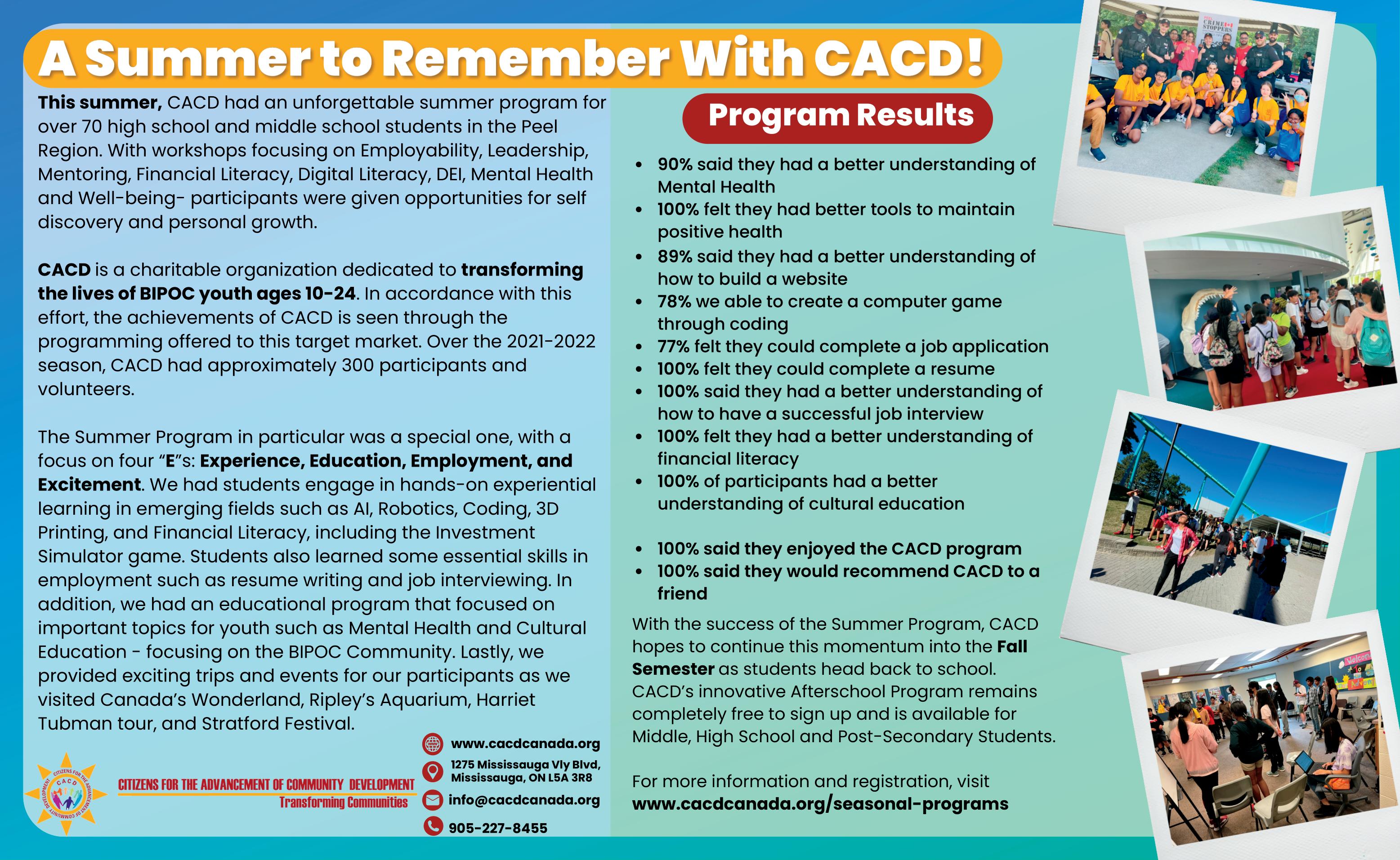

Are you among those suffering silently from constipation?
natural solution is one of nature’s best-kept secrets

W.
Now and again, friends confide in friends that they have big problems. Dreaded are the occasions when the problem is a serious medical diagnosis, but when the problem is persistent constipation, it’s better to air the issue and not suffer in silence.
Drug store remedies for constipation can fail to have effect. For many sufferers, the ailment involves days without a bowel movement. Ignoring the problem can lead to disturbing complications, to be avoided at all costs.
Dr. Linus Pauling, a two-time Nobel Prize winner, believed we are all living
with sub-optimal levels of vitamin C. His primary interest was in studying the effects of high doses of vitamin C in protecting against heart disease. In an interview with him, he added, “High doses of C also resolve constipation.” It’s a natural remedy for constipation and a sad fact is most people, including doctors, are not aware of this.
A lack of dietary fiber, which holds onto water, sets the stage for constipation. Fiber will change bowel movements from hard rocks to stools as soft as toothpaste. When on a high-fiber diet, if you look in the toilet bowl, you’ll see stools that float. One reader of this column said it gave her a stiff neck, but she was grateful for the relief provided.
So how much vitamin C is required? It depends on bowel tolerance. Vitamin C in high doses will cause diarrhea. So, take 2,000 milligrams (mg) at bedtime. If this doesn’t produce a result, take 3,000 mg the following night, and so on. It will eventually have an effect.
A component of our natural physi-
ology called the gastrocolic reflex also helps to prevent constipation. A high fiber cereal with fruit, and a hot tea or coffee stimulates nerves in the stomach to trigger a bowel movement.
The great concern with constipation is the possibility of fecal impaction, when a bowel movement becomes impossible. This demands a visit to the hospital emergency room. The solution is an enema and sometimes-manual removal of the impacted feces. Having this treatment just once quickly convinces anyone to use high-dose vitamin C and more fiber.
Chronic intestinal pressure may cause small hernias to appear in the large bowel. These bowel out-pockets are referred to as diverticulosis and may be present for years without people knowing.
For the unlucky, diverticulosis can change to diverticulitis when small particles of food become stuck in one of the hernias. This can cause mild pain and inflammation, usually cured by antibiotics, or it can be worse and trigger a severe inflammatory reaction causing acute pain
and a life-threatening situation requiring an emergency operation and removal of the inflamed bowel.
Busy doctors normally don’t spend much time on diagnosis of constipation unless patients complain of this trouble. Circus promoters used to say, “There’s a sucker born every day.” They’re right, as millions of unsuspecting consumers use over-the-counter laxatives, which injure the large bowel.
So remember, vitamin C is nature’s natural laxative that cannot injure the intestines. It also decreases the risk of overall disease and has a positive effect on cardiovascular problems. Moreover, you cannot overdose with C. It’s a win, win situation. Some worry about kidney stones. The majority of renal stones occur in alkaline urine. But since vitamin C acidifies urine, there’s less chance of this happening. Linus Pauling took 20,000 mg of C daily for years. We take 4,000 mg and 10,000 mg respectively of C daily – and one of us is 98.



Stop with the excuses; it will stop you from getting to where you want to be!

The other day, I had to stop and ask myself, how much do I enjoy eating, drinking my greens daily, or working out? I had to examine myself and realize it is not about just losing weight, preparing for an event, or even trying to be muscular. More and more, I realized it is about lifestyle. I always wondered why after losing weight a few months to a year later the weight came
The reason most people put on the weight they have lost, and even gain more is: lack of consistency, discipline, accountability, and willpower. Some of us don’t have enough tools to maintain a suc-
cessful healthy lifestyle, which leads to lack of consistency. Our hormones can play a significant role as it affects the acids and molecules in our body.
Enjoyment of eating healthy
If you ever have been on a 14-to-30-day challenge, you will notice that you will get cravings to eat healthy. A healthier lifestyle and habits start with how badly you want to change, and how much you want to make an impact on yourself, family, friends, and community. The longer you follow healthier eating behaviours the better it will be overall.
It is possible for you to balance and enjoy the food you want. One major thing I am personally working on is moderation. You can be out having an enjoyable time and still hold back when you want seconds and thirds.
Overall, how you feel matters and being an example to others can shift your mind-set.
The enjoyment of exercising If you are a beginner sometimes your first


few weeks can be challenging. Your perspective and emotions can be all over the place. However, it starts with your mind.
Eventually you stay consistent with your exercises, you get excited to do your workouts, you gain an increase of energy, and your confidence grows. As you start to create a routine of working out daily, you will gain strong inspiration to improve in other areas of your life, because of the desire for a healthier lifestyle. One of the most important things is that your health improves, including your gut health.
Stop With the Excuses it will stop you from where you want to be!
Try sneaking a few minutes of physical activity at a time into your day. Get started by making these small changes in your daily routine:
• Break your physical activity up into two or three 10-minute walks a day, if you can do so safely near work or home.
• Take regular breaks from sitting at the computer or watching TV; get up, move, and stretch by lifting your hands
over your head, twist side to side.
• Schedule time to be active as you would a hair or work appointment and stick to your plan.
Physical activity is a chore
Some people may be put off by physical activity, especially if they haven’t been active for a while, got hurt, and are afraid of getting injured again. However, with some planning and effort, physical activity can be enjoyable:
• Try being active with your kids—walk, jump rope, play flag football or tag, or toss softball. Children should get an hour of physical activity each day.
• Get a friend or family member to go biking or take a dance class with you. You can cheer each other on, have company, and feel safer when you’re outdoors.
• Enjoy friendly competition with family and friends by setting a weightloss challenge, or entering a: walking, biking, or running event for a worthy cause.


One of the most effective ways to prevent the spread of COVID19 is to regularly wash your hands. However, frequent exposure to soap and water strips the natural, protective oils from your skin, leaving it dry and cracked. Here are a few tips to help you keep your hands clean and moisturized.
• Opt for soap rather than hand sanitizer. Health Canada recommends using hand sanitizer with at least 60 per cent alcohol. However, these products tend to be more harsh on your skin. They also don’t kill all types of germs or effectively clean visibly dirty hands. Instead, use a natural soap made with olive oil, cocoa butter or other plantbased oil.
• Apply moisturizing cream after every wash. If your hands are dry, the Canadian Dermatology Association recommends using an oilbased emollient hand cream (rather than lotion) to sooth your skin and lock in moisture. Avoid products that contain retinol, fragrances and other irritants.
In addition to reducing dryness and discomfort, keeping your hands moisturized can help prevent infections that you’d be more susceptible to with cracked skin. If you have eczema, psoriasis or another condition that’s exacerbated by frequent hand washing, consult a
pharmacist or dermatologist for personalized treatment recommendations.

You need protein to build and repair your muscles, bones, skin and blood. However, not all plantbased proteins are complete proteins, as some of them have only a portion of the nine essential amino acids required by the body. If you want an alternative to animal protein, here are six plantbased foods that provide a significant source.
1. SEITAN
This popular, low carb meat alternative is made by kneading wheat flour with water and rinsing away the starch until only gluten protein remains.
2. LEGUMES
Beans, lentils and peas have high amounts of protein. They’re also excellent sources of fibre, minerals and other important nutrients.
3. SOY PRODUCTS
Soybeans are a versatile legume used to make tofu, tempeh, edamame and soy milk, all of which contain the nine essential amino acids your body needs.
4. NUTS AND SEEDS
From chia seeds and hemp seeds to walnuts and almond butter, nuts and seeds are a great source of protein, fibre, antioxidants and healthy fats.
5. GRAINS
Quinoa is the only grain that provides your body with all nine essential amino acids. However, oats, wild rice and millet contain significant amounts of protein. Grains also offer fibre and magnesium.
6. NUTRITIONAL YEAST
Sold as a powder or in flakes, nutritional yeast has a cheesy flavour. It’s also a source of vitamin B12, which helps keep your nerves and blood cells healthy.
To ensure you get all the amino acids your body needs on a vegetarian or vegan diet, aim to eat as wide a variety of proteins as possible.
YOUR DAILY DOSE OF PROTEIN
The recommended intake of protein is 0.8 grams per kilogram of body weight. If you want to eat a healthy, balanced diet, protein should account for 10 to 20 per cent of your total daily calories


Sneezing is your body’s way of expelling irritants from your nose and throat. Here are four fascinating facts about this bodily function.
1. THERE ARE MANY TRIGGERS
A sneeze can be provoked by a variety of different instigators, from strongscented perfume to the consumption of certain foods. The two most common causes of sneezing are allergies and viruses (like the common cold). Sneezing can also be triggered by bright light, which is a condition known as photic sneeze reflex.
2. IT’S A SEMI-AUTONOMOUS REFLEX
When pollen, dander, bacteria and other foreign particles enter your nose, they irritate the sensitive mucous membrane in the respiratory tract. This prompts the trigeminal nerve, which provides sensation in the face, to send a signal to the brain and trigger a convulsive expulsion of air to clear the contaminants.
3. THERE’S A SAFE WAY TO SNEEZE
Holding your nose and closing your mouth in an attempt to stifle a sneeze can increase the pressure in your lungs to a dangerous level. Alternatively, the pressure can be redirected toward your ears where it can damage blood vessels and delicate structures. Therefore, you should never block your nose or mouth when you sneeze.
4. THE SPEED IS STILL UP FOR DEBATE
While some studies indicate that the air expelled during a sneeze can reach speeds of up to 350 kilometres per hour, contrasting research shows that the average speed is closer to 50 kilometres per hour. The lowest hypothesized speed is about the same as that of a cough, which is approximately 16 kilometres per hour.
Finally, the most important thing to know is that sneezing into a tissue or the crook of your elbow and washing your hands afterward is crucial to prevent the spread of germs.



DANIEL COLE
daniel@carib101.com
A new paper from Wang, Jones, and Kellogg postdoctoral researcher Yang Wang finds that the optimists are right: early failure can actually breed later success. Scientists who narrowly missed out on an important grant from the National Institutes of Health (NIH) ended up publishing more successful papers than those who narrowly qualified for the grant. Over the long run, “the losers ended up being better,” Wang says.
The team’s analysis suggests that the act of failing itself may have pushed the frustrated scientists to improve. What
reason for this impromptu meeting? Have I done something wrong? Did a staff or client report me for poor conduct? Is this a disciplinary hearing or what? Surprisingly, all thoughts that ran through my head were negative. I guess the saying is true, “When we are unsure, we assume the negative.”
Anyway, while still trying to figure out what the meeting was about, the door opened, and it was the boss. My heart was beating fast. I felt uneasy. While he took his seat, I was trying to read his body language; his facial expression, if I could pick a clue as to what we were about to discuss. He smiled and picked up some documents on his desk, he stared at them for a couple of minutes, and the following conversation ensued.
Boss: “So, Daniel, I got a report from HR that you will be leaving the company by December.”
Me: Yes, sir. That’s true.’’
Boss: “So, what happened? Why are you leaving, and where are you going? Have
as texting and talking on the phone while driving, doing other things that you often did while at home, such as doing your hair, eating a bowl of cereal, not paying attention to the road and their fellow travellers. Not that we are the only ones carrying out such antics.
Seems we are all living in our own insulated worlds, and we often cut the outside world out, separating what we want and need from our community and the roads we travel. This summer I witnessed many beer cans thrown from a moving vehicle, multiple alcohol bottles and cans strewn the sides of our roadways. When I walked through a development being built in my community, I noticed a large number of alcohol bottles, especially in an area where professional contractors were building new homes and using machinery.
There are so many bad habits, but these concern me. It is often stressful to
you read all these motivational books that psyche you up on becoming your own boss? Is the company not treating you well, or is your salary not paid?”
Me: “Not at all, sir. The company is fine, and the pay is good. I just felt I’m being too comfortable with myself, and it’s time for me to put to work what I’ve learned so far and the experiences have gained in the last four years, sir.”
Boss: “But don’t you think you can experiment with your ideas while still working with the company? Instead of risking your job because you think you’ve learnt enough?”
Me: “Sir, I believe I still have the time on my side to pick myself back up if for whatever reason, I failed in my endeavor. I’m just 23 years old (then) and am not afraid to fail, but I’m only afraid of failing too late. I still have my career and life ahead of me, sir.”
Boss: “Well, I wish you all the best, Daniel. It seems you’ve made up your mind. It’s not bad to leave a company; you only need to
drive to and from my workplace, knowing someone will cut me off, drive wildly on the highway, or perhaps is under the influence. Rogers, Bell and other Tele-Com firms have such an incredible hold upon us. The day Rogers service was lost, there were more accidents on our roads than any other day of this year.
The pandemic has made our public protectors, the police, either lazy or very introspective, and the laws they should be applying to the roadway and community seem to have been set aside. Perhaps, because the pandemic has affected so many of us, or perhaps they simply do not want to do paperwork. Who knows?
Something seems out of place or different in 2022. How we acted three years ago has changed in some way. Back then our neighbours began to honour the rules of the road and the police enforced them too. Texting while driving was way down.
make sure you’ve thought it through.”
Me: “Thank you, sir.” (As I leave his office)
My response above didn’t sound as confident and assertive as you may have read it, but even in my shaking voice, that’s what I was communicating.
In hindsight, that decision happens to be one the best career decisions I have ever taken. And as much as I’m not going to recommend anyone to follow suit, the idea is that the likelihood of going far and succeeding in life is largely vested in the willingness to fail and fail early. Life is a race against time, and if death is a constant experience we are all going to have at some point, what else is there to lose?
Theodore Roosevelt was right, “Far better is it to dare mighty things, to win glorious triumphs, even though checkered by failure, then to rank with those poor spirits who neither enjoy nor suffer much, because they live in a gray twilight that knows not victory nor defeat.”
What are you afraid of? Fail early, fail often, but fail forward.
Not now. Perhaps our law enforcement officers feel sorry for us and are holding back on their legal retribution.
Habits are difficult to develop and also difficult to change. The years we were in the pandemic certainly allowed us to develop some interesting habits. Wearing masks, standing away from strangers, shopping wisely in an economy that is stagnating.
Remember the words of Gandhi, “Your beliefs become your thoughts, your thoughts become your words, your words become your actions, your actions become your habits, your habits become your values and your values become your destiny.”
Let’s pay attention out there, be diligent, aware and alert for our families, friends and community.
I sat back in my chair; it was time to face my parent’s
simone@carib101.com
This went on for weeks, months, and to be honest years. This feeling of dreaded gloom; every time the mail was picked up, I would sit there waiting to hear how long the American government wanted to put me away for.
I would see my mom anxiously waiting as well. I was in no headspace to deal with the details, so I would hear my mom speaking to the lawyer’s office, asking questions. It was a heavy load for her, but she bore it like a champ.
Being home allowed me to see and hear about the pain that my parents had experienced during my
time away. During this time I was only experiencing things from my point of view, I had no idea what they had experienced. I wanted to avoid the topic when I was around them, but my mom was insistent on making me share what had happened; what had got me into such a mess.
I tried to eat during times when my dad was not there, and I pretended to sleep when my mom came into the basement. I could hear her come down the stairs and then flick on the light. I tried not to squeeze my eyelids too tight because then it might look like I was faking. I could feel her looking at me, wanting to speak to me, but not wanting to bother me at the same time. She would even go back upstairs, and I would lie there for at least another 30 minutes to make it seem like I had been sleeping.
This went on for a few weeks, but finally, my mom made it impossible for me to run from the discussion. I was in the shower, and when I came out, my
Death is a difficult but unavoidable topic. Talking to children about death gives them the chance to get used to this reality in the cycle of life. No living being is eternal, and it’s important to remember that dying is a part of living.
The death of a beloved pet is often a child’s first experience of this reality. For them, the loss of their hamster or goldfish is far from trivial. For the parent, this is an opportunity to broach the theme of death, to explain in simple words that every living thing has a life span. If children ask questions, parents should reply as best they can. Above all, they shouldn’t make anything up. If they don’t know the answer, they must tell the children that they don’t know and that there are things that even adults find hard to under-
stand.
If someone close to them dies, it’s best to tell children the news without delay. In any case, children are able to sense their parents’ pain very quickly. Young children between the ages of three and five can’t fully grasp the concept of death so it’s better to avoid using round-about words like “Grandpa fell asleep” or “Aunt Julie has gone away.” Such expressions can cause children to develop a fear of falling asleep or be anxious about departures.
Supporting children through the mourning period means letting them express their emotions in their own time, without forcing them to talk. A hug is sometimes worth a thousand words when you’re feeling sad.
Talking to your children about money is important. From a young age, it’s essential to teach them that the neighbourhood ATM is not a self-service piggy bank that somebody will keep topping up for them. But is it best to avoid the subject if you’re going through a precarious financial period and finding it difficult to make ends meet? The answer is no. You can discuss budgetary constraints with your children as long as you can control your emotions.
Job loss, separation and illness are all stressful situations that can endanger or even shatter a family’s budget. You may have to cut expenses in order to restore some sort of balance. Your children should be aware that these restrictions will contribute to the recovery of the family’s money situa-
mom was standing in the middle of the living room, located right outside the bathroom in the basement. “Simone, we need to talk.”
“Hey mom, I am not feeling well today; can we talk a little later.”
“No Simone, now!” I looked at her, and I saw the pain in her face. I realized that I was being selfish, but I didn’t know how else to feel.
“Okay mom! Give me a few minutes and I will come upstairs.”
“Thank you,” my mom said and walked back upstairs.
I slowly put on some clothes, and made my way up the stairs. My mom was sitting at the table with her Bible in hand. She was reading to herself and looking out the window.
“Hey mom!” She put down her Bible and removed her glasses.
“I spoke with the lawyer today, they are going to need additional money to move forward with the case. We have to start talking about what we are going to do with your home in Wind-
sor. I know that it is your first home, but the lawyer is going to need a lot to take this case. Unfortunately Simone, we are going to have to sell it. I know this is going to upset you…”
“Let’s sell it! Do what we have to do. We don’t have a choice. Let’s get the money that we need to get the lawyer paid.”
“Simone,” my mom continued. “This has been hard for your father and I. I know that you are going through a lot, but we are too. I don’t know if you can imagine what it felt like to receive that call from you. Your dad and I were sitting with the family in New York for dinner, and then the call came in.
When you told me where you are, it took everything not to cry at the table. I had to excuse myself quickly, and when the call was over, I had to go back to the table and pretend that everything was okay, when really I felt like I was dying inside.”
I sat back in my chair. It was time to face my parent’s pain.

tion.
Without going into intricate details you can make them understand, for example, that a meal at home is cheaper than eating at a restaurant. If you’re the parent of teenagers, don’t underestimate their ability to help with your financial difficulties. It could even be rewarding for them to participate in the efort to restore family finances. Be cautious, however. Before talking about money with your children, make sure you’re able to do so without putting the burden of your anxiety on their shoulders. Of course, having financial difficulties is stressful, but be reassuring and demonstrate your trust in the future. Remember that your attitude is key; if you’re proactive and positive, your children probably will be as well.
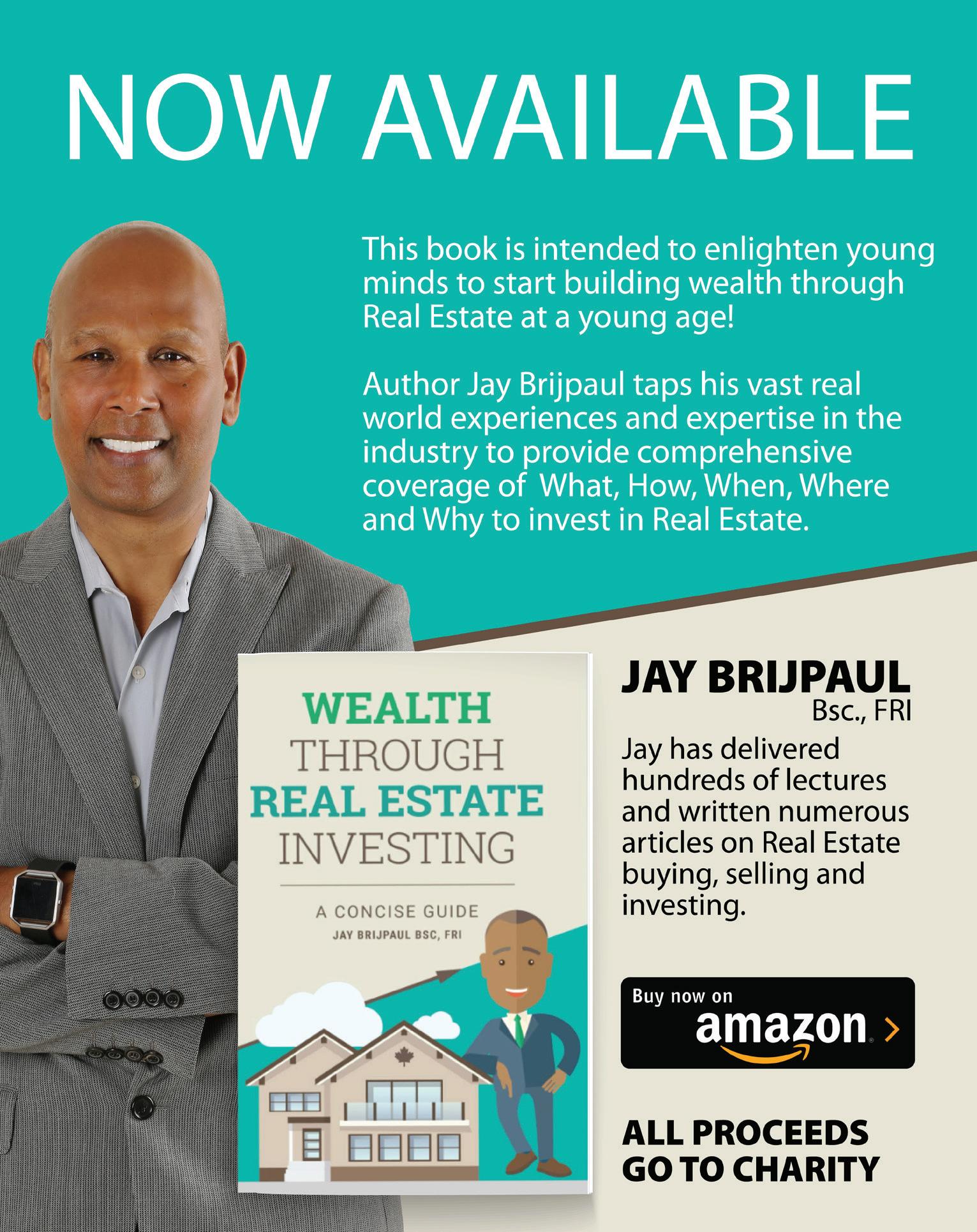

SEAN SEURATTAN
sean@carib101.com
THE HEIGHTENED CHEF
to bear but the journey isn’t quite com plete. Some of the most crucial steps remain before you can actually consume what you’ve been working so hard for. While the anticipation is tangible, short-
cuts anywhere during the harvest process will negatively affect your crop.
The map of the final leg to your cannabis growing adventure essentially looks like this; harvest, trim, dry cure. While some steps are interchangeable, none can be skipped. Even the first step of harvesting requires a little preparation to maximize effectiveness. Choosing when to harvest can be as simple or as complicated as you wish to make it, but generally 2-4 weeks of the buds being at full maturity will produce all the THC you could want. 3-5 days before you plan to cut them down, you should strip the plant of anything that isn’t part of a bud. Also, starving the plant of water during this period is acceptable. This forces the plant into panic mode and all its energy and nutrients are focused on bud production. The best time to cut is in the afternoon before the sun goes down and the plant goes into its feeding cycle for the night.
For most growers the next step can be the most dreaded throughout the entire growing life cycle, trimming. This la-
bour-intensive process can be long and tedious especially depending on the size of your crop. Anything that looks like a leaf must be removed down to its stem from each bud so that only that fluffy plant matter remains. This is harder than it sounds as the buds are covered in the sticky resin that you’re dying to consume.
A trusty pair of curved trimming scissors and rubber gloves is essential for tackling the challenge ahead. You should be collecting the resin that will get stuck to your scissors and fingers, but in the event, it gets too much, rubbing alcohol will make short work of any sticky mess. The finer you can manicure the buds without damaging them will ultimately have the largest effect on your end product. Some can become compulsive about this leading to many extra hours of trimming because even the least leaves and stems affect taste and smoothness.
Drying your cannabis is an interchangeable step. This can be done before or after trimming with pros and cons to either. Live trim can better preserve bud in-
tegrity but can be more work due to difficulty in handling. Dry trim is less work handling, but buds are easily damaged if scissor work isn’t precise. Regardless, your cannabis should dry for AT LEAST 10 days in a cool, dry area with a somewhat regular air flow. Hanging your branches upside down allows gravity to do the work of pulling every last nutrient in the stems towards the buds. This step is not complete until most of the moisture in the buds is gone. The final step of curing your cannabis is often where shortcuts happen most but is still a crucial step. Removing the very last of any moisture left while preserving the terpenes that give smell and taste can completely change how enjoyable your buds are to consume. Curing should take place in an airtight container for AT LEAST 10 days with air being cycled quickly once per day. Once curing is complete, a moisture pack or even a simple citrus peel can be used to prevent cannabis from becoming over dry. Enjoy, consume responsibly and don’t forget to share!
Are you considering investing in stocks, bonds or mutual funds but want to support enterprises whose values align with your own? If so, you may want to look into ESG investing. Here’s what you should know.
Do you make a living as an artist or simply love to sketch and paint in your free time? If so, you may want to evaluate the materials you use to create your art. The truth is that many types of inks, paints, varnishes and fixatives come in non-recyclable packaging or contain ingredients that contribute to pollution. If you want to make art while also protecting the environment, here are some suggestions.
Non-financial factors
The letters E, S and G stand for “environmental,” “social” and “governance.” These factors provide a criteria upon which a business’ social and environmental accountability can be evaluated.
• The environmental factor considers the energy efficiency of an organization, its treatment of animals and its waste management practices.
• The governance factor addres¬ses the transparency of an organization and any conflicts of interest or illegal acts.
• The social factor pertains to the quality of an organization’s relationship with the community, including concerns for the safety and well-being of its employees.
Green materials
Many art supply stores stock environmentally friendly products, the quality of which may surprise and delight you. Here are some examples of items you may want to try:
• Rehydrating paint made from cornstarch and natural pigments
• Non-toxic paint made from walnut oil
• Glitter made from eucalyptus

• Crayons made of soy wax
• Natural fixatives made with a base of casein or grain alcohol
• Erasers made from recycled rubber
• Gum Arabic paint binder
• Refillable pens and markers
• Recovered materials like glass or plastic
• Plant-based paintbrush cleaners
• Watercolours made from vegetable pigments
To select investments that align with ESG criteria, consult a professional who specializes in respon¬sible investment practices.
• Brushes or pencils made from wood grown in sustainable forests
• Sketchbooks made of recycled paper
Using eco-friendly materials to make art will likely become the norm one day. Opt to become a part of the movement sooner rather than later, and be sure to spread the word.
The fashion industry generates a significant amount of greenhouse gasses. For this reason, many businesses selling ready-to-wear clothes and accessories are actively seeking ways to reduce their environmental footprint. One way they’re doing this involves selling products made from vegan leather.
Items made of synthetic leather are often preferred by people who practise ve¬ganism, a lifestyle that eschews the use of animal products in all forms. How¬ever, it’s important to clarify that vegan leather isn’t always entirely plant based. It may contain petroleum derivatives like polyurethane or polyvinyl chloride in ad¬dition to plant materials.
Not to be confused with vegetable-tanned leather, vegan leather can be made of grain,
fruit, or vegetable waste. One of the most popular materials is pineapple leather, also known as Piñatex, which is made from the fibres found in pineapple leaves.
Alternatively, vegan leather can be made from eucalyptus trees, cacti, corn, mush¬rooms and even apple peels. Whether they’re derived from sustainable crops or food waste, these versatile fabrics are increasingly being used to create beautiful and supple handbags, belts, watchbands, clothes and shoes.
Currently, vegan leathers occupy a marginal space in the market. However, they’re attracting more and more interest. Large brands anticipate a growing demand for these products by designers, retailers and consumers around the globe.


Does your dog have a habit of running away from home? Here’s what you should know about this behaviour and what you can do to stop it.
Why dogs run away
Most dogs are naturally curious, and there are various reasons why one might wander. While dogs, especially males, are more likely to roam if they’re looking for a mate, they might also take off if they’re scared, bored or chasing potential prey.
How to prevent it
If your dog has a tendency to explore, it’s best not to leave Fido unsupervised outdoors. Additionally, having your pet spayed or neutered will significantly reduce its temptation to run away. Other precautions you can take include:
• Fencing off the entire backyard
• Installing a gate that automatically locks
• Giving your dog toys to play with outside
• Getting a longer leash so your pet can wander around the yard
Following these tips can reduce the likelihood of losing your dog, but your pet should wear a collar and tag just in case. You should also consider microchipping your dog. Whereas a tag might break or fall off, a microchip is a more reliable way to ensure your pet can be identified and returned to you.
If you continue to have trou ble with your dog’s behaviour, consult a veterinarian or enrol your furry friend in an obedience training class.

Are you thinking about adopting a bird? If so, it’s important to do your research first. This will ensure you know what it takes to care for a bird before you make a commitment. Here’s some information to get you started.
Birds are social
Many bird species require constant companionship, either from their caretakers or other birds. Parrots, in particular, are gregarious creatures that need plenty of mental stimulation and social interaction. If they don’t get enough attention, this can lead to boredom, depression, behavioural problems and even illnesses.
Birds are noisy
While not all birds talk, most will sing, whistle, chirp, screech, caw and coo. It’s important to know that large species tend to be louder, but many small birds chatter constantly. It’s vital that you take noise into account when selecting a bird, especially if you live in an apartment building or work from home.
Birds need space
These winged creatures were made to be free, and most birds don’t enjoy being in a cage for long periods of time. Therefore, you’ll need to provide them with
a space where they can safely play and fly around, either in a specific room or area of your home.
Finally, it’s important to consider the cost of caring for a bird. In addition to their cage, toys and food, your feathered friend will need to see a specialized veterinarian, which can be more expensive. Plus, many species live for decades, even upward of 50 years.
If you want to adopt a bird or learn more about what it takes to care for a feathered friend, visit a local pet store or animal shelter.

Does your cat enjoy cardboard boxes? Here’s a look at why they make a great place for your feline friend to play.
• They make your pet feel safe. When given the choice, cats tend to prefer boxes that are a little snug. While research is needed, some specialists suspect this is because small spaces remind cats of being huddled together with their siblings as a kitten.
• They’re an ideal place to hide. Cats have strong hunting instincts, and an empty box provides the perfect place to lie in wait and pounce on prey. Hiding in a box also makes it harder for predators to sneak up behind them.
• They provide a warm oasis. Cardboard retains heat, which makes boxes an ideal place for your cat to snuggle up and sleep. What’s more, studies show that having a box to retreat to can reduce stress in cats and make them more social.
• They’re great for scratching. Cats can sink their claws into cardboard, which shreds easily and makes a satisfying sound when torn. Scratching allows felines of all kinds to stretch, keep their claws sharp and mark their territory.
Though cardboard boxes are a fun, safe toy for cats to play with, it’s best to provide your furry friend with a variety of toys and hideaways. Your local pet stores have everything you need.


It’s Thanksgiving and the entire family was gathered at Wari’s parents’ home.
mend a lawyer for closing, which is when the money will be transferred from the buyer to the seller and the deed of ownership is transferred from seller to buyer. When there is a mortgage, the deed is transferred to the lender as security for the loan. The buyer would then have a document called a transfer deed.
nies and arrange transfer?”
Preti smiled broadly. “That’s a good idea. In addition, you should inform everyone about your change of address. Remember to update your driver’s license too.”
“In India, I gave thanks everyday but here I kept all the thank-yous for today!” exclaimed Pawan, Wari’s father.
“That’s why you were up since 4:00 a.m. thanking people?” Parbati, Wari’s mom, chimed in. The crowd cracked up.
Parbati began cooking since 4:00 a.m. The dining room became a mess hall. After lunch, the family simmered down in the living room.
“We bought the home,” Wari confided. “There were a few issues with inspection and Justin negotiated a lower price.” Wari tapped her fingers. “We can go shopping for furniture. Leons is having a no money down deal for two years.”
“You don’t want to do that,” voiced Preti, Wari’s sister. “Lenders will check your credit before closing. They can withdraw their mortgage commitment if there are any major changes to the borrower’s credit. Any big purchases such as furniture or cars that involves financing should be postponed until after closing. Applying for a loan or accumulating more debts before your deal closes is not advisable.”
Parbati reclined her chair as she closed her eyes. “You should give your landlord notice that you will be moving. Usually, it’s sixty days from the end of the term. Since you are on a month-to-month tenancy, then it’s sixty days from the end of the month. Remember to book the elevator.”
“We already gave our notices, booked the elevator and arranged movers,” Wari dimpled.
Yash asked the family to recom-
“You need home insurance. It’s a requirement from the lender and your lawyer would need it on closing. It protects you against damages to the interior and exterior of the home, if someone got injured on your property and for loss or damage of your personal belonging,” noted Preti.
“I will call our auto insurance company. We can negotiate a bundle deal at a discount. I will get a few quotes,” Yash acknowledged.
“Thank you for that idea,” Pawan piped. “Parbati, you should call the insurance company. We can get a bundle as well.”
Parbati glanced at Preti. “You have plenty of old, gold jewelries. Put things like that along with important documents into a safety deposit box. For other items such as furniture, make a video and put it into the box as well.”
“When we signed for our mortgage, we opted for mortgage insurance,” Yash disclosed.
“Mortgage insurance is called a decreasing term insurance. In the event of death, the insurance company will pay the remainder of the mortgage. Instead of a mortgage insurance, some people choose a level term insurance for twenty-five years. In the event of death, the family will get the full payout. They can decide how to use it,” affirmed Preti.
Yash glowed. “Let’s keep this option until closing. It costs nothing and if something happens before closing, the surviving partner will be mortgage free. We can cancel the policy when the deal closes and take a level term.”
“Thanks for that,” Pawan joked. Wari returned from the dining room. “I ate for two. Should I inform the utility compa-

Preti explained that it’s smart to arrange a walk through one or two days before closing. At that time, a buyer can confirm that the owners completed the work they were supposed to do. Buyers can double check that the home is in the same condition when they finalize the contract. If the house is tenanted, a buyer should confirm that the property is vacant. If the tenants are still there and the deal closes, then it becomes the new owner’s problem. Yash added, “Our agreement allows for two visits. We are going for our first visit next week and hope to meet the owners. They will educate us about the home. They are downsizing and plan to leave some furniture and lawn care equipment for us.”
Preti spurred the conversation. “I would like to come along for the visit.”
Parbati, half awoken, muttered, “It
is best to put all your money in one account ahead of time.”
Yash looked bitten. “We must cash in our RRSP, GIC, mutual funds and stocks.”
Wari chuckled. “Remember the money under the bed.”
“Your lawyer would need two valid ID at closing,” Preti advised. “When I bought, my driver’s license had expired. We asked the seller for an extension. It was an expensive lesson because the seller needed the money from me to close their other home. I had to cover all their losses including movers, lawyers and other penalties.”

“That’s an expensive lesson. No thanks for that,” chirped Pawan.
As daylight faded, a brisk autumn wind howled pass. The branches swayed and the leaves began to rustle.
“Thank you for the advice,” exclaimed Yash. Yash and Wari parted from the family. Yash teared up. “Your family is the rainbow in our cloud.”
Wari wiped his tears. “Yes honey, I know but you are the rainbow in my cloud.”





Islands are increasingly common features in many home kitchens because of their practicality and attractive design. If you don’t already have one, here are three reasons you should consider installing an island in your kitchen.
1. Multifunctionality. Kitchen islands are a great way to maximize your space. For example, an island gives you more counter space and can be used to house appliances like a dishwasher or extra sink. Moreover, if you have a small kitchen, you can use the island as a table.
2. Sociability. An island creates a focal point for ga¬thering and engaging with friends and family. Instead of preparing food facing the cabinets and windows, you can work at the island while conversing with your guests.
3. Modern look. Many modern kitchens feature islands. Consequently, installing one in your home will give your space an updated look, undoubtedly adding value to your home.
If you’re thinking about renovating your kitchen, talk to your contractor about adding an island.

Today, many people not only live in their homes but also work, play and entertain in them. Consequently, it’s become increasingly common for rooms to serve several different purposes. Here are some ideas for creating a multifunctional room in your home.
Assess the space
The first step is to evaluate the room’s characteristics. You must consider elements like the ceiling height and the number of doors and windows. These factors will help you decide what’s possible and how to achieve the best results.
Determine the function
Next, consider what purposes you want the room to serve. If a living-guest room is what you’re after, you must determine what kind of bed it will have. If space is li-
mited, a daybed or Murphy bed would be best. However, consider a sofa bed or futon if you have more space.
Furthermore, working from home has become increasingly popular in recent years. Therefore, many people want to create home offices. If you want to create a functional workspace, you can easily purchase sliding panels to partition off just about any size room.
Moreover, other hybrid room possibilities include a living room-gym or a laundry room that doubles as an office. Use your imagination to come up with what would work for you.
Visit your local hardware store to find unique ways to convert your space.

Fill in the grid so that every row, every column, and every 3x3 box contains the numbers 1 through 9 only once.
Each 3x3 box is outlined with a darker line. You already have a few numbers to get you started. Remember: You must not repeat the numbers 1 through 9 in the same line, column, or 3x3 box.

You’ll witness an injustice and take it upon yourself to resolve the situ ation. You’ll play the judge and jury. You may need to approach a complex issue with delicacy.
You’ll work hard to reach a fair agreement or conclude a transaction at work. You may feel anxious and suffer from insomnia this week. Fortunately, success is on the horizon.
You’ll be offered a promotion at work. However, you should think twice before accepting it. You must learn to manage and express your emotions to avoid feeling physically unwell.
A new diet combined with regular exercise will give you the results you’re looking for. You’ll be proud of yourself for making your health a priority.
You’ll be very articulate and express what others are thinking. However, you may be just as easy to criticize. Beware of making comments that could hurt or shock someone.
Your financial situation is complicated; make sure you doublecheck all your bills. After discovering an error, you’ll feel a deep sense of relief and recover a considerable amount of money.
You’ll be involved in an activity that will bring out your competitive na ture. You really don’t want to come second and must take all the credit. You’ll be congratulated for your efforts.
SCORPIO
If fatigue has gotten the best of you, you may need to change your lifestyle. Having a more active social life or trying a new diet should give you the energy boost you need.
Stress will be good for you this week. It will give you the motivation you need to achieve brilliant feats. Finding a balance in all areas of your life will help you channel positive energy.
Everything will fall into place for you to start your own business or accept a position of power at work. You’ll discover new talents within yourself.
You’ll be going on holiday soon. Even if the trip is a few months away, start preparing now. For example, get your passport, vaccination record and other details in order so you don’t forget.
You’ll witness an injustice that will awaken your chivalrous spirit. You’ll play an important role in reaching a fair resolution and make helpful suggestions.

SHIRT JACKS: Shirt Jacks all sizes all colour call 416-474-3454
CRAFT AND GARAGE SALE: Lots of crochet items for the bathroom and household. Clothing,curtains and dishes.
On Saturday the 20th Aug from 9:30 to 4pm. Address 51 Templeton Court, Scarborough. ( Lawrence and Overture)
HIRING: Looking for a helper to do general labour, garden cleaning, landscaping, and winter snow removal. Cash paid weekly. Located at Morningside & Lawrence in Scarborough. Please call: (416)269-5174
HIRING FOR CLEANING: Looking for experience people for general cleaning evenings and night. Must speak English and can drive to areas in the GTA. Call or Text 647-239-4808. Seriou calls only
HIRING LIVE OUT COOK AND HOUSEKEEPER: Looking for a live out house keep and cook. Must be able to cook Caribbean Food.No caregiver needed. Bathurst and Wilson. No Cash , T4 Issued call Anna 416-729-4772
Some restrictions may apply. We reserve the right of refusal.
Approximately 4-6 hours commitment every second Wednesday.
Drivers needed for:
• Scarborough/Pickering/ Ajax
• North York/Rexdale/ Malton
• Brampton/Mississauga
Driver must have SUV or Van. Call 647-722-6298 to apply.
FOR RENT: Furnished Room For Rent! Sharing Kitchen & Washroom. Located in Scarborough, Toronto, Morningside Avenue & Kingston Road. $850.00/month including utilities. Please call (416)459-6155. FOR RENT
FOR RENT: Furnished 1 BedBasement Apart For Rent! Separate Entrance, Private Kitchen & Washroom. Located in Scarborough, Toronto, Morningside Avenue & Kingston Road. $1,550.00/ month including utilities. Please call (416)459-6155.
SUNDAY SERVICE: Fountain of Truth Ministries Pastor: Reverend Maxine Campbell Worship Address: 2170 Kipling Avenue, Etobicoke Percy Johnson School – Cafeteria Sundays: 10.am – 2. pm Teaching, Worship, Ministering For info call: 416 748 0211
MISSISSAUGA: Mississauga Missionary Baptist Church invites you to join us at 1620 Dundas St West, each Sunday at 10am for praise, worship and in-depth Bible teaching with Pastor Sean, 416-219-9137
We are in the process of expansion and constantly looking for the best of the best! Dedicated salespeople; people interested in opportunities to help others while also being able to help themselves. For more information, please contact Trish 647-722-6298 or trish@carib101.com
































found that the population of Toronto had risen to nearly 2.8 million people!
Reason #2 - Property diversity
cleve@carib101.com
When it comes to investing in real estate, there are a few key factors that should always be top of mind. These are demand and appreciation. The city of Toronto seems to have much to offer in both of these areas and has become a hot spot for both seasoned and amateur real estate investors. Here are four reasons to invest in Toronto real estate in 2022.
Reason #1 - Population growth
When more and more people want to live in a geographic area or city, it means that the demand for existing housing, land, shopping centres, and just about any other kind of real estate increases. This usually converts into higher property values and better rent margins for investors.
Recent data released by Statistics Canada indicates that Toronto is one of these areas with explosive growth patterns and potentials. In fact, the 2021 census
Toronto has long been viewed as a city filled with multiculturalism and diversity, but this isn’t limited to restaurants, museums, and festivals. There is so much uniqueness to the city in regards to real estate as well. From neighbourhoods like Greektown, Little Italy, and Chinatown with their own vibrancy of culture to property types for just about every lifestyle, Toronto offers the real estate investor lots of variety to choose from.
Looking to invest in a condo, townhouse, or bungalow? Toronto has something to offer. Or perhaps restoring older, vintage homes is more your style? Toronto has plenty. Commercial properties abound, short term vacation rental gems can be found in various pockets of the city, and there are even completely new construction neighbourhoods too. There is literally something for everyone!
Reason #3 - Reasonable taxes
One of the expenses that real estate investors should be cognizant of is property taxes. Every dollar paid in assessment taxes for real estate is one that doesn’t contribute to your personal wealth building. While most people understand that property taxes are necessary to keep a city operational and
functional, looking for municipalities that work to keep taxes reasonable is just smart.

Despite its size and majesty, Toronto had one of the lowest property tax rates in all of Ontario in 2021. With the average tax assessment rate for the province being around .80%, Toronto and some of the surrounding areas were much lower, around 0.61%.
Reason
Earlier this year, there was a motion passed in Toronto that created incentives that would encourage homeowners and investors to convert single family homes into multi-family dwellings. This included items like waiving a previously required $10k Condominium Approval fee and establishing special loan programs to finance the modifications.
This motion could be especially appealing to the aspiring real estate investor who already owns their own singlefamily home but would like to convert it into a duplex or triplex for additional rental income.
A City of Opportunity
Toronto truly is a city filled with some amazing opportunities for real estate investors. Whether you are just getting started or have been investing in homes and properties for many years, Toronto is a place to consider investing in 2022.
When freelancing is your main source of income, it can be difficult to maintain a budget. Here are tips for managing your finances as a freelancer.
Estimate your income for budgeting purposes
To determine your projected monthly income as a freelancer, figure out what you expect to earn from your regular clients. Then, approximate the total amount that you think you’ll earn from one-off and non-regular clients. Divide this number in half and add it to your estimated earnings from regular clients. Using the resulting amount as your
monthly income will allow you to make a budget that has a built-in buffer in case it’s a slow month.
Keep a separate account for business expenses
Have separate business and personal bank accounts so you can keep track of work expenses like software and office equipment. You should also have at least one savings account that you contribute to regularly. As a freelancer with irregular income, it’s especially important to have savings.
Plan for taxes
When you aren’t an employee, you need to set aside around 25 per cent of your income for taxes. Make sure to keep all invoices and payment receipts so you’re prepared for tax season. If you work from home, you’ll likely be able to claim things like internet bills and office supplies as business expenses on your taxes.
Since taxes for freelancers are particularly complicated, it’s a good idea to hire an accountant to do your taxes so you don’t make mistakes or miss possible deductions.
Collective cooking groups bring communities together to fight rising food costs. According to Statistics Canada, the cost of food in Canada has risen steadily over the last five years. Both collective kitchens and community kitchens make it possible for people to reduce their grocery bills while still eating a healthy diet.
Collective kitchens
Collective cooking as a grassroots movement first began in Montreal in the 1980s.
Today, so-called collective kitchens bring people together to choose recipes, buy groceries and cook. After making a meal, they divide it into many portions for members to enjoy at home. It usually ends up costing each person about one dollar per portion.
Community kitchens
In community kitchens, the focus is on educating people about cooking and healthy eating. They often operate out of commu-
nity centres, churches or schools. Instead of people pooling their money together to buy groceries, the kitchen provides the food, and staff or volunteers to oversee the meal preparation.
If you can’t find a collective cooking group in your area, consider starting your own with a group of friends or neighbours. Sharing the costs of groceries and the burden of cooking is a great way to eat healthy while on a budget.




If you can’t park your car in a heated garage in winter, a block heater is a must-have. These devices preheat coolant and allow specific powertrain components to reach an optimal temperature before starting. Here are four additional benefits of using a block heater.
1. Increased comfort
When the coolant inside your vehicle is warm, the inside of your car heats up 40 per cent faster. This also ensures your windows defrost quickly.
2. Improved mechanical performance
A block heater makes it easier to start your car when it’s cold. Consequently, using one can help increase the lifespan of your ride. The battery, for example, doesn’t have to use as much energy. Additionally, combustion becomes much more efficient, meaning you won’t have to change your oil as often.
3. Fuel savings
Vehicles connected to block heaters consume up to 15 per cent less fuel during the first 20 kilometres of driving. This allows you to save at the gas pump
4. Reduced emissions
Warming up your engine minimizes exhaust emissions produced when you start your vehicle. Using a block heater is also much less polluting than idling. However, to avoid wasting electricity, you should plug in your car no more than three to four hours before driving. Your en-gine won’t get any warmer after this point.
If your car doesn’t have a block heater, you can install an aftermarket model on almost any vehicle. Ask your mechanic about the various options.


If you need to drive through a tunnel, it’s best to exercise caution. To make sure you arrive at your destination safely, follow these tips.
1. Use the correct lane
You’re not allowed to change lanes while driving in a tunnel. Therefore, make sure you’re in the correct one before entering.
2. Turn on your low beams
Your headlights will help you see inside the dark tunnel and ensure you’re visible to other motorists.
3. Reduce your speed
It can take a second for your eyes to adjust
to the low light when entering the tunnel and the glaring sun when exiting. Make sure you take it slow and always respect the speed limit.
4. Know the dimensions of your vehicle Tunnels have different levels of clearance. Consequently, you should know the height of your vehicle, especially if you’re driving a motorhome or moving truck. Don’t forget to include the height of ac¬cessories like roof boxes and bike racks.
Finally, remember to never stop inside a tunnel unless there’s an emergency.