“Right now, quietly, without the alarm bells that such a story deserves, the skies are closing. Planes are being grounded. Routes are being cancelled. The Caribbean routes (our routes, the ones that carry us home to Barbados, to Guyana, to Grenada, to Cuba, to St. Lucia, to the life we came from) are among the first to disappear...”
FULL STORY - PAGE 8
SIMONE GRAVESANDE
Intentional Magic
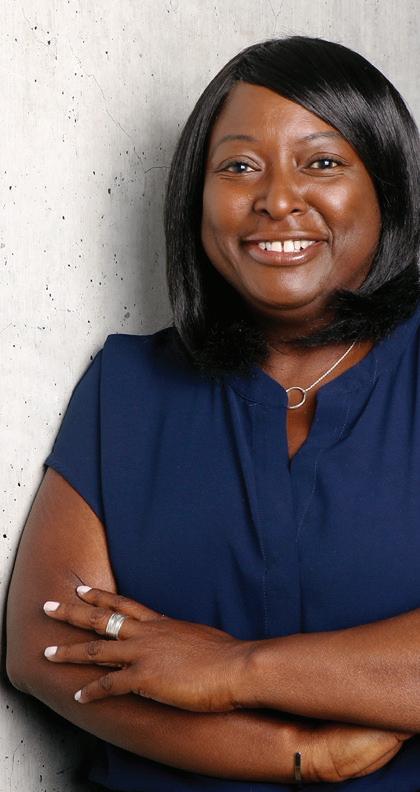
If you walk the halls of The Mabin School in Toronto today, you won’t just see an administrator managing a budget or checking boxes on a provincial mandate. You will see a specialized form of intentional magic that transforms an educational institution into a sanctuary of possibility. At the center of this transformation is Simone Gravesande, a woman who understands that to lead is to heal, and to educate is to empower
Most professional biographies begin with a list of degrees, but to understand the “Simone Effect,” you must start with the moment the system told her she wasn’t ready. After years of leading summer camps and positioning herself for a life in the classroom, Simone’s first application to teacher’s college was denied. Simone did not shrink from the rejection but used it as a detour toward destiny.
She entered the Teacher Apprentice Program (TAP), a space designed for marginalized Black educators to sharpen their blades. It was here she met her rockstar, Dr. Avis Glaze, a Black leader whose knowledge of strategy and classroom impact left Simone starstruck and soul-stirred. This denial from teachers’ college her first try allowed her to work with master teachers she never would have encountered otherwise. It taught her a truth she now imparts to every student at Mabin: You always end up where you’re supposed to be.
Simone Gravesande does not lead from an ivory tower. Her council, though not formally named in the school’s bylaws, reflects a deep alignment with the psychological insights of Dr. Amos Wilson and the cultural empowerment of Marcus Garvey. She understands that for an African Caribbean wom-
an (hail up Guyana) leading in the independent school world (a sector historically lacking in diversity) her presence is a political and social act of courage.
“Coming to Mabin has set me in a position to present myself as a different example of what a principal can look like,” Simone reflects. She remembers being eight years old and wondering if women could even be principals, as the only leaders she saw were men. Today, she ensures that the children in her care don’t have to wonder. She is the vivid proof that power and empathy can coexist.
At Mabin, they talk about “Mabin Magic.” To an outsider, it looks like stars aligning. To Simone, it is strategic. She has replaced generic academic achievements with a culture of intentional magic; the deliberate, reflective work of ensuring every child meets their full potential, even when learning is a struggle.
Her leadership style is one of radical transparency. She invites her staff to be vulnerable, to say “I don’t know,” and to take risks. By creating structures where adults can be learners, she mirrors the very environment she wants for the students. She asks her teachers to shape “Little humans who will see injustice and seek to make change.”
The Ontario Principals’ Council labeled her a Difference Maker for her administrative efficiency, and because she works at the intersection of education, social justice, and mental health. Whether she is drawing from her 17 years of experience in the Peel District School Board or applying the complex theories of her PhD in Change Management at OISE, her focus remains on the measurable emotional impact on the individual
student.
She recalls a time after teacher’s college when there were no jobs available. Instead of waiting, she took a role at a newswire, developing transferable skills in time management and performing under pressure. This period was her psychological training ground. It taught her that a leader must be able to process and organize information with the precision of a journalist and the heart of a healer.
Toronto Caribbean Newspaper’s Woman Empowered often focuses on the best of the best, and Simone Gravesande fits this mold precisely. She is a culture-shaper who understands that the Mabin Magic only works if the leader’s own bucket is full. She has learned the hard way that time is not promised, and that a legacy is built leaving every community better than you found it.
As she looks toward the future of The Mabin School, her goal is to maintain a collaborative, positive, and nurturing environment, and also to build legacy energy, a force that persists long after the school bell rings. She tells her younger self, and the students she mentors, to trust the path, even the detours.
If you walk into her school, you will feel like you are in a workshop of the future. You will trust her, because she is real, not rehearsed. Simone Gravesande is more than a principal; she is a protector of possibility, a community pillar, and exemplifies a new era in Canadian education
Photo Credit:
Written by Simone J. Smith Toronto Caribbean News
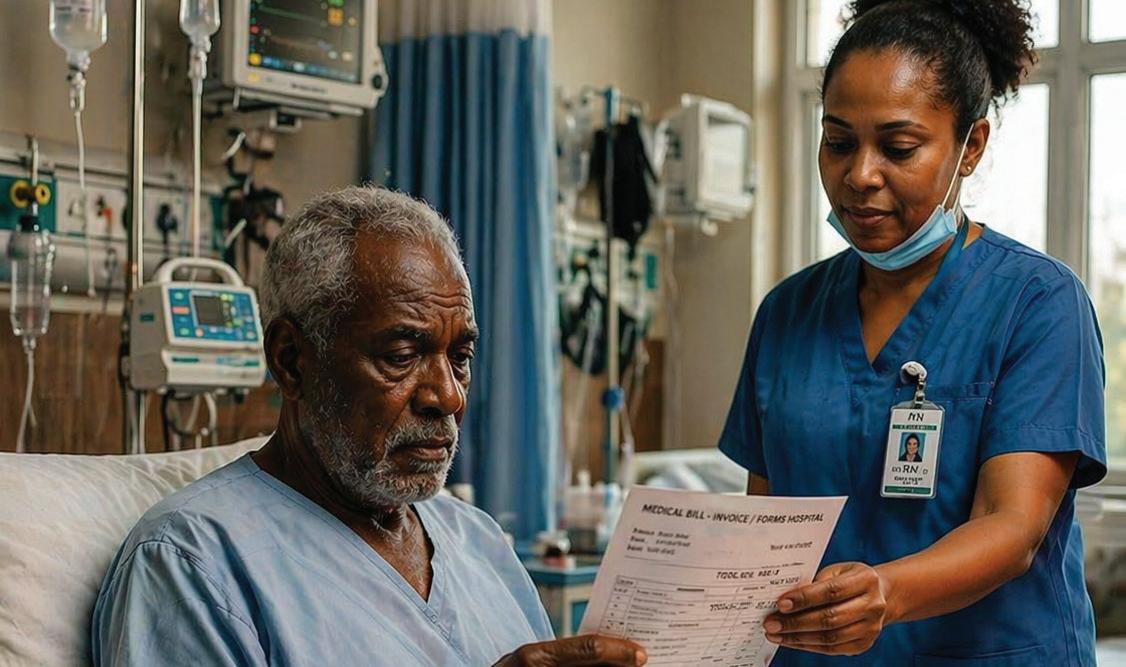
They told her the hospital would keep her safe. They told her family the doctors knew best, but when Auntie’s breathing slowed and the bills stacked, someone in a white coat asked a question that sounded like mercy and felt like a ledger.
That moment: intimate, clinical, and quietly decisive, is the story Canada is trying to legislate into policy with MAID’s next expan sion. For Afro and Indo‑Caribbean families, for seniors who remember different rites of death, for young people watching elders navigate care and cost, this is personal. It is political. It is urgent.
Here is what the government’s pa pers and public data actually show, and why you should be asking hard questions today.
The facts are blunt. MAID has been legal since 2016 and has grown steadily: tens of thousands of cases since inception, with of ficial reports showing increases year over year. The program was carefully limited at first (rea sonably foreseeable natural death), but Bill C‑7 removed that anchor and set a timetable to consider mental illness as a sole ground. That expansion is now delayed to March 17th, 2027, because provinces, clinicians, and advocacy groups warned the system isn’t ready.
So, what’s the risk? The risk is not the existence of MAID itself; it is the mismatch between policy ambition and system readi ness. Training gaps, inconsistent provincial safeguards, and uneven mental‑health capac
Is MAID replacing real healthcare support
ity mean decisions about life and death could be made in contexts where the difference be tween treatable suffering and irremediable decline is not clear. Psychiatric prognoses are probabilistic, not deterministic. Models show that a non‑trivial share of people labeled treat ment‑resistant later improve. When the state expands options without equal investment in care, the vulnerable pay the price.
For our communities, the stakes are layered. Afro‑Caribbean and Indo‑Caribbean cultures tend to view death through commu nal, spiritual lenses, not as an individual trans action. Historical mistrust of medical systems runs deep: stories of neglect, of being written off, of economic pressures shaping care deci sions. Add high household debt, food inse curity, and barriers to mental‑health access, and you have a context where choice can be coerced by circumstance.
The real danger is subtle; normaliza tion of death as a solution when social sup ports fail, and a policy that treats relief pay ments and temporary benefits as substitutes for long‑term care investments.
There have been delays with imple mentation, and what the delays reveal is instructive. Provinces asked for more time. Regulators demanded better training. The Ca nadian MAID Curriculum exists, but comple tion and consistent application are uneven. The 90‑day reflection period and dual‑asses sor model are safeguards on paper, but with out standardized psychiatric expertise and ro bust community‑based care, they can become procedural checkboxes rather than meaning ful protections.
So, I have to ask:
• What concrete investments are being made in community mental‑health ser vices before eligibility expands?
• How many psychiatrists will be available for mandatory assessments, and where
will they be deployed?
• What independent oversight will track MAID decisions in marginalized commu nities?
• How will economic vulnerability be screened so that poverty is not mistaken for irremediability?
• Will data on MAID requests and approv als be disaggregated by race, income, and immigration status?
If you are a family member, ask clinicians: what alternatives have been tried? Who assessed capacity, and how? If you are a community leader, demand transparency from provincial health ministries. If you are a politician, stop treating temporary benefits as long‑term solu tions.
This is a call to insist on dignity. To insist that a society that legalizes assisted dy
ing must also guarantee living well: accessible mental‑health care, stable housing, food secu rity, and culturally competent support. Other wise, we risk turning a legal option into a struc tural escape hatch for a system that has failed to care.
For Afro‑ and Indo‑Caribbean Cana dians, the moral work is twofold. Protect our elders’ spiritual and communal rites. Protect our young people from being nudged toward death by economic despair, and demand that the state prove, with data and dollars, that it can distinguish between suffering that can be healed and suffering that is truly irremediable. Ask the hard questions. Hold offi cials to account. Insist that safeguards are re sourced, audited, and community‑informed. When the state expands the power to end life, it must also expand the power to sustain it.
Finding Balance in Changing Times
Over the past few weeks, I’ve found myself reflecting more and more on what’s happening around us—not just in the world, but right here within our own community.
Because if we’re being honest, it’s been a heavy time.
Many of us are feeling the pressure of rising costs, housing challenges, and the general uncertainty that seems to follow us from one headline to the next. For Caribbean families across Toronto, these challenges don’t exist in isolation. They show up in everyday conversations—at the dinner table, at community events, and in the quiet moments where we’re trying to figure out how to stretch a dollar just a little bit further.
At the same time, our connection to the Caribbean means that what happens back home is never too far from our minds. Whether it’s ongoing instability in places like Haiti, economic pressures in other islands, or concerns about family and friends, we carry those realities with us as well. It becomes a lot to hold.
And yet, what I’ve noticed lately is not just the weight of these issues—but how much of our space has become filled with that weight.
Spend a little time online or in certain conversations, and it’s easy to feel like everything is negative, everything is a struggle, and everything is going in the wrong direction. Now don’t get me wrong—there are real issues that need to be talked about. As a community, we have never shied away from difficult conversations, and we shouldn’t start now.
But we also have to be careful not to lose our balance. Because we are more than our struggles.
We are a community that has built something powerful here in Toronto. From the early days of migration to today, Caribbean people have helped shape this city in meaningful ways—through culture, business, music, food, and community leadership. We’ve taken pride in where we come from and turned that pride into something that brings people together.
You only have to look at the Toronto Caribbean Carnival to see that. What started as a cultural expression has grown into one of the most recognized festivals in North America. That didn’t happen because we focused only on what was going wrong. It happened because we celebrated who we
are, supported one another, and showed up.
And that’s something we can’t afford to lose. Right now, balance matters more than ever.
Yes, we need to talk about the challenges facing our community. We need to have honest conversations about access to opportunities, about affordability, about the barriers that still exist. Those discussions are necessary, and they push us forward.
But at the same time, we need to continue highlighting the good.
We need to support our local businesses—not just in words, but in action. We need to show up at community events, encourage our youth, and recognize the individuals and organizations doing the work to uplift others. There are so many positive things happening within our community that don’t always get the attention they deserve.
We also need to take care of ourselves and each other. Mental health is something we don’t always talk about openly, but it matters. The constant exposure to negative news, combined with personal pressures, can take a toll. Checking in on one another, offering support, and creating space for honest but uplifting conversations can make a real difference.
At the end of the day, the question becomes: what kind of community do we want to continue building here in Toronto?
Do we want to be a community that is aware of its challenges but still hopeful? One that speaks truth but also creates opportunity? One that acknowledges struggle but continues to celebrate growth?
I believe we can be all of that. But it requires intention from each of us.
It means being mindful of what we share, how we engage, and what we contribute to the spaces we’re part of. It means choosing not to let negativity define us, even when times are difficult.
Our strength has always come from unity, resilience, and a deep sense of identity. That hasn’t changed.
So as we move forward, let’s hold on to that. Let’s continue to build, support, and uplift—not just when it’s easy, but especially when it’s not.
Because no matter what’s happening around us, one thing remains true: We are strongest when we move together.
SIMONE SMITH
simone@carib101.com
TC REPORTER
The prescription was sitting on my nightstand, unopened after the third attempt. Every time I took it, my body revolted; nausea so heavy it eclipsed the pain it was supposed to manage. I had just come out of surgery, I was supposed to be healing, and instead I was curled in a way that made the incision scream, wondering if the cure was worse than what it was curing. Someone I trusted said three words to me, “Try the cannabis,” and so I did. My rising came back.
I tell you that story not for sympathy but for context, because when I walked into Canna Crawl Hamilton on April 18th at 2:00 pm, eight hours of cannabis culture, community, education, and something that felt unmistakably like belonging. I
Cannabis healed what medicine couldn’t
lived in spaces that only the right people knew how to find. The event holds onto that ritual, even now, even in its elevated form with 80-plus exhibitors and medical doctors on the main stage; it tells you something true about who built this and why.
What I noticed first was the quality of conversation. Not performance. Not posturing. People talking to each other the way you talk when you have already decided the shame is someone else’s problem. A budtender explaining terpene profiles with the same quiet authority a sommelier brings to wine. A founder at the Evie’s Select Brand table describing their process the way a chef describes sourcing: with care, with specificity, with pride.
I picked up finds from: Christopher Ward, Mary Jane Cones, Evergreen Delivery, and Canna Clips, where I am, I confess, about to test my cannabis growing skills this season. Each vendor had a story behind what they were offering, and each story was, at its core, about the same thing: intentionality. Someone had decided that this plant deserved better than the shadows and had built something accordingly.
relies on to exist.
STEVEN KASZAB
steven@carib101.com
TC COLUMNIST
Speakers whose words I am still carrying:
Jay Jay O’Brien: Stage 4 cancer survivor, now Executive Director of EduCanNation.
He turned the plant that helped save his life into a mission to educate others. I sat with that for a long time.
Dr. Nina M. Hicks, MD: a family medicine physician and medical cannabis consultant who integrates cannabis into patient care, inspired by personal loss. She is the kind of doctor I wish I had had on my nightstand night.
Sarah Anne Kane: a budtender turned educator, whose entire focus is harm reduction and confidence. She is proof that expertise does not always come with a medical degree, and that community knowledge has always been ahead of institutional permission.
Abi Roach: Cannabis pioneer, HOTBOX founder, and architect of the Higher Being Collective mentorship program. She is someone who built access before access was fashionable, and she has not forgotten what that cost.
Here is where I need to say something plainly, because it is the thing sitting underneath all the good energy of a day like this: cannabis culture is moving into elevated, curated, beautiful spaces. Sound baths. Educational panels. Gold sponsors. Medical professionals on stage. That is a genuine shift, and it deserves to be celebrated, especially by those of us who watched people in our communities lose years of their lives to criminalization for the very thing that is now being served in luxury lounges.
A.I. layoffs reveal corporate priorities shift
History offers a parallel. During the Industrial Revolution, millions were displaced by machines that promised efficiency and prosperity. Skilled labour gave way to mechanization, and human value was redefined through productivity and cost. Today, A.I. feels like a modern echo, another transformation where innovation outpaces its human consequences.
Across the global marketplace, a new set of principles appears to be taking hold:
Tasks once performed by humans can be automated
Machine-driven systems are often cheaper than human labour
A.I. can be scaled and monetized with greater consistency
It carries none of the costs associated with people: healthcare, pensions, or workplace protections
It does not demand rights, negotiate wages, or resist authority
It operates without fatigue, emotion, or dissent, unless programmed otherwise
From a corporate perspective, the appeal is clear. Human labour is often seen as unpredictable and costly, while A.I. offers control, efficiency, and long-term scalability. That framing, however, reveals a deeper tension: the more effective A.I. becomes, the less central human workers appear in the systems they helped create.
For many in the middle and working classes, A.I. was supposed to improve quality of life; to reduce burdens, not eliminate livelihoods. Instead, it is increasingly associated with job loss and economic uncertainty. The promise of progress now feels, to some, like displacement in disguise.
A.I. is seen by the middle and working class as a technology that was supposed to make the world and our workplace a better place. That expectation (of shared benefit) remains largely unmet.
This moment echoes earlier resistance movements. In the early 19th century, the Luddites destroyed machinery they believed threatened their survival. They ultimately failed to stop industrialization, but their actions reflected a deeper truth:
The tension I sat with after the crawl was warm, intentional, and genuinely community driven. As cannabis becomes an industry, as it attracts investment and polish and academic credibility, the question that must stay alive is: who gets to be in these rooms? Who built the knowledge base that these panels are drawing from? Are the people who were punished for what is now being celebrated being brought along, compensated, centered?
Canna Crawl Hamilton felt like a room where those questions were at least being held. The speakers were diverse, the founders were grassroots, and the community was not an afterthought. This is what it looks like when it is done with integrity. Now let us make sure it stays that way as the money gets bigger and the stages get taller.
My body healed without the prescription. I found my way to this plant through necessity, and I have never regretted the path. If you are curious and you have not yet been in a room like this one, a room that treats cannabis as culture, as medicine, as community, and as conversation, Canna Crawl is the entry point you have been waiting for. Show up. Stay curious. Ask the harder questions. The plant can take it.
technological change is never just technical, it is social, economic, and human.
The same question persists today. If offered a high-paying role in A.I. development (with security, benefits, and prestige) would you accept it, knowing the systems you build could displace others, perhaps even yourself?
That is the moral tension at the heart of this transformation.
Writers like Aldous Huxley once speculated about futures shaped by unchecked technological and social forces. His observation, “Perhaps this world is another planet’s Hell” feels less like fiction and more like a provocation. Not a conclusion, but a warning.
The trajectory of A.I. is not inevitable in its impact, only in its presence. The real question is not whether these systems will advance, but how society chooses to govern, distribute, and live with them.
Without that reckoning, innovation risks outpacing responsibility, and progress, left unchecked, may come at a cost we are only beginning to understand.
MICHAEL THOMAS
michael@carib101.com
TC REPORTER
Starting April 1st, 2026, Canada’s government will officially begin the VIAP Vaccine Impact Assistance Program for people who suffered life- altering injuries from the COVID-19 injections.
Those who are deemed eligible can collect up to $493,000 in compensation. Since late 2025, the previous program has already paid over $21 million in compensation. This much-awaited program now operates directly under the Public Health Agency of Canada.
How long have these programs been running unofficially, and have they been of any meaningful help to these Canadians who are damaged by these COVID-19 injections? Let’s have a look.
Since the inception of the COVID injections injuries Canada has been dodging being held accountable. Case in point is Kayla Pollock, a 37-year-old from Mount Albert, Ontario, who was compelled to get vaccinated to ensure she could continue visiting her father in his long-term care facility.
After receiving her booster shot on January 11th, 2022, Kayla began experiencing alarming symptoms, culminating in her complete paralysis less than two weeks later. Little did she know her battle with the
SIMONE SMITH
simone@carib101.com
TC REPORTER
“She was sixty-three, strong as the rising, the kind of Caribbean mother who made soup from scratch and still kept the church directory in her head. She took the vaccine because they told her she had no choice. Two years later, she sat in an oncologist’s office hearing a diagnosis that had no history in her family. Nobody called it connected. Nobody even asked…”
I don’t want to be the one delivering this story, but someone has to, and the outlets that were willing to ask questions (including the Toronto Caribbean Newspaper) were: deplatformed, discredited, and called dangerous for doing exactly what journalism is supposed to do: ask, before the answer becomes a tragedy.
Now the answers are arriving from peer-reviewed journals, and what they are showing us demands that our community pays close attention.
What the science is now saying
Two major population studies: one tracking 8.4 million adults in Seoul, South Korea, another following 296,015 people in Italy, have produced findings that mainstream media has largely failed to translate for the communities most affected. Let’s do that work here.
The Seoul study, published in 2025
Too Little, Too Late
system had only begun.
From skepticism from emergency department staff to being offered MAID (Medical Assistance in Dying) which she refused, the system tried tirelessly to avoid accountability.
Back then, even though Kayla attempted to secure compensation through Canada’s Vaccine Injury Support Program (VISP), her application faced numerous delays and was pending. She had to depend on public donations to get by while Canada’s government, the one that ordered her to be injected, did nothing.
Then there was Ross Wightman, a former pilot and realtor who was diagnosed with Guillain-Barré Syndrome (GBS), which is a rare disorder in which your body’s immune system attacks your nerves.
In April 2021, after receiving a first dose of the Oxford AstraZeneca COVID-19 injection, Wightman became partially paralyzed from the waist down and suffered full facial paralysis after being diagnosed with the disease due to the COVID-19 injection.
After putting up a resistance, the federal Vaccine Injury Support Program caved and admitted some responsibility, saying, “There is a probable causal association between the injuries sustained and the vaccination.” The 40-year-old father from British Columbia was one of the first people in Canada to be compensated after suffering an adverse reaction connected to the COVID-19 vaccine.
Before being compensated, he described the service he was receiving as appalling.
There was a total of 1,299 claims submitted to the Vaccine Injury Support Program (VISP) between June 2021 and De -
cember 1 of 2022. By 2023, Health Canada had only approved 50 claims of serious and permanent injuries caused by vaccines.
A whopping 1,250 claims were either rejected or pending review while these injured Canadians suffered. This was how hell-bent the government was about proving themselves right and the injured wrong.
Imaging while the Canadian government was busy denying claims from sufferers like Kayla Pollock, they had money to order 13.6 million doses of the OxfordAstraZeneca COVID-19 injections, which had to be destroyed later due to a lack of demand at home and overseas. How much did these injections cost taxpayers? Why were these injections rejected worldwide? It is because of blood clotting after it was administered.
Now, let us fast forward to see if much has changed. Right out the gate, I was met with a lie on Canada’s government website. “Vaccines used in Canada must meet strict safety standards and continue to be monitored after approval.” When all the animals that the COVID-19 injection was tested on died, was that due to strict safety standards? I think not.
The Canadian government continues to push COVID-19 injections even though it is public knowledge that this product has deadly side effects.
Let us examine who can apply for compensation according to this Canadian government website.
Who can apply
You may be eligible if:
• You experienced a serious and permanent injury because of receiving a Health Canada-authorized vaccine and
They knew. We didn’t.
in the peer-reviewed journal Biomarker Research, found a 27% higher cancer hazard ratio in vaccinated adults compared to unvaccinated over one year. Elevated associations were found for breast, lung, colorectal, thyroid, gastric, and prostate cancers. The viral vector vaccines (AstraZeneca being the most significant) showed a higher overall risk ratio than mRNA vaccines. The authors are careful and scientific: they say association, not causation. They call for more research, but 8.4 million people is not a small sample. It is nearly the population of Ontario.
Documented signals; peer-reviewed, 2024–2026:
• Seoul study (8.4M adults): 27% higher overall cancer hazard ratio post-vaccination; elevated for breast, lung, colorectal, thyroid, gastric, and prostate cancers.
• German research (2025): mRNA-induced changes in macrophages may raise leukemia and brain tumor risk through sustained inflammation, described as hypothetical but flagged for further study.
• VITT clotting syndrome: affects roughly 1 in 50,000–100,000 adenovirus vaccine recipients, with approximately 20% fatality in early clusters. Treatment requires specialized diagnosis most community physicians were not trained to recognize.
Health Canada: has extended vaccine and adverse drug reaction records (covering millions of pages) for up to 15 years under
• The vaccine was administered in Canada (except for Quebec) on or after December 8, 2020
A serious injury is one that is life-threatening or life-altering. It may require hospitalization and result in long-term disability, ongoing health problems, or death. An injury is considered permanent when medical evidence shows that it’s not expected to significantly improve over time.
For the purposes of this program, vaccines are considered to have been given in Canada if you are a deployed:
• member of the Canadian Armed Forces (and your dependants)
• employee of the Government of Canada (and your dependants)
Timelines
You must submit your application to the Vaccine Impact Assistance Program within 3 years after the date:
• of vaccination or
• of death or
• when an injury:
• first became apparent or
• When credible sources first established a link between the injury and a vaccine
• Credible sources include the treating physician, and public health authorities.
For more information on this topic, please refer to the link below.
the Access to Information Act. You may not see this data until 2040.
The 2040 wall, and what it means for you Here is where the story moves from science into power. Health Canada has confirmed it will take up to 15 years to process access-toinformation requests related to vaccine and adverse drug reaction records, pushing the release of critical data into the 2040s. This mirrors the United States FDA’s initial attempt to seal Pfizer trial data for 75 years, a move only reversed through court orders.
Canada’s Vaccine Injury Support Program has approved just 234 claims out of thousands filed, after $50 million spent on administration. Injured Canadians, many of them Black, Caribbean, and immigrant community members who were told they had no choice but to comply, are being turned away with bureaucratic silence.
James Baldwin wrote that not everything that is faced can be changed, but nothing can be changed until it is faced. What is being hidden from us, systematically and with legal cover, is the full picture of what happened to our bodies during a period when governments and institutions used fear as the primary instrument of public health policy. That is documented, provable institutional behaviour with a name: information control.
What your government must answer now
Demand these answers: from your MP, your health authority, on record:
• Why has Health Canada extended vaccine adverse event data processing to 2040, and what specific legal justification exists for withholding health information from citizens whose bodies were directly affected?
• How many vaccine injury claims have been denied, and what is the racial and demographic breakdown of both applicants and approvals under the Vaccine Injury Support Program?
• What is the government’s plan for Canadians now presenting with health conditions: cardiac, neurological, or oncological, that emerged post-vaccination and are being dismissed without proper investigation?
• Will the government commit to a full public inquiry, with testimony under oath, into both vaccine policy decisions and the suppression of early signals flagged by independent community media?
What you can do right now
If you or someone in your family were vaccinated and have since developed health concerns (cardiac symptoms, unusual fatigue, neurological changes, new cancer diagnoses) document everything. Request your full medical records. Ask your physician directly about post-vaccination syndrome and its recognized biomarkers. Contact your MP in writing and demand answers. Monitor advocacy work by lawyers like Eva Chipiuk, who are already challenging these delays in court. You are not alone, and you are not wrong to ask.
Our community was told to trust systems that have historically failed us. We trusted, and some of us paid a price we did not consent to and do not yet fully understand. The science is still evolving, which means the conversation must stay open, critical, and fiercely community centered. We require clarity, accountability, and the kind of courage it takes to keep asking questions that powerful institutions would prefer we abandon.
SIMONE SMITH
simone@carib101.com
TC REPORTER
I had an elder who used to say that the first sign the system is turning against you is when it takes away your ability to move. Not your house. Not your vote (not yet), your movement. Why? Well, when you can’t move, you can’t leave, and when you can’t leave, you can’t choose, and when you can’t choose, you are controlled, whether anyone admits it or not.
I want you to sit with that for a moment before we talk about jet fuel.
Right now, quietly, without the alarm bells that such a story deserves, the skies are closing. Planes are being grounded. Routes are being cancelled. The Caribbean routes (our routes, the ones that carry us home to Barbados, to Guyana, to Grenada, to Cuba, to St. Lucia, to the life we came from) are among the first to disappear. The official language being used is careful and clean, “No longer economically feasible.” “Schedule rationalization.” “Capacity adjustments.” Bureaucratic language designed to make you nod and scroll past. Don’t.
We have seen this before. In 1973, the Arab oil-producing nations imposed an embargo on countries that had supported Israel in the Yom Kippur War. Within weeks, oil prices nearly quadrupled. Gas stations in the United States went to rationing systems, you could fill up only on certain days, based on your licence plate. Speed limits were slashed. Daylight saving was extended. Some stations served emergency vehicles only. Lines stretched around city blocks. The crisis did not stay in the fuel pumps. It moved through inflation, trade disruption, political upheaval, and social unrest, and it lasted, in its effects, for the better part of a decade.
The 1970s crisis changed how governments thought about who gets to move, who gets to access goods, and who bears the weight of scarcity. It made energy a national security issue, meaning
PAUL JUNOR
paul@carib101.com
TC REPORTER
The opening of Colourful Parachutes: Imagining Alternative Futures Through the Power of Play on April 25th, 2026, at The Power Plant Contemporary Art Gallery invites a rethinking of how young people imagine the future. Located at 231 Queens Quay West at Harbourfront Centre, the exhibition positions play as practice: a method for inquiry, expression, and agency.
Described in a March 25th, 2026, press release as a fun, interactive exhibition for all ages, the show transforms the
Fuel Shocks Follow History’s Playbook
governments began to treat fuel access as something to be managed, allocated, and, when necessary, rationed. The lesson the powerful took from that era was do we control the distribution of a scarce and essential resource.
What is happening right now
Starting in late February 2026 and accelerating through April, a jet-fuel and oil shock has triggered a cascade of airline cancellations and route suspensions across the globe. This is not a conspiracy theory. This is documented, traceable, and happening to people we love right now.
February 2026: Air Canada suspends all service to Cuba, running empty repatriation flights to bring back roughly 3,000 stranded Canadians. Air Transat and WestJet follow with Cuba cancellations through April 30th.
April 2026: SAS cancels approximately 1,000 April flights after jet fuel prices double in ten days. KLM cuts 80 return flights from Amsterdam. United Airlines reduces scheduled flights by 5%.
April 2026: Air Canada suspends: Fort McMurray–Vancouver, Yellowknife–Toronto, Salt Lake City–Toronto, and Toronto/Montreal–JFK routes. Lufthansa prepares to ground up to 40 aircraft.
May–June 2026: Air New Zealand announces schedule changes affecting roughly 1,100 flights and 44,000 passengers. The IEA warns Europe may have only six weeks of jet fuel remaining.
The Eastern Caribbean is already feeling it. In January, airspace restrictions caused hundreds of cancellations across: Puerto Rico, the U.S. Virgin Islands, Aruba, and nearby destinations. By April, routes serving: Anguilla, Antigua, Curaçao, and St. Lucia were disrupted. JetBlue cancelled more than 200 flights in a related regional wave. The pattern is surgical: low-frequency island routes, leisure travel, long-haul services with thin margins, in other words, the routes the diaspora depends on most, are the first to be cut.
The pattern that power never names Here is what the mainstream coverage will not tell you plainly: scarcity is never dis-
tributed equally. When the powerful face a fuel shock, they find alternatives. When we face one, we lose access. Analysts are already noting that this shock is spreading through exactly the same channels as the 1970s: inflation, transport disruption, reduced household purchasing power, and the creeping normalization of rationingstyle measures. The Philippines, Sri Lanka, Pakistan, Bangladesh, Myanmar, and several European nations are already implementing fuel rationing, reduced workweeks, and vehicle-use restrictions. These are a pattern.
The research is clear on this: fuel shocks rarely stay fuel shocks. They become political shocks. Social shocks, and historically, the communities with the least buffer, least financial reserves, least transport redundancy, least institutional protection, are the ones who feel the emergency first and longest. That is us. That has almost always been us. When I say us, I mean everyone who is not part of the wealthy elite. Now, I am not here to tell you that there is a secret room full of men who decided to cancel your flight to Barbados. What I am telling you is more disturbing and more grounded in evidence: you do not need a conspiracy for the outcome to be the same. Wealth concentration, institutional weakening, crisis-driven governance, and the normalization of emergency powers can produce centralized control without anyone signing a document that says so. When crises justify emergency tools, and those tools remain after the crisis ends, we call that policy precedent. The 1970s proved it. The pandemic confirmed it. This fuel shock is writing the next chapter.
What your government must be asked right now
Ask these questions: loudly, publicly, on record:
• What is the government’s plan to protect Caribbean diaspora travelers if route cancellations worsen through summer 2026, and who is being consulted from the community in building that plan?
• If fuel rationing or travel restrictions are implemented, what criteria will determine who gets priority access, and how will racialized, low-income, and immigrant communities be protected from bearing disproportionate
Play shapes future through imagination
gallery into a hands-on environment. Visitors are encouraged to engage directly with the work, collapsing the distance between observer and participant. At its core are two guiding questions: “What do we want the future to look like,” and “What if we ask the children what they want?”
Artistic Director Adelina Vlas underscores this premise, framing play as a serious creative force. She notes that “Colourful Parachutes is for audiences of all ages, while foregrounding children’s potential as creative agents and futuremakers.” The exhibition, she adds, reconsiders how imagination (and responsibility for the future) can be shaped both inside and beyond gallery walls.
The show’s curatorial strength lies in its cohesion. Rather than presenting isolated works, it constructs an ecosystem of participation. Through tactile installations, film, and collaborative environments, the exhibition explores cli-
impact?
• Are emergency powers being considered or prepared in response to the fuel crisis? If so, what are the sunset clauses, meaning, how and when do those powers end?
• What is the state of our national fuel reserves, and how long would they sustain essential transport if the Strait of Hormuz disruptions deepen or extend into summer?
• Who in government is monitoring the specific impact on Caribbean, African, and South Asian diaspora communities whose family connections, economic remittances, and cultural continuity depend on these routes?
What this means for your family
Think about what a Caribbean route suspension actually means in practice. It means your mother in Trinidad cannot visit the grandchildren she has been saving up to see. It means the elder who needs to attend a family funeral in Jamaica cannot get there without paying three times the normal fare, if the flight exists at all. It means the small business owner sending goods between islands faces disrupted supply chains and rising costs. It means the family in the diaspora that was finally going to bring everyone together this summer must make impossible choices. These are the everyday stakes of a crisis being reported in the language of economics rather than the language of humanity.
Marcus Garvey told us a century ago that a people without knowledge of their history is like a tree without roots. The history here is unmistakable: we have watched this before, we know how it ends for communities like ours when no one is fighting specifically for our interests at the policy table, and we know that the window to demand accountability is always shorter than we think.
The skies are not closed yet, but they are closing, and the question is whether you are paying attention, and whether you are willing to demand that the people who hold power answer for what happens next to your family, your freedom, and your ability to move through this world with dignity.
Movement is not a luxury. For us, it has always been survival.
mate anxiety, environmental awareness, and the need to center youth voices. It also emphasizes early connections to nature and the collective power of imagination.
Ten artists from Canada and abroad contribute to this vision. Torontobased Claire Greenshaw presents a largescale graphite mural of the Athabasca Glacier, gradually erased and reshaped over time, a quiet meditation on environmental change. Montreal duo Meredith Carruthers and Susannah Wesley invite audiences into a tactile space using natural materials, emphasizing process over product.
Sassa and Tobias Linklater offer stop-motion films created in childhood, reflecting on treaty relationships and movement across land and water. Their work adds emotional depth, grounding the exhibition’s future-facing lens in memory and history. Ana Mendieta’s Parachute (1973) captures children at
play, echoing the exhibition’s central motif while situating it within a broader artistic lineage.
Brazilian artist Rivane Neuenschwander’s interactive shadow booth (developed with children) encourages visitors to confront their inner worlds, blending play with introspection. Harold Offeh’s The Mothership Collective 2.0 (2025) creates a vibrant, communal space for sound, text, and speculative thinking. Temitayo Ogunbiyi’s sculptural installation invites physical movement: climbing, swinging, exploring, while Robin Rhode contributes a large-scale, site-specific work that anchors the exhibition visually.
The exhibition runs from April 25yj to September 7th, 2026, with a public opening party on April 24th. Admission is free, reinforcing its accessibility and community focus.
Ontario Human Rights Commission celebrates Its 65th year
MICHAEL THOMAS
michael@carib101.com
TC REPORTER
Ontario Human Rights Commission celebrates 65 years this year. The OHRC was established on March 29th, 1961, and is the first of its kind in Canada. This milestone leads into the 65th anniversary of the Ontario Human Rights Code, which was enacted on June 15th, 1962. All this comes at a time when questions about rights, equality, accountability, and belonging are at the top of the list for many Ontarians.
OHRC sees this as a golden opportunity to review how human rights have evolved, what has been achieved, and what can be done to elevate the standard of human rights in Ontario.
The OHRC’s celebrations include several initiatives which reflect the legacy and future of human rights in Ontario, including:
• Launching a province-wide school tour to inspire students, educators, and administrators to learn about their rights, respect the rights of others, promoting a commitment to human rights in Ontario through education and engagement.
• Launching a new podcast series to explore the issues, stories, and movements that shape human rights in Ontario.
• Launching nominations for the 2026 Daniel G. Hill Human Rights Awards, which recognize individuals who have made outstanding contributions to advancing, promoting, and fostering human rights culture in Ontario.
With things in high gear, I had the pleasure of speaking with Patricia DeGuire, Chief Commissioner of the OHRC, about the Commission’s 65th year and how things are progressing.
I asked DeGuire what this milestone means for her and Canada in general. She answered, “As you know, the Ontario Human Rights Commission is the first of its kind in Canada, and so we are very elated. It was not just the first of its kind, but it has also continued to be a leader in human rights spaces in Ontario, in Canada, and it seems to be a leader in the world as well.”
“These are good times, and these are bad times. I say good times because we still have the privilege and benefits of enjoying rights, and these rights are the foundation of Canadian values, with people gravitating to Canada to experience and enjoy.”
“It is a bad time because today the world is so ripe with hate, and so we have to come up with creative ways to encourage individuals to acknowledge their right, appreciate their right, and know that they are responsible for ensuring that those rights are sustained towards upholding Canadian values.”
We touched on the human rights code and the question of equity as well. “The code aims to be very inclusive, and I mean exactly that, including everyone who lives in Ontario. It does not matter whether you are: a citizen, a permanent resident, a refugee, or a visitor; the aim of the code is to be inclusive, and that is why substantive inclusiveness is at its foundation.”
“It is also one about upholding the dignity and worth of everyone, regardless of who you are, and we try to achieve that by focusing on work that includes the 17 grounds listed in the code in five service areas. It is not a philosophy, or a policy; it is a significant desire.”
DeGuire told me it is not about gender, race, sexual orientation, creed, or where you came from. “We look at
that person, and the whole is greater than the sum of its parts,” she said. “We look at that person, and we ask ourselves how we can carry out our mandate as stated in the code.”
“It is important to note that the OHRC mandate is to promote, protect, and advance human rights. This is done through creating policies, strategic delegation, and education. This a big one, both the noun education and the verb educating people about rights and the code.”
“Our focus,” she said, “Is to root out systemic discrimination as much as we can, which has been around for centuries. Therefore, it is intractable, so we have to use different ways that reflect the legacy of human rights in Ontario.”
DeGuire explained that the OHRC sets the trend for most of Canada in the human rights department. “We also intervened in cases,” she said, “A matter that could be before the courts. We look at the issue and find out whether it would be in public interest to intervene in that case with the aim of rooting out systemic discrimination.”
“It’s not just litigation for the sake of litigation, and oftentimes when we intervene, that case sets legal precedent, and it is not just binding in Ontario; other provinces and territories would look to Ontario for that guidance.”
One of DeGuire’s big passions is education, “We are now focusing on education. We know that education is the most powerful tool for empowering someone. Preserving one’s dignity and helping one to understand their worth also helps them to contribute equally to the development of Ontario.” She tied the education of black youths with something she called “Black Joy.”
On the question of whether Canada is handling human rights correctly? DeGuire answered, “Canada needs to give human rights more priority. Even though people are so focused on human rights, I believe institutions
Political and economic instability of Canada
and people do not pay enough attention to and take enough action on human rights.”
“If we do not uphold human rights in a stronger way and be more intentional about setting stronger guardrails regarding rights this season of hate, going through it could be much worse.”
Finally, I asked the Chief Commissioner of the OHRC for her views on the seven members of the TPF Toronto Police Force who are charged with numerous serious offences while being hired to serve and protect. Here is what she had to say.
“Your question is a complex one, and my approach to your question is not at all formative or performative, but I am going to answer you within the realms of the law because that is the only way I can. As a lawyer and as someone who served in the justice systems of Ontario, I must honour the sarcosome principle of being innocent before being found guilty.”
“So, they have been charged and not convicted. With respect to the Toronto Police Services, it has an enormous responsibility to preserve peace. To protect the rights of individuals, it is the responsibility of the OHRC to ensure that, in the performance of its duties, they do not breach the code.”
DeGuire wants the public to understand that human rights are particularly important to their existence, life, and dignity, and it is not something that is just written in legislation. It is to be enjoyed and experienced, and they must also respect the rights of others.
For youths wanting to pursue the human rights legal profession, DeGuire had this advice. “Pursue it, not for the monetary value that it may or may not come from it. It is a very valuable aspect of life. It is about humans and surrounding yourself with mentors, coaches, and networking opportunities that would help to ground your purpose and your values.”
BY ADRIAN REECE
TC REPORTER
Canada continues to commit to foreign aid at the behest of Canadian concerns. Gas prices steadily rise, and on top of aid to Ukraine Carney has just committed 120 million dollars to Sudan amid their 4-year civil war.
The kindness of Canadians is being exploited by our leadership in ways that has caused nationwide frustrations. A side effect of the last 10 years of leadership has been that now Alberta will be voting to become its own independent nation separate from Canada as a whole. A province has not wanted to leave Canada for over one hundred years, the first time being during the 19th century, and a motion for it by Alberta the same province occurred in 1974.
This movement displays the political and economic instability of Cana-
da as a whole, in which many provinces are not pleased with the state of things and are doing something about it.
Every province has the right to vote to separate from the larger body of Canada, the process involves a lengthy voting process, in which a large number of residents from said province must agree before the separation can officially occur.
However, it remains to be seen if Canada will allow Alberta to leave as they have in previous years made it extremely difficult for provinces to opt for their own independence. This also leaves questions as to how Alberta would function as its own country, and whether they would simply be swallowed up by our neighbouring nation America.
While Canada does possess a large number of resources and airable land, the sum is greater than its parts, and what Alberta needs may in fact be
in another province for its functions.
International trade will come into play with its surrounding provinces and sanctions and taxes may inflate prices for Alberta residents raising the cost of goods and living expenses even further, such as gas which is already overwhelming people all over the world, not just in Canada.
How would this nation interact with Canada, its former parent country, and what would be its approach to collaboration with America? These are questions that need to be answered, and we would discover very quickly if this split did indeed happen.
If the separation is successful, how many other provinces will then opt to do the same? The lower provinces have a better opportunity to vote for independence as they are closer to our neighbour and can connect with the United States more readily for trade and travel, America could also make a
bid to incorporate these provinces as additional states into their fold. President Trump has made comments regarding Canada becoming a part of America many times, and a province gaining independence would be a wonderful opportunity for America to pick apart Canada piece by piece until it is full incorporated into the foreign country.
With the instability of the world currently, but more specifically Canada, many people do not know what they can expect in terms of living in the next 10-15 years, and we are continuing to feel the effects of poor decisions that are rocking us to the core. The rising housing prices and the cost of living were just the beginning, after all our Prime Minister continually tells us to get use to a lower class of living, and that is just bad leadership.
Could Nova Scotia’s bold program help Ontario’s future homeowners?
BY JAY BRIJPAUL
TC REAL ESTATE REPORTER
Imagine a young family in Ontario dreaming of their first home but feeling discouraged by the challenge of a traditional down payment. Their story echoes in cities and towns across the province, where rising costs and strict mortgage rules have made homeownership seem out of reach for many.
There is a blueprint for hope, and it comes from Nova Scotia. The province’s First-time Homebuyers Program, a collaboration between the government, Atlantic Central, and local credit unions, offers a pathway that Ontario could adopt to help more families access homeownership.
In Ontario, buying a home with less than 20% down payment requires mandatory mortgage loan insurance, usually through CMHC. For a $500,000 house, a buyer needs a $25,000 down payment, plus a mortgage insurance fee of $22,500 and HST. When all costs are included, the buyer’s hard-earned savings are used up by borrowing expenses, leaving many discouraged and stuck renting. Additionally, CMHC qual-
ification guidelines are strict, and most families who need support would end up stranded, caught in a rental cycle.
Nova Scotia’s approach is fundamentally different. Through their innovative program, first-time buyers only need a two to four percent down payment, thanks to a governmentbacked deficiency guarantee that stands in place of costly mortgage insurance. Buyers avoid the heavy fees and can move from renting to homeownership much sooner.
Consider these figures: in Nova Scotia, credit unions offer mortgages up to $570,000 in Halifax Regional Municipality and East Hants, and up to $500,000 in other regions. For a $500,000 home, the down payment could be as low as $10,000, much more attainable for a young family or a new professional. You can use your RRSP or receive a family gift for your down payment.
Eligibility is straightforward: buyers need a household income under $200,000, be first-time buyers, Canadian citizens, or permanent residents, and have a credit score above 630. They must show the ability to pay the down
payment and closing costs and pass a mortgage stress test. If approved, the application is managed directly with the credit union, no additional government forms required. The credit union has some flexibility in determining the buyer’s creditworthiness if they do not have established credit.
While Nova Scotia’s program is limited to primary residences and price caps, its impact is real. It has already helped many transitions from renting to owning, building equity, and contributing to their communities.
Now, imagine Ontario adopting a similar strategy. Instead of offering incentives mainly for developers, Ontario could empower its residents directly. With a program modelled after Nova Scotia’s, families could buy a home with as little as $10,000 down. This would open opportunities in markets throughout Ontario and spur broader economic growth through increased real estate activity and a growing property tax base.
If Ontario implements a similar program, builders could offload their stockpiles of condominiums and use the proceeds for new developments,
thus creating jobs. This approach would boost the real estate market, Ontario’s key economic sector, and generate much-needed tax revenue from land transfer taxes.
A study shows that homeowners are wealthier than tenants because of forced savings. Real estate values rise with inflation, and when you are paying a mortgage, a portion of your payment goes towards the principal. You can always use the equity to upgrade down the road.
This program would lower rental costs because when a renter becomes a homeowner, that unit would become available for a new tenant. If enough tenants switch to ownership, there would be plenty of rental properties available, which would effectively lead to a price reduction.
The ripple effects would be substantial: more families building wealth, stronger communities, and a renewed sense of possibility for those excluded by current rules. If Ontario chooses to follow Nova Scotia’s example, the dream of homeownership could become a reality for many more families across the province.
The Ontario government’s April 10th, 2026, announcement to shorten teacher education from two years to one has sparked mixed reactions across the education sector. Officials frame the move as a practical response to the province’s teacher shortage. While it may increase the flow of new educators into classrooms, critics argue it sidesteps a deeper, more urgent issue: retention.
Education unions broadly agree the policy could help recruitment but say it does little to keep teachers in the profession. As Ontario Secondary School Teachers’ Federation president Martha Hradowy put it, “I believe that this is a step in the right direction, but
it only opens the front door, and right now, teachers are walking out the back.” The metaphor captures the central concern; new teachers may enter more quickly, but many are leaving just as fast.
A statement from the Elementary Teachers’ Federation of Ontario reinforces that point. In its April 10th, 2026, press release, titled “Teacher Education Program Changes Ease Recruitment but Neglect Retention,” the union argues the policy addresses a short-term pipeline issue while ignoring long-term workforce stability. ETFO president David Mastin was more direct, linking attrition to systemic conditions, “While reducing teacher education programs to one year may make it easier for people to enter the profession, it does nothing to confront the real crisis driving educators out of Ontario’s classrooms.”
At the heart of that crisis, unions say, is chronic underfunding. A 2025 report by the Canadian Centre for Policy Alternatives estimates that Ontario’s
public education system has been underfunded by approximately $6.3 billion since 2018. While the government has not framed its policy change in fiscal terms, critics argue that faster certification does not compensate for strained working conditions.
Recent data adds complexity to the narrative. A March 2026 report from the Ontario Teachers’ Federation, “Teacher Recruitment, Retention, Supply and Demand in Ontario: Towards a Long-Term Solution,” highlights a paradox: Ontario may not lack qualified teachers. Drawing on data from the Ontario College of Teachers, the report notes more than 76,000 certified teachers in good standing are not currently working in the province’s K–12 system. Similarly, figures from the Ontario Teachers’ Pension Plan show that while 186,000 educators contributed to the plan at the end of 2025, roughly 40,000 credentialed teachers were not employed in Ontario schools.
The report acknowledges a critical gap: there is limited data ex-
plaining why so many qualified teachers are absent from classrooms. Still, it identifies several recurring factors:
• Increasingly complex and crowded classrooms
• Rising incidents of school-based violence
• Insufficient staffing and resources
• Heavy workloads and job instability
These conditions, the report suggests, are pushing educators out faster than new policies can replace them.
A provincial action table on teacher supply and demand (2023–2024) proposed targeted solutions, including improving hiring efficiency, retaining early-career teachers, and strengthening data collection. Yet unions argue implementation has lagged. Mastin emphasized that these challenges shape daily classroom realities and, without meaningful intervention, will deepen both recruitment and retention problems.
Toronto’s Caribbean Community Highlights: Where Community, Culture, and Creativity Collide
From powerful literary voices to vibrant cultural festivals, this season is alive with stories, style, and opportunity. Meet celebrated authors, experience music and movement, explore bold fashion, and discover resources shaping the future for youth across Canada. Whether you’re stepping into carnival spirit, connecting through community, or unlocking new possibilities, there is something here for you. Dive in, show up, and be part of the moments bringing our communities together in inspiring, meaningful ways.
2025-2026 Delta Authors on Tour!
Date/Time: Saturday May 30th, 2026, 10:00 am - 1:30 pm
Location: TMU, Ted Rogers School of Management, 55 Dundas St. W.
Additional information
The DAOT program is a national initiative honouring the incredible literary contributions of authors who are members of Delta Sigma Theta Sorority, Inc. This dynamic program creates meaningful engagement for attendees through author conversations, meet and greets, and opportunities for authors to showcase and sell their books to new audiences.
We are excited to welcome the following authors to our city:
• April Ryan - White House Correspondent for The Grio, D.C. Bureau Chief for Black Press USA, and political contributor on MSNBC
• Dr. Heather E. Burton - Minister and Educator
• Victoria Christopher Murray - Award-winning and best-selling Author with over 3 million books in print
• Dr. Cheryl Watkins - Award-winning Educator and Author
Purchase your $30 Early Bird ticket before May 8th here - http://bit.ly/41iq2Uf
More event details are here - www.ticketgateway.com/torontodeltasorg
Djenane Saint Juste Books Festival 2026
Date/Time: Sunday, April 26th, 2026
3:00 PM – 6:00 PM
Location: 918 Bathurst Centre for Culture, Arts, Media & Education
Additional information
The festival will feature storytelling, music, dance, cultural activities, environmental education, and opportunities for families to connect with artists and community organizations. As a newcomer-led small business in Toronto, this event represents both a celebration of culture and a commitment to building community, belonging, and opportunity for families.
Carnival Curves
Date/Time: Caribbean Carnival season
Location: Follow @CarnivalCurves on Instagram!
Additional information
As Caribbean Carnival season kicks off in Toronto, the excitement is building and the countdown to the road has officially begun! What better way to step into the season than with a story that celebrates the creativity, confidence, and pure joy of playing mas?
Carnival Curves follows two friends as they prepare for their first Toronto Carnival in an authentically Caribbean-Canadian story bursting with heart, culture, and good vibes. Along the way, this teen novel explores body positivity and self-love while unpacking the true meaning of contemporary carnival beyond the feathers and flair.
Written by Toronto author Stacey Robinson and published by James Lorimer & Company Ltd., this vibrant teen novel is inspired by the energy and legacy of Toronto’s annual Caribbean Carnival.
Carnival Curves follows Karla and Nneka in their final summer of high school as they navigate making costumes, building relationships, and addressing questions of body image. Through the shimmer of sequins and the pulse of Soca music, they discover that carnival isn’t just a parade, it’s a journey of self-discovery, emancipation, and cultural pride.
Government of Canada creating 175,000 jobs and skills-building opportunities for youth in Canada this year
Date/Time: April 20th, 2026
Location: Job Bank website
Additional information
As youth across Canada are working towards their future in the workforce, the Government of Canada is supporting their next steps by building more pathways to rewarding careers and skills development. From managing the cost of studying and training, to securing a first job, to gaining meaningful work experience related to their field of study, this will empower them with better careers and a more affordable life.
The Government of Canada is creating 175,000 jobs and skills building opportuni-
ties for youth as well as providing education and training related actions that will improve youth employment across Canada. These include:
Managing the cost of studying and training:
• The federal government is maintaining the 40% increase to Canada Student Grants for full-time students, part-time students, students with disabilities and students with dependents and the Canada Student Loan limit increase from $210 to $300 per week of study for the 2026–27 school year.
• Student loans forgiveness has been expanded to more healthcare and social services related professionals working in under-served rural and remote communities as of 2025– 26.
• The accumulation of interest on student and apprenticeship loans currently being repaid by graduates has been permanently eliminated, as of 2023.
Securing a first job:
• 100,000 Canada Summer Jobs will be posted on the Job Bank website and mobile app as of April 20 - giving young people essential skills and experience for future career success.
Gaining meaningful work experience: 55,000 new work-integrated learning opportunities for post-secondary students, related to their field of study, through the Student Work Placement Program (SWPP), including the Innovative Workintegrated Learning (I-WIL) Initiative.
• More than 20,000 skills and work experience opportunities through programs delivered under the Government of Canada’s Youth Employment and Skills Strategy (YESS).
The Government of Canada also invested in the Future Skills Centre and its work to support programs that provide mentorship, career exploration, and work-integrated learning to youth facing barriers to employment.
Did you know you can borrow free video games with your Brampton Library card?
Date/Time: Ongoing
Location: Brampton Libraries
Additional information
Residents can borrow free video games with their free Brampton Library card!
Yes, that is correct. A free Brampton Library card gives members access to a remarkable range of services and collections, including well-known and trending video games. Card holders can borrow Nintendo Switch, PlayStation 5, and Xbox Series X games for up to seven days by visiting any of its branch in-person or by placing a hold on -
line through the Brampton Library catalogue. Try out a new game or rediscover a past favourite by borrowing from the Library’s collection of Nintendo Switch, Playstation 5, and Xbox Series X. Gamers will find viral titles like Resident Evil 4 as well as other popular movie-based games such as Marvel’s SpiderMan 2, Avatar, Hogwart’s Legacy, and Last of Us Part I and II, among others. There are also video games for sports enthusiasts including NBA, Madden NFL, NHL, and FC. Members can also borrow trendy games from the Pokémon series and indie games like Stardew Valley for Nintendo Switch.
Brampton Library customers can borrow these games to play while visiting the library or take them home to enjoy. Borrowed games can be renewed at the end of the seven-day loan period. If there is a waitlist, they must be returned to any of the library’s nine branches to be enjoyed by other customers.
As part of Brampton Library’s ongoing commitment to expand and improve its services, patrons are invited to suggest video games for purchase that are not currently a part of the Library’s collection.
Fashion Art Toronto unveils SS26: Where global fashion meets bold design and creativity
Date/Time: Running May 25th–31st, 2026
Location: Programming unfolding across T3 Bayside, the Historic Distillery District, the former Hudson’s Bay / Saks Fifth Avenue flagship, The Danforth, and the Textile Museum of Canada,
Additional information
Running May 25th–31st, 2026, the season brings together more than 50 designers, artists and brands through a city-wide program of runway shows, immersive offsite experiences, free public activations, exhibitions and retail marketplaces. As FAT continues to expand its platform, Season 21 reflects the growing scale, visibility and ambition of independent fashion in Canada and beyond.
Launching the theme of Toronto, Show Yourself, FAT frames the week as a call for visibility, confidence and pride in the city’s fashion community. This season’s lineup reflects the depth and diversity of Canadian design: from couture and avant-garde to Indigenous fashion, streetwear, sustainable textiles, sculptural beauty, and multidisciplinary work. With momentum continuing to build around Canadian creativity, Fashion Art Toronto’s Spring/Summer 2026 marks a significant moment for the platform and for the wider fashion landscape it helps shape, one grounded in inclusivity, experimentation, strong artistic direction and an increasingly visible public presence.
Tickets & Full Schedule Available at FASHIONARTTORONTO.CA
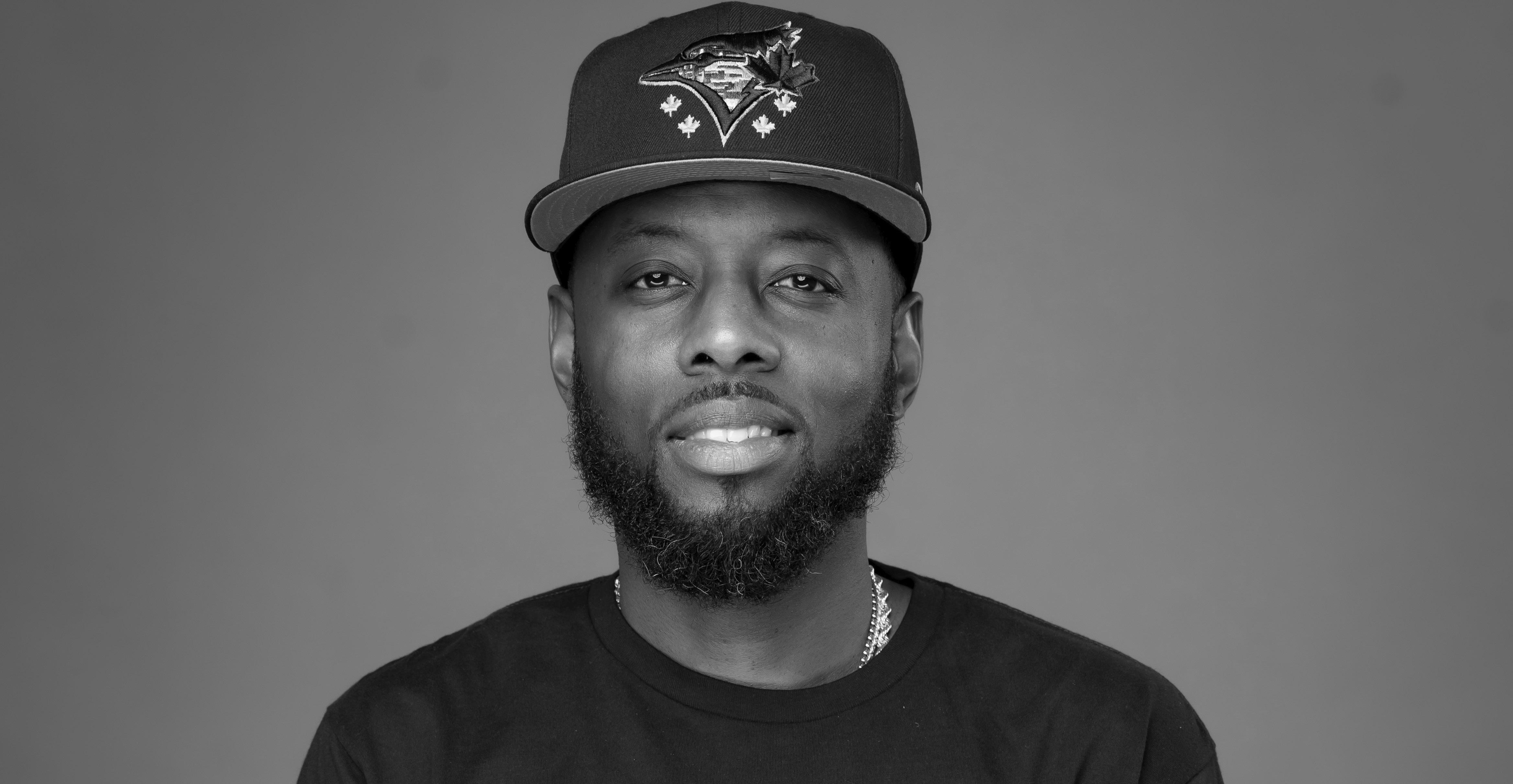
The air in the basement was thick with the heat of a Scarborough summer, but with the heavy, rhythmic thrum of a bassline that felt like a heartbeat. Young Paul Bennett stood behind the decks, his hands trembling so violently he could barely pick up the needle. He wasn’t a legend yet. He was just a kid from Highland Creek Public School, an athlete who lived for the rush of the track and the height of a basketball rim, suddenly finding himself in the shadow of his neighbour Jason Hyde, known to the streets as Rocky P.
In those early days, Paul was the extra, the quiet observer in Jason’s father’s basement, learning the secret language of records and scratches while other kids played tag upstairs. He was the athlete who watched Ben Johnson and learned that speed was nothing without a clean start. As he stood there, hands shaking, coaching himself through the nerves, a transformation was beginning. He didn’t know then that he was destined to move from the trembling hands of a novice to the crushing energy of a master who would eventually be banned from venues because the crowd’s reaction was too powerful for the architecture to hold.
To understand the man, you have to understand the soil. Chris Dubbs wasn’t born in the Caribbean; he was born in Kitchener, Ontario, a place his parents eventually left because they were “The only other Black people in the building.” Even in that isolation, the universe was positioning him for greatness. His babysitter wasn’t just anyone; it was a young Lennox Lewis. The future heavyweight champion’s mother lived in the same building, and Paul’s father would drive Lennox to boxing practice while the future champ watched over the boy who would one day become a heavyweight in his own right, in the
Toronto’s Reggae Icon CHRIS DUBBS
world of sound.
When the family moved back to Scarborough in grade one, Toronto became the canvas for the myth. It was a Jamaican household where culture was a dual citizenship. Paul learned to navigate the white spaces of Kitchener and the community-rooted streets of Scarborough, a duality that would later define his signature energy. He was a student of the 48 Laws of Power before he ever read them, observing how his parents navigated a world that did not always welcome them, and how music could become a fortress of identity.
The moment Paul became “Chris Dubbs”
The transformation from Paul to the brand was a strategic pivot. In high school, he was Rizzla, a name that carried local respect but lacked the commercial catch he craved. He realized that to reach the top, he had to recreate himself (Law 25 of the 48 Laws of Power). He needed a name that sounded like music and felt like rhythm. He drew inspiration from the 90s slang where “Cris” meant something was clean, fresh, and undeniable. Combined with his obsession for dubplates and the small-island term for reggae (dub music) Chris Dubbs was born.
The shift from local kid to wider recognition happened at a UofT barbecue. He was just a grade 10 student, but he was brought in to play alongside the big names of the era, Jester and the Worldwide crew on 89.5 FM. “My hand a shake,” he remembers, but when he dropped the needle, he “Played across the place.” That night, the feedback was a mandate. He was invited to Windsor, then Montreal, and eventually, the legendary G-Spot in Toronto.
At the G-Spot, the myth turned into legend. He played a set so bad (in the best way possible) that the crowd
began banging on the glass-covered walls. The walls shattered. The venue owners, unable to handle the unruly energy of a Dubbs set, banned him, but you can’t ban a vibe that has already infected the city. From The Guvernment to Six Degrees, Chris Dubbs became the roadblock DJ.
What makes him different? It’s the Jamaican commercial style. He can talk the patois of the foundation and then switch to the proper lexicon of a professional, leaving people confused but captivated. He messed with people’s heads, showing them “He has sense, but mi bad.” It is an emotionally intelligent approach to the decks; he reads the reaction of the crowd as a journalistic tool.
He isn’t a safe DJ. While others play the hits to get by, Chris Dubbs plays to crush the dance. He understands that great writing (and great DJing) is about the takeaway. He wants you to remember the feeling of the bass in your chest long after the lights come up. His council includes the greats: the Bob Marleys and Marcus Garveys, whose spirits he channels when he spins tracks like Dennis Brown’s Love and Hate.
Today, the empire of Chris Dubbs is a labour of love that spans the globe. He founded Reggaetown Radio, a 24/7 digital fortress that ensures reggae is accessible to everyone, from the UK to Japan, but his true impact is seen in the shadows, where he puts money in every reggae DJ’s hand. In an industry he describes as very selfish, he chooses to be the mentor, the one who tells a young DJ to “Pay your credit card bill” and “Govern your life” before they get lost in the hype.
During the pandemic, he pivoted again, conquering Twitch and building an international community that once followed him through a mall
in England because they recognized his livestream. He helped a corporate worker named Annabella find her footing in the DJ world, watching her go from three viewers to being sponsored by Adidas. He writes his own story by healing divisions, using his platform to elevate others because he knows that the years fly and your legacy is only as strong as the people you help along the way.
Looking 20 years into the future, Chris Dubbs isn’t worried about the accolades. He wants to be remembered as a genuine person who appreciated the people more than the industry. He is a strategic storyteller who understands that while the music might suck right now and the world is getting more expensive, a good energy never goes out of style.
He is no longer that shaking kid in a Scarborough basement. He is the man who turned Toronto into a reggae myth, who was babysat by a legend, and who became one himself. He is Chris Dubbs, and he is just getting started.
Music is a lifestyle. It is an infatuation, and a life-long love. He is determined to share the soul of reggae music until the very end. The dance isn’t over; the needle is just finding the groove.
Written by Simone J Smith Toronto Caribbean News
Photo Credit: Jack Flawless
Photo Credit: Sanj P Photography
You care for your loved ones. When one of yours needs one of ours, social workers and social service workers are ready to provide trustworthy and quality care.
We are the Ontario College of Social Workers and Social Service Workers. As the provincial regulator, we ensure all our registrants follow the Code of Ethics and Standards of Practice to protect the public, and provide ethical, effective and community-centred care.
If you or someone you love needs help, you can trust one of ours with one of yours.
Peel Regional Police News
Meeting them in their game
BY DIANA GIFFORD-JONES COMMON SENSE HEALTH
Video games have a reputation, and not a good one, at least among parents. For years, I kept my distance. “Brain rot” some experts say. I’ve said it myself, often and with conviction. I’ve worried as my four children have grown up, eyes glued to screens, but over the recent holiday weekend, I caved. My now adult children (gamers, all of them) convinced me to join them. When I sensed their genuine excitement at the possibility that I might finally enter their world, how could I refuse?
The game was Minecraft, where players explore, build, and survive in a blocky, pixelated universe. Think digital Lego meets wilderness survival, with a dash of engineering.
Before I could begin, however, there was the small matter of getting set up. This, I discovered, was no small mat-
ter. Out came an assortment of computer equipment that had been gathering dust in closets. A screen, keyboard, and headset. I was instructed to wear ear pods underneath the headset so that I could simultaneously hear a voice chat on my phone and the game’s audio through the computer.
There followed a symphony of muting and unmuting on the phone, on the computer, and on the headset. I was assured not to worry. “We’ve got this,” they said. I did not.
Soon enough, there I was: seated, wired, and ready. My grown children, now giggling playmates, were scattered across three different cities, with one just down the hall. Yet we were all together in the game. I could literally see their characters running circles around me.
Then the real test began. “Click here, Mom.” Easy enough. Except that was merely the beginning of what felt like a neurological stress test. First, I had to
grasp perspective. With the click of a button, I could switch from seeing the world through my character’s eyes to viewing my character from the outside.
Then came movement. To walk, I had to use the W, S, A, and D keys with my left hand while my thumb hovered over the space bar to make me jump. My right hand controlled the mouse, which required sliding, clicking left and right, and scrolling with the middle finger. This was no walk in the park. My brain and coordination were being tested.
At one point, I was tasked with making an iron pickaxe. “Simple,” they said. Except it wasn’t. First, you need to get wood for a handle. Then you must craft a furnace. Next, the mining, for coal and iron ore. Then comes the crucial insight: coal goes in the bottom of the furnace, iron ore in the top. The game requires players to use reason, but I would have been helpless without my kids telling me how to survive.
There was laughter. Lots of it. Belly-bursting laughter. There we were: a family spread across distances, connected by technology, having a blast.
I was thinking about the health benefits. Mental agility, hand-eye coordination, memory, and perhaps most importantly, social connection. Most researchers don’t focus on games like Minecraft; they use cognitive-training tests that miss the elements found in the family fun I’m talking about. So, they report modest improvements in attention, reaction time, and memory, but my guess is that a little bit of Minecraft among people of my generation goes a long way in boosting cognitive flexibility, spatial reasoning, and the wholesome happiness factor. Will I play again? I’m counting on it. Much as I love a good book or a quiet walk in the woods, I’m intrigued by the potential for games like Minecraft to keep me sharp as I age.
BY IKA WASHINGTON COMMUNITY HEALTH
In Toronto, HIV often lives in the space between silence and assumption. It is present, yet often unspoken. Many families, churches, friendships, and social circles carry deep compassion for people facing illness, yet HIV still sits behind discomfort, euphemism, and distance. That distance carries consequences, when people assume HIV belongs somewhere else, testing can slide to the bottom of the list, conversations can grow quieter, and treatment can begin later than it should. In a city as connected and diverse as Toronto, HIV deserves to be understood as a present community health issue and a matter of dignity, knowledge, and timely care.
In Ontario, people who reported their race or ethnicity as Black accounted for the largest proportion of first-time HIV diagnoses in 2023, representing 37.8% of cases. Some people notice flu-like symptoms, rash, fever, or swollen glands soon after infection, while others experience very subtle changes, which makes testing the clearest path to
Toronto’s undetected HIV stigma
certainty. Across the province, about 23,000 people are living with HIV, and 3,000 are estimated to be undiagnosed. Those figures matter because an undiagnosed infection can quietly affect the immune system over time. The immune system is the body’s defence network, helping to fight infection and disease. Early diagnosis opens the door to treatment that protects health, reduces complications, and supports longer, fuller lives.
Within Caribbean and Black communities, stigma remains a central barrier; shaping whether someone seeks a test, asks a question, or shares a concern with a healthcare provider. In our communities, stigma shows up in how we gossip, our fear of disclosure, anxieties about confidentiality, or the belief that an HIV test reveals something fixed about a person’s character. Fear, stigma, health beliefs, and lack of information were found to be among the most frequent barriers to HIV testing and prevention for African, Caribbean, and Black communities, alongside racism, cost concerns, and gaps in culturally responsive care.
Many heterosexual Black men in To-
ronto reported to have lower perception of personal risk shaping HIV testing behaviours, despite higher rates of diagnosis in Black communities. This disconnect has consequences. HIV can remain undetected when people feel far removed from it, and that pattern speaks to our social environment around risk, trust, information, and access. It also carries economic implications for households, because later diagnosis can bring more complex care needs, time away from work, added transportation costs, and greater strain on families who are already managing high living costs in the city.
HIV testing options in Toronto are more accessible, including anonymous testing, which means the test is ordered with a unique code rather than a person’s name, and rapid testing can provide an initial result within minutes, with follow-up laboratory confirmation when needed.
So, who should be getting tested? People who have had a recent exposure, who are beginning a new sexual relationship, or who have ongoing exposure benefit from speaking with a provider about regular test-
ing, because the right schedule depends on circumstance and risk. Toronto residents can access testing through sexual health clinics, community agencies, and other healthcare providers, and Toronto Public Health points people to anonymous testing through its sexual health clinics and the Sexual Health Infoline Ontario.
Preventative tools, like PrEP is taken before possible exposure to help prevent HIV, PEP is emergency medicine that should begin within 72 hours after a possible exposure, and U=U means undetectable equals un-transmittable, which tells us that a person living with HIV who is on effective treatment and has an undetectable viral load can protect sexual partners from transmission.
For Toronto’s Caribbean and Black communities, the path forward begins with candour and care. HIV and other STI testing should become part of routine health maintenance, much like checking blood pressure or blood sugar. When we bring HIV into the open with accuracy and compassion, we create conditions for earlier testing, stronger treatment uptake, and healthier communities.
Five practical approaches to conflict management in the workplace
BY LISA THOMPSON
LEGAL LISA
“I’m constantly being talked over in meetings, and when I finally speak up, I am told I am being too aggressive. My manager avoids addressing it, and I don’t want to lose my job, but I also do not want to stay silent. What should I do?”
This is a question many Caribbean professionals in Toronto are quietly asking, whether to friends, online forums, or increasingly, apps and AI tools. It reflects a deeper issue: employees are seeking guidance, but not always receiving the human, culturally aware support needed to resolve workplace conflict effectively.
In many Toronto workplaces, conflict is not just about personality, it is about culture, communication, and often, a lack of proper support. For members of the Caribbean diaspora, these tensions can carry extra weight: being misunderstood, overlooked, or unfairly labeled in environments that are not always equipped to handle diversity with care.
Let us be honest; many companies still do not train staff in how to manage conflict. Employees are left to figure it out, often at the cost of their mental health, job stability, or reputation. Increasingly, workers are turning to apps and AI tools for advice instead of having real, one-on-one conversations with trained advisors or managers. While technology can offer quick guidance, it cannot replace human context, emotional nuance, or cultural mediation. Real resolution still requires real conversation.
Let me start the wheels turning towards a change at your workplace. Here is free
BY CHE MARVILLE ASK CHE
“Joy is not a luxury. It is a signal that you are still connected to yourself.”
Welcome back to Ask Che! Last week, I ended off by reminding you to pay attention to how your fatigue expresses itself. We discussed that exhaustion rarely announces itself calmly. It comes out sideways and it is often the precursor of burns out. To close off this series, we are going to focus on what energizes us.
Here is something worth sitting with: when did you last feel joy? Not relief. Not the satisfaction of finishing something. Joy is the kind that is light and a little spontaneous and has nothing to do with being productive.
advice to assist, using the most effective tools in the Thomas-Kilmann Conflict Management Model, which outlines five approaches:
Competing (Assertive, Uncooperative): Standing your ground firmly. This can be necessary in cases involving discrimination or policy breaches. However, for Black employees who are often unfairly stereotyped as aggressive, this approach must be used with care and documentation.
Collaborating (Assertive, Cooperative):
The ideal approach, working toward a winwin outcome. When mutual respect exists, this method can turn tension into progress and strengthen professional relationships.
Compromising (Balanced): Meeting halfway may resolve issues quickly but be cautious. Compromise should not mean consistently accepting less than you deserve.
Avoiding (Unassertive, Uncooperative): Sometimes stepping back protects your peace, especially in toxic environments. Longterm avoidance can lead to unresolved issues and burnout.
Accommodating (Unassertive, Cooperative): Keeping the peace by putting others first. While culturally familiar to many Caribbean professionals, overuse can silence your voice and minimize your contributions.
For many in our community, workplace conflict is rarely neutral. It often shows up in subtle yet deeply impactful ways: being labeled difficult simply for setting healthy boundar-
ies, navigating ongoing microaggressions or implicit bias, and facing exclusion from key decision-making spaces. At the same time, there may be limited access to mentorship or meaningful advocacy, leaving individuals to fend for themselves in challenging environments. All of this is often compounded by a very real fear of retaliation when speaking up, making conflict not just a moment to manage, but a risk to carefully weigh.
These are not isolated incidents; they reflect broader systemic gaps. While organizations promote diversity, many fail to provide the practical tools needed to support real workplace harmony.
There is also an emotional toll. Constantly code-switching, self-monitoring, and navigating perception can be exhausting. That experience deserves acknowledgment, not dismissal.
What you can do
• Identify whether the conflict involves communication, respect, workload, or fairness. Clarity strengthens your position.
• Use the Thomas-Kilmann model to guide your response. Not every situation requires confrontation, but not every situation should be avoided either.
• Keep records of emails, conversations, and incidents. Documentation protects you and strengthens your credibility.
• While apps and AI can help you prepare, they should not replace direct, respectful dialogue. Whenever possible, seek real conversations with decision-makers or neutral professionals who understand workplace dynamics.
Tired while thriving - Part II
If that question is hard to answer, that is important information. Joy is not a luxury or a reward for when the work is done. It is a signal that you are still in contact with yourself. When it goes quiet, something needs tending. Here is the other thing I want to say, because it often gets left out of conversations about rest and recovery. Movement matters. There is a real and documented relationship between the body in motion and how the mind functions. Sometimes what we experience as exhaustion is actually the opposite: a body that is under-stimulated, under-used, held too still for too long. Before you decide you are too tired to move, try moving first. A walk. Something that asks your muscles to engage and your breath to deepen. See what shifts. You may be surprised.
Where to begin:
Recognize your tiredness without judging it: Sit with the question: what is this fatigue actually telling me? Not what caused it. What is it asking for? Your body knows things your schedule hasn’t accounted for.
Notice how your feelings are showing up: Agitation, withdrawal, irritability, numbness are often emotions in disguise. Instead of managing them away, get curious. What is underneath? What have you not let yourself feel?
Choose your company with intention: If you are going to be around people, be around people who genuinely like you and whom you genuinely like. Energy is exchanged in every
• Move beyond raising concerns; propose solutions. Advocate for conflict management training, Internal mediation services and a dedicated Workplace Resolution Specialist.
Frame these as organizational improvements that benefit everyone. Too often, companies react only when conflict escalates. That approach is outdated. Employees should feel empowered to request internal resources, particularly a Workplace Resolution Specialist. This role can provide early intervention, neutral mediation, and guidance for both staff and leadership.
The presence of a trained specialist contributes significantly to healthier workplace dynamics, leading to faster and more equitable resolutions when conflicts arise. It also fosters clearer, more effective communication among team members, helping to reduce misunderstandings before they escalate. Over time, this support strengthens overall workplace culture, creating an environment where employees feel heard and valued. As a result, organizations often benefit from higher levels of employee satisfaction and improved retention.
Conflict is not the problem; mismanaged conflict is. Caribbean professionals bring resilience, adaptability, and strength into every workplace. Navigating conflict requires strategy, support, and systems that work.
You are not too much. You are often responding to environments that lack the tools to manage differences effectively.
interaction. Protect yours.
Tell your own story to yourself first: You have a story. It belongs to you. You do not need anyone else’s permission or validation to honour it. Start there. That is where the finding of yourself begins.
Rest and move. Both: Rest is not optional. But rest alone is not always the answer. Find a way to move your body regularly not to perform fitness, but to come home to yourself. The mind follows the body more than we admit. You are not lost. You are just a little far from yourself, and the way back is not as long as it feels right now.
Sweet Heat on the Grill: Caribbean Pineapple Jerk Chicken Done Right
There’s a certain point every year when you can feel things starting to shift. It’s not quite summer yet, but it’s close enough that you start spending more time outside without really thinking about it. The evenings stretch out a little longer, the air softens, and before you know it, you’re standing around the yard looking at the barbecue like it’s time to bring it back to life. That first real grill of the season always feels like something. It’s not rushed, it’s not routine—it’s intentional.
And if you’re going to do it properly, you don’t just throw on the usual and call it a day. This is the time to bring something different to the table, something that actually makes people stop and take notice. Caribbean cooking fits that moment perfectly because it’s built around bold flavour, balance, and that unmistakable connection between fire and food. When you bring pineapple into that mix, it adds a layer that takes it beyond just another barbecue meal.
Caribbean Pineapple Jerk Chicken is exactly that kind of dish. It brings heat, sweetness, smoke, and depth all in one shot, without feeling overcomplicated. It’s the kind of food that feels right outside, surrounded by good people, with the grill doing most of the talking.
To really understand why this works, you have to look at where it comes from. Jerk cooking has deep roots in Jamaica, where it developed as a way to season and preserve meat while cooking it slowly over wood. The flavour profile is built on ingredients like allspice, thyme, garlic, onion, and Scotch bonnet peppers, creating something that’s bold, aromatic, and unmistakably Caribbean. It’s not meant to be subtle. It’s meant to stand out.
At the same time, Caribbean cooking has always been about balance. Strong flavours are matched with elements that soften, contrast, and round everything out. That’s where
pineapple comes in. It’s not just there for sweetness—it brings acidity, juice, and a natural ability to transform when it hits the grill. The sugars caramelize, the edges pick up a slight char, and the texture softens just enough to make it work alongside the spice without overpowering it.
When those two elements come together, you get something layered. The heat from the jerk seasoning hits first, followed by the sweetness of the pineapple, and finished with that smoky flavour from the grill. It doesn’t sit flat. It moves, and that’s what makes it memorable.
This isn’t a complicated dish, and it’s not meant to be treated like one. It’s real cooking—hands-on, a bit messy, and built around feel as much as exact measurement. You don’t need to overthink it. You just need good ingredients, a bit of time, and a grill that’s ready to go.
Ingredients
Chicken
• 8 chicken thighs (bone-in, skin-on recommended)
• 2 tablespoons olive oil
• Juice of 1 lime
Jerk Marinade
• 4 cloves garlic
• 1 small onion
• 2 Scotch bonnet peppers (adjust to taste)
• 2 teaspoons ground allspice
• 1 teaspoon cinnamon
• 1 teaspoon nutmeg
• 2 teaspoons fresh thyme (or 1 teaspoon dried)
• 2 tablespoons soy sauce
• 2 tablespoons brown sugar
• 1 tablespoon vinegar
• 1 tablespoon lime juice
• 1 teaspoon salt
• 1 teaspoon black pepper
Grilled Pineapple
• 1 whole pineapple (cut into rings or chunks)
• 2 tablespoons brown sugar
• 1 tablespoon melted butter
• Pinch of cinnamon
Preparation & Cooking Instructions
1. Make the Marinade
• Combine all marinade ingredients in a blender or food processor
• Blend until thick with slight texture (not overly smooth)
• The mixture should be bold in aroma and rich in colour
2. Marinate the Chicken
• Coat chicken thoroughly, working marinade into every piece
• Lift the skin slightly to get flavour underneath if possible
• Cover and refrigerate for at least 4 hours (overnight preferred)
3. Prepare the Pineapple
• Mix brown sugar, melted butter, and cinnamon
• Brush over pineapple pieces
• Set aside until grilling
4. Set Up the Grill
• Preheat to medium-high heat
• For charcoal: aim for steady heat with good airflow
• For gas: set up two zones (direct and indirect heat)
5. Cook the Chicken
• Place chicken skin-side down over direct heat
• Allow it to sear and develop colour before turning
• Move to indirect heat to finish cooking
• Cook for approximately 30–40 minutes total
• Ensure internal temperature reaches 165°F
6. Grill the Pineapple
• Place pineapple on grill during last 5–10 minutes
• Cook until caramelized with visible
grill marks
• Turn once for even cooking
7. Optional Glaze (Recommended)
• Chop a few grilled pineapple pieces
• Mix with heated leftover marinade
• Brush onto chicken during final minutes for a sticky finish
Serving this dish is straightforward, but the right sides bring everything together. Rice and peas is the natural pairing, giving you something to soak up all that flavour. Coleslaw works well to cut through the heat, and fried plantains add another layer of sweetness that fits right in. A squeeze of fresh lime at the end ties it all together without overpowering anything. What stands out most when you sit down to eat is how everything plays off each other. The spice doesn’t overwhelm, the sweetness doesn’t dominate, and the smoke ties it all together. Every bite feels balanced, but never boring. That’s what Caribbean cooking does when it’s done right. This time of year, people are looking for something that feels like a break from winter. Something that brings a bit of energy back into cooking and gets people outside again. This dish does exactly that without needing anything fancy. It’s approachable, but it still feels like something different. There’s nothing wrong with sticking to the usual on the grill, but once in a while it’s worth switching things up. This is one of those recipes that delivers without trying too hard. It’s bold, it’s balanced, and it feels like it belongs right where it’s made—outside, over fire, with a bit of smoke in the air.
And once you’ve got that grill going and the pineapple starting to caramelize, you’ll understand why this combination works as well as it does.
BY DR. NATASHA BRIDGMOHAN THE MONEY ILLUSION
There is a conversation I find myself having more often than people might expect. It usually begins with someone who is doing well by most standards. They have built a career, grown a business, or worked their way into a stable income and on the surface, everything looks as though it should be working.
Yet, somewhere in the middle of that conversation, the same question appears.
“I’m making more than I ever have… so why does it still feel like I’m not getting ahead?”
The money illusion
For many of us, especially within communities that value hard work, family, and providing for others, we were taught that income was the goal. If you earn more, you will eventually feel secure. If you work harder, things will fall into place.
That belief is not wrong. It is simply incomplete.
Income creates opportunity, but it does not automatically create wealth. Wealth is built through what happens after the money is earned, and that is the part most people were never taught.
Money comes in and it moves (disappears) quickly, supporting daily living, rising costs and monthly responsibilities. Over time, without intention, the
Reckless spring break behaviour adds to an existing STD crisis
BY SYDNEY WALCOTT VARIETY CORNER
Spring break may have wrapped up back in March; however, some of those who partook in risky behaviour during that time will have to learn the hard way that engaging in such risky behaviour has consequences that are very real and potentially life-altering.
We all know spring break is a time for post-secondary students to take a break from their studies and relax. While on break, some students will flock to places in Florida, such as Miami, Daytona Beach, Fort Lauderdale, or, recently, Houston, Texas, to enjoy the warm weather and participate in fun excursions.
Throughout the decades, spring breakers began to develop a bad reputation due to a handful of people who would partake in reckless behaviour and/or illegal activities. This includes excessive drinking, drug use, public intoxication, operating a vehicle like a car or jet ski, or just being negligent while under the influence, overcrowding in areas, violating public safety rules and not taking any precautions while engaging in sexual activities with strangers.
Usually, the motive for this type of behaviour stems from people wanting a temporary escape from normal rules, routines, and responsibilities. However, there is a fine line between what is okay and what is risky.
The outcome of engaging in reckless activities is not something to take lightly. People have either been seriously injured, lost their lives, faced legal consequences, or have missed educational and/or employment opportunities because of their poor choices.
Spring break 2026 might be an unforgettable one, but for the wrong reasons, because of what has transpired. In 2026, Houston emerged as a popular spring break hot spot. TikTok trends, the Houston Livestock and Rodeo, a 12% to 15% increase in hotel bookings, and, of course, the warm weather, were the driving forces behind Houston becoming a popular tourist destination for spring breakers.
While this surge may have been lucrative for the economy, local restau-
rants, the nightlife, and events in the Houston area, it came at a cost as the notorious spring break behaviour came right along with it.
Hookup culture has been a concern in recent years across the globe. There has been an alarming increase in tourists engaging in sexual activities with strangers while they were on vacation in Houston for spring break. This led to the emergence of the viral trend known as the “First Day in Houston” trend. The concept of the trend involves people filming and posting themselves, or other people in bed next to a stranger they had a one-night stand with on their first day in Houston, while on spring break. The trend stirred up controversy as it is deemed an invasion of privacy and highlights how careless some can be when it comes to sex.
Although recording someone without their consent or knowledge, especially if it is a private moment, is something I would never condone doing, having casual sex with a stranger, especially, is highly dangerous. Even if protection is being used, people still need to be careful, because condoms can break, and Plan B may not work if it’s not taken within three days after unprotected sex.
There is no denying that Houston is gaining traction as a popular spring break destination. However, one thing people should note is that Houston has become an STD hotspot in recent years with rates of HIV, syphilis and gonorrhoea that are exceeding the average in Texas.
The result of people hooking up in Houston during spring break has led to an estimated 42,000 people testing positive for an STD. While some may have caught an STD that can be cured, others have caught a treatable STD, but they will have to live with it for the rest of their lives and face the serious potential health issues that come with it.
I am all for people wanting to have a memorable and stress-free spring break. However, people need to respect themselves and understand that one night of passion is not worth living a lifetime of pain.
pattern repeats. More income does not lead to more stability. It simply leads to more movement. This is what I call the money illusion. It creates the feeling of progress without the reality of progress. Most people operate within a cycle they were never given the tools to break.
This is where the real opportunity begins. The moment you understand that income alone is not the solution, you can begin to shift to what happens next. You can start asking different questions. Not just how much you are earning, but what your money is doing once it arrives.
Is it being directed, or is it simply being spent?
Is it creating stability, or is it maintaining a cycle?
Before we think about supporting others, building for the future, or expanding our goals, we need clarity for ourselves. Without that foundation, even the best intentions can feel like pressure rather than progress. This is where the shift begins.
It can start with simple steps:
• Schedule a regular personal money review in your calendar.
• Look over your bank statement so you understand where your money is going.
• Identify areas where money is leaking without purpose and make a small adjustment. (i.e. Cancel monthly subscriptions that are not being used)
• Begin making money decisions with intention rather than habit. Set clear monthly amounts for saving, giving, and reducing debt.
For some, this may mean learning how to direct income toward wealth building before expanding your lifestyle. For a family, it may look like creating consistency by setting shared priorities and making sure money is working toward both present needs and future goals. For entrepreneurs, it often means separating personal and business finances, so growth translates into stability. For seniors, it may involve simplifying finances and ensuring income, savings, and expenses are aligned to support long-term security and peace of mind.
These are not complex strategies, but foundational shifts. When practiced consistently over time, they create stability, build confidence, and form the steady progression that becomes the true building blocks of lasting wealth.
Now that you have started to bring clarity to your own financial habits, the next question becomes even more important. What are the people around you learning from what you do, especially the next generation? You will not want to miss the next article, where we explore how everyday financial habits quietly shape what children understand about money and how you can break destructive generational cycles.
Identifying the signs of Autism in our African-Caribbean families
BY SIMONE J. SMITH HUMAN SPECIALIST
I remember sitting in a sun-drenched kitchen in Etobicoke, watching a close family friend meticulously align his spice jars for the fourth time. To any casual observer, it was just a quirk. In our community, we often have protective euphemisms for these things; we say he is particular, spirited, or set in his ways. We avoid the heavy labels because we fear they might dim the brilliance of the people we love. As a strategic storyteller rooted in our shared history, I know that silence isa cage.
We carry a heavy cloak of shame regarding neurodiversity, often viewing it through a lens of weakness or a Western imposition that does not belong to us. However, when we look through the wisdom of our ancestors and the psychological insights of thinkers like Dr.
BY HERBERT HILDEBRANDT POLITICAL PARLEY
Marilyn Gladu is a professional engineer, a veteran southwestern Ontario MP, and until April 8th, 2026, she was the Conservative representative for Sarnia-LambtonBkejwanong. On that day she crossed the floor and announced she was joining Mark Carney’s Liberals because Canadians wanted “Serious leadership and a real plan” and because she wanted to help the government “Build the nation,” “Help lower costs for Canadians,” and “Combat crime.” That is the new script. The problem is that her old script was still in use yesterday, and it painted the Liberals as the very authors of the damage.
This was a politician who, only weeks earlier, was still hammering the Liberals as the cause of Canada’s problems. On March 9th, Gladu said Liberal policies “Make life more expensive for Canadians.” She attacked the industrial carbon tax, called Liberal policies “Out-oftouch,” and demanded they be removed to make life more affordable. She also said Canada had “The worst food inflation in the G7” and “The only shrinking economy in the G7.”
On immigration, Gladu asked the House of Commons on March 23rd, “Why are these failed immigration ministers still in cabinet in charge of important files and failing?” That is not a passing complaint. That is a direct statement that the government’s own ministers were failures on a basic national responsibility. It is the language of indictment, not the language of someone moving toward trust, unity, and collaboration.
Two days later, on March 25th, the attack sharpened again. Gladu said, “Canadians are paying more because of Liberal policies here at home.” She said it was “Only the Liberal government” that had given Canada “The worst food inflation and the only shrinking economy in the G7.” She said gas prices were higher here because “Liberal fuel and carbon taxes are making it even worse.” Those are her words, not partisan spin from her opponents.
On Bill C-9, Marilyn Gladu did not speak like someone sympathetic to Liberal priorities. She spoke like a critic warning that Ottawa was crossing a line. In February 2026 she tabled a petition calling on
Frances Cress Welsing, we realize that true power comes from self-knowledge. Identifying the signs of autism in our African-Caribbean families is about offering a dignified pathway to help and understanding the unique rhythm of our own souls.
The reality is that many in our community reach midlife before they realize why they have always felt outside of the circle. This late recognition often follows years of masking, the exhausting, soul-crushing process of hiding one’s true self to meet social expectations. Dr. Nora Friedman notes that a late diagnosis can reframe a person’s entire history, offering a complex, heavy mix of both relief and grief as they finally make sense of decades of feeling different.
In our community, the signs of autism do not always look like the detached, academic descriptions found in
Western textbooks. It might manifest as a deep, intense focus on a specific craft, a strategic brilliance that, when nurtured, produces the leaders and innovators we need. It might show up as a preference for routine, or a visceral overwhelm during our loud, sensoryheavy celebrations. These are variations in how we process a world that was not always built for us.
Systemic gaps and cultural differences deeply impact how autism is diagnosed and treated in our community. Our struggles are too often dismissed as behavioral issues, or spiritual failings. This is where we must exercise our power. By building trust in psychological support that respects our faith and our culture, we are mastering our own terrain. Seeking clarity is a strategic move to ensure our children and our elders have the support they need to thrive in the workplace and at home.
Crossing floors, or crossing lines
the government to “Withdraw Bill C-9” and to “Protect religious freedom, uphold the right to read and share sacred texts, and prevent government intrusion into faith.” Then on March 26th, one day after the bill passed third reading, petitions she presented warned that the legislation would “Limit religious expression” and interfere with the ability of faith communities to practise their faith.”
The breach goes deeper than economics or free speech. Gladu was also known as one of the more socially conservative voices in federal politics. During the 2020 Conservative leadership race, she said caucus members should be allowed to bring forward private members’ bills to restrict abortion. In 2021, she was one of the Conservative MPs who voted against legislation banning conversion therapy. After welcoming her into caucus, Mark Carney said any MP joining the Liberals must support the party’s values on abortion and LGBTQ rights. He said Gladu would “Vote with the government” on those matters, and repeated that Liberals would always defend “The right of women to choose,” same-sex marriage, and opposition to conversion therapy. That is not a minor adjustment. That is a public surrender of convictions she either held herself or, at minimum, once defended politically.
So, which Marilyn Gladu was telling the truth? Was it the March version, who said Liberal policies were making life more expensive, failing on immigration, threatening religious liberty, and dragging Canada to the bottom of the G7? Or was it the April version, who suddenly discovered that the same Liberal government now offers serious leadership and a real plan? Both cannot be true in any serious sense. One version was performance and maybe both were.
The quietest line in her floorcrossing statement may be the most revealing. Gladu reminded voters that Sarnia-Lambton was “Always a bellwether riding” and that whoever the community elected was “Typically in government” for 52 years.” That sentence gives the game away.
This is why public trust keeps collapsing. They speak in absolutes because absolutes rally a base, fill a feed, and harden party identity. Then power shifts, the winds change, and yesterday’s
When we begin with the end in mind, our goal is clear: to move our people from shame to strategy. If you see these signs in your child, or recognize them in the mirror, do not lean into the shadow. Lean into the light of community. Affirming, individualized support, whether through behavioural therapies, or simply a family that finally gets it, improves well-being and restores a sense of self.
Let us be the generation that disrupts the stigma without shaming the soul. Let us create a world where an autism diagnosis is a map toward a more affirming and responsive life. We are a people of depth, rhythm, and complexity. It is time our storytelling reflects the full, beautiful spectrum of our humanity. Take the step. Seek clarity. Protect dignity.
grave warnings are quietly packed away like campaign signs after election night. Failed immigration ministers become colleagues. Bad Liberal policies become a shared project. A government that was making life unaffordable somehow becomes the instrument that will lower costs. A politician who once stood apart on abortion, religious liberty, and social questions suddenly votes with the very party that defines itself against those po -
sitions.
Marilyn Gladu has every legal right to cross the floor, which is not the issue. The issue is credibility. If a politician can denounce a government in March as out-of-touch, unaffordable, and failing, then embrace it in April as serious, constructive, and worthy of trust, the public is entitled to conclude that much of what passes for conviction in Canadian politics is nothing more than costume.
The subtle power of “No, Thank You”
BY DANIEL COLE PERSONAL DEVELOPMENT
There are few words in the human vocabulary as deceptively simple and as psychologically loaded as “No.” As Tony Robbins observes, it is a small word that carries immense force. Yet, despite its power, many people experience it as socially dangerous, emotionally costly, or morally questionable. We are conditioned, often from childhood, to associate “No” with rejection, conflict, or missed opportunity. In contrast, “Yes” is framed as generous, open, and agreeable, but this framing is deeply misleading.
To say “Yes” indiscriminately is often a quiet erosion of self. Every unnecessary “Yes” reallocates your time, energy, and attention away from what is essential toward what is merely immediate. In this sense, the inability to say “No” is not a social virtue; it is a strategic liability.
Human life operates under constraints; time, energy, and cognitive bandwidth to name a few. These are the fundamental currencies of existence. When you say “Yes” to something trivial, you are subtracting capacity from something potentially more meaningful.
This is why a simple reflective question can be so powerful: “If I don’t do this, will it matter in three weeks, three months, or three years?”
This question introduces temporal perspective, which is often absent in emotionally driven decisions. It
disrupts urgency bias, the tendency to treat all requests as equally important simply because they are immediate. When “Yes” becomes your default response, you unconsciously train others to expect unlimited access to you. Over time, this leads to a subtle but profound shift: your life becomes organized around other people’s priorities rather than your own. To say “Yes” to what you do not truly value is to engage in a form of internal contradiction. You are physically present, but psychologically absent. This misalignment carries hidden costs:
• Cognitive fatigue from overcommitment
• Emotional resentment toward obligations you never wanted
• Diminished performance due to divided attention
• Erosion of identity, as your actions no longer reflect your values
In this sense, every inauthentic “Yes” is corrosive. Modern life amplifies the difficulty of saying no. We exist in an environment of constant demand:
• Workplaces reward over-availability
• Social networks normalize perpetual engagement
• Family and community obligations accumulate quietly
• Digital communication removes natural boundaries
In such a world, saying “No” can feel
like a violation of social expectations. Yet failing to say it leads to what might be called productivity overload, a state where one is perpetually busy, but fundamentally unfocused. You become active, but not effective. Engaged, but not intentional.
There is a deeper, often overlooked dimension to this discussion: saying “No” is an ethical act. When you say “Yes” out of obligation rather than conviction, you offer a diluted version of yourself. Your attention is fragmented, your enthusiasm is artificial, and your presence is incomplete. In this way, you unintentionally shortchange both yourself and others.
To say “No” to what is misaligned is to preserve the integrity of your “Yes.” It ensures that when you do commit, you do so fully without resentment, distraction, or compromise.
Ultimately, the practice of saying “No” is about reclaiming agency. It is about recognizing that your life is not a passive accumulation of requests fulfilled, but an active construction of values lived.
You do not need to reject everything. You do not need to become inaccessible or detached, but you must become selective.
Say no to what diminishes your focus. Say no to what compromises your values. Say no to what fragments your time and energy.
So that, when it truly matters, you can say yes: fully, freely, and without regret.
The cost of being a mother in today’s world
BY ANYA NICOLA
The phone rang at 2:47 AM. My friend’s voice cracked through the receiver: “My moms in the hospital again.” Before I could ask what happened, she was already explaining the long list of everyone else she had called first: her brother in Miami, her sister in Mississauga, her cousin in Brampton. Then, as an afterthought: “I should probably book time off work.”
This is the invisible labour of Caribbean motherhood that nobody talks about. Not the cooking, cleaning, or child-rearing that gets celebrated every Mother’s Day, but the emotional project management that turns our mothers into the unpaid CEOs of entire extended families.
Your Caribbean mother does not just worry about her own children. She is tracking her sister’s diabetes in Jamaica, her nephew’s grades in Scarborough, her elderly neighbour’s grocery needs, and somehow still has bandwidth to counsel three different friends through their relationship problems. She is the family’s emotional 911 operator, therapist, and crisis coordinator all rolled into one. We have normalized this to the point where we do not even see it as work.
I started noticing this pattern after my own mother had a health scare. Watching her try to coordinate her recovery while still managing everyone else’s problems made me realize some -
thing profound: Caribbean mothers are holding entire emotional ecosystems together. This is cultural exploitation disguised as love.
We celebrate the strong Black woman without acknowledging that this strength often comes at the cost of her own mental health, physical well-being, and personal dreams. We praise our mothers for their selflessness, yet never question why we expect them to be selfless in the first place.
The data backs up what our lived experience already tells us. Caribbean women in Canada report higher rates of chronic stress, hypertension, and burnout compared to other demographics. They are also more likely to delay seeking medical care because they are too busy taking care of everyone else. We are literally loving our mothers to death.
Here is what is really happening: we have confused emotional labour with emotional love. We think that because our mothers do this work willingly, it means they want to do it. We think because they are good at crisis management, they enjoy being in perpetual crisis mode.
This pattern does not just affect our mothers; it shapes how their daughters learn to love. We grow up believing that caring means carrying, that love means sacrificing ourselves for others, and that setting boundaries is selfish. We replicate these patterns in our own relationships, friendships, and workplac-
es.
I see it in my practice constantly. Caribbean women who have inherited this emotional project management role and don’t know how to put it down. They are exhausted, resentful, and guilty for feeling resentful. They love their families but feel trapped by the expectations of always being available, always having solutions, always being strong.
Breaking this cycle requires conscious choice and uncomfortable conversations. It means teaching our sons to carry emotional weight, not just physical loads. It means asking our mothers how they are doing and listening to the answer instead of immediately launching into our own problems. It means redistributing emotional labour across the family instead of defaulting to the person who is always doing it.
Most importantly, it means permitting our mothers to be human beings, not superheroes.
This Mother’s Day, instead of celebrating how much your mother does for everyone else, ask her what she needs for herself. Instead of praising her strength, offer to help carry the load. Instead of buying flowers, consider exploring supportive resources, such as a free consultation, to understand how emotional patterns affect families.
The most loving thing we can do for Caribbean mothers is to stop expecting them to carry the world alone.
Stand out in the competitive GTA real estate market
BY JAY BRIJPAUL REAL ESTATE SPECIALIST
Spring is traditionally the busiest season for GTA real estate, but 2026 has brought new challenges. While the region saw a surge in new listings this spring, buyers are more cautious, and inventory is increasing. The GTA’s unique mix of neighbourhoods, price points, and buyer profiles means that selling your home now depends more than ever on smart strategy and standout presentation.
A beautifully presented home still draws attention to the GTA, but with so many listings on the market, it is essential to make yours stand out. Today’s buyers are selective and analytical, so your home needs to spark both emotion and confidence. Think of your listing as a first impression: polished, inviting, and ready to compete. Here is how to make your property irresistible from curb to closing.
First impressions start at the curb. Make sure your front yard stands out: trim the lawn, edge the walkways, and power-wash the driveway. Hide bins, sweep away debris, and add pops of colour with flowerpots or fresh mulch. In a competitive market, curb appeal is your first chance to shine.
Space is always at a premium, especially for families or first-time buyers. Maximize your home’s sense of openness by removing bulky furniture and clearing clutter. Avoid using the garage or basement as overflow space; consider off-site storage. In a market where buyers compare dozens of listings, every visible space can set your property apart.
Natural light is one of a home’s most significant assets. Replace heavy drapes with sheer panels, clean the windows, and make sure those stunning views (especially if you are fortunate enough to back onto a ravine) are visible and unobstructed.
Do not forget the interior lighting, either. Replace outdated fixtures with modern designs and choose soft, warm bulbs. A fresh coat of paint and beautiful lighting can turn any tired
space into a showstopper.
The kitchen remains a dealmaker. Keep counters clear, polish appliances, and add inviting touches, such as a coffee station or fresh fruit. If your appliances or finishes are outdated, consider cost-effective upgrades; buyers in this market may overlook a home that feels tired. Still, a refreshed kitchen can justify your asking price and help you stand out from comparable properties. Keep bathrooms sparkling. Remove old mats, brighten the lighting, refresh the grout, and hang new shower curtains. Less is more: keep surfaces clean and cabinets empty to highlight ample storage. Remember to keep the toilet lid down and add a fresh pot of potpourri. A simple piece of calming, natural art can complete the look. Your family photos and vacation magnets may be meaningful to you, but they can distract potential buyers. Remove personal items to create a clean slate. Organize closets with doors slightly ajar and place mirrors in smaller rooms to enhance the illusion of more space. Additionally, avoid artificial fragrances.
Before each show, turn on all the lights and let in some fresh air. Bake cookies, light a gentle candle, or display fresh flowers. Encourage buyers to explore the home freely let them linger. The longer they stay, the more they can envision themselves living there. We want buyers to feel an emotional connection, which we can foster by appealing to their senses of sight, smell, and taste.
Accurate pricing is crucial: overpricing can leave a home lingering on the market, while underpricing can leave money on the table. With the right strategy and a standout home, you’ll maximize your chances of a swift, successful sale.
The GTA real estate market will continue to evolve, but a thoughtfully styled, well-marketed home will always attract attention. By adapting to current trends and elevating your presentation, you can make the most of this spring’s opportunities and move forward with confidence.
YOUR HOROSCOPE
YOUR HOROSCOPE
for the week of April 19 – April 25, 2026
THE LUCKIEST SIGNS THIS WEEK: TAURUS, LEO, SAGITTARIUS
ARIES: Momentum is building, but don’t rush decisions. A small opportunity midweek could turn into something bigger if you slow down and pay attention.
TAURUS: You’re focused and practical this week. Great time for money or business decisions, but don’t ignore people close to you who need your attention.
GEMINI: Communication is everything right now. Choose your words carefully—what you say this week could either strengthen relationships or create unnecessary tension.
CANCER: You’re carrying a lot, and it’s time to protect your energy. Step back where needed and focus only on what truly deserves your attention.
LEO: Confidence is returning, and people notice. Take the lead, but stay open to others’ input. Strong leadership this week comes from balance, not ego.
VIRGO: Details matter more than usual. Stay organized and doublecheck everything. Once you tighten things up, progress will feel smoother and far less stressful.
LIBRA: You’re being pulled in multiple directions. Stop trying to please everyone. Focus on what matters most to you and let everything else fall away.
SCORPIO: Trust your instincts this week. Something feels off for a reason. Pay attention to subtle signals and avoid taking everything at face value.
SAGITTARIUS: You’re craving change. Make sure you’re moving toward something meaningful, not just running from discomfort. A smart shift now sets up future growth.
CAPRICORN: Work is front and centre, but don’t overload yourself. Focus on key priorities and pace yourself. Steady progress will take you further than burnout.
AQUARIUS: Ideas are strong, but action matters. Take one clear step forward instead of juggling too much. Focused effort brings better results this week.
PISCES: You’re feeling everything more deeply. Stay grounded and don’t absorb others’ emotions. Protect your space and keep your focus on what you need.
CROSSWORDS
Involve
Coloring
Certainly!
Fables
Excavate
Cradle
Short trips
Conclude
Art galleries
Mountainous
Flourish
Egged on
Stared at
Rigid
Hires
Property unit
Smashed
Eternity
Modern
Twig
Frozen precipitation
Tack on
22nd letter
Tee preceder
Dimpled
Extent
Least messy
Sherbets
Subway-station item
Desertlike
Confederates, for short
Otherwise
Wayne of films
Scheme
Welcomes
Dashes
Like a lion
Exploited
____ one’s time
Atop 40. Gull-like bird 41. Back in time 42. Flight record 43. Good buddy 45. Mouse’s cousin
HOW TO PLAY :
Fill in the grid so that every row, every column, and every 3x3 box contains the numbers 1 through 9 only once.
Each 3x3 box is outlined with a darker line. You already have a few numbers to get you started. Remember: You must not repeat the numbers 1 through 9 in the same line, column, or 3x3 box.