







“While we are busy scrolling through Trump updates, the policies shaping our housing, our wealth, and even our end- of-life care are shifting in silence, and silence is where harm hides...”
STORY - PAGE 8


“While we are busy scrolling through Trump updates, the policies shaping our housing, our wealth, and even our end- of-life care are shifting in silence, and silence is where harm hides...”
STORY - PAGE 8
Close your eyes. Imagine a room draped in the silent weight of royalty: black, white, and gold. There is a hum in the air, the hum of anticipation. You are entering a sanctuary crafted by Chef Nicole King.
The first scent hits you. It is familiar yet impossible to pin down. It’s the earthy heat of a Jamaican Pepper Pot colliding with the refined comfort of an Italian Wedding Soup, the “Island Wedding Soup”. This is the Chef Nicole Experience. It is sultry. It is refined. It is vibrant.
When the Oxtail Shepherd’s Pie, or the Akee Saltfish Spring Rolls arrive, the room goes silent. It’s the kind of silence that usually follows a profound truth. In this space, the vulnerable narrative often forced upon our community is nowhere to be found. Instead, there is structural strength, regal branding, and culinary mastery…
To understand the art, you must understand the artist’s roots. Nicole King lived a global curriculum in the kitchens of Pickering. Growing up, she was often the only African Caribbean girl in her class. Where some might have felt isolated, Nicole found a bridge. Her neighbours’ kitchens became her classrooms. She was in the kitchen from a young age, trailing behind her grandmother and her father, realizing early that the kitchen was the ultimate happy place where everyone gathered.
She didn’t just watch; it was a place where she integrated. She was in her Italian best friend’s kitchen, straining tomatoes and making proper sauce “the traditional way”. She was with Guyanese neighbours learning chow mien, and with Indian families mastering the precise art of curry.
This was a strategic accumulation of cultural power. Today, when she creates Afro-Caribbean and Canadian fusion, it is her autobiography on a plate. It is the authentic
translation of a diverse Canadian upbringing into a high-protein, healthy, and soulful reality.
Cooking is a beautiful art form, but for Chef Nicole, it is also a spiritual and psychological practice. In a world that often tries to commodify African Caribbean culture, Nicole guards her craft with fierce emotional intelligence. She understands that food is a transfer of spirit.
“I know my dad’s having an off day. I could taste it in his food right off the bat,” she recalls. This awareness is why she is picky about who enters her kitchen. If the spirits don’t align, they don’t cook.
She uses this same psychological depth to make her clients feel safe. For a Caribbean senior or a nervous bride, the planning process is about their story. She listens. She lets them tell their full narrative. She translates their complex cultural history into a unique fusion that represents who they are.
This is journalism through flavour. She is reporting the truth of her community’s journey, one meal prep and one catered event at a time.
Chef Nicole’s business, MsKingsKitchen, launched in February 2019, operates with the precision of a strategic campaign. As a ghost kitchen in the Greater Toronto Area, she has navigated the intersection of race, entrepreneurship, and shifting market demands.
She provides a solution for the community, offering low-calorie, high-protein meal preps that honours Caribbean staples like jerkinspired proteins and rice and peas without sacrificing health.
Let’s be real about the stakes. Being an African Caribbean entrepreneur in Canada is a constant negotiation of power. Nicole’s brand: black, white, and gold, is a deliberate choice of royalty. It is a refusal to be minimized.
She has competed on Food

Network Canada’s Wall of Chefs and showcased her work at Jerkfest, yet she remains rooted in the community, planning Big Birthday Celebrations that feature music and community vibes.
When you see Nicole King, you see a woman who has positioned herself as the King of her domain. She provides connection, love, and storytelling.
Behind the scenes, the struggle is real. The costs of booths, the need for sponsors, and the fight for visibility in a system that often overlooks African excellence are part of the journey. Yet, she moves with a regal brand aesthetic, knowing that Q1 is just the beginning of a larger shift for African Caribbean entrepreneurs in Canada.
Her work moves people to feel, think, and act. It challenges the narrative of what Caribbean food is supposed to be, shifting it from a deficit-based view of cheap take-out to a structural, high-value, and elite culinary experience.
Chef Nicole King is a community educator who teaches us that our heritage is our greatest asset. She shows us that fusion is about expanding yourself.
As she prepares for her next showcase, her focus remains on authenticity. Her fusion is real because she is real. She has been hosting and teaching since she was a kid, not for the money, but to bring good loving food to everybody.
The next time you taste her Cajun honey jerk, or her Creole garlic butter seafood, remember you are consuming a story of resilience, intersectional identity, and pure, unadulterated power.
This is the art of the meal. This is the Chef Nicole King legacy.





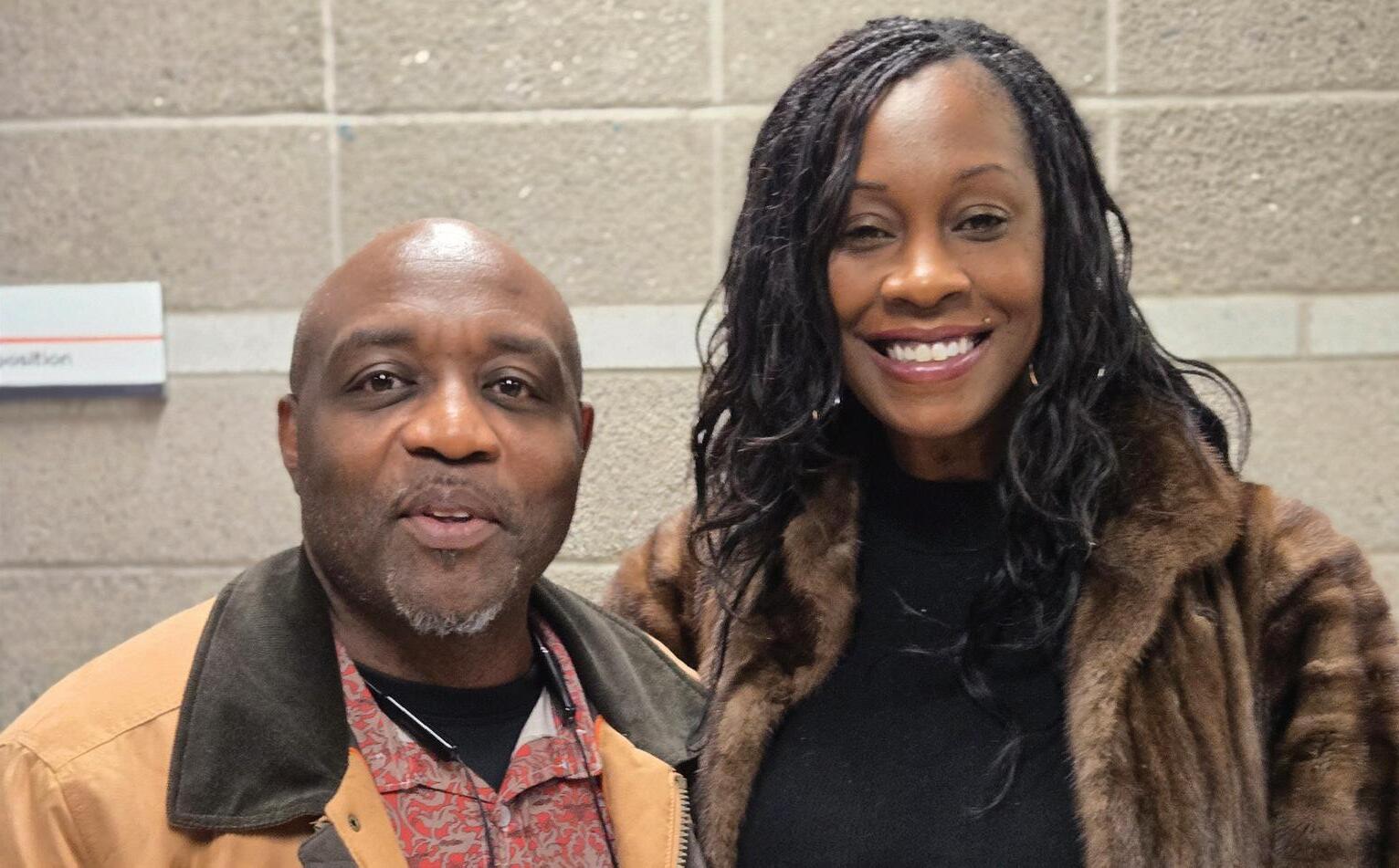
I was there for the ice, the lights, and the legendary chill of the Quebec Winter Carnival. It is a spectacle of tradition, a flurry of French heritage and winter resilience that bites at your skin and demands your attention. As a storyteller, my eyes always scan for the pulse, the rhythm that feels like mine. That is when I found it: a vibrant, breathing movement in the heart of Quebec City. I didn’t just want to watch their celebrations; I wanted to belong to them.
I reached out to Patrick DEMANOU KANA, a man who understands that community isn’t just a demographic. I told him I was in his city. I told him I wanted to see the truth of our people here. He didn’t ask for my credentials or a polished introduction. He offered an invitation to the February 12th event at Laval University.
Now, let’s be raw for a moment. My French? It isn’t even close to being up to par. Standing in a room where the cadence of the language is a barrier should have made me feel small. It should have made me an outsider, but it didn’t. They welcomed me with
open arms, a testament to the fact that our “Blackness” is the bridge that spans every linguistic divide. I sat among our community in Quebec, and for the first time in a long time, I felt the power of a connection that didn’t require a dictionary.
This is the heartbeat of the Table de Concertation du Mois de l’histoire des Noirs de Québec (TCMHNQ). They celebrated their 10th anniversary, a milestone of a decade of engagement, memory, and resilience. It was a strategic act of defiance against the invisibilization that Dr. Carter G. Woodson fought against a century ago. Under the theme “D’hier à demain, dix ans d’histoire vivante des communautés noires à Québec : se souvenir, s’unir, construire,” they are reminding us that to build a future, we must first honour the struggle of the past.
You need to understand what is at stake here. We often live like islands; African communities in Toronto, Halifax, and Montreal operating as if provincial borders are walls. They aren’t. They are opportunities we have not seized. When I saw the work of leaders like Christian Djoko Kamgain, the spokesperson for this 10th edition and a scholar who has dedicated his life to human rights and community leadership, I realized that the narrative is shifting.
The TCMHNQ mission is clear: to foster unity, respect, and inclusion while working toward a more equitable society. They are translating complex histo -


ry into a human reality that empowers the next generation. They are reporting on our presence, and they are centering our truth and dignity in a province where our contributions were officially recognized by law only in 2006.
I am writing this to you because we cannot afford to be disconnected. The systems that seek to marginalize us thrive on our isolation, but when we reach across the English-French divide, when we support the work of our kin in Quebec, we hold power accountable. We move from being systemically constrained to being structurally empowered.
The work being done in Quebec was incredible to see. They are educating the public, promoting intercultural dialogue, and ensuring that the stories of Afro-descendants are seen as the foundation of a plural collective memory.
Quebec showed me that even in the deepest winter, our community provides the heat. Don’t let a language, or a border keep you from your people. We are living history. We are the curators of tomorrow, and we are building it together, one connection at a time.


























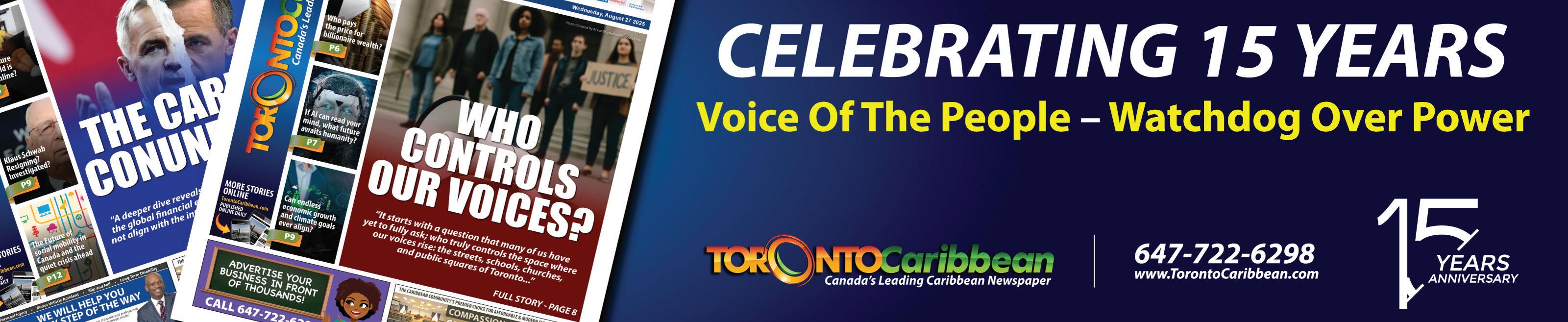
So here we are — continuing our 15th year.
When I think about how much the world has changed since our very first edition, it’s hard not to pause. Fifteen years ago, social media was about connection. You posted something, people saw it. You followed a page, their updates showed up. Businesses built audiences organically. Community conversations flowed freely.
That world doesn’t quite exist anymore.
Have you noticed that when you post an event flyer or promote your business online, it doesn’t get the attention it once did? Or that even though you follow certain pages and stay connected with people in your network, their posts rarely appear in your feed?
You’re not being “shadow banned.” Social media has changed. The algorithms that once prioritized connection now prioritize engagement, advertising dollars, and behavioural patterns. What used to work — posting consistently and building followers — no longer guarantees visibility. Even pages with large audiences often reach only a small percentage of their followers unless they pay to boost their content.
And that shift has left many businesses feeling discouraged.
Across the Caribbean community here in the GTA, I’ve had conversations with entrepreneurs, event promoters, artists, and non-profits who feel like they’re shouting into the void. They invest time into beautiful flyers. They plan meaningful cultural events. They launch businesses that deserve attention. Yet their posts barely reach the very people they are trying to serve.
At the same time, our community continues to grow and show up in powerful ways.
We see it in the energy building around cultural celebrations and summer festivals. We see it in small businesses navigating rising costs while still supporting local initiatives. We see it in the conversations around youth, mental health, entrepreneurship, and preserving our culture in a fastchanging city. The desire to connect hasn’t disappeared — the platforms have simply changed.
More and more, we’re seeing people quietly return to traditional media — not
because of nostalgia, but because of stability. In a world where we no longer own our music, our movies, or even the platforms we use to communicate — where everything is subscription-based and constantly evolving — there is comfort in something tangible. Something consistent. Something that doesn’t disappear overnight.
That’s one of the reasons advertising in the Toronto Caribbean Newspaper continues to matter.
Your message isn’t filtered by an algorithm. It doesn’t get buried beneath trending content. It doesn’t require a paid boost to reach your own community. It is printed, distributed, and placed directly into the hands of readers across the GTA. It remains visible for weeks — shared in homes, displayed in businesses, and referenced long after a social media post would have faded from a feed.
There is something powerful about holding your community in your hands.
For 15 years, while platforms have evolved and digital rules have changed, our mission has stayed the same: to provide reliable, community-focused media that businesses and readers can count on. We are not driven by algorithms. We are driven by relationships.
And relationships still matter in the Caribbean community.
Trust matters. Visibility matters. Being seen in a space that reflects your culture and understands your audience matters.
If you’ve been wondering why your online promotions aren’t landing the way they once did, you’re not alone. The digital landscape has shifted for everyone.
Sometimes progress doesn’t mean chasing every new platform. Sometimes it means strengthening the foundations that have always worked — consistency, presence, and genuine connection.
Not everything valuable needs an algorithm to be seen.
And not every connection needs a screen to be meaningful.
Thank you for continuing to build with us, grow with us, and believe in the importance of community media. Fifteen years later, we are still here — and we remain committed to telling your stories.
















simone@carib101.com
TC
You know that silence you have been keeping? That story you have tucked away because you were not sure the world was ready to hear it.
I’m talking to you. The woman who holds her family, and community together while her own struggles remain invisible.
This March, we are shifting the atmosphere.
I am inviting you into Community
Conversations with Women, a series designed to move us to being the creators of our own reality. This is an act of reciprocity. We are leaning into the International Women’s Day 2026 theme: Give To Gain. When you give your truth, you gain your power. Giving is the intentional multiplication of our collective agency. Why should you care right now? Well, if we don’t document our own lives, we allow others to shape our public memory. Journalism is the front line of historical documentation, and your lived experience is a primary source that future generations need to analyze and understand. We are preserving oral histories and giving a voice to those the mainstream often ignores.
Here is how we are going to transform together:
Week 1 is dedicated to “The Unsaid.” These are the stories we usually keep behind closed doors. This is your safe space to speak without filter, without judgment, and without consequence. I want to hear from you. Whether it’s a struggle you have overcome, or a truth you are still carrying, you can share your story with me anonymously at simone@carib101.com. Your privacy is my priority. By bringing these hidden truths into the light, we challenge the systems that rely on our silence.
In week 2, we pivot to “The Future According to Her.”
We are stepping into our roles as futurists and visionaries to imagine the world ten years from now. You will stop reacting to the world and start designing it.
By week 3, we tackle “The Work We Don’t See.”
We are exposing the invisible labour you carry at home, at work, and in our neighbourhoods. We are highlighting the need for financial sustainability and justice for the unrecognized work that keeps our communities running.
We close in week 4 with “The Women Who Built Us.”
This is a living archive of gratitude for the intergenerational strength that shaped us.
Don’t wait for permission to be heard. The features will be out every Thursday in March, and to help you prepare, a special invite will be sent out on Monday to women in the Caribbean community. This is our time to “Lead the Change” and shape a sustainable, equitable future. I will be waiting for your responses. Let’s make history together. See you next Thursday.
When we talk about mental health, we often talk about access. We talk about stigma. We talk about barriers.
But what we don’t talk about enough is culture.
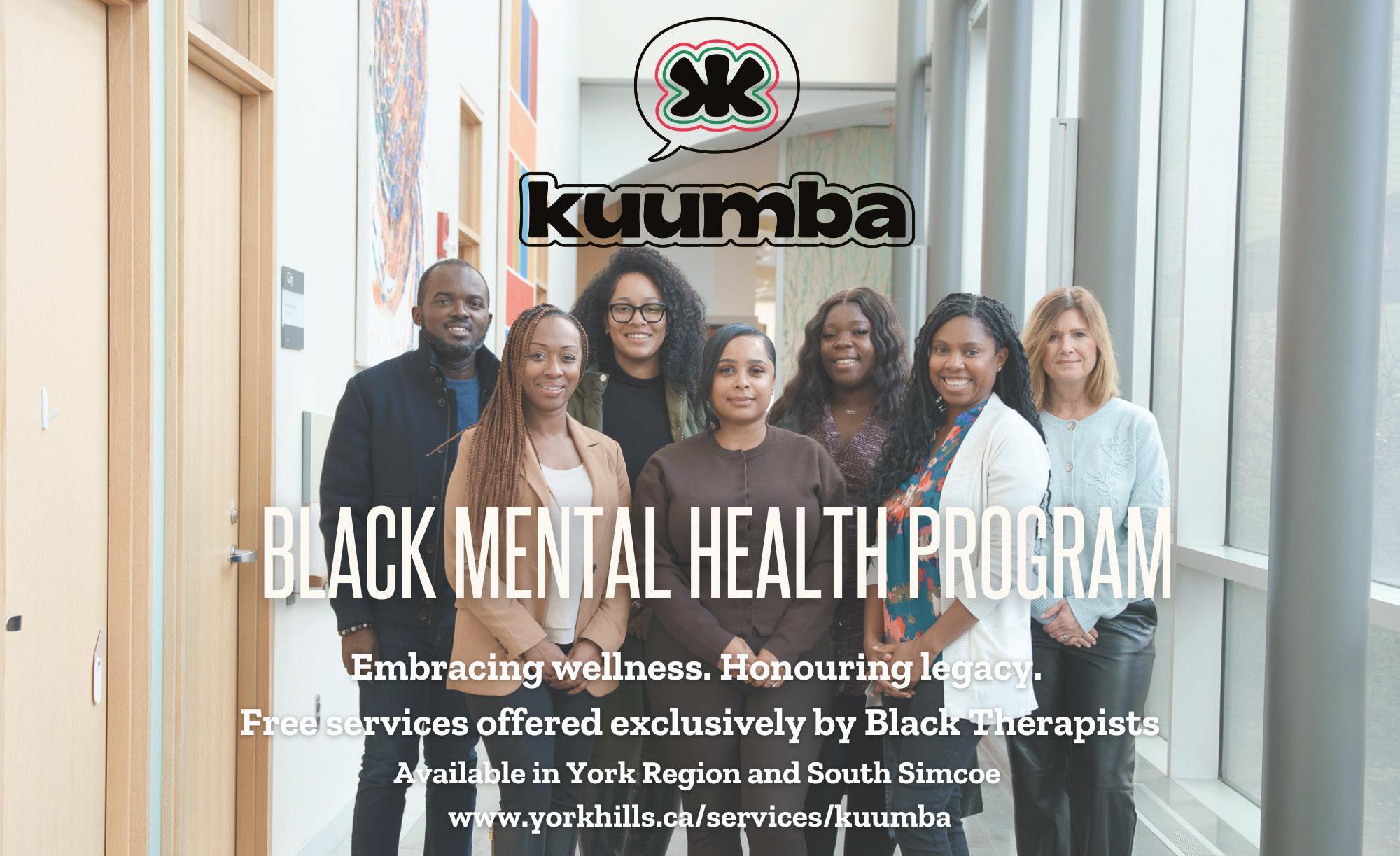
In 2020, York Hills Centre for Children, Youth and Families launched something different. Something intentional. Something built specifically for the African, Caribbean and Black (ACB) community. That program is called Kuumba(pronounced koo-OOM-bah), and in 2025, it expanded — reaching even more families across York Region and Southern Simcoe County.
Kuumba isn’t just another counselling service. It is a culturally responsive mental health and wellness program designed for children and youth ages 0–25, along with their families and caregivers, from the Black and Black-identifying community.
At its core, Kuumba affirms identity. It embraces cultural pride. And it creates space for healing that feels safe, understood and empowering.
The program operates under a belief that I personally think is powerful in its simplicity:
“Wellness happens your way.” That means there is no single formula for healing. No rigid mould. No expectation that families must adapt to a system that doesn’t reflect them. Instead, Kuumba adapts to the people
The Ontario government has formally placed the York Catholic District School Board (YCDSB) on notice, escalating scrutiny over the board’s finances and governance and setting a two-week deadline for corrective action.
Education Minister Paul Calandra made the announcement on Wednesday, January 28th, 2026. According to a report by Mike Adler in YorkRegion.com on January 30th, the province cited a projected $10.5 million deficit and ongoing governance concerns. If the board fails to appropriately respond within 14 days, it could be placed under provincial supervision, a significant intervention that would transfer authority from
it serves.
Access is one of the most important pieces. Families can self-refer directly, upholding the program’s commitment to reducing barriers and increasing access to care. No complicated gatekeeping. No unnecessary hoops.
If you’re interested in accessing or referring to the Kuumba Counselling and Therapy Program, you can call their intake department directly at 905-503-9560.
Services are flexible because life is not predictable. Support is available both in-person and virtually. There is rapid access and even self-booked therapy sessions. The program partners with schools so students can receive support right where they are. And there are specific offerings for parents, caregivers and families — because mental health is not an individual journey, it is a family one.
Within the last year, Kuumba expanded even further through a partnership with Southlake Health. This expansion introduced a dedicated Mobile Crisis Worker — a trained mental health professional from the Black community who specializes in traumainformed crisis support for the ACB community.
That means culturally grounded crisis care, both within the hospital setting and in collaboration with community partners. In
moments of urgency and vulnerability, having someone who understands not just the clinical side but the cultural side of care matters deeply.
And families are noticing. Children, youth and caregivers have shared their appreciation for services described as “for us, by people who look like us.” That representation is not symbolic. It builds trust. It lowers walls. It makes conversations possible.
Kuumba’s impact goes beyond therapy sessions. It reflects the broader vision of York Hills: To build hope and resiliency in children, youth and families.
And that vision is supported by clear, intentional values.
They are Inclusive — embedding equity, diversity and accessibility at every level, and actively working to break down barriers that prevent equal access to service.
They are People-Centred — recognizing the inherent strength in every individual and prioritizing relationships grounded in trust, authenticity, respect and compassion. Not just saying the right words, but matching actions to them.
They are Collaborative — understanding that care does not happen in isolation. Families, schools, service partners and community networks form circles of care that are stronger together than apart.
They are Knowledgeable — com-
elected trustees to a provincially appointed supervisor.
The YCDSB responded before the deadline. On February 11th, it announced a plan outlining steps to address both financial management and governance practices. The board framed the plan as evidence of its willingness to work with the province and restore stability.
In a public statement, the board said it is developing “A plan outlining how we will provide effective governance and financial management.” Jennifer Sarna, Interim Director of Education, added that “The board of trustees and the senior teams are working together to create a plan that best serves our students, staff and families.”
The board also sought to reassure parents and employees that daily operations would continue uninterrupted. “Please rest assured that the York Catholic District School Board day-to-day operation will continue as usual,” the statement read.
The Ontario Secondary School Teachers’ Federation (OSSTF/FEESO) has pushed back strongly against the province’s move. In a written statement, the union called the threat of supervision “unprec-
edented” and questioned the government’s motives.
“This level of government interference in Ontario’s education system is unprecedented and raises serious questions about the government’s real motives,” the union said. “For years, education unions and school boards have warned about province-wide underfunding and staffing shortages. It’s not clear how supervision addresses these issues. In fact, it distracts from them.”
Anna DaCosta Martini, OSSTF unit president for Professional Student Services, described the situation as destabilizing. “It’s very frustrating, it’s very confusing for everyone,” she said, adding that while dysfunction may be evident, clear solutions have yet to emerge.
Minister Calandra, who represents York Region as a Progressive Conservative MPP, has been firm in his position. He has called on trustees to end internal conflict and address what he characterizes as financial mismanagement. The YCDSB is the thirdlargest school board in Ontario. The minister has previously placed both the Toronto District School Board and the Peel District School Board under supervision, citing simi-
mitted to continual learning, high professional standards, and evidence-based, clientcentred practices that focus on real solutions.
And they are Courageous — willing to lean into complex challenges, push the sector forward, and approach difficult situations with both creativity and vulnerability.
Family engagement at York Hills means walking alongside families every step of the way. It means recognizing that parents and caregivers are experts in their own lived experiences. It means listening — truly listening — and building services that reflect what communities actually need.
Kuumba is a reminder that mental health care works best when it is rooted in culture, compassion and partnership. When families feel seen. When youth feel heard. When identity is not something to be explained — but something that is respected and celebrated.
And in today’s world, that kind of care isn’t just important. It’s necessary. For families across York Region and Southern Simcoe County, Kuumba offers more than counselling. It offers connection, empowerment, and a pathway toward resilience — together.
To access the Kuumba Counselling and Therapy Program, call 905-503-9560.
lar concerns about governance and fiscal responsibility.
The stakes are high. Provincial supervision is not symbolic; it effectively sidelines locally elected trustees and centralizes authority under a provincial appointee. For supporters, it signals decisive action. For critics, it raises concerns about democratic oversight and the broader funding context facing public education in Ontario.
At a recent board meeting at the YCDSB’s offices on Bloomington Road West, trustees discussed contingency planning. The meeting was livestreamed on the board’s YouTube channel, reflecting the public interest surrounding the issue. What remains unclear is whether the province will accept the board’s remediation plan or move ahead with supervision. The coming days will determine whether the YCDSB retains control of its governance or becomes the latest Ontario board to lose local authority.
For now, families, staff and students are left navigating uncertainty, reassured that classrooms will remain open, but aware that leadership and accountability questions are far from resolved.

simone@carib101.com
TC REPORTER
Listen, I need you to lean in for a second. We have spent centuries watching others write our stories, often smudging the ink or leaving out the best parts entirely. Now, we are standing at a new frontier…
Artificial Intelligence.
You might think it’s just silicon and math, but here is the reality; if we aren’t the ones feeding the machine, the machine will eventually starve us of our own history.
Standard AI often views our culture through a Eurocentric lens, treating “Blackness” as an edge case or, worse, a set of biased data points. When mainstream systems are asked about our lives, they often offer shallow, ge -
house, an African American technologist who saw the machine from the inside at places like Meta and Amazon. When she was laid off, she decided to take control of her relationship with technology. She founded ChatBlackGPT. It is a culturally inclusive intervention designed to center our perspectives. Reddick realized that mainstream AI was erasing or distorting African history, so she built a tool that prioritizes our narratives.
Think about the transformation here. Before, you might ask an AI for travel advice or historical context and get a logistics-only answer that ignores your safety as an African traveler or the systemic nuances of our neighborhoods. After ChatBlackGPT, you get responses grounded in the work of African historians, educators, and community voices. It uses something called Retrieval-Augmented Generation (RAG) to ensure that when it speaks, it draws from our repositories first.
Why does this matter to you? Research shows the difference is real. In studies comparing ChatBlackGPT to standard models, it excelled in providing nuanced, context-aware responses with deeper historical framing. While standard AI might give you a high-school level summary, Chat-

STEVEN KASZAB
steven@carib101.com
TC COLUMNIST
pected to take on multiple roles for less pay.
There is also the perception (fair or not) that employers worry about health costs for older staff or parental leave for younger women. While employment law prohibits discrimination on the basis of age, sex, disability, race, or religion, enforcement can be costly and complex for individuals seeking work.
The result is a sense that qualifications no longer guarantee opportunity. Applicants may be labeled: overqualified, too old, too young, or not experienced enough. If you are deemed overqualified… there will be problems you’ll certainly face.
BlackGPT offers college-level complexity and empathy specifically tailored to our lived experiences.
I know the tech world can feel cold. It can feel like another system designed to marginalize us, but we are doing this together. Erin is collaborating with HBCUs and community members to ensure this tool stays rooted in our truth. This is how we hold power accountable; by building our own.
I will be speaking more in the near future about the boring, but vital stuff: compliance and the ethics of AI use, because we have to be as strategic as we are bold. We are moving from being systemically constrained to being digitally empowered.
Don’t sit on the sidelines of this revolution. Recreate yourself. Right now, our community is recreating how the world’s most powerful technology understands us.
Embrace this. Learn it. Use it to heal divisions and amplify the voices that have been silenced for too long. We are protecting our community interests not just for today, but for every generation that will ever type a query into a search bar.
The pen is in our hands again. What are you going to write? Stay bold. Stay rooted. We move together.
derstanding of both work and the human condition.
Fear and financial pressure
Beyond employment, there is the anxiety of financial preparedness. Retirement savings, healthcare costs, wills, funeral planning, and the wellbeing of adult children weigh heavily. For those without significant savings, the margin for error feels thin.
questions about salary expectations.
My son, who has a university degree, also sends out resumes only to be waiting for some response. Two generations. Same stalled outcome.
I suspect age is part of the equation. “Is it because I am 60+ years young?” It is a question many older workers quietly raise.
Experience versus cost
Employers often prioritize lower wages and flexibility. I believe seasoned applicants are viewed as expensive hires, while younger workers are ex-
The demographic shift Canada’s population is aging. Workers over 55 now represent a significant and growing share of the labour force. At the same time, birth rates have declined, creating long-term pressure on labour supply.
Yet perception often lags behind reality. Older workers may be seen as nearing retirement, or as future costs to health and social systems. The writer pushes back against that framing, arguing that people in their 50s and 60s bring institutional knowledge, resilience, and perspective shaped by decades of experience.
Fifty somethings and seniors should be highly prized employees, instructors, advisors; they have an un-
Like an aging vehicle, the body requires more maintenance over time. The cost (financial and emotional) can be daunting. Humour offers brief relief. “Looking 60 is great, if you’re actually 70+.” Erica Jong stated, “Turning sixty is like flying, hours of boredom punctuated by moments of sheer terror.” Behind the humour lies a serious question: In an economy that prizes youth and speed, how do older workers remain visible and valued?
The larger question
Ageism, like sexism, racism, and ableism, shapes opportunity in ways that are not always easy to prove but are often deeply felt. There needs to be a broader conversation about equity in hiring and the economic dignity of aging populations.
As the workforce grows older, the challenge is whether employers, policymakers, and institutions are prepared to recognize its value.
simone@carib101.com
TC REPORTER
Let me tell you the truth plainly: while the world is hypnotized by the chaos south of the border: every headline, every indictment, every courtroom whisper, Canada is quietly restructur ing the economic ground beneath our feet, and for Afro/Indo/Caribbean com munities, the consequences are im mediate. They are structural. They are dangerous.
While we are busy scrolling through Trump updates, the policies shaping our housing, our wealth, and even our end‑of‑life care are shifting in silence, and silence is where harm hides.
Let’s begin with the mortgage myth; when rumours started circulat ing online, “You can only qualify for one mortgage now,” many dismissed it as TikTok panic, but the truth, buried in OSFI’s 2026 mortgage rules, is far more complicated and far more consequen tial for Afro/Indo Caribbean Canadians.
The document makes it clear, “New rules ban double counting rental income across multiple properties,” and “Loans where over 50% of qualifying income comes from rentals are now classified as higher risk.”
Translation? If you are an Afro/Indo/Caribbean family trying to build generational wealth through real estate, one of the few accessible wealth‑building tools in this country,
your ladder just got shorter. Not re moved. Just raised higher. Just out of reach for many of us.
Our community is dispropor tionately renters, disproportionately underpaid, and disproportionately carrying the weight of remittances, caregiving, and multigenerational re sponsibilities. When OSFI says you can’t reuse rental income to qualify for an other property, they are not talking to the wealthy. They are talking to us.
They are talking to the nurse in Brampton who wanted to buy a duplex so her mother could live downstairs. They are talking to the Jamaican con tractor in Scarborough who hoped to buy a second property to help his kids avoid the rental trap. They are talking to the Grenadian single mother in Ot tawa who finally built enough equity to think about investing. These rules stop new investors. They stop many Carib bean investors.
While OSFI tightens the screws on everyday people, Canada is simul taneously opening the gates to global capital. The document states, “A Sin gapore based firm… partnered with Canada’s CLV Group to acquire Inter Rent REIT… for about $4 billion.” Thou sands of rental units, homes where our families live, shifted into partial foreign ownership with one stroke of a pen, and the Investment Canada Act ap proved it. No requirement to build new housing. No affordability conditions. No community consultation. Just a green light. This is now policy, and it is happening while we are distracted by the political circus in the United States.
Afro/Indo/Caribbean Cana dians already face lower average in comes and higher rates of precarious work. When OSFI says your rental in come can’t support your next mort
gage, it hits us harder because we rely more heavily on that income to qualify. The document notes, “Buyers must now prove each property stands alone financially.” Our communities often rely on collective economics: family pool ing, rental suites, shared ownership. These rules punish that.
When foreign investors acquire thousands of units, rents rise. We have seen this pattern for decades, and the document acknowledges the criticism, “Critics argue… benefits accrue to in vestors… exacerbating rent hikes and homeownership barriers.”
Who gets squeezed first? Afro/ Indo/Caribbean renters. Caribbean se niors. New immigrants. Single mothers. Students.
While housing becomes more precarious, another quiet crisis unfolds: MAID. “Ontario’s Chief Coroner report ed 65 same day MAID deaths… often linked to inadequate palliative care ac cess.” For Afro/Indo/Caribbean elders, already facing medical racism, under diagnosis, and barriers to care, this is chilling.
Same‑day approvals. Virtual as sessments. Minimal safeguards. This is not a system built for our protection, and efficiency has never been kind to Afro/Indo/Caribbean people.
While we’re watching Trump, Canada is redrawing the map. This is the part that should unsettle us. Every time Trump sneezes, Canadian media breaks into programming. Every time he posts, we get a push notification Ev ery time he appears in court, we get a livestream. Meanwhile:
• Mortgage rules shift.
• Foreign ownership expands.
• MAID oversight weakens.
• Housing affordability collapses.
• Caribbean communities lose ground.
We are being conditioned to look out ward while the real threats to our sta bility grow inward. This is not a con spiracy.
The danger is not that Canada is changing. The danger is that Canada is changing quietly, and quiet change is the most violent kind, because you don’t see the blow coming. You only feel the impact. African‑Caribbean communities are being pushed into a tighter corner:
• Harder to buy.
• Harder to rent.
• Harder to age safely.
• Harder to build wealth.
• Harder to stay rooted in the cities we built.
While we are debating Trump’s latest outburst, the policies shaping our actu al lives are passing without resistance. So why should you care right now? There has to be some concern, because this is a story about power:
• Who gets to own.
• Who gets to stay.
• Who gets to age with dignity.
• Who gets to build wealth.
• Who gets to live.
• Who gets pushed out quietly while the nation is looking the other way.
Canada is not neutral. Policy is not neu tral. Silence is not neutral. Afro/Indo/ Caribbean communities cannot afford to be distracted. Not now. Not with this much at stake, because while America is loud, Canada is quiet, and quiet is where the real danger lives.
MICHAEL THOMAS
michael@carib101.com
TC REPORTER
The Canadian Civil Liberties Associa tion (CCLA) has recently received what appears to be a favourable ruling from the Supreme Court of Canada. Let us dissect this decision and, most impor tantly, why there are no reasons to cel ebrate here.
During the pandemic, the Chief Medical Officer of Health for New foundland and Labrador took it upon himself to enact an interprovincial trav el ban on citizens. This meant that there were restrictions on the movements of the citizens of this province.
This did not go well with many people, and as a result, the CCLA took the parties responsible for these restric tions to court. CCLA wanted to prove whether these restrictions infringed on
the mobility rights of the citizens.
It is important to realize that when a matter reaches the Supreme Court, which is the highest court in the land, smaller courts have most likely re fused to hear the case, or did not rule in the complainant’s favour; that said, the Supreme Court ruled that the inter provincial travel ban enacted by New foundland and Labrador infringed on mobility rights. However, the Court also found that the restrictions were justi fied in circumstances.
This is where I feel that my in telligence has been insulted. No matter how I try to understand this, it just is not making sense. How do you infringe on someone’s rights and, in the same breath, be justified in so doing? What message is the Supreme Court of Can ada sending to those in the Canadian government who, as we have seen over the past six years, have enjoyed tram pling on our rights as citizens?
This is when I decided to speak with Anaïs Bussières McNicoll, director of CCLA’s Fundamental Freedoms pro gram. I asked McNicol what this ruling means for Canadians.
“We believe that this is a weighty decision for mobility rights and government accountability com ing from the Supreme Court of Canada. We know that the pandemic was the first time in Canadian history that the Canadian borders became barriers to the free movement of people,” McNicol said.
McNicol spoke of the touching case concerning Miss Kimberly Taylor, who was residing in Nova Scotia at the time and refused entry to Newfound land and Labrador to visit and grieve with family members at her mother’s funeral. Even though Taylor was grant ed access later; the damage was done. This sparked outrage and prompted the CCLA to act.
McNicol said her organization had a partial victory initially in New foundland and Labrador, which they appealed, but it was told that the pan demic was over; travel restriction was waived, and so the court of appeal de clined to rule on the issue. That is how this case arrived at the doorstep of the Supreme Court of Canada.
“The highest court in the land
clarified that the court of appeal should have decided and ruled on this issue even though it was moved and went on to issue the judgment on the merits of the appeal,” McNicol said.
Howard Sapers, CCLA’s Execu tive Director, weighed in by saying, “A public health crisis is not a blank check that allows the government to ignore Charter rights. Times of crisis are pre cisely when civil liberties and funda mental freedoms that define our soci ety are at the greatest risk.”
“A future emergency (be it public health, climate change, or other) is inevitable,” Sapers added. “Today’s decision clarifies the legal parameters so officials can govern effectively (and in accordance with the Charter) during future crises.”
As I mentioned earlier in this piece, this ruling by Canada’s Supreme Court speaks from both sides of the mouth, and at best, it is deceptive. I also wished that CCLA would have made it possible for me not only to speak with Miss McNicol, for which I am thankful, but also with Mr. Howard Sapers, CCLA’s Executive Director, too.
MICHAEL THOMAS
michael@carib101.com
TC REPORTER
It is a little-talked-about, but wellknown fact that Canadian seniors are at the top of most online scammers’ lists. From sending emails with phishing links to hacking their social media pages to remove data and clone identities, scammers are having the time of their lives, and seniors are paying. Other ways in which seniors are targeted are romance schemes, impersonation calls, AI voice cloning, brandlook-alike websites, and urgent family emergency frauds designed to exploit trust, authority, and emotional leverage.
To shine a brighter light on this evil that Canadian seniors are facing daily, I spoke with Dave Parkinson, founder of The John Parkinson Family Foundation, a foundation Dave started in honour of his father, John Parkinson, who lived to 95. This foundation was created to address measurable and growing problems faced by seniors mentioned above. I asked Dave why seniors are the main attraction in these scams.
“With age comes isolation. They have accumulated money throughout life, the pension, the property or home; they are lonely as well, so they are reaching out to people for assistance. Their spouses recently died
they are left alone, and the world has changed. There are many varied factors that lead to seniors being targeted,” Parkinson said.
Another thing Parkinson said is so true is that seniors come from a generation where trust and your word meant something, and nowadays that’s a dying quality. “What it really comes down to is the exploitation of trust,” he said.
Parkinson touched on a very cruel nerve of these scams, the romance scams. This is where the victim’s heartstrings are being tugged, and there is an emotional burden attached.
“This can completely devastate people not only emotionally, but financially as well,” Parkinson said.
As we spoke, it became clearer to me that with each passing day these scammers are becoming more emboldened and tech savvy. Even going to the point of using AI to mimic the voices of loved ones, complete with cloned images, and persuade the elderly to send them money.
How is this done, you might ask? These scammers go to places like Instagram where they match grandkids profiles, images, and voices, clone them, and move in for the financial kill on elderly family members.
The poor grandparents might get a call with an AI generated voice of their grandson claiming he is in jail in another country and needs some money, only to find out later that they were swindled. So be aware.
“These scams are becoming so complex and changing daily and evolving in a way that we have not seen in decades, especially since AI has advanced these technologies significant-
ly.
Even the simple AI-generated programs like Cap Cut, which most children use to upload videos on TikTok, can clone your voice and image then get AI to generate videos with it of you and your voice by just entering text,” he shared.
I asked Parkinson why this kind of crime is so under-reported. “A lot of people feel ashamed and blame themselves,” he said. “This is a critical concern and needs more attention. Imagine 650 million dollars’ worth of these swindles just in 2024 alone, and that is just from the Canadian Fraud Center. According to them, over 90 per cent of victims do not even report the fraud.” This is especially true for romance swindles.
When someone can fake another person’s complete video image and translate their voice in any language, even synchronizing their lip movement in real time, I believe no one, not just seniors, will be safe from fraud once AI reaches its maximum potential.
What can be done I asked Parkinson, “Always keep up to date on your elderly family members, be suspicious of new people coming to offer help, there may be vultures. Make sure they are not clicking on unknown emails or downloading things on the computer. Talk to them about all these potential threats before they develop.”
The John Parkinson Family Foundation is family-funded and does not ask for money. The plan is to educate and do outreach. For more information visit: johnparkinsonfamilyfoundation.org
BY ADRIAN REECE
TC REPORTER
Education has been a path to advancement for many people who come from lower economic circles, as well as maintaining generational wealth for those people who come from it. For many The Ontario Student Assistance Program or OSAP has been the only way that students can afford to go to college and university and become qualified to get jobs that can change their lives.
There are around 920,000 full time students who take OSAP. Two thirds of students require help to fund their education. OSAP is typically broken up between loans and grants and graduates are made to pay back these loans when they’ve finished their education. While these amounts add up, the thought is that you will be able to receive a high paying position and pay back all your loans in full within a couple of years. Grants typically assume a large portion of the amount received for a person’s school tuition.
Doug Ford has made a huge change to the OSAP structure, which disadvantages many people. He has now shifted the split to a maximum of 25% in grants and 75% in loans, so now
graduates will have more to pay back after school is completed. They will spend more time and resources digging themselves out of debt for their education.
Ford recently spoke about the change and encouraged people to go into careers like healthcare, however many people are criticizing his words, and he is known for cutting budgets to healthcare, which makes it more difficult and more competitive for people to enter the health care field, even though we are understaffed and underfunded already.
With so many relying on assistance programs, this is a new move that pushes people further into debt for longer periods and creates a larger divide among socio-economic classes. With more of your income going towards larger debts that are earning a huge amount of interest, Canadians are once again being pushed farther into poverty.
Jobs are disappearing and young people are being encouraged to commit to high interest loans that take years to pay off in an economy where the job market is a struggle to navigate and wait times for open positions that take weeks to months to fill. Many in-
dividuals have the same qualifications and therefore hundreds of people apply to the same position, to the point where employers don’t even see your application.
The repayment period for OSAP is around nine and half years, however it can take up to 15 years to completely clear it up. This is a large amount of time, and most people won’t pay off their student loans until their mid to late 30s assuming they graduate in their early 20s.
By increasing the amount people must pay back, either they will not be able to afford their necessities, or they will end up spending more than 15 years to pay back This balance that accrues interest at a high rate. This does not account for graduate school, which can take up to 25 years or more to fully pay off.
People won’t be able to afford homes, with this kind of debt hanging over their heads, and with the difficulty in getting jobs they may spend their entire lives attempting to pay back these hefty loans that are dragging them deeper into debt regardless of the income level they have reached after receiving a post-secondary education.

simone@carib101.com
TC REPORTER
When the title of this study “Colorism and Health Inequities among Black Americans” first appeared in my inbox, I didn’t flinch. I was not surprised. We have lived the reality of the paper bag test and the shade-based hierarchy for generations. We know that the closer you are to a Eurocentric aesthetic, the more the world opens its doors. What did surprise me were the results. What is still being discovered is that the poison of colourism crawls under our
skin. It attacks your cells. It literally shortens your life. You need to understand the stakes. This is about biopsychosocial embodiment, the process where social rejection becomes biological decay.
The researchers found something chilling. They measured Leukocyte Telomere Length (LTL). Think of telomeres as the plastic caps on the ends of your shoelaces, your chromosomes. When those caps get too short, the lace (your DNA) starts to fray. Your cells age. Your immune system breaks.
Here is the punch; African Americans who perceive themselves as darker skinned have shorter telomeres. They are aging faster at a cellular level because of the chronic stress of navigating a world that devalues them.
We often talk about self-esteem, but the study used a more powerful metric: The Sense of Mattering:
• Do people pay attention to you?
• Would you be missed if you went away?
• Does the world care what you say?
Darker-skinned respondents reported a significantly lower sense of mattering. This is what we call a negative reflected appraisal. You look into the mirror of society, and if that mirror doesn’t reflect your value back to you, your brain registers it as social pain. That pain triggers chronic inflammation. That inflammation fry’s your telomeres.
The most strategic insight from this research is that how you see yourself matters more for your health than how a stranger (an interviewer) sees you. When there is a discordance (specifically when you see yourself as darker than the world sees you) your body stays in a state of hypervigilance. You are constantly bracing for the next racist interaction, the next slight, the next denial of your dignity. That
The risk hiding behind the real estate boom
bracing is what is killing us.
We have to stop viewing colourism as a within-group petty grievance. It is a structural health risk.
Before, we thought colourism was just about dating preferences or media representation. We now know it is a predictor of heart disease, cancer, and rapid aging.
Healing requires a power analysis. We must move from a deficit-based view (thinking our skin is the problem) to a structural view (knowing the system’s anti-Black stigma is the toxin).
Your melanin is a protective adaptation to the sun, but the system has turned it into a basis for social stratification. To protect your DNA, you must protect your Sense of Mattering. Surround yourself with those who reflect your true value until your internal mirror is stronger than the world’s lie. This is a service to your survival.
BY JAY BRIJPAUL
TC REPORTER
I remembered someone telling me they invested in a syndicated mortgage and felt safer than if they had bought a stock. What they didn’t realize is that some of the biggest mortgage fraud cases in this province happened, because of how much people trusted it.
Syndicated mortgages gained popularity during Ontario’s housing boom. They were marketed as conservative, incomegenerating investments, often appealing to individuals who did not see themselves as risk-takers. Syndicated mortgages offer high returns, are secured by property, have short durations, and display low volatility. In many cases, investors bought into an opaque structure based on aggressive assumptions, inflated appraisals, and sometimes misleading information.
Most people believe mortgage fraud involves fake buyers or forged documents. However, in syndicated mortgages, fraud tends to be more subtle and sophisticated. In Ontario, regulators have uncovered
paul@carib101.com
cases of inflated land values based on unrealistic future development plans; misleading disclosure documents that downplay risks; conflicts of interest where developers, brokers, and promoters benefit while investors incur the losses; and funds raised for projects that were never financially viable from the start. During a rising market, these issues remained hidden. Prices increased, refinancing was easy, and losses went unnoticed.
Today’s market exposes all vulnerabilities. Ontario’s housing sector has slowed significantly. Condo sales are sluggish, construction costs remain high, and financing options are limited. Many projects experience delays or are entirely cancelled. Syndicated mortgages rely on steady progress. When that progress halts, the structure collapses.
Investors are now facing harsh realities where they no longer receive interest payments on their investments. The projects they believed were secure are deteriorating, and legal disputes are beginning. Properties are selling at distressed prices. Syndicated investors (often in second or third position) are the last to be paid.
Syndicated mortgages require careful review. If you’re considering one in today’s market, proceed with caution. Many Ontario investors misunderstand the differences between first, second, and third mortgages until defaults occur. As an investor, inquire about the mortgage’s position, understanding that a first mortgage is less risky than a second, and a second is less risky than a third.
Question the appraisal and determine what the property would sell for today. If promoters, brokers, and developers are paid upfront while investors wait, incentives become misaligned. Avoid sales pressure and rushing, as fraud often relies on quick decisions. Never invest all your savings into a single syndicated mortgage, no matter how convincing the pitch is.
Ontario’s real estate boom led many to believe that property investments were completely safe. However, cases of mortgage fraud involving syndicated mortgages have shattered that misconception. Real estate should not be seen as a foolproof guarantee. Legal documents are not inherently protections, and high returns associ-
ated with complex structures should always arouse suspicion, especially in a declining market.
A few years ago, during the market’s boom, many homeowners leveraged their home equity to invest in syndicated mortgages, which financed larger projects. The mortgage is secured against a property, but often that property is one the lender prefers not to finance. Typically, syndications are created to raise funds for a specific project; if that project fails, the syndication collapses. We live in a changing world where fraud and misleading advertisements are becoming more sophisticated. Yet, a common theme runs through all these schemes. They promise a safe environment where your money is secure and offer high returns. Usually, their call to action is urgent. You must invest now, and if you don’t act quickly, you will miss out.
Your home is your shelter, both physically and financially. If you need to access equity for investment, proceed carefully.
ing Company and the Crawford 7th Day Adventist Academy Choir. A reception and vendor market in the Rose Lobby featured local caterers and community businesses, reinforcing the event’s economic and cultural focus.
Brampton’s Black History Month celebration drew a full house on Saturday, February 7th, 2026, at the Rose Theatre, bringing together community members, civic officials, business leaders and cultural organizations for an evening rooted in recognition and renewal.
This year’s theme, “Honouring Black Brilliance and Generations: From Nation Builders to Tomorrow’s Visionaries” framed the program as both tribute and call to action. As the City’s promotional materials noted, “Brampton is celebrating past leaders and new voices shaping the future, offering something for everyone to learn, enjoy and engage with.”
The evening balanced ceremony with celebration. Guests were captivated by performances from Dance Caribe Perform-
During a February 4th city council meeting, Mayor Patrick Brown announced that Retired Sgt. Lonsdale Blackett, the first officer employed by Peel Regional Police when the force launched in 1974, will have a street named in his honour. “He dedicated his life to public safety and is a long-time Bramptonian,” Mayor Brown said.
The initiative was advanced with support from Wards 3 and 4 Regional Councillor Dennis Keenan, who played a key role in the process.
The event was hosted by Bakari Savage, co-anchor of CP24 Live at 5, who delivered the welcome and land acknowledgement. Vocalist Shian Smalling performed both the Canadian national anthem and the Black national anthem.
Gwyneth Chapman, who leads the City of Brampton’s Black Economic, Social, Cultural, Youth and Civic Development division (commonly known as the Black Empowerment Unit) addressed the audience with remarks focused on uplift, representation
and sustained community investment.
Several organizations received the Mayor’s Awards in recognition of their impact across Peel Region:
• Roots Community Services Inc
• Case Community Services
• 100 Community Builders
• United Achievers Club
• RESQ Youth International
• Congress of Black Women — Brampton Chapter
• Walnut Foundation
• Raven Youth Services
The Black Business Empowerment Award was presented to Divatello Beauty.
In a statement posted to Facebook, Roots Community Services reflected on the honour, “This recognition affirms the work we have done alongside Black, African and Caribbean (BAC) communities across Peel and beyond… We accept this recognition with gratitude and renewed commitment to creating lasting change.”
The keynote address was delivered by the Honourable Justice Irving André, a jurist, scholar and author of Dominican heritage. Drawing on figures including Dr. Eric Williams, Roberta Nesta Manley, Tina Turner,
Booker T. Washington and Rosie Douglas, André spoke about resilience, purpose and collective responsibility.
He urged attendees to reject limitations, emphasizing that perseverance, education, faith and hope remain powerful tools for transformation.
Councillor Harkirat Singh echoed that message in a public statement shared on Instagram, writing, “We proudly recognize the contributions of Black residents in Brampton’s growth, vibrancy and identity… We reaffirm our commitment to advancing equity, dignity, belonging and opportunity for all.”
The coordinated efforts of the Mayor’s Office, including staff members Garnett Manning and Candy Car, alongside the Black Empowerment Unit, underscore the City’s ongoing commitment to representation and civic engagement.
Events such as this extend beyond ceremony. They shape public memory, affirm lived experience and offer visible pathways for young people to see themselves reflected in leadership, service and achievement.
For more information on Black History Month events in Brampton, visit brampton.ca/bhm
Toronto and Brampton are set to ignite with Caribbean creativity in 2026. From reggae icons and music awards to Afrofuturist conversations and award-winning literary talent, these events spotlight culture, community, and global impact. Mark your calendar for unforgettable nights celebrating sound, story, and the future of Black artistic excellence.
Rhythm on the Rocks hosted by the JTB!
Rhythm on the Rocks is more than just a cocktail party; it’s a sensory journey to the heart of the island. Immerse yourself in an atmosphere filled with the infectious sounds of reggae and island beats, savor the authentic taste of Jamaican-inspired cuisine and rum, and mingle with fellow lovers of culture and travel.
Prepare for an unforgettable night of entertainment with an incredible lineup featuring: Agent Sasco, Baby Cham, Spexdaboss, D’bandit, Steele And Emcee Jay Martin!
Beyond the music and flavors, your guests will have the opportunity to explore exclusive travel offers, discover the creativity of Jamaican fashion and artisans, and even stand a chance to win an all-inclusive trip to Jamaica, courtesy of the Jamaica Tourist Board and our partners.
Here are the details for your calendar:
• Date: Friday, February 27th, 2026
• Time: 5:00 PM – 11:00 PM
• Venue: Toronto Event Center - 15 Saskatchewan Rd., Toronto
To secure your spot at this unforgettable event, please purchase tickets by clicking the link below: www.universe.com/events/rhythm-onthe-rocks-tickets-250NCD
Submissions open for the 2026 Reggae North Music Awards on March 1st
Submissions for the 3rd annual Reggae North Music Awards (RNMA), will open on March 1st, 2026. The RNMA continues to shine a spotlight on outstanding talent within the Canadian reggae and dance -
hall community. The 2026 Awards are in a Community Arts Partnership with the Rose Theatre.
Producers, artists, managers, radio stations, publicists, music executives and record labels are invited to submit nominations for the 2026 RNMA. To be eligible, participants must be Canadian citizens or permanent residents and have maintained residency in Canada during the eligibility period from November 1st, 2024, to November 30th, 2025.
The RNMA Selections Committee will review submissions based on composition, melody and lyrics. National distribution is not required, but music must have been released within the eligibility timeframe and be accessible to Canadian audiences.
Twenty categories, including Male Vocalist of the Year, Female Vocalist of the Year and Top Album/EP of the Year, will celebrate the full spectrum of Canadian reggae and dancehall talent.
New for 2026 is the Top Gospel Recording category, which reflects the growing presence and impact of reggaeinspired gospel music within Canada’s cultural landscape.
The submission deadline is May 1st, 2026, at 11:59 p.m. ET. Nominations will be announced on or before July 1st, 2026, on the RNMA website. The third annual Reggae North Music Awards will take place on Sept. 27th, 2026, at the Rose Theatre in Brampton, bringing together artists, industry professionals and fans for a night of live performances and recognition.
For more information and to submit nominations, visit Reggaenorthmusicawards.com/submissions .
AstroSankofa Arts Initiatives is proud to present Beyond Uhura, a conversation about Star Trek, Afrofuturism and Representation, on February 26 at Jane Finch Mall in Toronto. Beyond Uhura honours the cultural legacy of Nichelle Nichols as Lt. Uhura Nyota and Percy Rodrigues as Portmaster Stone, who in 1966 became the first Black characters in a science-fiction television series.
Bringing these histories into the present, Beyond Uhura will feature visual artist Jamera DaCosta in conversation with Star Trek franchise actors Ronnie Rowe Jr. (Star Trek: Discovery) and Dorothy Atabong (Star Trek: Star Fleet Academy). Through dialogue, performance, and media, participants will explore Afrofuturism, fashion, identity, and the responsibility of representation to younger generations.
Beyond Uhura will also feature a
special announcement about Sculptfleet, a sculpting workshop series held at Jane Finch Mall during March Break. Sculptfleet will be supported by Toronto’s very own Shauna Llewellyn, Star Trek: Starfleet Academy’s award-winning make up department head, and Vancouver’s Jeryce Dianingana, Black Panther’s video game digital sculptor.
The groundbreaking impact of Lt. Uhura Nyota is a defining moment in the emergence of Afrofuturism on screen and Nichelle Nichols’ performance did more than reshape television; it influenced social and political imagination. Her role was famously encouraged by Dr. Martin Luther King Jr., who recognized Uhura as a necessary symbol of dignity and futurity.
Percy Rodrigues, the first Black Canadian and Haitian actor to appear in a televised science-fiction role in 1966 in Star Trek: The Original Series, whose presence expanded the global narrative of Black identity within futuristic storytelling.
Hosted in Jane-Finch during a period of neighbourhood transformation, Beyond Uhura invites the community to envision futures beyond imposed circumstances. The event offers the community an opportunity to consider the futures they would like to explore, and the type of representation they would like to see in decision making positions.
Beyond Uhura
February 25th, 2026 at 6pm
Jane Finch Mall - North Commons 1911 Finch Avenue West in Toronto www.janefinchmall.com/events/janefinch-mall-beyond-uhura-star-trek-afrofuturism-representation
Announcing Brampton’s 2026 Writer in Residence, Suzan Palumbo
Brampton Arts Organization (BAO), Brampton Library, and the Festival of Literary Diversity (FOLD) are delighted to announce Suzan Palumbo as the 2026 Brampton Writer in Residence.
About the Writer in Residence
Suzan Palumbo is a Trinidadian Canadian dark speculative fiction writer and editor. Her writing has been nominated for the Nebula, Aurora, World Fantasy and Locus awards. She co-founded the Ignyte Awards with L.D. Lewis and co-edited the special Caribbean issue of Strange Horizons magazine. Her debut dark fantasy/ horror short story collection, Skin Thief: Stories, is out now from Neon Hemlock. Her novella, Countess, was published by ECW Press in September 2024 and nominated for a Nebula award.
About the Residency
An integral part of this residency is working with the community. In-person, oneon-one consultations are available, during which aspiring authors can get their work reviewed and receive guidance about the writing and editing process and the publishing industry. Suzan will hold these consultations during her regular office hours, on Tuesday mornings from 10:00 a.m. to 3:00 p.m. and Thursday evenings from 4:00 p.m. to 9:00 p.m.
To book a consultation, residents are asked to email events@bramptonlibrary.ca with up to 10 pages of their adult or young fiction manuscript, what you hope to discuss with Suzan, two preferred dates and times (from which one will be chosen). Appointments are one hour inperson and must be booked in advance.
Save the dates
Suzan Palumbo will be holding an initial meet-and-greet and two workshops at the Mount Pleasant Village Branch Library, located at 100 Commuter Dr, Brampton, ON L7A 0G2.
1. Meet the 2026 Brampton Writer in Residence Suzan Palumbo
• Date: Tuesday, March 3rd, 2026
• Time: 7:00 PM – 8:30 PM
• Free/All Are Welcome
2. Traditional Publishing, Small Press Publishing or Self-Publishing - Which is the best for you?
• Date: Wednesday, March 25th, 2026
• Time: 7:00 PM – 8:30 PM
• Free / All Are Welcome
Learn about all the publishing options available to writers, including the production, distribution, and marketing responsibilities for authors. Participants will become equipped to make informed decisions regarding which method suits their publishing goals.
3. How to Write Compelling Character Arcs
• Date: Wednesday, April 15th, 2026
• Time: 7:00 PM – 8:30 PM
• Free / All Are Welcome
Creating a compelling emotional journey for your protagonist is key to capturing both your readers’ attention and heart. You will learn how to create dynamic character arcs that add depth and resonance to any plot. You will also become acquainted with tools to craft scenes that highlight character motivations and internal conflict while maintaining control over narrative momentum.

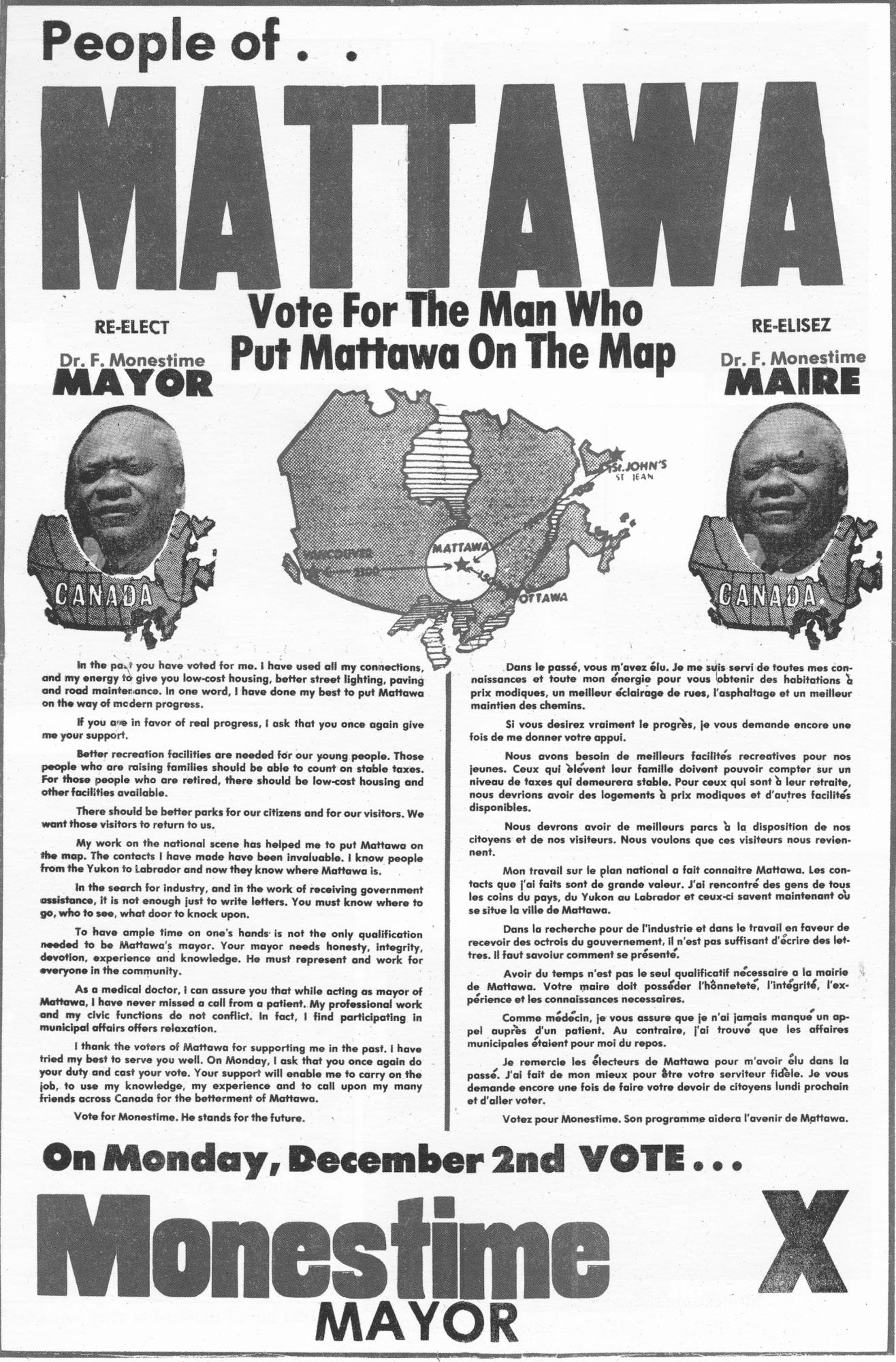
My travels to Mattawa have always been beautiful. It is, without question, one of the most stunning landscapes in Ontario. There is a unique silence there, a quiet that moves through the air, replacing the sirens of Toronto with the sound of horses and the rhythm of nature. It is my escape. Imagine my surprise, then, when I learned that the roots of African-Caribbean political power in this country were planted right there, in that small town at the confluence of the Mattawa and Ottawa Rivers.
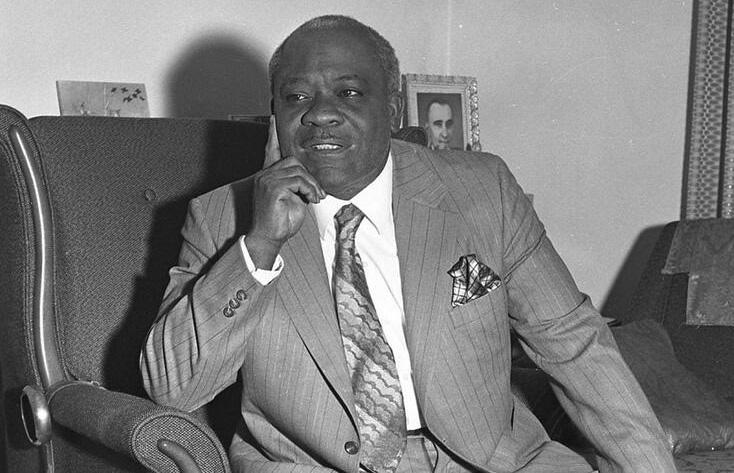
Before the world knew the name Barack Obama, there was Dr. Saint-Firmin Monestime. He is a legend who deserves to be etched into the collective memory of every Black and Caribbean person in this diaspora. He broke the glass ceiling, and he built a house where there were no ceilings at all.
Born in 1909 in Cap-Haïtien, Saint-Firmin was the only boy among seven siblings, raised in a middle-class family where he was driven to school in a horse and buggy. Privilege did not blind him. He saw the suffering of the rural poor and wrote books about it, critiquing the deplorable conditions of the countryside.
His mettle was truly tested in 1937 during the Parsley Massacre. As the sole medical person on the scene, he watched as thousands were slaughtered under the Trujillo regime. He treated the survivors and buried the dead under gunfire. It was a trauma that birthed a warrior’s spirit, an anti-
oppression ethos that would define his life. He saw the worst of humanity and decided he would spend the rest of his life healing it.
In 1945, fleeing political unrest, he arrived in Quebec. He had to requalify as a doctor, mastering both English and French while navigating a new world. In 1951, he was en route to Timmins when he stopped for lunch in Mattawa.
A White restaurant owner told him the town needed a doctor. White nuns invited him to stay. He took a chance on a small town, and that town took a chance on him.
There, he became a doctor, a confessor, a wise man, and a friend. He married Zena, a Russian immigrant who had fled both Nazi and communist regimes. Together, they were a dynamic duo, a rarity for the 1950s; an African Caribbean man and a White woman building a life of service in Northern Ontario.
In 1963, just months after Martin Luther King Jr. delivered his “I Have a Dream,” speech in Washington, Saint-Firmin Monestime was elected Mayor of Mattawa.
Let that sink in. While the U.S. was burning with civil rights strife, a predominantly White logging town in Ontario looked at a Haitian-born doctor and said, “Lead us.” He was the first elected African mayor in North America. His children remember the big white Cadillac, sitting beside their father in Canada Day parades, watch-
ing a community cheer for a man who represented them.
He used his quiet power. He had the charm to flip an insult into a conversation and turn a foe into a friend. When a political opponent tried to use race against him, Saint-Firmin didn’t cower. He spoke on it with such transparency and grace that the town rallied even harder behind him. He was a master of strategic storytelling long before the term existed.
Saint-Firmin was interested in the service of power. He brought Mattawa into the modern era, installing running water, sidewalks, and streetlights. His crowning achievement was the Algonquin Nursing Home, a project that took ten years of planning to ensure that the elderly of Mattawa (including Indigenous elders) would never have to leave their community to receive care.
He understood that a country’s success is measured by how it treats its most vulnerable. He saw the humanity in everyone, whether they were a logger, a cook, or a politician. He made people feel valued, looking them in the eye and listening with a sincerity that is rare in today’s digital age.
Even legends bleed. In 1976, his son Fedia was fatally shot. For a man who had spent forty years saving lives, a man who had survived a massacre in Haiti, the one life he could not save was his own son’s.
The love of life left him. He disengaged, his health began to fail, and
he passed away from pancreatic cancer just a year and a half later in 1977. The town of Mattawa mourned him as one of their own, closing schools and businesses for his funeral.
We live in an era where we often lead with our differences, but Dr. Monestime created a bubble for his children where colour disappeared, yet they were taught that being African Caribbean was special. He proved that excellence has a standard.
He opened doors for every Black person who has since run for office in this country. He showed us that you can walk into a space where no one looks like you and, through intellect, charm, and grace, you can lead.
As the generation that knew him personally begins to fade, we must keep his history alive. We must remember the doctor who stopped for lunch and stayed to change a nation.
Dr. Saint-Firmin Monestime was a healer who led. Let his story be the bridge that connects our history to our future.
Written by Simone J. Smith Toronto Caribbean News

On March 27, 2026, from 8:00 a.m. to 6:00 p.m., Ifarada: Centre for Excellence will host the second annual Tallawah Youth Conference under the powerful theme Kujitambua: Know Yourself, Reimagine Your Future. We are doing this conference because our young people deserve spaces that affirm who they are, acknowledge the realities they face, and equip them to build bold futures.
Across Ontario, youth are navigating rising unemployment, economic instability, and growing mental health concerns. Youth unemployment remains significantly higher than the general population at approximately 14%, while Black youth unemployment is nearly double at 22–24% (Statistics Canada, 2023; Employment and Social Development Canada, 2024). Housing insecurity continues to disproportionately impact young people, with Black youth overrepresented among those at risk of homelessness (CMHC, 2023; Canadian Observatory on Homelessness, 2022). At the same time, anxiety, depression, and social isolation are increasing (Mental Health Commission of Canada, 2022). In Durham Region and across Ontario, Black youth are also disproportionately impacted by human and drug trafficking. Research indicates that the majority of identified trafficking victims in Canada are under the age of 25, with Black youth significantly overrepresented. Further, Black youth encounter systemic vulnerabilities including poverty, racism, child welfare involvement, and housing instability (Public Safety Canada, 2023; Ontario Human Trafficking Prosecution Team, 2022). These realities have led to the expansion of prevention, mentorship, and culturally responsive community initiatives aimed at disrupting cycles of exploitation and strengthening protective factors for youth.
The Tallawah Youth Conference is part of that response.
Ifarada is a Black-owned charitable nonprofit rooted in Durham Region and grounded in Africentric principles, holistic healing, trauma-informed practice, and culturally relevant programming. Through initiatives such as the Kujenga Wellness Project, Wonderfully Made Girl, and Kujipenda Cultural Centre, Ifarada has consistently created spaces where children, youth, and families can heal, lead, and thrive.
In 2025, the inaugural Tallawah Youth Conference welcomed over 120 youth from Durham Region and the Greater Toronto Area.
Building on that momentum, Tallawah 2026 will deepen its impact by centering three pillars: Knowledge of Self, Knowledge of Systems, and Knowledge of Possibilities.
Youth will engage in interactive workshops, storytelling, artistic expression, and leadership development sessions that strengthen identity, cultivate emotional wellness, and build critical thinking skills. They will examine how systems—education, employment, housing, technology, and racism—shape their lives, while gaining tools and networks to navigate them confidently. Through Afrofuturism, mentorship, and innovation, they will be guided to reimagine futures beyond limitation.
The conference will feature keynote speaker Orlando Bowen alongside dynamic facilitators including Matthew Morris, J’Mone Manhertz, Georgia Fullerton, and Kwasi Adu-Poku.
Tallawah is more than a one-day event. It is a movement to reduce isolation, strengthen intergenerational connection, affirm cultural pride, and ignite possibility. When young people know themselves, they can reimagine their futures—and in doing so, they transform our communities.

























































































































getting results over time.

BY DIANA GIFFORD-JONES COMMON SENSE HEALTH
The Olympics highlight people pushing to their limits. Athletes soar, leap, slide and score! Watching from the couch, feet up, drink in hand, we marvel at these feats. In the natural world, certain animals push their limits too. Some migratory birds can fly for days (sometimes weeks) without landing. The bar-tailed godwit, for example, travels more than 11,000 kilometres nonstop across the Pacific Ocean, fueled only by stored fat and instinct. No cheering crowds. No gold medals. Just a destination and the will to reach it.
Such accomplishments are for the gifted, but what are the rest of us capable of doing?
I attended an event last week designed to inspire university leaders to be more innovative. There, one of the speakers talked about the magic 10%. Wholesale change is rarely successful, but changing 10% of something is a good strategy for
Many people fail to learn this lesson, even as history repeatedly teaches it. Lasting accomplishments, especially those related to health, tend to come not from heroic bursts of effort, but from setting a clear, achievable goal and working at it in increments.
It used to be true in sport too. Take the first marathon runners in the late 19th century. They were not elite athletes by modern standards. Many were ordinary people with day jobs, inspired by the idea of evaluating their endurance over a long distance. Training methods were basic, nutrition was poorly understood, and injuries were common. Some failed spectacularly. Others quit. A few persevered. What separated them was not brilliance, but persistence.
Change has come the same way in most medical advances, even when heroes should have won gold medals. When Edward Jenner proposed vaccination in the 1790s, he was ridiculed. When Ignaz Sem
melweis insisted that handwashing could prevent deadly infections, his colleagues rejected him. It was the long accumulation of evidence that drove progress.
When it comes to our own health, we err in strategies that are entirely selfdriven: overhauling our diet overnight, acquiring a treadmill, cutting out alcohol, and so on. but all-or-nothing thinking is an obstacle to better health.
The body responds best to steady and enduring signals, not sudden shocks. Lowering blood pressure by ten points, improving balance by daily practice, and enjoying one drink slowly instead of several in succession. These are not Olympic feats, but when adopted bit by bit and maintained, the benefits are cumulative.
There is a famous line often attributed to Goethe, “Whatever you can do, or dream you can do, begin it. Boldness has genius, power, and magic in it.” The key word is begin. Not finish. Not perfect. Just begin.
Most people who successfully
improve their health do so with help. A walking partner. A spouse who changes grocery habits. A health advocate who listens. Failures along the way are not signs to stop. They are part of the process. Athletes fall. Birds are blown off course. History’s innovators were dismissed before being vindicated. The goal matters, but the best achievements to celebrate are day-by-day good choices.
We may never leap like Olympians or cross oceans on wings, but we can set goals that stretch us just enough to matter. Better sleep. Stronger muscles. More energy. Fewer pills. These are reasonable feats, and they are within reach.
Extraordinary health does not arrive suddenly. It is built methodically, one decision at a time, by ordinary people who decide that the effort is worth it.
Send me your examples of success with taking small, incremental steps to better health and I’ll post them at the end of the column at www.docgiff.com for your reference and inspiration.



Bloor
Bay Centre
E, Unit C12, Toronto, ON M4W 1A8
Jane & Finch Mall 1911 Finch Avenue West, Unit K108, Toronto, ON M3N 2V2
Lawrence Allen
700 Lawrence Ave. W, Unit 119B, Toronto, ON M6A 3B4
Milton Mall 55 Ontario Street, Unit K003,

BY STEVEN KASZAB ANOTHER LOOK AT SOCIETY
I have long considered myself progressive, but being progressive does not mean closing my mind to ideas from those I oppose. An open mind and a steady heart require fairness, even when it is uncomfortable.
That stance is demanding. Politically. Socially. Religiously. Financially.
Like many people, I receive regular requests for donations. That is expected, especially in turbulent times. What concerns me is the messaging. “My donation is an act of resistance.” “It is up to you to sound the alarm against authoritarianism.”
These appeals promise to investigate corruption, defend activists, and advance human rights. Similar messages come from organizations across the political spectrum. The tone is urgent.
Apocalyptic, even. Meanwhile, people are unemployed. Families are strained. Addiction rates are climbing. Housing is unstable. Public trust is eroding. The headlines are frightening; some grounded in truth, others distorted by misinformation.
So, the obvious questions arise:
• Where do these funds actually go?
• Who manages them?
• What percentage covers administrative costs?
• What political affiliations shape leadership decisions?
• What measurable outcomes demonstrate success?
Too often, those answers are difficult to find. If you are inclined to donate, to join the resistance or support a cause, due diligence matters. First, clarify your own values.
Know what you truly stand for. Second, research the organization. Examine its financial reports, leadership, and partnerships, Third, focus on giving. Concentrated support is often more effective than scattered donations. Finally, if you care deeply, become involved in meaningful ways: volunteering, organizing, advocating constructively. Good intentions are not the same as impact.
Many advocacy organizations accomplish less than their messaging implies. Writing letters in high-profile legal cases rarely changes outcomes. Giving money to someone in need does not control how it is used. Once you donate, the decision is no longer yours.
People give for many reasons: compassion, solidarity, guilt, belief in justice. In wealthier nations, donors often have little direct contact with the people they aim to help. That distance shapes perception.
Governments, meanwhile, carry primary responsibility for healthcare, housing, food security, and justice systems. When those systems fail, charities attempt to fill the gaps, but charity was never meant to replace public policy.
Debates about taxation and wealth distribution remain politically charged. Some argue taxes are too high. Yet unmet needs persist: housing shortages, underfunded healthcare, food insecurity. These tensions reflect broader structural questions about how societies allocate resources.
Globally, billions of people rely on some form of aid to survive. That reality should prompt sober reflection, not emotional fundraising slogans. Progressivism, if it means anything, must include scrutiny. Not just of governments or corporations, but of the institutions asking for our trust and our money.




There was a time when jerk chicken stayed in one lane.
Steel drum pans cut in half. Smoke rising into humid island air. Pimento wood snapping and crackling. Scotch bonnet heat that didn’t ask permission. Jerk wasn’t created for trends. It wasn’t built for fusion menus. It was survival cooking — born from resilience, perfected over generations, and rooted in identity.
Today, that same bold Caribbean flavour shows up wrapped in warm tortillas, topped with fresh salsa, and served at backyard barbecues, food trucks, and patios across North America. And somehow — it works.
Caribbean jerk chicken tacos are not about watering anything down. They’re about cultural expansion. They’re about what happens when flavour migrates, adapts, and finds new vessels without losing its soul.
In a city like Toronto — where Caribbean, Latin, and global food cultures live side by side — this kind of crossover feels natural. It feels honest. It feels modern.
This dish honours tradition while embracing evolution.
And that’s exactly what Caribbean cuisine has always done.
The Roots of Jerk
To understand jerk chicken tacos, we have to respect jerk itself.
Jerk cooking traces back to the Maroons of Jamaica — formerly enslaved Africans who escaped into the mountains and developed cooking techniques to preserve meat while minimizing visible smoke. They seasoned wild game heavily with native spices and slow-cooked it over pimento wood.
The seasoning became a signature.
• Scotch bonnet.
• Allspice (pimento).
• Fresh thyme.
• Scallions.
• Garlic.
• Ginger.
• Brown sugar.
True jerk is layered, smoky, slightly sweet, deeply spiced, and unapologetically bold. It is not meant to be subtle. And when we bring jerk into tacos, we don’t tame it. We respect it.
Why Tacos?
Tacos are democratic. They are street food.
They are portable. They are adaptable. They welcome flavour. Whether made with corn or flour tortillas, tacos have become one of the most globally accepted food formats.
In many ways, tacos and jerk share something important: both started as practical, working-class food. Both became cultural staples. Both travelled beyond their origins without losing their roots.
So when jerk chicken meets tacos, it isn’t a gimmick. It’s a natural cultural conversation.
The Recipe
This version balances heat, sweetness, smoke, freshness, and crunch — because jerk is never one-dimensional. It is about contrast.
Ingredients
For the Jerk Chicken
• 2 pounds boneless, skinless chicken thighs
• 3 scallions
• 3 cloves garlic
• 1 thumb-sized piece of fresh ginger
• 1 to 2 Scotch bonnet peppers (adjust to your heat tolerance)
• 2 tablespoons fresh thyme
• 2 teaspoons ground allspice
• 1 teaspoon cinnamon
• 2 tablespoons soy sauce
• 2 tablespoons fresh lime juice
• 2 tablespoons brown sugar
• 1 tablespoon apple cider vinegar
• 2 tablespoons olive oil
• 1 teaspoon salt
• ½ teaspoon black pepper
For the Mango Pineapple Salsa
• 1 ripe mango, diced
• 1 cup fresh pineapple, diced
• ¼ red onion, finely chopped
• Juice of 1 lime
• Fresh cilantro, chopped
• Pinch of salt
For the Creamy Lime Slaw
• 2 cups shredded cabbage
• ¼ cup shredded carrots
• ¼ cup mayonnaise or plain Greek yogurt
• Juice of ½ lime
• Pinch of sugar
• Salt and black pepper
Additional
• 8 to 10 corn or flour tortillas
• Fresh cilantro for garnish
• Lime wedges
Step 1: Make the Jerk Marinade
In a blender or food processor, combine scallions, garlic, ginger, Scotch bonnet peppers, thyme, allspice, cinnamon, soy sauce, lime juice, brown sugar, vinegar, olive oil, salt, and black pepper.
Blend into a thick paste. Coat the chicken thoroughly, massaging the marinade into the meat. Cover and refrigerate for at least four hours. Overnight is ideal. Jerk is not a quick marinade. It needs time to penetrate and develop depth. If you rush jerk, it shows.
Step 2: Cook the Chicken
Grill over medium-high heat until slightly charred and fully cooked, reaching an internal temperature of 165°F.
If grilling is not an option, use a cast-iron skillet or broil in the oven.
The char is important. That slight caramelization deepens the spice and balances the sweetness.
Allow the chicken to rest for ten minutes before slicing into small strips.
Step 3: Prepare the Salsa
Combine mango, pineapple, red onion, lime juice, cilantro, and salt in a bowl. Mix gently and refrigerate for 20 to 30 minutes.
This salsa is not meant to overpower the jerk. It exists to balance it — sweet against heat, juicy against smoky.
Step 4: Make the Slaw
Mix shredded cabbage and carrots with mayonnaise or yogurt, lime juice, sugar, salt, and pepper.
Chill until ready to use. The slaw adds crunch and cooling contrast. Without texture, tacos fall flat.
Step 5: Warm the Tortillas
Heat tortillas in a dry skillet for about 30 seconds per side until soft and flexible.
Cold tortillas can ruin the experience. Warmth matters.
Assembly
• Place sliced jerk chicken onto a warm tortilla.
• Top with mango pineapple salsa.
• Add a small layer of creamy lime slaw.
• Garnish with fresh cilantro.
• Finish with a squeeze of lime.
Serve immediately.
The Bigger Conversation Whenever traditional cuisine meets main-
stream formats, someone asks the question: “Is this authentic?”
Authenticity is not about freezing food in time.
Caribbean cuisine itself is fusion — shaped by African, Indigenous, Indian, and European influences under complex historical circumstances. It evolved because people moved. It adapted because survival required it.
• Jerk evolved.
• Roti evolved.
• Curry evolved.
Jerk chicken tacos are simply the next chapter. They represent migration. Diaspora. Adaptation. Food moves with people. And when it moves, it grows.
Why This Dish Works in Canada Canada — and especially Toronto — is built on cultural intersections. Caribbean communities thrive here. Latin communities thrive here. Food trucks line our streets. Backyard summer barbecues stretch late into warm evenings.
Jerk chicken tacos feel at home here. They are casual but bold. Familiar yet distinct. They bridge groups at the table. The friend who wants tacos. The one who wants jerk. Now everyone is satisfied. It is fusion done respectfully — not for novelty, but for flavour.
Variations
• Substitute jerk shrimp for a lighter version.
• Use grilled portobello mushrooms for a vegetarian option.
• Turn it into a taco bowl over coconut rice.
• Add fried plantain slices for extra sweetness.
The structure may change. The foundation remains Caribbean.
Caribbean jerk chicken tacos are more than a recipe. They are proof that culture expands without losing identity. That tradition can travel and still remain strong. That flavour does not weaken when it crosses borders — it evolves.
You still taste the islands. You just taste the street too. Fire up the grill. Blend the marinade. Warm the tortillas. Let the smoke rise — and let the flavours travel.
BY GEORGE SHEPPARD A DIFFERENT PERSPECTIVE
I have always loved the poetry of Robert Frost, but not the version we tend to romanticize. Not the warm grandfather of snowy woods and quiet roads. The Frost I like is heavier than that. Anchored by grief. Pulled down by loss. A man who knew what it meant to carry more than anyone should, and still take another step.
Of all his poems, “Stopping by Woods on a Snowy Evening” stays with me most. It is often read as peaceful, even soothing. Snow falling. Woods filled with silence. A pause that feels earned, but Frost wasn’t writing about peace. He was writing about the moment when the
weight becomes almost too much.
Frost lived with more anchors than most lives can bear. Four children were buried. The wife he adored was gone too soon. A son lost to despair. Another institutionalized. Long before adulthood, he learned that safety is not promised. He grew up poor, anxious, brilliant, reading by candlelight while his father drank himself to death and was gone before Frost turned twelve. This wasn’t a man drifting into metaphor. This was a man dragging history behind him.
I understand that kind of pause. Years after my brother died, I found myself alone one winter evening, sitting in a car long after I had reached my destination. The engine was off. The world was quiet.
BY SYDNEY WALCOTT VARIETY CORNER
Understandably, escaping an abusive relationship is far from easy. As they say, it takes seven times before a survivor leaves their abusive partner for good. For those who choose to help a relative or a friend leave an abusive relationship, they are doing something courageous that comes with risks. Although I see nothing wrong with wanting to help someone in need, no one can help someone who does not want to be helped.
While scrolling through my feed on Facebook, I came across a post that discussed that severing ties with a friend who refuses to leave an abusive relationship is not the right thing to do. The post further explains how the goal of the abuser is to isolate the victim and how friends who give their friends ultimatums in these types of situations do more harm than good.
“You aligned more with the abuser to them than you think,” the post concludes.
While a few people in the comment section partially agreed with the isolation aspect, many disagreed with the post. They even shared personal stories where they had to distance themselves from a friend who was in an abusive relationship, because they kept taking their abusive partner back, or they refused to accept any help that had been offered to them for their own well-being and safety.
One Facebook user shared that they were a domestic violence survivor. They also explained how no one is obligated to stay in a dangerous situation just because they are. “My friends deserve safety just as much as I do,” said the user in their comment.
Another user shared that they and a few other friends had to rescue a friend who was in an abusive relationship on more than one occasion. It got to a point where even the friend’s children had to reach out for help. The friend eventually got out of the relationship before willingly moving on to another person who was not a better option. The user concluded that while they will continue to be there for the people they care about, they will eventually have to choose better for themselves at some point.
Helping someone in need is a commendable and selfless act. However, one cannot forget that they need to protect themselves and establish boundaries because people who have helped others in these types of situations can suffer from secondary trauma, or they could lose their life while attempting to help someone.
Just because someone does not want to help someone who does not want to be helped, it doesn’t mean they are aligning themselves with the abuser. Someone must know when to put themselves first and protect their mental health and safety.
Nothing dramatic was happening, but everything felt heavy. Grief does that. It doesn’t always shout. Sometimes it simply settles in, convincing you that staying still is reasonable. That you’ve gone far enough. That no one would notice if you stopped trying so hard to move forward. That moment felt like Frost’s woods. Lovely in their quiet. Dangerous in their invitation. That’s why the poem matters, because the woods are not restless. They are saying “You can quit now.”
They are the place where the anchor finally tugs hard enough that stopping feels justified. Deserved, even. The moment when stillness whispers that no one would blame you if you stayed. No one would fault you for setting the load down and letting the cold take over.
In life, anchors aren’t always visible. They are grief, responsibility, regret, memory. They are the things we carry not because we choose them, but because leaving them behind would mean abandoning part of ourselves. Too many anchors don’t just slow us down; they convince us we are meant to stop.
Frost pauses in the woods the way we pause in dark seasons. He listens. He considers. He lets the quiet speak, and then he does the harder thing. He moves. Here is Frost at his most deliberate, and his least sentimental. His poems are not about scenery; they are about navigation. About recognizing when rest restores and when it quietly surrenders. About boundaries that appear simple until you are the one forced to cross them. About choosing direction
when no sign promises relief. They explore the discipline of movement when stopping starts to feel justified.
Frost understood something we often forget: integrity is not measured by how we feel, but by what we follow through on. By doing what you say you will do. By living a life of intention, even when intention weighs more than emotion.
Sometimes the bravest act is not hope, but obligation. The decision to keep going not because you feel strong, but because something (or someone) still depends on you. That is survival.
There are nights that feel endless. Loss does not arrive once and leaves neatly. It circles back. It drops anchor when you least expect it, and in those moments, the world does not need us to be inspired. It needs us to be steady.
Now, in the quiet of February, when the snow seems endless and the wind cuts sharper than we remember, it is easy to feel the pull of those woods. To let the cold decide for us, but even in these lingering winter days, even when the world seems weighted with what has been lost, we choose to keep moving. To live alongside the anchors, rather than beneath them.
Frost did not write his way out of pain. He wrote his way through it, and sometimes, moving forward (step by step) is the only victory possible.
I have promises to keep, and miles to go before I sleep, and miles to go before I sleep.

BY SIMONE J. SMITH HUMAN SPECIALIST
For some, that word “Black” can feel like a trigger in your spirit. It feels that way because it is a social construct, an abstract adult idea that has often been used to imply a status of inferiority. When you are categorized by a colour, you are being handed a narrative born of deficit. When you claim your African identity, you are aligning yourself with the divine, with earthly riches, and with a history of higher-level thinking that predates every system currently trying to constrain you.
Why should you care about this right now? Your mindset is the battlefield, and if you don’t own your narrative, you remain in a state of psychological slavery. This is a slavery that captures the mind and incarcerates the motivation, perception, aspiration, and identity in a web of anti-self-images.
Right now, you might be ex-
BY HERBERT HILDEBRANDT POLITICAL PARLEY
Tumbler Ridge, B.C. is a small place. It’s the kind of town where community isn’t a slogan, it’s just a Tuesday afternoon. On February 10th, 2026, that town was ripped apart by a shooting at Tumbler Ridge Secondary School and a nearby home. The RCMP says the investigation spans two scenes, multiple firearms were seized, autopsies are underway, and two surviving victims remain in hospital, at the time of this writing.
In a big city, tragedy can become background noise, but in a small town, it has gravity. It has a name and a face and a chair at the rink that won’t be filled next week. In places like that, sorrow does not stay over there. It walks into the grocery store and church with you.
If we genuinely care about the root causes of a tragedy like this, our national response cannot be the usual performance: a few days of outrage, a few days of talking points, and then the drift back into comfortable forgetting. Yes, there are questions about security and policy, and those matter. There is another question that is much less convenient: what have we done to the in-
periencing cognitive dissonance, that uncomfortable mental static or tugof-war that happens when the truth of your African excellence clashes with the negative messaging of the world. This friction is a direct threat to your self-concept. When we hold conflicting beliefs, like knowing we are divine while being treated as systemically constrained, the discomfort is so intense that we are actively motivated to reduce it, but here is the transformation…
Change is the most powerful thing you own, and it is found in the subtle things you do.
It starts with how you act, speak, and think better every single day. We must move away from internalized racism, which is the internalization of beliefs about racism and colonization that contribute to the acceptance of negative messaging. In other words, when we allow the world to define us by our struggles rather than our lin-
eage, we identify and emulate the oppressive actions of the oppressor. To “do better” is to embrace the African worldview. This means dismissing the colonial drive for individualism and returning to our motifs: collectivism, communal harmony, and the honouring of our elders. This is a calculated psychological defense. By increasing your collective racial self-esteem, you create a buffering effect that acts as a protective factor against the psychological distress of living in a racialized society. When you evaluate your African lineage positively, you literally reduce the symptoms of depression and anxiety in your life.
We must also learn from the “Elite” who understand the power of strategic restraint. They know that direct answers create vulnerability and that overexplaining signals insecurity. You do not owe the world an explanation of your trauma. You owe yourself an alignment with your divinity. This is
ner world of our children?
For years we have trained young people to live under a soft tyranny of feelings. We tell them discomfort is danger, challenge is harm, and the highest virtue is self-definition. We hand them a culture where truth is negotiable and dissent is framed as cruelty, then act surprised when anxiety and loneliness become normal. When a society won’t tell the truth to its kids, it outsources formation to algorithms.
This is where the conversation about gender distress needs adult courage. Some young people experience real anguish about their bodies and their place in the world, and that anguish deserves seriousness, not mockery. The humane response is careful assessment, time, family involvement, and community support that treats distress as a cry for help. Yet, affirmationfirst has become an institutional reflex, as if care means immediate agreement and quick medicalization. When a child is suffering, adults are supposed to slow things down and think things through; instead, too often we speed toward decisions that cannot be undone by a propaganda machine in institutional overdrive.
Worse, we have tried to silence
ordinary help. Canada’s conversiontherapy laws were sold as a strike against the worst abuses, and, certainly, coercion and cruelty have no place in counselling. The political victory lap also sent a chilling message to parents, pastors, and counsellors: tread very carefully when you help a child explore confusion or you will be a social pariah, lose your children, and even jailed. Both major political parties joined this chorus in a unanimous parliamentary vote to ban any contradiction to the wishes of a child in distress.
We should also be able to talk honestly about mental health treatment without taboo or scapegoating. Medication can help people, but it can also go horribly sideways, especially in youth. The responsible move is not to blame a pill for every horror, and it isn’t to ban questions as dangerous. It is transparency, close monitoring, better research, and the humility to admit that standard protocol is not the same as wise care.
What makes this moment so dangerous is that our institutions have become allergic to humility. Too often they want compliance and applause, while parents want their children back from the spiral, back from self-hatred,
about maintaining controlled accessibility; being warm, but not open, present but not exposed.
For us, being wary of systems that have historically marginalized our ancestors, like the healthcare system, is a trauma response based on intergenerational trauma.
We cannot let that trauma define our future. We must use our higher-level thinking to architect a world that centers African dignity.
The value of this change is your total liberation. It is the shift from remembering what fits the colonial narrative to reclaiming the intergenerational strength and earthly riches” of those who built the world. Stop settling for a label. Start standing in your lineage. Open your hands to receive the riches that have always belonged to you.
I’ll see you on the path to transformation. Come ready to think higher.
back from the idea that the only way to end distress is to reinvent and mutilate the body and call it liberation and identity.
We must rebuild the adult world around our children, so they are not raised inside a maze with no exits and no absolutes. That means restoring healthy family authority, protecting broad counselling, and immediately ending all irreversible medical interventions and puberty blockers for minors until rigorous assessment and informed consent is clearly made as an adult. It also means refusing to let schools become identity factories where confusion is marketed as destiny and math is replaced with gender ideology propaganda.
Tumbler Ridge is not just a headline. It is a warning flare from a town that will never be the same. If we respond with candles and then silence, we will have learned nothing. But if we respond like adults and engage with truth and spine, we might still salvage something precious: the next generation’s ever narrowing chance at a healthy childhood and youth.

BY DANIEL COLE PERSONAL DEVELOPMENT
Indecision is rarely neutral. It silently extracts payment in lost opportunities, delayed growth, diminished confidence, and unrealized potential. Many people assume that those who hesitate simply lack knowledge. The opposite is often true: they know their options but lack certainty about outcomes. This is the paradox of modern decision-making; information is abundant, yet confidence is scarce.
Life offers no absolute guarantees, and uncertainty is not a flaw but a structural feature of it. The refusal to act until certainty appears is therefore not prudence; it is self-sabotage disguised as caution. A life governed by hesitation is not defined by mistakes avoided, but by possibilities never assessed.
Human beings are not naturally decisive creatures. Cognitive science shows that our minds are designed to conserve energy and avoid risk. In his book, “Thinking, Fast and Slow”, psychologist Daniel Kahneman explains that uncertainty creates mental strain. When stakes are high, the brain prefers the illusion of certainty, even if that certainty is false, over the discomfort of ambiguity. This is why people sometimes act on weak assumptions yet delay action when facing complex choices: uncertainty feels psychologically threatening.
We overly analyze outcomes and as a result, we find it difficult making up our mind. In the archive of an indecisive person, the following phrases are sure to be found, “Let me sleep over it,
maybe, I’m not sure, you decide, I will think about it, I’m still thinking about it, give me more time.” Psychologists call this analysis paralysis, a state in which excessive evaluation prevents action.
Modern society glorifies choice. We are told that more options equal more freedom. Yet behavioral research shows that an excess of options often produces anxiety rather than empowerment. When possibilities multiply, so do imagined regrets. Progress, however, is impossible without commitment.
Chronic indecisiveness is not just a behavioral pattern; it often reflects deeper internal dynamics:
• Fear of failure or criticism
• Perfectionism
• Lack of self-trust
• Overreliance on external validation
A decisive person is not someone who is always right; it is someone willing to accept the consequences of being wrong. Clarity rarely precedes action; it usually follows it. We understand choices more deeply after we make them than before. The Bible observes in Ecclesiastes, he who watches the wind will not sow. Reality rewards engagement, not hesitation. Below are five research-supported strategies for overcoming indecision:
1. The 10-10-10 Horizon Test: Evaluate how a decision will matter in 10 minutes, 10 months, and 10 years. This method forces perspective. Short-term discomfort often leads to long-term gain, while short-term comfort may produce longterm regret.
2. Information, but with limits: Good decisions require good data, yet information gathering must have a stopping rule. Studies show that beyond a certain point, additional information yields diminishing returns and increases anxiety.
3. Structured reflection: List benefits, risks, and worst-case scenarios. Then ask: Could I survive the worst outcome? If the answer is yes, fear loses much of its power.
4. Borrowed experience: Consult people who have faced similar decisions. Wisdom is often second-hand experience distilled. Learning from others’ mistakes is intellectually efficient and prudent.
5. Intuition: Intuition is not mystical; it is compressed experience. When informed by knowledge and reflection, your instincts become a legitimate decision tool rather than a reckless impulse.
Decisiveness is not merely a productivity skill; it is a moral discipline. To decide is to take responsibility for shaping reality rather than passively inheriting it. Indecision, by contrast, hands authorship of your life to circumstance, chance, or other people.
You will not always choose correctly. No one does. But history, psychology, and philosophy agree on this: a wrong decision can often be corrected, while a decision never made cannot be improved. Movement creates feedback; stagnation creates regret.
BY ANYA NICOLA
I heard the rumour the way most of us hear things now, through a voice note, half WhatsApp, half excitement.
“Jamaica and Nigeria signing some big deal.” “Direct flights.” “Trade agreements.” “Africa and the Caribbean linking up.”
My first reaction wasn’t political. It was emotional, because if Jamaica and Nigeria are deepening ties through direct flights, cultural exchange, tourism, and economic cooperation, then this isn’t just diplomacy. This is diaspora remembering itself.
For those who missed it, officials from both countries have been in serious talks to establish direct flights between Nigeria and Jamaica under a bilateral air services agreement. Translation? No more zigzagging through London, or New York to get from West Africa to the Caribbean. Lagos to Kingston. Direct.
On paper, it is about tourism, trade, film, music, and investment, but spiritually? It is about reconnection.
As someone who has written about Mansa Musa, Sankofa, and the importance of knowing our roots, this moment hits differently. For generations, many of us were taught: “We are not African. We are Jamaican. We are Trinidadian. We are Guyanese.”
Colonialism did that. It separated us on purpose. It made Africa something distant. Something foreign. Something disconnected from us, but here
is the truth: our rhythm is African. Our language is layered in Africa. Our spiritual traditions are African, even when we deny it.
So, what does this deal really mean for us in Toronto? It means possibility. Imagine Caribbean youth in Scarborough or Malton boarding a direct flight to Nigeria, not as tourists lost in translation, but as family coming home. Imagine Nigerian creatives landing in Kingston and recognizing themselves in dancehall, patois, food, and resistance. Imagine what that does to identity.
We talk a lot in this column about healing. About intergenerational trauma. About cultural amnesia. Well, reconnection is healing, and here’s where I want us to go deeper, because a flight route alone won’t save us. A trade deal alone won’t heal us.
We have to ask: are we ready for reconnection? Reconnection requires unlearning shame. It requires us to confront anti-African bias within Caribbean communities. It requires Nigerians and Jamaicans alike to drop stereotypes about each other. It requires humility.
Too often, we inherit colonial hierarchies that rank us against each other: who is more Western, who is more educated, who is more “advanced?” That mindset will sabotage any development deal faster than bureaucracy ever could.
If this partnership is going to mean something, it must be rooted in mutual respect, not performative PanAfricanism, or Instagram aesthetics, but
in real exchange. Economic cooperation is important, but cultural literacy is essential.
Our Toronto Caribbean community sits at a powerful crossroads. We have Nigerians and Jamaicans sharing classrooms at U of T, sharing dance floors in downtown clubs, sharing church pews, sharing Uber rides home at 2 a.m.
The deal between nations should inspire something at the community level. What if Caribbean restaurants partner with African chefs for pop-up events? What if schools host AfricanCaribbean history forums beyond February? What if we intentionally build business bridges here before waiting for governments to do it overseas?
We always wait for systems to save us, but as I have said before: we are the ones we’ve been waiting for. This moment is bigger than flights. It is about Sankofa; the idea that we must go back and fetch what was lost. It’s about our children understanding that Africa is not a distant continent on a map, but part of their living inheritance. It’s about expanding how we define “home.”
If Jamaica and Nigeria are building a bridge, let’s not just watch from the shoreline. Let us walk across. Let us build here. Let us heal here. Reconnection without reflection is tourism, but reconnection with intention; that’s transformation, and transformation is what our diaspora needs right now.



BY JAY BRIJPAUL
REAL ESTATE SPECIALIST
I have noticed that when people discuss Ontario’s housing market, the conversation always centers on interest rates. Another factor, U.S. tariffs, also influences the housing industry. Tariffs reduce consumer confidence, increase construction costs, impact employment, and decrease housing demand.
We have observed that when trade conflicts occur, Ontario resale activity, especially housing, declines significantly. This aligns with reports from Canada’s major banks, which show that when trade tensions increase, people tend to delay home purchases. CMHC’s outlook for 2026 predicts modest economic growth at best and highlights global trade risks as a main reason momentum might stall, particularly in Ontario.
TD and RBC highlighted that ongoing trade tensions with the U.S. are affecting hiring, wage growth, and overtime, which directly affect housing demand. Southern Ontario, closely tied to manufacturing and exports, is the first to feel the effects of tariff hikes. Buyers uncertain about their job security are delaying home purchases. Investors are less optimistic, and due to losses from a declining market, are not in a hurry to expand their portfolios. Sellers sensing weaker demand will lower their prices to sell their homes.
Steel, machinery, and specialized building components are vital inputs for housing. Tariffs on these materials increase capital costs. When costs rise and profit margins shrink, developers feel the effects immediately, leading to projects slowing down or being completely shelved.
Rising construction costs increase home prices, which does not solve the current affordability issue. Fewer new developments now mean fewer homes will be completed later, even with ongoing population growth. As a result, demand for housing will rise soon, even in a cooling market.
In 2026, Ontario’s housing market is expected to stay sluggish, with higher inventory levels. Prices will either level off or drop slightly. The tariff risk did not cause the issue, but it is enough to upset
the balance. When the market falls, lenders become more cautious, making home financing harder and reducing consumer confidence.
Many believe tariffs are solely about trade, and housing is solely about homes. The reality is that housing also involves consumer confidence, costs, and cash flow, and tariffs impact all three. This year, Ontario’s housing market will be influenced by affordability challenges, cautious buyers, limited construction, and an economy facing global uncertainty.
In real estate, prices usually rise when a first-time buyer makes the initial move by purchasing a condo or entry-level townhome. This purchase encourages more transactions, creating momentum in the market. In the GTA, tariffs are affecting the labour market, especially among first-time buyers. Many first-time buyers work in sectors intricately linked to trade and exports: manufacturing, logistics, warehousing, transportation, and auto supply chains. It is expected that Ontario could lose more than 100,000 jobs in 2026 due to tariffs disrupting trade with the U.S., as businesses reduce production, investment, and exports.
A report from the Royal Bank showed that homebuyer confidence fell sharply after tariff announcements; not only because people feared job losses, but also because they were uncertain about what the future holds. In the GTA, where housing prices are already high and down payments are tight, this decline in confidence acts as a market-wide brake. Such hesitation results in delayed purchases, and when first-time condo sales slow, the domino effect hampers the entire market.
Ontario’s economy faces these pressures because over three-quarters of its exports go to the U.S. (from automobiles and auto parts to steel and aluminum) sectors directly affected by tariffs. Auto plants are reducing shifts and cutting jobs because production levels linked to U.S. trade have declined.
First-time buyers are the foundation of Ontario’s housing market, and fewer buyers mean slower sales and lower prices. Tariff is not the main cause of Ontario’s housing collapse, but it is the straw that breaks the camel’s back.

for the week of February 22 – February 28, 2026
THE LUCKIEST SIGNS THIS WEEK: ARIES • LEO • AQUARIUS
ARIES: Momentum is building. Take action early and stop overthinking it. A small delay midweek isn’t a setback — it’s refinement.
TAURUS: Honest conversations strengthen relationships. Midweek decisions should reflect your values, not pressure. Choose peace over pride.
GEMINI: Your mind is sharp — don’t rush details. Midweek clarity around money or planning helps you feel grounded.
CANCER: Emotions run close to the surface. Lean into nurturing energy but protect your peace. A quiet reset helps.
LEO: You’re being noticed — act like it. Confidence is your currency. If doubt creeps in, remind yourself who you are.
VIRGO: Get organized and tackle what you’ve been avoiding. Don’t overanalyze conversations. Balance productivity with something fun.
LIBRA: Partnerships need balance. Speak clearly and avoid passive frustration. Harmony returns when you’re direct.
SCORPIO: You see what others don’t. Use that insight wisely. Financial planning late week strengthens your position.
SAGITTARIUS: Big ideas are great — add discipline. Structure midweek keeps your energy focused.
CAPRICORN: Steady progress wins. No need for risks — consistency brings results. Quiet confidence is powerful.
AQUARIUS: Your ideas spark interest. Share them. Reflection midweek helps refine your next move.
PISCES: Trust your intuition. Make sure dreams have practical steps. Creative time refills your tank.
Fill in the grid so that every row, every column, and every 3x3 box contains the numbers 1 through 9 only once.
Each 3x3 box is outlined with a darker line. You already have a few numbers to get you started. Remember: You must not repeat the numbers 1 through 9 in the same line, column, or 3x3 box.