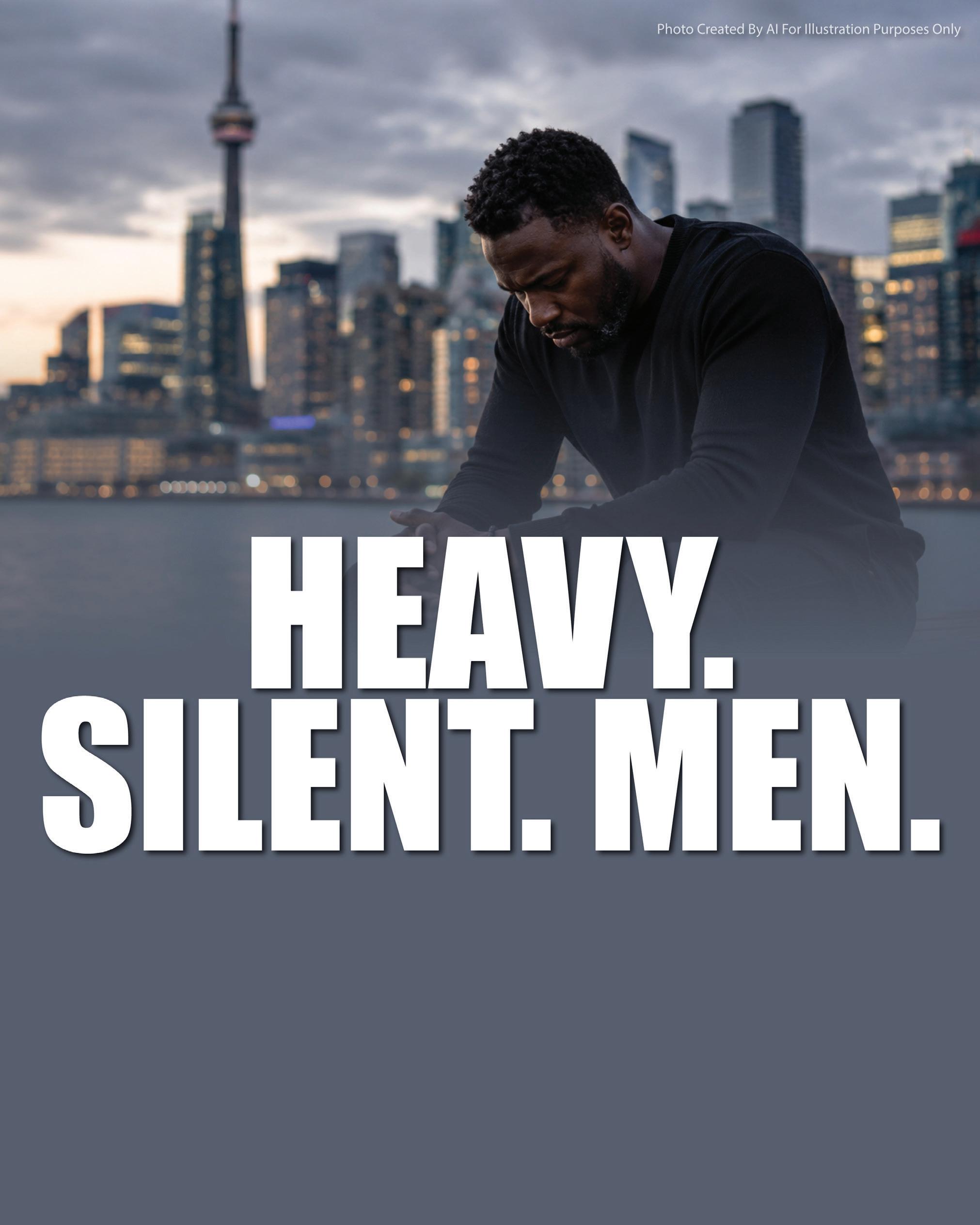
“They don’t say that the climb feels steeper when the playing field was never level. They don’t admit that excellence is sometimes driven by fear, not ambition. They don’t confess how heavy it feels to be needed by everyone, while rarely being asked what they need in return...”
STORY - PAGE 8
NETU LAL
Narrative of a Young Woman who Refused to Stay Silent
The air in the backstage dressing room is thick, heavy with the electric hum of a young woman’s internal war. Netu Lal stands amidst the frantic rustle of sequins, her palms damp and her heart hammering a frantic rhythm against her ribs. This is the culmination of a quiet, grueling struggle against a social anxiety that once made eye contact feel like a physical impossibility. Before the titles, before the sashes of Miss Toronto 2026, or Miss Teen India Guyana, there was a girl in Freedom Hill, West Bank, who lived behind a wall of silence.
To witness Netu today is to witness the birth of a generational symbol, a young woman standing at the jagged intersection of South American heritage, Caribbean culture, and the cold, high-stakes expectations of a Canadian metropolis. She is carrying the weight of a generation that is learning to speak its truth in a world that prefers them silent and pretty.
The transformation of Netu Lal began with an unlearning. For years, she was a girl who remained silent. She learned early that in many spaces: high schools, workplaces, and even within the intimate circles of family, a woman’s body is treated as public property for critique. She had to unlearn the belief that her value was tied to her size or her ability to fade into the background.
The emotional cost was high. It was paid in sweaty hands and the void she felt upon arriving in Toronto when she was 19 years old. In Guyana, the community was close-knit, where everyone celebrated together regardless of race. In Canada, she was met with the isolating realization that many did not even know where Guyana was, minimizing her identity to a mere aesthetic or a misunderstood Caribbean label. This disconnect created a profound internal tension: how does one belong when their life is tethered to two different worlds, and one of those worlds refuses to see the person behind the lens?
Her upbringing in the West Bank of Guyana provided the foundation for her current strength. It was a place of rituals and deep-rooted sup-
port, yet it was also a place where “Tom says A, and by the time it reaches Harry, it’s Z.” She grew up navigating the complexities of a culture that is both beautiful in its diversity and sometimes sharp in its gossip.
In this environment, Caribbean beauty is often exoticized by the West, reduced to a palm-tree aesthetic while the lived experience of the women remains invisible. Netu defines beauty on her own terms, as the alchemy of pain into purpose. She rejects the overpolished pageant archetype, openly admitting that underneath the glitz, she is a woman who still navigates the tremors of anxiety. Her beauty is a form of discipline, a refusal to let the loudest, furthest-from-the-truth version of her story become the definitive one.
Netu’s journey follows the classic hero’s framework, but her call to adventure was born from a moment of profound doubt. Last year, while preparing for a fashion show, a person close to her delivered a critique so sharp it threatened to shatter her resolve. She almost refused to walk the ramp. She was ready to give it all up, to return to the safety of silence, but every hero needs a mentor. For Netu, it was her aunt who provided the edge of confidence, reminding her that if a path brings purpose, no one else has the right to shut it down.
This was the turning point. A few days later, she saw the Miss Toronto pageant on Instagram and realized her mission was larger than herself. She was doing it for every young woman who was undermined for following her dreams.
This transformation led to the creation of Beyond The Lens, her platform designed to help others look past the labels society imposes. She moved from the pageant winner who won for herself to the leader who realized that when she stands on stage, her mother wins, her community wins, and every girl struggling with social anxiety wins.
Netu Lal is a strategic storyteller because she understands the power of the word. Through initiatives
like “Poetry in the Park,” she is teaching younger women how to use language to navigate their burdens. Her activity book, “Words for Change,” aims to plant empowering vocabulary into young minds early, recognizing that words shape how we see the world and ourselves. She matters now because she represents a shift in modern power. She uses emotional intelligence as a journalistic tool, refusing to present a sanitized version of her life. She demonstrates that strength is found in vulnerability, in admitting that you are “Not perfect” even while you are “The best of the best.” She is influenced by the need for mental health awareness in the West Indian diaspora, a space where stigma often silences the suffering.
As she prepares for the Miss Canada Pageant in July 2026, Netu is a knowledge command center for her generation. She is teaching her peers that “Protecting your peace is a discipline.” She is showing them that they do not need to give away their power to those who try to define them.
Toronto Caribbean Newspaper community, we are witnessing the beginning of a movement. Netu Lal is the symbol of a generation that is alchemizing its collective trauma into a new form of leadership. Her legacy will be the voices she has unlocked in her wake.
She stands as a reminder that the strongest queens are those who know their worth long before the metal touches their brow. In a world of rumors and rewrites, Netu Lal’s truth stands on its own, luminous and unyielding. This is a narrative of a young woman who refused to stay silent so that others might finally find the courage to speak.
Photo Credit:
Noel Photography
Written by Simone J. Smith Toronto Caribbean News
A stroke does not always announce itself with drama. Sometimes it arrives as a slurred sentence, a numb arm, a crooked smile, or a family member suddenly not sounding like themselves, and from that moment forward everything changes. In Canada, the warning is getting louder: stroke is rising again, it is affecting younger people more often, and the cost is showing up in homes, workplaces, and care systems across the country.
June is Stroke Month, and this year marks 20 years since Heart & Stroke launched the Canadian Stroke Best Practice Recommendations, a national framework that has reshaped care from emergency response through recovery. Those recommendations helped improve stroke units, speed up treatment, expand endovascular therapy, and extend access to clot-busting drugs, all of which can save lives and preserve independence. The bigger story now is that people having strokes is rising again, with Heart & Stroke reporting about 108,707 strokes per year in Canada and nearly one million people living with the effects.
For a long time, many people thought having a stroke was mainly an older person’s problem. That picture is no longer accurate. Ontario data show that stroke incidence declined from 2003 to 2011, then climbed again until 2017, while strokes among people under 60 rose continuously
Strokes are hitting younger now
from 2003 to 2017, especially after 2011. In plain language, that means it is a trend that has been building for more than a decade, and it is showing up earlier in life. That should matter to anyone with a family, a job, or a body that has to keep going under pressure. A stroke can steal speech, movement, memory, work capacity, and independence in one event, and even survival can leave someone needing long-term support. For families, that means caregiving, lost income, emotional strain, and a future that may have been completely ordinary the day before.
The Canadian Stroke Best Practice Recommendations have helped bring faster and better treatment to more patients, including more dedicated stroke units, faster translation of research into practice, and expanded use of endovascular therapy, which can cut the death rate from ischemic stroke in half. The recommendations also helped expand treatment windows for clot-busting drugs, which means more people can receive care in time. That matters because stroke treatment is time-sensitive: the faster the response, the better the chance of survival and recovery.
Having a stroke is also increasingly understood as a disability issue, not only a survival issue. Nearly one million Canadians are now living with the effects of a stroke, which means the system has to support recovery, rehabilitation, and long-term function as much as emergency treatment. If we only talk about death rates, we miss the larger human cost: people losing the ability to work, drive, parent, or live independently.
One thing that is still not fully settled in public discussion is how much of the recent rise is connected to aging, how much is tied to younger adults, and how much is due to other risk factors such as: blood pressure, diabetes, obesity, stress, smoking, or un-
equal access to care. The clearest public data suggest the rise was already underway before 2020 and continued into the early 2020s, rather than starting cleanly in the pandemic year. That matters because the real lesson is that the trend was building in plain sight.
For Afro/Indo Caribbean, racialized, immigrant, and working-class families, stroke risk does not exist in a vacuum. Food traditions, migration stress, long work hours, poor access to preventive care, and the pressure to push through can all shape blood pressure and other risk factors over time. At the same time, these communities also have strengths that matter: strong kin networks, shared meals, caregiving traditions, faith communities, and a deep culture of looking out for one another.
The point is not to blame culture, but to make prevention possible without shame. That means speaking plainly: check blood pressure regularly, reduce salt where you can, move your body, take prescribed medication consistently, and get urgent help immediately if stroke symptoms appear.
Small changes matter, but only if they are realistic and culturally respectful.
If you are reading this for yourself or someone you love, the most useful step is to know the signs: face drooping, arm weakness, speech trouble, and sudden emergency symptoms that require immediate help. Another step is to ask about blood pressure, since high blood pressure remains one of the most important stroke risk factors. A third step is to treat follow-up seriously if someone has already had a mini-stroke, or warning event, because the next one can be worse.
Families should not wait for a crisis to learn the system. Ask your clinic, hospital, or local public health office what stroke prevention and recovery supports are available in your area. If someone in your home suddenly cannot speak normally, cannot lift an arm, or seems abruptly confused, do not debate it; treat it as an emergency.
Having a stroke can determine whether a family keeps its rhythm, whether a worker keeps their income, and whether a community keeps one of its own whole. That is why this month matters.
Success Rarely Happens Overnight
One of the conversations I find myself having quite often with business owners revolves around advertising. Whether it’s a new entrepreneur launching their first venture or an established company looking to grow, many people enter the world of marketing with high expectations. After all, when you invest your hard-earned money into promoting your business, you want to see results.
The challenge is that advertising is often misunderstood.
In many ways, advertising reminds me of those miracle diet advertisements we see from time to time. They promise dramatic results in a very short period. The reality, however, is that lasting success rarely happens overnight. Just as taking one diet pill doesn’t instantly help someone achieve their health goals, running one advertisement doesn’t automatically transform a business.
Could it happen? Of course. Sometimes a business places a single advertisement and receives immediate inquiries or sales. But more often than not, successful marketing is a process, not a single event.
One advertisement is simply one introduction.
If a reader sees your business once and then never sees it again, there is a good chance they will forget about it. Life is busy. People are bombarded with messages every day from television, radio, social media, websites, flyers, billboards, and countless other sources. Standing out requires consistency.
This is why marketing campaigns are so important. A campaign allows you to put your message in front of potential customers repeatedly over time. More importantly, it gives you the opportunity to learn what works and what doesn’t. Sometimes the issue isn’t the platform. Sometimes the message itself needs to be adjusted.
If an advertisement isn’t generating the response you hoped for, it doesn’t automatically mean the newspaper, website, radio station, or social media platform isn’t effective. It may simply mean that your message isn’t connecting with the audience in the way you intended.
That’s where strategy comes in. You may need to change your headline. You may need to focus on a different benefit. You may need stronger visuals or a clearer call to action. Marketing is often a process of refining and improving until you discover what resonates with your audience.
After more than twenty years in the media and marketing world, I’ve heard countless variations of the same statement: “I tried advertising, and it didn’t work.”
Whenever I hear that, my first question is usually, “What exactly did you try?”
In many cases, the answer is a single advertisement or a very short campaign.
The reality is that consumers need repetition before they take action. People tend to trust what they recognize, and they recognize what they see consistently.
Think about some of the businesses you know best. Chances are you’ve seen their name multiple times. You’ve seen their vehicles on the road. You’ve noticed their social media posts. You’ve heard someone mention them. Maybe you’ve seen their advertisement in a newspaper, heard them on the radio, or spotted them on a billboard.
Over time, familiarity becomes trust. Then, when the day comes that you need that product or service, you already know who to call.
My husband often provides a great example of this principle through his construction business in Northern Ontario. He doesn’t rely on one form of advertising. He uses a variety of tools to keep his company visible. From highway billboards to local newspapers, community involvement, vehicle branding, online content, and social media marketing, he understands that every platform plays a role.
As he often says, “There is never one source that works best. People need to see your brand everywhere.”
There is a lot of truth in that statement. The most successful businesses understand that advertising is not about chasing quick wins. It’s about building awareness, creating trust, and remaining visible long enough for customers to remember who you are when they need you.
Marketing is a marathon, not a sprint.
If you are a business owner who is trying to figure out where to start, or if you know someone who could benefit from additional exposure, don’t be afraid to ask for help. Creating an effective marketing campaign takes planning, consistency, and sometimes a fresh perspective from someone who works in the industry every day.
Here at the Toronto Caribbean Newspaper, we work with businesses of all sizes to help them develop advertising campaigns that fit their goals and budget while maximizing their exposure throughout the community. Sometimes all it takes is the right message, delivered consistently, to start building the recognition and trust that every successful business needs.
Until next time, keep supporting local businesses, keep investing in your community, and remember that the strongest brands are rarely built overnight.
SIMONE SMITH
simone@carib101.com
TC REPORTER
Your phone vibrates on the nightstand at 3:00 AM. You don’t even have to check the display to know the weight of the notification. It’s a WhatsApp message from back home, or perhaps a text from a cousin in Brampton who is “Short on the rent again.” Before you even read the words, your chest tightens. Your heart begins that familiar, rhythmic thud, the physical manifestation of a crisis that 48% of us feel when the topic of money arises. You are part of the 40% of Canadians who have lost the ability to sleep because the math of survival no longer adds up.
For the Caribbean-Canadian community, financial stress is a weight we carry in our marrow. We are told to work hard, get our qualifications, and provide. Yet, here we are, looking at the cold truth that 89% of people in this country are experiencing financial anxiety. For us, the numbers are heavier. The structural, cultural, and psychological layers of our reality have created a perfect storm that we can no longer afford to ignore.
We come here for a better life, but
PAUL JUNOR
paul@carib101.com
TC REPORTER
Canada is leaving critical talent on the sidelines; at a cost it can no longer afford.
The Institute for Canadian Citizenship (ICC), a national charity focused on helping immigrants succeed and fully participate in Canadian life, has released a new report calling for urgent reform to how foreign credentials are recognized. Titled “Ready to Contribute: How a Fair Licensing Act Can Put Immigrants’ Talents to Full Use for Canada,” the report outlines how systemic barriers are preventing hundreds of thousands of skilled newcomers from working in their trained professions.
At a time when 6.5 million Canadians lack access to a family doctor, the findings land with particular urgency. It proposes a timely novel approach to ending the pervasive Foreign Qualification Recognition
Are 89% drowning in silent debt?
the structural reality is a relentless grind. In Ontario, the financial anxiety index is higher than the national average, sitting at a staggering 45.1. We see our brothers and sisters with master’s degrees driving Ubers or working security because their credentials are under-evaluated by a system that rewards them with underemployment. This, paired with a cost of living in Toronto that ignores the reality of stagnant wages, creates a financial situation that hits racialized people (with an anxiety score of 47.8) significantly harder. When 50% of people are worried about their housing and 64% of renters fear eviction, the “Canadian Dream” starts to look like a structural cage.
There is a profound silence in our kitchens about the money sent back home.
Culturally, we are the safety net for an entire extended family. We fund the weddings, the funerals, and the emergency school fees for nieces we have not seen in a decade. According to the data, 39% of people are deeply concerned about providing financial assistance to family. While 11% have had to decrease this assistance recently just to survive, the guilt of doing so is a poison. We participate in a celebration culture where appearing successful is often more important than being stable. We give until we have nothing left for our own savings, which 57% of those in poor financial situations have had to slash entirely.
This is where I need you to trust me. You feel like you should be further ahead. You
see the curated lives on social media and feel a deep sense of comparison. The report tells us that 40% of people feel guilty just thinking about their finances. This shame leads to avoidance; 45% of us would rather not look at the state of our accounts at all. We are 33% more likely to have family conflicts or tension within our households because we are all vibrating at a frequency of lack.
Take Nadia, a nurse in Scarborough. She has a good job, yet she is part of the 38% experiencing food insecurity. She eats less than she should so her kids can have balanced meals, and so she can send $400 a month to her mother in St. Kitts. Or Marcus, who has personally experienced poverty (like 22% of Canadians) and now finds himself in a situation where he doesn’t know where the next month’s rent will come from. These are the people sitting in the pews next to us.
We have named the beast. Now, we must tame it. You need a plan that moves the needle within the next 24 to 72 hours.
Immediate Moves (This Week):
• Track the Truth: Stop avoiding the bank statement. 49% of people find it unpleasant, but you cannot fix what you will not face. Identify one financial leak: a subscription you don’t use, or a habit of giving to people who are not actually in crisis.
• The Honest Conversation: Sit down with your partner or family. 48% of us find this stressful, but 35% of those who cope
Canada wastes skilled immigrant talent
(FQR) barriers that keep hundreds of thousands of qualified immigrants from practicing their professions, costing Canada as much as $50 billion in lost economic potential every year.
The report argues that outdated and inconsistent licensing systems are actively harmful. Highly trained doctors, nurses, and other professionals are often forced into survival jobs while their credentials go unrecognized, even as the country faces severe labour shortages in essential sectors.
Daniel Bernhard, CEO of the ICC, puts it bluntly, “Keeping qualified immigrant talent on the sidelines while Emergency Departments routinely close due to staffing shortages is an epic triumph of self-defeat.” He adds that despite decades of awareness, the problem has only worsened, calling for a brand-new approach designed to succeed where past efforts have failed.
The numbers underscore the scale of the issue. Nearly 640,000 immigrant degree-holders in Canada are considered overqualified for the jobs they hold. That number would drop to approximately 270,000 if immigrants experienced the same employment outcomes as Canadian-born workers.
In healthcare, the gap is especially stark. Only 41% of internationally trained
physicians and 37% of internationally trained nurses are employed in their respective fields. Closing this gap could add an estimated 16,000 doctors and 27,000 nurses and related professionals to Canada’s workforce.
Beyond the human cost, the economic implications are significant. The report estimates that FQR-related barriers drain up to $50 billion annually from Canada’s economy while further weakening already sluggish labour productivity.
Claudette Hepburn, CEO of Windmill Microlending, emphasizes the importance of the report’s findings, noting that it clearly outlines both the problem facing skilled immigrants who seek Canadian accreditation and the need for a solution.
That solution, according to the ICC, is a federal Fair Licensing Act (modelled in spirit after the Canada Health Act) that would standardize and enforce credential recognition across provinces and professions.
Key recommendations include:
• A Fair Licensing Act that incentivizes provinces to remove barriers and penalizes those that do not
• A Canada Fair Licensing Transfer tied to
well do so by talking to friends and family for support. Normalize the struggle to dissolve the shame.
Structural Moves:
• The Remittance Boundary: You don’t have to stop helping, but you must structure it. If your basic expenses aren’t covered for at least one month (and for 46% of us, they aren’t), you cannot be the primary bank for others.
• Automate the Essentials: Rent, food, and even $10 into savings must be automated. The report shows that 72% of those who trust their investment strategies feel less stress.
Emotional Reframes:
• Stability is Responsibility: You are of no use to your community if you are drowning. Self-preservation is a communal act.
• No is a Holy Word: Saying no to a community event or a request for money is an embrace of your future.
As the expert voices in the United Way report suggest, our resilience is being tested, but our ability to adapt is our greatest strength. We must move from the 60% who feel anxious to the 69% who feel confident in managing their own destiny.
Your ancestors survived the crossing so that you could thrive, not just barely get by. Stop drowning in silence; start swimming in strategy.
measurable performance outcomes
• Adjustments to Provincial Nominee Program allocations to reinforce compliance
• A dedicated division within Employment and Social Development Canada to produce an annual report to Parliament
• A Fair Licensing Act Secretariat to coordinate federal-provincial collaboration
The ICC argues that only a coordinated, national approach can resolve what has been a fragmented and long-standing issue. Notably, concerns about foreign credential recognition date back to at least 1966, yet overqualification rates among immigrants have continued to rise.
Since its founding in 2010, the ICC has positioned itself as a key advocate for newcomer inclusion. Its Canoo app provides free access to cultural institutions, resources, and settlement tools to help immigrants, and their families integrate into Canadian society.
Integration, the report suggests, must include opportunity. Until Canada finds a way to align its immigration strategy with its labour market realities, it risks undermining both.
SIMONE SMITH
simone@carib101.com
TC
REPORTER
A strong El Niño is no longer a far-off weather forecast; scientists now say it is here and could become one of the strongest ever recorded, which means the effects can show up in your wallet, your health, and your daily routine sooner than many people expect. The real story is what that warming can do to food prices, heat exposure, flooding risk, and the pressure already sitting on families trying to get through the year.
Live Science reported on June 4th, 2026, that a June update from the European Centre for Medium-Range Weather Forecasts suggested this coming El Niño could be the strongest ever measured, with sea surface temperatures in a key Pacific region projected to rise 3 degrees Celsius above av-
El Niño is coming for you
erage by December and some scenarios going above 4 degrees Celsius. NOAA later announced on June 10th, 2026, that El Niño is officially here and that it is shaping up to be among the strongest ever recorded. Other reporting said NOAA saw a 65% chance of a strong or very strong event beginning in October, and a 90% chance of El Niño forming by November.
For ordinary people, that translates into more than a weather headline. El Niño can shift rainfall, intensify drought in some places, trigger flooding in others, and drive extreme heat that raises health risks, especially for older adults, children, outdoor workers, and people already living in poorly cooled or poorly insulated homes. It can also shake food systems and supply chains, which is why weather events like this often end up affecting grocery bills and emergency costs long after the TV forecast moves on.
The strongest claim in the coverage is that this could be a historic event, perhaps a super El Niño, with global consequences. That language matters because it signals stronger disruption, wider reach, and a greater chance that the impact will land in everyday life rather than stay in scientific reports. The phrase strongest ever is still a fore -
cast, not a guarantee, so it should be read as a warning, not a certainty.
What remains unclear is exactly where the worst damage will hit first and how hard different regions will be affected. El Niño does not punish every country in the same way, and local infrastructure, housing quality, and public-health readiness will shape how much harm people feel. That is why the same weather pattern can mean manageable disruption in one place and a real crisis in another.
Yes, and that is part of what makes it serious. Reporting notes that the 20152016 El Niño was the most powerful on record according to NOAA data dating back to 1950, and current forecasts are now being compared against that benchmark. In other words, this is not a new problem, but it is arriving in a world that is already warmer, more expensive, and more vulnerable than the one that experienced the last major event.
This affects rent, commute, safety, and future planning because severe heat can strain buildings and power grids, storms can disrupt travel, and food and insurance costs can rise when weather becomes unstable. For renters, the danger is often invisible until the apartment becomes too hot, the base -
ment floods, or the air conditioner cost becomes another monthly burden. For families already living close to the edge, one extreme season can turn a tight budget into a crisis.
That is why the human stakes matter more than the technical ones. A strong El Niño is a stress test for every home, workplace, and city that has not prepared enough. The people with the least insulation, the least savings, and the least flexibility usually feel the first shock and the longest recovery.
Individuals can prepare in realistic ways: check heat and flood risks where you live, make sure medications and essentials are protected, follow local alerts, and plan around possible disruptions to transit, work, or childcare. Governments and companies, meanwhile, have the bigger responsibility: strengthen cooling access, protect vulnerable residents, improve emergency planning, and stop treating climate-linked weather as an abstract future problem.
The story here is that the change in the ocean can now change your life fast enough to matter in the present tense. If people only hear El Niño and think of a distant weather term, they will miss the real warning: this is about the cost of being unprepared in a season of intensified risk.
Unlicensed pilot exposes systemic safety failures
BY ADRIAN REECE
TC REPORTER
Air Canada is facing scrutiny after reports that a pilot allegedly flew for years without holding the full, up-to-date certifications required to command large commercial aircraft. The case raises urgent questions about oversight, accountability, and public safety in one of the country’s most critical industries.
The pilot, Geoffrey Wall, held a commercial pilot’s licence but is accused of lacking the necessary certification to command wide-body aircraft. According to reports, Wall flew more than 900 flights between 2009 and 2025 (spanning 16 years) without the discrepancy being detected.
That timeline is difficult to ignore. It suggests not a one-off administrative lapse, but a systemic failure in how credentials are tracked, verified, and enforced.
Other public transit systems offer a useful comparison. The Toronto Transit Commission (TTC), for example, routinely
verifies operator licences, monitors their status, and applies immediate consequences when credentials lapse. While aviation and public transit differ in complexity, the principle is the same: when lives are at stake, oversight cannot be optional.
Air travel carries inherently higher risk. Even minor errors can have catastrophic consequences. That reality makes rigorous credential verification a moral obligation. If anything, airlines should operate with stricter, more transparent systems than other transit providers, not looser ones.
At this stage, there are no reports linking Wall to any accidents or safety incidents, but that fact offers little reassurance. The absence of harm does not erase the risk that existed for years, nor does it absolve the systems that failed to catch it.
Wall retired in 2025 after a 27-year career with Air Canada. He has since been arrested and charged with fraud related to misrepresentation of his qualifications. Yet focusing solely on the individual risks missing the larger issue. This is about the systems
that allowed him to operate undetected for over a decade.
Air Canada’s internal processes now face legitimate scrutiny. How are pilot credentials verified? How frequently are they audited? What safeguards exist to flag inconsistencies? Most importantly, how did those safeguards fail for so long?
Public reaction reflects these concerns. Online, some question the timing of the charges, noting that Wall is no longer flying and that no harm was reported. Others argue the airline may be shifting responsibility onto an individual to deflect from institutional failure.
Both perspectives point to a deeper issue: trust. Airlines operate on an implicit contract with the public. Passengers accept the risks of air travel because they trust that every safeguard (from maintenance to staffing) is rigorously upheld. When that trust is shaken, the consequences extend far beyond a single case.
The timing also intersects with broader frustrations. Airlines have faced crit-
icism in recent years over rising costs, baggage restrictions, and customer service challenges. Incidents like this risk compounding those frustrations, raising a more fundamental question: what exactly are passengers paying for if safety oversight is not airtight?
“Air Canada should be looked at more meticulously to find out how someone could go for years without being found out.”
That sentiment captures the core issue. Accountability cannot stop at the individual level. It must extend to the systems, policies, and leadership structures that allowed the failure to occur.
Regulators and industry leaders will now face pressure to respond. Whether that response leads to meaningful reform (or simply short-term damage control) remains to be seen.
What is clear is this: the story is no longer just about one pilot. It is about whether the systems designed to protect the public are as reliable as passengers are led to believe.
Caribbean Men Speak on Responsibility, Survival, and the Quiet Cost of Being the Rock
SIMONE SMITH
simone@carib101.com
TC REPORTER
There is a version of the Afro/Indo Caribbean man the world recognizes instantly. He is steady. Unshakeable. A provider. A protector. The one who figures it out, no matter the cost. He is the rock, but rocks don’t speak. They don’t say that the climb feels steeper when the playing field was never level. They don’t admit that excellence is sometimes driven by fear, not ambition. They don’t confess how heavy it feels to be needed by everyone, while rarely being asked what they need in return.
So, we asked a different question. Not about success. Not about statistics. Not about performance. We asked what lives underneath the role. What came back was the truth.
Across generations, professions, and lived experiences, Afro/Indo Caribbean men in the Greater Toronto Area spoke about pressure that begins early and rarely lets up. About the quiet agreement to carry more, say less, and keep moving. About the cost of being reliable in a world that often does not extend the same reliability back.
What emerges in these pages is a portrait of endurance. Of men who have learned to survive, to lead, to provide, and who are now, in quiet and careful ways, asking a deeper question, at what cost?
This is where the conversation begins….
Dalton Higgins (Publicist and Author)
“I view most Black men of my ilk who are somewhat able to ascend, progress, inspire, uplift, and protect (their brood firstly), as survivors more than anything. We carry deep scars that not even a Kim Kardashian-styled cosmetic surgeon could hide or obscure, metaphorically-speaking.
Many of my comrades, at our core, feel we have to outperform, outthink, out smart, and out maneuver our non-Black peers because we know that the playing field is nowhere near close to being level, and that’s exhausting. We don’t necessarily have the right to be average or mediocre; that’s a one-way ticket to hell on earth, if you are Black and male. As a result, sometimes that drive to be excellent (and not average) is really just a fear of failure. Being afraid of letting down your family and community who depend on you. When non-Black people ask me how I am doing, do they genuinely want the real answer? I think about this (James) Baldwinism often; “To
be a Negro in this country and to be relatively conscious is to be in a rage almost all the time.”
Thankfully I’m able to direct those raw, real energies elsewhere, into my work, into parenting, into giving back, and in some ways it’s working. I can and will not be stopped (and I dare you to try) is my mantra. Resilience became my middle name, mostly out of necessity, not choice.
That being said, being strong all the time is tiring. Sometimes I just want to unplug, zone out and listen to BigXthaPlug mixtapes, and yes, there are days when I don’t have all the answers. I don’t want to be a Black Panther, and it would be great to be viewed as something other than a provider or protector, but to be protected.”
Charles Duncan Waterman (Global Real Estate Advisor)
“For God hath not given us the spirit of fear; but of power, and of ove and of a sound mind.”
2 Timothy 1:7
“My truth is that I’m growing older and have a family I love dearly. Therefore, it’s my responsibility to do whatever I can in the hope of never becoming a burden to them. As such, I control the things that will ensure that I live a long life with mental clarity, physical strength, and the ability to inspire others.”
Sean Mauricette (Speaker, Poet, Innovator, Philanthropist)
“The truth/fear I have is that our women have become increasingly disconnected to the ways to truly understand what we are dealing with and the complexities that go along with it. The issue is also that us men tend to internalize things. So how can our women in 2026 find ways to still look for signs that the man is drowning: mentally, spiritually, financially, emotionally? What are his cues, subtle cries for help, that he needs help? How do our women become reconnected to us and how do we reconnect with them? Align with them when we don’t have the words. In an age that is transactional. Can she learn to understand me in this ever increasingly stressful time? Does she even have the desire to want to understand, re imagine and enact?
Ideally the man should meet her halfway, be open, etc. but he himself may not know how to communicate at times for fear of being viewed as lesser than, a failure or even having his feelings weaponized against him. We need help, we cannot go it alone. We need help even when we can’t find the words. In 2026 can we be sophisticated enough within our community to understand our partner who is sinking?
At times before our very eyes and with a smile on our face, but whose smiles surface and heart heavy.”
Tychon Carter (TEDx Speaker | Mental Performance Coach)
“One truth I carry that I rarely say out loud is
that sometimes I get tired of being strong. There are times when I have no idea what I’m doing, or if it’s even going to work out.
I love being someone people can depend on. I love showing up for my people, leading, building, creating, protecting, providing, and trying to be the man I wish I had, but the truth is, sometimes that role gets heavy, and the weight is difficult to articulate. It feels like something has shifted in this generation, where the uncertainty sometimes feels unbearable. Sometimes I want to be held too. Sometimes I want someone to check on me without me having to explain that I need it. Sometimes I want to not have the answer, not be the leader, not have to figure everything out.
I think a lot of men carry that silently. We’re taught to be solid, but not always taught how to be supported. So, my hope is that more men get to experience spaces where they can be honest without feeling weak, emotional without feeling judged, and supported without feeling like they failed.”
Ric Johnson
“That after all you have done, love for you will have to be interpreted, don’t expect to be told. You, however, will also be expected to verbalize that emotion first and validate frequently on many occasions, to many people, in different spheres. Don’t expect the same in return. After a while, it takes its toll.”
Maleek Powell (Content Creator | Speaker, Based in Jamaica)
“The truth I rarely get to speak out loud is this; that without the role, I feel worthless. That without something to provide, something to protect, something to prove, I am not sure anyone stays. That fear didn’t come from nowhere. It was handed to me. You are told from early that responsibility is your identity, and the flip side of that message is just as loud, that a man who doesn’t measure up to those expectations is a failure. Not struggling. Not human. A failure.
What I hope for (and I hold this genuinely) is that Caribbean men will find their way, whether through therapy, fellowship, or community, to a simple but radical truth: your value is not a metric. You are worthy from the jump. Before the job. Before the title. Before you could provide anything for anyone.
I believe that when men start to really own that, everything shifts. The financial decisions. The relationships: intimate and platonic. The patterns that have quietly been stumbling blocks for generations. So much of what holds us back is rooted in that one unexamined wound; the belief that we have to earn the right to exist in people’s lives. We don’t, and the sooner we know that the freer we become.”
Kwame Osei (Keynote Speaker | TEDx Speaker)
“Over the past year, I have been working on allowing myself to feel more deeply and to better understand my emotions. Many men are not raised to recognize, explore, or openly discuss what they are feeling. Instead, we are often taught to be strong, stoic, and resilient. We are taught to push through challenges without showing vulnerability.
As a result, many men grow up without the emotional tools needed to fully understand themselves or communicate their feelings effectively. The ability to identify, process, and express emotions is a skill that must be learned, yet many men are never given the opportunity or encouragement to develop it. Imagine feeling something deeply but not having the ability to acknowledge it, understand it, or articulate it. What do you do? For many men, the answer is simple: you stay silent, suppress it, and carry it alone until it begins to weigh on you.
I believe this has significant consequences, particularly in relationships. Many men struggle to communicate emotionally, not because they do not care, but because they were never taught how. Unfortunately, this can sometimes lead to criticism or misunderstanding when their emotional limitations are viewed as unwillingness rather than a lack of experience, guidance, or emotional education.
If we want men to be healthier partners, fathers, friends, and leaders, we must create environments where emotional intelligence is encouraged, emotional expression is taught, and vulnerability is viewed as a strength rather than a weakness. The reality is that many men are trying to navigate emotions they were never given the tools to understand in the first place.”
Dwayne Rutherford (Founder & CEO at Debonair Corporate Events | BEBC Certified)
“One truth I rarely say out loud is that I have not built anything alone. As Black men, we are often taught to carry strength like armour. We speak about resilience, discipline, and pushing through, but not enough about the people who quietly hold us up.
When COVID came, my business could have disappeared. Events stopped. Revenue became uncertain. The future was unclear, but my Black clients continued to show up, refer, trust, encourage, and invest. That support did more than help my business survive. It reminded me that our community is more connected than we sometimes give it credit for.
My hope is that we speak more openly about that. Not only about struggle, but about how we protect each other, believe in each other, and create room for one another to rise. I carry deep gratitude for that, and I want us to name it more often.”
The Natasha doll is making its rounds in China
MICHAEL THOMAS
michael@carib101.com
TC REPORTER
A viral video of a Natasha doll is making its rounds in China, and what this video gained notoriety for is not pleasant; in fact, it is racist. The video is of a Black baby stress toy. Chinese social media users are on camera indulging in squeezing, stretching, and maiming these dolls just for the fun of it. Adding insult to injury, a user mentioned that a white baby, on the other hand, would look too
“human” and people would feel bad for hurting it.
This sort of behavior is not a one-off. Not so long ago, a Chinese man living in Malawi was outed by the BBC for filming children without the consent of their parents and selling those videos to his Chinese clients.
L, also known as Suzu, has been handed a 12-month prison sentence, which he has already served in police custody. He has been ordered to leave Malawi within seven days and never return. He was arrested last year following a BBC Africa Investigative Report, which showed him filming Malawian children making personalized greeting videos, some of which included racist content. The videos were bought for up to $70 on Chinese social media. The Malawian government convicted this Chinese national on multiple charges, including trafficking and procuring children to take part in illicit entertainment.
This abuse of Black children on social media is not easy to locate since China has a massive firewall on all social media apps that are not Chinese owned. The country has its own social apps like RED note and WeChat. This means that most of the content posted on these apps stays inside China and is geared towards the Chinese audience and their preferred taste.
According to news content creators of OkayAfrica, China has a large market who enjoy watching videos of Black African children hurt and abused. Not long-ago ADN (African Diaspora News) reported that Africans who go to China to teach or do other jobs always complain that Chinese people treat them like animals. They treat them like foreign aliens, and they all said they experience racist attacks.
Suzu is said to have paid 16 million qua in restoration to the families of the children, which does not exempt him from his
crimes. These children were unaware of what they were doing in that video. They were deceived into thinking that they were greeting folks when, in fact, they were made to cuss and degrade themselves in a language they did not understand.
Suzu, together with all those who share his views, needs to be persecuted to the full extent of the law, and this starts with Africa. If the situation were reversed, you bet the African man caught doing this to Chinese children would rot in a Chinese prison.
One of the big questions here is why African leaders continue to welcome a nation that does not regard Africans as human beings? Do these leaders possess any self-respect? If not for themselves, but for the people who elected them? During the pandemic, Chinese landlords showed Africans what they thought of them by evicting them for the fun of it. When will Africa learn?
SIMONE SMITH
simone@carib101.com
TC REPORTER
You are lying in the dark, staring at the ceiling, wondering when later became never. You tell yourself it’s the double shift at the hospital, the prayer meeting that ran late, or the way the pickney are always underfoot, but the truth is heavier than the duvet. We have been conditioned to believe that if we are not grinding, we are not growing. We have brought the immigrant hustle into the one space that was supposed to be our sanctuary, and now the bedroom is just a graveyard for our desires.
We are a community built on the “Strong Black Woman” and the “Provider Man” tropes, but these masks are suffocating our intimacy. We are out here performing for the world, using every ounce
PAUL JUNOR
paul@carib101.com
TC REPORTER
Why do 40% lose bedroom bliss?
of our emotional intelligence to navigate white-dominated boardrooms and equityfocused non-profits, only to come home with an empty tank. We have nothing left for the person who actually knows our middle name.
The villain is not your partner’s snoring or the fact that they forgot to season the chicken. The villain is intimacy erosion caused by systemic overextension. We are being drained by a modern life that demands we be 100% productive and 0% human.
According to a recently released survey of 1,000 people by Woolroom Canada, the sheep to sleep bedding experts, stress has officially made its way into the nation’s bedrooms. The numbers don’t lie, even if we do: 40.2% of people say pure exhaustion kills their sexy time most often. Think about that. Nearly half of us are too wiped out to even think about pleasure. In provinces like Alberta, that number jumps to 44.2%. We are working ourselves into a state where 31.4% of us admit to falling asleep, or maybe falling asleep, during the act itself. This is not a man thing or a woman thing; the gender split is almost dead even.
We are living in a state of stress spillover where work, parenting, and finances are leaking into our private moments. Intimacy is being policed by our own lives. 48.7% report pet interruptions, and 38.4% have been walked in on, or almost walked in on by children. As reported on Yahoo Finance and Newswire, the bedroom is no longer a protected space.
So, what do we do? We can’t just communicate better when we are too tired to speak. We have to be strategic.
Engineer the desire
Stop waiting for spontaneity. It’s a myth sold by Hollywood. If you’re too tired, you need to engineer comfort. People are buying premium sheets and mood lighting to force a vibe. Look at the Atlantic provinces; places like PEI and Nova Scotia are topping the charts for intimate toy purchases. They are creating the feeling.
Declare a border policy
If the kids or the pets are the passion police, you need to reclaim the territory. Intimacy requires a boundary. As Fawcett Mattress notes, the link between burnout and bedroom satisfaction is real. You cannot be
a parent, a boss, and a lover at the exact same time. Lock the door.
Address the sleep story
This is a sleep crisis in disguise. If your bed could talk, 22.4% of you say it would tell you “I miss the romance,” but 30% say it would just scream “Buy a new bed today.” You can’t have a high-stakes connection on low-quality rest.
We have to stop moralizing our tiredness. As the 2010 Canadian couples survey and pandemic-era research suggest, this decline in connection is an intensification of long-standing lifestyle pressures.
When you stop lying to yourself about why you are not in the mood, you take back the power. You move from being a victim of the hustle to a curator of your own peace. You become the person who values their partner’s touch as much as their own paycheck.
For more on how these dynamics shape us, I encourage you to review the research at The Woolroom (thewoolroom. com/en-ca) and see the data for yourself.
Expose the truth, reclaim the bed, and remember: you owe yourself your joy.
Barbados education system faces critical crossroad
findings are clear: the system is not delivering at the level required for the future.
A press release issued on Wednesday, May 27th, 2026, has drawn renewed attention to a World Bank Group review of public expenditure in Barbados’ education sector. The report, Navigating Change: Review of Education Expenditure and Resilience in Barbados, authored by V.L. Marston, K. Acevedo, and A. Latootue, delivers a data-driven assessment of how effectively the country’s education investments are translating into outcomes.
At its core, the review examines whether current spending supports learning achievement, equity, workforce readiness, and long-term system resilience. Its release coincides with the launch of the Barbados Education Sector Transformation (BEST) program, which aims to align education with national development priorities and the demands of a global, knowledge-based economy.
Despite strong fundamentals, the
“Barbados stands at a critical juncture in its educational journey,” the press release states. “Despite high enrolment and completion rates in primary and secondary education and relatively high levels of education spending, the current system is not delivering on its mission of adequately preparing students for the demands of a modern, knowledge-based economy.”
Barbados has long been regarded as a regional leader in education. The country spends approximately 4% of its GDP on education (consistent with international benchmarks) and allocates BBD 594.6 million annually, representing 13.8% of total government expenditure. This sustained investment has produced nearuniversal enrolment and strong completion rates at both primary and secondary levels.
However, the report highlights critical gaps beneath these achievements.
While access is nearly universal, performance disparities remain significant. Roughly 70% of students meet expected benchmarks in end-of-primary assessments, leaving 30 percent below standard. This gap raises concerns about foundational literacy and numeracy, particularly as students transition through the system.
Equally pressing is the disconnect between education and employment. The report identifies a mismatch between the skills students acquire and those demanded by the modern workforce. Without targeted reforms, this gap risks limiting national competitiveness and economic growth.
To address these challenges, the review outlines several priority areas for reform:
• First, early childhood education must be expanded. Underutilized primary school spaces could be repurposed into nursery classrooms, increasing access to early learning and strengthening foundational development.
• Second, the system requires more targeted remediation. Early diagnostic assessments are essential to identify literacy and numeracy gaps and enable timely, evidence-based interventions.
• Third, teacher development must be standardized and strengthened. A national teacher policy focused on professional standards, continuous training, and performance incentives would help elevate instructional quality across the system.
• Finally, infrastructure must be adapted for climate resilience. Upgrading school facilities to withstand envi-
ronmental challenges, while ensuring universal accessibility, is critical for long-term sustainability.
Lilia Buruncius, World Bank Director for the Caribbean, underscored the urgency of reform, “Barbados has built a strong foundation but must now focus on quality, equity, and resilience to ensure students are equipped for a changing economy. The Barbados Education Sector Transformation Program will support the implementation of these reforms, positioning Barbados to strengthen its workforce and global competencies.”
The report also raises equity concerns. While educational opportunities exist, access to scholarships and advanced pathways appears uneven, with students from higher-income families more likely to benefit. Addressing these disparities will be essential to ensuring that progress is inclusive.
Barbados stands on the threshold of transformation. Its education system has delivered access and stability; the next phase must deliver excellence and relevance. Strengthening foundational skills, aligning education with workforce demands, and ensuring equitable access to opportunity will determine whether the country can fully realize its ambition of a world-class education system.
BY JAY BRIJPAUL
Toronto’s condo gold rush: Lessons from a market meltdown
TC REAL ESTATE REPORTER
For twenty years, pre-construction condominiums in Canada (especially in Toronto) were seen as tickets to easy money. Investors camped outside sales offices, eager to lock in a unit and flip the contract for profit before the building was even finished.
The strategy was straightforward: put down a deposit on a condominium, wait a few years, then sell the contract for a hefty profit. With the money made (and the original deposit) many buyers would purchase two more condos, aiming to double their returns. To join the rush, many even tapped into their home equity.
For years, this approach paid off, but today, thousands are realizing real estate is not always a sure bet. Many cannot afford to close on their units, some are forced to sell at a loss, and others are stuck with condominiums that cost more each month than they bring in from rent. From 2020 to 2023, about 70% of Toronto’s preconstruction condominiums (over 83,000 units) went to investors, most of whom now face a far tougher market than they
MICHAEL THOMAS
michael@carib101.com
TC REPORTER
What is Palantir, and why should citizens be genuinely concerned about this entity? Let us dive in. “It is absurd and insane that we have a rogue US military contractor managing our most sensitive personal data. Your devices are going to be monitored 24 hours a day,” said Pulitzer-nominated investigative journalist Carole Cadwalladr when describing Palantir.
This is a company that has contracts running nuclear programs and is involved with the NHS (National Health Service) and, to put it mildly, has its fingers in almost every aspect of most people’s daily lives from a data collection, monitoring, and tech point of view.
Who is behind Palantir, you may ask? None other than German-born Peter Andreas Thiel, entrepreneur, venture capitalist, and conservative political activist. He also happens to be the co-founder of PayPal. Cadwalladr calls Thiel “An incredibly dangerous individual.” Here is why.
expected.
Developers relied on investors to get projects off the ground, since banks required most condominiums to be sold before lending money. Many buyers were not interested in owning or renting their units long-term. Instead, they put down a deposit, waited, and hoped to sell at a profit before closing. It all worked as long as prices kept rising. Most of these buyers were speculators, counting on the greater fool theory: always expecting someone else to pay more.
Once prices stopped rising, the entire system began to fall apart. Resale condominiums started selling for less than investors had agreed to pay, and lenders often appraised completed units at lower values, leaving buyers scrambling to cover the difference. As pre-construction values fell, both buyers and banks faced mounting pressure. Higher interest rates only added to the pain, pushing monthly costs above rental income for most investors.
Developers built a flood of microunits even though only 30% of buyers want them, creating a supply-and-demand mismatch. With the market cooling, many
are facing harsh consequences. Some are forfeiting their deposits and facing lawsuits, while others remortgage their homes to cover the shortfall and struggle to rent their micro units after closing. Thousands of units failed to close in 2025 alone. Chasing quick profits, developers built for investors, not families or long-term residents. They simply built what sold: small, easy-toflip units.
Real estate remains one of the best long-term investments you can make. However, it is important to invest wisely rather than speculate. Luckily, I recognized the risks early and guided my clients away from buying pre-construction condominiums. Here are a few pieces of advice I would like to share.
• Do not buy just because you expect prices to rise. Investments need to make sense even if prices stay flat. Always run the cash-flow numbers, and if rent cannot cover your expenses, reconsider.
• Have a financial cushion for surprises and remember, prices always go up is not a strategy.
Our secrets and our data are no longer safe
“The 50th Vice President, JD Vance, is a wholly owned product of Peter Thiel. Jeffrey Epstein was a co-investor in an Israeli surveillance company,” Cadwalladr told Double Down News Watch in an interview.
Another interesting figure in all this is Alexander Ceadmon Karpan, an American businessman and entrepreneur. He is the co-founder and CEO of the software firm Palantir Technologies, who said, “We are dedicating our company to the service of the West, the United States of America, and we are super proud of the role we play, especially in places we can’t talk about, and we love our success in the US and globally also.”
“We are in the United Kingdom and other places. Palantir is here to disrupt and make the institutions we partner with the absolute best in the world and, when necessary, to scare enemies and, on occasion, kill them.” Let that sink in.
Britain is Palantir’s second biggest customer. According to Cadwalladr, Palantir has already gone after and recruited Britain’s top political minds successfully. Palantir’s boss, Peter Thiel, does not believe in nation-states at all.
“He is very explicit about how there is a better way of running countries, and that is as a private corporation,” said Cadwalladr. The alliance between Trump and Silicon Valley is what woke up Cadwal-
ladr.
“This is a new kind of power which we have not seen before; we have the Silicon Valley surveillance technology now being harnessed to the MAGA authoritarian project.”
The company has secured 670 million pounds worth of contracts in Britian alone, and Britain’s MOD Ministry of Defense and NHS (National Health Service) is neck-deep in business with Palantir. So far, it is only the Swiss army that has done a complete assessment of Palantir’s technical expertise and declined to do business with them, citing holes in their profiles.
According to Cadwalladr, Palantir’s signature pitch to Police, military and most of these big data organizations goes like this, “Try us for free, and if you like what we do, we will take it from there.” This is an extremely cunning way to get hold of a country’s law enforcement or health care data while not being suspected.
“We can root out the bad apples; we can find corrupt police officers,” the police were told. “I spoke with a police officer who had been on the call when this was announced, and they were told your devices were going to be monitored 24 hours a day,” Cadwalladr said.
What is dangerous about Palantir is that this spy-tech company (tied to wars and mass surveillance) is quietly worming its way into our hospitals, our police, and
• Unexpected costs, like low appraisals or rising rates, require extra cash. Focus on quality: good locations and layouts hold value better than hype or quick flips.
As an investor, your long-term goal should be to buy quality properties, rent them out at premium rates, and eventually sell for a premium as well. Condominiums are not always the best choice because high maintenance fees can eat into your returns. If you can find a freehold property in a desirable neighbourhood, that is often a smarter investment, even if it means a higher mortgage payment instead of ongoing maintenance fees.
The market did not crash just from high interest rates or lower immigration; those only exposed a deeper problem: too many people betting on quick flips rather than long-term value.
The days of easy money from preconstruction condominium flipping are over. Successful investing relies on cash flow, fundamentals, and discipline, not just hoping for a greater fool.
our public services. Gaining access to our most sensitive data and the power that comes with it.
If you think what you just read was bad, think again, Palantir works very closely with Immigration and Customs Enforcement, the US deportation entourage. “Palantir is a critical part of the tool that ICE is using to profile targets and locate immigrants for removal in the United States.” This is data weaponization at its best. Palantir is like a data-grabbing octopus and has tentacles worldwide, even in good old Canada. The Canadian government quietly approved tens of millions of dollars in extra spending for a contract it held with Palantir.
Canadian secret records (opened by a default database) revealed a hidden contract it held with Palantir’s Canadian subsidiary to provide services to an elite unit of the Canadian military. These secret records show that the value of these contracts has risen from $14.4 million when it was first signed in March 2020 to about $44.4 million as of October 2025. Canada’s Defense spokesperson Kened Sadiku declined to say why the contract had not been made public, citing national security reasons. The next time you think your secrets and data are safe on any online platform, or any government database, think Palantir.
Toronto’s Caribbean Community Highlights: Toronto Comes Alive: Your Ultimate Guide to FIFA Fan Festival™️ & Community Power
This summer, Toronto is hosting the world. From the electric energy of the FIFA Fan Festival™️ to cultural celebrations pulsing across the GTA, this is your front-row pass to history in motion. Whether you secure premium access with guaranteed entry and VIP perks, catch free match broadcasts at Nathan Phillips Square, or dive into community festivals, music, and local pride, every moment is an invitation to belong.
Plan ahead, move smart, and show up ready, because this is a city-wide celebration you don’t want to miss.
Guarantee Your Entry to FIFA Fan Festival™️ with Premium Tickets
Date/Time: Saturday June 13th, 2026 - Sunday July 19th, 2026
Location: Toronto and the GTA
Additional information: A selection of FIFA World Cup 2026™️ matches will be broadcast live from Nathan Phillips Square. Admission is free and no ticket is required. Learn more: https://www.toronto.ca/explore-enjoy/festivals-events/fifa-world-cup-26/match-broadcasts/
Community Events Across Toronto
Discover community-led events celebrating the FIFA World Cup 2026™️ that showcase Toronto’s diversity and our shared passion for soccer. Browse events: https://www.toronto. ca/explore-enjoy/festivals-events/fifa-worldcup-26/toronto-26-events/
Know Before You Go
Crowds build before kickoff, and some roads will be closed to traffic, so remember to plan your trip in advance and allow plenty of time to get to your events. Public transit, cycling or walking are recommended: https://torontofwc26.ca/getting-around
Advice for people going to Toronto Stadium or FIFA Fan FestivalTM Toronto The city is reminding the public to:
• Plan their route in advance – with extra time before game times
• Use public transit to travel to and from matches and events, noting that some
transit routes have been adjusted due to the tournament
• Check entry requirements for the Toronto Stadium and FIFA Fan FestivalTM Toronto
• At FIFA Fan Festival™️ Toronto, bags and backpacks must not exceed 30 x 30 x 20 cm (12 x 12 x 8 inches). Exceptions apply for diaper bags and medically necessary items, which are subject to inspection. Guests may bring one empty reusable plastic water bottle, up to one litre (34 oz) in size. Metal and glass bottles are not permitted
• Follow event signage and use designated pedestrian crossings at intersections when travelling to and from the site
• There are three designated ride-share and taxi drop-off and pick-up locations near FIFA Fan Festival™️ Toronto: Douro Street, Front Street West and Bathurst Street, Stadium Road
Inaugural Scarborough One Love Fest
Date/Time: June 19th–21st, 2026
Location: Toronto Zoo, 2000 Meadowvale Road, Toronto
Additional information: This three-day cultural celebration will bring together live music, food, artisan vendors, family-friendly experiences, and community showcases while raising funds for youth programs at BGC East Scarborough, including the Be Boundless initiative, which provides youth with transformative cultural immersion opportunities in Africa.
The festival will feature a powerful Opening Ceremony and Scarborough All Stars Showcase with performances by Choclair, Dan-e-o, Saukrates, SPEXDABOSS, DJ Jason Chambers, and Jester, along with a special tribute to Scarborough icon Bishop Brigante presented by his son, Lito.
Additional highlights include Reggae Night featuring Luciano, Agent Sasco, Neto Yuth, Dub Eclipse, and Kairo McLean, a spectacular drone show, and a Filipino Independence Day celebration.
Cultural Hotspot Launch Event
Date/Time: Saturday June 13th, 2026 - Sunday July 19th, 202 6, June 20th, 2026 at 11 a.m. - 5 p.m.
Location: Scarborough Town Centre 300 Borough Dr, Scarborough, ON, M1P 4P5
Additional information: Celebrate the culture, creativity, and community of Scarborough’s Kingston-Galloway/Orton Park neighbourhood at the Cultural Hotspot 2026 Launch Event. Enjoy free live performances by JUNO Award-winners Choclair and Savannah Ré, JUNO-nominated artist Yanchan Produced, and Scarborough’s own Dan-e-o and Private name Private number.
Hosted by comedian Moe Ismail, with music by DJ Mel Boogie, the event features a panel discussion with local creatives and changemakers, family-friendly art activities, and community-focused programming throughout the day.
Panel Discussion: 11:30 a.m. to 12:15 p.m.
Live Performances: 2 to 4 p.m.
Live performances and panel discussion will take place in Centre Court, with a Community Info Table Area featuring 2026 Cultural Hotspot project recipients, family-friendly activities and community activations happening in East and West Courts.
Cost: Free reservations/Advance tickets not required
Celebrate Dad at St. Lawrence Market
Date/Time: Saturday’s - 5am to 3pm,
Location: St. Lawrence Market, 92- 95 Front St East, Toronto, Ontario
Additional information: Looking for the perfect way to celebrate Dad? From unique gifts to delicious ingredients for a brunch or barbeque, St. Lawrence Market has everything to make Father’s Day extra special. Shop local, support small businesses and make this Father’s Day one to remember.
Meet The Motivators Symposium — Day 1: Workshops
Date/Time: Saturday June 27th, 2026
Location: Sheridan College – Davis Campus, 7899 McLaughlin Road, Brampton, ON L6Y 5H9
Additional information: Kickstart your leadership journey at Day 1 of the Meet The Motivators Symposium — a full day of interactive workshops, networking, a career recruitment centre, a vendor marketplace, and a Women in Skilled Trades Lunch & Learn, all designed to educate, inspire, and empower women and girls.
The Canadian Black Chamber of Commerce will present “Visibility Isn’t a Solo Sport” — practical insights on collaboration, strategic partnerships, and building connections that amplify your impact.
Meet The Motivators Symposium — Day 2: Red Carpet Gala
Date/Time: Sunday, June 28th 4:00 PM –10:00 PM
Location: The Garden Banquet & Convention Centre, Brampton, ON Additional information: Step into an unforgettable evening at the star-studded RedCarpet Gala, where the 2026 Motivators — a class of remarkable women — will be proudly unveiled. Walk the red carpet, enjoy a gourmet five-course dinner, hear from influential
keynote speakers, and take in a dazzling fashion show before celebrating at the FLOW 98.7FM dance party. This is where inspiration meets celebration — surrounded by industry leaders, changemakers, and A-list guests.
Gather your team, your clients, or your circle and reserve your table — an elegant way to celebrate the women who lead, succeed, and thrive. Seats are limited.
Additional information: Dear Friends and Supporters, Following the tremendous success of the inaugural Jamaican Diaspora Impact Awards (JDIA), we are excited to launch the journey toward JDIA 2026 with our first official fundraising event — the JDIA Charity Golf Tournament!
This exciting day on the green will bring together members of the Jamaican Diaspora, corporate partners, professionals, community leaders, and friends for an unforgettable experience of: Premium golf, Networking & socialization, Prizes and surprises, Dinner reception.
Most importantly, proceeds from the tournament will support meaningful initiatives including Early Childhood Education, Men’s Health Initiatives, Ontario Scholarships.
Whether you are an avid golfer or simply looking to support a worthy cause while connecting with great people, we invite you to join us.
To register or inquire about sponsorship opportunities, contact: consulgeneralto@gmail.com
We look forward to seeing you on the green! Warm regards, Kurt Davis - Consul General
Introduction to Surface Design Using Repeat Patterns Workshop
Date/Time: Thursday, August 13th, 2026, 7:00 PM to 8:30 PM
Location: South Fletcher’s Branch Library, 500 Ray Lawson Blvd, Brampton Additional information: Using only paper and markers, learn how to create pattern designs. Three different methods - the block repeat, the half-drop repeat, and the mirror repeat - can create a small pattern tile that can be used on fabrics, wrapping paper, stationery and more. All ages, no experience needed. Cost — FREE
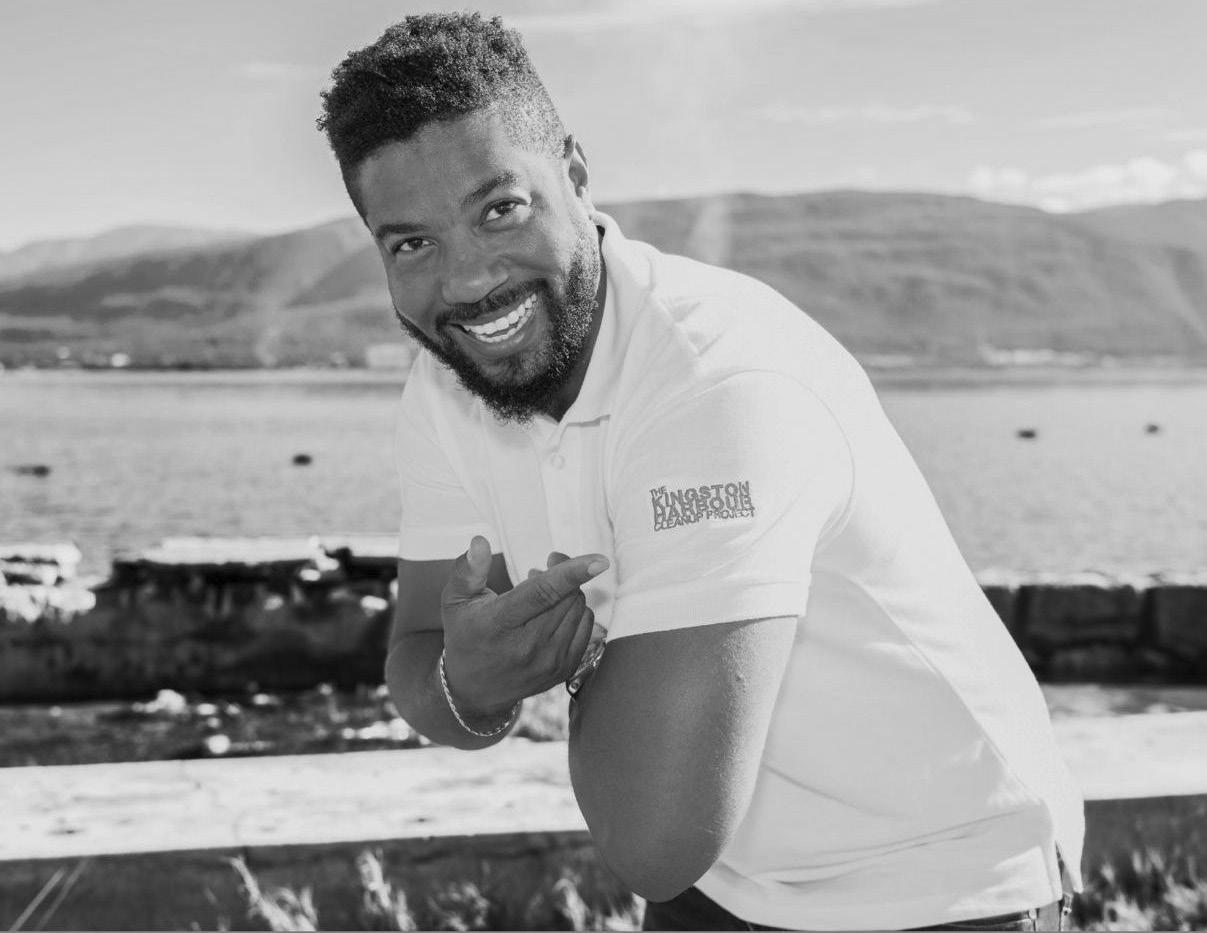
The Palisades Road is a thin ribbon of asphalt between two versions of Jamaica. On one side, the Caribbean Sea reaches toward the horizon, a deceptive sapphire mask; on the other, the Kingston Harbour exhales the heavy, metallic scent of sixty years of industrial neglect and community desperation.
This is not the Jamaica of the glossy travel brochures with their filtered turquoise shallows. This is the reality of a messy space, a term that Michael McCarthy, Managing Director of Clean Harbours Jamaica Limited, uses with a visceral cringe that betrays his clinical, colour-coordinated obsession with order. For Michael, a man who organizes his closet by sleeve length and his socks by shade, the chaotic sprawl of plastic bobbing in the harbour is a personal affront to his spirit.
Born in Kingston thirty-nine years ago, Michael’s life has been a slow-motion immersion into the water-bearer identity of his Aquarian sun sign. While others see the sea as a backdrop for leisure, Michael sees a home that has been desecrated. His foundation was built on the rigid discipline of his father, and the exacting standards of his mother. They taught him that anything worth doing was worth doing well, a philosophy he now applies to the Herculean task of filtering millions of pounds of waste from the arteries of his nation. His connection to the water is spiritual, a calming effect that centers his aura, yet his work is defined by the high-tension friction of resistance and political inertia.
This work is a mission born from conviction and profound frustration. Michael, a senior marine engi-
neer and captain, spent years at sea, witnessing how developed nations protected their waterways as their most precious real estate. Returning home, he found a colonial legacy that had taught Jamaicans to turn their backs on the harbour, treating it as a sink for the city’s gullies rather than the heart of its economy. He co-founded Clean Harbours Jamaica (CHJ) with a core group of like-minded mariners who realized that if they destroyed the ocean, they destroyed their own livelihoods.
The work itself is tangible and gritty. It is re-engineering the future of the Caribbean. CHJ manages Interceptors, massive, high-tech strainers provided through an alliance with The Ocean Cleanup and the GraceKennedy Foundation. These devices are deployed at the mouths of the largest gullies, the concrete veins that carry the city’s discarded plastics and runoff into the sea. To a fifteen-year-old, the mechanism is simple: it catches the trash before it can escape into the open ocean, preventing nearly 6 million pounds of waste from choking the harbour, but the implementation is anything but simple. The technology, designed in the Netherlands, originally failed to account for the unique, special ferocity of Jamaican gully runoff. Michael and his team had to go back to the drawing board, innovating and re-engineering the systems to survive the local environment.
The stakes are existential. Jamaica’s identity is inextricably linked to its coastline, yet the banking sector originally refused to recognize the value of maritime assets, forcing Michael to go door-to-door, enduring proverbial “No’s” from institu-
tions that claimed to be green until he asked for the capital to prove it. This is the paper wall of resistance, a systemic failure to understand that without pristine beaches, the tourism economy is a house of cards. Michael argues that we celebrate sixty years of independence, yet we have endured “Sixty years of pollution,” a historical stain that requires more than just government talk to remove. It requires a shift in the national psyche.
Critically, this is not a story of a solitary saviour. Michael rejects the saviour narrative, emphasizing instead the family atmosphere of his team and the agency of the local community. He speaks of security guards who, on their days off, volunteer to sort garbage because they have begun to believe in the dream. He speaks of the camaraderie formed through the shared heartbreak of seeing Hurricane Melissa damage their Interceptors and release captured waste back into the water. Michael McCarthy has helped to create a growing network of waste champions who no longer see environmental work as a chore; they now see it as a natural extension of self-love.
However, the tension remains unresolved. Michael’s vision extends to becoming the premier marine waste provider for the entire Caribbean, but he is haunted by the question of sustainability. “It takes cash to care,” he notes bluntly, and the project currently relies on international partners and private foundations rather than being fully integrated into the national infrastructure. He worries whether he will be around long enough to see the vision through, or if the drive will vanish if he stops pushing. He is chasing a
memory he never actually got to have: the Kingston Harbour his grandfather swam in, a pristine sanctuary that exists for Michael only in stories.
Success, for Michael, is when there is less work because there is less garbage to collect. He envisions a future where his children can carry him out to the water and see people once again immersed in an environment that was once considered a tomb. Until then, he remains a man doing his best to bring order to a messy world, fueled by a passion that others might find uncool, but that he considers a lifestyle.
He recalls the bottle caps his team turned into a mural, a vibrant mosaic of what was once discarded. He thinks of the plastic bottles now serving as benches, a literal foundation for rest built from the debris of a consumerist culture. Then he looks back at the water, where the Interceptors sit, waiting for the next rain to wash the city’s sins back toward the sea.
The mural is beautiful, but the gully is still flowing. The ghost of his grandfather is still waiting by the shore for a water that is safe enough to hold him
Written by Simone J. Smith Toronto Caribbean News
Photo Credit: Ryan Scott
Photo Credit: Sanj P Photography
Gifford-Jones timeless words from 90+, “How
I Got There!”
BY DIANA GIFFORD-JONES COMMON SENSE HEALTH
It has been almost a year since my father penned his final column at the age of 101. To mark the occasion, I offer his own timeless words, this week edited from the forward to his book, 90+ How I Got There!
George Bernard Shaw once remarked, “The single biggest problem in communication is the illusion it has taken place.” Today the biggest problem with communication in medicine is that it is the wrong communication, delivered to medical consumers with disastrous results. During the latter years of my surgical practice, I began to realize that big pharma had created a culture of consumer pillitis wherein every minor problem required a pill. But no mention was made of unintended consequences. This triggered my interest in natural remedies that had stood the test of time. They have not killed anyone. Prescription drugs, on the other hand, have removed 100,000 North Americans from this planet every year.
As a medical journalist I have enjoyed the privilege of interviewing international medical authorities. This had a profound influence on my approach to medical matters, and there is no doubt my two lengthy interviews with Dr. Linus Pauling are among the reasons for writing this book. Pauling’s views on vitamin
C, and those of Dr. Sydney Bush, represent to me the greatest medical achievement since I graduated 65 years ago from the Harvard Medical School. It may have the potential to help mankind as much as, or more than, any other research, but is still collecting dust in the medical community. It is an appalling tragedy as their findings of C’s benefits could save countless lives.
Voltaire, who spent time in the French prison Bastille one wrote, “It is dangerous to be right, when the government is wrong.” During my lifetime as a surgeon and medical journalist I learned that Voltaire was right. When my newspaper column tackled controversial medical topics, my popularity with segments of society and the medical establishment was jeopardized. The written word is dangerous, but as a journalist one should never expect to win a popularity contest.
Reporting the facts of medicine is never easy. Multinational companies producing chemical therapies are making billions of dollars supposedly to reduce suffering, but they confuse the public about the cause of heart disease and other medical problems.
Eventually the truth does emerge. As Winston Churchill wrote, “The truth is inconvertible. Panic may resent it. Ignorance may deride it. Malice may distort it, but there it is.” The truth is that we are getting older and living longer, but we all want to live longer well. In this age
of degenerative disease, the Gifford-Jones Law states that one bad problem leads to another and another. It is best to avoid them a much as possible. Due to faulty lifestyle decisions, obesity may lead to Type 2 diabetes. Its complications may lead to loss of limbs, blindness and kidney failure. Atherosclerosis due to diabetes may lead to heart attack and sudden death. All may prevent a lengthy and active life.
I hope that this book will show how these disasters and other medical pitfalls do not have to happen. They will occur less often if North Americans learn that smart people do at the start of life what fools attempt at the end.
Enough said.
***
Next week I will share one of the chapters from 90+. Readers interested in ecopies or one of the few available hard copies can order at www.docgiff.com or contact me.
Why Canada’s lack of race-based data keeps Black health disparities invisible
BY IKA WASHINGTON COMMUNITY HEALTH
“Dawg a sweat, but long hair cover it.”
The United Kingdom mandated hospital ethnicity recording in 1995, and the United States embedded race-based data collection into federal health law, through the Affordable Care Act, over a decade ago.
Canada, in 2026, still relies on the category “visible minority,” a broad political term designed to count diversity, while flattening the distinct realities of Black and racialized/ethnic-minority communities. Without data that names race or ethnicity specifically, current Canadian health systems have no mechanism to see where Black Canadians are being failed, and no obligation to respond; missing the systemic friction, economic strains, health disparities that are distinctly impacting Black Canadians.
As the Jamaican proverb astutely reminds us, “Dawg a sweat, but long hair cover it,” the disparities are real, however Canada’s current structural blindness conceals it with deliberate policy choices.
Black maternal health evidence
BY CHE MARVILLE ASK CHE
in Canada is slim, a handful of studies almost entirely from Ontario, yet every study found higher rates of preterm birth, preeclampsia, and infant death among Black mothers and babies. The Centre for Addiction and Mental Health in Toronto, one of the few institutions to collect race data internally, discovered that Black patients were restrained 44% more often than White patients, a finding that reshaped its antiracism plan. One institution looked and found something it could act on; most of the system never has to look.
The fragments of evidence that do exist continue to illuminate health conditions that cluster in Black communities that go untracked and routinely dismissed. For example, Black Canadians of African and Caribbean descent face 50 to 60% higher risk of involuntary psychiatric admission, a gap that holds even when patients arrive with the same symptoms, leaving the clinician’s perception as the explanation.
Also, in Ontario community hospitals, many sickle cell patients in pain crisis still do not receive relief within the 30-minute guideline window, and an American study found that more than eight in ten
report managing severe pain at home rather than face emergency room suspicion of drug-seeking. Further, uterine fibroids appear in 26% of Black women under 25 compared to 7% of White women, yet no Canadian health system has a targeted response. None of this shows up in national data, because the data was never designed to see it.
This is what makes the City of Toronto’s Black Community Data Governance Implementation Plan, released in May 2026 by the Wellesley Institute and the Black Health Alliance, worth your attention. Its centrepiece is a Black Community Data Governance Table, a community body overseeing how the city collects, uses, and protects data about Black residents, with safeguards built in because our data has historically been used to keep an eye on us and target us rather than serve us. The answer to invisibility is visibility on community terms, and no other Canadian municipality has gone this far.
Municipal leadership needs a federal answer, and learnings from the United Kingdom warns what it should include. Britain has mandated ethnicity recording
for three decades, yet Black women there remain four times more likely to die in pregnancy or childbirth than White women, proof that mandates create evidence, but not the will to act on it.
The federal government already attaches five conditions to the Canada Health Transfer; a sixth, requiring provinces to report race-disaggregated health data to a national standard, would create the accountability infrastructure Canada has refused to build. That standard should name Black Canadians as a distinct group, and ideally finer, since Nova Scotian descendants of enslaved people, Caribbean diaspora families, and recent African immigrants carry different histories and outcomes; a monolithic category reproduces the same erasure at a smaller scale.
Meaningfully, the absence of data means the absence of evidence, and without evidence there is no policy lever and no change. Black communities are already building the frameworks; governments should meet them there. The community has been sweating the whole time, and it is long past time to part the hair.
Hurting and holding on Part I: What absence teaches
Dear Che, “I have a hard time letting go of the pain of my mother’s absence when I was a child. I know she didn’t have a choice, but it STILL HURTS. It holds me back from forgiving her and really loving her the way I want to. How do I release this?”
Dear Hurting and Holding On, What you have written is something a whole generation of Caribbean people has been carrying in silence for decades. You are not alone. You are not weak for feeling this. Trust yourself.
What you are describing is not only about your mother. It is about what her absence taught you at an age when you had no defenses against the lesson. When the first woman you ever loved, the woman whose presence was supposed to be as certain as breathing, was gone, your nervous system learned something. It learned that the people you need most may not stay. That love and loss arrive together. That, depending on anyone, is not entirely safe.
BY KING KOFI SPIRITUAL ADVISORY
“The ancestors left us many gifts, but perhaps one of the greatest was the reminder that no one is meant to walk this journey alone.”
If you were to travel to any rural community or traditional area in many parts of Africa, you will find groups of men, their hands in the Earth, tending to farmland together. You would see women collectively choosing an array of ingredients for steaming pots and children engulfed in games for hours on end, together.
A similar scene would be experienced in many of the country towns from Trinidad & Tobago, St. Lucia to St. Kitts, Jamaica to Barbados, the theme of interdependence is woven into our culture, like the roots of a tree are woven into soil. Many examples of this collectiv-
That lesson did not stay with your mother. It travelled. It shaped how you move toward women, whether you trust them, whether you let them close, whether some part of you is always waiting for them to leave, and if your father was also absent physically or emotionally, a parallel stream ran alongside it, teaching you that men, too, are unreliable.
What many barrel children carry into adulthood is not just the grief of a specific absence. It is a foundational uncertainty about whether they are safe in a relationship at all. That uncertainty becomes the water they swim in, so familiar they cannot see it, so deep it touches everything.
This is not a character flaw. It is what a child does to survive an early loss. She adapts. She learns not to need too much. She learns to see the leaving before it happens. She learns to judge quickly, sharply, before she can be disappointed, and that judgment, once a form of protection, hardens over time into a wall that keeps everyone at a careful distance. Sometimes even her own children. Or it swings the other way into over-giving, try-
ing to become for her children the mother she never had, but from a place of fear rather than wholeness.
Now, the larger context. Caribbean parents who came to Canada, the United Kingdom, and the United States were nurses, nannies, teachers, tradespeople, caregivers, people of skill, ambition, and enormous love. They left for better economic opportunities and were culturally displaced in ways they were never prepared for. They did not leave because their children did not matter. They left because the economic and racial structures of both their countries of origin and their countries of arrival made it nearly impossible to build a life any other way. Families arrived separately, not because love was absent, but because the system extracted labour while erecting every possible barrier to family wholeness.
Here is what those parents often could not afford to do: feel it. When survival requires everything you have, emotional narrowing is not a choice; it is a necessity. Many Caribbean parents were so consumed by the urgency of working, saving, sponsoring, and sending for their
The Collective is Greater than the Individual
ism for community can be found in the principles of Ma’at (pronounced ‘Ma-aht’).
The Kemetic (ancient Egyptian) principle of Maat offers a profound view through which we can better understand reciprocity and interdependence.
At its core, reciprocity is the understanding that life is built upon exchange, and not a transactional exchange of, “I give so that I can get,” but a sacred exchange where each person contributes to the well-being of the whole.
Many of the challenges we experience here in the West, range from personal isolation to communal disconnection; elders feeling cast aside and placed in seniors’ homes to even children feeling like a burden, unloved, and ignored within their family. These sad scenarios find their roots in the absence of this ancient principle. Maat recognizes that nothing exists in isolation.
Maat asks:
• Are my actions contributing to harmony or disorder?
• Am I taking more than I give?
• Am I fulfilling my responsibility to the collective?
When was the last time we truly asked ourselves these types of questions? The principle of Maat teaches that each of us has a responsibility to contribute to the harmony of the community. That harmony is achieved when we are looking at how we are living individually in accordance with our families and the broader community.
Survival was a collective act
Our ancestors endured enslavement, colonization, displacement, poverty, and systemic oppression not because they were stronger as individuals, but because they
children that they could not see the interior landscape of what those children were living through. Not because they didn’t care, because survival demanded tunnel vision, and when the family was finally in the same house, they believed the hard part was over. They did not know their child had already learned to live without them.
This is perhaps the most painful gap in the whole story: the parent who sacrificed everything believes the sacrifice was enough. The child who waits knows something the parent cannot see that the body does not keep score of intentions. It keeps score of presence. Of absence. During the night, nobody came.
Here is what I most want you to hear: you can love and still be devastated. These opposites exist together. They live in the same body. Honouring your mother’s sacrifice and acknowledging your own pain are not in competition. You do not have to choose. Insisting that you choose that, if you loved her enough, you would not hurt, is one of the ways our community has kept this wound alive across generations.
did something braver than we care to acknowledge or being vulnerable enough to practice today; they relied upon one another. They shared food, knowledge, childcare, healing practices, and spiritual traditions. Community was necessary for survival. Our ability to evolve communally, and to move from wearing a survival hat to a thriving mindset, is rooted in our ability to embrace the lessons that Ma’at teaches us. That no matter what, we are truly, at our core, seeking to be connected to a broader collective, and that itself holds the keys to our healing and progress. If our ancestors survived because they leaned on one another, perhaps one of the most important questions we can ask today is: Who is in my village, and whose village am I helping to strengthen?
Jerk Pork & Pineapple Kebabs; Bringing Jamaica’s Most Famous Flavours to the Summer Grill
region. The sweetness doesn’t compete with the heat; it enhances it.
There are certain flavours that immediately transport you to the Caribbean. The smell of pimento wood smoke drifting through the air. The unmistakable aroma of Scotch Bonnet peppers mingling with fresh herbs and spices. The sound of food sizzling over an open flame while family and friends gather nearby. Few cooking traditions capture the spirit of the Caribbean quite like jerk cooking, and few countries are as closely associated with that tradition as Jamaica.
Jerk has become one of the most recognized Caribbean flavours in the world. Whether it is jerk chicken, jerk pork, seafood, or vegetables, the combination of heat, spice, smoke, and seasoning has earned a place on menus far beyond the shores of Jamaica. Today, you can find jerk-inspired dishes across North America, Europe, and beyond, but the roots of this cooking style run much deeper than most people realize.
This week, we are taking those traditional Jamaican flavours and turning them into a summer-ready recipe that is perfect for backyard barbecues, family gatherings, and warm evenings spent outdoors. Jerk Pork & Pineapple Kebabs combine the bold, spicy flavours of traditional jerk pork with the natural sweetness of grilled pineapple, creating a balance that captures everything people love about Caribbean cooking.
One of the reasons jerk has remained so popular for generations is because it is built on contrast. Heat and sweetness. Smoke and citrus. Spice and freshness. Every ingredient has a purpose, and when those ingredients come together properly, the result is something far greater than the sum of its parts.
The history of jerk cooking is deeply connected to Jamaica’s past. Historians often trace its origins to the Maroons, descendants of enslaved Africans who escaped into Jamaica’s mountainous interior. Living in remote areas, they developed cooking methods that allowed them to prepare food while avoiding detection. Meat would be heavily seasoned and slowly cooked over pimento wood, creating the distinctive flavour profile that eventually became known around the world as jerk.
Over time, the technique evolved and spread throughout Jamaica. What began as a practical method of cooking became a culinary tradition that helped define an entire nation’s food culture. Today, jerk stands as one of the Caribbean’s most recognizable contributions to the global culinary landscape.
While jerk chicken often receives most of the attention, many Jamaicans will tell you that jerk pork is where the tradition truly shines. Pork has enough richness to stand up to the intense seasoning, and the natural fat within the meat helps carry the flavours deep into every bite. When cooked properly, jerk pork develops a beautiful balance of tenderness, spice, and smoky character that is difficult to replicate with any other protein.
That richness is also why pineapple works so well alongside it.
The Caribbean has always embraced the combination of sweet and spicy flavours. Mangoes find their way into pepper sauces. Pineapple appears alongside grilled meats. Tamarind balances spicy dishes throughout the
Grilled pineapple is particularly special because something magical happens when it meets high heat. The natural sugars begin to caramelize, creating deeper flavours while maintaining the fruit’s juicy sweetness. The slight char from the grill adds another layer of complexity that pairs beautifully with jerk seasoning.
When pineapple and jerk pork come together on the same skewer, the contrast becomes immediately apparent. One bite delivers smoky spice and savoury richness. The next introduces sweetness and acidity. Together they create a flavour combination that feels balanced, exciting, and unmistakably Caribbean.
Summer is perhaps the perfect season for a recipe like this. Across the Caribbean, outdoor cooking has always played an important role in community life. Whether it is a roadside jerk pan, a beach gathering, a family celebration, or simply a weekend cookout, food often becomes the centrepiece around which conversations and memories are built.
There is something special about cooking outdoors that slows people down. The smell of food on the grill draws people together. Someone inevitably gathers around to offer advice, whether requested or not. Children run around the yard. Music plays somewhere in the background. Before long, what started as preparing dinner turns into an event.
That sense of community is one of the things I appreciate most about Caribbean food. Recipes are important, but the experiences surrounding those recipes are equally valuable. Food becomes a way to connect generations, preserve traditions, and create new memories.
The beauty of these kebabs is that they capture that spirit while remaining incredibly approachable. You do not need specialized equipment or years of experience to prepare them. Most of the work happens in the marinade, where the flavours have time to develop and penetrate the meat. Once the pork is seasoned and ready, the grill does the rest.
Like many Caribbean recipes, the marinade is where the personality of the dish truly comes alive. Scotch Bonnet peppers provide the heat and fruitiness that define authentic jerk flavour. Garlic contributes depth. Fresh thyme adds earthiness. Green onions bring brightness. Allspice, often referred to as pimento in Jamaica, provides the warm, slightly sweet notes that are essential to traditional jerk seasoning.
Many people are surprised to learn that allspice plays such a major role in jerk cooking. While Scotch Bonnet peppers often receive the spotlight, allspice is equally important. Its flavour hints at cinnamon, nutmeg, and cloves all at once, creating the distinctive backbone that makes jerk seasoning instantly recognizable.
Lime juice helps brighten the marinade while also helping the flavours penetrate the meat. A touch of brown sugar balances the heat and encourages caramelization during grilling. Together, these ingredients create a marinade that is bold, balanced, and packed with Caribbean character.
One of the keys to success with jerk
pork is patience. The longer the pork sits in the marinade, the deeper the flavour becomes. While a few hours will certainly work, overnight marination allows the seasoning to fully develop and creates a much more flavourful final product.
Choosing the right cut of pork also matters. Pork shoulder works exceptionally well because it contains enough fat to remain juicy throughout the cooking process. Pork loin can be used as a leaner alternative, but care must be taken not to overcook it. Regardless of the cut you choose, uniform pieces will help ensure everything cooks evenly on the grill.
When assembling the kebabs, alternating pork with chunks of fresh pineapple creates both visual appeal and flavour balance. The bright yellow pineapple contrasts beautifully with the dark seasoning on the pork, creating a dish that looks just as good as it tastes.
Adding red bell peppers and red onions can introduce even more colour while contributing their own subtle sweetness. As the vegetables cook, they soften slightly and absorb some of the jerk flavours from the pork, creating harmony across every skewer.
The grilling process itself is relatively straightforward. Medium-high heat allows the pork to develop a beautiful exterior while remaining tender inside. The pineapple begins to caramelize, the vegetables soften, and the marinade transforms into a flavourful crust that captures everything people love about jerk cooking.
One of the biggest mistakes people make when grilling pork is rushing the process. Give the meat time to cook properly. Turn the skewers occasionally to promote even cooking and prevent burning. The goal is not simply to cook the ingredients but to allow them to develop those rich, slightly charred flavours that make grilled food so satisfying.
As the kebabs cook, the aroma alone will likely attract attention. Garlic, thyme, allspice, and Scotch Bonnet peppers combine with smoke and caramelized pineapple to create a scent that is nearly impossible to ignore.
When serving, these kebabs pair beautifully with coconut rice, rice and peas, grilled vegetables, coleslaw, festival, or even a simple green salad. Their versatility makes them ideal for everything from casual family dinners to larger summer gatherings.
More importantly, they represent what Caribbean cooking does best. They celebrate flavour. They embrace balance. They combine tradition with creativity. They honour the past while remaining perfectly suited to the present.
At its heart, Caribbean food has always been about bringing people together. The recipes may vary from island to island, but the spirit remains remarkably consistent. Good food is meant to be shared. It is meant to spark conversation, laughter, and connection.
These Jerk Pork & Pineapple Kebabs do exactly that.
They capture the boldness of Jamaica’s most famous cooking tradition while introducing a touch of sweetness that feels tailormade for summer. They are colourful, flavourful, and approachable, making them an excellent
introduction for anyone looking to explore Caribbean cuisine beyond the dishes they already know.
Most importantly, they remind us that some of the best meals are often the simplest. A good marinade, quality ingredients, a hot grill, and people to share it with. Sometimes that is all you need.
Jerk Pork & Pineapple Kebabs
Ingredients
For the Pork Marinade
• 2 lbs pork shoulder or pork loin, cut into 1½-inch cubes
• 2 Scotch Bonnet peppers
• 4 cloves garlic
• 4 green onions
• 2 tbsp fresh thyme
• 2 tbsp lime juice
• 2 tbsp soy sauce
• 1 tbsp brown sugar
• 1 tbsp ground allspice
• 1 tsp cinnamon 1 tsp black pepper 1 tsp salt
• 2 tbsp vegetable oil
For the Kebabs
• 1 fresh pineapple, cut into chunks
• 1 red bell pepper, cut into chunks
• 1 red onion, cut into chunks
• Wooden or metal skewers Instructions
• Place all marinade ingredients into a blender or food processor and blend until smooth.
Pour the marinade over the pork and mix thoroughly.
• Cover and refrigerate for at least 6 hours, preferably overnight.
• If using wooden skewers, soak them in water for 30 minutes.
• Thread pork, pineapple, bell pepper, and onion onto skewers, alternating ingredients.
• Preheat grill to medium-high heat.
• Grill kebabs for approximately 12–15 minutes, turning every few minutes.
• Cook until pork reaches a safe internal temperature and develops a lightly charred exterior. Remove from the grill and allow to rest for 5 minutes.
• Serve immediately with your favourite Caribbean side dishes.
Whether you’re hosting a backyard barbecue, enjoying a weekend cookout with family, or simply looking for a new way to experience Caribbean flavours, these Jerk Pork & Pineapple Kebabs deliver everything summer cooking should be. They are sweet, spicy, smoky, colourful, and packed with character. Most importantly, they remind us why Caribbean food continues to earn fans around the world—because every bite tells a story, and every meal is an opportunity to bring people together.
Wealth is built through time as much as it is built through money
BY DR. NATASHA BRIDGMOHAN THE MONEY ILLUSION
A woman once told me she wished she had understood the value of time sooner. She was considering the tiny amounts of money she could have set aside consistently over the years and what those simple decisions might have grown into.
Like many people, she believed she needed to earn more money, eliminate every debt, pay every bill, wait for the children to grow up, secure a promotion, and reach some future milestone before she could start.
After reviewing her finances together, she realized something people eventually discover. The biggest financial cost was not the money she had spent; it was the time she had lost waiting to begin.
The challenge is that wealth is
built through time as much as it is built through money. Every year waiting is a year that money is not being given the opportunity to grow. One of the most powerful financial tools available to anyone is compound growth. Simply put, money earns money, and over time those earnings begin earning money as well. The longer the timeline, the greater the impact becomes. Let’s look at the power of time in action. Imagine two people who both want to build a nest egg of $1 million by age 65.
Scenario 1: Starting at age 30
• Starting balance: $10,000
• Annual return: 7%
• Monthly contribution: $500
• Investment period: 35 years
By age 65, the investment grows to
Be cautious of what we say because the internet is forever
BY SYDNEY WALCOTT
VARIETY CORNER
Before the eighth season of Love Island USA made its premiere on June 2nd, 2026, the season already stirred up controversy with the removal of one islander.
Two days after the season eight cast was announced, one of the islanders, Vasana Montgomery, was removed from the show after two old videos resurfaced of her using a racial slur. In both videos, Montgomery can be heard saying the n-word. The first video features her rapping along to a song containing the word, while the second video shows her saying the slur while playing a game at an arcade.
Peacock was unaware of the video during the vetting process, as the videos were privately owned at the time and were not made public until after Montgomery was announced as a season eight islander. Upon being made aware of the two videos, Montgomery was removed from the show before the islanders entered the villa.
The day after the eighth season premiered, Montgomery released a statement apologizing for using the slur.
“I want to address a couple of videos from my teen years that have recently resurfaced. In those videos, I used a racial slur. There is no excuse for it, and I am deeply sorry. I am embarrassed and disappointed by my words. I take full responsibility for what I said and understand why it has hurt and upset people.
Since then, I have grown as a person and taken the time to educate myself, listen, learn, and better understand the impact that language can have. That growth does not erase my mistake, and I am not asking anyone to excuse it. I believe people should be held accountable for their actions, but I also believe in growth, learning, and becoming better. To anyone I hurt or disappointed, I am truly sorry.”
After the resurfacing of the two videos, it was alleged that the release was done with calculated motives by a friend of Montgomery. While I do not encourage throwing a friend under the bus, we have to be cautious of what we say because the internet is forever. Once something is posted, there is no going back from it, and if something negative is posted on the internet, it will follow with repercussions.
This marks the second season in a row where an islander has been removed for using a racial slur. In season seven, Yulissa Escobar was removed from the island on day
$1,015,588.82.
• Total contributions: $220,000
• Growth from compounding: $795,588.82
Now let’s look at what happens when the same goal is delayed by 20 years.
Scenario 2: Starting at age 50
• Starting balance: $10,000
• Annual return: 7%
• Monthly contribution: $3,500
• Investment period: 15 years
By age 65, the investment grows to $1,137,857.51.
• Total contributions: $640,000
• Growth from compounding: $497,857.51
The difference is striking, the person who started at age 30 contributed $220,000 and allowed time to do much of the heavy lifting. The person who waited until age 50 had to contribute $640,000 to achieve a similar outcome. Time created nearly $800,000 of growth in the first scenario.
long-term results. It can start with simple steps:
• Start with an amount you can maintain consistently.
• Automate savings or investments whenever possible.
• Focus on building habits before focusing on large numbers.
• Review your progress regularly and adjust as your income grows.
• Remember that time is one of your most valuable financial assets.
Many people spend years looking for the perfect strategy while missing the value of simply taking the first step. Small actions repeated consistently often create remarkable results over time.
The people who build wealth are rarely the people who waited until conditions were perfect. They are often the people who started before they felt fully ready and continued moving forward one decision at a time.
three after clips of her using the n-word in a podcast resurfaced online. On day twentysix, bombshell Cierra Ortega was removed from the show after two Instagram Stories resurfaced of her using a slur against Asians while describing her Botox treatment. Both have issued separate apologies.
Islanders within the Love Island space are not the only ones guilty of using racial slurs and posting offensive content online. People are quick to expose islanders for racism when viewers have made racist content about some of the islanders.
One situation that comes to mind is the anti-Blackness that season seven islanders Olandria Carthen and Chelley Bissainthe were subjected to. Some of the viewers had made the two the subjects of racist memes and unsettling imagery.
Those who partook in the racism against Carthen and Bissainthe also need to realize that what they posted on the internet is offensive and cannot be taken back. Just like Peacock, many workplaces have a zerotolerance policy in effect for certain behaviours. So, if you are watching the show as a viewer, be mindful of what you post on the internet about the islanders, because if your employer is made aware of anything negative, there will be consequences, and losing your job can be one of them.
Before the season’s scheduled premiere, Love Island USA made a PSA on their Instagram page asking viewers to be respectful after several of the islanders from season seven were on the receiving end of negative reactions, comments and debates.
“The Villa runs on good vibes, and so does the community. We love seeing your reactions, opinions, and debates, but everyone deserves to feel safe and respected.
This is a safe space for fun, not negativity - so keep it in mind, keep it positive, and remember: this is LOVE Island.”
Viewers need to keep that message in mind as they watch the show because islanders will be getting dumped as the season progresses, and once the season wraps up, the islanders are going to see content that was made about them. As mentioned earlier, you could be terminated from your job if your boss sees something that does not align with your workplace’s values.
Future islanders should also be mindful of what they post online because Peacock is continuing to amend their vetting process and will remove anyone for doing anything it deems unacceptable.
Example two should never be interpreted as a reason not to start. The second investor still built more than $1.1 million despite beginning at age 50. The best time to start may have been years ago, but the second-best time is today. Wealth building is not reserved for young people. Progress can begin at any age, and every year you delay simply gives your money less time to work on your behalf.
Financial progress is built one decision at a time. Small actions, practiced consistently, often create the greatest
A kind reminder from someone who has heard stories from people of all walks of life. Fear has a way of disguising itself as logic. It tells us we need more time, more money, more knowledge, or better circumstances before we begin. For many people, those conditions never fully arrive. Wealth is rarely built by those who waited until they felt completely safe and ready. It is built by those who started, learned along the way, and allowed time to become their greatest financial ally. Wherever you are today, give yourself permission to begin. Your future self will be grateful that you did.
BY SIMONE J. SMITH HUMAN SPECIALIST
We have turned our pain into a permanent identity
You are sitting in the back of the church, or perhaps at a mahogany desk in a highrise, and you are drowning, but you keep paddling because you were told that to be a strong person of the soil (a dutiful Caribbean daughter or a resilient son of the diaspora) you must bear the cross until your back breaks.
We have been conditioned to believe that suffering is a spiritual merit badge, a necessary down payment for a
crown we might never wear. We carry the migration pressure, the family expectations, and the heavy weight of what people will say like a wet wool coat in a tropical heatwave.
Most of us are swimming in circles, exhausted, waiting for a salvation we don’t truly believe is coming. We are like the rats in that 1950’s study, swimming for 15 minutes before giving up and sinking because we think 15 minutes is our limit. I am here to tell you, as someone who listens to the council of Dr. Amos Wilson, that your limit is a lie. When those same
World Cup subsidies favour the sponsors not the fans
BY HERBERT HILDEBRANDT POLITICAL PARLEY
The FIFA World Cup is sold as a celebration of multicultural Toronto. We are told it will display our city, honour our diversity, inspire children, and bring the world to our doorstep. Of course, soccer is deeply woven into the life of Toronto’s diverse immigrant communities. Families of ethnic origins all understand the beauty of the game and soccer belongs to the people, but the people are paying a hefty price for a party few can afford to attend.
Toronto’s direct hosting budget for six World Cup matches is $380 million. That includes $104.34 million from the federal government, up to $97 million from the Ontario government, and $178.66 million from the City of Toronto through reserves, hotel taxes, commercial revenues, and other funding sources. BMO Field is being expanded to 45,736 seats for the tournament. Across six matches, that creates about 274,000 available seats.
Divide the $380 million direct hosting cost by those available seats and the public cost works out to $1,385 per seat. That includes about $380 per seat from the federal grant, $353 per seat from Ontario, and $651 per seat from City funding.
There is also more federal money layered on top. Ottawa announced up to $145 million for World Cup security across Canada, with about $45 million directed to Toronto. If that Toronto security money is counted on top of the direct hosting budget, the Toronto-related public cost rises to $425 million, or about $1,549 per available seat, and that is before a fan buys a ticket.
Reports show the cheapest facevalue tickets to Canada’s opening match in Toronto were over $1,000. FIFA can point to limited lower-priced tickets, but that does not change the reality of living for ordinary families. A working parent with two children is not looking at a family outing. They are looking at rent money, grocery money, or car payment.
Now ask the harder question. What else could this money have done? Youth soccer is not free. In Toronto, ordinary recreational soccer often runs around $300 to $350 per child for an outdoor season. Winter house league can run around $495. Indoor select programs can reach $1,300 to $1,500. So let us use a conservative, middle-ground number of $500 per child.
At $500 per child, Toronto’s $380 million hosting bill could have paid for 760,000 youth soccer registrations. If we include the additional $45 million in feder-
al security money directed to Toronto, that number rises to 850,000 child seasons. The federal and Ontario grants alone, about $201 million combined, could have covered more than 400,000 children.
Think about that. We could have celebrated the World Cup by putting hundreds of thousands of children on soccer fields. We could have paid registration fees for families in: Scarborough, Rexdale, Jane and Finch, Malvern, Brampton, Parry Sound, Bayfield, Aylmer, Port Dover, Kanata, Leamington, and every community in between where parents are choosing between sport and survival.
Instead, we are helping to underwrite six matches where most of those children will never sit in the stands because of the insurmountable financial barriers.
The same is true for facilities. Ontario does not just need World Cup branding. It needs year-round places to play. Thunder Bay’s approved indoor turf facility budget is $32.65 million. Calgary’s soccer-centre dome and artificial turf upgrade was $28 million. Brantford reviewed an indoor sport facility concept estimated around $20 million. Using those real-world benchmarks, Toronto’s $380 million hosting bill could have helped build roughly a dozen major indoor turf facilities, and closer to 15 or 19 if projects were built closer to the lower end of that range.
Imagine that legacy instead of this moment on the world soccer stage. Indoor soccer domes and turf fieldhouses across Ontario and full-size artificial turf fields under air-supported domes. Facilities that could be divided into smaller fields for children’s leagues. Winter training space for youth clubs and affordable booking hours for community teams. Change rooms, lighting, accessible washrooms, walking tracks, and multi-sport use for soccer, rugby, lacrosse, football, and school programs.
Canadian youth sport is already becoming a class divider. Governmentcited research has shown that 44% of parents say they cannot afford to register their children in organized sport. Lowerincome children participate less often in coached and competitive sport than higher-income children. That means talent is being wasted and confidence is being lost. Discipline, teamwork, health, and belonging are being denied because parents do not have the money.
A true legacy should be measured in enrolled children, fees reduced, fields built, lights installed, coaches trained, and indoor facilities opened for year-round play.
rats were rescued, dried off, and put back in the water, they didn’t just swim for another hour, they swam for 60 hours. They got a new belief. They believed that if they persisted, they could be saved.
The problem in our community is the identity foreclosure we have accepted. We say, “I am just a person who struggles with my nerves,” or “This is just how our family is.” We have turned our pain into a permanent identity, but pain is data. Suffering, however, is the story we tell ourselves about that pain. You might be in pain because the migration was hard, or the divorce was loud, but you are suffering because you believe you are “Impossible to please,” or “Not good enough” for the life you actually want.
As a writer, I start with the end in mind; I want you to stop being a sheep to blind faith or toxic tradition and start using your beliefs as tools. Your brain is designed to keep you safe by doing exactly what you have always done. It wants you to stay in that familiar, miserable water because at least you have not drowned yet.
To break this, you must apply Inquiry Based Stress Reduction. When you feel that familiar disquietude, or the urge to vent about how your mother is too judgmental, or your boss is a devil, stop. Venting only encodes the negative belief further. Instead, ask yourself the four liberating questions: Is it true? Is it absolutely true? Who do you become when you believe it, and who would you be without it?
Then, do the turnaround. If you believe “My community is holding me back,” try on the opposite: “I am holding my community back” or “I am holding myself back.” It sounds like hocus-pocus until you realize that your brain currently processes 11 million bits of information per second, but your conscious mind only catches 50 bits. You are literally choosing to see the 50 bits that make you a victim.
Every story needs stakes, and the stakes here are your very life. If you don’t change the map you are using, you will never find the treasure, no matter how hard you walk. You don’t need generic advice to just talk more. You need to understand that your beliefs are not objective truths; they are hammers and saws. If the hammer you’re using, the one that says, “I must suffer to be holy,” is smashing your fingers, put it down and pick up a liberating belief, “It doesn’t get easier; I just get stronger.”
After reading this, you are no longer the person who quits at the 15-minute mark. You are the one who understands that your labels are just markers on a map, not a cage of your own creation. You become a strategic curator of your own perception, moving from a victim of how things are to a master of how I see them.
Love yourself enough to give yourself the benefit of the doubt. Stop swimming until you drown; start swimming because you know you are built for 60 hours and beyond.
The art of letting go: Why moving on is the bravest thing you will ever do
BY DANIEL COLE PERSONAL DEVELOPMENT
There is a particular kind of suffering that no one talks about honestly enough. It is not the sharp pain of loss itself, the moment a relationship ends, a dream collapses, a career dissolves, but the prolonged, quieter agony of refusing to leave that moment behind. It is the suffering of standing at a closed door, knocking long after the house has gone dark. Most of us have lived there at some point, and most of us have stayed far longer than we needed to.
While real-life experiences rarely follow a neat sequence, acceptance remains a critical turning point. Acceptance does not mean approval. It does not mean the pain disappears, or that the loss somehow becomes fair. Rather, it means acknowledging reality as it is. Many people remain trapped not because of what happened to them, but because they continue fighting a reality that has already occurred. Healing is often delayed when acceptance is postponed. We cannot move beyond a chapter we refuse to acknowledge has ended.
History, literature, and human experience repeatedly reveal the same lesson: life does not stop when tragedy arrives. Bills still need to be paid. Children still need to be raised. Responsibilities still demand attention. At times, circumstances force people to continue
BY ANYA NICOLA
moving even when they feel emotionally unprepared to do so.
This reality can seem harsh, but it also reveals an important truth about human resilience. The capacity to endure hardship and continue living meaningfully is one of humanity’s most remarkable strengths. The people we admire most are often not those who avoid suffering, but those who found a way to continue despite it.
Yet many of us struggle with letting go. We attempt to revive relationships that have already run their course. We remain emotionally invested in careers that no longer align with our goals. We cling to identities, dreams, or versions of ourselves that belong to a previous season of life.
There is a profound difference between perseverance and attachment. Perseverance involves pursuing worthwhile goals despite obstacles. Attachment, however, can become an unhealthy refusal to accept change. Wisdom lies in knowing the difference.
The modern world often encourages us to believe that everything can be fixed, recovered, or reclaimed if we simply try hard enough. While determination is valuable, not every closed door is meant to be reopened. Some endings are not failures to overcome; they are realities to accept.
Research in psychology suggests that excessive rumination; repeatedly dwelling on past events and
alternative outcomes can contribute to anxiety, depression, and reduced wellbeing. The mind becomes occupied with questions that have no satisfying answers: “What if I had done something differently?” “What if I had made another choice?” “What if things had worked out the way I wanted?” While reflection can produce wisdom, endless replaying of the past rarely changes anything.
Perhaps one of the greatest obstacles to moving forward is our tendency to romanticize what has already passed. We remember the highlights and forget the hardships. We speak nostalgically of the “good old days” while overlooking the challenges that existed within them.
Nostalgia has value when it helps us appreciate our journey. It becomes harmful when it convinces us that our best days are behind us. The future remains unwritten. New opportunities, relationships, discoveries, and experiences are still possible. History is filled with people whose most meaningful contributions came after devastating setbacks. Their stories remind us that endings are often the birthplace of new beginnings.
Moving on does not require forgetting. It does not require pretending that pain never existed. It simply requires refusing to allow yesterday’s losses to determine tomorrow’s possibilities.
When officials become the threat
Three nights ago, I experienced something that shook me to my core. Not because it was new; I have lived this reality my entire life as a Black woman, but because of how clearly it revealed the escalating danger we face when those claiming authority refuse accountability.
I had just returned from burying someone in Jamaica, a trip that became a 23-day medical ordeal when my diabetes complications landed me in the hospital with DKA. Air Canada finally got me home, and I was exhausted, emotionally drained, and desperately wanting to see my children.
That’s when I encountered what would become a traumatic lesson in how quickly public safety can become public danger.
At the airport parking garage, eight men surrounded my car. They claimed to be public safety officers but refused to identify themselves when asked. They demanded nearly $1,000 in parking fees, despite my documented medical emergency and prior arrangements with their colleague Gray, who had promised to honour the original seven-day rate.
As a Black woman with 17 disabilities, including Type 1 diabetes and Autism Level 2, I was experiencing a medical crisis. My blood sugar was dangerously low at 2.7 mmol/L. My Dexcom sensor had failed in Jamaica and wasn’t working properly. I needed medical at-
tention, not negotiation.
Yet these men, who had the power to help or harm, chose to leverage my vulnerability for financial gain. They held me hostage in that parking garage, refusing to let me leave until paramedics arrived to validate their authority over my body and freedom.
The moment that crystallized everything for me was when one officer said he had “The power” to let me go but would not use it unless I complied with their demands. That is not public safety. That is extortion wrapped in the veneer of official authority.
So, I did something that surprised even me; I called 911 on the people who were supposed to BE the safety. I Uno reversed their threat to call emergency services on me and made the call myself, because at that point, my safety was more compromised by their presence than by my medical emergency.
This is where healing intersects with justice. We cannot heal in communities where those entrusted with our protection become our oppressors. We cannot recover from systemic trauma when every interaction with authority retraumatizes us.
What haunts me most is thinking about who might be next. The single mother without medical documentation. The elderly Caribbean grandfather who does not speak perfect English. The young Black man whose very existence is perceived as threatening.
This is why I refuse to let this
go. I am investigating exactly what constitutes a public safety officer and demanding accountability for this interaction. Healing requires justice, and justice requires that we refuse to normalize abuse of power.
The global escalation of racebased violence is not happening in a vacuum. It is enabled by countless smaller moments where authority figures test how much harm they can inflict without consequence. Every time we accept discrimination disguised as procedure, every time we let officials hide behind badges they will not show us, we participate in our own oppression.
Caribbean healing demands that we break these cycles. We cannot love ourselves back to wholeness while allowing systems to dehumanize us daily. We cannot build stronger communities while accepting that authority figures can traumatize us with impunity.
This interaction reminded me that sometimes the most healing thing we can do is refuse to be victims silently. Sometimes recovery means fighting back with documentation, legal action, and the absolute refusal to let harm go unaddressed.
They wanted me to be afraid. Instead, I’m determined. Healing is not just about recovering from trauma; it is about preventing the next person from experiencing it.
Is real estate still worth it?
BY JAY BRIJPAUL REAL ESTATE SPECIALIST
With housing costs soaring and investment risks rising, Canadians are adopting new strategies for financial growth and rethinking the once-unquestioned value of owning property.
For generations, owning a home was the foundation of prosperity in Canada: a place to live, a nest egg for the future, and, for the ambitious, a pathway to greater wealth through a second property. As home prices reach dizzying heights, regulations tighten, and economic uncertainty grows, Canadians are beginning to question whether the old dream still holds.
The appetite for becoming a landlord is waning.
Home prices have hit record highs, interest rates are up, and the cost of taxes and insurance keeps rising, making investment properties far less attractive. Add stricter rental regulations and a flood of extra expenses, from condominium fees to constant repairs; it is no wonder profit margins are shrinking. For landlords, reliable cash flow is outdated; instead of pocketing profits, they are often forced to cover losses out of their own wallets.
The result is a growing reluctance among Canadians to take on additional real estate debt.
Owning an investment property is no longer about collecting rent. Today’s landlords juggle tenant issues, repairs, regulatory compliance, and legal disputes, transforming what was once a so-called ‘passive investment’ into a demanding second job. As rules grow more complex and obligations expand, Canadians find the effort outweighs the rewards. The days of set-it-and-forget-it real estate investing are over.
Broader economic forces are also shaping investor attitudes. Persistent inflation, job insecurity, geopolitical tensions, and sluggish growth have made Canadians more cautious with their finances. Taking on hefty new debt for a rental property feels riskier than ever in these uncertain times.
When confidence dips, investment activity slows, and real estate is no exception. In cities such as Toronto and Vancouver, condominiums were once the entry point for first-time investors. Now, investors face higher inventories, sluggish sales, and flat price growth,
dashing hopes of quick appreciation and easy returns.
For younger Canadians, the stock market has become a far more appealing gateway to building wealth than property ownership. With the ability to start small, buy and sell with ease, and avoid the headaches of tenants and repairs, investments such as stocks, ETFs, and bonds offer the kind of flexibility and freedom that real estate cannot always match. As a result, a growing number of Canadians are turning their backs on bricks and mortar in favour of investment options that offer lower barriers to entry and greater control.
Even as Canadians become more cautious about investment properties, households already carry some of the highest mortgage debt in the world. With so much income tied up in housing, taking on another property means even greater risk. As balances grow, more families are prioritizing financial resilience, building emergency funds, and focusing on security rather than chasing a second home.
Real estate remains a powerful long-term wealth-building tool, but investors are becoming more selective and more strategic. The days of easy appreciation and effortless profits have given way to an environment where careful analysis, strong cash flow, and disciplined decision-making are essential.
For some, investment properties still hold promise. For many, the dream of a second home is fading. Real estate remains part of the financial landscape, but rising costs, tighter margins, and new risks have made the path to property riches far less certain. Today, building wealth through real estate is not automatic; it takes caution, strategy, and a willingness to rethink the old rules.
Real estate, when approached strategically, remains a powerful tool for building long-term wealth. In the current market, small, detached homes on generous lots across the GTA present strong rental opportunities, especially as the region anticipates population growth driven by increased immigration. Home values in the GTA are expected to climb over time. While condominiums may be tempting, buyers on a budget might fare better with older, well-managed buildings in established neighbourhoods, where larger suites often offer greater appreciation potential.
YOUR HOROSCOPE
YOUR HOROSCOPE
for the week of June 14 to June 20, 2026
THE LUCKIEST SIGNS THIS WEEK: GEMINI, TAURUS, LEO
ARIES: Momentum builds around an important goal. Stay focused, trust your instincts, and be ready when unexpected opportunities appear this week.
TAURUS: Patience begins paying off. A situation that felt stalled gains movement, bringing clarity, confidence, and renewed motivation moving forward.
GEMINI: Meaningful conversations create opportunities. Listen carefully, communicate openly, and remain receptive to connections that could benefit future plans.
CANCER: Your focus shifts toward home and family. Small efforts now strengthen relationships, creating stability, comfort, and lasting peace.
LEO: Leadership comes naturally this week. Others seek your guidance, but teamwork and cooperation will produce the strongest overall results.
VIRGO: Avoid getting lost in details. Prioritize what truly matters, stay flexible, and allow progress without demanding absolute perfection.
LIBRA: Balance returns as tensions begin easing. Positive developments help restore harmony, making personal and professional relationships feel stronger.
SCORPIO: Trust your intuition this week. Hidden information surfaces, providing clarity and helping you make confident decisions moving forward.
SAGITTARIUS: New experiences bring fresh perspectives. Stay open-minded, embrace change, and welcome opportunities that encourage personal growth and adventure.
CAPRICORN: Consistent effort continues producing results. Keep your attention on long-term goals and avoid distractions that slow meaningful progress.
AQUARIUS: Creative energy is strong. Share your ideas confidently, collaborate with others, and remain open to valuable constructive feedback.
PISCES: A thoughtful approach serves you best. Reflection, patience, and careful planning help you navigate changes with confidence this week.
CROSSWORDS
HOW TO PLAY :
Fill in the grid so that every row, every column, and every 3x3 box contains the numbers 1 through 9 only once.
Each 3x3 box is outlined with a darker line. You already have a few numbers to get you started. Remember: You must not repeat the numbers 1 through 9 in the same line, column, or 3x3 box.