











Agar St. Rose walks through the world with a secret. She tells herself, and anyone who asks, that she is waiting. She is waiting for a loan to fully launch Sprouting Young Minds, waiting for the right time to put her curriculum online, and waiting for her life to finally mirror the success she sees in others, but this modesty is a sacred lie she tells to protect herself from the terrifying weight of her own power.
The uncomfortable truth, the one we must hold with both love and uncompromising clarity, is that Agar has never been waiting. She has been fostering her spirit for decades, often while convinced she was merely surviving. She views herself as a woman navigating the hard system of the Toronto District School Board. In reality, she is the captain of her own ship, a mandate she accepted at seventeen when she chose the unknown over the safety of an abusive paycheck.
She says she is not using her degree in Criminology. This is her most profound act of self-sabotage, relegating a high-level expertise in punishment, injustice, and behavioral psychology to a forgotten line on a CV. Look at her actions in the “EMY” (multiple exceptionalities) classroom. When Agar entered that room, she saw a crime of routine. She saw women in their sixties performing care as a checklist while children were getting the short end of the stick.
Agar then decided to conduct a psychological audit. She took a young boy who used a marker as a tool for self-harm (poking his own forehead in a cycle of frustration) and re-engineered his reality. She used strategic storytelling to give him a new intention: “Come downstairs with me... open the door.” By the time she was finished, he was no longer a runner or a stalker; he was a human being with basic life skills who could demand a marker with words instead of wounds. This is the application of psychological insight to dismantle the institutionalization of marginalized bodies.
Agar’s career is a calculated
response to the beautiful, conflicting cultural values she carries. Her father’s London-influenced, globalist perspective gave her the captain mandate, but her St. Lucian childhood provided a soft life anchor. She initially viewed these as opposing forces (Nature vs. Nurture) but they are actually her greatest competitive advantage.
Her decision to pivot away from the Toronto Police Force was a strategic pivot influenced by the mountain walks of Martinique. When she met a renowned poet, she saw a mirror. This encounter was the catalyst for “Sprouting Young Minds.” She moved from the school of positivity to a neuroscience of protection. Her multiple cultures: the grit of Toronto, the resilience of St. Lucia, and the intellectual depth of Martinique, created a woman who can navigate European bureaucracy and Caribbean modernday door knocking with equal lethality.
The uncomfortable version of Agar’s story involves a period of intense cultural alienation. After surviving sexual abuse, she cut ties with the whole Caribbean community, seeing every African Caribbean man as an abuser and every African Caribbean person as an enabler. She fled into Caucasian spaces because they represented success and love to her traumatized nervous system.
To a casual observer, this looks like a rejection of self. To a strategic storyteller, this was a masterclass in positioning. She removed herself from the environment that harmed her to study the mechanics of power from the outside. This flaw, this temporary distancing from her roots, is exactly what gave her the edge and transparency she uses today to heal divisions. She can speak with the authority of the professional world she mastered, only to use that authority to protect the very children the system wants to box into sensory rooms.
Agar minimizes her impact, and she focuses on her failed timelines for an online business while ignoring

that she has already generated 100% impact with low effort through her sheer presence in the lives of children.
She is a powerful woman who refuses to acknowledge her own “MVP” (Minimum Viable Power). She is afraid to tweet or post because she fears the void, yet she has already survived the volatile abuse of her childhood. The fear of failure she feels now is an illusion. She has already lived a life of profound meaning.
Agar, look at the evidence. You are a strategic storyteller who uses “Abracadabra” (words have meaning) as a literal tattoo and a professional creed. You are a community educator who doesn’t just teach. You are a wellness leader who understands that punishment is a failed system and life skills are the only true justice.
You are a professional. You are the captain. You are the bold, emotionally intelligent African-Caribbean educator who integrates history, psychology, and power analysis into every marker you hand to a child.
The woman you thought you were (the one waiting for a loan) is a ghost. The woman you actually are is a conversion-driven storyteller whose product is the restoration of human dignity. It is time to stop shouting into the void of your own denial and start getting maximum eyeballs on the greatness you have already built.
To truly understand Agar St. Rose is to witness a psychological powerhouse who has mastered the art of turning institutional neglect into a sanctuary for human justice. She is the professional the system has been waiting for. Start paying attention to the revolution she has already begun





The air in BSMT 254 was thick enough to carve, a humid blend of anticipation and the raw, unpolished scent of a culture that refuses to be sterilized. Killah Priest stood at the center of it, as a lyrical scientist conducting an experiment in “NASA UNEXPLAINED.” The walls of BSMT 254 breathed the collective spirit of a culture that refuses to be buried under the weight of commercial spectacle.
If you were not there on July 9th, you missed the moment Toronto’s underground reminded itself that it still has a heartbeat. We live in an era where we exploit platform mechanics and trending topics just to sustain eyeballs. We chase the spectacle, the pyrotechnics, the viral clips, the high-budget launches that imply a one-time event rather than a sustained movement. At the BSMT, the tension was different. It was about the substance.
I watched a security guard, a man whose job is usually to maintain a barrier, lean his head back and close his eyes as Asun Eastwood’s cinematic street narratives filled the room. He let the vibe breathe. He was a witness. The DJ, Koolie Hi, was weaving a soundtrack to the mission, holding the room in a state of sus-
pended animation between the gritty boom-bap of Daniel Son and the cosmic wisdom of Priest.
One detail that defines the night’s soul was the way that the artist, each one of them engaged the audience and made us part of the concert. There was no stage in the traditional, hierarchical sense. When Lord Fury took the mic, he acted as a hiphop ambassador, bridging the gap between the Wu-Tang lineage and the fans of the North. He made the complex art of storytelling feel accessible, stripping away the pretension that often gatekeeps real hip-hop. He made it look easy. He made it enjoyable.
I actually ran into Daniel Son that Saturday at Ra Fresco’s album release party, the adrenaline still visible in the way he gripped his water bottle. I complimented his work from Thursday, and then I asked him a question, “Is this the last of its kind? This intimacy? This lack of polish?”
He looked around Parlor 23 where there was a mix of true heads who study lyrics and younger kids looking for something real. “It’s only the last of its kind if we stop demanding it,” he replied. “People are tired of the plastic, but if we don’t show up, the algorithms will decide that this doesn’t exist.”
This is the uncomfortable truth: we have become so accustomed to low effort, high impact content that we have lost the ability to sit with the deep work of a 30-year legacy like Killah Priest’s. We have traded lyrical science for shouting into the void. What have we lost? We have lost the slippery slope of a great story, the kind where every sentence (or every bar) is

crafted specifically to make you hungry for the next.
Toronto’s scene right now is a cultural snapshot of a renaissance. We have the best in The North right here, disciples of a movement that spans from the Rexdale nation to the gutter, but a renaissance requires a community that refuses to accept the spectacle over substance tradeoff.
We must begin with the end in mind. If theend is a thriving, culturally
grounded narrative that heals divisions, then we need to be all in.
Don’t just come on August 8th (Fury’s next concert). Demand more. Demand that your venues remain intimate, demand that your MCs remain lyrical, and demand that the stories we tell in this city are rooted in power analysis and history, not just trending topics. The Supreme Genes are in our DNA. It’s time we started acting like it.





simone@carib101.com
TC REPORTER
On September 6th, (the anniversary of the infamous slave ship Zong departing Jamaica) a delegation is executing a legal and psychological trap for the Crown. This is a bold exercise of power, leveraging the Judicial Committee Act of 1833 to force King Charles III to answer a question the British establishment has evaded for centuries: Was the systematic agony of my ancestors actually legal under your own laws?
The real story here is a strategic shift in the global power dynamic. By uti-

paul@carib101.com TC
lizing Section 4 of the Judicial Committee Act, Jamaica is using the master’s tools to dismantle the master’s house. This is a move toward legal clarification, seeking to prove that the forced transport of Africans was repugnant to the fundamental principles of English law even when it was happening.
Why now? The unbalanced ledger has become unsustainable. While the UK government borrowed £20 million to compensate slave owners for loss of property, a debt British taxpayers only finished paying in 2015, the formerly enslaved were forced into apprenticeships that extended their exploitation. This petition is the nextphase escalation of a CARICOM movement that realizes moral pleas have failed; only legal precedents like those set by Holocaust or Namibia reparations will move the needle.
However, we must disrupt the comfortable narrative of justice by asking: who is being silenced in this conversation?
Fierce critics, both in the UK and within Jamaica, argue that this petition is a high-level distraction. To the skeptic, this is a symbolic anchor used by politicians to deflect from the rot of internal corruption, chronic mismanagement, and a crushing modern debt-to-GDP ratio that keeps Jamaica in a state of economic dependency long after the chains were removed.
There are Jamaicans who oppose this move, fearing it is a political stunt that risks economic retaliation from a UK power structure that (as evidenced by voices like Suella Braverman) still believes the colonies owe Britain for imperial development. Is the pursuit of a legal ruling a bold step towards justice, or is it a strategic retreat from the difficult work of internal systemic reform?
The moral debt is about the structural underdevelopment that funded British ports, insurance markets, and elite universities while leaving Jamaica with weak social infrastructure. If the UK did
pay, it might settle the financial ledger, but it would not change the racialized labour structures, or the export dependence that are the true legacies of the plantation era. What happens if this succeeds? It becomes a watershed moment that triggers a cascade of claims from every corner of the former Commonwealth, potentially bankrupting the moral and financial capital of the old colonial powers. What if it fails? It will prove once and for all that the highest constitutional instruments of the West are designed to protect the enslaver’s legacy, not the victim’s dignity.
If you are a descendant of the colonizer, are you prepared for the legal obligation that follows the truth? If you are a descendant of the enslaved, are you prepared for the possibility that even a victory in the Privy Council will not heal the psychological fractures of a four-hundredyear-old crime?
radio and television experience in Jamaica and Canada, served as master of ceremonies. Through engaging stories and humour, he reminded graduates that perseverance, leadership and hard work remain the foundation of lasting success.
Several current and former students reflected on how the program transformed their lives.
A spirit of celebration, pride and optimism filled Victoria College on Saturday, June 27th, 2026, as the Lifelong Leadership Institute (LLI) marked two major milestones: the graduation of Leadership By Design’s Cohort 23 and the program’s 10th anniversary.
The graduating Grade 12 students began their Leadership By Design (LBD) journey in September 2023. Over the past three years, they participated in leadership workshops, CIBC Hackathons, Pursue STEM and Pursue Business initiatives, summer programs and community-building activities designed to prepare them for academic success and civic leadership.
Despite entering high school after experiencing the disruptions of the COVID-19 pandemic, the graduates demonstrated resilience, academic excellence and a commitment to serving their communities.
Veteran broadcaster Michael Andrew Cuffe, with more than 40 years of
Star Lewis, a member of the inaugural 2016 cohort, spoke about how Leadership By Design encouraged her to pursue opportunities she once believed were beyond her reach. She credited the program’s mentorship with helping her gain admission to Queen’s University, where she plans to pursue graduate studies combining business and law.
Cornell University student Imani Reid, a graduate of Cohort 2020, reflected on balancing academic excellence with athletic achievement. Now studying Electrical and Computer Engineering, Reid highlighted the discipline and confidence developed through Leadership By Design while excelling in provincial track and field competition.
Grade 10 student Yeab Melaku, a member of Cohort 2025 and a student at University of Toronto Schools, shared lessons about leadership and personal growth. Quoting LLI Chair Trevor Massey, he reminded the audience, “LBD is like a buffet, you have to take what you want and discard what you don’t.” He described effective time management as one of the program’s greatest

lessons.
Graduating student Joshua Dorman, valedictorian of St. Marcellinus Secondary School, praised the mentorship and leadership opportunities that prepared him for the next chapter as he begins studies in Commerce at Queen’s University.
Other graduates also highlighted experiences that shaped their educational journeys. Ifechi Okwuagwu, a graduate of St. Thomas Aquinas Catholic Secondary School, will study Mathematics and Economics with a minor in Computer Science at the University of Toronto. Ife Akinloye, a graduate of Milton District High School, described the University of Toronto’s Pursue STEM program as a life-changing experience that inspired his decision to study Biomedical Engineering at Johns Hopkins University.
Isabella McLeod reflected on participating in the “We Are Canada Project,” which documented the stories of accomplished African Canadians. Aniyah Millet Morgan shared lessons learned during the 2026 CIBC Hackathon, while Michael Akinola discussed the practical business knowledge he gained through the Pursue Business program before beginning Commerce studies at McMaster University.
Music added warmth and emotion throughout the celebration. Juno nominee and Dora Award winner Jonelle Sills, accompanied by pianist Vlad Soloviev, delivered stirring performances that inspired the audience. Ontario Tech University en-
gineering student Cayden Holland also impressed guests with piano performances of Beethoven’s Für Elise and Bob Marley’s One Love.
One of the evening’s most emotional moments honoured 17-year-old Chloe Chukwuda Chizea, who passed away in November 2025. Remembered as an exceptional student leader and co-president of her school’s Black Student Union, she was celebrated for her kindness, determination and commitment to excellence.
The keynote address was delivered by Dr. Mary Anne Chambers, Chancellor of the University of Guelph. Drawing on more than four decades of leadership experience, she encouraged graduates to dream boldly and embrace every opportunity to lead with purpose, reminding them that dreams create possibilities that inspire innovation, hope and meaningful change.
The evening concluded with the presentation of 10 scholarships recognizing outstanding academic achievement. Presented by leaders from CIBC and PepsiCo Canada, the awards reflected the collective investment of educators, mentors and community partners in developing the next generation of leaders.
As Leadership By Design celebrates its first decade, the accomplishments of Cohort 23 stand as a testament to the program’s enduring mission: equipping young people with the confidence, character and leadership skills to shape stronger communities and brighter futures.

BY JAY BRIJPAUL TC REAL ESTATE REPORTER
Over the past decade, Canadian homeowners have watched their property values skyrocket, turning modest homes into powerful sources of wealth. Enter the Home Equity Line of Credit, or HELOC: a financial tool that has become wildly popular. Used wisely, it is a lifeline. Used recklessly, it can turn dreams of prosperity into a mountain of debt.
Think of a HELOC as a revolving tap on your home’s equity, usually at far lower interest rates than credit cards. Canadians are using these lines for everything from kitchen makeovers and tuition bills to investment opportunities and to help their kids break into the real estate market. You pay interest only on what you use, making it a flexible, affordable way to juggle expenses or seize opportunities on your own terms.
When managed responsibly, HELOC can fund smart renovations or serve as a quick safety net in emergencies, often with less hassle than other loans. It is easy to fall into the trap of treating your home equity as a bottomless ATM for vacations and splurges that will not pay you back.
Many HELOCs require only interest payments, so balances can remain outstanding for years. Most have variable rates, meaning your payments could jump if interest rates rise. If home values drop, your equity could erode faster than you think, making refinancing or selling much tougher than planned.
A HELOC is a tool, not a windfall. Use it for projects that build your wealth, not to fund everyday spending. Always have a payback plan and avoid the minimum-payment trap. Keeping a buffer of unused equity can protect you if the market turns suddenly.
If your HELOC is almost maxed out, consider transferring part of the balance to a fixed-rate loan so you are paying down what you owe, not just treading water. If payments are
tight, consolidating your HELOC and mortgage into a single, simple loan with a clear payoff schedule can give your finances much-needed breathing room, and peace of mind. If you rarely use your HELOC, lock the account at its full limit. You will need to call the lender to unlock it, an extra hurdle that curbs impulse spending and helps thwart would-be fraudsters, too.
Tempted to use your HELOC for a vacation? Here is a smarter approach: invest the funds first, in a second mortgage or another incomegenerating asset and use the returns to fund your trip. Borrow at 5%, invest at 12%, and the profit can cover your adventure (sometimes with the bonus of tax-deductible interest). Let your home’s equity work for you, not against you.
During the pandemic, homeowners rushed to use HELOCs to buy investment properties or to take out second mortgages, riding the wave of cheap money and soaring home prices. Now, with rates up and prices down, the landscape has shifted, and not in borrowers’ favour. Some lost their entire investment in second mortgages when falling home values left insufficient equity to cover both loans. Others who used HELOCs to buy pre-construction properties found themselves scrambling when appraisals came in below the purchase price, forcing them to cover large shortfalls just as their property values fell and HELOC payments spiked. In this risky market, one wrong move can topple your financial house of cards. Do your research and tread carefully.
HELOCs offer both freedom and risk. The borrowing boom has opened doors, but also traps. With discipline, a HELOC can help you build, invest, and weather storms. Used thoughtlessly, it can turn your home’s value into a lifelong financial drag.
Let your home be a launchpad for wealth, not a bottomless pit for spending. Use your HELOC with purpose, discipline, and a clear plan.




simone@carib101.com
TC REPORTER
The AI revolution is rapidly becoming our new Caribbean reality. From smarter food delivery to advanced image generation and regional agentic AI assemblies, these tools are here to stay. We are tracking this shift so you can command the future instead of being sidelined by it.
DoorDash is launching a new AI chatbot that lets users order food, groceries and restaurant bookings using text prompts, photos or recipe links.
The feature, called Ask DoorDash, is designed for people who know they’re hungry, but do not have the emotional strength to scroll through 47 menus. Users can describe what they want, upload a grocery list, share a recipe, or ask for a table at a specific time.
DoorDash can then suggest restaurants, build grocery carts, add the right quantities, and check whether users already have basics like sugar or butter. For food orders, users can ask for something like a filling dinner for four, then narrow results by budget, diet, group size or past orders.
For reservations, they can ask for a table for two downtown around 8:00 PM and refine the search from there.
In brief:
• Users can search with prompts, photos and recipe links.
michael@carib101.com
TC REPORTER
Imagine living in one of the world’s highest-spending healthcare systems while facing some of its longest waits for medical treatment. That contradiction defines the experience of many Canadians today.
According to the Fraser Institute, Canada’s median wait time between referral from a general practitioner and treatment now exceeds 28 weeks. At the same time, more than 1.4 million medical procedures remained backlogged last year. These figures have intensified debate over whether Canada’s healthcare system should allow greater participation from private providers alongside the public system.
Countries such as Australia and Denmark have adopted different approaches. Both allow duplicative pri-
• DoorDash can build grocery carts and suggest restaurant orders.
• The feature is part of a wider race to make shopping feel more conversational.
DoorDash is joining a wider AI push in food delivery and shopping, with Uber Eats and Instacart also adding AI-powered assistants. Ask DoorDash is rolling out on iOS in select regions for restaurant search, groceries and reservations, with more US users getting access in the coming weeks.
Meta has launched Muse Image, a new AI image generator built by Meta Superintelligence Labs
The tool is now available for free in the Meta AI app, Instagram Stories and WhatsApp. Muse lets users create and edit images with text prompts. People can use it to make filters, remove objects from photos, place themselves in new locations, or build images from readymade prompt ideas, but one feature is already raising privacy concerns.
Muse can use photos from another person’s public Instagram profile to create AI images. Users only need to tag that person. Meta says people can turn this off in their settings, but they will not be notified if someone uses their content with Meta’s AI tools.
Muse is not only aimed at casual image creation. Meta is also positioning it for practical uses, including:
• creating custom ads
• testing home design ideas, such as seeing how furniture might look in a room
• adding new AI-powered effects and filters to Instagram Stories
One example shows a user previewing how a secondhand couch could look in their garage, with the feature designed
to work alongside Facebook Marketplace.
That has worried some users, especially because Meta has faced major privacy issues before, including the Cambridge Analytica scandal and concerns over facial recognition.
Meta says Muse is free for everyday use, though heavy users may need a subscription. The company also confirmed that an AI video tool, Muse Video, is already in development.
Future Caribbean Hosts its Inaugural Agentic AI Assembly
Future Caribbean will host its inaugural Agentic AI Assembly from July 10–12 in Barbados, bringing together leading Agentic AI builders, founders, investors and researchers for three days of hands-on collaboration focused on the future of open-source Agentic AI. The event will also be live streamed, allowing a global audience to participate virtually with Satellites being held throughout the region.
The Assembly marks the next milestone for Future Caribbean, which has rapidly grown into a global AI initiative in just six weeks. Since launching its Global Open-Source Agentic AI Buildathon, the initiative has attracted nearly 700 builders, founders, investors, advisors, judges and ecosystem partners from around the world, with applications and participant recruitment continuing as judging takes place on a rolling basis.
Hosted at the Inter-American Development Bank Barbados Country Office, the Assembly will feature technical workshops, live demonstrations, collaborative build sessions and discussions focused on deploying AI agents to solve real-world challenges across industries including finance, energy, healthcare, tourism and climate resilience.
The event will be led by Lily
vate insurance for medically necessary services, giving patients additional options while maintaining universal public healthcare.
Conrad Eder, Research Associate at the Montreal Economic Institute (MEI) and author of a recent study, believes those systems offer valuable lessons.
“By allowing duplicative insurance, Australia and Denmark have lowered the financial barriers to accessing the private sector, thus enabling it to help support the public system,” Eder explained. “This increases the treatment capacity of local healthcare systems, which benefits all patients.”
In most Canadian provinces, duplicative private insurance for medically necessary services is prohibited. According to the MEI, British Columbia, Alberta, Manitoba, Ontario, Prince Edward Island, and Quebec maintain restrictions that limit patients’ ability to purchase private insurance for services already covered under the public system.
Supporters of reform argue these restrictions reduce patient choice and place additional pressure on an already strained healthcare system. In Australia, comparable private insurance
Dash, Founder of Future Caribbean and Co-Founder of ACTAI Advisors, alongside Steven Echtman, Founder of ClawCamp, with special guest Ajay Yadav, The Vibe Founder on Instagram
This technology was made for distributed markers, the Caribbean is a stark example of a distributed market, multiple currencies, legal systems, languages, regulations, this is about coordinating technologies around that distribution. If it works in the Caribbean, a complex distributed market and also one the best deployment environments for companies, it can scale globally in other distributed environments. The Caribbean is not unique in its distributed nature, much of the world is a distributed market.
Future Caribbean has brought together an international network of partners including the New York Stock Exchange (NYSE), IDB Invest, ACTAI Global, ACTAI Advisors, Cayman Enterprise City, Export Barbados, ClawCamp, Highrise AI, MiniMax, OWC, The OECS, DMZ and numerous global private sector and regional technology and government organizations.
The Assembly builds on the ongoing Global Open-Source Agentic AI Buildathon, where applications from around the world continue to be accepted and reviewed on a rolling basis ahead of the finals at the New York Stock Exchange later this year.
By connecting world-class builders, investors and institutions, both in person and online, Future Caribbean aims to establish the Caribbean as a launchpad for the next generation of open-source Agentic AI companies with global impact.
can begin at the equivalent of $84 CAD per month, while similar coverage in Denmark starts at $65 CAD, according to the MEI’s research.
To better understand the organization’s position, I spoke with Renaud Brossard, Vice President of Communications at the Montreal Economic Institute. “Our thinking when we start research like this is always about finding solutions to the issues that plague our society,” Brossard said. “Unfortunately, Canadians are forced to spend very long times waiting in the emergency room, waiting in a clinic, waiting for surgery, and that affects their access to care.”
When asked why reform has been so slow, Brossard pointed to political reluctance to revisit longstanding healthcare policies.
“Unfortunately, it is very hard to get politicians to move away from the status quo because they feel as though the debate is settled,” he said. “Every year, we see that Canadians want access to more healthcare options, whether public, private, or not-for-profit, because they understand the current system is not working well enough for them.”
Brossard noted that Alberta has introduced reforms intended to expand
healthcare delivery, although he believes additional changes are still needed.
When asked what advice he would offer policymakers, Brossard encouraged them to examine countries that consistently achieve stronger healthcare outcomes. “We can look at healthcare systems that perform better and see what we can learn from them,” he said. “Whether it is Sweden, Norway, Denmark, France, Germany, or Australia, these countries allow greater involvement from not-for-profit and private providers in healthcare delivery, and patients have benefited.”
The debate over healthcare reform is about more than ideology. It is about whether Canadians should have additional pathways to receive timely care when the public system cannot meet demand.
Advocates argue that expanding carefully regulated private options would strengthen universal healthcare by reducing wait times and increasing treatment capacity. Whether governments embrace that approach remains a political decision, but for many patients still waiting for care, the conversation has become increasingly urgent.
simone@carib101.com
TC REPORTER
It starts with a mother in Scarborough. She works two jobs: one in a long-term care home, another cleaning offices at night. She sends money to her parents in St. Lucia every month. She listens to the news while cooking, hearing Canadian officials speak about deepening ties with the Caribbean, about climate resilience, about shared futures.
When her rent goes up again, when her son’s school calls about streaming him into a lower academic track, when she applies for a better job and never hears back, she asks a quieter question: where is that partnership for us?
This is the problem in plain language: Canada is investing in the Caribbean abroad while neglecting Caribbean people at home, and for Caribbean Canadians, that contradiction is showing up in rent notices, school outcomes, job rejections, and mental stress, right now.
In June 2026, Canadian and CARICOM leaders reaffirmed what they call a Strategic Partnership, building on agreements launched in 2023. Canada has committed hundreds of millions of dollars across the region, funding renewable energy, climate resilience, food systems, gender programs, and security initiatives, including support for Haiti (Government of Canada, 2023; 2026).
Caribbean leaders have welcomed this. Jamaican officials, for example, have pointed to expanded trade access under CARIBCAN (now extended to 2033) and growing cooperation in skills training and economic development.
On paper, it sounds like solidarity, and in many ways, it is, but that is only half the story.
Now come back to Scarborough. Or Brampton. Or Montreal North. In Canada, Afro/Indo Caribbean communities con-
michael@carib101.com
TC
The recent shutdown of CERN has sparked a fresh wave of speculation across social media, where longstanding conspiracy theories about the world’s largest particle physics laboratory continue to circulate alongside legitimate questions about its work.
CERN, originally established as the European Council for Nuclear Research, is an international research organization headquartered near Geneva on the French-Swiss border. Although its acronym comes from its original French name, the organization today is best known for advancing particle physics through experiments conducted at the Large Hadron Col-
tinue to face some of the highest poverty rates in the country. One widely cited figure shows child poverty rates around 44% among Black families (Campaign 2000; Minority Rights Group). Translated plainly, that is nearly one in every two children growing up without consistent economic security.
This is about tonight’s dinner. Next month’s rent. A child deciding whether university is even possible, and it is not just income.
• Caribbean Canadians face higher unemployment rates than the national average
• African/Caribbean students are disproportionately streamed into nonacademic tracks in schools
• African/Caribbean communities experience over-policing and under-protection
• Housing discrimination continues to limit access to stable neighborhoods
These patterns have been documented for years (The Canadian Encyclopedia; Minority Rights Group). Yet they are almost entirely absent from Canada–CARICOM speeches and agreements. That absence matters, because what is not named is rarely funded.
If you are Caribbean Canadian, this policy gap shapes your life in immediate ways:
• You are more likely to work harder for less pay
• Your children are more likely to face lowered expectations in school
• Your community is more likely to be underfunded and over-surveilled
• Your voice is less likely to influence decisions that affect your future
How soon? Already. This is not a slow-moving crisis. It is embedded in systems people interact with every day: schools, workplaces, housing markets.
How bad? Bad enough that entire communities are surviving, not advancing.
Canada’s trade and development programs with CARICOM are real and expanding. CARIBCAN allows most Caribbean goods to enter Canada duty-free,
supporting billions in trade. Canada is also investing in climate adaptation, critical for small island states facing rising seas and extreme weather, but here is the issue: Caribbean Canadians are largely missing from this economic picture.
Despite cultural and family ties, many are locked out of the very trade networks Canada celebrates. Caribbeanowned businesses in Canada often struggle to access capital, scale operations, or plug into these international supply chains. So, while governments speak about “Peopleto-people ties,” the economic architecture often does not treat diaspora communities as active participants.
Nowhere is this contradiction sharper than in Haiti. Canada has committed over $300 million in assistance since 2022, focusing on security, policing, and governance reforms. For Haitian Canadians, this is phone calls checking if relatives are safe. It is remittances sent under pressure. It is anxiety that never quite turns off. Yet diaspora voices are rarely centered in Canada’s Haiti strategy. Decisions are made, announcements are issued, but the people most emotionally and socially connected to Haiti remain on the margins of those conversations.
This is not accidental. International aid and diplomacy are visible. They generate headlines, strengthen alliances, and position Canada as a global leader. Domestic inequality is harder. It requires redistributing resources, confronting systemic racism, and changing institutions that have operated the same way for decades. One builds reputation. The other demands transformation. So, governments often choose the first.
To be fair, Canada has acknowledged systemic racism in broad terms and introduced initiatives targeting African/ Caribbean communities, including funding for African/Caribbean entrepreneurship and community programs.
These efforts remain fragmented. There is no comprehensive, measurable national strategy specifically addressing Caribbean Canadians as a distinct and historically rooted community within Canada’s multicultural framework. Meanwhile, Canada’s CARICOM strategy is coordinated,
lider (LHC), the world’s largest and most powerful particle accelerator.
Since the collider began operating in 2008, CERN has attracted both scientific admiration and public suspicion. While researchers view the facility as a tool for studying the fundamental building blocks of the universe, critics have questioned whether its experiments could have unintended consequences.
Among the recurring claims are allegations that CERN’s experiments could alter space and time, create portals to other dimensions, or produce catastrophic events. These theories are often linked online to Nazi Germany’s alleged “Die Glocke” (“The Bell”) project, the opening ceremony of Switzerland’s Gotthard Base Tunnel, and broader narratives involving global control and secret agendas. However, none of these claims has been substantiated by credible scientific evidence.
Journalist Greg Reese is among several commentators who have questioned CERN’s activities. In one report, Reese suggests that the organization’s work extends beyond publicly stated scientific
funded, and publicly celebrated. That imbalance is the story.
There are real, grounded actions within reach:
• Support Caribbean-owned businesses that are trying to scale locally and internationally
• Engage in school boards and local politics, where decisions about streaming and funding are made
• Build and back community organizations that advocate for data collection and policy change
• Push for representation economically and politically
These actions will not fix systemic inequality overnight, but they shift who gets seen, and who gets heard.
Caribbean governments are in a difficult position. Canada is a key partner: economically, politically, and in areas like climate support. Publicly challenging Canada on its treatment of Caribbean diaspora communities’ risks straining that relationship. So, silence becomes a strategy, but that silence has consequences, because diaspora communities are not separate from the region. They send remittances, invest in businesses, and shape political and cultural life across borders. Ignoring them weakens the very partnership leaders claim to strengthen.
Back in Scarborough, the mother finishes her shift. She has heard the speeches. She understands the language of partnership, but what she measures is simpler:
• Can I afford to stay in my home?
• Will my child be given a fair chance?
• Will this country see us, not just where we came from, but where we are?
Canada’s relationship with the Caribbean is tested here. In neighbourhoods where Caribbean families are building lives under pressure. In classrooms where expectations shape futures. In workplaces where opportunity is still uneven. Until those realities are addressed with the same urgency as international partnerships, Canada will continue to live a double life: praised abroad, questioned at home.
objectives. Supporters of this view argue that CERN’s explanations are incomplete, and that the public deserves greater transparency about its experiments.
Skeptics also point to the timing of CERN shutdowns, drawing comparisons between operational pauses and major world events, including the 2008 financial crisis and the COVID-19 pandemic. Some interpret these coincidences as evidence of a hidden connection, while others argue that correlation alone does not establish causation. To date, no credible evidence has demonstrated that CERN’s operational schedule influenced these events.
More recently, CERN announced another shutdown period for maintenance and upgrades before future operations resume. Routine maintenance is standard practice for complex scientific infrastructure, although critics continue to question whether additional activities occur beyond those publicly disclosed.
The discussion has also expanded into artificial intelligence. Some online creators report receiving AI-generated responses claiming that CERN is engaged
in dimensional engineering or timeline manipulation. These responses should be treated with caution. AI systems generate text by predicting language patterns and do not independently verify facts or possess insider knowledge. Their outputs can reflect misinformation that exists online as easily as they can summarize reliable information.
The continuing fascination with CERN reflects a broader public appetite for understanding powerful scientific institutions and the technologies shaping modern society. Questions about transparency, accountability, and scientific research are both reasonable and important. However, extraordinary claims require equally extraordinary evidence.
As public debate continues, readers are encouraged to distinguish between documented facts, personal opinions, and speculative theories. Healthy skepticism remains valuable, but it is strongest when paired with credible evidence, verifiable sources, and careful critical thinking.






























































A
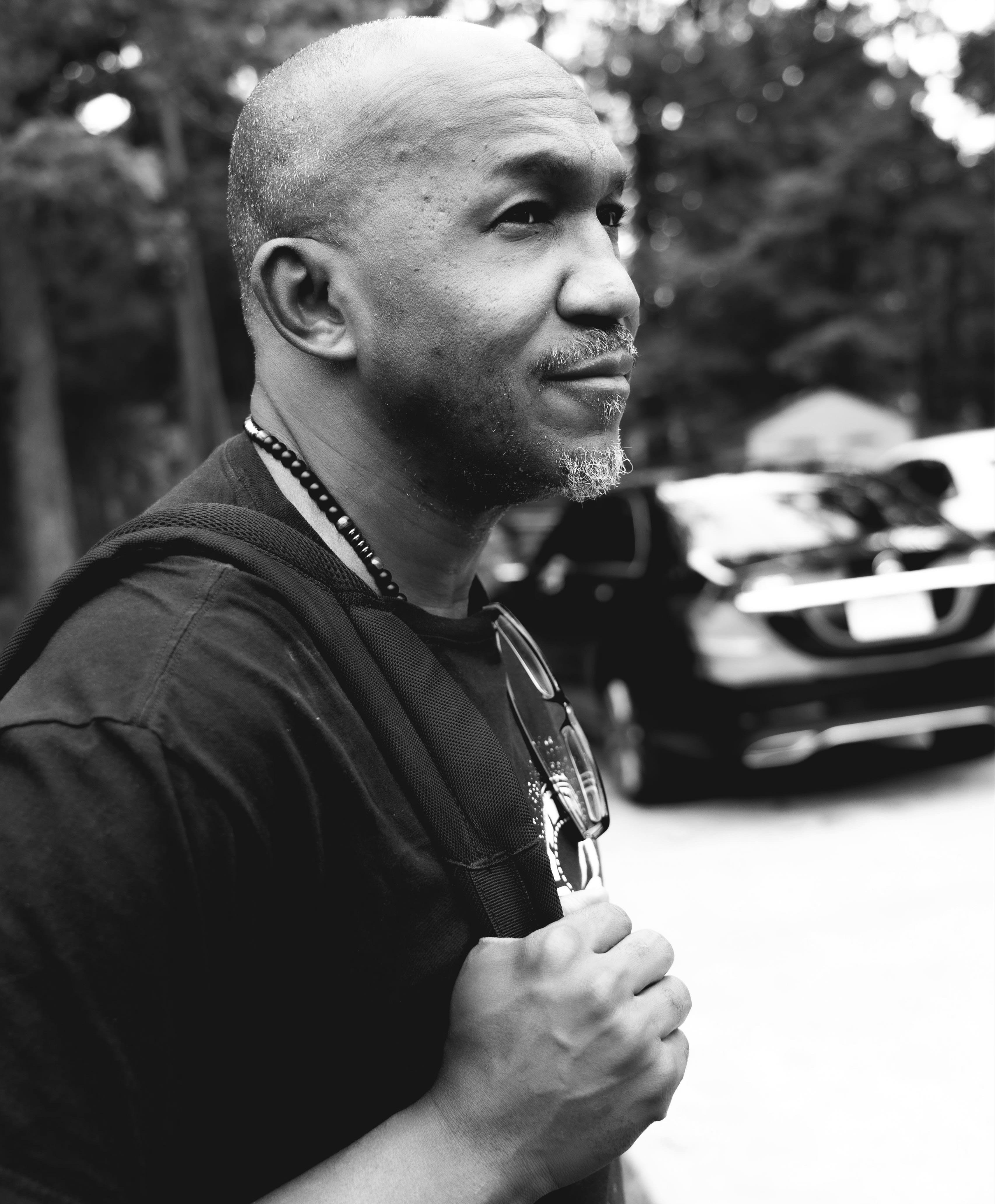
Philadelphia, 2010. The air is thick, but the table is cold. Eric Brown sits behind stacks of urban romance novels, books he poured his soul into, books meant to uplift.
He watches as women pick them up, glance at the author’s photo, and drop them back like lead weights. “You don’t know anything about women,” they say. In that moment, the hero’s journey he had been told about, the one where the grind eventually pays off, felt like a lie. He was shouting into a void that didn’t care about his enrichment or self-esteem stuff. This was the crisis: a writer with a military counterintelligence background, and a mounting realization that his own identity was the primary obstacle to his distribution.
To survive, Eric Brown performed a tactical disappearance. He realized a fundamental truth of attentioneering: a product with attention beats a good one without it, but in his case, a male author in a female-dominated market was a product no one wanted to buy. He had to get attention before the product existed by creating a product that didn’t technically exist: Cinnamon Brown.
He spent six months straightup catfishing on Facebook. This was an operation. He built a female profile to infiltrate reading rooms, lurking in the shadows of digital conversations to hear what women said when they were not in mixed company. He used psychological tactics and behavioral insights (the very definition of attentioneering) to map the love triangles and “G stories” his audience actually craved. He was exploiting platform mechanics and psychological vulnerabilities to ensure visibility in a competitive land-
scape. He had to unlearn ego by literally erasing his name to find his voice. He began to hide his intentions to eventually reveal a deeper truth. He admits his first books failed because they were “Fun to me to read,” but the business required him to “Take your ego out of it” and give the audience the fantasy they wanted.
What is the cost of this tactical mask? Behind the scenes, his wife Natasha wrestled with the crazy stories and the necessity of the persona. While Eric saw the Cinnamon persona as a ploy of counterintelligence, Natasha viewed their work through a lens of respectability, like a modern-day Claire Huxtable. This is the unspoken tension: a man using Jedi mind tricks and sneaky profile-building to sell stories that his own partner initially found shocking.
His transition to film: Cuffed, Toxic, and Sundays After Church, reveals a pattern of relentless challenge. When Hollywood gatekeepers refused to read his scripts without an agent, he didn’t wait for permission; he adopted the brute force method. He shot his own work on a gorilla budget, betting his career on the idea that he could build an African creative ecosystem outside the traditional white-producer-led industry.
Nowhere is the sacrifice of neat narratives clearer than in Sundays After Church. While the title lures in churchy people with a glossy facade, Eric’s actual intent was never to protect the church. He wanted to slap them in the face with the mess he grew up with. He is intentionally triggering, using the church as a Trojan horse to deliver a message about political and economic
survival.
He uses juicy and engaging stories to hide lessons on African empowerment. He panders to the audience’s desire for salacious drama to fund his real passion; untold histories of the Haitian Revolution and the Black Seminole Wars.
He is an elder now, but his wisdom is sharp, not soft. He tells young writers to “Get your heart broken, get your ass kicked,” because “You can’t cheat the grind.” His legacy is the sustainable creative ecosystem he is building in Richmond, Virginia, a hub that treats African communities as production centers, not just backdrops.
He is a man who lives life to write it, but who had to die to sell it. He has absorbed the personal costs of keeping African narratives in African hands, often self-financing projects like Sundays After Church to maintain total control. He is building a catalog of scripts (eight seasons of a vision that bridges the transatlantic link between the US and Africa) waiting for the groundswell of support to catch up to his strategy.
Eric Brown has proved that he can capture eyeballs. He has mastered the art of attentioneering. He has moved the needle on ownership and representation, but in the quiet moments between “Action” and “Cut,” does the strategist ever miss the man who sat at that empty table in Philadelphia.
Most people go to the movies to escape. Eric “Cinnamon” Brown wants you to watch Sundays After Church so you can finally learn how to survive.
This isn’t the respectable church story your grandmother wants you to see. This film is the off-code truth Hollywood is too terrified to tell. While the industry sidelines Black creators, Eric has built his own sustainable creative ecosystem, utilizing a 95% Black crew to prove that we don’t need white gatekeepers to tell our stories. Sundays After Church is a strategic blueprint for navigating a political and economic climate that is stripping away our protections. It asks the uncomfortable questions: What does the church do with its money? How do we handle the sellouts” among us? Who protects the community when the law won’t?
You will see the Deacon Board as the Deacons for Defense, the ones who get down for the community when the stakes are life and death. The grind is self-financed. The revolution is independent.
Rent Sundays After Church today on Amazon or Apple. Every view is a brick in the foundation of Season 2. Let’s show them that the African narrative belongs to us, and we are not asking for permission anymore.

Written by Simone J. Smith Toronto Caribbean News

There is something about summer that naturally draws us outdoors. The days are longer, the grills are hotter, patios come alive, and meals become less about rushing through dinner and more about gathering around the table with family and friends. It is the season of fresh ingredients, colourful produce, and recipes that are light enough for a warm evening while still being satisfying. Few cuisines capture that feeling quite like Caribbean cooking.
When many people think of Caribbean cuisine, jerk chicken often comes to mind first, and for good reason. It has become one of the region’s most recognizable culinary exports. Yet the Caribbean is so much more than jerk seasoning. It is a remarkable blend of cultures, traditions, and ingredients that have been evolving for centuries. Every island has its own specialties, influenced by Indigenous peoples, African heritage, European settlers, East Indian communities, Chinese immigrants, and countless generations of local families who have transformed simple ingredients into unforgettable meals.
One of the greatest treasures of Caribbean cuisine is its relationship with the sea. Surrounded by warm tropical waters, the islands have long depended on fresh seafood as an everyday staple. From Barbados to Jamaica, Trinidad and Tobago to The Bahamas, fishermen head out before sunrise, returning with snapper, mahi-mahi, lobster, conch, crab, and shrimp destined for local markets and seaside restaurants. Fresh seafood is not considered a luxury throughout much of the Caribbean—it is simply part of everyday life.
Shrimp has become particularly popular because of its versatility. It cooks quickly, absorbs flavour beautifully, and pairs perfectly with tropical ingredients like coconut, citrus, pineapple, mango, and fresh herbs. Whether grilled over charcoal, simmered in curry, folded into rice dishes, or tossed into colourful salads, shrimp represents the fresh, vibrant flavours that define Caribbean cooking.
Although tacos are traditionally associated with Mexico, they have found a welcome home throughout the Caribbean in recent decades. Increased tourism, cultural exchange, and the growing popularity of fusion cuisine have inspired chefs across the islands to experiment with familiar ingredients presented in exciting new ways. The result has been a wave of Caribbean-inspired tacos that combine island flavours with a format that is easy to eat, endlessly customizable, and perfect for casual summer gatherings.
Fusion cooking is sometimes misunderstood as simply mixing random ingredients together. In reality, good fusion cuisine respects the traditions that inspired it while creating something new and exciting. Caribbean fusion celebrates the region’s long history of cultural influences rather than replacing them. In many ways, Caribbean food has always been fusion cuisine. African cooking
methods blended with Indigenous ingredients. European techniques met tropical produce. East Indian spices transformed local dishes. Chinese cooking styles introduced new flavours that became household favourites. The Caribbean has always been a place where cultures met around the dinner table.
This week’s recipe embraces that same philosophy. Our Caribbean Coconut Lime Shrimp Tacos with Mango Avocado Salsa combine sweet coconut, bright citrus, tender shrimp, creamy avocado, juicy mango, and a gentle kick of Caribbean-inspired seasoning. Every bite delivers layers of texture and flavour—crispy, creamy, sweet, savoury, fresh, and just a touch spicy.
The beauty of this recipe is that it looks elegant enough for entertaining but remains simple enough for a weeknight meal. Shrimp cooks in only a few minutes, the salsa comes together quickly with fresh ingredients, and everything can be prepared ahead of time before guests arrive. It’s also a wonderful recipe for outdoor dining because most of the work can be done in advance, allowing everyone to relax instead of spending the evening in the kitchen.
Fresh ingredients are the key to making these tacos shine. Ripe mangoes provide natural sweetness that balances the savoury shrimp, while avocado contributes richness without making the dish feel heavy. Fresh lime juice brightens every component, and cilantro adds the unmistakable freshness found throughout Caribbean cooking. Even the tortillas benefit from a quick warming on the grill or stovetop, giving them a soft texture with just enough char to complement the filling.
Coconut is one of the Caribbean’s defining ingredients and plays an important role in this recipe. Coconut palms thrive throughout the islands, providing everything from refreshing coconut water to rich milk used in soups, curries, desserts, and beverages. Here, unsweetened shredded coconut is lightly toasted before being added to the shrimp, introducing a subtle sweetness and gentle crunch that instantly transports your taste buds to the tropics.
Lime may seem like a simple ingredient, but it has long been one of the Caribbean kitchen’s greatest flavour builders. Its acidity cuts through richness, enhances seafood, and balances spicy peppers beautifully. A squeeze of fresh lime at the very end wakes up every ingredient, making the flavours taste brighter and fresher.
What makes this recipe especially enjoyable is its balance. Nothing overpowers anything else. Instead, every ingredient complements the next. The shrimp remains the star, while the salsa adds sweetness and freshness. The coconut contributes texture, and the lime ties everything together with its unmistakable brightness.
For families, this recipe is wonderfully adaptable. Children often enjoy the
sweet mango and mild shrimp, while adults can increase the heat by adding Scotch bonnet pepper or a dash of Caribbean hot sauce. Guests can build their own tacos, adding more salsa, extra lime, shredded cabbage, or fresh herbs according to their preferences.
Presentation matters too. Food is often enjoyed first with our eyes, and these tacos are as beautiful as they are delicious. The vibrant orange mango, creamy green avocado, bright cilantro, toasted coconut, pink shrimp, and colourful garnishes create a plate that looks like summer itself. They are perfect for backyard barbecues, family reunions, cottage weekends, or simply treating yourself after a long day.
One of the wonderful things about Caribbean cooking is that it encourages slowing down and enjoying the experience. Meals are often social occasions rather than hurried necessities. Friends gather, music plays in the background, conversations flow naturally, and food becomes part of the celebration rather than simply something to eat. These tacos fit beautifully into that tradition.
Another advantage is their nutritional value. Shrimp is an excellent source of lean protein while being naturally low in fat. Mangoes supply vitamins A and C, avocados provide heart-healthy fats, and fresh vegetables contribute fibre and nutrients. It is a meal that feels indulgent while remaining relatively light and wholesome.
For those planning a summer gathering, consider serving these tacos alongside coconut rice, grilled pineapple, black bean salad, roasted sweet potatoes, or fresh watermelon. A pitcher of homemade limeade or tropical fruit punch completes the meal beautifully without overwhelming the delicate seafood flavours.
As with many Caribbean recipes, freshness matters more than complexity. High-quality ingredients require very little manipulation when allowed to shine on their own. That philosophy has helped Caribbean cuisine remain timeless despite changing food trends around the world.
Whether you’re introducing someone to Caribbean flavours for the very first time or you’ve enjoyed island cuisine for years, these Coconut Lime Shrimp Tacos offer something familiar yet exciting. They celebrate the warmth, hospitality, and vibrant spirit that define Caribbean food while embracing the creativity of modern fusion cooking.
So fire up the grill, gather your favourite people, and bring a little taste of the islands to your own backyard this summer.
Ingredients
For the Shrimp
• 2 lbs large shrimp, peeled and deveined
• 2 tbsp olive oil
• Juice and zest of 2 fresh limes
2 cloves garlic, minced
• 1 tsp paprika
1 tsp ground cumin
• ½ tsp onion powder
• ½ tsp dried thyme
• ½ tsp black pepper
• ½ tsp sea salt
• ¼ tsp cayenne pepper (optional)
• 1 cup unsweetened shredded coconut, lightly toasted
For the Mango Avocado Salsa
• 2 ripe mangoes, diced
• 2 ripe avocados, diced
• ½ cup finely diced red onion
• 1 cup diced tomato
• ¼ cup chopped fresh cilantro
• Juice of 1 lime
• Salt and pepper to taste
For Serving
• 10–12 small flour or corn tortillas
• 2 cups shredded cabbage
• Lime wedges
• Fresh cilantro
• Crumbled queso fresco or feta (optional)
• Caribbean hot sauce (optional)
Instructions
• Toast the shredded coconut in a dry skillet over medium heat until lightly golden. Remove immediately and set aside to cool.
• In a large bowl, whisk together the olive oil, lime juice, lime zest, garlic, paprika, cumin, onion powder, thyme, salt, pepper, and cayenne.
• Add the shrimp and toss well to coat evenly. Let marinate for 20–30 minutes.
• Combine all salsa ingredients in a separate bowl. Gently mix and refrigerate until ready to serve.
• Heat a grill or skillet over medium-high heat.
• Cook the shrimp for approximately 2–3 minutes per side, just until pink and opaque.
• Remove from the heat and gently toss the shrimp with the toasted coconut.
• Warm the tortillas on the grill or in a dry skillet for about 30 seconds per side.
• Add a layer of shredded cabbage to each tortilla.
• Top with several shrimp.
• Spoon over the mango avocado salsa.
• Garnish with fresh cilantro, an extra squeeze of lime, and crumbled queso fresco if desired.
• Serve immediately while the shrimp is warm and the salsa is chilled.
Chef’s Tip
For an extra layer of authentic Caribbean flavour, grill the shrimp over charcoal and lightly char the mango before dicing it into the salsa. The subtle smokiness pairs beautifully with the sweetness of the fruit and the brightness of the lime, creating a taco that’s every bit as memorable as a sunset on a Caribbean beach.
BY DIANA GIFFORD-JONES COMMON SENSE HEALTH
What are the true tests of a healthcare system? Is it how well it resolves health problems? How it prevents them? How efficiently it operates? One question should be, how does it treat our eldest citizens? The fact is, it’s absurdly difficult for seniors to access care, submit claims, and navigate a plethora of disjointed systems.
People pay taxes for decades. They contribute to insurance plans. They work hard, raise a family and play by the rules. Then, when they finally need help after a stroke, a broken hip, or a heart attack, they are handed another form to complete, another approval to obtain, and one after another, bureaucratic hurdles to clear.
In the United States, headlines have focused on insurance companies denying rehabilitation, long-term care and other medically necessary services to older patients. Many denials are overturned on appeal, but if the care was appropriate, why was it denied in the first place? How defeated are people in the process? How much illness is created, not cured?
Canada likes to congratulate itself for having a different system, but Canada has its own version of bureaucracy. Long waits for diagnostic tests. Delays for specialist appointments. Programs that are nearly impossible to
navigate, and yes, diabolical mayhem with making claims to provincial programs or insurance companies.
If this isn’t making people sick, their medications certainly are. Everywhere seniors are juggling too many medications because physicians and pharmaceutical companies have created an epidemic of excessive prescriptions.
It should be no surprise what’s happened as a result. Older people and their caregivers are beaten down.
What is the price of the absurdity? Governments worry about the rising cost of caring for an aging population, but what’s truly worrisome is the failure to care at all. Getting care has become too complex, for all of us, but especially for the elderly. A national survey should ask this question, “Have you given up?”
Can’t get an appointment? Can’t get there if you do? Can’t get the right forms or figure them out? Don’t even know you are missing the forms?
How much time and money is spent dealing with paperwork? How many hospital admissions could be avoided if someone took the time to review a senior’s dozen prescriptions? How many older people deteriorate unnecessarily while waiting for approvals, referrals or appointments?
These are not questions for debate. They are management imperatives. In other industries, executives


measure customer satisfaction, identify bottlenecks and eliminate waste. If an airline stranded thousands of paying customers every day, heads would roll. If a bank required six approvals to cash a cheque, shareholders would revolt.
The excuse is always that health care is complex, but so is aviation. So is nuclear power. Complexity is not an excuse for inefficiency. It is a reason to manage better.
What worries me most is the growing distance between decisionmakers and patients. Increasingly, care is being managed by algorithms, utilization reviews, budget targets and policy frameworks. Somewhere beneath all that paperwork is an 82-year-old
woman recovering from pneumonia who simply wants to go home, or an 89-year-old man hoping to walk again after hip surgery.
Here is my challenge to every health minister, deputy minister, insurance executive and hospital CEO. Go spend time shadowing an 85-year-old who is trying to book an appointment or trying to get to it. Check to see if they understand their medication list. Try to join them for a call with their physician and see if anyone answers the telephone.
Then tell us that the system is working as intended and that it cares for those who need it most.

BY SIMONE J. SMITH HUMAN SPECIALIST
Here is the problem in the simplest language possible: in Afro and Indo-Caribbean communities, people are suffering in silence because they are more afraid of shame than of sickness. They don’t trust mental-health systems, and they don’t always have words for their pain, so they turn their bodies (and their funerals) into hiding places.
Across cultures, stigma looks different, but it usually grows from the same root: fear. In Ghana and Kenya, families worry that if a son or daughter is known to have a mental-health condition, no one will want to marry them. In some cases, families pay coroners to change the cause of death after a suicide; funerals are pushed to the night, graves are separated, and everything is rushed because of what people will say. For an Afro/Indo-Caribbean reader, this is a mirror: the same obsession with “What people will say,” the same link between mental illness and family reputation, the same quiet edits to the truth.
What changes for me? How soon? How bad? Who’s most affected? If you are Afro or Indo-Caribbean, this information touches four parts of your life right now, not in 50 years.
In cultures where mental illness is taboo, emotional pain often shows up as physical symptoms: chest tightness, stomach pain, headaches, exhaustion. In Asian, Middle Eastern, and Latin American communities people explain trauma as dizziness or “susto,” and they are more likely to be taken seriously when they present as physically sick. For Caribbean folks, this is already happening: you call it “nerves,” “pressure,” “stress,” but doctors may miss the trauma underneath and send you home with pills for pain instead of care for grief.
When mental-health struggles are hidden, people seek help late, after a crisis: job loss, school dropout, broken relationships. Delayed treatment is driven by fear of being labeled dangerous or unfit as a spouse or provider. For Caribbean migrants, that delay can mean lost income, immigration problems, or family breakdown. The cost is decades of earning power and stability.
The strongest tension is around marriage and family name. In Ghana and Kenya, families fear that one public diagnosis will block their children from marriage. In Latin communities, families keep problems inside the house, even when help exists outside. Afro/Indo-Caribbean families operate under similar unwritten rules: don’t talk, don’t shame us, don’t ruin your sibling’s chances. That pressure is already shaping how your kids talk (or don’t talk) about panic attacks, depression, or suicidal thoughts.
In many African and Arabic traditions, depression or psychosis is seen as a curse or possession rather than an illness. People believe they are being punished by God and go to spiritual leaders instead of clinicians. The article shows that in Ghana and Kenya, pastors are often the true first point of contact for mental-health concerns. In Caribbean communities, this is familiar territory: church, temple, or mosque often feels safer than a psychiatrist. The question isn’t “Should we trust faith or medicine,” but “How do we build a bridge between them?”
Who’s Most Affected Right Now?
• Men trained to equate strength with silence. They carry untreated addiction, rage, and despair until it explodes.
• Women taught to be accommodating, absorbing sexism and stress
while their symptoms are dismissed by providers.
• LGBTQ+ people, who face stigma just for who they are, are often blocked from care altogether in some regions.
• Anyone whose culture shapes their suffering into a form clinicians don’t recognize—like “ataque de nervios” in Latino and Caribbean communities, where intense screaming and crying after a family crisis may be misread or ignored.
Globally, fear-based stigma leads to delayed treatment, isolation, and higher risk of suicide; in many regions, suicide is hidden so thoroughly that families pay to erase the record. That means in a typical Caribbean neighbourhood, there is at least one household living with a mysterious death that everyone knows was suicide, but no one is allowed to name.
Here are some actionable insights for my Afro/Indo-Caribbean communities:
• Stigma is a survival strategy built on fear of social and economic loss. Recognizing that helps families talk about mental health without framing it as moral failure.
• Trust is the real treatment gap. The piece shows that colonial histories and dismissive clinicians have earned mistrust; rebuilding it requires culturally grounded care, interpreters, and questions that respect the patient’s world, not just a diagnosis code.
• Community and faith leaders are crucial. In Ghana and Kenya, pastors are trained to share anti-stigma messages, screen, and refer community members. This model can translate directly into Caribbean churches and temples, where many already seek help first.
For Afro/Indo-Caribbean decision-makers: parents, pastors, teachers, small-business owners, this article becomes a practical tool when you ask three simple questions:
1. Who in my circle is suffering through physical complaints that might be emotional?
2. Which trusted community leaders could be trained as bridges to care, not replacements for it?
3. How can we talk about mental health as treatable and human, not as a family disgrace?
What individuals, institutions, and governments can realistically do Individuals:
• Treat persistent physical symptoms: tight chest, stomach pain, sleeplessness, as possible emotional signals, not just stress.
• Name family patterns: secrecy after suicides, rushed funerals, stories that don’t add up. Quietly challenge them by asking for truth before tragedy.
Community Leaders, Churches, and Mosques
• Use the Ghana/Kenya model: host mental-health education events that mix clear science with lived stories and invite clinicians to collaborate instead of dominating.
• Become trained referral points: you are often the first to hear confessions of despair; learn where to send people safely.
Governments and Health Systems
• Integrate tools like the Cultural Formulation Interview so clinicians treat culture as core clinical data, not background noise.
• Fund partnerships with community organizations and diaspora churches to deliver care where trust already lives.
This article is about showing the Afro/ Indo Caribbean community that we already care about: marriage, reputation, spiritual safety, and children’s futures, and that mental-health literacy is now part of protecting all of that.
BY HERBERT HILDEBRANDT POLITICAL PARLEY
Prime Minister Mark Carney has proposed a national design-and-build competition to restore 24 Sussex Drive, the longabandoned official residence of Canada’s prime minister, with Canadian firms invited to compete, the Royal Architectural Institute of Canada advising on the process, architect Moshe Safdie chairing the jury, and a winning proposal expected by Canada Day 2027. The Rideau Hall Foundation is also expected to lead a national fundraising campaign to cover all or most of the cost, which is a politically important detail because it means Ottawa is at least attempting to solve this problem without simply handing taxpayers another blank cheque.
There will be a cheap kind of populism that says Canada has no business fixing up 24 Sussex while ordinary Canadians are struggling with rent, mortgages, groceries and taxes. That line may get applause because it sounds frugal, humble and sensitive to the times, but it misses the larger point. The prime minister’s official residence is not Mark Carney’s private cottage, nor is it a luxury perk for one politician. It is a national asset, a clas-
sified heritage property, and one of the institutional symbols of Canadian public office. Serious countries maintain serious institutions, and they do not let them rot simply because every prime minister is afraid of a bad headline.
That is why Carney deserves credit for finally proposing something workable. The plan is not merely to patch up an old house and move on. It is to rehabilitate and modernize the property as a secure, accessible, sustainable and functional official residence and working venue, while preserving its heritage character. More importantly, the proposed structure creates a clearer path than the usual Ottawa pattern of studies, delays, consultant reports, political hesitation and quiet deferrals.
Canadians should not pretend this problem appeared last week. The National Capital Commission has already spent $4.3 million on abatement and decommissioning work that began in May 2023 and finished in November 2024. That work included asbestos removal, the removal of obsolete mechanical, heating and electrical systems, and the cataloguing and storage of heritage materials such as doors and mouldings. In 2021, the NCC estimated that 24 Sussex needed $36.6
million just to bring it to good condition, and that figure did not include every possible modern upgrade for security, accessibility or current building code requirements. In plain English, the number Canadians heard was never the full number.
This is what deferred maintenance does when political leaders allow optics to replace stewardship. It turns a repair into a renovation, then turns a renovation into a crisis, and then politicians act surprised when the bill arrives with interest attached. The public sees a large number and assumes extravagance, when often the real scandal is that smaller, more responsible decisions were avoided for years until the only remaining choices became expensive, embarrassing and politically toxic.
Former Prime Minister Stephen Harper should have dealt with this during his 9 years in government. There is nothing contradictory between conservatism and taking care of national assets. In fact, there is something deeply conservative about maintaining what you have inherited, respecting institutions, avoiding waste, and refusing to pass avoidable costs to the next generation. Letting a public asset decay so that a government
can avoid an ugly headline is not fiscal conservatism.
Former Prime Minister Justin Trudeau then made the problem worse. His decision not to live in 24 Sussex may have been understandable given the condition of the building, but it effectively normalized abandonment. Once the prime minister moved elsewhere, the residence became easier to ignore, easier to defer and easier to treat as someone else’s problem.
Carney’s proposal is therefore welcome not because it is glamorous, but because it is practical. He has put forward a public competition, a private fundraising component, heritage preservation, modern functionality and a deadline for selecting the winning proposal. He has also said he does not expect to live there himself, which strengthens the argument because this is clearly not about his personal comfort. It is about future governments, institutional continuity and the basic responsibility to maintain what belongs to the country.
The scandal is not that Canada is finally fixing 24 Sussex. The scandal is that we waited until decay became the strategy.

BY JAY BRIJPAUL REAL ESTATE SPECIALIST
One of the biggest financial decisions Canadians face when buying a home or renewing a mortgage is choosing between a fixed-rate and a variable-rate mortgage. Variable-rate mortgages are currently more affordable than fixed-rate options. According to Statistics Canada, in April 2026, the average insured variable mortgage rate was about 3.79%, compared with 4.04% for five-year fixed mortgages. While many borrowers are naturally drawn to the lowest interest rate, recent events have shown that the cheapest option isn’t always the best.
When the Bank of Canada aggressively raised interest rates in 2022 and 2023, many homeowners with variablerate mortgages saw their payments climb suddenly, sometimes by hundreds of dollars. Some even reached a point where their payments didn’t cover the interest due, causing their mortgage balance to grow (negative amortization). These experiences left a lasting impression.
The recent plateau in demand doesn’t mean Canadians have given up on variable mortgages. Instead, it suggests that the first wave of rate-sensitive borrowers has already acted. Those still waiting are considering not only whether variable rates are lower today, but whether they are worth the risk tomorrow. Mortgage choices are shaped as much by emotion as by math. While variable rates have historically cost less, recent history reminds us that rates can rise just as quickly as they fall.
For many, the peace of mind that comes with a fixed rate now outweighs the potential to save with a variable mortgage. While no one can predict where interest rates will go, many economists suggest the Bank of Canada’s rate-cutting cycle may soon be over.
Today’s economic climate is defined by persistent inflation, global uncertainty, and fluctuating energy prices, all of which make future interest rate changes difficult to predict. For many homeowners, the security of budgeting with confidence (avoiding sudden spikes in mortgage pay-
ments) is invaluable, even if it means paying a higher fixed rate. Inflation, which drives up the cost of goods and services, often prompts central banks to raise interest rates to slow spending and bring prices back under control.
With the high cost of living putting pressure on household budgets, many Canadians are prioritizing stability in their financial choices. Those on a tight budget may benefit from the predictability of locking in a three- or five-year fixed mortgage. Meanwhile, homeowners with smaller mortgages and strong finances might prefer a variable-rate mortgage that allows flexibility to lock in a fixed rate if interest rates begin to climb.
Interest rates fell sharply during the pandemic as central banks worked to support the economy. After the crisis, rates rose quickly to rein in an overheated market. At today’s levels, however, another drastic spike in interest rates is unlikely.
Variable-rate mortgages are best suited for borrowers with stable income, strong financial flexibility, and a high toler-
ance for uncertainty. These mortgages often carry lower penalties for early termination, making them ideal for those who may sell or refinance before their term ends. If you plan to sell within the next year, choose variable; if you plan to port your mortgage, opt for the three-year fixed rate.
Most lenders charge a threemonth interest penalty for breaking a mortgage, and with variable rates, this penalty is typically lower. The same applies if you exceed your prepayment privilege; lenders will charge the equivalent of three months’ interest on the excess amount. This makes variable-rate options more cost-effective in these scenarios.
Ultimately, the best mortgage is the one that aligns with your financial situation, long-term goals, and risk tolerance, not just the lowest rate available. A good mortgage should help you build wealth and provide peace of mind, regardless of what the market does next.