








“What is being framed as an energy crisis may carry deeper implications for how people live, move, and sustain themselves in the near future...”
STORY - PAGE 8



“What is being framed as an energy crisis may carry deeper implications for how people live, move, and sustain themselves in the near future...”
STORY - PAGE 8
There is a specific look that Teisha Gentles carries, a slight, knowing curve of the lips that has followed her from the pews of a strict church upbringing to the highstakes boardroom of commercial underwriting. It is a smirk that suggests she knows something you don’t, a silent observation that the world is finally starting to catch up to.
As a fellow Windsor University Alum, I have watched Teisha navigate the various rooms of her life, and I can tell you that this current chapter is her most potent. To know Teisha is to understand that her business, Hidden Smirk, is a cultural reclamation project.
Before she was an awardwinning entrepreneur, Teisha was the good girl. Growing up in a household where her grandmother was the matriarch, her world was defined by obedience, church music, and the watchful eyes of a community that expected her to be trustworthy and responsible. Even then, there were glimmers of the strategic storyteller she would become. At age nine, when an inventor brought a mouse trap to her school, she was the only child with the audacity to ask if she could keep it. It was her first lesson in a philosophy that would later define her: closed mouths don’t get fed.
However, the world often tries to silence the voices of African Caribbean women before they can even speak their desires.
As Teisha entered the professional landscape, she encountered the first of many masks. For ten years, Teisha became “Camille.”
In our time at the University of Windsor, I remember
this transition. We were part of a vibrant, unapologetically African Caribbean campus culture, a place Teisha chose specifically to immerse herself in the “Blackest, most partiest” experience she could find in Canada. Yet, even as we were shaking ass and making memories that only Windsor alumni truly understand, Teisha was navigating a dual existence. Camille was her outside name, a professional armor she wore to navigate an insurance industry that, at the time, felt as foreign and complex as Narnia.
The weight of this mask became heaviest during her decade in Florida. Working as a commercial underwriter, she was a light bearer on the phone: intelligent, fast-paced, and highly successful, but the cognitive dissonance was jarring. Clients who fell in love with Camille over the phone would experience a visible shock when they met the Black woman with locks in person. They couldn’t reconcile the wellspoken voice with the African-Caribbean reality standing before them. This became a profound psychological insight for Teisha: the world often demands we hide our true selves to facilitate its comfort.
The turning point came with the pandemic, a global moment of literal and metaphorical masking. When Teisha launched Hidden Smirk, it was born from a realization that even when the surgical masks came off, people were still wearing emotional masks. She saw women in her photo booths joking about their insecurities, CEOs hiding their humanity, and staff members afraid to look their best. Teisha realized

her true calling was creating a safe environment where people felt empowered to remove those emotional masks and reveal a genuine smile.
This evolution is the result of what Teisha calls unlearning. She is no longer the girl who spoke White or struggled with not being Black enough for her community. In her 40’s, she has become unapologetic. She has traded the linear path she once thought she wanted: the simple university, marriage, kids trajectory, for a life of rich, diverse experiences. She understands that to be an entrepreneur is to be committed to the fire of new experiences.
As she steps into her role as a matriarch in training, filling the seven-league boots of her grandmother, Teisha is building a legacy of visibility. She is the connector who remembers every face, the leader who knows how to read a room, and the woman who can make a Consul General laugh while giving him instructions.
I am immensely proud of the woman Teisha has become. From the quiet pews of our youth to the vibrant energy of Windsor, she has carried that smirk, that secret knowledge, until she was ready to share it with the world. She just has to be Teisha, unmasked and unafraid. Her story is a testament to the fact that when we finally decide to stop hiding, we become a light bearer for everyone else




Let me talk to you like someone who understands what it means to raise an African Caribbean child in a country that keeps shifting under our feet. You, as a parent, are not just thinking about school, grades, or keeping them busy. You are thinking about their future—the real one. The one that depends on confidence, access, and the kind of opportunities our children rarely get without a fight. And that is why I want you to hear this clearly:
Economic Pathways to Trust is a turning point. For the first time in York Region, Brothers Who Care—alongside York Regional Police, KPMG, YRAACC, CIBC Wood Gundy, both school boards, and some of the strongest youth-focused organizations in the region—are coming together to build something our community has never had at this scale.
A six-week initiative (April 16th–May 26th) designed to do one thing: give African Caribbean youth direct access to wealth-building, leadership, and institutional trust. I know you have heard promises before, but this one is different. And here is why: it is built with us, not just for us. This is the community, police, schools, and corporate partners sitting at the same
table to invest in them.
David Griffiths, CEO of Brothers Who Care, said it best: “Trust is built when youth can see themselves in the future.” That is exactly what this initiative does. Let me break it down for you. Your child will:
• Meet mentors in finance, law, STEAM, policing, and entrepreneurship— people who look like them, sound like them, and reflect their potential.
• Learn how money actually works through The Stock Market Game™— not a watered-down version, but the real mechanics of wealth.
• Compete for seed funding and RESP contributions that can jump-start their financial future.
• Build confidence through storytelling, leadership circles, and a two-day symposium where they are the main event.
The part that moves me most? A 25-minute documentary will be created from studentmentor storytelling pairs—a permanent record of their brilliance, their voice, their growth.
But let’s talk about you for a second. I know what it feels like to wonder if you are doing enough. To want more for your child than you ever had. To feel the weight of being the one who has to figure it out. This initiative is your reminder that you don’t have to do it alone.
It starts with one simple step: join Brothers Who Care on April 16th for the Parent & Community Trust Dialogue. No pressure. No jargon. Just real conversation about trust, opportunity, and how we build a future where our children don’t have to shrink to fit into systems that were never



designed for them.
York Regional Police is showing up differently, too. Inspector Stu Garner shares: “Economic Pathways to Trust reflects our commitment to bridging gaps through real engagement.” This is a partnership.
And here is the truth you already know: when our youth gain economic confidence, they gain personal confidence. When they gain personal confidence, they trust themselves. And when they trust themselves, they navigate institutions with power, not fear.
That is the shift. That is the transformation. That is why this matters right now.
So let me ask you, gently but directly: what if one decision today could change your child’s future? Not someday. Not when things calm down. Now.
Spots are limited because the work is intentional—and your child deserves to be in the room where their future expands. Register now. Show up. Build the future with us.
If you are interested, email simone@brotherswhocare.com for more details.
Because when our youth win, we all win. And this time, we are not waiting for permission.



Lately, I’ve been thinking about something… what happens when the systems we rely on quietly begin to disappear?
Not all at once. Not in a way that makes headlines every day. But slowly, piece by piece—programs reduced, services stretched thin, organizations doing more with less. And for many in our community, especially newcomers and families trying to find their footing, those supports are not just helpful… they are essential.
Across the GTA, we are starting to see the strain. Community organizations that have long been a lifeline—offering help with housing, employment, settlement, and even mental health—are now facing uncertainty themselves. And when those supports become harder to access, the impact doesn’t just fall on individuals. It ripples through families, through households, and through the community as a whole.
The Caribbean community understands this reality perhaps better than most.
We have always been a people rooted in resilience. Many of us, or our parents and grandparents, came to this country with very little—but with determination, values, and a strong sense of identity. We built networks. We leaned on each other. We created community spaces where there were none. We turned struggle into strength, and uncertainty into opportunity.
But even with that resilience, it would be wrong to pretend that these changes don’t affect us.
Because they do. They affect the single mother trying to navigate a new system while raising her children. They affect the young person looking for guidance and mentorship. They affect seniors who rely on community programs not just for services, but for connection and belonging.
And perhaps most importantly, they challenge us to ask an important question: if the systems around us begin to shift, are we prepared to support one
another even more?
The truth is, community has never been just about geography. It’s about connection. It’s about responsibility. It’s about showing up for each other—not just in moments of celebration, but in moments of need.
We often come together in powerful ways—through festivals, through events, through shared cultural pride. And those moments matter. They remind us of who we are. They keep our traditions alive. They give us joy.
But community is also built in the quieter moments.
It’s in supporting a local Caribbean-owned business. It’s in checking in on a neighbour. It’s in mentoring a young person. It’s in contributing, however we can, to the organizations that continue to do the work day in and day out.
It’s in recognizing that while we may not be able to solve every challenge, we all have a role to play in strengthening the foundation around us.
Because the reality is this—we are not a small or invisible community. We are a vibrant, growing, and deeply rooted part of this city. Our contributions are seen in every sector, from business and education to healthcare, arts, and public service.
But recognition alone is not enough. We must continue to invest in ourselves. In our people. In our future.
And that starts with understanding that community is not something we simply belong to—it’s something we actively build and protect.
So as we move through these uncertain times, I encourage each of us to reflect on how we can show up—not just for ourselves, but for each other.
Whether it’s through support, through kindness, or through simply being present.
Because one thing remains true: we have never waited for permission to build, to grow, and to uplift one another. And now, more than ever, we can’t afford to.
















simone@carib101.com
TC REPORTER
We are living through an age of technological wonder—and quiet unease. Every new digital convenience, from seamless banking to biometric ID, promises safety and speed. Behind that promise sits an enduring public anxiety: who controls the systems that define our reality? What happens when trust becomes a tool of power itself?
That question has roots deeper than conspiracy theory; it’s an ancient story about how human beings interpret chaos. The 1981 film Early Warning dramatized that instinct effectively. Its plot follows a skeptical journalist drawn into a warning from a devout woman convinced
that a One World Foundation is engineering crises to impose global rule. It’s pulp cinema, yet strikingly instructive today for what it reveals about the psychology of public fear.
When societies lose trust in their institutions, disorder feels coordinated. Every financial crash, every protest, every moral panic begins to look like evidence of a master plan. Power feels invisible yet omnipresent, reshaping the air we breathe. The film’s shadowy foundation is less a literal villain than a metaphor for modern concentration: corporate monopolies, centralized data systems, and supranational governance mechanisms that increasingly mediate our lives.
In 2026, we can see this pattern in more documented form: proposals for Central Bank Digital Currencies (CBDCs), biometric sign-in frameworks for national services, and global coordination on AI ethics and data governance. None are secret, but the language often feels opaque and detached: efficiency, innovation, inclusion. These sound noble—until we ask the harder question: inclusion into what kind
of surveillance economy?
To myth-bust responsibly, the point is not to say Early Warning predicted the future—it didn’t. Rather, it encapsulates a recurring political logic: when public trust erodes, centralized systems rise to promise order. Digital identity, cashless transactions, and algorithmic governance fit that same logic. They stabilize complexity, but concentrate control.
This is why policy storytelling matters. People deserve to understand digital expansion as a power shift. Canada’s “Sign In Canada” and forthcoming GC Verify initiatives will simplify how citizens access government services, but they also create data repositories that can be cross-linked, analyzed, and potentially monetized under international agreements. Meanwhile, CBDC exploration could entwine consumer behaviour with global compliance norms, changing how sovereignty operates in a digitized economy.
Centralization rarely happens through villainy. In real life, it happens through convenience. Through unexamined consent. Through the seductive lan-
guage of progress.
So, where does this leave an ordinary citizen—the reader, the taxpayer, the worker trying to make sense of global turbulence? It leaves you powerful, but only if you stay informed. It means tracing where data flows, how financial systems sync, and why imported digital rules might redefine Canadian autonomy. It means joining the media conversation as a stakeholder.
If Early Warning used end-times rhetoric to mobilize fear, today’s public discourse needs civic realism to mobilize accountability. Governments like Canada’s must communicate clearly how policies intersect with individual rights, beyond glossy strategy reports and global summits. Journalists must translate technical frameworks into human consequences: your privacy, your purchasing power, your self-determination.
The next phase of history will unfold through user agreements, because the true one world being built is digital. Every login, transaction, and e-signature ties us to it.
PAUL JUNOR
paul@carib101.com
TC REPORTER
The release of a March 20th, 2026, letter from Ontario’s Education Minister, Paul Calandra, has prompted swift and widespread backlash from unions and education stakeholders across the province, raising concerns about government overreach, professional autonomy, and the politicization of school spaces.
Addressed to educators and school board staff, the letter outlines what the min
Calandra writes: “These ceremonies are expected to remain focused on recognizing student achievement. They are not appropriate forums for organizers or administrators to express personal or institutional positions or engage in divisive or contentious issues of any kind.” He further instructs school boards to review graduation protocols to ensure ceremonies are strictly student-centered, apolitical, inclusive, and respectful.
The letter also signals consequences for non-compliance. “Let me be clear,” Calandra adds, “The failure of school boards to meet these expectations poses a real risk to student well-being and I will not hesitate to consider every tool available to me in the Education Act to ensure that students are always put first.”
While the minister frames the directive as a safeguard for students, critics argue the tone and implications suggest a broader attempt to control educator expression, both within schools and in public discourse.

The Elementary Teachers’ Federation of Ontario (ETFO) issued a strongly
worded response, calling the letter “Another example of this government’s growing pattern of overreach.” The union argues that efforts to define school events as strictly apolitical fail to reflect the lived realities of students and the role of education in fostering civic awareness.
In its statement, ETFO warns that the directive risks creating a climate of fear and mistrust, particularly given what it characterizes as implicit threats of intervention. The union emphasizes that educators are already guided by professional standards grounded in equity, human rights, and student well-being.
Similarly, Martha Hradowy, president of the Ontario Secondary School Teachers’ Federation, described the letter as out of touch in a message to members. She took issue with both its tone and its framing, noting that the directive landed heavily across the province.
Hradowy underscored the role educators play in shaping meaningful graduation experiences: “If graduation ceremonies in Ontario are meaningful, supportive, and memorable, it is because of you. It is your
care, your time, your planning and your professionalism that makes these milestones what they are.” She also pushed back against the implication that educators require directive oversight to prioritize students. “Teachers and education workers are not the problem,” she wrote. “You are the reason the system continues to function at all.”
Political reaction has further amplified the controversy. According to reporting by CTV News, Marit Stiles criticized the government’s approach, suggesting it risks silencing voices rather than supporting students. Her remarks frame the directive as part of a broader tension over how public education engages with social and political realities.
Context matters here. Tensions between the provincial government and education stakeholders have been building, particularly with eight school boards currently under provincial supervision, a move that has already raised questions about governance and local authority. Against that backdrop, Calandra’s letter is being read not as part of a larger pattern.
STEVEN
steven@carib101.com
TC COLUMNIST
influence of multinational corporations. Economic conflicts: tariffs, trade wars, and financial pressure tactics, are not new. They are extensions of long-standing corporate strategies, now playing out on an international stage. Countries such as the United States, China, Russia, France, and the United Kingdom operate within systems where corporate interests are deeply embedded in political decision-making.
In Washington, D.C., the overlap between political leadership and corporate influence is especially visible. Many members of past administrations have had direct ties to major industries, including defense, infrastructure, and finance. Political donations (whether disclosed or undisclosed) continue to shape party priorities and public perception, raising ongoing concerns about transparency and accountability.
Across parts of Europe, including France, Belgium, and the United Kingdom, defense manufacturing remains a powerful economic and political force. These industries employ hundreds of thousands, giving them significant leverage. Governments
must balance national security needs with the economic consequences of disrupting such sectors, particularly when jobs, and votes, are at stake.
Russia presents a more concentrated model of corporate influence, where oligarchs dominate key industries such as: energy, military supply, and food production. Their reach extends into government and society, blurring the line between public authority and private control. In China, state and corporate leadership are often intertwined, with major corporations operating both domestically and globally. Some observers argue that this fusion complicates international diplomacy and economic trust.
Canada is not immune. Corporate lobbying has increased significantly in recent years, with thousands of registered lobbyists engaging federal officials. This surge raises questions about procurement practices and whether public contracts are awarded based on merit or influenced by political and financial relationships. The concern speaks directly to the integrity of democratic systems.
At the heart of this issue is a legal and philosophical tension: corporations, in many jurisdictions, enjoy rights similar to those of individuals. These protections, while designed to support economic growth, can also enable disproportionate influence. As one observer notes, “Corporations have money, influence and power. The public’s sole weapon is outrage.” This imbalance underscores the challenge citizens face in holding institutions accountable. Historical voices reinforce this concern. Political thinkers have long warned that unchecked corporate power can lead to systemic abuse. The responsibility, then, falls partly on citizens to understand how financial and political systems intersect, and to demand transparency where it is lacking. Governments may change, but corporations often endure, expanding through acquisitions and long-term strategies. For readers, the takeaway is clear: democratic participation requires vigilance. Understanding who holds influence, and how it is exercised, is essential to preserving trust in public institutions.

michael@carib101.com
The Toronto City Council has approved a plan to build four new grocery stores in Toronto, which would be operated by the city and designed with affordability in mind, according to the city.
This pilot project would require one grocery store to be located within each of the city’s Community Council districts, with priority given to marginalized neighbourhoods with limited access to full-service grocery stores.
The goal would be to establish a not-for-profit model that offers residents affordable food pricing. These municipal stores would have access to financial funding to reduce operating costs, including potential waivers of property taxes, development charges, and other applicable fees.
Is this a new idea? If not, let us have a look at where this has been done already, and was this a success or not? Sun Fresh Market in Kansas City, Missouri, is one such project. Kansas City residents shared several complaints about the store, which opened in 2018, from shelves being almost bare, a disgusting smell emanating from the store to people leaving right after entering. In 2024, KC Sun Fresh lost $885,000 and currently only retains about 4,000 shoppers weekly, down from 14,000 a few years ago.
Speaking of taxpayer funding, exactly how much went into Sun Fresh? $13 million was the starting price for developing the corner of Linwood and Prospect, which includes a Sun Fresh grocery store as its anchor store. Total cost, including yearly infusion into Sun Fresh grocery, is 29 million dollars. Yet it has failed. Due to these factors, the government-run and funded Grocery outlet
(Sun Fresh Market) closed in August 2025.
Before all these issues came to light at Sun Fresh, Councilman Jermaine Reed had this to say: “Every community deserves a fullservice grocery store, and we worked hard over the past several years to make sure that this happens.”
There are many more cases of this type of state-run failures from Birmingham to Baltimore. New York City Mayor Zohran Mamdani wants New York to have government-owned grocery stores. Past government-backed grocery stores have struggled to deliver, yet politicians are still proposing this as the answer to high grocery bills. Chicago Mayor Brandon Johnson also has the same idea to open city-owned and citymanaged grocery stores. Johnson proposed opening such grocery stores in response to the closing of many supermarkets in poor areas of the city and commissioned a study to examine the question. The results of that study have not been made public, and Mayor Johnson has backed off his plan.
The state of Illinois established a grocery initiative to provide municipalities with up to $2.4 million to open grocery stores. To date, Chicago has not applied for any of this money.
Why is this being done?
“He who controls the food controls the people.”
Control comes to mind. He who controls the food controls the people. If this becomes a reality countrywide, it can be used as a submission tool against the citizens, with no compliance, no food. The big question here is Why now?
It’s easy to come up with the idea of municipal grocery stores in a healthy economy, but it comes at a cost to taxpayers. The bigger the state-run program becomes, the smaller the value-producing economy becomes. That is when you will find out what Margaret Thatcher meant when she said, “The problem with socialism is that you eventually run out of other people’s money.” We need to understand that Private businesses can run out of money, but governments can tax their way out.
In places like the Soviet Union, there was no public money to keep dipping into, but in places like Canada, there are enough private businesses to bleed taxes out of to keep inefficient operations afloat.
It is worth noting that since politicians and bureaucrats are not personally responsible for the losses created by their policies, they have no incentive to ensure stores operate at reasonable prices.
Also, if all the food at grocery stores were given away for free, there would be an obvious problem. The shelves would clear out, and there would be no incentive to restock them.
Here are some tips from Steven Suarez, a financial expert, and author:
Mismanagement: Nonprofits or government entities often lack the expertise to run complex operations like grocery stores, which require precise inventory control and supplier relationships.
• Political priorities: These projects can become tools for political gain, prioritizing optics over operational success.
• Ignoring market dynamics: Private grocers avoid certain areas for reasons: high crime, low profit margins, that public projects rarely address.
• Funding pitfalls: Public money comes with strings, often leading to bloated budgets or misallocated resources.
We need to ask ourselves why these politicians are suddenly trying to implement things that have not worked. Who deliberately did things to cause these price hikes in the cost of food? Who is now posing as the saviours of the people?
Why are they deliberately depleting their country of its hard-earned tax dollars? When regular groceries go out of business because they can’t compete, and the government-run groceries fail, what is next? Starvation? Is this the government’s way of weaponizing food against the citizens?
Who did these government officials consult with before deciding to push these ideas on the citizens? This certainly cannot be in the interests of the citizens.
its others. This year, the vision was clear: to reclaim that narrative and position African excellence at the highest level of commerce and creativity.
al, driven by a vision to take her talent global while remaining rooted in her identity. They are storytellers tasked with communicating the depth of the culture throughout the year.
For fourteen years, a movement has been quietly dismantling the Eurocentric scaffolding of the fashion industry from the heart of Toronto. It is an ecosystem of growth, a grassroots cultural institution that has evolved into a global gateway.
As African Fashion Week Toronto (AFWT) stepped into 2026, the atmosphere was about acknowledgement. It was a reckoning with the work done and a bold expansion into a future where African designers are recognized as the primary innovators of craftsmanship.
In a world where couture is often a label reserved for the ateliers of Paris, AFWT co-founder Brenda Foreman offers a psychological and cultural reframe. She notes that the very definition of couture, garments made by hand over countless hours, unique to a single body, is a daily reality in Lagos and Ghana. Artisans there create textiles and hand-beaded masterpieces every day, yet the global luxury space historically cred-
The Face of AFWT 2026 event was a testament to resilience, a word Brenda emphasizes as she reflects on the journey of building something that others said should stop. This resilience is mirrored in the new generation of models and designers stepping into the spotlight. “This isn’t just about a beautiful face; it is about ambassadors who can speak, represent, and infiltrate systems that weren’t designed for them,” Brenda shares. The energy this year was alive, designed to make audiences feel they were experiencing the true Pan-African culture, spanning the continent, the Caribbean, and South America.
Central to this year’s mission is the crowning of the Face of AFWT 2026. The selection process, led by a panel of industry veterans including lifestyle coach Kamshuka, international speaker Danielle Alicia, photographer CJ Cromwell, former face Ron Naiman, and co-founder Isaac Ansah, was rigorous. They were looking for confidence without arrogance, brand alignment, and cultural pride.
The winners, Derek Asante and Ashley Kkenyonyozi, embody this new era of strategic storytelling. Derek, Toronto-born with Ghanaian roots, is an event planner and model who thrives on connection and creativity. Ashley, representing her Ugandan heritage, is a versatile force in high fashion and editori-
Behind the scenes, the glue holding this institution together remains the partnership between Brenda Foreman and Isaac Ansah, who famously puts in “25 hours out of a 24-hour day” to ensure the organization’s growth. Their collaboration has turned a labour of love into a hub for trade, education, and mentorship. By 2030, the dream is for AFWT to be a fully established global respected gateway where African designers, models, and artists are celebrated at the highest level.
This year’s event at the Lashish Lounge was a demonstration of strength through vulnerability and a refusal to give up on a fourteen-year legacy. It highlighted that the spotlight is finally shifting, because the gatekeepers can no longer ignore the craftsmanship that has always been there.
Although I could not be there, the Toronto Caribbean Newspaper has always been a huge supporter of African Fashion Week. We recognize that this is about the power analysis of who gets credited and who profits. It is about ensuring that the creators of the world’s most intricate couture finally receive the respect and economic rewards they have earned. The future of fashion is being woven here, one stitch of resistance at a time.
MICHAEL THOMAS
michael@carib101.com
TC REPORTER
“This edition is not business as usual. The stories you are about to read touch on issues that are often filtered, reframed, or softened before they reach the public, but their impact is real, and it is already being felt in our homes, our communities, and across the Caribbean diaspora.”
From rising costs to shifting global decisions, these are not distant headlines. They are shaping how we live, how we move, and how we support our families here in Canada and back home.
We are not here to tell you what to think. We are here to ensure you are seeing clearly. Yes, there is still joy in these pages. There is culture, celebration, and the spirit that defines us, but this edition asks something more of you: awareness, discernment, and attention.
Be mindful of what you hear. Question what is presented. Consider whose voices are amplified, and whose are not.
At the Toronto Caribbean Newspaper, we do not take lightly the responsibility of serving this community. We stand with the diaspora, committed to bringing forward stories that matter, without dilution, without distraction. This is a moment to stay alert.”
Be aware: what is being framed as an energy crisis may carry deeper implications for how people live, move, and sustain themselves in the near future.
Why would the United States government escalate tensions with Iran, knowing such actions could destabilize global energy markets, disrupt supply
PAUL JUNOR
paul@carib101.com
TC REPORTER
chains, and drive up the cost of food and transportation worldwide? The consequences would not stop at national borders, they would affect citizens at home and populations across the globe. The question that follows is why now.
Around the world, governments are already responding to energy strain with conservation measures. Countries such as Slovenia and South Korea have discussed or implemented fuel rationing strategies. The Philippines has grounded some flights due to fuel shortages. Elsewhere, institutions and employers are quietly encouraging remote work to reduce consumption.
In the airline industry, capacity cuts are underway. American Airlines, for example, has reduced flights by approximately 5%. Some governments are experimenting with mechanisms such as QRcoded fuel access and restrictions on how much gasoline individuals can purchase.
Policy proposals tied to the International Energy Agency (IEA) include measures like increased remote work, reduced speed limits, and carpooling mandates. Australia has explored similar approaches, including encouraging citizens to work from home several days a week and limiting transportation use.
These measures echo pandemicera restrictions in structure, if not in stated purpose. At the time, such policies were described as temporary. Today, similar language is being used again, raising questions about duration, scope, and longterm impact.
The IEA has characterized the current situation as one of the most significant oil supply disruptions on record. In response, it has outlined demand-reduction strategies that emphasize behavioral change, including reduced travel and more efficient energy use.
At the same time, questions about influence and funding persist. While organizations like the Bill & Melinda Gates Foundation have supported global initiatives in various sectors, publicly available details about specific funding relation-
ships with the IEA remain limited. Greater transparency in these areas would help strengthen public trust.
Geopolitically, tensions remain high. Former U.S. President Donald Trump has signaled pauses in escalation while discussing efforts to secure critical shipping routes. However, key passages such as the Strait of Hormuz, one of the world’s most vital oil corridors, remain vulnerable to disruption. Any sustained blockage would have immediate and far-reaching economic consequences.
The broader concern raised in this piece is whether these developments represent isolated responses to the crisis, or part of a more coordinated shift in how energy consumption is managed globally.
One line captures this concern directly, “Remember Scarcity = dependency = control.” Whether one agrees with that framing or not, the relationship between scarcity and policy intervention is worth examining carefully.
The discussion often intersects with broader global frameworks, such as the United Nations’ Agenda 2030. This initiative includes goals related to climate action and sustainable energy. For example, Goal 13 calls for urgent action to combat climate change, while Goal 7 emphasizes access to affordable and sustainable energy.
Critics argue that the transition away from fossil fuels, whether driven by environmental necessity or policy design, could create short-term instability. Supporters counter that such a transition is essential to long-term planetary health and economic resilience.
Still, inconsistencies between stated goals and real-world actions can raise valid concerns. Military conflict, infrastructure destruction, and resource disruption do not align neatly with sustainability objectives. This tension fuels skepticism and invites deeper scrutiny.
Economic considerations add another layer. Reports of government spending on military activity, such as claims of billions allocated toward conflict, prompt
comparisons to alternative uses. The same funds, it is argued, could support education, housing, healthcare, or food security at scale. Whether these figures are precise or illustrative, the underlying point resonates resource allocation reflects priorities.
The narrative also explores the psychological dimension of crisis response. Historically, periods of uncertainty, whether health-related, economic, or geopolitical, have led to increased public compliance with emergency measures. The concern is whether such patterns could repeat under new circumstances, particularly if framed as necessary for survival or stability.
Some voices, including public figures like Dr. Stella Emanuel, have raised alarms about broader systems of digital tracking, financial centralization, and dependency. These claims remain controversial and, in many cases, unverified. However, they contribute to a growing discourse around autonomy, privacy, and control in a rapidly digitizing world.
Similarly, statements from global leaders, including Klaus Schwab of the World Economic Forum, have emphasized the potential for future crises to exceed the scale of COVID-19 disruptions. These warnings are often framed as calls for preparedness but are sometimes interpreted as signals of systemic vulnerability.
At its core, there is a deeper anxiety about power, control, and the direction of global systems. It questions whether current events are reactive or strategic, temporary or transformational. What remains clear is that energy sits at the center of modern life. Any disruption, natural or man-made, has cascading effects across economies, governments, and daily routines.
The challenge for readers is to stay informed, question responsibly, and distinguish between evidence-based developments and speculative conclusions. Critical thinking, rather than fear, is the most reliable tool in navigating uncertain times.
stakes testing can skew attention toward higher-performing students, leaving others without the support they need.
To address these challenges, Barbados has secured US $50 million in funding from the World Bank for its Education Sector Transformation Program. The initiative, led by the Ministry of Education Transformation, is designed to modernize the system while improving equity and long-term resilience.
Barbados has long ranked among the world’s most educated nations, with a literacy rate of 99.7%. Free and compulsory primary education, spanning ages five to 15, has historically produced students well prepared for secondary school and external examinations. Yet, beneath this strong record, new data point to early learning gaps that threaten long-term outcomes.
A recent press release from the World Bank highlights a concerning trend: foundational deficits in literacy and numeracy are emerging as early as primary school. According to 2023 data, 30% of students scored below acceptable levels in mathematics on endof-primary national exams. The report also warns that an overreliance on high-
At its core, the program focuses on strengthening foundational learning in pre-primary and primary education. It also aims to expand access to inclusive, climate-resilient learning environments. Key measures include targeted literacy and numeracy initiatives, enhanced teacher training, and improved classroom practices. The program will also introduce more effective assessment systems to better track student progress and inform instruction.
Equally significant is the emphasis on early childhood education. Expanding access to high-quality early learning environments is expected to close developmental gaps before they widen. This approach reflects growing global evidence that early intervention is
critical to academic success.
Infrastructure improvements form another pillar of the initiative. Investments will upgrade school facilities to be more climate-resilient and energy-efficient, while also enhancing digital connectivity. These upgrades aim to create safer, more adaptable learning spaces that can withstand environmental challenges. Accessibility will also be improved to better support students with special educational needs, an area often overlooked in traditional systems.
Prime Minister Mia Mottley underscored the program’s broader vision: “This program aims to ensure that a child’s starting point in life does not determine their finish line.” Her statement frames the initiative as a national equity strategy.
Lilia Burunciu, Director of the World Bank for the Caribbean, emphasized the economic stakes. “Early access to quality education,” she noted, “Equips children to adapt, innovate, and succeed in a rapidly changing global economy. Strengthening education systems, in this view, is directly tied to national resilience and long-term growth.”
Despite its strengths, Barbados’
education system faces a clear inflection point. High overall literacy rates can obscure uneven outcomes at the foundational level. Without targeted intervention, early gaps in numeracy and literacy risk compounding over time, particularly for vulnerable students.
The $50 million investment represents a strategic shift. By prioritizing early learning, inclusive access, and modern infrastructure, Barbados is positioning itself to sustain its educational reputation while addressing systemic weaknesses.
Still, implementation will be critical. Programs of this scale often falter without consistent monitoring, teacher support, and community engagement. Ensuring that resources reach the students most in need will determine whether the initiative delivers on its promise.
For now, the direction is clear. Barbados is not simply maintaining its education system, and in doing so, it is acknowledging a hard truth: even highperforming systems must evolve to remain equitable and effective.
simone@carib101.com
TC REPORTER
Plastics seep into your blood, your babies’ bodies, silently eroding fertility in communities already fighting for survival. The Plastic Detox, Netflix’s unflinching 2026 documentary, rips the veil off this crisis, tracking six infertile couples through a grueling 90-day purge of plastic from their lives. Guided by epidemiologist Dr. Shanna H. Swan, they swap tainted Tupperware and scented lotions for glass and hemp, birthing hope amid heartbreak. For Caribbean families like yours in Ontario, this is a mirror to systemic theft, where toxins from petrochemical empires compound our generational battles. Your child’s delayed puberty, your lineage at risk—how will you rewrite this ending?
The documentary centers Dr. Swan’s bombshell: global sperm counts have plummeted over 50% in 50 years, careening toward zero by 2045 without revolt. Phthalates and bisphenols from plastics—ubiquitous in food wraps, polyester clothes, and fragranced shampoos—disrupt hormones in utero, causing phthalate syndrome, smaller genitals in boys, and slashed fertility for all. Viewers witness couples’ raw anguish (a decade of failed attempts), then triumphs: three conceive post-detox, with chemical loads halved. Science meets soul; Dr. Swan’s TIDES study shows prenatal exposure can affect generations,
hitting racialized bodies hardest near polluting plants.
In Canada and the Caribbean, imported plastics flood markets, with microplastics tainting Great Lakes fish and tap water. Our neighbourhoods bear disproportionate burdens; Sarnia’s “Chemical Valley” echoes U.S. fenceline communities, amplifying infertility alongside wage gaps and migration stresses. The documentary’s moral tension grips: ExxonMobil-type giants peddle recycling myths while our wombs pay. You are surrounded; every wash of synthetic tees sheds invaders into waterways, circling back to your plate.
U.S. coverage, from The New York Times to Decider, hails The Plastic Detox as terrifying, yet questions its anecdotal experiment—no control group, small sample size. The Times warns it is far from perfect science, sparking fertility panic, while industry voices like the American Chemistry Council decry overreach. Europe’s The Guardian amplifies urgency—“so terrifying you will change your life immediately”—leaning on emotional arcs over nuance. In the Middle East, coverage is nearly silent, with no major Al Jazeera deep dives, while Caribbean and African outlets lag, largely absent from Netflix’s global buzz. Western headlines fetishize white couples’ journeys; regional voices, vital to our truths, vanish. What matters is not splashy reviews, but toxins’ toll on our fertility amid environmental racism—ignored in the fanfare. The film critiques industrial giants without fully naming fast-fashion culprits, yet spotlights innovations like Sparxell’s plant pigments and LVMH’s green pivot— glimmers of change in imported luxury.
The Plastic Detox signals broader petrochemical deception: obesogens
fuel cancer, strokes, and obesity beyond infertility. Polyester sheds microplastics in your laundry; phthalates absorb through the skin from fragrance-laced deodorants. Science tempers the hype; debate continues over sperm data confounders like diet and genetics, but prenatal risks remain deeply concerning. One couple’s story haunts: a mother, phthalates warping her son’s future, mirroring Swan’s findings. Vulnerability becomes power; the film weaves history (corporate deception), psychology (fear to agency), and culture (our resilient kin).
For me, this aligns with journalism’s call: translate policy fog into human urgency. Canada’s endocrine-disrupting chemical regulations lag; Caribbean imports invite exposure. The film offers proof: detoxing reduced chemical markers and sparked pregnancies, urging us beyond statistics toward lived experience.
Act now. Ditch synthetics for GOTS-certified hemp, organic cotton, and TENCEL™ Lyocell—breathable, lowshed, and winter-ready. Choose glass jars over plastic; opt for unscented, natural cosmetics to avoid the roughly 60% absorbed through skin. The couples’ successes show this: agency can defy empires. Broader hope emerges through activism—petrochemical resistance and green chemistry innovations like Patrick McDowell’s plastic-free inks.
This documentary is a summons. Systems marginalize Black and Caribbean futures, but we heal through truth, wielding empathy as a blade. Your legacy—fertile, fierce—starts today. Feel the rage, claim the resilience: detox your home, demand accountability. What world will your grandchildren inherit?
BY ADRIAN REECE
TC REPORTER
Canada has instituted an end to religious freedoms. There was a new bill introduced in September of 2025 that attempts to put an end to hate speech. The part that impacts religious freedoms is the removal of the good faith defence aspect of the law in relation to what people may consider hate.
This particularly surrounds the approach to marriage and sex within the Christian paradigm. Christianity in particular states that marriage is between one man and one woman, and same sex marriage or sex outside of marriage is a sin or wrong. Many people disagree with the Christian approach, and many people call scripture hate speech, or more particularly, those who preach about the bible are spreading hate.
We see many instances of Christians spreading the biblical content online and are often met with hostility. This new bill puts the Christian perspective in danger, if a devote Christian is found guilty of hate speech for simply speaking about Biblical truth.
Canada is considered one of
the freest countries in the world, due to its large diverse population. There is a plethora of different religions that exist in Canada, with a wide variety of ethnicities. Canada currently has a Christian population hovering around 50% as of 2025. This means that half the country is affected by the hate speech section of Bill C-9. This makes it incredibly difficult to talk about certain aspects of one’s faith and beliefs without fear of the consequences of the law.
Measures like this spit in the face of religious freedom and freedom of expression. Christians will now be forced to avoid speaking about these controversial topics in the face of persecution.
The question that arises is whether this limits freedom of opinion as well. The ability to say whatever you want if you are not threatening another individual is slowly disappearing. The reigning government party has directly attacked the basics of free expression.
Many people would attribute this as a first step towards persecution. Will Christian speech continue to be restricted, and will the practice of Christianity become an underground religion as it has in other parts of the world,
where followers of Christ are directly persecuted and attacked out in the open for their faith? This could be a first step towards that reality, or this could be a genuine attempt to curb language that people feel is harmful.
Many of us have moved away from what violence truly is and are leaning on the way we feel in society. If someone says something that is not liked, then people tend to attribute that to hate in 2026. So, it is taboo to speak outside of popular opinion or anything outside of the majority. You can be labeled a hateful person, a bigot or any analogy that ends in phobic. These terms are thrown around to anyone with an opposing opinion in this world.
Canada has taken a bold step towards appeasing a certain kind of people and persecuting another, and as Christians continue to preach and spread their faith, they will continue to be attacked. This leaves Christians with a watered-down message that does not encapsulate their beliefs. This bill is attempting to put a stop to Christianity outright, and most Christians will not follow this law as it goes against God and his intention according to them.

BY JAY BRIJPAUL
TC REAL ESTATE REPORTER
As the snow melts and temperatures rise, people start noticing disturbing noises: scratching in the attic, thuds within the walls, or movement above the ceiling at night. What seemed like a peaceful winter often turns into the beginning of a stressful realization: they are not alone in their homes.
Contrary to widely held belief, pests are not only a problem in warm weather. Wildlife such as mice, rats, raccoons, and squirrels often seek shelter in homes as temperatures fall. Attics, basements, and wall cavities provide them with warmth and safety from predators. By spring, these animals are not only settled in but are often ready to start raising their young.
A homeowner once told me he had heard faint scratching in his attic all winter but assumed it was just the house settling. When spring arrived, the noises grew louder. He soon found out a raccoon had made its nest in his insulation and was caring for several babies. What started as a minor annoyance quickly
PAUL JUNOR
paul@carib101.com TC
It was a reflective and energizing evening on March 23rd at the Mississauga Valley Community Centre, where the Citizens for the Advancement of Community Development (CACD) hosted Beyond Division: Building Belonging and Repair in Our Communities.
Community leaders, educators, faith representatives, and residents gathered to explore a question that feels both urgent and deeply personal: what does it truly mean to belong?
The event built on CACD’s 30th Black History Month celebration, Echoes of Greatness, held February 27th, 2026. That earlier gathering sparked a Wall of the Future, where participants shared visions of an equitable, inclusive society grounded in dignity, unity, and opportunity. This follow-up conversation carried
turned into a more complex problem, removing wildlife during breeding season needs careful handling, and professionals often wait until the young are old enough before sealing entry points.
Rodents pose a different, but equally challenging, problem. Mice and rats are remarkably adaptable and can survive even the harshest winters by burrowing through snow and seeking out warm spaces in homes. Their ability to squeeze through holes as small as a dime leaves even well-maintained houses at risk. Once inside, they travel through wall cavities (often using plumbing and wiring routes) and frequently end up in attics, where insulation offers ideal nesting material.
Prevention starts outside. Wildlife is attracted to properties offering food, water, and shelter. Open garbage bins, bird feeders near the house, pet food left outdoors, and even lawn grubs draw animals like raccoons and skunks. Overgrown shrubs, woodpiles near the foundation, and tree branches touching the roof give wildlife easy access to entry points.
I have seen squirrels use over-
hanging branches as bridges to rooftops, gnawing through soffits to enter attics. Homeowners often find it surprising that their roof looks secure from the ground. However, a closer inspection can reveal small gaps and chew marks, subtle signs that animals have already gained access.
Skunks present another hidden risk, often creating dens under decks, porches, or sheds. Homeowners typically do not notice until they spot disturbed soil or smell a strong odour. Sealing these openings early can prevent animals from settling in, but once they’re occupied, removal is more complicated.
The best approach is prevention through exclusion, sealing up potential entry points before wildlife can move in. Inspect vents, rooflines, chimney openings, garage door seals, and foundation gaps. Screen openings, repair damaged soffits, and seal around utility entry points to reduce opportunities for animals to get inside.
Do not forget to look up; attics are one of the most common nesting sites, especially for rodents. Early warning signs include disturbed insulation, droppings, or faint scratching sounds. Ignor-
Belonging requires repair, not just inclusion
those aspirations forward, shifting from vision to responsibility.
A fireside discussion featuring Felicia Murrell, alongside co-moderators Michael Lafleur and Dr. Camille Logan, anchored the evening. Together, they guided participants through a series of pressing questions: What does it mean to be valued, not just included? What prevents belonging? How do communities begin the work of repair?
The purpose was clear: to examine barriers to connection, introduce repair as a pathway to rebuilding trust, and bridge perspectives across faith, education, and community leadership. Just as importantly, it aimed to move dialogue into action.
CACD Executive Director Ron Cunningham opened the evening by grounding the discussion in lived experience. Reflecting on the Black History Month event, he noted that participants revealed unmet needs, “People were not only expressing ideas. They were expressing a need. A need to feel seen. A need to feel heard. A need to feel that they matter.”
That need, Cunningham emphasized, raises a critical follow-up: if belonging is what people seek, what stands in the way? The answer, in part, lies in repair,
an intentional process of rebuilding trust where it has been fractured. “It is about taking responsibility: listening more deeply, acting more intentionally, and rebuilding trust in meaningful and sustained ways,” he said.
Throughout the evening, participants engaged in candid and, at times, difficult conversations. Themes ranged from burnout in education to systemic barriers facing youth, and the challenges of reintegration for individuals impacted by the justice system. These discussions were marked by openness, vulnerability, and a willingness to confront uncomfortable truths.
Murrell pushed the conversation further by reframing belonging as something deeper than inclusion. It is not enough to be present; people must feel valued, respected, and connected. As she put it, “Belonging is about knowing you matter.”
She also highlighted the difference between hearing and listening, arguing that genuine listening is essential to building authentic relationships. Without it, connection remains superficial.
Another key insight was the need to move beyond binary, either-or thinking toward a more inclusive both-and mindset, one that allows for complexity,
ing these can lead to bigger infestations, damaged wiring, and contaminated insulation.
Many people are surprised to find out that pets are not always good deterrents. Domesticated cats often lack the hunting skills needed to control a mouse problem, and by the time they notice, rodents might be well established.
Spring reveals these hidden problems. Animals that quietly settled in over winter become more active, search for food, and start breeding. Small issues can quickly grow if left unaddressed.
Consistent, simple steps offer the best protection: remove food sources, trim tree branches away from the roof, seal any openings, secure garbage bins, eliminate standing water, and check your attic regularly. These actions make your home much less attractive to wildlife.
Ultimately, pests are simply seeking warmth, safety, and shelter. If your home offers these comforts, they will move in quietly, and by the time you notice them, they may already feel right at home.
diversity, and shared humanity to coexist. This shift, participants agreed, is critical for navigating today’s social and cultural divides.
Dr. Camille Logan reinforced the role of education in fostering belonging, reminding attendees that schools must be safe, inclusive spaces where every child feels recognized and supported. Her message underscored a broader theme: belonging must be built intentionally, across all community institutions.
The impact of the dialogue was evident. Participants reported renewed hope, a deeper understanding of community challenges, and a commitment to continued engagement. The event also strengthened connections across sectors and reinforced CACD’s role as a convener of meaningful civic dialogue.
As the evening closed, one message resonated: building belonging is not the work of a single event or organization. It is an ongoing, collective commitment. CACD continues to engage community stakeholders around pressing social, political, racial, and educational issues affecting BIPOC communities, ensuring that the conversation does not end, but evolves into sustained action.

I am going to be honest with you; the world has been… a lot. Headlines heavy, timelines louder than ever, but here, in our corner of the Caribbean Diasporic community, life keeps showing up with flavour, rhythm, and a little bit of joy you didn’t know you needed.
This edition’s highlights are your reminder that even in serious times, we still gather, build, celebrate, and dream out loud. From food that feels like home, to stories that pull up a chair at your table, to spaces where healing and style meet, there is something here to spark a smile, stir some pride, and maybe even move you to act forward. Alright, let’s do this…
DoorDash Canada’s #BlackFoodEnergy program
Location: Greater Hamilton Toronto Area
Additional Information
Naija Jollof, a Black-owned restaurant with multiple locations in the Greater Toronto Area and Waterloo Region, has been awarded a $10,000 grant through DoorDash Canada’s #BlackFoodEnergy program. They are one of 30 recipients across the country (and one of nine in the Greater Toronto Area) recognized for their entrepreneurial spirit and impact on local communities, while celebrating and sharing Black cuisine.
“Naija Jollof was founded with a simple mission: to bring the authentic taste and vibrant spirit of Southern Nigeria to communities across Ontario,” says Beauty Obasuyi, Founder and CEO of Naija Jollof. “Built on family recipes, rich traditions, and a deep love for Nigerian culture, Naija Jollof offers more than just food ; it offers a connection to home.”
“From the bold flavors of jollof rice to the warmth of Nigerian hospitality, every dish reflects the heritage and pride of Southern Nigeria. What began as a
small effort to share traditional meals has grown into multiple locations, welcoming guests from all backgrounds to experience the richness of Nigerian cuisine. Today, Naija Jollof continues to celebrate culture, community, and entrepreneurship while creating opportunities and sharing the story of Nigerian food with a wider audience.”
The full list of restaurants in Ontario receiving #BlackFoodEnergy Restaurant Grants from DoorDash includes:
• Naija Jollof — Toronto, Brampton, North York, Waterloo, Mississauga
• Plato Royal — Toronto
• Coral Resto-Bar — Scarborough
• Cee’s Kitchen — Etobicoke
• African Chop Bar — North York
• RP Restaurant and Bar — Woodbridge
• Honey Soul Food — Toronto, Mississauga
• King Rustic Kitchen and Bar — Toronto
• Your Cyber Chef — Toronto
• Yaya’s Kitchen and Café — London
• IJAT Restaurant — Ottawa
• Ibex Habesha Restaurant — Ottawa
• Pili Pili Charcoal Grill — Ottawa
• Safari Grill — Ottawa
• TriniCanJam Cuisine — Hamilton
Location: (Instagram: @designcookeat) (YouTube: @DesignCookEatGuys)
Additional Information
Design Cook Eat (DCE) is a YouTube first lifestyle platform. The exciting lifestyle series captures design, food, culture and place, by three celebrated experts in their fields. The Better Live Guys includes Design Expert, Creative director and TV personality Micheal Lambie, Private Chef & culinary narrator Howard Seivright, creator of Eat-Famous and renowned Food Culturalist Ryan Hinkson. These skilled influencers successfully honed the DCE brand into an ambitious and passionate series that works. Design, storytelling and culinary creativity converges with the distinctively different personalities of the team. And Yes… Egos are left at the door. Design Cook Eat (DCE) has generated 52,000 views in its first 7 days, upping their YouTube chan-
nel to nearly 350,000 total views and 2,325 subscribers in 4 episodes.
Design Cook Eat (DCE) YouTube first series documents how people live, gather and experience the world through thoughtfully designed spaces and meaningful food across North America. Each episode blends visuals featuring relaxed, unscripted conversation that feeds the human spirit. The feel of family, old friends and plus ones gathering at a table where everyone is welcome makes for comfortable and relatable episodes. The Better Live Guys bring a unique blend of expertise and authentic tonality to DCE.
The series mission is to inspire and entertain by pushing the boundaries of the team’s respective art forms, bookended by the worlds of dining and decor. Together they bring credibility, warmth and a non-competitiveness spirit that rolls out a platform for the series that’s fun and leaves viewers feeling a part of the family. Join us, invite Design Cook Eat (DCE) YouTube’s first Lifestyle series into your home.
Location: The Kujenga Family Wellness Project (Eventbrite Registration)
Date/Time: May 9th, 2026
The Kujenga Family Wellness Project invites you to partner with us for the upcoming Kujenga Family Wellness Fair on May 9th, 2026, under the theme “Ustawi Futures: Thriving Families, Thriving Community.” This free, community-centered event celebrates the resilience, connection, and strength of Black families across generations. You are a special part of our community, so we would love to get you involved!
The Kujenga Family Wellness Project is a grassroots organization mentored by the Durham Community Health Centre. Kujenga is dedicated to rebuilding and restoring the lives of Black parents, caregivers, and guardians.
The Family Wellness Fair will bring together families, community organizations, and local leaders for a day of learning, cultural performances, and interactive
activities. Our goal is to strengthen family well-being and connect families with valuable community resources.
We are currently seeking:
• Sponsors and donors to help sustain free family programming and activities
• Community vendors and small-business owners to host information or product booths
• Facilitate a 10–15-minute activity that promotes wellness and engagement (interactive is key!)
• Community partners and guests to attend and celebrate together
Your support will help create a meaningful, accessible event that continues Kujenga’s mission to promote family healing, wellness, and connection.
Remember to register to attend this free event and share with your friends and family using this link: Find us on Eventbrite
Toronto’s circular fashion festival
Location: Evergreen Brick Works
Date/Time: April 19th, 2026
Admission: From CA$6.66
Additional Information:
Toronto’s circular fashion festival is back at Evergreen Brick Works on April 19th. Make sure you ‘Save the Date’ if you’re in Toronto so you can spend the day celebrating fashion that doesn’t cost the earth. You’ll be able to check out:
• A no-new-clothes marketplace (think resale, repair, rental & more)
• Live Talks with industry insiders reshaping fashion
• A massive clothing swap (Register on Eventbrite)
• Hands-on workshops hosted by Evergreen Brick Works
This year’s Talks lineup dives into the future of fashion, from circular design to real-world solutions, and Evergreen’s workshops will get you making, mending, and rethinking what you wear.
Whether you are looking to refresh your wardrobe, learn something new, or just experience fashion differently; this is where it happens.

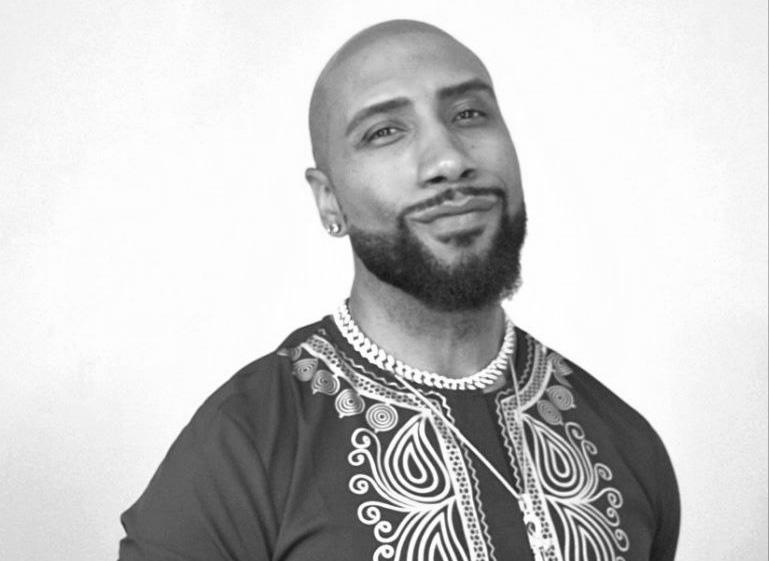
A man with a message of strategic sovereignty
In an era of performative activism and digital echo chambers, our Classic Man stands as a titan of strategic storytelling and psychological warfare against ignorance. For the Caribbean diaspora in Toronto and globally, his story is a blueprint for survival. Born into the intersection of revolutionary lineage and the raw reality of the American hood, he has transitioned from a National Poetry Slam champion to a journalistic investigator infiltrating the darkest corners of the internet to bring back the light of understanding.
I first learned about this powerful man during the pandemic. What caught me about him was that at that time, he was the only other African Caribbean journalist who was shedding light on the darkness of the time. I was intrigued, motivated, and this is why I am so proud to introduce to you our Classic Man, the one and only, Theo E.J. Wilson.
Theo’s journey began in Park Hill, Denver, a neighbourhood where the crack era’s environmental pollution was as thick as the threat of gang violence. His childhood was a masterclass in duality. On one hand, he navigated a gang neighbourhood where some of his earliest memories involved dodging invasive species of OGs from LA. On the other, he lived next door to Colorado’s top classical piano instructor, hopping over flower beds to the sounds of Beethoven and Bach.
This dual existence was further sharpened by his lineage. Theo is the son of a Vietnam veteran and an Essence model. His father was a member of Malcolm X’s Organiza-
tion of Afro-American Unity (OAAU), whose revolutionary trajectory was interrupted by a draft notice in 1965. His grandfather, a Jamaican-American who became a Tuskegee Airman, set a bar of excellence that Wilson has chased his entire life. With roots reaching into Spanish Town and Kingston, Theo carries the old country experience in his blood, a connection that resonates deeply with the Caribbean diaspora.
Every great leader has a breaking point that forges their mission. For Theo, it was the summer of his graduation from Florida A&M University. Despite holding a degree in theater performance and being the first man in his family to graduate college, the system attempted to break him. Theo was handcuffed to a chair outside a nightclub and brutally beaten by police, an experience that left him with severe, lasting PTSD.
Instead of succumbing to the trauma, Theo used it as fuel. He dived into slam poetry, a rigorous writing school that taught him to master potent metaphors and narrative frameworks. As a founding member of the Denver Slam Nuba team, he helped win the National Poetry Slam in 2011, proving that his voice was a weapon that could be refined and deployed with surgical precision.
In 2015, Theo took a quantum leap into global stardom when a viral video propelled him into the digital spotlight. With fame came the trolls, internet warriors using the anonymity of the web as a Klan hood. Driven by an innate curiosity and a desire to understand the alternative
universe where Theo created a ghost profile, “Lucious25,” a white supremacist lurker.
For months, he digitally infiltrated the alt-right, mirroring their anti-Black sentiment to understand their momentum. What he found was a generation of young men failed by public schools, consuming diet brand history and re-branded Mein Kampf ideas. Theo’s psychological insight allowed him to see the subtext of their hate: a fear of being demonized for who they cannot help but be. In a display of profound emotional intelligence, Theo realized that while the sources of their pain differed, the feeling of defending one’s humanity was a shared, albeit distorted, resonance.
Theo’s message to the African Caribbean community in Toronto and across the diaspora is one of strategic sovereignty. He warns against the myth of inclusion in dying Western systems. Drawing on his travels to South Africa, he noted that while Africans love Black Americans, they do not need them; they are focused on their own trajectory and direction.
“Whatever you do, plan for the seventh generation,” Theo urges. He argues that as birth rates shrink and economies shift in the Western world, tribalism and violence will inevitably increase. For the diaspora, the accurate assessment is clear, there is no long-term future without a strong, sovereign African continent and a unified identity that transcends the national flags of our oppressors.
Today, Wilson serves as the Executive Director of Shop Talk Live,
an organization that uses the barbershop (a sacred space in Black culture) as a staging ground for community dialogue and healing. He has hosted The History Channel’s series “I Was There” and remains a prominent CNN commentator, but his heart remains rooted in courageous conversations. He challenges us to break out of our digital echo chambers, reminding us that “Human beings are not the barriers, but the gateways to the very things that we want.” Theo’s life is a testament to the fact that while technology mastery is high IQ, the upgrade humanity truly needs is high EQ: the patience, compassion, and character to see the person behind the caricature.
For the people of Toronto, Theo Wilson is a mirror. He reflects our struggles, our contradictions, and our untapped power. He reminds us that “Race ain’t about to die out.” The human race is what we must fight to preserve, starting with the inner world that no gadget can save.
Theo E.J. Wilson is the storyteller we need for the era we are in, a man who looked into the abyss of hate and returned with a bridge.

Written by Simone J Smith Toronto Caribbean News

You care for your loved ones. When one of yours needs one of ours, social workers and social service workers are ready to provide trustworthy and quality care.
We are the Ontario College of Social Workers and Social Service Workers. As the provincial regulator, we ensure all our registrants follow the Code of Ethics and Standards of Practice to protect the public, and provide ethical, effective and community-centred care.
If you or someone you love needs help, you can trust one of ours with one of yours.
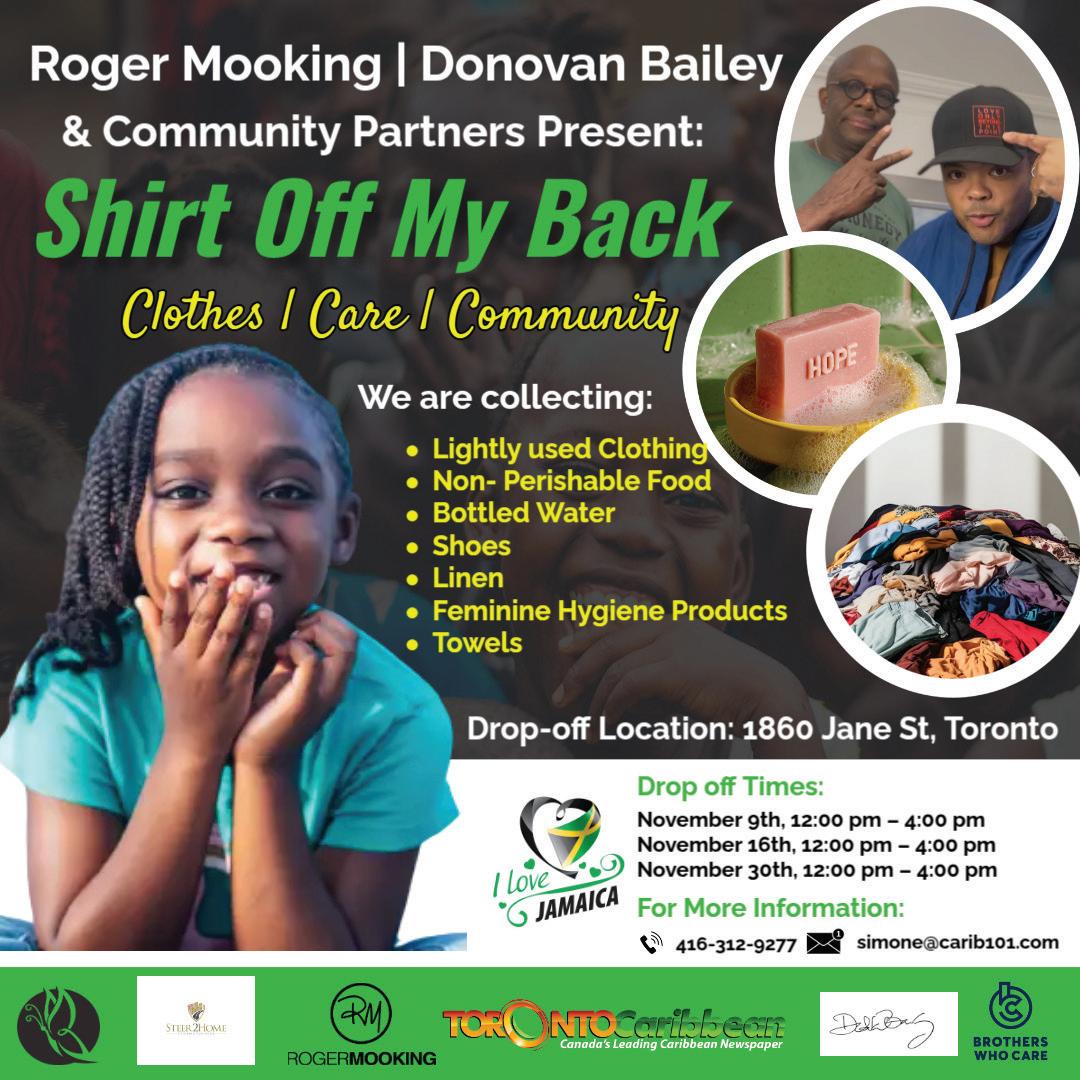


Saturday, April 18 Manitou Park
Sunday, April 19 Teramoto Park
Sunday, April 26 Creditview Sandalwood
Saturday, May 2 Fletcher’s Green Community Park
Sunday, May 3 Komagata Maru Park










































































BY DIANA GIFFORD-JONES COMMON SENSE HEALTH
In my work with universities, I meet an array of Canada’s leading researchers. This week, it was Arghya Paul, Canada Research Chair in the Department of Chemical and Biochemical Engineering and Chemistry at Western University in London, Ontario. Professor Paul and his team of young researchers are investigating new ways to fight cancer.
For decades, the war on cancer has relied on chemotherapy and radiation to kill cancer cells, treatments that often harm healthy cells too.
Now, scientists like Paul are exploring smarter ways to deploy drugs. He is working not at the scale of the tumour or the cancerous lesion, but at the biomolecular level of the nanoscale. That’s one billionth of a metre, where materials can be engineered to interact with the body in highly specific ways.
Instead of flooding the body with toxic chemicals, researchers are designing
tiny biocompatible particles that travel through the bloodstream, seek out cancer cells, and act only where needed. It is a guided system rather than a scattershot approach. These particles can be activated by ultrasound waves. When exposed to a specific ultrasound intensity, they heat up and destroy tumour cells from within. Healthy cells nearby are largely spared.
Additionally, these particles can track tumor sites in the body using advanced clinical imaging systems. That means they can do more than one job at a time. They help doctors both see cancer cells more clearly and site-specifically destroy them. Detection and treatment are part of the same process.
This is a big shift in thinking. For years, medicine has treated diagnosis and therapy as separate steps. First find the disease. Then treat it. Now, the two are beginning to merge.
As Professor Paul explains, “This research represents a shift from treating cancer with blunt tools to engineering precise responses at the microscopic level.
We’re beginning to program how therapeutic agents should interact with cancer cells rather than simply attacking them.”
His research lab is looking into how these systems can be built to respond to the unique environment of a tumour. Cancer cells often differ from normal cells in subtle ways. They may have slightly more acidic surroundings, different oxygen levels, or altered surface markers. Nanoparticles can be engineered to recognize these differences and act only when they are encountered.
The goal is simple in concept, but revolutionary in practice: maximum damage to cancer, minimal harm to the patient. There is still a long road ahead. Much of this work is in experimental stages. What works in a laboratory dish or in animal studies does not always translate to human patients. Safety, long-term effects, and largescale manufacturing are all challenges that must be overcome.
The direction is clear. We are moving away from a model of medicine that relies on broadly toxic interventions,
and toward one emphasizing precision, personalization, and control. This could mean fewer side effects, shorter recovery periods, and more effective treatments. It could also mean catching and eliminating cancers earlier, before they have a chance to spread.
What’s another important insight? The future of medicine will not come from biology alone. It will come from the merging of physics, engineering, chemistry, and medicine. We need to stop thinking about doctors solely as people who come out of medical schools. The lifesavers may be graduates of engineering programs in advanced materials.
We are not yet at the point where cancer can be treated without risk or discomfort, but we are closer to a world where treatment is targeted, intelligent, and far less destructive, using microscopic tools designed with extraordinary precision, aimed directly at the disease, and nowhere else. Carry on, researchers!










BY STEVEN KASZAB ANOTHER LOOK AT SOCIETY
Most people, and the businesses they work for, carry assumptions about what life should look like at 66 or 67. The questions come easily: “Do you have plans to retire?” “When will you retire?” “Haven’t you had enough of the daily grind?”
Yes, I have, but what do you do when you simply cannot afford to retire?
That is my reality. If I were pushed out of my current job, finding another would be nearly impossible, unless I were willing to accept minimum wage. Age, it seems, narrows your options just when you need them most.
The data reinforces what many of us are quietly living through. The Na-
BY NORMA NICHOLSON YOUTH AND SOCIAL JUSTICE
Is your head in the sand because you are an exceptionally talented teen and experiencing bullying at school? You wish that you knew how to resolve this situation.
At this time, you are not rushing out to school as you did a year ago when you transitioned from middle school to high school. You have been experiencing verbal aggression from one of your classmates. He belittles you and calls you dumb when you are both in groups. It is extremely upsetting and hard to deal with. You ignore this, but it is making you angry on the inside. You are feeling intimidated, hurt and being dominated by one of your peers.
You probably feel stuck between wanting to handle the situation on your own and wanting to share the experience with your parents. It takes realization, some self-discovery and a sprinkle of compassion and patience with yourself to know that there are situations in life that can be resolved more effectively when you dis-
BY CHE MARVILLE ASK CHE
“Dear Che, I am doing well on paper. I have a good job. I show up for my family. I am the one people rely on. But I am exhausted all the time. Not just tired, deeply, bone-level drained. I don’t understand it. Shouldn’t success feel better than this?” — Tired While Holding Everything Something is off. You feel it. You just don’t have a name for it yet.
That is where we need to begin; not with solutions, but with recognition, because what you are describing is not a productivity problem or a gratitude deficit. It is quieter and older than that. It is the experience of someone who was taught,
tional Council on Aging reports that lowerincome adults die, on average, nine years earlier than the wealthiest 20%. The same research shows that more than 45% of older-adult households (over 19 million) do not earn enough to cover basic living costs. Wealth and longevity are closely linked, while millions of older adults remain financially insecure. I never expected to be one of them. I did everything we were told to do: saved money, contributed to an RRSP, bought a home. Yet the mortgage remains, and bills continue to drain what little cushion exists.
realistic.
The question that lingers is whether my savings will be enough for my wife and family to manage the costs of the future. Among the people I know, few are wealthy. Most are working- or middle-class, living month to month, paycheque to paycheque. Like me, they assumed things would turn out differently.
ing fear: fear of instability, of dependence, of leaving my family vulnerable.

Meanwhile, public conversation continues to revolve around wealth: on television, in politics, and across business circles. Money dominates the discussion, even as many older adults feel increasingly excluded from it.
Do I feel frustrated? At times, yes. I have spent more than 30 years helping build profitable companies for others. They now live in mansions; I live in a modest, solid home. I am not ungrateful, but I am
I worry about what lies ahead. Research suggests that roughly 81% of older households are unprepared to withstand a major financial shock, whether that is widowhood, serious illness, or the need for long-term care. We are not ready, and the consequences are not abstract.
That divide is not just economic; it is emotional. At this stage of life, uncertainty feels heavier. I find myself confront-
cuss them with someone you trust.
Becoming a target is not your fault, and never will be, no matter how you look at the situation. Some bullies learn their behaviour because they believe that a White person is superior to Blacks. Some students bully others because they are racist, or even to obtain extra attention from their friends when they feel they are not getting enough.
When you allow yourself to be bullied without intervention to stop this behaviour, you could suffer socially, emotionally, and physically. Some of your thoughts may be:
• I am afraid things will get worse if I were to tell someone, and the bully finds out.
• I am embarrassed by the situation and have not addressed it.
• I am concerned that I may be threatened to keep quiet.
• If I tell my classroom teacher, he won’t believe me because he sees me as a strong, gifted student who would not put up with nonsense.
As difficult as it might be, it is always the right thing to talk to someone about this situation. It is a no-brainer that racism affects Black children, and researchers have demonstrated that it is partially a socially transmitted disease. A bullying situation needs to be addressed before it impacts one’s life in negative ways.
Share your story with your parents; what it has been like in groups at your school. If you have not had a meaningful discussion about racism, now is the ideal time to begin. Really try to leave your emotions aside. Parents must remember that teens are still forming their own set of values. It is better to listen and ask questions rather than tell them what to do. Remember to refrain from talking in generalities about White people as all racists. Reminder that there are allies even when it seems there are many whose actions convey deep racism.
The conversation occurred at home, and you and your parents have decided that the bullying must stop. It is possible to do this with a concerted effort from
very early, that the way to get through hard things is to weather them. To push through. To keep going, and so you did. You kept going, and you got good at it, and then keeping going became the only thing you knew how to do. What nobody taught you, and this is the part that matters, is that it is not only important to endure. It is important to feel. To name what is difficult. To say out loud, even just to yourself, that something is painful, or heavy, or frightening. Many of us were not shown how to express how they truly felt, and so we carried on without that skill. We find ourselves here checking off boxes, building lives, showing up for everyone and still not quite knowing where we went.
“Your tiredness is not a weakness. It is your body asking you to pay attention.”
So, the first thing I want to offer you is this: your exhaustion is not a flaw to fix. It is information to receive. There is a difference between being tired because you have done too much and being tired because you have lost contact with yourself. Both can be true at the same time, but the second one is that disconnection from your own inner life is the one that does not get better with a long weekend.
Real thriving begins in the body and the mind together. Not in the calendar. Not on the to-do list. It begins in the moment you stop and notice without judgment what is happening inside you right now. That noticing is not a weakness. That
Time moves forward. Savings feel thinner, and optimism becomes harder to sustain.
What remains is hope; hope that something shifts, that the system acknowledges this growing gap, and that people like me are not left to navigate the final chapters of our lives in quiet uncertainty.
you, your parents and the cooperation of the school’s administrator.
Document the concerns and issues about being bullied at school by a peer. Provide clear examples of the negative behaviour and state how you would like to be treated. Your parents will help by scheduling a meeting. The school will also want to follow up with your peer’s parents to facilitate hearing both sides of the issue and facilitate a resolution.
Collaborative actions must bring about change to the bully and the victim. Some adolescents, though seeming strong and bold, have not yet developed the skills to manage the negativity of racism. There are school policies that guide decision-making. Parents are encouraged to listen without judgment and to encourage teens to actively participate in shaping outcomes. This will not be their only experience with racism.
Talking about racism is a series of conversations that parents must have with their children.
noticing is the beginning of everything. Pay attention to how your fatigue expresses itself. Exhaustion rarely announces itself calmly. It comes out sideways and it is often the precursor burn out. It looks like being short with the people you love. Like agitation that arrives without warning. Like sadness you cannot explain, or anger that feels too big for what triggered it. Like isolating. Like going quiet. These are not character flaws. They are signals. Your inner life trying to get your attention through the only channels still open. Next week, I will complete this short series by sharing with you how to begin your self-exploration. If you can relate to this article, stay tuned. There is more to come from Ask Che!



There’s a certain smell you don’t forget. If you’ve ever walked into a Caribbean Chinese restaurant—whether it’s tucked into a corner plaza in Scarborough or part of a long-standing spot back in Trinidad or Guyana—you know exactly what I mean. It’s not just soy sauce. It’s not just garlic. There’s something else layered in there. Something deeper.
It hits you before you even look at the menu.
And when the food comes out, especially something like chicken wings, you start to understand what makes this style of cooking so different. Sticky, glossy, slightly sweet, balanced with salt and just enough kick to keep you going back for another bite.
But what most people don’t realize is that this isn’t just a flavour profile— it’s history on a plate.
A Story That Started Generations Ago Caribbean Chinese food didn’t come from a trend or a restaurant concept. It came from movement.
In the 1800s, after the abolition of slavery, many Caribbean nations brought in indentured labourers from around the world. Among them were Chinese workers who settled in places like Trinidad and Guyana. Like many immigrant communities, they brought their traditions, their cooking styles, and their understanding of flavour with them.
But when they arrived, they didn’t have access to the same ingredients they once knew. So they adapted.
They used what was available— local herbs, different vegetables, Caribbean staples—and slowly, over time, something new emerged. Not Chinese food as it was back home, and not traditional Caribbean cooking either, but a blend that became its own identity.
Dishes like fried rice and chow mein took on new life. Sauces became slightly sweeter, more layered. And eventually, chicken wings became one of the standout favourites.
Why Chicken Wings Became the Star
There’s something about wings that just works.
They’re simple, they’re affordable, and they carry flavour better than almost any other cut. In Caribbean Chinese kitchens, wings became the perfect canvas for that signature sauce—one that brings together soy, garlic, a touch of sweetness, and just enough acidity to balance it all out.
What makes these wings stand out isn’t just the sauce—it’s the process.
The flavour starts before the cooking even begins.
Unlike many takeout-style wings, Caribbean Chinese wings are built in layers.
They’re marinated first, allowing the seasoning to penetrate deep into the meat. That marinade often includes green seasoning—a staple in Caribbean cooking made from herbs like scallion, thyme, garlic, and sometimes culantro.
Then comes the cooking— whether fried, baked, or air-fried—followed by a final toss in a rich, glossy sauce that clings to every piece.
The result is something balanced:
• Savoury, but not overpowering
• Sweet, but not heavy
• Sticky, but not messy
It’s controlled. Intentional. And incredibly satisfying.
The Recipe: Caribbean Chinese Chicken Wings
This recipe brings that same flavour profile into your own kitchen. It’s straightforward, adaptable, and built on the same principles that made this dish a staple across Caribbean communities.
Ingredients
For the Wings:
• 2–3 lbs chicken wings (split, tips removed)
• 1 tbsp soy sauce
• 1 tbsp green seasoning
• 3 cloves garlic, minced
• 1 tsp fresh ginger, grated
• 1 tsp black pepper
• 1 tbsp brown sugar
• 1 tbsp vinegar
• 1 tsp salt
For the Sauce:
• ¼ cup soy sauce
• 2 tbsp brown sugar or honey
• 2 tbsp ketchup
• 3 cloves garlic, minced
• 1 tsp fresh ginger
• 1 tbsp vinegar
• 1 tsp sesame oil (optional)
• ½ cup water
For Garnish:
• Scallions, chopped
• Sesame seeds
Method
Step 1: Build the Flavour
Start by marinating the wings. Combine the soy sauce, green seasoning, garlic, ginger, black pepper, brown sugar, vinegar, and salt. Mix thoroughly to ensure every piece is coated. Let the wings sit for at least one hour, but if time allows, overnight will give you the best results. This step is where the foundation of the dish is built.
Step 2: Cook the Wings
You can choose your preferred method depending on your setup.
• Frying: Cook in hot oil until golden brown and crispy.
• Oven: Bake at 400°F for 40–45 minutes, flipping halfway through.
• Air Fryer: Cook at 380°F for 20–25 minutes, turning midway.
Each method works—the key is achieving a good texture on the outside while keeping the inside juicy.
Step 3: Create the Sauce
In a pan, combine soy sauce, brown sugar or honey, ketchup, garlic, ginger, vinegar,
and water. Bring the mixture to a simmer and allow it to reduce slightly. You’re aiming for a sauce that’s glossy and lightly thickened—not too heavy, but able to coat the wings.
Step 4: Bring It Together
Add the cooked wings into the sauce and toss until fully coated. Let them simmer briefly so the sauce binds to the surface. This is where everything comes together—the marinade, the cooking method, and the sauce all working in sync.
Step 5: Finish and Serve
Remove from heat and top with chopped scallions and sesame seeds. Serve immediately while hot.
A Dish That Reflects More Than Flavour Caribbean Chinese chicken wings are more than just a recipe—they’re a reflection of how cultures evolve when they meet.
There was no blueprint for this kind of cooking. No guidebook. It came from people figuring things out, making adjustments, and creating something new without losing the essence of where they came from.
And that’s what makes dishes like this stand out.
They’re not trying to be anything—they just are.
Final Thoughts
This is the kind of dish that doesn’t need much introduction once it hits the table. It’s familiar enough to be comforting, but different enough to stand out. It works at a family gathering, a casual dinner, or even as something you just make for yourself and end up going back for seconds without thinking twice. And once you make it, chances are it won’t be the last time.
Because like a lot of Caribbean food, it doesn’t just feed you—it sticks with you.
BY CHE MARVILLE GEORGE SHEPPARD
When people talk about family trees, they tend to focus on the same characters: the larger-than-life ones, the rulebenders, the storytellers. The ones we are proud to claim, but every family tree has another kind of branch, the ones we do not talk about nearly enough. The steady ones. The overlooked ones. The ones who didn’t chase anything except the next meal, the next chore, the next day. My grandmother-Nan was one of those.
She passed away in 2009 at 87 years old. You won’t find her name on a building. There are no statues, no honourary plaques. If there were, she would have had something blunt to say about them anyway. Her story, once you sit with it, is more remarkable than I ever allowed
myself to see.
She grew up in a small fishing village in Newfoundland where making do was not a lifestyle choice; it was the only choice. At 13, her mother died, leaving her as the eldest of five children with a father who was kind, but not exactly what you would call… proactive or motivated. The heavy lifting was left to Nan. At 13, while most kids had to be instructed to help, Nan was effectively running a household. Cooking, cleaning, minding siblings, doing all the things that absolutely keep a family from falling apart. No big speeches. No dramatic declarations. Just… getting on with it.
Now here’s where Nan gets even more interesting. She had no formal education. None. She could not even write her own name, but her memory. Unmatched. She could recall people and events with a level of detail that would
BY SYDNEY WALCOTT VARIETY CORNER
Season 22 of The Bachelorette should have made its debut on March 22nd, 2026, but due to a case of domestic violence, the season has been cancelled.
Three days before the season was set to premiere, a 2023 video was released to TMZ of the season 22 star, Taylor Frankie Paul, who is also the founder of MomTok and a cast member of The Secret Lives of Mormon Wives, attacking her ex-boyfriend, Dakota Mortensen.
In the video, which Mortensen recorded, Paul is seen placing Mortensen in a headlock before backing off and charging at him and attempting to kick him. The altercation escalated when Paul grabbed a metal barstool and hurled it at Mortensen, who warned her that her daughter, one of two children she shares with ex-husband, Tate Paul, was nearby. She refused to listen to Mortensen and proceeded to throw more stools at him, with one of them hitting her daughter, who was heard crying after being struck and later had a goose egg on her head.
Police arrived at the scene later that night after they received a complaint from a neighbour. An officer was heard in the video as they tried to separate the two of them.
Paul faced misdemeanour charges of assault, criminal mischief, and commission of domestic violence in the presence of a child after the stool that she meant to throw at Mortensen struck her daughter. She pleaded guilty to aggravated assault and was sentenced to three years of probation, which is scheduled to end in August 2026.
The two reconciled after Paul was released from police custody, and the two welcomed a son in March 2024. The two continued to date on and off before their final break-up occurred in 2025.
Three days before its scheduled premiere, ABC decided not to air season 22 of The Bachelorette in response to the video being surfaced.
“In light of the newly released video just surfaced today, we have made the decision not to move forward with the new season of The Bachelorette at this time, and our focus is on supporting the family,” said
put most historians to shame: dates, names, what someone wore, what they said, and of course, the weather. She ran the household as a wife and mother too, supported the work of the men, and told stories far more accurate than anything you will find online. Nan was a natural storyteller.
She was also, let’s say, not big on sugarcoating. Nan had a directness that could stop you mid-sentence. She did not circle back, she didn’t soften the message, and she definitely did not read the room. She told it like it was, whether you were ready to hear it or not.
tainty that you were welcome. The kettle would go on almost immediately. Tea and pound cake appeared like clockwork, her way of saying, “Sit down. Stay awhile. I am glad you came.”
Then there was her laugh. She loved to laugh, often doing so over her own words. If you were lucky enough to hear it, you knew you had made it into the inner circle. It was not polite or reserved; it was full, hearty, and completely unfiltered. The kind of laugh that felt earned.
a spokesperson for Disney Entertainment Television in a statement to The Hollywood Reporter.
A representative for Paul made a statement to TMZ in response to the video footage being made public.
“It’s sad to see the latest installment of his never-ending, desperate, attention-seeking, destructive campaign to harm Taylor without any regard for the consequences for their child,” said the spokesperson in part of their statement.
On March 24th, 2026, NBC broke the news that there is a third case of domestic violence allegations involving the former pair under investigation. In February 2026, Mortensen informed the West Jordan Police Department in Utah of another alleged case of domestic violence against Paul from an incident in 2024. A spokesperson for the department told NBC that a review is underway involving multiple videos connected to the incident and couldn’t provide further details as the case was an open investigation.
In response to the most recent allegation, filming for season five of The Secret Lives of Mormon Wives has been halted until the case is wrapped up. The cast members of the show have distanced themselves from Paul in the wake of the investigation.
With this news, it proves that Mortensen is not running a smear campaign against Paul, who shared that he was used to “Baseless claims about him and his relationship with Paul” in a statement to E! News.
Domestic violence against men is often overlooked because society views men as the stronger gender. Although Mortensen recorded Paul attacking him, he was not aggressive towards her in any way in the video and did not face any charges in the case. However, some still want to paint him as the person in the wrong. If the roles were reversed, Mortensen wouldn’t have received any grace.
We must stop turning the other cheek when it comes to women being aggressive towards men. We cannot be so quick to paint a person as the suspect or the victim because of their gender. When more people begin to understand that it’ll make it easier for more men to come forward and receive justice.
As children, there were times it felt intimidating. At times, even distant. She was not outwardly affectionate in the ways we often expect. Hugs were rare. Warm words were not always offered freely. To us, it could seem like emotional distance, but looking back, it was survival. The truth is, she had spent much of her early life learning how to steady herself against hardship. When life hands you that much responsibility at 13, you do not always get to pause and process your feelings. You learn to steady yourself and keep moving, and she did. For decades.
As she got older, small cracks of softness began to show, and once you saw them, you could not miss them. You would quickly visit, and she would be genuinely delighted. Not in a grand, over-the-top way, but in the quiet cer-
Nan’s world, by today’s standards, was small. No formal job, no passport, no paycheques, no titles. She was not recognized in the ways we tend to measure success now, but she had her word, and she had persistence. In the end, which proved to be more than enough.
For a long time, I did not fully appreciate that kind of life. It did not come with milestones or moments that demanded attention, but I see it differently now. Quiet lives are not small lives; they are foundational ones.
Our family tree has its share of bold branches and wind-catching leaves, but it stands because of people like Nan, the ones who practiced strength instead of performing it. The ones who told the truth, whether you liked it or not. The ones who put the kettle on and made space without needing to say much at all.
Maybe it’s time we start telling their stories, too.

BY SIMONE J. SMITH HUMAN SPECIALIST
I remember standing in front of a store in Yorkdale, the air smelling of expensive sandalwood and unspoken expectations. I had just closed a major agreement for my consultancy—a win that should have felt like solid ground. Instead, I felt a familiar, frantic vibration in my chest. My eyes were locked on a pair of shoes that cost more than my grandmother’s monthly pension back in the islands. I didn’t even like them that much, but in that moment, I felt that if I didn’t buy them, I was somehow failing the woman I had worked so hard to become.
I bought them, and the moment the receipt touched my hand, the dopamine vanished, replaced by a cold, hollow shame. We are taught that if we are smart—if we have the degrees, the titles, and the strategic minds—we should be immune to dumb financial choices. What I have discovered is that intelligence is no shield against an ancient nervous system. As someone who navigates the intersections of psychology and our cultural narrative, I know that, for us, money is a language of survival, belonging, and the scars we carry from the journey here.
The sources tell us that under stress, our limbic system overrides our analytical neocortex. In Toronto’s high-pressure Afro and Indo scenes, this is a lived reality. When we feel the financial “be -
hind-ness” that haunts 64% of our peers, our brains stop seeing a bank balance and start seeing a threat to our very existence. We treat market volatility or a low checking account as if it were a physical predator.
For many of us, this is rooted in a scarcity mindset inherited from immigrant parents or the collective memory of not enough. We hoard emergency funds but are terrified to enjoy what we have earned, or we overwork ourselves into the ground because we do not believe the floor will hold. Conversely, we fall into status spending, using highlight reels on social media as performance reviews for our lives. We buy the car or the outfit to prove we have made it, seeking short-term relief from a long-term feeling of exclusion.
Shame is the primary driver of avoidance. We tell ourselves, “I should know better,” and that internal critic keeps us from looking at the numbers. But your habits are learned.
To interrupt this autopilot thinking, we must first identify our triggers. Was it a rough day at the office or a sixty-minute scroll through a perfect life that led to that impulse buy? I have learned to implement the 24-hour rule: waiting a full day before any non-essential purchase to let my rational brain catch up to my impulsive heart.
We also need to create physical friction. I have removed my saved card details from my phone. That extra minute

it takes to find my wallet is often enough time for the scarcity ghost to leave the room. Instead of shopping for relief, I have built a joy list—a walk through the park, a deep breathing session, or a call to a sister-friend—things that release dopamine without creating debt.
Finally, we must reframe our money story. Every week, I journal one
BY HERBERT HILDEBRANDT POLITICAL PARLEY
Canadians are being told, once again, not to overreact. We are told this is just another foreign conflict, just another temporary spike, just another market event that will settle in time, but that is not how energy works, and it is not how inflation works. The war in Iran has already triggered what the International Energy Agency has called the largest supply disruption in the history of the global oil market, while the IMF says the shock is already dimming the outlook for many economies. Brent crude has surged more than 50% since the war began at the end of February.
This matters because energy is not one sector among many. It sits underneath everything. When oil, gas, diesel and jet fuel jump, the cost does not stay at the pump. It moves through shipping, farming, fertilizer, manufacturing, groceries, construction and household heating. Reuters has already reported that the war is driving up fuel and fertilizer costs and threatening
a fresh global food-price shock, especially in countries that were only beginning to recover from previous crises.
That is the part too many people still miss. This new inflation bomb is not landing on a healthy and recovered public. It is landing on families who are only now getting used to the damage from the last one. In Canada, headline inflation eased to 1.8% in February 2026, but that does not mean life became affordable again. Statistics Canada says food purchased from restaurants was still up 7.8% year over year in February, and many food products are double what they were 6 years ago. The first inflation wave did not disappear. Canadians simply learned to limp under it.
Now comes the second hit and the second widespread attack on freedom of movement.
This is why people should pay attention not only to the war itself, but to the policy language that follows in its wake.
The IEA is no longer speaking only about supply. It is openly laying out demand-side measures for governments, businesses
and households, including working from home where possible, lowering speed limits, shifting people out of private vehicles, and avoiding air travel where alternatives exist. Its own crisis tracker shows that governments around the world have already moved into the language of conservation, fuel rationing, travel limits, remote work and public campaigns to reduce demand.
EU energy ministers are now coordinating their response to the Iran war, with Europe watching tightening supplies of diesel and jet fuel and trying to avoid a fragmented reaction as prices surge. European gas prices have jumped more than 70% since the war began, and the discussion has already shifted from comfort and abundance to storage, stability, and management. That is how these things begin. Not with one dramatic decree, but with a slow normalization of limits, conservation and temporary restraint.
No serious person should deny that governments must respond to a real energy shock. Citizens should also be honest enough to admit what usually follows.
scarcity belief—like the idea that I must look successful to be safe—and I counter it with evidence of my actual progress. We are healing lineages. When we choose abundance over performance, we are reclaiming our peace. You are worth more than the image you have been told to maintain. Be brave enough to be seen as you are, not just as you spend.
Crisis becomes permission and scarcity becomes leverage. The public is told that less travel, less consumption and less freedom are simply the responsible price of stability, and because the crisis is real, the appetite for control grows quickly.
That is why this moment matters. Covid taught governments how far fear could move a population. An energy emergency could teach them how far economic pressure can do the same. I am not saying the next phase will look identical, but I am saying the instinct will be familiar, and the conditions are already forming.
Canadians have barely absorbed the inflationary wreckage of the last lockdown shock, and they should not sleepwalk into the next one. When citizens are tired, squeezed and afraid, they are far more willing to accept limits they would have rejected in calmer times. Speak up early and often, stop the bankers’ wars, no more lockdowns, and stop the mass pillaging of the middle class.
BY DANIEL COLE PERSONAL DEVELOPMENT
Most people do not fail because life is uniquely cruel to them; they fail because they unconsciously accept the terms life presents. There is a quiet, almost invisible surrender that happens when circumstances are mistaken for destiny. Yet history, philosophy, and psychology converge on a more unsettling truth: human progress has always depended on those who refused to negotiate with limitations.
The playwright George Bernard Shaw captured this paradox incisively: “The reasonable man adapts himself to the world; the unreasonable one persists in trying to adapt the world to himself. Therefore, all progress depends on the unreasonable man.” The statement is not a celebration of irrationality, but of defiant resolve, the refusal to let external conditions dictate internal possibilities.
Life, by design, is adversarial. It presents friction not as an exception, but as a rule. Contrary circumstances, whether economic hardship, physical limitation, or emotional trauma are not anomalies; they are the very terrain upon which human character is formed. As William Frederick observed, there are no inherently “great” people, only ordinary individuals who rise to meet disproportionately large challenges. Greatness, then, is less a trait and more a response.
BY ANYA NICOLA
This insight finds its deepest psychological articulation in Viktor Frankl’s work. In Man’s Search for Meaning, Frankl argues that when we are stripped of the ability to change our circumstances, we are confronted with a more profound responsibility: to change ourselves. This is existential realism. Frankl’s experiences in Nazi concentration camps revealed that even in the most dehumanizing conditions, the final human freedom, the ability to choose one’s attitude remains intact.
What emerges from such accounts is a pattern: those who transcend adverse conditions do not deny reality; they reinterpret it. They refuse to see suffering as purely destructive. Ludwig van Beethoven, composing some of the most profound music in history while deaf, represents transcendence. His life forces a difficult question: if the absence of one’s primary faculty does not preclude mastery, what then truly limits us?
The uncomfortable answer is that limitation is often less external than internal. It is found in rationalization, in deferred responsibility, and in the subtle habit of making excuses. At some point, every individual must confront a stark dichotomy: to construct a narrative of constraint or to construct a life of consequence.
Yet, this confrontation is not resolved through grand gestures, but through daily decisions. Small, repeated choices accumulate into character,
and character, over time, becomes destiny. In this sense, success is less an event and more a trajectory, a byproduct of sustained alignment between intention and action.
Philosophers like Aristotle emphasized the importance of bearing life’s unpredictability with dignity and adaptability. This is not passive acceptance, but active composure, the ability to remain internally ordered while navigating external disorder. This fluidity of circumstance implies a profound corollary, if situations can change, so can individuals. But transformation is not automatic. It requires intention, reflection, and, crucially, discernment.
Here lies an often-overlooked dimension of success: not all pursuits are worth enduring for. In a culture that glorifies perseverance and exhaustion, there is a danger of confusing persistence with wisdom. To persist in the wrong direction is not resilience, it is misdirected stubbornness.
Self-awareness, therefore, becomes essential. One must distinguish between obstacles that are meant to be overcome and signals that a course correction is needed. The discipline to succeed includes not only the courage to endure, but the clarity to redirect.
In the final analysis, success is neither guaranteed nor evenly distributed, but the capacity to respond meaningfully to life’s contrary circumstances remains universally accessible.
“Spring does not wait until you are ready. It blooms anyway, and maybe that is the lesson.”
My mom always says that March is God’s way of asking what you plan to do with yourself. Back home, she never had to wait for permission to plant. The soil was always warm, the rain always came, and something was always growing whether you tended it or not. Here in Toronto, March feels like a dare. The snow is half-melted, the ground is soft but uncertain, and every green shoot pushing through frozen earth looks like defiance.
That is how healing feels in spring when you are Caribbean and living in diaspora. After months of surviving winter’s grip, something inside you starts to thaw, too. You feel it before you can name it: a restlessness, a hunger for colour and warmth that goes deeper than weather. Your body remembers a version of spring that didn’t require survival. It remembers year-round bloom.
I have been sitting with this tension in my own healing work this month. All winter I practised stillness, the quiet kind of mending that darkness demands. I drank my bush tea under the SAD lamp. I showed up for therapy when every bone in my body wanted to cancel. I let myself grieve
the sun, and now spring is here, whispering something uncomfortable: stillness was the medicine, but it was never meant to be permanent.
This is where so many of us get stuck. We confuse healing with resting. We spend so long learning to sit with our pain that we forget to stand up and walk away from it. Spring does not let you stay comfortable in the cocoon. It demands emergence.
A woman in my healing circle said something last week that stopped the room: “I’ve been so busy healing that I forgot to start living.” She had spent two years in therapy, read every book, and done the inner child work, the shadow work, and the somatic work. Still, she was waiting. Waiting to feel “ready.” Waiting for the healing to be “done” before she allowed herself to grow.
Here is what I told her, and what I am telling myself: healing and growing are not sequential. They are simultaneous. You plant the garden while your hands are still shaking. You apply for the job while you are still working through imposter syndrome. You open your heart again while the last heartbreak is still teaching you something.
Caribbean people understand this intuitively. Our grandmothers did not stop cooking while they mourned. Our grandfathers did not stop build-
ing while they grieved the home they left behind. They healed in motion. They planted new roots in foreign soil while still aching for the ones they had pulled up. That was survival wisdom: life doesn’t pause for your pain, so you grow through it.
Spring in Toronto is Caribbean people’s season if we claim it. Every crocus pushing through half-frozen ground is doing what our ancestors did: blooming before anyone said it was possible. Every bud on a bare branch is an act of faith, not certainty.
So, what does spring healing look like? It looks like signing up for the thing you have been putting off. It looks like having the conversation you have been rehearsing since January. It looks like trading “I’m not ready” for “I’m ready enough.”
If you’ve been circling the idea of starting your healing journey, or restarting one that stalled, spring is your sign. You don’t need to have it all figured out.
This spring, I am choosing growth over comfort. I’m planting seeds in soil that still feels cold, trusting the warmth is coming because it always does, even in Canada, even for us, even when March feels more like a threat than a promise.
Spring doesn’t wait until you are ready. It blooms anyway. That’s the lesson.



BY JAY BRIJPAUL REAL ESTATE SPECIALIST
On March 25th, 2026, Ontario announced a major proposal to eliminate the full 13% HST on qualifying new homes, potentially saving buyers up to $130,000. This represents a significant policy shift and seems to be a direct response to recent federal initiatives. The collaboration between Ontario and the federal government demonstrates a strong commitment to addressing housing affordability, especially for first-time buyers.
As part of the proposed 2026 Ontario Budget, the plan would fully waive HST on new homes priced up to $1 million and offer substantial rebates on homes priced up to $1.85 million. By reducing upfront costs, the program aims to help more buyers qualify for mortgages and access the housing market. While the proposal is not yet law, its level of detail and government coordination suggest it is likely to proceed.
The proposal involves both the Ontario and federal governments, with Ottawa sharing costs by covering the federal HST portion. Approximately $2.2 billion in joint tax relief is expected to be delivered, supporting housing construction and affordability across the province. This coordinated approach is poised to make a real difference in pricing and the structuring of new construction deals.
For buyers, the savings are significant, on a $900,000 new home, avoiding HST can save over $117,000. These savings could be put towards a larger down payment or help lower mortgage costs. The rebate’s sliding scale guarantees meaningful relief even at higher prices, potentially making it easier for many households to qualify for a mortgage.
Officials estimate the rebate could lead to 8,000 new homes being built next year, supporting up to 21,000 jobs and increasing Ontario’s GDP by $2.7 billion. Stimulating construction is seen as vital to meeting the province’s housing needs, especially in the GTA.
The rebate now applies to purpose-built rental housing by removing the 8% provincial HST portion for quali-
fying projects. This aims to increase rental supply amid low vacancies and rising rents, offering more options for those not ready or able to purchase.
Ontario has announced that the rebate will be available from April 1st, 2026, to March 31st, 2027. However, the province plans to align with the federal program’s effective date of March 20th, 2025, for purchase agreements. This means buyers who sign agreements as early as March 2025 may be eligible, but final details (such as whether eligibility depends on the agreement date, closing date, or construction status) are still to be confirmed.
While the policy’s direction is clear, meaningful tax relief for new housing, the mechanics are not final. Buyers and professionals must weigh their options: delay or unwind transactions to gain more certainty, or proceed now, hoping that Ontario’s final rules will apply retroactively. Each approach carries risks and should be matched to the specific deal and risk tolerance involved.
While this approach will help increase the current housing stock, it does not address one of the root causes of the sluggish real estate market. Firsttime buyers are struggling to save due to the high cost of living. Although the government is allocating funds to build new homes, it should also offer incentives, such as allowing qualified firsttime buyers to purchase newly built condominiums with zero down payment. This can be achieved by insuring the entire loan through CMHC. Many first-time buyers would prefer this option instead of paying rent.
This approach allows builders to sell their inventory swiftly and reinvest the earnings into new projects. It would boost the condominium market and generate revenue through land transfer taxes. Additionally, many tenants will transition to ownership, creating more available and affordable rental options for others.
The federal and provincial governments are on the right track. However, we need to see the actual outcome. Would that rebate lower housing costs, or would it be absorbed during construction?

for the week of April 5 – April 11, 2026
THE LUCKIEST SIGNS THIS WEEK: LEO, SCORPIO, SAGITTARIUS
ARIES: You’ve been pushing hard. This week reminds you to slow down just enough to make better decisions. Not everything needs to happen right now.
TAURUS: Things feel like they’re shifting around you. Don’t resist it. This change could actually move you closer to the stability you’ve been chasing.
GEMINI: Your mind is racing with ideas and options. Stay focused. Don’t spread yourself too thin or you’ll lose momentum before anything really takes off.
CANCER: You’re feeling things more deeply this week. Pay attention to that. Your emotions are pointing you toward clarity, especially in relationships and boundaries.
LEO: You’re stepping into the spotlight, whether you planned to or not. Carry yourself with confidence, but stay grounded. People are paying attention right now.
VIRGO: You don’t need to fix everything. Step back and let things unfold naturally. Not every situation needs your full attention or control this week.
LIBRA: Things have felt off balance. This week gives you a chance to reset. Make the adjustments you’ve been putting off— especially with time and priorities.
SCORPIO: Something beneath the surface is coming up. Don’t ignore it. Facing it directly will give you more control than avoiding it ever could.
SAGITTARIUS: You’re craving movement and change. Even a small step forward this week can shift your direction. Don’t wait for the perfect moment.
CAPRICORN: Work has taken over lately. This week is a reminder to step back and make space for life outside of responsibilities and routine.
AQUARIUS: Your perspective is shifting, and it matters. Trust what you’re starting to see differently. It’s helping you break out of an outdated way of thinking.
PISCES: You’re being pulled toward something creative or meaningful. Don’t ignore it. There’s something worth exploring here, even if it doesn’t fully make sense yet.
Fill in the grid so that every row, every column, and every 3x3 box contains the numbers 1 through 9 only once.
Each 3x3 box is outlined with a darker line. You already have a few numbers to get you started. Remember: You must not repeat the numbers 1 through 9 in the same line, column, or 3x3 box.