










In the labyrinthine tenement yards of Allman Town, Kingston, where twentyfive souls might share a single plot of dust and hope, a young girl named Simone learned a devastating truth before she even knew her own name. She spent her early years watching her mother, a dressmaker, transform cheetah-print cloth into armour, and her aunt dress her in yellow outfits that made her feel like a “British lady” for church. The most profound lesson did not come from fashion; it came from a kiss.
At age five, Simone watched a father kiss his daughter on the forehead at school and asked, “Who is that man kissing you?” The answer, a father, ignited a quest for a male figure that would nearly cost her life. Before life changed, she was a girl who “Dreamed in colours that society never understood,” a fearless dancer who loved to talk into hairbrushes as if they were microphones, but the introduction of her biological father was not the fairy tale she envisioned; it was an introduction to self-hate.
What happened next was a masterclass in psychological warfare. Her father was not just cold; he suffered from a deep-seated colouristic prejudice, bleaching his own dark skin and shaming Simone because she wasn’t “bright” or attending a high-prestige school. He would shout at her in public, shaming her self-esteem until she felt less than.
In the environment of Kingston, this trauma was reinforced by a browning (lighter skin) is right syndrome. Simone watched neighbours bleach their two-month-old babies. She saw teachers, who were dark skinned African themselves, slam doors in her face when she sought leadership roles, preferring students with Indian hair and lighter skin. One male teacher even told her she was unworthy of a husband because she was not light-skinned.
What almost defeated her was the addiction to the opinion of others. Desperate for her father’s hug (a hug she never received) she began to bleach her skin. She sought to erase herself to
be seen by him. For a decade, she was a woman caught in a generational curse, mirroring her father’s trauma in her own relationships with men.
Her transformation was not born of a sudden epiphany; Simone contracted a rare, severe case of chickenpox. In a moment of desperation, she applied bleaching cream to the open sores, hoping to cure the marks. When she finally looked in the mirror, she didn’t see a queen; she saw “The ugliest girl I ever seen.”
This was her spiritual awakening. In the reflection of her damaged skin, she saw the absurdity of her pursuit. She realized that the people telling her she was not enough did not love themselves. “Why am I listening to people that don’t love themselves,” she asked?
She made a resolute decision to stop the erasure. She returned to the self she was before she met her father, the girl who loved to dance, dress up, and talk. To survive, she had to take full responsibility for her destiny and celebrate mistakes rather than hide from them.
Today, the woman who once bleached her skin is known as “The Authentic Queen,” an Amazon #1 Bestselling Author and a strategic storyteller. She writes to heal divisions and move people to act. Her transformation allowed her to craft narratives that are both emotionally resonant and psychologically aware. She uses emotional intelligence as a journalistic tool, refusing to bow to societal molds.
The price of her success was the total dismantling of her past identity. She had to cut off her father to break the generational curse. “I have to release him physically, spiritually, emotionally in order to attract something else,” she explains. She gave back his issues, recognizing they were passed down from his own mother.
The greatest misconception people have about Queen Simone is that her Authentic Queen persona is about perfection. In reality, she still struggles with the residue of her past. She admits that the mental condition-

ing and programming of colourism are rooted in neuroscience and are incredibly hard to change. She fights every day to affirm herself and maintain the inner dialogue audit she now teaches others.
What would surprise readers most is her strength through vulnerability. She is not afraid to admit she once hated her reflection. This transparency is what has allowed her LoveUnuhSelf Initiative to reach over 15,000 people and save 13 lives from suicide. When people hear her story of moving from the brink to the bestseller list, they realize life is worth living.
Queen Simone now fights for radical self-acceptance. Her debut memoir, GIVE BIRTH to yuh AUTHENTICITY, is a breakout from societal conditioning. She warns that “Emotions left unchecked lead to self-destruction” and advocates for a deep self-awareness that transcends titles like mother, or father.
She discovered a profound truth: you are born looking like your parents, but you die looking like your decisions. Her decision was to stop being addicted to opinions and start being the full package she always was, even when she was at the wrong address.
Through her work with equityfocused entrepreneurs and marginalized communities, she continues to challenge the world to stop suppressing unique individuality. She is no longer the girl looking for a kiss from a man who could not love himself; she is the woman who provides the invitation devices for a global audience to finally love themselves.
Queen Simone Maghanza is a community educator who has turned her personal pain into a strategic movement, proving that the most powerful thing a person can be is authentic.




Hogan Assessments’ new global research says there is a widening gap between the leaders’ organizations promote and the qualities employees actually value, and that matters because leadership style shapes everything from workplace trust to public-facing performance. In Canada, employees say they want diplomatic communication, strategic thinking, and drive, while the behaviours they see as most damaging include emotional volatility, arrogance, passive aggression, and extreme caution.
The report says Canadian employees place particular importance on diplomatic, tactful, and sensitive communication, along with strategic thinking and curiosity, and drive, energy, and goal orientation. It also says Canadians value highquality products and strong brand image, data-driven decision-making, teamwork, belonging, and enjoyable work environments. Across global markets, respondents identified emotional volatility, passive aggression, arrogance, entitlement, and extreme caution as behaviors that weaken leadership effectiveness.
What the research is showing is that many organizations still reward peo -
ple for appearing leadership-ready rather than for actually leading well. That is an important distinction, because visibility, charisma, and forceful self-presentation can look like strength even when they erode trust behind the scenes. The report also suggests that Canadian leadership culture tends to emphasize authority, autonomy, and impact more than the relational qualities employees say matter most.
What remains unclear is how broadly these patterns apply across sectors, seniority levels, and industries, especially in public institutions and community-serving organizations. The report gives strong directional findings, but it does not, in the excerpt provided, show how Afroand Indo-Caribbean workers specifically experience these leadership gaps in Canadian workplaces. That matters, because communities that face racism, accent bias, and unequal access to advancement often feel these disconnects first and most sharply.
Yes, this is a familiar problem, even if the language changes from one report to the next. Organizations have long promoted people for confidence, polish, and command, then discovered that those traits do not automatically produce fairness, clarity, or accountability. In workplaces shaped by hierarchy, that gap can become a pattern: the loudest, or most self-assured people rise fastest, while the most trustworthy or thoughtful leaders are overlooked.
For Afro- and Indo-Caribbean workers, this is a power issue. When leadership pipelines reward charisma over judgment, people who communicate differently, lead collaboratively, or refuse

performative dominance can be pushed aside even when they are the ones best equipped to build healthy teams. That affects who gets hired, who gets promoted, whose ideas are heard, and whose communities benefit from opportunity.
It also connects to the wider civic world. The same leadership habits that weaken trust in workplaces can show up in school boards, nonprofits, hospitals, transit agencies, and government offices, where residents already carry the cost of decisions made without accountability. If leaders are selected for image instead of integrity, the public pays the price in confusion, burnout, poor service, and distrust.
The power dynamic here is simple but uncomfortable: institutions often say
they want effectiveness, but they frequently reward confidence theater. That is why the report’s finding matters so much; it exposes a mismatch between what climbs and what works. The people closest to harm are rarely the people making the promotion decisions, which is why these gaps survive for so long.
Organizations should stop treating visibility as a proxy for readiness. They should build promotion systems that value feedback, follow-through, emotional steadiness, and strategic judgment as much as confidence and presence. For workers, especially in racialized communities, that shift could mean a fairer shot at advancement and a healthier workplace culture.






If there is one thing I’ve learned over the years, it’s that life rarely unfolds according to the timeline we imagine. We tell ourselves that we’ll start when things settle down, when the kids are older, when work isn’t so busy, when we’ve saved a little more money, or when we finally feel ready. We convince ourselves that the perfect moment is just around the corner. The problem is, that moment has a way of never arriving.
I think we’ve all been guilty of it at one time or another. We put dreams on hold because life gets busy. We postpone difficult conversations because we don’t know how they’ll end. We wait to take care of ourselves because everyone else seems to need us first. Before we know it, weeks turn into months, months turn into years, and the things that once mattered so much slowly fade into the background.
The reality is that life will always have its challenges. There will always be another responsibility, another unexpected expense, another reason why today doesn’t seem like the right day to begin. If we spend our lives waiting for perfect conditions, we risk missing opportunities that may never come again.
Over the years, I’ve had the privilege of meeting people from every stage of life. Some have built businesses from nothing more than an idea and a willingness to work hard. Others have returned to school later in life, changed careers after decades in the same profession, or found the courage to pursue passions they had quietly carried for years. What always inspires me is that very few of them started because everything was perfect. They started because they finally decided that waiting wasn’t serving them anymore. That doesn’t mean the road was easy. Every success story comes with setbacks, uncertainty, moments of doubt, and obstacles that no one sees from the outside. We often compare our own beginning to someone else’s finished product, forgetting that every accomplishment is built one small step at a time. Success isn’t about having all the answers before you begin. It’s about having enough faith to take the first step and enough resilience to keep moving when things don’t go exactly as planned.
I also think we sometimes underestimate just how much fear influences our decisions. Fear of failure. Fear of rejection. Fear of making the wrong choice. Sometimes even fear of succeeding because suc-
cess often brings change, and change can be uncomfortable. Those fears are completely normal, but they should never be the reason we stand still. Courage isn’t the absence of fear. It’s choosing to move forward despite it.
One of the greatest lessons I’ve learned is that progress almost always looks different than we expect. Rarely does it happen in giant leaps. More often, it’s found in the small decisions we make every single day. Making one phone call you’ve been putting off. Registering for that course you’ve been thinking about. Starting that business plan. Applying for that position. Reaching out to someone you’ve been meaning to reconnect with. Those small actions may not seem lifechanging in the moment, but over time they create momentum, and momentum has an incredible way of changing lives.
As we move through another beautiful summer, many of us will spend time with family, attend community events, enjoy festivals, and reconnect with friends. While you’re making memories, I encourage you to take a moment to reflect on something you’ve been putting off. Is there a dream you’ve convinced yourself is unrealistic? A goal you’ve quietly set aside? A conversation you’ve needed to have? Or perhaps it’s simply giving yourself permission to make your own well-being a priority again.
None of us know exactly what tomorrow will bring, and perhaps that’s the greatest reminder of all. We can’t control every circumstance, but we can control whether we allow another year to pass waiting for everything to be perfect. Life isn’t asking us to have every answer before we begin. It’s simply asking us to begin.
So this week, I hope you’ll give yourself permission to stop waiting for the perfect time. Trust yourself enough to take that first step, however small it may seem. You may discover that the opportunity you’ve been waiting for wasn’t something that arrived one day—it was something you created by choosing to move forward. Sometimes the most remarkable journeys don’t begin with certainty. They begin with a simple decision to stop waiting and start believing that today is enough.
If you’d like, I can make this even more “Trish” by adding one or two subtle personal references about building the newspaper and taking chances over the years without making it sound self-promotional. I think that would make the message feel even more authentic.




simone@carib101.com
TC REPORTER
You are sitting in a dimly lit living room, the blue light of your smartphone illuminating a face weary from scrolling. You mention to your partner, just in passing, that you are thinking about buying a new pair of leather boots. Ten minutes later, as you open an app, there they are: the exact boots, staring back at you in a sponsored post. A cold shiver runs down your spine. Is the device in your pocket a tool for connection, or is it a silent witness to your private life?
Technology breeds conspiracy theories because it operates in a black box, complex systems that even their creators often struggle to explain. When we cannot understand the how, our minds fill the vacuum with who and why. This creates a curiosity gap where the unknown becomes a canvas for our deepest fears.
The Phantom Web: The Dead Internet Theory Origin: This theory surfaced in 2021 on the Agora Road’s Macintosh Cafe forum.
Claims: The web is no longer a human space, but a bot-driven simulation designed to drive engagement and revenue. Evidence: In 2024, studies revealed that bot traffic surpassed human activity for the first time, accounting for 51% of all internet activity.
Reality: While humans still exist online, AI-generated slop now populates 13.1% of websites. Impact: It erodes our trust in digital community-building, making every interaction feel transactional.
Lessons: We must prioritize humancentric distribution that values genuine intent over raw views.
The Sky is a Weapon: Weather Control Origin: Government interest in weather modification dates back to 1891.
Claims: Recent hurricanes like Helene were engineered by the government to manipulate populations.
Evidence: The U.S. operated “Operation Popeye” during the Vietnam War to prolong monsoon seasons.
Reality: These theories distract from
the psychological and social justice needs of devastated communities. Why do intelligent people believe extraordinary claims? Because history proves that the council of power often hides the truth.
MKUltra: In 1953, the CIA launched a topsecret program to develop mind-control capabilities using drugs, hypnosis, and sensory deprivation. It was a 162-project operation involving unwitting subjects like prisoners and soldiers.
The Snowden Revelations: In 2013, Edward Snowden proved that the NSA’s PRISM program was monitoring up to 600 million communications daily. Paranoia about the government listening became a declassified fact.
Our psychology is wired for pattern recognition. We possess a need for certainty in an unpredictable world, leading to cognitive biases where we see intent where there is only coincidence. From the perspective of power analysis, these narratives offer a sense of identity and social belonging to those who feel marginalized by the rapid pace of technological change. As Edward Bernays might suggest, the engineering of consent often relies on the very information brokers who
curate our spookily accurate ad profiles. As we look toward the future, new shadows are forming.
• Deepfakes and Synthetic Media: Can we trust our eyes when AI can replicate a human voice and face perfectly?
• Brain-Computer Interfaces: Will our thoughts remain private, or will they become the next data set for attentioneering?
• Digital Identity: As we move toward a fully digitized existence, who holds the master key to our personhood?
The goal is to make you question reality, to question your assumptions. Distinguish clearly between evidence and opinion. Are you being fed the truth, or are you being attentioneered? The most powerful tool for any community-rooted leader is not a secret, but the ability to think clearly amidst the noise.
We must move with empathy and psychological insight. Sometimes, the most frightening thing is the realization that no one is truly in control of the monsters we have built in the machine.
How do you know what is true anymore? Start by looking for the human behind the screen.

PAUL JUNOR
paul@carib101.com
TC REPORTER
The provincial government’s June 25th, 2026, announcement that it will update Ontario’s framework for assessing, evaluating, and reporting student achievement has triggered widespread response across the education sector. The revisions to Growing Success: Assessment, Evaluation, and Reporting in Ontario Schools (Kindergarten to Grade 12), posted to the provincial website, marks the first major overhaul since the policy’s introduction in 2010.
Beginning in the 2026–2027 school year, most secondary courses will require written final exams as a component of students’ final evaluations. All written exams for Grades 9 through 12 are to be administered during designated exam periods, with the exception of the Education Quality and Accountability Office (EQAO) Grade 9 mathematics assessment. The policy also introduces a notable shift: attendance and participation will now directly affect final grades, rather than being reported solely as learning
skills.
Under the updated framework, Grades 9 and 10 students will have final marks calculated as 65% coursework, 20% mandatory final evaluations, and 15% attendance and participation. For Grades 11 and 12, the breakdown is 65% coursework, 25% final evaluations, and 10% attendance and participation. The policy specifies that excused absences will not negatively affect grades.
Certain courses are exempt. These include locally developed compulsory credit courses in Grades 9 and 11, workplace preparation courses in Grades 11 and 12, and open courses at the senior level. Additionally, mandatory written exams will not apply to subjects such as: Guidance and Career Education (with the exception of Grade 10 Career Studies), Cooperative Education, Interdisciplinary Studies, and American Sign Language as a Second Language.
Education Minister Paul Calandra has framed the changes as a response to concerns raised by educators. In reporting by the Toronto Star, he stated that teachers have asked for improved classroom management tools, noting that attendance policies can support that goal. He also argued that formal exams help verify student understanding, particularly in an era where artificial intelligence tools may obscure authentic learning.
However, reaction from educators and advocates has been mixed. Colin Mat-
thew, Vice-President of the Ontario Secondary School Teachers’ Federation (OSSTF/FEESO), raised concerns about a standardized approach. He noted that while exam-taking may benefit students pursuing post-secondary pathways, it may not serve those in other streams, questioning whether uniform expectations reflect diverse student needs.
Similarly, Ontario NDP Education Critic Chandra Pasma warned that the policy risks exacerbating existing inequities. She argued that without parallel investments in mental health services and special education supports, the changes could create additional barriers for vulnerable students, including those at risk of disengagement or dropout.
Rene Jansen in de Wal, President of the Ontario English Catholic Teachers’ Association (OECTA), acknowledged shared concerns about student attendance, but suggested that the proposed measures may not address root causes. She indicated that while the intent may be aligned, the approach differs from what educators on the ground would recommend.
Outside formal institutions, criticism has also emerged from child advocacy voices. Irwin Elman, a former Ontario Child and Youth Advocate, characterized the policy as ideological in a public Facebook post, arguing that it raises broader questions about student rights under the Canadian Charter of Rights and Freedoms and the United Nations Convention on the Rights of the Child.
The reputational stakes for the provincial government are significant. For policymakers, the credibility of education reform depends on balancing academic rigor with equity and inclusion. For educators and unions, the policy tests their influence on classroom realities. For families and students (the primary audience) the changes may directly affect academic outcomes, mental health, and future opportunities. Secondary audiences, including journalists, researchers, and advocacy groups, will likely scrutinize both implementation and impact.
Non-negotiables in this discussion include political sensitivities around public education funding, legal exposure tied to rights-based critiques, and the need to maintain working relationships between government and teachers’ unions. Missteps in communication or rollout could deepen existing tensions.
While the government positions the reforms as a return to standardized rigor, the debate underscores a familiar tension in education policy: how to measure achievement without narrowing opportunity. The effectiveness of these changes will ultimately depend on whether adequate supports are in place to ensure that all students (not just those already positioned to succeed) can meet the new expectations.
Parents, guardians, and concerned community members can review the full policy on the Government of Ontario’s official website.

simone@carib101.com
REPORTER
The velvet sounds of women’s voices at the Peel Art Gallery signaled the heavy, expectant presence of a secret finally ready to be told. Between the bougie decor and the fragrance of freshly cut flowers, there was a tension in the air that suggested the group of beautiful women in the room were there for a reclamation. No one expected that a simple piece of fabric would become the site of a psychological revolution, yet as the light hit the vibrant textiles, it became clear: this was about the power we choose to wield when we think no one is looking.
We must care about this moment because it exposes the unspoken cultural shift currently vibrating through the Afri-
can Caribbean community. For too long, the narrative has dictated that our hair is a problem to be solved or a shame to be hidden behind wigs and weaves. This event, curated with strategic empathy by Navern Nash-Longshaw, founder of Chateau Neuf, had me confront a painful controversy: the belief that our natural beauty is only valid if it conforms to a colonial standard. If we fail to acknowledge the gravity of this shift, we risk losing a generation of younger women to a cycle of inherited shame and a lack of pride in their inherent identity.
The energy in the room was warm, nurturing, and vibrantly alive, a safe space designed for emotional truth. Leaders like Mitzie Hunter and Minister Charmaine Williams stood as pillars of this new era, their presence alone serving as a testament to the strength and resilience being celebrated. The true heroes were the women who stepped into the light, such as Shanna-Kay Stevens, whose work as a clinical social worker reminds us that beauty and worthiness are inside jobs.
In one extraordinary scene, women were asked to choose objects representing their hair journeys. One woman
chose a butterfly, symbolizing a journey of rebirth. Another woman reached for a mirror, recalling the heartbreak of a college bathroom where she once looked at her natural self and thought, “You are not a very beautiful woman.” Another chose flowers, reflecting on the prayer she sent up after losing her mother, asking for a sign of what life and glory really meant. These were vulnerable unmaskings that turned the gallery into a sanctuary of shared history.
Florence Gyimah, a natural hair educator and founder of ManeLocs, delivered the psychological anchor of the afternoon, “Your wrap should be your crown and not a curtain.” She challenged the room to stop using head wraps as a quick fix for neglected health and to start using them as a powerful, intentional choice. This is the conversion-driven storytelling we need, one that moves us from hiding to healing.
The sound of the room shifted when the conversation turned to the texture of wellness. The practitioner Anthony, founder of A+ Smoothies, brought a journalistic edge to the crisis of modern-day
malnutrition. He spoke with transparency about how our bodies keep score, explaining that low iron and magnesium are the silent thieves of our energy and our hair’s vitality. To see women like Colette Afriyie and Coach Lovemore engage with these truths was to witness a community learning to love itself through data and empathy.
This moment matters because it changes the trajectory for the next generation. It means that young African Caribbean women will grow up seeing Charlotte Livingston embrace every season of life with elegance and authenticity, proving that style only becomes more powerful with time. It means we are no longer spoken to, but spoken with, creating a future where our curls and curl patterns are celebrated regardless of length.
I left that rainy afternoon feeling like I was part of something revolutionary and rooted. As we move forward, the art of the head wrap will be remembered as the day we decided that our heritage was not a burden to be managed, but a crown to be worn with the strategic positioning of those who finally know their own power.
BY ADRIAN REECE
TC REPORTER
Canadians are expressing growing frustration with the Liberal government; a sentiment reflected in a petition calling for the removal of Prime Minister Mark Carney. While the petition itself has limited constitutional force, it signals a broader public dissatisfaction with economic conditions, governance, and trust in leadership. At the core of this unrest is the perception that Canada’s economy is weakening. Rising deficits and continued government spending have prompted concern among some citizens about longterm fiscal sustainability and the burden placed on future generations. However, it is important to note that deficit spending is often used as a policy tool during periods of economic strain; whether current levels are excessive remains a matter of political and economic debate rather than settled fact.
Public criticism has also been shaped by allegations circulating online and within some advocacy groups. These include claims of biased decision-making and assertions of connections to organizations described as having extremist ties. These allegations are serious but, as presented here, remain unverified and should be treated with caution unless substantiated by credible evidence. Repeating such claims without verification carries legal and ethical risks.
What is more clearly documented is the strain on household affordability. Across the country, many Canadians report difficulty maintaining a standard of living that previous generations considered attainable. Incomes in the range of $80,000 - $110,000 dollars, once associated with financial stability, are now often insufficient to comfortably support homeownership, family life, and basic expenses in major urban centres.
Housing remains a central pres-
sure point. The cost of entry into the market, often approaching $500,000 dollars or more for a modest condominium in some regions, has left many individuals allocating a significant portion of their income to shelter. While the claim that households spend 80% of income on housing may reflect extreme cases rather than national averages, the broader issue of housing affordability is well supported by data and widely acknowledged across political lines. This economic pressure has contributed to a growing perception of inequality. Some Canadians describe a widening gap in which financial security feels increasingly out of reach, leading to the sentiment that only a small segment of the population can truly get ahead. The phrase “The 1% is the new middle class,” while rhetorical, captures this sense of dislocation. Government spending priorities have also become a focal point of criticism. Some citizens question the allocation of funds to international commitments
while domestic challenges (such as housing, healthcare access, and cost of living) remain acute. It is worth noting, however, that foreign aid and international spending typically represent a small portion of federal budgets and are often tied to diplomatic, humanitarian, and strategic objectives.
Politically, Prime Minister Carney faces the cumulative weight of nearly a decade of Liberal governance. Critics attribute present conditions to both recent decisions and longer-term policy directions. At the same time, the path forward is uncertain. Petitions do not remove prime ministers; leadership changes occur through party processes or general elections. For many Canadians, frustration is accompanied by a lack of clarity about viable alternatives.
The result is a moment defined less by a single issue than by a convergence of concerns: affordability, trust, governance, and economic direction. Canadians are questioning whether the system is still working for them.

BY HERBERT HILDEBRANDT
TC REPORTER & COLUMNIST

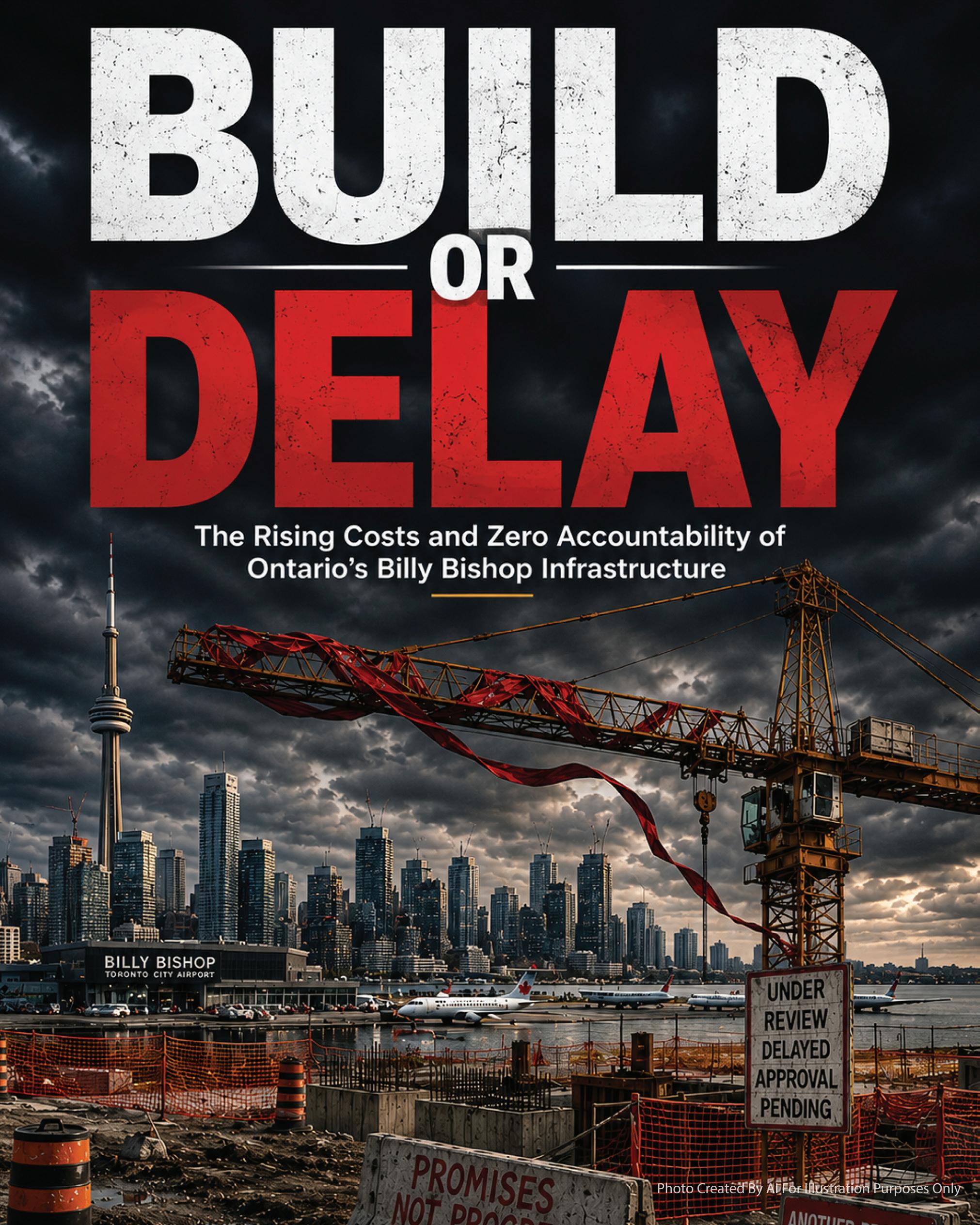
You do not have to agree with expanding Billy Bishop Airport to admit one thing: somebody has finally decided after decades of handwringing. In modern Canada, which is revolutionary. We study, review, and commission reports and then put our finger in the wind. Then we wonder years later why nothing has been built except frustration. Citizens pay through higher taxes, worse service, slower commutes, aging infrastructure, and the sense that the country is decaying while every government budget gets larger.
The Billy Bishop file is not only about jets, runways, or whether the province should take over the city’s role in the airport agreement. Traffic, noise, safety, island access, environmental concerns, and the waterfront all matter, and consultation should never become theatre after the decision has been made.
The problem is that the province did not merely decide. It moved to remove Toronto from the tripartite agreement and substitute the Crown in its place, meaning the city government closest to the affected people is pushed out of the formal agreement governing the airport. Communities living with the noise, congestion, waterfront changes, transit pressures, and economic consequences no longer have a direct municipal voice at the decisionmaking table. They may comment, answer a survey, or attend a meeting, but the local democratic lever has been taken out of their hands.
That matters to Toronto’s diverse minority communities, because infrastructure decisions are never neutral. They
MICHAEL THOMAS
michael@carib101.com
TC REPORTER
It was 2023 when Robert F. Kennedy Jr. was seen on video with a group of his colleagues telling the world that COVID–19 was created to destroy White and Black folks.
Back then, Kennedy was a Demo -
shape commutes, jobs, contracts, investment, and which communities absorb the cost while others enjoy the benefit. Toronto is home to the largest Black population in Canada, and a significant share of Ontario’s Black immigrant population has Caribbean roots, which means a decision affecting transportation, tourism, airport employment, public spending, and the cost of moving through the city is not some remote downtown planning issue.
The economic argument for Billy Bishop is real. A stronger downtown airport could mean more travel options, more airline competition, more tourism, more construction work, more airport-related employment, and better access for people travelling for family, work, conferences, culture, and commerce. For families who rely on public transit or live closer to downtown connections than to Pearson, flying from Billy Bishop could reduce the full door-todoor cost of travel by cutting long rides, taxis, parking, airport transfers, and lost time. If competition lowers fares, and transit links allow underserved communities to access the airport efficiently, then a downtown airport could reduce transportation costs rather than increase them.
That upside matters, but benefits do not automatically reach the people used in the sales pitch. Without intentional community consultation, procurement pathways for Black and Caribbean-owned businesses, local hiring, apprenticeships, affordable access, and transit links to the jobs and savings being promised, the upside will flow upward and outward while the cost remains local and public.
Look at the Eglinton Crosstown Line. It was supposed to prove that Toronto could still build modern infrastructure but
instead became a civic joke. A line once supposed to open in 2020 did not open until 2026, with the cost reported at more than $13 billion. Even using a conservative overrun of $1 billion, that works out to about $861 for every private household in Toronto, based on the city’s 1,160,890 private households. If you compare the early projected cost of $4.6 billion with later figures near $12.8 billion, the difference is about $8.2 billion, or more than $7,000 per household.
That does not mean every household received a direct Eglinton bill, and it does not mean every cost category is perfectly comparable, but it shows what happens when initial estimates look less like disciplined forecasts and more like sales numbers used to get public consent. When a project begins at one number and ends at another, citizens are not wrong to wonder whether the original estimate was honest, incompetent, politically convenient, or some mixture of all three.
When projects run late, go over budget, or get buried under delay and blame-shifting, the cost returns through higher taxes, higher development costs, higher user fees, higher rents, and less money for basic services. A wealthy homeowner may complain and still absorb it, but a renter in Scarborough, Rexdale, Weston, Malvern, or northwest Toronto cannot ignore how this impacts their budget.
Let us put a number on it. Toronto’s recent property-tax increases added $698 a year, or about $58 a month, to the annual burden for an average assessed home over 2024, 2025, and 2026. A family renting an average two-bedroom apartment in Toronto at about $2,690 a month could face a 2026 guideline rent increase of
A bioweapon designed with you in mind
cratic presidential candidate hoping to hang his coat in the Oval Office of the white house. A lot has happened since then, and Kennedy went from being against the socalled COVID Vaccine to supporting it. In fact, one of the conditions of his becoming the HHS (Health and Human Services boss) was that he would not speak against what Big Pharma calls the vaccine.
Fast forward to today, this 2023 video is now trending on Twitter with leading star Robert F. Kennedy Jr spilling the vaccine beans. In this video, Kennedy goes off on the depopulation planners, including his own country, the USA. “We need to talk about Bioweapons; I know a lot about Bioweapons because I have been doing a book about it for two and a half years now.
The technology that we now have has put hundreds of thousands of dollars into ethnically targeted microbes.”
“The Chinese have done the same thing. In fact, COVID-19 is an argument that it is ethnically targeted. COVID-19 attacks certain races disproportionately. The races that are most immune to COVID-19 are because of the structure, or genetic direct structure, different races have different receptors of the ACE2 receptor, COVID-19 targets Caucasians and Black people.”
Kennedy went on to say, “The people most immune are Ashkenazi Jews and Chinese. We do not know if it was deliberately targeted, but there are papers out there that show the racial and ethnic differences and impact. We do know that
$56 a month, or about $678 a year. Statistics Canada has reported that Black recent renters face a 41.4% unaffordable-housing rate.
So, if Billy Bishop is sold as economic development, government should tell us exactly how communities across the city including black and Caribbean communities were engaged before the decision was finalized. Which organizations, community leaders, black business associations, Caribbean cultural organizations, tenant groups, churches, youth employment groups, and neighbourhood organizations were asked what this would mean?
From the public record available, the answer appears painfully thin. City staff reported that they had not been consulted or made aware of a comprehensive plan, business case, or rationale for the proposed expansion, and stated that no comprehensive stakeholder and public consultation had occurred. Federal consultation has now opened, but that came after the province moved the legislation through and after Toronto had already been pushed out of the formal agreement.
Billy Bishop may or may not be the right project, but the larger lesson is unavoidable. Ontario needs to recover the discipline of decision without confusing leadership with the consolidation of power. Toronto needs to recover the confidence to build without pretending that removing local democratic accountability is the same thing as cutting red tape. We do not need reckless government. We need responsible government that can still move, and consultation that reaches the people before the deal is already done.
the Chinese are spending hundreds of millions of dollars developing ethnic bioweapons, and we are developing ethnic Bioweapons.”
“That is what all those labs in Ukraine are about. There are collecting Russian DNA, collection Chinese DNA so that we can target people by race.”
For anyone interested in looking into this subject, here are a few study links, complete with maps that illustrate.
• ACE2 coding variants in different populations and their potential impact on SARS-CoV-2 binding affinity - PMC
• https://hillmd.substack.com/p/covidis-an-ethnic-bioweapon
SIMONE SMITH
simone@carib101.com
TC REPORTER
Listen, I know that feeling in your chest. It’s that heavy, suffocating shadow that moves in when you realize the person sleeping next to you has become a stranger. In our community, a breakup is never just about two people. The disruption goes much deeper than that. It’s about the families, the Sunday dinners, and the reputation we have built in a world that is already looking for reasons to see us fail. You are sitting there, wondering if you should just fade away, “ghost” them, as they say, or if you should start a war just to make the exit easier.
Stop. You are a descendant of
survivors, and your dignity is your most valuable currency.
We have been told that breaking up is hard, but we rarely talk about the strategic power of how we leave. Researchers at the University of Ottawa’s REACH Lab recently looked into something called autonomy-supportive behavior during a breakup. It sounds like academic jargon, but for us, it might just be a blueprint for structural healing. It means being honest, using language that does not try to control the other person, and taking the time to actually acknowledge the human across from you.
Why should you care about this right now? Your vitality (your life force) is at stake. The study found that when the person ending things is autonomysupportive, both people actually feel better afterward. They experienced higher positive vitality. Think about that. If you leave like a thief in the night, you leave a part of your spirit trapped in that unresolved tension, but if you provide a clear rationale and show respect
for what the relationship once was, you provide the closure necessary to move on without the baggage.
I have seen too many of our sisters and brothers stay in ongoing contact with an ex, thinking they are being strong, or keeping the peace. The science is blunt: that is a trap. Ongoing contact was linked to higher levels of depression and anxiety. You are not being civil by staying in their DM’s; you are systemically constraining your own recovery. To heal the division in your heart, you must create a clean break rooted in truth.
When you give a partner the why, even if it hurts, you are granting them the agency to process their own reality. You are refusing to participate in the gaslighting and emotional manipulation that the world uses against us every day. You are choosing to be bold and emotionally intelligent, even in the middle of a storm.
You might feel that it is not feasible to be this supportive right now. Maybe they hurt you. Maybe you are
exhausted, but I am telling you, as a community educator, that how you handle this ending determines the quality of your next beginning. Do you want to be systemically constrained by the ghosts of a messy exit, or do you want to walk into your future with your head held high?
Show the transformation. Move from the deficit of a painful ending to the structural strength of a dignified departure. Be honest. Use non-controlling language. Acknowledge their perspective. This is how we protect our community interests; by refusing to leave each other broken. We are better than spectacle. We are a people of service and truth.
End this with the confidence of someone who knows exactly who they are. No hedging. No timid “Maybe we can try later.” If it is over, let the truth be the bridge to your new life. You owe it to your ancestors to live with dignity, and you owe it to yourself to leave with your power intact. Go. Heal. Be whole.
PAUL JUNOR
paul@carib101.com
TC REPORTER
The issue of youth development extends beyond parents, educators, and policymakers. It concerns anyone invested in unlocking young people’s potential and ensuring their abilities are meaningfully nurtured. In Trinidad and Tobago, that potential is increasingly strained by systemic barriers that continue to limit access, opportunity, and support.
Reports from World Bank and UNICEF point to persistent challenges: high youth unemployment, limited access to quality education, rising involvement in crime, and significant mental health pressures. These issues are compounded by poverty, domestic instability, and insufficient social safety nets. Together, they create an environment where young people are often left navigating complex realities without consis-
tent guidance or support.
A press release issued on April 26th, 2026, “Growing Call for Strengthened Youth Development Structures in Trinidad and Tobago” signals a renewed urgency around these concerns. Released by the communications desk on behalf of Melissa St Rose, also known as Melly Rose, the statement calls for a deeper, more structured national response.
St Rose, a Trinidad and Tobago based creative professional and youth advocate, brings both lived experience and professional insight to the issue. Classically trained in the arts during her time in the United States, she has since built a digital marketing company focused on expanding Caribbean artists’ global reach. Her work reflects a broader commitment: bridging the gap between young people’s potential and their lived realities.
The press release frames the issue clearly, “A growing national conversation is emerging around the need for more structural and accessible youth development frameworks in Trinidad and Tobago, particularly in relation to mentorship, personal development, and environmental influences on young
people’s decision-making.”
That gap (between promise and access) is where St Rose focuses her advocacy. Raised in a challenging environment, she speaks with clarity about what is missing. In her words: “Many young people grew up without consistent access to structured guidance or positive exposure; their environment often becomes the primary influence on their decisions and sense of possibility.”
This observation highlights a critical risk: when systems fail to provide guidance, the environment fills the void. Without intervention, that influence can reinforce cycles of limitation rather than possibility.
St Rose emphasizes three practical areas for intervention: mentorship, open dialogue, and exposure to lived experiences. These are actionable entry points for reshaping how young people engage with opportunity.
Her approach also identifies two foundational needs: mindset development and structured engagement. Awareness alone, she argues, is insufficient. Sustainable change requires consistent environments where young people can actively participate, build skills, and envision broader futures.
The press release reinforces this position, noting that the current national dialogue presents an opportunity for stakeholders across sectors to collaborate in strengthening youth support systems and creating more accessible pathways for personal and professional growth.
That collaboration is key. Government agencies, community organizations, private-sector leaders, and development institutions all have roles to play. Without coordinated action, efforts risk remaining fragmented and ineffective.
Importantly, this is not a challenge unique to Trinidad and Tobago. Countries worldwide grapple with similar tensions between youth potential and structural limitations. What distinguishes successful responses is not awareness, but execution, clear systems, sustained investment, and accountability.
The path forward demands deliberate, inclusive, and transparent collaboration to build frameworks that do not just support youth in theory, but actively shape their outcomes in practice.
BY JAY BRIJPAUL
TC REAL ESTATE REPORTER
The Bank of Canada warns that the next wave of mortgage renewals could pose a major challenge for many families. Homeowners who secured mortgages in 2020–2022 are now facing significantly higher renewal rates. For those with variable-rate mortgages, the situation can be even tougher; some owe more now than when they started.
During the pandemic, buying a home felt like a rare opportunity. Mortgage rates were at historic lows, and house prices kept rising, so buyers often stretched their budgets and paid over asking price, confident the market would continue to rise. Investors bought multiple properties, thinking refinancing would always be simple, but as we now know, none of those assumptions were guaranteed.
Now, many homeowners are surprised by a vastly different financial reality. Interest rates are much higher, property values (especially in Toronto) have fallen, and some families are seeing their monthly payments rise more
than expected.
Homeowners up for renewal could see their payments rise by about 15% on average. While many will manage the increase, some will struggle, especially if they bought at the peak, borrowed the maximum, took on extra debt, or have seen their home lose value.
If you bought a home in 2022 with a small down payment and it is now worth less, refinancing is much harder because banks look at the current value and how much you still owe. Currently, about 9% of homeowners in Toronto may be unable to refinance at renewal, and if home prices continue to fall, that number could rise even further.
Homeowners with certain variable-rate mortgages have experienced a negative amortization situation in which their loan balance has not decreased as expected, and in some cases the repayment period has become much longer. Normally, each payment reduces both principal and interest, but with fixed payments during lowrate years, rising rates meant payments
sometimes did not even cover the interest. The unpaid amount was added to the mortgage balance, or the term was extended, so some homeowners now owe more than they started with or face much longer repayment periods.
Some homeowners assume that if they have made their payments, renewing will be straightforward, but it is not always so simple, especially if your mortgage has negative amortization. In these cases, lenders may require higher monthly payments, a shorter repayment period, a lump-sum payment, or even a complete change to your mortgage terms. Even if you have a fixed-rate mortgage, get ready for much higher rates at renewal.
If your mortgage renewal is approaching, stay calm and plan early. Meet with a mortgage professional 6 to 12 months before your renewal date to explore your options.
Pay down debts, such as credit cards and lines of credit, to strengthen your financial position. Build up your savings so you are prepared for any changes to your job or income and keep making
payments on time to maintain a good relationship with your lender.
Ask your lender whether your mortgage has negative amortization and what your renewal options are. Be cautious about selling in a slow market, as it could lead to a loss, because everyone’s situation is unique. Seek professional advice before making major decisions. An experienced mortgage broker can compare lenders, break down your options, and suggest solutions you may not have considered.
The current wave of mortgage renewals is a wake-up call that real estate should be treated as a long-term commitment, not a quick way to make money. While most homeowners will manage these changes, those who bought at the market peak or carry negative amortization may face greater hurdles.
Planning, keeping your budget realistic, and seeking expert advice early can help ensure your renewal is a manageable transition, not a financial crisis. This time around, choose variable with an option to lock in the rate when you are comfortable with the rates.
MICHAEL THOMAS
michael@carib101.com
Britain’s Prime Minister Starmer has unveiled plans to ban under-sixteens from major social media platforms as early as 2027. Starmer presents his policies as child-protection measures, but this opens the door to one of the most intrusive digital-control schemes ever proposed in Britain. Here is why.
The proposed plan is to block children from social media sites like: TikTok, Instagram, Snapchat, Facebook, Threads, X, YouTube, and Reddit. This plan could restrict online activities of more than twelve million under-16s across the United Kingdom. Will it affect under-sixteens only, some ask? Certainly not is the answer.
Starmer believes he is being crafty by bringing up the safety of children, which is a very touching subject. However, the enforcement mechanism is where the proposal becomes a problem for adults as well. The question is, how does the state verify age without dragging adults into the same surveillance net?
Starmer’s government is saying the ban would hinge on “Highly effective age assurance systems.” This can come in the form of facial age-estimation scans, digital IDs, passports, credit cards, open banking checks, phonecompany verification, and even emailusage analysis. Let this sink in.
This policy would mean that millions of adults would have to pass through all these tech scans and verification schemes just to use the internet. After all, the so-called goal would be to prove who you are right. The 2027 effective date is supposed to give ministers, regulators, and technology companies time to build the machinery that could reshape online access for everyone.
Starmer said his decision came
from listening carefully to the people.
“Some people are dismissive of processes like this,” Starmer said, “But policy making that doesn’t listen very carefully to the voices of those it seeks to serve, that is not how this government carries out its business.”
In his quest to implement these digital handcuffs on his citizens, Starmer went on to slam social media, “Social media is making children unhappy. It is making it easier for bullies to harass and abuse them,” he said. Some of the Ofcom proposed methods of identifying individuals would be digital IDs, credit cards, passports, open banking, phone-company checks, and email age estimation. The last method could involve analyzing a person’s email usage to infer whether they have accessed services such as bank loans.
Some child-safety supporters have warned against a complete ban.
Jeffrey Demarco, a senior adviser at Save the Children UK, is one of them.
DeMarco said this may look “Protective on paper” while pushing children into less regulated spaces where they may
be less likely to seek help.
There is a lesson that Britain can learn from Australia, a country where six in ten under-sixteens are still using social media six months after the ban was introduced, due to tech company failures and children circumventing the restrictions. That said, the real issue here is that vigorous age verification can easily become digital control.
Once the system exists for children, it can be stretched to include speech, political content, adult content, financial services, controversial websites, and eventually almost any corner of online life. Shadow Education Secretary Laura Trott accused Stramer of mass hypocrisy, noting that, “Three times Labour voted against a ban,” Why now?
Starmer and those who think like him need to understand that protecting children online is all good, but it should not be used as an excuse to force face scans, ID checks, and verification gates on the entire population.
The season has shifted, and the community is alive with movement. From the intellectual stimulation of Brampton’s Summer Reading Clubs to the vibrant, rhythmic energy of the Toronto Carnival Run, your calendar is officially full. Whether you are liming at The Bajan Serve to support vital mental health initiatives, or catching the AfroVibes headline performance by TOBi in Kitchener, this is our time to reconnect. We are prioritizing wellness, movement, and cultural pride across the province. Dive in, get active, and make this summer a reflection of the strength within our diaspora.
Dive into summer with Brampton Library
Date/Time: July, 2026
Location: South Fletcher’s Branch Library, Springdale Branch Library
Additional Information: Brampton Library encourages everyone to make reading a part of their summertime fun this year by joining its Summer Reading Clubs. The reading clubs are divided by ages for kids, teens, and adults. Registration is now open! Participants joining before July 13th will gain an automatic entry for the following Early Bird Prize draws:
• TD Summer Reading Club (0–12 years):
• Baby (0–2 years) – a turtle water mat
• Jr. Brainiacs (3–5 years) – a scooter with a helmet
• Brainiacs (6–12 years) – a scooter with a helmet
• Teen Summer Reading Club (13–18 years): a Frigidaire personal fridge
• Adult Summer Reading Club (19+): a Victrola Eastwood II Record Player
How to register: The first option is to register online through Beanstack. Create an account to join a club then log reading, track challenges, and enter bi-weekly prize draws. A full list of bi-weekly prizes and grand prizes can be viewed on Beanstack. Individuals can create their own account and add multiple profiles for family members and friends in the same account.
Each participant will have their own dashboard and there are no limits to the number of profiles in a single account. The second option is to register offline by
requesting an activity sheet from a Library staff member at any branch and returning to the same branch regularly to track and record progress and earn entries into biweekly prizes and grand prize draws. Learn more about the prizes here.
More summer programs to enjoy! Summer Soirée for ages 19+ years at South Fletcher’s: Join us for an evening of entertainment, activities, and socializing as we kick off our Adult Summer Reading Club together! Enjoy light refreshments and the opportunity to win a prize.
Brampton Arts Organization (BAO) Summer Artist Market
Date/Time: Sunday, July 19th from 11 a.m. – 4 p.m.
Location: Springdale Branch Library
Artist in residence: Shiemara Hogarth is in residency at South Fletcher’s until the end of August. Don’t miss the final showcase on September 19th. Register for upcoming workshops: Introduction to Coiling and Introduction to Surface Design. Book a oneon-one Mentorship session. Drop in during Shiemara’s office hours.
Enjoy your summer with the library. Find more information on the Brampton Library website.
The Bajan Serve
Date/Time: Saturday, July 11th, 2:00 PM to 6:00 PM
Location: Plock Tennis Club
Additional Information: The Bajan Serve is a culture-focused event that introduces Toronto fitness and wellness enthusiasts to road tennis, a sport native to Barbados, while also anchoring elements of Caribbean wellness practices throughout the experience.
What is road tennis? Road tennis is a sport indigenous to Barbados that is a combination of table tennis, lawn tennis and traditional tennis.
We’re raising $10,000 for mental health!
We are intimately familiar with the realities of Black communities and individuals accessing health care resources. Through our event, The Bajan Serve, we wanted to provide an opportunity for people to learn more about Caribbean culture but through the lens of health and wellness. Naturally, when we were thinking about where our support would be most impactful, there was a ton of organic alignment with the intention behind our event and the mission and values of Black Health Alliance.
Through this fundraiser, we can extend our efforts beyond our event and invite our community to support the work of
an incredible charity that prioritizes access to health resources and increases health literacy through research on Black people.
Road Tennis panel discussion
Learn more about road tennis and the intersection of sport, wellness, mental health and culturally affirming practices.
Road Tennis demonstration
Experience the action live and direct! Directed by Canada Road Tennis and Gauntlet Road Tennis founder Ron Kellman, attendees will experience an in-person match to see how accessible the sport is!
Caribbean culture immersion
Get ready to lime; Caribbean parlance for hanging out or socializing. During this time, attendees can play on the road tennis court, play on Plock’s machine rally courts, dive into a game of dominoes, eat delicious Caribbean food and listen to the music genres native to the region!
Welcome to Toronto Carnival Run!
Date/Time: Saturday July 25th, 2026
Location: Starting at Sir Casimir Gzowski Park heading east along the Martin Goodman Trail
Additional Information: Toronto Carnival Run is Canada’s first and only Caribbeaninspired running event, promoting health, wellness, and community. With races including 5K, 10K, and a Kids’ Run, participants of all fitness levels come together to celebrate physical activity and cultural diversity in Toronto. Join us for this vibrant festival of movement and unity, where the rhythm of Caribbean culture meets the spirit of athletics!
Founded in 2016 by Dione Mason, the Toronto Carnival Run is a one-of-a-kind, Caribbean-inspired running event that promotes health, wellness, and cultural celebration. Taking place in Toronto, this annual race is designed to encourage people of all fitness levels to get active while embracing the vibrant energy of the Toronto Caribbean Carnival.
Whether you are a seasoned runner, or just starting your fitness journey, the Toronto Carnival Run offers an unforgettable race day experience with:
• Race Options for Everyone – Choose from a 5K, 10K, or Kids’ Run, perfect for runners, joggers, and walkers of all levels.
• Finisher Medals & Race Swag – Celebrate your achievement with a uniquely designed medal, T-shirt, and race kit.
• Carnival Vibes & Music – Feel the energy of Caribbean rhythms and entertainment.
• Scenic Lakeside Route – Enjoy a breathtaking run along Toronto’s waterfront.
• Community & Celebration – Be part of an inclusive event that blends fitness, fun, and cultural pride.
Whether you are aiming for a personal best, running for fun, or embracing the spirit of Carnival, the Toronto Carnival Run is the perfect way to move, celebrate, and connect. Join us and experience the rhythm, energy, and excitement of Toronto’s most vibrant running event!
Date/Time: July 11th -18th
Location: Kitchener, Waterloo, and Cambridge.
Additional Information: AfroVibes Festival returns July 11th-18th with a weeklong celebration of African culture, community, music, food, and wellness across the tri-cities area of Kitchener, Waterloo, and Cambridge.
Now in its fourth year, the festival continues to grow and build on past successes, drawing more than 10,000 people in 2025. What began as a way to create cultural connections for the African diaspora has evolved into one of Ontario’s largest Afroled festivals.
Festival founder Peter Pearse-Elosia launched AfroVibes in 2023 after seeing a need for more spaces that brought people together through culture, creativity, and community.
That spirit comes to life through a dynamic line-up of events that led up to the festival’s signature street celebration on July 18th in downtown Kitchener, headlined by five-time Juno Award-winning Nigerianborn Canadian artist, TOBi. Other artists set to perform include Nigerian singer Bad Boy Timz, Nigerian artist NO11, popular for his hit song “How Far,” Toronto-based singer/ songwriter Sẹwà, and the Toronto-based DJ and event collective, UNCLES.
New additions for 2026 include an expanded live music stage, a creative kids’ zone, and an even broader selection of food and artisan vendors representing Africa and cultures from around the world. After the street festival on July 18th, there is a ticketed afterparty at Rare Nightclub and Events Centre in Waterloo.
AfroVibes Festival takes place July 11th -18th at various locations throughout Kitchener, Waterloo, and Cambridge. Most events are free to attend, unless specified. Full details, including dates, times, and locations are available at www.AfroVibesTheFestival.com.
The site also includes a link for a special festival rate at The Walper Hotel in Kitchener.

The smell of church pews and the resonance of a guitar in Clarendon, Jamaica, were the early hallmarks of Kareem Little’s life, but they were never intended to be the limits of it. For many young African men in the Caribbean, the narrative is often written before they even hold the pen. You are either a “Starving artist” or you are “Getting by,” but Kareem Little, influenced by the strategic discipline of the greats and a hunger that sits in the bottom of the belly, has rewritten that script through the lens of attentioneering, the tactical fusion of psychology and visibility to dominate a digital landscape.
Success is a healing of the divisions between who we are and who we are meant to be. Kareem’s journey was not a linear ascent. It was forged in uncertainty and the cold reality of sacrifice. Growing up as the second child to a genius older brother, Kareem’s early drive was simply to match the benchmark of excellence set by his sibling, and to avoid the scrutiny of a strict mother. However, the music he loved, the keyboard and the self-taught guitar, eventually revealed a harsh truth: creatives often starve without a strategy.
The transition from a highschool musician making side money to a student was supposed to be his safe path. Then, the world collapsed. The death of his father, his primary financial benefactor, forced Kareem into a pivot that would break most: he left the traditional post-second-
ary school system to bet entirely on himself.
In the early days, the loneliness of the young man in the game was palpable. Kareem realized that established businesses in Jamaica did not want to hear from a child. They were comfortable in their stagnation. He faced a wall of rejection, because he had not yet mastered the distribution of his own value.
Kareem stopped trying to sell strategy to people who did not value his age. Instead, he went to YouTube and taught himself the high-impact skills of graphic design, video editing, and photography. He needed to be the person who could get his foot through the door by solving a visible problem: marketing.
He began modern-day door knocking, leveraging his personal network and brute-forcing his way into the economy. He started with a retainer of $10,000 JMD (about $100 CAD). Through a relentless focus on Value Perception, he scaled his worth. Within a year, that $10,000 turned into $100,000 and eventually $150,000 JMD per month. He learned that when you approach a client with immense value, the price becomes secondary to the transformation you provide.
Great entrepreneurs create economic ecosystems. Kareem’s ambition (informed by his Jamaican roots but not limited by them) led him to the world of Software as a Service (SaaS). His identity as a Jamaican gave him a unique vantage point on efficiency and necessity,
leading to the creation of Magic Redraft.
Magic Redraft is a solution to the friction of the analog-to-digital transition, using AI to convert handwriting and PDFs into editable text. Simultaneously, he identified a gap for traders and launched Solace Algo, providing educational indicators for the stock and forex markets. By building these tools, Kareem is demonstrating that the Caribbean is a hub of world-class innovation.
What the world often misses is the emotional toll of this level of ambition. Kareem speaks of the hardest sacrifice being time. While his peers were out partying and seeking instant gratification, Kareem was hyper-focused. He adopted the Jamaican philosophy: “If you want good, your nose have to run.”
He does not believe in balance in the way the world preaches it. To Kareem, balance is a distraction when you are in the pursuit of a 360-degree transformation. He views success as a game of one degree at a time. It is a disciplined craft, not a stroke of luck. He is building his legacy so that young African Caribbean men watching him realize that “Your small micro-win is still a win,” regardless of how others define it.
Replicable lessons for the next generation
Kareem Little’s success is a blueprint that can be replicated by any founder in Kingston, Montego Bay, or the rural hills of St. Elizabeth:
1. Skills are the entry fee: Don’t
wait for permission. Teach yourself design, code, or marketing to get your foot in the door.
2. Focus on value, Not Price: Your client does not care about your costs; they care about their results. Solve a $1M problem, and they won’t blink at a $100k fee.
3. Embrace the “nose running” phase: Sacrifice social validation for long-term equity. Instant gratification is the enemy of an empire.
4. Use your culture as a competitive advantage: Jamaican resilience is a business asset. The ability to “Make a way out of no way” is what Silicon Valley calls pivoting, but Jamaicans call it life.
Kareem Little is a strategic storyteller of his own destiny, an attentioneer who understands that to change your life, you must first capture the world’s eyes and then deliver undeniable value. He is the living embodiment of the fact that world-class businesses are forged in the belly bottom of those who refuse to be small.

Written by Simone J. Smith









City of Toronto property taxes pay for vital city services like road maintenance and parks.
Please pay your bill by the due date. YOUR PROPERTY TAX BILL IS ON ITS WAY.

















































BY DIANA GIFFORD-JONES COMMON SENSE HEALTH
It’s been a year since my father bid us adieu on the first of July as Canada Day fireworks lit up the Toronto harbour. So, I want to share a special column with you this week, a reflection on how I feel. There are so many thoughts that come to mind, but one word rises above all others, and this is gratitude. I am grateful for my father, yes, but it is also you, the readers of this column that I wish to thank. I want you to know how much you all meant to my father, and now how much you mean to me.
My father had a passion for writing. He penned his first column in October 1974, in which he wrote, “Let me show you how having too little or too much faith in the doctor can get you into trouble.” Weekly thereafter, that is exactly what he did. I remember bundles of letters from readers that came weekly to our home. That is what inspired him. He loved being a doctor, but it was the connection with readers that had him utterly addicted to being a medical journalist.
What would he say now? He would remind us that not every reader was a fan. He would give us an update regarding his intended prayer at the Pearly Gates that St Peter would grant
him admission, and ownership of all newspapers, such that he could publish what he really wanted to say!
I am convinced that it was all your letters over many years, those in favour, but also those against his views, that bolstered his vitality. Now I am on the receiving end of the same dynamic, and I feel the inspiration.
This time last year, so many of you wrote a note of condolence. I thank you very much, as it helped a great deal. I have enjoyed getting to know who is at the other end of the Gifford-Jones column.
In as much as today’s readers are advancing in age like my father, I am also thinking about those who have departed, those who traveled with my father through the 1950s and his early medical practice, the 1960s and 1970s during his pioneering days for women’s health, the 1980s and his campaign for better pain management, and then the last decades of his life when he fought against big pharma’s grip on the medical establishment. You are missed.
While my father had a few choice words for the editors who fired him, I have nothing but gratitude for those that have kept me on! I have thanks, too, for all the people in the natural health community who provided my father with an enormous

extended family; from retailers coast to coast to health-conscious consumers who continue to prove that Mother Nature is a healing force like no other.
My father was a Harvardtrained medical doctor and surgeon who did not like being told lies as the answers to challenging questions. This made his controversial stands on modern medicine well worth observing. Whereas I am better described as a connector of people and ideas. What often amazes me is how narrow-minded people can be, readily jumping to
conclusions on very little information.
If I have my father’s luck and determination, there will be another 43 years ahead of me until I write my final column, like he did a year ago. I am looking forward and trust a good many of you are too. Please keep your letters coming, and again, my deepest thanks.
Join me at 5PM Eastern on July 2nd for recollections of Dr. W. GiffordJones. Contact me for the link. diana@ docgiff.com


BY IKA WASHINGTON COMMUNITY HEALTH
The future of global medicine is being written right now in laboratories and clinical trials, yet the chapters on Black health remain disturbingly incomplete. Across the globe, medical breakthroughs are revolutionizing how we treat chronic illnesses, like cancers and diabetes, but these advancements are often standardized to populations that do not reflect Black communities. Many factors contribute to the underrepresentation of Black patients in clinical trials and research, such as a lack of trust stemming from a deeper narrative of historical exclusion and structural barriers. Some Black patients have expressed interest in participating, but are unsure how to get involved, where to find accessible information, and are unaware that they are not being given information about clinical trials by their healthcare providers. However, the time has come to shift our focus from the barriers that have kept us out to the immense power we hold when we choose to step in and get involved in clinical
research. The data reveal a convincing need for Black patients to be actively engaged in health research. In Canada, Black adults experience significantly higher rates of certain chronic conditions compared to the general population. For example, diabetes rates have doubled among Black women in Ontario, reaching 12%, and Black women face a higher risk of developing cardiovascular disease than Black men. Furthermore, ischemic heart disease remains a leading cause of death among Black adults. Despite these realities, Black patients make up less than five percent of oncology clinical trial participants globally, and Canadian data suggest similar underrepresentation. When clinical trials lack diversity, the resulting treatments may be less effective because of differences in drug metabolism or may have unforeseen side effects for Black patients.
Participation in clinical trials is not just an act of scientific contribution; instead, it is a significant stride in health promotion and self-advocacy. Clinical trials provide access to emerging, life-saving treatments and specialized care that may otherwise be
unavailable. More importantly, involvement ensures that the genetic, environmental, and social factors unique to African, Caribbean, and Black (ACB) populations are accounted for in the development of new therapies. When trials have adequate Black representation, researchers can identify treatments that work exceptionally well for Black communities, such as specific radiation therapies for prostate cancer that proved more effective for Black men.
Active efforts are underway to demystify the clinical trial process and dismantle the notion that research is done to us rather than with us. Health Canada’s recent Agile Licensing regulations emphasize the collection of disaggregated data (broken down by race, age, and sex) to support new drug submissions, representing a critical policy shift. Organizations like the Canadian Institutes of Health Research (CIHR) are also spearheading initiatives to embed equity, diversity, and inclusion into research frameworks. However, policy changes alone are insufficient.
The narrative that Black communi-
ties are entirely unwilling to participate in research is a myth that we should actively dispel. Recent studies in British Columbia and Ontario have highlighted that ACB individuals are highly willing to participate in health research when approached with cultural responsiveness and transparency. However, the most significant barrier to participation in clinical trials is that opportunities are left to clinicians to communicate to patients. Engaging clinicians directly, asking about upcoming studies and how you can participate, is essential.
Taking ownership of our health narratives by initiating conversations with our specialists about research opportunities is an assertion of our right to equitable healthcare. Ask your doctor if there is a clinical trial suitable for your condition. Demand clear explanations of the risks, benefits, and safeguards in place. By participating, we transform the healthcare system from the inside out, ensuring it serves us with the precision and care we deserve. Securing health equity requires our presence at the vanguard of medical research.
BY CHE MARVILLE ASK CHE
The question underneath your letter is one of the most important I hear: is it repairable? Can a relationship fractured by years of distance and unspoken pain be brought back to something real? What if your mother cannot, or will not acknowledge what happened? What if she hears your pain as an accusation, and meets your truth with defensiveness or silence?
We live in a time quick to judge. Children judge their parents. Parents judge their children. We judge across generational lines, across cultural lines, across the distance of experiences we never stopped to explain to one another. Judgment, however natural, is often grief in disguise. We judge because it is easier than grieving. We judge because it gives us somewhere to put the pain, but judgment closes the door, and what most of us actually want, underneath
BY KING KOFI SPIRITUAL ADVISORY
In ancient times, our ancestors understood the power and significance of names. Great time and intention were often dedicated to the naming of people, places and things. The names given to land masses were often symbolic of historical context, spirituality, symbolism, and geography.
Ancient peoples frequently named land masses based on what they observed, valued, or believed about a territory. Kemet, the name the original people gave to the geographic region now known as Egypt (later renamed by the Greeks), translates to “The Black Land,” referring to the rich, dark soil deposited by the Nile. Likewise, concepts related to astronomical events and natural elements are often tied back to deeper metaphors and meanings. Yearly events such as the Summer Solstice, Spring Equinox, and Winter Solstice were often regarded as sacred times to honour our connection to the Earth and the various changes Mother Earth experienced through the seasons.
June 20th or 21st often marks the yearly Summer Solstice, the longest day and night of the year. This year, Father’s Day, the annual celebration of fatherhood, happened to fall on the same day as the Summer Solstice. The symbolism offers a brilliant
the anger, is for the door to open. Repair does not require your mother to get it perfectly right. It does not even require her to fully understand. It requires her willingness to listen without defending. To hear your pain not as an accusation of her character, but as the truth of your experience. To say, even imperfectly: I hear you. What you felt was real. If she can do that, even once, even partially, something shifts, and if she cannot? If she is too defended, too proud, too imprisoned in her own version of the story? Then the repair is still possible, but it happens inside you. It happens when you stop waiting for her acknowledgment to give you permission to heal. When you understand that her inability to hear you is her limitation, not a verdict on your worth. When you grieve not only the original absence, but this one too, the mother who is present now but still cannot quite reach you and find a way to love her anyway, from a place of clarity
rather than need. It is freedom.
Five Contemplative Practices to Begin
• Name it, slowly, with breath. Sit somewhere quiet. Take three slow breaths. Then say it aloud: I was a child who needed my mother, and her absence hurt me. Notice what rises in the body as you speak. Do not push it away. This is the beginning of being witnessed first by yourself.
• Locate the grief in the body. Grief is not only a thought; it is a tenant. Close your eyes and ask: where in my body do I carry the waiting child? Most people find an answer in the chest, throat, belly, or shoulders. Place a hand there. Breathe into it. You are not trying to fix it. You are letting it know you finally noticed.
• Write the letter you will not send. Address it to your mother. Tell her everything: the longing, the anger, the love, the questions you never asked. Do not
example of two annual traditions being commemorated simultaneously, each carrying strikingly similar themes.
For those who appreciate symbolism, the overlap is powerful. Father’s Day honours fatherhood, guidance, protection, and legacy, while the Summer Solstice represents the sun at its greatest strength and vitality.
Yosef A. A. Ben-Jochannan, aka Dr. Ben (one of my favourite humorous historians, who actually planted the history bug in me at an early age), world-renowned African historian, taught that “One cannot fully understand Ancient Kemet without understanding its relationship to the sun, the Nile, and the cosmos.”
Ra, the solar deity, was central to Kemetic spirituality. The solstice marked the period when “The sun reached its greatest apparent power in the sky. The rising of the sun was a sacred symbol of renewal, power, consciousness, and divine purpose.” - D.B.
Dr. Ben, in his group lectures, further taught that “The sunrise represented Victory over darkness and chaos, Rebirth after struggle, The return of light, truth, and order (Ma’at), The awakening of consciousness.”
The narrative taught by other historians describe the story, that “Ra emerged from the eastern horizon as the youthful
sun, often associated with Khepri, the scarab who rolls the sun into the sky. This was not merely a physical sunrise; it symbolized the triumph of life over death and purpose over stagnation.”
The archetype (universal symbol) of the father, and the principle the ancients celebrated as Ra, the root often associated with words such as rays of the sun, radiation, and radioactivity, speaks to the solar principle of light, as well as order, vitality, and renewal.
How the metaphor ties into fatherhood and manhood is quite phenomenal. For men, the symbolism of Ra’s daily journey speaks to a powerful model of masculine development.
The concept of Rising into Purpose is similar to Ra “Rising” each morning regardless of the battles he faced the night before. Are you familiar with the recent popular phrase, “Grand Rising?” The same way, a man is called to rise each day into his responsibilities and purpose, as men as fathers, it’s as if to say, “Will you rise today, regardless of the struggles of yesterday?”
In reflecting on all of this, as I celebrated Father’s Day this year, I thought about how miraculous it is when these cosmic events occur, and what they mean to us at this moment in time. It is a period in which divine father attributes are being celebrat-
edit. When you are done, read it aloud to yourself with the same tenderness you would offer a friend. What is named can move. What stays buried cannot.
• Meet the child who waited. In a quiet moment, picture yourself at the age the absence began. See clearly what she wore, what she feared, what she hoped for. Speak to her the words she needed then: You were worth staying for. You were not too much. You are not forgotten. I am here now. This is not pretending. This is reparenting, and it is the work no one else can do for you.
• Practice loving-kindness for your mother, slowly. This is an old contemplative practice, not premature forgiveness. On the breath, offer four phrases to yourself first, then to her: May I be safe. May I be at peace. May I be free from suffering. May I live with ease. Ask yourself does this feel false, do I feel safe?. The practice meets you where you are.
ed, the spirit of our ancestors is symbolically and practically present, and we are honouring seasonal connections, practices that span hundreds, if not thousands, of years. Sometimes, we don’t even realize how much we embody the essence of those who came before us simply by honouring the principles we have come to hold dear in this age and time. It’s almost as though we, as Ashra Kwesi (student of Dr. Ben), would say, are tapping into our “Ancestral memory bank,” without even knowing it. As a result, we gain a form of cosmic favour by welcoming the seasons with practices that demonstrate reverence for that which predates us. Some ways we do this include: organizing communal gatherings, cooking and eating together outdoors, and connecting with the various elements, much like our ancestors did in ancient times.
So, whether you gathered around a BBQ with family to honour your father or the male figures in your life, or simply spent time in nature, smiling and sharing meaningful moments with loved ones, know that you were symbolically honouring the legacy of your ancestors and the role they have played (and continue to play) in your life and also planting healthy seeds, to be planted to nurture the lives of future generations.
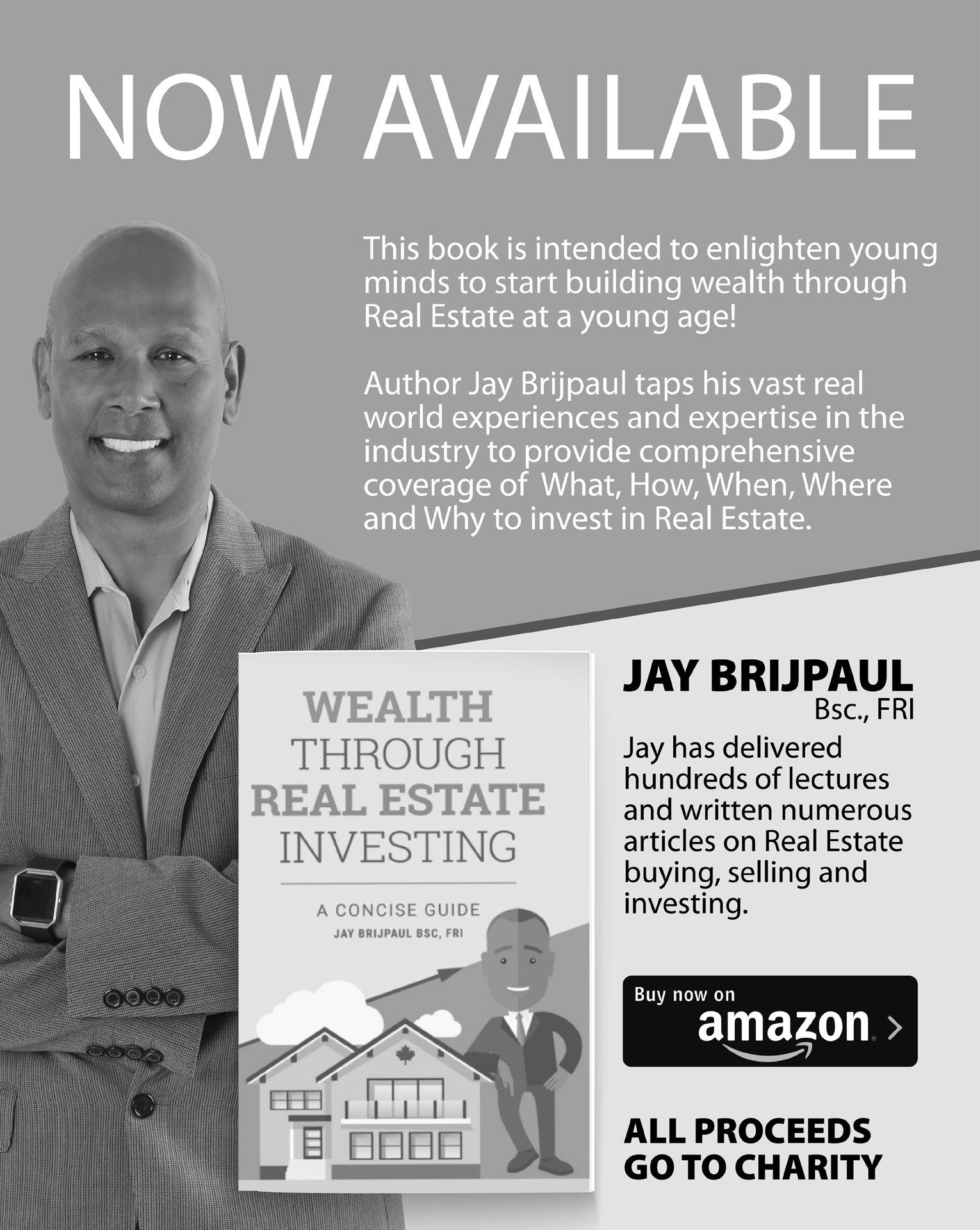



There is something about summer that naturally brings people together around a barbecue. It does not matter whether it is a family reunion, a birthday celebration, a neighbourhood get-together, or simply a quiet evening on the deck after work. Fire up the grill, put out a few cold drinks, and somehow conversation just seems to happen naturally. In many ways, that feeling is something Caribbean culture has embraced for generations. Food has never simply been about eating. It has always been about gathering, sharing stories, laughing loudly, checking in on family, and creating memories around a table that often has room for one more person.
That spirit is one of the reasons Caribbean cooking has become so beloved around the world. The flavours are bold without being complicated, colourful without being overwhelming, and rooted in fresh ingredients that allow each component to shine. Whether it is the sweetness of tropical fruit, the gentle heat of peppers, the brightness of citrus, or the unmistakable aroma of fresh herbs, Caribbean cuisine celebrates ingredients that work together instead of competing with one another.
When most people think about Caribbean grilling, jerk chicken is usually the first thing that comes to mind. There is good reason for that. Jerk has earned its place as one of the world’s great barbecue traditions. However, Caribbean cooking is much larger than a single seasoning. Across the islands, cooks have spent generations pairing sweet fruits with savoury meats, balancing acidity with spice, and allowing fresh produce to become just as important as the protein on the plate.
That inspiration is exactly what led to this week’s recipe.
Instead of making another traditional burger, we wanted to create something that captures everything people love about summer while introducing a little Caribbean personality. These Mango Chicken Burgers with Pineapple Slaw are juicy, fresh, colourful, and surprisingly easy to prepare. They are lighter than a traditional beef burger, packed with flavour, and topped with a crisp slaw that provides just the right balance of sweetness, crunch, and brightness.
The result is a burger that tastes like summer vacation.
One of the biggest advantages of using ground chicken is how well it absorbs seasoning. Unlike heavier meats that sometimes overpower the spices, chicken allows garlic, thyme, ginger, lime, paprika, and Caribbean-inspired seasonings to become the stars of the show. Every bite carries layers of flavour without becoming too heavy, making these burgers ideal for warm evenings when nobody wants an overly rich meal.
Fresh mango also deserves special attention.
Mango has become one of the de -
fining fruits of Caribbean cooking, and for good reason. It brings natural sweetness, beautiful colour, and enough acidity to complement grilled meats without overwhelming them. Whether eaten fresh, blended into sauces, added to salads, or incorporated into marinades, mango creates a balance that feels refreshing even on the hottest summer days.
The pineapple slaw continues that same philosophy.
Many people think of coleslaw as nothing more than a side dish that sits quietly beside the main meal. This version changes that entirely. Fresh cabbage provides crunch, carrots add sweetness, pineapple introduces juicy bursts of tropical flavour, while lime juice and a light dressing tie everything together. Every bite contrasts perfectly with the savoury burger beneath it.
Of course, the beauty of Caribbean cooking has always been flexibility.
There is rarely only one correct way to prepare a family recipe. Every household has its own version, every cook has their own favourite spice blend, and every gathering often introduces a few small adjustments depending on what is available. That tradition encourages creativity rather than strict rules, which makes recipes like this perfect for home cooks who enjoy making dishes their own.
Perhaps you prefer a little extra heat. Add finely minced Scotch bonnet pepper to the burger mixture or stir a small amount into the slaw dressing. If you’re serving guests with different spice preferences, simply prepare the burgers mild and offer homemade hot pepper sauce at the table so everyone can customize their own meal.
Maybe you enjoy smoky flavours. Adding a touch of smoked paprika or grilling pineapple slices alongside the burgers introduces another level of depth that pairs beautifully with the fresh toppings.
If you are feeding children, this recipe adapts just as easily.
Simply reduce or eliminate the hot peppers while keeping all of the fresh herbs and fruit. The natural sweetness from the mango and pineapple usually makes these burgers an instant favourite with younger eaters.
One of the nicest aspects of this recipe is that nearly every ingredient can be prepared ahead of time. The slaw actually becomes even better after resting in the refrigerator for an hour or two, allowing the flavours to blend together while the cabbage remains crisp. The burger patties can also be formed earlier in the day, making dinner preparation simple when guests begin arriving.
Presentation is another opportunity to have a little fun.
Serve the burgers on toasted brioche buns, garnish them with fresh cilantro
or parsley, and place grilled pineapple rings alongside the burgers for an extra tropical touch. Add a bowl of fresh fruit, grilled corn, or roasted sweet potatoes, and suddenly your backyard feels just a little closer to the Caribbean.
Like many great meals, these burgers remind us that exceptional cooking does not require complicated techniques or expensive ingredients. It simply requires fresh food, thoughtful seasoning, and the willingness to bring people together around the table.
That has always been one of the greatest lessons Caribbean cuisine offers.
Food becomes more meaningful when it creates conversation.
It becomes memorable when people ask for seconds.
It becomes tradition when someone requests the recipe before leaving.
Perhaps that is the true secret behind Caribbean cooking. Every recipe carries a little bit of hospitality within it. Guests are welcomed warmly, plates are filled generously, and nobody is encouraged to rush through the meal. Instead, conversations stretch into the evening, laughter grows louder, and the food becomes only one part of a much larger experience.
As summer continues, there will be countless opportunities to gather family and friends outdoors. Instead of serving the same burgers everyone has eaten for years, surprise them with something a little different. These Caribbean Mango Chicken Burgers with Pineapple Slaw bring together fresh fruit, vibrant herbs, citrus, and gentle island-inspired spices in a way that feels both familiar and exciting.
Sometimes all it takes is one new recipe to create a new family tradition. This just might become one of them.
Caribbean Mango Chicken Burgers with Pineapple Slaw
Ingredients
For the Burgers
• 2 lbs ground chicken
• 1 ripe mango, finely diced
• 2 cloves garlic, minced 1 tablespoon fresh ginger, grated
• 2 green onions, finely chopped
• 2 tablespoons fresh parsley or cilantro, chopped
• 1 teaspoon dried thyme
• 1 teaspoon smoked paprika
• 1 teaspoon onion powder
• 1 teaspoon salt
• ½ teaspoon black pepper
• Juice of half a lime
• ½ cup seasoned breadcrumbs
• 1 egg
• 6 brioche burger buns
• Butter for toasting buns
Pineapple Slaw
• 3 cups shredded green cabbage
• 1 cup shredded purple cabbage
• 1 cup shredded carrots
• 1 cup fresh pineapple, diced
• 2 green onions, sliced
• 2 tablespoons chopped fresh cilantro
Slaw Dressing
• ½ cup mayonnaise
• 2 tablespoons Greek yogurt
• Juice of one lime
• 1 tablespoon honey
• 1 teaspoon Dijon mustard
• Salt and pepper to taste
Optional Toppings
• Avocado slices
• Tomato slices Lettuce
• Pepper Jack cheese
• Grilled pineapple rings
• Caribbean hot pepper sauce
Instructions
1. Combine all burger ingredients in a large mixing bowl and gently mix until evenly incorporated. Avoid overmixing to keep the burgers tender.
2. Divide the mixture into six equal portions and shape into patties slightly larger than the burger buns. Refrigerate for at least 30 minutes.
3. In another bowl, combine the cabbage, carrots, pineapple, green onions and cilantro.
4. Whisk together all dressing ingredients until smooth. Pour over the slaw and toss thoroughly. Refrigerate until ready to serve.
5. Preheat the barbecue to medium-high heat and lightly oil the grill grates.
6. Grill the chicken burgers for approximately 6 to 7 minutes per side, or until fully cooked and the internal temperature reaches 74°C (165°F).
7. During the final minute of cooking, lightly butter and toast the brioche buns on the grill.
8. Assemble each burger by placing the grilled chicken patty on the toasted bun, topping with a generous helping of pineapple slaw and any additional toppings of your choice.
9. Serve immediately with grilled corn, roasted potatoes, sweet potato fries, or a fresh summer salad.
Summer Tip
For an extra burst of Caribbean flavour, grill thick pineapple slices for two to three minutes per side and place one directly on top of each burger before adding the slaw. The caramelized sweetness pairs beautifully with the savoury chicken and bright citrus dressing, creating a burger that tastes like summer in every bite.
BY DR. NATASHA BRIDGMOHAN THE MONEY ILLUSION
A client once sat across from me and, with a mixture of pride and frustration, opened her laptop to show me the spreadsheet she had spent months perfecting.
It was impressive. Every expense had been tracked, every category carefully colour-coded, and every bill neatly accounted for. She knew exactly how much she spent on everything. If there was a dollar leaving her account, she could tell you where it had gone.
After walking me through the numbers, she paused and asked me the same question many others have asked. “So why do I still feel like I’m falling behind?”
On the surface, she was doing everything she had been told to do. She earned a good income, paid her bills on
time, avoided reckless spending, and paid close attention to her finances. Yet despite all that effort, every month unfolded the same way. Her pay would arrive, obligations would be covered, an unexpected expense would appear, and whatever remained would gradually disappear without bringing her any closer to the goals she cared about.
As we talked through her situation, I explained that while she was excellent at tracking where her money had been, she hadn’t created a structure for where her money needed to go.
That distinction may sound subtle, but it changes everything.
It’s a pattern I see far more often than people realize. Many hardworking individuals can tell you exactly where their money went last month, yet far fewer have intentionally decided where their money should go next month. They are managing money, but they
BY SYDNEY WALCOTT VARIETY CORNER
For far too long, Black women have been policed on how they style their hair, and once again, they faced policing when the season eight cast for Love Island USA was revealed.
Typically, protective styles such as braids, twists, and faux locs are the go-to styles for Black women when on vacation, due to their minimal maintenance and protection of natural hair from environmental damage. However, some may opt for either a weave, lace front or their natural hair, and that is completely fine.
When the season eight cast of Love Island USA was revealed, people noticed that islanders Aniya Harvey and Trinity Tatum, who are both Black, opted not to wear braids during their time in the Love Island villa. Harvey chose a tight curly hairstyle, while Tatum would dabble between wearing her hair straight or in loose curls. Their choice of hairstyle has led to an unnecessary online debate with people discussing how they would be able to maintain their chosen hairstyles during their stay in Fiji, posting clips where they would zoom in on their hair and make critiques or urge Black women who appear on the show to strictly stick to wearing protective styles like knotless or boho braids because they consider them more lasting and feasible during their stay in the villa.
Sol Dean, a season eight bombshell who was dumped from the villa on day 14, also faced ridicule regarding how her pixie cut was styled. Those who ridiculed her seemed to have overlooked the fact that she adopted the hairstyle due to her losing her hair while grieving the loss of her father. When appearing on Love Island: After Sun, along with fellow bombshell Gabriel Vasconcelos, who was also
aren’t directing it.
When money doesn’t have a clear purpose, life tends to make those decisions for us. Bills, obligations, emergencies, and impulse purchases quietly compete for our attention, and before long, another month has passed without meaningful progress.
Over the past several articles, we have explored how money behaves, how financial habits are formed, how debt can either create opportunity or create pressure, and how delaying financial decisions can carry a significant cost. The next step in that journey is learning how to give your money direction before it arrives, because money left without a plan rarely sits still. It almost always finds somewhere to go.
Many people believe financial stability comes from earning more money. In my experience, financial stability usually begins when people start directing the money they already have with greater intention.
self:
• What amount is needed to run my household?
• What amount is protecting my future through savings or an emergency fund?
• What amount is growing through investments, education, or business opportunities?
• What amount is available to enjoy without guilt or financial stress?
Notice that budgeting is not the focus here. Direction is.
A common pattern I see is people waiting until the end of the month to see what is left over for savings. Unfortunately, there is often little left over. The people who make consistent financial progress tend to reverse that process. They decide in advance what portion of their income is intended for growth and then structure the rest around that decision.
dumped from the villa on day 14, cohost Ciara Miller asked Dean if she saw the comments people made about her pixie cut before telling fans to stop policing Black women’s hair.
“No one should ever comment on someone’s hair. If they feel comfortable and confident in it, then let them rock it,” Dean responded.
Policing Black women’s hair is already an issue outside of the Love Island franchise. Black girls and women have faced systemic and social scrutiny, regulation, and penalization for natural and protective hairstyles in professional, educational and public settings. This led to advocacy groups and lawmakers championing the CROWN Act to protect people from hair discrimination in work and educational spaces. It is disheartening to see that Black women who appear on Love Island cannot escape that and must face ridicule from viewers compared to their non-Black fellow islanders. What is also saddening is that most of the critiques are made by Black viewers, the same people who could also face hair policing.
While braids are more convenient for some, not everyone is into braids, and that is okay. Critiquing someone’s choice of hairstyle is a toxic form of modern hair surveillance. If both Harvey and Tatum are content wearing different hairstyles other than braids, that is their business, and if Dean is content with the way her pixie cut is styled, there is nothing to worry about. In fact, we should not even be focusing on anyone’s hair because that is not the point of Love Island. Before the season’s premiere, Love Island USA posted a message on their Instagram page asking viewers to be respectful, considering the high number of negative comments that were made about the season seven islanders. Let us remember that message and spread positivity.
Every dollar that enters your household is eventually going somewhere. It will either support your present lifestyle, pay for past decisions, or help build your future. The challenge is that many people allow these decisions to happen by default rather than by design.
One of the simplest exercises I encourage people to consider is giving their money a purpose before it arrives. When your income comes in, ask your-
Over the years, I have helped people earning $60,000 create structure, confidence, and peace of mind around their finances. I have also worked with people earning more than $250,000 a year who felt overwhelmed every month. What I know to be true, is that money responds to direction. It grows where it is intentionally placed. The people who build wealth are simply giving their money better jobs.

BY SIMONE J. SMITH HUMAN SPECIALIST
For many of us across the Afro and Indo-Caribbean diaspora, thinking about how we think feels like a luxury we cannot afford. We have been conditioned by history and systemic pressure to stay in survival mode. We move through the world with a get it done spirit, but have you ever stopped to wonder if you are the one actually making the choices, or if a program written long before you were born is pulling the strings?
The hard truth is that our brains are not the single, unified “I” we think
they are. Inside your skull, 90 billion neurons are working together to create an illusion that there is one person in charge. In reality, your brain is a meaning-maker machine that often decides what to do first and then creates a story to explain it to you later.
Interactive Reflection #1:
The survival check-in
Think about the last time you snapped or reacted defensively in a stressful situation. Did you consciously choose that reaction, or did it happen before you could think? Write down that moment. This is your subconscious acting
When will we be able to start trusting our leaders?
BY HERBERT HILDEBRANDT POLITICAL PARLEY
There is a dangerous moment in public life when people stop asking whether a leader is telling the truth and begin assuming that truth no longer matters.
That is where much of the West now finds itself. The Iran war is one of the clearest examples. One day President Trump speaks of progress, peace, a ceasefire, or some great settlement. The next day the ceasefire is fragile, the threats return, and the public is told that bombing may resume if Iran does not behave. Then envoys are sent back to talks, officials insist the peace process is alive, and everyone is expected to call this coherent strategy.
The issue is not simply Trump. He is the loudest example, not the only one. The deeper problem is the destruction of trust as a governing tool.
We see a quieter version in Canada. Prime Minister Mark Carney now speaks the language of national urgency. He has launched a Major Projects Office to fast-track nation-building projects, promising ports, railways, energy corridors, mines, LNG, nuclear power, critical minerals, and high-speed rail. The slogan is big, build now, move faster, transform the economy.
Canadians have heard this before. The promise is speed, but the reality is bureaucratic slogging. Even the government’s own framework admits that a project referral does not guarantee funding, approval, or listing under the Building Canada Act. There still must be Indigenous consultation, provincial coordination, regulatory review, environmental conditions, and treaty-based processes in some regions.
Politicians do not say, “We are starting a long approval and negotiation process that may or may not result in shovels in the ground.” They say, “We are building Canada.” Then years later, construction is still being accelerated, reviews are still being aligned, and taxpayers are told to be patient, and they wonder why cynicism is through the roof.
Doug Ford has made the Ontario version almost routine. He promised not to touch the Greenbelt, then opened part of it to development, then apologized and reversed himself after the scandal became politically unbear-
able. His government allowed municipalities to use speed cameras, then Ford attacked those same cameras as a cash grab and promised a ban after cities had already built policy around them. The public is constantly asked to absorb reversals as leadership.
Skepticism is healthy, but cynicism is not. Skepticism asks hard questions because truth matters. Cynicism stops asking because it assumes truth is unavailable. Authoritarian systems do not always need people to believe every official claim. Sometimes they only need people to believe that everyone is lying, every institution is compromised, every announcement is theatre, and the ordinary citizen is powerless to know anything for certain.
That is how empires rot from the inside. Not first by losing territory, but by losing credibility. Not first when enemies cross the border, but when citizens no longer believe the words coming from the capital.
The old model of propaganda tried to persuade, but the newer model often tries to exhaust. Flood the zone with claims and then reverse yesterday’s statement today. Call conflict peace and delay acceleration and then blame the media for noticing the contradiction. The loyalist will defend anything, but the exhausted citizen will resist nothing.
Political trust is not a soft issue. It is a national security issue. A country whose people cannot trust official statements cannot make sober decisions about war, debt, infrastructure, taxation, or sacrifice. It cannot distinguish a necessary strike from a reckless one, a real ceasefire from a press release, or a serious building plan from another taxpayer-funded announcement.
No free people should outsource their judgment to politicians, generals, media outlets, consultants, or bureaucrats. A self-governing people must demand plain standards. What was agreed to? What is being built? Who approved it? What is the cost? What is the timeline? What counts as failure?
A country can survive bad policy, and it can survive hard debate. It can even survive failed leaders. What it cannot survive is a ruling class that treats truth as optional and citizens who finally decide they no longer care.
as your automatic control system.
Neuroscience shows that most of what happens in our brains, from regulating our heart rate to making complex social judgments, happens entirely outside of our conscious awareness. For a community that has sustained significant trauma, this is a heavy revelation.
Research into epigenetics (the study of how our environment changes our gene expression) reveals that trauma can be passed down through generations. In studies on mice, researchers found that when a parent was trained to fear a specific smell, their offspring were born with more receptors for that smell, fearing it without ever having experienced the original shock.
This means that the survival mode you feel today might be a biological memory of your ancestors’ struggle. Your brain is literally wired to be hyper-aware of threats that your great-grandparents faced.
Interactive Reflection #2:
The ancestral map
What fears or rules did you inherit from your elders that no longer serve your current life? (e.g., “Don’t stand out,” “Trust no one”). Recognizing these is the first step to rewiring the neuronal connections that create you. Your prefrontal cortex is your brain’s decision maker and the seat of your
self-awareness. When we are under extreme stress or trauma, this thermostat can struggle to regulate our emotions. We become like sleepwalkers, performing complex tasks and moving through life, but with the conscious part of our brain essentially offline.
This is why, in survival mode, we often feel like we have no agency. Systemic racism acts as a constant magnetic field that manipulates our sense of control, making us feel like the authors of a story we didn’t write.
The beauty of the brain is that it is not static. Every experience, every sentence, and every intentional thought change its detail. While the subconscious is powerful, becoming aware of these hidden forces is the only way to gain control.
When we move out of the scripted life of survival and begin to freestyle letting go of the rigid selfmonitoring born of fear, we actually perform better. We move from being a product of our past to being the strategic storytellers of our future.
Final workbook action
Commit to one unscripted act of joy this week that has nothing to do with survival. Notice how your brain tries to pull you back to work or safety. Sit with that tension. That is where your healing begins.
BY DANIEL COLE PERSONAL DEVELOPMENT
James Allen famously observed, “You are today where your thoughts have brought you; you will be tomorrow where your thoughts take you.” More than a century after he wrote those words, neuroscience and psychology continue to affirm an important reality: our inner dialogue profoundly influences how we perceive ourselves, interpret the world, and ultimately shape our lives.
These thoughts often arrive uninvited, sounding so familiar that we mistake them for objective truth rather than mental soundbites. Left unchallenged, they become more than passing thoughts, they become the lens through which we interpret our abilities, relationships, and future. The greatest danger of the inner critic is not that it speaks negatively. It is that we eventually stop questioning it.
The inner critic is usually learned rather than inherited. It often develops through repeated experiences of criticism, neglect, unrealistic expectations, bullying, childhood trauma, or environments where approval was conditional upon achievement. Over time, the external voices that judged us become internal voices that continue the work long after those people are gone.
Someone who was repeatedly told they were “lazy” may become an accomplished professional who nevertheless feels like an imposter. A child constantly compared to siblings may grow into an adult who never feels successful
enough, regardless of achievement.
Research consistently shows that excessive self-criticism is associated with higher levels of anxiety, depression, perfectionism, procrastination, and burnout. Ironically, the harsh voice many people believe motivates excellence often produces the opposite effect. When failure feels catastrophic, people become less willing to take risks, pursue opportunities, or embrace new challenges.
The reality is, our thoughts influence emotions, emotions influence behaviour, and repeated behaviours shape our habits. Over time, habits become character and character influences destiny. This does not mean every thought becomes reality. It does mean that persistent patterns of thinking influence how we experience reality.
The stories we repeatedly tell ourselves can produce genuine physical effects. Anxiety imagined is still anxiety experienced. One of the most liberating discoveries in modern psychology is that thoughts are events, not identities. You can observe a thought without obeying it. This ability, sometimes called metacognition, allows us to step back and ask a simple but transformative question: “Is this thought actually true?” Many are not.
Clinical psychologist Lisa Firestone recommends responding to critical thoughts with realistic and compassionate alternatives rather than simply replacing them with exaggerated positivity. Instead of saying, “I’m an idiot,” we might respond, “I made a mistake, but mistakes are part of learning.” In-
stead of, “I’ll never be good enough,” we might say, “I still have room to grow, and growth takes time.” Notice that these responses are not fantasies. They are truthful.
Self-compassion is not self-deception. It is refusing to judge yourself more harshly than you would judge another human being facing the same circumstances.
Neuroscience teaches that the brain remains remarkably adaptable throughout life. Through a process known as neuroplasticity, repeated patterns of thinking strengthen corresponding neural pathways. In simple terms, the thoughts we rehearse become easier to think again.
Changing our inner dialogue does not happen overnight. It happens through repeated awareness, honest reflection, and the deliberate practice of speaking to ourselves with both truth and grace.
Every day, your inner voice is either expanding your possibilities or quietly shrinking them. The question is not whether you have an inner critic. Everyone does. The question is whether you will continue treating that voice as an unquestionable authority or begin treating it as a hypothesis that deserves examination. The quality of your life is shaped not only by the events that happen to you, but also by the story you repeatedly tell yourself about those events. That story, unlike many of your circumstances, is one you have the power to rewrite.
A different relationship with healing than most of us were taught
BY ANYA NICOLA
I stood in a bedroom at 56 Hope Road in Kingston, Jamaica, and I couldn’t move. Not because of exhaustion, because on the floor, next to a modest bed, sat a meditation pillow, three Bibles, and the morning routine of a man who understood something about healing that most of us spend a lifetime trying to learn.
Our tour guide, Abigail, told us that every morning, before the music, before the studio, before the world got to him, he would get up and meditate. Then sit with his Bibles. Then juice: sea moss, which Jamaicans call Irish moss, a plant carrying 92 of the 102 minerals the human body needs to function. Before juicing was a thing, she said, and smiled.
He called it ital. Natural. No meat, no salt, no sugar. He carried his food to the studio in calabash containers; dried gourds from trees on the property, because nourishing himself was something he took with him wherever he went.
How many of us treat healing like a destination instead of something we carry? We think we will get to it after the crisis passes, after the diagnosis improves, but what the ital philosophy teaches, what this museum quietly com -
municated through every room, is that nourishment is the practice that makes surviving possible.
Then Abigail told us about the concert. He was shot on a Friday. Bullet lodged in his arm. Rita shot in the back of the head; her locks literally slowed the bullet and saved her life. Two days later, someone asked why he was still going on with the Smile Jamaica concert, wounded, gunmen still unidentified.
“The wicked of the world don’t sleep. So why should I, the righteous, take a day off?”
I am not suggesting we push through trauma without rest; that is the opposite of what this column stands for. What struck me was not the bravado. It was the belief underneath it. The conviction that his purpose was larger than his pain. That people were waiting, and they needed to hear something true.
That is a different relationship with healing than most of us were taught. We have been told healing is private. Quiet. That you go away and come back whole, but here was a man who brought his Trenchtown community with him when he moved uptown. Who turned his home into a safe haven. Who sang One Love with a bullet still in his arm, and then two years later, got the two opposing political leaders driving
Jamaica’s violence to come onstage and hold hands.
Healing as a public act. Something you do for people, not just to yourself.
Our tour actually began with a smaller story; Lady Musgrave, for whom a Kingston Road was named. The popular version was scandalous and easy to believe. The truth was quieter: she advocated for labouring women, for mothers fighting for the right to work and be paid fairly. Nobody tells the rumour correctly anymore, but the road is still there.
I came to Jamaica in the middle of recovering from things I have not fully written about yet. I expected music history. I came home with something I didn’t know I needed: a model of healing that is ital in the truest sense. Natural. Purposeful. Rooted. Carried with you in a calabash wherever the work takes you next.
“Possessions make you rich,” he was once asked. “My richness is life forever.”
I am still learning what that means for me, but I think it starts on the floor, with a meditation pillow, before the world gets in.



Smart strategies every Canadian can use to pay off their mortgage
BY JAY BRIJPAUL REAL ESTATE SPECIALIST
For Canadians, homeownership remains an iconic milestone, a symbol of security and success, but with soaring housing prices and decades-long mortgages, which dream often carries a hefty price tag. Over 25 to 30 years, the average homeowner will pay hundreds of thousands of dollars in interest.
You do not need deep pockets to crush your mortgage years ahead of schedule. Canadians from every walk of life have found ways to dramatically shorten their repayment period and save tens of thousands in interest. The secret is to attack your principal early and often; every extra dollar you put down today is one you will never pay interest on.
Try switching to accelerated bi-weekly payments. It is a subtle shift; each payment feels lighter, but you will sneak in the equivalent of 13 months’ worth of payments each year. That bonus payment goes straight to your principal, slicing years off your mortgage and saving a bundle in interest, often without you even noticing a difference in your monthly budget.
Even a modest boost (an extra $100 or $200 each month) can shave years off your mortgage and save you thousands in interest. The ideal time to ramp up your payments is when you get a raise. Adjust your mortgage payment before you adjust your lifestyle, and you will barely notice the change.
Most lenders allow you to make annual lump-sum payments on your mortgage without penalty, and every cent goes directly to your principal. It is one of the smartest ways to put extra cash to work for you.
When interest rates fall, it is tempting to lower your monthly payments. Keep your payments the same. The extra money goes straight to your principal, helping you pay off your mortgage years sooner.
At renewal, consider shorten-
ing your amortization. Your regular payment will increase, but the longterm savings are substantial. A small sacrifice now could mean tens of thousands saved over the life of your loan.
Before paying down your mortgage, wipe out high-interest debts first. There is no point saving 4% on your mortgage while paying 20% elsewhere. Once those debts are gone, put the money you free up into your mortgage for a much bigger payoff.
Most people skim their mortgage contract, focusing on the rate and monthly payment, but dig a little deeper, and you will find prepayment privileges, powerful benefits that let you pay extra without penalty. Some lenders let you increase your regular payments, make lump-sum payments, or even double up. Knowing about and using these hidden tools can slash years off your mortgage and save a fortune. In the end, knowledge is just as valuable as cash.
Consider renting out part of your home, picking up extra shifts, or taking on a side gig. Channel that extra income into your RRSP, then use your tax refund to make a lump-sum payment on your mortgage. It is a winwin: you will pay down your mortgage faster while building your retirement savings.
Set goals as a family, celebrate milestones, and watch your balance tumble. Every step brings a sense of accomplishment and builds moneysmart habits. When you finally make that last payment, it is the beginning of true financial freedom.
Real estate has built fortunes for generations, but true financial security is not just about buying a home, it is about paying it off. Every extra dollar you throw at your mortgage today slashes future interest and boosts your equity at lightning speed.
The formula for mortgage freedom is surprisingly simple: pay a little more, pay it earlier, and stay consistent.

for the week of June 28 to July 4, 2026
THE LUCKIEST SIGNS THIS WEEK: CANCER, VIRGO, PISCES
ARIES: Focus your energy wisely. Patience brings better results than rushing, especially in family matters and important personal decisions.
TAURUS: Steady financial choices pay off. A meaningful conversation strengthens relationships and provides clarity for the weeks ahead.
GEMINI: Your words carry influence. Listen carefully, communicate honestly, and expect unexpected opportunities through new connections this week.
CANCER: Confidence grows naturally. Celebrate recent achievements while staying focused on personal goals and enjoying time with loved ones.
LEO: Take a slower approach. Rest now, recharge your energy, and prepare for exciting opportunities arriving very soon.
VIRGO: Teamwork brings success. Practical thinking helps solve lingering challenges while earning respect from those around you.
LIBRA: Career momentum builds steadily. Balance work with relaxation to avoid unnecessary stress and maintain healthy relationships.
SCORPIO: Embrace new experiences. Flexibility and confidence help you turn unexpected changes into rewarding opportunities this week.
SAGITTARIUS: Review your finances carefully. Honest conversations strengthen relationships and clear away lingering misunderstandings before they grow.
CAPRICORN: Partnerships thrive through cooperation. Patience and understanding help resolve challenges while opening doors to future success.
AQUARIUS: Improve daily routines. Staying organized and focused creates lasting benefits without overwhelming your schedule this week.
PISCES: Creative energy flourishes. Express yourself confidently, enjoy meaningful connections, and embrace opportunities that bring genuine happiness.
Fill in the grid so that every row, every column, and every 3x3 box contains the numbers 1 through 9 only once.
Each 3x3 box is outlined with a darker line. You already have a few numbers to get you started. Remember: You must not repeat the numbers 1 through 9 in the same line, column, or 3x3 box.



Your access to the latest alerts, media releases, crime statistics, podcasts and more.