and Active
Management 6-9
Management in Commercial Forests 10-11
Biodiversity as Part of the Forest Planner’s Role 12-13
Case: Restoration of Lakkasuo Mire ................ 14-15
Rare Insect Species Are Returning to Forests 16-17
Greenhouse Gas Exchange is Monitored at Kontiosuo 18-19
Monitoring at Rahesuo Indicates Positive Results. ..20
Saproxylic beetles arrive at Huuhanranta 21
and Tornator’s Water Protection Partnership .. 22-23
Environmental Management 24
Program in
25
Tornator’s Biodiversity Programme has reached its halfway point. During the initial years of the programme, the focus was on launching concrete measures and integrating new practices into everyday forestry operations. Now, at the midpoint, attention is increasingly shifting to impact and effectiveness: how different measures support one another, how limited resources are targeted wisely, and how biodiversity is strengthened through coherent, large-scale entities rather than individual sites.
In addition to climate and biodiversity considerations, expectations to reduce the water impacts of forestry are growing. At the same time, we now have access to more data, better tools and stronger partnerships than ever before. In water protection, the emphasis is moving away from individual actions towards overall effectiveness at the water-catchment area level.
For Tornator, mire restoration has been a key long-term water protection measure, and restoration work has been carried out for nearly ten years. Each restored mire improves water protection across the entire catchment area. Restorati-
on helps to prevent future impacts of forestry operations on water bodies and reduces the continuous load of humus and nutrient effects caused by historical drainage. Experience shows that water protection can be significantly improved without increasing costs for forestry.
In cooperation with WWF Finland, Tornator launched a forestry water protection development partnership in 2025. Within this cooperation, the focus has shifted from assessments to implementation. In the Lieksa Pankasaari pilot area, concrete water protection sites are being planned and implemented, guidelines for water management are being updated,
1 2 3
Biodiversity work delivers results when it is integrated into everyday forestry practices. Practical implemen tation, clear roles and shared responsibility ensure that objectives translate into concrete outcomes
Targeting measures increases effectiveness. Focusing actions where ecological impact is greatest improves cost-effectiveness and strengthens both biodiversity and water protection.
Monitoring enables continuous improvement. Systematic monitoring and measurement provide the foundation for learning, development and long-term impact.
forest planners are trained, and new datasets are integrated into everyday forest planning. The objective is to target water protection measures where their impact is greatest.
A key area of development in water protection is nutrient load modelling. The model enables more effective targeting of water protection related to forestry operations and ditch cleaning, while also supporting site selection within the Biodiversity Programme so that biodiversity and water protection benefits can be achieved in a cost-effective manner. The model supports cost–benefit thinking, comparison of alternative measures, and impact assessment already at the planning stage, while providing a foundation for systematic monitoring and measurement of water protection impacts.
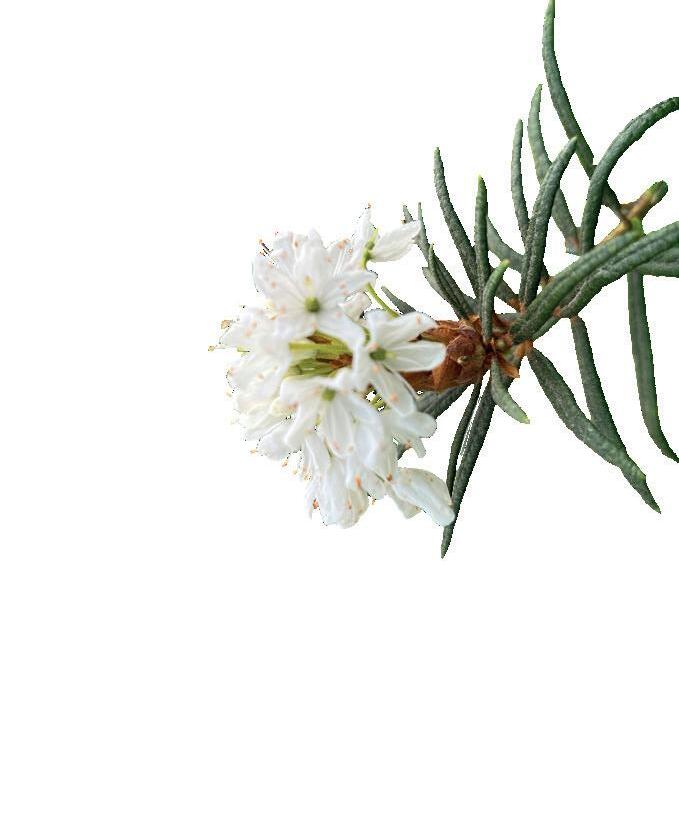
Biodiversity Programme, which has reached its halfway point and delivered tangible results.
Strengthening biodiversity is not a separate project for us, but an integral part of everyday decision-making and the Group’s strategy. Our commitment to economically, ecologically and socially sustainable forestry is reflected in the monitoring of forest management quality, certifications and the transparency of our operations.
Tornator actively participates, for example, in the Simojoki Clear Waters project and in the preparation of the forest sector’s water protection roadmap. At the same time, we promote a nationwide approach in which forestry water protection is assessed at the catchment area level and measures are targeted as effectively as possible.
Heikki Myöhänen Environmental Manager
15 %
Share of mixed forests
6 %
Share of continuous-cover forestry in forest regeneration
We are systematically growing our forest assets towards one million hectares by 2035. Growth always comes with responsibility: every decision is made to ensure that forest vitality, biodiversity and climate benefits are strengthened. People are at the heart of this work. The expertise of our personnel and close cooperation with our partners enable results we can be proud of.
Biodiversity work is a long-term journey. We will continue it with determination and openness also in the next phase of the programme.
Henrik Nieminen CEO
3 %
Share of rotary tilling in soil preparation
In 2025, we established nine new permanent private nature conservation areas covering more than 220 hectares. Protection has been implemented on a voluntary basis in accordance with the Nature Conservation Act through decisions and agreements by the Centres for Economic Development, Transport and the Environment (ELY Centres), as part of the METSO and HELMI habitat programmes and the Natura 2000 network.
Valumasuon METSO, Sotkamo
A spruce-dominated old-growth forest area of approximately 10 hectares, where biodiversity is enhanced by large birches and aspens. Recorded species include Nephroma bellum, Lobaria pulmonaria, Parmeliella thriptophylla, Crossocalyx hellerianus. Also a nationally important bird area.
Salokangas, Oulu
A 19-hectare area located in Oulu, designated under the SL-1 protection category in the first phase of the North Ostrobothnia regional land-use plan.
Rimpineva HELMI, Tyrnävä 3
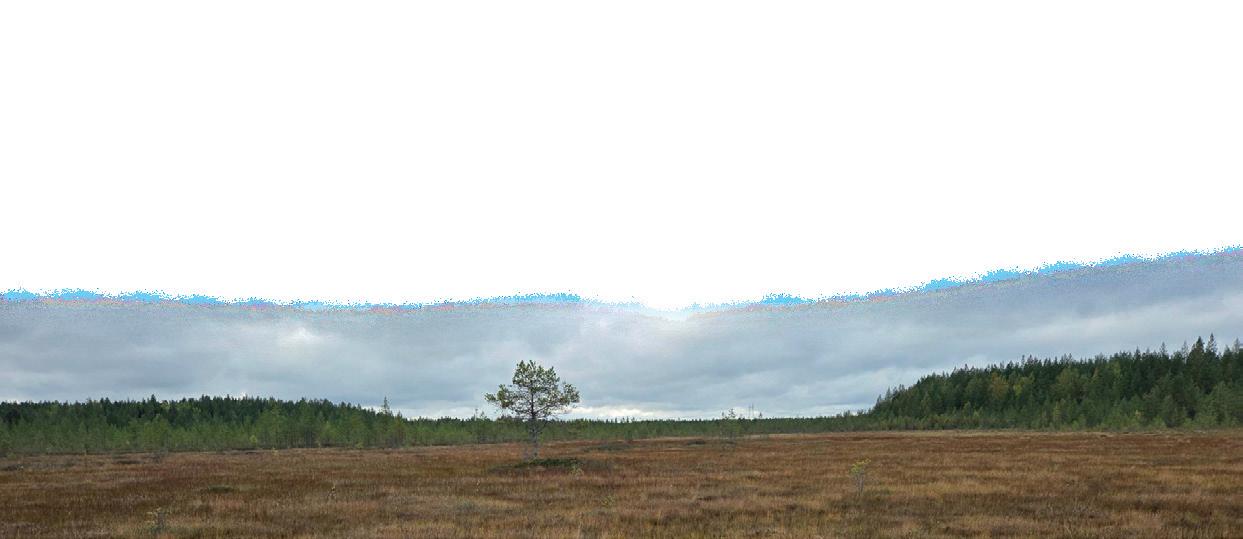
Approximately 70 hectares forming part of the Lintusuo mire complex. The northern section represents a typical string-flark mire, the central section a patterned aapa mire, and the southern section a mire within a hummocky moraine landscape. Structurally diverse and ecologically representative.
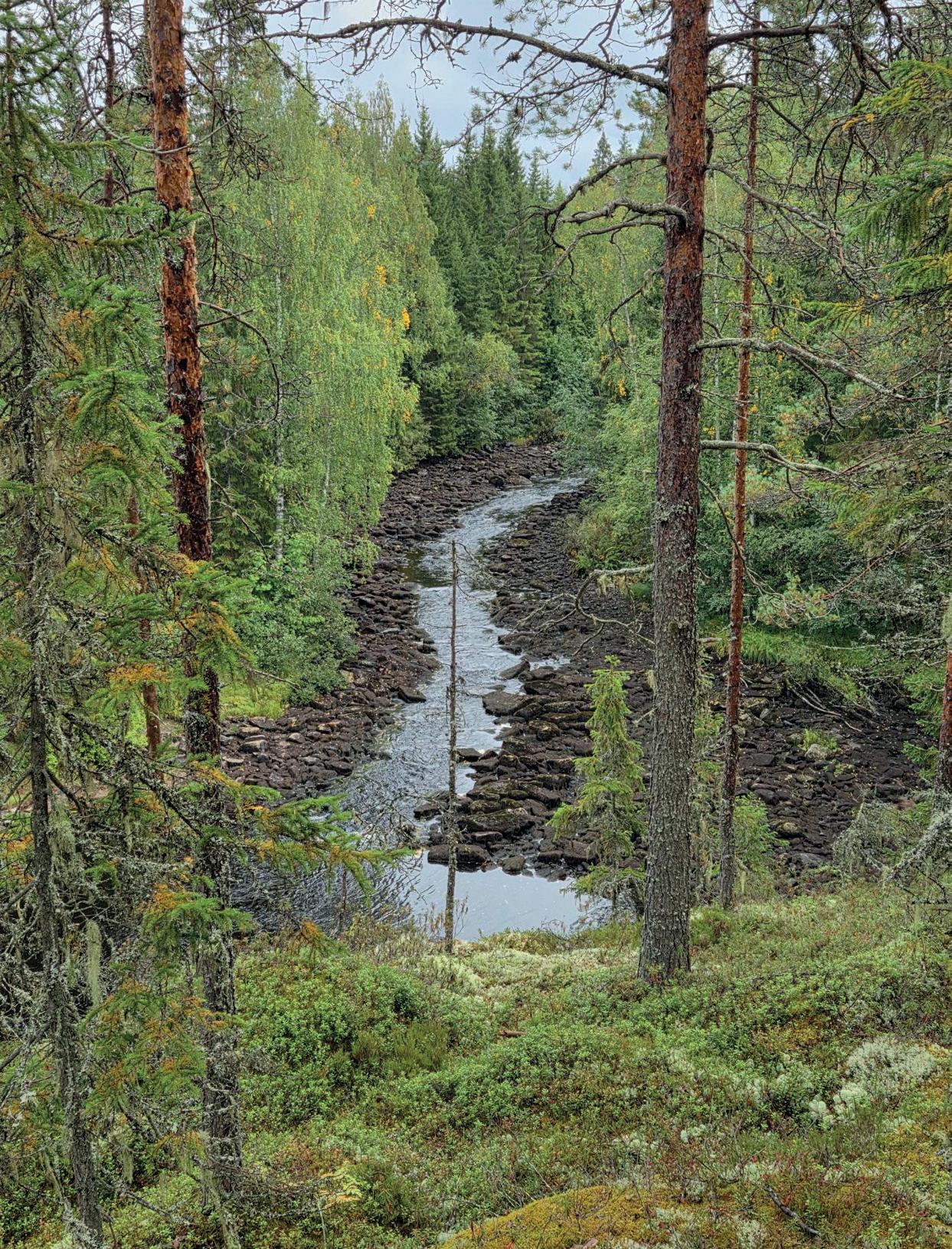
Approximately 7 hectares along the Vaikkojoki riverbank. Old rocky pine forest and spruce forest dominate the western part, while the eastern part consists of mixed forest and younger birch stands. Protection is linked to the Natura 2000 programme and land-use planning implementation.
6
Pahkavuori METSO, Kaavi
A steep, approximately 10-hectare area along the shore of Lake Pahkajärvi, featuring rocky pine forest and herb-rich spruce swamp forest. Locally abundant deadwood. Objective: preserving forest habitats in a natural state.
7
Tervaruukin METSO, Joroinen
Approximately 10 hectares of esker terrain with kettle holes and steep slopes. Sparse, thick-barked pine forest approximately 150 years old, along with small patches of dry herb-rich forest where species such as rock lily-of-the-valley and butterfly orchid occur. Includes a small downy birch–dominated mire. Purpose of protection: conserving esker forest ecosystems.
4
8 2
Pirttineva and Punaneva HELMI, Liminka
A total of approximately 95 hectares of complementary protection sites within the Veneneva–Loukkuneva area. Purpose of protection: strengthening the national mire conservation network.
Suuroonsaari, Natura 2000, Mikkeli
Approximately 2.5 hectares on Lake Kyyvesi. Herb-rich heath forest, mature spruce stands, and pine, aspen and birch occur on the island. The island’s fertile soil supports the development of biodiversity.
1. Valumasuon METSO
2. Salokangas
3. Rimpineva HELMI
4. Pirttineva and Punaneva HELMI
5. Ohtavalkeinen
6. Pahkavuori METSO
7. Tervaruukin METSO
8. Suuroonsaari
13
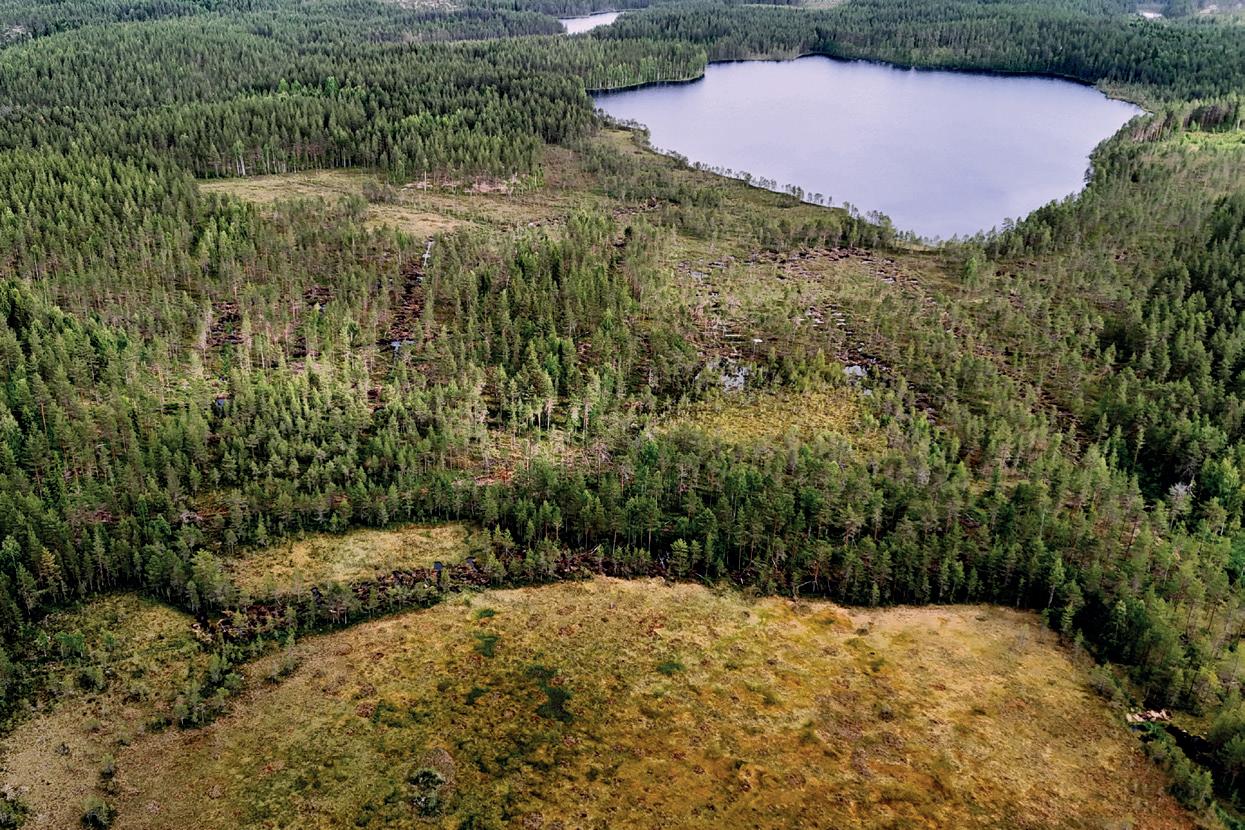
In 2025, 461 hectares of mire were restored on Tornator’s land. At the halfway point of the Biodiversity Programme, progress towards the target is already well advanced: more than 2,200 hectares of mire have been restored out of the total target of 3,000 hectares. It can already be stated that the total restored area will clearly exceed the 3,000-hectare target.
Although the restored area has already exceeded the interim target by a wide margin, quality has not been compromised. Restoration measures are targeted at hydrologically intact
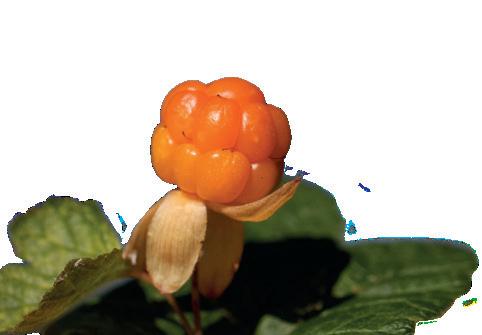
and effective mire complexes with strong potential to develop towards a natural state.
As the programme has progressed rapidly to its midpoint, it has also been possible to implement smaller-scale but ecologically high-impact sites. These include, in particular, mires or parts of mires that border natural mires or protected areas. Despite their limited surface area, such sites can significantly influence the natural hydrology of the entire adjacent mire system.
At the five-year mark of the Biodiversity Programme’s implementation phase, mire restoration has become an established part of Tornator’s forestry practices. Restoration methods and approaches are now also applied in water protection measures in managed forests, and as knowledge has increased, water protection objectives play an increasingly important role in the selection of sites to be restore.
In 2025, more than thirty active nature management activities were implemented. From an increasingly large pool of potential restoration sites, priority was given to locations where improvement of ecological status was urgent or where sites were connected to areas managed by other stakeholders.
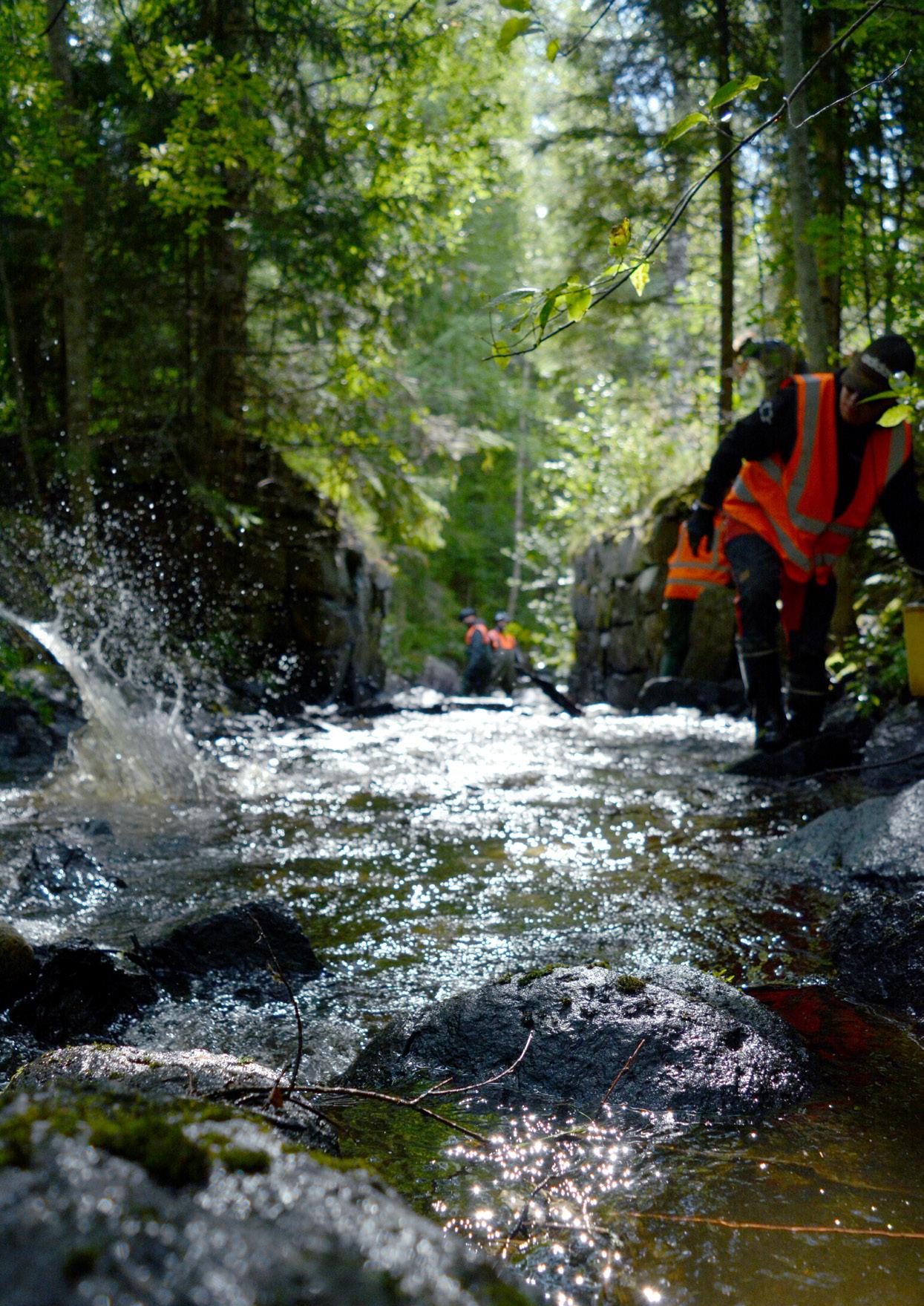
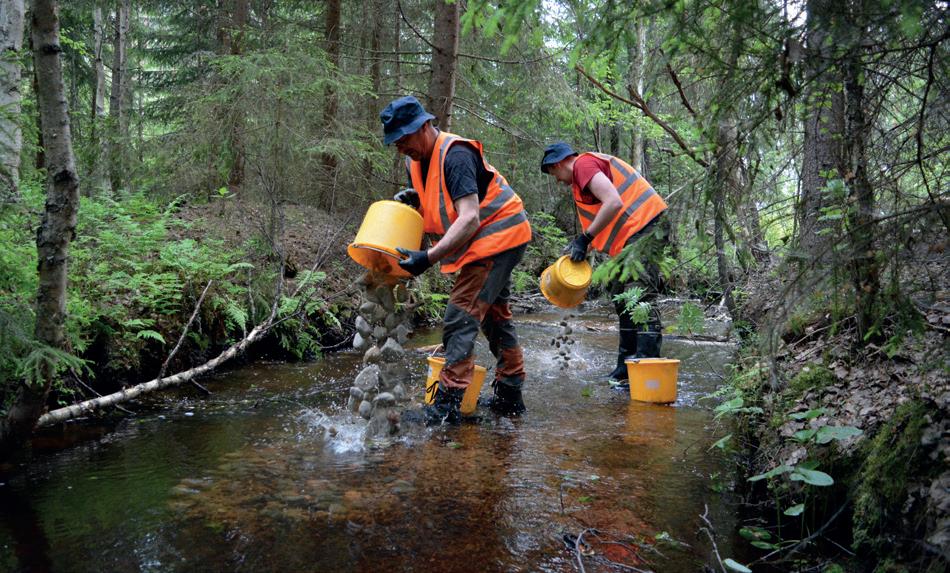
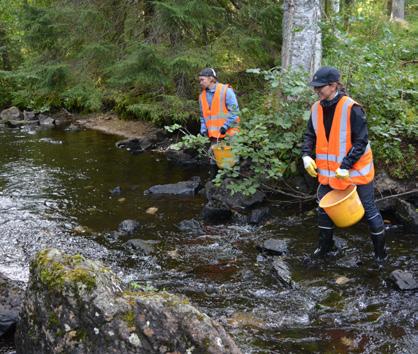
In small water bodies, joint restoration efforts with WWF continued at four different streams, where spawning grounds were created and stream channels were restored. These volunteer-based restoration activities had participants from various organisations and partner groups with hands-on experience in concrete nature management work. Knowledge and expertise were widely shared during the restoration events.
Over time, many streams have been diverted entirely due to drainage. Several streams were restored by returning them to their original channels. Stream channel restoration is an effective measure that creates valuable habitats and can also significantly improve the effectiveness of water protection.
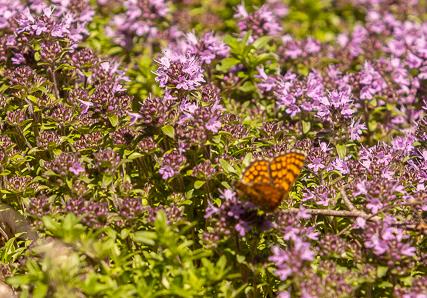
In 2025, several management operations were carried out on sun lit habitats. Training provided during the previous year’s thematic focus on sun-exposed habitats helped specialists identify representative management sites where active nature management could be implemented.
A range of management methods suitable for sun-exposed environments is available, and the most appropriate solutions were selected for each site. In some locations, increasing light availability was sufficient, while in others the full chain of practices was required, from harvesting to prescribed burning.
The number of invasive alien species control sites increased compared to the previous year, and in many cases management requires work over several years. As a new

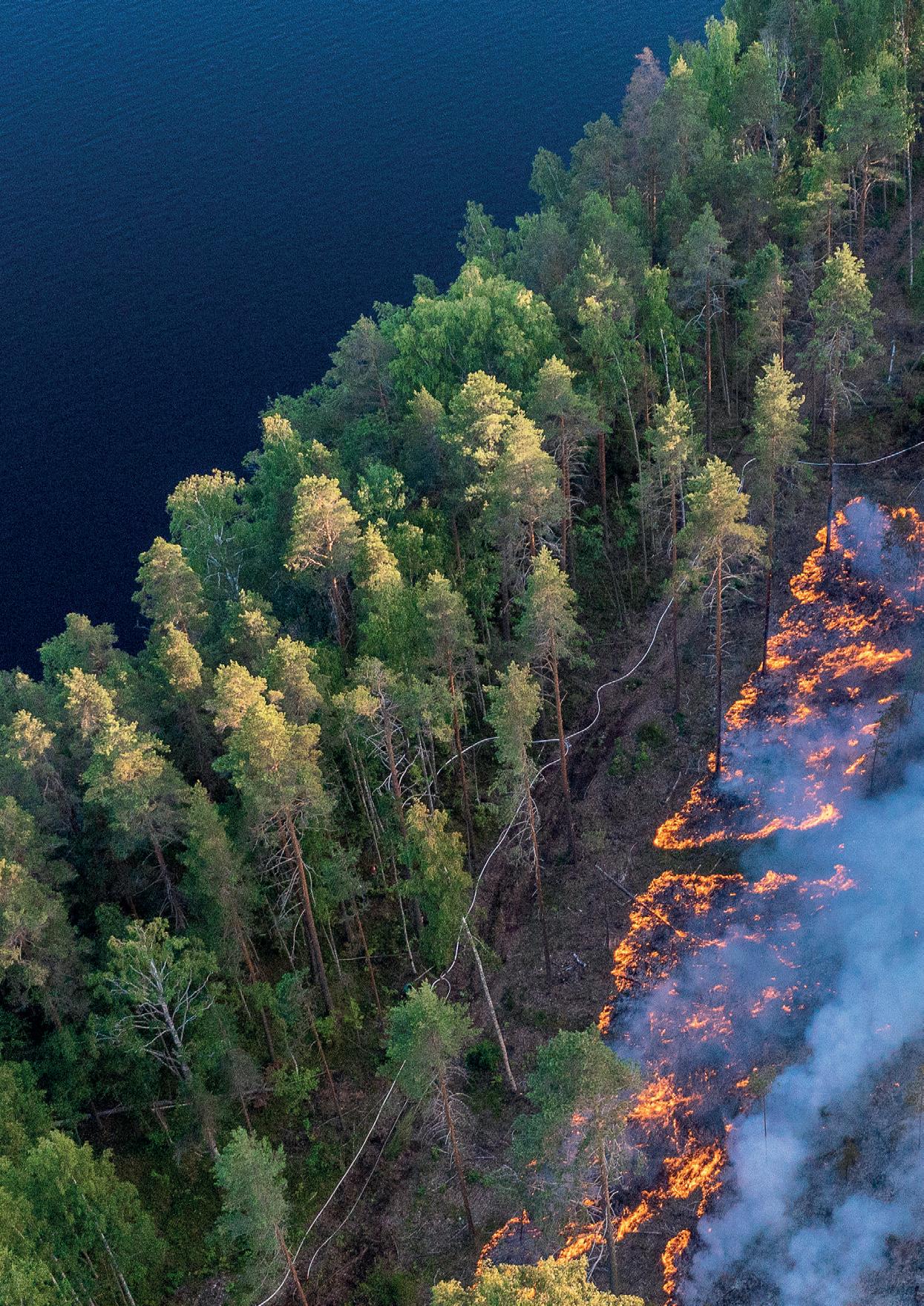
In 2025, prescribed burning was carried out at six different sites. The total burned area amounted to approximately 49 hectares. Biodiversity benefits were enhanced in particular by concentrating retention trees, leaving forested burned patches within regeneration areas that will not be subject to future management.
Of the total burned area, as much as 17% consisted of burned retention tree groups, with the largest single group covering up to 2.5 hectares.
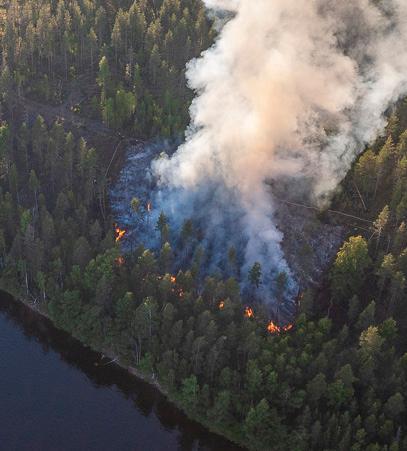
In Huuhanranta, Ruokolahti, prescribed burning of sun lit habitats was continued. Although weather conditions in June were not optimal, beetles surveys nevertheless produced excellent results at the site.
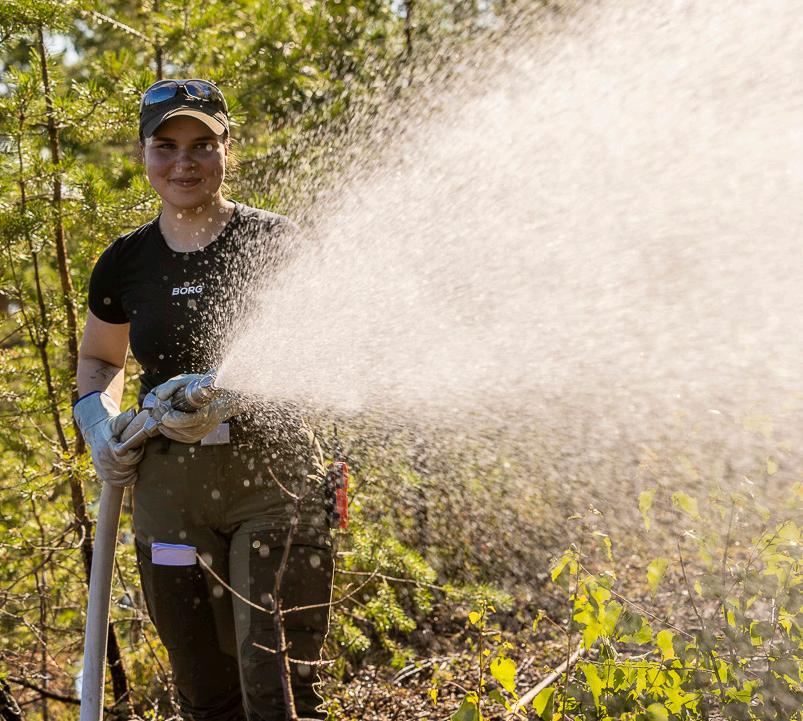
In Palosensalo, Kuopio, prescribed burning was carried out adjacent to burn sites from the two previous years. For fire-dependent species, this has created an excellent local fire continuum, as additional prescribed burns are already planned for 2026 and 2027.
The Palosensalo burn was implemented in cooperation between Tornator and local entrepreneurs. At the same time, numerous summer trainees were given the opportunity to gain hands-on experience in nature management work, the importance of which for biodiversity is indisputable and well documented.
The day of burning was exceptional, with weather conditions being both cold and dry at the same time. The operation progressed smoothly under suitable conditions, and based on the burn pattern, the final outcome was successful.
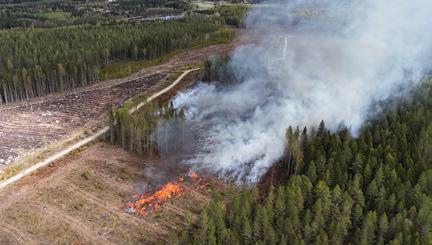
Ignition of a new firing area is started from the highest point, preventing the fire from spreading uphill on its own.
3000 ha
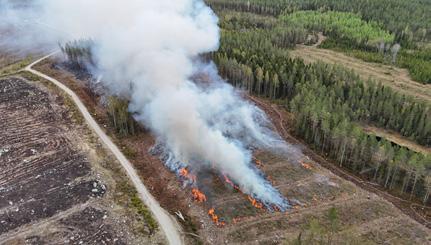
The ignited area burns in a controlled manner at the desired intensity. 1
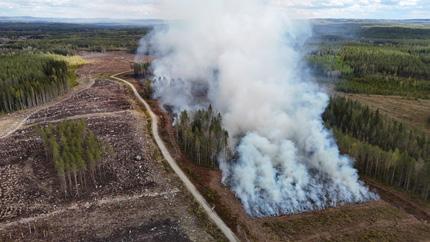
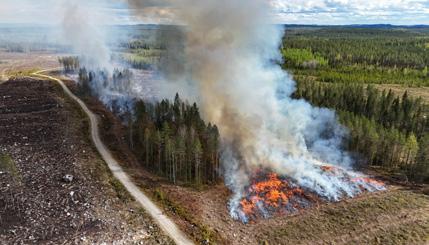
The remainder of the burn area is ignited shortly afterwards. The central fire draws flames towards itself, and working at the edges is safe and manageable as smoke is directed upward. 2 3 Once the fire has subsided, it is safe to ignite a new fire front.
In commercial forests, biodiversity is strengthened through everyday forest management decisions. Monitoring forest structure, soil preparation methods and the quality of nature management shows how established practices are evolving and what long-term impacts they have.
5,9 m3/ha
Assessment of Nature Management Quality
2025: 1351 sites
2024: 1003 sites
2023: 260 sites
2022: 765 sites
2021: 1500 sites
Identified valuable habitats (total)
Mixed Forests
3 %
Share of rotary tilling of total soil preparation
Forest Structure
15 %
4879 of forests are mixed forests
6 %
Share of continuous-cover forestry in forest regeneration
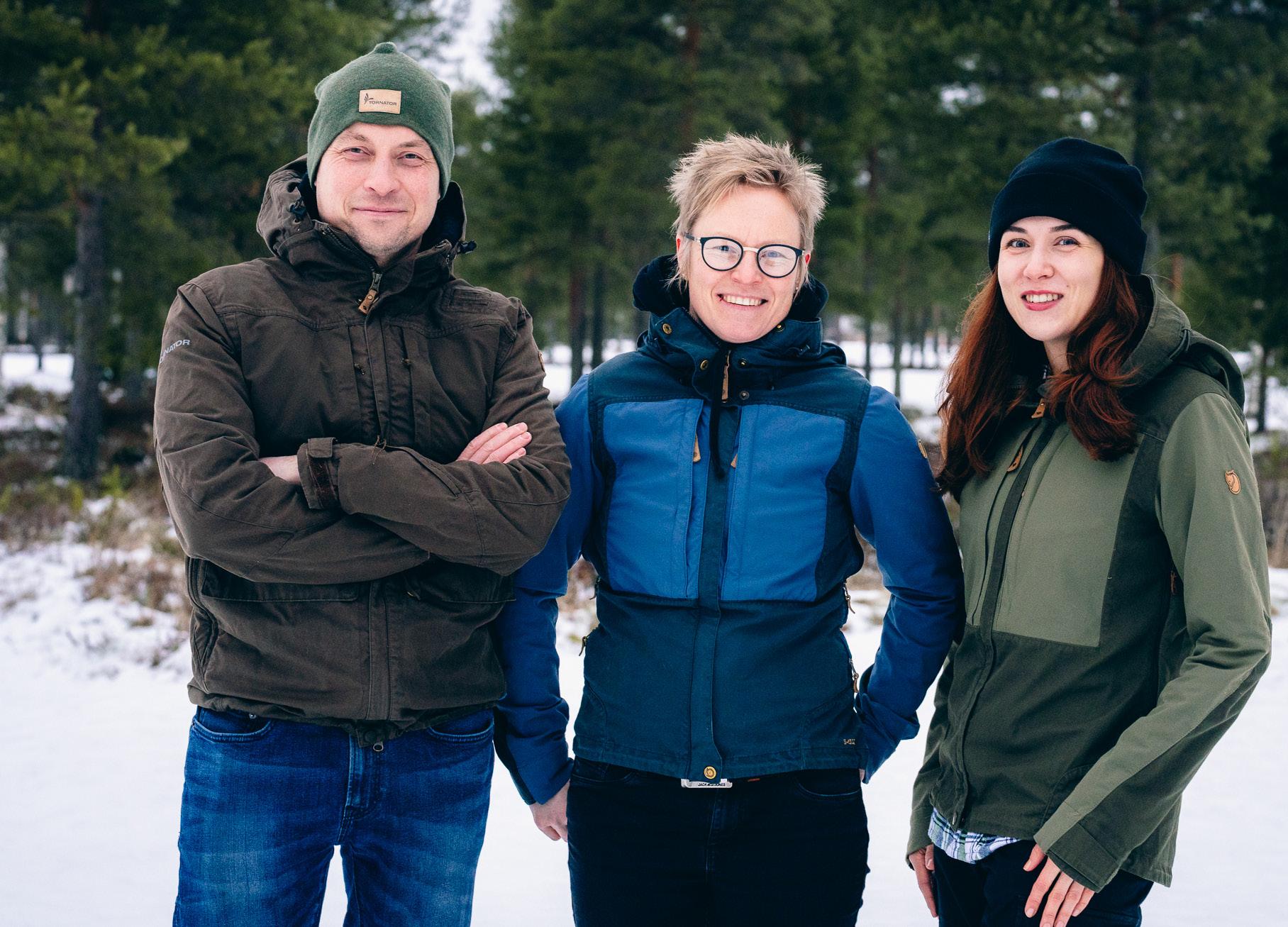
The needs of forestry and the growing requirements for responsible forest use become concrete in the forest planners day-to-day work Tornator’s Biodiversity Programme has provided planners with new tools to implement holistically sustainable forestry.
Before the Biodiversity Programme, planners’ attention was primarily focused on harvesting potential, but the programme has changed this perspective. Today, everyday work clearly demonstrates that economic forest use and strengthening biodiversity are not separate objectives but are already integrated at the planning stage.
Within the Biodiversity Programme, sites selected for restoration are often afforested open mires, sun lit habitats, stream channels and springs. Tornator’s forest planners Piia Ivakko, Anssi Hiltunen and Noora Nevalainen say that there is no shortage of suitable sites. The planner’s task is to identify and propose
the most effective and impactful entities to nature management specialist Rauli Perkiö. Planning work begins at the computer, analysing maps, aerial images and spatial data. An essential part of the job is spending time in the field. The planners note that today larger sites such as mires can often be identified directly from the screen, while streams, springs and other smaller sites are typically recognised during field visits.
“It’s easy to think that this requires special skills, but it’s really no different from everyday work. When you move around in the field and know your area, sites start to reveal themselves,” Ivakko says.
Hiltunen adds how their thinking has evolved:
“You learn to look at what a site could be. When you arrive at a site, it clicks on and you start to understand what could be done there – and what should be left undone.”
Planners Ivakko and Hiltunen, who have worked at Tornator for many years, say that many areas now selected for active nature management and restoration were previously overlooked. They were not considered to have commercial potential and were therefore largely left unmanaged.
Ivakko gives an example of an old, fragmented forest holding with poorly productive mires and small ponds.
“I familiarised myself with the area when I started at Tornator. There was no timber worth harvesting, and growth was weak. At the time, I thought nothing should be done there.”
Years later, the same area returned to the worklist – and the situation had changed.
“With the Biodiversity Programme, there was suddenly a lot that could be done. The entire area could be viewed in a completely new way.”
Hiltunen describes a similar realisation in everyday harvesting stand planning. During a field visit, it may become apparent that ditches are in such poor condition that ditch cleaning would not be economically justified.
“That’s when we start considering whether restoration could be an alternative. When Rauli gives the green light, we plan the harvesting stand from a restoration perspective.”
Today, everyday work clearly demonstrates that economic forest use and strengthening biodiversity are not separate objectives but are already integrated at the planning stage.
Noora Nevalainen started her work as a planner at a time when identifying nature management sites was already an integral part of the job. In just over a year, her perspective has sharpened, and today many opportunities can already be recognised from maps.
“One site comes to mind where I immediately realised that, from a commercial forestry perspective, the site was not viable. The area had the right shape and character, so I proposed restoration.”
Rauli Perkiö carried out surface modelling for the site, after which it was inspected in the field.
“During the field visit, we also found an old stream channel that had dried up, and the site was added to the implementation list. There are black grouse nearby, and I believe they will thrive on the restored mire in the future,” Nevalainen says.
In the forestry sector, continuous change and learning are part of everyday work. A major shift in perspective could provoke resistance, but within Tornator’s planning team the change has been adopted naturally. A flat organisational structure enables agile solutions, and new approaches are actively tested.
“New information keeps coming, and things are constantly changing. We know a lot, but much is still evolving. You need to stay openminded,” Nevalainen says.
Hiltunen emphasises the importance of experience and attitude:
“Change requires adaptation and new ways of working. When you approach it positively, your own role starts to open up in a completely new way.”
The team’s message to other planners and partners is simple: go into the forest together.
“These things are much easier and more meaningful to think through together than alone.”
Lakkasuo was identified as part of forest planning inventories. From a forest management perspective, the area was considered to have low productive value and did not offer significant commercial potential.
Through the Biodiversity Programme, restoration became part of forest land use considerations. A nearby natural mire and the location close to Lake Koppalanjärvi supported the selection of the site for restoration.
Based on an overall assessment, Lakkasuo was identified as an effective and coherent restoration site, where nature could benefit significantly without notable loss to commercial forestry.
The decision to restore was made and the site boundaries were defined. Delimitation took into account hydrological forms of the terrain, and unnecessary or risky measures were avoided.
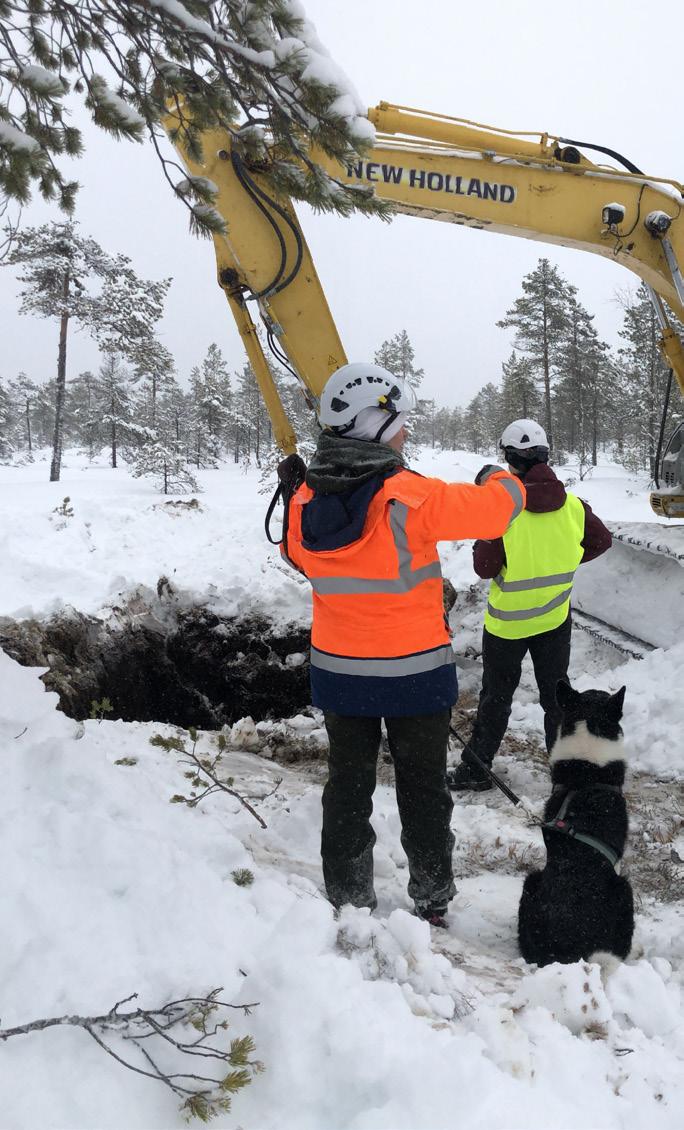
A preliminary restoration plan was prepared based on field inspections and surface modelling and submitted to the authorities.
Harvesting was planned from a restoration perspective. Where possible, harvesting was carried out without the need to operate on the mire itself, focusing on drier areas.
Planning
Mire restoration is one of the key measures in Tornator’s Biodiversity Programme for strengthening biodiversity.
Lakkasuo is a good example of how restoration progresses from careful planning to implementation. The site was initially observed from a forestry perspective, but its potential from a nature conservation perspective became increasingly evident, particularly due to its natural characteristics and proximity to Lake Koppalanjärvi.
The process began with site identification as part of forest planning. Through the Biodiversity Programme, the area was re-evaluated from a new perspective: restoration could deliver significant benefits for nature without causing losses to commercial forestry. During the planning phase, unnecessary ditching was avoided by carefully
assessing which ditches were sensible to restore. Not all ditches were treated, in order to avoid unnecessary excavation and impacts on water bodies.
Before actual restoration work, harvesting operations were carried out at the site, with the objective of removing the initial tree cover. After this, the plan was refined in the field, and ditch blocking was implemented using methods appropriate to the site’s conditions.
The restoration work was carried out by specialised contractors, and the final assessment was conducted in cooperation with nature management specialists. The Lakkasuo restoration demonstrates that careful planning and phased implementation provide a strong foundation for successful and sustainable mire restoration.
Trees were harvested and removed, and the plan received a positive response from the authorities.
Harvesting was carried out under favourable conditions and using careful, light methods. No damage to restoration objectives was observed, and soil disturbance remained minimal.
The durability of the dams and the flow of water will be monitored as part of post-restoration follow-up.
Restoration work was implemented in accordance with the plan by an experienced contractor.
The ditch blocking plan was refined in the field. Ditches were assigned site-specific blocking methods and dam structures based on flow conditions.
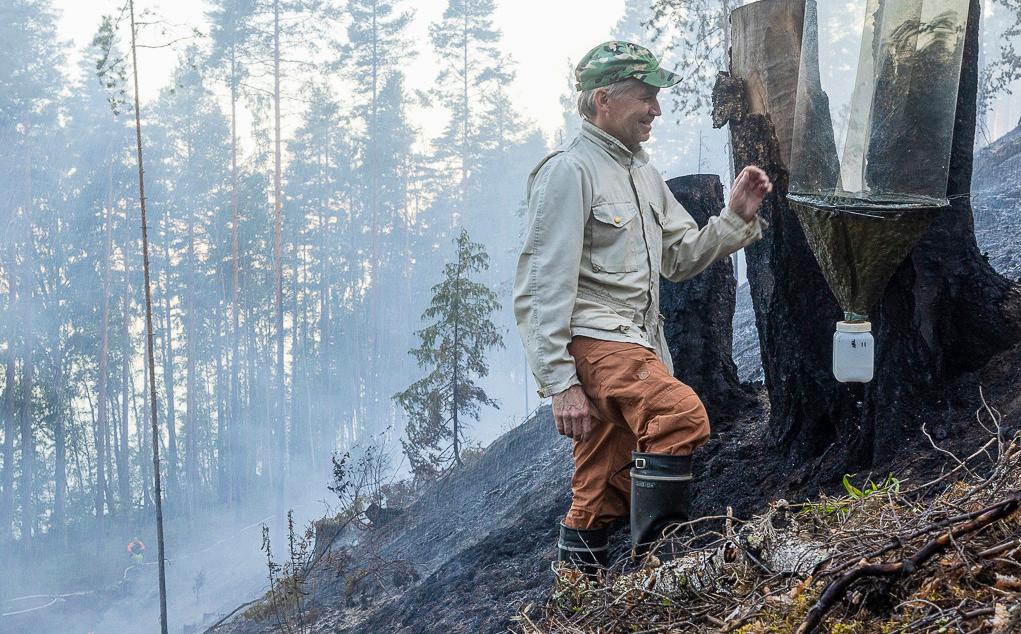
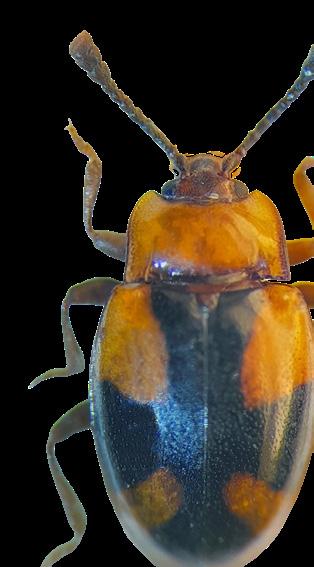
The impacts of Tornator’s improverishment burning are clearly visible in forest insect fauna. Species surveys conducted at burn sites show that insect species typical of burned forests — including threatened species — are returning rapidly to restored habitats.
Invertebrate fauna at Tornator’s burn sites has been surveyed by forest entomologist Petri Martikainen, who has carried out species inventories at Tornator’s sites since 2021.
According to Martikainen, surveys conducted so far have identified a total of five threatened and six near-threatened saproxylic beetle species at Tornator’s burn sites. Some of these species are strongly dependent on burned forests and are not encountered in other habitats.
These species include, among others,
Stephanopachys linearis, Acmaeops marginatus, Pterostichus quadrifoveolatus, Platyrhinus resinosus, Gonotropis dorsalis and Aradus laeviusculus. Their occurrence clearly indicates that restoration burning creates the right ecological conditions: freshly burned, fire-damaged and charred wood.
A particularly significant finding has been Aradus montandoni, a rare beetle species associated with burned forests, which was detected at two different Tornator burn sites in Ruokolahti. The species’ threat category has not yet been formally defined in Finland, as earlier observations were limited
to a single site. Tornator’s sites have now produced two new confirmed records.
According to Martikainen, many species characteristic of burned forests have searched for suitable habitats across Finland as prescribed burnings have decreased and fire suppression has become more effective. These species have not disappeared, but suitable habitats have become scarce.
“Specialist species of burned forests are highly effective dispersers. They locate new burn sites very quickly, often within the same year,” Martikainen explains.
An increase in restoration burning enables species to return to areas where they have been absent for decades. Surveys show that the effects are visible already during the first years following restoration.
– Burned Forest Is a Habitat of Its Own Surveys also demonstrate that not all open or warm habitats are ecologically equivalent. While many insect species thrive in sunlit environments, burned forests require very specific structural conditions.
“Burned forests need freshly burned, fire-damaged and killed trees. Sun exposure alone is not sufficient if burned wood is not available,” Martikainen says.
This observation supports Tornator’s practice of combining retention trees with restoration burning, which increases habitat diversity and ecological continuity.
All species observations made at Tornator’s sites are stored in the Finnish Biodiversity Information Facility (FinBIF) database, where they are available for use by researchers, authorities and other stakeholders. The findings provide concrete examples to support national species conservation assessments.
“Individual observations can be decisive when assessing species distributions and viability,”
Martikainen notes.
For Tornator, survey results provide a valuable knowledge base for developing operations and integrating restoration work into broader biodiversity objectives.
Mapping of forest habitats also points to the future. Climate warming is already driving many insect species northwards, and changes are occurring rapidly. Restoration sites may also benefit species that are only now beginning to spread into Finland. Martikainen emphasises that deadwood remains a key factor:
“Many threatened forest species need burned wood. Increasing the amount of deadwood and enhancing biodiversity is not only essential for the protection of currently threatened species but should also receive particular attention in restoration planning.” Survey results show that properly targeted


Anna Laine-Petäjäkangas University of Eastern Finland
The University of Eastern Finland is studying the impacts of the restoration of Kontiosuo mire on greenhouse gas exchange. Preliminary results show that ditch blocking has raised the water table, while methane emissions remain clearly lower than in natural mires.
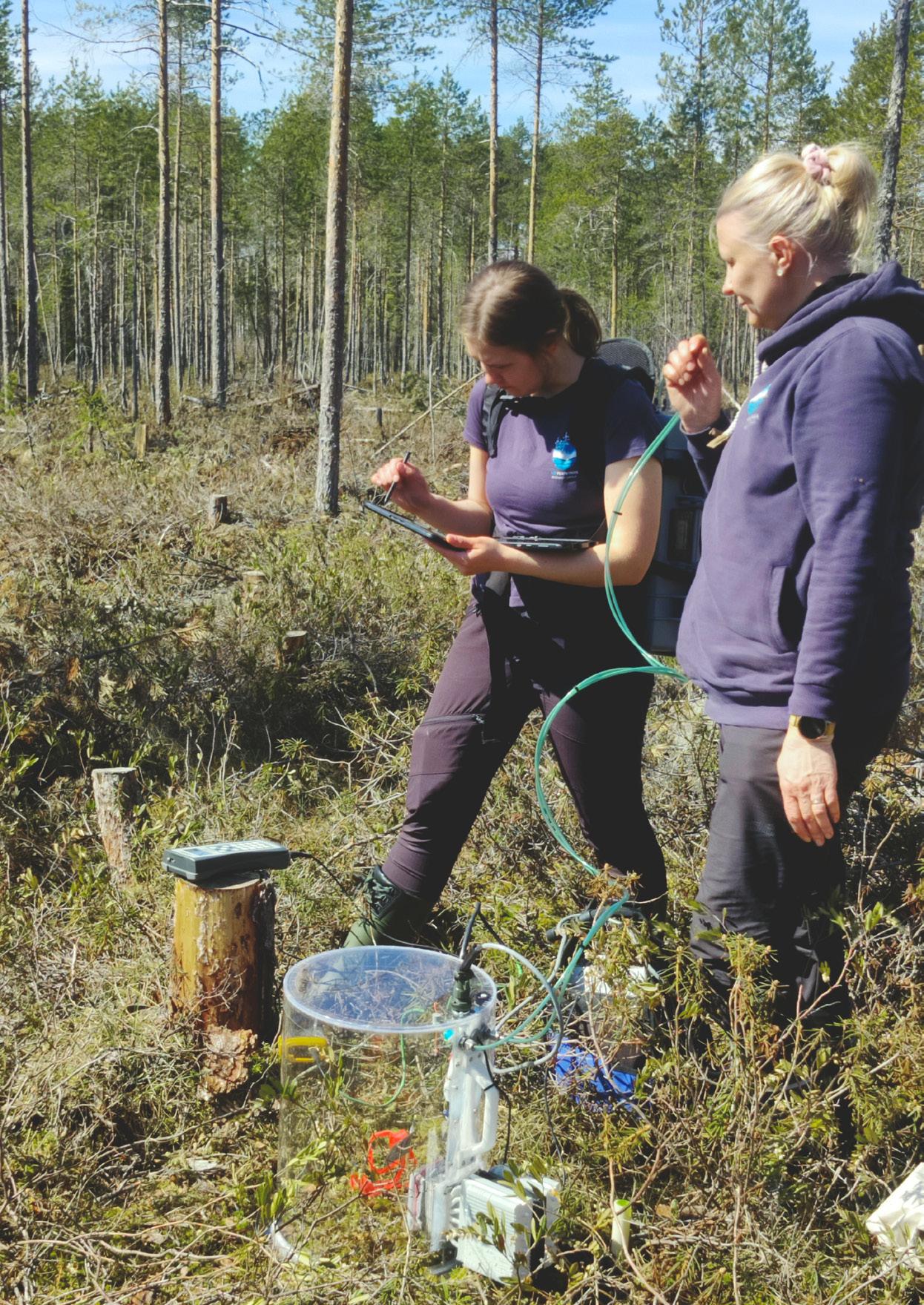
The restored Kontiosuo is one of the key research sites in a project investigating the impacts of mire restoration on greenhouse gas exchange. The project is led by Anna Laine-Petäjäkangas and funded by the Finnish Cultural Foundation. During 2025, carbon dioxide and methane exchange has been measured at the site using chamber methods (Figure 1). In addition, the water table level has been monitored, as well as changes in vegetation cover during the growing season.
Peat samples have been collected from the site and analysed for methane oxidation and production potential, as well as peat properties (e.g. pH, C/N ratio, S, NO42-). Laboratory analyses and sample processing are currently ongoing. The study uses ditched and natural reference sites representing the same mire type and nutrient status.
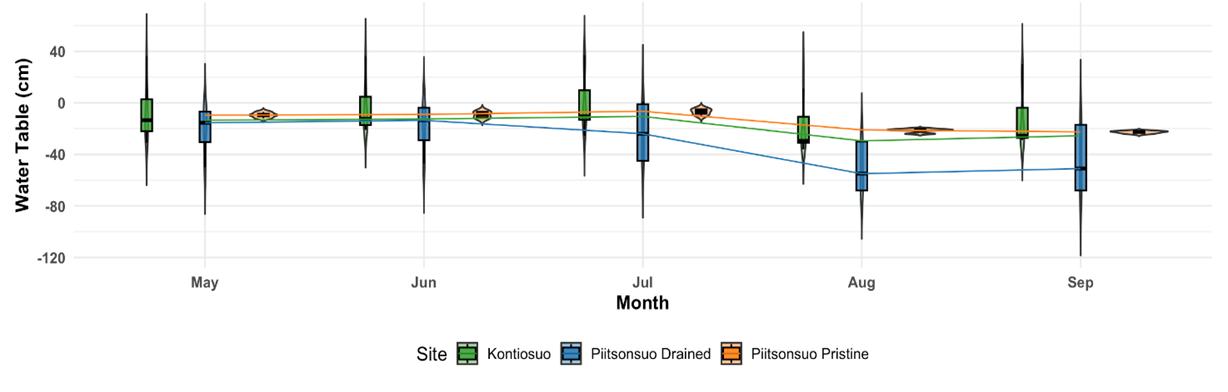
Based on preliminary results, ditch blocking has effectively raised the water table, and the water level did
not decline significantly during the dry summer of 2025 (Figure 2).
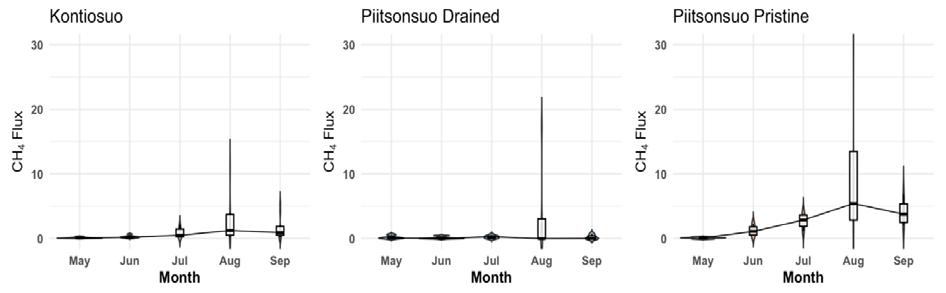
During the first year following restoration, methane emissions have not increased sharply. Emissions from the restored site remain clearly lower than those measured at the natural reference mire (Figure 3).
Tiina Oinonen Lumimuutos Cooperative
At Rahesuo, the impacts of restoration on vegetation and birdlife are being monitored. Although changes progress slowly, monitoring indicates development in the expected direction, both in vegetation cover and in bird communities.
At Rahesuo, the impacts of restoration on vegetation and birdlife are being monitored. Although changes progress slowly, monitoring indicates development in the expected direction, both in vegetation cover and in bird communities.
Changes in vegetation on forestry-drained mires following restoration are generally slow (Haapalehto et al. 2017). However, an increase in Sphagnum moss cover is a good indicator of restoration success on nutrient-poor bogs (Kumpulainen et al. 2025).
Rahesuo includes 135 permanent vegetation monitoring plots. Within the restored area, Sphagnum moss cover increased by an average of 4% between 2023 and 2024, while on nearby natural reference plots the increase averaged 2% over the same period. This suggests that restoration has benefited vegetation development, even though the nearby natural mire also shows positive development.
At the same time, the cover of forest
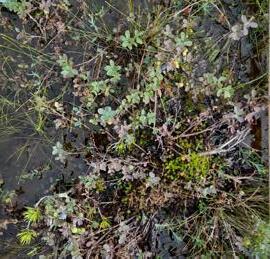
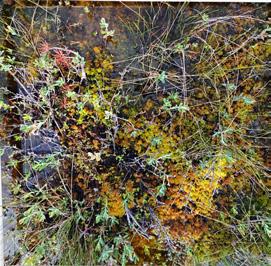
An illustrative example of vegetation change can be seen in paired monitoring plots: in the upper image (2023) and lower image (2024), the increasing cover of Sphagnum balticum is clearly visible.
Bird communities reflect positive change
In Finland, 33% of bird species breeding primarily on mires are threatened (CR, EN, VU), and an additional 25% are near threatened (NT). In contrast, among species breeding secondarily on mires, 20% are threatened and 16% near threatened (Hyvärinen et al. 2019).
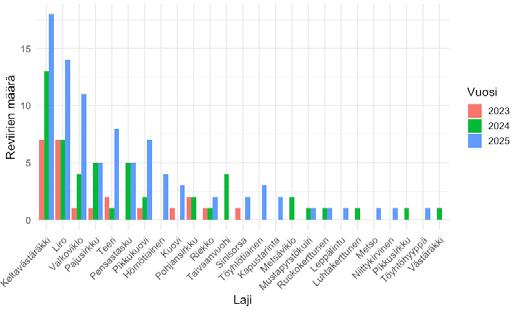
In 2025, a total of 43 bird species were recorded at Rahesuo, of which 19 were confirmed breeders. Of these breeding species, six nest primarily on mires. Species richness varied annually, and during the post-restoration period 2023–2025, a total of 25 breeding bird species were recorded.
Of these, two species are nationally threatened (EN, VU, CR), one species is regionally threatened (RT), one species is near threatened (NT), and six species are protected under the EU Birds Directive. The conservation of these species is Finland’s international responsibility (EVA).
Species particularly indicative of successful restoration include wood sandpiper, greenshank, whimbrel.

References: Kumpulainen, N., Tuittila, E-S., Tolvanen, T., Tarvainen, T., Ylänne, H., Laine, A.M. 2025. Restoration induced long-term vegetation change in oligotrophic peatlands. Journal of Applied Ecology. https://doi-org.ezproxy.uef. fi:2443/10.1111/1365-2664.70182
Haapalehto, T., Juutinen, R., Kareksela, S., Kuitunen, M., Tahvanainen, T., Vuori, H., Kotiaho, J.S. 2017. Recovery of plant communities after ecological restoration of forestry-drained peatlands. Ecology and Evolution 7(19), p.7848-7858
Hyvärinen, E., Juslén, A., Kemppainen, E., Uddström, A., Liukko U-M. Suomen lajien uhanalaisuus Punainen kirja 2019
Breeding territories in Rahesuo, by species
At Huuhanranta, surveys conducted following prescribed burning of sun lit habitats identified a total of 368 saproxylic beetle species. In addition, six polypore fungi species and several other fungal species were recorded. Among threatened species, three species were identified: the critically endangered Pygolampis bidentata and the near threatened Calamosternus granarius and Teretrius fabricii Teretri-
us fabricii was recorded in Finland for the first time in a natural forest envi ronment; all previous records originat ed from old farm buildings.
The surveys also identified three near threatened species: Pterostichus quadrifoveolatus, Phytobaenus amabilis and Cryptoleptus weisei.
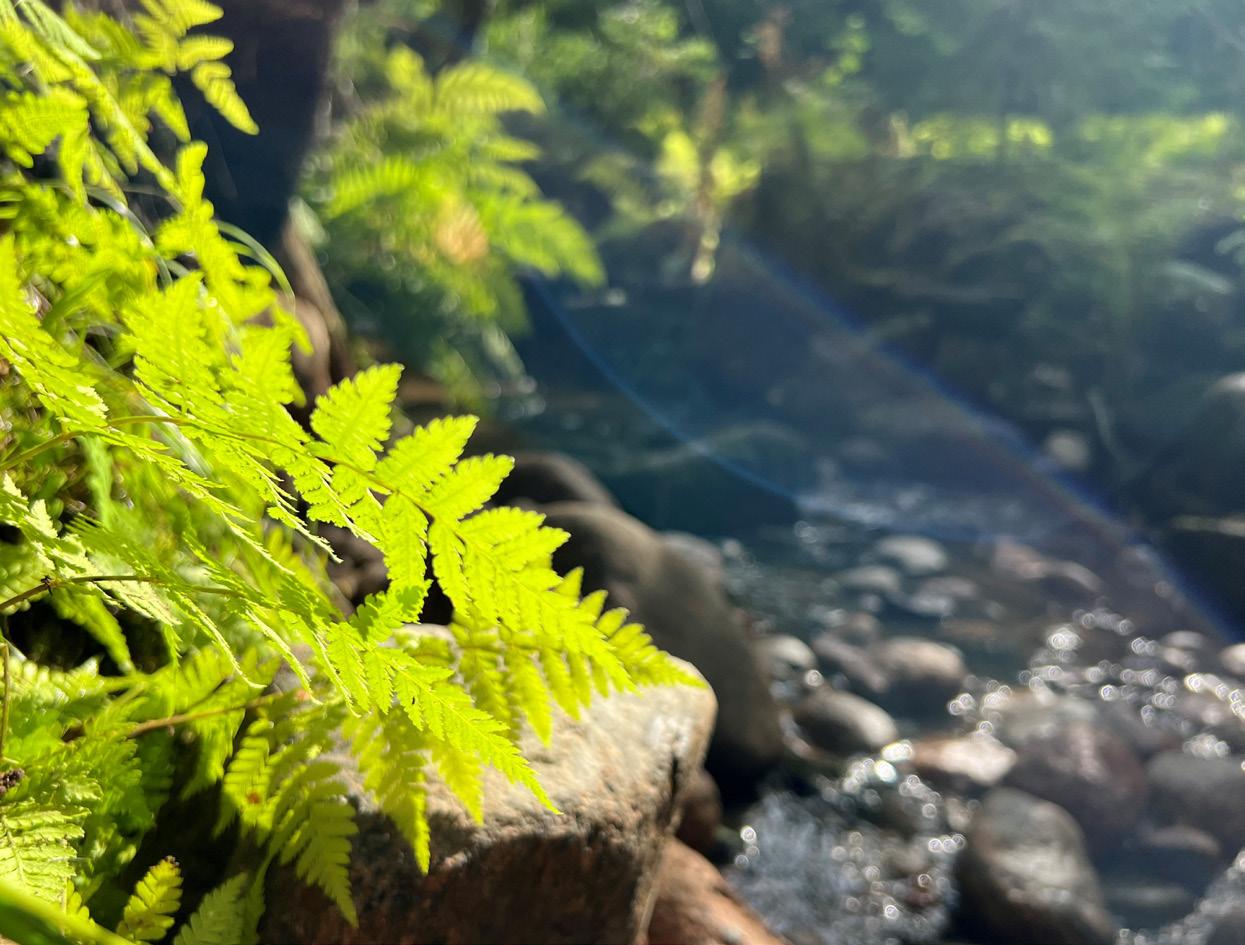
WWF and Tornator concluded the first successful year of their Vesiviisas Metsä partnership. During 2025–2027, the objective is to assess the current state of Tornator’s water protection and to set concrete, measurable targets for reducing harmful impacts on water bodies. The partnership also aims to increase knowledge of forestry water protection measures and their integration into broader catchment-area–level water protection.
So far, modelling has been used to examine how forestry operations affect nutrient loading to water bodies and how daily loading can be reduced. We have explored how operational practices can be changed and how measures
can be more effectively targeted to reduce impacts on water bodies.
In 2025, Tornator carried out a comprehensive review of water protection–related datasets
and assessed how they could be better utilised by Tornator’s own planners. Additional water protection datasets were incorporated into Tornator’s forest planning systems as part of system development. Water protection planning is no longer confined to individual forest planning sites; instead, the responsibility is increasingly shared with nature management specialists. In practice, datasets and systems are now being tested and integrated into forest planners’ everyday workflows, with modelling results used to target measures more effectively.
These improvements enhance Tornator’s forest planners’ ability to consider water protection more comprehensively in their work. Planners are now better equipped to utilise existing datasets more systematically and flexibly and to integrate them into daily forest planning.
Building on previous years’ collaboration, the focus has increasingly shifted from individual streams to catchment-area–level assessment. In flowing waters, ecological status can be safeguarded when stream restoration is complemented by reducing loading from the surrounding forested catchment.
In 2025, five volunteer-based stream restoration events were carried out at different streams on Tornator’s land. In parallel, Tornator piloted load modelling at the Lieksa–Pankasaari pilot area and initiated training for planners in the use of new spatial tools. By 2027, load modelling will be used to prioritise and target water protection measures more effectively. In the Lieksa–Pankasaari pilot area, planners began designing concrete water protection measures, such as mire restoration and the placement of sedimentation structures, based on modelling results.
Measures were targeted particularly at sites where loading to water bodies is highest, and impacts were assessed across several scenarios. This made it possible to demonstrate how loading can be reduced not only with current measures, but also through additional, potential actions.
In addition to Tornator’s own active efforts, collaboration in biodiversity management has increased steadily. Tornator acts as a significant enabler for its partners, supporting not only individual biodiversity enhancement projects but also method development and knowledge exchange, all of which actively benefit from multiple perspectives.
In 2025, a significant collaboration project was carried out with the Lumimuutos Cooperative at Rahesuo in Ilomantsi, where extensive mire restoration was implemented. This work is presented in detail earlier in the report. In addition, preparations for small-scale restoration work were completed during the year.
Through cooperation with local water protection associations, stream restoration projects have been implemented, and Tornator has also supported lake restoration efforts as part of its Biodiversity Programme, including restoration of roach spawning grounds.
As in previous years, several different

• Management of sun lit habitats, Kotkatsaari Habitat management carried out at Kotkasaari to support sun-exposed environments.
• Restoration of ridge habitats, Vimeikonmäki Management of sun habitats with particular focus on improving conditions for specialist species.
• Management of sun lit habitats, Ruokolahti Management of sun lit habitats continued at Huuhanranta; operations focused on enhancing open, warm microhabitats.
• Kankaanperä ridge, Tohmajärvi Restoration of ridge habitats supporting sun-exposed ecosystem features.
• Control of Himalayan balsam, Liippilahti
• Control of Himalayan balsam, Muikkula
• Kukassaari invasive species control
• Invasive species control at Alatupa
• Control of Himalayan balsam, Vaaranmäki
• Control of Himalayan balsam, Välitalo Kitee
• Control of Himalayan balsam, Kinnulanvaara 2025
Most invasive species sites focused on Himalayan balsam. In many locations, early-stage control proved effective, particularly when repeated annually.
• Moksinjoki, Saarijärvi Volunteers restored spawning grounds and improved stream habitats.
• Sirkanpuro, Joensuu Stream restoration improving connectivity and habitat structure.
• Säynätjärvi, Ruokolahti Restoration of water level conditions and adjacent habitats.
• Hangasoja, Kouvola Stream restoration with volunteers and students.
• Restoration of the Stream, Panja The stream in Juuka was restored to improve natural flow conditions and aquatic habitats.
• Restoration of the Suurilähde stream Restoration of a naturally meandering stream section.
• Restoration of the Palojoki stream Restoration of an old, straightened stream channel.
• Restoration of the Heinäkangas stream Stream restoration improving hydrological connectivity and habitat quality.
• Restoration of the Hävänjoki stream Restoration of channel structure and flow conditions.
• Water diversion at the Pökki conservation area Hydrological restoration to improve wetland conditions.
• Construction of wetlands, Kaatsuo Construction of wetlands to improve water retention and reduce catchment-level loading.
• Pirttimäki
Prescribed burning to improve habitat quality and deadwood availability.
• Mäntyjärvi
Burning carried out to restore fire-dependent forest structures.
• Kulta-aho
Prescribed burning at a site previously impacted by forestry.
• Palosensalo
Continuation of a long-term prescribed burning continuum.
• Hirvikangas Prescribed burning implemented with support from local partners.
• Nature management at Riihilahti
Management of herb-rich forest habitats.
• Spring restoration at Heiskanlahti Restoration of spring habitats and surrounding vegetation.
• Restoration of springs at Höpöttäjä Hydrological restoration to support spring ecosystems.
• Restoration of the Kultalampi spring Spring restoration implemented with authorities.
Tornatorista WWF:n pääyhteistyökumppani vesiensuojelussa
Metsälehti 13.1.2025
WWF ja Tornator etsivät keinoja vähentää metsätalouden haitallisia vaikutuksia vesistöön
Maaseudun Tulevaisuus 14.1.2025
Tornator suojeli Suoja-Savikkolan alueen
Lieksan lehti 17.4.2025
Kuopion maaseudulla voi näkyä sankkaa savua keskiviikkona
Savon Sanomat / Sisä-Savo 21.5.2025
Kuopion Lamperilassa kulotetaan tänään metsää seitsemän hehtaarin alueelta
Yle Pohjois-Savo 21.5.2025
Talkoolaiset purkavat vanhaa patoa käsin Kouvolassa, jotta uhanalaiset taimenet pääsevät liikkumaan vapaasti
Yle 23.5.2025
Tornator kulotti Sonkajärven
Jokipolvenlehdossa
Miilu 6.8.2025
Enon Sirkanpurosta halutaan
kaunis ja toimiva alueen helmi
Pielisjokiseutu 24.8.2025
Paltasen rämesuo ennallistettiin vuonna
2022 - vaikutukset alkavat jo näkyä
Pieksämäen lehti 1.10.2025
Metsäkanalinnut, karpalo ja lakka palaavat ennallistetulle suolle
Vaarojen sanomat 3.12.2025
Ennen kaivettiin ojia, nyt täytetään
Karjalainen 1.12.2025
Pogostan Sanomat 4.12.2025
Luonnonmukaisten hiekkarantojen suojelu
Totalvene.fi 6.12.2025
Huuhanrannalla tehty kartoitus paljasti uhanalaisia lajeja
Etelä-Saimaa 15.12.2025
Ruokokahden Huuhanrannalta löytyi harvinaisuuksia
Uutisvuoksi 11.12.2025
Webinar 4 Feb 2025
Finland’s Nature Panel – restoration of herb-rich forest habitats.
Student excursion 11 Feb 2025
Presentation of Tornator’s biodiversity work and environmental management measures.
Educational institution day, 8 April 2025
The Suo 2.0 Project’s event for upper secondary students covered the history, current practices, and future prospects of peatland forest management
Training sessions 17–19 Jun 2025
Restoration methods for contractors and machine operators.
Authorities’ field visit 18 Sep 2025
Joint review of restoration sites with ELY Centres.
Webinar 16 Sep 2025
Forestry water protection days – Tornator’s role and practices.
Seminar 20 Aug 2025
North Savo ELY Centre – biodiversity project results.
Stakeholder meeting 2 Sep 2025
Lumimuutos Cooperative – monitoring and restoration outcomes.
Public event 24 Sep 2025
Finnish Forest Centre – water protection in forest use.
Forest Day field event 29 Sep 2025
Ministry of Agriculture and Forestry – restoration practices in forestry.
Student visit 6 Oct 2025
Karelia UAS – mire restoration methods.
Training event 21 Oct 2025
North Karelia Education Consortium – restoration techniques.