THE INTERNATIONAL RESEARCH STATION FOR CLIMATE CHANGE AT SVALBARD.
Langsomt begynte isen å smelte, og formet av kulden, men vekket til live av varmen, oppsto det et underlig vesen – et veldig troll. Trollet var tvekjønnet, og dets navn var Yme. Større kjempe skal aldri ha levd.
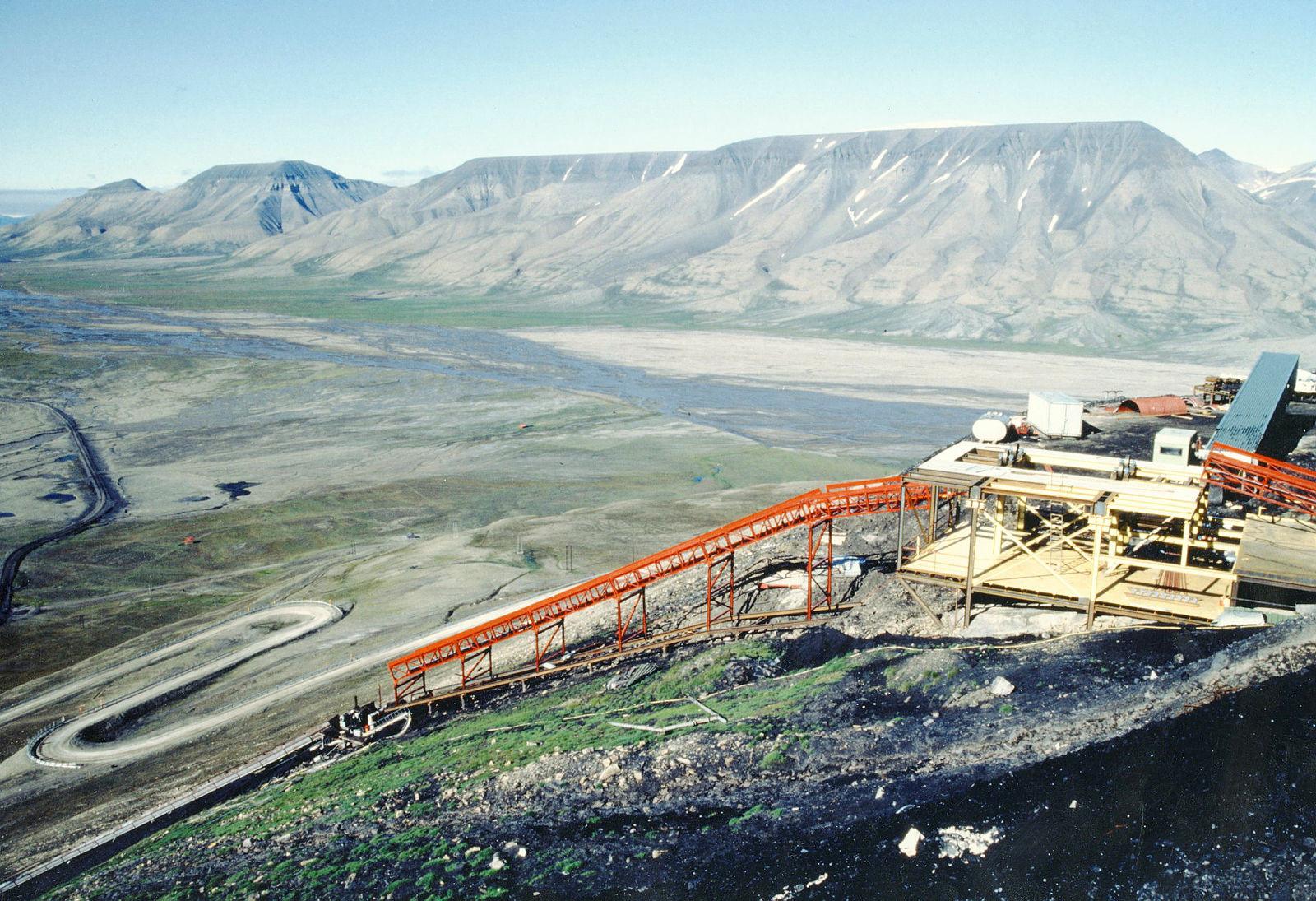
View from Gruve 7, summer 1966
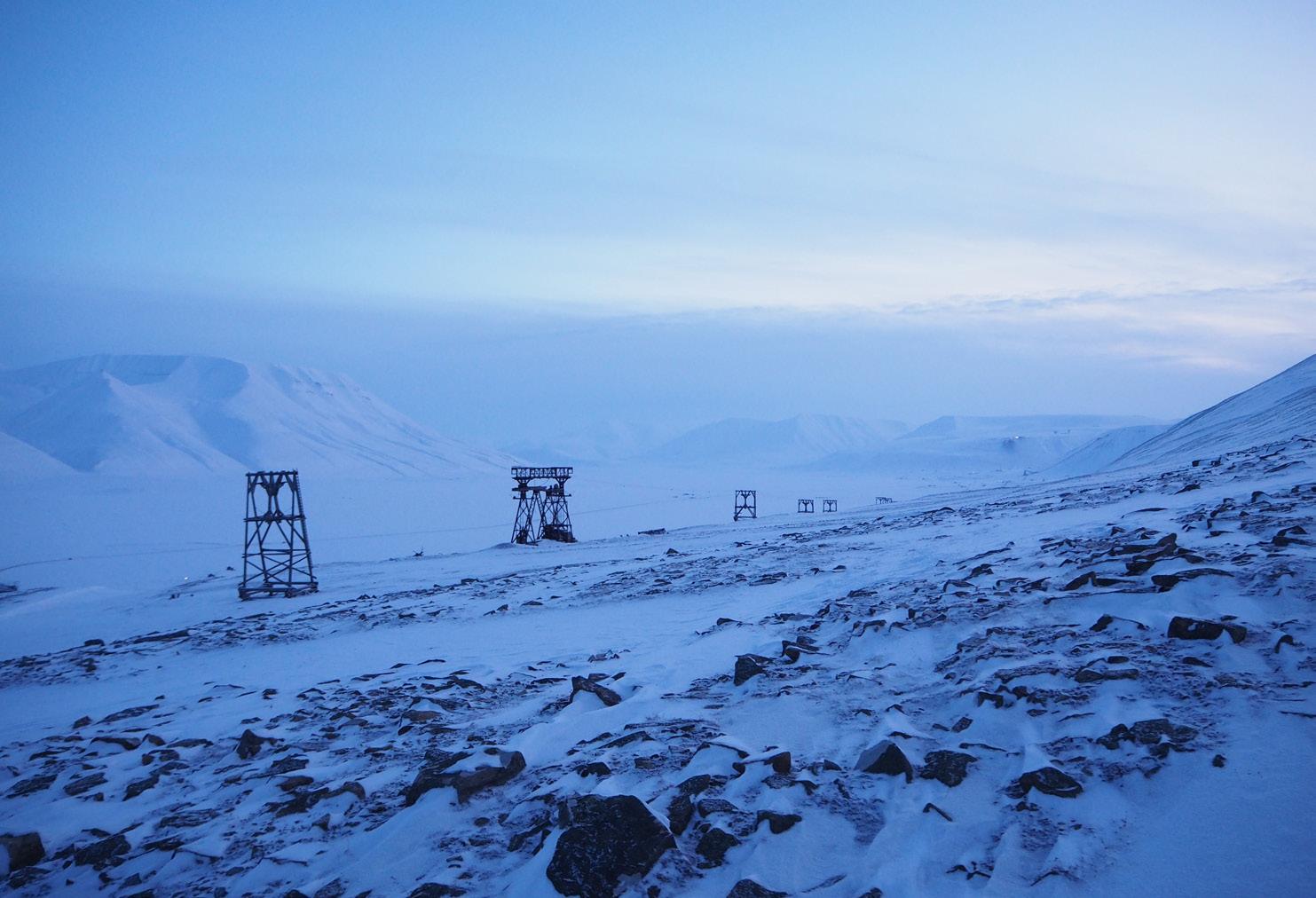
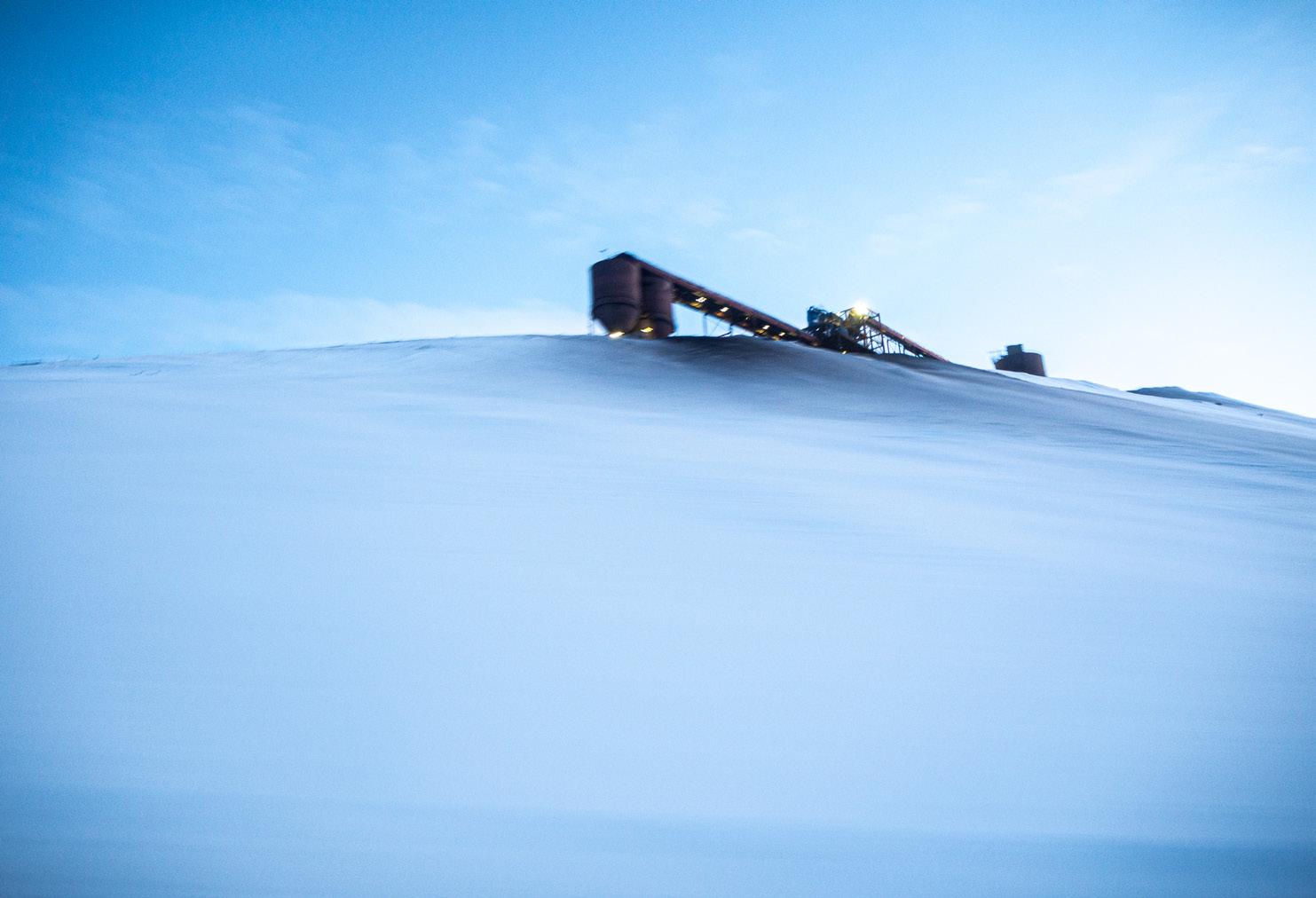
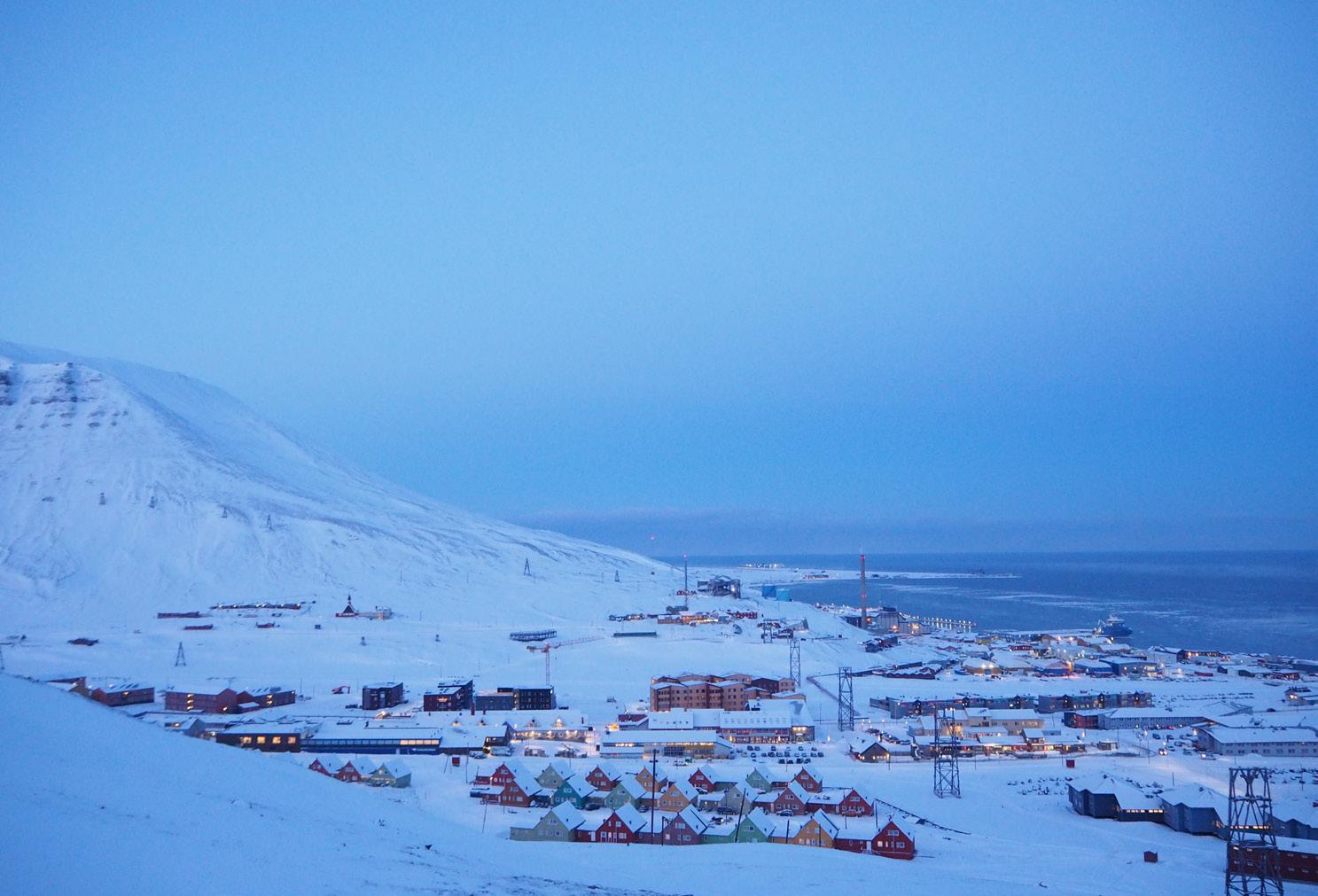
View of Adventdalen and Gruve 7, 2022
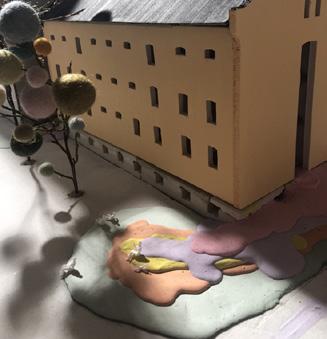
In near future the last Norwegian mine on Svalbard, Gruve 7, will close. The Svalbard Environmental Protection Act 3 states that all traces of the extraction of coal must be removed, and nature restored to it’s original condition. On one hand Svalbard is a fragile arctic landscape, still in the ice age. On the other hand it is functioning as a theme park, and a mean of power for Norway as a nation.
If we question the legitimacy of human presence on Svalbard at all, the one overcoming purpose is science, and what we can learn from it.
The present changes on Svalbard are urgent. Reports show temperatures increasing faster than any other place in the world. The social composition is moving from being a Norwegian coalmining society to an international multicultural society. How we interact with nature is moving from extracting coal and using it for energy, to entering an infrastructural upheaval, where one must find options for energy supplies. As of now, tourism alianate the nature on Svalbard, and the scientific findings from research on arctic climate and nature can only be read about in reports on paper.
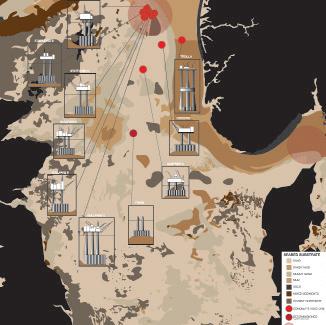
YME punctures the mountain Breinosa, 15 kilometers from Longyearbyen, on the edge between built society and the untouched arctic desert. Due to its location, both far enough from contamination of society and close enough to wilderness, the site is heavily used for research, field work and collecting data. The site is an intersection of resources. Observing upper atmosphere gives us indicators about the future, and digging deep down into the layers of mountain gives us knowledge about the past.
The horizontal section of the site runs through a perishable skeleton of steel on the surface, into a tunnel going 7 kilometers into the dark abyss inside the mountain massif.
Trough the perspective of the current situation in the world, the time and place for a collective agreement on anything is urgent. It is proven, through The International Space Center, that science conquers politics and worldwide conflicts.
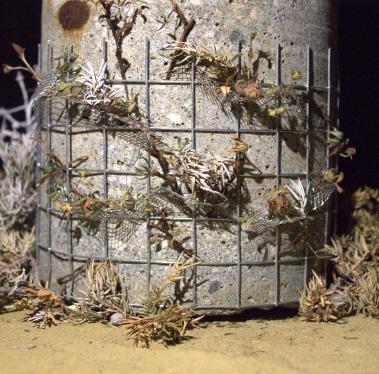
The common umbrella of YME is reserach on climate change. Under this there are five units, unifying knowledge from differend fields, through a common purpose. The project questions how we treat nature in the framework of existing built structures at Svalbard. The site at Mine 7 has it’s wound, which can provide knowledge, and be a host for diplomacy, instead of vanishing for the benefit of fabricated nature. We preserve some DNA for historical and symbolic value for the future. People without culture are like a tree without its roots.
ESSAYS
Svalbard i landskapet by Maren
Hvordan skal vi minnes gruveindustrien, og hva er egentlig best for naturen?
In the social science essay I compare the forest industry in ”Seeing like a state” with the mining industry on Svalbard. Two natural resource industries that are widely different, but have many similarities, as the state was behind them both. The landscape has also been central in both industries and I consider the text “The anthropology of landscape. Perspectives on place and space” by Eric Hirsch and Michael O’Halon to emphasize what the Arctic landscape means to the people on Svalbard.
Memories of Svalbard by Tora
How de we create and recreate identity when managing history?
Intro
”What are the unspoken secrets and what do people carry with them of memories? I’m embarking on a journey towards arguing a projection of what the end of the coal-era means for the future of Svalbard, and what part of the Svalbard’s identity it will play in the future. I have read The Past in the Future: History and the Politics of Identity by Jonathan Friedman, to better understand what lies behind the identities of Svalbard. As well to understand what the stories from the past tell about what expectations for the future are conveyed in the stories. The authentic stories are found around different locations into which I will bring you as Friedman advise. ””Constructing the past isv an act of self-identification and must be interpreted in its authenticity, that is, in terms of the existential relation between subjects and the constitution of a meaningful world””. p. 856 (Friedman)”
Master Courses
Autumn 2021
Spring 2021
Autumn 2020
Education
2020 - 2022
2017 - 2020
2011 - 2014
2010 - 2011
2007 - 2010
Maren Roscher Tora Nitter
Complex Context
Re-form
Teacher: André Fontes, Tom Chamberlain and Hedvig Skjærdingstad
Teacher: Magnus Wåge, Tom Chamberlain and Pavlina Luca
Explorations in ocean space II
Teacher: Nancy Couling and Vibeke Jensen
Master in achitecture at Bergen School of Architecture
Bachelor in architecture at Bergen School of Architecture
Medical doctor at Pomeranian Medical University in Szczecin
Bjørknes private school
Arendal Videregående skole
Complex Context
Master Courses
Autumn 2021
Spring 2021
Autumn 2020
Education
2020 - 2022
2015 - 2019
Fall 2014
Spring 2014
2012/13
2011/2012
2010/2011
Employment
2020 - 2021
2019 - 2020
Complex Context
Teacher: André Fontes, Tom Chamberlain and Hedvig Skjærdingstad
Situated Architecture(s)
Teacher: Alberto Altes and Marco Casagrade
Explorations in ocean space II
Teacher: Nancy Couling and Vibeke Jensen
Master in Architecture at Bergen School of Architecture
Master in Aarchitecture at Oslo School of Architecture and Design
Skolen for Kunst og Design, Aarhus, Danmark
Krabbesholm højskole, Skive, Danmark
Bergen Katedralskole
Lycée Henriette Dachsbeck, Brüssel, Belgia
Bergen Katedralskole
Internship at LPO Longyearbyen
Internship at LPO Oslo
Ocean Spae II
Ocean Spae II
Refrom
Situated Architecture(s)
Complex Context
REFLECTIONS
03.02.22 – Fieldtrip to Svalbard
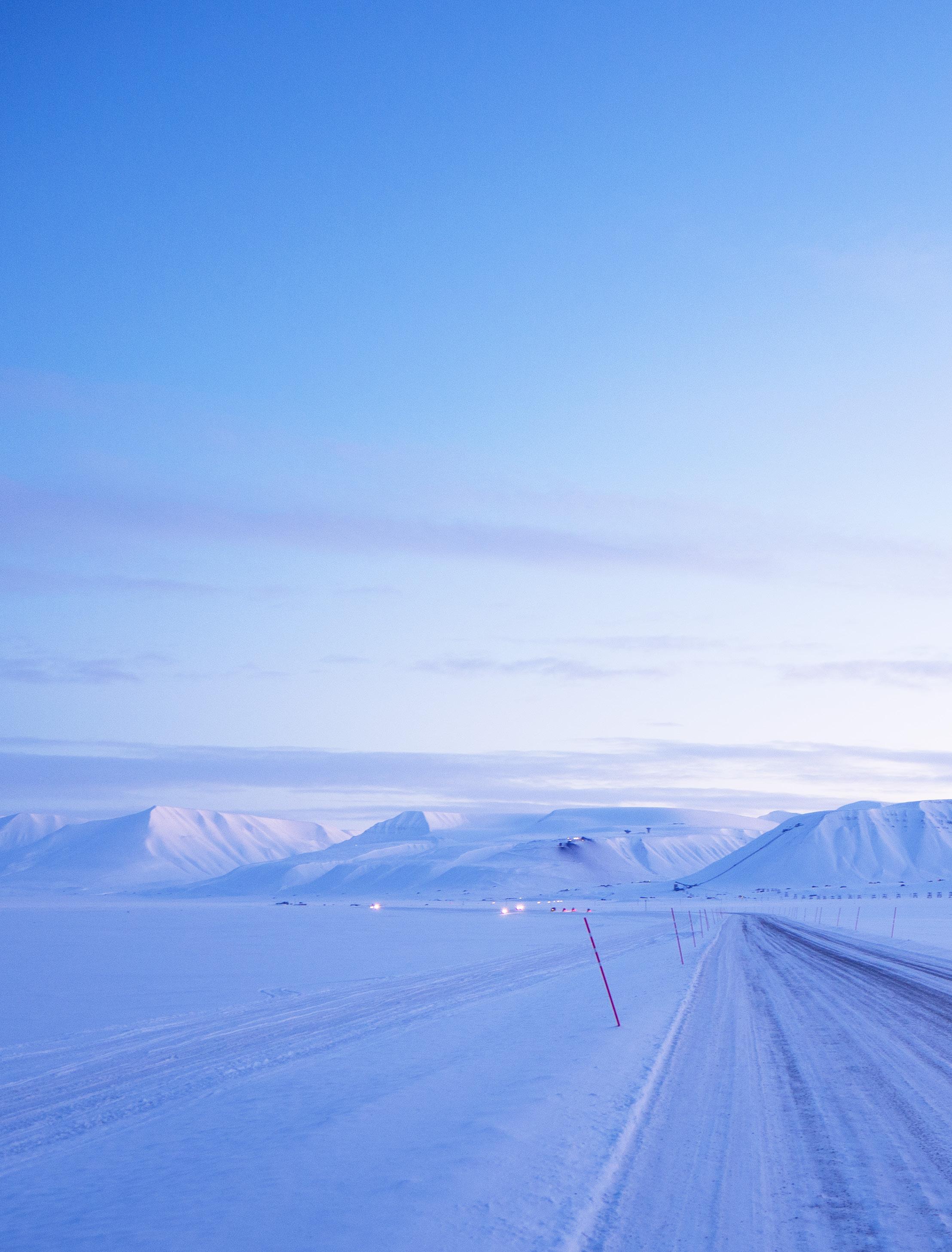
On our trip to Svalbard in November we visited Mine 7, the last active mine. We had the opportunity to go inside the mine and 7km into the mountain together with one of the workers, Tommy Albrigtsen. The vastness and immensity of the infrastructure below surface was really forceful and facinated us both.
At this point we want to use the site of Mine 7, and do a project for the nature, the Arctic nature. We want to create a project that can provide a more haptic and closer relationship to the nature. The site has a a 360degree view along the horizontal axe. In the vertical axe, with its advantageous location in terms of northern lights, and retrieveing data from space, and layers of geology. The contrast between the inner and outer landscape also made a big impression on us, with the infrastructure of the mine inside mountain and the outer overwhelming landscape of the arctic dessert.
At this point we discuss the contemplative: wondering, introverted, pondering and deep in thought, and how to include all cultures, since Svalbard is a multicultural society. We are on a path towards creating a nature-lab, where one can sense the importance of taking care of- and learning from the Arctic nature.
04.02.22
Svalbard – Fieldtrip diariy
Tora:
I am very pleased to back in Longyearbyen. What I have realized is that the people are what I have missed the most. I love the vastness of the arctic nature, and the very own sense of freedom it gave me, to be able to unfold in it. I am curios to bring Maren with me to this place. I think the feeling of showing something you really love to a friend is reconicable to everyone. The nature here can be both extremely relentless, other times so merciful and beautiful that it makes you cry. I hope for most of the last mentioned condition. Otherwise we share the experience of discovering the structures and infrastructure of Gruve 7. The very sharp contrast between the harsh industrial steel structures of the mine, opposed to the the sheet white, pristine lansdscape that sorrounds it, as well as the mines location, provides for many interesting issues to work with.
Maren:
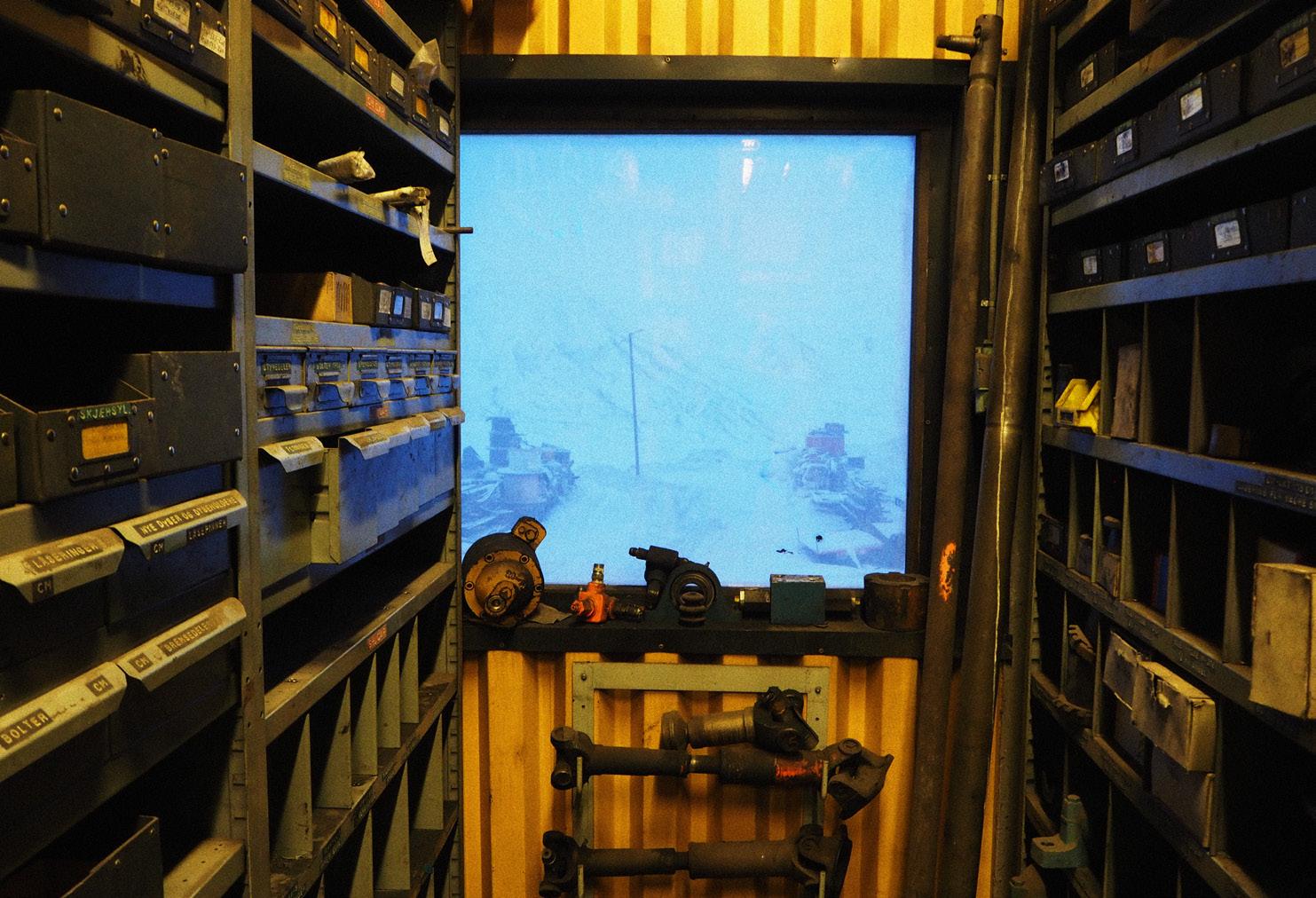
The overwhelming nature on my flight approaching Svalbard. You are far away from everything, and it feels very vulnerable to be present. Nature is a lot. Everything feels special. It is special that there are planes, cars, houses, people, and production in such a place. It was the first impression of Longyearbyen, but once you have been there a bit it is like a small village where you quickly recognize people you meet here and there. During a walk in the dark, snowflakes falling slowly from the sky. It gives me associations to being inside a snowball. A type of vacuum. The light in February is magical. The sun lies behind the pyramid-shaped mountains and gives us orange, pink and blue light in contrast to the chalk-white snow. The fresh snow has spread over the landscape. It looks like a freshly ironed sheet laid out over nature with sharp edges and lines. The visit to mine 7 was a big contrast to the white and desolate field on Svalbard. The black coal, steel and large machines show how established this industry is. It is the experience over 100 years of coal extraction that makes it look exactly as it does today in mine 7. The sole functi-
on of the building is for this industry to be as efficient and robust as possible. Steel meets steel that meets more steel. The openings they have towards nature are like postcards from nature on Svalbard. It is a view that changes from day to day with different weather, wind, light, and temperature.
23.02.22 – after the trip
We have now decided on Mine 7 as our project site. We still want the project to be for the nature in a way, but now more in the long run, over time. Intentions of creating a closer relation, a sensible relation to the nature. In the form of a contemplative room and knowledge resource. The project is called “Sensory lab 7”.
We are reprogramming the existing structure which is very specifically designed for their purpose and program today. Preserve the structure and provide rules of premises for how it is worked with and reprogram the structure and area to something that serve nature in the long run. The specific utility value of the structure for the mines will be redefined to a flexible space with form and room qualities put in a new context.
Why:
To test the meeting between nature and industry in the contemplative. Give the framework for something that is no longer relevant a new value for Svalbard and Longyearbyen regardless of what happens in the future. Strengthen people’s proximity to, and knowledge of, Arctic nature. Create an arena to learn and talk about problems in the Western world. Cover a need through existing structures, to avoid shipping new perishable materials from the mainland to the Arctic. Make an example of reuse, recycling, circular construction practices.
05.03.22 – after the 2. Presentation
The concept of the project was presented with the research and material from the site with the geopolitical situation, the environmental protection act and the historical aspect of Svalbard. The discussion after ended up in a geopolitical talk about the instabilities and potential political interests in the island based on the ongoing war in Europe. How can we frame it to be more direct into the project?
We then made a clear choice that this is not for tourists. We do not want more people to travel to Svalbard to burden nature there, but rather provide opportunities for researchers to work unaffected by tourism at mine 7 and Breinosa (the mountain). The university center in Svalbard (UNIS) will expand their research park in Longyearbyen, but we believe that it will be better for the research to be able to work at the place where the samples are extracted instead of traveling from Longyearbyen and up to Breinosa to take samples. The opportunity to take samples all year round, 24/7, will be crucial for the work. The Mine 7 site is a place that is close enough to the community so that you still have infrastructure such as roads, water, sewers and electricity that goes there - and far enough away for the research not to be affected by the pollution from the city(particles and light).
23.04.22 – after the 3. Presentation
The project is now called “Smelte – International faculty for climate change”. The program is rooted in the situation we are in. Both in terms of landscape and climate change. This can be further developed into something more specific aimed at the site’s unique location with research in the various research fields. To emphasize this, we will develop the building into something that speaks on behalf of the fields working here.
Longyearbyen february 2022