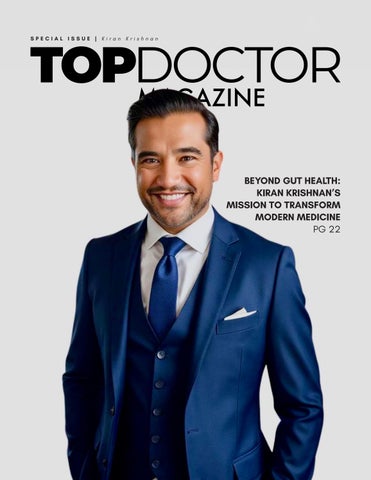
SPECIAL ISSUE | Kiran Krishnan
BEYOND GUT HEALTH: KIRAN KRISHNAN’S MISSION TO TRANSFORM MODERN MEDICINE PG 22
“The most powerful ecosystem we will ever study is the one living inside us — our microbiome.”
PUBLICATION TEAM Publisher: John Highland Editor In Chief: Hannah H. Editorial Assistant: Jillian Fast
CREATIVE DEPARTMENT Senior Graphic Designer: Laura Poyner Graphic Designers: Dylan R-N
EXPERT CONTRIBUTORS
Biohacking & Longevity Expert: Lindsay O’Neill-O’Keefe Contributing Authors: Luke Argue, Riley George, Ashleigh Quint
EXECUTIVE TEAM
Chief Digital Content Officer: David Lee Vice President of Development: Mark Carvalho Fractional Marketing Officer: Craig Handley Advisory Board: Dr. Arthur Katona, Dr. Francisco Cabal, Dr. Edmond Ng, Dr. Kianor Shah
MAGAZINE CONTRIBUTORS
A LETTER FROM THE EDITOR Our mission and purpose at TopDoctor Magazine is to foster connections within the health and wellness community and empower our readers to make wellinformed healthcare and lifestyle decisions. We pride ourselves on being the ultimate resource for interviews with health and wellness leaders, trending medical news, and healthy living topics. We understand that choosing a healthcare provider is a crucial decision. Our in-depth interviews with esteemed doctors and medical professionals aim to bridge the gap between them and their clients. By providing our readers with personal insights, philosophies, and areas of expertise, we facilitate a deeper understanding of the individuals responsible for your health and well- being. We also strive to highlight our outstanding practitioners, showcasing their dedication to their patients and contributions to the medical community. The field of medicine is constantly evolving, with new practices, therapies, and technologies emerging at a rapid pace. At TopDoctor Magazine, we strive to keep you updated on the latest advancements in the medical world. Our comprehensive coverage of trending medical news equips both doctors and patients with the knowledge they need to make informed choices about healthcare options. Building strong connections within the medical community is essential for enhancing patient care and driving medical progress. Our magazine serves as a bridge, connecting medical companies with doctors and vice versa. By facilitating these connections, we aim to catalyze collaborations that can lead to innovative solutions and improved healthcare outcomes for everyone.
It is our firm belief that well-informed individuals make better decisions about their health. By providing you with insights into established and emerging medical trends and technologies, we empower you to take an active role in your healthcare choices. Whether you are a healthcare professional seeking to stay updated on the latest advancements or a patient eager to make informed decisions about your well-being, TopDoctor Magazine is here to support you. In every issue, we strive to uphold the highest standards of journalistic integrity, accuracy, and relevance. Our dedicated team of writers, editors, and medical experts work tirelessly to bring you well-researched and compelling content that is both educational and engaging. Moreover, our graphic design team is committed to delivering an aesthetically pleasing reading experience where captivating design seamlessly merges with informative content, ensuring each issue becomes an engaging journey of discovery. As we embark on this mission to serve as your trusted source of medical information and insights, we encourage you to join us on this exciting journey. Your feedback and suggestions are invaluable to us, and we look forward to hearing from you. Thank you for being a part of the TopDoctor Magazine community. Together, let us embrace knowledge, forge connections, and make informed decisions to lead healthier lives. With warmest regards, Hannah H.
TABLE OF
CONTENTS
10
DO YOU KNOW HOW COLD WATER AFFECTS YOUR HEALTH?
16
SEASONAL ALLERGIES: HOW TO NATURALLY NIP THEM IN THE BUD
22
BEYOND GUT HEALTH: KIRAN KRISHNAN’S MISSION TO TRANSFORM MODERN MEDICINE
30
FOOD ADDITIVES BANNED IN EUROPE BUT NOT AMERICA
36
BUILDING MUSCLE OVER 60
HOPE LIVES HERE.
A science-based community of education, support, and connection for families navigating neurodevelopmental challenges. The Dr. Goodenowe NeuroSupport Program empowers families through education, community, structured health tracking, and nutritional plasmalogen support. Our goal is to provide the tools, knowledge, and encouragement families need to stay engaged throughout their child’s journey—because meaningful progress begins with understanding, and no family should walk that journey alone.
NeuroSupport is an education and support program and is not a substitute for medical care. Our goal is to build a community centered on education, connection, and hope.
Join the NeuroSupport Community. Learn more and apply today. Call 1.951.228.2224 or visit communityhealth.drgoodenowe.com
“We truly believe they’re helping his brain and body function at a higher level. Seeing these changes, especially in such a short time, has brought us a renewed sense of hope and excitement for what’s ahead.” -Karine H.
10
12
16
Top Doctor Magazine / Special Issue - Kiran Krishnan / 17
18
Top Doctor Magazine / Special Issue - Kiran Krishnan / 19
DELIVER MORE FOR YOUR CELLS FOR YOUR BODY FROM OTHER MODALITIES Whether the focus is on: • Wellness • Performance • Healthy aging • Recovery NanoVi® provides a unique way to improve your results. DELIVER MORE FOR YOUR CELLS IMPROVE PROTEIN ACTIVITIES
DELIVER MORE FOR YOUR BODY PERFORMANCE • WELLNESS • RECOVERY
Proteins do the work in the cell
NanoVi® supports protein function to promote energy production, cellular repair, recovery, resilience, and overall performance.
The impact of NanoVi is noticeable and measurable. More energy, faster recovery and less stress are some of the more apparent results.
Since proteins are fundamental to nearly every biological process, supporting their activity helps optimize across every system.
Independent studies confirm the benefits of NanoVi and include placebo-controlled research and published results.
DELIVER MORE FROM OTHER MODALITIES BETTER CELLULAR FUNCTION CAN IMPROVE ANYTHING ELSE YOU DO
Nutrition (Supplements)
Red Light Therapy
Hydrogen Therapy
Athletic Training
Brain Training (Neurofeedback)
Hyperberic (HBOT)
Ozone Therapy
Infusion Therapy
Cryo Therapy
Compression Therapy
Cell Therapies
PEMF Therapy
NanoVi® isn’t another competing modality, it’s the layer that helps support the biology beneath them all.
eng3.com info@eng3.com
+1 206 525-0227
These statements have not been evaluated by the FDA. This product is not intended to diagnose, treat, cure or prevent any specific disease. © Copyright 2026 by Eng3 Corporation. All rights reserved. M458-rev01
eng3.com | nanovi.de #1
AND
AGELESS TIMELESS
BEYOND GUT HEALTH
Kiran Krishnan’s Mission to Transform Modern Medicine BY MICHELE HUGHES
CEO OF AGELESS AND TIMELESS AND HOST OF THE AGELESS AND TIMELESS PODCASTⓇ For most entrepreneurs, success begins with identifying a market opportunity. For Kiran Krishnan, it begins by identifying a scientific truth long before the rest of the world recognizes its significance. Over the last two decades, Krishnan has quietly become one of the leading voices in microbiome science, helping transform an emerging area of biology into one of the fastest-growing fields in healthcare. As a research microbiologist, clinical researcher, inventor, entrepreneur, and educator, he has built multiple companies, designed dozens of human clinical trials, contributed to numerous scientific publications and patents, and educated more than 100,000 healthcare practitioners
22
worldwide. Yet perhaps his greatest contribution has been helping shift the way modern healthcare thinks about disease itself. Long before “gut health” became a mainstream topic, Krishnan was teaching that the trillions of microbes living within us influence nearly every aspect of human biology. Today, the microbiome is recognized as a key regulator of immunity, metabolism, brain health, hormones, skin health, and healthy aging. What was once considered a niche scientific interest has become one of the defining frontiers of modern medicine.
Top Doctor Magazine / Special Issue - Kiran Krishnan / 23
24
“My career has always been about translating science,” Krishnan said. “There are incredible discoveries happening inside research laboratories every day, but those discoveries only matter if they improve people’s lives.”
Microbiome Impact on Modern Healthcare
That philosophy has shaped every chapter of his career.
While many people think of the intestine simply as a digestive organ, Krishnan describes it as one of the body’s most important protective structures.
Educated and trained in research microbiology at the University of Iowa, Krishnan quickly realized that the traditional path of scientific discovery often stopped at publication. He wanted to bridge the gap between research and real-world healthcare by turning complex biological discoveries into practical solutions that clinicians and patients could actually use. That vision led him to co-found Microbiome Labs, one of the first companies dedicated entirely to microbiome therapeutics. The timing was anything but easy. At the time, the microbiome was far from today’s household term. The prevailing view of bacteria remained largely negative, and few appreciated that beneficial microbes could profoundly influence health far beyond digestion. Building a business around that idea required more than scientific conviction. It required educating an entire market. Rather than relying on large amounts of outside capital or traditional marketing, Krishnan and his team focused on education. Conference after conference, webinar after webinar, they taught healthcare practitioners about the emerging science of the microbiome, translating complex research into clinically meaningful concepts that practitioners could immediately apply. “It was never about convincing people to buy products,” he explained. “It was about helping clinicians understand biology. Once they understood the science, they could make better decisions for their patients.” That educational approach helped establish Microbiome Labs as one of the most respected microbiome companies in functional and integrative medicine while demonstrating that scientific credibility can become a sustainable competitive advantage.
Throughout that journey, one concept became central to Krishnan’s work: the gut barrier.
“The gut barrier is one of the largest interfaces between our external environment and our internal biology,” he said. “Every day it decides what should enter the body and what should remain outside. When that barrier loses integrity, the consequences extend far beyond digestion.”
Focus on the Gut Barrier and Disease Prevention
His research and educational work have helped popularize two concepts that are increasingly shaping modern medicine: gut barrier dysfunction, commonly referred to as “leaky gut,” and metabolic endotoxemia. Leaky gut refers to increased intestinal permeability, allowing unwanted microbial components to cross into the bloodstream. Among the most important of these components is lipopolysaccharide, or LPS, an endotoxin produced by certain gut bacteria. When LPS enters circulation, it can trigger persistent low-grade immune activation, a condition known as metabolic endotoxemia. Krishnan believes this chronic inflammatory process represents one of the most important upstream drivers of many diseases associated with aging. “For decades we’ve treated chronic diseases as if they were completely separate conditions,” he shared. “What we’re increasingly recognizing is that many share common biological drivers. The microbiome and the gut barrier are two of the most important.” His work has consistently emphasized restoring biological function rather than simply managing symptoms. Instead of asking how to suppress inflammation after it develops, he asks what disrupted the body’s natural ability to regulate inflammation in the first place.
Top Doctor Magazine / Special Issue - Kiran Krishnan / 25
That systems-based philosophy now extends far beyond gut health. Through his subsequent ventures, including EndoAxis Labs, The Biome Learning Center, PhytoVeda US, and SIV Care, Krishnan has continued applying the same principles across women’s health, skin health, healthy aging, botanical medicine, and precision nutrition. Although the applications differ, the underlying philosophy remains remarkably consistent: understand biology first, then build solutions that restore function. His work has also expanded beyond individual organisms to the complex ecosystems they create. While probiotics remain an important tool, Krishnan argues that true microbiome health requires a broader approach that integrates dietary diversity, prebiotics, postbiotics, polyphenols, sleep, exercise, stress management, and lifestyle into a cohesive strategy for building resilience. “The microbiome behaves like a rainforest,” he explained. “No single species determines the health of the ecosystem. Health comes from balance, diversity, and the interactions between countless organisms working together.”
Future Outlook for Microbiome Medicine Looking ahead, Krishnan believes the next revolution is already underway.
Artificial intelligence, computational biology, advanced genomics, and systems biology are converging to make personalized microbiome medicine increasingly possible. Instead of selecting probiotics based simply on species names, future interventions will likely be designed around microbial genes, metabolic pathways, and ecosystem function, creating targeted microbial consortia capable of addressing specific biological challenges. “We’re moving from descriptive biology to predictive biology,” he said. “We’ll increasingly be able to understand not only which microbes are present, but what they’re capable of doing and how they interact with one another. That will fundamentally change preventive healthcare.” That future is already beginning to take shape through
26
Krishnan’s latest venture, Quantbiotics, a company built around what he believes will become the next generation of microbiome therapeutics. At the heart of the platform is the Biome E.N.G.I.N.E.™ (Ecological Network-Guided Intelligent Next-generation Engineering), a proprietary scientific operating system that reimagines how probiotics and synbiotics are discovered and designed. Rather than starting with strains that have already been studied, the E.N.G.I.N.E. begins by asking a fundamentally different question: Which biological functions must be restored to improve a specific health condition? It then integrates systems biology, microbial ecology, comparative genomics, computational modeling, artificial intelligence, and human clinical validation to identify, engineer, and continuously refine precision microbial ecosystems designed around biological function rather than historical popularity. Every new formulation and every clinical study feeds back into the platform, making it increasingly intelligent over time. For Krishnan, Quantbiotics represents the natural evolution of everything he has spent his career pursuing: translating the complexity of the microbiome into precisely engineered, evidence-based solutions that have the potential to redefine how probiotics and synbiotics are developed for the future of preventive healthcare. Despite the rapid pace of scientific discovery, Krishnan’s message remains surprisingly simple: Health is not built by chasing shortcuts or searching for miracle solutions. It is built by protecting the biological systems that have evolved to keep us resilient throughout life. “The microbiome isn’t just another organ,” he concluded. “It’s one of our most important biological partners. If we learn to care for that relationship, we’ll fundamentally change how we think about health, longevity, and the prevention of chronic disease.” For Krishnan, the journey has never been about following scientific trends. It has been about anticipating them, translating them into real-world impact, and redefining how medicine approaches the root causes of disease. In doing so, he has not only built influential companies, but has helped usher in a new era of healthcare, one where the microbiome stands at the center of prevention, resilience, and the future of human health.
About Michele Hughes
Michele Hughes is a Founding Member and VP of Business Development at Longevity Masters Global, an exciting new startup co-founded by Chairman Dr. Robert Goldman and President Rob Fletcher that brings together many of the world’s leading experts in longevity, health optimization, wellness, recovery, and peak human performance. She is also the visionary founder of Ageless and Timeless and the dynamic host of the Ageless and Timeless Podcast®. As a monthly contributor to TopDoctor Magazine, Michele offers powerful insights on wellness, longevity, and living fully at every stage of life. With a deep passion for health and vitality, and serving as a role model for timeless elegance, she empowers audiences to embrace their highest potential and live with purpose and grace. The Ageless and Timeless Podcast® was one of only
20 inaugural podcasts selected for the Muscle & Fitness+ platform when it launched in 2023, further expanding Michele’s reach as a trusted voice in the longevity and wellness space. For more information, to express interest in being a guest on the Ageless and Timeless Podcast®, to be featured in Michele’s TopDoctor Magazine column, or to inquire about podcast collaborations or having Michele Hughes as a guest on your show, please contact: Email: themichelehughescompany@gmail.com Website: www.agelessandtimeless.com Instagram: @agelessandimeless LinkedIn: https://www.linkedin.com/in/michele-hughes83a3b935/ Facebook: https://www.facebook.com/michele.hughes.186 Ageless and Timeless podcast, on YouTube, iTunes, Spotify, and wherever podcasts are available.
Top Doctor Magazine / Special Issue - Kiran Krishnan / 27
30
Top Doctor Magazine / Special Issue - Kiran Krishnan / 31
B U I L D I N G M U S C L E OV E R 6 0 B U I L D I N G M U S C L E OV E R 6 0
BUILDING MUSCLE OV E R 6 0
B U I L D I N G M U S C L E OV E R 6 0
Top Doctor Magazine / Special Issue - Kiran Krishnan / 37
38
By Evelyn Flaharty As we age, it’s normal to experience loss in muscle mass, strength, and flexibility. This process can begin as early as in your 30s and 40s. However, there are several things we can do to slow down this process and even build muscle as we age.
WHY IS IT ESSENTIAL TO MAINTAIN MUSCLE MASS? Maintaining muscle mass as we age is crucial for overall health, mobility, and independence. Muscle strength supports daily activities, such as walking, climbing stairs, and carrying groceries, which are essential for a good quality of life. It also helps protect against falls and injuries, which become more common with age due to decreased balance and bone density. As we age, we must consider how we want to live in our 70s, 80s, and even 90s. Personally, I want and plan to maintain my independence, which is why we all need to start as early as possible to take care of our health.
BONE DENSITY LOSS AS WE AGE Many people begin to experience bone loss after age 50. Bone density loss refers to a decrease in the mineral content of bones, called osteopenia. Osteopenia often develops silently, with no noticeable symptoms until a fracture occurs. Factors contributing to osteopenia include aging, a sedentary lifestyle, inadequate intake of calcium and vitamin D, smoking, excessive alcohol consumption, and certain medications or medical conditions. While it is not as severe as osteoporosis, osteopenia is a significant warning sign, highlighting the need to take proactive measures to improve bone health. Early detection through bone density tests can help manage osteopenia effectively and prevent its progression to osteoporosis. Therefore, this would be a good time to discuss getting a bone density baseline test with your healthcare provider. A bone density baseline test is a non-invasive procedure for assessing bone health. Establishing a baseline is particularly important for individuals at risk of osteoporosis, including postmenopausal women, older adults, and those with a family history of bone diseases. A bone density test is no different than establishing a baseline mammogram. The results provide a benchmark for future comparisons, enabling early detection of bone density loss and guiding preventive measures. A bone density test can help healthcare providers recommend interventions to maintain or improve bone strength and reduce the risk of fractures. Unfortunately, our health care system typically recommends you take your bone density baseline at 65. That’s 15 years after you begin to lose bone density. As a cancer survivor, I am a firm believer in advocating for my health. I had my baseline taken at 40 for my mammogram and 50 for my bone density. If something is not moving in the right direction, the sooner we know, the sooner we can take corrective action. Because of the possibility of early detection, it’s crucial that you establish a strong relationship with your healthcare provider and constantly advocate for your health. You can’t afford to outsource your health to someone else. Your body and health are your responsibility; no one else will ever be as invested in your wellbeing as you.
Top Doctor Magazine / Special Issue - Kiran Krishnan / 39
WHAT IS OSTEOPOROSIS? Osteoporosis is a severe condition in which bone density is significantly reduced. This condition makes bones weak and even brittle, increasing the risk of fractures. While osteoporosis is more common in older adults, especially postmenopausal women, it can affect anyone. Men need to be concerned about osteoporosis, even though it is often viewed as a condition primarily affecting women. While women are at higher risk due to hormonal changes after menopause, men are not immune to bone loss. Men typically experience a gradual decline in bone density as they age, with significant bone loss often beginning after age 70. Risk factors such as low testosterone levels, smoking, excessive alcohol consumption, poor diet, sedentary lifestyle, and certain medical conditions or medications can further increase their risk. Men are also more likely to remain undiagnosed until they suffer a fracture, as men are less frequently screened for osteoporosis.
CALCIUM AND VITAMIN D FOR STRONG BONES Maintaining strong, healthy bones is essential for overall well-being and mobility throughout our lives. Calcium and vitamin D play a crucial role in our bone health.
WHY CALCIUM IS ESSENTIAL Calcium is the primary mineral found in bones and is vital for maintaining their structure and density. Almost all of our bodies’ calcium is stored in our bones and teeth, providing the strength they need to withstand daily activities. Think back to when you were a small child, and your mother told you to drink your milk so you would have strong bones. Well, she was right. Calcium also supports vital functions such as muscle contraction, nerve transmission, and blood clotting. When dietary calcium is insufficient, the body draws from its calcium reserves in the bones, weakening them over time. Just before my cancer diagnosis, I noticed that my nails would constantly break or split down the middle. It was the first warning sign of my calcium deficiency. In addition to having my thyroid removed because of cancer, I also had two of my parathyroid glands removed, which led to me having ongoing issues with low calcium levels. Good sources of calcium include dairy products like milk, cheese, yogurt, leafy greens, almonds, fortified plantbased milk, and tofu. The recommended daily calcium intake for adults is about 1,000–1,200 mg, depending on age and sex. You can also take calcium in supplement form. However, be cautious, particularly if you don’t know your current calcium levels. I can tell you from personal experience that too much calcium is just as bad as a deficiency. As I am tested regularly, it’s easy to identify when my calcium levels are in excess from taking too much calcium, enabling my healthcare provider and I to take corrective action. Know your numbers! Always consult with your healthcare provider before taking any supplements.
THE ROLE OF VITAMIN D Vitamin D is just as critical as calcium for bone health because it facilitates calcium absorption from the digestive system into the bloodstream. Without sufficient vitamin D, the body cannot effectively utilize dietary calcium,
40
Top Doctor Magazine / Special Issue - Kiran Krishnan / 41
no matter how much is consumed. Vitamin D is unique because the body can synthesize it through exposure to sunlight. However, factors like limited sun exposure, aging, darker skin tones, and geographic location can hinder vitamin D production. In addition, we know that too much exposure to the sun can lead to skin cancer. Therefore, we must rely on other methods to obtain the appropriate amount of vitamin D our bodies require. Foods such as fatty fish (e.g., salmon, mackerel, and sardines), egg yolks, and fortified products can help provide vitamin D. Many individuals also benefit from supplements to meet the daily recommended intake of 600–800 IU for most adults. Again, know your numbers before taking any supplements.
VITAMIN D AND CALCIUM, YOU NEED BOTH Vitamin D and calcium work hand in hand to build and maintain bone density. Vitamin D ensures calcium is absorbed efficiently, while calcium provides the structural material for bone strength. A deficiency in either can lead to compromised bone health, increasing the risk of osteoporosis, fractures, and other complications. Vitamin D and calcium are the cornerstone of strong, healthy bones. By prioritizing these nutrients through diet, lifestyle, and supplementation when necessary, you can protect your skeletal system and reduce the risk of bone-related disorders. A proactive approach to bone health ensures greater strength, stability, and independence as you age.
TIPS FOR HEALTHY BONES - Consume a Balanced Diet: Include calcium-rich foods and those fortified with vitamin D to meet daily requirements. - Get Regular Sunlight: Spend 10–30 minutes outdoors in sunlight several times a week, depending on your skin tone and location. Make sure you apply sunscreen. - Exercise Regularly: Weight-bearing and resistance exercises stimulate bone formation and improve bone density. - Consider Supplements: If dietary intake or sun exposure is inadequate, consult a healthcare provider about taking calcium and vitamin D supplements. - Avoid Bone Depleters: Limit smoking, alcohol, and excessive caffeine, as these can negatively impact bone health.
STRENGTH TRAINING Strength training is a workout routine focusing on building muscle strength using light weights, resistance bands, or just your body weight. It’s a powerful tool in building bone density and muscle mass. It also strengthens the muscles around the bones, improving balance, posture, and stability, which reduces the risk of falls and fractures. Therefore, it is essential for both men and women to prioritize bone health through regular weight-bearing and strength-training exercises. It’s also worth noting that muscle plays a vital role in metabolism, aiding in weight management and reducing
Top Doctor Magazine / Special Issue - Kiran Krishnan / 43
the risk of chronic conditions like type 2 diabetes and heart disease. Preserving muscle mass can improve energy levels, enhance posture, and promote mental well-being, allowing older adults to stay active and engaged in their communities. Regular strength training and a protein-rich diet are key to maintaining muscle health as we age.
WEIGHT-BEARING EXERCISES Weight training strengthens muscles and stimulates bone growth, helping to counteract the natural decline in muscle mass and bone density that occurs with aging. Additionally, it supports joint health, improves metabolic function, and enhances cardiovascular health, contributing to a better quality of life. Before starting a weight training program, consult a healthcare provider or fitness professional to ensure safety and proper technique. Focus on exercises that target major muscle groups and use proper form to prevent injury. It is essential to begin gradually to minimize the risk of injury. Recovery from an injury as we age takes time. Start with light dumbbells or utilize your own body weight to perform exercises. As you build strength and confidence over time, you will be able to progress safely to heavier weights. Women should not hesitate to incorporate weight training into their fitness routines. Contrary to common misconceptions, lifting weights will not result in a masculine appearance. Women naturally have significantly lower levels of testosterone compared to men, and these levels tend to decrease further with age. As a professional bodybuilder, in my 70s, I can attest to the fact that lifting weights will not negatively transform your physique. To the contrary, weight training helps improve muscle tone, enhances strength, and promotes a leaner physique by increasing calorie expenditure during and after training. Embracing resistance exercises can lead to improved health, confidence, and overall well-being.
SAFE AND EFFECTIVE WEIGHT TRAINING EXERCISES Focus on exercises that target major muscle groups and use proper form to prevent injury. Below are a few suggestions. - Squats & Step-ups: Targets quadriceps, hamstrings, glutes - Pushups: Targets chest, shoulders, triceps - Seated Rows with bands: Targets back, shoulders, biceps - Overhead Shoulder Press: Targets shoulders, triceps - Planks: Targets core
TIPS FOR SUCCESS Start slowly: Start with light weights or resistance bands. When I first started lifting, I thought 5 lbs was heavy. That’s a bag of sugar. Remember, Rome wasn’t built in a day. Be patient. As you built strength, gradually increase the weight. Focus on form: This is so important and cannot be stressed enough. Proper form is key to avoiding injury and ensuring you are training the muscle correctly. Ever wonder why there are mirrors everywhere at the gym? Use them to check your form.
44
Top Doctor Magazine / Special Issue - Kiran Krishnan / 45
46
Rest and recovery: Allow 48 hours between sessions targeting the same muscle group to promote recovery and growth.
CONCLUSION Building muscle after 60 is a vital component to maintaining health, mobility, and independence as we age. Strength training and a diet rich in protein, calcium, and vitamin D will help combat age-related muscle loss, enhance bone density, and support joint health. Starting training gradually and focusing on proper technique to ensure safety and effectiveness, while progressively increasing resistance builds strength over time. Regular weight training not only improves physical function but also boosts metabolism, enhances balance, and reduces the risk of falls and injuries. By committing to a consistent and well-rounded fitness routine, adults over 60 can enjoy greater vitality, resilience, and quality of life.
Top Doctor Magazine / Special Issue - Kiran Krishnan / 47
REFERENCES
AND
RESOURCES DO YOU KNOW HOW COLD WATER AFFECTS YOUR HEALTH? 1. Watson, Kathryn. “Cold Shower Benefits for Your Health.” Healthline, April 25, 2017. https://www. healthline.com/health/cold-shower-benefits. 2. Nall, Rachel. “Are There Any Health Benefits to a Cold Shower?” www.medicalnewstoday.com, October 24, 2024. https://www.medicalnewstoday.com/articles/325725. 3. Cleveland Clinic. “Are Cold Showers Good for You?” Cleveland Clinic, June 17, 2021. https://health. clevelandclinic.org/are-cold-showers-good-for-you. 4. Caporuscio, Jessica. “What Are the Benefits of Cold and Hot Showers?” www.medicalnewstoday. com, January 13, 2020. https://www.medicalnewstoday.com/articles/327461. 5. Cleveland Clinic. “Are Cold Showers Good for You?” 6. Bongiorno, Peter. “A Cold Splash–Hydrotherapy for Depression and Anxiety.” Psychology Today, July 6, 2014. https://www.psychologytoday.com/us/blog/inner-source/201407/cold-splash-hydrotherapy-depression-and-anxiety. 7. Cherney, Kristeen. “Cold Shower for Anxiety: Research, Efficacy, and More.” Healthline, June 22, 2020. https://www.healthline.com/health/anxiety/cold-shower-for-anxiety#research. 8. Watson, Kathryn. “Cold Shower Benefits for Your Health.” 9. LIVunLtd. “Home - LIVunLtd.” LIVunLtd, October 24, 2024. https://livunltd.com/?country=US. 10. Cleveland Clinic. “Are Cold Showers Good for You?” 11. LIVunLtd. “Home - LIVunLtd.”
SEASONAL ALLERGIES: HOW TO NATURALLY NIP THEM IN THE BUD 1. Ambardekar, Nayana. “Allergic Reactions: Symptoms, Triggers, and Treatments.” WebMD, March 13, 2022. https://www.webmd.com/allergies/allergic-reaction-causes.
2. Kerr, Michael. “Seasonal Allergies: Symptoms, Causes and Treatment.” Healthline, March 8, 2019. https://www.healthline.com/health/allergies/seasonal-allergies.
3. May, Madison. “The Real Reason Allergies Are on the Rise.” Evie Magazine, October 7, 2022. https:// www.eviemagazine.com/post/the-real-reason-allergies-are-on-the-rise.
4. Ibid. 5. Eske, Jamie. “Antihistamines: How They Work, Types, and Side Effects.” Medical News Today, February 16, 2023. https://www.medicalnewstoday.com/articles/antihistamines. 6. Cleveland Clinic. “Finding Allergy Relief without Medications.” Cleveland Clinic, April 25, 2022. https://health.clevelandclinic.org/natural-remedies-for-seasonal-allergies. 7. Good, Sydney. “Listen to Your Gut: Why You Need to Prioritize Gut Health This New Year.” TopDoctor Magazine, January 4, 2024. https://topdoctormagazine.com/wellness/health-nutrition/listento-your-gut-why-you-need-to-prioritize-gut-health-this-new-year/. 8. Frothingham, Scott. “Home Remedies for Allergies: Relieve Allergy Symptoms.” Healthline, February 14, 2023. https://www.healthline.com/health/home-remedies-for-allergies. 9. BCB Honey Farm. “Benefits of Raw, Unpasteurized Local Honey for Seasonal Allergies.” BCB Honey Farm, May 17, 2021. https://bcbhoneyfarm.com/blogs/education/benefits-of-raw-unpasteurized-local-honey-for-seasonal-allergies. 10. Frothingham. “Home Remedies for Allergies.” 11. Link, Rachael. “The Herb That Relieves Allergies, Migraines & More.” Dr. Axe, April 28, 2018. https://draxe.com/nutrition/butterbur/. 12. Mann, Denise. “What You Should Know about Spirulina Benefits, Nutrition, and More.” The Healthy, May 17, 2023. https://www.thehealthy.com/nutrition/spirulina-benefits/. 13. Frothingham. “Home Remedies for Allergies.” 14. May. “The Real Reason Allergies Are on the Rise.”
BEYOND GUT HEALTH: KIRAN KRISHNAN’S MISSION TO TRANSFORM MODERN MEDICINE 1. You can find more about Kiran Krishnan’s mission by visiting biomelc.com. For more information, please reach out to express interest in being a potential guest on the Ageless and Timeless podcast or to be featured in the Top Doctor Magazine Ageless and Timeless column with Michele Hughes. For podcast collaborations or to have Michele Hughes on your show, please contact her at:
1. Email: themichelehughescompany@gmail.com 2. Website: www.agelessandtimeless.com 3. Instagram: @agelessandimeless 4. LinkedIn: https://www.linkedin.com/in/michele-hughes-83a3b935/ 5. Facebook: https://www.facebook.com/michele.hughes.186 6. Ageless and Timeless podcast, on YouTube, iTunes, Spotify, and wherever podcasts are available.
FOOD ADDITIVES BANNED IN EUROPE BUT NOT AMERICA 1. Upham, Becky. “Which Food Additives Banned in Europe Are Still Allowed in the U.S.?” EverydayHealth.com, July 22, 2021. https://www.everydayhealth.com/diet-nutrition/why-are-some-food-additives-that-are-banned-in-europe-still-used-in-the-us/. 2. Ibid. 3. Boesch, Samantha. “American Foods That Are Banned Abroad—and How They Can Impact Your Health.” Eat This Not That, April 29, 2023. https://www.eatthis.com/american-foods-productsbanned-in-other-countries/. 4. Ibid. 5. Ibid.
BUILDING MUSCLE OVER 60 To learn more about Evelyn, follow her journey, and connect with her online, visit her website and social media.
1. Website: EvelynFlaharty.com 2. YouTube: Evelyn Flaharty 3. YouTube: Workouts With Evelyn Flaharty 4. Instagram: ffmusclesandcurves 5. TikTok: @evelynifbbpro 6. Facebook: Evelyn Flaharty
SCAN TO SUBSCRIBE
REMEMBER TO SUBSCRIBE TO OUR WEBSITE TO STAY UP-TO-DATE ON ANY CURRENT ISSUES AND ARTICLES