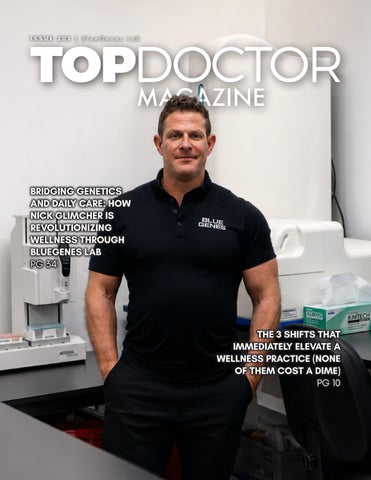
ISSUE 202 | BlueGenes Lab
BRIDGING GENETICS AND DAILY CARE: HOW NICK GLIMCHER IS REVOLUTIONIZING WELLNESS THROUGH BLUEGENES LAB PG 34
THE 3 SHIFTS THAT IMMEDIATELY ELEVATE A WELLNESS PRACTICE (NONE OF THEM COST A DIME) PG 10
The Leading Force in Real-Time Pharmacogenetics. Blue Genes isn’t just a test—it’s a decisive platform transforming medication decisions across healthcare. Our AI-powered platform proactively prevents harmful prescriptions in real time, preventing adverse drug reactions in real time. By intervening at the moment of decision, we’re helping providers and PBMs protect patients before risk becomes reality.
PUBLICATION TEAM Publisher: John Highland Editor In Chief: Hannah H. Editorial Assistant: Jillian Fast
CREATIVE DEPARTMENT Senior Graphic Designer: Laura Poyner Graphic Designers: Dylan R-N, Natalie Bouchou
EXPERT CONTRIBUTORS
Biohacking & Longevity Expert: Lindsay O’Neill-O’Keefe Contributing Authors: Evelyn Flaharty, Riley George, Michele Hughes, Lindsay O’Neill-O’Keefe, Ashleigh Quint
EXECUTIVE TEAM
Chief Digital Content Officer: David Lee Vice President of Development: Mark Carvalho Fractional Marketing Officer: Craig Handley Advisory Board: Dr. Arthur Katona, Dr. Francisco Cabal, Dr. Edmond Ng, Dr. Kianor Shah
MAGAZINE CONTRIBUTORS
A LETTER FROM THE EDITOR Our mission and purpose at TopDoctor Magazine is to foster connections within the health and wellness community and empower our readers to make wellinformed healthcare and lifestyle decisions. We pride ourselves on being the ultimate resource for interviews with health and wellness leaders, trending medical news, and healthy living topics. We understand that choosing a healthcare provider is a crucial decision. Our in-depth interviews with esteemed doctors and medical professionals aim to bridge the gap between them and their clients. By providing our readers with personal insights, philosophies, and areas of expertise, we facilitate a deeper understanding of the individuals responsible for your health and well- being. We also strive to highlight our outstanding practitioners, showcasing their dedication to their patients and contributions to the medical community. The field of medicine is constantly evolving, with new practices, therapies, and technologies emerging at a rapid pace. At TopDoctor Magazine, we strive to keep you updated on the latest advancements in the medical world. Our comprehensive coverage of trending medical news equips both doctors and patients with the knowledge they need to make informed choices about healthcare options. Building strong connections within the medical community is essential for enhancing patient care and driving medical progress. Our magazine serves as a bridge, connecting medical companies with doctors and vice versa. By facilitating these connections, we aim to catalyze collaborations that can lead to innovative solutions and improved healthcare outcomes for everyone.
It is our firm belief that well-informed individuals make better decisions about their health. By providing you with insights into established and emerging medical trends and technologies, we empower you to take an active role in your healthcare choices. Whether you are a healthcare professional seeking to stay updated on the latest advancements or a patient eager to make informed decisions about your well-being, TopDoctor Magazine is here to support you. In every issue, we strive to uphold the highest standards of journalistic integrity, accuracy, and relevance. Our dedicated team of writers, editors, and medical experts work tirelessly to bring you well-researched and compelling content that is both educational and engaging. Moreover, our graphic design team is committed to delivering an aesthetically pleasing reading experience where captivating design seamlessly merges with informative content, ensuring each issue becomes an engaging journey of discovery. As we embark on this mission to serve as your trusted source of medical information and insights, we encourage you to join us on this exciting journey. Your feedback and suggestions are invaluable to us, and we look forward to hearing from you. Thank you for being a part of the TopDoctor Magazine community. Together, let us embrace knowledge, forge connections, and make informed decisions to lead healthier lives. With warmest regards, Hannah H.
TABLE OF
CONTENTS
10
THE 3 SHIFTS THAT IMMEDIATELY ELEVATE A WELLNESS PRACTICE (NONE OF THEM COST A DIME)
18
FROM OUTLAW BIKER TO MR. AMERICA: TOM TERWILLIGER ON LONGEVITY, MASTERY, AND REINVENTION
34
BRIDGING GENETICS AND DAILY CARE: HOW NICK GLIMCHER IS REVOLUTIONIZING WELLNESS THROUGH BLUEGENES LAB
44
DON’T IGNORE THE PAIN: WHEN IT’S TIME TO SEE A PHYSICAL THERAPIST
56
BRAINS BEFORE BODIES: THE NUTRITION BLUEPRINT FOR YOUNG ATHLETES (PART 1)
The 3 Shifts That Immediately Elevate a Wellness Practice (None of Them Cost a Dime)
By Lindsay O’Neill-O’Keefe, Founder & CEO, Wellness Eternal Every week, I talk with brilliant providers and clinic owners—physicians, longevity specialists, biohacking pioneers, practitioners doing genuinely life-changing work. And every week, I see the same pattern: exceptional clinical outcomes paired with marketing that quietly undermines them. Here’s the uncomfortable truth: patients rarely choose a provider because of the technology in the treatment room. They choose based on trust, credibility, and how clearly you communicate the transformation you deliver. The good news? The three highest-impact fixes I recommend to nearly every practice we work with cost nothing to implement. They only require a shift in thinking.
10
Shift 1
Stop Discounting Your Way Out of Credibility Scroll through the social feeds of most clinics and you’ll find them: flash sales, percentage-off promos, and “this week only” pricing on premium services. I understand the instinct. Discounts feel like momentum. But in health and wellness, they send a dangerous signal. When you discount a $3,000 protocol to $1,500, prospective patients don’t think “great deal”; they think “Which price reflects the real value?” Low-ball offers train your audience to wait for the sale, attract price shoppers instead of committed patients, and position your expertise as a commodity. Premium outcomes deserve premium positioning. The most trusted practices we work with almost never discount publicly. Instead, they invest in communicating value so clearly that price becomes a secondary conversation. Do this instead: Audit your last 90 days of social content. Remove or archive anything built around price. Replace it with content built around outcomes.
Shift 2
Make Referrals and Testimonials Your Engine, Not an Afterthought Ask most clinic owners where their best patients come from, and they’ll say the same thing: word of mouth. Then ask what their referral system looks like, and the
answer is usually a shrug. Hope is not a system. Your happiest patients are your most persuasive marketing channel, and most practices never activate them. A structured referral and testimonial program does three things at once. It generates warm, pretrusting leads. It builds a library of social proof that works for you around the clock. And it deepens loyalty with the patients you already have, because people become more committed to the things they advocate for. Do this instead: Build a simple rhythm. Identify your moments of peak patient satisfaction, ask for the story at that moment, and create an easy path for patients to share it. Then showcase those stories consistently across your channels. Consistency beats cleverness here every time.
Shift 3
Sell the WHY and the HOW, Not the WHAT This is the biggest one, and the one most practices get backward. Most clinic marketing leads with the WHAT: the device, the modality, the protocol, the service menu. But patients don’t buy red light therapy or peptides or a diagnostic panel. They buy more energy for their kids. Confidence in their own longevity. Freedom from pain that has quietly shrunk their life. When you lead with the WHAT, you invite comparison shopping. When you lead with the WHY (the transformation) and the HOW (your unique philosophy and approach), you become the only logical choice. Nobody else has your story, your methodology, or your patient outcomes. That is your moat. Do this instead: For every piece of content you create,
ask one question before you publish: does this describe my service, or does it describe my patient’s life after working with me? If it’s the former, rewrite it.
The Common Thread Positioning Is a Practice, Not a Project
None of these shifts require a bigger ad budget. They require discipline, consistency, and a clear point of view about the value you create. That’s the work we do every day at Wellness Eternal. We partner with providers, clinics, and wellness brands to anchor credibility, attract the right patients, and amplify their message locally and globally through verified expert positioning, earned media, and marketing systems that compound over time. If you’re doing exceptional work but your marketing isn’t telling that story yet, let’s change that. Book time with me HERE and let’s chat about wellness brand and practice positioning. The work you do deserves to be seen.
14
Top Doctor Magazine / Issue 202 - BlueGenes Lab / 15
AND
AGELESS TIMELESS
FROM OUTLAW BIKER TO MR. AMERICA Former Mr. America, Tom Terwilliger, on Performance, Longevity, and the Signals That Shape a Life
BY MICHELE HUGHES
CEO OF AGELESS AND TIMELESS AND HOST OF THE AGELESS AND TIMELESS PODCASTⓇ In speaking with Tom Terwilliger, one thing becomes immediately clear: his life has been defined by reinvention. From leaving behind the outlaw biker lifestyle to becoming Mr. America, and later evolving into a transformational strategist focused on longevity, performance, and what he calls “Body Rapport,” Terwilliger’s journey has been shaped by discipline, resilience, and self-awareness. Throughout our conversation, he spoke candidly about identity, aging, recovery, strength, purpose, and the signals the body gives long before breakdown occurs. His philosophy centers on the idea that transformation is never physical first—it is identity before physiology—and that true mastery comes not from force but from learning to listen more deeply to the body, the mind, and ultimately life itself.
18
You’ve gone from outlaw biker to Mr. America to transformational strategist. What did that journey teach you about reinvention at any age? Reinvention begins long before external change appears. It begins with identity.
For me, leaving the outlaw biker lifestyle after five years was the first great turning point in my life. It taught me that transformation starts with one courageous decision, often made before you feel ready—in fact, we very rarely feel ready. I sure didn’t. Like the classic hero’s journey, the “hero” is always reluctant and never feels worthy, capable, or “good enough” for the task ahead. For me, it wasn’t so much that I knew I was destined for
Top Doctor Magazine / Issue 202 - BlueGenes Lab / 19
something more. It was more an inability to tolerate what I was becoming. I rode my first Harley-Davidson chopper, full throttle, into the world of one percenters, eyes wide shut. “One percenter” represents an outlaw motorcycle club that operates outside the rules of the American Motorcyclist Association (AMA) and mainstream society.
inevitable aging. And often they get angry that their body has betrayed them.
I was a dyslexic kid who couldn’t read, with low self-worth, constantly fighting, and in trouble with the law. I was drifting hard in the wrong direction and searching for camaraderie, brotherhood, and, more than anything else, a place where I could fit in. I found that in the hardcore biker community.
I believe much of what we call aging is not simply chronological aging but the result of accumulated disconnection—from movement, proper recovery, a sense of purpose, and the body’s intuitive intelligence. All of which falls under the blanket of what I call “Body Rapport”. Having rapport with your body is to know, like, and trust it.
But if you stay in that world for too long, you become it. You not only start to overlook the dark side but begin to fully engage in it. I knew deep down inside that wasn’t me. Once I found my way back to bodybuilding, it became more than just physical training; it became a vehicle for rebuilding self-respect, discipline, and belief in myself. Every workout was, in a sense, a vote for a different future, a better future. Bodybuilding didn’t just change my physique…It gave me evidence that I could become someone else. The discipline, the focus, the outrageous goal of becoming “Mr. America” gave me a new identity. That’s something people tend to miss—transformation is never physical first. It’s identity before physiology. I didn’t build the muscles first…the pecks, the biceps, the quads take a lot of time to develop. It’s the process that builds self-respect and personal power. Mr. America was just a byproduct, although a monumental achievement. That first transformational journey taught me something I now share with my clients: “Your past may explain you, but it does not have permission to define you.” At any age, reinvention remains possible when you are willing to act in alignment with who you know you can become. Or in my case—when who you have become is no longer tolerable.
After decades in fitness and human performance, what do you think most people get wrong about aging? Many people mistake the body’s signals of imbalance for
Fatigue, slower recovery, loss of vitality, brain fog—these are often dismissed as natural age-associated decline when they may actually be feedback signals shouting for attention.
After a certain age, most people look in the mirror, take a flight of stairs, run out of energy while making love, and stop liking their body or no longer trust it. What we don’t realize is that we don’t lose “rapport” with our body overnight or even at one specific age. It tends to happen gradually—often beginning somewhere between the late 30s and mid-40s— depending on lifestyle, stress load, trauma history, identity, and cultural conditioning. I love the quote by George Bernard Shaw: “We don’t stop playing because we grow old; we grow old because we stop playing.” Aging, in my view, is not something to battle against; it’s something to engage in wisely.
You often say “the body whispers before it shouts.” Is that an aspect of Body Rapport? And why do high achievers often miss the message? Body Rapport is the ability to develop a relationship with your body rather than treating it like a machine or servant you can override. As a young athlete in the world of “no pain, no gain,” I learned to ignore and override the messages my body was sending. That’s the exact opposite of Body Rapport. Early on, when recovery happened faster, my body was more resilient and forgiving. That grind mentality served the intended purpose without far-reaching ramifications. High achievers fall into a similar category as high-level athletes. They are often rewarded for pushing through fatigue, tension, stress, and overtraining—until the “push through” and the “I’ll rest when I’m dead” attitude become their identity.
Top Doctor Magazine / Issue 202 - BlueGenes Lab / 21
That identity often carries over into their later years when that same fatigue, tension, and stress, if ignored, can take a serious toll. The body provides signals long before the actual symptoms show up. Body Rapport is learning to listen to and respect those signals early.
very valuable Harley. There are four bolts. Each one must be tightened in sequence and to a very precise torque specification. So, I made sure I understood the instructions in the manual precisely: 42-45 ft-lbs of torque for each bolt. But something happened. They just didn’t feel tight enough. And in my mind—tighter meant safer. Tighter meant stronger. So, I kept tightening.
I teach that the body communicates in three stages: Whisper Shout Slap
Each bolt in sequence—back and forth–right-left—far-near. More pressure. More force. It felt right, it felt good, 50 ft-lbs, 60, 70, 100. Until one bolt pulled loose. By applying too much force, I had stripped the casing and destroyed the motor.
First, it whispers. This might be fatigue. “Hey buddy, you haven’t been sleeping well…let’s work on fixing that.”
Not because I didn’t know the instructions. Because I did not trust precision.
Ignore that whisper too long, and it starts shouting. Exhaustion!
I trusted force; I was familiar with force.
Override that shout, keep pushing, and the next communication is more like a slap in the face. Breakdown, injury, heart attack. Learning to listen early is the key, but it is never too late to create a much higher level of rapport with your body. Like a great relationship with your lover or partner, rapport with your body will pay big dividends. That principle has become one of the foundational components of my work because I’ve seen too many successful people win outwardly while becoming disconnected inwardly. Mastery begins when we stop overriding feedback and start partnering with it.
What is Force vs Mastery™, and how can it help people stop fighting life and start working with their energy and health? Back in my biker days, I would spend half my time in my garage rebuilding Harley-Davidson engines as a hobby. Heads, pistons, valves, and crankcases. I loved understanding how everything worked together. I remember the first time I reattached the cylinder heads to the barrels on the engine of a
22
Force is effort rooted in strain, grind, and a win-at-all-costs mentality. Force ignores the signals. Mastery is effort guided by awareness, precision, and a listento-the-signal mentality. Years later, when I truly understood the distinction, it changed my life. Often the greatest breakthrough isn’t through more effort, but rather more precision. I believe that principle applies equally to health, leadership, relationships, and performance…especially as we mature.
What do elite performers understand about longevity that ordinary people often overlook? The best performers understand recovery is not the opposite of performance—it is part of performance. As we get older, it becomes an even bigger part of the performance equation. There’s a rhythm to it all; as we mature and gain experience, we come to understand and respect it. When we’re younger, less experienced, and have all the natural energy in the world along with high ambitions and massive egos, we tend to ignore these rhythms in lieu of force.
24
When training for a major competition like the Mr. Olympia, the athletes, myself included, did everything in our power to maximize the intensity, duration, and frequency of the training program, often to the detriment of our health. We knew recovery was important, but would often ignore and override our bodies’ cries—the whispers and the shouts—and go ahead and train as hard as possible anyway. Early in my career, I was sick, worn out, and exhausted every time I stepped on stage and was never able to perform at my best. Until my mentor stepped in and said: “Hey moron, you’re overtraining; you need to take some time off and recover once in a while!” Had I not learned to understand and respect the rhythms, I never would have risen to the top of the sport. I believe longevity is built on those same rhythms. The highest performers I’ve known and coached don’t simply train hard, work hard, and play hard; they know when it’s time to recover. They don’t resist, fight it, or deny it; they respect it. Most importantly, they act on it. They regulate well. They understand that sustainable power is very different from endless output. That lesson becomes even more important with age. Most mature individuals who have not come to understand these rhythms fall under three categories when it comes to force versus mastery.
1. They completely ignore the whispers and the shouts
and think they can go, go, go, go, go even when they’re running on fumes.
2. They give too much credence to the whispers and the
shouts, exaggerate them, and surrender to their internal aging blueprint: “I guess I’m just getting old.”
3. They recognize the whispers and shouts, but are
determined not to let age define, control, or limit them. As a result, instead of adjusting and tweaking, they continue to apply the same force to their exercise, work life, and relationships as they did when they were younger—until they get slapped in the face.
You’ve said strength is one of the most overlooked anti-aging strategies. What do you mean by that? I often say muscle is not cosmetic tissue—it is longevity infrastructure. Despite what we see being flaunted all over Instagram and Meta, strength supports more than just confidence. It bolsters metabolism, resilience, function, and independence as we age. But I mean more than just muscular strength alone. There’s physical strength, of course, and that in itself is vital for maintaining our physical structure and functional capability as we mature. But there’s also mental strength, emotional strength, and even moral strength. All of them influence how well we age. If you’re physically strong but lack moral strength and courage, you’re likely to break when the inevitable age-related slap in the face happens. I’m a deep believer in the afterlife. As a result, I don’t fear death in the same way others might. A scary part of getting older is having to face our own mortality. Without “spiritual strength,” that reality can bring even the strongest man or woman to their knees. I consider strength training one of the most overlooked anti-aging strategies because of all the cosmetics, pills, supplements, and hacks at our disposal that cause only an estimated 20-30% of adults over age 50 to engage in regular strength training. If you narrow it further to people who train regularly and rigorously—meaning progressive resistance training with real intensity, consistency, and structure—the number is likely much lower, probably in the single digits to low teens. Yet, regular and rigorous training can contribute to the development of strength in all those areas, not just muscular. Strength is not merely an anti-aging strategy. It may be one of the deepest expressions of vitality.
What have martial arts taught you about resilience and aging that traditional fitness often misses? I’ve had the honor of studying with the likes of Grand Master Alen Lee and Guru Dan Inosanto, both of whom are now well
Top Doctor Magazine / Issue 202 - BlueGenes Lab / 25
into their 80s. They are both still teaching, and what they are capable of has profoundly altered my perception of aging. I often hear from the younger guys in the gym, “I want to look as good as you when I’m your age.” Well, my goal is to “move” as well as Lee and Inosanto when I’m their age and beyond. Over 40 years of Martial arts have taught me that relaxed power often outperforms forced effort. It is the essence of Yin and Yang. That lesson extends far beyond combat. In nature, rigid things break. Oak versus bamboo, for example. Rigid buildings and bridges collapse under nature’s wrath; flexible structures survive. Adaptation survives. Martial arts, as much as anything else, is about flexibility. When I first started studying as a young kid, it was Kung Fu, and, man, that was the end-all, be-all for me. Spinning back kicks looked so impressive and, in most cases, were. But later, when I began studying a variety of different arts like Silat, Kali, Muay Thai, combined with Kung Fu, it gave me tremendous flexibility. I believe flexibility—mentally, physically, and emotionally— creates a foundation for resilience, the ability to weather the storm and bounce back, often stronger and more experienced.
bodybuilding world. In Colorado, they actually do things like skiing, mountain biking, hiking 14ers, and so on— stuff I never did living in NY. A friend of mine from Switzerland and his girlfriend, who happens to be the women’s Swiss mountain bike champion, were staying with my wife, Dawn, and me for a few days. We decided to drive up to the mountains, rent a few mountain bikes, and, as an inexperienced mountain biker, hit one of the toughest single-track trails in Colorado. The trek up to the summit proved to be a lesson in humility for me. The women’s Swiss mountain bike champion “cleaned my clock”. From an ego perspective, it was humbling. I was determined to get revenge on the way back down, but I soon found out that downhill single tracking on an unfamiliar bike and a badly bruised ego was a sure-fire recipe for disaster. However, I had to redeem myself. The ego-driven crash that followed left me with a compoundfractured wrist, broken ribs, and a dislocated clavicle. It ended my bodybuilding career, but awakened my understanding of force versus mastery. I realized afterward I had been riding with force and driven by ego—not mastery. I was trying not to lose rather than fully experiencing the ride. And if I’m honest, I was living my life that way too.
To me, that is one of the true secrets of longevity. Many people age and ultimately die, not only in, but also as a result of chronic resistance, physically, psychologically, and being emotionally rigged in their thinking, attitudes, and values. Without even realizing it, they acquire a fixed, predetermined conclusion about when and how they will age. Martial arts taught me fluidity, responsiveness, and intelligent use of energy.
That may have accidentally ended my bodybuilding career, but it became a major pivot point in my evolution from bodybuilder to longevity performance strategist. That distinction has shaped much of my work ever since.
If someone in midlife feels they’ve lost their edge—energy, confidence, vitality—where should they begin? Begin by rebuilding trust with yourself and your body through
Was there a moment that fundamentally changed small wins. Don’t try to reclaim who you were—it’s probably how you saw performance and life? gone. Instead, get busy building who you are becoming. Yes—when I first moved from NY to beautiful Colorado back in the early 90s, I was at the height of my bodybuilding career and had just competed in the Mr. Olympia. I was determined to experience what Colorado had to offer outside the
26
First and foremost, make sure you are medically sound and healthy. If not, that’s where you need to start. Start there; don’t quit there.
Top Doctor Magazine / Issue 202 - BlueGenes Lab / 27
28
Then have a full hormone blood panel done by a provider that knows and understands exactly what they are looking at. Even if your hormone levels, particularly testosterone, are in the “normal” range, consider working with a specialist for optimization. Normal or within range for a 50- or 60-year-old is BS. I’m not going to say that optimizing your testosterone level is the magic bullet it is often touted as being. What I will say definitively is that suboptimality is frequently the culprit behind the fatigue, muscle loss, loss of sex drive, weight gain, and a painful lack of drive and motivation. Next, move your body every day, stretch, rotate, roll, bend, and walk. Strength train 2-3 times a week with intention and intensity—not force. Respect recovery and provide it with naps, adequate sleep, hydration, and proper clean nutrition. Reconnect to a renewed or recaptured sense of purpose. I can’t overstate this enough. Purpose gives life meaning, provides energy, and offers massive intrinsic reward. I’m a big believer that when you serve others, you nurture your soul.
I don’t think that’s what any of us want. I believe we do want to live as long as humanly possible, but, more importantly, we want to be healthy, active, and vibrant— and even look good for as many of those years as we can. All my life I’ve been a fighter in one form or another. The fight gave me a sense of purpose and an illusion of control. What has taken me decades to discover, however, is that the fight, regardless of its context, will take years off your life. It keeps you stuck in the sympathetic nervous system. Ferociously resisting the changes to my body—the wrinkles in my skin, the thinning of my hair, the aches and pains, and even being called “sir”—the real enemy is my need to throw a few more good punches at a time to keep fighting. At 67, letting go of that need has been the most difficult challenge I face every morning when I look in the mirror. Now I smile and say, “You’re still here, you’re still powerful, now what are you going to do with that power today to serve others?”
Start listening to the signals—the whispers and the shouts— instead of waiting for the slap that you may recover.
To me, being ageless isn’t about resisting time. It’s about truly expressing the embodied principles I’ve learned over the decades: courage, discipline, faith, mastery, love, and fun.
In the grand scheme of manifestation, action is the bridge between where you are now and where you want to be. Age should not be the obstacle. Age is an opportunity.
I am exceedingly fortunate to have a partnership in life with my wife, Dawn, who keeps the fighter in check and helps me find alignment with our collective purpose.
After everything you’ve achieved, what does living “ageless and timeless” mean to you personally now? That’s a great question. I love it because there is a powerful presupposition built into it. “I am somehow ageless and timeless.” But there is an undeniable truth. None of us are ageless. None of us will live forever, and we all age, some faster than others. There is a sad mythological lesson about the goddess Eos who asked Zeus to make her lover, Tithonus, immortal but forgot to ask for eternal youth to go along with his immortality. Tithonus lived forever but continued to age, eventually becoming a shriveled, babbling immortal.
At this stage of life, I think less about proving, and through my coaching, more about serving. If I’ve learned anything, it’s this: The great turning points in life often come not from pushing harder, not from force, but when we listen deeper and exercise mastery. I’m listening to my heart and my soul more now than I ever could when all the noise and distraction seemed so freaking important. That, to me, feels both ageless and timeless.
About Tom Terwilliger
Tom Terwilliger is a Performance & Longevity Strategist, former Mr. America, and creator of the Force -> Mastery™ Method, a framework that helps high-achieving individuals
Top Doctor Magazine / Issue 202 - BlueGenes Lab / 29
sustain peak performance while protecting long-term health, resilience, and vitality. For more than four decades, Tom has studied the intersection of human performance, metabolic health, nervous system regulation, and mindset. His work focuses on helping driven professionals, athletes, and leaders transition from force-based living—characterized by stress, overdrive, and burnout—to mastery-based performance that supports sustainable energy, strength, and longevity. Tom is a #1 bestselling author, recipient of the Health 2.0 Outstanding Leadership Award, U.S. Martial Arts Hall of Fame inductee, member of the Federation of Israeli Martial Arts, and sits on the board of advisers for Longevity Masters. His background includes decades of study in martial disciplines including Jeet Kune Do, Kali, Silat, and Kung Fu, as well as elite-level strength training and performance development. He is also the co-founder of High Achievers University, an educational platform focused on leadership, performance psychology, and personal transformation for entrepreneurs and professionals. Tom has been featured on the covers of Muscle & Fitness, Flex, Muscular Development, and numerous international publications. He is also the former host of the Fox Sports Net television show “Muscle Sport USA.” Today, Tom works with leaders, entrepreneurs, and high performers worldwide, helping them build bodies and nervous systems capable of sustaining success across the entire performance curve of life.
30
About Michele Hughes
Michele Hughes is the visionary founder of Ageless and Timeless and the dynamic host of the Ageless and Timeless Podcast®. As a monthly contributor to TopDoctor Magazine, she offers powerful insights on wellness, longevity, and living fully at every stage of life. With a deep passion for health and vitality, and serving as a role model for timeless elegance, Michele empowers audiences to embrace their highest potential and live with purpose and grace. Michele’s podcast, Ageless and Timeless, was one of 20 Inaugural Podcasts selected for the Muscle and Fitness Plus platform that began in 2023. Michele is the VP of Business Development and Advisory Board Member for Longevity Masters Global, an exciting start-up venture founded by Dr Robert Goldman and Rob Fletcher, two of the most influential leaders in the longevity industry.
For more information, please reach out to express interest in being a potential guest on the Ageless and Timeless Podcast® or to be featured in the TopDoctor Magazine Ageless and Timeless column with Michele Hughes. For podcast collaborations or to have Michele Hughes on your show, please contact her at:
Email: themichelehughescompany@gmail.com Website: www.agelessandtimeless.com Instagram: @agelessandimeless LinkedIn: https://www.linkedin.com/in/michele-hughes83a3b935/ Facebook: https://www.facebook.com/michele.hughes.186 Ageless and Timeless podcast, on YouTube, iTunes, Spotify, and wherever podcasts are available.
Top Doctor Magazine / Issue 202 - BlueGenes Lab / 31
DELIVER MORE FOR YOUR CELLS FOR YOUR BODY FROM OTHER MODALITIES Whether the focus is on: • Wellness • Performance • Healthy aging • Recovery NanoVi® provides a unique way to improve your results. DELIVER MORE FOR YOUR CELLS IMPROVE PROTEIN ACTIVITIES
DELIVER MORE FOR YOUR BODY PERFORMANCE • WELLNESS • RECOVERY
Proteins do the work in the cell
NanoVi® supports protein function to promote energy production, cellular repair, recovery, resilience, and overall performance.
The impact of NanoVi is noticeable and measurable. More energy, faster recovery and less stress are some of the more apparent results.
Since proteins are fundamental to nearly every biological process, supporting their activity helps optimize across every system.
Independent studies confirm the benefits of NanoVi and include placebo-controlled research and published results.
DELIVER MORE FROM OTHER MODALITIES BETTER CELLULAR FUNCTION CAN IMPROVE ANYTHING ELSE YOU DO
Nutrition (Supplements)
Red Light Therapy
Hydrogen Therapy
Athletic Training
Brain Training (Neurofeedback)
Hyperberic (HBOT)
Ozone Therapy
Infusion Therapy
Cryo Therapy
Compression Therapy
Cell Therapies
PEMF Therapy
NanoVi® isn’t another competing modality, it’s the layer that helps support the biology beneath them all.
eng3.com info@eng3.com
+1 206 525-0227
These statements have not been evaluated by the FDA. This product is not intended to diagnose, treat, cure or prevent any specific disease. © Copyright 2026 by Eng3 Corporation. All rights reserved. M458-rev01
eng3.com | nanovi.de #1
Bridging Genetics and Daily Care
How Nick Glimcher is Revolutionizing Wellness through Blue Genes Lab Written by: Riley George In the rapidly evolving landscape of precision medicine, the gap between complex genetic data and actionable, daily patient care has long been a significant barrier to Tru-1 health optimization. Nick Glimcher, the visionary leader behind Blue Genes Lab, is working to dismantle that barrier by fundamentally transforming how providers and patients utilize genetic information. Driven by a philosophy that prioritizes proactive health management over the traditional, reactive model, Glimcher is pushing the boundaries of what is possible in modern healthcare. By focusing on the intersection of genetics and lifestyle, he is creating a new paradigm in which data serves as a roadmap for personal well-being rather than merely a diagnostic tool.
A Journey from Real Estate to Healthcare Innovation Glimcher’s path to the forefront of genetic technology was far from linear. Initially following in his family’s footsteps within the shopping center development industry, Glimcher spent his early career mastering the intricacies of real estate and, later, the electronic payment sector. It was here that he began to understand the power of data and scalability. Yet, it was a pivotal conversation with a fund manager that shifted his focus entirely toward the complexities of the healthcare industry. That single interaction in 2015 sparked his venture into acquiring healthcare-related assets. This journey eventually led to the development of GTI Laboratories and the subsequent launch of the Blue Genes platform. The mission, according to Glimcher, was always clear: to bridge the gap in information delivery. “We built our genetic platform, Blue Genes, to deliver meaningful, actionable data not only to providers, but also to patients and, in some cases, consumers,” he said. “Our goal is to help people become better informed and more proactive about their health.”
34
Top Doctor Magazine / Issue 202 - BlueGenes Lab / 35
Redefining Pharmacogenetics and Patient Outcomes At the heart of the Blue Genes initiative is an urgent desire to address systemic issues within the American healthcare system, particularly the prevalence of medical error related to adverse drug reactions. Glimcher noted that approximately 50% of these reactions are directly attributable to drug-gene interactions, a preventable issue that his platform is meticulously designed to solve. “Pharmacogenetics, in layman’s terms, is simply the science of what drugs work and what drugs don’t,” Glimcher explained. “About 95% of the variability between how two different patients with the same diagnosis respond differently to medication is known to be genetic. Blue Genes is on a mission to eliminate a large portion of those unnecessary deaths and complications, which impact both patient care and system costs– all completely avoidable aspects if we’re able to move the data fast enough.” By streamlining this data, Blue Genes allows for safer medication choices and more effective treatment plans.
Three Platforms: A New Standard of Care To put this ambitious vision into practice, Blue Genes Lab has developed three products: Blue Genes Pharmacogenetics, Tru-1, and Lumyn. Each is engineered to integrate seamlessly into existing clinical workflows while providing personalized, data-driven insights that were previously inaccessible to the average practitioner. With Blue Genes Pharmacogenetics, as soon as a physician submits a prescription, Blue Genes compares an individual’s genetic profile to identify ineffective or unsafe medications and texts the patient in real time. Blue Genes checks for drug-gene interactions for more than 500 medications, including 65 ultra-high-cost specialty drugs. Unlike other pharmacogenetics providers who send a report that can get lost in a portal or on a fax machine, Blue Genes intervenes the moment it matters: before the script is filled.
36
Tru-1 is specifically designed to navigate the rapidly growing GLP-1 market. Recognizing that weight-loss medications–and indeed, all peptides–are not “one-size-fits-all,” the Tru-1 test analyzes specific genetic markers to predict a patient’s potential for success and tolerability before they begin treatment. “It is not a binary decision of whether you can prescribe or not prescribe,” Glimcher noted. “It is a propensity for success, and how we approach a patient care plan is based on propensities of success.” By identifying potential side effects, such as gastrointestinal discomfort or poor appetite suppression, early on, providers can better manage patient expectations and optimize dosing strategies. Complementing this is Lumyn, a comprehensive genetic wellness test that looks far beyond the singular genetic markers often highlighted on social media platforms. By analyzing 41 genes and 49 SNPs, Lumyn provides a wide-angle view of metabolic health, including muscle fiber types, predispositions for obesity, and insulin resistance. The platform differentiates itself significantly by incorporating an AI-powered personal wellness coach that manages the “final mile” of patient engagement and suggests vitamin and nutraceutical supplementation based on genetic deficiencies. This is a great opportunity for provider participation. “What this agent does is remember all of your conversations and all the data you give it, allowing it to continuously build upon your wellness plan and adapt to your evolving health,” Glimcher explained. This AI integration is a critical innovation intended to alleviate the resource burden on healthcare providers, allowing them to offer sophisticated, tailored care plans without requiring extensive additional time for patient education or follow-up consultations.
Top Doctor Magazine / Issue 202 - BlueGenes Lab / 37
Blue Genes Pharmacogenetics, Tru-1, and Lumyn all utilize a simple at-home mouth swab. For people requiring a blood test for other clinical needs, Blue Genes offers an at-home blood collection kit, along with lab processing and reporting. This is particularly helpful for people who cannot easily visit a lab.
Overcoming the Hurdles of Adoption Despite the potential of precision medicine, Glimcher acknowledged that industry-wide adoption remains a significant challenge. Many providers feel overwhelmed by the complexities of genomics and the time-intensive nature of translating that data into daily practice. However, he remains optimistic. “Providers don’t have 30 to 45 minutes to review a genetic test for proactive care,” he observed, “They’re dealing with the immediate issues–‘I have the flu, my arm is broken,’ or whatever it may be.” By designing Blue Genes to act as an automated, educational partner for both the provider and the patient, Glimcher is removing the logistical barriers that have historically held back precision medicine. Today, too many genetic test results sit in a portal or patient file and are never acted on,” said Glimcher. “We’ve designed our entire approach around delivering precise, personalized information at the moment it matters and taking the heavy lifting out of the equation.” The test is an easy at-home mouth swab, and the results are good for a lifetime. It does not disrupt the prescriber’s workflow, and patients receive actionable recommendations. This ease of implementation is vital, as it allows practices to focus on the human side of medicine while the technology handles the complex analysis.
38
The Future of Proactive Health Looking toward the next decade, Glimcher envisions a genuine renaissance in precision medicine that shifts reactive, symptom-based care to proactive, preventative health and becomes the global standard. He is acutely aware that the United States currently faces a significant imbalance in its pharmaceutical consumption and healthcare costs, and he believes genetic empowerment is the key to correcting this course. “We need to empower patients, and empower ourselves as human beings, to take control, because we’re responsible for our own well-being,” Glimcher stated. “If we know that you have a propensity for cancer, you’d have the opportunity to delay that cancer.” As Glimcher continues to scale these technologies, his message to fellow entrepreneurs is clear: change in healthcare is notoriously slow, but the opportunity for disruption is immense. He emphasized that success requires “perseverance and persistence” and the staying power to outlast the slow pace of systemic change. By meeting the market where it is, utilizing digital influencers and social platforms to educate the public, Glimcher is working to turn the tide against the “junk information” currently saturating the internet. His ultimate goal is a healthcare landscape where everyone has access to their own genetic blueprint and can proactively monitor themselves, enabling them to make informed choices that improve their quality of life for decades to come. Through Blue Genes Lab, Nick Glimcher is not just providing a test; he is providing a path to a longer, healthier, and more empowered life.
Top Doctor Magazine / Issue 202 - BlueGenes Lab / 39
The Rise of Blue Genes Lab Ultimately, the rise of Blue Genes Lab represents a fundamental shift in how we approach the modern healthcare journey, moving away from a reactive, trial-and-error model to one defined by precision and foresight. By successfully integrating complex genomic data into existing clinical workflows, Nick Glimcher is not merely offering diagnostic tests, but providing a comprehensive framework for wellness that empowers both the provider and the patient. This evolution toward proactive, data-informed care addresses the core inefficiencies of the current system while significantly mitigating the risks associated with adverse drug interactions and unnecessary medical complications. As Glimcher continues to champion this transition, the focus remains on equipping individuals with the clarity they need to make meaningful, longterm lifestyle changes. To learn more about Nick Glimcher and his innovative company, Blue Genes Lab, visit bluegeneslab.com.
40
Top Doctor Magazine / Issue 202 - BlueGenes Lab / 41
DON’T IGNORE
THE PAIN When It’s Time to See a Physical Therapist
By Evelyn Flaharty
P
ain is something every one of us will experience at some point in life. Maybe it happened after lifting a heavy box while helping a friend move. Perhaps you spent an afternoon working in the yard, only to wake up the next morning barely able to straighten your back. If you enjoy exercising as I do, maybe you pushed yourself a little harder in the gym, or your form wasn’t quite right during an exercise. A day or two later, you’re dealing with a sore shoulder, aching knee, or pain shooting down your leg. Most of us don’t think much about it. We think it’s just another ache that will disappear with a little rest and time. And often, that’s exactly what happens. Minor muscle soreness, small strains, and everyday aches usually improve on their own. We may take an over-the-counter pain reliever like Tylenol or Advil, rub on a pain-relieving cream, such as Aspercreme, apply an ice pack, or use a heating pad. We rest for a few days, ease back into our normal routine, and before long, we’re feeling like ourselves again. But what happens when the pain doesn’t go away? What if one week turns into several weeks? What if you’re changing the way you walk, avoiding certain movements, or giving up activities you enjoy because they hurt too much? At what point do you stop trying to fix it yourself and seek professional help? Those were exactly the questions I found myself asking recently. About five months ago, after a leg workout at the gym, I noticed some discomfort deep in my glute. I didn’t think much of it. After all, I had just trained legs. I assumed I had simply pushed myself a little too hard and figured the soreness would disappear in a few days. Instead of backing off, I continued training legs as usual, convincing myself that it wasn’t anything serious. About a month later, the discomfort had become more noticeable. I decided to cut back on the weight a little and began taking over-the-counter medication to help manage the pain. I was certain that would solve the problem. Unfortunately, it didn’t. One morning, I stepped out of bed and immediately felt a sharp pain shoot from my glute down my entire leg. That got my attention. Suddenly, something that seemed like a simple sore muscle had become much more serious.
Top Doctor Magazine / Issue 202 - BlueGenes Lab / 45
I stopped training legs for a week, hoping rest would fix everything. Sitting became extremely painful, and even getting comfortable while watching television was difficult. Then I did what so many of us do these days. I turned to “Dr. Google”. I searched every symptom imaginable, trying to diagnose myself. Was it my glute? My piriformis muscle? My lower back? My sciatic nerve? Should I use heat? Should I use ice? Since I’m not much of a fan of cold therapy, I chose heat. Big mistake. Later that evening, I placed a heating pad on my lower back and upper glute while watching television. About twenty minutes later, I experienced one of the sharpest, most intense pains I had ever felt. The heat had made everything significantly worse because the area was inflamed. Looking back, it was like pouring gasoline on a fire. I wish I had known that sooner. The pain continued for another month and a half. Every morning, I dreaded getting out of bed because I knew that sharp pain was waiting for me. Eventually, I began experiencing tingling and numbness in my foot as well. That was my wake-up call—enough with self-diagnosing. I contacted my doctor and requested a referral for physical therapy. Looking back, it was one of the best decisions I made. My only regret is that I didn’t make it sooner. Fortunately, my physical therapist determined that my injury could be treated without surgery. I attended physical therapy three times each week for nearly three months. Thankfully, the injury was reversible and did not result in permanent damage to my glute or sciatic nerve. There’s a very good chance I wouldn’t have needed nearly as much therapy had I sought help earlier instead of trying to work through the pain. That experience taught me an important lesson that I hope can help someone else. Pain is information! Our bodies are incredibly good at communicating when something isn’t right. The problem is that many of us ignore those signals because we’re busy, stubborn, or convinced the pain will eventually disappear. Sometimes it does. Sometimes it doesn’t. That brings us to an important question.
46
What Is Physical Therapy? Physical therapy is a healthcare service that helps people reduce pain, restore movement, improve strength, regain balance, and return to the activities they enjoy. Rather than simply masking symptoms with medication, physical therapists work to identify the source of the problem and create a personalized treatment plan to help the body heal. Treatment may include stretching, strengthening exercises, hands-on techniques, balance training, posture correction, and education about proper movement. They also teach patients how to avoid making the injury worse and how to prevent it from returning. 48
One of the things I appreciated most during my own therapy was learning why I was hurting and what I could do to correct it. Every session gave me more confidence because I understood what was happening inside my body.
When Is It Time to Seek Physical Therapy? There isn’t a magic number of days or weeks that tells you it’s time to make an appointment. Every person is different, and every injury heals at its own pace.
Top Doctor Magazine / Issue 202 - BlueGenes Lab / 49
However, there are several signs that shouldn’t be ignored. If your pain lasts longer than a week or two without noticeable improvement, it’s worth discussing with your healthcare provider. If your pain continues to worsen instead of getting better, don’t wait. If pain keeps you from sleeping, exercising, walking comfortably, climbing stairs, or enjoying your normal daily activities, your body is asking for help. If you begin experiencing weakness, tingling, numbness, or pain that travels into your arms or legs, those symptoms deserve prompt medical attention. If you’re changing the way you move just to avoid pain, such as limping, favoring one side, or avoiding certain motions, you may actually be creating new problems in other parts of your body. Most importantly, if your instincts tell you something doesn’t feel right, listen to them. You know your body better than anyone else.
What Types of Injuries Can Physical Therapy Help? Many people associate physical therapy only with recovering from surgery, but that’s just one small part of what physical therapists do. Physical therapy is commonly recommended for back pain, neck pain, shoulder injuries, hip pain, knee pain, ankle injuries, muscle strains, tendon injuries, arthritis, balance problems, sports injuries, sciatica, and overuse injuries from work or exercise. It can also be extremely helpful after joint replacements, fractures, falls, or other orthopedic procedures. Even repetitive movements, whether from gardening, working at a computer, golfing, pickleball, or lifting weights, can lead to injuries that respond very well to physical therapy. The goal isn’t simply to help you feel better today. The goal is to help you move better for years to come.
Don’t Let Pride Delay Healing Many of us wear our toughness like a badge of honor.
50
Top Doctor Magazine / Issue 202 - BlueGenes Lab / 51
“I’ll be fine.” “I just need another week.” “It’ll work itself out.” I’ve said every one of those things. The truth is, asking for help isn’t a sign of weakness. It’s one of the smartest things you can do for your health. Ignoring pain doesn’t make you stronger. It often makes the recovery longer. Early treatment can frequently shorten recovery time, reduce inflammation, restore normal movement more quickly, and prevent small injuries from becoming chronic problems.
Listen to What Your Body Is Saying One lesson I’ve learned over the years is that our bodies are incredibly resilient, but they also have limits. Pain isn’t your enemy. It’s your body’s way of getting your attention. Sometimes rest is all that’s needed. Sometimes ice, stretching, and a few days off solve the problem completely. Other times, your body is asking for more than self-care.
52
If you’re relying on pain medication every day just to get through your routine, if your symptoms continue to linger, or if you’re beginning to wonder whether something more serious is going on, don’t ignore those thoughts. Reach out to your healthcare provider. Getting evaluated doesn’t automatically mean you’ll need months of therapy or surgery. In fact, many people recover more quickly because they sought help early. Looking back at my own experience, I realize I waited far too long. I was fortunate that my injury healed without permanent damage, but it easily could have been a different story. If sharing my experience encourages even one person to stop ignoring persistent pain and seek help sooner, then it was worth telling. We only have one body, and it carries us through every stage of life. Treat it with the same care, patience, and respect that it deserves. Sometimes the strongest thing we can do isn’t pushing through the pain. Sometimes it’s listening to it.
Top Doctor Magazine / Issue 202 - BlueGenes Lab / 53
ADD ONE OF TODAY’S MOST TALKED-ABOUT WELLNESS SERVICES. GENERATE NEW CASH-PAY REVENUE. The H2Vantix Hydrogen Wellness System makes it easy to introduce molecular hydrogen inhalation into your practice. Simple 30-minute wellness sessions Easy implementation Fits into your existing workflow Encourages repeat client visits
Opportunity to sell home hydrogen systems Additional revenue from hydrogen water products Training, marketing materials, and ongoing support included
TURN ONE WELLNESS SERVICE INTO MULTIPLE REVENUE OPPORTUNITIES. SCHEDULE YOUR COMPLIMENTARY PRACTICE CONSULTATION.
H2Vantix.co
Call Today: (800) 964-8148
SCAN TO LEARN MORE OR SCHEDULE
Hydrogen inhalation is offered as a wellness service and is not intended to diagnose, treat, cure, or prevent any disease.
THE NUTRITION BLUEPRINT FOR YOUNG ATHLETES Written By Ashleigh Quint, MIM, PICP-SCC For decades, childhood nutrition has been discussed through the narrow lens of body weight. Parents are told to watch calories, reduce sugar, avoid obesity, and keep children within a certain number on a growth chart. While body composition matters, this conversation is incomplete. A child is not simply a weight, a BMI category, or a number on a scale. A child is a developing nervous system, a growing skeleton, an adapting endocrine system, and, in the case of young athletes, a brain and body being asked to learn, react, recover, and perform under pressure. The future of youth performance does not only begin in the weight room. It begins at the dinner table. Every meal provides biological information. Protein becomes neurotransmitters and muscle tissue. Iron helps deliver oxygen to the brain and working muscles. Choline supports memory, learning, and acetylcholine production, which is essential for neuromuscular communication. Zinc supports growth, immune function, and tissue repair. Vitamin B12 supports nerve health and energy metabolism. These nutrients are not optional for developing athletes. They are foundational.
Top Doctor Magazine / Issue 202 - BlueGenes Lab / 57
Performance Neuroscience: The Hidden Driver of Athletic Success When most people think about nutrition, they think about muscles, body weight, or energy. Yet the most important organ influenced by every bite of food is the brain. Long before a child develops strength, speed, or power, the brain is building the neural networks that make athletic performance possible. Every sprint, jump, change of direction, and split-second decision originates in the central nervous system. Nutrition, therefore, is not simply fueling muscles; it is building the neurological foundation upon which every athletic skill depends.
The Brain Behind the Athlete: Why Nutrition Shapes Performance Long Before the First Play Athletic performance is often measured by speed, strength, and endurance, yet the most important performance organ is frequently overlooked. Every practice, every skill learned, and every gamewinning decision depends on the development of a healthy, well-nourished brain. The greatest competitive advantage isn’t found in stronger legs, faster sprint times, or bigger muscles; it’s found inside the developing brain. Let me explain. The prefrontal cortex, located at the front of the brain, serves as the body’s executive control center. It governs attention, impulse control, decision-making, planning, and the ability to remain composed under pressure. During competition, this region helps a basketball player decide whether to drive to the basket or pass to an open teammate in a fraction of a second. Because the prefrontal cortex continues developing into early adulthood, childhood and adolescence represent a critical window during which nutrition supports optimal brain maturation. Nutritional neuroscience has consistently demonstrated that adequate dietary intake is essential for maintaining the energy metabolism and neurochemical processes required for higher cognitive function.¹ Movement itself depends upon another remarkable structure, the basal ganglia. This deep network of brain nuclei is responsible for motor learning, habit formation, and the automation of movement patterns. Every repetition of a jump shot, sprint, or defensive slide gradually shifts movement from conscious thought to automatic execution through basal ganglia circuits. Elite athletes do not consciously think through every movement; their brains have encoded thousands of hours of repetition into efficient motor programs. Supporting this learning process requires adequate protein, essential fatty acids, vitamins, minerals, and sufficient overall energy to sustain neuroplasticity and learning.² Working alongside the basal ganglia is the cerebellum, often referred to as the brain’s “movement quality controller.” The cerebellum continuously compares intended movement with actual movement, making rapid adjustments that improve balance,
58
coordination, posture, timing, and precision. Whether landing safely from a rebound or changing direction to avoid an ACL injury, the cerebellum refines movement through constant feedback. The more efficiently these neural circuits function, the more fluid and coordinated an athlete becomes.³ The hippocampus serves as the brain’s learning and memory center. It is responsible for consolidating new information into long-term memory, allowing athletes to remember offensive plays, defensive strategies, coaching cues, and movement patterns learned during practice. Emerging nutritional neuroscience suggests that dietary quality influences hippocampal function and neurogenesis. Diets high in ultra-processed foods and added sugars have been associated with poorer cognitive outcomes, whereas nutrient-dense dietary patterns appear to better support learning and memory.⁴ Equally important is the process of myelination. Myelin is the protective fatty sheath surrounding nerve fibers that allows electrical signals to travel rapidly and efficiently throughout the nervous system. During childhood and adolescence, extensive myelination enables faster communication between brain regions, resulting in quicker reaction times, improved coordination, and greater movement efficiency. Building and maintaining healthy myelin depends upon adequate intake of protein, essential fatty acids, vitamin B12, and other micronutrients that support nervous system development. Without these building blocks, the nervous system cannot communicate at its highest capacity.
The Chemistry of Peak Performance While the brain’s structures provide the foundation for athletic performance, its chemical messengers determine how effectively those structures communicate, adapt, and perform under pressure. Dopamine regulates motivation, reward, attention, and motor control. It reinforces learning by strengthening neural pathways associated with successful movement and positive experiences. Acetylcholine, synthesized from the nutrient choline, is essential for neuromuscular communication, attention, and reaction time. Every time an athlete explodes off the ground or reacts to a loose ball, acetylcholine helps transmit the signal from nerve to muscle. Eggs are among the richest dietary sources of choline, making them one of the most valuable foods for supporting neurological development during childhood. Another powerful regulator of brain performance is brain-derived neurotrophic factor (BDNF), often described as “fertilizer for the brain.” BDNF supports the growth, survival, and strengthening of neurons while promoting neuroplasticity, the brain’s ability to adapt, learn, and form new connections. Physical activity increases BDNF production, and evidence suggests that healthy dietary patterns work synergistically with exercise to support brain health and cognitive performance. For young athletes, this means that proper nutrition does not simply improve recovery; it enhances the brain’s capacity to
60
learn new skills and retain them over time.⁵ Researchers are increasingly recognizing the importance of the gut-brain axis. Rather than functioning independently, the gastrointestinal tract and the brain communicate continuously through neural, immune, hormonal, and metabolic pathways. The trillions of microorganisms residing within the gut influence neurotransmitter production, inflammation, immune regulation, and even mood and cognition. Diets rich in minimally processed whole foods help support a healthier microbiome, while diets dominated by ultra-processed foods may negatively alter this communication network. This bidirectional relationship reinforces an important concept: nutrition affects athletic performance not only by fueling muscles but also by shaping the health of the brain itself.⁶ These discoveries have transformed the way we should think about youth sports nutrition. Rather than viewing food simply as a source of calories to support growth, we must recognize it as a powerful tool that influences brain development, learning, decision-making, reaction time, recovery, and long-term athletic potential. The goal is no longer to simply provide enough calories for growth. The goal is to nourish a developing nervous system capable of making faster decisions, learning complex skills, improving coordination, adapting to training, recovering efficiently, and performing consistently under pressure. In young athletes, every meal becomes an opportunity to build stronger neural connections, healthier movement patterns, and ultimately, a higher ceiling for athletic performance. Modern neuroscience has fundamentally changed our understanding of youth sports nutrition. When athletes consistently consume nutrient-dense foods, they are doing far more than fueling today’s practice. They are building the neurochemical foundation that supports faster learning, sharper decision-making, greater resilience, and higher levels of performance for years to come.
Top Doctor Magazine / Issue 202 - BlueGenes Lab / 61
REFERENCES
AND
RESOURCES THE 3 SHIFTS THAT IMMEDIATELY ELEVATE A WELLNESS PRACTICE (NONE OF THEM COST A DIME) 1. Learn more about Lindsay and her mission to rewire the future of health by visiting wellnesseternal. com.
2. Find out more about the Biohacking Index at biohackingcompanies.com.
FROM OUTLAW BIKER TO MR. AMERICA: TOM TERWILLIGER ON LONGEVITY, MASTERY, AND REINVENTION Tom Terwilliger is a Performance & Longevity Strategist, former Mr. America, and creator of the Force -> Mastery™ Method, a framework that helps high-achieving individuals sustain peak performance while protecting long-term health, resilience, and vitality. For more information, please reach out to express interest in being a potential guest on the Ageless and Timeless podcast or to be featured in the Top Doctor Magazine Ageless and Timeless column with Michele Hughes. For podcast collaborations or to have Michele Hughes on your show, please contact her at: 1. Email: themichelehughescompany@gmail.com 2. Website: www.agelessandtimeless.com
3. Instagram: @agelessandimeless 4. LinkedIn: https://www.linkedin.com/in/michele-hughes-83a3b935/ 5. Facebook: https://www.facebook.com/michele.hughes.186 6. Ageless and Timeless podcast, on YouTube, iTunes, Spotify, and wherever podcasts are available.
BRIDGING GENETICS AND DAILY CARE: HOW NICK GLIMCHER IS REVOLUTIONIZING WELLNESS THROUGH BLUEGENES LAB 1. To learn more about Nick Glimcher and his innovative company, Blue Genes Lab, visit bluegeneslab.com.
DON’T IGNORE THE PAIN: WHEN IT’S TIME TO SEE A PHYSICAL THERAPIST You can find more from Evelyn through her website or social media channels: 1. Website: EvelynFlaharty.com 2. YouTube: Evelyn Flaharty 3. YouTube: Workouts With Evelyn Flaharty 4. Instagram: ffmusclesandcurves 5. TikTok: @evelynifbbpro 6. Facebook: Evelyn Flaharty
BRAINS BEFORE BODIES: THE NUTRITION BLUEPRINT FOR YOUNG ATHLETES (PART 1) 1. Zhang L, Liu R, Song Z, Zhang X. Exercise, diet, and brain health: From the perspective of gut microbiota regulation. Nutrients. 2025;17(10):1686. doi:10.3390/nu17101686
2. Meeusen R. Exercise, Nutrition and the Brain. Gatorade Sports Science Exchange. 2013;26(112). Available at: Gatorade Sports Science Institute – SSE #112
3. Cotman CW, Berchtold NC. Exercise: A behavioral intervention to enhance brain health and plasticity. Trends in Neurosciences. 2002;25(6):295-301.
4. Melgar-Locatelli S, de Ceglia M, Mañas-Padilla MC, Rodriguez-Pérez C, Castilla-Ortega E, Castro-Zavala A, Rivera P. Nutrition and adult neurogenesis in the hippocampus: Does what you eat help you remember? Front Neurosci. 2023;17:1147269. doi:10.3389/fnins.2023.1147269. 5. Meeusen R. Exercise, Nutrition and the Brain. Gatorade Sports Science Exchange. 2013;26(112). Available at: Gatorade Sports Science Institute – SSE #112 6. (Cryan et al., 2019) Waiting on Ashleigh for this