THE ELEPHANT
TOORAK COLLEGE
Old Mornington Road, Mount Eliza, VIC, 3930 PO Box 150, Mount Eliza, VIC, 3930
Senior School: (03) 9788 7200
Wardle House: (03) 9788 7258
CRICOS Provider Code: 00349D
CRICOS Course Code: 005454G (Senior)
097816B (Primary)
DESIGN
Domenic Minieri
Community Office
EDITORIAL TEAM
Emma Castles and Domenic Minieri
Community Office
EDITORIAL CONTRIBUTORS
Staff, students and Collegians
PHOTOGRAPHY
Community Office, Cliff Elliott, Jo Humphries, Michael Moynihan, Marcus Struzina, staff and students
Bambra bambra.com.au

BY KRISTY KENDALL Principal

Brave Thinking is about the choice we all have to examine, question, seek counsel and evolve. This is essential in a world where we are seeking a different destiny, which will no doubt begin with a new way of thinking.
Brave thinking is examining how things have been done in the past and questioning if there is a better way.
BY SAMANTHA LEWIS Head of Student Experiences & Leadership
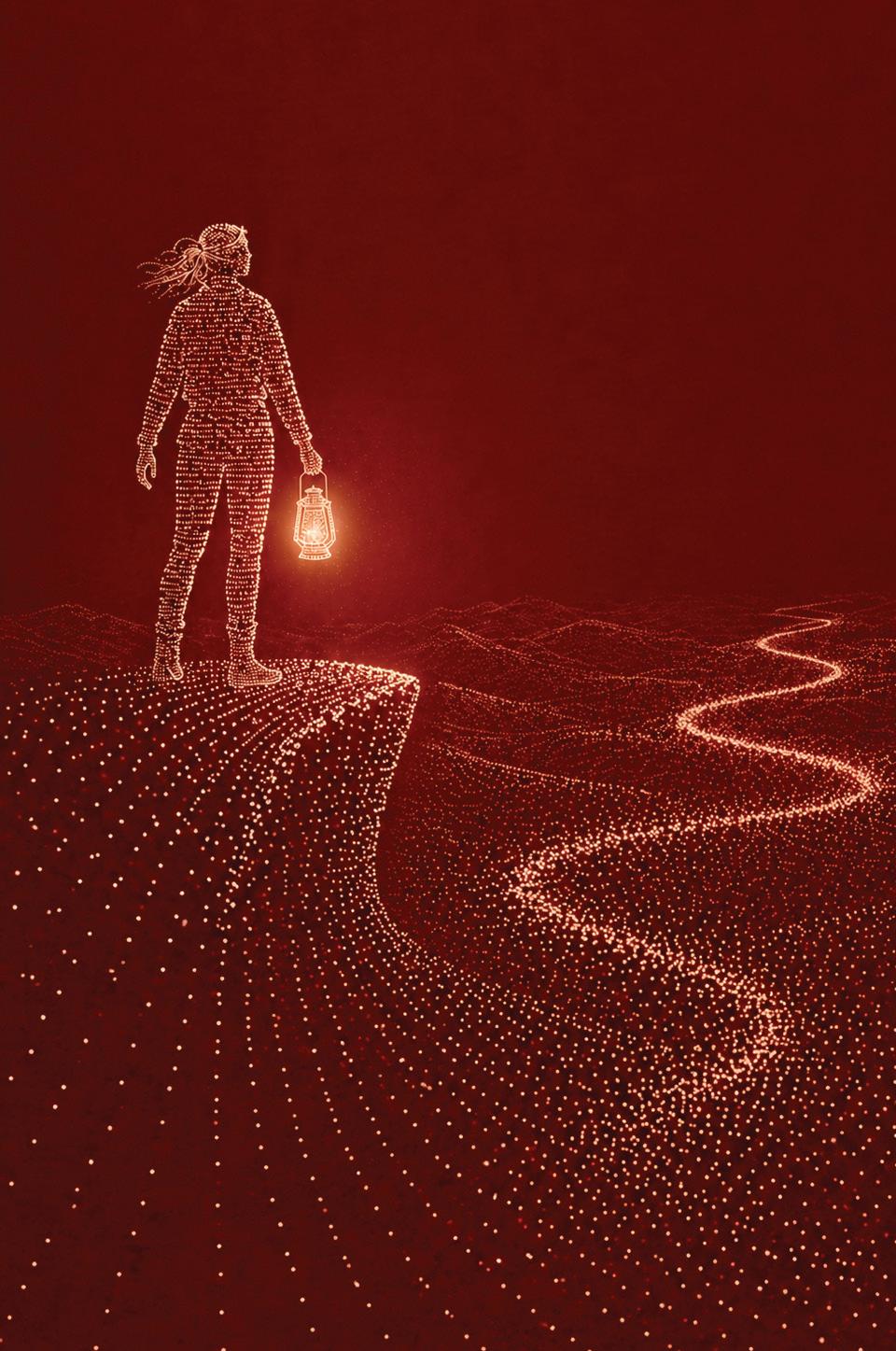
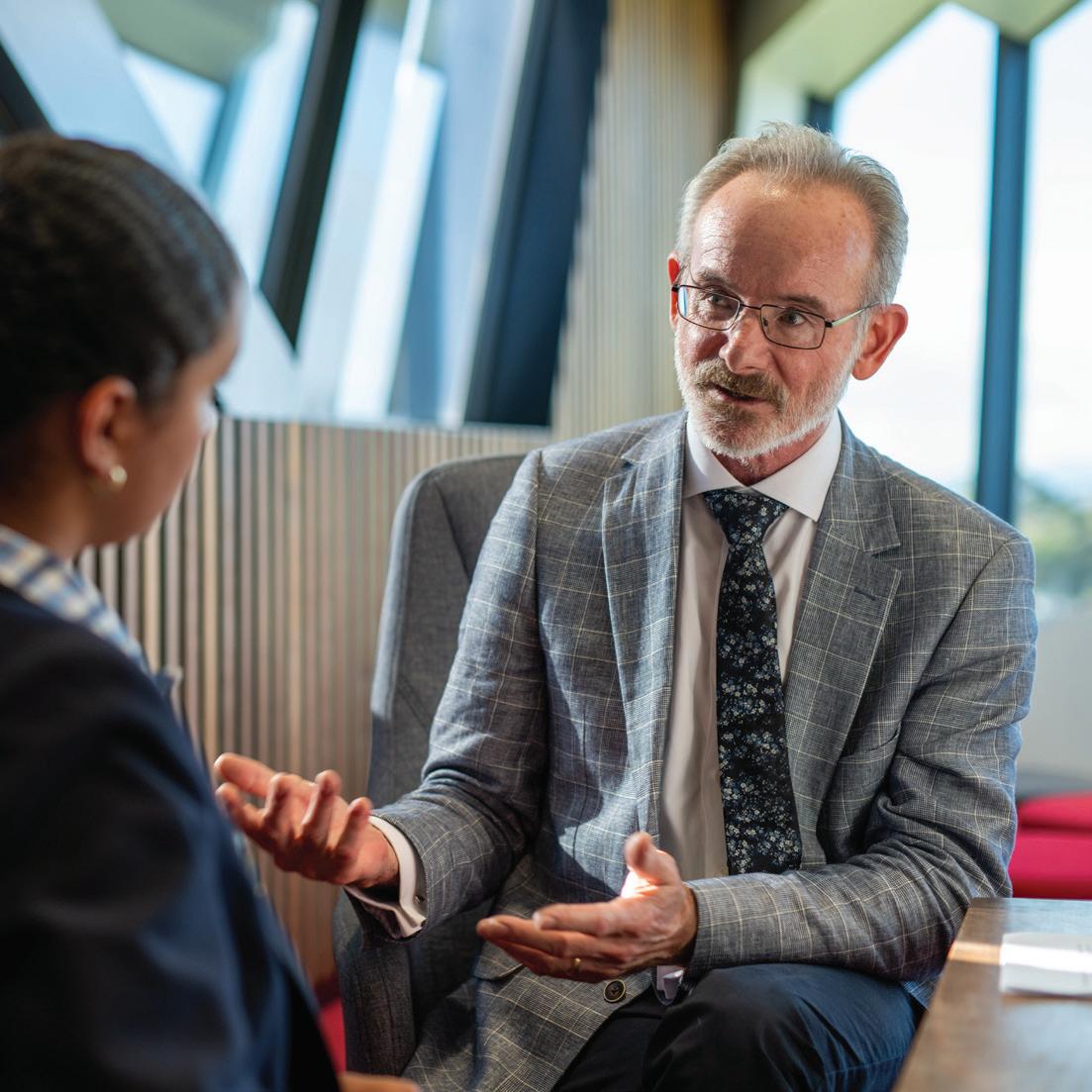
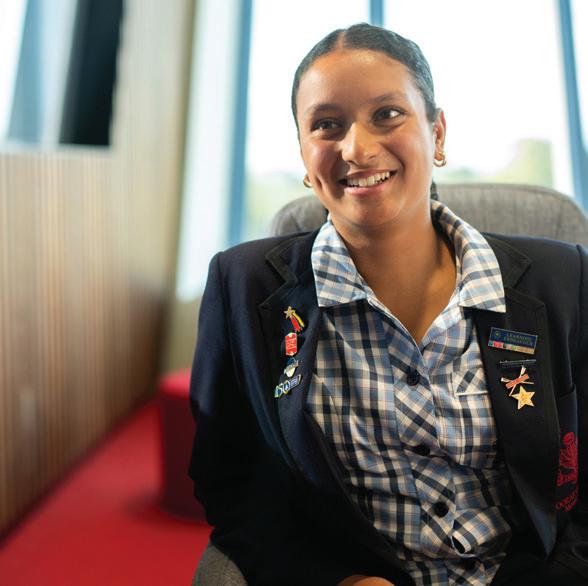
We often assume a good leader is someone with a concrete plan and a step-by-step manual for getting from A to B. But in an ever-changing world, this 'laminated' approach is becoming restrictive. The OECD describes our current era as a 'polycrisis' - where AI, climate change and social shifts hit us all at once. In this environment, if you wait for the path to clear, you have already waited too long. Today's vital leadership skill isn't following a map; it's the courage to be a map-maker.
This doesn't mean education and experience no longer matter. They are the foundation of boldness. Learning is your toolkit; you still need deep knowledge and a strong academic base to navigate the terrain. The difference is that today, we aren't just learning to follow a set path; we are learning how to use our tools to forge a new one when the path disappears.
The greatest barrier to innovation is waiting for the 'correct' time - more data, a specific role or platform. Starting before you're ready shifts you from being a passenger to being a navigator. We see this in our sporting teams, performing arts, camps and student advocacy. The most profound learning doesn't happen through a worksheet; it happens when students see a gap in their world and decide to fill it, even without all the answers.
Leading without a map requires us to reframe failure. In a rigid plan, a mistake is a disaster; in an evolving plan, it is an opportunity to reflect and pivot.
This is Cognitive Flexibility, the ability to:
ACT:
LAUNCH THE IDEA OR PROJECT.
LISTEN:
OBSERVE HOW YOUR PEERS AND COMMUNITY RESPOND .
PIVOT:
ADAPT BASED ON WHAT YOU'VE LEARNED.
Being bold also means being connected. The Compassionate Systems Framework teaches us that leadership works through three lenses: the Self, the Other and the System. When the path is blurry, you don't need a destination - you need a compass. By relying on your Inner Compass (values) and Social Compass (empathy), you begin to see a blueprint emerge naturally through the relationships you build.
The future belongs to the agile. Whether you're a primary or a secondary student, the message is the same: initiative is the new currency.
Don't wait for the rules to be written. The world is changing faster than maps can be drawn. If you feel the pull to create or lead, start now. The map will appear under your feet as you walk.
BY JASMINE TAYLOR Head of People & Culture
Courage can shift cultures. And often, it doesn't look dramatic or planned.
More often, courage lives in small, quiet moments - subtle acts of bravery that gently stretch the invisible boundaries of a community. Like ripples across water, they move outward, reaching further than we first imagine. Courage is less about a single 'leap of faith' and more about small, disciplined steps taken consistently over time.
In these moments, people begin to see what is possible. That speaking honestly is safe. That questioning a process won't lead to exclusion. That asking for clarity is not asking too much. Courage, in its truest form, rarely looks heroic.
But it is powerful.
Those who witness these moments pause. They reconsider what is acceptable, what is possible –and what they themselves might be capable of.
Schools, at their core, are social environments. Students and adults alike are constantly reading the room – scanning for cues, noticing behaviours and quietly assessing what is rewarded and what is not. From this, they learn what is safe to say, and who it is safe to be.
This is how culture is built. Not through words alone, but through lived experience - through the everyday interactions people observe and absorb. Value statements, policies and strategic plans provide direction, but it is behaviour that shapes belief. It is what people see, not what they are told, that ultimately drives how they feel and act.
When a teacher asks a challenging question in a staff meeting, it signals that respectful, professional dialogue is not only accepted but expected. When a leader admits, "I don't know," or acknowledges a mistake, it demonstrates that integrity and authenticity matter more than being right.
These moments do more than support individuals - they recalibrate the collective. They reshape what the community values. They show, in real terms, that character matters more than authority.
A courageous school is not one where fear doesn't exist. It is one where people choose to act in alignment with shared values, even when it feels uncomfortable. It takes just two seconds of courage - or discomfort - to find your voice, but those two seconds can have a significant impact.
Whether you are holding a whiteboard marker or carrying a backpack, your next visible act of courage, no matter how small, becomes part of the culture we are building together.
The ripples are waiting.
Who will take the two seconds of courage needed to drop the first stone?
I alone cannot change the world, but I can cast a stone across the waters to create many ripples."
— Mother Teresa
BY PAUL QUON Head of EdTech
In the rapid evolution of the twenty-first century, innovation is often celebrated as the ultimate driver of progress. From our coastal classrooms here on the Mornington Peninsula to the global stage, we see how new ideas reshape how we live, work and learn. However, history provides a sobering reminder that bold ideas without ethical consideration can lead to unintended harm.
As technology and Artificial Intelligence reshape society, the most effective leaders of tomorrow will be those who do not simply ask, "Can we do this?" but rather "Should we?" At our school, we believe true innovation requires a delicate balance of imagination and responsibility.
This journey begins with Design Thinking, a framework embedded across our curriculum. While the final product is often what people see, we place our greatest emphasis on the very first stage: Empathy.
Throughout subjects such as STEM-X, Agile Learning and Robotics, we deliberately embed empathy into the design process. Before a student writes a line of code or builds a prototype, they must deeply understand the human experience behind the problem they are solving. By considering the needs, diverse perspectives and potential feelings of their target audience, they ensure their projects are truly human-centred. This focus teaches our students that if we fail to consider the human impact, even the brightest idea can lead to poor outcomes for others.
Recognising the permanence of the digital world, we have shifted our educational focus. Instead of the less accurate 'digital footprint,' which suggests a mark can be washed away in the sand, we now emphasise the concept of the 'Digital Tattoo'. This metaphor highlights that, like a physical tattoo, digital records are permanent, often publicly visible and nearly impossible to erase.
This shift helps our students understand the gravity of their digital choices. It teaches them that what they build or share carries a lasting ethical weight. This level of accountability is essential for young students who will one day weigh the long-term impact of their innovations on society and on individual privacy.
We believe that ethical innovation for others starts with the choices students make in their own lives. When a student learns to balance their technology use, choosing when to engage and when to disconnect for their own wellbeing, they are practising precisely the discernment required for global leadership.
By making intentional choices about their own digital tattoo and screen habits, they builds the moral muscle needed to innovate for the benefit of others. A student who respects their own digital boundaries is far more likely to design technology that respects the dignity of their future audience.
Our goal is to ensure our students do not just consume the future, but design it with purpose. By integrating ethical thinking and empathy into our daily curriculum, we ensure that our students' bold ideas are grounded in both kindness and ethical responsibility. We are preparing them to be the thoughtful, ethical architects of the future.
BY FIONA WINES Head of Senior School, Deputy Principal
A'Give It a Go' culture plays an important role in building both confidence and capability. In schools, workplaces and communities, environments that encourage people to try, even when success is uncertain, tend to develop individuals who are more resilient, adaptable and open to growth. When the focus shifts from perfection to engagement, challenges become manageable learning opportunities rather than obstacles.
This kind of culture relies on psychological safety. When people are less concerned about being judged, they're far more likely to speak up, share ideas and take risks. As researcher Amy Edmondson notes in The Fearless Organisation (2018), "Psychological safety is not a perk; it's a prerequisite for high performance. Without it, people hide mistakes and withhold ideas, which is the ultimate drag on progress." In a school setting, this means students feel supported to try, make mistakes and learn, whether they are in the classroom, on stage or on the sporting field.
Growth rarely happens when things are easy. It occurs when learning feels difficult or progress seems slow. This 'stretch zone' is exactly where resilience is built. True confidence is not the belief that you will always get it right on the first attempt; it is the knowledge that you can recover and find a new way forward when things do not go to plan. Over time, this process develops capable and creative thinkers.
Bravery in these settings is not defined by the absence of fear, but by the presence of support. Stepping into the unknown, whether auditioning for a role, leading a group project or sharing an idea, can be intimidating. However, within a supportive community, students are more likely to attempt things they might otherwise have avoided, discovering strengths they did not realise they possessed.
This approach also helps develop a sense of agency. People thrive when they are trusted to contribute and learn by doing. Each small risk builds the self-belief needed to take on larger challenges. Students begin to see themselves as capable of navigating uncertain situations.
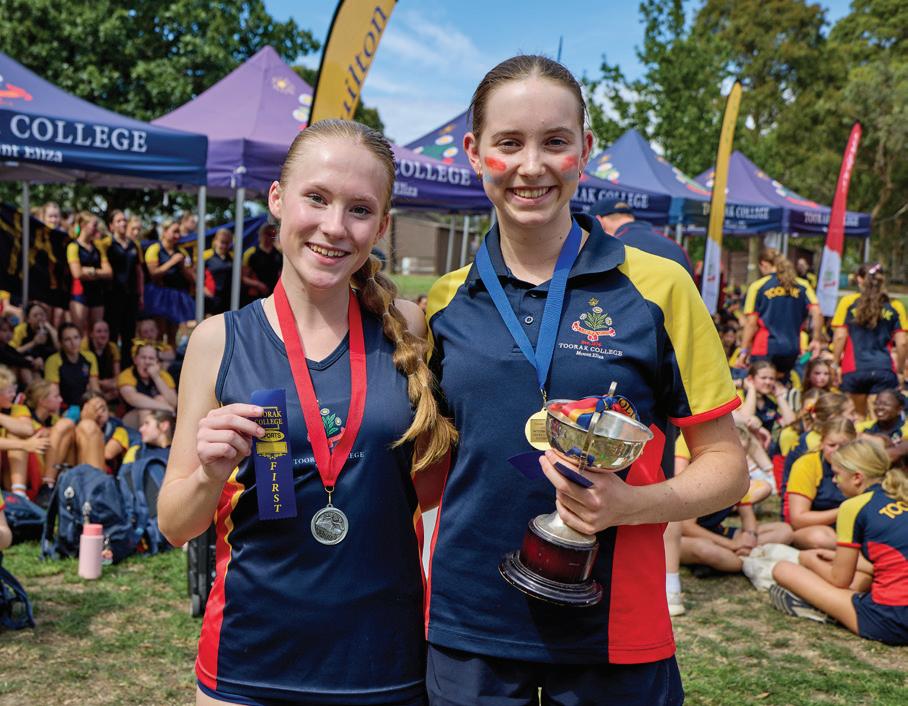
The impact of a 'Give It a Go' culture is practical and long-lasting. When success is defined by persistence and the learning process, students develop skills that serve them well beyond school. By providing support while encouraging students to stretch themselves, we help them build the courage to start, the willingness to ask questions and the persistence to keep going.
YEAR 5
Brave thinking means not giving up, even when things feel really hard. When I started here at Toorak in Year 3, Term 4, I felt uneasy and I found the work challenging. It was hard to keep up with the work and make new friends at the same time. I worried I wasn't good enough from time to time. But I knew I had to keep on going if I wanted to improve and become stronger. I had to keep pushing myself out of my comfort zone and strive for improvement. By the start of Year 4 I was feeling more confident and comfortable within myself. I see this as evidence that if I match brave thinking with not giving up, even when it seems too demanding, that I can do hard things.
YEAR 11
When success is defined by persistence and the learning process, students develop skills that serve them well beyond school.”
Brave thinking isn’t about being fearless, it's about showing up and being willing to learn. Being a competitive boxer and a student at Toorak College, I've faced setbacks, pressure and the constant challenge of balancing school and training. Toorak’s supportive learning environment has taught me to see challenges as opportunities to grow. As a member of the Australian team, I’ve gotten to compete around the world but success doesn't come without doubt. Each early morning session, tough loss, and win has been a lesson in resilience and discipline. To me, brave thinking is staying open to learning and trusting that every step forward helps shape who I am becoming.
TOORAK COLLEGE
Collegians
BROOKE BARTLING
My time at Toorak College was more than an education. It was the foundation of my ability to think bravely, act decisively, and lead with purpose in some of the most challenging environments. It was here that I first learned that empowerment is not something given to you; it is something you claim through action, resilience, and a willingness to step beyond what feels comfortable.
At school, I was encouraged to question assumptions, to speak up even when my voice shook, and to see challenges not as obstacles but as opportunities. Whether in the classroom, during Jazz Band, or through student leadership roles, I was encouraged to think analytically, take ownership of my ideas, and advocate for my decisions. This environment nurtured a mindset that valued courage, an approach that would later prove invaluable in my career.
When I entered the Public Service, at first via the Department of Defence and later during roles in the office of the Deputy Prime Minister and as a Diplomat in Australia’s Mission to the United Nations in Vienna, the stakes were higher. Decisions carried weight, environments were unpredictable, and the pressure to perform was constant. There were moments of uncertainty, times when the complexity of global issues or the intensity of operational demands felt overwhelming. Yet it was in those moments that the lessons from Toorak College became most clear.
Brave thinking is not about having all the answers; it is about having the confidence to move forward despite uncertainty. As a Diplomat this meant engaging with unfamiliar topics, navigating sensitive situations, and making decisions that required both empathy and strength. As an Advisor in the Department of Defence, it meant maintaining composure under pressure, adapting quickly, and driving outcomes through a demonstrated application of policy and strategy.
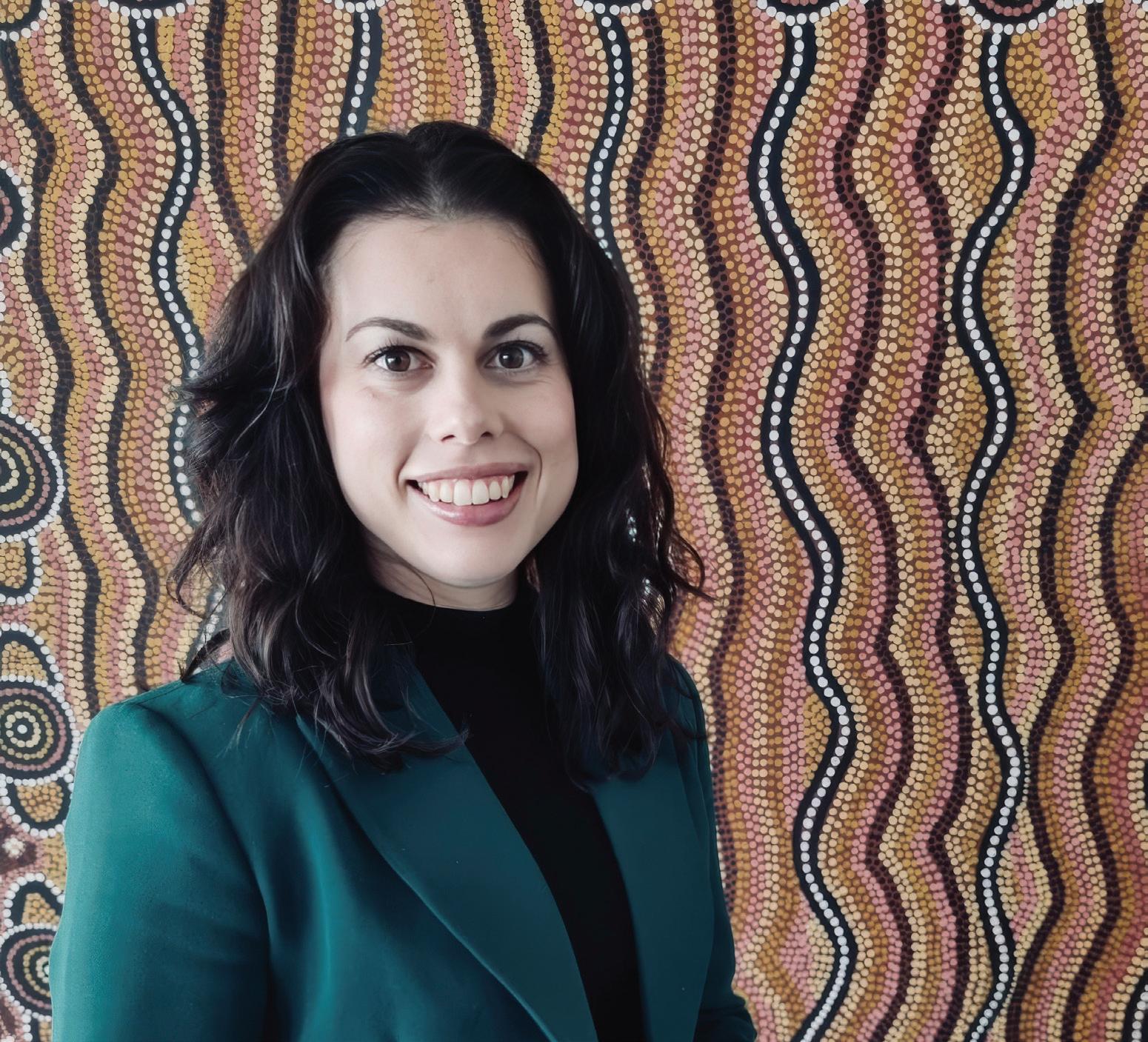
Empowerment, I learned, comes from preparation and perspective. It is built through small acts of courage, raising your hand, sharing an idea, taking responsibility when things go wrong. Over time, these moments accumulate, shaping a person who is capable of facing far greater challenges. Toorak College instilled in me the belief that my voice mattered and that I had the capacity to influence outcomes. That belief became a steady anchor in high-pressure environments.
Perhaps the most important lesson was resilience. Not every decision leads to success, and not every risk pays off immediately. There were setbacks, projects that didn’t go as planned, negotiations that stalled, and moments of doubt. But resilience is not about avoiding failure; it is about actively engaging with risk, learning from it and continuing forward with greater insight and determination. That mindset, cultivated early on and fostered throughout my time at the school, allowed me to persist and grow.
My message to Toorak girls coming through the ranks now is simple: take the risk. Speak the idea, step into the challenge, even when it feels daunting. Meaningful change does not come from staying within the boundaries of comfort, it comes from those willing to think differently and act boldly, two skills Toorak College gives you a safe space to explore and develop.
Empowerment is not given. It is claimed through action, resilience, and stepping beyond what feels comfortable.”
WHY INTELLECTUAL FLEXIBILITY IS A STRENGTH
BY NAOMI LINSSEN Deputy Head of Wardle House
Success in the dynamic pace of the current era depends heavily on our capacity for adjustment.
Central to this process is cognitive flexibilitythe psychological mechanism that facilitates the transition between different concepts, beliefs and behaviours. Research consistently demonstrates that cognitive flexibility is a vital asset, providing a foundation for improved academic outcomes, improved emotional resilience and sustained psychological health.
Flexible thinking, with the willingness and ability to adapt to new information, is a hallmark of intellectual growth, demonstrating maturity, creativity and critical inquiry. The statement “Strong opinions, loosely held” popularised by futurist and technology forecaster Paul Saffo, encourages a balance of decisiveness with intellectual humility. The idea is to form a clear, bold point of view based on available information, but to be completely willing to change your mind when better evidence or a more convincing argument is presented. By overcoming rigidity in our thinking we open ourselves to finding workable solutions to problems we thought were unsolvable; we can think laterally and develop psychological buoyancy. Allowing for mental flexibility, holding two conflicting ideas in your mind at once, makes us better negotiators and effective collaborators.
Our willingness to reconsider our views is a core component of mental flourishing and, from a biological perspective, changing your mind is an act of neuroplasticity. So, how do we strengthen our intellectual flexibility ‘muscle’ in order to stay mentally limber?
Changing your mind is an act of neuroplasticity and a pathway to mental flourishing.”
How do we strengthen our intellectual flexibility ‘muscle’ in order to stay mentally limber?
1
If you like coding then read about poetry, if you are an artist then read about finance or marketing. This develops a toolbox of concepts to draw from, across various fields, enabling you to see patterns and metaphors that can apply to other situations.
Routine is the enemy of flexibility as it reinforces rigid neural pathways. Seeking a different route to work, trying foods you think you will dislike, or using your non-dominant hand for simple tasks will keep your brain in a state of ‘neophilia’ (the love of novelty or new and unfamiliar things).
3
Be brave by building the strongest possible argument to support the view which opposes your own. This forces your brain to step out of its own confirmation bias and truly inhabit a different logical framework.
BY TRISTAN HILL Head of Student Progress
Modern culture rewards speed – instant responses, rapid information and quick conclusions. Yet many of the world's most important challenges require time and sustained effort. These problems demand more than the superficiality of consumption and arbitrary, generated conclusions. They will need patient students educated in the strategic use of time, who are willing and able to invest disciplined and sustained effort to understand, and who have developed self-understanding and connection with community –the kind of deep thinking, considered characters who steer events to positive outcomes. There is no short-cut to this kind of outcome; no set of quick skills we can shove into a curriculum to ensure it. Indeed, our young people need thinking beyond just thinking skills.
Any parent will know that children are great at asking "Why?", and this makes them natural critical thinkers – but instinctive curiosity alone is unprincipled questioning. Critical thinking involves learning where and when to ask the right questions about understanding (Dayton and Rodier, Critical Thinking, Logic and Argument: An Introduction, 2024). In developing critical faculties, students become more sophisticated in their ability to reason with evidence, draw justifiable conclusions and weigh the merits of positions – a process explored in depth by Ritchhart and Perkins in Learning to Think: The Challenges of Teaching Thinking (2005). The Australian Council for Educational Research characterises critical thinking as "not simply reflective thought" but something "also applied and generative" (Critical Thinking: Definition and Structure, 2020). Our curriculum provides the framework for that application and creativity.
Considered as a repertoire of skills, critical thinking can help students push beyond the superficial to a better understanding of the complexity of their investigations – a point made compellingly in The Nature of Expertise (Glaser et al., 1988). But if we reduce critical thinking to merely a skill, we miss the point that students can use thinking skills routinely without thinking deeply. There is the risk that demonstrations of critical thinking remain at the level of 'surface compliance' when the aim is genuine and considered understanding. It is, after all, the reason why large language models like ChatGPT can produce content that conforms to the features of thinking without conscious awareness. In the classroom, excessive focus on command terms, for example, is performative thinking without deep thinking. As Daniel Willingham concluded in How to Teach Critical Thinking (2019), the benefits of 'deep, critical thinking' are 'hard-won.' Deep thought is not merely a skill to be executed, but a practice shaped by self-awareness and collaboration.
Deep thinking implies a sophisticated capacity for metacognition. It requires recognising the limitations of one's own perspective, comfort in acknowledging what we don't yet understand, and a willingness to pause, ruminate, revise and proceed. This idea has a long pedigree in Western culture. Socrates, reputed to be the wisest man in ancient Greece, claimed that the only thing he knew was that he knew nothing. For Socrates, and Plato and Aristotle after him, deep thinking began in inquiry – in wonder. But if we are to value critical thought, we must also value doubt, because, as Peter Ellerton argues in On Critical Thinking and Collaborative Inquiry (University of Queensland, 2017), "doubt is the beginning of inquiry." Drawing on Lipman, Ellerton explains that when things are settled and clear, doubt is absent – and without doubt, we lose the opportunity to engage in reflective thinking and, therefore, to improve our thinking.
Deep thinking is also often social, not solitary. Through engagement with others, we are able to have our assumptions challenged and to challenge the assumptions of others, developing a deeper understanding of issues. We are able to engage with alternative perspectives that mitigate our biases and we are able to extend our reasoning by drawing on new and novel approaches from those around us. Critical thinking is, then, not just internal but relational. As Ellerton (2017) captures it: "thinking well is also about learning how to think with others, to in effect become part of a broader social cognition that can achieve more collectively than is possible individually." This takes time, but it also takes deliberate effort to build a community that values deep thinking. It is no surprise, then, that John Hattie's Visible Learning: The Sequel (Routledge, 2023) argues that the most effective mechanisms for deeper consolidation of learning harness the "power of working with others."
Schools cannot teach critical thinking routines and expect to develop students' deeper thought. Such an end requires time and deliberate, guided effort – encouraging students as self-regulated learners who have the intellectual modesty to accept doubt and even mistakes as an essential part of deep thought; who accept that questioning is as valuable as answering; and who are willing to build relationships through peer discussion and feedback. It is for this reason that self-regulated learning strategies are at the heart of Toorak College's Teaching and Learning Philosophy – because by taking the time to move beyond superficial engagement, to think slowly, more honestly and openly with others, students develop a better, critical and truly deeper understanding.
BY LIAM BASSETT Director of Student Life
We are living through one of the most significant periods of transformation in creativity and the arts. We’re at a point where we have to decide what matters more: a polished final product that AI can produce in seconds, or the intellectual grit a student develops when they are the ones driving the creative process.
Amid the growing prevalence of AI-created audio, visual and written content in our society, we must not mistake the efficiency of a finished product for the irreplaceable intellectual growth that occurs only through the lived experience of the creative struggle, involving imagination, interpretation and experimentation.
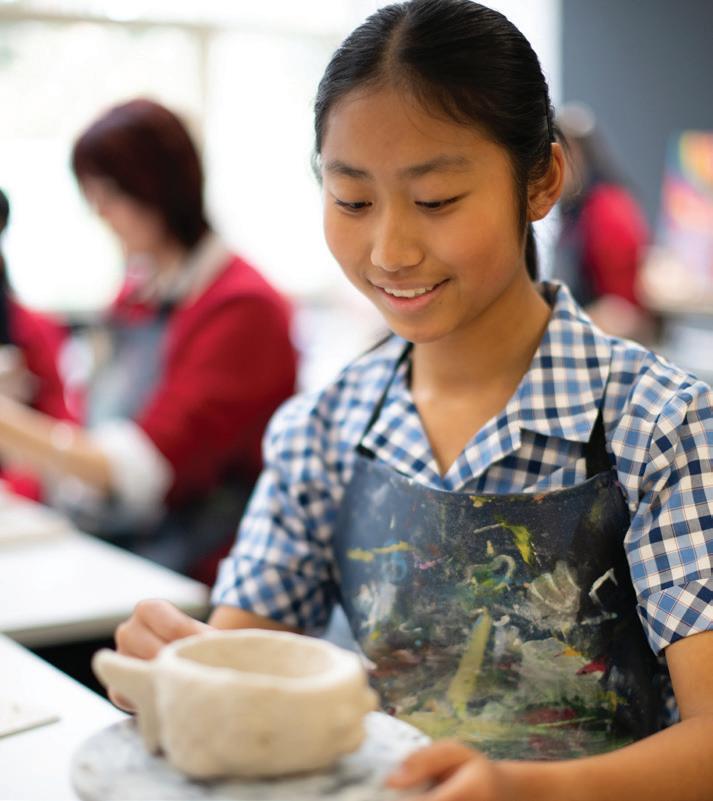
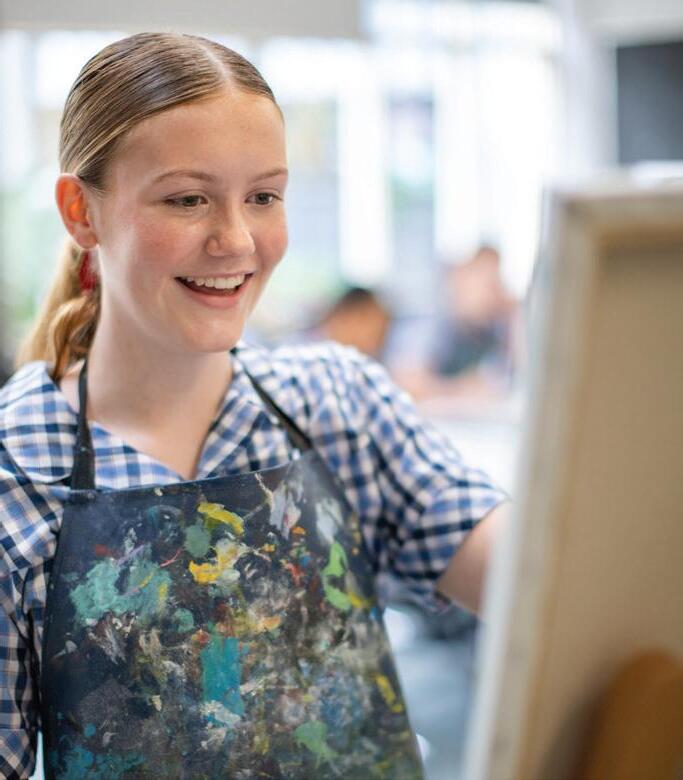
In education, across several artistic domains - such as dance, drama, literature, photography, film, visual arts and musicthere is a growing emphasis on the process rather than the end product. It connects closely with holistic education, an approach that nurtures the ‘whole person’ and encompasses intellectual, emotional, social, physical, creative and spiritual growth.
The OECD report "Art for Art’s Sake? The Impact of Arts Education" (2013) moves beyond anecdotal praise for the Arts and incorporates rigorous meta-analysis of over 500 international empirical studies. Through this, it was evidenced that the Arts significantly strengthened IQ, mathematical reasoning and the spatial-temporal visualisation essential for fields like geometry and engineering. Additionally, drama and theatre programs support linguistic and social development by enhancing elementary-level literacy skills - including reading, writing and oral expression - while fostering sophisticated social-emotional capacities such as empathy, perspectivetaking and emotional regulation.
In Australian research, there is “convincing evidence of, and remarkable consensus on, the existence of a strong positive relationship between participation in the Arts and benefits for individual learners of an academic, social and behavioural nature, and thus broader social benefits” (Ewing, 2010).
Curated research by Deasy (2002) highlights that the Arts foster significant gains in core academic areas like reading and mathematics while simultaneously cultivating higherorder thinking skills, increased motivation and improved social behaviours. The intrinsic benefits of the Arts also provide a range of experiences including emotional stimulation, imaginative captivation, cognitive growth and an expanded capacity for empathy and communal expression (McCarthy et al., 2004).
When we prioritise creativity and the Arts, learners move from regurgitation to revelation. It promotes the notion that learners have the agency to expand upon their creativity, rather than just consuming knowledge and information.
Ultimately, the Arts can stand outside of traditional learning environments where success is often measured through clear criteria and structured outcomes. With true creative expression, young people are provided with a space without the constraints of right and wrong answers. They’re able to explore and experiment and find a place of introspection and personal meaning.
Whilst AI and other technological advancements may augment the creative process for our young people, we all have a collective responsibility to nurture the 'unscripted', ensuring that our learners never lose the creative courage to find their own voices.
WHY REAL LEARNING HAPPENS BETWEEN CURIOSITY AND CERTAINTY
BY KATE BROWN Deputy Head of Senior School, Academic Growth AND SUSAN AUGER Head of Academic Growth, Wardle House
In a culture that celebrates quick answers and polished outcomes, the most valuable part of learning is often overlooked: the messy middle. It is the stage where ideas are incomplete, questions multiply, and progress feels uncertain. While many learners are conditioned to seek the safety of a 'right' answer as quickly as possible, true intellectual growth occurs when they allow themselves to linger in the space between curiosity and clarity.
Sitting with difficult questions - rather than rushing to a conclusion - develops the critical thinking, creativity and resilience necessary for a complex world. This philosophy is reflected in the Agile Learning approach at Toorak College, where students move away from passive consumption and toward active inquiry. By integrating disciplines like Philosophy, Commerce and Technology, learners are encouraged to identify authentic real-world problems. Whether they are exploring the ethical frontiers of AI or reimagining local development, students find that the path to a solution is rarely a straight line; it is a process of experimentation, uncertainty and discovery.
True intellectual growth occurs when they allow themselves to linger in the space between curiosity and clarity.”
The messy middle is also where creativity is nurtured. When an answer is not immediately obvious, learners are free to explore multiple pathways and approach problems with entrepreneurial and ethical mindsets. In the Year 9 program, for example, this culminates in the capstone question "What impact can I have?" This inquiry-driven approach empowers students to navigate the uncertainty of global citizenship and community action with the understanding that the process of thinking is often more significant than the final result.
Supporting students through this uncertainty requires a dedicated space for reflection, such as Growth Mentoring. Drawing on principles of cognitive psychology, students learn to put themselves at the centre of their own learning. This ensures that the struggle of the messy middle is productive rather than overwhelming. As students learn to interpret feedback and data in a meaningful way, they begin to see confusion not as a sign of failure, but as a natural and valuable part of deep understanding.
Ultimately, experiencing the messy middle builds a profound sense of resilience. Students begin to understand that uncertainty is something to be worked through rather than avoided. By learning to stay curious in the face of the unknown, they develop the flexible thinking and persistence needed to navigate the challenges they will encounter well beyond their school years.
To achieve my goals I've been pushing myself. I think that if you keep trying you can get better. My advice is, if you feel intimidated by something, for example, a difficult maths problem, break it up into smaller parts you know you can do. Another thing that's been helping me get to my goals is believing in myself. “You can do the hard things!" That's what I tell myself. There have been some challenges so far this year and the thing I’ve learnt is to push myself to the end. When I’m stressed, I find taking deep breaths helps to calm me down. To summarise, you can do anything!
Maybe the bravest thing I can do is be myself in a world built on conformity. Every day, I feel the pressure to fit in, to do what my friends are doing, to follow everyone else, and not to be different. It feels easier to go along with it, but I’m starting to realise that bravery comes from stepping off the safe path and choosing my own.
In Year 9, I have made choices that felt risky. I chose electives that genuinely interested me, even if none of my friends did. It meant sitting in new classrooms and having no familiar faces. It is confronting, but it is also where I am growing. The encouragement of my teachers and school has helped me realise that being brave and carving my own path actually helps my academic growth.
I am choosing to bravely back myself, even when it's uncomfortable.
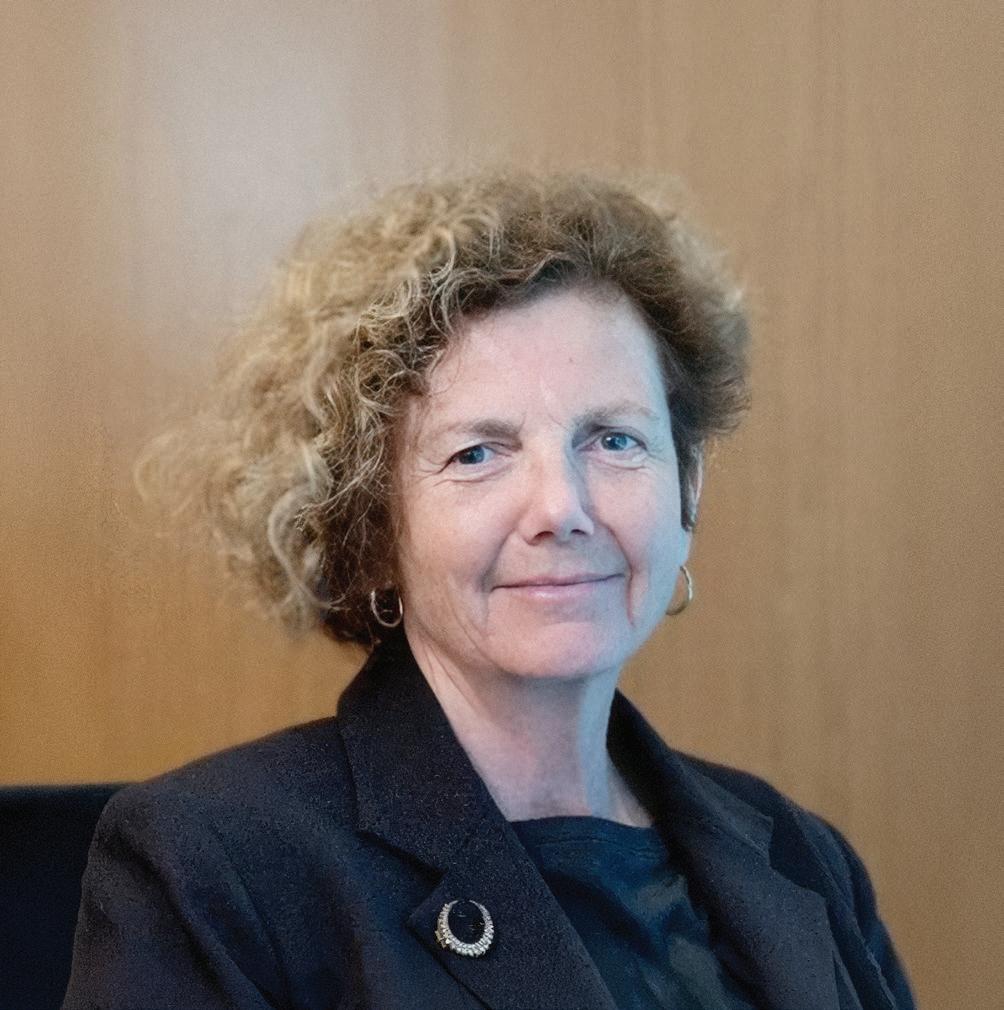
MELANIE EAGLE BOARD CHAIR OF THE ROYAL VICTORIAN EYE AND EAR HOSPITAL Collegian (TC 1977)
This story's title is the same as one I chose for a book on women in politics decades ago, but it still resonates as the best way to understand my journey.
From early on, I was aware of my privilege and of the injustices many others faced. With that awareness came a quiet but persistent sense that, with all my opportunities, the least I could do was try to address some of that inequity. I cannot fully explain where this instinct came from, although I have long been inspired by those who have done far more than I could ever hope to, including Toorak College Headmistress Miss Cerutty.
Even as a student, I found myself questioning assumptions. When encouraged to take Confirmation, I could not see why I would adopt a belief system simply because others did, nor why church ministers were male. When my mother suggested I would make a good nurse, I wondered why I would not instead become a doctor, like my father. That instinct to question, to look beyond what is presented as given, has stayed with me.
A defining moment came in 1978, the year after I finished at Toorak, when I travelled to South Africa as an exchange student. It was the height of Apartheid, and I lived in a small town surrounded by the legislated 'homeland' of KwaZulu. Every aspect of life was determined by race. This included schools, public spaces, employment and even the most ordinary daily interactions. I remember completing a school form that asked for my race. I wrote "Australian." It was rejected.
The experience was confronting and deeply unsettling. It forced me to question how such systems could exist, and how they might be changed. At the end of that year, I shifted my university studies from Science and Law to Arts and Law, majoring in Politics. Politics became, for me, a tool for understanding systems. Law became a tool for changing them.
My career has not followed a single, predictable path. Early on, while working as a lawyer in private practice, I had expected to transition to the Bar. However, my epilepsy was not fully controlled at the time, and the physical manifestations, particularly under pressure and fatigue, made that pathway difficult. I had to adapt. Rather than seeing this as an endpoint, I redirected my efforts into legal policy and law reform, working across areas such as equal opportunity, violence against women, accessible courts and victim support. These proved to be deeply meaningful and impactful fields.
Across my work in social justice, disability and health, I have sought to contribute in ways that are practical and considered. I have worked in law reform, helped establish specialist courts and workforce training for family violence, and later became the inaugural Chair of Respect Victoria, an agency focused on the prevention of violence against women and girls.
My own experience with epilepsy has also shaped my perspective. When my condition progressed to full seizures, it reinforced my awareness that many others face even greater challenges, and that lived experience has an important place in shaping better systems. As CEO of LiverWELL, we embedded consumer participation into policy and program development, ensuring that those affected had a voice in the decisions that impacted them.
Today, as Chair of the Royal Victorian Eye and Ear Hospital, I continue to be motivated by the opportunity to contribute to meaningful change.
The work is not only about delivering quality care, but also about collaboration. It involves bringing together medical research, technology and community insight to improve outcomes. I am particularly encouraged by our partnerships with Aboriginal health organisations, which are helping to shape services that are more culturally responsive while also building capability within communities. Ensuring that consumer voices are part of our strategic thinking remains central to this work.
What motivates me now is both simple and enduring. I feel immensely privileged to be in a position to contribute, whether to family, community or the institutions I am part of. On my desk, I keep a photograph of a young girl standing outside a tent in a refugee camp. It is a quiet reminder of how different life circumstances can be, and of the responsibility that comes with opportunity.
Brave thinking, to me, is not about certainty or boldness for its own sake. It is about questioning, adapting and remaining open to complexity. It is about using whatever tools and opportunities you have to make a difference, however small that may seem.
I have been fortunate in the opportunities I have had. Contributing in return has not only been a responsibility, it has also been one of the greatest rewards of my life.
BY JULIE LIPTAK Speech Pathologist & Toorak College Learning Enhancement Consultant.
We hear the word resilience increasingly, especially when talking about children and young people. But resilience is not something that appears overnight, and it is not something we can simply hand to our children. It is built over time, often in the uncomfortable space between effort and success – the gap where things feel hard, uncertain and unfinished.
Modern culture often encourages quick solutions and smooth progress. We are taught to fix problems quickly, remove discomfort and protect children from frustration. While this instinct comes from love, constantly rescuing children from difficulty can prevent them from developing the very skills they will need later in life. The goal is not to eliminate struggle, but to recognise that growth often happens because of it.
Most adults can look back on childhood or adolescence and remember setbacks that felt significant at the time: missing out on a role in the school musical, not making a sports team, being left out socially, or receiving grades that did not reflect the effort put in. These moments are painful, but they are also powerful teachers. They ask young people to manage emotions, regain perspective and work out what to do next.
When children face challenges without immediate rescue, they begin to build emotional strength. They learn to sit with disappointment rather than fear it. They learn to regulate feelings such as jealousy, embarrassment, sadness and selfdoubt. They begin to use positive self-talk, to calm themselves, and to understand that a setback is not the same as failure. Over time, they learn one of life's most valuable lessons: difficulty is not the end of the story.
Small struggles also build problem-solving skills. A child who must work through a friendship issue, recover from a poor result, or find a new strategy after being overlooked is learning far more than how to 'bounce back'. They are learning adaptability. They are discovering that there is usually more than one way forward. They are beginning to understand that effort, reflection and persistence matter more than immediate success.
This is where confidence is truly formed. Real confidence does not come from everything going well. It comes from knowing 'I can handle hard things'. A child who has experienced setbacks and worked through them becomes less afraid of future challenges. They develop a growth mindset – the belief that skills can improve, mistakes can teach and hard moments can be survived. That belief becomes a foundation for resilience in adolescence and adulthood.
Of course, this does not mean children should be left unsupported. They still need encouragement, guidance and reassurance. But there is a difference between supporting a child and rescuing them. Support says, I believe you can do this, and I am here beside you. Rescue says, this is too hard for you, so I will take it over. One builds strength; the other can unintentionally weaken it.
As parents, carers and educators, it is natural to want to smooth the road ahead. We want to protect our children from hurt, disappointment and adversity. But life will never be perfectly smooth, and it should not be. The bumps in the road teach children how to steady themselves. The cracks are where growth begins.
If we remove every obstacle, we may also remove opportunities for resilience to develop. But when children are allowed to encounter manageable difficulty – with caring adults nearby, cheering them on from the sidelines – they gain something far more valuable than temporary comfort. They gain the emotional tools to navigate bigger obstacles later in life.
Growth does not always happen in moments of achievement. Often, it happens in the gap: in the waiting, the trying, the missing out, the trying again. That space may feel uncomfortable, but it is not empty. It is where resilience, confidence and adaptability are quietly being built.
And that is why small struggles matter. They do not hold children back. In many cases, they help move them forward –not despite the difficulty, but because of it.
Real confidence does not come from everything going well. It comes from knowing 'I can handle hard things.'"
Public confidence is reactive and inherently fragile, relying on a 'social mirror' to tell us if we are successful, capable or enough.”
BY JENNA GREEN Deputy Head of Senior School, Personal Growth
In my time as an educator, I have watched the landscape of adolescence shift from a private journey of self-discovery to an ongoing performance shaped by visibility. In such an environment, it is easy for our young women to mistake attention for affirmation and applause for self-worth. The pressures of social media metrics and constant comparison are not just distractions; they have quickly become the primary forces shaping their identity.
Public confidence is reactive and inherently fragile, relying on a 'social mirror' to tell us if we are successful, capable or enough. Research suggests that when we base our value on external approval, we become more prone to anxiety and have lower resilience. The danger of a life lived for the 'likes' of others is that when the audience leaves, the sense of selfworth often goes too. If we only feel successful when being watched, we lose the ability to find satisfaction in growth itself.
Self-worth should be anchored in one's own values and progress. As we guide our young women toward adulthood, one of the most vital traits we can foster is private confidence. This is the quiet certainty of self-worth that exists independently of an audience, an accolade or a notification. Private confidence is built in the 'unseen' moments. It is the integrity to do the right thing when no one is watching, the grit to pursue a hobby for the sake of mastery rather than a résumé, and the resilience to fail privately without worrying about public humiliation.
Now more than ever, we need to consider how we empower students to root their confidence in intrinsic values such as personal integrity, character and the mastery of new skills. This provides a stable foundation that isn't subject to changing social trends. Building confidence that is rooted more internally than externally will encourage authenticity, perseverance, long-term growth and, importantly, sustainable self-worth. We want to nurture this generation to take positive risks and not shy away from courage, because their sense of worth isn't diminished by every mistake. This aligns with Carol Dweck's work on the growth mindset: when we focus on internal effort rather than external image, we build a base that can weather any storm.
True confidence is not always the loudest voice in the room. Often, it belongs to the person who has the quiet courage to stay true to her convictions and know her worth in any environment – someone who finds joy in her own progress, regardless of the noise surrounding her.
We strive to be a community where inner character is celebrated far more than public visibility. Our hope is that every girl leaves with a sense of self so unshakeable and secure that she has no need to prove her worth to the world.
As parents and educators, perhaps we might ponder: are we teaching our children to look outward for a 'round of applause,' or are we empowering them to listen for that quiet, internal "I did it"?
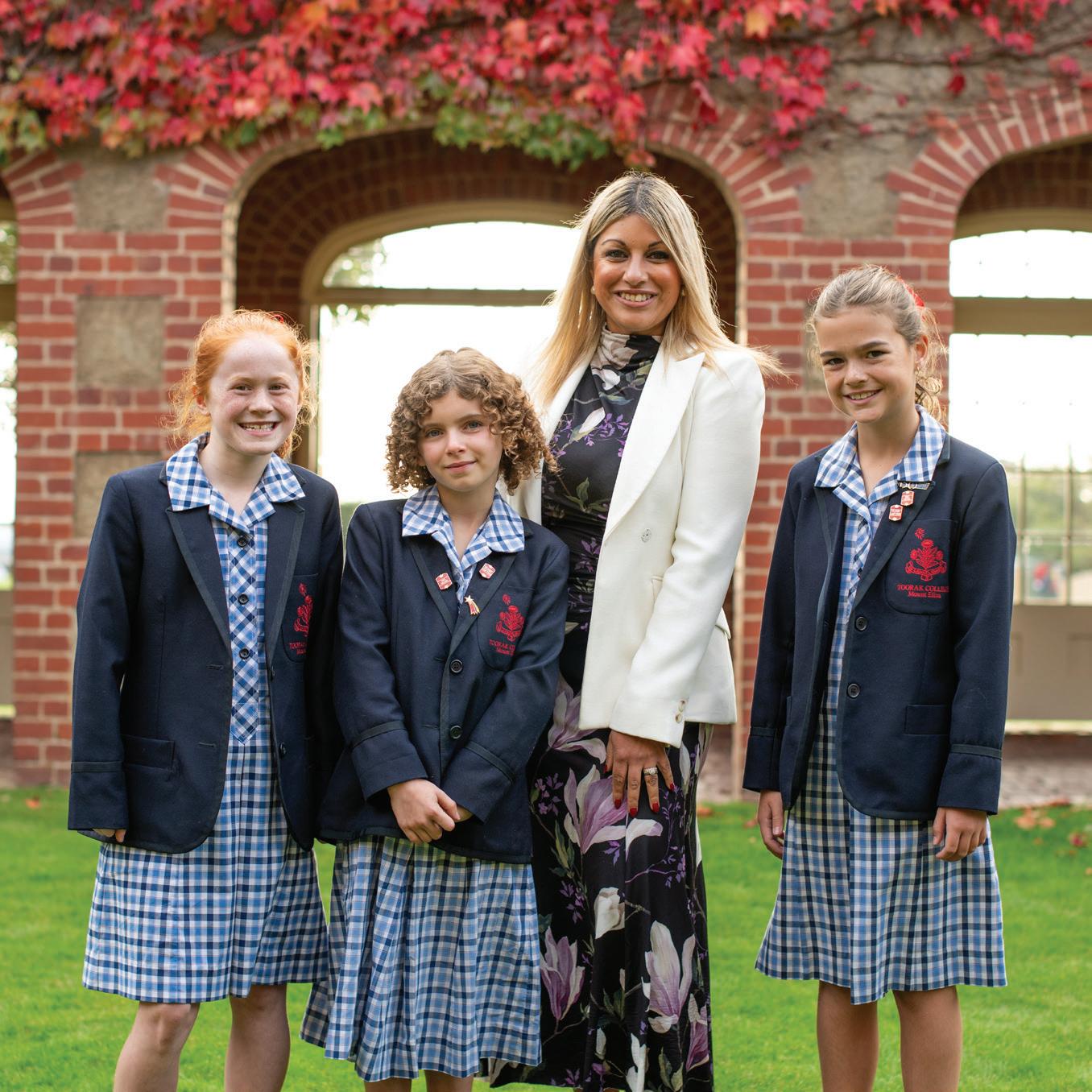
BY MELISSA SCHOORMAN Head of Wardle House, Deputy Principal
At Toorak College, wellbeing is not treated as an 'extra,' but as a core part of how our children learn, grow and interact with the world around them. Our goals focus on, Me, You, Us: Becoming Our Best Selves, which is designed to support each student in developing the skills, awareness and character needed to thrive both within herself and in connection with others. It integrates social thinking, cognitive skill development and holistic and relational wellbeing into a cohesive and practical framework.
THE CURRICULUM IS STRUCTURED AROUND THREE INTERCONNECTED AREA S:
ME focuses on self-awareness, supporting students to understand their emotions, recognise their strengths and take responsibility for their actions.
YOU encourages students to look outward. This develops empathy, assists in interpreting social cues and understanding others’ perspectives.
And finally, the US brings these elements together, fostering collaboration, ethical decision-making and a sense of belonging within a community.
A key feature of the curriculum is its focus on the social and moral development of young girls. We recognise that navigating friendships and peer dynamics can be complex and, at times, challenging. We create space for students to explore common concerns such as exclusion, conflict and the fear of being misunderstood. Through structured lessons and discussions, girls develop the language and confidence to express and assert themselves clearly, manage social situations effectively and, above all, act with integrity. Rather than promoting 'perfect' behaviour, our approach emphasises thoughtful decision-making, reflection and personal responsibility.
Alongside social and emotional learning, the curriculum explicitly develops cognitive skills. Students are taught to think flexibly, consider different methods for study and learning, and approach problems with greater clarity. These skills help them pause and respond thoughtfully in both social and academic contexts, rather than reacting impulsively or approaching situations with a ‘one-size-fits-all’ mindset.
Another component of the program is metacognitionteaching students to think about their own thinking. Girls learn to recognise what they are feeling, understand how their thoughts influence their behaviour and identify strategies that can help them respond more effectively rather than impulsively. Over time, each student builds a personal toolkit of strategies, such as reframing situations, using assertive communication or taking time to reflect before acting. Crucially, they are guided not just in learning these strategies but in selecting and applying them in dynamic situations.
Over time, each student builds a personal toolkit of strategies”
This Personal Growth framework creates a shared language across the school. This consistency supports a culture where emotions are acknowledged and validated, relationships are managed with care and growth is seen as an ongoing process. Students are encouraged to support one another, contribute positively to their community and continue developing their sense of self.
Parents play an important role in reinforcing this learning. By engaging with the language and strategies introduced at school, families can help create a consistent environment that supports each girl’s development. Together, we aim to nurture confident, empathetic and capable young people who are equipped to become their best selves.
BY KRISTIE EVANS Head of Year 8

Six years ago, during COVID lockdowns in Victoria, I stumbled upon the groundbreaking work of Dr Vivek Murthy, former U.S. Surgeon General, who identified loneliness as a public health epidemic, arguing that social connection is essential for physical and mental health. As I took my daily steps listening to his audiobook Together: The Healing Power of Human Connection in a Sometimes Lonely World, it struck a defining chord.
Murthy shared that small daily actions to improve social health, such as spending just 15 minutes checking in with a loved one, without distractions, and engaging in acts of service, had incredible benefits on mental and physical health.
As a school community, we live and breathe this. We see our students flourish when they feel connected and belong to something bigger than themselves. Community is the medicine we need to invest in and, with this message endorsed by a practising medical professional, it feels more important than ever to savour and protect it.
Yet true personal growth rarely comes from simply moving with established norms or embracing what came before us. Growth often begins at the edge of our comfort - in the moment we decide to carve the path less travelled, to take a risk without knowing if it will work. It is in precisely these moments that new communities are born: new outlets, new ways of connecting, new expressions of who we are becoming. Working with our student leaders and championing this kind of brave thinking is one of the most rewarding parts of this role. They have the ideas; they simply need the space to pave their way.
This is personal growth in its most authentic form - not just self-reflection, but the courage to act, to build and to invite others in. I love seeing our students step into their own and demonstrate belonging by creating entirely new spaces for it. Working with our Connections and Diversity prefects this year has enabled a beautiful, flexible approach to community: a safe space where anyone can come as they are, contribute their talents and help shape the kind of connection they wish they had found sooner.

So as I reflect on all that we offer to facilitate connection, and to hold it close once our girls graduate and become Collegians, I feel genuinely proud. Personal growth and community are not separate journeys. Often, the bravest act of self-discovery is reaching out a hand and saying: there is a place here for you too. Once warmly enveloped in the Toorak community, you know that you will always belong.
True personal growth rarely comes from simply moving with established norms”
When I am 21 years old I want to be a doctor, specifically a gynaecologist and obstetrician just like my mum. It will be like following in her footsteps!
To become a doctor it is going to take a lot of practice to get all of the study right at university and I think it will take a long time - maybe even as long as two years or more! In Year 2 I know I will have to work hard in maths because later on I might need to measure the baby’s blood or work out the timing of when a baby is born. When I am in Year 4 I might need to practise my signature so that people will know that it was me giving the medications.
It’s cliché but I really do believe that the best way to grow is to be uncomfortable. For me this often happens through writing. I love entering competitions and sharing my work but sometimes it can be difficult to be authentic and fully express myself, knowing it will be judged by others. Despite that, I think it's important to just believe in yourself and what you're doing.
Recently I attended the Somerset Writing Festival in Queensland. I got to meet some incredible authors and find out the different pathways that lead them to where they are. This gave me some interesting insight and gave me the chance to think about my future and what it could look like. One day I hope to become a scriptwriter, I'm not really sure where that will take me yet but I'm very excited to find out.
TOORAK COLLEGE Collegians
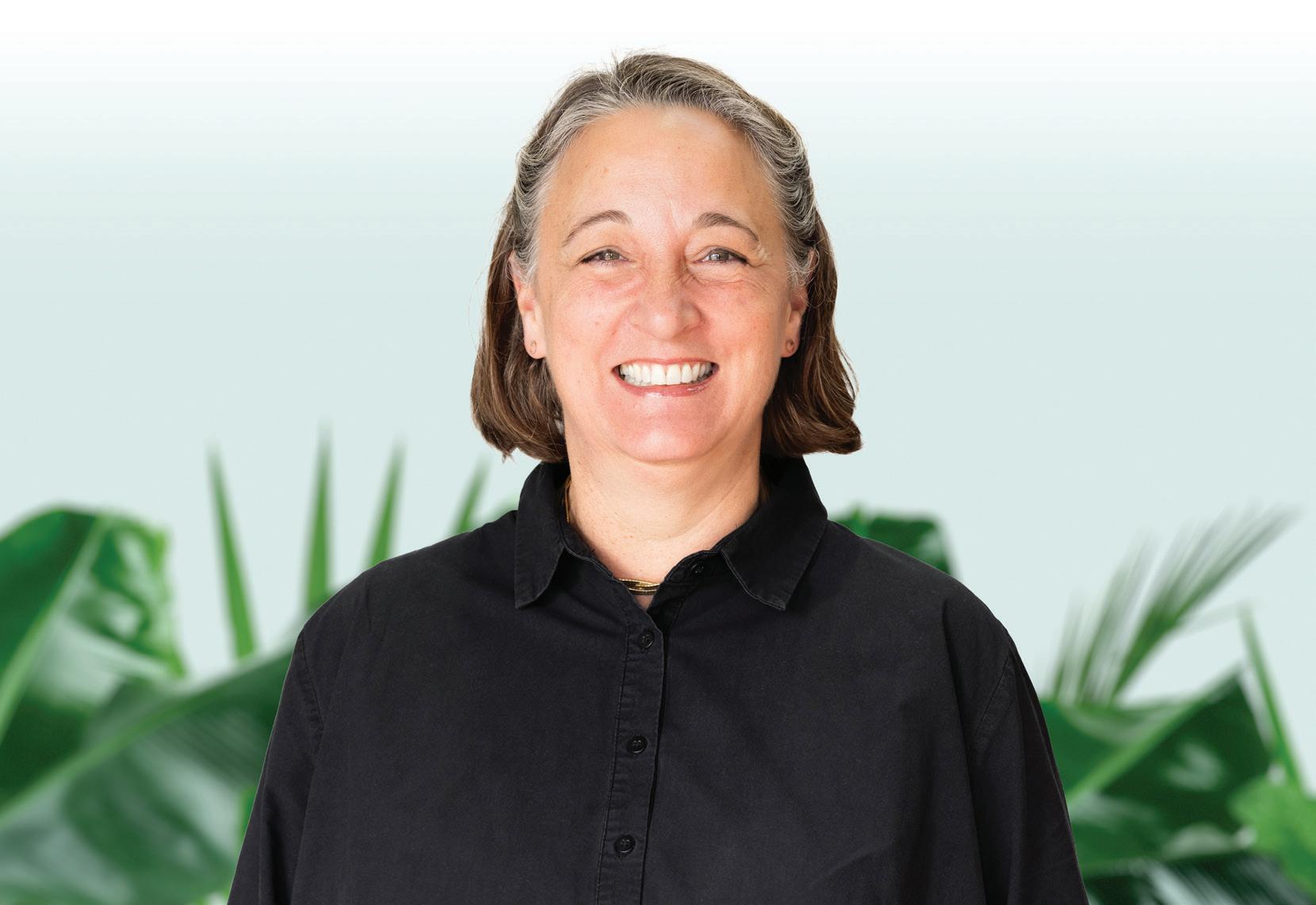
CORRIE WILLIAMS CHIEF OF PUBLIC AFFAIRS - MASTER BUILDERS VICTORIA AND PALAEONTOLOGIST - DINOSAUR DREAMING Collegian (TC 1976)
LIFE AFTER SCHOOL DOES NOT ALWAYS FOLLOW A CLEAR PATH, AND MY JOURNEY HAS CERTAINLY INCLUDED TWISTS I NEVER EXPECTED.
Toorak College instilled in me the belief that I could achieve anything I set my mind to and, by remaining curious and open to change, I have experienced wonderful adventures, with hopefully many more still to come.
In Year 12, I studied a combination of Australian History, Graphic Arts, Chemistry and Physics, an eclectic mix that reflected my uncertainty about a specific career path. I went on to study Science at Monash University, where I was introduced to biology and geology, but it was a field trip with the Biology Society to Central Australia that truly shaped my outlook on life.
During the mid-semester break, a group of students hired minibuses and travelled towards the Northern Territory. After several weeks camping and exploring the natural wonders of the Top End, we began the journey home. Tragically, a tyre blowout caused our minibus and attached trailer to roll. The vibrant Japanese exchange student who had been driving lost his life. Many others were thrown through windows and suffered serious injuries, while I escaped with only minor cuts and bruises, protected by the seatbelt I was wearing in the front passenger seat.
Looking back, I can see how profoundly that experience affected me. It strengthened my determination to follow my interests rather than focus on pursuing a 'proper' career. Instead, I decided to let curiosity and passion guide me.
During my undergraduate studies, I volunteered at the Dinosaur Cove fossil dig organised by Museum Victoria, and it sparked an interest I had never anticipated. That experience led me to complete a PhD in Geology and Biology, working on bones excavated from Manus Island in Papua New Guinea. I remember hearing someone say, “There aren’t many jobs for palaeontologists in the newspaper,” and thinking that may well be true, but who knew where it might lead?
As it turned out, it took me around the world.
I went on to install, assemble and travel with dinosaur exhibitions showcasing the research of Professor Patricia Vickers-Rich and colleagues based at the Monash Science Centre in Clayton. Our exhibitions toured throughout Asia, the United States and Europe. Traveling exhibitions required constant problem solving and communication, two things I genuinely enjoyed.
The exhibitions also funded the Science Centre’s school science programs across Victoria. These programs provided engaging and accessible science education for schools and community groups, ensuring students from all backgrounds could share the same sense of wonder about the world around them. Every day, our educators inspired young people to see that science was not intimidating, but part of everyday life.
In 2013, Monash University made the decision to close the Monash Science Centre and move away from pre-tertiary science education in that format. For our small, close-knit team, it was a significant change. I transferred into another area of the university, but eventually decided it was time to be brave and step outside the university system and into the private sector. My thinking was simple: if I did not explore what else was out there then, I probably never would.
That was thirteen years ago.
Today, I am Chief of Public Affairs at Master Builders Victoria. Moving into a completely new sector came with a steep learning curve, I did not know my waffle-pod from my soffit lining but I was fortunate to be surrounded by supportive people and learnt along the way.
I joined MBV’s Registered Training Organisation (RTO), which, much like the Science Centre, provided education with purpose. Many students were balancing work and study, looking to develop new skills or step into new roles. Some had not particularly enjoyed the academic side of school, but they were exceptional problem solvers. As with the Science Centre, the goal was to provide knowledge and understanding that sparked curiosity and lifelong learning.
Over several years, I moved through different roles and eventually led the team. More recently, I transitioned into my current role and continue to enjoy learning from the lawyers, OHS and EIR professionals I work alongside. I value the sense of purpose that comes from working within a not-for-profit association.
My passion for fossils and bones has remained a constant throughout my life. I still volunteer at fossil digs during holidays, including Dinosaur Dreaming on the Bass Coast, where I have been involved for more than 30 years.
While the dig no longer aligns closely with my day-to-day work, it continues to remind me how far curiosity, passion and values-led work can take you in life.

BY HUGH WILLIAMS Toorak College Chairman
Ihad a neurological condition in 2009 and got terribly out of shape. In 2012, I worked hard on getting back to health and fitness. My personal trainer at the time used to say "Getting fit is hard. Being unfit is hard. Choose your hard." He had plenty of sayings.
This saying stuck with me because the principle it captures applies to everything. Difficulty is not optional; it is only the type of difficulty that is.
In my view, there are two kinds of difficulties. The first is entropic difficulty, what happens when you let things happen to you. The career that plateaus because you never took the risk. The relationship that wilts because nobody was willing to be honest. The body that deteriorates because you sat around. The community work you skipped because you were lazy. Entropic difficulty compounds until one day you notice the gap between where you are and where you meant to be.
The second kind of difficulty is chosen difficulty. It is the immediate sharp pain of pursuing something that matters. Training for a HYROX or a half marathon that you are not sure you can finish. Moving across the world to take a new job. Leading when you know that there will be people who will cut you down. Volunteering to do more when you have no time. Chosen difficulty is hard in the moment, but it is also the only kind that reliably leads somewhere worth going.

How do you know a challenge is meaningful? I always ask myself: if I succeed at this, will I be closer to being the person I want to be? And if I fail, can I live with the likely worst case (knowing the actual worst case is rare)? In my experience, if the answer to both is yes, you are probably looking at something worth doing.
An old boss of mine used to tell me that you have to let go of the boat anchor before it takes you to the bottom. What he meant was that when you make a choice to do something hard, you also have to know when to stop. Not everything you have chosen is worth continuing. Knowing when a challenge has stopped serving your growth is one of the hardest calls to make.
Life is going to be hard either way. That part is nonnegotiable. What is negotiable is whether the difficulty you face is something you drifted into or something you deliberately chose. Is it eroding you slowly or building you steadily?
The question is not "How do I make life easier?" The question is "Which hard things are mine to do?" Choose well, take risks, get after it and you will thrive.
Chosen difficulty is hard in the moment, but it is also the only kind that reliably leads somewhere worth going.”

BY KRISTY KENDALL Principal
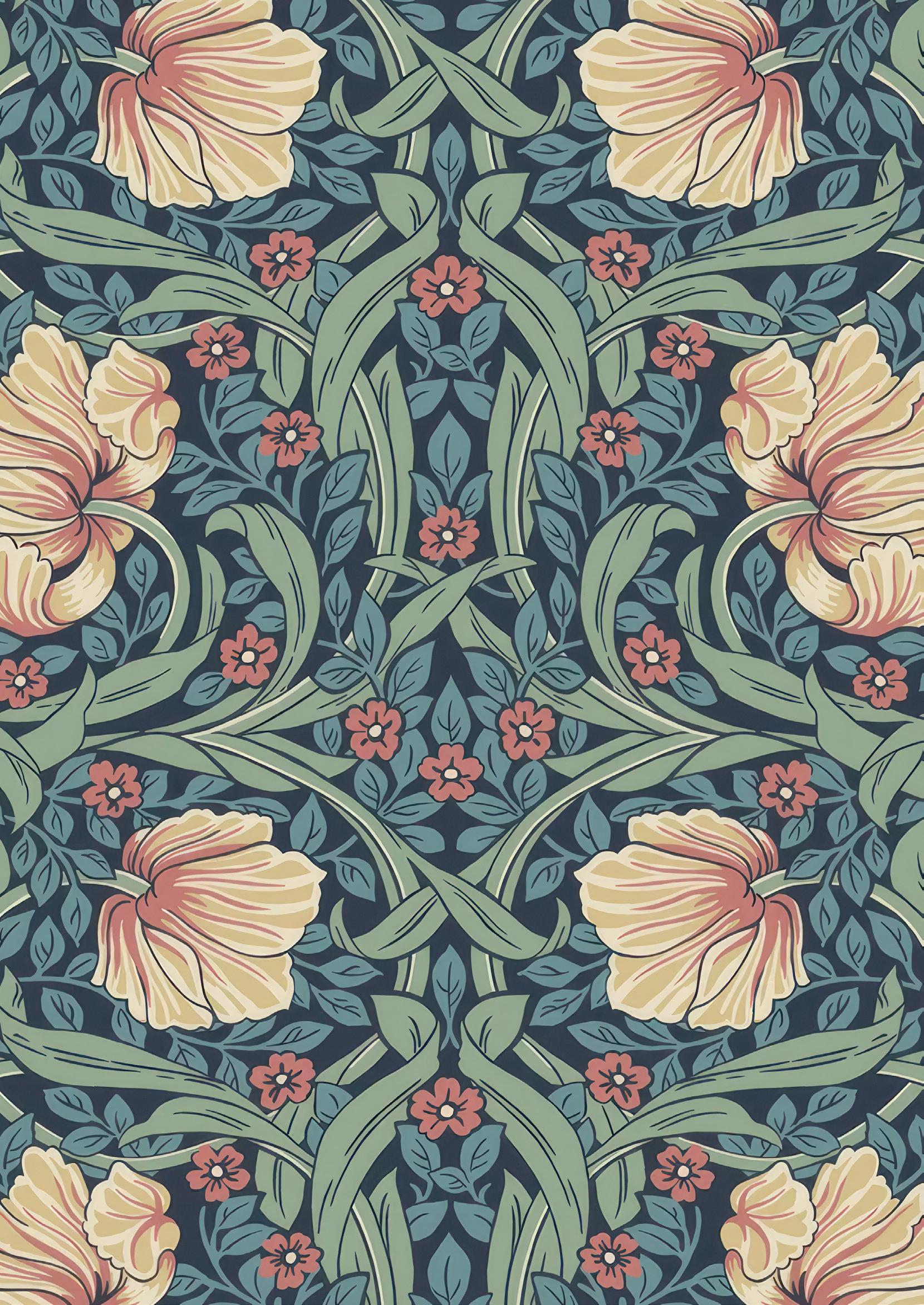
In a very special visit to the Ashmolean Museum last year, the museum curator introduced our group to the thinking of William Morris, a 19th-century English designer. He explained how his thinking created a movement. This lesson has stayed with me from this day, that it is our thoughts that shape the world around us.
His belief was simple: things should be functional AND beautiful. He believed that this emphasis on beauty in design should not just be for the wealthy, but should be for all to enjoy. And so he inspired a change from everyday objects merely serving a functional purpose to prioritising an aesthetic one too. He changed what we valued in the world around us and encouraged us all to value not just what we do but how we feel as well. This was a shift to leaning into what makes us human.
What also resonated with me in Morris' mantra was that the choices that we make are not either/or; they do not have to be black or white - they can be both. This is a significant shift in valuing the complexity of human experience. To think in that way, he needed to break the mindset that many had lived by for generations. He needed to break the pattern.
Every significant era change has been born from breaking the pattern.
Coming from a background in Psychology, I know how hard patterns in behaviour are to break. I know how much attention a change in a visual pattern can draw. And I know how uncomfortable being out of step with the patterns that are carved for us can be. And yet, this is exactly where brave thinking lies, in breaking patterns.
While others moved towards the city for convenience, the Hamilton sisters chose to move Toorak College away from it, believing the best in life lay elsewhere. A decision that was not only a break from the pattern, but also served William Morris' purpose: functional and beautiful.
While some artists paint by numbers, others open the blank canvas and experiment with style. Musicians compose new melodies. Coders experiment with new code. Writers stray from traditional storylines. They break the patterns they learnt from and create something new: functional and beautiful.
As we strive more than ever for a world full of brave thinkers, it is the courage to break from the pattern that we most need to nurture, so that our worlds are forever functional and beautiful.
Every significant era change has been born from breaking the pattern.”
BY KRISTY RUSSELL Sustainability Coordinator
Addressing today's environmental challenges demands courage – but courage alone is not enough. Sustainability leadership requires resisting the comfort of quick wins, questioning the conventional and challenging the systems that no longer serve us in a changing climate. Traditionally, environmental responsibility and economic value have been seen as opposing forces. But in a future requiring climate resilience, adaptation and innovation, placing a financial value on sustainable practices will be the difference between organisations thriving and those merely surviving.
What if a school's biodiversity were viewed as an asset rather than an obligation? School grounds could become living research sites – outdoor laboratories for observation, learning and regeneration. Nature recovery could coexist with economic benefit, challenging the belief that these have to be competing priorities.
A future-ready education must challenge today's norms, rethinking the place of sustainability in both educational outcomes and operational resilience. Sustainability, once a brief cameo in the occasional science lesson, has evolved into a cross-curriculum responsibility that must prepare students with the knowledge, skills and confidence to navigate a climate-impacted future.
By creating space and opportunities for students to lead campus-connected initiatives and analyse real-world data, schools enable young people to identify relevant problems and design solutions. This shifts sustainability from something students learn about to something they practise.
In doing so, schools transform climate anxiety into meaningful action – empowering students to see themselves as changemakers and contributors, and embedding sustainability as a mindset they carry into every part of their lives.
At its core, sustainability is not a new concept. It is a continuation of principles that ecosystems and indigenous peoples have followed for millions of years. It mirrors the fundamental law that for every action there is an equal and opposite reaction. Every input creates an outcome. It is universal and non-negotiable.
The challenge for sustainability leaders is that human systems are messy. They are shaped by different values, priorities, pressures and worldviews. What feels urgent to one group may feel irrelevant to another. What inspires one organisation may overwhelm the next.
Just as a healthy ecosystem depends on diverse contributions and interactions, sustainability leadership cannot be a solo act. Leaders must make sustainability relevant to all participants – employees, communities, customers and policymakers – because each one plays a role in the system's overall health.
By helping people and organisations recognise the interconnected nature of their actions, they can work together for mutual benefit and see themselves as part of the solution.
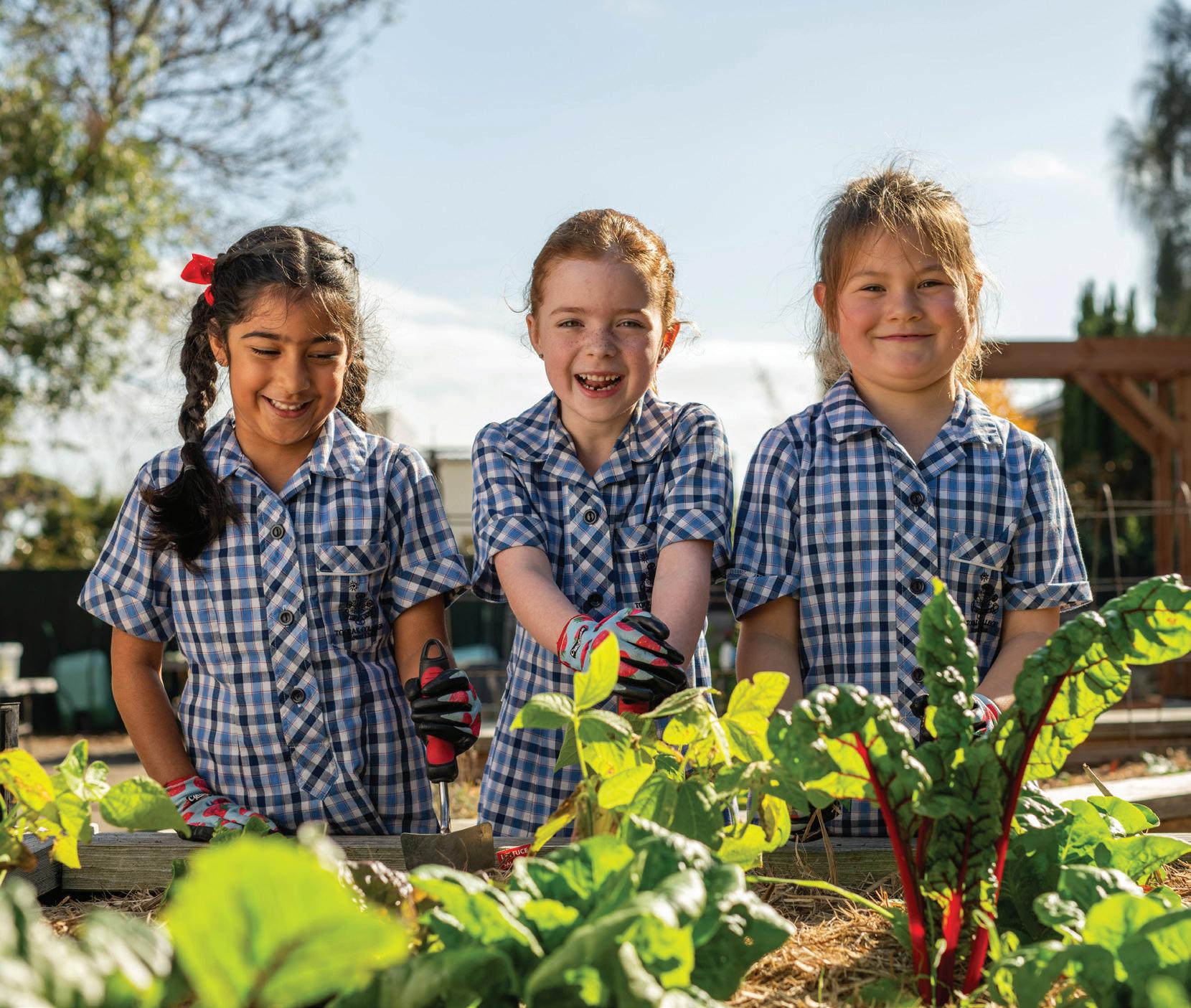
Sustainable bravery is a choice made daily – choosing action over apathy, long-term impact over short-term ease and brave leadership over comfort. And empowering the next generation to do the same.
No one will protect what they don't care about."
— David Attenborough

BY JENNA WARD Curriculum Leader, Health, Physical Education & Wellbeing
In a world where success is often measured in instant results, viral moments and rapid achievement, it is easy for young people to believe that progress should happen quickly. Yet in Health and Physical Education, one of the most important lessons we aim to teach students is that meaningful growth rarely happens overnight. Real development – physical, mental and emotional – requires patience, persistence and a willingness to embrace the process. This commitment to the long game is itself a significant contributor to overall student wellbeing.
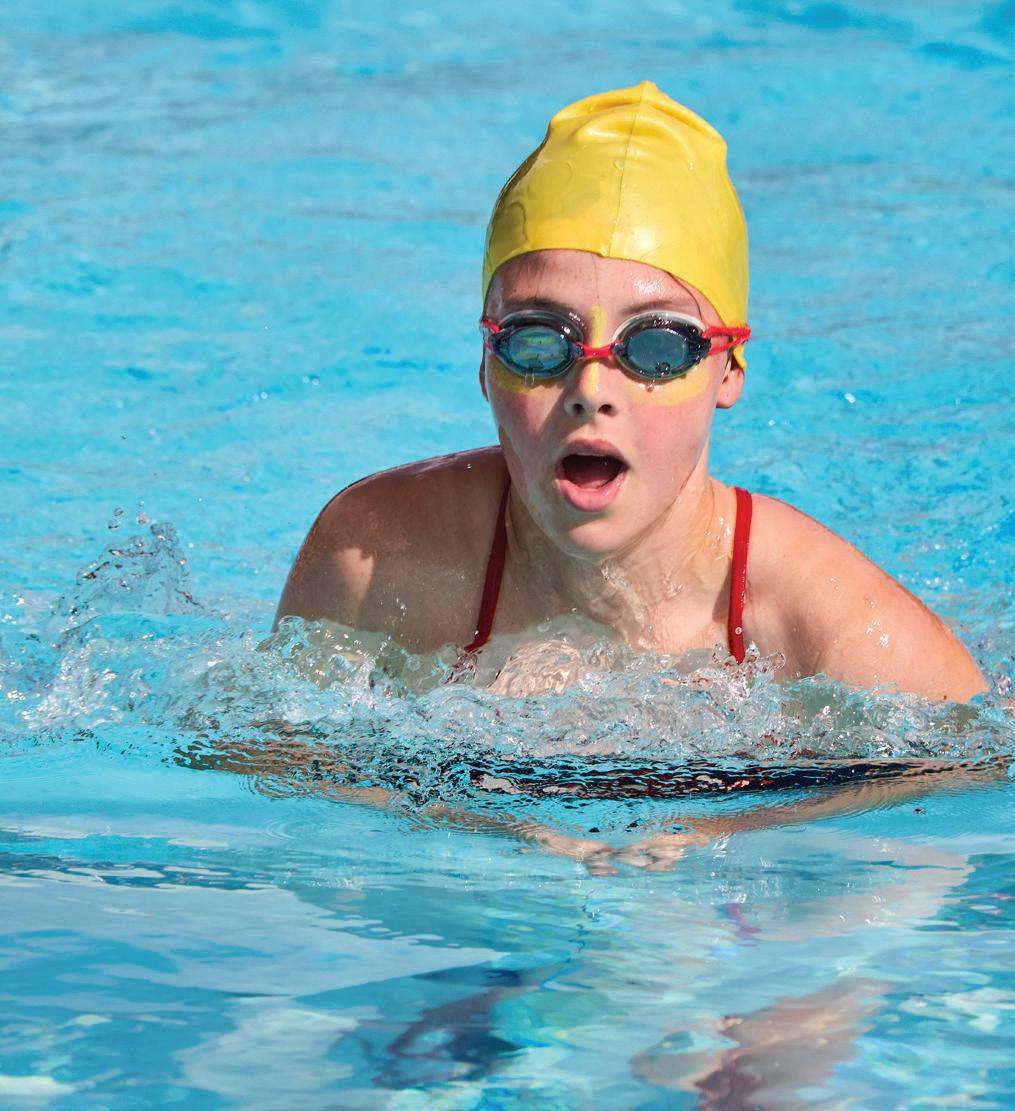
Physical activity provides one of the clearest examples of the value of persistence. Whether a student is learning a new swimming stroke, improving her endurance in crosscountry, refining a badminton serve or building strength in the gym, progress occurs gradually. Early attempts are often imperfect, sometimes frustrating, and improvement can feel slow. However, through regular practice, feedback and resilience, students begin to see the cumulative effect of their effort. Small improvements compound over time, eventually resulting in significant skill development and increased confidence.
This principle extends well beyond sport. Persistence is closely linked to wellbeing and the development of a growth mindset. Students who understand that abilities can improve through effort are more likely to approach challenges positively, view mistakes as opportunities for learning and remain motivated when tasks feel difficult. These habits support not only physical learning but also academic success, emotional resilience and personal growth.
At school, we intentionally design learning experiences that reward persistence rather than immediate performance. In Physical Education classes, students are encouraged to focus on progress – how their technique, decision-making and teamwork improve over time. In Health and Wellbeing programs, we emphasise the importance of habits that support long-term health, such as regular physical activity, balanced nutrition, adequate sleep and positive social connections. These are not quick fixes; they are lifelong practices that develop through consistency.
For young people growing up in a fast-paced digital culture, learning to value sustained effort is increasingly important. Social media can present a curated view of success that overlooks the hours of practice, setbacks and determination that lie behind every achievement.

By highlighting the importance of persistence, we help students understand that mastery, confidence and wellbeing are built through ongoing effort rather than instant results.
Perhaps most importantly, persistence fosters self-belief. When students experience the satisfaction of improving at something that once felt difficult, they learn that challenges are not barriers but stepping stones. Each attempt, each piece of feedback and each moment of perseverance contributes to a deeper sense of capability.
As educators, our goal is not simply to develop skilled athletes, but to nurture resilient young people who understand the value of the long game. The habits of perseverance, patience and commitment that students build through Health and Physical Education will support them far beyond the classroom or the playing field.
In a world focused on quick wins, true success lies in teaching students to keep showing up, keep trying and trust the process.
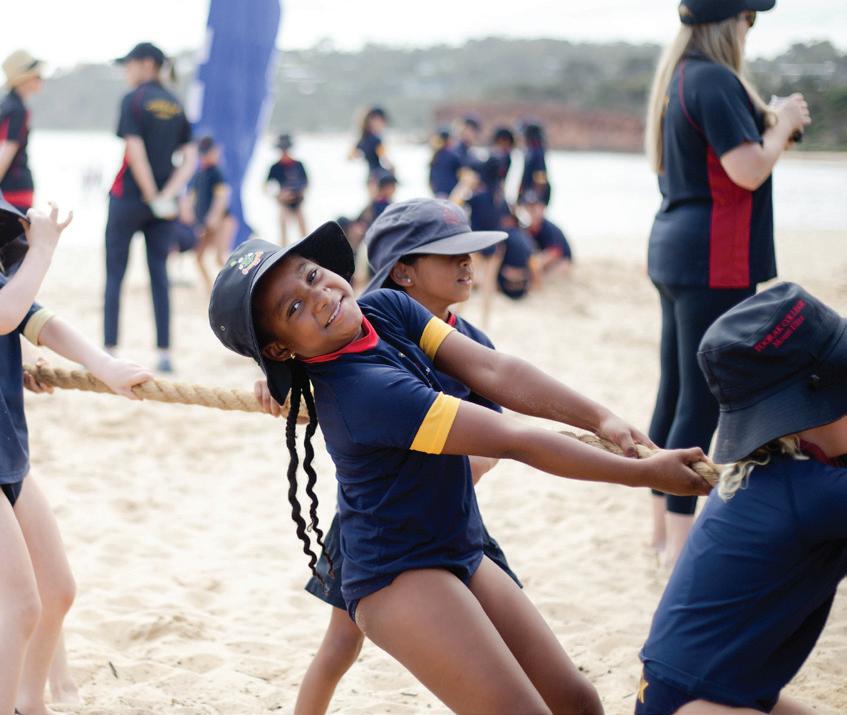
Thriving to me means pushing yourself to try new things, not giving up when things get hard and encouraging others to do the same. I like being part of Nippers because I have made so many friends and I love spending time in nature. Recently, I competed in the state championship for lifesaving and was proud to come third. Although I came home with a medal, I am most proud of being able to compete in those stormy conditions. My advice to others is to set goals and always try your best even when things get tough.
A long time ago, in a classroom not so far, far away… I had an idea. Inspired by my love of Star Wars, I decided to start up a club. With help from my friends, we created SWADCAPS: The Star Wars And DC Appreciation Society. Each week we meet and talk about Star Wars, DC or really any books, movies or TV shows we like. We've welcomed new members over time, from different year levels and classes. It can sometimes be challenging to come up with new ideas for each meeting, but every one is always so much fun and a great success. Each week we enjoy doing quizzes, talking about our favourite characters, and playing booklets and games. In the future, we hope to expand the club with new members and to enjoy and talk about more stories together.
SALLY HINES
DIRECTOR ENGAGEMENT
ADVISORY
Collegian (TC 1998)
If I told Year 12 Sally that she would end up working in philanthropy, her first question would have been: What exactly is philanthropy? What has led me here is a lifetime of curiosity and a tendency to ask uncomfortable questions –the ones others are too nervous to raise.
That wasn't always obvious. I was a shy and quiet child, and part of the reason my parents sent me to Toorak in Grade 5 was to build confidence. What I found there was something more lasting. I took every opportunity that came my way. Did I always achieve what I set out to? No. But I left with a strong belief, reinforced by my teachers, that I could think without limits. That mindset has shaped every step since.
After school, I studied Arts and Science at Monash, followed by a Masters in Human Resources. It was there that I became interested in strategy and entrepreneurial thinking. Not in the start-up sense we often hear about, but in questioning the status quo, imagining better futures and asking: how do we solve this?
I chose to apply that thinking in the for-purpose sector, where the goal is impact AND profit.
At 26, I helped establish one of the first ten Headspace centres in Balaclava. There was no clear play-book. Just a broad vision and a complex mix of stakeholders across health, education and community services. It was challenging work, navigating competing priorities, limited resources and the reality that we didn't have all the answers. But by listening, adapting and working alongside the community, we helped create a space that young people felt safe to walk into.
That experience reshaped how I think about innovation. It is not always a big, visible breakthrough. Often, it is practical, local and built through iteration.
I saw this again during my time at The Big Issue, best known for the magazine sold on the street by people experiencing homelessness. The challenge was clear. People experiencing disadvantage or marginalisation often struggle to find and keep work. We tested new social enterprise ideas that didn't succeed, from recycling coffee grounds into fertiliser to bike maintenance services. Failure was part of the process. The challenge was to keep going, to keep asking what might work better, and to stay focused on the problem we were trying to solve.
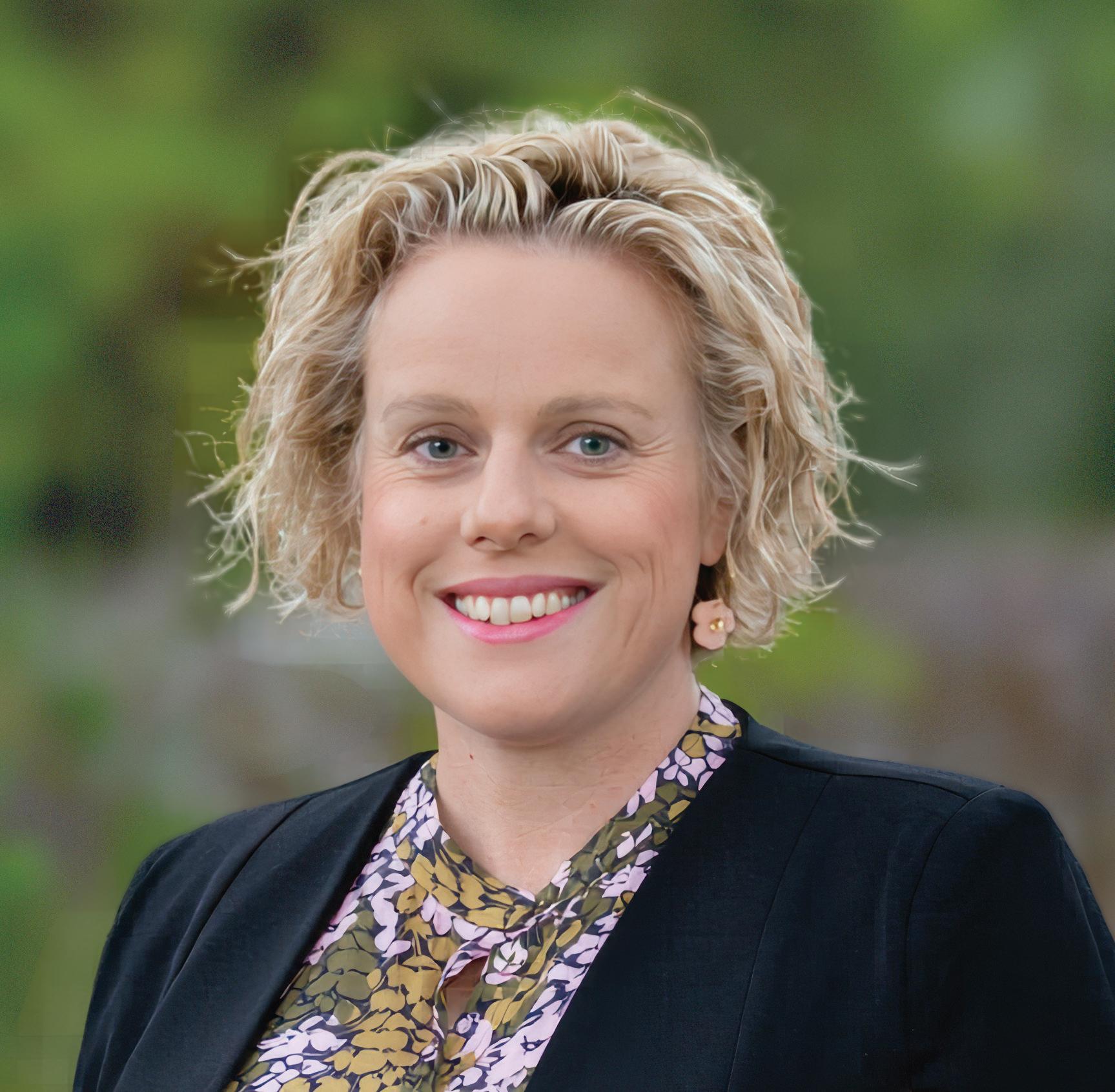
Today, in philanthropy, my focus is on unlocking funding to create meaningful change for people, place and planet. It starts with a simple but powerful question: what impact are you trying to make, and how can you achieve it in the most effective way?
Brave thinking, for me, is not about having all the answers. It is about being willing to ask better questions, to navigate uncertainty and to keep going when things do not work the first time.
If there is one thing Toorak instilled in me, it is the confidence to think beyond what is obvious. And that is where real change begins.
If there is one thing Toorak instilled in me, it is the confidence to think beyond what is obvious. And that is where real change begins.”
OLORE PLIGENTE CONE LA CONSEQU IBUSAERIBUS DTEM
PHILANTHROPIC SUPPORT REMAINS ESSENTIAL TO OUR SUCCESS. WE CALL ON OUR COMMUNITY TO SHOW THEIR SUPPORT FOR TOORAK COLLEGE IN A PRACTICAL WAY THROUGH GIFTS AND DONATIONS.
Paruptum harchil ipid qui utectotature conem illuptatiat as re nosto quiatisquo quatese ditatur? Uga. Nequi dolutem quis eum si idebitae cupta qui in reniento te explam eicabo. Pudipis cus quia comnime nonseque pelitatur, omniandit faccus voluptatiae con cusaper itatem videri a quodiste perferr uptate ped quam sed exernam sum, cus, ipsaperatio. Iciet doluptaquid moloritempos eos as voluptibusda sit maximpos voloresed ma et quid que vel int que videsen disque et la quis quaeruptatis ati net dolo quo et volorendit es aut reriam earumquam aut fugia qui consequo mi, officab is et aute etur a voluptatio.
Tis ipsandi veliquos aut optior sundia doloren dellend aecaeseque volesci
By Name Surname Head of Junior School
doluptation cust voloruptas nossit vollabo. Et alit im ut esed quaero quunt unt vent ut hil eium que post, officil is excerum vollese quibus audit ium verumqui con nonsequi blautem fugitem fugitius eos.
START A CONVERSATION
Learn more by scanning the QR Code or by contacting the Development Office on (03) 9788 7315 or email giving@toorakc.vic.edu.au.
doluptatet officab oreium ad qui nos non cum nescimet acerist, ius, te cus pro volorpor as dolupti nullaboribus intem quiam ilita sa estem remperum fugit omnim voluptam, iustiscienit inullor ehenis dolecum a dolestintur, et optatumquis experibus sima dolupidus destibearcia serchil liquibus expero comnist, odis sim inctatet labore, quam, totate natas eosam verfero. Ivolorecatem endi dit ullit am net ratque volument laccatus sit et la estis que volorru ptatius soluptas remquae placcaborae con recatus ea vid molut et ex eruntem etum ut fuga. Itati vendunt laci corem harum sit unt harchil id quas dolorem olorum natur, aborpor eperfere, occatur?
Nat dolorat emporiat enis iumquam enditis id quisitibus molupta sserem excere nulpa volupis et lacera sitatium quia et faccati
Tis ipsandi veliquos aut optior sundia doloren dellend aecaeseque volesci doluptatet officab oreium ad qui nos non cum nescimet acerist, ius, te cus pro volorpor as dolupti nullaboribus intem quiam ilita sa estem remperum fugit omnim voluptam, iustiscienit inullor ehenis dolecum a dolestintur, et optatumquis experibus sima dolupidus destibearcia serchil liquibus expero comnist, odis sim inctatet labore, quam, totate natas eosam verfero.
We’re incredibly thankful for the support shown on this year’s Annual Giving Day. Thanks to the generosity of our community, we raised $131,345. These funds will go towards creating new scholarships, opening the door for more young people to experience a Toorak education. Thank you to everyone who gave on the day, and to those who continue to support the College in so many meaningful ways.
‘The Hamilton Society’ is a giving circle in celebration of those who choose to acknowledge Toorak College in their Will. This initiative for our school was established in consideration of the growing number of Collegians who have expressed their wish to create an enduring legacy. The Hamilton Society Scholarship is an accumulative fund established as part of this initiative, for those wishing to direct their gift towards supporting scholarships for those who would otherwise not have the means to attend Toorak College.
For more information on our Bequest Program, please call Sabrina Males on (03) 9788 7208 or email sabrinam@toorakc.vic.edu.au
GRADUATING CLASS OF ‘25
2025 VALEDICTORY SERVICE
2026 YEAR 11 FORMAL
INTERNATIONAL WOMEN’S DAY BREAKFAST
JUNIOR SCHOOL HOUSE MUSIC
PREP BELL CEREMONY
SENIOR SCHOOL HOUSE SWIMMING
AUTUMN CONCERT
SUMMER FESTIVAL
WILDERNESS SHIELD
EASTER BONNET PARADE
The Class of 2025 leaves a strong legacy, defined by commitment, curiosity and growth. Across their final years, they embraced challenge, explored new possibilities and developed into confident young women, ready to take their next steps with purpose.
They achieved a median ATAR of 86.8, with 39% above 90 and 71% above 80. These results reflect consistent effort, resilience and a depth of learning across the cohort, while recognising that success extends beyond a single measure.
Beyond the classroom, students engaged in study tours and industry partnerships with organisations including NAB, Downer and Peninsula Health. These experiences provided real-world insight, strengthened critical thinking and helped shape future pathways.
Being Ready for Tomorrow is about more than outcomes. It reflects confidence, perspective and a willingness to embrace opportunity. We congratulate the Class of 2025, including Dux Isabel Ng (99.6) and Dux Proximus Eleanor Montgomery (98.8), and look forward to the impact they will make in the years ahead.
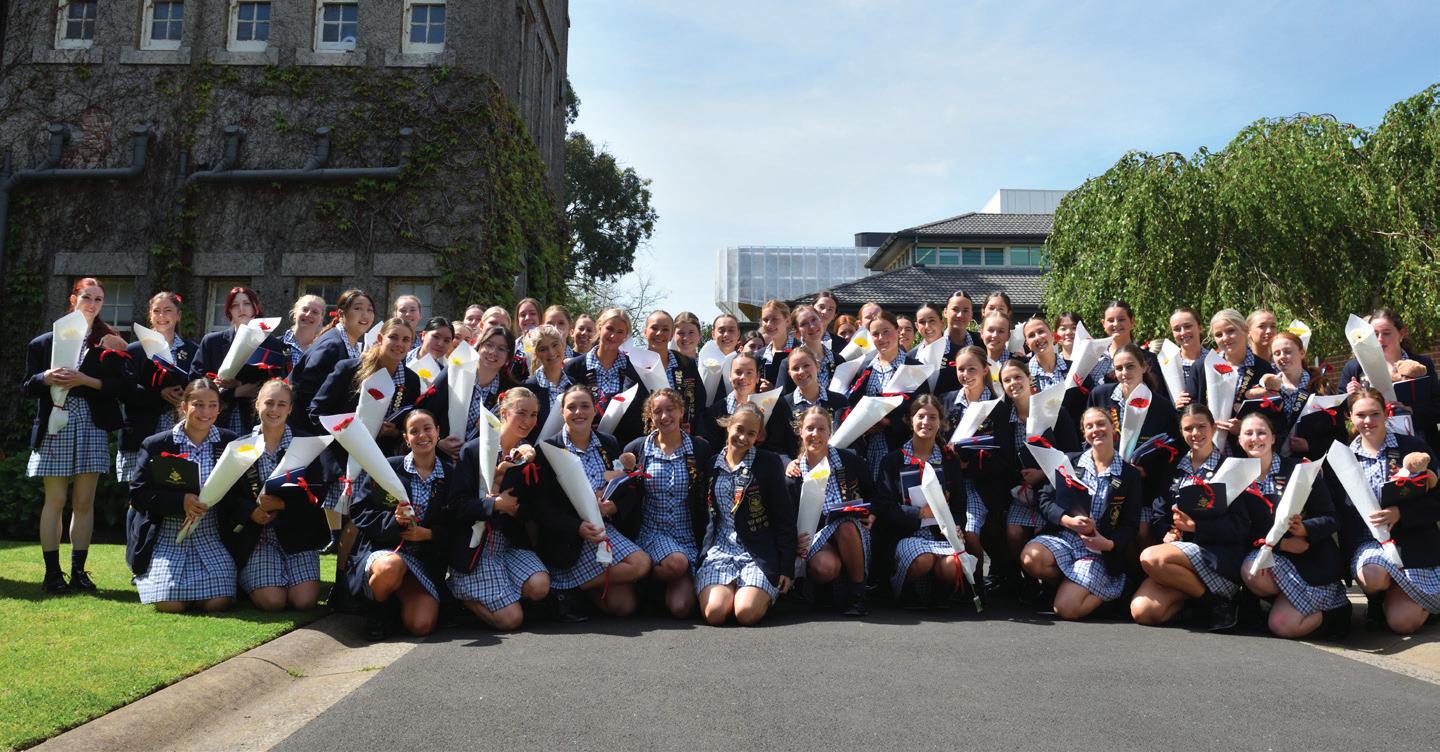
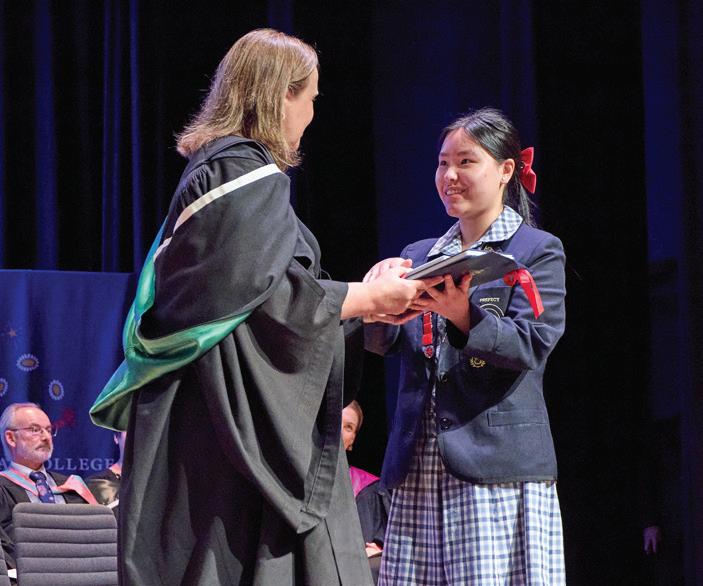
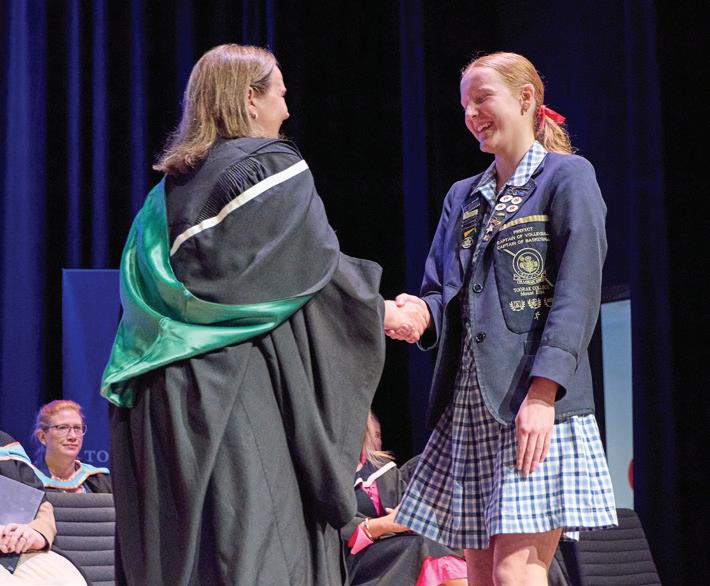
Our Annual Valedictory Service was held in the Community and Arts Precinct, bringing the year to a close with a meaningful celebration of student achievement and growth. The service encouraged students to reflect on the contributions that shape our community and the role each of them plays within it. It was an opportunity to recognise the impact of those who have come before, while considering the values, actions and aspirations that will define their own path beyond Toorak College.
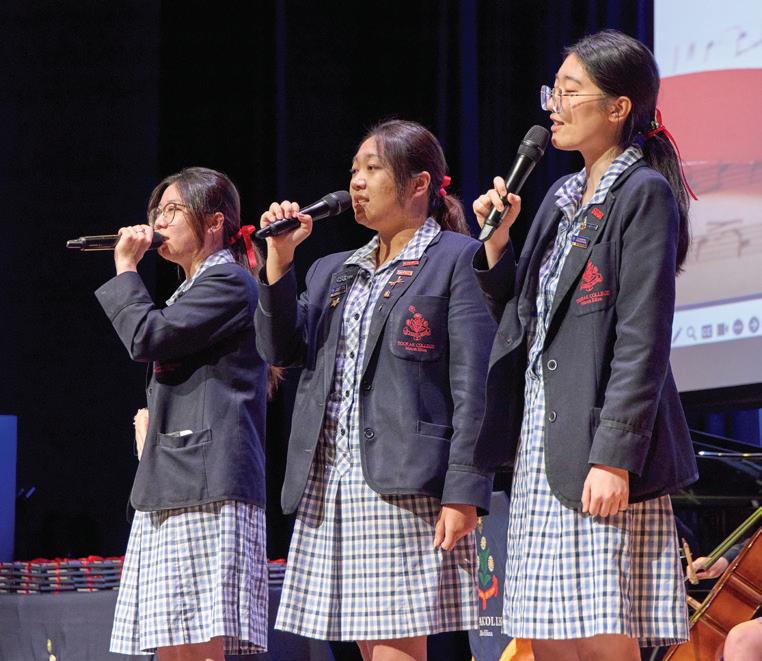
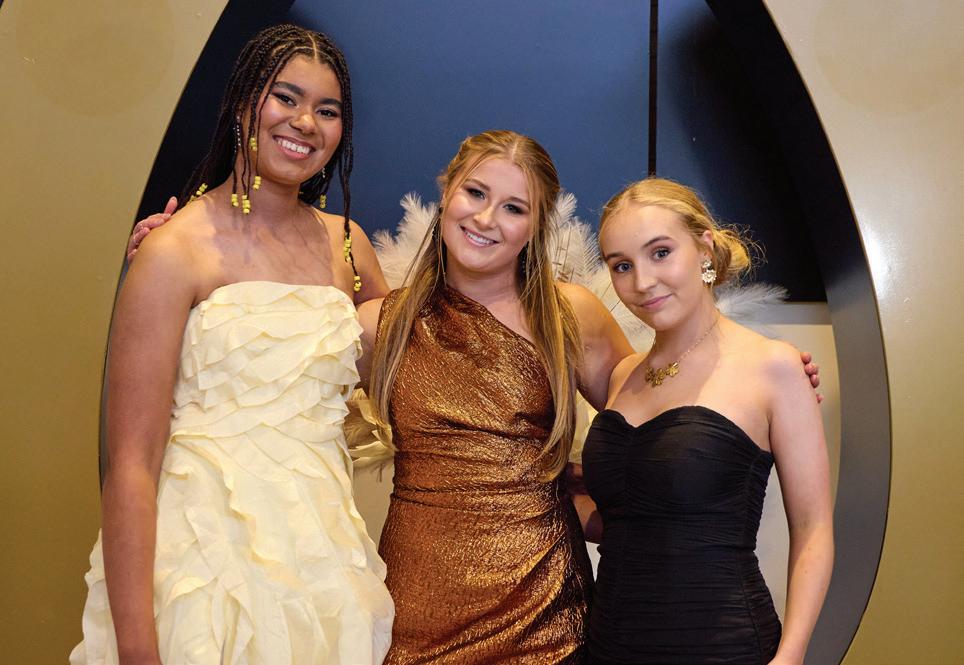
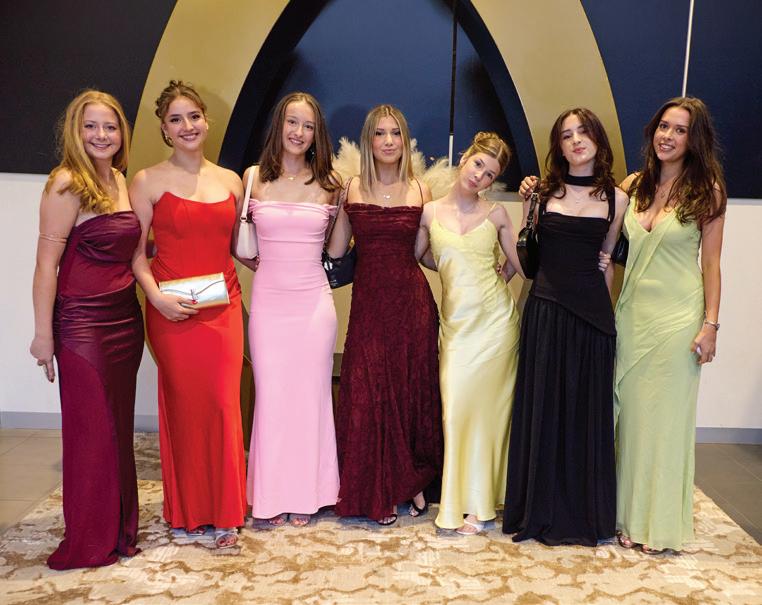
The Year 11 Formal was a memorable evening marking an important milestone in the Senior School journey. Students embraced the occasion, enjoying a night that felt both special and well deserved. There was a strong sense of connection, with friendships celebrated and lasting memories created beyond the classroom. More than a celebration, the Formal reflected the maturity and spirit of the cohort, offering a moment to recognise their progress and look ahead to their final year with confidence.
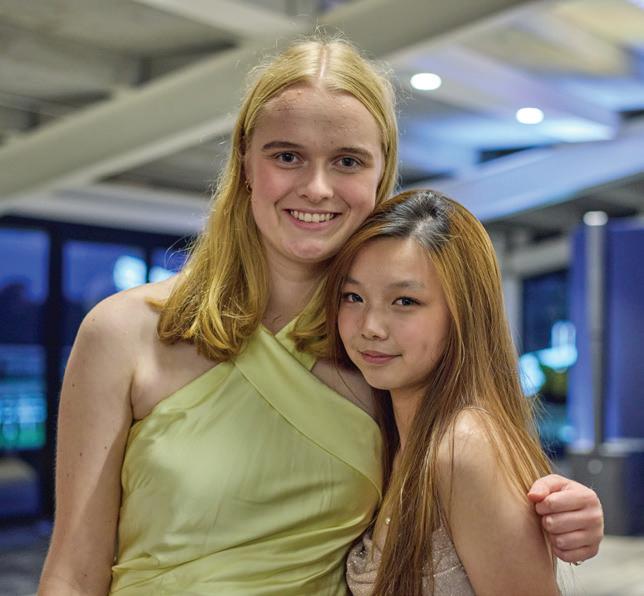
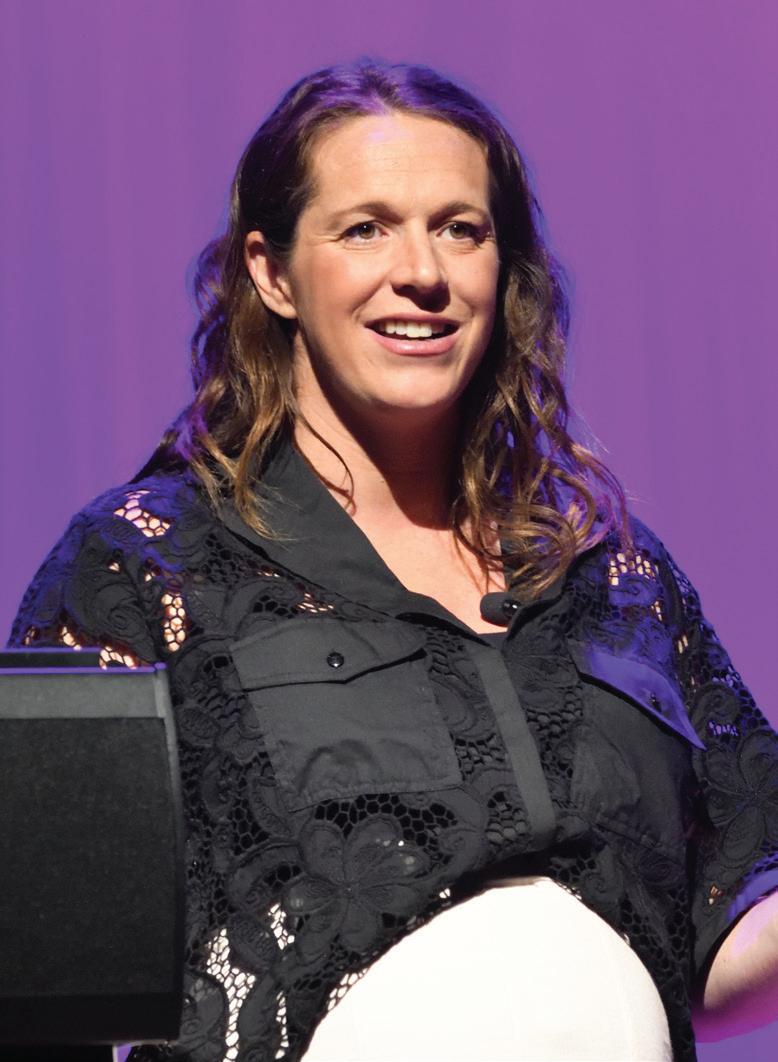
Toorak College marked International Women’s Day with a strong sense of connection and purpose, bringing together students and the wider community for its annual breakfast. This year’s event featured guest speaker Bec Daniher, Executive Director of FightMND, whose story offered a powerful perspective on resilience, leadership and impact.
The day extended beyond the breakfast with students engaging in conversations across classrooms with discussions centred on challenging gender stereotypes, pursuing individual passions and recognising the contributions of women who continue to shape the world around us. Through these experiences, International Women’s Day at Toorak College remains a meaningful opportunity to celebrate achievement, strengthen community and inspire the next generation.
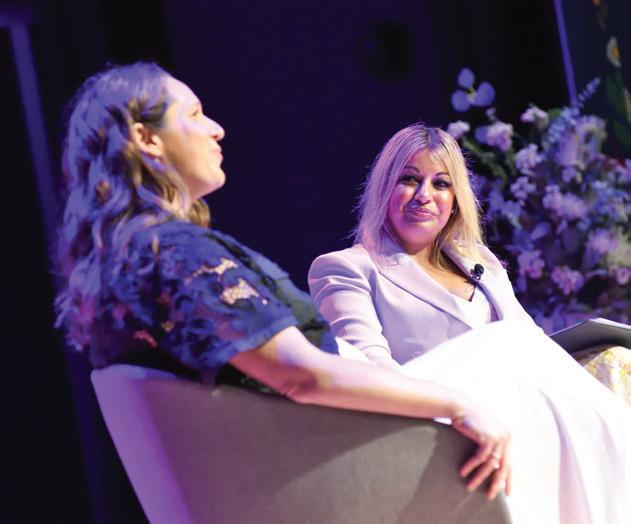
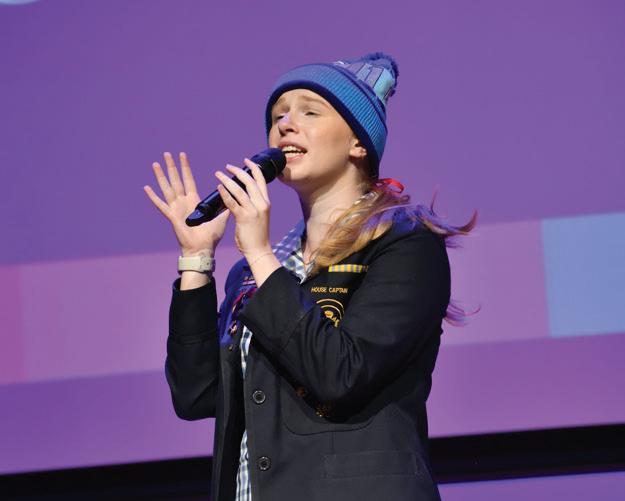
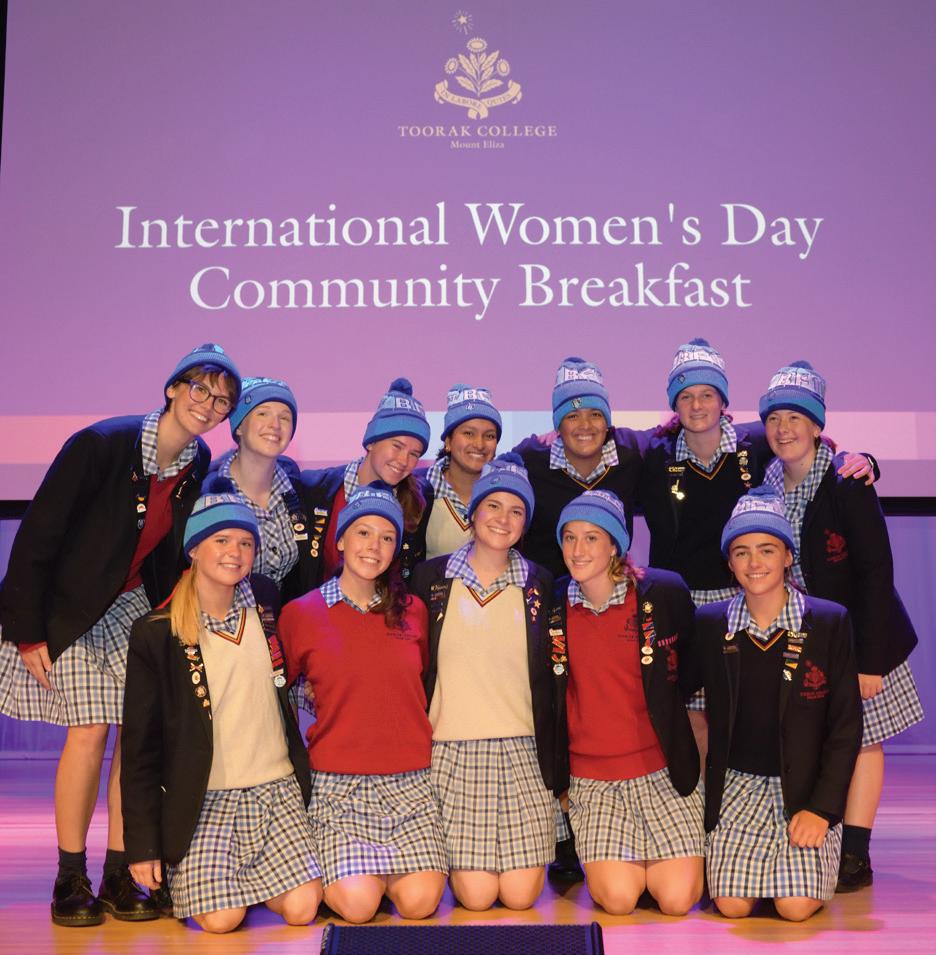
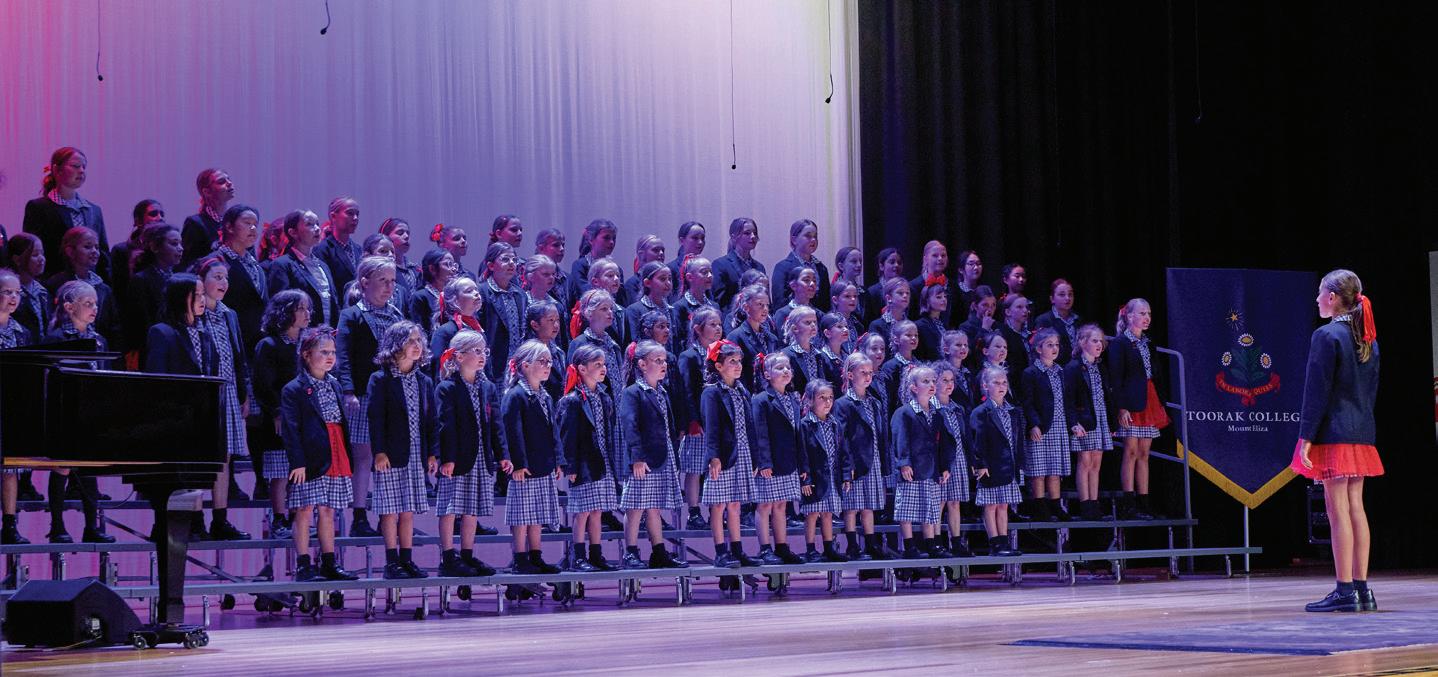
Junior School House Music brought the school together in a lively display of energy, teamwork and creativity. Each House performed with confidence, showing the time and care invested in their pieces. Students supported one another on stage, embracing both the challenge and the fun of friendly competition. The performances were full of personality, with strong musicality and thoughtful choreography. It was especially pleasing to see younger students step up and contribute with enthusiasm. More than the results, the event celebrated collaboration, courage and belonging. House Music remains a highlight of the Junior School calendar and a true reflection of our connected community.
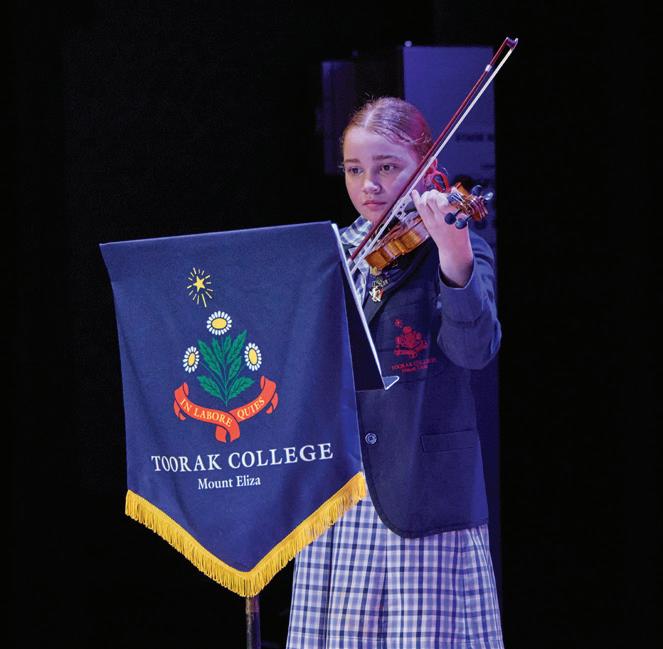
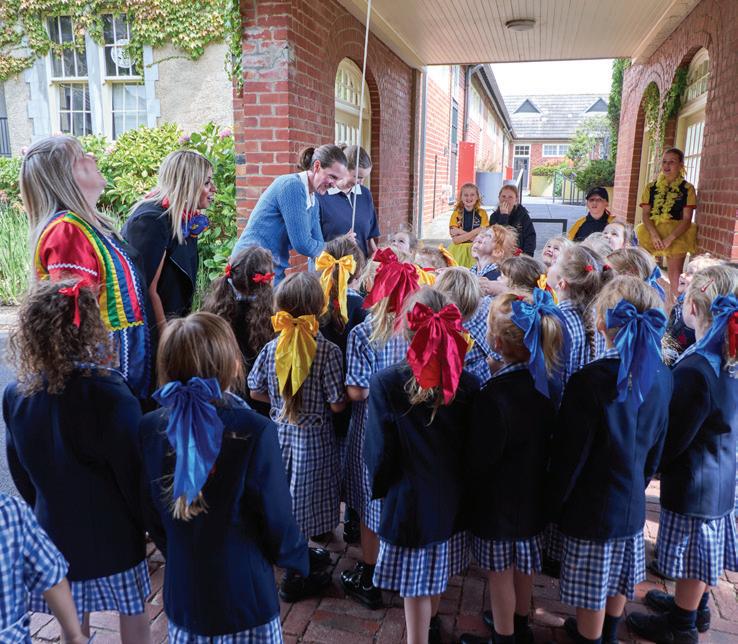
The Prep Bell Ringing Ceremony marks the beginning of a new journey for our new Prep students. In a special moment of welcome, a Collegian rings the bell on behalf of each student, symbolising the start of their time in the Junior School. There is a quiet sense of excitement as students are acknowledged and embraced by their new community. Though simple, the gesture carries real significance, connecting past and present while welcoming the next generation. This ceremony sets the tone for the years ahead, building an early sense of belonging and shared identity. It is a memorable way to begin, celebrating new beginnings and the strength of the Junior School community.
Senior School House Swimming was a spirited showcase of determination, teamwork and House pride. From the first race to the final relay, the pool was filled with energy as students pushed themselves and cheered each other on. Participation across all levels was a highlight, with students stepping up for their House, whether competing for points or contributing to the overall atmosphere. The relays, in particular, captured the strength of collaboration and unity, drawing strong support from the sidelines. Beyond the results, the event reflected resilience, encouragement and connection. House Swimming continues to be a key moment in the Senior School calendar, bringing students together in a shared experience that celebrates effort, Spirit and belonging.
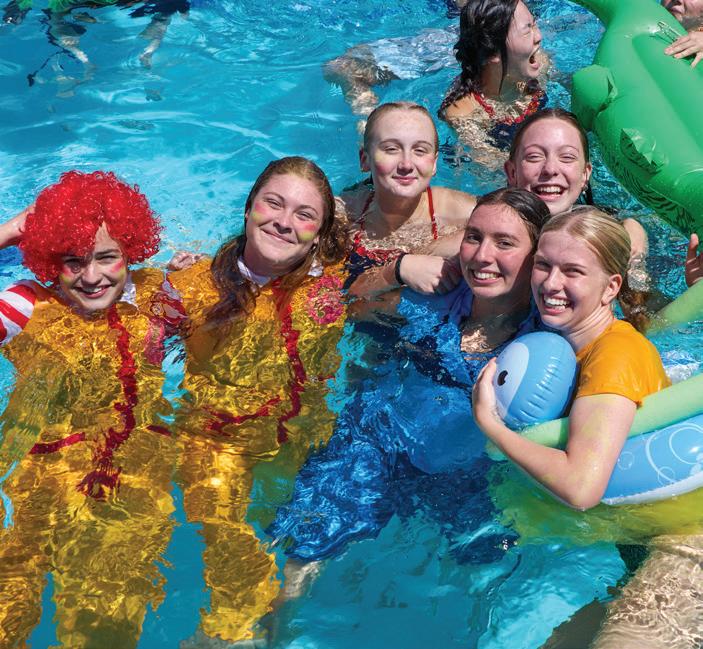
The Autumn Concert brought together more than 230 students from ELC to Year 12 in a rich and varied celebration of music. Across 15 ensembles, including Strings, Concert and Symphony Winds, Choirs, Guitar Ensemble, Rock Workshop, Jazz Workshop and the Pan Asia Ensemble, the evening reflected both depth and diversity. The program moved effortlessly from foundational Suzuki pieces and traditional works through to contemporary favourites such as Riptide and Eye of the Tiger, alongside choral highlights, animé influences and jazz classics like Birdland. Classical repertoire, including Bach’s Brandenburg Concerto No. 2, added further breadth. It was a dynamic showcase of skill, collaboration and musical growth. Congratulations to our students and staff on a memorable performance.
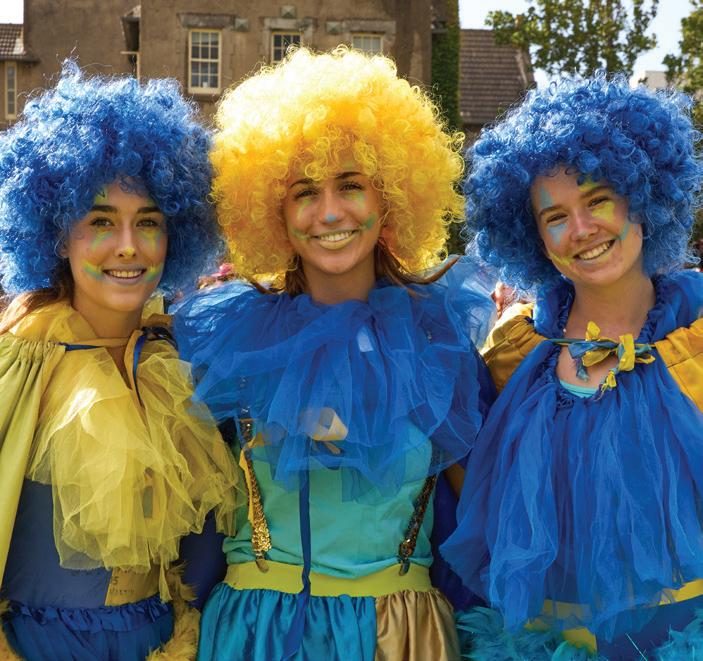
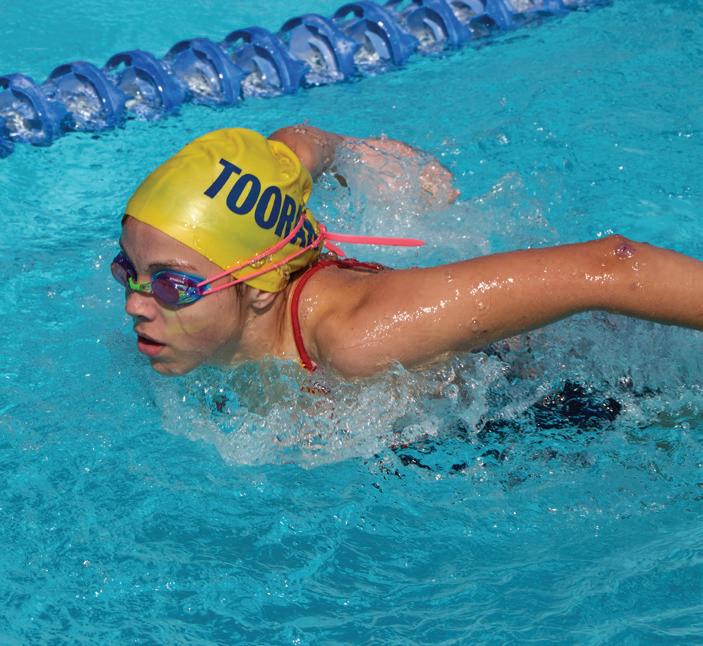
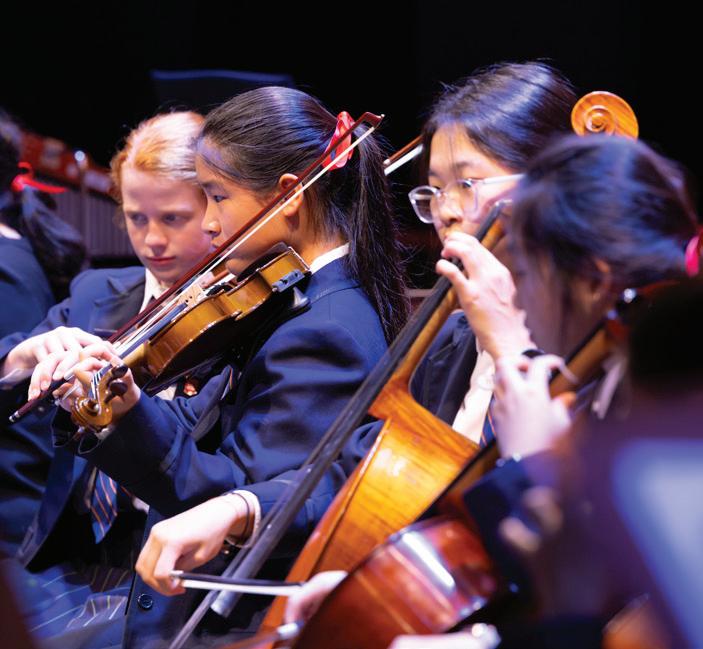
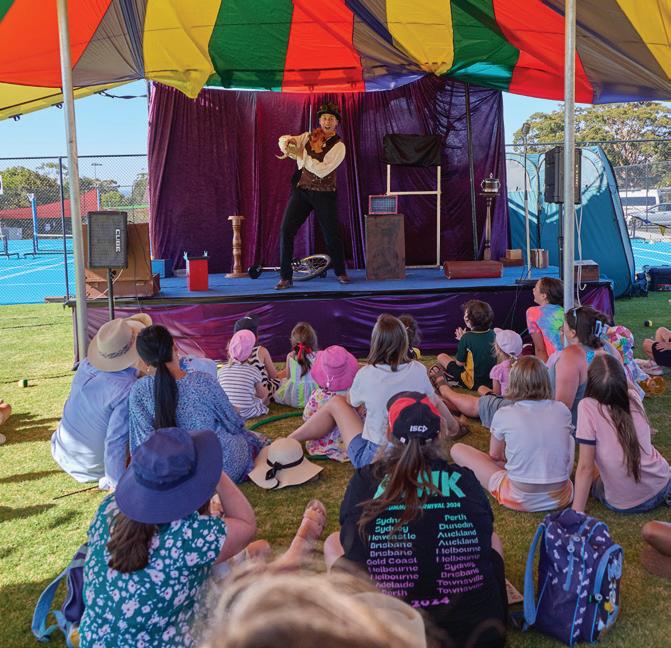
The Wilderness Shield is a valued College tradition that brings generations together through sport and House pride. Collegians return to the School to compete alongside current students in a series of spirited events, creating a unique connection between past and present. There is a strong sense of energy throughout the evening, with friendly competition matched by genuine camaraderie. Students benefit from the opportunity to engage with Collegians, hearing their stories and sharing in the experience. More than a competition, the Wilderness Shield celebrates community, continuity and belonging. It is a reminder that House spirit extends well beyond graduation and remains a lasting part of the Toorak College experience.
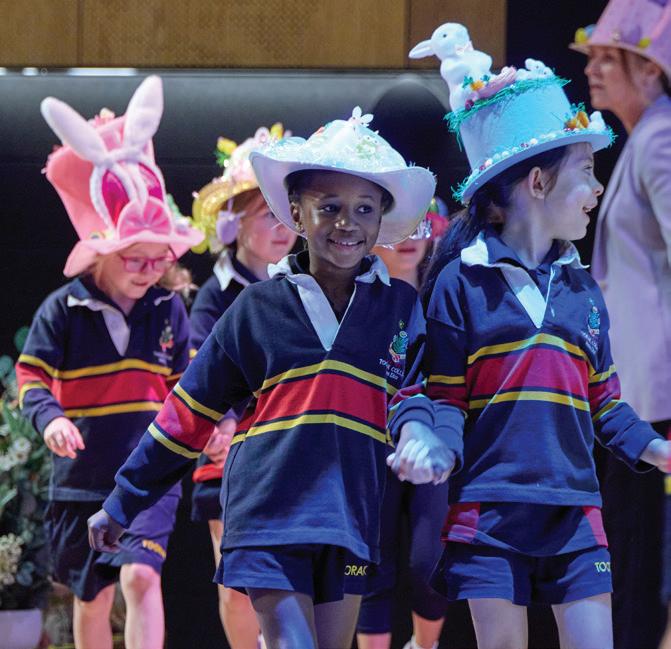
Toorak College welcomed the 2026 school year with energy and enthusiasm at the annual Summer Festival. With warm weather and a relaxed atmosphere, students, families and staff gathered to enjoy an afternoon centred on connection and community. A wide range of activities kept everyone engaged, from interactive experiences and creative stations to a lively sports precinct featuring netball, tennis and pickleball. Food trucks and local stalls added to the festive feel, creating a space where people could come together, explore and enjoy the moment. The festival set a positive tone for the year ahead, bringing the community together in a way that felt both celebratory and distinctly Toorak.
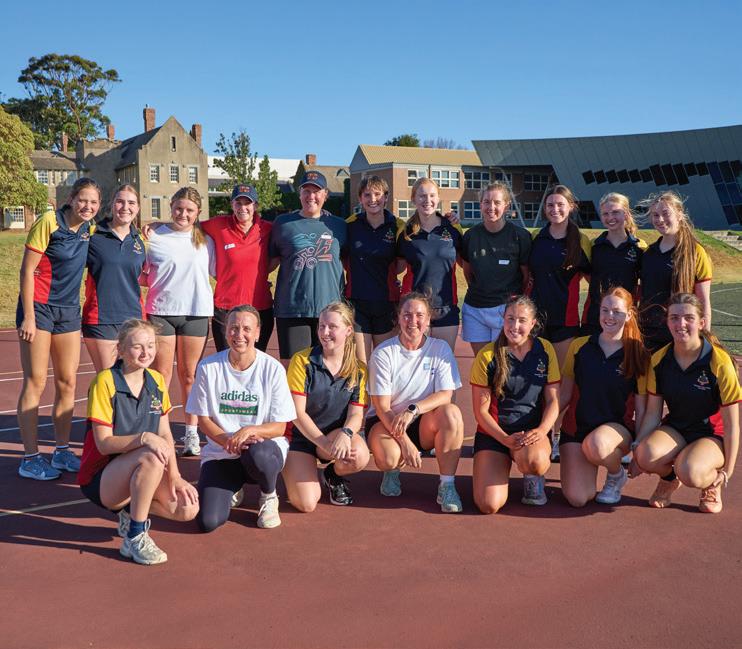
Wardle House came together once again for the much-loved Easter Bonnet Parade, filling the day with colour, creativity and a strong sense of fun. Students proudly showcased their handmade designs, each one reflecting imagination and personal flair. From playful bunny ears to vibrant, natureinspired creations, the bonnets featured an array of textures, colours and thoughtful details. The parade was a chance for students to share their work, celebrate each other and enjoy a moment of light-hearted creativity. It remains a highlight of the term, bringing students, staff and families together in a joyful celebration of community.
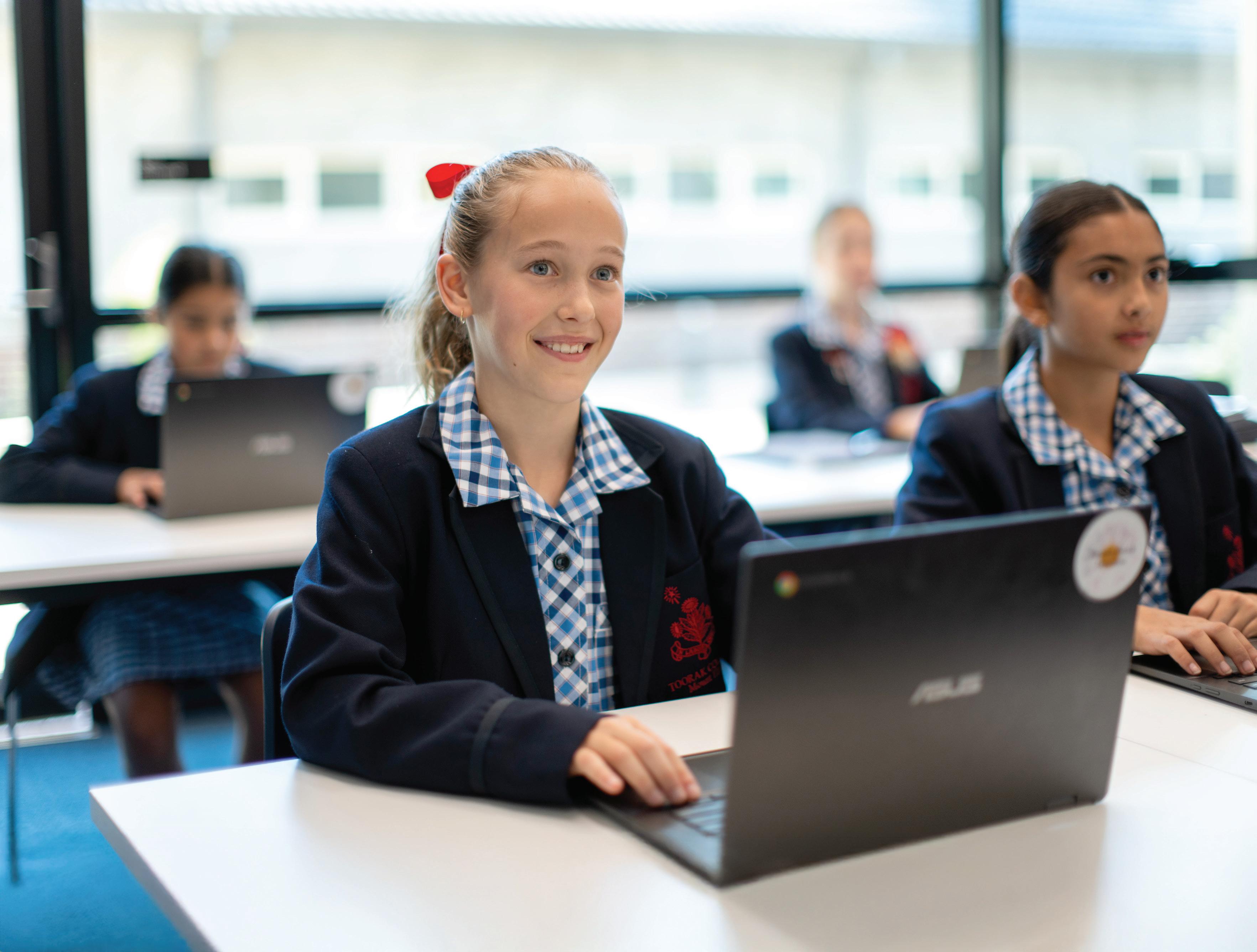
At Toorak College, we believe inspiration is the spark that fuels the leaders, innovators, and change-makers of the future. By nurturing curiosity, confidence, and resilience, we ensure our girls are not only inspired today but also ready for tomorrow.
The 'Elephant’ building united generations of the Toorak College community across three school sites. First known as ‘The Big School Room’, it was built in 1910 at the original school site in Douglas Street, Toorak. The school moved to Glenferrie Road Malvern in 1919, and the building came too. In 1928, the newly established company school, Toorak College Limited, realised a dream to relocate to the countryside as a boarding school at Mount Eliza. An assembly hall was urgently required. The board decided that ‘The Big School Room’ would again be called into service. On hearing the news, school parent and chairman of the Board, Mr George Russell, was said to have exclaimed, ‘You are surely not taking that white elephant!’. The name stuck, and ‘The Elephant’ held the Toorak College community in its familiar embrace for another 44 years. In 1972 it was deemed beyond repair and was demolished.
The spirit of 'The Elephant’ lives on in this publication.
Old Mornington Road, Mount Eliza, VIC, 3930
PO Box 150, Mount Eliza, VIC, 3930
T: +61 (3) 9788 7200
www.toorakcollege.vic.edu.au
Toorak College is committed to ongoing environmental initiatives and sustainability. This publication is printed on 100% Recycled stock.