Where Every Nose Knows
Pup Assist Brings Purpose to Dogs & People































john@townepost.com mandi@townepost.com (574) 249-9217
tom@townepost.com (317) 496-3599
jeanne@townepost.com (317) 810-0011


Where Every Nose Knows
Pup Assist Brings Purpose to Dogs & People
john@townepost.com mandi@townepost.com (574) 249-9217
tom@townepost.com (317) 496-3599
jeanne@townepost.com (317) 810-0011
Writer / Amy Beaucham
A handler steps off the trail and into the trees, guided by a special four-legged friend who is suddenly all business — head low, tail working, nose instinctively reacting to what the forest floor is revealing. A little farther ahead, a volunteer “decoy” waits in the cold, sometimes for hours, so the dog can learn a life-saving skill. Breath hangs in the air. Boots crunch. The woods settle into a hush around the dog and handler, as if making room for the work to be done.
At Pup Assist in Walkerton, training is shaped by a clear mission. For many dogs, that purpose begins with everyday obedience through the basic training program. For others, it develops into more specialized tracks, depending on the dog, the handler and the goals. No matter how far a team chooses to go, the work still leans on the same foundation: reliable, everyday skills that hold up outside the training space.
Sometimes the mission unfolds along Pup Assist’s wooded trails or in a park. At other times, it occurs in a dedicated training space at Pup Assist, designed for practicing real-life manners in a controlled setting. A dog learns to walk without pulling, pausing when asked,
looking up for guidance instead of lunging toward every distraction. An owner feels the leash go a little looser and realizes that with consistent coaching, daily life with their dog can feel calmer, more consistent and more enjoyable in all the right ways. The bond between dog and owner deepens as the two learn to communicate clearly and fully trust each other.
In scent-based training, dogs learn to use their remarkable sense of smell with disciplined focus to identify specific target odors or problem sources people cannot perceive. The dog steps into job mode and begins to search with purpose, moving down a hallway, slowing near a doorway, pausing at a seam, hovering at the edge of a baseboard, then signaling with quiet certainty.
Depending on what a dog is trained to detect, that work may involve bed bugs, mold, termites, black powder or other target odors. From the outside, it can look simple, but the stakes are real. This is the kind of training that can protect a home, a business and a family’s peace of mind.
Pup Assist is a certified disabled veteranowned small business owned by Shawn and Lori Hite and led by Shawn, a master dog trainer specializing in nose work. Dogs and handlers can be trained in scent detection for a wide range of needs, including narcotics, explosives, mold, bed bugs, mushrooms and search-and-rescue. Pup Assist offers private lessons for nose work and basic obedience, along with group obedience classes that include coursework as well as field practice. For teams that want to go farther, some may qualify for search-and-rescue certification and real-world call support.


Shawn and Lori opened Pup Assist in October 2024, bringing their training focus to a dedicated property designed for handson work. The tagline on their materials, “Where Every Nose Knows,” speaks to the faith Shawn and Lori place in a dog’s ability, paired with consistent training that turns instinct into reliable work. More than a slogan, it reflects their belief that dogs are capable of extraordinary things when they are trained with patience, structure and trust.
When Shawn and Lori married in September, it marked a joyful milestone in a partnership already formed through shared goals, shared adventures and a deep belief in what purposeful dog training can do. Their facility spans 16 acres of trails, woods and open space designed for practical training that can support a team from the basics into more advanced scenarios. They also support the Marshall County EMA and the Cleveland Township Fire Department with K-9 search needs, while staying dedicated to their surrounding community and to teams beyond their immediate area. Their goal is to help develop dog trailing teams that can assist local authorities with the search for lost individuals and to keep building that network

through training, practice and community involvement.
At any given time, Pup Assist is working with a wide range of dogs, each representing a different kind of possibility. Some dogs are being prepared for therapy work, some are building detection skills, others are developing the consistent behaviors needed for future placement, and many are simply learning how to enjoy life as a companion in a home. Shawn and Lori have several dogs who are part of their own household and are currently in training or active work, including Alice, Merit, Calley, Churro and Scout.
Shawn Hite is a retired U.S. Army staff sergeant and combat veteran. After retiring from the military, he continued his education through Highland Canine’s Master Dog Trainers course in North Carolina. His training philosophy is deeply connected to the idea of purpose. “My goal is to give the dogs a job, to give them a mission,” Shawn says. A well-trained dog, in his view, is not just polite on a leash. A well-trained dog has a clear assignment that engages mind and body, and sometimes that assignment is companionship
itself: being reliable, responsive and a true joy to live with.
“Dogs are not designed to be on your couch all day long doing absolutely nothing,” Shawn says. “They need mental stimulation. They need physical stimulation.”
That mission-first mindset shapes everything Pup Assist does. Training is not a one-anddone purchase. It is a relationship that gets built, practiced and maintained.
One of Shawn’s favorite moments is the instant a dog shifts into scent-work mode.
“When you put the dog’s vest on, you clip off the long line, and then they’re in charge,” Shawn says. “You’re following.”
That is the point. In scent work, the dog is the specialist. The handler learns to trust the dog’s information, notice subtle shifts in body language and stay patient through distractions. Shawn calls each dog-andhandler pair a team, because success depends on both ends of the leash learning to work as one.
One of Shawn’s specialties is taking shelter dogs — ones that may have had a harder start in life — and giving them structure and a future.
“Once I figured out that I could successfully take regular shelter dogs and give them a job, that was it,” Shawn says.
For dogs who are part of Shawn and Lori’s personal training program, that progress is built through real routines rather than isolation. “They live with us,” Shawn says. These dogs learn how to settle, how to share space and how to practice manners in normal routines. For many families who attend classes, that same idea carries over at home, because the best results come when training becomes part of everyday life, not a once-aweek event.
The goal is a trained, socialized, balanced dog — a companion a family can enjoy. One local family has seen that kind of change firsthand. About a year after adopting Nola from the Marshall County Humane Society, they watched her grow from uncertain and untrained into a happier, more engaged dog,



with Pup Assist playing a role in that progress. Upon adoption, Nola was not house-trained and needed basic obedience training. With time, consistency and the right guidance, she began to settle into her place in the pack. Now she loves the water, delights in taking hikes, enjoys regular playtime and even visits a nursing home, where her cheerful presence brightens the day for residents. The family describes her as joy-filled and endearingly goofy, the kind of dog who makes people smile simply by being herself.
Service-dog work is meaningful to Shawn for deeply personal reasons. As an Army veteran, he understands what it can feel like to return home after combat.
“When I got out, I had horrible nightmares,”


Shawn says. “Nightmares to the point where I would wake up in the middle of the night, and I would be attacking something.”
He describes the fear and the changes he had to make as he worked to feel safe again.
Alice, a service canine, helped pull him back into safety. “Alice was the one who did a lot for me,” Shawn says. She interrupts nightmares, turns on a light switch and applies pressure therapy until he reorients. “She doesn’t move until I realize where I am.” Alice also assisted Shawn in focusing on her when large crowds became overwhelming.
That experience fuels Pup Assist’s desire to bring high-level training closer to home for veterans. Shawn wanted to provide access without an overly rigorous process that requires constant long-distance travel and to offer support at a community level. That local focus is strengthened by community involvement, including sponsorship from the Mill Creek Lions Club, which helps underwrite Shawn and Lori’s Veteran K-9 Training efforts.
Search-and-rescue training is not something a





trainer can do alone. Dogs need to find many different people, in many different settings, under many different conditions.
“People as a whole, we each have our own unique smell,” Shawn explains. Diet, environment, genetics and daily life create variation. Training with many decoys teaches dogs to rely on scent itself, not familiarity.
Pup Assist calls that K-9 search-and-rescue work “trailing,” and it is built on a deceptively small starting point: a person’s scent. Sometimes a dog begins with a scent article as simple as a hair tie, a sock or a hat. Once the dog locks onto that specific odor, the team is off, following the trail toward one person, not just any person.
In other scenarios, the start is even smaller. Search dogs can work from “skin rafts,” the tiny, cornflake-like flakes of dead skin, sweat, bacteria and oils we shed constantly. Those particles carry our personal scent signature, and dogs can follow them as they settle onto the ground or drift on air currents, even through crowded spaces.
That is why volunteer decoys matter so much.




Pup Assist credits the community for stepping in week after week, sometimes in miserable weather. “They are the most important part,” Shawn says. Those volunteering are essentially playing hide-and-seek with the K-9s, giving dogs the chance to learn how to follow a human scent trail in real conditions. The opportunity is open to individuals, families and children with their adults’ permission.
No special skills are needed, and questions and social time with the dogs are encouraged. Since the same person cannot be the decoy again and again if the dog is truly learning to follow scent rather than a familiar individual, the team needs a steady rotation of volunteers. Those interested in helping as a decoy can contact Pup Assist at 219-346-0697.
Training does not pause just because the weather is miserable. On Jan. 3, 2026, K-9 teams Lucy-Lu, Buck and B2 worked through some of the toughest conditions of the season: 22-degree temperatures, ice and snow. Those kinds of days matter because real searches do not wait for perfect footing or comfortable temperatures. Pup Assist encourages teams to work in multiple environments and weather conditions, building steadiness when the trail is cold and the ground is slick.
Shawn has seen firsthand how determined a good dog can be once it locks onto a human scent. One of his favorite examples comes from Lucy-Lu, a bloodhound with a turnaround story of her own. Lucy-Lu came from a breeder in Ohio and was returned due to aggression and resource guarding of valued items. With structure, training and patient handling, she began to change, which was evident in her work.
Last spring, the team trained at Centennial
Park in Plymouth during graduation weekend, when the park was packed with families, grills and kids everywhere. With his mom nearby, a young boy, who had volunteered as the “lost subject,” tried to trick the dog by changing locations across the large wooden playground. Even with competing scents and constant movement all around her, Lucy-Lu stayed focused, sorted through the chaos and found him. It was a training moment with a powerful takeaway: When the situation gets complicated, the right dog can still do the job.
Other teams are building that same kind of confidence, step by step. On Sunday, Oct. 5, 2025, Jarika and Bud, known as Team B2, took on Centennial Park in Plymouth in the middle of a busy public setting full of distractions and scent contamination. They ran a 0.5-mile trail with the decoy missing for an hour, and they did it without a scent article. Bud started with only six steps of uncontaminated skin rafts before he took over and went straight to work. In just 10 minutes, Bud found the decoy on the other side of the park.
The story behind that success is part of what makes trailing work so compelling. Only five months earlier, Bud had been a 6-monthold puppy with no obedience training. The difference came through consistent practice, Jarika’s dedication and a network of volunteer decoys willing to take on tougher hides in more challenging conditions.
Training scenarios expand over time, from the Pup Assist property to public spaces, from fresh scent to aged scent trails, and from quiet environments to real-world distractions. Pup Assist also collaborates with agencies in training exercises, because a missing-person response works best when you are familiar
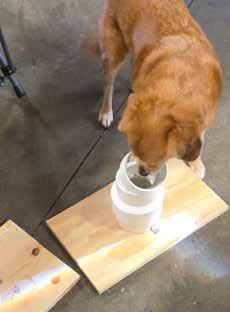
Their walking obedience class is designed as a practical entry point for many families, and it is not only about learning to move politely on a leash. Shawn teaches and practices a different basic command each week, giving owners clear steps to work on at home while building steady skills that hold up in the real world. The class covers leash manners, heeling, sit, down, stay, controlled greetings and handler focus. Shawn also values the Canine Good Citizen program as a strong benchmark for dogs that need reliable behavior in everyday public settings.
Group training is crucial because dogs influence each other’s energy, confidence and reactivity. Their structured classes use this peer influence to help dogs practice focus and obedience amid real-world distractions.
Shawn’s approach to owners is practical and encouraging. “Be prepared to learn,” Shawn says. Flexibility matters because everything depends on the dog, the environment and the goals.
For puppies, Pup Assist emphasizes early socialization through the Rule of Sevens,





encouraging exposure to a variety of surfaces, environments, people, handling experiences, objects, locations and friendly dogs. Confidence, Shawn says, is key.
Pup Assist chose its name with intention. The heart of the work is not just that a trainer can help, but that a trained dog can assist in real, meaningful ways.
“We’re here to assist you in being able to build that relationship with your dog,” Shawn explains, but the end goal is bigger than a lesson. It is a dog who understands its role, a


handler who understands how to guide, and a partnership strong enough to carry into daily life, public settings and, for some teams, the moments that matter most.
Beyond training, Pup Assist also responds to detection-based inspection requests. For example, Merit specializes in bed bug detection, and both Shawn and Lori are equipped to handle Merit on a call.
Whether obedience, scent work or search scenarios, the philosophy of training at Pup Assist circles back to the steady ideas of purpose, partnership and practice.
Lori has a favorite quote that sounds simple, but it fits the heart of what Pup Assist is building: “I truly believe if everyone could start their day petting a sleeping dog that loves them, the world would be a far better place.” It is an image of trust, peace and connection, and it is also a reminder that the bond matters. Training is not only about commands or certifications. It is about living and functioning well together.
Whether for a walking class, private training,



detection services or participation in searchand-rescue, the goal is the same: a confident dog and a capable handler.
At its core, Pup Assist pairs a job for the dog with a clear plan for the person holding the leash, and the two grow stronger together with repetition, patience and time. Whether the work happens in a training space, a busy park or deep in the trees, they return to the same truth behind the words on their materials: Where every nose knows. Purpose becomes something a dog can live out, and a handler can truly rely on.
Pup Assist is located at 71271 Spruce Road, Walkerton, IN. For more information, call 574-241-6263, email pupassist@gmail.com, or visit them online at pupassist.com.
Volunteer decoys / SAR contact Email: searchteamspupassist@gmail.com Text: 219-346-0697
Message via Facebook (Pup Assist / Heartland K9 Search Team pages)
























PLUMLEE DENTISTRY BRINGS A HOMETOWN APPROACH WITH HIGH-QUALITY
It is by design that Plumlee Dentistry is a unique office whose characteristics have created the recipe for its decades-long success. As summarized by one senior staff member of the practice, “We have a hometown feel, while delivering the highest quality of personalized dental care.”
Personal attention and meticulous patient care are not only routine at Plumlee
Dentistry, they are the daily commitment to a mission statement that has guided the staff in delivering the highest level of dental care for nearly 40 years: “Together as a team, we will strive to create an uplifting, caring,

service-oriented atmosphere. By educating our patients and ourselves, we will always be motivated to do state-of-the-art dentistry. We will be passionate about achieving excellence and providing dentistry in our patients’ best interest, thereby creating an environment of mutual trust. This is our commitment to both you and ourselves.”
Leading the team of dentists, hygienists, assistants and front office staff is Dr. Louis Plumlee, who opened the practice in 1985. Growing up as the son of a foundry worker, Dr. Plumlee recalls a comment his father made years ago: “Whenever I went to the doctor, the way they talked to me made me feel like I wasn’t very smart.”
This powerful statement became a core value for the young man, and when he chose his path into dentistry, he knew he wanted to serve patients with dignity and respect.
Today, this patient-focused approach to dentistry is evident in every aspect of the practice. Dr. Plumlee and the staff start each












day with a “morning huddle,” where they discuss the day’s schedule and how best to serve the needs of each patient they will see.
Dr. Plumlee attributes the appreciative atmosphere of the practice to the culture he intentionally developed and cites this as what sets Plumlee Dentistry apart from other practices.
“Culture creates a lifestyle within the practice It guides how you think and function together, and how you treat each other and those you are serving,” he says. “It ensures that the doctors and the staff are consistent in their approach and fully aligned.”
He understands that his leadership role each day is to sustain that culture, which focuses on a positive attitude and an optimistic mindset.
The cohesive atmosphere translates to patients, including one who remarked that “every time I visit Plumlee Dentistry, I feel like I’ve visited with friends who just happen to be
taking care of my teeth and who truly enjoy what they do.” According to Google reviews, many others agree. The most recent analysis lists Plumlee Dentistry with 734 five-star reviews.
Along with routine dental services, Plumlee Dentistry offers specialized procedures including same-day crowns, preventive cleanings and proactive periodontal therapy, orthodontic clear aligners, cosmetic dentistry, implant placement and more. In addition to Dr. Plumlee, there are three other doctors on staff: Drs. Kurt and Oriana Corsbie and Dr. Kevin Downey. Along with the doctors, hygienists, assistants and office staff work to ensure a seamless experience from the moment a patient walks in the door to when they leave.
Above all else, Dr. Plumlee clarifies that the priority of the practice is achieving optimal oral health for each patient.
“If we can bring people into optimal oral


health, it can extend their lifespan by seven to 10 years,” he says.
To acknowledge and reward patients committed to good oral health care, Plumlee Dentistry offers membership plans geared toward those without dental insurance. The plans include preventive care appointments and all services included in those visits, one emergency dental visit per year, and a 12% discount on restorative needs.



A positive culture and working environment are the result of layers of intentional planning. Dr. Plumlee has multiple checkpoints in place to ensure staff members are continually exposed to learning opportunities for improvement. This includes continuing education focused on the most up-to-date technologies.
All doctors attend a local study club once a quarter, where about a dozen dentists gather to discuss what is and isn’t working in their practices.
“It’s an environment that promotes personal and professional growth and encourages self-reflection on how each doctor works with staff and patients,” Dr. Plumlee says.
An important component of the practice’s culture is grounded in Dr. Plumlee’s 38-year collaboration with dental consulting company Paragon Management, led by Ken Runkle. Runkle leads regular meetings to analyze business principles and systems, clinical
expertise, staff interactions and the overall approach to patient care.
One of the staff doctors, Dr. Kurt Corsbie, was a patient of Dr. Plumlee’s as a child and later chose to study dentistry, ultimately returning to practice alongside his mentor. Jenny, a hygienist, has a similar story. She worked at Plumlee Dentistry during high school and, after becoming licensed, joined the staff.
Dr. Plumlee celebrates the fact that some team members have been part of the practice for 10, 20 and even 30 years. When asked what he attributes the strong staff retention to, he offers a simple yet meaningful answer, “We believe that your family comes before our business,” he says.”
That philosophy resonates with the staff, says treatment coordinator Lori.
“Dr. Plumlee is very understanding of the challenges we encounter throughout our lives and is there to support us and help us navigate
those challenges,” she says. “It makes us feel appreciated and valued. We carry that over to our patients, caring for each of them while providing great dentistry.”
The doctors believe in practicing what might be called the Golden Rule of Dentistry. When approaching a patient’s care, they take time to consider, “Is this something I’d recommend for my family and friends?”
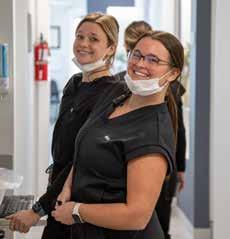

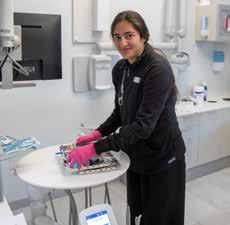
Plumlee Dentistry continues to meet the changing needs of patients by making strategic additions to the office staff. Currently, the practice includes a bilingual dentist, hygienist, assistant and front desk staff.
Dr. Plumlee also keeps the practice doors open to those interested in working in the dental field.
“We want to expose people to the profession through job shadowing and internships, and some of those collaborations have resulted in people joining the staff,” he says. “We pursue talented people we believe will strengthen our team.”
When asked about technology overshadowing personal interactions, Dr. Plumlee is quick to respond that Plumlee Dentistry will never be the first to implement high-tech concepts.
“We allow technology to be proven before we put it into practice,” he says.
The common theme throughout Plumlee Dentistry is preventive thinking. Through continuing education, team meetings and culture-building activities, the doctors and staff prepare daily to provide optimal oral health care. For patients walking through the door, all that preparation simply presents itself as another smile and warm hello.



• Carpet
• Laminate
• Vinyl Plank
• Tile
• Linoleum
• Area Rugs
Hours: Monday-Saturday 9 AM- 5 PM We Offer Financing!

Visit plumleedentistry.com for more information. To schedule an appointment, call Plumlee Dentistry at 574-936-3505.
Plumlee Dentistry is located at 1400 N. Oak Drive, Plymouth, IN. Follow Plumlee Dentistry on Facebook and Instagram.


• Necchi Sewing Machines
• Sewing Machine Repair • Quilting Fabric
• Patterns • Kits • Quilters Dream Batting
• Notions • Classes & Individual Lessons
• Drop In & Sew Space 11:30 - 7:30 M - F 11:30 - 3:30 SAT & SUN
200 N. Michigan St. | Plymouth, IN
the Color Wheel Quilt Shop in the
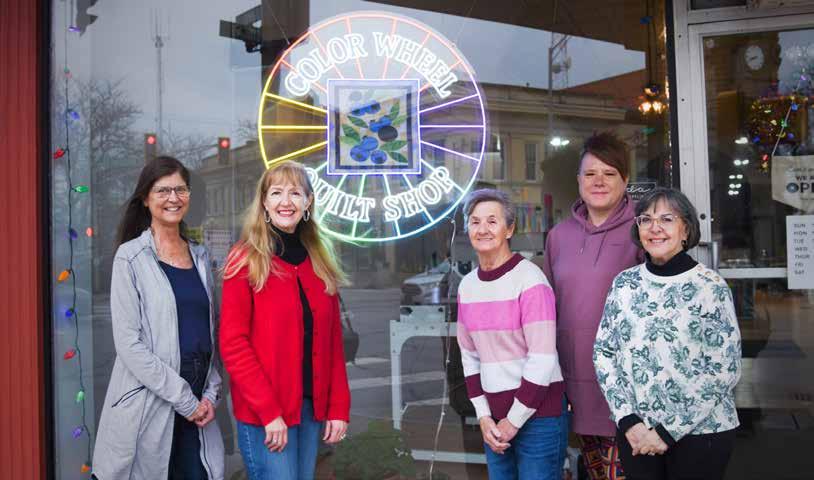
Writer / Darcie Dodds Schott Photographer / Jubilee Edgell
When Joann Fabrics in Plymouth closed its doors, it was time for another door to open, thought Mary Jo Finley, owner of the new Color Wheel Quilt Shop at 200 N. Michigan St. in Plymouth. “Plymouth has needed a quilt shop for a long time,” Finley acknowledges, “and the time was now.”
Finley emphasizes the importance of being
able to shop for fabric in person.
“Sewists who buy fabric want to feel the quality, see the scale of the design, see how tight or loose the weave is, and most importantly see the color,” she says. “On a computer or phone screen, the color might appear very differently in person from what you thought you were getting.”
• Commercial & Residential
• New Construction/Ponds



Another factor Finley attributes to the Color Wheel Quilt Shop’s success is its location.
“We’re in the middle of a fabric desert,” she adds.
According to Finley, the closest fabric or quilt shops where one can get fine-quality quilting cottons like the ones she carries are 25 miles


north, 35 miles south, 27 miles east and 52 miles west.
Color Wheel Quilt Shop’s slogan is: “Fabric you desire and service you deserve™.”
“When we meet with fabric manufacturers’ representatives and are deciding what fabrics we will carry, we don’t think, ‘What fabric will sell?’ We think, ‘What fabrics do our customers desire?’ Our mission in everything we do is to provide customers with the fabric they desire and to do it with the service they think they deserve,” Finley says. “When you come to the Color Wheel Quilt Shop, we want you to feel valued and special, because to us, you are special. We are honored that you have come into our shop.”
Finley speaks proudly of her staff of five employees, describing them as very capable and experienced, working very hard to make sure that when customers leave the shop, they feel like they have been helped as much as possible. Eager to help customers bring

Hours:
Monday-11am-7pm
Tuesday-11am-7pm, Prime Rib Special 4pm-7pm
Wednesday-11am-7pm
Thursday-11am-7pm
Friday-11am-7pm
Saturday-11am-7pm
574-336-6143
their quilt dreams into reality are Catina King, creative manager, Angie Beyler, business manager, Tammi Green, embroidery manager, Phyllis Pier, fabric manager, and Darlene Derifield, sewing manager.
King plays a major role in selecting fabric, notions and patterns for the store and teaches classes on how to make bags, how to freemotion quilt and others, all while helping quilters and sewists tap into their inner creativity.
Beyler assists the shop with anything to do with the computer and general business operations. Green helps customers select which embroidery machine will suit them best and then teaches buyers how to use their embroidery machine.
“Our machines arrive in boxes, but we unpack them so that you have the opportunity to try before you buy,” Finley says. Pier is in charge of displaying the fabric and making sure there is at least one fat quarter



creameryonmain.com/14th-street-barbeque

of every bolt of fabric in the shop, and assembles kits of cut and selected fabric that make it easier for customers to start a project. Derifield makes sure quilt top samples are on display and works with Pier to assemble kits to make it easier to achieve similar results. She also teaches beginning sewing and how to use a serger.
In addition to teaching appliqué and beginning quilting, Finley also cleans and




services sewing machines, pointing out that “a good cleaning can make a world of difference in how your machine sews.”
Some of the fabric lines that Color Wheel Quilt Shop carries include Free Spirit (Tula Pink, Kaffe Fassett, Anna Maria Horner), Moda, Tilda, Liberty of London, Riley Blake Designs, QT Fabrics, Northcott, P&B, Andover, Hoffman, FIGO, In the Beginning, Timeless Treasures, Michael Miller, Allison Glass, Henry Glass, Studio E, Blank, AE Nathan, Windham, Anthology and more.
“Moda makes a Grunge blender that is very popular with quilters. We are receiving approximately 48 bolts of Grunge a month until we have all 241 colors. By the end of March, we should have them all,” Finley says.
The shop has done the same thing, creating a collection with white and cream tone-ontones, batiks and Free Spirit solids. In addition to fabric and notions, Color Wheel Quilt Shop is an authorized dealer for
Italian-designed Necchi sewing, serger and embroidery machines. Necchi sells 12 models in the United States, and Color Wheel Quilt Shop carries all of them.
The Color Wheel Quilt Shop’s line of Necchi machines has been received very positively by customers. Tammi Green, shop embroidery manager, who has considerable machine embroidery expertise, evaluated the Necchi embroidery machines with high remarks, and she has produced beautiful results with the Necchi machines.
Finley shared a bit of local Necchi trivia. Quilter Tom Treat recently visited the Color Wheel Quilt Shop. (His parents, Budd and Ajean Treat, founded the wellknown Treat’s menswear store in downtown Plymouth.) Tom told Finley that in 1953, when his dad was in the Navy, stationed in the Mediterranean, he bought a Necchi sewing machine in Italy and carried it back to the United States as a gift for his wife. The machine was used for many years to alter and
tailor in their shop.
A block south of Treat’s on Michigan Street, Finley named her store the Color Wheel Quilt Shop because of the influence the color wheel has had on her quilting.
“When you purchase fabric for a quilt, it’s a big investment, and you want to be confident that it will look good when it is finished,” she says. “Using the color wheel is a good way to achieve that goal.”
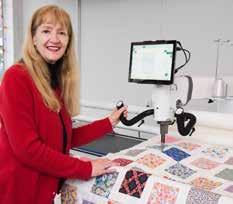

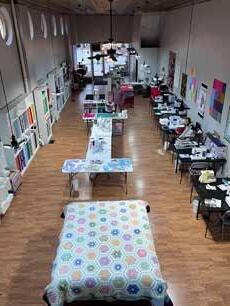
Quilt Shop, Finley’s began using a color wheel 30 years ago, when she collected discarded scraps of fabric and eventually organized them into small color-coordinating bags. The shop sells color wheels just like the one Finley first used.
“Color wheels are game changers,” she says. When Finley decided to make appliqué quilts for her granddaughters, she needed 50-weight
cotton thread in a bunch of different colors. With a local store carrying this type of thread no longer open, Finley began to search for the needed thread.
“With appliqué, the thread shows and needs to match the fabric as closely as possible in order for the quilt to look nice,” she says.
She traveled to five quilt shops in two states without success in finding the needed thread. Finley committed to making sure the Color Wheel Quilt Shop would solve this need, and it does, carrying 80 colors of 50-weight cotton.
Finley also offers quilter activities at the shop. One such upcoming event is the Super Bowl Bed Turning, noon to 4 p.m. Sunday, Feb. 8. A bed turning is a community-focused event rooted in history, when women gathered to hear about a woman’s collection of quilts. Quilters can register to participate in the February event to view and listen as Finley talks about a stack of quilts she, along with her


grandmother Aunt Tony (not an aunt, and her name is not Tony) and others made.
Registration is $50 in advance and includes fabric the participant may select after registering. Quilters may bring their own sewing machine from home, use one of the Color Wheel Quilt Shop’s Italian-designed floor models. Super Bowl refreshments will be included.
Capacity is limited, so if interested, stop by Color Wheel Quilt Shop to register soon. Finley hopes others have quilt collections they would like to bring in and describe so that Color Wheel Quilt Shop bed turnings might become a monthly event.
Color Wheel Quilt Shop is located at 200 N. Michigan St. in Plymouth. Quilters can see the thread display and everything else the shop has to offer from 11:30 a.m. to 7:30 p.m. Monday through Friday and 11:30 a.m. to 3:30 p.m. Saturday and Sunday.



•
•
•
•
•
•
•
•

•
•
•
•
•
•
•
•
•
•






















Writer / Amy Beaucham

Owner Ashlynne Gingerich

Ashlynne Gingerich is the wholistic wellness counselor behind The Flourished Root, and her message is direct from the start. On her website, one sentence reads like a steady hand on one’s shoulder: “You were not designed to feel depleted.” It is simple language, but it lands like relief — a reminder that brain fog, bloating, anxious mornings, painful cycles and that wired-but-worn-out feeling do not have to be brushed off as “just life.”
She chose the name The Flourished Root intentionally. A plant’s root system comes first. It anchors, absorbs and feeds what will eventually bloom above the surface. Gingerich’s work follows that same idea, strengthening what is underneath so a woman can flourish again.
At home, that “rooted” picture looks less like perfection and more like real life in motion. Gingerich and her husband, Sean, are raising two little boys: SJ (short for Sean Jr.), who turned 4 in January, and Asher, who is 2. She is homeschooling her oldest right now, building a business inside the same schedule most of her clients recognize — snacks, lessons, laundry and the steady hum of being needed.
The story of The Flourished Root did not begin with a business plan. It began with a young woman who could not understand why she felt so run down when she was “supposed” to feel fine.
“I didn’t have the energy that I thought I should as a 19-20-year-old girl,” Ashlynne says.
She was doing what she thought she was supposed to do.
Gingerich grew up in Indiana, spending most of her childhood in Bristol. Her parents now live in Middlebury. In high school,

she was active and athletic. She played lacrosse, loved the gym and eventually earned her certification as a personal trainer. She took nutrition classes in college, tried to “do it right,” and still kept hearing the same quiet refrain underneath it all: surely this should be working.
Instead, the symptoms kept stacking up.
“More than just feeling exhausted, I had strong sugar cravings, headaches, bloating, dizziness, anxiety and seasonal sadness,” Ashlynne says.
Pregnancy became the moment that sharpened everything. It was not an easy, picture-perfect season. It was an “I’ve had enough” moment, she says.
Gingerich says she wanted to feel better not only for herself, but so she could be the best version of herself for her husband and kids.
Her story stays relatable because she does not package it as an instant turnaround.
“Don’t get me wrong,” Ashlynne says. “I didn’t all of a sudden change everything in my life and all my symptoms went away, and I became the best mom ever. I still struggle,



and I still strive to become better and better for my family.”
What changed, she says, is that improvements began to show up — enough to keep going. She has seen progress in her mood, energy and digestive issues, and that progress fuels what she does now.
After high school, Gingerich worked in a chiropractic office and kept leaning toward alternative health. She also earned a degree in marketing while she was still figuring out how, exactly, her health passion would take shape as a career. Gingerich holds both a naturopathy certification and her HTMA professional certification. She is currently studying for her Wholistic Wellness Counselor Diploma.




Faith also threads through her perspective and her community.
Raised Catholic, Gingerich and Sean now attend Maple City Chapel.
When Gingerich talks about her work, she often sums it up as minerals, motility and the nervous system, with a mission aimed squarely at women who feel exhausted, foggy and off balance. She also has a phrase that shows up repeatedly in her teaching: God is in the details.
She is clear about what “root cause” means. High cortisol, inflammation, dysregulated hormones and leaky gut are not root causes, she explains. They are signals. Her job is to look underneath, figure out what the body is trying to communicate, then support the foundation so the symptoms can begin to calm.
A central tool in Gingerich’s practice is Hair Tissue Mineral Analysis, usually shortened to HTMA. She describes it as the missing piece that helped her move beyond generalized advice and into individualized care. The hair sample is taken in a discreet way that does not leave a visible patch. In her words, HTMA provided “a piece of personalization to each client,” and it gave her the confidence to say she is not simply



guessing at what might help.
Part of why she chose HTMA is that it is noninvasive and captures patterns over time. Hair Tissue Mineral Analysis measures key minerals and toxic metals stored in the hair.
Gingerich explains that bloodwork often shows what is happening in the moment, while hair can reflect a longerterm snapshot.
Motility is another piece she watches closely. Digestion is not only about what you eat. It is also about movement — the coordinated process that mixes, breaks down and moves food through the digestive tract. When the nervous system stays stuck in stress mode, the body tends to prioritize survival over digestion. That is why Gingerich often includes practical nervous system support.
Supplements are not the first step in her approach. Gingerich says she prefers food-first, especially in the beginning, and


she is careful not to steer clients toward any product for personal gain.
It also matters to her to be clear about what her work is and is not. Within her scope of practice, Ashlynne says she cannot treat or diagnose disease. She positions her services for people commonly dealing with fatigue, digestive issues, painful periods and a desire for guidance and better daily health.
“This is the part I want women to understand before they assume they are too far gone or too busy to start,” she says. “I always start by listening to what a mom is walking through — her symptoms, her season of life and how much support she feels she needs.
“For women who want deeper guidance, accountability and someone to walk closely with them through the changes, oneon-one coaching is often the right fit,” Ashlynne adds. “My goal is never to push someone into a program, but to help her choose the starting point that feels doable, supportive and aligned with where she is right now.”
Gingerich also created Be Balanced for women who want a lower-cost way to keep learning and receiving steady support.

10055 Pretty Lake Trail Plymouth, IN 46563 Pretty Lake Golf Club 574-540-2682
Authentic Mexican Food Steaks, Seafood, Burgers, Wings/ Chicken, Salads, Desserts, Margaritas, Cocktails Reserve Your Holiday Parties Here Seating up up 200 people
Catering Trivia Every Thursday 6:30 PM Specials Posted on Facebook


Inside Be Balanced, members receive bite-sized guidance meant to fit real life. Root-cause lessons help women understand what may be behind fatigue, bloating, anxiety or hormone imbalance so they can stop guessing. Nourishment guides include real-food meal plans, mineral-rich recipes and grocery swaps for women who do not have hours to meal prep.
In the next year, Gingerich’s hope for The Flourished Root is to continue reaching women locally and in many states, providing virtual and in-person wellness coaching that aligns with their values and feels doable.
Ultimately, her vision is to see more women restored, more households steadied and more families thriving because a woman finally got the care she deserved.
The Flourished Root’s approach offers a calm, back-to-basics step forward in a world that often makes wellness feel loud and complicated.
For more information, visit them online at theflourishedroot.com. Clients can visit my office location at 6356 West 1150 North Milford, IN 46542 inside Purely Wholesome, where you can also check out various wellness products.













1.
32. Palindromic turkey
33. Feature of some lions
34. Part of T.G.I.F.
35. Japanese bread?
36. Game played standing 37. Gas, to a Brit 39. Mention 40. Shade
41. Tied up
Bad driver’s shout
Mah-jongg piece
Time to look ahead
Bump from office
Abu Dhabi leader
Fall from grace
Pluck
To-do
Snaky
1. Chinese gemstone 2. Aware of
Least shaky
4. Pie baker’s utensil
5. Went nowhere 6. Poetic contraction 7. Took the tiller 8. Tough 9. “That’s it!” 10. “___ so fast!”
11. Anil or woad
19. Bit of sweat 21. Doze 24. It may be heightened 25. Advanced 26. Understands
Radar screen image 28. Liturgy 29. Seek a seat 32. Strikes out 33. Better half 35. “___ rang?”
36. Sidetrack
38. Butler at Tara
39. Cuban singer Cruz
42. Like some grins 43. Disavow
44. Flight delayer, perhaps 45. Jointly owned, maybe 46. Industrial injury
48. Babysitter’s handful

• Uses a Rechargeable Power Pack (included)
• Stainless Steel Zipper
• 2 Side Zipper Pockets, 1 Inner Pocket for Battery





A&L Storage Barnsof Kendalville 901 W North St Kendallville, IN 46755
Mon–Fri: 11:00 AM–4:00 PM (260) 242-7608
A&L Storage Barns of Benton Harbor 2535 M-139 Benton Harbor, MI 49022
Mon–Fri: 1:00 PM-6:00 PM
Saturday: Closed Sunday: 2:00 PM-5:00PM (269) 921-5727

A&L Storage Barns of Kokomo 2312 N Plate St Kokomo, IN 46901
Monday & Friday: 10:00 AM–4:00 PM
Tuesday & Thursday: 10:00 AM-5:00PM
Wednesday: Closed Saturday: 10:00 AM-1:00PM Sunday: Closed Lot open for browsing 24/7 (765) 461-2286

Angola Travel Stop Angola, IN 46703 260-463-2975 X 1 ALSB@IBYFAX.COM
Maple Lane Metals 13428 Springfield Center Rd Grabill, IN 46741 260-627-5000
J&D Woodworking 27951 Wasepi Rd Centerville, MI 49022 269-432-2788
JDWoodworking@IBYFAX.com
Wormans Outdoor Solutions 5597 W. IN 24 Logansport, IN 574-601-1629
Wormansoutdoorsolutions@gmail.com


Maple Valley Garden Center 2552 E State Rd 2 Rolling Prairie, IN 46371 219-575-0139
Abom1983@gmail.com
EJ Flooring
20 W. 100 N. Winamac, IN 574-946-0111
Ejsflooring@hotmail.com
Rabers Patio 815 N VanBuren St. Shipshewana, IN 260-336-1978
Merl@raberpatios.com
Riverside Tire 14777 St Rd 49 Antwerp, OH 43518 419-258-1917


A & L storage barns is your source for high quality Amish
Renewed Marketplace 809 E. Vistula St. Bristol, IN 574-612-0367
Yoderzach4@gmail.com
Oakes Enterprise 1912 US Hwy 12 Galien, MI 269-545-9020
Greg@oakerenterprises.com
BID Jackson 3150 Page Ave. Jackson, MI 269-217-5420
Greg2401@yahoo.com




You step outside and the morning air is crisp, frost still clings to spots in your yard, and you can smell the coming rain in the air like a light perfume made by nature itself.
The birds are singing their songs and merriment at the shifting seasons, telling the world it’s time to rise and start another day. Spring time is just around the corner and aren’t we glad for it. There
is joy with every season that comes and goes, there’s no denying the excitement at the start of a brand new season though. By the time spring rolls around most of us are ready to say goodbye to the snow and hello to green grass and trees once again.
Ready to see the sun greeting us everyday even if accompanied by a heavy spring rain. Why stop at letting the change happen outside though, why not bring it
in your home to give you a sunny greeting everyday?
Setting your table for spring is a small act that can put a smile on your face daily, seeing little pops of yellow, florals, and some honey bees. It’s the little things in life after all that can make the biggest difference sometimes. Pictured with our article is just an example of a table setting we have in store as inspiration to do just that.

Serving as the base for the light and cheery table setting, features a GarnierThiebaut tablecloth. These tableclothes feature exquisite french craftsmanship with timeless elegance, beautiful patterns, and durability to last a lifetime. If you get the chance to see them in person, you’ll see the thought in every detail right down to the edges of the tablecloth. All throughout the table setting there are various kitchen and tea towels all with a design bent towards bees, but the best part about all of the linens is they are all 100% cotton. Beautiful and sustainable, what a perfect combination.
You may notice in the center of the table is a salt and pepper grinder set that stands out, made from a gorgeous natural wood and right here in the USA, those are none other than Fletchers Mill grinders. So beautiful in design they need no other adornments. Beside them is featured a tea pot covered in sunflowers that provide

real texture and some honey bees spotted throughout. The buzz-worthy teapot is settled on a Lipper olivewood server. The olivewood brings another aspect of nature’s natural design into the setting, as it surely would into your home as well. With proper care, the Lipper olivewood footed server would last a lifetime and never lose its elegance with all the natural whorls and swirls in the wood.
Surely not to be looked over, the hammered gold flatware from Fortessa to add a pop of shine. Switching out metals in your home from silvers to golds is such an easy way to add warmth and shine to your space while still having items that are stainless and durable for all your everyday needs.
There is so much more to this setting, and if we tried to go into all the details this article would surely be longer than what’s reasonable. From thoughtfully made napkins, mud pie trays, spreaders, and more, the best way to take it all in is to stop into the store and see it for yourself.
No photo could ever do it justice and the feeling simply can’t be conveyed into words.
With the thought of spring on the mind, if you’re looking for a local honey to help with seasonal allergies and just to support small, we’re a source for you. Carrying a variety of sizes and offering both regular and creamed honey, we’re proud to offer honey from our very own
Shipshewana area! If you’ve never tried creamed honey, then this one is a must have. Take the natural sweet flavor profile of honey but give it texture. Make it thicker and creamier, just perfect to spread on crackers, pancakes, or eat it by the spoonful!
The store has so much to offer and we can’t wait to see any one of you who decides to
stop in and see it for yourself. We’re open Monday through Saturday 9 a.m.-6 p.m. EST time.
Stay tuned for when our local farmers market starts up again, every Thursday coming soon!
If you have any questions feel free to contact the store at 574-586-2745 with
















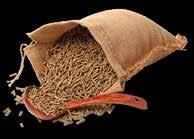
OUR HAY PELLETS ARE MADE WITH SELECT CHOICE, TOP QUALITY HAY IN OUR TOPEKA, IN FACILITY

• HAY PELLETED FOR BETTER DIGESTIBILITY
RESEARCH PROVEN & TESTED
• PELLETING INCREASES DIGESTIBILITY BY UP TO 80% AND AN INCREASE IN WEIGHT GAIN OF 10% TO 30%
• LESS WASTE
• BETTER ABSORPTION
• LESS HAY USAGE


























Writer / Jeff Kenney

An 1860s “birds eye” view map of Michigan City, Indiana, the last stop and destination of the Michigan Road since its conception in the 1820s. The diagonal Michigan Road can be seen in the lower portion of the map.
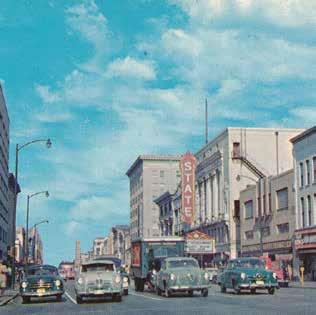
Michigan Street in downtown South Bend was also part of the Michigan Road before it turned west towards its final destination of Michigan City. Bypass highways today route traffic around the city towards such western destinations.
If you’re driving one of several stretches of area roadway, it might not be obvious that you’re driving on what was once Indiana’s first “superhighway,” or that what is today a fairly inauspicious roadway has such a critical history. But it might be interesting to look for signs. For instance, if you’re in one of the Lakes-area towns — like Plymouth or Argos (or farther up the road, South Bend) — with a “Michigan Street” running through its middle, that’s a hint. So, too, is the fact that many of the oldest houses in northern Indiana can be found along or near its path, which hints at the interesting history of people migrating through the Hoosier State.
This month marks 199 years (as of March 2) since the U.S. Congress approved an act establishing a roadway between Lake Michigan and the Ohio River “by way of Indianapolis,” utilizing a right-of-way secured via treaty with the Potawatomi people in October 1826. That makes sense, since what became known as the Michigan Road was essentially built upon longstanding “Indian trails” running north to south across the state.
It is difficult to convey how monumental the creation of the Michigan Road would become. Even if, by today’s standards, the two-lane, somewhat meandering roadway — broken up as it is by small towns and cities along its path — seems painstakingly slow compared with interstate highways or even today’s U.S. 31, in its day the Michigan Road became the pathway linking two important waterways, Lake Michigan and the Ohio River, to and within Indiana. In doing so, it opened up all of northern Indiana to travel, settlement and commerce in ways that would never have been possible without it,


including linking the new but bustling capital city of Indianapolis to economically critical ports in the northern portion of the state.
The creation of numerous counties in the Lakes area and beyond was the direct result of the Michigan Road facilitating travel by wagon and horseback to areas that had been wilderness, largely unsettled by




those of European descent.
If one finds such things interesting, paying attention to architectural and other landmarks throughout Indiana helps illustrate the story. A similar history can be seen near the Ohio River. The first Europeans traveling west from early settlements on the East Coast typically





made their way by boat along that river, which forms Indiana’s southern border. If you visit areas near the river today, you’ll find some of the oldest houses and other manmade structures in the state, fanning northward as settlements grew up from the river into what had been designated as Indian Territory — all reflecting the movement of people groups gradually northward.
The presence of rivers or the Great Lakes tells a similar tale in our own area, which is why towns and cities closer to Lake Michigan or major waterways like the St. Joseph or St. Marys rivers often show

signs of much earlier settlement and history, including very old buildings.
The Michigan Road was not the first of its kind in the nation. In fact, the National Road, which would become known as the “Main Street of America,” was the first large-scale, federally funded highway when it was authorized in 1806. Over the next four decades, the road grew from Maryland through Ohio, Indiana and Illinois.



Endeavors like the national canal system — conceived as a crosscountry waterway — and the much more successful railroad system eventually supplanted grand efforts like the National Road, though the project had done much to enhance economic growth and promote settlement across the country.
Closer to home, the original Potawatomi treaty forming the Michigan Road allowed for a 100-foot-wide piece of land between Madison, Indiana, on the Ohio River, and Michigan City, Indiana,




on Lake Michigan. Ironically, the Potawatomi were forced away on part of that very road in the fall of 1838 during the infamous Trail of Death, starting south of Plymouth and moving through Rochester and Logansport. On a more positive note, the road was also used at times by enslaved people escaping north.
After an initial commission was formed to map out the road in 1828, it was surveyed the following year and construction began in 1830. A more direct route to Lake Michigan proved impossible due to the vast Grand Kankakee Marsh, which stretched southwest from near South Bend toward Illinois and made road construction through the swamp virtually impossible. Instead, the new road made its way to the south bend of the St. Joseph River — today’s city of South Bend — avoiding the marsh before heading west to Michigan City.
Along the way, it passed through approximately 270 miles of counties including Jefferson, Ripley, Decatur, Shelby, Marion, Hamilton, Boone, Clinton, Carroll, Cass, Fulton, Marshall, St. Joseph and La Porte, as well as towns and cities such as Logansport, Metea, Rochester, Argos, Plymouth, LaPaz, Lakeville, South Bend and New Carlisle, before reaching Michigan City. As previously mentioned, communities like Argos, South Bend and Plymouth retain nomenclature tied to the road, with their main thoroughfares named Michigan Street.

If the term “Michigan Road” conjures images of the nicely paved roadway that still exists today — in some areas known as “Old 31” or “Old Route 31,” which we’ll get to shortly — such was not the experience of our ancestors during the road’s first many decades.
Most of Indiana’s roads in the 19th century were narrow, muddy affairs rife with ruts and other challenges, and the Michigan Road was largely no better, even if its very existence was crucial to travel between central and northern Indiana.
One stretch of the road in Carroll County became famous as a former section of “corduroy road” — a roadway, usually in lowlying or swampy areas, “improved” by placing logs perpendicular to the direction of travel. The legendary section known as Sycamore Row was long lined with sycamore trees on both sides of the road, said to have grown from the logs used to form the corduroy surface. Despite the presence of a state historical marker, the legend connecting the trees directly to the corduroy road has more recently been questioned as historically dubious.
Still, the story illustrates the difficult conditions of 19th-century roadways, including the Michigan Road, and helps explain why more reliable railroad travel rose to prominence in the latter half of the century.
This was despite the fact that in 1836 — the same year the first pioneer families of European descent arrived from southern Indiana to the Marshall County area via the Michigan Road — Indiana’s General Assembly passed the Mammoth Internal Improvement Act, which provided funding to pave the entire road. The Panic of 1837 and other factors, however, left the state partially bankrupt, and responsibility for the road was eventually turned over to individual counties. Paving would still be many years away.
Eventually, the Michigan Road was paved, though by then dramatic changes in transportation were already underway across the state and the nation.
The influx of mass-produced automobiles, combined with widespread paving projects, brought about the end of the railroad era by the 1920s. Roads at the city, county and state levels transitioned to paved or improved gravel status almost overnight. Travel from Indianapolis to the Lakes area still took several hours, but it was worlds away from the arduous, multi-day journey of the dirt-only Michigan Road era.
As new state and national road systems crisscrossed Indiana, sections of the Michigan Road were incorporated into highways with new names. Today, following State Road 25 from Logansport to Rochester places travelers on the former Michigan Road. From there, Old U.S. 31 through Rochester into Argos and Plymouth, all the way to South Bend, traces the same path used by earlier travelers. State

Traveling north on Rochester’s Main Street toward Argos on Old U.S. 31 leads to a bronze historical marker where the road crosses the Tippecanoe River, commemorating the Michigan Road. Nearby are remnants of an iconic one-lane bridge that spanned the river for decades. Similar historical markers trace the road’s path through counties across Indiana.
By the 20th century, portions of the Michigan Road had become Indiana State Road 1, which was renamed U.S. 31 in 1926 and connected to a north-south highway spanning much of the country. For decades into the 1960s, U.S. 31 remained a two-lane highway, bringing heavy traffic through the business districts of towns like Rochester and Plymouth.
Eventually, demands for speed and efficiency led to change. A four-lane bypass of U.S. 31 diverted traffic away from most communities along the old Michigan Road, permanently altering traffic flow after more than 150 years. By the 2000s, even that bypass required another, and today traffic speeds past what were once familiar roadside landmarks.
Driving along portions of the old Michigan Road — designated a State Byway in 2011 — now feels slow-paced and quaint, yet intriguing for history-minded explorers. For those interested, the website jimgrey.net offers an in-depth look at many facets of the road, past and present, revealing remnants of the single roadway that shaped so much of northern Indiana.
Jeff Kenney serves as museum and archives manager for Culver Academies in Culver, Indiana, and is a board member of the Culver Historical Society. He frequently speaks and writes on topics of local and regional history.

• 1 box white cake mix
• 2 large eggs
• 1/3 cup vegetable oil
• 1/4 teaspoon Kelly green gel food coloring
• 3 tablespoons granulated sugar
• 6 tablespoons powdered sugar
1. In a large bowl, mix together the cake mix, eggs, and oil until a sticky dough forms.
2. Add the green food coloring and stir until evenly mixed.
3. Cover the bowl and refrigerate for 30 minutes.
4. Preheat the oven to 350°F and line a baking sheet with parchment paper.
5. Place granulated sugar in one small bowl and powdered sugar in another.
6. Use a 1-tablespoon scoop or spoon to portion out the dough. Roll each ball in granulated sugar, then powdered sugar.
7. Arrange the dough balls on the prepared baking sheet, spacing them 2 inches apart.
8. Bake for 9-12 minutes, or until the cookies have spread and the tops have a crackled appearance.
9. Let the cookies cool on the baking sheet for 5 minutes, then Enjoy!

















Writer / Ashley Watters
Longtime Topeka resident Anthony Miller has always loved cowboys. Fascinated by the image of the Western rider and ranch hand, he spent his childhood dreaming of how to bring that wonderment to life in northern Indiana, a place with little cowboy culture to speak of. At age 9, he attended a nearby event with horses and noticed a whip maker selling his wares. Miller was immediately hooked.
He spent his adolescent years learning to braid whips and, at age 29, operates Mudsock Leather, making handmade leather, rawhide and paracord goods.
“Around here in Indiana, we don’t have a lot of cowboys, so I was tossing around what I could do to feed my spirit. I noticed a whip maker and that got me thinking that I could do some braiding,” Miller recalls.
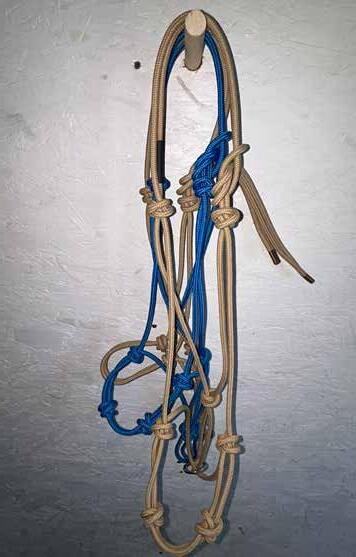
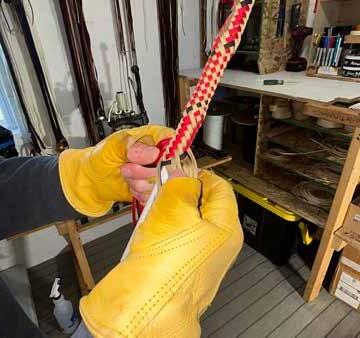


Around the time Miller turned 17, his dad introduced him to leatherwork, and he began creating a variety of bullwhips. His passion only continued, and he started Mudsock Leather in 2019. Located between Millersburg and Topeka, Mudsock Leather now offers a variety of cowboy riding tack, including rope halters, whips and hackamores, a specialized bitless bridle that guides a horse without putting pressure on the mouth.
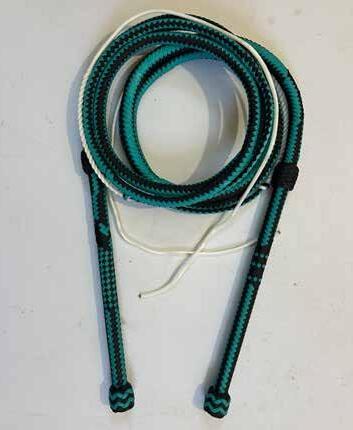
Miller hopes surrounding and Western states will soon be calling or mailing in with their orders. He offers whips made with leather, rawhide or paracord, and he also accepts custom and large orders of any inventory. His custom orders can be made to specific sizes, coloring and applications.
“Paracord whips are by far the best investment,” Miller says. “They require little maintenance and last longer than leather. Leather whips are also a great choice, but they require more maintenance and wear out more quickly.”
Miller operates Mudsock Leather as a sole owner, but he regularly pulls in other community members to help support orders as needed. Rest assured, if you buy from Mudsock, you’re getting a quality item.
“A lot of people start a business with just a little experience, maybe a








couple of years. I started braiding when I was 9 years old, and I’m still doing it 20 years later,” he says. “I think that experience speaks volumes and gives Mudsock Leather a little bit of an edge.”
Mudsock Leather stocks regular inventory for those in the area but also accepts custom orders by mail at 6400 S. 1000 W, Topeka, or by phone at 260-593-2253, ext. 2.


Cut the Cord. Not the Content. Only $69.99 a Month – No Contracts, No Hassles.
Stop overpaying for TV. CUE gives you access to hundreds of live channels, including nationwide local channels, toptier movie channels, sports, news, and a huge library of on-demand content, all with no contracts or hidden fees, and no hassle. Whether you’re a family, a binge-watcher, or just tired of cable, enjoy endless entertainment at a price that makes sense.
Start Streaming Today








Writer / Amy Beaucham
Photographer / Jubilee Edgell
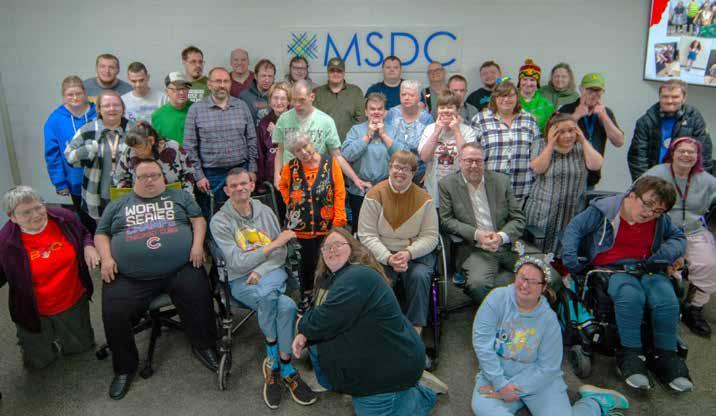
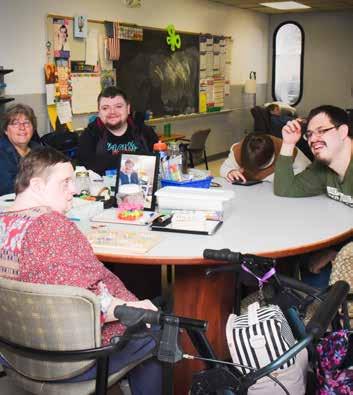
Morning sunlight filters across activity tables at Marshall-Starke Development Center, where the day begins not with assignments, but with choices. One person has signed up for art, another for cooking,


and another for community volunteering. A few review a new job lead with their placement consultant. Each decision represents something powerful — ownership of the day and confidence in individual abilities.
That sense of purpose has defined Marshall-Starke Development Center (MSDC) for more than six decades. What began in the 1960s as a small group of determined parents seeking better opportunities for their children with developmental and physical disabilities has grown into a thriving organization serving hundreds of individuals each year. Today, MSDC operates programs in Plymouth, Rochester, Knox, and Bremen. It offers both facility-based and residential services for adults, as well as Head Start and Early Head Start programs for children and families.
Many have worked side by side with participants for years, celebrating each milestone and encouraging every goal.


Jessye Gilley, VP of Mission Advancement, describes the heart of MSDC’s work in two words: inclusion and belonging.
“Inclusion isn’t just being present in a space,” she says. “It means feeling that you’re part of something — that you’re valued and have a voice.”
Her days brim with activity — coordinating community partnerships, connecting with families and planning events that celebrate achievement. But what she treasures most is watching participants discover new interests and confidence through the choices they make.
“When someone realizes they can contribute — whether through art, cooking, or volunteering — you see that spark,” she says. “It’s joy and pride rolled into one.”
Rick Thompson, CEO and president, shares that same passion for empowerment and inclusion, viewing his work through the lens of leadership and legacy.
“We focus on ability, not disability,” he says. “Our role is to help each person find their place in the community and build the skills and confidence to stay engaged.”
In describing MSDC’s culture, both Jessye and Rick emphasize the same guiding idea: belonging. Every day brings countless small



moments of connection — a greeting between friends, a shared laugh in the hallway discussing recent accomplishments.
Those daily experiences, they agree, shape the heart of the Center.
“When people see our participants at local businesses or helping at events, they see ability, kindness, and determination,” Rick says. “That changes perceptions — and communities.”
Participants are often recognized not only as volunteers but also as valued employees in workplaces throughout the region, proving every day that they have a vital role to play in the local economy.
The performing arts program is a perfect example of how growth


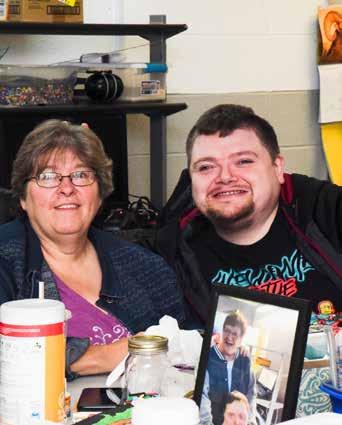



happens in meaningful ways. Whether painting or performing, the creative process allows participants to express themselves and connect with others.
“Art gives voice to emotions that words can’t always capture,” Jessye explains. “It’s powerful to watch someone who was once hesitant to try new things be selected as a solo vocalist in a performance and realize they have something beautiful to share.”
While artwork is no longer displayed throughout the building, the Center continues to celebrate creativity through partnerships with the Heartland Art Center, where the performing arts program is warmly supported.
Phil McFarland, who co-leads the performing arts program at MSDC and also serves as the organization’s sign language interpreter, witnesses that creative spirit every day. Working alongside Tabitha Johnson, the performing arts coordinator, they guide rehearsals, develop scripts, and help participants grow more comfortable expressing themselves on stage.
“Performance helps people build confidence,” Phil says. “When someone steps on stage — maybe to sing, act, or recite a poem — they’re not just performing; they’re discovering their voice.”
Their programs emphasize collaboration and self-expression, encouraging participants to find new ways to communicate and celebrate individuality. Whether through music or movement, the outcome is the same — confidence, connection, and pride. Beyond the arts, the Center’s reach extends into every aspect of daily living. Many participants hold paying jobs within the community, working in restaurants, grocery stores, manufacturing, and custodial settings. MSDC’s employment specialists provide training and ongoing support to ensure long-term success.
“We work side by side with employers,” Rick says. “They tell us over and over how much they appreciate the reliability and strong work ethic of our participants.”
In April, MSDC officially discontinued its in-house workshop program to further expand opportunities for community employment.

“This change reflects our goal of helping participants realize their potential as community workers earning equal wages alongside their neurotypical peers,” Jessye explains. “It’s about inclusion, equality, and belonging in the truest sense.”
Residential programs are another cornerstone of MSDC’s mission. In supervised homes throughout the area, adults live as independently as possible with staff available for guidance and assistance.
“It’s about dignity and choice,” Rick explains. “We want every person to make their own decisions about where and how they live — just like anyone else.”
Participants shop for groceries, cook meals, keep up with chores, and
enjoy community outings, supported by staff who encourage selfsufficiency. None of this would be possible without the dedicated DSPs, whose compassion, patience, and daily commitment bring the Center’s mission to life. Many have worked side by side with participants for years, celebrating every milestone and encouraging every goal. These professionals are the steady presence behind each success, offering guidance, respect, and encouragement that help participants thrive. Weekends might include trips to the park, bowling, or dining out with friends. Many residents also hold regular jobs during the week, demonstrating that independence and productivity go hand in hand. The homes are not just places to stay — they’re places to belong.
Jessye notes that relationships are at the center of everything they do.
“Families trust us because they see that we genuinely care,” she says. “When a parent of an adult participant tells me their son or daughter can’t wait to come here every morning, that means we’re doing something right.”
Her outreach team regularly meets with schools, civic groups, and volunteers to build understanding and collaboration across the community.
MSDC’s commitment to growth begins early. Through its Head Start and Early Head Start programs, the organization supports children and families with early learning, health and family-engagement services. These initiatives give young children the foundation they need for a lifetime of learning while connecting parents with resources and encouragement.
“It’s a continuum of care,” Rick says. “From early childhood to adulthood, we want to provide the tools and opportunities people need to reach their potential.”
Across every department, the philosophy remains the same: everyone deserves respect, purpose, and connection.
“We measure success not just in numbers,” Jessye reflects, “but in moments — when someone smiles because they learned something new or accomplished a goal that once felt out of reach.”
As the morning sunlight moves across the tables, the Center hums with quiet purpose. Paintbrushes dip into color, the aroma of baking fills the kitchen, and a volunteer group gathers to head out for the day. Others prepare for their shifts at local businesses, proud to show the community and their peers what they have to offer as individuals and employees. Each person has chosen their path, confident in their place within this community of belonging.
Marshall-Starke Development Center stands as more than a service provider. It is a place where belonging is lived out daily through creativity, connection, and the belief that every person has something meaningful to give.
To learn more or get involved, visit msdcin.org.


Here When You Need
HOURS & LOCATION
Here When You Need Us
New Location
Effective 9-7-2021!
HOURS & LOCATION
New Location
115 E. 7th Street Rochester, IN 46975 evansagencyrochester.com
Effective 9-7-2021!
115 E. 7th Street Rochester, IN 46975 evansagencyrochester.com
Tel: 574-224-6988
evansagencyllc.com
Fax: 574-224-6925
Hours
Tel: 574-224-6988
Monday-Friday
Fax: 574-224-6925
Tel: 574-224-6988
Hours
8 a.m.-4:30 p.m. Saturday By Appointment Evenings By Appointment
Fax: 574-224-6925
Monday-Friday
8 a.m.-4:30 p.m.
Saturday By Appointment Evenings By Appointment
8 a.m.-4:30 p.m.
Saturday By Appointment Evenings By Appointment

















Writer / Darcie Dodds Schott
Words are powerful. Sounds evoke memories. When words and sound combine to be translated from vocal to visual, the artistic result creates an emotionally moving experience. A treasured message from a loved one can linger for years, and thanks to an inspired business called The Soundwave Booth, any words you want can be captured in the visual art of soundwaves.
Owned and run by Joel and Cindy Pendl, The Soundwave Booth translates a favorite phrase, a celebrated quote or a custom sound into the vertical lines that represent the soundwaves of that particular audible. Before you tap into your fear of hearing your own voice, the Pendls have created a line of products that are premade and ready for purchase.
Joel assures, “You don’t have to use your own voice. We do all the recording in-house.”
The phrases are spoken and then printed in the complex pattern of lines that make up the final visual art. These products have been recorded by the Pendls and translated into a printed version of the soundwaves using high-tech engineering software. With a background in radio and television, Joel uses his technical talent to morph engineering with art. The result is a carefully curated blend of popular phrases and custom prints

to capture a moment in time or personal statement.
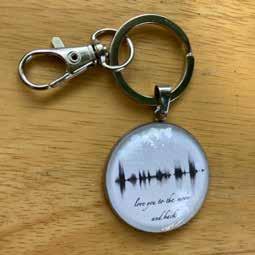
The Soundwave Booth offers one-of-akind artwork based on printed words and phrases, from original messages to well-known favorites within the public domain. This line of artwork and accessories is available for purchase “off the shelf,” including phrases like “It is well with my


24 to 48 Hr Turn Around Detergents included 1 Time, Weekly, or Monthly Plans

soul,” “Love you to the moon and back,” and “And so together they built a life they loved,” to name a few.
Products laser engraved with this artwork include coasters, cutting boards, baseball caps, keychains, newborn baby beanies with phrases like “You are my sunshine” engraved onto a leather patch, and more. To explore the complete product line of prints and accessories, visit thesoundwavebooth.com.
The Soundwave Booth’s American Flag series offers a selection of patriotic songs and documents displayed as a collection of soundwaves in the pattern of the stars and stripes. Each state abbreviation has been spoken to create the stars, and customers can choose from the Pledge of Allegiance, the Second Amendment, the Star-Spangled Banner and more that make up the stripes of this American Flag artwork.
In addition to preprinted and engraved items, The Soundwave Booth offers custom










products. From unique words or sounds that capture moments such as a baby’s first heartbeat, a pet’s bark or meow, or a final voicemail from a loved one, the Pendls can take any audio a customer has and create a keepsake that will last a lifetime. A QR code can even be added so customers can hear a loved one’s voice any time. One option is a Memorial Card — a metal plate with the custom soundwave and QR code containing the audio clip that can be adhered to a gravesite headstone.
The ordering process is simple, and the product line offers a variety of style choices. Customers choose a print, framed option or accessory for their custom soundwave. All products are created, printed, framed or engraved by the husband-and-wife team.
As unique as each piece of artwork, so is the lifestyle the Pendls have chosen. Living entirely on the road in their camperturned-home-on-wheels-turned-classroom, they have raised and homeschooled their children, who are now in their teens. Over the years, the couple has traveled to art shows from Florida to California — and many stops in between — creating an educational experience for their children, who have been to all 48 of the lower United States.
•
•
•
•
•
•
•
•
•
•
Together the Pendls, along with their 15-year-old son, Kaden, and 14-year-old daughter, Avril, call Bass Lake home for much of the summer. All the tools and techniques for their business are portable and travel with the family — from audio engineering software to everything required to do all of their own printing, product assembly, photography, website management and social media. The couple does everything themselves so they can literally live anywhere.
They enjoy going back on the road to southern states during the winter, where they enjoy the warmer weather while still running their business from home. In fact, they joke that “no one in our family owns winter clothes, because as the weather changes, so does our location!”
They plan to attend a select number of art
and craft shows to continue feeding their nomadic nature, and now that the holidays are over, they will spend a few months in a mid-Atlantic beach community that has sports facilities their son longs for while traveling. He plans to take a detour from the family travel plan once he turns 18 and attend college, living on campus for the social and sports aspects of student life. Avril, on the other hand, has expressed a desire to continue traveling once she finishes high school.
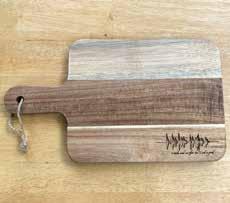
The Pendls are committed to creating beautiful artwork made of quality materials while maintaining reasonable prices ($16–$30) so that owning a unique, inspiring soundwave print can be accessible to anyone. Also a priority for the Pendls is creating uplifting artwork that doesn’t profess negativity — something customers notice.
“We come as a breath of fresh air to many customers, and that is something we are proud of,” notes Cindy.
Beginning in 2025, the Pendls transformed their traveling art show business into a fully online enterprise. They are in the process of building their online presence and helping people understand how the custom side of their business works — using a customer’s audio of a loved one or beloved pet, etc. — while making sure customers know they have a full line of products available and ready to ship.





If you are looking for a unique gift this Christmas season — or any time of year — visit thesoundwavebooth.com. The “Custom Soundwaves” tab on the website guides customers through ordering. As a husbandand-wife team, the Pendls are personally available to answer any questions.
Find out more by emailing thesoundwavebooth@gmail.com.























Submit Your Events!

ALL times listed are Central Time.
EVERY MONDAY
Bingo – Doors open at 5 p.m., Early Bird starts at 6 p.m., and regular games start at 6:30 p.m. at the Koontz Lake Association Community building.
EVERY THURSDAY
4:30 – 6:30 p.m. - New Kitchen Store Farmers Market. Please visit our online store and don’t forget to like us on Facebook! facebook. com/NewKitchenStore
KLA Board Meeting at the KLA Clubhouse is the third Tuesday of the month. Meetings are open to the public and start at 6:30 p.m. Come and join us and find out how you can volunteer in the community. You can also find out what is going on around Koontz Lake.
Koontz Lake Lions Club meet every third Thursday at 6pm in the Sewer District building located at 10625 E Prairie Ave in Koontz Lake. Meetings are open the public.
6 p.m. - Koontz Lake Conservancy District Monthly Board Meeting. The meeting will be held at the Sewer District building located at 10625 E Prairie Ave in Koontz Lake. Interested parties may join remotely by calling (240) 591-0378 and entering the code 385729#


when prompted, or via web at https://join.freeconferencecall. com/klcdboardmeeting.
4–7 p.m. or until sold out – Tyner Odd Fellows Tenderloin and Chicken Strips carry out drive thru at Tyner IOOF Lodge located at 18260 4B Rd, Walkerton, IN.
Rent the Koontz Lake Clubhouse for your next party! The rental fee is $100 for non-members, $75 for members with a $65 deposit that is refunded if no damage occurs to the clubhouse. If interested, please contact Cathy at 219-229-4424. The facility holds up to 100 people and has a fully equipped kitchen.
ALL times listed are Eastern.
9 a.m. - LOWPOA Meeting at the BCC Building, 4374 North Shore Drive, Bremen, IN.
9 a.m. – BCC Meeting at the BCC Building, 4374 North Shore Drive, Bremen, IN.
ALL Times listed are Eastern Time.
10 a.m. – 1 p.m. – Culver Farmers Market is the only indoor farmer’s market between South Bend and Indy (that we know of). It is held at the Culver Union Township Public Library’s lower level located at 107 N. Main St, Culver, IN. For more updates, you can follow The Culver Farmers Market is also on Facebook and IG @culverfarmersmarket, their website culverfarmersmarket. org, or emailing them at culverfarmersmarket@gmail.com.
EVERY TUESDAY AND THURSDAY
8:30 a.m. – Yoga at the Beach Lodge, all levels are welcome. Chair yoga is at 10 a.m.
6
4–7 p.m. or until sold out – Tyner Odd Fellows Fish Fry carry out and dine in at Knights of Columbus – Plymouth, located at 901 E Jefferson St. Plymouth, IN.
13
4–7 p.m. or until sold out – Tyner Odd Fellows Fish Fry carry out and dine in at St. Dominic’s Church located at 803 W Bike Street, Bremen, IN.