Lawn Made Easy
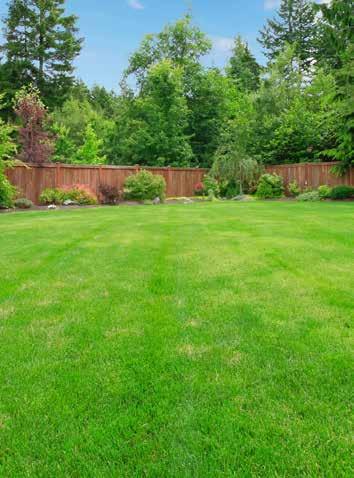
Jack’s Lawn Service Brings Care & Precision To Every Yard
Family Driven
GT Carts Builds Growth Through Family & Service

Jack’s Lawn Service Brings Care & Precision To Every Yard
GT Carts Builds Growth Through Family & Service
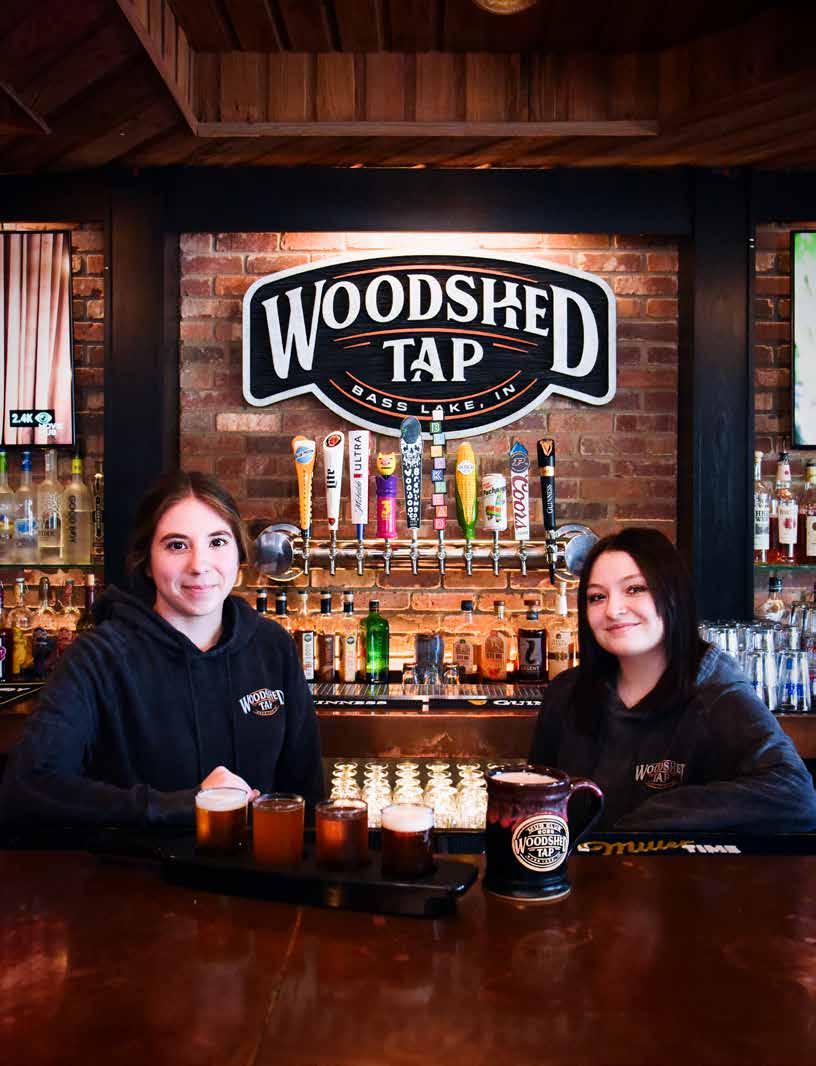
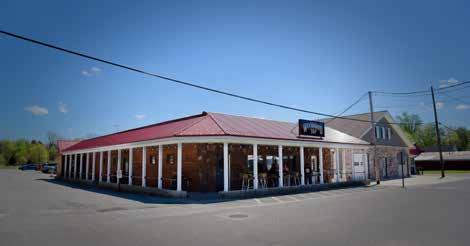
WOODSHED TAP OFFERS MORE THAN A MEAL AT BASS LAKE








FIREWORKS SHOW AT 9:30 PM CST. ON JUNE 27th
Saturday JUNE 27th 2026 at Wythogan Park
• 4th of July Parade 1 PM •
• Food Vendors Open at 2 PM •
• Half Track Band 6PM - 9PM at the Performance Stage
• Classic to current Rock N’ Roll
This years ireworks inale on June 27th will be exceptional! You won’t want to miss this years event, as we commemorate our nation’s 250TH Anniversary in a red, white and blue extravaganza!
FREE WALK-IN ADMISSION: Bring lawn chairs and or blankets for seating.
PARKING: Parking in Wythogan Park will be $10.00 per vehicle. Free tram service to and from the park available beginning at 2 pm – 11 pm.
•Bounce Houses
•DJ “Jam Karaoke”
•Face Painting
•Kids Games
•Kalita & Master of Magic
•Pro Wrestling King
•Human Hamster Balls
•Helicopter Rides

CORNHOLE TOURNAMENT
Cash Prizes
$15.00 entry fee Per Person
YELLOW RIVER DUCK RACE
Cash Prizes
Entry Fee $5.00 a duck or a flock of 5 for $20.00
BURN OUT CONTEST
Entry Fee $20.00 - Awards to Follow
FOR FURTHER DETAILS PLEASE VISIT OUR WEBSITE AT WWW.CITYOFKNOX.NET

PUBLISHERS
JOHN & MANDI LEWANDOWSKI
john@townepost.com mandi@townepost.com (574) 249-9217
KEY CONTRIBUTORS
MEREDITH BAKER
AMY BEAUCHAM
MIKE DIKOS
JUBILEE EDGEL
MELISSA GIBSON
JEFF KENNEY
KARI LIPSCOMB
KRISTI SELLERS
DARCIE DODDS SCHOTT TONY STRAW
ASHLEY WATTERS
PHYLIS WILLIE
TOWNE POST NETWORK, INC. FOUNDER, CEO TOM BRITT tom@townepost.com (317) 496-3599
PRESIDENT
JEANNE BRITT jeanne@townepost.com (317) 810-0011
CHIEF OPERATING OFFICER ERIN TURK
CREATIVE DIRECTORS VAL AUSTIN TONI EADS
EDITOR JOSH BROWN
DIGITAL CONTENT MANAGER ERIC NEER
DIRECTOR OF DIGITAL ENGAGEMENT SKYLAR ANDERTON
TOWNE POST NETWORK, INC. 8800 North Street, Suite 117 Fishers, IN 46038 Phone/Text: (317) 810-0011









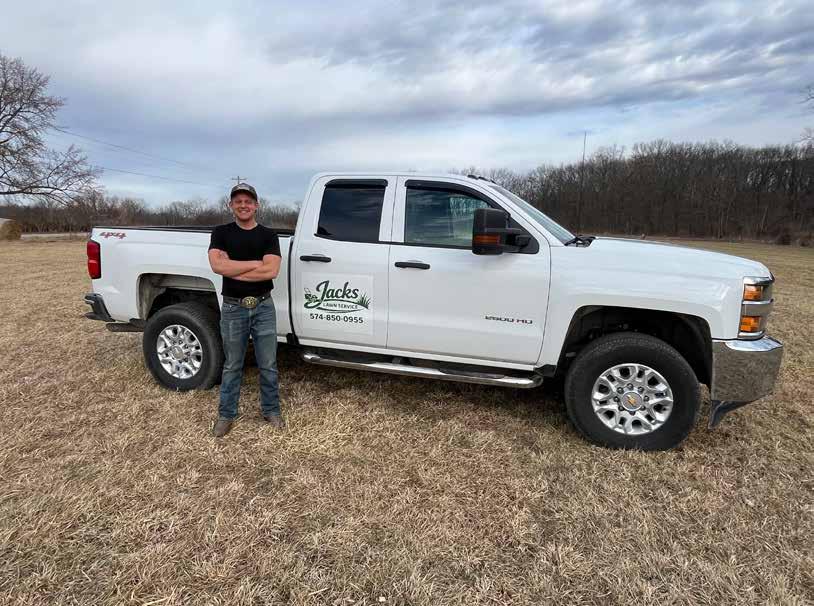
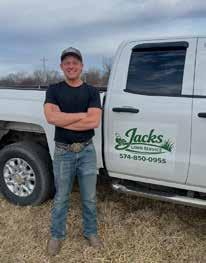
Owner Jack Duhnovsky
Writer / Mike Dikos
Dawn. The start and beginning of a new day. Rising early, coffee in hand, you survey the vast pampa that lies outstretched before you. Although you might not be standing in the boundless grasslands of Argentina with gauchos riding by, circling bolas over their heads, taking care of your yard can be a daunting

and formidable task. Scanning the area before you, you bend over to pull at a weed. You spill half of your coffee. The weed breaks, leaving its root behind. You straighten up, and another weed is staring at you, mocking you. When the need arises for lawn care, maintenance or both — along with other landscaping essentials

— Jack’s Lawn Service, located in Culver, can handle all of your needs.
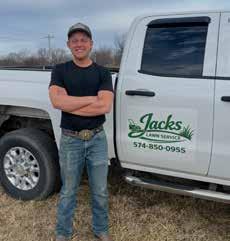
Proprietor Jack Duhnovsky’s path to entrepreneurship started when he was in his teens. At the ripe old age of 14, Jack’s mother drove him to his first clients, two of his neighbors. In addition to mowing


lawns, Jack split his time to also work at his father’s handyman business. It is here that he learned the methods, obstacles and challenges that a new enterprise would create, along with how to deal with them. With a brand-new driver’s license in hand, a pickup truck with a trailer of trash behind him, a two-hour drive one way on I-65 in bumper-to-bumper traffic, and instructions from his father that simply stated, “you’re on your own,” this became baptism by fire into the business world in addition to being an early learning experience. So, with confidence, determination and knowing the value of hard work, Jack’s Lawn Service became a reality last year.
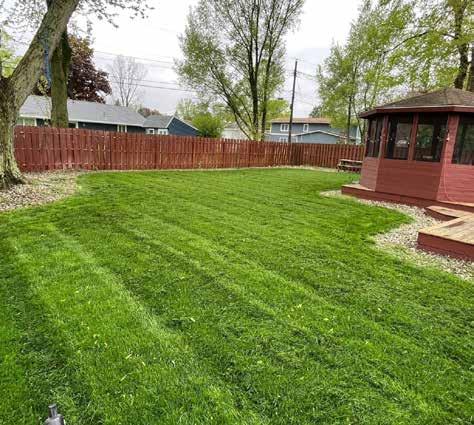
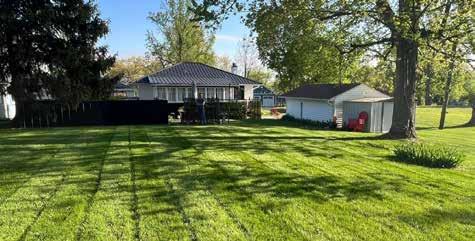
Now with several clients and a growing business, Jack’s Lawn Service provides the elements and attention that each individual customer requires. In addition to mowing, amenities such as string trimming, edging and leaf blowing are provided to further enhance the



appearance of your lawn and yard. This attention to detail is what makes each individual lawn unique and provides the customer with the gratification that they desire.
“Pleasing a customer is the greatest satisfaction,” Jack says.
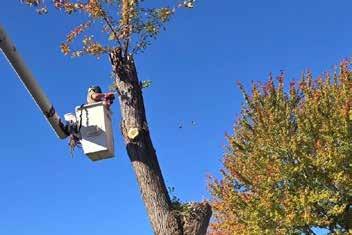
Mowing is just one aspect of yard maintenance that Jack’s Lawn Service can offer. Care and maintenance of plants, bushes, shrubs and other vegetation is also a vital element of maintaining one’s landscaping. Tree and bush trimming, or total removal if necessary, can be performed. Mulching around bushes and shrubs aids in weed prevention and also helps to retain moisture in the soil. Be it new or cleaning up the old, mulching is another way to augment the beauty of your property and is another service that can be accomplished. If you have landscaping primarily of rock, this too can be maintained or replaced as well.






Pulaski Memorial Hospital’s Outpatient Surgery is committed to providing compassionate and uncompromising care that allows patients to return to their optimum wellness with as little impact on their personal lives as possible. The Medical and Surgical Group is pleased to welcome Dr. Daniel Baxter, DO, to our surgical team. Dr. Baxter joins Dr. Hsu and Dr. Anderson in offering a wide range of surgical procedures to our communities, including:
• Breast Biopsy
• Mastectomy
• Colonoscopy
• Endoscopy
• Hernia Repair
• Lesion Removal
• Tonsillectomy
• Tubal Ligation
• Vasectomy
• Bowl Resection
• Laparoscopic Appendix & Gallbladder Removal For more information, or to schedule an appointment, please call (574) 946-2576.
New stone or supplementing the old keeps this form of garden attractive and durable, along with providing longevity and introducing color into the landscape environment. If you have a gravel driveway, this can also be restored.
In addition to lawn care and maintenance, Jack can assist you in the removal of unwanted clutter, junk or trash. If the circumstances arise where the interior of a property becomes overwhelming or a yard has turned into storage for discarded items, Jack can facilitate their removal. Whether it be the clearing out of a distressed property or the cleaning up of a yard that has just gotten out of hand, Jack can get things back in order and presentable.
Working in conjunction with other local professionals, Jack can steer you in the right direction to get certain tasks remedied. Be it pesticide application, lawn aeration or large tree removal, a reference can be provided to another qualified individual to achieve your goals. Having this network of other local business partners ensures Jack’s clients have their particular concerns met in a timely and reliable manner.
Whether your residence needs lawn care or tending to, or if your commercial property needs to be maintained, Jack’s Lawn Service can provide the solutions to your individual requirements. Serving the Culver community along with the surrounding area, Jack’s Lawn Service is the local business to handle your lawn care challenges. To schedule an appointment or to receive a quote, Jack’s Lawn Service can be reached at 574-850-0955.











Writer / Amy Beaucham
Photographer / Jubilee Edgell
There’s a distinct feeling you get when you walk into a place and immediately know you’ve made the right choice. The energy feels right. Conversations carry easily. The kitchen is clearly at work, and the atmosphere invites you to settle in rather than rush through.
That’s the effect Woodshed Tap has on its guests.
This is not a place designed for a quick stop. It’s the kind of place where time stretches a little, where conversations linger, and where the food leaves an impression strong enough to bring people back again. At Bass Lake, it has become a destination not simply for a meal, but for the experience that comes with it.
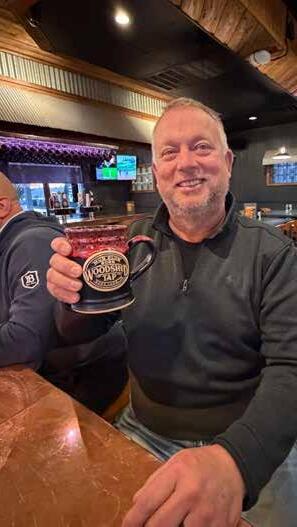
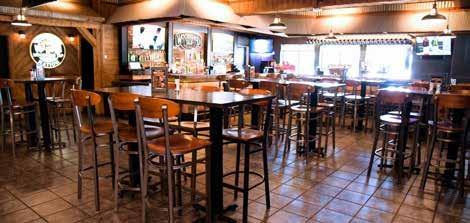
Owned by Mark Miller and his partner, JD McGrath, Woodshed Tap holds the distinction of being the oldest continuously operating bar and restaurant at Bass Lake. That history gives it roots, but what keeps it relevant is a clear sense of direction. It continues to refine what it offers and how it serves its community, building on a foundation that has been part of Bass Lake life for generations. Step inside and the atmosphere feels immediately welcoming. Warm wood tones and rustic details create a setting that feels natural to the lake while still
intentional in its design. The barnwoodinspired interior reflects the name, but more importantly, it reflects the kind of space people want to spend time in — comfortable, relaxed, and ready to accommodate everything from family dinners to lively evenings with friends.
There is an ease to the environment, but also a sense of energy just beneath the surface. It’s the kind of place where a quiet early evening can gradually shift into something more lively as the night unfolds, without ever losing its sense of comfort.



The menu reflects that same approach.
Portions are notably generous, and the focus remains on delivering food that feels complete and satisfying. Their jumbo wings, brined in-house for 24 hours, come out crisp and flavorful, with a preparation that shows attention to detail. The process behind them is deliberate, and the result is a product that stands out in both texture and flavor.
Their pizzas are made with fresh, handtossed dough and baked in a granite stone oven, creating a crust that strikes a balance between crisp and chewy. A blend of whole milk mozzarella and provolone adds depth, while fresh toppings ensure each pizza feels thoughtfully prepared rather than routine.
Burgers are built from fresh, hand-pattied Black Angus beef and prepared with care, delivering both flavor and consistency. Each component is selected with


intention, from the quality of the meat to the freshness of the toppings.
The Italian beef, sourced from a longestablished Chicago supplier, adds another dimension to the menu. It brings a sense of authenticity that connects to regional tradition while fitting naturally within the broader offerings at Woodshed Tap.
Taken together, the menu is not limited or narrow. It is varied, substantial, and designed to appeal to a wide range of tastes without sacrificing quality or consistency.
Even dessert holds its place. Their monkey bread, made from fresh pizza dough rolled in cinnamon sugar and topped with house-made icing, offers a warm, shareable finish that feels both familiar and memorable.
Behind the bar, Woodshed Tap keeps


Lakeshore Concierge Service has been pleased to supply Concierge services to all of Marshall, Starke, and Fulton counties in Indiana. Our mission is to connect the current service providers with prospective customers.
Our job is to make sure your time is more enjoyable and stress free. Let us help solve the issues you may be having in locating or hiring a contractor or service. There is no cost for this service until you hire us for the job. So, let us help with your project needs.
We work to supply:
• The correct contractors for a particular job.
• Supply multiple quotes
• Manage start to finish on job time line
• Answer questions for both parties involved in the project
• We will work on any job, nothing is too big or too small.
• Maintenance, Remodelling, and New Construction
We do Reservations Services as well for Salons, restaurants, floral deliveries, grocery delivery, & More!

pace with the kitchen. With 18 beers on tap, a rotating craft selection, and a well-rounded offering of bourbons, vodkas and tequilas, the drink menu is built to complement the food and the atmosphere. Cocktails are prepared with consistency, contributing to an experience that feels complete rather than pieced together.
During the summer months, the energy builds. The restaurant fills with lake
traffic, conversation and the steady rhythm of a place in motion. There is a natural momentum that develops as the space fills, shaped by both visitors and regulars who return throughout the season.
Eleven high-definition televisions draw in sports fans, while music and conversation carry easily throughout the space, creating an environment that feels active without becoming overwhelming.
Still, what defines Woodshed Tap most is its consistency.
Miller understands the rhythm of a lake community — the fast pace of summer and the quieter, more familiar feel of the off-season. Both matter, and both require a level of attention that goes beyond the surface.
That approach is reflected in everything from staff training to guest experience.


The team is expected to know the menu, understand the preparation, and provide a level of service that keeps people coming back. It is not simply about efficiency, but about familiarity and reliability.
The “Shed Heads” loyalty program extends that relationship, rewarding


guests whether they dine in, carry out or order online. It reinforces the idea that Woodshed Tap is not just a place people visit occasionally, but one they return to regularly.
Even the Mug Club, limited to 150 members, reflects that same philosophy. It creates a sense of belonging that goes beyond the transaction and into something more personal and familiar.
Woodshed Tap knows what it does well — and delivers it with consistency, season after season. At Bass Lake, that’s what turns first-time visitors into regulars.
Woodshed Tap is located at 3498 S. County Road 210 in Knox. For more information, call 574-772-2422 or visit their social media pages for updates, specials and events.











Writer / Melissa Gibson Photographer / Tony Straw
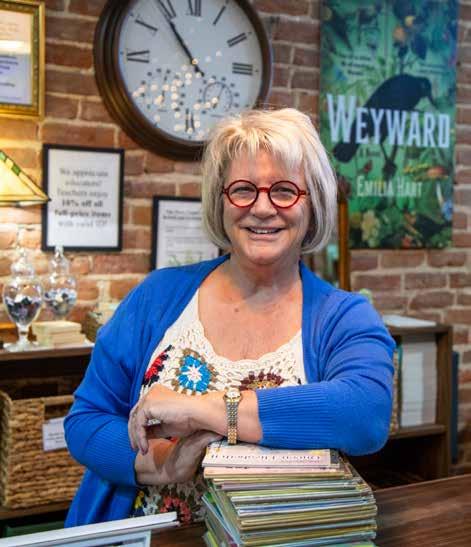
Residents and visitors to Plymouth might recognize Susan Kessler. She’s the former owner of the Blueberry Cottage Yarn Shop before she chose to retire, but like many, retirement didn’t really stick.
“I sold the yarn shop and made it to midSeptember before I started itching to do something else. I’ve always read books, and Plymouth didn’t have a bookshop, and people used to talk about it at the yarn shop; they’d like a bookshop around here,” Kessler says. “I found a building that was just meant to be. It was the perfect size, and we opened March 6.”
One More Chapter offers new and used books with some of the top genres of 2026. They have fiction and nonfiction and have noticed a popular desire for classics and books that are made into movies.
“There’s a lot of interest in books that have an upcoming movie release or maybe they just did a television series. ‘Remarkably Bright Creatures’ by Shelby Van Pelt has a movie coming out starring Sally Field, and I can’t keep ‘The Count of Monte Cristo’ on the shelf,” Kessler says.
There are classic and modern children’s books, local Indiana authors and fantasy romance.



If Kessler doesn’t have it, she’s happy to get it for
One More Chapter offers special-order availability. Kessler says the option has proven to be popular, and she’s happy to bring in that next book in the series you’ve been working through.
In addition, the bookshop currently features a two-for-one in terms of places visitors can spend several hours shopping and creating.
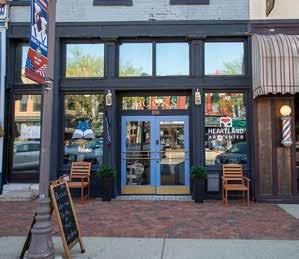
One More Chapter is in the front of the building and has partnered with Heartland Art Center to utilize the back of the building while their original location is renovated.
Kessler says everyone is enjoying the new setup. They can shop for their next book on the way out from taking a class at Heartland or vice versa.














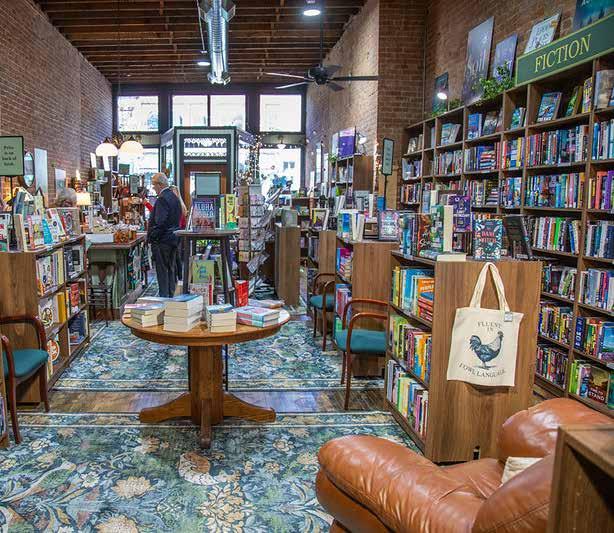
The shop offers a gift area for the book lovers in your life. Pick up a bookmark, greeting cards, canvas totes and more to give away or to enhance your home
They also offer a buyback program when you’re ready to clear out the bookshelf at
“Probably 75% of our used books come from the buyback program. Customers can get $1 or $2 per book or double that in store credit. The books have to be in really good shape; otherwise, I will take donated books and give the customer a 15% off coupon,” Kessler says. “It’s really important to me that we have both new and used because you want everyone to
She has already created several book
On the third Wednesday of the month,





11111 E Pottawatomie South Trl, Walkerton, IN 46574







Kessler hosts Whisper Wednesdays: Silent Book Club. Simply bring the book of your choice, a beverage and even a cozy blanket if you wish, and settle in a comfortable chair throughout the shop and read for a while.
On the fourth Wednesday of the month, visitors are welcome to join the Poison Pen, a mystery book club in which the club reads a specific book and talks about it afterward.
She hopes to bring the community, and in particular readers, together with other activities.

“We plan to do some other things, but I’m kind of waiting to see how the flow goes over the summer. I’m always open to new ideas,” Kessler says.
Most of all, she’s simply enjoying being back in the swing of things with a “wonderful and very knowledgeable” staff
and the community, who continues to come back for their next read.
“When I owned the yarn shop, we didn’t have a ton of men coming in. What I love about One More Chapter is that it’s such an eclectic group. It’s new people every day and all ages. Everyone is welcome, and it’s just fabulous,” Kessler says.

Current hours are 10 a.m. to 6 p.m. Tuesday through Friday and 10 a.m. to 3 p.m. Saturday. They are open until 8 p.m. on book club evenings and on special occasions when Heartland hosts an artist’s reception or public event.
Visit onemorechapterplymouth.com or on social media for more information.


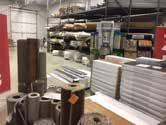

• Our borders are extruded with a steel cable reinforcement as “one solid” continuous piece of concrete
• Gives your landscape beds an attractive and durable edge
• Provides an effective root barrier that prevents grass from growing into your beds
• The height of concrete borders helps to keep mulch/stone in your beds and out of your lawn

Michiana communities since 1995

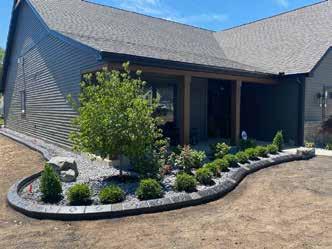
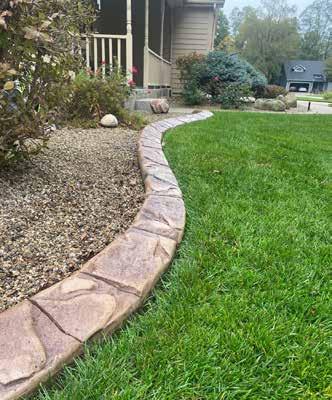
Concrete Borders make the perfect compliment to any landscape design that adds value to your home by providing a beautiful and durable landscape edge. These continuous borders are extruded on site to create a custom-made look as they follow the curves and contours of any architectural or landscape design (without splices, breaks and individual pieces). Concrete Borders are more durable than any other edging material and are very easy to maintain. We offer multiple profiles to choose from as well as dozens of patterns, stamps, and colors to compliment any architectural scheme.
Our “on-site” extrusion process allows for gentle flowing curves, straight lines and radiuses as tight as 36” around your landscape beds and gardens.



Writer / Amy Beaucham
A roof does its work quietly. It shields a family from pounding rain, biting wind, summer heat and heavy snow. Most often, a roof goes relatively unnoticed until something goes wrong.
Jake Frey believes that taking a more proactive approach when it comes to roofing is a very wise choice. He wants homeowners to know that thinking ahead, choosing wisely and understanding what a steel roof can provide can fulfill exactly what his company promises: peace of mind.
Based in Bourbon and serving communities across northern Indiana, including Plymouth, Culver, Warsaw, Mishawaka, Granger, South Bend, La Porte, Nappanee and Wakarusa, Diamond Steel Roofing specializes in metal roofing for new homes, re-roof projects and metal roof replacement. The company is local and family-owned, offers free estimates, and focuses on a very durable, attractive and environmentally friendly product that gives homeowners stronger long-term value than traditional asphalt shingles. The name Diamond Steel Roofing reflects that commitment to quality, with “diamond” symbolizing strength and long-term value.


Frey’s background has been rooted in construction for decades. His experience began in the post-frame building world and steadily grew into metal roofing. He says he had already installed metal roofs some 20 to 25 years ago and later worked in sales connected to the industry. Over time, one thing became clear to him: there was a real need for contractors who truly specialized in metal roofing and who gave homeowners an accountable and pleasing overall experience.
“In 2020, we kind of put our heads together,” Frey says of launching the business with his son and co-owner, Derek Frey. “I had a lot of contacts because of my experience in the post-

frame building industry and just the building industry in general. We basically threw some tools in the back of a truck and I called some people, and that was the beginning.”
That father-and-son beginning has grown steadily into a small team that currently includes three additional employees, with plans to expand the team as the company continues to grow. Frey says the company has been growing by about 20% each year. He also notes that the size and value of their projects have increased, with more high-end homes and more complex roofing work becoming part of the business.
Diamond Steel Roofing’s team has more than 40 years of combined experience, and that depth of knowledge shows up not only in installation, but in the way the company approaches customers.
For Frey, one of the clearest ways his company stands apart is its focus.
“We specifically specialize in metal roofing,” he says. “Our experts have studied the process intensely and figured it out fully.”
He believes homeowners deserve a positive, professional experience, especially when they are paying more for a premium roof.
“Our goal at Diamond Steel Roofing is to provide a premium experience to go along with that,” he says. “Communicate clearly, keep a clean job site, just some of the basics.”
That emphasis on cleanliness and professionalism is reflected in customer feedback as well. Brenda C. shared that Jake was “very easy to work with” and that his crew did a nice job and cleaned up well after the installation, noting that the finished metal roof made her home look much nicer. Daniel D. also praised the company as “very friendly and professional,” adding that the team even stopped back by a couple of months after installation to make sure everything was still in good condition.

Frey says that same standard is understood by every member of his team. Each crew member approaches the work with the expectation that every time they are on a job site, it will be left clean and organized.
A clean job site may not sound flashy, but Frey says it matters. He wants crews to respect landscaping, keep materials organized and remember that they are working on someone’s home, not just another job.
The company’s concentration on metal


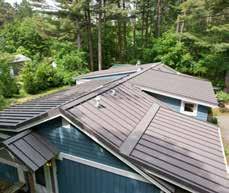
roofing is practical. Frey believes the product simply offers more in the long run. Longevity is the biggest reason. A properly installed metal roof can last for decades — often 50 years or more — while the average asphalt shingle roof lasts around 17 years.
Frey is quick to point out that proper installation is everything. Even a premium material must be installed correctly to perform as intended.
“If you buy a premium product, but it’s
installed improperly, it can function on the level of a pile of junk,” he says.
Durability is a major selling point in Indiana. Frey says a metal roof typically carries a 140 mile-per-hour wind rating and a Class 4 hail rating, which is the highest level available. He also notes that metal does not hold moisture, rot or crack in the way other materials can over time. That matters in a region where weather can shift from ice and snow to storms and summer heat in a hurry.
The environmental impact is another important advantage. Traditional asphalt shingles contribute millions of tons of waste to landfills each year, often needing to be replaced multiple times over the life of a home.
Metal roofing, by contrast, is frequently made from recycled materials and is fully recyclable at the end of its lifespan. Because it lasts significantly longer, it helps reduce the cycle of tear-offs and disposal, making it a more

Cut the Cord. Not the Content. Only $69.99 a Month – No Contracts, No Hassles.
Stop overpaying for TV. CUE gives you access to hundreds of live channels, including nationwide local channels, toptier movie channels, sports, news, and a huge library of on-demand content, all with no contracts or hidden fees, and no hassle. Whether you’re a family, a binge-watcher, or just tired of cable, enjoy endless entertainment at a price that makes sense.

sustainable choice for homeowners who are thinking long term.
The company also emphasizes how metal roofing is energy efficient. By reflecting solar heat rather than absorbing it, metal roofs can help regulate indoor temperatures and reduce energy usage during warmer months.
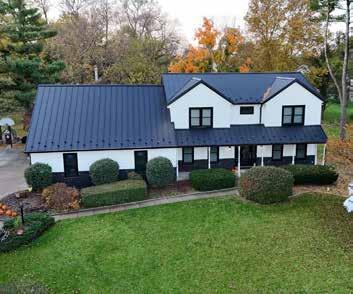
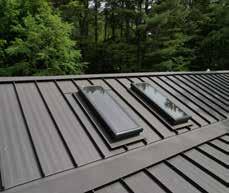
Then there is appearance. Some homeowners still picture a shiny old barn roof when they hear the words “metal roofing,” but Frey says today’s options are far more refined. Diamond Steel Roofing offers a range of colors, and Frey says a metal roof can add class and prestige to a home. Sometimes it becomes the entire roof. Sometimes it serves as an accent on a porch, dormer or addition, giving a home a crisp architectural lift.
Cost, of course, is part of the conversation. Metal roofing is typically more expensive up front than asphalt shingles. Frey does not sidestep that. Instead, he explains the long view.

“If you really do the math and figure it out, at the end of it, it is always less per year than an asphalt roof,” he says.
That kind of straightforward approach is central to the Diamond Steel Roofing philosophy. Frey says he is not interested in high-pressure tactics. He wants homeowners to understand the options and make the best decision for their own situation. In fact, he says there are times he will tell a customer that a metal roof may not make sense, especially if they plan to move in just a few years.
“We want what’s best for you,” Frey says. “If that means a customer doesn’t spend the extra money on a metal roof, that’s fine. We want what’s in the best interest of the customer.”
That honesty feels refreshing in any industry, but especially in one where homeowners can feel vulnerable. Frey says one of the biggest issues homeowners face today is hiring the wrong contractor. A poor installation can create serious problems, no matter what
roofing material is used.
Diamond Steel Roofing is built around delivering a dependable, high-quality experience from start to finish. The company installs roofing year-round when weather allows, uses written proposals, provides free evaluations and estimates, and typically works to begin projects within six to 10 weeks after signing.
Looking ahead, Frey hopes to continue growing the company, increasing the scope and number of projects, adding people and helping more homeowners understand the value of metal roofing.
He sees the product as more than a trend. He sees it as a smart answer to long-term problems, from durability and energy use to landfill waste.
For homeowners in the Lakes West area, that may be the real appeal. A metal roof is not just about covering a house. It is about covering it
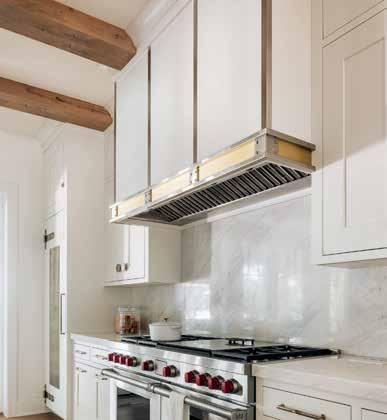
Accent your kitchen with a beautiful metal range hood. Fully customized to your specs and style.

well, covering it beautifully and covering it for the long haul.
And like the best roofs, it does its work quietly — standing strong through every season, protecting what matters most and offering the kind of peace of mind that lasts for decades.
Diamond Steel Roofing, LLC is located at 740 12B Rd in Bourbon, IN. You can give them a call at 574-930-0058 or email jake@diamondsteelroofing.net. For more information, visit them online at diamondsteelroofing.net.














1. Nutrient (pill)
4. End of war
7. Nervously restless
8. Wrap for head & shoulders
9. Remained 12. Leaves (sinking ship)
1. Disappeared
2. Every time
3. Actor, ... Nolte
4. Settles account
5. Pilot
6. Fragrant type of tea, ... Grey 10. Move to music
15. Regional speeches 17. Greatly pleased 18. Complete 21. Of the beach 22. Family adage 23. Deserved
11. Make happen 13. Followed secretly 14. Lowest British titled rank 16. Italian sausage
18. To ... it may concern 19. Resound 20. Pacify

MICHIANA TIMBER AND TREE OFFERS FULL-SERVICE TREE CARE
Writer / Ashley Watters

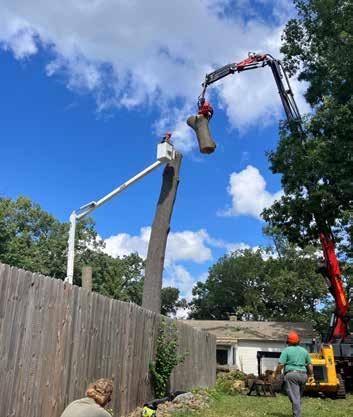
Caring for your wooded areas can be quite the chore. Whether you’re looking to trim or remove a problem tree in the yard, need storm-damaged trees cleaned up, have timber that needs harvested or managed for increased value, or just need a plan to clear an area for another purpose, Mel Slabach and his team at Michiana Timber and Tree are ready to help with your tree project.
A family-owned business, Michiana Timber and Tree began with




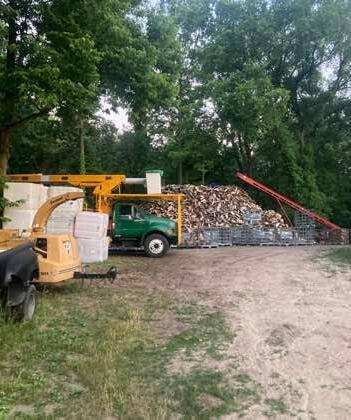
the sale of firewood. They’re a fully licensed, bonded and insured provider specializing in tree service, timber harvesting and firewood processing, as well as land clearing in preparation for construction or water installation.
In the spring and summer months, the team at Michiana Timber and Tree spends most of its time on residential tree service, helping to remove trees and assist with storm cleanup. In the fall, Slabach and his team focus on timber harvesting.


“We have a qualified crew who has been harvesting timber for 20 years. They’ll come in and assess the situation and then selectively harvest your woodland responsibly, leaving it in the best condition possible so that it grows back quicker. Timber is a renewable resource, and our goal is to help our customers capitalize on that as much as possible,” Slabach says.
Michiana Timber and Tree focuses on sustainability and quality workmanship, treating your land with as much care as they would their own. In addition to purchasing your timber, Slabach and his team will also help market timber for customers. The
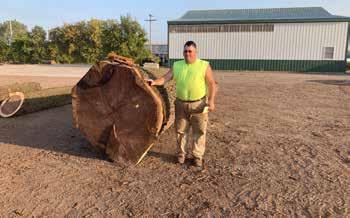
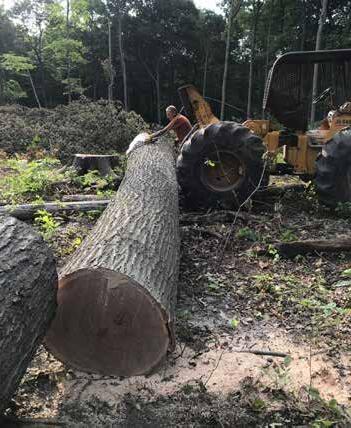

team will set up an auction, bring in buyers, gather bids and close the sale on behalf of customers.
Forest management services are also available with strategic guidance to generate long-term value. The process begins with a forest assessment, followed by a salvage cut to remove lowquality trees and completed with a selective harvest of highvalue timber.
“We’re always striving to improve the areas we manage and create more valuable timber for our community. We want our friends and neighbors to know we’ll support their needs while helping to create more sustainable land,” Slabach says.
For landowners with goals of conservation, Michiana Timber and Tree can help maximize the health of forested land while also preserving habitats and delivering a personalized plan for the area.
Commonly an outsourced project, forest management is a process Michiana Timber and Tree manages completely inhouse. With deep community roots and honest values, the team hopes to keep the community thriving while also supporting community members in managing the places they love and call home.
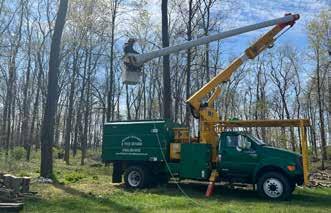



Slabach hopes you’ll consider Michiana Timber and Tree for all of your tree needs. His team also specializes in land clearing with a clear understanding of what needs to stay and what needs to go, effectively removing trees, stumps, brush and debris, all while preserving valuable trees.
The team provides free estimates for all work and promises transparency and customer satisfaction for every job.
Slabach does encourage homeowners to plan ahead, as the schedule frequently books one to three months out, and he knows it can be difficult to wait.
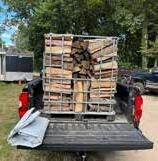
True to its humble roots, Michiana Timber and Tree also still offers firewood for campfires, home heating and outdoor cooking. They offer delivery by truck or dump trailer for large orders.
“We really want to make things easy for everyone who chooses to work with Michiana Timber and Tree and take care of everything from start to finish,” Slabach says.
To schedule your project with Michiana Timber and Tree, call Mel and his team at 260-350-3622 or visit MichianaTimberManagement.com.
WE ARE CURRENTLY BUYING / SELLING THE FOLLOWING ITEMS:
• Gold Jewelry
• Sterling Silver Jewelry
• Platinum Jewelry
• Turquoise Jewelry
• Dental Gold
• Service Pins
• Pocket Watches
• Sterling Silver Flatware
• Dimes - 1964 & Before
• Quarters - 1964 & Before
• Halves - 1970 & Before
• Dollars - 1935 & Before
• Proof & Mint Sets
• Old Paper Money
• Old U.S. Coins
• Foreign Coins
• Gold & Silver Coins
• Gold & Silver Bullion
• Pennies - 1958 & Before
• Nickels - 1938 & Before
• Nickels - 1942-1945
























Writer / Meredith Baker


Out on a quiet stretch of road in Union, there’s a different kind of conversation happening in the barn at Daystar Equine Therapy. It’s not loud to the human ear. In fact, it’s barely audible. A shift in posture, a softened gaze, and sometimes, a horse simply closes its eyes and rests.
That’s when you know something is taking effect.
A PRACTICAL PATH TO SOMETHING MORE
The business itself has been relatively new in the last couple of years, but the instinct behind it isn’t. Built on a lifelong familiarity with horses, Daystar Equine Therapy grew from a simple idea: animals perform and live better when their bodies are understood and cared for beyond the surface.
The owner, Daniel Bontrager, who grew up riding and working with horses, didn’t set out to create something flashy. Instead, the goal was steady and practical: finding a way to help horses move more freely, feel better and recover faster.
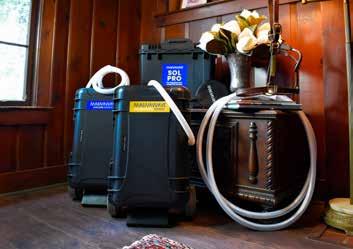
That search led to two distinct but complementary approaches — the EMMETT Technique and MagnaWave PEMF — both centered on







improving muscle function and overall wellness without invasive methods.
A typical session doesn’t begin with machines or tools; it starts with observation.
A horse is walked about, watched with careful precision and thoroughly assessed.
Subtle details matter: how your horse carries its head, how evenly it steps, whether there’s tension along the spine. From there, the approach takes shape.
The EMMETT Technique uses light touch to encourage muscles to release tension. It’s gentle — so gentle that it can surprise firsttime observers. But the results, according to multiple clients, can be anything but subtle. Horses that arrive stiff or guarded often leave more relaxed, sometimes visibly so.
MagnaWave therapy adds another layer. Using pulsed electromagnetic fields, the treatment works deeper within the body, targeting muscles, joints and even circulation. It’s used not only for horses but also rented out for human use, offering flexibility for those looking to continue


care beyond a single session.
Together, the two methods form a kind of quiet partnership: one focused on communication within the body, the other on stimulation and recovery.
Not everyone walks in convinced.
That’s part of the process.
“There’s always a moment of hesitation,” the owner explains in conversation. “Especially with the lighter-touch work. It doesn’t look like much at first.”
But horses don’t tend to perform for show. When they relax, sometimes to the point of nearly falling asleep, it speaks for itself. For many owners, that shift is enough to turn curiosity into trust.
Daystar’s work isn’t limited to the barn in Union. A large part of the business primarily happens on the road.
On-site visits allow horses to be treated in familiar environments, reducing stress and making sessions more effective. For those looking
for ongoing care, MagnaWave machines are also available for rent, with hands-on instruction provided to ensure proper use.




It’s a model built around accessibility. Not every horse, or owner, can travel easily. Bringing therapy to them changes the entire equation.
And for the business, it creates something else too: momentum.
LOOKING
Right now, Daystar Equine Therapy operates alongside a full-time






job. But the vision is clear: to grow the practice into a full-time commitment, expand mobile services and eventually offer extended stays where horses can receive consistent, focused care.
It’s not about scaling quickly. It’s about building something that works and makes a long-term impact.
Something that genuinely lasts.
DIFFERENT
Ask what success looks like, and the answer isn’t complicated. A relaxed horse, a smoother gait and a noticeable shift.
Sometimes, it’s the smallest changes that matter most.
Because for the people who care for these animals, who ride them, work with them and depend on them, those changes aren’t small at all; they’re everything.
For more information or to schedule a session, contact Daystar Equine Therapy in Union, Michigan, at 269-228-3086 or email office@daystartherapy.net. On-farm sessions, rentals and demonstrations are available.






•







Writer / Meredith Baker
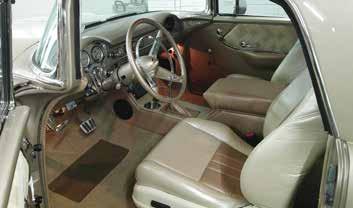
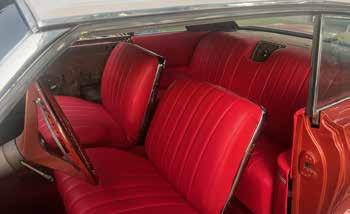
Where furniture flakes and factory-made interiors fade faster than they should, there is something grounding about a place that still believes in getting it right the first time. Tucked along the northern Indiana area, Miller’s Upholstery Inc. is the kind of shop where time slows down for craftsmanship to take the lead.



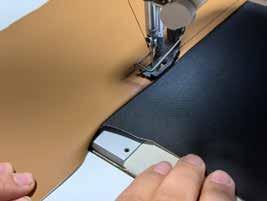
Once you step inside, you won’t find mass assembly lines or shortcuts. Instead, you’ll find patterns draped over seats, rolls of leather and someone who knows exactly what they’re doing.
This story starts in 1969 under the steady hands of a grandfather. Decades later, that legacy continues through Joel Lambright, a third-generation craftsman who grew up learning by watching and eventually stepping into ownership himself just a couple of years ago.
Like many in the area, Lambright worked in a factory after getting married. But the pull of the family trade, and the potential he saw in it, remained. When the opportunity to take over the business from his uncle arose, he took it.
At its core, Miller’s Upholstery specializes in
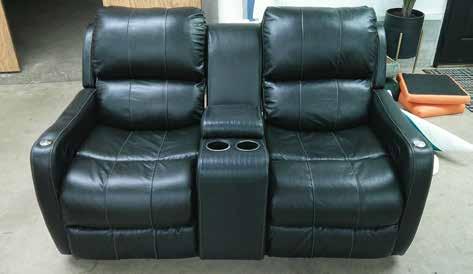
custom upholstery for classic cars and trucks. But that’s only part of the picture. The shop also handles RV interiors, marine seating, semi sleepers and more, each project with its own quirks, challenges and expectations.
Still, Lambright has made a conscious shift. After years of juggling everything from dining

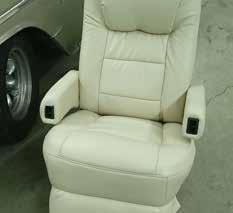

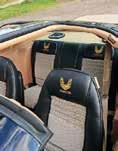

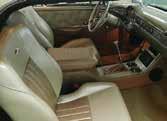
chairs to small repairs, he’s narrowing the focus.
“We were trying to do everything,” he says. “But to really do it right, for the customer, you’ve got to be selective.”
And if you’ve ever wondered what goes into that kind of work, it’s more than most people think.
Before a single stitch is sewn, there’s a full teardown. Every piece is carefully removed, labeled and studied. Old materials become patterns. Measurements are checked, then checked again.
From there, the process becomes part engineering, part artistry.
Materials are chosen. Designs are drafted. Sometimes customers come in with a clear vision; other times, they just know what
they don’t like.
That’s where Lambright steps in, guiding them through options — smooth or pebbled leather, classic or modern styling, subtle or bold finishes. If needed, he’ll sketch ideas or build mockups to clarify a vague idea.
And then comes the moment of truth: putting it all back together.
Surprisingly, Lambright says sewing is the easy part. The real challenge? The final fit. “Getting everything to sit just right, that’s what takes time,” he says. “That’s where you know if you did it right.”
In today’s throwaway culture, it’s easy to replace instead of repair. But Lambright


sees things differently, and his customers are starting to agree.
Mass-produced furniture, especially in RVs and imported builds, often doesn’t hold up. Materials peel, seams fail, and what seemed like a deal at first becomes a recurring problem.
Custom upholstery flips that equation.
With the right materials and craftsmanship, a piece doesn’t just look better, it lasts longer. It fits better. It feels right.
And sometimes, it carries something more: history.
An old truck passed down through generations. A boat that’s seen years of summer memories. A well-worn seat that still has life left in it. “These things matter to people,” Lambright says. “You’re not just fixing something; you’re bringing it back.”
As business moves forward, Lambright isn’t chasing rapid expansion. He hopes to continue refining the shop’s direction, maintaining a steady flow of projects while remaining flexible for RV and marine customers passing through — especially during the busy travel season.
It’s a balancing act, but at the end of the day, success here isn’t measured in volume; it’s measured in something quieter.
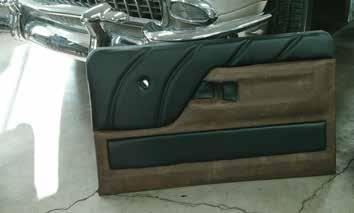
And in a world full of shortcuts, that kind of work stands out.
For more information about custom upholstery services and more, contact Miller’s Upholstery Inc. at 260-768-7758 or visit the shop at 975 S. Van Buren St. in Shipshewana. Business hours are Monday through Thursday from 7 a.m. to 4 p.m., and Friday from 7 a.m. to 3 p.m., with a lunch closure from 11 a.m. to noon.
UNLOCK THE NATURAL POTENTIAL
13468 ST. RD. 4 GOSHEN, IN 46528 PH. 574-536-9400 FAX: 574-336-3445
• WEEKLY DELIVERY
• UPS SHIPPING
• HEALTHY PRODUCTS FOR BOTH HUMANS AND ANIMALS.
• NON GMO & NATURAL PRODUCTS.
• HORSE CHICKEN & RABBIT FEED.
• SHAVINGS & BEDDING
• THE AREA’S ONLY ONE STOP SHOP OFFERING EVERYTHING A TO Z OF EQUINE REPRODUCTION EQUIPMENT.





Writer / Phyllis Willie
Memorial Day is coming up soon, and I wanted to take some time to reflect on our country’s 250th anniversary with respect to the memory and service of all of our veterans. Imagine being part of the Revolutionary War that gained our independence. Then continue to remember and reflect on all that has happened since then. There are several ways to join the country in celebrating some of these events.
There is history to be made this year. For the first time ever, the Times Square ball will drop; hopefully it will be televised for all of us to see.
Also, they are putting the 250th time capsule into Independence Hall in Philadelphia. And there is a partnership with the Theodore Roosevelt Presidential Library to stage a celebration of the American West, honoring not only Theodore Roosevelt but also the frontier that forged the country. The committee set up to help us celebrate this event has asked for us to form a block party, donate service hours, and possibly have a remembrance time on July 5.
I think remembering could start with Memorial Day, a day in which we honor the people who have died while serving
our country in the military. It started in the Civil War, when people placed flowers on graves. They made this a federal holiday in 1971 and place a wreath on the Tomb of the Unknown Soldier in Arlington, Virginia. It marks the start of summer for most of us in the U.S.
BBQ, grilling and family time start to bring happy picnics and new memories. Maybe this year, as you think about all of the visionaries who have let us use this great land, you might try some food that frontiersmen would have eaten, such as bison jerky or mushrooms, and tell stories that might have been passed down through
your generations. In our family, my grandfather lived during the Civil War era, and they had a boy who hid in a well and came out at night to hunt for food with a sheet on him. Everyone thought there was a ghost from the graves. My father-in-law flew B-29s, and my husband worked on planes.
In more modern times, we were waiting to welcome home our oldest son coming from National Guard duty, and we waited more than an hour only to find out he walked by all of us and wondered why no one was there to greet him. And my youngest son was in Iraq, learning what sand was. He welcomed all the care packages sent from groups such as Operation Quiet Comfort in Plymouth. We also have to think of Quilts of Valor, who gave two of our family handmade quilts and have given more than 25,000 nationwide. We didn’t lose any of our immediate family in the different wars, but many of our friends did, and I always










like to think about them sacrificing the most precious gift — their lives — for our freedoms.
I think it is a great time to think of what changes our country has made in the last 250 years. So let’s plan our picnics and family reunions and please take the time to appreciate all of the different sacrifices that have been made so we can enjoy this great country. Expressing opinions for change is never easy, but look at all the change our country has been through. So if you can plan a block party, share with your neighbors. If you can give service hours to clean a park or help a friend, do it! I hope there are as many people in Times Square as we see on New Year’s Day, celebrating our 250th year. What would you have put in the time capsule if you were asked to contribute?
At the New Kitchen Store, we can help with your picnics and parties. We have condiments, jellies, BBQ sauce, bison

jerky, chocolate, coffee, tea and many more foods. We also have a variety of napkins, bowls and other decorative items to help celebrate Memorial Day, the Fourth of July and other holidays and family times. Shop online or call us to place an order. Happy holidays! God bless America!
New Kitchen Store, 1100 Roosevelt Road, Walkerton, IN 46574 574-586-2745







Writer / Jeff Kenney
Perhaps you’ve dug through old (say, 1930s through 1950s) editions of area newspapers and run across a puzzling headline or story; or perhaps Mom or Grandma recounts an incident or incidents: “Gypsies” came to town and set up a temporary encampment outside the town limits. Fortunes were told and claims of petty thefts or swindles ensued. Chances were, the group — accused of being dirty and dishonest — was told to move on by the local police and did so … at least until the next time.
This author has run across such stories in the past and was frankly incredulous, initially, as to their authenticity. After all, so-called “Gypsies” (their name derived from incorrect assumptions in Europe that they were of Egyptian origin) were an ethnic group known to travel around Europe many years ago, and while perhaps a Gypsy-looking fortune teller might appear in a children’s cartoon from decades past, surely “actual” Gypsies weren’t frequently seen in the Midwest and Indiana in general, let alone the Lakes readership area specifically.
perhaps best known for their nomadic lifestyle (though some have settled), for centuries traveling in caravans across Europe.
Visibly distinctive (they tend to have darker hair and skin as well as identifiable, colorful dress), they have faced discrimination and even persecution over the centuries, as is reflected to some degree, at least, in the attitudes they encountered here in Indiana. More on that later.
regularly camping near railroads and roadways, sometimes following seasonal work, selling goods or performing (including the aforementioned fortune-telling for which they became known). Some occupied storefronts or occasionally (more rarely) lived in permanent dwellings.
Historically, they traveled in family caravans of wagons with tents, though as the 20th century progressed, they utilized automobiles.
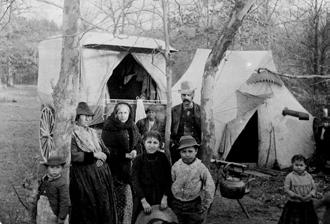
As it turns out, they very much were … and on a somewhat regular basis.
But first, a look at the term “Gypsy.” The word historically has been applied to an ethnic and cultural group who are more accurately called Romani (or Roma, among other names), who originally hailed from North India and made their way to Europe more than 1,000 years ago. They have tended to share a common language and culture, though their religious leanings vary, and they’re
The first Romani likely arrived in the Americas as slaves with Christopher Columbus, and some were found along the East Coast of today’s United States by the 1500s. However, most of the Romani in the U.S. have ancestors who immigrated here en masse after the mid1800s, many from Eastern European countries such as Russia, Serbia and Austria-Hungary, along with a number of other immigrant groups to this country from those areas.
Perhaps surprisingly, by the later 1800s, states like Indiana, Illinois and Iowa became home to nomadic Romani groups
Writer Anthony Borgo, in his 2019 article, “Gypsies in Whiting” (www. wrhistoricalsociety.com/ gypsies-in-whiting), notes that he first discovered the presence of the Romani people in the Whiting area of Northwest Indiana in a poem by James Hazzard in a book called “New Year’s Eve in Whiting, Indiana,” which included the lines:
“Spring was when they came, every year.
Every year we were surprised. Why would a gypsy live here, of all places, and in a storefront? ‘They must know something we don’t’ we agreed. That made us hate them, and be afraid of them.
We assumed they came for their usual –magic and crime. Personally, we didn’t admit to much of either in Whiting ...they could know our minds. Their women would take you in her mouth and draw every thought you’d ever had …”
The above-referenced notion of Gypsies having access to some supernatural or even
occult abilities or powers was prevalent (and not discouraged by many of the Romani people themselves), and rumors persisted that they might spirit away the children of the gadji (the feminine version of the Romani word for non-Romani). NonRomani children of yore might recall the threat from parents that, if they misbehaved, they might be “sold to the Gypsies,” and many believed it possible.
Borgo quotes a 1931 article by Marshall Maslin indicating that “(children) weren’t supposed to have anything to do with the gypsies, but they were fascinating,” noting that while they were considered unclean and thieves, nonetheless “…they were color and romance and strange beings from unknown trails and they brought wilderness into little settled hearts … as a boy you were warned about the gypsies, they might kidnap or even stab you, but the danger only wanted you to experience them more. And sooner or later we’d find ourselves trawling out the road that led to where the gypsies camped.”
And non-Romani children were drawn to the outskirts of Indiana towns, Borgo noted, to Romani encampments “to see the bears and monkeys which are adjunct of the outfit encamped there.”
The same article references an incident from June 1926, when two Whiting residents were swindled by “the mysterious gypsies in the area” after a Romani woman allegedly offered to restore the sight of one man’s blind wife for $70. The money roll she supposedly “charmed” with a spell disappeared and returned to the victim was “a roll of dirty newspaper clippings.”
Similar stories appeared in newspapers around the area. In the summer of 1932, it was reported that a fortune-telling “Gypsy” woman snuck a $10 bill out of the pocket of a resident of Fulton, Indiana, and an employee of the town hardware store had a dollar bill slipped from his pocket by a “Gypsy.” By the time



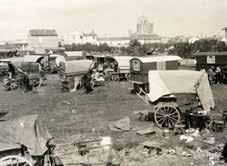
the sheriff arrived, no trace could be found for miles around of the thieves.
A 1935 report in the Culver Citizen newspaper said one local man was robbed of $30 by a “Gypsy,” with similar thefts reported in Pulaski County and Walkerton. In 1937, several Starke County residents were similarly robbed, but their money was returned after the “Gypsies” were arrested in Porter County and threatened with prosecution.
A 1924 Culver Citizen article proclaimed that “Gypsies Have Forsaken Wagons for


Touring Cars,” explaining that the old days of “Gypsy” wagon caravans were giving way to groups traveling instead in automobiles. The article described a caravan of Romani stopping in Culver to beg oil and gas for their vehicles while one of their very young children was observed puffing away on a cigarette.
Nor was the Hoosierland presence of Romani people during this period limited to Northern Indiana. In a 2006 article (“Gypsies roaming area drew attention”), author Bob Gagen noted that the first mention of Gypsy visitors to Noble County appeared in the Kendallville Daily News on Aug. 24, 1910, when a group of Italian Romani arrived with bears, monkeys and “unkempt women and children” who “gathered a few nickels by begging.” The local sheriff found their campsite and told them to move on and not return.
In the 1930s, LaGrange and Steuben
counties reported an “invasion” by “Gypsies determined to buy land and settle in that locality.” It was alleged that they had been successful in buying seven farms along U.S. 20, where they planned to plant mint and onions. Similar property acquisitions were reported in the Shipshewana area. In 1933, the sheriff in LaGrange pursued a Romani caravan after numerous thefts were reported, but failed to catch them. Similar stories appeared around Wawaka and Albion, Indiana, during this period.
Interestingly, when the money was paid back in the Porter County/Valparaiso area in the 1937 incident mentioned above, the stolen money was refunded by an individual called “the King.” This was likely Sam Evans, a Romani fortune teller who ran a Whiting storefront shop on Indianapolis Boulevard across from the Standard Oil refinery there.
Evans, one of the most influential
Romani in the Midwest, was a Romani “king” who claimed more than 500 subjects in his band, having succeeded his father as king.
Another Romani king, Henry Arno, was quoted in the Frankfort Times as bemoaning the increasing use of automobiles among nomadic Romani in the early 1930s. “There will be no more flickering campfires, no more gypsy songs about the glowing embers, no more stews cooked over beds of red coals,” he said.
In an article on the amusingartifacts. org website, author Mona Meyer told the story of a Romani king and queen who resided in Evansville, Indiana, in the late 1800s and are buried there. Isaac and Elizabeth Harrison were known as “King and Queen of the Gypsies” and were part of a wealthy band of Romani, owning a large piece of land in Evansville with a beautiful Victorian house “that
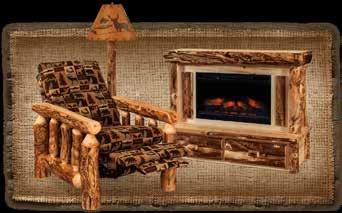
• More than 1000 Styles/ Colors of Fabrics

• Toys, Games, Books, Apparel







they occupied when not traveling.” Their stature was such that Elizabeth’s funeral in 1896 drew a crowd of some 6,000 people, according to the article.
That said, not many contemporary accounts of “Gypsies” were flattering. An article in the Pierceton, Indiana, Independent in June 1885 described the Romani as “a crowd of people of very low order … a loathsome sample of the humble people of France … a depraved class of humanity, filthy and dirty … who demonstrated their brutish character when they urged two cinnamon bears to fight.”
Also quoted in the amusingfacts.org article is a November 1903 newspaper, which wrote that “a band of thieving Gypsies are headed toward counties in northern Indiana from Benton Harbor … setting fire to woods … picking pockets … breaking into stores.”
Various sources, more scholarly and more contemporary, give a bit more context to these age-old claims about the Romani, claims which were prominent in centuries past in Europe as well. Various social and economic factors in the medieval era left the Romani with difficulties making a living in their traditional trades, and thus many resorted to begging. Their often impoverished conditions contributed to speculation of their uncleanliness.
Guenter Lewy, in a 1999 article for The National Interest entitled “The Travail of the Gypsies,” wrote that, “A recent U.S. State Department report on human rights around the world noted that Gypsies … ‘suffer disproportionately from poverty, unemployment, interethnic violence, discrimination, illiteracy and disease.’ In Hungary, Gypsies number between half and one million, and they are routinely subjected to harassment and intimidation by skinheads and other extremist elements; many have been attacked
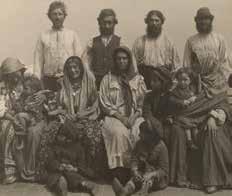
physically. Romania has about 2.5 million Gypsies, and there, too, anti-Gypsy violence is rampant.”
The article describes numerous similar incidents and explores the history of anti-Romani sentiment, noting that they “have their own language, but no written or oral history” and that the Romani appear on no census in the U.S., even though there are an estimated 1 million here.



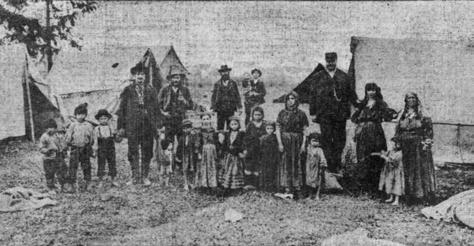

And back to Indiana: it’s interesting to note that, by the mid-1950s and going forward, virtually no more accounts of Gypsy caravans in Indiana appear in newspaper searches — which isn’t to say a few here or there couldn’t have been overlooked. But clearly, the frequency and spread of their appearances, certainly in the Lakes readership area, dwindled to few, if any, by that time (by contrast, newspaper coverage recorded area encampments in 1951 and 1952, after which such reports virtually disappear).
Instead, the search term “gypsy” yields a plethora of song and movie titles and references to food and clothing brands, all reflections of the mystique and romance of the “wandering Gypsy” in the public consciousness … but rarely of the actual Romani people themselves.
There are likely multiple explanations for their lack of presence here — or at least regional coverage of it — but undoubtedly the shift away from the prevalence of the Romani’s past nomadic lifestyle, along with a growing tendency to assimilate into the larger population, plays a significant role.
Wikipedia writes that, today, “…the majority of the Romani population in the United States has assimilated into American society. However, the U.S. Census does not distinguish Romani as a group since it is neither a nationality nor a religion.”
Bob Gagen’s 2006 article remarks that, “Although statistical evidence is scant, the number of sedentary (settled) Gypsies seems to be growing. But the nomads among them continue to wander in their own unique fashion.”
Jeff Kenney serves as Museum and Archives Manager for Culver Academies, as well as on the board of the Culver Historical Society. He frequently speaks and writes on topics of local and regional history.
Writer / Amy Beaucham Photographer / Kari Lipscomb
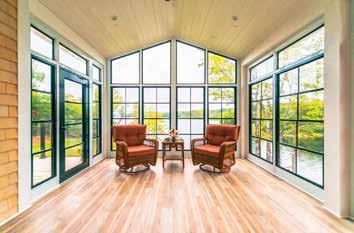
A beautiful day in northern Indiana has a way of drawing people outside. Morning coffee seems to taste a little better on the deck, dinner can feel more relaxed when it lingers into the evening air, and even a quiet moment in a favorite chair can feel like something special as the light shifts across the yard.
These are the moments homeowners hold onto, and for many, they are exactly what make a house feel like home.
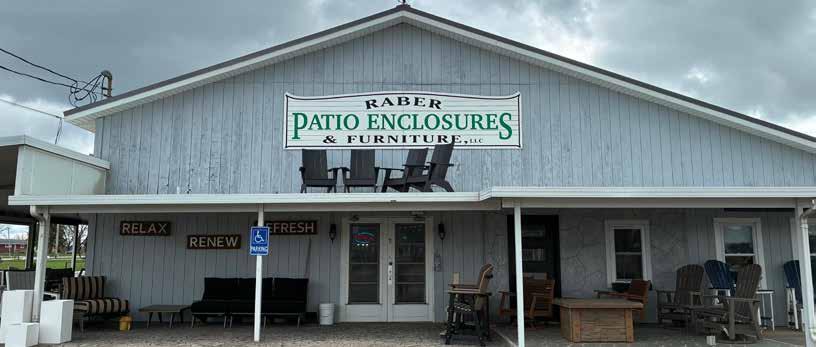
Raber Patio Enclosures & Furniture has built its business around helping people experience more of those moments, creating spaces that offer both comfort and protection while still allowing homeowners to feel connected to the outdoors.
Located in Shipshewana, Raber Patio Enclosures & Furniture is known for sunrooms, patio enclosures, pergolas, pavilions, decks and outdoor furniture. The products are impressive, but what leaves a lasting impression is something less tangible: the way customers feel throughout the process, a focus rooted in family, faith and genuine care that has shaped the company from the very beginning.


Chris Schlabach, CEO and co-owner, came into the business through family. His wife, Delores, is the daughter of founder Ervin Raber, and Schlabach had already taken on significant leadership responsibilities long before the transition officially took place.
When he and Ervin’s son, Dean Raber, stepped into ownership on Jan. 1, 2018, “not a lot changed, really, as far as the operation of it,”
Schlabach says, and by then, he had already been guiding the business for years.
That kind of continuity speaks to the foundation Ervin Raber established when he started the company in 1987 and to the commitment of those who have carried it forward.
Ervin Raber was a mason by trade and an entrepreneur by nature. While in Florida in the 1980s, he noticed EZE-Breeze windows and wanted them for a screen room back home in Indiana. When he called to find out where he could purchase them, he discovered there was no dealer in the area, so he asked if he could become one.
He could.
A sample kit arrived, and he placed an order for his porch. Before the shipment even came in, he had already begun sharing the idea with neighbors and lining up additional projects, and what started as one improvement quickly grew into something much larger.
Schlabach says Ervin’s approach was always centered on people.
“He would always teach us that it doesn’t matter what a warranty says,” Schlabach says. “You take care of the customer, because they’re going to refer the next person to you if they have a good experience.”

That mindset continues to guide the company today.
Raber Patio’s mission is “to provide the most upstanding service experience with exceptional backyard comfort,” and Schlabach explains that the word experience is intentional because it goes beyond customer service and reflects an awareness of how people feel from the first conversation to the final details of a project.
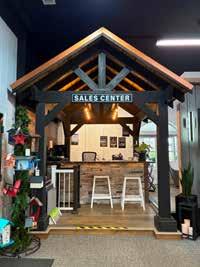
Over time, that approach has built strong relationships with thousands of customers.
Today, the company completes roughly 550 jobs each year and has served around 8,000 customers, and with more than 30 employees, three installation crews and three service technicians, the business has grown steadily while maintaining its personal touch.


I can help you understand when to enroll, the difference between your
No obligation and no pressure — just help understanding your



Growth came with thoughtful planning, particularly as patio enclosures and sunrooms were once highly seasonal.
Schlabach saw the need to create more consistent, year-round work, so he brought in replacement windows for homes, allowing the company to stay busy through the winter months. Today, one crew focuses on sunrooms, another on decks and pavilions, and another on house windows.
That expansion naturally leads to repeat business. A homeowner who first calls for a sunroom may return years later for windows or another outdoor structure, and the trust established from the very beginning often carries forward, opening the door to future projects.
A warehouse expansion in 2021 marked another important step, improving efficiency by giving crews a central location for materials while separating warehouse operations from the retail showroom, which makes a noticeable difference for a company with multiple crews heading out each day.
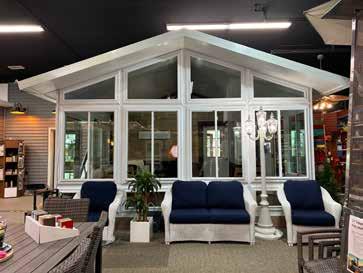
Raber Patio remains especially well known for its sunrooms, with one standout product being the EZE-Breeze vertical track system, which uses vinyl panels that slide within tracks and collapse together, allowing up to 75% airflow and giving homeowners the option of an open,


breezy feel or the shelter of a three-season space depending on the day.
For all-season rooms, the company offers a vinyl-clad system designed to reduce condensation, an important consideration during northern Indiana winters.
When families think about holiday gatherings, they are usually

imagining warmth, comfort and time together — not moisture on the walls, something Raber Patio works to prevent by creating spaces that feel inviting year-round.
Those conversations begin early, with one of the first questions posed to the customer being how the space will actually be used. A three-season room may be ideal for a lake home or for those who travel during the winter months, while others prefer an all-season room that functions more like a full extension of the home.
The company also helps guide homeowners through the planning process.
Permits, approvals and variances can feel overwhelming, particularly near lakes or within homeowners associations, and while construction may require only a few days, the planning and approval phase often requires much more time and patience.
By handling much of that work, Raber Patio can help simplify and often expedite a process that might otherwise take a homeowner far longer to manage alone.
Customization plays a key role as well.
Some homeowners envision accent walls, fireplaces or spaces



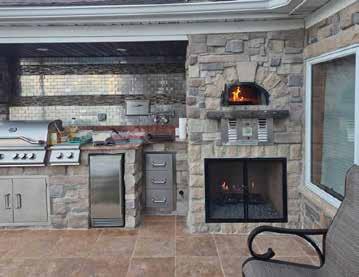
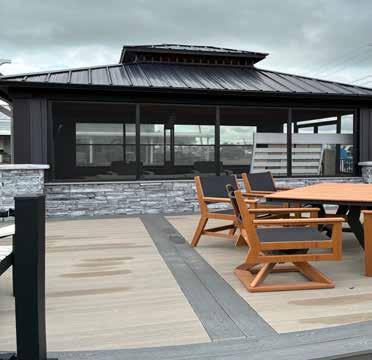
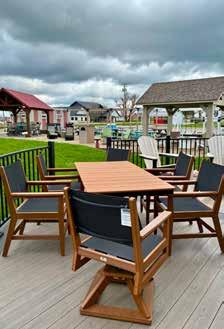
designed around a specific view, while others are planning a larger outdoor setting that includes a pergola, pavilion, deck, furniture, a covered grilling area or even a full outdoor kitchen, which Schlabach often refers to as part of being “the backyard improvement company,” a phrase that reflects the wide range of features they offer.
New offerings continue to broaden that appeal. Motorized pergolas with adjustable louvers allow homeowners to control sunlight and shade throughout the day, and outdoor kitchens are becoming increasingly popular, giving families more ways to gather and spend time outside.
Schlabach says outdoor cooking is one of the biggest trends the company sees, and structures such as pavilions or pergolas can provide welcome cover over those spaces while still allowing for proper ventilation.
Even with a wide range of products, follow-through remains essential, and Raber Patio places a strong emphasis on taking care of customers even after the project is complete.
Rather than relying on manufacturers to eventually address issues, the company has its own service technicians ready to respond, and in many cases, help is scheduled within days. Even when a repair




cannot be completed immediately, customers know the issue is being addressed.
That commitment shows up in customer feedback.
Ed Swieter shared, “We think the builders at Raber Patio are topnotch and very good at what they do. We are enjoying the finished product. We would not hesitate to have them do more for us (if the need arises).”
Bonnie Ikamas wrote, “They resolved the issue extremely quickly. They just replaced it, and the crew was efficient and courteous.”
Yvonne Constant described her experience with a lake-facing threeseason room as “on time, efficient, and very comfortable to work with,” adding that she would gladly hire the company again.
Schlabach believes those responses come back to something simple.
“I think it’s just how we make them feel,” he says.
That focus extends within the company as well.
Raber Patio invests in employee development through Dale Carnegie training and DISC personality instruction, helping team members better understand communication and relationships, and many employees stay for years, with some reaching 17 years or more.
Family values remain at the center.
Schlabach sums it up this way: “Our motto is God first, family second,” and he also points to the guiding principle found in scripture to love the Lord your God and to love your neighbor as yourself, a perspective that seems to shape not only how the company operates, but how it connects with both customers and employees.
Raber Patio is also active in the Shipshewana community, supporting local causes, sponsoring a dugout at the youth center, participating in parades and working alongside other businesses through the retail merchants association.
There is a shared sense of cooperation in the area, with
businesses often helping visitors find what they need, even if it means sending them elsewhere.
One project that continues to stand out to Schlabach involved the Make-A-Wish Foundation, when Raber Patio helped create a sunroom for a Fort Wayne family whose child loved being outside but needed protection from the sun and insects.
Vendors contributed materials, and the cost to the family was greatly reduced.
Schlabach describes it simply as “a pretty cool experience,” and it is easy to see why that project has stayed with him.
For homeowners in the Lakes West region, that may be what resonates most.
Raber Patio Enclosures & Furniture builds sunrooms, pergolas, pavilions and outdoor living spaces, but the result is often something more personal — a place to gather, to relax and to enjoy everyday moments a little longer.
Raber Patio Enclosures & Furniture is located at 655 S. Van Buren St. in Shipshewana. For more information, give them a call at 260-768-7100 or visit them online at raberpatios.com.











•
•
•
•
Writer / Kristi Sellers
In the often fast-paced world of real estate, peace of mind can sometimes feel like a luxury. But in Indiana, one company is quietly redefining that experience, bringing clarity, confidence and care to every step of the property journey. Acorn Inspections is more than a service; it’s a family-driven philosophy rooted in trust and the belief that every client deserves to feel secure in their investment.
Founded in 2017, Acorn Inspections was born out of a simple but powerful realization that too many people were walking away from inspections feeling uncertain rather than confident. Owner Josh Rizek saw an opportunity to change that narrative. With a background that spans technical training, quality control and





hands-on property management, he built a company that treats every inspection the way it should be.
At its core, Acorn Inspections operates like a family business because it is one. That mindset shapes every interaction, from the first phone call to the final report. Clients are welcomed with the same care and attention Josh would give his own family.
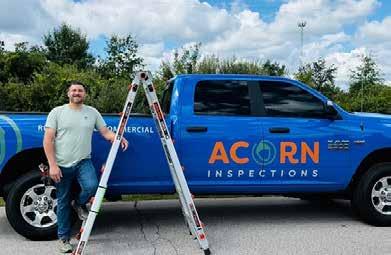
Customers have the opportunity to work with Josh directly.
“When a client calls with questions about inspections or their specific inspection, they speak directly with me, the owner and inspector. There’s no need to go through someone unfamiliar with the work or wait around for a callback,” he says.
What sets Acorn apart is its meticulous attention to detail. Whether inspecting a residential home or a large commercial
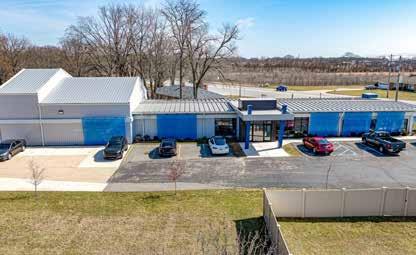



property, the process is comprehensive. Every component is carefully evaluated to uncover both visible issues and hidden concerns. The goal isn’t simply to identify problems, but to provide clients with a clear, understandable picture of what may be ahead.
For homeowners, this means stepping into a new chapter with confidence. For sellers, it offers transparency that builds trust. And for investors and business owners, it provides the critical insight needed to protect long-term value. In each case, the inspection becomes less about uncertainty and more about informed decision-making.
That commitment to clarity is backed by professional excellence. Acorn Inspections adheres to nationally recognized standards and holds certifications that reflect a dedication to ongoing education and industry best practices. It’s a level of expertise that ensures every inspection meets not only expectations, but a higher standard of care.
According to Josh, “Residential and commercial inspections are important because they help people make informed, safe and financially sound decisions about properties. While they share similar goals, their importance shows up in a few key ways: safety and health, financial protection, maintenance planning, liability,

A&L Storage Barnsof Kendalville 901 W North St Kendallville, IN 46755
Mon–Fri: 11:00 AM–4:00 PM (260) 242-7608 AKRUD80@gmail.com
A&L Storage Barns of Benton Harbor 2535 M-139 Benton Harbor, MI 49022
Mon–Fri: 1:00 PM-6:00 PM Saturday: Closed Sunday: 2:00 PM-5:00PM (269) 921-5727 | LKDEMLER@gmail.com
Angola Travel Stop 3096 West Maumee Street Angola, IN 46703 260-463-2975 X 1
Maple Lane Metals 13428 Springfield Center Rd Grabill, IN 46741 260-627-5000
A&L Storage Barns of Kokomo 2312 N Plate St Kokomo, IN 46901
Monday & Friday: 10:00 AM–4:00 PM Tuesday & Thursday: 10:00 AM-5:00PM Wednesday: Closed Saturday: 10:00 AM-1:00PM Sunday: Closed Lot open for browsing 24/7 (765) 461-2286 AANDLBARNSOFKOKOMO@gmail.com
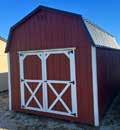
J&D Woodworking 27951 Wasepi Rd Centerville, MI 49022 269-432-2788 JDWoodworking@IBYFAX.com
Wormans Outdoor Solutions 5597 W. IN 24 Logansport, IN 574-601-1629 Wormansoutdoorsolutions@gmail.com
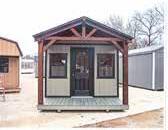
Maple Valley Garden Center 2552 E State Rd 2 Rolling Prairie, IN 46371 219-575-0139 Abom1983@gmail.com
EJ Flooring 20 W. 100 N. Winamac, IN 574-946-0111 Ejsflooring@hotmail.com
Rabers Patio 815 N VanBuren St. Shipshewana, IN 260-336-1978 Merl@raberpatios.com
Riverside Tire 14777 St Rd 49 Antwerp, OH 43518 419-258-1917

Renewed Marketplace 809 E. Vistula St. Bristol, IN 574-612-0367
Yoderzach4@gmail.com
Oakes Enterprise 1912 US Hwy 12 Galien, MI 269-545-9020
Greg@oakerenterprises.com
BID Jackson 3150 Page Ave. Jackson, MI 269-217-5420 Greg2401@yahoo.com

business continuity and peace of mind.”
Yet beyond the technical expertise, there’s a human element that defines the experience at Acorn Inspections. Questions are welcomed. Details are explained, and no concern is too small to address. In an industry that can sometimes feel transactional, this level of personal connection stands out.
There’s also a forward-thinking aspect to the company’s work.
Inspections aren’t just about the present moment. They’re also about the future. By identifying potential issues early, clients can plan for maintenance, avoid costly surprises and make decisions that align with their long-term goals. It’s a proactive approach that transforms inspections into a valuable tool for both protection and planning.
In many ways, the name “Acorn” feels especially fitting. Just as a small acorn holds the potential for something strong and enduring, each inspection lays the foundation for a secure and confident future. It’s a reminder that even the smallest details can have a lasting impact.
For those navigating the complexities of buying, selling or investing in property, the right inspection partner can make all the difference. With its blend of technical expertise, personal care and unwavering


attention to detail, Acorn Inspections offers more than just a service. It offers reassurance.
In a world where certainty can be hard to find, that kind of reassurance is something truly worth investing in.
If you are interested in the services Acorn Inspections provides, call 574-933-4238 or visit acorninspect.com for residential and commercial inspections or pickacorn.com for commercial only.
When he’s not working, you can find Josh spending time with his family at a national park, camping, or participating in other outdoor activities.

















Writer / Darcie Dodds Schott
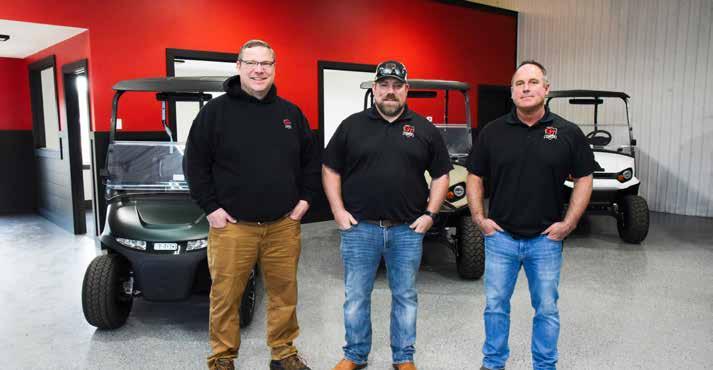
Anyone who has siblings has memories of doing things with them that resonate differently from doing things with friends and other people. In some rare cases, siblings choose to do business together, and the synergy works. That is exactly what happened in 1999, when the Gritten brothers began their business, Gritten Turf
Company, later expanding into today’s GT Carts.
As Gritten Turf, Matt, Ben and Jason provided aerification services to golf courses, running the business out of their homes and storing their equipment in their grandfather’s old milking barn. After
their grandpa’s passing and the sale of the farm, they purchased a building to store their equipment. In 2011, as a way to fund much-needed renovation to the building, the brothers refurbished a couple of golf carts and put them out by the road to sell.
They became an authorized E-Z-GO
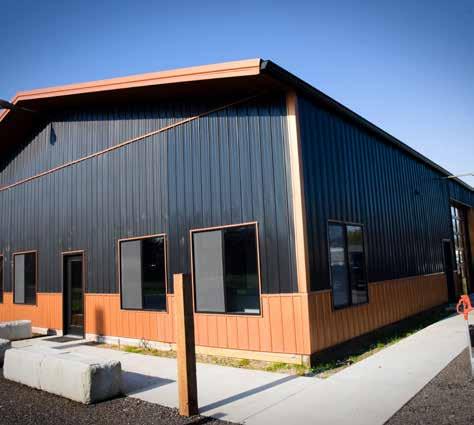
Cambe Carts in Knox is now part of the GT Carts family. Stop by and check out the expanded inventory at our newly renovated dealership. We’re proud to be your neighbors.

dealer in 2013 and opened as GT Carts. Today, GT Carts is one of the nation’s top E-Z-GO golf cart dealers, and it is still, well, grounded in its beginnings as Gritten Turf Company.
Since 2001, the Gritten Turf business has grown by word of mouth, and the list of customers ranges from golf courses and country clubs to athletic facilities, stadiums and NASCAR facilities.
Today, GT Carts sells, services and customizes golf carts at stores in Monticello, Cicero, Knox and Martinsville. The brothers choose to sell only Americanmade E-Z-GO carts; however, they do also service other American-made brands. They feel that the biggest key to their success is their employees. GT Carts boasts a talented team of knowledgeable, dedicated, customer-focused employees at all of their locations.
Recently named Midwest Region Dealer











of the Year by E-Z-GO, GT Carts is consistently ranked in the top five in the nation for E-Z-GO golf cart sales, and currently, GT Carts is No. 2 in E-Z-GO sales nationally.
Matt notes that golf carts have “evolved dramatically in the last 10-15 years,” becoming a more mainstream mode of transportation beyond just the golf course. Today’s golf carts include more automotive features, such as touchscreen displays, geared toward efficiency, convenience and comfort.
GT Carts sells as many lithium batterypowered carts as gas-fueled carts. “The carts are built to last,” ensures Matt, “and you can’t go wrong with E-Z-GO.”
The company describes its locations as “destination dealerships,” which draw in customers who make the drive specifically to shop the extensive inventory and find just the right cart. “Customer service is our




bread and butter,” says Matt, “and we stock a huge inventory to make sure we have what customers want.”
GT Carts is a full-service provider, selling new and used E-Z-GO carts, parts, service, customization and accessories. They also offer pickup and delivery. GT Carts is also an authorized dealer of Cushman Commercial vehicles, E-Z-GO’s sister company. Financing is available.
The three brothers make up the leadership of the business. While they collaborate on all major decisions, each holds a different role. Ben is the only brother who still travels with the aerification crew. You will find him around the stores when he isn’t on the road. Matt’s role is general manager, overseeing operations for all locations. Jason runs the flagship store in Monticello. The Cicero store opened second to Monticello in 2017. The Knox and Martinsville locations are new for this season.

Dentistry
• One Appointment Crowns
• Digital Radiography


This year, in celebration of the 250th anniversary of the United States, GT Carts is launching specials and new marketing around America’s semiquincentennial. These and other promotions, such as grand reopenings, will be listed on their website, gtcarts.com.
Looking to the future, Matt ensures, “We are going to continue to grow and keep our foot on the gas, doing the best job we know how to do to serve our customers.” When it comes to all things golf cart-

• Orthodontics
• 3-D Imaging
• Oral Conscious Sedation
• Clear Orthodontic Aligners
• Whitening





related, make your way to GT Carts. Their motto is “behind the wheel, ahead of the curve” for good reason.
Visit GT Carts in Monticello at 1145 W. Broadway St., in Cicero at 7770 E. 236th St., in Knox at 3896 E. 275 South, or in Martinsville at 255 Robert Curry Drive.
Contact the locations at Monticello (574) 297-5637, Cicero (317) 606-8679, Knox (574) 207-2689, and Martinsville (765) 352-8156.


evansagencyllc.com
Tel: 574-224-6988
Fax: 574-224-6925
Hours
Monday-Friday
Hours
8 a.m.-4:30 p.m.
Saturday By Appointment Evenings By Appointment




























Writer / Amy Beaucham Photographer / Jubilee Edgell
At 604 Columbus Drive in Plymouth, celebrations do more than bring people together. They help strengthen an entire community.
For decades, the Plymouth Columbus Club has hosted weddings, family reunions, graduation parties, quinceañeras, business meetings, funeral dinners, blood drives, bingo nights and countless other gatherings. Many residents still refer to it as “the Knights of Columbus Hall,” and in many ways, that description fits. The Plymouth Columbus Club has long served as the meeting place for Knights of Columbus Council 1975, a Catholic fraternal organization that has been part of Plymouth since 1919.
The Knights of Columbus was founded in the late 1800s by Father Michael McGivney in New Haven, Connecticut. The organization originally helped provide support for widows and families after the loss of a breadwinner. Today, its mission continues through charity, fraternity and service to others.
Ed Chippas explained that worldwide, Knights of Columbus councils have long been rooted in supporting their local parish priests through faith, fellowship and service. The Plymouth Columbus Club serves as the local council’s meeting place. Like many councils, it uses its meeting venue to advance a broader community mission by hosting events and fundraisers that help generate support for local nonprofits and charitable causes.

• 1,000 Watts
• Ceramic Sole Plate
• Won’t Burn or Scorch
• Iron & Steamer in one
• One Setting use on any fabric
• Great for steaming & refreshing Mutza Suits
• Over double the steam pressure of traditional irons

Those missions reach far beyond the walls of St. Michael Parish and the Plymouth Columbus Club itself. Through charitable gaming, rentals and fundraising, Council 1975 donates approximately $60,000 annually back into the community through scholarships, nonprofit support and community outreach.
It is this spirit of outreach and generosity that Hall Manager Ed Rodriguez most hopes the public will recognize when learning about the Plymouth Columbus Club.
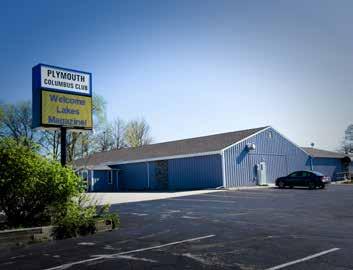



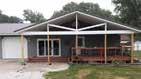
Rodriguez says many people throughout the area have been impacted by the generosity of the Plymouth Knights of Columbus, and he encourages families choosing a venue to consider that the organization gives 100% back to the local community.
That mission has helped the venue become a trusted gathering place for generations of Marshall County families. Chippas says nearly everyone in Plymouth has likely visited the hall at least once for a wedding, fundraiser, bingo night or community event.
The venue’s appeal begins with flexibility and affordability. Unlike many event spaces, renters are not locked into required catering packages or expensive per-plate meal costs. Families may bring in their own food, choose their own vendors and decorate according to their own style.
“It’s almost a blank canvas,” Chippas says.
That freedom has become especially important for young families planning weddings or celebrations on a budget. Rodriguez says affordability is one of the hall’s greatest strengths.

“Our folks are working-class families that are wanting something affordable and decent for their events,” Rodriguez says.

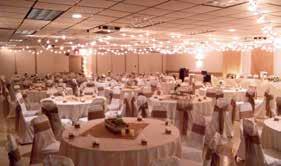

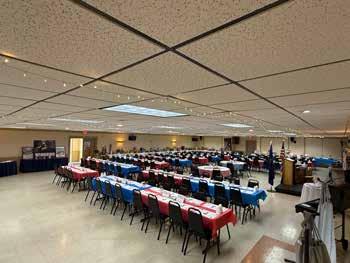




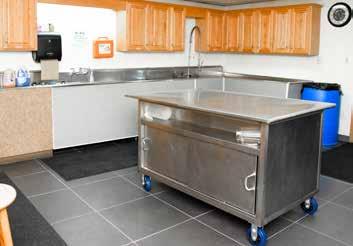


The
accommodates

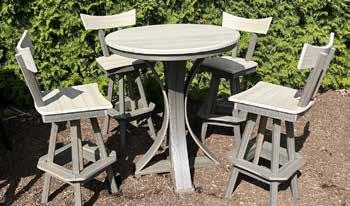

Community service remains at the center of everything the club does. The hall regularly hosts American Red Cross blood drives, local elections, charity fundraisers and nonprofit events. Organizations such as Junior Achievement, Ducks Unlimited and Link to Hope have all used the facility.
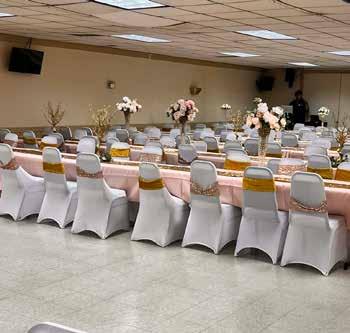



The club’s popular fish fry during Lent has also become a favorite local tradition. Chippas says this year’s event raised approximately $14,000 in just a few hours through dine-in and drive-through service.
Sunday bingo continues to draw guests from across northern Indiana and parts of Michigan. Chippas has volunteered with bingo for more than 30 years and says many players return week after week for the fellowship and fun.
The hall has also become a place where memories repeat across generations. Rodriguez says many guests return because they already feel at home there.
“I hear this a lot,” Rodriguez says. “‘I know where the lights are. I know where the tables are. We’ve been here so many times.’”
While some venues prioritize glamour and luxury, the Plymouth Columbus Club emphasizes hospitality, practicality and service. Rodriguez says the organization wants guests to feel welcome from the moment they arrive.
In the end, the Plymouth Columbus Club offers more than rental space. Every wedding reception, reunion, fundraiser or celebration held there helps support scholarships, charities and
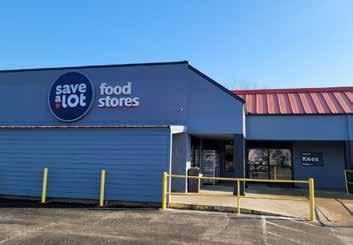

neighbors in need throughout the community.
That may be the club’s greatest distinction of all. At the Plymouth Columbus Club, gatherings truly give back.
Contact: Plymouth Columbus Club, 604 Columbus Drive, Plymouth, Indiana. Call or text 574-309-4979 or email pcc3094979@gmail.com.




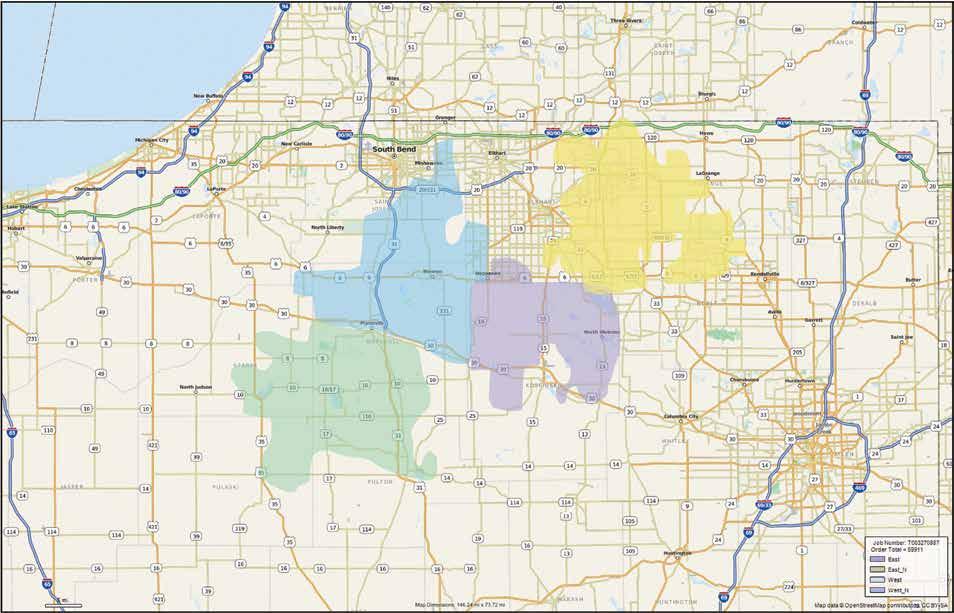

Writer / Amy Beaucham Photographer / Jubilee Edgell
At the edge of a quiet stretch of countryside in Winamac, a meaningful mission has grown steadily and thoughtfully. What began as an idea, shaped by years of experience and a single moment of curiosity, has become Peaceable Primate Sanctuary, now marking its 10th year.
Founded and directed by Scott Kubisch, the sanctuary has grown from fewer than 10 primates to nearly 170, with more arriving regularly. Set on close to 80 acres, the property continues to evolve, with new enclosures rising, trees planted by hand, and the landscape constantly unfolding. It is, as Kubisch describes it, “a

place in a perpetual state of construction,” guided by commitment and purpose. That commitment began years ago while Kubisch was working at Lincoln Park Zoo. One day, he came across a video of a baboon in a laboratory setting and found himself asking a simple but life-altering question: What happens to these primates when the research is complete?
There wasn’t a clear answer, and for Kubisch, that absence became a calling.
“I’m the type of person,” he explains, “that when I find a cause, I’m all in.”
The road to creating the sanctuary was

anything but immediate. It took years — nearly two decades — to move from vision to reality. Land had to be secured, nonprofit status established, and funding found. Early support was uncertain, and at times even friends questioned whether the idea would ever come to fruition.
What ultimately changed everything was a remarkable act of generosity.
A friend from his zoo days, Marion Schmidt, believed in Kubisch’s vision and included the sanctuary in her estate. Her gift, distributed thoughtfully over time, allowed the sanctuary to grow with intention.

Today, the Marion Schmidt Welcome Center stands in her honor, a lasting reminder of the belief that helped bring the sanctuary to life.
Kubisch speaks of her with deep gratitude, not only for the financial support, but for how it shaped the sanctuary’s foundation.
“It forced me to learn,” he says. “It made me build this the right way.”
At Peaceable Primate Sanctuary, the animals are not simply residents; they are “retirees,” a term Kubisch uses deliberately, reflecting both respect and perspective. Many of the primates arrive from research facilities, while others come from private ownership or roadside attractions. Each arrives with a different history, but all are given the same opportunity — a life defined not by schedules and constraints, but by choice.
Retirement here means deciding when to

go outside, when to rest, when to explore, and when to engage. It may sound simple, but for animals who have lived in highly structured and controlled environments, often with little room for choice, it represents something profound. Kubisch recalls one macaque who took nearly a year before stepping outside for the first time. No one forced him, no one rushed
him, and when he finally ventured out, he sat quietly, looking up at the sky.
“That’s what this is about,” Kubisch says. “It’s about giving them the ability to make their own decisions.”
Spend even a short time observing the sanctuary, and it becomes clear that each





species — and each individual — brings a distinct personality. Baboons tend to be more even-keeled and steady in their interactions. Macaques are curious and playful, often the ones responsible when something has been taken apart or cleverly dismantled — a little mischievous, a little inventive. Lemurs move through their days with an easygoing nature, seemingly content to simply enjoy their surroundings.
These differences are not only appreciated; they are accommodated. Enclosures are designed with variety in mind, including climbing structures, swings, platforms and enrichment tools that encourage exploration and engagement.
Enrichment is a cornerstone of daily life. From scattered forage mixes and puzzle feeders to scent-based activities and even the occasional animated movie, every effort is made to keep both minds and bodies active. While federal
guidelines require enrichment once a day, the sanctuary provides it multiple times, ensuring that the animals’ days are anything but monotonous.
What has surprised Kubisch most over time is how adaptable the animals can be. Despite coming from environments with familiar routines and caretakers, many adjust quickly to their new surroundings, learning new rhythms and forming new bonds. When paired with a companion who has already settled in, that transition can be even smoother — a quiet example of how connection helps ease change.
Behind the scenes, the sanctuary operates through a deeply collaborative team. Erin Roberts is the sanctuary manager, overseeing staff and daily operations. Beth Duvall and Robin Russell manage the administrative and event coordination side, while Megan Selle leads a growing network of interns and volunteers.

one of a limited number of specialists in primate medicine, helping ensure that the level of care remains exceptionally high.
What stands out most, however, is the culture. There are roles, certainly, but there are no rigid boundaries. Staff members step in wherever needed — setting up events, assisting with care, maintaining the grounds. Kubisch himself is just as likely to be found planting trees, cleaning enclosures or helping wherever the day requires.


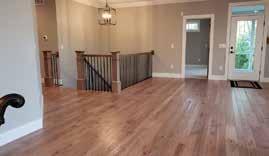
“It’s a team effort,” he says. “Everybody’s part of it.”
Like the sanctuary itself, the community’s relationship with it has grown over time. In the early days, there was uncertainty — misunderstandings about what the sanctuary was and what it was not. Rumors circulated, as they often do with something unfamiliar, shifting much like a game of telephone. Over time, as the sanctuary opened itself through tours, events and transparency, those perceptions began to shift.
Today, the support is tangible. Local farms donate fresh produce. A bakery in North Judson provides bread that would otherwise go to waste, helping staff administer medications. Neighbors contribute time, supplies and encouragement. What was once questioned is now embraced.
Events and tours have played an
important role in that transformation. Early community gatherings, such as Easter egg hunts designed simply to give local families something to enjoy, helped introduce people to the sanctuary in a welcoming way. While those early events have evolved over time, the intention remains the same — to create connection, invite understanding, and allow people to see the work firsthand.
“If we close the gates and don’t let people in,” Kubisch says, “that’s when the rumors start.”
As the sanctuary enters its second decade, the vision continues to expand — with more enclosures, more educational opportunities, and more capacity to provide retirement for animals in need. At the same time, Kubisch remains focused on something deeper than growth alone.
“My goal,” he says, “is to make sure this place continues long after I’m gone.”





It is a statement rooted in responsibility rather than worry. Systems are being built, leadership is being developed, and a strong foundation is being secured — not just for today, but for decades to come. Legacy giving has become an important part of that vision, allowing supporters to make a lasting impact and helping ensure that animals who arrive without full funding can still be given the care they deserve.
And perhaps, one day, the need itself will diminish.
“I would love for there not to be a need





for us,” he admits. “That would be the best outcome.”
For those encountering the sanctuary for the first time, Kubisch hopes they take away something simple and lasting: animals that once drew crowds at roadside attractions, and those that have contributed quietly, without choice, to advancements in medical research, deserve something in return.
“It’s the ultimate payback,” he says. Here, that idea is not just stated — it is lived out each day in small decisions, quiet moments, careful routines and unexpected breakthroughs. It is seen when a primate steps outside for the first time, when another settles comfortably beside a companion, and in the steady rhythm of daily care.
Ten years in, Peaceable Primate Sanctuary is still growing, building, learning and,
more importantly, still honoring the very promise that started it all — offering a place where these animals can simply be.
Peaceable Primate Sanctuary is a private sanctuary and is not open to the general public. However, tours and special programs are offered throughout the year by request. To learn more or schedule a visit, email admin@peaceableprimates.org or call 574-896-0590.
Those who wish to support the sanctuary can donate through its website at peaceableprimatesanctuary.org or social media platforms.
Sponsoring a day at the sanctuary is also available for groups, celebrations or in honor of a primate, helping provide food, medical care and enrichment for the animals while supporting their continued well-being.
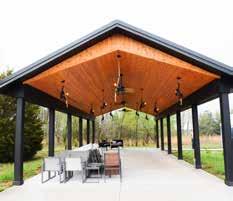













Submit Your Events!

ALL Times listed are Central Time.
EVERY MONDAY
Bingo – Doors open at 5 p.m., Early Bird starts at 6 p.m., and regular games start at 6:30p at the Koontz Lake Association Community building.
EVERY THURSDAY
4:30 – 6:30 p.m. - New Kitchen Store Farmers Market. Please visit our online store and don’t forget to like us on Facebook! facebook. com/NewKitchenStore
KLA Board Meeting at the KLA Clubhouse is the 3rd Tuesday of the month. Meetings are open to the public and start at 6:30 p.m. Come and join us and find out how you can volunteer in the community. You can also find out what is going on around Koontz Lake.
Koontz Lake Lions Club meet every 3rd Thursday at 6 p.m. in the Sewer District building located at 10625 E Prairie Ave in Koontz Lake. Meetings are open the public.
2
6 pm.- Koontz Lake Conservancy District Monthly Board Meeting. The meeting will be held at the Sewer District building located at 10625 E Prairie Ave in Koontz Lake. Interested parties may join remotely by calling (240) 591-0378 and entering the code 385729# when

prompted, or via web at https:// join.freeconferencecall.com/ klcdboardmeeting.
Intro to Grains class at the New Kitchen Store
June 18th – Beginner Ankarsrum Mixer Class at the New Kitchen Store
Fresh Milled Flour Class 101 at the New Kitchen Store.
Rent the Koontz Lake Clubhouse for your next party! The rental fee is $100 for non-members, $75 for members with a $65 deposit that is refunded if no damage occurs to the clubhouse. If interested, please contact Cathy at 219-2294424. The facility holds up to 100 people and has a fully equipped kitchen.
ALL Times listed are Eastern.
5
9 a.m. - LOWPOA Meeting at the BCC Building, 4374 North Shore Drive, Bremen, IN.
20
LOWPOA Hunt for summer spirits June 20th – 9 a.m. – BCC Meeting at the BCC Building, 4374 North Shore Drive, Bremen, IN.
ALL Times listed are Eastern Time.
9 a.m. – 1 p.m. – Culver Farmers Market at the Culver Town Park. You will find local meats, produce, baked goods, sweets, handcrafted gifts, and more for your favorite vendors. For more updates, you can follow The Culver Farmers Market is also on Facebook and IG @culverfarmersmarket, their website culverfarmersmarket. org, or emailing them at culverfarmersmarket@gmail.com.
6
CCSC Athletic Boosters Color Run 5k
6 & 7
Indiana Free Fishing Days sponsored by DNR.
Starting June 13th – Culver Beach Hours 10 a.m. – 7 p.m. $3 per person.
13
Summer kick off at the Beach with live bands, food trucks, and a movie at night.
19
Culver Summer School & Camps being.
27
Culver Summer School & Camps Garrison Parade.