Leads to Macro Savings Nano Roof Michiana Focuses On Prevention To Extend Roof Life

Leads to Macro Savings Nano Roof Michiana Focuses On Prevention To Extend Roof Life

• Drought Resistant
•
•
• Protects
•






































Leads to Macro Savings Nano Roof Michiana Focuses On Prevention To Extend Roof Life
FOCUSED ON FILM
New Owners Carry
Gene’s Camera Legacy Forward 19 WELCOME TO THE FARMSTAND
Local Stand Serves Neighbors In Rural Millersburg 27 MEANINGFUL JOURNEYS
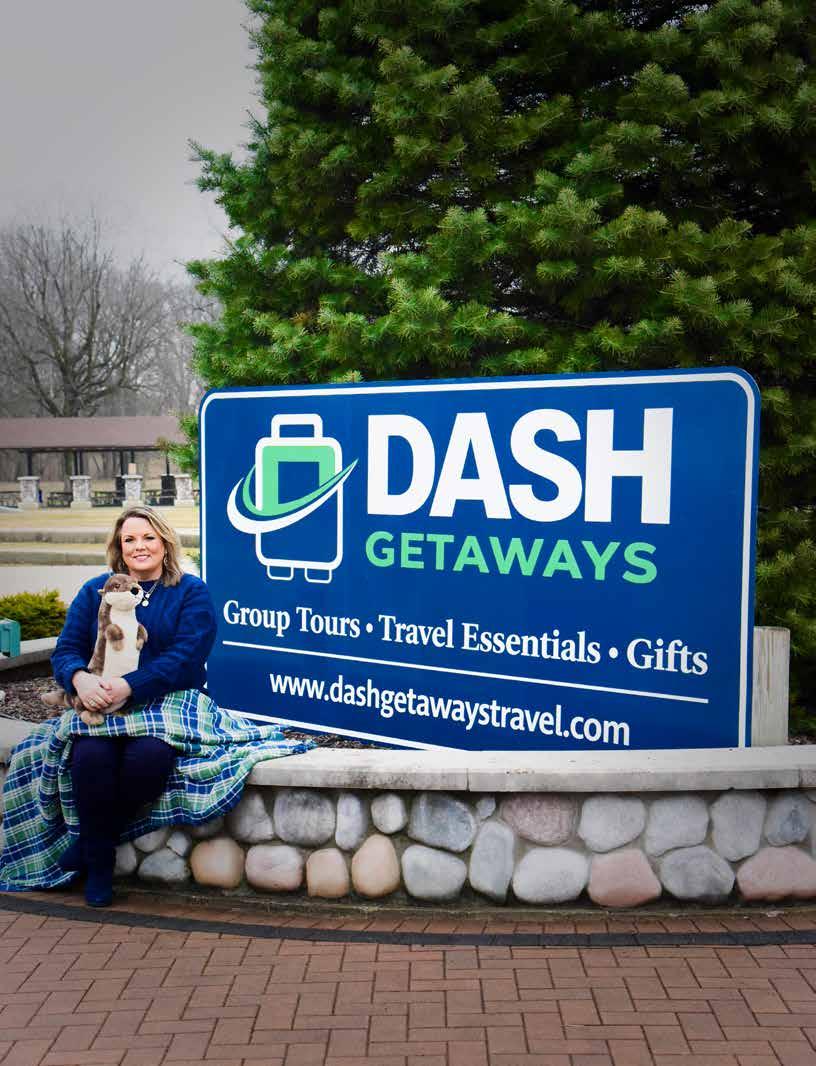
Dash Getaways Travel Brings People Together Through Curated Adventures & Shared Experiences 41 RECORD RUN Knox Star Myles McLaughlin Leaves Historic Legacy Of Records, Leadership & Humility
Local Shop Brings Vintage Charm to Rochester 55 HOT FLASHES & BELLY LAUGHS
Local Author Proves Laughter is Great Hormone Therapy by Writing a Humor Book About Perimenopause 60 PALM SUNDAY FURY
1965 Tornado Outbreak Changed Indiana History
67 WHERE EVERY NOSE KNOWS
Pup Assist Brings Purpose to Dogs & People 72 YOU ARE INVITED TO WACF!
76 THE LONG REACH
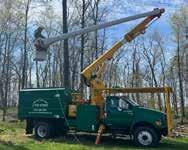
Bill’s Long Reach Service Shapes Ponds With Precision & Patience 80 TREE CARE PROS
LumberJack Jim Tree Service Cuts Problems Down to Size 84 APRIL EVENTS

PUBLISHERS
JOHN & MANDI LEWANDOWSKI john@townepost.com mandi@townepost.com (574) 249-9217
KEY CONTRIBUTORS
MEREDITH BAKER AMY BEAUCHAM
JUBILEE EDGELL JEFF KENNEY AMY LANT-WENGER
CHRISTY HEITGER-EWING
MIRANDA MEDEIROS WHITNEY THOMPSON ASHLEY WATTERS AMY LANT-WENGER
TOWNE POST NETWORK, INC. FOUNDER, CEO TOM BRITT tom@townepost.com (317) 496-3599
PRESIDENT JEANNE BRITT jeanne@townepost.com (317) 810-0011
CHIEF OPERATING OFFICER ERIN TURK
CREATIVE DIRECTORS VAL AUSTIN TONI EADS
EDITOR JOSH BROWN
DIGITAL CONTENT MANAGER ERIC NEER
TOWNE POST NETWORK, INC. 8800 North Street, Suite 117 Fishers, IN 46038 Phone/Text: (317) 810-0011 FOR FRANCHISE INFORMATION, VISIT FRANCHISING.TOWNEPOST.COM








Writer / Ashley Watters
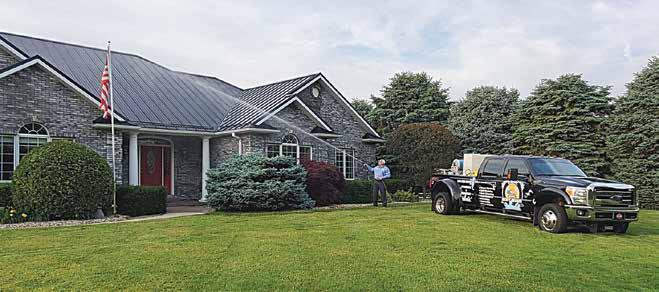
Nano Roof Michiana focuses on prevention over repair to protect the life of your home.
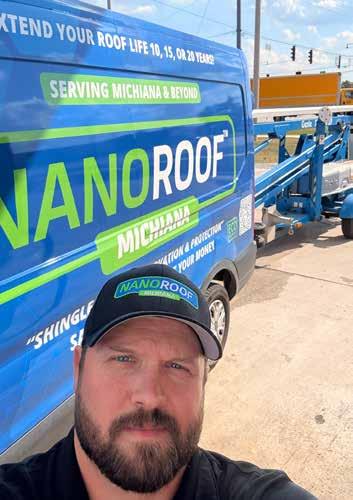
Homeownership is a joy that comes with independence, family and stability, but occasionally it also comes with challenges and expensive updates. Maintenance costs and unexpected repairs can be extremely burdensome, especially with rising costs. Ben Yoder wanted to make things just a little easier on homeowners, and that’s just what he does at NANOROOF Michiana.
As the owner of a family-owned mold remediation business, Yoder wasn’t a newcomer to home maintenance and all the costs it can entail. As more and more requests for external mold treatments came pouring in, Yoder realized it might be time to investigate a better way to maintain homes without the high price tag. His research led him to a better approach for roof









maintenance, and ultimately, a new business venture.
“We offer a new option for homeowners. No longer do they have to sit there and wait for their roof to deteriorate and be left with a hefty roof replacement bill. Shingle roof preservation is now the new way to go, even though it’s been around for 13 years and was researched decades before that. It is gaining fast traction since inflation has left everyone wondering how they’ll pay for expensive home repairs and roof replacements, let alone all the other bills,” Yoder says.
NANOROOF Michiana offers prevention methods against home deterioration, a proactive approach over the traditional method of “maintain and repair.” They specialize in protective NANOROOF coatings to protect against weather damage and premature wear.
The process begins with a free roof inspection to ascertain if your home qualifies for protective measures. Yoder mentions that 98% of homes qualify, so he encourages homeowners to consider NANOROOF technology even if they think their roof is too far gone. This cutting-edge approach can apply to roofs with up to 50% granule loss, with no limitations for age.
If you qualify, NANOROOF Michiana will add you to their limited seasonal schedule. Weather factors such as humidity and


wind can impact the application process, so Yoder encourages people to sign up sooner rather than later. The team will initially conduct a general cleaning to clear away any shrubbery or debris from your roof. A soft wash comes next to remove moss, algae, mold and other stubborn substances in preparation for the protective membrane and in an effort to retain remaining granules. Finally, the protective nano preservation membrane is applied to ensure the longevity of your existing roof.
“We use a nano-enhanced elastomeric polymer that’s siliconebased to fully penetrate the shingle and make a mechanical and chemical bond that others aren’t able to achieve. This strengthens and makes the shingle more durable than before, and our product is re-coatable to basically keep your roof lasting a lifetime. This product can save the homeowner, on an average roof, 70-80% of what a new roof replacement would cost them!” Yoder says.
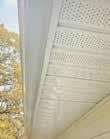
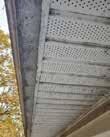
Treated roofs are protected against UV and sun damage, fading color, mold and algae growth, thermal shock due to extreme temperature changes, and hail and wind damage. A courtesy follow-up is conducted one year after application, with package options available for annual checkups.
“We want to help the community save money, but also save landfills from the 12+ million tons of shingles that go to waste












every year. Eighty-five percent of roofs are prematurely replaced every year because of overzealous roofers and homeowners who just don’t know about this option,” Yoder says.
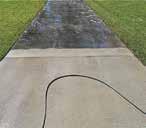
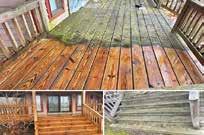
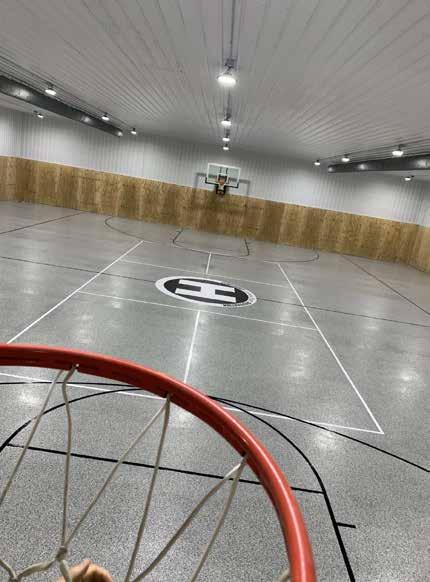
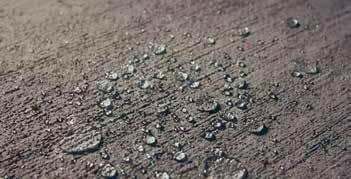
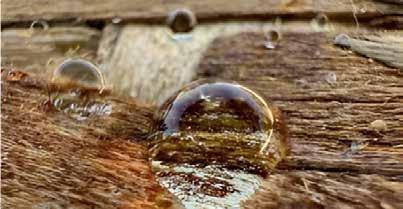
NANOROOF Michiana can help elongate the life of other areas around your home as well. The team offers a hydrophobic sealant for concrete and wood areas surrounding your home to prevent breakage and deterioration of areas such as decks, fences, pergolas, driveways, sidewalks, basements, pool areas, garages and more.
Protect what you have and forgo expensive, messy and invasive home repairs. To learn more about NANOROOF Michiana, go to nanoroofmichiana.com.










Avian influenza, known as bird flu, is a virus that can infect birds, other animals, and sometimes humans. The risk of humans becoming infected with avian influenza is low. The Indiana Department of Natural Resources (DNR), Indiana State Board of Animal Health (BOAH) and the Indiana Department of Health (IDOH) are working together to monitor for avian influenza and the overall risk to the public.
People can become infected when the avian influenza virus is inhaled or gets into a person’s eyes, nose or mouth. People who have close contact with sick birds have the highest risk of becoming infected with an avian influenza virus.
• Avoid Contact with Wild Birds
·Do not touch sick or dead waterfowl

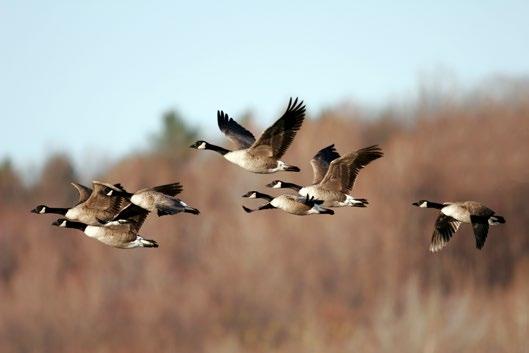
·Observe wild birds and other animals from a distance. Avoid touching or feeding wild birds, even if they don’t look sick
·Avoid coming into contact with bird droppings or surfaces that may contain bird droppings
·If you keep birdfeeders and birdbaths on your property, clean them regularly with a 10% bleach and hot water solution, rinse thoroughly, and then allow them to completely dry before refilling. Clean up birdseed that has fallen below birdfeeders.
·Do not feed wild birds, especially waterfowl, near domestic flocks. If you come in contact with any bird that appears unhealthy, wash your hands with soap and water and change clothing and shoes before coming in contact with a domestic flock or captive birds.
• Backyard Flock Guidance
·Hobby poultry owners are encouraged to be aware of the signs of avian influenza and report illness and/or death to the USDA Healthy Birds Hotline: 866-536-7593. Callers will be routed to a state or federal veterinarian in Indiana for a case assessment. Dead birds should be double-bagged and refrigerated for possible testing. Keep dedicated boots/ footwear in the chicken coop and don't wear them other places.
• Report Sick or Dead Birds
·Report any cases of sick or dead wild birds to the DNR at on.in.gov/avian-flu.
• Practice Good Hygiene
·Wash hands thoroughly with soap and water after any contact with birds or their droppings
·Avoid touching your face with unwashed hands
·If wild birds must be handled, protective equipment such as safety goggles, disposable gloves, and an N95 mask should be worn
• Keep Pets Away
·Keep domestic animals, especially poultry and cats, away from wild birds and areas where wild birds congregate
• Avian influenza does not present a food safety risk
·Cooked poultry and eggs and pasteurized dairy products are safe to eat. Pasteurization and cooking kills avian flu viruses.
If you experience u-like symptoms, such as fever, chills, cough, sore throat, or conjunctivitis after handling birds, contact your healthcare provider for guidance and inform them about your contact with birds.
Online Resources:
• Indiana Department of Health - Avian Influenza: https://www.in.gov/health/idepd/respiratory-disease/influen za/avian-influenza/#How_are_avian_influenza_viruses_spread_
• DNR - Avian Flu (Bird Flu): https://www.in.gov/dnr/fish-and-wildlife/wildlife-resources/wildlife-diseases-in-indiana/avian-flu-bird-flu/
• Updates are available from BOAH at: https://www.in.gov/boah/species-information/avianbirds/highly-pathogenic-avian-influenza/



















Writer / Ashley Watters
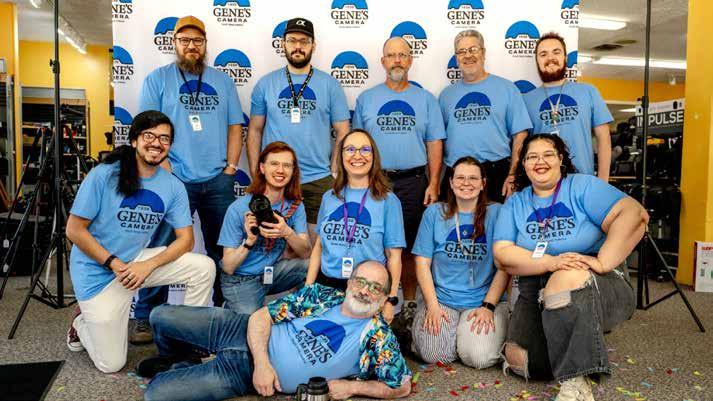
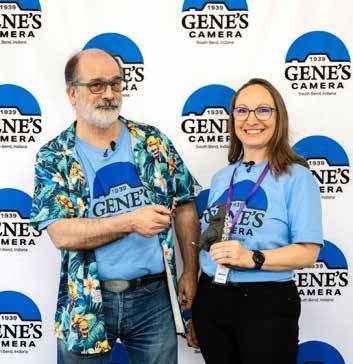
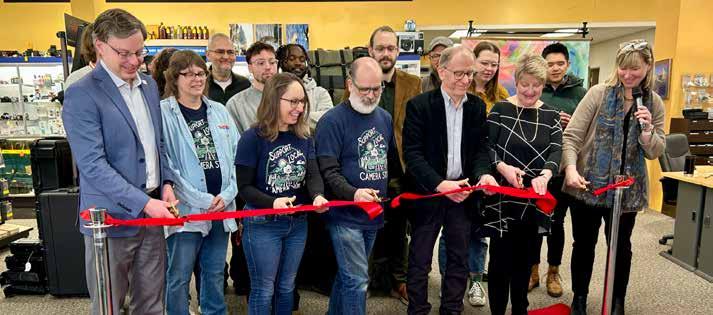
If you’re a hobbyist, amateur or professional photographer in South Bend or the surrounding areas, you’ve likely perused the aisles at Gene’s Camera. A mainstay since 1939, the local camera shop started as Picture Equipment Company. The popular store was later renamed to include Gene’s name and, after several iterations, is now Gene’s Camera. Fast-forward to today, and new owners Jon Gilchrist and Melaney Miller are continuing to make

• 1,000 Watts
• Ceramic Sole Plate
• Won’t Burn or Scorch
• Iron & Steamer in one
• One Setting use on any fabric
• Great for steaming & refreshing Mutza Suits
• Over double the steam pressure of traditional irons
Gene’s Camera the go-to option for photography and printing in northern
A photographer, enthusiast and artist, Gilchrist was a familiar face at Gene’s Camera. Most days, he could be found roaming the shelves or dropping off film for developing. As a frequent visitor, his employment seemed inevitable, and one day it simply became a reality. He was often called in to answer some of the more technical questions due to his product knowledge and expertise.
Even more naturally, he was the logical choice to take over when it was time for new ownership. After 43 years running Gene’s Camera, Barbara and Jack St. Pierre tapped Gilchrist to acquire their beloved store. His answer? No. But after a little soul-searching, Gilchrist found it was an offer he simply couldn’t refuse.
“We are professional and life partners, and taking ownership of Gene’s Camera has been a dream fulfilled. It took us a long time to figure out this was the perfect fit for us, but once we did, it seemed like it was always inevitable,” says Miller, vice president and coowner.
The new owners recently celebrated their one-year anniversary and are incredibly proud of the upgrades they’ve accomplished in a single year.

• Homemade potato salad & pasta salad • Homemade soups • Fresh made pies daily • Ice cream





Notable updates include a new point-of-sale system to better track inventory and speed up customer fulfillment, customer service and sales training for all employees, free photo walks, photography classes, and a refreshed logo to mark the positive changes.
“We really want to build a community. It’s important to us that we are trusted to have everything a photographer might need in a pinch. And we want to be the go-to experts for any and every question. That’s why every member of our sales staff is involved with photography, whether as a hobbyist, amateur or professional,” Miller says.



Gilchrist and Miller hope to make even more positive changes as they head into year two. They’re hoping to reduce in-store wait times, improve order notifications, and find even more ways to engage photographers through photo contests and a customer gallery.
Miller also wants customers to know about improved product options, including better lighting and memory selections, as well as a partnership with a service for digitizing old movies and images. The service transfers movie reels and cleans old film to
remove scratches, dirt and imperfections using a wet-gate process.
“We’re a full-service camera store. If you’ve ever taken or loved a picture or video, we have something for you. And we’re now proud to be a destination location. As the only camera store within 68 miles, we’re honored to be a resource for the community and beyond,” Miller says.
Gene’s Camera also offers full-service printing and a robust online store. Visit genescamera.com for more information.

























Writer / Amy Lant-Wenger
Simplicity best describes the way of things in rural Millersburg. The land winds long toward the horizon, and family farmsteads are seamlessly connected along picturesque, gentle hills.
This is a place where folks look out for one another. If ever there is a need, it’s assured that someone will heed the call to help their neighbors.
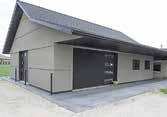
And that’s how The Farmstand was created. Owned and operated by the husband-and-wife team of Jerry and Yvonne Lambright, their modest early mission to provide for others rapidly grew into a successful rural enterprise.
The inspiration for The Farmstand began when Jerry Lambright became aware of an egg shortage in the area. Since the Lambrights own an extensive number of well-tended chickens, they knew that they were in a fortunate situation to be able to share their egg supply with others.
Jerry, who was raised on a



to 48 Hr Turn Around



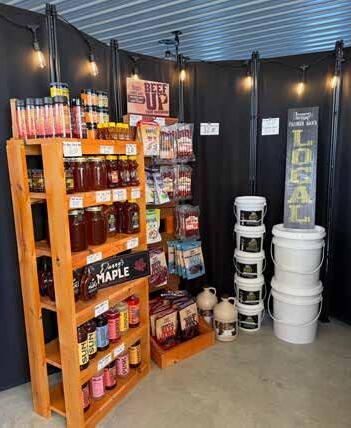






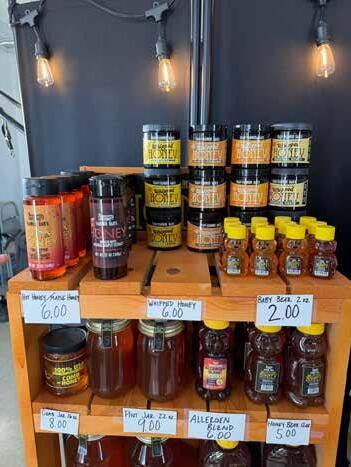
The Farmstand also features honey that is raw and unfiltered, in sizes ranging from 0.2 ounces up to 5 gallons. They also sell maple syrup from Farmer Dan, as he’s known, who has a maple syrup production facility located in White Pigeon, Michigan. Maple syrup season is in its prime this time of year and can be found at The Farmstand in sizes from 8 ounces to 1 gallon. Beef jerky, Mud Valley tea and lemonade, even postage stamps, can all be found at The Farmstand as well, along with other snack items and household sundries.
Lambright’s eggs are of the brown variety, non-GMO, and he is currently working to have them certified pasture-raised organic.
As springtime settles in, the Lambrights hope to see an uptick in visitors. They stay open six days a week, typically from 6 a.m. to 9 p.m. Guests are welcome to use the self-serve option if the family is not home. The only day that The Farmstand is closed to customers is Sunday.
The Farmstand is located at 5580 S. 1050 W. in Millersburg, Indiana. They can be reached by phone at 260-593-3044.



























Fax:




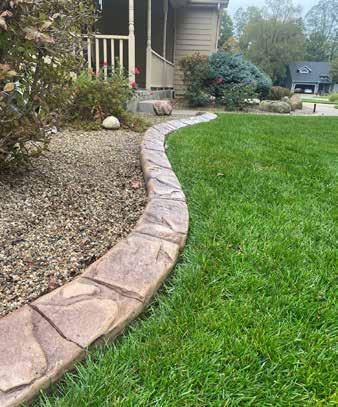
• Our borders are extruded with a steel cable reinforcement as “one solid” continuous piece of concrete
• Gives your landscape beds an attractive and durable edge
• Provides an effective root barrier that prevents grass from growing into your beds
• The height of concrete borders helps to keep mulch/stone in your beds and out of your lawn


Michiana communities since 1995

Concrete Borders make the perfect compliment to any landscape design that adds value to your home by providing a beautiful and durable landscape edge. These continuous borders are extruded on site to create a custom-made look as they follow the curves and contours of any architectural or landscape design (without splices, breaks and individual pieces). Concrete Borders are more durable than any other edging material and are very easy to maintain. We offer multiple profiles to choose from as well as dozens of patterns, stamps, and colors to compliment any architectural scheme.
Our “on-site” extrusion process allows for gentle flowing curves, straight lines and radiuses as tight as 36” around your landscape beds and gardens.



• Any and All Trailers and Campers / RV’s Serviced and Repaired Here
• Tire Service(repair or replace)
• Axles, Bearings & Brakes
• Lights / Wiring
• Upgrade and Remodel
• Formerly known as Pierceton Peddler
Joel - 574-457-6982
Dale - 574-457-9597
Office - 574-642-3365
202 Wastewater Dr. Millersburg, IN 46543
Located in the old Carriage complex in Millersburg, IN (east side of Arrow Ind.)



overpaying for TV. CUE gives you access to hundreds of live channels, including nationwide local channels, toptier movie channels, sports, news, and a huge library of on-demand content, all with no
or just tired of cable, enjoy endless entertainment at a price that makes sense.



Writer / Amy Beaucham Photographer / Jubilee Edgell
For some, a getaway is a spontaneous afternoon that turns into an unexpected memory. For others, it is finally standing in a place they have pictured for years — a skyline, a coastline, a historic landmark brought to life. For many, it becomes something even more meaningful: connection, shared laughter, and the

comfort of knowing someone has thoughtfully prepared the way so they can simply be present.
That is the space Dash Getaways Travel was created to fill.
Founded by Plymouth resident Lana


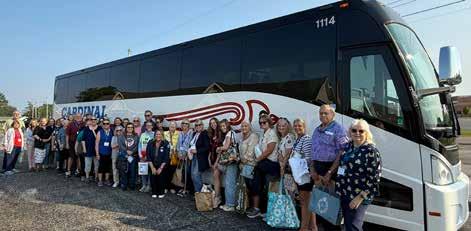
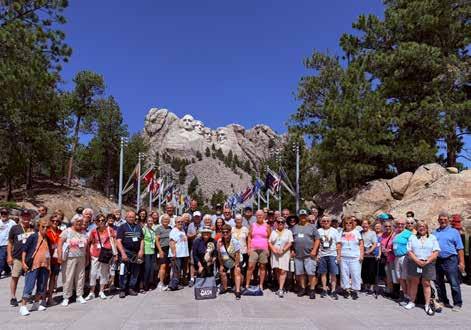
Ball, Dash Getaways plans and hosts experiences that range from motorcoach day trips to multi-day adventures across the United States and abroad — Egypt, New Orleans, Mount Rushmore, haunted Kentucky towns and Broadway excursions. Carefully curated itineraries are built not just around destinations, but around how

those destinations bring people together.
“This business has always been about relationships,” Ball says. “I truly enjoy traveling with our Dashers and experiencing those trips alongside them.”
For Ball, that word carries layered meaning. She values knowing her travelers and understanding their interests, comfort levels and hopes for a trip. Many stop by the storefront simply to talk through ideas before ever booking, and that trust matters deeply to her. Those relationships continue once the journey begins. Thoughtfully designed group travel has a way of dissolving unfamiliarity as conversations begin on the motorcoach, meals are shared and stories surface. By the end of the trip, strangers often feel like longtime friends, and Ball witnesses that quiet magic of connection forming in real time.
Her path to entrepreneurship was steady
and deeply rooted in family influence. Ball grew up in Bourbon, Indiana, watching her father build Ball Auction and Realty into a respected and thriving business serving the surrounding communities. The work ethic, consistency and community presence she witnessed there left a lasting imprint.
Travel was also part of her upbringing. Family trips were not extravagant, but
they were intentional. Experiences were valued, and time together mattered. Those early memories shaped how she now views exploration, not as a luxury, but as something formative.
“I think I always knew somewhere down the line I was going to start a business,” she says. “I just didn’t know the timing.”
After earning her degree in retail

management from Purdue University and spending years immersed in the family business — particularly during a season when her mother’s health required greater involvement — Ball began sensing that a new chapter was forming. She carried with her a retail background, an eye for quality and a lifelong love of travel. When those elements aligned, Dash Getaways Travel was born.
The company officially launched in late 2024, and the early months required courage and conviction.
“I wasn’t even sure if five people would sign up,” Ball admits. “In the beginning I would work day after day with very little rest. I’d get home completely exhausted, but there was always that voice inside telling me to keep going. I knew I was building something with purpose.”
That purpose grew from a realization she experienced during the years following the
COVID-19 pandemic.
“I truly felt like people weren’t getting back out and socializing the way we once did before COVID,” she explains. “I was concerned about our community, about people’s mental health and the importance of connection. One of the best things you can do for yourself is travel. I know how happy it makes me.”
That realization helped spark the idea for Dash Getaways.
“This company really isn’t about me,” Ball says. “It’s about connection, community, memories and friendships. I can’t tell you how many people have thanked me for starting it, and that means the world to me. I’m grateful for every single traveler who chooses to come along with us, and my hope is that Dash Getaways truly makes a difference in their lives.”
Trust is everything in travel. People are

handing over their time, their money and often long-held dreams. Ball chose to establish a visible storefront where travelers could walk in, ask questions and plan their journeys face to face, creating a welcoming place where people can begin imagining their next adventure.
That presence is about to expand.
Dash Getaways Travel will soon move


to a new location at 201 Water St. in downtown Plymouth. After a year of remarkable growth, the company simply outgrew its original space. The new shop will be four times larger, allowing for expanded travel services and a broader retail experience for visitors.
“We are incredibly excited about the move,” Ball says. “Being downtown will allow for more walk-in visitors and give travelers an inviting place to stop in, browse and start dreaming about their next adventure.”
The shop is more than a place to book a trip. It also carries a curated selection of travel essentials, accessories and gifts, all with a travel theme.
“Every item in our shop is something I personally use or would confidently pack in my own suitcase,” Ball says. “From practical travel gear to fun gifts that inspire wanderlust, our goal is to help people travel smarter, travel easier and get excited about where they’re going next.”
The growth has been remarkable. Travelers now come from 19 counties across Indiana and from nine different states.
“I’m truly grateful for each traveler who chooses to travel with us,” Ball says.
Planning a trip under the Dash Getaways umbrella is far more involved than simply reserving transportation and hotel rooms. Ball spends significant time researching destinations, studying logistics and often visiting locations herself before offering them to travelers.
While she sometimes partners with companies such as Diamond Tours for transportation and foundational tour structure, Ball is known for refining and elevating those itineraries by adding thoughtful pacing, immersive experiences and small details that transform a trip into something memorable.
Gratuities are always included, so travelers never feel uncertain about expectations. On multi-day motorcoach journeys,
guests receive Dash Getaways luggage tags, neoprene luggage handle wraps and reusable Dash Getaways water bottles that are refilled throughout the trip. Complimentary snacks are also provided along the way.
“These little touches may seem simple,” Ball says, “but they make a big difference in how relaxed and cared for people feel while they’re traveling.”
Ball also works to dispel a common misconception about group travel. Many people assume it means rigid schedules and little personal freedom, but she explains that while there is structure, travelers still have flexibility.
“There is flexibility built in,” she says. “We want people to enjoy the experience, not feel restricted by it.”
Her own travel experiences continue to shape that philosophy. Ball has traveled solo across six continents, and one of her earliest transformative moments occurred in Scotland when she stood beneath a full moon in the Highlands and realized the same moon was shining over her family back home. In that moment, the world suddenly felt both vast and intimately connected.
If Scotland opened her eyes to the vastness of the world, Egypt settled deeply into her heart.
After years of watching documentaries about the pyramids with her mother, Ball eventually stood before them herself.
“Standing in front of the pyramids for the first time, I actually had tears in my eyes,” she says. “You can’t fully understand it until you’re there.”
She has now spent a total of eight weeks in Egypt, building relationships with Egyptologists and local partners. That investment allows her to offer travelers far more than a surface-level tour.
“For me, it’s not just about visiting Egypt. It’s about truly experiencing it.”
Upcoming international itineraries include Egypt in November 2026 and Australia in June 2027, marking Ball’s seventh continent.
Ball has also begun developing several trips connected to the celebration of America’s 250th birthday, experiences that combine history, culture and uniquely American destinations.
Planned trips include Washington, D.C., a Broadway excursion to see Hamilton in Chicago, a Famous Hoosiers heritage tour, a New York City experience and even a classic American pastime — watching the Chicago Cubs face the St. Louis Cardinals at Wrigley Field.
She has also worked with Diamond Tours to create a custom “America 250” journey that highlights lesser-known historic sites and fascinating stories from America’s past.
At its heart, however, Dash Getaways is about more than destinations, and Ball often reflects on the friendships formed through travel. One story in particular stands out. A 92-year-old traveler joined a tour and formed friendships with women decades younger. Today, they visit one another’s homes and continue planning future adventures together.
“Had it not been for that trip, they may have never crossed paths,” Ball says. “That truly makes my heart smile.”
Though she grew up in Bourbon, Ball has lived in Plymouth for many years and considers it her home. Her civic involvement further anchors the business
locally.
“It’s very important to me that Dash Getaways is rooted in Plymouth,” she says. “This is home.”
The company’s name reflects her larger philosophy. Inspired by the poem The Dash, which reflects on the small line between birth and death and how we choose to fill it, Ball selected a name that would serve as a daily reminder.
“The dash represents the time between when we’re born and when we leave this world and how we choose to spend that time,” she explains.
She believes travel helps people make the most of that time.
“Your Dash should include the people, experiences and moments that truly make you happy,” she says.







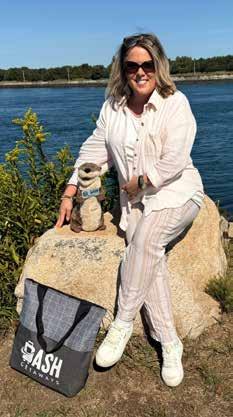
Inside the storefront, visitors may also meet Ollie the otter, the company’s cheerful mascot — a playful reflection of Ball’s joyful approach to travel and adventure.
When asked what continues to motivate her, Ball does not hesitate.
“I find great joy and happiness in my calling each and every day,” she says.
Because in the end, the dash is simply the space we are given, and what fills it — shared meals, laughter, discovery and connection — becomes the story we carry forward. Dash Getaways is not simply about going somewhere, but about going together and coming home changed.
Dash Getaways Travel is located at 201 Water St., Plymouth, Indiana 46563
You can give them a call at 574-800-9202 or visit them online at dashgetawaystravel. com, Facebook - dashgetawaystravel, and Instagram - @dashgetawaystravel.



















1. Opposite of rural 7. Daughter’s child 8. Common 10. Juveniles

Complete disorder
Rushed
Glass pots
Unexpended
Hotel foyer
Male family head
Looking very undernourished
Significant
Brought under control
Large deer
Disobey (rules)
Mixture
Indecently

Most fortunate
Inflexible
Deep wound
Sense of the absurd 1. Dethrones 2. Not here 3. Wide smile 4. Grind (teeth) together 5. Bone specialist
• Commercial & Residential • New Construction/Ponds




Writer / Miranda Medeiros
Green grass glimmers in the morning light, with dew sticking to every blade. The early birds sing their fleeting tunes to awaken the world, and the air smells of fresh rain. It could only be April. I think we can all agree that by now, most of us are getting itchy to be outside and ready to enjoy nicer weather. Nothing says spring like hiding Easter eggs filled with goodies around the yard for little ones to find, filling your ears with the laughter that only the amusement of a child can make.
More than that, though, nothing can refill
your cup more than the reminder that “He is risen,” and the price paid for us, and the miracle that the stone was rolled away, the tomb empty, and death did not reign victorious. There is a level of awe and joy that only Easter can bring to my heart, and it fills me with a gratitude that always makes me feel like bursting and usually results in the overflow coming from my eyes as tears of wonder. Wonder as to why such a perfect man would pay the ultimate price for a world undeserving of him.
I believe a lot of people have seen the movie
“The Passion of the Christ,” and the first time I saw it I was a very young girl — too young to really understand. But there was something I gained from it even then that I never could let go of. I remember my heart breaking at the pain of the man portraying Jesus and what he was going through, and horror that such a thing actually happened. I remember thinking then that I would never, ever do anything wrong again so that he would never have to go through something like that a second time, if maybe there was a little less sin in the world. I didn’t fully understand then, but I like
to look back on the resolve I had found in myself to never want to hurt Jesus like that. The faith of children is inspiring. My daughter reminds me of this every day, the way she loves to sit in my arms and throw her body back without a care in the world, just knowing I’ll always catch her. Easter reminds me to have a faith like a child — unfailing and trusting in every way.
Just some thoughts to keep in mind this year as families get the egg hunts ready for children and grandchildren — to take in their happiness and let the children teach you a lesson that is much easier said than done at times.
Alongside the delight of finding eggs full of candy for children, what about the eggs for adults? I’m talking about the delicacy that tends to be at most celebrations — none other than deviled eggs. We have a cooking blog that we run every month, and it goes over how to cook with the spice of the month that we showcase in our monthly







newsletter that goes out by email. We started this blog to show people how they can easily incorporate these spices and blends into foods they already know and love to elevate them.
Our food blog that went out in March was looking ahead with April in mind, for people to try a new recipe for their deviled eggs to share at their events this year. If you are a lover of the Terrapin Ridge garlic kraut mustard, then this recipe will knock your socks off. Instead of using traditional mustard and relish, we replaced those ingredients with the garlic kraut mustard, and it adds the perfect amount of flavor and crunch to the deviled egg all with one ingredient. We also added some other spices, one being dillweed, and it lends a buttery depth to the recipe that makes it easy to keep eating them.
If you’re interested in seeing the full recipe, head over to our website, newkitchenstore. com, and click the blog link to see it for
yourself. If you give it a try, take a picture and tag us on Facebook — we love hearing what people are cooking and if they’re using our ingredients!
We hope you have a wonderful Easter and a great start to your spring season. Stop in and visit us at 1100 Roosevelt Rd., Walkerton, IN 46574, and contact us at 574-586-2745 with any questions. We also have a few classes coming up in April available to see on the calendar!
























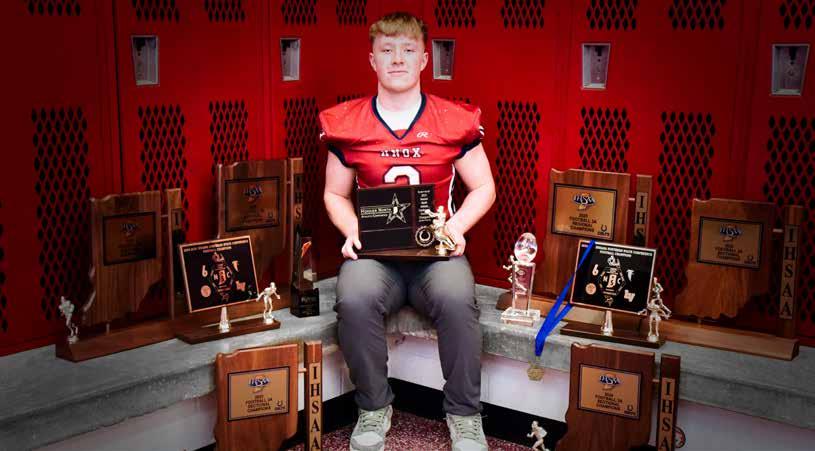
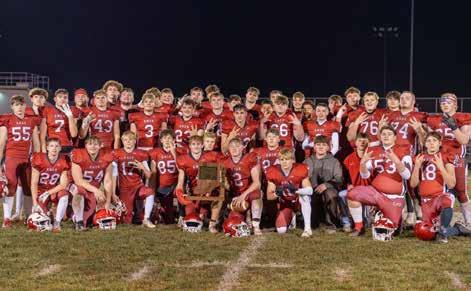
On Friday nights in Knox, Indiana, the stadium lights did more than shine on a football field. They revealed something special unfolding in a small town where an extraordinary season was turning into history.
Writer / Amy Beaucham Photographer / Jubilee Edgell Game day photos by Whitney Thompson
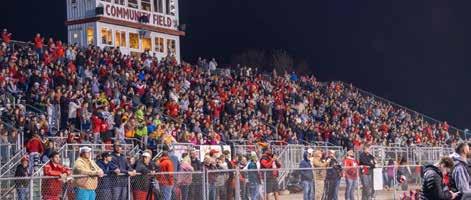
By the time the band struck its first note at each game, the stands were no longer simply full. They were alive.
“Everything stopped for that football game,” Athletic Director Neill Minix says. “The whole community every Friday night.”
What happened during the 2025 season was historic. Long after the final whistle of each game and the stadium lights dimmed against the autumn night sky, something more lasting remained.
By the end of his senior year, Myles


McLaughlin had rushed for 11,839 career yards, breaking Indiana’s career rushing record. In a single season, he set a national rushing record with 4,846 yards and scored 71 rushing touchdowns. He was named Indiana Mr. Football, earned Gatorade Player of the Year honors and was recognized as a MaxPreps Player of the Year.
The numbers are staggering.
Yet when asked what he hopes people remember about him 20 years from now, Myles does not talk about statistics. Instead, he says he hopes people remember the kind of person he was and the way he treated others.
“The person,” he says. “How I treated people. I don’t ever want to be someone who treats others the wrong way. Just the person I am.”
Long before statewide headlines and
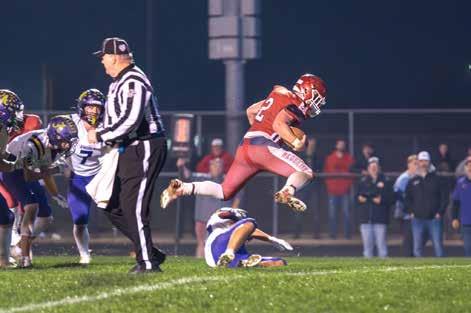
national recognition, a little boy was competing against older kids in youth leagues. From the beginning, Myles rarely played strictly within his own age group. His parents, Josh and Suzann McLaughlin, placed him in Pop Warner football when

he was very young, and he often competed a year or two above his grade level. His competitiveness appeared early. He was strong through the legs, comfortable absorbing contact and unafraid of physical play even as a 4-year-old on the soccer field.

Football was also part of daily life at home, where Myles often sat beside his father watching games and asking questions that revealed an unusually deep understanding of the sport for someone his age.
Josh coached Myles through Pop Warner and middle school, and athletics became a natural part of family life. Suzann says sports had long been woven into both sides of the family. Josh himself once held Knox’s career rushing record, a mark that stood for years before Myles surpassed it during his sophomore season — a remarkable passing of the torch between father and son and an early sign that something special was unfolding. Suzann’s grandfather also played college football before returning home to North Judson to run the family’s Fingerhut Bakery. Athletic ability ran through the family, but so did perspective. Suzann says the most important lesson in their home had nothing to do with statistics or awards. Above all else, she wanted her son to grow into a good human being, while Josh

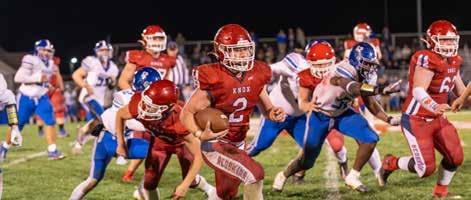
By high school, Myles had already established himself as a natural running back. As Knox’s offense evolved, the
coaching staff began shaping much of the game plan around his unique abilities, placing him in a hybrid RB/QB role within an old-school Single Wing offense, a system built on power running and a dominant offensive line. In that direct-
• More than 1000 Styles/ Colors of Fabrics

• Toys, Games, Books, Apparel






snap quarterback position, sometimes described as a wildcat-style role, the ball began in Myles’s hands on nearly every play. The offense depended on his vision, instincts and toughness as a runner, and he embraced the responsibility fully. It was not a traditional quarterback position, and that distinction had the potential to affect recruiting offers. For Myles, however, the focus remained where it had always been: doing whatever the team needed. For Myles, football has always remained simple.
“It’s 11 guys,” he says. “There’s not just one guy. Eleven people have to do their jobs to make everything work, so that’s why I feel like the team is more important than one person.”
When people suggest that he carried the team, he quickly redirects the credit, explaining that the offensive line created the opportunities and the defense made the stops that allowed the team to succeed.
On the stat sheet, his performance was remarkable, but inside the locker room expectations never changed. Head coach Russ Radtke says Myles was treated exactly like every other player. If the team was cleaning, sweeping or picking up equipment, he was doing the same work. At home, those standards carried over as well, and even as records began to accumulate, nothing about the expectations around him relaxed.
Radtke says what spectators saw on Friday nights was only a small part of the preparation behind it. Much of the work happened quietly during the week, in film sessions and long practices where details mattered. According to Radtke, Myles approached those hours with the same focus he showed under the lights, studying defenses carefully and preparing himself to recognize opportunities before the play even began.
Josh McLaughlin says his son often logged far more time studying film than most players, bringing home scouting reports and spending hours learning defensive tendencies. At home, Myles and his father

frequently watched football together, breaking down formations and discussing strategy. Before his senior season, that preparation intensified. Josh says the offseason leading into that final year was when Myles truly sharpened his focus. Summer workouts began early, and the training schedule rarely slowed. During basketball season, he would finish practice and drive nearly an hour for specialized speed training, then return home and repeat the process days later.
There were no crowds for those workouts and no headlines for the extra hours — only repetition, discipline and the quiet determination to improve.
The physical toll of football has been real at times. During a game against Culver Academy, Myles dislocated his kneecap but quickly reset it and continued playing. An earlier challenge came during his sophomore year, when a fractured ankle was discovered after he had already been



Hours (Feb 16- Dec 31):
Monday 12PM -6PM
Tuesday-Thursday 10AM-6PM Friday 10AM-5PM Saturday 10AM-3PM

competing through the injury. Suzann says her son has always struggled with sitting out, and missing time has never come easily to him. Asked how he endured the season physically, Myles answered calmly that trainer Ashley Whitcraft worked carefully to keep him healthy, and that rest, hydration and proper nutrition helped him maintain his strength throughout the year. That conditioning continues to serve him well as a three-sport athlete, and Knox fans recently saw those results again on the basketball court.
His outstanding play on the football field began drawing national attention early in the 2025 season, and with each passing week that attention continued to grow nationwide. Suzann says there were moments when the sudden spotlight felt surreal for their family, and at times she and her husband would simply look at each other and ask what exactly was happening in their lives. Recognition arrived quickly as NFL star Rob Gronkowski publicly predicted Myles would break the national rushing record, Derrick Henry sent a voice message of encouragement, and Peyton Manning mailed a signed photograph. Hearing his name mentioned alongside players he had admired for years felt almost unbelievable to him.
“Definitely crazy,” Myles says. “Something like that I never would have expected. It was surreal.”
Social media brought both praise and criticism, but Myles says he tried not to dwell on it, explaining that although he occasionally saw comments when people tagged him online, the noise mostly served as motivation rather than distraction.
Minix watched the excitement build week after week as the season progressed. What began as strong local support gradually grew into something larger, drawing attention from across the region as Knox’s remarkable season continued to develop. Children began approaching Myles in hallways and gyms, and Minix even recalls his own daughter wearing a Knox hoodie to class at Indiana University when someone asked if she knew the nowfamous running back.
The school eventually organized an autograph night that drew nearly 200 people, and even after games, long after many players had left the field, Myles often remained behind signing programs and taking pictures with young fans. He says he remembered what it felt like to be a young fan hoping for a moment with someone you admired, and he wanted to make sure he took the time to meet as many people as he could before leaving the field.

Even amid the excitement of a recordbreaking season, another part of Myles’s life remained quietly important. As a freshman, he began volunteering in Knox High School’s applied skills classroom, assisting students with developmental disabilities. He explains that several older students he admired were involved in the program, and their example encouraged him to step into the classroom and help as well.
Over time he assisted with math, daily life skills and everyday classroom activities. One friendship in particular became especially meaningful. Myles recalls helping a student named Carson work toward graduation and says watching Carson walk across the stage was one of the most meaningful moments of his high school years.
For Suzann, those experiences mattered just as much as any touchdown. When asked what it feels like to spend time helping students in the classroom, Myles says the experience simply reflects who he is and how much he enjoys helping others. Because of those experiences, he now plans to major in special education and says that if he becomes a teacher, that is likely the path he will follow.
Knox is a Class 3A school competing against larger programs throughout its conference, yet for one unforgettable season, the town moved together in a shared rhythm of Friday nights. One semifinal game drew more than 17,000 online viewers, something Minix says he had never seen before. Myles says the crowds throughout the season were some of
the largest he had experienced in high school, and although he often blocked out the noise while focusing on the game, certain moments broke through — especially the interception that sealed a regional championship and sent the stadium crowd into a roar.
Myles has committed to continuing his football career at Murray State University, and his father says his son understands that the next level will demand the same humility, discipline and work ethic that shaped him in Knox. When asked what he hopes his college coaches understand about him beyond football, Myles says he simply hopes to be someone they can depend on.
The lights in Knox will shine again next fall, and traffic will thin along Main Street as the stadium lights glow once more against the autumn night sky.
There will be new players taking the field, new games to play and new moments for the town to celebrate. When people in Knox talk about the 2025 season years from now, the conversation may begin with the numbers before eventually turning to something deeper.
They will remember the way Myles McLaughlin carried himself — the respect he showed others, the humility he maintained and the quiet way he chose to lead.
Under those Friday night lights, that may be the record that lasts the longest.












FOR THE FILLING:
• 2 cups crushed vanilla wafers
• 1/2 cup cream cheese (softened)
• 1 package (3.4 oz) banana pudding mix (dry)
• 2 tablespoons milk
• 1 teaspoon vanilla extract
• For the Coating:
• 2 cups white chocolate chips or candy melts
• Food coloring (pastel colors like pink, yellow, green, or blue)
FOR DECORATION:
• Crushed vanilla wafers
• Easter sprinkles
• Drizzles of contrasting chocolate
INSTRUCTIONS:
1. Mix the crushed vanilla wafers, cream cheese, banana pudding mix, milk, and vanilla extract until a dough forms.
2. Roll the mixture into 1-inch balls and place them on a parchment-lined baking sheet. Chill for 30-45 minutes.
3. Melt the white chocolate in the microwave, stirring every 30 seconds until smooth. Add food coloring if desired.
4. Dip the chilled truffles into the chocolate, letting the excess drip off.
5. Sprinkle with crushed wafers, sprinkles, or chocolate drizzle.
6. Let the truffles set for 15-20 minutes, then Enjoy!
Writer / Ashley Watters Photographer / Tony Straw
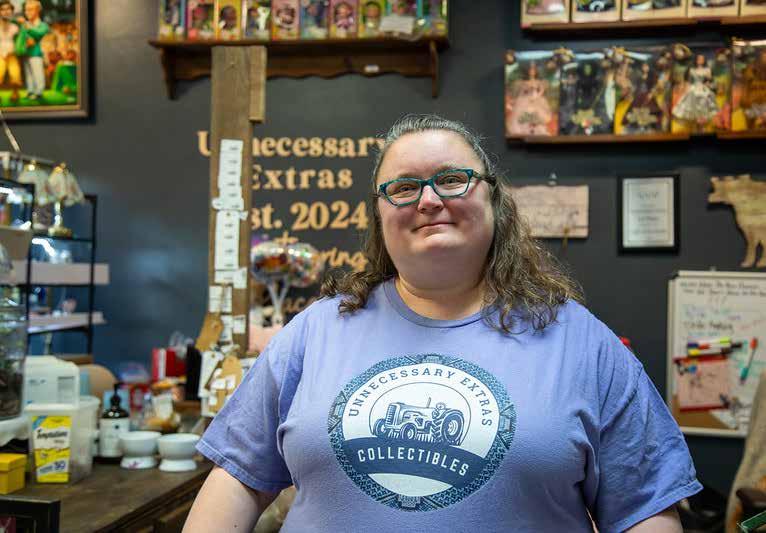
We’ve all got unnecessary extras scattered around. Old toys, vintage clothing and unused furniture often lie dormant, stacking up and collecting dust. You know what they say, “One man’s trash is another man’s treasure,” and Lisa Fellers has made it her mission to be the one who turns trash into treasure for the right person.
A former teacher and grant writer, Fellers has always harbored a love for the nostalgic. When it came time to build something of her own, Fellers turned her lifelong love of hunting for vintage finds into a communitycentered space where she could help everyone locate the nostalgic things that spark joy.
Unnecessary Extras started as a side hustle. Fellers began buying and selling items as a labor of love with no real business plan in mind. Her keen eye for good finds quickly took on a life of its own, and before long, she was ready to open her own store.
“I’ve always been drawn to pieces with history and personality. The store has grown step by step: adding vendors, expanding into



collectibles and specialty items, publishing my own planners and books, developing in-house print services and continually responding to what our town needs. It’s been built thoughtfully, one decision at a time,” she says.
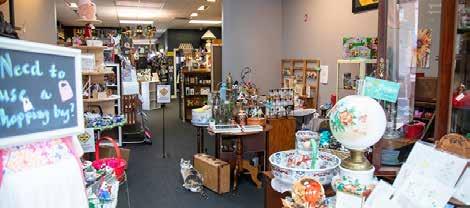
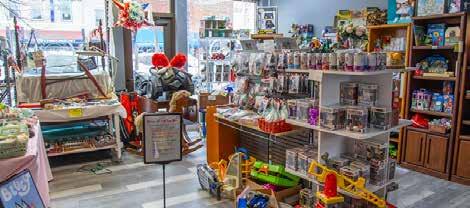
Located at 723 Main St. in Rochester, Unnecessary Extras is Fellers’ way of helping people smile. She has a little bit of everything, and vendors are constantly adding new items. Unnecessary Extras carries items such as glassware, small furniture, retro toys, dolls, books, jewelry, paper goods, unique home decor, 80s-era toys, art supplies, craft items, handmade goods, candles, gifts, print services and more.
Fellers does not allow duplicate vendors, ensuring that there is always fresh inventory and each booth retains its own unique identity. She encourages those in and around Rochester, and those beyond, to come in regularly and find something



that speaks to them.
“Unnecessary Extras is built around relationships. We genuinely care about the people who walk through our doors. We strive to be the kind of place where everybody knows your name — where you’re greeted, remembered and valued. Customers aren’t just transactions; they’re neighbors, friends and part of the story of this store,” she says.
Alongside the constantly shifting inventory, Fellers appreciates being able to support local entrepreneurs and crafters. Her deep connection to the community also inspires her to fill the gaps for any needs that might be missing from Rochester. To help with that, she has built a print center to provide photos, cards and custom paper products.
For just that little bit of extra personality, visitors can also meet the shop’s three rescue cats who roam the store looking






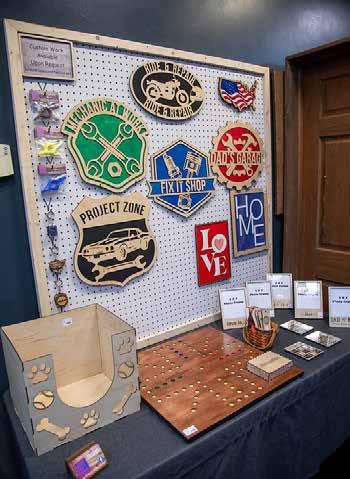
for mischief and a scratch behind the ears. Fellers is also active in helping find ways to strengthen Rochester by collaborating with other businesses and serving on local boards and committees that organize events for downtown Rochester.
“Together, the mix of personal connection, community investment and a constantly evolving selection creates an experience that feels welcoming and rooted — not corporate or impersonal. The shop helps keep downtown active and vibrant, while offering a place where people connect, share stories and feel like they belong,” Fellers says.
If you’re looking for that rare find or an oddity that speaks to your personality, make sure to stop in and see what kind of mischief you can find.
To learn more about Unnecessary Extras, visit unnecessaryextras.com.












LOCAL AUTHOR PROVES LAUGHTER IS GREAT HORMONE THERAPY BY WRITING A HUMOR BOOK ABOUT PERIMENOPAUSE
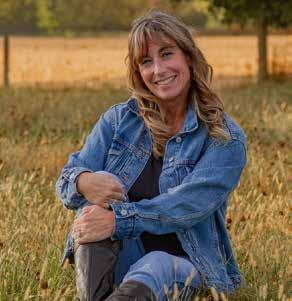
Writer / Christy Heitger-Ewing

“Christy Heitger-Ewing’s
into This Room?’
book
‘Why
Did I Walk
is drop-dead hilarious.
She
writes about everything we talk about with our BFFs, splaying taboos in her uniquely amusing way. This is a book for every single one of us.”
Wendy Liebman, comedian and semifinalist on “America’s Got Talent”
hen women reach a certain age (usually their 40s), we start having conversations with other females that often begin like this: “So, I’ve been dealing with this weird thing lately …”
That “weird thing” could be anything from itchy ears and dry eyes to a racing mind and unquenchable thirst. It could be facial hair, dizziness, dry skin, acne, excessive clumsiness, inability to focus, sudden fear of driving or an impending sense of doom.

If you find yourself questioning the cause of these symptoms, I’ll save you some time by letting you know that all this nonsense is due to perimenopause, which is that stretch of time prior to menopause when your body produces less estrogen. I’m sorry to be the one to break it to you, but this transition period can last up to 10 years. If you’re between the ages of 40 and 55 (perhaps even younger) and are experiencing annoying, odd or surprising physical or mental symptoms, it’s likely perimenopause.






For five years, I grappled with terrible insomnia, thinning hair, intense anxiety, regular headaches, restless legs, dry mouth, painful hip, achy shoulder, throbbing joints and brutally heavy periods. In addition to being hot, itchy, anxious and overwhelmed, I felt like I was losing my mind as I struggled to recall certain words. Plus, I’d forget passcodes and people’s names. I’d space where I’d placed my keys, shoes, purse or phone. I’d leave to run errands, get to the front of the neighborhood and have to stop and think about where I was going so I knew whether to turn left or right out of the subdivision. I’d be in the middle of a task and get sidetracked by some random thought like, ‘If a cat’s fur goes up its own nose, does it tickle?’
Focus, Christy! Focus!
As if all of this wasn’t bad enough, stray hairs began sprouting above my upper lip, and pimples began forming on my chin. WTF? I looked like a cross between my husband and my teenager, with facial hair and zits. And every day, regardless of how much rest I got the night before, I was dog-tired.
Finally, after talking to other women, I put the puzzle pieces together to determine I was in perimenopause — and it was kicking my ass.
I sought relief from my primary care doctor and OB-GYN, but it
all proved futile. I complained about painful sex and was told to try lube. I complained about waking up drenched in sweat and was told to crank the AC down and blow a fan in my face. I complained about sleeping poorly and was told to drink tea in the evening. Essentially, the resounding response I got was a shoulder shrug and the message: “Eh, this is all part of growing older as a woman.”
Screw that!
When I met with a functional wellness doctor who specialized in hormone optimization, I felt seen, heard and validated as she




listened, took notes, drew my blood and built a plan. She was able to offer evidence-based, practical strategies to get me back to the land of the living. Woo-hoo!
Did you know that during perimenopause you may suffer anywhere from 10 to 100 symptoms that range from mildly irritating to beyond aggravating? You may experience vertigo, rage, nausea, panic, frequent UTIs, heart palpitations, acid reflux, tendinitis, sore breasts and phantom smells. Sadly, this is not a comprehensive list.
However, I found an upside. You get to blame everything on perimenopause! If you forget what you were saying mid-sentence, that’s perimenopause’s fault. If you put your husband’s underwear in your kid’s drawer or your dog’s food in your cat’s dish, perimenopause is the culprit. If you drop a plate while unloading the dishwasher or trip over your own feet on the way to the bathroom, that’s the work of perimenopause. If you want to claw your spouse’s eyes out for breathing or chewing loudly — perimenopause. You get the idea.
It really is ridiculous how hormones have rewired my mind and reconstructed my body. At a certain point, you have to laugh. When I found myself Googling “tips for tolerating people,” I knew I must write a humor book about the experience.
“Why Did I Walk into This Room? Finding the Humor When
Perimenopause Is Kicking Your Ass” is for any woman who feels isolated, stuck, exhausted and misunderstood in midlife.
This book offers hope for the hopeless, clarity for the confused, enthusiasm for the apathetic and laughter for the lethargic. If perimenopause has commandeered your brain, wiped you of energy and motivation, and wreaked havoc on your sleep and sex drive, this book is just what the functional wellness doctor ordered.
Christy Heitger-Ewing will be speaking to the Wonderful Women of Hamilton County about perimenopause and signing copies of her new book at 6 p.m. March 24 at Goodness Gracious Kitchen & Cupboard. To RSVP to this event, visit tinyurl.com/jz35rc9s.
For more information or to purchase a copy of “Why Did I Walk into This Room?” visit christyheitger-ewing.com.

Accent your kitchen with a beautiful metal range hood. Fully customized to your specs and style.



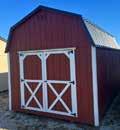
A&L Storage Barnsof Kendalville 901 W North St Kendallville, IN 46755
Mon–Fri: 11:00 AM–4:00 PM (260) 242-7608
A&L Storage Barns of Benton Harbor
2535 M-139 Benton Harbor, MI 49022
Mon–Fri: 1:00 PM-6:00 PM Saturday: Closed Sunday: 2:00 PM-5:00PM (269) 921-5727
A&L Storage Barns of Kokomo 2312 N Plate St Kokomo, IN 46901
Monday & Friday: 10:00 AM–4:00 PM
Tuesday & Thursday: 10:00 AM-5:00PM Wednesday: Closed Saturday: 10:00 AM-1:00PM Sunday: Closed Lot open for browsing 24/7 (765) 461-2286

Angola Travel Stop Angola, IN 46703 260-463-2975 X 1 ALSB@IBYFAX.COM
Maple Lane Metals 13428 Springfield Center Rd Grabill, IN 46741 260-627-5000
J&D Woodworking 27951 Wasepi Rd Centerville, MI 49022 269-432-2788 JDWoodworking@IBYFAX.com
Wormans Outdoor Solutions 5597 W. IN 24 Logansport, IN 574-601-1629 Wormansoutdoorsolutions@gmail.com
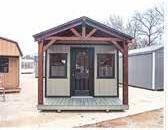
Cabins
Maple Valley Garden Center 2552 E State Rd 2 Rolling Prairie, IN 46371 219-575-0139 Abom1983@gmail.com
EJ Flooring 20 W. 100 N. Winamac, IN 574-946-0111 Ejsflooring@hotmail.com
Rabers Patio 815 N VanBuren St. Shipshewana, IN 260-336-1978 Merl@raberpatios.com
Riverside Tire 14777 St Rd 49 Antwerp, OH 43518 419-258-1917
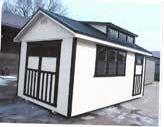
Cottage

Renewed Marketplace 809 E. Vistula St. Bristol, IN 574-612-0367 Yoderzach4@gmail.com
Oakes Enterprise 1912 US Hwy 12 Galien, MI 269-545-9020
Greg@oakerenterprises.com
BID Jackson 3150 Page Ave. Jackson, MI 269-217-5420 Greg2401@yahoo.com

Writer / Jeff Kenney
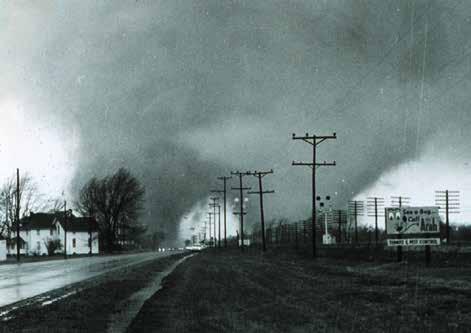
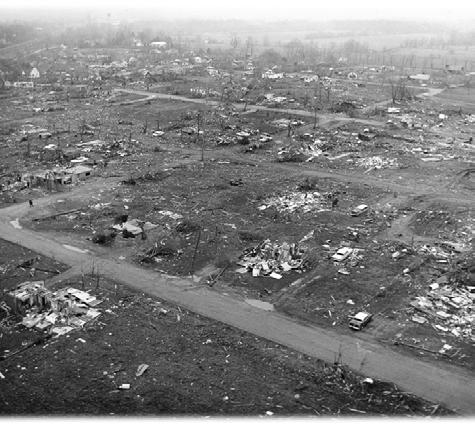
It’s an incident in Northern Indiana history that one either remembers if one was alive for it, or is familiar with if paying much attention over the years: the terrible — and deadly — fury of the infamous “Palm Sunday” tornadoes of April 11, 1965, 61 years ago this month. Six Midwestern states were hit that day with a total of 47 strong tornadoes.
In fact, the day marks the fourth-deadliest for tornadoes ever recorded, with as many as 271 people killed in the Midwest and 1,500 injured, 1,200 of them in Indiana. The Hoosier State saw 137 killed by 10 tornadoes during the late afternoon and evening (the deadliest recorded tornado outbreak was 747 killed in 1925, followed by 2011 — with 324 dead — and 1974, with 310).
Besides the storms sweeping through the Lakes area (which we’ll revisit in a moment), at least four tornadoes struck Central Indiana that evening between Indianapolis, Lafayette and Fort Wayne, with one storm destroying most of the towns of Russiaville and Alto and devastating part of Kokomo before moving into Marion.
That April 11 followed a previous month filled with cold and snow, so as warmer temperatures emerged that fateful Sunday for the first time in quite a while, many in the Lakes area were outside rather than near radios
or televisions.
In fact, one of several changes wrought by the Palm Sunday outbreak pertains to dissemination of weather alerts. While radar stations were nowhere near as pervasive as they are today, weather services had actually recognized the imminent danger of the storms in time to issue adequate warnings. But many people didn’t receive them, and many didn’t recognize that a danger-related alert had been issued, since no real alert system existed

outside of regular weather broadcasts. This led, in 1966, to the introduction of the terms “tornado watch” (conditions are fertile for a tornado) and “tornado warning” (a tornado has been spotted), as well as many communities putting into place civil defense sirens to increase the reach of warnings when actual tornadoes were sighted. This was accompanied by a wider net of storm spotting through amateur radio and other forms.
Earlier in the day on that Palm Sunday, storms had moved across Wisconsin and Illinois and
tornado forecasts were issued for Northern Indiana, northwest Ohio and southeast Michigan.
As the band approached the Lakes area, damage having been done at Wanatah and Kingsford Heights, a thin funnel cloud touched down in Starke County near Hamlet, crossing U.S. 30 and moving across Koontz Lake, where some 100 cottages were damaged and one resident thrown some 600 feet to his death (one eyewitness reported seeing the funnel turn white as it picked up water from the lake as it crossed).
The tornado grew wider as it made its way toward Laville High School on U.S. 31 between Lapaz and Lakeville, where a new school building was under construction. As architects’ drawings and plans were blown across nearby fields, the tornado completely destroyed — among other things — the new gymnasium wall, which had been 28 feet high and 16 inches thick.
The County Line Brethren Church, just north of Lapaz, was completely destroyed at 6:08 p.m., just 22 minutes before members of the church choir and a Bible study group were scheduled to meet. Several nearby houses were leveled as well.
The one serious injury was to Lena Gillis, an elderly woman who was blown out of her home and thrown into the mud in the field behind it (nearby farmer Richard Mangus said Gillis was “rolled up like a mud ball” in the field; he also described seeing the bricks from the school flying in the sky “like birds” from the tornado).
Two miles west of Lapaz, 42-year-old Robert Halt saw the funnel cloud destroy the Findley Patterson farm just a mile away to the southwest (the storm killed the farm’s owner). Not trusting the safety of his own farmhouse’s tiny basement, Halt made the fateful decision to drive south on Pine Road toward U.S. 6 to escape the oncoming tornado. He watched the funnel from the car with his wife and

three children as the storm jumped about erratically, eventually leveling a barn near the family’s still-moving car.
Halt told the South Bend Tribune that he “lacked 100 feet” of escaping harm, but instead timbers from the barn struck their car and destroyed its windshield. While his daughter was injured and sons unharmed, Halt’s wife, Madelyn, just 38 years old, died within minutes from her injuries. The ambulance taking them to Memorial Hospital in South Bend took some 90 minutes to make what should have been a less-than-30-minute trip, with traffic backed up badly.
In Marshall County alone, an estimated $1.5 million (1965 dollars) in damage to private property was added to the cost of damage to roads and cleanup to the tune of an additional $200,000.
One less tragic story from the Marshall County area was shared with this writer for an article in the Culver Citizen newspaper.


Longtime Culver resident the late Pat Birk and her family lived in 1965 not far from State Road 6 near Lapaz. Birk said the basement of the house she and husband Art Birk and their family had was the only basement in the area, so 37 people were packed into their basement as the tornado hit.
And while Art and Pat Birk’s home had no significant damage, the old, large brick farmhouse of Art’s Aunt Laura Birk was hit while Laura and her sister were having a visit there.
“Afterwards they looked for the cattle,” recalled Pat. “The neighbors all looked, but they never did find any. Aunt Laura and Aunt Ida were buried in the mud up to their shoulders. The neighbors came over and dug those two ladies out.”
Laura Birk’s farm was destroyed except for one bizarre anomaly: a small piece of Aunt Laura’s bedroom left completely intact. “Not far from where they were, out in the yard
where Aunt Laura’s bedroom had been, her nightstand was standing exactly where it was if the house was still there,” Pat Birk recalled. Strangest of all, still sitting on the nightstand was Laura’s Bible. When she asked what page it was on, Pat recalls, Laura said that was the exact page she had been reading.
“When somebody said something to Aunt Laura, she looked at them and said, ‘What’s so amazing about that? G
In the meantime, the storms continued east, striking the small town of Wyatt, Indiana, north of Bremen, and hovering over Main Street, destroying some 20 homes.
The single tornado was then joined by a newly formed twister, and the path of destruction continued east to the areas of Wakarusa, Midway, Middlebury and the Dunlap/ Elkhart-Goshen area, where its best-known and deadliest work was done.

Wakarusa was hit hard and a child there killed as the storm moved toward Goshen. There, it struck the Midway Trailer Court, killing 10 people and leveling some 80% of the trailer park before taking three more lives and leveling more properties in Middlebury.
The most famous and impactful photo of that day’s tornadoes was taken by Paul Huffman, a reporter for the Elkhart Truth, who risked his own safety to photograph what had become twin funnel clouds on the way to Midway Trailer Court, as he and his wife, Betty, were awaiting the storm from about a mile south of the trailer park on U.S. 33.
Another F4-rated tornado, around 45 minutes later, blew through just north of the trailer park, similarly splitting into two funnels and hitting Dunlap’s Sunnyside neighborhood. Since power lines and other communication tools were destroyed by the first tornado, residents of the subdivision had little warning of the approach of the extremely violent storm, and 27 lost their lives, in addition to











six more killed in a truck stop and house at the intersection of U.S. 20 and State Road 15 (today, a memorial garden called “The Mighty Whirlwind” pays tribute to the lives lost, including that of 10-year-old Stevie Forsythe, whose family never rebuilt at the site).
As the storms moved toward the Shipshewana area, another F4 tornado (averaging between 207 and 260 mph) hit the Rainbow Lake area, killing 16 people, destroying the Shore Mennonite Church and allegedly sucking all the water briefly out of the lake, so immense was its power.
In the aftermath of the tornadoes, Indiana’s governor declared a state of emergency and news outlets across the nation reported on the situation.
Three days after the storms, on April 14, 1965, President Lyndon B. Johnson visited the area and toured the damage in Elkhart County, spending some 30 minutes at the Sunnyside




subdivision site and remarking, “Horrible, just horrible.”
In all, the Palm Sunday tornado outbreak included 38 notable tornadoes, including 18 ranked at F4 or F5 on the Fujita scale of tornado intensity, and 22 of them deadly. Six states were affected. The outbreak set a record for a 24-hour timespan that stood until the first Super Outbreak in 1974. It also set a record in Indiana for tornado deaths in a 24-hour period.
The Palm Sunday outbreak was also important not only for the aforementioned changes it brought about in warning and communications systems, but also in the information gathered from it by tornado scientist Tetsuya Theodore Fujita (for whom the “F” ratings for tornadoes are named, after he developed them in 1971). Studying aerial surveys of the Palm Sunday tornado damage led him to realize that the reason some tornadoes may destroy one house but leave another undamaged nearby was not actually
that the funnels “jump” off the ground, as previously assumed, but rather that the worst damage from tornadoes is caused by small mini-tornadoes within the larger funnel, which cause the most impact.
President Johnson, in a speech at the South Bend airport after his survey of the tornado damage on April 14, summed up the aftermath of the Palm Sunday tornadoes in words that were both prophetic and optimistic:
“We pray that our technology and science will some day enable us to exercise a greater measure of control and prevention (over natural disasters). Until that day comes, I know it is the will of the American people that whenever their neighbors or friends in any community, in any state, suffer such losses at the hands of nature, the government of this good and generous people should be ready and prepared to assist in every useful way.”





















Writer / Amy Beaucham
A handler steps off the trail and into the trees, guided by a special four-legged friend who is suddenly all business — head low, tail working, nose instinctively reacting to what the forest floor is revealing. A little farther ahead, a volunteer “decoy” waits in the cold, sometimes for hours, so the dog can learn a life-saving skill. Breath hangs in the air. Boots crunch. The woods settle into a hush around the dog and handler, as if making room for the work to be done.
At Pup Assist in Walkerton, training is shaped by a clear mission. For many dogs, that purpose begins with everyday obedience through the basic training program. For others, it develops into more specialized tracks, depending on the dog, the handler and the goals. No matter how far a team chooses to go, the work still leans on the same foundation: reliable, everyday skills that hold up outside the training space.
Sometimes the mission unfolds along Pup Assist’s wooded trails or in a park. At other times, it occurs in a dedicated training space at Pup Assist, designed for practicing real-life
manners in a controlled setting. A dog learns to walk without pulling, pausing when asked, looking up for guidance instead of lunging toward every distraction. An owner feels the leash go a little looser and realizes that with consistent coaching, daily life with their dog can feel calmer, more consistent and more enjoyable in all the right ways. The bond between dog and owner deepens as the two learn to communicate clearly and fully trust each other.
In scent-based training, dogs learn to use their remarkable sense of smell with disciplined focus to identify specific target odors or problem sources people cannot perceive. The dog steps into job mode and begins to search with purpose, moving down a hallway, slowing near a doorway, pausing at a seam, hovering at the edge of a baseboard, then signaling with quiet certainty.
Depending on what a dog is trained to detect, that work may involve bed bugs, mold, termites, black powder or other target odors. From the outside, it can look simple, but the stakes are real. This is the kind of training that can protect a home, a business and a family’s peace of mind.
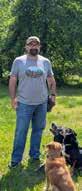
Pup Assist is a certified disabled veteranowned small business owned by Shawn and Lori Hite and led by Shawn, a master dog trainer specializing in nose work. Dogs and handlers can be trained in scent detection for a wide range of needs, including narcotics, explosives, mold, bed bugs, mushrooms and search-and-rescue. Pup Assist offers private lessons for nose work and basic obedience, along with group obedience classes that include coursework as well as field practice.

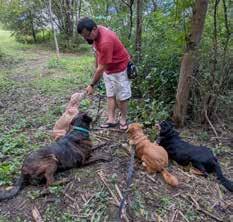
For teams that want to go farther, some may qualify for search-and-rescue certification and real-world call support.
Shawn and Lori opened Pup Assist in October 2024, bringing their training focus to a dedicated property designed for handson work. The tagline on their materials, “Where Every Nose Knows,” speaks to the faith Shawn and Lori place in a dog’s ability, paired with consistent training that turns instinct into reliable work. More than a slogan, it reflects their belief that dogs are capable of extraordinary things when they are trained with patience, structure and trust.
When Shawn and Lori married in September, it marked a joyful milestone in a partnership already formed through shared goals, shared adventures and a deep belief in what purposeful dog training can do. Their facility spans 16 acres of trails, woods and open space designed for practical training that can support a team from the basics into more advanced scenarios. They also support the Marshall County EMA and the Cleveland Township Fire Department with
Apartment

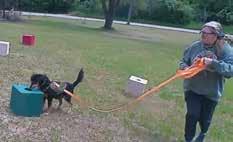
K-9 search needs, while staying dedicated to their surrounding community and to teams beyond their immediate area. Their goal is to help develop dog trailing teams that can assist local authorities with the search for lost individuals and to keep building that network through training, practice and community involvement.
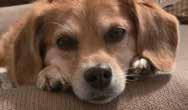
At any given time, Pup Assist is working with a wide range of dogs, each representing a different kind of possibility. Some dogs are being prepared for therapy work, some are building detection skills, others are developing the consistent behaviors needed for future placement, and many are simply
learning how to enjoy life as a companion in a home. Shawn and Lori have several dogs who are part of their own household and are currently in training or active work, including Alice, Merit, Calley, Churro and Scout.
Shawn Hite is a retired U.S. Army staff sergeant and combat veteran. After retiring from the military, he continued his education through Highland Canine’s Master Dog Trainers course in North Carolina. His training philosophy is deeply connected to the idea of purpose. “My goal is to give the dogs a job, to give them a mission,” Shawn says. A well-trained dog, in his view, is not just polite on a leash. A well-trained dog has a clear assignment that engages mind and body, and sometimes that assignment is companionship itself: being reliable, responsive and a true joy to live with.
“Dogs are not designed to be on your couch all day long doing absolutely nothing,”

Shawn says. “They need mental stimulation. They need physical stimulation.”
That mission-first mindset shapes everything Pup Assist does. Training is not a one-anddone purchase. It is a relationship that gets built, practiced and maintained.
One of Shawn’s favorite moments is the instant a dog shifts into scent-work mode.
“When you put the dog’s vest on, you clip off the long line, and then they’re in charge,” Shawn says. “You’re following.”
That is the point. In scent work, the dog is the specialist. The handler learns to trust the dog’s information, notice subtle shifts in body language and stay patient through distractions. Shawn calls each dog-andhandler pair a team, because success depends on both ends of the leash learning to work as one.
One of Shawn’s specialties is taking shelter

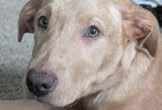


dogs — ones that may have had a harder start in life — and giving them structure and a future.
“Once I figured out that I could successfully take regular shelter dogs and give them a job, that was it,” Shawn says.
For dogs who are part of Shawn and Lori’s personal training program, that progress is built through real routines rather than isolation. “They live with us,” Shawn says. These dogs learn how to settle, how to share space and how to practice manners in normal routines. For many families who attend classes, that same idea carries over at home, because the best results come when training becomes part of everyday life, not a once-a-week event.
The goal is a trained, socialized, balanced dog — a companion a family can enjoy. One local family has seen that kind of change firsthand. About a year after adopting Nola from the Marshall County Humane Society, they watched her grow from uncertain and untrained into a happier, more engaged dog, with Pup Assist playing a role in that progress. Upon adoption, Nola was not house-trained and needed basic obedience training. With time, consistency and the right guidance, she began to settle into her place in the pack. Now she loves the water, delights in taking hikes, enjoys regular playtime and even visits a nursing home, where her cheerful presence brightens the day for residents. The family describes her as joy-filled and endearingly goofy, the kind of dog who makes people smile simply by being herself.
Service-dog work is meaningful to Shawn for deeply personal reasons. As an Army veteran, he understands what it can feel like to return home after combat.
“When I got out, I had horrible nightmares,” Shawn says. “Nightmares to the point where I would wake up in the middle of the night, and I would be attacking something.”
He describes the fear and the changes he had to make as he worked to feel safe again.
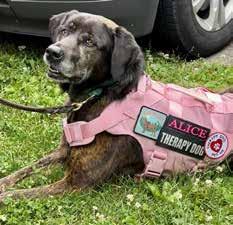
Alice, a service canine, helped pull him
back into safety. “Alice was the one who did a lot for me,” Shawn says. She interrupts nightmares, turns on a light switch and applies pressure therapy until he reorients. “She doesn’t move until I realize where I am.” Alice also assisted Shawn in focusing on her when large crowds became overwhelming.
That experience fuels Pup Assist’s desire to bring high-level training closer to home for veterans. Shawn wanted to provide access without an overly rigorous process that requires constant long-distance travel and to offer support at a community level. That local focus is strengthened by community involvement, including sponsorship from the Mill Creek Lions Club, which helps underwrite Shawn and Lori’s Veteran K-9 Training efforts.
Search-and-rescue training is not something a trainer can do alone. Dogs need to find many different people, in many different settings, under many different conditions.
“People as a whole, we each have our own unique smell,” Shawn explains. Diet, environment, genetics and daily life create variation. Training with many decoys teaches dogs to rely on scent itself, not familiarity.
Pup Assist calls that K-9 search-andrescue work “trailing,” and it is built on a deceptively small starting point: a person’s scent. Sometimes a dog begins with a scent article as simple as a hair tie, a sock or a hat. Once the dog locks onto that specific odor, the team is off, following the trail toward one person, not just any person.
In other scenarios, the start is even smaller. Search dogs can work from “skin rafts,” the tiny, cornflake-like flakes of dead skin, sweat, bacteria and oils we shed constantly. Those particles carry our personal scent signature, and dogs can follow them as they settle onto the ground or drift on air currents, even through crowded spaces.
That is why volunteer decoys matter so much. Pup Assist credits the community for stepping in week after week, sometimes in miserable weather. “They are the most important part,” Shawn says. Those volunteering are essentially playing hideand-seek with the K-9s, giving dogs the chance to learn how to follow a human scent
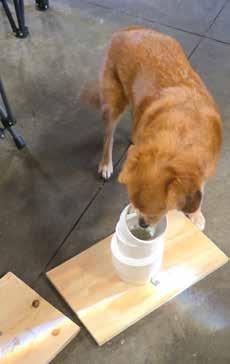
No special skills are needed, and questions and social time with the dogs are encouraged. Since the same person cannot be the decoy again and again if the dog is truly learning to follow scent rather than a familiar individual, the team needs a steady rotation of volunteers. Those interested in helping as a decoy can contact Pup Assist at 219-346-0697.
Training does not pause just because the weather is miserable. On Jan. 3, 2026, K-9 teams Lucy-Lu, Buck and B2 worked through some of the toughest conditions of the season: 22-degree temperatures, ice and snow. Those kinds of days matter because real searches do not wait for perfect footing or comfortable temperatures. Pup Assist encourages teams to work in multiple environments and weather conditions, building steadiness when the trail is cold and the ground is slick.
Shawn has seen firsthand how determined a good dog can be once it locks onto a human scent. One of his favorite examples comes from Lucy-Lu, a bloodhound with a turnaround story of her own. Lucy-Lu came from a breeder in Ohio and was returned due to aggression and resource guarding of valued items. With structure, training and patient handling, she began to change, which was evident in her work.
Last spring, the team trained at Centennial Park in Plymouth during graduation weekend, when the park was packed with families, grills and kids everywhere. With his mom nearby, a young boy, who had
volunteered as the “lost subject,” tried to trick the dog by changing locations across the large wooden playground. Even with competing scents and constant movement all around her, Lucy-Lu stayed focused, sorted through the chaos and found him. It was a training moment with a powerful takeaway: When the situation gets complicated, the right dog can still do the job.
Other teams are building that same kind of
confidence, step by step. On Sunday, Oct. 5, 2025, Jarika and Bud, known as Team B2, took on Centennial Park in Plymouth in the middle of a busy public setting full of distractions and scent contamination. They ran a 0.5-mile trail with the decoy missing for an hour, and they did it without a scent article. Bud started with only six steps of uncontaminated skin rafts before he took over and went straight to work. In just 10 minutes, Bud found the


The story behind that success is part of what makes trailing work so compelling. Only five months earlier, Bud had been a 6-monthold puppy with no obedience training. The difference came through consistent practice, Jarika’s dedication and a network of volunteer decoys willing to take on tougher hides in more challenging conditions.
Training scenarios expand over time, from the Pup Assist property to public spaces, from fresh scent to aged scent trails, and from quiet environments to real-world distractions. Pup Assist also collaborates with agencies in training exercises, because a missing-person response works best when you are familiar with the faces you’re working with.
Even in a business known for scent work, Pup Assist spends plenty of time on basics. Their walking obedience class is designed as a practical entry point for many families, and it is not only about learning to move politely on a leash. Shawn teaches and practices a different basic command each week, giving owners clear steps to work on at home while building steady skills that hold up in the real world. The class covers leash manners, heeling, sit, down, stay, controlled greetings and handler focus. Shawn also values the Canine Good Citizen program as a strong benchmark for dogs that need reliable behavior in everyday public settings.
Group training is crucial because dogs influence each other’s energy, confidence and reactivity. Their structured classes use this peer influence to help dogs practice focus and
obedience amid real-world distractions.
Shawn’s approach to owners is practical and encouraging. “Be prepared to learn,” Shawn says. Flexibility matters because everything depends on the dog, the environment and the goals.
For puppies, Pup Assist emphasizes early socialization through the Rule of Sevens, encouraging exposure to a variety of surfaces, environments, people, handling experiences, objects, locations and friendly dogs. Confidence, Shawn says, is key.
Pup Assist chose its name with intention. The heart of the work is not just that a trainer can help, but that a trained dog can assist in real, meaningful ways.
“We’re here to assist you in being able to build that relationship with your dog,” Shawn explains, but the end goal is bigger than a lesson. It is a dog who understands its role, a handler who understands how to guide, and a partnership strong enough to
carry into daily life, public settings and, for some teams, the moments that matter most.
Beyond training, Pup Assist also responds to detection-based inspection requests. For example, Merit specializes in bed bug detection, and both Shawn and Lori are equipped to handle Merit on a call.
Whether obedience, scent work or search scenarios, the philosophy of training at Pup Assist circles back to the steady ideas of purpose, partnership and practice.
Lori has a favorite quote that sounds simple, but it fits the heart of what Pup Assist is building: “I truly believe if everyone could start their day petting a sleeping dog that loves them, the world would be a far better place.” It is an image of trust, peace and connection, and it is also a reminder that the bond matters. Training is not only about commands or certifications. It is about living and functioning well together.
Whether for a walking class, private training,
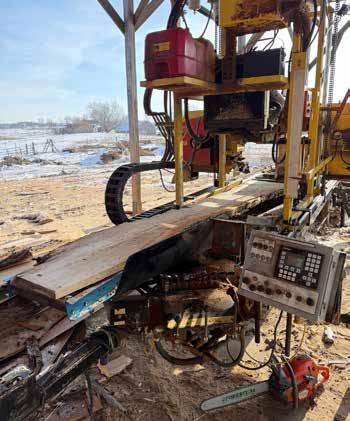
detection services or participation in searchand-rescue, the goal is the same: a confident dog and a capable handler.
At its core, Pup Assist pairs a job for the dog with a clear plan for the person holding the leash, and the two grow stronger together with repetition, patience and time. Whether the work happens in a training space, a busy park or deep in the trees, they return to the same truth behind the words on their materials: Where every nose knows. Purpose becomes something a dog can live out, and a handler can truly rely on.
Pup Assist is located at 71271 Spruce Road, Walkerton, IN. For more information, call 574-241-6263, email pupassist@gmail.com, or visit them online at pupassist.com.
Volunteer decoys / SAR contact Email: searchteamspupassist@gmail.com Text: 219-346-0697
Message via Facebook (Pup Assist / Heartland K9 Search Team pages)
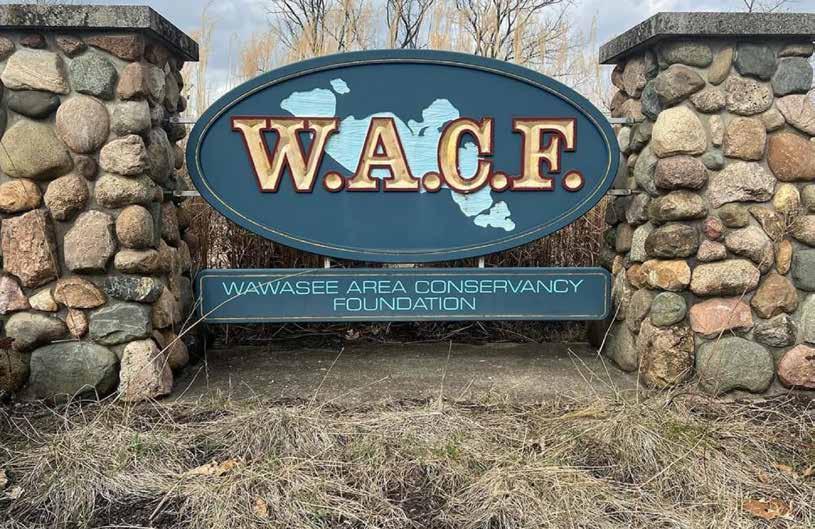
Dates for WACF Activities 2026
April 25 | 8 AM
Bird Walk
May 2 | 11 – 3
Earth Day Festival
June 4 & 18 | 9 – 11 AM
GUIDED Canoe/Kayak trip: Explore the Wetlands of Yesteryear at Between the Lakes 5814 E Pickwick Rd
June 6 | 9 – 11 AM Native Plant Sale
June 11 & 25 | 6 – 8 PM
Guided Canoe/Kayak trip: Explore the Wetlands of Yesteryear at Between the Lakes 5814 E Pickwick Rd
July 4 | 9 – 11 AM
Bug Catch
July 16 | 9 – 11 AM
Fishing Derby with the DNR
Aug 1 | 10:30 – 12:30 Lilly Pad Cruise at the Frog Tavern
Aug 8 | 9 AM start Anderson Farm tour at Anderson Farms
October 3 & 4 | Noon – 4 PM Fall Tastic Trail Walk
All events at 11586 SR 13 in Syracuse unless otherwise stated

We are the Wawasee Area Conservancy Foundation and our headquarters are at 11586 N SR 13 in Syracuse. We WANT to see YOU! We have adult and children’s programming from April through October open to the public, no reservations required on most programs.
Our mission is to preserve and protect the Wawasee area watershed for generations to come. One of the ways to make sure this happens is through education programs. Our programs apply to most lakes and streams, so what you learn about Wawasee and Syracuse lakes can be applied to many other lakes in our areaCome join us on one or more of our educational activities. When the public flag is flying at the entrance, we have a free program you may attend! Look for a listing of our events in the calendar of activities in this publication. Follow us on Facebook and Instagram, and visit us online at wacf.com.
Here is our calendar of events for this year:
April 25 – Bird Walk beginning at 8 a.m. Wander our trails as you are led by a bird enthusiast who can spot the sounds and sights of our resident (and migrating) birdsBring your binoculars and wear appropriate clothing to walk our wooded wetland trails.
May 2 – Earth Day Festival from 11 a.m.- 3 p.m. Returning this year are the raptor birds! Enjoy over 20 different activities designed to highlight different aspects of nature! Most activities are interactive not just demonstrations. Some vendors will have unique items for sale but the rest is all FREE including a hot dog, chips and water!
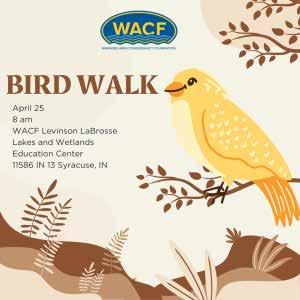









the area looked like a couple hundred years ago, how it has changed, and what that change means for future generations. PLUS learn to identify native and invasive water plants. The Quinn cabin (the first cabin built on Lake Wawasee) will be open for viewing. Registration required at wacf.com and any person under 18 must be accompanied by an adult.
June 6 is Native Plants – it’s a discussion about the importance of planting native and we will have plants available for purchase.
July 4- the ever-popular Bug Catch. An all-time favorite for kids of all ages. Participants learn about little critters in the water and their value to the lake quality. Then they get wet and catch ‘em! Nets are provided but feel free to bring your own.
July 16 – Fishing Derby with the DNR at Between the Lakes. Bring the kids and grandkids. Poles and bait are provided by the DNR.
August 2 – Lilly Pad Cruise is a time to relax and enjoy a cruise on the HMS Lilly Pad. Board from the Frog Tavern. Registration is required. See wacf.com for more information and registration.
Canoe trips are Friday mornings during the summer. See our webpage wacf.com for available dates and departure timesRegistration is a must!


Join us as we put in at the headwaters in Knapp Lake and paddle downstream to Indian VillageSee wildlife, the continental divide and learn about water quality in these upper lakes of our watershed.







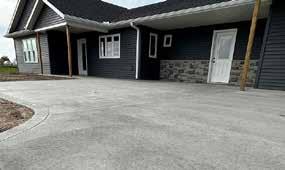




BILL’S LONG REACH SERVICE SHAPES PONDS WITH PRECISION & PATIENCE
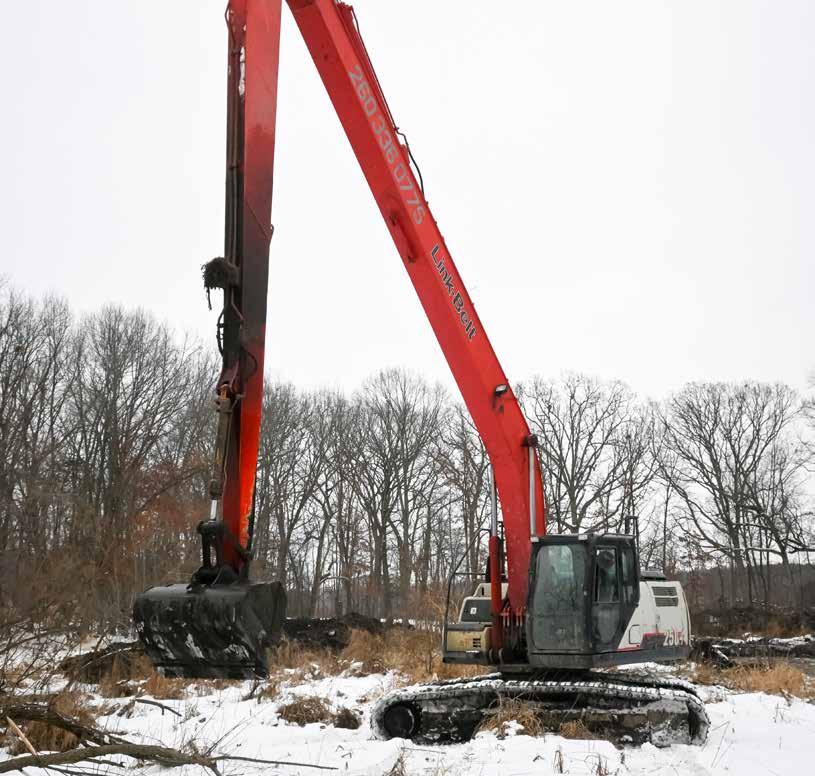



For Best Results Plant trees in March, April, May, or September, October, November
On a calm morning just north of Shipshewana, the water tells the truth.
A pond’s surface might look still, even generous. Still, underneath the surface, the story is more complicated. Depth matters. Soil shifts. Banks erode slowly, then all at once. What holds today may not hold next season.
Bill Miller knows this because he has spent years listening to land most people only glance at. He doesn’t describe his work in lofty terms, and yet he doesn’t need to. When you spend your days shaping ponds, stabilizing shorelines, and working in water you can’t see through, precision becomes habit. Patience becomes instinct. Integrity becomes nonnegotiable.
Bill is the owner and operator of Bill’s Long Reach Service, a Shipshewana-based excavation business specializing in pond and small-lake construction, maintenance, and repair. With a 60-foot long-reach excavator and years of hands-on experience, he takes on jobs that demand trust, because once the first scoop of earth is moved, there’s no undoing it.
Bill grew up in Middlebury, Indiana, next door to an excavator. That proximity left an impression. As a teenager, he spent time helping,
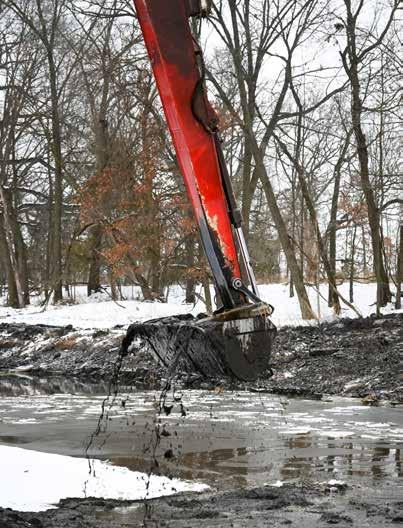
• Long Reach Excavator and Dozer Service
• 60 ft Reach
• Digging or Cleaning of Ponds, Small Lakes, and Ditches
• We have Mats to use Across Difficult Terrain
• Stop Bank Erosion & Maintenance. See us about Installing Rocks
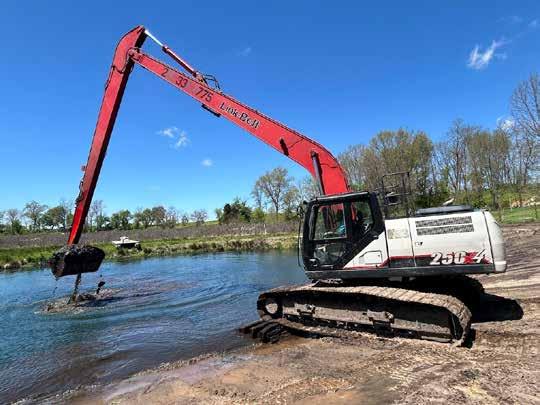



Tues-Friday 9-5 Sat 9-2
Closed Sunday and Monday
learning what machines could do while being guided by someone who respected them and the land beneath them.
Life took him elsewhere for a while. Like many in the region, Bill spent years working in the RV industry. Then came 2020, when the pandemic paused one world and another opened.
The fall before, Bill had purchased an excavator to work on his own pond. When shutdowns kept people home, neighbors started asking for help. One job turned into a handful of phone calls from people he hadn’t met yet. By the time work resumed elsewhere, Bill realized something important had happened.
“I probably wouldn’t have had the nerve otherwise,” he says. “But it all came at once.”
The timing wasn’t planned, but the fit for the new line of work was immediate.
Pond work is deceptively complex. Yes, anyone can dig, but not everyone can dig correctly, especially in water.
Bill’s long-reach excavator allows him to shape bodies of water with steadiness and accuracy. A standard excavator can only reach so far before the operator runs out of room. That’s when depth becomes uneven, slopes become unstable, and future maintenance turns costly.
“With a short reach, you might get it deep in one spot,” Bill says. “But then you can’t reach far enough to keep it that way.”
Depth, width, soil type, and slope all work together. Get one wrong, and erosion or collapse follows. Bill has seen it happen when well-meaning property owners try to do the work themselves.

“I always tell them, you can work on it, just don’t make it too wide,” he says. “Otherwise, when I get there, I won’t be able to reach it.”
It’s not about taking over. It’s about finishing right.
Working in water introduces another challenge: You can’t see the bottom. You feel it.
Experience teaches the difference between reaching depth and holding it. A pond that looks right today can fill itself back in within months if the slopes aren’t designed to support the surrounding soil.
“That’s where people get disappointed,” Bill says. “They’ll say, ‘It’s not as deep as you said.’ But sometimes the only way to keep depth is to make it wider first.”
That kind of judgment can’t be rushed. It’s also why Bill is cautious about sending others into that environment. Some jobs require crane mats to stabilize soft ground. Others demand careful reading of soil that changes by the foot.
He once worked at a site where those mats likely saved both machine and operator.
“That was a rude awakening,” he says.
Bank erosion is one of the most common and overlooked problems pond owners face. Over time, water eats away at the shoreline, vegetation takes over, and property lines quietly shrink.
Bill has steadily focused on rock installation to stabilize banks and reduce long-term maintenance. On public waterways, that work requires permits through the Indiana Department of Natural Resources, and it’s a slow process.
“You don’t just go,” he says. “You wait.”
On Shipshewana Lake, Bill recently completed a project using glacier stone to protect a property that had nearly disappeared beneath overgrowth. The work called for careful cleanup, selective tree preservation, and compliance with DNR specifications.
The result wasn’t flashy, but it was solid, and it will last.
Bill doesn’t market aggressively, and he doesn’t need to. In five years, he hasn’t had a customer refuse to pay. Occasionally, someone may forget, but a reminder usually solves that. He attributes that to something deeper than contracts.
“I was reading a devotion once about how fishermen tend to have integrity,” he says. “I think pond owners are that way, too.”
That belief guides how he works. He turns down jobs that don’t feel right. He won’t cut corners or skip permits. And he won’t promise something the land can’t support.
The result is word of mouth that carries weight.
Bill works mostly alone. Occasionally, his son or son-in-law helps with larger projects. Expansion and notoriety, however, aren’t his primary goals.
“I like having my own schedule,” he says. “I don’t toot my horn, and I want to keep doing the work I enjoy and maybe someday still take a vacation to Florida in the winter.”
There’s satisfaction in driving past a finished pond, knowing
it will still be there years from now, quietly doing work that matters, then moving on to the next piece of land that needs listening.
For more information, contact Bill Miller of Bill’s Long Reach Service to discuss pond, lake, or shoreline projects at 260-336-0775.
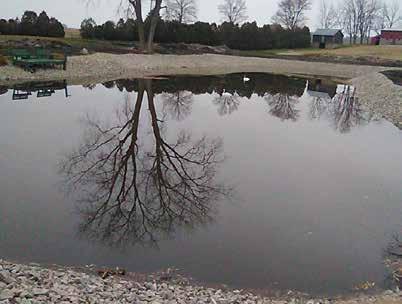


Writer / Amy Beaucham
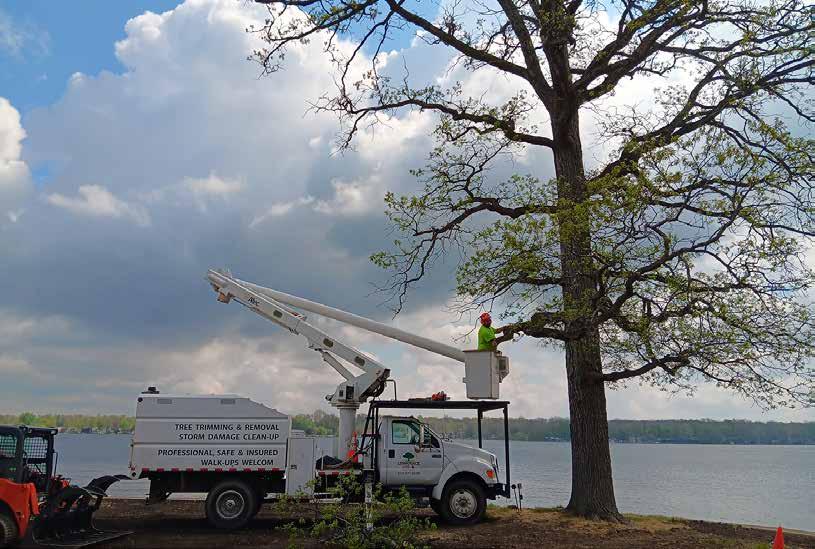
A towering oak leaning too close to a house has a way of keeping homeowners awake at night, and a storm-split maple across a driveway can turn a quiet morning into a crisis. In northern Indiana, where wind and ice can reshape a yard overnight, tree care is rarely just about how a yard looks. More often, it is about protecting the home beside it.
For Jim Lea, owner and operator of LumberJack Jim Tree Service, it has also
been a lifelong calling.
“To get through college, I planted trees in Canada,” he says. “It paid my tuition.”
What began as summer work soon turned into a broader forestry experience. Canadian lumber companies are required not only to replant forests but to maintain them.
“In maintaining the new forest, we did
brushing and thinning, which consisted of cutting down the competition trees and making sure the planted evergreens would survive,” he adds.
That early work shaped his understanding of how forests thrive. After earning a degree from Grace College and working in graphic design, he decided he wanted to build something of his own — outdoors, working with his hands. In 2005, LumberJack Jim Tree Service was born,





though the early days required patience. “It was hard because I was building a business part time on the weekend. I kept my regular day job,” he says.
Equipment was rented at first, since tree service equipment is expensive, and growth came steadily rather than overnight.
Today, the company operates with a fulltime employee, AJ Hostetler, along with part-time help from Moises Andrade, Jim Robinson, his son Tomas, and his son-inlaw Mitchell Ashenfelter. His wife, Amy, joined the business in 2019 and handles the bookkeeping and paperwork, while his three daughters, Natasha, Jenna and Makayla, lend a hand from time to time, reflecting the family spirit that still shapes the company.
Over the years, services have expanded beyond residential trimming and removals to include commercial tree work. Storm-
damage cleanup was, and continues to be, an essential part of the work, as Indiana’s weather regularly leaves homeowners needing immediate help.
Recently, the company stepped into licensed timber buying in Indiana, focusing primarily on black walnut and white oak. Rather than clear-cutting properties, they practice selective logging because Jim understands that thoughtful forestry practices benefit the entire landscape.
“It’s healthy for the forest to remove some of the mature trees,” Jim says. Selective logging allows smaller trees to thrive, a perspective that reflects his roots in forestry rather than simple removal.
Tree trimming and removal remain core services of the business. Stump grinding, lot clearing, emergency response and insurance work round out the list, and every job begins the same way — with an
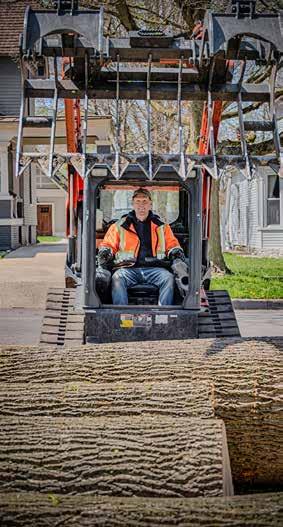
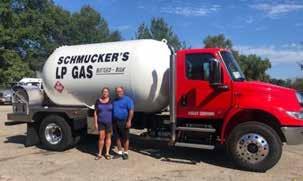


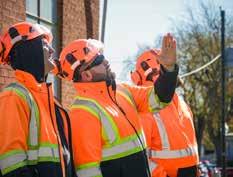
in-person visit.
“In most cases, to give an accurate estimate, we need to go on site to identify any hazards and determine how to get the bucket trucks and equipment in,” he says.
Safety is central to the work. Crews wear helmets and harnesses while working high in the canopy, and equipment is carefully maintained. When power lines are involved, the local power company trims and sleeves the lines before any cutting begins, reflecting the careful process
required for safe tree work.
“One tree at a time and one branch at a time,” Jim says.
That steady approach has earned the company something many contractors never experience: zero insurance claims on record.
Reviews echo the same themes. One customer noted that a large removal was completed in 3 days despite a rain delay, with excellent cleanup.
Another appreciated the care taken to avoid damaging the lawn. Others described the work as thorough and highly recommended, with responsiveness and communication appearing again and again.
“Usually our clients prefer their tree work to be completed quickly, especially in the case of storm damage,” Jim says. “We try to accommodate and be as efficient and

responsive as possible.”
Storm-damage calls often arrive when homeowners feel overwhelmed, and Jim advises clients to document the damage with photos before work begins. If a tree has fallen onto a roof, the crew removes it and can tarp exposed areas to prevent further rain damage while other contractors are scheduled.
Jim’s experience also shapes his advice on tree health. If a tree has lost more than 30% of its canopy, it may be beyond recovery, and protecting a home sometimes means making difficult decisions.
“For many homeowners, their biggest investment is their house and their property,” he says. “Protecting that investment is essential.”
Still, removal is not always the first recommendation. Proper trimming
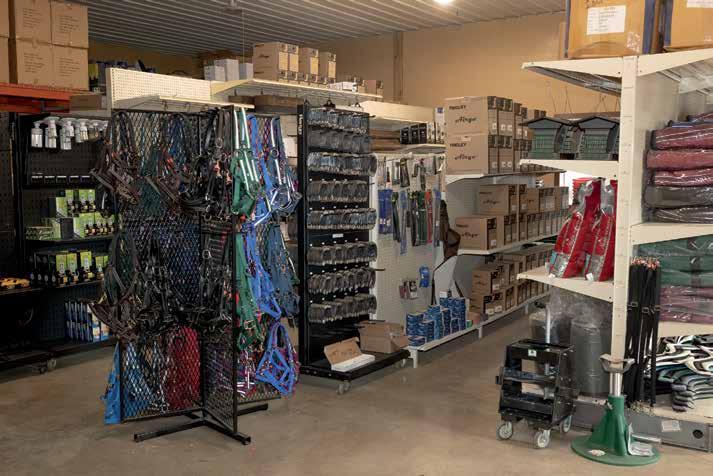


strengthens trees and prevents future hazards, selective thinning improves forest health, and education accompanies every estimate so property owners understand their options.
The business also salvages good-quality wood that it removes through LumberJack Jim Hardwoods. Logs are milled and kilndried to remove moisture before being sold as hardwood lumber. Dining room tables and countertops have been crafted from trees that once shaded local yards, while firewood is also produced as part of what Jim describes as a thoughtful, fullcircle approach.
As the company looks ahead, growth continues. Timber buying and kiln-dried hardwood sales represent expanding opportunities, yet the core of the business remains local service.
“The LumberJack Jim team strives to honor God through their tree work

while serving our community,” Jim says. “Serving locally also keeps us closer to home and family.”
That philosophy is reflected even on the company’s shirts, which display a favorite verse that guides the way the team approaches its work: Colossians 3:23-24. “Whatever you do, work at it with all your heart, as working for the Lord, not for human masters.”
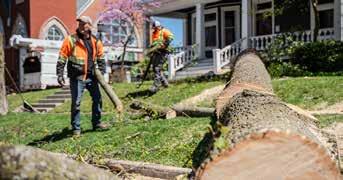
shoreline, that steady presence matters. Storms will come, trees will age, and homes will need safeguarding, and it helps to know someone nearby understands both the science of the forest and the value of the property beneath it.
When asked what he hopes clients experience after working with his crew, Jim answers simply that he wants them to feel satisfied that their needs were met and that good tree care solutions were provided.
In the Lakes West region, where trees define the landscape and often protect the

LumberJack Jim Tree Service is located at 653 E 250 N in Warsaw. For more information, call 574-371-6536 or email them at lumberjackjimtreeservice@gmail. com. You can also visit them online at lumberjackjimtreeservice.com.



9 a.m. – Good Friday Horse Auction at the Shipshewana Trading Post located at 345 S Van Buren Street. There will be horses, tack, and miscellaneous items for sale throughout the day.
10
7 – 9:30 p.m. – Free Movie: Mary Poppins at the Goshen Theater located at 216 S Main Street, Goshen. Concessions available for purchase.
18
10 a.m. – 2 p.m. – Junior Naturalist Day located at Ox Bow Park, 23033 CR 45, Goshen. Kids will discover fascinating facts about birds, reptiles, and amphibians. Ages 8-10, $5 per child.
22
9 a.m. – Antique Toy Auction located at Shipshewana Trading Post.
5 – 6 p.m. – Wildflower Walk at Ox Bow Haus Shelter. Join a naturalist for a wildflower walk along the trails to look for spring ephemerals throughout the park. $3 per vehicle.

10
6 – 7 p.m. – Building for Wildlife at Bonneyville Mill. Come build a cavity box for animals. This make-n-take box is large and suitable for squirrels, raccoons, deer mice, opossums, and owls. $25 per box.
17
9 a.m. – 5 p.m. – Discover how archaeological inquiry can serve as a way to teach history, social studies, and STEAM subjects. This will be at DeFries Homeastead, $10 per person.
25
7:30 – 11 a.m. - Buckwheat Pancake Breakfast at Bonneyville Mill. Elkhart County Parks is starting the 2026 milling season by serving up some delicious pancakes made with out own buckwheat flour. $8 per person.



6 – 7 p.m. – Mark’s Ark Animal Show at Pete Thorn Gym, 800 N Park Ave, Warsaw. Get ready for a fun-filled evening with Mark’s Ark at another exciting animal show. This is a free and family friendly event.
8 a.m. – Bird walk at Levinson LeBrosse Education Center at 11586 SR 13, Syracuse. A docent will lead attendees on a walk through the wooded wetlands looking for and listening for migratory birds. Dress for the weather and bring your binoculars for spotting scope. This event is free.
12 – 2 p.m. – Spring Cupcake and Wine Paring at Tippy Creek Winery.
4
10:30 a.m. – Cromwell’s Easter Egg Hunt at Cromwell Park.



9 a.m. - Fishing Line 5k Run/Walk held by Noble Trails starting at Gene Stratton Porter State Historic Site.
11 a.m. – 3 p.m. – Easter Bunny Brunch at Bar Louie. Free photos with the Easter Bunny, Egg grab for kids and adults, and $3 mimosas.
5
10 a.m. – 3 p.m. - Easter Brunch at Round Barn Brewery & Public House. Hop into the holiday spirit with a delightful Easter Brunch.
18
10 a.m. – 4 p.m. – Spring Garden & Antique Market. This seasonal market brings together vintage curators, passionate plant lovers, and makers who specialize in all things reclaimed, repurposed, and real.
18
10 a.m. – 3 p.m. – Tulip Fest at Field to Vase U-Pick Flowers 55923 Tulip Road, New Carlisle. $5 cash admission per car taken at the gate.