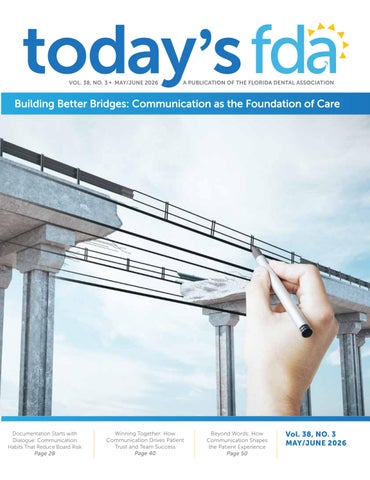
Building Better Bridges: Communication as the Foundation of Care
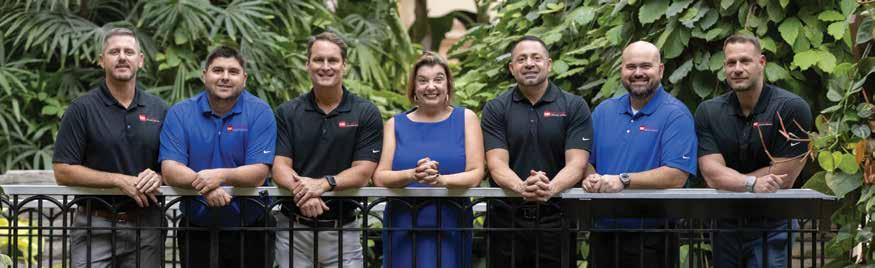
MIKE TROUT Arizona mike.trout@fdaservices.com
904.254.8927
CARRIE MILLAR
Large Groups & DSO Specialist carrie.millar@fdaservices.com 850.350.7155
DAN ZOTTOLI Atlantic Coast dan.zottoli@fdaservices.com 561.791.7744
DENNIS HEAD Central Florida dennis.head@fdaservices.com
407.359.9700
SCOTT RUTHSTROM Chief Operating Officer scott.ruthstrom@fdaservices.com 850.350.7146
BROCK SHELTON North Florida brock.shelton@fdaservices.com 850.350.7140
RICK D’ANGELO West Florida rick.dangelo@fdaservices.com 813.475.6948
JOE PERRETTI
South Florida
joe.perretti@fdaservices.com
305.665.0455
PATIENT COMMUNICATION ISSUE
28 Documentation Starts with Dialogue: Communication Habits That Reduce Board Risk
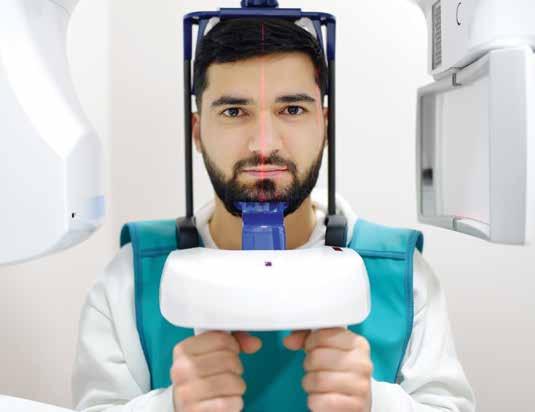
32 Why Patients Refuse Dental X-rays and How to Change the Conversation
36 Talking to the Media: Tips to Communicate with Confidence
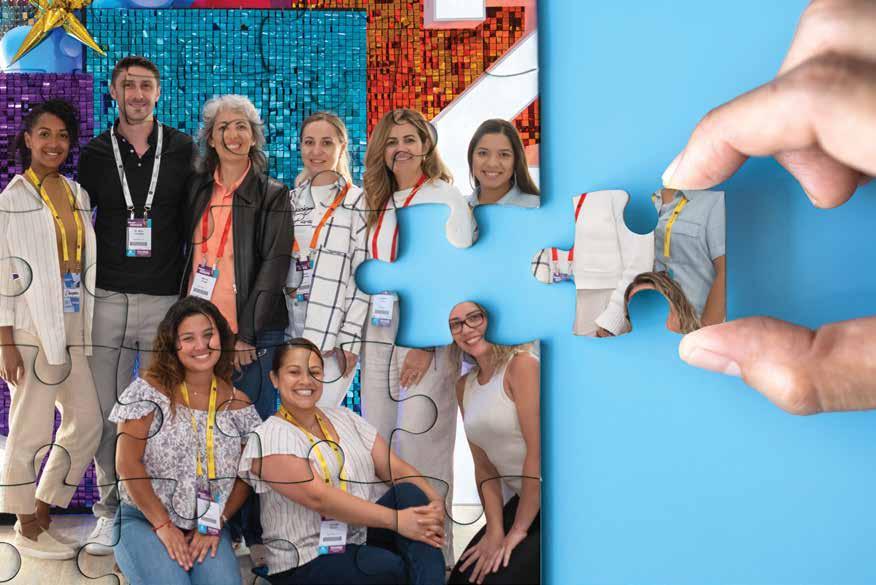
40 Winning Together: How Communication Drives Patient Trust and Team Success
43 Why Dental Practices and Leaders Are Unprepared
48 Intimate Partner Violence: Communication Matters
50 Beyond Words: How Communication Shapes the Patient Experience
54 Healing the Healers: The Role of the Professionals Resource Network in Professional Well-Being
58 FDC2026 Speaker: Bridging the Airway: A Modern Dental Approach to Sleep Apnea and TMD
60 FDC2026 Speaker: The Key to Expanding Case Acceptance and Transforming Your Practice
64 FDC2026 Exhibit Hall
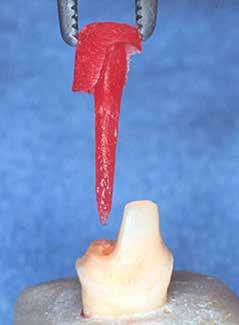
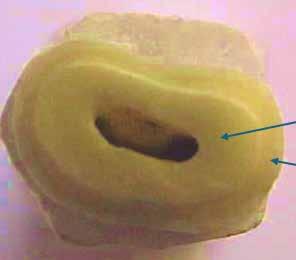
66 Cast Post-Cores: When Should They Be Used to Restore Endodontically Treated Teeth?
IN EVERY ISSUE
Off the Cusp
EDITOR
Dr. Hugh Wunderlich, CDE Palm Harbor
BOARD OF TRUSTEES
PRESIDENT
Dr. John Paul Lakeland
SECRETARY
Dr. Bertram Hughes Gainesville
SPEAKER OF THE HOUSE
PRESIDENT-ELECT
Dr. Dan Gesek Jacksonville
IMMEDIATE PAST PRESIDENT
Dr. Jeffrey Ottley Milton
Dr. Don Ilkka Leesburg TREASURER
17TH DISTRICT TRUSTEE
Dr. Andy Brown Jacksonville
Dr. Fred Grassin Spring Hill
EXECUTIVE DIRECTOR Drew Eason, CAE Tallahassee
To contact an FDA board member, use the first letter of their first name, then their last name, followed by @bot.floridadental.org. For example, to email Dr. Hugh Wunderlich, his email would be hwunderlich@bot.floridadental.org.
To call a specific staff member below, dial 850.350. followed by their extension.
EXECUTIVE OFFICE
Drew Eason • chief executive officer/executive director deason@floridadental.org Ext. 7109
Dan Zottoli, SBCS, DIF, LTCP director of sales • Atlantic Coast 561.791.7744 • cell: 561.601.5363 dan.zottoli@fdaservices.com
Dennis Head, CIC director of sales • Central Florida cell: 407.359.9700 dennis.head@fdaservices.com
Brock Shelton director of sales • North Florida 850.350.7140 brock.shelton@fdaservices.com
Joseph Perretti, SBCS director of sales • South Florida cell: 305.721.9196 joe.perretti@fdaservices.com
Rick D’Angelo, CIC director of sales • West Coast 813.475.6948 • cell: 813.267.2572 rick.dangelo@fdaservices.com
Mike Trout director of sales cell: 904.254.8927 mike.trout@fdaservices.com
The Last Word: Why Membership Still Matters Most
I have been uncharacteristically slow to write this message, as it is the first of the things I will do for the last time as your president.
By FDA President John Paul, DMD
It is bittersweet that I will no longer hold this bully pulpit and a lot of pressure to make sure this one is meaningful.
Two of my friends, Drs. Chris Bulnes and Jimmy Wilson rose to fame with an article that talked about what a dentist’s life would be like without organized dentistry. This complex,
multifaceted, striving entity is what we refer to as the Tripartite, encompassing all the elements that comprise our association. Like a living thing, it has been worthy of the many hours I have devoted to serving it, when I could have spent that time fishing, hunting, making sawdust or watching my kids dance.
As you read this, I ask you to think, “What would the association be like if you weren’t a member?”
We might succeed, we would continue to move forward, and we would fight the good fight. But we would be less. Some of you will win awards, win elections or win the hearts and minds of your peers with entertaining lectures. Most of you will be solid citizens. You will improve your patients’ health and make them smile. You will help your employees lead good lives in meaningful occupations. You will make a significant contribution to the economics of
As you read this, I ask you to think, “What would the association be like if you weren’t a member?”
your town. You will save some of your patients’ lives. All, just by doing your job. You may never know when you say something that makes a dramatic impact on someone else’s life. If the association does not benefit from your membership, we will be less. The member who needs to hear your wisdom won’t. The good fight will be lonelier and success harder won.
I realize I have turned around and I am preaching to the choir. If you are reading this, you are likely already
a member. You already get it. You know that your promise and your dues are not costs; they are investments. It’s how you get a seat at the table. When you make an investment, you don’t expect to get fair value for the price; you expect an outrageous return far above what you invested. I believe that is what you get when you are a member of our association. You become part of a group that gets you and wants to help you succeed.
Tell your friends and colleagues who aren’t members what they are missing. We want them to have access to benefits designed by dentists, for dentists. We want them to have a say in the future of our profession. We want them to be at the table with us. The old saying is often true: If you aren’t at the table, you will likely be on the menu.
FDA President Dr. Paul can be reached at jpaul@bot.floridadental.org.
FREE ONLINE CE FOR FDA MEMBERS!
Diagnostic Discussion
BI-MONTHLY COLUMNS
FDA members can earn up to 6 hours of general continuing education (CE) by reading the Diagnostic Discussion column included in the bi-monthly Today’s FDA and taking a quick online quiz
Discussions and quizzes are available 24 hours a day at the convenience of your home or office.
WEBINAR SERIES
This webinar series is your opportunity to stay informed, grow your skills and earn up to 6 CE hours at no cost.
Webinar topics include implant restoration, peri-implant disease, systemic oral health, diagnostic advancements and more!
Learn more at www.floridadental.org/online-ce
FEATURED SPEAKERS
+ Tarun Agarwal, DDS
+ Amber Auger, MPH, RDH
+ Suzie Bergman, DDS
+ Lee Ann Brady, DMD
+ Leonard Hess, DDS
+ Maria Geisinger, DDS, MS
+ David Klingman, DMD
+ Richard “Sully” Sullivan, DDS
+ Kevin Suzuki, DMD, MS
+ Many More!
HOT TOPICS
+ The Dawson Academy’s Two-Day Core 1 Course
+ Burnout Prevention
+ Composite Restorations
+ Crown Lengthening
+ Digital Full Arch Workflow
+ Implant Restoration
+ Oral Pathology
+ Sleep Apnea
+ TMD/TMJ Disorders
+ Much More!
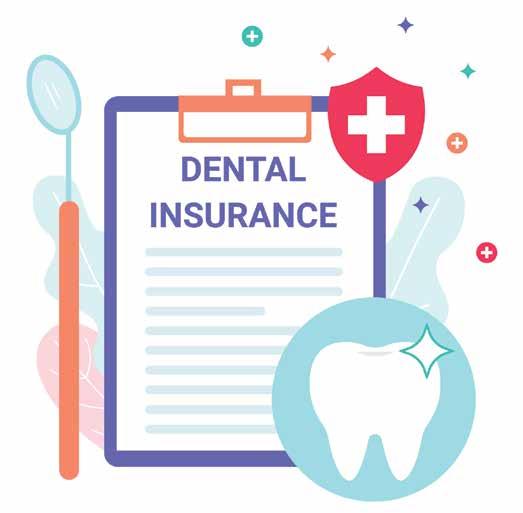
New FDA Task Force to Address Dental Insurance Challenges
Please make sure to watch for announcements on the Task Force’s work and requests for information.
Did you know that the Florida Dental Association (FDA) has a Dental Insurance Task Force? In response to ongoing challenges and evolving trends in the dental insurance landscape, FDA President Dr. John Paul created the Dental Insurance Task Force. This initiative reflects the FDA’s continued commitment to advocating for our members and ensuring fair, transparent and patient-centered insurance practices.
The Task Force will be chaired by Dr. Bert Hughes, who will serve alongside Drs. Shana Capra, Rachel Perez, Michelle Thomas and Tourner Wright. Its primary purpose is to evaluate current dental insurance issues (both private and public) impacting our members and their patients, identify areas for reform and develop strategic recommendations to guide advocacy efforts.
The Task Force will also serve as a forum to gather member feedback and real-world experiences. Please feel free to reach out to the members listed above or directly to me at cstoutamire@floridadental.org.
FDA Chief Legal Officer Casey Stoutamire can be reached at cstoutamire@ floridadental.org
legislative action
RELENTLESS POSITIVE ACTION!
By FDA Chief Legislative Officer Joe Anne Hart
Understanding the logistics of the legislative process can feel daunting. Learning legislators’ names and the district they represent can feel overwhelming. Knowing who is in a leadership role and which party they represent can be confusing. And most of all, identifying legislators who support the Florida Dental Association’s (FDA) legislative agenda can be somewhat of a mystery.
Lucky for you, as an FDA member, you have direct access to resources in Tallahassee that work around the clock on your behalf. Additionally, there are FDA leaders for each dental component who play an important role in tracking legislative initiatives during session. Sometimes it seems like legislative efforts fall on deaf ears, but in order to see change, you must have – Relentless – Positive –Action!
RELENTLESS
The FDA is persistent in its advocacy efforts each legislative session, educating legislators on the importance of having a comprehensively trained dentist remain as head of the team.
Each year, legislation is filed that attempts to circumvent this model and allow for independent practice and expansion of scope. Our efforts must remain relentless as we protect the public from groups seeking to lower the standard of dental care in Florida.
POSITIVE
Messaging is important when you are trying to get your point across during the legislative process. Often, our first instinct is to go negative and shout loudly about the horrible implications an idea could have for the profession. You hope this will quickly have a legislator come to your position on an issue, but that is not always the case. Instead of focusing on negative messaging, the FDA tries to bring forth a positive message about legislative ideas. This positioning makes it easier for a legislator to support a cause rather than oppose it.
ACTION
Advocacy is taking action by being intentional about what information you are sharing with legislators to help garner support. Action plays a critical role in how decisions are made during the legislative process. The act of developing and fostering relationships with legislators is essential to making sure they are equipped with the right information when voting on dental policies.
For maximum return, implementing all three will help move the ball forward. Nothing is guaranteed, but if you consider the 2% rule, small choices can make a big impact over
ARE YOU A MEMBER OF
time. Consistency is key and understanding that you have to keep going to ensure you eventually get the results you want. RelentlessPositive-Action!
Remember, the FDA’s Governmental Affairs Office is available to you when you have questions about legislative issues being considered each year during session. You can reach us at gao@floridadental.org.
FDA Chief Legislative Officer
Joe Anne Hart can be reached at jahart@floridadental.org
FDAPAC CENTURY CLUB?
A portion of your dues is transferred to the Florida Dental Association Political Action Committee (FDAPAC). FDAPAC provides campaign contributions to dental-friendly candidates.
FDAPAC Century Club members provide additional financial support of $150 or more for state campaigns. FDAPAC dues and contributions are not deductible for federal income tax purposes.
Day Hill on the Dentists’
TUESDAY, MARCH 23, 2027 Save the Date
Made-Up Fees in Payment Processing:
What Are You Really Paying For?
By Best Card Senior Comparison Specialist Matt Carew
We’ve all been there. You open your monthly credit card processing statement, only to find a maze of line items and fees that seem designed to confuse.
What should have been a predictable cost suddenly looks bloated. So how can you tell which charges are legitimate, and which are just padding your processor’s profits?
In previous articles Best Card has written, there are some universal, unavoidable costs in the
payment processing world. These are called interchange and assessment fees, and they’re set by the card brands and issuing banks — not your processor. These fees help offset risks like fraud and ensure the secure, timely completion of transactions. Think of them as the foundation of every credit card payment.
Low Fees - Only $25/mo per account $36/yr PCI fee
What is Surcharging?
Charging an additional fee when the patient pays with a credit card to cover the businesses cost to process the payment.
Avoid Fines for surcharging incorrectly
$11.95 plus tax per month for each additional Clover device
3.0% ON ALL CREDIT CARDS
1.5% ON ALL DEBIT CARDS covered by the patient covered by the business
Compact
Sleek and Simple
Built-in receipt printer, camera, and QR scanner
Touch-activated signature capture
WiFi and/or Ethernet connection
PIN Debit and EBT Keypad $199 for surcharging businesses
Flex
Robust and Mobile
Built-in receipt printer, camera, and QR scanner
Touch-activated signature capture
WiFi connection
Optional $15 per month LTE data plan
$749 for surcharging businesses
1. For credit cards, the card reader will add the additional 3% surcharge to the transaction total for the cardholder to pay.
When patient pays, the card reader will immediately determine whether it is a debit or credit card.
Patient finishes transaction and business keeps the full initial transaction amount. Patient surcharge covers the processing cost.
At the end of the day, payment processing should be simple, secure and built to serve your practice — not drain it.
But it’s everything layered on top that makes things murky.
Take the so-called “risk fee.” Sounds official, right? Processors may claim it covers high-risk transactions, but here’s the catch: those riskier transactions already carry higher interchange fees! So that added “risk fee” on your statement, it’s likely just extra revenue for your processor, with no added value for your practice.
The same goes for charges like “non-EMV Fees.” These often appear when transactions are keyed in or swiped without the chip. Again, Interchange already accounts for the added risk of non-chip transactions. You’re paying twice for the same thing.
And then there are the extras, like monthly fees to access a basic portal that tells you if you’ve received a new Google review. Something you could just as easily find by searching your practice name online … for free.
Our personal favorite? When a processor passes along and identifies the actual card brand fees (fine), adds their fixed markup (also fair), and then tacks on a cryptically
disclosed surcharge for accepting rewards or corporate cards. You’re already paying more for those transactions through Interchange, so why pay more again?
No wonder the payments industry has a reputation problem.
So, how do you protect your dental or medical practice from these “junk fees”?
Start by working with a processor that offers transparent, true Cost Plus pricing, and backs it up with documentation and real service. That means:
• You pay the standard card brand fees (interchange plus assessments).
• A clearly disclosed, flat markup (often a small percentage or fixed per-transaction fee).
• No made-up add-ons or vague monthly surcharges.
• Real support from a team that understands the needs of healthcare providers.
Best Card can be reached at 877.739.3952 or Compare@BestCardTeam.com.
Your Voice. Your Leadership.
Interested in Serving? FDA ELECTION TIMELINE
Elections held at Annual House of Delegates 2026
January 22
Nomination Process Begins
April 3
Application Deadline (First Round)
April 27
Initial Candidate Slate Announced
May 27
Final Application Deadline
June 5
Final Candidate Slate Announced
June 27
The following seats on the Florida Dental Association’s Board of Trustees will be open and voted on during the June 2026 House of Delegates meeting:
• Secretary
• President-elect
• Trustees (2 openings)
• Speaker of the House
• FDA Editor
The timeline applies to all open positions.
To learn more or apply, scan this QR code.
Pushing Back Against Insurance
By FDA Secretary Bertram J. Hughes, DMD
Oftentimes, the dental office feels powerless when dealing with insurance companies. From negotiating fees to sifting through insurance-leaning adjudication policies, dentists and office administrators often feel overwhelmed at the thought of standing up for their best interests. First, it is always best to remember that insurance companies need a healthy mix of dentists to satisfy their network requirements. Additionally, there are many state regulations that govern how dental insurance can operate, as long as you don’t give up your rights
in a contract. Contracts are binding, but you can negotiate certain clauses to help protect your interests.
Recently, there has been an uptick in changes to policy manuals regarding downcoding, de minimis payments and disallowing payments for standard-of-care procedures. For example, Mutual of Omaha just posted that they will only pay for two bitewing X-rays once per year, and that the dentist cannot charge the patient if four bitewings (D0274) are taken. This results in both a de minimis payment and a disallowed clause. While the de minimis payment is something addressed in Florida’s non-covered services law,
you may have agreed to all policies and changes in the policy manual. Reviewing your individual contracts and drafting language for these policies is key when agreeing to work with a third-party carrier. The American Dental Association (ADA) actually has a contract review service to help its members navigate this process.
Another example of a policy manual change that could affect your practice was recently enacted by Principal Insurance. They are now requiring a narrative for two or more periapical X-rays if taken at the same appointment as a periodic exam (D0120) or dental prophylaxis (D1110). In addition, they are now paying for a two-surface anterior resin (D2331) at the same rate as a two-surface one. Homing in on how your contract pertains to future policy manual changes is key when dealing with these types of adjudication practices.
If you feel that there are policies that appear to be unfair, and you have not agreed to in your original contract, you should immediately request to renegotiate your contract, report the unfair insurance practice to the Florida Office of Insurance Regulation, and report these actions to the Florida Dental Association’s (FDA) Chief Legal Counsel, Casey Stoutamire at cstoutamire@floridadental.org.
FDA Secretary and Vice Chair of the ADA Council on Dental Benefit Programs
Dr. Hughes can be reached at BHughes@bot.floridadental.org.
Leading Beyond the Chair: Why the LEAD Program Matters
By Erika King, DDS
I chose to participate in the Florida Dental Association’s (FDA) Leaders Emerging Among Dentistry (LEAD) program because I genuinely enjoy growing both professionally and personally.
I value opportunities that challenge me to improve, allow me to make new connections and inspire me to think differently about leadership and communication.
Dentistry is a lifelong learning profession. While clinical skills are foundational, so much of what we do every day revolves around people. We build trust with families, establish rapport with patients, guide team members and educate staff and patients. As dentists, we are constantly teaching by explaining treatment plans, training team members or mentoring a colleague. That requires self-awareness, emotional intelligence and
the ability to communicate clearly and compassionately. These are not just “soft skills,” they are essential leadership qualities that directly influence patient care and team dynamics.
Continuing education is critical because our field is constantly evolving. Technology advances, new materials are introduced and evidence-based, minimally invasive approaches continue to expand. Staying current allows us to provide the highest standard of care. At the same time, our patient populations are diverse in culture, socioeconomic background and health literacy. Being able to recognize whom you are speaking to and adjust your communication style accordingly can make all the
difference in understanding, trust and acceptance of treatment. Emotional intelligence and situational awareness matter just as much as clinical expertise.
One theme that consistently stands out is communication. While the goals may differ throughout the day, such as improving team culture, increasing case acceptance or enhancing patient satisfaction, effective communication is the key. A strong leadership program helps you identify your natural leadership style, recognize areas for growth and develop practical strategies to improve. Through the FDA’s LEAD program, I gained valuable communication tools and continued learning opportunities beyond the live program.
As a new dentist, I have realized that dental school and residency focus heavily on clinical training, with less
structured emphasis on leadership development. I appreciate having access to programs like LEAD through my membership in the FDA.
I believe anyone who works with people or leads a team can benefit from the LEAD program. It is just as valuable for associates as it is for owners. You never know where your career path may lead, and investing in leadership development prepares you for those opportunities. Each year, the speaker and topic may change, but for me, the experience was well worth the time. It was also energizing to spend the day learning alongside like-minded colleagues who share a commitment to growth.
Dr. Erika King is a pediatric dentist in Sebastian and can be reached at erikakingdds@gmail.com.
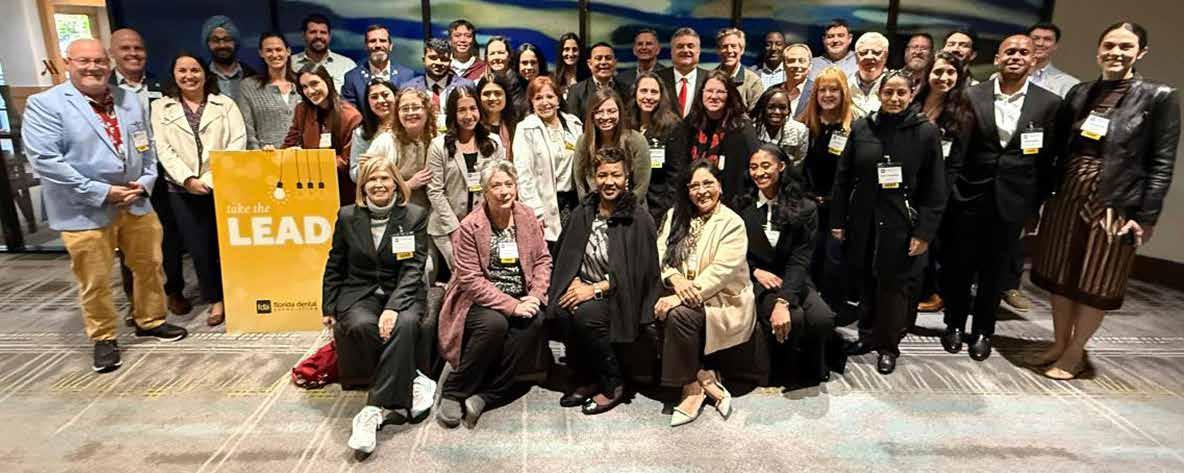
Leaders Emerging Among Dentistry (LEAD) is the Florida Dental Association’s (FDA) signature leadership development program. LEAD equips participants with essential leadership and interpersonal skills through comprehensive training sessions while providing a backstage pass to your FDA and leadership opportunities within the organization.
The Hidden Risk:
You Built a Practice. Buyers Want an Asset.
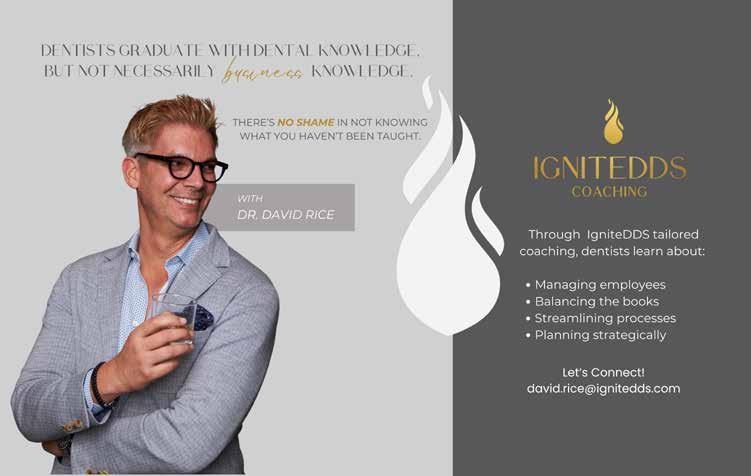
By David Rice, DDS
From the outside, your practice may look strong with steady collections, loyal patients and a full schedule; however, from a buyer’s perspective, the lens is different, and just to let you know, it’s presently a buyer’s market:
• How dependent is production on the owner doctor?
• Does the team operate independently or require constant direction?
• Are systems documented, repeatable and scalable?
• Will performance hold, or drop, the day ownership changes?
Consider two practices:
1. Practice A produces $1.5M annually, but the owner handles 85% of dentistry, makes all key decisions and personally holds the culture together.
2. Practice B produces the same $1.5M, but has an associate driving 40% of production, a calibrated hygiene department, documented standard operating procedures (SOPs) and a leadership-driven team.
Same revenue. Very different asset.
Practice B is not just more attractive, it’s more predictable. And predictability is what young dentist buyers are being taught to pay for.
Manpower: Your Biggest Value Driver or Your Biggest Liability
Five years out from transition, manpower becomes a strategic lever — not just an operational concern.
The questions shift from:
• “Do I have a great team?” to:
• “Do I have a team that can perform without me?”
Key risks buyers evaluate:
• Doctor dependency: If patients are loyal to you, not the practice, attrition risk rises post-sale (in their eyes, that means a start-up is just as viable an option).
• Leadership vacuum: No office manager or clinical lead capable of maintaining standards (remember, these are young dentists with little to no leadership experience).
• Cultural fragility: Team cohesion tied to the owner’s personality rather than shared systems (they know the real value of Goodwill).
A common scenario:
A seller says, “My team is like family — they’ll stay.”
A buyer hears, “This culture isn’t systemized, may not survive transition and I don’t want to pay for a team I have to replace.”
High-value practices build:
• Defined leadership roles (not just titles)
• Cross-trained teams with accountability
• Behavioral alignment (tools like DiSC) that reduce friction and improve communication
• A culture that is codified, not personality-driven
In short, the team must be loyal to the practice, not just the doctor.
Margin: The Story Your Numbers Tell
In today’s environment, margin compression is real. Rising supply costs, team expenses and insurance pressures are reshaping profitability.
Buyers are not just looking at top-line revenue; they are underwriting efficiency.
They’re asking:
• Is hygiene optimized and producing consistently?
• Are procedures scheduled strategically (block scheduling, same-day dentistry)?
• Is case acceptance predictable or personality-driven?
• Are overhead percentages controlled or creeping?
A $1.5M practice at 12% earnings before interest, taxes, depreciation and amortization (EBITDA) tells a very different story than one at 22%.
And importantly, buyers will discount earnings that rely on:
• Heroic effort from the owner
• Inconsistent scheduling
• Weak financial systems
• Poor tracking of KPIs like AR, treatment acceptance and reappointment rates
Strong margins signal something deeper:
This is going to be difficult to hear. The days of doing the right thing and having success are over. You need a business that is engineered, not improvised.
Meaning: The Most Overlooked Transition Risk
This is where many dentists hesitate and often delay.
After decades of building, leading and producing, a bigger question emerges:
“Who am I without the practice?”
Burnout often shows up late — not as exhaustion, but as disengagement. The days feel repetitive. The challenges feel heavier. The purpose feels less clear.
Ironically, this is when many dentists consider selling, but without a defined vision for what comes next.
Buyers can sense this too:
• A disengaged owner often reflects a disengaged team
• A lack of clarity creates rushed decisions and missed value
The most successful transitions aren’t just financially sound; they are personally designed.
They answer:
• What does life look like after dentistry?
• What level of involvement (if any) do I want?
• What legacy am I leaving behind for my patients, my team and my family?
Meaning is not separate from value. It shapes how intentionally you build your exit.
The Framework: People. Process. Production.
If the goal is to transform your practice into a transferable, high-value asset, the path must be structured and total truth, structured two to five years in advance.
practice management
At IGNITEDDS, we simplify this into three controllable domains:
1. People
• Leadership development beyond the owner
• Team accountability systems
• Behavioral alignment and communication mastery
• A culture that is repeatable and scalable
2. Process
• Documented SOPs and Clinical Operating Procedures (COPs)
• Scheduling systems (block scheduling, flow optimization)
• Patient journey design from first call to case acceptance to retention
• Treatment acceptance systems that are teachable, not personality-dependent
• Technology integration that enhances efficiency and diagnostics
• Consistent, predictable revenue streams
When these three align, something powerful happens. The practice begins to function without constant intervention. And that is when it becomes an asset.
Self-Assessment: Are You Building a Sellable Practice?
Use this as a quick diagnostic as honestly as you can:
People
• If you stepped away for 30 days, would performance hold or drop?
• Do you have a clear second-in-command who can lead daily operations?
• Is your culture defined by systems or by your presence?
Process
• Are your key workflows documented and followed consistently?
• Do you track your key performance idicators (KPI) weekly and act on them?
• Is your schedule designed for efficiency or reacting day-to-day?
Production
• What percentage of production depends on you personally?
• Is hygiene a consistent profit center or underleveraged?
• Is case acceptance predictable across providers?
If more than two answers create hesitation, you’re not alone, but you are exposed.
Redefining the Exit: From Event to Strategy
The most valuable transitions don’t happen in the final year. They are built over the final three to five.
An ideal exit is not:
• Rushed
• Reactive
• Dependent on market timing
It is:
• Structured
• Measured
• Designed to increase value annually
Dentists who approach transition this way often experience:
• Stronger valuations
• Better deal structures
• Smoother team transitions
• Greater personal confidence in what comes next
They don’t just sell a practice. They transfer a performing system. I want to reiterate a few major takeaways.
I’d say if, but when you hesitated on two or more of the assessment questions, you are not alone. In 12 years of coaching, we’ve yet to walk into perfection. Don’t stress. Do act.
The only person who can stand in your way to exiting on your terms, where you feel you’ve taken the best care of your family, your team and your patients is you. Don’t wonder if you’re worth investing in. People are counting on you.
When you want to know more, email me at david.rice@ ignitedds.com. We’ll take an hour to learn where you are, where you’d like to be and by when. The cost … an hour of your life. You’ve put decades in … take the hour.
FDA members get a 10% discount; learn more at floridadental.
org/member-center/member-resources/ignitedds. Dr. Rice can be reached at david.rice@ignitedds.com
Best-selling author, executive coach and founder of IgniteDDS, the nation’s largest community for new dentists and students, Dr. David Rice is a dynamic thought leader in the world of dentistry. With a passion for mentorship, leadership and business success, Dr. Rice travels the globe educating and connecting today’s top young dentists to their self-determined future.
As Editor-in-Chief of DentistryIQ and Adjunct Faculty at The Pankey Institute, Dr. Rice is at the forefront of innovation in dentistry, guiding professionals in clinical excellence, business mastery and leadership development.
*The FDA may receive a portion of the fee from purchases made through this advertisement.
* The FDA may receive a portion of the fee from purchases made through this advertisement.
DON’T WAIT! PREPARE FOR HURRICANE SEASON NOW!
Now’s the time to ensure your office insurance is storm-ready. Hurricane season kicks off June 1, and standard office insurance does not cover flooding, so be sure to purchase a separate flood policy from Florida Dental Association Services (FDAS). Coverage has gotten tougher to secure in Florida, but FDAS works with as many carriers as possible to keep your options open. Visit bit.ly/4saFIUF to review our Hurricane Guide and let FDAS help you protect your practice before the first warning cone hits.
Visit FDAS at fdaservices.com to learn more or call or text 850.681.2996 to request an insurance review.
SCAM ALERT FOR DENTISTS: IMPERSONATION CALLS REPORTED NATIONWIDE
State dental boards around the country are reporting a scam in which callers impersonate board investigators or federal agents and claim a dentist’s license is under
investigation for illegal prescribing or drug related offenses. Callers may spoof official phone numbers, reference real agency names or
transfer the dentist to someone posing as a Federal Bureau of Investigation (FBI) or Drug Enforcement Administration (DEA) agent.
Their goal is to create urgency and fear so the dentist will provide personal information or pay an immediate “fee.”
Key reminders:
1. Legitimate state boards, the DEA and the FBI do not demand payment by phone or threaten immediate arrest.
2. Regulatory agencies normally communicate official notices in writing, such as certified mail or verified email.
3. Dentists should hang up immediately if they receive a suspicious call and avoid sharing any personal or financial information.
4. Members should directly contact their state dental board using the number listed on the board’s official website to verify any inquiry.
5. Incidents should be reported to the FBI Internet Crime Complaint Center (IC3) at ic3.gov.
The American Dental Association (ADA) is calling on the Federal Trade Commission (FTC) to more closely examine competition and transparency in dental insurance as the agency’s Healthcare Task Force begins its work. The FTC launched the Healthcare Task Force in March to coordinate the agency’s health care competition and consumer protection work. Visit bit.ly/4d3wDaJ to read the entire article.
SALES TAX EXEMPTION ALERT
The FDA has received reports from members indicating that sales tax is being charged on oral hygiene products purchased through various dental suppliers. Pursuant to legislation supported by the FDA, effective July 1, 2023, oral hygiene products — including electric and manual toothbrushes, toothpaste, dental floss, dental picks, oral irrigators and mouthwash — are exempt from sales tax.
The FDA encourages all dentists to review their supplier invoices to ensure that sales tax is being applied correctly. If discrepancies are identified, please contact your supplier and request that the issue be corrected. The FDA will also be asking suppliers to audit their sales tax records and proactively issue appropriate refunds where sales tax may have been inadvertently applied to these purchases.
If you have any questions or encounter issues, please contact FDA Chief Legal Officer Casey Stoutamire at cstoutamire@floridadental.org.
FDA Leadership Award: Dr. Elias Moròn
Dr. Elias Moròn is an associate professor and director of the master of science in dentistry program at Nova Southeastern University (NSU). He serves on the Board of Trustees of the Hispanic Dental Association, the Board of the American Association of Hospital Dentists, and the Board of Directors of the Diverse Dental Society and the FDA Dentists in Schools Task Force. He is also a member of the ADA Strategic Forecasting Committee, contributing to national initiatives focused on oral health policy, academic innovation and equitable access to care.
Dr. Morón is a Fellow of the American College of Dentists, the International College of Dentists and the Pierre Fauchard Academy. He has completed several prestigious national programs, including Harvard University’s Management and Leadership in Education Program, the American Dental Education Association Leadership Institute and the ADA Institute for Diversity in Leadership. He earned his Doctor of Dental Surgery from Universidad Metropolitana and completed graduate training in Health Services Management at Universidad del Norte in Colombia. In the United States, he obtained both a Master of Public Health and a Master of Science in Health Law from NSU, as well as postdoctoral training in Dental Public Health at NYU Langone.
Dr. Morón’s work integrates dental education, health law and public health to expand access to care and strengthen interprofessional collaboration. His contributions have been recognized through national awards, publications, invited presentations and mentorship of emerging leaders.
Welcome New FDA Members
Learn more by visiting our virtual Member Center at floridadental.org
The following dentists recently joined the Florida Dental Association (FDA). Their memberships allow them to develop a strong network of fellow professionals who understand the day-to-day triumphs and tribulations of practicing dentistry.
Atlantic District
Dental Association
Dr. Colby Bradford, West Palm Beach
Dr. Kevin Patel, West Palm Beach
Dr. Paulina Pichardo, Palm City
Dr. Artem Lapin, Fort Lauderdale
Dr. Liana Mah, Sunrise
Dr. Cesare Ciavarro, Boca Raton
Dr. Andriosky Perez Carballo, Fort Lauderdale
Dr. Varshini Sridhar, West Palm Beach
Dr. Bruce Spivak, Boynton Beach
Central Florida District
Dental Association
Dr. Krunal Parekh, Gainesville
Dr. Philip Timmermann, Windermere
Dr. Peter Ong, Mount Dora
Dr. Jason Jones, Orlando
Dr. Monica Garnache, New Smyrna Beach
Dr. Raphaella Rodrigues Dos Santos Barbosa, Port Orange
Dr. Sadaf Salehi Qeshmi, Sanford
Dr. Jorge Valle, Maitland
Dr. Samuel Song, Port Orange
Northeast District
Dental Association
Dr. Lizzett Mujica, Madison
Northwest District
Dental Association
Dr. Janice Dsilva, East York
Dr. Lia Lampone, Louisville
Dr. Taylor Shaw, Panama City
Dr. Robert Case, Panama City
Dr. Christopher Jordan, Eglin AFB
Dr. Brandon Dreier, Janesville
South Florida District
Dental Association
Dr. David Enriquez Borges, Miami
Dr. Jessica Martino, Bay Shore
Dr. Liulia Cartaya Padron, Homestead
in memoriam
Gustave Fistel
Groveland
Died: 3/5/2026
Age: 100
Robert Jeffrey Miller
Boca Raton
Died: 3/11/2026
Age: 74
Dr. Ashleigh Wu, Aventura
Dr. Bassant Elshabasy, Weston
Dr. Melissa Conocchioli, Doral
Dr. Maria Mora, Pembroke Pines
Dr. Daniella Bellot, Miami
Dr. Ana Gabriela Cepero, Miramar
Dr. Valeria Falcon, Doral
Dr. Anabel Vega Benavides, Hialeah
Dr. Williams Millan Hernandez, Doral
West Coast District
Dental Association
Dr. Merve Izmirli Sieg, Naples
Dr. Maria Neira, Oldsmar
Dr. Madison Hobbs, Bonita Springs
Dr. Francisco Mayorga, Clearwater
Dr. Karin Claire Prins, Osprey
Dr. Augusto Duarte, Clearwater
Dr. Yostina Nicola, Oviedo
Dr. Maylin Chaviano Reyes, Bradenton
Dr. Shara Myers, St. Petersburg
Dr. Jessica Sifrig, St. Petersburg
Dr. Lauren Johnson, Odessa
The FDA honors the memory and passing of the following members:
Michael P. Collins
Tampa Died: 3/16/2026
Age: 81
James L. Strawn
Port St. Lucie
Died: 3/19/2026
Age: 79
Gary L. Conover
Fernandina Beach
Died: 3/25/2026
Age: 84
William Tyler Baldock, Sr.
Tallahassee
Died: 3/26/2026
Age: 80
Hutson Edwin McCorkle
New Smyrna Beach
Died: 4/13/2026
Age: 92
Charles A. Beck, Jr.
Boca Raton
Died: 4/13/2026
Age: 77
Karl Josef Foose
West Palm Beach
Died: 4/28/2026
Age: 94
Celebrating 40 Years of service
Built by dentists. Trusted for decades.
For 40 years, FDA Services Inc. (FDAS) has existed to serve one purpose: protecting dentists and their practices. What began as a bold decision by the Florida Dental Association has grown into a trusted insurance organization. This anniversary celebrates that commitment — past, present and future.
A Purpose That Never Changed
FDAS was created when dentists needed an advocate — someone willing to challenge the status quo and build a better solution. From those early decisions to today’s national presence, the mission has remained constant: simplify insurance, provide stability and stand beside dentists as their practices and careers evolve.
Built to Lead, Built to Last
From the beginning, FDAS was designed for the long term. Careful leadership, strong carrier partnerships and a steady focus on integrity created an organization dentists could rely on — not just for coverage, but for confidence.
What
Frank Lauria served as FDAS’s first general manager from 1986 to 2010 and played a central role in shaping the organization from its earliest days. With deep industry knowledge and steady leadership, he built FDAS from the ground up — establishing credibility, strong carrier partnerships and a professional insurance operation dentists could trust. Frank laid the foundation for the organization’s long-term stability and success, setting a standard that continues to guide FDAS today.
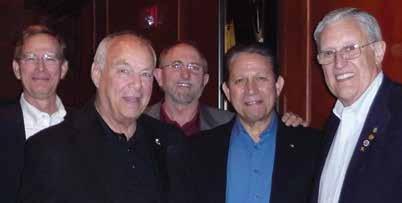
FDAS Board celebrates Frank Lauria’s (second from the right)
Documentation Starts with Dialogue: Communication Habits That Reduce Board Risk
By Jessica Stilley-Mallah, DMD, MS
As a brand-new Florida Board of Dentistry member, my first meeting was eye-opening. The February meeting included several complex cases, and it was a privilege to work through them with the other members. A recurring theme I noticed was that many of these cases could have been avoided with clearer communication. By
that, I mean not only communication between the doctor and the patient, but also between the doctor and team members — and even team members and patients.
I immediately returned to my office and evaluated our communication systems to ensure I was safeguarding my practice against misunderstandings that could lead to a patient filing a complaint.
We all know that a patient’s first impression of our office is formed
before they ever meet the doctor. For this reason, it is essential that your team functions as an extension of you. In our office, we have standardized how we speak to patients, so they receive consistent information from our business team, clinical team and doctors.
This process begins when a new patient calls to schedule their first appointment. After gathering pertinent information, the team member discusses office policies and outlines what will occur during the initial
I view the referring doctor as a partner in care and communicate that to patients. Referring doctors trust us to perform a thorough evaluation and report findings that support the overall treatment plan.
exam. While this may seem minor, it is the first point of communication from the office to the patient. It establishes expectations regarding dental benefit coverage, exam fees and diagnostic imaging. Patients know what to expect and are not surprised if a full set of radiographs or a cone beam computed tomography scan is needed.
Once in the office, our assistants again review what will occur during the exam, discuss imaging and invite questions or concerns. This reinforces what the patient has already heard and helps put them at ease. Consistency creates confidence.
During the initial exam, I make a point of engaging the patient while collecting data. I explain what I am doing before I do it and why it matters. As a periodontal practice, we narrate the exam elements as we go. For example, during periodontal probing, I might say: “Mrs. Jones, I am going to measure the space between your gum and tooth. When you hear me say 1, 2 or 3 without bleeding, those are healthy areas. If you hear 5 or greater, that’s something we’ll discuss further, as it can indicate disease.”
By explaining the process in real time, patients become active participants in understanding their condition. This encourages ownership of their oral health and makes the discussion of the treatment plan more effective.
When discussing treatment, I ensure the patient is seated upright and facing me. I maintain eye contact and use images and models to explain findings. This allows me to connect with the patient and observe their body language, giving insight into their level of understanding.
At the same time, my assistants are documenting notes and building the treatment plan. I consistently use the same terminology and have trained my team to recognize these cues. For example, if I say our goal is to “cover the roots,” my assistant understands this refers to a connective tissue graft. If I mention vertical bone loss, they know to include a bone graft in the treatment plan. Training your team to recognize your language streamlines communication and equips them to answer patient questions when the doctor is not present.
Documentation is equally critical. We have all heard, “If it’s not in the notes, it didn’t happen,” and this is especially true in board proceedings. Your notes are often the only record available to evaluate your care.
Clear, detailed documentation allows reviewers to understand your clinical decisions and can support a favorable outcome. For example, a note that simply states “ext #31” provides little context. Was the tooth sectioned? Were radiographs taken to evaluate for retained root tips or foreign bodies?
It is important to remember that years may pass between an incident and a board appearance. Your notes should tell a complete and accurate story. In our office, we use templates to ensure all relevant details are included. I have developed my own templates and, in the past, used services such as Tooth Notes.
Always include a diagnosis, document informed consent, record anesthetic in milligrams and timestamp procedures. Be objective and descriptive when documenting any
HEALTH CARE PROVIDER CHECKLIST:
Nonopioid alternatives are available for pain treatment, which may include nonopioid medicinal drugs or drug products.
Nonopioid interventional procedures or treatments are available, which may include: acupuncture, chiropractic treatments, massage, physical or occupational therapy or other appropriate therapy.
DISCUSS
ien
t ien t ’s pers
DOCUMENT IN PATIENT’S RECORD
PROVIDE
“Alternatives to Opioids,” an educational information pamphlet created by the Florida Department of Health is available in printed and electronic formats (required, available at bit.ly/2KXvZ2h). A checklist and poster are also available.
SUMMARY:
All health care providers must include nonopioid alternatives for pain and pain management electronically or in printed form in their discussions with patients before providing anesthesia, or prescribing, ordering, dispensing or administering a schedule II controlled substance for the treatment of pain.
adverse events. A thorough and accurate note is one of your strongest protections.
Informed consent is another essential component of communication. Whether adjusting occlusion on a single tooth or performing extractions and implant placement, proper informed consent demonstrates that the patient understands the diagnosis, the proposed treatment, alternatives and the risks — including the risks of no treatment.
The board does encounter cases in which patients claim they did not understand what was being treated, and the record lacks documented consent. Verbal discussions are important, but they must be supported by written and signed documentation.
As a specialty practice, we also navigate communication with referring providers. I view the referring doctor as a partner in care and communicate that to patients. Referring doctors trust us to perform a thorough evaluation and report findings that support the overall treatment plan.
At times, we identify issues related to prior treatment. A common example is a crown margin that impinges on biologic width. In these situations, we have an ethical responsibility to communicate with the patient and the referring doctor.
Strong professional relationships make these conversations easier. A simple phone call to discuss findings and collaborate on next steps often results in a shared plan that prioritizes patient care. For example: “I know you recently placed a crown on #30, but there appears to be a biologic width concern. The patient would benefit from crown lengthening to address inflammation and discomfort.”
When speaking with patients, I explain that we often work with two-dimensional images of a three-dimensional structure, and that certain issues may not be fully visible at the time of restorative treatment. While biologic width violations can be iatrogenic, they are often correctable. How we communicate in these situ-
ations is critical to maintaining trust and preventing misunderstandings.
Although it may feel overwhelming to consider all these communication points, systems can simplify the process. Implementing, training and reinforcing communication protocols ensures that your message is delivered consistently across your team.
Patients should hear the same information from your business team, assistants, hygienists and doctor. Document conversations clearly and thoroughly. If a misunderstanding occurs, document that as well.
In my experience, listening to patients and offering a sincere apology when appropriate can quickly resolve many issues. It is far easier to address a miscommunication early than to explain it to the board later.
Dr. Jessica Stilley-Mallah is a periodontist in New Port Richey and can be reached at drstilley@gmail.com.
Why Patients Refuse Dental X-rays and How to Change the Conversation
By Dania Tamimi, BDS, DMSc, ABOMR Diplomate of the American Board of Oral and Maxillofacial Radiology
A while back, I was given the opportunity to do a TEDx talk. While I had many ideas to draw from in my personal and professional life, one idea stood out. It was a special request from my dental colleagues: “Can you help us with patients who refuse dental X-ray imaging?” At first, I felt an aversion to the topic. Radiation safety and biology are not the most interesting topics to discuss, as they tend to be dry, complicated and boring. I felt that the analogies of comparing dental X-ray doses to everyday events like plane rides and sunbathing were tired
arguments, and trying to slap a dose number on certain X-ray imaging techniques was not only inaccurate but also misleading as the dose depends not only on the output of the X-ray source but also on the recipient’s size and radiosensitivity, which can differ for each person. It was clear this was an important topic for many of my colleagues, so after considering it for about a year, I decided to move forward with this topic. I did some research on the refusal rate for dental X-rays (about 10-12% in some studies) and then looked for similar research on medical imaging. Interestingly, even though medical imaging exposes patients to much more radiation, patient refusal seems to be a non-issue. That was a revelation: Why do patients refuse low-dose dental imaging and not high-dose medical imaging? Why would a parent emerge as a full-blown mama bear with a bitewing, but not so much bat an eye at a CT?
I believe this has to do with a few factors, most importantly, the perception of dentistry in healthcare and how patients perceive dentists, which is partly due to how we present ourselves. Rather than market ourselves as oral physicians and purveyors of oral and general health, our advertisements tend to focus on esthetics (a nice smile/white teeth) and convenience (teeth in a day). This puts us in the same category as estheticians and service providers. We know our importance in the grand scheme of general health, but are we transmitting this knowledge to our patients? And are we teaching
them that, without the diagnosis that is the cornerstone of medicine, there can be no guarantee of accurate and complete treatment? I believe that the focus on the need for this diagnosis rendered by the oral physician is crucial for patient acceptance.
Another thing that sets us apart from our medical counterparts is the way we request X-ray imaging. Most of the time, it is the assistant who grabs the patient from the waiting room and asks for permission (“Is it ok if we get X-rays done?”) before the patient sees the doctor. In the medical office, the doctor first examines the patient, then states that X-ray imaging is needed to proceed. The authority of the MD is rarely questioned. They’ve gone through the motions of a clinical exam and the conversation of what needs to be verified to continue care with emphasis on diagnosis. They do not waste time comparing X-ray images to their naturally occurring dose equivalents. The focus is on making the patient better, not tiptoeing around radiation dose.
Radiation is a tool to be used when the clinical exam cannot yield the information needed, and relaying this level of care — where you did everything you could without using X-ray imaging, but still don’t have the complete picture and need to have it to help them — will elevate you in your patient’s eyes. Diagnosis needs to be at the forefront of the conversation to gain patients’ trust and confidence, with an active effort to look comprehensively and schedule designated appointments to not only diagnose them fully but also to hear them out on many levels, especially in the realm of their fears.
A compassionate and patient demeanor is important to mitigate the public’s negative perceptions (such as the reputation for overcharging for treatment) and quell fears. Rather than let the ego come into play when a patient argues and refuses X-ray imaging, understand that their actions are emotional responses to fear and mistrust. Fear is amplified by a lack of knowledge and understanding, and it doesn’t help that some dentists are publicly taking to social media to mock their patients’ concerns. Those social media posts are emotional ego responses to fear and suspicion, and do nothing to increase trust.
Knowledge and understanding give power and trust. It starts with education on the importance of oral health for overall health and the need for early and comprehensive diagnosis to prevent an oral problem from becoming a systemic one. Validation of fears is important, and acknowledging radiation as a risk, regardless of how low-dose the technique is, helps with this validation. Still, it should be coupled with a conversation of risk vs. benefit, the radiation dose reduction protocols that have been implemented throughout the years (digital vs analog, collimation, etc.),
and teaching them that this radiation dose protection applies not only to them, but also to the staff that is taking X-rays all day, every day, thus they run out of the room to press the button to protect themselves from the cumulative affect of unnecessary radiation — no need for them to be exposed since they are not the ones with the problem needing to be diagnosed.
In the end, care is spelled T-I-M-E. The time you take to talk to your patients about X-ray imaging fears and others will change the conversation and dynamics, conveying that you care. The hurry that comes with assembly-line practices conveys disinterest and lack of care and can foster a distrust that is hard to overcome.
I hope you will enjoy my TEDx talk on the subject, “Who’s Afraid of the Big Bad X-Ray?” that tackles some of these issues and offers solutions for patients and dentists dealing with this dilemma.
Dr. Tamimi is an oral and maxillofacial radiologist in private practice in Orlando. Her website is inspire-imaging.com. Her TEDx talk can be viewed at bit.ly/4dizX1S on the YouTube TEDx channel.
Oceanfront luxury meets professional growth at WIND 2026. Earn CE and connect with fellow female dentists for a day of peer-to-peer learning, community and inspiration.
Friday, September 18, 2026
W Hotel • Fort Lauderdale, FL
Earn 5 Hours of CE Scientific Program Featuring: Hotel Reservations W Hotel
Dental Health: Diet & Weight Loss Trends Burnout Prevention • Crown Lengthening • AI Tools for YOU Digital Technology for Esthetics • Navigating Team Challenges Values-Driven Dental Practice • + More!
Education 8:30 am-5 pm • Reception 5-6 pm $399 for FDA Members • $449 for Non-Members Register Today! Sponsored by
Use the QR Code to make your reservation! Sponsored by www.fdawind.com
Talking to the Media: Tips to Communicate with Confidence
As healthcare professionals and leaders, you may be approached with media requests or pitching your own opportunities. A strong media interview can build trust, enhance credibility for you and the dental profession, and help share critical information with audiences. Being prepared and knowing your message are key to winning interviews with the media.
By Moore Partner Liz Underwood
As healthcare professionals and leaders, you may be approached with media requests or pitching your own opportunities. A strong media interview can build trust, enhance credibility for you and the dental profession, and help share critical information
with audiences. Being prepared and knowing your message are key to winning interviews with the media.
The following are best practices and tips to help you effectively navigate media interviews and communicate your message.
Be Prepared
Before agreeing to any interview, take time to understand the full picture. Know the topic, the outlet and the audience. Are you speaking with a dental industry publication, local TV station or statewide print reporter? Each audience will have different levels of understanding and expectations.
It’s also important to understand the format. Is the interview live or recorded? Is it in person (in-studio or at your practice), virtual or by phone? Prepare accordingly. If the interview is done at your office, pick a location with a good background and no distractions. For a virtual interview, ensure you have good lighting, an uncluttered background and a good internet connection.
Most importantly, identify the top two or three points you want audiences to hear and remember. Write them down, bring them with you and make sure you share each message at least once.
Make Your Message Connect
Before an interview, it’s crucial to identify the key messages you want to communicate, understand how to make them relevant to your audience and convey them clearly and succinctly.
Messaging Tips:
• Stay on message and try to avoid going off topic.
• Make it visual by explaining in descriptive terms. Instead of just using clinical terms, describe the treatment need and its impact, as you would to a patient.
• Show the human impact with real stories and examples to help build an emotional connection.
• Stay calm in the face of tough questions. Our interview strategies below will help.
• Keep your messages concise and to the point.
• Avoid using clinical terms or acronyms that may be confusing or unfamiliar to general audiences.
Responding to Negative Posts
Your social media community is a great way to stay in communication with patients in between dental visits and keep oral health top of mind. However, it’s easy for patients or followers to take issues or complaints to social media and online review platforms.
The following are best practices for effective online community management that reinforce professionalism and trust in your practice.
• Respond promptly (ideally within 12 hours)
• Always acknowledge positive comments, even with a simple “Thank you!” or “You’re welcome!”
• Respond to neutral or constructive questions, even if it’s to say that you will message them privately.
• Remain calm and respectful.
• Identify negative or sensitive questions/comments and determine the best course of response. This may include patient complaints or questions on cost, billing or office policies. In some cases, your legal team may want to review sample responses.
• Planning for potential scenarios in advance will help you address them more quickly and effectively.
• Remove posts that violate your page’s community guidelines and/or include:
• Threats
• Profanity
• HIPAA/privacy violations
• Personal attacks toward staff or providers
• Your patients are watching how you respond. Every interaction is an opportunity to demonstrate professionalism, trust and care.
AwArds Luncheon 2026
Dental Student Award
Ms. Brooke Cary
Dental Team Member Award
Ms. Nycole Cooper
Public Service Awards
Mrs. Jerilyn Bird
Dr. Kerwin Scott
New Dental Leader Award
Dr. Latoya Joseph
Leadership Awards
Dr. Erika King
Dr. Elias Morón
Special Recognition Award
Dr. Karen Glerum
Helping Members Succeed Team Impact Award
Mrs. Deirdre Rhodes
President’s Award
Dr. John H. Paul
Dentist of the Year
Dr. Jeff Ottley
J. Leon Schwartz
Lifetime Service Award
Dr. Rudy Liddell
JOIN IN THE RECOGNITION OF YOUR COLLEAGUES
Friday, June 26 | 11:30 AM – 1:00 PM
Gaylord Palms Resort and Convention Center, Orlando, FL
Individual tickets are $55 or reserve a table of 10 for $550.
Purchase tickets in your FDC registration or contact Lianne Bell at lbell@floridadental.org or (850) 681-3629 by June 5.
Sponsored by
Winning Interview Strategies
While speaking with the media can be unfamiliar or intimidating, the following strategies will help you succeed.
• Greet the reporter warmly.
• Listen carefully to ensure you fully understand the question before answering it.
• If you need to “buy time” to think, ask the reporter to repeat the question.
• For troublesome questions, you can answer only the part of the question you’d like to address and use bridging techniques, such as “For context”, “Well, actually,” or “It’s important to note” to position your response.
• If you don’t know the answer to a question, say so. Offer to find the answer and follow through.
• If a question is too personal or something that you are not the right person to address, politely tell the reporter.
• Don’t automatically accept assumptions or figures presented by a reporter. You can say, “I’m not familiar with that report, but what I am familiar with is …”
• Don’t answer a hypothetical question or opinion of another party, such as another professional in your field. You can say “I’m not familiar with the details” or “I can’t speak for x, but my experience is …”
• You may be asked, “Do you have anything to add?” Say yes and reiterate your key message(s).
• Remember, the real audience is the public, not the interviewer.
Most importantly, the Florida Dental Association's (FDA) and Moore team are here to support you. Please let us know if you receive a media request, are navigating a negative online situation or any other issue that our team can help you navigate.
Liz Underwood is a partner and associate vice president at Moore, the FDA’s longtime public and media relations agency partner. She can be reached at lizu@themooreagency.com
Before an interview, it’s crucial to identify the key messages you want to communicate, understand how to make them relevant to your audience and convey them clearly and succinctly.
Winning Together: How Communication Drives Patient Trust and Team Success
By Reza Ardalan, DMD
Your name on the marquee when you enter. A red carpet moment for a routine dental visit. Freshly popped popcorn on the way out. These are just a few of the ways we aim to elevate the patient experience in our office —
not because they are necessary, but because they are memorable.
While not every practice will have a red carpet or a themed experience, every practice has the opportunity to create something just as meaningful. In dentistry, success is rarely defined by the clinical outcome alone; it’s defined by the overall experience. At
the center of that experience is one critical skill: communication.
As a pediatric dentist, I see every day how communication shapes a patient’s entire experience, and those same principles apply across all areas of dentistry.
Great communication transforms routine visits into meaningful experiences. It builds trust with patients, aligns with families and strengthens connections within the dental team. When done well, it allows everyone — patient, provider and team — to feel they are working together rather than simply moving through an appointment.
There are three key areas where communication has the greatest impact.
1. Patient communication sets the tone. Whether treating a young child, a nervous adult or a long-time patient, people respond to clarity, confidence and authenticity. Using simple, intentional language and maintaining a calm, positive presence helps reduce anxiety and build trust. Often, it’s not just what we say, but how we say it that determines how it is received.
2. Partnership is essential. Patients want to feel informed, respected and involved in their care. Taking the time to explain findings, outline options and set clear expectations creates confidence and reduces uncertainty. When people feel like participants rather than bystanders, they are more engaged and trusting.
3. Team alignment brings everything together. A well-aligned team communicates clearly, supports one another, and presents a consistent
message. When communication breaks down internally, it is often reflected externally in the patient experience. Patients may not hear every word, but they feel the consistency — or inconsistency — in how the team functions. When the team is aligned, it creates a seamless and confident experience for everyone involved.
Ultimately, communication is not a “soft skill” — it is a clinical skill. It allows us to go beyond treating teeth and truly impact the people we serve.
When we communicate effectively, we don’t just work alongside each other; we win together.
Dr. Reza Ardalan will be presenting the course “Winning Together: Patient Communication, Parent Partnership and Team Success” (PM08) on Friday, June 26 during the Florida Dental Convention in Orlando. Learn more and register at floridadentalconvention.com.
Dr. Ardalan is a pediatric dentist and past president of the Florida Academy of Pediatric Dentistry. A recognized leader, speaker and podcast host, he is dedicated to helping dental teams improve communication, strengthen culture and elevate the patient experience. He believes that connection — within teams and with patients — is the key to long-term success in dentistry. Dr. Ardalan can be reached at rezaheel@aol.com
When people feel like participants rather than bystanders, they are more engaged and trusting.
Why Dental Practices and Leaders Are Unprepared
By Dr. Gary Stough and Dr. Barry Hammond
Dr. Gary Stough
The majority of new dentists graduate from school with minimal communication, business and leadership skills, yet are expected to seamlessly transition from student to successfully running a practice at some point in the future. The empowerment to accomplish this goal begins with acquiring strategic management and communication skills and understanding the critical role leadership plays in building a successful dental practice. Most new graduates have never held a real job or management position, and even fewer have ever had any experience in a real-world lead-
ership role. Few can communicate effectively with others outside of their own age and socioeconomic group, which will not encompass the majority of their patient base and many have spent little or no time in a dental chair as a restorative patient, which makes it difficult to feel empathy for the patient experience. New dentists are objectively illequipped for success. Thankfully, many dental schools have expanded their curricula, offering more classes in practice management and the areas previously mentioned, helping new graduates be better prepared upon
Dr. Barry Hammond
graduation and providing a basic foundation upon which to build for the future.
A Business First and Foremost
A dental practice is first and foremost a business. While clinical knowledge and proficiency grow exponentially with time and continuing education and hands-on experience, the other areas referenced quite often lag behind due to personal limitations and a lack of real-world educational opportunities. Relying solely on one’s clinical skills is a sure path to eventual failure or marginal long-term success. In truth, a good clinician with better-than-average communication, business, financial and leadership skills will consistently be more successful than a dentist relying solely on clinical skills. Becoming a good leader is a confidence builder and a glue, and the first step necessary to achieve competence in the other areas mentioned. A few years working as an associate can be very helpful in building confidence, knowledge and clinical expertise, but is often insufficient to prepare for eventual practice ownership. Younger associates should also be aware that the senior dentist may not have all the answers. They should observe what the senior dentist does well, emulate and improve upon it, and also note what to do, not to do, or improve upon in the future as practice owners.
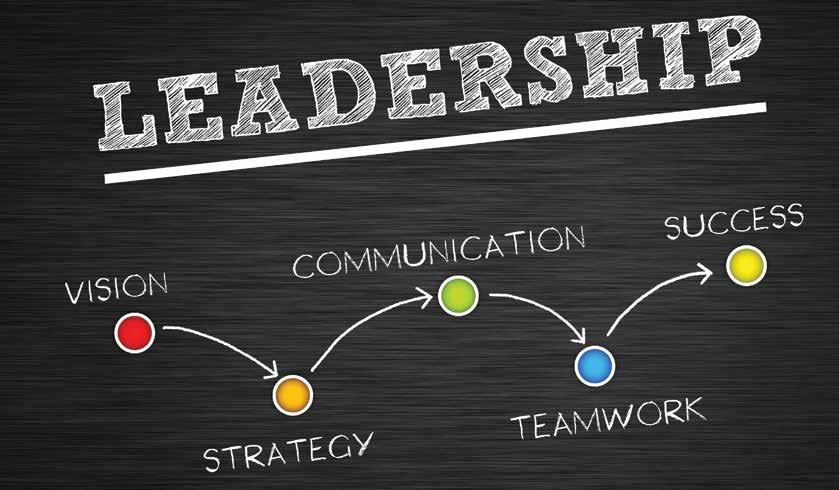
What is a Leader
According to Leadership expert Robin Sharma: “Leadership is not about a title or designation. It is about impact, influence and inspiration. Impact involves getting results, influence is spreading the passion you have for your work, and a leader inspires teammates and customers alike.” John Maxwell, American author, speaker and pastor, states: “A leader is one who knows the way, goes the way and shows the way. Leadership is not practiced so much in words as in attitude and actions. The art of communication is the language of a leader,” Alexa Chilcutt, PHD and Debbie Druey, MBA, in their book.
INSTRUMENTAL LEADERSHIP state: “Research indicates the primary predictor of an organization’s culture is the leadership practices of the person in charge. The leader’s perspective of the organization, decision-making
processes and conflict management tactics have a major impact on team behavior.” It is better to be respected than simply liked and a good leader can achieve both. To be respected, one must show respect to those they lead. If service is beneath you, leadership is beyond you! A great many of the issues that lead to burnout (staff dysfunction, high turnover, holes in the schedule, dissatisfied, ungrateful patients, etc.) and exacerbate personal health and financial problems may often be attributed to a lack of control. Though the uninitiated often perceive a leader as one who wields power and dominion over his/her subjects, a good leader is not hierarchical, autocratic, afraid of feedback or conflict or above correction. Rather, a good leader leads by example and makes clear that, although the final decision is theirs, the benefits to the team they serve are paramount. Taking control when it has not been the norm can disrupt practice if the transition is about power rather than empowerment. A dentist’s transformation from tepid technician to intrepid leader ought not feel like a coup, but a thoughtful and intelligent assumption of control that at once facilitates the acknowledgment of a dentist’s role as team leader while enhancing each team member’s sense of power and contribution. To do this, the dentist must create a vision and continually guide the team positively towards achieving a successful result. A rudderless boat uses up a lot of energy going in circles but never really goes anywhere. The idea is to have staff and patients alike buy into your vision.
Leadership Considerations
The following are some proven leadership suggestions to cultivate or enhance your ability to enjoy a smoother-running office:
1. Do not delegate most or all leadership roles (contrary to what many consultants suggest) to someone else, e.g., office manager or consultant. You are the boss — act like it.
2. Be willing to seek advice and be flexible and willing to change for the better, but trust in your own common sense in decision-making.
Making and enforcing positive changes has a profound, positive effect on your team and the quality of your future practice experiences.
3. Exercise leadership traits through policies, consistency and example and adhere to policies you set.
4. Attitude is infectious: It starts in the morning, is contagious, but can be constructive or destructive.
5. Honesty, integrity and excellent clinical skills are noticed and admired by staff and patients. Adhere to a “do unto others” attitude at all times.
6. Allow your team to feel they have a vital role in practice success by considering their input and fully utilizing and acknowledging their particular skills.
7. You, the doctor, are the director and producer. Your name is on the door and the banknote. Never forget your role.
8. Have a “buck stops here” attitude. Let your team know you have their backs when necessary. Do not shirk your duty as their leader.
9. Endeavor to stay on time. Be aware of the stress that always running behind schedule has on your entire staff. This problem causes more dissent than anything else!
10. Compliment your team members when deserved. Show appreciation. Be aware of and interested in their lives outside the office.
11. I suggest not letting your staff or patients call the doctor by their first name. You are Dr. Smith, not Kathy. Resist close social contact. It may work out sometimes, but ultimately, familiarity causes problems.
12. Be firm. I know what you are thinking, but being firm does not mean being dictatorial. This does not diminish your kindness or caring attitude towards staff or patients, but they must know you mean what you say! Remember, it is better to be respected than simply liked. A good leader accomplishes both.
13. Be the first to arrive and last to leave when possible. During short daylight times, never leave the office until all your team members are safely on their way. It is your duty!
14. Lead by example. If running behind or just a very busy day, empty a trash can, pick up debris and help clean an operatory. They know you do not have to do this, but never ask an employee to do something you are unwilling to do. You are head of the team, but also a part of the team. You will be surprised how this positively helps morale.
Pace Yourself
For many, these suggestions may seem daunting, even harsh and many dentists have already dug a hole they may have difficulty digging out of. Transition may not be easy, and certainly not instantaneous, but remember: if one continues doing the same old thing, one will continue to get the same old results, as Einstein stated. Pick one or two suggestions, then ease into more as you feel comfortable and see positive results. Take control and be a leader. What do you have to lose!! Therefore, ask yourself: do you run your practice or does your practice run you? In our National Survey on Dental Practice Stress, we expected some stressors, like running behind schedule and time constraints, or being too busy or not busy enough, but staff issues and dissatisfied, ungrateful patients made the top ten as well. We realized that these and many other significant stressors identified in the survey could be traced to a lack of leadership skills and to the practitioner’s inability to control circumstances. This does not imply the dentist is not a highly qualified clinician, a nice person, respected and even almost venerated in the community. It simply means that, because the necessary skills are not effectively taught in dental schools, dentists are expected to acquire them through osmosis. There is a huge difference between being a boss and a leader. Therefore, it is time to overcome fears and take charge of one’s own destiny. Making and enforcing
SHOULDN’T YOU BENEFIT
from your good work instead of investors?
We’re rewarding eligible Florida members with an 8% dividend. Does your malpractice liability insurer do that?
At The Doctors Company we answer only to members like you. Not Wall Street. That’s why we’re able to award an 8% earned dividend to our eligible Florida members this year. Altogether, we’re returning $14.3 million to members in 2026, which brings the total dividend payments we’ve shared with members to $500 million.
positive changes has a profound, positive effect on your team and the quality of your future practice experiences.
Benefits of Good Leadership
The following benefits of good leadership are not exclusive or exhaustive, but they do highlight many of them.
1. More self-confidence and reduced need for others in decision-making
2. A willingness to face problems rather than run away from them
3. Reduced stress because you now control circumstances rather than allowing circumstances to control you
4. Improved outlook for the future
5. Reduced fear of change and making changes in your personal and professional life
6. A leader becomes part of the solution rather than part of the problem
7. Staff display more confidence in and respect for you
8. Improved confidence improves communication skills with the team and patients
9. Increased productivity
10. Inspires team initiative. A good leader trains personnel well and gives them leeway to make decisions within reason, which greatly improves morale, builds confidence and fosters pride among team members
11. Reduces staff turnover
12. Good leadership is contagious and bonds the entire team together. They encourage one another and are proud of their role and contributions to the practice’s success.
Effective leadership demands compassion, humility and a genuine commitment to the team’s best interests. Your team’s loyalty and dedication will know no bounds.
TOPICS INCLUDE
Practice Leadership & Business
• Dental practice leadership
• Dentistry is a BUSINESS
• Effective internal marketing
• Practice perception: Timex or Rolex?
Stress Management
• Understanding and coping with dental practice stress
• Stress-less staff management
• Controlling the schedule
• Minimizing mistakes and reducing stress in the hiring process
Patient Care & Growth
• Stress-free, highly successful treatment plan presentation and acceptance
Life & Career Balance
• Prioritizing personal and practice life
• Practice transition tips
• Retirement possibilities
There are many in-between levels that may be considered successful, so take one step at a time, do not become discouraged, persist and set sights on a better future. Commit to becoming a leader, embrace change and shape your practice into one that provides lasting professional satisfaction, financial security and personal fulfillment.
Dr. Gary Stough is the author of “Beyond the Dental Chair,” a general dentist, former Marine Corps combat aviator, GAGD Editor and President and PACE CE provider. He espouses a common-sense approach to achieving a less stressful dental practice. Dr. Stough can be reached at gstoughdmd@gmail.com.
Dr. Barry D. Hammond is a professor in the Department of General Dentistry at the Dental College of Georgia at Augusta University. After earning his dental degree from the Medical University of South Carolina in 1986 and completing a general practice residency at the University of North Carolina, he spent 17 years in private practice focused on restorative and esthetic dentistry before joining the Augusta University faculty in 2006.
Intimate Partner Violence: Communication Matters
By Florida Partnership to End Domestic Violence Chief Program Officer Tanesha McDonald
Effective communication is essential to quality dental care. Clear, patient-centered communication improves understanding, reduces anxiety and supports treatment adherence and health outcomes (Ho et al., 2024; Elite Learning, 2025).
Strengthening Patient Communication in Dental Care
Dental professionals are uniquely positioned. You often see patients regularly, build long-term relationships, and may notice signs others do not. Thoughtful communication can create moments of safety and connection.
Why Communication Matters for Survivors
Survivors of domestic violence may experience fear, shame or ongoing monitoring by an abusive partner. Healthcare interactions can feel risky. Research shows that clear, empathetic communication improves patient trust, understanding and engagement in care (Ho et al., 2024).
Trauma-informed approaches, grounded in safety, choice and transparency, can reduce anxiety and prevent re-traumatization (CareQuest Institute, 2025).
communication
For survivors, a dental visit is more than a clinical interaction. It is a moment that can either reinforce fear or build trust.
In-person Communication:
Creating Safety in the Moment
• Use plain, accessible language. Clarity supports understanding and autonomy (Ho et al., 2024).
• Practice active listening. Reflect what patients share without judgment (Gentle Dentistry, 2026).
• Lead with empathy. Simple statements like “We can go at your pace” can shift the experience of care.
• Use non-verbal communication intentionally. Tone and body language reinforce trust (Gentle Dentistry, 2026).
• Offer transparency and choice. Explain actions before they happen and invite consent throughout care (CareQuest Institute, 2025).
• Check for understanding. Teach-back helps ensure patients feel confident about the next steps.
Written
and Digital Communication:
Extending Safety Beyond the Visit
Written communication should reinforce, not complicate, care:
• Use plain language and short sentences
• Highlight key actions and next steps
• Avoid overwhelming detail
• Use secure, confidential communication methods
For survivors, privacy is critical. Even well-intentioned communication can pose risks if it is not handled carefully.
Integrating the CUES Approach
We encourage dental professionals to incorporate the CUES framework, developed by Futures Without Violence:
• Confidentiality: Explain privacy and its limits.
• Universal Education: Share information about healthy relationships and resources with all patients.
• Support: Offer validation and connection to resources.
CUES is not about requiring disclosure. It is about creating safe, consistent opportunities for support, regardless of whether a patient shares their experience (Futures Without Violence, n.d.).
A Final Thought
For survivors, a dental visit is more than a clinical interaction. It is a moment that can either reinforce fear or build trust. By centering clarity, empathy and safety, dental professionals play a critical role in a broader, coordinated response to domestic violence.
References
Ho, C.Y. et al. (2024). “Dentist-patient communication in quality dental care.” CareQuest Institute (2025). “Trauma-informed care in dental settings.”
Elite Learning (2025). “Improving patient communication in dental practices.”
Gentle Dentistry (2026). “Communication and dental outcomes.”
Futures Without Violence. “CUES: Confidentiality, Universal Education, Support.”
The Florida Partnership to End Domestic Violence’s (FPEDV) Chief Program Officer, Tanesha McDonald, can be reached at taneshamcdonald@fpedv.org
FPEDV is committed to supporting you through training, resources and collaborative opportunities that strengthen your response to intimate partner violence (IPV) in clinical settings. For more information, visit fpedv.org or contact us directly to learn how to integrate IPV awareness better into your practice.
Beyond Words: How Communication Shapes the Patient Experience
By Director of Business Operations at ProspectHR Consulting Alexandra Lewis
When a patient walks into a dental practice, they immediately begin scanning for cues to determine whether they are in a welcoming, safe environment. Before a word is spoken, the patient will start to internalize communication signals, such as the receptionist’s posture, the organization of the waiting room and even the tone of voice used when calling a patient’s name.
When we think about communication, we often think of the verbal channel. In a dental setting, this could mean explaining treatment plans or post-op instructions to a patient. Your practice likely spends time ensuring that information is delivered in a consistent, understandable way to your patients. But there are two additional, equally important communication channels: nonverbal and para-verbal communication. According to “Psychology Today,” nonverbal communication (e.g., body language, posture and facial expressions) accounts for approximately 55% of communication. Meanwhile, para-verbal communication, aka the 'how' behind what we say, including tone, pitch, speed and intonation, can account for up to 38% of communication. This
means that only about 7% of communication is what is actually said, and that while your explanation of a procedure still matters, so does the context in which it is presented.
While communication channels are the methods by which a message is received, communication filters are the internal and external forces that impact how a message is received. Between the moment a team member forms a thought and the moment a patient interprets it, the message passes through at least six filters: what is meant, what is said, what is heard, what the patient thinks they heard, how they interpret it based on their own experience and how the speaker reads their response. Each layer creates an opening for the message to shift.
Understanding both channels and filters is essential to recognizing where communication succeeds and where it breaks down. This is where human resources (HR) can play a strategic role. Communication is a teachable and coachable skill, and one that HR is uniquely positioned to integrate into day-to-day operations. It starts with tailoring onboarding programs to guide new team members through handling difficult conversations. Through group-facilitated training and coaching, HR can reinforce communication best practices as part of
an ongoing development strategy. By incorporating communication competencies into performance management practices, HR can identify specific behaviors critical to employee success within the practice, supporting talent development. This shifts communication from reactive to proactive and establishes a practice standard for communication modeling.
When communication is treated as a practice-wide competency rather than an assumed skill, the entire patient experience shifts. Your patients are your customers, and, as in any service industry, the quality of the interaction is inseparable from the quality of the service itself. A team that communicates with clarity and care will deliver a better clinical experience and build patient trust and loyalty.
Ms. Alexandra Lewis is the Director of Business Operations at ProspectHR Consulting, where she leads client onboarding and success for a firm dedicated to transforming how organizations approach HR strategy. With more than a decade of experience across non-profit and for-profit sectors, she specializes in turning operational complexity into clear, scalable systems.
Ms. Lewis can be reached at alewis@prospecthrc.com.
Between the moment a team member forms a thought and the moment a patient interprets it, the message passes through at least six filters: what is meant, what is said, what is heard, what the patient thinks they heard, how they interpret it based on their own experience and how the speaker reads their response.
Member Assistance Program (MAP)
Built for You. Extended to Your Team.
The FDA Member Assistance Program (MAP) provides trusted resources, expert guidance and confidential support at no cost to help you reduce stress, improve mental health and make life easier with resources now available for you and your entire team
MAP Resources
Balancing your practice and personal life can be challenging. With MAP, support is closer than you think. Resources include:
• Mental Wellness Counseling
• Stress Management Assistance
• Child and Elder Care Resources
• Grief and Loss Support
Getting Connected is Easy
• 24/7 Mental Health Support
• Life Coaching
• Legal Referrals
• Financial Consultation
No matter the concern, find the free confidential support you need with MAP.
• FDA members receive up to 4 counseling sessions, covering all household members.
• Team members who work for an FDA member receive in-the-moment counseling.
You may be thinking...
Between patients and staff, I am feeling stretched thin. How do I handle it all? I need help with finding my work-life-balance. I'm feeling overwhelmed with my student loans. Where do I begin?
Where do I even start on finding support for my aging parents?
wellness Healing the Healers:
The Role of the Professionals Resource Network in Professional Well-Being
By Medical Director PRN Florida Mike Sorna MD MSA MRO FASAM
UF Jacksonville School of Medicine Courtesy Assistant Professor of Psychiatry
The health of healthcare professionals has become an increasingly important focus, as practitioners face growing administrative pressures, production demands and the physical and emotional strain inherent to clinical practice. This is particularly relevant for dental professionals, where access to controlled substances, high procedural demands and professional isolation may increase vulnerability to impairing conditions.
Dental professionals may experience a range of such conditions throughout their careers. These include mental health concerns such as depression, anxiety and burnout; physical conditions such as chronic pain or fatigue; and substance use disorders involving alcohol, prescription medications or other substances. When left unaddressed, these issues can negatively impact clinical performance, decision-making, communication and overall well-being.
Importantly, many of these conditions are treatable. Early recognition and intervention are essential to maintaining professional function, career satisfaction and patient safety. However, dental professionals often face unique barriers to seeking help, including stigma, fear of professional repercussions and concerns about licensure or credentialing.
Dr. Sorna
Florida Statute 456.076 establishes the Impaired Practitioner Program (IPP), which supports, evaluates and monitors healthcare professionals with impairing conditions — including substance use, mental health and physical concerns — without immediately invoking public disciplinary action. The program is designed to protect public safety while providing a confidential pathway to recovery, in collaboration with designated organizations such as the Professionals Resource Network (PRN) and the Intervention Project for Nurses (IPN).
In Florida, PRN serves as the contracted impaired-practitioners program for dental professionals, physicians, pharmacists and other licensed providers. It offers a structured and confidential system for evaluation, referral and monitoring as an alternative to disciplinary action.
Dental professionals may be referred to PRN by colleagues, employers or licensing boards, or they may self-refer when concerns arise. In many cases, referral to PRN may occur in lieu of mandatory reporting to the Department of Health (DOH). When the DOH is already involved, PRN works collaboratively with the Board of Dentistry to support a safe return to practice through formal monitoring agreements.
The mission of PRN is to protect the health, safety and welfare of the public while supporting the well-being and professional integrity of Florida’s healthcare providers.
If you or a colleague is struggling, early action is critical.
There is a path to recovery, one that supports both well-being and career preservation.
Clinical evidence from Physician Health Programs (PHPs) and PRN demonstrates that structured monitoring programs are associated with high rates of successful professional reintegration and low relapse rates. These outcomes highlight the effectiveness of PRN as a rehabilitative alternative to traditional disciplinary approaches, often yielding better results than those seen in the general population.
If you or a colleague is struggling, early action is critical. These situations are often more serious than they initially appear, and delaying intervention can lead to significant personal and professional consequences. The profession cannot afford to lose skilled providers to treatable conditions. There is a path to recovery, one that supports both well-being and career preservation. We owe it to our patients, ourselves and our profession to look out for one another.
For more information, including educational resources and testimonials from healthcare professionals, please visit flprn.org. To make a
referral or request a confidential consultation, contact PRN through the website or call 1.800.888.8776.
Michael John Sorna, MD, MSA, FASAM, Medical Director PRN. He was a faculty member at University of Florida (UF) Health, where he was the Director of Addiction Services at the Jacksonville Campus and the Medical Director of the UF Health Jacksonville Leon L. Haley Jr. M.D. Brain Wellness Program, a program that treats Veterans and First Responders with mild to moderate TBI and associated mental wellness and substance use conditions. Dr. Sorna served on the PRN Board of Directors from 2020 to 2024. He did his residency and fellowship at Emory University and is board certified in Psychiatry, Addiction Psychiatry and Addiction Medicine (ABPM). He is a former Naval Aviator (pilot) and retired Army Officer (Colonel) having served nearly continuously since his original commission in 1988. He has numerous deployments to Iraq, Afghanistan, Pakistan and Kosovo and remains active in the veteran community. Dr. Sorna has been married to his wife Betty for 29 years and has four children, two grandchildren and three pugs (Daisy, Gizmo and Neal). Dr. Sorna can be reached at drsorna@flprn.org
FDA Career Center
Restorative Functions for Dental Auxiliaries
Train your dental assistants or hygienists to perform expanded restorative functions under your supervision. The FDAʼs RFDA program is designed to improve efficiency, increase patient throughput, and strengthen your practice. Most training programs
semester-based schedules that donʼt align with the pace
Bridging the Airway: A Modern Dental Approach to Sleep Apnea and TMD
By Dar Radfar, DDS, diplomate of the American Sleep and Breathing Academy
There are few things more gratifying in dentistry than helping a patient finally sleep through the night, without pain, clenching or gasping for air.
Yet for many of our patients, these symptoms are intertwined in a complex relationship between the airway and the temporomandibular joint (TMJ).
One of my patients, a 46-year-old professional woman, came to me complaining of daily headaches, jaw tension and chronic fatigue. Like many, she had seen several providers — neurologists, ENTs, even chiropractors — with little improvement. During her exam, I noticed scalloped tongue edges, a retruded
mandible, and wear facets on her molars. Her history of “light sleeping” and daytime fatigue raised an even more important question: Was her airway part of the problem?
A simple home sleep test confirmed moderate obstructive sleep apnea (OSA). Rather than defaulting to CPAP, we explored a combination of therapies: a mandibular advancement oral appliance, low-level laser therapy (LLLT) to reduce inflammation in the TMJ capsule, and guided myofunctional exercises to improve tongue posture and nasal breathing.
Within weeks, her headaches diminished. After three months, her sleep test showed a significant reduction in apnea events, and her energy levels transformed. This wasn’t just about better sleep;66666 it was about restoring function, balance and vitality through a dental lens.
Dentistry holds a unique, often overlooked, role in managing both sleep-disordered breathing and TMD. The anatomy we understand so well — the jaw, airway, muscles of mastication and occlusion — places us in the perfect position to screen, diagnose and co-manage these conditions. By recognizing the overlap between airway obstruction and TMJ dysfunction, we can address root causes rather than symptoms.
As our field evolves, interdisciplinary collaboration becomes essential. Integrating tools such as 3D airway imaging, home sleep testing, LLLT and functional orthodontic or orthopedic therapies allows us to identify airway compromise earlier and intervene more effectively. Even mindset and personal development skills can impact patient outcomes! We just have to have an open mind and believe.
Ultimately, this approach goes beyond appliances and technology — it’s about seeing the patient as a whole system. When we help someone breathe and sleep better, we’re not just treating teeth or joints; we’re improving their brain health, cardiovascular function and overall quality of life.
And that, perhaps, is the true bridge between dentistry and medicine.
Dr. Dar Radfar earned his dental degree from the University of South Carolina School of Dentistry. He maintains a private practice in Thousand Oaks, CA. Dr. Radfar is presenting the course "Integrative Sleep Dentistry for Better Health, Practice Growth and Personal Fulfillment: A Two-Day MiniResidency" (MR01) on Thursday, June 25, and Friday, June 26 at the Florida Dental Convention. Learn more and register at floridadentalconvention.com.
Dr. Radfar can be reached at Darradfar@gmail.com.
When we help someone breathe and sleep better, we’re not just treating teeth or joints; we’re improving their brain health, cardiovascular function and overall quality of life.
The Key to Expanding Case Acceptance and Transforming Your Practice
By Dental Success Today Founder Scott J. Manning, MBA
Most dentists make the mistake of assuming that patients naturally understand the importance of comprehensive dentistry. They don’t, and that’s why treatment plans get declined, why patients “think about it” and never follow through, and why so many offices are stuck on a financial rollercoaster — some months booming, others struggling.
You play the most pivotal role in terms of getting patients to say yes. They don’t come into your practice pre-determined to say yes or no. Sure, some do, but most are on a continuum of interest. Our job and your responsibility is to move them towards the yes, towards more interest, towards being committed to their health.
It’s not about doing one thing and then saying yes, or about telling them what you think they should buy and then having them turn you down. The secret to fixing this starts BEFORE the patient even walks through your door.
Let’s break it down into four critical stages of patient interaction, each one designed to increase case acceptance, boost profitability and turn one-time visits into long-term relationships.
Pre-Exam: Setting the Stage for a Yes
Most practices waste the most valuable window of influence — BEFORE the exam and clinical experience. This is where awareness is built. Before patients even open their mouths, they should already be thinking differently about their oral health.
How do we do this? PRE-WORK. Think about it: if a patient arrives believing that they’re just there for “a quick checkup” or “to fix that one tooth,” they’ll resist anything beyond what they already expected. But if they arrive primed for a bigger conversation — one about their total health, function and long-term well-being — case acceptance skyrockets.
What this means in practical terms:
• Pre-appointment videos explaining the comprehensive approach your office takes.
• Welcome packets that reinforce the importance of whole-health dentistry.
• Pre-framing the experience. Instead of saying, “We’ll take a look at that one tooth,” say: “Today, we’re going to do an assessment of your overall health. You made a great decision by coming in, and we’re excited to guide you toward your best possible outcome.”
This changes the patient’s mindset before you even begin the exam.
The Clinical Experience: Expanding Vision and Self-Diagnosis
Now comes the most powerful tool
for increasing treatment acceptance: Vision Expansion.
Patients don’t always understand clinical terminology, but they understand scales and rankings. Start by asking them:
• “On a scale of 1-10, how healthy do you feel your smile is?”
• “What would a 10 look like for you?”
They might say they feel like they’re at a seven or eight, which gives you the perfect opening:
“That’s fantastic! Let’s talk about how we can get you to a 10.”
Then, break down their dental health into four pillars:
1. Gum health (1-10)
2. Tooth structure and strength (1-10)
3. Bite and occlusion (1-10)
4. Smile aesthetics (1-10)
By involving the patient in their diagnosis, they become invested in the outcome. They start seeing the gaps — not just the immediate issue, but the bigger picture of their health. This is the moment where case acceptance begins to shift.
Treatment Planning:
Present the Whole Solution, Not the Pieces
Here’s where most practices fail — they present treatment in fragments. One filling today; maybe a crown later. Consider ortho “if you’re interested.”
This approach erodes case acceptance. Patients view treatment as optional rather than essential. Instead,
you must present the full picture upfront.
• One comprehensive treatment plan.
• No breaking it into “optional” visits.
• Clearly defined path from problem to solution.
And most importantly: no price breakdowns by visit. Patients should see the total solution and the end result, not a piecemeal list of procedures. This is how you break the link between collections and production, which eliminates the ups and downs you typically see.
These outcome-based treatment plans will sell themselves. When patients understand the WHY, the HOW becomes easy.
Post-Visit: Converting into Lifelong Patients
If you think the job is done once the treatment is completed, you’re missing the most profitable stage of the patient journey. Your post-visit experience should include:
• Unscheduled treatment — if they left without committing, your job is not done. If the patient has health opportunities, we can’t let that go unaddressed.
• A structured follow-up process — not just checking on healing, but reinforcing the value of their decision.
• Surprise and appreciation moments — small unexpected touches that make patients feel special and part of the practice.
FDA Benefits Fit Every Piece of the Team
Did you know your entire dental team has access to FDA expertise?
Behind every successful practice is a network that connects you and your team to professionals ready to o er guidance, support and solutions when you need them most.
See how the pieces fit together at the Florida Dental Convention –VISIT BOOTH 916 Your membership extends these benefits to your entire dental team. Learn more at
Member Assistance Program
Looking for confidential resources to help manage stress or navigate challenges?
Peer Review
Facing a di cult patient situation and need guidance to resolve the dispute?
Insurance Support
Unsure which products or coverage your practice needs?
Third-Party Payer & Reimbursement Assistance
Struggling with a claim decision or insurance payment issues?
CE & Team Training
Need CE or certifications to advance your team’s skills?
You play the most pivotal role in terms of getting patients to say yes. Our job and your responsibility is to move them towards the yes, towards more interest, towards being committed to their health.
• Reviews, referrals and testimonials — turning happy patients into advocates for your practice.
The goal? Building a relationship-based practice (rather than transactional) that delivers sustainable success for you and your patients.
Master This Formula and Watch Your Practice Transform
If you’ve ever wondered why some practices struggle while others thrive, the answer is simple:
The best practices don’t just diagnose — they educate and influence.
They guide patients through a designed journey from awareness to understanding, from hesitation to action. The result?
• Higher case acceptance
• Greater profitability
• Predictability and control
This whole process, done right, is just that — a process. It requires certain things to happen along the way. Then, if everything is aligned properly (including emotionally engaging with the patient and ensuring their desires and goals are being met), you can achieve the outcome you want, because (and I mean only because) that is also what the patient wants.
So ask yourself: Are you just presenting dentistry or are you leading patients to better health decisions by expanding their awareness and elevating the value you provide?
Master this system, and your practice will never be the same.
Mr. Scott Manning has dedicated 20 years of his career to helping dentists throughout North America create successful businesses based around their values and goals, with a focus on transforming dental practices in order to maximize the degree to which dentists experience happiness, fulfillment, and, of course, profits.
Mr. Manning has emerged as a recognized industry expert after creating specialized formulas and protocols that form what he calls the Practice Profit Blueprints — a suite of integrated business systems designed to help dentists achieve maximum leverage of their time in the office.
He’s the author of a dozen dental industry-specific books, including the new release, “Pride, Power, and Prosperity of the Private Practice Dentist: How To Save Independent Dentistry In America and Why Your Future Has Never Been Brighter.”
Mr. Manning is the founder of Dental Success Today. Mr. Manning is presenting the course “Advanced Case Acceptance Strategies for Private Practices” (PM05) on Thursday, June 25 at the Florida Dental Convention. Learn more and register at floridadentalconvention.com.
Mr. Manning can be reached at DentalSuccessToday.com or info@dentalsuccesstoday.com
FLORIDA DENTAL CONVENTION EXHIBIT HALL
JUNE 25-27, 2026 – GAYLORD PALMS RESORT - ORLANDO
Visiting the FDC Exhibit Hall is an invaluable opportunity for you to experience a comprehensive showcase of the latest advancements in the dental field, from cutting-edge technology to innovative treatment options. Stay up-to-date on industry trends, expand your skills, and discover products and services that can enhance patient care and the overall dental practice experience all under one roof at FDC2026. Support the companies that support the Florida Dental Convention!
A-C
3D-DENTISTS
3SHAPE
A1 HANDPIECE SPECIALISTS
A2Z IMAGING
ABYDE
ACCURATE EMPLOYER SOLUTIONS
ACTEON NORTH AMERICA
ADIT
ADS DENTAL SYSTEM INC.
AIR TECHNIQUES INC.
ALIGN TECHNOLOGY INC.
ALIGNEROFF LLC.
ALLTION/VEREX
ALPHAEON CREDIT
ALWAYS NYE
AMERICAN DENTAL INSTITUTE
ANDAU MEDICAL
AR INSTRUMED USA LLC.
ARCHY
ARKRAY USA
ARMY 2ND MEDICAL RECRUITING BRIDGEORLANDO COMPANY
ARTCRAFT DENTAL INC.
ASCENT AI
ASEPTICO
ATLANTA DENTAL SUPPLY
ATOMICA AI
AUGMA BIOMATERIALS
AUTOREMIND
BALLARD GLOBAL
BANK OF AMERICA PRACTICE SOLUTIONS
BAUSCH ARTICULATING PAPERS INC.
BENCHMARK PAYMENT NETWORKS
BENCO DENTAL
BEST CARD LLC.
BEST INSTRUMENTS USA
BIOGAIA PROBIOTICS
BIOHORIZONS
BIRDEYE
BISCO
BMO BANK
BOCA BELLA
BONADENT DENTAL LABORATORIES
BQ ERGONOMICS LLC.
BRASSELER USA
BTI AMERICA
CAD-RAY
CALLFORCE LLC. DBA REACH
CARABELLI CLUB
CARECREDIT
CARESTREAM DENTAL
CARL ZEISS MEDITEC USA
CARR
CEFLA NORTH AMERICA
CENTURION HEALTH
CHERRY PAYMENT PLANS
CHOICE TRANSITIONS LLC.
CITY NATIONAL BANK
CLASSIC CRAFT DENTAL LABORATORY
CLIX THERAPY
CLOUD DENTISTRY
COASTAL PROFESSIONAL CONTRACTING INC.
COLGATE
COLTENE/SCICAN
COMPASS HEALTH CONSULTANTS
CORE SCIENTIFIC
COULEE TECH
CREST + ORAL-B
CROWN TENANT ADVISORS
CS & PRECIOUS METALS PROTECTION AGENCY
CSSI
CULTURE DENTAL ADVISORS
CURVE DENTAL
CUTCO
DANB & THE DALE FOUNDATION
DANDY
DDS MATCH FLORIDA
DENTAL BUYING POWER
DENTAL DEALER SOLUTIONS
DENTAL EQUIPMENT LIQUIDATORS INC.
DENTAL HERB COMPANY
DENTAL INTELLIGENCE
DENTAL LIFELINE NETWORK - DONATED DENTAL SERVICES
DENTAL PITCH BROKERAGE
DENTAL TRIBUNE AMERICA
DENTALCORP
DENTALEZ-DSX
DENTALREE.COM INTERNATIONAL INC.
DENTALROI
DENTAQUEST
DENTISTRY TODAY
DENTLINK
DENTOW DENTAL LLC.
DENTSPLY SIRONA
DESIGNS FOR VISION INC.
DEUTSCHE DENTAL TECHNOLOGIES
DEXIS
DH METHODS OF EDUCATION INC.
DIGITAL DOC
DIGITAL FLOSS AGENCY
DIGITAL HEALTHCARE PROFESSIONALS
DOCTOR MULTIMEDIA
DOCTOR'S CHOICE PRACTICE TRANSITIONS
DOCTORSINTERNET
DORAL REFINING CORPORATION
DR. JEN ORAL CARE
DR. MARKETING
DREVE AMERICA
DYNA INTERNATIONAL
EASSIST DENTAL SOLUTIONS
EKOS DENTAL GROUP
ELEVATE ORAL CARE
ELITE PAYMENT GROUP
EMS DENTAL
ENERGIZE GROUP
EQUITABLE - ADA MEMBERS RETIREMENT PROGRAM
ERCHONIA CORPORATION
ESTHETIC PROFESSIONALS
FFS CONSULTANTS
FLAUS ELECTRIC FLOSSER
FLORIDA ASSOCIATION OF FREE & CHARITABLE CLINICS
FLORIDA COMBINED LIFE
FLORIDA DENTAL ASSOCIATION (FDA)
FDA FOUNDATION
FDAPAC
FDA SERVICES INC.
FLORIDA MEDICAL ADVISORS
FLORIDA PDMP FOUNDATION/E-FORCSE
FLORIDA PROBE CORP.
FOCUS
FOTONA FOUR QUADRANTS ADVISORY
G-K
GARFIELD REFINING COMPANY
GARG INSTITUTE
GARRISON DENTAL SOLUTIONS
GC AMERICA INC.
GLIDEWELL DENTAL
GLOBAL STRATEGIC
GREATER NEW YORK DENTAL MEETING
HALEON
HALYARD
HAWAIIAN MOON
HEARTLAND DENTAL
HENRY SCHEIN DENTAL
HENRY SCHEIN DENTAL PRACTICE TRANSITIONS
HENRY SCHEIN ONE
HR FOR HEALTH
HUFRIEDYGROUP
HUMANA
HUNTINGTON PRACTICE FINANCE
HUNZA DENTAL
IMPLADENT LTD.
IMPLANT EDUCATORS ACADEMY
IOTECH INTERNATIONAL
ITXPROS
JIM O'BRIEN ARCHITECTURE & INTERIORS
JMU DENTAL INC.
KALEIDOSCOPE SERVICES
KAVO
KENVUE
KENWOOD/WIRED FOX TECHNOLOGIES
KERR DENTAL
KETTENBACH LP
KEVLAR IT SOLUTIONS
KWIKLY DENTAL STAFFING
L-Q
LATITUDES714
LEGALLY MINE
LIGHTSCALPEL LLC.
LUMADENT INC.
MANGO VOICE
MEDIANV
MEDILOUPES
MEDIT
MEDS 2U PHARMACY: EMERGENCY DENTAL KITS
MEGAGEN AMERICA
MEISINGER USA & CANADA
MERCHANT PREFERRED ZERO
MID-FLORIDA ENDODONTICS
MINTY DENTAL
MONSTER DENTAL SUPPLY
NEOCIS
NEW YORK AVE
NIEL CONSTRUCTION GROUP
NIGHT SKY SEDATION
NOVIS INC.
NSK AMERICA CORP
NSU COLLEGE OF DENTAL MEDICINE
NUCHAIR
OCEANVIEW BUILDING GROUP
OOMA INC.
AS OF 4/28/2026
FREE PRE-REGISTRATION FOR FDA MEMBERS!
OPERATION DENTAL
ORAL ARTS DENTAL LAB
ORASCOPTIC
ORI
ORTHOFX
OVERJET
OWL ADVANTAGE DENTAL SOLUTIONS
PAN-AM DENTAL LAB
PANACEA FINANCIAL
PARKVIEW DENTAL PARTNERS
PATTERSON DENTAL
PEARL
PHILIPS SONICARE AND ZOOM WHITENING
PHONENINJAS AI
PLANMECA
POWER DENTAL GROUP
PPO PROFITS
PREAT CORPORATION
PRODIA DENTAL
PROFESSIONAL SALES ASSOCIATES INC.
PROSITES WEBSITES & DENTAL MARKETING
PROVIDE
Q-OPTICS & QUALITY ASPIRATORS
R-S
RELEAF DENTAL
RELIABLE ARTS DENTAL LAB
REVENUEWELL
RGP DENTAL INC.
RIGHTWAY DENTAL BILLING SUPPORT INC.
RITTER DENTAL
ROE DENTAL LABORATORY
SAGE DENTAL
SALVIN DENTAL SPECIALTIES INC.
SAVVY AGENTS INC.
SGA DENTAL PARTNERS
SHAMROCK DENTAL CO. INC.
SHATKIN F.I.R.S.T. LLC.
SHERIDAN DENTAL
SHOFU DENTAL CORPORATION
SHOPADOC INC.
SHOWCASE DENTAL LABORATORY
SKYECO CONSTRUCTION LLC.
SMILEMD
SNAP IT BELLA MAGNETIC STRAPS
SNAP ON OPTICS
SOLMETEX
SOLUTIONREACH
SOUTHERN DENTAL REFINING
SPECIAL OLYMPICS OF FLORIDA
SPRINTRAY
STAR DENTAL PARTNERS
STELLALIFE
STESZEWSKI LAW
STRAUMANN
STREAMHEALTH GROUP
STRICTLY DENTAL
SUMMIT HANDPIECE EXPRESS
SUN DENTAL LABS
SUNRISE DENTAL EQUIPMENT INC.
SUPERIOR DENTAL WORKS
SUPERMOUTH
SURGICAL APPLIANCES
SURGICALLY CLEAN AIR
SURGITEL
T-Z
TATUM SURGICAL
TD BANK
THE ABUTMENT GUY THE ARGEN CORPORATION
THE DAWSON ACADEMY THE DOCTORS CO.
THE FREEHAND RING
THE SMART GUIDES
THE TRANSITIONS GROUP LLC.
THEPRACTICECONSULTANT.COM LLC.
TITAN PLACEMENT GROUP LLC.
TOKUYAMA DENTAL AMERICA
TRIAD AER
U.S. BANK HEALTHCARE BUSINESS BANKING
ULTRADENT PRODUCTS INC.
ULTRALIGHT OPTICS INC.
ULTRASHARP LLC.
UNIFY HEALTHCARE SERVICES LLC.
UNITED STATES AIR FORCE
UNIVERSITY OF FLORIDA
UNIVISION COMPUTERS
US NAVY MEDICINE
VAKKER DENTAL INC.
VATECH AMERICA
VELMENI INC.
VERVE LABS INC.
VIDEO DENTAL CONCEPTS
VIZISITES
VOCO AMERICA INC.
WEAVE
WELLS FARGO
WEO MEDIA
WORLD AI GROUP
WOUNDED VETERANS RELIEF FUND
X-NAV TECHNOLOGIES LLC.
XITE
YEAH DENTAL YOUR IT GUYS
YOURDENT-USA
ZERO DENTAL BILLING
ZEST DENTAL SOLUTIONS
Times are subject to
THURSDAY, JUNE 25
11 AM-6 PM
Exhibit Hall Open to Attendees
11 AM-6 PM
Merch Booth Open to Attendees
11 AM-2 PM
Lunch available to purchase 4-6 PM
Welcome Cocktail Reception
FRIDAY, JUNE 26
9 AM-6 PM
Exhibit Hall Open to Attendees
9 AM-6 PM
Merch Booth Open to Attendees
11 AM-2 PM
Lunch available to purchase
SATURDAY, JUNE 27
9 AM-2 PM
Exhibit Hall Open to Attendees
9 AM-2 PM
Merch Booth Open to Attendees
11 AM-2 PM
Lunch available to purchase
EXHIBITORS IN GREEN ARE FDAS CROWN SAVINGS PARTNERS.
Cast Post-Cores:
When Should They Be Used to Restore Endodontically Treated Teeth?
1.
acrylic
pattern has been designed around a small section of substantial axial wall structure in this tooth preparation.
By John Antonelli, DDS, MS
When there is a significant loss of coronal tooth structure in an endodontically treated tooth, a cast post-core or a foundation restoration using amalgam or a high-compression strength core composite is needed. When the post space is fashioned, it is recommended to remove only minimal canal dentin to avoid weakening the root and vertical root fracture. Many
Note the horizontal design feature of the preparation.
roots have proximal concavities referred to as “danger zones,” where there is minimal remaining root thickness and where root fractures often originate. It has been shown that the thickness of the remaining root dentin is the primary factor in preventing root fracture. To achieve this end, the diameter of the post should not exceed more than onethird the diameter of the root, and root dentin surrounding the post should be at least 1.0 mm thick.
When a cast post-core is used, it is necessary to remove additional
crown structure to eliminate undercuts from the internal walls. However, it is imperative to preserve as much of the crown structure as possible to minimize stress concentration at the gingival margin. Natural crown structure that is 1.0 mm or greater in thickness should be preserved (Fig. 1) as the quantity of remaining crown structure is the key factor in the clinical success of a restoration. At least 1.5 to 2.0 mm of natural axial wall structure coronal to the finish line provides a ferrule for a full-coverage crown. The
Fig.
An
post
horizontal component of the tooth preparation
shoulder finish line
Fig. 2. An occlusal view of a tooth preparation for a cast post-core.
encirclement of a natural ferrule by a crown is known as the ferrule effect. A crown’s ferrule effect means that it binds the remaining crown structure together to minimize the concentration of occlusal forces on the core and thus, the ferrule effect minimizes root fracture during function. When an endodontically treated tooth is to be restored, it is required to have 360 degrees of ferrule in the tooth preparation. Also, a portion of the remaining crown preparation should have a flat, horizontal surface that will function as a positive stop to minimize the wedging effect of the cast post and potential splitting of the root (Fig. 2).
The choice between restoring the damaged crown of an endodontically treated tooth with a cast post-core or a prefabricated post-and-core build-up might not be obvious. The decision should be based on the width of the tooth near the cementoenamel junction. Most roots are narrower mesiodistally than faciolingually (Table 1). When endodontically treated teeth are slender and their root diameters are small (e.g., mandibular incisors, some maxillary lateral incisors and some premolars), available root dentin is limited and cast metal post-cores are indicated. When small-diameter teeth are restored with prefabricated posts and composite core build-ups, and then prepared for crowns, little to no remaining composite core material usually remains to envelop the posts in the proximal areas of the tooth preparations (Fig. 3). Very thin areas of core build-up material here will
Table 1. The average root diameters calculated for slender mandibular and maxillary teeth.
Mandibular Teeth Average Root Diameters at CEJ (in Millimeters)
Central incisor
• Mesiodistal
3.3+0.3
• Faciolingual 5.5+0.5
Lateral incisor
• Mesiodistal 3.6+0.3
• Faciolingual 5.9+0.4
First premolar
• Mesiodistal 5.1+0.4
• Faciolingual 6.6+0.4
Maxillary Teeth
Lateral incisor
• Mesiodistal 4.9+0.5
• Faciolingual 5.7+0.5
First premolar
• Mesiodistal 4.1+0.3
• Faciolingual 8.1+0.7
fracture when the crown is subjected to oblique occlusal forces. In addition, because a circular prefabricated post does not conform well to an oval-shaped canal space (typical in anterior teeth), the cement sandwiched between the canal dentin and the post will be thin in some areas. Consequently, when occlusal forces are transmitted to the post, the cement surrounding the post in these locations will fracture and the post will lack stability and retention in the root. A custom-made post-core is indicated when the canal space has a non-circular cross-section.
Custom-Made Post Materials
A custom-made post-core can be fabricated from cast metal, highstrength zirconia or a polymer-infiltrated ceramic network (PICN), a composite comparable to human teeth in terms of hardness and flexural modulus. The cast metal post-core could be made from an acrylic pattern fashioned using the direct “brush-bead” technique (Fig. 4). Milled zirconia and PICN posts are more esthetic materials made with CAD-CAM technology. Esthetic ma-
Coalition’s included security tools can reduce an organization’s costs to detect, recover and contain a breach by over 40%, and are available to all policyholders at no additional cost.
Mandibular incisor
cast post-cores
Fig. 3. A cross section of a mandibular incisor tooth preparation, approximately 2.0 mm coronal to the CEJ. The proximal areas shaded red illustrate relatively thin (weak) areas of core composite remaining around the fiber post.
terials should be considered when a dark (metal) post would compromise the esthetics of an all-ceramic crown.
Post Cementation
Cast post-cores must be inserted gently into canal spaces to avoid root fracture. Rotary Lentulo spiral cement fillers or cement tubes are recommended to fill canal spaces with cement. The following luting agents are recommended for cementing post-cores: (1) adhesive resins, (2) self-etch adhesive resins, (3) glass ionomer and (4) zinc phosphate. Avoid cementing post-cores with polycarboxylate cement as it exhibits high solubility, high to very high microleakage and low to moderate retention.
John Antonelli, DDS, MS, is a professor in the Department of Prosthodontics and acts as coordinator for extradepartmental special projects for faculty and student development at Nova Southeastern University College of Dental Medicine in Fort Lauderdale, Florida. He is a Diplomate of the American Board of Special Care Dentistry and a Fellow of the American Association of Hospital Dentists. He has published significantly in the field of prosthodontics and can be reached at antonell@nova.edu
Fig. 4. An acrylic post pattern for a mandibular incisor.
Take the first step on the path to dental radiography certification. Train online, at your own pace. Study anywhere! The Florida Dental Association (FDA) Online Radiography Training Program provides you the formal training you need, with the professional development you want. Enrich your career path while contributing a vital service to your patients and dental team. It’s the most convenient and economical way to get the radiography training required by Florida law. It’s affordably priced, too — just $285 per student* for FDA members!
THINGS TO KNOW BEFORE YOU GO…
ON-SITE BADGE PICKUP HOURS & LOCATIONS
• Wed., June 24 – 4-9 PM (Hotel Side of Gaylord Palms)
• Thurs., June 25 – 6:30 AM-8 PM (City Hall Lobby)
• Fri., June 26 – 7 AM-6 PM (City Hall Lobby)
• Sat., June 27 – 7 AM-3 PM (City Hall Lobby)
If you are registered as “Exhibit Hall Only,” you will pick up your badge at the first-floor rotunda outside the Exhibit Hall on Thurs., 10 AM-5 PM, Fri., 8 AM-5 PM, or Sat., 8 AM-1 PM.
FREE OFF-SITE PARKING & SHUTTLE SERVICE
• Free parking and shuttle service to the Gaylord Palms is available for attendees at ESPN’s Wide World of Sports, located at 700 S. Victory Way, Orlando, FL 34747. Please allow ample time, at least one hour before the course starts, for parking and shuttle service.
• Free Shuttle Hours:
- Thurs., June 25 – 7 AM-11:30 PM
- Fri., June 26 – 7 AM- 11 PM
- Sat., June 27 – 7 AM-6 PM
• If you are staying in the FDC room block at the Delta Hotel, shuttle service will be provided in the morning and evening to and from Gaylord Palms. A detailed shuttle schedule will be emailed to you closer to FDC.
FDC2026 FREE MOBILE APP
• Download the mobile app by searching “FDC2026” in the Apple App Store or Google Play one week prior to FDC. To view your personalized course schedule and course/event location, you must log into the app with your registration ID and last name.
• You can also download handouts, search exhibitors, view the event schedule, access the Gaylord Palms maps and more with the app! Be sure to turn on your notifications for on-site updates.
COURSE HANDOUTS
• Course handouts will be available within your online registration dashboard two weeks prior to FDC. FDC will not provide printed handouts on-site. Please print, download on your mobile device or view in the mobile app on-site.
• Note: some handouts may be too large to view within the mobile app. Please download and save to your device or print ahead of time.
EXHIBIT HALL
• Exhibit Hall Hours:
- Thurs., June 25 – 11 AM-6 PM
- Fri., June 26 – 9 AM-6 PM
- Sat., June 27 – 9 AM-2 PM
• View the current exhibitor listing and find FDC-exclusive exhibitor coupons at exhibithall.floridadentalconvention.com.
• Exhibit Hall concessions are available daily from 11 AM-2 PM (Purchase lunch and use your lunch voucher here!)
NEW MERCH BOOTH IN THE EXHIBIT HALL
• Amp up your style with on-demand screen-printed shirts and custom trucker hats at the new Merch Booth located in the FDC Exhibit Hall.
• Preorder your custom looks (deadline 6/10) and pick them up onsite or shop the options at FDC2026.
• Shop the looks now at floridadentalconvention.com.
SOCIAL EVENTS INCLUDED IN YOUR REGISTRATION
• Make plans to attend the social events included in your registration!
- Thurs., June 25
- Welcome Cocktail Reception – 4-6 PM (a drink ticket for this event will be loaded on your badge)
- Dueling Pianos Party*– 8-11 PM
- Fri., June 26
- Alumni Receptions – 5-7 PM
- Legends and Lore Party* – 7:30-10:30 PM
* Events are not included in the free “Exhibit Hall Only” registration except the Welcome Cocktail Reception.
ATTENDEE LUNCH VOUCHERS
• If you have purchased a Thursday morning and afternoon course, you will receive a $25 lunch voucher for Exhibit Hall concessions. Vouchers can be used in the Exhibit Hall on Thursday through Saturday, 11 AM-2 PM. Your lunch voucher will be automatically loaded onto your badge.
CE VERIFICATION/REPORTING
• Per the Florida Board of Dentistry, you must be present in a course for 50 of 60 minutes to receive 1 hour of CE credit. Your badge will be scanned when you enter and exit a course to calculate your hours attended.
• Your CE certificate will be emailed to you on Saturday, June 27, by 6 PM. CE certificate printing stations will be available on-site Thursday and Friday, 9 AM-6 PM, and Saturday, 9 AM-3 PM.
• CE credit will be reported to CE Broker for all Florida-licensed attendees by July 25, 2026. AGD credit will be reported by this date as well.
GET STEP-BY-STEP DIRECTIONS AT THE GAYLORD PALMS
• Need help navigating to your FDC courses at the Gaylord Palms? Download the “Gaylord Hotels” app in the Apple App Store or Google Play.
• Select the hotel “Gaylord Palms” and then click “Find My Way” to have the app access your location and give you step-by-step navigation to your courses.
Diagnostic Quiz
By Lauren Smolenski, DDS*, Nadim M. Islam, DDS, Indraneel Bhattacharyya, DDS and Sarah Fitzpatrick, DDS
Case History:
A 63-year-old male was referred to the University of Florida (UF) Oral and Maxillofacial Surgery Resident Clinic for evaluation of a 7x5 mm, well-demarcated, yellow-orange lesion with a somewhat papillary surface found on the sublingual frenulum adjacent to the sublingual caruncle. The lesion had been noted approximately four months prior to his visit, and the patient reported no symptoms. An excisional biopsy was submitted to the UF College of Dentistry Oral and Maxillofacial Biopsy Service for microscopic evaluation. Histologic examination revealed a significantly thickened orange-pink parakeratin layer, with a thickened spinous layer. Numerous collections of foamy histiocytic cells were noted between the rete ridges extending to the underlying fibrous connective tissue.
Question:
What is the most likely diagnosis based on the patient’s presentation, accompanying clinical image, and the histologic features provided?
A. Lipoma
B. Verruca Vulgaris
C. Papilloma
D. Verruciform Xanthoma
E. Fordyce Granules
1: Clinical image showing a 7x5 mm, well-demarcated, yellow-orange lesion with a somewhat papillary surface, adjacent to the sublingual caruncle.
Fig. 2: Histopathologic examination revealing a characteristic orange-pink parakeratin, acanthotic, elongated rete ridges and xanthoma cells within the fibrovascular connective tissue cores. This example also shows xanthoma cells beyond the connective tissue papillae filling the lamina propria and deeper areas of the connective tissue (H&E, 20x, inset: 40x).
Fig.
diagnostic discussion
Free Online Continuing Education (CE) for FDA Members!
FDA members can earn up to six hours of general CE by reading the Diagnostic Discussion column and taking the online quiz, available 24 hours a day, at www.floridadental.org/online-ce.
A. Lipoma
Incorrect, but great guess! This is a benign tumor of fat, representing one of the most common mesenchymal neoplasms. While this is a great differential for this case, clinically, a lipoma appears as a well-rounded, smooth, raised mass without a papillary or rough surface, which we do not see in the current case. These lesions are typically found in adults older than 40 years, with a slightly higher incidence in males and an association with obesity. They are rare in the oral cavity and more common on the trunk and extremities. In the oral mucosa, they are usually seen on the buccal mucosa and buccal vestibule. Less commonly, they can also be found on the tongue, floor of the mouth or the lips. Clinically, they appear as yellow, soft and smooth-surfaced nodular masses, measuring 3 cm or less in size, and are typically present for months or years before diagnosis, as they are typically asymptomatic. Histologically, we can appreciate a well-circumscribed, encapsulated mass of mature fat cells. Conservative local excision is the mainstay of treatment, with rare recurrence.
B. Verruca Vulgaris
Incorrect, but this should definitely be in your differential! This is a benign focal proliferation of stratified squamous epithelium, a human papillomavirus (HPV)-induced process, most commonly associated with HPV2. This is a great differential diagnosis for this case, but clinically, it would not be a typical location for a verruca vulgaris. We can also appreciate that the lesion is yellow-orange in color and appears flat, rather than the white papillary lesion we typically observe. Verrucae are contagious and can spread to other parts of the body or mucous membranes via autoinoculation. They most commonly occur in children but can be found in middle-aged adults. They
usually occur on the hands and rarely in the oral cavity. In the oral mucosa, these are usually seen on the labial mucosa, vermillion border of the lip, or the anterior tongue. Clinically, these lesions appear as nodules or papules with a rough, papillary surface, usually white or mucosal-colored, and are asymptomatic. Verruca can be multiple or present in clusters. Histologically, a proliferation of hyperkeratotic stratified squamous epithelium with a prominent granular cell layer, accompanied by fingerlike, pointed projections and elongated rete ridges converging toward the center of the lesion, is seen. HPV-altered koilocytes are found along with intranuclear viral inclusions. These lesions tend to resolve spontaneously but can be surgically excised down to the base or with cryotherapy, generally with a low recurrence and tend to have a good prognosis.
C. Squamous Papilloma
Incorrect, but a strong differential! This is a benign proliferation of squamous epithelium, which results in their characteristic papillary appearance. Although this is a great differential, as both lesions can present with papillary surfaces, the lesion seen here is flatter (sessile) and does not present with the typical papillary projections we see in a squamous papilloma. Papillomas tend to be normal mucosal colored or white and not yellow as seen here. The lesion is thought to be HPV-associated, with the most commonly seen types including HPV 6 and 11. While associated with HPV, the specific HPV type is not needed for diagnosis. This lesion typically affects people in their fourth through sixth decades of life, with a slight male predilection. It most commonly appears on the palate, tongue and lips, but it can be found on any oral surface. On clinical appearance, the squamous papilloma is a soft, painless, exophytic nodule with many fingerlike projections that appear as a wart or can be described
as “cauliflower”-shaped, significantly different from the presentation here. They are often white, red, or normal in mucosal color and can range in diameter from 0.5 to 3.0 cm. Microscopically, a proliferation of keratinized stratified squamous epithelium with fingerlike projections containing fibrovascular connective tissue cores, as well as koilocytes within the epithelium, was noted. Treatment includes surgical excision down to the base, with low recurrence and excellent prognosis.
D. Verruciform Xanthoma
Correct, great job! This lesion is a benign, hyperplastic, localized reactive condition of the epithelium, characterized by subepithelial accumulation of lipid-laden histiocytes, also known as xanthoma cells. This lesion has a broad age range but typically affects individuals in their fourth through seventh decade of life, with a slight male predilection. Clinically, these lesions tend to occur intraorally on the masticatory mucosa, which includes the gingiva and palate, but they may also be found on the buccal mucosa, tongue and floor of the mouth. They appear as well-defined, soft, painless masses with yellow-white, pink or red coloration and a rough, bumpy, granular or papillary surface, rarely exceeding 2 cm in diameter. These lesions can also be seen on the skin, esophagus and genitalia, but are much more commonly found in the oral cavity. Intraoral lesions have not been linked to systemic conditions such as diabetes or high cholesterol and are associated with chronic trauma or a localized inflammatory response. Histologically, these lesions display a hyperplastic, acanthotic epithelium with a thickened parakeratin layer, which shows clefting and crypting between the epithelial projections (see Fig. 2). The parakeratin layer has a characteristic pink-orange color on routine hematoxylin and eosin (H&E) staining. The rete ridges are generally elongated to a uniform depth, and the connective tissue papillae show accumulations of lipid-laden histiocytes, which appear as large, polygonal, foamy cells, also called xanthoma cells, a characteristic finding of this lesion. These lesions then get their name from their verrucous appearing (verruciform) clinical presentation, and the xanthoma cells. These lesions have an excellent prognosis with surgical excision, and few recurrences are reported.
E. Fordyce Granules
Incorrect, but this is a top differential! These are ectopic sebaceous glands that can occur in the oral mucosa and are typically considered normal anatomic variants. The lesion seen in the case clinically appears very similar in color and texture to a fordyce granule, as both are yellow and have a bumpy, verrucous, rough surface, so we rely on the number of lesions and their location to help differentiate between the two. Typically, verruciform xanthomas appear as solitary lesions, whereas we typically see multiple fordyce granules. In addition, verruciform xanthomas are seen on the masticatory surfaces, while fordyce granules are found on mucosal surfaces, defined as lining mucosa. These lesions are typically found in adults, most commonly on the lateral border of the vermillion of the upper lip and the buccal mucosa and have even been reported in the anterior tonsillar pillar and retromolar region. Clinically, they appear yellow, with a slightly rough texture, and are generally asymptomatic. Since this is considered an anatomic variation, patients may have anywhere from a few to more than 100. Histologically, clusters of sebaceous glands and their acinar lobules without any associated hair follicles are seen. Very rarely, this lesion can become hyperplastic or filled with keratin, forming a cyst or tumor. In general, these lesions do not require biopsy or treatment because of their characteristic appearance.
References:
1. Belknap, Austin N et al. “Oral Verruciform Xanthoma: A Series of 212 Cases and Review of the Literature.” Head and neck pathology vol. 14,3 (2020): 742-748. doi:10.1007/s12105-019-01123-0
2. Neville, Brad, W. et al. Oral and Maxillofacial Pathology. Available from: Elsevier eBooks+, (5th Edition). Elsevier - OHCE, 2023.
3. Schafer, Duane R, and Sarah H Glass. “A Guide to Yellow Oral Mucosal Entities: Etiology and Pathology.” Head and neck pathology vol. 13,1 (2019): 33-46. doi:10.1007/s12105-018-0977-4
4. Shafer, W G. “Verruciform xanthoma.” Oral surgery, oral medicine, and oral pathology vol. 31,6 (1971): 784-9. doi:10.1016/0030-4220(71)90134-4
5. Tamiolakis, P et al. “Oral verruciform xanthoma: Report of 13 new cases and review of the literature.” Medicina oral, patologia oral y cirugia bucal vol. 23,4 e429-e435. 1 Jul. 2018, doi:10.4317/medoral.22342
Dr. Bhattacharyya
diagnostic discussion
Diagnostic Discussion is contributed by University of Florida College of Dentistry professors, Drs. Nadim Islam and Indraneel Bhattacharyya, who provide insight and feedback on common, important new and challenging oral diseases.
The dental professors operate a large, multi-state biopsy service. The column’s case studies originate from the more than 16,000 specimens the service receives annually from all over the United States.
Clinicians are invited to submit cases from their practices. Cases may be used in the “Diagnostic Discussion,” with credit given to the submitter.
Conflict of Interest Disclosure: None reported for Drs. Islam and Bhattacharyya.
*Resident in Oral & Maxillofacial Pathology
Drs. Islam and Bhattacharyya can be reached at oralpath@dental.ufl.edu.
The Florida Dental Association is an American Dental Association (ADA) CERP Recognized Provider. ADA CERP is a service of the ADA to assist dental professionals in identifying quality providers of continuing dental education. ADA CERP does not approve or endorse individual courses or instructors, nor does it imply acceptance of credit hours by boards of dentistry. Concerns or complaints about a continuing education provider may be directed to the provider or to ADA CERP at ada.org/goto/cerp.
Get started for only $30 ($165 savings). 800.800.5759 • carecredit.com/dental ADA CREDIT CARD
Earn
career center
FDA’s Career Center
The FDA’s online Career Center allows you to conveniently browse, place, modify and pay for your ads online, 24 hours a day. Our intent is to provide our advertisers with increased flexibility and enhanced options to personalize and draw attention to your online classified ads!
Associate Dentist – Private Practice | Orange Park. We are seeking a skilled Associate General Dentist for our busy and highly productive dental practice in Orange Park, FL. Our well-established practice has proudly served the Northeast Florida community for over 30 years and includes both a Board-Certified Prosthodontist and a Board-Certified Oral Medicine Specialist. We are currently expanding to add an additional 5 chairs with modern technology including digital radiography, CBCT, Dentrix and multiple Waterlase units. We would like to find a long-term Associate interested in future partnership options who is open to mentorship in prosthodontics, placement of dental implants, and cosmetic dentistry. Experience in endodontic and surgical procedures is preferred. This is a great opportunity for the career-minded dentist that would like a job with room for growth and professional development. Job Descriptions: Diagnosis of oral diseases; Interpretation of x-rays and diagnostic tests; Promoting oral health and disease prevention; Creating treatment plans to maintain or restore the oral health of their patients; Ensuring the safe administration of anesthetics; Monitoring growth and development of the teeth and jaws; Performing surgical procedures on the teeth, bone and soft tissues of the oral cavity. Performing restorative procedures including Fillings, Root Canal Treatments, Crowns and Bridges, and Implants; Performing basic periodontal procedures; Advanced training in Oral Surgery and/or Endodontics is preferred. What we offer: Competitive compensation with unlimited earning potential based on 30% of production and no lab fees; Flexible schedule (PT or FT available); Supportive team and modern, well-equipped office; Steady flow of patients; Opportunity to focus on endo and surgery procedures if desired. Experience: General Dentist with 5+ years preferred but will consider less experience with the right Associate. Hours per week: 30-39. Clinical Setting: General Dentistry; Cosmetic Dentistry; Prosthodontics. Dentist Requirements: DDS/DMD from a dental education program accredited by the Commission on Dental Accreditation; Current and valid license to practice dentistry in the state of Florida; Other certifications as required - CPR, DEA, etc.; Malpractice insurance; Strong computer skills and experience with healthcare databases and applications; Willingness to comply with all local, state, and federal laws regarding dental and health care; Excellent written and verbal communication skills, ability to keep detailed records; Comprehensive knowledge of dental procedures, tools, and diagnostics; Good management skills. Check us out at www.blandingdental.com. Visit careers. floridadental.org/job/associate-dentist-private-orange-park-florida-0306
Hygienist in Highlands, North Carolina. Dental hygiene position available in a Western North Carolina mountain town. Come be a part of a FRIENDLY, POSITIVE team in a two doctor local private practice where you can utilize your skills to MAKE A DIFFERENCE. A thriving practice
with a positive culture is looking for the right person to serve our growing patient base. Work alongside other hygienists as a part of a collaborative hygiene team. Full-time or part-time available. North Carolina hygiene license required. Competitive pay and benefits including: Fully paid Health Insurance; 401K retirement plan with matching contribution; Paid time off and holidays. Call (828) 526-3513 to inquire or send resumes to highlandsdentalcarenc@gmail.com. Visit careers.floridadental.org/job/hygienist-highlands-north-carolina-0307
Registered Dental Hygienist,
Crestview. Looking for full hygienist to fill role immediately. Amazing two doctor practice with high performing, well coordinated team. State of the art equipment. Office is advanced in implant dentistry, sedation dentistry, cosmetics, Invisalign, and general dentistry. Wonderful, loyal, loving patient base. Relaxed schedule. Will be the best office you’ve ever worked with. Benefits available (401k employer match, health insurance stipend). Practice located here for >30 years. Not corporate. Visit careers.floridadental.org/job/registered-dentalhygienist-crestview-florida-0309.
Dentist (Dental Officer), Bureau of Prisons/Federal Prison System, Miami, FL. JobSummary: Corrections professionals who foster a humane and secure environment and ensure public safety by preparing individuals for successful reentry into our communities. Apply at jobs.monstergovt.com/bopmp/ros/rosDashboard.hms?O=2&J=182182
MajorDuties:Serves as a staff Dental Officer at a Bureau of Prisons federal correctional facility. Utilizes technical skills and professional judgement to provide a full range of dental services to the inmate population. Responsible for diagnosis and treatment of difficult dental problems in a correctional environment. Provides comprehensive dental care to the inmate population, who may have behavior and communication problems. Assists in the coordination of the dental program, providing input regarding proposed modifications to operating procedures. Assists in establishing and maintaining quality control measures to ensure final product conforms to standards set forth by the American Dental Association, National Board for Certification of Dental Technicians, and the Dental Service of the Federal Bureau of Prisons. Assists in the direction and coordination of production of finished prosthetic appliances in accordance with the requirements submitted. Along with all other correctional institution employees, incumbent is charged with responsibility for maintaining security of the institution. The staff correctional responsibilities precede all others required by this position and are performed on a regular and recurring basis. Education: See Qualifications Section for education requirements, if applicable. ONLY if education is a requirement/substitution for specialized experience, applicant MUST upload
Visit the FDA’s Career Center at careers.floridadental.org. Post an ad on the FDA Career Center and it will be published in our journal, Today’s FDA, at no additional cost. Today’s FDA is bimonthly, therefore, the basic text of all active ads will be extracted from the Career Center on roughly the 1st of every other month (e.g., Jan. 1 for the Jan/Feb issue, March 1 for the March/April issue, etc.). We reserve the right to edit excessively long entries.
legible transcripts as verification of educational requirement. Transcripts MUST be uploaded and electronically linked from USAJOBS at the time you apply and MUST include identifying information to include School Name, Student Name, Degree and Date Awarded (if applicable). All academic degrees and coursework must be completed at a college or university that has obtained accreditation or pre-accreditation status from an accrediting body recognized by the U.S. Department of Education. Foreign Education: For information regarding foreign education requirements, please see Foreign Diploma and Credit Recognition at the U.S. Department of Education website: Recognition of Foreign Qualifications. If you are selected for this position and qualified based on education (i.e. basic education requirement and/ or substitution of education), you will be required to provide an OFFICIAL transcript prior to your first day on duty. Requirements: Career Transition Programs (CTAP or ICTAP): These programs apply to Federal and/or DOJ employees who meet the definition of surplus or displaced from a position in the competitive service. To receive selection priority for this position, you must: 1. Meet CTAP or ICTAP eligibility criteria; 2. Be rated well-qualified for the position, scoring at least half of the total possible points for the vacancy KSAs or competencies; and 3. Submit the appropriate documentation to support your CTAP or ICTAP eligibility: A copy of the agency notice (i.e., separation notice or agency RIF letter), Most recent performance appraisal, and Most recent SF-50 showing current/former position, grade, promotion potential, and duty location. See USAJOBS' Career Transition Programs for more information. NOTE: Applicants claiming CTAP or ICTAP eligibility must complete all assessment questions to be rated under the established ranking criteria. EEO Statement/Policy: The United States government does not discriminate in employment on the basis of race, color, religion, sex, pregnancy, national origin, political affiliation, sexual orientation, marital status, disability, genetic information, age, membership in an employee organization, retaliation, parental status, military service or other non-merit factor. More information can be found here: https://www.justice.gov/jmd/ media/1425556/dl?inline. Evaluations. Your application will be evaluated and rated under DOJ's Category Rating and Selection Procedures. Based upon your responses to the assessment questions during the application process, your application will be placed into one of three categories: Best Qualified, Highly Qualified, or Qualified. Applications will be reviewed from the top quality category. Your resume and supporting documentation will be used to determine whether you meet the job qualifications listed in this announcement. If you are found qualified for this job, your resume and supporting documentation will be compared to the responses you provided on the online assessment. NOTE: Candidates within the top quality category and who are eligible for veterans preference will receive selection priority over non-veteran preference eligibles. If you are entitled to veterans prefer-
ence, you should indicate the type of veterans preference you are claiming on your resume. Although veterans preference points are not assigned under the category rating procedures described under "How You Will Be Evaluated", veterans preference eligibles are listed ahead of non-veterans within each category for which they are qualified. In addition, qualified veterans with a compensable service-connected disability of 10% or more are placed at the top of the highest qualified category as defined by category rating procedures. What Competencies/Knowledge, Skills and Abilities are Required for this Position?
To view the entire job listing, visit careers.floridadental.org/job/dentistdental-officer-miami-fl-21e03a75b13f14dff8ac993e8ae0fc41b
General Dentist, Sage Dental, Kissimmee,
FL. Sage
Dental is the leading Dental Support Organization (DSO) in the Southeast, and we are continuing to grow! At Sage, people are at the core of everything we do. We are looking for dynamic and talented professionals who fit our culture of innovative technology, constant learning, and patient-centric care to join our team. If you are ready to take the next step in your career and want a position with excellent earning potential with a stable, growing company, Sage Dental has what you are looking for. What is it you love about being a General Dentist? If it’s providing exceptional care for your patients through personal and thorough treatment... if it’s learning from the latest insights in dentistry and using cutting edge technology and AI... if it’s continually elevating the success of your practice by lifting up the people you work with in service of your patients’ oral and overall health, we want you at Sage Dental. Check out our Chief Clinical Officer, who was named one of the 10 Most Influential Leaders of Tech in 2021: colgateoralhealthnetwork.com/dental-expert/ cindy-valrie-roark/#:~:text=Roark%20is%20one%20of%20the,overall%20 outcomes%20of%20dental%20treatment. Overview: Up to $10,000 sign on bonus available; Full Time General Dentist in Haines City, FL; Brand new office scheduled to open early July 2026; 4-5 days per week, Monday-Friday; 8:00am-5:00pm; Daily guarantee or percentage of production; Free medical insurance options; Highly competitive compensation. Qualifications: DMD, DDS or BDS Degree; State License. What Sage Offers: Innovative Artificial Intelligence (AI) technologies used; Total clinical autonomy for your treatment plans where you can keep patient needs first; In-house Specialists available for referrals; Sage Dental Academies offer free certification opportunities in implantology, endodontics, aligners, or prosthetics; Sage University offered to General Dentists to grow skills in communication, leadership, and management; We handle all the business and bookkeeping so you can focus on providing optimal care; Robust marketing program helps drive growth and deliver new patients. Visit careers.floridadental.org/job/general-dentistkissimmee-fl-b303b57dc7a5f47df16d3bef207968e2b.
Review your preparedness plan and
Before the storm
SECURE YOUR OFFICE.
Inspect windows, doors and roof areas. Move valuable equipment away from windows and off the floor.
PROTECT RECORDS AND DATA.
Store paper records safely and back up electronic data off-site or to a secure cloud platform.
REVIEW YOUR INSURANCE COVERAGE.
Confirm windstorm, hurricane, flood, business interruption, equipment breakdown and workers’ compensation coverage.
DOCUMENT YOUR PROPERTY.
Take updated photos or videos of your office, equipment and furnishings.
PLAN COMMUNICATION.
Prepare staff and patient messages for closures, rescheduling and reopening.
before a storm affects your office.
After the Storm
DOCUMENT DAMAGE BEFORE CLEANUP. Photograph or video all damage before cleanup begins.
CONTACT YOUR INSURANCE PROVIDER.
Contact your insurance provider as soon as possible.
SAVE ALL RECEIPTS.
Keep receipts for repairs, cleanup and temporary relocation expenses.
COMMUNICATE REOPENING PLANS.
Share reopening plans through voicemail, your website and social media.
Need Help Reviewing Your Coverage?
Follow us on Social
CONNECT AND STAY INFORMED
The Florida Dental Association (FDA) is a state constituent of the American Dental Association (ADA), which represents dentists throughout the country.
@FloridaDentalAssociation
@fda_dental
@FDADental
@florida-dental-association
@floridadental
Florida Dental Chatter is a private Facebook group designed for dentists to interact with other members, receive the latest updates and information and engage with FDA leaders and sta .
Stay informed with updates on the education and event o erings for the Florida Dental Convention. You'll also find details about other continuing education events hosted by the FDA, including webinars, Women Inspire and Navigate Dentistry (WIND) and more.
@floridadentalconvention
@florida_dental_convention
@FLDentalConvt
@florida-dental-convention
@floridadentalconvention
Stay in the know with FDA Services about practice insurance resources, risk management tips and industry updates by following our page.
@FDAServicesInc
@fda_services
@FDAServicesInc
@fda-services-inc-
The FDA Foundation is the philanthropic and charitable organization for dentistry. Bringing together volunteer dentists, donors and community partners to serve the underserved and uninsured in Florida.
@FloridaDentalAssociationFoundation
@florida_dental_foundation
GOVERNMENTAL AFFAIRS OFFICE
The FDA Governmental A airs O ce (GAO) Instagram account is for FDA members only and is used to promote legislative and political advocacy throughout the year.
our journal advertisers support
FDAS:
Advertising Information
For display advertising information, contact: Deirdre Rhodes at drhodes@floridadental.org or 800.877.9922, Ext. 7108.
For Career Center advertising information, contact: Jill Runyan at jrunyan@floridadental.org or 800.877.9922, Ext. 7113.
Publishing Information
Today’s FDA (ISSN 1048-5317/USPS 004-666) is published bimonthly by the Florida Dental Association (FDA), 545 John Knox Road, Ste. 200, Tallahassee, FL 32303. FDA membership dues include a complimentary subscription to Today’s FDA. Nonmember subscriptions are $150 per year; foreign, $188. Periodical postage paid at Tallahassee, FL and additional entry offices. Copyright 2026 Florida Dental Association. All rights reserved. Today’s FDA is a refereed publication. POSTMASTER: Please send form 3579 for returns and changes of address to Today’s FDA, 545 John Knox Road, Ste. 200, Tallahassee, FL 32303.
WHEN YOU SUPPORT OUR ADVERTISERS, PLEASE MENTION TODAY’S FDA!
Editorial and Advertising Policies
Editorial and advertising copy are carefully reviewed, but publication in this journal does not necessarily imply that the FDA endorses any products or services that are advertised, unless the advertisement specifically says so. Similarly, views and conclusions expressed in editorials, commentaries and/or news columns or articles that are published in the journal are those of the authors and not necessarily those of the editors, staff, officials, Board of Trustees or members of the FDA.
Editorial Contact Information
All Today’s FDA editorial correspondence should be sent to Dr. Hugh Wunderlich, Today’s FDA Editor, Florida Dental Association, 545 John Knox Road, Ste. 200, Tallahassee, FL 32303. FDA office numbers: 800.877.9922, 850.681.3629; fax: 850.561.0504; email address: fda@floridadental.org; website address: floridadental.org
Today’s FDA is a member publication of the
A Congratulatory Address to Dental School Graduates
By FDA Editor Hugh Wunderlich, DDS, CDE
Graduates, today you join the profession of dentistry at a remarkable moment in history. You enter a world of digital radiographs that appear instantly, CAD/CAM restorations that can be milled before lunch, intraoral scanners that make alginate seem like a relic from an archaeological dig, and electronic records that never require deciphering handwriting that looks suspiciously like an EKG tracing. You are well-trained, technologically fluent and ready to serve your patients with skill and compassion. And for that, we celebrate you.
But before you sprint confidently into this bright, efficient future, I would like to suggest a brief pause — not a moment of hesitation, but a moment of gratitude. Because the path you walk today was paved by dentists who practiced in an era that demanded patience, resilience, creativity, and, occasionally, forearms like dockworkers.
You owe a quiet thank-you to the generation who hand-dipped radiographs in developer and fixer, standing in darkrooms that smelled faintly of chemistry and determination. They waited, sometimes anxiously, for those ghostly images to appear, hoping the patient hadn’t moved, the timer hadn’t been bumped, and t
off the cusp
the film hadn’t been accidentally exposed to light by a curious assistant. When the image finally emerged, it felt less like technology and more like magic.
You should be thankful for the dentists who endured live-patient dental boards, where clinical competence was judged not on simulations but on real people, real teeth and real nerves — often their own. They learned to perform under pressure that would make even the calmest clinician consider a brief career change to landscaping. Those dentists carried the stress so that your licensure process could become safer, more standardized, and, frankly, more humane.
Offer gratitude to the clinic ians who mastered the art of giant amalgam buildups, sculpting anatomy by hand, one increment at a time, without bonding agents, curing lights or second chances. They carved occlusal anatomy like artists working in wet cement, knowing that once it set, the result would greet them, and their patient, at every recall appointment for the next 20 years.
Remember the pioneers who wrestled with cold-cure composites, materials that set on their own schedule and rarely on yours. They learned to work quickly, decisively and with a steady hand, because hesitation meant a restoration that hardened before the anatomy was finished. Their patience gave rise to the predictable materials you use today, materials that politely wait for your curing light like students raising their hands.
Be grateful for those who practiced in the era of paper charting, when every note required ink, legibility and occasionally a strong eraser. They managed entire practices with clipboards, color-coded tabs and filing cabinets that weighed more than a small sedan. They kept meticulous records without search bars, drop-down menus or cloud backups, just discipline and organization.
Give thanks to the dentists who mixed 12-minute cure impression material, holding trays in place while maintaining cheerful conversation with patients whose jaws
were growing tired and whose patience was running thin. Those clinicians developed the gift of calm reassurance, a skill that remains just as valuable today, even when impressions set in a fraction of the time.
And yes, appreciate the craftsmen who performed custom glazing of anterior crowns, layering porcelain by hand, firing it in ovens and adjusting shade and translucency with the precision of jewelers. They understood aesthetics not as a software setting, but as a careful balance of light, color and human judgment.
Graduates, you inherit more than a license today. You inherit a profession shaped by thousands of hands — steady hands, tired hands, determined hands — that worked long hours under fluorescent lights to improve the care you now deliver with greater speed and comfort.
As you step into operatories filled with remarkable technology, remember this simple truth: progress did not happen by accident. It happened because dentists before you showed up early, stayed late, learned from failure and kept going. They endured inconvenience so you could practice more efficiently. They accepted uncertainty so that you could enjoy predictability. They built the foundation on which you now stand.
Celebrate your achievement. Be proud of your training. Embrace the tools of modern dentistry. But never forget to look backward with gratitude, because the profession you join today is the result of generations who practiced with courage, ingenuity and a remarkable tolerance for slow-setting impression material.
Congratulations, doctors. The destiny of dentistry is now in your hands to shape the future.
FDA Editor Dr. Hugh Wunderlich can be reached at hwunderlich@bot.floridadental.org