INNOVATION SHOWCASING DELAWARE’S INNOVATORS
DELAWARE
PPRREESS EE N N TT II N NG G SS PP O ON N SS O OR RS S SUPPLEMENT TO:
SCAN FOR DIGITAL EDITION
UNLOCKING INNOVATION YOUR GATEWAY TO WORLD-CLASS TALENT AND RESOURCES AT THE UNIVERSITY OF DELAWARE Connect with the University of Delaware – a nationally recognized research university in the top 5% – and gain access to worldclass talent, leading programs, and stateof-the-art facilities powering discovery.
LICENSE UD TECHNOLOGIES. Discover UD’s diverse portfolio of innovations available for licensing, spanning agriculture, advanced materials, biomedical and life sciences, energy solutions and more.
PARTNER ON RESEARCH. Collaborate with UD research teams on complex technical issues facing your industry or work with us on new ideas and innovation opportunities.
ACCESS CUTTING-EDGE FACILITIES. Leverage some of the nation’s leading research facilities – from bio-imaging to nanofabrication – and explore opportunities to co-locate at UD.
TAP EXCEPTIONAL TALENT. Engage and develop creative student innovators — your potential future employees – through UD’s award-winning entrepreneurship programs, internships and career services.
udel.edu/innovation-gateway/
• Provide turnkey industrial construction services • Partner with customers from start to finish on every project • Committed to Safety & Quality since 1870 • 5th Generation Industrial Contractor • National Award Winner for Excellence In Construction, Safety and Diversity
400+ Tradespeople
ENGINEERING SERVICES
150+ Years Experience
MECHANICAL SERVICES
� 1-800-91-DAVIS
500+ Satisfied Customers
ELECTRICAL SERVICES
FABRICATION SERVICES
tv www.MDAVISINC.com
Welcome to Innovation Delaware Delaware’s future belongs to the people who are building — those willing to move with purpose, take risks and solve real problems right here at home. Over the past year, we have focused on building an innovation economy in our state that works for everyone. That means supporting founders and entrepreneurs, investing in small businesses, and making Delaware not only the best place to incorporate, but the best place for companies to truly grow and succeed. That progress is taking shape across our state. We are expanding high-speed broadband to reach more communities, introducing AI training for public employees, modernizing how we connect workforce and education data, and building new international partnerships that are opening doors in clean energy, molecular research and emerging industries. We are also working to make Delaware more responsive and competitive for the next generation of investment. By streamlining permitting, supporting entrepreneurs through programs like EDGE and the State Small Business Credit Initiative, and advancing major infrastructure projects like the Delaware Container Terminal, we are creating new opportunities for growth and good-paying jobs across industries. Delaware’s strength has always been our ability to bring people together and turn ideas into action. I hope this edition of Innovation Delaware reflects that energy and inspires more entrepreneurs, researchers, investors and business leaders to see Delaware as a place where they can create something meaningful. Thank you, and let’s win the future — together.
Sincerely,
Matt Meyer Governor, State of Delaware
Did you KNOW? Delaware is a leading state for industrial R&D, ranking
sixth nationally in R&D intensity (R&D as a share of state GDP).
Delaware’s colleges and universities conducted nearly
$462 million
in academic R&D in 2023.
Jobs created by new and small businesses in Delaware
increased by 90%
between 2019 and 2023, substantially higher than the 7% U.S. average.
On average, there were
1,466 patent records
each year in Delaware from 2019 to 2024. SOURCE: Delaware Science & Technology Ecosystem Assessment, Delaware Prosperity Partnership/ TEConomy Partners, LLC, 2025
2
DelawareBusinessTimes.com
ADVERTISEMENT
Enstructure owns and operates a network of port infrastructure assets across the United States.
Eryn Dinyovszky President of Enstructure Mid-Atlantic 1 Hausel Rd, Wilmington, Delaware 19801 www.enstructure.com info@enstructure.com (302) 472 - 7679
We are building the future of supply chain operations for the world’s largest companies in the energy, food, agriculture, manufacturing, construction and public safety sectors. In the Delaware River region, Enstructure operates critical infrastructure hubs in Wilmington, Delaware, and Fairless Hills, Pennsylvania. These facilities include Delaware’s premier port complex, where significant expansion and modernization efforts are currently underway.
The Delaware Container Terminal (DCT), a public-private partnership between Enstructure and the Diamond State Port Corporation, is being developed as a dedicated container terminal on the Delaware River. Located just three miles from Port Wilmington, DCT is expected to be completed in 2028 and will further strengthen the region’s role as a key gateway for global trade. With a growing national footprint and a commitment to adaptive, forward-looking logistics solutions, Enstructure is empowering its customers and the communities it serves to thrive in an increasingly complex global trade environment.
PRESENTING SPONSORS
SUPPLEMENT TO:
CONTENTS 2 GOVERNOR’S MESSAGE 8 SPONSORS 9 DELAWARE INNOVATION MAP
p. 13
12
THE FIRST STATE OF INNOVATION
Delaware’s location, convenience and creativity make it a major player.
p. 26
13 Investing in Small Business 16 Boosting Underrepresented Founders 20 Leading the Way on AI
COURTESY OF UNIVERSITY OF DELAWARE
p. 20
22 How Delaware Helps Entrepreneurs Grow
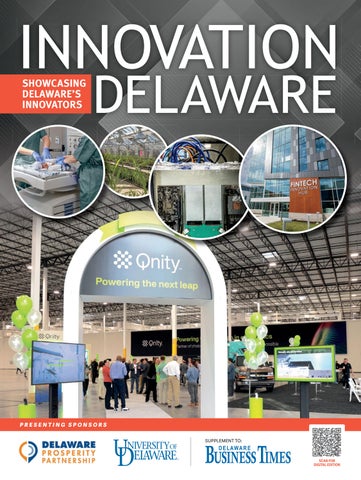
● Nemours’ new Institute for Maternal Fetal Health. (Photo courtesy of Nemours / Halkin Mason Photography)
INNOVATION SHOWCASING DELAWARE’S INNOVATORS
DELAWARE
● A greenhouse at FMC’s Stine Research Center. (Photo courtesy of FMC / Waldinger Creative) ● Chemours’ innovative liquid cooling solution. (Photo courtesy of Chemours)
PPRREESS EE N N TT II N NG G SS PP O ON N SS O OR RS S SUPPLEMENT TO:
SCAN FOR DIGITAL EDITION
● The FinTech Innovation Hub at the University of Delaware. (Photo courtesy of University of Delaware) ● Bottom: Ribbon-cutting for Qnity’s manufacturing site in Newark. (Photo courtesy of Qnity / Luigi Ciuffetelli Photography)
p. 44
C LO C K W I S E F RO M TO P L E F T: Nourish Markets is one of many small businesses that have benefited from state support. Delaware Technology Park was one of the first organizations to put Delaware’s innovation economy on the map. Sunita Chandrasekaran is one of Delaware’s foremost AI experts. Wilmington University’s new STEM college is set to educate candidates for growing fields. AirJoule’s technology “ harvests” airborne water vapor, producing both dehumidified air and pure distilled water.
4
DelawareBusinessTimes.com
p. 52
COURTESY OF WILMINGTON UNIVERSITY
O N T H E C OV E R
COURTESY OF UNIVERSITY OF DELAWARE
Supplement to
p.64
COURTESY OF THE INNOVATION SPACE / JIM COARSE / MOONLOOP PHOTOGRAPHY
p. 58 p. 72
E-BUSINESS PLATFORM One unified platform for stores, e-commerce, and deliveries
Pre-Seed Presenter: Dr. Ibrahim Toure FEERE INC, Founder & CEO
EDITOR Katie Tabeling ktabeling@delawarebusinesstimes.com ASSOCIATE EDITOR Jennifer Antonik jantonik@delawarebusinesstimes.com RESEARCH, DIGITAL & ENGAGEMENT COORDINATOR Sabrina Gonzalez sgonzalez@delawarebusinesstimes.com DIRECTOR OF DIGITAL SALES Karen Martinelli kmartinelli@todaymediainc.com DIRECTOR OF DIGITAL STRATEGY & CLIENT SUCCESS Mike Rocheleau mrocheleau@todaymediainc.com ADVERTISING DIRECTOR Lisa Minto lminto@delawarebusinesstimes.com MULTIMEDIA ACCOUNT EXECUTIVES Al Woolfolk, Tanya Tecce, Sophia Mitchell MARKETING & EVENTS MANAGER Kate Schlegel
FEERE Proprietary and Confidential @2026
CONTENTS 25
INNOVATION BY SECTOR
Meet established companies and startups in Delaware’s most innovative industries.
26 Biomedical & Pharmaceuticals 38 Chemicals & Advanced Materials 44 Clean Energy & Blue Economy 52 Education & Workforce Development 58 Fintech & Financial/Business Services 64 Integrated Agriculture & Sustainable Food Production 72 Tech, Quantum & Artificial Intelligence
78
RESOURCES
A convenient directory of service providers, associations and spaces that help companies grow
80
MEET OUR PARTNERS
Get to know the organizations that support this publication. DelawareBusinessTimes.com
Copyright © 2026 by Today Media, all rights reserved This newspaper or its trademarks may not be reproduced in whole or in part in any form or by any means electronic or mechanical, including photocopying or recording, or by any information storage and retrieval system now known or hereafter invent without written permission from the Publisher. For licensing, reprints, e-prints, plaques, e-mail Advertising@delawarebusinesstimes.com.
DIRECTOR OF INTEGRATED MEDIA OPERATIONS Greg Mathias
Top: The FinTech Innovation Hub at the University of Delaware is a space where companies collaborate to solve inequities in the financial system. NAPIGEN (bottom left) and FEERE (bottom right) are two of Delaware’s most innovative young companies in sustainable agriculture and ecommerce, respectively.
6
Founded 2014, printed bimonthly, serving Delaware’s business community
ASSOCIATE DIRECTOR OF PRODUCTION & CREATIVE SERVICES Eric Bolis ART DIRECTOR Natalie Newhart SENIOR GRAPHIC DESIGNER Rosalinda Rocco GRAPHIC DESIGNER Kyle Manzolillo TODAY MEDIA, A MARTINELLI HOLDINGS LLC PRESIDENT Robert F. Martinelli SECRETARY-TREASURER Richard Martinelli IN MEMORIAM Chairman Angelo R. Martinelli (1927 – 2018) Vice President Ralph A. Martinelli (1962 – 2019) ADVERTISING INFORMATION Advertising@DelawareBusinessTimes.com 302.504.1276 SUBSCRIPTION INFORMATION DelawareBusinessTimes.com/subscribe-now 800.849.8751 TO SUBMIT PRESS RELEASES OR STORY IDEAS News@DelawareBusinessTimes.com DAILY NEWSLETTER Sign up for our daily newsletter, delivered to your e-mail inbox at DelawareBusinessTimes.com/Newsletter EVENTS The Delaware Business Times hosts a number of events each year. View the schedule and register for events at DelawareBusinessTimes.com/Events Content and Design by TODAY MEDIA CUSTOM COMMUNICATIONS 410.828.0120 • www.todaymediacustom.com Chairman Robert F. Martinelli Group Publisher Richard Martinelli General Manager Kim Fortuna Art Director Darby Lassiter Senior Editor Tina Irgang Leaderman Contributing Writers Michael Bradley, Cloey Callahan, Kim Hoey, David Levine, Drew Limsky, Roger Morris, Stacey Pfeffer, Deron Snyder Delaware Business Times is printed 24 times per year by Today Media, 1000 N. West Street, Suite 601, Wilmington DE 19801 and is available by subscription for $96 per year. Periodicals postage paid at Wilmington, DE and additional mailing offices. Single copy/back issues are available at the cover price of $4 plus $2 shipping and handling. Attention Postmaster: Send address changes to Delaware Business Times, PO Box 2512, Williamsport, PA 17703-2512. Delaware Business Times cannot be responsible for the return of unsolicited material with or without the inclusion of a stamped, self-addressed return envelope. Information in this publication is gathered from sources considered to be reliable, but the accuracy and completeness of the information cannot be guaranteed. No information expressed herein constitutes a solicitation for the purchase or sale of any securities.
n INTRODUCING THE WILMINGTON UNIVERSITY SCHOOL OF LAW FACULTY n THE 2022 DISTINGUISHED ALUMNI AWARD WINNERS
A DAY IN HISTORIC NEW CASTLE
EVENTS & EXHIBITIONS YOU CAN'T MISS
n COLLEGE OF TECHNOLOGY GRADS EMBRACE EXCITING PATHS n WILMU’S LEADERSHIP ROLE IN A TRAUMA-INFORMED STATE
WELCOME TO FOODIE PARADISE
EVENTS & EXHIBITIONS YOU CAN'T MISS
WELCOME TO FOODIE PARADISE
www.greaterbethesdachamber.org
2017–2018 Membership Directory and Business Referral Guide
www.greaterbethesdachamber.org
How Forestry Growing Trees, Benefits Georgia’s Beautifying Cities Urban Areas GFA Conference Nonprofits Speakers Weigh inAre on GrowingFuture Trees, Forestry’s Beautifying Cities
SECRETS OF THE DU PONT ESTATES
First Quarter 2023
Volume 5 / Issue 2
GFA Conference Speakers Weigh in on Forestry’s Future
The Official Magazine of the North Carolina Forestry Association
Volume 5 / Issue 1
TRAVEL ISSUE TRAVEL ISSUE
2017–2018 Membership Directory and Business Referral Guide
The Official Magazine of the North Carolina Forestry Association
THE ANNUAL
A DAY IN HISTORIC NEW CASTLE
TREELINE TREELINE
Volume 5 / Issue 1
First Quarter 2023
SECRETS OF THE DU PONT ESTATES
‘THIS IS MY HEART’ Louie Bodenhamer, IS ‘THIS Bodenhamer Farms MY HEART’
THE ANNUAL
AN OFFICIAL PUBLICATION OF THE GREATER WILMINGTON CONVENTION AND VISITORS BUREAU
Named one of the 23
AN OFFICIAL PUBLICATION OF THE GREATER WILMINGTON CONVENTION AND VISITORS BUREAU
BEST PLACES TO GO BEST PLACES TO GO
Louie Bodenhamer, Bodenhamer Farms
Named one of the 23
GEORGIA GEORGIA FORESTRY FORESTRY Bioenergy:
BE PRO BE PROUD
Building the Next Generation of Forestry Professionals
SEARCHING BE BE PROUD forPRO Pest-Resistant Trees
Building the Next Generation of Forestry Professionals
NCFA’S ANNUAL REPORT: NCFA’S ANNUAL ROSEBURG FOREST PRODUCTS REPORT: New Facility, 2022 in Review
HERE FOR YOU NC Forest Service Offers HERE Financial Assistance Owners to Woodland YOU FOR
2022 in Review
New Opportunities
ROSEBURG FOREST MAXIMIZE PRODUCTS DEDUCTIONS
s
New Facility, to Minimize Taxes New Opportunities
NC Forest Service Offers Financial Assistance to Woodland Ownerss
MAXIMIZE DEDUCTIONS
to Minimize Taxes
Spring 2023
HOW LANDOWNERS CAN BENEFIT SEARCHING
Get Your Health Care in Line
Johns Hopkins Community Physicians
fromfor Inflation Reduction Act Pest-Resistant Trees
jhcp.org/dc • 1-833-GET-JHCP (1-833-438-5427)
Spring 2023
2IÀFHV FRQYHQLHQWO\ ORFDWHG LQ %HWKHVGD WKURXJKRXW 0RQWJRPHU\ &RXQW\ DQG LQ GRZQWRZQ ' &
in the U.S. in 2023
HOW LANDOWNERS CAN BENEFIT
by Condé Nast Traveler
Second Quarter 2023
Get Your Health Care in Line
The Future Is in Our Hands
Johns Hopkins Community Physicians
from Inflation Reduction Act
Bioenergy:
jhcp.org/dc • 1-833-GET-JHCP (1-833-438-5427)
2IÀFHV FRQYHQLHQWO\ ORFDWHG LQ %HWKHVGD WKURXJKRXW 0RQWJRPHU\ &RXQW\ DQG LQ GRZQWRZQ ' &
in the U.S. in 2023
by Condé Nast Traveler
The Future Is in Our Hands
800-489-6664 • VISITWilmingtonDE.com
2023
800-489-6664 • VISITWilmingtonDE.com
2023
The Journey from Forest to Energy
NORTH CAROLINA FORESTRY ASSOCIATION
SHOWCASING DELAWARE’S INNOVATORS SHOWCASING DELAWARE’S INNOVATORS
VISIT HERSHEY HARRISBURG.ORG
NCFA NCFA
INNOVATION DELAWARE INNOVATION DELAWARE
NORTH CAROLINA FORESTRY ASSOCIATION
ISSUE 4 / 2023
A NEW WAY TO
Wood: the Future of Transit?
VISIT HERSHEY HARRISBURG.ORG
WILMU WILMU THE PUBLICATION FOR THE WILMINGTON UNIVERSITY COMMUNITY
Norwegian Sun & Sky to S
ail From Baltimore
Norwegian Sun & Sky to S
ail From Baltimore
SPRING 2023
®
2023
Membership Directory & Resource Guide
THE PUBLICATION FOR THE WILMINGTON UNIVERSITY COMMUNITY
SPRING 2023
®
2023
e Travel GGuuid e id Travel
ISSUE 4 / 2023
A NEW WAY TO
Telling Forestry’s Story to Georgia Lawmakers The Journey from Wood: Future Forestthe to Energy of Transit? Telling Forestry’s Story to Georgia Lawmakers
Membership Directory & Resource Guide
2020
marylandports.com
↘ ↘
PLUS:
marylandports.com
EVERGREEN EVER MAX: THE BIGGEST CONTAINER VESSEL TO VISIT THE PORT
MICHAEL DERBY CELEBRATES 35 YEARS WITH WALLENIUS WILHELMSEN
PLUS:
2020
EVERGREEN EVER MAX: THE BIGGEST CONTAINER VESSEL TO VISIT THE PORT
PRESENTING SPONSORS SUPPLEMENT TO:
MICHAEL DERBY CELEBRATES 35 YEARS WITH WALLENIUS WILHELMSEN
SCAN FOR DIGITAL EDITION
PRESENTING SPONSORS SUPPLEMENT TO:
Fall is Here Fall is Here
Fall 2023
Time for GFC’s Leaf Watch
MEETING & EVENT PLANNING GUIDE
MR. IRÉNÉE DU PONT JR.
MEETING & EVENT PLANNING GUIDE
MR. IRÉNÉE DU PONT JR.
We honor the former Board of Trustees Chairman for his dedicated
service to Wilmington University REMEMBERING n INTRODUCING THE WILMINGTON
FALL 2021
OUT OF THE BOX
2023 Meeting and Event2023 Planning Meeting Guide and Event Planning Guide
Fall 2023
REMEMBERING
VISIT BALTIMORE
GEORGIA FORESTRY GEORGIA FORESTRY
VISIT BALTIMORE
SCAN FOR DIGITAL EDITION
Host your event at one of these FALL 2021 sustainable venues
OUT OF THE BOX
n COLLEGE OF TECHNOLOGY GRADS
EMBRACE EXCITING PATHS UNIVERSITY SCHOOL LAW of Trustees We honor the formerOF Board Chairman for his dedicated FACULTY service to Wilmington University n WILMU’S LEADERSHIP ROLE IN A n THE 2022 DISTINGUISHED ALUMNI AWARD WINNERS n INTRODUCING THE WILMINGTON UNIVERSITY SCHOOL OF LAW FACULTY n THE 2022 DISTINGUISHED ALUMNI AWARD WINNERS
TRAUMA-INFORMED STATE n COLLEGE OF TECHNOLOGY GRADS EMBRACE EXCITING PATHS n WILMU’S LEADERSHIP ROLE IN A TRAUMA-INFORMED STATE
Host your event at one of these sustainable venues
Time for GFC’s Leaf Watch
BALTIMORE.ORG BALTIMORE.ORG
Baltimore.org
BALTIMORE COUNTY BALTIMORE COUNTY
Nonprofits Are How Forestry Growing Trees, Benefits Georgia’s Beautifying Cities Urban Areas GFA Conference Nonprofits Speakers Weigh inAre on GrowingFuture Trees, Forestry’s Beautifying Cities
SCAN FOR DIGITAL EDITION
Baltimore.org
How Forestry Benefits Georgia’s Urban Areas
GFA Conference Speakers Weigh in on Forestry’s Future
Quality of Life Guide & Business Directory A Publication of the Baltimore County Chamber of Commerce
www.baltcountychamber.com
STEP ASIDE, SILICON VALLEY STEP ASIDE, SILICON VALLEY
PERIODICALS SUPPLEMENT TO
PRESENTING SPONSOR:
SUPPORTING SPONSORS: PERIODICALS SUPPLEMENT TO
2025/2026 • $7
Meet the leaders setting Baltimore up to be the next STEM destination
PRESENTING SPONSOR:
SUPPORTING SPONSORS:
THE PORT OF BALTIMORE 2023 DIRECTORY THE PORT › › › OF BALTIMORE ›
1
1,200+ Listings Vital Port Statistics Indexing by Company & Personnel Trade Lanes Marine Terminals Foreign Trade Zones
1
1,200+ Listings Vital Port Statistics Indexing by Company & Personnel Trade Lanes Marine Terminals Foreign Trade Zones
2023 DIRECTORY
Quality of Life Guide & Business Directory A Publication of the Baltimore County Chamber of Commerce www.baltcountychamber.com
SCAN FOR DIGITAL EDITION
2025/2026 • $7
Meet the leaders setting Baltimore up to be the next STEM destination
›
›
›
›
Your Publishing Partner for Your Publishing Partner for
Great Content Great Content Stunning Stunning Design Design Unrivaled Unrivaled Distribution Distribution IN PRINT | ONLINE | AT EVENTS IN PRINT | ONLINE | AT EVENTS Contact Steve Lassiter: 443-909-7828 Contact Steve Lassiter: 443-909-7828 steve.lassiter@todaymediacustom.com steve.lassiter@todaymediacustom.com todaymediacustom.com todaymediacustom.com
custom communications custom communications
Delaware Prosperity Partnership Delaware has long been considered the Cradle of Innovation, and our innovation ecosystem continues to prove that by emphasizing inclusion, collaboration, relationships, and social capital. The Delaware Prosperity Partnership is leaning in on innovation and is launching a new set of strategic initiatives to continue to improve and grow our state’s startup community. Our focus is on supporting a more robust and creative startup pipeline, attracting venture capital to Delaware, building connections between corporations and company builders, and providing a soft landing for international firms entering the US market. The expansion of this programming represents an emphasis on the importance of growing scalable science and tech companies in Delaware, and DPP looks forward to forging ahead to create more measurable impacts across the First State.
Noah Olson | Vice President, Innovation, Enterprise and Expansion ChooseDelaware.com
For more information about innovating in Delaware, contact Noah Olson at nolson@choosedelaware.com
University of Delaware Tracing its origins to 1743, the University of Delaware is the nation’s seventh-oldest institution of higher education and a top-ranked public research university known for discovery, innovation and impact. Under the leadership of President Laura Carlson, UD builds on a longstanding tradition of educating leaders, including three signers of the Declaration of Independence. Today, UD is driving innovation in fields such as science, technology, health care, business and sustainability. With locations across the state and expanding online learning programs, UD partners with industry and communities to translate knowledge into solutions that improve lives in Delaware and around the world.
UDel.edu
8
DelawareBusinessTimes.com
DELAWARE: A STATE OF INNOVATION Delaware has become an innovation powerhouse.
95
Home to 10-person startups and corporations of over 1,000 employees alike, the state has steadily risen in recent years as a prime location to set up shop. The First State is dotted with innovative organizations, 95 with growing areas of development around Georgetown in Sussex County and Dover in Kent County adding to the collection of pioneering companies along the I-95 corridor. On this page and the next, we feature some of the most innovative companies in Delaware. ADVANCED MATERIALS/ MANUFACTURING 1 2 3 4 5 6
Claym on t Hockessin Wilmin g ton
N e wa r k 95
B ea r 1
N E W C A STL E CO U N T Y 1
M id dle town
EDUCATION/RESEARCH 15 Delaware State University 16 Delaware Technical Community College – Dover Campus 17 Dover AFB 18 University of Delaware – Lewes Campus
ALOFT AeroArchitects Atlantis Industries Delmarva Corrugated Packaging ILC Dover MillerMetal Fabrication Moonprint Solutions
1
S myr na
AGRICULTURE
19 Bayhealth 20 Beebe Healthcare 21 Enhanced Edge 22 TidalHealth Nanticoke
7 302 Aquaponics 8 Allen Harim 9 Merck Animal Health 10 Perdue Farms 11 Suzuki Farm
21
SOFTWARE/DIGITAL 12 DSU Center for Urban Revitalization ENTERPRISE and Entrepreneurship (CURE) 13 Nylon Capital Shopping Center/The Mill 24 Archie NH VT 14 The Hive on Loockerman Ne w Yo rk Lake Ontario Alb an y
Lake Erie
CT
ME
Bo sto n
MA
Ha r tfo rd
Ha rri sb urg
Pit tsb urg h
Wi lm ing to n
D e laware 13
DC
Ha r rin g ton
No r th Ca ro lin
M ilford 113
19
1
20 18
8 NJ
5
Ne w Yo rk
Ph ila de lph ia 15 0 10 0 50
13
20 0 Mi les
De law are
13
10
Atlantic Ocean h
2
113
L a ure l 11
9
1
1
G e orge town
23 22 9
MD
Vir gin ia Be ac
SU SSE X 24 CO U N T Y
S ea ford
Ri ch mo nd Vir gin ia
1
RI
Ba lti mo re Wa sh ing to n, We st Vir gin ia
4
13
Pe nn sy lva nia
OH
17
Ca md e n
23 One Way Insurance Group
Bu ffa lo
6
1
Dove r
3
FINANCIAL SERVICES/FINTECH
CO-WORKING SPACE/ INCUBATOR/ACCELERATOR
7
16
K E N T 1512 14 CO U N T Y
HEALTH CARE
13
9
M illsb oro
113
1
a
INNOVATION DELAWARE
9
ADVANCED ADVANCED MATERIALS/ MATERIALS/ MANUFACTURING MANUFACTURING
56 The 56 Mill The Mill 57 UD’s 57 STAR UD’s STAR Campus Campus
1
EDUCATION/ EDUCATION/ RESEARCH RESEARCH
41 41
7
ke Pi ap t G Pike ap tG
White ClayClay Creek Creek N White ew
n Lo
n Lo
w dH d oo woo w k k Kir Kir
2
R
d
d
896 896
72 72 2
273 273
105 8 105 8
S College Av
S College Av
106 106
2
2 17 17 7 7
4
38 38 273 273
2
99 99 29 29
4 273 273
2 76 76
58 58
7
7
1
1
4 79 79
30 30
95 95
4
n New n gto gto min min
2
87 84 87 84
82 82
53 109 53 109 57 57 3 3 96 6388 88 2 96263 78 16 7816 86 86 73 73
7
wy wy dH dH wiorokwoo k r i K K
64 64 NEWARK NEWARK 93 93
45 45
7
2
10 10
don
don R
68 68
State State ParkPark
or
or
wp
wp
Ne
N
CHRISTIANA CHRISTIANA273 273
6
5
6 42 42 5 37 37
7
7 1
1 40
1
1
95 95
Summit Brid ge Rd
92 92
l St
l St
40 40
BEAR BEAR
72 72
pe Cha
Summit Brid ge Rd
896 896
pe Cha
279 279 SOFTWARE/ CO-WORKING CO-WORKING SPACE/ SPACE/SOFTWARE/ DIGITAL DIGITAL ENTERPRISE ENTERPRISE INCUBATOR/ INCUBATOR/ ACCELERATOR ACCELERATOR 103 Diamond 103 Diamond Tech Tech 52 CSC 52 Station CSC Station 104 Kai 104Coders Kai Coders 53 Delaware 53 Delaware 105 NerdiT 105 NerdiT Now Now Technology Technology Park Park 106 Predictive 106 Predictive Analytics Analytics 281 281 54 New 54 Castle New Castle County County GroupGroup Emerging Emerging Enterprise Enterprise 107 The 107Precisionists, The Precisionists, Inc. Inc. CenterCenter 108 WhipFlip 108 WhipFlip 55 The 55 Innovation The Innovation SpaceSpace 109 WhyFly 109 WhyFly 7
7 61 61
72 72
MMDD
7
41 7
HEALTH HEALTH CARE CARE
213 213 DelawareBusinessTimes.com
7
NextFab NextFab
82 Avkin 82 Avkin 83 CarePortMD 83 CarePortMD 84 ChristianaCare 84 ChristianaCare 85 Cigna 85 Cigna Healthcare Healthcare 86 CorriXR 86 CorriXR Therapeutics Therapeutics 87 Helen 87 Helen F. Graham F. Graham Cancer Cancer Center Center CHEMISTRY CHEMISTRY & Research & Research CenterCenter 32 Adesis 32 Adesis 88 Innovative 88 Innovative Precision Precision HealthHealth 33 BASF 33 BASF 89 LabWare 89 LabWare 34 Chemours 34 Chemours 90 LiteCure 90 LiteCure 35 Croda 35 Croda 91 Nemours/A.I. DuPont DuPont 36 Crystron 36 Crystron Technologies Technologies 91 Nemours/A.I. Hospital Hospital for Children for Children 37 Dow 37 Chemical Dow Chemical 92 Siemens 92 Siemens Healthcare Healthcare Company Company Diagnostics Diagnostics 38 FMC 38 Specialty FMC Specialty 93 TheraV 93 TheraV Chemicals Chemicals GroupGroup 39 Kuehne 39 Kuehne Chemical Chemical Company Company MEMBERSHIP MEMBERSHIP & & INDUSTRY INDUSTRY 40 Marlex 40 Marlex ORGANIZATIONS Pharmaceuticals Pharmaceuticals Inc. Inc. ORGANIZATIONS 41 PFAS 41 PFAS Solutions Solutions 94 CSC 94 CSC 42 Qnity 42 Qnity 95 Delaware 95 Delaware BioScience BioScience 43 Solenis 43 Solenis Association Association 44 Superbrewed 44 Superbrewed Food Food 96 Delaware 96 Delaware 316 316 Biotechnology Biotechnology 45 Versogen 45 Versogen Institute 273Institute 273 46 Wilmington 46 Wilmington 97 Delaware 97 Delaware Division Division PharmaTech PharmaTech of Small of Small Business Business 98 Delaware 98 Delaware Prosperity Prosperity CLEAN CLEAN ENERGY ENERGY Partnership Partnership 47 AirJoule 47 AirJoule 99 DESCA 99 DESCA 48 Aternium 48 Aternium 100 Pete 100 du Pete Pont du Pont Freedom Freedom Foundation Foundation 49 Evolve 49 Evolve 101 Tech 101 Council Tech Council of Delaware of Delaware 50 Lectrolyst 50 Lectrolyst 102 World 102 World TradeTrade CenterCenter 51 OmniPotential 51 OmniPotential Delaware Delaware Energy Energy Partners Partners
10
82 82
HOCKESSIN HOCKESSIN Lan Lan c c
Ne
68 Bank 68 Bank of America of America – – Deerfield Deerfield Campus Campus 69 Barclays 69 Barclays Bank Bank Delaware Delaware 70 Best 70 Egg Best Egg 71 Bronze 71 Bronze ValleyValley 72 Citigroup 72 Citigroup Financial Financial 73 FinTech 73 FinTech Innovation Innovation Hub Hub 74 Investor 74 Investor Cash Cash Management Management 75 JPMorgan 75 JPMorgan ChaseChase – – Delaware Delaware Technology Technology CenterCenter 76 Leading 76 Leading Edge Edge Ventures Ventures 77 Nester 77 Nester 78 PRISMM 78 PRISMM 79 Sallie 79 Sallie Mae Mae 80 StratFI 80 StratFI 81 WSFS 81 WSFS
ew
15 ABS 15 Bio ABS Bio 16 Ammon 16 Ammon Pinizzotto Pinizzotto Biopharmaceutical Biopharmaceutical Innovation Innovation CenterCenter 17 ANP 17 Technologies ANP Technologies 18 Ardent 18 Ardent 19 AstraZeneca 19 AstraZeneca 20 Cellergy 20 Cellergy Pharma Pharma 21 Chestnut 21 Chestnut Run Run Innovation Innovation & & Science Science Park (CRISP) Park (CRISP) 22 DeNovix 22 DeNovix 23 Hygiena 23 Hygiena 24 Incyte 24 Incyte 25 Merck 25 Merck 26 Nitro 26 Nitro Biosciences Biosciences 27 Noramco 27 Noramco of of Delaware Delaware 28 Prelude 28 Prelude Therapeutics Therapeutics 29 QPS 29 QPS 30 RiKarbon 30 RiKarbon 31 Synnovation 31 Synnovation Therapeutics Therapeutics
104 104
FINANCIAL FINANCIAL SERVICES/FINTECH SERVICES/FINTECH
Wi l Wi l
BIOSCIENCE BIOSCIENCE
82 82
ike rP te e as Pik r te as
11 Corteva 11 Corteva Agriscience Agriscience 12 KiposTech 12 KiposTech 13 Livestock 13 Livestock Labs Labs 14 NAPIGEN 14 NAPIGEN
CEN
S Chapel
AGRICULTURE AGRICULTURE
DELAWARE’S DELAWARE’S I-95 I-95INNOVATION INNOVATION CORRIDOR CORRIDOR
58 Delaware 58 Delaware Technical Technical Community Community College College – – Stanton Stanton Campus Campus 59 DSU 59 Riverfront DSU Riverfront 60 FAME, 60 FAME, Inc. Inc. 61 Goldey-Beacom 61 Goldey-Beacom College College 62 Junior 62 Junior Achievement Achievement of Delaware of Delaware 63 NIIMBL 63 NIIMBL 64 University 64 University of Delaware of Delaware 65 Wilmington 65 Wilmington University University 66 Year 66 Up Year Wilmington Up Wilmington 67 Zip 67Code Zip Code Wilmington Wilmington
S Chapel
Agilent 1 Agilent Technologies Technologies 2 Bloom 2 Bloom Energy Energy 3 DeLUX 3 DeLUX Engineering Engineering 4 DuPont 4 DuPont 5 DuPont 5 DuPont VespelVespel 6 GE6 Aerospace GE Aerospace 7 Phase 7 Phase Sensitive Sensitive Innovations Innovations 8 SAS 8 SAS Nanotechnologies Nanotechnologies 9 TalosTech 9 TalosTech LLC LLC 10 W.10L. Gore W. L. & Gore & Associates Associates
72 72
i Hw skla skiyHwy GLASGOW GLASGOW PulaPu
71 71 7 7 71 71 13 13
39
PA
52
CENTERVILLE
92
22
14114
r
495
WILMINGTON 4
DOWNTOWN WILMINGTON
t gS Kin
2n
dS
t
ruc eS Kir t kw Ch oo urc dS hS t Be t n
La m Je ss Cart otte up er St St St St ru
ce S
t
ne Pi
Sp St
13
th
Kirkwood Park
St
13
St
3rd
tS
t
St
St
13 t
tS t
ne
St
St
Loc ust S
St Wa lnu t
Tat na ll S t ng eS t Sh i Ma pley S rke tS t t Ora
5th
eS
St
St
St
Wi l
roe St Ma dis on St Mo Jeff rro ers wS on t S t Wa shi ng ton We st S St t
Mo n
on
NJ T
7th
Christina Park
St
27
St
Chr ist i
9
7th
HM Holloway Sr 6th Park
Lom ba rd
St
Jus tis
Po son S pla t rS t
St om Bro
St Fra nkl in
St on
rris
Ha
Bu ren
Van
Av
h
St
St
St
St
St
1 4t
Ad am s
th
26
th
th
13
Fro n
t
t
48
AS
25
100
River na
th
52
8th
13
59 71
12 St
77
Bus
24
4th
54
69
St
S rd
13
5th
Bus
St
Blv d
40
97 72 13
th
K JR
t
34
th
St
ve r
St
16 t 15 h St th St
74 13th S
11
St
24
ML
4
80
St
4th
23
St
de
103
6th
nd
Va n
H Fletcher Brown Park
105 101 9856 67
St
et ark N M 22
St
St
108
130
t
85
S st
St
ll na Tat
St
9th
81
St
8th
48 2 nd St 49
9
th
21
9
10
7th
3rd
th
273
St
Rd sin Ba
41
NEW CASTLE
Del aw are Me mo Bri rial dge 95
th
9
49
th
St
23
35
th
90
20
295
40
St
66
32
18
44
65 141
13
14
t
st S We
19
58
40
nA v
Av re wa la
Wilmington Airport
37
Gle
De
102
40
W
52
Cool Springs Park
18
t
nS
gto
in sh a48
th
141
St
on
ers Jeff
17
Av
yw in
r Pa
9
nia
n Va
St
reek e C k Dr
sylv a
n re Bu
d an
Pen n
Brandywine Park
Br
495
83 33
Av re wa la
15
in lp Gi
13
NEWPORT 4
De
n Newport
13B
v sA os lcr al Sh Av
41
Ch ur ch
62
t
ELSMERE
130
Pin
e
2
wy dH
13
Blv d
48
4 141
41
Av
NJ
Ba yna rd
11
25
BELLEFONTE 60
De
d21
Pe nn sy lva nia
24
89
t
34
141
Gre en hil lA v
47 28
Centre R
1
94
13
ch S
Powde r
Bellevue State Park
95
Fre n
GREENVILLE
495
ve
141
75
d
91 31 20 R 47 46 50 55 ill 13 M 51 12 26 36
3
St
52
13B
a re
43
ke Concord Pi
ike
52
CLAYMONT
261 95 70
19
Ri
202
13
95
TALLEYVILLE
Go v. Pr in tz Bl vd
Brandywine Creek State Park
tP net Ken
82
ARDEN
law
Winterthur Gardens
Sp
DE
92
3
107
100
95
13
9 39
INNOVATION DELAWARE
11
DELAWARE
elaware is at the center of the Mid-Atlantic — a region that is home to about 60 million people, or about one-fifth of the entire U.S. population. More than 150 colleges and universities are nearby. Philadelphia, Baltimore, Washington and New York are all just a short drive away on I-95. At the same time, Delaware is a small state where startup founders rub elbows with their governor, their U.S. senators and their U.S. representative, and help from industry veterans is always just a phone call away. That powerful combination of small-state accessibility and economic-powerhouse convenience has put Delaware at the center of innovation in a number of industries that will power the future of the U.S. and the globe. But what really puts the First State over the top in innovation is the people who make it all happen. They range from forward-thinking lawmakers and government officials to determined entrepreneurs to organizations that put their everything into supporting small businesses with big ideas. In the pages that follow, we’ll look at some of the people and entities that help make the magic happen. You’ll learn about the changes Delaware is making to support small-business entrepreneurship like never before, the cutting-edge initiatives the state has adopted to take the lead on AI, and the many ways underrepresented founders can find support here. WELCOME TO THE FIRST STATE OF INNOVATION.
12
DelawareBusinessTimes.com
PIRANKA / GETTY IMAGES
First State of Innovation
Did you KNOW? One of Delaware’s foremost innovation hubs, The Innovation Space, has connected new companies to more than
$1.2
billion
in funding since its inception in 2017. SOURCE: Delaware Science & Technology Ecosystem Assessment, Delaware Prosperity Partnership/ TEConomy Partners, LLC, 2025
Investing in Small Business How Delaware Powers the Big Ideas of Entrepreneurs BY ROGER MORRIS
T
here’s no doubt about how important Gov. Matt Meyer feels small businesses are to Delaware’s economic well-being — or about his belief that state government should have an active role in keeping them healthy. “Small businesses are the backbone of our economy,” Meyer says. “They create jobs, anchor our main streets and give people a real shot at building something for themselves and their families. Delaware entrepreneurs need access to capital, technical support, workforce support and a government willing to fight for them.” The numbers bear out the governor’s assessment. According to the U.S. Small Business Administration, Delaware has a whopping 111,346 small businesses, representing 98.7% of the total number of all businesses in the state. Further, these firms employ 214,539 people, or slightly more than half (50.6%) of Delaware’s workforce.
Meyer also believes that responsibility for working with small businesses does not rest with just one state agency, emphasizing that “the Division of Small Business plays a critical role as the state’s primary liaison to the small business community, but if we want to support entrepreneurs, that work cannot begin and end in one office. I started two businesses, so I know that entrepreneurs do not experience challenges in the same way or in neat bureaucratic boxes.” He continues, “That’s why the Delaware Prosperity Partnership is sharpening its focus on innovation; why our Small Business Development Centers provide hands-on technical assistance; and why our state housing authority helps entrepreneurs grow businesses in communities across Delaware through Downtown Development Districts. The Department of Finance also supports growth with tax credits, while the Department of Labor helps employers connect with workforce grants and training.”
$14 Million for Delaware Entrepreneurs Because of this philosophy, there was much celebration when the Division of Small Business (DSB) announced near the end of last year that it has surpassed in just eight months its goal of distributing or obligating exactly $14,433,971.99 to small businesses as part of the federal government’s State Small Business Credit Initiative (SSBCI) funding. “About 40 to 50 Delaware companies were part [of] qualifying for the $14 million in funding,” says DSB Director C.J. Bell, “representing small businesses ranging from a home day care center to an emerging biotech company.” The purpose of the SSBCI Capital Program is to provide funds to states to create tailored programs that offer support to small businesses and entrepreneurs through equity/venture capital, loan participation, loan guarantee, collateral support and capital access programs. There is no one definition or size that fits all small businesses, and those categories have expanded in recent years, especially with the advent of the digital economy. “We need to be honest about how much work has changed and about the future of work,” Meyer argues. “Many Delawareans earn a living as freelancers, independent contractors, creators and gig workers. Many of them are managing risk, building a customer base and piecing together their income with the same grit and determination we admire in any entrepreneur. They deserve serious attention.” There are two basic categories of SSBCI programs to continue to help small businesses that have grown from infancy to become full-fledged businesses. One avenue is though low-interest loans, and another is by providing direct investment of state funds. For example, transplanted Philadelphians Kim and Donny Legans wanted to start a year-round beer garden to serve Dover residents and were looking for assistance in startup funding. They applied for and won a Delaware EDGE Grant in mid-2023. “EDGE” stands for Encouraging Development, Growth and Expansion, a competitive program whose purpose is to assist diverse startups in INNOVATION DELAWARE
13
It is a community strategy. When you help a small business grow, you are helping a family stay afloat, a downtown stay vibrant and a young person see a future for themselves right here in Delaware.” — Gov. Matt Meyer
F I RS T S TAT E O F I N N OVAT I O N
the STEM and entrepreneurial sectors. As most new businesses owners do, the Legans took out a loan to make the business a reality. Now, three years later, their Rail Haus is a staple in Dover’s array of dining places. “The loan was just what we needed at the time, but it became more and more of a monthly burden,” Donny Legans says. “So I was really encouraged when I read on Instagram about the SSBCI loan program.” Under the program, the Legans’ conventional loan was shopped around to participating financial institutions willing to offer lower loan rates in partnership with the state government. “The way it worked for us was that our loan
14
DelawareBusinessTimes.com
was split between the financial institution and the state, both of which offered a lower rate than our existing loan.” Which made a huge difference. “The blended rate was much lower, and it dropped the monthly loan payment by about a third, or several thousand dollars less,” Legans says.
‘A Letter of Recommendation for the Business Owner’ Kevin and Sophia Macauley were looking for a different financial solution for their Nourish Markets, which they founded in
2022, and whose stated business philosophy is “redefining grab-and-go dining” for both travelers and office workers. Nourish emphasizes using small farmers who supply healthy produce, which Nourish then packages and sells either in their own locations or in automated markets at airports or other locations. Currently these range from Brew Ha-Ha coffee shops to the Baltimore-Washington International Airport. What the Macauleys needed was investment capital to expand, so in 2025 they applied for a DASCP — Delaware Accelerator & Seed Capital Program — award, which allows the state to make direct investments of up to $1 million in companies on a 1-to-1 matching basis once the companies have completed their seed round of funding. After going through an intensive vetting program, the Macauleys’ application was approved. “You then have to find investors who will match the state funding, and we are now going through the process,” says Kevin Macauley. “But we have a letter from the
state stating they are participants in investing, and that is super-valuable in appealing to private investors.” Or, as DSB director Bell phrases it, “It’s almost like a letter of recommendation for the business owner to go out and find private venture capital.” Now the state has a non-voting seat on the Nourish board, and the company keeps all investors updated through an annual report and quarterly newsletters. With the extra investment, the Macauleys are now planning to expand to several more Nourish market locations this year, as well as setting up three of their own fully operated retail outlets. “It’s an intense and awesome program,” Macauley says, “and it’s a great program for a business to grow at a faster rate than doing so organically.” Moreover, the program is not only an infusion of funding, it is also a vote of confidence for the entrepreneurs. “Investing in small businesses is not just an economic strategy,” Meyer emphasizes. “It is a community strategy. When you help a small business grow,
you are helping a family stay afloat, a downtown stay vibrant and a young person see a future for themselves right here in Delaware.” The Delaware Accelerator & Seed Capital Program helped Kevin and Sophia Macauley expand their business, Nourish Markets.
INNOVATION DELAWARE
15
‘Always Room for Another Seat’
These Organizations Boost Underrepresented Founders in Delaware BY DERON SNYDER
F I RS T S TAT E O F I N N OVAT I O N
W
16
hile it’s true that founders often need funds as much as any t hing , succes s f ul entrepreneurship requires more than cash and credit. The needs are historically greater among underrepresented groups — like women, people of color and members of the LGBTQ+ community, who typically enter the entrepreneurial ecosystem with multiple unchecked boxes. The Delaware Prosperity Partnership (DPP) is among several organizations that aim to attract and strengthen diverse founders in the state. “I wish we had oodles and oodles of cash that we could use to help support all of our small businesses, particularly those who need it most — the under-resourced founders,” says Noah Olson, DPP vice president of
DelawareBusinessTimes.com
innovation, enterprise and expansion. “But accessibility to programming, to people and to resources, are what sets us apart. In Delaware, there’s always room at the table for another seat.” With that goal in mind, DPP launched Startup302 in 2020. Since then, the pitch competition for tech startups with highgrowth potential has awarded more than $925,000 to 61 companies, and several
participating companies relocated to the state. “Access is one of the key things we sell as a value proposition,” he says. “That could be government leaders, business leaders, [talent.] We’ve got a great talent pool to pull from. We give underresourced founders the ability to come in, be welcomed into the ecosystem and have access to the folks around you.” Startup302 is on pause in 2026 while DPP focuses on other ways to assist besides its pitch competition, but many other organizations work towards the same goal of increasing opportunities for founders from underrepresented groups. IN THE PAGES THAT FOLLOW, YOU’LL MEET A FEW OF THEM.
We’ve got a great talent pool to pull from. We give underresourced founders the ability to come in, be welcomed into the ecosystem and have access to the folks around you.” — Noah Olson, Vice President of Innovation, Enterprise and Expansion, Delaware Prosperity Partnership
Bronze Valley has so far invested in 66 startups, eight of them in Delaware.
E3 by the Pete du Pont Freedom Foundation
I
COURTESY OF BRONZE VALLEY / QING PHOTOGRAPHY
Bronze Valley
F
ounded in Birmingham, Alabama in 2018 as an early-stage venture capital fund and community development financial institution, Bronze Valley expanded to Delaware in early 2023 to meet the needs of emerging startups and innovators. “I grew up in Delaware and my family is there,” says Neill Wright, Bronze Valley founder, president and CEO. “We had already invested in several startups in the Philadelphia area, so Delaware made a lot of sense from several perspectives. And part of what we do in our investment strategy and programmatic strategy is partner with universities like [historically Black] Delaware State. We’re co-located in their Riverfront facility.” The Bronze Valley VentureLab is rooted in accelerator programming and advisory service to help strengthen and ensure the success of the participating startups. Bronze Valley has invested in eight Delaware startups out of its 66 companywide. Wright says partnerships with the state’s financial institutions, philanthropic organizations and government agencies have been vital to Bronze Valley’s success. Accelerator programming comes in the form of university innovation cohorts, pre-seed investment cohorts and C-suite advisory services. “And then there’s our investment accelerator, a 12-week program where we truly have skin in the game,” Wright says. “It’s $100,000 in investment capital and an equity position in the companies.” Wright says raising the requisite capital to take advantage of deal flow opportunities is a challenge. Identifying companies with high growth potential is easier. “Founders who tend to be scrappy and industrious and are motivated by lived experience — especially if you have capital — will find you,” he says.
n March 2020 — the month police killed Breonna Taylor and two months before George Floyd’s murder sparked a summer of unrest — the Pete du Pont Freedom Foundation (PDFF) established a new initiative. “The Equitable Entrepreneurial Ecosystem (E3) was created when we saw there was a lack of access to funding and resources for marginalized entrepreneurs,” says PDFF Director of Programs Lynn Roberts. “We might be at more than 400 entrepreneurs at this point.” Roberts says E3 membership includes a variety of benefits that help founders accelerate bold and creative ideas. Members at the highest tier receive conciergetype services for targeted support, meeting monthly for check-ins and smart goal-setting
with a client success manager. “There’s also E3 Wallet, a fairly new benefit where entrepreneurs can get some funds for various projects,” Roberts says, mentioning accounting, human resources, logistics and operations. “We’re able to tap into our network base and they either start or carry out projects on members’ behalf.” Startups at any stage or level of business are welcome to apply, but the preference is founders who are past the conceptual phase. “In order to make the most of our services and the wallet, that’s where our sweet spot lies,” Robert says. “Post-revenue could be $500 to $1 million. It really depends on the stage of the process.” PDFF might shift a little bit from branding E3 separately but will continue to elevate small business owners. “This is what we do as a foundation,” Roberts says.
Emerging Enterprise Center
A
fter nearly six years as owner of The Perfect Blend in Newark, Delaware, Jeanne Kress sold the café that never recovered from the pandemic. There’s no guarantee she’d still be in business if she had crossed paths with the Emerging Enterprise Center (EEC) by the New Castle County Chamber of Commerce. But it would’ve been nice. “I wish I had known this was here, because it’s so resourceful, opening and welcome,” says Kress, who’s now the EEC senior director of membership development. The EEC offers business education, mentorship, networking opportunities and affordable office space to startups and small businesses. Kress oversees the incubator, “the fun part of my job,” where she talks to people about their business dreams and goals. “I break that down and help people see a pathway to make it a reality,” she says. “That’s the creative part of it and that’s a lot of fun. We want to let new businesses know you’re not in it alone. We have your back.” That includes the EEC’s low-rent office space, with two large conference rooms, a co-working area and two glass semi-private meeting rooms. Business owners can take advantage of the facility for an hour, a day or monthly. And there’s the accelerator and education programs. “The key is helping owners unlock that magic inside them,” Kress says. “If I can’t do that, I’ve got this incredible network of resources I can call or send them to, and then we can all work together in partnership.” INNOVATION DELAWARE
17
First Founders
G
F I RS T S TAT E O F I N N OVAT I O N
arry Johnson III formed First Founders in 2019 with a mission to help early-stage, underrepresented entrepreneurs find their pathway in the innovation ecosystem. “We want to limit the barriers to entry and help everybody succeed in an equitable innovation economy,” Johnson says. “We execute that mission by building accelerator programs, organizing pitch competitions, and building a community of entrepreneurs and resource providers, which includes investors such as venture capitalists.” First Founders wants owners to understand what it takes to build a scalable business and communicate with those who can help. “Our unique approach is overserving the underserved,” Johnson says. “We know there are many disparities and the racial wealth gap is widening.”
18
DelawareBusinessTimes.com
The company uses innovative ways to promote “Demo Day,” the pitch competition that concludes each 12-week accelerator program. The event is streamed online and founders record their pitches, which are blasted and targeted across social media. First Founders doesn’t focus on specific industries, but its entrepreneurs must incorporate technology in their focus. “Technology can be daunting to a lot of people,” Johnson says. “There are individuals who come to us who are not yet truly leveraging technology. They might have a clothing brand or a food business, and we can help them start leveraging and adapting different tools that are helping other businesses scale beyond their kitchen or their backyard. “For the most part, the teams that come to us are thinking about building something like an application, a website or some service that can scale through technology.” Garry Johnson III, who attended the MBA program at Howard University’s School of Business, formed First Founders to help entrepreneurs succeed in an inequitable economy.
DSU CURE
N
ew Castle County has a host of technology and entrepreneur resources like coworking spaces, accelerators and incubation programs. It’s also home to 15,000 small businesses, more than three times the number found in Kent County. Michael Casson Jr. talked about those discrepancies for a decade before helping to lead a remedy that officially launched in January 2025: the Delaware State University Center for Urban Revitalization and Entrepreneurship (CURE). “I’m a serial entrepreneur myself,” says Casson, CURE director and dean of DSU’s College of Business. “I often wonder, if this resource was available to me when I was running around these streets of Dover, what may have been? This has been a labor of love.”
DSU CURE provides essential resources, personalized mentorship and unique opportunities for small business owners, particularly those led by minority and underserved founders. About 180 members took advantage in CURE’s first year of operation, including training and accelerator programs. Across two locations in Dover, CURE offers nine private offices, four shared workspaces and three conference rooms, plus rooms for brainstorming and podcasting. “We really see ourselves as not a program, but part of the economic infrastructure that’s needed,” Casson says. “As the College of Business, we’re talent creators. But from there, we turn that talent into business owners. And business owners translate into job creation.”
As the College of Business, we’re talent creators. But from there, we turn that talent into business owners. And business owners translate into job creation.” — Michael Casson Jr., Director, DSU CURE
Did you KNOW? While the University of Delaware accounts for more than 90% of academic R&D spending, Delaware State University has been catching up. Its spending of
$33.5 million
on R&D in 2023 places it sixth nationally among all Historically Black Colleges and Universities. SOURCE: Delaware Science & Technology Ecosystem Assessment, Delaware Prosperity Partnership/ TEConomy Partners, LLC, 2025
INNOVATION DELAWARE
19
(FIRST) STATE OF
Delaware Leads the Way on Artificial Intelligence BY KIM HOEY
W
ith a blend of innovation, education and oversight, Delaware is positioning itself as a national leader in artificial intelligence. Long known as a hub for corporate governance and finance, the state is now working to develop AI guidelines that could serve as a model nationwide, according to state, corporate and technology leaders. At the center of that effort is the Delaware AI Commission, launched in 2024 to bring together lawmakers, researchers and industry leaders to study AI’s risks and opportunities while developing policy guidelines and workforce training.
F I RS T S TAT E O F I N N OVAT I O N
State Rep. Krista Griffith, who chairs the commission, says the push grew out of earlier work on data privacy and concerns that government was lagging behind technology. “Tech and other corporate interests were really decades ahead of consumers,” Griffith says. “People didn’t know how their personal data was being used or sold.” That experience, she says, underscored the need to act early on AI. The commission formed in July 2024 and has since spun off working groups focused on public training, data protection and corporate uses. One of the most closely watched of those groups is the “AI Sandbox,” a controlled environment where
20
DelawareBusinessTimes.com
companies can test new tools under close supervision. “Think of it like a test kitchen,” says Patrick Callahan, a commission member leading the sandbox effort. “Really good things can come out of it, and some things we squash.” The sandbox allows companies to experiment with advanced systems, including agentic AI, which can make decisions and carry out tasks on its own. The goal is to encourage innovation without sacrificing accountability, Callahan says, and corporations looking to limit
The state is investing in education to help combat misinformation and concerns about people using AI unsafely and improperly. Delaware is partnering with OpenAI to develop a certificate program to train students and workers to use AI tools responsibly and effectively, building a workforce ready for jobs that increasingly rely on AI.
Stepping Into the Federal Gap
Early Research Investments Pay Off
That urgency is heightened by the lack of comprehensive federal rules. “It’s basically the Wild West,” Griffith says. “We do not have federal oversight on this right now.” Other commission members see both opportunity and risk. “There are tangible benefits,” says Rep. Jeff Spiegelman. Early leadership could draw companies, workers and students to the state, much like Delaware’s push into telemedicine. The state was an early supporter, passing a 2015 law requiring insurers to reimburse telemedicine at the same rate as in-person visits. “These companies are going to go somewhere,” he says. “These opportunities for students are going to go somewhere. So why not the First State?” At the same time, he warns about potential dangers, particularly in elections. “AI in elections is a scary mix,” Spiegelman says. “How much are voters going to be influenced by some AI video of a candidate saying something they didn’t actually say? For Delaware to be on the forefront of AI innovation also means we can be on the forefront of AI security.”
At the University of Delaware (UD), researchers are already putting those ideas into practice. Sunita Chandrasekaran, associate professor of computer and information sciences and director of the First State AI Institute, says the university anticipated the rise of AI and launched an AI Center of Excellence in 2022. “We thought something was brewing,” she says. “Maybe there is interdisciplinarity that we could bring to UD.” That early investment has led to projects across fields. In athletics, researchers analyze baseball data such as pitch speed and spin to help coaches improve performance. In museums, AI tools monitor temperature and humidity to protect artifacts.
Rather than relying entirely on large commercial systems, the university is developing smaller, customized models that give users more control over their data. Currently, she says, users give their data to large AI systems and then pay to use it. Delaware should be creating its own systems. “We want to be proactive,” says Chandrasekaran, who is also vicechair of the state AI commission. She also urges her students to use AI cautiously. “It makes things up,” she says. “If you don’t know what the right answer should be, you’re going to take it and move on.” Even as Delaware pushes forward, leaders acknowledge there is no clear roadmap. “It’s a race to I don’t know where,” Chandrasekaran says. “You feel like you’re always behind.” For Griffith, the goal is not speed, but balance. “We’re not trying to beat other states by doing this hastily,” she says. “It’s better to have a good product… one that is protective, but not rushed.” Callahan says success may ultimately be measured by Delaware’s role in shaping the broader conversation. “The win is that the state’s having the discussion,” he says. “We’re leading the world in this conversation.”
COURTESY OF UNIVERSITY OF DELAWARE
liability are showing interest. Griffith says the approach is especially important as AI begins to play a role in corporate decisionmaking, an area where Delaware already has global influence. “We have the greatest corporate law in the world and the greatest judges to oversee that,” she says. “We have the people here, and we have the laws here.”
On June 3, business and community leaders from across Delaware gathered for the inaugural First State AI Summit at the University of Delaware.
INNOVATION DELAWARE
21
How Delaware Helps Entrepreneurs Grow Delaware is renowned across the country and worldwide for its friendly business climate. The First State provides a wide range of grants, credits, cohort programs and other supports that small, entrepreneurial businesses need to innovate. One important program administered by the Division of Small Business is the State Small Business Credit Initiative (SSBCI), a federal program from the U.S. Treasury Department, aimed at providing financing to help small and diverse businesses access capital. Delaware was awarded $60.9 million for four programs: • The Delaware Loan Participation Program and the Delaware Capital Access Program for small businesses • The Delaware Accelerator & Seed Capital Program and the Delaware Early-Stage Venture Capital Program for startups Another key program in the state: the Encouraging Growth, Development & Expansion (EDGE) Grants. Twice a year, businesses compete in the Entrepreneur and STEM categories for up to $400,000 and $750,000 in total funding. The EDGE Grant Competition is the flagship funding program of Delaware’s Division of Small Business. Also noteworthy are programs such as the Graduated Lab Space Grant Program and the Delaware Strategic Fund.
FIND MORE ABOUT DELAWARE’S INCENTIVE PROGRAMS AT business.delaware.gov/incentives.
Delaware’s three counties provide incentives of their own. Find them below:
NEW CASTLE COUNTY
F I RS T S TAT E O F I N N OVAT I O N
KENT COUNTY
22
SUSSEX COUNTY
FOR A MORE COMPLETE LIST OF ACCELERATORS, INCUBATORS AND OTHER PLAYERS IN THE INNOVATION ECOSYSTEM — from industry associations to chambers of commerce and networking associations — see page 78. DelawareBusinessTimes.com
ON THE PRIVATE SIDE, ACCELERATORS, INCUBATORS AND COHORT PROGRAMS PROVIDE CRUCIAL SUPPORT. HERE IS A LIST OF SOME OF THE MOST IMPORTANT IN DELAWARE.
ACCELERATORS & INCUBATORS Blue Hen Venture Acceleration Lab (University of Delaware) www.udel.edu/research-innovation/horn/ venture-support/blue-hen-val CSC Station www.cscstation.com Delaware Technology Park (DTP) www.deltechpark.org DSU CURE (Center for Urban Revitalization & Entrepreneurship) www.dsucure.org Emerging Enterprise Center www.eecincubator.com The Hive on Loockerman www.thldover.com The Innovation Space www.innovationspace.org Middletown Business Incubator & Collaborative Workspace www.maccde.com/business-incubatorcollaborative-workspace The Mill www.themillspace.com
COHORT PROGRAMS/ PITCH COMPETITIONS Bronze Valley VentureLab Delaware www.gener8tor.com/gbeta/bvvl-delaware CAFÉ Accelerator www.ftcafe.org/accelerator The First Fund/Early Stage Growth Grant/ Spark Factory/Science Inc. (The Innovation Space) www.innovationspace.org/ funding-and-programs IDEA LAB (Delaware SBDC) www.delawaresbdc.org/idea-lab Innovation Fellows (University of Delaware) www.udel.edu/apply/undergraduateadmissions/enrichment-opportunities/ delaware-innovation-fellows UD Hen Hatch www.udel.edu/research-innovation/horn/ venture-support/hen-hatch
Providing Electrical Services Across the Mid-Atlantic Since 1986
Powering
What’s Important.
WWW.NICKLEELECTRICAL.COM
NEWARK, DE
302.453.4000
GEORGETOWN, DE
302.856.1006
ADVERTISEMENT
Aternium
Andrew Cottone CEO & Founder
112 S French Street Wilmington, DE 19801 302.233.8034 aternium.com
LEADERS IN INNOVATION
Advancing the Future of Hydrogen – and Heavy Water Founded in 2023, Aternium is advancing energy and supply chain security through the production of clean hydrogen and heavy water, supporting both industrial decarbonization and next-generation technologies.
By establishing domestic production, Aternium aims to strengthen U.S. access to a critical material that is currently sourced largely from international suppliers.
Aternium’s hydrogen platform leverages electrolysis powered by renewable energy, splitting water into hydrogen and oxygen without carbon emissions. This approach enables the delivery of clean, high-purity hydrogen for industrial, energy, and advanced manufacturing applications.
Aternium and our engineering team, including Siemens Energy, Inc, Kiewit Engineering Group, Inc, and CH·IV International, integrates chemical manufacturing expertise with advanced digital systems to support safe, reliable, and precise operations across its production platform. Strategic collaborations with global technology providers further position the company to deploy scalable infrastructure aligned with evolving market needs.
In parallel, the company is developing capabilities in heavy water/deuterium production—a stable isotope of hydrogen essential to applications in semiconductor fabrication, pharmaceuticals, advanced materials, and scientific research.
Guided by a commitment to safety, transparency, continuous improvement, and scientific rigor, Aternium is contributing to a more resilient energy system while enabling innovation across industries that depend on hydrogen and heavy water. Learn more at aternium.com.
INNOVATION BY SECTOR IN THIS SECTION, WE DIVE DEEPER INTO THE AREAS OF RESEARCH AND ENTREPRENEURIAL ACTIVITY WHERE DELAWARE EXCELS. What innovations are entrepreneurs and researchers in these fields working on? What have they achieved already, and what dreams will be realized next? How are Delaware’s economic stalwarts, like financial services and agriculture, adapting to meet the future? Find out in the pages that follow.
Biomedical & Pharmaceuticals p. 26-37 Chemicals & Advanced Materials p. 38-43 Clean Energy & Blue Economy p. 44-51 Education & Workforce Development p. 52-57 Fintech & Financial/ Business Services p. 58-63 Integrated Agriculture & Sustainable Food Production p. 64-71 Tech, Quantum & Artificial Intelligence p. 72-77 Innovations in liquid cooling pioneered by Chemours allow data centers to operate more sustainably.
INNOVATION DELAWARE
25
Biomedical & Pharmaceuticals As with so many cutting-edge innovations taking place in Delaware, biomedical and pharmaceutical research is powered to a significant extent by the University of Delaware. Its STAR Campus, which rose in the 2010s on the site of a former Chrysler plant, is home to the Ammon Pinizzotto Biopharmaceutical Innovation Center (AP Bio, for short), whose most prestigious tenant is arguably the National Institute for Innovation in Manufacturing Biopharmaceuticals (NIIMBL), a public-private partnership to accelerate biopharmaceutical innovation and promote rapid manufacturing capabilities. Also a major force at STAR Campus is the Delaware Technology Park (DTP), which has supported science innovators since the early 2000s, and whose DTP@STAR incubator turns 10 years old in 2026. Another major player in the biomed/pharma arena is The Innovation Space, which supports life sciences companies (as well as companies in clean tech and advanced materials) with initiatives such as its Early Stage Growth Grant and First Fund seed or pre-seed capital program. (The Innovation Space’s many success stories include Nitro Biosciences and Prelude Therapeutics, both of whom are featured in this section.) In recent years, another major home for biomed innovation has been rising at a former DuPont site: Chestnut Run Innovation & Science Park (CRISP, for short), which has already signed major biomed/pharma innovators such as Merck and Prelude as its tenants and is still growing. Bioscience companies in Delaware can also count on membership and support organizations such as the Delaware BioScience Association and DESCA (formerly the Delaware Sustainable Chemistry Alliance). Both are involved in programs to support innovators in this space and build the talent pipeline. (For more about the Delaware Bio-supported BioConnect DE workforce program, see page 54.) Then there are Delaware’s health systems, many of which are research powerhouses as well. ChristianaCare’s Gene Editing Institute, for example, leads the world in genomic science to advance disease therapy. Now, a groundbreaking partnership between ChristianaCare, Bayhealth and the Philadelphia College of Osteopathic Medicine (PCOM) is bringing much-needed care to new areas of the state. Then there’s Nemours, whose research spans the full spectrum of pediatric health. IN THE PAGES THAT FOLLOW, TAKE A CLOSER LOOK AT SOME OF DELAWARE’S MOST ACTIVE, GROUNDBREAKING INNOVATORS IN THE BIOMED/PHARMA SPACE.
26
DelawareBusinessTimes.com
CASE STUDY
Delaware Technology Park Celebrating a Decade of Innovation at STAR Campus BY TINA IRGANG LEADERMAN
NICOLAS / GETTY IMAGES
INNOVATION DELAWARE
COURTESY OF UNIVERSITY OF DELAWARE
I
n 2016, the University of Delaware (UD) STAR Campus was still brand-new. Its first building, the Health Sciences Complex, had opened just two years ago. But the Delaware Technology Park (DTP), which had been around since the early 2000s, believed in the site’s vision and bought in, opening the DTP@STAR incubator that is now celebrating its 10-year anniversary. In that time, “we’ve created 250 full-time jobs, and 41 different scientific companies have come through the incubator,” says Michael Bowman, DTP’s president and CEO. “They’re a mix of spinouts from the university, spinouts from corporate America, particularly DuPont, and we also have had some regional entrepreneurs move in from out of state.” Even UD’s biomedical engineering department occupies a space. Over the years, DTP@STAR companies have employed more than 90 students as interns or employees. Another measure of success that DTP tracks is funds raised. Altogether, companies have garnered $1.8 billion in state and federal grants, angel investments, venture capital and IPOs. “We’ve done five IPOs,” Bowman notes, adding that $42 million were raised just in the last year. DTP tenants have also secured countless patents, licensing agreements and collaborations with other companies or universities. DTP “ just grows and grows and grows,” Bowman says, but space at DTP@STAR is fully committed, which is why work is underway on a new STAR Campus DTP building, to be known as Innovation Way. (Continued on next page) MICHAEL BOWMAN
27
In the meantime, there are plenty of DTP-supported success stories to look back on. One is the ChristianaCare Gene Editing Institute and the company that was created to license its research breakthroughs, CorriXR Therapeutics. The institute’s executive director and CorriXR’s chief scientific officer, Dr. Eric Kmiec, is “the father of gene editing in Delaware,” Bowman says. In addition to its pioneering cancer research, the Gene Editing Institute has a ChristianaCare-
sponsored Learning Lab, at DTP that “exposed over 600 high school students to a new pathway into STEM careers in 2025,” Bowman says. Key to this effort has been CRISPR in a Box, a teaching kit designed to demystify gene editing and bring it to the classroom. “Most days, there are 20-25 kids here to learn about gene editing.” When you look at all of that, “the ROI for the state is pretty high,” says Bowman. “And we’re far from done.”
COURTESY OF SHEER PARTNERS
“The plan is for an 88,000-squarefoot building, primarily with lab tenants,” Bowman says. “We already have two anchors committed, who will occupy 80% of the building.” One is fast-growing contract research organization QPS, the other is Wilmington PharmaTech, which recently received a $50 million capital infusion from private equity firm Curewell Capital. “We’d like to start construction in the fourth quarter.”
CASE STUDY
CRISP Providing a New Home for Biomed Innovators BY ROGER MORRIS
B I O M E D I CA L & PH A R M AC E U T I CA L S
W
28
hen word got out on the real estate streets that Merck, the giant global pharmaceuticals company, was looking for a place to build a manufacturing and distribution center somewhere in northern Delaware, the MRA Group of Horsham, PA, perked up its corporate ears. As it so happened, MRA had such a property, a 163-acre campus it had purchased in late 2021 from DuPont — the company’s former Chestnut Run facility on Route 141 located a five-minute drive from I-95, the major transportation artery of the East Coast. DuPont retained the adjacent Chestnut Run Plaza as its
DelawareBusinessTimes.com
corporate headquarters following relocation from its historic perch in downtown Wilmington. MRA named the new purpose-driven location CRISP: the Chestnut Run Innovation & Science Park. MRA quickly pitched CRISP as the per fect location for Merck, and in April 2025 Merck broke ground on a $1 billion, 470,000-square-foot state-ofthe-art “biologics center of excellence” to be constructed in the middle of the CRISP complex. This spring, Mike Wojewodka, president and CEO of MRA, stood outside his office, now relocated in a construction trailer, and surveyed the site where the
three Merck buildings were being framed out following the tear-down of four existing buildings, including the one where Wojewodka’s office had been located. “There will be three Merck buildings,” Wojewodka explained, “one for research, one for manufacturing and one for logistics or distribution. Right now, we have more than 100 construction workers on site, but Merck will take over construction of the interiors.” Merck will be joining three other technology companies already operating at the site: Celanese, Solenis and Prelude Therapeutics. DuPont, the former landlord, had originally stayed on as a tenant after it sold the site to MRA, Wojewodka says, “but we bought them out of their lease, and those buildings were torn down to accommodate the Merck construction.” Merck is no stranger to Delaware. From 1991 to 1998, it was part of a 50-50 joint venture with DuPont called DuPont Merck Pharmaceutical, which was located adjacent to its new construction, and Merck Animal Health has a facility in Millsboro. (Continued on next page)
INGREDIENTS ALONE DON’T CREATE VALUE. WHAT YOU DO WITH THEM DOES. Flour, sugar and eggs on their own aren’t much. But combine them the right way and you get something meaningful. DHIN does the same with health data— bringing it together, normalizing it and turning it into clear, actionable insight that helps improve care quality, reduce costs and strengthen patient outcomes. With DHIN, making sense of health data is a piece of cake.
Visit DHIN.org to learn more.
B I O M E D I CA L & PH A R M AC E U T I CA L S
Clockwise from top left: Construction underway on the CRISP campus. In the background is the Residence Inn by Marriott hotel. Prelude Therapeutics’ headquarters at CRISP, which opened in 2024. Solenis’ R&D center joined the park in 2025.
30
Getting Merck was a big catch for CRISP and for Delaware, but it was a pivot for MRA, a company that specializes in developing and managing commercial developments, many of them adaptive reuses of existing sites that cater to tech and educational clients. Originally, Wojewodka says, the idea was to retrofit existing buildings DuPont had erected for research and office purposes and make changes to fit the needs of the new tenants it would recruit to locate at CRISP. It was envisioned that many new tenants might be startups emerging from their incubator cocoons to take flight at CRISP. However, the first new tenant was a major industrial company, Celanese, which in 2022 purchased DuPont’s existing mobility and materials business for $11 billion and decided to remain within the complex. Prelude Therapeutics, a Delaware-born pharmaceuticals startup, was next and fit the original idea of being home to developing businesses, opening its headquarters on campus in 2024. Next came another Delaware company, although a larger one. Solenis opened an expanded R&D center at the park in 2025. It is an interesting mix of tenants. Based in Dallas, Celanese is a global chemistry, technology and commercial enterprise that employs approximately 11,000 people worldwide and had 2024 net sales of $10.3 billion. The businesses DelawareBusinessTimes.com
it purchased from DuPont, which were already located at Chestnut Run, consist of engineered thermoplastics and elastomers. Solenis maintains a global R&D network of more than 500 scientists, engineers and technical experts, including about 160 in Wilmington, and is involved in water treatment and pulp and paper manufacturing. “At Solenis, more than 75% of our research and development is focused on water, hygiene and sustainability,” Lotta Kanto Öqvist, Solenis’ chief sustainability officer, said at the opening of the new facility. “From tackling water stress
and enhancing health and well-being to driving innovation in recycling and food safety, these solutions address the world’s most pressing sustainability and health challenges.” As for Prelude, the idea was “to build a cancer-focused biotech company, rooted in science from the ground up, and discover and develop novel medicines for patients with cancer,” said Prelude Therapeutics founder and CEO, Kris Vaddi, at his ribbon-cutting ceremony. “With this headquarters, it will help make this idea a reality of bringing much-needed medicines to patients with cancer, not just in Delaware, but all over the world.” Founded in 2016, Prelude went public in September 2020, trading on the Nasdaq under the ticker symbol “PRLD.”
More Growth to Come Looking forward, Wojewodka says, “At the moment, we have about 1,336,000 square feet of approved space at CRISP, and we still have about 370,000 square feet available for new tenants, including one area that could be a self-contained campus within a campus that has some people interested.” Wojewodka says there is also a possibility that DuPont may want to divest itself of a portion of its adjacent Chestnut Run Plaza and adds, “We would be interested in expanding if that happens.” SCAN HERE TO READ MORE.
CASE STUDY
Delaware Bio
Working to Accelerate Biopharma Business Growth BY ROGER MORRIS
N
ew companies with new ideas are of vital importance to the Delaware biopharmaceuticals industry, because those startups will hopefully grow up to become robust companies. To do that, they need sufficient funding to help them along with every growth spurt. Michael Fleming and the Delaware BioScience Association (Delaware Bio, for short) are working to help them along. “The tech platforms of most science-led companies are heavily regulated by the government, and that is especially true in the pharmaceuticals industry,” says Fleming, president and CEO of Delaware Bio since 2020. “Most new drugs and other therapeutic products which are in development face years of testing,” he continues, “some taking up to a dozen years before they can actually take a product to market. In this way they are different from other technologies, as they require lots of continuous funding before there is any income.” Since its founding in 2006, Delaware Bio has taken on the role of being the pharmaceuticals industry’s chief advocate within the state and elsewhere, explaining the importance of the industry and what it needs, conducting research to support their arguments and, most importantly, lobbying to get industry growth funding from the General Assembly and the state’s administrative agencies. Currently, Delaware Bio has more than 200 biotechnology and pharmaceuticals companies as members — from global players to startups in search of funding — who collectively employ more than 11,000 people. Two years ago, Delaware Bio laid out a 2025-2026 state policy plan whose mission was “to fortify and accelerate this [biopharmaceuticals] growth — and enhance Delaware’s posture in a competitive regional and indeed international market.” The plan consists of four core objectives: capital, talent, infrastructure and access. This emphasis on providing greater assistance to companies that have grown beyond the startup phase has already been reflected in changes to the state’s Encouraging Development, Growth and Expansion (EDGE) grants, a competitive funding program for STEM companies that are in various phases of development. “EDGE was launched four to five years ago, and much of what we recommended [in the policy plan] was envisioned and adopted in what is called EDGE 2.0,” Fleming says. “In the evaluation of companies applying for grants, much of funding is like a step ladder. If they are successful, they come back to fund the next stage.” EDGE 2.0 now
DELAWARE BIO STATE POLICY PLAN (2025/26) The plan consists of four core objectives:
1 CAPITAL: sparking and attracting life science innovation and investment
2 TALENT: transforming the Delaware STEM workforce
3 INFRASTRUCTURE: enhancing and integrating state economic and workforce development efforts
4 ACCESS: expanding patient access to innovation and reducing costs
MICHAEL FLEMING
gives greater attention to existing but still fledgling companies and has greater flexibility in the amount of funding. Fleming also emphasizes that the plan calls for greater integration of state and nonprofit STEM-related organizations, a key to achieving its objectives. For example, a new leader in the workforce talent sector is the two-year old BioConnect DE program, whose vision is to serve as a regional catalyst for the next generation of life sciences talent. (See page 54.) Fleming also cites new efforts by the Delaware Prosperity Partnership in achieving some of the plan’s infrastructure coordination goals. Additionally, in late 2024, the University of Delaware and Delaware Bio appointed Nicole Merli to a new role designed to spark biotech ecosystem growth through expansion and strengthening of the university-business collaboration. As Merli recently wrote, “Every great company starts with an idea — often a small one. But transforming a spark of discovery into a viable business takes more than an idea. It takes an environment that tolerates risk. It takes capital, data, talent, validation and community.” Delaware Bio is working hard to provide those resources.
INNOVATION DELAWARE
31
CASE STUDY
Nemours Serving Children with Innovative Research and Care BY STACEY PFEFFER
B I O M E D I CA L & PH A R M AC E U T I CA L S
T
32
his spring, the Institute for Mater nal Fe t al Healt h at Nemours Children’s Hospital in Wilmington began treating expectant moms with a complex fetal diagnosis and their babies. It’s part of Nemours’ commitment to “Whole Child Health,” a philosophy that underpins not only the care that each patient receives at the hospital, but also the use of advanced technolog y and research tools to ensure the most successful outcome for each child. Whole Child Health begins long before a baby is born. “What Nemours has in the Delaware Valley allows the hospital to take care of children, especially children with the most difficult diseases, the most challenging problems from before they’re born all the way up through adolescence, with critical components of research injected into each step,” says Dr. Robert Akins, principal scientist, head of tissue engineering and regenerative medicine research, and executive director of research career development and education at Nemours Children’s Health Center System. Dr. Akins’ particular area of research interest is in identifying kids with cerebral palsy, which is diagnosed at age 2 on average. Along with his team, he hopes to identify the disease at a much earlier age by studying DNA methylation, which he describes as “sort of tags on the DNA backbone.” Kids that develop cerebral palsy later on have these flags even as young infants. He hopes to use those biomarkers early in life to diagnose the disease and start treatment intervention much earlier for better outcomes. The DNA methylation assessments might even be used for other diseases in the future. Along with his team, Dr. Akins believes
DelawareBusinessTimes.com
COURTESY OF NEMOURS / HALKIN MASON PHOTOGRAPHY
DR. ROBERT AKINS
that Delaware is an ideal place to conduct this type of research. “A lot of what we do, especially when you start thinking about a movement disorder, is mechanics, biomedical engineering and data science. Each child has millions of these CpG (Cytosine-phosphate-Guanine) signals that we’re obtaining. And to take all that information and turn it into a thumbs up or thumbs down diagnostic test involves a ton of data science. Luckily, we have the expertise of people who worked at DuPont and Gore Medical and at the University of Delaware. It requires state-of-the-art
computational ability to run these algorithms, and I think because of the way that the institutions work together in the state, there’s always somebody to ask to help you move your project forward,” says Dr. Akins. This collaboration amongst different groups ensures that Nemours stays at the leading edge of innovation for pediatrics. “The two things I know for sure is that Nemours will remain innovative and we’re not going to stop trying,” explains Dr. Akins. The breadth of research at Nemours is wide, spanning across the full spectrum of pediatric health, from lab-based discovery to community-level interventions. “When we conduct research, we are always thinking about how are we improving health and welfare for the child and for their families?” explains Dr. Akins. There is also a strong emphasis on preventative research. “If we can get to the point where we’re preventing most NICU cases or have strategies for NICU babies to get them on the right care pathway sooner, that will go a long way to improving whole child health, as some of these early life events can affect the entire lifespan of that child.”
CASE STUDY
Nitro Biosciences Working Toward More Effective Vaccines BY STACEY PFEFFER
M
oving from an academic laboratory setting to a new office at The Innovation Space in Wilmington has allowed startup company Nitro Biosciences to continue its promising research, which uses genetic coding to make more impactful vaccines. The co-founders are Dr. Neil Butler, who earned a Ph.D. in chemical engineering from the University of Delaware (UD), and Dr. Aditya Kunjapur, who is a current faculty member in UD’s Department of Chemical & Biomolecular Engineering. Together, they have created a bacterium that can synthesize an amino acid to help regulate the immune system, which often has difficulty combating the pathogens that cause diseases such as influenza or Ebola. The non-standard amino acid, called para-nitro-L-phenylalanine (pN-Phe), has not been studied to its full potential, but is believed to help the immune system mount a response to proteins that it does not ordinarily respond to, according to Butler and Kunjapur. “Essentially, we have developed a platform for vaccine engineering to take any target and run it through our pipeline. Then we can modify that target to have a more efficacious and longer-lasting, broader immune response,” says Butler, Nitro Biosciences’ CEO. Currently, the company is focusing on C. difficile, which causes almost half a million infections in the United States each year, according to the Centers for Disease Control and Prevention. C. difficile, or C. diff for short, is a bacterium that causes diarrhea and colitis and is more prominent in the elderly and those in a hospital setting. Taking antibiotics is also a risk factor for C. diff. Serious cases of C. diff can lead to hospitalization or even death.
There is no current approved vaccine for the bacterium. “The rate of response was poor in clinical trials for a C. diff vaccine. Almost half the population lost protective vaccine immunity after a year. The immune response was not being amplified, and we hope with our technology, immunity will be longer-lasting,” Butler explains. Recurrence is also very high in individuals with C. diff. According to the Mayo Clinic, the infection returns within a few weeks in 15-20% of individuals. “We were incubated at the University of Delaware, and the community has been very supportive of our development. It is an exciting time for our company, but we are still an early-stage biotech, so we still need continuous support,” says Butler.
This fall, the company was awarded a $305,000 Small Business Innovation Research (SBIR) Phase 1 grant from the National Science Foundation. In the spring of 2025, it received $170,000 from accelerator hub VITAL in the U.S. Biomedical Advanced Research and Development Authority network, and it also earned an Early Stage Growth Grant from The Innovation Space. “Nitro Biosciences — built on breakthrough science — is exactly the type of company our Early Stage Growth Grant program was designed to support,” says Dr. William Provine, CEO and founder of The Innovation Space. “Their work to develop more effective and longer-lasting vaccines represents a powerful new approach to improving patient outcomes. At The Innovation Space, we are excited to support Nitro’s growth as part of the next wave of innovations that have the potential to improve the quality of life for millions of people.”
COURTESY OF THE INNOVATION SPACE / JIM COARSE / MOONLOOP PHOTOGRAPHY
3 GRANTS AWARDED $350,000 Small Business Innovation Research (SBIR) Phase 1 grant from the National Science Foundation $170,000 from accelerator hub VITAL Early Stage Growth Grant from The Innovation Space
Nitro Biosciences’ new home at The Innovation Space has allowed Dr. Neil Butler and his co-founder Dr. Aditya Kunjapur to continue their promising research. INNOVATION DELAWARE
33
CASE STUDY
DESCA Supporting Startups in Biomed, Other STEM Fields BY TINA IRGANG LEADERMAN
T
B I O M E D I CA L & PH A R M AC E U T I CA L S
hose who have been around Delaware’s innovation economy for a while may remember DESCA as the Delaware Sustainable Chemistry Alliance. But in recent years, the organization has gone by its acronym, reflecting a pivot in its focus. “Most of our founding members were chemtech-facing, but we’ve drifted away from that,” says Executive Director Cora Castle. “We’re more geared towards STEM and sustainability now. We still support companies that are in chemtech and materials science, but
34
DelawareBusinessTimes.com
also companies in robotics, electronics and biomed. We’re all across the spectrum, so long as it’s STEM.” Castle, who is a STEM entrepreneur herself as president and founder of EV charging company OmniPotential Energy Partners, says DESCA supports innovators primarily with two programs. The first is InsiteXccelerator, which provides grants to innovators in the biomed space who want to commercialize their innovation, “but don’t really understand how to go from bench to market,” Castle says. InsiteXccelerator (www.insitexccel erator.com) is funded by the National
Institutes of Health and principally run by Insite Hub, but DESCA creates content for the program’s trainings. “That program is open and provides up to $25,000 for biomed innovators, as long as they are working with IP that is involved with their research institute,” usually a university or nonprofit research lab, Castle says. So far, Castle estimated, DESCA has helped biomed innovators secure some $200,000 in funding through InsiteXccelerator. “Program participants don’t actually have to have in-flight startups,” she notes. “They can be in the ideation phase, so long as they have a reasonably mature technology.” The second program DESCA is involved in is Tech2Market, funded by a grant from the U.S. Small Business Administration. “What that program does is effectively showcase and support the Delaware STEM innovation ecosystem,” Castle says. One of the deliverables is a training
program similar to InsiteXccelerator but generalized across STEM disciplines ranging from manufacturing to biomed to material sciences. The program is free to participants and provides access to market research tools innovators would otherwise have to pay for. “There is also a scheduled meeting series that is intended to focus on Delaware success stories and bring together innovators and investors in the same meeting space for cross-pollination,” Castle says. Meetings happen every other week, with topics from finding funding in Delaware to building a team for early-stage startups. The final leg of the program is an annual innovation event, which was scheduled for June 2 in 2026. It is known as the DESCA Innovation Forum. In addition to bringing innovators and investors together, “it also invites members of the public and elected officials to see what kind of organizations are getting traction across the state,” Castle says.
CORA CASTLE
INTERESTED IN SUPPORT FROM DESCA? For Delaware entrepreneurs who are interested in support from DESCA or have questions, Castle encourages them to contact her directly at ccastle@desca.net. “We’re super open to the community,” she says. “If they have any specific questions about commercialization or any startup concerns, we love to hear from people. That will help us develop programming to serve the real-world needs of Delaware founders.”
INNOVATION DELAWARE
35
CASE STUDY
The Delaware Collaborative Clinical Campus Meeting Downstate Delaware’s Medical Needs BY STACEY PFEFFER
B I O M E D I CA L & PH A R M AC E U T I CA L S
36
For over 100 years, ChristianaCare and Bayhealth have been educating medical professionals, and the DCCC is an extension of our dedication to the community, to rural health and to our healthcare systems.” — Dr. Brian Levine, Chief Academic Officer, ChristianaCare
to come here, and this indicates that they rank this collaborative campus very highly,” notes Dr. Gary Siegelman, the designated institutional official for Bayhealth Medical Center. “For over 100 years, ChristianaCare and Bayhealth have been educating medical professionals, and the DCCC is an extension of our dedication to the community, to rural health and to our healthcare systems,” says Dr. Brian Levine, the chief academic officer and designated institutional official for ChristianaCare. As for PCOM, the college “is firmly committed to supporting Delaware’s long-term health and workforce goals, with a particular focus on expanding access and opportunity in the southern part of the state,” says Dr. Michael Becker, associate dean of clinical education at
This collaboration represents an innovative model that we hope all Delaware hospitals will embrace: ensuring that our students experience the full breadth of educational and professional opportunities available across the state.” — Dr. Michael Becker, Associate Dean of Clinical Education, PCOM
DelawareBusinessTimes.com
PCOM. “This collaboration represents an innovative model that we hope all Delaware hospitals will embrace: ensuring that our students experience the full breadth of educational and professional opportunities available across the state.” The students will have the opportunity to do a fourth-year elective. “This is a huge advantage, and a lot of them will hopefully choose to spend their entire or the majority of their fourth year at either Bayhealth or ChristianaCare — or a combination, which is even better. The program gives them a chance to get training in more than one setting,” notes Dr. Siegelman. “We are collaborating to make sure that each of the rotations is working well.” Workforce needs in healthcare are a huge issue in the state, and the partners are hopeful that the program will help
MELISSA KELLY PHOTOGRAPHY
D
elaware’s New Castle County is a largely urban and suburban area that is home to world-class health systems like ChristianaCare and Nemours. More rural Kent and Sussex counties, on the other hand, have been designated as Medically Underserved Areas (MUA). There is a particularly urgent need for doctors practicing primary care, OBGYN and psychiatry. An innovative new program is designed to help address that imbalance and fill the unmet need for downstate physicians. Dubbed the Delaware Collaborative Clinical Campus (DCCC), the program is a collaboration between ChristianaCare, Bayhealth — which serves Kent and Sussex counties — and the Philadelphia College of Osteopathic Medicine (PCOM). Starting this July, five medical students in their third year at PCOM will begin their rotations in the one-year program, which will offer training across a broad range of specialties and clinical settings at ChristianaCare and Bayhealth facilities. These new students in Delaware will be in addition to the 55 already training in the Delaware Branch Campus at ChristianaCare. “These PCOM students could have come from any state, but they chose
We know that nationally, if you train people in a residency or fellowship in your state, they are more likely to continue their medical career in that state. The hope is that the PCOM students in the DCCC will practice locally.”
Did you KNOW? Delaware’s colleges and universities awarded more than
— Dr. Gary Siegelman, Senior Vice President and Chief Medical Officer, Bayhealth
address it. “We know that nationally, if you train people in a residency or fellowship in your state, they are more likely to continue their medical career in that state,” explains Dr. Siegelman. The hope is that the PCOM students in the DCCC will practice locally. “There’s a lot of great layers here of collaboration within the state that are worth celebrating,” says Dr. Levine. “We are a small state with only six to eight teaching hospitals where we can all
3,000 STEM-related degrees per year between 2019 and 2023.
get together and share best practices. Putting together this program spurred a lot of great conversations, and it will continue to augment the quality of undergraduate and graduate medical education in the state and help the community, because none of us can do it by ourselves.”
DELAWARE: A NATIONAL CATALYST FOR BIOPHARMACEUTICAL MANUFACTURING INNOVATION AND WORKFORCE GROWTH
SOURCE: Delaware Science & Technology Ecosystem Assessment, Delaware Prosperity Partnership/ TEConomy Partners, LLC, 2025
The Center of a National Innovation Movement
Located on the University of Delaware’s STAR Campus, NIIMBL is a national consortium, bringing together industry, academic, government, and nonprofit partners to advance biopharmaceutical manufacturing and grow a skilled workforce—strengthening national security and economic resilience.
N AT I O N A L I M PA C T
$150M+ PROJECT ACTIVITIES
196
MEMBER-LED PROJECTS
200+
MEMBERS
Learn how we partner with organizations to de-risk technology innovation and strengthen the biopharmaceutical workforce.
Plus more academic institutions, small companies, and state governments.
Join a Delaware community leading the nation in biopharma manufacturing innovation.
VISIT NIIMBL.ORG
INNOVATION DELAWARE
37
Chemicals & Advanced Materials
Road surfaces that generate energy. Self-fixing cellphone screens. Color-changing paint. They’re just a few of the many innovations that are inching ever closer to reality thanks to the tireless work of Delaware researchers and entrepreneurs.
downsized and restructured a few times over the years, but far from resulting in a brain drain, the development led to the founding of specialty chemicals powerhouse Chemours (see page 46) and many others.
Much of this work happens at the University of Delaware’s Advanced Materials Characterization Lab, which partners with Fortune 500 companies, but also makes high-tech equipment more accessible to anyone looking to build advanced materials for applications in almost any sector.
Another of Delaware’s advanced materials giants, W.L. Gore, was first founded by a former DuPont scientist as well. Gore is perhaps best known as the creator of Gore-Tex, but has launched innumerable other materials as well. One recent innovation involves the creation of special power cables that improve safety in aviation.
When it comes to chemicals and advanced materials in Delaware, no overview is complete without a mention of DuPont. The original Delaware innovator
38
DelawareBusinessTimes.com
DuPont’s spinoffs are still major players in the advanced materials industry as well. One is Celanese,
Did you KNOW?
CASE STUDY
Qnity
Since 2019, patent activity among Delaware inventors has increased by nearly
16%
Connecting and Powering the World BY DAVID LEVINE
O
,
outpacing the national average.
whose polymers and emulsions have applications in industries ranging from transportation to food/ beverage and housing construction. Another is Qnity, which specializes in semiconductor fabrication and just made a major new investment in Delaware. Then there are newcomers like Crystron Technologies, which is working on improvements to lithium-ion batteries, and Versogen, whose hydrocarbon membranes provide unparalleled chemical stability. IN THE PAGES THAT FOLLOW, TAKE A CLOSER LOOK AT SOME OF DELAWARE’S MOST CREATIVE INNOVATORS IN THE SPACE OF CHEMICALS AND ADVANCED MATERIALS.
COURTESY OF QNITY / LUIGI CIUFFETELLI PHOTOGRAPHY
COURTESY OF QNITY / LUIGI CIUFFETELLI PHOTOGRAPHY
SOURCE: Delaware Science & Technology Ecosystem Assessment, Delaware Prosperity Partnership/ TEConomy Partners, LLC, 2025
ur modern world couldn’t function without the electrical units called semiconductors. They are the building blocks of the microelectronic systems that drive consumer electronics like smartphones and laptops, high-end data centers, automotive computer applications, medical devices, the Internet of Things, artificial intelligence and much more. Qnity Electronics, in Wilmington, is a leader in the semiconductor fabrication industry, with expertise in advanced chip manufacturing processes, advanced packaging and assembly. This past March, the company opened a new, 385,000-square-foot advanced manufacturing facility in Newark JON KEMP (pictured left). The facility is part of a multi-year investment to expand advanced manufacturing and increase Qnity’s ability to meet rising demand for semiconductor materials, which is being powered by the explosive growth of artificial intelligence, high-performance computing and advanced connectivity. That growth is expected to bring the semiconductor industry’s global revenue to $1 trillion in the next few years. The expansion of Qnity’s domestic manufacturing footprint “strengthens our operational agility to meet ever-shifting customer needs, ensure global and regional capacity, and advance collaborative innovation through strategic investments,” said CEO Jon Kemp at the ribbon-cutting ceremony. Semiconductor fabrication materials, according to Qnity, are chemistries and other products that are integral for wafer processing in the manufacturing of silicon die, including microlithography, chemical mechanical planarization and cleaning solutions, advanced wafer-level packaging processes and other related technologies. The Newark facility will house a newly commissioned manufacturing line producing components for Qnity’s INNOVATION DELAWARE
39
chemical mechanical planarization (CMP) pads, the polishing discs used for smoothing a chip’s surface during fabrication. The company says that this line provides enhanced reliability and quality improvements to enable CMP pads to be used at the most cutting-edge, advanced nodes. For example, AI chip fabrication is so complex, it requires more CMP steps per wafer during production, which the company called a source of major growth potential for CMP materials in the era of AI transformation. “Delawareans win the future when we build the things that power next-generation technologies for the world,” said Delaware Gov. Matt Meyer at the opening of the facility. “Qnity is doing just that, which means more jobs and more opportunity, and reminds us that Delawareans are manufacturing the future of semiconductor and advanced electronics right here, outside Newark.”
Qnity, which was spun off of DuPont as an independent company in November 2025, has become a leading provider across the semiconductor value chain, Kemp says. The company also completed a $61.5 million acquisition of an advanced semiconductor manufacturing facility in Taiwan recently. That facility will be involved in producing advanced chip manufacturing applications and will include production areas, clean rooms, warehousing infrastructure, research labs and dedicated office space, according to the company. With facilities and staff located near customers around the globe, “we believe we can fully leverage production, technology and sourcing to satisfy our customers,” Kemp says. By collaborating closely with those customers, “we can deliver the highest-quality products and services when and where they need it.”
Qnity’s 385,000 sq. ft. advanced manufacturing facility in Newark increases their ability to meet rising demand for semiconductor materials.
CASE STUDY
W.L. Gore Creating Better Cables to Keep Aircraft Flying BY MICHAEL BRADLEY
C H E M I CA L S & A DVA N C E D M AT E R I A L S
T
40
he highways are not the only places hybrid and electric means of transportation can be found these days. Helicopters and planes with both civilian and military applications are turning toward power alternatives. Tammy Yost, chief technician for Newark-based W.L. Gore & Associates’ aerospace and defense business unit knows that well. “Think of cars,” Yost says. “Everything in the last 25 years has gone from mechanical relays to electric switches.” With that change comes the need for various equipment that can keep the engines roaring. Among the long list of things that fit that description are cables that carry power to various components in hybrid engines, such as those found in DelawareBusinessTimes.com
TAMMY YOST
air taxis, which are used for 10-to-15-minute trips, often in urban areas. The higher voltages that feed such engines require thicker, well-insulated, flexible cables that can limit partial losses of power during operation. Yost likens those losses to the small sparks people sometimes see when they plug in their laptop computers. Repeated instances of that can limit the cord’s effectiveness and potentially impact the computer. That can be a problem in an office and a catastrophe in the air. Gore’s Power Feeder Cables, which
were developed in Delaware and are manufactured in Germany, provide reliable performance that can handle the demands of high temperatures created by the engines and minimize or completely eliminate short-circuit situations. “Better insulated conductors [in the cord] can keep from creating electrical shorts,” Yost says. “Every time there is a spark, it erodes the material.” During flights, engine temperatures can reach as high as 260 degrees Celsius, and in some short instances, even higher. It was imperative that Gore develop
COURTESY OF QNITY / LUIGI CIUFFETELLI PHOTOGRAPHY
Versogen: Innovating in Delaware, Growing Across the World
— Tammy Yost, Chief Technician, W.L. Gore & Associates
“Licensing validates the value of our knowledge and shows that technology developed at the University of Delaware in Newark is valuable and has global reach,” Prendergast says.
The real key is the fluoropolymer material and the way we make [the cables]. It makes them incredibly durable over a broad range of mechanical and electric applications.” insulation for the cables capable of withstanding that heat — as well as the bursts of more intense conditions that can reach 300 degrees. “We’ve tested [the cables] under those conditions,” Yost says. The key to that success is Gore’s fluoropolymer insulation system, a proprietary blend of materials that continues to evolve from its earliest ancestor developed in 1958 — Gore’s first commercial product. In order to assure the system would succeed, Gore purchased the necessary testing apparatus, something Yost says the company does regularly to maximize performance. Another impor tant characteristic of the cables is their ability to bend and stay in place with limited “springback force.” In other words, if they must curve into tight spaces, they will stay in place, rather than moving and potentially
compromising their safety and reliability. “There are a lot of sharp bends, and to take a cable that is a half-inch in diameter and bend it is challenging,” Yost says. “When you bend these Gore cables, they stay in place. That’s probably the biggest benefit.” Although the cables’ initial applications are for air taxis and short-hop craft, Yost says there will be military uses as defense aircraft transition to quieter, hybrid engines. She also reports that Airbus is designing “electric-style” commercial aircraft. But there are also mechanical uses, since those engines run hot and need reliable cords, too. “The real key is the fluoropolymer material and the way we make them,” Yost says. “It makes them incredibly durable over a broad range of mechanical and electric applications.”
JIM PRENDERGAST
BY MICHAEL BRADLEY
Over a four-week span in March and April, Jim Prendergast was in Tokyo, China and Mumbai in his capacity as chief commercial officer for Newark-based tech company Versogen. The trip to Mumbai was particularly fruitful because it resulted in the signing of a deal that will license Versogen’s technology to split hydrogen gas away from water to InSolare Energy, its first Indian partner — and its first licensing deal.
Versogen’s story is one of tremendous growth. In the past five years, it has developed relationships with more than 100 companies on four different continents. When the deal with InSolare was finalized, Delaware Gov. Matt Meyer, who was in India on a trade mission, traveled to Mumbai for the ceremony. SCAN HERE TO READ MORE.
INNOVATION DELAWARE
41
CASE STUDY
Crystron Technologies Building a Better Battery BY DAVID LEVINE
C H E M I CA L S & A DVA N C E D M AT E R I A L S
T
42
he future of electric vehicles depends on better batteries. As demand for EVs continues to grow, the need for better, more sustainable lithium-ion batteries has become critical. Better performance is one issue, but so is cost-effectiveness: producing battery materials at lower cost, with less waste and closer to home, since about 95% of these batteries are now made in China. One company working on the cutting edge of battery materials is Crystron Technologies. The company has developed a new Cathode Active Material (CAM) for lithium-ion batteries. CAM eliminates 65% of current manufacturing steps, reduces energy consumption and emissions by 80%, lowers production cost by 40%, generates no waste and consumes no water, says Dr. Rajesh Tripathi, the company’s co-founder and chief technology officer. The founding team — Tripathi, CEO Akilesh Kumar and senior scientist Dr. Debora Massouda — all have expertise in battery technology, material sciences, engineering and business management. And they have been supported throughout their growth by Delaware’s commitment to innovation. Crystron was one of the inaugural recipients of The Innovation Space’s Early-Stage Growth Grant (EGG) in 2024. The grant provided funding, mentorship and up to two years of access to state-ofthe-art lab, equipment and office space. The company also joined Spark Factory, The Innovation Space’s virtual mentorship program, and made a presentation at the 2025 IS: CleanTech Spark Factory during the Startup302 Environmental Impact Finals. At that event, Crystron earned third place for its cleaner, more efficient and cost-effective approach to CAM production. In summer 2025, the company received a $300,000 Alternative Fuel Incentive Grant from the Pennsylvania Department of Environmental Protection to support commercialization of its CAM, and last fall, the Delaware Division of Small Business’ Encouraging Growth, Development and Expansion (EDGE) program awarded Crystron $162,500. The EDGE Grant that Crystron received from the State of Delaware in 2025 will help the company bring its product to market faster.
DelawareBusinessTimes.com
CATHODE ACTIVE MATERIAL (CAM) FOR LITHIUMION BATTERIES: Eliminates
65%
of current manufacturing steps Reduces energy consumption and emissions by
80%
Lowers production costs by
40% Generates
ZERO waste
DR. RAJESH TRIPATHI
The EDGE grant will help Crystron accelerate its scale-up to take its prototype to market by enhancing production capacity, building a larger prototype and expanding its testing infrastructure. “We want to build an application on top of our CAM material to show how capable this completely novel technology is,” Tripathi says. Building an actual lithium-ion battery is an entirely different process than building the material that goes into it, he explains. To build these prototype battery cells, the company needed to invest in “three buckets,” he says: hiring more people, increasing its lab space within The Innovation Space and purchasing the equipment and other materials to construct the full batteries. Since getting the funding, the company hired two more lab staff to double in size to four, and expected to add another in the summer. “We doubled our lab area and have all the equipment we need,” which Crystron was installing and testing this spring, he says. Tripathi expects to be building batteries, which are the size of a cellphone battery, by summer. “Building cells doesn’t take very long, about one cell every halfhour,” he says. “We will make a lot of cells,” which can be used for energy storage and powering small mobility units like forklifts. The EDGE grant was “extremely important,” Tripathi says. “It has accelerated our whole program by two to three years, at least. We are very excited to be in the Delaware innovation ecosystem.”
CASE STUDY
UD Advanced Materials Characterization Lab Making High-Tech Tools Accessible to All
GERALD POIRIER PHOTOS COURTESY OF UNIVERSITY OF DELAWARE
BY DAVID LEVINE
B
uilding advanced materials takes a combination of ideas, hard science and expensive machinery. For that, the University of Delaware (UD) offers its Advanced Materials Characterization Lab (AMCL). The AMCL gives big-name companies, small startups and UD students the opportunity to share new concepts and perform the science needed to create next-generation products in a multidisciplinary setting. The AMCL contains about 40 different instruments, says its director, Gerald Poirier, each costing hundreds of thousands to millions of dollars. “Instead of putting them in the basements of labs across campus, we put them all in one facility, to be used and shared by everybody.” The lab is staffed by experts who maintain the facilities and also train and educate the users. Indeed, anyone can learn how to use the equipment. The lab provides free courses that are open to undergrad and graduate students, even high school students and the general public. “Once they have completed the class and met safety requirements, they are free to use the instruments,” he says. And they are used in “every discipline of science, from physics to art conservation and all the engineering and sciences in between,” he says. The lab has partnerships with 60-70 companies and educational institutions, including Fortune 500 companies like Apple, Amazon, 3M and Dell. “We are a really busy facility. We have users from all over the world,” he says. “They are very happy to have a facility like this.” Especially beneficial is the open-air design of the lab. “Everyone is working in one big space,” he says. “There are no individual rooms. This creates the opportunity for our students to intermingle with people in the industry. Countless students make connections with these
Everyone is working in one big space. There are no individual rooms. This creates the opportunity for our students to intermingle with people in the industry. Countless students make connections with these companies and eventually get jobs, just because of their interaction in the lab.” — Gerald Poirier, Director, Advanced Materials Characterization Lab
companies and eventually get jobs, just because of their interaction in the lab.” Those working at the AMCL are in the process of creating some very cool materials that may someday be part of our everyday lives. For example, take piezo-electric nanofibers. They are fibers on the nanometer scale that can convert mechanical energy into electrical energy. The fibers could be embedded in road surfaces or tires to generate energy. Or they could be woven into clothing or placed in shoes to “charge your cellphone while hiking,” Poirier says. Or imagine a new kind of cell phone glass, with a material that can actually fix its own cracks. “If you break the glass, you could turn it upside down and shake it, and the polymers would rearrange and
heal the glass,” he says. It’s also possible to take those self-assembling polymers and put them into, say, paint. “Say you paint a wall, and your wife wants to change the color,” Poirier says. “Imagine having a dimmer switch to change the colors in the wall. By inducing a small electrical current, you change the spacing of polymer chains to reflect different wavelengths of light, producing different colors.” UD recognizes that its most valuable asset, he says, “is our students, and the societal impact they make. Giving them the opportunity to work in a facility like this, that is the true measure of our success as an educational institution. Providing an education for students is why we are here, and we never forget that.” INNOVATION DELAWARE
43
Clean Energy & Blue Economy Delaware’s coast is one of its most significant cultural assets. Paired with the wide-open spaces of Kent and Sussex counties, it makes the First State a prime hub for the development of the ocean-based blue economy and other clean energy innovations. As in other fields, the University of Delaware is one of the major institutions leading the charge here. Its Hugh R. Sharp Campus, home to the College of Earth, Ocean & Environment, is located in the coastal town of Lewes, where it has set up pioneering research collaborations to build the state’s blue economy. Another area where Delaware leads is in clean hydrogen. The state was part of the Mid-Atlantic Clean Hydrogen Hub (MACH2), which was selected by the federal government to receive substantial grant money. One of the organizations that participated in
Rendering of a future Aternium facility
44
DelawareBusinessTimes.com
the MACH2 collaboration, Aternium, continues to make strides in developing clean hydrogen infrastructure in the First State. Along with hydrogen systems, fuel cells are another major component of the clean energy future. Here, too, Delaware has excelled, with Newark-based Bloom Energy now using its cells to generate electricity at more than 1,200 sites. Much of the current innovation in clean energy is focused on power-hungry data centers, and Delaware’s Chemours is a major player in that area, developing liquid cooling technologies to reduce data centers’ energy usage. Another Delaware-based company, AirJoule, is capturing water vapor produced by data centers and other energy users to generate clean water for other applications. As the green and blue economy grow, Delaware has positioned itself as a key research, education and manufacturing hub for these expanding fields. IN THE PAGES THAT FOLLOW, TAKE A CLOSER LOOK AT FIVE COMPANIES AND ORGANIZATIONS HELPING TO MOVE DELAWARE AHEAD WITH THEIR PIONEERING TECHNOLOGY AND INNOVATIONS.
CASE STUDY
Aternium Making Strides in Clean Hydrogen Production BY RITA ROSS
W
ilmington-based Aternium is at the forefront of Delaware’s green economy with its goal of producing affordable clean hydrogen for a variety of industries. Formerly known as First State Hydrogen, Aternium was founded in 2023 and became a partner in the Mid-Atlantic Clean Hydrogen Hub (MACH2), a federal initiative to boost clean-energy production and create new jobs in Delaware, New Jersey and Pennsylvania. An estimated 100 million metric tons of hydrogen is used annually by industries
ranging from automotive and aerospace to chemical production, refining, electronics and food production. Aternium aims to build on that demand by supplying companies that already use hydrogen with safe, cost-effective, clean-tech options. Its key focus is on constructing compact-sized industrial hydrogen facilities that physically blend in with the neighboring environment, produce vir tually no emissions, and of fer a sustainable alternative to fossil fuels. “We’re making progress on developing multiple sites around the Mid-Atlantic,” says Aternium founder and CEO
ANDREW COTTONE
Andrew Cottone. “We have a model of 60- to 100-megawatt facilities; Delaware will be first, followed by other locations, including New Jersey,” with specific sites yet to be determined. “We’re also looking at having our facilities powered by renewable energy.” Aternium’s hydrogen-production technology uses a process known as electrolysis that splits water molecules into hydrogen gas and oxygen gas. Aternium is also currently in the patent-pending stage to produce heavy water that’s used in many industries. In September 2025, Aternium received
INNOVATION DELAWARE
45
a $1 million investment grant from the Delaware Accelerator & Seed Capital Program (DASCP), one of four programs awarded under the State Small Business Credit Initiative (SSBCI) from the U.S. Treasury Department. The funding was part of an overall $60.9 million SSBCI award to aid startup and early-stage businesses in gaining access to capital; it was administered by the Delaware Division of Small Business. “And just this March, we selected Kiewit Engineering Group, one of the nation’s In September 2025, Aternium received a $1 million investment through the Delaware Accelerator & Seed Capital Program.
CASE STUDY
Chemours Innovating to Reduce Data Centers’ Energy Use BY RITA ROSS
C LE A N E N E RGY & B LU E E C O N O M Y
B
46
ased in Wilmington, Chemours manufactures chemical products used by industries as varied as computing and electronics, architecture, refrigeration, medicine, automotive and telecommunications. Founded in 2015 as a DuPont spinoff, Chemours maintains more than 50 manufacturing facilities, lab sites, joint ventures and offices, with customers in over 100 countries. One key focus of Chemours is its commitment to innovative technologies that help solve the world’s ever-evolving challenges, such as climate-friendly cooling and better-performing batteries for electric vehicles. Chemours produces materials for applications across numerous sectors, including automotive, energy, electronics, medical, industrial and others. Among its products are fluoropolymers — substances vital for making semiconductors, which in turn are used to produce microchips found in everything from laptops and cellphones to electric vehicles, data centers and defense systems. Chemours also manufactures a specialized “proton exchange membrane” utilized in energy storage and fuel cells that are essential in enabling the use of renewable, clean hydrogen. As energy demand grows in AI data centers worldwide, the company is expanding applications of its refrigerant chemistry technology in that field, including a form of
DelawareBusinessTimes.com
As computing power increases and new computer chips run hotter, cooling can represent a significant share of a data center’s total energy use.” – Samer Saab, Director of Business Development for Liquid Cooling, Chemours
We look at the hydrogen field holistically. Entrepreneurial companies like ours don’t usually take on something like this, so we bring a whole new perspective.” — Andrew Cottone, Founder and CEO, Aternium largest, to perform the Pre-FEED [Preliminary Front-End Engineering Design] for our initial production facility,” says Cottone. Aternium plans to eventually produce both clean hydrogen and heavy water; the latter, also known as deuterium oxide, is a form of water with a unique atomic structure and properties. Most of the world’s heavy water is now produced outside the U.S. and used worldwide in industries including semiconductors and microchips,
fiber-optic cables, smartphone and TV manufacturing, and pharmaceuticals. Aternium is working with global energy tech company Siemens Energy, which is providing DRL (Deep Reinforcement Learning) technology to aid in facility energy management and production logistics. “We’ve also signed a Memorandum of Understanding with Honeywell International” to provide AI-driven predictive maintenance software for use in Aternium’s
future plants, Cottone added. “We look at the hydrogen field holistically. Entrepreneurial companies like ours don’t usually take on something like this, so we bring a whole new perspective. We look at it from an economic model that’s truly viable and sustainable. And when we begin to open multiple plants, we can unify their operation to run affordably and effectively, so they can live and breathe like one facility.”
thermal management known as two-phase liquid cooling. “This method can help reduce energy usage in the rapidly expanding number of data centers throughout the U.S. and globally,” according to Samer Saab, director of business development for liquid cooling at Chemours. And as communities consider how best to support development of these high-performance data centers, both energy consumption and energy efficiency are becoming key factors for the sites, he added. “As computing power increases and new computer chips run hotter, cooling can represent a significant share of a data center’s total energy use,” Saab says. As a result, in some cases, traditional datacenter cooling methods are reaching their physical limits, he says. “More efficient approaches, like two-phase liquid cooling, can move heat more efficiently, through a phase-change process of boiling and condensing. It can also potentially ease the strain on local energy grids, while supporting additional computing capacity with lower operating costs,” he adds. Over the years, Chemours has collaborated with multiple Delaware organizations and educational institutions. One major partnership was the launch of the $150 million Chemours Discovery Hub research and development center in 2020 on a 15-acre site at the STAR Campus of the University of Delaware. The 324,000-square-foot facility helps prepare Delaware students for careers
in science and tech, while providing lab and office space for approximately 300 researchers, engineers and scientists in a consolidated location. In 2024, Chemours introduced a new battery innovation center at the Discovery Hub to expand research and use of its products in creating energy-efficient lithium-ion batteries for electric vehicles.
Another recent Delaware partnership, The Chemours Community STEM Hub, opened in 2025 at the EastSide Charter School in Wilmington. The $27 million technology and innovation center is designed to create new opportunities for students and community members through STEM programs in science, technology, engineering and math.
This tank demonstrates Chemours’ two-phase liquid cooling process in action. INNOVATION DELAWARE
47
CASE STUDY
Bloom Energy Building Fuel Cells to Generate Cleaner Electricity BY RITA ROSS
A
lternate-energy producer Bloom Energy’s presence in Delaware has blossomed from humble beginnings to its current position as a prominent maker of fuel cell servers. Celebrating its 25th anniversary this year, Bloom was named by TIME as one of America’s Top 100 GreenTech Companies of 2026. As its mission statement declares, Bloom aims “to make clean, reliable and affordable energy accessible to everyone in the world.” Back in 2001, engineer K.R. Sridhar, the company’s founder and CEO, was designing fuel cells for possible use in NASA’s manned mission to Mars. When that space project was canceled, Sridhar perfected a solid-oxide fuel cell technology to efficiently convert fuel into electricity that created virtually no emissions. By 2006, the San Jose,
California-based business was producing its first commercial fuel cell servers. Bloom launched its East Coast facility in 2012 as the anchor tenant at the University of Delaware’s STAR Campus in Newark. “We started out with just 13 employees,” says Barry Sharpe, general manager of Bloom Energy’s manufacturing center in Delaware. “Now we have more than 900, and our Delaware workforce is continuing to grow in numbers and capabilities.” Bloom Energy’s fuel cell systems generate on-site electricity at more than 1,200 locations. Clients include Fortune
Named One of America’s
TOP
100
GreenTech Companies by TIME
Subscribe Today! Print | Online | Events
Giving Guide
July, 1 2025 | Vol. 12 • No. 13 | $4.00 | DelawareBusinessTimes.com
Westown Story
Includes:
REGIONAL PHILANTHROPIC OPPORTUNITIES
The
C LE A N E N E RGY & B LU E E C O N O M Y
48
ON THE CUTTING EDGE:
HELPING HAND:
AB&C NEW LEAD:
Top SBA lender stands at the ready
Marketing firm welcomes additional partner
4
6
8
MAJOR AIRWAVES:
VIEWPOINT:
Draper buys Forever Media
Philly Fed CEO
radio assets
Patrick Harker
8
wishes fond farewell
• Innovation Delaware
A ccess t o
How Middletown planned for explosive growth on the west side 10-11
Merck details plans for Wilmington site
• 24 Bi-monthly Issues
March 17, 2026 | Vol. 13 • No.6 | $4.00 | DelawareBusinessTimes.com
DELAWARE’S PREMIER BUSINESS RESOURCE BOOK
“The purpose of human life is to serve, and to show compassion and that will help others.” - Albert Schweitzer
2025/2026 SUPPORTING SPONSORS
19
• Daily E-Newsletters
CDFIs like True Access Capital work to build business 14-15
JOINING FORCES:
DONE DEAL:
BUILDING BRIDGES:
Hospitals partner for workforce development
W.L. Gore finalizes acquisition of medical tech
5
9
PERIODICALS SUPPLEMENT TO
$50 | DelawareBusinessTimes.com GivingGuide_2025.indd 1
• Annual Book of Lists
Opportunity N.J. fintech firm arrives in Delaware
17
CUTTING THE RED TAPE:
FILLING A NEED:
Gov. Meyer announces
Student loan
permitting pilot
startup begins
6
lending
18
10/27/25 11:08 AM
DelawareBusinessTimes.com/Subscribe
DelawareBusinessTimes.com
• Premium Content on
DelawareBusinessTimes.com
500 companies; AI data centers; largescale cloud service providers known as hyperscalers; manufacturers; public utilities; educational organizations; and retail, technology, healthcare, biotech and biopharmaceutical companies. Bloom’s solid-oxide fuel cell technology even earned a spot on TIME’s 2025 Best Inventions list. The fuel cells use an electrochemical process that converts oxygen and a gas, such as hydrogen, natural gas or biogas, into electricity. “Because no combustion is involved, the system can generate electricity that avoids harmful emissions,” says Sharpe. Individual fuel cell units are combined to form a fuel cell stack, and the stacks are integrated into a module according to customers’ needs; multiple modules assembled together create an energy server platform. “Much of our recent focus has been on supplying power to AI data centers, since there’s so much demand. We can generate reliable, cost-effective and
Much of our recent focus has been on supplying power to AI data centers, since there’s so much demand. We can generate reliable, cost-effective and cleaner energy for them.” — Barry Sharpe, General Manager, Bloom Energy’s Delaware Manufacturing Center
cleaner energy for them,” Sharpe says. Bloom is also partnering with Georgia-based Chart Industries to consolidate carbon and heat-capture methods to further help power data centers and other industries. “We can capture heat from the fuel cells, then pass it through absorption chiller systems to provide a large part of the air conditioning in data centers, which is their main energy draw,” Sharpe says. The company maintains a strong involvement with its Delaware community, says Tyrone Jones, Bloom Energy’s
director of policy and external affairs. “Along with having our local workforce, we partner with the region’s universities and colleges, and some of our engineers volunteer with STEM education,” Jones says. Bloom is also active in organizations including the New Castle County Chamber of Commerce and the local food bank. “And we also host the Bloom Energy Stars and Strides Delaware 5K run every November. It’s a community event that benefits military veterans and families; we’re very proud to do that,” Jones adds.
Delaware’s Award-Winning HVAC Innovator Innovation in HVAC Applications Requiring Stringent Humidity Control and Superior Indoor Air Quality AirGreen Designs and Manufactures IndustryLeading, Brine-based Liquid Desiccant Cooling and Dehumidification Solutions, here in Delaware Benefits of Liquid Desiccant Cooling Systems Include: - Up to 50% Energy Savings vs. Traditional Equipment - Superior Indoor Air Quality (IAQ), Scrubs Pathogens, Eliminates Mold - Precise Humidity and Temperature Control - Modular Hydronic or DX-packaged Units - Easy to Specify and Install - Reliable and Proven – Demonstrated by Years of Continuous Operations - Great for DOAS applications, Cold Rooms, Pharma, Indoor Ag, Warehouses, Food Production, Schools and Institutions AirGreen Uni
AirGreen, Inc. 3029 Bowlerama Drive New Castle, DE 19720 www.airgreeninc.com 833-334-8644
INNOVATION DELAWARE
49
The AirJoule A250 atmospheric water harvesting system, deployed on site in Pescadero, CA.
CASE STUDY
AirJoule Turning Water Vapor Into a Resource BY RITA ROSS
T
C LE A N E N E RGY & B LU E E C O N O M Y
he Newark-based company AirJoule, LLC, uses cutting-edge technology to “harvest” airborne water vapor, producing both dehumidified air and pure distilled water to provide everything from data-center cooling and industrial dehumidification to clean drinking water. “One key innovation is that we use low-grade waste heat in the water-extraction process,” says Bryan Barton, president of AirJoule and head of the Newark facility. “Data centers, manufacturing plants and power-generation sites all produce waste heat, and it’s usually just
50
vented out. But the process we use turns it into a resource.” AirJoule’s 45,000-square-foot facility in the Delaware Industrial Park opened in 2024. The startup received $1 million in state grant funding from the Council on Development Finance, including a grant to create 60 jobs. The Newark plant is also the hub for the company’s joint venture with global energy-tech company GE Vernova, which provides engineering and research support. In addition, AirJoule maintains a research and development facility at The Innovation Space in Wilmington. AirJoule is a leader in the use of hybrid materials known as metal-organic
Data centers, manufacturing plants and power-generation sites all produce waste heat, and it’s usually just vented out. But the process we use turns it into a resource.” — Bryan Barton, President, AirJoule
DelawareBusinessTimes.com
frameworks, or MOFs, which serve as molecular “sponges” for water harvesting. “The beating heart of AirJoule – the thing that actually captures water vapor molecules out of the air and allows us to create distilled water, is MOFs,” says Barton, who added that the 2025 Nobel Prize in Chemistry was awarded to three international researchers for their development of MOFs. AirJoule’s first prototype was the size of a portable grill that produced about 200 liters of distilled water per day. Currently, an AirJoule Prime system is the size of a 20-foot shipping container and produces 2,000 liters of water daily. “An industrial customer can combine dozens or hundreds of units, somewhat like a solar array, depending on their need,” Barton says. The dehumidification system produced by AirJoule can deliver up to 80% higher energy savings compared to standard technology, he adds. “It’s the same principle as home dehumidifiers, but we’re targeting industrial usage like manufacturing, pharmaceutical environments and military equipment storage.” AirJoule’s water-generation method can be especially effective for data centers and other large-scale facilities, as well as locations where aquifers are being depleted. It can also serve other types of water-stressed areas, including sites where drinking water is contaminated or not available at all. AirJoule is partnering with companies including BASF and Carrier Global, and has a research and development agreement with the U.S. Army for
The Future of Health Happens at the Edge. Rajant Health combines distributed edge computing, AI-driven analytics, wearable technologies and advanced data science to accelerate the future of precision health.
The University of Delaware: Accelerating the Blue Economy’s Potential BY RITA ROSS
The University of Delaware, long an educational focus for the state’s blue economy, continues to boost its research and training opportunities with programs including a recent $1.3 million project known as ABLE (Align, Build, Leverage and Expand). Centered at the school’s Robotics Discovery Laboratories in Lewes, the two-year initiative was funded through the National Oceanic and Atmospheric Administration, operating in conjunction with the UD Center for Autonomous and Robotic Systems and Delaware State University. The project’s key focus: expanding the use of robotics and other technology for marine-related research and blue-economy job training. “We just wrapped up Project ABLE in March,” says Art Trembanis, lead researcher on the program, and a professor at the School of Marine Science & Policy, a branch of the College of Earth, Ocean & Environment, with sites in Newark and Lewes. SCAN HERE TO READ MORE.
COURTESY OF UNIVERSITY OF DELAWARE
drinking-water military applications, Barton says. Arizona State University also recently commissioned some of AirJoule’s technology. “And in 2026 we’ve formalized an agreement with TenX Investment for distribution in six Middle East countries, where demand for data centers, manufacturing and water security is increasing,” Barton says. In addition, AirJoule is participating in the Net Zero Innovation Hub for Data Centers, an international collaboration between Microsoft, Google, Data4, Vertiv, Schneider Electric and Danfoss, using AirJoule’s technology in a datacenter environment. Barton notes that Delaware is a thriving center for research and green technology: “We’re based in New Castle County largely because there’s such a concentration of scientists and engineers here. There’s also a lot of passion about working more with sustainable, green-energy applications, and we’re happy to be part of that.”
ART TREMBANIS
Wearable & Sensor Data Edge AI & Analytics Better Outcomes
Better Outcomes. Better Lives. INNOVATING FROM THE MAIN LINE. IMPROVING LIVES WORLDWIDE.
rajanthealth.com
Learn More About RHI Ecosystem INNOVATION DELAWARE
51
There is no sustainable, future-proof innovation without a next generation to carry it onward. In Delaware, the next generation of talent that feeds the innovation economy is being grown right at home, by academic powerhouses like the University of Delaware, Delaware State University, Wilmington University and Goldey-Beacom College. Some of the innovative workforce development efforts currently in the works are taking place at those universities, while others are the result of collaboration between educational institutions and employers or labor leaders, such as WilmU’s partnership with LIUNA to help construction apprentices level up their skills and one day replace the current wave of retirees in their sector. Much of Delaware’s most innovative workforce programming is focused on specific sectors or fields — such as WilmU’s new College of Sciences and Engineering, or the BioConnect DE initiative, which seeks to generate talent for the biosciences industry and keep promising graduates in the state. Another example is workforce programming by The National Institute for Innovation in Manufacturing Biopharmaceuticals (NIIMBL),
52
DelawareBusinessTimes.com
whose eXperience and bioLOGIC programs are designed to improve exposure and access to careers in a sector that is often perceived as having high barriers for entry. Still other programs aim to instill an innovative, entrepreneurial mindset in young Delawareans regardless of their future career plans, such as those offered by Junior Achievement of Delaware. Finally, there are programs that tackle persistent workforce challenges by focusing in on one specific issue. Delaware State University’s Early Childhood Innovation Center serves as a resource for young professionals in early childhood education — a field where demand has for many years outstripped supply. The Precisionists, Inc. (TPI) trains members of an underemployed population — the neurodiverse — for jobs in the innovation economy that make use of their unique gifts. IN THE PAGES THAT FOLLOW, TAKE A LOOK AT HOW DELAWARE IS WORKING TO SECURE THE FUTURE OF INNOVATION.
KINDAMORPHIC / GETTY IMAGES
Education & Workforce Development
CASE STUDY
Wilmington University Preparing Students for the Future Workforce previously separate scientific disciplines under a single academic umbrella, while also adding new academic programs for growing fields. “The areas of engineering and science, computing and data, have really been on the rise in Delaware and throughout the region,” says Dr. Denise Wells, WilmU’s senior vice president and chief academic officer. “The timing was also spot-on in that we had a fantastic candidate to serve as dean.” That dean is Dr. Milton Muldrow, a PhD in Environmental Science and Public Policy whose current research integrates genomics, stress biology and evolutionary theory to investigate regulatory failure in coral reef systems under environmental stress. “I spend more time in front of a computer than in the field nowadays,” Muldrow says. “I started my career scuba-diving and going through tropical forests, but today I use a lot
BY TINA IRGANG LEADERMAN
W
ilmington University (WilmU) has long prided itself on being one of the most accessible, affordable academic options in the Mid-Atlantic region. Now, WilmU is launching new programs and partnerships that make it easier than ever for WilmU students (and high schoolers) to transition from their education into the sectors of Delaware’s economy that are growing fastest and have the highest demand for skilled talent. Here is a look at two recent initiatives designed to build the workforce of Delaware’s innovation economy.
COURTESY OF WILMINGTON UNIVERSITY
The U.S. Bureau of Labor Statistics projects that science and engineering jobs will outpace other sectors through 2033, fueled by the demand in technology, health care, clean energy and artificial intelligence. Cybersecurity employment is projected to grow 33%, while software development is expected to grow 17% and industrial engineering by 12%. It’s a strategic time, then, for WilmU to create a new college that unites
COURTESY OF WILMINGTON UNIVERSITY
College of Sciences and Engineering
of data science, AI and genomics. We wanted to be responsive to those kinds of convergences in the field.” WilmU had already begun to integrate some data science requirements into its Biology and Chemistry degrees, but the inception of the new college “has illustrated how much we had in common, and how we can use those commonalities to create new things,” Muldrow says. In addition to merging existing work under a new umbrella, WilmU is introducing new data science programs and graduate degrees in Biology, along with associate degrees in Biology and Chemistry. A pre-med track is also in development, reflecting student interest and workforce demand. In addition, students will work hands-on through internships and other forms of experiential learning. Community response to the new college has been tremendous, Muldrow adds. That includes interest from powerhouse Delaware companies in the STEM field who want to partner with the college, but also existing partnerships that Muldrow expects will be strengthened by the reorganization. One is the NASA Delaware Space Grant program, of which Muldrow serves as associate director. “That program has been instrumental for us for the last 10 years,” he says. “We’ve
Above: Dr. Milton Muldrow, dean of the new College of Sciences and Engineering, also studies coral reef systems under environmental stress. Left: Dr. Denise Wells says STEM professions, including engineering and data science, “have really been on the rise in Delaware.”
INNOVATION DELAWARE
53
had dozens of students get funded and faculty work supported for the last decade.” With the inception of the new college, WilmU will also strengthen its collaboration with high schools on dual enrollment. Thanks to the Delaware Pathways program, which allows students to take career-specific classes in high school, “there are specific STEM areas that students can begin pursuing early in their high school career,” Wells says. “What we’ve been able to do is align our associate’s and bachelor’s degrees with those pathways, so students actually stack credentials and are able to earn college credit while still working on their high school degree. Some will graduate high school with a full associate’s and can then begin the junior year of their baccalaureate, thanks to our liberal transfer policy. That way, they get to reach their goal sooner and get out into the industry sooner.”
STEP Path & LIUNA Partnership Public perception often separates college and the trades as two separate career paths that don’t mix, but WilmU has worked to prove that that’s not the case.
E D U CAT I O N & WO R K FO RC E D E V E LO PM E N T
With its STEP Path program, journeypeople who complete a Delaware Department of Laborregistered apprenticeship can earn up to 42 academic credits toward a WilmU associate’s or bachelor’s degree program. Building on that program is the recently announced partnership between WilmU and Laborers’ International Union of North America (LIUNA) Local 199, a laborers’ union for the building trades.
CASE STUDY
BioConnect DE Building a Pipeline for STEM BY TINA IRGANG LEADERMAN
E
very good innovation starts with a need that isn’t being met. In the case of BioConnect DE, those were the talent needs of Delaware life sciences employers. “Back in 2021 or 2022, the Delaware BioScience Association did a survey of what was needed to really drive the bioscience ecosystem forward,” says Katie Lakofsky, executive director of BioConnect DE. “One of the things that came up was talent.” Lakofsky was hired jointly by the University of Delaware and the Delaware BioScience Association (Delaware Bio for short) to help address that need. “My position is to be someone who is laser-focused [on talent] and can serve as a central point of contact in the ecosystem, whether you’re a job seeker, a training provider, an employer or a policymaker.” As Lakofsky began talking to bioscience stakeholders, “I kept hearing that these companies have great careers that don’t require a college degree, but they have a really hard time getting the word out that these careers exist.” With help from the office of U.S. Sen. Chris Coons (and support from the rest of the Delaware delegation), Lakofsky and her employers were able to secure $2.1 million in congressionally directed spending funds that helped launch the
KATIE LAKOFSKY
nonprofit Delaware Life Science Center for Education and Training (better known by its “marketing name,” BioConnect DE). The congressional money also funds BioConnect DE’s signature program, the Biomanufacturing Training Program. The Biomanufacturing Training Program is currently funded for three years (2025-2027) and five cohorts. As of spring 2026, two cohorts had wrapped up and a third was set to begin soon, with applications open for the remaining ones. “We’ve had 50 slots to date and received 450 applications for them,” she says. “It shows there’s demand and interest within the community.” She credits community organizations like the EastSide Charter School, West End Neighborhood House and Wilmington Alliance with helping to get the word out. The training, which lasts eight weeks, is free of charge, and anyone over the age of 18 with a high school diploma or GED can participate. Once students are part of the program, they get a lot of face time with the program’s industry partners, which includes site visits at places like AstraZeneca and The Innovation Space. “We have students interact with the industry as much as possible, and the industry has really helped develop the curriculum,” Lakofsky says. “In addition
SCAN HERE TO READ MORE.
A cohort of the Biomanufacturing Training Program
54
to the technical content, we do a lot on the professional development side, ensuring these students have resumes that we feel are up to snuff. We also do mock interviews with them; AstraZeneca helps with that.” While the program doesn’t guarantee its graduates a job, “if you put in the work, we will put in work for you,” Lakofsky says. “When our second cohort graduated, we had three companies send us job postings that they wanted us to share with the students.” The other major program under BioConnect DE’s umbrella is the STAR (STEM Talent Advancement and Retention) Fund. Funded by the state, it pilotlaunched in the summer of 2025 and was based on the idea that “we have students who come to Delaware to get trained and go to school, but then they graduate and leave for our surrounding region,” says Lakofsky. “We thought, is there a way we can entice them to stay?” The STAR Fund stipulates that “an individual who accepts a position after
graduation with a Delaware-based STEM company can apply for funds to offset their student loans,” she says. In its first year, the program received 90 applications representing $1.9 million, but as the funding was only for $100,000, only 20 recipients could be selected. Still, “we spent $99,000 on student loans, so almost every dollar of our funding went to students,” Lakosky says. “We’re working with some policymakers to ensure we get more funds in the current state budget.” As BioConnect DE ramps up and hires more staff, additional programming is being planned. “One of the things we’re looking at right now is a central job board, so having a place where job seekers and employers can go instead of visiting five different job boards or company sites,” she says. “We’re also working to ensure that we can feed talent to our coop and internship opportunities. Many employers have great programs, and we want our Delaware students to be first in line.”
Delaware State University: Supporting Early Childhood Professionals BY CLOEY CALLAHAN
Last year, Delaware State University (DSU) unveiled a major new facility: the Early Childhood Innovation Center (ECIC). With more than 75% of Delaware families struggling to find quality childcare, Delaware leaders are committed to making a difference. Since its ribbon-cutting last summer, the center has begun to empower and cultivate a highly skilled, educated and diverse workforce by providing holistic, comprehensive and evidence-based support. SCAN HERE TO READ MORE.
INNOVATION DELAWARE
55
MISSION: Create
10,000
CASE STUDY
The Precisionists Bridging the Neurodiversity Employment Divide
JOBS
over the next decade for people with neurodiversities
BY CLOEY CALLAHAN
E D U CAT I O N & WO R K FO RC E D E V E LO PM E N T
E
56
rnie Dianastasis has always been an IT person. But the motivation and direction of his work changed in 2012, putting him on a new trajectory where today he helps thousands of neurodiverse individuals find work. It all started when the then-Governor of Delaware, Jack Markell, reached out to introduce him to a Danish firm globally recognized for its accomplishments with the employment of autistic adults in Denmark. Markell, leading an initiative with all 50 governors to employ people with disabilities, wondered how Dianastasis could adopt some of the practices of the Danish firm. “Within six months, we created about 25 to 30 IT roles for neurodiverse individuals, and the performance was off the chart — attention to detail, pattern recognition, accuracy, precision… really, really high performance because of the strengths of autism,” says Dianastasis. After creating dozens of jobs for neurodiverse adults and seeing their outstanding performance in terms of accuracy, attention to detail, quality, precision and work ethic, Dianastasis decided to sell his interest in his former company to start a new company focused directly on this work. The Precisionists, Inc. (TPI) is a benefit corporation that creates jobs for individuals across a broad range of disabilities. The national company provides industry best practices for delivering administrative and technology services in a nurturing and team-based environment. It has a commitment to creating jobs for neurodiverse adults in a range of markets. TPI is the neurodiversity employment partner of Fortune 100 companies like DuPont, Exelon, M&T Bank, as well as numerous other companies that have joined the movement. In action, that means providing not only IT jobs, but also other disciplines like
DelawareBusinessTimes.com
every 31 children has been diagnosed with Autism Spectrum Disorder, according to estimates from the CDC’s Autism and Developmental Disabilities Monitoring Network . Nationwide, adults with an autism diagnosis have an unemployment rate of around 40%, according to a 2021 study published in the National Library of Medicine. Some private estimates go even higher, suggesting 85% of adults with autism are unemployed or under-employed. TPI puts potential candidates on a journey to become workplace-ready, ensuring that they can not only get employment, but can maintain it. This includes an in-depth three- or four-week assessment and training program, which teaches valuable technical skills, along with workplace readiness skills. In addition, TPI works closely with client partners to define the project work and deliverables to ensure its associates and teams will be successful. Upon completion of the candidate’s training program, they are either assigned to a project that is performed in one of the ITCs or assigned to a project at a client site, working on inclusive, blended teams. “We have folks who have the capability to be software engineers, cybersecurity specialists, data analytics consultants — and those folks should not be bringing shopping carts up in the parking lot or greeting people,” says Dianastasis. “They should be doing what their strengths are, what their gifts are.” It’s a win-win. While TPI helps companies find the right talent, it’s also helping neurodiverse individuals in many ways. “What’s really special about all this is to be able to live a life as an adult with independence and dignity,” says Dianastasis. “The employment piece is crucial.”
Upon completion of their program, The Precisionists’ trainees may be assigned to work on a project at a client site as part of inclusive, blended teams.
back-office accounting, business process operations, quality control, light manufacturing and other functions. Today, TPI is a national company with established Innovation & Technology Centers (ITC) in multiple markets, including Wilmington, Philadelphia, Phoenix and Nashville. “Bricks and mortar really matter,” Dianastasis says. “We don’t do work from home. And the reason is, these individuals have spent enough time at home, many in their parents’ basement playing video games, because they had given up on employment.” On a mission to create 10,000 jobs for people with neurodiversities over the next decade, the company is focused on bridging the divide between jobs and the neurodiverse talent pool. “What is unique to us is that we have this mission to have a significant portion of our workforce be these talented, neurodivergent individuals,” says Dianastasis. “It’s not charitable, though — these individuals are really high performers.” In the United States, it is estimated that one in
ERNIE DIANASTASIS
CASE STUDY
Junior Achievement of Delaware Preparing Students for the Workforce Early BY CLOEY CALLAHAN
W
hat is the right time to start preparing someone for the workforce? Does that start in high school? College? The folks behind Junior Achievement argue that it starts even earlier. That’s why this nonprofit is committed to giving students opportunity-filled futures by helping them become confident, capable, competent and connected to what the world has to offer. With over 100 local Junior Achievement areas across the nation, the nonprofit provides lessons in financial literacy, work readiness and entrepreneurial concepts to emphasize the importance of continuing education and training beyond high school. One of those locations is right here in Delaware, making a difference for young learners for the past 70 years. The proof is in the pudding. In its 2024-2025 year, Junior Achievement of Delaware reached nearly 28,000 students across 120 schools, in 706 classes. Junior Achievement’s learning experiences promote the transferable skills and competencies students need to take advantage of economic opportunity and achieve economic mobility. Internal research found that Junior Achievement alumni are more likely to have a college degree, feel confident managing money, have career success and have started a business as an adult. “We are making sure middle-grade students, who are given this tall task of choosing a high school, make the best possible decision they could make,” says Al Gallo, who has been involved for the past 25 years, and is currently the chair of the Junior Achievement of Delaware Executive Committee. “What high school offers the pathway they need?” Instead of being assigned a pathway for them, Junior Achievement empowers students to make a decision on their own with
IN THE 2024-2025 SCHOOL YEAR, JUNIOR ACHIEVEMENT OF DELAWARE REACHED
28,000 Students in
706 classes at
120 schools
the right tools by their side. There are several ways in which this comes to life, with a full catalog online that ranges from learning stocks to understanding how families plan for and acquire goods and services. Two favorites, though, are JA BizTown® and JA Finance Park®. The former combines in-class learning with a day-long visit to a simulated town. This popular learning experience allows elementary school students to operate banks, manage restaurants, write checks and vote for mayor. It’s a way for students to connect the dots between what they learn in school and the real world. Meanwhile, JA Finance Park® is Junior Achievement’s capstone program for personal financial planning and career exploration, meant for middle and high school students. This program, comprising a curriculum and a simulation, helps students build a foundation on which they can make intelligent financial decisions that last a lifetime, including decisions related to income, expenses, savings and credit. The site visit allows students to engage with volunteers and put into practice what they’ve learned by developing a personal budget. “We provide options with all different sorts of career paths,” says Gallo. “We are connecting the interests and aspirations of middle graders with futuristic concepts in a realistic way.” It’s all made possible through volunteers and alums of the program, who are able to help students make the connection between what they learn in school and life outside the classroom. Volunteers help students realize the importance of education and training beyond high school, the need for money management, and even the risks and rewards of starting a business. One of those people is Rob Eppes, who is a parent of students who went through the program and is also the current president of Junior Achievement of Delaware. “My son did radio in BizTown, and now he’s doing sports communication,” says Eppes. The program “gave him a real-life example of what’s out there.” Junior Achievement of Delaware helped his children in a way that he was grateful for. And, he says, for students who might not have conversations frequently with their parents about what they need to do to set their career path up for success, the program can make a tremendous impact. INNOVATION DELAWARE
57
Fintech & Financial/ Business Services
In addition, Delaware’s business-friendly climate and its highly trusted business-law court (the Court of Chancery) have made it a coveted destination for business incorporation. In fact, more than two-thirds of Fortune 500 companies chose Delaware to incorporate. However, Delaware has hardly rested on those considerable laurels. As the financial services industry has transformed with the advent of fintech (financial technology), the state has taken on a leadership role in that transformation. The state’s flagship achievement in this regard is the FinTech Innovation Hub at the University of Delaware, whose mission is to improve access to financial services for low- and moderate-income populations. At the heart of the FinTech Innovation Hub sits The Center for Accelerating Financial Equity (CAFE), which is offering support to innovative startups solving entrenched systemic issues when it comes to banking access. One CAFE success
58
DelawareBusinessTimes.com
story is PRISMM, which is already working to revolutionize the painful process of dealing with financials after a loved one’s death. Another aspect of the work being done at the FinTech Innovation Hub is the FinTech Consortium, which connects academia with industry and fintech innovation with the power of data science. Delaware’s legal structure is catching up too, with a team of state legislators and industry representatives working on reforms that could position Delaware once again as a leader in today’s fast-moving financial landscape. At the same time, academic innovation powerhouse Wilmington University has launched a new law-school model that is built around increasing access to the legal profession and building a pipeline for Delaware’s highly respected legal community. Then there’s Best Egg, one of Delaware’s best-known fintech success stories, which has entered into a new partnership set to vastly increase its reach. IN THE PAGES THAT FOLLOW, TAKE A CLOSER LOOK AT ALL THE WAYS DELAWARE INNOVATES IN THE QUICKLY EVOLVING FIELDS OF FINTECH AND BUSINESS SERVICES.
BLACK JACK 3D / GETTY IMAGES
Since the seminal Financial Center Development Act of 1981, which allowed national banks and credit card companies to establish subsidiaries in Delaware, the First State has been a hub for financial services. Major banking giants like JPMorgan Chase and Bank of America are located in Wilmington.
CASE STUDY
The Center for Accelerating Financial Equity Helping Fintech Businesses Innovate KRISTEN CASTELL
BY DREW LIMSKY
Habitat for Humanity. “Profit plus purpose is something I talk about a lot,” says Kristen Castell, CAFE’s managing director. She shares the story of a company called Spare, which turns local merchants into cash-in/cash-out hubs, replacing the need for ATMs and improving banking access in cash-reliant communities. Spare’s success exemplifies CAFE’s process. “It’s one of 30 companies that have come through our program,” she says. “This is what we do in our accelerator program: We don’t build the products; the founders come to us, and they already have the product. And they already have customers, so they already have product-market fit.” Spare “is already selling their technologies through banks and credit unions, and what we do at CAFE is connect them to potential customers — meaning banks. All my companies sell through larger
COURTESY OF THE UNIVERSITY OF DELAWARE
W
hen the nonprofit 501(c) (3) CAFE — the Center for Accelerating Financial Equity — was founded in 2023 through a U.S. Small Business Administration (SBA) appropriation and early investment from Discover Bank, its mission was this: to advance financial health and wellness for low- and moderate-income people (LMI) by supporting the growth of earlystage small businesses and fintech startups whose products and services expand access to affordable credit, savings, housing and financial education. CAFE is headquartered in the FinTech Innovation Hub at the University of Delaware STAR Campus. Within its first two years, CAFE launched a now nationally recognized accelerator program and Founders Circle program, with hands-on support to grow more than 30 small businesses. These companies have more than 340 financial institution customers and their products reach over 16.7 million people across the U.S., approximately 60% of them LMI individuals. CAFE also supports an additional 20+ local small businesses that are part of the Growth Stage Incubator at the FinTech Innovation Hub. By equipping these firms with coaching, business growth expertise, and access to relationships with banks, investors, academia, regulators and other industry leaders, CAFE enables small businesses to scale technology solutions that directly serve LMI communities. Case in point: Kredit Academy, which partnered with a Wilmington Community Development Financial Institution (CDFI) to reach 1,000+ families with a credit-building tool. Another success story is Nester, which provides housing cost projections for first-time homebuyers, in partnership with New Castle County and
financial institutions, and what CAFE does is employ programs to connect them to those potential customers, and connect them to investors, because these companies need money to scale. We’re not investors, but we connect them to venture capital and to regulators, because it’s a highly regulated space, and to other industry leaders that help mentor them. It’s all about relationships.” Castell explains that CAFE supports the technology products that are built to solve a problem and help people’s financial lives — “but they also have to be good technology and good companies that are going to have a return.” She notes that “a lot of the companies that we work with, their technologies are used by banks” — entities known for their interest in ROI. But “I don’t think there’s a tradeoff,” Castell says. “If you’re having a problem solution or product that is going to help people’s lives and that is adding value in the world, that’s going to be more profitable — plus, it’s going to support purpose and meaning and have a social impact.” Supporting companies like Spare helps counter “banking deserts,” such as rural areas where banks are hard to come by. In those places, she says, “people can bank at their local Walmart or coffee shop versus needing a bank branch.” Castell believes that so-called “underserved people and communities are underserved by the whole financial system.” CAFE is innovative because it supports “companies that allow people to bypass traditional credit scores so they can access capital and obtain small business loans.”
CAFE is headquartered at the FinTech Innovation Hub, part of the University of Delaware’s STAR Campus.
INNOVATION DELAWARE
59
CASE STUDY
PRISMM Building the Missing Infrastructure for Inheritance BY KIM HOEY
M
ost people expect grief to be the cruelest part of losing a loved one. Few anticipate the hardship of months, sometimes even years, of tracking down, accessing and distributing money scattered across a loved one’s financial accounts. “We created systems for wealth accumulation, but nothing for wealth transfer,” says Martha Underwood, creator and CEO of PRISMM. “That’s a system problem. We’re trying to fix that.” Founded in 2021, PRISMM is a digital vault platform designed to help banks and financial institutions manage transferring assets and information to beneficiaries after death. The company describes its
product as the modern evolution of the safety deposit box — a secure, personalized digital space where customers organize accounts, documents and beneficiary information while still alive. “Most people have four or five bank accounts,” Underwood says. “Without infrastructure, families have to go bank by bank. With PRISMM, they can manage it through one relationship.” Financial institutions contract with PRISMM to offer the platform as a free service for its clients. Underwood compares it to Zelle, the money transfer platform often used by banks. It’s a free service banks offer their clients. PRISMM would be the same thing. Everyone would get an online safe deposit box protected by the protocols and guardrails, as well
as the FDIC insurance that banks already have in place. People keep their different accounts, but now there is one place to see and access them. When a customer dies, PRISMM helps automate asset transfers. Account access and permissions, as well as beneficiary information, are already in place, cutting time and stress for those left behind. Underwood tells the story of one woman who entered the bank with a death certificate and a will to close her mother’s accounts. She thought it would take an hour or two. It took 11 months. Turning what is often a manual, paperheavy process into a digital workflow can cut that process to weeks rather than months, says Underwood. Banks benefit by creating trusted relationships that can lead to asset retention and new accounts with family members. Underwood chose Delaware as the place to build her company because of the strong banking history in the First State. A state where legislators are accessible, and business leaders work together, makes the perfect place to grow PRISMM, she says. Underwood received help to grow in the form of mentorship through
CASE STUDY
Best Egg and Progressive Partnering Up to Help Consumers With Limited Savings F I N T E C H & F I N A N C I A L/B U S I N E S S S E RV I C E S
BY DREW LIMSKY
60
B
est Egg has become increasingly well-known as a Delaware success story: It offers personal loans and financial health tools to help people with limited savings confidently navigate their everyday financial lives. In 2024, the company ranked No. 425 in Deloitte’s Technology Fast 500, a list of the 500 fastest-growing technology, media, telecommunications, life sciences, fintech and energy tech companies in North America. Best Egg’s collaboration with Progressive represents a significant leap forward.
DelawareBusinessTimes.com
The deal to position Best Egg as Progressive’s newest personal loan provider was struck in December 2025. “The partnership is really providing us an opportunity to provide access [for] millions of consumers to our financial products,” says Best Egg CMO Stephen Ovadje. “We’re very focused on consumer lending, and our purpose really is to help limited-savings consumers — we define that as folks who have less than two months of savings — to be able to support their financial lives. As you know, a majority of Americans live paycheck to paycheck, so our goal is to help those individuals manage their debt and manage
STEPHEN OVADJE
their cash flow in general.” Ovadje says that effort includes helping consumers plan for unexpected expenses. “Our platform is very scalable,” he says. “It’s very easy for consumers to use.” So what was missing? “The challenge to us is how we get that out there, beyond our regular marketing channels,” Ovadje says. “It makes sense to find likeminded organizations that share our vision and our mission to help consumers.” Cue Progressive, a bullish choice, known as
We created systems for wealth accumulation, but nothing for wealth transfer. That’s a system problem. We’re trying to fix that.” — Martha Underwood, Creator and CEO, PRISMM
Banking Innovations: Working on a Legislative Framework for a Financial System in Transformation BY DREW LIMSKY
the Center for Accelerating Financial Equity (CAFE) in Newark, as well as financial backing of $1 million from Delaware’s State Small Business Credit Initiative and $125,000 through the Encouraging Growth, Development and Expansion (EDGE) 2.0 program, which funds innovative STEM-focused startups. Banks are going to need to pay attention, she says. Underwood calls the coming years a “silver tsunami,” referring to the massive generational wealth transfer expected as Baby Boomers age. Analysts estimate tens of trillions of dollars will move between generations over the next two decades, creating operational pressure on banks unprepared for large-scale inheritance processing. “Banks are focused on fraud, crypto,
compliance — everything coming at them right now,” she says. “Inheritance is on their radar, but not high enough.” Something like her company has never fully existed before. People should start asking their banks if they offer PRISMM, Underwood says. “We don’t need it every day,” she says. “But when we need it, we really need it.”
much for its viral ads starring fictional character Flo as for its robust auto insurance revenue. In Q4 of 2024, Progressive reported net premiums written of about $18.1 billion, up 20% from the same quarter in 2023. “We’re constantly looking for ways to bring value to customers by providing them innovative offerings designed to meet their individual needs,” says Erwin Raeth, business leader at Progressive. “By expanding our relationship with Best Egg and working to bring their personal loan solutions to more people, we can help customers tackle their unique financial goals.” When Ovadje describes the collaboration, it sounds like a marriage, or a mindmeld. Consumers, he explains, have a need to secure the things that are most important to their lives: their homes, their cars. “They need to be prepared for an expected event,” he says. “When something unexpected happens, that means
that there are unexpected expenses tied to it. We both provide products to serve consumers [facing such events]. Progressive provides insurance; we provide the financing to help weather those storms. So, it’s that synergy from the consumer perspective.” He says Progressive has a very broad reach, given how strong its brand is: “Either its existing customers or its prospective customers discover our products. It makes sense for the consumers that they can look at their insurer and see an offer for a personal loan — it all ties into a full financial picture for them.” To Ovadje, what’s innovative about this partnership is that it builds an ecosystem for consumers of both Best Egg and Progressive. He likens it to a sector far removed from fintech: “Apple introduced the iPod and then the iPhone, and then iTunes and the app store.” Like the premier tech company, the new partnership between Best Egg and Progressive “provides a one-stop shop.”
MARTHA UNDERWOOD
“Financial services are evolving at a pace that would have been difficult to imagine a decade ago. New technologies, new payment systems and new financial products are reshaping how consumers move money, access financial services and interact with the broader economy.” This statement, made by Delaware State Bank Commissioner Lisa Collison in support of recently introduced legislation to modernize Delaware’s banking sector, sums up neatly the struggle of keeping up with the constantly evolving innovations of fintech. But according to Delaware Sen. Spiros Mantzavinos and Karyn Polak, president of the Delaware Bankers Association, despite its reputation as a corporate epicenter and a magnet for financial services, Delaware has not kept pace with fintech reforms in other states that lack Delaware’s history in this space, such as Utah, South Dakota and Wyoming. So, in March, Mantzavinos and Rep. Bill Bush filed legislation — Senate Bill 16, aka the Delaware Banking Modernization Act, the first major revision to Title 5 of the Delaware Code since the 1981 passage of the Financial Center Development Act. SCAN HERE TO READ MORE.
KARYN POLAK INNOVATION DELAWARE
61
CASE STUDY
FinTech Consortium at UD’s Data Science Institute Building Connections to Solve Systemic Inequity BY DREW LIMSKY
62
DelawareBusinessTimes.com
TRACY SHICKEL
CATHY WU
MICHAEL BLAUSTEIN
PHOTOS COURTESY OF THE UNIVERSITY OF DELAWARE
F I N T E C H & F I N A N C I A L/B U S I N E S S S E RV I C E S
F
or years, the University of Delaware (UD) has worked to bring together multiple parties to advance student opportunities, research and community engagement around fintech inequities. One example of this is the university’s launching of the FinTech Consortium four years ago. An initiative rather than an entity, the consortium operates out of the FinTech Innovation Hub (a physical building located at UD’s STAR Campus), which was established to address inequities related to affordable, safe and high-quality financial services — plus the resulting inequities regarding access to credit, housing, health care and other life essentials. The FinTech Innovation Hub serves as a convening space for industry, nonprofits, academia and government. Its mission is to address financial health and wellness in low- and moderate-income communities by creating an ecosystem of private, public and academic stakeholders — including incumbent and early-stage firms, the wider business community, state and local government, nonprofit intermediaries and universities. For example, “the consortium works with the American FinTech Council, which looks broadly at their membership base to identify common challenges that are persistent across the fintech sector, such as the impact that specific policy decisions in fintech may have in particular states or in particular demographics,” says Tracy Shickel, associate vice president of corporate engagement at UD. The consortium falls under the auspices of the university’s Data Science Institute, which is directed by Cathy Wu, a professor in the computer science department who has been with UD for 17 years. In 2018, she founded the Data Science Institute as a university-wide initiative that now involves around 150 faculty members across campus. Michael Blaustein, director of business intelligence at the Office of Economic Innovation and Partnerships, explains that the consortium was launched to become “a focal point for the Data Science Institute’s external engagement efforts,” with an emphasis on where “fintech and data science intersect.” He notes that “data science is really important to fintech and finance” generally.
“Data science, AI and machine learning are all very active in all the companies that we’re working with,” says Blaustein, who was formerly with DuPont but has been at the university for seven years. “ We have working groups that help promote initiatives in the area of research, the training and education in infrastructure, and a working group in networking and external relations,” Wu says. “The latter part is where Michael really plays a key role as our industry liaison to broaden our reach to the industry, as well as to nonprofit and other external entities, and government entities.” In terms of the ways in which their work helps mitigate inequities, Blaustein provides the example of partnering with the American FinTech Council to support Earned Wage Access, a financial tool that allows employees to access money they’ve already earned but haven’t been paid yet. Shickel points to university-hosted hackathons, where financial institutions present real-world problems to students, allowing complex computations to be completed in hours — in an academic setting — that might otherwise take a company months. Blaustein cites the CAFE fintech accelerator program and how one company’s project was integrated into an academic course at the Lerner College of Business & Economics, resulting in product development work done by students for academic credit. (For more about the accelerator, see page 59.) The consortium’s efforts are a win-win for students, student interns, faculty, workers and businesses: “The most strategic companies,” Shickel believes, “are engaging early in opportunities like this where they get to know students, they get to know faculty, and they build a talent pipeline through these engagements that grow and expand into very sophisticated sponsored research agreements that have societal impact. ”
CASE STUDY
Wilmington University Making Law School More Practical, Affordable BY DREW LIMSKY
“I
graduated law school in 1988, and back then it was much more Socratic method,” says Wilmington University School of Law Dean Jan Jurden, who assumed her role in April 2025. “You didn’t even talk about the bar exam until you were graduating. Never worried about it.” Jurden’s experience was not atypical. During that era and for years afterward, a common complaint among law students was that schools didn’t prepare them for the bar at all — or for the practice of law. (This writer graduated law school a few years after Jurden, attending NYU with John Kennedy Jr., who finally, and famously, passed the New York bar only on his third attempt.) But Wilmington University School of Law, which is now in the middle of its third year in existence (the institution earned provisional accreditation in 2025), takes a much more student-centered approach where the watchwords are affordability and practicality. “We do emphasize bar preparation early and often, because it’s such a big obstacle to people who seek to obtain a law degree,” Jurden says. “I know a number of great judges and lawyers who failed it multiple times, so we could debate all day about whether it’s a good assessment of how good a lawyer you’ll be.” Jurden explains that the law school she oversees tests at week five and at week 10 (in addition to a final exam), “which is unusual in a law school setting, based on what I know. And the reason we do that, even though it’s somewhat stressful for the students, is because we want to get a better feeling, early on, as to whether we’ve lost them on some principle or some chapter, whatever it might be, so that we can adjust and we can work with them.” The exams held on week five
COURTESY OF WILMINGTON UNIVERSITY
You’re not going to be sitting in a classroom all the time. And our students really thrive with that — they love it. And I think that makes us special.” — Jan Jurden, Dean, Wilmington University School of Law
3+3
PROGRAM SAVES STUDENTS A FULL YEAR OF TUITION The Accelerated Law School Pathway at Wilmington University allows qualified students to earn both a bachelor’s degree and a Juris Doctor (J.D.) degree in just six years instead of the traditional seven.
and week 10, she says, are structured like bar exam questions. Another innovation: When the time for the bar exam draws near, the law school covers the cost for the prep courses for each student, removing another barrier to success. An even bigger savings for students comes courtesy of the 3-plus-3
program: Wilmington University undergrads can substitute their fourth year for their 1L, their first year of law school, while still paying (lower) undergrad tuition. That’s two degrees in six years, with a substantial discount. In terms of legal careers, pragmatism is the name of the game. “We have what I think is a really terrific internship and externship program, and a mentoring program, all to buttress their learning,” Jurden says. In the debut class of 75 students, the law school was able to match all of them with practicing lawyers or judges. “The mentors often end up offering our students jobs,” Jurden notes. The mentors emphasize not only legal matters, but also networking. “We’re doing everything to get them practice-ready on day one,” she says. “It’s one thing to learn about evidence in a classroom; it’s another thing to watch it in practice. We are trying to get them into courtrooms; we have a lot of internships and externships with judges, and we have internships with the Department of Justice, public defenders — anything we can do to get them around real lawyers doing real work.” Jurden doesn’t mince words about her vision: “You’re going to get your hands dirty, so to speak. You’re not going to be sitting in a classroom all the time. And our students really thrive with that — they love it. And I think that makes us special.”
INNOVATION DELAWARE
63
Integrated Agriculture & Sustainable Food Production Agriculture is one of Delaware’s staple industries. The two downstate counties, Kent and Sussex, are major farming hubs, with the poultry industry alone generating roughly $4.8 billion in sales and $9.2 billion in total economic impact. It makes sense, then, that Delaware would also be a major center of innovation in agriculture and sustainable food production. One of the major recent success stories is Livestock Labs, which relocated from California to Delaware to produce cell-based meat that significantly reduces the environmental impact and food-safety concerns associated with traditional meat farming. They are far from the only Delaware company working to lessen agriculture’s environmental footprint. Lectrolyst, for one, is using chemical synthesis to turn carbon emissions into new compounds that can make various agricultural processes more sustainable. Technology developed by KiposTech, meanwhile, literally clears the air in poultry and other agricultural operations, making it safer for both animals and humans. Crop-based agriculture, too, has been a target of innovation for companies like NAPIGEN, which is using gene editing to develop more hardy crops that will produce higher yields while being more resistant to pests and climate conditions. Another small-butgrowing company, Insight Ag Scouting, is using drone technology to help farmers protect their crops. Also working to protect crops is FMC Corporation, whose Newark-based Stine Research Lab is working on herbicides to help protect crops against persistent pests and a changing climate. Another area in which Delaware excels is partnerships between academia and industry. In agriculture, a prime example is the new partnership between laboratory tech giant Agilent and Dover-based Delaware State University (DSU). With funding by Agilent, DSU is in a position to conduct groundbreaking research in a number of agriculture-related sectors. One major focus will be using robotics to streamline farming operations. IN THE PAGES THAT FOLLOW, TAKE A LOOK AT SOME OF THE MOST EXCITING INNOVATIONS HAPPENING IN DELAWARE’S AGRICULTURE SECTOR.
64
DelawareBusinessTimes.com
CASE STUDY
FMC Stine Research Center Protecting Crops as the Climate Changes BY DAVID LEINE
COURTESY OF FMC / BUD HAYMAN
COURTESY OF FMC / WALDINGER CREATIVE
F
arming has never been easy, but today’s farmers face pressures their predecessors never dreamed of. Climate change is bringing challenging weather conditions to much of the country. Evolving government regulations present complex challenges for those in agriculture. FMC Corporation, with its R&D headquarters at the Stine Research Center in Newark, is tackling many of these difficulties with innovative solutions to help protect crops and advance sustainable food production. One of the most pressing challenges facing farmers today is herbicide resistance, and “much of FMC’s most exciting work at Stine is focused on solving that problem in fundamentally new ways,” says Dr. Seva Rostovtsev, executive vice president and chief technology officer at FMC. He says that two recent breakthroughs stand out. The first is a chemical compound called Dodhylex active, the first novel mode of action (MOA) herbicide in more than 30 years. “This breakthrough solution helps farmers manage weeds that have developed resistance to existing MOAs while supporting climate-smart practices like direct-seeded rice, or DSR,” he says. Producing just one kilogram of rice requires 3,000 to 5,000 liters of water. Because it needs so much water, it is more vulnerable to worsening droughts and competition for natural resources. “DSR is a planting method that significantly reduces water use and lowers greenhouse gas emissions associated with producing rice,” Rostovtsev explained. “One of the challenges with this method is higher weed pressure, which leads to yield loss. New technologies like Dodhylex active help make rice production more sustainable and efficient.” The greenhouses at FMC’s Stine Research Center are a valuable lab space for testing the company’s newest innovations in crop protection and food production.
DR. SEVA ROSTOVTSEV INNOVATION DELAWARE
65
COURTESY OF FMC / BENSON PHOTO
FMC researchers are focused, among other things, on combating herbicide resistance in crops and keeping pests from reproducing.
CASE STUDY
NAPIGEN
I N T E G R AT E D AG R I C U LT U R E & S U S TA I N A B LE FO O D PRO D U C T I O N
Boosting Crops Through the Power of Gene Editing
66
BY RITA ROSS
B
iotech company NAPIGEN is advancing the specialized field of genome engineering by developing new methods to boost the hardiness and yield of widely grown crops such as rice and wheat. Using its patented gene editing of mitochondrial DNA in plant cells, NAPIGEN researchers aim to create improved hybrid seed production, better crop resilience to drought and heat stress, superior pest control and self-fertilizing plants that eliminate the need for traditional nitrogen fertilizers. The Wilmington startup was launched 10 years ago, and since 2018 has been located in The Innovation Space at the DuPont Experimental Station facility, with 16 researchers and scientists currently on the team. “Plants, animals and microbes all have DNA, and in nature, organisms change their DNA through processes like mutation,” says NAPIGEN’s co-founder and CEO Hajime Sakai. “This new technology makes it easier for scientists to change the composition of DNA in the lab in a specific manner, using special molecular tools.” Many companies and academic labs perform basic
DelawareBusinessTimes.com
NAPIGEN’S PATENTED
GENE EDITING
OF MITOCHONDRIAL DNA IN PLANT CELLS AIMS TO: IMPROVE hybrid seed production INCREASE crop resilience to drought & heat stress ENHANCE pest control ELIMINATE the need for traditional fertilizers
gene editing, he says. “But we focus on versatile editing of what’s known as the mitochondrial DNA, which isn’t being done by anybody else, as far as we know,” Sakai says. Crops grown from seeds that combine DNA from two different plants can result in larger harvests through the phenomenon known as hybrid vigor, and offer a better chance of survival in stressful conditions like drought. Hybrid rice and wheat can also produce 15% more crops on average, he adds. “It’s a platform for future agriculture that can help reduce food insecurity and the need for new farm fields.” NAPIGEN has moved beyond research into introducing the company’s first prototype rice plants, with wheat production to follow. Its gene-editing technique could eventually be applicable to other crops including canola, cotton, vegetables and ornamental flowers. NAPIGEN is also committed to a six-year project to develop nitrogen-fixing crops. Currently, some types of crops have certain bacteria on their roots that convert nitrogen in the air into nourishment for the plant. NAPIGEN plans to insert the genes for nitrogen fixation directly into the plant mitochondrial DNA, so the plant will not require
nitrogen fertilizer in the soil. “It’s a difficult process, because we may be working with about 10 different genes,” Sakai says. “But it’s a huge motivation, because nitrogen fertilizer is a major source of nitrous oxide, which is a notorious greenhouse gas that contributes to climate change.” The first product of NAPIGEN’S gene-editing process — improved hybrid seed production — uses a different technique than the method used in controversial Genetically Modified Organisms, or GMOs, he points out. “GMO plants are created by introducing genes from microbes or other organisms into the plants, conferring traits like disease resistance or drought tolerance.” Sakai says. “But in gene editing for hybrid seed production, we don’t bring in the DNA from other organisms; we use the plant’s own genes or DNA.” Another promising use for genome engineering may someday involve human health, Sakai says. “It’s being recognized that mitochondrial diseases are caused by mutations in the cell’s mitochondrial DNA. This seems to be involved in the onset of diseases like Parkinson’s and possibly Alzheimer’s. So the gene-editing technology we’re now using with plants may eventually be applicable to animal and human research, as well.”
development compared to single mode of action herbicides.” The herbicide is intended to be used primarily with broadacre crops such as corn, soybean, cereals, pulses and sunflower, “and will provide effective control of troublesome and resistant broadleaf weeds,” he says. Beyond herbicides, FMC has developed a novel pest management technology, Sofero pheromone solutions, which naturally reduces pest populations by using their own pheromones to disrupt their mating cycles to prevent them from reproducing. The unique microencapsulation technology, developed at Stine, releases the pests’ pheromones slowly over time, providing farmers with longer-lasting protection from damaging pests. These and other discoveries, Rostovtsev says, “reflect how the science happening at the Stine Research Center is designed to have global impact, and why Delaware—rich in talent and expertise from across scientific disciplines—continues to be such an important hub for agricultural innovation.”
It’s being recognized that mitochondrial diseases are caused by mutations in the cell’s mitochondrial DNA. This seems to be involved in the onset of diseases like Parkinson’s and possibly Alzheimer’s. So the gene-editing technology we’re now using with plants may eventually be applicable to animal and human research, as well.” — Hajime Sakai, Co-founder and CEO, NAPIGEN
COURTESY OF THE INNOVATION SPACE / JIM COARSE / MOONLOOP PHOTOGRAPHY
COURTESY OF FMC / WALDINGER CREATIVE
The second breakthrough is rimisoxafen, an innovative dual-mode-of-action herbicide that targets two essential biological pathways in weeds simultaneously. “By combining two modes of action in a single molecule, rimisoxafen makes resistance significantly harder to develop, reduces overall herbicide use and offers a strong new option for major crops like corn and soybeans,” he says. Rimisoxafen is so groundbreaking, the Herbicide Resistance Action Committee gave the molecule the first dual-mode-of-action classification in its history. Rostovtsev calls that “a significant milestone for the global crop protection industry and validation of FMC’s innovative approach to combating herbicide-resistant weeds.” One of those pests is called Palmer amaranth. Rostovtsev says it is one of the most economically damaging weed threats facing growers today because “it has developed resistance to eight different herbicide modes of action. Rimisoxafen’s dual mode of action creates a significantly higher barrier to resistance
INNOVATION DELAWARE
67
CASE STUDY
Lectrolyst Working Toward More Sustainable Food Production BY DAVID LEVINE
I N T E G R AT E D AG R I C U LT U R E & S U S TA I N A B LE FO O D PRO D U C T I O N
A
68
s the world’s population grows and available farmland doesn’t, how will we feed everyone in the future? And because food systems produce one-third of all greenhouse gas emissions, how do we produce more food and reduce the harm it does to the environment? Lectrolyst, winner of a recent Encouraging Development, Growth and Expansion (EDGE) Grant from the State of Delaware, is trying to solve both problems at once. The company, housed at The Innovation Space, is building a chemical synthesis platform that uses renewable electricity and carbon waste to create essential chemicals that drive several processes, including food production. A sustainable acetate compound made from CO2 can take the place of sugar for precision fermentation and augment or replace sunlight to help crops grow in smaller container spaces. The company, founded in 2018, is based on “one simple idea: converting carbon emissions into more useful chemical products using devices powered by electricity,” says Greg Hutchings, president and co-founder. He and his partner, Feng Jiao, are chemical engineers, and creating new compounds “is what chemical engineers do,” he says. In their case, they focused on creating chemical products made from carbon emissions that would have “maximum impact to society and maximum potential to be transformative,” he says. Their acetate product can be used by other companies “to grow crops or feed microbes in fermentation or conduct any kind of agricultural process.” The Lectrolyst process uses sustainable electricity to “stitch CO2 molecules together” and create a new compound, Hutchings explains. This acetate, which is part of the natural pathway that plants and microbes use to create energy,
DelawareBusinessTimes.com
We seek to go a step further, using something that is already a waste — in this case, carbon emissions — and turning it into something that enables a more directed and scalable way of growing food for a growing population.” — Greg Hutchings, President and Co-Founder, Lecrolyst
can allow fermentation without natural sugars or help crops grow with less or in some cases no sunlight. Thus, “you can grow food inside a tower without needing grow lights everywhere, to increase crop production and free up farmland,”
which can be used “for more housing or anything else.” Lectrolyst got a jump start with a $4 million grant from the Gates Foundation. That money ran out in 2025. The EDGE Grant, worth about $160,000, will be used to scale the company’s processes in order to conduct a commercial pilot that will build “containerized systems” — placing the acetate production systems inside shipping containers, which can then be deployed all over the world. Hutchings hopes to get “steel in the ground” to build these containers by the end of 2027. “We’ve done a lot of the technical development, and the EDGE Grant is making the process more effective,” he says. The company is also raising more money to expand its team, which includes four full-time staffers but was about 10 before the Gates grant expired. The Innovation Space, Hutchings says, is a “fantastic resource for companies just like ours. We have always needed specific lab space, other resources to transition our technology to market, as well as investor connections, the local fundraising space, and The Innovation Space really has it all for companies like ours.” He believes that agriculture “needs to be doing something now to radically transform how we grow food. Vertical agriculture is still relatively inefficient,” he says, relying on grow lights and photosynthesis to generate energy. “We seek to go a step further, using something that is already a waste — in this case, carbon emissions — and turning it into something that enables a more directed and scalable way of growing food for a growing population.”
GREG HUTCHINGS
FENG JIAO
KiposTech offers advanced air disinfection and monitoring technologies that can reduce the risk of airborne disease transmission.
CASE STUDY
KiposTech Using Tech to Clear the Air — Literally BY DAVID LEVINE
K
iposTech, an agricultural-technology and clean-tech startup, is focused on solving one of the most overlooked challenges in animal agriculture: air. “In poultry farming, for example, air quality is directly tied to animal health, farm productivity and biosecurity,” says Raj Singh, co-founder and chief technology officer. “Yet, despite Delaware being at the heart of one of the largest poultry-producing regions in the United States, airborne disease transmission remains a critical and largely unsolved problem.” Delaware’s poultry industry is a big part of the state’s overall economy, contributing billions of dollars annually and supporting thousands of jobs across farming, processing and supply chains. Companies like Perdue Farms and Mountaire operate extensively across the Delmarva Peninsula, making poultry not only an agricultural cornerstone, but also a vital economic engine. “However, this concentration also increases vulnerability,” Singh says. “Diseases like avian influenza can spread rapidly through airborne pathways, leading to devastating losses, mass culling of birds and significant environmental and economic impact.” He and his partner, Hema Ravindran, started KiposTech specifically to address this significant gap. The company is developing advanced air disinfection and monitoring technologies designed specifically for livestock environments. Its flagship system, KiposPro, uses non-thermal plasma to neutralize airborne pathogens, while also reducing dust and ammonia levels inside poultry houses. This system is augmented by KiposEye, an AI-powered air-quality monitoring platform that provides real-time insights into barn conditions, enabling farmers to make data-driven decisions. What makes KiposTech’s approach innovative is its focus on treating air as a controllable and measurable pathway for disease prevention. “Traditionally, biosecurity in poultry farming has focused on physical barriers and hygiene practices. While important, these measures
RAJ SINGH
HEMA RAVINDRAN
do not fully address airborne transmission,” Singh says. “By integrating disinfection directly into ventilation systems and pairing it with continuous monitoring, KiposTech aims to create a new standard for proactive biosecurity.” Singh believes that the state has played a key role in enabling this innovation. “With its dense network of poultry farms, strong academic institutions like the University of Delaware and growing support for ag-tech startups, the state provides an ideal environment for realworld validation and collaboration,” he says. The company is currently conducting pilot deployments in partnership with researchers and commercial farms in the region, generating data on pathogen reduction, air quality improvement and overall farm performance. But KiposTech’s technology does more than just improving animal health. It also has implications for sustainability and worker safety. “Reducing ammonia and dust levels can enhance working conditions inside barns and lower environmental emissions, aligning with broader goals for responsible and resilient agriculture,” he says. “As the poultry industry continues to face increasing pressure from disease outbreaks and environmental concerns, innovations like those developed by KiposTech highlight the importance of investing in new approaches,” Singh adds. “By focusing on air, an often invisible but critical factor, Delaware is not only supporting its core agricultural sector but also positioning itself as a leader in next-generation ag-tech solutions.”
Reducing ammonia and dust levels can enhance working conditions inside barns and lower environmental emissions, aligning with broader goals for responsible and resilient agriculture.” — Raj Singh, Co-founder and Chief Technology Officer, KiposTech
INNOVATION DELAWARE
69
CASE STUDY
Livestock Labs Cultivating Meat Without Animals BY DAVID LEVINE
I N T E G R AT E D AG R I C U LT U R E & S U S TA I N A B LE FO O D PRO D U C T I O N
W
70
hat if we could make animal products without actual animals? Soon, we will be able to do just that, through a process called cultivated meat. Livestock Labs, a pioneering company specializing in developing genetically engineered cell lines for the cultivated meat sector, relocated from California to Delaware at the end of 2024 to take advantage of the state’s commitment to innovation. Seeing The Innovation Space at the DuPont Experimental Station “convinced me why Delaware was a great place for a new startup to be,” says co-founder Andrew Sayles. What is cultivated meat? According to the Good Food Institute (GFI), it’s “real meat, grown directly from animal cells. A small sample of cells is fed basic nutrients — amino acids, fats, vitamins, salts and sugars — in clean, controlled environments similar to those used to make yogurt, cheese and beer. These cells then grow and develop into meat or seafood.” The mature cells are “ready to be cooked and enjoyed — just like the meat we eat today, but made in a vastly more efficient, safer way.” Livestock Labs is creating those starter cells, using advanced genetic engineering, data analytics and machine learning to provide stable, robust, cost-effective and process-ready cell lines for a variety of clients, including meat producers, media and scaffold suppliers, bioreactor manufacturers and research institutions. Sayles and his partner, Dr. Steen Ooi, consider these cells “core building blocks for the entire industry,” he says, to be used not only as food but also “any animal-based product,” including leather, cosmetics and bio-pharmacology. The goal of cultivated meat is not just sustainably produced chicken or beef, Sayles says. “It’s to create the most flavorful and nutritional meat product. What makes Wagyu meat the best meat is the
COURTESY OF THE INNOVATION SPACE / JIM COARSE / MOONLOOP PHOTOGRAPHY
genetics, the diet and the environment. We have more control than ever on genetics, diet and environment. We have key control over those three levers.” In addition, cultivated meat created at scale doesn’t require antibiotics and avoids many of the food safety risks linked to conventional production of beef, chicken, fish and pork, such as disease, fecal contamination and spoilage. Cultivating meat is estimated to be nearly three times as efficient as chicken production, according to GFI. It requires 64 to 90% less land and causes 20 to 94% less air pollution and 75 to 99% less marine eutrophication (a form of water contamination) than conventional chicken and beef production, respectively. “Cultivated meat produced using renewable energy could reduce the carbon footprint of beef by up to 92%,” GFI says.
This industry is still in its infancy, but it’s coming. Livestock Labs’ cell lines are being used in pilot programs around the world, including a German company making animal feed, a leather producer in Singapore, and others in Japan and Canada. The company recently offered its first cell lines on CellBase.com, a cultivated meat B2B marketplace. “Our goal is to allow companies to outsource their cell-line development,” Sayles says. “We will have off-the-shelf cell lines for anyone who wants to license it.” There are not enough resources to meet the demand for conventional meat, Sayles says. “This will supplement that demand.” Cultivated meat won’t cause “an overnight disruption,” but if all goes well, “in five years [the industry] could be making hundreds of millions of dollars a year and creating a ton of jobs.”
What makes Wagyu meat the best meat is the genetics, the diet and the environment. We have more control than ever on genetics, diet and environment. We have key control over those three levers.” — Andrew Sayles, Co-Founder, Livestock Labs
DR. STEEN OOI DelawareBusinessTimes.com
Robotic “dogs” being developed at DSU can cover hundreds of acres of farmland and bring back data. CASE STUDY
DSU Agilent Hub for Agriculture Innovation Partnering to Solve Ag Challenges BY DAVID LEVINE
I
nnovation often moves faster when different disciplines can meet and exchange ideas toward solving a common challenge. A new building at Delaware State University (DSU) opened last fall with the express purpose of fostering that kind of multidisciplinary cooperation. DSU bolstered its research and innovation capabilities by dedicating its new Agilent Hub for Agriculture, Innovation and Extension. The university’s newest building, a 10,500-square-foot structure erected on the site of the former DSU baseball field, was opened in a ribbon-cutting ceremony on Sept. 22, 2025. “We generally have longstanding great relationships with companies, but sometimes a company comes in and asks, ‘What can we do and how fast can we do it,’” DSU President Tony Allen said at the ceremony. Agilent has invested $10 million in DSU’s College of Agriculture, Science & Technology, including $4 million in scholarships, $5 million in instrumentation and $1 million for the first endowed professorship at DSU, all in the past three years, he says. The Agilent Hub was also supported by $7.6 million from the USDA National Institute of Food and Agriculture and $1.5 million from the State of Delaware. “This is where all the interdisciplinary work is happening,” says Cherese Winstead, dean of the College of Agriculture, Science & Technology. “Agricultural sciences, environmental sciences, life sciences, data sciences, they are all coming together to solve tomorrow’s challenges,” such as food and water insecurity, farming efficiency and more.
AGILENT INVESTMENTS AT DSU
$10
MILLION IN COLLEGE OF AGRICULTURE, SCIENCE & TECHNOLOGY INCLUDING: $4 MILLION in scholarships
At the Hub, students will be able to work with the latest emerging technologies, “everything that is cutting edge,” she says. The university now has the best instrumentation in the country, much of which will be installed in the Agilent Hub, she adds. And that equipment will help develop “so many cool things,” she says. A high priority is the school’s robotics program; a fleet of drones or ground-based humanoid robots are being developed. These robots can be sent out to the field to, say, detect diseases on plants. They can take pictures to send to a lab for analysis. Robotic four-legged “dogs” can cover hundreds of acres and send back data. “What would take a person three to four days can be done in a number of hours,” she says. Artificial intelligence is also being explored. A pilot study is underway in which small- and medium-sized farm operators can use AI “almost like a chatbot,” she says. “They can ask questions to an AI ‘personality’ and describe the problem, and the AI personality can give recommendations on how to resolve that issue.” Large-scale farmers already use AI, she says, so offering this technology, free of charge, to smaller farms “helps level the playing field.” The Hub and Agilent also offer free water analysis to community members who may have concerns about well water or lead pipes in their homes. DSU is the only HBCU in the country, and one of just two total universities, to have an accredited water lab on campus, she says. The Hub will “show our students that, whether you’re in engineering, computer science, biology or chemistry, they all merge in these emerging technologies,” she says. “They will learn how to advance and deploy them for global agricultural issues.”
$5 MILLION in instrumentation $1 MILLION for endowed professorship
CHERESE WINSTEAD INNOVATION DELAWARE
71
Weisong Shi founded the University of Delaware’s CAR Lab, which is renowned for its work on autonomous vehicle tech.
Tech, Quantum & Artificial Intelligence
In Delaware, innovators are ready to be a part of that future, starting with state government, which has launched forwardthinking programs such as the “AI Sandbox” that provides a controlled environment for companies to test new AI tools. (For more, see page 20.) The second major engine is the University of Delaware (UD), Delaware’s biggest research university. (UD is designated as a doctoral university with the very highest research activity — an honor shared by less than 3% of U.S. colleges.) It would take a far larger publication than this one to fully convey the breadth of UD’s tech-focused research and programming, but the following section highlight two compelling examples: the Connected and Autonomous Research (CAR) Lab, which is renowned in the field of autonomous vehicles — from the standard (cars) to the unexpected (wheelchairs) — and the university’s new program in Quantum Science and Engineering. 72
DelawareBusinessTimes.com
In addition to UD, tech education in Delaware is accomplished by a broad spectrum of organizations like Zip Code Wilmington, Code Differently and Tech Impact, which aim to make coding and other tech skills affordable and accessible to every Delawarean. Then there are youthfocused programs like AIWhoo School and Kai Coders, which teach kids as young as 4 to become comfortable with coding and artificial intelligence. Organizations like the Tech Council of Delaware provide further support to fuel Delaware’s tech innovation, by connecting employers, training providers and job seekers to fill persistent talent and skills gaps. Rounding out the tech scene in Delaware are exciting innovators like FEERE, which is revolutionizing e-commerce for the African market; WhipFlip, which uses AI to revolutionize the process of selling a car; and Archie, which does the same for real estate. That’s not even mentioning Delaware’s bourgeoning fintech scene, which we consider in more depth on page 58. IN THE PAGES THAT FOLLOW, TAKE A CLOSER LOOK AT HOW DELAWARE IS WORKING TO BE AT THE VANGUARD OF OUR TECH FUTURE.
COURTESY OF UNIVERSITY OF DELAWARE
The tech future is here: technology solutions pervade every sector of the economy, quantum is becoming a global watchword for innovation, and projections for artificial intelligence are soaring. (The UN’s Trade and Development agency, for example, expects the global AI market to hit $4.8 trillion by 2033.)
UD CAR Lab Advancing Autonomy, from Smart Cars to Smart Care BY CLOEY CALLAHAN
A
t the University of Delaware (UD), connected and autonomous technology is no longer confined to the road. Inside a lab that spans ground vehicles, aerial systems and assistive robotics, researchers are rethinking how autonomy can move people, goods and data across real-world environments. Leading that work is the Connected and Autonomous Research (CAR) Lab, founded in 2017 and established in 2022 at UD’s STAR Campus. It provides a live, mixed-use environment with privately controlled roadways for research and a dense ecosystem of industry partners. Unlike urban centers, where testing requires layers of municipal approval, UD’s infrastructure allows rapid prototyping and deployment in realistic conditions. “One of the really cool things here for innovation is the STAR Campus,” says Professor Weisong Shi, founder of the CAR Lab. “I’m trying to push to deploy an autonomous shuttle operating on the STAR Campus, serving the first real transportation needs, and to use it as a test bed.” The flexibility of the campus has enabled the lab to expand far beyond traditional autonomous vehicles. While self-driving cars remain a foundational focus, the research now spans indoor robotics, off-road autonomy and drone systems. The throughline is connectivity. By integrating edge computing, vehicle-to-infrastructure communication and multi-agent coordination, the team is building systems that can operate seamlessly across environments, from hospital corridors to agricultural fields.
One of the most promising applications is in healthcare. In collaboration with ChristianaCare, the lab is developing autonomous delivery systems and intelligent wheelchairs designed to reduce strain on clinical staff and improve patient mobility. “We know that every human being, one day or another, for a certain amount of time, you are sitting in a wheelchair,” says Shi. The autonomous wheelchair in particular represents a shift in how users interact with assistive technology. Instead of relying on manual control or staff assistance, patients can use natural language commands such as “go to the second floor” or “take me to the lobby.” The system translates voice input into navigational tasks, combining language processing with computer vision to move safely through complex indoor environments. In a healthcare system facing persistent labor shortages, this kind of automation is critical. Beyond hospitals, the lab is applying similar principles to agriculture. Precision farming, supported by autonomous
ground vehicles and drones, allows for targeted interventions such as spraying only where weeds are detected rather than across entire fields. The result is reduced chemical use, lower costs and improved environmental outcomes. Even simple augmentations, like autonomous carts that follow workers during harvesting, can significantly increase efficiency. “Autonomous technology for agriculture is getting bigger,” says Shi. This work is deeply interdisciplinary and highly collaborative. Graduate and undergraduate students from computer science, mechanical engineering and electrical engineering contribute alongside industry partners including Toyota, Meta and Western Digital. The lab also engages local governments and community stakeholders to ensure applications are grounded in real needs. Equally important is the pipeline being built for future talent. Through its Autonomous Driving Academy, the lab brings high school students from across the country to campus each summer, introducing them to both the hardware and software behind autonomous systems. From smart wheelchairs to intelligent intersections, the work underway at UD reflects a broader vision. Autonomy is not just about vehicles, but it is about building connected systems that enhance safety, efficiency and accessibility across every domain where movement matters.
COURTESY OF UNIVERSITY OF DELAWARE
CASE STUDY
The CAR Lab is developing intelligent wheelchairs to reduce strain on clinical staff and improve patient mobility.
INNOVATION DELAWARE
73
CASE STUDY
UD Quantum Science and Engineering Growing to Meet the Quantum Boom BY CLOEY CALLAHAN
M
cKinsey estimates the global quantum computing market could grow to $100 billion within the next decade. This emerging industry is expected to deliver improvements in computing power, sensing and secure data transmission. To deliver these advances, however, industry needs people with training different from that provided by traditional academic disciplines. Anticipating this explosive growth, the University of Delaware made deliberate investment in both research and workforce development.
“We recognized that the workforce that was needed for the growth of the quantum industry is not what any of our traditional academic departments were preparing,” says Matthew Doty, professor in the Department of Materials Science and Engineering and founding director of the Quantum Science and Engineering Program. “So we designed a new curriculum.” Quantum Science and Engineering (QSE) is a discipline at UD that focuses on understanding and exploiting the unusual behavior of par ticles and excitations governed by the laws of quantum mechanics.
At UD, the program has two major components: facilitating interactions and collaboration among the faculty conducting research in this field, and training a new generation of scientists and engineers with the skills and knowledge required for the quantum workforce that will carry this field into the future. Right now, there are about 30 faculty members working on aspects of quantum science and engineering, ranging from designing the new materials from which quantum computers will be built to developing the software that will solve problems faster than is possible with any existing computer. Through the new QSE curriculum and UD’s collaborative researchers, faculty and students are building a shared base of knowledge and vocabulary that allows experts from a wide variety of disciplinary backgrounds to collaborate more effectively when tackling quantum-related challenges. The program has also recently started working with the Delaware Prosperity Partnership to understand what quantum
What Matters to YOU, Matters to Us
T E C H , Q UA N T U M & A RT I F I C I A L I N T E LLI G E N C E
Most organizations didn’t decide to adopt AI. It arrived through the tools their teams were already using. Diamond helps you get ahead of that reality, securing what’s already in your environment, governing what comes next, and making sure technology decisions serve your mission rather than complicate it. We have been doing this in Delaware for nearly 30 years.
74
Greg Ballance President, CEO
Fostering a Security-Positive Culture AI expands your attack surface whether you’re ready or not. Diamond Cyber Edge helps organizations build the internal culture and controls to stay protected as that surface grows.
SCAN FOR
FREE GUIDE
Simplifying the Complexities of IT Diamond Edge delivers 24/7/365 managed IT support, cybersecurity programs, and CIO-level guidance for over 90 clients across the public and private sectors. We help organizations adopt new technology without creating new exposure.
300 Water Street, Suite 100, Wilmington DE 19801 (302) 656-6050
Integrating Your Business Applications Diamond builds and modernizes solutions across Microsoft, Salesforce, Azure, AWS, and more. We specialize in integrating AI tools in ways that are secure, compliant, and built around how your organization actually operates.
sales@diamondtechnologies.com www.diamondtechnologies.com
The question isn’t whether AI will affect your organization. It already has. Contact us to make sure it’s working in your favor.
DelawareBusinessTimes.com
We recognized that the workforce that was needed for the growth of the quantum industry is not what any of our traditional academic departments were preparing. So we designed a new curriculum.” — Matthew Doty, Professor, Department of Material Science and Engineering, University of Delaware
companies they might attract to work in Delaware to build a hub in the state. But in addition to quantum research, there is the important piece of offering education in the field. With a curriculum developed to maximize hands-on, project-based learning, UD graduate students are trained to use state-of-the-art equipment ranging from semiconductor nanofabrication tools to high-performance computers in one of the only programs in the U.S. offering both M.S. and Ph.D. degrees in quantum science and engineering. The interdisciplinary program leverages the talents of diverse experts from departments
COURTESY OF UNIVERSITY OF DELAWARE
throughout the university. The work to create this brand-new program was done in partnership with representatives from companies like IBM, Northrop Grumman, HRL Laboratories and Hewlett Packard Enterprise, who helped provide feedback along the way. “We listened to them about what they needed in their workforce,” says Doty. The program “was designed with the input from industry to meet what they need for a workforce.” So far, the program has seen five master’s graduates, with the first Ph.D. students expected to graduate in a little over a year.
“We don’t think that the students coming out of the QSE program are going to be the only people that IBM or whoever hires, but they’re going to be a really important glue — the people who help physicists, engineers and computer scientists collaborate effectively because they have the language to talk across traditional disciplinary boundaries,” says Doty.
Energize DDelaware Energize elaware iiss your your trust trusted ed rresource esource ffor or eenergy nergy efficie efficiency, ncy clean energy clean energy solutions, solutions and and long-term l ong term savings. savings We We empower empower all Delawareans to to lower l ower energy energy costs, costs shrink shrink their their carbon carbon footprint, footpri nt Delawareans ,
,
n r t mor om ort
-
.
,
sust n
sp s
a d ccreate and ea e more e ccomfortable, f able, sustainable ai able spaces. ace .
,
Energy assessments for your home and business Rebates & low-interest f inancing Resources for schools, farms, and nonprof its Support for income-qualif ied families www.EnergizeDelaware.org
INNOVATION DELAWARE
75
CASE STUDY
FEERE Reinventing E-Commerce for the African Market BY KIM HOEY
T E C H , Q UA N T U M & A RT I F I C I A L I N T E LLI G E N C E
S
76
everal years ago, Ibrahim Toure was approached by a merchant in Mali, West Africa, for help. The merchant had a successful business selling food products. The problem was he didn’t have sticker prices on any of his 1,000-plus items, and he was one of only two people who knew the amounts. His seven-day-a-week business was wearing him out. “We found out about 95% of merchants are in that situation right now in Africa,” says Toure, a Delaware-based expert in artificial intelligence and data engineering. He asked the merchant what he’d like to see in a platform for his store. The merchant’s answer: “Just make sure it is easy to use.” The result was FEERE, a digital platform that today helps more than 500 West African merchants sell their products. FEERE, which means “sell” in the Bambara language of Mali, connects small and mid-sized businesses across West Africa through digital tools designed to simplify commerce, logistics and data management. The company launched in 2022 in Mali and quickly expanded to Ivory Coast, Burkina Faso, Nigeria, Senegal and Guinea, positioning itself as a bridge between technology expertise in the United States and entrepreneurial growth across Africa. Toure prioritizes simplicity. Anyone can use his platforms regardless of technical knowledge, he says. FEERE’s system digitizes operations, allowing owners to track products, analyze performance and collaborate with other vendors in real time, using their smart phones. On the consumer’s side, customers can easily see what is available, purchase it and have it delivered locally. Any questions, they can click on the WhatsApp link next to the product and talk directly to the merchant. With the ease of buying and selling through the app and website, FEERE has been dubbed the “Amazon of Africa.” While Toure’s flattered by the comparison, he says it is not really accurate. FEERE gives the businesses a set of tools that allows them to really manage their brick-and-mortar stores, he says. “Amazon does not offer that.” Amazon also handles fulfillment. With FEERE, merchants organize their own distribution. However, Toure has developed another app to help arrange and direct the local delivery drivers. While FEERE has helped grow business in West Africa, it’s also helped shoppers of the African diaspora abroad to buy and send products for people back home, says
DelawareBusinessTimes.com
Ibrahim Toure and Dr. Mary Swenson, president of World Trade Center Delaware
FEERE
IS AN ALL-INONE MERCHANT PLATFORM: Inventory & POS B2C E-Commerce B2B Marketplace Logistics
Toure, a native of Mali. The next step is to get the merchants selling across continents, as well as importing from the United States. “I’m working with port-toport logistics and talking with different embassies to see how we can facilitate trade,” he says. What began as a conversation with an exhausted shopkeeper has evolved into a growing international company, showing how simple technology can reshape entire business communities. As for the original merchant? Once he had free time, he opened three more stores and is now moving into manufacturing. “He asked us to build another platform for him to manage the factory, which is our new product that we’re building right now,” says Toure.
Homeowners partnering with Archie receive up to
CASE STUDY
Archie Rebuilding Real Estate with Cutting-Edge Technology BY CLOEY CALLAHAN
B
uying and selling a home is hard. Usually, it entails months of strangers walking through your house, repair negotiations and paralyzing uncertainty. On top of that, most people can’t afford to buy a home until they sell the one they are currently living in. That’s one of the reasons why liquid real estate platform Archie was created. “Whenever there are various hurdles, it makes the process cumbersome and complex,” says Dustin Parker, founder and CEO. “The fastest most people can buy a house is 30 to 60 days — that’s how long it takes to jump through the hoops. There is no physical reason why it needs to be the case.” While building a thriving brokerage, the folks behind Archie witnessed firsthand how outdated processes trapped billions in home equity and kept people stuck in place. They saw buyers and sellers struggling with months of uncertainty and agents drowning in paperwork instead of helping people move forward. There was a clear opportunity, says Parker. How can technology bridge the gap? The answer is Archie, which reimagines real estate transactions so that home sellers have the freedom to move forward immediately without sacrificing the value of their home. When homeowners partner with Archie, they receive up to 80% of their home’s verified value within 24 hours of moving out, while maintaining ownership until final sale. Archie then increases the value by enhancing the property, deploying sophisticated marketing technology and orchestrating the entire sales process. When the home sells, the original owner receives 60% of the additional proceeds — creating optimal alignment where both parties succeed when the home achieves its highest potential sales price. With expertise spanning from agent and broker roles to property management
80%
industry. This technology not only powers Archie’s seller experience, but also creates a transparent, certainty-driven buying process where homes come fully inspected, move-in ready, and available to close in as little as 72 hours. The company, currently in Delaware and Maryland, has seen over 86,000 transactions between the two states. “We want to go deep in these markets before expanding,” says Parker. “From a legal and compliance perspective, they are starkly different, but we navigated that in both states. Now, when we are ready to scale up, we have the groundwork to do that easily because most states are similar to one of those.” The AI technolog y has proven successful so far, automating 65% of 136 steps that sellers have to go through from beginning to end. The goal is 100% as the company continues to grow. Right now, even despite the slowed real estate market because of growing interest rates, Archie is working on validating its product, still making transactions every single week, refining its offerings. “We want sellers to have a better, faster experience,” says Parker.
of the home’s verified value within 24 hours of moving out
and investment, Archie’s team has a deep understanding of the real estate landscape. This knowledge, combined with their extensive background in app development and startup technology, allows them to create solutions that not only meet current industry needs but also anticipate future demands. The foundation of the company is built with technology, largely artificial intelligence. In the spring of 2025, Archie was one of 10 small businesses to be awarded an Encouraging Development, Growth and Expansion (EDGE) grant from the State of Delaware. Archie used its $100,000 award to continue to develop its valuation models around the pricing of each home — known as Archie Home Intelligence — and give consumers more information about their home’s value. Archie Home Intelligence analyzes over 500 property-specific data points and hyperlocal market trends to achieve accuracy at levels not yet seen in the
Parker with his wife Rachel and their kids Avery and Ford. “The company was inspired in part by our own frustration with how stressful, uncertain and inconvenient the traditional home selling process can be, especially for families trying to plan the next chapter of their lives,” Parker says.
INNOVATION DELAWARE
77
Tech Council of Delaware: Connecting Talent, Training and Employers BY KIM HOEY
The Tech Council of Delaware has many goals and initiatives, but its mission really boils down to something quite simple: help Delaware residents prepare for the jobs of the future while helping employers grow locally.
grow in Delaware have a deep, diverse bench of tech talent to hire from. To do that, people cannot be working in silos, says Jose Colon, chair of the board of directors. “We want to make sure the system is aligned,” he says. Colon, owner of a software company, got involved because he sees a need for the kind of network the council is developing. “When businesses, educators and community organizations are working from the same playbook, people have a clearer path to good jobs.”
“We’re trying to understand where job demand is going, and make sure we’re preparing talent to meet the moment,” says Joshua Berkow, the council’s executive director.
The council does not offer training programs directly, but acts as a connector for talent, training and employers. The organization studies labor market data to understand what employers are looking for and shares that information with education and training providers across the state.
The council became a nonprofit on its own in July 2025, but it was founded four years ago by the Rodel Foundation. Its goal was and is to strengthen the state’s tech workforce so that companies that want to
That connection wasn’t always happening, says Colon. The rise of artificial intelligence and the need for workers who know how to use it is a perfect example of where there is a break in the system,
RESOURCES MEMBERSHIP ORGANIZATIONS & INDUSTRY GROUPS Delaware’s innovation economy is supported by a diverse infrastructure of chambers of commerce, networking groups and industry associations.
CHAMBERS OF COMMERCE Bethany-Fenwick Area Chamber of Commerce www.thequietresorts.com Central Delaware Chamber of Commerce www.cdcc.net Chamber of Commerce for Greater Milford www.milfordchamber.com Delaware Black Chamber of Commerce www.debcc.org
R E S O U RC E S
Delaware Small Business Chamber of Commerce www.dsbchamber.com
78
Delaware State Chamber of Commerce www.dscc.com Greater Georgetown Chamber of Commerce www.georgetowncoc.com DelawareBusinessTimes.com
Lewes Chamber of Commerce and Visitors Bureau www.leweschamber.com
Delaware BioScience Association www.delawarebio.org
Middletown Area Chamber of Commerce www.maccde.com
Delaware Biotechnology Institute (DBI) dbi.udel.edu
Milton Chamber of Commerce www.miltonchamberde.org
Delaware Business Roundtable www.dbrt.org
New Castle County Chamber of Commerce www.ncccc.com
Delaware Electric Cooperative www.delaware.coop
Rehoboth Beach-Dewey Beach Chamber of Commerce www.beach-fun.com Western Sussex Chamber www.westernsussexcoc.com
INDUSTRY & NETWORKING GROUPS American Chemical Society (ACS) – Delaware Section www.delawareacs.org Chemical Industry Council of Delaware www.delawarechemistry.com The Committee of 100 www.committeeof100.com Delaware Bankers Association www.debankers.com Delaware Academy of Medicine and Public Health www.delamed.org
Delaware Farm Bureau www.defb.org Delaware Healthcare Association www.deha.org Delaware Manufacturing Association (DMA) www.dscc.com/dma.html Delaware Manufacturing Extension Partnership (DEMEP) www.demep.org Delaware Municipal Electric Corp. (DEMEC) www.demecinc.net Delmarva Chicken Association www.dcachicken.com
The National Institute for Innovation in Manufacturing Biopharmaceuticals (NIIMBL) niimbl.org Tech Council of Delaware www.techforumde.org Technology Forum of Delaware www.techforumde.org
INTELLECTUAL PROPERTY, INCORPORATION & PATENT EXPERTS Delaware’s deep landscape of experts in intellectual property, trademarks, patents, incorporation and other corporate services makes it a destination for companies of all sizes, as well as researchers working to bring their innovations to market.
DESCA www.desca.net
CSC www.cscglobal.com
Leadership Delaware www.leadershipdelaware.org
Harvard Business Services www.delawareinc.com
Medical Society of Delaware www.medicalsocietyofdelaware.org
IncNow www.incnow.com
SCORE Delaware delaware.score.org Sussex County Economic Development www.excitesussex.com JOSHUA BERKOW
JOSE COLON
says Berkow. While Delaware ranks second in the nation for how often AI skills show up in job postings, the state’s unemployment rate continues to increase. From August to December of 2025, it went from 4.3% to 5.2%. SCAN HERE TO READ MORE.
Sussex Economic Development Action Committee (SEDAC) www.sedac-de.org
University of Delaware Office of Economic Innovation and Partnerships oeip.udel.edu
World Trade Center Delaware www.wtcde.com
FINANCING & BUSINESS DEVELOPMENT SUPPORT Whether you’re hoping to invest in Delaware, start a business or grow an existing business in the state, Delaware’s solid network of funders, contractors and economic-development organizations can help. Find a more complete list of funding resources at www.choosedelaware.com/ startup-resources/funding.
APEX Accelerators of Delaware
(formerly Delaware Procurement Technical Assistance Center/PTAC)
www.delawareapex.org BioAdvance www.bioadvance.com Cinnaire www.cinnaire.com
Choose Central Delaware/ Kent Economic Partnership www.choosecentraldelaware.com
Delaware Department of State, Division of Small Business business.delaware.gov Delaware Idea Club Investments deideaclub.com Delaware on Main business.delaware.gov/on-main Delaware Prosperity Partnership www.choosedelaware.com Export Delaware export.delaware.gov First State Innovation www.firststateinnovation.net The Innovation Space www.innovationspace.org Keiretsu Forum Mid-Atlantic www.keiretsuforum.com Leading Edge Ventures www.leadingedgevc.com New Castle County Office of Economic Development www.nccde.org/756/ economic-development Pete du Pont Freedom Foundation www.petedupontfreedom foundation.org Robin Hood Ventures www.robinhoodventures.com SBDC (Small Business Development Center) www.delawaresbdc.org
CO-WORKING SPACES, INCUBATORS, ACCELERATORS
U.S. Small Business Administration — Delaware District Office www.sba.gov/offices/district/ de/wilmington
Wilmington Alliance www.wilmingtonalliance.org
University of Delaware Office of Economic Innovation and Partnerships www.udel.edu/researchinnovation/oeip
Wilmington Mayor’s Office of Economic Development (OED) www.wilmingtonde.gov/ government/city-departments/ office-of-economic-development
CONTRACT MANUFACTURING RESEARCH ORGANIZATIONS Adesis www.adesisinc.com
Companies just starting out in Delaware, or established employers looking for flexible, temporary space have plenty of options.
Bronze Valley VentureLab Delaware www.gener8tor.com/gbeta/ bvvl-delaware CAFÉ Accelerator www.ftcafe.org/accelerator CSC Station www.cscstation.com Delaware Technology Park (DTP) www.deltechpark.org
QPS www.qps.com
DSU CURE (Center for Urban Revitalization & Entrepreneurship) www.dsucure.org
Wilmington PharmaTech www.wilmingtonpharmatech.com
Emerging Enterprise Center www.eecincubator.com
SUPPORT SERVICES FOR SMALL & DISADVANTAGED BUSINESSES Delaware Center for Enterprise Development at Delaware State University business.desu.edu/centers/ delaware-center-enterprisedevelopment Delaware Division of Small Business, Office of Supplier Diversity business.delaware.gov/osd $tand By Me www.standbymede.org University of Delaware Horn Entrepreneurship www.udel.edu/researchinnovation/horn
First Founders Accelerator www.firstfounders.org The Hive on Loockerman www.thldover.com The Hub @ 1201 www.stat.international/officesolutions/the-hub-at-1201 IDEA LAB www.delawaresbdc.org/idea-lab The Innovation Space www.innovationspace.org Middletown Business Incubator & Collaborative Workspace www.maccde.com/businessincubator-collaborativeworkspace The Mill www.themillspace.com
SCAN HERE FOR MORE DETAILED INFORMATION. INNOVATION DELAWARE
79
MEE T OUR
We thank the following organizations for their ongoing support of Innovation Delaware. Scan the QR codes to learn more about what these partners have to offer.
Delaware Technology Park
Promoting Innovation, Strengthening Global Connections and Furthering Business Growth
A Hand Up for Early-Stage Companies
choosedelaware.com livelovedelaware.com Since its creation in 2017, Delaware Prosperity Partnership (DPP) has led the state’s efforts to attract, retain and grow businesses while supporting employers in cultivating a strong and READ MORE adaptable workforce.
Delaware Business Roundtable Dedicated to Driving Economic Growth M E E T O U R PA RT N E RS
www.dbrt.org
80
DESCA
Delaware Prosperity Partnership
The Delaware Business Roundtable is a non-partisan, volunteer consortium of CEOs whose companies collectively employ more than 75,000 people READ MORE in Delaware. DelawareBusinessTimes.com
www.deltechpark.org The Delaware Technology Park (DTP) is a recognized leading East Coast nonprofit research park. DTP serves developmentstage life science, information technology, advanced materials, fintech and renewable energy companies, providing them with access to the resources and connections needed to drive and accelerate their READ MORE economic success.
First State Innovation Growing the Entrepreneurial Economy www.firststateinnovation.net First State Innovation (FSI) has been proud to support the entrepreneurial economy of Delaware and the surrounding region for the past 20 years.
READ MORE
Driving Innovation and Economic Growth www.desca.net
Founded in 2010, DESCA is committed to making Delaware a leader in sustainable science and technology. By fostering collaboration between industry, academia and government, DESCA drives innovation, supports startups and strengthens the STEM talent pipeline to fuel the region’s economy. READ MORE
Delaware State Chamber of Commerce Connecting People, Solving Problems www.dscc.com
Founded in 1837, the Delaware State Chamber of Commerce (DSCC) has a long history as the largest, most influential business organization in READ MORE the state.
LEASED
BANK
R&D
ADVANCED MANUFACTURING
HOTEL
R&D
Y IT
EN
AM
R&D
AVAILABLE
R&D
R&D
ADVANCED MANUFACTURING
CHI
LDC ARE
AVAILABLE
AN INNOVATIVE ECOSYSTEM DEVELOPED BY
164 Acres • 1.3M SF
Scientific Laboratories • Research & Development • Advanced Manufacturing LEARN MORE AT WWW.CRISP-CAMPUS.NET